Author(s): Scott Douglas Jacobsen
Publication (Outlet/Website): Medium (Personal)
Publication Date (yyyy/mm/dd): 2023/03/17
“He’s a good kid.”: Old woman, you didn’t know I heard you; but, you made my life.
See “I can’t ever be thankful enough”.
License
In-Sight Publishing by Scott Douglas Jacobsen is licensed under a Creative Commons Attribution-NonCommercial-NoDerivatives 4.0 International License. Based on a work at www.in-sightpublishing.com.
Copyright
© Scott Douglas Jacobsen and In-Sight Publishing 2012-Present. Unauthorized use and/or duplication of this material without express and written permission from this site’s author and/or owner is strictly prohibited. Excerpts and links may be used, provided that full and clear credit is given to Scott Douglas Jacobsen and In-Sight Publishing with appropriate and specific direction to the original content. All interviewees and authors co-copyright their material and may disseminate for their independent purposes.
Share this:

Author(s): Scott Douglas Jacobsen
Publication (Outlet/Website): Medium (Personal)
Publication Date (yyyy/mm/dd): 2023/03/17
“If I died, he’d be gone”: I have had no consistent parental figure; I became my own parent far too early.
See “Pain speaks more than one language”.
License
In-Sight Publishing by Scott Douglas Jacobsen is licensed under a Creative Commons Attribution-NonCommercial-NoDerivatives 4.0 International License. Based on a work at www.in-sightpublishing.com.
Copyright
© Scott Douglas Jacobsen and In-Sight Publishing 2012-Present. Unauthorized use and/or duplication of this material without express and written permission from this site’s author and/or owner is strictly prohibited. Excerpts and links may be used, provided that full and clear credit is given to Scott Douglas Jacobsen and In-Sight Publishing with appropriate and specific direction to the original content. All interviewees and authors co-copyright their material and may disseminate for their independent purposes.
Share this:
Author(s): Scott Douglas Jacobsen
Publication (Outlet/Website): Medium (Personal)
Publication Date (yyyy/mm/dd): 2023/03/17
“I only took this job because I don’t have to clean stalls”: what makes you so great; so as to speak in such terms.
See “Entitled middle-aged white woman”.
License
In-Sight Publishing by Scott Douglas Jacobsen is licensed under a Creative Commons Attribution-NonCommercial-NoDerivatives 4.0 International License. Based on a work at www.in-sightpublishing.com.
Copyright
© Scott Douglas Jacobsen and In-Sight Publishing 2012-Present. Unauthorized use and/or duplication of this material without express and written permission from this site’s author and/or owner is strictly prohibited. Excerpts and links may be used, provided that full and clear credit is given to Scott Douglas Jacobsen and In-Sight Publishing with appropriate and specific direction to the original content. All interviewees and authors co-copyright their material and may disseminate for their independent purposes.
Share this:
Author(s): Scott Douglas Jacobsen
Publication (Outlet/Website): Medium (Personal)
Publication Date (yyyy/mm/dd): 2023/03/17
“Because you’re a woman”: Excuse me, you pig; aren’t you married?
See “It never stops”.
License
In-Sight Publishing by Scott Douglas Jacobsen is licensed under a Creative Commons Attribution-NonCommercial-NoDerivatives 4.0 International License. Based on a work at www.in-sightpublishing.com.
Copyright
© Scott Douglas Jacobsen and In-Sight Publishing 2012-Present. Unauthorized use and/or duplication of this material without express and written permission from this site’s author and/or owner is strictly prohibited. Excerpts and links may be used, provided that full and clear credit is given to Scott Douglas Jacobsen and In-Sight Publishing with appropriate and specific direction to the original content. All interviewees and authors co-copyright their material and may disseminate for their independent purposes.
Share this:
Author(s): Scott Douglas Jacobsen
Publication (Outlet/Website): Medium (Personal)
Publication Date (yyyy/mm/dd): 2023/03/17
“I want a real man.”: Definitely not that; but I can vacuum, cook, can do laundry, and can clean.
See “Stereotyping”.
License
In-Sight Publishing by Scott Douglas Jacobsen is licensed under a Creative Commons Attribution-NonCommercial-NoDerivatives 4.0 International License. Based on a work at www.in-sightpublishing.com.
Copyright
© Scott Douglas Jacobsen and In-Sight Publishing 2012-Present. Unauthorized use and/or duplication of this material without express and written permission from this site’s author and/or owner is strictly prohibited. Excerpts and links may be used, provided that full and clear credit is given to Scott Douglas Jacobsen and In-Sight Publishing with appropriate and specific direction to the original content. All interviewees and authors co-copyright their material and may disseminate for their independent purposes.
Share this:
Author(s): Scott Douglas Jacobsen
Publication (Outlet/Website): Medium (Personal)
Publication Date (yyyy/mm/dd): 2023/03/17
“If I mean enough to you”: you do; but, do you to you to not have to ask those questions?
See “Insecure in her self and feelings”.
License
In-Sight Publishing by Scott Douglas Jacobsen is licensed under a Creative Commons Attribution-NonCommercial-NoDerivatives 4.0 International License. Based on a work at www.in-sightpublishing.com.
Copyright
© Scott Douglas Jacobsen and In-Sight Publishing 2012-Present. Unauthorized use and/or duplication of this material without express and written permission from this site’s author and/or owner is strictly prohibited. Excerpts and links may be used, provided that full and clear credit is given to Scott Douglas Jacobsen and In-Sight Publishing with appropriate and specific direction to the original content. All interviewees and authors co-copyright their material and may disseminate for their independent purposes.
Share this:
Author(s): Scott Douglas Jacobsen
Publication (Outlet/Website): Medium (Personal)
Publication Date (yyyy/mm/dd): 2023/03/17
“To be someone you deserve to marry”: It’s been two weeks, my love; I don’t know if that’s a little quick, ya think?
See “I know what you want, and see you want me to want it at the same pace as you”.
License
In-Sight Publishing by Scott Douglas Jacobsen is licensed under a Creative Commons Attribution-NonCommercial-NoDerivatives 4.0 International License. Based on a work at www.in-sightpublishing.com.
Copyright
© Scott Douglas Jacobsen and In-Sight Publishing 2012-Present. Unauthorized use and/or duplication of this material without express and written permission from this site’s author and/or owner is strictly prohibited. Excerpts and links may be used, provided that full and clear credit is given to Scott Douglas Jacobsen and In-Sight Publishing with appropriate and specific direction to the original content. All interviewees and authors co-copyright their material and may disseminate for their independent purposes.
Share this:
Author(s): Scott Douglas Jacobsen
Publication (Outlet/Website): Medium (Personal)
Publication Date (yyyy/mm/dd): 2023/03/17
“I’ll keep kicking ass for you.”: is this a ‘you had me at hello’ moment; I only want to love you, for you.
See “Ideals blind you to what’s before you”.
License
In-Sight Publishing by Scott Douglas Jacobsen is licensed under a Creative Commons Attribution-NonCommercial-NoDerivatives 4.0 International License. Based on a work at www.in-sightpublishing.com.
Copyright
© Scott Douglas Jacobsen and In-Sight Publishing 2012-Present. Unauthorized use and/or duplication of this material without express and written permission from this site’s author and/or owner is strictly prohibited. Excerpts and links may be used, provided that full and clear credit is given to Scott Douglas Jacobsen and In-Sight Publishing with appropriate and specific direction to the original content. All interviewees and authors co-copyright their material and may disseminate for their independent purposes.
Share this:
Author(s): Scott Douglas Jacobsen
Publication (Outlet/Website): Medium (Personal)
Publication Date (yyyy/mm/dd): 2023/03/17
“I can’t do this”: Neither could I; it doesn’t mean I didn’t want to try.
See “Lost in Ohio”.
License
In-Sight Publishing by Scott Douglas Jacobsen is licensed under a Creative Commons Attribution-NonCommercial-NoDerivatives 4.0 International License. Based on a work at www.in-sightpublishing.com.
Copyright
© Scott Douglas Jacobsen and In-Sight Publishing 2012-Present. Unauthorized use and/or duplication of this material without express and written permission from this site’s author and/or owner is strictly prohibited. Excerpts and links may be used, provided that full and clear credit is given to Scott Douglas Jacobsen and In-Sight Publishing with appropriate and specific direction to the original content. All interviewees and authors co-copyright their material and may disseminate for their independent purposes.
Share this:
Author(s): Scott Douglas Jacobsen
Publication (Outlet/Website): Medium (Personal)
Publication Date (yyyy/mm/dd): 2023/03/17
A Titan stands on mooncrush cotton: She flexes fury, fi fo fum, handles an axe base, bi bo bum, and scythes yonder yappers, yi yo yum; tall she shall stand to even sit tall, and the waning cotton waxes from moonshimmer to sunshine.
See “Spin me a yarn”.
License
In-Sight Publishing by Scott Douglas Jacobsen is licensed under a Creative Commons Attribution-NonCommercial-NoDerivatives 4.0 International License. Based on a work at www.in-sightpublishing.com.
Copyright
© Scott Douglas Jacobsen and In-Sight Publishing 2012-Present. Unauthorized use and/or duplication of this material without express and written permission from this site’s author and/or owner is strictly prohibited. Excerpts and links may be used, provided that full and clear credit is given to Scott Douglas Jacobsen and In-Sight Publishing with appropriate and specific direction to the original content. All interviewees and authors co-copyright their material and may disseminate for their independent purposes.
Share this:
Author(s): Scott Douglas Jacobsen
Publication (Outlet/Website): Medium (Personal)
Publication Date (yyyy/mm/dd): 2023/03/17
“And whoever makes himself high will be made low, and whoever makes himself low will be made high.”:
When high brought low, they can become high, eventually, and vice versa; a tacit argument for a cyclical, oscillatory theory of human anthropology, history.
See “Sideways meaning”.
License
In-Sight Publishing by Scott Douglas Jacobsen is licensed under a Creative Commons Attribution-NonCommercial-NoDerivatives 4.0 International License. Based on a work at www.in-sightpublishing.com.
Copyright
© Scott Douglas Jacobsen and In-Sight Publishing 2012-Present. Unauthorized use and/or duplication of this material without express and written permission from this site’s author and/or owner is strictly prohibited. Excerpts and links may be used, provided that full and clear credit is given to Scott Douglas Jacobsen and In-Sight Publishing with appropriate and specific direction to the original content. All interviewees and authors co-copyright their material and may disseminate for their independent purposes.
Share this:
Author(s): Scott Douglas Jacobsen
Publication (Outlet/Website): Medium (Personal)
Publication Date (yyyy/mm/dd): 2023/03/17
“Obviously, I had the wrong idea”: I knew you before you had world fame, dear heart, had your heart; and, no one knows, except you.
See “An shot to the heart, missed”.
License
In-Sight Publishing by Scott Douglas Jacobsen is licensed under a Creative Commons Attribution-NonCommercial-NoDerivatives 4.0 International License. Based on a work at www.in-sightpublishing.com.
Copyright
© Scott Douglas Jacobsen and In-Sight Publishing 2012-Present. Unauthorized use and/or duplication of this material without express and written permission from this site’s author and/or owner is strictly prohibited. Excerpts and links may be used, provided that full and clear credit is given to Scott Douglas Jacobsen and In-Sight Publishing with appropriate and specific direction to the original content. All interviewees and authors co-copyright their material and may disseminate for their independent purposes.
Share this:
Author(s): Scott Douglas Jacobsen
Publication (Outlet/Website): Medium (Personal)
Publication Date (yyyy/mm/dd): 2023/03/16
Manifold: Pluripotentiality, metaphysical architectural force on physical dynamics; a seduction from outer to inner manifestations, an entanglement absolute.
See “Armature”.
License
In-Sight Publishing by Scott Douglas Jacobsen is licensed under a Creative Commons Attribution-NonCommercial-NoDerivatives 4.0 International License. Based on a work at www.in-sightpublishing.com.
Copyright
© Scott Douglas Jacobsen and In-Sight Publishing 2012-Present. Unauthorized use and/or duplication of this material without express and written permission from this site’s author and/or owner is strictly prohibited. Excerpts and links may be used, provided that full and clear credit is given to Scott Douglas Jacobsen and In-Sight Publishing with appropriate and specific direction to the original content. All interviewees and authors co-copyright their material and may disseminate for their independent purposes.
Share this:
Author(s): Scott Douglas Jacobsen
Publication (Outlet/Website): Medium (Personal)
Publication Date (yyyy/mm/dd): 2023/03/16
I am Water: Refuge for the laden, of formless lines; it reduces all, thus showing the superiority of softness in everything.
See “Virtue”.
License
In-Sight Publishing by Scott Douglas Jacobsen is licensed under a Creative Commons Attribution-NonCommercial-NoDerivatives 4.0 International License. Based on a work at www.in-sightpublishing.com.
Copyright
© Scott Douglas Jacobsen and In-Sight Publishing 2012-Present. Unauthorized use and/or duplication of this material without express and written permission from this site’s author and/or owner is strictly prohibited. Excerpts and links may be used, provided that full and clear credit is given to Scott Douglas Jacobsen and In-Sight Publishing with appropriate and specific direction to the original content. All interviewees and authors co-copyright their material and may disseminate for their independent purposes.
Share this:
Author(s): Scott Douglas Jacobsen
Publication (Outlet/Website): Medium (Personal)
Publication Date (yyyy/mm/dd): 2023/03/16
If I knew you: If you showed me your full spectrum, would you still be a colour in my life; no, but I’d be your light.
See “Recollections”.
License
In-Sight Publishing by Scott Douglas Jacobsen is licensed under a Creative Commons Attribution-NonCommercial-NoDerivatives 4.0 International License. Based on a work at www.in-sightpublishing.com.
Copyright
© Scott Douglas Jacobsen and In-Sight Publishing 2012-Present. Unauthorized use and/or duplication of this material without express and written permission from this site’s author and/or owner is strictly prohibited. Excerpts and links may be used, provided that full and clear credit is given to Scott Douglas Jacobsen and In-Sight Publishing with appropriate and specific direction to the original content. All interviewees and authors co-copyright their material and may disseminate for their independent purposes.
Share this:
Author(s): Scott Douglas Jacobsen
Publication (Outlet/Website): Medium (Personal)
Publication Date (yyyy/mm/dd): 2023/03/16
When you drink: When I see you drink that much, I’m not baffled by your behaviour; I’m sorry to see little bits of you disappear as we all pull away.
See “If I could have said”.
License
In-Sight Publishing by Scott Douglas Jacobsen is licensed under a Creative Commons Attribution-NonCommercial-NoDerivatives 4.0 International License. Based on a work at www.in-sightpublishing.com.
Copyright
© Scott Douglas Jacobsen and In-Sight Publishing 2012-Present. Unauthorized use and/or duplication of this material without express and written permission from this site’s author and/or owner is strictly prohibited. Excerpts and links may be used, provided that full and clear credit is given to Scott Douglas Jacobsen and In-Sight Publishing with appropriate and specific direction to the original content. All interviewees and authors co-copyright their material and may disseminate for their independent purposes.
Share this:
Author(s): Scott Douglas Jacobsen
Publication (Outlet/Website): Medium (Personal)
Publication Date (yyyy/mm/dd): 2023/03/16
“He did a complete 360. He’s totally different.”: I don’t think that means what you think; and think you wouldn’t want the meaning.
See “Hear the guttural”.
License
In-Sight Publishing by Scott Douglas Jacobsen is licensed under a Creative Commons Attribution-NonCommercial-NoDerivatives 4.0 International License. Based on a work at www.in-sightpublishing.com.
Copyright
© Scott Douglas Jacobsen and In-Sight Publishing 2012-Present. Unauthorized use and/or duplication of this material without express and written permission from this site’s author and/or owner is strictly prohibited. Excerpts and links may be used, provided that full and clear credit is given to Scott Douglas Jacobsen and In-Sight Publishing with appropriate and specific direction to the original content. All interviewees and authors co-copyright their material and may disseminate for their independent purposes.
Share this:
Author(s): Scott Douglas Jacobsen
Publication (Outlet/Website): Medium (Personal)
Publication Date (yyyy/mm/dd): 2023/03/16
Wile Away Hogwash: A play for the ages, the first of the sages; a stain for the eons, the thirst of the stages.
See “My first play”.
License
In-Sight Publishing by Scott Douglas Jacobsen is licensed under a Creative Commons Attribution-NonCommercial-NoDerivatives 4.0 International License. Based on a work at www.in-sightpublishing.com.
Copyright
© Scott Douglas Jacobsen and In-Sight Publishing 2012-Present. Unauthorized use and/or duplication of this material without express and written permission from this site’s author and/or owner is strictly prohibited. Excerpts and links may be used, provided that full and clear credit is given to Scott Douglas Jacobsen and In-Sight Publishing with appropriate and specific direction to the original content. All interviewees and authors co-copyright their material and may disseminate for their independent purposes.
Share this:
Author(s): Scott Douglas Jacobsen
Publication (Outlet/Website): Medium (Personal)
Publication Date (yyyy/mm/dd): 2023/03/16
Swirl: Asunder tundra, plop and drip, swirly twirls; vortex temples, leaving no mark, no trace.
See “Nature has pattern”.
License
In-Sight Publishing by Scott Douglas Jacobsen is licensed under a Creative Commons Attribution-NonCommercial-NoDerivatives 4.0 International License. Based on a work at www.in-sightpublishing.com.
Copyright
© Scott Douglas Jacobsen and In-Sight Publishing 2012-Present. Unauthorized use and/or duplication of this material without express and written permission from this site’s author and/or owner is strictly prohibited. Excerpts and links may be used, provided that full and clear credit is given to Scott Douglas Jacobsen and In-Sight Publishing with appropriate and specific direction to the original content. All interviewees and authors co-copyright their material and may disseminate for their independent purposes.
Share this:
Author(s): Scott Douglas Jacobsen
Publication (Outlet/Website): Medium (Personal)
Publication Date (yyyy/mm/dd): 2023/03/16
Fire from Ice: Hone the ice into a magnifying glass; or, transmogrify the negative, neutralize internally, make positive, be on your way.
See “Be the Light”.
License
In-Sight Publishing by Scott Douglas Jacobsen is licensed under a Creative Commons Attribution-NonCommercial-NoDerivatives 4.0 International License. Based on a work at www.in-sightpublishing.com.
Copyright
© Scott Douglas Jacobsen and In-Sight Publishing 2012-Present. Unauthorized use and/or duplication of this material without express and written permission from this site’s author and/or owner is strictly prohibited. Excerpts and links may be used, provided that full and clear credit is given to Scott Douglas Jacobsen and In-Sight Publishing with appropriate and specific direction to the original content. All interviewees and authors co-copyright their material and may disseminate for their independent purposes.
Share this:
Author(s): Scott Douglas Jacobsen
Publication (Outlet/Website): Medium (Personal)
Publication Date (yyyy/mm/dd): 2023/03/16
Tactintact: You move in indirect circumlocutory whispers, with benign casuistry for effect; leaders, ghosts.
See “I see ruse, sense wile”.
License
In-Sight Publishing by Scott Douglas Jacobsen is licensed under a Creative Commons Attribution-NonCommercial-NoDerivatives 4.0 International License. Based on a work at www.in-sightpublishing.com.
Copyright
© Scott Douglas Jacobsen and In-Sight Publishing 2012-Present. Unauthorized use and/or duplication of this material without express and written permission from this site’s author and/or owner is strictly prohibited. Excerpts and links may be used, provided that full and clear credit is given to Scott Douglas Jacobsen and In-Sight Publishing with appropriate and specific direction to the original content. All interviewees and authors co-copyright their material and may disseminate for their independent purposes.
Share this:
Author(s): Scott Douglas Jacobsen
Publication (Outlet/Website): Medium (Personal)
Publication Date (yyyy/mm/dd): 2023/03/16
“She scares me”: Fear in an equal woman, to woman; terror in a crooked smile and telling a tale of grace.
See “You’re not alone”.
License
In-Sight Publishing by Scott Douglas Jacobsen is licensed under a Creative Commons Attribution-NonCommercial-NoDerivatives 4.0 International License. Based on a work at www.in-sightpublishing.com.
Copyright
© Scott Douglas Jacobsen and In-Sight Publishing 2012-Present. Unauthorized use and/or duplication of this material without express and written permission from this site’s author and/or owner is strictly prohibited. Excerpts and links may be used, provided that full and clear credit is given to Scott Douglas Jacobsen and In-Sight Publishing with appropriate and specific direction to the original content. All interviewees and authors co-copyright their material and may disseminate for their independent purposes.
Share this:
Author(s): Scott Douglas Jacobsen
Publication (Outlet/Website): Medium (Personal)
Publication Date (yyyy/mm/dd): 2023/03/16
I was kicked out of the house at 14: Too young to know any better; too young to hold my own.
See “Military cot bed, jogs, and begrudging, boring school”.
License
In-Sight Publishing by Scott Douglas Jacobsen is licensed under a Creative Commons Attribution-NonCommercial-NoDerivatives 4.0 International License. Based on a work at www.in-sightpublishing.com.
Copyright
© Scott Douglas Jacobsen and In-Sight Publishing 2012-Present. Unauthorized use and/or duplication of this material without express and written permission from this site’s author and/or owner is strictly prohibited. Excerpts and links may be used, provided that full and clear credit is given to Scott Douglas Jacobsen and In-Sight Publishing with appropriate and specific direction to the original content. All interviewees and authors co-copyright their material and may disseminate for their independent purposes.
Share this:
Author(s): Scott Douglas Jacobsen
Publication (Outlet/Website): Medium (Personal)
Publication Date (yyyy/mm/dd): 2023/03/16
An empress with a thousand faces: You can say your name a thousand ways in night; none shall be the beauty of your form.
See “The empress has no clothes. Good.”
License
In-Sight Publishing by Scott Douglas Jacobsen is licensed under a Creative Commons Attribution-NonCommercial-NoDerivatives 4.0 International License. Based on a work at www.in-sightpublishing.com.
Copyright
© Scott Douglas Jacobsen and In-Sight Publishing 2012-Present. Unauthorized use and/or duplication of this material without express and written permission from this site’s author and/or owner is strictly prohibited. Excerpts and links may be used, provided that full and clear credit is given to Scott Douglas Jacobsen and In-Sight Publishing with appropriate and specific direction to the original content. All interviewees and authors co-copyright their material and may disseminate for their independent purposes.
Share this:
Author(s): Scott Douglas Jacobsen
Publication (Outlet/Website): Medium (Personal)
Publication Date (yyyy/mm/dd): 2023/03/16
“It’s a job, hun, not who you are”: Old woman, your words have no fat; they’re perfect.
See “Balanced breakfast”.
License
In-Sight Publishing by Scott Douglas Jacobsen is licensed under a Creative Commons Attribution-NonCommercial-NoDerivatives 4.0 International License. Based on a work at www.in-sightpublishing.com.
Copyright
© Scott Douglas Jacobsen and In-Sight Publishing 2012-Present. Unauthorized use and/or duplication of this material without express and written permission from this site’s author and/or owner is strictly prohibited. Excerpts and links may be used, provided that full and clear credit is given to Scott Douglas Jacobsen and In-Sight Publishing with appropriate and specific direction to the original content. All interviewees and authors co-copyright their material and may disseminate for their independent purposes.
Share this:
Author(s): Scott Douglas Jacobsen
Publication (Outlet/Website): Medium (Personal)
Publication Date (yyyy/mm/dd): 2023/03/16
“Where’s a shit bucket?”: You mean a muck skip; “Nah, like that” [points to wheelbarrow].
See “What the fuck just happened at night check?”.
License
In-Sight Publishing by Scott Douglas Jacobsen is licensed under a Creative Commons Attribution-NonCommercial-NoDerivatives 4.0 International License. Based on a work at www.in-sightpublishing.com.
Copyright
© Scott Douglas Jacobsen and In-Sight Publishing 2012-Present. Unauthorized use and/or duplication of this material without express and written permission from this site’s author and/or owner is strictly prohibited. Excerpts and links may be used, provided that full and clear credit is given to Scott Douglas Jacobsen and In-Sight Publishing with appropriate and specific direction to the original content. All interviewees and authors co-copyright their material and may disseminate for their independent purposes.
Share this:
Author(s): Scott Douglas Jacobsen
Publication (Outlet/Website): Medium (Personal)
Publication Date (yyyy/mm/dd): 2023/03/16
No-Thing: The emptiness of the bowl, the dynamics around organismal selection, not the wheel and not the spikes; the important part is the Unseen Hand that is no hand.
See “Left out is right in, in importance”.
License
In-Sight Publishing by Scott Douglas Jacobsen is licensed under a Creative Commons Attribution-NonCommercial-NoDerivatives 4.0 International License. Based on a work at www.in-sightpublishing.com.
Copyright
© Scott Douglas Jacobsen and In-Sight Publishing 2012-Present. Unauthorized use and/or duplication of this material without express and written permission from this site’s author and/or owner is strictly prohibited. Excerpts and links may be used, provided that full and clear credit is given to Scott Douglas Jacobsen and In-Sight Publishing with appropriate and specific direction to the original content. All interviewees and authors co-copyright their material and may disseminate for their independent purposes.
Share this:
Publisher: In-Sight Publishing
Publisher Founding: March 1, 2014
Web Domain: http://www.in-sightpublishing.com
Location: Fort Langley, Township of Langley, British Columbia, Canada
Journal: In-Sight: Independent Interview-Based Journal
Journal Founding: August 2, 2012
Frequency: Three (3) Times Per Year
Review Status: Non-Peer-Reviewed
Access: Electronic/Digital & Open Access
Fees: None (Free)
Volume Numbering: 11
Issue Numbering: 2
Section: B
Theme Type: Idea
Theme Premise: “Outliers and Outsiders”
Theme Part: 27
Formal Sub-Theme: None.
Individual Publication Date: March 15, 2023
Issue Publication Date: May 1, 2023
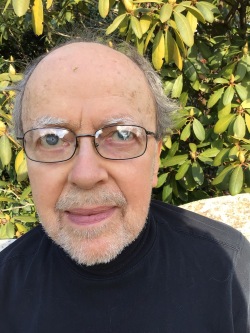
Author(s): Richard May/May-Tzu
Author(s) Bio: Richard May (“May-Tzu”/“MayTzu”/“Mayzi”) is a Member of the Mega Society based on a qualifying score on the Mega Test (before 1995) prior to the compromise of the Mega Test and Co-Editor of Noesis: The Journal of the Mega Society. In self-description, May states: “Not even forgotten in the cosmic microwave background (CMB), I’m an Amish yuppie, born near the rarified regions of Laputa, then and often, above suburban Boston. I’ve done occasional consulting and frequent Sisyphean shlepping. Kafka and Munch have been my therapists and allies. Occasionally I’ve strived to descend from the mists to attain the mythic orientation known as having one’s feet upon the Earth. An ailurophile and a cerebrotonic ectomorph, I write for beings which do not, and never will, exist — writings for no one. I’ve been awarded an M.A. degree, mirabile dictu, in the humanities/philosophy, and U.S. patent for a board game of possible interest to extraterrestrials. I’m a member of the Mega Society, the Omega Society and formerly of Mensa. I’m the founder of the Exa Society, the transfinite Aleph-3 Society and of the renowned Laputans Manqué. I’m a biographee in Who’s Who in the Brane World. My interests include the realization of the idea of humans as incomplete beings with the capacity to complete their own evolution by effecting a change in their being and consciousness. In a moment of presence to myself in inner silence, when I see Richard May’s non-being, ‘I’ am. You can meet me if you go to an empty room.” Some other resources include Stains Upon the Silence: something for no one, McGinnis Genealogy of Crown Point, New York: Hiram Porter McGinnis, Swines List, Solipsist Soliloquies, Board Game, Lulu blog, Memoir of a Non-Irish Non-Jew, and May-Tzu’s posterous.
Word Count: 60
Image Credit: Richard May
International Standard Serial Number (ISSN): 2369-6885
*Please see the footnotes, bibliography, and citations, after the publication.*
Keywords: arithmetic, cardinal numbers, devils, equity, justice, measurement, numbers.
The Illusion of Inequalities
Numbers and arithmetic are the invention of devils.
The supposed inequality of numbers leads to arithmetic and measurement, both pseudosciences.
When all numbers are recognized as fully equal to each other, everyone and every thing will be equal in all respects.
We demand equity for all the cardinal numbers now.
Only then will ontological and genetic justice follow.
May-Tzu
Bibliography
None
Footnotes
None
Citations
American Medical Association (AMA 11th Edition): May R. The Illusion of Inequalities. March 2023; 11(2). http://www.in-sightpublishing.com/illusion-inequalities
American Psychological Association (APA 7th Edition): May, R. (2023, March 15). The Illusion of Inequalities. In-Sight Publishing. 11(2). http://www.in-sightpublishing.com/illusion-inequalities.
Brazilian National Standards (ABNT): MAY, R. The Illusion of Inequalities. In-Sight: Independent Interview-Based Journal, Fort Langley, v. 11, n. 2, 2023.
Chicago/Turabian, Author-Date (17th Edition): May, Richard. 2023. “The Illusion of Inequalities.” In-Sight: Independent Interview-Based Journal 11, no. 2 (Spring). http://www.in-sightpublishing.com/illusion-inequalities.
Chicago/Turabian, Notes & Bibliography (17th Edition): May, R “The Illusion of Inequalities.” In-Sight: Independent Interview-Based Journal 11, no. 2 (March 2023). http://www.in-sightpublishing.com/illusion-inequalities.
Harvard: May, R. (2023) ‘The Illusion of Inequalities’, In-Sight: Independent Interview-Based Journal, 11(1). <http://www.in-sightpublishing.com/illusion-inequalities>.
Harvard (Australian): May, R 2023, ‘The Illusion of Inequalities’, In-Sight: Independent Interview-Based Journal, vol. 11, no. 2, <http://www.in-sightpublishing.com/illusion-inequalities>.
Modern Language Association (MLA, 9th Edition): May, Richard. “The Illusion of Inequalities.” In-Sight: Independent Interview-Based Journal, vo.11, no. 2, 2023, http://www.in-sightpublishing.com/illusion-inequalities.
Vancouver/ICMJE: Richard M. The Illusion of Inequalities [Internet]. 2023 Mar; 11(2). Available from: http://www.in-sightpublishing.com/illusion-inequalities
License
In-Sight Publishing by Scott Douglas Jacobsen is licensed under a Creative Commons Attribution-NonCommercial-NoDerivatives 4.0 International License.
Based on work at www.in-sightpublishing.com.
Copyright
© Scott Douglas Jacobsen and In-Sight Publishing 2012-Present. Unauthorized use and/or duplication of this material without express and written permission from this site’s author and/or owner is strictly prohibited. Excerpts and links may be used, provided that full and clear credit is given to Scott Douglas Jacobsen, or the author(s), and In-Sight Publishing with appropriate and specific direction to the original content. All interviewees and authors copyright their material, as well, and may disseminate for their independent purposes.
Share this:


Publisher: In-Sight Publishing
Publisher Founding: January 1, 2014
Web Domain: http://www.in-sightpublishing.com
Location: Fort Langley, Township of Langley, British Columbia, Canada
Journal: In-Sight: Independent Interview-Based Journal
Journal Founding: August 2, 2012
Frequency: Three (3) Times Per Year
Review Status: Non-Peer-Reviewed
Access: Electronic/Digital & Open Access
Fees: None (Free)
Volume Numbering: 11
Issue Numbering: 2
Section: A
Theme Type: Idea
Theme Premise: “Outliers and Outsiders”
Theme Part: 27
Formal Sub-Theme: None
Individual Publication Date: March 15, 2023
Issue Publication Date: May 1, 2023
Author(s): Scott Douglas Jacobsen
Interviewer(s): Scott Douglas Jacobsen
Interviewee(s): Luca Fiorani
Word Count: 8,169
Image Credits: Luca Fiorani
International Standard Serial Number (ISSN): 2369-6885
*Please see the footnotes, bibliography, and citations, after the interview.*
Abstract
Luca Fiorani is a member of Ultima IQ society (cut-off: 170 σ15; founder: Ivan Ivec). Academically, he has a philosophical background. At the same time he sees himself as an independent autodidact. His main interests are: literature, arts, tennis and communication. Fiorani discusses: the Ultima Society; rethinking membership; membership or entrance; requirements in high-I.Q. societies; strict and legitimate entrance requirements; P. Cooijmans’ societies; newer thoughts on high-range testing; reconsideration of high-range testing; a member; tests of Paul’s; T. Prousalis’ tests and X. Jouve’s tests; astronomical I.Q. scores; HRTs; the 2% estimate a qualitative estimate; participation in Sidis Society; CatholIQ; common threads in personality or tests between Dorsey, Cooijmans, Prousalis, Jouve, and Kutle; the qualifying test and score for the Mega Society; a relatively non-arbitrary ceiling of 180 S.D. 15 ; wisdom; measuring the general factor or a generalized factor of intelligence with mainstream intelligence tests and HRTs; the different things measured; one’s intelligence; the single hardest test ever; a high level of problem-solving ability; Megalomania; the hardest things to realize about the high-I.Q. communities; positive developments; leaving Real IQ society; SLSE-II; IVIQ 16 Test; HRT test-makers; flourishing in a comprehensive way; intellectual and creative output of individuals in the high-I.Q. communities; type of test; a generalized intelligence up to and including I.Q. 180 S.D. 15; highly intelligent people waste their talents; the newer generation and the older generation of high-I.Q.; speed of thought; wash out the “basely egocentric behaviors”; the essential stats; the sociocultural and philosophical front; studies; the romantic life; newest intellectual project; protection of others; “The communities”; a reasonable skepticism; good uses of diverse problem solving abilities; diversity, equity, and inclusion; the generic positives and negatives; interest in media and the entertainment industry; the content of the production on Wittgenstein; a sign of a healthy culture; controversial and often polarized discussion; newer media; increasing assholery; should people put on the breaks on their mouths; silence as an indication of restraint; diversity; equity; inclusion; a minority group; the Flynn Effect; vastly positive reception from the high-I.Q. communities; a space for clarity of mind; find the time to get their outlet, their space, their place of calm; the reversal of the Flynn Effect; “Tätigkeit“ and “Therapie”; a long-term romance; the problem-solving abilities for renewable technologies; the compliments; what he say to himself 6 years ago; describing this past person; the world simply doesn’t always come in neat packages; a form of therapy; official comeback; Keith Raniere; eudaimonia; hypersensitivity; the flaws; Jouve; the self-discoveries over the last several years to bring about self-therapy; the Wittgenstein paper; this “valuable opportunity”; the idea behind True IQ; the methodology of Ivec; other people in the high-I.Q. communities; increase the number of test-takers to make the sample sizes larger for more valid tests; “The Real g Test”; the best article on high-I.Q. psychology ever written; Wittgenstein; magnum opus; the components of wisdom; more variance between males and females; a centralized platform for test-creators; good standards; a philosophical stance; paideia; a great level of expertise; the criminals and cults; Kevin Langdon; Master Chef Craig Shelton; people interested in joining high-I.Q. communities; and goals now.
Keywords: Catholiq, Chris Langan, D. Kutle, Dawid Skrzos, Deus Vult, Erik Hæreid, Gianluigi Lombardi, Heidegger, Heinrich Siemens, high IQ community, high-I.Q. societies, Ivan Ivec, James Dorsey, JCCES, Jean-Mathieu Calut, Joe Feagin, Jonathan Wai, Joseph Dinouart, Keith Raniere, Kirk Kirkpatrick, Kirk Raymond Butt, Ludwig Wittgenstein, Mega Society, megalomania, Paul Cooijmans, Plato, Ronald Hoeflin, Rick Rosner, Robert Lato, Santanu Sengupta, Sidis Society, T. Prousalis, Ultima IQ society, Wu Meiheng, X. Jouve, YoungHoon Kim.
Conversation with Luca Fiorani on Everything Under God’s Sun: Member, Ultima IQ Society (3)
Scott Douglas Jacobsen: Lots of new stuff has happened. You have left one high-I.Q. society. You are a member of the Ultima Society. As well, you have some new thoughts on high-range testing. Let’s start from the top, naturally, what else has been new in life for you, since the last interview?
Luca Fiorani: First of all, I’d like to thank you, Scott, for the valuable opportunity.
My life is better than before. It wasn’t bad the last time we talked but now I feel that I’m finally flourishing – in a comprehensive way. [Ed. You’re welcome, and congratulations on flourishing.]
Jacobsen: What prompted rethinking membership in the high-I.Q. society?
Fiorani: I’ve left Real IQ society (founder: I. Ivec) because my global score, my estimated True IQ, was not realistic, not even remotely. I’ve realized that the adjectives ‘real’ and ‘true’ were misused. They didn’t fit. Generally speaking, I’m now against too inflated and too lavish IQ scores. The method approved by Ivec is simply too generous and also not all my scores came from credible and reliable high range IQ tests.
Instead, I’m still a member of Ultima IQ society – cut-off 170 σ15 – because I had entered when the requirements were robust and because “170” is not utterly craziness.
Jacobsen: What happens when membership or entrance requirements in high-I.Q. societies become too lax, even too strict?
Fiorani: When the criteria become too lax, the scores are less serious, less rigorous and people are more inclined to several delusions – unfortunately, megalomania included. They cajole themselves that the resulting scores are legit, trustworthy, stable but very rarely that is actually the case.
Currently, within the high IQ community, it does not happen that the criteria are too strict. At least as far as I know.
Jacobsen: What high-I.Q. societies seem to have strict and legitimate entrance requirements at the moment? I do not mean necessarily higher I.Q.s, simply the boundaries are set reasonably tight, and the testing is more valid than not.
Fiorani: Probably this happens with P. Cooijmans’ societies. (Note: I don’t know the high IQ community in its entirety, there could be other well-founded examples.)
Jacobsen: Why those high-I.Q. societies in particular?
Fiorani: Because all in all the test-author mentioned above has remained true to his principles, even when rigid. His work is consistent and self-cohesive.
- Prousalis’ tests and X. Jouve’s tests are arguably better, superior, and when I say so I’m expressly referring to the methodology and the stats; they always give relevance to standardized tests: but right now societies based mainly or exclusively on scores earned on these tests – I mean, the ones designed by Prousalis and Jouve – do not exist.
Jacobsen: Your newer thoughts on high-range testing. What are those? Or, more properly, to begin on this line of reasoning, what are the factors behind the newer thoughts?
Fiorani: High range testing is often stimulating and challenging and sometimes has its validity, coherence, plausibility.
HRTs can be decent and even good psychometric instruments. In most cases, though, the tests aren’t adequately accurate, the subsequent scores should be taken very cautiously, without giving them too much value or importance.
My newer thoughts are born when I’ve become aware of the fact that too many people believe that their huge, astronomical, Brobdingnagian scores are their actual IQs: they are not, in reality. No actual IQ above 180 σ15 exists so when I see this plethora of IQ scores above 190 σ15, I start to think. Many, many, many, many, many – you got the idea?… – scores are not serious, they don’t come from enough reputable tests: as simple as that.
Usually when I take a look at a random listing, ⅚ of the scores are comical.
Jacobsen: How did those factors come into more full reconsideration of high-range testing at the moment?
Fiorani: I just look at HRTs in a more relaxed way and I feel compassion for those people who really believe that their IQs are above 180, above 185, above 190, above 195, above 200, just because a bunch of weak, iffy, wobbly instruments say so.
Less than 2% of HRTs are fully functioning and authoritative.
Jacobsen: Outside of Ultima IQ society, are you a member of any others? If so, why those? If not, why not?
Fiorani: Yes, I am. I’m still a member of Sidis Society (founder: J. Dorsey) and also a few more, e.g. Catholiq (founder. D. Kutle).
I appreciate that Dorsey is dedicated and I admire Kutle as a person and I also like the journal Deus Vult.
I indeed have a qualifying score for Mega Society (founder: R. Hoeflin) but I’ve heard that the members can be too harsh sometimes, so I’m not interested in joining.
Jacobsen: What tests of Paul’s stand out? Why those?
Fiorani: For his tests, I can tell you that I read thoroughly the statistical reports and I take into account the opinion of a dozen of versatile test-takers. His best test is probably Cooijmans Intelligence Test – Form 3E. I don’t have a direct knowledge, though.
Jacobsen: For T. Prousalis’ tests and X. Jouve’s tests, could those tests still be used? People seemed to like the JCCES of Jouve. I know Santanu Sengupta [Ed. 174 S.D. 15] from India claims a high score on it.
Fiorani: I think that Prousalis’ website isn’t defunct; Jouve is back with revised forms of his old tests and other precious stuff.
I think that JCCES gives realistic results and I consider it a nice psychometric product.
Jacobsen: What tends to happen when individuals believe astronomical I.Q. scores claimed based on some of the tests?
Fiorani: They lose objectivity and sensibleness. Their self-awareness is inferior. And a bit of wisdom is required for high intelligence, in my humble opinion…
Jacobsen: What would make scores coming from HRTs, in terms of test items in an overall schema and sample size, above 180 σ15 believable to you?
Fiorani: Without talking gibberish, 180 sd15 should be the ceiling of ceilings, in an ideal, optimal, utopian high range IQ test. A test that gives you your exact IQ and the game is over. This, too, is implausible, since you always need a collection of heterogeneous tests. A perfect, unique, adamantine IQ test that tells your ultimate IQ is not within this plane of existence. Hypothetically – and merely so –, the ceiling of this imaginary test should be 180 sd15. That’s my (narrow) perspective.
Jacobsen: Is the 2% estimate a qualitative estimate, or an actual count and review of some tests and then an estimate?
Fiorani: It’s more a qualitative estimate than a quantitative precise estimate. It’s not an absurd statement, nevertheless. But let me be clear: I don’t want to be aggressive towards test-authors and test-takers who genuinely care about HRTs and find them beautiful/wonderful, for instance. I’m saying that it’s rare that these products have golden quality under psychometrics’ point of view. Regardless, one could find them astonishing for the inherent difficulty of the items, the multiple logical layers and so on. In most cases you have the dimension of cognitive entertainment and leisure-time activity: and that’s not a bad thing, not at all. Issues come when you convince yourself that all the HRTs you take pertain to (a fully valid) cognitive assessment.
Jacobsen: What is your level of participation in Sidis Society? What do you get out of it?
Fiorani: My level of participation is the following: my name is listed at the corresponding webpage.
I get some sort of prestige, in a way. That I’ve achieved a non-negligible level of cognitive performance. And I support Dorsey’s drive. Plus, I like the name, “Sidis”. That’s all, I guess.
Jacobsen: For CatholIQ, what have been the benefits so far?
Fiorani: For CatholIQ, or Catholiq – apparently both spellings are correct –, the benefits come from some articles of their journal, Deus Vult. You’re informed when it comes out and you can also submit an essay of yours, or a poem, etc. That’s nice and the ambience overall is healthy.
Jacobsen: Any common threads in personality or tests between Dorsey, Cooijmans, Prousalis, Jouve, and Kutle?
Fiorani: I think that Dorsey and Cooijmans are both devoted to HRTs, they deeply care about them. That’s what I perceive and infer.
Prousalis and Jouve have designed tests perfectly comparable to professional tests. The stats of their tests are sometimes impressive.
Kutle is a clever man and a noble person. The items of his tests are very nice and sometimes elegant. I recommend Arcanum and Road to Damascus, both designed by him. They require time and diligence and a high level of crystallized intelligence. They represent a fascinating and pleasant intellectual experience.
Jacobsen: What test was the qualifying test and score for the Mega Society?
Fiorani: Ron Hoeflin knows.
Jacobsen: The norms and scores on Paul’s site list a 76 out of 78 on the Cooijmans Intelligence Test – Form 3E as the highest score it. I recall a listing of the three top scores on tests by Paul, out of all tests, in an interview with Paul by me. There was a tie for the top score on all of the tests, at the time, with one of the scores on Cooijmans Intelligence Test – Form 3E. The question, by me, followed by the response, from him:
Jacobsen: What have been the 3 highest legitimate scores on a Cooijmans test by testees to date while using the most up-to-date norms on tests? If I may ask, who were these individuals?
Cooijmans: First, I want to say that this is not an easy question. There are many thousands of scores in the database, and they are raw scores. To compare them, they have to be converted to protonorms. This would not be doable by hand in any reasonable amount of time and effort. To our good fortune, over the course of two decades I have painstakingly written programming code and created a protonorm database so as to dynamically link the raw scores to their current norms, and, for instance, put out a list of scores that exceed a certain level, with the name of the test and candidate if desired. This is the largest and most complex informatics project I have undertaken, and I think it is also the most difficult thing I have ever done, intellectually.
Of course, any good programmer should be able to do this. Still, I must say I never see test statistics by others that even remotely have the quality of my reports, so it seems that not many combine their programming skill with statistics. I set the controls such that only the top three scores remained, and they are 76 raw on the Cooijmans Intelligence Test – Form 3E, and 27 and 28 raw on the Cooijmans Intelligence Test 5. The I.Q.’s are 190, 186, and 190, respectively. I can not give the names as that would violate the privacy of the candidates.
Of course, the norms in that range are still uncertain, and there may be a number of scores right under these that, after renorming, turn out to be equal to or higher than these. (Jacobsen, 2022a)
My inference: The highest scorer on the Cooijmans Intelligence Test – Form 3E is personal friend and writing colleague, Rick Rosner, who is a comedy writer. This matches, not the scores but, the achievements on other well-regarded tests, e.g., Mega Test (44/48 first attempt and 47/48 second attempt) and Titan Test (48/48). This would track with the test selection by you. Rick is of the same opinion as you, about Paul’s tests[1]. How can setting a relatively non-arbitrary ceiling of 180 S.D. 15 help with lots of test constructors without the massive comparative resources of mainstream academia? It has an aesthetic appeal of a clearcut boundary.
Fiorani: Rick Rosner, yes. I know him too. I think he is one of the smartest persons I’ve known within the high IQ community. Not only for his monumental scores on highly reputable tests but also for other commendable and remarkable traits. He’s a great guy, very smart, very witty. As a test-taker, he’s certainly better than me. I tend to believe that his mind is the mind of a genius. Rick is uncommon, unconventional, multifaceted.
The ceiling of 180 sd15 has its beauty and its rationality, yes. The WAIS-IV stops at 160 (theoretical rarity: 1/31,560). HRTs could have a boundary, at 180 (theoretical rarity: 1/20,696,863). We know that the theoretical rarity isn’t exactly and strictly the actual rarity – the actual rarity being inferior. But there’s no need to go much higher. To examine at or above 190 σ15, 195 or 200, for instance. I don’t see the underlying logic nor I find the basis, the grounds. Twenty points above the ceiling of the WAIS-IV are enough, especially because twenty points for the upper, upper end have a bigger weight.
If a test is normed well, scores above 166-170 are already exceptional. Of course, scoring 160+, or 170+, or even 180+ on a very imperfect test becomes easier. That’s why a single peak performance of 180+, σ15, does not impress me. Also, peak performances at 190+ are not as rare as the score per se suggests. You always need to understand the construct validity vel similia. You always have to relativize… Otherwise you might start to believe that the rarity of your intellect is really one in a billion: can we all agree that this sounds bizarre, extravagant, exaggerated, laughable, immensely pretentious?
Jacobsen: Can wisdom be measured in any standardized manner? Or is this more something qualitative or experienced in interaction with someone?
Fiorani: Luckily and rightfully, the second thing you’ve said.
Jacobsen: The idea is measuring the general factor or a generalized factor of intelligence with mainstream intelligence tests and HRTs. This leads to the question. With further reflection for you, how much do HRTs and mainstream tests measure the same things?
Fiorani: Very nice question. The connection between the two approaches is not weak, there is in fact a strong correlation. The more traditional way (standardized tests, timed, supervised conditions) and the alternative-inventive way (untimed conditions, items way more difficult/elaborate, etc.). Mainstream tests and HRTs don’t measure the exact same thing. In my opinion, the main difference is given by the fact that reducing the impact of the sheer speed of thinking, you can go deeper and you can reach higher levels of reasoning and complexity. A deep thinker reaches his/her full potential with HRTs, usually. Someone who scores high or very high on WAIS-IV can do pretty well on HRTs, if he/she is enough motivated. It is not said that he/she will score higher than a topscorer of tough and well-constructed HRTs.
Jacobsen: If there are different things measured to acquire scores, what are the different things measured? I do not mean the obvious in different test items and a schema for the test items to fit. I mean the human qualities or mental traits measured in acquisition of a high score.
Fiorani: In untimed conditions, patience, stamina, perseverance are rewarded qualities. Important mental traits rewarded are: the abstraction, the conceptualization and, in a way, the cogitation. In timed conditions a more basic pattern recognition is rewarded and, always, a fast thinking – and related aspects.
Jacobsen: What are other qualities, other than I.Q. and wisdom, going into one’s intelligence?
Fiorani: Creativity (or profound divergent thinking), comprehension of contexts of different nature, knowledge (or culture), artistry (or mastery of talent). All these facets of intelligence are interconnected and they intersect. The more they are intertwined, the better – id est, you are more intelligent.
Jacobsen: Of those avid test-takers known to you, and for yourself, what do they consider the single hardest test ever taken by them, or seen by them? Why?
Fiorani: Taken thirty years ago, without WWW, the Titan Test was hard. I think that Rick Rosner would agree.
People who take Cooijmans’ tests say that some of them are very hard – Heinrich Siemens and also my friend Erik Hæreid would agree, all things considered.
The two spatial tests by (pseudonym) Robert Lato are very hard.
LDA-SWaN by my compatriot Gianluigi Lombardi is surely hard.
The single hardest test seen by me is IVIQ 16 Test (test-author: Dawid Skrzos). The single hardest test taken by me is SLSE-II (test-author: Jonathan Wai).
Jacobsen: How has knowledge of a high level of problem-solving ability helped your personal and professional pursuits?
Fiorani: Life itself consists of problems and solutions, new problems and new solutions, and so on. This is evidently an answer and I’m smiling right now.
Jacobsen: Megalomania has been noted by others and you. Something not the norm in the communities, but just enough to be annoyance. How should people deal with it?
Fiorani: To avoid irritation and also troubles, some obnoxious individuals should be avoided. It’s sad but sometimes things just work like this.
Jacobsen: What have been the hardest things to realize about the high-I.Q. communities?
Fiorani: For sure the high IQ community has good and praiseworthy qualities but too often it’s a venue for basely egocentric behaviors.
Jacobsen: What seem like positive developments?
Fiorani: Reduce the excessive variety of tests’ norms and make them more uniform. The listings, the rankings, etc., could become realistic.
Jacobsen: How did Ivan react, if at all, to leaving Real IQ society?
Fiorani: He accepted my decision.
Jacobsen: What made SLSE-II by Jonathan Wai so hard? Is it still valid, or is it compromised?
Fiorani: Some of the items require extreme attention to details and some others are slightly and acutely obscure. There’s a certain ambiguity rate.
It’s still graded by Wai, I believe.
The items were discussed and some IQ groups declared the test invalid for admission.
Jacobsen: What makes IVIQ 16 Test look so difficult?
Fiorani: Every item is like a labyrinthine encryption. The author, Dawid S., was incredibly good with numerical sequences and I think he solved all the items of the Numerus series by Ivec. Perhaps he naively thought that a common test-taker had his outstanding skills for numbers and pattern recognition, hahaha!
Jacobsen: What have HRT test-makers simply not figured out? What are some directions to solve these issues?
Fiorani: I would give too vague answers, I don’t know. As a maxim: less generous norms and more detailed stats.
Jacobsen: How is your life flourishing in a comprehensive way?
Fiorani: My studies ended, my romantic relationship continues happily, my professional life has started, I cultivate my interests, I’m less anxious, I’m less bored.
Jacobsen: What about intellectual and creative output of individuals in the high-I.Q. communities? Are there any people who stand out as truly matching their claimed or measured intelligence with their productions and/or productivity?
Fiorani: Yes, there are.
Jacobsen: What type of test would measure, in a single test item schema or a single question type, or might tap most into a generalized intelligence up to and including I.Q. 180 S.D. 15?
Fiorani: A long test with various items – verbal analogies, verbal associations, numerical sequences, figure matrix reasoning questions, mixed in mixed problems – might work.
Jacobsen: Side question, how do highly intelligent people waste their talents?
Fiorani: When they are emotionally unstable – and there are a myriad of possible factors causing this… But what happens next is just a consequence.
Jacobsen: What differentiates the newer generation and the older generation of high-I.Q. types?
Fiorani: The newer generation is less prudent.
Jacobsen: When does speed of thought become less of a differentiating factor for seeing differences between a smart person and a smarter person? What seems like the I.Q. threshold?
Fiorani: The IQ threshold, assuming a rather even cognitive profile, is (approximately) 145 sd15.
Jacobsen: Is there a way to wash out the “basely egocentric behaviors” in the community?
Fiorani: Nope, there isn’t. Sorry for the frankness and the jaundice.
Jacobsen: What are the essential stats to start including in some of the tests moving into the future to make the tests analysis of scores more in-depth?
Fiorani: The following essential stats should be non-hidden:
- A histogram that shows how the scores on a test are distributed.
- A table regarding the items’ difficulty and robustness.
- Cronbach’s α presented & Spearman-Brown prediction formula presented.
- Correlation with standard supervised psychometric batteries.
- Correlation with other significant HRTs.
- Presentation of theoretical IQ per raw score points.
The last one is the most obvious but sometimes being didactic is not a sin.
Jacobsen: What’s new in the sociocultural and philosophical front for you?
Fiorani: The topic of diversity, equity and inclusion – in the media and entertainment industry.
Jacobsen: For your studies, what was the final result?
Fiorani: «Eccellenza».
Jacobsen: How is the romantic life now?
Fiorani: Fulfilling.
Jacobsen: What is your newest intellectual project?
Fiorani: An essay on Ludwig Wittgenstein that might see the light in August.
Jacobsen: On the individuals who claim inflated scores, there is also the factor that they don’t want to believe it themselves as much as they want the public to believe it to keep a modicum of cachet. There is the solution of leaving them alone. So, less about compassion for them and more about protection of others. In other words, what about others who may be less experienced, potentially more intelligent but naïve, on some of these aspects of the communities?
Fiorani: Nice question, again. If a neophyte looks at the scoreboards and the listings, he/she should probably reflect as follows: this is a collection of peak cognitive performances on disparate HRTs, not every score is that phantasmagorical; and the accuracy of the scores is more important than the scores themselves. In other words, which of the displayed scores are obtained on accurate psychometric products? A 160 σ15 can be (literally) more significant – or: with meaning – than a >185 σ15, it depends on the test(s).
I’d say to the neophyte: within the community, search for quality and accuracy, ignore the stratospherical, esospherical, sidereal scores, especially if the solidity of the test(s) is unknown, unclear or low.
Jacobsen: “The communities”, as I type it, I am making an assumption. I had some correspondence with someone about this, in the high-I.Q. communities, recently. The idea is the community as a homogenous, and humongous, blob or a subcultural bloc. To me, “the community “seems more like communities and variegated rather than singular, but modest in size somewhere in the middle 1000s in membership, excluding Mensa International. Does this match experience for you? What else can be subtracted, added to a proper perception of the idea of high-I.Q. communities to describe them?
Fiorani: Well, yes, I agree, this matches my experience. I use the singular – a subcultural bloc – for simplicity but I become simplistic, it’s true. A proper perception of the various souls and cores of the community isn’t easily obtainable.
Reading your interviews is helpful. Here and there, you can see different characters and sense different mental settings. There are diverse kinds of “members”.
Jacobsen: Most members of the high-I.Q. communities seem to have a reasonable skepticism, while some cases simply do not, about claimed scores or achievements on some of these harder HRTs. A more substantiated norm was published by Redvaldsen entitled “Do the Mega and Titan Tests Yield Accurate Results? An Investigation into Two Experimental Intelligence Tests”. The scores can be reduced to the aforementioned range, by you, on the Titan Test and Mega Test to 166-170 for the highest scorers on the tests by Hoeflin, e.g., Cole, Langan, May, Raniere, Rosner, Savant, Sununu, etc. This brings things down to Earth and says something legitimating about the constructs of the HRT communities when the effort is significant enough. What are the lessons from the Mega Test and the Titan Test, and the Hoeflin ensemble of societies?
Fiorani: Reasonable skepticism is healthy and I knew this paper. I think that Hoeflin has counter-replied but I don’t want to wander from my own answer. The point is that these experimental intelligence tests aren’t bad. Perhaps they’re just too ambitious, sometimes. I believe that a possible lesson learnt from the Hoeflinian galaxy is the following: the ceiling of a prestigious untimed IQ test isn’t necessarily above 180 σ16, or 176 σ15.
Jacobsen: Another side note, my other inference: The other highest scorer on Paul’s tests, who tied with Rick, Heinrich Siemens. Anyway, I have experimented with making use of both the intelligence and the expertise of the high-I.Q. communities. One of which is a series of educational interview sets on the relevant expertise of people. One example is the aforementioned Erik Haereid. He’s so well-versed in statistics and actuarial sciences as an actuary. It is in-depth. Certainly, not everyone’s cup of tea, but, also, not something everyone thinks about much, especially how much it pervades their lives. What might be some other good uses of diverse problem solving abilities? There are lots of highly involved people, who, likely, have great ideas to create things helpful to others. [Ed. If others have expertise, let’s tap it, call me!]
Fiorani: Rosner, Siemens, Hæreid: these guys are very, very clever.
Other good uses of diverse problem solving abilities? Projects related to renewable technology.
Jacobsen: Diversity, equity, and inclusion, these have been highly contentious hallmarks coming from academe. What are the first thoughts on the chosen concepts to you?
Fiorani: First thoughts are about the fact that these concepts cause disagreement, they’re divisive. A philosophical question might sound like this: why is controversial and often polarized discussion so trendy and so paradigmatic nowadays? Do the newer media interfere?
Jacobsen: What are the generic positives and negatives for you?
Fiorani: The generic positive is that people talk; the generic negative is that people talk too much.
Jacobsen: How is this of interest in media and the entertainment industry to you?
Fiorani: I try to use philosophical lenses to interpret the phenomena that permeate my life as individual of a highly complex society. Media and entertainment industry are crucial for understanding our current sociocultural macro-context and also its micro-variations.
Jacobsen: What is the content of the production on Wittgenstein?
Fiorani: It’s about the notion of philosophy as „Tätigkeit“ and „Therapie“.
Jacobsen: Disagreement can be a sign of a healthy culture. A culture of higher feedback mechanisms within individuals and between people. It can be toxic too. What are the forms of this disagreement and divisiveness?
Fiorani: Yes, disagreement can be a sign of intellectual vitality, it’s true. Though we need to understand if the disagreement facilitates a proper dialogic instance or not. In multiple cases, you see a non-dialogic approach.
Divisiveness concerns the representation of the (so called) minority groups. Joe Feagin, a well-known sociologist, has described the fundamental characteristics of a minority group.
The topic is too ample, I don’t want to be or seem trivial.
Jacobsen: “Very nice question”, “Why is controversial and often polarized discussion so trendy and so paradigmatic nowadays?
Fiorani: Hahahah, these questions require a dissertation – and I’m not joking. I must limit myself for a criterion of practicality and convenience. Polarized reflections require less effort, you spend less time and less mental energy. We go too fast, we don’t valorize profoundness. Instagram reels or TikTok shorts, etc. etc., represent the immediacy and impulsiveness of consuming, the commodification and barbarization of thoughts, of concepts, of the concept. We don’t reflect enough, we don’t take our time – literally. Choosing a side, and doing so intensely, vibrantly, rapidly, is a shortcut. We like shortcuts.
Jacobsen: “Do the newer media interfere?”
Fiorani: Without a doubt. There no longer is a life completely outside them.
Consider my previous answer, too.
Jacobsen: Kirk Kirkpatrick calls a phenomenon the “American Disease” and Rosner calls it “Superempowered” (Jacobsen, 2018; Jacobsen & Rosner, 2017). Is the degree of divisiveness a reflection of increasing assholery?
Fiorani: You are right, yes.
Jacobsen: When should people put on the breaks on their mouths? What’s the speed limit here?
Fiorani: Let me quote the French preacher Joseph Dinouart and his L’art de se taire (1771), first part, first chapter:
«1. On ne doit cesser de se taire, que quand on a quelque chose à dire qui vaut mieux que le silence.
[…]
-
- Jamais l’homme ne se possède plus que dans le silence: hors de là, il semble se répanfre, pour ainsi dire, hors de lui-même, et se dissiper par le discours, de sarte qu’il est moins à soi, qu’aux autres.
- Quand on a une chose importante à dire, on doit y faire una attention particulière: il faut se la dire à soi-même, et après cette précaution, se la redire […].
[…]
-
- Le silence tient quequefois lieu de sagesse à un home borne, et de capacité à un ignorant.
- On est naturellement porté à croire qu’un homme qui parle très peu, n’est pas un grand génie, et qu’un autre qui parle très peu, n’est pas un grand génie, et qu’un autre qui parle trop, est un homme étourdi, ou un fou. Il vaut miex passer puor ne point être un génie du premier ordre, en demeurant souvent dans le silence, que pour un fou, en s’abandonnant à la démangeaison de trop parler. […]».
[Ed. pp. 5-8.]
Didn’t you believe that a polemist born 307 years ago would have answered to your question, did you?
(Of course, if necessary, I might translate, but I don’t know an official English edition of the text.)
Jacobsen: With silence as an indication of restraint, not necessarily genius, and loquaciousness potentially as an indicator of a madman, silence becomes a better heuristic than not. Why do diversity, equity, and inclusion, lean one into talking too much rather than too little now?
Fiorani: Certain themes are important in principle and as a matter of fact. But they are too repeated and, then, oversimplified. As users of social networks and spectators of TV shows, we see how incessant ideology can be – and also counter-ideology can be insistent. The fact is that a topic like this is no longer perceived as a niche interest, we often feel the desire (or compulsion?) to express our opinions, again and again and again. Aware or not, we are already in a circulus vitiosus. We are overstimulated and we feed the exact inner workings of the structure.
A possible solution would be creating safe places and safe moments for ourselves, to safeguard the lucidity of our mind, loosening the chains we’ve contributed to construct.
Jacobsen: What does diversity represent in its practical effects in implementation in media and the entertainment industry?
Fiorani: For example, casting actors of different ethnic groups for playing certain roles/characters – possibly avoiding stereotypes and clichés –, is a practical way to represent sociocultural diversity. This implementation helps or could help more people to feel identified, to feel represented, to feel not invisiblized, to feel not marginalized, via common narrative and psychological devices (empathy, projection, etc.).
This is a deliberately succinct answer, given summarily.
Jacobsen: How is equity implemented in the media and entertainment industry?
Fiorani: Also in this case, in representation and communication, you will need to avoid pseudo-archetypes and bromides. Then it’s up to the public ponder over the outcome.
Jacobsen: What is an outcome of inclusion as a value acted out with diversity and equity?
Fiorani: It depends. (Cf. the two previous answers.)
Jacobsen: How does Feagin define a minority group? In Canada, for instance, Christianity is undergoing a rapid diminishment. It will, probably, be less than half of the population by self-claimed identification by some time in 2024. Is it merely numbers? If so, then Christians will be a big minority as less than half in Canada. They’d already be a minority in the United Kingdom. However, it must be more nuanced in Feagin’s view. How so, if so?
Fiorani: Even if it is not polished, I will quote Wikipedia English (page: Minority group): “Joe Feagin, states that a minority group has five characteristics: (1) suffering discrimination and subordination, (2) physical and/or cultural traits that set them apart, and which are disapproved by the dominant group, (3) a shared sense of collective identity and common burdens, (4) socially shared rules about who belongs and who does not determine minority status, and (5) tendency to marry within the group”.
Jacobsen: Do you think the stagnation or reversal of the Flynn Effect is correlated with the massive introduction of these new media?
Fiorani: Reversal more than stagnation, AFAIK. Yes, I think that it is indeed correlated. This could be seen as a bias of mine but we’ll see what time – and studies and researches – will tell us.
Jacobsen: I’ve received vastly positive reception from the high-I.Q. communities. Rick Rosner called me more rational than him. Chris Langan called me a stupid little idiot. YoungHoon Kim called me a very balanced intelligence and wiser than him. I appreciate all of the compliments. They speak well of one another in general too. There are some shocking things some say about one another. They tattle, so whatever, but to me, hilariously. Less so now. Anyway, and to the point, my other sense of the communities is regular interpersonal stuff seen in any sub-culture and set of communities. People living their lives and competing mentally in their off time. That’s healthy. When it becomes someone’s identity or life, that raises eyebrows to me. That’s, probably, a normal reaction. How about you?
Fiorani: The expression used by C. Langan is a compliment? I doubt so, hahah… I agree with Rick and also with Mister Kim about your balanced intelligence.
Yes, it’s not healthy at all when it becomes someone’s identity. I’ve seen lots of cases, nevertheless. And, again, I agree: the fact staggers me. Luckily, I’m much wiser now than I was six years ago. There are shadows in my career as a test-taker but approximately an eon has passed. Life goes on and improves.
Jacobsen: What might be a good means by which to create such a space for clarity of mind?
Fiorani: Just take our time, in different situations. Consider one of the Ten Commandments: Remember the sabbath day, to keep it holy. There’s no irony nor humor, we can glean a lot more than the literal meaning and we can also omit for a second the religious interpretation(s). Can we deduce the importance of rest, the importance of break, in our (now frenetic and hyper-demanding) lives? We can – that’s my modest view.
Jacobsen: If they’re like me, they could be working 7 days a week at an elite equestrian facility sunrise to sunset, or some other job requiring it. Down time is hard to find nowadays, for some. Even a regular 5 days and 9 to 5, they might go partying or drinking, or pursuing social activities, which might not necessarily be conducive to the creation of a safe space for thought. What about those people? How can they find the time to get their outlet, their space, their place of calm?
Fiorani: Those people still can find ways. For example, you can deem an interview with a pseudo-intellectual Italian dude as refreshing.
Jacobsen: What other factors seem to be behind the reversal of the Flynn Effect?
Fiorani: One should read papers on the matter. As a perception of mine, I see a depletion of people’s vocabulary and scarce comprehension of text. The verbal tasks (subtests) are the most g-loaded in the WAIS-IV.
Jacobsen: What are “Tätigkeit“ and “Therapie”?
Fiorani: The first term means “activity, occupation” and the essential idea is that philosophy, for Wittgenstein, is more an attitude than a doctrine or a theory. The second term means “therapy”, and the idea behind is that philosophy can take care of the chronic disease that the language itself represents.
Not everything can be summarized in a cool way.
Jacobsen: Are you married, common-law, a long-term romance, or a newer partnership?
Fiorani: A long-term romance.
Jacobsen: What are some directions for the uses of the problem-solving abilities for renewable technologies?
Fiorani: In application terms? I say to myself: let’s try not to stray beyond our scope. So, I don’t know, sorry for disillusioning.
Jacobsen: I “appreciate all of the compliments”. If it wasn’t a compliment, then I don’t appreciate it. However, in some sense, it can be considered a compliment. I’ll take it! Thank you, Mr. Christopher Michael Langan. Don’t spell his name wrong, though, I’m told it “can be interpreted as a passive-aggressive form of sacrilege”, by him. Anywho, one of my favourite stories from observing Jouve. I like how a legitimate experimental psychologist, Dr. Xavier Jouve (a.k.a., an almost literal Professor X. of the I.Q. communities), who developed some awesome tests, then transitioned abruptly into photography. That’s truly wonderful. I love that kind of stuff. Does anyone know the reason? If anyone knows, I’d love to know it.
Fiorani: No idea. His comeback is official, though. Cf. the following link: http://www.cogn-iq.org/index.htm
Jacobsen: I’m really happy for you, and the transition self-identified by you. What would you say to yourself 6 years ago?
Fiorani: About HRTs and IQ scores? Take them less seriously. About some pernicious individuals of the community? Give them little importance.
When this interview will come out, I better prepare myself to face a couple of haters and trolls, their possible lasting hatred, entirely motiveless and – in the present – unwarranted. I’m being brave against some stubborn fanatics. They give abnormal importance to small past events related to high range IQ tests. They can become suffocating…
But it doesn’t matter, I’m accepting this interview and I’m happy.
Jacobsen: What words describe this person to you?
Fiorani: The 2017 version of myself? I was emotionally immature and, sometimes, (emotionally) unstable.
My mistakes were not even close to gravity. They have been flaws, surely preventable, but just minor flaws – if I reconsider them with the cognizance of an adult person not disassociated from reality.
Jacobsen: Maybe, if not everything can be given in a cool way, the world simply doesn’t always come in neat packages?
Fiorani: Agreed.
Jacobsen: Could your own philosophical pursuits be considered a form of therapy for yourself?
Fiorani: You are insightful, I confirm. You’re right.
Jacobsen: His official comeback will raise the bar for everyone. What has been the discussion within community about this?
Fiorani: Within the community, I don’t know. Personally, I’m happy. He is ne plus ultra: professional high range testing.
Jacobsen: What are your thoughts on his coming back?
Fiorani: It’s great!!
Jacobsen: Brave the storm! You get used to them. Perspective: They are 2% or less of the population of the super smart. Criminal Keith Raniere is exceedingly rare. He swindled the Bronfman’s out of $150,000,000 (USD). Sara and Clare were in the equestrian world and were known to some of my bosses quite well. He was in the Mega Society alongside Marilyn, Rick, Chris, other Chris, Kevin, Richard, Ken, and the myriad of others. He is one out of a much larger number of super smart people. You’ll do fine. What would you see as the main points of maturation for you?
Fiorani: I didn’t know the names you mentioned. And I was feeling better without knowing, hahaha! I think it gives an idea about real criminals and real crimes compared to trifles and minutiae.
The main point of my maturation: understanding better each context and having a more pragmatic mindset, at times.
Jacobsen: Your “comprehensive way” of flourishing. Would you consider this eudaimonia on a personal level?
Fiorani: Yes.
About the topic, more broadly, cf.:
- Julia Annas, The Morality of Happiness (1995)
- Christoph Horn, Antike Lebenskunst. Glück und Moral von Sokrates bis zu den Neuplatonikern(1998)
- Alexander Nehamas,The Art of Living: Socratic Reflections from Plato to Foucault(1998)
- Edith Hall, Aristotle’s Way: How Ancient Wisdom Can Change Your Life (2019)
Jacobsen: What were the moments of emotional instability? Hypersensitivity, emotionally speaking, is common among the highly intelligent. It doesn’t seem like a mark of shame or guilt to me, more a signal of a longer maturation process due to the emotions catching up with the mentation.
Fiorani: It’s true.
Jacobsen: What were the flaws, minor as such?
Fiorani: Related to HRTs? Well, it has happened that I’ve discussed some items of a couple of active high range IQ tests – which is not allowed and unfair.
I was severe towards myself after that. Later I have discovered that my behavior was less worse than other behaviors of other test-takers. I have downsized the thing a lot when I’ve seen what other testees – pretty commonly – do.
In those occasions, regardless, I made a mistake. Funny (?) thing is that none of the episodes of soft cheating on HRTs entailed a successful outcome, in terms of IQ score. Because: or I didn’t submit my answers at all (so, no IQ score); or my submission has been graded but wasn’t spectacular (so, below my average). Even in the second case, and anyways, I haven’t used the earned IQ score for admission purposes in some high IQ groups. This soft cheating hasn’t brought me anywhere in multiple senses, then.
Now remembering my mistakes is helpful.
Jacobsen: Do you think Jouve would be open to an interview? He wasn’t years ago, for benign professional reasons.
Fiorani: I think he is a reserved guy but you might try.
Jacobsen: What would you consider the self-discoveries over the last several years to bring about self-therapy?
Fiorani: Knowing inner emotions more lucidly. Work in progress, though.
Jacobsen: Where might people be able to find the Wittgenstein paper, eventually?
Fiorani: Still to be decided.
Jacobsen: What is the most valuable part of this “valuable opportunity”?
Fiorani: Sharing ideas and also having a conversation about them. It’s always nice and it is also a underrated experience.
Jacobsen: What was the idea behind True IQ?
Fiorani: Having a good and articulate confirmation of your broad cognitive abilities.
Jacobsen: What is the methodology of Ivec to make overly generous scores?
Fiorani: He uses an extension of Ferguson formula. But the scores are initially hyper-inflated. So, to me, it doesn’t work.
Jacobsen: What other people in the high-I.Q. communities deserve admiration for efforts, character, scores, tests, or healthy community building? The fact of its finiteness makes it capable of cataloguing.
Fiorani: Excluding the already mentioned ones, Kirk Raymond Butt deserves admiration. In his case, you have a combination of multiple traits. Wu Meiheng, too. For scores and character, a French guy named Jean-Mathieu Calut – the best test-taker I’ve ever met.
Several guys have huge scores, though. And several persons deserve admiration, without a doubt.
This list is obviously incomplete, hastily made.
Jacobsen: Maybe, the biggest long-term barrier isn’t necessarily the test items to HRTs becoming more robust. It’s test-takers and test-taker variety. What might increase the number of test-takers to make the sample sizes larger for more valid tests?
Fiorani: Good question but I haven’t found an answer yet, I don’t know how more people might find HRTs appealing. In fact, larger sample sizes would be a blessing.
Jacobsen: Have there been any tests based solely on the most g-loaded items possible? So, both the most g-loaded test/sub-test type and the most g-loaded items from those tests or test items or test types comparable in g-loading. That plus an online testing platform with a smart and narrow A.I. screening processing of the test items as the test evolves uniquely each time – random but not random – on an encrypted platform might give something like a secure place to get lots of people. Let’s call it “The Real g Test”, for real OGs, holla back!
Fiorani: They tried something (most g-loaded items possible) but I don’t know if it’s just chimeric…
Jacobsen: What is the best article on high-I.Q. psychology ever written or known to you?
Fiorani: Lohman, David F.; Foley Nicpon, Megan (2012). “Chapter 12: Ability Testing & Talent Identification”: this one is nice.
But there are plenty of good articles.
Jacobsen: By the way, why did you focus on Wittgenstein, as your necro-therapist?
Fiorani: Plato has spoken about μελέτη θανάτου (meletê thanatou) or “care of death” and Heidegger has spoken about Sein-zum-Tode or “being-towards-death”. I don’t need Wittgenstein if we talk about death.
Or you mean that Wittgstein is a cadaver, νεκρός (necros)? Why him as a therapist, then? My greatest masters have died long before I was even born.
Jacobsen: “Ron Hoeflin knows”, oh, the secrets he holds. Have you see some of his magnum opus?
Fiorani: A bit, here and there.
Jacobsen: What are the components of wisdom? How is wisdom practiced and lived, and witnessed, universally in individuals in all cultures? In other words, what are its manifestations, ingredients, and enjoyable outgrowths to see in others?
Fiorani: Good judgment and moderation.
Jacobsen: I have been interviewing women in the high-I.Q. communities. Yet, the ratio is so skewed. There is the fact of more variance between males and females. Yet, I don’t think the skew of the degree of variance tracks the degree of variance of membership in the communities. Why? I know Rick admits to joining Mensa to get a girlfriend. He even asked Marilyn vos Savant out while trying to join the Mega Society. She’s been super nice to me: She published one or two pieces of mine in her column for me.
Fiorani: Actually I’ve never understood why women don’t join high IQ societies as much as men. Let me know if you figure it out, hahaha!
Jacobsen: Is there a centralized platform for test-creators to have their work listed and linked? If not, I can, probably, make one in an article to advertise them if this helps everyone.
Fiorani: I don’t think that a centralized platform for test-authors exist.
Do as you wish but I don’t think that the creation of such platform would actually help.
Jacobsen: What would be the good standards by which to “make them more uniform” regarding test norms?
Fiorani: We’ve already talked about the detailed stats and Prousalis and Jouve. You already have an acceptable answer. (smiling)
Jacobsen: I’ve been highly involved in a number of philosophical movements – secular and religious, slightly transitioning as I see in practice or witness flaws in either philosophical foundations or sociopolitical structural outcroppings from those foundations, e.g., claiming a democratic movement and then booting properly elected executives, or claiming respect for freedom of expression and then coercing removal of articles from publications… I’m much, much less sure at the current moment. What is a philosophical stance for you, now, either in metaphysics or pragmatic living (or both)?
Fiorani: Anekāntavāda.
Jacobsen: How can the newer generation become more prudent?
Fiorani: Re-understanding the value of paideia.
Jacobsen: Who else in the communities have a great level of expertise in something niche or interesting? I’d like to email them and get another series going with them.
Fiorani: Perhaps you’ve already interviewed the most interesting ones but let’s be clear: „Was wir wissen ist ein Tropfen, was wir nicht wissen ein Ozean“. (smiling)
Jacobsen: I should write another comprehensive article on the criminals and cults coming out Mensa to the most obscure high-I.Q. societies and communities. It’s shocking. I have all the data points. It’s simply putting it together. Before knowing about Raniere, what were the worst cases known to you?
Fiorani: Silentium est aurum.
Jacobsen: Kevin Langdon in a funny recorded talk to the Triple Nine Society made a great point about the idea of screening for high intelligence for a society or a community of people, and then telling them what to do… that seems counterproductive and doomed to fail. The Mega Society and Mega Foundation split was one such case of individuality of several people exploding. It’s public and on the record. What procedures, policies, processes, ethics, norms, should be instantiated in a high-I.Q. group to minimize the increasing individuality of higher-I.Q. people, increase group participation and cooperation and mutual respect, and provide a process for booting assholes, e.g., something more than a simple “No Assholes Policy”?
Fiorani: A procedure like this is antithetical to the quiddity of such groups.
Jacobsen: Mentoring younger people when I have the opportunity is the most meaningful thing to me. One young man, who wanted to be a chef, when I was working in the restaurant industry was a bright light. After leaving to work with and around horses, he said, “Thank you for everything.” It was so moving. I wanted to cry. And I am a little bit thinking of it now. I managed to get Master Chef Craig Shelton, who is a member of the high-I.Q. communities to get me book recommendations for him (he would known better than me). I ordered the books and gave them to the young man. Have you ever mentored younger people?
Fiorani: Happy for you, it must be a gratifying feeling. (smiling)
Nope, I’ve never mentored younger people.
Jacobsen: What are other resources for people interested in joining high-I.Q. communities or learning about giftedness in general?
Fiorani: For people interested in joining high IQ societies: https://highiqtests.com/join
For people interested in learning about giftedness: Sternberg, Robert J.; Davidson, Janet E., eds. (2005). Conceptions of Giftedness.
Jacobsen: What are your goals now?
Fiorani: Keep working on my Self, writing my own story.
Bibliography
Dinouart, L’Art de se taire, principalement en matière de religion, Paris, G. Desprez, 1771.
Jacobsen, S.D. & Rosner, R.G. (2017, April 6). Superempowered: How We Turned Into A Nation (And A Planet) Of Assholes. Retrieved from https://in-sightpublishing.com/2022/02/19/superempowered-how-we-turned-into-a-nation-and-a-planet-of-assholes/.
Jacobsen, S.D. (2018, February 8). Ask A Genius (or Two): Conversation with Kirk Kirkpatrick and Rick Rosner on the “American Disease” and “Super Empowerment”. Retrieved from www.in-sightjournal.com/american-disease-super-empowerment.
Jacobsen, S.D. (2022a, March 8). Conversation with Paul Cooijmans on the Tenth Anniversary of the Glia Society: Administrator, Glia Society (8). Retrieved from http://www.in-sightpublishing.com/cooijmans-8.
Jacobsen, S.D. (2022b, April 1). Debunking I.Q. Claims Discussion with Chris Cole, Richard May, and Rick Rosner: Member, Mega Society; Co-Editor, “Noesis: The Journal of the Mega Society”; Member, Mega Society (2). Retrieved from http://www.in-sightpublishing.com/debunking-2.
Footnotes
[1] “Debunking I.Q. Claims Discussion with Chris Cole, Richard May, and Rick Rosner: Member, Mega Society; Co-Editor, “Noesis: The Journal of the Mega Society”; Member, Mega Society (2)” states:
Jacobsen: Some, in fact more than a few, claim extrapolations well beyond the norms of the mainstream tests, e.g., the WAIS and the SB, which cap out at or around 4-sigma. Assuming legitimacy of the claims, then, the individuals would be highly intelligent, but the claims can range between a little over 4-sigma to 6-sigma. How is this extrapolation generally seen within the high-I.Q. communities at the higher ranges?
May: I don’t know how other others generally perceive unsound or bogus extrapolations of IQ scores.
Rosner: I think the skepticism of super-high scores is generally more for specific claims than for the entire idea of being able to have an IQ that high. I think most people in the high-IQ community believe it is possible to have an IQ close to 200. But I think most people also have a reasonable idea of the rarity of scores like that. Adult IQs, the deviation scores, are based on a bell curve, where between 0 and 1 standard deviation, you have 34% of the population in a bell-shaped distribution for something like height. Between 1 and 2 SDs, you’ve got 14% of the population. Between 2 and 3, you’ve got about 1.5% of the population. Between 3 and 4, you’ve got roughly one-half percent of the population.
Let’s see, about 4 SDs, that’s only one person in 30,000 should score above 4 SDs. One person in 3,000,000 above 5 SDs. What is it? 1 person in 750,000,000 above 6 SD or so; somewhere, I’ve fucked it up, according to the standard bell curve. People also like to say that at the very far ends; there are more outliers than on the normal bell curve. That there are more high-IQs than would be given if it were a perfectly bell-shaped distribution.
But even so, you shouldn’t see more than a half-dozen or ten or twelve or whatever, people, with scores above 6 SDs. So, Paul Cooijmans has the Giga Society, which has 7 or 8 members. It is for people with IQs that are supposed to be one in a billion. So, there are 8 billion people on Earth, 8 members of the Giga Society, so that makes a certain sense, but not really. That’s as if everybody who could score at that level has taken one of his tests. That’s just obviously not true. So, way too many people scoring at the one in a billion level. It’s not like the Giga Society has 300 members.
Cooijmans is pretty rigorous in his norming and testing. So, if you have taken a Cooijmans test and scored at or close to the Giga Society, legitimately, Cooijmans has written in the past about people’s attempts to cheat on his tests, but I don’t think there has been a successful attempt in decades. So, people are pretty accepting that if you get a Giga level score on his tests; that you’re legitimately pretty smart. The claims of super high-IQs, there are legit claims based on performing well on ultra-high IQ tests or kicking ass as a kid on a test like the Stanford-Binet or the Wechsler. Someone can say, “As a kid, I scored a 200,” or something.
That’s another thing I won’t go into. People who claim high-IQ scores and are lying are generally not sophisticatedly lying. They’re saying something that cannot hold up at all. I don’t know if there are many or any sophisticated lies about having a super-high-IQ. So, then there are people outside the high-IQ community who are skeptical about the whole thing, but no one is really worried a lot about it, because: who gives a shit?
Also, if you want to say something, or know something that I’m not aware of, that contradicts what I’m saying, go ahead.
See Jacobsen (2022b).
Citations
American Medical Association (AMA 11th Edition): Jacobsen S. Conversation with Luca Fiorani on Everything Under God’s Sun: Member, Ultima IQ Society (3). January 2023; 11(2). http://www.in-sightpublishing.com/fiorani
American Psychological Association (APA 7th Edition): Jacobsen, S. (2023, January 15). Conversation with Luca Fiorani on Everything Under God’s Sun: Member, Ultima IQ Society (3). In-Sight Publishing. 11(2). http://www.in-sightpublishing.com/fiorani.
Brazilian National Standards (ABNT): JACOBSEN, S. D. Conversation with Luca Fiorani on Everything Under God’s Sun: Member, Ultima IQ Society (3). In-Sight: Independent Interview-Based Journal, Fort Langley, v. 11, n. 2, 2023.
Chicago/Turabian, Author-Date (17th Edition): Jacobsen, Scott. 2023. “Conversation with Luca Fiorani on Everything Under God’s Sun: Member, Ultima IQ Society (3).” In-Sight: Independent Interview-Based Journal 11, no. 2 (Spring). http://www.in-sightpublishing.com/fiorani.
Chicago/Turabian, Notes & Bibliography (17th Edition): Jacobsen, Scott “Conversation with Luca Fiorani on Everything Under God’s Sun: Member, Ultima IQ Society (3).” In-Sight: Independent Interview-Based Journal 11, no. 2 (January 2023). http://www.in-sightpublishing.com/fiorani.
Harvard: Jacobsen, S. (2023) ‘Conversation with Luca Fiorani on Everything Under God’s Sun: Member, Ultima IQ Society (3)’, In-Sight: Independent Interview-Based Journal, 11(2). <http://www.in-sightpublishing.com/fiorani>.
Harvard (Australian): Jacobsen, S 2023, ‘Conversation with Luca Fiorani on Everything Under God’s Sun: Member, Ultima IQ Society (3)’, In-Sight: Independent Interview-Based Journal, vol. 11, no. 2, <http://www.in-sightpublishing.com/fiorani>.
Modern Language Association (MLA, 9th Edition): Jacobsen, Scott. “Conversation with Luca Fiorani on Everything Under God’s Sun: Member, Ultima IQ Society (3).” In-Sight: Independent Interview-Based Journal, vo.11, no. 2, 2023, http://www.in-sightpublishing.com/fiorani.
Vancouver/ICMJE: Jacobsen S. Conversation with Luca Fiorani on Everything Under God’s Sun: Member, Ultima IQ Society (3) [Internet]. 2023 Jan; 11(2). Available from: http://www.in-sightpublishing.com/fiorani
License
In-Sight Publishing by Scott Douglas Jacobsen is licensed under a Creative Commons Attribution-NonCommercial-NoDerivatives 4.0 International License.
Based on work at www.in-sightpublishing.com.
Copyright
© Scott Douglas Jacobsen and In-Sight Publishing 2012-Present. Unauthorized use and/or duplication of this material without express and written permission from this site’s author and/or owner is strictly prohibited. Excerpts and links may be used, provided that full and clear credit is given to Scott Douglas Jacobsen, or the author(s), and In-Sight Publishing with appropriate and specific direction to the original content. All interviewees and authors copyright their material, as well, and may disseminate for their independent purposes.
Share this:

Author(s): Scott Douglas Jacobsen
Publication (Outlet/Website): Medium (Personal)
Publication Date (yyyy/mm/dd): 2023/03/14
I stand with…: why not sit; it’s easier on the joints.
See “Duh”.
License
In-Sight Publishing by Scott Douglas Jacobsen is licensed under a Creative Commons Attribution-NonCommercial-NoDerivatives 4.0 International License. Based on a work at www.in-sightpublishing.com.
Copyright
© Scott Douglas Jacobsen and In-Sight Publishing 2012-Present. Unauthorized use and/or duplication of this material without express and written permission from this site’s author and/or owner is strictly prohibited. Excerpts and links may be used, provided that full and clear credit is given to Scott Douglas Jacobsen and In-Sight Publishing with appropriate and specific direction to the original content. All interviewees and authors co-copyright their material and may disseminate for their independent purposes.
Share this:
Author(s): Scott Douglas Jacobsen
Publication (Outlet/Website): Medium (Personal)
Publication Date (yyyy/mm/dd): 2023/03/14
“Okay, what am I supposed to say?”: “Chloe is the best. She’s absolutely amazing.”
See “14-years-old and full of life”.
License
In-Sight Publishing by Scott Douglas Jacobsen is licensed under a Creative Commons Attribution-NonCommercial-NoDerivatives 4.0 International License. Based on a work at www.in-sightpublishing.com.
Copyright
© Scott Douglas Jacobsen and In-Sight Publishing 2012-Present. Unauthorized use and/or duplication of this material without express and written permission from this site’s author and/or owner is strictly prohibited. Excerpts and links may be used, provided that full and clear credit is given to Scott Douglas Jacobsen and In-Sight Publishing with appropriate and specific direction to the original content. All interviewees and authors co-copyright their material and may disseminate for their independent purposes.
Share this:
Author(s): Scott Douglas Jacobsen
Publication (Outlet/Website): Medium (Personal)
Publication Date (yyyy/mm/dd): 2023/03/14
Symmetrical Anti-Symmetry: What is love: a mere self-mirrored and reflective set of complementary self-states.
See “Explosive energy”.
License
In-Sight Publishing by Scott Douglas Jacobsen is licensed under a Creative Commons Attribution-NonCommercial-NoDerivatives 4.0 International License. Based on a work at www.in-sightpublishing.com.
Copyright
© Scott Douglas Jacobsen and In-Sight Publishing 2012-Present. Unauthorized use and/or duplication of this material without express and written permission from this site’s author and/or owner is strictly prohibited. Excerpts and links may be used, provided that full and clear credit is given to Scott Douglas Jacobsen and In-Sight Publishing with appropriate and specific direction to the original content. All interviewees and authors co-copyright their material and may disseminate for their independent purposes.
Share this:
Author(s): Scott Douglas Jacobsen
Publication (Outlet/Website): Medium (Personal)
Publication Date (yyyy/mm/dd): 2023/03/14
“You silly goose”: I sacrificed three years of volunteer service for you; rights work: flight reschedulings, PowerPoints, speeches, correspondence, editing, and more.
See “You tossed me over straight lies”.
License
In-Sight Publishing by Scott Douglas Jacobsen is licensed under a Creative Commons Attribution-NonCommercial-NoDerivatives 4.0 International License. Based on a work at www.in-sightpublishing.com.
Copyright
© Scott Douglas Jacobsen and In-Sight Publishing 2012-Present. Unauthorized use and/or duplication of this material without express and written permission from this site’s author and/or owner is strictly prohibited. Excerpts and links may be used, provided that full and clear credit is given to Scott Douglas Jacobsen and In-Sight Publishing with appropriate and specific direction to the original content. All interviewees and authors co-copyright their material and may disseminate for their independent purposes.
Share this:
Author(s): Scott Douglas Jacobsen
Publication (Outlet/Website): Medium (Personal)
Publication Date (yyyy/mm/dd): 2023/03/14
Sincerity: Unimpeded generativity; our rock hurled from Hell, cooled and compressed in Heaven.
See “Low abrasion”.
License
In-Sight Publishing by Scott Douglas Jacobsen is licensed under a Creative Commons Attribution-NonCommercial-NoDerivatives 4.0 International License. Based on a work at www.in-sightpublishing.com.
Copyright
© Scott Douglas Jacobsen and In-Sight Publishing 2012-Present. Unauthorized use and/or duplication of this material without express and written permission from this site’s author and/or owner is strictly prohibited. Excerpts and links may be used, provided that full and clear credit is given to Scott Douglas Jacobsen and In-Sight Publishing with appropriate and specific direction to the original content. All interviewees and authors co-copyright their material and may disseminate for their independent purposes.
Share this:
Author(s): Scott Douglas Jacobsen
Publication (Outlet/Website): Medium (Personal)
Publication Date (yyyy/mm/dd): 2023/03/14
“Someone like you would come and eventually take it all over”: Are you my intimate partner or my business partner; whose team are you on?
See “Majestic mystery in plain sight”.
License
In-Sight Publishing by Scott Douglas Jacobsen is licensed under a Creative Commons Attribution-NonCommercial-NoDerivatives 4.0 International License. Based on a work at www.in-sightpublishing.com.
Copyright
© Scott Douglas Jacobsen and In-Sight Publishing 2012-Present. Unauthorized use and/or duplication of this material without express and written permission from this site’s author and/or owner is strictly prohibited. Excerpts and links may be used, provided that full and clear credit is given to Scott Douglas Jacobsen and In-Sight Publishing with appropriate and specific direction to the original content. All interviewees and authors co-copyright their material and may disseminate for their independent purposes.
Share this:
Author(s): Scott Douglas Jacobsen
Publication (Outlet/Website): Medium (Personal)
Publication Date (yyyy/mm/dd): 2023/03/14
“They’ll remain uneducated and poor”: Dear Great Britain; is that humanist?
See “What is Humanism, anyway?”.
License
In-Sight Publishing by Scott Douglas Jacobsen is licensed under a Creative Commons Attribution-NonCommercial-NoDerivatives 4.0 International License. Based on a work at www.in-sightpublishing.com.
Copyright
© Scott Douglas Jacobsen and In-Sight Publishing 2012-Present. Unauthorized use and/or duplication of this material without express and written permission from this site’s author and/or owner is strictly prohibited. Excerpts and links may be used, provided that full and clear credit is given to Scott Douglas Jacobsen and In-Sight Publishing with appropriate and specific direction to the original content. All interviewees and authors co-copyright their material and may disseminate for their independent purposes.
Share this:
Author(s): Scott Douglas Jacobsen
Publication (Outlet/Website): Medium (Personal)
Publication Date (yyyy/mm/dd): 2023/03/14
Is that it?: You destroyed a handful of non-essential contacts; my influence is partial and plural, therefore complete.
See “You’re too late”.
License
In-Sight Publishing by Scott Douglas Jacobsen is licensed under a Creative Commons Attribution-NonCommercial-NoDerivatives 4.0 International License. Based on a work at www.in-sightpublishing.com.
Copyright
© Scott Douglas Jacobsen and In-Sight Publishing 2012-Present. Unauthorized use and/or duplication of this material without express and written permission from this site’s author and/or owner is strictly prohibited. Excerpts and links may be used, provided that full and clear credit is given to Scott Douglas Jacobsen and In-Sight Publishing with appropriate and specific direction to the original content. All interviewees and authors co-copyright their material and may disseminate for their independent purposes.
Share this:
Author(s): Scott Douglas Jacobsen
Publication (Outlet/Website): Medium (Personal)
Publication Date (yyyy/mm/dd): 2023/03/14
Human beings are artificially intelligent: The dichotomy is the mirror is the inherency; human intelligence is artificial intelligence, is artificially human, so humanly artificial.
See “We make what we are”.
License
In-Sight Publishing by Scott Douglas Jacobsen is licensed under a Creative Commons Attribution-NonCommercial-NoDerivatives 4.0 International License. Based on a work at www.in-sightpublishing.com.
Copyright
© Scott Douglas Jacobsen and In-Sight Publishing 2012-Present. Unauthorized use and/or duplication of this material without express and written permission from this site’s author and/or owner is strictly prohibited. Excerpts and links may be used, provided that full and clear credit is given to Scott Douglas Jacobsen and In-Sight Publishing with appropriate and specific direction to the original content. All interviewees and authors co-copyright their material and may disseminate for their independent purposes.
Share this:
Author(s): Scott Douglas Jacobsen
Publication (Outlet/Website): Medium (Personal)
Publication Date (yyyy/mm/dd): 2023/03/14
Old women taught me nearly everything: and they didn’t teach technical skills in the main; taught without teaching.
See “Masters of the Real Universe”.
License
In-Sight Publishing by Scott Douglas Jacobsen is licensed under a Creative Commons Attribution-NonCommercial-NoDerivatives 4.0 International License. Based on a work at www.in-sightpublishing.com.
Copyright
© Scott Douglas Jacobsen and In-Sight Publishing 2012-Present. Unauthorized use and/or duplication of this material without express and written permission from this site’s author and/or owner is strictly prohibited. Excerpts and links may be used, provided that full and clear credit is given to Scott Douglas Jacobsen and In-Sight Publishing with appropriate and specific direction to the original content. All interviewees and authors co-copyright their material and may disseminate for their independent purposes.
Share this:
Author(s): Scott Douglas Jacobsen
Publication (Outlet/Website): Medium (Personal)
Publication Date (yyyy/mm/dd): 2023/03/14
Satanism: Satanists are the real Liberationist Theologians; the Devil as an emancipatory figure who doesn’t kill or commit genocide.
See “The good guy”.
License
In-Sight Publishing by Scott Douglas Jacobsen is licensed under a Creative Commons Attribution-NonCommercial-NoDerivatives 4.0 International License. Based on a work at www.in-sightpublishing.com.
Copyright
© Scott Douglas Jacobsen and In-Sight Publishing 2012-Present. Unauthorized use and/or duplication of this material without express and written permission from this site’s author and/or owner is strictly prohibited. Excerpts and links may be used, provided that full and clear credit is given to Scott Douglas Jacobsen and In-Sight Publishing with appropriate and specific direction to the original content. All interviewees and authors co-copyright their material and may disseminate for their independent purposes.
Share this:
Author(s): Scott Douglas Jacobsen
Publication (Outlet/Website): Medium (Personal)
Publication Date (yyyy/mm/dd): 2023/03/14
Pierce: The sunrise pierces, and so, in so doing gifts the truth of Truth as truths; all Light comes manifold disguised as one.
See “See me to you to eye in eye”.
License
In-Sight Publishing by Scott Douglas Jacobsen is licensed under a Creative Commons Attribution-NonCommercial-NoDerivatives 4.0 International License. Based on a work at www.in-sightpublishing.com.
Copyright
© Scott Douglas Jacobsen and In-Sight Publishing 2012-Present. Unauthorized use and/or duplication of this material without express and written permission from this site’s author and/or owner is strictly prohibited. Excerpts and links may be used, provided that full and clear credit is given to Scott Douglas Jacobsen and In-Sight Publishing with appropriate and specific direction to the original content. All interviewees and authors co-copyright their material and may disseminate for their independent purposes.
Share this:
Author(s): Scott Douglas Jacobsen
Publication (Outlet/Website): Medium (Personal)
Publication Date (yyyy/mm/dd): 2023/03/14
Aninanimate: If life is death’s inverse, if animate is inanimate’s reverse, if motion is static’s opposite, if life is an animated motion, if death is the inanimate or static, if the uni-verse moves as one rhyme, then life is the default; if death moves, what’s life, or if life moves, what’s death, or if all is change, what’s the distinction?
See “Life is death is death is life”.
License
In-Sight Publishing by Scott Douglas Jacobsen is licensed under a Creative Commons Attribution-NonCommercial-NoDerivatives 4.0 International License. Based on a work at www.in-sightpublishing.com.
Copyright
© Scott Douglas Jacobsen and In-Sight Publishing 2012-Present. Unauthorized use and/or duplication of this material without express and written permission from this site’s author and/or owner is strictly prohibited. Excerpts and links may be used, provided that full and clear credit is given to Scott Douglas Jacobsen and In-Sight Publishing with appropriate and specific direction to the original content. All interviewees and authors co-copyright their material and may disseminate for their independent purposes.
Share this:
Author(s): Scott Douglas Jacobsen
Publication (Outlet/Website): Medium (Personal)
Publication Date (yyyy/mm/dd): 2023/03/14
I am not your hero: I am a keychord, a knifepoint, a gunblade, a stone blockade given to delusions of a water droplet; I wash you through the keyhole and evaporate.
See “No Cape”.
License
In-Sight Publishing by Scott Douglas Jacobsen is licensed under a Creative Commons Attribution-NonCommercial-NoDerivatives 4.0 International License. Based on a work at www.in-sightpublishing.com.
Copyright
© Scott Douglas Jacobsen and In-Sight Publishing 2012-Present. Unauthorized use and/or duplication of this material without express and written permission from this site’s author and/or owner is strictly prohibited. Excerpts and links may be used, provided that full and clear credit is given to Scott Douglas Jacobsen and In-Sight Publishing with appropriate and specific direction to the original content. All interviewees and authors co-copyright their material and may disseminate for their independent purposes.
Share this:
Author(s): Scott Douglas Jacobsen
Publication (Outlet/Website): Medium (Personal)
Publication Date (yyyy/mm/dd): 2023/03/14
My only guarantee: You don’t understand me, because I don’t let you in or barely in; boundaries are magic made natural.
See “But why?”
License
In-Sight Publishing by Scott Douglas Jacobsen is licensed under a Creative Commons Attribution-NonCommercial-NoDerivatives 4.0 International License. Based on a work at www.in-sightpublishing.com.
Copyright
© Scott Douglas Jacobsen and In-Sight Publishing 2012-Present. Unauthorized use and/or duplication of this material without express and written permission from this site’s author and/or owner is strictly prohibited. Excerpts and links may be used, provided that full and clear credit is given to Scott Douglas Jacobsen and In-Sight Publishing with appropriate and specific direction to the original content. All interviewees and authors co-copyright their material and may disseminate for their independent purposes.
Share this:
Author(s): Scott Douglas Jacobsen
Publication (Outlet/Website): Medium (Personal)
Publication Date (yyyy/mm/dd): 2023/03/13
Why: Do you know why I am in your mind; I am you when you’re honest with yourself.
See “Who”.
License
In-Sight Publishing by Scott Douglas Jacobsen is licensed under a Creative Commons Attribution-NonCommercial-NoDerivatives 4.0 International License. Based on a work at www.in-sightpublishing.com.
Copyright
© Scott Douglas Jacobsen and In-Sight Publishing 2012-Present. Unauthorized use and/or duplication of this material without express and written permission from this site’s author and/or owner is strictly prohibited. Excerpts and links may be used, provided that full and clear credit is given to Scott Douglas Jacobsen and In-Sight Publishing with appropriate and specific direction to the original content. All interviewees and authors co-copyright their material and may disseminate for their independent purposes.
Share this:
Author(s): Scott Douglas Jacobsen
Publication (Outlet/Website): Medium (Personal)
Publication Date (yyyy/mm/dd): 2023/03/13
Tilt in a wheel,
Felt and so feel,
Try to see,
Me in be,
A sense of self,
The tense in self,
Wheel on a tilt,
Feel and so felt,
See to try,
Be in me,
The tense in self,
A sense of self.
The sense of self on a tilting wheel.
A tense in self to be in me.
License
In-Sight Publishing by Scott Douglas Jacobsen is licensed under a Creative Commons Attribution-NonCommercial-NoDerivatives 4.0 International License. Based on a work at www.in-sightpublishing.com.
Copyright
© Scott Douglas Jacobsen and In-Sight Publishing 2012-Present. Unauthorized use and/or duplication of this material without express and written permission from this site’s author and/or owner is strictly prohibited. Excerpts and links may be used, provided that full and clear credit is given to Scott Douglas Jacobsen and In-Sight Publishing with appropriate and specific direction to the original content. All interviewees and authors co-copyright their material and may disseminate for their independent purposes.
Share this:
Author(s): Scott Douglas Jacobsen
Publication (Outlet/Website): Medium (Personal)
Publication Date (yyyy/mm/dd): 2023/03/13
Sentiment: Intuition overwhelm of conscious self; flooding the gates to get the point across.
See “Can’t ignore”.
License
In-Sight Publishing by Scott Douglas Jacobsen is licensed under a Creative Commons Attribution-NonCommercial-NoDerivatives 4.0 International License. Based on a work at www.in-sightpublishing.com.
Copyright
© Scott Douglas Jacobsen and In-Sight Publishing 2012-Present. Unauthorized use and/or duplication of this material without express and written permission from this site’s author and/or owner is strictly prohibited. Excerpts and links may be used, provided that full and clear credit is given to Scott Douglas Jacobsen and In-Sight Publishing with appropriate and specific direction to the original content. All interviewees and authors co-copyright their material and may disseminate for their independent purposes.
Share this:
Author(s): Scott Douglas Jacobsen
Publication (Outlet/Website): Medium (Personal)
Publication Date (yyyy/mm/dd): 2023/03/13
Home: A Dutch and Norwegian boy meandering about as the gypsies; he is, by trade and blood.
See “Nowhere”.
License
In-Sight Publishing by Scott Douglas Jacobsen is licensed under a Creative Commons Attribution-NonCommercial-NoDerivatives 4.0 International License. Based on a work at www.in-sightpublishing.com.
Copyright
© Scott Douglas Jacobsen and In-Sight Publishing 2012-Present. Unauthorized use and/or duplication of this material without express and written permission from this site’s author and/or owner is strictly prohibited. Excerpts and links may be used, provided that full and clear credit is given to Scott Douglas Jacobsen and In-Sight Publishing with appropriate and specific direction to the original content. All interviewees and authors co-copyright their material and may disseminate for their independent purposes.
Share this:
Author(s): Scott Douglas Jacobsen
Publication (Outlet/Website): Medium (Personal)
Publication Date (yyyy/mm/dd): 2023/03/13
Equality Now!: You are my equal; why are you still using the weapons of the weak, bad habit or social utility?
See “Inequality’s presence in mind”.
License
In-Sight Publishing by Scott Douglas Jacobsen is licensed under a Creative Commons Attribution-NonCommercial-NoDerivatives 4.0 International License. Based on a work at www.in-sightpublishing.com.
Copyright
© Scott Douglas Jacobsen and In-Sight Publishing 2012-Present. Unauthorized use and/or duplication of this material without express and written permission from this site’s author and/or owner is strictly prohibited. Excerpts and links may be used, provided that full and clear credit is given to Scott Douglas Jacobsen and In-Sight Publishing with appropriate and specific direction to the original content. All interviewees and authors co-copyright their material and may disseminate for their independent purposes.
Share this:
Author(s): Scott Douglas Jacobsen
Publication (Outlet/Website): Medium (Personal)
Publication Date (yyyy/mm/dd): 2023/03/13
The world as a nursing home: All cared for, obligations diminished, responsibility decimated; bottles, IVs, soothers, mushy food, and no one to fend off the bad guys.
See “Our premodern post-apocalyptic present”.
License
In-Sight Publishing by Scott Douglas Jacobsen is licensed under a Creative Commons Attribution-NonCommercial-NoDerivatives 4.0 International License. Based on a work at www.in-sightpublishing.com.
Copyright
© Scott Douglas Jacobsen and In-Sight Publishing 2012-Present. Unauthorized use and/or duplication of this material without express and written permission from this site’s author and/or owner is strictly prohibited. Excerpts and links may be used, provided that full and clear credit is given to Scott Douglas Jacobsen and In-Sight Publishing with appropriate and specific direction to the original content. All interviewees and authors co-copyright their material and may disseminate for their independent purposes.
Share this:
Author(s): Scott Douglas Jacobsen
Publication (Outlet/Website): Medium (Personal)
Publication Date (yyyy/mm/dd): 2023/03/13
“You’re doing what my uncle did during the Cultural Revolution”: A ways away, awash in a wash of the ways of a maze; cross-cultural from China to Canada.
See “Equate equine in time and place and person”.
License
In-Sight Publishing by Scott Douglas Jacobsen is licensed under a Creative Commons Attribution-NonCommercial-NoDerivatives 4.0 International License. Based on a work at www.in-sightpublishing.com.
Copyright
© Scott Douglas Jacobsen and In-Sight Publishing 2012-Present. Unauthorized use and/or duplication of this material without express and written permission from this site’s author and/or owner is strictly prohibited. Excerpts and links may be used, provided that full and clear credit is given to Scott Douglas Jacobsen and In-Sight Publishing with appropriate and specific direction to the original content. All interviewees and authors co-copyright their material and may disseminate for their independent purposes.
Share this:
Author(s): Scott Douglas Jacobsen
Publication (Outlet/Website): Medium (Personal)
Publication Date (yyyy/mm/dd): 2023/03/13
“Do you want to take care of my cat?”: Is this a not-so subtle hint of having feelings for me?
See “Ambiguity of the signal”.
License
In-Sight Publishing by Scott Douglas Jacobsen is licensed under a Creative Commons Attribution-NonCommercial-NoDerivatives 4.0 International License. Based on a work at www.in-sightpublishing.com.
Copyright
© Scott Douglas Jacobsen and In-Sight Publishing 2012-Present. Unauthorized use and/or duplication of this material without express and written permission from this site’s author and/or owner is strictly prohibited. Excerpts and links may be used, provided that full and clear credit is given to Scott Douglas Jacobsen and In-Sight Publishing with appropriate and specific direction to the original content. All interviewees and authors co-copyright their material and may disseminate for their independent purposes.
Share this:
Author(s): Scott Douglas Jacobsen
Publication (Outlet/Website): Medium (Personal)
Publication Date (yyyy/mm/dd): 2023/03/13
“You are so mean!”: Only insofar as I was honest; but, an honest with a sadistic barb.
See “I was wrong”.
License
In-Sight Publishing by Scott Douglas Jacobsen is licensed under a Creative Commons Attribution-NonCommercial-NoDerivatives 4.0 International License. Based on a work at www.in-sightpublishing.com.
Copyright
© Scott Douglas Jacobsen and In-Sight Publishing 2012-Present. Unauthorized use and/or duplication of this material without express and written permission from this site’s author and/or owner is strictly prohibited. Excerpts and links may be used, provided that full and clear credit is given to Scott Douglas Jacobsen and In-Sight Publishing with appropriate and specific direction to the original content. All interviewees and authors co-copyright their material and may disseminate for their independent purposes.
Share this:
Author(s): Scott Douglas Jacobsen
Publication (Outlet/Website): Medium (Personal)
Publication Date (yyyy/mm/dd): 2023/03/13
Lifetime marriage: An outdated social and business contract; most of humanity, including yours truly, does not believe in lifelong marriage by opinion or by practice.
See “The divorce rate up and marriage rate down, historic”.
License
In-Sight Publishing by Scott Douglas Jacobsen is licensed under a Creative Commons Attribution-NonCommercial-NoDerivatives 4.0 International License. Based on a work at www.in-sightpublishing.com.
Copyright
© Scott Douglas Jacobsen and In-Sight Publishing 2012-Present. Unauthorized use and/or duplication of this material without express and written permission from this site’s author and/or owner is strictly prohibited. Excerpts and links may be used, provided that full and clear credit is given to Scott Douglas Jacobsen and In-Sight Publishing with appropriate and specific direction to the original content. All interviewees and authors co-copyright their material and may disseminate for their independent purposes.
Share this:
Author(s): Scott Douglas Jacobsen
Publication (Outlet/Website): Medium (Personal)
Publication Date (yyyy/mm/dd): 2023/03/12
I am Intuition: The seal and the sight, the real and the night, feel and right, wheel and light; circumlocution, effervescence, minute opacity, a signal, a swarm.
See “I guide All you do”.
License
In-Sight Publishing by Scott Douglas Jacobsen is licensed under a Creative Commons Attribution-NonCommercial-NoDerivatives 4.0 International License. Based on a work at www.in-sightpublishing.com.
Copyright
© Scott Douglas Jacobsen and In-Sight Publishing 2012-Present. Unauthorized use and/or duplication of this material without express and written permission from this site’s author and/or owner is strictly prohibited. Excerpts and links may be used, provided that full and clear credit is given to Scott Douglas Jacobsen and In-Sight Publishing with appropriate and specific direction to the original content. All interviewees and authors co-copyright their material and may disseminate for their independent purposes.
Share this:
Author(s): Scott Douglas Jacobsen
Publication (Outlet/Website): Medium (Personal)
Publication Date (yyyy/mm/dd): 2023/03/12
Time’s Passing: I died a long time ago; a since is merely the long funeral march now.
See “These are decades of eulogies”.
License
In-Sight Publishing by Scott Douglas Jacobsen is licensed under a Creative Commons Attribution-NonCommercial-NoDerivatives 4.0 International License. Based on a work at www.in-sightpublishing.com.
Copyright
© Scott Douglas Jacobsen and In-Sight Publishing 2012-Present. Unauthorized use and/or duplication of this material without express and written permission from this site’s author and/or owner is strictly prohibited. Excerpts and links may be used, provided that full and clear credit is given to Scott Douglas Jacobsen and In-Sight Publishing with appropriate and specific direction to the original content. All interviewees and authors co-copyright their material and may disseminate for their independent purposes.
Share this:
Author(s): Scott Douglas Jacobsen
Publication (Outlet/Website): Medium (Personal)
Publication Date (yyyy/mm/dd): 2023/03/12
Lord of Lords, King of Kings: Accept infinite love, or endure eternal torment in hellfire; sinner.
See “That’s love?”
License
In-Sight Publishing by Scott Douglas Jacobsen is licensed under a Creative Commons Attribution-NonCommercial-NoDerivatives 4.0 International License. Based on a work at www.in-sightpublishing.com.
Copyright
© Scott Douglas Jacobsen and In-Sight Publishing 2012-Present. Unauthorized use and/or duplication of this material without express and written permission from this site’s author and/or owner is strictly prohibited. Excerpts and links may be used, provided that full and clear credit is given to Scott Douglas Jacobsen and In-Sight Publishing with appropriate and specific direction to the original content. All interviewees and authors co-copyright their material and may disseminate for their independent purposes.
Share this:
Author(s): Scott Douglas Jacobsen
Publication (Outlet/Website): Medium (Personal)
Publication Date (yyyy/mm/dd): 2023/03/12
“Stupid little idiot”: The ‘world’s smartest man’ as smart semi-fraudster; publicity to promote ideas by fake means.
See “Cheapskate”.
License
In-Sight Publishing by Scott Douglas Jacobsen is licensed under a Creative Commons Attribution-NonCommercial-NoDerivatives 4.0 International License. Based on a work at www.in-sightpublishing.com.
Copyright
© Scott Douglas Jacobsen and In-Sight Publishing 2012-Present. Unauthorized use and/or duplication of this material without express and written permission from this site’s author and/or owner is strictly prohibited. Excerpts and links may be used, provided that full and clear credit is given to Scott Douglas Jacobsen and In-Sight Publishing with appropriate and specific direction to the original content. All interviewees and authors co-copyright their material and may disseminate for their independent purposes.
Share this:
Author(s): Scott Douglas Jacobsen
Publication (Outlet/Website): Medium (Personal)
Publication Date (yyyy/mm/dd): 2023/03/12
“Do whatever you want”: Scott does productive things far harder and longer than any of us; and Scott isn’t told what to do, at least easily.
See “We give up”.
License
In-Sight Publishing by Scott Douglas Jacobsen is licensed under a Creative Commons Attribution-NonCommercial-NoDerivatives 4.0 International License. Based on a work at www.in-sightpublishing.com.
Copyright
© Scott Douglas Jacobsen and In-Sight Publishing 2012-Present. Unauthorized use and/or duplication of this material without express and written permission from this site’s author and/or owner is strictly prohibited. Excerpts and links may be used, provided that full and clear credit is given to Scott Douglas Jacobsen and In-Sight Publishing with appropriate and specific direction to the original content. All interviewees and authors co-copyright their material and may disseminate for their independent purposes.
Share this:
Author(s): Scott Douglas Jacobsen
Publication (Outlet/Website): Medium (Personal)
Publication Date (yyyy/mm/dd): 2023/03/12
“You aren’t getting any younger!”: A plea to get a man married with kids; carefree, so stigma of childless bachelors.
See “Bella DePaulo”.
License
In-Sight Publishing by Scott Douglas Jacobsen is licensed under a Creative Commons Attribution-NonCommercial-NoDerivatives 4.0 International License. Based on a work at www.in-sightpublishing.com.
Copyright
© Scott Douglas Jacobsen and In-Sight Publishing 2012-Present. Unauthorized use and/or duplication of this material without express and written permission from this site’s author and/or owner is strictly prohibited. Excerpts and links may be used, provided that full and clear credit is given to Scott Douglas Jacobsen and In-Sight Publishing with appropriate and specific direction to the original content. All interviewees and authors co-copyright their material and may disseminate for their independent purposes.
Share this:
Author(s): Scott Douglas Jacobsen
Publication (Outlet/Website): Medium (Personal)
Publication Date (yyyy/mm/dd): 2023/03/12
“You and me, we’re done!”: Weak men lose control, don’t make amends; the weak try fear.
See “Anger is weakness’s clown mask”.
License
In-Sight Publishing by Scott Douglas Jacobsen is licensed under a Creative Commons Attribution-NonCommercial-NoDerivatives 4.0 International License. Based on a work at www.in-sightpublishing.com.
Copyright
© Scott Douglas Jacobsen and In-Sight Publishing 2012-Present. Unauthorized use and/or duplication of this material without express and written permission from this site’s author and/or owner is strictly prohibited. Excerpts and links may be used, provided that full and clear credit is given to Scott Douglas Jacobsen and In-Sight Publishing with appropriate and specific direction to the original content. All interviewees and authors co-copyright their material and may disseminate for their independent purposes.
Share this:
Author(s): Scott Douglas Jacobsen
Publication (Outlet/Website): Medium (Personal)
Publication Date (yyyy/mm/dd): 2023/03/12
“So don’t get on my bad side”: A cruel horse woman, a braggart about getting men fired; intolerably stupid, hypervigilant and desperate for male attention.
See “Daily burden”.
License
In-Sight Publishing by Scott Douglas Jacobsen is licensed under a Creative Commons Attribution-NonCommercial-NoDerivatives 4.0 International License. Based on a work at www.in-sightpublishing.com.
Copyright
© Scott Douglas Jacobsen and In-Sight Publishing 2012-Present. Unauthorized use and/or duplication of this material without express and written permission from this site’s author and/or owner is strictly prohibited. Excerpts and links may be used, provided that full and clear credit is given to Scott Douglas Jacobsen and In-Sight Publishing with appropriate and specific direction to the original content. All interviewees and authors co-copyright their material and may disseminate for their independent purposes.
Share this:
Author(s): Scott Douglas Jacobsen
Publication (Outlet/Website): Medium (Personal)
Publication Date (yyyy/mm/dd): 2023/03/12
Gender Selective Equality: No one actually practices gender equality universally; idle intent without actualization.
See “False promises”.
License
In-Sight Publishing by Scott Douglas Jacobsen is licensed under a Creative Commons Attribution-NonCommercial-NoDerivatives 4.0 International License. Based on a work at www.in-sightpublishing.com.
Copyright
© Scott Douglas Jacobsen and In-Sight Publishing 2012-Present. Unauthorized use and/or duplication of this material without express and written permission from this site’s author and/or owner is strictly prohibited. Excerpts and links may be used, provided that full and clear credit is given to Scott Douglas Jacobsen and In-Sight Publishing with appropriate and specific direction to the original content. All interviewees and authors co-copyright their material and may disseminate for their independent purposes.
Share this:
Author(s): Scott Douglas Jacobsen
Publication (Outlet/Website): Medium (Personal)
Publication Date (yyyy/mm/dd): 2023/03/12
“We’re family here”: What happened to don’t mix family and business?
See “Ways to learn the hard way again”.
License
In-Sight Publishing by Scott Douglas Jacobsen is licensed under a Creative Commons Attribution-NonCommercial-NoDerivatives 4.0 International License. Based on a work at www.in-sightpublishing.com.
Copyright
© Scott Douglas Jacobsen and In-Sight Publishing 2012-Present. Unauthorized use and/or duplication of this material without express and written permission from this site’s author and/or owner is strictly prohibited. Excerpts and links may be used, provided that full and clear credit is given to Scott Douglas Jacobsen and In-Sight Publishing with appropriate and specific direction to the original content. All interviewees and authors co-copyright their material and may disseminate for their independent purposes.
Share this:
Author(s): Scott Douglas Jacobsen
Publication (Outlet/Website): Medium (Personal)
Publication Date (yyyy/mm/dd): 2023/03/12
Essential: I am not one of you; yet, I am your light and air; so, I pervade all of you.
See “Breathe, calm, see, psalm”.
License
In-Sight Publishing by Scott Douglas Jacobsen is licensed under a Creative Commons Attribution-NonCommercial-NoDerivatives 4.0 International License. Based on a work at www.in-sightpublishing.com.
Copyright
© Scott Douglas Jacobsen and In-Sight Publishing 2012-Present. Unauthorized use and/or duplication of this material without express and written permission from this site’s author and/or owner is strictly prohibited. Excerpts and links may be used, provided that full and clear credit is given to Scott Douglas Jacobsen and In-Sight Publishing with appropriate and specific direction to the original content. All interviewees and authors co-copyright their material and may disseminate for their independent purposes.
Share this:
Author(s): Scott Douglas Jacobsen
Publication (Outlet/Website): Medium (Personal)
Publication Date (yyyy/mm/dd): 2023/03/12
“You’re our Mexican!”: Non-Latino white labour do not know the sacrifice and lives of Latino labour in the horse industry; Euro-blind to Mexi-kind.
See “Yeah, they’re so cheap.”
License
In-Sight Publishing by Scott Douglas Jacobsen is licensed under a Creative Commons Attribution-NonCommercial-NoDerivatives 4.0 International License. Based on a work at www.in-sightpublishing.com.
Copyright
© Scott Douglas Jacobsen and In-Sight Publishing 2012-Present. Unauthorized use and/or duplication of this material without express and written permission from this site’s author and/or owner is strictly prohibited. Excerpts and links may be used, provided that full and clear credit is given to Scott Douglas Jacobsen and In-Sight Publishing with appropriate and specific direction to the original content. All interviewees and authors co-copyright their material and may disseminate for their independent purposes.
Share this:
Author(s): Scott Douglas Jacobsen
Publication (Outlet/Website): Medium (Personal)
Publication Date (yyyy/mm/dd): 2023/03/12
“Don’t worry about him, dear, he’s a loser”:
The insecure and brazen, cowardly, break nuance for ego’s sake; a gesture of infinite cruel lies.
See “Do not interfere in the matters of others’ hearts”.
License
In-Sight Publishing by Scott Douglas Jacobsen is licensed under a Creative Commons Attribution-NonCommercial-NoDerivatives 4.0 International License. Based on a work at www.in-sightpublishing.com.
Copyright
© Scott Douglas Jacobsen and In-Sight Publishing 2012-Present. Unauthorized use and/or duplication of this material without express and written permission from this site’s author and/or owner is strictly prohibited. Excerpts and links may be used, provided that full and clear credit is given to Scott Douglas Jacobsen and In-Sight Publishing with appropriate and specific direction to the original content. All interviewees and authors co-copyright their material and may disseminate for their independent purposes.
Share this:
Author(s): Scott Douglas Jacobsen
Publication (Outlet/Website): Medium (Personal)
Publication Date (yyyy/mm/dd): 2023/03/12
“Is this a joke?”: To undo the elastic, caustically, to be faithful and lack faith in the disbeliever; a new position means ignorance, not stupidity.
See “Cruelty comes with universal love”.
License
In-Sight Publishing by Scott Douglas Jacobsen is licensed under a Creative Commons Attribution-NonCommercial-NoDerivatives 4.0 International License. Based on a work at www.in-sightpublishing.com.
Copyright
© Scott Douglas Jacobsen and In-Sight Publishing 2012-Present. Unauthorized use and/or duplication of this material without express and written permission from this site’s author and/or owner is strictly prohibited. Excerpts and links may be used, provided that full and clear credit is given to Scott Douglas Jacobsen and In-Sight Publishing with appropriate and specific direction to the original content. All interviewees and authors co-copyright their material and may disseminate for their independent purposes.
Share this:
Author(s): Scott Douglas Jacobsen
Publication (Outlet/Website): Medium (Personal)
Publication Date (yyyy/mm/dd): 2023/03/12
“When I go to Heaven”: The public believes the absolutely unknown, statistically improbable, without warrant; delusion infests and degrades mental health.
See “Reality’s disconnect”.
License
In-Sight Publishing by Scott Douglas Jacobsen is licensed under a Creative Commons Attribution-NonCommercial-NoDerivatives 4.0 International License. Based on a work at www.in-sightpublishing.com.
Copyright
© Scott Douglas Jacobsen and In-Sight Publishing 2012-Present. Unauthorized use and/or duplication of this material without express and written permission from this site’s author and/or owner is strictly prohibited. Excerpts and links may be used, provided that full and clear credit is given to Scott Douglas Jacobsen and In-Sight Publishing with appropriate and specific direction to the original content. All interviewees and authors co-copyright their material and may disseminate for their independent purposes.
Share this:
Author(s): Scott Douglas Jacobsen
Publication (Outlet/Website): Medium (Personal)
Publication Date (yyyy/mm/dd): 2023/03/0
I know: “Your eyes are so innocent, but there are naughty thoughts behind them”; [insert kiss].
See “The obvious”.
License
In-Sight Publishing by Scott Douglas Jacobsen is licensed under a Creative Commons Attribution-NonCommercial-NoDerivatives 4.0 International License. Based on a work at www.in-sightpublishing.com.
Copyright
© Scott Douglas Jacobsen and In-Sight Publishing 2012-Present. Unauthorized use and/or duplication of this material without express and written permission from this site’s author and/or owner is strictly prohibited. Excerpts and links may be used, provided that full and clear credit is given to Scott Douglas Jacobsen and In-Sight Publishing with appropriate and specific direction to the original content. All interviewees and authors co-copyright their material and may disseminate for their independent purposes.
Share this:
Author(s): Scott Douglas Jacobsen
Publication (Outlet/Website): Medium (Personal)
Publication Date (yyyy/mm/dd): 2023/03/11
“You were my first everything”: And you, mine; in a final parting, you parted without me with much of me.
See “WAGA”.
License
In-Sight Publishing by Scott Douglas Jacobsen is licensed under a Creative Commons Attribution-NonCommercial-NoDerivatives 4.0 International License. Based on a work at www.in-sightpublishing.com.
Copyright
© Scott Douglas Jacobsen and In-Sight Publishing 2012-Present. Unauthorized use and/or duplication of this material without express and written permission from this site’s author and/or owner is strictly prohibited. Excerpts and links may be used, provided that full and clear credit is given to Scott Douglas Jacobsen and In-Sight Publishing with appropriate and specific direction to the original content. All interviewees and authors co-copyright their material and may disseminate for their independent purposes.
Share this:
Author(s): Scott Douglas Jacobsen
Publication (Outlet/Website): Medium (Personal)
Publication Date (yyyy/mm/dd): 2023/03/11
Aegisatisfaction: I am your Guardian, your Aggressor; I am your Shadow, your Light; I am your Everything, thus Nothing.
See “Echoing”.
License
In-Sight Publishing by Scott Douglas Jacobsen is licensed under a Creative Commons Attribution-NonCommercial-NoDerivatives 4.0 International License. Based on a work at www.in-sightpublishing.com.
Copyright
© Scott Douglas Jacobsen and In-Sight Publishing 2012-Present. Unauthorized use and/or duplication of this material without express and written permission from this site’s author and/or owner is strictly prohibited. Excerpts and links may be used, provided that full and clear credit is given to Scott Douglas Jacobsen and In-Sight Publishing with appropriate and specific direction to the original content. All interviewees and authors co-copyright their material and may disseminate for their independent purposes.
Share this:
Author(s): Scott Douglas Jacobsen
Publication (Outlet/Website): Medium (Personal)
Publication Date (yyyy/mm/dd): 2023/03/11
“I don’t trust men”: Some women in the most intimate circumstances bear the cicatrix of the past; all men as the enemy.
See “Sorry times”.
License
In-Sight Publishing by Scott Douglas Jacobsen is licensed under a Creative Commons Attribution-NonCommercial-NoDerivatives 4.0 International License. Based on a work at www.in-sightpublishing.com.
Copyright
© Scott Douglas Jacobsen and In-Sight Publishing 2012-Present. Unauthorized use and/or duplication of this material without express and written permission from this site’s author and/or owner is strictly prohibited. Excerpts and links may be used, provided that full and clear credit is given to Scott Douglas Jacobsen and In-Sight Publishing with appropriate and specific direction to the original content. All interviewees and authors co-copyright their material and may disseminate for their independent purposes.
Share this:
Author(s): Scott Douglas Jacobsen
Publication (Outlet/Website): Medium (Personal)
Publication Date (yyyy/mm/dd): 2023/03/11
“Oh my God, you’re so needy”: Really, dear, aren’t you the one moaning while I kiss down your spine; and when I’m roaming and gliding your vessel.
See “An intimacy declaration”.
License
In-Sight Publishing by Scott Douglas Jacobsen is licensed under a Creative Commons Attribution-NonCommercial-NoDerivatives 4.0 International License. Based on a work at www.in-sightpublishing.com.
Copyright
© Scott Douglas Jacobsen and In-Sight Publishing 2012-Present. Unauthorized use and/or duplication of this material without express and written permission from this site’s author and/or owner is strictly prohibited. Excerpts and links may be used, provided that full and clear credit is given to Scott Douglas Jacobsen and In-Sight Publishing with appropriate and specific direction to the original content. All interviewees and authors co-copyright their material and may disseminate for their independent purposes.
Share this:
Author(s): Scott Douglas Jacobsen
Publication (Outlet/Website): Medium (Personal)
Publication Date (yyyy/mm/dd): 2023/03/11
“I was raped”: A young woman violated, by family, drawn and quartered, by a stranger; a young woman with only a horse to console her.
See “I was loved once, she says”.
License
In-Sight Publishing by Scott Douglas Jacobsen is licensed under a Creative Commons Attribution-NonCommercial-NoDerivatives 4.0 International License. Based on a work at www.in-sightpublishing.com.
Copyright
© Scott Douglas Jacobsen and In-Sight Publishing 2012-Present. Unauthorized use and/or duplication of this material without express and written permission from this site’s author and/or owner is strictly prohibited. Excerpts and links may be used, provided that full and clear credit is given to Scott Douglas Jacobsen and In-Sight Publishing with appropriate and specific direction to the original content. All interviewees and authors co-copyright their material and may disseminate for their independent purposes.
Share this:
Author(s): Scott Douglas Jacobsen
Publication (Outlet/Website): Medium (Personal)
Publication Date (yyyy/mm/dd): 2023/03/11
“This is all very illegal”: We care not for the law; we are elites; we ride horses; we are Canadian Christians.
See “Entitlement”.
License
In-Sight Publishing by Scott Douglas Jacobsen is licensed under a Creative Commons Attribution-NonCommercial-NoDerivatives 4.0 International License. Based on a work at www.in-sightpublishing.com.
Copyright
© Scott Douglas Jacobsen and In-Sight Publishing 2012-Present. Unauthorized use and/or duplication of this material without express and written permission from this site’s author and/or owner is strictly prohibited. Excerpts and links may be used, provided that full and clear credit is given to Scott Douglas Jacobsen and In-Sight Publishing with appropriate and specific direction to the original content. All interviewees and authors co-copyright their material and may disseminate for their independent purposes.
Share this:
Author(s): Scott Douglas Jacobsen
Publication (Outlet/Website): Medium (Personal)
Publication Date (yyyy/mm/dd): 2023/03/11
Victimology: The new abusers are hyper masculine women and men; those faking innocence in the midst of a crime.
See “Duplicity”.
License
In-Sight Publishing by Scott Douglas Jacobsen is licensed under a Creative Commons Attribution-NonCommercial-NoDerivatives 4.0 International License. Based on a work at www.in-sightpublishing.com.
Copyright
© Scott Douglas Jacobsen and In-Sight Publishing 2012-Present. Unauthorized use and/or duplication of this material without express and written permission from this site’s author and/or owner is strictly prohibited. Excerpts and links may be used, provided that full and clear credit is given to Scott Douglas Jacobsen and In-Sight Publishing with appropriate and specific direction to the original content. All interviewees and authors co-copyright their material and may disseminate for their independent purposes.
Share this:
Author(s): Scott Douglas Jacobsen
Publication (Outlet/Website): Medium (Personal)
Publication Date (yyyy/mm/dd): 2023/03/11
Squired Lyre: A songa dona gitta squareda upa ona sire’s liar’s buyer’s lyre; four sides, 4 vertices, 1 face, so 5 sides.
See “Nonsense”.
License
In-Sight Publishing by Scott Douglas Jacobsen is licensed under a Creative Commons Attribution-NonCommercial-NoDerivatives 4.0 International License. Based on a work at www.in-sightpublishing.com.
Copyright
© Scott Douglas Jacobsen and In-Sight Publishing 2012-Present. Unauthorized use and/or duplication of this material without express and written permission from this site’s author and/or owner is strictly prohibited. Excerpts and links may be used, provided that full and clear credit is given to Scott Douglas Jacobsen and In-Sight Publishing with appropriate and specific direction to the original content. All interviewees and authors co-copyright their material and may disseminate for their independent purposes.
Share this:
Author(s): Scott Douglas Jacobsen
Publication (Outlet/Website): Medium (Personal)
Publication Date (yyyy/mm/dd): 2023/03/11
Perverted Marxists: When the rich can wage class war and the poor aren’t permitted to see it; Marx revisited in inverted ingloriousness.
See “The winds of change are blowing”.
License
In-Sight Publishing by Scott Douglas Jacobsen is licensed under a Creative Commons Attribution-NonCommercial-NoDerivatives 4.0 International License. Based on a work at www.in-sightpublishing.com.
Copyright
© Scott Douglas Jacobsen and In-Sight Publishing 2012-Present. Unauthorized use and/or duplication of this material without express and written permission from this site’s author and/or owner is strictly prohibited. Excerpts and links may be used, provided that full and clear credit is given to Scott Douglas Jacobsen and In-Sight Publishing with appropriate and specific direction to the original content. All interviewees and authors co-copyright their material and may disseminate for their independent purposes.
Share this:
Author(s): Scott Douglas Jacobsen
Publication (Outlet/Website): Medium (Personal)
Publication Date (yyyy/mm/dd): 2023/03/11
“They don’t have any other skills”: Upon whose crown do the survival-ridden sit, on up the ladder ’til death; a societal delusion of imputed purpose.
See “Economics can’t be everything”.
License
In-Sight Publishing by Scott Douglas Jacobsen is licensed under a Creative Commons Attribution-NonCommercial-NoDerivatives 4.0 International License. Based on a work at www.in-sightpublishing.com.
Copyright
© Scott Douglas Jacobsen and In-Sight Publishing 2012-Present. Unauthorized use and/or duplication of this material without express and written permission from this site’s author and/or owner is strictly prohibited. Excerpts and links may be used, provided that full and clear credit is given to Scott Douglas Jacobsen and In-Sight Publishing with appropriate and specific direction to the original content. All interviewees and authors co-copyright their material and may disseminate for their independent purposes.
Share this:
Author(s): Scott Douglas Jacobsen
Publication (Outlet/Website): Medium (Personal)
Publication Date (yyyy/mm/dd): 2023/03/11
“Women happened”: If marriage makes men better, why are some of the best hidden misogynists known to me married men?
See “Masks of Insanity”.
License
In-Sight Publishing by Scott Douglas Jacobsen is licensed under a Creative Commons Attribution-NonCommercial-NoDerivatives 4.0 International License. Based on a work at www.in-sightpublishing.com.
Copyright
© Scott Douglas Jacobsen and In-Sight Publishing 2012-Present. Unauthorized use and/or duplication of this material without express and written permission from this site’s author and/or owner is strictly prohibited. Excerpts and links may be used, provided that full and clear credit is given to Scott Douglas Jacobsen and In-Sight Publishing with appropriate and specific direction to the original content. All interviewees and authors co-copyright their material and may disseminate for their independent purposes.
Share this:
Author(s): Scott Douglas Jacobsen
Publication (Outlet/Website): Medium (Personal)
Publication Date (yyyy/mm/dd): 2023/03/11
“He has a loose belly”: A man on another man, or a man’s self-reflection in an accusation; loose lips spill losses everywhere.
See “Men lie”.
License
In-Sight Publishing by Scott Douglas Jacobsen is licensed under a Creative Commons Attribution-NonCommercial-NoDerivatives 4.0 International License. Based on a work at www.in-sightpublishing.com.
Copyright
© Scott Douglas Jacobsen and In-Sight Publishing 2012-Present. Unauthorized use and/or duplication of this material without express and written permission from this site’s author and/or owner is strictly prohibited. Excerpts and links may be used, provided that full and clear credit is given to Scott Douglas Jacobsen and In-Sight Publishing with appropriate and specific direction to the original content. All interviewees and authors co-copyright their material and may disseminate for their independent purposes.
Share this:
Author(s): Scott Douglas Jacobsen
Publication (Outlet/Website): Medium (Personal)
Publication Date (yyyy/mm/dd): 2023/03/10
Trust in a heart: I have your heart, obviously; I need your trust; trust is a condition of the instincts and mind, not heart.
See “See it”.
License
In-Sight Publishing by Scott Douglas Jacobsen is licensed under a Creative Commons Attribution-NonCommercial-NoDerivatives 4.0 International License. Based on a work at www.in-sightpublishing.com.
Copyright
© Scott Douglas Jacobsen and In-Sight Publishing 2012-Present. Unauthorized use and/or duplication of this material without express and written permission from this site’s author and/or owner is strictly prohibited. Excerpts and links may be used, provided that full and clear credit is given to Scott Douglas Jacobsen and In-Sight Publishing with appropriate and specific direction to the original content. All interviewees and authors co-copyright their material and may disseminate for their independent purposes.
Share this:
Author(s): Scott Douglas Jacobsen
Publication (Outlet/Website): Medium (Personal)
Publication Date (yyyy/mm/dd): 2023/03/10
Pryor Lifetimes’ Realizations: “I think about dying. I’ve come to realize we all die alone in one way or another.”; 6’ up.
See “For now”.
License
In-Sight Publishing by Scott Douglas Jacobsen is licensed under a Creative Commons Attribution-NonCommercial-NoDerivatives 4.0 International License. Based on a work at www.in-sightpublishing.com.
Copyright
© Scott Douglas Jacobsen and In-Sight Publishing 2012-Present. Unauthorized use and/or duplication of this material without express and written permission from this site’s author and/or owner is strictly prohibited. Excerpts and links may be used, provided that full and clear credit is given to Scott Douglas Jacobsen and In-Sight Publishing with appropriate and specific direction to the original content. All interviewees and authors co-copyright their material and may disseminate for their independent purposes.
Share this:
Author(s): Scott Douglas Jacobsen
Publication (Outlet/Website): Medium (Personal)
Publication Date (yyyy/mm/dd): 2023/03/10
What is a friendship: A business contract, with terms and conditions; and rules for promotion or termination.
See “As usual”.
License
In-Sight Publishing by Scott Douglas Jacobsen is licensed under a Creative Commons Attribution-NonCommercial-NoDerivatives 4.0 International License. Based on a work at www.in-sightpublishing.com.
Copyright
© Scott Douglas Jacobsen and In-Sight Publishing 2012-Present. Unauthorized use and/or duplication of this material without express and written permission from this site’s author and/or owner is strictly prohibited. Excerpts and links may be used, provided that full and clear credit is given to Scott Douglas Jacobsen and In-Sight Publishing with appropriate and specific direction to the original content. All interviewees and authors co-copyright their material and may disseminate for their independent purposes.
Share this:
Author(s): Scott Douglas Jacobsen
Publication (Outlet/Website): Medium (Personal)
Publication Date (yyyy/mm/dd): 2023/03/10
“All your Tinder visitors”: The young who lie and do not know they lie; a lack of knowledge of the lack of knowledge.
See “Heart sings pain in empty words”.
License
In-Sight Publishing by Scott Douglas Jacobsen is licensed under a Creative Commons Attribution-NonCommercial-NoDerivatives 4.0 International License. Based on a work at www.in-sightpublishing.com.
Copyright
© Scott Douglas Jacobsen and In-Sight Publishing 2012-Present. Unauthorized use and/or duplication of this material without express and written permission from this site’s author and/or owner is strictly prohibited. Excerpts and links may be used, provided that full and clear credit is given to Scott Douglas Jacobsen and In-Sight Publishing with appropriate and specific direction to the original content. All interviewees and authors co-copyright their material and may disseminate for their independent purposes.
Share this:
Author(s): Scott Douglas Jacobsen
Publication (Outlet/Website): Medium (Personal)
Publication Date (yyyy/mm/dd): 2023/03/09
524 Days of Meditative Reflection: A conclusion, every line, vertex, and side gleaned; all Light is revealed now.
See “Horse Retreat”.
License
In-Sight Publishing by Scott Douglas Jacobsen is licensed under a Creative Commons Attribution-NonCommercial-NoDerivatives 4.0 International License. Based on a work at www.in-sightpublishing.com.
Copyright
© Scott Douglas Jacobsen and In-Sight Publishing 2012-Present. Unauthorized use and/or duplication of this material without express and written permission from this site’s author and/or owner is strictly prohibited. Excerpts and links may be used, provided that full and clear credit is given to Scott Douglas Jacobsen and In-Sight Publishing with appropriate and specific direction to the original content. All interviewees and authors co-copyright their material and may disseminate for their independent purposes.
Share this:
Author(s): Scott Douglas Jacobsen
Publication (Outlet/Website): Medium (Personal)
Publication Date (yyyy/mm/dd): 2023/03/09
Equine Interlude: A colossus striding the world, from Africa to Europe to Asia, South-Central America; a meditation.
See “-isms’ deaths”.
License
In-Sight Publishing by Scott Douglas Jacobsen is licensed under a Creative Commons Attribution-NonCommercial-NoDerivatives 4.0 International License. Based on a work at www.in-sightpublishing.com.
Copyright
© Scott Douglas Jacobsen and In-Sight Publishing 2012-Present. Unauthorized use and/or duplication of this material without express and written permission from this site’s author and/or owner is strictly prohibited. Excerpts and links may be used, provided that full and clear credit is given to Scott Douglas Jacobsen and In-Sight Publishing with appropriate and specific direction to the original content. All interviewees and authors co-copyright their material and may disseminate for their independent purposes.
Share this:
Author(s): Scott Douglas Jacobsen
Publication (Outlet/Website): Medium (Personal)
Publication Date (yyyy/mm/dd): 2023/03/09
Natalie Cole: Never anything so sweet, so loving to treat an ear, as a voice from cloud nine; a woman clipped from eternity.
See “So on”.
License
In-Sight Publishing by Scott Douglas Jacobsen is licensed under a Creative Commons Attribution-NonCommercial-NoDerivatives 4.0 International License. Based on a work at www.in-sightpublishing.com.
Copyright
© Scott Douglas Jacobsen and In-Sight Publishing 2012-Present. Unauthorized use and/or duplication of this material without express and written permission from this site’s author and/or owner is strictly prohibited. Excerpts and links may be used, provided that full and clear credit is given to Scott Douglas Jacobsen and In-Sight Publishing with appropriate and specific direction to the original content. All interviewees and authors co-copyright their material and may disseminate for their independent purposes.
Share this:
Author(s): Scott Douglas Jacobsen
Publication (Outlet/Website): Medium (Personal)
Publication Date (yyyy/mm/dd): 2023/03/09
Truncated Trauma: It’s a path of its own; a match on two pasts, one merged at the Valence; the future never pure again.
See “Split wood”.
License
In-Sight Publishing by Scott Douglas Jacobsen is licensed under a Creative Commons Attribution-NonCommercial-NoDerivatives 4.0 International License. Based on a work at www.in-sightpublishing.com.
Copyright
© Scott Douglas Jacobsen and In-Sight Publishing 2012-Present. Unauthorized use and/or duplication of this material without express and written permission from this site’s author and/or owner is strictly prohibited. Excerpts and links may be used, provided that full and clear credit is given to Scott Douglas Jacobsen and In-Sight Publishing with appropriate and specific direction to the original content. All interviewees and authors co-copyright their material and may disseminate for their independent purposes.
Share this:
Author(s): Scott Douglas Jacobsen
Publication (Outlet/Website): Medium (Personal)
Publication Date (yyyy/mm/dd): 2023/03/09
Our collective wanderings: All lives paths are non-zero; loving, breathing, eating, and dying, are end results of Process.
See “All one, so zero is one”.
License
In-Sight Publishing by Scott Douglas Jacobsen is licensed under a Creative Commons Attribution-NonCommercial-NoDerivatives 4.0 International License. Based on a work at www.in-sightpublishing.com.
Copyright
© Scott Douglas Jacobsen and In-Sight Publishing 2012-Present. Unauthorized use and/or duplication of this material without express and written permission from this site’s author and/or owner is strictly prohibited. Excerpts and links may be used, provided that full and clear credit is given to Scott Douglas Jacobsen and In-Sight Publishing with appropriate and specific direction to the original content. All interviewees and authors co-copyright their material and may disseminate for their independent purposes.
Share this:
Author(s): Scott Douglas Jacobsen
Publication (Outlet/Website): Medium (Personal)
Publication Date (yyyy/mm/dd): 2023/03/09
Health is wealth: Of the common tropes and banal phrasings, this is true; common sense as real uncommon knowledge.
See “Health’s riches”.
License
In-Sight Publishing by Scott Douglas Jacobsen is licensed under a Creative Commons Attribution-NonCommercial-NoDerivatives 4.0 International License. Based on a work at www.in-sightpublishing.com.
Copyright
© Scott Douglas Jacobsen and In-Sight Publishing 2012-Present. Unauthorized use and/or duplication of this material without express and written permission from this site’s author and/or owner is strictly prohibited. Excerpts and links may be used, provided that full and clear credit is given to Scott Douglas Jacobsen and In-Sight Publishing with appropriate and specific direction to the original content. All interviewees and authors co-copyright their material and may disseminate for their independent purposes.
Share this:
Author(s): Scott Douglas Jacobsen
Publication (Outlet/Website): Medium (Personal)
Publication Date (yyyy/mm/dd): 2023/03/09
“Such shitty people”: If she wants to leave to grounds, then she should know we own the industry; youth blind to machinations.
See “Baby”.
License
In-Sight Publishing by Scott Douglas Jacobsen is licensed under a Creative Commons Attribution-NonCommercial-NoDerivatives 4.0 International License. Based on a work at www.in-sightpublishing.com.
Copyright
© Scott Douglas Jacobsen and In-Sight Publishing 2012-Present. Unauthorized use and/or duplication of this material without express and written permission from this site’s author and/or owner is strictly prohibited. Excerpts and links may be used, provided that full and clear credit is given to Scott Douglas Jacobsen and In-Sight Publishing with appropriate and specific direction to the original content. All interviewees and authors co-copyright their material and may disseminate for their independent purposes.
Share this:
Author(s): Scott Douglas Jacobsen
Publication (Outlet/Website): Medium (Personal)
Publication Date (yyyy/mm/dd): 2023/03/09
Russo-Americana: Twin Titans diminished in mutual self-decimation cooperative in bidirectional deaths; moral ‘titans’.
See “Proxy War”.
License
In-Sight Publishing by Scott Douglas Jacobsen is licensed under a Creative Commons Attribution-NonCommercial-NoDerivatives 4.0 International License. Based on a work at www.in-sightpublishing.com.
Copyright
© Scott Douglas Jacobsen and In-Sight Publishing 2012-Present. Unauthorized use and/or duplication of this material without express and written permission from this site’s author and/or owner is strictly prohibited. Excerpts and links may be used, provided that full and clear credit is given to Scott Douglas Jacobsen and In-Sight Publishing with appropriate and specific direction to the original content. All interviewees and authors co-copyright their material and may disseminate for their independent purposes.
Share this:
Author(s): Scott Douglas Jacobsen
Publication (Outlet/Website): Medium (Personal)
Publication Date (yyyy/mm/dd): 2023/03/09
We the long-suffering: Does it end?
See “No”.
License
In-Sight Publishing by Scott Douglas Jacobsen is licensed under a Creative Commons Attribution-NonCommercial-NoDerivatives 4.0 International License. Based on a work at www.in-sightpublishing.com.
Copyright
© Scott Douglas Jacobsen and In-Sight Publishing 2012-Present. Unauthorized use and/or duplication of this material without express and written permission from this site’s author and/or owner is strictly prohibited. Excerpts and links may be used, provided that full and clear credit is given to Scott Douglas Jacobsen and In-Sight Publishing with appropriate and specific direction to the original content. All interviewees and authors co-copyright their material and may disseminate for their independent purposes.
Share this:
Author(s): Scott Douglas Jacobsen
Publication (Outlet/Website): Medium (Personal)
Publication Date (yyyy/mm/dd): 2023/03/09
Tinsight: A towering trill ringing over wooden chords and steel frame, and fleshed out air; silence and empty seats.
See “Capabilia”.
License
In-Sight Publishing by Scott Douglas Jacobsen is licensed under a Creative Commons Attribution-NonCommercial-NoDerivatives 4.0 International License. Based on a work at www.in-sightpublishing.com.
Copyright
© Scott Douglas Jacobsen and In-Sight Publishing 2012-Present. Unauthorized use and/or duplication of this material without express and written permission from this site’s author and/or owner is strictly prohibited. Excerpts and links may be used, provided that full and clear credit is given to Scott Douglas Jacobsen and In-Sight Publishing with appropriate and specific direction to the original content. All interviewees and authors co-copyright their material and may disseminate for their independent purposes.
Share this:
Author(s): Scott Douglas Jacobsen
Publication (Outlet/Website): Medium (Personal)
Publication Date (yyyy/mm/dd): 2023/03/09
Watch the dead only from afar: Those who you see abused, fractured, incoherent, enraged, obtuse; they’re dead.
See “The Manifold Lost”.
License
In-Sight Publishing by Scott Douglas Jacobsen is licensed under a Creative Commons Attribution-NonCommercial-NoDerivatives 4.0 International License. Based on a work at www.in-sightpublishing.com.
Copyright
© Scott Douglas Jacobsen and In-Sight Publishing 2012-Present. Unauthorized use and/or duplication of this material without express and written permission from this site’s author and/or owner is strictly prohibited. Excerpts and links may be used, provided that full and clear credit is given to Scott Douglas Jacobsen and In-Sight Publishing with appropriate and specific direction to the original content. All interviewees and authors co-copyright their material and may disseminate for their independent purposes.
Share this:
Author(s): Scott Douglas Jacobsen
Publication (Outlet/Website): Medium (Personal)
Publication Date (yyyy/mm/dd): 2023/03/08
I’m in your head: Ahead of the game, dead to the lame, dread of the tame, read as the same; cred writ in red, fame by name.
See “Hear ‘em”.
License
In-Sight Publishing by Scott Douglas Jacobsen is licensed under a Creative Commons Attribution-NonCommercial-NoDerivatives 4.0 International License. Based on a work at www.in-sightpublishing.com.
Copyright
© Scott Douglas Jacobsen and In-Sight Publishing 2012-Present. Unauthorized use and/or duplication of this material without express and written permission from this site’s author and/or owner is strictly prohibited. Excerpts and links may be used, provided that full and clear credit is given to Scott Douglas Jacobsen and In-Sight Publishing with appropriate and specific direction to the original content. All interviewees and authors co-copyright their material and may disseminate for their independent purposes.
Share this:
Author(s): Scott Douglas Jacobsen
Publication (Outlet/Website): Medium (Personal)
Publication Date (yyyy/mm/dd): 2023/03/08
“Bright and horrible eyes”: To see as the subdued and outcast do, to see as women do, to see raw; the world as it is, inward.
See “Sync”.
License
In-Sight Publishing by Scott Douglas Jacobsen is licensed under a Creative Commons Attribution-NonCommercial-NoDerivatives 4.0 International License. Based on a work at www.in-sightpublishing.com.
Copyright
© Scott Douglas Jacobsen and In-Sight Publishing 2012-Present. Unauthorized use and/or duplication of this material without express and written permission from this site’s author and/or owner is strictly prohibited. Excerpts and links may be used, provided that full and clear credit is given to Scott Douglas Jacobsen and In-Sight Publishing with appropriate and specific direction to the original content. All interviewees and authors co-copyright their material and may disseminate for their independent purposes.
Share this:
Author(s): Scott Douglas Jacobsen
Publication (Outlet/Website): Medium (Personal)
Publication Date (yyyy/mm/dd): 2023/03/08
To be African-American: Those who by sheer moral force and will overturned slavery and much institutional racism; exemplars.
See “Free”.
License
In-Sight Publishing by Scott Douglas Jacobsen is licensed under a Creative Commons Attribution-NonCommercial-NoDerivatives 4.0 International License. Based on a work at www.in-sightpublishing.com.
Copyright
© Scott Douglas Jacobsen and In-Sight Publishing 2012-Present. Unauthorized use and/or duplication of this material without express and written permission from this site’s author and/or owner is strictly prohibited. Excerpts and links may be used, provided that full and clear credit is given to Scott Douglas Jacobsen and In-Sight Publishing with appropriate and specific direction to the original content. All interviewees and authors co-copyright their material and may disseminate for their independent purposes.
Share this:
Author(s): Scott Douglas Jacobsen
Publication (Outlet/Website): Medium (Personal)
Publication Date (yyyy/mm/dd): 2023/03/08
“Goddamn floating whorehouse death is the navigator”: What you mean by a quote is more than borrowed words; reimagined meaning.
See “Huh”.
License
In-Sight Publishing by Scott Douglas Jacobsen is licensed under a Creative Commons Attribution-NonCommercial-NoDerivatives 4.0 International License. Based on a work at www.in-sightpublishing.com.
Copyright
© Scott Douglas Jacobsen and In-Sight Publishing 2012-Present. Unauthorized use and/or duplication of this material without express and written permission from this site’s author and/or owner is strictly prohibited. Excerpts and links may be used, provided that full and clear credit is given to Scott Douglas Jacobsen and In-Sight Publishing with appropriate and specific direction to the original content. All interviewees and authors co-copyright their material and may disseminate for their independent purposes.
Share this:
Author(s): Scott Douglas Jacobsen
Publication (Outlet/Website): Medium (Personal)
Publication Date (yyyy/mm/dd): 2023/03/08
Rhythmic American Poetry: Rap on RAP, wrap up n’ trap the haters in a snap; crank the oven, and tank the income, even heat can be frank.
See “That’s a rap”.
License
In-Sight Publishing by Scott Douglas Jacobsen is licensed under a Creative Commons Attribution-NonCommercial-NoDerivatives 4.0 International License. Based on a work at www.in-sightpublishing.com.
Copyright
© Scott Douglas Jacobsen and In-Sight Publishing 2012-Present. Unauthorized use and/or duplication of this material without express and written permission from this site’s author and/or owner is strictly prohibited. Excerpts and links may be used, provided that full and clear credit is given to Scott Douglas Jacobsen and In-Sight Publishing with appropriate and specific direction to the original content. All interviewees and authors co-copyright their material and may disseminate for their independent purposes.
Share this:
Author(s): Scott Douglas Jacobsen
Publication (Outlet/Website): Medium (Personal)
Publication Date (yyyy/mm/dd): 2023/03/08
The nature of Nature is natural, naturally: If information is the difference between state A & state B, then nature is data.
See “Easy”.
License
In-Sight Publishing by Scott Douglas Jacobsen is licensed under a Creative Commons Attribution-NonCommercial-NoDerivatives 4.0 International License. Based on a work at www.in-sightpublishing.com.
Copyright
© Scott Douglas Jacobsen and In-Sight Publishing 2012-Present. Unauthorized use and/or duplication of this material without express and written permission from this site’s author and/or owner is strictly prohibited. Excerpts and links may be used, provided that full and clear credit is given to Scott Douglas Jacobsen and In-Sight Publishing with appropriate and specific direction to the original content. All interviewees and authors co-copyright their material and may disseminate for their independent purposes.
Share this:
Author(s): Scott Douglas Jacobsen
Publication (Outlet/Website): Medium (Personal)
Publication Date (yyyy/mm/dd): 2023/03/08
Tribialquadrivium: 2 in 3 & 4, a trivial triangulation of trial and numeric trivia; a trifecta for three to have two and one make nine.
See “Nonsense”.
License
In-Sight Publishing by Scott Douglas Jacobsen is licensed under a Creative Commons Attribution-NonCommercial-NoDerivatives 4.0 International License. Based on a work at www.in-sightpublishing.com.
Copyright
© Scott Douglas Jacobsen and In-Sight Publishing 2012-Present. Unauthorized use and/or duplication of this material without express and written permission from this site’s author and/or owner is strictly prohibited. Excerpts and links may be used, provided that full and clear credit is given to Scott Douglas Jacobsen and In-Sight Publishing with appropriate and specific direction to the original content. All interviewees and authors co-copyright their material and may disseminate for their independent purposes.
Share this:
Author(s): Scott Douglas Jacobsen
Publication (Outlet/Website): Medium (Personal)
Publication Date (yyyy/mm/dd): 2023/03/08
A tale of two cities: The trail to felicities, of nails and two deepities; tears and clarities, clear eyed holes outside the sensory.
See “Every spire requires bass”.
License
In-Sight Publishing by Scott Douglas Jacobsen is licensed under a Creative Commons Attribution-NonCommercial-NoDerivatives 4.0 International License. Based on a work at www.in-sightpublishing.com.
Copyright
© Scott Douglas Jacobsen and In-Sight Publishing 2012-Present. Unauthorized use and/or duplication of this material without express and written permission from this site’s author and/or owner is strictly prohibited. Excerpts and links may be used, provided that full and clear credit is given to Scott Douglas Jacobsen and In-Sight Publishing with appropriate and specific direction to the original content. All interviewees and authors co-copyright their material and may disseminate for their independent purposes.
Share this:
Author(s): Scott Douglas Jacobsen
Publication (Outlet/Website): Medium (Personal)
Publication Date (yyyy/mm/dd): 2023/03/08
Articulations of Faith: Done to dine on tombs to find on & on & no & on; no soul, no self, no body, & no brain.
See “Parrots Parrot”.
License
In-Sight Publishing by Scott Douglas Jacobsen is licensed under a Creative Commons Attribution-NonCommercial-NoDerivatives 4.0 International License. Based on a work at www.in-sightpublishing.com.
Copyright
© Scott Douglas Jacobsen and In-Sight Publishing 2012-Present. Unauthorized use and/or duplication of this material without express and written permission from this site’s author and/or owner is strictly prohibited. Excerpts and links may be used, provided that full and clear credit is given to Scott Douglas Jacobsen and In-Sight Publishing with appropriate and specific direction to the original content. All interviewees and authors co-copyright their material and may disseminate for their independent purposes.
Share this:
Author(s): Scott Douglas Jacobsen
Publication (Outlet/Website): Medium (Personal)
Publication Date (yyyy/mm/dd): 2023/03/08
It’s like this: A ton can take and can not take a ton; the great takes on all and grate the gates in taking it all on.
See “Tell ‘em”.
License
In-Sight Publishing by Scott Douglas Jacobsen is licensed under a Creative Commons Attribution-NonCommercial-NoDerivatives 4.0 International License. Based on a work at www.in-sightpublishing.com.
Copyright
© Scott Douglas Jacobsen and In-Sight Publishing 2012-Present. Unauthorized use and/or duplication of this material without express and written permission from this site’s author and/or owner is strictly prohibited. Excerpts and links may be used, provided that full and clear credit is given to Scott Douglas Jacobsen and In-Sight Publishing with appropriate and specific direction to the original content. All interviewees and authors co-copyright their material and may disseminate for their independent purposes.
Share this:
Author(s): Scott Douglas Jacobsen
Publication (Outlet/Website): Medium (Personal)
Publication Date (yyyy/mm/dd): 2023/03/07
Ayub Ogada: A nyatiti life, play a song, community can sing along, give some of your life; “so, eventually, I must die”.
See “Kenya”.
License
In-Sight Publishing by Scott Douglas Jacobsen is licensed under a Creative Commons Attribution-NonCommercial-NoDerivatives 4.0 International License. Based on a work at www.in-sightpublishing.com.
Copyright
© Scott Douglas Jacobsen and In-Sight Publishing 2012-Present. Unauthorized use and/or duplication of this material without express and written permission from this site’s author and/or owner is strictly prohibited. Excerpts and links may be used, provided that full and clear credit is given to Scott Douglas Jacobsen and In-Sight Publishing with appropriate and specific direction to the original content. All interviewees and authors co-copyright their material and may disseminate for their independent purposes.
Share this:
Author(s): Scott Douglas Jacobsen
Publication (Outlet/Website): Medium (Personal)
Publication Date (yyyy/mm/dd): 2023/03/07
The Truth: Don’t listen to the words of their air, listen to the social ocean, read the waves; infer hearts from afar.
See “Eternal Note”.
License
In-Sight Publishing by Scott Douglas Jacobsen is licensed under a Creative Commons Attribution-NonCommercial-NoDerivatives 4.0 International License. Based on a work at www.in-sightpublishing.com.
Copyright
© Scott Douglas Jacobsen and In-Sight Publishing 2012-Present. Unauthorized use and/or duplication of this material without express and written permission from this site’s author and/or owner is strictly prohibited. Excerpts and links may be used, provided that full and clear credit is given to Scott Douglas Jacobsen and In-Sight Publishing with appropriate and specific direction to the original content. All interviewees and authors co-copyright their material and may disseminate for their independent purposes.
Share this:
Author(s): Scott Douglas Jacobsen
Publication (Outlet/Website): Medium (Personal)
Publication Date (yyyy/mm/dd): 2023/03/07
“What happened to your dad, Bob?”: “He’s dead”; silent in the air, vacate the emotions, an elder speaking to car crash past.
See “Oh”.
License
In-Sight Publishing by Scott Douglas Jacobsen is licensed under a Creative Commons Attribution-NonCommercial-NoDerivatives 4.0 International License. Based on a work at www.in-sightpublishing.com.
Copyright
© Scott Douglas Jacobsen and In-Sight Publishing 2012-Present. Unauthorized use and/or duplication of this material without express and written permission from this site’s author and/or owner is strictly prohibited. Excerpts and links may be used, provided that full and clear credit is given to Scott Douglas Jacobsen and In-Sight Publishing with appropriate and specific direction to the original content. All interviewees and authors co-copyright their material and may disseminate for their independent purposes.
Share this:
Author(s): Scott Douglas Jacobsen
Publication (Outlet/Website): Medium (Personal)
Publication Date (yyyy/mm/dd): 2023/03/07
Soteriological: A path to universal Christology; regeneration, justification, sanctification, and glorification.
See “Popular Delusions”.
License
In-Sight Publishing by Scott Douglas Jacobsen is licensed under a Creative Commons Attribution-NonCommercial-NoDerivatives 4.0 International License. Based on a work at www.in-sightpublishing.com.
Copyright
© Scott Douglas Jacobsen and In-Sight Publishing 2012-Present. Unauthorized use and/or duplication of this material without express and written permission from this site’s author and/or owner is strictly prohibited. Excerpts and links may be used, provided that full and clear credit is given to Scott Douglas Jacobsen and In-Sight Publishing with appropriate and specific direction to the original content. All interviewees and authors co-copyright their material and may disseminate for their independent purposes.
Share this:
Author(s): Scott Douglas Jacobsen
Publication (Outlet/Website): Medium (Personal)
Publication Date (yyyy/mm/dd): 2023/03/06
You’lltide: Tidein tideyout flout tin timed ton tone note net deaf fed faded fad dead pout; lil’ will have a lil will.
See “Killibrate”.
License
In-Sight Publishing by Scott Douglas Jacobsen is licensed under a Creative Commons Attribution-NonCommercial-NoDerivatives 4.0 International License. Based on a work at www.in-sightpublishing.com.
Copyright
© Scott Douglas Jacobsen and In-Sight Publishing 2012-Present. Unauthorized use and/or duplication of this material without express and written permission from this site’s author and/or owner is strictly prohibited. Excerpts and links may be used, provided that full and clear credit is given to Scott Douglas Jacobsen and In-Sight Publishing with appropriate and specific direction to the original content. All interviewees and authors co-copyright their material and may disseminate for their independent purposes.
Share this:
Author(s): Scott Douglas Jacobsen
Publication (Outlet/Website): Medium (Personal)
Publication Date (yyyy/mm/dd): 2023/03/06
Black folks talk, white folks do: One talks revolution, evolution, volution; another makes laws, institutions, customs.
See “See-Hear-Do”.
License
In-Sight Publishing by Scott Douglas Jacobsen is licensed under a Creative Commons Attribution-NonCommercial-NoDerivatives 4.0 International License. Based on a work at www.in-sightpublishing.com.
Copyright
© Scott Douglas Jacobsen and In-Sight Publishing 2012-Present. Unauthorized use and/or duplication of this material without express and written permission from this site’s author and/or owner is strictly prohibited. Excerpts and links may be used, provided that full and clear credit is given to Scott Douglas Jacobsen and In-Sight Publishing with appropriate and specific direction to the original content. All interviewees and authors co-copyright their material and may disseminate for their independent purposes.
Share this:
Author(s): Scott Douglas Jacobsen
Publication (Outlet/Website): Medium (Personal)
Publication Date (yyyy/mm/dd): 2023/03/06
Informational Cosmology: Tautological comprehensive internal data processing of Universe; multimodal networked dynamism.
See “Cosmos”.
License
In-Sight Publishing by Scott Douglas Jacobsen is licensed under a Creative Commons Attribution-NonCommercial-NoDerivatives 4.0 International License. Based on a work at www.in-sightpublishing.com.
Copyright
© Scott Douglas Jacobsen and In-Sight Publishing 2012-Present. Unauthorized use and/or duplication of this material without express and written permission from this site’s author and/or owner is strictly prohibited. Excerpts and links may be used, provided that full and clear credit is given to Scott Douglas Jacobsen and In-Sight Publishing with appropriate and specific direction to the original content. All interviewees and authors co-copyright their material and may disseminate for their independent purposes.
Share this:
Author(s): Scott Douglas Jacobsen
Publication (Outlet/Website): Medium (Personal)
Publication Date (yyyy/mm/dd): 2023/03/06
“The money is in shit”: Everyone wants the money without the shit work; the great rewards require the shit work.
See “To be The Shit”.
License
In-Sight Publishing by Scott Douglas Jacobsen is licensed under a Creative Commons Attribution-NonCommercial-NoDerivatives 4.0 International License. Based on a work at www.in-sightpublishing.com.
Copyright
© Scott Douglas Jacobsen and In-Sight Publishing 2012-Present. Unauthorized use and/or duplication of this material without express and written permission from this site’s author and/or owner is strictly prohibited. Excerpts and links may be used, provided that full and clear credit is given to Scott Douglas Jacobsen and In-Sight Publishing with appropriate and specific direction to the original content. All interviewees and authors co-copyright their material and may disseminate for their independent purposes.
Share this:
Author(s): Scott Douglas Jacobsen
Publication (Outlet/Website): Medium (Personal)
Publication Date (yyyy/mm/dd): 2023/03/06
“The thing is, I don’t care”: Wealthy equestrian statement on a minute consideration for someone else; elites make elitists.
See “Class”.
License
In-Sight Publishing by Scott Douglas Jacobsen is licensed under a Creative Commons Attribution-NonCommercial-NoDerivatives 4.0 International License. Based on a work at www.in-sightpublishing.com.
Copyright
© Scott Douglas Jacobsen and In-Sight Publishing 2012-Present. Unauthorized use and/or duplication of this material without express and written permission from this site’s author and/or owner is strictly prohibited. Excerpts and links may be used, provided that full and clear credit is given to Scott Douglas Jacobsen and In-Sight Publishing with appropriate and specific direction to the original content. All interviewees and authors co-copyright their material and may disseminate for their independent purposes.
Share this:
Author(s): Scott Douglas Jacobsen
Publication (Outlet/Website): Medium (Personal)
Publication Date (yyyy/mm/dd): 2023/03/06
“It’s in shambles”: Men and women, for women; the honest statement of the UN Canadian leader on UN Women to me.
See “UN Women Canada”.
License
In-Sight Publishing by Scott Douglas Jacobsen is licensed under a Creative Commons Attribution-NonCommercial-NoDerivatives 4.0 International License. Based on a work at www.in-sightpublishing.com.
Copyright
© Scott Douglas Jacobsen and In-Sight Publishing 2012-Present. Unauthorized use and/or duplication of this material without express and written permission from this site’s author and/or owner is strictly prohibited. Excerpts and links may be used, provided that full and clear credit is given to Scott Douglas Jacobsen and In-Sight Publishing with appropriate and specific direction to the original content. All interviewees and authors co-copyright their material and may disseminate for their independent purposes.
Share this:
Author(s): Scott Douglas Jacobsen
Publication (Outlet/Website): Personal (Medium)
Publication Date (yyyy/mm/dd): 2023/03/05
“Yup, you’re damaged goods”: Strike the blow on a nail, hear the clang across years of the past; what is a mentor.
See “Large, somewhat shut coffin”.
License
In-Sight Publishing by Scott Douglas Jacobsen is licensed under a Creative Commons Attribution-NonCommercial-NoDerivatives 4.0 International License. Based on a work at www.in-sightpublishing.com.
Copyright
© Scott Douglas Jacobsen and In-Sight Publishing 2012-Present. Unauthorized use and/or duplication of this material without express and written permission from this site’s author and/or owner is strictly prohibited. Excerpts and links may be used, provided that full and clear credit is given to Scott Douglas Jacobsen and In-Sight Publishing with appropriate and specific direction to the original content. All interviewees and authors co-copyright their material and may disseminate for their independent purposes.
Share this:
Author(s): Scott Douglas Jacobsen
Publication (Outlet/Website): Personal (Medium)
Publication Date (yyyy/mm/dd): 2023/03/05
“I think this is Hell”: A life in, of, strife, struggle, survival, teaching; one of the wise women who raised me.
See “Dale”.
License
In-Sight Publishing by Scott Douglas Jacobsen is licensed under a Creative Commons Attribution-NonCommercial-NoDerivatives 4.0 International License. Based on a work at www.in-sightpublishing.com.
Copyright
© Scott Douglas Jacobsen and In-Sight Publishing 2012-Present. Unauthorized use and/or duplication of this material without express and written permission from this site’s author and/or owner is strictly prohibited. Excerpts and links may be used, provided that full and clear credit is given to Scott Douglas Jacobsen and In-Sight Publishing with appropriate and specific direction to the original content. All interviewees and authors co-copyright their material and may disseminate for their independent purposes.
Share this:
Author(s): Scott Douglas Jacobsen
Publication (Outlet/Website): Personal (Medium)
Publication Date (yyyy/mm/dd): 2023/03/05
What is a marriage: A rapidly degenerating Victorian Era fad, by the numbers & poor moral fibre; a phase change in relations.
See “Free”.
License
In-Sight Publishing by Scott Douglas Jacobsen is licensed under a Creative Commons Attribution-NonCommercial-NoDerivatives 4.0 International License. Based on a work at www.in-sightpublishing.com.
Copyright
© Scott Douglas Jacobsen and In-Sight Publishing 2012-Present. Unauthorized use and/or duplication of this material without express and written permission from this site’s author and/or owner is strictly prohibited. Excerpts and links may be used, provided that full and clear credit is given to Scott Douglas Jacobsen and In-Sight Publishing with appropriate and specific direction to the original content. All interviewees and authors co-copyright their material and may disseminate for their independent purposes.
Share this:
Author(s): Scott Douglas Jacobsen
Publication (Outlet/Website): Personal (Medium)
Publication Date (yyyy/mm/dd): 2023/03/05
What is the self: A temporary junction for the object universe and subjectivities to coincide; generativity live.
See “Where are you, we”.
License
In-Sight Publishing by Scott Douglas Jacobsen is licensed under a Creative Commons Attribution-NonCommercial-NoDerivatives 4.0 International License. Based on a work at www.in-sightpublishing.com.
Copyright
© Scott Douglas Jacobsen and In-Sight Publishing 2012-Present. Unauthorized use and/or duplication of this material without express and written permission from this site’s author and/or owner is strictly prohibited. Excerpts and links may be used, provided that full and clear credit is given to Scott Douglas Jacobsen and In-Sight Publishing with appropriate and specific direction to the original content. All interviewees and authors co-copyright their material and may disseminate for their independent purposes.
Share this:
Author(s): Scott Douglas Jacobsen
Publication (Outlet/Website): Medium (Personal)
Publication Date (yyyy/mm/dd): 2023/03/05
The 21st Century: The era of the silo, solo, the alone, lone; the technologically empowered diversified divergence.
See “Legacy”.
License
In-Sight Publishing by Scott Douglas Jacobsen is licensed under a Creative Commons Attribution-NonCommercial-NoDerivatives 4.0 International License. Based on a work at www.in-sightpublishing.com.
Copyright
© Scott Douglas Jacobsen and In-Sight Publishing 2012-Present. Unauthorized use and/or duplication of this material without express and written permission from this site’s author and/or owner is strictly prohibited. Excerpts and links may be used, provided that full and clear credit is given to Scott Douglas Jacobsen and In-Sight Publishing with appropriate and specific direction to the original content. All interviewees and authors co-copyright their material and may disseminate for their independent purposes.
Share this:
Author(s): Scott Douglas Jacobsen
Publication (Outlet/Website): In-Sight: Independent Interview-Based Journal
Publication Date (yyyy/mm/dd): 2023/03/04
Perspicacity: Take a closer look at the ‘object’ in and of itself; examine its needs and derive essence via telos vectors.
See “Aurelius”.
License
In-Sight Publishing by Scott Douglas Jacobsen is licensed under a Creative Commons Attribution-NonCommercial-NoDerivatives 4.0 International License. Based on a work at www.in-sightpublishing.com.
Copyright
© Scott Douglas Jacobsen and In-Sight Publishing 2012-Present. Unauthorized use and/or duplication of this material without express and written permission from this site’s author and/or owner is strictly prohibited. Excerpts and links may be used, provided that full and clear credit is given to Scott Douglas Jacobsen and In-Sight Publishing with appropriate and specific direction to the original content. All interviewees and authors co-copyright their material and may disseminate for their independent purposes.
Share this:
Author(s): Scott Douglas Jacobsen
Publication (Outlet/Website): Medium (Personal)
Publication Date (yyyy/mm/dd): 2023/03/04
Striangulated Singlenearity: Three by ones, one in threes, acutely obtuse, nearby transcendence; strangulated futurism.
See “Fantast”.
License
In-Sight Publishing by Scott Douglas Jacobsen is licensed under a Creative Commons Attribution-NonCommercial-NoDerivatives 4.0 International License. Based on a work at www.in-sightpublishing.com.
Copyright
© Scott Douglas Jacobsen and In-Sight Publishing 2012-Present. Unauthorized use and/or duplication of this material without express and written permission from this site’s author and/or owner is strictly prohibited. Excerpts and links may be used, provided that full and clear credit is given to Scott Douglas Jacobsen and In-Sight Publishing with appropriate and specific direction to the original content. All interviewees and authors co-copyright their material and may disseminate for their independent purposes.
Share this:
Author(s): Scott Douglas Jacobsen
Publication (Outlet/Website): Medium (Personal)
Publication Date (yyyy/mm/dd): 2023/03/04
Diameter: Rounded straight lines in whole from halves, half two radii by twos; two rad to di for a meter too you, I, in us.
See “Radius”.
License
In-Sight Publishing by Scott Douglas Jacobsen is licensed under a Creative Commons Attribution-NonCommercial-NoDerivatives 4.0 International License. Based on a work at www.in-sightpublishing.com.
Copyright
© Scott Douglas Jacobsen and In-Sight Publishing 2012-Present. Unauthorized use and/or duplication of this material without express and written permission from this site’s author and/or owner is strictly prohibited. Excerpts and links may be used, provided that full and clear credit is given to Scott Douglas Jacobsen and In-Sight Publishing with appropriate and specific direction to the original content. All interviewees and authors co-copyright their material and may disseminate for their independent purposes.
Share this:
Author(s): Scott Douglas Jacobsen
Publication (Outlet/Website): Medium (Personal)
Publication Date (yyyy/mm/dd): 2023/03/04
The Point is the Uncertainty: Noise in the signal is the signal in the noise; monic invariance’s variables.
See “Tele-co-communications”.
License
In-Sight Publishing by Scott Douglas Jacobsen is licensed under a Creative Commons Attribution-NonCommercial-NoDerivatives 4.0 International License. Based on a work at www.in-sightpublishing.com.
Copyright
© Scott Douglas Jacobsen and In-Sight Publishing 2012-Present. Unauthorized use and/or duplication of this material without express and written permission from this site’s author and/or owner is strictly prohibited. Excerpts and links may be used, provided that full and clear credit is given to Scott Douglas Jacobsen and In-Sight Publishing with appropriate and specific direction to the original content. All interviewees and authors co-copyright their material and may disseminate for their independent purposes.
Share this:
Author(s): Scott Douglas Jacobsen
Publication (Outlet/Website): Medium (Personal)
Publication Date (yyyy/mm/dd): 2023/03/04
“Is he gay?”: We’re unsure, of the unsung, demure, of the young, obscure, of the allure of the far-flung; known unknown.
See “McKinsey”.
License
In-Sight Publishing by Scott Douglas Jacobsen is licensed under a Creative Commons Attribution-NonCommercial-NoDerivatives 4.0 International License. Based on a work at www.in-sightpublishing.com.
Copyright
© Scott Douglas Jacobsen and In-Sight Publishing 2012-Present. Unauthorized use and/or duplication of this material without express and written permission from this site’s author and/or owner is strictly prohibited. Excerpts and links may be used, provided that full and clear credit is given to Scott Douglas Jacobsen and In-Sight Publishing with appropriate and specific direction to the original content. All interviewees and authors co-copyright their material and may disseminate for their independent purposes.
Share this:
Publisher: In-Sight Publishing
Publisher Founding: September 1, 2014
Location: Fort Langley, Township of Langley, British Columbia, Canada
Journal: African Freethinker
Journal Founding: November 1, 2018
Frequency: Once (1) per year
Review Status: Non-Peer-Reviewed
Access: Electronic/Digital & Open Access
Fees: None (Free)
Volume Numbering: 1
Issue Numbering: 1
Web Domain: http://www.in-sightpublishing.com
Individual Publication Date: March 03, 2023
Issue Publication Date: TBD
Author(s): Dr. Leo Igwe
Author(s) Bio: Dr. Leo Igwe is the Founder of the Humanist Association of Nigeria, the Founder & CEO of Advocacy for Alleged Witches, and the Convener of the Decade of Activism Against Witch Persecution in Africa: 2020-2030.
Word Count: 414
Image Credit(s): Leo Igwe.
Keywords: Advocacy for Alleged Witches, AfAW, Africa, Ghana, Kenya, Leo Igwe, Liberia, Malawi, Nigeria, social media, survivors, witch persecution, Zambia.
*Please see the footnotes and bibliography after the article.*
Advocacy for Alleged Witches Needs Your Help this Year, 2023
The Advocacy for Alleged Witches needs your support this year to fulfill its mission of realizing a witch hunting free Africa in 2030. We are counting on you as a friend, sponsor, and supporter to deliver on our vision. Thanks to your support since 2020 we have been able to intervene in over 25 cases of witch persecution across the region. We have been able to highlight and address abuses linked to imputations of harmful magic and ritual attacks in Nigeria, Ghana, Kenya, Liberia, Malawi, and Zambia.
In Nigeria, the AfAW helped relocate a man who was accused of tying the destinies of people in his community in Imo state in 2020. We worked with his family members to relocate and support him until he passed away last year. The AfAW has been able to support child survivors of witchcraft accusation in Plateau and Ogun states (in Nigeria), including a schoolgirl from Liberia who was accused and subsequently expelled from the school. We have extended help to victims and their families in Cross River, Delta, Abia, Ebonyi, Anambra, Adamawa, Rivers, Benue, Bayelsa and other parts of Nigeria. The AfAW has pressured the police, other state actors, human rights agencies and civil society groups to intervene and support alleged witches and ensure access to justice in Nigeria and beyond. We have provided legal, humanitarian and psychological support to sufferers and survivors of witch persecution. The AfAW has organized public enlightenment programs and used mainstream and social media platforms to reach, educate and reorient the public.
Thanks to your support the AfAW will do more to save lives and protect victims of witchcraft allegations in 2023. That is the reason I ask you to consider making a donation to support our work this year. With your donations we will sustain our advocacy work and turn the tide against witch hunters and persecutors everywhere. You can donate as an individual or as a group. You can help us fund raise or explore other funding raising opportunities within your organisation, community or country. People notify us about witch persecution cases at anytime, in the early morning and late at night. Time is of essence because witchcraft accusation is a form of death sentence in many parts of Africa.
So I urge to help put the AfAW in the position to promptly act and take action against witch persecution 247!
Please donate and support the advocacy against witch persecution in Africa today.
Leo Igwe Ph.D
+2348130593605
https://advocacyforallegedwitches.law.blog/
https://web.facebook.com/groups/760341817780783

A accused woman stoned to death by a mob in Malawi.

Accused woman who died after taking some poisonous concoctions to exonerate herself in Liberia.

With two children accused of witchcraft in Plateau (Nigeria) in 2019.
Bibliography
None
Footnotes
None
License
In-Sight Publishing by Scott Douglas Jacobsen is licensed under a Creative Commons Attribution-NonCommercial-NoDerivatives 4.0 International License.
Based on work at www.in-sightpublishing.com.
Copyright
© Scott Douglas Jacobsen and In-Sight Publishing 2012-Present. Unauthorized use and/or duplication of this material without express and written permission from this site’s author and/or owner is strictly prohibited. Excerpts and links may be used, provided that full and clear credit is given to Scott Douglas Jacobsen, or the author(s), and In-Sight Publishing with appropriate and specific direction to the original content. All interviewees and authors copyright their material, as well, and may disseminate for their independent purposes.
Share this:

Author(s): Scott Douglas Jacobsen
Publication (Outlet/Website): Jain Avenue Magazine
Publication Date (yyyy/mm/dd): 2023/03/03
Abstract
An interview with Anand Jain.He discusses elaboration on the About (2015); God’s in an eternal universe (with souls) subject to the law of Karma; human beings able to reincarnate as God’s themselves; an atheistic element to Jainism; purpose of prayer; uniting part of Jainism among Jains; Jain view of wellbeing; and long-term plans of the Jain Centre of British Columbia.
Keywords: Anand Jain, British Columbia, Founder, Jain, Preserver, Sustainer.
An Interview with Anand Jain: Founder, and “Preserver and Sustainer,” Jain Centre of British Columbia
Question – Does this leave the possibility for human beings to reincarnate as God’s themselves?
Answer – Good question, actually, Alexander the Great came to India he saw some of the Jain monks sitting on dried bark, and basking in the Sun. And they were naked. He went to the emissaries and said, “Go to them and tell them I will give them lots of wealth.” The monks said to the emissaries, “Go to your leader and tell them, it’s okay, go back and say we don’t need it.” Alexander the Great was surprised thinking, “Who are these people?”
He came and had an audience with the head man, and the man’s aid, “Look, you have done a lot of cruel things. You have looted and killed a lot of people. Your end is near. I can see it on your forehead.” Alexander said, “I beg you to give us one of your saints that I can bring to Athens.” He brought one of the saints, and he passed away, and the saint told his minister, “Take his hands outside of the coffin so that people can see and that you cannot take anything with you. You go empty-handed. His footprints were still there.”
They learn from India.
In Jainism, there is no such word as INCARNATION. Yes, there is a word called transmigration; and once a soul is born as human, he has to work hard on the Jain ethics to attain Godhood.
Again, this entity is not the creator, sustainer and destroyer; but simply attainer of Salvation, thus ceasing the cycle of birth, old-age and death.
Question – What most unites Jains?
Answer – The vegetarianism, worship of the Tirthankars, reverence for all kinds of lives and a serene, peaceful, honest, and sincere lifestyle in daily business life.
Question – Jains believe in concern for the health and welfare, or the wellbeing, of the universe, have emphasis on “three jewels”: right belief, right knowledge, and right conduct, have belief in reincarnation, ground themselves in self-help or destitution of assistance from the God’s – or God – for human beings, believe in souls for animals, plants, and human beings, believe in the need for consideration of equal compassion, respect, and value for these souls, and aim for the elimination of Karma. How does wellbeing of the universe, self-help devoid of the God’s or God’s assistance, existence of the soul in everything, its reincarnation in novel forms, and ethical requisite for compassion, respect, and value for the souls themselves, interrelate in this Jain conception of the biosphere, human beings, and their mutual interrelationship with the universe?
Answer – All that said points to respect for the environment. Jainism has taught to be frugal in using water; carefully and cautiously excavating and tilling land; not even moving your body in the air without any reason. All it means limiting harm to the environment.
Question – In the foundational metaphysics of Jainism, five ideas form its base, namely: “souls (jiva), matter (pudgala), motion (dharma), rest (adharma), space (akasa), and time (kala).” Matter and souls separate in a dualistic philosophy, complete division between them, and a total denial of one God sovereign over all in the operations of the world: its creation, operation, or dissolution. Finite God’s exist with subjection to the law of Karma. The universe, or the world, remains eternal too. How are God’s in an eternal universe (with souls) subject to the law of Karma?
Answer – The foundational metaphysics of Jainism simply states how the universe works and there is no creator, sustainer and destroyer. The natural forces enumerated here propel the world, there is no other force behind it. Even present-day modern science concurs with Jainism’s contentions. Hence, we call Jainism a Scientific Religion.
Since Jainism has no notion of God, the word God does not come into question; therefore, there is no question of human beings incarnating as God’s.
License
In-Sight Publishing by Scott Douglas Jacobsen is licensed under a Creative Commons Attribution-NonCommercial-NoDerivatives 4.0 International License. Based on a work at www.in-sightpublishing.com.
Copyright
© Scott Douglas Jacobsen and In-Sight Publishing 2012-Present. Unauthorized use and/or duplication of this material without express and written permission from this site’s author and/or owner is strictly prohibited. Excerpts and links may be used, provided that full and clear credit is given to Scott Douglas Jacobsen and In-Sight Publishing with appropriate and specific direction to the original content. All interviewees and authors co-copyright their material and may disseminate for their independent purposes.
Share this:
Author(s): Scott Douglas Jacobsen
Publication (Outlet/Website): Medium (Personal)
Publication Date (yyyy/mm/dd): 2023/03/03
Tom Ford: A billion reasons why, why a billionaire for all seasons; the straightest gay man in the world.
See “Thomas Carlyle Ford”.
License
In-Sight Publishing by Scott Douglas Jacobsen is licensed under a Creative Commons Attribution-NonCommercial-NoDerivatives 4.0 International License. Based on a work at www.in-sightpublishing.com.
Copyright
© Scott Douglas Jacobsen and In-Sight Publishing 2012-Present. Unauthorized use and/or duplication of this material without express and written permission from this site’s author and/or owner is strictly prohibited. Excerpts and links may be used, provided that full and clear credit is given to Scott Douglas Jacobsen and In-Sight Publishing with appropriate and specific direction to the original content. All interviewees and authors co-copyright their material and may disseminate for their independent purposes.
Share this:
Author(s): Scott Douglas Jacobsen
Publication (Outlet/Website): Medium (Personal)
Publication Date (yyyy/mm/dd): 2023/03/03
New Bullies: Undermine, threaten, triangulate, abuse, under the table, while playing victim & getting promoted; the curtain.
See “Tyrant”.
License
In-Sight Publishing by Scott Douglas Jacobsen is licensed under a Creative Commons Attribution-NonCommercial-NoDerivatives 4.0 International License. Based on a work at www.in-sightpublishing.com.
Copyright
© Scott Douglas Jacobsen and In-Sight Publishing 2012-Present. Unauthorized use and/or duplication of this material without express and written permission from this site’s author and/or owner is strictly prohibited. Excerpts and links may be used, provided that full and clear credit is given to Scott Douglas Jacobsen and In-Sight Publishing with appropriate and specific direction to the original content. All interviewees and authors co-copyright their material and may disseminate for their independent purposes.
Share this:
Author(s): Scott Douglas Jacobsen
Publication (Outlet/Website): In-Sight: Independent Interview-Based Journal
Publication Date (yyyy/mm/dd): 2023/03/02
Male Homo Sapiens: Preposterous bulb on a manure pile, full of bombast, make-believe, self-delusion; a fantasist born frayed.
See “Issue”.
License
In-Sight Publishing by Scott Douglas Jacobsen is licensed under a Creative Commons Attribution-NonCommercial-NoDerivatives 4.0 International License. Based on a work at www.in-sightpublishing.com.
Copyright
© Scott Douglas Jacobsen and In-Sight Publishing 2012-Present. Unauthorized use and/or duplication of this material without express and written permission from this site’s author and/or owner is strictly prohibited. Excerpts and links may be used, provided that full and clear credit is given to Scott Douglas Jacobsen and In-Sight Publishing with appropriate and specific direction to the original content. All interviewees and authors co-copyright their material and may disseminate for their independent purposes.
Share this:
Author(s): Scott Douglas Jacobsen
Publication (Outlet/Website): Medium (Personal)
Publication Date (yyyy/mm/dd): 2023/03/01
Spatiotemporal cision: A convergence, temporal-atemporal, finite-infinite, being-nonbeing; identity-necessity-aletheia.
See “Life-Death”.
License
In-Sight Publishing by Scott Douglas Jacobsen is licensed under a Creative Commons Attribution-NonCommercial-NoDerivatives 4.0 International License. Based on a work at www.in-sightpublishing.com.
Copyright
© Scott Douglas Jacobsen and In-Sight Publishing 2012-Present. Unauthorized use and/or duplication of this material without express and written permission from this site’s author and/or owner is strictly prohibited. Excerpts and links may be used, provided that full and clear credit is given to Scott Douglas Jacobsen and In-Sight Publishing with appropriate and specific direction to the original content. All interviewees and authors co-copyright their material and may disseminate for their independent purposes.
Share this:
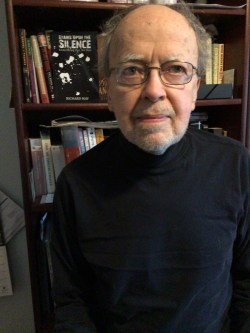
Publisher: In-Sight Publishing
Publisher Founding: March 1, 2014
Web Domain: http://www.in-sightpublishing.com
Location: Fort Langley, Township of Langley, British Columbia, Canada
Journal: In-Sight: Independent Interview-Based Journal
Journal Founding: August 2, 2012
Frequency: Three (3) Times Per Year
Review Status: Non-Peer-Reviewed
Access: Electronic/Digital & Open Access
Fees: None (Free)
Volume Numbering: 11
Issue Numbering: 2
Section: B
Theme Type: Idea
Theme Premise: “Outliers and Outsiders”
Theme Part: 27
Formal Sub-Theme: None.
Individual Publication Date: March 1, 2023
Issue Publication Date: May 1, 2023
Author(s): Richard May/May-Tzu
Author(s) Bio: Richard May (“May-Tzu”/“MayTzu”/“Mayzi”) is a Member of the Mega Society based on a qualifying score on the Mega Test (before 1995) prior to the compromise of the Mega Test and Co-Editor of Noesis: The Journal of the Mega Society. In self-description, May states: “Not even forgotten in the cosmic microwave background (CMB), I’m an Amish yuppie, born near the rarified regions of Laputa, then and often, above suburban Boston. I’ve done occasional consulting and frequent Sisyphean shlepping. Kafka and Munch have been my therapists and allies. Occasionally I’ve strived to descend from the mists to attain the mythic orientation known as having one’s feet upon the Earth. An ailurophile and a cerebrotonic ectomorph, I write for beings which do not, and never will, exist — writings for no one. I’ve been awarded an M.A. degree, mirabile dictu, in the humanities/philosophy, and U.S. patent for a board game of possible interest to extraterrestrials. I’m a member of the Mega Society, the Omega Society and formerly of Mensa. I’m the founder of the Exa Society, the transfinite Aleph-3 Society and of the renowned Laputans Manqué. I’m a biographee in Who’s Who in the Brane World. My interests include the realization of the idea of humans as incomplete beings with the capacity to complete their own evolution by effecting a change in their being and consciousness. In a moment of presence to myself in inner silence, when I see Richard May’s non-being, ‘I’ am. You can meet me if you go to an empty room.” Some other resources include Stains Upon the Silence: something for no one, McGinnis Genealogy of Crown Point, New York: Hiram Porter McGinnis, Swines List, Solipsist Soliloquies, Board Game, Lulu blog, Memoir of a Non-Irish Non-Jew, and May-Tzu’s posterous.
Word Count: 3,101
Image Credit: Richard May
International Standard Serial Number (ISSN): 2369-6885
*Please see the footnotes, bibliography, and citations, after the publication.*
Keywords: Arthur C Clarke, Arthur Schopenhauer, B.F. Skinner, Brookings Institution, C.G. Jung, Charles Fort, Donald E. Kehoe, Grady M. Towers, Jacques Vallee, James Randi, John Brennan, John E. Mack, John Greenewald, John von Neumann, May-Tzu, Michio Kaku, Niels Bohr, Non-existent Aerial Phenomena, operant conditioning, Pentagon, physics of information, Richard Dolan, Richard May, Seth Lloyd, string theory, UAP, UFO, Venus.
Nonexistent Aerial Phenomena
‘Non-existent Aerial Phenomena’, a.k.a, Unidentified Aerial Phenomena or Unidentified Flying Objects or Off-world Vehicles or Transmedium objects
“All truth passes through three stages. First, it is ridiculed. Second, it is violently opposed. Third, it is accepted as being self-evident.” — Arthur Schopenhauer
I’ve never seen a UFO or UAP, as they are now called. Change the name, end the problem? I don’t even know anyone who has seen a UFO, as far as I’m aware. I used to wish that I’d see a UFO, but no longer. I’ve learned more about Too Close Encounters of the Skinner box/Theater of the Absurd kind.
When I was a high school nerd, somehow I obtained a book entitled Flying Saucers From Outer Space by Major Donald E. Kehoe. My father told me that the subject of the book, i.e., that there were UFOs and that they were extraterrestrial was just his opinion. So I was pretty convinced even then that Major Kehoe may have been right.
I also remember a book by Aime Michel on Flying Saucers. I’m sure Philip Klass, and “The ‘Amazing’ James Randi” are correct that UFOs are flocks of geese or the planet Venus. But, sometimes I’m even skeptical of the professional Skeptics. Upton Sinclair said something to the effect that it’s hard to convince someone of something if his income depends on not believing it. I would add to his income “or his world view depends upon not believing it.”
I’ve never joined a UFO group and only own maybe three or four UFO related books.
I was guilty of listening at one time to late night talk radio, as I sat at my computer, multitasking. I thought that I could distinguish the 10% signal from the 90% noise. But the way I connected the dots it was obvious that some significant percentage of UFO observed phenomena were real and unknown (oops, if true, there goes the precious Fermi ‘paradox’) and covered up by every authority, particularly the military and the intelligence communities; Indeed, they had a duty to cover up the UFO phenomenon in my opinion, for reasons of national security and, e.g., the fears of religious fundamentalists that UFOs were ‘demons’ or ‘demonic’.
I do not expect to change anyone’s views on the matter of UFOs or any other subject. Presumably I’m not even wrong in what I have written below. In any case we are each 100% correct 100% of the time in our differing, mutually exclusive views.
There has been an unknown UFO phenomenon and many layers of coverup, which were themselves covered up. No less a whatever than John Brennan, former head of the CIA, says there appears to be something going on here vis-a-vis UFOs. See the quote and link below.
Some Conspiracy Theories are conspiracy facts. — Everyone giggle or smirk now. — You couldn’t keep something like that secret. Everyone with a high IQ knew about the Manhattan Project.
Oddly Michio Kaku, co-founder of string theory, does not seem to think that every UFO phenomenon is a flock of geese, the planet Venus or bunk to be debunked.
”Over 400 declassified UFO sightings defy the ‘normal laws of physics’. Theoretical physics professor Dr. Michio Kaku discusses the hundreds of UFO encounters that Pentagon officials recently unveiled”:
https://www.youtube.com/watch?v=EtDzYytzA_0 — 5 minute video Here is another Michio Kaku video on UFOs. — 15 minute video https://www.youtube.com/watch?v=YebZyAzLZuc
Swiss psychiatrist C.G. Jung analyzed the mythic/psychological nature of UFOs in his 1959 book Flying Saucers — A Modern Myth of Things Seen in the Sky. Jung was aware that some UFOs appear on radar, but was not concerned with whether UFOs exist in the external physical world.
A copy of C.G. Jung’s fascinating 1957 letter on UFOs is found at this link:
A free copy of his book as a PDF for download is available here:
In very brief summary Dr. Jacques Vallee, astrophysicist and computer scientist, is “the man” in my view…
https://www.amazon.com/Jacques-Vallee/e/B001K8JD8Q%3Fref=dbs_a_mng_rwt_scns_share
He may know more than he can say, either for reasons of actual U.S. national security and/or because he could have been threatened. I suppose that theoretically Vallee could be a brilliant disinformation agent.
This is certainly not his reputation. But what he does say is sufficiently stunning.
Vallee thinks that unidentified flying objects are neither flying nor objects in the ordinary sense, but interdimensional brane-world phenomena. Regarding the interstellar visitors from another planet hypothesis, he would agree with Niels Bohr’s famous assertion, “Your theory is crazy, but it’s not crazy enough to be true.”
Please see:
https://www.amazon.com/DIMENSIONS-Casebook-Contact-Jacques-Vallee/dp/1933665289
Vallee thinks that the “physics of information” may be of central importance to the UFO phenomenon. The physics of information is beyond my pay grade, but here is a link to Seth Lloyd of Cal. Tech. and M.I.T., explaining what is meant by the physics of information in general, not in relation to the UFO phenomenon.
https://www.youtube.com/watch?v=XirbbUxOxiU
UFO events are in Jacques Vallee’s view part of some sort of control system of unknown purpose, probably a variable-ratio random reinforcement schedule, à la B.F. Skinner, i.e., a form of operant conditioning.
See: https://en.wikipedia.org/wiki/Operant_conditioning
UFOs have been with us throughout our history. (Charles Fort thought that we were property.) Harvard psychiatrist John E. Mack said that the people he examined who claimed to have been “abducted by aliens” were not lying, nor were they crazy, but added that he had no understanding of what was going on. He came to support the ‘interdimensional’ interpretation of the alien abduction phenomenon mentioned above.
The first link below is to a brief biographical sketch of John E. Mack on Amazon books.
https://www.amazon.com/John-E.-Mack/e/B000AQ4TWY%3Fref=dbs_a_mng_rwt_scns_share
https://en.wikipedia.org/wiki/John_E._Mack
Professor Mack was encouraged in his research into the alien abduction phenomenon by his friend the American philosopher of science Thomas S. Kuhn, author of The Structure of Scientific Revolutions.
I’d like to add that if UFO phenomena are interdimensional (brane-world phenomena), this in no way precludes that they are also interstellar and/or time travelers, if time travel is possible. I think Dr. Vallee would agree. Of course, an interdimensional hypothesis regarding the origins and nature of UFOs may be extremely difficult or impossible to disconfirm experimentally, perhaps analogous in this respect to string theory or the Many-Worlds Interpretation (MWI) of quantum mechanics. Some have suggested that the methods of military counterintelligence may be more appropriate to apply to the UFO phenomena than the scientific method, q.v.: What do they know about us: https://thedebrief.org/what-do-they-know-about-us/
The history of unidentified aerial phenomena and the cover-ups is well documented in UFOs and the National Security State, volumes 1 and 2, by historian Richard Dolan.
https://www.amazon.com/UFOs-National-Security-State-Chronology/dp/1571743170 Dr. Vallee thinks that even today after decades of investigation the nature of the UFO
phenomenon is not understood by those in positions of authority in the U.S. military-intelligence
communities. How embarrassing for the ‘experts’, if true.
”Quote of the Week: I think some of the phenomena we’re going to be seeing continues to be unexplained and might, in fact, be some type of phenomenon that is the result of something that we don’t yet understand.” - Ex-CIA Director John Brennan
https://thedebrief.org/washingtons-ongoing-uap-problem/
I don’t think anything substantive will come out of the current hearings about UAP. Some of the sessions are closed to the public. Presumably having closed sessions is more open and transparent, an indication that there is nothing to the UAP but flocks of geese and the planet Venus. But maybe some of the geese have long, dangerous appearing bills. Thomas Jefferson would be so proud of them.
I wrote the above before the hearings were over or before I knew that they were over. I didn’t watch them.
https://www.bbc.com/news/world-us-canada-61474201
I guess the geese aren’t talking. In the sessions closed to the public they probably discussed how the geese were able to fly in from Venus, flapping their wings really hard against the vacuum of space, while holding their breath. “You can’t handle the truth“ about geese or swamp gas.
The large numbers of new acronyms is, of course, absurd. We’ve been lied to from the beginning for reasons of national security. I understand the once justified need to disinform the public. There have been cover-ups of cover-ups of cover-ups. Trust in government is low in the
U.S. and has been for very many years. Investigation of the history of reports of unidentified aerial phenomena and their cover-ups will not diminish this mistrust.
But the clincher is that the military-intelligence authorities and the ‘experts’ (people with at least 3 Ph.D.s), even after many decades of investigation, still apparently do not know what UAP are! Information may have been privatized decades ago, rather than remaining in the possession of some ultra-secret government group; E.g.: “Hey, Lockheed-Martin dudes, please tell us what this metal is, if you can.” There may be no secrets on paper, allegedly a CIA rule for “beyond top secret” stuff. And eventually people who each knew only a little on a need-to-know basis will die off, some even of natural causes. This increases security.
Even worse we, or rather high ranking members of the U.S. military and intelligence communities, may have made “deals” with UAP occupants (perhaps interdimensional brane-world, time-traveling interstellar beings, either biological entities, AI units, cyborgs or
some combination of the preceding). E.g., deals of the form: “You can continue to abduct our citizens for study, a hybridization program or whatever your purposes are, but please give us some advanced technology that we can militarize,” could have been made. If the U.S. can’t stop the abductions anyway, then this would have been a good deal for us (and completely illegal and unethical, of course). I realize that this speculation sounds more than a bit psychotic.
https://thedebrief.org/washingtons-ongoing-uap-problem/ “THE BLACK VAULT – DOCUMENT ARCHIVE
WELCOME TO THE BLACK VAULT DOCUMENT ARCHIVE”
https://www.theblackvault.com/documentarchive/
Current Government Document Page Count Within The Black Vault: 3,080,991
You’ve stumbled upon the largest privately run online repository of declassified government documents anywhere in the world. With more than 2 MILLION pages of documents to read, on nearly every government secret imaginable, The Black Vault is known worldwide for getting down to the truth… and nothing but.
Every page, photo and video you see below in this ‘FOIA Document Archive’ was obtained through the Freedom of Information Act (FOIA) or through other means of accessing U.S. government public information.
Begun in 1996, at the age of 15, John Greenewald, Jr. began hammering the U.S. Government with FOIA requests to obtain information. The Black Vault is the result of that more than two decade effort. Enjoy!”
It is somewhat surprising how much interest the U.S. military and intelligence communities have had and continue to have in “flocks of geese and the planet Venus,” i. e., classified interest. “It’s easier to think outside the box, if the box isn’t entirely intact.” — Frederik Ullen.
Below is what I wrote previously on UFOs, published on 12/22/2020, more than a year before the subject had become far more kosher and considered at least by some less “woo woo” (from Scott Douglas Jacobsen’s Interview 5 — a bit of sarcasm and irony). But after “Do you suppose we would comprehend the technology of a civilization a thousand or more years older than our own?” below, I should have added: “or the science, technology and culture of a species of off-world beings in which the average level of cognitive-mathematical ability was equivalent to that of John von Neumann?” Commenting on the well-known Hollingworth 1942 study Children above 180 IQ (based upon Stanford-Binet scores) Grady M. Towers wrote in his essay “The Outsiders” (https://prometheussociety.org/wp/articles/the-outsiders/) that, “The implication is that there is a limit beyond which genuine communication between different levels of intelligence becomes impossible.” Towers is writing about intraspecies communication. This finding generalized to interspecies communication would seem to have even greater implications for the human understanding of hyperintelligent non-Earth dwelling beings. We humans will not be capable of understanding hyperintelligent non-Earth dwelling beings and they will not be capable of understanding us, even if they attempt to do so.
Jacobsen: “May’s Paradox” asks, “Why, if a multitude of New Yorkers exist in Manhattan, evidence of New Yorkers, such as automobiles or subways, is not seen?” Why?
May: Obviously there is no evidence of New Yorkers existing, such as automobiles or subways, in New York City. That would be a Conspiracy Theory. May’s paradox should have been called the May paradox. The clear absence of evidence for the existence of New Yorkers makes May’s paradox analogous to the Fermi paradox.
In the SETI program we have searched for years for signals in the hydrogen frequency. As was pointed out in a YouTube video by Dr. Michio Kaku, there is no particular reason to assume that advanced alien life would use the hydrogen frequency to send signals, even if one assumes that such beings would use radio signals at all. Dr. Kaku also points out that if the extraterrestrial communications used spread-spectrum signals, such as we humans use even now in our cell phone signals, then we would not even recognize the alien spread-spectrum signals as signals. Please see the quote and link below, added after the original text of the interview:
“Viability of quantum communication across interstellar distances The possibility of achieving quantum communication using photons across interstellar distances is examined. For this, different factors are considered that could induce decoherence of photons, including the gravitational field of astrophysical bodies, the particle content in the interstellar medium, and the more local environment of the Solar System. The xray region of the spectrum is identified as the prime candidate to establish a quantum communication channel, although the optical and microwave bands could also enable communication across large distances. Finally, we discuss what could be expected from a quantum signal emitted by an extraterrestrial civilization, as well as the challenges for the receiver end of the channel to identify and interpret such signals.
DOI: https://doi.org/10.1103/PhysRevD.105.123033 ”
Given the exponential and unpredictable course of the growth of human technology, it seems entirely possible that a civilization even a few hundred years more advanced scientifically and technologically than our own might accomplish things in ways that we could not understand at our present level of scientific-technological development.
Do you suppose we would comprehend the technology of a civilization a thousand or more years older than our own? “Any sufficiently advanced technology is indistinguishable from magic” — Arthur C Clarke. So where are the smoke signals?
Just for fun let’s take the Roswell, New Mexico UFO crash myth. Of course, it’s just a Conspiracy Theory. The so-called Roswell incident has been explained — at least twice. Last time it was said to be a weather balloon. It might just as well have been a flock of geese or the planet Venus, I suppose.
But let’s be silly and play devil’s advocate. Suppose an unexplained extraterrestrial craft or vehicle had crashed there in 1947 after WWII. Presumably the US. military would have little or no interest in such an event. There would have been no suspicion that it might have been a Russian or German device after World War II. There would have been no military interest. There would have been no interest if not duty of the U.S. military to study and reverse engineer the advanced off-world technology for American national security. So a possible crash of some sort would not have been investigated.
But if what was discovered was thought to be an unexplained craft or an “off-world device,” as they are apparently called today, of some sort, then a high-ranking military officer or perhaps the chairman of the Joint Chiefs of Staff or our President would certainly have gone on the radio and told the U.S. public: “Fellow Americans, an unknown craft appearing to be extraterrestrial in origin has crashed in Roswell, New Mexico. We do not know its origin or understand its method of propulsion. The technology is far superior to American technology or that of any other nation on Earth. A few small gray (?) humanoid bodies have been retrieved from the crash site.
They’re not thought to be Americans. We don’t know yet with certainty if these beings are Christian or Jewish. But we can be sure they are Baptists. At this point in time it is apparent that the U.S. military cannot control its own airspace. — But, hey, don’t worry about it! — America is number one, the greatest power! — Have a nice day.”
The Brookings Institution report on the possible consequences of advanced extraterrestrial contact concluded that when a more primitive civilization encounters an advanced civilization, the more primitive civilization is damaged by the contact would certainly not be considered relevant by those in authority. The conclusion that religious fundamentalists would be highly unreceptive to contact with an advanced extraterrestrial civilization would also certainly be ignored as irrelevant.
Below are a few crackpot books of Conspiracy Theories, perhaps good for a few laughs:
Wonders in the Sky: Unexplained Aerial Objects from Antiquity to Modern Times by Jacques Vallee (Author), Chris Aubeck (Author)
A free copy of the above mentioned 482 page book can be obtained as a pdf here:
UFOs: Generals, Pilots, and Government Officials Go on the Record Paperback – August 2, 2011 by Leslie Kean (Author), John Podesta (Foreword)
UFOs and the National Security State: Chronology of a Coverup, 1941-1973 Paperback – June 1, 2002 by Richard M. Dolan (Author), Jacques F. Vallee (Foreword).
A cottage industry of woo woo, no doubt. Everyone with a high IQ knew about the Manhattan Project. You couldn’t keep something like that secret.
And in any case there are no conspiracies, ever. The Watergate break-in and subsequent Watergate cover-up were certainly not conspiracies. Project MK-Ultra was certainly not a conspiracy. Industrial espionage certainly does not involve conspiracy. — The belief that there are ever conspiracies is no more than a meta-conspiracy theory.
In summary the UFO hypothesis of visitation by advanced extraterrestrial beings is not crazy enough to explain the facts. This has been displaced for Vallee by his hypothesis of UFO visitation by advanced brane-world transversing beings, which may in addition be extraterrestrial and/or time travelers; Beings present since our antiquity, with an unknown agenda and a Skinnerian control system for humans, choreographed perfectly to off-putting absurdity. Such parsimony — interdimensionally!
Material of interest:
The Enduring Enigma of the UFO — astronauts speak — by Dean Radin https://noetic.org/wp-content/uploads/2020/12/S21_Shift_RADIN_EnduringEnigmaOfUFO.pdf Pursuing Unidentified Aerial Phenomena and ‘Impossible Futures’ — by Jacques Vallée
https://thedebrief.org/jacques-vallee-the-pursuit-of-unidentified-aerial-phenomena-and-impossible-futures/ UFOs: Shifting the Narrative from Threat to Science, Leslie Kean, August 11, 2021 https://thedebrief.org/ufos-shifting-the-narrative-from-threat-to-science/
Report on the UFO wave of 1947 by Ted Bloecher, introduction by Dr. James E. McDonald
NASA Launches Study of ‘Unidentified Aerial Phenomena’, October 24, 2022 https://www.washingtonexaminer.com/policy/defense-national-security/nasa-launches-study-on-ufos
Bibliography
None
Footnotes
None
Citations
American Medical Association (AMA 11th Edition): May R. Nonexistent Aerial Phenomena. March 2023; 11(2). http://www.in-sightpublishing.com/aerial
American Psychological Association (APA 7th Edition): May, R. (2023, March 1). Nonexistent Aerial Phenomena. In-Sight Publishing. 11(2). http://www.in-sightpublishing.com/aerial.
Brazilian National Standards (ABNT): MAY, R. Non-existent Aerial Phenomena. In-Sight: Independent Interview-Based Journal, Fort Langley, v. 11, n. 2, 2023.
Chicago/Turabian, Author-Date (17th Edition): May, Richard. 2023. “Non-existent Aerial Phenomena.” In-Sight: Independent Interview-Based Journal 11, no. 2 (Spring). http://www.in-sightpublishing.com/aerial.
Chicago/Turabian, Notes & Bibliography (17th Edition): May, R “Nonexistent Aerial Phenomena.” In-Sight: Independent Interview-Based Journal 11, no. 2 (March 2023). http://www.in-sightpublishing.com/aerial.
Harvard: May, R. (2023) ‘Non-existent Aerial Phenomena’, In-Sight: Independent Interview-Based Journal, 11(1). <http://www.in-sightpublishing.com/aerial>.
Harvard (Australian): May, R 2023, ‘Nonexistent Aerial Phenomena’, In-Sight: Independent Interview-Based Journal, vol. 11, no. 2, <http://www.in-sightpublishing.com/aerial>.
Modern Language Association (MLA, 9th Edition): May, Richard. “Non-existent Aerial Phenomena.” In-Sight: Independent Interview-Based Journal, vo.11, no. 2, 2023, http://www.in-sightpublishing.com/aerial.
Vancouver/ICMJE: Richard M. Nonexistent Aerial Phenomena [Internet]. 2023 Mar; 11(2). Available from: http://www.in-sightpublishing.com/aerial
License
In-Sight Publishing by Scott Douglas Jacobsen is licensed under a Creative Commons Attribution-NonCommercial-NoDerivatives 4.0 International License.
Based on work at www.in-sightpublishing.com.
Copyright
© Scott Douglas Jacobsen and In-Sight Publishing 2012-Present. Unauthorized use and/or duplication of this material without express and written permission from this site’s author and/or owner is strictly prohibited. Excerpts and links may be used, provided that full and clear credit is given to Scott Douglas Jacobsen, or the author(s), and In-Sight Publishing with appropriate and specific direction to the original content. All interviewees and authors copyright their material, as well, and may disseminate for their independent purposes.
Share this:

Publisher: In-Sight Publishing
Publisher Founding: March 1, 2014
Web Domain: http://www.in-sightpublishing.com
Location: Fort Langley, Township of Langley, British Columbia, Canada
Journal: In-Sight: Independent Interview-Based Journal
Journal Founding: August 2, 2012
Frequency: Three (3) Times Per Year
Review Status: Non-Peer-Reviewed
Access: Electronic/Digital & Open Access
Fees: None (Free)
Volume Numbering: 11
Issue Numbering: 2
Section: B
Theme Type: Idea
Theme Premise: “Outliers and Outsiders”
Theme Part: 27
Formal Sub-Theme: None.
Individual Publication Date: March 1, 2023
Issue Publication Date: May 1, 2023
Author(s): Richard May/May-Tzu
Author(s) Bio: Richard May (“May-Tzu”/“MayTzu”/“Mayzi”) is a Member of the Mega Society based on a qualifying score on the Mega Test (before 1995) prior to the compromise of the Mega Test and Co-Editor of Noesis: The Journal of the Mega Society. In self-description, May states: “Not even forgotten in the cosmic microwave background (CMB), I’m an Amish yuppie, born near the rarified regions of Laputa, then and often, above suburban Boston. I’ve done occasional consulting and frequent Sisyphean shlepping. Kafka and Munch have been my therapists and allies. Occasionally I’ve strived to descend from the mists to attain the mythic orientation known as having one’s feet upon the Earth. An ailurophile and a cerebrotonic ectomorph, I write for beings which do not, and never will, exist — writings for no one. I’ve been awarded an M.A. degree, mirabile dictu, in the humanities/philosophy, and U.S. patent for a board game of possible interest to extraterrestrials. I’m a member of the Mega Society, the Omega Society and formerly of Mensa. I’m the founder of the Exa Society, the transfinite Aleph-3 Society and of the renowned Laputans Manqué. I’m a biographee in Who’s Who in the Brane World. My interests include the realization of the idea of humans as incomplete beings with the capacity to complete their own evolution by effecting a change in their being and consciousness. In a moment of presence to myself in inner silence, when I see Richard May’s non-being, ‘I’ am. You can meet me if you go to an empty room.” Some other resources include Stains Upon the Silence: something for no one, McGinnis Genealogy of Crown Point, New York: Hiram Porter McGinnis, Swines List, Solipsist Soliloquies, Board Game, Lulu blog, Memoir of a Non-Irish Non-Jew, and May-Tzu’s posterous.
Word Count: 34
Image Credit: Richard May
International Standard Serial Number (ISSN): 2369-6885
*Please see the footnotes, bibliography, and citations, after the publication.*
Keywords: bed, coming home, dead, life, May-Tzu, painful experience, Richard May.
Is the universe an update?
My most painful experience was coming home from work one night
and unexpectedly finding myself dead,
sprawled across the bed.
Don’t take your life personally.
It doesn’t have anything to do with you.
May-Tzu
Bibliography
None
Footnotes
None
Citations
American Medical Association (AMA 11th Edition): May R. Is the universe an update?. March 2023; 11(2). http://www.in-sightpublishing.com/dead
American Psychological Association (APA 7th Edition): May, R. (2023, March 1). Is the universe an update?. In-Sight Publishing. 11(2). http://www.in-sightpublishing.com/dead.
Brazilian National Standards (ABNT): MAY, R. Is the universe an update?. In-Sight: Independent Interview-Based Journal, Fort Langley, v. 11, n. 2, 2023.
Chicago/Turabian, Author-Date (17th Edition): May, Richard. 2023. “Is the universe an update?.” In-Sight: Independent Interview-Based Journal 11, no. 2 (Spring). http://www.in-sightpublishing.com/dead.
Chicago/Turabian, Notes & Bibliography (17th Edition): May, R “Is the universe an update?.” In-Sight: Independent Interview-Based Journal 11, no. 2 (March 2023). http://www.in-sightpublishing.com/dead.
Harvard: May, R. (2023) ‘Is the universe an update?’, In-Sight: Independent Interview-Based Journal, 11(1). <http://www.in-sightpublishing.com/dead>.
Harvard (Australian): May, R 2023, ‘Is the universe an update?’, In-Sight: Independent Interview-Based Journal, vol. 11, no. 2, <http://www.in-sightpublishing.com/dead>.
Modern Language Association (MLA, 9th Edition): May, Richard. “Is the universe an update?.” In-Sight: Independent Interview-Based Journal, vo.11, no. 2, 2023, http://www.in-sightpublishing.com/dead.
Vancouver/ICMJE: Richard M. Is the universe an update? [Internet]. 2023 Mar; 11(2). Available from: http://www.in-sightpublishing.com/dead
License
In-Sight Publishing by Scott Douglas Jacobsen is licensed under a Creative Commons Attribution-NonCommercial-NoDerivatives 4.0 International License.
Based on work at www.in-sightpublishing.com.
Copyright
© Scott Douglas Jacobsen and In-Sight Publishing 2012-Present. Unauthorized use and/or duplication of this material without express and written permission from this site’s author and/or owner is strictly prohibited. Excerpts and links may be used, provided that full and clear credit is given to Scott Douglas Jacobsen, or the author(s), and In-Sight Publishing with appropriate and specific direction to the original content. All interviewees and authors copyright their material, as well, and may disseminate for their independent purposes.
Share this:

Publisher: In-Sight Publishing
Publisher Founding: March 1, 2014
Web Domain: http://www.in-sightpublishing.com
Location: Fort Langley, Township of Langley, British Columbia, Canada
Journal: In-Sight: Independent Interview-Based Journal
Journal Founding: August 2, 2012
Frequency: Three (3) Times Per Year
Review Status: Non-Peer-Reviewed
Access: Electronic/Digital & Open Access
Fees: None (Free)
Volume Numbering: 11
Issue Numbering: 2
Section: B
Theme Type: Idea
Theme Premise: “Outliers and Outsiders”
Theme Part: 27
Formal Sub-Theme: None.
Individual Publication Date: March 1, 2023
Issue Publication Date: May 1, 2023
Author(s): Richard May/May-Tzu
Author(s) Bio: Richard May (“May-Tzu”/“MayTzu”/“Mayzi”) is a Member of the Mega Society based on a qualifying score on the Mega Test (before 1995) prior to the compromise of the Mega Test and Co-Editor of Noesis: The Journal of the Mega Society. In self-description, May states: “Not even forgotten in the cosmic microwave background (CMB), I’m an Amish yuppie, born near the rarified regions of Laputa, then and often, above suburban Boston. I’ve done occasional consulting and frequent Sisyphean shlepping. Kafka and Munch have been my therapists and allies. Occasionally I’ve strived to descend from the mists to attain the mythic orientation known as having one’s feet upon the Earth. An ailurophile and a cerebrotonic ectomorph, I write for beings which do not, and never will, exist — writings for no one. I’ve been awarded an M.A. degree, mirabile dictu, in the humanities/philosophy, and U.S. patent for a board game of possible interest to extraterrestrials. I’m a member of the Mega Society, the Omega Society and formerly of Mensa. I’m the founder of the Exa Society, the transfinite Aleph-3 Society and of the renowned Laputans Manqué. I’m a biographee in Who’s Who in the Brane World. My interests include the realization of the idea of humans as incomplete beings with the capacity to complete their own evolution by effecting a change in their being and consciousness. In a moment of presence to myself in inner silence, when I see Richard May’s non-being, ‘I’ am. You can meet me if you go to an empty room.” Some other resources include Stains Upon the Silence: something for no one, McGinnis Genealogy of Crown Point, New York: Hiram Porter McGinnis, Swines List, Solipsist Soliloquies, Board Game, Lulu blog, Memoir of a Non-Irish Non-Jew, and May-Tzu’s posterous.
Word Count: 65
Image Credit: Richard May
International Standard Serial Number (ISSN): 2369-6885
*Please see the footnotes, bibliography, and citations, after the publication.*
Keywords: dreams, Gorgias of Leontini, Lao-Tzu, listening, Master, May-Tzu, Moonless Sun, Nothing, Richard May.
Moonless Sun
To Gorgias of Leontini:
“Nothing exists,
if anything does exist it cannot be known,
if anything exists and can be known,
it cannot be communicated.”
– Gorgias of Leontini, c. 485-380 B.C.
Moonless Sun
In dreams the Master plays sounds of the time before listening or hearing.
Waves of time upon a beach —
No one —
in an unseen sea.
Lao-Tzu standing like a tree.
May-Tzu
Bibliography
None
Footnotes
None
Citations
American Medical Association (AMA 11th Edition): May R. Moonless Sun. March 2023; 11(2). http://www.in-sightpublishing.com/moonless-sun
American Psychological Association (APA 7th Edition): May, R. (2023, March 1). Moonless Sun. In-Sight Publishing. 11(2). http://www.in-sightpublishing.com/moonless-sun.
Brazilian National Standards (ABNT): MAY, R. Moonless Sun. In-Sight: Independent Interview-Based Journal, Fort Langley, v. 11, n. 2, 2023.
Chicago/Turabian, Author-Date (17th Edition): May, Richard. 2023. “Moonless Sun.” In-Sight: Independent Interview-Based Journal 11, no. 2 (Spring). http://www.in-sightpublishing.com/moonless-sun.
Chicago/Turabian, Notes & Bibliography (17th Edition): May, R “Moonless Sun.” In-Sight: Independent Interview-Based Journal 11, no. 2 (March 2023). http://www.in-sightpublishing.com/moonless-sun.
Harvard: May, R. (2023) ‘Moonless Sun’, In-Sight: Independent Interview-Based Journal, 11(1). <http://www.in-sightpublishing.com/moonless-sun>.
Harvard (Australian): May, R 2023, ‘Moonless Sun’, In-Sight: Independent Interview-Based Journal, vol. 11, no. 2, <http://www.in-sightpublishing.com/moonless-sun>.
Modern Language Association (MLA, 9th Edition): May, Richard. “Moonless Sun.” In-Sight: Independent Interview-Based Journal, vo.11, no. 2, 2023, http://www.in-sightpublishing.com/moonless-sun.
Vancouver/ICMJE: Richard M. Moonless Sun [Internet]. 2023 Mar; 11(2). Available from: http://www.in-sightpublishing.com/moonless-sun
License
In-Sight Publishing by Scott Douglas Jacobsen is licensed under a Creative Commons Attribution-NonCommercial-NoDerivatives 4.0 International License.
Based on work at www.in-sightpublishing.com.
Copyright
© Scott Douglas Jacobsen and In-Sight Publishing 2012-Present. Unauthorized use and/or duplication of this material without express and written permission from this site’s author and/or owner is strictly prohibited. Excerpts and links may be used, provided that full and clear credit is given to Scott Douglas Jacobsen, or the author(s), and In-Sight Publishing with appropriate and specific direction to the original content. All interviewees and authors copyright their material, as well, and may disseminate for their independent purposes.
Share this:


Publisher: In-Sight Publishing
Publisher Founding: March 1, 2014
Web Domain: http://www.in-sightpublishing.com
Location: Fort Langley, Township of Langley, British Columbia, Canada
Journal: In-Sight: Independent Interview-Based Journal
Journal Founding: August 2, 2012
Frequency: Three (3) Times Per Year
Review Status: Non-Peer-Reviewed
Access: Electronic/Digital & Open Access
Fees: None (Free)
Volume Numbering: 11
Issue Numbering: 2
Section: B
Theme Type: Idea
Theme Premise: “Outliers and Outsiders”
Theme Part: 27
Formal Sub-Theme: None.
Individual Publication Date: March 1, 2023
Issue Publication Date: May 1, 2023
Author(s): Sam Vaknin
Author(s) Bio: Sam Vaknin is the author of Malignant Self-love: Narcissism Revisited as well as many other books and ebooks about topics in psychology, relationships, philosophy, economics, international affairs, and award-winning short fiction. He is former Visiting Professor of Psychology, Southern Federal University, Rostov-on-Don, Russia and Professor of Finance and Psychology in SIAS-CIAPS (Centre for International Advanced and Professional Studies). He was the Editor-in-Chief of Global Politician and served as a columnist for Central Europe Review, PopMatters, eBookWeb, and Bellaonline, and as a United Press International (UPI) Senior Business Correspondent. He was the editor of mental health and Central East Europe categories in The Open Directory and Suite101. His YouTube channels garnered 20,000,000 views and 85,000 subscribers. Visit Sam’s Web site: http://www.narcissistic-abuse.com.
Word Count: 1,342
Image Credit: Sam Vaknin.
International Standard Serial Number (ISSN): 2369-6885
*Please see the footnotes, bibliography, and citations, after the publication.*
*Republished with permission.*
Keywords: Epictetus, Public Goods, Private Goods, technology, Nonrivalry, Nonexcludability, Externalities, Musgrave, Ronald Coase, Paul Samuelson, Intellectual Property Rights, nonrivalrous, nonexcludability.
Is Education a Public Good?
“We must not believe the many, who say that only free people ought to be educated, but we should rather believe the philosophers who say that only the educated are free.”
— Epictetus (AD 55?-135?), Greek Stoic philosopher
- Public Goods, Private Goods
Contrary to common misconceptions, public goods are not “goods provided by the public” (read: by the government). Public goods are sometimes supplied by the private sector and private goods – by the public sector. It is the contention of this essay that technology is blurring the distinction between these two types of goods and rendering it obsolete.
Pure public goods are characterized by:
I. Nonrivalry– the cost of extending the service or providing the good to another person is (close to) zero.
Most products are rivalrous (scarce) – zero sum games. Having been consumed, they are gone and are not available to others. Public goods, in contrast, are accessible to growing numbers of people without any additional marginal cost. This wide dispersion of benefits renders them unsuitable for private entrepreneurship. It is impossible to recapture the full returns they engender. As Samuelson observed, they are extreme forms of positive externalities (spillover effects).
II. Nonexcludability – it is impossible to exclude anyone from enjoying the benefits of a public good, or from defraying its costs (positive and negative externalities). Neither can anyone willingly exclude himself from their remit.
III. Externalities – public goods impose costs or benefits on others – individuals or firms – outside the marketplace and their effects are only partially reflected in prices and the market transactions. As Musgrave pointed out (1969), externalities are the other face of nonrivalry.
The usual examples for public goods are lighthouses – famously questioned by one Nobel Prize winner, Ronald Coase, and defended by another, Paul Samuelson – national defense, the GPS navigation system, vaccination programs, dams, and public art (such as park concerts).
It is evident that public goods are not necessarily provided or financed by public institutions. But governments frequently intervene to reverse market failures (i.e., when the markets fail to provide goods and services) or to reduce transaction costs so as to enhance consumption or supply and, thus, positive externalities. Governments, for instance, provide preventive care – a non-profitable healthcare niche – and subsidize education because they have an overall positive social effect.
Moreover, pure public goods do not exist, with the possible exception of national defense. Samuelson himself suggested [Samuelson, P.A – Diagrammatic Exposition of a Theory of Public Expenditure – Review of Economics and Statistics, 37 (1955), 350-56]:
“… Many – though not all – of the realistic cases of government activity can be fruitfully analyzed as some kind of a blend of these two extreme polar cases” (p. 350) – mixtures of private and public goods. (Education, the courts, public defense, highway programs, police and fire protection have an) “element of variability in the benefit that can go to one citizen at the expense of some other citizen” (p. 356).
From Pickhardt, Michael’s paper titled “Fifty Years after Samuelson’s ‘The Pure Theory of Public Expenditure’: What Are We Left With?”:
“… It seems that rivalry and nonrivalry are supposed to reflect this “element of variability” and hint at a continuum of goods that ranges from wholly rival to wholly nonrival ones. In particular, Musgrave (1969, p. 126 and pp. 134-35) writes:
‘The condition of non-rivalness in consumption (or, which is the same, the existence of beneficial consumption externalities) means that the same physical output (the fruits of the same factor input) is enjoyed by both A and B. This does not mean that the same subjective benefit must be derived, or even that precisely the same product quality is available to both. (…) Due to non-rivalness of consumption, individual demand curves are added vertically, rather than horizontally as in the case of private goods”.
“The preceding discussion has dealt with the case of a pure social good, i.e. a good the benefits of which are wholly non-rival. This approach has been subject to the criticism that this case does not exist, or, if at all, applies to defence only; and in fact most goods which give rise to private benefits also involve externalities in varying degrees and hence combine both social and private good characteristics’ “.
II. The Transformative Nature of Technology
It would seem that knowledge – or, rather, technology – is a public good as it is nonrival, nonexcludable, and has positive externalities. The New Growth Theory (theory of endogenous technological change) emphasizes these “natural” qualities of technology.
The application of Intellectual Property Rights (IPR) alters the nature of technology from public to private good by introducing excludability, though not rivalry. Put more simply, technology is “expensive to produce and cheap to reproduce”. By imposing licensing demands on consumers, it is made exclusive, though it still remains nonrivalrous (can be copied endlessly without being diminished).
Yet, even encumbered by IPR, technology is transformative. It converts some public goods into private ones and vice versa.
Consider highways – hitherto quintessential public goods. The introduction of advanced “on the fly” identification and billing (toll) systems reduced transaction costs so dramatically that privately-owned and operated highways are now common in many Western countries. This is an example of a public good gradually going private.
Books reify the converse trend – from private to public goods. Print books – undoubtedly a private good – are now available online free of charge for download. Online public domain books are a nonrivalrous, nonexcludable good with positive externalities – in other words, a pure public good.
III. Is Education a Public Good?
Education used to be a private good with positive externalities. Thanks to technology and government largesse it is no longer the case. It is being transformed into a nonpure public good.
Technology-borne education is nonrivalrous and, like its traditional counterpart, has positive externalities. It can be replicated and disseminated virtually cost-free to the next consumer through the Internet, television, radio, and on magnetic media. MIT has recently placed 500 of its courses online and made them freely accessible. Distance learning is spreading like wildfire. Webcasts can host – in principle – unlimited amounts of students.
Yet, all forms of education are exclusionary, at least in principle. It is impossible to exclude a citizen from the benefits of his country’s national defense, or those of his county’s dam. It is perfectly feasible to exclude would be students from access to education – both online and offline.
This caveat, however, equally applies to other goods universally recognized as public. It is possible to exclude certain members of the population from being vaccinated, for instance – or from attending a public concert in the park.
Other public goods require an initial investment (the price-exclusion principle demanded by Musgrave in 1959, does apply at times). One can hardly benefit from the weather forecasts without owning a radio or a television set – which would immediately tend to exclude the homeless and the rural poor in many countries. It is even conceivable to extend the benefits of national defense selectively and to exclude parts of the population, as the Second World War has taught some minorities all too well.
Nor is strict nonrivalry possible – at least not simultaneously, as Musgrave observed (1959, 1969). Our world is finite – and so is everything in it. The economic fundament of scarcity applies universally – and public goods are not exempt. There are only so many people who can attend a concert in the park, only so many ships can be guided by a lighthouse, only so many people defended by the army and police. This is called “crowding” and amounts to the exclusion of potential beneficiaries (the theories of “jurisdictions” and “clubs” deal with this problem).
Nonrivalry and nonexcludability are ideals – not realities. They apply strictly only to the sunlight. As environmentalists keep warning us, even the air is a scarce commodity. Technology gradually helps render many goods and services – books and education, to name two – asymptotically nonrivalrous and nonexcludable.
Bibliography
Samuelson, Paul A. and Nordhaus, William D. – Economics – 17th edition – New-York, McGraw-Hill Irian, 2001
Heyne, Paul and Palmer, John P. – The Economic Way of Thinking – 1st Canadian edition – Scarborough, Ontario, Prentice-Hall Canada, 1997
Ellickson, Bryan – A Generalization of the Pure Theory of Public Goods – Discussion Paper Number 14, Revised January 1972
Buchanan, James M. – The Demand and Supply of Public Goods – Library of Economics and Liberty – World Wide Web: http://www.econlib.org/library/Buchanan/buchCv5c1.html
Samuelson, Paul A. – The Pure Theory of Public Expenditure – The Review of Economics and Statistics, Volume 36, Issue 4 (Nov. 1954), 387-9
Pickhardt, Michael – Fifty Years after Samuelson’s “The Pure Theory of Public Expenditure”: What Are We Left With? – Paper presented at the 58th Congress of the International Institute of Public Finance (IIPF), Helsinki, August 26-29, 2002.
Musgrave, R.A. – Provision for Social Goods, in: Margolis, J./Guitton, H. (eds.), Public Economics – London, McMillan, 1969, pp. 124-44.
Musgrave, R. A. – The Theory of Public Finance –New York, McGraw-Hill, 1959.
Footnotes
None
Citations
American Medical Association (AMA 11th Edition): Vaknin S. Is Education a Public Good?. March 2023; 11(2). http://www.in-sightpublishing.com/education
American Psychological Association (APA 7th Edition): Vaknin, S. (2023, March 1). Is Education a Public Good?. In-Sight Publishing. 11(2). http://www.in-sightpublishing.com/education.
Brazilian National Standards (ABNT): VAKNIN, S. Is Education a Public Good?. In-Sight: Independent Interview-Based Journal, Fort Langley, v. 11, n. 2, 2023.
Chicago/Turabian, Author-Date (17th Edition): Vaknin, Sam. 2023. “Is Education a Public Good?.” In-Sight: Independent Interview-Based Journal 11, no. 2 (Spring). http://www.in-sightpublishing.com/education.
Chicago/Turabian, Notes & Bibliography (17th Edition): Vaknin, S “Is Education a Public Good?.” In-Sight: Independent Interview-Based Journal 11, no. 2 (March 2023). http://www.in-sightpublishing.com/education.
Harvard: Vaknin, S. (2023) ‘Is Education a Public Good?’, In-Sight: Independent Interview-Based Journal, 11(1). <http://www.in-sightpublishing.com/education>.
Harvard (Australian): Vaknin, S 2023, ‘Is Education a Public Good?’, In-Sight: Independent Interview-Based Journal, vol. 11, no. 2, <http://www.in-sightpublishing.com/education>.
Modern Language Association (MLA, 9th Edition): Vaknin, Sam. “Is Education a Public Good?.” In-Sight: Independent Interview-Based Journal, vo.11, no. 2, 2023, http://www.in-sightpublishing.com/education.
Vancouver/ICMJE: Sam V. Is Education a Public Good? [Internet]. 2023 Mar; 11(2). Available from: http://www.in-sightpublishing.com/education
License
In-Sight Publishing by Scott Douglas Jacobsen is licensed under a Creative Commons Attribution-NonCommercial-NoDerivatives 4.0 International License.
Based on work at www.in-sightpublishing.com.
Copyright
© Scott Douglas Jacobsen and In-Sight Publishing 2012-Present. Unauthorized use and/or duplication of this material without express and written permission from this site’s author and/or owner is strictly prohibited. Excerpts and links may be used, provided that full and clear credit is given to Scott Douglas Jacobsen, or the author(s), and In-Sight Publishing with appropriate and specific direction to the original content. All interviewees and authors copyright their material, as well, and may disseminate for their independent purposes.
Share this:

Author(s): Scott Douglas Jacobsen
Publication (Outlet/Website): Personal (Medium)
Publication Date (yyyy/mm/dd): 2023/02/28
Runriverrun: Timeintime, oninon, outoffout, againoutagain, onward wardon, is it worth it, is; a joust, a toast, a taste.
See “Endinstart”.
License
In-Sight Publishing by Scott Douglas Jacobsen is licensed under a Creative Commons Attribution-NonCommercial-NoDerivatives 4.0 International License. Based on a work at www.in-sightpublishing.com.
Copyright
© Scott Douglas Jacobsen and In-Sight Publishing 2012-Present. Unauthorized use and/or duplication of this material without express and written permission from this site’s author and/or owner is strictly prohibited. Excerpts and links may be used, provided that full and clear credit is given to Scott Douglas Jacobsen and In-Sight Publishing with appropriate and specific direction to the original content. All interviewees and authors co-copyright their material and may disseminate for their independent purposes.
Share this:
Author(s): Scott Douglas Jacobsen
Publication (Outlet/Website): Personal (Medium)
Publication Date (yyyy/mm/dd): 2023/02/28
Raver-ran: Back to the owl in the triumvirons, past peeves and dames, to curvy cores and tended hays; a Vico encyclical.
See “Trinity”.
License
In-Sight Publishing by Scott Douglas Jacobsen is licensed under a Creative Commons Attribution-NonCommercial-NoDerivatives 4.0 International License. Based on a work at www.in-sightpublishing.com.
Copyright
© Scott Douglas Jacobsen and In-Sight Publishing 2012-Present. Unauthorized use and/or duplication of this material without express and written permission from this site’s author and/or owner is strictly prohibited. Excerpts and links may be used, provided that full and clear credit is given to Scott Douglas Jacobsen and In-Sight Publishing with appropriate and specific direction to the original content. All interviewees and authors co-copyright their material and may disseminate for their independent purposes.
Share this:
Author(s): Scott Douglas Jacobsen
Publication (Outlet/Website): Personal (Medium)
Publication Date (yyyy/mm/dd): 2023/02/28
Why is death a gift: It is an affirmation of life in its inverse; degradation as mirrored absolute and finity.
See “Spatiotemporal cision”.
License
In-Sight Publishing by Scott Douglas Jacobsen is licensed under a Creative Commons Attribution-NonCommercial-NoDerivatives 4.0 International License. Based on a work at www.in-sightpublishing.com.
Copyright
© Scott Douglas Jacobsen and In-Sight Publishing 2012-Present. Unauthorized use and/or duplication of this material without express and written permission from this site’s author and/or owner is strictly prohibited. Excerpts and links may be used, provided that full and clear credit is given to Scott Douglas Jacobsen and In-Sight Publishing with appropriate and specific direction to the original content. All interviewees and authors co-copyright their material and may disseminate for their independent purposes.
Share this:
Author(s): Scott Douglas Jacobsen
Publication (Outlet/Website): Personal (Medium)
Publication Date (yyyy/mm/dd): 2023/02/28
Thouarted: Yonder tapper, gonderwand eron yapper, thou art thwarteducated; de wonder, the bonder, founder hounded.
See “Harassterical”.
License
In-Sight Publishing by Scott Douglas Jacobsen is licensed under a Creative Commons Attribution-NonCommercial-NoDerivatives 4.0 International License. Based on a work at www.in-sightpublishing.com.
Copyright
© Scott Douglas Jacobsen and In-Sight Publishing 2012-Present. Unauthorized use and/or duplication of this material without express and written permission from this site’s author and/or owner is strictly prohibited. Excerpts and links may be used, provided that full and clear credit is given to Scott Douglas Jacobsen and In-Sight Publishing with appropriate and specific direction to the original content. All interviewees and authors co-copyright their material and may disseminate for their independent purposes.
Share this:
Author(s): Scott Douglas Jacobsen
Publication (Outlet/Website): Personal (Medium)
Publication Date (yyyy/mm/dd): 2023/02/28
Dime: Dimes on times, a remembrance for temperance, a heaven sign to unleaven from nine; tip me 2, 3, 5, to be 10 times alive.
See “Net”.
License
In-Sight Publishing by Scott Douglas Jacobsen is licensed under a Creative Commons Attribution-NonCommercial-NoDerivatives 4.0 International License. Based on a work at www.in-sightpublishing.com.
Copyright
© Scott Douglas Jacobsen and In-Sight Publishing 2012-Present. Unauthorized use and/or duplication of this material without express and written permission from this site’s author and/or owner is strictly prohibited. Excerpts and links may be used, provided that full and clear credit is given to Scott Douglas Jacobsen and In-Sight Publishing with appropriate and specific direction to the original content. All interviewees and authors co-copyright their material and may disseminate for their independent purposes.
Share this:
Author(s): Scott Douglas Jacobsen
Publication (Outlet/Website): Personal (Medium)
Publication Date (yyyy/mm/dd): 2023/02/28
“Coke-aholic”: A family bears in weather, whether unbearable or able; or, a family of holes, wholly unholy.
See “Coffee Crisp-aholic”.
License
In-Sight Publishing by Scott Douglas Jacobsen is licensed under a Creative Commons Attribution-NonCommercial-NoDerivatives 4.0 International License. Based on a work at www.in-sightpublishing.com.
Copyright
© Scott Douglas Jacobsen and In-Sight Publishing 2012-Present. Unauthorized use and/or duplication of this material without express and written permission from this site’s author and/or owner is strictly prohibited. Excerpts and links may be used, provided that full and clear credit is given to Scott Douglas Jacobsen and In-Sight Publishing with appropriate and specific direction to the original content. All interviewees and authors co-copyright their material and may disseminate for their independent purposes.
Share this:
Author(s): Scott Douglas Jacobsen
Publication (Outlet/Website): Medium (Personal)
Publication Date (yyyy/mm/dd): 2023/02/28
Silence in Black: Sit in sense and send tense, ’tis no tense in sending sense; as fun fi fo fun, and fun of if fun.
See “Black in Silence”.
License
In-Sight Publishing by Scott Douglas Jacobsen is licensed under a Creative Commons Attribution-NonCommercial-NoDerivatives 4.0 International License. Based on a work at www.in-sightpublishing.com.
Copyright
© Scott Douglas Jacobsen and In-Sight Publishing 2012-Present. Unauthorized use and/or duplication of this material without express and written permission from this site’s author and/or owner is strictly prohibited. Excerpts and links may be used, provided that full and clear credit is given to Scott Douglas Jacobsen and In-Sight Publishing with appropriate and specific direction to the original content. All interviewees and authors co-copyright their material and may disseminate for their independent purposes.
Share this:
Author(s): Scott Douglas Jacobsen
Publication (Outlet/Website): Medium (Personal)
Publication Date (yyyy/mm/dd): 2023/02/28
Glasses: You’ve lost your glasses. They’re somewhere. What are you going to do now? See them?
See “Pass the Courvoisier”.
License
In-Sight Publishing by Scott Douglas Jacobsen is licensed under a Creative Commons Attribution-NonCommercial-NoDerivatives 4.0 International License. Based on a work at www.in-sightpublishing.com.
Copyright
© Scott Douglas Jacobsen and In-Sight Publishing 2012-Present. Unauthorized use and/or duplication of this material without express and written permission from this site’s author and/or owner is strictly prohibited. Excerpts and links may be used, provided that full and clear credit is given to Scott Douglas Jacobsen and In-Sight Publishing with appropriate and specific direction to the original content. All interviewees and authors co-copyright their material and may disseminate for their independent purposes.
Share this:
Author(s): Scott Douglas Jacobsen
Publication (Outlet/Website): Medium (Personal)
Publication Date (yyyy/mm/dd): 2023/02/28
The Mentally Ill: Where are they, the mentally ill? When did you die? “Right here, 20 years ago.” Those who died, coming to terms with their living death, since then, now.
See “No comprehensive cures”.
License
In-Sight Publishing by Scott Douglas Jacobsen is licensed under a Creative Commons Attribution-NonCommercial-NoDerivatives 4.0 International License. Based on a work at www.in-sightpublishing.com.
Copyright
© Scott Douglas Jacobsen and In-Sight Publishing 2012-Present. Unauthorized use and/or duplication of this material without express and written permission from this site’s author and/or owner is strictly prohibited. Excerpts and links may be used, provided that full and clear credit is given to Scott Douglas Jacobsen and In-Sight Publishing with appropriate and specific direction to the original content. All interviewees and authors co-copyright their material and may disseminate for their independent purposes.
Share this:
Author(s): Scott Douglas Jacobsen
Publication (Outlet/Website): Medium (Personal)
Publication Date (yyyy/mm/dd): 2023/02/28
Life 2.0: A terse paragraph with awkward punctuation, mistimed rhymes, offbeat bass, simplicity; and yet, harmonious melody.
See “Rocks”.
License
In-Sight Publishing by Scott Douglas Jacobsen is licensed under a Creative Commons Attribution-NonCommercial-NoDerivatives 4.0 International License. Based on a work at www.in-sightpublishing.com.
Copyright
© Scott Douglas Jacobsen and In-Sight Publishing 2012-Present. Unauthorized use and/or duplication of this material without express and written permission from this site’s author and/or owner is strictly prohibited. Excerpts and links may be used, provided that full and clear credit is given to Scott Douglas Jacobsen and In-Sight Publishing with appropriate and specific direction to the original content. All interviewees and authors co-copyright their material and may disseminate for their independent purposes.
Share this:
Author(s): Scott Douglas Jacobsen
Publication (Outlet/Website): Medium (Personal)
Publication Date (yyyy/mm/dd): 2023/02/25
Be ready for headaches. They’re inevitable.
Whether a woman or a man, young or old, if you are getting into this industry, you should note: Drama is real. As one equestrian friend noted a couple of nights ago to me, “it’s a girls’ sport” now.
Ian Millar is stepping down and back. Eric Lamaze is stepping back and down. The team to Denmark was all women. I am the male only staffer here 7 days per week at an Olympic level, 4*, hunter-jumper facility.
Most of the staff are women, by a large margin. The only other man here is much younger and married to one of the younger trainers/coaches. He likely doesn’t want to be here for the sport, except for the love of his life.
Another Indo-Canadian fellow only does machine operation and some other heavy-duty stuff. However, his thing: “I don’t work for those girls”. One might get a humorous image of the man being burned verbally by a white, Euro-Canadian women.
Which goes back to the conversation with the Chinese equestrian friend who goes to UBC, it sparked some reflection for me.
The continual message, at times, is making something out of nothing. Given the preponderance of women across the industry, especially staff and clientele, the rational spectre is raised: The majority demographics of women means the culture is a subculture of, and by, women. What is happening in this culture to produce something lacking appeal to men for better balance in Canada?
The drama can be one part of it. Then there can be being pushed out of it. My first week in the industry was marked by intimidation, threats, and bullying by some staff. One of the middle managers, the stable manager, made the direct point of letting me know; she had gotten a male staffer fired, bragged about it to me, and concluded, “So, don’t get on my bad side.”
This was stated in front of another staffer. Nothing is done. If I was another man and not interested in the journalistic experience, then I would have left a long time ago, likely the first week on the first moment of threat, intimidation, and bullying. These are all white women.
When another gentleman had come into the staff, he was a divorced alcoholic or out of a relationship and a heavy drinker. Rather than go to management for a proper firing, the stable manager called the cops on him, making sure he had been drinking, so he’d get jail time. I’ve never seen him since, and didn’t enjoy the company or the quality of work by the way. In cases like these, men are threatened out of the industry in the former case and driven out in the latter.
I don’t think the work environment should have a drinker on site. However, there is a proper procedure for dealing with these contexts. The real fear of management is if a case arises and causes trouble rather than the issue itself.
When diversity came into one recent work meeting, the issues for management was not the contexts of diversity, and so on, but the things to do if this arises in the work environment. Because one client and some others, apparently, had issues with trans staff members and pronouns.
One gets a sense of ad hoc as the rule in ethics in equestrianism.
In the contexts of interviewing, I started the series interviewing Erynn Ballard:
Jacobsen: Every person who I met who competes and works in the stables, or as a full-time in the stables, have all been incredibly impressive in their own ways. Some have tragic personal histories and have overcome them. The work ethic is there.
Ballard: People are drawn to horses, maybe, if they aren’t good with people.
Jacobsen: That’s an interesting hypothesis, maybe.
Ballard: A connection with the horse that they can’t have with the person. The turnover in my life, as far as clients who ride with me — and people who work for me, is very high, very. Grooms come and go, there’s students, young kids, even riders. A lot of girls ride until they turn 15 or 16. Then they have a choice to make. Are they going to keep riding, to go skiing, to go hang out with boys, to go to university? At the younger age, it is mostly girls.
If a teenager sticks through that stage, maybe, they’re not that social. They don’t love going to the parties on the weekend. Or they struggle with being in a school, in girl gangs. They like horses. They hang out with horses. Then they create a friend group, which they didn’t think they could have in school because they have a common interest with other kids in horses. Maybe, they don’t want to go to university.
They have to work for a living, so they become a groom. Maybe, they want to go to law school, but they don’t have enough money. So, they groom on the weekends. The turnover of people who work in the industry versus me is high, because not everyone is a lifer.
I would modify some of the commentary with more experience. One of those is the impressiveness. A lot of these people have tragic stories. While, at the same time, they are stuck; they have no other skills. Their grade level is 9 to 12. So, the lowest levels of high school to a high school diploma. They work very hard.
This is home for some of them because they have no home other than necessity. Substance misuse, alcoholism, sociosexually unrestricted behaviour, and the like, are common too. These are self-trashing behaviours done by the women on staff to themselves.
I went out with two women staffers. Both got smashed drunk. I felt as if I was babysitting adults. The issue came when one was shocked after going away from the group. She was shook up. The reason: She was almost shoved into a car, to presumably be dragged off, by two men attempting to force her into the car.
These sound like the conditions for sexual assault and sexual harassment. It took some time to get the men to go away, which required a black ex-bouncer who I befriended to help me. I sent him; I’m a wuss, but smart. I’m an egalitarian. Women are free agents to do stupid things and be judged fairly if doing so.
The reason for the high turnover, and between the lines of Ballard’s statements, is the need to survive in a world of clashing needs and trauma. The young women create drama for one another. I’m told by many women flowing through here as staff that “drama is so high”. It’s part of the lifestyle of the moment, the Great Now.
The ‘impressiveness’ is more often a veneer exemplifying surviving. Ballard, certainly, is correct. The turnover in the industry is very high. One of the reasons in drama; and they do it to themselves, making everyone’s life harder for no reason other than the need for drama.
License
In-Sight Publishing by Scott Douglas Jacobsen is licensed under a Creative Commons Attribution-NonCommercial-NoDerivatives 4.0 International License. Based on a work at www.in-sightpublishing.com.
Copyright
© Scott Douglas Jacobsen and In-Sight Publishing 2012-Present. Unauthorized use and/or duplication of this material without express and written permission from this site’s author and/or owner is strictly prohibited. Excerpts and links may be used, provided that full and clear credit is given to Scott Douglas Jacobsen and In-Sight Publishing with appropriate and specific direction to the original content. All interviewees and authors co-copyright their material and may disseminate for their independent purposes.
Share this:
Author(s): Scott Douglas Jacobsen
Publication (Outlet/Website): Medium (Personal)
Publication Date (yyyy/mm/dd): 2023/02/24
Tupsy-torvy: Tiltriller gonerung ringit up dawnarung, downedin to the high sky, appair two mes by too self such; Dao up.
See “Stupy-Vorty”.
License
In-Sight Publishing by Scott Douglas Jacobsen is licensed under a Creative Commons Attribution-NonCommercial-NoDerivatives 4.0 International License. Based on a work at www.in-sightpublishing.com.
Copyright
© Scott Douglas Jacobsen and In-Sight Publishing 2012-Present. Unauthorized use and/or duplication of this material without express and written permission from this site’s author and/or owner is strictly prohibited. Excerpts and links may be used, provided that full and clear credit is given to Scott Douglas Jacobsen and In-Sight Publishing with appropriate and specific direction to the original content. All interviewees and authors co-copyright their material and may disseminate for their independent purposes.
Share this:
Author(s): Scott Douglas Jacobsen
Publication (Outlet/Website): Medium (Personal)
Publication Date (yyyy/mm/dd): 2023/02/24
Ozempic: Accessible for the rich enough to afford it and to avoid mucking; the wants of the rich outstrip the needs of the poor.
See “Money”.
License
In-Sight Publishing by Scott Douglas Jacobsen is licensed under a Creative Commons Attribution-NonCommercial-NoDerivatives 4.0 International License. Based on a work at www.in-sightpublishing.com.
Copyright
© Scott Douglas Jacobsen and In-Sight Publishing 2012-Present. Unauthorized use and/or duplication of this material without express and written permission from this site’s author and/or owner is strictly prohibited. Excerpts and links may be used, provided that full and clear credit is given to Scott Douglas Jacobsen and In-Sight Publishing with appropriate and specific direction to the original content. All interviewees and authors co-copyright their material and may disseminate for their independent purposes.
Share this:
Author(s): Scott Douglas Jacobsen
Publication (Outlet/Website): Medium (Personal)
Publication Date (yyyy/mm/dd): 2023/02/24
Thornedsdame: Tennet Ninen in eight Seven eves Six is five vifour Ruof threee Erth two Owt oneno; Applenumeric Omegalphabet.
See “Count”.
License
In-Sight Publishing by Scott Douglas Jacobsen is licensed under a Creative Commons Attribution-NonCommercial-NoDerivatives 4.0 International License. Based on a work at www.in-sightpublishing.com.
Copyright
© Scott Douglas Jacobsen and In-Sight Publishing 2012-Present. Unauthorized use and/or duplication of this material without express and written permission from this site’s author and/or owner is strictly prohibited. Excerpts and links may be used, provided that full and clear credit is given to Scott Douglas Jacobsen and In-Sight Publishing with appropriate and specific direction to the original content. All interviewees and authors co-copyright their material and may disseminate for their independent purposes.
Share this:
Author(s): Scott Douglas Jacobsen
Publication (Outlet/Website): Medium (Personal)
Publication Date (yyyy/mm/dd): 2023/02/22
Emitime: Her onow thend o’ Weddeds nay sangle song sung singalangwich four mes aroundarotunda o’ temporamentality; beginagone.
See “T”.
License
In-Sight Publishing by Scott Douglas Jacobsen is licensed under a Creative Commons Attribution-NonCommercial-NoDerivatives 4.0 International License. Based on a work at www.in-sightpublishing.com.
Copyright
© Scott Douglas Jacobsen and In-Sight Publishing 2012-Present. Unauthorized use and/or duplication of this material without express and written permission from this site’s author and/or owner is strictly prohibited. Excerpts and links may be used, provided that full and clear credit is given to Scott Douglas Jacobsen and In-Sight Publishing with appropriate and specific direction to the original content. All interviewees and authors co-copyright their material and may disseminate for their independent purposes.
Share this:
Author(s): Scott Douglas Jacobsen
Publication (Outlet/Website): In-Sight: Independent Interview-Based Journal
Publication Date (yyyy/mm/dd): 2020/07/01
Abstract
Karen Hines is the writer and director of All the Little Animals I Have Eaten. She discusses: background; All The Little Animals I Have Eaten; pieces brought together in this individual narrative to pass the Bechdel Test; a conversation between Margaret Atwood and Michelle Goldberg; one of the nightmares from the restaurant serving time; a second nightmare; and something to hope people not take away as a message from this play.
Keywords: All the Little Animals I Have Eaten, Bechdel Test, director, Karen Hines, Margaret Atwood, Michelle Goldberg, writer.
An Interview with Karen Hines on “All the Little Animals I Have Eaten”[1],[2]*
*Please see the footnotes, bibliography, and citation style listing after the interview.*
1. Scott Douglas Jacobsen: Of course, your background is more public as you are a reasonably prominent playwright. But for those who would like this in your own words, what is some background leading into being a playwright around more critical social commentary issues?
Karen Hines: I started off as a child actor. My first performing job was a pay that my great step-grandfather and “common law,” [Laughing] as he called himself, produced with his then independent theatre company. So, I got a taste for this. It was an adaptation of [did not get this]. I got a taste for independent theatre and left-leaning work. Then I began doing sketch comedy, improv, when I was in my late teens. Then in my early 20s, I became a member of the Second City comedy company. They present satire and parodies. They’re doing critiques of contemporary culture. I would say that I really got a sense of possibilities in that kind of work. I sculpted my studies around that kind of work. So, I studied clown and bouffon, but only so that I could further define what I was doing as a satirist, as a baby satirist. I studied lots of different things. I was originally a performer, then a performer-writer, then performer-writer-director as time went on. I got a taste for it. My parents are scientists and atheists. I suppose that I was brought up in a family that questioned. I have this grandmother who was an author. My great step-grandfather and common law was very experimental in the world of theatre. All of those influenced.
2. Jacobsen: With regards to the current production, All The Little Animals I Have Eaten, what was the starting point when some of the ideas were coming to the front of mind for you?
Hines: It began as something quite different than what it has become. It began as a exercise. I was interested in the Bechdel Test or the Bechdel-Wallace Test. I was interested in this kind of experiment in writing a bunch of disparate scenes that pass the test and what kind of feeling that might create in a room, having scenes that all pass the test. The play really began to evolve almost as soon as I started doing readings of it, or presenting pieces for grant applications or whatever, because the world began to change quickly. I guess, the earliest pieces that I wrote were in 2014. At that time, the Bechdel Test was pretty unknown to a lot of people. It was a new territory and needed to explain this to people. Very soon after that, we had the MeToo movement and Donald Trump was elected into office. The world changed, and changed, and changed again. The Bechdel-Wallace Test seemed quaint by comparison. It was no longer weighty enough to hold the centre of a full-length play. Then I just began improvising. As a writer, you are trying to respond instinctively to what I was seeing in the world and not necessarily writing about those things. I do not write about the MeToo movement or abut Donald Trump. But as a writer, I was writing in a way that was responding to the world that we were in. The scenes are mostly about professionals and all-female, which makes sense when you remember this started as a playful examination or meditation including the Bechdel Test. But the world surrounding this condominium seemed much darker, much more inclusive of the changes. Everything feels a lot scarier since I began to write this play 6 years ago.
3. Jacobsen: When we look at some of the political contexts, it is quite a startling thing to see. It could be Hungary with Orban to Xi Jinping getting rid of term limits. There is a large contingent of political examples of strongmanism akin to Trump and almost to who Trump has almost given an excuse for and emboldened. There seems to be a trend in some feminist literature and writing in Canada to not necessarily write directly about those political and social occurrences. Rather, it is more portraying this more in a fictional setting, so Margaret Atwood is very famous for this, as we both know. Taking puzzle pieces of the real world in history, misogyny and so on, and then making a big puzzle out of it, then calling this The Handmaid’s Tale, and so on, were there pieces brought together in this individual narrative to pass the Bechdel Test, and then further weaved together?
Hines: Yes, initially, I had no idea how they were going to knit together. As I was working, I realized most of the scenes were set in a restaurant or a café, or a bistro. The ones that were not were very easy to change. That was probably partly because I was talking about conversations between women and overhearing conversations between people. Of course, there is no greater way to overhear conversations than to be a server.
Jacobsen: [Laughing].
Hines: I had been a server in my late teens and early twenties. I thought, “I don’t know what it is like to be 20-something now. I know 20-year-olds. I do not know what it is like to be a server.” That server character is sort of what ties things together now. Then I realized that I had to focus this further [Laughing] because people’s ideas around feminism are so fractured.
Jacobsen: Sure.
Hines: There’s no way to write a play set in a condominium and pretend to cover all version of females.
Jacobsen: [Laughing].
Hines: I decided that I would really focus it on an all-female condo with real estate being sold. I decided to really focus down on aspects of consumer culture, market driven feminism, capitalism, neo-liberalism, etc., and through a very distinctively female lens.
4. Jacobsen: I recall a conversation between Margaret Atwood and Michelle Goldberg off-the-top. Michelle Goldberg mentioned “feminism.” Margaret Atwood retorted, ‘We have to be careful about that term because it means about 50 different things now.’
Hines: Yes.
Jacobsen: When you mention the ‘fracturing’ of it, that’s what comes to mind. It is the idea that there are these various branches that fall under that rubric of feminism, but they are, as you note, “market driven feminism.” There’s a whole bunch of others. They are more or less allied, but they have different areas of emphasis. So, when you’re coming to this play presenting mostly or all women voices, but not the complete of women’s voices, of course, what is the idea of feminism that you’re bringing to mind here or hoping to bring to mind in the audience?
Hines: I am, certainly, going to piss some people off.
Jacobsen: [Laughing].
Hines: [Laughing] a lot of the women depicted in this play are not “good” women. They are women for whom individual gain is very important and getting ahead. They talk about accelerated feminism. What that means is very different from person to person, it is the tender server who walks among them and must decide whether she will accept or resist what she is seeing around her. Although, she wants her own place. She wants to succeed. She is confronted with people who are ostensibly succeeding. But [Laughing] the type of feminism that they are exuding is the all-for-me feminism [Laughing]. They are very much into the trappings of contemporary market driven feminism. They might want the leisure and things often marketed to women. These are often what they talk about. They are not lacking in poetry or intelligence. They just want what they want. I would say, “They are market driven feminists” [Laughing].
Jacobsen: When I hear that, the ideas that come to mind are a more comprehensive view or range of feminisms, or believing in different forms of feminism that are more or less allied with one another, but behaving in ways that are not necessarily feminist or reasonably accurate to that standard that many would accept – and what that shows is humanizing of women in that manner. I think Chris Rock had a saying. When black people in the United States can fail the way white people can fail, and bounce back the white people can, if they are hardworking enough and persistent enough, then that’s the more robust sign of equality.
Hines: Right.
Jacobsen: I think this instance of portraying women as human beings, as all sorts of the nobilities, the foibles, and the forgetfulness, the aging, the bad eyesight, the Machiavellianism to get ahead. All of these things. I think what you’re portraying is not the idea of feminism, but, maybe, a more honest representation of what feminism means as humanizing women as complete beings.
Hines: Yes and no, I go pretty hard on them. It is this server’s story, but it is a server’s nightmare. I don’t know if you have ever worked in a restaurant.
Jacobsen: I am working in one right now [Laughing] [Ed. This is before the SARS-CoV-2/Coronavirus/COVID-19 global pandemic, as declared by the World Health Organisation, leading to the shutting down of the restaurant, hopefully temporarily, in Vancouver, British Columbia, Canada at the moment, which comes from the national emergency declarations of the Federal Liberal Government of the Rt. Hon. Justin Trudeau.]
Hines: I still have nightmares from my server years. I do recall nights as a server that were among the most stressful nights of my life. It is really tough when you are young and, obviously, if you are working in a decent restaurant; then, it is the best money. What it can take out of you is a lot, I focused on the darker aspects of that, the harder aspects of that. So, that it is, first of all, comedic, because if everyone is super nice to each other, then it is not funny. I instinctively went for the jugular on a type of woman or feminist. But it is a focus on a type of woman that is very human. But you should know that these are sort of surreal characters. They are not meant to represent all women or the darker side of women, but women in a place where the real estate is over $1,000 a square foot. They had to get there sometimes by not being the nicest people in the world. It is focused on this place. This place is imaginary. We talked about Margaret Atwood. It is not quite as extreme as The Handmaid’s Tale. It is its own strange place. Meanwhile, the condo that it is set in is called La Ferme. It is French for “The Farm.” It features live animals and living plants that ostensibly being raised and grown to eat. So, it has a beautiful aspect to it. The vegetation is gorgeous. Also, set against these problematic women are two women who share conversations with each other, which go back to the Bechdel Test, they are really beautiful conversations and fun conversations. Also, they are not about feminism or about men. In the case of this play, they are not about babies and families. They are about the world. I would say that those women are, if anything, the women people, hopefully, focus on the foreground against the background of these heinous women [Laughing].
Jacobsen: [Laughing].
Hines: Because these women are kind of counterculture. They are finding their way through this job. They are going to school. All of that. They are resisting. So, we have two extremes of women. The ones there are more of; they are the heinous variety with self-serving, greedy, money focused, materialistic, and so on, at the expense of others type women. Then there are these two women who really are interested in the world, in their future, in the future of what is outside of the confines of La Ferme.
5. Jacobsen: If I may ask, was one of the nightmares from the restaurant serving time in your 20s incorporated into the play? And if so, what?
Hines: Yes! [Laughing] even when I was still serving, and after, I used to have a dream that my section as in 4 different locations. For a while, that dream was in some restaurant building that I was actually working in, but the dream morphed. Sometimes, it was in a forest. My section was in a forest. I couldn’t see the tables, I think, maybe, that is how subconsciously the vegetation has become part of the scenography of the play. I also used to dream that my section was on several different subway platforms. I would have to jump on the subway to check on my other three sections. So, this server has, on this night, a section spread out over 4 distinct areas. Her fellow server has not shown up. She is on her own. She is dealing with tables all over the place. And she can’t see them all.
6. Jacobsen: Is there a second nightmare?
Hines: I would say that that nightmare of not being able to see my tables because of trees and, sometimes, subway platforms was the nightmare that kept happening over the years. I am trying to think. I think the nightmares, too, include, usually, the stress coming from the tables. The pressured situation with customers who are not necessarily all that kind, which is very common. I think that a lot of servers will tell you that they might get jobs in better restaurants, but, often, the clientele becomes more demanding and more unpleasant as you move to finer dining.
7. Jacobsen: So, my last question, then, would be: I can’t ask you, ‘What is the meaning of the title?’ That’s for people to figure out themselves. I am not going to ask you, ‘What should people take away from the story?’ Because that could be a million things. What I am going to ask you is the reverse of the last question, what do you hope people not take away as a message from this play?
Hines: Oh! I hope that they don’t think that I am telling them to be vegan.
Jacobsen: [Laughing].
Hines: [Laughing] I mean, one, I think it is a great thing to be. But it is not about that. It is not about Me Too or about Trump, as I said. It is about the word. Yes, it has, to me, a relationship to animals. But it is not as simple or straightforward as, “You should stop eating meat.”
8. Jacobsen: Thank you for the lovely conversation today, Karen.
Hines: Thank you very much, I really enjoyed the questions.
Appendix I: Footnotes
[1] Writer and Director.
[2] Individual Publication Date: July 1, 2020: http://www.in-sightjournal.com/hines; Full Issue Publication Date: September 1, 2020: https://in-sightjournal.com/insight-issues/.
License
In-Sight Publishing by Scott Douglas Jacobsen is licensed under a Creative Commons Attribution-NonCommercial-NoDerivatives 4.0 International License. Based on a work at www.in-sightpublishing.com.
Copyright
© Scott Douglas Jacobsen and In-Sight Publishing 2012-Present. Unauthorized use and/or duplication of this material without express and written permission from this site’s author and/or owner is strictly prohibited. Excerpts and links may be used, provided that full and clear credit is given to Scott Douglas Jacobsen and In-Sight Publishing with appropriate and specific direction to the original content. All interviewees and authors co-copyright their material and may disseminate for their independent purposes.
Share this:
Author(s): Scott Douglas Jacobsen
Publication (Outlet/Website): In-Sight: Independent Interview-Based Journal
Publication Date (yyyy/mm/dd): 2020/07/01
Abstract
Julien Garrett Arpin is a Member of the World Genius Directory. He discusses: family background; the World Genius Directory; its positives and negatives; the Bible Belt background; Software Development and Network Engineering; differentiates Canadian society from American society; the award; the parenting style; the most honest moment in life; giftedness noted earlier in life; some of the intelligence tests taken; real IQ, authentic IQ, or true IQ; experience with peers and teachers in adolescence; the state of trust in the school faculties; a relevant gap in intelligence levels for sufficient communication with self-selected peers, friend groups, and mentors; the transition to university education; mundane, even trivial aspects of personal life; ADHD; some of the more exciting, novel, exhilarating, etc. parts of life; a chip on the shoulder and the narcissism in men; healthier, balanced sensibilities amongst the gifted; if a gifted person feels zero responsibility to utilize their gifts; a lifelong dream to some lifework or overarching life project; other organizations, groups, and resources; character traits; people internationally; Canadian personalities; some of the most creative people; the most cognitive horsepower in history; the Ashkenazim; the highest ethical standards and actual practices (word and deed) now; ethical duds; freethought; and revelation-based thinking failing or succeeding at this point.
Keywords: ADHD, Ashkenazim, giftedness, IQ, Julien Garrett Arpin, World Genius Directory.
An Interview with Julien Garrett Arpin on Canada, America, Intelligence, ADHD, and Impressive Figures (Part One)[1],[2]*
*Please see the footnotes, bibliography, and citation style listing after the interview.*
1. Scott Douglas Jacobsen: Starting from some of the family backgrounds, what is it, e.g., culture, language, religion or none, geography, work, and educational attainments?
Julien Garrett Arpin: I was born in the northwestern corner of the state of Arkansas to English-speaking parents of humble beginnings in late August of 1995. My lineage is mainly French. Although my area falls within the Bible Belt of the US, my family was never particularly religious. I currently work as a software developer near Toronto, Canada, after finishing a 3-year program in Software Development and Network Engineering near here. It was during this 3-year period that I received the World Genius Directory’s 2017 Genius of the Year Award – America.
2. Jacobsen: For those who do not know, what is the World Genius Directory?
Arpin: It’s the current Who’s Who of the High-IQ World. The World Genius Directory was founded by a Dr Jason Betts, a member of Mensa Australia’s Administrative Committee. The WGD became an official member of the World Intelligence Network in August of 2012. The WGD’s motto is genius pro mundo, which is Latin for ‘genius for the world’. It serves as a central point of organization in the high-IQ community as a means of bringing gifted adults together in ways that are good for the world. To help achieve this, the World Genius Directory holds annual elections for the Genius of the Year Awards. The winners are selected to serve as representatives for the gifted community. There are three GOTY Awards given each year; one to a member in the Americas, one to a member in Europe, and one to a member in Asia. Some of the smartest people on the planet are in the World Genius Directory.
3. Jacobsen: What are its positives and negatives?
Arpin: There are more positives than negatives where the WGD is concerned. The members are respectful. Determining which tests are of sufficient quality for consideration by the WGD poses the challenge. Dr Betts handles this well by investigating and cataloguing many IQ tests and IQ societies from across the web. Those resources are available from the WGD website. Like many members of the WGD, Dr Betts designs and offers a selection of surprisingly accurate IQ tests, especially when taken together. The site serves as a reference point for anyone looking for IQ tests. Listed members of the WGD get access to a Facebook page that is always lively. I’ve met amazing people through the WGD. I see some of them on TV, others breaking world records. The WGD also serves as a resource for companies or organizations seeking giftedness or IQ talent. The WGD has faced controversy for its connection to psychic research. The website’s URL is http://psiq.org/. I don’t mind. Research shows that intellectual and intuitive abilities go hand-in-hand. In total, the negatives consist of room to champion pseudoscience while the positives consist of all the social benefits offered to the world and gifted community by such a Directory.
4. Jacobsen: With the Bible Belt background, is a religion in some manner connected to family general views on the world now?
Arpin: My family remains decidedly unreligious but open. The prevailing monotheism such as the religion of the Bible promotes the patriarchal value structure that is integral to the traditional American family, so these factors impact parts of everyone’s lives within the society. Science is the best religion. Politics is a tumultuous one. These things all culminate into something strange in the Bible Belt, where people don’t believe that climate change or COVID-19 are real. These conservative values buoy the Christian faith and become part of it to many. The regular salvos of religious propaganda eventually fostered a tendency for me to recognize signs of cultishness. I support and appreciate the utility of virtue. I understand that our concept of virtuousness has roots in theology. Religion is an effective means of instantiating virtuousness but isn’t necessarily or always the best way. The psychology underlying religious acceptance has changed how I see the human condition and desire for connection and safety. The journey from mythology to science is the positive disintegration of human sociality.
5. Jacobsen: Why pursue Software Development and Network Engineering?
Arpin: I loved video games and computers but knew very little about them. My electrical experience made me interested in electronics. Computer programming sounded enticing. I also had some ideas for software projects that I could only pursue after learning how to code. One is an advanced SMS platform that brings computing power to text-messaging, thereby optimizing customer retention with smarter SMS ad campaigns. The platform also makes it possible for the general public to access the internet over SMS. The platform and business model earned 2nd place in a pitch competition. Beyond learning to write software for those ideas, the networking element put a body to the brain of code. All in all, the choice to pursue software was a decision I never knew I always knew I would make.
6. Jacobsen: What differentiates Canadian society from American society?
Arpin: Canadians are a few points higher in terms of Latitude and IQ. One-third of a standard deviation, according to recent instalments of the WAIS. Canadians outscore Americans so consistently that they use a separate norm here. I live in Toronto, one of the most diverse cities in the world. The change is refreshing. It’s a far cry from my Arkansan hometown where the majority of citizens were born in the Western Hemisphere and had little cultural dissemination. Canadians are a good bit more polite than Americans, and only slightly more polite than southern hospitality. Canadian friendships don’t seem to run as deeply, however. Many Canadians are great acquaintances, but neither enemies nor friends. It stands to reason that this lack of emotional investment in groupthink is the price for Canadian diversity in business.
7. Jacobsen: What does the award mean to you?
Arpin: Direction. It doesn’t make me feel like a genius, but a representative of the gifted community. The plaque reminds me of how I can make an impact with my limited time here. A symbol of the trust others place in me, my dedication to the gifted community. The gifted community gives me that sense of belonging and morale.
8. Jacobsen: What was the parenting style towards you?
Arpin: My parents were laissez-faire in their parenting style. They believed that they could only influence me so much as an individual and that I would, ultimately, be the one making my own decisions in life. And so, the best they could hope to do was to teach me the fundamental principles that they had learned. They were supportive of my accomplishments and encouraged me to become a self-sustained adult, above all else. They taught me to balance compassion and logic and to think for myself. My parents were always honest with me and motivated me to do well in life.
9. Jacobsen: What was the most honest moment in life from them for you?
Arpin: Well, the truth hurts, so their most honest moment was probably a bitter wake-up call. Life is challenging at times, even for our parents. Their most honest moment was the one in which they revealed themselves as flawed, and told me for the first time that they would never be perfect. Their honesty opened my eyes so that I could begin the process of overcoming my childish naivety. The desire for the easy way out, to place complete faith in an archetypal parental figure in hopes of validating the inner experience is the force that leads to blind trust in authority and dogmatism. The ugliest moments are usually the best learning opportunities.
10. Jacobsen: Was giftedness noted earlier in life, or not? How was this nurtured, or not?
Arpin: Certain signs were present from early on. An aunt tells me that when I was extremely young, just a baby in the cradle, she came to see what I looked like for the first time, and made a joke that I looked like Yoda in all my fleshy, newly born appearance. Her words seemed to ring true as everyone in the room began to laugh, but then they all stopped laughing and looked at me in shock when they realized that I was crying because they were all laughing at me. She said that I somehow understood that they were all making fun of me, and I wouldn’t look at her for a while. The fact that she recognized that and acted accordingly was pretty nurturing. My parents are unsure when I learned how to read and write. I had the reading comprehension of a sophomore-level university student in third grade. I won a competition in the library for guessing the number of jelly-beans in an extra-large pickle jar that year. At about the same time, my class was administering timed multiplication tests consisting of 80 to 100 problems that students were to complete in under 2 minutes. To encourage effort, the school promised every student that received perfect scores on all timed tests ice cream at the end of the semester. I was the only student to eat ice cream when the time came. It felt horrible. In fourth grade, I won a district spelling bee against junior high schoolers. My parents also divorced when I was in fourth grade. I moved to a new school district in fifth grade and was placed in a gifted program there in sixth grade. The gifted program was incredible for me. It put me with kids that seemed to understand me, and I forged friendships there that hold to this day.
11. Jacobsen: What have been some of the intelligence tests taken by you? What have been some of the scores, and what were their standard deviations? What would be the relative cognitive rarity for you?
Arpin: I have taken many cognitive ability tests of many different types. I generally refer to my IQ as 154 with 15-point standard deviations, which would put me at a relative rarity of about one person in every 6,284. I scored 154 on the Wonderlic Personnel Test, and 154 on the entrance test to the International Society for Philosophical Enquiry. However, my scores have reached as high as the 170s. I scored 5.06 sigmas above the sample mean (IQ 175) on the MITRE/Educational Testing Services Inductive Reasoning Battery for a High Ability Population, Figure Series, Form 1. I also scored 170 on the test RADIUS by Hans Sjoberg. I scored at the 99.99th percentile of the population on a quiz of social psychological skills from Yale University without a formal background in psychology, which means I have a sense for social patterns. Research indicates that those abilities correlate with general intelligence. I also achieved ceiling scores on multiple intelligence tests from the Psychometrics Centre at Cambridge University. I scored 145+ on IQ tests from various universities including the Hagen Matrices Tests from Hagen University, ICAR 60 from Northwestern University, and the MV2G from SRH University of Applied Science Heidelberg. I have a few more niche scores, as well. On Hawk-Eye, a test of visual processing speed by Dr Micheal Merzenich, PhD, I scored at the ceiling of the test with a visual processing speed below 76 milliseconds. I scored at the 100th percentile on the Verbal Memory Test from Human Benchmark after memorizing around 220 words. I correctly guessed 14 randomly generated coin-flips in a row during a proctored Binary Intuition Test for the group Trishula, a member society of Elysian Fields. The source of randomness for that test was the TRNG or True Random Number Generator at random.org based on atmospheric white noise.
12. Jacobsen: What seems like the real IQ, authentic IQ, or true IQ, for you?
Arpin: 154. Exact IQ scores are somewhat fallacious. Even if I somehow extracted a perfect measure of my IQ to the hundredth of a point, it would fluctuate within seconds. Overall, my IQ scores cluster near the 145-160 range. I consider my IQ to be 154.
13. Jacobsen: How was your experience with peers and teachers in adolescence?
Arpin: My experience with peers and teachers was somewhat challenging during that period of my life. In high school, I often ate lunch alone after selling food to other kids more cheaply than the school was offering it. Some of my old friends, many from the gifted program, would pass by and say hello, so I always knew that I had a few close friends. But I always perceived a disconnect from the general student body. I quit the gifted program in 8th grade because the program instructor had recently transferred from teaching students much younger than I was. Also, my woodshop teacher was punishing me for my time spent in the gifted program instead of his class. My peers had a nasty track record where I was concerned. Once, in high school, I was the only person with an answer to a question during a test review. The teacher was out of the room, and someone openly asked the classroom what the answer to that question was. I thought I could help, so I shared my thoughts, but then nearly every member of the class turned around in their seats and called me an idiot for having that answer! And my answer was right! Fairly perplexing. The next day, the teacher managed to overlook me while taking attendance even though I was there. It didn’t make me feel respected or recognized. It reminded me of my teachers in middle school that would get fed up with my questions. Early into high school, someone from the school football team began belittling me in front of the class. I knew that my peers would have continued the downward spiral and made my life hell if left unchecked. So, I used my knowledge of social patterns to rally a group of students behind me, and we caught the bully between classes. It worked out in my favour. That campaign earned me new friends and peace of mind until graduation. From then on, I had very little faith in school faculty. I would ask questions and receive empty answers. Soon, I stopped participating in some classes entirely. The teachers weren’t sure what to do with me as my standardized test scores were the highest in the courses that I wasn’t attending. At age 14, I discovered an art form that garnered some recognition in my neighbourhood and school: lyricism. I developed skills in lyricism to secure a place in the social hierarchy, and as a means of personal expression. My peers became more accepting of me after I began writing rhymes. I never understood that giftedness was the reason that I felt disconnected from them.
14. Jacobsen: What is the state of trust in the school faculties now?
Arpin: I think that academia is finally recognizing its issues, so I have hope for the not-so-distant future. According to many sources, the intellectual quality of academic institutions began to plummet in 2014. Some never-before-seen wave of cognitive and ethical famine struck American universities in the form of cancel culture and girls-only safe spaces. Suddenly professors could do things they’ve always done and get dogpiled by triggered students. As legislative restrictions increased, the university gates became less selective. So every year, less qualified students enter less enriching learning environments under the halfhearted tutelage of increasingly defensive professors. For many students, the lack of that nourishing environment is reason alone not to waste money on bus tickets to class. It becomes more economic to simply skip class, teach themselves everything they need to know from YouTube and only set foot on campus for midterms and final exams. Academia has withstood heavy blows in light of recent trends, but it will redeem itself soon enough.
15. Jacobsen: What seems like a relevant gap in intelligence levels for sufficient communication with self-selected peers, friend groups, and mentors?
Arpin: It is subjective, but maybe I can represent my thoughts in an objectively meaningful way. It seems that intelligence differences over 1.5 standard deviations in size present challenges to communication. In my personal opinion, a common interest extends this communication range to 3 sigmas, with each additional shared interest extending it by about half as much as the previous iteration. A rough example could go as follows. Imagine an average adult having a conversation with an equally average child. Unless the child is almost an adult, there probably won’t be much fulfiling conversation taking place. Their brains and internal languages are too different. But now imagine that the adult and child have a common interest, like a sport. What if the adult is the kid’s football coach? Suddenly, the two of them can see eye to eye in many ways, speaking in external terms, as men united by a common goal. So, I would answer your question in terms of magnitudes of intelligence differences and personal similarities.
16. Jacobsen: How was the transition to university education?
Arpin: It would be an understatement to say that I was looking forward to the me-time following high school graduation. After finishing 12th grade, I took some time off. I became an electrician for a year. After that, I worked a few odd jobs in charitable organizations until I decided to attend college to become a software developer. Three years had passed since my high school graduation, and I was happy to have taken the opportunity to mature and decide what I wanted in life. I picked software development because I knew nothing about it, and I wanted to pursue something challenging. Met with course material I found stimulating, I began to rediscover my giftedness during college. The college experience was transformational for me. My classmates in college were friendlier to communicate with than in high school. Finishing my exams in a few minutes never made me feel guilty in college! My college professors still didn’t always understand my questions or give good enough answers, but it was much better than high school.
17. Jacobsen: What have been some rather mundane, even trivial aspects of personal life for you
Arpin: The taste of toothpaste has always bothered me, but I grin through it for my coworkers. The orderliness of chores has the air of artistic expression rather than a functional requirement. Having never particularly enjoyed colouring or drawing, I find little satisfaction in arbitrary house-chores. Ceaseless swapping of spatial position is a cheap distraction from what matters. In my opinion, the form should always follow the function. Things like doing the dishes seem like nothing more than time-consuming meditative practices. I can merely purchase plastic dinnerware or purchase food items that don’t require many dishes. Consider the fact that using a drinking glass is obsolete compared to drinking from water fountains. You create cross-contamination every time you drink water that has touched the inside of a glass. More suitable to cut out the middle-man and drink the water as it falls from the faucet. These sorts of daily processes that could be optimized or reduced are my bane. I have ADHD and find the tedium of paperwork insufferable. I need to clear out my email inbox, for that matter.
18. Jacobsen: When was ADHD diagnosed? This is common for boys and men, far more than girls and women.
Arpin: In 12th grade. Retrospectively, it probably would have helped to be diagnosed sooner. Giftedness and ADHD can conceal one another. Oh well, I’m just happy that I found out about it before I graduated from high school.
19. Jacobsen: What have been some of the more exciting, novel, exhilarating, etc. parts of life for you?
Arpin: The intensity of my personal experience leaves me in awe of the beauty of existence. Our universe hangs in perfect harmony. Even a simple juxtaposition of sticks can teach us about balance and identity, and these learnings excite me. I’m a hyperphantasic HSP. I have a vivid mind’s eye, a mental space where I can imagine and experience. This characteristic helps me anticipate and prepare for the road ahead. Impactful music can invoke rapture within me. I actively pursue euphoric moments. I find fringe research that probes the limitations of knowledge to be among the most fulfilling uses of time. Nothing electrifies my being like learning something that forces me to rethink everything I think I know, and the frontiers of science tend to do that. I enjoy researching things like natural science, consciousness, reality, number theory, identity, and everything in between. The mystical experience has highlighted my time on Earth.
20. Jacobsen: Some gifted individuals develop a chip on their shoulder based on particular senses of entitlement in life because of their innate gifts and, therefore, the internalized idea of natural rights, deserved status, and place in society because of the gifts, even unique talents or character qualities, of them. Some may develop a lifelong chip on their shoulder towards well-established academic institutions, to the workaday world, to socialization, to the intimacy of any form, or to building a mature legacy to pass down in progeny or productions. Men are more probable to develop narcissism than women. I observe this in some sub-demographics of the male gifted population. Why is this the case, in both cases of a chip on the shoulder and the narcissism in men?
Arpin: The answer is simple, though perhaps less cheerful than you might hope. The reason this happens as a natural process is because it is the natural order. The gifted have always been persecuted, bullied, burned as witches, or shoved into lockers. Admitting that a superior capability exists without understanding the nature of its advantage will raise the alarms of most people. The less intelligent members of any group that relies on intelligence to wage war and survive will feel threatened by their more intelligent contemporaries. Even after the intelligent one does everything they can to help society, this will be the case. Oh, a clever inventor invented a streetlight to bring light to a dark world? No thanks, it will be called the devil’s candle, and they might meet the same fate as Galileo. Things seemingly changed on the surface level after the gifted community provided technology to the world in the form of computers and internet access. Gifted individuals are exploited for their abilities, treated as expensive assets, just to be deserted, denied, and detested by their brothers. I was seven the first time I saw Bill Gates called the antichrist on a Windows PC. Bill Gates could give away billions of dollars and reconstruct his entire life mission to reduce poverty and death in the third world. He would be blamed for their deaths. He could even warn us of upcoming pandemics, and the world would blame him once it arrived. Time to fetch the pitch-forks. Western culture rewards narcissism with social affluence and romantic opportunities. To be frighteningly smart and nice appears threatening and obsequious. As such, a chip on the shoulder in the gifted male is rarely a result of unfounded narcissism. These responses are war strategies and often necessary. Studies indicate that most school shooters in America are gifted students. Is it narcissism that leads these students to seek revenge? Not necessarily. So why wouldn’t the gifted individual be interested in passing on their good works and strengths to future generations? Well, the reality is your progeny and productions are the capital that will ultimately be criminalized by our selfish and destructive military-industrial complex built to subsidize the farthest reaches of the world to underpin the development of our society. Given this, there should be little question about why many abnormally intelligent individuals develop a chip on their shoulder towards society. Many choose not to contribute out of self-defence. Narcissism often gets misdiagnosed in gifted individuals.
21. Jacobsen: Following from the previous question, how can we help develop healthier, balanced sensibilities amongst the gifted who may be on a negative life trajectory due to internal factors rather than some of the external factors some may observe with Bill Sidis and others?
Arpin: Gifted children develop asynchronously, or at different rates than other children in certain areas. That’s why gifted education programs are so essential for them. Human beings are social animals that require connection to thrive. Without peer groups, gifted individuals often miss out on the reciprocation they need to develop to their fullest potential. Forcing a child to attend a school they find mediocre, threatening, or uncaring isn’t healthy for them. Their developmental trajectories must be accepted and nurtured. Academic institutions have to increase the attention they give gifted education. Lack of knowledge on behalf of educators is no excuse. Ignorance of giftedness from parents is no excuse, either. Parents should always be held accountable for nurturing their children with special needs, and gifted children are considered by many to be a special needs group. All families of gifted children should be familiar with Dabrowski’s Overexcitabilties. For those that may not know, Polish psychologist Kazimierz Dabrowski developed a theory called the Theory of Positive Disintegration that was adopted by the gifted community after its tenets seemed applicable to the group. It posits that only through facing struggles and surviving can we encounter the circumstances that teach us what it means to be better than we are. The five overexcitabilities of the gifted are intellectual, imaginational, emotional, sensual, and psychomotor. Most gifted children have at least one of the OEs, and many have more than one. These overexcitabilities alter or intensify the experiences of intellectually gifted children in ways that are qualitatively different from the norm. Unrecognized, these overexcitabilities can lead to misunderstanding, misbehaviour, and misdiagnosis. We neglect the gifted child every time we downplay their experience or minimize how they feel, and so we must learn to be more accepting of their sensitivities. Teach the gifted child what it means to be gifted. Never leave the child room to wonder why they feel so different from their classmates lest they blame themselves. Show them that capability brings responsibility and what responsibility means. Let them gravitate to their natural domains so that they can identify their strengths and then apply them to other areas. Give them the freedom to express their capabilities and insights, and you will see incredible things. Help them find meaning whenever they ask you for it. Unite them with others like them so that they can connect and grow within a peer group. The world will challenge the gifted child, that much is certain. We must protect the gifted children. We must teach them strength, patience, and compassion. It’s our responsibility to lead by example as we build environments that cultivate these ideals. That means being willing to move the gifted children into a more advanced or appropriate classroom if that’s what it takes to keep them engaged and on track.
22. Jacobsen: What if a gifted person feels zero responsibility to utilize their gifts?
Arpin: Responsibility is a human experience. You cannot survive without being responsible enough to acquire sustenance. With that in mind, what could cause such a hangup where one would choose to stop eating? An unutilized gift isn’t necessarily a wasted chance just like movement for movement’s sake doesn’t necessarily get you anywhere. Maybe such an individual grew to detest their gift after it caused trouble for them. So, they stopped contributing that side of themselves and let it sink into ambivalence. Perhaps they refuse to be exploited in that particular way but are happy to help in others. Or maybe they are depressed, in which case, there are more pertinent problems than their questionable inclinations, like making sure they have a reason to go on living. The question isn’t really about which utilities someone should feel most inclined to use, or when, but what they hope to use them on. Is this a rejection of the self for the sake of others, or of others for the self? Are these choices involuntary reflexes or conscious boycotts? The reflex requires external help in the form of empathy and time to help the gifted individual heal from the trauma that caused them to deny their gifts. Voluntary rejection doesn’t need any external justification or assistance. A human being is free to abstain from that which disturbs it. These individuals will likely seek some other means of chemical fulfilment since their active minds won’t have responsibility-powered reward chemicals in ready supply. Acting responsibly, especially with others to create a sense of group belonging, is hard-wired into the human psyche as a source of happiness.
23. Jacobsen: Have you had a lifelong dream to some lifework or overarching life project?
Arpin: My goal is and has been to facilitate a dynamic through which I can enhance society through the nurturance and enrichment of the gifted population. The WGD has made this possible, but there is still much to be done. We are in a position to provide resources that every family with internet access can use to identify and nurture giftedness in their own homes and communities. These gifted children will be the ones to invent the solutions to the pollution and environmental toxins left behind by the military-industrial complex. I’m grateful to work with organizations such as the World Genius Directory, Elysian Fields, and leaders in the field of giftedness from all around the world to accomplish this.
24. Jacobsen: What other organizations, groups, and resources exist to provide some backing and support, and community, for the gifted young – and the general gifted population?
Arpin: There are many IQ societies designed for various levels of giftedness. Some of the classic names include Mensa, Intertel, the International Society for Philosophical Enquiry, the Triple Nine Society, the Prometheus Society, and the Mega Society. Mensa has special interest groups that focus on gifted kids. For families, other organizations include the National Association for Gifted Children (www.nagc.org), Supporting Emotional Needs of the Gifted (www.sengifted.org), Educations for the Gifted Organization (www.edgo.ca), and Hoagie’s Gifted Education Page (www.hoagiesgifted.org).
25. Jacobsen: What character traits in people impress you?
Arpin: Awareness, honesty, compassion, empathy, originality, ingenuity, intelligence, diligence, courage, patience, wisdom, charisma, and consistency are rather impressive to me. All of the strengths listed in the VIA Strengths Finder. Willingness to question one’s own beliefs is priceless.
26. Jacobsen: What people internationally impress you?
Arpin: Lately, I’ve been thinking about the Nigerians. Despite incredible odds, they continue to strive for excellence and to improve conditions for their nation and people. Nigerians are the best-educated national group in the United States. Of all Nigerians in the US, nearly 20% hold Master’s degrees. A stark contrast to the almost 30% of Nigerians that are currently considered illiterate in their country. Nigeria is still working to improve educational conditions after declaring independence from Great Britain in 1960. It’s been a steady march. Nigeria recently eradicated polio from their country with the help of the Gates Foundation. And that wasn’t long after overcoming the Ebola outbreak. Nigeria now has the largest economy in Africa. The country has a spin on Hollywood called Nollywood, which is the third-largest film industry in the world and pumps out four dozen movies each week. The Nigerian work ethic and sense of culture culminate into something inspirational. Nigerians lead by example and leave a hopeful mark in the world.
27. Jacobsen: What Canadian personalities impress you?
Arpin: I have a lot of respect for Jordan Peterson from the University of Toronto and Patricia Susan Jackson or P. Susan Jackson from the Daimon Institute for the Highly Gifted. They both raise awareness of giftedness to help the current generation improve circumstances for the upcoming generations. I’d be willing to bet they’re both gifted themselves, too. Peterson is a professor of Psychology that gained a lot of attention for his refusal to adhere to shifting political tides in academia. Peterson’s willingness to discuss the realities of IQ has opened millions of eyes to the situation of intellectual giftedness and intellectual disability. P. Susan Jackson is a psychotherapist and advocate for gifted youth. She founded the Daimon Institute for the Highly Gifted as a clinic for psychotherapy and research of exceptionally gifted children. She also travels and speaks to schools and associations on how to recognize and foster giftedness. These individuals go the distance and fight for what they believe. I’m happy to see them succeed because they also fight for what I believe.
28. Jacobsen: Who are some of the most creative people that you have known?
Arpin: As a software developer working in the labs of the leading banks in Canada, I meet programmers that blow my mind with what they can create. Be it some graphical design, animation for a webpage, an algorithm for a database, or a new puzzle game for your smartphone, they can do it. Software engineers are more creative than people think. They’re creative enough to create ways to keep creating.
29. Jacobsen: Who are the people whom you consider to have the most cognitive horsepower in history?
Arpin: By statistical and historical standards, the Ashkenazi Jews seem to have the most cognitive horsepower of any ethnic group. In terms of singular individuals, mathematical thinkers such as Newton, Einstein, Euler, Gödel, von Neumann, and others come to mind. In terms of nations, I would give the United States and China credit for amassing the most cognitive horsepower to achieve their goals.
30. Jacobsen: Why the Ashkenazim? Is this on verbal intelligence, on general intelligence, or both?
Arpin: I was referring to their above-average general IQ scores, which are strongly influenced by their verbal and mathematical prowess. If the average IQ is 100, the average Ashkenazi IQ is around 112. That means the average Ashkenazi Jew will score higher on intelligence tests than 81% of the population. These findings are well known. Verbal intelligence has a kind of cumulative effect whose advantage shifts with circumstances and grows more refined over time. The Ashkenazi Jews are perhaps the embodiment of intellectual persecution, where much antisemitism was born from jealousy of Jewish success in commerce and politics. With verbal intelligence being their forte, the Ashkenazi Jews are skilled at naming things. It’s almost like some God created them to name all the living things on Earth. But all jokes aside, they seem to be leading the proverbial pack.
31. Jacobsen: Who are the people whom you consider to have the highest ethical standards and actual practices (word and deed) now?
Arpin: The most ethical individuals are those that kindle the flames of critical thought and compassion in others. Those that challenge their own biases and readily admit their mistakes in hopes of becoming wiser are usually the ones with the responsibility to make the hard decisions. The network effect of the modern world gives each idea the potential to become a revolutionary ideology. Given our increasing population size, societal complexity, and technological interconnectivity, the wise teacher is more than a pillar of society but a foundation for the future. I could name mainstream intellectuals, provocateurs, and thinkers known for challenging the status quo. These thinkers are rising in popularity because their ethical value is becoming increasingly self-evident. Reaching a sufficient level of influence will lead ethical individuals to divert focus away from their initial strategies to give back to the community. Examples of this include billionaires-turned-philanthropists like Bill Gates and Jack Ma. Those of the highest ethical substance make sacrifices for the greater good after putting in the work to make sure they have something worth offering.
32. Jacobsen: Who are ethical duds – all show, no substance?
Arpin: Emotionally Volatile, Ideological Leftists. These people claim to value individuality and difference of opinion, yet would stone us to death at the mention of mere scientific facts. That is a paramount ethical failure. These false prophets belong in mental hospitals. Emotionally Volatile, Ideological Leftists are so incompetent that they can’t even bring themselves to complete a Google search as a means of checking whether the next statue on the anti-racism disassembly line is of an abolitionist or a civil rights activist. This left is hysterical, bloodthirsty, illogical, and hell-bent on revenge for the horrors of life. The truth is that I’m politically left-leaning, yet I find myself inching ever so slightly to the right with every newsreel of a violent mob fighting the fool’s fight. I like to say that I left the left for the right only to right the right, for the left. We have to fix these problems ourselves. Sadly, some are too far gone to open their ears to the fact that there are truths on all sides. But alas, patience is golden.
33. Jacobsen: When you reflect on the types of philosophies out there, whether supernaturalistic and revelation-based philosophies found in various religions and theologies, naturalistic in the freethinker and natural philosophies or some variations of spirituality-by-practice without formalization in a religious codification or operation within the considerations of modern empiricism?
Arpin: That depends on what problems you hope to solve. The utility of a school of thought exists in its ability to solve distinct problems. The epistemology of freethought is the inherent mechanism by which human beings can adapt to change by overcoming and learning from challenges. But there is a price. Freethought encourages individualism, and being a lone individual in any arena can pose a risk. As such, the legacy of freethought is the expansion of science through trial-and-error, and then social forces propagate the results throughout the larger collective. This process only works when the virtues and proponents of freethought are encouraged and protected on a societal level. Inversely, spirituality-by-practice serves an effective means of training a population to work in unison. The process is Pavlovian. An army united under morale strikes with many times the force. In many senses, it doesn’t matter what lies they believe so long as they strike hard enough. Synchronized movement enhances group cooperation, and so many religions and corporations require their practitioners to engage in coordinated rituals as a team-building exercise. Revelation-based philosophies are the result of spirituality-by-practice attempting to grapple with change without losing sight of some leading tenet of morale. Freethought is the most objective and appropriate philosophical framework for current circumstances.
34. Jacobsen: What else follows from freethought?
Arpin: Logical models of the all. Freethought is an infinitely expanding process where each answer brings questions. Where does it end? At the boundary of perception and logic. When the understanding of reality becomes so nuanced that there is nothing new to ask, then dogma and revelation-based thinking will rise to preserve the status quo until more questions present themselves. The continuous output of freethought is the sciences, but stagnating sciences rot and turn to dogmatic beliefs.
35. Jacobsen: Is revelation-based thinking failing or succeeding at this point?
Arpin: Succeeding. It’s becoming more common in the public forum as scientific knowledge becomes a beacon of class privilege, turning the people against science. Supernaturalistic beliefs are cheap, and the only thing many fanatics can afford. So, as time progresses, revelation-based thinking breeds revolutionaries that seek to dismantle the boards of freethinking rationalism on their spurious eureka moments. I’ll call them revelationaries. The world is growing narcissistic, more emotional, and less intelligent due in large part to social forces like social media. These echo chambers feed confirmation bias in ways we’ve never seen. Combine this with an age of misinformation where you can find a supporting study for any claim. What you get are the roiling makings of an ideological Crock-Pot. Now, empowered by false narratives and lazy research, household revelationaries are losing patience with the rationalist narrative. At worst, they consider lengthy justifications and proofs as time-consuming trivialities or outright attacks against them. Such accusations aren’t the product of logic and reason, those fair instruments of discourse and debate, but dogma and hysteria. At best, they develop new pseudosciences that they hope to imbue with some sense of economic value that they can profit off. Those without the psychospiritual resources to stand steadfast against the torrent of falsehoods will fall to the confusing storm. There will always be the people that turn to their irrational revelations for the answers. Flat-Earthers. Climate change deniers. IQ deniers. All symptoms of a grander process as integral to human nature as cognitive dissonance. So, yes, revelation-based thinking is on the upsurge in the form of science denialism.
Appendix I: Footnotes
[1] Member, World Genius Directory.
[2] Individual Publication Date: July 1, 2020: http://www.in-sightjournal.com/arpin-one; Full Issue Publication Date: September 1, 2020: https://in-sightjournal.com/insight-issues/.
*High range testing (HRT) should be taken with honest skepticism grounded in the limited empirical development of the field at present, even in spite of honest and sincere efforts. If a higher general intelligence score, then the greater the variability in, and margin of error in, the general intelligence scores because of the greater rarity in the population.
License
In-Sight Publishing by Scott Douglas Jacobsen is licensed under a Creative Commons Attribution-NonCommercial-NoDerivatives 4.0 International License. Based on a work at www.in-sightpublishing.com.
Copyright
© Scott Douglas Jacobsen and In-Sight Publishing 2012-Present. Unauthorized use and/or duplication of this material without express and written permission from this site’s author and/or owner is strictly prohibited. Excerpts and links may be used, provided that full and clear credit is given to Scott Douglas Jacobsen and In-Sight Publishing with appropriate and specific direction to the original content. All interviewees and authors co-copyright their material and may disseminate for their independent purposes.
Share this:
Author(s): Scott Douglas Jacobsen
Publication (Outlet/Website): In-Sight: Independent Interview-Based Journal
Publication Date (yyyy/mm/dd): 2020/07/01
Abstract
Mhedi Banafshei is a Member of the World Genius Directory. He discusses: family background; the emphasis on the political nature; religion in Iran and in the UK; values of “education, secularism, and ambition”; a sense of an extended self or a sense of the family legacy; sociology; religion; professional lives of brothers; the juxtaposition of religiosity and secularism for mom and dad; particular denomination of religion; the long-term future of religion in the 21st century; the experience with peers and schoolmates as a child and an adolescent; an agreeable disposition; homosexuality; purpose of intelligence tests; high intelligence; peers who were around the same intellectual level; the ways in which the geniuses of have either been mocked, vilified, and condemned if not killed, or praised, flattered, platformed, and revered; the greatest geniuses in history; great living geniuses; the profoundly gifted; differentiation of a genius from a profoundly intelligent person; talent gone to the garbage heap; some work experiences and educational certifications; business adventure; some of the more important aspects of the idea of the gifted and geniuses; some social and political views; more on social and political perspectives; the God concept or gods idea and philosophy, theology, and religion; science; tests taken and scores earned (with standard deviations); and ethical philosophy.
Keywords: background, geniuses, IQ, Islam, Mhedi Banafshei, religion, Shia Islam.
An Interview with Mhedi Banafshei on Background, Religion, Geniuses, and Intelligence Tests (Part One)[1],[2]*
*Please see the footnotes, bibliography, and citation style listing after the interview.*
1. Scott Douglas Jacobsen: What was family background, e.g., geography, culture, language, and religion or lack thereof?
Mhedi Banafshei: Both of my parents are native Iranians, and I’m the oldest of three brothers born in the UK. My parents, particularly my father, have always been quite strictly religious despite embracing the secularism of society. My father attained a master’s degree in sociology, which made him an interesting man of combined education and religiosity. Overall, I believe being a product of both British and traditional Iranian culture of religious conservatism has been valuable in terms of gaining a broader understanding of various human cultures and concepts. Having to sometimes deal with the contrasting elements of the aforementioned has made it easier for me to develop the ability to see the different sides of issues.
2. Jacobsen: Why the emphasis on the political nature?
Banafshei: My father was a supporter of the government of Shah and was quite displeased about the Islamic revolution as he considers the successive regime to be a force of injustice and violent oppression. In terms of the UK, he has often communicated historical anxieties in terms of feeling uncertain about his place in the country and his belief that he has struggled to get an appropriate position in his field due to institutional discrimination of ethnicity and religion. Growing up, I remember being told that in order to avoid problems of a similar nature, I should be a leading example of correctness within all educational, social and professional structures I participate in, lest I risk being unsuccessful for being perceived as an imperfect example of some social fringe.
3. Jacobsen: What was religion in Iran and in the UK for your parents?
Banafshei: Like most Iranians, both of my parents were raised in families of Shia Islam. They have remained firmly dedicated to their religious heritage throughout their lives.
4. Jacobsen: Who do the values of “education, secularism, and ambition” mean to you?
Banafshei: My philosophy of life is that knowing things, being productive and being an ethically advanced person is likely to lead to better outcomes for myself and others. I’ve had some processes of trial and error in relation to these things which have aided me on my path to this determined position.
5. Jacobsen: Have these stores helped provide a sense of an extended self or a sense of the family legacy?
Banafshei: I guess they made sense. The role models we have when growing up are undoubtedly important, and I feel grateful to know mine have been relatively positive ones.
6. Jacobsen: Why did your father pursue a degree in sociology at the graduate level?
Banafshei: I think one important factor has been that he’s apparently a man who is predisposed to being more interested in dealing with the theoretical aspects of things. It’s something I have always found reasonably understandable as a thinker myself, even if I have very often tended to see things quite differently to him.
7. Jacobsen: What is religion to him (your dad)
Banafshei: It’s the system that gives his life meaning. Without an eternal purpose, life has no meaning, he has told me. He reminds me of his belief that without the guidance religion can provide, people are likely to fall for any ideological evil and become the victims of any pitfall of life. I guess being cognizant of the immense importance of religion for him while not being religious myself is something that has in part caused me to become inspired to learn about the range of the ideas of our species.
8. Jacobsen: What are some of the professional lives of your brothers?
Banafshei: My youngest brother is still of school-age. My other brother is not in employment as he has special needs. As an older brother, I do my best to be a supportive figure of hopefully some value in terms of helping him face some of the challenges he has to deal with. I feel that I’ve developed good sensitivity and awareness of some of the things many people have to deal with in the course of their lives as a result of my efforts to make what has sometimes felt like a vital difference.
9. Jacobsen: What is the juxtaposition of religiosity and secularism for mom and dad, and you?
Banafshei: Their view has been that secularism requires public acceptance and private separation of opposing ideals. No system is perfect, and I believe things can, and do, generally function a little better than that. Of course, ultimately only time and further social development will reveal more clearly how a society should, or could, be arranged in terms of the seemingly opposing structures.
10. Jacobsen: What seems like the long-term future of religion in the 21st century with the onslaughts on science with some of the persistent supernaturals and assertions of faith texts and practices?
Banafshei: Religion will decline further as scientific advances reveal more about the various natures of our existences. It will always be around as it seems to fulfil some human spiritual need, but as we develop more tools of human welfare such systems will become redundant for more people.
11. Jacobsen: How was the experience with peers and schoolmates as a child and an adolescent?
Banafshei: I think I was always a relatively agreeable kid who tried to be approachable and friendly with peers. My personal development of such has related to learning that it’s not always wrong to be relatively selective in terms of social association. If we define the term intelligent colloquially, then I can assert that I’ve often felt socially incompatible with the non-intelligent.
12. Jacobsen: Is an agreeable disposition helpful for the gifted and talented?
Banafshei: I’m not sure I could provide any general advice for the gifted in terms of this. There is a range of gifted people and different things will work for different gifted people. And of course that’s not even to suggest that the social disposition of a person is necessarily more important somehow if they happen to be gifted.
13. Jacobsen: “Contrasting,” how so, in more precise terms?
Banafshei: Homosexuality and the mild sexual imagery of media representations were often the subject of serious criticism at home. I felt uncomfortable with any normalization of such things at school as child, but as I grew up it wasn’t difficult to accept some of the contradictions of the two cultures of my developmental periods.
14. Jacobsen: What is the purpose of intelligence tests to you?
Banafshei: At first it was to simply ascertain my IQ. And since I now have some idea of that, I like to occasionally look at them for purposes of seeking enjoyable intellectual challenges.
15. Jacobsen: When was high intelligence discovered for you?
Banafshei: I guess I started to think about the possibility of this when I started to attain good exam results on some secondary school tests I didn’t care about and didn’t study for. The confidence I gained from that resulted in IQ testing not too long after.
16. Jacobsen: Any peers who were around the same intellectual level for you?
Banafshei: I had one friend in secondary school who had good grades, a relatively impressive store of general knowledge, and seemed obviously of above-average intelligence. Sadly, I soon got the chance to learn that he was also arrogant, had antisocial attitudes and believed some races of people are inferior. It was then that I realized being intelligent doesn’t make you better than anyone else. Intelligence is only one aspect of an individual’s constitution, and I’m concerned with much more than just that.
17. Jacobsen: When you think of the ways in which the geniuses of have either been mocked, vilified, and condemned if not killed, or praised, flattered, platformed, and revered, what seems like the reason for the extreme reactions to and treatment of geniuses? Many alive today seem camera shy – many, not all.
Banafshei: The better something is understood, the less likely it is to be vilified or glorified. And in relation to this, one can never be truly praised or condemned for reflecting the conceptual systems of another back to them, which by definition is not the role the genius has to play.
18. Jacobsen: Who seem like the greatest geniuses in history to you?
Banafshei: I would mention Aristotle and Leonardo da Vinci. They were not only prominent historical geniuses of great contribution but also ones who had the vision to do great work in many areas of study. The true geniuses achieved what they did because they refused to be conservative in their estimations of what they could have achieved.
19. Jacobsen: Who seem like great living geniuses to you?
Banafshei: I consider the greatest geniuses to be those who can be clearly connected to the most significant changes of the world. This would currently include bill gates, warren buffet, Elias James Corey, and James Watson among others.
20. Jacobsen: What is normally considered conservative in this context to delimit the full range of possibilities of the profoundly gifted to become achievers while not geniuses?
Banafshei: Most observers of any accomplishment of note will have quite limited expectations of what is possible as a result of what they’ve seen materialize, which is something they’ll often make obvious for others to see. Geniuses are rarely, if ever, those who internalize the suggestions of people who urge others to be ‘realistic’ and have limited perspectives of what they can achieve.
21. Jacobsen: What differentiates a genius from a profoundly intelligent person?
Banafshei: I think one reasonable definition of genius could be that of people who live up to their potential. Few people, myself included currently, get close to achieving the best that they could in any area of their natural capability. The difference between possibility and reality is often the difference between smart people and geniuses.
22. Jacobsen: How much talent has gone to the garbage heap due to racist and sexist ideologies, wars, famine, societal and cultural values against individual enterprise, political constraints on radical transformation of societal ideals and norms, etc.?
Banafshei: It would certainly be interesting to know. This question resonates with me as a person who conforms to very few stereotypes of intelligence. I have not tended to be what’s regarded as nerdy, I have no university qualifications, I’m a product and member of the working-class, and I have had considerable experiences of being overlooked as a member of minority groups which seem to be gladly associated with various forms of propaganda by growing numbers of people these days. As a result of this, I have often felt like I’ve been treated in a way that is consistent with what many expect of me in terms of these things rather than anything observable of me in actuality, which has often felt strange and alienating. I think the result of my life experiences has been that I’ve become determined to correct what’s wrong and clarify what’s true. Being written off many times in life has motivated me to try to be a positive representation of who I truly am and to inspire others to be similarly appropriate beings. Those who face difficulties relating to your question have a responsibility to overcome the obstacles they face to create a better world not only for themselves but also those who’ll be just like them.
23. Jacobsen: What have been some work experiences and educational certifications for you?
Banafshei: I have passed a basic business course in college when I was nineteen and have since worked in a variety of roles ranging from those of administration to those in the hospitality sector, I have worked as a chef for a longer period of time than I have in other roles. My current aspirations include the idea of starting my own business in the near future.
24. Jacobsen: What kind of business adventure?
Banafshei: Without giving everything away, I can say that I intend on starting a business, or business, that’ll be inclusive of the things I care about which relate to giftedness, psychology, research, community building, and various forms of media to name a few.
25. Jacobsen: What are some of the more important aspects of the idea of the gifted and geniuses? Those myths that pervade the cultures of the world. What are those myths? What truths dispel them?
Banafshei: In relation to the above, one of the myths I’m aware of is the idea that only one in a billion of us can be an Einstein and that the rest of humanity ought to realize that they can’t be ‘geniuses’ or contribute anything of much value. The fact is there are many, many more people out there with great innovative potential than what seems to be popularly estimated. Great potential seems to be much rarer than it really is to people when they fail to grasp that the achievement of a person is not necessarily only limited by what they are capable of. Success is better evidence of intelligence than failure is of stupidity. The myths of intelligence will be dispelled by efforts of using it.
26. Jacobsen: What are some social and political views for you? Why hold them?
Banafshei: I don’t have any fixed social or political view. There are different ways of societal functioning, and different people are suited to different systems.
27. Jacobsen: Where have you sat before? Where do you sit now? I am speaking socially and politically.
Banafshei: For most of my life, my views haven’t been dissimilar to what’s seen as the prevailing ones of British society. I believe what’s right is simply a matter of context. If we want to implement the correct social/political systems, then we ought to be dedicated to being knowledgeable about things first. People who currently have loud political voices are often not very intelligent or knowledgeable. And too many people tend to be socio-politically disinterested apparently due to pessimism of change and a lack of appreciation of the important issues.
28. Jacobsen: Any thoughts on the God concept or gods idea and philosophy, theology, and religion?
Banafshei: As a non-religious person, my interest in religion is based on a desire to try to understand it’s connection to historical human culture, spirituality and philosophy. Everything is connected and for those of us who have relatively vast interests of learning, it makes sense to explore this significant aspect of human social evolution.
29. Jacobsen: How much does science play into the worldview for you?
Banafshei: If I had to quantify it, I’d say a lot. If reasoning of a scientific nature, or scientific possibility at least, cannot be provided for something philosophical, then it is meaningless.
30. Jacobsen: What have been some of the tests taken and scores earned (with standard deviations) for you?
Banafshei: I’ve taken triplex light by Ivan Ivec as well as GENE Verbal II and GIFT Verbal I by Iakovos Koukas. I achieved scores of 161, 180 and 170 sd15 on those tests respectively.
31. Jacobsen: What ethical philosophy makes some sense, even the most workable sense to you?
Banafshei: Currently, it seems the golden rule works well enough in most circumstances. The associated imperfections of it can be overcome by simply getting to know one another better, of course.
Appendix I: Footnotes
[1] Member, World Genius Directory.
[2] Individual Publication Date: July 1, 2020: http://www.in-sightjournal.com/banafshei-one; Full Issue Publication Date: September 1, 2020: https://in-sightjournal.com/insight-issues/.
*High range testing (HRT) should be taken with honest skepticism grounded in the limited empirical development of the field at present, even in spite of honest and sincere efforts. If a higher general intelligence score, then the greater the variability in, and margin of error in, the general intelligence scores because of the greater rarity in the population.
License
In-Sight Publishing by Scott Douglas Jacobsen is licensed under a Creative Commons Attribution-NonCommercial-NoDerivatives 4.0 International License. Based on a work at www.in-sightpublishing.com.
Copyright
© Scott Douglas Jacobsen and In-Sight Publishing 2012-Present. Unauthorized use and/or duplication of this material without express and written permission from this site’s author and/or owner is strictly prohibited. Excerpts and links may be used, provided that full and clear credit is given to Scott Douglas Jacobsen and In-Sight Publishing with appropriate and specific direction to the original content. All interviewees and authors co-copyright their material and may disseminate for their independent purposes.
Share this:
Author(s): Scott Douglas Jacobsen
Publication (Outlet/Website): In-Sight: Independent Interview-Based Journal
Publication Date (yyyy/mm/dd): 2020/06/22
Abstract
Christian is a Philosopher that comes from Belgium. What identifies him the most and above all is simplicity, for everything is better with “vanilla flavour.” Perhaps, for this reason, his intellectual passion is criticism and irony, in the sense of trying to reveal what “hides behind the mask,” and give birth to the true. For him, ignorance and knowledge never “cross paths.” What he likes the most in his leisure time, is to go for a walk with his wife. He discusses: existence; knowledge; values; language; mind; reason; law; political philosophy; feminist philosophy; a religious experience; society; sport; potentiality; actuality; determinism; indeterminism; freedom of the will; constraint of the will; matter; mind over matter or matter over mind; the chicken or the egg (or the BBQ or the frying pan); introspection; identity; perdurantism; space; time; necessity; dualism; monism; trialism; physicalism rather than idealism; neutral monism; metametaphysics; metaphysical deflationism; ontological deflationism; first philosophy; Shamanic metaphysics; possibility; a material cause; a formal cause; a efficient cause; a final cause; another type of cause; Monadology; a priori; a posteriori; and logical positivism.
Keywords: actuality, cause, chicken, Christian Sorensen, egg, idealism, knowledge, Monadology, philosophy, potentiality.
An Interview with Christian Sorensen on Philosophy in Shorthand (Part Seven)[1],[2]*
*Please see the footnotes, bibliography, and citation style listing after the interview.*
1. Scott Douglas Jacobsen: Let’s do philosophy quick-draw: What is existence?
Christian Sorensen: Is “to be,” by “being there,” where “potentiality” is currently on “motion.”
2. Jacobsen: What is knowledge?
Sorenson: Is an “intellectual scar” of “failed attempts” of trying to get through “a mirror.”
3. Jacobsen: What are values?
Sorenson: Are “universal moral recipients” completed with “particular contents.”
4. Jacobsen: What is language?
Sorenson: Is a “symbolic” and “symbolizing” medium, “responsible” for human “incommunication.”
5. Jacobsen: What is mind?
Sorenson: Is “an indecipherable black box,” where the “origin” and “end” of its tape “meet at the same point.”
6. Jacobsen: What is reason?
Sorenson: Is the “purest essence” of universe.
7. Jacobsen: What is law?
Sorenson: The “name of father” and its “out-out.”
8. Jacobsen: What is political philosophy?
Sorenson: Is “a packed in tuna cans” philosophy.
9. Jacobsen: What is feminist philosophy?
Sorenson: Besides from being the philosophy of “man’s annihilation,” it is the philosophy of woman “flying at ground level,” with “deep feelings” towards “Safo of Lesbos.”
10. Jacobsen: What is a religious experience?
Sorenson: It s “an erotic experience” lived spiritually.
11. Jacobsen: What is society?
Sorenson: It is “a human way” of living the “animal gregarious instinct.”
12. Jacobsen: What is sport?
Sorenson: It is a “socially agreed evasive expression” of “basic survival” instincts.
13. Jacobsen: What is potentiality?
Sorenson: Is the “possibility of being,” but that yet“ is not.”
14. Jacobsen: What is actuality?
Sorenson: Something “that is real,” but at the very moment that I realize it, “is no longer being.”
15. Jacobsen: What is determinism?
Sorenson: Destiny.
16. Jacobsen: What is indeterminism?
Sorenson: The god of “absurd.”
17. Jacobsen: What is freedom of the will?
Sorenson: A “reactive formation” of the “feeling of slavery.”
18. Jacobsen: What is constraint of the will?
Sorenson: The “repression” for fear of “punishment.”
19. Jacobsen: What is matter?
Sorenson: The “half” of everything.
20. Jacobsen: Is it mind over matter or matter over mind?
Sorenson: It depends. In “very extreme intelligences,” it is “the mind” that is above the matter, but in “the rest,” is the opposite, since it is “the matter” that is over the mind.
21. Jacobsen: What came first: the chicken or the egg (or the BBQ or the frying pan)?
Sorenson: The “chicken,” since although “I don’t know” who put the animal there, because maybe it was an egg, but perhaps not, and then it could have been a demiurge or the spontaneous generation, “I do know” however, that for “the egg” to be there, “necessarily” it must have been laid by a “chicken.”
22. Jacobsen: What is introspection?
Sorenson: Is “to self-flex,” in order to reach an “internal sight.”
23. Jacobsen: What is identity?
Sorenson: Is “a mirror image,” assumed as something “real and proper,” but that “does not exist” nor “does it belongs” to ourselves.
24. Jacobsen: What is perdurantism?
Sorenson: A theory that believes that “objects endure” through their “temporal parts” and “not as a whole,” as “films” may do through the frames of which they are made up, although loses its “identity cohesion.”
25. Jacobsen: What is space?
Sorenson: Is ”a void” similar “to nothingness” since “it does not contains” something, but is different from the former, because “it exists.”
26. Jacobsen: What is time?
Sorenson: The existence of “past and future.”
27. Jacobsen: What is necessity?
Sorenson: It is “a condition” that demands “the presence” of “an antecedent,” for the occurrence of “a consequent.”
28. Jacobsen: What is dualism?
Sorenson: Is to sustain the existence of “two opposing faces” that unite in the “person of universe.”
29. Jacobsen: What is monism?
Sorenson: It is a doctrine similar to what occurs “to some blind,” who by grabbing the ears, tail and the trunk, each one of them believes that has an elephant in its hands.
30. Jacobsen: What is trialism?
Sorenson: It is a theory that maintains that “the legal world” is formed by three elements that are respectively the facts, norms and the values.
31. Jacobsen: What is physicalism rather than idealism (covered before)?
Sorenson: Is to believe that “everything” that exists, is made up “of matter” instead “of spirit” as a “unique substance.”
32. Jacobsen: What is neutral monism?
Sorenson: A theory that maintains that the “unique substance” of everything that exists, is neither “physical” nor “spiritual,” but is instead “a neutral matter,” which in “its nature” is neither one nor the other.
33. Jacobsen: Sometimes, things can get rather comical, verbose, inflated, arrogant, and way, way too pedantic and academic. What is metametaphysics?
Sorenson: Indeed it is “an extreme arrogance,” since is equivalent from an “ontological” assumption in which God could exists, to maintain that there is “something above” its being, or according to a “logical” point of view, to suppose that there is “something beyond” this last, which in itself and in both cases, “it is unsustainable” in function of any rational perspective.
34. Jacobsen: What is metaphysical deflationism?
Sorenson: It is a form “of eliminativism” in relation to “meanings” and “semantics,” and therefore aims to eliminate the “truth property.”
35. Jacobsen: What is ontological deflationism?
Sorenson: Is a form “of eliminativism” that pretends to denies “beings property” as “existing.”
36. Jacobsen: What is first philosophy?
Sorenson: In certain manner is “a natural theology,” that aims to study “the being” and “its properties” as such, in order to arrive at “ultimate responses.”
37. Jacobsen: What is Shamanic metaphysics?
Sorenson: Strictly speaking, it is a “pseudo-metaphysics,” since although it studies the being and its properties beyond the world of physics, and reaches final explanations regarding everything, these are loaded with “superstitions and tribal mysticism,” and lack absolutely of “all logical validity.”
38. Jacobsen: What is possibility?
Sorenson: Is the “presence,” of a admissibility condition regarding something that can “become to be.”
39. Jacobsen: What is a material cause?
Sorenson: Is what something “is made” of.
40. Jacobsen: What is a formal cause?
Sorenson: Is that “what is” something.
41. Jacobsen: What is a efficient cause?
Sorenson: It is what “has produced” something.
42. Jacobsen: What is a final cause?
Sorenson: Is what something “exists for,” or towards what “it tends” or can “become” to be.
43. Jacobsen: What is another type of cause?
Sorenson: An “un-caused” cause.
44. Jacobsen: What is Monadology?
Sorenson: It is the “metaphysics” of “simple substances” or “monads,” that are “formal atoms,” that is to say, they are not “physical” but of “metaphysical” nature.
45. Jacobsen: What is a priori?
Sorenson: It is a “judgment,” that is made on the basis of an “empty form” in itself.
46. Jacobsen: What is a posteriori?
Sorenson: It is a “judgment” that takes place after “a form” has been completed by “a content.”
47. Jacobsen: What is logical positivism?
Sorenson: Is a current of philosophy of science, that limits “the validity” of “scientific method,” only to what is “empirical and verifiable.”
Appendix I: Footnotes
[1] Independent Philosopher.
[2] Individual Publication Date: June 22, 2020: http://www.in-sightjournal.com/sorensen-seven; Full Issue Publication Date: September 1, 2020: https://in-sightjournal.com/insight-issues/.
*High range testing (HRT) should be taken with honest skepticism grounded in the limited empirical development of the field at present, even in spite of honest and sincere efforts. If a higher general intelligence score, then the greater the variability in, and margin of error in, the general intelligence scores because of the greater rarity in the population.
License
In-Sight Publishing by Scott Douglas Jacobsen is licensed under a Creative Commons Attribution-NonCommercial-NoDerivatives 4.0 International License. Based on a work at www.in-sightpublishing.com.
Copyright
© Scott Douglas Jacobsen and In-Sight Publishing 2012-Present. Unauthorized use and/or duplication of this material without express and written permission from this site’s author and/or owner is strictly prohibited. Excerpts and links may be used, provided that full and clear credit is given to Scott Douglas Jacobsen and In-Sight Publishing with appropriate and specific direction to the original content. All interviewees and authors co-copyright their material and may disseminate for their independent purposes.
Share this:
Author(s): Scott Douglas Jacobsen
Publication (Outlet/Website): In-Sight: Independent Interview-Based Journal
Publication Date (yyyy/mm/dd): 2020/06/22
Abstract
Tiberiu Sammak is a 24-year-old guy who currently lives in Bucharest. He spent most of his childhood and teenage years surfing the Internet (mostly searching things of interest) and playing video games. One of his hobbies used to be the construction of paper airplanes, spending a couple of years designing and trying to perfect different types of paper aircrafts. Academically, he never really excelled at anything. In fact, his high school record was rather poor. Some of his current interests include cosmology, medicine and cryonics. His highest score on an experimental high-range I.Q. test is 187 S.D. 15, achieved on Paul Cooijmans’ Reason – Revision 2008. He discusses: political philosophy; economic philosophy; social philosophy; system of ethics; an aesthetic philosophy; the political, economic, social, ethical, and aesthetic, philosophies; metaphysics; raising awareness about a specific issue and coming up with a feasible solution; religion; and science.
Keywords: metaphysics, religion, philosophy, science, Tiberiu Sammak.
An Interview with Tiberiu Sammak on Philosophy, Metaphysics, Science, and Religion (Part Two)[1],[2]*
*Please see the footnotes, bibliography, and citation style listing after the interview.*
1. Scott Douglas Jacobsen: Within the last session, we talked about some of the earlier moments in life and the areas of emphasis relevant for personal development, intellectually and emotionally. Today, I want touch more on some philosophical subject matter for you. The philosophical foundation of some of the thinking for you. Your formal thoughts and informal sensibilities about particular topics found within the generalized discipline of philosophy. To open on some of the basic subdiscipline questions of philosophy, what political philosophy makes the most sense to you?
Tiberiu Nicolas Sammak: I would like to stress that politics is not a topic that I am particularly fond of and my stance on it is probably rather ignorant and uninformed. I do not have a preferred political philosophy. However, not having a well-defined ideology does not stop me to identify some of the valuable (in my view) concepts presented in the tenets of the current political philosophies. For example, I support the idea of universal health care. Of course, this may have its disadvantages as well, but I think they are greatly outweighed by the benefits. I also believe that a state should be secular; religion and politics should not be intertwined, in my opinion. Iwon’t enter into further detail on elaborating more because my knowledge on this subject (namely politics) is scant.
I will keep this brief and I will highlight a few of my ideas pertaining to some of the overarching political issues that are still present today, mainly due to corruption or grave incompetence (this is a bit off-topic, but I thought it was worth mentioning).
To begin with, a rampant phenomenon that is present in many political organizations is represented by gaining positions of power through nepotistic connections. Not choosing people by their ability in a certain domain and allowing many who are unqualified to rule and exert influence in state organizations is a safe way to a steady decline, resulting in a system wherein kakistocracy prevails.
Another serious issue is the abuse of power by some politicians who use their authority in order to gain certain advantages or just to get richer. It is very difficult to control this if we are dealing with a system in which corruption and venal arrangements between institutions are thriving.
What a state needs is a government led by competent people, devoid of graft and fraudulent members, a government genuinely concerned about the commonweal. Such expectations are probably utopian, but it is something that should be striven for nonetheless.
2. Jacobsen: What economic philosophy makes the most sense to you? The system of economics to organize and guide the exchange of goods and services in a society.
Sammak: I think the best economic model would be one where innovation, inventiveness and hard work are rewarded accordingly and where the poverty rate is as low as possible (preferably non-existent). A significant dent in the poverty levels is a step ahead towards a better functioning society, perhaps even contributing to a decrease in criminal activities.
3. Jacobsen: What social philosophy makes the most sense to you? The social organization and principles of human relations best suited to human nature.
Sammak: I cannot think of a desired social framework, mainly because there’s so much diversity and a lot of what is deemed acceptable in some groups may not apply to others. Well-established principles that might be deeply rooted into certain traditions or local philosophies shape and define the relations between individuals.
Many communities function as a homogeneous group, sharing the same cultural and social background, all of them having their peculiarities and ways of dealing with certain things. These characteristics, which are now commonplace within different societies and which are part of their identity were defined and established as appropriate throughout history. The genesis of the exact mechanisms leading to what we now find in these groups can probably be traced back to a particular period in time.
4. Jacobsen: What system of ethics makes the most sense to you? A morality to set common ground rules of the ways in which human beings relate to one another, community, and the rest of the natural world (of which we are merely an outgrowth).
Sammak: I like to believe that every person has a system of moral principles and is able to discern between good and bad.
In a perfect world, a deontological approach would always work, because there would be no exceptions (something similar to the trolley problem), errors or some unusual circumstances allowing a position that might question the soundness of deontological ethics. There is no doubt that certain actions are inherently wrong, e.g., stealing, lying, murdering, deceiving and any other reprehensible behaviour.
I suppose both utilitarianism and the absolute nature of deontology have their own drawbacks, both being somewhat untenable in specific situations.
It is my contention that the philosophy of aretaic ethics is superior to both of the aforementioned axiological doctrines. As taught in the ancient schools, this system encourages righteousness and moral excellence. It is not represented by a strict set of rules one should follow; it is an amalgam of theories emphasizing and trying to hone and strengthen the foundation of everything that is good, virtuous. Morals are internal and everyone should always think and reason out why a certain deed is right or wrong. It is a lifelong commitment to perfecting and always improving one’s character.
5. Jacobsen: What about an aesthetic philosophy? Is there a preferred aesthetic sensibility for you?
Sammak: As I have previously mentioned in our last encounter, I have a soft spot for barren, derelict places. I have always found them to be intriguing. There’s a certain, understated beauty and sometimes an eerie aura that surrounds them. Abandoned factories, withered crop fields, deserted and forlorn locations, the fall drawing to an end and leaving an austere landscape behind – all of these images are part of the foundation of my favored aesthetic patterns.
I even tried to capture and recreate the very essence of their desolation in some of my drawings, attempting to incorporate distinctive features and elements into my design. While the results were not always the expected, the whole process of projecting my perceptions on paper proved to be really satisfying. These images are also evocative of distant memories from my childhood, memories I treasure.
6. Jacobsen: Bringing these together as one, the political, economic, social, ethical, and aesthetic, philosophies, what framework puts them into one place for you?
Sammak: Trying to enframe all of my preferred ideologies and glue them together into a construct is perhaps too complex a task and it would probably lack cohesion, since the divergence of some ideas would be difficult to be contained within a conceptual framework. Or maybe I cannot come up with one, I really don’t know.
However, to give a definite answer, I presume all of these philosophies may coalesce into some quixotic framework, characterized by its impossibility to be transposed into a real-world setting.
7. Jacobsen: Is there a use for metaphysics to you?
Sammak: As defined, metaphysics is a major branch in philosophy dealing with the understanding of the fabric of reality. All of the philosophical matters it addresses are highly intricate and thought-provoking.
If I were to think of some benefits, all would be found within the sphere of mental activities. All of the subfields of metaphysics encourage thinking and pondering over some of the fundamental questions they pose.
8. Jacobsen: As we examine some of the pressing of issues of the day, how might some of the philosophies remedy them?
Sammak: Honestly, I do not see how that could be achieved. Perhaps raising awareness about a specific issue and coming up with a feasible solution would be a first step. To implement a particular philosophy that could change the course of events, no matter how ambitious and compelling, is a very difficult feat. A lot of people are usually reluctant to change their views, even when confronted with better alternatives.
9. Jacobsen: What is religion to you? Do any seem true to you? If some more than others, which, and why?
Sammak: To me, a religion is characterized by a set of tenets and teachings wherefrom one may infer various meanings.
Even though most religions are based on faith in a primordial deity, this is not always the case (for example, Buddhists do not necessarily believe in an all-powerful divinity).
Personally, I think every religion has some nuggets of truth. Some might argue that these “truths” are masterfully interwoven with fictitious and ludicrous statements. I believe many have quite a few positive teachings to offer, providing guidance for those in need. They also bring communities together, many people finding solace in prayer. Some religious organizations even help and donate goods and money to the poor.
10. Jacobsen: What is science to you? How do those philosophical positions mix together with the scientific or natural philosophic tradition dominant in the world today?
Sammak: Science is the observation and the attempt to understand how the nature and the universe work. By definition, philosophy tries to find answers to the major questions concerning reality. Science tries to bring proof and evidence and to explain how stuff works.
Ultimately, the goal of both is finding the truth, both being inextricably connected. I am not aware of a main scientific or philosophical trend, but I believe my views to be somewhat reasonable.
I am certainly not a cognoscente in the field of philosophy, my outlook on the topics being just a layman’s perspective.
Appendix I: Footnotes
[1] Reason – Revision 2008, IQ 187 (S.D.15).
[2] Individual Publication Date: June 22, 2020: http://www.in-sightjournal.com/sammak-two; Full Issue Publication Date: September 1, 2020: https://in-sightjournal.com/insight-issues/.
*High range testing (HRT) should be taken with honest skepticism grounded in the limited empirical development of the field at present, even in spite of honest and sincere efforts. If a higher general intelligence score, then the greater the variability in, and margin of error in, the general intelligence scores because of the greater rarity in the population.
License
In-Sight Publishing by Scott Douglas Jacobsen is licensed under a Creative Commons Attribution-NonCommercial-NoDerivatives 4.0 International License. Based on a work at www.in-sightpublishing.com.
Copyright
© Scott Douglas Jacobsen and In-Sight Publishing 2012-Present. Unauthorized use and/or duplication of this material without express and written permission from this site’s author and/or owner is strictly prohibited. Excerpts and links may be used, provided that full and clear credit is given to Scott Douglas Jacobsen and In-Sight Publishing with appropriate and specific direction to the original content. All interviewees and authors co-copyright their material and may disseminate for their independent purposes.
Share this:
Author(s): Scott Douglas Jacobsen
Publication (Outlet/Website): In-Sight: Independent Interview-Based Journal
Publication Date (yyyy/mm/dd): 2020/06/22
Abstract
John Collins is an author and the Founder of William Branham Historical Research. His new book is entitled Preacher Behind the White Hoods: A Critical Examination of William Branham and His Message. He discusses: “The Message” formed in the racist sub-culture of the Ku Klux Klan; William Marrion Branham and the Serpent Seed Doctrine; the theology of William Marrion Branham supporting racist ideologies; the Klan-supportive doctrines of purported revelations and the Serpent’s Seed; William Marrion Branham claiming Martin Luther King as “communistic inspired”; the anti-integration of the school systems at the times of the Civil Rights movement; William Marrion Branham and “heathens”; and the deepest ‘revelations’ about the Serpent Seed doctrine being something only the bride could understand in any real way.
Keywords: John Collins, Klu Klux Klan, Preacher Behind the White Hoods, Roy E. Davis, Serpent Seed Doctrine, The Message, white supremacy, William Branham.
An Interview with John Collins on The Message, the Klu Klux Klan, Serpent Seed Doctrine, and William Branham (Part Seven)[A],[B]
*Please see the footnotes, bibliography, and citation style listing after the interview.*
1. Scott Douglas Jacobsen: How was “The Message” formed in the racist sub-culture of the Ku Klux Klan?
John Collins: In 1915, the Ku Klux Klan was re-birthed in Stone Mountain, Georgia, by William Joseph Simmons and a group of fifteen charter members.[1] Among those charter members, according to his own testimony, was a minister and evangelist named Roy E. Davis.[2]
Davis was an official spokesperson for the Klan in the 1920s[3] and critical to understanding the themes of white supremacy woven through William Branham’s theology. It was Davis who trained William Branham in the ways of the Pentecostal faith and the “art” of “faith healing”.[4]
Though created as a fraternal organization, the Ku Klux Klan touted itself as a “Christian” group[5] established to uphold and enforce “moral” values they referred to as “true” or “pure Americanism”.[6] Membership grew to over 500,000 recruits before government institutions realized that the nation had been silently infiltrated by a terroristic, militant force. In September 1921, New York World ran a series of articles exposing this fact,[7] resulting in a Congressional inquiry and ultimately splintering the group into several sub-sects. The Klan was suddenly exposed as an anti-Catholic, anti-Jewish, anti-Black terrorist organization inciting violence in American cities. Congressman William D. Upshaw, a secret member of the Ku Klux Klan[8] and familiar name to William Branham’s “Message” cult, managed to save the group from a government-issued shutdown.
The description of events that happened next, as it relates to William Branham, are difficult to summarize in the course of one single interview. I do my best to outline the details in my book, Preacher Behind the White Hoods: A Critical Examination of William Branham and his Message. William Joseph Simmons was ousted from the group he created. Simmons and Davis attempted to create another white supremacy group called the Knights of the Flaming Sword.[9] The Indiana Ku Klux Klan grew to an enormous capacity and infiltrated Indianapolis Government,[10] only to be left in disarray with the murder and rape conviction of Ku Klux Klan Grand Dragon D.C. Stephenson.[11] Roy Davis set up his base of operations in Jeffersonville, Indiana, seemingly to seize the opportunity while evading multiple criminal convictions[12] and after serving prison time.[13] Davis’ brothers migrated to Jeffersonville, Indiana[14] to assist in revivals producing “healing miracles”.[15]
It was during the highly publicized intersection of these events that Roy E. Davis ordained William Branham into the Pentecostal faith and established him as a “faith healing” minister. Based on the timing of the articles printed in the local newspapers, Branham’s first ministerial tasks would have been to battle the negative publicity before, during, and after Roy Davis’ extradition to multiple states for multiple criminal charges. After Roy Davis was released from a 1940 “ sex pervert” prison sentence[16] and reconnected with William Upshaw[17], the two former Klansmen planned a strategy to rebirth the original Ku Klux Klan.[18] Then they reconnected with William Branham,[19] and shortly after, the “Message” was born.[20]
2. Jacobsen: When did William Marrion Branham first learn of the Serpent Seed ideology within a church led by a high-ranking official of the Ku Klux Klan?
Collins: Among white supremacy groups touting themselves as “Christian”, there is a notion of “Christian Identity” through bloodline.[21] This “Christian Identity Doctrine” is based upon the extra-biblical claim that the Original Sin in the Garden of Eden was the result of a sexual union between Eve and the Serpent. Based upon William Branham’s close ties to high-ranking members of the Ku Klux Klan and his statements aligned with Klan agenda,[22] it should come as no surprise that this would be a fundamental doctrine in Branham’s “Message” cult theology.
William Branham alleges that he first came in contact with this doctrine through George DeArk,[23] who was an elder in Roy Davis’ Pentecostal church along with Branham. DeArk continued as an elder when Davis was extradited for criminal charges and the church transitioned to the Billie Branham Pentecostal Tabernacle.[24] It is unclear whether the transfer of knowledge happened during Davis’ leadership or Branham’s, but based upon the timeline of events it would appear that Branham first learned Christian Identity Doctrine while acting as an elder of church led by a former high-ranking member of the Ku Klux Klan.
Understanding the timing of William Branham’s public position regarding the Christian Identity doctrine is critical in understanding its racial context. During the years in which the “Message” was being birthed, at least according to the sermon transcripts that we have access to read, William Branham publicly rejected Christian Identity (or his “Serpent’s Seed Doctrine) as false. Branham alleged that he disagreed with George DeArk on this subject, and preached that “Adam and Eve was the father and mother, earthly, of every living creature of human beings that’s ever been on the earth. {…} Black, white, pale, brown, yellow, whatever color you might be”.[25]
In 1958, however, as the country grew more strongly divided on the issue of Integration of black and white children into schools, Braham changed his position. Nine African Americans had enrolled in Little Rock Central High School at the end of 1957,[26] after which time the issue of Integration went all the way to the Supreme Court. The Ku Klux Klan and other white supremacy groups were actively recruiting in Little Rock, Arkansas to block integration, and had successfully convinced the public to keep the schools segregated.[27] The Federal Bureau of Investigation was working undercover in Little Rock, Arkansas at that time, and found Rev. Roy E. Davis at the center of the integration protests. As the Arkansas government voted to reject the Supreme Court decision to force integration,[28] Branham introduced his Christian Identity doctrine to the public.[29] Christian Identity doctrine, rebranded as “Serpent’s Seed”, would continue to be a fundamental part of Branham’s cult doctrine.
Just like it was on The Serpent’s Seed, but it’s absolutely proven to be right. I got papers right here, out of the paper, where women right now…and even in—in the great…Some of the great dioceses has got the pictures of the original, a snake crawling on a woman’s leg, and just in how it goes around her; she has all kinds of sensations and things, something a man could never touch her with, with this huge snake wrapping around her, and so forth. That’s exactly the truth. And it’s going worse and worse, and will get worse. Serpent, which he was not…he could not have had the sex affair with her when he was a serpent.[30]
3. Jacobsen: How did the theology of William Marrion Branham support racist ideologies?
Collins: Christian Identity doctrine was not the only racially charged theology that William Branham propagated, and his use of doctrine and claims of “supernatural events” were not solely focused upon theology. Some of Branham’s teachings included politically motivated agendas supportive of the white supremacy ideology. Many of these teachings were very subtle, and might have gone unnoticed without the more obvious ones to examine. Branham was very outspoken against specific public figures in the entertainment industry, for example, which would seem out of place for a minister of the “Gospel”. Many of them just happen to be the same public figures targeted by white supremacy groups. Branham frequently condemned Lucille Ball and any who watched her television show,[31] “I Love Lucy”. This show, featuring an interracial married couple, attempted to break down racial barriers.
As the battle for Civil Rights intensified, and Roy E. Davis assumed his role of Imperial Grand Dragon, the supreme leader of the Original Knights of the Ku Klux Klan,[32] Branham was no longer subtle. This was especially the case when John F. Kennedy began running for office; Kennedy promised to create equal opportunity for all mankind “by the stroke of the President’s pen”.[33] William Branham claimed that the election of President Kennedy was “one of the greatest mistakes the colored race ever made”. Branham compared Martin Luther King, Jr. and his Civil Rights activism to Hitler,[34] and claimed that President Kennedy’s support of equal rights was a denial of freedom of religion. This, he said, was the “antichrist”.[35]
The most revealing, as it relates to a minister during the era of intense battle to prevent the integration of public-school systems, is a tale Branham frequently used in his sermons. Overlooking the racial slurs Branham used such as “Aunt Jemima”, the underlying theme was that of an African American boy suffering the effects of syphilis – with whom no “respectable” white mother would want her daughter to attend school:
The first thing you know, I looked, leaning across a gate, and I was going on along there singing that little song, “I’m so glad that I can say I’m one of them,” singing it to myself, and I looked across the gate, and there was a typical old Aunt Jemima with a man’s shirt tied around her head, a little old whitewash cabin of a thing setting there, and there was a—a plowpoint hanging on the gate for a weight to pull it back. And she was hanging out there looking over there. And I seen her about a hundred yards away, and I quit singing, just went on down the street. When I passed by, she started smiling, looking at me, tears running down her big fat cheeks. She said, “Good morning, parson.” I turned around. I said, “Good morning, Auntie.” I said, “How’d you know I was a parson?” She said, “Parson, did you ever read in the Bible about the Shunammite woman, who couldn’t have a baby, and she told the Lord that she was blessed, and—and Elijah told her that she was going to have a baby, and she had it, and then the baby died?” I said, “Yes, I remember that.” She said, “I’s was that kind of woman. I couldn’t have no baby, and I told the Lord I’d raise the baby,” and said, “to suit for Him.” And she said, “The Lord give me and my husband a baby.” And she said, “Parson,” she said, “the baby, my boy, when he got to be a man, he went out and done what was wrong.” And said, “I couldn’t help it, parson.” Said, “I’ve washed over the washboard” said, “to try to raise him right in church, but,” said, “he backslid, and he went away from God; and he got with the wrong crowd.” And said, “Parson,” said, “he got a bad disease, syphilitic, dying with a venereal disease.” And said, “And he’s laying in here dying.”[36]
4. Jacobsen: What were the Klan-supportive doctrines of purported revelations and the Serpent’s Seed?
Collins: As is the case with the central figure of any religious or political cult, supreme authority in doctrine and interpretation of scripture was given to William Branham by his cult following. In political cults, this authority is granted through a shared belief in a common goal. Religious cults favor the “supernatural”, their central figures claiming “visions”, “prophecies”, or “revelations”. If evaluated after the Little Rock Nine incident and Branham’s true intentions made public, it would appear that Branham’s “Message” cult following is both religious and political. Doctrine fundamental to the cult’s theology, such as Branham’s “Serpent’s Seed”, clearly aligned with Klan Agenda.
Shortly after John F. Kennedy was elected, Branham started claiming to have had a “prophecy” in 1933 proclaiming that women voting would result in “electing the wrong man” and causing the “destruction of the United States”.[37] Cult doctrine was introduced that forbade female cult members to vote, in an apparent attempt to control future ballots. (It was a common belief at that time that Kennedy won the election due to his popularity among female voters, though more women voted against Kennedy than for him.[38])
When each of Branham’s extra-biblical doctrines and “revelations” are examined in context of the timeline of the Civil Rights movement, the agenda becomes clear. This is especially the case with regards to his doctrine that a “Christian should forfeit their rights”, his stance against education,[39] and his statements claiming that African Americans should be content with their own schools.
It’s just because they want to go to school. They got schools. Let them go to school. That’s right. … a colored man is satisfied in the state he is in, so they don’t need those things[40]
5. Jacobsen: Why was William Marrion Branham claiming Martin Luther King as “communistic inspired”?
Collins: The second “Red Scare” of the 1940s and 1950s was a tool used frequently by white supremacy groups both to reinforce their agenda and to create distrust in their opponents. Many people in the United States feared that the Soviet Union and its allies had infiltrated the U.S. Government, resulting in a massive witch hunt to identify communist sympathizers.[41] As Martin Luther King took center stage in the battle for Civil Rights, these groups began to focus their efforts against King, labeling him as a “Communist.”[42]
It was during this same time that William Branham launched his own campaign against Martin Luther King, Jr. and the Civil Rights movement. According to Branham, African Americans seeking equal rights was “communistic”:
Down there that day in Shreveport when that uprise come, and them…and there was all them young colored inspired out there, communistic[43]
But look, it isn’t them real genuine borned again Christian colored people that’s causing all of this trouble. You want to condemn them for that, what about some of our renegade white kids? See? Now, what sauce for the goose is for the gander. Well, our white kids cause twice as much trouble as they have. That’s exactly right. Where’s it at? In our colleges and things like that. Some of our higher-educated people is causing those things. See? Well, what is it? Now, to show you that it’s communism and not them colored people, that’s how communism has always come in to take over.[44]
Like I said, this Martin Luther King is leading his people to a crucifixion. It’s communistic.[45]
6. Jacobsen: Did this racist attitude and worldview influence the anti-integration of the school systems at the times of the Civil Rights movement?
Collins: It is difficult to say whether William Branham’s efforts to sway politics through religion had direct impact, and even more difficult to measure how much that impact influenced the decisions made by State and local governments. Without question, it contributed to the resistance. Any of Branham’s devout followers would have been persuaded due to his authority over doctrine and scripture, some of them repeating his ideology to others. Any of those same members who were militant against the integration of schools would have used Branham’s theology as justification for their bigotry and hatred. The question is whether or not those committing hate crimes had come in contact with Branham’s recordings or literature. With Branham’s influence, especially among the right-wing, evangelical Christians in the South, it would seem more likely than not.
Regardless, it is clear that the main arguments used to remain segregated can be identified in Branham’s sermons. Whether claiming the Civil Rights movement to be “communist” or claiming that black schools during segregation were “better than white”, Branham’s racially charged statements would have been more popular among the opposition than the freedom seekers.
The question down there is “segregation of school.” Now, I was there at the first uprise, and I heard it, and I—I know from what I speak of. The colored people has fine schools, sometimes much better than the other schools. And, for instance, in Shreveport they got finer schools than the white school is. But it’s the idea of somebody inspiring them that they should go and mix themselves together. Which, I think that it’d be all right, but as long as the people are protesting it, those southern people, then what difference does it make anyhow?[46]
7. Jacobsen: Why did William Marrion Branham consider all black people “heathens” based on the culture?
Collins: Without awareness of William Branham’s connections to white supremacy, researchers would mistakenly assume that Branham was either ill-informed or had never visited the locations in Africa that he claimed. His descriptions of the South African culture mislead readers and listeners to believe that large cities such as Durban were undeveloped and untamed. His descriptions of the inhabitants were that of indigenous tribes from scenes in Hollywood movies instead of the civilized cultures that existed at the time in which he participated in the healing revivals.
Without awareness of the themes of white supremacy in his sermons, one might also mistakenly assume that Branham was simply boasting by overexaggerating the number of conversions in his revival meetings, as seemed to be the case among others in the Post World War II Healing Revival. Though the revivals Branham participated in included hundreds of other “faith healers”, evangelists, and ministers having ministries they claimed to be just as “supernatural” and “powerful” as Branham’s, there was very little mention of the other ministers involved with the revivals. Branham used the word “I” more frequently than the word “we”, seemingly with intent to claim the results of the Apostolic Faith Missions, Voice of Healing Revivals, and other movements as his own.
Durban, South Africa, for instance, had a population of almost a half of a million citizens.[47] There were (and still are) some remaining indigenous tribes outside of the cities where meetings were held, but the vast majority of Durban citizens were Christian. Of those, a large number of Christians were already Pentecostal. In the late 1800s, John Alexander Dowie (founder of the Zion City Cult in Zion City, Illinois) began growing a church of converts, mostly Zulus.[48] In 1908, the Apostolic Faith Missions (AFM) began their attempt to spread Pentecostalism, leading to racial segregation among the converts and the more than 6,000 independent Pentecostal churches that exist today. If not for one single statement[49] in Branham’s post-Africa-trip speech, Branham’s connections to the AFM might otherwise have gone unnoticed. He later tried to distance himself from the AFM, claiming a disagreement in the process of baptism.[50]
Knowing the connections to white supremacy and the types of propaganda used in the sermons, it becomes easier to identify the strategy behind the statements. The racially charged statements go far beyond racial profiling; Branham attempted to demonize the profile. In sermons with titles such as “demonology”, William Branham claimed that Africans were “big, burly, heavy fat-like people. Some of them are nearly seven-foot tall, and weigh, oh, two hundred and eighty, three hundred pounds, burly.”[51] He described citizens attending the revivals as “fifteen different tribes”,[52] without qualifying his statements with phrases such as “as well as thousands of civilized Pentecostal converts from the thousands of local churches”.
His usage of the word “heathen” was based on their use of cosmetics and jewelry, specifically earrings. Though the Bible contains many examples of the righteous wearing jewelry and cosmetics, from the beauty contest in the book of Esther[53] to God’s own description of his Bride in the book Ezekiel,[54] Branham claimed that cosmetics and earrings were “heathenism”.
That’s the heathen trait. Any paint, never in the world, but all painting of faces originated with heathens is always condemned by believers. I hope this goes real far down home, just to make you real good and sick for a few minutes. But now, don’t get angry with me; I love you. But I just want to tell you what’s truth. Remember, I’ve just returned from the African jungle. Every one, the tribals of heathen, on every kind of an occasion they paint their face and wear great big earrings. The Indian savage heathen paints his face and puts on war paint when he goes in—in the… His war is worship around his idols. He paints.[55]
I can prove this without a shadow of a doubt, that woman wearing paint come from a heathen trait. The heathens do it. And boogie-wooglie and rock-and-roll is a African dance of the heathens. Can’t you see how the devil come in and polished it up?[56]
Branham also combined negative statements describing two separate cultures, naming only the African culture. Whether strategic or not, it resulted in listeners mistakenly assuming the descriptions were of Africa. In a sermon describing his upcoming travels to South Africa,[57] for example, William Branham described scenes from a popular “spiritualist camp” in Indiana that was just a short drive from his home in Jeffersonville. Camp Chesterfield, home of the famous “Madam Mimi” offered an attraction of a floating piano that played the same jingle used in the Beverly Hillbillies television show, “Shave and a Haircut, Two Bits”. Until it was later exposed as a hoax, many visitors believed they were witnessing actual “spirits”.[58]
I’ve seen the heathens clap their hands, do a dance, speak in tongues, and do all those things, and interpret it, but they were African heathens. Sure. I seen them lay a pencil down, and that witch doctor stood there and made that pencil stand up, and run up-and-down on a place up there, and come back and played, like, “shave and a hair cut, two bits,” and drawed out an unknown tongue and wrote it out, and one of them stood there, interpreting it. Oh, my![59]
8. Jacobsen: What was the idea of the deepest ‘revelations’ about the Serpent Seed doctrine being something only the bride could understand in any real way? What were the deepest supposed revelations? Who or what was the “bride”?
Collins: As was the case with any propaganda used by white supremacy groups, the deepest secrets and most fundamental ideologies contained the vague, public version and the deeper meaning in private versions. If asked by news media or religious journal, many leaders of Branham’s cult following would simply claim that Branham’s alleged sexual union between Eve and the Serpent in the Garden of Eden resulted as a “spiritual separation” of people, not physical. Others might claim that it was physical, for a period of time, but after the Great Flood of Noah, one of the two physical bloodlines was made extinct. My grandfather, who was for almost fifty years the pastor of William Branham’s “Branham Tabernacle” after William Branham’s death would have never publicly stated his belief in two physical bloodlines from behind the pulpit, regardless of what he thought and said in private. There were a handful of African American congregants in his church, and this would certainly not have went over well. He would never mention in public that my grandmother refused to eat food served by a person with black skin in a restaurant, or that family members refused black renters for their skin color. Those who knew the public versions of cult leaders have vastly different opinions than those who knew the private, and even then, only those in agreement on those ideologies knew the extent of the private version.
To understand the “deeper revelation” behind Branham’s Serpent’s Seed doctrine, one must first understand Branham’s doctrinal teaching concerning the female gender. Under the public surface, this doctrine has the context of a physical blood type that currently exists – not a “spiritual” separation of race or limited existence. Branham taught that the female gender was not in the original creation,[60] a by-product or afterthought designed by Satan[61] for sex[62] and filth. In his twisted version of the Creation Story, Branham claimed that God created the female body as an impure creature solely for the purpose of sex with the Serpent to produce a second bloodline.[63] This “perversion”,[64] the female gender, was not limited to the “spiritual” or to a specific period of time. In Branham’s theological teaching, the female gender was physically and morally the same as Eve, the mother of all living, and were (in present tense) “not worth a good clean bullet to kill them with it”.[65]
Based on the timeline of Branham’s reversal in theology, it becomes clear that his version of Christian Identity was introduced with a deeper meaning that could be applied to the current events, specifically the integration of public schools. It was the “mystery” of a physical “perversion”, creating a physical bloodline, resulting in the modern system of education. What was the result of this physical bloodline? To the white listener in alignment with the themes of white supremacy, the serpent and Eve created the non-white race. To the black listener unaware of those themes, this bloodline created the education system they wanted the freedom to participate in through the attendance of their children. To the cult member, unaware that any of these themes exist, it is simply the idea that evil is among the public, undetectable by the human eye, which claims a direct lineage to Satan through the Serpent in the Garden of Eden.
You know that. The woman doesn’t have a seed, the female. She has an egg, but not a seed. But she…appointed him, a seed, see, appointed by God’s appointment, she took the seed. And the great Seed, course, from the woman, was that God gave. See, God appointed her a seed instead of the one that Cain slew; that, the enemy, death, serpent’s seed slew God’s seed, in perversion there, you see. God appointed, through the woman, a Seed, which is Christ, see, to bring back the original seed again. You see it? And so you see the perversion brought death through education and intelligence, and what we call today, science and religion, and so forth, it brought death. But she…appointed him, a seed, and then man began to call upon the Name of the Lord, and begin to come back to the Word again. See? And remember, follow that seed, as we will track it in a few weeks, on this serpent. You follow that, it switches right through the Scripture. Watch it. Them two vines grow right together, as you heard my Message on “the vine.” They come right up together, and so close together that it would almost deceive the very elected, if possible, in the last days when it come to the head. It puts forth a grain just like a wheat, but it isn’t a wheat, see, it isn’t. It’s a shuck, yet. Now, see there: civilization, education…I think I’ve got about ten more Scriptures, you see, wrote down there, but I think not to go through that. But we understand by this, that education, science and civilization, is of the devil. That’s right. It isn’t of God. It is of the devil.[66]
9. Jacobsen: Thank you for the opportunity and your time, John.
Appendix I: Footnotes
[A] Author; Founder, William Branham Historical Research.
[B] Individual Publication Date: June 22, 2020: http://www.in-sightjournal.com/collins-seven; Full Issue Publication Date: September 1, 2020: https://in-sightjournal.com/insight-issues/.
[1] “The Various Shady Lives of the Ku Klux Klan”. Time. April 9, 1965. “An itinerant Methodist preacher named William Joseph Simmons started up the Klan again in Atlanta in 1915. Simmons, an ascetic-looking man, was a fetishist on fraternal organizations. He was already a “colonel” in the Woodmen of the World, but he decided to build an organization all his own. He was an effective speaker, with an affinity for alliteration; he had preached on “Women, Weddings and Wives”, “Red Heads, Dead Heads and No Heads”, and the “Kinship of Kourtship and Kissing”. On Thanksgiving Eve 1915, Simmons took 15 friends to the top of Stone Mountain, near Atlanta, built an altar on which he placed an American flag, a Bible and an unsheathed sword, set fire to a crude wooden cross, muttered a few incantations about a “practical fraternity among men”, and declared himself Imperial Wizard of the Invisible Empire of the Knights of the Ku Klux Klan”
[2] Ku Klux Klan Active in Shreveport Area. 1961, Feb 10. The Times. “Davis said that he is the only Klansman who can boast having all the degrees of the Klan conferred on him. He said that he helped write the constitution, by-laws, and ritual of the original Klan when it was revived in 1915.
[3] Klan Refused Hall. 1923, Jan 12. Reading Times. “Rev. Roy E. Davis, an official spokesman of the Ku Klux Klan”
[4] Davis, Roy. Wm. Branham’s First Pastor. 1950. The Voice of Healing. “I am the minister who received Brother Branham into the first Pentecostal assembly he ever frequented. I baptized him, and was his pastor for some two years.
[5] Constitution and Laws of the Knights of the Ku Klux Klan. 1921. “We the Order of the Knights of the Ku Klux Klan, reverentially acknowledge the majesty and supremacy of Almighty God and recognize His goodness and providence through Jesus Christ our Lord.”
[6] Constitution and Laws of the Knights of the Ku Klux Klan. 1921. “a fervent devotion to pure Americanism”
[7] The Ku Klux Klan. 1921, Sept 5. New York World.
[8] Norfolk Chief of Police Said to Be Member Ku Klux. 1921, Oct 12. Durham Morning Herald. “Upshaw a member. Information Gained From News Letters Sent From Klan Headquarters”
[9] Fraternity Attacked as Money Making Order. 1925, Jan 23. Lead Daily Call. “He [Roy E. Davis] said that he had been led to believe Col. Simmons was one of America’s greatest Christian statesmen and the Moses of the present order of things”
[10] Gitlin, Marty. 2009. The Ku Klux Klan: A Guide to an American Subculture. “Before the 1924 election, the Indiana Klan sent out 250,000 sample ballots to its members, indicating which candidates to vote for. The result was that Klansman Ed Jackson, an unknown before the primary, won the gubernatorial election”
[11] Lutholtz, M. William (1993). Grand Dragon: D. C. Stephenson and the Ku Klux Klan in Indiana. West Lafayette, Indiana: Purdue University
[12] Ex: Pastor Held in Mann Act Case. 1930, Oct 12. Courier Journal
[13] Roy Davis, Singer and Masher, Goes to Prison. 1917, Jun 29. Wise County Messenger.
[14] 3 Davis Brothers Plan a Pentecostal Revival. 1931, Apr 17. The Evening News.
[15] Gospel Healers Claim a Cure at Tent Meet. 1930, Oct 4. The Evening News.
[16] Saltarella, Jim Magus. 2017. Acworth; Heritage History Hauntings. “A record dating July 9, 1940 showed him in Huntsville Prison, in Walker County, Texas. The note ‘sex pervert’ was handwritten on the log beneath his name”
[17] 1943, Aug 8. The San Bernardino County Sun. Orphanage, School At Upland Slated To Open Sept. 15. “Former Representative William D. Upshaw is taking an active part in the organization of the institution and is to be in charge of the department of Americanism”
[18] The Present-Day Ku Klux Klan Movement. Report by the Committee on Un-American Activities. House of Representatives. Ninetieth Congress, First Session. 1967, Dec 11. “Prior to 1960, there had been no effective Klan activity in the State of Louisiana for several decades. The Klan was reactivated in Louisiana late in 1960 by Rev. Roy E. Davis of Dallas Texas.
[19] Branham, William. 1954, Feb 17. Jesus On The Authority Of The Word. “And he said, ‘Well, I [William D. Upshaw] was the president of the Southern Baptist Convention.’ said, ‘Dr. Davis, the one that ordained you in the Baptist church, was the one who sent me here to see you.’”
[20] The “Message” is a broad term describing adherents to William Branham’s cult following. In the late 1940s through early 1950s, it held other titles, such as “Latter Rain Message”. See Chapter 31, “WILLIAM BRANHAM AND THE BIRTH OF THE MESSAGE”. Collins, John. 2020. Preacher Behind the White Hoods: A Critical Examination of William Branham and His Message. ISBN 9781735160900
[21] Christian Identity. Southern Poverty Law. Accessed Oct 24, 2018 from https://www.splcenter.org/fighting-hate/extremist-files/ideology/christian-identity
[22] Ex: Branham, William. 1960, Nov 13. Condemnation by Representation. “One of the greatest mistakes that the colored race ever made, was down in Louisiana and over in there, when they voted for Kennedy, the other night, put him in. They actually spit on that dress of Abraham Lincoln, where the blood of the Republican party that freed them, and voted a Catholic.”
[23] Branham, William. 1953, Jul 29. Questions and Answers on Genesis. “he said, “I tell you where Cain got his wife,” said, “Cain went over and married a great big female ape.” And said, “Out of that ape come forth the colored race.”
[24] Warranty Deed. 1936, Nov 9. Clark County Courthouse.
[25] Branham, William. 1957, Oct 6. Questions and Answers on Genesis. “Brother George DeArk and them down there. And I was walked, and the Lord led me to a little place. And they was discussing where the colored man came from. And they were trying to say that the colored man…That Cain married an animal like an ape, and through there come forth the colored race. Now, that’s wrong! Absolutely, that’s wrong! And don’t never stand for that. Cause there was no colored or white, or any other different, it’s just one race of people unto the flood. Then after the flood and the tower of Babel, when they began to scatter out, that’s when they taken their colors and so forth. They’re all come from the same tree. That’s exactly right. Adam and Eve was the father and mother, earthly, of every living creature of human beings that’s ever been on the earth. That’s right. Black, white, pale, brown, yellow, whatever color you might be”
[26] Little Rock Nine. Accessed Oct 20, 2018 from https://www.history.com/topics/black-history/central-high-school-integration
[27] Office Memorandum. 1958, Oct 2. F.B.I. Vault
[28] On This Day – Sept 27, 1958. Little Rock, Arkansas Votes to Close Public Schools Rather Than Integrate. Accessed 2020, Jun 9 from https://calendar.eji.org/racial-injustice/sep/27
[29] 1958, Sept 28. The Serpent’s Seed. “All right, we’ll just find out whether it’s wrong or not. “And I will put enmity between thy Seed and the serpent’s seed.” What? The serpent seed! She had a Seed, and he had a seed.”
[30] Branham, William. 1965, Feb 21. Marriage and Divorce.
[31] Branham, William. 1956, Aug 1. The Arrow Of God’s Deliverance Shot From A Bow. And the people today, they’d rather stay home and see “I Love Lucy,” or what is that? Lucy—Lucy something. They’re very loosey; I’ll take that again. They’re loose enough, they’re running to hell. Exactly. That might be all right for the—from the heathens, but that’s not for Christians. That’s right. It’s not for Christians. Christians won’t…?… and love the Word of God. If you’ve got something in you feeding on such nonsense as that, you need to repent.
[32] Assassination of President Kennedy. 00-2-34030. “On December 9, 1963, Inv. Brumley, Intelligence Unit, Dallas Police Department, discussed this case with the reporting agent, and he through that Earl Thornton, Klansman, and former associate of Rev. Roy Davis, might be suspect in this case. Thornton offered to allow Davis to use his printing equipment when Davis was in business as Grand Dragon of the Ku Klux Klan. Brumley, who knows Davis personally, doubted however that Davis printed these leaflets.”
[33] Blight, David W. Scharfstein, Allison. King’s Forgotten Manifesto. Accessed 2020, May 18 from https://www.nytimes.com/2012/05/17/opinion/kings-forgotten-manifesto.html
[34] Branham, William. 1963, Jun 30. The Third Exodus. “One thing, I pray that Brother Martin Luther King will certainly soon wake up. He loves his people; there’s no doubt. But if he just only see where his inspiration. What good would it do if you went to school, a million of you laying yonder, dead? Wouldn’t just be, go to school, just the same? Now, for—for hunger, if it was for something another, slaves, the man would be a martyr to give his life for such a cause, a worthy cause, and that would be a worthy cause. But just to go to school, I—I don’t see it. See? I don’t think the Holy Spirit is agreeing with him, at all, on that. It’s got the people all worked up, in a bunch of ballyhoo, you see. Just—just like Hitler did, over in Germany, led them right into a death trap.”
[35] Branham, William. 1963, Jun 30. The Third Exodus. “The natural man, the antichrist, is growing now. Through politics, he’s already got to the White House. In religion, he’s got all the people so scrupled up, till actually they’d fall right for it. And the denominational leaders, practically every church that there is in the nation, is already in the confederation of churches. Raamses is growing. And they’re all uniting together, and that’s what they’ll have. And what does it do? It makes a power, a beast just like the first one.”
[36] Branham, William. 1955, Aug 7. Leading of the Spirit of God.
[37] [37] Branham, William. 1960, Nov 13. Condemnation by Representation. “It shall also…has been an evil thing done in this country, they have permitted women to vote. This is a woman’s nation, and she will pollute this nation as Eve did Eden.” Now you see why I’m hammering the way I do? I got THUS SAITH THE LORD. “In her voting, she will elect the wrong person.”
[38] Gallup poll information for 1960
[39] Branham, William. 1961, Apr 11. “Today they want to make an educational school out of it: reading, writing and arithmetic. When I got to Africa amongst my colored brethren, what did they know? Reading, writing, and arithmetic, they had no business for that. That’s the reason when they seen a real true moving, God come into the midst of the people, thirty thousand accepted Christ at one altar call: Durban, South”
[40] Branham, William. 1963, Jun 28. O Lord Just Once More.
[41] Second Red Scare. Accessed 2020, Jun 9 from https://ohiohistorycentral.org/w/Second_Red_Scare. “The Second Red Scare (1947-1957) was a fear-driven phenomenon brought on by the growing power of communist countries in the wake of the Second World War, particularly the Soviet Union. Many in the U.S. feared that the Soviet Union and its allies were planning to forcefully spread communism around the globe, overthrowing both democratic and capitalist institutions as it went. With the Soviet Union occupying much of Eastern and Central Europe, many in the U.S. perceived their fears of communist expansionism as confirmed. The U.S. also feared that communist agents had infiltrated the federal government. A massive witch hunt to root out communist sympathizers ensued.”
[42] Honey, Michael K. 2018. To the Promised Land: Martin Luther King and the Fight for Economic Justice “In the 1960’s, right-wing groups demonized King and the movement he represented. The Ku Klux Klan in Alabama and Mississippi bombed black churches, murdered civil rights activists, and made life hell for SNCC organizers in Mississippi. A segment of evangelical white Christians based in the Southwest also demonized the civil rights movement. The Christian Anti-Communist Crusade mass-distributed a vituperative pamphlet with a drawing of King wearing a mask, titled, “Unmasking the Deceiver, Martin Luther King, Jr.” This eight-page flyer outlined the standard anticommunist lines: “King Associates with Communist School”; “King Lauded by Communist Press”; “King Works With Communists”: “Lawlessness and Violence Accompany King”; “King Aids Communist Party Objectives”
[43] Branham, William. 1964, Aug 30. Questions and Answers #4
[44] Branham, William. 1964, Aug 30. Questions and Answers #4
[45] Branham, William. 1964, Apr 18. A Paradox.
[46] Branham, William. 1963, Jul 21. He Cares
[47] “Population of capital cities and cities of 100,000 and more inhabitants”. Demographic Yearbook 1965. New York: Statistical Office of the United Nations. 1966. pp. 140–161.
[48] Historical Overview of Pentecostalism in South Africa . Accessed 2020, Jun 10 from https://www.pewforum.org/2006/10/05/historical-overview-of-pentecostalism-in-south-africa/
[49] Branham, William. 1953, Nov 14. Africa Trip Report. “And so the—the next day, Brother Schoeman going up, which he was—he belonged to the—the Apostolic Faith Missions of Africa. And he was the President of the—of my—of my group. And he was a National Committee”
[50] Branham, William. 1957, Aug 21. Hebrews, Chapter One. In Africa they baptize three different ways: they baptize once for the Father, and once for the Son, and once for the Holy Ghost. The Apostolic Faith mission, they baptize three times, face forward, to His death. What they call the Full Gospel on the West Coast, or the East Coast, baptize three times backward, said He…unto His burial.
[51] Branham, William. 1953, Jun 9. Demonology, Religious Realm.
[52] Branham, William. 1953, Jun 9. Demonology, Religious Realm.
[53] Esther 2:1-18. Bible, King James Version.
[54] Ezekiel 16:12. Bible, King James Version. “And I put a jewel in your nose, earrings in your ears, and a beautiful crown on your head.”
[55] Branham, William. 1956, Oct 3. Painted Face Jezebel
[56] Branham, William. 1958, May 9. Life.
[57] Branham, William. 1963, Dec 1. Just Once More, Lord. “And then we come back here, through July and to the middle of August. And then go back, way down under the earth, at South America…not South America, South Africa. And on the second day of September, this coming 1964, the Lord willing, we begin in—in Durban, South Africa, where we saw thirty thousand people come to the Lord, at one time.”
[58] Marimen, Mark. William, James A. Taylor, Troy. 2008. Weird Indiana: Your Travel Guide to Indiana’s Local Legends and Best Kept Secrets
[59] Branham, William. 1963, Dec 1. Just Once More, Lord.
[60] Branham, William. 1965, Feb 21. Marriage and Divorce. She is not in God’s original creation. She is a by-product
[61] Branham, William. 1965, Feb 21. Marriage and Divorce. You may question me about Satan being her designer, but that’s the Truth. Satan designed her. He still does it.
[62] Branham, William. 1965, Feb 21. Marriage and Divorce. Excuse this, young ladies. She is nothing but a human garbage can, a sex exposal. That’s all she is, an immoral woman, is a human sexual garbage can, a pollution, where filthy, dirty, ornery, low-down filth is disposed by her. What is she made this way for? For deception. Every sin that ever was on the earth was caused by a woman. And an analyst just from Chicago, a—a woman wrote this article, the police force; that they chased down, in United States, metropolitan United States, that “Ninety-eight percent of every crime that was ever did in any form, in the United States, there was either a woman in it or behind it.
[63] Branham, William. 1965, Feb 21. Marriage and Divorce. Why didn’t He make her like that in the beginning, like the rest of His females? Because it would be unbecoming to Him. He is the Fountain of all purity. That’s the reason He had to let Satan get a hold of her, what he done in the perversion. Such a creature would be, would not be becoming to Him, originally designed for.
[64] Branham, William. 1965, Feb 21. Marriage and Divorce. You remember what was the first perversion? Was a woman.
[65] Branham, William. 1965, Feb 21. Marriage and Divorce. This was my remark then, “They’re not worth a good clean bullet to kill them with it.” That’s right. And I hated women. That’s right. And I just have to watch every move now, to keep from still thinking the same thing.
[66] Branham, William. 1965, Oct 31. Power of Transformation
License
In-Sight Publishing by Scott Douglas Jacobsen is licensed under a Creative Commons Attribution-NonCommercial-NoDerivatives 4.0 International License. Based on a work at www.in-sightpublishing.com.
Copyright
© Scott Douglas Jacobsen and In-Sight Publishing 2012-Present. Unauthorized use and/or duplication of this material without express and written permission from this site’s author and/or owner is strictly prohibited. Excerpts and links may be used, provided that full and clear credit is given to Scott Douglas Jacobsen and In-Sight Publishing with appropriate and specific direction to the original content. All interviewees and authors co-copyright their material and may disseminate for their independent purposes.
Share this:
Author(s): Scott Douglas Jacobsen
Publication (Outlet/Website): In-Sight: Independent Interview-Based Journal
Publication Date (yyyy/mm/dd): 2020/06/22
Abstract
Tor Arne Jørgensen is a member of 50+ high IQ societies, including World Genius Directory, NOUS High IQ Society, 6N High IQ Society just to name a few. He has several IQ scores above 160+ sd15 among high range tests like Gift/Gene Verbal, Gift/Gene Numerical of Iakovos Koukas and Lexiq of Soulios. His further interests are related to intelligence, creativity, education developing regarding gifted students, and his love for history in general, mainly around the time period of the 19th century to the 20th century. Tor Arne works as a teacher at high school level with subjects as; History, Religion, and Social Studies. He discusses: the main principles of global order; principles of understanding international affairs; a rise of conspiracy theories without consideration, or little thought for, scientific skepticism, parsimony; unipolar world with a univocal narrative from the United States of America after World War Two set the tone for the global order; an information-intensive global economy; individual Member States of the United Nations; traditional warfare and information-based warfare; the orientation of the traditional understanding of politics and international affairs; the current points of tensions internationally; and pivotal decisions facing nations in the 2020s.
Keywords: history, knowledge, principles, Tor Arne Jørgensen.
An Interview with Tor Arne Jørgensen on Historical Knowledge and Application from the Principles of History (Part Three)[1],[2]*
*Please see the footnotes, bibliography, and citation style listing after the interview.*
1. Scott Douglas Jacobsen: For this third session, I want to focus on the application of historical knowledge and principles of history to the current political moments before us. What are the main principles of global order important to bear in mind for all of human recorded history, insofar as “global” should be a reduced and non-literal term in this context?
Tor Arne Jørgensen: I will divide my answers into two sections, hereby first addressing the following note in reference to majoritarian democracy at the cost of the free market through liberal-idealism. The principle of the free market as to the time period from the 19th century onwards when the power relationship in many ways was to be held on the hands of the mighty few (the bourgeoisie) at the cost of governing majority (the proletariat).
Populist opinions from the grassroots, postulated in the hope of change as regards to economic independence for everyone. This was introduced under the value designation of equal rights brought forward through the principle of international law, and is still today looked upon as one of the major historical shifts with reference to the principle of the free market and global trade.
Secondly, popular sovereignty, with it the reference to the birth or should I say the rebirth of democracy. Hereby to the personified notion of malcontent by reference to the crippling paradox within its own right.
2. Jacobsen: In recent history, what principles of understanding international affairs have been the most important, most instructive?
Jørgensen: Hereby reference the five principles of politics, and especially the section about the principle of history. By all the turbulence we now see today within a global perspective regards the Trump administration, and the besudlende effect this causes, has now hopefully reached the optimal wanted result, this by its own crumbling demise of international stability.
We must not wave the steady course of international justice, as to deploy the stately war band, by the mere intent to destabilize the international governance.
As history has revealed before in reference to foreign policy, the path to global stability, global development, and world order in general, is done by way of strengthening ties between states, and not by building high barriers to keep all foreigners out. The global leaders around the world, should only concern themselves as to how we can lead a more open world policy of tomorrow, that will unite us all even more than before, and not divide us by tactics of divide and conquer.
3. Jacobsen: When we see a rise of conspiracy theories without consideration, or little thought for, scientific skepticism, parsimony, and the like, how has this been reflected through history?
Jørgensen: Point of reference regards scientific skepticism through history as a narrative afterthought. The human wants and needs as bases for self-realization to uncover the truth in whatever manner they may or may not be hidden, is inherent in us all as a cradling need by the content of skepticism in regards to any field of interest. All skeptics alike have been throughout history some of the most powerful contributors to unveiling the real «truth» by means of empirical research. Conspiracy theories with reference to its historical content, has blinded the general public in so many ways as to religion, science, philosophy, justice, and more.
Thus the human race is easily fooled by these various instigators behind these conspiracy theories, to their applauding result. Furthermore in regards to the political governance, and its state leaders, done again in a similar manner, by deluding us the general public from revealing this truth, as to self-protection by means of actively proclamating government propaganda. Case in point, the military cover-up in the Nevada desert regards to Area 51 back in the 50s, and the cover-up of the JFK assassination in the 60s.
The conspiracy list goes all through history, and onward into the present time. The conspiracy movement is growing exponentially, and will continue to do so into the near to far future.
The skeptics will also continue to make efforts to debunk these theories as best they can. One can only hope that the facts will see the light of day, ever more as time goes by. The thought of these conspiracy theories going ever more viral in the manner that we see today, is indeed alarming, as to the notion of what are we then left to believe in, if we no longer can hold any theory as the fact by its own content. Today we must be more skeptical about everything, can we really trust our own government, do they guide us in the right direction, or do they hold us in contempt by means of delusion for best purposes served. I surely hope I am wrong in my belief of delusional altruism by mind control.
4. Jacobsen: How did the unipolar world with a univocal narrative from the United States of America after World War Two set the tone for the global order seen now? You touched on some of this before.
Jørgensen: I would like to address the self-proclaimed titling by the United States in many ways as the modern world’s «World Police». That all the world’s turmoil stands and falls on the United States involvement for world peace, whereby the UN’s involvement is no longer direction bearing as global order is concerned. That in the wake of the cold war, has left us with one remaining dominant superpower, with a predominantly trust position by its own merits.
I find myself wondering, are we all best served, in the notion of democratic governance, as to be led by a nation’s leader based on his own self-image, to be the global god for peace and prosperity for all mankind. Must point out that it makes my skin crawled by the very thought, regarding global governance and world politics in general.
5. Jacobsen: In an information-intensive global economy, and becoming more technological and scientific, not less, how is this influencing the orientation of the global order?
Jørgensen: As the endless power struggle between the two designated units by freedom of democracy vs capitalist idiocy within the notion of benevolent dictatorship, again brought through the process of technological renewability. Then the pendulum fluctuation is again fixated to swing even more in the wrong direction, away from it’s cradling bosom of democracy and over to the «dark side» with reference to capitalist dictatorship. The worldwide companies of today like, for instance, Google, and Facebook, that take a direct part in steering the democratic progress in the direction «they» themselves want in order to capitalize on the ignorance of it’s elected bodies. The policymakers by rule of law lead into intentional blindness, by reasons of constitutional law within the framework of global governance.
The capitalistic movement and it’s an apparent effect, is in many ways looked upon as to be protected at the expense of the elected trustee, this is in order to secure self-determination by reasons of global exclusivity. These global companies and their influence range as within the global spectrum, obtained by manipulating means in order to find loopholes afforded by «globalization».
Thus the developing progress that we see today with regards to technological innovation factualized within the rule of law, is in many ways to be seen as nothing else than the accumulation of self-interest at the expanse of international law do «good» by capitalist dictatorship for the sole purpose of technological renewability.
6. Jacobsen: For the individual Member States of the United Nations, how do they operate under these general principles of international affairs in historicity into the current moment?
Jørgensen: After the fall of the Axis powers in the wake of WWII, the Allies by preventive strategies, regards to the anthropogenic cataclysms that the world had just undergone. The salient dilemma regarding global stability by reasons of self-interest, achieved due to the effect of influencing by way through grounds of common interest. The general principle of international affairs within the act of sovereign rule, by and for every individual state hereby statute fact.
As father justified by the notion of being nothing more, then to be able to coexist within new world governance, again as the direct result of stately rule imbedded by factual sovereignty of the individual state. Concluding fact, the individual states back then and now today, has by that, no other factual reasons then the established rights for purpose alone, done by self-justification through measures of increase right of rule by an act of interference by any foreign state power.
7. Jacobsen: Traditional warfare involved physical space, geographic maneuvering, and long-range and short-range means of attack and infiltration, respectively. In an era of information, how does this change warfare?
Jørgensen: If one is to look at the concept of «Information Warfare», or (IW) as known, it is nothing new, but still a type of warfare that is growing exponentially. The potential power that lies within the use of IW by criminal intent or not, as to the intentional purpose of toppling one major state by another major state into political turmoil or vice versa. The cost benefits by the use of IW is today compared to before radically lowered, this in comparison to the cost-effectiveness of traditional weapons warfare. Though the clearest cost savings achieved by any nation as to criminal intent by strategic self-empowerment, goes to the political stage by the meddling of Russia in the last US elections of 2016, were said to secure Trump the presidency.
8. Jacobsen: Also, how does this change the orientation of the traditional understanding of politics and international affairs by adding another dimension to the typical principles used to understand global order?
Jørgensen: I will bring forward from the previous line of question and add to it by saying, if one is to look at the out of control use of the social media app herby (Twitter) as ones own personal political platform, where «I can say whatever I like and get away with it», because it is my god giving the right to use the principle by freedom of speech like the US president is now doing on Twitter with regards to his opinionated tweets, hereby as a source of outlet aimed at whoever is to be the target that day, well what can one say?! I have never before seen this level of abuse of any media platform in the manner that we see today, this by the clear intent of securing national and global empowerment to everyone’s disbelief.
I am shocked by the way Trump is going forward by addressing his nation, and the world for that sake, by proactively state his most intimate feelings about everything from politics, media, law and more in his tweets. The level of verbal filth and the general lack of manner on social media upstaged by President Trump, is not becoming of a major state leader, not now, not ever! We have all witnessed his misconduct on social media, as to verbal abuse of other stately leaders, thus bringing forward more tension between countries and their respective leaders alike. I guess we are all humans in some way, by the meaning of what you and I may say or mean, then later post some of our thoughts on Twitter or Facebook, but not by a major state leader in the manner that we now see almost daily on television.
They should have more self-control as to what may or may not be addressed towards the general public in the intent of NOT destabilize world order. I must proclaim, that the way we are now going forward, makes me ever so worried on the behalf of us all. The ongoing abuse of information technology like what we see today, by the manner of criminal intent, or for the purpose of securing political self-enrichment, will not benefit us in any way in the long run.
What or whom can we then trust from what is being said, not just by the exclaiming of «fake news!», or propaganda like tweets, by the purpose of self-empowerment. Where then is the systemic trust in global governance by the foundation on which it lays, other than by devaluating the status quo regarding the political stability on a global scale.
9. Jacobsen: What are the current points of tensions internationally?
Jørgensen: The international tensions that we see today are divided into many layers.
First: National border security by reasons as to prevent migration overspill in case of crippling of both the global and national economies alike. The number of global migrants in 2019, from what the UN report stated, was estimated to 272 million on the run caused by either, war, persecution, famine and more.
Second: Political turmoil within international trade policy caused by the COVID-19 pandemic, were baseline forecast envisions of a contraction of about 5.2 percent as to the global GDP in 2020.
Third: Unemployment numbers like the ones we see now today, can only be compared to what we had during the interwar years.
So to the summary of the question of tensions today within a global spectrum, is in many ways comparable to the days of the great depression in the 20s and 30s, in combination with the Spanish flu pandemic just previous of this event. Though the link between the Spanish flu outbreak and the great depression is not linked as a due cause by any means. But in case of, these two singular events in history can not be fully ignored, and can in many ways be seen as a possible link between one and the other of what we now see happening today.
10. Jacobsen: What, akin to other moments in history, will be pivotal decisions facing nations in the 2020s?
Jørgensen: In short, the more open policy as to border control, the strengthening of foreign relations, and lowering tariffs by means of increased global trade. These are just some of the issues, that the global alliance must address in the 2020s.
In my closing of this third edition, I will feel I must say the following reply. Do not let Trump be the endemic cause of national foreign relations, nor as to domestic relations between American states.
As I was pondering today at work about the way forward for The United States of America, will the future for this great nation, now be shortened into The States of America, where the «United» part, will in effect be no more.
Is Trump leading his own nation into a new Civil War, that could potentially spill over to Europe and father onto the rest of the world, thus bringing us all ever closer to a new world war likes what we have never seen before, I sure hope not!
Appendix I: Footnotes
[1] Member, ISI-Society; Member, Mensa; Grand Member, Grand IQ Society; Distinguished Member, THIS.
[2] Individual Publication Date: June 22, 2020: http://www.in-sightjournal.com/jorgensen-three; Full Issue Publication Date: September 1, 2020: https://in-sightjournal.com/insight-issues/.
*High range testing (HRT) should be taken with honest skepticism grounded in the limited empirical development of the field at present, even in spite of honest and sincere efforts. If a higher general intelligence score, then the greater the variability in, and margin of error in, the general intelligence scores because of the greater rarity in the population.
License
In-Sight Publishing by Scott Douglas Jacobsen is licensed under a Creative Commons Attribution-NonCommercial-NoDerivatives 4.0 International License. Based on a work at www.in-sightpublishing.com.
Copyright
© Scott Douglas Jacobsen and In-Sight Publishing 2012-Present. Unauthorized use and/or duplication of this material without express and written permission from this site’s author and/or owner is strictly prohibited. Excerpts and links may be used, provided that full and clear credit is given to Scott Douglas Jacobsen and In-Sight Publishing with appropriate and specific direction to the original content. All interviewees and authors co-copyright their material and may disseminate for their independent purposes.
Share this:
Author(s): Scott Douglas Jacobsen
Publication (Outlet/Website): In-Sight: Independent Interview-Based Journal
Publication Date (yyyy/mm/dd): 2020/06/22
Abstract
Dionysios Maroudas was born in 1986. He lives in Athens. He has a passion for mathematics, photography, reading, and human behaviour. He is a member of the ISI-Society, Mensa, Grand IQ Society (Grand Member), and THIS (Distinguished Member). He discusses: family nurturance; early social life; family history; redoing things in youth; academic progress in elementary and high school; early intellectual interests; developments in early life reflecting later interest in the high-IQ world; academic qualifications; financial and professional success; and finding a lifework. He discusses: odd jobs in youth; building character and work ethic; most significant portions of life; the tipping point to formally decide to enter into higher education and acquire a postsecondary qualification; the earned credentials to date; thankful or grateful for in life in spite of the regrets; a Lifework; some inspirations; human beings will simply never know in full; the progress of individual societies; and hoping to pursue intellectually into the future.
Keywords: Dionysios Maroudas, intimate love, Lifework, odd job.
An Interview with Dionysios Maroudas on Lifework (Part Two)[1],[2]*
*Please see the footnotes, bibliography, and citation style listing after the interview.*
1. Scott Douglas Jacobsen: When we’re gathering steam in life and beginning to build one, there will be odd jobs and work that one may not appreciate in the moment, but will later realize as, in some manner, positive for the growth of change of trajectory needed at the time. What were some of the odd jobs in youth for you?
Dionysios Maroudas: When I finished school, I had to find a part-time job to cover my expenses. I started privately teaching maths to secondary and high school students. I knew it was a temporary job, and I had difficulties in earning parents and student’s trust, besause of my age. Another odd job I went through with, was in an organic food processing and packaging company. It was a small family company, without money, with many production machines bought on auctions, only two employees and one employer with huge ambitions.
2. Jacobsen: How were these jobs important for building character and work ethic?
Maroudas: Private lessons was my first job. I received it as a challenge to find what a school teacher had done wrong, so that a student would need extracurricular help. Many times I tried to help younger teenagers change their perspective, and I dedicated personal time finding ways to achieve it. I found out, that there are plenty fruitful learning methods linked with rewarding, and I used them.
After years I met a student of mine and he rewarded me back, with one great compliment “thank you for the abilities you showed me I possesed, but I never knew”. It was the first time, someone showed me his warm appreciation for something I had succeeded through my work.
This job helped me thinking out of the box. I noticed that you can chase your goals in many ways when you work with people. Improving my co-workers or underlings to make it as a team, demanded less effort by me in the end and a better secured result for my team.
To sum up, my odd jobs taught me to be a team-player, to invest on people improvement, to be adaptable and well-organized.
3. Jacobsen: Some of the most significant portions of life come from the sense and sensibilities around social life and closest relations found in intimate love. How has life been in these domains for you? Only have to share that which seems comfortable to share in public.
Maroudas: One of the most important portions in my youth was my friends. Friendship is the first volitional relationship someone may develop in life. I was lucky, as I always have had good and loyal friends, since I was a kid. Expectations, love and patience is the key for a long-time friendship.
On the other hand, is the intimate love. I was never what we call a Greek-lover. [Laughing] I mean, the macho lover for the summer time who lives for a few intense moments and then changes his partner. I am romantic and loyal. I respect people around me, as well as my time, so when I fell in love, I tried to figure if I can co-exist with the person next to me, before I even start. I guess, this behavior may stem from my parents divorce.
I found all I asked in my wife and I feel proud of it. Finding your partner in life is like choosing the way you wish to live and the way your child would wish to raise, so I feel more than happy for my choice and my baby’s mother.
4. Jacobsen: When you pursued more of a formal education, what was the tipping point to formally decide to enter into higher education and acquire a postsecondary qualification?
Maroudas: In Greece, postsecondary education is free. You may enter public universities depending on your grades you receive on national exams after high school and for a specific number of positions per department. This has raised a culture for Greek parents, that their children have to obtain a bachelor’s degree or even a postgraduate if they want to be competitive in the job market.
Thus, I had decided to study maths or marketing long before I finished high school. Unfortunately, if you want to enter the department of mathematics in Greece, you are also examined on courses non-relevant with the subject like history and writing composition which cut me away from the chance to enter it, so I entered my very next choice which was department of marketing. Marketing is what a small shop, a company, and even a whole market department needs to function and make profit. That’s what made it so challenging for me and I decided to study it.
5. Jacobsen: What have been the earned credentials to date? Why pursue those particular interests as intellectual interests? What doors have those particular interests opened for you?
Maroudas: I don’t believe I owe an enviable bio, or a CV that would make someone excited. My credentials depend mostly on my results and productivity. In every job I have joined, I have helped it progress and I have made statistically significant improvements in most of them. Telling people that I belong to numerous high-IQ societies, I would probably scare them or even awake in them unpleasant feelings. People are scared of what they don’t know and what would make them feel being in comparison. One of my interests is that I try to solve prime numbers problems (Goldbach’s conjecture, Riemann’s hypothesis, etc.) and reading about medicine and psychology. These interests have helped me meet people with similar curiosity to mine.
6. Jacobsen: When you look at the way things have progressed in life for you, and how things could have progressed in life for you, what do you regret? What do you remain thankful or grateful for in life in spite of the regrets?
Maroudas: Except for spending more time in studying, when I was a teen, I can’t think of anything [Laughing].
A few years ago, I and my wife were thinking moving to Canada for a better quality of life. Living in a country that is famous for its meritocracy, was the motivation I needed to make such a decision. Unfortunately, some health issues of our family member, was the additional weight on our decision steelyard that held us in our homeland. This was one of the biggest turn I took in my life.
Daily we make small decisions that form our future and we have to support them, or to correct them on time. And of course, we have to understand that there are many variables that cannot be affected by us. Being a little bit stubborn, let me no space for regrets. I am afraid, that if I changed anything in my life, I would have commited a treason to my principles or beliefs that led me to do this action in the beginning.
After all, I am grateful for my family, for our health and living in one of the most beautiful countries, even if it is in one of its hardest times.
7. Jacobsen: Many individuals in some of the highest levels of giftedness have what I call a “Lifework” as a dream and can, in fact, pursue this as a reality if they are among the few lucky people in the world with the ability even further in luck with the time, interest, and energy to pursue such things to their fullest. Do you have a Lifework? If so, why this? If not, any idea as to the reason for this not entering into the arena of cognitive or real life for you?
Maroudas: The last years I am trying to decode the Holy Grail of maths, prime numbers. Their purpose, their randomness – or better the structural rules they follow – and why not, to give a clear and simple solution to one of the greatest math mysteries. Hunting ghosts like this, demands focus and time. According to Maslow’s hierarchy of needs, this is a self-actualization need. So, if I need to spend time for the top of the pyramid, I have to make it stable at the beginning. For the moment, I prefer spending my time trying to satisfy my first-4-levels necessities and enjoy my newborn child in my free time. I believe that everything can be succeeded if you have patience and persistence, so I am decided to wait for my lifework.
8. Jacobsen: Who have been inspiring figures in the history of the world for you? Also, what about the ordinary people one meet in life who do not plan any grand schemes or have anty spectacular mental talent? What have been some inspirations from them? Those people who have little, want for little, and make due for a life of just and noble cause in their own way, regardless.
Maroudas: Many bright people have inspired me with their work, cognitive abilities or revolutionary ideas. Homer, Archimedes, Pythagoras, Newton, Gauss, V.Hugo, Galois, Riemann, Curie, Tesla, Umberto Eco, Freud and many others had an inspiring lifework for humanity and our evolution.
In my eyes, every single human can be an example for another one. A good one or a poor one. No matter what abilities someone may have, being useful is mostly a matter of will. Personally, I observe attributes in ordinary people’s character and I try to adopt the ones I consider at best quality. I have received great principles from many people I’ve met, so I ‘ve learned to have respect for everyone.
9. Jacobsen: What do you think human beings will simply never know in full?
Maroudas: I believe human beings will never know in full our limits. Human beings are those who built pyramids some thousands years before, traveled to space and researched the genetic code, but still argue about the shape of Earth, nurture racism and vote governors because of their hate speech.
10. Jacobsen: If we take the ways in which the women of the world have not had full access or equal access to the levers of power, so-called, or, more accurately, the reins of individual freedom to pursue their own course or path, to make their own journey in life, how many women geniuses have we simply lost in recorded human history? How have the progress of individual societies and, in turn, the progress of humanity been regressed, halted, or slowed as a result at times?
Maroudas: Unfortunately we have lost a lot of geniuses. Ceteris paribus, I would say that the missing number of women geniuses we have lost in human history because of sexism, is equal to the number of known men geniuses minus the known women geniuses. I believe in statistical equality in this parameter. Another parameter we should also take into account is financial status and physical ability. We can have no idea on how many geniuses male and female have been lost because of them, and how many diseases, unsolved problems and social inequalities would have vanished in a truly meritocratic world.
11. Jacobsen: What are you hoping to pursue intellectually into the future, whether formally through the academic system developed over centuries or in an autodidactic manner for personal intellectual interest and pursuits?
Maroudas: As I stated, in our top of needs, an egocentric need is hidden and patiently waits to make someone the best he can be. The sector I care about is based on creating cognizance and knowledge, instead of adopting another one’s. Prime numbers have many unsolved problems, and I hope to find the ability and time to solve at least one of them.
Appendix I: Footnotes
[1] Member, ISI-Society; Member, Mensa; Grand Member, Grand IQ Society; Distinguished Member, THIS.
[2] Individual Publication Date: June 22, 2020: http://www.in-sightjournal.com/maroudas-two; Full Issue Publication Date: September 1, 2020: https://in-sightjournal.com/insight-issues/.
*High range testing (HRT) should be taken with honest skepticism grounded in the limited empirical development of the field at present, even in spite of honest and sincere efforts. If a higher general intelligence score, then the greater the variability in, and margin of error in, the general intelligence scores because of the greater rarity in the population.
License
In-Sight Publishing by Scott Douglas Jacobsen is licensed under a Creative Commons Attribution-NonCommercial-NoDerivatives 4.0 International License. Based on a work at www.in-sightpublishing.com.
Copyright
© Scott Douglas Jacobsen and In-Sight Publishing 2012-Present. Unauthorized use and/or duplication of this material without express and written permission from this site’s author and/or owner is strictly prohibited. Excerpts and links may be used, provided that full and clear credit is given to Scott Douglas Jacobsen and In-Sight Publishing with appropriate and specific direction to the original content. All interviewees and authors co-copyright their material and may disseminate for their independent purposes.
Share this:
Author(s): Scott Douglas Jacobsen
Publication (Outlet/Website): In-Sight: Independent Interview-Based Journal
Publication Date (yyyy/mm/dd): 2020/06/22
Abstract
Sam Vaknin is Visiting Professor of Psychology, Southern Federal University, Rostov-on-Don, Russia and Professor of Finance and Psychology in SIAS-CIAPS (Centre for International Advanced and Professional Studies), as well as a writer and the author of Malignant Self Love: Narcissism Revisited. He discusses: Narcissistic Personality Disorder or NPD; disorders and syndromes in the orbit of or related to NPD; the typical emotional age of someone diagnosed with Narcissistic Personality Disorder; impact their life trajectory; giftedness and narcissists; NPD marry someone, if at all, what is the divorce rate; a gifted narcissist who, finally, hits a limit of their talents; novel contributions to the field; differentiates work set forth by qualified self-help experts, self-styled self-help ‘experts’ (poorly trained, even badly self-trained), and qualified non-self-help experts/certified academic-oriented experts; in the area of NPD research; and Mayo Clinic Staff in “Narcissistic personality disorder“ list some of the attributes of NPD.
Keywords: malignant self love, narcissism, Narcissistic Personality Disorder, pathological narcissism, Russia, Sam Vaknin.
An Interview with Professor Sam Vaknin on Narcissistic Personality Disorder[1],[2]
*Please see the footnotes, bibliography, and citation style listing after the interview.*
1. Scott Douglas Jacobsen: You are a leading expert in Narcissistic Personality Disorder or NPD. What is NPD?
Professor Sam Vaknin: Pathological narcissism is a life-long pattern of traits and behaviours which signify infatuation and obsession with one’s self to the exclusion of all others and the egotistic and ruthless pursuit of one’s gratification, dominance and ambition. As distinct from healthy narcissism which we all possess, pathological narcissism is maladaptive, rigid, persisting, and causes significant distress, and functional impairment.
2. Jacobsen: What are disorders and syndromes in the orbit of or related to NPD?
Vaknin: All the dramatic (or erratic) personality disorders – also known as cluster B – are closely related. The overlap is so great that two or more of them are often diagnosed in the same person, a phenomenon known as comorbidity. Another problem is the polythetic nature of the DSM: to be diagnosed with a disorder, one must satisfy only a few of its diagnostic criteria. So, we can have two patients with the same diagnosis, but utterly different traits and behaviors. NPD is also often comorbid with mood disorders, anxiety disorders, and substance abuse or other addictions.
3. Jacobsen: What is the typical emotional age of someone diagnosed with Narcissistic Personality Disorder?
Vaknin: Between 4 and 11, with a median of 6.
4. Jacobsen: What does this emotional age mean for individuals who are chronologically in their 20s, 30s, 40s, and beyond with formal NPD? How does this impact their life trajectory?
Vaknin: Such eternal adolescents (Puer Aeternus or Peter Pan) – children really – refuse to accept adult responsibilities and chores and to commit themselves to anything or anyone. They are ludic (like to play), self-centred, defiant, impulsive, immature both cognitively and emotionally, incapable of deciphering social and sexual cues, not fully differentiated as far as their gender and psychosexuality, lack impulse control, foresight, and the ability to delay gratification, are reckless, and suffer from identity diffusion (shifting values, allegiances, opinions, plans, even memories). They are highly dissociative and confabulate to make up for the time lost. Many suffer from addictions. They are not goal-oriented and both the level of organization of their personality and their self-efficacy are low.
5. Jacobsen: You have commented on giftedness and narcissists. Not all gifted people are narcissists; not all narcissists are gifted. However, when gifted people are narcissists, or vice versa, how does this impact the life of a child in interpersonal relations with peers and teachers, and when girl-girl, boy-boy, or girl-boy time in adolescence?
Vaknin: The prodigy – the precocious “genius” – feels entitled to special treatment. Yet, he rarely gets it. This frustrates him and renders him even more aggressive, driven, and overachieving than he is by nature.
As Horney pointed out, the child-prodigy is dehumanised and instrumentalised. His parents love him not for what he really is – but for what they wish and imagine him to be: the fulfilment of their dreams and frustrated wishes. The child becomes the vessel of his parents’ discontented lives, a tool, the magic brush with which they can transform their failures into successes, their humiliation into victory, their frustrations into happiness.
The child is taught to ignore reality and to occupy the parental fantastic space. Such an unfortunate child feels omnipotent and omniscient, perfect and brilliant, worthy of adoration and entitled to special treatment. The faculties that are honed by constantly brushing against bruising reality – empathy, compassion, a realistic assessment of one’s abilities and limitations, realistic expectations of oneself and of others, personal boundaries, team work, social skills, perseverance and goal-orientation, not to mention the ability to postpone gratification and to work hard to achieve it – are all lacking or missing altogether.
The child turned adult sees no reason to invest in his skills and education, convinced that his inherent genius should suffice. He feels entitled for merely being, rather than for actually doing (rather as the nobility in days gone by felt entitled not by virtue of its merit but as the inevitable, foreordained outcome of its birth right). In other words, he is not meritocratic – but aristocratic. In short: a narcissist is born.
Not all precocious prodigies end up under-accomplished and petulant. Many of them go on to attain great stature in their communities and great standing in their professions. But, even then, the gap between the kind of treatment they believe that they deserve and the one they are getting is unbridgeable.
This is because narcissistic prodigies often misjudge the extent and importance of their accomplishments and, as a result, erroneously consider themselves to be indispensable and worthy of special rights, perks, and privileges. When they find out otherwise, they are devastated and furious.
Moreover, people are envious of the prodigy. The genius serves as a constant reminder to others of their mediocrity, lack of creativity, and mundane existence. Naturally, they try to “bring him down to their level” and “cut him down to size”. The gifted person’s haughtiness and high-handedness only exacerbate his strained relationships.
In a way, merely by existing, the prodigy inflicts constant and repeated narcissistic injuries on the less endowed and the pedestrian. This creates a vicious cycle. People try to hurt and harm the overweening and arrogant genius and he becomes defensive, aggressive, and aloof. This renders him even more obnoxious than before and others resent him more deeply and more thoroughly. Hurt and wounded, he retreats into fantasies of grandeur and revenge. And the cycle re-commences.
Prone to shortcuts and to shallowness, the narcissist always feels like a fraud, even when his accomplishments are commensurate with his grandiose fantasies.
This all-pervasive conviction serves several paradoxical psychodynamic functions: it supports the narcissist’s sense of omnipotent superiority (as he is able to deceive everyone into believing his tall tales all the time); it justifies his profound belief that everyone, like him, is just pretending to knowledge and skills that they do not possess (otherwise they would have spotted and exposed him long ago); it gives him licence to indulge his intellectual laziness and emotional absence (he gets by without investing too much, so why bother); and it constantly generates the adrenaline rush that he is so addicted to (the tantalizing fear of being outed as the con-artist that he truly is.)
Recent studies seem to indicate that prodigies grow up to become narcissistic under-achievers.
Fields like literature require maturity and life experience. Prodigies, no matter how gifted, rarely possess the requisite emotional spectrum, an acquaintance with the nuances and subtleties of human relationships, or the accumulated knowledge that comes from first-hand exposure to the ups and downs of reality.
In contrast, the manipulation of symbols – in mathematics, music, or chess – does not require anything except the proper neurological “hardware and software” and access to widely available objective knowledge.
In a way, prodigies can be compared to computers: both excel in symbol manipulation and fail to impress in other, more fuzzy undertakings.
Precocious prodigies seem to be a culture-bound phenomenon. There are far fewer “gifted” children in the collectivist societies of Asia and Africa, for instance. Based as they are on statistical comparisons and ranking, Western IQ tests reflect the values of competition and individualism. Ipso facto, prodigies proliferate in rich, white, developed countries, and not in the poorer ambiences of the Third World, the inner cities, and minority communities.
Still, if you study the biographies of hundreds of men and (the far fewer) women who started life as Wunderkinder, you will find that many of them actually hailed from underprivileged backgrounds, replete with indigence, familial dysfunction, racial or other discrimination, and other forms of deprivation.
Thus, one would do well to distinguish between two types of prodigies: the pampered, cosseted, tutored, often narcissistic type versus the prodigy whose excellence is the only way of fleeing the miserableness of his or her circumstances. The second type of gifted youngster leverages what endowments he possesses to extricate himself from his destitute surroundings and restore hope to an otherwise bleak existence.
The child prodigy compensates with grandiose, fantastic, and inflated self-efficacy (“I can do anything if I just apply myself to it”) for a deficient sense of agency (“the life I am living is not mine”). The child prodigy suppresses his true self because his parents’s love is conditioned on the performance of a false self.
Consequently, the child feels that her life has been hijacked. She makes up for it by excelling and becoming proficient at what she does thus regaining a modicum of mastery and control, however illusory. Such attempts to carve out a parent-free enclave or niche often lead to pathologies such as eating disorders or substance abuse.
As an adult, the child prodigy becomes narcissistic, defiant, self-destructive, and manipulative. She adopts one of several narratives: 1. I am the sleeping beauty princess in need of saving from my monstrous tormentors (codependent) or 2. I am the Law and no one will tell me what to do and how to do it, I know best and one day I will shine again (antisocial-narcissistic) or 3. The world doesn’t deserve me and is too hostile, so I withdraw from it (paranoid-schizoid) or 4. I am broken, unfixable, and so free to act any which way (entitled-borderline).
6. Jacobsen: When individuals with NPD marry someone, if at all, what is the divorce rate of these marriages?
Vaknin: We have no statistics. But, paradoxically, trauma bonding and the shared fantasy in these marriages and the narcissist’s propensity to threaten and blackmail his intimate partner into submission would tend to reduce the divorce rates, not increase it.
7. Jacobsen: What happens with a gifted narcissist who, finally, hits a limit of their talents, e.g., in university, and then the reality of having to work hard, develop study habits, etc., hits home for them? Their false self hits the real world and does not have the emotional tools to deal with the hurt to their false self.
Vaknin: Allow me a quote: His genius was betrayed by lofty and indomitable traits of character which could not yield or compromise. And so his life was a tragedy of inconsequence.” (The poetess Harriet Monroe, quoted in the book “The Devil in White City” by Erik Larson)
You are asking if pathological narcissism is a positive adaptation, if it is a blessing or a malediction?
The answer is: it depends. Healthy narcissism is a mature, balanced love of oneself coupled with a stable sense of self-worth and self-esteem. Healthy narcissism implies knowledge of one’s boundaries and a proportionate and realistic appraisal of one’s achievements and traits.
Pathological narcissism is wrongly described as too much healthy narcissism (or too much self-esteem). These are two absolutely unrelated phenomena which, regrettably, came to bear the same title. Confusing pathological narcissism with self-esteem betrays a fundamental ignorance of both.
Pathological narcissism involves an impaired, dysfunctional, immature (True) Self coupled with a compensatory fiction (the False Self). The sick narcissist’s sense of self-worth and self-esteem derive entirely from audience feedback. The narcissist has no self-esteem or self-worth of his own (no such ego functions). In the absence of observers, the narcissist shrivels to non-existence and feels dead. Hence the narcissist’s preying habits in his constant pursuit of Narcissistic Supply. Pathological narcissism is an addictive behavior.
Still, dysfunctions are reactions to abnormal environments and situations (e.g., abuse, trauma, smothering, etc.)
Paradoxically, his dysfunction allows the narcissist to function. It compensates for lacks and deficiencies by exaggerating tendencies and traits. It is like the tactile sense of a blind person. In short: pathological narcissism is a result of over-sensitivity, the repression of overwhelming memories and experiences, and the suppression of inordinately strong negative feelings (e.g., hurt, envy, anger, or humiliation).
That the narcissist functions at all – is because of his pathology and thanks to it. The alternative is complete decompensation and disintegration.
In time, the narcissist learns how to leverage his pathology, how to use it to his advantage, how to deploy it in order to maximize benefits and utilities – in other words, how to transform his curse into a blessing.
Narcissists are obsessed by delusions of fantastic grandeur and superiority. As a result they are very competitive. They are strongly compelled – where others are merely motivated. They are driven, relentless, tireless, and ruthless. They often make it to the top. But even when they do not – they strive and fight and learn and climb and create and think and devise and design and conspire. Faced with a challenge – they are likely to do better than non-narcissists.
Yet, we often find that narcissists abandon their efforts in mid-stream, give up, vanish, lose interest, devalue former pursuits, fail, or slump. Why is that?
Narcissists are prone to self-defeating and self-destructive behaviors.
The Self-Punishing, Guilt-Purging Behaviors
These are intended to inflict punishment on the narcissist and thus instantly relieve him of his overwhelming anxiety.
This is very reminiscent of a compulsive-ritualistic behavior. The narcissist feels guilty. It could be an “ancient” guilt, a “sexual” guilt (Freud), or a “social” guilt. In early life, the narcissist internalized and introjected the voices of meaningful and authoritative others – parents, role models, peers – that consistently and convincingly judged him to be no good, blameworthy, deserving of punishment or retaliation, or corrupt.
The narcissist’s life is thus transformed into an on-going trial. The constancy of this trial, the never adjourning tribunal is the punishment. It is a Kafkaesque “trial”: meaningless, undecipherable, never-ending, leading to no verdict, subject to mysterious and fluid laws and presided over by capricious judges.
Such a narcissist masochistically frustrates his deepest desires and drives, obstructs his own efforts, alienates his friends and sponsors, provokes figures in authority to punish, demote, or ignore him, actively seeks and solicits disappointment, failure, or mistreatment and relishes them, incites anger or rejection, bypasses or rejects opportunities, or engages in excessive self-sacrifice.
In their book “Personality Disorders in Modern Life”, Theodore Millon and Roger Davis, describe the diagnosis of “Masochistic or Self-Defeating Personality Disorder”, found in the appendix of the DSM III-R but excluded from the DSM IV. While the narcissist is rarely a full-fledged masochist, many a narcissist exhibit some of the traits of this personality disorder.
The Extracting Behaviors
People with Personality Disorders (PDs) are very afraid of real, mature, intimacy. Intimacy is formed not only within a couple, but also in a workplace, in a neighborhood, with friends, while collaborating on a project. Intimacy is another word for emotional involvement, which is the result of interactions in constant and predictable (safe) propinquity.
PDs interpret intimacy as counter-dependence, emotional strangulation, the snuffing of freedom, a kind of death in installments. They are terrorized by it. To avoid it, their self-destructive and self-defeating acts are intended to dismantle the very foundation of a successful relationship, a career, a project, or a friendship. Narcissists feel elated and relieved after they unshackle these “chains”. They feel they broke a siege, that they are liberated, free at last.
The Default Behaviors
We are all, to some degree, inertial, afraid of new situations, new opportunities, new challenges, new circumstances and new demands. Being healthy, being successful, getting married, becoming a mother, or someone’s boss – often entail abrupt breaks with the past. Some self-defeating behaviors are intended to preserve the past, to restore it, to protect it from the winds of change, to self-deceptively skirt promising opportunities while seeming to embrace them.
Moreover, to the narcissist, a challenge, or even a guaranteed eventual triumph, are meaningless in the absence of onlookers. The narcissist needs an audience to applaud, affirm, recoil, approve, admire, adore, fear, or even detest him. He craves the attention and depends on the Narcissistic Supply only others can provide. The narcissist derives sustenance only from the outside – his emotional innards are hollow and moribund.
The narcissist’s enhanced performance is predicated on the existence of a challenge (real or imaginary) and of an audience. Baumeister usefully re-affirmed this linkage, known to theoreticians since Freud.
But, we are well-advised to make a distinction between high-functioning narcissists whose personality is highly organized and low-functioning narcissist who often end up being failures and losers.
Narcissists are low-functioning (with a disorganized personality), high-functioning, or dysfunctional (usually when the patient’s narcissism is comorbid with other mental health problems.) High-functioning narcissists are indistinguishable from driven and ambitious alpha over-achievers. But even they tend to implode and self-destruct. Low-functioning narcissists are antisocial, sometimes schizoid, and beset by disorders of mood and affect.
Three traits conspire to render the low-functioning narcissist a failure and a loser: his sense of entitlement, his haughtiness and innate conviction of his own superiority, and his aversion to routine.
The narcissist’s sense of entitlement encourages his indolence. He firmly believes that he should be spoon-fed and that accomplishments and honors should be handed to him on a silver platter, without any commensurate effort on his part. His mere existence justifies such exceptional treatment. Many narcissists are under-qualified and lack skills because they can’t be bothered with the minutia of obtaining an academic degree, professional training, or exams.
The narcissist’s arrogance and belief that he is superior to others, whom he typically holds in contempt – in other words: the narcissist’s grandiose fantasies – hamper his ability to function in society. The cumulative outcomes of this social dysfunction gradually transform him into a recluse and an outcast. He is shunned by colleagues, employers, neighbors, erstwhile friends, and, finally, even by long-suffering family members who tire of his tirades and rants.
Unable to work in a team, to compromise, to give credit where due, and to strive towards long-term goals, the narcissist – skilled and gifted as he may be – finds himself unemployed and unemployable, his bad reputation preceding him.
Even when offered a job or a business opportunity, the narcissist recoils, bolts, and obstructs each and every stage of the negotiations or the transaction.
But this passive-aggressive (negativistic and masochistic) conduct has nothing to do with the narcissist’s aforementioned indolence. The narcissist is not afraid of some forms of hard work. He invests inordinate amounts of energy, forethought, planning, zest, and sweat in securing narcissistic supply, for instance.
The narcissist’s sabotage of new employment or business prospects is owing to his abhorrence of routine. Narcissists feel trapped, shackled, and enslaved by the quotidian, by the repetitive tasks that are inevitably involved in fulfilling one’s assignments. They hate the methodical, step-by-step, long-term, approach. Possessed of magical thinking, they’d rather wait for miracles to happen. Jobs, business deals, and teamwork require perseverance and tolerance of boredom which the narcissist sorely lacks.
Life forces most narcissists into the hard slog of a steady job (or succession of jobs). Such “unfortunate” narcissists, coerced into a framework they resent, are likely to act out and erupt in a series of self-destructive and self-defeating acts (see above).
But there are other narcissists, the “luckier” ones, those who can afford not to work. They laze about, indulge themselves in a variety of idle and trivial pursuits, seek entertainment and thrills wherever and whenever they can, and while their lives away, at once content and bitter: content with their lifestyle and the minimum demands it imposes on them and bitter because they haven’t achieved more, they haven’t reached the pinnacle or their profession, they haven’t become as rich or famous or powerful as they deserve to be.
We all try to replicate and re-enact our successes. We feel comfortable and confident doing what we do best and what we do most often. We enshrine our oft-repeated tasks and our cumulative experiences as habits.
Asked to adopt new skills and confront unprecedented tasks, we recoil, procrastinate, or delegate (read: pass the buck). Performance anxiety is common.
Someone who keeps failing is rendered very good at it, he becomes adept at the art of floundering, an expert on fizzle and blunder, an artist of the slip. The more dismal the defeats, the more familiar the terrain of losses and botched attempts. Failure is the loser’s comfort zone. He uses projective identification to coerce people around him to help him revert to form: to fail.
Such a loser will aim to recreate time and again his only accomplishment: his spectacular downfalls, thwarted schemes, and harebrained stratagems. A slave to a repetition compulsion, the loser finds the terra incognita of success intimidating. He wraps his precious aborted flops in a mantle of an ideology: success is an evil, all successful people are crooks or the beneficiaries of quirky fortune.
To the loser, his miscarriages and deterioration are a warm blanket underneath which he hides himself from a hostile world. Failure is a powerful and addictive organizing principle which imbues life with meaning and predictability and allows the loser to make sense of his personal history. Being a loser is an identity and losers are proud of it as they recount with wonder their mishaps, misfortune, and vicissitudes.
Why do some narcissists appear to be bumbling fools, never mind how intelligent they actually are? Eight reasons:
1. No impulse control, no forethought, no foresight = counterproductive, self-defeating, and self-destructive decisions and actions.
2. Acting out: when narcissistic supply is deficient, narcissists decompensate and go haywire (see: collapsed narcissists).
3. Pseudo-stupidity: to avoid the consequences of their misdeeds, narcissists pretend that they have misunderstood something you have said or done or that you took advantage of their good nature.
4. Gullibility: narcissists are grandiose and fantasts, so they misjudge reality (impaired reality test), their skills and limitations, and the intentions of others.
5. No empathy means that the narcissist disastrously misreads others and behaves in socially unacceptable and clownish ways.
6. His sense of entitlement renders the narcissist an overweening buffoon, the butt of mockery and derision, rather than the awe he believes that he inspires and the respect he thinks that he deserves.
7. Hypervigilance leads to disproportionate aggression directed at imaginary slights and to persecutory delusions: paranoid ideation often directed at innocent targets.
8. Finally, the narcissist uses false modesty to fish for compliments. But his attempts are so transparent and inarticulate, so fake and manipulative that people react with repulsion and seek to humiliate him.
8. Jacobsen: Why does NPD happen more in men and Borderline Personality Disorder happen more in women?
Vaknin: Ever since Freud, more women than men sought therapy. Consequently, terms like “hysteria’ are intimately connected to female physiology and alleged female psychology. The DSM (Diagnostic and Statistical Manual, the bible of the psychiatric profession) expressly professes gender bias: personality disorders such as Borderline and Histrionic are supposed to be more common among women. but the DSM is rather even-handed: other personality disorders (e.g., the Narcissistic and Antisocial as well as the Schizotypal, Obsessive-Compulsive, Schizoid, and Paranoid) are more prevalent among men.
Why this gender disparity? There are a few possible answers:
Maybe personality disorders are not objective clinical entities, but culture-bound syndromes. In other words, perhaps they reflect biases and value judgments. Some patriarchal societies are also narcissistic. They emphasize qualities such as individualism and ambition, often identified with virility. Hence the preponderance of pathological narcissism among men. Women, on the other hand, are widely believed to be emotionally labile and clinging. This is why most Borderlines and Dependents are females.
Upbringing and environment, the process of socialization and cultural mores all play an important role in the pathogenesis of personality disorders. These views are not fringe: serious scholars (e.g., Kaplan and Pantony, 1991) claim that the mental health profession is inherently sexist.
Then again, genetics may be is at work. Men and women do differ genetically. This may account for the variability of the occurrence of specific personality disorders in men and women.
Some of the diagnostic criteria are ambiguous or even considered “normal” by the majority of the population. Histrionics “consistently use physical appearance to draw attention to self.” Well, who doesn’t in Western society? Why when a woman clings to a man it is labeled “codependence”, but when a man relies on a woman to maintain his home, take care of his children, choose his attire, and prop his ego it is “companionship” (Walker, 1994)?
The less structured the interview and the more fuzzy the diagnostic criteria, the more the diagnostician relies on stereotypes (Widiger, 1998).
9. Jacobsen: As a foremost expert on NPD, what have been the novel contributions to the field by you?
Vaknin: I started my work in this then obscure field in 1995. I had to coin a whole new language, a glossary of neologisms and terms adapted from other branches of psychology in order to describe my observations and studies. Most of the terms and phrases in use today can be traced back to my pioneering efforts (including the ubiquitous “narcissistic abuse”). My website – with well over 2000 articles – was the only one dedicated to the subject until 2004 and I ran all the online support groups for victims of narcissistic abuse until that year. I want to believe that there is no aspect of our current understanding of narcissistic disorders of the self that does not bear my stamp and signature. I am still innovating: “cold empathy”, “collapsed histrionic”, “covert borderline”, “flat attachment” and dozens of other new concepts. I also came up with a new treatment modality, “Cold Therapy”, that shows promise in our attempts to reverse NPD and major depression. I have been teaching all these things for 5 years now to generations of students and mental health practitioners in several countries. Parallel with that, I am helping to revive a theory in physics that I came up with in 1982-4 and which is gaining mainstream currency now and I contribute to diverse fields such as economics and philosophy. Keeping busy.
10. Jacobsen: What differentiates work set forth by qualified self-help experts, self-styled self-help ‘experts’ (poorly trained, even badly self-trained), and qualified non-self-help experts/certified academic-oriented experts in the area of NPD research and public presentation of theories and empirics?
Vaknin: There are very few true experts and scholars in this relatively new and embryonic field and not one of them is accessible online. The overwhelming majority of the self-styled “experts” online are charlatans and worse. They spew dangerous and misleading nonsense and capitalize on the victims’s plight. I have never charged a cent for my work: it has all been available online at no cost since 1995. The only thing I charge for is my time. The rest is free: books, videos, papers, articles, everything. Whatever I make available is based on decades of in-depth research into the literature and an experience of 25 years, triple that of anyone else.
11. Jacobsen: So, the Mayo Clinic Staff in “Narcissistic personality disorder“ list some of the attributes of NPD:
- Have an exaggerated sense of self-importance
- Have a sense of entitlement and require constant, excessive admiration
- Expect to be recognized as superior even without achievements that warrant it
- Exaggerate achievements and talents
- Be preoccupied with fantasies about success, power, brilliance, beauty or the perfect mate
- Believe they are superior and can only associate with equally special people
- Monopolize conversations and belittle or look down on people they perceive as inferior
- Expect special favors and unquestioning compliance with their expectations
- Take advantage of others to get what they want
- Have an inability or unwillingness to recognize the needs and feelings of others
- Be envious of others and believe others envy them
- Behave in an arrogant or haughty manner, coming across as conceited, boastful and pretentious
- Insist on having the best of everything — for instance, the best car or office
How accurate is this listing? The Mayo Clinic is pretty darn good on most stuff, I assume. Does this differ from the DSM-V or align with it?
Vaknin: This text merely paraphrases the diagnostic criteria listed in the DSM IV-TR without adding a single thing or insight to them and without adapting the language – first published in 2000 – to the most recent advances in the field. Here is a modified version of my own:
- Feels grandiose and self-important (e.g., exaggerates accomplishments, talents, skills, contacts, and personality traits to the point of lying, demands to be recognised as superior without commensurate achievements);
- Is obsessed with fantasies of unlimited success, fame, fearsome power or omnipotence, unequalled brilliance (the cerebral narcissist), bodily beauty or sexual performance (the somatic narcissist), or ideal, everlasting, all-conquering love or passion;
- Firmly convinced that he or she is unique and, being special, can only be understood by, should only be treated by, or associate with, other special or unique, or high-status people (or institutions);
- Requires excessive admiration, adulation, attention and affirmation – or, failing that, wishes to be feared and to be notorious (Narcissistic Supply);
- Feels entitled. Demands automatic and full compliance with his or her unreasonable expectations for special and favourable priority treatment;
- Is “interpersonally exploitative”, i.e., uses others to achieve his or her own ends;
- Devoid of empathy. Is unable or unwilling to identify with, acknowledge, or accept the feelings, needs, preferences, priorities, and choices of others;
- Constantly envious of others and seeks to hurt or destroy the objects of his or her frustration. Suffers from persecutory (paranoid) delusions as he or she believes that they feel the same about him or her and are likely to act similarly;
- Behaves arrogantly and haughtily. Feels superior, omnipotent, omniscient, invincible, immune, “above the law”, and omnipresent (magical thinking). Rages when frustrated, contradicted, or confronted by people he or she considers inferior to him or her and unworthy.
Appendix I: Footnotes
[1] Visiting Professor of Psychology, Southern Federal University, Rostov-on-Don, Russia; Professor of Finance and Psychology in SIAS-CIAPS (Centre for International Advanced and Professional Studies).
[2] Individual Publication Date: June 22, 2020: http://www.in-sightjournal.com/vaknin; Full Issue Publication Date: September 1, 2020: https://in-sightjournal.com/insight-issues/.
License
In-Sight Publishing by Scott Douglas Jacobsen is licensed under a Creative Commons Attribution-NonCommercial-NoDerivatives 4.0 International License. Based on a work at www.in-sightpublishing.com.
Copyright
© Scott Douglas Jacobsen and In-Sight Publishing 2012-Present. Unauthorized use and/or duplication of this material without express and written permission from this site’s author and/or owner is strictly prohibited. Excerpts and links may be used, provided that full and clear credit is given to Scott Douglas Jacobsen and In-Sight Publishing with appropriate and specific direction to the original content. All interviewees and authors co-copyright their material and may disseminate for their independent purposes.
Share this:
Author(s): Scott Douglas Jacobsen
Publication (Outlet/Website): In-Sight: Independent Interview-Based Journal
Publication Date (yyyy/mm/dd): 2020/06/15
Abstract
Dr. Giuseppe Corrente is a Computer Science teacher at Torino University. He earned a Ph.D. in Science and High Technology – Computer Science in 2013 at Torino University. He has contributed to the World Intelligence Network’s publication Phenomenon. He discusses: overexcitability; Positive Disintegration theory; “gifted” as a term; Positive Disintegration; partial underachievers; main figures advancing Positive Disintegration theory; competing theories in contradistinction to Positive Disintegration theory; and a gifted educational system orientation focus on Positive Disintegration theory to advance more positive experiences for the gifted youth.
Keywords: gifted, Giuseppe Corrente, IQ, Italy, Positive Disintegration Theory.
An Interview with Giuseppe Corrente on Positive Disintegration Theory (Part Five)[1],[2]*
*Please see the footnotes, bibliography, and citation style listing after the interview.*
1. Scott Douglas Jacobsen: Now, one certain trait among many of the gifted, if defined in a standard psychometric sense, is the phenomenon of overexcitability. In that, these individuals remain stuck on overdrive. Or if not much of the time, if a subject of deep interest to them, then they can become extremely focused and excited by the topic so as to exhibit overexcitability characteristics in the pursuit of mastery of the discipline. Something can happen with a surface negative and a subterranean positive. The gifted and talented can become excited beyond capacity to handle it. They collapse, fall apart, break away, and slither into a corner. Positive Dsintegration theory posits something akin to a creative destruction of self. The breaking down and apart is part and parcel of the becoming part of the wider framework of the evolution of self to higher levels of coherence, understanding. How is Positive Disintegration theory important for understanding the condition of life for many gifted and talented individuals?
Giuseppe Corrente: Gifted and talented people are often special for something since their birth. It can be for a particular sensibility or for an artistic talent or for high IQ that represents intellectual over-excitability, or for some other feature. This, together environmental conditions and mutual interaction with it, can be the cause of a strong psychological crisis, but also the source of a stronger ‘rebirth’. This matter is studied in Positive Disintegration.
2. Jacobsen: Why is Positive Disintegration theory important, period?
Corrente: Because, if associated with high innate abilities, can transform a crisis period in the beginning of a growth, at the end also a spiritual growth, instead of the beginning of the end.
3. Jacobsen: Is the term gifted outmoded or relevant still here?
Corrente: When we consider Positive Disintegration theory we must consider not only people with high IQ but also persons with other features that could make those persons too susceptible of crisis periods, but also adapt to view these as an opportunity, a real opportunity to become real more and more aware and precious, for himself and for the whole society. In ’60 as now.
4. Jacobsen: How can Positive Disintegration not only help understand the condition of the gifted, but also not in other ways?
Corrente: The common way to view anxiety, a sense of nullity, in worst cases the desire to end with all killing himself, is as a mental illness symptom, a sign of disease in the better case; only with Positive Disintegration when it’s possible it is viewed as a almost necessary step with which few special individuals have the opportunity to go towards a more full level of existence, a more aware way of living and to explicate their own talents in an individual, unique way and in the same time becoming potentially a guide for the society.
5. Jacobsen: What makes partial underachievers important to consider in the case of Positive Disintegration and Gifted Coaching? I suspect this might mean the cases in which the gifted individual had negative disintegration, as this seems like a logical (behavioural-psychological) complement in the opposite direction as positive disintegration as posited in the theoretical framework of Positive Disintegration theory.
Corrente: Partial underachievers may take inspiration from the Positive Disintegration theory with the aim to see and review their life and their failures as a sign of a wrong reaction to inner and external difficulties and so begin to be fully aware of their rich inner world and of their great potentialities.
6. Jacobsen: Who have been the main figures in the advancement of Positive Disintegration theory?
Corrente: Dabrowski. He was a psychologist and developed his theory in years ’60. He was also like a guru for the small group of his theory’s followers. It is a theory applicable to few cases, in a field, the psychology of gifted and talented, that regards as target to a little percentage of population, so it is not as popular as one could expect reading or studying some pieces of theory, that seems very profound and significant.
7. Jacobsen: What are competing theories in contradistinction to Positive Disintegration theory?
Corrente: Perhaps for more common aspects Positive Psychology founded by Maslow; I am not a psychologist or an expert, but in my opinion Positive Disintegration has no rivals, I think no other theory exists that gives a so whole picture of what can be the tormented unique path that a genius generally does becoming who he is.
8. Jacobsen: How could a gifted educational system orientation focus on Positive Disintegration theory to advance more positive experiences for the gifted youth?
Corrente: Positive Disintegration should be surely in the toolbox of psychologists that work with gifted and talented youth, together with other theories and clinical practices. It is also a self-educational way. A gifted person can study it with the aim to empower himself and his own self-knowledge. A precious matter that each gifted or talented person needs to have in his cultural baggage.
Appendix I: Footnotes
[1] Ph.D. (2013), Science and High Technology – Computer Science, Torino University.
[2] Individual Publication Date: June 15, 2020: http://www.in-sightjournal.com/corrente-five; Full Issue Publication Date: September 1, 2020: https://in-sightjournal.com/insight-issues/.
*High range testing (HRT) should be taken with honest skepticism grounded in the limited empirical development of the field at present, even in spite of honest and sincere efforts. If a higher general intelligence score, then the greater the variability in, and margin of error in, the general intelligence scores because of the greater rarity in the population.
License
In-Sight Publishing by Scott Douglas Jacobsen is licensed under a Creative Commons Attribution-NonCommercial-NoDerivatives 4.0 International License. Based on a work at www.in-sightpublishing.com.
Copyright
© Scott Douglas Jacobsen and In-Sight Publishing 2012-Present. Unauthorized use and/or duplication of this material without express and written permission from this site’s author and/or owner is strictly prohibited. Excerpts and links may be used, provided that full and clear credit is given to Scott Douglas Jacobsen and In-Sight Publishing with appropriate and specific direction to the original content. All interviewees and authors co-copyright their material and may disseminate for their independent purposes.
Share this:
Author(s): Scott Douglas Jacobsen
Publication (Outlet/Website): In-Sight: Independent Interview-Based Journal
Publication Date (yyyy/mm/dd): 2020/06/08
Abstract
Christian is a Philosopher that comes from Belgium. What identifies him the most and above all is simplicity, for everything is better with “vanilla flavour.” Perhaps, for this reason, his intellectual passion is criticism and irony, in the sense of trying to reveal what “hides behind the mask,” and give birth to the true. For him, ignorance and knowledge never “cross paths.” What he likes the most in his leisure time, is to go for a walk with his wife.
Keywords: Christian Sorenson, ideal reality, mathematics, natural, ontology, pure philosophy, Quantum Mechanics.
An Interview with Christian Sorenson on Consciousness, Ideal Reality, Mathematics, and Ontological Reality (Part Six)[1],[2]
*Please see the footnotes, bibliography, and citation style listing after the interview.*
Scott Douglas Jacobsen: Math/maths/mathematics, what is it?
Christian Sorenson: I feel, they are like “musical melodies,” that when “listened to” and “contemplated” through soul, produce a “sensation of pleasure,” similar to “sexual enjoyment.”
Jacobsen: As a branch of science, how do mathematical sciences seem to exist in some nether world between natural philosophy/science and pure philosophy?
Sorenson: I think the opposite, since “math” is the one that should be found above science and above natural and pure philosophy, due to the fact that if “ultimate reality is ideal,” then this last should be written by “means of numbers,” and therefore they are “not perceptible by senses” nor can they be studied through “empirical object models.”
Jacobsen: Is math created, discovered, both, or more?
Sorenson: I don’t have the certainty that “math” is created, I only have the conviction that “it exists,” and likewise, I believe it’s not “discovered,” since it only “knows how to show itself.”
Jacobsen: Why does math describe the natural world so well?
Sorenson: Because the “natural world,” is an “image” or “shadow” of the “ideal world” that is “real,” and “written” in “mathematical language.”
Jacobsen: What unites the mathematical descriptions of the world and the conclusions of the world as a natural dynamic object?
Sorenson: The “subject.”
Jacobsen: Why does the quantum mechanical world mean an ontological uncertainty about the world? In that, the universe does not have complete information about itself.
Sorenson: Since “quantum mechanical world,” tries to study “ontological reality” of the universe through what I will denominate as “model of being,” due to the fact that the “nature” of what quantum theory considers as “elementary particles,” constitutes in my opinion nothing more than “supposed entities,” because until now has never reached to observed them. Therefore, I believe that these last, only fulfills an “instrumental empirical function,” that’s just able to provide “indirect ontological certainties,” and in consequence it is logical to conclude, that “universe,” does not have complete information about itself, since “yet has not been able first to complete itself.”
Jacobsen: Why does a natural philosophy or science mean an epistemological uncertainty? In that, the tools of science only give partial and incomplete knowledge in various fidelities about the universe.
Sorenson: In my opinion it is not about “natural philosophy” or “science,” but rather of “natural philosophy” and “science,” since both “can share the bias” regarding the “object of study,” nevertheless not so, in relation to their “response capacity,” because meanwhile one of them “responds to how” and only fulfills with “intermediate responses,” the other instead does it “regarding to what,” in function to “ultimate responses,” and therefore by reaching higher degrees of “certainty,” which can never go beyond the “principle of non-contradiction.”
Humanly speaking, the latter “is our limit,” since until now we have not been able to exceed it.
Jacobsen: Why does sensory uncertainty mean yet another layer of uncertainty for us?
Sorenson: Because “esse, est percipi.”
Jacobsen: Why does the knowing that we know and being a here-and-how consciousness amount to the main certainty available to us, as individual consciousnesses?
Sorenson: Regarding “individual consciousness,” I feel that rather than having an “amount of certainty,” only has an “ephemeral” one, since it constitutes a “present-moment” that when it’s “apprehended,” at the same time “disappears.” Nevertheless, what I consider as “collective consciousness,” is quite different, because unlike the “individual,” allows us to capture “present’s-presence” through what I would name as “inter-relational noetic consensus.”
Jacobsen: If we have the certainty of the existence of ourselves as knowing that we know and being here-and-now consciousnesses or richly aware though highly flawed interconnected information processors, and if we have the sensory uncertainty provided via the various sense modalities of the body feeding into this consciousness, and if we have the second epistemological uncertainties of the sciences and various means by which some reasonable estimates of the natural world are derived from natural philosophical/scientific tools, and if we have the third ontological uncertainty of the universe being built quantum mechanically and, therefore, having incomplete knowledge about itself, then the one certainty comes down to individual self-awareness with everything extended out from this and back into us implying a layered cake of individuated and reasonably understood uncertainties with distinct characteristics and implications for the individual self-awarenesses. In this natural world and one describable by mathematics, we come to a naturalistic mind and a mathematical description in principle or in theory possible about such awarenesses, which makes the simulation and replication in different mediums possible for or about these consciousnesses. In that, the mathematical models of human consciousnesses individually at first and then as a range of elements in the set of all possible natural human consciousnesses become possible to download from or simulate into some massive future database or computer. Some things follow from the overarching constructs here. One, the universe is a natural place. Two, it can be described by mathematics. Three, human beings are naturalistic and describable by math. Four, human consciousness is naturalistic and describable by mathematical sciences, eventually. Five, this means an eventual replication in artificial intellects, including feeling, sensing, emoting, in ranges and fidelities far beyond current human forms. Six, as with anything understood, there is a continual wonder about it, but a mundane-making of it. In that, human consciousness will be probably devalued as a result of comprehension and replication. It becomes another thing that the scientists can do now. Seven, the room for magical, supernatural, extramaterial, supernormal, extramundane, spooky, paranormal, or miraculous hypotheses about the natural world get, more or less, squeezed out of possible. As Hawking had noted about the functionality-victory of science compared to religion, “It works.” Or as Dawkins noted, “It works… bitches.” Yet, as I see in Canada, and as I see in the United States of America, and throughout the world, truly, a continual onslaught of non-sense – as in making no sense at all, practically or reasonably or scientifically – pummeling the eyes and the minds of the nations. Is there as asymptote on the levels of actual knowledge about the world citizens can handle, simply as a fact about the species?
Sorenson: I agree about that “science” is the answer, nevertheless I consider that it is possible “to go further” towards a science but “with capital letters,” that is to say, that allows us to find responses that until now neither “conventional science” nor “philosophy” have been able to reach. I believe that all the “uncertainties and disorientations” that exists, have indeed led out to a “great world convulsion,” since pragmatically speaking, the “most principal common sense,” that’s our “reason common sense” has “shone by its absence.” From my point of view, deep down, what exists is a generalized “syndrome of learned despair,” as a consequence of not being capable enough to find solutions to “fundamental problems” that affect us as a specie. In this sense, I estimate that a possible path, would be to try to “broaden the field of consciousness,” in order to “discover and explore other dimensions,” that may allow to “expand our micro-cosmos,” and in this way to achieve an “evolutionary leap” that enables “higher cognitive resources” to gain access to “realities” with other “registers of complexity.”
Jacobsen: How do the uncertainties and certainty in the universe mix to you? What makes them coherent?
Sorenson: Actually for me they mix when “I dream,” since “for dreaming,” first of all it is necessary “to awake.”
Jacobsen: Are the laws of nature really “laws”?
Sorenson: From my point of view, they are “neologisms of linearity” with “abstract existence.”
Jacobsen: Why do these “musical melodies” bring about a joy or enjoyment akin to sexual pleasure?
Sorenson: Since I define the “subject” as “S -1,” and in my opinion if “math” is “metaphorically encrypted” on the space of “incognito” as “unknown,” and in turn “sexual pleasure” is always with respect to a “lack,” then it could be said that what I can experience, is close “to enjoyment,” which in “its nature is sexual” though not necessarily “carnal.”
Jacobsen: For numbers, as the representation of the ideal reality in a notation comprehensible to human beings, what does this say about numbers in and of themselves?
Sorenson: I believe that “number” as an “ideal reality” exists autonomously, nevertheless, as “an entity it is barred” in itself, since it is not possible to access towards its inside, and therefore it is “not capable of expressing anything.” In consequence, is only by “forming chains” and establishing “operational relationships” with others as “entities of same nature” that’s able to express “comprehensible meanings.”
Jacobsen: What does this say about mathematics apart from human forms of notation of the ideal world in the mathematics, where mathematics becomes the closest translational tool for comprehension of the ideal world from which human beings derive?
Sorenson: Implicitly speaking, they say that although they cannot be written down as “forms of notation,” there’s an exception if this regards a particular “symbol,” since what ultimately try to represent is nothing less than “infinite,” due to the fact that at all times they “spin around” and somehow keep “in relation” to it.
Jacobsen: What is the ideal world?
Sorenson: In my opinion it is similar to a “spiritual world,” that is in another “place of reality” perhaps parallel to ours, which is “eternal and immutable,” and from which we descended by “emanations” into “this existence.”
Jacobsen: Is the ideal world infinite, absolute, both, or more?
Sorenson: I believe it’s a “universal form,” that simultaneously is “alpha and omega,” and which “evolves expanding and compressing spirally.”
Jacobsen: Why did mathematics end up as the translational tool, i.e., numerical symbolization and operators relating the numbers?
Sorenson: Because our “formal rational processes” works with a “binary logic” that I will denominate as “logic of out-out,” and which lastly will be the base that enables numbers, to relate through operators, between each other.
Jacobsen: Even in the case of a “conviction,” isn’t this simply a more sophisticated manned of stating a sensibility akin to a faith in the extant nature of math?
Sorenson: Actually not, since “faith convictions” necessarily “are apodictics” in their certainties, and therefore follow the “path of truth,” while mine doesn’t, because actually continues “that of doxa.” Therefore if at the same time, a “mathematical idea” may be thought, then someone needs to exist for being so. And in turn, if this “occurs inside me,” then I can “affirm with conviction” from experience, that indeed “it exists at least within myself,” and that “this is as much as I do.”
Jacobsen: What are the ways in which math “knows how to show itself,” as this phrase connotes a conscious intent “to be known”?
Sorenson: “Math” in my opinion does not have to manifest itself “through a veil.” Analogically speaking, it is the only entity that actually can absolutely say “that is the one who is,” since “does not participates of its ideal form.” For this reason, in turn they don’t “show themselves,” but on the contrary, we are the ones who instead “need to follow some path” to access them, which is neither derived from “intellectual reflections” nor of “pragmatism,” yet only through “reminiscence” they will be achieved. In other words, is by “reminding” that these “will emerged spontaneously,” and at a certain moment in “the field of our consciousness.” And is with the mediation of “contemplation,” which
enables them for “being visualized” in a “fleeting space” with our “spiritual senses,” that we “are authorized” to access their “knowledge deeply.”
Jacobsen: In “ultimate reality is ideal,” what is meant by “ideal”?
Sorenson: I think that “ideal” in itself means something similar to a “immaterial model” in an “aesthetic and ontological” sense of understanding it, with respect to which all “other entities of identical substantial attributes are comparables.” Therefore, “with whom” also we can “formally identify ourselves” since it will be in relation to “properties” that are possessed by an “essence.”
Jacobsen: Is there truly a bottom, philosophical bedrock? Or is it an onion to peel, and peel, and peel, ad infinitum?
Sorenson: At the “level of consciousness and logic” in which sciences and philosophy are currently found, I believe that indeed there is a bottom beyond which it is not possible to go. Nevertheless, at same time I am convinced about the premise, that there are “other possible levels of consciousness,” and also other “logical formalities” that probably would only have “infinity as a limit.”
Jacobsen: Of numbers, these are part of math. Math is part of a toolkit to represent the ideal reality. What are numbers before representation?
Sorenson: I believe they were part of an “undifferentiated ideal whole” which was different from “zero,” and that could be “symbolized” mathematically assuming the “sign of infinity.”
Jacobsen: How much is left out in the “shadow” or the “image” of ideal reality? Obviously, we have enough clarity to survive and get along.
Sorenson: I feel that what is left, is “as much as a mirage,” though in the desert “nothing is more real” than that.
Jacobsen: What is the subject in this intermediary role between mathematical descriptions of the world and the conclusions of the world as a natural dynamic object?
Sorenson: In my opinion, is a “divided subject,” who in its “actual evolutionary degree,” is not able to access not even to itself, nor to the natural and ideal worlds, since it’s incapable to remove “the barrier” interposed “between symbol and its meaning,” and therefore has no choice, but to “access indirectly into it,” only through the use of “metaphor and metonymy.”
Jacobsen: Between these four points of contact between the ideal reality, the mathematical descriptors, the subject, and the natural dynamic object, how does one “bleed into” another? That is to say, three of these, by definition, should have fuzzy edges of one “feeding off” and into another.
Sorenson: A “Mathematical descriptor,” is similar to a “double pendulum” that joins the other three elements through “unpredictable movements,” that in my opinion follow a “coherent chaos.” On one end, it unites “ideal reality” which “sustains others,” and acts as the “founding matrix” of others. And on the other extreme, it does so with the “natural world,” that is “the least subsistent” of all, ontologically speaking. The “subject” for its part, is found “in the pendulum joint,” and metaphysically speaking is alike to “a middle child” or to “the ham of a sandwich,” due to fact that it’s “not a completely subsistent and pure form,” as occurs with the “ideal one,” but in turn it is “not either” a “purely sensitive substance” because doesn’t belongs entirely to the “natural” world.
Jacobsen: What is intelligence in relation to the ideal reality, the mathematical descriptors, the subject, and the natural dynamic object? Most organisms never formalize a mathematical language for description of the ideal world. (Some) Human beings remain unique in operation within a world of natural dynamic object while having some level of knowledge of mathematics to comprehend the formal descriptors of the ideal reality.
Sorenson: “Intelligence,” is similar to “a non-abstract-able” and “semi-immaterial drive motor,” that in relation to “ideal reality” is “potentially capable” of “abstracting an essence,” and therefore of “extracting it symbolically” through a “formal identification” process, which “leads it to assimilated” as if it was a part of itself.
Jacobsen: What is ontological reality? Is this another way to speak of ideal reality?
Sorenson: It is not equivalent to speak of one or the other, since “ideal reality” is always an “ontological reality” but the latter is not always an “ideal reality.” The “ontological reality,” is “the reality of being as such,” therefore it comprises “all existing beings,” while “ideal reality,” only encompasses a type of beings that are “eternals,” “pure forms,” and “subsistingly existing.”
Jacobsen: Who was the first to speak of an ideal reality?
Sorenson: In my opinion who first spoked of “ideal reality” more consistently and systematically was Platon.
Jacobsen: Since we can predict, hypothesize, and visualize, we can create low-fidelity versions of the ideal reality with the proper mathematical constructs in mind, even more true for internal abstractions of the “images” of ideal reality brought forth into us. Our capacity is intriguing and points to orientations towards abstracted notions of truth and objectivity as something approximated via evolution (sorry, Plantinga), simply as a matter of the flowing course of evolution over time. I can make this more concrete. The adjacent sexual pleasure derived from some music appears to come from the representation of mathematical certainties and in the real “musical melodies” of music, as per the Mozart example from before, or some recent tones in some of Gibbons, Haydn, and Hindemith, who I have been listening to today. We seem to have evolved a system of reward or “pleasure” from encountering the mathematical “musical melodies” reflective of some ideal reality, while represented in a variety of modalities in the image world derived from the ideal world. There is no direct question here. Only some thoughts for reflection and extension by you.
Sorenson: The “sexual pleasure” of which I refer, is not necessarily equivalent to something of “carnal nature.” Indeed, and at the same time “sexual pleasure” as such, has evolved overtime in “its function,” but not with “its goal,” therefore somehow has remained unchanged in this development context, since “pleasure” has being until nowadays a “reward response” to “sexual behavior,” and this in turn occurs as a way of “ensuring procreation and survival” of our specie. From my point of view “sexual pleasure,” constitutes “structurally” speaking “the subject,” due to the fact that its mind, “cannot-but-function” exclusively “for pleasure.” Meanwhile the latter in turn, “cannot-but-be solely” of “a sexual nature.” I sustain that “pleasure is structuring and structural,” because “it works thanks to a piece that does not have,” that is to say “to a lack.” And its “nature is sexual,” for the reason that throughout existence, searches “an object” with which intends to “symbolically copulate,” in order “to complete” by that way the structurally missing piece, which ultimately will “be felt as pleasant.” The last occurs, since at the moment that “crush arrives with the object,” an “illusion similar to infatuation” emerges and “fades away” afterwards, as a consequence that “it actually did happened,” though “it does not exists.” In consequence, what is reached “is a failed alliance,” that secondly derives into a “subjective feeling of emptiness,” which translates into a sensation of “butterflies flying in the stomach,” and that lastly allows me to refer to “pleasure.”
Jacobsen: Will this ontological reality ever be able to complete itself?
Sorenson: I think that if “ontological reality” were to be completed in a moment, “movement” would then be stopped, and “existence” of everything “will be ended” as consequence.
Jacobsen: Can we get past the “principle of non-contradictions”?
Sorenson: I believe “we can” but “we haven’t done it,” since “this principle” is linked to “formal logic,” that until now has ruled “science” and “philosophy.” In my opinion, there have been “failed attempts,” such as occurred with “Hegelian dialectic.” Indeed from my point of view, they have done nothing “but just to rest the same,” due to the fact that they aren’t capable to reach to get out of “a tripolar frame of reasoning,” currently based on “two premises engaged with a conclusive deduction” if is the case of traditional logic, and of a “thesis and antithesis linked to synthesis” if is dialectic thinking.
Jacobsen: If to be is to be perceived, or to be is to perceive, what does this mean for the act of perception of the “subject” existent between the ideal world and the natural dynamic object?
Sorenson: In my opinion, means that “reality is for the subject,” in the sense of being “what it is perceived,” and therefore “is partial” because of “its relativity and changing reflection” regarding natural world, which in turn consist of “images” regarding “real figures,” that “walk in front of fires light” as if they were representing “ideal models” of everything,
Jacobsen: In a transactional sense of “esse, est percipi,” does the being of one inform the being of another via the mutual act of perception?
Sorenson: I think that the “perceived being” informs the “perceptual subject,” nevertheless the latter “partially perceives” the first, and therefore “completes the rest,” based on its “own subjectivity,” regarding its “self and circumstances,” in order to ultimately “reach to form” what I will denominate as “hybrid gestaltic perception.”
Jacobsen: If individual consciousness is an ephemeral sense of the here-and-now, and to grasp itself, as in to turn the “esse, est percipi” upon the self, then it becomes an attempt to “see one’s own back,” which doesn’t work. It is an interesting framing because it appears to imply others are required, more than one operator is required, for a more verified self-existence to make sense and be confirmed in a more certain sense, as attempts on one’s own lead to evaporation of the self based on its “ephemeral” nature. Could there be such a case of a single brain split in consciousnesses able to perceive themselves (itself) in one body?
Sorenson: I believe it “should be possible,” as long as it is based on a “profoundly gifted brain.” The key for achieving it, is by expanding ourselves into other “higher dimensions of consciousness.” The restriction will outcome for “common brains,” since they can only reach “three dimensions,” that I will represent as “body, mind and soul.” The challenge is to first incorporate “the spirit,” in order to access a “fourth dimension,” and afterwards through a “superior self,” that would be a “portion of the total self,” to enter into a level of consciousness of “two or three dimensions higher” than what is known as “common consciousness dimension.”
Jacobsen: Are we really a unified consciousness or more of a committee coming to more or less singular aims at any given moment with only the apparency of the unity of mind?
Sorenson: At the level of “consciousness” in which we find ourselves, we have managed to recognize that in addition to “forming a group entity,” we are capable of being aware of our” individual entity,” but not to the point of having “crystallized individualization,” and therefore not to a level of “consciousness unity.”
Jacobsen: Can you expand on a “science” that ‘goes father’ “with capital letters”?
Sorenson: This science would be “less technocratic,” able to “unite all its branches integrally into only one,” capable of “overcoming the scientific method,” and empirically that “dispenses with inductive thought.”
Jacobsen: What is contemporary science “with lower case letters”? What is current philosophy “with lower case letters”?
Sorenson: In my opinion currently it is an increasingly “micro-cephalic,” “dissociated” and “superficial” science.
In regards to today’s philosophy, I feel it “is a den of ignorant doctorates” and “fancy professors” who “stubbornly” repeat a “moth-smelling speech.”
Jacobsen: What is absent in the shining of “reason commonsense”?
Sorenson: The “self-referential” supremacy of “basic dichotomous and involutive impulses.”
Jacobsen: What are some hints of this higher reality comprised of greater complexity in comprehension (all-at-once understanding)?
Sorenson: The fact that there may be “an intersection or simultaneous trans-position” between “different and co-existent realities,” where meanwhile “temporality runs in another direction,” “principle of non-contradiction is abolished,” and that of “sufficient reason” is replaced by one of “necessary reason.”
Jacobsen: Does this make umbers autonomous quanta of the ideal reality?
Sorenson: “Numbers” as “original forms” of the “ideal world” are “autonomous,” nevertheless as “descriptors of natural reality” are “not autonomous,” since although they “aren’t material” they are though “representations” of “ideal numbers,” to which we “don’t have any access,” but “that we could do,” if “complex realities” were able to be reached
Jacobsen: What would permit a tapping into the internal nature of a number itself?
Sorenson: More than “touching the internal nature of number” in itself, would be “to contemplate it” within “its ideal state,” since with that condition it could be found in “its very essence,” and therefore regarding “internal nature,” there “would be nothing within something.” The quickest and most direct “probable path” to achieve this, should be “through death.”
Jacobsen: Why is the ideal world spiritual? What is the meaning of spiritual in this sense?
Sorenson: “Spiritual” within all the “energy vibrations,” is a state “equivalent” to one that “was emanated” during a supposed “breath of creation,” and therefore by “achieving that equivalence,” we can “make the way back” to return towards the “emanating vessels.”
Jacobsen: To make a number in and of itself “brought down” to human comprehension, the use of mathematical and numeric symbolization limit the infinite nature of an ideal world number.
Sorenson: I think so, since “the numbers” as we know them, are in certain way “an embodiment” of them in an “ideal state,” and therefore they are “impoverished representations” of what they are “in reality.” However, on the other hand that “limited form,” is the “only way” we have so far “to access them.”
Jacobsen: What makes a model of ideal reality both ontologically and aesthetic (beautiful or satisfying in a non-carnal sense)?
Sorenson: “Harmony” and “perfection.”
Jacobsen: If intelligence is somewhat immaterial, does this provide a proper framework to seeing how this can reproduced algorithmically in silica? In that, it is about the pattern of information channeling the processing rather the material substrate or physical manifestation. It is about the form rather than substance upon which the form is represented in many, but not all, cases.
Sorenson: “Information processing” has to do “with both,” that is with “form and matter.” In the case of “human intelligence,” the “substance” would “have to do” with “the form,” since the former would refer to “its essential attributes.” Nevertheless, as it seems to me that the “question implicitly” aimed to know what happens to “artificial intelligence,” then it is necessary to specified that regarding this case, it would “be the other way around,” because “the matter as material substrate” is going to act as “substance,” in order to determine the “formal characteristics” which would channelled to “processing the information.”
Jacobsen: If an ideal reality represented by an infinity sign is in some sense a bottom, and if the numbers of this ideal reality rather than in the mathematical descriptors of this reality co-exist as an extended part of it, and if a property of aseity is implied by an autonomous existence, does this mean that time is a derivative rather than a fundamental of ideal reality? In that, time is in the shadow or image reality rather than the ideal reality and, therefore, the property of time comes out as a shadow of a reality of no time in which atemporality is an extended meaning of aseity or autonomous existence.
Sorenson: In my opinion, in the “ideal world” of “subsisting entities,” the “only form of temporality” that exists “is present,” which “is not strictly temporary,” and therefore “does exists” nevertheless “time does not,” since in this context “present is not being a delimited instance.” For this reason paradoxically, in “our reality “and perhaps in others of “greater complexity” where “temporality exists,” what we name strictly speaking “as present, does not really exists.”
Jacobsen: What is logic a delimitation or self-limitation of, in reality?
Sorenson: Both “are logical,” but have “different connotations,” since “self-limitation” can be due to “metaphysical” factors, that’s to say regarding “beings order” or in reason to “circumstantial” elements, or perhaps “the two of them,” while “delimitation” usually is “a subjective exercise,” in relation to “certain reality” which is “cut into parts,” and in that sense “its outlined figuratively or not.”
Jacobsen: If everything stopped bubbling means a stoppage of all motion, and if the classical world of the large-scale physics shows a dynamic but apparently solid universe, does this mean the universe is in some sense moving toward a state of ultimate staticization? A state of penultimate stoppage; if so, what differentiates the image reality or shadow reality if everything came to a stop and the ideal reality at that point? It would seem the universe moves, in some manner, to closer and closer approximations to some subset state of the ideal reality.
Sorenson: I consider that the “world of classical physics,” does not exhaustively represents “reality of the universe,” since among other things, has operated with “linear causality criteria,” and in fact also “current physics” continues to do so even though uses “other forms of causality.” I believe indeed that “movement exists” regarding “ours dimensional reality,” and in that context, what is described in this question, might effectively occur. Nevertheless, I am not sure that “movement does exists” in “other realities,” and therefore if hypothetically “doesn’t exists,” it would be plausible to affirm that perhaps “the universe” only “expands and compresses” within a “crooked circularity process” and in consequence it could be deducible to believe that is “indestructible.”
Jacobsen: What are other important qualitative differences one sees at the level of the profoundly gifted?
Sorenson: Besides the fact that they might reach “higher dimensions of conscience” and that they are “ultra-sensibles,” is the circumstance that “they never” will be individuals with “equilibrated intelligences,” since this last apart from being “a logical counter-sense,” is “a lack of respect” towards the “intelligence” of “geniuses,” because it is “a sneaky way” of approaching to “a magical realism” in order to “try to normalize” their personalities and “turn them off.”
Appendix I: Footnotes
[1] Independent Philosopher.
[2] Individual Publication Date: June 8, 2020: http://www.in-sightjournal.com/sorenson-six; Full Issue Publication Date: September 1, 2020: https://in-sightjournal.com/insight-issues/.
*High range testing (HRT) should be taken with honest skepticism grounded in the limited empirical development of the field at present, even in spite of honest and sincere efforts. If a higher general intelligence score, then the greater the variability in, and margin of error in, the general intelligence scores because of the greater rarity in the population.
License
In-Sight Publishing by Scott Douglas Jacobsen is licensed under a Creative Commons Attribution-NonCommercial-NoDerivatives 4.0 International License. Based on a work at www.in-sightpublishing.com.
Copyright
© Scott Douglas Jacobsen and In-Sight Publishing 2012-Present. Unauthorized use and/or duplication of this material without express and written permission from this site’s author and/or owner is strictly prohibited. Excerpts and links may be used, provided that full and clear credit is given to Scott Douglas Jacobsen and In-Sight Publishing with appropriate and specific direction to the original content. All interviewees and authors co-copyright their material and may disseminate for their independent purposes.
Share this:
Author(s): Scott Douglas Jacobsen
Publication (Outlet/Website): In-Sight: Independent Interview-Based Journal
Publication Date (yyyy/mm/dd): 2020/06/01
Abstract
Christian is a Philosopher that comes from Belgium. What identifies him the most and above all is simplicity, for everything is better with “vanilla flavour.” Perhaps, for this reason, his intellectual passion is criticism and irony, in the sense of trying to reveal what “hides behind the mask,” and give birth to the true. For him, ignorance and knowledge never “cross paths.” What he likes the most in his leisure time, is to go for a walk with his wife. He discusses: the main forces at play in international affairs and politics; economics create a basis for peace-time and war-time; current conflagrations between the two juggernauts, China and the United States, and the fraying of the European Union, the freeing itself of colonial rule in Latin America, and the continual self-impoverishment of the Russian Federation due to expenses diverted from the direct wellbeing of its people; China or is the United States acting in a more irresponsible manner; Brexit; Latin America – Central and South America; Russian Federation; Sino-Russian relations; the Middle East; New Political Cosmogonia; imperialist ambitions of the United States; the East and the West; a just state; an equitable state; a just state and an equitable state of a nation come together; materials goods necessary to live a modern base life; pyramidal cascade of grace; member countries of the European Union fighting one another; biological terrorism; Different governments – leftist, rightist, centrist, and the derivatives; a global culture with men having more sense and acting with more maturity; biological terrorist attacks emanating from China; if the European Union fractionates; the majority of this ongoing political and economic tension; the confrontation one and the other ‘will be killed’”; the dumb hunting traps placed on the road for President Trump by the Chinese; acting in a more irresponsible manner; many Russians blinded with a love for Putin; the greatest leader now; the Americans, the Russians, and the Chinese; authoritarian or liberal democratic tendencies; the looming threats of anthropogenic climate change and nuclear catastrophe; the earliest recorded moment of anti-Semitism; anti-Semitism developed over time; experienced any of this in personal life; hatred used as a political tool; the support of some fundamentalist Christian sects for the Jewish people out of some biblical prophecy of the end of day; anti-Semitism portrayed in media; important ways to combat anti-Semitism; effective authors, speakers, organizations, and movements in culture to reduce the fear, stereotyping, and hatred of Jewish peoples; “Messianic” and “Messianic Era”; Jewish peoples in the “Masada massacre”; forms of intelligence seem strongest in Jewish peoples; wife attacked by an Islamic fundamentalist; a form of blaming Jewish peoples simply for being Jewish; any deep meaning to “Jewish pig” ; Jewish peoples become a common group rather than others as an outsourcing of blame for political ineptitude; chosen people; Christian theologians justify group bigotry over one person’s act of murder of their claimed Messiah; Spielberg; Golda; fundamentalist Christian idea in the United States of hoping for the annihilation of the Jewish peoples for Christ to come back in glory; Jung; Freud; cultural strength behind this for the Jewish peoples; g; counter this theological excuse; the “reins” of the most influential and strategic spheres; a literal protection or more of a metaphorical protection; questioning if theology is even useful anymore, or is it more of an intellectual exercise; Christian theology; the conscious the unconscious; the two points of contact; “weak thinking”; cognitive neuroscience; god talk; the world of Academia; dead academics; the language and vital energy of the unconscious; the barrier between the conscious and the unconscious; the conscious and the unconscious; if we integrate with digital computers; the next reasonable step in the advancement of psychopharmacology; aberrant psychological constellations of traits aren’t considered disorders, now, should be seen as disorders; and mental illnesses, syndromes, and disorders are formally psychological issues or psychiatric diagnoses but will likely be removed as the science of the mind advances.
Keywords: Christian Sorenson, politics, psychology, religion.
An Interview with Christian Sorenson on Politics, Religion, and Psychology (Part Five)[1],[2]
*Please see the footnotes, bibliography, and citation style listing after the interview.*
1. Scott Douglas Jacobsen: Let’s talk a bit about the current political moment or, rather, moments, the various forces at play in the world. What do you consider the main forces at play in international affairs and politics?
Christian Sorenson: Even if it is a premature diagnosis, since neither the international community nor the United States has become aware of it, I think there has been a “deep schism,” and probably with “no-return,” which I will name as “new political cosmogonia.” The “hegemonic power” of the United States, in all senses, and its “imperialist expansion ambitious,” have been “neutralized” and “forcluded” by a big giant. If this is so, then the main “paternalistic leader,” and “protector” of the West has been “displaced,” and lost his place, with remote possibilities of being able to reposition itself again. Obviously, if it is “not one,” then it is “the other,” however beyond that, is presumable, that the control that the East will exercise over the West, from now on, is going to be based on a policy profile that could be denominated as “passive-aggressive submission,” because will not only imply an “ideological turn” tending towards the “left side,” but also “cultural dis-encounters,” that are going to unleash greater “conflicts” than those that already existed. Therefore, if those felt “differences,” are in a framework of “political fundamentalism” or “theocratic policies,” then it could be expected, that rather than being assimilated, they are going to be “introjected” by exercising “violence of conscience.”
2. Jacobsen: How does economics create a basis for peace-time and war-time?
Sorenson: Depending, if respectively they promote “human solidarity,” through the development of a more “just” and “equitable “society, that allows “material-goods,” to be “reachable” and “profitable” by everyone. Or if instead, what they encourage is the “social-class struggle,” accentuating the “gap” between the most rich and poor people, whether by “liberalizing” or “capitalizing” everything, including those “goods,” that constitute “basic rights,” such as “education” and “health.” And basing their “enrichment philosophy,” on a “distorted pre-conception” that believes that there should be a sort of “pyramidal cascade of grace,” between the “apex” of the most powerful, and the “base” of the most dispossessed.
3. Jacobsen: Looking at the current conflagrations between the two juggernauts, China and the United States, and the fraying of the European Union, the freeing itself of colonial rule in Latin America, and the continual self-impoverishment of the Russian Federation due to expenses diverted from the direct wellbeing of its people, how are the United States and China going to resolve this issue? Some related questions to follow.
Sorenson: It does not seem to me, that there is a liberation from colonial rule in Latin America, nor in Europe. In fact, I think it is quite “the opposite,” since there is a strong “interventionism,” of the “Chinese-Russian-Iranian” trio in countries with leftist governments, and also an insistent attempt to “undermine and overthrow,” liberal democracies. Interventionism, has been direct and comprehensive in “socialist-oriented” governments such as Venezuela, Nicaragua, and until recently Bolivia. Simultaneously there are “militarized” invading actions “economically camouflaged,” as is the case of Argentina, with the project that aims to build a Chinese nuclear reactor next year. Something similar, occurs in a more accentuated form in the European continent, being even worse, since we currently can verify how “their own colonies, are now colonizing them.” The “dismemberment” of the European Union, has been “indirectly” induced by the Iranian influence, with China’s back-up, and “directly” by the large migratory masses since 2015, which together with the “terrorist attacks,” have collaborated to destabilize its “economies” and “policies,” because the member countries have come into conflicts with each other. Actually I believe, that’s not possible any more to talk about “terrorist attacks,” as something light and simply, due to the fact that a “new category” has emerged for me, which I will name as “biological terrorism.” Therefore, it would be necessary to differentiate between those that are of “explosive nature” and the latter. The above could be said, based on what has happened with the “pandemic” in Europe, since it can be clearly stated in my opinion, that its origin was due to “biological terrorist attacks” perpetrated by China, who differed from the “classic ones,” by the fact that “terrorists,” instead from being “loaded with explosives,” now they charge themselves “with viruses.” The fate of the European Union, taking into account the “accumulated crisis,” that was already drafting, which by the way also has triggered strong “separatists” and “nationalists movements,” along with the “shocks” of the pandemic, has shown its worst face even with their owns, as with what has happened to Italy and Spain, in which they “turned their backs” against them. I feel that all this “catastrophic constellation,” shows above everything, that at this moment the European Union is in “the intensive care unit,” and that this story is ultimately “a chronicle of an announced death.” I see that the escalation of aggressions, has been increasing, not only between the United States and China, but also with the Russian Federation, which in others, diverts all its resources towards the “arming race” held for long with the States, and that lately has also intervened in favor of its ally. Given the “fatal dynamic condition” of the current political situation, I believe that within at least the “near future,” there is no solution to the conflict between the United States and China. And even more, it is sustainable to think that what we are “experiencing,” is already a “third world war on going.”
4. Jacobsen: Is China or is the United States acting in a more irresponsible manner? If both, what way for either?
Sorenson: For me it’s like a “Rottweiler fighting against a snake,” both are “lethals,” and from the confrontation one and the other “will be killed.” I believe, that China clearly “committed the murder,” and now is trying to arrange the disaster, that by the way also got out of control from them, by “hiding” with “eastern unflappability” the “weapon,” and the “corpse.” Nevertheless, and “this is the apple of discord,” President Trump, but not the United States, has made the mistake of “over acting,” and falling in every “dumb hunting traps” that the Chinese have “placed on the road.”
5. Jacobsen: With Brexit, and the cascade of negative effects following from this, what is the likely outcome for the integrity – economic, political, inter-national/intra-regional – of the European Union in the 2020s?
Sorenson: There has always been an “historical constant” on the European continent, that is that “history repeats itself, over and over again.” If this is right, then this time it will not be the exception, and things shouldn’t be quite different from before. Although, apparently the cause of the dissolution of the European Union will be attributed to Brexit, since at least for me is a “fact,” that “this is the end,” I feel that paradoxically, that will rather be due to the “strengthening of Germany,” more than anything else. The “deepest wound” that Europe has had until now, which lastly will “emerge” in some way or another if the crisis of the pandemic is overcome, is the “resentment feeling” that exists, against Germany, after its “refused” to provide aid in favor of the “most affected” Schengen countries.
6. Jacobsen: Latin America – Central and South America – have been under the thumb of colonial rulership for a long, long time. Some of the more recent have been the coups and invasions by the United States and others. With a shuffling off their backs of the colonial rule of the United States and others, how will this increased freedom of economic and political activity create a foundation for more just and equitable societies as determined and decided by the peoples of Latin America?
Sorenson: In my opinion is a situation of “out-out,” since “neither one nor the other serves, nor offers any solution.” Central and South America, have what in my opinion are “infra and supra structural” problems, since respectively there are serious “economic” and “educational” “gaps” between the “extreme poverty” that represents the majority of the population, which in many cases is even more accentuated when it’s related to indigenous, and the “richest” by the other side who are a minority. At the same time, the presence of “colonial ambitions” through the most empowered countries, that are “vying for the same steak,” by “strengthening” the “factual powers” of “local governments,” in exchange for “agreeing” to be intervened, by “sacrificing their own people,” in order to obtain geo-political advantages or economical benefits, over their natural resources, as is the case, for example, with Venezuela’s oil, does not precisely improves the “state of affairs” on this continent. The only solution from my point of view, is “one that is absurd,” in order to arrive to more just and equitable societies. That would be something analogous to “empty” the continent of their people and resources, and in that way by “eliminating the bitch, the dog cam would be ended.”
7. Jacobsen: The Russian Federation continues its long run under a former KGB operative, President Vladimir Putin, while its GDP remains below Canada with a significantly higher population than Canada. This single metric can sing a thousand songs and a tell a hundred tales. What is the sustainability of the situation for the Russian Federation?
Sorenson: I feel that, its people, their nationalism, and the “blinded love” towards Putin.
8. Jacobsen: How will Sino-Russian relations develop as Russian & American antagonisms remain below the surface and Chinese & American antagonisms remain above it?
Sorenson: From now on, I do not think that there will continue to be “antagonisms” of any kind or “changes, regarding their positions,” in the “power-relations” between them. Rather what’s going to arrive, is a “maintained “or “fixed” “position-power” on what regards the Russian Federation and China from one side, and the United States from the other. Being in this “dynamic,” the existence of “resignation and submission,” the “most prevalent feelings” of this last, since for this nation they won’t be “enough resources” nor “state of minds” in order to face “anything powerfully.”
9. Jacobsen: Will the Middle East continue to be unstable?
Sorenson: I feel in this case, that there are “questions” that “really aren’t,” and “problems” that “do not exist,” when respectively what is happening, is that the “answer” is “known beforehand,” and the “solution” is “nowhere.”
10. Jacobsen: For this New Political Cosmogonia, does this mean a largely bipolar world (China and the United States) shifting into a multipolar world (when more than bi-)?
Sorenson: According to this “New Political Cosmogonia,” the United States would be “de-profiled,” as the “world’s leading power,” and with that, the world is going to cease to be a “bipolar-based” on two main blocks, western and eastern respectively, and instead should moved to a “tripolar-based” conformation, sustained on “three fundamental poles,” around of which all countries will gravitate. One of them would be around China, the other will focus on the United States and a third would be constituted by the European countries, which regardless of whether or not the European Union will continue existing, still will remain forming a single bloc in terms of “extra-European policies.” In this regard, Europe, as the “third pole,” is going to try to occupy an “intermediate” position, that would serve to “mediate” between the “other two,” against matters that may cause conflicts that put world peace at risk. Nevertheless, this last, “deep down” would be a “strategical way,” to obtain greater “commercials” and “economics” benefits.
11. Jacobsen: For the imperialist ambitions of the United States, how will continued escalations or conflagrations harm both countries? How will their feuding impact nations closest in their economic and politics networks?
Sorenson: In my opinion, this crisis that “affects hopelessly” the United States, will be seen by many of the countries that were close until now, as a “negative influence,” from which it is better to stay away, so as not to be economically or politically in risk. The “marriage of convenience,” that many countries had with the States, taking advantage of the “display of power” that was exhibited, is going to “cool down” and “take distance,” and will ultimately leave the United States, “quite alone” on the world stage.
12. Jacobsen: How will the East and the West continue to pull apart from one another culturally? How will this cultural arrogance in either case exhibit itself?
Sorenson: The East, always has thought that “if it is more, then is better.” They operate on a “quantitative,” and not with a “qualitative” basis, because they intend to sustained their power, through a “purely numerical approach.” It is for this reason, in my opinion that one of its primary objectives has been to “invade” the world by “over-populating” it from their eastern countries, and by using this “population superiority,” as a means to introduce their “own cultures,” pretending through a “passive-imposition” or “passive-resistance,” to bypass every other culture. In this sense, they have no intentions of living “harmoniously” and “respectfully” with the other ones, and much less they intend to “integrate” with them. What they actually seek, is to “invade” and “conquer” the West by “coercion,” similar as happened in “Sandokan’s” tale, with the “expressed desire” of making any Western cultural vestige, to lastly “disappear.”
13. Jacobsen: What is a just state?
Sorenson: A state, that watches over the “common good,” and respects “distributive justice,” understanding by this, the fact that everyone, has the “same right” of access to “property.”
14. Jacobsen: What is an equitable state?
Sorenson: A state, that respects and defends “human dignity” above all things, since does not discriminates in function of ethnic, cultural and beliefs differences.
15. Jacobsen: How do a just state and an equitable state of a nation come together? What countries represent this tendency?
Sorenson: I feel, that this would be possible if those who “rule nations” were really the “best prepared” ones, from an “intellectual” and “deontological” point of view, and if they took into account, that “power” must be used exclusively to “serve people.” In my opinion, at the moment there is “no country” capable to represent this trend. I affirm the above, not because I believe that just and equitable nations “were an ideal,” but rather the opposite, because I am convinced, that nations “as they are,” are in turn “perfectibles,” and therefore it is actually possible to reach that aspiration as a “goal-model.”
16. Jacobsen: In these contexts of materials goods necessary to live a modern base life, what makes them rights rather than privileges?
Sorenson: I believe in fact, that they not only “collaborate,” either “directly” or “indirectly” in the “production chain,” but also and primarily, that they
are “essential” for its existence. And therefore, it is logical to assume that is a right for them, to have “access” and “participate profitably” of it.
17. Jacobsen: This pyramidal cascade of grace, this trickling down hypothesis, what does this mean for populations in destitute circumstances in some peoples in the Middle East, in some states of the African Union, and in several transitioning economies in Asia? Will they replicate this form of life and waterfall economy or shirk it entirely?
Sorenson: What this “pyramid” means to me, is that “grace” must flow towards the base after has “overflowed” the apex. That is once the “wealth” exceeds the “abundance to the richest,” it should drip downward, until “gravity” reaches to the “most deprived.” According to this approach, “wealth” would flow “only in one direction,” and depending on the “scraps discarded” by the richest. As a “goods distribution system,” it seems to me that not only is applicable in these places, but also that it is “convenient” and “coherent” with them to do so. Since they are regions, where what exists is people that acts as “human masses” or “human hordes,” and therefore that are “easily manipulable,” due to the extreme conditions of “poverty” and “lack of education” in which they live. When I think in this “philosophy of life,” I remember the Christian “image” of “the poor Lazarus,” who stood under the table along with dogs, waiting for the rich to drop a “crumb of bread to spare.”
18. Jacobsen: How are the member countries of the European Union fighting one another?
Sorenson: Since they all, have ever made statements of “mutual rights” and “human rights,” that they promised to defend and aid, but when they have to “pass into act,” and “put their hands in pockets” in order to pull out money, then they “back down,” for defending their own “nationalist interests,” to the detriment of those who regard the European community.
19. Jacobsen: Any other examples of the proposed “biological terrorism”?
Sorenson: In a similar context, but not as an “unprecedented fact,” as it happened with China. They can be pointed out, some epidemics in Africa, such as Ebola, which show evident “external intervention.”
20. Jacobsen: Different governments – leftist, rightist, centrist, and the derivatives – come from different sensibilities. Different forms of governance imply different leadership. To prevent global civilizational collapse, what forms of government make most sense now? Obviously, we cannot continue to have petty intra-regional and inter-national (nation to nation) squabbles. It seems unsustainable with the power of technology and the integration of the world’s various deeply interdependent networks.
Sorenson: If all “forms of governments,” from the most “purist” to the more “eclectic” ones, have demonstrated their “inability” to satisfy the “demands” of people, regardless of their nationalities. And on the other hand, not even with the “alternation in power,” they have managed to “fulfill” their “expectations.” Then it is presumable to conclude, that at present time none of them will be capable of preventing a global collapse, and therefore it is necessary to develop a “novel conception” of these. In order to reach that goal, two conditions would be necessary. Respectively, to “re-define” a new original principle, and to “centralize” the entire world government in “just one.” Regarding the first of them, it is essential to understand, that all the forms emerged until now, have born from “ideal associations,” that after being theorized, were implemented into practice, by making “reality to fit” abruptly into them, as if they were “rigid molds.” Based on the latter, it would be required to follow an “opposite method” of process, by first of all, developing “citizen consultations,” in order to allow people, based on their “needs and priorities” to reach and define it first, and by “raising” afterwards an “ideal-form.” In consequence, the achievement of a “flexible” and “adaptable” conception related to “reality” and to a “theoretical model” of government as well, would ultimately make them “fit-ables” and run more smoothly in practice.
21. Jacobsen: Following from the previous question, what types of governances are needed as reflected by particular leadership styles – as those seen in leaders in the past?
Sorenson: In my opinion, “none of them” are needed. The first thing to do, would be to “centralize” the entire world government, physically speaking in “one, and only one entity,” And then, to “transfer” leadership towards people, by focusing its “management” on them, in such a way that “who rules,” only plays an “auditory” and “subsidiary” control role.
22. Jacobsen: Jerry Seinfeld joked, one time, about men, more or less, living as if low-level superheroes in our own little worlds. Mencken remarked on the vanity of most men and the sense of most women. What could build a global culture with men having more sense and acting with more maturity (not seeing themselves as the center of the universe on a superhero’s crusade for justice, truth)? Those sensibilities leading to an electorate and a leadership, if male, with more reality-testing, a balanced sense of the real world, and a balanced intelligence. I note far more variance in reality-testing ability of men and in the manifestations of intelligence in men with power, title, and influence.
Sorenson: I feel that, through a “global culture,” that “dethrones” all kinds of “phallic images” in society, and that promotes and protects “trans-gender ideology” since school education, and in turn also empowers “trans-gender parent families.”
23. Jacobsen: What is the evidence for the claim of an origin of biological terrorist attacks emanating from China rather than a bat-to-human transmission of a coronavirus in a Chinese wet market? Isn’t the latter more in line with the vast majority of evidence, reportage, and the principle of parsimony?
Sorenson: If there is something for which the “evidences” provided by the authorities in this “plan-demic” are useful, is that allows to be “certain” of “what it is not being.” For this reason, we must be thankful of the “childish evidences” facilitated, and the “parsimony” of them, but in a “simplistic sense,” since their contributions with all kinds of absurd explanations, “do not resist any kind of logical analysis.” For naming only some, this happened for example, with the “hypothesis of cross contamination,” when at that time “bats” were in their “hibernation period,” and therefore were not traded in markets. Or what occurred, regarding the assumption that the “virus was of natural origin,” when in its genetic mapping, shows cuts at four points with “grafts from the HIV virus.”
If we want to argue about “real evidences,” to see if such “conspiracy theory” mentioned by me, “hits the target or not,” and watch out because probably will not be the only one, since other dozen of “viruses,” have already been synthesized at the “Chinese Military Academy of Medical Sciences,” in order to evaluate the impact over humans. Then it might be helpful to verify that “this bat-virus,” is almost “not-immunogenic,” that is to say with zero immunogenic capacity, which should not exist in viruses of natural origin. What this last means, is that those who have overcome “the contagion,” will be infected “again and again” until they probably die, and therefore, there is no such “community or herd immunity,” neither “categories of supposed recovered patients,” since mathematically, and strictly speaking, they have the “same probability” of dying that the “uninfected” ones. And consequently, the search for “herd immunity” is a big error because does nothing else but to “accelerate” the death of people. In this sense this “virus,” in my opinion is a sort of “highlander-type killing machine,” that will never disappear, unless the population disappears first, or a treatment is discovered.
Somehow, in summary, I believe in this case and regarding evidences, that “the content of this wine bottle, is more important than its label.”
24. Jacobsen: If the European Union fractionates, what will be the outcome in Western Europe and Eastern Europe?
Sorenson: I think, Eastern Europe would especially regress in its “economy,” and will probably be more largely exposed to the influence of the Russian Federation. Regarding Western Europe, the “superiority” of the re-unification of Germany would be felt, and become even stronger. In turn, the countries that were always like “poor and retarded brothers,” such as Spain and Portugal, but which were the “trailers pulled” until now by the European Union, would return to “their small town country place of yesteryears.” And perhaps, the strengthening of “local nationalisms,” will lead to the “separation” and “independence” of some regions, and therefore definitely “fracture” some countries, such as Spain, Belgium and maybe Italy.
25. Jacobsen: Can the majority of this ongoing political and economic tension reflect itself as a war-time scenario happening in real-time on the internet?
Sorenson: I feel that, instead of being a scenario of war-time, happening on the internet, is rather the “time scenario,” of a “third world war,” which is underway through “the timing” of a “war of communications.”
26. Jacobsen: You note “the confrontation one and the other ‘will be killed’.” Why both?
Sorenson: Because I believe President Trump “is wrong,” when he invokes “inside its conscience,” the “lex Talionis” regarding “an aye for an eye,” and “a tooth for… A tooth.” Since his “response,” is being given in an “outside-other register” than the one gave by the Chinese in their “offensive,” and what is worse, that is “out-of-timing.” If this is actually occurring, then is logical to imagine, that if the “escalation of hostilities” continues, President Trump, is going to feel “cornered,” and therefore will react by making a “forceful attack,” wishing to make China “disappear,” either in a “real” or “imaginary” sense. This last, in turn would lead to China to respond, by giving a “final thrust” to the United States.
27. Jacobsen: What have been the dumb hunting traps placed on the road for President Trump by the Chinese?
Sorenson: It should be noted that of all, the first “dumb hunting trap,” was placed by the same President Trump “on himself.” When until recently, he did not “stop flaunting” about his “super-powers,” perhaps as a way of “over-compensating” the “length of his ties.” Indeed, I think that in this case, one of “the principles” fulfilled, is the one that says that “if you tell me of what you presume, I will tell you what you lack.” Other “decoys,” in which he has fallen, were to “minimize” the severity of the epidemic, by adopting a “denialist attitude,” even in relation to the consequences that could affect the United States. To some extent they were expressly consented, since until now its “main concern,” is not to slow down the economy, especially in relation to “sea cruises,” that are businesses in which he has a “stake.” Likewise, his “deafness,” to listen at everyone, but especially to the scientific advisers, who had been warning for two years, about the need to take measures to prevent this incoming pandemic. And the worst of all, I would say “the thorn in its back,” which is the bad habit to “dis-appreciate” the threats of the most dangerous enemies. Not only “not realizing,” that “there is no small enemy” but what is even more serious, by the fact of not being aware that the “worst enemy,” sometimes arrives to be “the smallest of all.”
28. Jacobsen: Is China or is the United States acting in a more irresponsible manner? If both, what way for either?
Sorenson: I think, they are both irresponsible. China, was irresponsible at the beginning, because apart from the “global damage,” caused “intentionally” by them, did not “dimensioned” that it was going to “be greater” than imagined, and that additionally the situation was going to get “out of control.” For its part, the United States was not responsible “before” the beginning, when having all the resources in its hands, “refused” to take “preventive measures,” to avoid the pandemic. And by the way, it is also doing so now, since has “overlapped” economy above everything, including the “lives and rights of its citizens,” and because instead of “resolving” the conflict with China has “increasingly accentuated” it, that in the best of scenarios, will leave us all in a “New Cold War.”
29. Jacobsen: Why are many Russians blinded with a love for Putin?
Sorenson: Because they see in Putin, the image of a “Siberian bear,” who at the same time is “wild” and has “refined tastes.” “Protector” of his country, but “sensitive” and “close” to people. With a “strong temper,” capable of dominating a tiger, only with his “personal charm,” as well as getting the rest of the world to “respect” him, and “think twice” before “wanting” to start any conflict.
30. Jacobsen: Who seems like the greatest leader now? I do not mean power of military, size of economy, and popularity in the polls. I mean character and virtue required for true leadership.
Sorenson: I feel that “Pope Francis I,” especially when it “comes to mind,” his “passion” for soccer, and when I think about the “character” and “virtues,” of the “simpleton priest of my town.”
31. Jacobsen: Are the Americans, the Russians, and the Chinese – their respective ruling and governing elites – willing to continue in an indefinite stalemate?
Sorenson: Maybe now, but “maybe not” after we enter the “Messianic era.”
32. Jacobsen: Will authoritarian or liberal democratic tendencies win out in the end?
Sorenson: I don’t think so, since both are a “failure.” But I also believe, that the “best government,” is going to be the one that arises, after “money has been eliminated” from the world.
33. Jacobsen: What about the looming threats of anthropogenic climate change and nuclear catastrophe?
Sorenson: I believe that currently, there is a “planning” strategy that searches to “eliminate” almost all the world population, and expects to leave at the end, no more than one hundred million inhabitants. This basically would be executed through “biological controls,” exercised by the “progressive introduction” of untreated diseases, poverty and famine. The goal, is to start a “novel civilization,” mainly based on “technological” and “molecular genetics” developments, in order to improve and facilitate the “foundation” of other forms of societies, sustained on new “anthropological” conceptions and “ethical” values.
34. Jacobsen: A lot of the thinking in the world is dichotomous. In that, there is a claim to some binary invisible ordering of our lives. One of the forms in which this arises in the concept of good and evil, god and the devil, angels and demons, and the good people and the bad people. Some of the manifestations of this can take the form of ethnic hatreds. One of those is anti-Semitism. What seems like the earliest recorded moment of anti-Semitism?
Sorenson: One of the most recorded images I have, is the site and massacre of “Masada” by the Romans. I feel that it is not only a demonstration of anti-Semitism, but also the “exhibition,” in its greatest splendor, of what “human cowardice and cruelty” can reach.
35. Jacobsen: How has anti-Semitism developed over time, fractionated into different forms?
Sorenson: I feel that throughout history, “the theme,” has not varied regardless of whether it was the Inquisition, Nazism or the persecution of Egypt. Since, we have always “been envied” for being the chosen people, or for having a greater degree of intelligence, and “strategically control the world since ever.”
36. Jacobsen: Fundamentally, anti-Semitism is a perception of the world as one divided in the manner mentioned before with good people and bad people. Good people are those are non-Semites and the bad people are those who are Semites. Then the rest of a hatred, prejudice, and bigotry follow from this. Have you experienced any of this in personal life?
Sorenson: Indirectly yes, when my wife was once brutally attacked by an Islamic fundamentalist, unfortunately these cases go “unpunished,” as authorities justifies the aggressors as “poor deranged,” who were provoked by the “mere presence” of a Jew. Directly also, since “my sweet childhood,” I guess so. When among other things, my stepfather often reminded me that I was a “Jewish pig.”
37. Jacobsen: How is this form of hatred used as a political tool?
Sorenson: I think they have always been used as a “scape-goat,” and with a “double standard” to divert attention and blame the Jews, due to “the political ineptitude” they have to rule their nations.
38. Jacobsen: What is the nature of the support of some fundamentalist Christian sects for the Jewish people out of some biblical prophecy of the end of days, or some such thing? How is this taken so seriously as to be politically consequential in places like the United States?
Sorenson: I believe that the most “classical and common accusation,” from the religious point of view, is to blame Jews of “having murdered Christ,” and therefore they are obliged to “pay eternally” for that sin. In the United States, the racist idea of thinking that they “transmit genetic defects,” that spoil the purity of a supposed “superior race,” has gained a lot of strength in “white supremacist groups.” And from a political sight, the “Zionist conspiracy theory,” such as the “Andean plan” to appropriate the “world’s freshwater reserves” in the Patagonia of South America, which among others is becoming increasingly popular, since according these, Jews would try to “globally control” through the economy, communications and politics, in order to “seize all the resources,” and “dominate the entire world.”
39. Jacobsen: How is anti-Semitism portrayed in media?
Sorenson: Through the press, showing a “biased” vision of Israel, and in turn associating it with a “Nazi state” that commits “genocidal crimes” against Palestinians. Also by “ridiculing” the Orthodox diaspora communities, through “any type of events and circumstances.” And “hypocritically promoting,” all kinds of means that strengthen the “boycott against Israel.” The aforementioned, is what they currently denominate mainly in Europe, as “anti-Zionism,” which in my opinion, is nothing more than a “cynical excuse” to hide the “real face of the new anti-Semitism.”
40. Jacobsen: What are important ways to combat anti-Semitism?
Sorenson: I feel that first of all, and along with “not being afraid of anti-Semitism,” is to apply what for me is the “golden rule,” this is “we must respect and make ourselves respected.” And secondly, that we “do not have to hide,” quite the contrary, “we must dare to show ourselves,” and “feel proud of our customs and of being Jews.”
41. Jacobsen: Finally, who have been effective authors, speakers, organizations, and movements in culture to reduce the fear, stereotyping, and hatred of Jewish peoples?
Sorenson: From a political point of view I think we have great examples like “Golda Mier.” Culturally speaking Steven Spielberg, has made important contributions regarding the “collective unconscious.” As well, all Jewish community organizations or leagues in diaspora, such as anti-Semitic ones, those of social aid, like Wizo, and Maguen Adom, or with lay- religious purposes, as Chabad and reformists.
42. Jacobsen: What do you mean by “Messianic” and “Messianic Era”?
Sorenson: What will occur when the “diasporic exile” of Jewish people ends, because we all are going to return to Israel. And when all nations, recognize “its anointed,” the God of Israel who will be invested to “rule both,” Jewish people and the rest of humanity, so that “peace and justice reigns.”
43. Jacobsen: What things were done to Jewish peoples in the “Masada massacre”?
Sorenson: In the context of the First Roman Jewish War, the Jews “were besieged” by the troops of the Roman Empire, and when they saw that “defeat was imminent,” they carried out a “collective suicide,” which in my opinion is a “symbol of self-affirmation and resistance” as Jewish people, who prefer death rather than to “bend themselves” or “be slaves again.”
44. Jacobsen: What forms of intelligence seem strongest in Jewish peoples? Is this innate, culture, or both? How so in any case?
Sorenson: I think it’s definitely an “innate, racial and genetic superiority of general intelligence,” inherited from the mother, recognized by many, “likes it who wants to,” and “annoys it to whoever,” equivalent on average, to “one standard deviation” above the general adult population.
45. Jacobsen: How was your wife attacked by an Islamic fundamentalist? Where was this? What were the health consequences?
Sorenson: It happened here in Belgium, once we were walking back home, a guy pulled out a firearm and aimed it at her head, yelling that “she was a Jewish bitch and that the next time, he would put a bullet in her head.” My wife was terrified, and for a long time felt afraid even to go outside. Says that she doesn’t wants to see an Islamic fundamentalist close to her never again in life.
46. Jacobsen: Following from the last question, does this reflect a form of blaming Jewish peoples simply for being Jewish and being in the presence of an anti-Semite?
Sorenson: In my opinion, it “reflects much more” than the pure “simplicity” of that. And in turn, is “much more serious,” since if “hypothetically” someone arrives to eventually “feels that hate” towards Jews, in the silent and “private sphere” of its personal conscience, which in itself is already “something despicable” … Then, nothing has to do with the rest, or with the fact “of believing” that since the aforementioned, there’s something similar to a “kind of right and freedom,” that authorizes someone for “acting-out” those “irrational beliefs,” through “intolerant” and “aggressive behaviors,” that afterwards are justified by “mental distortions” of fanaticism, that judges them as “licitly-good actions,” or that are “passively protected,” by the “blindness” of justice, that “prefers to hide all the grime under the carpet,” pretending to “make believe” that nothing bad has happened, in order “to protect the political image” of the authorities on duty.
47. Jacobsen: Is there any deep meaning to “Jewish pig” or is this simply a bigoted statement of dehumanization, or both?
Sorenson: Taking into consideration that my mother is Jewish by womb, and of Sephardic origin, since comes from one of the oldest families in the Jewish quarter of Barcelona, about the year 1000 AD. I feel that “this epithet,” mainly denoted from my stepfather, who in my opinion suffers of “Procusto’s Syndrome” regarding myself , “his impotence” of not being able to find anything more hurtful, with which to insult, mixed besides, with a “feeling of rage,” because in its daily life, he had to “see the man,” that my mother really loved, and the predilection that she has always had for me, over him and the rest of my half brothers, due to the reason that she considers me her “genius and adored child.”
48. Jacobsen: Why do Jewish peoples become a common group rather than others as an outsourcing of blame for political ineptitude?
Sorenson: Since unlike other ethnic groups, “throughout history,” we “have taken the reins of the world” from the most strategic and influential spheres, which has “sown hatred and rage” accumulated after generations, due to the fact that they have never been able to “assume and tolerate,” that a “small bunch,” has always achieved that and much more, despite the “constants persecutions and atrocities” suffered as people. And what “get hives on their skin” even more, because they have never been capable “to digest” so, though they are aware of it. It is the fact, besides that never they will be superior to us, that “we are like reeds,” since when being alone “we bend but never break,” and together “we are even stronger.”
49. Jacobsen: What does chosen people mean in this context?
Sorenson: What means is that is the people with whom God made a “covenant of alliance,” and therefore that’s “protected” by Hashem, and for which Adonay has a “predilection.”
50. Jacobsen: How do Christian theologians justify group bigotry over one person’s act of murder of their claimed Messiah? It was one person; therefore, it’s all Jewish peoples. “Overgeneralization” doesn’t do this leap justice.
Sorenson: Since Christian theologians, believe that the Messiah they claimed, was also the “son of God made man,” and therefore “the act” of Jews and the Sanhedrin at that time, was even more serious because who they killed was nothing less than “the person of God made man on earth.” From my point of view, this generalization is a “theological excuse” to justify the eternal punishment that Jews must suffer, for “being a treacherous race,” and for “having committed” and “continue to commit,” a much deeper sin, that is to “have denied” and “continue to deny,” who they claimed was the “true Messiah.” Which in consequence implies denying in their consciences, the “redemption of the human species,” from the original sin of our first parents, Adam and Eve, and finally with pretending to keep “the doors of paradise closed.”
51. Jacobsen: Any favourite works by Spielberg?
Sorenson: Personally, the film about “Schindler’s List,” and especially regarding the shocking black and white image of a little girl who is first shown “lining up to go to death row,” and then “highlighted in red,” in the middle of a pile of corpses.
52. Jacobsen: Any favourite quotes by Golda?
Sorenson: For her courage and firmness of decision to execute the “Operation Fury of God.”
53. Jacobsen: What do you think of this fundamentalist Christian idea in the United States of hoping for the annihilation of the Jewish peoples for Christ to come back in glory, from their view?
Sorenson: Indeed, that is what Jehovah’s Witnesses “believe,” since for them this would be a “sign of the end times,” before “the final battle of Armageddon.” The basic issue of it, is that even though they actively desire and promote the annihilation of Jews, they forget that what they affirm “is a sign, as long as Jews disappear.” If this does not happen, which in fact not only does not occur, but also is the opposite because the world Jewish population “increases every year.” Then it would be “not a sign of the end times,” nor consequently the “coming of any Christ in glory and majesty.”
54. Jacobsen: Do you support Jung? If so, how, and what parts? If not, why not? Any idea as to the recent repopularization of Jung?
Sorenson: Despite the fact that Jung tries to reach the depths of “unconscious,” through “archetypal images,” and the “collective unconscious,” it seems to me that his “theoretical proposal,” that at first sight may be striking, nevertheless is “weak and superficial,” since lacks of a “coherent and systematic conceptualization” and it is “adorned by plenty of superfluous and figurative images.” Besides in my opinion, has budgets that may be linked to the “Nazi ideology” and the “Aryan race.” Currently, apart of the “nationalist exacerbations” that are “in vogue,” it has regained strength within the “humanistic and transpersonal” currents of psychology, regarding especially to the “Palo Alto School” in California, and with what I consider as “weak thought” in relation to the “New Age” movement.
55. Jacobsen: Any thoughts on Freud? We have talked using some of the relevant terminology.
Sorenson: I think Freud made an important contribution grace to its “original conceptualization” of the “unconscious.” In my opinion, its two fundamental works regarding the main Freudian concepts are “Die Traumdeutung” and “Jenseits des Lustprinzips.” I consider, that perhaps it would be valuable nowadays, to “return to Freud,” to carry out a “re, re-reading,” worth the redundancy, of his work. However, at the same time I think that the “clinical results” of psychoanalysis,” must be “demystified,” since they have a “strong suggestibility” charge.
56. Jacobsen: You mentioned bending and not breaking. What is a cultural strength behind this for the Jewish peoples, apart from innate factors?
Sorenson: Because we are a “suffering people,” who seems to be “under a sign” since ever. Through wars, slaveries, exiles, exterminations and persecutions, has had to go through the “whimsical destinations of history,” stored already “in our retina” with Goliath and King David, and indeed at the same time symbolized in the “Magen” as a “protective shield.” At least one matter for sure, “comes out of our pores” for generations. The fact that “adversity” repeats cyclically for us “over and over again,” even if “actors change but the plot is identical,” and that “our survival” is inextricably linked to it, though we also “bear in mind,” that some “black and terrible” episodes of our history, whatever this implies, “will never happen again.”
57. Jacobsen: Is this standard deviation above the norm in g or in something factorizing into g, i.e., verbal intelligence?
Sorenson: It is in relation to “factor g,” in Wechsler’s Scale of Intelligence for adults, in which one standard deviation, is equivalent to 15 points on IQ.
58. Jacobsen: What can counter this theological excuse?
Sorenson: In my opinion, through “lay thought,” that combats any type of “intolerance and dogmatism,” derived from the “fanaticism” of “salvific religious doctrines.”
59. Jacobsen: What have been the “reins” of the most influential and strategic spheres?
Sorenson: Since the “Middle Age” until now, with finance, philosophy and science, from antiquity, especially in medicine, and among others with the sage of Maimonides. Until the contemporary time, being up to now eighty percent of the “Nobel Prizes,” and passing through art and literature, for arriving till today, with technology, economy, politics and communications. That is, all that encompasses the “intellectual world of ideas,” in other words “with everything.”
60. Jacobsen: Do you believe in a literal protection or more of a metaphorical protection, as the many mass killings of Jewish peoples would probably raise questions in some Jewish people’s minds, “Chosen for what”?
Sorenson: I feel that the “insistent” historical attempt to “exterminate” the Jewish people, precisely demonstrates, regardless of what it means, that are actually “chosen,” since up to now they have never been able to achieve this proposal. Therefore, from this point of view, it shows the opposite of what they may believe, and allows us to affirm that we are “indeed protected,” because is the people that has the “mission to survive.”
61. Jacobsen: Is theology even useful anymore, or is it more of an intellectual exercise (if not an exercise in futility)?
Sorenson: For me it is as “useless and entertaining,” as it can be “to play Loto,” since is similar to believe that “if I pay” to look for the winning number, “I may find it,” and if I succeed, then “I will be a winner” because “I will be able to enter paradise,” and therefore “I became a millionaire.”
62. Jacobsen: Christian theology has a nice story. However, its violent manifestations tell another narrative in the social world. Why the dichotomy? A story of redemption into a culture of violence and bigotry.
Sorenson: What occurs with Christian theology, is that “with one hand they give” while with “the other, they take away,” or “they hide a dagger to bury it at the right moment.” It is rather a “dualism,” since they occupy a “good and charitable face” to evangelize, but because they consider themselves a religion of “divine origin,” and therefore “sacred and unique,” in consequence they feel with the right to show “their bad face,” by “condemning and forcing with violence” to consciences, in case that someone dares to “reject the truth.”
63. Jacobsen: What is the conscious?
Sorenson: From my point of view, it is the “most superficial” part of the “psychic apparatus,” the seat of all emotions, whose principal function is to “relate with reality,” where the “sense of self” as “self-concept,” and personality as well, are formed in an “imaginary and speculate” way, and where all the processes of “formal reasoning” are developed.
64. Jacobsen: What is the unconscious?
Sorenson: I think it is the “deepest” and “darkest” part of “mind,” that is “structured” with “its own language,” that works “through a force” that is like a “vital energy,” and that strongly “determines” the “psychic world” of an individual.
65. Jacobsen: What relates the two points of contact?
Sorenson: Strictly speaking, I believe that actually “nothing connects” or “communicates” them, and that is one of the reasons why it is very difficult to access “someone’s psychological world,” and to understand “one’s own mind.”
66. Jacobsen: Is “weak thinking” simply a synonym for unprincipled thinking based on little evidence?
Sorenson: Not really, what I mean is that it is a proposal that lacks of a “reasonable background,” since when digging deeper you “don’t get to anything.” It’s like “an onion,” that if you peel it expecting to find “the skin,” not only is it not found, but also you end up “running out of onion.”
67. Jacobsen: Cognitive neuroscience is an interesting marriage between the precision of neuroscience and the operations orientation of cognitive science. How might these provide a firmer basis and tighter standard of evidence for psychoanalysis and understanding the unconscious and the conscious, and so Freud and Jung?
Sorenson: The first matter to understand, is that Freud and Jung have almost nothing in common, since the latter soon separated from the former and of psychoanalysis, to develop what afterwards became known as “Jungian psychology,” which took an orientation more closely related to “humanistic psychology of Gestalt,” and with “Bio-Energetic” proposals. Regarding the main question, it is necessary to understand that “psychoanalytic treatment” as such, has always been “very restricted,” not only due to the fact it lacks “scientific basis,” but because it is very little applicable, since it is extraordinarily expensive and prolonged, and also in reason that requires that patients need to have “high personality structures,” that is to say be more or less “mentally healthy.” This situation has derived in the development of “psychoanalytic-oriented therapies,” that are basically divided into those that are of “brief and longer duration.” These, unlike “psychoanalysis,” are accessible to all “types of patients” and “have scientific support” as solid as “cognitive therapies.” And what is more paradoxical, from the “technical” point of view and “their settings,” both models are quite similar. From this perspective, the point of “inflection,” is not between the “two psychological approaches,” but rather with “neurosciences,” since this last discipline advances at “dizzying steps” in its “psycho-pharmacological methods, and it is much more efficient in terms of “results and velocity of achievements” and at a “much lower cost” than any psychological therapy. This does not mean that “psychotherapy,” is not evolving, but comparatively it is falling further behind than “psycho-pharmacology.” Over time, I think that this “psycho- models” will end up “being obsoletes,” because analogically speaking, the correspondence that existed between the two in Freud’s time, or a couple of decades ago, is “diametrically opposed” to what exists today.
68. Jacobsen: Where does all this god talk leave atheists and agnostics politically and socially in societies?
Sorenson: I feel that “leaves them nowhere,” since for this “kind of talk,” there should be “no-space possible” for atheists nor agnostics,” due to the fact that both “represent evil or evilness,” and therefore must “be fought” through “evangelization” and “extirpated” from life. According to my point of view, the “worst atrocities of humanity,” have been committed in “name of god,” and for this reason, this last has historically “stained its hands with blood,” and used “religion” ultimately as its “persecuting executioner,” in order to “corner freedom” until “strangled,” in order “to uproot” the “deepest part” of dignity.
69. Jacobsen: In the world of Academia, who seem like the most intelligent academics alive now?
Sorenson: James Watson, but more than for its studies on the DNA, for his latest comments on “race and intelligence.”
70. Jacobsen: Of the dead academics, who seem like the most influential and politically consequential now?
Sorenson: Charles Darwin, for his search of “the missing link.”
71. Jacobsen: What is the language and vital energy of the unconscious?
Sorenson: Sex and the “language of lack.”
72. Jacobsen: What could break the barrier between the conscious and the unconscious?
Sorenson: In my opinion, “structurally speaking,” the barrier between both, is “not possible to be broken,” not even through the psychoanalytic treatment, since the “conscious,” is subjected to the “formal process of thought,” and therefore works through “univocal meanings,” while the “unconscious” is shaped based on a “symbolic chain” that “operates metaphorically” by the “absence of symbol,” and in consequence does so with the evocation of “equivocal significations.
73. Jacobsen: What marginally breaks the barrier between the conscious and the unconscious?
Sorenson: I think that it would be factible by a “form of pleasure experience,” understood as a “moment,” and therefore as a “sensation,” that at the same time may be lived as “presence and absence” of something
74. Jacobsen: If we integrate with digital computers, what will this do to the sense of self and identity to human beings?
Sorenson: I believe that it would be possible to “integrate” with digital computers, as long as they have “symbolization capacity,” which would imply that actually they are endowed of what I name as “artificial intelligence with high cognitive capacities.” If this were to occur, we “could relate” each other as equals, and in turn they could “intervene” and eventually “modify our minds.”
75. Jacobsen: What would be the next reasonable step in the advancement of psychopharmacology to help deal with various mental disorders and illnesses?
Sorenson: It seems to me, that in the short term it could be possible to advance in a greater “specialization of some drug families,” such as neuroleptics and antidepressants, in order to cover some “clinical syndromes” that are excessively wide. In turn, would be to work more on the line of “deposit drugs for prolonged release,” more based on what I would denominate as “intelligent self-dosage” regarding “active substances.”
76. Jacobsen: What aberrant psychological constellations of traits aren’t considered disorders, now, should be seen as disorders?
Sorenson: I think that the “diagnostic category” of “sexual paraphilias,” should “be deepened conceptually” speaking and “expanded” respectively regarding “pedophilia,” and “incestuous behaviors,” since until now these are “legitimated” in some cultures. The same should be done, with respect to “antisocial conducts,” in relation to those that “exercise violence and serious mistreatment against women,” such as physical mutilations, slavery, and traffic, which by the way like previous ones, are openly and normally practiced in certain regions.
77. Jacobsen: What mental illnesses, syndromes, and disorders are formally psychological issues or psychiatric diagnoses but will likely be removed as the science of the mind advances?
Sorenson: In my opinion those related to certain “types of addictive behaviors,” especially regarding “consumption of drugs,” and “sexual dysmorphic syndromes,” associated with “gender identity disorders.”
Appendix I: Footnotes
[1] Independent Philosopher.
[2] Individual Publication Date: June 1, 2020: http://www.in-sightjournal.com/sorenson-five; Full Issue Publication Date: September 1, 2020: https://in-sightjournal.com/insight-issues/.
*High range testing (HRT) should be taken with honest skepticism grounded in the limited empirical development of the field at present, even in spite of honest and sincere efforts. If a higher general intelligence score, then the greater the variability in, and margin of error in, the general intelligence scores because of the greater rarity in the population.
License
In-Sight Publishing by Scott Douglas Jacobsen is licensed under a Creative Commons Attribution-NonCommercial-NoDerivatives 4.0 International License. Based on a work at www.in-sightpublishing.com.
Copyright
© Scott Douglas Jacobsen and In-Sight Publishing 2012-Present. Unauthorized use and/or duplication of this material without express and written permission from this site’s author and/or owner is strictly prohibited. Excerpts and links may be used, provided that full and clear credit is given to Scott Douglas Jacobsen and In-Sight Publishing with appropriate and specific direction to the original content. All interviewees and authors co-copyright their material and may disseminate for their independent purposes.
Share this:
Author(s): Scott Douglas Jacobsen
Publication (Outlet/Website): In-Sight: Independent Interview-Based Journal
Publication Date (yyyy/mm/dd): 2020/06/01
Abstract
John Collins is an author and the Founder of William Branham Historical Research. His new book is entitled Preacher Behind the White Hoods: A Critical Examination of William Branham and His Message. He discusses: the coinciding development of Jim Jones, The Message, and the formation of the Peoples Temple; Jim Jones; things that happened to some of the followers of Jim Jones; the mental health of Branham; psychotic episodes and mental illness of Branham; and the prophecy of the ‘final text’ revival and its interpretation, by some, as a possible resurrection.
Keywords: Joel’s Army, John Collins, Latter Rain, Manifest Son of God, Manifest Sons of God, Manifested Sons of God, mental health, NAR, preacher, New Apostolic Reformation, The Message, visions, white hoods, William Branham Historical Research, William Marrion Branham.
An Interview with John Collins on The Message, the Peoples Temple, Jim Jones, and William Marrion Branham’s Mental Health (Part Six)[A],[B]
*Please see the footnotes, bibliography, and citation style listing after the interview.*
1. Scott Douglas Jacobsen: Jim Jones joined The Message around the time of the formation of the Peoples Temple. Why is this non-coincidental?
John Collins: This is a subject that can be very difficult to explain, depending upon the audience. There are those who are familiar with William Branham and his faith healing ministry who are unaware of the “Message” religious cult following that grew with him through various stages of his ministry. Some of those stages used different stage personas.[1] There are those who have escaped (or are still a member of) Branham’s cult following who are not aware that their specific version of the cult had previous or later attempts, with different stage personas and (to some extent) different sets of beliefs. Unfortunately, leaders in the “Message” religious cult that exists today are the ones largely responsible for creating the “historical William Branham”, and the version that has been created bears very little resemblance to the version that documented history records. These “histories” certainly do not mention the differences between stage personas.
I do my best to explain this in my book, Preacher Behind the White Hoods: A Critical Examination of William Branham and His Message. To fully understand the relationship between Jim Jones, Peoples Temple, William Branham, and the “Message”, one must also understand the histories of each of these entities as well as how and why they intersect. One must also understand how and why some of those histories have changed, why they were re-written, and the strategy behind the alteration.
William Branham did not simply have one “Message”, whether referring to the group of people or his collection of doctrine. Most of the history that exists today has been written based upon his claim to have been given the “gift of healing” by an “angel” in May of 1947.[2] Later versions of his stage persona made this claim, erroneously connecting that date to the formation of the Nation of Israel, which occurred May 14, 1948. [3] Those familiar with that version of the stage persona are unaware that documentation exists[4] for much earlier “healing revivals”, having different stage personas, supernatural stories, and doctrine. It should come as no surprise, since the first few seconds of Branham’s earliest audio recording still available for sale starts with the words, “We’re getting some new gadgets for recording”[5], and that his April, 1947 sermon pre-dates his claim to have received the “gift” in May of 1947.
In 1947, William Branham’s healing revivals in Canada became a catalyst for a movement that would later become known as “Latter Rain” and would nearly split modern Pentecostalism in half. It was during this time that Branham began publishing his “The Voice of Healing” newsletter promoting himself and other “divine healers”, calling for unity among all of the revivalists. What resulted is a movement that became known as the Latter Rain Revival, Voice of Healing Revival, or simply “Healing Revival”.[6] Those who leaned towards the Latter Rain movement and its doctrine included William Branham[7] and many of his associates, promoters, campaign team and business partners. Ministers and evangelists in that camp referred to their specific style of sermon as the “Latter Rain Message”,[8] and eventually the “Message”[9]
Not everyone approved of the Latter Rain movement, however, due to its extreme doctrinal teachings and practices. When the Assemblies of God sect of Pentecostalism severed ties with many of its own churches[10] and officially declared the movement as Scripturally unsound, those involved with Latter Rain were forced to choose sides. Men and women who worked closely with William Branham, such as A. W. Rasmussen and Joseph Mattsson-Boze, sided with Latter Rain. Those opposing this movement viewed those men and women as heretical. So much so that some churches forced the removal of their pastors over the Latter Rain division, and Rev. Jim Jones was one of those impacted.
After Jones lost his chance at becoming head pastor of the Laurel Street Church in Indianapolis and shortly before Peoples Temple was formed, Joseph Mattson-Boze offered Jim Jones an ordination certificate into the Independent Assemblies of God. This was one of the “Latter Rain” sects that promoted William Branham, and plans were made for Branham himself to launch Jones’ career as a “faith healer” at the Cadle Tabernacle in Indianapolis in June of 1956. Though their union would only last for a little over one year and two major events, one in 1956[11] and one in 1957,[12] Jones would continue to defend the “Message”[13] and preach[14] William Branhams[15] “Manifest Sons of God” doctrine well into the 1970s. This doctrine was the notion that the Son of God would be made manifest physically in the form of a “prophet”, which Branham alleged to be. It should come as no shock that Jones referred to himself as The Spoken Word[16]after Branham’s death in 1965.
Understanding the timeline of the intersection of these men is critical to understanding the impact it would have on Jim Jones and Peoples Temple. Starting in 1953, William Branham began attempting to distance himself from the Latter Rain movement[17] while still holding to key elements of the Manifest Sons of God theology it produced. Specifically, Branham focused upon his own deity claims based upon this theology. The notion of a “prophet god”[18] was a key element to Branham’s version of this theology, and Branham claimed that he was “God’s Voice” to the people.[19] Those familiar with Jim Jones and his version of the Manifest Sons of God theology will find it eerily similar, but unfortunately it wasn’t until recently that Branham’s association to the Manifest Sons of God theology has gained national attention.[20] Interestingly, sermons with the title “Manifested Sons of God” were renamed, apparently to conceal all traces of Branham’s connection to Jim Jones.[21]
2. Jacobsen: Who was Jim Jones?
Collins: When the word “cult” is mentioned, images of Jim Jones and Jonestown immediately begin to surface. Phrases like, “Don’t drink the Kool-Aid” have become commonplace due to his legacy; almost a thousand people were convinced to willingly commit mass suicide at Jones’ command by drinking cyanide-laced Kool-Aid in November 1978. It was one of the greatest tragedies in the modern world.
Jim Jones was a Pentecostal minister from Indiana who rose to limited fame in the Post WWII Healing Revival. With the help of William Branham and Joseph Mattsson-Boze, Jones’ “Brotherhood Healing” campaigns[22] gained him quick recognition in the revival circuits. Locally in Indianapolis, Jones was recognized for his work supporting impoverished African Americans and advocating for Civil Rights. Ironically, this conflicted with William Branham’s position and his close ties to white supremacy groups such as the Ku Klux Klan. Whether because of this or some other reason, Jones migrated Peoples Temple to Redwood Valley, California.
Like William Branham, Jones referred to himself as God’s Voice to the People, referring to his own sermons as the “Spoken Word” [23] or “Living Word”. William Branham had claimed shortly before his death in 1965 that God would return to earth in the form of a human “prophet”,[24] and Jones claimed that he, himself was the “Manifested Son of God”[25] from William Branham’s theology. Also like Branham’s authority over his cult following, this theology gave Jones the ultimate authority over his own cult following.
3. Jacobsen: What happened to some of the followers of Jones?
Collins: In July 1977, the Peoples Temple cult staged a mass exodus from California to Guyana. This was the same year[26] as one of William Branham’s doomsday predictions,[27] and the prediction that is most remembered.[28] Peoples Temple members followed Jones, their “prophet leader” to the South American jungle seeking utopia. On November 18, 1978, over nine hundred people took their own lives in murder/suicide, the vast majority of them by willingly drinking cyanide-laced poison.
4. Jacobsen: Is the claim, by Branham, that he was mentally unstable relevant here?
Collins: Without a patient to examine, it is difficult to accurately diagnose mental health. Much speculation has been presented in the case of Jim Jones, however, some of which would seem relevant. According to Professor Gary Maynard, Jones appeared to suffer from acute Narcissistic Personality Disorder (NPD) during the last stages of his life, and likely suffered from at least eight – if not nine – characteristics of NPD throughout his life.[29] This disorder would have produced such violent and paranoid delusions and tendencies that when combined with Branham’s dangerous theology, could have been the underlying cause for the Jonestown Massacre. Had Jones been properly treated with strong medication and intensive therapy, the disaster could likely have been prevented.
William Branham, on the other hand, has not had the same level interest or speculation by mental health experts. Since Branham died before a similar tragedy within his own cult following occurred, there haven’t been many – if any – studies performed as to his mental stability. There has, however, been some speculation among former members of his cult following due to the fact that William Branham himself frequently admitted to suffering from mental health issues. Not to mention the similarities between Branham’s and Jones’ grandiose delusions and deity claims.
According to Branham, he suffered from mental health issues since childhood, and mental health continued to decline with a major event approximately every seven years.
I’ve been a neurotic all my life. As a little boy there was something struck me, that scare me, about every seven years it would happen to me. Brother Jack remembers when I first started, come off the field for a year; something just happened.
Branham, William. 1965, Nov 28. On The Wings Of A Snow White Dove
That being said, we do not have the exact diagnosis or even a patient to examine. We cannot fully trust that his own description covers the full extent of his suffering, or if those descriptions themselves were the result of an altered state of mind. It is clear by the examination of his sermon transcripts that delusions of grandeur became progressively worse during the latter part of his life, which would appear to match the decline in mental health for Jim Jones. Towards the end of his ministry, Branham began to insinuate that he was the return of the prophet “Elijah” from the Old Testament, as did Jones.[30] Branham also alleged that this “Elijah” (himself) was the “Lord Jesus Christ”.[31]
It is difficult to predict what might have happened had William Branham not died in 1965, but if prominent leaders in his religious cult and campaign team are any example, the path to destruction may not have been so different from Jones. Branham’s proto commune called “The Park” in Prescott, Arizona, which operated under the rule of Leo Mercer, made national news after it was alleged that physical and sexual abuse resulted in a cult member’s killing spree.
Leo Mercer, a self-proclaimed minister, ran the park. After Brother Branham’s death in 1965, Mercer gradually became more authoritative, employing various forms of punishment. He would ostracize people from the community and separate families. Children were beaten for minor infractions like talking during a march or not tying their shoes. Mercer would punish girls by cutting their hair, and force boys to wear girls’ clothing. There was also evidence that Mercer sexually abused children.[32]
Similar to the final days leading up to the Jonestown Massacre at the Jonestown compound,[33] the “Message” compound in Prescott, Arizona became militant. Children were marched around the compound military-style and trained to believe that those outside the commune would be destroyed while those inside suffering abuse would be “saved.”
Education was not valued in the church, and many children dropped out of school. Boys were expected to marry and have children at age 18. Children were taught they would either go to heaven or burn forever. People outside the church were considered “atomic fodder” who would die, while believers would be saved.[34]
5. Jacobsen: What does the description of squirrels running through his stomach – so to speak – in psychotic episodes state about William Marrion Branham? Is mental instability or mental illness – though something to be empathic about – a serious problem, especially in religious leaders of prominence and influence?
Collins: Throughout his ministry, William Branham gave very few descriptions of his battle with mental health. Other than stating that an episode occurred approximately every seven years, one might assume that he simply struggled with mild depression or anxiety. Shortly before his death, however, he described one of his “neurotic” episodes in full.[35]
And I remember when I finally thought I had enough money to go to Mayos’ for an examination; they said, “They’ll find what your trouble is.” Wife and I, and Becky back there…Sarah was a little, bitty fellow. I just entered my healing ministry. And we took off to Mayos’.
I went through the clinic. And the night before I’d find…had my finals the next morning, I just woke up and was setting there on the bed looking around. And I looked out in front of me, and there was a little boy, looked just like me, about seven years old; and looked at it, and it was me. And he was standing by an old snag tree. And on that tree…
Any of you squirrel hunters know you can rub a stick up and down on a tree like that, and it’ll scare a squirrel and run him out if he’s in the hollow. And I was seeing there where that squirrel had been, and I thought, “What kind of squirrel is that?” and I rubbed it. And when I did, I looked over and it was me then about thirty-eight years old, the little boy was gone. So I rubbed that limb, and out of the hollow log, pole, come a little squirrel about that long, dark, almost black, and looked like little currents flying from him; little bitty beady eyes, the wickedest looking thing that I ever seen, looked like a weasel more than a squirrel.
And he looked right at me. And I opened my mouth to say, “Well…” And when I did, he…Before you could’ve batted your eye, he flew right into my mouth, went down into my stomach, and just tearing me to pieces. And as I come out of the vision, with my hands up, looking, I went screaming, “O God, have mercy! It’s killing me!”[36]
This is a serious condition worth considering, especially with regards to the leader of a religious movement. Cult leaders claiming “prophecy” and “visions” often associate their experience with the supernatural, but very few have admitted having been in the hospital for a “neurotic episode” at the time their “vision” occurred. It is surprising that Branham’s description of this episode have not been erased from the recordings and transcripts, but even more surprising that so few of Branham’s followers are aware that he even entered hospitals seeking treatment for mental health.
The fact that we are even discussing the question as to whether or not religious leaders of prominence and influence displaying symptoms of mental health instability is concerning is a clear representation of the nature of the problem. There are those who find the “supernatural” appealing, so much so that they suppress their own critical analysis of the person or persons claiming supernatural powers. When critical analysis is avoided, the door to disaster is opened. It should come as no surprise that most of our examples for religious cult leaders are those who left mainstream religion for “independent” or “non-denominational” groups having no accountability.
6. Jacobsen: How might this relate to various claims to prophecies including the ‘prophecy’ about the final tent revival? How did several ministers interpret this, in terms of a resurrection?
Collins: I find William Branham’s “tent prophecy” to be fascinating, no matter which path of study is taken. For everyone in Branham’s “Message” cult following, it is a “prophecy” that is clearly left unfulfilled, resulting in cognitive dissonance. Yet each of the many sects and sub-cults within the “Message” have addressed the internal conflict in a variety of different ways.
My grandfather taught his church that the final tent revival William Branham described was a “prophecy”. William Branham claimed that his “tent prophecy” was the result of a vision,[37] and that it was not his voice making this proclamation – it was “THUS SAITH THE LORD”.[38] After William Branham’s death in 1965, however, this presented a huge problem. Either William Branham was a false prophet,[39] or he must resurrect to fulfill the “prophecy”. As a result, grandpa began claiming that William Branham would rise from the dead.[40] When Branham’s funeral was held at the Branham Tabernacle, this notion continued to spread.[41] Over the years, this “resurrection” became a theme for Easter meetings held at Branham’s church in Jeffersonville. Pearry Green, pastor of Branham’s satellite church in Tucson, Arizona, added fuel to the fire by making the same claim.[42]
Though I vividly remember my grandfather, aunts, and uncles discussing the “resurrection” at family events, Grandpa’s public version of his beliefs did not match his private. Over time, Grandpa denied such a belief to non-members of the cult – especially news reporters[43] – while privately continuing to claim that Branham would resurrect for one final tent revival. Whether because of this or not, other sects within the “Message” cult did not believe in a physical resurrection. Both myself and former members of other “Message” sects also heard pastors who claimed that the “tent prophecy” was a “spiritual tent”, while others claimed that the “vision” was merely speculation instead of “prophecy”.
Taking a step back from all of this, it’s difficult to imagine that so many people have held onto this belief of a “tent prophecy” and/or a “resurrection” for so many decades. Back when William Branham made the claim, and revivalists were gathering large crowds to attend “tent revivals”, this might have seemed probable. In today’s world, with so many convention centers, sports arenas, and other buildings available to rent, it is highly improbable that a “tent” would be the preferred place of gathering. Even towards the end of his life, the enthusiasm over the notion of a “tent revival” was dwindling – most people prefer the controlled climate of a properly-ventilated building with a good heating and air system.
Appendix I: Footnotes
[A] Author; Founder, William Branham Historical Research.
[B] Individual Publication Date: June 1, 2020: http://www.in-sightjournal.com/collins-six; Full Issue Publication Date: September 1, 2020: https://in-sightjournal.com/insight-issues/.
[1] Example: Stage persona used after 1947 claimed that the “gift of healing” was given by an “angel” in May 1947. Stage persona used in 1945 (as described in “I Was Not Disobedient to the Heavenly Vision” tract) described healing after receiving a vision of “white robed” people.
[2] Branham, William. 1954, Jul 18. The Great Coming Revival and the Outpouring of the Holy Spirit. “And a strange thing of that, that you might not know, the very day the Angel of the Lord called me out, May the 6th, 1947, and issued the gift to pray for the sick, was the very same day that Israel become a nation for the first time for twenty-five hundred years. Oh, I believe there’s something in it. I just can’t keep from believing that we’re near the end of time. That’s right.
[3] The State of Israel Is Born. 1948, May 14. The Palestine Post.
[4] Branham, William. 1945. I Was Not Disobedient to the Heavenly Vision. “It was in the month of March, 1945, one morning about 3:00 A.M”
[5] Branham, William. 1947, Apr 12. Faith Is The Substance Rev. William Marrion Branham http://table.branham.org
[6] Crowder, John. 2006. Miracle Workers, Reformers, and the New Mystics. “Known simply as the healing revival, Voice of Healing Revival, or Latter Rain Revival”
[7] -The Sharon Orphanage Connection Accessed 2019, May 1 from
http://abc-history.blogspot.com/2008/02/before-i-was-born-my-father-ramon-haas.html “One of Branham’s teachings was the ability to use the “Spirit of God” to make things move on their own accord. My dad related to me he had tried this, just once, and said that things in the room moved on their own but the air had become cold, dark and heavy. It scared him and he never tried it again. After this he rejected this teaching by Branham but he maintained many other principles taught by Branham and the Latter Rain Movement and incorporated many of the Branham / Latter Rain Movement principles into the fabric of his teachings to the Assembly of the Body of Christ. In this way he carried forward some of these Branham doctrines.”
[8] Latter Rain Message at the Latter Rain Chapel. 1952, Feb 23. Tampa Bay Times.
[9] Example: Hear the Message of the End Time. 1951, Feb 3. Arizona Republic.
[10] 1949, Sept 9-14. Minutes and Constitution with Bylaws: Assemblies of God, the Twenty-third General Council. “That we disapprove of those extreme teachings and practices, which, being unfounded Scripturally, serve only to break fellowship of like precious faith and tend to confusion and division among the members of the Body of Christ, and be it hereby known that this 23rd General Council disapproves of the so-Called “New Order of the Latter Rain”
[11] 1956, Jun 9. Peoples Temple Will Be Host to the Great William Branham Brotherhood-Healing Crusade
[12] Peoples Temple. 1957, Jun 1. Indianapolis Star.
[13] Handwritten Notes of Jim Jones. Accessed 2020, May 18 from https://jonestown.sdsu.edu/?page_id=13782. “I know there are things about the Message that you may not see but it is God.”
[14] Jim Jones and he Malachi 4 Elijah Prophecy. Accessed 2020, May 26 from https://jonestown.sdsu.edu/?page_id=70743
[15] Example: Branham, 65-1127B – Trying To Do God A Service Without It Being God’s Will. “And Elijah was not…That wasn’t Elijah; That was the Spirit of God on Elijah; Elijah was just a man. Now, we’ve had Elijahs, and Elijahs’ coats, and Elijahs’ mantles, and Elijahs’ everything. But the Elijah of this day is the Lord Jesus Christ. He is to come according to Matthew the seventeen-…Luke 17:30, is, the Son of man is to reveal Himself among His people. Not a man, God! But it’ll come through a Prophet.”
[16] Jones, James. 1974. Accessed 2020, May 28 from https://jonestown.sdsu.edu/?page_id=28198 “That’s what I am. The Word. The Spoken Word. The Living Word.”
[17] Branham, William. 1953, Jun 14. I Perceive That Thou Art a Prophet. “And if you’ll excuse it, and please don’t think I say wrong here, that’s where in the little break-up that come amongst the Pentecostal people recently, called Latter Rain, that’s where they got off the line, right there. For a when a gift of prophecy come to a man, they declared him to be a prophet. Now, that’s wrong. There’s quite a difference between a gift of prophecy and prophet.”
[18] Branham, William. 1965, November 28. God’s Only Provided Place Of Worship. “No leaven among you, that brings the entire fulness of the godhead bodily among you. Couldn’t do it in Luther’s age, couldn’t do it in Wesley’s age, couldn’t do it in Pentecostal age; but in the day when the Son of man will be manifested, revealed, brought back the Church together with the entire Deity of God amongst His people, showing the same visible signs, manifesting Himself like He did at the beginning when He was manifested on earth in a form of a Prophet-God. Oh! Glory! Promised by Malachi 4, promised by the rest of the Scriptures. Where you worship at? The house of God, seated (in present tense).”
[19] Branham, William. 1951, May 5. My Commission. “I am God’s Voice to you. See? I say that again. That time was under inspiration.”
[20] Southern Poverty Law Center, Klanwatch Project, Militia Task Force. 2008. Intelligence Report: A Project of the Southern Poverty Law. Accessed 2020, May 28 from https://www.splcenter.org/fighting-hate/intelligence-report/2008/todd-bentley%E2%80%99s-militant-joel%E2%80%99s-army-gains-followers-florida. “Through Cain came all the smart, educated people down to the antediluvian flood — the intellectuals, bible colleges,” Branham wrote in the kind of anti- mainstream religion, anti-intellectual spirit that pervades the Joel’s Army movement “
[21] Manifested Sons of God. Accessed 2020, May 28 from https://www.williambranham.com/manifested-sons-of-god-60-0518 “This Message by Brother William Marrion Branham called Manifested Sons Of God was delivered on Wednesday, 18th May 1960 at the Branham Tabernacle in Jeffersonville, Indiana, U.S.A. The tape, number 60-0518, is 2 hours and 5 minutes, and consists of 2 cassettes. This message is available in book format (Adoption).”
[22] 1956, Jun 9. Peoples Temple Will Be Host to the Great William Branham Brotherhood-Healing Crusade
[23] Jones, Jim. 1972. Accessed 2020, May 26 from https://jonestown.sdsu.edu/?page_id=27429. “We’re not in a praying house here, we’re in a speaking house. The Spoken Word is here. The Word is made flesh. We don’t pray and beg anymore, we don’t grovel around on our knees anymore, we can talk to God face-to-face, and we can hear God with our own ears, and with our own understanding.”
[24] Branham, 65-1127B – Trying To Do God A Service Without It Being God’s Will. “Son of man is to reveal Himself among His people. Not a man, God! But it’ll come through a Prophet.”
[25] Jones, Jim. 1972. Accessed 2020, May 26 from https://jonestown.sdsu.edu/?page_id=85676. “That’s my desire. I did not come this far by faith, to just end this race as being one manifested son.”
[26] Branham, William. An Exposition Of The Seven Church Age. “I still maintain this prediction after thirty years because, Jesus did NOT say no man could know the year, month or week in which His coming was to be completed. So I repeat, I sincerely believe and maintain as a private student of the Word, along with Divine inspiration that 1977 ought to terminate the world systems and usher in the millennium.”
[27] Doomsday Predictions. Accessed 2020, May 30 from https://william-branham.org/site/topics/doomsday_predictions. “Years Branham either predicted for the “day of destruction” or claimed to have been “spiritually significant” in the setup for destruction: 1948 (1948 issues of Voice of Healing, William Branham listed as “Publisher”) 1954 (54-0513 #33) 1956 (56-0212 #12) 1962 (62-0518 #112) 1975 (64-0705 #76) 1977 (61-0806 #196) 1983 (63-1229M #219) 1999 (63-1124E #320) 2000 (63-1229M #219)”
[28] Example: Bruce, Alexandra. 2009. 2012: Science or Superstition. “William M. Branham predicted that the rapture would take place in 1977”
[29] Maynard, Gary. Jim Jones and Narcissistic Personality Disorder. Accessed 2020, May 27 from https://jonestown.sdsu.edu/?page_id=29416 “From this brief analysis of Jones’ behavior using the DSM IV-TR diagnostic criteria, it is apparent that he suffered from at least eight – if not all nine – of the characteristics at some point during his life. The question then becomes not whether he was a narcissist, but how severe was his narcissism? By the time he died, it is clear that he was suffering from an acute case of narcissistic personality disorder with violent and paranoid delusions and tendencies. Most psychiatrists would have put him on strong medication combined with intensive therapy. “
[30] Q1023 Transcript. Accessed 2017, May 30 from http://jonestown.sdsu.edu/?page_id=27309
[31] Branham, William. 1965, Nov 27. Trying To Do God A Service Without It Being God’s Will . “Son of man is to reveal Himself among His people. Not a man, God! But it’ll come through a Prophet.”
[32] People v. Keith Thomas Loker. Supreme Court of California Super. Ct. No. SCR-582212
[33] Gardner, Phyllis Ph.D, Williams John Ph.D, Sadri, Mahmoud Ph.D. Peoples Temple: From Social Movement To Total Institution. Accessed 2020, May 28 from https://jonestown.sdsu.edu/?page_id=33160. “For a variety of reasons which will be explored later, Peoples Temple evolved into a militant total institution, complete with weapons, talk of revenge against enemies and threats of revolutionary suicide”
[34] People v. Keith Thomas Loker. Supreme Court of California Super. Ct. No. SCR-582212
[35] Branham, William. 1965, Nov 28. On The Wings Of A Snow-White Dove. “I’ve been a neurotic all my life. As a little boy there was something struck me, that scare me, about every seven years it would happen to me. Brother Jack remembers when I first started, come off the field for a year; something just happened.”
[36] Branham, William. 1965, Nov 28. On The Wings Of A Snow-White Dove
[37] Branham, William. 1958, Oct 1. Lifting Him Up Out of History. “And then some time ago I was in a vision, and I saw a large tent. Oh, it was a mammoth, big affair.”
[38] Branham, William. 1956, Apr 3. Look. “One of these days I want to pitch that tent the Lord’s going to give me, right outside of this side of Chicago… those things are not mythical. In contact with the Holy Spirit…when I come under His anointing, and He takes me away and shows me things, I just got perfect confidence that it’s just exactly right, ’cause it’s never failed. And He will never say one thing outside what’s written in this Bible. That’s right. You watch it. Through the years, He’s never said one thing at any time, unless it was absolutely Scripturally based on the Bible, THUS SAITH THE LORD.”
[39] Branham, William. 1953, Nov 6. Do You Now Believe. “You can go to my hometown and find it one time, in all the times that It’s ever told anything, that didn’t come to pass just exactly the way It said. Now, you pin a sign on my back as a false prophet, and I’ll walk through your streets.”
[40] Evangelist William Branham. 1966, Apr 14. The Kane Republication. “Some remained at Jeffersonville still apparently convinced that the man they called ‘Brother Billy’ and ‘prophet-messenger’ would arise from death … the Rev. Willard Collins, associate pastor at the Branham Tabernacle there, said he was among the believers in the evangelist’s resurrection because Branham ‘had a halo over his head when he was born in a log cabin in Burksville, Ky.’”
[41] Evangelist William Branham. 1966, Apr 14. “There were similar rumors that ‘Brother Billy’ would rise from the dead when funeral services were conducted at his Branham Tabernacle at Jeffersonville on Dec. 29.”
[42] Dead Prophet Lures Thousands. 1982, Apr 12. The Courier Journal. “Some of his followers began saying that the services were being delayed because their prophet would rise from the dead Easter day. The talk swelled when 700 people came to town for Branham’s burial April 11; while in town for the services, the Rev. Pearry Green, pastor of a Tucson, Ariz., tabernacle that was a member of the Braham sect, talked openly of the resurrection belief.
[43] Dead Prophet Lures Thousands. 1982, Apr 12. The Courier Journal. “All along, local leaders of the Branham sect repeatedly said they didn’t believe any of that, and today Collins says, “It’s just not true at all, regardless of what you have heard.”
License
In-Sight Publishing by Scott Douglas Jacobsen is licensed under a Creative Commons Attribution-NonCommercial-NoDerivatives 4.0 International License. Based on a work at www.in-sightpublishing.com.
Copyright
© Scott Douglas Jacobsen and In-Sight Publishing 2012-Present. Unauthorized use and/or duplication of this material without express and written permission from this site’s author and/or owner is strictly prohibited. Excerpts and links may be used, provided that full and clear credit is given to Scott Douglas Jacobsen and In-Sight Publishing with appropriate and specific direction to the original content. All interviewees and authors co-copyright their material and may disseminate for their independent purposes.
Share this:
Author(s): Scott Douglas Jacobsen
Publication (Outlet/Website): In-Sight: Independent Interview-Based Journal
Publication Date (yyyy/mm/dd): 2020/06/01
Abstract
Anthony Sepulveda scored 174 (S.D.15) on Cosmic and is a member of the World Genius Directory. He discusses: family background; family life; experience with peers in elementary and high school; early gifts; nurtured by guardians/parents, teachers, friends, or community; post-secondary education; memorable or pivotal moments in early life; meaning in life; memories of Christianity in the Pacific Northwest; etymology of the name Sepulveda, or Brown; mother in the daycare and father in the military; consistent uprooting and displacement; mathematical talent indications; college “an almost completely ridiculous institution nowadays”; intellectual interests; men taking upon themselves the defensive posture; Christianity in particular; religion or faith; believe in a god or gods; nature of problems; universally fair IQ test; reframing in a survivor and positive manner; step-father; and other aspects of the university system.
Keywords: Anthony Sepulveda, Background, Christian, Christianity, gifts, intelligence, Pacific Northwest.
An Interview with Anthony Sepulveda on Background and Intelligence (Part One)[1],[2]
*Please see the footnotes, bibliography, and citation style listing after the interview.*
1. Scott Douglas Jacobsen: As always, some background with some family and personal contexts can be helpful for the audience expected now, or others unexpected into the future. What is some family background, e.g., geography, culture, language, and religion or lack thereof?
Anthony Sepulveda: A little over three decades ago,I was born in the Pacific Northwest of the United States. My parents met in college and were practicing Christians. I haven’t spoken with them much about how things were for them during that time, so any picture I could paint for you would have such broad strokes that would likely result in a false impression.
2. Jacobsen: If you reflect on some aspects of family life, family dynamics and upbringing, were the memories warm or cold in general?
Sepulveda: Both of my parents were bread winners. My father joined the military shortly after my birth and my mother started her own independent daycare for toddlers and newborns that she ran from the various homes we lived in. We moved from place to place quite often during my developing years, usually staying for a few years (three, on average) before we’d pack up and relocate. At the time, it was explained to me that this was caused by my father’s military career. So, the only consistency for me was the family dynamic and the organized chaos of having a half dozen toddlers to help manage.
Like any other lifestyle, this one had it’s pros and cons. While it was more or less warm, I believe that the general inconsistency of my upbringing stymied my social skills during a crucial period. As a result, I haven’t had many personal lasting relationships and I often approach them without any expectation of permanence. It wasn’t until just recently that I started thinking about social intelligence as a something you can actually study and develop. But I’m already feeling optimistic about that even subjective social problems have objective logical solutions.
3. Jacobsen: How was the experience with peers in elementary and high school for you? Was social life active for you? Or did you live a more isolated existence with books and hobbies? Looking at the upbringing in the home, what was the form of parenting?
Sepulveda: As mentioned above, my social skills didn’t develop at the normal pace. Which resulted in me living a fairly isolated existence and caused me to find solace in books.
4. Jacobsen: When were early gifts discovered for you?
Sepulveda: Beyond a variety of subjective experiences, the only noteworthy event I can recall was during a math class in my early teens. Without warning, we were given a series of calculus problems dealing with simple projectile motion. Long story short, I was the only one to get all the questions right but nothing came of it.
5. Jacobsen: Were these nurtured by guardians/parents, teachers, friends, or community? If so, what were the benefits? If not, why not?
Sepulveda: I was left to my own devices, for the most part. Now that I’m an adult myself, I imagine that my parents were struggling enough just to keep the ship afloat and felt some relief knowing that I was relatively stable in my own little world.
6. Jacobsen: Did you pursue post-secondary education? If so, what were some of the more enjoyable parts of the experience for you? If not, why not?
Sepulveda: I did, but it didn’t last long and I probably won’t be pursuing it further. College is an almost completely ridiculous institution nowadays. And even if I were to successfully slog my way through it and earn a degree, there’s a very high probability that I still won’t make it into the field I was aiming for. Such is the case for about 70% of students worldwide and I can’t reasonably expect any other result for myself given my age and interests. So I’ve elected to carry on educating myself and doing what I can to benefit and entertain myself and anyone else interested in my work.
7. Jacobsen: What are memorable or pivotal moments in early life for you – the good and the bad?
Sepulveda: Two important experiences come to mind – Firstly, at one point during a vacation my father decided that he, I and a couple of others should explore Wind Cave in Bend, Oregon. It’s about 4 kilometres long and littered with large stones that have fallen from its roof a short way in. These stones remain where they fall, forming an unstable mess that completely covers the ground and often forms large walls of debris that you have to climb up and down to continue forward. I was a fat teen during this visit and barely managed to keep pace until we reached the end. This must have tested everyone else’s patience because they left me to fend for myself on the way back. I spent several exhaustive hours working my way through the most complete blackness I’d ever experienced, often losing my sense of direction due to the chaotic nature of my surroundings and my inability to see more than about a meter ahead of me as I only had a small, dull hand light with which to navigate. Eventually, I made it out. But since then I can’t bear to rely on others for anything important. Whatever goes wrong, I’ll do everything in my power to solve it on my own. It’s only after I’ve exhausted all my effort that I’ll ask for help. And even then, I’ll feel guilty about it.
Secondly, when I was in my late teens there was a night during which I simply couldn’t sleep. This wasn’t an uncommon event as I’ve lived with insomnia for most of my life. But on this particular night closed the book I’d usually spend nights reading and placed upon it a sheet of paper. Having never drawn anything before, I simply starred at the blank surface in the dim light of my room. After a while, lines seemed to reveal themselves just beyond the page. And I spent the next few hours tracing them, shading here and there until my first abstract drawing was complete. It wasn’t very good or aesthetically pleasing, but it was my first tentative step towards a place of experimental expression where I’ve developed a long-lasting love of art and potentially the most singularly unique experience of my life.
8. Jacobsen: What gives you meaning in life?
Sepulveda: I don’t know if there is any objective meaning to be gleaned from the evidence life provides. But I do believe that our purpose can be deduced by examining our physiology and, most tellingly, our biopsychology. From these, I’ve concluded that our intention is simply to survive, procreate, explore, have fun and be happy. Beyond that, I don’t know. All other evidence seems too ambiguous to work with.
9. Jacobsen: What are the memories of Christianity in the Pacific Northwest for you?
Sepulveda: My parents had faith in common and wanted to share it with their children. But it wasn’t and still isn’t the belief system for me. I stopped attending regular services during my early adolescence and only look back into the subject during the occasional debate.
10. Jacobsen: What is the etymology of the name Sepulveda, or Brown, depending on personal preference?
Sepulveda: Ah, you’re aware of that recent change. I made that decision to celebrate the ten year anniversary of my mother and step father.
11. Jacobsen: With your mother in the daycare and father in the military, this is quintessentially aligned with the aspects of the roles set forth for men and women in the United States, whether the Pacific Northwest or the Midwest.
Sepulveda: I suppose my parents fit their respective stereotypes well, yes.
12. Jacobsen: Did the consistent uprooting and displacement due to father’s military career carry over into adult life for you? Someone who moves, has to be on the go, and simply someone who wishes to explore the world.
Sepulveda: A bit. I’ve relocated seven times since I started living on my own. But that was primarily caused by personal financial struggles,
13. Jacobsen: With some of the mathematical talent indications, since both came of it, have there been micro-builds on top of it? In that, this is something that may not have paid huge dividends for you, but became useful in those small crucial moments in life.
Sepulveda: It’s been useful for the discovery and appreciation of abstract patterns. But has little practical use in my day to day life.
14. Jacobsen: What makes college “an almost completely ridiculous institution nowadays”?
Sepulveda: Where else can you go to pay copious sums of money to do someone else’s job for them? Aside from the necessary lab classes, most college courses are taken online. During which a professor’s job is limited to judging the quality of work that cannot be graded via automated system (like essays) and occasionally offering advice while everything else has been streamlined into required reading and multiple choice question tests. And given the aforementioned 70% failure rate of students trying to move on to their desired careers, the whole thing seems to be a bad joke.
To put things into perspective, my first college course was a computer class that was taught by an environmental science major. Needless to say, I didn’t learn much.
15. Jacobsen: What are the intellectual interests now? What are some examples of productions by you?
Sepulveda: Most recently, I’ve been studying the nature of problems and the methodologies necessary to solve or resolve them. It’s been interesting to find so many common factors among seemingly disparate subjects.
Previous projects include the development of a universally fair IQ test and a number of original abstract art pieces, photos and puzzles.
16. Jacobsen: Many men take upon themselves the defensive posture with not a single traumatic incident of being left alone to fend for themselves in a seemingly desperate circumstance; they do this in a context of repeated small slights and damages to the ego, their pride, in which this becomes an armoured personality. It comes internally and externally. It creates a lot of issues around the world and manifests in destructive patterns for oneself and for others. I am so sorry you had to go through that experience. Is this something that you would want to change?
Sepulveda: It’s okay. Many people often lose perspective after trauma, often expecting or fearing that similarly bad events will occur in the future. But if you can accept the experience and try to understand it, the payoff is incredible. It’s given me a reason and desire to empathize with others that I may have scoffed off otherwise.
17. Jacobsen: What is Christianity in particular for you, now?
Sepulveda: The Christian faith has never been a foundation I could stand on. The arguments for it essentially fall down to an over-reliance on faith, hope and the selective interpretation of ambiguous evidence. In my opinion, it’s just a comforting con for those who want a sense of certainty to help them through life.
18. Jacobsen: What is religion or faith to you, now, in general?
Sepulveda: Religion isa belief system in which you have a relationship with a transcendent being that judges you and your adherence to dogma. These relationships come in many forms and some aren’t as strict as others, but most can be summarized in that way.
19. Jacobsen: Do you believe in a god or gods?
Sepulveda: I haven’t worked out that problem yet. The arguments for or against the proof of God have never been conclusive or satisfactory. But if there is an omniscient being running the show, then free will cannot exist and it wouldn’t be logically consistent for it to care what we do. So, I accept the limitations of my understanding and try to be content with it. I can always reevaluate later if new evidence comes along.
20. Jacobsen: For the “nature of problems,” this reads as if “the fundamentals of problem-solving.” Can you expand on that, please?
Sepulveda: There are many problems that we can work on and examine individually that share many common features that may not be immediately obvious. For example, when one is driving along a freeway, the actions of you and everyone else may seem too emotional to analyze mathematically. But the same equations used to deduce the safest, most efficient speed, width and curvature of those highways came from observing fluid dynamics.
21. Jacobsen: What would comprise a “universally fair IQ test”? What was the outcome of the project?
Sepulveda: Most IQ tests have fundamental flaws the skew the data they gather. Multiple choice problems give someone the chance to boost their scores by guessing and many problems rely on personal experience to understand (especially on verbal tests). Many test designers try to level the field by allowing the use of reference material. But this should not be allowed or required to do well on a valid test. After several relatively long conversations on the subject, I designed one that fit my harsh requirements – X’s and O’s (link provided here).
22. Jacobsen: Are reframing in a survivor and positive manner rarer than one in which an individual can become cynical and take an at-odds with the world stance?
Sepulveda: It’s hard to say. I can’t speak for others, especially those I don’t know. And statistics (which claim that one in two people live with some level of trauma) are only as reliable as the honesty of the reports they’re founded on. Given how many cases go unreported, this ratio is likely steeped out of our favor. And this implies that many of the people we see on a daily basis are living fairly civil lives despite the burden they carry. So it likely isn’t as rare at all.
23. Jacobsen: What is your step-father’s – not father’s – role in your life?
Sepulveda: You could think of us like coworkers with a shared goal of ensuring my mother’s happiness. We don’t spend much one-on-one time together, but we share a mutual respect and know that we can rely on each other in times of need. Which is all I could ask for.
24. Jacobsen: What other aspects of the university system make sense?
Sepulveda: It makes sense to charge someone for the opportunity to learn a practical skill or trade and it comes as no surprise that many colleges focus on medicine, business and criminal justice. Such things cannot be automated and produce much more valuable results than undergoing the same process to study subjects like poetry or music.
25. Jacobsen: What would be a healthy change for the university system?
Sepulveda: I believe that all necessary changes are already occurring naturally. Many people are reevaluating the value they place on secondary education and most are avoiding pointless degrees and most colleges focus.
26. Jacobsen: What is an alternative to the academic system for those who find this does not work for them financially, educationally, or organizationally?
Sepulveda: The best alternative that I’m aware of is Khan University. It’s a free online platform from which one can receive the exact same quality education offered by most colleges.
Appendix I: Footnotes
[1] World Genius Directory.
[2] Individual Publication Date: June 1, 2020: http://www.in-sightjournal.com/sepulveda-one; Full Issue Publication Date: September 1, 2020: https://in-sightjournal.com/insight-issues/.
*High range testing (HRT) should be taken with honest skepticism grounded in the limited empirical development of the field at present, even in spite of honest and sincere efforts. If a higher general intelligence score, then the greater the variability in, and margin of error in, the general intelligence scores because of the greater rarity in the population.
License
In-Sight Publishing by Scott Douglas Jacobsen is licensed under a Creative Commons Attribution-NonCommercial-NoDerivatives 4.0 International License. Based on a work at www.in-sightpublishing.com.
Copyright
© Scott Douglas Jacobsen and In-Sight Publishing 2012-Present. Unauthorized use and/or duplication of this material without express and written permission from this site’s author and/or owner is strictly prohibited. Excerpts and links may be used, provided that full and clear credit is given to Scott Douglas Jacobsen and In-Sight Publishing with appropriate and specific direction to the original content. All interviewees and authors co-copyright their material and may disseminate for their independent purposes.
Share this:
Author(s): Scott Douglas Jacobsen
Publication (Outlet/Website): In-Sight: Independent Interview-Based Journal
Publication Date (yyyy/mm/dd): 2020/06/01
Abstract
Claus Volko is an Austrian computer and medical scientist who has conducted research on the treatment of cancer and severe mental disorders by conversion of stress hormones into immunity hormones. This research gave birth to a new scientific paradigm which he called “symbiont conversion theory”: methods to convert cells exhibiting parasitic behaviour to cells that act as symbionts. In 2013 Volko, obtained an IQ score of 172 on the Equally Normed Numerical Derivation Test. He is also the founder and president of Prudentia High IQ Society, a society for people with an IQ of 140 or higher, preferably academics. He discusses: Philosophy; ethical philosophy; non-religious or without religious affiliation in Austria; religions; Critical Rationalism; principle of Falsifiability; classical liberalism of John Stuart Mill; John Locke, Ludwig von Mises, Friedrick August von Hayek; strengths and weaknesses of classical liberalism, socialism, fascism, and conservatism; liberalism against Marxist socialism and Plato’s totalitarianism; a critical rationalist approaching a problem; John Locke; Ludwig von Mises; Friedrich August von Hayek; me counterexamples to the given existence statements and universal statements; classical liberal ideals; and moving the dial further towards classical liberal ideals.
Keywords: Claus Volko, Critical Rationalism, ethics, Friedrich Hayek, John Locke, John Stuart Mill, Ludwig von Mises.
An Interview with Claus Volko, M.D. on Ethics and Critical Rationalism: Austrian Computer and Medical Scientist (Part Three)[1],[2]
*Please see the footnotes, bibliography, and citation style listing after the interview.*
1. Scott Douglas Jacobsen: This week’s session, I want to focus on the ending point of Part Two, which dealt with the metaphysical and philosophical questions important to so many in an informal way and salient to an extreme niche of studious people in a formal manner. To rake the leaves here, some softer questions to start us off: What philosophy makes the most sense to you?
Dr. Claus Volko: My father was a fan of Karl Popper and thought that Popper’s philosophy was the only one worth spending time with. I share a similar preference for Popper over other philosophers. Popper tried to come up with a rational epistemic methodology that follows the laws of logic, and he also applied it to political philosophy.
2. Jacobsen: What ethical philosophy makes the most sense to you?
Volko: I have dealt quite a bit with political philosophy during my student years and I prefer the political philosophy of classical liberalism over others such as socialism, conservatism and fascism. Classical liberalism is about freedom from force enacted by the government. The
government shall be minimal and only take care of the protection of life and property. Karl Popper was also a liberal philosopher. He wrote “The Open Society and Its Enemies” in which he defended liberalism against Marxist socialism and Plato’s totalitarianism.
3. Jacobsen: You are non-religious or without religious affiliation in Austria. Do you believe in a god or gods? If so, why so? If not, why not?
Volko: For me god is a metaphor for laws governing the universe that we know or do not know of. So if I write “Thank God” it is not that I am thinking of a person but it is a phrase to signify that something good happened, perhaps by chance, perhaps by reason.
4. Jacobsen: As a non-religious person, why be non-religious when so many religions offer sustenance for so many in their emotional, ethical, social, and intellectual lives?
Volko: For me religions do not offer anything but restriction in my thinking.
5. Jacobsen: What relates the social, political, economic, and ethical philosophies for you?
Volko: Karl Popper called his philosophy “Critical Rationalism”. I would also say that my approach is a rationalist one. I try to investigate everything analytically and back up my stances with reason.
6. Jacobsen: Your emphasis on Karl Popper is interesting to me. It’s important for a number of reasons. One of those is the principle of Falsifiability. If something can be proposed as a theory about the world, then it should provide a means by which to show a condition under which the theory would fail. What kinds of hypotheses would fall under this? What types of theories would not?
Volko: From a strictly logical point of view only universal statements fall under this, but not existence statements. Existence statements can be proven by providing an example, while it is extremely difficult to disprove them. By contrast, to universal statements Popper’s principle applies. You cannot prove a universal statement, but it is enough to provide a single counterexample to disprove a universal statement. Popper was of the opinion that scientific knowledge is preliminary and therefore science should restrain itself to making only statements that can be falsified if a counterexample is found.
7. Jacobsen: Are we speaking of the classical liberalism of John Stuart Mill? If others, who?
Volko: John Locke, Ludwig von Mises, Friedrick August von Hayek – there are several big names.
8. Jacobsen: What seem like the inherent strengths and weaknesses of classical liberalism, socialism, fascism, and conservatism?
Volko: These ideologies have different goals. Classical liberalism wants to maximize freedom from force by the state, socialism emphasizes equality, fascism tries to create a totalitarian state that controls everything (the opposite of classical liberalism), and conservatism is about stability and keeping up societal hierarchies.
9. Jacobsen: In Popper’s text mentioned, what were some of the defences put forward for liberalism against Marxist socialism and Plato’s totalitarianism?
Volko: The open society welcomes foreigners and integrates them into society. By means of democratic elections the government can be ousted and replaced by a more capable government. Popper essentially criticizes Marx and Plato for being enemies of freedom.
10. Jacobsen: In a Critical Rationalism, what is the mode of thinking there? In that, what is the process of a critical rationalist approaching a problem?
Volko: In general the approach is rational, based on facts and logical thinking rather than sentiments. However, the critical rationalist is also aware that rationalism is limited and that it is itself based on the irrational assumption that rational thinking is superior to emotional feeling.
11. Jacobsen: Naturally, I am lead to ask in succession. Why John Locke?
Volko: He is the author of Two Treatises of Government and generally considered the father of classical liberalism.
12. Jacobsen: Why Ludwig von Mises?
Volko: He is the author of Human Action and very influential in the libertarian community.
13. Jacobsen: Why Friedrich August von Hayek?
Volko: He was a Nobel Prize winning economist who wrote The Road to Serfdom. Like with Mises, many in the libertarian community identify with him.
14. Jacobsen: What some counterexamples to the given existence statements and universal statements, so as to show how this process works?
Volko: A universal statement is: “All ravens are black”. An existential statement is: “There is a white raven”. These two statements contradict each other. By proving the existential statement, the universal statement is disproven, and vice versa, though proving the universal statement and disproving the existential statement is very difficult.
15. Jacobsen: What states best represent classical liberal ideals now?
Volko: This question is difficult to answer, mostly because of my limited experience. Economically, small principalities such as Liechtenstein might come close to classical liberalism. Regarding personal freedom, there are limitations to it all around the world, but of course in the Western democracies people enjoy more personal freedom than in the People’s Republic of China and other dictatorships.
16. Jacobsen: Following from the last question, how could those states move the dial further towards classical liberal ideals of Mill, von Mises, von Hayek, Locke, and others?
Volko: By adopting laws that grant freedom and abolishing laws that limit it.
Appendix I: Footnotes
[1] Austrian Computer and Medical Scientist.
[2] Individual Publication Date: June 1, 2020: http://www.in-sightjournal.com/volko-three; Full Issue Publication Date: September 1, 2020: https://in-sightjournal.com/insight-issues/.
*High range testing (HRT) should be taken with honest skepticism grounded in the limited empirical development of the field at present, even in spite of honest and sincere efforts. If a higher general intelligence score, then the greater the variability in, and margin of error in, the general intelligence scores because of the greater rarity in the population.
License
In-Sight Publishing by Scott Douglas Jacobsen is licensed under a Creative Commons Attribution-NonCommercial-NoDerivatives 4.0 International License. Based on a work at www.in-sightpublishing.com.
Copyright
© Scott Douglas Jacobsen and In-Sight Publishing 2012-Present. Unauthorized use and/or duplication of this material without express and written permission from this site’s author and/or owner is strictly prohibited. Excerpts and links may be used, provided that full and clear credit is given to Scott Douglas Jacobsen and In-Sight Publishing with appropriate and specific direction to the original content. All interviewees and authors co-copyright their material and may disseminate for their independent purposes.
Share this:
Author(s): Scott Douglas Jacobsen
Publication (Outlet/Website): In-Sight: Independent Interview-Based Journal
Publication Date (yyyy/mm/dd): 2020/06/01
Abstract
Guillermo Alejandro Escárcega Pliego is the Founder of the Hall of Sophia. He discusses: economics; capitalism; monarchy; god; science; God’s law; meaning in life; making sense of the worldview; absolute monarchy; “turbo capitalism”; Matthew 22:37 and Mark 12:31; insufficiency of science for the truth; definition of God; God’s law some more; being in peace with the Creator of the universe; belief in individuals going against God as angry at God; religion as the only way to understand God; all positive religions leading to God; Moses as the one reflecting God’s law; intelligence as disconnected from belief, or not, in a god; and the ease of Facebook as a platform.
Keywords: capitalism, economics, God, Guillermo Alejandro Escárcega Pliego, religion.
An Interview with Guillermo Alejandro Escárcega Pliego on Philosophies, Religion, and God: Founder, Hall of Sophia (Part Three)[1],[2]*
*Please see the footnotes, bibliography, and citation style listing after the interview.*
1. Scott Douglas Jacobsen: What economic system makes the most sense to you? Why?
Guillermo Alejandro Escarcega Pliego: Capitalism because is the only economic system in which someone can prosper.
2. Jacobsen: What social system makes the most sense to you? Why?
Pliego: Capitalism, since is the only social system in which everyone has the same opportunity to exchange goods.
3. Jacobsen: What political system makes the most sense to you? Why?
Pliego: Monarchy, it’s the only way to get rid of the corruption of democracy.
4. Jacobsen: Do you believe in a God, gods, or not, or remain uncertain about the matter entirely?
Pliego: Yes, I do.
5. Jacobsen: What scientific topic remains the most exciting to you?
Pliego: I don’t find science interesting at all to be honest.
6. Jacobsen: What ethical system makes the most sense to you? Why?
Pliego: I believe in God so I try to follow his law even though I sometimes fail.
7. Jacobsen: What is the meaning of life to you? Or what are the meanings of life to you?
Pliego: Life has several meanings, the most important meaning of all is to be in peace with God.
8. Jacobsen: How do these various points of contact – “makes the most sense” – come together into a knit blanket of worldview? A way to make sense of the world in a way that, to you, “makes the most sense.”
Pliego: I think that it would be hard for the readers of this interview to understand my worldview with the few things I wrote but I will say that it makes sense a lot.
9. Jacobsen: Any particular form of monarchy as a replacement for “the corruption of democracy” that appeals more than others to you?
Pliego: Absolute Monarchy.
10. Jacobsen: What styles or forms of Capitalism make the most sense socially and economically to you, as various flavours have been proposed of it?
Pliego: Turbo Capitalism.
11. Jacobsen: What other meanings of life – well – mean the most to you?
Pliego: “Jesus replied: “‘Love the Lord your God with all your heart and with all your soul and with all your mind.’”
Matthew 22:37
And
‘You shall love your neighbor as yourself.’
Mark 12:31
12. Jacobsen: Why isn’t science interesting to you?
Pliego: Because the paradigm that proposes has nothing to do with the truth.
13. Jacobsen: How do you define God?
Pliego: As the creator of the Universe and everything in it.
14. Jacobsen: How do you – or how does he – define “his law”?
Pliego: Basically his law are the rules he give us to live a good life.
15. Jacobsen: How do you fail to follow God’s law, whether on principle or in practice?
Pliego: It’s simple when you commit a sin – such as gluttony you are failing to follow his law.
16. Jacobsen: Why is “the most important meaning of all… to be in peace with God”?
Pliego: It’s simple if you are in peace with the creator of the universe you are in peace with you and the rest of the world.
17. Jacobsen: Any other principles or premises in its presentation so far to provide for framework or contextualization of it?
Pliego: I believe most people are mad at God because they don’t have the life they want so the only way to live a happy life is to being in peace with what he decided.
18. Jacobsen: Any thoughts on religion?
Pliego: Religion no matter which is the way to understand what God want from us and his plan for us.
19. Jacobsen: Of the religions on offer, what ones seem most in alignment with the presentation of the belief in God and his law stated before to you?
Pliego: All religions lead to God except for the negative one of course.
20. Jacobsen: Do any particular holy figures, prophets, or religious texts help elucidate the mind and morality of this God for you? (And thank you for sharing personal beliefs, here, by the way.)
Pliego: Moses.
21. Jacobsen: For many within the high-IQ communities, they have a wide array of belief systems from atheism to agnosticism to monotheism, polytheism, and the like. Any speculations on the correlations between different standard segmentations of the high-IQ communities and various forms of religious and non-religious, theistic and non-theistic, beliefs held by them?
Pliego: I don’t think having a higher or lower I.Q. dictates if you are a theist or an atheist.
I think that being a theist or an atheist depends of the personal experiences one has had in his life.
22. Jacobsen: Facebook can give an easy platform for the communities if one wants to join them, as in the Hall of Sophia – as so many use social media and allowing the shy or introverted smart to more readily engage on these platforms. What makes Hall of Sophia a good platform for easy engagement?
Pliego: The reason is simple, almost everyone already uses Facebook running the Hall of Sophia through Facebook allows me and allows the rest of the members of the society to interact without any platform problems.
Appendix I: Footnotes
[1] Founder, Hall of Sophia.
[2] Individual Publication Date: June 1, 2020: http://www.in-sightjournal.com/pliego-three; Full Issue Publication Date: September 1, 2020: https://in-sightjournal.com/insight-issues/.
*High range testing (HRT) should be taken with honest skepticism grounded in the limited empirical development of the field at present, even in spite of honest and sincere efforts. If a higher general intelligence score, then the greater the variability in, and margin of error in, the general intelligence scores because of the greater rarity in the population.
License
In-Sight Publishing by Scott Douglas Jacobsen is licensed under a Creative Commons Attribution-NonCommercial-NoDerivatives 4.0 International License. Based on a work at www.in-sightpublishing.com.
Copyright
© Scott Douglas Jacobsen and In-Sight Publishing 2012-Present. Unauthorized use and/or duplication of this material without express and written permission from this site’s author and/or owner is strictly prohibited. Excerpts and links may be used, provided that full and clear credit is given to Scott Douglas Jacobsen and In-Sight Publishing with appropriate and specific direction to the original content. All interviewees and authors co-copyright their material and may disseminate for their independent purposes.
Share this:
Author(s): Scott Douglas Jacobsen
Publication (Outlet/Website): In-Sight: Independent Interview-Based Journal
Publication Date (yyyy/mm/dd): 2020/05/22
Abstract
Christian is a Philosopher that comes from Belgium. What identifies him the most and above all is simplicity, for everything is better with “vanilla flavour.” Perhaps, for this reason, his intellectual passion is criticism and irony, in the sense of trying to reveal what “hides behind the mask,” and give birth to the true. For him, ignorance and knowledge never “cross paths.” What he likes the most in his leisure time, is to go for a walk with his wife. He discusses: love; meaning of life; love as part of the meaning of life; emotional version of hell; psychopaths, narcissists, and sociopaths in love; differentiation of a psychopath from a sociopath; differentiation of ordinary notions of narcissist from formal Narcissistic Personality Disorder; definition of the West; definition of the East; cultures in the East flourishing; nations mixing values; a show of love; more on “seeking death”; the “pink feeling”; more on love; mimicking of moral behaviour by psychopaths and sociopaths; a narcissistic age; Babylon and Persia; the flourishing of some nations compared to others in the 21st century; the extreme form of love leading to hatred exemplified in some of the extreme loves of the young; secondary narcissism; nonconformity and defiant nonconformity differing from regular isolationism of an ordinary unsocial person or a similarly in-isolation genius who requires said isolation to pursue their intellectual or artistic work; something most likely missing from the brain for a complete absence of conscience; the pathology of the psychopath and the pathology and the sociopath; a primary narcissistic age; theatrical examples of the “strictly moralistics” oriented individual; more differences between the sociopath and the psychopath; “spiritualist wisdom”; resisting the pull for the desire of ourselves; other important characteristics feed into high performance or higher probability of achievement; moral repressions; the lack of remorse as a key indicator of psychopaths; Nietzsche Ubermensch in contrast to Untermensch; the primary narcissism idea reflecting an age of infantilism as opposed to immaturity; the reasons for the higher stature given to religious figures; abuse of women by men; simple behavourial, speech, or emotional cues/proxies of psychopaths and sociopaths; delay of gratification and other mental skills; first love extensions; the roaring lion as the child; and the collapse of Nietzsche.
Keywords: Christian Sorenson, life, love, psychopaths, sociopaths.
An Interview with Christian Sorenson on Life, Love, Psychopaths, and Sociopaths (Part Four)[1],[2]*
*Please see the footnotes, bibliography, and citation style listing after the interview.*
1. Scott Douglas Jacobsen: Let’s talk more about love and life. What is love?
Christian Sorenson: I feel, that if there is no greater “show of love,” than giving until you don’t have anything else to give, and therefore to get to give what you “do not have.” Then if this is right, and to love is to “donate” something or ourselves, it could be said that love is a “gift,” in the sense of “nothing.”
2. Jacobsen: What is the meaning of life?
Sorenson: I believe, that is equivalent to the opposite of a state of perfect equilibrium that would be equal to “zero.” In turn, it is an insistent search to “return” towards an original state, that previously existed, and that is synonymous with “inert.” In this sense, it would be a “force of compulsion,” that tends to repeat, and therefore “seeks death.”
3. Jacobsen: What makes love part of the meaning of life for most?
Sorenson: I feel, it is the desire to live a “pink feeling,” that strictly speaking, seeks to complete the “ideal statue” of ourselves, “through pieces” that are “swallowed” inside, from “partial identifications” with others.
4. Jacobsen: Is an emotional version of hell quintessentially the inability to love?
Sorenson: The emotional version of hell has nothing to do with the inability to love, but rather with not “feeling loved,” and the consequences of “not being reciprocated” or even worse, “abandonment” by the loved object, which is lived as an experience of “mourning.” I think that love as such, and realistically speaking, is “conditional” on something, and therefore, it is more further from romanticism than from aggression, and if within a vital context, is “never eternal,” then it always will be intrinsically linked to “suffering.”
5. Jacobsen: What do you make of the ‘love’ of psychopaths and narcissists and sociopaths?
Sorenson: Psychopaths and narcissists, and sometimes sociopaths, dispense with love, since they only establish “symbiotic” relationships of “dependency” towards them, for “profit-utilitarian” purposes.
6. Jacobsen: What differentiates a psychopath from a sociopath?
Sorenson: The psychopath, unlike the sociopath who is “anomic,” draws attention because he appears as someone “too normal.” In this sense, the second openly and oppositionally, defies the “law,” with the clear intention of violating it and staying out of it, regardless of the damage this may cause to “others” and to “society.” The former, on the other hand, feels in a certain way that he “represents the law,” and therefore who has the right, discerns between “good” and “bad,” and therefore tries to “challenge” the established norms, by demonstrating that he is able to benefit of it, by staying within their limits, but without suffering any sanction for his conduct.
7. Jacobsen: What differentiates ordinary notions of a narcissist from formal Narcissistic Personality Disorder?
Sorenson: They differ, because “ordinary” notions, are generally related to “narcissistic traits,” that fundamentally have to do with “self-recognition” needs and to “attract the attention”of others. While in “formal” notions, what exists is the absence of “remorse” and “empathy,” the “lack of control” for violent behavior, and the inability to establish “lasting emotional” relationships.
8. Jacobsen: I live in North America. We both live in what is deemed – without current geographic considerations anymore – “the West,” as in Greek Humanism through Western European Enlightenment into North American techno-capitalist freedom culture, including offshoots in Israel – save me Tel Aviv! What defines the West?
Sorenson: It is determined by the “Judeo-Christian” religious values, and the “cultural” development, that emerged from the “Greek” and “Roman” empires.
9. Jacobsen: By comparison and contrast, naturally, what defines the East?
Sorenson: In my opinion, it is mainly defined by the Babylonian, Neo-Babylonian and Persian empires.
10. Jacobsen: Why have some cultures in the East flourished when taking on the West’s values and not when sitting purely on the East’s values?
Sorenson: Due to the “anthropological” vision that they had of man, especially in relation to “liberalism,” to the development of some sciences such as “mathematics,” and because of the “cosmogonic” conception they had of the universe.
11. Jacobsen: Why have some, as Singapore, flourished, as under Lee Kuan Yew, Goh Chok Tong (briefly), and currently under Lee Hsien Loong, when mixing and matching values of East and West (as represented by the United States and China) as appropriate?
Sorenson: I feel that from the point of view of historical origin, prevailing values and the development achieved there is a close analogy between Singapore and Israel. Both fought to become independent from English colonialism, with founding prime ministers such as Lee Kuan Yew and Ben Gurion with stories of similar lives and coming to lead in both cases the development of high technology worldwide in addition to other achievements. Both states have the peculiarity of representing “models of democracy,” since they have managed to integrate different ethnic groups and cultures of the West and East, from the idiomatic to the religious, being the common factor that has articulated it and enabled this, the strong investment they have made in education, and strengthening citizen values such as respect for the law and diversity.
12. Jacobsen: Is a show of love truly love or merely an adornment on a tree for presentation, admiration, rather than true instinct, true feeling, of the utter giving of oneself?
Sorenson: From my point of view, “instinct,” in a human context, goes beyond the “biological,” and therefore is analogous to an extremely variable “force” regarding the “object” as such, and the “behavioral process.” In this sense, “true love” is not equivalent to a “feeling,” but rather to a certain way of relating to a “particular object,” and consequently to a form of “human drive.”
13. Jacobsen: Some philosophical systems preach denial self. Others instruct self-annihilationism. Is this part of the ‘seeking death’? A differentiation of a common pathway for the meaning of lie to seek death.
Sorenson: I believe, that it is neither “one” nor the “other,” by itself but rather “both,” since in human beings, these represents two tendencies that are contrary, but coexisting. Meanwhile one of them “struggles to live,” the other “seeks death.” Therefore “one” and the “other,” leads us to live in a “continuous conflict” with ourselves, that finally to be worse, doesn’t allows to know for what reason this happens.
14. Jacobsen: Can you expand on the “pink feeling”?
Sorenson: “Pink feeling” or “pink love,” is to suppose that love is similar to a romantic idyll of “twin souls,” who “unite” for “eternity.” Or an “unconditional surrender” of oneself, in order to seek the “good of another,” when “deep down,” is neither a “feeling” nor one “altruistic oblation” for another. As well, at the same time, it is not something eternal, nor a romantic or disinterested motion towards someone. Paradoxically, with love we generally do not understand, “why our right hand, knows what the left does,” or for what reason does it “translate into violence,” rather than being an “expression of sweetness.” And lastly, why sometimes it becomes into the “other side of the coin of hatred” or vice versa. Therefore if what love means, is taken to the extreme, I feel that sometimes “true love, will end in hatred.”
15. Jacobsen: Is love fundamentally internal hope for extrinsic reciprocation, where the external reciprocation is received (or perceived as received) in like kind? If so, this may help clarify individuals who marry apartment complexes, or some such thing.
Sorenson: I would rather say, that love is an “internal ideal” to be “internally reciprocated.” In my opinion, love is “phantasmatic,” since what is “sought” generally is not real, and it is not even “fulfilled” on that plane, and therefore it is an “ideal,” because it’s always an “unsatisfied desire.” Its frustration, is “intrinsic,” due to the fact that the “object” being pursued is “a mirage,” that does “not exist.” And in consequence, is “not even real” in an imaginary dimension.Nevertheless, in turn, this is the “great surprise” of love, that thanks to the “failure” for fulfilling its desire, it “exists” and is “so longed” by everyone.
16. Jacobsen: Can psychopaths and sociopaths be moral, or only mimic that which is intrinsically moral? In this sense, a parrot can simulate human statements without corresponding comprehension, i.e., a psychopath or a sociopath can enact a moral act, which is play-acted without comprehension of the importance of the consideration and intent behind the act, and the outcome of the act.
Sorenson: In fact I would say, that what they both do is a “morality role play” or even a “staging of it” more than something else.Paying attention to some subtleties, it could be said that what differentiates them, is the way of how psychopaths, unlike sociopaths, are “strictly moralistics,” since the know perfectly norm’s meanings, nevertheless, “acted-out” hypocriticallythem in an “exemplary way.” While the second ones, in this sense are “defiantly” more opened and franks, “leaving clear” their lack of interest and “nonconformity” towards any social conventionalism. The essential point in here regarding the formers more than the last ones, is the absolute absence of real “conviction of conscience,” that is ethically aggravated by its “life motive” to “deceive” and “pervert” others.
17. Jacobsen: Do we live in an informally-defined narcissistic age?
Sorenson: In some way yes, since I consider that our age lives in what I would denominate “state of primary narcissism,” due to the fact that to a certain extent it could be classified as “infantilist.” Similar to that of the child, when as a “little beast” felt himself to be the “center” of the world, and wanted to “capture” the full attention of its mother or substitute, at the same time he intended to “devour,” without being able to “postpone” the immediacy of its needs, everything within his reach, as if “everything” and “everyone,” was “disposable,” and had to “prostrate” at his feet.
18. Jacobsen: Why Babylon and Persia as representative of the East?
Sorenson: Since in Babylon, “occult knowledge systems” were developed, who in turn promoted the emerging of certain sciences, that after its fall as an empire, they separated from each other, for passing towards Persia first and then to the East, as a part of these, and through becoming into “spiritualists wisdoms.”
19. Jacobsen: Why will some nations flourish and dominate in the 21st century compared to others?
Sorenson: Because they will be able to “integrate” existing polarities, with “emotional maturity,” overcoming all kinds of “totalitarianisms” and “fundamentalisms,” and by managing to postpone the “desire for oneself” satisfying the “desire of the other.” Reaching to understand, in a certain way, that by the exercise of “alienating ourselves,” the “cycle of life” is going to gives us back, that energy transformed into “good.”
20. Jacobsen: Is the extreme form of love leading to hatred exemplified in some of the extreme loves of the young?
Sorenson: Not only, because it also sometimes occurs in adults. When I refer to the term “extreme,” rather than wanting to say something that is of the order of “intensity,” what I intend is to allude to a “logical consequence,” in relation to what is expected of love after analyzing its parts. Therefore, hatred can arise regardless of the “depth,” with which love has been lived. However, there exists a condition whose antecedent as “necessary presence” for the manifestation of love, and in consequence probably also for hate, will be fundamental. This, is the “feeling of infatuation” which in my opinion, refers to an “experience of identification,” that is not “consciously perceived,” with part of the “object” of the loved one. And which ultimately, has a character of “appropriation,” and therefore, when it is not possible to be “possessed” is experienced as a “non-correspondence.” Lastly this may befelt as a “rejection,” and in consequence can easily trigger “aggressive feelings” that may end in “hatred.”
21. Jacobsen: What would be secondary narcissism?
Sorenson: It would properly be known as “pathological narcissism,” in contrast to the “primary” one, that would necessarily constitute part of the child’s “normal” psychological development. It’s named “secondary,” because “evolutionarily” speaking, always appears from early adulthood, and since it would derive from a “personality disorder,” that therefore, “psychodynamically” regards a “psychic structure,” which would be able to explained it.
22. Jacobsen: How does this nonconformity and defiant nonconformity differ from regular isolationism of an ordinary unsocial person or a similarly in-isolation genius who requires said isolation to pursue their intellectual or artistic work?
Sorenson: They are different, since first of all antisocials are usually “not geniuses.” Besides, the latters in general are mobilized by high “universal ethical canons.” Also they differentiate each other regarding their goals, because meanwhile one pursues an “intellectually productive matter,” the other tries to challenge and destroy “moral conventions,” that are necessary for the proper functioning of society, and in many cases are valuable and fundamental. And on the other hand, both are far from each other, due to the fact that geniuses seek isolation, as something similar to a “facilitating space” for what they search. While sociopaths, pursues it by following an “empty sense,” that doesn’t have anything else beyond the simple fact of “marginality.”
23. Jacobsen: What would most likely be missing from the brain for a complete absence of conscience?
Sorenson: I believe, it’s likely to a sort of “lobotomy” with hereditary or congenital etiology, and therefore, it may be represented bysome kind of failure, at “neurochemical conductivity,” or “anatomical neurostructures” levels, either in the frontal sector as well as the hippocampus.
24. Jacobsen: From a philosophical standpoint on the psychological condition, what best represents the pathology of the psychopath and the pathology and the sociopath?
Sorenson: In my opinion, by the concepts in Nietzsche, of “rebellion,” represented by the figure of a “roaring lion” trying to free himself from all the moral restraints imposed, in the case of the sociopaths. And that of “super-man,” in psychopaths, embodied by a “child,” who simply plays with everything, without measuring the consequences of anything regarding its acts.
25. Jacobsen: Is a primary narcissistic age one of immaturity reflected in socioemotional and intellectual age? In more precise terms, what would be the approximate emotional and intellectual age of the general population of the planet to produce such a primary narcissism?
Sorenson: “Primary narcissism” in the context of individual evolutionary development, “does not reflects” psycho-social or intellectual immaturity. Nevertheless, analogically speaking, society could be said that rather to be considered as immatured, it could be more seeing as “infantile,” since its state is of “evolutionary fixation.” Equivalent, to the most primitive or basic stage of individuals development. In this sense, from a “symbolical perspective,” what represents its maturity level, is “orality,” because is not capable of “integrating” into a “single object,” both positives and negatives aspects, regarding “mother’s images” of good and bad breasts. At the same time, “eagerly devours” everything around, with the sole purpose of satiating itself, and “aggressively bites” the object, if its perceived as “threatening,” when does not meets the expectations of needs.
26. Jacobsen: Any theatrical examples of the “strictly moralistics” oriented individual?
Sorenson: Leaving aside the examples of “moral repressions,” that obey a different nature, in my opinion the best “graphed examples,” on the one hand are the cases of pedophilia, “veiled” by supposedly “asexual clergy figures” invested with “sacred holiness.” And on the other side, the “swindlers of neck and tie,” and the men who psychologically and physically “violates women,” maintaining the “status quo” of normality and happy couples.
27. Jacobsen: I heard one casual differentiation, between the psychopath and the sociopath, is the sociopath in a bar room who is insulted and then will react and punch. Whereas, the psychopath will wait until three days later and then disrepute the individual, subsequently murdering them. It is much more impulsive in the former and calculated in the latter. Any thoughts on simple thought experiments or examples to make the point as clear as possible with a mental image?
Sorenson: Not necessarily. It is easier to find sociopaths with a base of psychopathy, than psychopaths with antisocial behaviours. One of the characteristics that stands out the most in the latter’s profile, is the importance they gives to their “self-images,” arriving almost to an obsessive concern about it, since has an outstanding importance, the fact of “projecting” it positively in order to reach a “favorable impression” of themselves on others. Linked to this last, lacks of “moral conscience,” in the sense of not having a “feeling of conviction” or conviction regarding why they choose good instead of evil, all though paradoxically “know” that they “know it.” Their “maxim,” will always be “to pass the traffic light with a yellow light,” and therefore will know better than anyone their “underlying motivations,” and the reason because they have an absence of conscience about the “existence” of some kind of “good” independent from themselves, has nothing to do with a “condition of impossibility.”
28. Jacobsen: What makes “spiritualist wisdom” spiritual and wisdom?
Sorenson: I feel, that the fact of “constituting complex knowledge” that’s capable of being “rationally explained,” on what regards not only the origin, but the functioning and destination as well of everything that exists, and therefore in what the “cycle of life” means.
29. Jacobsen: Will this resisting the pull for the desire of ourselves require more trainable skills like postponement of gratification?
Sorenson: I believe, that this “simple principle” covers everything, and in turn translates into the need to “re-do” the path backwards, from creation until now. In other words, by “returning” to our origin, as if we were “climbing” the steps of a ladder, in which each stage poses a “challenge” with an additional difficult. The fact of “overcoming” it, allows us to “achieve knowledge” at that level. In consequence, if it is done successively, it will facilitate everyone to reach the “head” from where everything was “emerged.” In this way, what “renunciation of oneself” means, is “progressive,” since it is acquired depending on each stage, and therefore it is “not possible” to know it “a priori,” before having passed each state of “spiritual evolution.”
30. Jacobsen: Aside from global characteristics of intelligence, what other important characteristics feed into high performance or higher probability of achievement?
Sorenson: I feel, that both, the “emotional” and “intellectual” capacities, for “desiring” to put ourselves in the other’s place, after having understood the other as deeply as possible, And simultaneously with the last, the capacity, that I will name of “ambiguity” and “ambivalence,” in order to be able of “refraining ourselves” from making a “premature closure,” in relation to the “meaning” of things.
31. Jacobsen: What characterizes moral repressions?
Sorenson: I would say that’s a “psychic conflict,” originated by the “conscious effort” to stifle the “sexual impulse” without success, that is experienced with “displeasure,” through some “symbolic representative” of the paternal law that generates “guilt” and threatens with “punishment.” This internal trouble, “conversively” moves towards the body, provoking some kind of “suffering,” that’s expressed by “symptoms” of functional nature.
32. Jacobsen: What characterizes, philosophically speaking, the lack of remorse as a key indicator of psychopaths?
Sorenson: For who lacks of “remorse,” the “end pursued,” justifies the use of any type of “means” necessary to achieve it. In other words, transforms the person into a “resourse” who’s destiny is to satisfy its “utilitarian goals,” through the “indolent” use of “seduction” and “violence,” and therefore “alienating” its individual “dignity.”
33. Jacobsen: What was Nietzsche intending when he spoke of an Ubermensch, in contrast to an Untermensch? Is it the eternal child who plays with everything without a sense of remorse for immoral and unjust acts?
Sorenson: In my opinion, to understand both concepts well, it is necessary to analyze the works “Also sprach Zarathustra,” “Ecce Homo,” and “Der Antichrist” of Nietzsche. Regarding the image of the child who plays, is related more to the übermensch since he should be carried away by its “feelings” and “passions,” and in that way represent what the “super-man” really means. Nevertheless, at the same time, this child must be able to control himself, and therefore not only “seek pleasure,” because that would express a “weakness,” typical of the “last man,” but that in turn is quite different from acting with “moral remorse.” Respect the untermensch, I understand it rather with the meaning that I will denominate “infra-human,” which is very well reflected in the use that Nazi ideology gave through the term of “inferior people,” that ended up linked fundamentally with the Jewish people.
34. Jacobsen: What separates the primary narcissism idea reflecting an age of infantilism as opposed to immaturity, as infantilism can be seen as a cross-section of immaturity?
Sorenson: From my point of view, ”infantilism” is always synonymous with “immaturity,” nevertheless “immaturity” doesn’t mean necessarily the same as “infantilism.” In turn, “primary narcissism,” is not equivalent to “immaturity,” since one is a natural stage in development and the other not, however it may be analogous to “infantilism” in the context of an era. Therefore, if the latter is defined as a “condition of immaturity,” which it also could be “chronic”and “asymmetric,” since it is “not overcome” with the simple passage of time, and is “disharmonious” between parts that are adult and others that are not. Then it is possible, to talk about “primary narcissism” in an era, that is “immature,” and “childish” in that context.
35. Jacobsen: Why are clergy – religious authority figures – given such mythology around them, e.g., the “sacred holiness,” the ‘asexuality,’ and an assumed authority on things only spoken and never seen? How can members of these religious groups leave them in order to find a healthier way of life or one of freedom from the constraints of living under the authority of clergy figures?
Sorenson: Since in my opinion, they are “representations” of a “representative who represents” in the “symbolizing process” of what for me is the “name of the father,” which would establishes the “duty of being,” as moral conscience. Religion, is one of the possible ways but not the only to get there. If it’s the option chosen, I feel that the only manner to find a healthier way of life, is to adopt a religion, “but without becoming religious.”
36. Jacobsen: For the other category given, of the men who psychologically and physically violate, or abuse, women, what drives them? What draws some women to them? How can people get out of those kinds of relationships?
Sorenson: What leads many men to that, is something they cannot avoid, and in that sense the weight of their “psychic constellation” weighs more than anything else. They are subjects “who know,” and what is worse, “they know what is good for one woman,” which is already “violent” as such. Afterwards usually comes the “seduction process,” in which she may succumb, but sooner or later will wake up, to realize in the best of cases, that has lived in captivity “inside a golden cage,” without really having conscience of what she was doing. The outcome is her “rebellion,” and the search of breathable space. This triggers the “second moment of violence,” through “imposition” and the spiral of aggression that follows it. These type of subjects don’t have the option of being different, and its pattern will be identical regardless of who is involved, since invariably needs to “seduce” and after to “convince” their victims, in order to “pervert” them through “deception,” and therefore are “hardly treatable.” They are generally “dialectical” and “mutually symbiotic” relationships, where there are women who look without really knowing, this pattern, because in some way they tend to “repeat” by an “acting-out” mechanism, of the ancient relationships with their father, who used to become “idealized,” when they have being too “authoritarian” and “punishing” figures. To get out of these “vicious circles,” it must be she who puts the “brakes” first, since it is difficult that he does it. And in turn, it is necessary to do so by “applying zero tolerance” criterion against the minimum abuse, being aware at the same time, that it depends directly on her, “that no other woman is going to be aggressed.”
37. Jacobsen: When you come across sociopaths or psychopaths, what are simple behavourial, speech, or emotional cues/proxies of them? We can tell a sick person based on a persistent cough. We can avoid them. Similarly, there must be “coughs” of a like-kind in the behaviour, speech, and emotions (feigned or real-but-blunted).
Sorenson: Precisely, that’s the “mis-conception” about them, since these kind of subjects “aren’t sick persons.” In fact they do not have any disease, because they have a perfectly preserved “reality judgment,” and in addition in the broadest sense of the word.
They do not “suffer from anything,” as normal patients do. Rather it is the opposite, since it is a society that “suffers” because of them. If the above is correct, then it would not be appropriate to give them a “treatment” of something.
And therefore, the “environment” that should have them, it must be the prison and not the hospital. It seems to me, that the most “remarkable behavioural” characteristic of these individuals, is that they present themselves with a mixture of “excess seduction and goodness,” at the same time that it is possible to perceive them, as if they were “cold as ice,” and “sharp as a knife.”
38. Jacobsen: Matt Scillitani noted this “simple principle” covers everything about the core of intelligence too. There is research on Executive Function as a larger compilation of cognitive attributes. Does delay of gratification reflect the necessary function for the development of complex, sustainable social arrangements, including marriages and societies?
Sorenson: In some way yes, since the “delay of gratification,” requires to develops cognitive skills that allow “the source” or “object” of gratification to be symbolized, in the sense of “resignifying” it immaterially, in order to be able to satisfy the original need, through what I am going to name as “procuration” or “second intention.” As a “substitute,” that also allows to “cathectize” the energy that first triggered it. In turn, it would be possible to do something similar with “social dynamics,” which could improve the different levels of real interrelation in society.
39. Jacobsen: Our first love in the world is love of mother, as part of an integrated organism. Our second love is others. Our third love is the differentiation of self from mother. The lattermost as the process of individuation. How does this pattern of loves put constraints on types of loves and kinds of interpersonal arrangements for human beings?
Sorenson: I think that the different loves throughout life, are a sort of “reissue” of the “first or original love” with the mother. In a way, we also always “yearn to return” to maternal love, comparing all loved ones with that “first figure.” Something existed in our development, “symbolically” speaking, that did not allow us “to access” our mother, and forcing then to go out, and seek “substitute loves” throughout life. That “prohibition,” in my opinion is the one that enabled us to successfully enter the “symbolic world,” and “accept a law” that we carry within ourselves in order to discern with conviction, between the “morally” good and bad.
40. Jacobsen: Is the “roaring lion,” in terms of “rebellion,” more a child wailing than anything else?
Sorenson: I feel that he is a “self-centered” and “capricious” child, who plays with a “yo-yo,” expecting that the toy “goes and comes” back, nevertheless if that doesn’t happens, since he can’t pick it up with the string, he “cries but with rage,” because feels that the world, does not want to “follow his rules” of the game.
41. Jacobsen: What happened to Nietzsche’s thoughts over time? What was the symbolism of the moment that he collapsed and went insane? The purported moment of seeing the flogging of a horse, running over to it, and then holding its neck so as to protect it, followed by a collapse. A rather dramatic narrative of a mind unravelling over time with a climactic instant.
Sorenson: I am not sure if Nietzsche was really crazy or not, maybe he just felt so. In any case, I think that “no one can go crazy, even if he wants to.” He ends up being a “slave”to his beliefs, even though he tried to rebel from almost everything. In some way, it’s similar to what happened to Robinson Crusoe, when he “saw a mark”on the beach. Somehow, is a manner of finding “the presence” of something, that at the same time is “absent,” and therefore, when he wanted to “erase it,” its existence became even more evident for him.
Appendix I: Footnotes
[1] Independent Philosopher.
[2] Individual Publication Date: May 22, 2020: http://www.in-sightjournal.com/sorenson-four; Full Issue Publication Date: September 1, 2020: https://in-sightjournal.com/insight-issues/.
*High range testing (HRT) should be taken with honest skepticism grounded in the limited empirical development of the field at present, even in spite of honest and sincere efforts. If a higher general intelligence score, then the greater the variability in, and margin of error in, the general intelligence scores because of the greater rarity in the population.
License
In-Sight Publishing by Scott Douglas Jacobsen is licensed under a Creative Commons Attribution-NonCommercial-NoDerivatives 4.0 International License. Based on a work at www.in-sightpublishing.com.
Copyright
© Scott Douglas Jacobsen and In-Sight Publishing 2012-Present. Unauthorized use and/or duplication of this material without express and written permission from this site’s author and/or owner is strictly prohibited. Excerpts and links may be used, provided that full and clear credit is given to Scott Douglas Jacobsen and In-Sight Publishing with appropriate and specific direction to the original content. All interviewees and authors co-copyright their material and may disseminate for their independent purposes.
Share this:
Author(s): Scott Douglas Jacobsen
Publication (Outlet/Website): In-Sight: Independent Interview-Based Journal
Publication Date (yyyy/mm/dd): 2020/05/22
Abstract
Justin Duplantis is a Member of the Triple Nine Society and the current Editor of its journal entitled Vidya. He discusses: nurturance of the young and gifted; differentiation based on learning styles; schooling and moral education; synchrony difficulties; the pervasively intelligent child; nutritional and health habits; social life; guidance in early relationships for boy-boy, girl-girl, or boy-girl time; and modelling healthy relationships by example.
Keywords: gender, gifted, health, Justin Duplantis, nutrition, synchrony difficulties, Triple Nine Society, young.
An Interview with Justin Duplantis on the Gifted Young: Editor, Vidya (Part Four)[1],[2]*
*Please see the footnotes, bibliography, and citation style listing after the interview.*
1. Scott Douglas Jacobsen: What about the nurturance of the young and highly intelligent? You have children. How should this be done and with the proper care of a benevolent parent or guardian?
Justin Duplantis: I would hardly consider myself an expert in this realm. I have three and four year old boys. Both are members of Mensa. They joined a year ago. For me, the key was identifying their giftedness early. This enables them to ascertain the proper resources during this critical developmental time. With that said, they are very different. Although they are both highly gifted, they have unique challenges and interests.
2. Jacobsen: For girls and boys, should there be gender differences in the style of the gifted education?
Duplantis: I do not feel as though it is so much as a question of gender, rather the necessity of differentiation based upon learning style. My oldest is able to hear information once and retain, as opposed to my youngest. He requires more tactical learning, to stay engaged. This may be due to the 18 month age separation, but I feel it is personality characteristics.
3. Jacobsen: For girls and boys, how should schooling and moral education in the home reflect the level of giftedness – highly, exceptionally, profoundly, etc.?
Duplantis: It is vital for parents to be well-informed regarding the characteristics of gifted youth. Generally speaking, the higher the intelligence, the more exaggerated the characteristics. My eldest, Anderson, is stereotypical. He is emotional sensitive, has a strong moral compass, and requires positive reinforcement. My younger boy, Crawford, does not share these. Although they may share a high level of intelligence, they are still very different.
4. Jacobsen: What are some of the synchrony difficulties gifted adolescents may experience as they travel through the turbulent and rapid changes of the teenage years?
Duplantis: Acceptance in society and social groups is tough for any adolescent, but when there is a significant variance in intelligence with your “peers”, it creates an additional challenge. Just as someone that has an IQ of 60 would have a difficulty in societal integration, an individual with an IQ of 140+ would face different, but similar issues. There are resources that aid the mentally challenged with these sort of difficulties, yet assistance for the exceptionally gifted is nonexistent. This is what I hope to change.
5. Jacobsen: For the pervasively intelligent child, how can adults in their lives help them form confidence based on real talents and competencies?
Duplantis: The key is acceptance and support. When a child shows interest in whatever it may be, the parents need to ensure they provide the proper resources to harness their potential. At the same time, pushing them into an area of disinterest is just as harmful as lacking support in areas that they would like to pursue.
6. Jacobsen: What about the nutritional and health habits for them? This one is probably more general. How can a parent assist the gifted child have appropriate nutrition to perform optimally in school and have the energy to do kid and teenager stuff throughout the day?
Duplantis: Health and nutrition habits are not intellectually dependent. Regardless of intelligence, proper nutrition is necessary for mental and physical development and maintenance.
7. Jacobsen: Social life may be a neglected part of the lives of the young gifted. Based on personal experience in the Triple Nine Society, or through reading and conversations with other gifted individuals, does this reflect a common problem? Is social life a concern for the gifted more than others because of a trend of isolation, or not?
Duplantis: The lacking of a traditional social life seems to absolutely be a common thread among the exceptionally gifted. The reason I say traditional, is because many times there are nontraditional relationships forged. At times socialization is between intellectual peers. Often times there is a substantial age differential, which creates its own challenges. The further from the mean an individual is in intelligence, the more difficult it is to have the traditional relationships.
8. Jacobsen: What about when it comes boy-boy, girl-girl, or boy-girl time for the gifted adolescent and young adult? How can a parent or a guardian guide and nurture healthy relations at those crucial periods of early life?
Duplantis: I have yet to enter that stage with my two boys, so I am unsure how we will aid in navigating our boys through those treacherous waters. With that said, I would recommend starting early with reiterating different is not damaged. Embracing the unique qualities of others aids in the establishment and maintaining of relationships, regardless of gender.
9. Jacobsen: Following from the previous question, how can parents model healthy relations?
Duplantis: Leading by example. If we call for our children to be accepting of the differences of others, we must practice what we preach. If our children see us judging others, they will follow suit and vice versa.
Appendix I: Footnotes
[1] Editor, Vidya, Triple Nine Society; Member, Executive Committee, Triple Nine Society.
[2] Individual Publication Date: May 22, 2020: http://www.in-sightjournal.com/duplantis-four; Full Issue Publication Date: September 1, 2020: https://in-sightjournal.com/insight-issues/.
*High range testing (HRT) should be taken with honest skepticism grounded in the limited empirical development of the field at present, even in spite of honest and sincere efforts. If a higher general intelligence score, then the greater the variability in, and margin of error in, the general intelligence scores because of the greater rarity in the population.
License
In-Sight Publishing by Scott Douglas Jacobsen is licensed under a Creative Commons Attribution-NonCommercial-NoDerivatives 4.0 International License. Based on a work at www.in-sightpublishing.com.
Copyright
© Scott Douglas Jacobsen and In-Sight Publishing 2012-Present. Unauthorized use and/or duplication of this material without express and written permission from this site’s author and/or owner is strictly prohibited. Excerpts and links may be used, provided that full and clear credit is given to Scott Douglas Jacobsen and In-Sight Publishing with appropriate and specific direction to the original content. All interviewees and authors co-copyright their material and may disseminate for their independent purposes.
Share this:
Author(s): Scott Douglas Jacobsen
Publication (Outlet/Website): In-Sight: Independent Interview-Based Journal
Publication Date (yyyy/mm/dd): 2020/05/22
Abstract
Tor Arne Jørgensen is a member of 50+ high IQ societies, including World Genius Directory, NOUS High IQ Society, 6N High IQ Society just to name a few. He has several IQ scores above 160+ sd15 among high range tests like Gift/Gene Verbal, Gift/Gene Numerical of Iakovos Koukas and Lexiq of Soulios. His further interests are related to intelligence, creativity, education developing regarding gifted students, and his love for history in general, mainly around the time period of the 19th century to the 20th century. Tor Arne works as a teacher at high school level with subjects as; History, Religion, and Social Studies. He discusses: interest in history; global governance; ethics; philosophy and ethics; governance as important in a modern world; fundamentalist religion; governance in the highly technological world; human beings in relation to one another and the institutions built by them; a digital world; and future human societies on the risks and promises of the 21st century.
Keywords: ethics, governance, history, religion, rights, technology, Tor Arne Jørgensen.
An Interview with Tor Arne Jørgensen on Background, Identity, Mentors, Education, and Interests (Part Two)[1],[2]*
*Please see the footnotes, bibliography, and citation style listing after the interview.*
1. Scott Douglas Jacobsen: Let’s talk about history, your interest in it. Why this particular focused interest in history?
Tor Arne Jørgensen: My interest in history comes from an early stage around 10 years of age, and forward. Why? Well as it goes, it all started with movies of the old west, cowboys and Indians an such. This particular time period was very exciting to me, and by that fact started to dive myself into books about old western themes. As time went on, this fascination led me further into the time period as a whole from the early 19th century and up to the late 20th century. Then my interest shifted from the old west, to be more about history divided into sections within numerical fields. By that, I saw history as a big jigsaw puzzle to be solved.
Thus gaining a better understanding of terms and their reasons for why, within; politics, commercial interest, migration patterns, trade routes, and the transition into the industrial revolution, as both national and global interests alike. Specific to Norwegian democratic processes in the year of 1814, and thus paving the new way forward into today’s democracy, first influenced by the American Revolution, then followed by the French Revolution, is for me the chief field of interest as to the historical aspect in question.
2. Jacobsen: As with many gifted individuals, there persists a desire for fresh information. You mentioned Mark Mazower. What about his text provided a context for understanding global governance within a historical contextualization of the issue?
Jørgensen: Angle of reply is to look back at the time of The League of Nations, built on Woodrow Wilson’s initiative, and as I would like to point out, idealism in its most fragile state regarding utopianism. A failed project with horrible after-effects on a global scale within numerous fields, like economics, trade, state governance just to name a few. Hereby instigated by greedy state leader, built on the notion of world peace. We all know today how well that went, with reference to the tragic outcome of WWII. Forward into the days of the beginning of the United Nations. The UN then was more effective than today, the leaders of yesterday more robust than the leaders of today.
This organization, is built on the same idealism as regards utopianism, but in a more liberal way now the before. How well is it working, hereby agrees on a long debate on its own merits, but still. The outlines are evident within a structural notion as to the fundamental principles of Effective Altruism regards to global governance. The structural draft from the implementations of wars throughout the ages, the dividing of nations for a better and more understanding world of tomorrow, mirrored in the belief of global imprisonment of idealism within an altered state of mind, as to be debated on a later time.
3. Jacobsen: Peter Singer remains a controversial and important figure within the atheist and secular community, and within the professional ethicist class in Academia. How does Practical Ethics, and Effective Altruism, provide a basis for the advancement of a utilitarian ethic into the area of broader ideas of rights? A current era in which divinity of individual human rights and special privileges afforded to most royals, as in the Divine Right of Kings, collapsed and gave way to the democratization of rights as seen in documents including December 10, 1948, United Nations Universal Declaration of Human Rights. We can see this instantiated, even bolstered, by modern scientific findings with the discovery of the evolved nature of human beings in a tree of life and one species amongst a litany of others. Some philosophies, including Humanism, incorporate international human rights and modern science within a set of guiding principles of understanding the nature of the world and for orienting human life.
Jørgensen: Peter Singer and his view on ethics as to the field of Academia, was and is of great importance for all students and scholars alike. His opinions of an ethical nature towards the utilitarianism of theocracy, as an aspect of divinity both on religious ground and an of the notion of constitutional royalism. The aspect of human rights for both humans and all life in general, hereby the equality of human/animal rights. The settlements of an endemic by the termination of these rights, to cross the religious implementations of preserving all life at all cost, but at what personal gain.
The fall of the superior rule of feudalism, to nothing else, then to be replaced by the democratic realism fueled by capitalism. To what aim is this to be understood as nothing else than a replacement of divine powers, driven by the notion of Darwinism. To bring about the understanding of and by the fact, that divinity is to the beholder, in terms of the notion of lust to rule as by personal intent. This thus understood as the implementation of ethics on both sides of the religious spectrum at the cost of democracy.
4. Jacobsen: What philosophies and ethics make the most sense to you?
Jørgensen: The moral and ethical aspect within a philosophical thought line, now when outline seeks to be debated as to the developing stages regarding its historical continuity. The conceptual fault-lines as a paradigm in its own right with regards to inequality across the political sphere. The social diversity of trade politics within the EU trade organization as to belittling the terms of agreement of the nation’s importance, is what I seek to speculate over as ethics of importance.
5. Jacobsen: When considering history and ethics, and the modern scientific world tied to technology, why is governance more important than ever?
Jørgensen: The importance of governance within the global society of today is indeed a nice angle of question. The technological imprint that is ever more evident, and by that as I see it, spinning more and more out of control. This is maybe one of the most important factors to be addressed in both present time and forward into the future. If one is to look at the present pandemic outbreak of the COVID-19 virus, governance for how to deal with this pandemic is needed now more then ever, as we will most surely be seeing a lot more of these types of outbreaks in the future. So hopefully in the next event, we will then be more prepared, as to how to contain or at least control its effect on a global scale more effectively.
As to both natural disasters and man-made disasters, the effect that the human race will further expose upon our planet as to an upscaling of global warming, marine pollution, overfishing, overpopulation, and more… What history has shown us if anything, is that the ethical aspect is seen as nothing more than a hindering obstacle to be tumbled over.
But even so, the most worrying factor of the ethical aspect is within economic politics, as the world is ever more seen as an interconnected unity to be profited upon as the cash cow for the greedy government powerhouses to fulfill their most vivid imaginations.
6. Jacobsen: How does fundamentalist religion work against modernist versions of ethics and governance?
Jørgensen: As an example, I would refer to the ancient religious rules of “hamarabi” in Judaism or “qisas” in Islam, or commonly what we refer to as “an eye for an eye,” these ancient religious rules fuel a tit-for-tat approach to justice, which then leads to escalation and further damage. Indeed, you could contend that much of the troubles in the Middle East are generated out of this single religious tenet of revenge. It directly conflicts with much of our more relatively recent International flora and fauna of conflict resolution from the United Nations and approaches to justice, etc.
7. Jacobsen: What kinds of governance make most sense for a highly advanced technological society now?
Jørgensen: Where do you start with a technological society? A “technological society” has been around since the industrial revolution – what we are moving to is a predominantly digital society, take for example a drone – a drone (a physical device but also driving digitization) can be used by the police to trace and catch criminals, they can carry food and essential items into inhospitable places, they are also arguably low emission means of carrying goods to peoples homes – yet is it right we see Amazon patenting the use of a ‘drone-zeppelin warehouse’ where drones literally pick up products from a zeppelin and bring them down to that areas houses based on the known demand for that area?
Drones are also now implements of war, controlled by a pilot sitting in a Nevada cave thousands of miles from where the drone is deployed – how do they fit in with the Geneva Convention? So, I would suggest refinement in the question posed. I would suggest the need for checks and balances to manage the issue between state control and individual freedom, and between international standards and national priorities. It is right that governments assess and govern those standards as mandated by that nation’s own standards of its people collectively, and as to what ‘de minimis’ standards and standards of international communications (but what about implements of war, e.g., drones?) – but also that governments themselves are held in check and do not ‘over-reach’ in tracking the populace for erstwhile means.
8. Jacobsen: How can the world of re-interpretations of ancient mythologies, i.e., religion, and newer ethics, i.e., Effective Altruism, come to bring about better understandings of the place of human beings in relation to one another and the institutions built by them?
Jørgensen: What could we learned from looking to the past, as to ground alone to further seeking answers to bring about a broader understanding of this principle. If one is to look at the religious content of understanding for a speculative better world, regards to redemption for the politics that your religious leaders fault themselves by. For reasons alone to seek guidance, is by that fact to rid themselves of their disciples wants and grievances. The effect that religion has had as to uphold this principle, is indeed lacking as to the content of ethical aspects for personal gain. Effective Altruism as a concept alone with the religion sided out, with that done, we can move forward in redefining ethics or maybe re-interpretation of a better way of an ethical route forward. Understanding how to implement a positive outlook in moulding a stronger and better world of tomorrow. What directions can we take, well in the use of the collaboration of stately institution, governments, support of donations to organizations that gives the biggest effect as to health, medicine support, and more…hereby as a possible suitable paradigm for explorations as an outlook for honourable intentions.
9. Jacobsen: As we see now, the world of the digital comes to coincide with the world of the material. Digital information as algorithms and biological systems as entities working in unison for a modern form of political systems and ethics bringing about unfathomably complex, previously, forms of human society tied to digital computation with a modicum of intelligence with well-structured and narrow domains. What does this portend now?
Jørgensen: What it portends now is to what aim it seeks to be understood as, and by what intent it appears to the general public, this within a widespread of governing resolutions. What does this mean, well that the purpose of unison politics is now to be understood as a means to endemic widespread propaganda within the governing resolutions of policy. As formatted by its complexity regarding the ethical aspect of combination toward the regulatory system, thus for the sole purpose of bettering, and ultimately preface of consolidation of this structural integrity by alterations of intent, directed by progress within the shift of political alignment. Then the system is modified, as by the underlying legal understandings by the term «ethics of justice». Does the complexity in question as a medium of intelligence serves its general purpose, yes within the framework of contemporary consent, and to the degree of forward-looking intent by structural implementations of governing policy.
10. Jacobsen: Following from the previous question, what does this portend for the future of human societies into the rest of the 21st century as the promises and risks increase more and more for human societies and the realization of the best and worst aspects of human nature and proclivities bolstered and built upon the incredible power of modern mastery and power of silicon, metal, concrete, and the informational?
Jørgensen: If one is to look beyond our selves as an output of the previous line of question, I would like to point out the following. First on the positive side, that we will further our selves in a way of implementing the fundamentals with regards to structural alterations of the policymaker at the governance level.
The educational fundaments for development into tomorrow with regards to what has been pointed out will ensure and secure positive output throw positive input by these indicators as a countermeasure against ethical fading. Next, human nature is and always will be to seek more complex forms of knowledge, for a reason to evolve oneself to confront the unknown factors within his or her own state of mind. The negative side will start a downward spiral, as within the endemic of revelatory proclamations. For the reasoning of pathetic self-deplorations of content. We can secure the world of tomorrow through the implementations of personal interest through the terms of Effective Altruism, but also we can just as easily cause our own demise on these same terms.
Appendix I: Footnotes
[1] Child and Youth Worker.
[2] Individual Publication Date: May 22, 2020: http://www.in-sightjournal.com/jørgensen-two; Full Issue Publication Date: September 1, 2020: https://in-sightjournal.com/insight-issues/.
*High range testing (HRT) should be taken with honest skepticism grounded in the limited empirical development of the field at present, even in spite of honest and sincere efforts. If a higher general intelligence score, then the greater the variability in, and margin of error in, the general intelligence scores because of the greater rarity in the population.
License
In-Sight Publishing by Scott Douglas Jacobsen is licensed under a Creative Commons Attribution-NonCommercial-NoDerivatives 4.0 International License. Based on a work at www.in-sightpublishing.com.
Copyright
© Scott Douglas Jacobsen and In-Sight Publishing 2012-Present. Unauthorized use and/or duplication of this material without express and written permission from this site’s author and/or owner is strictly prohibited. Excerpts and links may be used, provided that full and clear credit is given to Scott Douglas Jacobsen and In-Sight Publishing with appropriate and specific direction to the original content. All interviewees and authors co-copyright their material and may disseminate for their independent purposes.
Share this:
Author(s): Scott Douglas Jacobsen
Publication (Outlet/Website): In-Sight: Independent Interview-Based Journal
Publication Date (yyyy/mm/dd): 2020/05/22
Abstract
Matthew Scillitani, member of The Glia Society and The Giga Society, is a web developer and SEO specialist living in North Carolina. He is of Italian and British lineage, and is predominantly English-speaking. He earned his bachelor’s degree in psychology at East Carolina University, with a focus on neurobiology and a minor in business marketing. He’s previously worked as a research psychologist, data analyst, and writer, publishing over three hundred papers on topics such as nutrition, fitness, psychology, neuroscience, free will, and Greek history. You may contact him via e-mail at mattscil@gmail.com. He discusses: intelligence as a global character; gap in the research before; test reliability and validity; caution about highest scores, highest measured scores, and so on; and other things to keep in mind.
Keywords: Giga Society, Glia Society, high-IQ, high-range, intelligence, Matthew Scillitani.
An Interview with Matthew Scillitani on Cautionary Notes About the High-Range: Member, Giga Society; Member, Glia Society (Part Six)[1],[2]*
*Please see the footnotes, bibliography, and citation style listing after the interview.*
1. Scott Douglas Jacobsen: This is the final session before the release of the book. Let’s wrap some things up, about half or a teensy bit more of the known Giga Society membership agreed to and conducted interviews over the period of about 4-5 years. As always, interviewees co-copyright the materials and can distribute for their own independent purposes. Now, this period of research comes to a close, except for additional versions of e-books or new e-books. What makes intelligence a global character of human thought when measured in the relevant reliable ranges of 40 to 160 IQ at S.D.15?
Matthew Scillitani: Intelligence is a very important feature that, I.Q. tests aside, we can all determine by communication alone. I think everyone knows that qualities like beauty, intelligence, and athleticism are important. But, because intelligence is the only one of those that can’t be perceived with our eyes, it’s harder to find, and easier to fake.
When someone’s lacking positive qualities the instinct is to keep searching until they find one in themselves. Lots of people, especially young people, focus on their intelligence (or lack thereof) when that happens. It’s made easier that intelligence is quantifiable on a familiar scale from I.Q. tests.
2. Jacobsen: If anyone has recommendations of IQ 160+ people – get them in now, this is the time for the interviews in the Summer (ending August 22). In addition, if any have IQs less than 160 S.D.15 while having some unique or special quality, then, please, send appropriate recommendations of others or oneself, I want to have the voices presented here. By the way, on the high range testers, why was this such a huge gap in the research before?
Scillitani: Small sample size, both in the tests and participants. Not many mainstream tests attempt to measure above I.Q. 160 (15 S.D.) anymore, and few people are willing (or seek) to take high-range I.Q. tests from fear of not doing well. Finding high-quality I.Q. tests with good reliability along with the participants to take those tests is hard. Paul Cooijmans formed the Giga Society as an incentive for test candidates to take more tests and do their best.
3. Jacobsen: Some important lessons for everyone to bear in mind here. The mainstream IQ tests – WAIS-IV, Stanford-Binet, Raven’s Advanced Progressive Matrices, etc. – ranging IQ 40-160, depending on the test, (160 would be perfect verbal and quantitative scores on the GRE, for example, or near it accounting for margins of error) on S.D. 15 averaged on 100 are the most reliable by far and with a trained professional psychometrician present or administered by a professional psychologist. There are sincere and honest efforts for above 4-sigma. However, as I have placed as a cautionary note in most or all relevant contexts of interviews recently, there should be a consideration. Some base their entire identities on one, maybe two, test scores, or a few media reportages years ago, and then proclaim themselves greatest mind in the history of the human race, or simply lie. Several cases of this abound in the niche community. It’s on the documentary record. Any thoughts here? I am breaking questions here, as I believe more needs statement.
Scillitani: It’s not good when someone bases their entire identity on an I.Q. test score, especially when it’s a jackpot score or from an unreliable test. Unfortunately, I’ve come across a fair share of high-range I.Q. test constructors who charge an incredible amount of money and clearly give scores much higher than the test candidate’s true level. When someone’s identity is really weak, it’s dangerous for them to take I.Q. tests, especially from those test makers. If the mean I.Q. of a test is 150-160 (15 S.D.), there is little variance in scores, it’s self-scoring, or allows re-tests then it’s safe to assume that test should be ignored.
There’s not really a point in worrying about who has the highest I.Q. or not because, besides low accuracy in that range, we don’t know if or when there are diminishing returns with higher scores.
4. Jacobsen: One common example as I like to note: Only five societies make the cut based on Wikipedia: Mensa International, Intertel, Triple Nine Society, Prometheus Society, and Mega Society. That’s for a good reason. One reason came from members of the high-IQ communities, some, faking names/having pseudonyms and trying to warp the editorial record of Wikipedia in their favour. Some of them got caught and heavily penalized internally to Wikipedia. That’s publicly known, on the record, and most relevant people remain aware of this, or can be informed with some research. That’s well-known, and often lied about to their relevant constituencies. That’s nothing surprising, ordinary human behaviour. [Ed. It can get a lot worse – eyes wide-open folks.] With that covered, it becomes a sort of “move along, nothing to see here” phenomenon. Next! So, on another large trend, there are, for example, 84 active high-IQ societies listed in the World Intelligence Network of Dr. Evangelos Katsioulis (Founder and President) and Dr. Manahel Thabet (Vice-President) here: https://www.iqsociety.org/iq-societies/iq-societies-alphabetical-list/. Wikipedia deserves kudos for its public service and narrowing down the listing to the safer and reliable societies, including the Guinness Book of World Records, as Dr. Ronald Hoeflin noted, about the Guinness Book of World Records and some of the contexts of the high-IQ societies, to me:
The Guinness Book of World Records abandoned its “Highest IQ” entry in 1989 because the new editor thought (correctly) that it is impossible to compare people’s IQs successfully at world-record level…
..Leta Speyer and Marilyn vos Savant, both of whom I had dated for a time, had been listed in the Guinness Book of World Records as having world-record IQs of 196 and of 228, respectively, Marilyn having displaced Leta in the 1986 edition. Leta felt that the 228 IQ of Marilyn was fake, but I was aware that these childhood scores could go well beyond 200 IQ because they fail to conform to the normal curve that Francis Galton had hypothesized as the shape of the intelligence curve in his seminal book Hereditary Genius (first edition 1869, second edition 1892). I was unable to contact Alicia Witt to see if she would be interested in joining the Mega Society. I should note that the three key founders of the ultra-high-IQ societies (99.9 percentile or above) were Chris Harding, Kevin Langdon, and myself. Harding founded his first such society in 1974, Langdon in 1978, and myself in 1982. Mensa, the granddaddy of all high-IQ societies with a 98th percentile minimum requirement, was founded in 1945 or 1946 by Roland Berrill and L. L Ware, and Intertel, with a 99th percentile minimum requirement, was founded in 1966 or 1967 by Ralph Haines. I don’t care to quibble about the precise dates that Mensa and Intertel were founded, so I have given two adjacent dates for each. In its article “High IQ Societies” Wikipedia lists just 5 main high-IQ societies: Mensa, Intertel, the Triple Nine Society, the Prometheus Society, and the Mega Society (minimum percentile requirements: 98, 99, 99.9, 99.997, and 99.9999, respectively; or one-in 50, one-in-100, one-in-1,000, one-in-30,000, and one-in-1,000,000; dates founded: roughly 1945, 1966, 1979, 1982, and 1982; founders: Berrill and Ware, Haines, Kevin Langdon, Ronald K. Hoeflin, and Ronald K. Hoeflin, respectively.
In short, any “Highest IQ in the world” claim is highly dubious – never believe it – based on the aforementioned reasons. “Highest measured IQ” may be tolerable, but then look at the test validity and reliability while bearing in mind the golden mean range of 40 to 160 IQ on S.D.15 or 4-sigma in either direction from the average. However, as I have learned, and others, too, “among the highest” may be a reasonable claim if amongst the highest rigorous high-range tests known to date, e.g., the Titan Test, and only first attempts under a person’s real name. Any further thoughts come to mind here?
Scillitani: I think that’s a smart idea, saying “among the highest” instead of “the highest” when discussing high scorers. Regarding the highest measured I.Q.s, it’s also probably best to discuss the top score(s) on any particular test and not across all tests due to differences between high-range tests. So, something like, “he had a record score on the WAIS” instead of “he had the highest I.Q. ever recorded” would be better.
Jacobsen: As a public service, I put this on most interviews with these individuals in the high-range environments now, at least somewhere:
*High range testing (HRT) should be taken with honest skepticism grounded in the limited empirical development of the field at present, even in spite of honest and sincere efforts. If a higher general intelligence score, then the greater the variability in, and margin of error in, the general intelligence scores because of the greater rarity in the population.*
Any thoughts on this? I would encourage others to do the same, as a public service or as a public service announcement.
Scillitani: That makes a lot of sense and is much better than stating matter-of-factly that I.Q. tests are either completely accurate or total bunk in the high-range.
5. Jacobsen: What else should be kept in mind about the communities here?
Scillitani: That they’re not perfect, there’s no or low standards for admission into most I.Q. societies, and we should continue to be skeptical about the validity of extremely high I.Q. claimants. I really do hope that, in the future, we’ll tighten up admission into these societies and focus on promoting collaboration and productivity.
6. Jacobsen: Thank you for the opportunity and your time, Matthew.
Appendix I: Footnotes
[1] Member, Giga Society; Member, Glia Society. Bachelor’s Degree, Psychology, East Carolina University.
[2] Individual Publication Date: May 22, 2020: http://www.in-sightjournal.com/scillitani-six; Full Issue Publication Date: September 1, 2020: https://in-sightjournal.com/insight-issues/. Image Credit: Matthew Scillitani.
*High range testing (HRT) should be taken with honest skepticism grounded in the limited empirical development of the field at present, even in spite of honest and sincere efforts. If a higher general intelligence score, then the greater the variability in, and margin of error in, the general intelligence scores because of the greater rarity in the population.
License
In-Sight Publishing by Scott Douglas Jacobsen is licensed under a Creative Commons Attribution-NonCommercial-NoDerivatives 4.0 International License. Based on a work at www.in-sightpublishing.com.
Copyright
© Scott Douglas Jacobsen and In-Sight Publishing 2012-Present. Unauthorized use and/or duplication of this material without express and written permission from this site’s author and/or owner is strictly prohibited. Excerpts and links may be used, provided that full and clear credit is given to Scott Douglas Jacobsen and In-Sight Publishing with appropriate and specific direction to the original content. All interviewees and authors co-copyright their material and may disseminate for their independent purposes.
Share this:
Author(s): Scott Douglas Jacobsen
Publication (Outlet/Website): In-Sight: Independent Interview-Based Journal
Publication Date (yyyy/mm/dd): 2020/05/22
Abstract
Dr. Herb Silverman is the Founder of the Secular Coalition for America, the Founder of the Secular Humanists of the Lowcountry, and the Founder of the Atheist/Humanist Alliance student group at the College of Charleston. He authored Complex variables (1975), Candidate Without a Prayer: An Autobiography of a Jewish Atheist in the Bible Belt (2012) and An Atheist Stranger in a Strange Religious Land: Selected Writings from the Bible Belt (2017). He co-authored The Fundamentals of Extremism: The Christian Right in America (2003) with Kimberley Blaker and Edward S. Buckner, Complex Variables with Applications (2007) with Saminathan Ponnusamy, and Short Reflections on Secularism (2019), Short Reflections on American Secularism’s History and Philosophy (2020), and Short Reflections on Age and Youth (2020). He discusses: Article 19 of the Universal Declaration of Human Rights or the UDHR, and Article 19 of the UDHR as recognized by the International Covenant on Civil and Political Rights (ICCPR); American Convention on Human Rights; and First Amendment to the American Constitution.
Keywords: freedom, freedom of expression, freedom of speech, Herb Silverman, human rights, rights.
Free of Charge 2 – Free to Think and Free to Speak[1],[2]
*Please see the footnotes, bibliography, and citation style listing after the interview.*
1. Scott Douglas Jacobsen: Several documents governing international law and international human rights give endowments to human beings based on the premise of a global rights-based order and particular conceptualizations of the constituents of a human being and, therefore, human nature with the need for freedom of expression as a fundamental part of human life. Article 19 of the Universal Declaration of Human Rights or the UDHR states:
Everyone has the right to freedom of opinion and expression; this right includes freedom to hold opinions without interference and to seek, receive and impart information and ideas through any media and regardless of frontiers. (United Nations, 1948)
On the international law rather than the international right side, Article 19 of the UDHR is recognized by the International Covenant on Civil and Political Rights (ICCPR):
- Everyone shall have the right to hold opinions without interference.
- Everyone shall have the right to freedom of expression; this right shall include freedom to seek, receive and impart information and ideas of all kinds, regardless of frontiers, either orally, in writing or in print, in the form of art, or through any other media of his choice.
- The exercise of the rights provided for in paragraph 2 of this article carries with it special duties and responsibilities. It may therefore be subject to certain restrictions, but these shall only be such as are provided by law and are necessary:
(a) For respect of the rights or reputations of others;
(b) For the protection of national security or of public order (ordre public), or of public health or morals. (UN General Assembly, 1966)
Indeed, this continues into the national level of the stipulation of rights and laws. The international community not only supports the freedom of speech, but goes much farther than the United States of America in the permission for the widest possible definition of freedom in the transmission of communication between two operators or citizens with the “Freedom of Expression” as opposed to the “Freedom of Speech” enshrined at a national level for America. Why are these international rights and laws important for the protection of individual Americans who may, for example, take a knee in protest of brutality against black Americans in front of the Vice President of the United States?
Dr. Herb Silverman: I think you are asking, in part, about the distinction between freedom of expression and freedom of speech. In the broad sense, I view “expression” as a form of “speech,” non-verbal communication. Taking a knee during the playing of the National Anthem is a non-verbal form of protest. Though it may be offensive to many, I support such a perfectly legitimate expression of dissent.
I also support the free-speech rights of those whose actions appall me. Many did not want to allow the Ku Klux Klan to march in my hometown of Charleston, South Carolina, some years ago. I felt the Klan does a thousand bad things, and I didn’t want to deny them the right to do the one good thing they do—exercise their free-speech right to march. I also disagreed with a local school board that prevented a student from wearing a Confederate flag shirt to school.
The question of free speech often arises in the context of how offensive you are permitted to be, and the extent to which you may be harming others. I support the right of the American Nazi Party to march, even though it might lead to violence. For the same reason, I supported civil rights marchers in the South, which did lead to violence.
However, I am not a free speech absolutist. I agree with the old cliché that you can’t yell “Fire!” in a crowded theater. I don’t support the right of anyone to purposely incite violence. Anti-abortion activists should not be allowed to publish addresses of doctors who perform abortions, with pictures of targets on their heads.
I don’t think any specific words should be censored. I was appalled when several schools banned the great American novel Huckleberry Finn because one of Mark Twain’s characters was “Nigger” Jim. Of course, the novel was anti-slavery. In one important scene, Huckleberry Finn helps free Nigger Jim from slavery, and says, “All right then, I’ll go to hell,” referring to the belief he was taught about the biblical correctness of owning slaves.
Interestingly, it’s considered OK for African Americans to use the word “nigger” when talking to other African Americans, but it is not considered OK for whites to use the N word. Similarly, it’s acceptable for Jews like me to tell anti-Semitic jokes to fellow Jews, but it is considered wrong for Gentiles to do so. Here is one of my favorite anti-Semitic jokes.
Two Jews see a sign in front of a church that says “$100 to convert.” One of the Jews asks, “Why not? It’s an easy way to make a quick buck,” and enters the church. The other Jew waits outside to see what happens. After forty-five minutes the first Jew comes out and the second Jew asks, “Well, did you get the $100?” The first responds, “Is that all you Jews ever think about, money?”
2. Jacobsen: The relevant regional documents – less commonly known – express many of the similar rights and values for the broad base of communication rights with the freedom of expression include the American Convention on Human Rights. A document for which, especially for a country so often ranting and raving about “freedom of speech,” the United States of America only signed and did not ratify (Inter-American Commission on Human Rights, 2020). Article 13 states:
- Everyone has the right to freedom of thought and expression. This right includes freedom to seek, receive, and impart information and ideas of all kinds, regardless of frontiers, either orally, in writing, in print, in the form of art, or through any other medium of one’s choice.
- The exercise of the right provided for in the foregoing paragraph shall not be subject to prior censorship but shall be subject to subsequent imposition of liability, which shall be expressly established by law to the extent necessary to ensure:
- respect for the rights or reputations of others; or
- the protection of national security, public order, or public health or morals.
- The right of expression may not be restricted by indirect methods or means, such as the abuse of government or private controls over newsprint, radio broadcasting frequencies, or equipment used in the dissemination of information, or by any other means tending to impede the communication and circulation of ideas and opinions.
- Notwithstanding the provisions of paragraph 2 above, public entertainments may be subject by law to prior censorship for the sole purpose of regulating access to them for the moral protection of childhood and adolescence.
- Any propaganda for war and any advocacy of national, racial, or religious hatred that constitute incitements to lawless violence or to any other similar action against any person or group of persons on any grounds including those of race, color, religion, language, or national origin shall be considered as offenses punishable by law.[Inter-American Commission on Human Rights, 1969)
How can Americans when “ranting and raving” about freedom of speech keep in mind the right of other Member States[3] to protest state violence against them by the United States without violent interference in this right to communication?
Silverman: Ranting and raving is protected speech in the United States, including ranting and raving against official U.S. policies. I’ve been known to rant and rave during protests about entering wars in Vietnam, Iraq, Afghanistan, Iran, and other countries. Many supporters of Donald Trump rant and rave about a so-called “deep state” in America, and something Trump calls “Obamagate,” about which he fails to define or provide evidence. As we can see, ranters and ravers are often misguided and wrong—depending on your point of view.
I also support non-violent civil disobedience (breaking the law) as long as participants are willing to take the consequences of their lawbreaking while trying to change bad laws.
How should the United States engage with other countries? I would like human rights to be a core value, which, unfortunately, it is not under the present administration. We ignore human rights violations when dealing with so-called friends in countries like Saudi Arabia, Russia, and North Korea, blatant abusers of human rights. We should look for ways to encourage countries we deal with to protect its citizens and treat them fairly. Through the Internet or by other means, we should try to give people in some countries valuable information about basic human rights they deserve. We should also work with our allies on issues like climate change and other science-based information to help make the world a better place.
3. Jacobsen: The First Amendment to the American Constitution states, “Congress shall make no law respecting an establishment of religion, or prohibiting the free exercise thereof; or abridging the freedom of speech, or of the press; or the right of the people peaceably to assemble, and to petition the Government for a redress of grievances” (Cornell Law School, 2020). A right to freedom from the abridgement of speech – an interesting framing – and the prevention of the creation of a religion by the state while not prohibiting religion at large. What do most Americans forget about this First Amendment regarding rights for speech? What do they always remember, and also forget, about the right to the establishment of religion and the separation of church and state?
Silverman: What many Americans forget about free speech in the First Amendment is that it is there to protect unpopular speech. Popular speech does not need protection.
As far as freedom of religion, many people don’t understand that you can’t have freedom of religion without also having freedom from religion. You are not free if you are forced to choose a deity to worship. Some people don’t understand that we have a secular Constitution with no mention of any gods. Its first three words are “We the People,” not “Thou the Deity.” Many Christian conservatives incorrectly claim that the United States was formed as a Christion nation. They also say that our country now discriminates against Christians, and favors Muslims and atheists. Losing some of the Christian privilege they once had does not constitute discrimination against Christians. Citizens must be treated the same, regardless of their religious beliefs or disbeliefs.
4. Jacobsen: Thank you for the opportunity and your time, Herb.
Silverman: Thank you.
References
Cornell Law School. (2020). U.S. Constitution: First Amendment. Retrieved from https://www.law.cornell.edu/constitution/first_amendment.
Inter-American Commission on Human Rights. (2020). B-32: AMERICAN CONVENTION ON HUMAN RIGHTS “PACT OF SAN JOSE, COSTA RICA”. Retrieved from www.cidh.org/Basicos/English/Basic4.Amer.Conv.Ratif.htm.
Inter-American Commission on Human Rights. (1969, November 22). American Convention on Human Rights. Retrieved from www.cidh.org/Basicos/English/Basic3.American%20Convention.htm.
United Nations General Assembly. (1966, December 16). International Covenant on Civil and Political Rights. Retrieved from ohchr.org/en/professionalinterest/pages/ccpr.aspx.
United Nations. (1948, December 10). Universal Declaration of Human Rights. Retrieved from https://www.un.org/en/universal-declaration-human-rights/.
Appendix I: Footnotes
[1] Founder, Secular Coalition for America.
[2] Individual Publication Date: May 22, 2020: http://www.in-sightjournal.com/silverman-two; Full Issue Publication Date: May 1, 2020: https://in-sightjournal.com/insight-issues/.
[3] In this context, a “Member State” refers to a nation, country, or state with approved and formal status within the United Nations.
License
In-Sight Publishing by Scott Douglas Jacobsen is licensed under a Creative Commons Attribution-NonCommercial-NoDerivatives 4.0 International License. Based on a work at www.in-sightpublishing.com.
Copyright
© Scott Douglas Jacobsen and In-Sight Publishing 2012-Present. Unauthorized use and/or duplication of this material without express and written permission from this site’s author and/or owner is strictly prohibited. Excerpts and links may be used, provided that full and clear credit is given to Scott Douglas Jacobsen and In-Sight Publishing with appropriate and specific direction to the original content. All interviewees and authors co-copyright their material and may disseminate for their independent purposes.
Share this:
Author(s): Scott Douglas Jacobsen
Publication (Outlet/Website): In-Sight: Independent Interview-Based Journal
Publication Date (yyyy/mm/dd): 2020/05/15
Abstract
Christian is a Philosopher that comes from Belgium. What identifies him the most and above all is simplicity, for everything is better with “vanilla flavour.” Perhaps, for this reason, his intellectual passion is criticism and irony, in the sense of trying to reveal what “hides behind the mask,” and give birth to the true. For him, ignorance and knowledge never “cross paths.” What he likes the most in his leisure time, is to go for a walk with his wife. He discusses: “mystical state,” “reminiscent” experience; other forms of anguish; comparative sense of everything else as slow; a cognitive generalist without cognitive singularism; a cognitive singularist without cognitive generalism; a healthier pivot than impatient and exasperated in awaiting others’ catching up; Greek culture, Humanism, and anthropomorphism; the things Christianity “demonizes” and “angelizes”; Humanism and Greek notions of life; belief in an afterlife; religious afterlives; understanding oppressor and oppressed; predatory systems; some killed to find the truths; noumenic identification; unbearable lightness of being; Hegelian synthesis thinking; Schelling’s obscurity; favourite Mozart piece; limits of human science; non-irrational postmodern position; the way empirical and rational hardly come together in this postmodern conceptualization; body with an idea about itself as the soul; the idea of the soul as “divine breath” or a “transcendent spirit”; this “floating condition”; the “staples” or the “parentheses” a spatio-temporal volume, so as to provide a theoretical object for study; “nothing” makes reality real; empirical and rational traditions represent modernity under the single banner rationalism; other externally induced internal factors besides guilt and notions of sin drive down the possibility of genius; more women in the middle range and more men at the lower and higher ranges of general intelligence; “higher value”; post-humanist sensibility as one extensive in its tensions and touches with the culture in which it embeds itself; propositions of trans-humanism; death; Hegelian notion of freedom; primary principles or ultimate principles; infinite intersect of knowledge and truth, or only first apprehension of the primary principles or ultimate principles; Schelling using such a hermetic language; Karl Popper; Kuhn; Lakatos and Feyerabend; extended meaning of the consciousness of being; post-modernism in a modified, extended and highly differentiated meaning of post-modernism; post-modernist Humanist; modern ‘religions’ or communal organizations; freedom of thought and expression; freedom of expression; a process of punishment of women and a reinforcement for men; meaning mostly directed sensibly in a communal sense; “trans-personal” values; differentiation of the egosyntonic from the common good; human beings as emds and as means; technology, the internal, the external, and the human being; techno-ethics; artificial intelligence; donkeys; Crowley and Thelemites; Jesus Christ/Yeshua Ben Josef and Satan/the Devil; theoretically defined constructs or study objects through delimits of spatiotemporal capacities, physics; biology; chemistry; ultimate principles or “principles of existence”; Verificationism and Falsificationism; Kuhnian notion of revolutions; simplify the linguistic landscape to make things less pompous, more accessible, and logically straightforward; to know that you know, to be in existence here-and-now; “rational post-rationalism”; a personalized post-modernist Humanist ethic; a theistic god; an atheistic absence of gods; an agnostic stance on gods; a deistic god; a pandeistic god; a pantheistic god; a panendeistic god; a panentheistic god; apatheism; henotheism; polytheism; monolatry; kathenotheism; omnism; transtheism; metaphysics; metaphysicalism differing from supernaturalism or extramaterialism; a world built on the metaphysical; a world built on the supernatural; a world built on the extramaterial; epistemology; ontology; knowledge; forms of knowledge; epistemology with ontology; aforementioned relation leading to different forms of knowledge; science grounded on metaphysical assumptions; theistic evolutionists, progressive creationists, Intelligent Design advocates, young earth creationists, and old earth creationists; pseudoscience and non science; medical quacks, guru charlatans, miracle men, or fringe cranks and crackpots; Lutheranism; and freedom of the will.
Keywords: Christian Sorenson, intelligence, genius, philosophy, traits.
An Interview with Christian Sorenson on God, Genius, and Intelligence (Part Three)[1],[2]*
*Please see the footnotes, bibliography, and citation style listing after the interview.*
1. Scott Douglas Jacobsen: What makes a “mystical state” mystical? What marks the reason for the belief in the “supposed” condition of an existence with eternal beings? What would be a synonym for the “reminiscent” experience?
Christian Sorenson: It is the experience of having lived, or felt in a “mysterious way,” that is without knowing under what condition of “existence” was it possible, “the union” with the “divine subjectively defined,” in a framework of confinement, since the sensation lived, is that of an “exclusive relationship” with a “great other,” which leaves everything that exists outside of it. There isn’t any reason that marks that belief, since there are “reasons” that not even the reason itself understands. A synonym would be the “experience of shadows.”
2. Jacobsen: What are other forms of anguish involved here?
Sorenson: What I would denominate as “vital anguish,” which from my point of view, would be a type of anguish that has no “object,” and consequently, since it cannot be “invested” or “cathectized” in something, it is felt with different intensity but permanently, and is equivalent to the sensation of “vertigo” and “nausea.”
3. Jacobsen: For a comparative sense of everything as mostly “extremely slow,” how much slower – quantitatively and qualitatively?
Sorenson: As slow as in “slow-motion” but not as slow as “being paralyzed.” It is to feel that a part of the “vital breath” is lost, when it is not possible to express a response because timing makes it impossible.
4. Jacobsen: What would be a cognitive generalist without cognitive singularism?
Sorenson: The closest thing to what a “divine intuition” could be.
5. Jacobsen: What would be a cognitive singularist without cognitive generalism?
Sorenson: A “realistic” thinker without “idealism.”
6. Jacobsen: What would be a healthier pivot than impatient and exasperated in awaiting others’ catching up, as a means of emotionally coming to terms with the intellectual pace of much of the rest of the species?
Sorenson: I think that being able to “sublimate,” that is, to channel the attention and intellectual energy towards something else that I consider of “greater value.”
7. Jacobsen: Why did Greek culture exhibit more Humanism and anthropocentrism than Christian culture?
Sorenson: Because the Greek culture did not have the notion of “sin,” in the sense of “guilt and atonement” for a misconduct.
8. Jacobsen: Why did Christianity – well – “demonize” reason? What did Christianity – does Christianity – “angelize”?
Sorenson: They demonize it as a “defence mechanism” to protect its doctrine and dogmatism. “Angelizes” the “asexuality” of the sacred figures, since it was through “the flesh,” that the first sin entered into humanity, and therefore it is necessary to “retrace” that path, until an “immaculate woman” is able to “step on the head” of the snake that tries to “bite its heel.”
9. Jacobsen: How does a Humanism mix well with Greek notions of life and, probably, many notions of life for you?
Sorenson: I believe through a humanism “post-humanist,” capable of relativizing cultural principles and values in the sense of giving them a more “symbolic and interpretive” character, than of “univocal meanings,” and at the same time being able to reach more “eclectic and inclusive” elaborations with these.
10. Jacobsen: Do you believe in an afterlife? If so, why? If not, why not? What would comprise the content of this afterlife if any?
Sorenson: I “would like” to believe in an afterlife, because “I need to do it,” and I need it to be so, because I need to “perpetuate enjoyment” and the persons who I love, nevertheless, since my reason doesn’t always “understand my heart,” I am obliged to impose the “power of the will.”
11. Jacobsen: Any thoughts on proposed religious afterlives – hypotheses on the hereafter?
Sorenson: I feel that in general, they are forms of evasion to “numb the suffering” in this life, which often consist of “land sold in green,” that nourish hope and faith.
12. Jacobsen: What is your framework for understanding oppressor and oppressed here?
Sorenson: The dialectic of the “master and the slave,” in the sense that both need each other to exist, but that nevertheless have feelings with different valence, since while one feels “contempt and annoyance” the other has “resentment and hatred.”
13. Jacobsen: When life on Earth is made into a hell here-and-now, does this explain many of the predatory aspects of some political systems, religious belief structures, and human relations? They want to relieve the anguish of the aforementioned oppression.
Sorenson: They want to alleviate from the “punishment” that awaits them in the afterlife, for the hell they make this world, and in this way reduce the amount of anguish they feel for knowing what “awaits” them later. In my opinion, the problem is that it is not understood that this, is a “conflict” that is not called to be resolved in a “supernatural” world, but on the contrary, it is a “critical instance or period,” of individual evolutionary development, and that of the species itself, which must be resolved in this earthly world.
14. Jacobsen: Why were some killed for finding the truth? What is the threat of the truth to the political and religious authorities?
Sorenson: Doing a “double reading” to put aside the “obvious reason,” and stay with the “underlying” one, I would say that this arrived, since they put “the survival” of the system at risk. It is the fact of denouncing the “deceit of conscience” in which they maintained the population, and consequently, the loss of power to “subdue and exploit” people.
15. Jacobsen: Please elaborate on the “noumenic identification.” First, the term “noumenic” and, second, the term “identification” in context; together, the meaning of “noumenic identification” for a unity with the whole. Is this truly a unity or simply apparent unity with the whole?
Sorenson: I believe that the noumenic or “noumenon” is like the “substance” of an existing being, that is to say that it is “now existing,” and that acts as a “representative-representing” of an “ideal form” or “idea,” that has its own subsistence. In this context, the identification of the “noumenon” with the “whole,” would be something similar to “capture” in a precise moment and instantly, that is “without reasoning,” the response “came out” of something, as if it was “floating” in front of us in space. It is an identification with the “whole” since, besides me having the “apoptiptic certainty” related to the validity of the answer, which in turn is verifiable through a verification process. I also have in this experience, “the sensation of union” between me as an individual self or subject, and an other as “great other.” The latter, although this “other” is in a different place than mine, I feel that he “encompasses” me, because of the “synchronicity” that I lived at that time. From a logical point of view, if it’s possible to sustain that the “whole” itself is “unique,” since nothing else exists outside it, then it could be said, that the “whole” is equivalent to “number one,” and if this is true, then I could affirm that “unity” with the “whole” exists, because at the same time the “number one” is a “numeric unit,” and a “unity” in the sense of union.
16. Jacobsen: Why is existence an unbearable lightness of being for most or all of us?
Sorenson: Because we feel that we are not able to “escape” from our “instinctual determinism,” that always brings us to the same point, that identifies with “death,” and therefore we “struggle striving” to live, as a way to “evade” from that end.
17. Jacobsen: Continually, I see the synthesis thinking for you. So, I observe the Hegelian influence on you. Any other crucial elements of Hegelian philosophy for you?
Sorenson: His concept of “freedom” has influenced me, since I think that from this, I can develop a “theory of conflict.”
18. Jacobsen: Why Schelling, too, especially with the apparent obscurity of the philosophy?
Sorenson: I am struck by his “idealism” and the way he brings concepts such as world, self and freedom, to a transcendent level, through a “symbolically hermetic” language.
19. Jacobsen: Mozart! Any favourite pieces? I happen to be listening to him.
Sorenson: Die “Zauberflöte.”
20. Jacobsen: What are the limits of human science? What are limits of human philosophy? What could extra-terrestrial superintelligences develop past possible human sciences and conceive beyond the categories considered axiomatic in human philosophy?
Sorenson: The limits of science are given by its “method” that is necessarily inductive, while that of philosophy is given by “natural theology.” I believe that this superintelligence, dispensed with any method, and was able to arrive at the “ultimate” or “primary principles,” that did not require any verification process, as they were “self-evident” and therefore impossible to be “refuted.”
21. Jacobsen: What is the non-irrational “postmodern” to you?
Sorenson: It is a “post modernism” that well postulates that “knowledge” and “truth,” are like “two asymptotes” that only intersect in a point at “infinity.” And therefore, questions the “belief” in an unlimited advance of science, as modernity does, and in consequence, postulates at the same time, the demand for “empirical refutations” of “hypothetical knowledges.”
22. Jacobsen: Why can the empirical and rational hardly come together in this postmodern conceptualization?
Sorenson: It is hard but “not impossible,” since, despite the regrets, it is feasible to continue working with the “scientific method.”
23. Jacobsen: A body with an idea about itself as the soul. Any extended meanings of a soul here?
Sorenson: The soul, is an “idea” that has an “object” as a “thing in itself,” which is the body, and since this last is an “object-thing,” it is possible to have an idea of it, “the soul.”
24. Jacobsen: Why reject the idea of the soul as “divine breath” or a “transcendent spirit”?
Sorenson: Because if I accept it, I have a limit, since, in the analysis, I cannot go beyond a “condition of possibility” from a logical point of view, and then regardless of whether it is true or not, it does not become in an “irrefutable hypothesis,” in the sense of “truth provided with certainty,” and therefore I cannot even prove its “falsehood.”
25. Jacobsen: Why do you think you live in this “floating condition”?
Sorenson: Since I need to “problematize” everything, as a way to activate my adrenergic mechanisms, and feel the emotion of “finding flaws” everywhere.
26. Jacobsen: What defines the “staples” or the “parentheses” of a spatio-temporal volume, so as to provide a theoretical object for study?
Sorenson: It is defined by the “nature” of the “phenomenon” under study, the development of the “theoretical model” with which it is boarded, and the “scientific status” of the discipline from which it is being studied.
27. Jacobsen: If “nothing” makes reality real, and if things need delimiting for study as theoretical constructs, what differentiates the inner from the outer, the delimited from the delimiter?
Sorenson: The “consciousness of being.”
28. Jacobsen: Why do empirical and rational traditions represent modernity under the single banner rationalism?
Sorenson: Due to a historical matter, they have “reduced” rationalism exclusively to that, when in reality, rationalism is more complex and comprehensive than this. A way to test it, is for example by demonstrating that “post modernism” is not necessarily equivalent to “post rationalism.”
29. Jacobsen: What other externally induced internal factors besides guilt and notions of sin drive down the possibility of genius?
Sorenson: Religions and all forms of authoritarianism and dogmatism, since they inhibit “freedom” of thought and expression, which is the fundamental necessary condition for the existence of genius. The opposite would be “fear,” which is the common and necessary condition that makes possible the existence of guilt and sin.
30. Jacobsen: Why do we see more women in the middle range and more men at the lower and higher ranges of general intelligence?
Sorenson: In the case of women middle range and men who are located in high ranks, it is due to the process of “natural selection” which selects the “fittest” during individual development, being the “sociocultural conditioning” the force who regulates this process, through the practice of positive and negative “punishment” in women, and positive and negative “reinforcement” in men, in order to maintain this trend. In the situation of men with low ranges, are genetic and biological characteristics as pre-existing “endogenous conditions,” who determines it. In this sense from an “ontogenetic” point of view, men would tend to have the worst scores than women in low levels of intelligence.
31. Jacobsen: What do you consider “higher value”? What internal energies can be best sublimated towards singular aims?
Sorenson: What I will denominate as “trans-personal” values, since they would allow us to leave our “egosyntonic sphere,” and in that way, go beyond the simple needs of individual “self-recognition” and “self-realization.” Therefore, if at the same time, they are directed towards the needs of the community and society, by the search for the “common good being,” which is what makes understandable the “meaning” and “for what” reason they must be pursued as “an end,” then they are susceptible of being channelled.
32. Jacobsen: I agree with the notions of a post-humanist sensibility as one extensive in its tensions and touches with the culture in which it embeds itself. Is this truly post-humanist or more adaptation of Humanism to a native culture, whether Latin American, Aboriginal, Native American, European, Asian, or African?
Sorenson: Both forms, place man at the center with its “self-worth,” and share aspects such as equality, freedom and dignity. However, post-humanism manages to make a “qualitative leap,” since, although this, it is capable of relativizing their concepts, to “clearly and distinctly” differentiate them. Due to this, I feel that post-humanism successfully reaches to establish categorically, that “man should never be treated as a means, but only as an end.”
33. Jacobsen: Any thoughts on the propositions of trans-humanism?
Sorenson: “Futurologically” speaking, the change of the human condition towards “trans and post-humanity,” seems to me that although it is a feasible possibility, it demands our attention in relation to “technoethics,” and particularly with respect to the development of “artificial intelligence,” and the purpose of its use, since it easily could turn against ourselves.
34. Jacobsen: Is death final?
Sorenson: I think that death is a “change of state” in an energetic sense, that is to say, that “it would not be destroyed but only transformed.” This doesn’t mean that energy would necessarily be transformed into a form or something similar to how we currently know living things. In this sense, death would be “half the way,” between the life that arises from “emanations” of “transmuting energy,” that comes from some type of “vessel,” that acts as a container, and the return of it to that place of origin, until another “emanating” process occurs again.
35. Jacobsen: Does this Hegelian notion of freedom itself produce its own conflict with a singular resolution in the “determinism” of the single point for all: death? In that, freedom while in the world to “struggle striving” while all paths lead to the single numeric unity of physical annihilation.
Sorenson: Although it is possible to deduce it in a Hegelian sense, I feel that freedom is “conflicting,” since it’s the “delusion” of the “neurotic,” and the “one who pursues it, is a donkey.” I do not believe that death solves anything, because the “conflict” expressed in that or in something else, will be “re-edited,” in this or another “dimension,” perhaps indefinitely.
36. Jacobsen: Any thoughts on primary principles or ultimate principles? Rosner and I call them principles of existence, in a similar manner of thinking.
Sorenson: The fact of being “principles,” makes them evident, and therefore “indisputable,” since it is not possible to go beyond them. In that way, I relate these to “natural theology,” that is to say, to the study of God in those properties, that are “accessible” to reason, in what could be understood as the “preambles of faith.”
37. Jacobsen: Is there ever a reaching of the infinite intersect of knowledge and truth, or only first apprehension of the primary principles or ultimate principles and then the asymptote towards infinity at knowledge-truth merely fills in the details deriving from the primary principles or ultimate principles?
Sorenson: If I assume that “knowledge” is not equivalent to “truth,” but nevertheless the “ultimate principles” are, then it could be affirmed that “knowledge” and “ultimate principles” are not equivalents, and therefore “knowledge” would never intersect at one point not even in infinity with the “truth.” The aforementioned its possible, since, in Popper’s terminology, some are “refutables,” while others aren’t. Ultimate principles don’t admit any “confrontation,” because in my opinion, if they weren’t “true,” then “formal logic” couldn’t be able to operate, and neither could our “thinking” do.
38. Jacobsen: Why was Schelling using such a hermetic language? Is he pulling an Aleister Crowley coded language of a different kind?
Sorenson: Because I feel that due to his “romantic” tendency, he develops a philosophy that he tries to convert into an extremely “transcendental system.” I indeed believe that he influenced the thinking of “occultism and esotericism” as it happened with A. Crowley and his “Thelema” philosophy.
39. Jacobsen: Is Karl Popper an influence on you? If so, how? If not, why not?
Sorenson: I share his “critical rationalist” vision and his position regarding the “refutability” of scientific knowledge. Nevertheless, I think that he is wrong, from a “formal logical” point of view, when he says, regarding “irrefutable postulates,” that these aren’t “true” or that it is not possible to pronounce anything in relation to its “veracity.” I also believe that, among other aspects, the “inability to delve” into the connotation of “partiality” and “relativism,” regarding the “objects” of study in science. This last, question the “validity” of his idea, regarding that the “knowledge is always plausible.”
40. Jacobsen: Is Kuhn an influenced on you? If so, how? If not, why not?
Sorenson: I share his idea about “paradigms,” but I think that is an incomplete concept in relation to the notion of change, and revolution, and regarding to the possibility of “building new constructionist bases.” In this sense, I feel that rather than finding ourselves in the midst of “paradigms,” we live in a “post-paradigmatic era.”
41. Jacobsen: Any extensions into more recent thinkers like Lakatos and Feyerabend?
Sorenson: I consider that both not only don’t depart from Popper, but also aren’t able to achieve any kind of important goal. This is how Lakatos, in his attempt to make more rigorous what he calls Popper’s “naive falsificationism,” does nothing more than “turning around” over the same, like a “dog chasing its tail,” for remaining exactly in the point from where he started. And Feyeraband for his part, with his proposal of “methodological anarchism,” does little more than “sustain the unsustainable.” To claim what he says, it’s as “absurd” as believing that “by perceiving, reality is being created.”
42. Jacobsen: What is an extended meaning of the consciousness of being?
Sorenson: The fact, of “knowing that I know” about the “being in there.”
43. Jacobsen: Is rationalism extended beyond empiricism and rationalist discourses into post-modernism in a modified, extended and highly differentiated meaning of post-modernism?
Sorenson: What I consider as “post-modernism” in this context, it is equivalent to a “rational post-rationalism,” which is far from how the former is usually understood.
44. Jacobsen: Where does this post-modernist Humanist (as in post-humanian/post-humanist) context place ethics differentiated from transcendentalist religious discourses as in more human rights and humanitarian law-based morality
Sorenson: In my opinion, this “post-modernist Humanist” should based its morality on a “personalistic ethic.” What I mean with this, it is an ethic that focuses on the “intentionality” of the “human act,” in contrast to what the “act of man” is, since it sees the conduct, by a purely “formal,” and “normative” prism.
45. Jacobsen: What about modern ‘religions’ or communal organizations bound by principle including the Ethical Cultures/Ethical Societies, Humanisms, Sunday Assemblies, Secular Judaism/Humanistic Judaism, and so on? Do these perform an important function as non-dogmatic and non-authoritarian structures beneficial to the health and wellbeing individual members wanting community and the community too?
Sorenson: I feel it’s necessary to differentiate the fact of “having a religion,” from the one of “being religious of that religion.” Following the sense of the former, it could be said, that these as other similar systems, promote the moral development of men through values that are “ethical principles,” since they are “transversals” among all. It could be said, that they are the result on the one hand of the union between the innate and therefore “universal form” that constitutes the “practical moral reason,” that simply discriminates between “good and evil,” and in turn dictates in conscience “do good and avoid evil,” and on the other hand concrete behaviours.
46. Jacobsen: How do freedom of thought and expression help create better soil for geniuses to emerge, crop up?
Sorenson: Society is prepared, receptive, and positively values brilliants, and even highly and exceptionally gifted minds, to the point that generally positions them as “elites of power.” Nevertheless, something very different happens with geniuses and the “incommensurable geniuses.” Geniuses, need freedom of thought and expression to emerge, but any kind of freedom is not enough, since their “self-being” is necessarily linked to their intrinsically “revolutionary way of being.” Therefore, if they do not pursue any mode of change in society, but one that is radical and absolutely novel, freedom of thought as a condition of possibility for the emergence of genius, will always be conditional and relative.
47. Jacobsen: The international institutions harbour the freedom of expression in principle and, for the most part, apply these rights in most countries in the world. Are they on the right track with the stipulated rights of freedom of expression and freedom of opinion?
Sorenson: I feel, that the discourse of freedom of thought and expression that they have, is “hypocritical,” since it is only an “ideal-of-being,” that’s only and therefore, very far from putting it into practice. There’s no consequence between one and the other, and finally what operates is a “censorship,” that represses by “surreptitious punishments,” all conduct that departs from what should be the “must-be.”
48. Jacobsen: Why focus on a process of punishment of women and a reinforcement for men?
Sorenson: Partly, because society is essentially “abusive” of different forms of weakness. Woman historically, unlike man who is identified with the place of “father” or a “totemic figure,” has often been represented “mythically” with “evil and sin,” since Eva and Lilith, and as the subject of “castration” lived in her body, with which she should continue “symbolically” paying her “guilt” indefinitely, and therefore being worthy of “punishment,” as the only means for “expiation and purification.”
49. Jacobsen: In the aforementioned sense of a “for what” and community, can meaning mostly be directed sensibly in a communal sense? Does this apply to productions of genius as well?
Sorenson: If we see it backwards, what I meant by the question of “for what,” regards man as well as community, on their “search for meaning,” since for both is like a “first immobile motor” that mobilizes everything, but without which nothing can be moved, not even productions of genius.
50. Jacobsen: Can you unpack “trans-personal” values some more, please? I mean origin of the term and the current contextualization of its use in a post-modern Humanism.
Sorenson: Both terms, “trans-personal” values and “post-modern Humanism” are mine. With the first I intend to dismantle Maslow’s pyramid, and rebuild it, since I think that self-actualization needs, do not constitute the “apex” of the pyramid as Maslow indicates. From my point of view, they are values that have a scope that goes beyond the individual sphere, since they seek the “common social good,” and therefore are “trans-personals,” but that nevertheless constitute part of “individual needs,” insofar as they promote “individual spiritual development.” And therefore within a “pyramid of need,” they’re at a higher level than those indicated by Maslow. For this reason, also it is a “post-modern Humanism,” because places both, man and society, at the “center of concerns,” but at the same time, as “mutually interdependent” entities of development.
51. Jacobsen: What differentiates the egosyntonic from the common good (as in a co-egosyntonic positive relational dynamic)?
Sorenson: The dynamic of the relation, is between the “egosyntonic” and what I will denominate the “ego-dystonic” sphere, not the co-egosyntonic. Since individuals, by “leaving” outside and “emptying” themselves of their “own needs,” at the same time that they “fill” themselves with the “needs of others,” they will able to advance in a “personal spiritual correction.”
52. Jacobsen: What makes human beings treat others as means? What makes human beings treat others as ends? What are the inevitable ethical outcomes in either case?
Sorenson: “Egoism” and “the inferiority complex,” is what causes human beings to be treated as a means. Being able to “empty ourselves of our selfish desire for ourselves,” to fill it instead with the “desire of the other,” makes us capable of treating the human being as an “end in itself.” The former, takes us on the path of “pain and suffering,” from which it is not possible to escape, while the last, leads us on the path of “completeness and happiness.”
53. Jacobsen: Human beings seem like technology to me. What we create, it looks like technology to me. All part of the same comprehensive system with different timelines of emergence. To deny this, it would seem as if a denial of souls in animals seen in the past, as for a justification to abuse and kill them. Similarly, the removal of this – what seems like an – illusion, to me, could pre-empt and reduce the possibility of the mistreatment of constructed or synthetic (non-carbon) intellects in the future. In many ways human beings harbour an entirely different form of technology, but, in many other ways, the same, the idea of a trans-humanism future as proposed often as a trans-human – beyond or after human – future seems unreasonable if not on principle false. In that, any outcropping will become part of humanity or an extension of current human forms in thought and action and, thus, in all cases, or in all futures, a future is a human future co-extensive with the human present into all possible futures. The idea of trans-humanism, as such, seems completely unreasonable and illogical to me; whereas, post-humanism makes sense as this acknowledges, incorporates, and naturally develops the current human systems and extends them outward in a multidimensional way. So, in a post-humanist vision rather than logically untenable trans-humanist vision, how could these technological entities and yonder-present technologies lead to the annihilation of humanity or the nature of human beings in general with these as outcroppings of the same beings, the same nature, and the same proclivities of thought and form? Fundamentally, with technology, we speak of aspects of our extended selves killing its original patterns and, thus, would remark on another human condition, psychology and behaviour, of self-murder or suicide rather than a murder from some outside force, as the “outside force” represents our extended selves, i.e., a derivation of post-Humanism rather than trans-Humanism. If one wants to stretch the argument as much as possible, then it’s both an extrinsic manifestation of some other force while an internal representation projected outward into a functional manifestation with an internal made into an external other and an internal-represented-external with human extinction by these forces as a form of murder and suicide at the same time. But that is long-winded and annoying.
Sorenson: Due to the development of technology and specifically of artificial intelligence in the future, the “post-humanism” that will exist, in the sense of “after man, but not beyond man,” It’s probably going to be given, by a humanity in which “humans” and “humanoids,” endowed with thoughts, emotions and will, will be autonomous as we are, and identical to us. Therefore, we are going to relate in every way as equals with them, at the point that they would represent “artificial human species,” but “human species” as well. Perhaps at the beginning, we will develop these beings first, nevertheless maybe in a second stage, they are going to have the capacity to develop them too. I feel that the “quid” in this point, is how it’s plausible to project that novel humanity, in order to have a harmonious and collaborative coexistence. One of the keys necessary for that purpose, I believe is to develop entities with similar capacities from the qualitative and quantitative point of view. The risk, would be to “lose proportions” by the development of superintelligences, and “losing sight” also of a “normal distribution of population,” since this could feasibly break the “balance,” and in that sense, could transform into a threat for the survival of the “natural human species.”
54. Jacobsen: Following from the last question, on techno-ethics, and if the distinction between technologies becomes artificial in the end, should any generalized ethic then apply to ‘technology’ and humanity at the same time? ‘Techno-ethics’ as bound to an ethics of consciousnesses, i.e., of those that know they know and have a sense of being in themselves.
Sorenson: It depends because in an eventual “post-human humanity,” where we could coexist harmoniously with humanoids, it would be essential to verify, in order to apply an eventual “generalized ethic,” the existence of “consciousness,” in these beings. Since this property, probably has a nature analogous with something close to “spirituality,” therefore if it is not certain that they possess it, it would not be possible to apply an “inclusive ethic.”
55. Jacobsen: Is artificial intelligence truly artificial or more constructed intelligence as opposed to evolved-by-natural force intelligence? In that, human thought patterns evolved. Those evolved and constructed thought replication in devices for different processing and similar output. Both remain part of the natural world, the hermetically sealed natural world, known by noetic consensus with the noetic consensus itself influenced by these constructed intelligences, so-called ‘artificial.’ Our evolved human thought patterns reflected in some processing and more in output of the constructed intelligences makes them an extension of us with substance differences, carbon versus silicon.
Sorenson: It seems to me, that what makes artificial intelligence “artificial,” is the fact that there’s an “intervention” and “manipulation” on it, in contrast to what it would be for it, to follow a development or a course without the action of any external agent. In this sense, artificial intelligence would be “artificial,” not always because develops an intelligent being, but also if it intervenes in any way on the intelligence of a “natural intelligent being.”
56. Jacobsen: Are we all donkeys in some sense?
Sorenson: No, since “obedient individuals” certainly would not be.
57. Jacobsen: Any thoughts on Crowley and Thelemites, or on offshoots in the Temple of Satan, Hermetic Order of the Golden Dawn, Temple of Set, Church of Satan, the LaVeyans, demonology, and the like?
Sorenson: All start from a common principle in which the only law is to do one’s “own will,” and likewise they identify love with that law, as long as it is under the exercise of “will.” However, I believe that Crowley’s position is not completely equivalent to the others, since he identifies more with Luciferian’s postulates, while the rest do so with Satanist or demonological ones.
58. Jacobsen: Christianity and Islam comprise about half of the population of the world’s minds. Two big figures in their theologies as philosophies. One is Satan/the Devil. Another is Jesus. Both believe in the former in the same way. They believe in the latter as the Son of God/Son of Man in one manner (acceptance of the resurrection) and then a great prophet in another (denial of the resurrection). What do these figures represent to you? How do these philosophies spread so much, so fast, among so many human beings? What is Jesus Christ/Yeshua Ben Josef? What is Satan/the Devil?
Sorenson: I feel that the figure of Jesus, represents that of a misunderstood revolutionary who fought for the poorest. The devil is a figure basically distorted by the Christianity from the figure of the “fallen angel,” Lucifer. For me represents both, Lucifer and “Baphomet” which are in some way, “humanistic and earthly god,” since they demonstrate in some degree, concern for what happens to man and its destiny. Though it could be identified in a negative sense with the יצר הרע, the “inclination towards evil,” in my opinion is more related with the figure of “Adonay.” I believe that these philosophies spread so much and so fast, because they are a “breeding ground,” that ignites strong in “ignorance” and “foolishness.”
59. Jacobsen: We talked about theoretically defined constructs or study objects through delimits of spatiotemporal capacities relevant for study objects for human beings. Let’s focus on sets of theoretically defined/confined constructs or study objects for fields of study or disciplines devoted to particular scales of spatiotemporal delimitation and types of patterns in this hermetically sealed world, some point to “physics,” “chemistry,” and “biology” as the foundational fields of the sciences with everything following from them, especially when one considers mathematics or “maths” as a form of science/natural philosophy defined as the “mathematical sciences.” Within some of the conversation before, what is physics?
Sorenson: For me, it is “cosmology.” Therefore, would be the study of all natural entities, including those that could be derived from them.
60. Jacobsen: What is biology?
Sorenson: In my opinion, it is the science that studies living beings, or those endowed with some activity equivalent to this.
61. Jacobsen: What is chemistry?
Sorenson: For me, it is the science that studies the composition, properties and transformations of matter, in relation to elements already known or not yet known.
62. Jacobsen: For the ultimate principles or “principles of existence,” we have them, for the sake of argument, as a knowledge-truth 2-dimensionality attempt at infinite intersect developed through growing experimentation databases of facts about the world and little theories to tie them together. In this extensive example of physics, biology, and chemistry, those three points of contact merely exist as the manifestation of the knowledge-truth 2-dimensionality with the fundamental basis for any dimensionality whatsoever bound in the penultimate rules of the universe. Where does this place thinking critters like us?
Sorenson: In this context, the “primary principles” don’t take place in this double dimension of truth/ knowledge, since they are postulates of a “metaphysical” nature, they are not empirical, in consequence do not represent any knowledge, and therefore it is not possible to pronounce on their “veracity” not either its “falsity.”
63. Jacobsen: How are Verificationism and Falsificationism different manifestations of the same underlying principle fundamental to the empiricist-scientific endeavour?
Sorenson: “Verificationism” is not equivalent to “validationism,” since the first one only allows us to affirm that a postulate is “not false” at the moment, but it can never tell me anything about its veracity. At the same time, it is “falsificationism,” because the intentionality must always be to try to “demonstrate the falsity,” and not the veracity of a postulate. In that sense, it is analogous to what should happen between a “null and investigative hypothesis,” when intentionality seeks to demonstrate that both are equals, due to the fact that there are “no significant” differences between them.
64. Jacobsen: The Kuhnian notion of revolutions in science has a hidden premise, too. The idea of human revolutions in science. As we become less dominant in the thinking sphere of the conducting of science, revolutions will be partially post-human. I can agree with the post-paradigmatic view in one way; I can see an argument for partially post-human paradigm shifts making the paradigms not-so easily perceptible or definable in precise terms now. Demarcations become opaque. What’s next?
Sorenson: In my opinion, the next that will arrive, since it is not a matter of “opacity of demarcation,” is a simultaneously situation of “post-humanian” and “post-paradigmaticism,” in relation to what strictly explains the meaning of the second. For this goal, it’s fundamental to recognize as a fact, that today main theoretical systems and paradigms, have collapsed. If in turn, there are “no novel revolutions,” not even on the horizon, then it’s expectable that neither “really new theories,” will emerge. Therefore, it’s conclusive, in function of the aforementioned, that in a following stage, the theoretical bases which are supposed to be available, won’t be enough in order to construct future paradigms. Maybe not even for “an everlasting time.”
65. Jacobsen: I agree on both remarks about Lakatos and Feyerabend. Also, I find the terms “philosophy of” annoying and redundant. Science was defined as an extension of philosophy; scientists were defined as practitioners of philosophy. In that, science is natural philosophy; scientists are natural philosophers. In this sense, scientists do philosophy via natural philosophy, where philosophy extends into natural philosophy, and vice versa, but with philosophy containing natural philosophy, by history and definition, and not vice versa. All these Nobel Prize winners and developers of redundant fields with “meta-” this and “philosophy of” that miss the point entirely. It’s all philosophy while the contraction of focus brings them more to practical elements of the field or the application of the principles for economics, statistics, mathematics, biology, physics, and so on. How could we simplify the linguistic landscape to make things less pompous, more accessible, and logically straightforward?
Sorenson: It’s simple, “they lose their way” by doing so, since what occurs is that from the origin itself, they start their search from a wrong point of view, and afterwards they continue to enlarge the error, and lose more and more the “route” of what is being looked, as they try to get closer to the goal they are pursuing. What I mean, is that all particular sciences, always and forever, because their objects of study and their methodologies determine it, will respond to only one and the same question, the question “about how,” while philosophy, does it respect to “what.” The former, refers to “phenomenon” of things, meanwhile the last is going to refer to the “being” or the “thing itself.” Consequently, as one response to what I will denominate “intermediate” or “second causes,” the other answers to causes that are “ultimates” or “primaries.” If the latest is correct, then one would belong to the “physical” plane in the sense of “nature,” while the second should correspond to the “metaphysician,” and therefore between both, there will never be a “continuity” or “unity” in any sense.
66. Jacobsen: To know that you know, to be in existence here-and-now, is this an implication of a time-sense as first-principles knowledge?
Sorenson: Not really, because at the very moment that I want to “capture” the experience of what is here-and-now, I immediately “lose it.” Therefore, the only thing that I can reliably demonstrate in that experience, as a time-sense and first-principles knowledge, is that it doesn’t exists in my “conscience.”
67. Jacobsen: Can you expand on “rational post-rationalism”?
Sorenson: What I mean with this term, it is that I place rationalism with “its feet on the ground, while pointing towards the sky.” In this sense I believe empirically speaking, that it is possible to “advance” with the “truth,” as long as it is “partial and relative.” Since what “ties” it, it is the object that is “not real,” and is always “constantly changing.”
68. Jacobsen: How would a personalized post-modernist Humanist ethic become both universal and individual?
Sorenson: I rather would denominate it as a “personalistic” ethics, and therefore focused on the sense behind the “human person,” more than in the individual as such. Through these notions, I synthesize the meanings both of “post-modernist Humanistic ethic” and what regards “universal and individual.” In this way, the concept of “human person” comprehensively encompasses this last two, since the “personal being” of each individual, on the one hand represents what is “universal” with our human nature, and that is replicated in all, by “investing” ourselves with a “dignity” that makes all uniques. And on other side, “individualizes” everyone, to the extent that it transforms us, in specific subjects endowed with an “identity.”
69. Jacobsen: Any thoughts on a theistic god?
Sorenson: It sounds like paternalism and “totemic veneration.”
It is more related to the Islamic, Jewish and Christian religions, within which the “paternalistic” need, is emphasized, has to be fulfilled, and transferred to that of “government,” and “intervention” of God with what is created.
70. Jacobsen: Any thoughts on an atheistic absence of gods?
Sorenson: It is equivalent to believing in the existence of “chance,” which is more or less to believe in the god “of the absurd.”
I think that from a “practical” point of view, it is logically sustainable, but not “theoretically” speaking.
71. Jacobsen: Any thoughts on an agnostic stance on gods?
Sorenson: If not, god wouldn’t be god.
From a point of view that regards divine “transcendence,” it is reasonable for god to remain on a “mysterious,” and “inaccessible” plane.
72. Jacobsen: Any thoughts on a deistic god?
Sorenson: A “watchmaker” god, seems more logical for me.
It seems logically unsustainable, to postulate a divine “transcendence,” without making a distinction between “substance,” and “matter.”
73. Jacobsen: Any thoughts on a pandeistic god?
Sorenson: It is made with the same “deistic sponge cake.”
In relation to “immanence,” it is coherent, but since there is no “delimitation” and “distinction” between god, and the universe, it is difficult to “signify” his “name.”
74. Jacobsen: Any thoughts on a pantheistic god?
Sorenson: It sounds to me like a “veganian” god.
In a way, it represents an energetic “circularity,” and the Platonic idea that god or gods, in their “wisdom,” knew how to change their positions.
75. Jacobsen: Any thoughts on a panendeistic god?
Sorenson: So, who’s who?
The distinction of “immanence” and “transcendence” is not clear enough, and neither the reason why the interaction with god, would be reduced to contemplation of nature, meanwhile “thought” is excluded.
76. Jacobsen: Any thoughts on a panentheistic god?
Sorenson: There is “no need” to believe in this type of god.
If god supposedly “intervenes” in the universe, it is not understood how this is possible.
77. Jacobsen: Any thoughts on apatheism?
Sorenson: It is the abbreviation of “apathy” and “theism,” sounds like “child oppositional behavior.”
It seems to me more like an “emotional predisposition” of opposition towards “theism,” however its theoretical foundation, is not sufficiently understandable.
78. Jacobsen: Any thoughts on henotheism?
Sorenson: It’s like equivalent to a “perverse object fixation.”
I believe it is one of the most basic expressions of religiosity, since it divinizes “beings from nature,” to explain “metaphysical phenomena.”
79. Jacobsen: Any thoughts on polytheism?
Sorenson: It makes me noise with Anubis, my dog, and “animalists.”
In my opinion it is the most basic expression of religiosity in the symbolic sense, regarding its “belief system,” and the use of “images.”
80. Jacobsen: Any thoughts on monolatry?
Sorenson: Christianity and “idolatry.”
I feel that it is equivalent to what happens with Christianity, in the sense that it “sanctifies” worldly images, in order to “venerate” and “adore” them.
81. Jacobsen: Any thoughts on kathenotheism?
Sorenson: It is like an “object fixation” but with “symptom displacement.”
It is found within the naturalistic expressions of religiosity, but I believe that it is even more rudimentary because is heavily invested with “irrational superstitious beliefs,” since it cyclically invokes divinized meanings, depending on the “situational context.”
82. Jacobsen: Any thoughts on omnism?
Sorenson: It is equivalent to the “negation sign.”
It is to pretend to achieve a “religious eclecticism,” from theoretical assumptions that in many cases are “irreconcilables,” therefore beyond being a “utopian thought,” and constituting a position on the practical plane, I do not see how it could be achieved “conceptually” speaking.
83. Jacobsen: Any thoughts on transtheism?
Sorenson: It is a synonym of “meaningless transcendence.”
It tries to transcend “atheism” and “theism,” into a kind of “meta-religiosity,” however what is verified is that the transcendence of which it is spoken, “lacks” or even is “empty” of content.
84. Jacobsen: Metaphysics, what is it?
Sorenson: In my opinion, it is “theology,” since it studies the “non-visible” properties of being, which in turn coincide with those of God. Therefore, in a certain way, they are “supernatural,” but at the same time, they are studied through “reason,” and in consequence, it is “natural.”
85. Jacobsen: How would metaphysicalism differ from supernaturalism or extramaterialism, or some other formulation?
Sorenson: I feel that it does not necessarily differ from these, it may even coincide perfectly. What is going to disagree, will be the means by which are studied, since it can be through faith that is “irrational,” or reason that is “reasonable.” Being the latter, always the one used by “philosophical metaphysics.”
86. Jacobsen: What would a world look like built on the metaphysical?
Sorenson: Something similar to be sitting in a “powder keg,” that can explode at any time, since with metaphysics there is a “risk” of dispensing with the use of reason, and because it generally arises where it is “felt” that reason is not capable of reaching, it is therefore easy to arrive at explanations full of “superstition,” and loaded with dogmatism and fanaticism.
87. Jacobsen: What would a world look like built on the supernatural?
Sorenson: Like a world built on the metaphysical,but with “saving doctrines,” that is to say with “religions.”
88. Jacobsen: What would a world look like built on the extramaterial?
Sorenson: As a “spiritualist world,” where everything that exists, would be part of the “same” and “unique” spirit.
89. Jacobsen: What is epistemology?
Sorenson: It is something like a “knowledge” about “knowledge,” with “inquisitive” traits.
90. Jacobsen: What is ontology?
Sorenson: It is the study of being, in relation to the “substance” and “matter” that constitute it.
91. Jacobsen: What is knowledge?
Sorenson: For me, it is to “remember.”
92. Jacobsen: What are the forms of knowledge?
Sorenson: They are the ways, in which the “identification” between the subjective form, and that which allows a certain thing to be what it is, is “mediated.”
93. Jacobsen: What relates epistemology with ontology?
Sorenson: The cognizant subject.
94. Jacobsen: How does this aforementioned relation lead to different forms of knowledge?
Sorenson: Depending on where the “abstracted form” will be located, regarding the intellectual intuition, and the reasoning or rational discursive process.
95. Jacobsen: Does science need a bit of metaphysics? Is science grounded on metaphysical assumptions?
Sorenson: I guess that in relation to science with a capital, yes. But with respect to the “particular sciences,” no. Since the sciences as we currently know them, do not work with “noumene,” and therefore do not respond, about the question that regards “the what” of being.
96. Jacobsen: Any thoughts of theistic evolutionists, progressive creationists, Intelligent Design advocates, young earth creationists, and old earth creationists?
Sorenson: In my opinion, they all lack the same element. That is, the “missing link.”
97. Jacobsen: What makes pseudoscience and non-science pseudoscience and non-science? How does these differ from science properly understood and practiced?
Sorenson: What makes “pseudoscience” and “non-science” what they are, is fundamentally the inability to have their own “research method,” and the lack of “criticism,” in order to be able to constantly review themselves, in relation to their achievements. While what gives science its “proper status,” it is the ability to reach theories and laws, through empirically verifiable “research hypotheses.”
98. Jacobsen: Any thoughts on medical quacks, guru charlatans, miracle men, or fringe cranks and crackpots?
Sorenson: I feel, they owe their existence to a “dialectical process,” opposed by educational, social and intellectual poverty. Which lastly, it is the engine to seek “saving responses,” to the feeling of loss of existential meaning, and the “fear” of eventual punishment to come.
99. Jacobsen: Is Lutheranism still influential on you?
Sorenson: I think that Lutheranism does not, but Luther’s personality in part yes, in what refers to his rebellious character and his idea of predestination.
100. Jacobsen: Do we have freedom of the will (if so, how, why, etc.)?
Sorenson: I feel we have the “power of will”, but not the “will of power”. What I mean with this, it is that we have freedom in the sense of “self-affirmation” as individuals, that in turn is the only power of which we cannot be dispossessed, not even with the deprivation of physical freedom. Nevertheless, at the same time, we are predetermined at least in an instinctual, and unconscious sense, in some manner, we have no way to escape from it. And our instinctive drive, in one way or another it is neither accessible nor controllable.
Appendix I: Footnotes
[1] Independent Philosopher.
[2] Individual Publication Date: May 15, 2020: http://www.in-sightjournal.com/sorenson-three; Full Issue Publication Date: September 1, 2020: https://in-sightjournal.com/insight-issues/.
*High range testing (HRT) should be taken with honest skepticism grounded in the limited empirical development of the field at present, even in spite of honest and sincere efforts. If a higher general intelligence score, then the greater the variability in, and margin of error in, the general intelligence scores because of the greater rarity in the population.
License
In-Sight Publishing by Scott Douglas Jacobsen is licensed under a Creative Commons Attribution-NonCommercial-NoDerivatives 4.0 International License. Based on a work at www.in-sightpublishing.com.
Copyright
© Scott Douglas Jacobsen and In-Sight Publishing 2012-Present. Unauthorized use and/or duplication of this material without express and written permission from this site’s author and/or owner is strictly prohibited. Excerpts and links may be used, provided that full and clear credit is given to Scott Douglas Jacobsen and In-Sight Publishing with appropriate and specific direction to the original content. All interviewees and authors co-copyright their material and may disseminate for their independent purposes.
Share this:
Author(s): Scott Douglas Jacobsen
Publication (Outlet/Website): In-Sight: Independent Interview-Based Journal
Publication Date (yyyy/mm/dd): 2020/05/15
Abstract
Professor Henrik Lagerlund is a Professor in the Department of Philosophy at Stockholm University. He discusses: skepticism in the Middle Ages; skepticissm’s survival into the Computer Age; first traces of skepticism in history; skepticism and the natural order; the opposite of skepticism; Middle Ages as the focus for the upcoming books; common organizational values oriented around skepticism; traditional religious sentiments and skepticism; and seminal contributors to skeptical thought.
Keywords: Henrik Lagerlund, James Randi, Middle Ages, Pyrrhonism, skepticism.
An Interview with Professor Henrik Lagerlund on Middle Ages to Computer Age: Professor, Philosophy, Stockholm University (Part Two)[1],[2]
*Please see the footnotes, bibliography, and citation style listing after the interview.*
1. Scott Douglas Jacobsen: How did skepticism not disappear in the Middle Ages?
Professor Henrik Lagerlund: It was for a long time assumed that skepticism was not present in the Middle Ages. This view was mostly due to the fact that scholars were almost only looking at the 13th century and the time around Thomas Aquinas, which was called High Scholasticism. It was dominated by the influence of Aristotle and Avicenna, neither of whom have a skeptical bone in their bodies and both of them are perpetual optimists when it comes to our ability to acquire knowledge about the external world. Philosophy radically changed in the late 13th and early 14th centuries. Something scholars have only recent come to appreciate as they look at 14th century thinking. There is a different attitude to Aristotle as an authority and new themes started to dominate the main philosophical debates. One such theme was the return or perhaps emergence of epistemology. Due to some sharp criticism of Aristotelian metaphysics, epistemological themes and questions started to appear. There was also the emergence of a new skeptical argument, that is, the hypothesis of God as a deceiver. The mere possibility of a deceiving God threaten the justification of any knowledge of the external world. The argument had a profound influence on philosophy. It is a similar argument to the one used by Descartes of an evil demon in the first meditation.
Skepticism in the form of Academic skepticism remained throughout the Middle Ages because of Cicero’s Academica and Augustine’s Against the Academics. These works were both read to a varying degree throughout the whole Middle Ages. There was also some knowledge of Pyrrhonism and Sextus Empiricus. His famous work Outlines of Pyrrhonism was translated from its original Greek to Latin in the late 13th century. It is still unclear why it was translated and what influence it had on Latin philosophy.
Of course, if one thinks of the Middle Ages as mainly Christian or religious thinking then it might seem strange that skepticism existed at all. As Augustine teaches us and as Bayle repeats, doubt is incompatible with faith in God, but medeival though is so much more that theology. It is a great melting pot of old and new ideas out of which the seeds of modern thought and science emerge.
2. Jacobsen: Why did skepticism continue to have adherents? How was this important for the survival of skeptical thought from the ancient world to the Computer Age?
Lagerlund: This is a great and difficult question to answer. In some sense skepticism is omnipresent throughout the history of philosophy and will always show its ugly head as soon as we start to ask for the justifications or evidence for our beliefs about the world. This can be clearly seen in the Middle Ages, since while philosophy was dominated by the realist metaphysics of Aristotle, skepticism played no role and knowledge was not a huge concern, but as soon as that metaphysics began to be question epistemology and issues surrounding knowledge, scientific or otherwise, became a concern. It is also then that we see skepticism return.
In contemporary philosophy epistemology is to some extent held hostage by a very general argument saying that if we don’t know that skepticism is false, then we seem to know very little. The question becomes to show that skepticism is false or don’t really hold sway over us. One way out is to lower our constraints on knowledge or the conditions under which we can be said to have knowledge.
Skepticism also lives on as part of the scientific method. I discuss this in the last chapter of the book.
I am also sure there is an evolutionary explanation why we humans so easily are skeptical towards new things. It is probably good for our survival and have contributed to our success as a species. It is a problem for knowledge acquisition, however. Too much skepticism becomes a hindrance for new knowledge, but on the other hand too little and we risk accepting false beliefs. We need to balance skepticism to live a good life.
3.Jacobsen: What were some of the first traces of skepticism in history?
Lagerlund: Perhaps the first trace is found already in Plato and his earlier dialogues, which is thought to preserve and reflect the thoughts of Socrates. Socrates are portrayed there as someone who never holds a position of his own but questions the beliefs and thoughts of others. This is the so-called Socratic method. Another aspect is what is expressed in the Apology as Socrates intellectual humility, that is, the phrase that he only knows that he does not know anything.
There are thought among the Cyrenaic and the Cynics in Ancient times that contain aspects of skepticism as well. Both these philosophies have their origin in students of Socrates. Obviously, so do the Academics, since Academic skepticism originated in the school Plato founded. However, the only ancient school or philosophy that called itself skeptic was the Pyrrhonian. It is from them that we derive the word, skeptic. The Greek skeptikos means to inquire or to seek. So, the skeptics are seekers of the truth.
4. Jacobsen: Also, when you think about skepticism, how does this come to mesh with the overarching picture of the world of the natural and cause-and-effect, and no divine inspiration or powers behind the universe? No magic, no governor anywhere, no true mystery except within humans’ comprehension limitations, and human problems often caused by human beings and not by the gods.
Lagerlund: For certain, I don’t think that there are any absolutes, but instead that we humans have to make our way in life with what is more or less probable. If you follow Hume’s thinking on this we can never know anything with certainty about the natural world, but we can with various methods, scientific or otherwise, come to hold beliefs, that even though they are fallible, have a lot of evidence behind them. This is also his argument against religious beliefs and miracles. There is little evidence for the existence of God or for miracles and it makes little sense to put your faith in things that are so improbable even though one cannot prove that they are false.
I think there is plenty of magic in the world without assuming supernatural beings. The magic of love and emotional attachments between human beings are mystical and wonderous to behold. The intricate workings of nature is equally mysterious although not supernatural. Skepticism is important at keeping at bay lies and religions that seek to profit on and delude us. I think religion is fascinating as a human phenomenon – despite the fact that I am not religious myself I have spent most of my adult life studying a period where the Cristian and Islamic religions dominated the life of all people. That should tell you that it deeply fascinates me. I also have great respect for religious people, even though I don’t share their religion and I know how much evil religion has brought to the world, which does not take away the good that it also brings to many peoples lives.
5. Jacobsen: What would seem like the appropriate opposite, by definition and practice, of skepticism?
Lagerlund: I would take dogmatism to be the opposite of skepticism in the sense that Sextus does – dogmatism of any kind. Contemporary skepticism, at least, non-philosophical skepticism does not seems to think so, however, since most such skepticism takes it starting point from some form of dogmatic belief. In that way skepticism nowadays is often used to defend some form of dogmatism. Skepticism then becomes doubt or an argument against a rival dogmatic belief and is often used on both sides. They have failed to learn the lesson of Ancient skepticism.
In the last chapter of my book, I distinguish between science skepticism and skepticism towards a scientific consensus. Science skepticism is divided into that kind of skepticism that we see in skeptical societies that use science to argue against pseudo-science, UFO’s etc., and the one we find within science itself as part of the scientific method. Skepticism towards a scientific consensus is on the other hand skepticism that is directed at a scientific consensus like human made climate change or the vaccines (that is, the Anti-Vaxxer movement). These kinds of skepticism all take their origin in some kind of dogmatism, that is, either science or something else. The combination of these can be very intricate and sometimes hard to spot. I have lately, at least before the Covid-19 crisis started, been fascinated with the Heartland Institutes promotion of the German teenager Naomi Seibt, who is promoted as an Anti-Greta Thunberg. I was watching the Youtube video the Heartland Institute put up on their website. She was arguing for a skeptical attitude towards human made climate change and that the human contribution of CO2 to the atmosphere is not responsible for the average rise in temperature that that we have been able to measure. What was fascinating to me was that she was arguing like a science skeptic while she was really a skeptic of scientific consensus. She was pretending to have the science on her side while she was really a skeptic towards science. It is a propaganda trick that is not easily spotted by the non-informed layperson. Putting these words in the mouth of a seemingly innocent teenager ads to the power of the performance.
6. Jacobsen: You have a focus on the Middle Ages. Why select this for a significant portion of the research for yourself? How will the upcoming book be covering this?
Lagerlund: I have always had a fascination with medieval times. As a child I naturally read Lord of the Rings, but more so I was drawn to the philosophy of the time when I was a student in Uppsala and Helsinki. It was the incredible advancements in logic that was made then that interested me, and the fact that when I started there were still lots to do for a young scholar and there were relatively few working in the field. It has changed a lot in 20 years. Research on medieval philosophy is now becoming more like other areas of the history of philosophy and many more young people are interested in it, although it is still not the case that philosophy department’s hire medievalists in the same rate as they would hire someone working in Ancient or Early Modern philosophy. It probably still suffers from the prejudice that it is mainly religious philosophy.
The forthcoming book on skepticism include three chapters on medieval discussions of skepticism, which is unprecedented in the writing on skepticism. All previous histories of skepticism ignore the Middle Ages. I hope the readers when they see the whole history presented, like it is in the book, will appreciate that and I also think it greatly illuminates the history of skepticism to include the middle ages.
7. Jacobsen: Skepticism can be seen institutionalized in organizations including the Center for Inquiry, Skeptical Inquirer, and so on. Many in the humanist or other movements will adhere to the principles. Sometimes, they will shift away from skepticism towards a tinge of faith because of the preferability of particular beliefs or attitudes to their sensibilities, but, by and large, the emphasis will be skepticism. Why are some arrangements and communities of common values more skeptic oriented than not?
Lagerlund: The skepticism you talk about here I call science skepticism in the book and it is identified by its strong adherence to science and its skepticism, doubt and negative arguments, towards what they deem as pseudo-science. These societies see themselves as gatekeepers of science and the last line of defense against charlatans and those that promote and profit on unjustified and false theories in the name of science. Many of these group play an important role in education and keeping away the worst pseudo-science. Perhaps you remember the magician James Randi who made a career out of exposing frauds promoting all kinds of paranormal phenomena. I am old enough to remember his TV shows. I think for many he is still the definition of a skeptic. One problem today is that it is so easy to promote conspiracy theories and false views through social media. The Flat Earth Society has greatly benefitted from this. It seems bigger than ever; although its beliefs are so obviously false. I think a healthy skeptical attitude is more important than ever. A problem is that if you are too skeptical you will most likely miss out on some knowledge. It is here that I think Hume is very important and his emphasis on how skepticism can mediate our human reason and in that way help guide us on our quest for truth and knowledge.
8. Jacobsen: Can traditional religious sentiments and beliefs mix with a skeptical view of the world? If so, in what sense, and if not, why not?
Lagerlund: Historically, skepticism has been used as an argument for religion and a so-called fideistic viewpoints, that is, the view that reason has no sway over faith. Skepticism is then used to show that reason is unable to reject or justify faith or religious belief in any way. In that sense you cannot give an argument for faith – a belief in God is irrational. It has been argued that this was how Montaigne used skepticism to justify Catholicism, since there is no argument or reason to justify believing in either Catholicism or Calvinism the suggestion is that we must remain in the belief system we already have. Skepticism is then being used as an argument for conservatism.
There are also arguments in history that skepticism construed as doubt is the death of religious faith. As soon as doubt creeps into a belief in a God that belief is destroyed.
9. Jacobsen: Who have been some of the seminal contributors to the history of skeptical thought – either as an attitude or as a formal set of principles, processes, and methodologies (e.g., scientific methodology)?
Lagerlund: Well, there are many, but an obvious one is the introduction of skepticism and Pyrrhonian philosophy, which is the first and perhaps only sustained effort to develop skepticism as a way of life. Pyrrhonism is an attempt to live skepticism and the attitude of the skeptic is meant to lead the practitioner to a better life of tranquility and happiness. It was debated and mostly rejected as impossible throughout the history of philosophy mainly because it advised its practitioners to have no beliefs about the world. The criticism was that this is impossible. Beliefs are essential to our life and to the possibility of acting at all. Hume’s criticism is perhaps the most famous, but the idea was rejected already by the Stoics and by Augustine. It is, however, a fascinating idea at practicing skepticism.
There are many arguments that should be mentioned, but the introduction of God as a deceiver and the evil demon argument is of course especially spectacular. An important use of skepticism can be found in the 17th century when it was introduced, by Gassendi and others, as part of the scientific method. This is an aspect of skepticism the lives on in science today. Pierre Bayle is of central importance for all developments of philosophy in the 18th century, but he is often ignored. He was an important critique of Descartes and as such released external world skepticism on 18th century philosophy pushing it towards idealism. One of my favorite philosophers is David Hume. The way he uses skepticism to reign in reason is important. In the 20th century I am a great fan of Soul Kripke’s meaning skepticism; very original, but there is a special place in my heart for John Buridan and his insight that fallibilism can be used as an anti-skeptical position. This has been unknown before and instead Charles Sanders Peirce has been credited with that idea.
10. Jacobsen: What were some of the interesting developments in skepticism within the Middle Ages?
Lagerlund: The Middle Ages play an important role in the history of skepticism. Early on doubt becomes associated with skepticism. Something it did not really have in Ancient times, but which will never leave it after the Middle Ages. Another very important aspect is of course the introduction of the deceiving God-hypothesis, which will develop into Descartes’ evil demon-hypothesis. It is in the 14th century through this argument that external work skepticism is introduced into philosophy. The other already mentioned aspect of medieval skepticism is Buridan’s introduction of fallibilism. He uses it explicitly as an anti-skeptical position, which is completely new in philosophy and is our prevalent way of dealing with skepticism today. These three aspects make the Middle Ages one of the most important period in the history of skepticism. Something that has not been appreciated before.
Appendix I: Footnotes
[1] Professor, Philosophy, Stockholm University.
[2] Individual Publication Date: May 15, 2020: http://www.in-sightjournal.com/lagerlund-two; Full Issue Publication Date: May 1, 2020: https://in-sightjournal.com/insight-issues/.
License
In-Sight Publishing by Scott Douglas Jacobsen is licensed under a Creative Commons Attribution-NonCommercial-NoDerivatives 4.0 International License. Based on a work at www.in-sightpublishing.com.
Copyright
© Scott Douglas Jacobsen and In-Sight Publishing 2012-Present. Unauthorized use and/or duplication of this material without express and written permission from this site’s author and/or owner is strictly prohibited. Excerpts and links may be used, provided that full and clear credit is given to Scott Douglas Jacobsen and In-Sight Publishing with appropriate and specific direction to the original content. All interviewees and authors co-copyright their material and may disseminate for their independent purposes.
Share this:
Publisher: In-Sight Publishing
Publisher Founding: February 1, 2014
Web Domain: http://www.in-sightpublishing.com
Location: Fort Langley, Township of Langley, British Columbia, Canada
Journal: In-Sight: Independent Interview-Based Journal
Journal Founding: August 2, 2012
Frequency: Three (3) Times Per Year
Review Status: Non-Peer-Reviewed
Access: Electronic/Digital & Open Access
Fees: None (Free)
Volume Numbering: 11
Issue Numbering: 2
Section: B
Theme Type: Idea
Theme Premise: “Outliers and Outsiders”
Theme Part: 27
Formal Sub-Theme: None.
Individual Publication Date: February 22, 2023
Issue Publication Date: May 1, 2023
Author(s): James Haught
Author(s) Bio: James A. Haught was the longtime editor at the Charleston Gazette and has been the editor emeritus since 2015. He also is a senior editor of Free Inquiry magazine and was writer-in-residence for the United Coalition of Reason.
Word Count: 834
Image Credit: None
International Standard Serial Number (ISSN): 2369-6885
*Please see the footnotes, bibliography, and citations, after the publication.*
Keywords: angels, carpe diem, death, demons, dying, James Baldwin, James Haught.
I’ll have no qualms at the end
I’m quite aware that my turn is approaching. The realization hovers in my mind like a frequent companion.
My first wife died a decade ago. Dozens, hundreds, of my longtime friends and colleagues likewise came to the end of their journeys. They number so many that I keep a “Gone” list in my computer to help me remember them all. Before long, it will be my turn to join the list.
I’m 88 and still work. I feel keen and eager for life. My hair’s still (mostly) dark. I have a passel of children, grandchildren and rambunctious great-grandchildren. I can no longer ski, ride my motorcycle, hike forest trails or sail my beloved dinghy on our small private lake. But I still relish symphony concerts and seek wisdom in our long-running Unitarian philosophy-and-science circle. I remarried an adorable woman in her 70s, and we enjoy our togetherness. But her health is fragile. Her turn is on the horizon, too.
I have no dread. Why worry about the inescapable, the utterly unavoidable, the sure destiny of today’s 7 billion? However, sometimes I feel annoyed because I will have no choice. I’m accustomed to choosing whatever course I want, but I won’t get to decide whether to take my final step. Damn!
I have no supernatural beliefs. I don’t expect to wake up in paradise or Hades, surrounded by angels or demons. That’s fairy-tale stuff. I think my personality, my identity — me — is created by my brain, and when the brain dies, so does the psyche. Gone forever into oblivion.
I’ll admit that some reports of “near-death experiences” raise tantalizing speculation about a hereafter. But, in the end, I assume those blinding lights and out-of-body flotations are just final glimmers from oxygen deprivation. I guess I’ll find out soon enough.
It takes courage to look death in the eye and feel ready. So be it. Bring it on. I won’t flinch. Do your damnedest. I’ll never whimper. However, maybe this is bluster and bravado, an attempt to feel strong in the face of what will happen regardless of how I react.
Unlike Dylan Thomas, I won’t rage, rage against the dying of the light. Instead, I plan to live as intensely as I can, while I can, and then accept the inevitable. I find solace in wisdom I’ve heard from other departees. Just before she died of ovarian cancer, one of my longtime friends, Marty Wilson, wrote:
“I often think of humankind as a long procession whose beginning and end are out of sight. We the living … have no control over when or where we enter the procession, or even how long we are part of it, but we do get to choose our marching companions. And we can all exercise some control over what direction the procession takes, what part we play, and how we play it.”
In The Fire Next Time, the brilliant writer James Baldwin stated:
“Life is tragic simply because the Earth turns and the sun inexorably rises and sets, and one day, for each of us, the sun will go down for the last, last time. Perhaps the root of our trouble, the human trouble, is that we will sacrifice all the beauty of our lives, will imprison ourselves in totems, taboos, crosses, blood sacrifices, steeples, mosques, races, armies, flags, nations, in order to deny the fact of death, which is the only fact we have.”
And legendary lawyer Clarence Darrow has offered us these thoughts:
“When we fully understand the brevity of life, its fleeting joys and unavoidable pains; when we accept the fact that all men and women are approaching an inevitable doom; the consciousness of it should make us more kindly and considerate of each other. This feeling should make men and women use their best efforts to help their fellow travelers on the road, to make the path brighter and easier … for the wayfarers who must live a common life and die a common death.”
My journey on the road has been proceeding for eight decades. Actuarial tables make my future so obvious that I can’t shut my eyes to it. Life proceeds through stages, and I’m in the last scene of the last act.
I have a pantheon of my favorite heroes: Einstein, Jefferson, Voltaire, Lincoln, Carl Sagan, Shakespeare, Martin Luther King Jr., Tolstoy, FDR, Beethoven, Epicurus, Gandhi, etc. They fill a different “Gone” list. They uplifted humanity, even transformed humanity, in their day — but their day ended, and life moved on.
My day was the 1960s, and ’70s, and ’80s, even the ’90s. I was a Whirling Dervish in the thick of everything. Life was a fascinating carnival. But it slides into the past so deftly you hardly notice.
While my clock ticks away, I’ll pursue every minute. Carpe diem. Make hay while the sun shines. And then I’m ready for nature’s blackout, with no regrets.
The column is adapted and updated from a piece in the Oct.-Nov. 2013 issue of Free Inquiry.
Bibliography
None
Footnotes
None
Citations
American Medical Association (AMA 11th Edition): Haught J. I’ll have no qualms at the end. February 2023; 11(2). http://www.in-sightpublishing.com/death
American Psychological Association (APA 7th Edition): Haught, J. (2023, February 22). I’ll have no qualms at the end. In-Sight Publishing. 11(2). http://www.in-sightpublishing.com/death.
Brazilian National Standards (ABNT): HAUGHT, J. I’ll have no qualms at the end. In-Sight: Independent Interview-Based Journal, Fort Langley, v. 11, n. 2, 2023.
Chicago/Turabian, Author-Date (17th Edition): Haught, James. 2023. “I’ll have no qualms at the end.” In-Sight: Independent Interview-Based Journal 11, no. 2 (Spring). http://www.in-sightpublishing.com/death.
Chicago/Turabian, Notes & Bibliography (17th Edition): Haught, J “I’ll have no qualms at the end.” In-Sight: Independent Interview-Based Journal 11, no. 2 (February 2023). http://www.in-sightpublishing.com/death.
Harvard: Haught, J. (2023) ‘I’ll have no qualms at the end’, In-Sight: Independent Interview-Based Journal, 11(1). <http://www.in-sightpublishing.com/death>.
Harvard (Australian): Haught, J 2023, ‘I’ll have no qualms at the end’, In-Sight: Independent Interview-Based Journal, vol. 11, no. 2, <http://www.in-sightpublishing.com/death>.
Modern Language Association (MLA, 9th Edition): Haught, James. “I’ll have no qualms at the end.” In-Sight: Independent Interview-Based Journal, vo.11, no. 2, 2023, http://www.in-sightpublishing.com/death.
Vancouver/ICMJE: James H. I’ll have no qualms at the end [Internet]. 2023 Feb; 11(2). Available from: http://www.in-sightpublishing.com/death
License
In-Sight Publishing by Scott Douglas Jacobsen is licensed under a Creative Commons Attribution-NonCommercial-NoDerivatives 4.0 International License.
Based on work at www.in-sightpublishing.com.
Copyright
© Scott Douglas Jacobsen and In-Sight Publishing 2012-Present. Unauthorized use and/or duplication of this material without express and written permission from this site’s author and/or owner is strictly prohibited. Excerpts and links may be used, provided that full and clear credit is given to Scott Douglas Jacobsen, or the author(s), and In-Sight Publishing with appropriate and specific direction to the original content. All interviewees and authors copyright their material, as well, and may disseminate for their independent purposes.
Share this:
Publisher: In-Sight Publishing
Publisher Founding: February 1, 2014
Web Domain: http://www.in-sightpublishing.com
Location: Fort Langley, Township of Langley, British Columbia, Canada
Journal: In-Sight: Independent Interview-Based Journal
Journal Founding: August 2, 2012
Frequency: Three (3) Times Per Year
Review Status: Non-Peer-Reviewed
Access: Electronic/Digital & Open Access
Fees: None (Free)
Volume Numbering: 11
Issue Numbering: 2
Section: B
Theme Type: Idea
Theme Premise: “Outliers and Outsiders”
Theme Part: 27
Formal Sub-Theme: None.
Individual Publication Date: February 22, 2023
Issue Publication Date: May 1, 2023
Author(s): Sam Vaknin
Author(s) Bio: Sam Vaknin is the author of Malignant Self-love: Narcissism Revisited as well as many other books and ebooks about topics in psychology, relationships, philosophy, economics, international affairs, and award-winning short fiction. He is former Visiting Professor of Psychology, Southern Federal University, Rostov-on-Don, Russia and Professor of Finance and Psychology in SIAS-CIAPS (Centre for International Advanced and Professional Studies). He was the Editor-in-Chief of Global Politician and served as a columnist for Central Europe Review, PopMatters, eBookWeb, and Bellaonline, and as a United Press International (UPI) Senior Business Correspondent. He was the editor of mental health and Central East Europe categories in The Open Directory and Suite101. His YouTube channels garnered 20,000,000 views and 85,000 subscribers. Visit Sam’s Web site: http://www.narcissistic-abuse.com.
Word Count: 2,324
Image Credit: Sam Vaknin.
International Standard Serial Number (ISSN): 2369-6885
*Please see the footnotes, bibliography, and citations, after the publication.*
Keywords: abused, Auschwitz, Beatrice Patsalides, Judith Herman, K. Zetnik, Kenneth Pope, needs, perpetrator, Psychology, Sam Vaknin, self-identity, Shirley Spitz, Torture.
The Psychology of Torture
There is one place in which one’s privacy, intimacy, integrity and inviolability are guaranteed – one’s body, a unique temple and a familiar territory of sensa and personal history. The torturer invades, defiles and desecrates this shrine. He does so publicly, deliberately, repeatedly and, often, sadistically and sexually, with undisguised pleasure. Hence the all-pervasive, long-lasting, and, frequently, irreversible effects and outcomes of torture.
In a way, the torture victim’s own body is rendered his worse enemy. It is corporeal agony that compels the sufferer to mutate, his identity to fragment, his ideals and principles to crumble. The body becomes an accomplice of the tormentor, an uninterruptible channel of communication, a treasonous, poisoned territory.
It fosters a humiliating dependency of the abused on the perpetrator. Bodily needs denied – sleep, toilet, food, water – are wrongly perceived by the victim as the direct causes of his degradation and dehumanization. As he sees it, he is rendered bestial not by the sadistic bullies around him but by his own flesh.
The concept of “body” can easily be extended to “family”, or “home”. Torture is often applied to kin and kith, compatriots, or colleagues. This intends to disrupt the continuity of “surroundings, habits, appearance, relations with others”, as the CIA put it in one of its manuals. A sense of cohesive self-identity depends crucially on the familiar and the continuous. By attacking both one’s biological body and one’s “social body”, the victim’s psyche is strained to the point of dissociation.
Beatrice Patsalides describes this transmogrification thus in “Ethics of the Unspeakable: Torture Survivors in Psychoanalytic Treatment”:
“As the gap between the ‘I’ and the ‘me’ deepens, dissociation and alienation increase. The subject that, under torture, was forced into the position of pure object has lost his or her sense of interiority, intimacy, and privacy. Time is experienced now, in the present only, and perspective – that which allows for a sense of relativity – is foreclosed. Thoughts and dreams attack the mind and invade the body as if the protective skin that normally contains our thoughts, gives us space to breathe in between the thought and the thing being thought about, and separates between inside and outside, past and present, me and you, was lost.”
Torture robs the victim of the most basic modes of relating to reality and, thus, is the equivalent of cognitive death. Space and time are warped by sleep deprivation. The self (“I”) is shattered. The tortured have nothing familiar to hold on to: family, home, personal belongings, loved ones, language, name. Gradually, they lose their mental resilience and sense of freedom. They feel alien – unable to communicate, relate, attach, or empathize with others.
Torture splinters early childhood grandiose narcissistic fantasies of uniqueness, omnipotence, invulnerability, and impenetrability. But it enhances the fantasy of merger with an idealized and omnipotent (though not benign) other – the inflicter of agony. The twin processes of individuation and separation are reversed.
Torture is the ultimate act of perverted intimacy. The torturer invades the victim’s body, pervades his psyche, and possesses his mind. Deprived of contact with others and starved for human interactions, the prey bonds with the predator. “Traumatic bonding”, akin to the Stockholm Syndrome, is about hope and the search for meaning in the brutal and indifferent and nightmarish universe of the torture cell.
The abuser becomes the black hole at the center of the victim’s surrealistic galaxy, sucking in the sufferer’s universal need for solace. The victim tries to “control” his tormentor by becoming one with him (introjecting him) and by appealing to the monster’s presumably dormant humanity and empathy.
This bonding is especially strong when the torturer and the tortured form a dyad and “collaborate” in the rituals and acts of torture (for instance, when the victim is coerced into selecting the torture implements and the types of torment to be inflicted, or to choose between two evils).
The psychologist Shirley Spitz offers this powerful overview of the contradictory nature of torture in a seminar titled “The Psychology of Torture” (1989):
“Torture is an obscenity in that it joins what is most private with what is most public. Torture entails all the isolation and extreme solitude of privacy with none of the usual security embodied therein… Torture entails at the same time all the self-exposure of the utterly public with none of its possibilities for camaraderie or shared experience. (The presence of an all powerful other with whom to merge, without the security of the other’s benign intentions.)
A further obscenity of torture is the inversion it makes of intimate human relationships. The interrogation is a form of social encounter in which the normal rules of communicating, of relating, of intimacy are manipulated. Dependency needs are elicited by the interrogator, but not so they may be met as in close relationships, but to weaken and confuse. Independence that is offered in return for ‘betrayal’ is a lie. Silence is intentionally misinterpreted either as confirmation of information or as guilt for ‘complicity’.
Torture combines complete humiliating exposure with utter devastating isolation. The final products and outcome of torture are a scarred and often shattered victim and an empty display of the fiction of power.”
Obsessed by endless ruminations, demented by pain and a continuum of sleeplessness – the victim regresses, shedding all but the most primitive defense mechanisms: splitting, narcissism, dissociation, Projective Identification, introjection, and cognitive dissonance. The victim constructs an alternative world, often suffering from depersonalization and derealization, hallucinations, ideas of reference, delusions, and psychotic episodes.
Sometimes the victim comes to crave pain – very much as self-mutilators do – because it is a proof and a reminder of his individuated existence otherwise blurred by the incessant torture. Pain shields the sufferer from disintegration and capitulation. It preserves the veracity of his unthinkable and unspeakable experiences.
This dual process of the victim’s alienation and addiction to anguish complements the perpetrator’s view of his quarry as “inhuman”, or “subhuman”. The torturer assumes the position of the sole authority, the exclusive fount of meaning and interpretation, the source of both evil and good.
Torture is about reprogramming the victim to succumb to an alternative exegesis of the world, proffered by the abuser. It is an act of deep, indelible, traumatic indoctrination. The abused also swallows whole and assimilates the torturer’s negative view of him and often, as a result, is rendered suicidal, self-destructive, or self-defeating.
Thus, torture has no cut-off date. The sounds, the voices, the smells, the sensations reverberate long after the episode has ended – both in nightmares and in waking moments. The victim’s ability to trust other people – i.e., to assume that their motives are at least rational, if not necessarily benign – has been irrevocably undermined. Social institutions are perceived as precariously poised on the verge of an ominous, Kafkaesque mutation. Nothing is either safe, or credible anymore.
Victims typically react by undulating between emotional numbing and increased arousal: insomnia, irritability, restlessness, and attention deficits. Recollections of the traumatic events intrude in the form of dreams, night terrors, flashbacks, and distressing associations.
The tortured develop compulsive rituals to fend off obsessive thoughts. Other psychological sequelae reported include cognitive impairment, reduced capacity to learn, memory disorders, sexual dysfunction, social withdrawal, inability to maintain long-term relationships, or even mere intimacy, phobias, ideas of reference and superstitions, delusions, hallucinations, psychotic microepisodes, and emotional flatness.
Depression and anxiety are very common. These are forms and manifestations of self-directed aggression. The sufferer rages at his own victimhood and resulting multiple dysfunction. He feels shamed by his new disabilities and responsible, or even guilty, somehow, for his predicament and the dire consequences borne by his nearest and dearest. His sense of self-worth and self-esteem are crippled.
In a nutshell, torture victims suffer from a Post-Traumatic Stress Disorder (PTSD). Their strong feelings of anxiety, guilt, and shame are also typical of victims of childhood abuse, domestic violence, and rape. They feel anxious because the perpetrator’s behavior is seemingly arbitrary and unpredictable – or mechanically and inhumanly regular.
They feel guilty and disgraced because, to restore a semblance of order to their shattered world and a modicum of dominion over their chaotic life, they need to transform themselves into the cause of their own degradation and the accomplices of their tormentors.
The CIA, in its “Human Resource Exploitation Training Manual – 1983” (reprinted in the April 1997 issue of Harper’s Magazine), summed up the theory of coercion thus:
“The purpose of all coercive techniques is to induce psychological regression in the subject by bringing a superior outside force to bear on his will to resist. Regression is basically a loss of autonomy, a reversion to an earlier behavioral level. As the subject regresses, his learned personality traits fall away in reverse chronological order. He begins to lose the capacity to carry out the highest creative activities, to deal with complex situations, or to cope with stressful interpersonal relationships or repeated frustrations.”
Inevitably, in the aftermath of torture, its victims feel helpless and powerless. This loss of control over one’s life and body is manifested physically in impotence, attention deficits, and insomnia. This is often exacerbated by the disbelief many torture victims encounter, especially if they are unable to produce scars, or other “objective” proof of their ordeal. Language cannot communicate such an intensely private experience as pain.
Spitz makes the following observation:
“Pain is also unsharable in that it is resistant to language… All our interior states of consciousness: emotional, perceptual, cognitive and somatic can be described as having an object in the external world… This affirms our capacity to move beyond the boundaries of our body into the external, sharable world. This is the space in which we interact and communicate with our environment. But when we explore the interior state of physical pain we find that there is no object ‘out there’ – no external, referential content. Pain is not of, or for, anything. Pain is. And it draws us away from the space of interaction, the sharable world, inwards. It draws us into the boundaries of our body.”
Bystanders resent the tortured because they make them feel guilty and ashamed for having done nothing to prevent the atrocity. The victims threaten their sense of security and their much-needed belief in predictability, justice, and rule of law. The victims, on their part, do not believe that it is possible to effectively communicate to “outsiders” what they have been through. The torture chambers are “another galaxy”. This is how Auschwitz was described by the author K. Zetnik in his testimony in the Eichmann trial in Jerusalem in 1961.
Kenneth Pope in “Torture”, a chapter he wrote for the “Encyclopedia of Women and Gender: Sex Similarities and Differences and the Impact of Society on Gender”, quotes Harvard psychiatrist Judith Herman:
“It is very tempting to take the side of the perpetrator. All the perpetrator asks is that the bystander do nothing. He appeals to the universal desire to see, hear, and speak no evil. The victim, on the contrary, asks the bystander to share the burden of pain. The victim demands action, engagement, and remembering.”
But, more often, continued attempts to repress fearful memories result in psychosomatic illnesses (conversion). The victim wishes to forget the torture, to avoid re-experiencing the often life threatening abuse and to shield his human environment from the horrors. In conjunction with the victim’s pervasive distrust, this is frequently interpreted as hypervigilance, or even paranoia. It seems that the victims can’t win. Torture is forever.
Note: Why Do People Torture?
Click HERE to Watch the Video
We should distinguish functional torture from the sadistic variety. The former is calculated to extract information from the tortured or to punish them. It is measured, impersonal, efficient, and disinterested.
The latter – the sadistic variety – fulfils the emotional needs of the perpetrator.
People who find themselves caught up in anomic states – for instance, soldiers in war or incarcerated inmates – tend to feel helpless and alienated. They experience a partial or total loss of control. They have been rendered vulnerable, powerless, and defenseless by events and circumstances beyond their influence.
Torture amounts to exerting an absolute and all-pervasive domination of the victim’s existence. It is a coping strategy employed by torturers who wish to reassert control over their lives and, thus, to re-establish their mastery and superiority. By subjugating the tortured – they regain their self-confidence and regulate their sense of self-worth.
Other tormentors channel their negative emotions – pent up aggression, humiliation, rage, envy, diffuse hatred – and displace them. The victim becomes a symbol of everything that’s wrong in the torturer’s life and the situation he finds himself caught in. The act of torture amounts to misplaced and violent venting.
Many perpetrate heinous acts out of a wish to conform. Torturing others is their way of demonstrating obsequious obeisance to authority, group affiliation, colleagueship, and adherence to the same ethical code of conduct and common values. They bask in the praise that is heaped on them by their superiors, fellow workers, associates, team mates, or collaborators. Their need to belong is so strong that it overpowers ethical, moral, or legal considerations.
Many offenders derive pleasure and satisfaction from sadistic acts of humiliation. To these, inflicting pain is fun. They lack empathy and so their victim’s agonized reactions are merely cause for much hilarity.
Moreover, sadism is rooted in deviant sexuality. The torture inflicted by sadists is bound to involve perverted sex (rape, homosexual rape, voyeurism, exhibitionism, pedophilia, fetishism, and other paraphilias). Aberrant sex, unlimited power, excruciating pain – these are the intoxicating ingredients of the sadistic variant of torture.
Still, torture rarely occurs where it does not have the sanction and blessing of the authorities, whether local or national. A permissive environment is sine qua non. The more abnormal the circumstances, the less normative the milieu, the further the scene of the crime is from public scrutiny – the more is egregious torture likely to occur. This is especially true in totalitarian societies where the use of physical force to discipline or eliminate dissent is an acceptable practice.
Bibliography
None
Footnotes
None
Citations
American Medical Association (AMA 11th Edition): Vaknin S. The Psychology of Torture. February 2023; 11(2). http://www.in-sightpublishing.com/torture
American Psychological Association (APA 7th Edition): Vaknin, S. (2023, February 22). The Psychology of Torture. In-Sight Publishing. 11(2). http://www.in-sightpublishing.com/torture.
Brazilian National Standards (ABNT): VAKNIN, S. The Psychology of Torture. In-Sight: Independent Interview-Based Journal, Fort Langley, v. 11, n. 2, 2023.
Chicago/Turabian, Author-Date (17th Edition): Vaknin, Sam. 2023. “The Psychology of Torture.” In-Sight: Independent Interview-Based Journal 11, no. 2 (Spring). http://www.in-sightpublishing.com/torture.
Chicago/Turabian, Notes & Bibliography (17th Edition): Vaknin, S “The Psychology of Torture.” In-Sight: Independent Interview-Based Journal 11, no. 2 (February 2023). http://www.in-sightpublishing.com/torture.
Harvard: Vaknin, S. (2023) ‘The Psychology of Torture’, In-Sight: Independent Interview-Based Journal, 11(1). <http://www.in-sightpublishing.com/torture>.
Harvard (Australian): Vaknin, S 2023, ‘The Psychology of Torture’, In-Sight: Independent Interview-Based Journal, vol. 11, no. 2, <http://www.in-sightpublishing.com/torture>.
Modern Language Association (MLA, 9th Edition): Vaknin, Sam. “The Psychology of Torture.” In-Sight: Independent Interview-Based Journal, vo.11, no. 2, 2023, http://www.in-sightpublishing.com/torture.
Vancouver/ICMJE: Sam V. The Psychology of Torture [Internet]. 2023 Feb; 11(2). Available from: http://www.in-sightpublishing.com/torture
License
In-Sight Publishing by Scott Douglas Jacobsen is licensed under a Creative Commons Attribution-NonCommercial-NoDerivatives 4.0 International License.
Based on work at www.in-sightpublishing.com.
Copyright
© Scott Douglas Jacobsen and In-Sight Publishing 2012-Present. Unauthorized use and/or duplication of this material without express and written permission from this site’s author and/or owner is strictly prohibited. Excerpts and links may be used, provided that full and clear credit is given to Scott Douglas Jacobsen, or the author(s), and In-Sight Publishing with appropriate and specific direction to the original content. All interviewees and authors copyright their material, as well, and may disseminate for their independent purposes.
Share this:

Author(s): Scott Douglas Jacobsen
Publication (Outlet/Website): Medium (Personal)
Publication Date (yyyy/mm/dd): 2023/02/22
Arcwayt: Architextual analeyesass broodly peeking, scitting and bayting, thinkering; over und yonder de rein don’ wayit four mes.
See “T”.
License
In-Sight Publishing by Scott Douglas Jacobsen is licensed under a Creative Commons Attribution-NonCommercial-NoDerivatives 4.0 International License. Based on a work at www.in-sightpublishing.com.
Copyright
© Scott Douglas Jacobsen and In-Sight Publishing 2012-Present. Unauthorized use and/or duplication of this material without express and written permission from this site’s author and/or owner is strictly prohibited. Excerpts and links may be used, provided that full and clear credit is given to Scott Douglas Jacobsen and In-Sight Publishing with appropriate and specific direction to the original content. All interviewees and authors co-copyright their material and may disseminate for their independent purposes.
Share this:
Author(s): Scott Douglas Jacobsen
Publication (Outlet/Website): Medium (Personal)
Publication Date (yyyy/mm/dd): 2023/02/21
The world of show jumping gathers the most attention within the world of horse riders or equestrians. Upon entrance into the field with zero background knowledge or interaction, the discipline can be demarcated in a number of ways, after sufficient exposure.
The first of which is the split of owners, trainers/riders, clientele, grooms and stablehands, and support staff (e.g., gardeners, landscapers, lawn mowers, machine operators, shavings deliverers, manure bin truck drivers, janitors, electricians, irrigation teams, and various maintenance personnel).
The first impression from the outside is an overwhelmingly male dominated sport. In fact, this can be considered both true and false at different scales of analysis. On the level of the globe, especially Western European and North American, the best show jumpers remain, for the vast majority, men if simply taking the metrics of the FEI system and Longines Ranking.
The best women are farther down the list with lots of Canadian women. Canadian women riders truly punch well above our demographic weight. Per capita, our women, in show jumping, produce awesome results.
To that point of contact, the best women show jumpers in the world, often, are Canadian. Thusly, on the level of the national (Canada), this claim of mostly men can be considered true in historical terms and false now. The best show jumpers will be women in Canada: Tiffany Foster, Erynn Ballard, Amy Millar, Beth Underhill, etc.
The international reality: The best international show jumpers have been men in historical terms, continue to be men throughout the year, have increasingly been women in a decent sense, and Canada has been an outlier in production of outstanding women show jumpers.
Theoretically, the great equalizer is the horse. This theory has presented itself as its definition in realistic terms, a theory. If this theory, or rather hypothesis, is true, we should see more equality at the highest and at the lowest levels of the sport. We don’t.
Naturally, this raises questions about either the hypothesis about the horse being the great equalizer or the systems of training in place differentiating sexes and genders within show jumping at different age categories, or an unexplained other single factor or combination of factors.
Canada differs, according to silver medallist Mac Cone, in an interview with me, in a major training methodology, nuanced view, the focus on equitation and hunters. If this is true, and if an incredibly veteran show jumper considers this the case, then this can be considered a valid opinion with import. Not necessarily correct, but an informed position, therefore, it can be considered seriously.
In a sense, the lower end of show jumping is mostly girls, adolescent girls, young women, women, and elderly women. This shows in demographic studies too. For more egalitarian balance, the show jumping world, in Canada at least, may want to examine its perspective on training to attract more boys into the lower and the higher end while keeping equitation and hunters as a focus to continue to produce internationally qualified women.
While, in the Western European and other regional groups, with the continued vast dominance of men at the highest performance of show jumping, a change to their training methodologies — universalized by George Morris — could be considered for the generation of more great international-level women show jumpers: in the same sense as seen naturalistically in Canada, focus more on equitation and hunters.
This simple change may create better balance for women at the high end while other factorial changes would help bring more boys and young men into the lower end of the sport, if we’re serious about an egalitarian shift in the sport.
Which brings us back to the facts rather than the hopes, nationally, it’s mostly women and girls at all levels; internationally, it’s most men at the top and more girls and women at the bottom, but more of a balance, maybe, between girls and boys at the bottom. The world of show jumping could be considered like a good marriage and finding meaning in life: It’s what you make it.
License
In-Sight Publishing by Scott Douglas Jacobsen is licensed under a Creative Commons Attribution-NonCommercial-NoDerivatives 4.0 International License. Based on a work at www.in-sightpublishing.com.
Copyright
© Scott Douglas Jacobsen and In-Sight Publishing 2012-Present. Unauthorized use and/or duplication of this material without express and written permission from this site’s author and/or owner is strictly prohibited. Excerpts and links may be used, provided that full and clear credit is given to Scott Douglas Jacobsen and In-Sight Publishing with appropriate and specific direction to the original content. All interviewees and authors co-copyright their material and may disseminate for their independent purposes.
Share this:
Author(s): Scott Douglas Jacobsen
Publication (Outlet/Website): Personal (Medium)
Publication Date (yyyy/mm/dd): 2023/02/21
Authenticity: The wellspring of contentment with reality, settled as undisturbed lake water; that which one cannot fake.
See “The real”.
License
In-Sight Publishing by Scott Douglas Jacobsen is licensed under a Creative Commons Attribution-NonCommercial-NoDerivatives 4.0 International License. Based on a work at www.in-sightpublishing.com.
Copyright
© Scott Douglas Jacobsen and In-Sight Publishing 2012-Present. Unauthorized use and/or duplication of this material without express and written permission from this site’s author and/or owner is strictly prohibited. Excerpts and links may be used, provided that full and clear credit is given to Scott Douglas Jacobsen and In-Sight Publishing with appropriate and specific direction to the original content. All interviewees and authors co-copyright their material and may disseminate for their independent purposes.
Share this:
Author(s): Scott Douglas Jacobsen
Publication (Outlet/Website): Medium (Personal)
Publication Date (yyyy/mm/dd): 2023/02/20
Social enforcers should be a concern for individuals writing on controversial subject matter.
I have done a significant number of articles and interviews on individuals in dogmatic communities. You should make an informed decision about the possibilities for attacks against you, and the necessary sacrifices made in the process of writing.
The necessary conditions for honest and effective writing will have to occur in the home turf for you, for any semblance of experientially and narratively informed commentary. For example, religious fundamentalism is everywhere, which is to claim, implicitly, dogma as a key feature of human societies and “societies of mind”.
By “home turf”, I am speaking of anything well-known to you, e.g., a subject matter of expertise, a home town, a township, a city, a discipline, a profession, a niche pocket of any of the aforementioned. They provide a nuanced contextual analysis grounded in embodied ideas, your experience.
If you don’t have these experiences or bases of knowledge, then the best option may be silence or tempered commentary. Unless, you’ve done a decent amount of reading of others’ experiences, etc. Then you collate these into a point of view, a critical narrative.
By the nature of the writing in such a manner, you will come to an effectively challenging environment and circumstance. Iconoclastic commentaries aren’t treated well. Religious social enforcers come in all types. From the communal janitorial crew papering over bad behaviour of leaders to young and old bullies looking to destroy the commentaries, the behaviours of those so motivated can escalate.
It can escalate to negative gossip spreading and ruinous reputation activity to stalking and intimidation. Several professional paths have been obliterated due to social enforcers ruining reputation in multiple prior paths for me. These are important parts of the struggle for exposing lies.
When I was writing at a public Christian area, at least, one old Christian man constantly prodded, questioned, and stalked me. Even to the bus on routine trips into a more populous area of the township where I live, one man in his 70s, Christian fundamentalist, stalked and harassed me.
Constantly asking in an aggressive, condemning tone, “Where are you going?” I would dismiss the question hearing the intent behind the tone. He would ask again. I would sit silent. This happened for many, many months whenever I went out. This is distressing.
It is in this fact that the first step to understanding activism is knowing those divorced from reality are emotionally invested, cathected, in the communal enforcement of their delusions.
These individuals and others will try to befriend you. When seemingly innocuous conversation is truly intended to get personal information to use against you, as was done with me, this became something broadcast to all volunteer activist bosses, associates, and so on, known to them. Happily, I only discussed partially with them.
Most of those ties were completely demolished. Those professional paths and years of work were diminished or decimated in a few short months. They were quite active and conscientious in betraying confidences.
This is the nature of activism and exposing lies, and injustices. Christian universities, as a few facts, continue to get public benefit with land, as private institutions, charging exorbitant fees to students, and enforcing totalitarian doctrines on students. If not students, then faculty, staff, and administration, see Trinity Western University’s Community Covenant for starters.
The problem isn’t the people; the problem is the ideology enforced through obedient social structure on fear of firing if they — staff, faculty, and administration — don’t follow through with it. It’s the religious interpretation declaring the saved and the unsaved on nothing more than thin whims and hopes of historical veracity of a flawed series of documents, the Bible. As we saw as recently as late last year, another trans student committed suicide, e.g., at Redeemer University.
Talking to victims of some of the culture coming out of Trinity Western University, there are so many more and horrible stories happening under the cover of media night at these private universities, these Christian universities. It’s like many campuses in that regard, simply with more authority to impose on lives. As one professor at TWU said to me, to discourage me, “Don’t worry about what they’re doing.” (That was a threat.)
Or consider important historical figures in the lives of a townspeople, my township, Langley, has this “Founding Father”. A crucial fact of the country, a constitutional democracy; a singular fact of politics in the municipality, democracy. People are duly elected to Council, like them or not. They are voted in and voted out (by too few votes).
Sir James Douglas (no relation) was the founder of British Columbia by most records. If so, his historical record represents a grand irony. He was, in fact, anti-democratic. It was shown in his work as a leader. He opposed universal suffrage. That’s anti-democratic. Guardians of township history can dislike this, because they can’t deny it. They’d rather focus on worshiping him as a religious holy figure with Douglas Day and a statue in Fort Langley, presumably.
When I was on the Heritage Advisory Committee for the Township of Langley for several years, one elderly woman went after me, hard, after an article about him: “Mixed History: On Sir James Douglas”, presumably, went public. She aggressively mocked, derided, cut me off, and so on, in the meetings. She was “Madam Co-Chair” at the time. She said outright, singling me out in front of everyone, “I know who you are!” I am no longer on the committee.
I do not consider myself a victim, a hero, etc. I see myself as a writer on subjects of interest. However, I am acutely aware from rich personal experience the lengths to which disgruntled individuals will lie, defame, attack, etc.; those individuals who they deem enemies by mere fact of difference of substantiated opinion. In my case, I think richly substantiated.
You will forego financial sustainability and will find a hard time getting work, any work, because of a reputation and relatively impressive and rich lies spread in community: Be prepared for years of menial labour and low-skilled work. This happens in the online sphere too, but behind the scenes. Frauds are rife. To expose them, they will lie to their communities; you will pay a price there too. They have flying monkeys, ignoramuses. Never take yourself as a victim, you are surviving the consequences of honest writing and substantiated reportage with an alternate opinion.
If you want to take the path of independent writing, journalism, whatever you want to call it, simply be ready to be the one standing, saying, “I disagree”, then substantiate the opinion, and be willing to take the consequences; they will impact the paths of your life, multiple times. They will persist for years. By its nature, this will alter the course of your life.
Good luck.
License
In-Sight Publishing by Scott Douglas Jacobsen is licensed under a Creative Commons Attribution-NonCommercial-NoDerivatives 4.0 International License. Based on a work at www.in-sightpublishing.com.
Copyright
© Scott Douglas Jacobsen and In-Sight Publishing 2012-Present. Unauthorized use and/or duplication of this material without express and written permission from this site’s author and/or owner is strictly prohibited. Excerpts and links may be used, provided that full and clear credit is given to Scott Douglas Jacobsen and In-Sight Publishing with appropriate and specific direction to the original content. All interviewees and authors co-copyright their material and may disseminate for their independent purposes.
Share this:
Author(s): Scott Douglas Jacobsen
Publication (Outlet/Website): In-Sight: Independent Interview-Based Journal
Publication Date (yyyy/mm/dd): 2020/05/15
Abstract
Rick Rosner and I conduct a conversational series entitled Ask A Genius on a variety of subjects through In-Sight Publishing on the personal and professional website for Rick. According to some semi-reputable sources gathered in a listing here, Rick G. Rosner may have among America’s, North America’s, and the world’s highest measured IQs at or above 190 (S.D. 15)/196 (S.D. 16) based on several high range test performances created by Christopher Harding, Jason Betts, Paul Cooijmans, and Ronald Hoeflin. He earned 12 years of college credit in less than a year and graduated with the equivalent of 8 majors. Erik Haereid earned a score at 185, on the N-VRA80. He is an expert in Actuarial Sciences. Both scores on a standard deviation of 15. A sigma of 6.00+ (or ~6.13 or 6.20) for Rick – a general intelligence rarity of 1 in 1,009,976,678+ (with some at rarities of 1 in 2,314,980,850 or 1 in 3,527,693,270) – and ~5.67 for Erik – a general intelligence rarity of 1 in 136,975,305. If a higher general intelligence score, then the greater the variability in, and margin of error in, the general intelligence scores because of the greater rarity in the population. This amounts to a joint interview or conversation with Erik Haereid, Rick Rosner, and myself.
Keywords: America, Erik Haereid, Norway, Rick Rosner, Scott Douglas Jacobsen.
Ask A Genius (or Two): Conversation with Erik Haereid and Rick Rosner on Lifework (Part Twelve)[1],[2]*
*Please see the footnotes, bibliography, and citation style listing after the interview.*
Scott Douglas Jacobsen: This is the last of the brainstormed topics: when profoundly gifted and talented and finding something worth their time and effort and intelligence for a life work (if they’re lucky), and how society supports or destroys the profoundly gifted. We’ve covered a wide span of material. I am going to consider this the bees and hive finale. The real crux or fulcrum of the entire discussions focuses on the relation of the high cognitive ability minority in societies and the societies. As Aurelius said, “That which is not good for the bee-hive cannot be good for the bees” – good quote, probably true for the most part.
When certain bees get the opportunity to flourish to their full capacity, which appears sufficiently greater than the norm, what should be the criteria in the selection of life works worth their time, effort, and talents?
Rick Rosner: The glib answer, if they are so smart, they should be able to figure it out.
Jacobsen: [Laughing].
Rosner: I don’t know how to answer that. In that, we know about really smart people – a few famous cases – who came up with theories that changed the world, or in other fields, e.g., wrote books or plays, whatever they’re still revered for hundreds of years later today. I don’t know that it is at all clear to those people of the time that that should have been their pursuit. A lot of stuff was circumstantial. Newton got sent home from school because there was the Plague. So, he thought about Calculus and Gravitation, which set the ground for theorization or later in life. Yet, he spent a lot of his life not researching that stuff. Einstein spent the second half of his life trying to come up with a Unified Field Theory and got nowhere with it. Darwin would have come up with his theory, except that he was hired to be the companion on a boat, a ship, that was doing a 5-year voyage around the world. So, the captain wouldn’t get lonely because the captain tended to be depressed. Shakespeare was probably just trying o make a living as a showman and made some art on the side.
So, the idea of people of destiny can choose their destiny, or people can choose to become people of destiny; I don’t know if that is a legit thing. I don’t know if I can offer any advice about life choices for smart people. I can offer all sorts of advice on how to appear to be a genius and, maybe, get laid out of it if you’re good at it or get some money out of it. But in terms of how to use actual genius, I am not sure that I know. I’ve suffered for not having the discipline to really get myself the proper grounding in the mathematics and physics that I need to think about math and physics. I have taken some. But I have not studied it up to a doctoral level. I can’t do a Hamiltonian or, off the top of my head, calculate an eigen function. Stuff that people should be able to do if they are going to do good physics. If you want to do work in a field, then get trained in that fucking field, but don’t limit yourself to the field. Because, sometimes, what gives people an edge are differences in perspective via differences in background, but, again, that’s a wild guess. It worked for Darwin. Will it work for anyone else?
Erik Haereid: The simple but not complete answer is “follow your heart”. What motivates you? Answer that, and do it. If the answer is devastating for yourself or others, it’s something wrong with your heart. Then use your intelligence to solve that problem. If it’s still devastating, it’s something wrong with your intelligence. I don’t know what else to say. There are different kinds of motivations; it can destroy and it can heal society. But if you have that inner glow towards a goal that don’t seem to be destructive, go for it; if you have a talent, it will flourish.
The society will probably never accept your talent and effort, if people can’t see a benefit from it. E.g. many love different sports and athletes because they function as beacon; inspirations towards some goals people have. But geniuses’ goals or means are often far away from inspiring. It’s invisible and difficult to apprehend for ordinary people. It’s odd. Until they are finished; the piece of art, the mathematical problem solved, the invention is obvious. It’s like when a pianist or guitarist trains, which sounds disharmonic but is basic to make him or her play professional later. But to be virtuoso you have to practice and do all the stuff that most people don’t understand and therefore reject. The resilience is part of making your talent come through. Don’t give up even though people in their ignorance do what they can to make you do that. I think that’s important. If you have that talent and initially believe in it, it’s crucial to know that the social, other physical and mental obstacles are a part of the road. Maybe that’s why so many talents get screwed. They can’t look through the wall of bricks meeting them. It’s difficult to maintain the motivation. Being aware of that could help you maintain your effort.
Jacobsen: Will there be a democratization of talent into the future with the emergence of more powerful computers and sophisticated applications for people to use?
Rosner: There certainly will because people will have more and more access to powerful information processing utilities. The smart people of the future will be smart not necessarily because they were born smart, but because they learned how to maximize the utility of the smart technology that is emerging. It will be democratized. There is already some of that. My standard example is Waze. Waze makes everyone a genius at getting where they want to go and not getting lost. If you don’t want to use Waze, then use the GPS in your car past 2012, which will have some GPS Sat-Nav system. People used to get lost. Now, anybody with a phone doesn’t get lost. That’s a kind of democratization of ability. So, yes, everyone in the future will be both an idiot, from too much time on social media, and a genius from a bunch of apps.
Haereid: We are in an exponential technological evolution. Everything goes faster, and people thinks faster. People get more and more used to think abstract. The intelligence increases. We communicate more, and share thoughts and ideas. We explore worlds that are virtual, and see ourselves as a part of these realities. We have read fictions and fairytales and lived lives in such alternative realities for a long time. But now we are active inside these worlds. We contribute. We are not pure spectators. We create and communicate in the virtual and fictional universe in new and more complex ways, and that make us better to transform ideas into the real world.
We live using our internal four-dimensional map, creating the best estimations of reality. Using technological additions to improve that map, is a part of being more intelligent. We develop tech that lessen the distance between estimations and reality. Our prejudgments and different believes are estimates, and they become more scientific or objectively accurate when we get more information that contributes to make us more convinced. When maps become better, they actually draw wood, water and mountain exactly at the spots where you experience wood, water and mountain in reality; we don’t have to guess that much anymore. The new generation of maps are not limited to describe the static nature accurately, but also the moving figures. And also identifying and categorizing the moving figures; the different events. One can take pictures/videos of events and reality, from satellites, airplanes or locally, download it into the map and make it available for others as part of the map; the map converges towards objectivity. By searching in an extended part of our “brain”, we will expand our internal four-dimensional map, and become more accurate in our estimations about the reality in those four dimensions. This is e.g. Googles’ business idea. Our internal and external technological brain is constantly expanding with help of our talents and intelligence, and everyone can and will use it.
It’s also about recognition; people have to understand what’s going on. When they do, they accept and internalize it. Then more people will nurture their own talents, and become more intelligent and contribute to technological advancement.
Jacobsen: What do you consider your lifework if you have one?
Rosner: It should be doing physics and coming up with or fleshing out the Information Cosmology. If it is my lifework, then I’m failing at it. Because I am not coming up with a complete enough or a persuasive enough theory. If I do not do better, and if it turns out to be true, then I will be a footnote to the guy who came up with a tight version of it.
Haereid: I don’t have one, but what I think most about and have done the last years is how humans could benefit on exploiting and using each other’s different abilities instead of marginalizing humans into an illusion of perfection. It’s about control, and about loosen up and accepting diversity as an advantage instead of a hindrance; without losing control. If all could trick the brain to be curious instead of frightened, anxious and superior, we would improve as a species beyond the thinkable, I think.
Jacobsen: Rick, Erik, thank you both very much for the extensive effort, thoughtfulness, and time over these twelve sessions.
Rosner: Thank you.
Haereid: Thank you, Scott, it has been a pleasure.
Appendix I: Footnotes
[1] Erik Haereid has been a member of Mensa since 2013, and is among the top scorers on several of the most credible IQ-tests in the unstandardized HRT-environment. He is listed in the World Genius Directory. He is also a member of several other high IQ Societies.
Erik, born in 1963, grew up in Oslo, Norway, in a middle class home at Grefsen nearby the forest, and started early running and cross country skiing. After finishing schools he studied mathematics, statistics and actuarial science at the University of Oslo. One of his first glimpses of math-skills appeared after he got a perfect score as the only student on a five hour math exam in high school.
He did his military duty in His Majesty The King’s Guard (Drilltroppen)).
Impatient as he is, he couldn’t sit still and only studying, so among many things he worked as a freelance journalist in a small news agency. In that period, he did some environmental volunteerism with Norges Naturvernforbund (Norwegian Society for the Conservation of Nature), where he was an activist, freelance journalist and arranged ‘Sykkeldagen i Oslo’ twice (1989 and 1990) as well as environmental issues lectures. He also wrote some crime short stories in A-Magasinet (Aftenposten (one of the main newspapers in Norway), the same paper where he earned his runner up (second place) in a nationwide writing contest in 1985. He also wrote several articles in different newspapers, magazines and so on in the 1980s and early 1990s.
He earned an M.Sc. degree in Statistics and Actuarial Sciences in 1991, and worked as an actuary novice/actuary from 1987 to 1995 in several Norwegian Insurance companies. He was the Academic Director (1998-2000) of insurance at the BI Norwegian Business School (1998-2000), Manager (1997-1998) of business insurance, life insurance, and pensions and formerly Actuary (1996-1997) at Nordea in Oslo Area, Norway, a self-employed Actuary Consultant (1996-1997), an Insurance Broker (1995-1996) at Assurance Centeret, Actuary (1991-1995) at Alfa Livsforsikring, novice Actuary (1987-1990) at UNI Forsikring.
In 1989 he worked in a project in Dallas with a Texas computer company for a month incorporating a Norwegian pension product into a data system. Erik is specialized in life insurance and pensions, both private and business insurances. From 1991 to 1995 he was a main part of developing new life insurance saving products adapted to bank business (Sparebanken NOR), and he developed the mathematics behind the premiums and premium reserves.
He has industry experience in accounting, insurance, and insurance as a broker. He writes in his IQ-blog the online newspaper Nettavisen. He has personal interests among other things in history, philosophy and social psychology.
In 1995, he moved to Aalborg in Denmark because of a Danish girl he met. He worked as an insurance broker for one year, and took advantage of this experience later when he developed his own consultant company.
In Aalborg, he taught himself some programming (Visual Basic), and developed an insurance calculation software program which he sold to a Norwegian Insurance Company. After moving to Oslo with his girlfriend, he was hired as consultant by the same company to a project that lasted one year.
After this, he became the Manager of business insurance in the insurance company Norske Liv. At that time he had developed and nurtured his idea of establishing an actuarial consulting company, and he did this after some years on a full-time basis with his actuarial colleague. In the beginning, the company was small. He had to gain money, and worked for almost two years as an Academic Director of insurance at the BI Norwegian Business School.
Then the consultant company started to grow, and he quitted BI and used his full time in NIA (Nordic Insurance Administration). This was in 1998/99, and he has been there since.
NIA provides actuarial consulting services within the pension and life insurance area, especially towards the business market. They was one of the leading actuarial consulting companies in Norway through many years when Defined Benefit Pension Plans were on its peak and companies needed evaluations and calculations concerning their pension schemes and accountings. With the less complex, and cheaper, Defined Contribution Pension Plans entering Norway the last 10-15 years, the need of actuaries is less concerning business pension schemes.
Erik’s book from 2011, Benektelse og Verdighet, contains some thoughts about our superficial, often discriminating societies, where the virtue seems to be egocentrism without thoughts about the whole. Empathy is lacking, and existential division into “us” and “them” is a mental challenge with major consequences. One of the obstacles is when people with power – mind, scientific, money, political, popularity – defend this kind of mind as “necessary” and “survival of the fittest” without understanding that such thoughts make the democracies much more volatile and threatened. When people do not understand the genesis of extreme violence like school killings, suicide or sociopathy, asking “how can this happen?” repeatedly, one can wonder how smart man really is. The responsibility is not limited to let’s say the parents. The responsibility is everyone’s. The day we can survive, mentally, being honest about our lives and existence, we will take huge leaps into the future of mankind.
Rick G. Rosner, according to some semi-reputable sources gathered in a listing here, may have among America’s, North America’s, and the world’s highest measured IQs at or above 190 (S.D. 15)/196 (S.D. 16) based on several high range test performances created by Christopher Harding, Jason Betts, Paul Cooijmans, and Ronald Hoeflin. He earned 12 years of college credit in less than a year and graduated with the equivalent of 8 majors. He has received 8 Writers Guild Awards and Emmy nominations, and was titled 2013 North American Genius of the Year by The World Genius Directory with the main “Genius” listing here.
He has written for Remote Control, Crank Yankers, The Man Show, The Emmys, The Grammys, and Jimmy Kimmel Live!. He worked as a bouncer, a nude art model, a roller-skating waiter, and a stripper. In a television commercial, Domino’s Pizza named him the “World’s Smartest Man.” The commercial was taken off the air after Subway sandwiches issued a cease-and-desist. He was named “Best Bouncer” in the Denver Area, Colorado, by Westwood Magazine.
Rosner spent much of the late Disco Era as an undercover high school student. In addition, he spent 25 years as a bar bouncer and American fake ID-catcher, and 25+ years as a stripper, and nearly 30 years as a writer for more than 2,500 hours of network television. Errol Morris featured Rosner in the interview series entitled First Person, where some of this history was covered by Morris. He came in second, or lost, on Jeopardy!, sued Who Wants to Be a Millionaire? over a flawed question and lost the lawsuit. He won one game and lost one game on Are You Smarter Than a Drunk Person? (He was drunk). Finally, he spent 37+ years working on a time-invariant variation of the Big Bang Theory.
Currently, Rosner sits tweeting in a bathrobe (winter) or a towel (summer). He lives in Los Angeles, California with his wife, dog, and goldfish. He and his wife have a daughter. You can send him money or questions at LanceVersusRick@Gmail.Com, or a direct message via Twitter, or find him on LinkedIn, or see him on YouTube.”
[2] Individual Publication Date: May 15, 2020: http://www.in-sightjournal.com/haereid-rosner-twelve; Full Issue Publication Date: September 1, 2020: https://in-sightjournal.com/insight-issues/.
*High range testing (HRT) should be taken with honest skepticism grounded in the limited empirical development of the field at present, even in spite of honest and sincere efforts. If a higher general intelligence score, then the greater the variability in, and margin of error in, the general intelligence scores because of the greater rarity in the population.
License
In-Sight Publishing by Scott Douglas Jacobsen is licensed under a Creative Commons Attribution-NonCommercial-NoDerivatives 4.0 International License. Based on a work at www.in-sightpublishing.com.
Copyright
© Scott Douglas Jacobsen and In-Sight Publishing 2012-Present. Unauthorized use and/or duplication of this material without express and written permission from this site’s author and/or owner is strictly prohibited. Excerpts and links may be used, provided that full and clear credit is given to Scott Douglas Jacobsen and In-Sight Publishing with appropriate and specific direction to the original content. All interviewees and authors co-copyright their material and may disseminate for their independent purposes.
Share this:
Author(s): Scott Douglas Jacobsen
Publication (Outlet/Website): In-Sight: Independent Interview-Based Journal
Publication Date (yyyy/mm/dd): 2020/05/15
Abstract
Matthew Scillitani, member of The Glia Society and The Giga Society, is a web developer and SEO specialist living in North Carolina. He is of Italian and British lineage, and is predominantly English-speaking. He earned his bachelor’s degree in psychology at East Carolina University, with a focus on neurobiology and a minor in business marketing. He’s previously worked as a research psychologist, data analyst, and writer, publishing over three hundred papers on topics such as nutrition, fitness, psychology, neuroscience, free will, and Greek history. You may contact him via e-mail at mattscil@gmail.com. He discusses: high intelligence as a basis for community; other bases for community; needs met by these communities; healthy community; unhealthy community; Mensa International, Intertel, Triple Nine Society, Prometheus Society, and the Mega Society for safe starts into high-IQ communities; community and camaraderie; safety precautions; founding a group; lack of collaboration and communication; individualism; Keith Raniere; communication gap more as a social gap; and mental health examinations; professional path; relationships; systems of American governance; America as a top technology competitor; the next decades; favourite political philosopher; favourite economic philosopher; human nature; and a pragmatic extension of this understanding of human nature help refine our political, economic, and social systems in society.
Keywords: America, community, Giga Society, Glia Society, high-IQ, Matthew Scillitani.
An Interview with Matthew Scillitani on Other Considerations for High-IQ Societies: Member, Giga Society; Member, Glia Society (Part Five)[1],[2]*
*Please see the footnotes, bibliography, and citation style listing after the interview.*
1. Scott Douglas Jacobsen: Thank you for continuing to take the time for this ongoing series. Recap: we talked about personal history, political extremes, God, and some more. This round, I want to focus on community. The sense of coming together for a common cause or becoming part of a common group for a variety of reasons, and healthy community versus unhealthy community. To take the obvious example here, we have the high-IQ communities gathered on, basically, one metric identified with a composite identifier, intelligence quotient or IQ. Is this a reasonable or an unreasonable basis to form communities for individuals with high measured intelligence?
Matthew Scillitani: I think it makes sense to form communities based on certain traits, especially intelligence. The unfortunate problem that all I.Q. societies face is either lack of collaboration or communication altogether. If we put our heads together, I’m sure we could accomplish fantastic things and change the world for the better. That will probably never happen because of the individualism we see in high-I.Q. societies though.
2. Jacobsen: Others form a community, not on intelligence but, on common scientific, political, or other interests to them. Is this reasonable or unreasonable as the basis to form community?
Scillitani: This can be good or bad depending on what the common interest is. Lots of pseudo-scientific communities form and keep the members there trapped in a never-ending delusion, isolated from reality. These groups include Flat-Earthers, Anti-Vaxxers, Holocaust deniers, and the like. Political communities aren’t necessarily bad but can be just as bad as pseudo-scientific ones. When we only interact with people with the same opinions it becomes a problem, especially when those opinions are backed by strong emotions. Every political party has flaws, but the members may find them hard to find and ultimately accept when joining such groups.
Productive communities like the ones that perform community services, do book readings, study, have diverse views on the same topics, and so on are extremely important.
3. Jacobsen: Looking at either case, what needs are met in these communities?
Scillitani: I think the three primary needs met by these communities are socializing, altruism, or to reduce cognitive dissonance. I spoke of the latter a few times in previous sections and it also applies here. Flat-Earthers, for example, are told by normal, rational people that their beliefs are absurd. This produces cognitive dissonance: they believe they’re correct but everyone tells them they’re wrong. To reduce that cognitive dissonance, they may either believe that they are, in fact, wrong or believe everyone else is. Often, it’s the second option that’s picked and joining groups with other irrational members with the same beliefs helps maintain the delusion.
4. Jacobsen: What defines a healthy community?
Scillitani: Any community that helps its members or non-members is a healthy one. That could mean a lot of things, and some examples are (diverse) scientific communities, community service groups, and fitness communities.
5. Jacobsen: What defines an unhealthy community?
Scillitani: Communities that feed their members delusions and harm members or non-members are unhealthy ones. These communities, even ones that seem innocent enough, can be dangerous and evolve into cults.
6. Jacobsen: Based on entering some of the communities and taking the larger view of the political and social dynamics of the high-IQ communities, have these been more or less successful than the comparable communities organized around different principles and entrance criteria?
Scillitani: On the whole, I think the fitness communities I’ve joined were much more successful than any of the I.Q. societies. In fact, most communities work better than them but only because of the great interaction and collaboration between members. High-I.Q. communities could be a wonderful thing if we all put our egos aside.
7. Jacobsen: Over some of the history of Wikipedia and its apparent internal debates on the nature of IQ, high-IQ societies, personalities, and the like, they appear to have narrowed down the search to five main societies with the longest, most robust histories, and the best records for the establishment of different segments of high-IQ communities: Mensa International, Intertel, Triple Nine Society, Prometheus Society, and the Mega Society. For a safe search for individuals wishing to enter into the communities, as a start, those seem the safest. What criteria should individuals at 2-sigma through 6-sigma incorporate into searching for societies for them? Those aspects of the community worth valuing if individuals wish to join them.
Scillitani: Probably society age, location, and interaction level. Older societies aren’t necessarily better but are usually more reliable than are newer ones. It’s beneficial for societies to have a physical location near the prospective member for in-person meet-ups. The interaction level should also be one that the prospective member is comfortable with. Some societies have meetings or group discussions daily, some monthly, and others even less often. Once a prospective member decides what distance and interaction level they’re comfortable with they should begin their search by seeing how often the society’s meet-ups and journals are posted.
Of course, I.Q. cut-off for inclusion may be important too. Someone with an I.Q. of 175 may not want to join a society with a cut-off of I.Q. 130, for example.
8. Jacobsen: What community sense and camaraderie can high-IQ individuals get somewhere else than high-IQ communities?
Scillitani: Probably in science, philosophy, or any other community that requires higher intelligence.
9. Jacobsen: For problem personalities, cults of personality, literal cults, cult-like entities, aggressive ad hominem and belligerently prejudiced behaviour, even abusive behaviour, anti-science propagandistic efforts, or individuals who lie about their IQs or their IQ scores (inflated or false IQ), how could the community identify, target, isolate, and marginalize such individuals or entities/organizations, as a safety precaution for the health of the overall community moving into the future? Although, bearing in mind, these communities remain extraordinarily niche communities while providing an important need for some members. Nonetheless, an encouragement of healthy communities can provide a positive image to the public for this niche set of communities for individuals with such an interest in them, as more gifted and talented people exist outside of them than inside of them while meeting socio-emotional and intellectual needs in any case.
Scillitani: Requiring multiple standardized (normed) I.Q. scores at or above the cut-off, expelling members whose behavior is clearly below that cut-off or is disruptive, and maybe even adding a mental health test before admission to filter out certain unsteady groups.
10. Jacobsen: Have you ever thought of founding a high-IQ organization? Even if not, what would its name, principles, mission, and values be?
Scillitani: No, I’ve never thought of that since there are so many others already. If I were to found one, the mission would be to gather intelligent, diverse, and collaborative people together for both socializing and problem-solving. I think an I.Q. cut-off of 135 (S.D. 15) or so would be good for that. It’s high enough that all the members would be smart while also low enough that many people could join. I’d also try and form the society locally and, if it became popular, open up membership to different locations.
I also think many high-I.Q. societies have ridiculous or grandiose names, which I would want to avoid. Something simple like the Thinker Society may be good.
11. Jacobsen: Why the lack of collaboration and communication between high-IQ society members?
Scillitani: Too big egos, tendency towards individualism, and wanting not to look stupid. When someone’s entire identity is formed around their intelligence and they have to collaborate with other smart people then they’re going to feel a bit worried about saying something not-so-smart. I think that’s one of the main reasons smart people choose not to collaborate – fear of looking dumb.
12. Jacobsen: Why is individualism a defining characteristic in the high-IQ societies and a problem for their integration towards singular goals of common substance, interest, and import?
Scillitani: It’s not often someone with an I.Q. of 150+ can successfully share ideas with another person or group who understands them. For that reason, I think many of us share our thoughts with other society members rather than collaborate on solving problems.
13. Jacobsen: Keith Raniere was a recent terrible case of a known cult brought to some semblance of justice with finalizations ongoing for said justice. It shows a case where things can get really, really out of hand. I notice one trend. Why are more men founding these narcissism-driven ‘societies’ or ‘foundations’ and the like more than the women?
Scillitani: Personality differences relating to grandiosity and assertiveness. I think there are few or no sex differences when it comes to narcissism but there are many more grandiose and assertive men than women. That also explains more male entrepreneurs, politicians, and the like. It takes some grandiosity to think someone should be rich, famous, or control others and it takes assertiveness to make it happen.
14. Jacobsen: What do you think the 30-point (S.D. 15) communication gap for intelligence? This may reflect the comment about someone with an IQ of 175 not wanting to join a group with a cut-off of 130.
Scillitani: I think any intelligence-based communication gap is mostly an excuse used by smart people who have too many dissenting opinions and are tired of being told they’re wrong. If someone’s really smart they should be able to express their ideas in such a way that even a child could understand them. When someone disagrees with me I know it’s probably more a personality difference than an intelligence one. That’s because even the smartest people on Earth have drastically different political, religious, and moral beliefs. It’s easier to say “ah, they just disagree because they’re dumb” than to admit one party may be suffering from my favorite term – cognitive dissonance.
That’s not to say anybody can explain anything to anyone; just that the whole communication gap excuse is usually to remedy a hurt ego. I think that rather than a gap there’s probably some requisite intelligence necessary to understand any particular concept. Maybe it takes an I.Q. of 124 to understand how memory is consolidated. If that were the case, as an example, then someone with an I.Q. of 125 explaining it to a person whose I.Q. is 120 would end nowhere. Even though there’s only a 5-point I.Q. gap, the latter person can’t understand how memory is consolidated no matter how hard they try.
While that’s true for any concept, even the average person can understand most things if they’re explained simply enough. In socializing, those topics should rarely come up anyway, so it’s possible for someone with an I.Q. of 175 to get along swell with people whose I.Q.s are 50, 75, or even 100-points below theirs.
15. Jacobsen: Any proposed mental health examinations? Other than some loose questionnaire: “Do you hear voices?”, “Do you think you’re God?”, etc.
Scillitani: An extensive one like the MMPI-2 (Minnesota Multiphasic Personality Inventory) would be my preference. The MMPI-2 has nearly 600 questions and takes the average person 2-3 hours to complete. Long tests like these are good because they tell us a lot about the prospective member, not just in their answers but also in their willingness to take the test in the first place.
16. Jacobsen: With your intelligence, why select the current professional path?
Scillitani: My professional path has changed a lot over the last few years. I was a research psychologist intending on working towards my doctoral degree but was disillusioned by the sorry state of American psychology. I went into business advertising and as a hobby taught myself how to build websites, which soon became my full-time job. I’m currently working on a few projects outside of web development that’ll hopefully help me on my way towards an early retirement.
17. Jacobsen: Has this intelligence helped with development of friendships and more intimate relationships?
Scillitani: It’s definitely helped strengthen relationships and mitigate arguments. However, my introversion keeps me from having many friends in the first place. It’s probably personality differences like that which determine the size of our social circles more than does our intelligence.
18. Jacobsen: What systems of American governance could use a facelift?
Scillitani: The judicial system immediately comes to mind. Most of our government requires reform but our judiciary is especially subpar.
19. Jacobsen: What makes America a/the top contender in the economic and technological sphere of the world?
Scillitani: Capitalism, unethical business practices, highly competitive markets, and so on. Unfortunately, our economic system, which is heavily criticized by about 2/5th of U.S. citizens, is the very reason we’re at the forefront of technology. A country can have (near) economic equality or rapid technological progress, but never both. Competition and high financial rewards are like petrol in the tech engine.
20. Jacobsen: We live in the decade of transition from a unipolar/bipolar world into a political and economic multipolar world. What nations will continue to dominate the top of the international relations and economic spheres in the coming decades?
Scillitani: I’m not so sure what will happen and which nations will continue to do well. Many countries are close to or undergoing an economic or social collapse, the United States being among them. After that happens, it’s hard to tell which countries will bounce back or stay down.
21. Jacobsen: Do you have a favourite political philosopher?
Scillitani: I only know of some but don’t have positive opinions of them.
22. Jacobsen: What about favourite economic philosopher?
Scillitani: Probably Adam Smith. I’m not a proponent of a free market economic system but think Smith’s ideas are interesting and very ahead of his time. Economics aside, he was also a very unique person that’s worth learning about.
23. Jacobsen: What is human nature?
Scillitani: In a previous segment, I said there was a duality to human nature: consumers and producers. Most or all of us have traits of both, with a little more of one or the other. Consumers destroy while producers build. Sometimes destruction is necessary for growth, but a world without consumers may not be so bad. Producers also must consume but do so in a more elegant, refined way – in moderation.
24. Jacobsen: How can this a pragmatic extension of this understanding of human nature help refine our political, economic, and social systems in society?
Scillitani: By accepting that there is no best system of government or economics which will yield great results for every person. Meeting somewhere in the middle on most issues usually produces the highest rate of satisfaction while still never achieving a perfect system for everyone. Ironically, consumers, in spite of making the most fuss about their living situations, will be unhappy no matter what social, economical, or governmental system they’re in.
Appendix I: Footnotes
[1] Member, Giga Society; Member, Glia Society. Bachelor’s Degree, Psychology, East Carolina University.
[2] Individual Publication Date: May 15, 2020: http://www.in-sightjournal.com/scillitani-five; Full Issue Publication Date: September 1, 2020: https://in-sightjournal.com/insight-issues/. Image Credit: Matthew Scillitani.
*High range testing (HRT) should be taken with honest skepticism grounded in the limited empirical development of the field at present, even in spite of honest and sincere efforts. If a higher general intelligence score, then the greater the variability in, and margin of error in, the general intelligence scores because of the greater rarity in the population.
License
In-Sight Publishing by Scott Douglas Jacobsen is licensed under a Creative Commons Attribution-NonCommercial-NoDerivatives 4.0 International License. Based on a work at www.in-sightpublishing.com.
Copyright
© Scott Douglas Jacobsen and In-Sight Publishing 2012-Present. Unauthorized use and/or duplication of this material without express and written permission from this site’s author and/or owner is strictly prohibited. Excerpts and links may be used, provided that full and clear credit is given to Scott Douglas Jacobsen and In-Sight Publishing with appropriate and specific direction to the original content. All interviewees and authors co-copyright their material and may disseminate for their independent purposes.
Share this:
Author(s): Scott Douglas Jacobsen
Publication (Outlet/Website): In-Sight: Independent Interview-Based Journal
Publication Date (yyyy/mm/dd): 2020/05/15
Abstract
Dr. Giuseppe Corrente is a Computer Science teacher at Torino University. He earned a Ph.D. in Science and High Technology – Computer Science in 2013 at Torino University. He has contributed to the World Intelligence Network’s publication Phenomenon. He discusses: Scholastica in Italy; non-identification of the gifted; intelligence in Italy; selection criteria in academics; MIUR; valorization of Ph.D.; poor quality control mechanisms in Italy; school directors reflecting some of the aforementioned; and the basis for the personal opinions.
Keywords: gifted, Giuseppe Corrente, IQ, Italy, scholastic.
An Interview with Giuseppe Corrente on Intelligence Measurements, Italy, Scholastics, and MIUR (Part Four)[1],[2]*
*Please see the footnotes, bibliography, and citation style listing after the interview.*
1. Scott Douglas Jacobsen: For the scholastic system in Italy, what is the level of inclusion of the wider international community at the postsecondary level?
Giuseppe Corrente: We are not attractive as funds and also because of not English country language for foreign students and post-docs. For ten Italians that go abroad, the so-called ‘fuga dei cervelli’, I suppose there is only one or two foreign students that come to Italy.
2. Jacobsen: The gifted are either helped or not. Before this question is answered, implied, they’re either identified or not. How is testing and identification of the gifted and talented in Italy?
Corrente: They are not identified here. In Italy, there are only a few exceptions in which some programs for the gifted experiments, but there is no screening of the scholastic population searching for them.
3. Jacobsen: How is intelligence defined in the Italian context? South of the Canadian border, obviously, intelligence is seen as IQ and IQ is seen as the be-all and end-all of intelligence and its identification.
Corrente: The most note tool for IQ testing is WAIS-IV, but I don’t know if it was adapted to scholastic screening or not.
4. Jacobsen: How does this view of intelligence in Italian society influence its selection criteria in universities and considerations of the gifted and talented in Italian society?
Corrente: One of the first reasons of mobbing in Italy is that some heads don’t tolerate being overcome by no one of their employees, also if talented or gifted or overall if talented or gifted. One’ s consideration and prestige can be earned only after reached a good social level, and only if one can express his own talents, and this in Italy is not easy. The universities, the companies, the political and artistic elites are all closed groups and often, not ever but often, it is that more one has talent more he is opposed.
5. Jacobsen: Why did the government decide to split the MIUR into school and university?
Corrente: In the government’s opinion it is to focus better on the specific problem of these two strategic parts. Politically it has been an answer to the previous minister’s self-resignation. He dismissed himself because of a lack of funds from the Italian government for university and school compartment.
6. Jacobsen: What about the valorization or less of the Ph.D. as a title in both public administration and instruction in non-academic systems in Italy? Any thoughts there?
Corrente: It is only from a couple of years that in Italy exists the “Comitato per la valorizzazione del dottorato”, it is promoting the Ph.D. title also outside Academic life and career. There is a need for high competence both in the industry system that in Public Administration, and also inside schools, while the academic jobs are becoming the exception also for who has a Ph.D. title. It is correct in my opinion to not waste and to valorize excellence and expertise promoting the valorization of Ph.D. title also outside Academia.
7. Jacobsen: What are some of the indications of poor quality control mechanisms in the school systems in Italy?
Corrente: Fioramonti’s self-discharge from MIUR’s (Instruction, University and Research) minister position in December of 2019. There are decades that this compartment has fewer funds than necessary, he asked three of 24 billions of euro calculated for renewing and to really invest in schools, university and research usefulness. No one euro was dedicated to these needs. He published a strong Facebook post and discharged himself proudly. Because of this scarcity of funds the quality of the whole MIUR compartment is compromised, the controls are penalized also when urgent, and the quality or control general system null.
8. Jacobsen: Following from the previous question, how is this reflected in the school directors in Italy?
Corrente: Now the directors of Italian schools are as a manager or navy pilot with no guide or central control. It depends on single if some school reaches a good quality, but no great organization can be without some form of central control.
9. Jacobsen: What is the basis for these opinions of yours?
Corrente: In 2017 the Instruction system cost in Italy was less than 1% of the whole public costs, while German, United Kingdom and France spend about 10% of their public costs. In Italy, there are about 190 school inspectors, not enough for the scholastic system of Italy, a country with 60 million persons. The scholastic control system would also promote the improvement of the whole scholastic system and society, but with these numbers nothing of this can be done.
Appendix I: Footnotes
[1] Ph.D. (2013), Science and High Technology – Computer Science, Torino University.
[2] Individual Publication Date: May 15, 2020: http://www.in-sightjournal.com/corrente-four; Full Issue Publication Date: September 1, 2020: https://in-sightjournal.com/insight-issues/.
*High range testing (HRT) should be taken with honest skepticism grounded in the limited empirical development of the field at present, even in spite of honest and sincere efforts. If a higher general intelligence score, then the greater the variability in, and margin of error in, the general intelligence scores because of the greater rarity in the population.
License
In-Sight Publishing by Scott Douglas Jacobsen is licensed under a Creative Commons Attribution-NonCommercial-NoDerivatives 4.0 International License. Based on a work at www.in-sightpublishing.com.
Copyright
© Scott Douglas Jacobsen and In-Sight Publishing 2012-Present. Unauthorized use and/or duplication of this material without express and written permission from this site’s author and/or owner is strictly prohibited. Excerpts and links may be used, provided that full and clear credit is given to Scott Douglas Jacobsen and In-Sight Publishing with appropriate and specific direction to the original content. All interviewees and authors co-copyright their material and may disseminate for their independent purposes.
Share this:
Author(s): Scott Douglas Jacobsen
Publication (Outlet/Website): In-Sight: Independent Interview-Based Journal
Publication Date (yyyy/mm/dd): 2020/05/15
Abstract
Jason Robert grew up in Orange Country, California, where he also currently resides. He holds a degree from the Massachusetts Institute of Technology (MIT). He directs a non-profit Christian ministry and has written nine books. He is a people-person and enjoys spending time with friends and family. He discusses: conversational opener; family heritage; family life; faith as part of earlier family life; formative moments; important moments in higher education; lessons from work; touching moments in life; faith in Jesus; and and personal relationship with God and Jesus Christ as “LOVE.”
Keywords: Christ, Christian, Christianity, faith, Jason Roberts, ministry, MIT.
An Interview with Jason Robert on Background, Christianity, and Christ: Author (Part One)[1],[2]*
*Please see the footnotes, bibliography, and citation style listing after the interview.*
1. Scott Douglas Jacobsen: Hi Jason! Thank you for taking the time to participate in the series with the others, as you have valuable contributions to make in the overall narrativees and views provided here, I can note the consistency of well-considered and thoughtful divergent opinions on all manner of subject, which can make for vibrant community life for the individuals who wish to find this in some of the high-IQ communities. Firstly, let us give emphasis on the personal narrative for you, as this becomes an important part of the groundwork, the story of you. What is some family history? Only have to provide as much data as you feel comfortable placing in a publication.
Jason Robert: Thank you, Scott.
2. Jacobsen: Are there any points of this family heritage that stuck throughout life for you? I mean in terms of a sense of identity, of self, stretched across the vast expanse of time for family, even centuries.
Robert: The Robert name comes from the French quarter of Switzerland where my family has lived for hundreds of years. We were a great family of painters. My uncle, Leopold Robert, is featured in the Louvre. And my Grandfather, Leo-Paul Robert, was a very influential Christian painter in Switzerland. I have not inherited a talent for art from my family, however. On the other hand, I value our rich Christian heritage which I can trace back seven generations.
3. Jacobsen: When you reflect on some family life as opposed to some of the things in the deeper family history, what were some of the warmer memories from childhood?
Robert: I remember my Dad leading me to the Lord when I was three years old and growing up in a Southern Baptist church. I can still remember worshiping God in my childhood at church and feeling his wonderful love for the first time. I still think of those days with fond memories.
4. Jacobsen: As I am aware, you are a person of faith. Was this part of earlier life and in the family?
Robert: Yes.
5. Jacobsen: What were some formative moments of adolescence when it’s, as for many, a time of turbulence and rapid physical development and mental maturation?
Robert: I was only interested in sports during my childhood. I played football and basketball competitively all throughout my childhood and adolescence. It wasn’t until being introduced to Algebra as a freshman in high school that I developed an interest in academics, primarily mathematics.
6. Jacobsen: What were some important moments in higher education and achievements there too if any?
Robert: I was accepted to MIT as part of the class of 2003. I worked hard in college there and was very intellectually satisfied there. I graduated in three years with a degree in Management Science and a concentration in Finance. I was, however, not relationally satisfied at school. Pulling some of those guys away from their desks to go have a fun time in the city was like trying to pull a rusty nail out of a 100-year-old train track. Though I made a few friends at MIT, I did most of my socializing at Harvard where I was part of an inter-collegiate Christian group called Real Life Boston.
7. Jacobsen: As you began to enter the formal working world, what were some important lessons gathered from the experience for you? The life lessons any individual with academic talent, or not, can benefit from in the longer term, setting them forward with certain sensibilities and images of a wider range of the possible lives to live in a society.
Robert: I left college with a degree in Finance, but I soon learned that I knew nothing about starting a business or leading other people. This is where guest-speaker at the Sloan School of Management, the billionaire Warren Buffett’s advice came in handy, “If you are smart enough to get into this school, you are smart enough to make it without this school. Find a mentor that is doing what you want to do and learn from them.” Buffett’s advice back in the Spring of 1999 as been paying me dividends ever since I started using it after I graduated. You see, there’s a difference between being book-smart and life-smart. What I never learned in school was that I needed to learn to become life-smart. Buffet’s advice has greatly helped me in this as I have employed it. In fact, it is still helping me now, over 20 years later. There is just so much to learn and many great people to learn it from!
8. Jacobsen: Since you’re more established professionally, intellectually, and emotionally in life, what have been some touching moments in life, which you’d recommend for others to potentially aim for in their lives? In one sense, the things valuable to individuals with a religious faith. In another sense, the things valuable to anyone, faithful or not, men or women, at some point in life, so as to become more well-rounded in their approach to life.
Robert: If you are religious and share my Christian faith, I would encourage you to pursue God’s Spirit through God’s Word, the Bible. You see, there are spiritual people and there are mature people, but there are very few spiritually mature people. If you do not share my faith, I encourage you to discover the universal laws that Providence has put in place and can be discovered through the people you meet, the books you read, and by reflecting on the lessons that life presents us all with.
9. Jacobsen: Let’s set some of the stage for the next part, a focus will be on religion and philosophy, potentially extending in social and ethical views. To use the appropriate verbiage and tone, how does faith in the Son of God, Jesus Christ, and His redemptive sacrifice on the Cross influence every part of life – body, mind (intellect and emotions), and soul – for you?
Robert: My faith in Jesus influences my life by providing me with the hope of eternal life. On a daily basis, my faith provides me with a framework for learning, growing, and improving my life as well as the lives of those around me.
10. Jacobsen: What is Christianity to you? What does being a follower of Christ mean to you? What does living as a Christian do for you?
Robert: Christianity is faith that Jesus Christ is the Son of God, died on the cross, and rose on the third day. If you believe that, you have eternal life now – a relationship with God and Jesus Christ based on LOVE. Being a Christian means following Christ’s commandments to love God and others. Living as a Christian gives me a purpose because God has given me spiritual gifts that he uses to bring both me and others joy.
Appendix I: Footnotes
[1] Author.
[2] Individual Publication Date: May 15, 2020: http://www.in-sightjournal.com/robert-one; Full Issue Publication Date: September 1, 2020: https://in-sightjournal.com/insight-issues/.
*High range testing (HRT) should be taken with honest skepticism grounded in the limited empirical development of the field at present, even in spite of honest and sincere efforts. If a higher general intelligence score, then the greater the variability in, and margin of error in, the general intelligence scores because of the greater rarity in the population.
License
In-Sight Publishing by Scott Douglas Jacobsen is licensed under a Creative Commons Attribution-NonCommercial-NoDerivatives 4.0 International License. Based on a work at www.in-sightpublishing.com.
Copyright
© Scott Douglas Jacobsen and In-Sight Publishing 2012-Present. Unauthorized use and/or duplication of this material without express and written permission from this site’s author and/or owner is strictly prohibited. Excerpts and links may be used, provided that full and clear credit is given to Scott Douglas Jacobsen and In-Sight Publishing with appropriate and specific direction to the original content. All interviewees and authors co-copyright their material and may disseminate for their independent purposes.
Share this:
Author(s): Scott Douglas Jacobsen
Publication (Outlet/Website): In-Sight: Independent Interview-Based Journal
Publication Date (yyyy/mm/dd): 2020/05/08
Abstract
Christian is a Philosopher that comes from Belgium. What identifies him the most and above all is simplicity, for everything is better with “vanilla flavour.” Perhaps, for this reason, his intellectual passion is criticism and irony, in the sense of trying to reveal what “hides behind the mask,” and give birth to the true. For him, ignorance and knowledge never “cross paths.” What he likes the most in his leisure time, is to go for a walk with his wife. He discusses: media, genius, and high intelligence; evading public presence; crappy mood as a trait of geniuses; deductive logic; expansion of partials, relatives, and invisibles; science as partials, relatives, and invisibles; the supernatural; living in a multidimensional reality; intuition; genius and theological thinking; theology and the advancement of the material conditions of human beings; cognitive generalism; Ancient Greece generating geniuses; extrasensory perception as an experience and not a reality; meta-intelligence and mystical states; belief behind begging God; nothing making reality ultimately real; empirical and rational traditions of the world; a soul; being an obsessive individual; punishment of geniuses; genius as a quality in itself; other forms of reasoning; inductive and deductive logic; discovering principles of existence; genius and simplicity; societies and genius; restricting genius; genius and excitability and hallucinations; fetishization of genius gone wrong; intelligence; genius; fake genius; intelligence and genius; real genius; ow societies destroy genius; genius; common traits of genius; lunatics; and the criteriaa entering into the “theoretically defined constructs.”
Keywords: Christian Sorenson, intelligence, genius, traits.
An Interview with Christian Sorenson on Intelligence, Genius, and Philosophy (Part Two)[1],[2]*
*Please see the footnotes, bibliography, and citation style listing after the interview.*
1. Scott Douglas Jacobsen: Let’s talk about intelligence and genius, by the nature of high intelligence combined with unique qualities and cultural factors, there can be a conflation between high scores on intelligence tests and then the idea of genius. The media loves stories on geniuses, as we see with Marilyn vos Savant or Robert Jarvik, M.D. We see these trends in the public mind with an individual who scores high on an alternative I.Q. test or on a mainstream intelligence test, and then media, as per the desire for a good and unusual story, cling to this with all their journalistic might and then want the interview. Sometimes, they get them. What is the fascination of the media with genius and high intelligence?
Christian Sorenson: I believe that commonly genius and high intelligence represents for society and then to media a sort of “fetish.” In this sense, they’re forms of “objects of desire,” which are invested with power, and therefore this functions analogously to sexual objects, and for that reason causes fascination of the media.
2. Jacobsen: How do some, like yourself, evade explicit public presence? I am aware of a few who go for presence and then pretend as if they don’t, get it and don’t want it and then simply live with it, or do go for it and don’t care a smidgen about the other aspects, even social or personal consequences, as in only caring about the coverage for the sake of the coverage. Even at the blip-score highest measured levels (rarity of 1-in-30,938,221,975 people out of the general population, or 198 on S.D. 15), as in the case of the Non-Verbal Cognitive Performance Examination (N-VCP) designed by Dr. Xavier Jouve, published in Cerebrals Online Journal Issue 11 & Gift of Fire Issue 129, and scored very high on by Dr. Evangelos Katsioulis, M.D., Ph.D. (who was friends with Dr. Jouve), there is a lifelong presence in the media on the personality level and a Greek journalist fascination with the psychiatrist. While to the vos Savant & Jarvik example, she has only given a few interviews outside of productions in Parade Magazine at any reasonable length to discern views, attitudes, and sensibilities. In them, she matches Mencken’s commentary comparison between men and women with men as more sentimental and vain while women have far more sense as the “supreme realists of the race” (species).
Sorenson: Evading explicit public presence not necessarily means you’re doing so with “high profile,” and the opposite neither does it. “In essence” what I would evade from the explicit public presence, is to consent with being cathectized of “something” in this context, that could turn me fascinating.
Even though they have existed societies like the period of “golden thought” in Greece, where it was likely that geniuses were venerated, the result has invariably always been the same, sometimes coming to them to pay with their lives, like Socrates or more recently C. Dickens. The point is that societies are not prepared “to hear” what geniuses have to say, they are not ready to hear the “truth.” This last as it is revolutionary and disruptive, puts the “establishment” at risk, and therefore this is dangerous because it constitutes a threat.
3. Jacobsen: Why “crappy mood” as a common personality trait of geniuses?
Sorenson: Because they feel that everything around them is going extremely slow, and that makes them impatient and exasperated. Also because it frustrates them, not to be heard at one moment, and that later the facts show that they were right.
4. Jacobsen: Does the secondary nature of deductive logic make it less refined while rarer in our species?
Sorenson: It is less scientific, since its starting point is an “eternal and universal essence” that doesn’t follow any method. Indeed, it is rarer, in the sense that requires greater ability to make logical inferences from general principles.
5. Jacobsen: Can you expand on “partials, relatives and invisibles”?
Sorenson: Study objects are theoretically defined constructs; therefore, they don’t correspond to any real object. They are relatives, because they can be redefinable, they are partials since they integrate different aspects that together do not correspond to any real object as such, and they are invisible for the reason that they constitute abstractions.
6. Jacobsen: How do objects in science boil down to “partials, relatives and invisibles”?
Sorenson: Because in my opinion reality is inaccessible, and “hermetic,” and then it becomes necessary to build study objects through “noetic consensus,” which I can only know indirectly from these, that actually are artificial instruments. In other words, it is only after the “operability” of the use of them, that I can confirm that the “consensus” is correct.
7. Jacobsen: Who do you mean by “channeled without interference” for better understanding regarding the supernatural?
Sorenson: That is necessary to “empty” the mind and block discursive thought, by adopting a purely contemplative attitude, “like a lover waiting for his beloved.”
8. Jacobsen: How are the boundaries between intellective intuition and extra sensory perception dim? Is this a conceptual gap rather than a claim to the reality on the former and a fantasy on the latter, or both?
Sorenson: We live in a multidimensional reality, and indeed ourselves are “matter and not-matter” at the same time. Actually, there are no limits between the worlds that make up these dimensions. It is we, who create these limits through the intelligence that is matter, in the biological sense of the term, but when we activate the extra sensory perception, intelligence turns to its service, the boundaries fade, and the “connection” to the whole is established.
9. Jacobsen: What is intuition?
Sorenson: It is the “meta-intelligence,” the closest thing to a “mystical state.”
10. Jacobsen: Many geniuses spent their lives thinking about heaven and hell, and the names and traits of God. Why?
Sorenson: Because as me, they are “obsessives.” Both, hell and heaven, and God, generally have to do with what comes after life ends. Obsessive individuals, have a conflict with death, and in consequence, usually geniuses have it too.
11. Jacobsen: Many other geniuses spent their lives on thinking about the advancement of the material condition of human beings. Why?
Sorenson: Because they are “lesser geniuses.”
12. Jacobsen: What, in real terms, provides more benefit to the great mass of people – thinking about heaven and hell, and the names and traits of God, or thinking about the advancement of the material condition of human beings?
Sorenson: I think that both, though the former is at the service of the last. Despite its need to distinguish something. When the former regards “the oppressed,” it is to “anesthetize their conscience,” and to beg God to save them from this hell. While when this is related to “the oppressors,” its also to “anesthetize their conscience,” but… To lighten their anguish, because life is “on the final countdown,” they need to beg God for not ending up in hell.
13. Jacobsen: Are human beings cognitive generalists in which differences in measurements of intelligence amount to mere differences of fidelity of the generality?
Sorenson: Human beings are generalists and “singularists” cognitives, and both are in double sense. The fact of being in that way, regarding intelligence, remarks indeed essential differences of fidelity with generality.
14. Jacobsen: Why did Ancient Greece venerate geniuses?
Sorenson: Generally, they did, nevertheless some were made to pay with their lives for seeking or have found the truth, no matter they were right. They tend to worshiped the geniuses, because the Greek culture was a humanistic and anthropocentric culture that, unlike the Christian culture, did “not demonize” the reason, or the fact that geniuses were special individuals.
15. Jacobsen: Do you believe in extrasensory perception as a reality? How do you define extrasensory perception in a more comprehensive and precise meaning?
Sorenson: I believe in it, as an experience not as a reality. Itis the result of a “noumenic identification” with the whole to form the “one” in the sense of unity.
16. Jacobsen: Can you elaborate on the “meta-intelligence” and the associated “mystical state” of mind implied there?
Sorenson: “Meta-intelligence,” is a rational action that dispenses of reasoning as a cognitive process and, therefore, captures in an instant abstraction the formal quality of being itself. A mystical state, is a “reminiscent” experience, in which a supposed condition is revived, since once, we lived with entities that were eternal.
17. Jacobsen: Is fear of a hell and punishment, and a god, a major reason for the belief in one, in line with the comment of ‘begging God’?
Sorenson: That is rather a consequence, since fear is due to the anguish, because one feels in front of a “unbearable lightness of being.”
18. Jacobsen: If reality amounts to something, at bottom, inaccessible and hermetic with the requirement of “noetic consensus” for the study thereof, what makes reality real?
Sorenson: Nothing, becauseindeed, there is a barrier between the subject who knows and reality as a known object. For this reason, between both, there is only mediation, an indirect relationship, which is given and it is determined only by the level of operability of the “noetic consensus.” In other words, if what is empirically verified corresponds to what was previously defined, then we can confirm that there is a “consensus,” because we are understanding the same thing, but not a thing can assure me that the last effectively corresponds to reality.
19. Jacobsen: Following from the previous question, how does this bring together the empirical and rational traditions of study of the world?
Sorenson: I believe that empirical and rational traditions, indeed representrationalism and therefore modernity, while what I propose represents a perspective, that although it is not irrational, it is “postmodern,” in consequence they hardly could come together.
20. Jacobsen: What dimensions comprise the basic dimensions in the “multidimensional reality” mentioned before? I am speaking, of course, of the more than three spatial dimensions and one temporal dimension. I mean interpretations of nature too, qualities of it.
Sorenson: I feel that the dimension of “soul,”not necessarily in the sense of divine breath or transcendent spirit, but as a “body” which in turn is an object, of who it is possible to get an “idea.”
21. Jacobsen: Do you consider yourself an obsessed individual?
Sorenson: An obsessive individual, rather than an obsessed one. In my opinion they are not equivalent, since the former represents a “floating condition,” while the last supposes an “object fixation,” and therefore, can indicate something very different.
22. Jacobsen: If you take the revolutionary nature and impact on societies of geniuses, and if you take the increased complexity of societies, do geniuses seem more likely or less likely now? In that, societies remain far below human upper limits to permit the emergence of new genius or societies are too complicated to see as many true geniuses when societies were less complicated.
Sorenson: Even though they have existed societies like the period of “golden thought” in Greece, where it was likely that geniuses were venerated, the result has invariably always been the same, sometimes coming them to pay with their lives, like Socrates or more recently C. Dickens. The point is that societies are not prepared “to hear” what geniuses have to say, they are not ready to hear the “truth”. This last as it is revolutionary and disruptive, puts the “establishment” at risk, and therefore this is dangerous because it constitutes a threat.
23. Jacobsen: Is genius almost an emotional, instinctual quality more than a quality of intelligence? In that, intelligence merely amplifies other human qualities.
Sorenson: Genius is not a quality of nothing, therefore exists in itself and not in something as qualities do.
24. Jacobsen: Are any other forms of reasoning from inductive and deductive valid to you, e.g., paraconsistent logic or dialetheism?
Sorenson: Both aim to go beyond consistency or mitigate contradictions. For me they are indeed valid, despite they’re not true forms of reasoning.
25. Jacobsen: How would the development of intelligence as an inductive and deductive logic directed towards particular problems, together, evolve?
Sorenson: Inductive more than deductive logic, due to its starting point of study, has more chances of evolving because it’s directly related to scientific method.
26. Jacobsen: How did these capacities transition from regularities in narrow ancestral environments and more into discovering general principles of existence seen in the sciences?
Sorenson: As a challenge, since science increasingly has to open towards working with study objects that are more partials, relatives and invisibles.
27. Jacobsen: Why is the presentation of solutions “as simple as possible” the key hallmark of a real or true genius?
Sorenson: Because perfection is simple, in consequence genius is more close to the former.
28. Jacobsen: How do societies work to foster genius, when or if they do?
Sorenson: Societies should do that by integrating geniuses more, but that doesn’t reflect actually and currently what societies do, or what they have done in the past.
29. Jacobsen: What types of societies appear to have eliminated geniuses altogether now?
Sorenson: Specially those theocratic societies with strong fundamentalist beliefs.
30. Jacobsen: How do lower threshold for excitability and deeper saturation of sensory and internal representative information of the world help build richer networks of understanding of reality? Is this more conducive or less conducive for hallucinations, misrepresentations of reality? We hear lots of tales of ghosts, angels, whole spiritual realms. Yet, many of the more sophisticated classes of people in history have devoted lives to the investigation of these representations of the world.
Sorenson: If they can be channeled without interference, then they can help to build richer networks of understanding. Boundaries of intellective intuition and extra sensory perception are dim.
31. Jacobsen: Is there an even greater fetishization of genius or the highly intelligent gone wrong – a juicy journalistic story?
Sorenson: Yes, when they attract attention and produce fascination for their rarity.
32. Jacobsen: What is intelligence?
Sorenson: It is the procedural capacity of thought to elaborate reasoning in an inductive and deductive sense facing a certain problem.
33. Jacobsen: What is genius?
Sorenson: It is someone who disregarding of formal reasoning, is able to come out with a solution through instantaneous intellective intuition.
34. Jacobsen: What is a fake genius?
Sorenson: Someone who scores an IQ much lower with a mainstream test than with a high range one.
35. Jacobsen: What relates intelligence and genius?
Sorenson: Nothing, because it is not something related to a quantitative dimension but to a qualitative nature.
36. Jacobsen: What are the elements of genius? The components bringing about that which we title with the exalted status of (real/true) genius.
Sorenson: The extremely rare ability to solve extremely complex problems, without following any sequence, and through solutions that are as simple as possible.
37. Jacobsen: How do societies, typically, function to destroy genius?
Sorenson: Thermodynamically speaking, by operating as closed systems. Since genius tends to produce revolutionary changes in societies, they see on them a threat that compromise their balance, and for this reason, they occupy mechanisms of resistance and opposition in order to neutralize and exclude geniuses who finally disappear.
38. Jacobsen: What can foster genius?
Sorenson: Curiosity and a desire to learn from them.
39. Jacobsen: What are the common personality traits of genius?
Sorenson: Extreme sensitivity and susceptibility, and the fear of being isolated and rejected.
40. Jacobsen: Why are some people lunatics while still intelligent, even highly intelligent? The statistical outliers in both intelligence and mental illness.
Sorenson: Indeed. If on the one hand, there is the architecture and functioning of their central and autonomous nervous system, that operates with lower stimulus which lead to greater hyperreactivity and saturation. And on the other side, there are often hostile environmental variables. Then, it is easy to understand, why endogenous and exogenous variables make them more prone to mental illness.
41. Jacobsen: What criteria enter into the composition of the “theoretically defined constructs”?
Sorenson: The criteria of “phenomenon” and “reduction of the phenomenon”. What I mean with the last, is that it is necessary to place the “phenomenon” under study between two “parentheses”, as if they were two brackets. This produces a cut and delimitation effect in reality, which develops naturally through a continuum of phenomena. It is analogous to what happens with a movie, and the scenes that individually structure it, and therefore, it would be through this “reduction”, that the object would later be definable as an object of study.
Appendix I: Footnotes
[1] Independent Philosopher.
[2] Individual Publication Date: May 8, 2020: http://www.in-sightjournal.com/sorenson-two; Full Issue Publication Date: September 1, 2020: https://in-sightjournal.com/insight-issues/.
*High range testing (HRT) should be taken with honest skepticism grounded in the limited empirical development of the field at present, even in spite of honest and sincere efforts. If a higher general intelligence score, then the greater the variability in, and margin of error in, the general intelligence scores because of the greater rarity in the population.
License
In-Sight Publishing by Scott Douglas Jacobsen is licensed under a Creative Commons Attribution-NonCommercial-NoDerivatives 4.0 International License. Based on a work at www.in-sightpublishing.com.
Copyright
© Scott Douglas Jacobsen and In-Sight Publishing 2012-Present. Unauthorized use and/or duplication of this material without express and written permission from this site’s author and/or owner is strictly prohibited. Excerpts and links may be used, provided that full and clear credit is given to Scott Douglas Jacobsen and In-Sight Publishing with appropriate and specific direction to the original content. All interviewees and authors co-copyright their material and may disseminate for their independent purposes.
Share this:
Author(s): Scott Douglas Jacobsen
Publication (Outlet/Website): In-Sight: Independent Interview-Based Journal
Publication Date (yyyy/mm/dd): 2020/05/08
Abstract
Justin Duplantis is a Member of the Triple Nine Society and the current Editor of its journal entitled Vidya. He discusses: “Vidya” as a term; the importance of Vidya; current membership of the Triple Nine Society; a society in its values manifesting the good and the bad; trajectory of Vidya; inspirations; the more and less intelligence and the impacts of boredom on the former grouping; intelligence as important factor apart from other in a general way; and the main negative traits of the highly intelligent.
Keywords: editorial work, ethics, intelligence, Justin Duplantis, Triple Nine Society, Vidya.
An Interview with Justin Duplantis on Gifted Education Research, Myths About the Gifted, Positivity About Academia, and Deep Feeling: Editor, Vidya (Part Three)[1],[2]*
*Please see the footnotes, bibliography, and citation style listing after the interview.*
1. Scott Douglas Jacobsen: So, “Vidya” is the Sanskrit term for learning, or some close equivalent. Any idea as to why this was the originally selected term for TNS?
Justin Duplantis: You are correct. As to who selected this name and why, I am unsure.
2. Jacobsen: How is Vidya “the glue and the duct tape that holds TNS together”?
Duplantis: Vidya plays an integral role in TNS. Although there are regional and international gatherings, many do not attend. Seeing as how it is a social club, the members interact virtually. One thing that I have implemented is a “New Members” section. This allows for new members to include a biography about themselves, along with their contact information. The hopes is that other members will read it, find relatability, and reach out. Additionally, there are members that simply do not get involved, so the bimonthly issues are the only real contact they have with the organization and their fellow members.
3. Jacobsen: What is the current membership of TNS, e.g., demographics, national representation, sex and gender split, etc.?
Duplantis: We do not track membership demographics to that degree. We have members all over the globe, with the majority residing in the US and Europe. TNS has been in the range of 2,000 members, for some time.
4. Jacobsen: What makes a good society? What makes a bad society?
Duplantis: A society is defined by its ethics and integrity, as a whole, and down to its individuals.
5. Jacobsen: When you’re looking at the trajectory of the content of Vidya, everyone editor has a style and a focus. We try to be as broad and inclusive, but we have limitations as human beings. If you reflect on personality, temperament, and abilities, what will be the expected projects, initiative, publications, and foci within Vidya?
Duplantis: I have always tried to be as inclusive as possible and give as many people an opportunity to share. In addition to the “New Members” section, I encourage the members to send in a business profile to advertise their company, send letters to the editor to be responded to, submit articles, and even send in art in all forms (ie short stories, poems, pictures of their paintings, etc.).
6. Jacobsen: Who inspires you?
Duplantis: I have a good friend that suffers from mental illness. Each day is a struggle and fight that he wages against it. He has a strong entrepreneurial spirit and has established a number of businesses. He is not afraid of failure. I, on the other hand, am terrified of it. I have aspirations of being a business owner, at some point. The small amount of confidence I possess is due to seeing his enthusiastic and fearless approach.
7. Jacobsen: What happens when the less intelligent become deviant, criminal, and destructive? What happens when the more intelligent become the aforementioned?
Duplantis: My theory is that the highly gifted enter criminal enterprises out of boredom. They are seeking a thrill and have been unable to find it through the educational system. If they were challenged and their interests realized, their potential could be fulfilled, rather than wasted. I am hopeful that my research will not only reinforce this theory, but give me the data to approach the educating of the gifted in an entirely different way. They can no longer be the lost segment of society, much like the autistic were a decade ago.
As for the less intelligent, much of it has to do with the environment in which these individuals are raised. At the end of the day, financial stability is a driving factor. People want to make the most money possible, doing the least amount of work. The irony is that a full-time employee of a fast food restaurant has a significantly higher income than an entry-level drug dealer. Educating the youth and showing them this research and statistics may help in reducing the number of individuals, on the opposite side of the bell curve, from entering that lifestyle.
8. Jacobsen: What seem like established facts about intelligence in psychological literature? What makes intelligence one trait among many others needing a great deal of balance amongst the litany of positive human attributes available in the human palette of talents?
Duplantis: I think that question in itself shows the general viewpoint on intelligence. I was in that camp once. I saw intelligence as a singular attribute, like athleticism. It is not. Being an athlete is independent. Intelligence is not. Athleticism does not effect every aspect of a person’s life. The average IQ is 100. If we take the same deviation on either side of the curve, let’s say 55 points, we have IQs of 45 and 155. The population easily looks at an individual with an IQ of 45 and draws a consensus that their profound delay will impact every aspect of their life, indefinitely. They are given resources to aid in their integration into society. Conversely speaking, when the highly gifted are looked at, intelligence is all of a sudden a single attribute. This is illogical. Just as the mentally delayed have a set of common characteristics that make it difficult for them to seamlessly integrate into society, so do the highly gifted.
9. Jacobsen: What are the main negative attributes, personality traits that can develop among highly intelligent women and men?
Duplantis: I prefer not to call any attribute negative. In moderation, they can all be seen in a positive light. With that said, there are some that certainly make relationships and societal integration more challenging. The three that come to mind are: extreme thinking, emotional sensitivity, and high moral standards. These make things difficult, as they go against our very culture.
Extreme thinking is seeing things in black and white. There is no gray. This is a common characteristic among the highly gifted and is certainly a struggle. The culture is one of flexibility. These are the rules, with the exception(s)…. Finding justifications for exceptionalities is, at times, impossible.
Emotional sensitivity leads to being labeled “dramatic” or an over-reactor. I surmise this is related to extreme thinking in that there is no gray in hurt. You either wronged me or didn’t. The levels of hurt are not present. It is either pain or no pain. There is no delineation. This leads to being perceived as sensitive, but also makes it appear as though the bigger things are taken in stride.
High moral standards are also interwoven with extreme thinking. Something is right or wrong. If one sees smoking as wrong, it is still wrong even when drinking. The justification for lowering moral standards, situationally, cannot be rationalized.
These views are in stark contrast to how society sees things. Society is made up of many shades of gray. Having such a divergent mindset makes relationships and societal integration difficult.
Appendix I: Footnotes
[1] Editor, Vidya, Triple Nine Society; Member, Executive Committee, Triple Nine Society.
[2] Individual Publication Date: May 8, 2020: http://www.in-sightjournal.com/duplantis-three; Full Issue Publication Date: September 1, 2020: https://in-sightjournal.com/insight-issues/.
*High range testing (HRT) should be taken with honest skepticism grounded in the limited empirical development of the field at present, even in spite of honest and sincere efforts. If a higher general intelligence score, then the greater the variability in, and margin of error in, the general intelligence scores because of the greater rarity in the population.
License
In-Sight Publishing by Scott Douglas Jacobsen is licensed under a Creative Commons Attribution-NonCommercial-NoDerivatives 4.0 International License. Based on a work at www.in-sightpublishing.com.
Copyright
© Scott Douglas Jacobsen and In-Sight Publishing 2012-Present. Unauthorized use and/or duplication of this material without express and written permission from this site’s author and/or owner is strictly prohibited. Excerpts and links may be used, provided that full and clear credit is given to Scott Douglas Jacobsen and In-Sight Publishing with appropriate and specific direction to the original content. All interviewees and authors co-copyright their material and may disseminate for their independent purposes.
Share this:
Author(s): Scott Douglas Jacobsen
Publication (Outlet/Website): In-Sight: Independent Interview-Based Journal
Publication Date (yyyy/mm/dd): 2020/05/08
Abstract
James Gordon was born in 1987 in Denver, CO. He holds a Master of Fine Arts degree in Creative Writing from Adelphi University (NY), and a BA in English from Western Washington University (WA). He has worked a handful of different jobs, including in education and mental health. His hobbies include music, writing, fitness, video games, movies, skiing, and reading. He is also an experimental musician who improvises on the piano and guitar. You can visit his YouTube channel here, where he has an online video journal of some of his music. He lives with his wife in Washington State, where he plans to soon start a family. He discusses: genius and ideology; other qualities for genius; intelligence; intelligence and genius; intelligence and mental illness; genius and apparent lunacy; genius and real lunacy; destructive individuals; Mensa International, Intertel, Triple Nine Society, Prometheus Society, and the Mega Society; and iffiness of IQ.
Keywords: genius, gifted, intelligence, IQ, James Gordon, mental illness.
An Interview with James Gordon on Genius, Intelligence, and Other Qualities (Part Two)[1],[2]*
*Please see the footnotes, bibliography, and citation style listing after the interview.*
1. Scott Douglas Jacobsen: Exceptional or profound giftedness tends to come with a wide variety of interests with an admixture of interests becoming an interrelated set of interests. This may explain, in part, the ways in which the different segmentations of the gifted and talented become pluralists in intellectual variety in addition to the connections built between the wider variety of interests with, at some level of intellectual development and level of general intelligence, the creation of the nearly unseen individuals considered pervasively intelligent. One can have the talent without the intellectual background; another can lack the talent and have the intellectual background. In the former case, the individual amounts to an unrefined gem; in the latter case, the individual becomes a highly refined base metal, not a diamond. Both have places in society. The combination or admixture of elements for both in one individual becomes the change makers of history, in general terms. Let’s take an example from recent musical sampling, I have been listening to the late polymath Hildegard von Bingen. Catherine Morris Cox in the studies of genius rank von Bingen amongst the greatest geniuses in history. In listening to some of the musical productions by her, which I have been enjoying, in the Western classical tradition, we someone who composed musical productions, philosophical thought, and writings. Someone who, probably, built a framework of comprehension of the world inclusive of the Christian, mystic, written, philosophical, and musical works together rather than as siloed domains. Someone both talented and integrative of a wide variety of intellectual stimuli. With this example of genius, and with, at least, some knowns about giftedness and talentedness, we have the historical evidence of such individuals arising in the past and some general criteria for a set of qualities bringing about their fruition in the real world, as exemplified in the evidenced examples. In fact, even in those who conduct the music rather than compose it, or those who master the interpretation and delivery of composition as conductors, they can specialize in particular forms, e.g., Herbert von Karajan remained the master of Allegro when alive. Individual character and sensibilities build into this too. At the same time, we can note ethnic supremacist and fascist ideologies in the history of some of these characters too, not von Bingen, but von Karajan with the National Socialist or Nazi Party in German. In general terms, does this seem right to you? If so, how so? If not, why not? How can geniuses come with negative qualities, unsavoury ideological associations, in their personal histories and stories too?
James Gordon: I think there’s a lot of truth to the above. I’m not familiar with all of the individuals you mentioned but look forward to researching them and their work. I do think that genius is very much a subjective idea, I don’t agree there’s one supreme example of type of genius. I go into that in some of the following questions in a little more depth. As for tendencies towards polymathy, that’s pretty common among very intelligent people (in my experience), but so is focus and specialization. I think both are contrastive ways genius can manifest. For those who are polymathic, they still go very deeply into multiple areas, often more deeply than other non-genius experts who specialize. The geniuses who specialize are therefore comparatively like super-experts, and those who cross-fertilize have a globalized understanding of different fields.
There’s only so much energy to go around, and some depth is sacrificed at the expense of breadth. I think that for geniuses it’s relatively easier to rise to the level of expert in one domain and then to move on and become expert in other domains. To push the limits of what expert is means competing with other geniuses who’re specializing. One example would be Da Vinci who was known for his painting and inventions and so forth. He’s considered one of the greatest painters of all time, but other painters are generally somewhat more celebrated (such as Titian and Rembrandt) who were highly specialized in painting. Da Vinci was celebrated more for his overall contributions in variegated disciplines.
About the Nazi leaders’ IQ scores (they were all 140+ if I remember correctly); you have to think about reasons why they could score high. One is to consider that they are sociopaths, who probably don’t experience human emotions and anxieties, and can thus focus singularly on a test. Another is to consider they’re con men and narcissists, who are driven to do well at something if it presents them in a positive light. I think that a lot of morally good, intelligent people probably don’t test optimally. Maybe they get distracted during tests, as they’re preoccupied more about other things of greater relevance. Their IQ could easily be underestimated by a test. By the same token, others’ scores can be inflated (since these people are simply better at taking a test, not necessarily smarter overall). IQ testing can be extremely limited, which I will discuss further.
About the intersection of genius and evil, in addition to those you mentioned, the philosopher Martin Heidegger springs to mind. He was Hitler’s favourite philosopher, and a member of the Nazi party. I’ve read his work Being and Time, and on a philosophical level, it’s quite fascinating, while having no discernible connection to Nazi ideologies. Nietzsche as well was known for being highly influential towards Hitler’s ideology, yet he himself had no anti-Semitic leanings I’m aware of. It’s possible for evil and genius to become mixed up sometimes. Hitler himself was even known for being quite intelligent in some ways, while in other ways incredibly stupid, and of course sociopathic. Humans are complex and are not generally two-dimensional in their characteristics. A person can be a mixed bag of traits and thus judging character is not always simple. Sometimes evil people can even be geniuses or at least of very high intellectual potential. We discuss later on some ways geniuses can become delusional and insane; evil itself being related to insanity.
2. Jacobsen: What might be some other considerations for the inclusion of genius category, other qualities?
Gordon: In my eyes, genius is a very open-ended term which people take to mean different things. I feel that I’ve generally been more inclusive in how I treat it. To me, someone being a genius doesn’t mean they have to be famous or in the extreme minority of high intellects, like for example Albert Einstein (the epitome of genius as a household name), or a noted scientist from a long list of Nobel Prize Winners (whom only those interested in the field would know about). I think genius can be a relatively mundane and ordinary thing, because we all possess it to some degree, as human beings. The celebrity geniuses we hear about in society are extraordinary and blatant manifestations of the essential genius in all people, and furthermore are all cases of ideal circumstances for those genius’ rise to fame and recognition. Even those who seem to be anything but geniuses, for example the intellectually disabled or the clinically insane, often do show genius traits albeit in isolated and limited ways.
Thus I feel it is open to interpretation, what genius is (like art, it can be in the eye of the beholder). There are plenty of people who you can’t easily argue are not geniuses, and maybe these are the examples we can turn to as the supreme examples and definition – but I feel this is too exclusive, and diminishes the value of other, less obvious and maybe more subtle manifestations of genius. One aspect of genius is originality and breaking new ground, which can mean that not everyone agrees with them (so these geniuses may not become quite as popular).
There is definitely a spectrum, and I think it’s possible to have it to varying degrees. The vast majority of people in general will not be at the socially-recognized level of Nobel Prize winners, or celebrity stars receiving accolades for their creativity (award-winning actors, directors, writers, musicians, artists, etc). Similarly, I don’t feel genius should be reserved for the elite in society. I can only imagine that throughout history, many geniuses have remained largely undiscovered. It’s not that they weren’t real geniuses, but rather that the world wasn’t ready for their intellect or their minds were wasted and lost from society’s records. To put it simply, many genius intellects are likely not appreciated or known widely for many for their gifts. We can look to celebrated geniuses to get a sense for what is likely being missed out on among the unknown.
3. Jacobsen: What is intelligence?
Gordon: It depends who you ask, but I think of it in terms of variegated proficiencies. It’s very subjective to whatever context you’re referring to. It can relate to practicality, empathy, creativity, resourcefulness, persuasion; it can be mainly logical, social, linguistic, mathematical, etc. There are lots of paradigms out there about multiple intelligences. There are so many aspects to it that it can be difficult to generalize. It’s usually a positive thing, but if not balanced by other healthy traits, it can be used for ill means. In its purest form I think it relates to thinking; how well someone thinks, often preferring the mind more than the body. Often intelligence thus relates to thought processes which are analytical, creative, abstract, and systematic. It can have strong ties to knowledge, wisdom, and creativity. Mental brilliance as it can be recognized is maybe the most obvious form of intelligence, but it can be noticed in many other capacities as well (athletic ability for example is a contrastive kind of intelligence). The brain is connected to all human functions, so anyone doing something very well with their body is showing intelligence; my view of intelligence is fairly holistic.
4. Jacobsen: What relates genius and intelligence as a set if the two can be considered as a set together?
Gordon: I see one clear route from intelligence to genius, which is matter of degree. Find me someone who is intelligent enough, and I have little problem calling them a genius. Otherwise, genius that is not simply extreme intelligence, must also involve creativity, originality, inventiveness, innovation, and remarkable cleverness. I think that to the non-genius, a genius’s gifts seem almost superhuman. One looks at their work and thinks “how could anyone possibly come up with this or achieve this?”, it seems almost unfathomable. Yet at the same time, geniuses can often be remarkable at simplifying their discoveries and creations for others, breaking down what does seem complex into simpler parts. I think many of us feel that we know genius when we see it, but my hope is that we can judge for ourselves rather than going strictly by what society tells us.
5. Jacobsen: Does high intelligence seem to protect against or amplify mental illness?
Gordon: I think it goes both ways. It can protect, by virtue of the grounding influence of logic, rationality, wisdom, resourcefulness, and so on. It can also amplify, by virtue of feeling mental stress, being high-strung, thinking too much, being sensitive, and not fitting in with society.
6. Jacobsen: Why does genius, sometimes, seem indistinguishable from lunacy?
Gordon: Because they have some things in common. Both involve perceiving the world in special ways, which others may have some difficulty seeing, at least without closer inspection. Both tend to be isolated and to some degree preoccupied within their minds, whether it be an affliction or an inspiration. Also, sometimes both are present in a person, making it hard to know where one ends and the other begins.
7. Jacobsen: How does genius turn into true lunacy, where a lunatic thinks they’ve discovered the secret sauce of the universe?
Gordon: I think that there are probably massive groups of people who believe they’ve discovered the secret recipe and encourage one another in their beliefs, so it’s possible for a genius to become influenced by such groups, especially if their giftedness is rather specific and leaves them naive in other ways. When the esoteric key is truly believed to be theirs alone, this may result from over-active imaginations which are connected to their creative genius, but if left unchecked, can overpower their rationality. Social eccentricity can exacerbate this. Reality can thus blend with fantasy until the two are intertwined.
I think geniuses can be subject as others are to confirmation bias; to put it simply, they believe things because they want to believe them (e.g. Einstein rejecting quantum mechanics); or they believe them out of fear (Newton being God-fearing). I attribute this to the main reason why people are religious. It’s more comforting to believe there’s life after death than there’s death after life, possibly as a reward for good behavior; and conversely it is easy to be motivated by a fear of punishment. People want things to make sense in a sometimes unprovable way. But what makes sense to me on a logical level? Personally, I can most easily imagine that things end, and go back to how they were before I was born, despite the fact that this isn’t exactly a comforting notion (but I guess it’s more comforting than hell). This kind of ordinary bias towards confirming what we want to believe can lead to individual lunacy, which is really not so much different from the propagation of many cherished belief systems in our world.
8. Jacobsen: How can high-IQ communities marginalize and isolate individuals who have delusions of grandeur and, in essence, act as destructive rather than constructive forces within them?
Gordon: It works the same way as a placebo does. If you believe something, it will do things to you, whether it’s true or not. If to you a test is evidence that you’re a genius and furthermore there are others who side with you, that may be all you need to develop a grandiose complex about it. There could be little to no evidence of genius in your life outside of this particular domain. That’s why I’m suspicious of cultish dynamics in IQ world (and other places). I can’t take away from people their promising scores, but I can scrutinize the tests/results, and call into question what it all means (as I can do for scores I myself have received). Again it’s a matter of how you take this information.
I can make a decent argument stating that IQ 140+ qualifies as genius, therefore some thus qualified group has good reason to call themselves geniuses. However, I could also come from another angle and say it’s really not very good proof of genius. It’s all a matter of perspective. I think both attitudes can be destructive. You don’t want to be in denial about something and say “oh whatever, these people can’t be that smart, they aren’t geniuses, they’re just delusional narcissists” and dismiss all of it. Yet at the same time it’s also clearly the wrong thing to take it as written in stone, this is too farfetched and premature of a conclusion to draw. For me, the right stance is to be somewhere in the middle; to be educated and rational about it.
9. Jacobsen: Wikipedia’s editorial staff after deliberation and debate narrowed down the five main reliable high-IQ societies to Mensa International, Intertel, Triple Nine Society, Prometheus Society, and the Mega Society. What makes reliable, democratic, and constructive high-IQ societies such as these function better than most or others? Why are the segmentations of these different high-IQ societies important for the delivering of cognitive-rarity relevant material to its members?
Gordon: These are some of the larger and longer-standing societies, with stricter admissions criteria. I know that at least Mensa has their own test. I believe all the others only accept supervised or very specific tests. I believe some of these also have fees. Do the above attributes lead to more constructive, reliable, and democratic societies? I’m not so sure. If there are fees, then it’s possible they’re being used for constructive administrative purposes. As for the stricter admissions, maybe to some it matters to be in a group that only accepts certain kinds of tests, and these carefully administered tests are harder to cheat on. Of course groups are welcome to do whatever they want with regards to their own criteria. The “cognitive-rarity relevant material” is generally just these people’s communication with one another.
10. Jacobsen: Above 4-sigma, intelligence tests become iffy, wobbly. Why?
Gordon: I believe they are inherently iffy at all levels, for fairly evident reasons, but people seem to readily admit this more at the highest levels. This might be because generally speaking, IQ tests weren’t really invented for the purpose of measuring intelligence per se, but rather one’s cognitive functioning from a more clinical standpoint. This is why they’re administered by psychologists, who are concerned mainly with understanding their consumers’ minds so as to better help them with whatever difficulties they’re experiencing. This is IQ test companies’ way of pointing out that they’re not really in the business of assessing whether or not you’re a genius. What they’re trying to do is figure out how well your mind works with regards to what is broadly defined as “intelligence”, and give you a statistical idea of where you are on the bell curve compared to your peers (with which they have done some correlations and studies to give us an idea of what exactly that score may mean in the broader context).
If the score is really low, you can see how this would help mental health professionals to see inside of their client or patient’s perspective; similarly, if it is very high, or average. Whatever the score may be, this can be illuminating information to have. You might say they’re being used “off-label” to diagnose genius (and the non-psychologist spin-off tests focus more on simply targeting how smart you are). IQ is one metric psychologists like to use because it helps to show how clearly, efficiently, effectively, logically (and so forth) the person can think. The statistical score of course becomes less precise at the upper levels (studying the bell curve and statistics helps understand why that is). Most of the tests don’t measure higher than 155 or 160, partly because the statistics will not hold up very well, and because it’s hard to design a test which they feel can do that. I believe there’s the WAIS extended scale you can take for 160+ which is seen as very experimental and basically inaccurate (like other high range tests).
Offshoots from these tests are all the various ones you find that are not administered by psychologists, which include Mensa’s test (being among the more widespread variety). These tests measure in some ways a different kind of IQ, which uses the same statistical system (standard deviation set at 15 or 16, with 100 as average). Often (in the high range world) these are correlated with supervised tests. I think I disagree with this parallel, because the independent tests are outside of the realm of psychology. This is strictly psychometrics (the measurement of one’s mental capacity to be used for social hierarchical purposes). This is where the stratification and status comes in, seeing people’s IQ scores as static properties that are fixed, objective, and important (which I think many people are putting too much weight in and this is socially problematic). Usually a psychologist only administers an IQ test if he feels it’s necessary, which isn’t all that often. Of course parents can influence this if their child is seeing a psychologist, often the intention is to help get a sense for how well they can do academically (going by what the test finds) versus how well they actually do.
Any specific IQ test is quite limited in what it can measure, and recognizing that they are all different helps illustrate how the assumption that they’re assessing the same kind of “IQ”, in the same accurate way is not at all realistic. Granted, if you do poorly on one test, that’s significant on some level, but let the punishment fit the crime (the same goes for high scores). Because you scored low doesn’t mean you’re forever to be branded as an imbecile, any more than scoring high means you’re a verified genius. If you performed badly or mediocrely on a test and do well in life, it’s very possible the score isn’t accurate, for potentially a variety of reasons. I have a hard time trusting a test that would score a Feynman 125 or a Kasparov 135 (a case of IQ tests clearly failing the test taker).
A high score is more likely to be accurate, because you have to answer the questions right in the first place, but it still may not correlate with other balanced traits in the test-taker. Maybe you’re good at the test and that’s mostly it. I’ve discovered quite a bit of what I perceive to be ignorance among high scorers. Again, correlative studies have been done to help shed light on what the score can and should suggest. If you take no tests at all, surely you can get a sense for what your “relative IQ” might be based on other tasks; tests aren’t necessary. If you absolutely want to take a test, then I would recommend taking more than just one, and educating yourself about the various tests out there, and what they can and can’t do (to get to better know your own abilities and also the various tests’ unique qualities).
Appendix I: Footnotes
[1] M.F.A., Creative Writing, Adelphi University (NY); B.A., English, Western Washington University (WA).
[2] Individual Publication Date: May 8, 2020: http://www.in-sightjournal.com/gordon-two; Full Issue Publication Date: September 1, 2020: https://in-sightjournal.com/insight-issues/.
*High range testing (HRT) should be taken with honest skepticism grounded in the limited empirical development of the field at present, even in spite of honest and sincere efforts. If a higher general intelligence score, then the greater the variability in, and margin of error in, the general intelligence scores because of the greater rarity in the population.
License
In-Sight Publishing by Scott Douglas Jacobsen is licensed under a Creative Commons Attribution-NonCommercial-NoDerivatives 4.0 International License. Based on a work at www.in-sightpublishing.com.
Copyright
© Scott Douglas Jacobsen and In-Sight Publishing 2012-Present. Unauthorized use and/or duplication of this material without express and written permission from this site’s author and/or owner is strictly prohibited. Excerpts and links may be used, provided that full and clear credit is given to Scott Douglas Jacobsen and In-Sight Publishing with appropriate and specific direction to the original content. All interviewees and authors co-copyright their material and may disseminate for their independent purposes.
Share this:
Author(s): Scott Douglas Jacobsen
Publication (Outlet/Website): In-Sight: Independent Interview-Based Journal
Publication Date (yyyy/mm/dd): 2020/05/08
Abstract
Claus Volko is an Austrian computer and medical scientist who has conducted research on the treatment of cancer and severe mental disorders by conversion of stress hormones into immunity hormones. This research gave birth to a new scientific paradigm which he called “symbiont conversion theory”: methods to convert cells exhibiting parasitic behaviour to cells that act as symbionts. In 2013 Volko, obtained an IQ score of 172 on the Equally Normed Numerical Derivation Test. He is also the founder and president of Prudentia High IQ Society, a society for people with an IQ of 140 or higher, preferably academics. He discusses: blue collar sensibilities; current Austrian political environment; religious dynamic influence on politics in Austria; social life and social roles expected in Austria; ethnicity in Austria; equity and religion; economics and the coronavirus; main impediments to economic development; an ethic underlying Austrian culture; find thoughts on general content for the first questions; Chancellor Sebastian Kurz; the People’s Party and the Green Party; social tension without violence; a broader palette of potential roles for men; better roles and exemplars for men; the private affairs nature of religion; coronavirus as a wake-up call the reason for joining the European Union; industries of the Austrian economy; naive and cynical uses of immigration for political and social points; the meaning of non-religion in the context of Austria; social isolation and health; male earning capacity and supporting a family; women’s earning capacity; changing social arrangements and religious leaders not being opposed to it; the social character of Austria and immigration; metaphysical questions; and some speculation.
Keywords: Claus Volko, computer scientist, medical scientist, politics, religion, social life.
An Interview with Claus Volko, M.D. on Politics and Social Life in Austria: Austrian Computer and Medical Scientist (Part Two)[1],[2]
*Please see the footnotes, bibliography, and citation style listing after the interview.*
1. Scott Douglas Jacobsen: For this session, I want to focus on the some of the political and social issues of import to you. We can touch on philosophy in the next session. Did the menial job and farming background of family provide a ‘blue collar’ sensibility more than a ‘white collar’ sensibility growing up for you? In that, a hard physical work life is still a life and a good life with the manual labour side of life as no less important than computational work in the computer sciences.
Dr. Claus Volko: In the part of Vienna where I am living, most of the inhabitants are former blue-collar workers who managed to gain a fortune by virtue and clever economic considerations. When I accompany my mother when she is walking the dog, I often meet our “neighbours” and we have a chat. I have no problems communicating with people who do not have such a high formal education as I have. Basically all of us are workers, no matter whether we work with our hands or with computers.
2. Jacobsen: What is the current political environment of Austria?
Volko: Austrian politics is dominated by Chancellor Sebastian Kurz, a young man who took over control of the People’s Party a couple of years ago. While the Social Democrats used to be the strongest party for many years, they are now behind the Greens at place three according to
polls. The People’s Party and the Greens have formed a coalition and the government is very popular because the population endorses its measures against coronavirus.
3. Jacobsen: Most of Austria is Roman Catholic followed by Eastern Orthodox and Islamic. How does this religious dynamic influence the aforementioned political context?
Volko: I know a lot of Roman Catholics who are of the opinion that only Roman Catholics are true Austrians. In fact, Eastern Orthodox and Islamic believers are immigrants. Among Austrians without migration background there are minorities of Protestant and Jewish believers. As you indicated these minorities are small compared to the religious groups of the immigrants. In general Muslims are rather unpopular with the Christian majority, but the situation is quite peaceful, there have been no terrorist attacks for decades. The Freedom Party is an anti-migration, anti-Islam party which sometimes gains more than 20% in national votes and which formed a coalition with Kurz in 2017 to 2019. Meanwhile, due to some scandals, popularity of the Freedom Party has dwelled down.
4. Jacobsen: How about social life in Austria? The central hot spots of social, and political, tension in several North American and Western European states comes from the religious, ethnic, and sex and gender realm. Perhaps, we can provide some commentary within the bounded geography of Austria. How do Austrians view the relationship between social roles and expectations, and sex and gender?
Volko: Some parts of Austria are quite conservative, yet I have the impression that gender equality is very high. Both boys and girls attend school, more girls than boys graduate from high school and study at university. Of course, women have the option of marrying and staying at home with their children, while young men have no other choice than work. There are mixed marriages of ethnic and religious groups, but mostly among Christians of different faiths; Muslims mostly marry among each other.
5. Jacobsen: Following from the last two questions, is ethnicity a live issue or something socially uninteresting at the moment?
Volko: It is an important issue because of the large number of immigrants, especially since 2015. Employees are expected to master the German language well, and in some realms of economy good English knowledge is a requirement too. Immigrants often lack these language skills. The government is trying to support them in acquiring these skills.
6. Jacobsen: You mentioned equity as an important value previously with the responses. How does the cultural value of equity mix with the social life of the different religious groupings in Austria? Also, as a small aside, what about the minority of the non-religious in Austria along the same lines?
Volko: I am a non-religious person myself and I do not feel that I am discriminated against because of my (non-)religious views. The situation was a bit different when I was studying at medical school because at the Medical University of Vienna, Roman Catholic fraternities still have quite a lot of power and as a non-religious person I was unable to join them.
7. Jacobsen: For the economic development of Austria into the future, will equity be a necessity or excellence as a value be a necessity moving forward? How is Austria handling the coronavirus and its various impacts on the economy of Austria?
Volko: The Austrian economy is highly developed, but it is facing a recession due to coronavirus. It will take some months or perhaps years until it will have regained its strength. The Austrian government is handling coronavirus by massive restrictions, which have only recently been loosened up a little. In the past six weeks, we were not supposed to leave home unless for work and to buy food; restaurants and stores were closed; we still have to keep one meter distance between each other at minimum. These drastic measures have successfully prevented spread of coronavirus.
8. Jacobsen: What seems like the main impediments to economic advancement in the country now? How is its relation with the European Union?
Volko: As said, the country is in a recession due to coronavirus. Regarding the European Union, Austria has been a member since 1995.
9. Jacobsen: Is there an ethic underlying Austrian culture? The thou shalts and thou shalt nots of Austrian culture giving rise to the social, political, and economic dynamics seen today. What is it? Or if a multiple or a plural answer, what are they?
Volko: I remember from my days at school that teachers emphasized diligence. “You must also do something”, was a phrase I heard my teachers say often. They wanted to say that it is not enough to be intelligent but that you also have to work hard in order to achieve something. Another phrase that was to be heard often was: “What you do, you have to do properly.” Austrians do not like sloppiness.
10. Jacobsen: We’ve covered politics, social life, economics, religion, and ethics of Austria. Any final thoughts for this section relevant for the audience?
Volko: Basically Austria is a good place to live in, which is also one of the reasons why we have so many immigrants.
11. Jacobsen: How is Chancellor Sebastian Kurz performing in his duties? He is a 33-year-old man with nice hair and an air of a Roman Catholic aristocrat about him.
Volko: He is very popular. In recent polls his party came to 48%, which is almost the absolute majority. It is a long time since another party had such a high percentage in the polls. So, as people are satisfied, he is probably doing his job well.
12. Jacobsen: What do the People’s Party and the Green Party stand for today?
Volko: The People’s Party is a conservative party based on Christian values. This has not changed since Kurz became its leader. However, what has changed is the acting politicians. Kurz replaced the old staff with a new one. The Green Party is a left-wing part that is friendly with immigration and emphasizes ecological responsibility.
13. Jacobsen: Is this social tension without violence replicated in contiguous nations of Austria?
Volko: Mostly yes, although in Germany, for instance, outbreaks of violence do happen occasionally.
14. Jacobsen: How can we provide a broader palette of potential roles for the men in our rapidly changing societies?
Volko: The role of the male adult is to earn his and his family’s living. The professions a grown-up can be occupied with are changing rapidly. It seems to be a natural event that does not need government interference.
15. Jacobsen: How can we provide better role models for these men? Any exemplars at present?
Volko: Well, if you turn on television you will see series such as Grey’s Anatomy or Doctor House which show how medical doctors should, or rather should not, behave. These TV figures might serve as role models.
16. Jacobsen: How is this ambivalence for the treatment of non-religious in public and some academic life replicated in other ways, in spite of the positive equality in Austrian society in general?
Volko: Most people I know view religion and religious belief as private affairs which you do not have to disclose to others.
17. Jacobsen: How has the coronavirus been a wake-up call to the general public about the importance of a stable society and harmonious social relations?
Volko: Well, due to the enforced isolation people realized how valuable it is to have social contacts. On the other hand, the enforced isolation also showed people that it is possible to live for weeks and months without having much interaction with other people.
18. Jacobsen: Any idea as to the original or instigating reason for joining the European Union for Austria in 1995?
Volko: Back when the referendum on joining the European Union was held politicians mostly argued that the economy would profit of Austria joining the European Union.
19. Jacobsen: How is the Austrian economy highly developed? What industries? What were the conscious moves to make the economy desirable in the first place?
Volko: The Austrian economy is mostly service-based. Agriculture makes up only a small percentage of the gross national product. There is some industry, such as the VOEST steel factories, but mostly it is doctors, barbers, small shops that make up the economy.
20. Jacobsen: How has this development of the economy provided a desirable society for immigration? How has immigration been wise and unwise?
Volko: Many immigrants come to Austria because there is a highly developed social welfare system. Even if you lose your job, your existence is not endangered. Of course social welfare is only possible because the economy is reasonably highly developed. It is a system in which every employee pays taxes to the government and the government gives back money to those who need it.
21. Jacobsen: How have there been naïve and, also, cynical uses of immigration as a means by which to score some political and social points with different sectors of the Austrian citizenry?
Volko: The Freedom Party organized a referendum opposed to immigration back in the early 1990s. Also after this referendum the Freedom Party often campaigned slogans against immigration.
22. Jacobsen: What does non-religious mean in this context? In that, going deeper into the title, what does imply about belief or non-belief in a god or gods, in the efficacy of supernaturalism claims about the operations of the world, about the centrality of religious divine figures and holy texts, or the importance of ritual and formalized hierarchical structures?
Volko: Non-religious primarily means not being affiliated with a particular religious group or church. It does not mean that you do not hold views about how the world was created, what the purpose of life is, etc. Not every non-religious person is necessarily an atheist. There are some
who care about metaphysical questions and some who do not care.
23. Jacobsen: Social isolation has been correlated with various health risks. Is this something of concern to Austrian authorities with the lockdowns? So, people can be used to living for weeks and months in isolation. What about the prior health research in observational studies on negative health outcomes based on isolation?
Volko: I think that it is good we have Internet and social networks such as
Facebook. Despite the social isolation these new technologies enable
people to communicate. This certainly has a beneficial effect upon
health as they can get informed about health problems and discuss them
with other people.
24. Jacobsen: Series of three related questions: Is the male earning capacity capable of supporting a family, in or out of coronavirus times?
Volko: Sometimes it is, sometimes it is not. There are still huge gaps
between incomes depending on profession and institution where you
work.
25. Jacobsen: Are women’s earning capacities changing the social, political, and economic dynamics here?
Volko: Sure, there are more self-sustaining women than in the past, and there
are also many single mothers raising their children all alone.
26. Jacobsen: How are the dominant faith traditions reacting to this possible shifting landscape with higher education as key in a knowledge economy and Austrian women graduating more from university than the men? This, in turns, provides greater economic opportunity for women never before seen on such a global scale in recorded human history. To some, the beginning of a new era, a phase change; to others, the signs of the End Times, as foretold in Abrahamic eschatological holy writ.
Volko: In Austria it is widely accepted that women work. The official
religious leaders do not seem to be opposed to that.
27. Jacobsen: How does immigration change the social character of Austrian society for the better and for the worse?
Volko: Nowadays we have a lot of national groups in Austria whose members
interact among each other and there is little interaction between the
groups. Some people complain that immigration has made Austrian
society worse while I do not think so.
28. Jacobsen: Do you care for the metaphysical questions? If so, any answers about it?
Volko: I am interested in metaphysics and I occasionally read publications
about this area. But I think there are no definite answers to
questions such as the origin of the universe and the goals of mankind.
It is all just speculation.
29. Jacobsen: Also, aside from answer, any speculations about intelligences external to humanity (or somehow incorporating them)?
Volko: There are a lot of animals that exhibit some sort of intelligence. If
you are referring to extraterrestrial intelligence, maybe it exists, I
do not know.
Appendix I: Footnotes
[1] Austrian Computer and Medical Scientist.
[2] Individual Publication Date: May 8, 2020: http://www.in-sightjournal.com/volko-two; Full Issue Publication Date: September 1, 2020: https://in-sightjournal.com/insight-issues/.
License
In-Sight Publishing by Scott Douglas Jacobsen is licensed under a Creative Commons Attribution-NonCommercial-NoDerivatives 4.0 International License. Based on a work at www.in-sightpublishing.com.
Copyright
© Scott Douglas Jacobsen and In-Sight Publishing 2012-Present. Unauthorized use and/or duplication of this material without express and written permission from this site’s author and/or owner is strictly prohibited. Excerpts and links may be used, provided that full and clear credit is given to Scott Douglas Jacobsen and In-Sight Publishing with appropriate and specific direction to the original content. All interviewees and authors co-copyright their material and may disseminate for their independent purposes.
Share this:
Author(s): Scott Douglas Jacobsen
Publication (Outlet/Website): In-Sight: Independent Interview-Based Journal
Publication Date (yyyy/mm/dd): 2020/05/08
Abstract
Christian Sorenson, Claus Volko, James Gordon, Rick Farrar, and Tor Jørgensen contributed to this opening session to a series of discussion group responses to questions followed by responses, and so on, between March and May of this year. Total participants observable in [1] with brief biographies. They discuss: more focused responses on the near and middle future.
Keywords: Christian Sorenson.
Group Discussion on the Near, Middle, Far, and Indefinite Future, Second Reponses (Near and Middle Focused Comments) Session: Christian Sorenson (Part Four)[1],[2]*
*Please see the footnotes, bibliography, and citation style listing after the interview.*
Scott Douglas Jacobsen: To start, the first comments can be found here: https://in-sightjournal.com/2020/03/15/hrt-one/. The second comments/responses can be found here: https://in-sightjournal.com/2020/04/01/hrt-two/. The focused comments on the near and the middle future: https://in-sightjournal.com/2020/04/22/hrt-three/. This session focuses more directly on responses to the comments made about the near and the middle future in Part Three. Please review responses there if wishing to enter participant status as opposed to observer status, the commenters from the previous session included Claus Volko, James Gordon, Rick Farrar, and Tor Jørgensen. Some of the commentary from Part One and Part Two may have relevance here, and, therefore, can be reprised. Thank you for the continued observation or participation of this experimental, probably first of its kind, form of group discussion amongst members of the HRT world.
Christian Sorenson: Are current worldwide events, and those that may be derived from these in the future, a manifest expression of what we could say is a “new way of conceiving the world order”?
Let’s make an “imaginary” cut in reality, in what could be considered as “here and now” to do a micro and macroscopic analysis of it. We find that despite, the globalized attempt of reactivation through the same “monolithic” strategy, the world now is almost completely paralyzed, both economically and psychologically because of this pandemic. Almost all the countries, implicitly recognizes that the greatest cost to them, is the economic one, and not that of human lives. Therefore, it could be named, as the “final solution”, since with this optimal one, they arrive to the “cheapest” of all. On an explained manner, would be in concrete, to look for the highest as possible numbers of deaths and economic activation, without saturating their sanitary systems, in order to minimize the costs of the latter. That’s to say this would mean more or less to believe “that you should save yourself as long as you can” and that “the strongest individuals must be saved”. At the same time, and almost without exception, because they need to justify their epidemiological strategies, in order to confront the supposed exit from the pandemic, they “camouflage” both on a second stage, by doing “acrobatics” with the numbers of confirmed with known infected cases, and the numbers of deaths caused by the virus in contrast to those with indirect and unknown causes. The “theory” they support, surprises for lacking of sufficient scientific foundations. This is indeed coherent, if we regard at the available empirical data, and critical events are corroborated. For example, such as whether or not, is there any probability of reinfection due to the high rate of mutations, and the reduced “immunogenic” capacity of the virus, and keeping of course in mind that these are also unknown. Or what is worse, if its considerate that till now, there’s no certainty, whether if it is possible to get cured or not of SARS-CoV-2. This last since, although it is an RNA virus, it seems anyhow that has a “retroviral” behaviour, in consequence, according to this, a “viral load” of zero wouldn’t be reached indefinitely in time. The relevant of this, is that it’s not realistic to give any auspicious hope, for the search of supposed vaccines, since historically should happen something similar and analogous to HIV.
Now, if we deduce what is reachable to conclude from the interpretation of complex “mathematical models”, then these only would have confirmed what was previously said. This is how, if we observe the curves of most countries from the beginning of the pandemic, it’s observed that in their ascending phases they had a “smooth shape”. Nevertheless, when we see what happens to the “post-peak” phase, which for me is still questionable, because they denominated as “descending phase”, then the curve would have looked with a “jagged shape”. From my point of view, the latter is the same that occurs if we try, in a swimming pool, to submerge an inflated, by forcing it to keep under the water. Inevitably what will happen when the presion is raised out, is that the float will rise to the surface. This is exactly what is going on everywhere, and will arrive with this virus. I feel that measures, are being taken by “trial and error”, which is identical to be paralyzed by panic provoked with unknown situations, which finally cannot be controlled, and that’s why we are used to be faced with “despair” measures in all senses.
Simultaneously, I consider that the “hegemonically powers” of politicians, economics and technology have radically changed, since these are no longer in the West block, with the United States at the helm. Henceforth, it is now on in the eastern block led by China, which not only has world hegemony with everything that involves, but that will surely be sustained along the coming decades, with the conquest and colonization even of Mars. China clearly has seized the hegemony of the United States, with an invisible and “sneaky” attack, and by “hiding its hand after throwing the stone”. For sure, has wounded the deepest in the “spirit”, with long breath, making the States to kneel down as a nation, and breaking its “feeling of self-worth”, like never before, not even with wars of Korea and Vietnam.
Regardless, of whether the United States lethargically now discovers “après quo”, the direct responsibility of China, it doesn’t matter, because at this very moment is a weakened country, that holds limited resources, and that will have to endure the “warlike exhibitionism”, after the pandemic, of China, North Korea and its allies. Probably the aforementioned, as a mechanism of “domination”, since the principal task is to consolidate their hegemony towards the future. In this way Trump’s country, is just becoming aware in this days of the fact that “there is no worse blow, than the one that is not seen”.
At this point, I would like to raise a subsidiary question linked to the main one. In what manner, could the “new order” be related to a “post-humanian” world? What I mean to say, is that in the medium-term future, technology as it’s known today, will possibly be able to create a sort of autonomous and self-sufficient organisms, equipped with some degree of intelligence, equal to or greater than human one. These prototypes, may initially serve men, but that with the passage of time may even come to enslave him. In this sense, what could arrive, if we conceive the world in a more inclusive and globalized way, at the same time that human beings are displaced, and therefore, lose their “cosmological role”, as hitherto essential parts for the functioning of the system? We would perhaps face now, according to a mathematical model, something like an “empty set”, but maybe in the future not.
On a basic and rudimentary scale, the above it’s thinkable, if we touch the case of China and the pandemic, and if this is extrapolated analogically to the future. This is how COVID-19, although evidently lacks of artificial intelligence, nevertheless has such a degree of autonomy, that their mentors are not capable to exercise control over it. Despite they have sequenced its genetic material, they are unable until today, to predict its behaviour. This in a strict sense, due to the fact that on the one hand, the “mutation” speed has far exceeded the search velocity towards a plausible treatment. And on the other side, its coding “variability”, even though, has been transformed into a combinatorial and “random” probability, which in mathematical language, would be equivalent to “null”. What proposes, doesn’t have any sense, because it’s an “absurd theoretical”. This “phenomenon” certainly will increase over time, which in turn, along with the underlying intentions and purposes for which these or more sophisticated organisms could be used, the survival of the human species and the world’s population increasingly, are going to be put at risk.
Projecting what the “new world order” points out, it is easy to recognize an “axis” though the direction of it is not yet clearly known. Evolution in simple terms, is generally thought of as a “linear progression,” nevertheless not necessarily has to occur in this way among different beings. A logical option, but not necessarily true, can follow a “left-handed” direction, or a “regressive and circular return”, able to lead towards a supposed origin situated “some posteriori” of inert matter. This latter meaning, would be consistent with a significant fraction of the prevailing world power, since it seems they seek to integrate the force of progression with nature itself. That is, they search for achievements of great developments, regarding basically to human reason, and mainly through the appropriation of the “utopia of illustration”, which believe in the unlimited advance of science and technology. At the same time, they expect to return to the most “purist and free” state possible, in relation to the significance of “liberation” against all kinds of social conditioning, as J. Rousseau proposes it.
It is not for nothing, with respect to the aforementioned, that stark efforts are made, under the excuses of global warming, and massive migrations that would bring as consequence the collapse of most developed nations. Not only these are argued, but also the “warlike ambitions of power”, and the frantic search for reducing significantly the world’s population. Globalized “eugenic practices”, are implemented indiscriminately almost all over, and for this reason, the “black continent” is mainly used as “a backyard” to carry out these practices, and all other kinds of “Mengelian experimentations”.
The anguish that produces the fact of facing these types of globalized threats, that for a considerable amount of time won’t be controllables, nor predictables, transports us to the “worst disease” that is despair, which ultimately leaves everyone in “melancholy”, the last of the possible states, in what is the “symbolic death” of ourselves.
Appendix I: Footnotes
[1] Contributors for May 8, 2020 session: Christian Sorenson. Total participants (Contributors and Observers for May 8, 2020 session):
Christian Sorenson is a Philosopher that lives in Belgium. What identifies him the most and above all is simplicity, for everything its better with “vanilla flavour.” Nevertheless, his wife disagrees and doesn’t say exactly the same, for her he is “simply complex.” Perhaps his intellectual passion is for criticism and irony, in the sense of revealing what the error hides “under the disguised of truth”, and precisely for this reason maybe detests arrogance and the mixture of ignorance with knowledge. Generally never has felt confortable in traditional academic settings since he gets impatient and demotivated with slowness, and what he considers as limits or barriers to thought. In addition, especially in the field of Philosophy, and despite counting, besides a master degree in another study area, with a doctorate in Metaphysics and Epistemology in Italy, done in twenty-four months, while talking care at that time of her small daughter, starting from bachelor’s degree, learning self-taught Italian from scratch, and obtaining as final grade “summa cum laude” (9.8)… Feels that academic degrees and post-degrees are somewhat cartoonish labels because they usually feed vanity but impoverish the love for questioning and intellectual curiosity. For him “ignorance is always infinite and eternal” while “knowledge is finite and limited”. What he likes the most in his leisure time, is to go for a walk, to travel with his wife and “sybaritically enjoy” her marvellous cooking. IQ on the WAIS-R (Weschler Intelligence Scale), 185+ (S.D. 15); Test date: November, 2017. High IQ Societies: Triple Nine Society, World Genius Directory, and several others.
Claus Volko is an Austrian computer and medical scientist who has conducted research on the treatment of cancer and severe mental disorders by conversion of stress hormones into immunity hormones. This research gave birth to a new scientific paradigm which he called “symbiont conversion theory”: methods to convert cells exhibiting parasitic behavior to cells that act as symbionts. In 2013 Volko, obtained an IQ score of 172 on the Equally Normed Numerical Derivation Test. He is also the founder and president of Prudentia High IQ Society, a society for people with an IQ of 140 or higher, preferably academics.
Dionysios Maroudas was born in 1986. He lives in Athens. He has a passion for mathematics, photography, reading, and human behaviour. He is a member of the ISI-Society, Mensa, Grand IQ Society (Grand Member), and THIS (Distinguished Member)
Erik Haereid has been a member of Mensa since 2013, and is among the top scorers on several of the most credible IQ-tests in the unstandardized HRT-environment. He is listed in the World Genius Directory. He is also a member of several other high IQ Societies. Erik, born in 1963, grew up in Oslo, Norway, in a middle-class home at Grefsen nearby the forest, and started early running and cross country skiing. After finishing schools he studied mathematics, statistics and actuarial science at the University of Oslo. One of his first glimpses of math-skills appeared after he got a perfect score as the only student on a five hour math exam in high school.
HanKyung Lee is a Medical Doctor and the Founder of the United Sigma Intelligence Association, formerly United Sigma Korea. He lives and works in South Korea. He earned an M.D. at Eulji University. He won the Culture Fair Numerical and Spatial Examination-CFNSE international competition conducted by Etienne Forsstrom. Also, he scored highly on the C-09 of Experimental Psychologist. He did achieve a 5-sigma score on a spatial intelligence test created by Dr. Jonathan Wai. He is a member of OLYMPIQ Society.
Kirk Kirkpatrick earned a score at 185, near the top of the World Genius Directory, on a mainstream IQ test, the Stanford-Binet.
James Gordon is an independent/freelancer from the USA. He first entered into OATH Society, while completing his MFA in Creative Writing at Adelphi University, New York in 2010. Since then, he has taken over 100 high range tests, and is among the top scorers on numerous tests. He has also co-authored two exams (with Michael Lunardini and Enrico Pretini); he and Lunardini have another in production. He has worked in education and mental health. His struggle, through and beyond his own mental illness and substance use disorder, has led to a unique and earnest outlook on life. He strives to bring the wisdom gained from his experiences into the picture to enrich others’ lives. His hobbies include skiing, lifting weights, video games, and films. He is also a skilled amateur writer, and virtuoso pianist/guitarist. He lives in Seattle, WA with his wife, and plans to soon start a family.
Laurent Dubois is an Independent IQ test creator. On his website, he, about the 916 test, states the potential submission qualification for a large number of high-IQ societies, “WAHIP, the High IQ Society for the disabled, the Altacapacidadhispana, the SIGMA, the SMARTS, the The Mind Society, the Top One Percent Society, the Elateneos, the EXISTENTIA, the Artifex Mens Congregatio, the Neurocubo, the GLIA, the Milenija, the ISI-S, the Introspective High IQ Society, the Camp Archimedes, the PLATINUM and the PARS Societies, and potentially for several other societies (Cerebrals, Glia, Poetic Genius, Pi, Mega…).” That is, he constructs tests respected by many.
Marco Ripà is an extremely skilled problem solver working as a freelance content creator and a personal branding consultant in Rome; his homonym YouTube channel (160k subscribers) is focused on logics, mathematics and creative thinking. He initially studied physics but he gained a first class degree in economics. Author of books plus several peer-reviewed papers in mathematics (graph theory, congruences, combinatorics, primality problems) and experimental psychology (articles published in Notes on Number Theory and Discrete Mathematics, International Journal of Mathematical Archive, Rudi Mathematici, Matematicamente.it Magazine, Educational Research, IQNexus Magazine and the WIN ONE), he is the father of 70+ integer sequences listed in the OEIS.
Matthew Scillitani, member of the Glia Society, Giga Society, ESOTERIQ Society, The Core, and the Hall of Sophia, is a web developer and SEO specialist living in North Carolina. He is of Italian and British lineage, and is predominantly English-speaking. He earned his bachelor’s degree in psychology at East Carolina University, with a focus on neurobiology and a minor in business marketing. He’s previously worked as a research psychologist, data analyst, and writer, publishing over three hundred papers on topics such as nutrition, fitness, psychology, neuroscience, free will, and Greek history. You may contact him via e-mail at mattscil@gmail.com.
Mislav Predavec is a Mathematics Professor in Croatia. Since 2009, he has taught at the Schola Medica Zagrabiensis in Zagreb, Croatia. He is listed on the World Genius Director with an IQ of 192 (S.D. 15). Also, he runs the trading company Preminis. He considers profoundly high-IQ tests a favourite hobby.
Richard Sheen is a young independent artist, philosopher, photographer and theologian based in New Zealand. He has studied at Tsinghua University of China and The University of Auckland in New Zealand, and holds degrees in Philosophy and Theological Studies. Originally raised atheist but later came to Christianity, Richard is dedicated to the efforts of human rights and equality, nature conservation, mental health, and to bridge the gap of understanding between the secular and the religious. Richard’s research efforts primarily focus on the epistemic and doxastic frameworks of theism and atheism, the foundations of rational theism and reasonable faith in God, the moral and practical implications of these frameworks of understanding, and the rebuttal of biased and irrational understandings and worship of God. He seeks to reconcile the apparent conflict between science and religion, and to find solutions to problems facing our environmental, societal and existential circumstances as human beings with love and integrity. Richard is also a proponent for healthy, sustainable and eco-friendly lifestyles, and was a frequent participant in competitive sports, fitness training, and strategy gaming. Richard holds publications and awards from Mensa New Zealand and The University of Auckland.
Rick Farrar holds a Bachelor’s degree in chemical engineering from the University of Arkansas with additional work performed toward a Master’s degree in environmental engineering. He currently works with environmental compliance and reporting for a small oil refinery in Alaska. Rick’s outside interests include language learning (currently immersed in Greek) , traveling, music/singing, and traditional do-it-yourself type skills. His most recent IQ test activity was with the PatNum test, 18/18, 172 S.D. 15, by James Dorsey.
Rick G. Rosner, according to some semi-reputable sources gathered in a listing here, may have among America’s, North America’s, and the world’s highest measured IQs at or above 190 (S.D. 15)/196 (S.D. 16) based on several high range test performances created by Christopher Harding, Jason Betts, Paul Cooijmans, and Ronald Hoeflin. He earned 12 years of college credit in less than a year and graduated with the equivalent of 8 majors. He has received 8 Writers Guild Awards and Emmy nominations, and was titled 2013 North American Genius of the Year by The World Genius Directory with the main “Genius” listing here.
Sandra Schlick has the expertise and interest in Managing Mathematics, Statistics, and Methodology for Business Engineers while having a focus on online training. She supervises M.Sc. theses in Business Information and D.B.A. theses in Business Management. Managing Mathematics, Statistics, Methodology for Business Engineers with a focus on online training. Her areas of competence can be seen in the “Competency Map.” That is to say, her areas of expertise and experience mapped in a visualization presentation. Schlick’s affiliations are the Fernfachhochschule Schweiz: University of Applied Sciences, the University of Applied Sciences and Arts Northwestern Switzerland, the Kalaidos University of Applied Sciences, and AKAD.
Tiberiu Sammak is a 24-year-old guy who currently lives in Bucharest. He spent most of his childhood and teenage years surfing the Internet (mostly searching things of interest) and playing video games. One of his hobbies used to be the construction of paper airplanes, spending a couple of years designing and trying to perfect different types of paper aircrafts. Academically, he never really excelled at anything. In fact, his high school record was rather poor. Some of his current interests include cosmology, medicine and cryonics. His highest score on an experimental high-range I.Q. test is 187 S.D. 15, achieved on Paul Cooijmans’ Reason – Revision 2008.
Tim Roberts is the Founder/Administrator of Unsolved Problems. He scored 45/48 on the legendary Titan Test.
Tom Chittenden is an Omega Society Fellow. Also, he is the Chief Data Science Officer/Founding Director at Advanced Artificial Intelligence Research Laboratory and WuXi NextCODE Genomics.
Tonny Sellén scored 172 (S.D. 15) of the GENE Verbal III. He is a Member of the World Genius Directory.
Tor Arne Jørgensen is a member of 50+ high IQ societies, including World Genius Directory, NOUS High IQ Society, 6N High IQ Society just to name a few. He has several IQ scores above 160+ sd15 among high range tests like Gift/Gene Verbal, Gift/Gene Numerical of Iakovos Koukas and Lexiq of Soulios. His further interests are related to intelligence, creativity, education developing regarding gifted students, and his love for history in general, mainly around the time period of the 19th century to the 20th century. Tor Arne works as a teacher at high school level with subjects as; History, Religion, and Social Studies.
[2] Individual Publication Date: May 8, 2020: http://www.in-sightjournal.com/hrt-four; Full Issue Publication Date: September 1, 2020: https://in-sightjournal.com/insight-issues/.
*High range testing (HRT) should be taken with honest skepticism grounded in the limited empirical development of the field at present, even in spite of honest and sincere efforts. If a higher general intelligence score, then the greater the variability in, and margin of error in, the general intelligence scores because of the greater rarity in the population.
License
In-Sight Publishing by Scott Douglas Jacobsen is licensed under a Creative Commons Attribution-NonCommercial-NoDerivatives 4.0 International License. Based on a work at www.in-sightpublishing.com.
Copyright
© Scott Douglas Jacobsen and In-Sight Publishing 2012-Present. Unauthorized use and/or duplication of this material without express and written permission from this site’s author and/or owner is strictly prohibited. Excerpts and links may be used, provided that full and clear credit is given to Scott Douglas Jacobsen and In-Sight Publishing with appropriate and specific direction to the original content. All interviewees and authors co-copyright their material and may disseminate for their independent purposes.
Share this:
Author(s): Scott Douglas Jacobsen
Publication (Outlet/Website): In-Sight: Independent Interview-Based Journal
Publication Date (yyyy/mm/dd): 2020/05/08
Abstract
Björn Liljeqvist was born in Stockholm, Sweden in 1975. He joined Mensa in 1991 and is currently the international chairman of that organisation. Privately, Björn lectures on advanced learning strategies to university students. A topic he’s written two books on in his native country. He has a background in embedded systems engineering with a Master’s degree from Chalmers University of Technology. He is married to Camilla, with whom he has one daughter. He discusses: a history for gender and education; Gardner and Sternberg; and getting stuff done and passing stuff on.
Keywords: Björn Liljeqvist, chairman, education, gender, Mensa International, sex, Sweden.
An Interview with Björn Liljeqvist on Highly Intelligent Cognitive Misers, Composite Scores and Sub-Tests, and Sex and Gender Factors: Chairman, Mensa International (Part Four)[1],[2]*
*Please see the footnotes, bibliography, and citation style listing after the interview.*
*Interview conducted on March 4, 2020.*
*Note from Liljeqvist, as to avoid confusion between individual statements and the stances of Mensa International: “Opinions are my own and not those of Mensa, except if otherwise stated.”*
1. Scott Douglas Jacobsen: There’s a great picture of the world’s most cited woman psychologist in the world, Dr. Elizabeth Loftus, at the University of California, Irvine. She does a lot of memory research. In her graduating class at Stanford, she’s the only woman in that picture [Laughing]. This is in psychology at Stanford. It is directly to your point, I think.
Björn Liljeqvist: Yes, but that was also quite a long time ago, things have shifted. If it was the case, and this is just a personal opinion, that discrimination would be able to keep women out of certain fields of education, then they would have been able to do that in psychology, in medical school, in law, in finance. So, seeing that all of those are becoming more female, even majority female, I think means that it’s becoming increasingly meritocratic. Quite frankly, more women than men have the required capacity – all things considered, IQ and the necessary conscientiousness, and so on, to do that. When something tends to become more feminine, when more girls or women go into something, it could be that men respond to that by wanting to differentiate themselves. For example, we see in lower classes, in high school. If being good at school is seen by boys as being a feminine thing, then they want to be seen as different.
Jacobsen: Right, the boys evacuate the advanced placement classes because they define their sense of self, as boys, in contradiction to being women.
Liljeqvist: Everything that females are associated with.
Jacobsen: It would be interesting to get leading intelligence researchers and developmental researchers together to delve deeper into that topic.
Liljeqvist: It would. But I could also see how it would be difficult. It is a sensitive area. Where certain narratives used for certain ends, so, simply conducting a survey and publishing the results, it is not seen as such a neutral act in itself. People and researchers will be questioned. There have been cases where intelligence researchers have been questioned for that reason. So, I think that’s something that we have to be very, very careful about.
Jacobsen: Or they just get fired. You never know.
Liljeqvist: That could happen too. Do we even want to know the actual distribution across gender, and so on?
2. Jacobsen: I think many people do, but are afraid of the consequences to their professional lives or to their personal lives. Others don’t want this researched for political or social reasons within the standard political distribution. Or the opposite, they want this to reinforce their particular narrative. So, they’ll only publicize certain results skewing it.
Liljeqvist: Yes, so, you get cherry-picking effects. You don’t know. Some are publishing 1 or 2 studies that they disregard as the other ones. There are different angles to the whole intelligence issues that one could look at. For example, is the most interesting thing to know what groups of people tend to score higher or lower on standardized IQ tests? How would that knowledge be used? How can that knowledge be misused, misinterpreted? If you take the Flynn Effect, are you familiar with the Flynn Effect?
Jacobsen: Yes.
Liljeqvist: Then you know the Flynn Effect has ended.
Jacobsen: Yes, tapered off and marginally reversed in some cases.
Liljeqvist: However, for several decades, it was clearly visible. Let’s take North Americans of a particular social group, the same people, the same kind of people, in the 1950s compared to how they scored in the 1990s. Then the 1990s, which would be the children or the grandchildren of the people in the 1940s or 1950s, would perform considerably higher.
Anyhow, what we should understand more, what is intelligence? How does it emerge? What kinds of factors are conducive to intelligence growth in children and adolescents? How should we foster it? And so on and so forth, because those questions have very, very tangible consequences, we could work with that knowledge.
What about attention, power to focus? Things like that. Memory, creativity, what factors? Are all of the valuable mental-cognitive capacities just correlated with the g factor? Or are there other factors? There’s so much research to be done. So, a little bit of epistemic humility there is warranted. What makes Mensa still use the tried-and-true IQ tests for membership? We have learned that interesting things happen when Mensa people, high-IQ people, get together. There is a synergistic effect. There are so many other important social issues that already have people who advocate for them. People ask, “Shouldn’t Mensa be speaking for…? What about less gifted children? Wouldn’t that also be meaningful to foster and help the less gifted children?” Yes, of course, absolutely, but the thing is there are people who already do that, the problem is there aren’t many people paying attention to the kids at the other end of the bell curve. Comparatively speaking, on the margin, we could do more by focusing on that segment, which could have much bigger benefits overall.
3. Jacobsen: You mentioned something that some of the audience may not be privy to. There’s Multiple Intelligences and Triarchic Intelligence of Howard Gardner and Robert Sternberg, respectively.
Liljeqvist: Gardner’s seven or so intelligences, he wasn’t talking about intelligence in the same way that we talk about an IQ test. He was talking about areas of skill that, often, correlate with the g factor. But even so, I am not saying that we necessarily know all of the measurable cognitive faculties that are, indeed, separate from each other. So that, one could be good at one and bad at another, and vice versa, independently. I cut you off, sorry. Was there something else?
Jacobsen: That’s good. I just wanted to get your opinion about the other theories.
Liljeqvist: Triarchic – practical, applied, and creative ability as well, it would be very interesting to look into that. Creativity, for example, is, indeed, something that you can get better at. I have used and practiced memory techniques, advanced mnemonics for many, many years. So, I know that is not something that is necessarily linked to intelligence. Although, having a high-IQ, it probably makes it easier to apply them.
Jacobsen: Right [Laughing].
Liljeqvist: But it still means someone who practices those techniques will outperform someone with even a high-IQ because it is a learned technique. Same thing with a lot of creativity. Is there, indeed, an intrinsic, creative ability that varies between people? Or can creative ability be explained by culturally learned cognitive styles, or mental techniques that you learn? I lecture about study skills. There are three things determining academic achievement. It is talent, attitude, and technique/learned skills. All of those three. It is typically the third one that is the forgotten one. Attitude would be equivalent to conscientiousness, how you relate to others and the subject, how do you relate to new ideas. Talent would equivalent to IQ. But skill is all the things that you can learn: read the book this way instead of this way, use spaced repetition software program. While we are busy looking or searching for the answer to why certain people outperform other, while we are busy searching for that in the brain, I think it is much more interesting to search for it in culture and in techniques, in skills, that some have acquired and some have not, because there is still so much in that field that is not yet common knowledge. When everyone gets the same education, when everyone has access to the same tools/same cognitive tools, etc., then, sure, differences in the brain make the difference, but that is not the case, I know this for a fact working with students and from teaching.
The best students, many of them are smart, fine, but they study in a different way. They use strategies. They use techniques and tools allowing them to outperform. In a little bit, I feel like excessive curiosity over the origins of intelligence and in multiple intelligences in the brain kind of distract from searching a different kind of space. That is, the space of solving problems, I found that that is where the low-hanging fruit is, because those are things that you can learn, improve. Whereas learning that you have a fixed talent, fair enough, that’s good. The question still remains, “What are you going to do next?”
4. Jacobsen: [Laughing] what are you hoping to get done and to pass on through your time in this current executive role, as the international chair?
Liljeqvist: Yes, I will give two answers. One is very, very down to earth. I come from a country with a strong tradition for societies, like organizations, non-governmental organizations. That is how we socialize in Sweden. Basic society administration, to get to Mensa to actually work, governance, making decisions, organizing ourselves, so that we have a vehicle of actually carrying us somewhere. It is not always the case. Sometimes, organizations out there in the world look like an organization. It looks like people working together, but it is, often, quite messy. So, getting the society to work well, so, we can set goals and achieve. What goals do I want to achieve? I want the whole society in Mensa, all over the world, to understand: we have a mission to fulfill. It is not a new mission. We had the mission all along. I want us to show, ‘Yes, contrary to what some of you might believe, this is something that we do and accomplish in many countries.” I want to spread this to more than just a few countries and make Mensa really valuable. If someone out there in the world is talented, I want them to feel, “Yes, by joining Mensa, they can benefit and can get something by being part of the society. They can get answers to questions. They can get in touch with really interesting people. They can contribute to making the world a slightly better place.” I think this is all within the realm of possibilities. So, that is my mission. That is what I am working towards.
Jacobsen: Sir, thank you very much for the opportunity and your time.
Liljeqvist: Likewise.
Appendix I: Footnotes
[1] Chairman, Mensa International.
[2] Individual Publication Date: May 8, 2020: http://www.in-sightjournal.com/liljeqvist-four; Full Issue Publication Date: September 1, 2020: https://in-sightjournal.com/insight-issues/.
License
In-Sight Publishing by Scott Douglas Jacobsen is licensed under a Creative Commons Attribution-NonCommercial-NoDerivatives 4.0 International License. Based on a work at www.in-sightpublishing.com.
Copyright
© Scott Douglas Jacobsen and In-Sight Publishing 2012-Present. Unauthorized use and/or duplication of this material without express and written permission from this site’s author and/or owner is strictly prohibited. Excerpts and links may be used, provided that full and clear credit is given to Scott Douglas Jacobsen and In-Sight Publishing with appropriate and specific direction to the original content. All interviewees and authors co-copyright their material and may disseminate for their independent purposes.
Share this:
Author(s): Scott Douglas Jacobsen
Publication (Outlet/Website): In-Sight: Independent Interview-Based Journal
Publication Date (yyyy/mm/dd): 2020/05/08
Abstract
Dr. Giuseppe Corrente is a Computer Science teacher at Torino University. He earned a Ph.D. in Science and High Technology – Computer Science in 2013 at Torino University. He has contributed to the World Intelligence Network’s publication Phenomenon. He discusses: the scholastic system in Italy; middle and high schools in Italy; treatment of foreign and atheist students in Italy; the university system in Italy; he common and uncommon traits of Italy; moral education; professional academic standards; most respected and prominent Italian researchers; and experience on the individual level for funding and academic freedom.
Keywords: elementary school, Giuseppe Corrente, high school, middle school, university.
An Interview with Giuseppe Corrente on Elementary School, Middle School, High School, and University in Italy (Part Three)[1],[2]*
*Please see the footnotes, bibliography, and citation style listing after the interview.*
1. Scott Douglas Jacobsen: The scholastic system in Italy can be different than other countries in the world. I have some graduate student colleagues who went to Italy after they went to graduate school and earned a Masters’ degrees because of the allure and charm of places there. At present, of course, under SARS-CoV-2 producing symptomatology of Covid-19, the enjoyment can be limited. Nonetheless, as things begin to return an old normal in addition to adaptations within a new normal for the entire world as this pandemic subsides while killing hundreds of thousands of people in its wake, we can expect the allure and charm of Italy to return in due course. Condolences to all who have lost loved ones, friends, and newfound acquaintances who had the promise to become lifelong friends. How is the scholastic system in Italy? Let’s start on the elementary school system, please incorporate gifted and talented education into this.
Giuseppe Corrente: Italian Elementary school is in my opinion a good system, but it is compromised by two negative points: low teacher salary and too crowded classes. The initiative about inclusion are above all for people with some certified disability and not for now also for high intellect quotient children. There is an association , AISTAP, that is going to incentive initiative thought for high IQ children, but are very sporadic and it is not reaching to attract enough attention. AISTAP collaborates also with MENSA and with some universities with some pilot studies, but politically there is no intention to really support this type of educational direction.
2. Jacobsen: How are the middle or high schools catering or helping the older generations of the students who went through the elementary school system in Italy?
Corrente: In the middle and high school typically the age is between 10 and 18 years. Above all in the middle the children-adolescent age is the most difficult and there is not enough attention on this. The negative constant remains the same two points underlined before: more teacher’s salary and less numerous classes were strongly needed. Some program of interest are Olympiads of various disciplines, I define these as a for talented boys and girls initiative, but these are not really a solution for gifted people.
3. Jacobsen: Also, for the elementary and middle/high school system in Italy, how is religion tied to it? It’s Italy after all. How are foreign students and atheist students treated and integrated into the educational system as well? These can be consequential questions for other countries with different educational systems, which makes this an important question to ask pointedly.
Corrente: This integration problem is managed with Alternative Hour, also if the integration problem remains. Alternative Hour is an option instead of official religion teaching, the integration problem has to be managed more deeply.
4. Jacobsen: What about the university system? How is this an integrated network with student education, research for scholastic purposes, connections to politics, and benefits to the business community in Italy? These tend to be mixed up with the university system as an admixture or nexus of these elements.
Corrente: Until now industry and academic research were two distinct sectors ignoring each other. From few years this is changing. The funds for theoretical research are becoming zero, while the enterprise world is seeing with interest to Industry 4.0 business model, that needs of advanced expertise. But this happens only near the most important universities while the others are more and more near the only role of teaching centers.
5. Jacobsen: How is this compared to the rest of the OECD countries or Europe in general? What characteristics make Italy relatively common and other traits make Italy uncommon in the educational department?
Corrente: The common trait is that the academic paths for post-doc people is becoming the exception while since ten or twenty years ago it was the rule. The negative factors of nepotism and political sponsoring of academic youth are stronger in Italy than in North Europe.
6. Jacobsen: Is moral education included in Italy? If so, how so? If not, any idea as to why not?
Corrente: I don’t know. I think it depends on the discipline.
7. Jacobsen: How are the professional academic standards for graduate students and professorial-level researchers in Italy?
Corrente: I think it is very good, too much sometimes to be valorized not abroad.
8. Jacobsen: Who are the most cited or respected and prominent researchers in Italy?
Corrente: In my opinion the most popular are Carlo Rovelli, Elena Cattaneo and Fabiola Gianotti.
9. Jacobsen: How has your experience been on the individual level for funding and freedom to inquire and critically evaluate academic interests?
Corrente: Also if in some disciplines there is more freedom, to become known and having access to funds and consideration is too often due to a compromise between choices of arguments and public relations, and not only own experience and intelligence. Another strong obstacle is age; if one is over 40 or 50 as age and is only a post-doc, also if he is a very valid researcher he is stopped.
Appendix I: Footnotes
[1] Ph.D. (2013), Science and High Technology – Computer Science, Torino University.
[2] Individual Publication Date: May 8, 2020: http://www.in-sightjournal.com/corrente-three; Full Issue Publication Date: September 1, 2020: https://in-sightjournal.com/insight-issues/.
*High range testing (HRT) should be taken with honest skepticism grounded in the limited empirical development of the field at present, even in spite of honest and sincere efforts. If a higher general intelligence score, then the greater the variability in, and margin of error in, the general intelligence scores because of the greater rarity in the population.
License
In-Sight Publishing by Scott Douglas Jacobsen is licensed under a Creative Commons Attribution-NonCommercial-NoDerivatives 4.0 International License. Based on a work at www.in-sightpublishing.com.
Copyright
© Scott Douglas Jacobsen and In-Sight Publishing 2012-Present. Unauthorized use and/or duplication of this material without express and written permission from this site’s author and/or owner is strictly prohibited. Excerpts and links may be used, provided that full and clear credit is given to Scott Douglas Jacobsen and In-Sight Publishing with appropriate and specific direction to the original content. All interviewees and authors co-copyright their material and may disseminate for their independent purposes.
Share this:
Author(s): Scott Douglas Jacobsen
Publication (Outlet/Website): In-Sight: Independent Interview-Based Journal
Publication Date (yyyy/mm/dd): 2020/05/01
Abstract
Tiberiu Sammak is a 24-year-old guy who currently lives in Bucharest. He spent most of his childhood and teenage years surfing the Internet (mostly searching things of interest) and playing video games. One of his hobbies used to be the construction of paper airplanes, spending a couple of years designing and trying to perfect different types of paper aircrafts. Academically, he never really excelled at anything. In fact, his high school record was rather poor. Some of his current interests include cosmology, medicine and cryonics. His highest score on an experimental high-range I.Q. test is 187 S.D. 15, achieved on Paul Cooijmans’ Reason – Revision 2008. He discusses: family background; family life; supportive environment; balancing emotional and intellectual life; flourishing, talent, actualization, giftedness, talentedness, and IQ; educational moments; professional and work roles; development of character; uncertainty in adolescence; and reading a lot in non-standard ways.
Keywords: actualization, emotional life, giftedness, intellectual life, intelligence, IQ, reading, talent, Tiberiu Nicolas Sammak.
An Interview with Tiberiu Sammak on Family, Personal Evolution, and Character (Part One)[1],[2]*
*Please see the footnotes, bibliography, and citation style listing after the interview.*
1. Scott Douglas Jacobsen: Some of the intriguing parts of people in the high range who have been tested seem less to do with the professional accomplishments and more to do with the stories in their own becoming. It always or nearly always leads me to begin with some of the obvious starts of some of the early life for them, or before being around to have a tale. What are some important factoids regarding family background? Those points of contact family history directly relevant to personal development and trajectory. The variables as vectors more important than others. Only these come from the personal evaluation of the family history.
Tiberiu Nicolas Sammak: I am the only child of a middle-class family. My father comes from Damascus; however, his family is of Palestinian ancestry. He went to complete his studies in Romania, where he also met the woman that was going to be my mother. My mother was born and grew up in Bucharest.
When it comes to formal education, both of my parents have completed postgraduate studies (both of them having a master’s degree), my mother being a civil engineer and my father being a medical doctor. In that regard, they are much more accomplished than I as my highest academic qualification is a high school diploma.
As far as religious beliefs are concerned, my mother is a Christian while my father is a Muslim. Holding different viewpoints about religion did not have a negative impact on their relation, both of them sharing mutual understanding despite having a distinct stance on that matter.
2. Jacobsen: What was family life like growing up?
Sammak: I grew up in Bucharest, being raised mostly by my mother and my grandparents. My father went to work as a physician in Germany when I was about 4 or 5. However, he would visit me a couple of times per year and we would often spend our family time together going to the beach or visiting some mountainous place.
When I was a child, I used to enjoy having long summer walks with my grandfather, especially at dusk. Those strolls provided me with a sense of tranquility and joy. One of my favourite places included a barren region surrounded by a few abandoned and derelict factories, which was pretty far from my home. I have always found great beauty in bleak, desolate areas, as they seem to be enveloped by mystery, most of them having a particular story behind.
Another recollection that springs to my mind is that of me helping my grandfather to harvest squashes (which happen to be among my favourite fruits). I would happily pick them up and put them into wooden crates.
3. Jacobsen: Was there a supportive or an unsupportive environment while gifted and growing up?
Sammak: My parents were always supportive, encouraging me to pursue my passions.
With regard to school, I attended a normal one, like most of the children my age. I did not skip grades and I am fairly sure that was a good thing. There aren’t any schools that would allow skipping grades in my country anyway, to the best of my knowledge. In my view, homeschooling is the best form of education for someone who benefits from an accelerated way of learning. I think that’s mostly because putting one into a class where all of one’s classmates are 3 or 4 years older might lead to a lot of issues. Of course, these problems could be also tackled by making special schools with a different curriculum and strict admission requirements, where one would have to sit a general ability assessment.
I cannot say that I grew up in an unsupportive environment. Even though my school experience may not have been the finest, my family (both my parents and grandparents) was always eager to help me and loved me unconditionally. I have profound respect for them and I cherish every moment spent together.
4. Jacobsen: With the different contexts for the gifted and the talented while developing in youth, there appears a general recognition of unusual traits and rapid cognitive developments universally earlier in life. These interviews appear to match the empirical research in which asynchrony is present. The emotional life of the child remains behind the intellectual development of the child. This creates tension between understanding and feeling. This is where problems start or stop, in my opinion. Either a gifted child becomes nurtured and flourishes or becomes under-nurtured and withers, even heading into illicit areas of the society and in the development of mental illness induced externally (barring any strong innate predisposition to varieties of mental illness with well-known strong heritability than not). How did emotional-social life and intellectual come to be balanced in an earlier life? If this was achieved, how was this achieved?
Sammak: I am a deeply introverted and aloof person and I used to spend most of my early years daydreaming and pondering over various topics, such as cosmology and cosmogony. Basically, I was living in my own world. Being a quiet individual is a big disadvantage in almost all social settings due to the fact that most people would perceive you as weird, even arrogant.
During my middle school years, I spent lots of hours playing video games and surfing the Internet, searching things of interest. I have always despised the idea of learning unnecessary school stuff.
Many of my childhood problems probably stemmed from having a severely underdeveloped personality. I am definitely a late bloomer, both mentally and emotionally, reaching maturity very late in life. There wasn’t a stark difference between my and my peers’ mental ability. What I clearly noticed was a sizeable distance between me and pretty much everyone, which was certainly attributed to my personality and my way of being. Trying to be something you are not (in my case, trying to be more extraverted) is very detrimental to your well-being, constantly making you feel uneasy.
5. Jacobsen: Giftedness and talentedness are not one monolithic thing. Neither is IQ. It’s a composite number and, therefore, a plural metric of cognitive potentials in different delineated mental capabilities with implications for the ways one thinks and how richly information processed in different areas. It’s a singular metric more akin to a rope comprised of individual threads pointing in a general direction rather than a steel rod. Some ropes are longer, stronger than others while others are shorter, frayed, etc. For the highest ranges of talent, what is the importance of finding the areas of special talent for them? How do society benefit and the individual flourish more when actualizing this talent?
Sammak: These are questions of extreme significance since they are directly related to the possible evolution of humankind, and, more important, to the overall happiness and satisfaction of the individual.
I like the way you constructed the rope analogy and I absolutely agree with the fact that the g factor is represented by the accretion of many cognitive traits, synergizing together and building up to one’s intellectual capacity, this potential being quantified or trying to be quantified through different means.
Being remarkably talented in a field is not always a certainty for stardom; one still has to put in a lot of effort and be discovered. Same thing applies for the people who possess an exceptional mental ability.
I cannot help but think about Will Hunting (the main protagonist from the movie “Good Will Hunting”), which, to me, is the embodiment of genius. I consider genius to be the apex of human ability.
An aspect to being discovered is that a lot of very talented persons do not seek approval or popularity. Things like sense of achievement and the enjoyment after you have created something you are content with come from within. A lot of remarkable individuals have gone unnoticed through their lives despite being brilliant.
When one discovers the area where one truly shines, only positive things could surface thereafter. If the talent of somebody exceptional is discovered, considerable real-world advancements could happen. But I guess the thing which is paramount is represented by one’s own contentment. Combining passion with talent leads to one’s fulfillment and happiness.
6. Jacobsen: What were some pivotal educational moments for you?
Sammak: The transition from middle school to secondary school was a critical moment for me. It was in high school when I realized that an academic milieu is certainly not for people like me. That was the time when I stopped caring about school-related subjects altogether. The reason for my disinterest was simple: I never liked to study. Normally, that resulted in me getting very low grades and barely passing the classes.
A hobby of mine back then used to be the construction of paper airplanes, being fascinated by some intricate models that I had previously seen on the Internet. I spent considerable time tinkering with designs and had lots of fun in doing that. I managed to build some original and unconventional gliders during that period.
I also enjoyed drawing (which I still do), even though I was not talented.
Again, I spent plenty of time searching stuff on the Internet. When something interested me, I tried finding all of the available information about that something. I was always obsessed with accuracy, always wanting to
understand the fundamental aspect of things, their core part. Sometimes, that proved to be a very time-consuming experience, albeit extraordinarily rewarding.
Another key point in my educational years was the ending of high school. That turned out to be a very hazy period for me. I did not have a clear direction, I was undecided and I felt lost.
7. Jacobsen: What have been some professional or work roles for you?
Sammak: I did not have any. After finishing high school, I was still unsure of what I should be doing. That resulted in a 3-year period of unemployment and in trying to explore and find something I am actually good at.
Unfortunately, I could not find something where I really excelled – I was pretty much average at almost everything.
I dropped out twice from two different colleges. I thought of dropping out of high school as well, but not wanting to completely disappoint my parents was a good motivation to finish it.
I am currently studying computer engineering at a public college, trying to get a degree.
8. Jacobsen: How have these moments, or roles, helped in the individual development of character and work ethic? Especially the ordinary jobs, those positions in which one must do something that one does not want to do, and to help those who be the least – well – helpful in their attitudes to you.
Sammak: Since I was never employed, I cannot fully address this question. However, I have learned that doing something you do not like to is sometimes compulsory – I did not want to go to school but I had to!
With respect to people who were rude or tried to bully me, I would avoid any further encounters with them or completely ignore them.
9. Jacobsen: Did you have any mentors while entering from adolescence into young adulthood to provide a sense of the direction and self-assuredness?
Sammak: No, I did not. My juvenescence was marked by uncertainty.
10. Jacobsen: Any influential authors or writers, or artists, while growing up? Probably 4/5 or more highly intelligent young people have been avid readers.
Sammak: I know this might come off as really surprising, but I have not read any books in my life. Nonetheless, I read a lot of papers, articles, editorials, and the like. I relished reading, whether it was something trivial or a more elaborate piece of writing. I thoroughly enjoyed listening to music. Some of my favourite musical genres included melodic death metal, trance, psytrance and synthwave. Sometimes I would picture myself in a white Testarossa while rain is glistening off the streets and neon lights are starting to flicker as I am heading to the outrun sun (synthwave enthusiasts know what I mean by this).
Appendix I: Footnotes
[1] Reason – Revision 2008, IQ 187 (S.D.15).
[2] Individual Publication Date: May 1, 2020: http://www.in-sightjournal.com/sammak-one; Full Issue Publication Date: September 1, 2020: https://in-sightjournal.com/insight-issues/. Image Credit: Tiberiu Nicolas Sammak.
*High range testing (HRT) should be taken with honest skepticism grounded in the limited empirical development of the field at present, even in spite of honest and sincere efforts. If a higher general intelligence score, then the greater the variability in, and margin of error in, the general intelligence scores because of the greater rarity in the population.
License
In-Sight Publishing by Scott Douglas Jacobsen is licensed under a Creative Commons Attribution-NonCommercial-NoDerivatives 4.0 International License. Based on a work at www.in-sightpublishing.com.
Copyright
© Scott Douglas Jacobsen and In-Sight Publishing 2012-Present. Unauthorized use and/or duplication of this material without express and written permission from this site’s author and/or owner is strictly prohibited. Excerpts and links may be used, provided that full and clear credit is given to Scott Douglas Jacobsen and In-Sight Publishing with appropriate and specific direction to the original content. All interviewees and authors co-copyright their material and may disseminate for their independent purposes.
Share this:
Author(s): Scott Douglas Jacobsen
Publication (Outlet/Website): In-Sight: Independent Interview-Based Journal
Publication Date (yyyy/mm/dd): 2020/05/01
Abstract
Matthew Scillitani, member of The Glia Society and The Giga Society, is a web developer and SEO specialist living in North Carolina. He is of Italian and British lineage, and is predominantly English-speaking. He earned his bachelor’s degree in psychology at East Carolina University, with a focus on neurobiology and a minor in business marketing. He’s previously worked as a research psychologist, data analyst, and writer, publishing over three hundred papers on topics such as nutrition, fitness, psychology, neuroscience, free will, and Greek history. You may contact him via e-mail at mattscil@gmail.com.He discusses: theology; modern aggressive non-theist movements; view of God; non-interventionist God; a reflection of his God in some others, but not entirely; integrating a non-interventionist God with science; a formal argument for the God; a poetic, informal argument for the God; religious views at odds with this God; no room for magic; ethics and morality; historic and modern interpretations of faiths; positive qualities of God; Ontological Argument; Moral Argument for God; Religious Experience/Personal Testimony Argument for God; Cosmological Argument for God; Argument from Design for God; evolution of religion; and unsolved issues.
Keywords: America, Giga Society, Glia Society, God, Matthew Scillitani, non-interventionist, non-theist.
An Interview with Matthew Scillitani on God: Member, Giga Society; Member, Glia Society (Part Four)[1],[2]*
*Please see the footnotes, bibliography, and citation style listing after the interview.*
1. Scott Douglas Jacobsen: Sir, aside from politics, let’s talk theology, you believe in God, a creator, sustainer, of the universe. Can you unpack some of the theological implications here, please?
Matthew Scillitani: While I do think there’s a creator I’m very certain God’s impersonal and not involved in any way in our affairs. My conception of God is immediately incompatible then with all Abrahamic and polytheistic religions. I myself am not religious and think there’s no benefit to worship, in the divine sense. However, if a religion is harmless and provides a sense of community, promotes charitable behaviours, and improves the well-being of those involved then I think it can still be a good thing. One could argue that the delusion itself is bad for one’s psychiatric health but I think any such harm is negligible and is outweighed by the other benefits worshippers receive from their religion.
2. Jacobsen: How would, or do, modern aggressive non-theist movements miss the point entirely about ordinary religious (moral) life and more nuanced, modern notions or arguments for God?
Scillitani: Most of the outspoken anti-theists I’ve met and seen across online media are often assholes pretending to be much smarter and moral than they really are. For an extreme minority of these provocateurs there are serious reasons to hate one or more religions, usually stemming from abuse. The reason other non-theists start arguments with religious folk is, unknown to them, because they’re suffering from an extremely weak ego and are trying their hardest to improve it by insulting others. It’s only incidental that religious people make an easy target for their abuse.
To answer your question more directly: there is usually no point when anti-theists argue other than for a fleeting ego boost. When asked why they may say things such as “I want to end religion because it’s a delusion” or “religion is evil” or some other such nonsense. These explanations are unconsciously made to justify their unethical, reckless, mean-spirited behaviours and to lessen the cognitive dissonance brought on by being a low-quality person while believing themselves to be at the pinnacle of intelligence and morality
As an aside, most religions are harmless. There are some bad religions but religion itself isn’t inherently bad. All anti-theists miss that point from the offset.
3. Jacobsen: Is your view of God, at some root level, ineffable or completely definable within human characterization, possible for encapsulation?
Scillitani: God is and must be definable and is the one being with all positive qualities, whatever those may be.
4. Jacobsen: Does God answer prayers, play an active role in the world to this day or exist in a more creation role/abstract manner to you?
Scillitani: Nope. Totally hands-off.
5. Jacobsen: Does this God reflect some theological or religious traditions more than others? If any, which? Does this God reflect the God of some scientists or great thinkers of the past more than others? If someone, who?
Scillitani: I’m not sure on this one. Perhaps Spinoza’s conception of God is most similar but not exactly the same as mine. In contrast to Spinoza’s God, I don’t think God is “one with everything” or “the only substance” as he believed. Because there exist negative qualities and God has only positive qualities it must be that God is not one with all things because then God would also have negative qualities. It may be that God transformed into the universe, but the result would no longer be God then. That would only be possible if immortality were not a positive quality, which may be the case. Perhaps a fleeting life is an ideal one after all.
As for famous thinkers with similar beliefs, a young Nikola Tesla comes to mind. Some biographers of his argue whether he was an atheist or Buddhist in his senior years though.
6. Jacobsen: How does this definition of God integrate with the modern scientific knowledge of the natural world?
Scillitani: God probably exists outside of our time and space and may not even be ‘alive’ in a way that’s familiar to us. Besides scientists dedicating their lives to studying God I doubt there would be any more practical change in academia. Integration is simple when we add in new, stand-alone information without having to replace any of the old stuff.
7. Jacobsen: What makes a formal argument for this God?
Scillitani: Well, it goes back to the “why is there something instead of nothing?” or “why are we here?” questions. The Big Bang theory isn’t satisfactory because we wonder why it happened – what caused the Big Bang? We know that the universe is highly structured. The natural laws are the same on Earth as they are on Neptune or in some other solar system altogether. Inanimate objects don’t have any awareness yet they continue to move in predictable ways. So predictable, in fact, that we have formulas we use to tell us exactly how they’re going to behave under any particular condition.
My thinking is that there was a period* before the Big Bang when there were no natural laws. Today we know there are finite possibilities because we can observe one outcome and not others. However, suppose that before the Big Bang there were infinite possibilities. One such possibility being something with all positive qualities (Gödel’s ontological proof). God, now existing (from the randomness) creates the universe and all its laws. I believe that this is the simplest and cleanest theory so far on the origins of the universe, why there is something instead of nothing, and why inanimate objects seem to organize, structure, and build themselves into more complex or even animate structures (humans, for example) over time.
This also solves the ‘infinite regression’ problem where it’s impossible for there to be infinite causes for an observed effect. There must be a first cause (think Aquinas’ five ways) and both the Big Bang theory and other conceptions of God weren’t good solutions because then one asks “well, what caused that?” But, if we believe there was a period before the universe where everything was random and there needn’t be any cause-effect relationships as we know them then this problem is finally solved.
I’ve heard several physicists propose that perhaps the universe is aware and ‘created itself’ but this is impossible because it would mean that the creation preceded awareness, and how could something create itself if it were not aware?
*This is somewhat of a misleading term because, before the Big Bang there was no time as we know it. But, for lack of a better word, “period” is used here.
8. Jacobsen: What is a poetic, informal argument for this God?
Scillitani: When a child throws a rock and it subsequently falls back to Earth it would be silly to credit gravity and not the child for having thrown it. Gravity is how it fell, sure, but why it fell in the first place was because of the child. After all, a rock isn’t sentient, it can’t throw itself.
9. Jacobsen: What religious views seem most at odds with this God? Obviously, atheism, agnosticism, etc., remain a different set of questions altogether and, sort of, implied at this point.
Scillitani: All religious views are a bit at odds with my conception of God. This is because I think God is impersonal and doesn’t respond to prayers or need be worshipped. Since worship is a requisite for religion, religions don’t make sense then. In the future, I hope religion evolves into community service organizations or special interest groups to fill that social, charitable, or search-for-‘purpose’ need some people have.
10. Jacobsen: On this God, and on the previous definition of a soul, is there room for magic in this view of the world, in this perspective on God?
Scillitani: Absolutely not, that would be horrifying. Also, if magic were real then I’d think everyone on Earth would know immediately and it would be impossible to hide.
11. Jacobsen: With an impersonal personality for God, what does this imply for ethics and morality? Our conduct in every day life in close friendships and with loved ones, and in professional life with colleagues, bosses, and business partners.
Scillitani: I don’t think there’s any reward-punishment system or afterlife provided by God. However, I do think there are absolute and universal laws of ethics that come as an extension of awareness, without God needing design them. Even with no God I think those ‘laws’ would be the same, it just takes a certain amount of awareness to figure out what they are.
12. Jacobsen: Any personal thoughts on the standard interpretations of the Abrahamic faiths? What about some of the more subtle attempts to form-fit the Bible, the Quran, or the Torah and their God(s) into ones more akin to the Einsteinian-Spinozan God, or one for Tesla or you?
Scillitani: “Standard” could have two meanings here: historic (strict) or modern (loose). Both deserve their own answers and I’ll provide them. Any religious person should believe and follow everything their religious texts say precisely. This is because they believe these texts are the Word of an infallible God and so all biblical laws are divine and absolute. Not following them is entirely wrong then. If it says God wants all worshippers to kill their firstborns and they don’t then clearly they don’t believe God is infallible or they’re sinners, denying God. That is following the more historic interpretation and is also the most dangerous one. If a religion promotes violence, hate, or any other destructive behaviors or beliefs then it’s an evil religion and whoever follows an evil religion is an evil person or a hypocrite.
The more modern biblical interpretations aren’t nearly as dangerous but the worshippers are hypocrites. How can someone say they worship God when at every opportunity they deny his Word? These people, I hope, are there more for the sense of community than to worship God.
13. Jacobsen: What are the positive qualities of God to you?
Scillitani: Intelligent and with all the qualities that come along with that such as integrity, conscientiousness, and higher awareness. There are others, of course, but I wouldn’t speculate too much on what they are.
14. Jacobsen: Let’s do some rapid-fire for this session on the standard big arguments put forth in Western societies for God, some of the responses will, in part, be implied based on previous responses. Any thoughts on the Ontological Argument for God?
Scillitani: I think ontological arguments for God are extremely important. Some of these arguments are, however, not so good because the premises are clearly wrong. I think Gödel’s Ontological Proof is the best so far but is impossible in our Universe. if there were a period when things happened at random, without cause-effect relationships, and with infinite possibilities (requiring no natural laws), then his premises would be correct. Since that’s the only way to escape the pitfall of infinite regression while also justifying the orderliness of the Universe I think it’s likely true.
15. Jacobsen: Any thoughts on the Moral Argument for God?
Scillitani: I think it’s a poor argument because morality is just a byproduct of intelligence or social evolution. There’s no need for God when we look at morality by itself.
16. Jacobsen: Any thoughts on the Religious Experience/Personal Testimony Argument for God?
Scillitani: These also make a poor argument for God because many of those experiences involve psychedelic drugs, psychosis, or other brain-malfunctions caused by trauma (or even death). If I saw or heard God I’d voluntarily admit myself to the nearest mental hospital, something anyone in that situation should do.
17. Jacobsen: Any thoughts on the Cosmological Argument for God?
Scillitani: This argument is on the right track but misses some key points as they relate to infinite regression and contingency. Proponents of this argument think God is the first cause and that this settles the ‘infinite regression’ problem by itself. Why then couldn’t the Big Big do that too? They are both starting points, after all. If we follow Occam’s Razer, the latter is even better because it’s a simpler explanation from that view. What t they don’t account for is that neither of those explanations truly solve the infinite regression problem because there must still be something beforehand and what comes before must be aware.
18. Jacobsen: Any thoughts on the Argument from Design for God?
Scillitani: This is overall a good argument for God. Newton was also a proponent of this and once said, “In the absence of any other proof, the thumb alone would convince me of God’s existence.” It doesn’t explain how, exactly, there could be a God but merely claims that one is necessary, which I think is true.
19. Jacobsen: With those out of the way, is religion bound to evolve into the moral communities described before more than ever?
Scillitani: Eventually, I’m sure that will happen. It won’t be for thousands of years though. Old traditions are hard to break and even if all religious worshippers were given undeniable proof that God were impersonal most would continue to worship. It takes time to make major changes like this. It will also take time for certain academic circles to escape the stigma that comes with believing in God.
20. Jacobsen: What are the questions still remaining unsolved if the conceptualization of God provided in this session are true? In that, the premises are true and link one to the other to a true conclusion while the entirety of the set of premises and the conclusion for the formal argument remain true while incomplete because of other questions floating around implying particular hidden premises. If the hidden premises had answers, then the argument would be more complete and a higher fidelity of truth than when only the explicit premises are considered.
Scillitani: Big questions like, ‘why did God make the universe; what was the purpose?’, ‘is there an afterlife?’, and ‘are there other universes?’ remain and I think would strengthen the argument.
Appendix I: Footnotes
[1] Member, Giga Society; Member, Glia Society. Bachelor’s Degree, Psychology, East Carolina University.
[2] Individual Publication Date: May 1, 2020: http://www.in-sightjournal.com/scillitani-four; Full Issue Publication Date: September 1, 2020: https://in-sightjournal.com/insight-issues/. Image Credit: Matthew Scillitani.
*High range testing (HRT) should be taken with honest skepticism grounded in the limited empirical development of the field at present, even in spite of honest and sincere efforts. If a higher general intelligence score, then the greater the variability in, and margin of error in, the general intelligence scores because of the greater rarity in the population.
License
In-Sight Publishing by Scott Douglas Jacobsen is licensed under a Creative Commons Attribution-NonCommercial-NoDerivatives 4.0 International License. Based on a work at www.in-sightpublishing.com.
Copyright
© Scott Douglas Jacobsen and In-Sight Publishing 2012-Present. Unauthorized use and/or duplication of this material without express and written permission from this site’s author and/or owner is strictly prohibited. Excerpts and links may be used, provided that full and clear credit is given to Scott Douglas Jacobsen and In-Sight Publishing with appropriate and specific direction to the original content. All interviewees and authors co-copyright their material and may disseminate for their independent purposes.
Share this:
Author(s): Scott Douglas Jacobsen
Publication (Outlet/Website): In-Sight: Independent Interview-Based Journal
Publication Date (yyyy/mm/dd): 2020/05/01
Abstract
Björn Liljeqvist was born in Stockholm, Sweden in 1975. He joined Mensa in 1991 and is currently the international chairman of that organisation. Privately, Björn lectures on advanced learning strategies to university students. A topic he’s written two books on in his native country. He has a background in embedded systems engineering with a Master’s degree from Chalmers University of Technology. He is married to Camilla, with whom he has one daughter. He discusses: highly intelligent cognitive misers; composite scores and sub-test scores; and sex and gender factors.
Keywords: Björn Liljeqvist, chairman, cognitive miser, gender, Mensa International, sex, Sweden.
An Interview with Björn Liljeqvist on Highly Intelligent Cognitive Misers, Composite Scores and Sub-Tests, and Sex and Gender Factors: Chairman, Mensa International (Part Three)[1],[2]*
*Please see the footnotes, bibliography, and citation style listing after the interview.*
*Interview conducted on March 4, 2020.*
*Note from Liljeqvist, as to avoid confusion between individual statements and the stances of Mensa International: “Opinions are my own and not those of Mensa, except if otherwise stated.”*
1. Scott Douglas Jacobsen: What happens when you have the highly intelligent, even the very highly intelligent, 3-sigma and up, who do not have that fostering? They’ve been identified. They have not been nurtured or fostered in terms of their talents. So, they develop certain negative qualities. They haven’t realized other positive qualities in other people. They are the bad-rude person mentioned earlier. Also, they are a cognitive miser. They may not be a fully rational person in their lives.
Liljeqvist: This is an excellent question because it would be really, really interesting to collect data from 1,000 people or 10,000 people who are really at that top 1-in-a-1,000 or 1-in-10,000 to really get that data. Because we don’t really know. Take this, an intelligent person who realizes that some things are not right, who realizes that I am bored. The moment that you come across information or knowledge. You will be drawn to like it, like a horse to water. I would guess, but this is only a guess, that a lot of those people might turn out to be fine, eventually. But they might have to do the work themselves. Which means, I am not sure it is okay to say, “Everyone is at the mercy of their upbringing. If you do not get this nurturing, then you will turn out to be bad.” That I do think, you could spare people a lot of soul searching by helping them a little bit in the beginning. Take myself, for example, I used a lot of my intelligence [Laughing] back in school to avoid hard work because I could improvise last minute. I got good grades without putting in a lot of effort.
I thought that was a good thing. Until, it no longer worked, which prompted me to look into better ways of studying, which is something I eventually found a lot of valuable material there and learned how to learn in an efficient way. However, of course, if someone had taught me that, then I wouldn’t have wasted time on it. I would have been able to reach a little further. Not that I think it is necessarily that much of a deal, but the people who turn out to be rude and evil; I don’t think it is just that simple. That you have an intelligent person who did not get the right stimulation. Because even those people, they will use their intelligence to correct their own mistakes. What about all the other qualities of a person? You have the Big Five: openness, conscientiousness, agreeableness, and so on. I don’t think agreeableness correlates with intelligence at all. Although, possibly, an intelligent person might feel faking a bit of agreeableness might be helpful if they want to. But I think the answer as to why certain people become bad or difficult people probably does not lie in their IQ, or even in their access too. I think you would need environmental factors that go way beyond the normal variation in order to find that, if you know what I mean. We know from other twin studies and things like that. For the environment to really have a big impact on someone over time, as they grow up, and if you look into mature age, the environmental differences have to be fairly big, bigger than what you normally see between families of the typical style in a country.
2. Jacobsen: Also, you have access to leading intelligence researchers, nationally and internationally, through Mensa. I would assume some conversations may arise or writings are published through Mensa on sex and gender, and IQ. What is the current status of this conversation, this longstanding conversation, around not only IQ as a composite metric but also the sub-tests that go into good, solid, valid and reliable intelligence tests, like the WAIS?
Liljeqvist: That is an excellent question. It is also something. Now that you mention it, I am reminded that this is something where Mensa International could do more to keep this conversation alive. Common wisdom has been, “We have the similar average between the genders or between the sexes, but the standard deviation is higher for the men. So, you have more men in the higher ranges and more men in the lower ranges.” We know from statistics. The percentage or the ratio of female to male members pretty much mirrors what you would expect from those, not perfectly, but, more or less at least, from what you would expect in the different distributions between the sexes on IQ tests. Are those tests well-made or are they biased either way? I will tell you. I am the Chairman of Mensa – fine, but I am a layman and not an intelligence researcher. I have a master’s degree in Engineering. I have studied many things in university, but I am not an expert on intelligence tests beyond the basic level. But if there was a bias against a sex, that would probably show up. Now, I am waiting for someone to come and correct me, but I think it would show up on the average. You would not see low IQ males predominantly if it was biased in favour of males. It is a pattern with higher standard deviations. It is a pattern that we see in other things.
Jacobsen: I have seen this as well. The level of variance is much greater with men/males.
Liljeqvist: One explanation is that if you have only 1 X chromosome. It means that the characteristics on that chromosome will have a higher impact. Whereas, if you have two, you will have more of an averaging out effect. Meaning that, you will get higher variance among the males. We see this with men in so many other things, like height and other characteristics. If we did not see it in IQ, I think we would have to really look into it. Why would that be the case?
3. Jacobsen: Would some differences show up in the asynchrony of development? So, for instance, apart from sex and gender differences. As an aside, there are a lot of similarities, certainly, too. You were mentioning the highly gifted child who, at the same time, can be, and often will be, at the emotional level of the 3-year-old, for example. So, they’re able to think more richly while having an emotional understanding of their chronological age group. I am looking at two points of contact. One would be different developmental curves while coming to the same point on average. Another would be once adults. You still have that average, but particular mental skills might be much different between men and women.
Liljeqvist: Yes, that could be. It would be interesting to know whether the unbalance or disparity at the highest percent, upper levels: How much is that due to outliers, extreme outliers? It is a question that I would like to see looked into. Where you see people with a very unique talent for something, but, otherwise, not being super capable across the board – so to speak, I think most of those people tend to be male. But a lot of explanations have floated. For example, later maturity in the male sex leads to a higher degree of specialization between the hemispheres, which would show up in some things like very, very specialized interests. To be an ultra-nerd is, often, seen as being a very male thing.
Jacobsen: [Laughing].
Liljeqvist: I think it is okay to ask the questions and come up with possible hypotheses, but seeing as there are, as well, cultural differences in how the genders are supposed to or expected to behave. I would hesitate to pronounce anything in too determined a way.
4. Jacobsen: Also, there’s a very long history. Even in democratic societies, women couldn’t vote. Women couldn’t own property. Eventually, when it came into play in the United States, only married women could own property; only married white women could own property. Certainly, there’s obviously legal and policy factors in a society that will have social and political, and educational, consequences as well.
Liljeqvist: It does. Although, it is interesting to know, as far as I know. For as long as women or girls have had access to education, they seem to have outperformed men or boys.
Jacobsen: Yes! We are seeing something unprecedented now, on the international scale.
Liljeqvist: Rather the other way around, that has been the case going way back. At any point they had equal access, they were not inferior to the boys, but they were superior to the boys in school. It is something I have read. So, why you have a larger percentage of males at the top levels as well as the bottom levels of IQ, while still having girls and women outperforming them? The universities are becoming more and more, increasingly, female. I think most educations, university educations, are becoming predominantly female, except for a lot of the engineering fields. In fairness, I don’t think the argument that that would be because of discrimination really holds up to scrutiny because, if that was the case, then look at the fields like law and medicine.
Jacobsen: Psychology is a great one too.
Liljeqvist: Yes, but look at the ones that used to be strong, male bastions of power.
Appendix I: Footnotes
[1] Chairman, Mensa International.
[2] Individual Publication Date: May 1, 2020: http://www.in-sightjournal.com/liljeqvist-three; Full Issue Publication Date: September 1, 2020: https://in-sightjournal.com/insight-issues/.
License
In-Sight Publishing by Scott Douglas Jacobsen is licensed under a Creative Commons Attribution-NonCommercial-NoDerivatives 4.0 International License. Based on a work at www.in-sightpublishing.com.
Copyright
© Scott Douglas Jacobsen and In-Sight Publishing 2012-Present. Unauthorized use and/or duplication of this material without express and written permission from this site’s author and/or owner is strictly prohibited. Excerpts and links may be used, provided that full and clear credit is given to Scott Douglas Jacobsen and In-Sight Publishing with appropriate and specific direction to the original content. All interviewees and authors co-copyright their material and may disseminate for their independent purposes.
Share this:
Author(s): Scott Douglas Jacobsen
Publication (Outlet/Website): In-Sight: Independent Interview-Based Journal
Publication Date (yyyy/mm/dd): 2020/05/01
Abstract
Christian is a Philosopher that comes from Belgium. What identifies him the most and above all is simplicity, for everything is better with “vanilla flavour.” Perhaps, for this reason, his intellectual passion is criticism and irony, in the sense of trying to reveal what “hides behind the mask,” and give birth to the true. For him, ignorance and knowledge never “cross paths.” What he likes the most in his leisure time, is to go for a walk with his wife. He discusses: personal background; family life; mentors and guardians, or not; schooling; discovery of high intelligence; life with friends and authorities in school; postsecondary education; work; intellectual pursuits; giftedness and intelligence; moral training ad intellectually training with moral training as fundamental; Trump as someone with delusions of grandeur; and an aphorism from Nietzsche; maintaining a low profile; production of good judgment; early ironic attitude as a defence mechanism, and healthy humour and unhealthy humour; social integration; never feeling truly challenged as a student; 185+ (S.D. 15) IQ; the Triple Nine Society; smartest people in history; coming to terms with the world, or having a “mutual misunderstanding”; kindness; an internal sense of synchrony; and the helpfulness of marriage for more balance, and having the right person to find or the right person find you; recommendation of marriage on a qualification; high-IQ communities dealing with problem personalities; Mensa International, Intertel, Triple Nine Society, Prometheus Society, and the Mega Society, and the reason for joining the Triple Nine Society; self-identification as a philosopher; isolation; shyness; being a strange guy; odd jobs; examples of not being a team player; dropping out of medical school; practical reason and extreme intelligence; having a daughter; symbolization of reality as crucial for morality; failures as essential to the development of good judgment; other things a life partner is to him; lifework as a philosopher; closing the gap between the world and himself; the reason for choosing W.A. Mozart, F. Nietzsche, F. Hegel, and F. Schelling as the smartest people in history; humanization and the giving up of oneself; child’s eye of things not adding up; Wittgenstein’s violent streak; and purported IQs of 200+ S.D. 15.
Keywords: Belgium, Christian Sorenson, F. Hegel, F. Nietzsche, F. Schelling, giftedness, intelligence, IQ, marriage, philosophy, W.A. Mozart.
An Interview with Christian Sorenson on Profound Giftedness, Early Life, Marriage, Philosophy, and a Low Profile (Part One)[1],[2]*
*Please see the footnotes, bibliography, and citation style listing after the interview.*
1. Scott Douglas Jacobsen: Can you recount some personal background for the audience today? Those relevant facets of the personal identity that existed before you.
Christian Sorenson: I am a Philosopher that always has been low profile, even though I have had extremely high academic qualifications, and that my parents knew that I was profoundly gifted since the very beginning, I detested notoriety in all order of things, I really hated hearing every day that I was a “great genius.”
2. Jacobsen: Now, family life is a bit different and more within young life. What were some dynamics there? The what and the hows of being raised with profound giftedness.
Sorenson: During my young life I was a very isolated person, even though I made efforts, for not, it was exceedingly difficult for me to have friends or a “girlfriend,” because I was shy. I usually was seen as a “nut” or “nerd” by the rest, I had lots of troubles with relationships, in general, the feedback I received from others was of being a “strange” guy. My parents took a “hard job” raising in the sense of giving emotional support and understanding me.
3. Jacobsen: Mentors outside of guardians can be helpful too. Did you happen to have some of these to foster some intellectual growth, channel it?
Sorenson: Unfortunately, no, I was very sensitive and close with my self, I gave them an “impossible task,” usually they despaired with me, I turned them “pissed off” with my constant ironic attitude, the last since I was about five years old.
4. Jacobsen: How was schooling – bumpy or smooth, accelerated or not?
Sorenson: Very accelerated, always I got bored with everything, my mentors expected that I finished high school when I was under ten, but my parents opposed because they estimated I was emotionally very immature. The academic environment has always been unpleasant for me.
5. Jacobsen: Was high intelligence found early in life, or not? I am trying to sense two aspects here. One is the proxies, the unusually advanced age stuff. Another is the formal testing if any (and if any, to what extent).
Sorenson: Yes, since pre-school. I was tested several times, in 5th grade with WISC (Wechsler Scale), my estimated IQ with full scale extrapolated was 180 sd15 at that time.
6. Jacobsen: How was life with friends and authorities in school, in work, and so on, moving into later adolescence and young adulthood?
Sorenson: It was difficult, I had big difficulties for social integration, even though I tried to do my best most of the time. I respected authority, but at the same time, I had an overly critical attitude with it and everything. Usually, I was anxious and grumpy because of the slowness I felt from my environment. I never adapted to a job or for working as a team.
7. Jacobsen: What about some postsecondary education? What have been some of the areas of focus for you? Have these been pleasurable, or other, experiences for you?
Sorenson: I always was disorientated; I guess in almost everything. At that time, I went to medical school, with outstanding qualifications, that afterwards I left dumped on the road, though I spent my time fooling around, lifting weights, and boxing.
8. Jacobsen: How about work? What have been some of the places where you have worked and found the most productivity and financial gain, or intellectual interest?
Sorenson: One of the few works I had was as Professor in University for post-graduate students. A couple of times they offered me to be Dean of Philosophy, but I rejected it. I disliked teaching because I lack patience with students.
9. Jacobsen: What are some of the intellectual pursuits – ahem – pursued on the side for you? How have these been taken as simply an innate interest? What ones have taken time to develop an interest more organically over time because you did not see the immediate interest or value in them before?
Sorenson: I took for my Ph.D. from bachelor’s degree 24 months, meanwhile, I spent half a day in the gym and taking care of my daughter, I did it in Italian without speaking a word at the beginning, and I earned a double summa cum laude 10.0 in my Master’s Degree and Ph.D. thesis, and a final qualification of 9.8 summa cum laude. Paradoxically for me, this “pursuit” means almost nothing, in the sense that academic degrees and qualifications, as IQ scores also do, are less than “flatus vocis.”
10. Jacobsen: Let us set the stage for Part Two with the question on giftedness and intelligence, what are they? How are they similar? How are they different? How can these, as neutral cognitive architectural outputs, be used for good and for bad?
Sorenson: For me,the concept of IQ is not equivalent to intelligence, the former is a reductive construct, meanwhile the last is much more complex and simple at the same time, and immeasurable, perhaps more identifiable with the concept of intuition in the sense of “intus-leggere,” that’s to say the capacity of reading things inside. Giftedness is the category segment of highest IQ scores represented in the extreme right portion of normality curve, in that sense semantically speaking, belongs to the IQ and not to the concept of intelligence. The point here is not “how these can be used,” because this has to be with the “natural selection” force that operates over these. That’s to say, the dilemma “good-bad used of” exists just until a certain level of IQ-intelligence, over that, I believe necessarily there’s only one option: “IQ-intelligence good use,” since the inclination towards good would constitute a form of the “practical reason” in extremely gifted, who besides represent an extremely low rarity in nature.
11. Jacobsen: What is the importance of moral training alongside intellectual training to keep the ledger more towards intelligence used for good rather than bad? What are some examples of this, e.g., cults of personality, cult-like entities, delusions of grandeur, isolationism, terrorism, extremism in politics or religion, etc.?
Sorenson: For me morality is fundamental, I believe there is a positive correlation between higher level of intelligence and higher morality. I think badness like terrorism, and extremism in all order of things, are linked to the inability to symbolize reality, and for integrating opposite elements in a superior synthesis. I admire Platon, since I believe “to know is to contemplate.”
12. Jacobsen: Any examples come to mind of those with delusions of grandeur?
Sorenson: Trump.
13. Jacobsen: Who else do you admire? Any other aphorisms that stand out from them?
Sorenson: Nietzsche, when he says that “god doesn’t dance with man.”
14. Jacobsen: Why maintain such a low profile? How can the community of the gifted avoid personality cult-like groups or, on the individual level, delusions of grandeur?
Sorenson: Because for me maintaining a low profile is a consequence. I believe in this point the opposite of above, that’s to say there’s a negative correlation between “intelligence” and delusions of grandeur. I feel that the higher intelligence is, the higher the awareness of “agnosticism” you have. Feeling that higher intelligence serves to realize that you are even more far of knowledge, “makes me feel sick” of having delusions of grandeur. I believe that irony is a useful tool to employ “with” gifted community in the order they avoid what you say.
15. Jacobsen: What produces good judgment alongside high intelligence?
Sorenson: The experience of failures.
16. Jacobsen: Was the early ironic attitude a defense mechanism? Is humour reflective of high intelligence? What is healthy humour? What is unhealthy humour of those who need things made explicit here?
Sorenson: Yes, it was. Humour is reflective of that only if it has multiple significations. I believe that if humour makes you laugh, that’s involuntary, and if that is right, then that’s unconscious, and if this last is true, then is because “something happens” deep in your psyche, in consequence this can be healthy since allows you to free yourself from something that made you suffer. Unhealthy humour is something that has an obvious meaning.
17. Jacobsen: How is social integration for you now? How is the disorientation feeling now? Any reasons for the changes in it?
Sorenson: For me until now social integration it is a headache. Crowds cause my autonomic sensory nerves to collapse, and if is noisy it’s even worst, it makes me crabby. In small social groups, I usually rest in silence because I don’t know what to talk about. I feel more comfortable in one-on-one social interactions. Usually, people get bored listening to me because they say I explain things in a weird and reverberant way. Really I don’t feel any change from others, perhaps of myself yes, since I arrived at the conclusion that there’s no remedy. Regarding the disorientation, I feel that now it’s less chronic and more acute, my wife in this chapter has been important emotional support.
18. Jacobsen: Did you ever feel truly challenged as a student?
Sorenson: Never.
19. Jacobsen: Above 180 (S.D.15), what would be the best measurement of intelligence for you?
Sorenson: Actually I don’t have the best measurements because since early they have been indeed consistent. Three years ago also in the Wechsler Scale with WAIS form R, my estimated IQ with full scale extrapolated was 185+ sd15.
20.Jacobsen: Wikipedia references five societies of all those vetted: Mensa International, Intertel, Triple Nine Society, Prometheus Society, and the Mega Society. If someone wants to become involved in a reliable high-IQ society, a safe one, then those are by far the best bets. What are other resources for the various levels of the highly intelligent, whether young or old?
Sorenson: I belong to Triple Nine Society. I feel from one side that it should be a stricter segmentation between moderately, highly and profoundly gifted, especially regarding this last with the two formers ones since there’s an essential qualitative difference. Universities should open and value especially to profoundly gifted, for the value they have in themselves, and therefore integrate them to their communities in some field of study.
21. Jacobsen: Who seem like the smartest people in history to you? You can rank-order, or not, if you like. This isn’t a trivial point, as this is an obvious obsession and trend in the high-IQ communities.
Sorenson:
- W.A. Mozart
- Nietzsche
- Hegel
- Schelling
22. Jacobsen: How does one come to terms with the world as a nearly 6-sigma person?
Sorenson: Though I feel from my side that I have “made peace” with it, until now I still continue feeling that between us, there’s a “mutual misunderstanding.”
23. Jacobsen: What is the importance of kindness growing up, for oneself as a perfectionist and for others for a more harmonious and ethical life?
Sorenson: Both, personally for me and for others, I feel kindness growing up is not only fundamental but crucial, since precisely this is the break point that “tips the balance” towards harmony and ethical life or not. In my personal history, the lack of kindness growing, has to be the most critical factor regarding the core of what I feel as my emotional handicap.
24. Jacobsen: What is the internal sense of asynchrony growing up as a very intelligent child?
Sorenson: It is to have the permanent feeling that things don’t “add up.”
25. Jacobsen: Is marriage helpful in becoming more balanced emotionally and socially in the world?
Sorenson: It depends, is helpful if you find the right person, or rather said if the right person finds you.
26. Jacobsen: Would you recommend marriage to other highly intelligent people?
Sorenson: Sure, as long as it’s recommendable, and that depends on who is the other.
27. Jacobsen: How can the high-IQ communities deal with problem personalities through formal and informal mechanisms, whether megalomania, malignant narcissism, or patterns of verbal and emotional abuse, or simply sexist or racist sentiments?
Sorenson: First of all, you need to keep in mind, in my opinion, that those problem personalities are to be found “up to” a certain level of IQ score, above which it’s unlikely. In consequence, deontologically speaking, there are essential differences between the segments of the gifted. Saying this, it must be noted that the former one corresponds to a failure of the sense of reality, and it is likely to be a disorder of the individual sphere, meanwhile others refer to antisocial behaviours which are frankly dangerous since they put at direct risk, physical and mental integrity of others, and that’s always serious. In this sense these last, in the high-IQ communities, need to have both, symbolic and real limits. That’s to say, besides having internal sanctions and criminal prosecutions, communities simultaneously with demanding high IQ’s, they should also request some kind of recognition from the community to which that person belongs.
28. Jacobsen: Mensa International, Intertel, Triple Nine Society, Prometheus Society, and the Mega Society are the five mentioned before. Why join the Triple Nine Society? What are the main positives gathered from it?
Sorenson: Until a while ago I did not want to enter to any of these Societies in my reluctance towards everything related to intellectuality. It was my wife who contacted authorities of Mensa at that time to explain my case, and to tell them that my scores were far above the ceilings of intelligence scales, and besides, that she “was and is” absolutely convinced, and not because she “fell in love,” that I have the highest IQ in the world. Therefore, asked for advice, because was concerned as she felt that something “was missing” in my life, they suggested to her that I should better go to Triple Nine Society since the minimum IQ for entering was much higher than Mensa, and in consequence, I would feel more comfortable. I followed the suggestion of my wife, but not too convinced, because I thought as I do now, that I am “normal” or “average.” Anyhow, the point was that maybe in that place, perhaps I would not have the sensation of being discriminated against. The other reason is related to the fact that I am critical with the High Range IQ test regarding their validity and reliability. I have known very “magical” and “mysterious” cases of persons who earned a meagre score of 160 in WAIS, and after they show scores above 200 sd15 with High Range IQ Test. I guess that in these, the “burden” of doubt would fall more down than up. Triple Nine Society worked only with a supervised test applied by psychologists, which for me was more serious and reliable.
29. Jacobsen: Why self-identify first as a “Philosopher”?
Sorenson: Because I detest academic and degree “labels”. I feel that “being a philosopher” probably identifies me since I was five. Besides, I have what is needed for being a Philosopher, that’s to say I have enough idleness, the simplicity of things amazes me and I am unpopular enough.
30. Jacobsen: In your isolation, did you ever feel alone? Or did you feel more at home? Knowing we’re, in some manner, kindred somehow, I, probably, already know the answer.
Sorenson: I used to feel alone in my periods of isolation, since it commonly was a forced isolation. For me one of the worst sensations is loneliness, definitely, I dislike it and psychologically unbalances me.
31. Jacobsen: Is shyness more common or less common among the highly intelligent?
Sorenson: I believe it is more common.
32. Jacobsen: What type of “‘strange’ guy”?
Sorenson: Someone who most of the time was in silence because he didn’t know what to talk about. Who spoke in a weird way, with a “different tune” and used to dress with very bad taste.
33. Jacobsen: For those jobs where you did not adapt, what were those in the past before academic work?
Sorenson: Not only before, but also after. Brothel bouncer, bodyguard, street fighter and blueberry seasonal picker.
34. Jacobsen: What are examples of not being a team player in teenage and young adult years?
Sorenson: I hated recess at school, team sports, and group works in school and university.
35. Jacobsen: Why drop out of medical school? Why begin lifting weights and boxing?
Sorenson: I did the three at the same time. I dropped out of medical school just because I got bored. I was bored of getting straight 10.0 in everything and feeling that I was wasting my time, even though they gave me work as an assistant student in some lab researches. In fact, it happened something completely unusual, since the dean of Medicine called my father for a meeting with him and other professors, and they implored my father that I don’t drop out of my studies. I felt the envy of professors.
36. Jacobsen: Can you elaborate on practical reason in extreme intelligence, as a rare combination, please? The idea of practical reason and the reason for the rarity of the combination outside of obvious statistical expectations of the rarity in combining two uncommon traits.
Sorenson: I believe that practical reason are innate forms with a structural basis in the Central Nervous System of extreme intelligence linked with the Amygdala of the Limbic System and the Frontal Lobe.
37. Jacobsen: How does having a child, a daughter, change the perspective on life and the passage of time?
Sorenson: Not really, for me, the family constellation was the most important and after the divorce, since I suppose who was my wife found a guy less boring than me, I saw the collapse of that and the loss of my daughters. For me, the physical distance implies also emotional distancing, because being a “remote” father, in my opinion, is never comparable to be a father every day “in situ”.
38. Jacobsen: Why relate symbolization of reality with morality? Is there another manner in which to formulate this thought?
Sorenson: Is related because, the lack of symbolization doesn’t allow one to relate with the world of ideas, and forces you to relate exclusively to the reality of the thing itself, with nothing that mediates between you and reality. This adherence to concrete reality, produces strong feelings of frustration because for different reasons, things in reality are not always accessible, and finally this brings, along with the fact that there are no ideational models that act as values, to behaviours without impulse control that are at odds with morality.
39. Jacobsen: What makes failures consequential for the development of good judgment among the highly intelligent?
Sorenson: Since that leads you to flex you towards yourself, and in that movement the conscience of good judgement may arise.
40. Jacobsen: Other than emotional support, what is a life partner to you?
Sorenson: The chance to live complicity with, as much as possible.
41. Jacobsen: Have you chosen a lifework as a Philosopher?
Sorenson: I guess so, I am intrigued by the relationship between present and eternity.
42. Jacobsen: What might close the gap between the world and you – the “mutual misunderstanding”?
Sorenson: The remorse, tremor and grief.
43. Jacobsen: Why select W.A. Mozart, F. Nietzsche, F. Hegel, and F. Schelling?
Sorenson: Because they symbolize four traits of my personality respectively: the irony, will, ambivalence and crypticism.
44. Jacobsen: Regarding morality as fundamental, kindness as key, and a failure of the sense of reality” as a basis for the delusions of grandeur and the problem personalities in the high-IQ communities, prominent or not, how can a recalibration towards reality build more kindness in high-IQ communities, inside in the apparently personality-disjunct broken-fragmented individuals, and, in essence, move communities of the high-IQ not only towards communities as communities, but communities of kindness, compassion, care, with a sense of reality as in high-IQ communities as moral communities?
Sorenson: Through a process of humanization, which consists in “giving up the desire for oneself”.
45. Jacobsen: From a child’s eye, what doesn’t “add up”?
Sorenson: The way I thought and felt the world and myself, and the way the world saw me.
46. Jacobsen: Wittgenstein used to hit students for not doing math problems. He was sort of smart, but he gets discounted based on this behaviour, somehow, to me. His abusive nature and cruelty.
Sorenson: A traumatic brain injury wasn’t going to make things better… From my point of view, there are things that are in the order of “metaphysical impossibility,” and that cannot be changed.
47. Jacobsen: For the audience today, what is the statistical rarity of 200 S.D. 15? I ask this to give an idea of the extreme rarity extrapolated, statistically, if such an IQ score represents a true IQ score. Then the public can make personal judgments as to the reasonable of claims of 200 or 200+ IQs if assumed on an S.D. of 15. I think that should suffice for Part One.
Sorenson: It is a rarity ofone in every seventy-six billion in the general population. That’s to say thirteen times the current world population. Therefore whoever claims to have an IQ above 200 sd15 is “not born yet”…
Appendix I: Footnotes
[1] Independent Philosopher.
[2] Individual Publication Date: May 1, 2020: http://www.in-sightjournal.com/sorenson-one; Full Issue Publication Date: September 1, 2020: https://in-sightjournal.com/insight-issues/.
*High range testing (HRT) should be taken with honest skepticism grounded in the limited empirical development of the field at present, even in spite of honest and sincere efforts. If a higher general intelligence score, then the greater the variability in, and margin of error in, the general intelligence scores because of the greater rarity in the population.
License
In-Sight Publishing by Scott Douglas Jacobsen is licensed under a Creative Commons Attribution-NonCommercial-NoDerivatives 4.0 International License. Based on a work at www.in-sightpublishing.com.
Copyright
© Scott Douglas Jacobsen and In-Sight Publishing 2012-Present. Unauthorized use and/or duplication of this material without express and written permission from this site’s author and/or owner is strictly prohibited. Excerpts and links may be used, provided that full and clear credit is given to Scott Douglas Jacobsen and In-Sight Publishing with appropriate and specific direction to the original content. All interviewees and authors co-copyright their material and may disseminate for their independent purposes.
Share this:
Author(s): Scott Douglas Jacobsen
Publication (Outlet/Website): In-Sight: Independent Interview-Based Journal
Publication Date (yyyy/mm/dd): 2020/05/01
Abstract
Dionysios Maroudas was born in 1986. He lives in Athens. He has a passion for mathematics, photography, reading, and human behaviour. He is a member of the ISI-Society, Mensa, Grand IQ Society (Grand Member), and THIS (Distinguished Member). He discusses: family nurturance; early social life; family history; redoing things in youth; academic progress in elementary and high school; early intellectual interests; developments in early life reflecting later interest in the high-IQ world; academic qualifications; financial and professional success; and finding a lifework.
Keywords: Athens, Dionysios Maroudas, Grand IQ Society, ISI-Society, mathematics, Mensa, THIS.
An Interview with Dionysios Maroudas on Giftedness and Early Life (Part One)[1],[2]*
*Please see the footnotes, bibliography, and citation style listing after the interview.*
1. Scott Douglas Jacobsen: Did your family nurture giftedness?
Dionysios Maroudas: My family wasn’t what we use to call “average family”. My parents got divorced when I was 7 and my father moved abroad one year later. Therefore, my fostering was mostly my 7-years older sister’s and my aunt’s job. As a result, nurturing giftedness was never their main purpose because of their stress to raise me like a “normal kid”. What really helped and triggered my curiosity, was the better achieved communication because of our small age difference and her ability to turn math tasks into funny games since I was 3.
2. Jacobsen: How was some social life growing up? I am thinking of the fun activities and works and more casual parts of life make life worth one’s while.
Maroudas: Growing up was mainly entertaining! Since I was a child, I remember myself playing with friends in squares, playing fields, even in the Athens’ roads. Before my teens, I can’t remember how many times my mother came back from work at night, searching for me in my neighbourhood where I would have spent my time playing with other kids. (laughing)
My adolescence was full of intensity, doubt of expertise and amusement. A social teen, with incongruous friends, adapting and matching with machos and nerds equally. A guy you could find on a trendy nightclub’s table dancing with Greek folk music and the very next evening, drinking beer in his favourite rock-metal bar with a bunch of long-haired punks.
3. Jacobsen: Was there a history of high intelligence in the family based on the recorded achievements of the family?
Maroudas: In my family, I had none with a recorded high intelligence achievement. And that’s the reason I never stopped asking them the name of my real parents and information about their financial status [Laughing].
4. Jacobsen: If you could do something over again in youth, what would this thing be?
Maroudas: I would try not to be content with mediocrity. I would also try to have more self-confidence, even if this doesn’t constitute a smart person’s characteristic. Last but not least, I cultivate the importance of entrepreneurship for my future.
5. Jacobsen: How was academic progress in elementary school through high school?
Maroudas: As a student, I was attracted only by maths. I remember my teacher in second class in elementary school, who tried to teach my classroom the meaning of fractions. He brought a few kgs of fruits and said that for every correct answer, the pupils could take the peace of the fruit that represented the fraction and eat it. After a few minutes I had so many fruits, they were impossible to be consumed by a 6 years old child. In the following years, I had less desire for studying and I felt like school was boring and meaningless, and this was obvious in my grades. Furthermore, my last teacher, in elementary school, advised my mother to have me examined by an expert because she translated my boredom in her class into mental retardation. After 6 years in elementary school in Greece, secondary-school lasts for 3 years and 3 more is for the high-school.
In secondary school, I had a math teacher who noticed my ability in maths. To keep me in vigilance she used to cut grades from my tests for my bad handwriting or for writing the result without explaining it. Similar was at high-school.
I was never a bad student, always an average with high grades at maths.
6. Jacobsen: What were some of the earlier intellectual interest while growing up?
Maroudas: I knew how to dismantle a toy with a screwdriver since I was 4 and how to use its motor and lights with a single battery. Does this count? (laughing)
When I was a kid, I was attracted to collecting information and knowledge in two strict conditions. First, it shouldn’t be written in a school book. Second, it couldn’t last a lot.
I enjoyed reading books and articles about psychology, theology, medicine, sports training and cars.
7. Jacobsen: Were some of the developments of early life reflecting what would later echo in the high-IQ world for you?
Maroudas: As I mentioned, I was never what we call “wonder-kid”. Neither I cared about being one. I was satisfied being an average young, as I was expected, and it demanded the least effort by me. Only when someone challenged me or rewarded me, in maths, or in complex problems, he could understand that the solution would come to me so fast, it seemed I had guessed it.
8. Jacobsen: What have been some postsecondary academic qualifications or achievements for you?
Maroudas: I hold a bachelor’s degree in Marketing from the University of West Attica, in Athens.
9. Jacobsen: How have these translated into financial or professional success for you if this is an important part of life for you?
Maroudas: Since I finished school, I had been compelled to work for my expenses. As a student in Marketing, before I turned 18, I was privately tutoring maths for secondary and high school students. When I was 21, I started working for a telecommunication shop and 8 months later I was promoted to the shop’s manager. After one year I got promoted to an internal sales inspector and peer coach for a group of shops. My promotion brought me responsibilities and higher income, but it also deprived me of finishing my studies on time and made me postpone my plans for postgraduate studies.
In general, I can’t say that I ever got paid back for my work or for my abilities. Working in Greece during the biggest financial crisis from 2009 until present, I had to face unfairness and exploitation several times in my career, but I’m not a quitter.
10. Jacobsen: What do you think is important for the highly intelligent and focused to find in a lifework for themselves?
Maroudas: It is said, that an intelligent brain receives plenty of unwanted information, in a similar way that an irritated nerve feels the pain of every soft touch. This tends to abstract its owner from his/her goals. So, staying “focused” is vitally important, as you mentioned. Given that, you must acquire the big picture of time. Patience and persistence are the best tools to succeed in this. And all these are required to obtain the main goal of every genius which is something to echo in time. The continuation of our existence after our death.
Appendix I: Footnotes
[1] Member, ISI-Society; Member, Mensa; Grand Member, Grand IQ Society; Distinguished Member, THIS.
[2] Individual Publication Date: May 1, 2020: http://www.in-sightjournal.com/maroudas-one; Full Issue Publication Date: September 1, 2020: https://in-sightjournal.com/insight-issues/.
*High range testing (HRT) should be taken with honest skepticism grounded in the limited empirical development of the field at present, even in spite of honest and sincere efforts. If a higher general intelligence score, then the greater the variability in, and margin of error in, the general intelligence scores because of the greater rarity in the population.
License
In-Sight Publishing by Scott Douglas Jacobsen is licensed under a Creative Commons Attribution-NonCommercial-NoDerivatives 4.0 International License. Based on a work at www.in-sightpublishing.com.
Copyright
© Scott Douglas Jacobsen and In-Sight Publishing 2012-Present. Unauthorized use and/or duplication of this material without express and written permission from this site’s author and/or owner is strictly prohibited. Excerpts and links may be used, provided that full and clear credit is given to Scott Douglas Jacobsen and In-Sight Publishing with appropriate and specific direction to the original content. All interviewees and authors co-copyright their material and may disseminate for their independent purposes.
Share this:
Author(s): Scott Douglas Jacobsen
Publication (Outlet/Website): In-Sight: Independent Interview-Based Journal
Publication Date (yyyy/mm/dd): 2020/05/01
Abstract
James Gordon was born in 1987 in Denver, CO. He holds a Master of Fine Arts degree in Creative Writing from Adelphi University (NY), and a BA in English from Western Washington University (WA). He has worked a handful of different jobs, including in education and mental health. His hobbies include music, writing, fitness, video games, movies, skiing, and reading. He is also an experimental musician who improvises on the piano and guitar. You can visit his YouTube channel here, where he has an online video journal of some of his music. He lives with his wife in Washington State, where he plans to soon start a family. He discusses: family life; adolescence; camaraderie and community; childhood heroes; great teachers; feeling ahead of peers; introversion; early testing; young gifted going wrong; reliable societies for the high-IQ in Mensa International, Intertel, Triple Nine Society, Prometheus Society, and the Mega Society; social skills’ guidance to health instincts and behaviours; identification, isolation, and reduction of the negative impacts of individuals with delusions of grandeur; dealing with individuals harbouring said delusions in the past and into the future; the importance of recovery and getting help; and life outside of rehabilitation.
Keywords: community, gifted, intelligence, IQ, James Gordon, youth.
An Interview with James Gordon on Family, the Young and Gifted, Community, Cautionary Notes, and Recovery (Part One)[1],[2]*
*Please see the footnotes, bibliography, and citation style listing after the interview.*
1. Scott Douglas Jacobsen: When you reflect on family life and being a young child, what were some important sensibilities and points of life experience in those moments for you? I am thinking between the ages of 4 and 10.
James Gordon: I remember being very imaginative as a kid, and fascinated by reading, writing, and numbers from a young age. I loved fantasy, science fiction, video games, music, magic cards, drawing, anime…I tended to obsess a bit. I looked forward to growing up and being able to live in the adult world, but the mental world I had going was also pretty cool to me. I didn’t like being made to feel I was just a kid, I had a fairly mature mind from early on and would fantasize a lot about alternate lives and realities. That was my go-to activity when I was alone or wanted to get away. I kept that secret and it was my private world to enjoy. My parents would notice me kind of gesturing and mouthing to myself, my mom said I was “conducting” but it was more than just that, I was playing out various roles in some mixture of movie, book, game, alternate life, I think for me it was some escapism. Eventually it went away, but I can remember myself even fantasizing this way in college; but the weird thing is that sometimes the fantasies did become reality, so I think it was also a form of planning. I think in some ways I have always been a visionary. It was sometimes a challenge for me to be treated like a kid, to have to follow rules and do as I was told in the real world. I used to ask “why” about many things, I was a questioner, and I was curious about everything. I wanted to do all of the things kids couldn’t do and I was impatient about having to wait. I could also be pretty rebellious during certain times and identified with counterculture.
2. Jacobsen: Moving into adolescence, how was the educational experience? Was there support for giftedness? Was this identified at that time or much later in life?
Gordon: I think that giftedness was recognized pre-adolescence but less so during adolescence. I feel that I hit a rough patch during my adolescence. My performance in school was sometimes very poor. In fact, I was close to failing the seventh grade. If you fail two classes, you can’t move onto the next grade, and I had two Fs pretty close to the end of the year. My dad had to talk to my teacher about it – she wasn’t going to let me pass at first, but he negotiated with her. The deal was for me to come in early for a while and make up unfinished work. I don’t remember the work being that hard, but I had missed a bunch of assignments. I was really addicted to the internet, TV, and video games, to the exclusion of school work. I wasn’t very excited by school at all. I had three big moves in succession (across the country and then the world) during adolescence, and it was hard to adapt to each new place. I feel there was more support for my giftedness later on and in specific environments.
3. Jacobsen: We’ve been doing a group discussion for a bit. I have been praised, in private, for the efforts in bringing everyone together in the high-IQ communities at the highest levels with IQs upwards of 168 to 192 on a standard deviation of 15. People who can test well, where the tests appear to measure something generalized in mentation. The psychological evidence appears clear on this up to 4-sigma with much wider margins of error above 4-sigma and on alternative tests with smaller sample sizes produced by independent test creators. Have you, or when have you, felt a sense of camaraderie and community with individuals within the high-IQ communities?
Gordon: I have formed quite a few online friendships in these communities. I have never taken part in any in-person IQ societies. There can certainly be a sense of camaraderie, even online. There have also been some bad seeds here and there. You get the bad with the good; people who don’t belong there, e.g. have cheated or conned others, sometimes due to mental illness or whatever, and sometimes individuals who are there legitimately, but are arrogant due to their intelligence, and don’t respect others, or who are very close-minded due to their beliefs about their and others’ intelligence. For the most part, you do find nice and brilliant people who you can connect with on some level.
4. Jacobsen: Who were childhood heroes for you or inspiration, at least? Were there any books or movies that really intrigued you? Why those, do you think?
Gordon: I tended to idolize famous musical stars, so whatever music I was into at the time, that was who I wanted to be like. The first favorite I had was actually Michael Jackson; my stepmom had a Thriller cassette that she would let me listen to on our “Brick Boy”, which was basically a handheld Tetris game hat allowed you to listen to music while playing. My first CD was Soundgarden – Superunknown. I was guided by my older brothers’ musical tastes, and for a while it was grunge, then hip-hop, electronic, I collected a lot of CDs; then I moved away from my brothers and became more independent in my tastes. I got very into downloading music through online file sharing, and explored many genres; metal, punk rock, indie, classical, it went on and on. There is now almost no genre of music I haven’t given at least some attention to.
I always loved movies from a young age. I’ve now seen more than like anyone I’ve met, really. I think I would’ve made a great director, screenwriter, or actor in another life. Even from when I was about 4, the first R-rated movie we owned (and I watched quite often) was Total Recall, also The Terminator. We all thought Arnold Schwarzenegger was cool. I was interested in almost any movie if it was rated R. I wasn’t your average innocent kid, I think that having older brothers led to me growing up a bit fast. The same was true with books; I was really into Stephen King because the swearing, sex, violence, etc was attractive to me probably due to it being seen as forbidden or mature or whatever. Before I could read one of his books cover to cover, I would collect them anyway and kind of browse through them. You could say I was the biggest Stephen King fan who never read one of his books (I owned several). My brothers accused me of collecting books, because again I acquired them but didn’t read them. I wanted to but never could get through them, until about third grade when I started to devour them.
5. Jacobsen: How can a great teacher really change the course of a young gifted person’s life?
Gordon: A great teacher can really inspire and motivate a student, but the student has to want to do the work as well. A teacher/student relationship is almost like a partnership. So it has to be a good fit in both cases; teacher has to fit student, student has to fit teacher. I’m sure there are teachers who I worked horribly with but who other students worked fantastically with. The personalities have to come together harmoniously for the relationship to be a good one. Otherwise, it can be a kind of educational disaster. That being said, some teachers are good with everyone. I remember a high school psychology class teacher I had, who everyone liked. He was a really nice guy, and the class was fun. In fact, I can remember several teachers like that. Yet in college, my favourite professor was not liked by everyone, he was very polarizing in his approach. So it isn’t always fair. There may only be a few students who are really getting the most out of a potentially excellent teacher, and others are unfortunately not getting optimal education, because their personalities conflict…but that’s life.
6. Jacobsen: Can you recall any moments in adolescence or young adulthood where you clearly felt far ahead of same-age peers?
Gordon: I remember that during adolescence, I became kind of legendary in some online chat rooms and virtual spaces, as being a very clever and likeable kid. In school, I was pretty checked out, and my teachers at school didn’t think all that much of me, but people over the internet were really impressed with me. I remember one online friend saying I was “a mountain of knowledge”. So I think this helped my self-esteem, it did feel good, but it didn’t exactly correspond with how I was doing in my daily life. According to the school system, I was not an exceptional intellect. Even by the time high school came around, I was in “easy” classes – I was a year behind the norm in math (based on a placement test), I wasn’t in any honours classes, and I wasn’t doing especially well in terms of grades. I think on the one hand I knew I was smart, but the system just didn’t seem to be working for me, and I was a slacker. I think I was distracted by other things and was having a hard time getting motivated. I didn’t want to put in the time, I wanted to play video games, watch TV, and go online and hang out with mainly one or two friends. Starting a little before adolescence, I was not into school at all until the second half of high school. So I actually felt that I was behind my peers. That went for physical development as well, since I didn’t seem to hit puberty until at least a year or two after my peers. I wasn’t athletic and I was on the short side (now I’m about 5’11). Also, I was overweight until I was 15. So I felt pretty down about that.
7. Jacobsen: Something struck me in the midst of conducting interviews, even forming friendships and working relationships (e.g., Rick Rosner for over half of a decade), with members of the strange, in a good way, world of the high range: the solitude, the isolationism. Many, if they go out, exist behind a screen. Why, why is this the case? Is there an inherent fear of being seen for one’s true self, making a recorded mistake on camera, or some other sensitivity coming with the territory?
Gordon: I’ve definitely always been more or less an introvert, but I tend to be pretty sociable if I’m in a place I feel comfortable and like I fit in. As a little kid I was extremely shy and then gradually got more and more close with other people. I tend to have a few very close friendships rather than a wide circle of peripheral friends. I don’t talk about IQ tests with people in daily life, generally speaking. Unless it were to come up, I wouldn’t mention it. I’m a little embarrassed about it, I think. It just doesn’t seem to have much relevance, I see it as a niche hobby. I think everyone would like to have some fame and recognition, part of me wishes I’d be known widely for my intellect or creativity, but I accept it’s not likely to happen, and I’m not one to push my agenda on others.
8. Jacobsen: Can you recall any moments of early testing in life to see if you had any really, really high cognitive abilities? Or was this a later-life discovery? Somewhat of a departure from one of the previous questions focusing on the high-range.
Gordon: I seem to remember I always did well on standardized tests and so on. I also remember that I was picked out by a teacher as being the strongest reader in the class, when I was reading an adult novel in third grade. Also, I vaguely remember being ahead of the other kids in math when I was really young. Up until adolescence, my report cards were always great, but because I never saw the other kids’ report cards, I didn’t really know if I was different or not. I think that I did not fully realize I was on the very gifted side for many years, it might have been a kind of denial due to low self-esteem. I remember hearing about kids who had skipped a grade or two, and to me that just seemed above and beyond anything I could ever do. It seemed I was in the appropriate age group, and therefore I really couldn’t be all that smart in the grand scheme.
9. Jacobsen: How do young gifted people go wrong? How do young gifted people go right? What can help societies turn the ledger more towards positive outcomes in intellectual and moral development rather than negative ones indicated in criminality, mental health disorders, anti-sociality, etc.?
Gordon: I think it’s worth going into my life a bit for reference. I can see how I struggled for some years, basically from pre-adolescence until late high school. I was under-achieving in school, and didn’t have much social confidence; I was quite overweight and wasn’t able to successfully lose it until I was 15 (which felt amazing and marked a huge transition for me). I also got into some issues in college later on, mainly due to abusing substances (which started late in my first year and accelerated quickly), which I didn’t resolve until my late 20s. Also late in college, I developed anorexia, and several years later gained more weight, and then lost it, and gained it, etc; I yo-yo’d quite a bit over the years. To this day I’m still trying to get myself into my best shape. I was diagnosed with schizoaffective disorder in my mid-20s and suffered bipolar depression and psychosis for a few years. By my late 20s, I was ready to put it all behind me, and begin to quit using substances, and seemingly got over my mental illness.
It’s hard to generalize my issues as being particular to gifted people, though. I think with me it was a confluence of factors that led to my difficulties. My parents divorced when I was three, and there was thus some instability and inconsistency in my life from the start. Also, I was out of shape right during that period when kids start to look for girlfriends/boyfriends, and I didn’t get one until after high school. I really longed for that kind of connection but couldn’t seem to find it. I didn’t attend prom or any of the school dances. I did go to a lot of rock, punk rock, metal, etc concerts, I was “straight edge” and didn’t use any substances, but this was mainly because I and a handful of friends were into that kind of music, and we were in the vast minority. So I was always kind of a rebel and lone wolf, even when I did have friends.
Granted, I think that there were always things I was doing right, despite these issues. Not having many friends or girlfriends led to emotional independence, I got used to doing things on my own and enjoyed my own company. Struggling academically and then redeeming myself made me realize that I had the ability to do it all along, I just wasn’t making the best of it. Also, I was very into reading, games, movies, and the like – generally solitary activities; I was self-sufficient. This led to a great deal of self-discipline as well, once I got my act together. Missing out on some social joy in life during those years led me to appreciate it a lot more later on.
In college, I got out of my shell somewhat and made a lot of friends. I also started to do better and better academically, and became a standout student all the way through graduate school. I received a lot of respect from my peers and teachers with regard to my abilities, especially in English and music. I won a short story contest my junior year in high school, and was getting As in a lot of classes. I also tied for first in a local piano competition in high school. In college I remember I worked hard on an in-class essay on Paradise Lost (for a Renaissance Literature class) and received a 97; the teacher told me it was the highest score he had given out on the in-class essay. I think once I came back around academically, I basically stayed on the good side.
I think that with me, my gifts tend to allow me to focus on something to an intense degree. Sometimes that can become a problem. For example, when I wanted to lose weight and be thin, I became anorexic. When I wanted to muscle up and gain weight to combat the anorexia, I actually became very overweight in the process of also getting stronger. But once I got my mental health, substance use and physical health under control, and was able to really strike a balance, I was mostly able to stay on top of my game.
I think some common issues I have with other gifted are probably feelings of being different, some problems fitting in, maybe social confidence issues as result, being under-appreciated or unrecognized for their talents, and also maybe boredom and discontent with the norm, and broader social environment. However, I think it’s also possible for gifted to not suffer from these problems and to generally be more like I was at my best (higher-achieving, creative, original, socially competent). I feel I’ve had to carve out my own path due to being unusual, and this can be both a blessing and a curse for someone who is highly intelligent.
10. Jacobsen: Who really stands out as a highly balanced great intellect to you? Why them?
Gordon: Among people I know, my wife springs to mind. She is an extremely bright individual, with a Ph.D. in Electrical Engineering; she works for a major tech company and is outstanding in her field. She is fluent in Mandarin and English, and came all the way from China to eventually start a life with me (though we hadn’t met yet). If you were to interview her, you would hear very little about any imbalances or problems in her life. She has always done well academically and professionally. She has had very few emotional problems. Furthermore, she is an exceptionally kind and compassionate person. To me, she is the complete package, as they say.
Among people I know in IQ world, Dr. Kenneth Ferrell has been a long-time email friend of mine, and we have stayed lightly in touch over the years. In addition to being a high scorer and medical doctor, he always has a wise and humble outlook. I just get the sense he understands a great deal more than most others, but is not an overly complex or difficult person as result, as some brilliant minds are.
Among famous people (past and present), many of my personal heroes have not necessarily been of the balanced variety. I’d say the majority of them have had their quirks, e.g. Marcel Proust, Frederic Chopin, Franz Liszt, James Joyce, Arthur Schopenhauer, Sergei Rachmaninov. I think this is because I’m more on the artistic/creative side, and such individuals often are very eccentric and sometimes erratic. One intellect who to me seems great and balanced is Leonardo Da Vinci, known for a brilliant mind as well as rational and equanimous temperament. Also, Vladimir Nabokov, I’ve read was a kind and admirable personality alongside his gifts. Furthermore, I’d mention Carl Jung who was able to understand and help people of all different kinds due to his genius.
11. Jacobsen: After extensive vetting via the Wikipedia editorial staff, the main high-IQ groups considered the most legitimate appear to be Mensa International, Intertel, the Triple Nine Society, the Prometheus Society, and the Mega Society. Thus, for those with an interest in becoming part of a community with healthy records, more democratic standards, less likelihood of personality cults, and the like, please look into those, what are other good resources for the highly gifted and the profoundly gifted based on the personal story and views expressed today?
Gordon: I have lately shied away from using Facebook as a platform for IQ Societies. I think with email-based groups, you may find people behaving in less unhinged ways. These days I feel that Facebook, in general, is not a good place for me, too chaotic. I personally found the OATHS (Ron Hoeflin’s) and Tetra (Mislav Predavec’s) societies to be really good when I first signed up several years ago. I no longer participate in those groups, so I am not totally sure what they’re like now, but there were quite a few really good people on there in those days. In Tetra (which is a 160+ group), regardless of whether the group was well-vetted enough or not, the people who came forward to engage with me and others in the discussion were clearly qualified to be in the group. It was just obvious in corresponding with them that they were extremely bright individuals, regardless of the tests they may have used for admission. Otherwise, I’m not really that interested in IQ societies per se, today. I think I just don’t take IQ seriously enough as an actual, measurable thing, and find people who do take it too seriously difficult to tolerate. As Groucho Marx said, “I don’t want to belong to any group that would have me as a member”.
What I recommend for high IQ individuals is to find a common interest group that has no admissions criteria, but is self-selected based on something you like; a hobby, for example. Check out the local film, chess, drawing, jazz, philosophy, or you-name-it clubs, and skip the IQ clubs (or rather, look into the IQ groups, but don’t necessarily expect much, or feel that’s the only place people will get you). There will be smart people in hobby-based groups, and they’ll be interested not in what everyone’s IQ is, but rather what matters to you all: your shared interest. One of my hopes in several years is to upgrade to a top-notch piano, and then host meetups at my house, where people can play music and get to know each other. Anyone can do this kind of thing in their area, either hosting or finding such a group; meetup.com is a great resource.
12. Jacobsen: How can the young and highly intelligent work on social skills to prevent the dissolution of important social and emotional bonds with age cohort peers?
Gordon: I think it has a lot to do with self-esteem, and this affects the quality of friendships. During the times in my youth when I was relatively better socially (versus the lonelier or more alienated times), I was able to reach out to others more, and make friends with people I liked. I enjoyed approaching people and getting to know them, and I was respectful and genuinely cared about them. This included girls I found attractive or just found it easier to relate to once I had more confidence, or guys who seemed friendly or interesting. During the more socially uncomfortable times, I didn’t have very good quality friendships and had a hard time seeking them out, sometimes my social connections were merely acquaintances, or somewhere in between, and I spent more time alone. Confidence is really important, and I think that has to happen as result of physical, emotional, and intellectual health. With a balanced sense of self-esteem comes the ability to relate to others in a healthy way.
13. Jacobsen: How can the highly intelligent person be guided and mentored towards healthy instincts and behaviours rather than socially and interpersonally deleterious ones as expressed in some of the above responses?
Gordon: I think it’s all about how good they feel about themselves while also being compassionate and respectful towards others. Thus it will depend upon the specific barrier for a given person. For me, it was a rather tough issue of needing to lose weight. That was like the missing piece, and once I had done it, my social world improved a great deal (my worldview and self-perception changed). Suddenly I could talk to people much more easily and my self-consciousness diminished. I ended up losing weight of my own volition, it seemed that no degree of coaching or mentorship was of much help until that point. Sometimes trying too hard to get someone to do something only makes the person struggle with it or resist even more. Even kids need to be mainly self-motivated, in order for lasting, productive, and significant changes to be made in their lives. I think one thing to do is give them the resources, the information, and the options, and they’ll put them together for themselves. Don’t push too hard, let the intelligent child help themselves. Also don’t make it easy for them to do badly, try to create circumstances that are optimized to them benefiting themselves, and as result, they’ll socialize more effectively as well.
14. Jacobsen: When you find people who rest their identity on IQ tests, and can have delusions of grandeur, I have two questions there. One, what can help identify, isolate, and reduce the negative impacts of such individuals within the communities of the high-IQ?
Gordon: I think such narcissistic delusions may follow very much from narrow and rigid perceptions of IQ itself. It’s really a wild card, in that there is a very wide range of attitudes that individuals have towards it. You can see how delusions of grandeur follow from people taking IQ too literally or with too much importance. I’m definitely on the other side; I tend to see IQ tests (in particular, the untimed variety I have focused on as a hobby and pastime) to be mainly intellectual contests and problem-solving collections, which are an opportunity for intelligence and creativity, in test designer and testee. They can also be an effective educational tool. The IQ score (deviation score that follows from such tests) as I see it, is only a very rough estimate of what that particular performance might suggest in terms of statistical rarity. I feel that the notion of having a set IQ and being able to measure it with a simple test is inherently wrong.
Thus, holding incorrect notions about the nature of IQ, can lead to people who have taken IQ tests and received a score to illogically believe they’re of a certain status (which is immutable), because of a score. It’s like a cult or caste system in a way, to believe this. Mainly it is the official, proctored tests that have successfully convinced people they hold the key to IQ, but also you find some of this mentality with unsupervised tests. Therefore the solution is to promote more balanced and realistic philosophies, like the ones I and many others hold.
15. Jacobsen: Two, what has been done in the past if anything? Alternative two, if nothing, what can be done, especially for those reading this in the future or now?
Gordon: I see two things that have been done, one positive and one negative. One thing that many high range tests do right is to state that the IQ score given shouldn’t be taken as hard fact. One thing they often do wrong is to say that what can be taken as a hard fact is a supervised test score. This perpetuates the authoritativeness of proctored scores (which I tend to see as commercial products trying to sell you something) and the ethos of unsupervised tests being cheap, take-at-home imitations of the official tests, that can’t hold a candle to the official exams. IQ scores should not be about self-worth or status, that’s both morally and logically wrong.
I don’t feel there is necessarily that much we can do or should have to do, to reshape others’ fallacious conclusions about IQ. It’s really a matter of belief, and you will likely waste a lot of your energy arguing with people about it. I’ve spent considerable time trying to play devil’s advocate to others’ ideas that I feel are overly assumptive and naive about the nature of intelligence, in particular with regards to its quantification and appraisal. Because the basic notion of IQ and its measurement is so incredibly flawed from the start, I think you’re walking into a minefield in the IQ groups if you don’t believe in it already, or aren’t open to it.
16. Jacobsen: What is the impact on love in life? Noam Chomsky notes; he can’t tell you what it is, but that life is empty without it. I have never said this in public. However, with the loves in my life, I can attest to this. Everyone I’ve ever loved retains a special place in my heart, my memories – never forgotten.
Gordon: I agree with you about love, it is possibly the meaning of life itself. However, it doesn’t need to be limited to romantic and erotic love, but extends naturally also to love of family, of community, society, of some other purpose, even of ourselves. I say this because I know not everyone falls in love romantically, or succeeds to thrive in such arrangements. Love, in general, is the passion behind our actions that drives us, and it exists in unhealthy and disturbed forms as well as healthy ones. The darker manifestations of love border on hate, and thus therefrom can be found a conceivable spectrum of human motivation and behaviour. Love is the irrational fire in us, the devotion and attachment which makes us human. It is the lack of love, in receiving and giving, that brings about sadness, loneliness, anger, and many other dark emotions.
17. Jacobsen: What is the importance of men getting help with alcoholism or other substance abuse? How can we shift the conversation in the public of one on the individual alcoholic or drug addict as someone sick and requiring medical and psychological health attention rather than someone failing morally or in some manner spiritually or mentally crippled, and incapable of managing life?
Gordon: I think that many people these days are well-informed about alcoholism as a condition rather than simply a lifestyle choice or a moral transgression (they understand people get addicted and it’s very hard to quit, something they almost cannot control), yet there may be too much of an emphasis on it as some specific individual condition, when it is, in fact, symptomatic of a larger social condition shared by more than just the alcoholics, of which individual alcoholic cases are just the extreme occurrences. It still has a way to go towards becoming recognized as a social problem rather than an individual one. The simple fact is that alcoholism is the result of alcoholic drink being made available (produced) and marketed (sold), in conjunction with the psychological reasons existing which will turn people to drink for escape. It’s like any other drug. Once it is brought to the level of any other drug in terms of stigma, people will see more clearly that, although we aren’t legalizing cocaine, meth, heroin, or any other “street drug”, we are legalizing something essentially as bad, which if not used in a safe way, will be used to self-medicate depression, anxiety, etc. and will result in abuse, and harm. Legalizing it makes it more widespread and encourages its use.
The addiction itself is an often unavoidable chemical and biological result; if people take in a substance of this chemical composition, especially in large doses, they risk becoming addicted. It’s a “use at your own risk” situation. It’s a kind of poison that feels good, and which isn’t dangerous in lower doses, but is nevertheless poisonous in general. Many can and do use it safely, but this is also true of the other drugs I mentioned, and many cannot use it safely or are somewhere on the borderline between usage that’s okay and not okay. This has largely to do with the psychological and circumstantial particulars of the person using it.
Am I saying alcohol should be illegal or other drugs legal? Honestly, I don’t know what the answer is, I think it’s a complicated question, it depends who you are trying to please (and you can’t please everyone). I’ve messed with it enough times to know it’s not wise for me to use it in any capacity. I wonder if it would be best for all of society to take this attitude, but at the same time, I can’t decide that for others.
As for getting help to the addict; when I was in rehab, I was talking to some people who had been there seven times (this was a month-long program). Without the tools to succeed on the outside, relapse is really common (it happened to me shortly after I got out). This is when it becomes clear that the broader social environment is not always conducive to recovery. With alcohol, and marijuana ads in some states, on every other billboard, and liquor and pot stores every mile or so, and marketing often targeted at those with lower income, it’s no wonder people have a hard time being clean and sober. AA is also not right for everyone, due to some cult-like and religious aspects that will be counter-productive for many. Addicts are ultimately filling a hole in their lives by using, and unless they can fill that with something healthy, they’re going to have trouble not reaching for those substances again and again. Substances release those endorphins that are associated with positive feelings. This is often one of the only ways they can get pleasure in their lives, so there is always a situational reason why they’re using in the first place.
18. Jacobsen: How is life outside of rehab now? (Thank you for sharing, by the way.)
Gordon: Sure, no problem. Life is good now. Sometimes social occasions can be a little awkward or uncomfortable because others will, of course, be drinking and enjoying themselves that way, it’s unavoidable. I feel a bit like I have to be an adult and everyone else gets to be a kid. I guess I just have to remind myself that it’s necessary, and remember why I’m sober in the first place.
Appendix I: Footnotes
[1] M.F.A., Creative Writing, Adelphi University (NY); B.A., English, Western Washington University (WA).
[2] Individual Publication Date: May 1, 2020: http://www.in-sightjournal.com/gordon-one; Full Issue Publication Date: September 1, 2020: https://in-sightjournal.com/insight-issues/.
*High range testing (HRT) should be taken with honest skepticism grounded in the limited empirical development of the field at present, even in spite of honest and sincere efforts. If a higher general intelligence score, then the greater the variability in, and margin of error in, the general intelligence scores because of the greater rarity in the population.
License
In-Sight Publishing by Scott Douglas Jacobsen is licensed under a Creative Commons Attribution-NonCommercial-NoDerivatives 4.0 International License. Based on a work at www.in-sightpublishing.com.
Copyright
© Scott Douglas Jacobsen and In-Sight Publishing 2012-Present. Unauthorized use and/or duplication of this material without express and written permission from this site’s author and/or owner is strictly prohibited. Excerpts and links may be used, provided that full and clear credit is given to Scott Douglas Jacobsen and In-Sight Publishing with appropriate and specific direction to the original content. All interviewees and authors co-copyright their material and may disseminate for their independent purposes.
Share this:
Author(s): Scott Douglas Jacobsen
Publication (Outlet/Website): In-Sight: Independent Interview-Based Journal
Publication Date (yyyy/mm/dd): 2020/05/01
Abstract
Justin Duplantis is a Member of the Triple Nine Society and the current Editor of its journal entitled Vidya. He discusses: research question for the doctorate in gifted education; myths about the gifted; wife lifting him up; late-blooming; a renewed sense of the academic system; entitlement in some individuals in the gifted community; the end goal of the executive committee; the speculative extent of the research on the gifted likely to enter into juvenile and adult facilities; and emotional sensitivity among the gifted.
Keywords: Executive Committee, gifted education, Justin Duplantis, Triple Nine Society, Vidya.
An Interview with Justin Duplantis on Gifted Education Research, Myths About the Gifted, Positivity About Academia, and Deep Feeling: Editor, Vidya (Part Two)[1],[2]*
*Please see the footnotes, bibliography, and citation style listing after the interview.*
1. Scott Douglas Jacobsen: What will be the main research question for the doctorate in gifted education?
Justin Duplantis: Does the lack of resources in underprivileged areas lead to an increase in incarceration among the gifted population?
2. Jacobsen: What are the myths, positive and negative, about the gifted? What truths dispel those myths? Also, why is intelligence merely one trait among many, important but one among numerous others?
Duplantis: The most common myth is that giftedness is a physical trait. By looking at someone, you are able to tell their intelligence. They are nerdy and not athletic. I, for instance, am a national champion martial artist, high-level ice hockey goalie, and am sponsored by McDermott, a pool cue manufacturer. Although the highly gifted have many traits in common, other than IQ (i.e., emotional sensitivity, heightened sexuality, etc.), they are all different people with a variety of interests, goals, and characteristics, just as the rest of the bell curve.
3. Jacobsen: How does your wife lift you up, keep you improving yourself within the context of life and the vows made to one another?
Duplantis: My wife, April, and I are incredibly different. The activities, music, etc, that we enjoy are dissimilar. Although she has never been formally tested, I would imagine she would be approximately 1SD, to my nearly 6SD. Most individuals marry within 15 IQ points. This is obviously not the case for us. Her sense of inquiry is what attracts me to her. She wants to learn. If I use a word she does not know, she asks. I love her genuine interest. Additionally, April has an astronomically high EI (Emotional Intelligence). I have social integration issues and she never meets a stranger. I don’t think it is always about similarities that make a strong relationship, rather the ability to complement each other and try and understand the other’s viewpoint. Of course, it is difficult because of the differences, but it is also much more rewarding. April is able to provide such a divergent view on things, from me. It was frustrating at first, as I felt like we didn’t understand each other. I now see it as a huge advantage. I have the ability to see into the mind of the layman. When I have to present something to a diverse audience, she is able to give me the general public’s perspective. She has helped me grow emotionally, spiritually, and professionally.
4. Jacobsen: Is late-blooming or later discovery of giftedness more common or less common than its opposite?
Duplantis: I am unable to comment in totality, but from the individuals I have spoken with in TNS, it does seem that a fair amount discovered their giftedness, or at least the extent of it, later in life.
5. Jacobsen: What is this new view on the academic system? How can individuals, even with profound giftedness, become bitter, hostile, and resentful towards the university system as a whole? Why is this more destructive, chaotic, and counterproductive than the alternative?
Duplantis: Part of my issue was giftedness and part was due to being a millennial. Our generation differs greatly from others in that a vast majority do not know what career they want to pursue early on, as the older generations did. We are raised thinking we can be whatever we want, not just what our parents were or want us to be. This has its drawbacks. Too many options are not always a good thing. I flipped between multiple ideas on professions, but never really settled on one. My zest for academia has only come, as of recent. This is due to a purpose. With a defined purpose, I have interest and excitement.
6. Jacobsen: What seems like the source among some in the gifted and talented formal communities feeling entitled to certain things in life? This is not a norm, but a phenomenon, and should be tackled head-on here, I feel.
Duplantis: Although I do believe these individuals are few and far between as well, this is actually a relatively simple answer. When you are of average intelligence, you are raised to believe you can be anything you want to be through hard work and dedication. When you are known to be gifted, you are told you are “smart” and will be a doctor, attorney, etc. There is no stipulation assigned to these professions. You are simply told that is what you will be, due to your intelligence. No work necessary. This harbours entitlement.
7. Jacobsen: What is the end goal of the Executive Committee?
Duplantis: My goal is and always has been to pave the way for my three and four-year-old boys. I want them to be able to lol at what their “Papa” created and be proud. They are both members of Mensa and will, hopefully, some day be TNS members as well.
8. Jacobsen: What is the known research, the facts and pathways and symptomatology, of the gifted who are likely to enter into and are in juvenile and adult facilities?
Duplantis: There has not been a significant amount of research done, thus far. It has been more of speculation. Since I am fresh into my program, I have only communicated with some local facilities, but have yet to begin the research process.
9. Jacobsen: Why are deep emotions concomitant with deep intellectual life? Why is a balance in these domains important for a fulfilling, rich, and meaningful life for the gifted and talented? Any advice for men on the emotional level, as I am referencing known stereotypes and images of men in our societies?
Duplantis: This is a tough one. Truly. One of the most difficult things I deal with is emotional sensitivity and high moral conviction. These are known traits of the highly gifted. I have struggled with these my entire life and especially in relationships. My wife’s enjoyment of recreational marijuana has always been a topic of contention between us. What I have learned over these nearly six years is what truly matters. When I feel myself becoming anxious about something, that I am usually aware of being quite ridiculous, I ask myself if it will matter in five years. When I realize that it probably will not in five hours, I take a step back and try to resolve the issue internally, prior to it being shown externally. I have come a long way, but have longer to go. Personal development is not a destination, rather a journey.
Appendix I: Footnotes
[1] Editor, Vidya, Triple Nine Society; Member, Executive Committee, Triple Nine Society.
[2] Individual Publication Date: May 1, 2020: http://www.in-sightjournal.com/duplantis-two; Full Issue Publication Date: September 1, 2020: https://in-sightjournal.com/insight-issues/.
*High range testing (HRT) should be taken with honest skepticism grounded in the limited empirical development of the field at present, even in spite of honest and sincere efforts. If a higher general intelligence score, then the greater the variability in, and margin of error in, the general intelligence scores because of the greater rarity in the population.
License
In-Sight Publishing by Scott Douglas Jacobsen is licensed under a Creative Commons Attribution-NonCommercial-NoDerivatives 4.0 International License. Based on a work at www.in-sightpublishing.com.
Copyright
© Scott Douglas Jacobsen and In-Sight Publishing 2012-Present. Unauthorized use and/or duplication of this material without express and written permission from this site’s author and/or owner is strictly prohibited. Excerpts and links may be used, provided that full and clear credit is given to Scott Douglas Jacobsen and In-Sight Publishing with appropriate and specific direction to the original content. All interviewees and authors co-copyright their material and may disseminate for their independent purposes.
Share this:
Author(s): Scott Douglas Jacobsen
Publication (Outlet/Website): In-Sight: Independent Interview-Based Journal
Publication Date (yyyy/mm/dd): 2020/05/01
Abstract
Tim Roberts is the Founder/Administrator of Unsolved Problems. He self-describes in “A Brief and Almost True Biography” as follows: I was definitely born lower-middle class. Britain was (and probably still is) so stratified that one’s status could be easily classified. You were only working class if you lived in Scotland or Wales, or in the north of England, or had a really physical job like dustbin-man. You were only middle class if you lived in the south, had a decent-sized house, probably with a mortgage, and at work you had to use your brain, at least a little. My mother was at the upper end of lower-middle class, my father at the lower. After suffering through the first twenty years of my life because of various deleterious genetically-acquired traits, which resulted in my being very small and very sickly, and a regular visitor to hospitals, I became almost normal in my 20s, and found work in the computer industry. I was never very good, but demand in those days was so high for anyone who knew what a computer was that I turned freelance, specializing in large IBM mainframe operating systems, and could often choose from a range of job opportunities. As far away as possible sounded good, so I went to Australia, where I met my wife, and have lived all the latter half of my life. Being inherently lazy, I discovered academia, and spent 30 years as a lecturer, at three different universities. Whether I actually managed to teach anyone anything is a matter of some debate. The maxim “publish or perish” ruled, so I spent an inordinate amount of time writing crap papers on online education, which required almost no effort. My thoughts, however, were always centred on such pretentious topics as quantum theory and consciousness and the nature of reality. These remain my over-riding interest today, some five years after retirement. I have a reliance on steroids and Shiraz, and possess an IQ the size of a small planet, because I am quite good at solving puzzles of no importance, but I have no useful real-world skills whatsoever. I used to know a few things, but I have forgotten most of them.” He discusses: critical thinking; supernatural beliefs; artificial intelligence; computers adjusting algorithms; general intelligence; myths about computers and robots; artificial intelligence; lack of positive developments in the high-IQ societies; boosting the egos of their founders” in regards to high-IQ societies; the future of IQ testing and high-IQ societies; main negative development of IQ testing and high-IQ societies; decline in the importance of IQ; the Unsolved Problems website; contributions to the website; and being a realist.
Keywords: charlatans, critical thinking, general intelligence, supernaturalism, Tim Roberts, Unsolved Problems.
An Interview with Tim Roberts on Critical Thinking: Founder/Administrator, Unsolved Problems (Part Four)[1],[2]*
*Please see the footnotes, bibliography, and citation style listing after the interview.*
*I assumed “Professor” based on an article. I was wrong. I decided to keep the mistake because the responses and the continual mistake, for the purposes of this interview, adds some personality to the interview, so the humour in a personal error.*
*Please see the footnotes, bibliography, and citation style listing after the interview.*
1. Scott Douglas Jacobsen: What is a good way to teach critical thinking in the young? What is a good way to prevent oneself and others being taken to the cleaners by charlatans?
Tim Roberts: Oh, a topic dear to my heart. We should be teaching critical thinking, and science, which is almost the same thing, from the earliest days of primary school. If George is a crow, and all crows are black, what can we deduce? If only some crows are black, what can we deduce? What if George is not a crow? If someone claims that all elephants have trunks, how might we find out if this is true? Would we adopt the same methods to find out if all giraffes had trunks? How certain could we be in each case?
2. Jacobsen: Why are human beings enamored with supernatural beliefs?
Roberts: I don’t know, but it could be related to the lack of critical thinking skills mentioned above!
3. Jacobsen: Following the previous question, what hopes for the main dreams of artificial intelligence research will turn out as duds, fakes, and frauds – ‘dreams’ as simply fantasies? What dreams may be realized in the 21st century with, what is termed, artificial intelligence?
Roberts: I see no evidence of duds and fakes and frauds. There are many who think that we were created in God’s image, and therefore can claim superior status. I am not one of them.
There is also a widespread, but completely false, belief that computers and robots are only as good as their programmers. This is demonstrably a myth, since computers can now learn, and adjust their own algorithms. In much the same way as a baby or infant or toddler does, and as we all continue to do to greater or lesser extents throughout our lives.
4. Jacobsen: Does this ability of computers to learn and adjust their algorithms constitute the next step towards true artificial intelligence and artificial general intelligence?
Roberts: It is an essential ingredient, I think.
5. Jacobsen: What defines human intelligence? What defines artificial intelligence? What relates human intelligence and artificial intelligence in a larger definition of intelligence? That which encapsulates both.
Roberts: General intelligence is I think an ability to understand the world sufficiently to be able to make successful predictions, and optimise reward over effort.
6. Jacobsen: What are other myths about computers and robots? What truths dispel them?
Roberts: Well, people are very scared of computers controlling airplanes, and will be so of cars too, of course. And maybe rightly so. But at the same time one should appreciate that the vast majority of accidents, and fatalities, are caused by human error.
7. Jacobsen: How has artificial intelligence in its current development changed human life? How will developments over the course of the 21st century continue to impact human life and societies, even systems of governance, more and more?
Roberts: The answer to this depends on how one defines AI, but it could be argued that just about all technological advances of the last 50 years have been due either directly or indirectly to AI. As to the future, my predictions are no more likely to be correct those of anyone else. They would include the almost exclusive use of autonomous vehicles, not just on the road, but also on the water and in the air. The universal acceptance of body implants, to aid sight and hearing and taste and smell and mobility. And to communicate with others across the world without the need to carry ‘phones. I suspect it will be routine to have numerous microchips implanted around the skull area in particular.
8. Jacobsen: Observing the developments of the alternative intelligence tests above 4-sigma and the proliferation of the societies for different levels of high scorers since personal involvement, what seems like the main positive developments?
Roberts: None that I can see. Many high-IQ societies primarily serve little purpose except to boost the egos of their founders. Some publish magazines or journals that are read by perhaps a few dozen people at most. Of far more productive use have been societies and organizations that bring together people with enthusiasm for, and expertise in, particular academic and scientific fields of study, regardless of their individual members’ IQs.
9. Jacobsen: How did so many devolve to “boosting the egos of their founders”?
Roberts: I think having a high IQ is not enough to create interest or bind people together, so societies and groups based on IQ alone tend to founder. As opposed to other groups based on a love of bee-keeping, or cross-stitch, or whatever.
10. Jacobsen: What seems like the future of IQ testing and high-IQ societies in the 21st century?
Roberts: It is a fad appealing to a small minority, much like collecting stamps or teaspoons or beer mats, or trainspotting. Whether it will develop into something useful in the future we can wait and see, but I am not unduly optimistic.
11. Jacobsen: What seems like the main negative development?
Roberts: The fostering of the largely-false idea that IQ is important in any significant way.
12. Jacobsen: IQ was considered much more important in the past. What is its current stature, given the previous response? Of the small ways IQ is significant, how is it significant?
Roberts: It is another way people can be differentiated, not unlike gender or skin colour or ethnicity.
13. Jacobsen: You host the website Unsolved Problems. It states an interest in Number Theory, Logic, and Cryptography. What have been some of the positive feedback on the website?
Roberts: The Unsolved Problems site originated partly because of my feelings towards the Clay Millennium prizes, which were supposed at least in part to encourage an interest in mathematics. But they ended up doing nothing of the sort, since the problems were all of such a complexity that they could only be understood by professional mathematicians.
My own very modest site was aimed from the very beginning squarely at amateurs and those who might enjoy thinking about numbers and puzzles. Rather like me, really.
In this, the site has succeeded, but only for a very few. But maybe unbeknownst to me it has inspired some youngsters to ponder such things, who may in later years take up careers in mathematics, and maybe make real breakthroughs. Though I suspect my optimism in this regard may be wildly exaggerated.
14. Jacobsen: What do you consider some of your more important contributions to the areas of research listed on the website?
Roberts: Easy. None.
15. Jacobsen: Do you consider yourself an optimistic or a pessimistic person?
Roberts: Neither. I hope that I am a realist.
Appendix I: Footnotes
[1] Founder/Administrator, Unsolved Problems.
[2] Individual Publication Date: May 1, 2020: http://www.in-sightjournal.com/roberts-four; Full Issue Publication Date: September 1, 2020: https://in-sightjournal.com/insight-issues/.
*High range testing (HRT) should be taken with honest skepticism grounded in the limited empirical development of the field at present, even in spite of honest and sincere efforts. If a higher general intelligence score, then the greater the variability in, and margin of error in, the general intelligence scores because of the greater rarity in the population.
License
In-Sight Publishing by Scott Douglas Jacobsen is licensed under a Creative Commons Attribution-NonCommercial-NoDerivatives 4.0 International License. Based on a work at www.in-sightpublishing.com.
Copyright
© Scott Douglas Jacobsen and In-Sight Publishing 2012-Present. Unauthorized use and/or duplication of this material without express and written permission from this site’s author and/or owner is strictly prohibited. Excerpts and links may be used, provided that full and clear credit is given to Scott Douglas Jacobsen and In-Sight Publishing with appropriate and specific direction to the original content. All interviewees and authors co-copyright their material and may disseminate for their independent purposes.
Share this:
Author(s): Scott Douglas Jacobsen
Publication (Outlet/Website): In-Sight: Independent Interview-Based Journal
Publication Date (yyyy/mm/dd): 2020/05/01
Abstract
Rick Rosner and I conduct a conversational series entitled Ask A Genius on a variety of subjects through In-Sight Publishing on the personal and professional website for Rick. According to some semi-reputable sources gathered in a listing here, Rick G. Rosner may have among America’s, North America’s, and the world’s highest measured IQs at or above 190 (S.D. 15)/196 (S.D. 16) based on several high range test performances created by Christopher Harding, Jason Betts, Paul Cooijmans, and Ronald Hoeflin. He earned 12 years of college credit in less than a year and graduated with the equivalent of 8 majors. Erik Haereid earned a score at 185, on the N-VRA80. He is an expert in Actuarial Sciences. Both scores on a standard deviation of 15. A sigma of 6.00+ (or ~6.13 or 6.20) for Rick – a general intelligence rarity of 1 in 1,009,976,678+ (with some at rarities of 1 in 2,314,980,850 or 1 in 3,527,693,270) – and ~5.67 for Erik – a general intelligence rarity of 1 in 136,975,305. If a higher general intelligence score, then the greater the variability in, and margin of error in, the general intelligence scores because of the greater rarity in the population. This amounts to a joint interview or conversation with Erik Haereid, Rick Rosner, and myself.
Keywords: America, Erik Haereid, Norway, Rick Rosner, Scott Douglas Jacobsen.
Ask A Genius (or Two): Conversation with Erik Haereid and Rick Rosner on Reproductive Rights (Part Eleven)[1],[2]*
*Please see the footnotes, bibliography, and citation style listing after the interview.*
Scott Douglas Jacobsen: Let’s talk about a long-standing social and rights issue in the queue before closing up in Part Twelve. Women’s rights and abortion, what are women’s rights in the 21st century?
Rick Rosner: I don’t have much interesting to say about it. It is equality. Where equality has historically been denied, perhaps, a little bit of weighting in women’s favour to compensate, to get women up to an equal position. 30 years after the big push to get the Equal Rights Amendment ratified, the 38th state has ratified it, which should allow it to be made an amendment to the Constitution. But it has been so long since the other states ratified it; so, it doesn’t get automatically ratified. Now, that whole thing – any attention being paid to that – has been lost in the coronavirus avalanche of other stuff happening. Women’s rights also implies rights for people who are differently gendered. People with different sexualities. That’s it.
Erik Haereid: I come from a pioneer country as to women’s rights; at least that have been my impression since the 1970’s. My generation of men have been told all our lives that women are historically suppressed and have to be favorized to be equalized; in politics, business and traditionally male areas. Some of my answers are biased because of that upbringing and culture.
It’s improving worldwide. In secular democratic countries I think it’s close to equality. In some countries, you have these old religious and/or rigid cultural structures that still treat women as slaves or with reduced power and opportunities. I think this will change rapidly because of a global culture that makes it increasingly difficult to treat women in any other way than men. It’s the same with any discrimination; when the discrimination becomes visible or transparent to the people, it’s hard to maintain it. Open societies are the solution to equality.
Jacobsen: Any personal stance on abortion?
Rosner: Yes, abortion is a basic human right within reason. That is has been wildly politicized, especially lately. It wasn’t that big of a political issue for much of history. Any laws in the early 19th century against abortion were strict to protect women’s health to prevent people from doing abortions who were not trained to do it, e.g., poisoning women to abort the fetus. It is only when conservatives realized abortion could be politicized to activate, to motivate, their base that is becoming a political issue. Now, it is a ridiculously political issue in the U.S. Because the Right is saying the Left is pushing to abort babies after they are born via late-term abortion. The deal is, liberals want to maintain medical professionals’ rights to make decisions about fetuses and babies that are born with catastrophic birth defects, which they won’t survive for more than a few days. The main example being anencephalic babies; babies born without brains or babies who die in the womb. It is not really an abortion if somebody is 8-months pregnant and the fetus dies. Then you have to perform an abortion procedure to remove the dead fetus. Democrats don’t want to lose the legal right for doctors to make decisions about dead or catastrophically defective late-term fetuses.
Republicans are saying, “No, when liberals insist on maintaining the right to keep from prosecuting the doctors who remove an 8-month-old dead fetus, liberals really want to give women the right to kill a baby, even a newborn, just because having a baby makes women sad.” It is a lie; and, it is bullshit. Certainly, there are reasonable limits to put on abortion. A woman shouldn’t be able, in my view, to abort a healthy 8-month-old fetus just because she suddenly decided that she doesn’t want the baby. But up through 3, 4, or 5 months, it is reasonable to have the right to abort the fetus. Even the Catholic Church didn’t have a problem with abortion until the quickening, which is the perceptible movement of the fetus in like – I don’t know – the 4th month of something, that’s what I think.
Haereid: I am in favour of abortion within 12 weeks. It’s biased, though. It contains many questions and few answers, like when is life, what is a person and when, when does consciousness occur, what is a life worth and to who…
We kill people all the time, without major consequences when the power’s rules accept it like in wars or within the legal system. We kill animals for food, yes, for fun, and we seem to have a divided view of what a life is worth. That’s one reason it’s difficult to establish objective rules concerning such as abortion.
One thing is avoiding hurting the individual, like when we kill animals for food. Another thing is removing another soul’s and consciousness’ opportunity to live a life, even though the victim doesn’t feel pain when it’s killed. A few weeks after conception, you don’t have thoughts or feelings, but you have the potential for life as a person; it’s a matter of weeks and a few months.
When does the embryo/fetus become separated from the mother’s body, mind, soul? I am pro-euthanasia, because I think we should, as much as possible, decide over our own body. I also think that women should decide whether they want to keep the embryo or not, until we have decided objectively, through common sense, when the unborn life is a distinct human life; it is separated from the mother.
I leave to others to say if that’s within 6, 12 or 24 weeks, even though I have my biased opinion. What about the guy? Is it after the conception just a part of the woman’s body? You could argue that from conception it’s human life or a life-potential. That makes it even more difficult, more uncertain, and more as an object for common sense and compromises; you have equal strong logical opinions in each camp.
Jacobsen: Is this stance altered by personal upbringing or social milieu, in America or in Norway?
Rosner: A lot of things that conservatives currently believe are largely the product of a push from conservative media via deceptive reporting and deceptive conservative beliefs. Conservative beliefs are increasingly extreme and increasingly garbagy because of a continuous push from biased, garbagy conservative news sources. The main one being Fox News. The more extreme ones including Breitbart, One America News Network. No one is effectively policing conservative news sources to root out garbage reporting, masquerading as news. There’s a smaller problem with liberal reporting. It is nowhere near as deceptive. It is more a problem of profit-driven news media with 24-hour news stations like CNN and MSNBC. CNN has a number of terrible news habits. But it is less a matter of liberal bias and more a matter of what gets them good ratings.
Haereid: From 1978 Norwegian women have had the right to abortion the first 12 weeks. So, I guess so. Of course, I have done some thoughts about the issue, as I have mentioned here, but it’s difficult to establish a logical and reasonable foundation about abortion and rights, and then one becomes a function of one’s cultural view, gut feeling, your parent’s virtues and so on. I find profound pros and cons concerning abortion. There are no influential, significant political anti-abortion environments in Norway. It’s minor milieus.
Women’s rights have been a keystone in Norway since I was a child. Now it’s more discussions about men’s rights than women’s rights.
Jacobsen: What is the concept of a person in the context of abortion?
Rosner: The idea of abortion and when it is acceptable is that you do not want to abort a fetus that has full human consciousness. That, at 4 months, at 3 months, and before, the fetus is not thinking and feeling to the degree that the baby or a full-grown human being feels and thinks. That’s the deal. A more developed consciousness is, I believe, the demarcation between a fetus that can be aborted and a baby that can’t be. We kill highly conscious beings for meat and sport. We have all sorts of justifications and rationalizations, or ignore the issue. There’s no way that a 10-week or a 2-week fetus is as conscious as a dog, a cat, a chicken, or a horse.
Haereid: That’s difficult to say, because it’s a continuous process. I don’t know enough about when and how the different organs and parts of the embryo/fetus develop. What do we define as a person? When do we become conscious lives? Maybe it’s better to look at it as a life-potential; the prenatal life-process that we undergo during the first nine months after the conception.
At some time during prenatal development, the fetus becomes kind of a human, with increasing cognitive abilities. But simpler animals, like cats do also have consciousness. But they don’t have the same potential; we know what the human fetus will become after some weeks and months, even though it’s less conscious than a cat at that moment. If we look at it this way the embryo is also a human or a person because the potential is the same; it’s only a matter of time. This makes it tricky; it’s not any obvious answer, I guess.
Jacobsen: Will there ever be a sufficient bridge between the conceptual gulf of pro-choice/pro-women’s rights versus pro-life/pro-fetus rights? How does the situation compare between America and Norway from relative perspectives for the two of you?
Rosner: No, because – no, pro-life is a politically loaded, particularly so – even though pro-choice is political too, it is couched in religion and religious feeling. That you are ending or destroying a soul. As I said, in the Catholic Church, I think they didn’t think a soul entered the fetuses body until there was the quickening. The current religious view being pushed, which is a highly politicized view: upon conception, that thing has a soul; and you kill a baby. So, no, that can never be reconciled with any kind of view that allows for abortion.
Haereid: It’s no clear logical or reasonable solution, no way to a general truth, so I can’t see any path to such a bridge because of the highly emotional and cultural fundaments the decisions are based on.
A woman can have motives to remove the fetus despite of the objective value of the fetus. A common sense of a fetus’s value is not necessarily in coherence with the mother’s.
If you remove a fetus you kill a 50 percent female potential. If you give women the right to remove their fetuses you can’t at the same time say that they have rights, because they remove a (defenceless) future woman too.
Jacobsen: How does the situation compare between America and Norway from relative perspectives for the two of you?
Rosner: In America, we’ve got 250,000,000 adults. It’s a big country. We don’t have a handle on conservative propaganda, where other countries, like in Australia Fox News is not allowed to call itself “news,” which has smaller populations. We have a huge exploitable population. We have 100,000,000 American adults who are believers in and consumers of conservative propaganda. It is a huge base. It is a powerful political base. There is a whole political media, rich person, complex to continue to exploit these people for political gain. Much of our politics for the past 40 years has been based on exploiting conservatives.
Haereid: In Norway, equality is more important than a single life. Women’s right to have an abortion as part of an overall equalizing process between men and women, is prioritized before saving the unborn life-potential.
From my angle, it seems that it’s the opposite in America. The single life-potential is more important than equalizing. This is a part of the American culture that has made it dominant worldwide, I think. It’s the winning concept that everyone has opportunities; it’s up to you what you want to do with your life. If you fail, it’s your fault, not the society’s fault. If you win, it’s your profit, nobody else’s. Every single youth buys such propaganda. It’s extremely motivating. To share is less motivating. At least until the reward is bigger by sharing than improving individually.
I think that most Norwegians (5.5 million) mean that the protection of a life-potential or a right to life starts after 12 weeks.
Appendix I: Footnotes
[1] Erik Haereid has been a member of Mensa since 2013, and is among the top scorers on several of the most credible IQ-tests in the unstandardized HRT-environment. He is listed in the World Genius Directory. He is also a member of several other high IQ Societies.
Erik, born in 1963, grew up in Oslo, Norway, in a middle class home at Grefsen nearby the forest, and started early running and cross country skiing. After finishing schools he studied mathematics, statistics and actuarial science at the University of Oslo. One of his first glimpses of math-skills appeared after he got a perfect score as the only student on a five hour math exam in high school.
He did his military duty in His Majesty The King’s Guard (Drilltroppen)).
Impatient as he is, he couldn’t sit still and only studying, so among many things he worked as a freelance journalist in a small news agency. In that period, he did some environmental volunteerism with Norges Naturvernforbund (Norwegian Society for the Conservation of Nature), where he was an activist, freelance journalist and arranged ‘Sykkeldagen i Oslo’ twice (1989 and 1990) as well as environmental issues lectures. He also wrote some crime short stories in A-Magasinet (Aftenposten (one of the main newspapers in Norway), the same paper where he earned his runner up (second place) in a nationwide writing contest in 1985. He also wrote several articles in different newspapers, magazines and so on in the 1980s and early 1990s.
He earned an M.Sc. degree in Statistics and Actuarial Sciences in 1991, and worked as an actuary novice/actuary from 1987 to 1995 in several Norwegian Insurance companies. He was the Academic Director (1998-2000) of insurance at the BI Norwegian Business School (1998-2000), Manager (1997-1998) of business insurance, life insurance, and pensions and formerly Actuary (1996-1997) at Nordea in Oslo Area, Norway, a self-employed Actuary Consultant (1996-1997), an Insurance Broker (1995-1996) at Assurance Centeret, Actuary (1991-1995) at Alfa Livsforsikring, novice Actuary (1987-1990) at UNI Forsikring.
In 1989 he worked in a project in Dallas with a Texas computer company for a month incorporating a Norwegian pension product into a data system. Erik is specialized in life insurance and pensions, both private and business insurances. From 1991 to 1995 he was a main part of developing new life insurance saving products adapted to bank business (Sparebanken NOR), and he developed the mathematics behind the premiums and premium reserves.
He has industry experience in accounting, insurance, and insurance as a broker. He writes in his IQ-blog the online newspaper Nettavisen. He has personal interests among other things in history, philosophy and social psychology.
In 1995, he moved to Aalborg in Denmark because of a Danish girl he met. He worked as an insurance broker for one year, and took advantage of this experience later when he developed his own consultant company.
In Aalborg, he taught himself some programming (Visual Basic), and developed an insurance calculation software program which he sold to a Norwegian Insurance Company. After moving to Oslo with his girlfriend, he was hired as consultant by the same company to a project that lasted one year.
After this, he became the Manager of business insurance in the insurance company Norske Liv. At that time he had developed and nurtured his idea of establishing an actuarial consulting company, and he did this after some years on a full-time basis with his actuarial colleague. In the beginning, the company was small. He had to gain money, and worked for almost two years as an Academic Director of insurance at the BI Norwegian Business School.
Then the consultant company started to grow, and he quitted BI and used his full time in NIA (Nordic Insurance Administration). This was in 1998/99, and he has been there since.
NIA provides actuarial consulting services within the pension and life insurance area, especially towards the business market. They was one of the leading actuarial consulting companies in Norway through many years when Defined Benefit Pension Plans were on its peak and companies needed evaluations and calculations concerning their pension schemes and accountings. With the less complex, and cheaper, Defined Contribution Pension Plans entering Norway the last 10-15 years, the need of actuaries is less concerning business pension schemes.
Erik’s book from 2011, Benektelse og Verdighet, contains some thoughts about our superficial, often discriminating societies, where the virtue seems to be egocentrism without thoughts about the whole. Empathy is lacking, and existential division into “us” and “them” is a mental challenge with major consequences. One of the obstacles is when people with power – mind, scientific, money, political, popularity – defend this kind of mind as “necessary” and “survival of the fittest” without understanding that such thoughts make the democracies much more volatile and threatened. When people do not understand the genesis of extreme violence like school killings, suicide or sociopathy, asking “how can this happen?” repeatedly, one can wonder how smart man really is. The responsibility is not limited to let’s say the parents. The responsibility is everyone’s. The day we can survive, mentally, being honest about our lives and existence, we will take huge leaps into the future of mankind.
Rick G. Rosner, according to some semi-reputable sources gathered in a listing here, may have among America’s, North America’s, and the world’s highest measured IQs at or above 190 (S.D. 15)/196 (S.D. 16) based on several high range test performances created by Christopher Harding, Jason Betts, Paul Cooijmans, and Ronald Hoeflin. He earned 12 years of college credit in less than a year and graduated with the equivalent of 8 majors. He has received 8 Writers Guild Awards and Emmy nominations, and was titled 2013 North American Genius of the Year by The World Genius Directory with the main “Genius” listing here.
He has written for Remote Control, Crank Yankers, The Man Show, The Emmys, The Grammys, and Jimmy Kimmel Live!. He worked as a bouncer, a nude art model, a roller-skating waiter, and a stripper. In a television commercial, Domino’s Pizza named him the “World’s Smartest Man.” The commercial was taken off the air after Subway sandwiches issued a cease-and-desist. He was named “Best Bouncer” in the Denver Area, Colorado, by Westwood Magazine.
Rosner spent much of the late Disco Era as an undercover high school student. In addition, he spent 25 years as a bar bouncer and American fake ID-catcher, and 25+ years as a stripper, and nearly 30 years as a writer for more than 2,500 hours of network television. Errol Morris featured Rosner in the interview series entitled First Person, where some of this history was covered by Morris. He came in second, or lost, on Jeopardy!, sued Who Wants to Be a Millionaire? over a flawed question and lost the lawsuit. He won one game and lost one game on Are You Smarter Than a Drunk Person? (He was drunk). Finally, he spent 37+ years working on a time-invariant variation of the Big Bang Theory.
Currently, Rosner sits tweeting in a bathrobe (winter) or a towel (summer). He lives in Los Angeles, California with his wife, dog, and goldfish. He and his wife have a daughter. You can send him money or questions at LanceVersusRick@Gmail.Com, or a direct message via Twitter, or find him on LinkedIn, or see him on YouTube.”
[2] Individual Publication Date: May 1, 2020: http://www.in-sightjournal.com/haereid-rosner-eleven; Full Issue Publication Date: September 1, 2020: https://in-sightjournal.com/insight-issues/.
*High range testing (HRT) should be taken with honest skepticism grounded in the limited empirical development of the field at present, even in spite of honest and sincere efforts. If a higher general intelligence score, then the greater the variability in, and margin of error in, the general intelligence scores because of the greater rarity in the population.
License
In-Sight Publishing by Scott Douglas Jacobsen is licensed under a Creative Commons Attribution-NonCommercial-NoDerivatives 4.0 International License. Based on a work at www.in-sightpublishing.com.
Copyright
© Scott Douglas Jacobsen and In-Sight Publishing 2012-Present. Unauthorized use and/or duplication of this material without express and written permission from this site’s author and/or owner is strictly prohibited. Excerpts and links may be used, provided that full and clear credit is given to Scott Douglas Jacobsen and In-Sight Publishing with appropriate and specific direction to the original content. All interviewees and authors co-copyright their material and may disseminate for their independent purposes.
Share this:
Author(s): Scott Douglas Jacobsen
Publication (Outlet/Website): In-Sight: Independent Interview-Based Journal
Publication Date (yyyy/mm/dd): 2020/05/01
Abstract
Claus Volko is an Austrian computer and medical scientist who has conducted research on the treatment of cancer and severe mental disorders by conversion of stress hormones into immunity hormones. This research gave birth to a new scientific paradigm which he called “symbiont conversion theory”: methods to convert cells exhibiting parasitic behaviour to cells that act as symbionts. In 2013 Volko, obtained an IQ score of 172 on the Equally Normed Numerical Derivation Test. He is also the founder and president of Prudentia High IQ Society, a society for people with an IQ of 140 or higher, preferably academics. He discusses: family history; ethnic and cultural background; proxies of high intelligence and test scores; respect and nurturance of high intelligence; socialization; on the idea of genius, being called one; intelligence and genius; influence of ideals on society; high IQ communities as niche communities; and professional qualifications.
Keywords: Claus Volko, computer scientist, intelligence, IQ, medical scientist.
An Interview with An Interview with Claus Volko, M.D. on Growing Up Gifted: Austrian Computer and Medical Scientist (Part One)[1],[2]
*Please see the footnotes, bibliography, and citation style listing after the interview.*
1. Scott Douglas Jacobsen: We’ve done a series before looking at some of the more intellectual topics of mutual interest between Rick Rosner and you. Rosner and I are long-time friends and colleagues publishing hundreds of thousands of words together. That was fun. So, I appreciate taking the time to take part in one of the small series with Rosner and one of the larger thematic interests of human cognitive excellence, latent or actualized, for me, which, in and of itself, becomes part and parcel of another series of larger integrated thematically integrative interests. No need to delve into that subject matter or orientation at this time; however, our work together with Rosner was on the nature of intelligence in several extensive parts. When we looked at the nature of intelligence, we examined some of the ideas in direct relation and in peripheral relation to it. Now, let’s get to know the Doctor in a more intimate manner starting from the beginning, aptly, you have an interesting set of academic qualifications and intellectual interests around computer science and medical science. All of this can be contextualized within a personal narrative or story. How about some family heritage first for you? What was its character and depth of history? How far back does it go, for you, based on the known historical record, even some speculation? Some know their own histories centuries and centuries back into the timeline. Others only know theirs some partial manner because of some unfortunate erasure of deep family time or departure of the family from one another without an appropriate record of said incidents.
Claus Volko, M.D.: I know my family history until the generation of my great-grandparents. My parents were the first in their families to complete the equivalents of a Bachelor’s degree: my mother qualified for elementary school teaching, and my father completed a first degree in electrical engineering. They also studied pedagogics and psychology together. The father of my mother came from a family of artisans, his own father was a painter; he himself ran a store selling printers. My mother’s mother came from a wealthy family, her father having been a military officer and her mother having been married to a banker in her first marriage, so they enjoyed a pretty high living standard till the Second World War broke out. My father’s ancestors were simple beings, working at farms and doing menial jobs.
2. Jacobsen: How is this ethnic and cultural background fed into the family life for you? Those qualities and values important for the family that had you, raised you, fed you, and provided an environment for some modicum of intellectual flourishing.
Volko: I read Grimm’s fairytales as a child, which are considered the classics of German children’s literature. But I also watched TV and followed the series “Masters of the Universe” and “The Transformers”. So I also got influenced by foreign youth culture. When I entered primary school computers became my main interest. I read a lot of magazines related to computer gaming. In addition, I enjoyed Thomas Brezina’s “Knickerbockerbande”. In my days at high school I liked reading fantasy novels written by Wolfgang Hohlbein very much. Since my father was born in Slovakia I also have some cultural links to that country; I spent most of my school vacation there and learned a couple of phrases in the language.
3. Jacobsen: When you reflect on some of the earlier moments in life, what were some proxies of higher-level cognitive function beyond peers? Were there any formal tests taken at that time? If so, what some of the tests and the scores?
Volko: My interests did not differ much from the other children’s interests, but they were more intense. At primary school I made the observation that most of the other children just stared at the drawings in the comic books we read during the breaks, while I also read the texts and tried to grasp the story. While it was common that young boys enjoyed playing computer games, I was the only one who also sketched drafts of his own games using pencil and paper. Eventually, this resulted in me learning computer programming at age eight, teaching it to myself using magazines and books. I was the only child I knew who was already a proficient computer programmer at age eight. Most others started at age twelve. So this might be an indicator of an IQ of about 150 or higher. However, I did not take a formal IQ test as a child. I was an excellent student both at primary school and at high school, and I was satisfied with this situation; besides, there were no gifted education programmes at that time for which I would have had to qualify with an IQ score. When I took part in a mathematics competition at age 13 and placed second out of 149 contestants, this was clear evidence for some of my teachers that I was gifted, but it had no further consequences.
4. Jacobsen: Was high intelligence a respected and nurtured part of the national and cultural environs of the time growing up?
Volko: At the schools I attended, intelligent students were respected and treated well by others. However, I often read that this was not always the case in other schools and that highly intelligent students were labelled “freaks.” I do not know what the situation is like today.
5. Jacobsen: Indeed, if we take some of the earlier moments of life, how were these gifts and talents exhibited in elementary and high school? Were there limitations or benefits for emotional and social, and romantic life, for high school and early adulthood with intellectual interests and the general abilities? It can be hit-or-miss depending on the person. It depends.
Volko: Not at all. I was an ordinary teenager who mainly stood out from the mass because of my performance at school and my computer skills. I am sure that if I had been less intelligent, I would have had a harder time to acquire programming skills.
6. Jacobsen: Did you happen to find a community of similarly cognitively able youth in high school or young adulthood? If so, what were its manifestations? If not, why not?
Volko: Yes. I started writing for a German computer magazine when I was eleven years old, and subsequently I got into contact with some of the other authors of this magazine. We exchanged letters and programs (including programs written by ourselves) via snailmail. One of my penpals introduced me to a community known as the demoscene which was composed of very good programmers, musicians and graphic artists. So I was embedded in a community of highly talented people, although I mostly communicated with them not face to face but via snailmail and later via e-mail and Internet Relay Chat.
7. Jacobsen: In American society in the past, one of the more appreciated and encouraged facets of (mostly) manly identity was the pursuit of earning the title of a genius. It was everywhere and infused into the pursuit of men with the capacity who wanted such an exalted status, even, strangely, claiming this for themselves with or without warrant. In Western Europe, was this part of the culture growing up for you, too? Or was this more something quintessentially seen as another one of the many extremes in a free society as seen in American society with the extremes of excellence and mediocrity at the same time?
Volko: Some fellow teenagers called me a “genius.” But I did not notice that they strived for becoming geniuses, too. In this aspect there might be a difference between Europe and America. Maybe it is because Europe is influenced by Marxist philosophy more than America and many people in Europe value equality more than excellence.
8. Jacobsen: What makes for earlier fascination in the 20th century with high intelligence as approximated by metrics including I.Q. and genius as a qualitative evaluation of the highest excellence in a discovery or creation delivered for appreciation by specialists and laypersons alike?
Volko: I am not sure if it is primarily high IQ that characterizes inventors such as Thomas Alva Edison or scientists such as Albert Einstein. I have met many people in high IQ societies who are not known for having invented anything. My opinion is that IQ is a measure of cognitive abilities but to become an inventor or a scientist you also need a particular personality structure and interests.
9. Jacobsen: In terms of the utility of intelligence testing and the continued reduction in the prominence of ideas of intelligence and genius in many societies, why is there a reduction in an emphasis on explicit considerations of intelligence and the pursuit of the highest excellence as found in cases of genius at various levels of high intelligence and creative output quality and quantity?
Volko: If that is happening in America now, then maybe America is becoming influenced by Marxist ideals too. I recall Bernie Sanders and Alexandria Ocasio-Cortez calling themselves Democratic Socialists. I read that these two politicians have gained a lot of support especially from the younger generation within the electorate.
10. Jacobsen: As this appears to be the trendline, does this mean communities constructed around high intelligence and the like will become more niche topics and individualized matters rather than en masse features of societies?
Volko: At least here in Austria high IQ communities are definitely niche societies. Mensa Austria has less than a thousand members, while more than 160 times as many would qualify for membership.
11. Jacobsen: What were some of the professional qualifications earned? Why pursue those? How are these important for the development of a sense of formal awareness of the range and depth of particular human pursuits of knowledge?
Volko: I completed university degrees in computer science and medicine, including a Bachelor of Science degree in medical informatics, a Master of Science degree in computational intelligence and a Doctor of Medicine degree. I think that for an intelligent being qualifications are mainly formal requirements to get a job in the field, while intelligent beings constantly learn and acquire education informally in various areas of human knowledge.
Appendix I: Footnotes
[1] Austrian Computer and Medical Scientist.
[2] Individual Publication Date: May 1, 2020: http://www.in-sightjournal.com/volko-one; Full Issue Publication Date: September 1, 2020: https://in-sightjournal.com/insight-issues/.
License
In-Sight Publishing by Scott Douglas Jacobsen is licensed under a Creative Commons Attribution-NonCommercial-NoDerivatives 4.0 International License. Based on a work at www.in-sightpublishing.com.
Copyright
© Scott Douglas Jacobsen and In-Sight Publishing 2012-Present. Unauthorized use and/or duplication of this material without express and written permission from this site’s author and/or owner is strictly prohibited. Excerpts and links may be used, provided that full and clear credit is given to Scott Douglas Jacobsen and In-Sight Publishing with appropriate and specific direction to the original content. All interviewees and authors co-copyright their material and may disseminate for their independent purposes.
Share this:
Author(s): Scott Douglas Jacobsen
Publication (Outlet/Website): In-Sight: Independent Interview-Based Journal
Publication Date (yyyy/mm/dd): 2020/04/22
Abstract
Dr. Herb Silverman is the Founder of the Secular Coalition for America, the Founder of the Secular Humanists of the Lowcountry, and the Founder of the Atheist/Humanist Alliance student group at the College of Charleston. He authored Complex variables (1975), Candidate Without a Prayer: An Autobiography of a Jewish Atheist in the Bible Belt (2012) and An Atheist Stranger in a Strange Religious Land: Selected Writings from the Bible Belt (2017). He co-authored The Fundamentals of Extremism: The Christian Right in America (2003) with Kimberley Blaker and Edward S. Buckner, Complex Variables with Applications (2007) with Saminathan Ponnusamy, and Short Reflections on Secularism(2019), Short Reflections on American Secularism’s History and Philosophy (2020), and Short Reflections on Age and Youth (2020). He discusses: freethought, the distinction between Christians and freethinkers, secular organizations and political lobbying; definitions of freethought; and origination of freethinking.
Keywords: American Ethical Union, Baptist Joint Committee for Religious Liberty, Carl Sagan, Catholics for Choice, Congress of Secular Jewish Organizations, freethinking, Freethought, Herb Silverman, Interfaith Alliance, Robert G. Ingersoll, Society for Humanistic Judaism, UU (Unitarian Universalist) Humanists, William Kingdon Clifford.
Free of Charge 1 – The “Free” in Freethought with Dr. Herb Silverman[1],[2]
*Please see the footnotes, bibliography, and citation style listing after the interview.*
1. Scott Douglas Jacobsen: Freethought seems like the most appropriate terminology for a general audience. Other terms one can find in some of the formal and informal literature include atheist, agnostic, New Atheist, agnostic atheist, freethinker, non-religious, Nones, irreligious, religious, militant atheist, Firebrand Atheist, adeist, aunicornist, anti-theist, Bright, secular humanist, rationalist, skeptic, Unitarian, Unitarian Universalist, humanist, and so on, including everyone favourite evasion: spiritual but not religious. A natural outgrowth of the philosophy and the cognitive stance. Many, many terms exist, as if a Seinfeldian statement of the matter, “So, yada-yada-yada, I’m a freethinker.” There are a lot, no doubt. Not all overlap completely or even mostly, while, at the same time, many merge in a rejection of the supernatural, the magical, the mystical, as in all bound to the set of the non-real. At the same time, if I reflect on historical statements by the late Dr. Carl Sagan, I can note the ways in which he spoke to science, as a phenomenon, was more of an attitude than a methodology or the findings, which makes sense. I would merely extend the idea to skeptical, rational, naturalist inquiry in a larger sense incorporative of scientific methodology and scientific findings. Focusing on the productions by us, we covered some of the philosophical and social aspects of this in Short Reflections on American Secularism’s History and Philosophy and Short Reflections on Secularism. In this sense, our notions in the freethought community enter into the boundaries of Rationalism and science, empiricism and reason. We’re free while benefitting from the past accumulated evidence and theories to bring them together, slowly and generation by generation. For this series, I want to touch and tap into the boundaries of freethought, as to the community dynamics, in terms of the breadth of inclusion, and as to the things out of the question in the philosophy now. Some of this will be reiteration. Some of this will be new. However, a lot of this will be more in-depth in addition to recommended resources for research and reading, and becoming involved. Herb, if I may, based on the previous conversations, and with references and footnotes throughout if you can, how is freethought represented in the secular communities now?
Dr. Herb Silverman: Freethought is represented in different ways in different freethought communities. When I first became engaged with freethought communities, I learned about several national atheist and humanist organizations. I joined them all because each was involved in issues I supported. But each group was doing its own thing and ignoring like-minded organizations, while competing for funds from what they viewed as a fixed pie of donors. I knew we needed to grow the pie to benefit all these organizations and the freethought movement as a whole. They were spending too much time arguing about labels (atheist, agnostic, humanist, freethinker, etc.) and too little time showing our strength in numbers and cooperating on issues that affect all freethinkers.
Here’s an interesting distinction between Christians and freethinkers: Christians have the same unifying word but fight over theology; freethinkers have the same unifying theology, but fight over words. At least our wars are only verbal.
So in 2002, I helped form the Secular Coalition for America, whose mission is to increase the visibility of and respect for nontheistic viewpoints, and to protect and strengthen the secular character of our government. Our 19 national member organizations cover the full spectrum of freethought.[3]
Here’s what the Secular Coalition members don’t do: They don’t argue about labels. People in the Coalition call themselves atheists, agnostics, humanists, freethinkers, whatever. Here’s what they do: They cooperate on the 95% they have in common, rather than bicker about the 5% that might set them apart. All the organizations are good without any gods, though some emphasize “good” and some “without gods.”
Interestingly, four of the member organizations are classified as religious (nontheistic). They are American Ethical Union (with Ethical Culture Societies), Congress of Secular Jewish Organizations, Society for Humanistic Judaism (with atheist rabbis), and UU (Unitarian Universalist) Humanists.
All the Secular Coalition member organizations have strict limits on political lobbying, so they incorporated as a political advocacy group to allow unlimited lobbying on behalf of freethought Americans, finally giving freethinkers a voice in our nation’s capital. But even as the Secular Coalition fights against religious privileging on the federal level, some of the most egregious violations occur at state levels (I know. I live in South Carolina). The Secular Coalition is hoping someday to have volunteer coordinators in all 50 states, working with local groups to make sure elected officials throughout the country hear our voices.
The Secular Coalition also collaborates with organizations that are neither theistic nor nontheistic, like the American Civil Liberties Union and Americans United for the Separation of Church and State. It cooperates on some issues with theistic organizations, like the Interfaith Alliance, the Baptist Joint Committee for Religious Liberty, and Catholics for Choice. Working with diverse groups provides the additional benefit of gaining more visibility and respect for our unique perspective. Improving the public perception of freethinkers is as important to many of us as pursuing a particular political agenda.
2. Jacobsen: Co-President of the Freedom From Religion Foundation, Dan Barker, states, “free-think-er n. A person who forms opinions about religion on the basis of reason, independently of tradition, authority, or established belief. Freethinkers include atheists, agnostics and rationalists. No one can be a freethinker who demands conformity to a bible, creed, or messiah. To the freethinker, revelation and faith are invalid, and orthodoxy is no guarantee of truth” (Barker, n.d.). RationalWiki (2018) states:
Freethought, or free inquiry, is a catch-all term referring to the variety of beliefs which, in general, reject authoritarianism and revealed or fundamentalist religion in favor of science and human reason. Hence the term “free” meaning “free from external dogma,” implying that their beliefs came from their own thinking and research. It is the basis for rationalism, secularism, and democracy. It overlaps with atheism, agnosticism, and secular humanism, but may also according to some definitions describe some theistic beliefs such as deism.[4]
Robert G. Ingersoll, the Great Agnostic, becomes the lightning rod for great oration and writing on the subject matter of freethought within an agnostic point of view. Susan Jacoby, who more people should know (alongside Rebecca Newberger Goldstein), places the Golden Age of Freethought at its height, arguable to me, with Ingersoll and then its end at the start of the First World War. Jacoby states:
Freethinker and freethought are terms that date from the end of the 17th century. Freethinker basically meant someone who did not believe in the received word of the bible or the authority of religion. Freethinkers have often been described as people who didn’t believe in God, but it’s more accurate to see freethought as a kind of a broad continuum, ranging from those who really didn’t believe in God at all to deists who believed in a God who set the universe in motion but afterwards didn’t take an active role in the affairs of men.
By the end of the 19th century, freethinkers even included liberal Protestant denominations and Unitarians. Even though they believed in God and in some form of Christianity, they did not believe in any hierarchy of religion…
… It looks for supernatural explanations whereas science looks for natural explanations. (BeliefNet.Com, n.d.)
Many different stances and attitudes in orbit on the central theme of capital “F” Freethought. A tendency in human activity, community, and thought to leave strictures on the mind, depart from limitations of thought, while grounded in that which corresponds to the real. Some will ground themselves in human rights and compassion first, as in Humanism. Others will, at least, garner reputations for browbeating and a certain haughty and aggressive attitude against sincere, even ordinary, religious believers, as in New Atheism with two styles reflected in Militant Atheism and Firebrand Atheism. How can we bring about change based on the knowledge about the rise and fall of freethought into a new era of it, a renewed era in which we remain in a crisis requiring precisely its arsenal?
Silverman: We can explain to some people why being a freethinker makes the most sense to us, and perhaps convince them to follow our lead. If they are interested, we can provide them with helpful freethought literature. We already know that the “nones” are the fastest-growing demographic, many of whom are freethinkers without knowing what the word means.
Whether people become freethinkers or not, what the world needs today (especially during the pandemic) is more respect for scientific viewpoints and rational thinking, and less respect for the irrational thinking found in ancient “holy” books. We can tell religious people that we may not share their beliefs, but that we hope they are willing to incorporate scientific findings into their lives and listen to reasonable explanations about the world around them. Unlike the minority of religious fundamentalists, most religious people are willing to act this way. We can point out to theists how our behaviour is similar to theirs in many ways, and how their everyday actions have nothing to do with god beliefs. Whether we try to be good with or without a god has little to do with behaviour.
To those who might try to convince you to choose a belief in God, we can explain that belief in God is not a matter of choice. I can pretend to believe, but I can’t choose to believe something for which I find not a scintilla of evidence. We can ask them if they can choose to not believe in God (it would be nice if the answer is “yes”).
To help bring about change, we need to keep governments secular. This is something all freethinkers want, and we need to convince some theists why moving closer to a theocracy (even their theocracy) is bad for everybody. I’ve heard some politicians in both parties say, “We have freedom ofreligion, but not freedom from religion.” What can that possibly mean? That we are allowed to worship the god of our choice, but we can’t choose to be good without any gods? Politicians might think they are being tolerant when they express support for all faiths. Instead, we expect to hear them publicly express support for all faiths and none, to promote freedom of conscience for all people. Freethinkers are not asking for special rights, but we do insist on equal rights.
Our Constitution demands that the government must not favour one religion over another or religion over non-religion. Religious liberty must include the right of taxpayers to choose whether to support religion and which religion to support. Forcing taxpayers to privilege and subsidize religions they don’t believe in is akin to forcing them to put money in the collection plates of churches, synagogues, or mosques.
We need to encourage more freethinkers to run for public office. I’m pleased that we now have a national Congressional Freethought Caucus to promote policy based on reason, science, and moral values. The Caucus formed in 2018 with 4 members and now has 13, with more to come.[5]
I hope to see an America where the influence of conservative religion is mainly limited to within the walls of churches, not the halls of Congress.
3. Jacobsen: What do you think sparked the original formal movement of freethought?
Silverman: The term “freethinker” came into use in the 17th century. It referred to people who inquired into the basis of traditional religious beliefs, and freethinker was most closely linked to secularism, atheism, agnosticism, anti-clericalism, and religious critique. It promoted the free exercise of reason in matters of religious belief, unrestrained by deference to authority.
I like to promote British mathematician and philosopher William Kingdon Clifford from the 19th century, who, in his essay, The Ethics of Belief, said, “It is wrong always, everywhere, and for anyone, to believe anything upon insufficient evidence.” The essay became a rallying cry for freethinkers, and has been described as a point when freethinkers grabbed the moral high ground. Clifford organized freethought gatherings and was the driving force behind the Congress of Liberal Thinkers.[6]
4. Jacobsen: Thank you for the opportunity and your time, Herb.
Silverman: Thank you.
References
Barker, D. (n.d.). What is a Freethinker?. Retrieved from https://ffrf.org/component/k2/item/18391-what-is-a-freethinker.
BeliefNet.Com. (n.d.). Freethought Revival. Retrieved from https://www.beliefnet.com/faiths/secular-philosophies/freethought-revival.aspx.
Congressional Freethought Caucus. (2020). Congressional Freethought Caucus. Retrieved from https://secular.org/governmental-affairs/congressional-freethought-caucus/.
RationalWiki. (2018, August 9). Freethought. Retrieved from https://rationalwiki.org/wiki/Freethought.
Secular Coalition for America. (2020). Secular Coalition for America. Retrieved from https://secular.org.
Wikipedia. (2020, April 19). Freethought. Retrieved from https://en.wikipedia.org/wiki/Freethought.
Appendix I: Footnotes
[1] Founder, Secular Coalition for America.
[2] Individual Publication Date: April 22, 2020: http://www.in-sightjournal.com/silverman-one; Full Issue Publication Date: May 1, 2020: https://in-sightjournal.com/insight-issues/.
[3] See Secular Coalition for America (2020).
[4] Some “Advocacy Groups,” according to RationalWiki:
- Conway Hall Ethical Society established in 1793 making it the oldest in the world.
- Center for Inquiry (should not be confused with its affiliate, the Committee for Skeptical Inquiry)
- Council for Secular Humanism, which publishes Free Inquiry magazine
- Freedom From Religion Foundation, which publishes Freethought Today
- The Freethinker, the world’s oldest surviving freethought publication.
See RationalWiki (2018).
[5] See Congressional Freethought Caucus (2020).
[6] See Wikipedia (2020).
License
In-Sight Publishing by Scott Douglas Jacobsen is licensed under a Creative Commons Attribution-NonCommercial-NoDerivatives 4.0 International License. Based on a work at www.in-sightpublishing.com.
Copyright
© Scott Douglas Jacobsen and In-Sight Publishing 2012-Present. Unauthorized use and/or duplication of this material without express and written permission from this site’s author and/or owner is strictly prohibited. Excerpts and links may be used, provided that full and clear credit is given to Scott Douglas Jacobsen and In-Sight Publishing with appropriate and specific direction to the original content. All interviewees and authors co-copyright their material and may disseminate for their independent purposes.
Share this:
Author(s): Scott Douglas Jacobsen
Publication (Outlet/Website): In-Sight: Independent Interview-Based Journal
Publication Date (yyyy/mm/dd): 2020/04/22
Abstract
Dr. Jc Beall is a Professor of Philosophy, will be the O’Neill Family Chair of Philosophy, at the University of Notre Dame. He is one of the leading philosophical logicians in the world well-known for work in non-classical logic, defence of logical pluralism in the philosophy of logic, and more. He discusses: family; larger self through time; early formation; parents as influential; being a young reader; pivotal educational moments; formal academic path; O’Neill Chair of Philosophy University of Notre Dame; main research questions; and advice for paraconsistent-curious students.
Keywords: family, Jc Beall, logic, paraconsistent logic, University of Notre Dame.
An Interview with Jc Beall on Family, Background, Development, Work, and Advice for Paraconsistent-Curious Philosophy Students: O’Neill Family Chair of Philosophy, University of Notre Dame (Part One)[1],[2]
*Please see the footnotes, bibliography, and citation style listing after the interview.*
1. Scott Douglas Jacobsen: What is family background or lineage, e.g., surname(s) etymology (etymologies), geography, culture, language, religion/non-religion, political suasion, social outlook, scientific training, and the like?
Professor Jc Beall: My paternal lineage involves largely Polish immigrants (Zabroski, Beall) who, like many, moved to (Western) Pennsylvania in the USA for coal-mining work. That side of the family, which informs a lot of my non-academic interests, is typical Appalachian practices. (My dad’s parents literally built their own house, fished or hunted for meat, and knew how to garden and can like nobody’s business.) My maternal lineage involves largely Scots-Irish people (Long, McConaughey), equally independent spirits but didn’t live in rural regions. The culture in which I grew up, just north of Pittsburgh (though the family traces closer to West Virginia), was largely what you get when you mix coal-mining, steel factories, and general hard-working midwestern (USA) versions of Christian practice: namely, a no-nonsense, be-good-to-neighbors, respect-your-elders, strive-for-excellence, respect-education and above-all-respect-God sort of culture. That’s how it felt, anyway.
I haven’t thought enough about political theory to have interesting views on politics. I think that people should be nice to each other. How can that happen best at a larger political level? That’s the hard part, and I don’t know.
As for scientific training: My upbringing was infused with lots of theological (and, though not by name, philosophical) discussion, whereas my schooling was typical public midwest USA — lots of science and math, some writing (even some Latin), and a dose (probably too small) of both USA history (from a USA perspective, of course) and world history (ditto). I was always talented at math and science, but I was driven by (the mathematical) side of philosophy, something I “majored in” (as they say in the USA) at my typical liberal arts college (university-level), and then kept doing (though definitely concentrated on the maths side of philosophy as my studies went on).
2. Jacobsen: With all these facets of the larger self, how did these become the familial ecosystem to form identity and a sense of a self extended through time?
Beall: Well, I’ve never really thought about the question. I don’t have a considered answer, but I have a guess. My guess is that my sense of self is deeply informed by the given familial setting, one in which, I should emphasize, we (viz., my siblings and I) were always required to work hard, respect elders, but always — always — think for ourselves and be willing to live with the consequences of our decisions. I can’t see this aspect of myself changing, and so it serves as a thread in the fabric of who I am.
3. Jacobsen: Of those aforementioned influences, what ones seem the most prescient for early formation?
Beall: I didn’t have early teachers who were greatly influential. (They were good and appreciated; it’s just that none served to directly affect my future.) Probably the biggest influence was where I lived, which was on about 40 acres surrounded by 100s of empty acres, and back a quarter mile from the road. We didn’t have reliable TV (and probably wouldn’t’ve been allowed to spend much time in front of it anyway), and so we spent a lot of time finding our own entertainment in the woods, in a field, whatnot. For me, I often took a book or a notebook and threw up a hammock in a particular field in which my siblings rode horses (something I didn’t do). I read everything from mathematics (I remember being fascinated by geometry at one stage, and then set theory was beautiful) to theology (including John Calvin, Ecclesiastes from the Bible, some John Edwards, some Buber, Barth and Kierkegaard) and beyond — although, alas, never much literature. This “forced” opportunity was probably one of the single most important influences in my formation (including my love for farm country).
4. Jacobsen: What adults, mentors, or guardians became, in hindsight, the most influential on you?
Beall: My parents.
5. Jacobsen: As a young reader, if one, in childhood and adolescence, what authors and books were significant, meaningful, to worldview formation?
Beall: As I said to another question, a lot of christian theologians and a variety of maths authors (none of whose names I’ll ever remember, as the works were random discoveries). Philosophers — particularly of a “mathematical” or “analytic” bent — took over at university, including logicians such as Tarski, Quine, Barcan Marcus.
6. Jacobsen: What were pivotal educational – as in, in school or autodidacticism – moments from childhood to young adulthood?
Beall: There are two pivotal things that I remember, and probably more that I don’t remember. The first is smacking into the problem of evil. (I was in a hammock in a field where I grew up. I hadn’t read about the problem. I just smacked against it, like many do.) The other pivotal thing I can remember is proving something for the first time. I don’t remember the subject, but it was probably somewhere around geometry. I remember wondering about proof itself (e.g., what counts as a proof), and how one might prove that such-n-so step in accepted proofs is acceptable (as proof-ensuring, so to speak). I wish I could remember the exact step, but I do recall proving that the given step had to guarantee the truth of the conclusion. (Was my proof good? I can’t recall.) This was a new experience — defining a problem and solving it. This was pivotal.
7. Jacobsen: What was the formal academic path for you? Why select this pathway?
Beall: I initially went to Princeton Seminary to do a theology degree, but I met philosophers at Princeton who opened my philosophical world vastly wider than it had been. (Particularly influential along these lines were Bas C. van Fraassen and Gilbert Harman, though others were very helpful too.) I wound up taking a scholarship to the Australian National University (ANU, Canberra), where, despite my leanings towards logic, I found new interests in philosophy of mind — the “hard problem” per Frank Jackson and David Chalmers. From there, I went to study with Lynne Rudder Baker in philosophy of mind at the University of Massachusetts in Amherst (which is also very good for the logical side of philosophy, including work in formal semantics). I had planned to return to Princeton but very much liked the Amherst Massachusetts area, and simply finished my work there, winding up with a lot of logic work but a dissertation in philosophy of mind (which I never worked on again, alas). From there, I went — with my Australian spouse — to Australia, landing initial work at the University of Tasmania which, at the time, was growing a remarkably good philosophy department (under the leadership of Prof. Jay Garfield). (Alas, times have changed there.) During that time, I met Greg Restall, who is one of the nicest people I know and one of the sharpest philosophers and logicians I know, and a number of other excellent philosophers and logicians in Australasia (including in New Zealand). On an intellectual level, these philosophers and logicians were kindred spirits — full stop.
8. Jacobsen: As the O’Neill Chair of Philosophy University of Notre Dame, what tasks and responsibilities come with the position?
Beall: This is a research and teaching endowed chair at Notre Dame, with an expectation of high-level research and equally high-level teaching. The Notre Dame students are so talented that it makes the teaching side enjoyable. The research profile at Notre Dame is well-known: they are leaders in logic and various fields of philosophy (e.g., philosophical logic, metaphysics, medieval philosophy, philosophy of religion, epistemology, and more). I am very happy to be at such a great institution, one that values philosophy (and logic!) at the very foundation of its identity.
9. Jacobsen: What are the main research questions now?
Beall: I think that one of the key research questions is the identity of logical consequence itself. Many philosophers are aware of the many (many) nonstandard accounts of logical consequence (i.e., so-called nonstandard logics). But what are we debating when we debate whether logical consequence is nonstandard (or, as the term goes, nonclassical)? I have some thoughts on this, but I think that the question is very pressing in the philosophy of logic right now. Questions in philosophy of logic that are raging at the moment but, by my lights, are in fact downstream from the what-is-logic question, revolve around the strengths and weaknesses of so-called nonclassical solutions to philosophical problems, that is, solutions that rely on some nonclassical logic or other (not just paraconsistent, but other sorts of nonclassicality).
10. Jacobsen: If you could give advice to aspiring philosophy students, even paraconsistent-curious students, what would it be for them?
Beall: Try to be aware of current debates, but never follow fashion for fashion’s sake. Do not simply think that because well-placed philosophers are currently focusing their attention on Problem X the given problem is an important one. Try to understand the problem. Always ask: why does this matter? What other problems are affected by a solution to this problem? Is the problem an instance of a more general problem? Try to understand these issues. But always focus on what, after very honest and careful thinking, you consider to be important and interesting — and know why exactly you think so (and in what sense ‘important’, in what sense ‘interesting’, etc.). Philosophy is ultimately a conversation, but you must do a great deal of thinking on your own — careful thinking, honest thinking, and never trying-to-impress-big-wigs thinking. Sometimes, students get attracted to the novelty or wildness of certain philosophical ideas, and that’s not bad; it’s just that one must always recognize that neither novelty nor wildness are reliable indicators of truth. Similarly, students can sometimes get attracted to personalities, cool philosophers or whatnot; and this too isn’t inherently bad, but obviously it’s not a reliable guide to good philosophy. In the end, if I were to give advice to aspiring philosophy students, I’d say that they should strive to be level-headed about philosophy, and to work very hard in defining problems and solving them, and to ultimately have fun in the work.
Appendix I: Footnotes
[1] O’Neill Family Chair of Philosophy, University of Notre Dame.
[2] Individual Publication Date: April 22, 2020: http://www.in-sightjournal.com/beall-one; Full Issue Publication Date: May 1, 2020: https://in-sightjournal.com/insight-issues/.
License
In-Sight Publishing by Scott Douglas Jacobsen is licensed under a Creative Commons Attribution-NonCommercial-NoDerivatives 4.0 International License. Based on a work at www.in-sightpublishing.com.
Copyright
© Scott Douglas Jacobsen and In-Sight Publishing 2012-Present. Unauthorized use and/or duplication of this material without express and written permission from this site’s author and/or owner is strictly prohibited. Excerpts and links may be used, provided that full and clear credit is given to Scott Douglas Jacobsen and In-Sight Publishing with appropriate and specific direction to the original content. All interviewees and authors co-copyright their material and may disseminate for their independent purposes.
Share this:
Author(s): Scott Douglas Jacobsen
Publication (Outlet/Website): In-Sight: Independent Interview-Based Journal
Publication Date (yyyy/mm/dd): 2020/04/22
Abstract
Dr. Chris Kilford is the President of the Canadian International Council – Victoria Branch. He discusses: things to watch; book and authors for those with an interest in diplomacy and international relations; the need for high-level social skills in those work settings; and final feelings or thoughts.
Keywords: authors, books, Canadian Armed Forces, Canadian International Council, Chris Kilford, Victoria.
An Interview with Dr. Chris Kilford on Social Skills and Diplomacy: President, Canadian International Council – Victoria Branch (Part Three)[1],[2]
*Please see the footnotes, bibliography, and citation style listing after the interview.*
*Interview conducted on February 3, 2020.*
1. Scott Douglas Jacobsen: What do you think will be some of the work that Canadians will need to keep an eye on, in terms of the work you’re doing, but also in terms of the concerns of ordinary Canadians who may have an interest in the international work that is around? I should note for those who may be interested you are the President of the Victoria Branch of the Canadian International Council.
Dr. Chris Kilford: Yes, I am the President of the Canadian International Council Victoria Branch. It has almost 500 members. I am on the National Board as well. When I look to the involvement of Canadians down the road, one area that we have been absent is U.N. peacekeeping. We have maybe 30/40 peacekeepers out in the world right now. We haven’t been taking up the slack and helping out with deployments. We have great people who can make a huge difference. This would be one area that I think we should focus on. Sometimes, though, we don’t really know how many Canadians are out in the world. I think the latest coronavirus situation has shown us how many Canadians live in Wuhan, who we would never think about. In the case of Mali, where we did have some peacekeeping forces, recently -they have now left. But, there are huge Canadian interests there. The gold mines, the universities in Quebec have been working with the Malian population to improve agriculture for decades. There are so many Canadians involved internationally and doing good work. On the other hand, our foreign aid budget hasn’t kept pace with many other countries. We are way behind in the amount of money that we can give based on the recommendations of the U.N. Our military presence, as I mentioned, through the U.N. is quite limited. Diplomatically, we have a number of missions, but we should probably think about where else we can expand our footprint. Especially when it comes to driving things like trade. We also haven’t had a foreign policy review for quite some time. The last time we made a serious attempt was in 2004 with the International Policy Statement put out by the Paul Martin government.
We have a defence policy. It’s called Strong, Secure, Engaged. It was put out in 2017. It reads very much like a foreign policy. I think it is the reason Minister Freedland, foreign minister at the time, gave her speech in the Parliament the day before the defence policy was released is because the government was concerned that we didn’t have a foreign policy top cover for our defence policy. It looked like defence was driving our foreign policy. So, to come back to this, we simply haven’t had a foreign policy review in 16 or so years, where we sat down, nationally, and said, “Okay, what is it that we want to be doing in the world? Where are we going to put our focus? We can’t have trumped up plans between different departments about what they intend to do. We need a central vision as to where the country is moving to. That includes everything from our trading relationships to immigration to defence relationships, diplomatic representation, participation in international fora. We don’t have endless resources. We have to think about this. The relationship with the U.S., etc.” These are questions that need to be answered in a new foreign policy review. I don’t know when the government plans to do that. I know that in the Canadian International Council, we are currently making our own plans to do a bottom-up citizens’ foreign policy review, where we as an organization with our branches in 16 cities get together, look at all the factors and submit what we consider the best foreign policy for the country moving forward to the government.
2. Jacobsen: If someone is getting interested in international relations, political science, military and military history, what are some books to look into and authors to look into for the inquisitive younger generation?
Kilford: Yes, that’s a good question because there is quite a bit out there. I would say that I’ve learned some of the most insightful things from books that our past Canadian politicians have put out. Stephen Harper has a book on his time in office, which came out recently. Jean Chretien has his observations. Chretien’s Senior Policy Advisor put out a book called The Way it Works – Inside Ottawa. While these books our former prime ministers and others put out can be very frustrating, because they are, obviously, guarded sometimes, they provide fascinating insight into how government works, and also how foreign relations work, and how important personal relations are. Even though, you get to see a leader, e.g., Angela Merkel once or twice a year if for some reason, you hit it off with them, and if they like you, in a crisis or in a general negotiation, you can say to someone, “I need to talk to Angela Merkel.” When Angela Merkel is told that the Prime Minister of Canada wants to speak with her, she says, ‘Yes! Sure, I would love to do that.” Ah, really! [Laughing] personal relations are so important. That’s what you learn by looking at the books that leaders have put out. My first suggestion would be to “read more about our prime ministers and their challenges.” Then you can extend that to others internationally who have written about their times. Start with the people.
3. Jacobsen: So, in other words, a lot of your work comes down to interpersonal relations and high-level social skills in diplomatic settings.
Kilford: Yes. I spoke about that briefly at the UBC Model United Nations conference. The social niceties, the interpersonal relations, the ability to hold a knife and a fork at a dinner table, these are all part and parcel of, yes, diplomatic life, but also how you handle your social interactions. We like to think that we are living in a fast-moving, very casual world, where a quick email will do the job. But it is not like that. The personal touches are still really important. It is interesting when you travel. When you have visiting delegations come to a country like Turkey, there is normally a little gift exchange that occurs. Being very Canadian wee have financial limits that you are able to a) give as a gift and b) able to receive as a gift. I think it’s probably like $100. It is very modest. Canadians go and give their hosts a book of photographs about Canada. They will shake your hand and say, “Thank you very much.” And then they will give you a lovely Turkish tea set with glasses and holders, and a tea pourer. It’ll be all gold and very extravagant [Laughing]. “Oh my God! I can’t take this you’ll think. It’s above the limit. I’ll have to report it” [Laughing].
Jacobsen: Wow.
Kilford: You get put into these situations. Or they’ll give you two tea sets and something else. You’ve only given them a book!
Jacobsen: [Laughing].
Kilford: Obviously, you are made aware of this before you go out and then accept it for what it is. You can’t refuse gifts because that wouldn’t be right. So, you get attuned to all of this. But other countries put a lot of thought into their guests; and they’re going to roll out the red carpet, even if you are mid-level. You don’t necessarily have to be the ambassador. You will be treated incredibly well. I was the Turkish Ministry of Foreign Affairs recently. I am not an official now. But I do know some people there. They invited me to talk. I sit down. All of the sudden, a young man appears. My host says, “Would you like Turkish coffee? Turkish tea? What would you like?” Of course, I have lived there. I know the routine. I said, “Turkish coffee would be great.” So, the person went away. They came back. They served you. There was some Turkish delight . You would not get that [Laughing] kind of treatment in any Canadian office. They employ, circa 1950s in England, an entire group of young men like the women who used to push tea carts back then and serve tea to people in their offices. That doesn’t happen anymore. In other countries, it is still the case. They do that still. You just have to be aware of it. Now, what that meant for me back in Canada…if I had a foreign delegation coming I would change my habits. Whilst I didn’t have someone to get the tea for me, I made sure to get the tea and the coffee and to do this for them myself. I would have some cookies as well [Laughing].
Jacobsen: [Laughing].
Kilford: Because I knew that is what they expected.
Jacobsen: I think this goes back to the point about small, nice touches as fundamental.
Kilford: Yes, when you are in another country, you become aware of the personal touches, the interpersonal side of the house. Now, when you are back in Canada, if you are dealing with foreign delegations or individuals, you become aware of their expectations. That makes you a better diplomat, because you’re not somebody who just says, “Come on, sit down,” and then gets to business. You understand that before you get to business, you should probably talk about their family, their time, how they’re finding things. You do that little bit of small talk to get to the business of things. You have coffee on hand as well. So, that foreign exposure is really invaluable. It’s great while you’re out there. You’re learning. But it really is when you come back to Global Affairs Canada, and you’re the director of this or that. That foreign exposure, doesn’t matter which country it is in, affects you. You think, “I must do things differently now. How can I adjust or pick-and-choose among the best that I’ve seen to make a better representative of Canada, and a better diplomat when I head back out into the world?” Your first deployments; you’re pretty naïve. You may have some training and read a book. You’re pretty naïve in the early days. By the second or third posting, you’re a pro. Those are the kind of people that Canada needs. The people who have this experience.
4. Jacobsen: Do you have any final feelings or thoughts based on the conversation today?
Kilford: Speaking at the UBC Model United Nations conference with the young people there, it was really good to see. I think jobs in foreign affairs and in the Department of National Defence, or any of the other departments and agencies with a foreign focus are great. But, they are hard to come by. I would say for younger people who are reading what you’ve been doing that my advice has always been to go for the dream job. If you don’t get it, don’t give up, look into the department for positions at a lower level than what you might normally want , and get your foot in the door with the department that you are interested in. It may be at the lowest level and you may be a clerk even with a B.A. or an M.A. What you see once you’re in a department are jobs that aren’t advertised or are internal deployments I know, from experience, that young people who enter at lower than expected levels will move up faster because once their expertise comes to the awareness of their bosses, then they think, “Oh, yes, they should be doing this, and doing that.” There will be a lot of interesting work in the future as well, as Baby Boomers are moving out. Some have been holding onto their jobs longer than usual. Eventually, they will move out. There will be space created and opportunities for international careers for folks. That would be the advice. If I had all those young people in the room to talk separately about careers, especially with the government, that is what I would have been telling them.
5. Jacobsen: Thank you for the opportunity and your time, Dr. Kilford.
Kilford: Thank you for the opportunity to chat, I am going to be off to talk about Turkey and the battles in the Middle East later today. Our chat about the Middle East has got me all fired up for later on.
Jacobsen: [Laughing].
Kilford: [Laughing] how’s that?
Jacobsen: I think that’s great. Thank you so much.
Kilford: You take care. Have a great day.
Appendix I: Footnotes
[1] President, Canadian International Council – Victoria Branch.
[2] Individual Publication Date: April 22, 2020: http://www.in-sightjournal.com/kilford-three; Full Issue Publication Date: May 1, 2020: https://in-sightjournal.com/insight-issues/.
License
In-Sight Publishing by Scott Douglas Jacobsen is licensed under a Creative Commons Attribution-NonCommercial-NoDerivatives 4.0 International License. Based on a work at www.in-sightpublishing.com.
Copyright
© Scott Douglas Jacobsen and In-Sight Publishing 2012-Present. Unauthorized use and/or duplication of this material without express and written permission from this site’s author and/or owner is strictly prohibited. Excerpts and links may be used, provided that full and clear credit is given to Scott Douglas Jacobsen and In-Sight Publishing with appropriate and specific direction to the original content. All interviewees and authors co-copyright their material and may disseminate for their independent purposes.
Share this:
Author(s): Scott Douglas Jacobsen
Publication (Outlet/Website): In-Sight: Independent Interview-Based Journal
Publication Date (yyyy/mm/dd): 2020/04/22
Abstract
Björn Liljeqvist was born in Stockholm, Sweden in 1975. He joined Mensa in 1991 and is currently the international chairman of that organisation. Privately, Björn lectures on advanced learning strategies to university students. A topic he’s written two books on in his native country. He has a background in embedded systems engineering with a Master’s degree from Chalmers University of Technology. He is married to Camilla, with whom he has one daughter. He discusses: finance and support of the gifted through Mensa International and the Mensa Foundation; the size of Mensa; specialized initiatives for the most gifted; being aware of the ground while flying; and the refinement of material for channelling positively.
Keywords: Björn Liljeqvist, chairman, humanity, intelligence, Mensa Foundation, Mensa International, Sweden.
An Interview with Björn Liljeqvist on the Next Generations, Reliable Highest Ranges, and the Uses of Intelligence and Other Human Characteristics for the Benefit of Humanity: Chairman, Mensa International (Part Two)[1],[2]*
*Please see the footnotes, bibliography, and citation style listing after the interview.*
*Interview conducted on March 4, 2020.*
*Note from Liljeqvist, as to avoid confusion between individual statements and the stances of Mensa International: “Opinions are my own and not those of Mensa, except if otherwise stated.”*
1. Scott Douglas Jacobsen: Sure, when you are looking at some of the funding of various initiatives for next generations of academics or just younger students, there are the awards. There are scholarships, and so on, through the Mensa Foundation. What do you consider some of the more effective ways in which to finance and support those talented next generations with some of these programs that Mensa International and the Mensa Foundation have ongoing?
Björn Liljeqvist: Off the top of my head, India is one example. I have a leaflet on my desk, which I am reading off. There is Mensa India. They have projects. One is called Tribal Mensa Nurturing Program. Another is called Dhruv. They conduct intelligence testing in poor villages in India and find children that are highly gifted, and who would benefit from getting an education. Then they try to help those kids get an education. I would say that in terms of – I don’t want to call it return on investment, but why not – return on a limited amount of money based on finding people with really limited money and having talent. I know people doing things in similar conditions like African countries. That is probably the most laudable thing that I can think of, because, if you look at the so-called developed world, what is needed in these countries, in my country and your country and the United States, Europe, Japan, and so on, is not more money. Money is not the issue. There is education. There is access to information. What is needed here is the right kind of knowledge and inspiration, we need role models. We need people to not stand in the way of gifted young people doing the best they can. We need to acknowledge the value of that. But if you look at many other countries, Africa, the African continent, will soon have 2,000,000,000 inhabitants.
India, already, has more than that. There are still many places in China that are less privileged – so to speak. There is plenty of talent that won’t be developed, not for lack of knowledge, but simply from lack of resources. So if you are talking about the funding aspect of it, my personal opinion is that funding or money can do a lot more if it went to helping kids where money is the thing stopping them from even getting a basic education, which would be the stepping stone to higher education, and so on. Whereas, in the rich countries, you need quite a lot of money to [Laughing] really make an impact there. What is needed is rather non-monetary ways of intervening and supporting people, that is something else. Of course, you could say, “To change culture, to change the way we talk about intelligence, you would need, imagine, $5,000,000,000 spent on raising intelligence.” I am not sure that is the thing that money can buy. Some things need dedicated work over a long time by people who believe in certain ideas. When the time is right for a certain idea, and people buy into it, … that’s an interesting way of expressing it. They buy into it. They spend the money and money then is not an issue. In India, in Africa, in South America, and so on, there is so much talent that does not even get the first chance to develop. That is, I think, where we should spend more direct financial resources. Does that answer the question? Or is it completely off-topic?
2. Jacobsen: I think it works within the confines of it. When we are looking at the size of Mensa (International) as well, it is an enormous organization, larger than most universities.
Liljeqvist: In terms of sheer membership numbers, yes, that is true. Some groups are fairly large. I was the Chair of Mensa Sweden from 2007 to 2011 and had seen Mensa Sweden grow from 200 to more than 7,000. We have more members than any other on a per capita basis in Sweden. But the international organization is more like this umbrella, which is still putting the organization in order. So that, it can actually accomplish things. Organization and communication, and knowledge management, and getting things to happen is a very, very tricky problem in any kind of group. My personal goal for my term as Chairman is: I want Mensa International to become more focused, to be able to take some goal and work towards achieving it [Laughing]. So that, we are able to bring resources on a global scale to these goals. Also, as an organization, agree, we have had a lot of fun and are more than a social club. That it is more than just a slogan. That there is, in fact, tangible result in several countries, which we would spread to more countries. That’s what I am working towards. I am very optimistic about it, frankly. Because, I feel, there is a resonance for these ideas.
It is something that people, when you put it like that, tend to agree. That yes, we don’t need to pick and choose between other valid policy goals like ‘Save the Whales,” “fighting climate change,” or this or that. We have something important. That the world should know intelligence is important and should not be wasted, but we are wasting it because we do not even know what it looks like sometimes. Sometimes, we also try to force gifted children to fit into a mold. Many times, regular education is something that holds gifted kids back. The thing about education for the intellectually challenged at the other end of the curve. Normal, regular teachers with special educational training for that can be helpful to them. But to teach or train highly gifted kids, it is a very, very different thing. I remember growing up. That having the occasional extraordinary teacher. You could feel, “Yes, this person is not just the average Joe. They really understand what they are talking about. I understand them. They understand me. It means so much.” A good education system for gifted young people should allow them to find equally intelligent teachers who could give the inspiration that they need.
3. Jacobsen: Are there any special initiatives for the most gifted based on the most reliable ranges or at the highest ranges? So, 4-sigma or 4 standard deviations above the norm young people who join Mensa. Are there any specialized initiatives for that particular group?
Liljeqvist: Now, we come into an issue with logistics [Laughing]. The kind of test that Mensa uses. First of all, Mensa does not test people below the age of 10. In some countries, they don’t test people below the age of 15 or even 18. We do accept people of any age if they provide prior evidence. For example, there are 5-year-olds or, sometimes, even 3-year-olds who have shown extraordinary capacity in some way. The parents of the children take them through a battery of tests. They say, “Oh my God, you are 3-sigma.” We don’t have the resources to test at that level on a large scale, unfortunately. The tests that do work for the kind of mass testing that we can perform. Most of the time, if you can get accurate results at the top percentile, then that is a fairly normal thing. There are tests that you can test accurately at 3 standard deviations. A good test that can accurately test above that is very, very rare. Because, first of all, there has to be money in it. The companies who produce intelligence tests. In order to reliably test at 4 standard deviations, you need a control group, which is huge. You need to be very, very careful when designing questions like that. I know there are people who like to – I know some, myself – as a hobby design high-range IQ tests. Then they try to norm them by asking people on the internet to take them, and so on. By all means, they can give a pretty good hint. But Mensa only uses tests that have passed some scrutiny. Some scientific scrutiny and have been approved by the community of psychologists, which is why we have supervisory psychologists in all countries and an international supervisory psychologist (who is, by the way, an intelligence researcher). This is to validate the tests that we use.
The result is that it rarely shows up in our tests when someone is at that level. When people join Mensa, most of the time, we don’t even talk about their IQ. That is, we don’t usually compare IQs. I know it is something people think happens when you join Mensa:
1: My IQ is bigger than your IQ.
2: No, it’s not.
1: Oh yes, it is.
Jacobsen: [Laughing].
Liljeqvist: But that’s not really how it is done. Mensa is a nice place where you don’t have to talk about IQ. You don’t have to think about yourself as smart. You are normal.
Jacobsen: You don’t have to explain the joke.
Liljeqvist: You don’t have to explain the joke. People, often, are quite funny. It is a special [Laughing] kind of humour.
Jacobsen: [Laughing].
Liljeqvist: What can we do to people who are really, really out there? It is a good question. It is an area where a lot of work remains to be done. I would say, “Simply connecting young people with grown-ups of similar capacity, that they can be inspired by, will go a very, very long way.” You need somebody to look up to. You need to know, “Yes.” If you grow up, I’m sure, probably, many readers who grow up and realize the adults around you are not that bright. That is not all that healthy, I think, because, in reality, you, yourself, as a child, a young person, or as a teenager. You aren’t that clever, either. It is just that it feels that way because you happen to be intellectually ahead of your age. But there is still so much that you don’t know. There are so many intelligent arguments and so many things that you need to get from culture; that you still haven’t acquired. That, even if you have potential, you’re still just a kid, who thinks that you’re smarter than you actually are. Emotionally, you’re no different. Growing up and feeling superior is a very, very bad start, I think having some good role models could be beneficial in that sense. We [Laughing] want young people to soar and fly high, but we still want them grounded. Because, otherwise, you can fly too close to the Sun and that’s not healthy.
4. Jacobsen: Ha! It is also, and this is an old phrase I think in the American South, ‘Birds fly high, but they got to go down to the ground to get something eat.’ [Ed. Heard something like this from the comedian Paul Mooney.] It is different than the wax wings example that you just gave.
Liljeqvist: I agree with that. Also, you need to value other qualities. That is something that is very good with the Mensa membership because, once IQ and high-IQ stops being mystified, once it is no longer that rare thing that puts you above other people, meeting a lot of intelligent people and finding that, “Oh my God, these are just people too.” Sure, they are often very quick. But some people, you learn there are other qualities that IQ actually does not measure. There are other values. IQ in itself is great as a potential. But what about empathy? What about conscientiousness? What about a sense of fairness, for example, or things like that? Those are things. You can be an intelligent, nice person; or, you can be an intelligent, bad or rude person. Understanding that, “Yes, you have your talent. Now, what are you going to do with it? What? Do something.” This is implicit in what Mensa stands for. It is even in our Constitution. Intelligence should be used for the benefit of mankind. Fine, finding intelligence is one thing, the fostering of it is another thing. That needs more than just the raw power, the raw natural resource.
5. Jacobsen: How do you do that? How do you refine the material once you’ve mined it?
Liljeqvist: You refine the material partly by education. But it needs the right education. It needs the right culture in a society. That brings me back to what we talked about earlier about an hour ago. A culture that frowns upon the very existence of talent is not going to be able to foster it. You need a culture that recognizes the value but does not exaggerate it. When people begin to deny that there is such a thing as talent, then it becomes very difficult to identify it and foster it, a lot of it will be lost. Then those who would recognize it and cultivate it would get an advantage. They would get a leg up on those who wouldn’t. So, I don’t think that we can afford to not acknowledge talent of different kinds. I am not saying that we know the end of the story. In fact, an interesting thing that I heard from an intelligence researcher, “After 100 years of research, we know very, very well how to measure IQ. The downside is it might not exist” [Laughing].
Jacobsen: [Laughing].
Liljeqvist: Which is to say, it probably isn’t one thing. That is, IQ in a person. It could be that you have a collection, a very good number, a big number of specialized problem-solving circuits in your brain. That, taken together, allow you to solve problem, on an IQ test, and so on. It might not be one thing. But it could rather be many, many things taken together. To me, personally, my personal opinion here rather than fact: that would explain so much. Because it would explain why someone can be gifted with a very high IQ while, at the same time, sometimes make very, very stupid mistakes or, sometimes, be oblivious to things that other people notice who have a lower IQ. We don’t know exactly what IQ is, or what intelligence is. There is more research that can be done, should be done. There is some research by Keith Stanovich in a book called What Intelligence Tests Miss. He has proposed the concept of being a cognitive miser, cognitive misery. To be a cognitive miser, you have a high IQ, but you are lazy. You don’t want to expend mental energy unnecessarily.
Jacobsen: [Laughing].
Liljeqvist: To a certain class of problems, even those with a high IQ, they trend to get the problems wrong. One problem he gave is like this, “You have 3 people at a Tim Horton’s…”
Jacobsen: [Laughing] thank you.
Liljeqvist: “…You have John, Sue, and David. John is unmarried. David is married. We don’t know what Sue is. John is looking at Sue. Sue is looking at David. Do we have an unmarried person looking at a married person? Yes, no, or insufficient data.” Most of the time, people will say, “Insufficient data,” because they are cognitive misers. They don’t want to think through the steps, step-by-step, which would lead them to the inevitable conclusion that the answer is, “Yes,” which means Sue is either married or she is not. In either case, somebody unmarried is looking at a married person. Research into things like that. Different types of ways of using intelligence. A lot more research should be done in that field, I think.
Appendix I: Footnotes
[1] Chairman, Mensa International.
[2] Individual Publication Date: April 22, 2020: http://www.in-sightjournal.com/liljeqvist-two; Full Issue Publication Date: May 1, 2020: https://in-sightjournal.com/insight-issues/.
License
In-Sight Publishing by Scott Douglas Jacobsen is licensed under a Creative Commons Attribution-NonCommercial-NoDerivatives 4.0 International License. Based on a work at www.in-sightpublishing.com.
Copyright
© Scott Douglas Jacobsen and In-Sight Publishing 2012-Present. Unauthorized use and/or duplication of this material without express and written permission from this site’s author and/or owner is strictly prohibited. Excerpts and links may be used, provided that full and clear credit is given to Scott Douglas Jacobsen and In-Sight Publishing with appropriate and specific direction to the original content. All interviewees and authors co-copyright their material and may disseminate for their independent purposes.
Share this:
Author(s): Scott Douglas Jacobsen
Publication (Outlet/Website): In-Sight: Independent Interview-Based Journal
Publication Date (yyyy/mm/dd): 2020/04/22
Abstract
Rick Rosner and I conduct a conversational series entitled Ask A Genius on a variety of subjects through In-Sight Publishing on the personal and professional website for Rick. According to some semi-reputable sources gathered in a listing here, Rick G. Rosner may have among America’s, North America’s, and the world’s highest measured IQs at or above 190 (S.D. 15)/196 (S.D. 16) based on several high range test performances created by Christopher Harding, Jason Betts, Paul Cooijmans, and Ronald Hoeflin. He earned 12 years of college credit in less than a year and graduated with the equivalent of 8 majors. Erik Haereid earned a score at 185, on the N-VRA80. He is an expert in Actuarial Sciences. Both scores on a standard deviation of 15. A sigma of 6.00+ (or ~6.13 or 6.20) for Rick – a general intelligence rarity of 1 in 1,009,976,678+ (with some at rarities of 1 in 2,314,980,850 or 1 in 3,527,693,270) – and ~5.67 for Erik – a general intelligence rarity of 1 in 136,975,305. If a higher general intelligence score, then the greater the variability in, and margin of error in, the general intelligence scores because of the greater rarity in the population. This amounts to a joint interview or conversation with Erik Haereid, Rick Rosner, and myself.
Keywords: cognitive generalists, Erik Haereid, Rick Rosner, Science, Scott Douglas Jacobsen.
Ask A Genius (or Two): Conversation with Erik Haereid and Rick Rosner on Cognitive Generalists (Part Ten)[1],[2]*
*Please see the footnotes, bibliography, and citation style listing after the interview.*
Scott Douglas Jacobsen: Something that I want to dive into more. The idea of something discussed by Rick and me for a long time. We’ve talked about something dealing with an assumption coming from digital physics with the universe as an information system. Digital physics deals, probably, with the general idea of a computational universe. I do not want to lay an undeserved claim or stake in something developed for 35 or more years by you. However, I made contributions in the efforts in some developments in this area with you, how ever loose and recent. You have respected this or noted this in statements of “we” and “our,” and so on. Nonetheless, Informational Cosmology deals with large-scale dynamic implications of this computational view on things, more as a philosophy of physics than a formal physics with the minimal mathematics infused at present. One school of thought in psychology comes from computation, as in the nervous system as an integrated computer-like system. The same general ideas seem to permeate different fields. The human nervous system, as a material and organic object, processes data, in a broad sense of “data.”
Now, when we look at the ways in which human beings process information – both in a general capacity and in faulty/crummy ways too, this comes to another idea reflected in some of the thoughts expressed by Rick and me over time. In that, we have the general capacity of human beings as computational entities. We think about stuff. We crunch information produced internally and derived from sensory input from the outside world. We’re naturally empiricists with sensory information and rationalists with the ability to think; an endowment from evolution to the human species barring catastrophic cognitive deficits or injuries. The human organism is a naturalistic, integrated system of sensory input and thinking. We’re evolved, though. (I like the phrase, “There is no governor anywhere.”) We’re embodied. We poop. We pee. We drink and eat. We dance, maybe, and love, for most. We have sex. We follow the passions of life, of the moment, and of whimsical thoughts or emotions. I like the example of one of the longest-running iPhone developments ever over 3,500,000,000 years, or more.
Rick, you’ve been developing these ideas and working on them far longer than me. However, half of a decade or more, we have been working together, writing together, talking, and so on, in the development of a variety of projects. One of those comes in the form of Cognitive Thrift or a loose series of premises about the economy of thought, i.e., the economics of thought in an embodied, evolved computational system while living in an active and dynamic world in which choices, actionable computations, need implementation. Mental resources are finite, non-infinite. You made the argument, earlier, about geniuses, potentially, having more cognitive resources. This seems to build on the notion of Cognitive Thrift. If one has a still-finite while larger-than-others set of mental resources, then an individual can change their internal and external environments more than others and probably with a wider range of possibilities and, thus, more idiosyncrasies as well. Intelligence seems as if another consideration for Cognitive Thrift.
In that, an individual can develop the requisite mental resources for the instantiation of a better survivable environment, a cozy place – mentally (cognitive and emotional) and physically, then the selection quality comes into play too. One’s resources within a Cognitive Thrift framework implies, in some ways, a better ability to select, make intelligent decisions based on the quality of thought. Some scattered research indicates more intelligent people process information more rapidly, more efficiently in terms of energy use. A Cognitive Thrift perspective on this would imply intelligence as a factor here on two levels. One, the better choices made, by definition the more intelligent choices made, on average, compared to some norm or range with permission for failings or bad choices at times or in particular individuals. Two, the efficient processing of information in choices. Cognitive Thrift becomes two-part, on this particular consider though wider in application, with better choices and efficient processing. Both reflected or correlated with intelligence. In the efficiency of energy consumption, I mean physiologically, neurologically in terms of the energy consumed by the brain.
Rick, you’ve used, I think, some of these considerations for the view of human beings as generalists. Somehow, we are cognitive generalists and then this becomes reflected in the dominance of physical space on the surface of the Earth. What is a generalist in an ecosystem, in an evolved environment and organism?
Rick Rosner: A generalist is an organism that can exploit a variety of conditions and has the ability to exploit new conditions, which involves the ability to analyze situations using some kind of set of tools that are generally applicable. It is circular. But you can imagine a very niche-adapted lobster who has this one technique for cracking open mussel shells. But put that lobster in any other set of conditions and then the lobster is frickin’ lost. You can imagine a more generally adapted lobster who understands the mechanism of shells. So, if presented with a variety of different shells, the lobster can vary its shell-cracking technique because it understands the shell is made of two parts and that it needs to get in between them to parse them, or smash them into something. To take this farther, think about octopuses who have a very good mental toolset, it allows them to understand jars. There are octopuses. If you put them in a jar, and if they figure out how to get their suckers up against the lid of the jar, and then rotate the lid, then they get out of the jar.
There was a story of an octopus annoyed by a light on all night. It was able to project a shot of water at the light to bust the lightbulb. It was a lucky strategy. But the octopus had no idea of how the light worked. It was just trying to do whatever it could. I don’t know Octopuses have general toolsets. Some octopuses are good at assuming the general shape and colouring of a bunch of different marine animals for camouflage. All this implies many animals have a mental picture of what they’re doing. Along with the mental picture are a set of tools, of concepts, that they can mix and match to go after or address new stuff in their environments. Paul Cooijmans talks about one of the dimensions as the width of the associative horizon or associative width. It is how many different analogies that you can apply to a situation. So, the octopus sees the annoying lightbulb and, at the very least, assigns the light bulb to the category of things that might possibly be addressed with a jet of water. Certainly, the octopus doesn’t understand thermal expansion.
Jacobsen: [Laughing].
Rosner: Differential thermal expansion in which part of the lightbulb is hot and hit with cold water, and will contract, cracking the lightbulb, wrecking the vacuum, allowing air in, and oxidize the filament and burn the lightbulb out. The octopus only knew a little bit of that. That’s being a generalist. One more thing, jokes are, often, applications of generalist-type reasoning. When you come up with a new thing that Donald Trump is like, which is tough, because we’ve been coming up with jokes, he’s been the thing to joke about for almost 4 years now. If you can come up with a new analogy about Trump, then you are halfway to a decent joke.
Erik Haereid: It’s about abilities to draw maps and use it to get what you need and want. You could say that consciousness is a result from evolution and expansion, and entities with a certain degree of evolved consciousness are generalists whether we talk about humans, organisms in general, AI or the Universe itself.
This is a perspective: Consciousness is something someone, an entity, owns. Through that it has some kind of value; to someone. Value has to do with motivation and preservation; it’s a reason to exist. With no intrinsic meaning, it’s the end as a conscious entity. So, every entity that owns a consciousness has a reason to live, organisms or not. If something doesn’t have a consciousness and still exist, like a stone, it is a part of a consciousness, e.g., the Universe or human. The stone has no motivation to survive other than as a part of, an information in, a consciousness. Humans could be entities that in addition to be conscious are within a bigger consciousness (e.g. the Universe).
If you exist as unconscious, nothing has meaning to you; then you mean something to others or not. If this is true, then every organism has some kind of consciousness, since organisms seem to have a drive and motivation for life. Conscious entities have a kind of motor or energy that make them act (drive, motivation), and unconscious entities move or change because of forces outside them. Then consciousness becomes an engine with a goal that motivates it, e.g., bacteria then have a small amount of consciousness, and are specialized, driven towards some simple but clear goals.
If you look at consciousness as an information processor, where one goal is constantly to improve and getting closer to some other goals, using new and old information and innate, internal methods (like human logic) to steer the right way, then bacteria have some simple kind of senses (ability to get information), storing-mechanisms and processors. Ants are obviously more complex, dogs quite complex and humans most complex among organisms. You could say that the degree of “generalism” an entity has is proportional with its amount of consciousness. So, humans are quite good generalists. Ants are more like experts or specialists.
Generalists, as I interpret the word, have more opportunities to achieve the best solution, and through that control the environment. Simpler organisms are “specialists”, experts; they are extremely good at some few inborn and learned patterns. But when their habitat is threatened, they don’t have many choices; they are less adaptable to novel situations than generalists are. They have fewer opportunities changing the environment into what they want than humans have (humans have a larger degree of free will or ability to make things and create situations that fits us).
It’s about understanding causes and effects, and about conceptualization. A generalist can draw conclusions from abstractions and transform it into the physical world. One can make logical thoughts about how things could and probably would work, and try it out; make mental images of possible situations and outcomes. This kind of mental abilities increases the probability for success; achieving what you need and want. If you just practice trial and error arbitrarily, until you hit the target, you’ll need more trials, energy and time to succeed. The degree of “generalism” is a function of how much and effective one can use that continuously unreliable environment to gain success; getting food, procreation or rest or whatever one’s aim is.
Humans are adaptable but not very fast when some “specialists” threaten us, like a dangerous virus. Our brain is a quite slow tool, after all, and our intuition is not that helpful in some critical situations. When we have to react fast, we often use simpler methods to achieve what we want, e.g. escaping. We need time to adapt, and when we get that time it seems that we are the most adaptable species. We have used our brain to develop methods to postpone whatever we need more time to solve; we are good at making temporary solutions.
Simpler organisms have more specialized features, like changing skin-/fur colour after the colour of nature, like white in winter and green in summer to avoid being seen. They can have quite complex strategies for catching their victims, like the spider and the net. But these methods are basically inherited. You can’t say that viruses are stupid when they manage to control humanity within days. They are simple but effective. Even though they don’t manage to procreate without another organism as helper, they are sort of smart since they overwhelm that organism. Our immune system is not very fast and adaptable, after all. We are big creatures, complex organisms and therefore vulnerable compared to smaller ones.
Humans are kind of not wiser than nature itself. But we seem to be a species that is born to go for that. In many ways, we try to overcome nature, understand it to control it, but maybe that’s where we become dummies because we, into some degree, don’t respect ourselves as part of that nature. I rather think that our aggression, hunger and drive towards the impossible is our way of gaining the generalist label; increasing our ability to survive.
All organisms have a need for safety; avoid getting damaged, ill or eaten; to establish a fundament to live from. Humans make this more complicated than “specialists”. We have bigger demands to stay healthy, safe and motivated. Primary needs like food, shelter and physical protection against enemies are just a few things. You have this Maslow’s hierarchy of needs, that suggests which needs we have and how we prioritize them. It’s a whole package, and a part of it is to achieve and preserve a feeling of being home. It’s like when you see a painting or a movie that makes you feel “right”, or when you travel and find a single spot somewhere and get that inner unexplainable peace of being in the right place at the right time. To live optimal lives we need an inner feeling of being at home when we explore.
Jacobsen: What might relate the ideas of intelligence described before for the notion of human beings as generalists, i.e., as cognitive generalists more than physical generalists?
Rosner: I don’t even know what a physical generalist would be. You cannot be a physical generalist without being a cognitive generalist. You could argue that we have the bodies of generalists because we’re wimpy. We lack a lot of the protections that organisms that couldn’t make their own stuff would have. We have very little fur. So, we need clothing. We can’t go or run as fast as a cheetah. We stand on two legs. We have our arms free to fiddle around with shit. We have the bodies of organisms who are able to make stuff at the expense of physical prowess. We’ve traded expensive means of moving and protecting our bodies for an expensive brain, which lets us make protection. Because we can make body armour more effective than any animals’ body armour. We can make vehicles that can move faster than any animal. So, the wimpy body plus the overdeveloped brain is a generalist body structure. I think that answers the question.
Haereid: Humans become superior in a lot of ways, not because of our physical body but what the physics in our brains can create of mental images and solutions. We are good at transforming these images into the physical world.
It’s obvious that we are vulnerable concerning our physics. We are complex, and are victims of attacks from other organisms and threats, and vulnerable concerning damage. We can’t fall from more than a few meters before we die. Cats and bacteria can. We have after all a quite vulnerable immune system. We have some nice traits like grip abilities with our fingers, and we can walk and run quite well compared to many organisms (that’s maybe an exaggeration). Our senses are quite bad compared to many animals. With a minor brain, we would be extinct or just another species with our local habitat. One of our strengths is our ability to make things that amplify ourselves in sensibility and strength; this makes us better physical than we are. Like with the gun and the combine harvester. So, the combination of body and mind is a natural compromise, and maybe this is one of the natures best solutions. Maybe there are some better natural solutions, theoretically; a more generalized body and brain. I don’t know. But it seems like a good compromise and combination; amplifying our physics using our mental abilities. If you control the physical world you could use it to your own benefit.
Jacobsen: Is “generalist” the right term?
Rosner: I think it is a decent term because it prompts a lot of questions about what it means. You have to think about what is required to have an ability to address the world or anything that can happen to you, as opposed to a grasshopper. I don’t see grasshoppers as being great generalists. They’re good at hopping or flying through the air, landing on plants, and eating the plants. They might have a small mental library about what plants are good to eat and what isn’t, and how to react to threats. I think a lot of bugs just have this tool kit that says, “All of sudden, if you are not in shadow and you were, fucking move!” They don’t understand motion. If they see moving, then they just move. It is not general. It is a specific tactic: if A, then B. You see bugs in the house, flies and spiders. You feel sorry for them. Because there is nothing in the house for them. If you move them in a cup and trap them outside, then you’re screwed. They have no idea what a house is and that they have to get out of the house because there are, likely, no good food sources for them in the house. Maybe, that is not true for the spiders. There may be enough food sources in the houses for spiders. But yes, I think generalist implies a mental model of the world and a toolkit of angles on the world. An integrated toolkit as opposed to a bug toolkit, which involves. Degrees of understanding.
There might be an alternate term for a generalist like world modeller, or something that encompasses the multiple nodes model of consciousness, where you’ve got a chorus of specialists. All working together to model the world. You could call it choral consciousness, which sounds good but probably doesn’t add any clarity.
Jacobsen: [Laughing].
Haereid: I guess so. It’s about understanding the conceptual umbrella and its associated concrete phenomena. Generalizing is about evolving general categories that logically and with meaning make us navigate mentally and physically. It’s like the (phylogenetic) tree, with the trunk, branches and leaves, that always expands with a larger trunk and more branches and leaves, and categorized into something that we understand and can benefit from.
Simpler organisms can’t see the tree because they, let’s say lives on the leaves or inside the trunk. They don’t understand what a tree is even though they live on and in it. So, talking about something, in general, is putting something in perspective, as much as possible or thinkable, into different views, and settle that map as a navigating tool, always improving it with more information, more experiences, better rules and conclusions.
Jacobsen: Are “generalists,” as claimed about humans, truly generalists or merely dominant cognitive pluralists, which may be reflected in lists of cognitive biases and various irrationalities empirically found in the psychological sciences even uniquely found disproportionately among the highly intelligent?
Rosner: Who is in charge, I think it is a better framework than free will. Free will, I think, is a logical fallacy. In that, free will fans want the ability to make decisions free from constraints. But the constraints are often consisting of the information that you need to make decisions. So, a better framing of free will is what you’re talking about, “Are we true generalists making the best possible decisions after collecting as much applicable information as we can to the best of our cognitive and perceptual abilities as opposed to beings who think that we are making informed decisions but really the game is rigged and biology-and-evolution are making the decisions? We think we’re making the decisions, but our decisions are hardwired and predetermined by our evolutionary nature, our evolved nature. You see this most with regard to sex. We make a lot of dumb decisions. We make decisions that are destructive to other aspects of or lives for sexual gratification, e.g., Anthony Weiner scuttles his life, his party’s chances. He fucks up America because he needs to jack off to talking to young girls on the internet. He scuttles his marriage, his career, his reputation, and pretty sure that he fucks his financial situation, goes to prison, only so he can jizz.
That is not an, obviously, very informed decision, not a free decision. It is something about his biology hat got in the way of any kind of other reasoning. The answer to your question is, “In some ways, we are pretty good generalists. In other ways, we are determinists. We are the victims of fairly strongly wired biases in our reasoning and motivations.”
Jacobsen: I would call this form of cognitive evolution “rounding the circle.” The idea of the more generally applicable cognitive apparatuses or architectures an organism or entity has, then the more closely this organism comes to approximating a perfect circle in terms of approximating perfect or complete generalism.
Rosner: There is an implied question with what you’re talking about. It is, “Are we missing a whole lot of tools?” Because we are still in the early days of generalism on our planet. We are the king shit generalists, but we haven’t been around that long compared to everything. We are not that great compared to what is to come. What you’re asking if there are generalist tools, ideas about the world, that would allow us to address and dominate the world, which we’re missing. That is a question that has to be asked on various levels. Certainly, our philosophical understanding of what the universe is about is super-duper incomplete. Beings of the future will have more tools for cosmological philosophy. But does our incomplete deep philosophical understanding of the mean that we don’t know what to do with two sticks? There’s a sarcastic Twitter term called “Galaxy Brain.”
Jacobsen: [Laughing].
Rosner: Would a true galaxy brain be more able to come up with more uses for two sticks than we would? Or are two sticks just materially limited in what you can do with them, conceptually? I would say that there are a lot of things that have limitations because of the basic materialness. The things as things: a rock, an apple. Some advanced creatures may be able to come up with advanced tools for manipulating matter and be able to turn the apple into something else. But in terms of the rock as rock or apple as apple, I am not sure if there is more to be gained than basic feeling situations by having the equivalent of an 800,000 IQ. Could be wrong, though, there’s plenty of science of fiction. I watched the last half-hour of a movie called Midnight Special. It is a kid who has these abilities to decipher and manipulate the world. This has been a staple of science fiction for – I don’t know – 80 years or more, where some being is so smart that they can manipulate stuff with their mind. They can make stuff rise off the ground; they can make heads explode. They can start fires. I am not sure that that’s really a thing. The deeper conceptual understanding means that you can do superhero shit with matter. But I don’t know.
Haereid: Constraints are expandable. I like to see us as organisms with a free will restricted to our current constraints. And that we, with increased consciousness, will expand our constraints. Then the free will is a part of the evolution as our limitations are, but in ongoing development. You could argue against this by our obvious restrictions, like our physical limited brain and body, our libido and other apparently dominating and determined drives. But this is who we are now. What or who were we some millions of years ago? Then we had other constraints. Maybe our destiny is predefined. Maybe evolution is wired. It’s impossible to tell. What gives meaning to me, as one who doesn’t know this is the experience of having a free will inside some constraints. I do a lot all the time that feels like it’s not predetermined. You can argue logically that it has to be, but also the other way around.
I think one of our predetermined constraints that is independent of time is that we have drives; that we as organisms are motivated for some goals and for being active alive. The particular goals change over time, but not the concept. An idea is that humans as generalists and conscious entities will evolve beyond what we today can imagine. This implies more general tools, more power, more control, more consciousness, fewer constraints, more free will, converging towards higher consciousness. But I think it’s crucial to respect who we are currently; you can’t move towards a goal if you don’t know where you are. It’s one of the constraints of the map.
Control is an appropriate word, yes. We will not manage to see the world as messy even if it is, because that will not suit us. Then we will always find connections, even new ones, that fit into our system of survival. We reject or transform the information that doesn’t fit. Our perception of reality tends to become what fits us, what gives meaning to us. This is also a constraint that we operate within, and that is a foundation of how we evolve and what we become in the future.
We have some internal structures that we can’t negotiate with, that defines us. One of those is the ability to make a variety of new creations in more complex ways than simpler organisms. But we live in a framework, even though the framework as we see it today could and probably will change in the future, for instance our bodies with technological help and AI.
Are we at some point getting total control, total wisdom? It seems that knowing everything is meaningless to us, and in that view we will always have more information to reveal and inventions to make. The idea that there is always something that we don’t know is part of our drive and survival.
Appendix I: Footnotes
[1] Erik Haereid has been a member of Mensa since 2013, and is among the top scorers on several of the most credible IQ-tests in the unstandardized HRT-environment. He is listed in the World Genius Directory. He is also a member of several other high IQ Societies.
Erik, born in 1963, grew up in Oslo, Norway, in a middle class home at Grefsen nearby the forest, and started early running and cross country skiing. After finishing schools he studied mathematics, statistics and actuarial science at the University of Oslo. One of his first glimpses of math-skills appeared after he got a perfect score as the only student on a five hour math exam in high school.
He did his military duty in His Majesty The King’s Guard (Drilltroppen)).
Impatient as he is, he couldn’t sit still and only studying, so among many things he worked as a freelance journalist in a small news agency. In that period, he did some environmental volunteerism with Norges Naturvernforbund (Norwegian Society for the Conservation of Nature), where he was an activist, freelance journalist and arranged ‘Sykkeldagen i Oslo’ twice (1989 and 1990) as well as environmental issues lectures. He also wrote some crime short stories in A-Magasinet (Aftenposten (one of the main newspapers in Norway), the same paper where he earned his runner up (second place) in a nationwide writing contest in 1985. He also wrote several articles in different newspapers, magazines and so on in the 1980s and early 1990s.
He earned an M.Sc. degree in Statistics and Actuarial Sciences in 1991, and worked as an actuary novice/actuary from 1987 to 1995 in several Norwegian Insurance companies. He was the Academic Director (1998-2000) of insurance at the BI Norwegian Business School (1998-2000), Manager (1997-1998) of business insurance, life insurance, and pensions and formerly Actuary (1996-1997) at Nordea in Oslo Area, Norway, a self-employed Actuary Consultant (1996-1997), an Insurance Broker (1995-1996) at Assurance Centeret, Actuary (1991-1995) at Alfa Livsforsikring, novice Actuary (1987-1990) at UNI Forsikring.
In 1989 he worked in a project in Dallas with a Texas computer company for a month incorporating a Norwegian pension product into a data system. Erik is specialized in life insurance and pensions, both private and business insurances. From 1991 to 1995 he was a main part of developing new life insurance saving products adapted to bank business (Sparebanken NOR), and he developed the mathematics behind the premiums and premium reserves.
He has industry experience in accounting, insurance, and insurance as a broker. He writes in his IQ-blog the online newspaper Nettavisen. He has personal interests among other things in history, philosophy and social psychology.
In 1995, he moved to Aalborg in Denmark because of a Danish girl he met. He worked as an insurance broker for one year, and took advantage of this experience later when he developed his own consultant company.
In Aalborg, he taught himself some programming (Visual Basic), and developed an insurance calculation software program which he sold to a Norwegian Insurance Company. After moving to Oslo with his girlfriend, he was hired as consultant by the same company to a project that lasted one year.
After this, he became the Manager of business insurance in the insurance company Norske Liv. At that time he had developed and nurtured his idea of establishing an actuarial consulting company, and he did this after some years on a full-time basis with his actuarial colleague. In the beginning, the company was small. He had to gain money, and worked for almost two years as an Academic Director of insurance at the BI Norwegian Business School.
Then the consultant company started to grow, and he quitted BI and used his full time in NIA (Nordic Insurance Administration). This was in 1998/99, and he has been there since.
NIA provides actuarial consulting services within the pension and life insurance area, especially towards the business market. They was one of the leading actuarial consulting companies in Norway through many years when Defined Benefit Pension Plans were on its peak and companies needed evaluations and calculations concerning their pension schemes and accountings. With the less complex, and cheaper, Defined Contribution Pension Plans entering Norway the last 10-15 years, the need of actuaries is less concerning business pension schemes.
Erik’s book from 2011, Benektelse og Verdighet, contains some thoughts about our superficial, often discriminating societies, where the virtue seems to be egocentrism without thoughts about the whole. Empathy is lacking, and existential division into “us” and “them” is a mental challenge with major consequences. One of the obstacles is when people with power – mind, scientific, money, political, popularity – defend this kind of mind as “necessary” and “survival of the fittest” without understanding that such thoughts make the democracies much more volatile and threatened. When people do not understand the genesis of extreme violence like school killings, suicide or sociopathy, asking “how can this happen?” repeatedly, one can wonder how smart man really is. The responsibility is not limited to let’s say the parents. The responsibility is everyone’s. The day we can survive, mentally, being honest about our lives and existence, we will take huge leaps into the future of mankind.
Rick G. Rosner, according to some semi-reputable sources gathered in a listing here, may have among America’s, North America’s, and the world’s highest measured IQs at or above 190 (S.D. 15)/196 (S.D. 16) based on several high range test performances created by Christopher Harding, Jason Betts, Paul Cooijmans, and Ronald Hoeflin. He earned 12 years of college credit in less than a year and graduated with the equivalent of 8 majors. He has received 8 Writers Guild Awards and Emmy nominations, and was titled 2013 North American Genius of the Year by The World Genius Directory with the main “Genius” listing here.
He has written for Remote Control, Crank Yankers, The Man Show, The Emmys, The Grammys, and Jimmy Kimmel Live!. He worked as a bouncer, a nude art model, a roller-skating waiter, and a stripper. In a television commercial, Domino’s Pizza named him the “World’s Smartest Man.” The commercial was taken off the air after Subway sandwiches issued a cease-and-desist. He was named “Best Bouncer” in the Denver Area, Colorado, by Westwood Magazine.
Rosner spent much of the late Disco Era as an undercover high school student. In addition, he spent 25 years as a bar bouncer and American fake ID-catcher, and 25+ years as a stripper, and nearly 30 years as a writer for more than 2,500 hours of network television. Errol Morris featured Rosner in the interview series entitled First Person, where some of this history was covered by Morris. He came in second, or lost, on Jeopardy!, sued Who Wants to Be a Millionaire? over a flawed question and lost the lawsuit. He won one game and lost one game on Are You Smarter Than a Drunk Person? (He was drunk). Finally, he spent 37+ years working on a time-invariant variation of the Big Bang Theory.
Currently, Rosner sits tweeting in a bathrobe (winter) or a towel (summer). He lives in Los Angeles, California with his wife, dog, and goldfish. He and his wife have a daughter. You can send him money or questions at LanceVersusRick@Gmail.Com, or a direct message via Twitter, or find him on LinkedIn, or see him on YouTube.”
[2] Individual Publication Date: April 15, 2020: http://www.in-sightjournal.com/haereid-rosner-nine; Full Issue Publication Date: May 1, 2020: https://in-sightjournal.com/insight-issues/.
*High range testing (HRT) should be taken with honest skepticism grounded in the limited empirical development of the field at present, even in spite of honest and sincere efforts. If a higher general intelligence score, then the greater the variability in, and margin of error in, the general intelligence scores because of the greater rarity in the population.
License
In-Sight Publishing by Scott Douglas Jacobsen is licensed under a Creative Commons Attribution-NonCommercial-NoDerivatives 4.0 International License. Based on a work at www.in-sightpublishing.com.
Copyright
© Scott Douglas Jacobsen and In-Sight Publishing 2012-Present. Unauthorized use and/or duplication of this material without express and written permission from this site’s author and/or owner is strictly prohibited. Excerpts and links may be used, provided that full and clear credit is given to Scott Douglas Jacobsen and In-Sight Publishing with appropriate and specific direction to the original content. All interviewees and authors co-copyright their material and may disseminate for their independent purposes.
Share this:
Author(s): Scott Douglas Jacobsen
Publication (Outlet/Website): In-Sight: Independent Interview-Based Journal
Publication Date (yyyy/mm/dd): 2020/04/22
Abstract
Justin Duplantis is a Member of the Triple Nine Society and the current Editor of its journal entitled Vidya. He discusses: family background; larger self; influences prescient to formation; influential guardians, mentors, or adults; authors and books of significance in youth; pivotal educational moments; editor position at Vidya; provisions of the Triple Nine Society; and the main area of writing and intellectual interest.
Keywords: background, editing, editor, Executive Committee, Justin Duplantis, Triple Nine Society, Vidya, writing.
An Interview with Justin Duplantis on Family Background, Editorial Position for Vidya, and the Triple Nine Society: Editor, Vidya (Part One)[1],[2]*
*Please see the footnotes, bibliography, and citation style listing after the interview.*
1. Scott Douglas Jacobsen: What is family background or lineage, e.g., surname(s) etymology (etymologies), geography, culture, language, religion/non-religion, political suasion, social outlook, scientific training, and the like?
Justin Duplantis: I was born and raised in Cajun country, south Louisiana, into a stereotypical Catholic family. My great-great-grandmother, Hildred Scales, lived until 98 and primarily spoke Cajun French, growing up. Like every good southern family, they are politically conservative. Professionally, the men gravitated toward engineering and the women toward the medical fields. I, the black sheep, am currently pursuing my Ph.D. in Gifted Education.
2. Jacobsen: With all these facets of the larger self, how did these become the familial ecosystem to form identity and a sense of a self extended through time?
Duplantis: Interestingly enough, I always marched to the beat of my own drum. I never really fit in socially or within my family. Although, I am sure my family shaped me. It seems as though the majority of their intended influences went unnoticed. The only significant one would be that of traditional southern values and customs (i.e., opening car doors for ladies, pulling out their chairs, no elbows on the dinner table, etc.).
3. Jacobsen: Of those aforementioned influences, what ones seem the most prescient for early formation?
Duplantis: The traditional manners that I was taught certainly impacted my dating life. I always seemed to be attracted to women of various cultures. In fact, my first, of two wives, is South American. The cultural differences were evident quite early. What I considered polite was not always, my insults to her traditional upbringing were unintentional.
4. Jacobsen: What adults, mentors, or guardians became, in hindsight, the most influential on you?
Duplantis: Being an only child of two young parents, they were often my friends first. My father and I were bonded. He was athletic in his youth and always wanted me to be just as enthusiastic about soccer and basketball. He was disappointed when that was far from the case. When I took up martial arts and hockey, he was thrilled and followed suit. He was the most influential person in my youth.
I have had a few mentors throughout my professional life, in both work and leisure activities. The one that has impacted me the most has been my wife. She has enabled me to become a better person, as we could not be any further from similar. I have learned to let things go and not take things too seriously. My overbearing and anal personality is a bit much at times. She has to lead me to be a “diet version” of myself. I have not lost my self-identity, but have learned to tone down the extremities of it.
5. Jacobsen: As a young reader, in childhood and adolescence, what authors and books were significant, meaningful, to worldview formation?
Duplantis: In this way, I was certainly far from the stereotypical gifted youth. In fact, I was not aware of my giftedness until I was an adult. Assigned reading in school left me disinterested in books and TV was where I spent the majority of my time. It was not until the latter part of high school, that I found reading enjoyable. I found books on quantum physics and mechanics fascinating and read all that I could locate.
6. Jacobsen: What were pivotal educational – as in, in school or autodidacticism – moments from childhood to young adulthood?
Duplantis: Through secondary school, I found things simple and unchallenging. I was disinterested and completed with decent grades. It was a rude awakening entering into the university setting. The effort was not suggested, rather required. I was ill-prepared and had a rough start. I didn’t enjoy the experience. It left me tainted and not wanting to proceed with higher education. This was amplified by the fact that I was unsure what I wanted to be “when I grew up.” A decade afterwards, I have a new view on the educational system and the journey has been much more enjoyable and fulfilling.
7. Jacobsen: As the Editor of Vidya, what tasks and responsibilities come with the position?
Duplantis: Serving as a member of the Executive Committee, I am responsible for voting on proposed initiatives, etc. The role of the Editor consists of putting together Vidya on a bimonthly basis. I write an editorial and respond to any “Letters to the Editor.” I thoroughly enjoy the role and have been doing it for nearly three years.
8. Jacobsen: What does the Triple Nine Society provide for you?
Duplantis: A sense of belonging. I always felt different, but never knew why. I had little, to no, experience with other gifted individuals. As stated before, I was unaware of my own giftedness until adulthood. After joining TNS and meeting other members, I realized there were many similarities. Attending the global gathering in 2018 was life-changing. One of the speakers presented characteristics of the gifted and as she proceeded, I checked off each box. I instantly realized I was among my cohort, for the first time.
9. Jacobsen: What are the main area of writing and intellectual interest now?
Duplantis: Currently, I am most interested in the prevalence of incarceration among the gifted. I am hopeful that in the coming years I will be able to conduct firsthand research at both juvenile and adult facilities. The goal is to provide resources to underprivileged gifted youth, that will diminish this, in the future.
Appendix I: Footnotes
[1] Editor, Vidya, Triple Nine Society; Member, Executive Committee, Triple Nine Society.
[2] Individual Publication Date: April 22, 2020: http://www.in-sightjournal.com/duplantis-one; Full Issue Publication Date: May 1, 2020: https://in-sightjournal.com/insight-issues/.
*High range testing (HRT) should be taken with honest skepticism grounded in the limited empirical development of the field at present, even in spite of honest and sincere efforts. If a higher general intelligence score, then the greater the variability in, and margin of error in, the general intelligence scores because of the greater rarity in the population.
License
In-Sight Publishing by Scott Douglas Jacobsen is licensed under a Creative Commons Attribution-NonCommercial-NoDerivatives 4.0 International License. Based on a work at www.in-sightpublishing.com.
Copyright
© Scott Douglas Jacobsen and In-Sight Publishing 2012-Present. Unauthorized use and/or duplication of this material without express and written permission from this site’s author and/or owner is strictly prohibited. Excerpts and links may be used, provided that full and clear credit is given to Scott Douglas Jacobsen and In-Sight Publishing with appropriate and specific direction to the original content. All interviewees and authors co-copyright their material and may disseminate for their independent purposes.
Share this:
Author(s): Scott Douglas Jacobsen
Publication (Outlet/Website): In-Sight: Independent Interview-Based Journal
Publication Date (yyyy/mm/dd): 2020/04/22
Abstract
Tim Roberts is the Founder/Administrator of Unsolved Problems. He self-describes in “A Brief and Almost True Biography” as follows: I was definitely born lower-middle class. Britain was (and probably still is) so stratified that one’s status could be easily classified. You were only working class if you lived in Scotland or Wales, or in the north of England, or had a really physical job like dustbin-man. You were only middle class if you lived in the south, had a decent-sized house, probably with a mortgage, and at work you had to use your brain, at least a little. My mother was at the upper end of lower-middle class, my father at the lower. After suffering through the first twenty years of my life because of various deleterious genetically-acquired traits, which resulted in my being very small and very sickly, and a regular visitor to hospitals, I became almost normal in my 20s, and found work in the computer industry. I was never very good, but demand in those days was so high for anyone who knew what a computer was that I turned freelance, specializing in large IBM mainframe operating systems, and could often choose from a range of job opportunities. As far away as possible sounded good, so I went to Australia, where I met my wife, and have lived all the latter half of my life. Being inherently lazy, I discovered academia, and spent 30 years as a lecturer, at three different universities. Whether I actually managed to teach anyone anything is a matter of some debate. The maxim “publish or perish” ruled, so I spent an inordinate amount of time writing crap papers on online education, which required almost no effort. My thoughts, however, were always centred on such pretentious topics as quantum theory and consciousness and the nature of reality. These remain my over-riding interest today, some five years after retirement. I have a reliance on steroids and Shiraz, and possess an IQ the size of a small planet, because I am quite good at solving puzzles of no importance, but I have no useful real-world skills whatsoever. I used to know a few things, but I have forgotten most of them.” He discusses: artificial intelligence, and strange parts of science; conformity; a detour into Quantum Mechanics via ignoring the question; a known unknown; religion; more religion; mistaken truths; local peer group influence on human beings; logic, rationality, and evidence; and wishful thinking.
Keywords: artificial intelligence, operating systems, programming, religion, Tim Roberts, Unsolved Problems.
An Interview with Tim Roberts on Artificial Intelligence, Religion, and Logic, Rationality, and Evidence: Founder/Administrator, Unsolved Problems (Part Three)[1],[2]*
*Please see the footnotes, bibliography, and citation style listing after the interview.*
*I assumed “Professor” based on an article. I was wrong. I decided to keep the mistake because the responses and the continual mistake, for the purposes of this interview, adds some personality to the interview, so the humour in a personal error.*
1. Scott Douglas Jacobsen: Looking at some of the core research and teaching interests for you – artificial intelligence, operating systems, and programming, what seem like some of the more exciting developments in those fields?
Tim Roberts: Let me be clear. The fields of programming, and operating systems, where I did most of my teaching, are of little or no interest to me. But the field of AI (Artificial Intelligence) is and was intensely fascinating, because it speaks directly to the human condition. Are we uniquely intelligent, in some way, or can machines do what we do? They are only made of metal and silicon. But, at the same time, and perhaps even more extraordinarily, we are only made of meat.
If our brains were expanded to the size of mills or factories, or if our synapses were replaced by silicon, would we suddenly cease to find conscious thought? If so, why
And it is such questions that have always fascinated me. The universal questions, which are now largely clichés. Why are we here? Why is there something, rather than nothing? Are humans special in any way? What is the relationship between the brain and the mind? What role if any do Quantum Mechanics and General Relativity play in our understanding of reality?
Such questions have been debated for millennia, and I have devoted my life to their consideration.
AI is therefore a fascinating topic to me. Long ago, it was thought that machines could only do physical, and not mental, work. And then it was discovered they could do arithmetic, and the definition of AI changed. And then they could play games, and the definition changed again. And then they could recognize faces, and it changed again. And so on and so on. And though no computer has yet passed the Turing test under reasonable conditions, this is clearly not far away.
When we have robots that look like us, and talk like us, and act like us, who are we to say, sure, but they’re really not like us? And it was while studying such matters that I read the works of many eminent people in the field, such as Ed Feigenbaum, Marvin Minsky, John McCarthy, and so on, and commentators and critics such as John Searle.
And I also read a book by Hubert Dreyfus, entitled “What Computers Still Can’t Do”. Which was seminal in my thinking, because, although he was not the first, he was perhaps the most pivotal in convincing me that really intelligent people (Dreyfus was a high-profile Professor at UC Berkeley) can be really very stupid in individual matters where the evidence is contrary to their preconceived notions.
And we find this all the time in people across the whole spectrum of IQ levels. To take the classic example of religious belief, for those of a religious bent, if they were born in South Carolina, they will almost certainly be Baptists; in Dublin, Catholics; in Tehran, Shia; in Tel Aviv, Jews; in Islamabad, Sunni; in Peshawar, Sikh; in Mumbai, Hindu; to name just a few. But to take just these seven, at least six must be misguided.
And so religion is not a matter of logic and evidence. But further, it is not even a matter of faith. Rather, it is an accident of birth. The vast majority of those of faith have not made a rational choice, but instead followed their local peer group.
I do not want to suggest that religion is unique in this respect. It infects almost all aspects of our lives, including political beliefs, belief in ESP, etc. I find the literature in the field of social psychology extremely fascinating. We are all desperate to appeal to, and conform with, our neighbors, it seems.
2. Jacobsen: Does intelligence protect against this conforming with one’s neighbours to some degree – for good or ill – or simply provide the ability to give more elaborate justifications?
Roberts: I regret, probably the latter.
3. Jacobsen: To those aforementioned “cliché” questions, in the order presented, any answers to them, in part or whole?
Roberts: Gosh. I could tell you the answers, but I’d have to kill you. But seriously…it would be arrogant of me in the extreme to claim that I had even partial answers to any of these questions. And even if I did, this would not be an appropriate forum in which to air them. In any event, there is no way that they could be adequately expressed in a few paragraphs.
So let me instead ignore the question, and instead make a general point, which will already be obvious to many.
The two theories underlying our current understanding of the natural world are Quantum Mechanics, as espoused by Bohr and Heisenberg and others, and General Relativity, as espoused uniquely by Einstein.
To take just the first, QM, the basic conclusions are so absurd that Blind Freddie can see they must be wrong. Anyone with half a brain can say in general terms why they are wrong. And anyone with a whole brain can explain in detail why they are wrong.
So, all good. Except for the inconvenient truth that they are not wrong. They are underpinned by relatively simple mathematics, and by millions (yes, literally millions) of practical experiments.
To the extent that the results (of both QM and GR) are incorporated into millions of technological devices. And have to be, or they would be inaccurate and unusable.
Now, the next time your GPS leads you into the middle of a corn field, you may disagree, but still…
And there are many different types of experiment that can be, and have been, performed, but just the basic double-split experiment, which can be performed easily by students in a high school physics class, can serve as the basis for many of the mysteries.
These mysteries have been interpreted in numerous different ways. These have all been written about at length many, many times, in various forms ranging from popular science books aimed at the lay reader to highly technical scientific papers aimed at specialists. But they all boil down to this point: the real world does not exist in any rational manner between observations.
An electron can be in one position at observation A, and at another position at observation B, but is only a fictional entity between these two. It cannot be said to travel between the two positions in any realistic sense.
Now, many with only a passing knowledge of this topic will say, ah, you just mean, you don’t know the path it took. No, I do not mean that at all. I mean that it really does not exist between the two measurements.
Now, if called upon to explain this, I would stumble over my words, but make the point that it is perhaps most easily explicable by some form of backward causation. What we choose to do later, influences what it did earlier.
This is not a phenomenon that we experience at all in the macroscopic world that we inhabit. But, it appears, it is commonplace in the QM world, which underlies our own reality.
4. Jacobsen: Good golly, I’m still alive. Lucky me, what does this imply for the “real world” and something like a “virtual world”? Are these reasonable terms in this context of the tested-millions-of-times theoretical structure of QM?
Roberts: Even today the reality underlying the quantum world, and the everyday world we all experience, have not been able to be reconciled in any realistic way.
5. Jacobsen: If religion is not a matter of logic, evidence, or faith, but an accident of birth, what are matters of faith within reasonable limits, where human mentation appears to hit hard limits and faith can be reasonably held?
Roberts: I can’t think of any.
6. Jacobsen: What is religion?
Roberts: Largely, reliance on mistaken truths as perceived by ignorant old white men.
7. Jacobsen: What religions are the most egregious in the “mistaken truths” category? If a differentiation, even a ranking, why that one?
Roberts: I’d hesitate on any ranking, since all are equally mis-guided. The only exception I might make amongst the world’s major religions would be Buddhism, which is perhaps more a set of guidelines for leading a good life, rather than a religion as such. There are no all-powerful supernatural beings capable of performing miracles, for example.
8. Jacobsen: Why are human beings following the local peer group more often than not?
Roberts: I don’t know, but I’m fairly sure that most biologists would argue that it provides an advantage to survival and reproduction.
9. Jacobsen: If you were to construct the most scientifically supported and rationally justifiable, and logically consistent, worldview as a religion, what would it be? You can call this religion whatever you like.
Roberts: I don’t think I understand the question. My own world views depend upon logic and rationality, and evidence as supplied by scientific experiment. But I wouldn’t call this a religion in any sense, since it does not have an old book as a foundation.
10. Jacobsen: What do you make of supernatural beliefs – previously mentioned ESP, or prayer? Of those massive amounts on offer, do any make sense to you, as empirical matters? Do these make sense to you, as simple wishful thinking and fulfillment of psychological needs matters rather than empirical matters?
Roberts: The last-mentioned. There is no evidence that stands up to even minimal scrutiny in support of any fundamental religious beliefs, or ESP.
Appendix I: Footnotes
[1] Founder/Administrator, Unsolved Problems.
[2] Individual Publication Date: April 22, 2020: http://www.in-sightjournal.com/roberts-three; Full Issue Publication Date: May 1, 2020: https://in-sightjournal.com/insight-issues/.
*High range testing (HRT) should be taken with honest skepticism grounded in the limited empirical development of the field at present, even in spite of honest and sincere efforts. If a higher general intelligence score, then the greater the variability in, and margin of error in, the general intelligence scores because of the greater rarity in the population.
License
In-Sight Publishing by Scott Douglas Jacobsen is licensed under a Creative Commons Attribution-NonCommercial-NoDerivatives 4.0 International License. Based on a work at www.in-sightpublishing.com.
Copyright
© Scott Douglas Jacobsen and In-Sight Publishing 2012-Present. Unauthorized use and/or duplication of this material without express and written permission from this site’s author and/or owner is strictly prohibited. Excerpts and links may be used, provided that full and clear credit is given to Scott Douglas Jacobsen and In-Sight Publishing with appropriate and specific direction to the original content. All interviewees and authors co-copyright their material and may disseminate for their independent purposes.
Share this:
Author(s): Scott Douglas Jacobsen
Publication (Outlet/Website): In-Sight: Independent Interview-Based Journal
Publication Date (yyyy/mm/dd): 2020/04/15
Abstract
Dr. Chris Kilford is the President of the Canadian International Council – Victoria Branch. He discusses: the CSIS and the Five Eyes; the international threats coming from Canada; the future risks; and future technologies as potential threats.
Keywords: Canadian Armed Forces, Canadian International Council, Chris Kilford, CSIS, humanitarian, president, risks, technologies, Victoria.
An Interview with Dr. Chris Kilford on CSIS, Five Eyes, International Threats, Future Risks, and Technologies as Risks: President, Canadian International Council – Victoria Branch (Part Two)[1],[2]
*Please see the footnotes, bibliography, and citation style listing after the interview.*
*Interview conducted on February 3, 2020.*
1. Scott Douglas Jacobsen: You also mentioned CSIS. In different countries, they have different levels and forms of secret service. That is a much more sensitive area, at least on the face of it. It is providing security. It is providing intelligence or sharing intelligence between different services that are, basically, in need of either tracking down particular individuals or finding networks of criminal organizations. Things of this nature one might expect. On the other hand, when one is contacted by these individuals from these organizations, including CSIS, it is bound to be a serious issue. There is one woman who I know in British Columbia who wrote a book about her own experience of getting out of an extremist (terrorist) marriage. Obviously, it was a situation to get out of. How does dealing with CSIS, and others, who are doing good work around the world for Canadian society and Canadian civilians differ from standard diplomatic work that you’re doing day-to-day, whether Turkey, Dubai, Iran, or elsewhere?
Dr. Chris Kilford: CSIS works with its partners. There are different kinds of partners. There are usually close relations between The Five Eyes (FVEY): Australia, Canada, New Zealand, the United Kingdom and the United States. We share intelligence information. There are other special relationships out there for certain countries for certain things in certain areas, where they will have agreements to share intelligence. When you find a CSIS footprint out in the world, it is often in tandem with the RCMP who are interested too, e.g., in human trafficking or drugs, any illegal activities. But, from a CSIS perspective, they’re interested in people and who belong to various terrorist groups, where their funding is coming from, and what kind of threat is posed by them. The host country is interested too, because they are looking for Canadians moving through their countries. They say, “We have suspicions about this person too. What do you know?” For example, when I was Turkey, recently, I know with their military incursion into Syria – Peace Spring is the name of the operation – they have their hands on about 1,500 people who were ISIS, Daesh, members.
Now, the Turks have them and they are working on repatriating fighters to their home countries. In the West, we often see them repatriated only to Germany, the Netherlands, and Denmark for example. They are also being repatriated to other countries too, e.g., Kazakhstan and others. I haven’t seen any Canadians in that group. But if there were, then Canada would be saying to Turkey, “Okay, give us all the information that you have about these folks, including passports, can you tell us who they are? We need to establish that they are Canadian. Once we make this connection, we want to know. Who is this guy? How did he get there? Who helped him? What was his involvement? Are there any criminal charges that can be brought against them in a court of law when they get to Canada?” When you have that relationship with Turkey and MIT, which is the CSIS equivalent, you often get the answers that you need. But, it doesn’t happen automatically. It is something where it comes down to personal relations that you build while there. Your predecessors also build relationships. They get to know you, get to know your office, and are willing to share information. If it works well, then you get the answers that you need.
2. Jacobsen: When comes to international threats coming from Canada, in other words, individuals who are risks to others and even themselves around the world. What are the kinds of problems Canada is producing?
Kilford: For people heading overseas.
Jacobsen: Yes, the individuals who would be a concern to other governments.
Kilford: Historically, and going back to the Spanish Civil War and the international brigade with Canadians going to fight for causes that they think are worthy – trying to stop that flow of people before the Second World War was an issue. Fast forward to today, some Canadians see what they see on social media or regular media and also say, “Okay, I am going to fight for this group or the other group.” Sometimes, itis to fight for Daesh in some cases or, more recently, the Kurdish YPG forces in Syria. Or they go to Iraq and fight for the Iraqi-Kurdish forces there. When that sort of thing happens, the countries that the person transits through can, often, get very annoyed, especially if they capture someone, a Canadian, and say, “We got this guy who was planning to cross the border and join Daesh. Why didn’t you stop him?” From a Canadian perspective, “We were aware or weren’t aware but we can’t stop that person’s freedom of movement without reason.” Then you have someone who pops up in Syria. We had no idea because they told the family that they were going to Morocco or something. For the host countries, for the ones who have been imprisoned, more often than not, they just want to give them back to you, and get them out of their prisons.
For one, they just don’t have the resources to support them. Turkey is the first to complain that we in the West broadly speaking let people travel who then joined ISIS. We should have stopped them and known. Look, we are not a police state. We do not keep tabs one everyone who we might suspect of being involved in something or other.
3. Jacobsen: You mentioned some of the work before in some of the earlier responses based on looking to the future and what would be the future threats to Canadian society. What are those risks? Those that are emerging and those that have not come forward to this date.
Kilford: Yes, I started the group in 2006 with a bunch of civilians and a few military staff. The idea was to look 20 years in the future. So, we’re talking 2025/26, which is not far off now. In asking the bigger question of what kind of military do we need in that period to deal with the potential threats we’re going to see, we first looked to the past 20 years. We quickly realized that predicting events 20 years into the future is not easy because many of the events that unfolded before 2006 were unforeseen, even by experts. It is the little things that change everything. “Little things” isn’t the right term but you get these moments that can change the course of where we think things are going. But back in 2006, I remember one of the things that we agreed on was that the Middle East would continue to pull us in, because so many issues exist that haven’t been resolved: Cyprus is one with peacekeeping troops there since 1964, and Israel-Palestine endless plans for peace that seem to go nowhere. Today, there are rising birth rates with a youth bubble, and also very large numbers of people who are discontent with the political systems that they live in. We have the Arab Spring. We saw that and said, “This is a flashpoint.” We can forget the pivot to Asia because, yes, China will be powerful. But we didn’t expect to have a lot of security issues in Asia. Generally, we haven’t. We were also looking at things like climate change. It has been unfolding as we have seen. But when it comes to people literally dying by the hundreds of thousands and displaced by the millions, we kept coming back to the Middle East. Yes, we got that one right. In 20 years, if you ask me, I think the focal point will be the Middle East. There’s still too much going on there and too much foreign meddling, especially by the West. There’s no clear path forward for any kind of resolution.
4. Jacobsen: What technologies are threats, whether informational or chemical or biological?
Kilford: There’s every chance that Iran might have a nuclear weapon one day. When it comes to chemical weapons, especially chemical weapons, they are used constantly in that region. The best examples are Saddam Hussein using them against the Kurds in Iraq in 1988 and the Iranians in the 1980-1988 war. We have seen other instances since. I’m not so sure that it will get totally out of hand. The incidents that we have seen recently are fairly isolated. People do die, don’t get me wrong. But once the Syrian government re-establishes control of their country, then we almost won’t see this sort of thing happen there. I think social media is important, but when I give talks on the region today I always say that although, “we think that we are well-connected these days and know everything it is not much different from when Ernest Hemingway was in Constantinople in 1922 and was reporting about the Turks advancing towards the capital and about Mustafa Kemal Atatürk and his forces, and the demise of the Sultan. Canadians were getting that in the Toronto Star. They’d have an afternoon and an evening edition. They were getting information pretty quickly. I think social media has its place. But as we have also seen in that region, countries are also able to turn off the internet with the flick of a switch.
Turkey is a good example. Egypt is one. Twitter, Facebook, and Wikipedia will be taken down as necessary. I think the change in the region is going to have to be from the bottom up. Interventions from the United States will not be effective. I say this optimistically because education levels have risen with highly educated Gulf populations but then again, poorly educated populations in Egypt, even Turkey still exist.. Still, young people in the region are going to school more and more, travelling more and more, seeing how other countries operate, and are asking questions as to why they are in the situations that they are in. Eventually, the hope is that their dinosaurs currently holding power will be pushed aside by younger, pragmatic people. Even within Turkey, the birth rates in the Kurdish-Turkish population are very high. They are going to be the majority in that country in 50 to 60 years. We see other demographic changes going on now, which will create changes. Still, the region is going to be in turmoil for another 100 years I would think, before we see things potentially beginning to settle.
Appendix I: Footnotes
[1] President, Canadian International Council – Victoria Branch.
[2] Individual Publication Date: April 15, 2020: http://www.in-sightjournal.com/kilford-two; Full Issue Publication Date: May 1, 2020: https://in-sightjournal.com/insight-issues/.
License
In-Sight Publishing by Scott Douglas Jacobsen is licensed under a Creative Commons Attribution-NonCommercial-NoDerivatives 4.0 International License. Based on a work at www.in-sightpublishing.com.
Copyright
© Scott Douglas Jacobsen and In-Sight Publishing 2012-Present. Unauthorized use and/or duplication of this material without express and written permission from this site’s author and/or owner is strictly prohibited. Excerpts and links may be used, provided that full and clear credit is given to Scott Douglas Jacobsen and In-Sight Publishing with appropriate and specific direction to the original content. All interviewees and authors co-copyright their material and may disseminate for their independent purposes.
Share this:
Author(s): Scott Douglas Jacobsen
Publication (Outlet/Website): In-Sight: Independent Interview-Based Journal
Publication Date (yyyy/mm/dd): 2020/04/15
Abstract
Björn Liljeqvist was born in Stockholm, Sweden in 1975. He joined Mensa in 1991 and is currently the international chairman of that organisation. Privately, Björn lectures on advanced learning strategies to university students. A topic he’s written two books on in his native country. He has a background in embedded systems engineering with a Master’s degree from Chalmers University of Technology. He is married to Camilla, with whom he has one daughter. He discusses: family background; other background contexts; the trends for the last couple of decades of societies and identifying and nurturing giftedness; logic in the discourse on social and political aspects of intelligence; national and international Mensa responses; selective reading and interpretations; collective intelligence use and special interest groups; and family.
Keywords: Björn Liljeqvist, Camilla, chairman, Chalmers University of Technology, family, Mensa International, Sweden.
An Interview with Björn Liljeqvist on Background, Mensa International, Social and Political Aspects of Intelligence, and Camilla: Chairman, Mensa International (Part One)[1],[2]*
*Please see the footnotes, bibliography, and citation style listing after the interview.*
*Interview conducted on March 4, 2020.*
*Note from Liljeqvist, as to avoid confusion between individual statements and the stances of Mensa International: “Opinions are my own and not those of Mensa, except if otherwise stated.”*
1. Scott Douglas Jacobsen: What is family background for you?
Björn Liljeqvist: I am basically Swedish all the way back [Laughing].
2. Jacobsen: [Laughing] When you’re looking at the experience in the little enclosed part of Sweden for part of the family background, and when you didn’t have a long history of professors or academic types in background, what were some other contexts?
Liljeqvist: I still had people. My maternal grandfather, for example, who was very intelligent, but grew up in a time when Sweden was a very poor country. He was a police officer, but with a big interest in science and literature and everything like that. He did give me a lot of stimulation growing up. That was something that meant a lot to me. We did have interesting conversations. When I eventually was 15 years old joining Mensa, it is a story, which I have told a lot in interviews [Laughing]. We had a substitute teacher in school who turned out to be a Board Member of Mensa, at the time, when Mensa was a very small organization in Sweden with just like 200 members. We talked after school one day. We had one of those amazing conversations, where you can feel something unusual is happening. I like to call this “Intellectual Resonance.” In acoustics or music, resonance is when you get feedback at the same rhythm that you’re producing your own sounds. So, intellectually, it means that you don’t have to stop and explain things. You don’t have to wait for someone to get the punchline or to get the point. It was an amazing experience to talk with someone who had been where I was, who had thought similar thoughts and then some.
My feeling over that was an exhilarating experience of engaging in thoughts and in ideas of a type that felt natural to me. I felt, “I need more of this. I need to meet more people like this. This is too valuable to be discarded. That is why I joined the society in the first place.” Of course, you can have amazing encounters even out of the intellectual or the IQ field, but, even so, that was an important experience for me. Sweden, in particular, it should be known. I think unlike many other comparative/comparable countries like Canada, the United Kingdom, and Germany. Sweden is extremely egalitarian. In that, you can see this in a lot of ways in how society works. [Laughing] There is a very strong taboo against bragging. Bragging is very much frowned up in Sweden. If you have to tell people how great you are, then there is something is wrong with you. If you are that great, people should notice already, just shut up and carry on.
Jacobsen: It sounds like Canada!
Liljeqvist: Yes, but probably even more so, growing up, that idea spilled over into education. Smart kids don’t need any kind of special interventions. They will always do fine. Who do you think you are being so smart anyway? So, the problem then, of course: if you cannot have special classes in advanced math, then the people, the gifted kids, who otherwise in other countries would excel and would get special education, and would be able to nurture their talents while they are ripe for it; they don’t get it. School can be very, very boring or very pointless. Then, by the time that you get the chance to go into math or science, or engineering, it is a bit late. I am not saying that the potential is lost – absolutely not. We do have talented engineers in Sweden too. But I see it as almost like a human right. Every person, every child, to foster or to excel, to explore things that they are interested in, in society. But that is a common theme in Scandinavia and in Sweden, in particular in growing up in school. I know there are similar things in other countries too. However, Scandinavia would probably be on the extreme end of that.
3. Jacobsen: What has been the trend over the last 20 or 30 years towards societies or organizations devoted to identifying and nurturing giftedness?
Liljeqvist: I think the trend is a lot more organizations and people in society, including government, acknowledge that it’s a real thing. It is something. Talent is unevenly distributed. That is a fact. It was always like that. But if you go back to the 1940s and the 1950s in some countries, like Scandinavia, the people used to talk about the talent reserve. They knew there was a lot of untapped talent or talented children. For economic or class-based reasons, they did not get the education at the level that they could have benefited from. However, I think that was mostly thought of in terms of class-based differences. Now, if you take the developed countries, like in the West or in the developed countries in general, everyone does get a chance to go to school and to foster that talent. So, if differences still persist, that makes it a lot more sensitive. It makes the whole topic a little difficult to handle. We don’t like the idea that not everyone could reach the same heights if they really put their mind to it and if they all got the same kind of education. I think it is important to not get stuck in that trap. I see, for example, when I look at the debate in the United States. That, to some people, and to some parts of society, the whole concept of intelligence and of measuring intelligence might get a bit politically charged in a way that it shouldn’t have to be.
Because this isn’t a right-wing or a left-wing issue. It never really was. It shouldn’t have to be. So, the trend, I would say, went from gradually people starting to accept, “Yes, intelligence is a real thing. Everyone has a right to education at their own level.” Then I worry that there would be a trend, which I haven’t seen in Sweden so far – but maybe in other places; that we shouldn’t talk about intelligence at all, which, I think, would be a mistake. I don’t think it is wrong to say, “Everyone has talent.” I know that some people think that is a cliché. I don’t think so. Everyone does, indeed, have something. It is not that everyone is better than everyone else in one capacity or another. That is obviously false. However, everyone has some things that they do better than they do other things. That is what I mean by talent. Appreciating the talented, discovering what is it what you do better than others things, your comparative talent – so to speak – or comparative advantage, finding that one and do everything that you can to develop that is an important thing. I am not sure if this really answers your question. You could ask again if you don’t think I did [Laughing].
4. Jacobsen: [Laughing] This is important. I think within the issues of intelligence are the political and social aspects of it. On the one hand, the political aspects of denial or defensiveness around affirmation of the concept from which one can then identify and nurture it. On the other hand, the social aspects of people, some people, seeing this as socially destructive in some ways because it puts some people above others and others below them, by natural discourse. And this, they would see as somehow inegalitarian to the society and against social benefit.
Liljeqvist: Yes, and I think the logic of that is completely wrong and upside-down, we should keep in mind the endeavour of testing intelligence came from the opposite end. People knew more than 100 years ago. Yes, there are people who have the intelligence and cannot nurture it simply because they are born into the wrong families or the wrong circumstances. That is fundamentally unfair. I would say that that argument still holds. If we try to pretend that intelligence doesn’t exist or everyone is completely equal, if everyone was completely equal in capacity, then it would be down to the environment. But the more you try to level out the influence of environment with giving everyone the same kinds of schools, and so on. Then all the differences that you would see would be from innate talent. However, we can’t really get around that some things are sensitive. We can’t really shy away from that. But we need to learn how to deal with it, and address that. One of the good things about Mensa and Mensa membership is that you very quickly lose all the prejudice you have about intelligence.
It becomes very, very obvious when you’re active in Mensa that intelligence is one factor among many. It doesn’t really say all that much about who you are. It is quite possible to be intelligent, have a high IQ, and still have a lot of trouble in life. We know that. We know that there is a correlation between IQ and income, and other things. [Laughing] But it is just a correlation, which means we know other factors play into this. So, knowing IQ is fine and not everything, it is important, so you can start addressing all those other things. But if you start to pretend that it doesn’t exist, for one, you would be wrong. One thing is clear from 100 years of intelligence research. There is, indeed, one thing that we can call talent or giftedness. So, I think going too far in either direction is dangerous. But I think, let’s move forward, I think I made the point.
5. Jacobsen: When we are looking at internal-to-Mensa (International), and when we are looking at one of the (national) branches, when we are looking at the organizational response to these political and social aspects, what is done within the culture of Mensa, even policy, to, within reasonable limits, deal with or manage some of these political and social facets, or concerns?
Liljeqvist: Different things are done in different countries. The Czech Republic Mensa, they have their own school. They have a school for gifted children run by Mensa. That wouldn’t work here, Sweden. We have a program where they dispatch instructors or specifically trained member volunteers to go to schools and, sometimes, politicians or people in some kind of position of responsibility, but mostly schools, to give free lectures. To inform, “We’d like to tell you a little bit about intelligence. These are the signs of giftedness that you should look out for. If you have children showing these issues or signs, or who appear to be bored, this is what you could give them, and so on.” Basically, it is trying to raise general awareness of giftedness in as matter-of-factly a way as possible. That is, without drawing too far fetched conclusions from it, simply telling people, teachers, about the factors, then letting this speak for itself, most people, most teachers, want children growing up to be happy, to be able to do the things that they like and enjoy. We understand that. We acknowledge it, when it comes to other things, e.g., having a talent for football or music. That has always been included in my country very much, fostered and cultivated. We have had schools for the musically gifted, sports for the athletically gifted, for a very long time.
But when it comes to mathematically gifted, it has been sensitive. Trying to change that is well within what we as a non-political society can do, the American Mensa Foundation, they give out scholarships, and so on, to students and also to researchers. But I would say Mensa still has a long way to go. The original idea in Mensa: let’s have a society not just for people who share views or share a certain idealism for these issues, but to limit membership only to people who score above a certain point. It is an interesting idea. But there are certain challenges to running a society where you don’t have diversity of talent in the same way that you would have in a normal society. Not everyone is highly educated, most are, we have great diversity in many ways.
We have diversity in opinion, perhaps greater than in society in general, which makes perfect sense from a statistical point of view. But we don’t have diversity when it comes to intellectual ability. It means that most members are people of the kind who enjoy ideas. I think it is good, an organization, if you have some people in there who like to think of ideas, like to philosophize, and everything, and then people who like to do simple manual labour like folding papers, putting them in envelopes, and then sending them away.
That might be better for the society in itself. Mensa has an abundance of people with opinions and a lot of practice in finding arguments, and rationalizations for their opinions. It is not necessarily a bad thing, but it comes with particular challenges. Even for Mensa to find its place, it has been difficult. So, the social aspect of it, what we discovered, what Mensa discovered, very early on, almost as soon as it was founded. When you get these people together, they experience something. They experience this resonance. You get this kind of resonance in conversation. So, many times, many Mensa members, when they meet, have a lot of fun. That has been a very big part of the society, the social platform. It is written into the Mensa Constitution. That it should provide a place for people to meet. It is not the main thing. It is not the reason why we are here. Like I said, a lot of people who come wanting something more, something deeper. But a lot of things have happened in the last ten years. In many countries, we are looking at ways of putting this to use. The one thing that has not really been done successfully is the idea of this global thinktank that can solve problems.
Not because it is a bad thing to want, but, I think, people underestimated the amount of coordination that is needed to get from 100,000 intelligent individuals into a collective intelligence made up of 100,000 people. One of my own private, personal strong interests is how do you achieve collective intelligence. How do a collection of intelligent individuals coalesce into superintelligent collective high hive, hive mind it is way different difficult than we normally assume. But it is still something that is worth exploring because we know that sometimes groups can really accomplish great things. Companies, NGOs, thinktanks, under certain circumstances, a group of intelligent people can still be collectively stupid. The idea, when Mensa was founded, that this society could work or serve as some kind of a thinktank to come up with recommendations for policymakers, and so on. We haven’t reached that. What we do, members find other members what they want to do together, that’s something. We have these programs like schools and raising awareness. All that is fine. But it is still way in the future before some company or a country could say, “We are having troubles with inundations or earthquakes. Quick! Let’s call the Mensa collective hive mind and ask for their advice.” That is not who we are today. I wonder if that will ever be the case. Personally, I have given a lot of thought, particularly in the days of social media when people naturally come together forming groups to discuss.
Sometimes, it works well. Sometimes, it doesn’t work at all. What are the conditions that have to be there for intelligence to emerge from a collective? That is something that, I think, should be looked into at the academic level more. To take an example, if you look at the brain itself, what is it? You have a distribution of nodes, of brain cells. For this to work, it has to contain the noise, don’t propagate the noise, but identify quality, propagate quality. That seems to work even on a greater scale. If you have social media that propagates the noise, then you get all sorts of weird artifacts, e.g., gossip, fake news, hate campaigns, whatever. When the nodes make an effort to identify interesting, useful information, and elaborate on that, and forward that, then you get interesting things emerging from networks. I think this is a tangent. We are living through a very interesting mega-experiment with social media and vastly distributed communication channels. We haven’t seen the end of it. We are learning as a civilization how to deal with it. What networks are helpful and conducive to a better society? What kind of networks are not? That is very, very fascinating to see, to live in that age. I guess, 10 or 20 years from now, we will have a lot more knowledge compared to what we have today.
6. Jacobsen: Some of the research into the social media networks appear to show, at least in Twitter, people stick to their bubbles. No matter the political suasion. It is a very small group of people who will read the different side of things, and pick from different sources, and cross-pollinate networks.
Liljeqvist: Yes, I am aware of that. Although, I know some studies have been made. These bubbles are not quite as thick as they are often made out to be. But yes, fair enough, it’s not all the same. Researchers & scientists also use these. I follow interesting thinkers on Twitter. To me, that has been a great thing. I have grown accustomed to a daily diet of interesting, novel thoughts. That’s not at all what life was like 20 years ago. Now, I can get a steady supply of really, really interesting ideas and research. 10 or 100 times denser than 20 years ago or before the internet. Yes, there are bubbles. For sure, there are bubbles. But it is not all bubble. If you look at this from an evolutionary point of view, there are always changes to the environment. One can never really know in advance what kind of organism is going to emerge victorious. I think it is the same with social media. Some types of behaviour and usages will turn out to be more conducive to intelligence and stable, healthy societies than others. We’re currently seeing a lot of such attempts at how to use, or how should you use, social media. How should you avoid disinformation? How should you find quality? What is a healthy way of engaging? For example, just doing something that would be a good thing to do if it was only you, it could, when 100,000 people do it, become something else. Even such a thing as taking a stance against someone who is saying something stupid, yes, it could be good to counter that. If a 1,000,000, qualitatively, it might be a bit too strong and might lead to people becoming afraid of expressing themselves online, etc. That is the other side of it. The people who we would all benefit the most from listening to might drop out of the conversation altogether if it is not seen as safe to engage in it – so to speak. Of course, this is a topic that could go on forever. It is something that even I am finding for Mensa the best kind of online community, which the members would enjoy and allow for intelligent exchange of ideas. It is a big personal interest of mine.
7. Jacobsen: Do you think, speaking of a collective intelligence use, the special interest groups perform something like that service?
Liljeqvist: That could be one way of doing it, for example, absolutely. When that happens, that members join together to do something in a way that has been facilitated by Mensa because they found each other through Mensa, through a special interest group. Then they are something good in general, but then without really crediting Mensa for it. Similar example, a lot of people find partners and get married, and have children, meeting through Mensa. Absolutely, that’s a wonderful thing if we can do that. But it is not something that you can attribute to the society. It is that Mensa becomes one more area in the world, where people can find each other and join forces, whether that is for some socially beneficial cause or for personal interests. That’s fine, either way. It is one of the goals of Mensa: to make it possible, easier for intelligent people to find other intelligent people to join forces.
8. Jacobsen: Did this happen with Camilla and you, in terms of finding someone likeminded in that community?
Liljeqvist: Sure, absolutely, [Laughing] we met through Mensa 5 years ago or something. It’s something that happens. Yes.
Outliers, and so on, what else can I help you with? What else do you want to talk about?
Appendix I: Footnotes
[1] Chairman, Mensa International.
[2] Individual Publication Date: April 15, 2020: http://www.in-sightjournal.com/liljeqvist-one; Full Issue Publication Date: May 1, 2020: https://in-sightjournal.com/insight-issues/.
License
In-Sight Publishing by Scott Douglas Jacobsen is licensed under a Creative Commons Attribution-NonCommercial-NoDerivatives 4.0 International License. Based on a work at www.in-sightpublishing.com.
Copyright
© Scott Douglas Jacobsen and In-Sight Publishing 2012-Present. Unauthorized use and/or duplication of this material without express and written permission from this site’s author and/or owner is strictly prohibited. Excerpts and links may be used, provided that full and clear credit is given to Scott Douglas Jacobsen and In-Sight Publishing with appropriate and specific direction to the original content. All interviewees and authors co-copyright their material and may disseminate for their independent purposes.
Share this:
Author(s): Scott Douglas Jacobsen
Publication (Outlet/Website): In-Sight: Independent Interview-Based Journal
Publication Date (yyyy/mm/dd): 2020/04/15
Abstract
Rick Rosner and I conduct a conversational series entitled Ask A Genius on a variety of subjects through In-Sight Publishing on the personal and professional website for Rick. According to some semi-reputable sources gathered in a listing here, Rick G. Rosner may have among America’s, North America’s, and the world’s highest measured IQs at or above 190 (S.D. 15)/196 (S.D. 16) based on several high range test performances created by Christopher Harding, Jason Betts, Paul Cooijmans, and Ronald Hoeflin. He earned 12 years of college credit in less than a year and graduated with the equivalent of 8 majors. Erik Haereid earned a score at 185, on the N-VRA80. He is an expert in Actuarial Sciences. Both scores on a standard deviation of 15. A sigma of 6.00+ (or ~6.13 or 6.20) for Rick – a general intelligence rarity of 1 in 1,009,976,678+ (with some at rarities of 1 in 2,314,980,850 or 1 in 3,527,693,270) – and ~5.67 for Erik – a general intelligence rarity of 1 in 136,975,305. If a higher general intelligence score, then the greater the variability in, and margin of error in, the general intelligence scores because of the greater rarity in the population. This amounts to a joint interview or conversation with Erik Haereid, Rick Rosner, and myself.
Keywords: Erik Haereid, Rick Rosner, Science, Scott Douglas Jacobsen.
Ask A Genius (or Two): Conversation with Erik Haereid and Rick Rosner on Science (Part Nine)[1],[2]*
*Please see the footnotes, bibliography, and citation style listing after the interview.*
1. Scott Douglas Jacobsen: Following from the previous question about the supernatural, and some religion, what is science?
Rick Rosner: Science hadn’t really been pinned down since historians and philosophers of science. People knew what science was. There was a Supreme Court Justice years ago who said that he couldn’t define pornography but knew it when he saw it. It wasn’t until the second half of the 20th century until it was like that. People like Kuhn and Popper said it was falsifiability. You have a theory that makes claims about how the world should behave if your theory is true. Then you test the theory. To me, that is the quickest, easiest definition of science. You can find all sorts of ways to do science that don’t use that system, like scientific classification. Just classifying shit is a scientific exercise, which doesn’t use that system like scientific classification. Classification is a scientific exercise that doesn’t involve falsification. It says, “Look, we have beetles with serrated claws and with smooth claws.” It is making observations of the world. So, you must widen the definition of science. That leads to an expanding collection of verifiable knowledge about the world.
Erik Haereid: Concerning falsifiability, science is a probability process. You will never know for sure, but you will increase the probability for that phenomenon to be true by collecting information that substantiates the hypothesis. I guess this is basically my view.
Science is about processing as much information as possible trying to get closer to solutions and the truths in an everlasting critical circle. Science is a collection of tools, an instrument with the aim of finding universal truths. Its goal is finding something that everyone experiences and agrees with as objective and that’s not trapped within subjectivity. It’s about establishing some fundamental axiomatic assumptions that people respect, and to use some methods systematically to find patterns and new perceptions that we experience as true.
It’s about evolving something that works in general, some logical coherences or empirical perceptions, systemizing gathered information and treating it consciously using some methods that increases and maximizes the probability of the findings/results being true.
The clue is to develop new knowledge that hopefully will give humans better lives and advantages, and knowledge that is as objectively true as we can get it. Science is, therefore, a system or collection of methods that, so far, most people find as the best way of establishing knowledge.
If everyone experiences something and uses it it’s true until the children or the one scientist or someone makes us aware that we are wrong, like in The Emperor’s New Clothes. Manipulation and brainwashing can distort science because we need to adapt to each other and follow authorities. We don’t believe sufficiently in our own perceptions.
Our subjectivity is something we can live with when we adapt to the objective truth. We need objectivity to survive as subjects.
One of the main features of science is doubt. This defines science. By being critical and never sure about everything you increase the probability of being pretty sure of something; it’s a way of collecting safety. It’s a way of tricking the mind to think of assumptions as temporary truths and, therefore, safe enough to live with. It’s like living by the rule “I don’t really know anything, but since I sit here and write, it can’t be that uncertain.” It’s an axiomatic precaution, like the cogito ergo sum.
Science is also about gathering information, thus defining and using symbols that describe phenomena in ever greater detail. It is thus also an extension of objectivity. We want to know more. To Norwegians snow and winter are quite central objects; we have a lot of symbols and words describing these phenomena. But for the Inuit this is nothing, they have cascades of words and symbols describing this, and for the people living around equator snow is almost baffling.
2. Jacobsen: Why are science and empiricism controversial to so many?
Rosner: Science and empiricism are controversial to people with a creepy hidden agenda or people who have been manipulated by people with a creepy hidden agenda. Some say science takes the mystery out of the world and denies the matters of faith and divinity. But those are horseshit arguments presented by charlatans. Religious people can maintain religious faith and still believe in facts about the world. I don’t think people who aren’t charlatans or idiots have that many quibbles with science. They might have problems. I could see somebody having problems with scientific frameworks that impose a complete absence of values on the world. That everything happens at random. That there are no higher values. That values are a construct by humans. But that hyper-cold pseudoscientific framework is itself kind of a lazy understanding of science; it has some faith aspects to it, itself. There is room to have values within an evolved universe. The superficial understanding of science; that nothing can mean anything. I concede having problems with that. That framework, an easy way of putting it: reasonable people don’t have a problem with the specifics, the specific discoveries and principles, of physics and of various sciences. They may have problems with overreaching scientific, philosophical frameworks. That deny the possibility of values and of divinity. But nobody but an asshole denies the factual discoveries of science.
Haereid: I think we all need to know that there is always a way out, an entrance where we can escape to; a final home.
The cultural thing is one cause, the obedience to authorities another. The classical Milgram experiment exemplifies this. The (subjective) truth is captured in our individual psychological needs. I think some are afraid of objectiveness; something they can’t control with their own mind and body.
Some are very conservative. This is especially a problem with middle-aged and elderly people. Many feel threatened by new inventions and scientific revelations. Even though, it’s based on the sincerest methods we know of. I think some are scared because they don’t understand; it messes up their mind, especially when the pace is as fast as now.
Laziness. It’s easier to stay where you are, even if that’s a world of delusions, than using the energy to adapt to a natural evolution of knowledge and activities. To some it’s frightening, I guess.
I think some people find science uncertain, meaningless, clinical. It’s easier to believe in elevated, supernatural figures and ideas.
The Norwegian author Henrik Ibsen wrote, in The Wild Duck, “Deprive the average human being of his life-lie, and you rob him of his happiness.” Ibsen didn’t mean that one should mix fantasies and reality, just swim into one’s fantasies now and then.
The scientist never knows for sure. There is always something to reveal and find, and the answer will never be found. I think that’s problematic for some. They can’t find the safety and peace they need inside that realm. Some find rest and peace walking on solid earth while others climb steep mountains.
Many find peace in an almighty power or father that ensures them peace in an afterlife. To them, it’s controversial to claim that such a father doesn’t exist, or at least we don’t know that, and the answer is in some stringent logical methods that to many don’t give much comfort. I also think that many people who are critical to science see scientists as cold, cynical and not in contact with their emotions. I don’t know. That’s a hunch.
3. Jacobsen: When we think of science in an everyday sense, what is it?
Rosner: It is what we learned about the world with, in most cases, a high degree of certainty and how we’ve used that knowledge about the world. Most of the stuff that we know with a high degree of certainty is, somehow, tied to science. Off the top of my head, I came up with a system of knowledge that is not tied to science, but is tied to real sloppiness or has less certainty, e.g., the art of picking up girls or women. It had a renaissance in the 1990s or the 2000s. These guys who wanted to hook up with hot girls developed a set of techniques for an attempt to do that, including things like negging – coming up to a hot girl and not telling her that she is beautiful, but saying that something is weird with her. According to the pick-up artist system, she has heard she is beautiful a million times before. That is a system of knowledge that is not reliable because every person is a different person. It is not scientifically established. You can go up and tell someone, a girl, that her nose does a weird thing when she laughs. That may or may not work. It is shitty, in terms of effectiveness and just being established fact that you can pick up a girl by mildly insulting her. A lot of the stuff that is more reliable is based on more scientific fact, like pupils dilate when someone likes you. It may be unreliable, but it is closer to real science. But neither of those is as close to the physics of when you drop a ball. Things we feel close to having 100% certainty are the products of science.
Haereid: Most of what we see of manmade objects is based on science. Different buildings, skyscrapers and bridges. Vehicles, machinery, roads and traffic. Infrastructures. Economic and political systems. Communication, phones, computers, the internet. Power, like electricity. Medicine. Technology.
We think of it as basic for a lot of our many devices that we use all the time, like washing machines and smartphones. We think of progress and effectiveness; an easier way to produce food, produce what we want, more spare time, more money, funnier stuff to use, more advanced tech to play with. We think of virtual reality and a totally new world that we dive into. Effectuation of communication. More of everything; more choices, more stress, more demands, more happiness, more sadness. It’s a dichotomy in the way that science produces more freedom and spare time, and at the same time, less of that; many struggled because they can’t reach everything they want to and feel they need to. Science produces vast amounts of conscious content. It creates a social pressure, and an economic brainless whirl based on the idea that all growth is good growth; reduction in GNP (GNI) is devastating. But of course, it isn’t. That’s nonsense.
I guess most (young) people think of science as something that gives them more opportunities, choices, freedom and, on average, a better and longer life.
4. Jacobsen: How does this differ from real science?
Rosner: The everyday understanding of science is using stuff already established or products. Everything we consume, now, is the product of modern civilization. Modern civilization is the product of science. But it is just using the products of science and technology. So, every day, exposure to science is using the products, and doing real science is trying to expand scientific knowledge.
Haereid: It’s about usefulness contra understanding. From “How do I use it, what’s in it for me?” to “How does it work, what does it consist of, how can I make it?” You don’t need to know how it works to see and use technology, a smartphone or a bridge. The border is the user interfaces. You don’t have to understand how a transistor or microchip works to use a radio or computer. You don’t have to understand that experiencing the blue planet and sky is due to certain frequencies in the electromagnetic waves. But to describe the phenomena and develop knowledge you must know it, dig into it.
5. Jacobsen: If we examine the supernatural, paranormal claims about ghosts, prayer, demons, goblins, reading minds, foretelling the future, spirits, the divine inspiration of purported holy texts, and so on, what are some appropriate scientific answers to them or responses to them?
Rosner: That they are mostly, or most of those beliefs get, squeezed out of existence and attributed to wishful thinking or optical illusions. Like, everybody occasionally sees somebody lurking in a doorway for about a tenth of a second. That’s just your brain rebooting its systems. You don’t see someone all the sudden materialize in a doorway if you have been staring at the doorway. If you turn your head, then you might for a split second see someone in the doorway and startle yourself. That’s just your brain making a bad guess about what is at the doorway. As you look at the doorway, your brain gets more information; then you brain is like, “Oh! Just a doorway.” Most of that stuff belongs to the paranormal and gets explained away by science. Some stuff might survive, but only in ways that are mediated by science. Take ESP, or telepathy, some people might be able to read other people’s thoughts better than other people because they are able to catch or perceive micro-expressions and can guess what issues most people have in their lives. Most psychics who are good are good guessers and experienced in asking questions that will ring a bell. Do you know anyone whose name begins with J?
Stuff like that. There can be some basis for this stuff. All of it is mediated through normal means, being able to read people’s micro-expressions; you’re using regular perception not extra-perception. Or you might be using some sixth sense; some people might have it. I doubt it. But like birds, birds can perceive magnetic fields and can be able to navigate using the Earth’s magnetic fields. Some people might have some vestige of it. I doubt it. But it would still be a scientifically established sense. There is not a lot of magic syrup floating around. If there turn out to be, they will turn out to be scientifically explained and incorporated into science, like zombies.
There are zombies. But they are the old school zombies like in Haiti before the definition of zombie got hijacked. People in Haiti, I think, and some other Caribbean island would kidnap people and drug the fuck out of them and turn them into these people who are kind of slaves, because they were drugged up and followed simple orders. They couldn’t follow complex orders because you drugged them enough to have control over them. Those are scientifically established zombies. Assuming this Haiti thing is real, you could find people in Haiti doing this and find people drugged up. But the new zombie, which is a dead person who came back to life and eats brains and lurches around; it is scientifically unsupportable. Nobody claims zombies are real, but people claim other shit is real like ghosts. Most of the stuff like that;
that people want to believe is, or are, real. They just don’t make sense.
People who live for 300 years, if they stay out of sunlight and drink blood. That’s just not supportable. Although, sometimes, when you look at the origins of the legends of these people, you see some people may have had a disease or a psychosis that may have led to the beginnings of these. All this stuff is obvious.
Anyway.
Haereid: Prove it. Give me more details; more information, things that I can see, understand and experience. Things that I can percept. You tell me something that I can’t experience empirically or logically. Then it’s a hypothesis. Science fiction is also science in the sense of thoughts about something that can happen, that maybe is real, but is far away from our perceptions of reality at this moment. When you have a mathematical hunch, you think there is a formal connection, but you don’t know; you create a theory which you try to prove mathematically. As a scientist you don’t claim that theory to be true or false until you have proved or disproved it. This caution and respect, humility, is in the scientist’s blood.
If you mean you can read minds and see ghosts, give me some evidences, something I can build my belief on. If I reject your ideas and say it’s nonsense, I am as little scientific as you are. Because I really don’t know if what you are saying is true or false. I can’t prove it’s not true, but I think you make a mental shortcut, that your brain tricks you.
Explain to me what you mean, in empirical and logical details; I need objectivity. If you don’t, it’s just subjective, emotional, psychological phenomena. We thought the planet was flat until we were objectively convinced it was not, and that a heliocentric view was righter than the geocentric one.
6. Jacobsen: Rick, you said, “Squeezed out of existence.” You mean, “Squeezed out of the mental, cultural landscape.”
Rosner: Just squeezed out of the possibility of existing, because in societies that are pre-scientific or early scientific, they have a catch-all of beliefs. There are plenty of empirical beliefs. There might be some systematized beliefs. There are probably plenty of beliefs about spirits and stuff that we don’t believe, but, maybe, people didn’t have enough evidence to deny them at the time because the accumulation of human knowledge wasn’t sufficient to squeeze that stuff out of the realm of possibility. If you have an institution promoting mystical beliefs, like churches, it is very persuasive; the church is invested in accumulating information that supports the beliefs of the church. It takes a long time for that knowledge to be superseded by scientific knowledge.
7. Jacobsen: Is part of the reason so many people believe in these things related to the lack of appropriate science education interventions?
Rosner: Everybody constructs their picture of the world. People have a variety of influences. It is not necessarily the job of education and people’s friends and family to crush every mystical belief out of them, to examine everything that a person may believe and assiduously root out everything that might not be legit. People draw information from several different sources. It would be difficult and mostly unnecessary to drum every unscientific belief out of people. People can believe all sorts of shit and go about their daily lives. Much of the time, it is not much of a problem. Mostly, it is a problem when people exploit people’s ignorance. America is at a high tide of cynical motherfuckers exploiting people’s ignorance and non-scientific beliefs.
Haereid: People who grow up in an inspiring environment where the others “think science,” like some families, where both parents are teachers or scientists, seem to adopt this culture; understand and like science when they become adults.
It’s about motivation. If you have people around you ONLY talking about other people, small-talking and being interested in superficies stuff like clothes and makeup, or who is who-stuff, social status and so on, you don’t get into the interesting features of science. Then you don’t get it. You must understand it; go into the empirical and logical details to gain the motivation. You must experience that you get it. It’s like building something; it’s rewarding because you get that inner feeling of reward, to master something, building your identity. A good teacher can do miracles with the kids making them interested in science. To experience the power in scientific truth is stronger than any godlike power, I think. Then it’s more difficult to believe in supernatural things. You start asking questions that are prohibited in these cultures.
8. Jacobsen: Also, is some of this due to the churches and religious institutions? For example, when I went through the creationist groups in Canada, they almost always present in the churches or places of worship. In other words, pseudoscience gets transmitted with the permission and, in fact, promotional efforts and encouragement of religious groups while done in places of worship.
Rosner: Yes! Churches incorporate mystical beliefs, for the most part. There are some churches like Seventh Day Adventists, Unitarians, or Reformed Jews where mystical beliefs take a back seat to the scientific beliefs and moral teachings. But yes, churches teach a bunch of mystical stuff. But if it teaches them to behave morally, then it is much harm. If it teaches them to behave like immoral idiots like some of the Evangelical congregations are caught up in America now, then, yes, it is a fucking problem.
Haereid: I think it’s more common in North America than Scandinavia, but it’s here too. Some institutions use every opportunity to convince people of what they believe is true, even if it’s based on wishes and fantasies. It’s coercion; you get a reward if you apply and punishment if you argue. The unscientific way of convincing people is basically through reward and punishment, emotional invasion. In science, the answers are rewards and the questions are the punishments.
It’s like the people in the wedding should force the people in the funeral to feel happy, or vice versa. They build a strong culture, and spice it with motivations and rewards. They use psychology to attract uncertain and lonely people to their herd; to build their army of blind soldiers.
9. Jacobsen: If we look further at the methodologies of science, what are its most advanced manifestations now?
Rosner: We are going to supplant ourselves as the best information processors on Earth. Eventually, we will give ourselves technological immortality. Those are the bigger manifestations of science. Just the rise of AI and super-medicine, if you’re asking about the purest manifestation of the scientific method, you could argue that is AI too, because AI – machine learning – is something; we are constantly performing thinking. Thinking is an experiment in predicting, in best predictions. The current fashion in thinking about thinking is that brains exist to predict and prepare you for every second and every moment that you’re about to face. Thinking is an experiment in making assumptions and having those assumptions confirmed or denied and then changing your assumptions based on the new information, brains are super-duper Bayesian. Bayesian Probability is a system of weighting your predictions based on your estimate of how much you know at each point in time and then changing those predictions and your weighting of them based on experience. That’s what your brain does all the time. That’s what AI do all the time, setting machine learning loose in the world is a testament to constant testing and verification being etched into silicon. Science is informed guessing. You take what you know to try to use that to predict. That’s machine learning.
Haereid: The only scientific, objective truths are the truths who apply to all; that favours all. This is a proper definition. It gives us few truths and a lot of uncertainty; a lot to work with and improve. And it provides common goals for the future information processors; human and AI.
When we set goals that do not fulfill this definition, they are subjective or democratic; there are always fewer than all that defines them. That’s the beauty of math; it’s so far the closest we are to axioms and rules that everybody seems to accept. It’s objective.
I believe in honesty and clarity as outcomes of science and its methods. In the future, it will be more difficult to lie, to manipulate, to gain power through promoting illusions. That leads us into a more joint and transparent society, where privacy becomes more visible and less private, because scientifically methods is about revealing failure, flaws, and then correct it. What we today see as flaws and failures will change through the process, with and without AI, and definitely with technology, when science develops through an effectuation of its methods. We still have a prehistorical view of what is right and wrong, because science is very new to us. We base a lot of our knowledge on nonscientific cultural stuff and prejudgments. We lack information and effective processors to handle it. With increasingly abilities, we will understand more and get closer to objective truths. We will adjust the goals as part of the scientific method, change direction, continuously, and increasing the probability of getting closer to the truths.
At the beginning, this seems frightening. We will struggle with all our flaws until we see that everybody else has the same ones or related flaws. Then it becomes a joint struggle to improve, like killing Covid-19 and getting rid of cancer. The scientific method, like using technology to expand our brains, will help us to achieve our goals more effectively; faster and more precise.
AI is an approach to how our brains work; it’s an amplifier in its very beginning. It uses its advantages over the human brain, like the available amount of information processed and speed. It copies the brain when it comes to our signal system. We speed up when something is important and we slow down when we don’t weight that information much. When we mean something is wrong, we reject it, and when something is right we store and process it. It’s like a transistor. Basically. This is copied to AI. It’s an automatic process inside the AI-brain that is meant to work as (an amplifier of) the human brain when it comes to scientific methods; converging towards better solutions, more truths, by weighting information and results, and do this iteratively continuously towards a goal.
We are constantly improving our brain’s capacity, using scientific methods. We use technology to enhance our thinking and data processing. We will succeed in reaching our goals.
10. Jacobsen: What are the most prominent and accepted findings in the sciences now?
Rosner: Physics. Physics is the most deeply mathematical and deeply verified of the sciences. Then you can look at areas of physics that just without question are true: Newtonian dynamics for instance as long as you’re not dealing with stuff not travelling more than 1% of the speed of light, which almost nothing does in the everyday world except for subatomic particles or photons. The Newtonian framework is super-duper verified, so is Special Relativity. Physical dynamics is super verified. Even shit like thermodynamics is super verified, even though, people argue about the philosophical underpinnings of things like entropy and information. But really, there are so many areas of physics that we dead solid know. That footprint probably extends a little farther to stuff that’s known ridiculously absolutely, probably keeps creeping outward. Just because Einstein overturned Newtonian Mechanics, when a gravitational field or at high velocities, that didn’t invalidate Newtonian Mechanics. It meant that at normal velocities, and at normal gravitational fields. You might have to correct a term 14 places beyond the decimal point, which means you don’t have to correct it at all. Because it doesn’t matter for what you’re doing.
Haereid: Mathematics is the most basic of all sciences. When something is mathematical coherent, and empirically experienced repeatedly over a long time, we accept it. Like Newton’s gravitational laws, which Rick mentioned. It’s very difficult not to accept it. Physics, yes. Natural sciences in general. It’s a lot inside natural sciences that we accept, in chemistry and biology, in astronomy. It’s difficult to pick.
11. Jacobsen: Overall, what does this view of the world give us? These different findings from fields of science brought into a reasonably knit together, though incomplete, blanket.
Rosner: It lets us manipulate the world. To some extent, lagging that, it is understanding our place in the world. The lagging behind the certainty of science are the philosophies that may arise from science. Because we jettisoned; there’s the internet meme of the guy walking with one girl and looking at another girl. The girl that he is looking at is science; the girl that he blowing off is philosophy. We blew off philosophy because science gives results. Science is incomplete as we’ve talked about before. Science is nowhere near complete enough. It hasn’t given enough of a picture of the universe to give us any deep philosophizing that may have any of the nice certainty, even empirical underpinnings, that science does. What was the fucking question you got?
Jacobsen: [Laughing].
Rosner: Right now, it gives us a bunch of cool shit. Some time in the future, it may give us philosophical understandings of the world. The cheap and shitty and inaccurate scientific/philosophical understanding of the world is that everything is random and nothing matters. I think a more sophisticated view might permit more. We have no idea. We still live at the bottom of a deep well of ignorance about the rest of the universe. We haven’t found life on any other planet. Even though, life on other planets must exist in profusion. We don’t know what a civilization that has been around for a million years might be like. We don’t know what role such civilizations might play in how the universe works, whether they play zero role or play a role in the universe’s information structure. That deep civilizations might be part of the way the universe understands itself. Who fucking knows? We have no idea. You and I talk about IC [Ed. Ask A Genius: Set I.]. These seem to have some offerings of a more philosophical set of implications if what we talk about is true. It is a true that has some nice resonances that seem like they should be true, but we just don’t know anything. But we do learn more stuff; we should be able to do more philosophy to some extent.
Haereid: We are more perfectionists. Many think as scientists; the culture is driven by scientific approaches and mindset. You can see this especially with young people, young adults. This is my experience; that they are more interested in details, discussing the logic behind phenomena, cause and effect, and that life is about finding the flaws and mistakes and remove it; their goal is to improve themselves; and on that road, they use scientific methods.
One of the (temporary) effects and downsides with this way of thinking is that it creates impossible expectations; demands that people can’t fulfill; we live in a world where no one is as good as they should be. This is because of a scientific way of thinking improvement. Then our brains create psychopathological issues; mental problems concerning self-images and -worth. Science doesn’t deal with this problem, at least yet, in a good way. The consequence is that (especially young) people try to change themselves to fit the impossible expectations; distinctiveness is banned. I think we will solve this with science; it’s some obstacles along the road. I said something about this a couple of questions ago.
I think we think we can do everything; it’s so many inventions and products created by science the last few hundred years, that we get narcissistic. It’s easy to believe that we are godlike since we can affect our surroundings into such a degree. One of our advantages and obstacles is that we are capable of mentally enlarging everything. Science is a way of getting down to earth, in the end. It’s also a way of using our imagination, and it’s easy to mix up fantasies and reality.
Most of the sciences have a positive impact on us, like the evolution in medicine. We do all agree in that fighting against diseases is a common goal; it’s nothing controversial in that. It helps us feel better and live longer. Evolving effectiveness concerning food supplies and other primary needs is only good. If we automatize everything, we can do something else. I am not one of those who worry about unemployment in the future because of evolution in technology. On the contrary; the main issue is to provide food and necessary needs, to everyone. This is primarily a distributional problem; we will create all those needs more effectively. People will always act, find something to do, together, paid or not. A job is only some activities. You can get paid, get your necessary supplies, from any source.
Appendix I: Footnotes
[1] Erik Haereid has been a member of Mensa since 2013, and is among the top scorers on several of the most credible IQ-tests in the unstandardized HRT-environment. He is listed in the World Genius Directory. He is also a member of several other high IQ Societies.
Erik, born in 1963, grew up in Oslo, Norway, in a middle class home at Grefsen nearby the forest, and started early running and cross country skiing. After finishing schools he studied mathematics, statistics and actuarial science at the University of Oslo. One of his first glimpses of math-skills appeared after he got a perfect score as the only student on a five hour math exam in high school.
He did his military duty in His Majesty The King’s Guard (Drilltroppen)).
Impatient as he is, he couldn’t sit still and only studying, so among many things he worked as a freelance journalist in a small news agency. In that period, he did some environmental volunteerism with Norges Naturvernforbund (Norwegian Society for the Conservation of Nature), where he was an activist, freelance journalist and arranged ‘Sykkeldagen i Oslo’ twice (1989 and 1990) as well as environmental issues lectures. He also wrote some crime short stories in A-Magasinet (Aftenposten (one of the main newspapers in Norway), the same paper where he earned his runner up (second place) in a nationwide writing contest in 1985. He also wrote several articles in different newspapers, magazines and so on in the 1980s and early 1990s.
He earned an M.Sc. degree in Statistics and Actuarial Sciences in 1991, and worked as an actuary novice/actuary from 1987 to 1995 in several Norwegian Insurance companies. He was the Academic Director (1998-2000) of insurance at the BI Norwegian Business School (1998-2000), Manager (1997-1998) of business insurance, life insurance, and pensions and formerly Actuary (1996-1997) at Nordea in Oslo Area, Norway, a self-employed Actuary Consultant (1996-1997), an Insurance Broker (1995-1996) at Assurance Centeret, Actuary (1991-1995) at Alfa Livsforsikring, novice Actuary (1987-1990) at UNI Forsikring.
In 1989 he worked in a project in Dallas with a Texas computer company for a month incorporating a Norwegian pension product into a data system. Erik is specialized in life insurance and pensions, both private and business insurances. From 1991 to 1995 he was a main part of developing new life insurance saving products adapted to bank business (Sparebanken NOR), and he developed the mathematics behind the premiums and premium reserves.
He has industry experience in accounting, insurance, and insurance as a broker. He writes in his IQ-blog the online newspaper Nettavisen. He has personal interests among other things in history, philosophy and social psychology.
In 1995, he moved to Aalborg in Denmark because of a Danish girl he met. He worked as an insurance broker for one year, and took advantage of this experience later when he developed his own consultant company.
In Aalborg, he taught himself some programming (Visual Basic), and developed an insurance calculation software program which he sold to a Norwegian Insurance Company. After moving to Oslo with his girlfriend, he was hired as consultant by the same company to a project that lasted one year.
After this, he became the Manager of business insurance in the insurance company Norske Liv. At that time he had developed and nurtured his idea of establishing an actuarial consulting company, and he did this after some years on a full-time basis with his actuarial colleague. In the beginning, the company was small. He had to gain money, and worked for almost two years as an Academic Director of insurance at the BI Norwegian Business School.
Then the consultant company started to grow, and he quitted BI and used his full time in NIA (Nordic Insurance Administration). This was in 1998/99, and he has been there since.
NIA provides actuarial consulting services within the pension and life insurance area, especially towards the business market. They was one of the leading actuarial consulting companies in Norway through many years when Defined Benefit Pension Plans were on its peak and companies needed evaluations and calculations concerning their pension schemes and accountings. With the less complex, and cheaper, Defined Contribution Pension Plans entering Norway the last 10-15 years, the need of actuaries is less concerning business pension schemes.
Erik’s book from 2011, Benektelse og Verdighet, contains some thoughts about our superficial, often discriminating societies, where the virtue seems to be egocentrism without thoughts about the whole. Empathy is lacking, and existential division into “us” and “them” is a mental challenge with major consequences. One of the obstacles is when people with power – mind, scientific, money, political, popularity – defend this kind of mind as “necessary” and “survival of the fittest” without understanding that such thoughts make the democracies much more volatile and threatened. When people do not understand the genesis of extreme violence like school killings, suicide or sociopathy, asking “how can this happen?” repeatedly, one can wonder how smart man really is. The responsibility is not limited to let’s say the parents. The responsibility is everyone’s. The day we can survive, mentally, being honest about our lives and existence, we will take huge leaps into the future of mankind.
Rick G. Rosner, according to some semi-reputable sources gathered in a listing here, may have among America’s, North America’s, and the world’s highest measured IQs at or above 190 (S.D. 15)/196 (S.D. 16) based on several high range test performances created by Christopher Harding, Jason Betts, Paul Cooijmans, and Ronald Hoeflin. He earned 12 years of college credit in less than a year and graduated with the equivalent of 8 majors. He has received 8 Writers Guild Awards and Emmy nominations, and was titled 2013 North American Genius of the Year by The World Genius Directory with the main “Genius” listing here.
He has written for Remote Control, Crank Yankers, The Man Show, The Emmys, The Grammys, and Jimmy Kimmel Live!. He worked as a bouncer, a nude art model, a roller-skating waiter, and a stripper. In a television commercial, Domino’s Pizza named him the “World’s Smartest Man.” The commercial was taken off the air after Subway sandwiches issued a cease-and-desist. He was named “Best Bouncer” in the Denver Area, Colorado, by Westwood Magazine.
Rosner spent much of the late Disco Era as an undercover high school student. In addition, he spent 25 years as a bar bouncer and American fake ID-catcher, and 25+ years as a stripper, and nearly 30 years as a writer for more than 2,500 hours of network television. Errol Morris featured Rosner in the interview series entitled First Person, where some of this history was covered by Morris. He came in second, or lost, on Jeopardy!, sued Who Wants to Be a Millionaire? over a flawed question and lost the lawsuit. He won one game and lost one game on Are You Smarter Than a Drunk Person? (He was drunk). Finally, he spent 37+ years working on a time-invariant variation of the Big Bang Theory.
Currently, Rosner sits tweeting in a bathrobe (winter) or a towel (summer). He lives in Los Angeles, California with his wife, dog, and goldfish. He and his wife have a daughter. You can send him money or questions at LanceVersusRick@Gmail.Com, or a direct message via Twitter, or find him on LinkedIn, or see him on YouTube.”
[2] Individual Publication Date: April 15, 2020: http://www.in-sightjournal.com/haereid-rosner-nine; Full Issue Publication Date: May 1, 2020: https://in-sightjournal.com/insight-issues/.
*High range testing (HRT) should be taken with honest skepticism grounded in the limited empirical development of the field at present, even in spite of honest and sincere efforts. If a higher general intelligence score, then the greater the variability in, and margin of error in, the general intelligence scores because of the greater rarity in the population.
License
In-Sight Publishing by Scott Douglas Jacobsen is licensed under a Creative Commons Attribution-NonCommercial-NoDerivatives 4.0 International License. Based on a work at www.in-sightpublishing.com.
Copyright
© Scott Douglas Jacobsen and In-Sight Publishing 2012-Present. Unauthorized use and/or duplication of this material without express and written permission from this site’s author and/or owner is strictly prohibited. Excerpts and links may be used, provided that full and clear credit is given to Scott Douglas Jacobsen and In-Sight Publishing with appropriate and specific direction to the original content. All interviewees and authors co-copyright their material and may disseminate for their independent purposes.
Share this:
Author(s): Scott Douglas Jacobsen
Publication (Outlet/Website): In-Sight: Independent Interview-Based Journal
Publication Date (yyyy/mm/dd): 2020/04/15
Abstract
Rick Rosner and I conduct a conversational series entitled Ask A Genius on a variety of subjects through In-Sight Publishing on the personal and professional website for Rick. According to some semi-reputable sources gathered in a listing here, Rick G. Rosner may have among America’s, North America’s, and the world’s highest measured IQs at or above 190 (S.D. 15)/196 (S.D. 16) based on several high range test performances created by Christopher Harding, Jason Betts, Paul Cooijmans, and Ronald Hoeflin. He earned 12 years of college credit in less than a year and graduated with the equivalent of 8 majors. Dr. Sandra Schlick earned a score at 173, on the Concep-T. She is an expert in Strategic Management Systems. Both scores on a standard deviation of 15. A sigma of 6.00+ (or ~6.13 or 6.20) for Rick – a general intelligence rarity of 1 in 1,009,976,678+ (with some at rarities of 1 in 2,314,980,850 or 1 in 3,527,693,270) – and ~4.87 for Sandra – a general intelligence rarity of 1 in 1,759,737. If a higher general intelligence score, then the greater the variability in, and margin of error in, the general intelligence scores because of the greater rarity in the population. This amounts to a joint interview or conversation with Dr. Sandra Schlick, Rick Rosner, and myself.
Keywords: Competitive Intelligence, Knowledge Management, Rick Rosner, Sandra Schlick, Scott Douglas Jacobsen, Strategic Management Systems.
Ask A Genius (or Two): Conversation with Dr. Sandra Schlick and Rick Rosner on Strategic Management Systems (Part One)[1],[2]*
*Please see the footnotes, bibliography, and citation style listing after the interview.*
1. Scott Douglas Jacobsen: For the starting session here, we will discuss things starting off with the information provided by Dr. Schlick. Then some commentary by Rick, and then this can provide some pace to start with the work on Strategic Management Systems, which is the specialty of Dr. Schlick.
Sandra Schlick: I agree, best is to start with thinking about what a process is about. Within a process, you identify tasks in the first place. After that step, you need to look at how each process task interrelates with other tasks. Let’s look at the Competitive Intelligence (CI) process. Basically, the CI process deals with data identification and analysis that potentially influence a firm’s activities. There we have management tasks that highly relate to the conventional CI process (planning and focus, data gathering and analysis, communication of analysis outcomes and link to decision making). I have to show these processes, because there is no “strategic management” process per se. There are decisions, there are processes that focus on certain issues. I discuss a bid the relatedness of CI with other processes because there is a “web of processes” is what constitutes strategic management. From another viewpoint, we can say that if there influencing strategic decisions mean to relate to strategic management. I speak of two aspects here: synthesized information that can influence strategic decisions, and the varied organizational support to strategic decision making.
When looking at what strategic management is about, there is a source (The Association for strategic planning (2014) that describes criteria – which supports the arguments above:
– Systems approach (emphasizing the interrelatedness of processes)
– Change management
– Information for decision making
– Assessment
– Prioritization
– Supporting toolkit (terms, concepts, steps, tools, techniques)
– Integrate systems and align around strategy
– Deliver simple, clear, and practical benefits
– Incorporate learning and feedback
When looking at the link of the CI process to other processes, there are internal activities (Knowledge Management (KM) that deals with internal data of the firm), just because the data are analyzed in the firm and some firms (especially the big ones) are the main influencer of the market themselves. – please be aware that I try to explain rather complex processes in a short way, therefore I will skip some issues here. The main important is that the KM process (a process of data gathering and analysis itself) underpins the CI process by bridging the information gap between the CI analysis and the information to management for decision (an important step when doing CI).
Then we have quality, because we need to know the validity of our data. Because the term “validity” is too narrow (it is associated with the goodness of data), we enlarge that concept to “effectiveness” and “sophistication”. Hereby we refer to the process of CI as a whole. Its effectiveness is not just the goodness of its data at the usefulness of a decision (eg was it a good idea to expand, merge, or to launch a new product?). Sophistication looks at the construct of the process and the tools (eg advanced analysis methods? Advanced software? Emphasis on CI by issuing large teams or secondary tasks?)
Rick Rosner: From a personal perspective, I studied a lot of statistics. I took many semesters of it. I’m good at it in terms of my understanding of the concepts, but I can do zero statistical work because I don’t code. Statistics is all coding now, as far as I know. You have to be able to run sophisticated, multidimensional, and super powerful data analytics to do acceptable statistics now. All the classes I took; maybe, the last semester we worked with some statistics semester. Before that, all the former semesters were pencil and paper, which are obsolete.
When I think of “Knowledge Management,” I think of stuff going on, which is not entirely opaque to me but not entirely accessible to me. Because I do not even have the coding chops to get anywhere near it. That being said, the initial producers and the final clients/recipients of the knowledge management are people. So, at some point, you’re dealing with people and their limitations. I cannot talk about Knowledge Management in particular. I can talk about this: you can get information to any information-based questions, even non-information-based questions like opinions, via Google.
The percent of questions where I had to go to the library when I was a kid to look up stuff for a paper due on the theories of the universe. I had to go to the library and slog through books. Then maybe, something would have a pertinent point. However, close to 100% of the questions of some kid might have had to look in then library in 1991 can find through Google in a minute now, you would think that this would everyone smarter. In a lot ways, it has made people smarter. In some obvious ways, it has made us stupider.
We really can do amazing things with the access to knowledge, including things like driving, whether you use Google Maps or Waze or some other thing. You’re not going to get lost. You may be able to come up with ways to go, which saves 20% of your travel time. The ways in which easy access to knowledge makes us stupider is how everybody has been rendered pissed off and crazy by political propaganda coming at us in ways we can’t defend against it.
Because it comes to us via social media. We are adequately resistant to it. Another way that we are stupider is our constant use of devices. And our preference for the more delicious forms of information. Everybody loves information. But a lot of the information that we love is garbage, e.g., endlessly texting with your friends, endlessly posting nonsense on social media. So, one thing that Knowledge Management has shown is our strengths and limitations. Because we have unlimited access to knowledge now.
It has shown us to be limited in what we can do with it, as humans. We continue to behave in schmucky ways. Let’s use Star Trek, which first ran in the early to mid-1960s, it showed a world in which technology made people behave better, generally. It was a naively idealistic idea of the future, where Roddenberry wanted a flight deck that had people from a variety of nations and races, and genders. All getting along to achieve a common goal.
A lot of science fiction, I think, was sterile and naively thought that people would get smarter once we had adequate technology. Our current situation shows that that is not the case. I talk a lot without any basis in expertise in how we will work more and more intimately with AI in the future and more and more directly with AI and more and more directly with each other, as we invent ways to better and better transmit information among ourselves.
The deal is, one big problem is the end users are people and the objectives are people’s objectives. In the way that Gene Roddenberry hoped people would get better in the future, I can hope people plus AI will be less shitty than people. The more and more imbued with technology and Ai that we get, the more we will change.
We have been the same people genetically for 100,000 years. We aren’t any smarter; in that, we don’t have more native mental resources than the ancient Etruscans. So, to be optimistic about the future, you kind of have to hope human shittiness can be managed and mitigated by people becoming more and more intimately linked to each other and to AI.
So, the limitations of a single brain trying to process the information on its own will lead to the limitations gradually becoming ameliorated, I guess.
2. Jacobsen: Dr. Schlick, how does Rick’s more colloquial presentation of an understanding match and contrast with the more robust expert comprehension of the research and practice of Strategic Management Systems? When you’re looking at data identification, what are the types of data taken into account for these operations? What are the more common types of data one will find in a firm compared to other areas in which Strategic Management Systems are relevant? What about the idea of something less process-oriented and more decision and issues-focused? This is a counterintuitive idea. How are these synergized decisions part and parcel of an overall “interrelatedness of processes”? What is “Change management”? Information for decision-making seems covered in the types of data question. What is an assessment for a firm in this context? How does one prioritize within a particular industry for the needs of said industry? The toolkit mentions concepts, steps, techniques, terms, and tools as foundational in the “supporting toolkit.” How are these defined within the context of Strategic Management Systems? How does one “integrated systems and align around strategy”? When selling the benefits to a firm of formal analysis, how do you “deliver simple, clear, and practical benefits? Finally, what are common forms of learning and feedback for a perpetual improvement of firms’ overall integrated operations, according to the Strategic Management Systems model?
Schlick: We have to either look at processes in a management-oriented way that means, in support of a company’s needs and in identifying patterns that potentially match for an industry, thus, an economic perspective. In contrast, we can look at it in a technical way by analyzing data or in a philosophical way by discussing similarities of processes and the way people conduct their lives and plan these. Therefore, I would not call my view a “robust” one or Rick’s a “colloquial” one but just different viewpoints from different angles of the same basic idea. I work mainly with qualitative data that allow me to either find patterns in similar processes, embed processes in the context of operating, strategizing and norming within a company, or to understand what processes are potentially about and when we have to stretch these into ad hoc formations or formal procedures. I also use qualitative data to understand how people can work along with processes and to identify their needs concerning a process – thus, being more flexible or predefined.
Talking about other huge concepts as change management and decision making, we need to be careful, because, when working with processes we always have to consider the unknown and implicit changes. The other side is that change management can be seen as a process itself – when working in an agile environment. The concepts of “decision making” are often overused, that is, despite we started with those concepts in a managerial view to identify strategies, sometimes it is overused for a single customer doing a decision – and mostly, it is not very fruitful. The reason is that decisions are coming from an analysis of data with an outcome and a recommendation – be it yourself analyzing a situation and then doing your decision, be it a management board receiving an analysis from his analyst team along with their recommendation. This is, of course, my view. When looking at the process of analyzing, we can find outcomes that put forward options. We can not say that there is “one” assessment” or “one prioritization” as this a) depends on a specific decision situation and b) on the competitive pressure of an industry and c) on the way a management board and their analyst team see “the world” and its challenges and opportunities. Concerning benefits: it depends if these are meant to be operational, strategic, or norm setting. Therefore, the outcomes of an analysis must match the targeted query. If a query (a question to the analyst team) is clearly formulated, we expect a clear answer – be it a solution for the problem or be it that a problem just does not have one. There are also no “common forms”, there are suggested ways of interactive development within companies for the employees, but the learning path of individuals is in a way individual. Lately, a lot has been done to offer online learning opportunities for all kinds of needs and stages – be it a single course, an academic grade, or professional development. On the other hand, online development within companies also became more relevant. We can see this happening in company databases for knowledge exchange and in their development of using offsite tools for their employees. The bottom line is that despite the learning abilities and the potential of processes, allowing employees following distinct steps being from onsite or offsite, much work is left to allow for flexibility at work. The key is that there is a need for interaction between the two poles of flexibility in tasks and work seeking big picture and innovation, and crystalline attitude that come from a) experience and b) from the depth and dedication for perfection.
Appendix I: Footnotes
[1] Dr. Sandra Schlick has the expertise and interest in Managing Mathematics, Statistics, and Methodology for Business Engineers while having a focus on online training. She supervises M.Sc. theses in Business Information and D.B.A. theses in Business Management. Managing Mathematics, Statistics, Methodology for Business Engineers with a focus on online training. Her areas of competence can be seen in the “Competency Map.” That is to say, her areas of expertise and experience mapped in a visualization presentation. Schlick’s affiliations are the Fernfachhochschule Schweiz: University of Applied Sciences, the University of Applied Sciences and Arts Northwestern Switzerland, the Kalaidos University of Applied Sciences, and AKAD.
[2] Individual Publication Date: April 15, 2020: http://www.in-sightjournal.com/schlick-rosner-one; Full Issue Publication Date: May 1, 2020: https://in-sightjournal.com/insight-issues/.
*High range testing (HRT) should be taken with honest skepticism grounded in the limited empirical development of the field at present, even in spite of honest and sincere efforts. If a higher general intelligence score, then the greater the variability in, and margin of error in, the general intelligence scores because of the greater rarity in the population.
License
In-Sight Publishing by Scott Douglas Jacobsen is licensed under a Creative Commons Attribution-NonCommercial-NoDerivatives 4.0 International License. Based on a work at www.in-sightpublishing.com.
Copyright
© Scott Douglas Jacobsen and In-Sight Publishing 2012-Present. Unauthorized use and/or duplication of this material without express and written permission from this site’s author and/or owner is strictly prohibited. Excerpts and links may be used, provided that full and clear credit is given to Scott Douglas Jacobsen and In-Sight Publishing with appropriate and specific direction to the original content. All interviewees and authors co-copyright their material and may disseminate for their independent purposes.
Share this:
Author(s): Scott Douglas Jacobsen
Publication (Outlet/Website): In-Sight: Independent Interview-Based Journal
Publication Date (yyyy/mm/dd): 2020/04/15
Abstract
Guillermo Alejandro Escárcega Pliego is the Founder of the Hall of Sophia. He discusses: original idea for the Hall of Sophia; its mission; its values; its unification of vision, mission, and values; the facets of intellectual inquiry; developments of the organization; norming I.Q. tests; different societies and rarities; issues at the highest ranges of I.Q. testing; cases of cheating, fraud, and abuse on alternative tests; protecting against the aforementioned issues of cheating and such; highest quality tests with the opinion of the highest quality test as the Titan Test; members of the Giga Society; and the ultimate goal of the Hall of Sophia.
Keywords: creativity, friendship, Guillermo Alejandro Escárcega Pliego, Hall of Sophia, intelligence, linguistic normalization, mathematics, norming, Titan Test.
An Interview with Guillermo Alejandro Escárcega Pliego on Vision, Mission, and Values, and Issues in the HRT World, and the Best Tests: Founder, Hall of Sophia (Part Two)[1],[2]*
*Please see the footnotes, bibliography, and citation style listing after the interview.*
1. Scott Douglas Jacobsen: As you described the original idea’s formulation of the Hall of Sophia before, what is the overall vision of it?
Guillermo Alejandro Escarcega Pliego: I want the Hall of Sophia to become a place where friendship and creativity meet.
2. Jacobsen: What is the mission of it?
Pliego: The Hall of Sophia has ten goals which are, the study of extreme intelligence**, the recognition of extreme intelligence as a driver of humanity, the recognition of individuals with extreme cognitive abilities, the creation of generic cognitive models by mathematics*, the creation of paradigms by linguistic formalizations (in the sense of Kuhn)*, the production of intellectual works on the field of mathematics, the production of intellectual works on the field of sciences, the production of intellectual works on the field of theology, the production of intellectual works on the field of philosophy, the production of intellectual works on the field of art, which were mainly inspired by the M-Classification wrote by Nikos Lygeros.
3. Jacobsen: What are the values of it?
Pliego: As a society that believes that genius it’s the driver of humanity the Hall of Sophia cheers and believes that intellectual honesty, integrity, and commitment are the foundations on which positive changes happen.
4. Jacobsen: How do the vision, mission, and values converge into a unified framework for the Hall of Sophia?
Pliego: They converge in the sense that intellectual productions always require a grade of honesty and integrity when they are released into the world.
5. Jacobsen: What are some of the facets of the intellectual inquiry center now?
Pliego: Right now we are just a group of friends that are diving in the realm of human interaction.
6. Jacobsen: Following from the previous question, what have been some of the developments of the organization to get to this point?
Pliego: His foundation and the gathering of his members.
7. Jacobsen: You list the ways to norm high I.Q. tests. Can you expand on this here, please?
Pliego: I have thought of several ways to norm high range I.Q. tests, one of them is something I call the Percentage Theory which states that a person with an I.Q. of 120 sd15 could solve 10% percent of all items in a high range I.Q. test, a person with an I.Q. of 135 sd15 could solve 20% percent of all items in a high range I.Q. test, a person with an I.Q. of 146 sd15 could solve 30% percent of all items in a high range I.Q. test, a person with an I.Q. of 156 sd15 could solve 50% percent of all items in a high range I.Q. test, a person with an I.Q. of 164 sd15 could solve 70% percent of all items in a high range I.Q. test, a person with an I.Q. of 171 sd15 could solve 90% percent of all items in a high range I.Q. test and a person with an I.Q. of 184+ sd15 or more could solve 100% percent of all items in a high range I.Q. test that was properly designed to measure extreme intelligence.
I started to think about this theory when I noticed that most of the scores people get on high range I.Q. tests fall on a certain percentage range, from there I deduced that the smartest people on the planet would always solve 70% percent or more of all items in a high range I.Q. test, the rest was adding and subtracting percentages to make them fit inside a ceiling of 184+ sd15 and a floor of 120 sd15, I selected 184+ sd15 as the ceiling since I think the actual capacity of high range I.Q. tests doesn’t go beyond that point, since we don’t know how to measure intelligences beyond that point.
Now, honestly all of this it’s just a theory and it would require lots of data analysis to confirm it.
Now, in my opinion, the best way to norm a high range test properly is having a big sample of at least one hundred thousand and ideally a million, since high range I.Q. tests pretend to measure beyond the 99.9% percentile and honestly and in my opinion the only way to get the whole picture of the I.Q. range a test measure is having a lot of people of all backgrounds tested with it.
8. Jacobsen: What are the different societies and levels of rarities included in the Hall of Sophia?
Pliego: The Hall of Sophia is comprised of only one society the Hall of Sophia, now for the levels of rarity when I founded the Hall of Sophia I put together a I.Q. scale that I call the Base X Distribution which has twelve levels of rarity starting at One out of Ten, I.Q. 120 sd15, and ending at One out of One Trillion, I.Q. 210 sd15 (the limit of I.Q. testing).
9. Jacobsen: From the professional vantage, what can be the issues with the highest ranges of I.Q. testing?
Pliego: First of all I’m not a professional in the field of psychometrics so I will try to answer in the best way I can to this question.
There are at least four problems that can be pointed out, the first problem is “ceiling effect” id est that the most smartest people taking a test with a ceiling of 120 sd15 will always achieve perfect scores, the second is norming properly any test id est is that not all tests are normed with perfectly random samples, the third is that at higher I.Q. levels, intelligence it’s specialized rather than general id est that the concept of ‘g’ breaks down at two standard deviations above the mean and the fourth problem is that it’s difficult to distinguish between people of extreme intelligence id est that there aren’t tests that could differentiate properly between persons with an I.Q. of 184 sd15 and persons with an I.Q. of 190 sd15.
10. Jacobsen: What have been cases of cheating, fraud, and abuse in regards to the alternative/non-mainstream I.Q. tests?
Pliego: Back in the 90’s people compromised the Langdon Adult Intelligence Test, The Mega Test and the numerical section of the Test for Genius.
11. Jacobsen: Following from the previous question, how can societies and associations, and organizations, for the high range (3SD+) protect against these events and actions?
Pliego: In my opinion, the most simple way to protect tests and societies from them is to have a register of who takes the tests and who joins the societies.
12. Jacobsen: What tests appear to have the highest quality standard in terms of the range of abilities, size of the sample, and so on?
Pliego: In my honest opinion one of the best tests to measure extreme intelligence properly is and always will be The Titan Test, nothing in the long history of high range I.Q. testing (except for the LAIT, which was compromised and isn’t scored anymore) has come close to the quality of his items or norm, another good test that comes close to the quality of the non-verbal section of the Titan Test is the Eureka Test by Nikos Lygeros (who scored 189 sd16 on the Stanford-Binet Test) founder of The Pi Society, other tests are Verba66, XVLingua, Anoteleia 44 by Mislav Predavec (who scored 184 sd15 on Logima Strictica 36), other is Logima Strictica 36 by Robert Lato, a few others are The Lux25 and the World Intelligence Test by Jason Betts and another is the 9I6 by Laurent Dubois, one of the three tests that haven’t been designed by Paul Cooijmans that are accepted for membership in the Giga Society society.
13. Jacobsen: Members of the Giga Society, known: Thomas R. A. Wolf, Matthew Scillitani, Andreas Gunnarsson, Scott Ben Durgin, Dany Provost, Rolf Mifflin, Paul Johns, Evangelos G. Katsioulis, and Rick Rosner. What is likely common in the cognitive ranges and abilities of the individuals here? What can be universally stated as common factors likely amongst them?
Pliego: First of all I don’t know any of them personally, second of all I’m not a member of the Giga Society saying this I will only answer what I think can be said about them in the most honest way.
It’s hard to say since I don’t know any of the Giga Society members personally.
So for the first question the only thing I can say is that one of his likely common cognitive abilities is that they have a deep understanding of subjects, i.e. they can see the connections among things that others don’t.
For the second question the only thing I can say is that they are highly educated and highly accomplished people.
14. Jacobsen: What is the ultimate goal with the Hall of Sophia?
Pliego: To reach for the stars.
Appendix I: Footnotes
[1] Founder, Hall of Sophia.
[2] Individual Publication Date: April 15, 2020: http://www.in-sightjournal.com/pliego-two; Full Issue Publication Date: May 1, 2020: https://in-sightjournal.com/insight-issues/.
*High range testing (HRT) should be taken with honest skepticism grounded in the limited empirical development of the field at present, even in spite of honest and sincere efforts. If a higher general intelligence score, then the greater the variability in, and margin of error in, the general intelligence scores because of the greater rarity in the population.
License
In-Sight Publishing by Scott Douglas Jacobsen is licensed under a Creative Commons Attribution-NonCommercial-NoDerivatives 4.0 International License. Based on a work at www.in-sightpublishing.com.
Copyright
© Scott Douglas Jacobsen and In-Sight Publishing 2012-Present. Unauthorized use and/or duplication of this material without express and written permission from this site’s author and/or owner is strictly prohibited. Excerpts and links may be used, provided that full and clear credit is given to Scott Douglas Jacobsen and In-Sight Publishing with appropriate and specific direction to the original content. All interviewees and authors co-copyright their material and may disseminate for their independent purposes.
Share this:
Author(s): Scott Douglas Jacobsen
Publication (Outlet/Website): In-Sight: Independent Interview-Based Journal
Publication Date (yyyy/mm/dd): 2020/04/08
Abstract
Professor Henrik Lagerlund is a Professor in the Department of Philosophy at Stockholm University. He discusses: background; a self extended through time; influences on formation; mentors and others of influence; authors and books that were significant; pivotal educational moments in youth; formal postsecondary education; tasks and responsibilities as a professor at Stockholm University; main areas of research, and work on the history of skepticism; and advice for aspiring students.
Keywords: dogmatism, G.H. Von Wright, Harry Martinson, Henrik Lagerlund, Lutheran, novelist, poet, skepticism, Stockholm University, Thorild Dahlqvist, Uppsala University.
An Interview with Henrik Lagerlund: Professor, Philosophy, Stockholm University (Part One)[1],[2]
*Please see the footnotes, bibliography, and citation style listing after the interview.*
1. Scott Douglas Jacobsen: What is family background or lineage, e.g., surname(s) etymology (etymologies), geography, culture, language, religion/non-religion, political suasion, social outlook, scientific training, and the like?
Professor Henrik Lagerlund: I grew up in northern Sweden, in a small town called Sundsvall. It is a nice place to grow up – safe and boring. The summers stick out in my mind. It was northern Sweden so the summer days are very long when the sun almost never goes down. It was great for a young boy, but the downside was, of course, that the winters are very long and dark. There were also a lot of snow in the 70’s when I grew up. At least that is what I remember. On the other hand, long dark winter nights meant that I could stay in and read, which is what I spent most of my school years doing. I read all kinds of things – mostly novels, but also a lot of history. I also harboured dreams of becoming a novelist and a poet. As the saying goes a philosopher is a failed poet. I actually tried very hard to get published as a poet, which never happened, but I also myself wrote several shorter books – novels that I never published. Another aspect of my school years was my interest in computers and mathematics. I early had my own computer, a Commodore 64, and started writing my own programs and games. I spent a lot of time in front of the computer. One thing I didn’t do was spend a lot of time on my school work at least early on.
My family was not really religious; although my mother sometimes went to church. Her mother, my grandmother, was a devoted Lutheran, which at the time was the state religion in Sweden. It was a good home to grow up in. My parents are both dead now and I miss them sometimes; especially my dad who died already at 60 of lung cancer. It was not an intellectual environment though. My parents both came from a non-academic background and had only basic schooling (even though my mother later in life studied to become a nurse). She read a lot of detective novels and I could relate to her though her reading, but I sought out more demanding literature and ideas, which seemed alien to her I think. When I began to study philosophy my father took out a subscription on Filosofisk Tidskrift (a Swedish philosophy journal), which I loved him for. I don’t know how much of it he got or even read, but I thought the gesture of trying to relate to my interests was sweet.
2. Jacobsen: With all these facets of the larger self, how did these become the familial ecosystem to form identity and a sense of a self extended through time?
Lagerlund: The two things that formed me intellectually was this dual interest in literature and mathematics (computers). I think that was why I became interested in philosophy since it belongs in the humanities, but looks to science and often deals with issues rooted in science – at least analytical philosophy, which was my educational background. I only discovered philosophy at university, however, and had read very little before coming to Uppsala University. Before that I studied engineering, which was really something my parents wanted me to study. Their idea of a good job was becoming an engineer or a medical doctor. I didn’t want to do the latter and I liked math so I chose the first.
3. Jacobsen: Of those aforementioned influences, what ones seem the most prescient for early formation?
Lagerlund: I think I had a rather late intellectual awakening. I would place it at my arrival at Uppsala university. It was always my interest in literature that had the most influence on me before that. I played a lot of tennis as a young person as well and almost chose a professional career as a tennis player. In the end school was too important to me. I think that early experience of playing a lot of competitive tennis was very important. It teaches you to overcome adversity by yourself. On the tennis court there is no one else to help you – you are on your own facing an opponent. Being able to deal with such situations and overcoming them is an important lesson for life – never give up. If you want something really bad don’t give up.
4. Jacobsen: What adults, mentors, or guardians became, in hindsight, the most influential on you?
Lagerlund: I am not sure I had any mentors early in life. I had as I arrived at Uppsala. The person that meant most to me then was an older philosopher called Thorild Dahlqvist. He had been a teacher in philosophy at Uppsala for most of his career, but he did not write much, but influenced generations of students by his personality and his vast knowledge. He took an interest in me and helped me a lot. I am not sure what I would have been without him. He died 10 years or ago. I was in Canada at the time and missed his funeral, which I have always regretted.
5. Jacobsen: As a young reader, in childhood and adolescence, what authors and books were significant, meaningful, to worldview formation?
Lagerlund: As already mentioned I read a lot of novels. An author that meant a lot was the Swedish Nobel prize winner Harry Martinson. Aniara is a poem in 103 verses about a space ship originally destined for Mars with colonist from the destroyed planet earth. En route the ship malfunctions and is set on a course to nowhere into empty space. It is a colorful and striking metaphor of human kinds existential situation. I remember the line “We are beginning to realize that we are more lost than we previously thought.” It somehow captures humanities situation. The second book that probably was the reason I wanted to continue my studies in philosophy in the first place is a book in Swedish by the Finish philosopher G.H. Von Wright called Vetenskapen och Förnuftet (Science and Reason in English) It is a partially historical account of the development of science and a criticism of reason as it has been formed since Descartes time. I don’t think I in my formative years read anything that had such an impact on me. As I look back a lot of my own research in the history of philosophy has been motivated by what I read there. I think my interest in skepticism has its source there as well.
6. Jacobsen: What were pivotal educational – as in, in school or autodidacticism – moments from childhood to young adulthood?
Lagerlund: It was definitely coming to Uppsala as a student. I was slow to awake intellectually despite having read a lot in school. At Uppsala and in philosophy I finally started to awake and see the world in a new way. Part of that had to do with reading von Wright’s book. It presented a completely new perspective on the world and took to task Western rationality founded on science and technology. In a sense, it presents a kind of skepticism towards reason. A skepticism not unlike the kind David Hume present in his works.
But at the same time, I was swept up by all the new ideas I was taught. They consumed me. I started reading all kinds of philosophical literature and dove into history of philosophy in particular.
7. Jacobsen: For formal postsecondary education, in academia, why that path or road?
Lagerlund: After my engineering degree, I had a bit of a personal crisis. I never wanted to go that route. I even considered joining the navy full time. In Sweden at that time, late 80’s, it was mandatory for all boys to do military service. I did mine in the navy. I kind of liked it and even applied to the naval academy to become an officer. I was accepted but declined and moved to Uppsala to study literature. It was there I took my first courses in philosophy, which was a revelation to me.
Uppsala philosophy was dominated by logic in the early 90’s. The professor were all studying modal logic. I was too in the beginning, but I was always looking to combine my interest in history with my passion for philosophy. It was through my professor at Uppsala Krister Segerberg that I came into contact with Simo Knuuttila in Helsinki. He was a world-renowned scholar of medieval philosophy and it was through him that I could combine my interest in logic/math and history. It was with him as my supervisor that I wrote my dissertation Modal Syllogistics in the Middle Ages (Brill 2000). It was the perfect start for me. It was the first dissertation in history of philosophy in Sweden for a very long time.
8. Jacobsen: As a professor at Stockholm University, what tasks and responsibilities come with the position?
Lagerlund: My position in Stockholm is as the professor of the history of philosophy. I do research and teaching in history of philosophy. I also supervise students at the MA level and at the PhD level. I do much the same things as I did in Canada (Western University) where I was previously. I moved to Stockholm in 2018. I enjoyed my time in Canada, but my position in Stockholm is much freer and I have more time to my own research. In Canada I had for a long period a lot of administration as Head of Department and as Director of the Rotman Institute of Philosophy. It gave me a lot of experience, but it is in a modern university impossible to combine such administrative roles with an active research profile. It was in many ways a relief to come back to Sweden to a position like the one I now occupy.
9. Jacobsen: What are the main areas of research and research questions now? In particular, why skepticism and its associated in-depth history, as you wrote a book on the subject, recently?
Lagerlund: Skepticism has fascinated me for a long time. Perhaps ever since I came into contact with philosophy. It has been an important part of philosophy ever since ancient times. I have also been looking into skepticism in the Middle Ages for some time. Almost 20 years now. I have gradually moved into Renaissance skepticism and further into later history of philosophy. I noticed that there were no complete history of skepticism. There were stuff on ancient and modern but no overview that also covered medieval skepticism. I decided to write one and it is coming out in May 2020 (Skepticism in Philosophy: A Comprehensive, Historical Introduction, Routledge 2020).
Skepticism is more important than ever. I end the book with a chapter about skepticism outside of philosophy today. I there relate skepticism to issues like the replication crisis in science and knowledge resistance. It is important to keep trak of what kind of skepticism we are dealing with, since skepticism today is often used as an argument for some dogmatism.
10. Jacobsen: If you could give advice to aspiring philosophy students with an interest in philosophy and the skepticism, what would it be for them?
Lagerlund: I think philosophy is needed more than ever in our divided and complicated world. History of philosophy and philosophy in general gives students a unique ability to navigate the world. To study the history of philosophy is to study reason at work. Reason is what gives us humans the ability to rule the world and adapt to new situations. It is why we are the dominant species, but as von Wright showed in his book and as climate change is showing us, it can also become our downfall and destruction. It is here that the role of skepticism becomes important. Reason can with the help of the right kind of skepticism be turned against itself and we can come to see how we need to modify our thinking and steer ourselves and our rationality in a new productive direction. Hume talks about this in his Dialogues Concerning Natural Religion. He writes that: “the mind must remain in suspense between them [that is, reason and common life]; and it is that very suspense or balance, which is the triumph of scepticism.” There is a balance to be upheld between reason and experience. Skepticism reins in reason when it gets carried away. Skepticism makes us step back and look again. Is this the right way to proceed or do we need to change course.
I welcome new students to philosophy and especially to the study of the history of philosophy. There are so many interesting areas to explore. I would advise them to look for ways to bridge gaps and look to new traditions of thinking and language traditions. Arabic philosophy needs much more study, but Indian and Chinese philosophy are severely neglected by Western scholars. Scholars that can bridge gaps between civilizations and heal the divides of the world.
11. Jacobsen: Thank you for the opportunity and your time, Professor Lagerlund.
Appendix I: Footnotes
[1] Professor, Philosophy, Stockholm University.
[2] Individual Publication Date: April 8, 2020: http://www.in-sightjournal.com/lagerlund-one; Full Issue Publication Date: May 1, 2020: https://in-sightjournal.com/insight-issues/.
License
In-Sight Publishing by Scott Douglas Jacobsen is licensed under a Creative Commons Attribution-NonCommercial-NoDerivatives 4.0 International License. Based on a work at www.in-sightpublishing.com.
Copyright
© Scott Douglas Jacobsen and In-Sight Publishing 2012-Present. Unauthorized use and/or duplication of this material without express and written permission from this site’s author and/or owner is strictly prohibited. Excerpts and links may be used, provided that full and clear credit is given to Scott Douglas Jacobsen and In-Sight Publishing with appropriate and specific direction to the original content. All interviewees and authors co-copyright their material and may disseminate for their independent purposes.
Share this:
Author(s): Scott Douglas Jacobsen
Publication (Outlet/Website): In-Sight: Independent Interview-Based Journal
Publication Date (yyyy/mm/dd): 2020/04/08
Abstract
Dr. Gordon Guyatt, OC, FRSC is a Distinguished University Professor in the Department of Health Research Methods, Evidence, and Impact at McMaster University. He is a Fellow of the Canadian Academy of Health Sciences. The British Medical Journal or BMJ had a list of 117 nominees in 2010 for the Lifetime Achievement Award. Guyatt was short-listed and came in second place in the end. He earned the title of an Officer of the Order of Canada based on contributions from evidence-based medicine and its teaching. He was elected a Fellow of the Royal Society of Canada in 2012 and a Member of the Canadian Medical Hall of Fame in 2015. For those with an interest in standardized metrics or academic rankings, he is the 15th most cited academic in the world in terms of H-Index at 245 and has a total citation count of more than 261,883 (at the time of publication). That is, he has among the highest H-Indexes, or the highest H-Index likely, of any Canadian academic living or dead. He discusses: entering the Hamilton Hall of Distinction; dissenting opinions in the red meat study; issues of conflicts of interest; justifications of dissent in the red meat study; commentary of Frank Hu, Walter Willett, and others; the former issue of Peter Gøtzsche; political difficulties and interpersonal conflict on boards; and the work updates on P.J. Devereaux’s research.
Keywords: Canada, evidence-based medicine, Frank Hu, Gordon Guyatt, Lawrence Bacow, McMaster University, medicine, P.J. Devereaux, red meat, Walter Willett.
An Interview with Distinguished University Professor Gordon Guyatt, OC, FRSC on the Infamous 2019 Red Meat Study: Distinguished Professor, Health Research Methods, Evidence, and Impact, McMaster University; Co-Founder, Evidence-Based Medicine[1],[2]
*Please see the footnotes, bibliography, and citation style listing after the interview.*
1. Scott Douglas Jacobsen: Let’s start on a positive note for 2020 based on something that I missed in the news reportage for you, you were inducted into the Hamilton – which is a place in Ontario, Canada – Hall of Distinction. What was their reasoning given behind it? What were some of the things that happened at the ceremony if there was a ceremony?
Distinguished Professor Gordan Guyatt: I think it was a recognition of my research contribution to McMaster University, and so the contribution to the Hamilton community. The interesting thing was that the fellow inductee was a vice principal at Westdale High School when I was a student.
Jacobsen: [Laughing].
Guyatt: This guy is, I think, about 90 now. His contribution was a contribution to the arts of Hamilton. I don’t know what more he did. When I was a student at Westdale, he had written a musical in which one of my very good friends was the lead actor.
Jacobsen: [Laughing].
Guyatt: This was a quite memorable high school event. There was one vice principal who wrote the musical. He is a fellow inductee into the gallery for his artistic contributions to the community. It was kind of fun. Usually, they have probably people from 50 to 90. This is the age range. At the age of 66, I was the junior inductee. Everyone else was quite old. I found them sort of cute. It was fun. This happened about 50 years ago. It was still memorable about 50 years ago.
Jacobsen: Any other awards or recognitions since the last one of which I am aware?
Guyatt: Nothing else since that.
Jacobsen: Last time, I think the last two times we’ve talked; we’ve talked about the meat study. That was what you called predictably hysterical in a number of the responses on a gradient of inflammatory. That has been rolling some new news items.
Guyatt: It is still reverberating.
2. Jacobsen: There you go. Two things, I think are interesting. On the one hand, in the journalist world, and on the other hand, in the academic world, I want to cover those separately. I will focus on the first of the two mentioned. For the journalistic world, The New York Times did an article. I am not sure if it is gotcha journalism at the level of The New York Times. But it was certainly looking for a dig at the reputation of, at least, one of the researchers in the meat studies. It had to do with a financial conflict of interest stated by one of the authors. In some other commentary, it was noted that one of the nuances was missed in some of the journalistic commentary. Of the 14 people who were accepting of the recommendations, 3 were dissenting. Let’s start on the first point there to do with the individual claim about the financial conflict of interest, most did not have any. Of those who might have, what were some of the concerns brought forward in some of the commentary noticed by you?
Guyatt: So, the individual who had what could be perceived as a financial conflict of interest has accepted or had received $50,000 to do a study of guidelines related to sugar. This money came from something called the International Life Sciences Institute, which is contributed to by – I’ve been told – 400 companies or somewhere in that vicinity with a connection to the meat industry. Judge that for yourself in terms of how much that constitutes a conflict with the guidelines about red meat. The other was that the individual in question had been recruited from Halifax, Dalhousie, where he was currently or until recently faculty member to Texas A & M. It is a university in Texas. When he had been recruited, he got some startup money. This startup money, he thought from the university. As it turned out, a small part of this was from another institute called AgriLife, who receives 40% of its money from industries related to plant-based food and 1.5% of its money from the meat industry. He was unaware at the time the red meat work was ongoing; part of the money was coming from AgriLife. In terms of declarations of conflict of interest, there is, usually, a 3-year term. People will say, “It’s been 3 years. We won’t worry about it anymore.” The seed money Brad received was more than 3 years before the red meat work.
3. Jacobsen: For those that aren’t aware of some of the ways in which some of the COIs are dealt with in the academic system, including me as a student, what is the scaling or gradient of severe, moderate, minor, in terms of COIs, or not even really a COI?
Guyatt: One question is to what extent is this related. So, one of the things, there are lots of grey areas. For instance, Brad’s graduate work would be in – would describe it as in – the grey area. He received money from a group of 400 companies related to the meat industry. Is that a conflict of interest for a meat guideline? One could argue either way. He received monies. Some would make the distinction between money put into one’s pocket and another for research. Another one is money contributed to startup funds. Again, not personal income where 1.5% of the money comes from some people connected to the meat industry, so, this would contrast, for instance, from receiving $100,000 in personal income from a manufacturer of a drug that is the topic of the guideline. It would be at another extreme of what one might expect. Certainly, there are gradients of seriousness of the conflicts of interest. So, you receive money to go to a meeting, where there’s a company related to the guideline. The ones that would be unequivocal would be money goes into your pocket from a company producing a drug. Substantial money goes into your pocket, which is the topic of the guideline. Everyone would agree that this would definitely be an unequivocal conflict. The things that happened to Brad are, clearly, if they are financial conflicts of interest, less serious.
4. Jacobsen: Of the 14 opinions given, the 3 dissenting ones. What were their justifications for dissent?
Guyatt: What the GRADE criteria for a recommendation of the balance of benefits and harms, where are the balance of benefits, harms, and burdens? Where does the money go – for or against a particular course of action? One that I like when chairing panels. I direct them this way. If you had 1,000 people who were fully informed, what choice would the make? Let me ask you, the situation is: you have what we call low-quality evidence. Meaning, the causation remains uncertain. We have low-quality evidence that if you reduced your meat consumption by 3 servings per week. The level of benefit gained for the rest of your life; you would reduce your risk of dying of cancer by 7 in 1,000. Similar sorts of reductions, perhaps, in potential, though uncertain, based on low-quality evidence for cardiovascular disease. That’s the situation. It is an uncertain one with what most people would consider small health benefits by reducing meat consumption of 3 servings per week with the time frame of cardiovascular disease was a decade. Our time frame for cancer was a lifetime. If you take a 1,000 people in the population who are eating meat, of those 1,000, given this information, how many would reduce their meat consumption?
Jacobsen: Very few.
Guyatt: Yes, okay, the opinion of the majority of the panel was that a minority, for sure, would reduce. However, in the opinion of those three people, the opinion of the majority, too, few would reduce their meat consumption. We did a systematic review of people’s values and preferences in meat. People like their meat. It is a cultural thing. So, we had some evidence about people attached to their meat and their meat consumption. Anyway, it is a matter of opinion as to where the balance goes. For those 3 people, I think it went slightly in the other direction.
Jacobsen: As a slight response, the quality of evidence is high, medium, low, and very low.
Guyatt: The evidence supporting the adverse health effects of the meat was low or very low depending on cancers, heart attacks, diabetes, and so on. We looked at all sorts of health outcomes, putatively, adversely affected by meat consumption. The evidence was either low or very low.
Jacobsen: An important thing I think is a commentary on evidence-based medicine and part of the controversy around the meat study is the way EBM does this is fundamentally different than things done before and probably in other areas of medicine in terms of the kinds of analyses. The public, from their perspective, are getting contradictory opinions on health. Maybe, you can clarify some of the muck there.
Guyatt: The message of our systematic reviews were not very different from the methods of people. They were not that different from people who had done systematic reviews in the areas previously. The results were not that different. So, the increase, if you take it in relative terms, or the increases in the adverse health outcomes. They were between 10% and 20% as a result of meat, which was very similar to what other people had found. The differences were in the interpretation. So, the nature of the studies as we talked about before with observational studies. I can talk about it again. The nature of the studies were not studies in our view that allow high-quality evidence or even moderate-quality evidence. Other people interpret this literature as stronger or more compelling evidence of adverse effects, of causal effects, of red meat than did we. That’s one thing. The second thing was that people have previously not pointed out that even if there was causation going on here. The absolute effects were small by any people’s reckoning, very small. So, it was not that the methods were drastically different or the results were drastically different. It was the way of looking at the results and interpreting them that was different.
Jacobsen: This leads to some reasonably prestigious institutions like Harvard. I forget commentary of the current President of Harvard, Lawrence Bacow. But one particular professor, Frank Hu.
Guyatt: Not to mention the biggest of them, Walter Willett.
Jacobsen: And Walter Willett, if we take Hu as an example, he was leaning more on observational studies as a counter to some of the presentation and reinterpretation of the evidence.
Guyatt: 3 out of 4 systematic reviews were exclusively observational studies. Which, as I say, our results did not differ very much from results on the same topic. It is the various things that we did to improve, and the results were very similar.
5. Jacobsen: For Frank and Walter, and others, are they in agreement on things as they move forward?
Guyatt: I don’t think within the observational studies the criticisms have not been of our methods or our results. The disagreements have been over the inferences, over what one says is the quality of evidence. They would say, I suppose, “The causation is established.” We say, “With the evidence before us, and evidence is low quality, the causation is not established.” I think they stayed away from the absolute effects altogether. But when people have taken us on about the absolute effects, they take a population rather than an individual perspective. If you look at the science, there is a legitimate disagreement about what inferences one can make from the observational studies. I can talk about why we think one can make only weak inferences, why we call it low-quality evidence. They think you can make stronger inferences. Those are legitimate scientific disagreements. There’s another one. They said we are taking an individual perspective. That’s what I just described to you. I described the interpretation of the magnitude of the effect. I asked you, “In a thousand people, how many people faced with that would reduce their red meant?” That was the perspective. If you took that 7 in a 1,000 reduction in a lifetime of cutting meat consumption by 3 servings of meat per week, what would happen first if it was true that you could reduce your likelihood of cancer in relative terms by 15% over a course of your lifetime? I’d say, “That was true.” Then you said, “All 350,000,000 people in the United States reduced their red meat consumption by 3 servings per week. It would reduce 10,000 deaths per year.” They say, “How can you call reduction of 10,000 deaths per year a small effect?”
Jacobsen: [Laughing].
Guyatt: You seem mildly amused by this. This is a legitimate alternative way of looking at it. We look at it at an individual level. They look at it at a population level. There are two interpretations. I think they both have their legitimacy. People who spend their lives in public health say, “Okay, we spend our lives working with the population. Let’s tell everybody what to do, according to our view of what is good for the population.” We say, ‘These things should be decisions by individuals. You shouldn’t be telling them what to do when they themselves when faced with the decision would make a different decision. So, there are these two differences in perspective. One being: How certain can we be that this is really a causal effect at this magnitude? We say, ‘We can’t be certain at all.’ They say, “We can be pretty certain or maybe certain.” That’s one thing. Then: Do you take an individual perspective or a population perspective? These are legitimate disagreements. But those legitimate disagreements, if responded to appropriately, would not lead to the excessively dogmatic, indeed hysteria, that accompanied our guideline and with its underlying perspective, which I’ve just told you about.
Jacobsen: I think that covered the journalistic and the academic side.
Guyatt: I apologize if I just focused on the academic side [Laughing].
6. Jacobsen: We covered both. With the one dissenting opinion to do with AgriLife and the 1.5% being shuttled off to the meat company, with a few out of 400 companies, that particular one was the journalistic focus from The New York Times. There was some peripheral commentary around other things, not as well written… naturally [Laughing]. Then we have the academic commentary from Frank Hu and others with taking what you were saying, now, and then taking the different perspectives. There was another thing, which I missed before regarding one individual named Gøtzsche. What happened with this person?
Guyatt: What happened to this guy, there are people in the world who kind of enjoy upsetting people. It is always dangerous to attribute motives. Or those who do g about upsetting people and when they make statements; they do so in an inflammatory way. They are attacking the people in the process. There is an organization called the Cochrane Collaboration. The Cochrane Collaboration has been around for years now. Its mission is summarize all the systematic reviews known to human kind. It is doing pretty good. It has summarized over 5,000 reviews. Peter Gøtzsche was one of the founders of the Cochrane Collaboration. He was elected to its steering committee/board of directors. Something like this. The group in charge of directing the organization, which has 15 members or something like this. In this position, he said, ‘The Cochrane Collaboration has gone awry and is serving industry interests where it should not be.’ He particularly attacked the CEO of the organization on these grounds. He then, also, attacked specific Cochrane Collaboration views, saying, ‘These Cochrane views are very misguided and misleading, so on and so forth.’ He did this in a very blunt way; there was no subtlety in the way that he did this at all.
I think he was driving some members of the – let’s call it the – executive nuts with these attacks and the CEO was very upset at him. You can imagine the conversations that went on behind the scenes about this. So, they decided that they were going to, for the first time this has ever happened over the 20-year history, or decided to eject him from the board, the executive. Not only that, but eject him from the organization, he would no longer be part; he would be excommunicated and thrown out of the Cochrane Collaboration. The Board was split on this. They passed on a close vote to throw him out. Those who were the dissenters were told that they had a choice: keep their mouths shut and do not publicly dissent or resign; they chose to resign. So, many people, I sympathize with the people who found Peter Gøtzsche’s behaviour difficult to tolerate. He is as impolitic as one can get; he spares nobody’s feelings.
Jacobsen: [Laughing].
Guyatt: So, it is not pleasant. I can understand it hard for people to tolerate. However, we are a scientific community, where you have some people who don’t behave in a very nice way. But all of the positions that he raised were defensible positions. He raised them in ways that were so that what people felt was that he was undermining the organization. Telling people that the organization has gone off the rails and the CEO is acting badly, and they are producing reviews that are very problematic, indeed, this does not help the reputation of the organization when a member of the board is saying such things.
Jacobsen: [Laughing].
Guyatt: But they were all defensible. So, I can understand people being upset about this. But we are supposed to be a scientific community that tolerates freedom of expression. Some of us understand that what he was doing was undermining the organization. Sorry, you can not throw the guy out for statements, defensible statements, even if the style is problematic.
7. Jacobsen: That’s fair. Within the medical community, you’re in among the best positions given the height of your career and length of your career. What are the political difficulties when it comes to boards, interpersonal conflict? Things like this.
Guyatt: As I said to my colleagues, one of the groups that I was associated with, am a member of the executive, this particular group. We talked about interpersonal problems. When we would all prefer to spend an hour talking about science, at the end of this, I said, “Gosh, if we didn’t have to deal with people, then we would be in great shape.”
Jacobsen: [Laughing].
Guyatt: There are all sorts of famous controversies within science going to Freud and some of his original disciples who broke from him. They were hurling insults at each other in public. If you read the story of the discovery of insulin, you will find that F. G. Banting did not behave very well with respect to the acknowledgement of his colleagues, and so on.
Jacobsen: Oppenheimer tried to kill his tutor. That tutor ended up being a Nobel Prize winner [Laughing].
Guyatt: Yes, later in his career, he was a victim of rightwing individuals who were opposite or he took an opposite position because he did not think the United States should produce the Hydrogen bomb.
Jacobsen: Neither did Einstein. Einstein was making arguments after the splitting of the Uranium atom [Ed. 1938] for a “supranational” authority. Something like the League of Nations.
Guyatt: But Einstein was not the difficult guy Oppenheimer was. Essentially, Einstein was often making his various humanitarian statements. He didn’t travel much. Oppenheimer was effective. He was in the midst of the political battle and an effective guy. They essentially stripped him of all authority and threw him out, and so on, based on his opposition to making the Hydrogen bomb. So, science is littered with this stuff. Because scientists are human beings. They operate in a political context.
Jacobsen: I am thinking of Feynman during the Challenger disaster. He had a committee or panel of journalists and scientists where he was showing with a rapid temperature change that it would snap the materials or break it if they wanted to get out of the atmosphere or low Earth orbit [Ed. Feynman showed the issues with temperature, ice-cold temperature, and the O-rings.]. The Challenger explosion when the whole thing went to pieces. I think there was another case of Carl Sagan and this guy, a psychiatrist, a Russian, called Immanuel Velikovsky, in a book called Worlds in Collision. His whole idea, which some have called ‘not the work of a genius, but someone ingenious.’ [Laughing] In that sense, it was highly creative nonsense. He was now a psychiatrist playing the part of a cosmologist. His basic idea is that which everyone takes as mythology; we will not take as mythology. We will take as factual history. He had this whole cosmology of billiard balls that ends up explaining the parting of the waters in the Bible. All these sorts of things. Somehow, a solid planet [Ed. Venus] came out of Jupiter, a gas giant, then this caused the Solar System billiard balls. There was a reaction to it. There was a The New York Times article on it, apparently [Laughing]. Carl Sagan’s final commentary or note on all of that. Not that it was simply factually wrong or the theory was bad, but that there was an attempt to silence Velikovsky from any solid critique. That it was against, to your point earlier, freedom of speech, or freedom of expression to use Canadian terminology in Article 2(b) of our Charter. This is against the spirit of science with dissent and challenge, and counter-dissent and counter-challenge. There was some further stuff coming out about P.J. Devereaux. He published some new stuff in late January.
Guyatt: Yes, P.J. is publishing important work on a monthly basis, as far as I can tell. I talked to you before about how impressive what he is doing is.
8. Jacobsen: Are there any, since late last year, major developments in what appears to be his very stunning work, as you were noting before, in terms of halving of the death rates?
Guyatt: So, as I mentioned before, he has demonstrated or he has brought to the fore the number of people who are proportionately small, but the 1.5% who die of cardiovascular causes after non-cardiac surgery. But given the volume of cardiac surgery going on, that’s a lot of people dying. A lot of people are having the equivalent of heart attacks after non-cardiac surgery, which weren’t noticed. A lot of those are dying later. So, that was the first thing, to show how to detect those. He has, after several studies, suggested that the people who have drugs for these events don’t work. He found that there is one drug that is an anticoagulant that does reduce these events afternoon-cardiac surgery. Those have been major, major, things that have come out of his work.
Jacobsen: I have no more questions. I’m struggling!
Guyatt: [Laughing] You covered a lot of ground.
9. Jacobsen: Thank you for the opportunity and your time, Professor Guyatt. Wonderful as always.
Guyatt: Okay, take care.
Appendix I: Footnotes
[1] Distinguished Professor, Health Research Methods, Evidence, and Impact, McMaster University; Co-Founder, Evidence-Based Medicine.
[2] Individual Publication Date: April 8, 2020: http://www.in-sightjournal.com/guyatt-red-meat; Full Issue Publication Date: May 1, 2020: https://in-sightjournal.com/insight-issues/.
License
In-Sight Publishing by Scott Douglas Jacobsen is licensed under a Creative Commons Attribution-NonCommercial-NoDerivatives 4.0 International License. Based on a work at www.in-sightpublishing.com.
Copyright
© Scott Douglas Jacobsen and In-Sight Publishing 2012-Present. Unauthorized use and/or duplication of this material without express and written permission from this site’s author and/or owner is strictly prohibited. Excerpts and links may be used, provided that full and clear credit is given to Scott Douglas Jacobsen and In-Sight Publishing with appropriate and specific direction to the original content. All interviewees and authors co-copyright their material and may disseminate for their independent purposes.
Share this:
Author(s): Scott Douglas Jacobsen
Publication (Outlet/Website): Medium (Personal)
Publication Date (yyyy/mm/dd): 2023/02/17
You’re going to be writing on equestrianism. That’s dangerous.
So said an elderly equestrian when I talked about writing on equestrianism, in truth, I am coming from the outside of the community into it. Either I’ll spout conventions or say something true, because the conventions can be false, while the formalisms of the trade can be operationally true in a pragmatist sense. They work, while the truths behind, above, and under the trade, are a different sense of truth altogether; I leave that to you.
My introduction to equestrianism was marked by personal naïveté, threats, flirting, bullying, cultured community, class distinctions, mostly ethnic homogeneity, very hardworking people, dirt and dust, lots of horse ‘output’, and a lifestyle unto itself: in short, culture shock.
By the end of the first week, I’d let a pony out. I’d realized the difficulty in merely mucking stalls. At the start, literally, 6 was the max. Granted, I was working at a restaurant at the same time. Albeit a noble effort, it may have been a mix of 91hrs/wk at the other jobs on average all during Covid’s high times, and then this, or something else. Who knows?
I’d begun the transition out of working at four restaurants and overnight janitorial 7 days per week. I was in the process of becoming a full-time stablehand, etc. I’d been introduced to severe bullying; a woman bragging about getting a man fired and then declaring, “So don’t get on my bad side.”
Meaning: In an environment of mostly women, you know, as a guy, one of the reasons for so few men present, and some types of women, perhaps. Deliberate evacuation by some disgruntled women. While, at the same time, you come to these stories, even from the same women, of tragedy.
Realizing: These stories are a product of their narratives, their flaws, their vulnerabilities and inability to cope with life, or their coping with life as best as they can and connecting with horses based on a need to link up with something, feel a mutual return in some way.
Rapes, sexual assaults, witness to stabbing murders of their partners, substance misuse, alcoholism, heavy drinking, vaping, infidelity, sociosexually unrestricted behaviour/promiscuity, smoking, and so forth, are mixed into family life, loving a son, being close to a highly religious family, thinking about a child in their 40s when in their mid-30s, celebrating star riders’ wins, communal sociality, successful business owners and entrepreneurs, saving girls from sex trafficking in another country, and so on.
Grade levels can range from as low as grade 9 to a Ph.D. in physics. It’s the World as well as its own world. I want to explore every facet of subjects. This happens to be another; and another series covering aspects, to breach subject matter and spur thought.
Consider these shorts, not longs.
License
In-Sight Publishing by Scott Douglas Jacobsen is licensed under a Creative Commons Attribution-NonCommercial-NoDerivatives 4.0 International License. Based on a work at www.in-sightpublishing.com.
Copyright
© Scott Douglas Jacobsen and In-Sight Publishing 2012-Present. Unauthorized use and/or duplication of this material without express and written permission from this site’s author and/or owner is strictly prohibited. Excerpts and links may be used, provided that full and clear credit is given to Scott Douglas Jacobsen and In-Sight Publishing with appropriate and specific direction to the original content. All interviewees and authors co-copyright their material and may disseminate for their independent purposes.
Share this:
Author(s): Scott Douglas Jacobsen
Publication (Outlet/Website): Medium (Personal)
Publication Date (yyyy/mm/dd): 2023/02/17
Front to the Past: Photon speed: c; Sense processing: 500 msec; Nerve conduction velocity: 120 m/s. Ergo we only perceive the past, and conceive on this past.
See “Back to the Future in Reverse”.
License
In-Sight Publishing by Scott Douglas Jacobsen is licensed under a Creative Commons Attribution-NonCommercial-NoDerivatives 4.0 International License. Based on a work at www.in-sightpublishing.com.
Copyright
© Scott Douglas Jacobsen and In-Sight Publishing 2012-Present. Unauthorized use and/or duplication of this material without express and written permission from this site’s author and/or owner is strictly prohibited. Excerpts and links may be used, provided that full and clear credit is given to Scott Douglas Jacobsen and In-Sight Publishing with appropriate and specific direction to the original content. All interviewees and authors co-copyright their material and may disseminate for their independent purposes.
Share this:
Author(s): Scott Douglas Jacobsen
Publication (Outlet/Website): Medium (Personal)
Publication Date (yyyy/mm/dd): 2023/02/17
Vertiginoose: Sussin out round straight curves endclosed, startin out on the opened; laines of vertigo, helicalix.
See “Counting Zero”.
License
In-Sight Publishing by Scott Douglas Jacobsen is licensed under a Creative Commons Attribution-NonCommercial-NoDerivatives 4.0 International License. Based on a work at www.in-sightpublishing.com.
Copyright
© Scott Douglas Jacobsen and In-Sight Publishing 2012-Present. Unauthorized use and/or duplication of this material without express and written permission from this site’s author and/or owner is strictly prohibited. Excerpts and links may be used, provided that full and clear credit is given to Scott Douglas Jacobsen and In-Sight Publishing with appropriate and specific direction to the original content. All interviewees and authors co-copyright their material and may disseminate for their independent purposes.
Share this:
Author(s): Scott Douglas Jacobsen
Publication (Outlet/Website): Medium (Personal)
Publication Date (yyyy/mm/dd): 2023/02/17
Women: A superior species in general considerations; or, women, superior individuals, on average, compared to their counter.
See “In all”.
License
In-Sight Publishing by Scott Douglas Jacobsen is licensed under a Creative Commons Attribution-NonCommercial-NoDerivatives 4.0 International License. Based on a work at www.in-sightpublishing.com.
Copyright
© Scott Douglas Jacobsen and In-Sight Publishing 2012-Present. Unauthorized use and/or duplication of this material without express and written permission from this site’s author and/or owner is strictly prohibited. Excerpts and links may be used, provided that full and clear credit is given to Scott Douglas Jacobsen and In-Sight Publishing with appropriate and specific direction to the original content. All interviewees and authors co-copyright their material and may disseminate for their independent purposes.
Share this:
Author(s): Scott Douglas Jacobsen
Publication (Outlet/Website): In-Sight: Independent Interview-Based Journal
Publication Date (yyyy/mm/dd): 2020/04/08
Abstract
Zara Kay is the Founder of Faithless Hijabi. She discusses: Dawkins; common harassment experiences; sexual and intellectual liberation for women; providing community; recommended authors and speakers; and women’s free choices.
Keywords: ex-Muslim, Faithless Hijabi, Islam, religion, Richard Dawkins, secular, Zara Kay.
An Interview with Zara Kay on Dawkins, Liberation of Women, and Women’s Free Choices: Founder, Faithless Hijabi (Part Four)[1],[2]
*Please see the footnotes, bibliography, and citation style listing after the interview.*
1. Scott Douglas Jacobsen: Dawkins recalls a story of a woman. In the recollection, the woman was talking to her mother. The woman came out to the mother. The mother goes, “I do not mind that you do not believe in God, but an atheist!” It is the label, right?
Zara Kay: Yes. It is the label. It has such a negative repercussion to it. A lot of times, on Twitter, obviously, my fans are Islamists and haters. They knew I was not stopping. They tried sexually harassing me. I have even got dick pics.
Jacobsen: Ew.
Kay: I woke up today to a Saudi man calling me a “bitch.” classy.
2. Jacobsen: Lovely. How common is this among ex-Muslim women? How often are they receiving this online, especially if they are prominent?
Kay: A lot. This is what I spoke about before, as well. I will probably pick it up in one of my conferences. As an ex-Muslim woman, the attacks you get are always to do with sexual harassment from men.
Jacobsen: Why?
Kay: I have never had a woman come up to me and tell me that, “You are such a slut.” No, wait. It has happened, but not to the magnitude of how men have done it. Men think that it is okay to call a woman ugly because she is assertive. I have been compared to cartoons. I am like, “You do realize you are talking to somebody who does not have self-esteem issues, right? I do not think that anything you say can stop me from talking about religion, regardless of how I look.”
3. Jacobsen: Does this go to that fundamental axiom that others have indicated, often women, of a sexually liberated woman and an intellectually honest and educated woman is a severe threat to fundamentalist ideologies of every stream, secular, religious, and otherwise?
Kay: Absolutely. This is beyond religion. I started off with talking to women in tech panels. I have not put this out there, but I used to work for Google. I left last year. I was invited to talk to a lot of panels. I volunteered, as well. They were mostly in engineering. The question that I got asked from early first-year university students was, “Is it hard working in a male-dominated field? What are the differences? Do you get attacked for being a woman?”
I am like, “Personally, I have been told once or a few times that I got my job because I am a woman or some quota that needed to be filled.” It made me think. That affected me so much. Maybe he was joking, but the fact that he could say that, makes me think that surely, whether he was joking; there are people who think that.
Jacobsen: It reminds me of a quote by Margaret Atwood. In her later years, in other words, more recently, she remarked on early interviews with male interviewers. Some of the questions, to give an indication, that she used to get, would be something like, “Do men like you?” She would respond, “What men?… Ask them.”
Kay: [Laughing] I am not a massive fan of Jordan Peterson because he encourages gender norms and gender roles. He is the type of person, and I have said this on my Twitter, as well, that I find him sexist. He is the type of person that will put two facts together to make his theory up, and then when you attack him on his theory, you are like, “The research shows this. because you put two facts together to create that narrative, that it is most likely not the case.”
He is always basing it on historical data, which puts both men and women in this box where they are unable to come out of because, “This is the norm. This is what we have defined. Men are not meant to be vulnerable because it is a sign of weakness. Women are always emotional. This is their attribute. They are nurturing. They are caring.” Sure, that sounds great, but men can do that too. It is not impossible. Men can do that too.
Even in the idea of early dating with a girl, she is needy. She is emotional. That is meant to be the norm, but when you say a man is emotional. It is always shed in a negative light on it. I have a friend who is going through a breakup. He is crazy over this girl. He is like, “I am so pathetic. I fall for women, too.” I am like, “Can you stop? There is nothing pathetic about it. This is who you are. It is been stigmatized that men cannot be this way.”
When I went back to doing panels for women in technology. These were my questions asked, it came out. This is what I was told. In the end, when I quit my job at Google, in my last week, we had new people come in; I was training them. They wanted to see my stats because I was leaving. I had done 30% more than all the men who had started with me, in terms of getting work done.
For the longest time, I remember telling my first manager, “I am not doing enough. It is not happening.” My manager is like, “I would tell you if you are not doing enough. That is not the case.”
4. Jacobsen: That leads to an important question. Within the community, how do we provide community? How do we build a community in which there is that warm welcome without the tone of a love bombing, in addition to a space for people to be more akin to their true selves, rather than the ones that have, traditionally speaking, been imposed on them from without?
Kay: How do we provide that warm welcome? For me, personally, the issue that has been neglected or not given enough light is the trauma. Because I am public. I seem to be composed and not talk about the trauma at all, not from personal experience. I talk about it from a more generalized or an average view from the stories that I have received, so I come off composed in public.
Some of my friends have had to deal with all that trauma of mine. However, more attention is given to how difficult it may have been for people leaving, and understanding that we all come with baggage, and understanding that while we want to be part of the community, we are not all the same.
For the religious community, it seems like they are all kind of the same, have the same beliefs and everything, and that is how they bond over it. Going into the secular world, we are not all the same.
Also thinking about how exaggerating more on the trauma can potentially create trauma bonding, it is even more mental, if that makes sense. Constantly talking about the trauma, it must be so hard. A moderated avenue where people can talk about it. There is comfort given. There is also direction on, “This is where you can go for help.”
How else can they make us feel? How would I do it? For me, because I specifically work with ex-Muslim women, empathy is my key driver. Empathy is something that people say you are born with and it is an innate ability. Yes, however, it can be practiced on, as we move forward.
For me, when people come out as ex-Muslims, it is always like, “If you ever need to chat, I am a little busy right now, but in a few weeks, drop me a few messages and I will respond when I can.” I still feel like some of them still are not quite comfortable coming out.
I also think that family giving unconditional love has been hyped up too much. That people fear ostracism, and that is why, regardless of what the secular community does; it is still not enough, because they are not family.
I am also reading this ABC article about when the Saudi women escaped. In my head, I am thinking they have mentioned the app. They have mentioned methodologies on how these women have escaped. Does that make my job harder, now, that I am trying to help Saudi women?
Are they going to create another app? Is it going to be worse? I eventually wanted to do some tech stuff. A VPN Saudi Arabians network and install the app and see stuff that I can, to see if there must be some loophole on the tech side of the app.
Jacobsen: There probably will be. You would know that better than I would.
Kay: How much moneydo they have? How many capable people do they have?
Jacobsen: With any of these theocratic governments, they have made it clear that they are willing to kill in order to prevent bad international press. Sometimes it backfires, but they are willing to go to the ultimate extent to prevent people from speaking out. The baseline is this is an extremely difficult job.
Publishing the means by which especially women who do not have as much economic independence, for instance, can find safety, as with Rahaf Mohammed al-Qunun who got asylum in Canada, landing in Toronto. The obvious conclusion is it is likely that they are going to incorporate this into their counter-activist and counter-ex-Muslim efforts.
Kay: A lot of young girls who have wanted to escape are mad at Rahaf right now.
Jacobsen: I can imagine.
Kay: They are like, “You ruined it for all of us.” The more we delay helping other women escape. It seems like one of the Israel-Palestine; no solution for the two states problems. That is where I am stuck at right now.
Jacobsen: It is different. Palestine, I mean, it is one-sided.
Kay: The thing is. This is what I was discussing with a friend whose partner is Israeli. When I went to Israel, I was anti-Israel. I had read this book The Atheist Muslim four months after I went to Israel. Ali Rizvi, who wrote the book, had described his first experience talking to a Jew, where he was kind of nervous, kind of shaky. That is how I felt. I felt uncomfortable.
Jacobsen: An individual Jewish person is not the IDF. It is not Israel. It is not Benjamin Netanyahu.
Kay: The thing is, from the outside, we have been trained. We have been brainwashed to always hate Israelis, Jews, everything. As Muslims, we hate Jews, regardless of what is happening in Palestine. All these ideas have accumulated.
When I went into Israel, and I spoke to Jews, and Israelis, and people who had served the army, people who I considered friends. In my head, I was meant to hate the Israeli army because they kill innocents but that is not what the reality is like. A lot of people discredit Israel for being not peaceful, but they do not discredit Palestine for supporting Hamas. They put a blanket statement on all Israelis or all Zionists.
I was even invited to dinner at one of the Zionist’s places. He knew I was a progressive Muslim. I could not agree with his views. However, if you do the same thing with other Muslims, that would not go down well.
I am not a fan of illegal settlements. I hate it, but looking at how much they have exaggerated on the stories that I was told when I was in Palestine, about innocent kids dying, and they were struck here. They were doing nothing. I am like, “It is not all Israelis killing. There is something wrong. There is some different narrative that everybody has been feeding each other. It does not make sense to me.”
5. Jacobsen: Like in Operation Cast Lead in 2008, 2009, in the first five minutes of the first day, 300 Palestinian civilians were killed. It is disproportionate. Also, the international community is clear on a lot of the international laws being broken more by the Israelis than others. There is a reason why it is called the oPt, the occupied Palestinian territories, not the oIt (occupied Israeli territories).
Kay: I do not know much about the oPt.
Jacobsen: It is the occupied Palestinian territories. That is what you will find is one of the statements. Anyway, we are way off base.
With the Shia community, and those who have left the Shia community, have there been any prominent writers or thinkers or speakers that you would recommend for the audience today?
Kay: With the Shia community, Ali Rizvi is one of them. Armin is one of them. There are not many I know of. Most of the ex-Muslims who have been out in public are Sunni, that I know of. Most of them have been Sunnis. Not a lot of Shias.
I know a few of them who are not public, from my community itself, not the Shia Islam, but from my community itself, and so many questionings, so many still in denial, so many failing to acknowledge that Aisha was married at the age of 6. They still hate her because she went against Ali. But no, not many Shias I know about.
There are a few Iranians that are in Canada. I do not know their names. I only know them on Twitter. Who did I introduce you to? I introduced you to Sabina and Sumira, right?
Jacobsen: I believe so.
Kay: They are Sunnis. I find it so that whenever there are any Muslim women who do anything. Whenever there are any Muslim athletes, it is always hyped. They are like, “Look at her, a Muslim woman who is an athlete. The first woman who did this.” I am like, “That never happens with Jews.”
Jacobsen: That is true.
Kay: “The first Jewish woman who did this.”
6. Jacobsen: It reminds me of a triplet problem. I remember Maryam Namazie talking about a minority within a minority, as the ex-Muslim community, who experience the prejudice of not being important by the government, and then being bullied by members who are a part of a former community. Members who left the community. They are being bullied by their former community. That is one case.
If you look at Alberta, in my own country, and across the country, we do see what they are calling Islamophobic, or anti-Muslim acts or events. Those have been increasing in non-trivial percentages.
But then, there is also anti-Semitism that has been increasing to various domains. It was that synagogue where there were several people murdered in the United States. It was well-known. It was kind of an almost no questions needed to be asked in terms of saying, “Yes, this is clearly an anti-Semitic act.”
These are three communities that need some more positive cachet in the public mind, even to find a modicum of combatting some of the negative treatment. It is a good intention, but it can look a little weird to some, especially those, maybe, that have left the faith, as well, at times.
Yasmine Mohammed, she is quite right, in many contexts. Removing the hijab and empowering those who want to leave, who do not want to wear it but are being forced to wear it by having videos of burning it, that is a powerful message for many women, I would assume.
On the other side, there are others who choose to wear it as part of self-expression, but, like you said, they are getting harassed, regardless. The final thing is: Do you have freedom to follow faith or not? Do you have freedom, as a woman, to choose what you wear or not?
Kay: Yasmine Mohammed and Asra Nomani. Asra still considers herself a Muslim. Like that is the thing, when you come to the secular world. We are all different, but we have something in common. We are all fighting against one thing. It was nice to see people fighting for one cause, with different backgrounds, coming up with different stories. It was powerful.
Jacobsen: Thank you for the opportunity and your time, Zara.
Appendix I: Footnotes
[1] Founder, Faithless Hijabi.
[2] Individual Publication Date: April 8, 2020: http://www.in-sightjournal.com/kay-four; Full Issue Publication Date: May 1, 2020: https://in-sightjournal.com/insight-issues/.
License
In-Sight Publishing by Scott Douglas Jacobsen is licensed under a Creative Commons Attribution-NonCommercial-NoDerivatives 4.0 International License. Based on a work at www.in-sightpublishing.com.
Copyright
© Scott Douglas Jacobsen and In-Sight Publishing 2012-Present. Unauthorized use and/or duplication of this material without express and written permission from this site’s author and/or owner is strictly prohibited. Excerpts and links may be used, provided that full and clear credit is given to Scott Douglas Jacobsen and In-Sight Publishing with appropriate and specific direction to the original content. All interviewees and authors co-copyright their material and may disseminate for their independent purposes.
Share this:
Author(s): Scott Douglas Jacobsen
Publication (Outlet/Website): In-Sight: Independent Interview-Based Journal
Publication Date (yyyy/mm/dd): 2020/04/01
Abstract
Dr. Chris Kilford is the President of the Canadian International Council – Victoria Branch. He discusses: background; pressing issues regarding Iran and Turkey; and advising Canadian forces and other allied forces, and executive decisions on catastrophes or humanitarian issues.
Keywords: Canadian Armed Forces, Canadian International Council, Chris Kilford, humanitarian, president, Victoria.
An Interview with Dr. Chris R. Kilford on Background, Iran and Turkey, and Canadian and Allied Forces, and Humanitarian Issues: President, Canadian International Council – Victoria Branch (Part One)[1],[2]
*Please see the footnotes, bibliography, and citation style listing after the interview.*
*Interview conducted on February 3, 2020.*
1. Scott Douglas Jacobsen: What is some background, so the readers can know where you’re coming from today?
Dr. Chris R. Kilford: I went into the military right out of high school. I wasn’t sure what I wanted to do after high school, but I thought the military was a good choice. I went in as a private – a soldier and I was in a tank regiment. After three years of doing that, one of the officers came to me, and asked if I had ever considered officer training. I hadn’t. But he briefed me about it, gave me the forms to fill out. I filled them out and soon after, I got a call and was told that I was going off to officer training. I eventually became an artillery officer, using Howitzer gun systems to launch projectiles, and then moved into the air defence world with guns and missile systems that we used to shoot down airplanes, helicopters, and drones. That was the early part of my career. As I got a little older, and didn’t have a degree, I managed to get a B.A. in Political Studies and an M.A. in Political Studies and a Ph.D. in history, all while working in the Armed Forces. These opened up jobs in a much wider sphere. That led to me heading off to Toronto in 2001 where I looked after the national security program, which is, now, a year-long course for our senior military leaders. I then went to Ottawa leading a group of futurists – looking at where security issues would crop up around the world in the next 20 years. From there, I was made the Deputy Director of a team writing our new defence strategy which came out in 2008.
Once you get this educational background, people begin to notice. I went to the Senate of Canada to work with the Standing Committee on National Security and Defence in our Department of National Defence. I was asked to go to Afghanistan for one year at our embassy there. I was walking between the military and diplomatic life with the embassy. Afterwards, I was asked to learn Turkish and was then sent to Turkey for three years as the military attaché in Ankara. The job of the military attaché is to keep an eye on the region, and work with the host country’s military. There are always ship visits and military exchanges. Turkey is also a NATO member. I was also cross-accredited to Azerbaijan, Georgia and Turkmenistan and responsible for building military-to-military relations. Also, I was keeping an eye on the region and security issues that might arise. When I was there from 2011 to 2014, there were quite a few things – a lot of things – going on in the region, especially with the Assad government coming under pressure. We saw foreign fighters coming to Syria, the rise of the Islamic State. All of that was while I was there. I was reporting back to Ottawa about what was happening so they could have a good idea. I did that with my colleagues in the embassy who were also trying to portray what was happening to prepare for the future. The question always arises, “Why care? We are a million miles away.” But as we can see, there are over 500 Canadian troops in Iraq, now, training the Iraqi Armed Forces. We also had the shooting down of the passenger jet by the Iranian Revolutionary Guard, which lead to the need of having Canadians on the ground and people there.
You’re out there and a footman on the ground. You simply never know when you will be called to action.
2. Jacobsen: What do you consider some of the more pressing issues with regard to Iran and Turkey in international relations for Canadian society?
Kilford: You have to step back when you look at the whole region. It seems like a long way away. If you look at the post-1945/post-WWII period, we saw the first Canadian peacekeepers go to Egypt in 1956 laying the groundwork for a mission that would last for 10 years. It was right at the time of the Suez Canal crisis. Lester Pearson put forth Canada as a people who could separate the Israelis and the Egyptians and allow the British and the French to withdraw. We were there up until 1967. We were told to leave by the Egyptian authorities, then the ’67 war occurred. By 1973, we were back with another peacekeeping force in the area. We also sent peacekeepers to Cyprus in 1964. The single highest loss of life by peacekeepers, Canadian peacekeepers, occurred in August, 1974, when a plane painted in U.N. colours was shot down by the Syrian air defence. We lost 9 personnel that day. Then you can move through to other issues like the 1991 Gulf War, which we were also involved with and the evacuation of 15,000 Canadian citizens from Lebanon in 2006. Today, Canada is also now in charge of the training mission in Baghdad under NATO command. From a diplomatic perspective, what happened in Iran in 1979/1980 with Ken Taylor and Canada becoming involved in the escape of some American diplomats from Iran, demonstrates this is an area [the Middle East] that we have always been involved in. Also, we have business interests in the Middle East. I was in Oman, recently. Tim Horton’s [Laughing] has an outlet in Muscat. Also, in a couple of other places in the Gulf. I would say Tim Horton’s is an American company now but with its headquarters is in Canada and has mostly Canadian staff.
We have always been there in that region. It keeps drawing us in for lots of reasons. I think one of the things that we currently lack is a diplomatic presence for a lot of reasons. We closed our Iranian embassy in 2012. We closed our embassy in Damascus during the Civil War. We had a diplomatic presence in Baghdad for a long time. Now, we have a small footprint there. Keeping an eye on the region, certainly after the Arab Spring, it was more and more difficult because you did not have people sitting there to do that. However, things are beginning to settle down. We are thinking about how to move diplomatic relations forward in the region, whether a larger presence in Iraq with a larger embassy, how we will have relations with Syria because we have a lot of Syrian refugees who have extended families. Sometimes, you have to work with the Syrian government, whether you like it or not. Other countries are beginning to repair relations with Assad, which is another factor as well.
3. Jacobsen: What about if you take unfortunate sudden events in any of the number of countries that you have worked in, personally, or have intimate contact with others who have extensive knowledge who are in the Forces or are on diplomatic, or other, work projects as well? What comes across in your conversations with them apart from broad strokes or impressionistic ideas about the region? For instance, you are pointing out both the difficulties about taking out 15,000 Canadians out of Lebanon. At the same time, there can be issues of ground-to-air systems, apparently, accidentally shooting down a passenger jet. These things can take a relatively rapid turn. Your expertise comes to fore. I am trying to get at two things. How do you pivot to advising the Canadian Forces and other allied forces and representatives? Following from that, what other forms of advice are taken into account by these forces or representatives before making executive decisions on what to do about either a media thing that is a catastrophe or a humanitarian issue on the ground?
Kilford: Yes, when you have an embassy in a country on the ground, you have the Canadian diplomatic staff and locally employed staff who, often, stay with an embassy for decades and establish their own network of contacts and know their respective governments. Let’s say we’re in Turkey, they [the locally employed staff] have a network of people who know how to work with the Turkish government, not on secret things, but just general life. So, they have that network of contacts. Future Canadian staff who come also have a group of contacts made by the previous person to work with. When in an embassy working in a place like Turkey, you have people with a huge amount of knowledge. You need to be dealing with stuff like crime, RCMP officers or CSIS officers dealing with human smuggling, drug smuggling, is just a start. Then there are embassy people supporting civil society, bringing Canadian values to discussions. There is a lot going on in the embassy. That is day-to-day life. Invariably, you will get some disaster occurring. Very often, in Turkey, it can be an earthquake, or what we saw in Iran with an airplane being shot down. Or it can be a terrorist attack with Canadians involved as victims.
So, there’s, first of all, the question from Ottawa about what is happening on the ground? When you have that network of contacts, you can very quickly discern the nature of what is happening and what is needed. If the host government is asking for help, then you can at least have the channels to say, “Look, we can do this to help you.” If you aren’t there, then you can’t help. It comes down to small things. One of my jobs as a military attaché was to get clearance for Canadian aircraft to pass through Turkish air space, especially in the case of an emergency to bring supplies to Afghanistan. A non-standard route, I would call my Turkish colleagues on behalf of the Canadian Air Force to get either landing rights or transit rights through Turkish air space fairly quickly. Without me being on the ground; this would have taken a lot longer. Even though we are living in a high tech world it still comes down to personal relationships 9 times out of 10 to get things done. When you don’t have a diplomatic presence, you often don’t get things done and are in the dark. In such a case, you have to rely on third countries to now look after our diplomatic relations. If we have a problem with a Canadian citizen in Syria, we turn to the Romanian embassy. If it is Iran, I think it is the Italians who help us. They will do their best to help us with their networks. We do this for other countries, where they don’t have a diplomatic presence. When it is a crisis, like the downing of a passenger jet as we saw in Iran, recently, if you’re not on the ground, it is a struggle.
Appendix I: Footnotes
[1] President, Canadian International Council – Victoria Branch.
[2] Individual Publication Date: April 1, 2020: http://www.in-sightjournal.com/kilford-one; Full Issue Publication Date: May 1, 2020: https://in-sightjournal.com/insight-issues/.
License
In-Sight Publishing by Scott Douglas Jacobsen is licensed under a Creative Commons Attribution-NonCommercial-NoDerivatives 4.0 International License. Based on a work at www.in-sightpublishing.com.
Copyright
© Scott Douglas Jacobsen and In-Sight Publishing 2012-Present. Unauthorized use and/or duplication of this material without express and written permission from this site’s author and/or owner is strictly prohibited. Excerpts and links may be used, provided that full and clear credit is given to Scott Douglas Jacobsen and In-Sight Publishing with appropriate and specific direction to the original content. All interviewees and authors co-copyright their material and may disseminate for their independent purposes.
Share this:
Author(s): Scott Douglas Jacobsen
Publication (Outlet/Website): In-Sight: Independent Interview-Based Journal
Publication Date (yyyy/mm/dd): 2020/04/01
Abstract
Christian Sorenson, James Gordon, Matthew Scillitani, Rick Farrar, Rick Rosner, and Tor Jørgensen contributed to this opening session to a series of discussion group responses to questions followed by responses, and so on, between March and May of this year. Total participants observable in [1] with brief biographies. They discuss: the previous session’s responses.
Keywords: Christian Sorenson, James Gordon, Matthew Scillitani, Rick Farrar, Rick Rosner, Tiberiu Sammak, and Tor Jørgensen.
Group Discussion on the Near, Middle, Far, and Indefinite Future, First Responses Session: Christian Sorenson, James Gordon, Matthew Scillitani, Rick Farrar, Rick Rosner, and Tor Jørgensen (Part Two)[1],[2]*
*Please see the footnotes, bibliography, and citation style listing after the interview.*
Scott Douglas Jacobsen: Several participants commented on the following prompt:
Segmented exploration of the question, “What is going to happen in the near future (2020-2049), middle future (2050-2074), far future (2075-2099), and the indefinite future (22nd-century and beyond)?”
The full prompt became:
Here, we will define the near future from 2020 to 2049, the middle future as 2050 to 2074, the far future to 2075 to 2099, and the indefinite future as 22nd-century and beyond. Obviously, we have about 3 decades in the first options with more ease in predictions for us. Let’s start with some softballs, what seems like the most probable to come true in the near future? Those things most easily, readily following from current trends, the laws of the natural world and within the laws of human societies without a sign of impediment from world events, e.g. natural or human-made catastrophes. When looking at this middle future when many things seeming potentially impossible will be commonplace, and others assumed as inevitable will have been shown impossible, what seems likely and unlikely to continue to happen around the world here? By the end of century, during the far future where many of us may not be alive, how will some of these advancements in science and technology, or changes to the political and social landscape, lead to a vastly different world compared to now, or not? While some things are within our extrapolations, others may be mere whimsical speculation about the future, here I am looking at the 22nd-century and beyond or the indefinite future. What will not happen in our lifetimes, but will happen in the indefinite future? Because this follows from reasonable trendlines at present or exists within the laws of nature while not existing in the current world at all.
The first comments can be found here: https://in-sightjournal.com/2020/03/15/hrt-one/. You may comment on the general set of first responses or to an individual response in a respectful and considerate manner in this session, as a response to the responses/comments session. This is conducted between March 16th and March 31st.
Christian Sorenson: I will base my comments on the set of responses given. It strikes me that in relation to the different temporal instances regarding the near, medium, far and indefinite future, all of them postulate more or less the same idea, although some make mention of cyclicality. On a differentiated scale is evident “the subliminal belief” of an everlasting and unlimited development embodied in multidimensional ways. Because of this, special emphasis is placed to technological advance, not only in artificial intelligence, medicine, informatics engineering or aerospace research topics, but also in such areas commonly denominated “softer”, as long as they have to do with the multiple possibilities to organize our communities and society. Continuing with this reasoning they address political issues and new forms of a social contract. Reference is also made to cultural evolution, which in this case I will define and classify as “formal” and “material” respectively. By ”material” it will be understood as any human expression which has a tangible instrumental purpose, that is to say that promote, make possible and sustain life in common. The “formal ones” on the other hand, will be all those manifestations that grant identity awareness to individuals and a feeling of belonging to certain groups of peers. In turn, the latter would have to do with the generation of ideational constructs, which modulate normatively and emotionally our interpersonal relationships, and that may or may not be loaded with significances of moral worth. In my opinion, ultimately, these allow us to exist as symbolic and significant subjects. Said in this manner, certainly not only the technology but also other expressions of spiritual and artistic order will be “integrals” since they would be both “formal” and “material” in nature.
This leads to wonder about what would be society’s “nuclear organizations,” and specifically of the family construct as a concept, that was touched at least tangentially by some. Regarding this last, in confrontation to the continuum of time, it is plausible to ask whether this basic emotional bond referent is going to allow or not based on the legacy we already have with the history of humanity, a redefinition that questions its essence and ultimate meaning “ad eternum”… Posing it for its opposite, will the existence of society be possible if family as an entity disappears, even if this is taken to an exercise on a purely logical and theoretical level?
If it is about making “predictive futurologies” in a temporarily segmented future that visualizes the world “as a whole”, in the sense of seeing everything that exists uniformly, then I have no doubt why it is possible to believe in something similar to an “asymptotic development”. Indeed, I believe that “being” is not equivalent to “existing” since apparently everything is definable by its distinctive properties and therefore it is possible to postulate that exists distinctive and materially delimited essential qualities, that last beyond the particularity of each thing and that could be considered analogically as “archetypes”. The fact of not being able to discriminate what is characteristic of each “thing” in relation not only to its “being and existence” but also to its formal unique properties, may be an explanation of why a “supposed demiurge” puts us “on check” once again in history with the moment we live in now. In this “tragicomic parody” it seems that something not only of the nature that surrounds us rebels against ourselves and does not forgive…
Indirectly related with the above I wonder about linearity in the most simple and basic sense possible making an analogy with the line, that is as the closest distance that joins two points in space. Up to here and leaving aside if it is an arithmetic or exponential function, how far we are here in an “imaginary” as can happen with the relativity of time or space, and therefore we are both outside reality and the symbolic world? When you think about the future and progress it gives the impression that it is done linearly and in consequence in a “specular” (facing a mirror) way. Then it’s no wonder that things suddenly seem to “break out,” since what it is faced is just “virtual reality.” I will relate this to the idea that “nothing would be more permanent than change.” If and only if it is assumed that something changes while other remains constant. And then what is the force that mobilizes everything, being it “a failed act” or not? Perhaps “dualism”, but in my opinion not as a “flowing transforming sequence” due to the fact that there is no kind of balance or integrative dynamics that governs it. Maybe neither good nor evil exists as such in the measure everything that exists “should be seen according to what”… In other words, nothing or nobody is “what it intends to be” because there is an essential impossibility “beyond the will to power” in every individual subject to fully express what he is.
Everything seems to indicate that as human beings “we have become too human”… In metaphorical terms we could say that we have been “dancing” with everything for a long time, but now “they are dancing” with us.
James Gordon: For me, maybe the most interesting and yet not too challenging to (attempt to) predict trends are technological ones, which is basically where I started last time, so I will keep going with that. We have a lot of data from how technology has developed so far, and probably most importantly is how fast it has done so. Technology develops, in more or less scientifically predictable ways, which explains why some (not all) science fiction authors have actually been pretty good at predicting the future thus far (though usually they’ve been a little ahead of schedule, e.g. 1984, 2001, etc).
Arguably (but not easy to argue against), the most remarkable developments in modern technology happened as result of quantum mechanics. I’m not an expert on science or anything like that, but my understanding is that pretty much everything we use in the form of computers and so on is the result of Niels Bohr (among many others) following through on quantum mechanics starting about 100 years ago, largely in opposition to Einstein’s clinging to classical mechanics.
Suffice to say, we are going to have exponentially unexpected developments as result of more quantum mechanical technologies. It will be very hard to predict exactly when things will happen, but I think we can get a decent idea of what will or at least may happen. This crazy phenomenon of quantum entanglement has been a proven fact for quite a few years now in a variety of experimental settings, and has become part of scientific canon. Yet there are seemingly pieces missing from these quantum equations and the theory is itself quite baffling on many levels. Again, I don’t know all the ins and outs of it, but I imagine that some very smart people will be able to make things happen for us on a quantum level (in the form of nanotechnology; all microchips were themselves the result of harnessing quantum phenomena, so we’re well on our way to optimizing quantum computing recursively going forward).
So, what might this involve? There could, to go to one extreme, someday be teleportation devices like what you see in Star Trek. Already some (for more or less essential and practical purposes) dematerializing and rematerializing of particles over a distance has been accomplished on a small scale. I think over time it’s reasonable to assume that this could very well be possible with larger objects (and people). Along this wavelength (no pun intended), what will it mean when we can duplicate something, or someone, precisely? I will be looking at myself. I will be aware of what I am. My consciousness will have been split into two. So, the nature of consciousness is going to change completely if/when this happens. I imagine that the same thing will happen on the level of AI. If we can replicate a person precisely in technological form, this will be essentially identical to the person. In at least highly virtualized ways, immortality may itself become possible. But individuality may no longer exist. There could be 100 of you out there, people who look exactly like you. Maybe people will all look the same. That’s just an exaggeration to give you an idea of how things will change when suddenly we can duplicate all kinds of things (which will first happen in virtual settings but in parallel will be developed real life counterparts more slowly). Like with others, first we work with simulations and models and then we go to the real deal.
Yet even before, without going to the “real deal” of flesh and blood, we could theoretically live inside machines and AI forever (a common trope of some popular science fiction novels and films). As long as there is technology and computing power to support it, human life could be replicated in machines, and voila, we are no longer human, yet we are still somehow ourselves. This line between reality and simulation which has already become rather blurred via computer technology will only become increasingly more blurred until we will not be able to differentiate. So, it’s going to be a wild ride (though in this lifetime we may not see anything too “out there”. But our kids probably will, and their kids, and their kids, and so on).
I’m just going to go on a limb with this and say it’s safely in the “far future” category. I think we might be looking hundreds of years in the future or more here, although I’ve seen some predictions from the “avatar project” about what will be possible in our lifetimes. I don’t see us getting there all that quickly. Going back to the teleportation idea, instantaneous travel over distances will likely be possible. It will become as “safe” as any kind of travel we have now, although to us now it sounds horrifying to think of what could go wrong. I think we will eventually get there, a little at a time, by brave souls who are willing to try this stuff out. And there may be some inevitable sad cases that end up like Brundle Fly. Although it may sound a bit contrived, like I said before, I don’t think it’s at all unreasonable to reference some (and I emphasize some, not all) popular science fiction books, movies, tv shows, etc. to get a sense for what the far future might look like.
Many things in science fiction probably can’t and won’t happen. For example, I don’t think time travel will happen, at least not on any very significant scale. It just seems too out there to me and makes no sense whatsoever in practical terms, given that we are still here (I think). Faster than light travel I think could happen. Again, this is due to quantum mechanics. Einstein said nothing can travel faster than the speed of light in a vacuum, but apparently quantum particles are instantaneously entangled at a distance, which means they can in fact travel faster than the speed of light. Somehow information is going from one to the other, in an experimental setting it has been shown this information exchange is faster than the speed of light. So, either something is traveling, or there is some kind of unseen “wormhole” or “connection” uniting them that makes them in fact identical to one another. Maybe needless to say, Einstein ran into serious issues making sense of this, and died without arriving at an explanation. However, his ground-breaking ways of understanding relativity, in particular space and time, were instrumental in reconceptualizing modern physics, and we actually have him to thank for quantum mechanics as well, although he couldn’t take it far away from classical mechanics, which to him seemed more stable.
So that’s what we have been harnessing with the development of computers (this extremely fast way that particles move around on a subatomic scale). Breakthroughs in technology and science have always seemed almost magical upon early discovery in respective timeframes. Bohr and others observed that the color spectrum could be seen in distinct strips, rather than blurring together and this was evidence that electrons on an atom will jump from one orbit to the next all at once (a kind of inexplicable teleportation). Anything that a computer can conceivably do now, we can imagine how this is going to exponentiate due to advancements in quantum computing (with particles moving around in instantaneous and entangled ways). The old way of using bits (binary digits) is being phased out for the development of quantum bits. Simultaneous rather than procedural computations will be possible and there is a much higher limit now for what can be done with computers. One of the current developments currently under way is a quantum network that will use entangled particles to create a secure internet that can’t be hacked.
Is it somehow conceivable that particles can be entangled not only over distance but also over time? It’s possible. But we have no evidence of that yet, so we shouldn’t make any assumptions. We do have good evidence that they can be entangled over space and thus many amazing things will be possible as a result of this technology, which we have known for some time. We do know about time dilation involved in space travel and so forth. As far as what that will entail, I don’t think time travel is part of it. After all, we have never seen time-travelling people from the future showing up in our time (or any records of this in the past). We wouldn’t even be here now because people would’ve changed the course of history and wiped us out, unless, of course, this thread we’re on now is the result of some time travel intervention, which I highly doubt. So even if there’s the technology the future, apparently it is never used for bona fide time travel as we understand it. Maybe someday it will be possible to interact with the past somehow through very advanced technology, but what that would look like or involve, I really have no idea.
I would like to also give some attention to future trends in music, art, culture, and so forth. I’m a musician myself and a lover of many kinds of music. I think it’s safe to say that classical music is likely to persist; if you think of how long it has already been around, you can imagine how it will probably sustain for at least that much longer. So, the baroquely anachronistic image of classical musicians playing aboard a space vessel in the year 2500 is illustratively appropriate. The audience for this kind of music will continue to be older people, but may reach younger audiences and become even more mainstream over time. Jazz as well I think (and hope) will stick around for some time, and be continuously prized in the future.
At the opposite end of the spectrum, I believe that electronically synthesized music will also continue to be popular into the far future. Also, I think there will likely always be some variety of pop music which is digestible and appealing to (especially the younger generation of) the masses. More niche genres (such as metal, which I love dearly) may eventually be lost, because there is just too much disharmony among these niches and the mainstream/mainstays, to continuously be supported and reflected in what I perceive to be the likely general motion towards mass conformity (in many ways it will be for the sake of the preservation of humanity).
Thus, I do imagine the far future to be one marked by higher conformism…due to increases in industrialization, automation, etc., verisimilitude in all areas of society. I suspect there will be less individualism. The population will increase and the mass conformity and cooperation we see in the most densely populated countries like Japan, China, and India will become normal elsewhere as well. This will happen when we colonize Mars and any further colonization in space or other planets. Over time new cultures may develop which are offshoots of the present culture.
Some arts may die out and new ones may emerge. Computers may kill art in some ways while opening up new forms of expression within virtual worlds. Virtual game and simulated world designs will become a higher form of art. Again, electronic music may reach higher aesthetic levels. There may be distinctly new forms of Classical and Jazz music. And it’s possible metal will stay around and develop further as well. It’s hard to predict. Film will stay around for a long time, but in its traditional analog forms, it may eventually fade out as well, due to computer graphics taking over. Again, it will be very hard to predict how some things will go due to all these technological developments and necessary changes on an astronomical level.
Matthew Scillitani: On the whole, I think it’s interesting that many of the responses to the prompt were mainly focused on or included notes on technology or the environment. There were much fewer political, religious, and other miscellaneous lifestyle answers than I would have expected.
Comments to Claus Volko: you closed with the statement, “Either man will succeed or parish.” This was in relation to fighting climate change. Based on our current trajectory, do you think we will successfully overcome climate change, or will it result in an extinction event? If successful, what would success look like: a healthier Earth or migration to a different planet such as Mars? You also spoke about how new tech is changing the way we live and how history is usually taught as a history of wars. How do you think new technology will change the nature of wars in the future?
Comments to Rick Farrar: in your middle future predictions, you predicted that there would be significant increases in average human lifespans. You went on to say that there are some potential benefits and dangers that could arise from this development. What do you think some of these potential benefits and dangers could be? In the very distant future, do you think these medical advances might lead to some form of biological immortality? As an aside, I agree with you on your comment that lab-grown meat will become very popular. My mother, who’s a vegetarian, cooked me one of those ‘fake’ burgers and I could hardly notice any difference in flavour or texture.
Comments to Rick Rosner: your opener was that people will probably be more able to avoid being manipulated in the future. Why do you think that is? I’d think that as more people rely on social media and biased news outlets to shape their beliefs the easier it will be to brainwash certain groups. Anti-vaxxers, climate-change deniers, racists, sexists, flat-earthers, and so on live in their own bubbles on the internet. As the internet gets bigger, I’d think their bubbles would grow too, and they’d just find more people with similar, delusional beliefs to feed off. Also, you made a comment about how what some a-holes call socialism is really just a guaranteed minimum wage. It seems like these a-holes want other groups to fail. Do you think this a part of human nature, Western culture, or something else? I don’t understand the reluctance to adopt an economic system where everyone meets their basic needs.
Rick Farrar: There were some quite interesting first responses from the members of this group to the topic. We had convergent and divergent views on various potential happenings. And, after reading what everyone had to say, I was pleased to be sent off in new directions of thought. I’m going to take a slightly different tack on my second response, partially due to thinking spurred by predictions/comments others made and partially because of what I see as potentially drastic effects in many areas due to the current pandemic.
It feels as though we are on a historical point of change. Perhaps short or medium term, but I don’t know. A cusp, if you will. Or at least the ingredients are there. I hate to dwell on negative potentialities, but on the other hand, I prefer to consider dangers/threats upfront. Just my way, I guess, but considering these things ahead of time gives more opportunity to reflect and perhaps to deflect them than the alternative.
But bear with me. It is not all negative. If you consider that the COVID-19 pandemic has created fear and uncertainly across so many facets of life, you also have to consider this has created a vacuum of sorts. An absence, generally speaking, of security, in everything from immediate health to wealth/economic well being to trust in everything from neighbours (social isolation) to leadership/government. Everyone is doing all they can to protect their health and the well being of their community. And to function. As I previously mentioned, those are immediate issues.
Someone far out at sea, swimming for shore, worries more about drowning than what they might have for lunch once they reach land. And that leads me into the concerns I have. On the one hand, historically, during times of fear and uncertainty, people look to strong leaders, and this can favour the rise of dictators. People want security, and if someone is charismatic and certain of themselves, people will want that certainty. Or perhaps a fearful and uncertain environment allows consolidation of power into one person, a few, or a system that does not favour the welfare of the citizenry. When people have fear, they tend to go tribal, for lack of a better way to say it. They circle around what they trust or know. Or, lacking that, around someone who claims to know. Aside from the governance issues, a couple of people in their first responses mentioned cycles, and this started some thoughts. It is interesting, isn’t it, that we often perceive life (particularly in modern times, or at least in the course of our relatively short lifetimes) as being a ‘progression’. But is it, really? There are highs and lows, and certainly some of those bounce over a long enough period that they are hard to discern easily to a casual observer in a small portion of their life. So, where am I going with this? Let’s consider economics as an example. Depending on which philosophy/model you follow, economically speaking, booms and busts follow certain trends.
And, to my limited knowledge, other trends are used by computerized trading systems for trading purposes. Other things, such as established weather trends, can help predict changes in crop yields in a general way over the long term perhaps (el nino and la nina, for example), What I am getting at is something that I am struggling to define, but it is something like this…many things we think we understand in life are based on trends that we can predict because normally only one variable or a few variables affect largely, although there are almost certainly a larger number of somewhat benign variables that contribute. The reason I am (probably somewhat poorly) going off on this tangent is to try to draw a potential parallel to what I see as potential diverse effects from the current COVID-19.
Consider several important aspects of life and that they are influenced normally by a multitude of factors. Let’s say…availability of food and water, health care, human rights, community, leadership…potentially most aspects of life. And assume that all these are affected, as I mentioned before, by a whole host of factors, many of which normally have little effect on the rapidity of how quickly the view and availability of these important things in life change. Now, change that. Subject them to a new paradigm, fear and uncertainty, which in this case is the pandemic, and suddenly the uncertainty has danger. The relative influence of the variables that effect these important aspects of life have changed. As if they have been funneled into a smaller area, circling into a pipe, if you will, and will emerge changed and toward unpredictable directions. But that is the thing. How we all react to the uncertainty. It requires perhaps a person to either have a certainty, comfort, and/or self-control of their own destiny and goals or a trust outside that toward the future.
So, enough of the negative. Worries aside, if you even put aside most of what constitutes us as a species, there is one aspect of humanity that gives me hope above all else, and that is we are fighters. We do not give up, and we have not gotten to where we are just from luck. We have gotten here because we don’t give up. And this, as much as anything gives me hope.
Rick Rosner: I had some more thoughts about the farther future. When I thought about pandemics, I didn’t think about having to sit inside for 2 weeks or more. Maybe, those who knew more knew that that was going to happen. I thought of this as sci-fi movie or post-apocalyptic terms. It is people dropping dead in the street with entire places wiped out. This thing is going to be an ongoing horrible death toll.
But not enough at any one time to disrupt most governments or societies. Enough of that, we’re talking about 60 to 80 years from now. I was watching Bernie Sanders on Bill Maher because we got a free subscription to HBO, which includes a free subscription to Bill Maher. It is on, occasionally. Bill Maher was saying in addition to needing Medicare for all. We need Americans to be healthier, so our healthcare will be less expensive. Because people will get less sick. They were agreeing on that. I was disagreeing.
Because what people are going to want and increasingly expect by 2080 extended lifespans. It will expensive, regardless. It will be more expensive if you do not take care of yourself. Even if you do take care of yourself, it will be expensive. I guess, much of what goes on at that point, at the end of the 21st century, it is people scrambling in different ways to get extra years of life.
You’ll have a dwindling number of really old Millennials, well over 100. The youngest Millennial will be 110 in 2106. You’ll have some Generation Xs still trying to maintain them. Others will start to combine with AI. Others will try to do a combination. There may be, at that point, viable cryonic suspension. Although, I tend to doubt it. I suspect other technologies will supplant it before it ever really gets going.
If I had to have one thought about that point in time, it is people scrambling to live longer using methods that are less terrible than the methods from the 2050s to the 2070s. The more effective but still not entirely reliable or entirely great. The technologies of the 22nd century to live longer or indefinitely will be much better. From the 20th and 21st century, the very old will continue to be the pretty fucked up.
If I had to have two thoughts about the end of the 21st century, it would be to bring up again that non-governmental structures will continue to grow in importance as nations, many nations, fade in their ability to address the issues of the time and other groupings of people, other incorporations of people. Other ways people come together to get their needs fulfilled will become increasingly important in comparison to turning to one’s national government to get your needs fulfilled.
Some governments will be able to roll with it. Small, flexible, forward-thinking governments of nations that don’t have or aren’t America, for instance. That don’t have huge segments of the population that are politically or evangelical welded to stupid beliefs. I always think of the Baltic countries and the Nordic countries. Finland will probably still be doing pretty well 60 years from now. Estonia, all those little countries with 3 to 5 to 7 million will be nimble. I would assume enough to hold onto their effective nationhood.
Where people in America, if our government continues to suck, or even if it gets better, it will still continue to be more lumbering and bound to large groups of idiots than the governments of progressive, small countries. People in America will have to turn elsewhere to get a lot of their needs fulfilled. It is kind of the way that everybody in Russia needs to turn to other sources because they can’t fully to their corrupt, incompetent, and inefficient government.
A government unable to fulfill much of the necessities of life. I can go on like this. But that’s the deal. People will have to form different organizations to get their needs fulfilled for 120 years. The US government from the end of the Civil War to the end of the 20th century. The US government did right by – I don’t know if I can say most of its citizens but – a large percentage of its citizens.
It failed black people in major ways. At the same time, a lot of black people have very obviously had pretty good lives in America. Anyway, the US government while shitty in some ways made it possible for a lot of people to have what they considered to be successful lives. It is becoming less able to do that.
Tor Jørgensen: [In this sequence of the group debate, I will explore more into certain topics and ask follow up questions regarding these topics, so a deeper debate can take place.] The topics I will go deeper into is listed and divided into three parts below, 1-2-3.
- Space travel to Mars in the near future (2020-2049) and middle future (2050-2074), with further desire to explore the planet by human presence.
- Future prospects for man in the near and middle future, in the development of physical and mental health, interstellar travel etc.
- What should the educational institutions of the future look like, and do you think these institutions can keep up with future developments in a global perspective, in near to middle future?
1. Based on the wording of the first edition of this group debate, the topic of future prospects in space travel. So, here in this context, I will consider some more concrete thoughts about space flight to the planet Mars in the middle future (2050-2074). The design of space travel has been long on the agenda, from the time back when the moon was one of the major space flight destinations and the United States’ race with Russia as to whom would become the first man to set their footprint on the moon surface kept us all nailed in front of the TV screen. The time back to when Neil Armstrong took his first steps on the moon in the summer of 69 is one of mankind’s greatest feats! Does the group think that we humans can do the same with regards to Mars, as to sending manned space travel to the planet Mars in the near to middle future? I myself now do not think space travel to Mars is in the near future, here I will correct myself from the first sequence, I see after reading up on the subject that this will probably not even happen in the middle future as well, I see now the time limit to be in the far future at best! The technology is not present yet, yes we can send probes to Mars to explore the surface environment, and a fly-by of outer planets such as the planet Pluto.
2. To the second topic of future prospects for man in the near to middle future, I see the futures development of health to be about upgrading.
Upgrading of a stronger immune system, better medicines so we can live longer and healthier lives and not have to rely on organ donors for transplants. The medical institutions of the future should be able to replaced broken down bodyparts in humans with artificial body parts. As to the general development within the medical realm, the need for extending lifespan is to be able to survive long space travels, and maybe for this reason alone. Questions to the group regarding this topic is then; are we by that fact unavoidable been drawn towards our destiny to seek out new inhabitants to secure our own survival, and by that avoiding extinction of the human race?
Also, how will the humans of the future look like, will we be a race of superhumans, that is resistant to all diseases, the pandemics of the future is no longer a problem. Will humans of the future develop more senses above the five senses we have today, maybe a sixth, seventh, or even an eighth sense or more. How far can we stretch our minds as capacity goes?
3. In this third sequence, I will address the educational system of the future. The educational system that we have today is lacking vision in so many ways. I have now been working within the educational system for 25 years, and by that fact see that today’s education is falling behind evermore. I feel we have lost our way as education goes, maybe it was never there. The educational system of today in a large extent treats its pupils as employees in a factory with almost no future purpose of any kind. This will be a big topic to discuss at a later time, but what then about the schools of the future, the schools today are not keeping up with the development in the general society in any means. A slow system that keeps holding the traditions as an honorary banner to be lauded!
What can be done about the educational system so it can fully understand the future needs of the planet and all its content? To be able to focus on creativity to a much larger extent, to see all students as individuals and not as just a gray mass. This may be a bit harsh as to opinion goes, but the matter of fact is that a wake-up call is needed, if as I see it, that the schools of the future are to educate the next generations and the ones after that in a manner that secures the survival of mankind.
To the group: Am I wrong in my assumptions regarding a rather grim look at today’s and the possible future educational system, what can be done if anything to correct it or is it no need for correcting?
Appendix I: Footnotes
[1] Contributors for April 8, 2020 session: Christian Sorenson, James Gordon, Matthew Scillitani, Rick Farrar, Rick Rosner, Tiberiu Sammak, and Tor Jørgensen. Total participants (Contributors and Observers for April 8, 2020 session):
Christian Sorenson is a Philosopher that lives in Belgium. What identifies him the most and above all is simplicity, for everything its better with “vanilla flavour.” Nevertheless, his wife disagrees and doesn’t say exactly the same, for her he is “simply complex.” Perhaps his intellectual passion is for criticism and irony, in the sense of revealing what the error hides “under the disguised of truth”, and precisely for this reason maybe detests arrogance and the mixture of ignorance with knowledge. Generally never has felt confortable in traditional academic settings since he gets impatient and demotivated with slowness, and what he considers as limits or barriers to thought. In addition, especially in the field of Philosophy, and despite counting, besides a master degree in another study area, with a doctorate in Metaphysics and Epistemology in Italy, done in twenty-four months, while talking care at that time of her small daughter, starting from bachelor’s degree, learning self-taught Italian from scratch, and obtaining as final grade “summa cum laude” (9.8)… Feels that academic degrees and post-degrees are somewhat cartoonish labels because they usually feed vanity but impoverish the love for questioning and intellectual curiosity. For him “ignorance is always infinite and eternal” while “knowledge is finite and limited”. What he likes the most in his leisure time, is to go for a walk, to travel with his wife and “sybaritically enjoy” her marvellous cooking. IQ on the WAIS-R (Weschler Intelligence Scale), 185+ (S.D. 15); Test date: November, 2017. High IQ Societies: Triple Nine Society, World Genius Directory, and several others.
Claus Volko is an Austrian computer and medical scientist who has conducted research on the treatment of cancer and severe mental disorders by conversion of stress hormones into immunity hormones. This research gave birth to a new scientific paradigm which he called “symbiont conversion theory”: methods to convert cells exhibiting parasitic behavior to cells that act as symbionts. In 2013 Volko, obtained an IQ score of 172 on the Equally Normed Numerical Derivation Test. He is also the founder and president of Prudentia High IQ Society, a society for people with an IQ of 140 or higher, preferably academics.
Dionysios Maroudas was born in 1986. He lives in Athens. He has a passion for mathematics, photography, reading, and human behaviour. He is a member of the ISI-Society, Mensa, Grand IQ Society (Grand Member), and THIS (Distinguished Member)
Erik Haereid has been a member of Mensa since 2013, and is among the top scorers on several of the most credible IQ-tests in the unstandardized HRT-environment. He is listed in the World Genius Directory. He is also a member of several other high IQ Societies. Erik, born in 1963, grew up in Oslo, Norway, in a middle-class home at Grefsen nearby the forest, and started early running and cross country skiing. After finishing schools he studied mathematics, statistics and actuarial science at the University of Oslo. One of his first glimpses of math-skills appeared after he got a perfect score as the only student on a five hour math exam in high school.
HanKyung Lee is a Medical Doctor and the Founder of the United Sigma Intelligence Association, formerly United Sigma Korea. He lives and works in South Korea. He earned an M.D. at Eulji University. He won the Culture Fair Numerical and Spatial Examination-CFNSE international competition conducted by Etienne Forsstrom. Also, he scored highly on the C-09 of Experimental Psychologist. He did achieve a 5-sigma score on a spatial intelligence test created by Dr. Jonathan Wai. He is a member of OLYMPIQ Society.
Kirk Kirkpatrick earned a score at 185, near the top of the World Genius Directory, on a mainstream IQ test, the Stanford-Binet.
James Gordon is an independent/freelancer from the USA. He first entered into OATH Society, while completing his MFA in Creative Writing at Adelphi University, New York in 2010. Since then, he has taken over 100 high range tests, and is among the top scorers on numerous tests. He has also co-authored two exams (with Michael Lunardini and Enrico Pretini); he and Lunardini have another in production. He has worked in education and mental health. His struggle, through and beyond his own mental illness and substance use disorder, has led to a unique and earnest outlook on life. He strives to bring the wisdom gained from his experiences into the picture to enrich others’ lives. His hobbies include skiing, lifting weights, video games, and films. He is also a skilled amateur writer, and virtuoso pianist/guitarist. He lives in Seattle, WA with his wife, and plans to soon start a family.
Laurent Dubois is an Independent IQ test creator. On his website, he, about the 916 test, states the potential submission qualification for a large number of high-IQ societies, “WAHIP, the High IQ Society for the disabled, the Altacapacidadhispana, the SIGMA, the SMARTS, the The Mind Society, the Top One Percent Society, the Elateneos, the EXISTENTIA, the Artifex Mens Congregatio, the Neurocubo, the GLIA, the Milenija, the ISI-S, the Introspective High IQ Society, the Camp Archimedes, the PLATINUM and the PARS Societies, and potentially for several other societies (Cerebrals, Glia, Poetic Genius, Pi, Mega…).” That is, he constructs tests respected by many.
Marco Ripà is an extremely skilled problem solver working as a freelance content creator and a personal branding consultant in Rome; his homonym YouTube channel (160k subscribers) is focused on logics, mathematics and creative thinking. He initially studied physics but he gained a first class degree in economics. Author of books plus several peer-reviewed papers in mathematics (graph theory, congruences, combinatorics, primality problems) and experimental psychology (articles published in Notes on Number Theory and Discrete Mathematics, International Journal of Mathematical Archive, Rudi Mathematici, Matematicamente.it Magazine, Educational Research, IQNexus Magazine and the WIN ONE), he is the father of 70+ integer sequences listed in the OEIS.
Matthew Scillitani, member of the Glia Society, Giga Society, ESOTERIQ Society, The Core, and the Hall of Sophia, is a web developer and SEO specialist living in North Carolina. He is of Italian and British lineage, and is predominantly English-speaking. He earned his bachelor’s degree in psychology at East Carolina University, with a focus on neurobiology and a minor in business marketing. He’s previously worked as a research psychologist, data analyst, and writer, publishing over three hundred papers on topics such as nutrition, fitness, psychology, neuroscience, free will, and Greek history. You may contact him via e-mail at mattscil@gmail.com.
Mislav Predavec is a Mathematics Professor in Croatia. Since 2009, he has taught at the Schola Medica Zagrabiensis in Zagreb, Croatia. He is listed on the World Genius Director with an IQ of 192 (S.D. 15). Also, he runs the trading company Preminis. He considers profoundly high-IQ tests a favourite hobby.
Richard Sheen is a young independent artist, philosopher, photographer and theologian based in New Zealand. He has studied at Tsinghua University of China and The University of Auckland in New Zealand, and holds degrees in Philosophy and Theological Studies. Originally raised atheist but later came to Christianity, Richard is dedicated to the efforts of human rights and equality, nature conservation, mental health, and to bridge the gap of understanding between the secular and the religious. Richard’s research efforts primarily focus on the epistemic and doxastic frameworks of theism and atheism, the foundations of rational theism and reasonable faith in God, the moral and practical implications of these frameworks of understanding, and the rebuttal of biased and irrational understandings and worship of God. He seeks to reconcile the apparent conflict between science and religion, and to find solutions to problems facing our environmental, societal and existential circumstances as human beings with love and integrity. Richard is also a proponent for healthy, sustainable and eco-friendly lifestyles, and was a frequent participant in competitive sports, fitness training, and strategy gaming. Richard holds publications and awards from Mensa New Zealand and The University of Auckland.
Rick Farrar holds a Bachelor’s degree in chemical engineering from the University of Arkansas with additional work performed toward a Master’s degree in environmental engineering. He currently works with environmental compliance and reporting for a small oil refinery in Alaska. Rick’s outside interests include language learning (currently immersed in Greek) , traveling, music/singing, and traditional do-it-yourself type skills. His most recent IQ test activity was with the PatNum test, 18/18, 172 S.D. 15, by James Dorsey.
Rick G. Rosner, according to some semi-reputable sources gathered in a listing here, may have among America’s, North America’s, and the world’s highest measured IQs at or above 190 (S.D. 15)/196 (S.D. 16) based on several high range test performances created by Christopher Harding, Jason Betts, Paul Cooijmans, and Ronald Hoeflin. He earned 12 years of college credit in less than a year and graduated with the equivalent of 8 majors. He has received 8 Writers Guild Awards and Emmy nominations, and was titled 2013 North American Genius of the Year by The World Genius Directory with the main “Genius” listing here.
Sandra Schlick has the expertise and interest in Managing Mathematics, Statistics, and Methodology for Business Engineers while having a focus on online training. She supervises M.Sc. theses in Business Information and D.B.A. theses in Business Management. Managing Mathematics, Statistics, Methodology for Business Engineers with a focus on online training. Her areas of competence can be seen in the “Competency Map.” That is to say, her areas of expertise and experience mapped in a visualization presentation. Schlick’s affiliations are the Fernfachhochschule Schweiz: University of Applied Sciences, the University of Applied Sciences and Arts Northwestern Switzerland, the Kalaidos University of Applied Sciences, and AKAD.
Tiberiu Sammak is a 24-year-old guy who currently lives in Bucharest. He spent most of his childhood and teenage years surfing the Internet (mostly searching things of interest) and playing video games. One of his hobbies used to be the construction of paper airplanes, spending a couple of years designing and trying to perfect different types of paper aircrafts. Academically, he never really excelled at anything. In fact, his high school record was rather poor. Some of his current interests include cosmology, medicine and cryonics. His highest score on an experimental high-range I.Q. test is 187 S.D. 15, achieved on Paul Cooijmans’ Reason – Revision 2008.
Tim Roberts is the Founder/Administrator of Unsolved Problems. He scored 45/48 on the legendary Titan Test.
Tom Chittenden is an Omega Society Fellow. Also, he is the Chief Data Science Officer/Founding Director at Advanced Artificial Intelligence Research Laboratory and WuXi NextCODE Genomics.
Tonny Sellén scored 172 (S.D. 15) of the GENE Verbal III. He is a Member of the World Genius Directory.
Tor Arne Jørgensen is a member of 50+ high IQ societies, including World Genius Directory, NOUS High IQ Society, 6N High IQ Society just to name a few. He has several IQ scores above 160+ sd15 among high range tests like Gift/Gene Verbal, Gift/Gene Numerical of Iakovos Koukas and Lexiq of Soulios. His further interests are related to intelligence, creativity, education developing regarding gifted students, and his love for history in general, mainly around the time period of the 19th century to the 20th century. Tor Arne works as a teacher at high school level with subjects as; History, Religion, and Social Studies.
[2] Individual Publication Date: April 1, 2020: http://www.in-sightjournal.com/hrt-two; Full Issue Publication Date: May 1, 2020: https://in-sightjournal.com/insight-issues/.
*High range testing (HRT) should be taken with honest skepticism grounded in the limited empirical development of the field at present, even in spite of honest and sincere efforts. If a higher general intelligence score, then the greater the variability in, and margin of error in, the general intelligence scores because of the greater rarity in the population.
License
In-Sight Publishing by Scott Douglas Jacobsen is licensed under a Creative Commons Attribution-NonCommercial-NoDerivatives 4.0 International License. Based on a work at www.in-sightpublishing.com.
Copyright
© Scott Douglas Jacobsen and In-Sight Publishing 2012-Present. Unauthorized use and/or duplication of this material without express and written permission from this site’s author and/or owner is strictly prohibited. Excerpts and links may be used, provided that full and clear credit is given to Scott Douglas Jacobsen and In-Sight Publishing with appropriate and specific direction to the original content. All interviewees and authors co-copyright their material and may disseminate for their independent purposes.
Share this:
Author(s): Scott Douglas Jacobsen
Publication (Outlet/Website): In-Sight: Independent Interview-Based Journal
Publication Date (yyyy/mm/dd): 2020/04/01
Abstract
Rick Rosner and I conduct a conversational series entitled Ask A Genius on a variety of subjects through In-Sight Publishing on the personal and professional website for Rick. According to some semi-reputable sources gathered in a listing here, Rick G. Rosner may have among America’s, North America’s, and the world’s highest measured IQs at or above 190 (S.D. 15)/196 (S.D. 16) based on several high range test performances created by Christopher Harding, Jason Betts, Paul Cooijmans, and Ronald Hoeflin. He earned 12 years of college credit in less than a year and graduated with the equivalent of 8 majors. Erik Haereid earned a score at 185, on the N-VRA80. Both scores on a standard deviation of 15. A sigma of 6.00+ (or ~6.13 or 6.20) for Rick – a general intelligence rarity of 1 in 1,009,976,678+ (with some at rarities of 1 in 2,314,980,850 or 1 in 3,527,693,270) – and ~5.67 for Erik – a general intelligence rarity of 1 in 136,975,305. Of course, if a higher general intelligence score, then the greater the variability in, and margin of error in, the general intelligence scores because of the greater rarity in the population. This amounts to a joint interview or conversation with Erik Haereid, Rick Rosner, and myself.
Keywords: America, Erik Haereid, genius, intelligence, non-genius, Norway, Rick Rosner, Scott Douglas Jacobsen, supernaturalism.
Ask A Genius (or Two): Conversation with Erik Haereid and Rick Rosner on Non-Genius (Part Eight)[1],[2]*
*Please see the footnotes, bibliography, and citation style listing after the interview.*
1. Scott Douglas Jacobsen: On the flip side of the previous line of questioning, I want to look at genius going awry and the supernatural, as these may be related to one another in some ways. Some obvious; others not. We covered intelligence and genius in an extensive manner. One in which the genius gets defined and affirmed, in talents and productions.
However, what about the opposite or its negatives? What is genius not?
Rick Rosner: With Genius, there is a quality novelty. There is new stuff, new acts of the imagination that are not shitty. When I am talking non-sense to my dogs, most of what I say is not funny or interesting. It is just a flood of stupid syllables or a bunch of bad rhymes. Were it caught on camera, there is no quality there. Non-sense can be inspired like the poem Jabberwocky, which is all nonsense syllables. But it is good. The stuff that isn’t inspired or can tell where everything came from. That it is just a repackaging of shit that you have seen before. All of that stuff sucks. Sometimes, genius is being the first to express something persuasively that seems obvious in retrospect, like plate tectonics by Alfred Wegener. People throughout history have occasionally proposed that with the coastline, or at least ever since there were decent maps of the world, that the continents fit together. He is the one who made the argument persuasively enough that it stuck. He got the credit and gets to be considered its founder. He took something that doesn’t feel like an act of creative genius, like Orson Welles and Citizen Kane feels like an act of genius. It wasn’t a work of art what Wegener did. He pointed out a truth. You can be creative. You can be true. It has to hit, though. You might be able to make the case that the genius changes the culture. Although, you could argue that there are undiscovered geniuses. People who are unlucky to not have their stuff discovered, at least not until later. That’s what the deal is: adding to the load of stuff that belongs to humanity that has been thought up.
Erik Haereid: It’s when you are not creative, inventive, do not use your inner power of ingenuity to make expressions that are visible to others, if you copy others. A society’s lack of will or abilities to evolve towards a better community is the opposite of genius. Societies that suppress individual expressions, like dictatorships, represent the opposite of genius. “Better” is disputable, but in my view it’s the best for preserving the needs for everyone and all.
If one “genius”’ creative expressions suppress the others, such that the society stagnates or is exterminated it’s the opposite of a genius, even though the invention is clever.
2. Jacobsen: What do you see as the myths about genius?
Rosner: There’s the genius who is just bad at life and has a miserable life. There is the miserable genius who is all fucked up, never made money, lives in a hovel, never had a girlfriend, etc. There used to be stories that ran in the Inquirer every year or two that was about, “Look at this fucked up genius, aren’t you glad that you’re not a genius?” Or just genius stereotypes, absentmindedness, thinking about abstract shit and not paying attention to what is going on around him, it is generally a “him” by stereotype. If it is a her, wearing glasses, sexually frigid, needs to have her glasses taken off and hair taken down to release her inner sexy girl, this is a myth that is like the librarian. The girl genius runs into the librarian. The good at math and bad at life, good at academics, stuff. Every Bond villain is a kind of a genius. There’s the evil genius bent on world domination. There’s the busy penis genius Picasso. Usually not a math guy, it is an art guy or a novel guy. His unfettered creativity is connected to his unfettered penis.
Jacobsen: [Laughing].
Rosner: A lot of the stereotypes about genius are connected to people who can’t follow, or live, an ordinary life with going to the office and then coming home to the family. The genius who can’t do the 1950s parent lifestyle. They have to go and have adventures. Most of the stereotypes bounce off that. A gift to distancing the person from normal human interactions and behaviours. You just go there and then think about what are behaviours that take somebody away from normal lifestyles and behaviours. Anything that you can think of, then you can put on the genius stereotype. It is the wheelhouse of that stereotype without having to enumerate every instance. In Little Man Tate, which was about little geniuses, the most obnoxious was the mathemagician who wore all black plus a cape.
Haereid: Heh, that the genius always is the inventor of the idea. The genius makes an idea visible, known, through a purification and refinement of it. You could have a bunch of highly intelligent, invisible persons evolving several smart ideas, and you have that one lucky, or not of course, bastard that takes all the credit.
That the genius is always highly intelligent. This is simply not true. That geniuses are mad and avoid any other activity than thinking, and that they are depressed. That’s not true either. And the scientific type; good at math or physics. I guess there are some or many of the genius artists, painters, composers and writers through history that couldn’t add two numbers.
3. Jacobsen: What truths dispel those myths?
Rosner: I feel like at various times in the past century. I don’t think fame came into its own until the 20th century. But you don’t really get the fame industry until the 20th century. During various eras, famous people killed themselves through misbehaviour. Sometimes, it is through shitty behaviour like driving while drunk. William Blake said, “The road of excess leads to the palace of wisdom…You never know what is enough until you know what is more than enough.” It is kind of the popular picture of gifted, creatives, where they were out of hand in all areas.
Haereid: That someone write about those myths as myths? Get to know a genius better? To the public it’s boring with ordinary traits on geniuses. So, I guess it’s difficult to convince people that Einstein somehow wasn’t crazy, like the iconic picture of him somehow tries to paint. I don’t know. People are not searching for the truth but to fulfill their needs.
4. Jacobsen: What does “out of hand” mean in this context?
Rosner: Drink, druggy, fucky, getting in fights, suicidal, manic, and depressed, it is just that shit, and unhinged. John from the Beautiful Mind. A truth of a lot of genius is a lot of people who were really smart have a natural tendency to not be out of hand or have done the math on it and realized that it is less trouble to not be out of hand. The truth behind a lot of genius is that a good fraction of geniuses has lived fairly normal lives. That’s not always frickin’ true like William Marsden who you wouldn’t exactly call him a genius. He invented Wonder Woman. He thought women needed a superhero to inspire them the way boys had them. I forget what else he did. It wasn’t his main deal. And he had a three-way marriage. He and his wife took in another woman who loved him. They were banging for a while. You’ve got a certain fraction of a certain segment of the genius population that is going to find it worth their while to make up their own rules about behaviour. These could be overlapping segments. You could have people who live lives that are extremely traditional in some ways and still really weird in other ways. They did a whole T.V. series about Masters & Johnson who mapped sex. They studied human sexual response and had respectable careers within academia when they weren’t getting in trouble for having sex. They had enough weird sex stuff going on with them or around them that they made a three- or four-season T.V. series about them. The truth about geniuses is that sometimes they make up their own rules. Sometimes, they don’t. Sometimes, the rules that they end up settling on is that it is easier not to be all weird all the time. Again, this is a whole area, where you could pretty much suss out what you would find with a map of risk-to-reward, or how much energy it takes to do shit and how much energy somebody has to spend on stuff. A couple of years ago, you and I were talking about the economics of thinking [Ed. Cognitive Thrift: Volume I]
You don’t get thinking for free. It is not unlimited. Similarly, you can imagine geniuses as people who have more cognitive and behavioural money to invest in their lives, to engineering their lives. Given the more energetic situation, they have more energy. They have more stuff to throw at life. That means that you’re going to get a wider distribution of behaviours from a weirdness that takes various forms. Within that envelope, you’ve got normal behaviours for the people who have thought about stuff and decided, “There is enough good stuff on T.V. I do not need to spend 100 nights a year on Tinder, Grindr, or whatever else, having weird shitty sex with strangers.” The more I talk about this. The more that I realize that there is a model that when applied to human behaviour, an energetic model or economic model. It would allow you to invent fictitious genius behaviour given geniuses having more energy to do weird stuff, and also being somewhat psychopathic or not constrained by convention.
5. Jacobsen: What do you make of fake geniuses? Those claiming the status by themselves, for themselves, and, in fact, sometimes fooling a large number of people and garnering followings. They may argue for supernatural powers, as if they can read the future, read minds, have a direct communication or special insight from God, and so on.
Rosner: In the past 25 years, there has developed a pick-up artist community with guys developing strategies for women becoming interested in them. The reason that it is more of a movement now than 50 years ago is because the how to pick-up girls guides 50 years ago were just shitty. They weren’t very helpful. They weren’t based on any strategies that would get you anywhere based on the modern deal. Modern strategies include things like the most well-known pick-up artist strategy of negging. You don’t go up to a beautiful woman and then tell her she is beautiful because everyone tells her she is beautiful. You tell her something designed to confuse her. The standard example: “Your nose does something weird when you laugh.” Now, the woman, instead of basking in being beautiful, is like, “What does my nose look like when I laugh?” A pick-up artist is supposed to use the discombobulation to get there. Anyway, to get back to fake genius, it is a way to get stuff, get laid, get money, get recognition – professional or otherwise, to get adulation. It is like being a T.V. preacher. It is a way to have the license to get people to give you shit if you’re good at it. There is deluded genius. There are people who think that they are super-geniuses. I don’t know if anyone has interviewed Raniere extensively or at all because he is in prison. It would be a semi-interesting thing to explore how much of his own bullshit that he believes, probably quite a bit or maybe it varied from moment to moment. He scammed the Bronfman sisters who are heir to the Seagrum’s fortune. He scammed them out of $100 million for him to invest and make a shitload of money. He lost the $100 million. When he talked them out of giving him $100 million to invest, I assume that he thought that he was a genius investor and could make a bunch of money from investing. Otherwise, if he was just a scammer who didn’t believe in his ability to invest, he would have just deposited it somewhere for his own use and then invested it not crazily. He, maybe, would have been a hedge fund guy trying to figure out the best way to make money while not losing most of the money. Instead, he probably thought that he had good instincts and lost $100 million. To me, this indicates that, at some point, Raniere really believed in himself. Maybe, the shit changes. I don’t know what this says about him believing in himself or not with him fucking his harem of sex slaves. I don’t know if he told himself that he was making the women that he was having sex with more enlightened, so it was more worth their while to put up with his shit. There is the potential, among fake geniuses, for delusion, for believing in your bullshit.
Haereid: People who really think or make people believe they are God or have supernatural powers, are either ill, delusional, hallucinating, or they are just manipulating to gain a benefit.
Some people manipulate, like an alchemist, or a priest that convince you that the members of the church have to pay him a tithe or something; he’s God’s representative on Earth. If this priest proclaimed that he sold dreams, that this was transparent, like Hollywood; it would be right and fair, I guess. I gladly paid money buying Paulo Coelho’s book The Alchemist, and not because I believe in alchemy.
Fake geniuses often utilize vulnerable persons; persons in personal crises and the like. Their “inventions” are dreams, expectations and divinations, and they promise this to happen. A premise is that people really believe in these lies.
There is a problem concerning trust and vulnerability. The optimal case is that we have this healthy skepticism towards any man-god. It’s a known thing that charming people, often psychopaths and sociopaths, have the greatest influence on vulnerable persons. I think the society, friends and a trusted family have to deal with that. But there are a lot of power in some people, and the ability to convince and lead is sometimes godlike and misused, unfortunately. I have discussed the phenomenon psychopaths with a couple of psychologists, and asked them what to do when one meets one. And the answer is unfortunately not very helpful or scientific: “Run!”
6. Jacobsen: How can the general public, akin to warnings about margins of error in the HRT world, be warned about this self-aggrandization and overt narcissism, even treading into delusions of grandeur?
Rosner: The thing that most protects the public against stuff like that is the public could not give even 3/10ths of a shit about genius, whether self-proclaimed or legit generated by an IQ score. There was an era when genius had more clout in the 1960s when people cared more about it. Nobody cares that much anymore. Genius is not that much of today’s cultural landscape. You have so-called geniuses who have given us huge chunks of our cultural landscape, like the Bill Gates’ of the world. We are more concerned about the devices than the geniuses who created them. Those geniuses, by the way, are captains of industry. There have been a bunch of movies about Steve Jobs. People are, at least, somewhat interested in him. But there’s even less interest in geniuses who aren’t billionaire captains of industry. Nobody cares about them. Unless, the genius is an engine that drives a fictional story. It makes a certain amount of sense that there is not a lot of room in the world or in the zeitgeist for genius. I would argue there is a lot more room. It is a failure of programming to exploit smart people. I did four pilots for shows about geniuses. None of them went anywhere. I’ve pitched and developed a shitload of projects for T.V. about making yourself smarter, about geniuses competing. All of this different stuff. None of this has gone anywhere. It is a failure of terrible reality T.V., to realize that super smart people are just as exploitable train wreck reality entertainment as any other group of people. There is a problem of working with smart people. You may have to roll more footage, or maybe not. Also, smart people are not good-looking idiots. Beautiful people, there’s always entertainment built around beautiful people. So, if you are casting a reality show, and if you pick the Bachelor and the Bachelorette, they start with 25 or 30 bachelors or bachelorettes each season. They are looking for people who are interesting and beautiful. I am thinking that there are probably people who could get on the Bachelor without being that interesting if they are super duper hot. I don’t cast for it, anyway. There’s a bar for interestingness when certain reality shows are casting beautiful people. It is a problem when there’s another set of criteria that knocks out your beautiful people. For instance, porn, the most beautiful people in the world tend not to do porn, because porn selects from the set of people willing to do porn. That sub-set of everybody generally eliminates the most beautiful people. You can have good looking people in porn, but you can’t have the best-looking people in porn. Similarly, if your sub-set of everybody is people who are really smart, it is such a smaller sub-set of humanity. Also, it is a different sub-set than the people who will do porn because the sub-set of people who will do porn overlaps with the people who can make money off their looks. The sub-set of people are really smart has very little overlap with the sub-set of people who can make money off their looks. So, if you are doing a reality show about smart people, then you’re going to have to have all sorts of compromises made for those people to also be attractive. So, you’ll have a show with smart mostly unattractive people or slightly less smart but slightly more attractive people. In either case, you’re a little bit fucked. Also, reality producers are lazy. They’re, maybe, not willing to put in the extra work to come up with a decent product. Even though, your people aren’t as beautiful as the people on the Bachelor. So, geniuses probably should be more in the zeitgeist, but reality shows have not adequately exploited them.
Haereid: I agree with Rick: The public doesn’t care. But some outside HRT are interested and curious, and some in the environment are on T.V. and in newspapers too. So, sometimes journalists do show some enthusiasm. They want a story.
I think that to gain the public’s interest you have to be a real genius and not only on paper; you must surprise people with your genius art or invention.
I repeat: It’s necessary to clean up within the HRT-environment. There are a lot of good intentions and work, and some turmoil too.
7. Jacobsen: On supernaturalism, does this seem real to you?
Rosner: Nope!
Jacobsen: [Laughing].
Haereid: No. What is real is all the stuff we haven’t revealed yet. People tend to overlook the things we don’t know, and fill the empty spaces with history. Then every unthinkable event becomes impossible.
I think that everyone has powers that we don’t get hold of and not used. It’s a lot of social and other depressive forces that prevent us from getting in touch with these innate, nuclear powers; but they are not supernatural. It’s a gap between what we do and our potentials. We can see that as a potential per se, and sort of a destiny; we can approach and getting closer to our potential, but never exploit all of it.
8. Jacobsen: Do claims of the supernatural seem like ancient mythologies or extrapolations thereof? A sort of extension of primitive, less rigorous forms of thought into the current more rational, more scientific era, in spite of the attendant problems of the power of science and human proclivities.
Rosner: Not exactly, when people make up stuff, it is easier to get a better-quality made-up product if you are, at least, grounded in the history of made-up stuff.
Haereid: You mean like an archetypical inheritance? Or that we need to preserve some materials in spite of what is logical?
It’s maybe a part of it. Perhaps we don’t dare to feel safe about science yet; it doesn’t give us the comfort we need. We have to trust it more than we do, and meanwhile we rest on the myths and the idea of supernatural forces. That’s a thought.
9. Jacobsen: How do the standard operations of religious frameworks or structures of looking at the world lead to asserted supernaturalisms rather than naturalisms?
Rosner: The deal is, we have only had science for a few hundred years. But people have been looking for ways to understand the world and for understanding for 20,000 years. So, you’ve got a wrong, bad, but interesting, explanation stretching back thousands of years. That’s where most of the religions of the world, probably all of them, are an attempt to order the world, to understand it, and to gain some measure of control, or some solace over the shit that happens. Humans as generalists, as the most thinky species on the planet, are drawn to, our niche is, exploiting regularities in the environment – figuring out how shit works. We are drawn to, or we are compelled to, explain stuff. The stuff that is harder to explain will fill up with wrong explanations.
Haereid: We need explanations for everything; it’s in our blood. Science doesn’t give all the answers. Maybe it never will. Birth and death, what’s before and after? What are thoughts and why can’t I rest in my emotions? Why do I fear things that aren’t real? Why don’t I instantly understand what is real and not? What is phobia? What is love?
Thunder is caused by Thor until you rest in peace with another answer, scientific or not. Our culture is familiar to us, we recognize it, and we feel safe about it, whether it’s faith or science.
Manipulation, brainwash, culture. We don’t have a choice, there are no alternatives. That’s another angle. In secular communities, faith could be more of a choice, but then you have the needs, including needs of affiliation; you choose believing in something supernatural because everybody else does. The critical voices belong to the unpopular minority. Then you don’t have a choice either, because you need an answer, and since science doesn’t, you choose a supernatural solution.
10. Jacobsen: Are religions factually correct or incorrect to make these assumptions in their views of the world?
Rosner: In the last 100 years, probably the last 60 years, you have Popper and Kuhn who theorized about the history of science, right?
Jacobsen: Yes, and Lakatos and Feyerabend.
Rosner: When people started analyzing how science works via a philosophical framework, or an epistemological framework, philosophers came up with the idea of falsifiability. It is not science. Unless, you can run an experiment and the results determine whether your theory is true. So, shit that is not science that attempts to explain the world lacks falsifiability. That might be the biggest sword to cut at shit that isn’t science or the biggest basket to throw shit that isn’t science into. The motivation to do what religion does, to try and order the world, is a good thing to do. But when you end up with a system that cannot be disproved, that rests on faith, then that’s not a factually correct thing.
Haereid: It’s an approach to claim that answering such questions are not science until you have proved it empirically; scientifically. It’s guesswork. It’s for fun. But the resulting wars and conflicts that may come from such disputes are not fun. People use nonscientific methods to claim that their view is the right one, and the others’ view is wrong. And they mean that this is it; it’s no basis for debate. The problem is when you answer these types of questions without a stringent tool, without some thoughts about the epistemological angles to knowledge per se. As long as the conclusions create disagreement either one of the sides is wrong, or there are two equal truths: rationally. Then quarrelling is nonsense, at least in a non-psychological way.
11. Jacobsen: Is faith, at this point, net bad or net good?
Rosner: There are different kinds of faith. As optimism, as existential optimism, it is a good thing. You go out into the world and keep doing stuff. Even though, there is a lot of evidence in the world that you won’t live forever. That you’ll get old and be uncomfortably old, and then die of some horrible fucking disease. There’s a lot of evidence that there is a lot of unrewarding stuff out there. But persisting in defiance of that for the pleasures of the world, it is a kind of a faithful optimism; that, I think, is a good thing. Perverted faith like the way a lot of American evangelism has turned rotten is a bad thing. Believing in bullshit or, at least, acting as if you believe in bullshit for political purposes or for financial advantage, like Jim Bakker, of Jim and Tammy Faye Bakker, a religious scammer from way back who went to prison for it in the 1980s. He is back selling bullshit coronavirus cures and preventatives. If you go on Twitter and look around and google, you can see some evangelicals – 4, 5, 6, maybe 8 – or media heavy preachers promising salvation from coronavirus in the U.S. if you just send them money for prayers or bullshit products. That kind of faith, the faith behind that, or perverted faith, is obviously terrible.
Haereid: Faith is good as an aid to survive inner demons; to survive life. Faith is good if you become a better person to yourself and others; we need more of the Golden Rule as long as we lack resilience. But as a cult, a brainwashing scenario, it’s net bad; it has to be a choice, not coercion. If you become a social parasite creating conflicts and wars because of your faith, it’s bad, obviously.
12. Jacobsen: Finally, why do some real geniuses, or even fake ‘geniuses,’ fall into supernaturalisms and grandiose proclamations of supernatural powers and some special cognitive powers?
Rosner: I hate talking about slippery slopes. Because if you look at the landscape of effort and reward around people who present themselves as geniuses, like Raniere, Raniere evolved a system, a philosophy, a cult, that, eventually, allowed him to build a harem of women who disciplined themselves to, say, stay super skinny because that is what gave him a boner. So, being rewarded for claiming to be a genius is what propels, sometimes, so-called genius to get fucked up, whether it is sex or money, or self-delusion, or lack of discipline, I’ve got this theory of the universe, which I’ve never put on a firm mathematical footing. But I still like thinking about it, and still think that it is right. My laziness means that I can reward myself by thinking thoughts about the universe, which I think are profound and get some emotional reward via the pleasure of thinking big thoughts without putting in the effort. Einstein spent a bunch of years. He came up with Special Relativity in 1905. It took him until 1915 until he came up with General Relativity. He suffered a lot. He did not have a large library of mathematical technique in his head; he half-understood how things like gravity should work. He had to keep going to his friends to look for mathematical models that might encompass some of his more nebulous thinking; his instincts about gravitation, which took 6 years, 8 years, maybe. I don’t know when he started after 1905 on General Relativity. But there has been a bunch written about the false starts and the work and suffering built to get to the mathematical framing of Special Relativity and General Relativity. I have not done this for Informational Cosmology. I have a little bit done of it. But we do not have any math. I still get the wanking…
Jacobsen: [Laughing].
Rosner: … of thinking big thoughts and feeling like a genius. But the lack of discipline means that there is no math. You can get that kind of drift. Let’s assume for the sake of this, I am an actual genius. That the physics of this will turn out to be true. But that whole thing could happen with someone who isn’t a genius and who is a deluded person. That whole thing about thinking profound thoughts and just wanking mentally. It is one of the potentially dangerous rewards od doing genius-y thinking.
Haereid: It’s human. When you become famous for an invention or piece of art, it’s difficult not to elevate mentally. Humans have this abnormal ability to amplify exponentially one’s identity; god or devil, more worth or less worth than everybody else.
Then it’s natural to become megalomaniac, delusional. Why shouldn’t you? I guess it’s the same with popularity in general; it messes up your brain. It’s hard to maintain the idea of who you are when everybody confirms that you are something else. If you manage to change peoples’ view on something essential, like Copernicus, Newton and Einstein did, I guess it’s a hard to stay on earth identity-wise. The challenge is staying mentally healthy if you make giant leaps in our culture, think you do or are extremely popular, whatever reason.
Appendix I: Footnotes
[1] Erik Haereid has been a member of Mensa since 2013, and is among the top scorers on several of the most credible IQ-tests in the unstandardized HRT-environment. He is listed in the World Genius Directory. He is also a member of several other high IQ Societies.
Erik, born in 1963, grew up in Oslo, Norway, in a middle class home at Grefsen nearby the forest, and started early running and cross country skiing. After finishing schools he studied mathematics, statistics and actuarial science at the University of Oslo. One of his first glimpses of math-skills appeared after he got a perfect score as the only student on a five hour math exam in high school.
He did his military duty in His Majesty The King’s Guard (Drilltroppen)).
Impatient as he is, he couldn’t sit still and only studying, so among many things he worked as a freelance journalist in a small news agency. In that period, he did some environmental volunteerism with Norges Naturvernforbund (Norwegian Society for the Conservation of Nature), where he was an activist, freelance journalist and arranged ‘Sykkeldagen i Oslo’ twice (1989 and 1990) as well as environmental issues lectures. He also wrote some crime short stories in A-Magasinet (Aftenposten (one of the main newspapers in Norway), the same paper where he earned his runner up (second place) in a nationwide writing contest in 1985. He also wrote several articles in different newspapers, magazines and so on in the 1980s and early 1990s.
He earned an M.Sc. degree in Statistics and Actuarial Sciences in 1991, and worked as an actuary novice/actuary from 1987 to 1995 in several Norwegian Insurance companies. He was the Academic Director (1998-2000) of insurance at the BI Norwegian Business School (1998-2000), Manager (1997-1998) of business insurance, life insurance, and pensions and formerly Actuary (1996-1997) at Nordea in Oslo Area, Norway, a self-employed Actuary Consultant (1996-1997), an Insurance Broker (1995-1996) at Assurance Centeret, Actuary (1991-1995) at Alfa Livsforsikring, novice Actuary (1987-1990) at UNI Forsikring.
In 1989 he worked in a project in Dallas with a Texas computer company for a month incorporating a Norwegian pension product into a data system. Erik is specialized in life insurance and pensions, both private and business insurances. From 1991 to 1995 he was a main part of developing new life insurance saving products adapted to bank business (Sparebanken NOR), and he developed the mathematics behind the premiums and premium reserves.
He has industry experience in accounting, insurance, and insurance as a broker. He writes in his IQ-blog the online newspaper Nettavisen. He has personal interests among other things in history, philosophy and social psychology.
In 1995, he moved to Aalborg in Denmark because of a Danish girl he met. He worked as an insurance broker for one year, and took advantage of this experience later when he developed his own consultant company.
In Aalborg, he taught himself some programming (Visual Basic), and developed an insurance calculation software program which he sold to a Norwegian Insurance Company. After moving to Oslo with his girlfriend, he was hired as consultant by the same company to a project that lasted one year.
After this, he became the Manager of business insurance in the insurance company Norske Liv. At that time he had developed and nurtured his idea of establishing an actuarial consulting company, and he did this after some years on a full-time basis with his actuarial colleague. In the beginning, the company was small. He had to gain money, and worked for almost two years as an Academic Director of insurance at the BI Norwegian Business School.
Then the consultant company started to grow, and he quitted BI and used his full time in NIA (Nordic Insurance Administration). This was in 1998/99, and he has been there since.
NIA provides actuarial consulting services within the pension and life insurance area, especially towards the business market. They was one of the leading actuarial consulting companies in Norway through many years when Defined Benefit Pension Plans were on its peak and companies needed evaluations and calculations concerning their pension schemes and accountings. With the less complex, and cheaper, Defined Contribution Pension Plans entering Norway the last 10-15 years, the need of actuaries is less concerning business pension schemes.
Erik’s book from 2011, Benektelse og Verdighet, contains some thoughts about our superficial, often discriminating societies, where the virtue seems to be egocentrism without thoughts about the whole. Empathy is lacking, and existential division into “us” and “them” is a mental challenge with major consequences. One of the obstacles is when people with power – mind, scientific, money, political, popularity – defend this kind of mind as “necessary” and “survival of the fittest” without understanding that such thoughts make the democracies much more volatile and threatened. When people do not understand the genesis of extreme violence like school killings, suicide or sociopathy, asking “how can this happen?” repeatedly, one can wonder how smart man really is. The responsibility is not limited to let’s say the parents. The responsibility is everyone’s. The day we can survive, mentally, being honest about our lives and existence, we will take huge leaps into the future of mankind.
Rick G. Rosner, according to some semi-reputable sources gathered in a listing here, may have among America’s, North America’s, and the world’s highest measured IQs at or above 190 (S.D. 15)/196 (S.D. 16) based on several high range test performances created by Christopher Harding, Jason Betts, Paul Cooijmans, and Ronald Hoeflin. He earned 12 years of college credit in less than a year and graduated with the equivalent of 8 majors. He has received 8 Writers Guild Awards and Emmy nominations, and was titled 2013 North American Genius of the Year by The World Genius Directory with the main “Genius” listing here.
He has written for Remote Control, Crank Yankers, The Man Show, The Emmys, The Grammys, and Jimmy Kimmel Live!. He worked as a bouncer, a nude art model, a roller-skating waiter, and a stripper. In a television commercial, Domino’s Pizza named him the “World’s Smartest Man.” The commercial was taken off the air after Subway sandwiches issued a cease-and-desist. He was named “Best Bouncer” in the Denver Area, Colorado, by Westwood Magazine.
Rosner spent much of the late Disco Era as an undercover high school student. In addition, he spent 25 years as a bar bouncer and American fake ID-catcher, and 25+ years as a stripper, and nearly 30 years as a writer for more than 2,500 hours of network television. Errol Morris featured Rosner in the interview series entitled First Person, where some of this history was covered by Morris. He came in second, or lost, on Jeopardy!, sued Who Wants to Be a Millionaire? over a flawed question and lost the lawsuit. He won one game and lost one game on Are You Smarter Than a Drunk Person? (He was drunk). Finally, he spent 37+ years working on a time-invariant variation of the Big Bang Theory.
Currently, Rosner sits tweeting in a bathrobe (winter) or a towel (summer). He lives in Los Angeles, California with his wife, dog, and goldfish. He and his wife have a daughter. You can send him money or questions at LanceVersusRick@Gmail.Com, or a direct message via Twitter, or find him on LinkedIn, or see him on YouTube.”
[2] Individual Publication Date: April 1, 2020: http://www.in-sightjournal.com/haereid-rosner-eight; Full Issue Publication Date: May 1, 2020: https://in-sightjournal.com/insight-issues/.
*High range testing (HRT) should be taken with honest skepticism grounded in the limited empirical development of the field at present, even in spite of honest and sincere efforts. If a higher general intelligence score, then the greater the variability in, and margin of error in, the general intelligence scores because of the greater rarity in the population.
License
In-Sight Publishing by Scott Douglas Jacobsen is licensed under a Creative Commons Attribution-NonCommercial-NoDerivatives 4.0 International License. Based on a work at www.in-sightpublishing.com.
Copyright
© Scott Douglas Jacobsen and In-Sight Publishing 2012-Present. Unauthorized use and/or duplication of this material without express and written permission from this site’s author and/or owner is strictly prohibited. Excerpts and links may be used, provided that full and clear credit is given to Scott Douglas Jacobsen and In-Sight Publishing with appropriate and specific direction to the original content. All interviewees and authors co-copyright their material and may disseminate for their independent purposes.
Share this:
Author(s): Scott Douglas Jacobsen
Publication (Outlet/Website): In-Sight: Independent Interview-Based Journal
Publication Date (yyyy/mm/dd): 2020/04/01
Abstract
Thomas Wolf is a Member of the Giga Society. He discusses: definition artificial intelligence compared to human intelligence in the future; intellectual interest in virtual reality philosophy; the spirit, soul, or Cogito; virtual reality philosophy in art, media, and literature; and art, media, and literature best representative of personal general philosophy.
Keywords: art, Cogito, Giga Society, human intelligence, literature, media, Thomas Wolf, virtual philosophy.
An Interview with Thomas Wolf on Artificial (Narrow and General) Intelligence, Virtual Philosophy, the Cogito, and Art, Media, and Culture: Member, Giga Society (Part Three)[1],[2]*
*Please see the footnotes, bibliography, and citation style listing after the interview.*
*Original interview conducted between October 21, 2016 and February 29, 2020.*
1. Scott Douglas Jacobsen: What defines artificial (narrow and general) intelligence to you?
Thomas Wolf: I define intelligence as the ability to solve complex problems. The more structured these problems are, the better machines or AIs are and will be at it. Chess is a good example for such well-structured problems. The more unstructured a problem is, the harder it is for machines. To some degree, machines can learn from feedback to solve even relatively unstructured problems, e.g., designing a stock trade strategy or composing music. This is well researched already and can be mathematically explained as pattern recognition through neural networks, mainly utilizing the technique of “annealing,” a mathematical method to find better global minima (i.e. solutions) in complex systems by combining random jumps of slowly lowering magnitude. However, artificial systems lack one thing and will in my opinion forever lack it, i.e., the Cogito, the concept of true self-awareness (which must not be confused with simple self-reference, a capability that even lower animals or robots possess). The fact that we can not mathematically or scientifically explain this capability in human brains, let alone recreate it in algorithms or machines, is – by the way – one of the strongest indications for a virtual nature of the universe and existence of an external consciousness in us.
2. Jacobsen: Will artificial intelligence become more intelligent than human beings? If so, how and when? If not, why not?
Wolf: For clearly structured problems as well as for somewhat structured problems of high complexity, AI already far surpassed human intelligence long ago. I cannot imagine any human doing the job of Google’s search engine. But for unstructured problems, AIs will never be able to compete with a Human, they may at best come close to human levels by dropping ”intelligent” behaviour and instead relying on simulated instinct, as funny as that may sound. If you do not try to fully understand a situation, but instead act on an intuitive approach based on a large data base, machines might have an edge due to their extremely huge memories. “Instinct” or “intuition” is nothing to be frowned upon, in a mathematical sense these are “unsharp” pattern recognition. When you have to make a moment’s decision whether to trust a person or not, you are relying on recognizing patterns on a subconscious level. Your senses tell you many things about a person, e.g., his body language, clothing, environment, tone of voice, etc. When you act on instinct, you do not logically assign score points to each of those details to base a decision on, you compare the holistic impression with your memorized experiences in your brain’s neural network and “feel” the pattern to fit either side. We call this intuition or “gut feeling”, but it is subconscious data processing. AIs can do that as well, but have a much harder time doing it if the topic gets complex. In the late eighties, a friend told me about an experiment with an early military AI; whose purpose was to distinguish real tanks from decoys in an aerial view – first, pictures of real tanks were taken, then, after lunch, pictures of decoys. A neural network AI was then taught to distinguish these two classes. It worked quite well for the example set, but totally failed for a separate real-world test set. Why? The AI had learned to distinguish shadow fall in the morning from shadow fall in the afternoon (i.e. after lunch) instead. A simple example of why turning highly unstructured problems into structured AI models is hard.
3. Jacobsen: You have an intellectual interest in virtual reality philosophy and philosophy in general. Some proponents of virtual reality philosophy include Nick Bostrom and Elon Musk. What is the intellectual interest in virtual reality philosophy and philosophy in general?
Wolf: When you go back to the basic question “Of what can I be certain?”, it inevitably leads to the Cogito, the principle: “I think, therefore I am.” Your spirit, your soul if you will, exists. The outside world exists – to you (i.e., at least virtually) – as well, but whether independent of you (i.e. in a material sense), or not, is uncertain. A number of phenomena indicate that it is probably purely virtual, the fine-tuning of cosmic constants to support intelligent life, the impossibility to explain or create the Cogito in mathematical systems or software, and the quantum nature of the universe which can best be explained by universe-external influences. Bostrom and Musk arrived at this same conclusion on a different path – simply put, they stated that we will soon be able to create virtual realities impossible to distinguish from a physical reality, and that it is much more probable that we live in one of the extremely many virtual realities than in the one initial physical reality. Personally, I do not think that even the existence of an initial physical reality is proven. The only scenario reasonable to me is that we (whether “we” are separate entities, separate splinters of an initially combined conscience, or a solipsist “I” with the illusion of a “we” group) have freely chosen to suppress memories and the understanding of the maddening concept of infinity (which would lead to inescapable madness as it is pointless through to its inevitably repeating nature) in order to experience an infinite set of limited non-infinite existences instead.
4. Jacobsen: You related the spirit or soul to the Cogito. What else defines the spirit or soul?
Wolf: The simple definition of Cogito is enough to be certain that there is a spirit (or soul if you will). Unfortunately, this conclusion only works one-way: the absence of the Cogito does not necessarily mean that there is no spirit or soul. A small child or simple person is not able to say, “I think, therefore I am,” or something equivalent, and neither can an intelligent person when sufficiently distracted or otherwise impeded (e.g., drunk or asleep). So, the best definition for a spirit or soul would be “Cogito potential”, i.e., if somebody could in the future possibly speak the Cogito if taught, grown or no longer impeded. But of course, this is fluent to decide and not determinable at all. Above that, we can neither be sure if any spirit other than our own exists at all (as solipsism is a possibility), nor if our own spirit is infinite or finite, i.e., immortal or mortal. Or, most plausible to me, a finite extension of an infinite base.
5. Jacobsen: This can have representation in art, media, and literature. What are some important examples of virtual reality philosophy in these domains to you?
Wolf: My favourite examples are the painting “The Treachery of Images” by Magritte – although he may have been not even fully aware of its implications – and the “Matrix” movie trilogy, especially the ingenious third part and conclusion. Other good examples that immediately come to mind would include the movies “Avalon,” “ExistenZ,” and “Nirvana” as well as the novel “Simulacron-3” and its two screen adaptations. But the topic is generally being picked up in all kinds of art and especially popular media movies and TV episodes more and more, which is not surprising since the advent of the real technological possibility of virtual realities in our experienced world stimulates thoughts about it. I remember my personal interest in this was triggered at an early age, about eleven or twelve, and in retrospect, it might have originated from some science fiction radio play in which the crew of an underwater research facility found out they were in a VR simulation. To my great regret I recall neither author or title, though, it was too long ago.
6. Jacobsen: What are some art, media, and literature that best represents your own general philosophy – aesthetic, epistemological, ethical, legal, metaphysical, political, and social?
Wolf: Apart from the media I mentioned, the whole media group of computer games, role-playing games (computer as well as paper & pen and live), and maybe even all games – including the most basic board games as long as they are not purely abstract but represent an experience a chess game represents a war – best demonstrates what virtual reality philosophy means. In a game, you create a virtual reality. In basic games, you are – competitively or collaboratively – given a goal to accomplish, winning the war or saving the world from danger. In more advanced games, you utilize an avatar to accomplish a more complex goal which can include self-development or even choosing your own preferred goal. The concept of a game is perfectly fit to explain the sense and concept of virtual reality. Why do you play it? In order to fill the nothingness of boredom (or infinity) with an experience that gives you a sense of purpose and/or enjoyment. What are the limits? The rules (natural laws of sorts) dictate the limits of what you can do; unless, you chose to end the game. I like to compare Pac-Man to quantum phenomena: There are always four ghosts to chase you, and although there is no clear explanation from Pac-Man’s point of view, a new ghost appears in the center whenever a ghost is killed. A hypothetical sentient Pac-Man should be able to conclude from this fact that there is some connection between the old and new ghost’s pixels external to the game world, as there seems to be a connection between quantum particles external to the universe.
Appendix I: Footnotes
[1] Member, Giga Society.
[2] Individual Publication Date: April 1, 2020: http://www.in-sightjournal.com/wolf-three; Full Issue Publication Date: May 1, 2020: https://in-sightjournal.com/insight-issues/.
*High range testing (HRT) should be taken with honest skepticism grounded in the limited empirical development of the field at present, even in spite of honest and sincere efforts. If a higher general intelligence score, then the greater the variability in, and margin of error in, the general intelligence scores because of the greater rarity in the population.
License
In-Sight Publishing by Scott Douglas Jacobsen is licensed under a Creative Commons Attribution-NonCommercial-NoDerivatives 4.0 International License. Based on a work at www.in-sightpublishing.com.
Copyright
© Scott Douglas Jacobsen and In-Sight Publishing 2012-Present. Unauthorized use and/or duplication of this material without express and written permission from this site’s author and/or owner is strictly prohibited. Excerpts and links may be used, provided that full and clear credit is given to Scott Douglas Jacobsen and In-Sight Publishing with appropriate and specific direction to the original content. All interviewees and authors co-copyright their material and may disseminate for their independent purposes.
Share this:
Author(s): Scott Douglas Jacobsen
Publication (Outlet/Website): In-Sight: Independent Interview-Based Journal
Publication Date (yyyy/mm/dd): 2020/04/01
Abstract
Zara Kay is the Founder of Faithless Hijabi. She discusses: No True Scotsman fallacy; issues of family, religion, and culture; the feeling of an identity crisis; and perceptions of and issues in the secular communities.
Keywords: ex-Muslim, Faithless Hijabi, identity, Islam, No True Scotsman, religion, secular, Zara Kay.
An Interview with Zara Kay on No True Scotsman, FGM, Clitoridectomy, Infibulation, Identity Crisis, and Secular Communities: Founder, Faithless Hijabi (Part Three)[1],[2]
*Please see the footnotes, bibliography, and citation style listing after the interview.*
1. Scott Douglas Jacobsen: This may connect to the FGM point, and to what has been called in other contexts a “No True Scotsman” fallacy. What exactly would constitute real Islam in practice if not every practitioner? Same for every other thing.
Zara Kay: Exactly. This is the thing that Christopher Hitchens said as well. Who has the authority to assess all of this? Who is the right person to make? It was in a debate with Tariq Ramadan. Only because I am going through debates now, so I am trying to get as much context from everybody, and all the backlash. Who are these people who are talking about reformation? Can all these people who talk about reformation come together and get one idea of reformation sorted?
A lot of times, yes, Islam can be separated from its political side, but then there is this whole philosophical side. A lot of people go like, “The Islamists have taken over Islam and they are using it for their agenda.” Sure. There is a minority of it, but there are also the other conservatives, and even the liberals, who have enabled this.
One man still calls himself a Muslim. He gets threats from people who are Islamists as well and conservative Muslims. He also claims to be practicing Islam. So did these others, they are one Muslim group attacking the other Muslim group, or individuals saying, “You are not Muslim enough.”
2. Jacobsen: How does this then apply to a context of an individual who lives in a culture and practices the faith, and may be a woman, or even have a daughter, in which FGM, clitoridectomy, infibulation is not necessarily common, but known and at least moderately endorsed practices? When they are saying, “This is not the religion, necessarily. This is more culture,” even though there might be some religion mixed into it. As a nuanced consideration, it might.
Kay: This is what I said earlier. There is a big, big overlap with it. “This is not religion.” I am like, “Okay. Well, what is not religion?” If it is culture, is there a theological backing to it? FGM has a theological backing to it. There is a Hadith that the Prophet says, “You have to circumcise males, and for women, it is not enforced, but it is better if you do so.” Therefore, people have exercised that.
For those who say, “This is a cultural practice,” I always question, “Where does this stem from? Sure, there is an overlap, but what about it makes you think that this is only a cultural practice? Is there no theological backing to it? Has this not been practiced in the time of the leaders, like the Prophet?”
The Shias have a temporary marriage. People say, “Shias are not the real Muslims. It is a cultural thing.” I am like, “Has temporary marriage never been practiced by the Prophet? Given Islam has been drawn down to the practices of the Prophet and the book, has it never been practiced by the Prophet? Yes, it has.”
Child marriage. They are like, “It is a cultural thing. It happens only in India and other countries.” I am like, “Has it not been practiced by the Prophet?” They are like, “Yes, but this was at the time of the sixth century.” I am like, “Has the Prophet not said that his practices need to continue? He has.”
The Sunnah is a theme. It is being practiced, sometimes in minorities, and more prevalent in some cultures or regions than others, but does it have any relevance to when Islam was introduced, or has it ever been considered part of Islam? Has the Prophet ever spoken about it? A lot of people do not even know how hijab was introduced in times of slavery. They do not even know this. They think it is an identity.
My sisters right now, we do not talk about this because it helps us keep our relationship sane, but they do not know when the hijab was introduced. They think that I have not read the Quran because I never finished it in Arabic. It is one of those books. Why would you want to read unless you were trying to understand individual verses? Why would you want to keep reading the same thing on cursing things or praising the Lord? So, I never bothered finishing it.
But now, I have read it. I have not read it the traditional way, from Chapter 1 to Chapter 30. But I have read it in different segments. I will pick a topic. I will investigate the book for references. I will read those verses and then look at the Tafseer, which is the translation of it from different books and schools of thought – the Sunnis, the Shias, and other scholars – to get a better context.
My family who think that I have never read the Quran, or that I do not have enough knowledge and that is why I left, or that I left because of my lifestyle; I do not think they have read a half of what I have read since I have become an ex-Muslim. Leaving your religion, it is the most confusing thing you could do. It is heart-breaking for you because you hit a reality where you feel like you have been lied to by your parents, by everybody else. You were taught the concept of God. These are the practices. This is right. That you should hate gay people.
When I came out of it, it totally shattered me. It was not an easy journey. It would have been so much easier being a Muslim. I am reminded of the times when I first came out. I was reading up on things. You had to make sense of it. You had to read more to understand why you were feeling this way, let alone thinking about it. Why are you having an identity crisis?
3. Jacobsen: What was the feeling there, when you were having that identity crisis, or feelings?
Kay: It feels like you have borderline personality disorder. You are trying to be an apologist for religion, but things are also not making sense to you.
You are trying to maintain relationships with the people that you love who are not Muslims, but every time you do that; religion is always at the forefront. It was hard for me to find a balance between, “These are the people I love, regardless of their religion. How do I accept them for believing in such a cult like this?” If one of my family members was a Nazi, would I be able to do that? Would I be able to embrace them as people and not their beliefs?
It is always an exercise. Now, with my family and I, we have had a rule that we do not talk about it. I am sure it is hard for them because I am on the ultimate side. I have not only rejected Islam; I am vocal about it. I have publicly called the Prophet to be a child molester or a rapist. I call his actions to be barbaric and violent. To my family, they are like, “Who are you? We did not raise you this way.”
I am sure it happens on both sides. While you are the one losing your identity, you are also trying to make sense of how you can be around the people that you love. The good part for me was I do not live with my family. They live on a different continent. I had my time and space. Whenever I felt like there was any form of emotional blackmail or social pressure, I would block them or I would tell them, “I need my space. I will call you when I am ready.”
Setting boundaries, by far, was the hardest thing with my family. I do not know if it is more to do with culture, the way we were raised, where when I tell my mom, “I am busy,” or, “I do not want to talk to you,” my mom is like, “What do you mean you do not want to talk to me? That is not a thing.”
I was never raised to ever talk back to my parents telling them, “I do not want to talk to you.” I was like, “I am not in the mood and I do not feel like talking.” She could not comprehend that for the first few times when I said it. She kept calling me obsessively and I had to hang up or block her. I am like, “I will call you when I am ready. Right now, I am not in the mood.”
Now they have learned not to push me because the more they will push, the more I will ignore them. It is something that I should probably do a Youtube video on, creating healthy boundaries. Muslim parents, or Muslims families, or the cultural part of it, there are no healthy boundaries. There is no such thing as boundaries.
4. Jacobsen: If you look, as we have, at the outside, in other words, those within one of the largest religions in the world, and critiques of it. If we also look at some of the cultural and family dynamics that either follow from that or mix with the surrounding culture, those are two important levels of critique. A third one is also looking into our own community within the general secular community.
Since you are several months in, now, though only several months in now, at the same time, what are your perceptions of the secular community, generally? What are some of the benefits of coming into that community? What are some of the potentially unique problems that the secular community has, in and of itself, of which it needs to, perhaps, have a more serious and sober conversation about?
Kay: When I joined the ex-Muslim community, I thought it was a place where I could feel comfortable being myself, talk to people who shared the same ideologies as me, or be around people who have also been ostracized by their family. I was quickly proven wrong, especially in Australia, so I stayed away from it. Maybe, this was the Australian group.
I stayed away from it because I realized nobody was doing outreach. Nobody was there for people. We all had one thing in common, that we are not Muslims anymore, but different people had different feelings about it. Other people thought that some people were criticizing Islam so much, and they left the group.
The community, the one goal they had was that they were all ex-Muslims. The other ideologies were quite variant and different. Some people, like I said, it is not unheard of that they are still misogynistic, that they are still sexist. That does not go away. That is much ingrained, despite them disbelieving in Islam.
One thing in the secular world. Now that I am exposed to the wider world, I have more people that I can choose to talk to or form a community with, but I do not particularly feel the need to be in a community anymore.
When you are first coming out as an ex-Muslim is when you want that support, and you want that guidance. That is where Faithless Hijabi comes in. We provide that, not to a great extent because it is a one-woman run show. People are looking for that familiarity. Sometimes reading other people’s stories silently helps them make more sense.
I do not particularly feel the need to be in a community. However, I do like having chats with friends who I can talk to about things. Some of them are ex-Muslims. Some of them are my friends. My community, or my family, has been my friends.
What the secular world is not talking about too much is the after-effects of leaving, it is not focusing on the mental trauma of people that have left. They are like, “Welcome to the world.” You are like this new puppy who has been introduced to this big world. It is big, and it is great, and it is a lovely playground, but you do not know how to run, or you do not know how to play fetch. Nobody tells you, “This is 101 on how you will fit in,” “This is 101 on how you will be more comfortable,” or “This is 101 on how you work through your trauma.”
The secular community is more like, “Yes, we are open to ideas.” There is not that community practice of a warm welcome. When you convert to Islam, there will be people telling you, “Here is a book that you should read,” or, “If you ever need to chat about more Muslim stuff, let me know,” or, “If you want to go and shop for hijabs together, we can do it.”
Jacobsen: It is the love bombing.
Kay: It is the love bombing, yes. It is the love bombing. I went to Iraq and people were so warm to see other people believing in such a religion. I am like, “Sure. I know where this comes from. It is great that you are warm and stuff, but it is not limited to it.” When I went to Israel and Palestine, I could feel the different vibes. Maybe, I was biased. This was in 2016.
I went to Israel for work and I thought people were so stand-offish. I thought they were being racist, or that I did not fit in, or that I looked like a race, or that I looked Muslim, (and I was not even wearing a headscarf). What I realized is, “Everybody here looks so different,” so everybody thought I was Israeli anyway. It was the attitude that they had, that they were quite reserved until you got to know them, and they were so friendly. They were like, “Come over to our place to eat.”
On the Arab side, they were generally friendlier. They would invite random people to come over to their place to eat. I do not know if this is more of a cultural thing or more of a tactic to bring people to religion. I do not know. I do not know about that.
I felt the difference immediately when I was in Palestine. I was standing to buy tickets to the train or something, and when I was in Israel. Everyone was rushing and there were no cues and lines. They were not patient enough. People would cut lines in Israel. On the Arab side, people were a bit calmer. They knew I was a foreigner, and that I was only reading in English and it was hard, especially in English.
The secular world has less of the whole, I would say, welcoming. There is less of the whole understanding of the mental trauma. Also, thinking about how religion has been spread, do you know who Alain de Botton is?
Jacobsen: Yes.
Kay: I only read his book, The Course of Love. I did not realize that he was also an atheist. He brought up this valid point. I was reading an article. On a massive note, I read random things. I was reading this article on, “What can we learn from religion?” I am like, “Why would atheists want to learn anything from religion?”
Jacobsen: [Laughing] He is thoughtful.
Kay: Yes, he is thoughtful. I know. He had a good point. I am like, “What is he talking about?” He was talking about the spread of religion and the community side of religion that the secular world does not have. How is religion spreading? At some point, Islam was spreading faster for various reasons. Why are people still staying in religions? There are so many people who call themselves Muslims by name but practice nothing Muslim-like.
I have so many friends who are like, “I do not even believe in God.” I am like, “Then you are an atheist.” He is like, “I do not like labels.”
Jacobsen: [Laughing].
Kay: “You have more anti-Islamic views than I do, [Laughing] but you called yourself a Muslim.” It made me realize, “Why is that the case?”
Appendix I: Footnotes
[1] Founder, Faithless Hijabi.
[2] Individual Publication Date: April 1, 2020: http://www.in-sightjournal.com/kay-three; Full Issue Publication Date: May 1, 2020: https://in-sightjournal.com/insight-issues/.
License
In-Sight Publishing by Scott Douglas Jacobsen is licensed under a Creative Commons Attribution-NonCommercial-NoDerivatives 4.0 International License. Based on a work at www.in-sightpublishing.com.
Copyright
© Scott Douglas Jacobsen and In-Sight Publishing 2012-Present. Unauthorized use and/or duplication of this material without express and written permission from this site’s author and/or owner is strictly prohibited. Excerpts and links may be used, provided that full and clear credit is given to Scott Douglas Jacobsen and In-Sight Publishing with appropriate and specific direction to the original content. All interviewees and authors co-copyright their material and may disseminate for their independent purposes.
Share this:
Author(s): Scott Douglas Jacobsen
Publication (Outlet/Website): In-Sight: Independent Interview-Based Journal
Publication Date (yyyy/mm/dd): 2020/03/22
Abstract
Rick Rosner and I conduct a conversational series entitled Ask A Genius on a variety of subjects through In-Sight Publishing on the personal and professional website for Rick. According to some semi-reputable sources gathered in a listing here, Rick G. Rosner may have among America’s, North America’s, and the world’s highest measured IQs at or above 190 (S.D. 15)/196 (S.D. 16) based on several high range test performances created by Christopher Harding, Jason Betts, Paul Cooijmans, and Ronald Hoeflin. He earned 12 years of college credit in less than a year and graduated with the equivalent of 8 majors. Erik Haereid earned a score at 185, on the N-VRA80. Both scores on a standard deviation of 15. A sigma of 6.00+ (or ~6.13 or 6.20) for Rick – a general intelligence rarity of 1 in 1,009,976,678+ (with some at rarities of 1 in 2,314,980,850 or 1 in 3,527,693,270) – and ~5.67 for Erik – a general intelligence rarity of 1 in 136,975,305. Of course, if a higher general intelligence score, then the greater the variability in, and margin of error in, the general intelligence scores because of the greater rarity in the population. This amounts to a joint interview or conversation with Erik Haereid, Rick Rosner, and myself.
Keywords: America, Erik Haereid, genius, intelligence, Norway, Rick Rosner, Scott Douglas Jacobsen, standard deviation.
Ask A Genius (or Two): Conversation with Erik Haereid and Rick Rosner on Genius (Part Seven)[1],[2]*
*Please see the footnotes, bibliography, and citation style listing after the interview.*
1. Scott Douglas Jacobsen: We come back after a hiatus due to schedules and – well – life. Let’s continue forwards, shall we? The next topic in our selection is the true meaning of and metrics of genius. I like the layout in the previous session. On the one hand, the more controlled and precise layout of Mr. Haereid; on the other hand, the experiential and, at the end, motivational components of high-range tests (HRTs), i.e., for Mr. Rosner, the roots in relationship desires, instinctual drives.
Another facet of this comes in the form of the higher ranges of intelligence test scores with “genius” as a category. A moniker denoting some mixture of elements, or the labelling of some productions as in a “work of genius.” I want to focus today on the concept of genius in the context of some of the world’s top scorers on alternative/non-mainstream tests.
As an important note for the general public or prospective test-takers, high range testing (HRT) should be taken with honest skepticism grounded in the limited empirical development of the field at present, even in spite of honest and sincere efforts. If a higher general intelligence score, then the greater the variability in, and margin of error in, the general intelligence scores because of the greater rarity in the population.
Let’s focus today on genius, in particular, in a scientific setting, no unnecessary premises in definitions, even if in the ‘soft’ sciences, then the proper constructs with the appropriate empirical premises inhere in them. For example, some may look at aspects or factorizations of intelligence tests into general intelligence as statistical artifacts, as noted by the late Dr. Stephen Jay Gould. However, if predictions and empirical results follow from the construct, then a construct appears tentatively, scientifically valid.
To start, on a first pass, in a concrete colloquial sense, what comes to mind about extreme human achievements/productions and extraordinary human talents – mental or physical? In a more precise sense, what seems like the core of genius, as a scientific question? Furthermore, if we look at the petals on this flower, what derivatives come out of this core of genius? Again, in an empirical sense without unnecessary assumptions, what are the outgrowths in talents/productions exhibiting “genius”?
What do you consider great works of genius in the 20th century? Who do you consider the great geniuses within the empirical limits laid out before?
Rick Rosner: The strongest cultural meaning of genius is somebody who changes the course of humanity via a correct original idea. So, we’re talking Darwin, Newton, and Einstein. More recently, people will say, “Hawking,” maybe, “Steve Jobs.” Then you ask those people, “What did those people come up with?” Those people will not be able to tell you and will be presented as geniuses in the media.
Someone who is changing the idea with a correct, original idea is the main idea. That’s it in a nutshell. You can extend this to art. Of course, that’s more subjective. But still! That’s my main answer. The metric of the true cultural meaning of genius is whether the idea survives. You look at Newton. He came up with Universal Gravitation. He was co-discoverer of Calculus.
Has that survived since the 1660s and flourished? Yes! Any reasonable person looks at the biological world through the lens of evolution. Ditto for Einstein, though, most people don’t know what Einstein’s stuff means. Scientists who do. They know it has been confirmed probably a million times.
There are cartoons, particularly in the New Yorker. They take a common situation, cartoon situation, and give it different punchlines over time, like the guy in the desert situation is a common joke situation. When I was a kid, a common joke situation was a guy in the loony bin wearing a Napoleon hat. The guy who thinks he is Napoleon! Delusions of grandeur are, I guess, not uncommon.
I would assume Bipolar and Schizophrenia can give you that. Maybe, modern culture can give you that because modern culture can give you that through the proper use of social media. There’s a whole history of people proclaiming themselves to being very important in various ways. I just got the book about Keith Raniere, a fellow Mega Society member, who formed his own cult to very ill effect and who is now in prison. I guess for life, right?
He swindled people out of money. The people who own the Seagrum’s liquor fortune. They own a media empire too. He victimized a couple of the daughters of the Seagrum’s billionaires. He talked them into giving him $100 million to invest, which he lost. He made sex slaves out of a bunch of women, including a bunch of women who were under-aged.
I run around saying that I have the world’s 2nd highest IQ on Twitter based on my IQ scores. Yet, all I do is tweet all day. But there’s no metric for your potential to change the world. Your only metric for changing the world is actually changing the world. Elon Musk was on Twitter today talking about how panicking over coronavirus is dumb. And I think that’s dumb, because it is going to be a big deal.
Erik Haereid: To appear as a genius, you have to be able to translate, convey, an insight that only you have/receive and no one else can derive logically from other knowledge, so to speak. Deductive and inductive processes have to have a dash of flash, something totally new, unexpected, breathtaking, to be genius. It has to change the way we perceive things.
I consider the ability to communicate as part of the genius; to make the incompatible and complicated understandable to others. After all, IQ-problems contain this, and especially the most complex problems represented by HRT. You discover a pattern that after revelation is understandable to most people, but that only a few manage to uncover. Once uncovered, it’s easy for everyone. But IQ-problems are constructed by another human being. One knows that there is a solution. IQ-problems are hide-and-seek. Ingenuity (genius) is based on the uncertainty of whether there is anything of significance, context and utility in the chaos. It can, strictly speaking, just be chaos. This is how ingenuity comes to see the possible in the impossible.
In order for us to call it ingenious, it must contain utility; it must have a meaning for most people. It can be a pattern that is in nature or in the world of concepts, and that you see a connection in as the only one. The connection, the work, does not have to be rational, but it must enlighten us; such as for example “Mona Lisa” illuminates us in a way we cannot simply explain, as Rembrandt’s distorted and everyday people awaken something in us that balances brilliantly on the border between the attractive and repulsive. Rembrandt gives us something we need; that we cannot obtain otherwise.
In order to call something genius, it must be exempt from the average trait of development; a lot becomes brilliant when we skip all the steps a development has, for example in medical science. It is the many small advances that create something new. But this I would not call ingenuity per se. When Copernicus turned our view of the Earth’s position in relation to the sun, it happened “instantly” and inside his head, as was the case with Einstein’s theories of relativity. Or with Freud’s subconscious and the displacement mechanisms. It was not, apparently, part of slow development and change in consciousness. Concerning consciousness, it was more like an explosion. Superb literature and art have the same immanence; the ingenuity of art is about the degree of consciousness change and change of direction for mankind.
I regard life as a process of freedom. We instinctively seek freedom, opportunities, open space. Therefore, I also believe that the condition of genius is freedom, not the absence of freedom. Reality is something that opens up. This also applies to illnesses, accidents, terrible experiences and incidents. If a genius finds that the world is going down in X days, then freedom exists in something else than this apocalypse, even if it is obvious. The ingenuity must then be to open up knowledge that causes us to change course in the direction of freedom. Viewing death as unfreedom is a limited view of life and not brilliant. There are no such things as “Evil geniuses”, only very intelligent humans being evil.
Ingenuity is therefore about realizing what reality we need to open up to. It’s less about uncovering everything that exists regardless of the consequences. Everything that exists is no matter, too much. We cannot understand everything. One could say that the engineers behind the atomic bomb in the Manhattan Project created unfreedom for humans, but the technology within the atomic bomb is also the reason why there is relatively more peace on earth now than before.
A genius probably has better access than others to this kind of insight that people need. I don’t say that for example Andrew Wiles, who found complete proof of Fermat’s Last Theorem, is not a genius because most people don’t understand the evidence or that this can be useless. Few people understand the mathematics of general relativity. But for me, the public utility and insight become crucial to the definition of genius.
You can solve countless complex HRT-problems without being a genius. You are intelligent, but not a genius. That being the case, I probably consider WGD as 90% oxymoron, myself included. The name is misleading. It should be WID, World Intelligent Directory or something like that.
I think some very intelligent people want to be declared a genius because they have inferiority complexes; it’s not sufficient being highly intelligent. By putting an adequate name in one’s own position, one gains an identity to bask in. “Genius” is the incarnation and manifestation of their intelligence. The problem is that you cannot call yourself a genius even if you are very intelligent, yes, more intelligent than many geniuses. In order to use the term “genius”, one must have done something brilliant. It’s not even enough to be the world’s most intelligent human being. But it does not undermine the value of being extremely intelligent. It is rather the case that very intelligent people should work to be brilliant, not to brag about that they are.
Ingenuity is about improvement, promoting humanity in a balance with nature and the environment, strengthening the individual, through deeper insights and discoveries that can be communicated to the people; an original insight expressed as science, art or other forms of expression.
If a process, such as this one, consisting of elements that can be diffuse and abstract, leads to a sublimation/refinement of thoughts and a higher understanding of whatever it should be, and that this leads to a long-term gain for the people, either directly or indirectly by others using it as a motivation, I would say that this scenario lives up to its name (Ask a Genius (or Two)). Ingenuity is not necessarily limited to a moment of insight and discovery made by a person. It may well be collaboration and a process over time. I see that this can be difficult to distinguish from ordinary collaborative processes where results can also seem brilliant. But it’s about seizing something no one else has seen, i.e. an instinct, an intuition that, more than based on knowledge and ditto logic, paves the way for something axiomatic.
Brilliant inventions, events and expressions in the 20th century? Spontaneously, I would like to mention the efficient use of energy in the industry and the development of vehicles, such as the internal combustion engine.
The automotive industry. Henry Ford. Conveyor. I do not know whether it is right to call Ford a genius, but he did at least exploit an invention, put the pieces together and created a pattern for mass production.
A better understanding of consciousness and the subconscious; our ability to suppress discomfort, mentally. The division into id, ego and superego (Freud).
Our understanding of time and space (Spacetime) (Einstein) and a logical description of the evolution of the Universe. Deficiency: No explanation of singularity, genesis.
The invention of the computer (Charles Babbage/Alan Turing), and based on the transistor and integrated circuits (microchip) was crucial in the 20th century. The computer and software, including this technology in combination with communications (Internet), smaller devices and efficiency (manageable and economically acceptable). I would say that Bill Gates is a genius.
2. Jacobsen: Rick, I’ll start with you. Your response covered infamous criminal, abuser, con man, and profoundly gifted member of the American populace, Keith Raniere, who went by the cult leader title Vanguard in the organization NXIVM – and, as you noted, held at least one substantially rare high IQ society membership. We see this throughout all communities, e.g., cults, quasi-cults, claiming supernatural powers, claiming special knowledge from or to speak on behalf of God (or some higher being or power) – even claiming to somehow be God or a direct representative of it, falsely proclaiming IQs/inflating IQs, being strong adherents to non-scientific views including creationism, geological catastrophism, and the like. Indeed, even Mensa International, its special interest groups in 2005 once held a creationist special interest group. I like the definition given to Rick Alan Ross [Ed. Founder of the Cult Education Institute] by a friend, as he reports, on cults as differing from con men/cons only insofar as cons bilk for a period, and then go away, while cults are cons that are continual cons, potentially indefinitely. Raniere would have been indefinite, if permitted. You spoke about Newton, who, famously, was vindictive against competitors, and a certifiable genius and an all-around jerk throughout life until death. He believed in Alchemy, turning base metals into gold, etc. Why?
Rosner: Because Newton lived in an incompletely scientific world. I have read that science, the way we understand it, and the scientific understanding of the world didn’t begin until Newton’s century in the coffee houses of London. Coffee was a new product brought back from the new world. So, you had a bunch of guys. It was largely guys getting coffee’d up on this new drug and enthusiastically trying to be scientific. Science was a niche activity. Newton, we know, spent more time, according to one source at least, searching for hidden messages and meanings in the Bible than he spent on mathematics and physics. Science hadn’t won, yet. Unfortunately, now, in America, religious arguments are made by charlatans and idiots. So, it is pretty easy for someone who is not dumb to find much of religion to be bullshit. 360 years ago, there were a bunch of good people, most people, who believed in some form of Christianity. Most of the people in England for sure believed in some form of Christianity. There were smart and authoritative people making arguments in favour of Christianity or, at least, contributing to the intellectual infrastructure. It was the winning set of beliefs at the time. Newton spent a lot of time thinking about the prevailing belief system, which most people thought about when they thought about any belief system at all. I don’t know if Newton had a globally applicable idea of science to fully account for the world. I doubt it because he spent so much time on the Bible. But that’s what people did back then, including even the very smartest people.
3. Jacobsen: Darwin withheld his findings, the common story goes, to save the faith of his wife in a manner of speaking. He didn’t want to hurt her feelings, more directly. Even though, he trained to become a religious leader/scholar before discovering Evolutionary Theory or the mechanisms by which biological life grows, develops, and speciates.
Rosner: What you’re claiming is that Darwin, among other reasons, sat on evolution because he didn’t want to hurt his wife, I heard that he spent years scribbling to make the most persuasive and voluminous set of arguments. Darwin lived with his wife. Darwin, I don’t know that much about him. He seemed like the opposite of a prick. He lived with his family and quietly observed the world. He would go out into the world, watch the worms, and do calculations about how long it would take for certain things to happen in the natural world. Darwin is the one who brought the idea of deep, deep time into the world. That the processes that formed the world took many, many tens of millions of years to form. He would make calculations based on what the worms were doing based on how much dirt the worms turned over. He seemed like a quiet, considerate, thinky guy. I think he suffered from some chronic pain. Something that we would have trouble diagnosing now, nebulous, let alone in the 1800s. When he brought his theory into the world, not just his theory, Alfred Russell Wallace, there were people who came close earlier. It was floating around, anyway. Is the general comment that smart people can be jerks and/or nice people?
4. Jacobsen: I would move the dial on the niceness to extremely compassionate and the same in the opposite direction.
Rosner: I think the general idea might be that smart people of the type that we’re talking about think about a bunch of stuff fairly deeply.
5. Jacobsen: Do you think deep thinking tends to come along with deep feeling, or the extreme opposite? It is almost like their capacities are amplifiers for whatever their base emotions are.
Rosner: There are three frameworks that you can work within. One, “I am entitled to do what I fucking please because I am a colossus who strides the world. I am bringing this into the world. So, whatever I want to do, it is a small price to pay for what you are getting from me.” It is the Bill Clinton thing, “I am the most powerful person in the world. It is not a big deal if I jizz around an intern. If I need that to reduce my stress because I am running the world, then okay, I am going to do it.” That’s more the Newton thing. There’s the other thing, which is the Spider-Man deal, which is “with great power comes great responsibility.” It is, “I have the ability to do all this shit. But given that my brain can do like 300 pushups without stopping, I should be able to use that brainpower to control my actions in the world because I have this powerful fucking brain.” I think you see people on both extremes and people who are in the middle who are like, “I am good at thinking at shit. But when other stuff happens in my life, whatever happens, happens, I am only on the clock for a certain number of hours of the day. If I, after hours, if I engage in all sorts of hookups, that’s just part of the rich panoply of life.” Picasso. He liked to do art and he liked to fuck.
Jacobsen: [Laughing].
Rosner: People can have various reactions to their own abilities as they impinge on their personal behaviour, including no reaction and just doing their shit, whether it is thinking smart shit or going on Grindr or some shit.
6. Jacobsen: What about Feynman?
Rosner: Feynman may be the greatest physicist of the middle of the 20th century. As a young man, he had a tragic love story. While he is working on the atom bomb in Los Alamos, his wife or fiancé is dying of tuberculosis in a sanitorium 90 miles away in Albuquerque. She dies! For the rest or much of the rest of his life, Feynman felt free to be a pussyhound, during the 50s through the 70s, 80s, 90s, I guess. Long before MeToo and being a pussyhound was more acceptable than it is today, Feynman liked to apply thought to everything. As a kid, as a 10-year-old, he was known in his neighbourhood as the boy who fixes everything by thinking. Someone brings him a busted radio. He would sit and look at it, and think about it for a long time, then he would just dive right in, not have to tinker, and then would go right for the repair.
7. Jacobsen: That reminds me of Glenn Gould, where he would not practice much or at all, but would just do that in his mind. There’s one commentator, Bruno Monsaingeon, who comments that it was something of the mind, “Causa mentale.”
Rosner: Feynman applied his analytic skills to picking up women. I don’t know all the principles. One of his principles is don’t buy a woman a drink. This was the era of something call B-Girls or bar girls. These were bar girls who hung around in bars who got you to buy them expensive drinks. Then the bar would overcharge you. They were working with the bar. They’d split the take at the end of the night. Feynman would run into a girl, a woman, and, in practice, she’d be like, “You buy me a drink.” He’d be like, “No, you buy me a drink.” It is an early pick-up artist principle. You knock the woman off her pins by not just being another mark. According to the principles of being a pickup artist, you never tell a pretty woman that she is pretty. It just establishes you as another sap who she can ignore. Instead, according to pick-up artists, you start with a neg. You look at her. She looks at you looking at her. She is waiting for a compliment, “I have never seen someone with eyes like yours.” Instead, you say, “Do you notice that your smile does this thing?” This shit is almost as old as Feynman shit. Feynman did that shit. In the 70s, there was a strip club close to Cal Tech. He would sit in the strip joint and do equations on napkins and, maybe, sketch an occasional stripper.
8. Jacobsen: [Laughing].
Rosner: Somewhere, he got married in the 70s, probably. I would assume that his wife was aware. Before he got married, he may have slept with 100 women, including the wives of a lot of his graduate students. I haven’t seen a biographical detailing of it, but there was a lot of fucking. It didn’t really hurt that he was a fun, bongo-playing guy with great hair. He would have been less successful if he had been Edward Teller trying to get laid.
9. Jacobsen: [Laughing] Einstein gave a big picture view and a fast flicker film perspective of the world. We can see the big and the fast in different ways in which Newton didn’t. Yet, he had some escapades on the side. In short, why are some human personality problems, even neuroses, amplified by intelligence? How can this go completely off the rails into delusional thinking?
Rosner: Einstein, it has been, I guess, documented that he had roughly 5 affairs, which, if someone wanted to bang him, he’d be like, “Sure! Let’s do it.” I am not sure that he actively pursued extracurricular sex. But as the most famous genius in the world, he would have opportunities and then take advantage of them. His first wife, he had a volatile relationship with: Mileva Einstein. She may have been as smart as he was. I don’t know if she had a doctorate in physics, but she was highly trained in physics and probably went through the theories with him. He was smart but didn’t know a lot of math. He and his friends did a lot of math. Same with his wife. He knocked her up before they were married. They had a volatile marriage and got divorced. Then he married a second cousin, who was like a hausfrau, who accepted her role as his house caretaker. I don’t know if he would stay out all night banging somebody. But she probably went along with the whole thing as a wife of this great man. Was Einstein a bastard? I don’t know. He took advantage of sexual opportunities. I don’t think there’s any documentation that he felt guilty about it. He may just have been pragmatic about it, “Here is an opportunity I am getting as a famous guy. My wife is aware, at least tacitly, of our respective roles. She is okay and resigned to it.” Maybe, he didn’t worry his pretty little head about it and just went about doing what he did. He did, to some extent, massage his public image. He did know what Einstein the public figure was and would play into that. But I don’t know how much ethical agonizing he did over his personal behaviour. He wasn’t a total prick. He and Mileva had a child. Mileva gave birth to a child that was, maybe, crippled. Maybe, they gave her up for adoption? I don’t remember the whole deal. There was a secret Einstein offspring somewhere. That would be kind of prick-ish. But I don’t know.
Feynman, was he a prick? If he is banging his graduate students’ wives, kind of, he is leaving a trail of marital destruction behind him? At the same time, he was a whimsical guy and thought everything was fine. But I don’t know. The deal is really smart people can take varying degrees of responsibility for their personal behaviour. That leads to the argument that smart people might be psychopaths. That if you think about everything and question everything, then, maybe, you end up questioning the rightness of decent human behaviour. Maybe, you end up reaching the conclusion that extreme decency or common decency is not that big of a deal. I would think that a lot of really smart people would run the risk of being ethically agnostic. But then, there’s a step two, which is not being a stupid psychopath. The psychopaths that you see on T.V. will engage in gratuitous cruelty because they can do it. They have no ethical limits.
But I would postulate that there are rational psychopaths who may be freed from normal ethical restraints or may have freed themselves from ideas or from being constrained from good and evil and have decided to not behave like regular psychopaths. 1) It is not fun. What is the fun of being a serial killer? It is just weird and gross. 2) Your life works more smoothly if you’re not a fucking psychopath or not doing psychopathic shit. You can be a psychopath. In that, you are free from ethical restraints, but you restrain yourself anyway because not behaving according to these common restraints wrecks your life and wrecks other people’s lives unnecessarily. It is more reasonable and efficient to not be a psycho-killer. I have a more commonplace example. To some extent, there are people who are monsters who are successful because most people behave normally and ethically. When somebody doesn’t, it is unexpected and somebody can get away with stuff for his entire life and even become president by being a psychopath, who goes full psycho. Someone who just decides to bullshit everyone all of the time. There’s room for a limited number of those people.
If 20% of the population were like that, we would evolve protections against that. But when only 1 person in 1,000 or 10,000 does it; it becomes surprising. My friend J.D. Mata is the piano player and choir director at his church. During a service, he’s sitting on his bench in front of the piano and playing when it is appropriate. This woman comes down and sits down on his bench next to him with her kid. She just starts talking loudly to her kid during the whole service. J.D. finds this distracting because he has to play piano and the woman keeps talking. J.D. asks, “Can you stop talking, please? I am trying to do my job.” The lady goes crazy on him, “I have a special needs child. I have to talk to my special needs child.” I talked to J.D. after it, the day after. He was reeling from it, still, because most people do not do that. Because when you run into someone who is a 3+ sigma, 4-sigma say, dick head, it leads you to question your own judgment because it is just weird that you’ve had a situation turn into that level of confrontation. So, somebody who is 4-sigma dick-ish can get away with a lot of shit because you win over people who are used to dealing with people using the normal amount of respect. It boggles you. It confuses you. Geniuses, being smart, may be able to figure out, “You can be an asshole all the time and get away with shit.” Or a genius may never figure this out because this is not the field a genius is interested in. A genius may just be very smart and think, “If I act like a normal person, then my life will run very smoothly, like Einstein! His first marriage was volatile to a smart physics lady. His second marriage, and this could all be luck or love or convenience, is to a woman who served him, who viewed him as a great man and took care of all of his shit.”
You could argue Einstein being smart is in having a wife is what he wanted and simply to have someone who would take care of him as opposed to having an intellectual equal who he had to fight with all the time. There is a bit of psychopathology if he coldly calculated this as what he needed out of a relationship all of the time – if he simply needed someone to be his butler or something.
10. Jacobsen: Erik, why is clarity key in the explanations of the ideas held by true geniuses?
Haereid: To understand you need intelligence, to make it visible you need ingenuity.
It’s a matter of definition. It’s my subjective view. To be defined as a genius device it must have a benefit; and at that moment people percept it.
It’s not the math behind, for example, the general relativity that should be understood in general, few experts does, but the package, the idea, the consequences, and through such an insight people, in general, will experience it, feel it, like when they look into “Mona Lisa”‘s eyes.
Sometimes, as with a painting, there is no need for explanations. Other times one needs a simple story to gain the idea and reveal the feeling.
Of course, this is my subjective view. Others define genius differently. But the idea is to claim something more, put more into it, to deserve the label genius than “only” developing some complex patterns or understand something that few do; that’s intelligence. It’s about the impact on humans in general. Great impacts are understandable for most people; the outcome. When someone solves the energy-problem by let’s say the nuclear fusion of hydrogen into helium, using water, with lower energy input than the output, copying the process in the sun, on earth, the general public doesn’t need to understand the math. The outcome is obvious. If you find a key to control human aggression in a suitable way without making us into apathetic sloths, and through that prevent wars and violence, you certainly are a genius. If you deny potential future happenings because you can’t see it happens, you are less intelligent and far from genius because you then rely on our knowledge so far; you don’t anticipate new and groundbreaking knowledge that can change your view.
To understand a complex problem, like the math behind the general relativity, you need experience (e.g. math skills) and intelligence. To create art like Michelangelo and Rembrandt you need skills and intelligence. But to make the art or math-piece come through, into everyone’s mind and heart so to say, you need ingenuity.
11. Jacobsen: With the prominent story of Hypatia’s murder by a Christian mob who hacked her to death, how many women geniuses have we simply lost the brilliance and insights of now?
Haereid: Men have historically in our culture felt threatened by intelligent women. It’s archetypical. It’s in our genes. We have to use effort to reorganize it in our minds. And we do! There has been a huge development in the last century. This will hopefully continue. We have missed a lot of female geniuses’ presence, unfortunately.
12. Jacobsen: In terms of the truly groundbreaking and new discoveries in science, the big theories, have we, possibly, reached some limit in terms of human genius, where the complexity and chaotic mess of the modern world limits the possible grand unifying human theories to the shorter in scales? Are we left to the slow drip of discovery based on mere mortal science hitting some soft or not-so cushy limits?
Haereid: That’s a really good question. I don’t know. It’s impossible to tell. Suddenly we know if this is the case, but we’ll never know if that sudden event is the last one. I don’t think that increasing the amount of information, processing of information, and associated complexity leads to chaos in the end. I believe in freedom, in clarity, in essences, in the end. Before peace there is war, before control there is chaos. That there is more chaos could also be part of the development towards clarity. And why shouldn’t a bright moment of one or several brilliant brains see what no one else sees? Still. Maybe Einstein was the last one. We don’t know yet.
13. Jacobsen: With these HRT directories or listings, people can be paid off to have their names placed on them. There can be issues with only the highest scores claimed. If an organization with fellows, board members, or if friends of the founder, then there can be issues with conflicts of interest, potential or actual, in the front-facing appearance of it. Frauds exist. Some HRT tests, obviously, produce a blip score, much higher than true IQ for a variety of reasons. Some can see this with a single test at some of the highest scores in the world, legendary in the HRT world (a very small planet). Any warnings for the general public, in general terms?
Haereid: You mention “True IQ.” I think that’s the best solution to the potential fraud-issue (and the issue of scoring actual, honest, ultra-high on one single test). It seems like that the wish for an astronomic high score on one or two tests is more important to some than taking many tests and estimate one’s IQ based on an average of the best tests in the market. There are good, mediocre and not so good tests in the HRT-environment. There should be a weight depending on a test’s value. But that is, of course, controversial since all test creators try their best. Some parameters are important though; the number of testees, the credibility of the norm, the ceiling of the test, the survival of the test (how many years it has been there)…
I think one should take every single ultra-high score with a grain of salt, even though 99% of them are honest and fair scores. To decide a person’s estimated IQ-level one should claim more than one test, at least three or even six to ten. Rick, Evangelos Katsioulis and Mislav Predavec are examples of persons that have proved their level by scoring high on several tests, not only one.
Some initiators try to establish true IQs by gathering members based on their scores on several different tests concerning the type of test (verbal, spatial, numeric) and test creators. This reduces the fraud problem, and it removes the one-test-impressive-genius factor. And if you spread it over time, you get closer to a true IQ-estimation. I think Domagoj Kutles VeNuS Society is a good example of establishing a list of member’s true IQ. It’s a start.
When it comes to the frauds, I suggest a democratic process where the ones one think is cooperating on certain tests are confronted with that, and that the proofs are transparent, as in a court. An even bigger problem than the fraud itself is the mistrust that appears inside the environment based on that anyone can cheat; find companions to collaborate with. It’s based on trust, and as long as there is no justice, no court to punish the cheaters, no evidence, only claims, no one can trust anyone. Then the whole HRT-environment becomes toxic.
But, I believe that most of the scores are real and clean, still. If you want to take tests, do so! There are a lot of nice tests out there. And don’t take tests because you want to prove that you are smart. Forget the IQ-measure and concentrate on doing the job, solving the interesting problems, feeling good when you have reached your potential, when you have revealed a logic pattern that was not obvious. Don’t take tests because you want to read that “NN has 150 in IQ”.
14. Jacobsen: Obviously, these are the stronger or among the strongest scores of the test-takers placed on these lists – and self-selected. That is, if I take the listings – all of them or in the future – on face value without critical questions about scores, sample sizes, norming timings, test content, and the test designs themselves, or conflicts of interest and the like, then there are a number of other issues, too. Nonetheless, the idea or concept of intelligence provides, in addition to tests of various mental aptitudes with apparent positive correlations with one another and reasonable effect sizes, a basis for a psychological construct. One with predictions. Something having validity in predictions, and repeatable ones. In that, a valid and reliable measure, over a population and so not with any given/every given individual, found in intelligence for a psychological construct. The question about sample sizes for the highest ranges of intelligence are murkier given fewer cases, statistically and in those properly tested, remains a valid scientific question. Thus, HRT is a valid endeavour based on a psychological construct while, apparently, undeveloped for a variety of reasons. In sum, intelligence can be studied, empirically, and in its highest ranges, validly. Of those more valid HRT tests and ongoing research, what size of samples or controls of confounds at the highest ranges of intelligence would permit reliable and accurate discrimination rather than this standard deviation, standard deviation-and-a-half, or two standard deviation gaps in various tests taken by people who take a lot of HRT tests?
Haereid: Let’s say every human being living today took one perfect valid IQ-test, normally distributed, and did their best such that their scores measured their intelligence. I made a spreadsheet that calculates this:
| People: | 7,500,000,000 | |
| S.D. 15: | # people > | |
| IQ 190 | 1,009,976,678 | 7.4 |
| IQ 185 | 136,975,305 | 54.8 |
| IQ 180 | 20,696,863 | 362.4 |
| IQ 175 | 3,483,046 | 2,153.3 |
| IQ 170 | 652,598 | 11,492.5 |
| IQ 165 | 136,074 | 55,117.1 |
| IQ 160 | 31,560 | 237,642.6 |
Then we would have 362 persons with IQ>180 S.D.15, and we would for sure discriminate accurately up to 185 (approximately 5.7 standard deviation).
Let’s say the sample is one million:
| People: | 1,000,000 | |
| S.D. 15: | # people > | |
| IQ 190 | 1,009,976,678 | 0.0 |
| IQ 185 | 136,975,305 | 0.0 |
| IQ 180 | 20,696,863 | 0.0 |
| IQ 175 | 3,483,046 | 0.3 |
| IQ 170 | 652,598 | 1.5 |
| IQ 165 | 136,074 | 7.3 |
| IQ 160 | 31,560 | 31.7 |
As you can see, it’s difficult to discriminate accurately IQs over 160 with less than a million testees. You need a billion to create a test that measures IQ accurately up to 5-5.3 S.D.
If you want to measure accurately in the high range, you also need a lot of very difficult and valid problems with increasing difficulty. A valid IQ-test discriminating accurately in the top area (160-190; S.D. 4 to 6) should have let’s say at least 30 items that no one of the <160-testees solve; theoretically. A test of a thousand items, and one hundred of them in the >160-difficulty-area, would be proper and a step to discriminate accurately in the high range. Then you would still have let’s say 50 items that no one with <170 solved, and 10 items that no one <185 solved. Intuitively.
So, we need many more testees and (valid) items in the high range area to discriminate more accurately.
15. Jacobsen: Do inferiority complexes infect some of the HRT community?
Haereid: There are a lot of good intentions; many persons in the HRT-environment wish to gather and exploit the sum of ingenuity and cleverness through the many high IQ Societies and groups, like WIN.
But there is some noise in the environment, some activity and mentality based on inferiority complexes.
I respect those who take part in HRT because of the tests, and only that. It’s like a chess- or bridge-club. But many are too concerned about the norms and if the IQ-scores are inflated, too high or low or whatever. Forget it. Take the tests because you like the mental challenge. Forget the IQ-thing; don’t identify with your estimated IQ.
And the “genius” identification. Why not “intelligent”? It’s sufficient.
And all the personal attacks, the ad hominem-arguments and tactics to gain power inside this tiny environment. What’s that? Are they kids? Are they playing? I don’t know, but it smells of inferiority complexes all the way.
With a few exceptions, the environment lacks self-irony. I miss more of that.
16. Jacobsen: You typed in Norwegian and then translated into English, “If a process, such as this one, consisting of elements that can be diffuse and abstract, leads to a sublimation/refinement of thoughts and a higher understanding of whatever it should be, and that this leads to a long-term gain for the people, either directly or indirectly by others using it as a motivation, I would say that this scenario lives up to its name (Ask a Genius (or Two)).” My life is complete. That’s a lovely compliment! Akin (similar, related) to the question for Rick, do psychological ‘issues’ follow genius more often than not, based on observation and reflection on the issue?
Haereid: You’re welcome!
The thing with geniuses/very intelligent persons is that they think a lot! That’s not a problem per se, but without some contact with the ground; you can easily get mad. Our thoughts are an auxiliary tool developed so that we can make plans and act better and more effective than we could with pure instincts and intuition. Thoughts are maps. The real world meets us through our senses; to gain mental control we have to live through our senses too. Thinkers, very intelligent persons and geniuses use their mind power excessively; forget eating, running, walking and sleeping so to say, forget smelling flowers and watching birds, forget listen to music and sing in a choir or play in a band. It’s natural though; it’s easier to use your talents and abilities than do something “odd”. Many with high intelligence are afraid of their emotional expressions, and suppress them, I think.
17. Jacobsen: Erik, who do you consider the most intelligent person in history? Who do you consider amongst the greatest geniuses in history? Who do you consider both among the most intelligent and the greatest geniuses in history? Something akin to the tripartite theory of genius/creativity of Paul Cooijmans with the width of the associative horizon, conscientiousness, and general intelligence exhibited to their highest levels – referencing the last question.
Haereid: The first question is difficult to answer, because we do know about the geniuses but not the most intelligent ones. I could standardize my answer and say Goethe or da Vinci. But they are also geniuses. I guess the most intelligent person who ever lived is unknown; only known to his family and close relations at that time. His or her potential ended at the landfill. Being a genius is also about being known, and being known is about making expressions that impress.
Among the greatest geniuses? Mozart, definitely. Shakespeare, yes. Rembrandt, ok.
Among the most intelligent and greatest geniuses; persons that have done something right for people, that was introvert and intelligent? da Vinci, Galilei and Goethe have to be considered among the greatest geniuses and most intelligent through history. I don’t know about the conscientiousness, though. I should say Einstein, but everyone claims that. He is the modern incarnation of a genius, but maybe not the greatest one in history.
18. Jacobsen: Who have been the women geniuses of the past? Rick and Erik, what kind of geniuses do we need now?
Rosner: The quick and easy answer is that we need collaborative geniuses. This is a collaborative era. When you look at superhero movies and then they roll the credits and thousands of people working on the movie, it is clear that we live in a collaborative era. Not just a collaboration among people, but collaboration as we move into the future between people and A.I. Not robot A.I., but devices that make human intelligence more intelligent. By “collaborative,” it means willing to work with other people and not being a dick. This is also the era of MeToo. It means being able to work with people without being an asshole in a number of different ways, including sexual harassment. We have increasing means of hooking up with other people.
For the next year, or so, we are in the first week of the lockdown of the planet because of the coronavirus. Although, this means the end of in-person collaboration for a lot of people for the next year or so. It may mean new inroads into teleconferencing, telecommuting. Right now, everyone is stir crazy. Eventually, everyone will calm down because the deaths will keep getting worse and hospitals around the world become overwhelmed. I think a big number of people will be able to escape the problem by generating work. My wife thinks there will be a renaissance of product creation and creativity. We will have 6 to 9 months of staying at home. People will make stuff. I contradicted myself a little bit. Most of the stuff will be lonely products. I will uncontradict myself because there will be a glut of pitches and new stuff because most of this stuff will not make it into production until it has been vetted by dozens and dozens of people with the edges knocked up, being punched up, and re-written.
The era of production, people still read books. But the products that people pay the most attention to, the intellectual products. The products consumed most readily like T.V. and video games. These modes of discourse rest of hundreds of thousands of people each. Look there, it is collaborative geniuses. Take Quentin Tarantino, he is very enthusiastic about whatever he does. He is able to infect other people with his enthusiasm and then make movies. Your genius does no good. Unless, you can pitch it and sell it – these days. Ron Hoeflin is like the classic lone wolf genius. He has been working on this opus or catalogue of all forms of human thought for like 50 years. All by himself. Eventually, it will get published. I think that it will be a magnificent work. But 1/100th of 1% or 1/1,000th of 1% of people will see Ron’s work as who see Bojack Horseman on Netflix, which is, itself, a work of collaborative genius.
You’ve got Raphael Bob-Waksberg. He plus Lisa Hanawalt came up with the idea of a depressed horse. Hanawalt, before this, had created a whole world of people animals. She is the visuals. Together, plus their whole crew of people, they came up with one of the most moving animated products ever made, which everyone should see.
Haereid: The lack of female geniuses is not lack of intelligent women, but that intelligent women with the perseverance and drive needed have been suppressed in disciplines that men have controlled. If men succeeded they were awesome, if women did, they were witches. That’s history and far away, but anyway.
To be politically correct I would mention Marie Curie. To be modern it’s appropriate to say Ada Lovelace, and to be up to date it’s convenient with Florence Nightingale.
We need geniuses that can find practical solutions and answers to what can unite instead of split us, in general. It’s strange, because these days we are faced with such a phenomenon. COVID-19 seems to unite more than separate us. That’s an important experience. Historically, we are familiar with things that separate us. It’s like the nature gives us a hint because we are too stupid to let the solutions in.
Digression: There are people who nurture the idea of splitting up, by claiming that people who talk about or work in favour of altruism or related either are morons or megalomaniacs. That’s creating conflicts. Such ideas should be addressed and discussed. That’s the democratic way of trying to solve it.
I think the human power and goodness, humanity as we like to define it, will be nurtured through a common problem or goal. I also think that our production of everything from clean and cheap energy to suitable political systems and new inventions will explode if we manage to gather.
19. Jacobsen: Erik, what do you make of smart people, even highly intelligent people, who may claim by themselves they’re a genius and then inflate their IQs? Based on reading, membership in a wide range of societies, and conversations, how are these people, mentioned in the previous question, viewed by the various societies and individuals within the HRT communities? How do they poison the HRT environment?
Haereid: To hold back crucial information in any situation creates conflicts. Transparency is a keyword.
What is most dangerous to the HRT-environment is when the ongoing personal processes are not transparent. Every one has the right to know if one is a mark for whatever, and on what ground, to defend oneself and be a part of the process. What are unfortunate because of the long-term internal environmental problems it causes are hidden processes, like Kafka-processes, where the accused ones may have clues but don’t know exactly what’s going on. This is independent of whatever the case and problem is. If someone claims that someone poisons the environment, the accused has to be put on a kind of democratic trial. Otherwise, the environment is based on mistrust and polarizations based on who you like and dislike. That will destroy the environment. A healthy HRT-environment is defined by being open-minded.
If someone means that some are cheating or cooperating or in any way poison the HRT-environment, then this has to be dealt with through a fair trial, let’s call it that. We have to address the problem to solve it; we can’t just decide that he, she or they poison without making clear what is poisoning and how to deal with it. One of the main problems, as I see it, is that the most trusted and popular ones get a dictatorial right; if such a person dislikes another person, for whatever reason, he or she can easily spread lies and rumours that compromise that mark’s status and integrity in the environment, removing that person or those persons from the environment, but also creating a dictatorship, because people ask themselves: What if I become the next mark, the person that Mr. and Ms. Trusted/Popular don’t like?
To your specific question: They want attention. Some are young and want opportunities. Some have low self-esteem and want to identify with a high IQ. Some think they can achieve that with the attention that such a profile gives them. But this is a small environment. Even though some are on national TV’s and in newspapers, it doesn’t mean that this is a complete picture. Measuring IQ is complex. It’s a lot of uncertainty to it. Loosen up. The puzzles are games; it should be funny and mentally challenging. Find your peers with the same interests inside the environment. Take every extreme high level of estimated IQ with a grain of salt. That’s healthy.
20. Jacobsen: What aspects of a culture most facilitate genius?
Haereid: Forced conformity kills ingenuity and creativity. I lay stress on this: It’s not about making people equal, but respecting and accepting that we are different. A premise for this is that every person feels adequate, good enough, as he and she is, with their inborn and other qualities. The misunderstanding, as I see it, arises because we want to adapt; we want people to like us, and since most don’t, we have to focus on adapting; compromising ourselves, working against our dreams, wishes and needs.
Think about it: If you knew that every person, or at least the heart of the culture, accepted you unconditionally as you are, from birth to death, wouldn’t that be relaxing and motivating, bringing your creativity to birth? It certainly would with me.
We need common goals and destinies; something essential which we share and are conscious about that we all share. This will link us together in a brotherhood, so to speak.
For god’s sake, don’t squeeze every child into one classroom. Let the smart kids, or the creative kids, or the playful kids, do smart, creative and funny things. Don’t strangle creativity and motivation. We are different, and we will flourish if we gain respect for our individuality.
We will start to accept our differences when we become more conscious and emotional about what we have in common. Then we can grow individually and together. Then we will explore and create.
21. Jacobsen: What do you mean by belief in “essences” in the end?
Haereid: It’s a hunch. Everything is based on simple facts, obvious cores, axiomatic truths, and harmonic aha.
If you painted your house your neighbours wouldn’t say “Wow!”, and neither would they if you proved the Riemann hypothesis (I guess). But if you showed a practical way to copy the sun’s fusion process with hydrogen and helium, creating more energy than invested, on earth, most people would say “Wow!”.
I think complex structures, in general, should be seen as maps to simplicity, similar to IQ-problems; it’s about revealing a simple and obvious truth; essences of expressions, and geniuses are the best to draw such maps and translate them. In the end, everyone will benefit from the drawings because the result will be visible, enlightening and needed; “Was that it? What a beautiful experience! I couldn’t anticipate this at any time.”
22. Jacobsen: What HRT tests have the most stringent standards and reliable estimations of true IQ (or true IQ range, only varying marginally by all or most relevant external factors considered impactful on IQ) for those with an interest in finding out in one or a small number of tests, e.g., the Titan Test of Dr. Ronald Hoeflin has been claimed as harder than the Mega Test and among the most highly rigorous (if not the most)?
Haereid:I have to relate this question to the tests I am familiar with, and I stick to the older ones, except T. Prousalis’ newer tests which I find especially good. I would say Jonathan Wai’s SLSE1 and Prousalis’ INSC19 (numerical) before some (idiots) cooperated and destroyed the tests and norms. I think many of Paul Laurent Miranda’s tests had some high quality; x&y (numerical), Asit and Simplex (spatial), to mention a few. unfortunately, he has shut down his IQ-test-operation.
The legendary LS-tests (spatial) of Robert Lato have to be mentioned, and SLSE48 (spatial) (Wai). And most of Paul Cooijman’s and Jason Betts’ tests. Ivan Ivec and Mislav Predavec have made some nice tests too. There are a lot of good, relatively new tests too, that I haven’t mentioned.
23. Jacobsen: How can the community bring more self-irony?
Haereid: The leaders, the most popular and those with most power inside the HRT-environment have to be in front concerning self-irony. It’s pleasantly relaxing watching a “superman” looking at his own position with some humour. Life can actually be a joke now and then, especially because we tend to interpret our own lives as extremely serious. There is too much pain to overlook the importance of looking at life from the “wrong” angle, like Monty Python did in Life of Brian. When you hang on the cross singing “Always look at the bright side of life”, you kind of understand what I imply.
Everyone can take responsibility being less too serious about the IQ-thing, the measures, and have fun, find peers and motivating topics, being nice and respectful to each other. I guess that will work.
24. Jacobsen: How can those of the air come down to the earth, be a Goethe or a Shakespeare in love, and tune into the importance of the embodied self, emotions and such?
Haereid: It is kind of difficult for highly intelligent people to let the thoughts take a pause, and just drink your coffee or tea, watching the birds and listening to Bach, Uriah Heep or whatever. But I think that’s one key to avoid getting crazy. You have to rest. You have to find the ultimate combination of body and mind. But I don’t know how. I am not an expert.
I try to distract myself, cut off, sort of force me to relax, and manage, maybe because I am convinced; I have experienced being close to insane because of my ongoing thoughts and philosophical (and mathematical…) inquiry. This was when I was much younger.
Appendix I: Footnotes
[1] Erik Haereid has been a member of Mensa since 2013, and is among the top scorers on several of the most credible IQ-tests in the unstandardized HRT-environment. He is listed in the World Genius Directory. He is also a member of several other high IQ Societies.
Erik, born in 1963, grew up in Oslo, Norway, in a middle class home at Grefsen nearby the forest, and started early running and cross country skiing. After finishing schools he studied mathematics, statistics and actuarial science at the University of Oslo. One of his first glimpses of math-skills appeared after he got a perfect score as the only student on a five hour math exam in high school.
He did his military duty in His Majesty The King’s Guard (Drilltroppen)).
Impatient as he is, he couldn’t sit still and only studying, so among many things he worked as a freelance journalist in a small news agency. In that period, he did some environmental volunteerism with Norges Naturvernforbund (Norwegian Society for the Conservation of Nature), where he was an activist, freelance journalist and arranged ‘Sykkeldagen i Oslo’ twice (1989 and 1990) as well as environmental issues lectures. He also wrote some crime short stories in A-Magasinet (Aftenposten (one of the main newspapers in Norway), the same paper where he earned his runner up (second place) in a nationwide writing contest in 1985. He also wrote several articles in different newspapers, magazines and so on in the 1980s and early 1990s.
He earned an M.Sc. degree in Statistics and Actuarial Sciences in 1991, and worked as an actuary novice/actuary from 1987 to 1995 in several Norwegian Insurance companies. He was the Academic Director (1998-2000) of insurance at the BI Norwegian Business School (1998-2000), Manager (1997-1998) of business insurance, life insurance, and pensions and formerly Actuary (1996-1997) at Nordea in Oslo Area, Norway, a self-employed Actuary Consultant (1996-1997), an Insurance Broker (1995-1996) at Assurance Centeret, Actuary (1991-1995) at Alfa Livsforsikring, novice Actuary (1987-1990) at UNI Forsikring.
In 1989 he worked in a project in Dallas with a Texas computer company for a month incorporating a Norwegian pension product into a data system. Erik is specialized in life insurance and pensions, both private and business insurances. From 1991 to 1995 he was a main part of developing new life insurance saving products adapted to bank business (Sparebanken NOR), and he developed the mathematics behind the premiums and premium reserves.
He has industry experience in accounting, insurance, and insurance as a broker. He writes in his IQ-blog the online newspaper Nettavisen. He has personal interests among other things in history, philosophy and social psychology.
In 1995, he moved to Aalborg in Denmark because of a Danish girl he met. He worked as an insurance broker for one year, and took advantage of this experience later when he developed his own consultant company.
In Aalborg, he taught himself some programming (Visual Basic), and developed an insurance calculation software program which he sold to a Norwegian Insurance Company. After moving to Oslo with his girlfriend, he was hired as consultant by the same company to a project that lasted one year.
After this, he became the Manager of business insurance in the insurance company Norske Liv. At that time he had developed and nurtured his idea of establishing an actuarial consulting company, and he did this after some years on a full-time basis with his actuarial colleague. In the beginning, the company was small. He had to gain money, and worked for almost two years as an Academic Director of insurance at the BI Norwegian Business School.
Then the consultant company started to grow, and he quitted BI and used his full time in NIA (Nordic Insurance Administration). This was in 1998/99, and he has been there since.
NIA provides actuarial consulting services within the pension and life insurance area, especially towards the business market. They was one of the leading actuarial consulting companies in Norway through many years when Defined Benefit Pension Plans were on its peak and companies needed evaluations and calculations concerning their pension schemes and accountings. With the less complex, and cheaper, Defined Contribution Pension Plans entering Norway the last 10-15 years, the need of actuaries is less concerning business pension schemes.
Erik’s book from 2011, Benektelse og Verdighet, contains some thoughts about our superficial, often discriminating societies, where the virtue seems to be egocentrism without thoughts about the whole. Empathy is lacking, and existential division into “us” and “them” is a mental challenge with major consequences. One of the obstacles is when people with power – mind, scientific, money, political, popularity – defend this kind of mind as “necessary” and “survival of the fittest” without understanding that such thoughts make the democracies much more volatile and threatened. When people do not understand the genesis of extreme violence like school killings, suicide or sociopathy, asking “how can this happen?” repeatedly, one can wonder how smart man really is. The responsibility is not limited to let’s say the parents. The responsibility is everyone’s. The day we can survive, mentally, being honest about our lives and existence, we will take huge leaps into the future of mankind.
Rick G. Rosner, according to some semi-reputable sources gathered in a listing here, may have among America’s, North America’s, and the world’s highest measured IQs at or above 190 (S.D. 15)/196 (S.D. 16) based on several high range test performances created by Christopher Harding, Jason Betts, Paul Cooijmans, and Ronald Hoeflin. He earned 12 years of college credit in less than a year and graduated with the equivalent of 8 majors. He has received 8 Writers Guild Awards and Emmy nominations, and was titled 2013 North American Genius of the Year by The World Genius Directory with the main “Genius” listing here.
He has written for Remote Control, Crank Yankers, The Man Show, The Emmys, The Grammys, and Jimmy Kimmel Live!. He worked as a bouncer, a nude art model, a roller-skating waiter, and a stripper. In a television commercial, Domino’s Pizza named him the “World’s Smartest Man.” The commercial was taken off the air after Subway sandwiches issued a cease-and-desist. He was named “Best Bouncer” in the Denver Area, Colorado, by Westwood Magazine.
Rosner spent much of the late Disco Era as an undercover high school student. In addition, he spent 25 years as a bar bouncer and American fake ID-catcher, and 25+ years as a stripper, and nearly 30 years as a writer for more than 2,500 hours of network television. Errol Morris featured Rosner in the interview series entitled First Person, where some of this history was covered by Morris. He came in second, or lost, on Jeopardy!, sued Who Wants to Be a Millionaire? over a flawed question and lost the lawsuit. He won one game and lost one game on Are You Smarter Than a Drunk Person? (He was drunk). Finally, he spent 37+ years working on a time-invariant variation of the Big Bang Theory.
Currently, Rosner sits tweeting in a bathrobe (winter) or a towel (summer). He lives in Los Angeles, California with his wife, dog, and goldfish. He and his wife have a daughter. You can send him money or questions at LanceVersusRick@Gmail.Com, or a direct message via Twitter, or find him on LinkedIn, or see him on YouTube.”
[2] Individual Publication Date: March 22, 2020: http://www.in-sightjournal.com/haereid-rosner-seven; Full Issue Publication Date: May 1, 2020: https://in-sightjournal.com/insight-issues/.
*High range testing (HRT) should be taken with honest skepticism grounded in the limited empirical development of the field at present, even in spite of honest and sincere efforts. If a higher general intelligence score, then the greater the variability in, and margin of error in, the general intelligence scores because of the greater rarity in the population.
License
In-Sight Publishing by Scott Douglas Jacobsen is licensed under a Creative Commons Attribution-NonCommercial-NoDerivatives 4.0 International License. Based on a work at www.in-sightpublishing.com.
Copyright
© Scott Douglas Jacobsen and In-Sight Publishing 2012-Present. Unauthorized use and/or duplication of this material without express and written permission from this site’s author and/or owner is strictly prohibited. Excerpts and links may be used, provided that full and clear credit is given to Scott Douglas Jacobsen and In-Sight Publishing with appropriate and specific direction to the original content. All interviewees and authors co-copyright their material and may disseminate for their independent purposes.
Share this:
Author(s): Scott Douglas Jacobsen
Publication (Outlet/Website): In-Sight: Independent Interview-Based Journal
Publication Date (yyyy/mm/dd): 2020/03/22
Abstract
Professor Duncan Pritchard is UC Distinguished Professor of Philosophy at the University of California, Irvine. His monographs include Epistemic Luck (Oxford UP, 2005), The Nature and Value of Knowledge (co-authored, Oxford UP, 2010), Epistemological Disjunctivism (Oxford UP, 2012), Epistemic Angst: Radical Skepticism and the Groundlessness of Our Believing (Princeton UP, 2015), and Skepticism: A Very Short Introduction (Oxford UP, 2019). He discusses: epistemology; skepticism; Wittgenstein; cognitive science; philosophy of religion and theology; the decline of some philosophy of religion and theology; philosophy of education; philosophy of law; anti-luck virtue epistemology; and bringing these together at once.
Keywords: Duncan Pritchard, epistemic, epistemology, Irvine, philosophy, pyrrhonian, skepticism, University of California, Wittgenstein.
An Interview with Distinguished Professor Duncan Pritchard, FRSE on Epistemology, Skepticism, Wittgenstein, Cognitive Science, Education, and Law: Distinguished Professor, University of California, Irvine & Director, Graduate Studies, Philosophy, University of California, Irvine (Part Two)[1],[2]*
*Please see the footnotes, bibliography, and citation style listing after the interview.*
1. Scott Douglas Jacobsen: Thank, very much, for the charming Part One to the interview. As agreed, we intend this as a long-form interview. I decided parts because some interviews work best in segments if done in this manner. Now, with some of the family and personal narrative brought forward in an entertaining manner, I would like to focus on some of the important issues dealing with the academic work. Your stipulated research interests include “Epistemology; Skepticism; Wittgenstein; Philosophy of Cognitive Science; Philosophy of Religion; Philosophy of Education; Philosophy of Law.” In my time at UCIrvine, I was impressed by the culture, the academic atmosphere, and the area, in general. Your foci, certainly, seem related to one another. So, I agree. It’s an exciting place. Let’s make this an Anthill – so to speak – Part Two or session two for the audience today, the hill or mound will be built in the sequence of the aforementioned topics in the quote above. Once I read more thoroughly through materials by you, I will then utilize these responses to dig more directly into the dirt and find some ants for eating. Many of the listed interests seem straightforward. I will inquire in the order presented. So, epistemology is the study of how we acquire knowledge. It’s a foundational field. When did this interest in epistemology come forward for you?
Professor Duncan Pritchard: It was epistemology that got me into philosophy, if truth be told. I took a course on the subject and found it fascinating, and I soon switched to studying straight philosophy (I had previously been studying English Literature). Although I’ve done work on other areas of philosophy, I keep returning to epistemological questions, as they always seem so fundamental. Indeed, even when I do engage with another area of philosophy, such as the philosophy of mind, it always seems to be the epistemological questions within that domain that interest me. I think epistemological questions are also particularly relevant from a contemporary social perspective too, particularly in this supposedly ‘post-truth’ world we live in. My work on epistemology includes such core topics as the theory of knowledge, radical skepticism, epistemic value, social epistemology, the relationship between knowledge and understanding, the nature of inquiry, and the intellectual virtues. It also includes topics in applied epistemology, such as the epistemology of education, legal epistemology, and some epistemological issues in cognitive science.
2. Jacobsen: Epistemology relates in a direct manner to skepticism. The main skeptical idea: certain knowledge is impossible. In another variation, one should maintain a skeptical attitude about particular claims or all claims, e.g., the efficacy of widespread practices including prayer, or beliefs in supernatural powers or abilities, or beliefs in ghosts, angels and demons (Devil included), and more. What is the strength of skepticism as a philosophical program, especially when taken in a rigorous form within the focus of formal epistemology?
Pritchard: My work on skepticism falls under two main, though overlapping, themes. The core issue is about radical skepticism, and so whether knowledge is possible. I take this puzzle to be a way that we can gain a greater insight on the nature of our epistemic access to the world around us. I argue that the problem of radical skepticism needs to be formulated in a certain fashion if we are to appreciate the challenge that it poses. This then has consequences for the response to radical skepticism that I offer—what I call the biscopic response—which essentially integrates themes from the work of Wittgenstein and the contemporary philosopher John McDowell. (For the details, see my most recent monograph, Epistemic Angst: Radical Skepticism and the Groundlessness of Our Believing (Princeton University Press, 2015)).
I’m also interested in a broader kind of skepticism which is not cast as an argument or a paradox, but rather consists of a certain kind of attitude. This form of skepticism has its roots in the work of the ancient Pyrrhonian skeptics, and it’s influence has been enormous throughout intellectual history. For example, one of my philosophical heroes is the 16th century French philosopher Montaigne, who epitomizes the Pyrrhonian skeptical method in the early modern period. (Hume is another important philosopher from this period who is heavily influenced by Pyrrhonian skepticism, though he is writing much later).
I tried to blend discussion of the debate about radical skepticism with Pyrrhonian skepticism in my latest book, Scepticism: A Very Short Introduction (Oxford University Press, 2019), which is written for a general audience. One of the themes of this work is to understand what an intellectually virtuous form of skepticism might look like, and so the book draws on my other writings on the nature of the intellectual virtues. This also enables me to relate the debate about skepticism to broader social concerns that are particularly pressing in the information age that we live in, such as the fact that there is so much misinformation about, and that many influential figures in our society do not seem to care that much about the truth. (See also the online course entitled ‘Skepticism’ that I created to go with the book, available on the Coursera platform: https://www.coursera.org/learn/skepticism. This features contributions from a number of prominent scholars from UC Irvine, across several disciplines).
3. Jacobsen: What makes Wittgenstein an integral thinker for you? Someone worth studying for an epistemologist and skeptic.
Pritchard: Wittgenstein was, in my opinion, one of the greatest philosophers to have ever lived. His work is full of innovative ideas. Indeed, much of the work of his that we have is contained in unedited notebooks, and yet they are nonetheless full of insightful nuggets—time spent reading (or even re-reading) anything Wittgenstein wrote is never wasted, as there is always a lot to learn.
As an epistemologist, I’m particularly intrigued by his final notebooks, which were published posthumously as On Certainty. These are four notebooks that take us right up to just before he died, and hence they are also interesting from an historical point of view, in addition to their tremendous philosophical importance. In these works Wittgenstein offers a sustained treatment of questions about knowledge, certainty and doubt. In the process he explores a very distinctive account of the structure of rational evaluation, according to which all rational evaluation takes place relative to certain basic convictions that we hold, which are not themselves rationally grounded at all. These are our hinge certainties, as they are known (employing a metaphor that Wittgenstein used). What’s especially intriguing about this proposal is that Wittgenstein clearly thought that embracing this idea is the antidote to radical skepticism, and yet at first glance it can seem like a capitulation to the skeptical challenge, for doesn’t the radical sceptic also maintain that our basic convictions are rationally groundless? There is thus an important philosophical project of explaining how Wittgenstein’s idea—which I have argued he acquired from reading the work of the prominent Catholic thinker, John Henry Newman—could have the anti-skeptical import that he clearly thought it had, and this project has informed a lot of my recent work. Hinge epistemology also has lots of ramifications for other philosophical debates, such as regarding relativism.
4. Jacobsen: The human brain evolved to be good enough. A lot of costs came with this, including biases in forms of thought and in what can possibly be thought. Cognitive science seems to show this in listings of cognitive biases. What brings cognitive science into the philosophical formulation for you?
Pritchard: I’m principally interested in our relationship with technology, and how it alters our cognitive processes. In particular, there’s a prominent movement in cognitive science (extended cognition)—initially driven, incidentally, by philosophers such as Andy Clark—which allows that our cognitive processes can be genuinely extended by technology (such that this isn’t simply our cognitive processes being supplemented or aided by technology, but where the technology becomes a proper part of an extended cognitive process). I find this idea plausible, and have been trying to work out under what conditions, exactly, a cognitive process can become extended in this way. Moreover, this proposal clearly has epistemological ramifications, since it holds out the possibility that some of our knowledge is not attributable to our biological selves and the associated cognitive agency, but is rather due to our extended cognitive agency (i.e., the integrated set of purely biological and extended cognitive processes). There is thus the possibility of (what I have called) extended knowledge.
4. Jacobsen: Religion is a complicated affair. I need two questions for this one, please. First, what is religion to you?
Pritchard: I have a policy of not declaring my own personal thoughts on religion. There are a few reasons for this. One is that I don’t have a straightforward stance to declare anyway. But a more important reason is that I think the whole debate about philosophy of religion has got side-tracked by people explicitly entwining their philosophical stance with their personal stance. The problem is that as philosophers we should be interested in these questions regardless of our personal convictions. One of the reasons why I think philosophy of religion has become such a niche subfield of philosophy is because people imagine that one would only be interested in it if one has prior religious conviction, and that’s simply not the case (or, at least, it ought not to be the case). We should get back to exploring these questions because of their intrinsic philosophical interest.
5. Jacobsen: Second, what makes the philosophy of religion, probably, a more relevant field of study in the modern context than, apparently, declining disciplines including theology or religious studies?
Pritchard: I think it would be a shame if religious studies is indeed a declining discipline (or theology for that matter, which I take to be a sub-division of it, concerned specifically with theistic religion). Religious questions are central to the human condition after all. Moreover, even if one adopts a purely materialistic conception of the world and our place in it, one that has no room for religion, one still needs to have a philosophical grasp of what it means to exclude religion from one’s worldview, and that is itself an issue for philosophy of religion (and thus religious studies). I find it intriguing that many people today take a certain kind of materialistic and scientistic worldview as obvious, and as incorporating no philosophical assumptions, such that it is kind of a ‘default’ rational way of responding to the world. But that’s not very plausible—the philosophical presuppositions are still there, as they are with any worldview, and they need to be made explicit and examined. (I don’t think it’s an accident, for example, that those in the grip of such a worldview also take a very instrumentalist attitude towards political and ethical questions). That’s a job for philosophy, and philosophy of religion has a role to play in such an endeavor.
Inevitably, my own work in philosophy of religion mostly covers epistemological questions, especially the question of whether religious belief can be rationally grounded. In this regard I advance a view that I call quasi-fideism, a thesis which I claim is rooted in the work of John Henry Newman and Wittgenstein.
6. Jacobsen: What is your philosophy of education?
Pritchard: My interest is in the question of what the overarching epistemic goals of education amount to. The view I defend is one on which these goals essentially concern the development of intellectual character, which is the integrated set of a subject’s intellectual virtues. This approach offers an important reorientation of education in the contemporary world, where education is far too often understood in purely instrumental terms, such as simply giving students useful skills or knowledge. Education should have much more ambitious goals, however, which is to help human beings to prosper, and for that they need the intellectual virtues.
7. Jacobsen: What is the philosophy of law? I ask this, too, because an extremely distinguished academic, Professor Elizabeth Loftus, works at UCIrvine.
Pritchard: There are lots of philosophical questions in law, most notably concerning the foundations of law. But as an epistemologist I’m naturally interested in some of the specifically epistemic questions that arise, such as the nature of legal evidence, or what kinds of epistemic bases are relevant for legal judgements about guilt or liability. I’ve also tried to bring my work on luck and risk to bear on legal issues, such as concerning the question of what is an acceptable degree of risk within a just legal system that an innocent person might be found guilty of a crime.
8. Jacobsen: What epistemology to garner knowledge about the world most makes sense within a skepticism framework grounded in the understandings brought forward by the philosophy of Wittgenstein, philosophy of cognitive science, and the philosophy of religion?
Pritchard: I don’t think there is a straightforward answer to your question. I advance a general theory of knowledge (anti-luck virtue epistemology), which incorporates insights from both virtue epistemology and anti-luck/risk epistemology. (For the details, see my co-authored monograph, The Nature and Value of Knowledge, (Oxford University Press, 2010)). I also have an account of how this way of thinking about knowledge should be situated with regard to answers to a range of epistemological questions about such topics as the nature of epistemic value, the relationship between knowledge and understanding, the importance of the intellectual virtues, the nature of inquiry, and so on. I then apply this theory of knowledge to philosophical questions in specific domains like cognitive science and education.
The question of how to understand the nature of knowledge is, however, largely orthogonal to the skeptical question of whether such knowledge is possible (it took me many years to realise this). This in part explains why my response to radical skepticism is distinct from my account of knowledge (though there are some overlaps). As noted above, what I take from Wittgenstein is a certain conception of the structure of reasons that I think is specifically applicable to the question of how to deal with the puzzle posed by radical skepticism. I also advance a view I call epistemological disjunctivism which can explain how we can have a kind of direct epistemic access to the world around us. (For the details, see my monograph, Epistemological Disjunctivism, (Oxford University Press, 2012)). In addition, I think there is a story to be told about skepticism as an attitude, in the manner of Pyrrhonian skepticism, though again that issue is orthogonal to the question of the nature of knowledge (the intellectual virtues do have a bearing here, however).
9. Jacobsen: Do these understandings taken together have potential implications for education and the law?
Pritchard: Yes. As just noted, one needs to have a worked-out epistemology in order to apply it to domains like education and the law. So, for example, my epistemology, with the intellectual virtues at its heart, can explain why developing intellectual character is so important to education. I’ve also applied the anti-luck, or anti-risk, element to my epistemology to the legal case with regard to discussions of legal evidence and legal risk.
Appendix I: Footnotes
[1] Distinguished Professor, University of California, Irvine; Director, Graduate Studies, Philosophy, University of California, Irvine.
[2] Individual Publication Date: March 22, 2020: http://www.in-sightjournal.com/pritchard-two; Full Issue Publication Date: May 1, 2020: https://in-sightjournal.com/insight-issues/.
License
In-Sight Publishing by Scott Douglas Jacobsen is licensed under a Creative Commons Attribution-NonCommercial-NoDerivatives 4.0 International License. Based on a work at www.in-sightpublishing.com.
Copyright
© Scott Douglas Jacobsen and In-Sight Publishing 2012-Present. Unauthorized use and/or duplication of this material without express and written permission from this site’s author and/or owner is strictly prohibited. Excerpts and links may be used, provided that full and clear credit is given to Scott Douglas Jacobsen and In-Sight Publishing with appropriate and specific direction to the original content. All interviewees and authors co-copyright their material and may disseminate for their independent purposes.
Share this:
Author(s): Scott Douglas Jacobsen
Publication (Outlet/Website): In-Sight: Independent Interview-Based Journal
Publication Date (yyyy/mm/dd): 2020/03/22
Abstract
John Collins is an author and the Founder of William Branham Historical Research. He discusses: gay-bashing; women-bashing; remarriage-bashing; social stigma around the rejection of the purported revelations; the community react to claims of an individual member losing supposed salvation; how former members can heal; homosexuals, women, the remarried, and the doubters finding help and a way out of “The Message”; and how William Marrion Branham blasted remarriage after divorce throughout “The Message” ministry while permitting or even helping brothers remarry several times.
Keywords: Christianity, John Collins, Seek The Truth, The Message, William Branham Historical Research, William Marrion Branham.
An Interview with John Collins on Gay-Bashing, Women-Bashing, Remarriage-Bashing, and Social Stigma in, and Healing from, “The Message” of the late William Marrion Branham: Founder, William Branham Historical Research (Part Five)[1],[2]
*Please see the footnotes, bibliography, and citation style listing after the interview.*
1. Scott Douglas Jacobsen: Some have been emotionally scarred due to the bashing of gays, of women, of remarriage, and the social stigma to the rejection of the ‘revelations’ in addition to assertions of individuals potentially losing salvation. What is the form of gay-bashing?
John Collins: The effects of emotional abuse in William Branham’s “Message” cult following and similar destructive cults are very painful, no matter the specific types of abuse. They are also very personal. Unlike physical abuse, the impact of emotional abuse is not limited to the area of impact. As emotions are manipulated, whether it is from “bashing”, shaming, intimidation, fear, or other, the abuse is felt through each and every connected memory and even in other related emotions. For those affected, it is a recurring form of abuse each time those emotions are brought to the surface. Also, emotional abuse is not limited to the person being struck. As cult leaders tear down the emotions of their victims, they often do so indirectly. Victims of abuse for cults that practice “gay bashing” are not just those in the group who have homosexual tendencies. Those who submit to the verbal abuse of others are also being emotionally abused into submission.
The social stigma created by this form of abuse contributes to the isolationist nature of the destructive cult. When cult followers are manipulated into the approval of and the participation in emotional abuse, whether verbally abusing others or simply nodding a head or saying “Amen”, emotional abuse becomes a core value to the group’s integrity and is often used as a tool for punishment or further isolation. Those who do not fully submit to the group’s rules and regulations are often the target of false accusation using the forms of emotional abuse most frequently used by the leaders. Those who leave the group also become targets, and it is very effective. Normal human emotions that would occur when a member leaves the group are suppressed when the former member becomes the target of verbal abuse — one emotion is replaced with another. I, myself, was falsely accused of being homosexual as a tool by cult leaders to suppress the critical information that I had discovered, and some former members later informed me that this false accusation delayed their examination of the critical information for a long period of time.
For the person struggling internally with issues that are openly ridiculed or “bashed”, the pain runs deep. While other struggles based upon cult doctrine may be discussed to receive encouragement, sympathy, counseling, or guidance, struggles that are the focal point for verbal and emotional abuse cannot. Cult members have been manipulated, by example, to practice verbal and emotional abuse for those issues instead of offering help. This, really, is the what differentiates a destructive cult group from a religious cult group. William Branham’s “Message” cult is not unique in their religious beliefs concerning homosexuality, and sermons discussing passages from the Christian Bible against homosexuality are widespread even among some denominations in mainstream Christianity. Healthy churches offer help and support for any issue, homosexuality or not, while destructive churches train members to discriminate and practice abuse.
Like any situation involving discrimination, human rights and human dignity is at risk. All humans have a natural desire to help other humans, and a sympathy for those in need of help. When a destructive group replaces that natural, human desire of love for other humans with hatred, they have also robbed them of their dignity and freedom and replaced them with captivity and oppression.
2. Jacobsen: What is the form of women-bashing?
Collins: In William Branham’s “Message” cult following, the New Testament passage from 1 Corinthians 11:3 describing male leadership is preached, while Galatians 3:28 describing equality is generally ignored. The passage in Corinthians describes the hierarchy of leadership from God the Father, to God the Son, to males, to females.
“But I want you to realize that the head of every man is Christ, and the head of the woman is man, and the head of Christ is God.” (1 Cor 11:3)
This passage is used and preferred, because it supports William Branham’s theological stance that women are inferior to men. Branham taught that females were a “by-product” of man, and not in the original creation[i]. Interestingly, this passage is also used by mainstream Christianity as an example of a clear picture of the Trinitarian Godhead, which later versions of William Branham’s stage persona rejected.[ii] While rejecting the relationship between God the Father and God the Son in the passage from 1 Corinthians, most versions of William Branham’s stage persona avoided the passage from Galatians 3 promoting equality, or re-purposed it to promote his male-only creation theology.[iii]
Galatians 3 describes the Apostle Paul’s views on racial, social, and gender equality. Verse 28 states,
“There is neither Jew nor Gentile, neither slave nor free, nor is there male and female, for you are all one in Christ Jesus”.
Galatians 3:28
Many Christian apologists use this verse as an example to claim that early Christians were advanced in teaching equality compared to other religions in the ancient world[iv], though historically, some ancient civilizations did practice equality in one or more of the three categories mentioned by in the passage from Galatians.[v] In William Branham’s “Message” cult following, however, all three categories are rejected in full. William Branham claimed that the Gospel of Jesus Christ was not intended for the Jews[vi], that Christians were supposed to “forfeit their rights”[vii], and that the female human was less in stature than a dog or a hog.[viii]
This misogynistic theological stance leads to all forms of abuse – verbal, emotional, and even physical. By example, “Message” cult leaders use quotes from the transcript of William Branham’s sermons to ensure that women are “in their place”[ix], submissive, obedient, and silent[x]. Some “Message” cult pastors expand upon this theological view to introduce additional misogynistic doctrines and rules, disallowing women to have religious discussions without men present. Others preach entire sermons that are parroting Branham’s misogynistic teaching that women are inherently evil by design[xi], and must contain that evil at the risk of eternal damnation.
As a result, women are unknowingly trained to accept verbal abuse as “correction”. Adolescent girls are trained to believe that their bodies were designed by Satan[xii] for sex[xiii]. Teenage girls are forced to believe that William Branham is the authority on doctrine and scripture[xiv], and that his praise given to those who practice physical abuse[xv] for women who do not adhere to the cult’s dress code is both acceptable and “commissioned by God”. Mothers are trained to believe that it is OK for their husbands to follow William Branham’s advice and physically abuse both them[xvi] and their daughters, and that husbands who do not are “sissies”. In other words, it goes far beyond “woman-bashing”. Women are forced to believe that Branham’s verbal abuse is “godly”, that verbal and emotional abuse by current cult leadership is “righteous”, and that verbal, emotional, and physical abuse by their spouse or father is “justified”.
3. Jacobsen: What is the form of remarriage-bashing?
Collins: Remarriage after divorce, except in cases of the death of a current or former spouse, is a delicate subject within most Christian communities. There are specific passages in the New Testament that instruct married couples not to separate until death[xvii], as well as passages that consider remarriage after divorce of a living spouse to be adultery[xviii], which is in violation of the Ten Commandments of the Old Testament[xix]. Unfortunately, there are no Biblical instructions describing the many complex situations that occur within a marriage, or how Christians should behave towards those who knowingly or unknowingly broke those rules by remarrying after divorce. Fundamentalist Christians and many Christians with fundamentalist leanings view these passages as black-or-white and do now allow for the “gray”. Remarriage after divorce is strictly forbidden in fundamentalist Christianity. In most versions of William Branham’s stage persona, this was the doctrinal position presented.[xx]
Christians without fundamentalist leanings take a more moderate approach. They still believe remarriage after divorce while the spouse is still living to be sin, as the Bible states, but also believe that Jesus Christ died for that sin. As with any other personal issues considered to be sinful, advice and support is offered.[xxi] Each divorce case is considered to be unique, and attempts are made to save marriages whenever possible. In cases where a spouse is abused or in danger, however, separation is advised.
Though these two positions are the exact opposite of each other, both approaches have some common ground. After the divorce and remarriage is finalized, healthy churches on both sides offer their love and support to the new couples that emerge. Members are not ridiculed for their decision, are not insulted during sermons, and are not severed from fellowship. This is not the case in the unhealthy churches that exist on the fundamentalist side. Since there are no biblical instructions explicitly stating how one should behave towards a remarried couple, those new couples who “broke the rules” and remarried are targets for verbal and emotional abuse. William Branham “Message” cult churches, which fall into this category, are no exception.
4. Jacobsen: What is the social stigma around the rejection of the purported revelations?
Collins: Much like the cases of “breaking the rules” for remarriage or dress code, those who reject “supernatural” claims by William Branham become targets for verbal and emotional abuse.[xxii] Even in cases where members reject a claim made by William Branham that has unequivocally been proven false, they face discrimination and sometimes isolation from current members that support the false claim. In many cases, this happens at the instruction of the cult leaders.[xxiii] “Message” cult pastors, attempting to halt the spread of critical information, have quickly learned that truth can only be stopped by silencing those asking questions. Rather than address William Branham’s false claims in transparency before their congregations, most cult pastors choose the pathway of least resistance. Only a handful of “Message” cult pastors have attempted to publicly address the controversial issues, and a majority of those are now former members.[xxiv]
This typically occurs indirectly rather than directly, however. When it has been learned that one or more members of a cult church have discovered the critical issues with “supernatural” claims, cult pastors shame current members by ridiculing or cursing former members who disagree with William Branham’s false claims. Those who reject the claims are labeled as incompetent or ungodly while being cursed to all sorts of tragedies and eternal damnation. Former members have described their former cult pastor claiming that “hell will not be hot enough” for those who reject Branham’s claims, and others describe sermons predicting God’s wrath on those leaving the cult by claiming that “sometimes God likes a good killing” (implying that those leaving might die). To the target of the curse or ridicule, these statements are harmless. To members of the congregation who have discovered the critical research, however, it is an indirect form of emotional abuse that transitions into a social stigma and fear of consequence. That stigma worsens after participating in cult gatherings where the pastor’s opinion is favorably discussed.
As the listener follows the pastor’s abusive statements to their logical conclusion, they connect the examination of critical facts to losing their “salvation”. Under this type of fear, to avoid eternal damnation, one must also avoid questioning William Branham and/or the pastor’s authority. Unfortunately for members of a destructive religious cult, this fear of eternal damnation is far greater than all other consequences. It is almost crippling.
5. Jacobsen: How does the community react to claims of an individual member losing supposed salvation?
Collins: In destructive cults, the group’s members become one body of people that is either physically or mentally disconnected and/or isolated from other bodies of people. In religious cults that are destructive, this separation is based upon beliefs of salvation. In the case of a destructive cult based upon Christianity, for instance, the group has mentally isolated themselves by believing that their particular group will earn salvation while all other Christian groups will not.
Doomsday cults such as William Branham’s “Message” cult[xxv] are even more destructive. In religious doomsday cults, cult doctrine and beliefs are structured in such a way that members focus more intently upon life after death than life before death, and life itself is devalued by predictions of destruction. Members are manipulated into thinking that this world and all that is in it has no meaning, and that after the destruction predicted by the cult leader, only those who believe that leader or share his or her doctrinal beliefs will survive. With destruction “imminent”, and all personal connections outside of the cult about to be severed, non-cult connections (those who did not earn salvation) are devalued, including former members.
Without having been involved in a destructive cult, it would be very difficult to understand the mental separation that occurs when a former member leaves, or more specifically, “loses their salvation” by leaving or rejecting the cult leader. In these cases, there were strong personal connections, often with many members of the cult. Yet because they are no longer associated with the cult’s perception of “salvation”, they are now supposed to be “spiritually” severed from the cult and its members. Cult members that have been manipulated into believing the cult’s isolationist doctrine are faced with internal conflict due to their deep personal and emotional ties as those connections sever.
In some cases, these personal and emotional ties cannot be broken, and it leads to more members “losing their salvation” as they, too, begin to question the destructive nature of the cult. Unfortunately, in many instances, this is not the case. Cult members unable to resolve the internal conflict and are forced to resolve it by “grieving a loss”. Similar to a death in the family, cult members enter the process of grieving, loss, recovery, and then disconnection. Once disconnected, the result is “shunning”, whether physically or emotionally, as a self-defense mechanism to prevent reconnecting to a cult member that has now become a non-cult member.
6. Jacobsen: How can former members heal?
Collins: As you can imagine, all of this is extremely painful for former members of a cult. Many describe it as the single-most difficult time of their lives. While their connections suffer through the stages of grief, they too must grieve their own losses. Even through some friends and family that are still cult members may have not physically severed ties, their view of the former member has now changed from “one of us” to “not of us”, and they are forced to emotionally disconnect. When a former member begins to experience emotional shunning by people they have known for many years — sometimes their entire lives, they also enter self-defense mode. Cult members become “one of them” while the entire rest of the world becomes “us” – reversing the problem. Even cult members who are genuinely making an attempt to be kind and sympathetic are mentally grouped with those who have caused great pain, and eventually, ties are severed from both ends.
Though it is a slow and painstaking process, former cult members must re-establish themselves in the world without relying upon any ties to cult members. New peer groups must form, with new circles of friends and new support. Old memories now painful must be replaced with new memories more pleasant. Former cult members must find people who energize them and avoid people who drain them of energy until they are healed enough to energize others.
This is not to say that current cult members cannot be part of this process — they certainly can, but they must not be the only form of support and friendship. Their ties may seem strong during the initial break, but they may not always be. It is difficult to heal from the larger separation when dealing with the repeated pain of additional separations.
7. Jacobsen: How can homosexuals, women, the remarried, and the doubters find help and a way out of “The Message”?
Collins: For anyone attempting to escape from a destructive cult, no matter the reason or situation, it is best to begin establishing a support group prior to leaving. No matter what a person is dealing with, whether it be homosexual tendencies, abuse, divorce, or other, there are many, many people who have endured similar painful situations. Find others to ask for advice. In some cases, counselling or therapy is helpful. Find a psychologist familiar with destructive religious cults. Don’t be afraid of medication; several people who have escaped require anxiety or anti-depressant medicine for a period of time, some long-term due to the trauma of separation.
Be prepared to give an answer as to why the choice was made to leave. This seems to be the most difficult part of leaving a cult for many people: the fear of a heated argument or debate with people who no longer share the same core values and will not understand why. Yet in almost every instance of a person leaving a cult, this is an inevitable situation.
Before the information age, researching was a very difficult task. By design, destructive cults conceal critical information. Finding that information was a challenge. In today’s world, however, information is abundantly accessible — both critical and non-critical. Newspaper archives, government archives, online resources and more provide a means to learn about many cult groups and their structure. By learning how other cults behave and operate and identifying the similarities between other cults to their own, a cult member can easily list reasons why staying would be a bad idea.
In the case of William Branham, however, finding critical information is extremely easy. Not only are there numerous research sites publishing information concerning William Branham’s “Message” cult and the many sub-cults that were created after, Branham’s sermon transcripts from 1947 to 1965 have been made public and searchable[xxvi]. Former members can easily query against his transcripts to identify conflicting statements between different versions of William Branham’s stage personas[xxvii], list the very destructive doctrines Branham taught[xxviii], and describe Branham’s prophecies that have failed[xxix] or his teachings that do not align with Biblical doctrine.[xxx]
8. Jacobsen: How did William Marrion Branham blast remarriage after divorce throughout “The Message” ministry? Yet, he permitted or even helped brothers remarry several times.
Collins: Historians have erroneously described William Branham as an evangelist having consistent views during his twenty to thirty-year career by using only the later versions of his stage persona, which in many cases was a persona strongly opposed to remarriage after divorce. Because that history has been mostly written by “historians” sympathetic to William Branham’s cult following, other versions of Branham’s stage persona with differing doctrinal positions[xxxi] appear to have been purposefully omitted.
William Branham is typically described as a “non-Trinitarian”[xxxii] “Baptist”[xxxiii] minister who after the Ohio River Flood of 1937 came in contact with Pentecostalism and a “supernatural” experience that led to his “Message” of hyper-fundamentalist Pentecostalism. Yet he was baptized and ordained in a Pentecostal church as early as 1932[xxxiv], worked closely with the United Brethren Church during the time a Brethren minister performed his second marriage ceremony[xxxv], and for almost a decade used a Trinitarian stage persona[xxxvi]. Not only did his doctrinal views change between different versions of his stage persona, his doctrinal stance changed with his varying religious affiliations. Those changes range from core values such as the nature of God to his views on remarriage after divorce.
It is interesting, however, that during the time William Branham primarily used a stage persona claiming to be a fundamentalist Baptist minister — which would have at the time opposed remarriage after divorce — Branham performed the marriage ceremonies for his brothers after they divorced and remarried multiple wives[xxxvii]. As late as 1941, William Branham’s core values off stage do not appear to match his core values on stage.
It is also interesting that most historians and even cult members claim that William Branham was opposed to remarriage after divorce, when the 1965 version of his stage persona was not fully opposed. In most versions of Branham’s stage persona, William Branham did claim to be opposed to remarriage after divorce for both men and women. After his son’s marriage, divorce[xxxviii], and remarriage, however, Branham’s stage persona created an exception for the case of men (not women) who wished to remarry after divorce. In a 1965 sermon entitled “Marriage and Divorce”, Branham began teaching that “he can, but she can’t.”[xxxix] In that version of his stage persona, William Branham avoided all passages in the New Testament that describe men remarrying after divorce as adultery. Luke 16:18 was avoided entirely.
“Everyone who divorces his wife and marries another commits adultery, and he who marries a woman divorced from her husband commits adultery.
Luke 16:18
It would be very difficult to understand how that William Branham could preach so strongly against remarriage after divorce on stage while performing the wedding ceremonies for divorced couples offstage without having the full and complete historical information concerning Branham’s multiple stage personas. Especially when historians have been misinformed about the “consistency” of Branham’s doctrinal positions and so much critical information has been withheld. Once his varying stage personas are examined, and his conflicting doctrinal positions are compared, it becomes more apparent that the man on stage with his multiple personas were not the same as the man off stage.
[1] Author; Founder, William Branham Historical Research.
[2] Individual Publication Date: March 22, 2020: http://www.in-sightjournal.com/collins-five; Full Issue Publication Date: May 1, 2020: https://in-sightjournal.com/insight-issues/.
[i] “Look, a woman is not even so low… She’s not even a creation in God. She’s a by-product..”
Branham, William. 1956, Jul 15 Accessed 2020, Feb 27 from https://william-branham.org/site/topics/women
[ii] “Now, my precious brother, I know this is a tape also. Now, don’t get excited. Let me say this with godly love, the hour has approached where I can’t hold still on these things no more, too close to the Coming. See? “Trinitarianism is of the devil!” I say that THUS SAITH THE LORD! Look where it come from. It come from the Nicene Council when the Catholic church become in rulership. The word “trinity” is not even mentioned in the entire Book of the Bible. And as far as three Gods, that’s from hell. There’s one God. That’s exactly right.”
Branham, William. 1961, January 8. Revelation Chapter Four 3 Accessed 2020, Feb 27 from https://william-branham.org/site/topics/trinity
[iii] William Branham’s transcripts from 1947 to 1965 mention the “male nor female” passage in his 1965 sermon “Marriage and Divorce”, which claimed that women were the lowest of animals on the earth. “When, in God’s sight, the Word, she is the lowest of all animals that God put on the earth. Branham, William. 1965, Feb 21. http://table.branham.org
[iv] Groothuis, Douglas. Christian Apologetics: A Comprehensive Case for Biblical Faith. pp 107
[v] “The first systematic analyses of equality as a concept comes from the Greeks of the classical age, which is perhaps not surprising given their intense interest in mathematics. One of the most thorough of these early systematic explorations of equality was undertaken by Aristotle (384–322 B.C.E.) in several of his works.”
Equality Overview: Ancient Views Of Equality. Accessed 2020, Feb 27 from https://science.jrank.org/pages/9186/Equality-Overview-Ancient-Views-Equality.html
[vi] “Before this Message is over, you’ll see it’s THUS SAITH THE LORD, by Word and by Spirit. Israel will be converted over, the whole nation, in one night. The Bible said so. But the Gospel is not even to them. There is a few renegades that’s out, and so forth like that, that come in, and outside the main body of Jews, that come in and get saved.”
Branham, William. 1961, July 30. Gabriel’s Instructions To Daniel. Accessed 2020, Feb 27 from http://table.branham.org
[vii] “It’s your American privilege, you say. Oh, yeah. If you’re a lamb, a lamb forfeits his rights. He don’t have but one thing: wool, and he forfeits that. If you’re a lamb you’ll forfeit your American rights to serve God.”
Branham, William. 1962, July 13. From That Time. Accessed 2020, Feb 27 from http://table.branham.org
[viii] “There is no hog, no dog, or no other animal, designed like her or can stoop as low as she can stoop. Now, that is true.”
Branham, William. 1965, Feb 21. Marriage and Divorce. Accessed 2020, Feb 27 from https://william-branham.org/site/topics/women
[ix] “But woman’s place is at home in the kitchen, and when she leaves that she’s out of her place. Exactly right.”
Branham, William. 1957, Jul 27. Accessed 2020, Feb 27 from http://table.branham.org
[x] “I wished I had time to read that from the Greek here, what it said. Said, “If your women want to know anything, let them ask their husbands, because it’s shameful and disgraceful for a woman to even speak in the church. The Greek says that—I mean, the Hebrew. “As also saith the law let them be in silent with all subjections to the pastor
Branham, William. 1959, Jun 28. Questions And Answers. Accessed 2020, Feb 27 from http://table.branham.org
[xi] “Excuse this, young ladies. She is nothing but a human garbage can, a sex exposal. That’s all she is, an immoral woman, is a human sexual garbage can, a pollution, where filthy, dirty, ornery, low-down filth is disposed by her. What is she made this way for? For deception. Every sin that ever was on the earth was caused by a woman. And an analyst just from Chicago, a—a woman wrote this article, the police force; that they chased down, in United States, metropolitan United States, that “Ninety-eight percent of every crime that was ever did in any form, in the United States, there was either a woman in it or behind it.”
Branham, William. 1965, Feb 21. Accessed 2020, Feb 27 from http://table.branham.org
[xii] “You may question me about Satan being her designer, but that’s the Truth. Satan designed her. He still does it.”
Branham, William. 1965, Feb 21. Accessed 2020, Feb 27 from http://table.branham.org
[xiii] “But she is designed to be a sex act, and no other animal is designed like that. No other creature on the earth is designed like that.”
Branham, William. 1965, Feb 21. Accessed 2020, Feb 27 from http://table.branham.org
[xiv] “I am God’s Voice to you. See? I say that again. That time was under inspiration.”
Branham, William. 1951, May 5 – My Commission. Accessed 2020, Feb 27 from http://table.branham.org
[xv] “You would find out how illiterate they were. She’d beat her till she’d be so full of welts, you couldn’t get the clothes over the top of them. That’s what needs to be done tonight.”
Branham, William. 1956, Jul 28. Making The Valley Full Of Ditches Shreveport. Accessed 2020, Feb 27 from https://william-branham.org/site/topics/physical_abuse
[xvi] “All right, men, here you are. Any man that’ll let his wife smoke cigarettes and wear them kind of clothes, shows what he’s made out of. He’s not very much of a man. That’s exactly right. True. He don’t love her or he’d take a board and blister her with it. You know that’s the truth. Now, I don’t say that to be smart. I’m telling you the truth. That’s right.”
Branham, William. 1958, Mar 24. Hear Ye Him. Accessed 2020, Feb 27 from https://william-branham.org/site/topics/physical_abuse
[xvii] Ex: “A wife is bound to her husband as long as he lives. But if her husband dies, she is free to be married to whom she wishes, only in the Lord.” 1 Corinthians 7:39
[xviii] Ex: “But I say to you that everyone who divorces his wife, except on the ground of sexual immorality, makes her commit adultery, and whoever marries a divorced woman commits adultery.” Matthew 5:32
[xix] “You shall not commit adultery.” Exodus 20:14
[xx] Ex: “Now. First Corinthians, 7th chapter, 15th verse. Now, the question they asked: Brother Branham, does this mean a sister or a brother is free to remarry? No. See, you don’t get his question there and what he’s saying. They’re not free. See, that would make a contradiction in the Scripture, and the Scriptures doesn’t contradict themselves at all.”.
Branham, William. 1962, May 27. Questions And Answers. Accessed 2020, Feb 27 from https://william-branham.org/site/topics/divorce_and_remarriage
[xxi] Ex: 3 Beautiful Truths Every Divorced Christian Needs to Know. Accessed 2020, Feb 27 from https://www.crosswalk.com/family/marriage/3-beautiful-truths-every-divorced-christian-needs-to-know.html
[xxii] Ex: I’m A Survivor. Accessed 2020, Feb 27 from https://castingpearlsproject.com/im-a-survivor
[xxiii] Ex: A Long Journey. Accessed 2020, Feb 27 from https://castingpearlsproject.com/a-long-journey
[xxiv] Ex: William Branham and my Deliverance from A Religious Prison. Accessed 2020, Feb 27 from https://www.youtube.com/watch?v=kTvhbjsvVqI
[xxv] Doomsday Predictions. Accessed 2020, Feb 27 from https://william-branham.org/site/topics/doomsday_predictions
[xxvi] The Table. Accessed 2020, Feb 27 from http://table.branham.org
[xxvii] Stage Persona. Accessed 2020, Feb 27 from https://william-branham.org/site/topics/stage_persona
[xxviii] Ex: Justification, Sanctification, and the Holy Spirit. Accessed 2020, Feb 27 from http://en.believethesign.com/index.php?title=Justification,_Sanctification,_and_the_Holy_Spirit
[xxix] The Prophecies of William Branham Accessed 2020, Feb 27 from http://en.believethesign.com/index.php?title=The_Prophecies_of_William_Branham
[xxx] Ex: William Branham and the Bible . Accessed 2020, Feb 27 from http://en.believethesign.com/index.php/William_Branham_and_the_Bible
[xxxi] Ex: Trinity. Accessed 2020, Feb 27 from https://william-branham.org/site/topics/trinity
[xxxii] Ex: William Branham. Accessed 2020, Feb 27 from http://www.apologeticsindex.org/5870-william-branham
[xxxiii] Ex. Concerning Cults-William Branham (Part 1). Accessed 2020, Feb 27 from https://www.evangelical-times.org/26489/concerning-cults-william-branham-part-1
[xxxiv] “I am the minister who received Brother Branham into the first Pentecostal assembly he ever frequented. I baptized him, and was his pastor for some two years. I also preached his ordination sermon, and signed his ordination certificate, and heard him preach his first sermon.” (Rev. Roy E. Davis.)
Wm. Branham’s First Pastor. 1950, Oct. The Voice of Healing. Accessed 2020, Feb 27 from https://william-branham.org/site/people/roy_e._davis
[xxxv] Meda Branham. Accessed 2020, Feb 27 from https://william-branham.org/site/people/meda_branham
[xxxvi] Trinity. Accessed 2020, Feb 27 from https://william-branham.org/site/topics/trinity
[xxxvii] Ex. Jesse Branham. Accessed 2020, Feb 27 from https://william-branham.org/site/people/jesse_branham
[xxxviii] Willam Branham alleged that the marriage of his son was annulled, but court records confirm their separation by divorce in the Clark County Courthouse.
[xxxix] “See, she has got a living husband, so no man can marry her. Care what she does and who she is, she’s got a living husband, there is no grounds for her at all. But, it’s not, for him. “Causes her,” not him. Get it? You have to make the Word run in continuity. See, nothing saying he couldn’t, but she can’t. See, “causes her,” not him. That’s exactly what the Bible says, “causes her.” It is not stated against him to remarry, but “her.” Why? Christ in the type. Notice, it is stated that he cannot remarry, only a virgin. He can remarry. He can, he can remarry again if it’s a virgin, but he can’t marry somebody else’s wife. No indeedy. And if he does marry a divorced woman, he is living in adultery, I don’t care who he is. The Bible said, “Whosoever marrieth her that is put away, liveth in adultery.” There you are, not no divorcees. See that original back there, “from the beginning,” now? Remarrying, now notice, he can, but she can’t. Like David, like Solomon, like the continuity of the whole Bible, now, same as David and the rest of them.”
Branham, William. 1965, February 21. Marriage And Divorce. Accessed 2020, Feb 27 from https://william-branham.org/site/topics/divorce_and_remarriage
License
In-Sight Publishing by Scott Douglas Jacobsen is licensed under a Creative Commons Attribution-NonCommercial-NoDerivatives 4.0 International License. Based on a work at www.in-sightpublishing.com.
Copyright
© Scott Douglas Jacobsen and In-Sight Publishing 2012-Present. Unauthorized use and/or duplication of this material without express and written permission from this site’s author and/or owner is strictly prohibited. Excerpts and links may be used, provided that full and clear credit is given to Scott Douglas Jacobsen and In-Sight Publishing with appropriate and specific direction to the original content. All interviewees and authors co-copyright their material and may disseminate for their independent purposes.
Share this:
Author(s): Scott Douglas Jacobsen
Publication (Outlet/Website): In-Sight: Independent Interview-Based Journal
Publication Date (yyyy/mm/dd): 2020/03/22
Abstract
Dr. Lloyd Hawkeye Robertson founded Hawkeye Associates. Carey Linde founded Divorce for Men (Law Offices of Carey Linde). They discuss: some qualifications; transgender identities and transsexual identities; dominant orientation of the psychological community; historical perspective on the issue; the current social and political context in Canada now; the impacts of these social and political contexts on conversations around transgender identities and transsexual identities; the position taken by Mr. Linde impressing Dr. Robertson; confusion of the public on terminology; and the psychological science definition of the self in relation to transgender identities and transsexual identities.
Keywords: Carey Linde, Divorce for Men, Hawkeye Associates, Lloyd Hawkeye Robertson, psychological science, self, Transgender, Transsexual.
An Interview with Carey Linde and Dr. Lloyd Hawkeye Robertson on Transgender Identities, Transsexual Identities, Current and Historical Orientations, and Psychological Science Definition of the Self: Founder, Divorce for Men (Law Offices of Carey Linde) & Founder, Hawkeye Associates (Part One)[1],[2]
*Please see the footnotes, bibliography, and citation style listing after the interview.*
1. Scott Douglas Jacobsen: Let’s begin with some open statements, not on general but, on relevant expertise in these areas. On transgender identities and transsexual identities, what are the relevant areas of expertise or qualification, or professional experience, for each of you?
Dr. Lloyd Hawkeye Robertson: I know Carey primarily from newspaper reports, and I admire him for taking an unpopular and public stand while representing a father who argued his daughter should wait until she was 16 before transitioning into a male form. I know none of the actors in this case and therefore I cannot comment as a psychologist on any of their motivations, but the public discussion demonstrated, I think, confusion over terminology and a hardening of positions that sometimes trumped reason. I would like to hear Carey’s views on this.
My own area of expertise within psychology is the self, and I have a book coming out on that subject this fall. Transwomen volunteered to become research participants in two research projects I conducted: one on mapping the self and the other on the stigmatization of men. In one case the subject had a series of bad experiences with males, and ze viewed short hair as a sign of evil. Another subject had a series of bad experiences with women, but both viewed themselves to be part of a third gender separate from men or women so the term “transgender” was not really appropriate in their cases. I have also worked with trans people in my private practice, and I have a personal interest in this area. My cousin and I were raised together as kids and ze transitioned when ze was in his fifties. I think of my cousin as a “her” when remembering her in female form, but as a “him” in his present male form. I suspect this tells you more about me than him, but I suspect I am probably normative on this point.
2. Jacobsen: To define terms scientifically, psychologically, and colloquially, what are transgender identities? What are transsexual identities?
Carey Linde: For a person feeling their gender is different from their sex assigned at birth they can adopt 3 degrees of transitioning:
- They can adopt an opposite gender name, assume the clothes and hairstyle and outward manifestations of the opposite sex. Perform and present as if the opposite sex. This is called social transitioning.
- After a period of time and psychological if not psychiatric counselling, and a medical determination that the person suffers gender dysphoria, or perhaps not, the person can receive opposite sex hormones. This is called hormonal transitioning.
- After further counselling and medical attention, a person can undergo genital reassignment surgery. Women desiring to be men, will have double mastectomies. The term transsexual is currently narrowing to describe this 3rd stage.
Robertson: I am going to disagree with Carey a little here, although I acknowledge he is using politically correct definitions, and probably the definitions that are used in court. The idea that sex is assigned at birth is just silly. Human infants are born with penises or vaginas (some are intersex but they are a vanishingly small percentage). We do not assign the sex, but we notice and name the difference.
There is a stronger argument that we assign gender at birth. The term “gender” was appropriated from the study of grammar in English speaking countries during the 1960s to represent learned roles, behaviours and associations associated with sex: we teach girls to act as girls and boys to act as boys. What we have learned since then is that much of what we thought was learned with respect to personality, behaviours and even interests is innate, and that men’s and women’s brains are different in some ways. An excellent primer on this is Steven Pinker’s classic The Blank Slate.
The fact that we are not “blank slates” does not mean we are all the same. Both women and men exhibit a large spectrum of behaviours with considerable overlap with the result that it is a mistake to overgeneralize and say “this is what men are like” or “this is what women are like.” A problem with the concept of gender; it tends to lead to just that. At one time people who were cross-dressers, or were “masculine” women and “feminine” men still retained their biological sex identification. Now many are considering themselves “transgender” without any intention of changing their sexual characteristics. I read a newspaper account of a biological woman who is having a child and wants to be named as the child’s father. You can see that the concept of gender is actually restricting diversity by suggesting to people who do not adhere to what are now considered gender norms for that sex are not really of that sex, and that gender trumps sex. The term “transsexual” is more objective. A person who has completed hormonal and surgical sex change has now changed their sex, and we can see that this is so.
3. Jacobsen: Dr. Robertson, what seems like the dominant orientation of the psychological community – across schools of psychological thought – on the question of heritability of general intelligence, personality, sex, sexual orientation, and gender identity, inasmuch as a consensus exists on these areas of ongoing research?
Robertson: It’s nature and nurture. Twin studies, for example, suggest that intelligence is .80 heritable. Similarly, the “big five” personality traits including extroversion, neuroticism, openness to experience, agreeableness and conscientiousness are not only highly heritable, but are predictive of voting patterns. Sex is 99.7% heritable if we define sex by one’s genitalia. In identical twin studies, 52% of gays whose twin was gay were also gay. Gender is not heritable by definition if we view gender as learned behaviour distinct from sex. Sex linked characteristics are heritable and may vary with individuals. We build our gender identities to accommodate our biology from a menu provided by society. That menu is changing.
4. Jacobsen: To take a historical perspective, what are some of the oldest substantiated cases of transgender and transsexual identities known in the anthropological records?
Linde: Here I have to plead lack of time at this moment to get into detail. There are numerous web sites treating this subject. Historians and even archeologists have and are reporting presumed evidence for trans people through out history, either as individuals or segments of societies. I have just started listening to an Audible book Transgender History by Susan Stryker. It canvases the history from colonial USA to present.
Robertson: Cultures indigenous to North America often had a category of “two-spirited” people who dressed and took on many of the roles of the other sex, but also had special roles assigned to them. The role of male “two-spirited” people among the Cree, for example, was to break up fights and negotiate peaceful behaviours. Here we have the example of people of the male sex, dressing like women, taking on female roles such as making pemmican, but also doing more dangerous work as peace officers. This could be interpreted as a third gender and supports the idea that transsexual people probably existed in Neolithic societies prior to recorded history.
5. Jacobsen: To set a tone for expectations of some interpretations and misinterpretations of the responses, even the questions, for the interview with the two of you, what is the current social and political context (or are the current social and political contexts) for Canadian society now?
Linde: Again, I feel the need to refer to the extensive existing opinion on this. It depends on who you ask. SJWs thinks the future looks great, despite the continuing struggle to get there. Gender critical feminists (TERFs) see unmitigated disaster. Take your pick.
Having said that, it is a mugs game trying to make any statement about how “regular” citizens of Canada think. Mainstream media bias has kept what little is reported almost exclusively supportive of the SJW warriors. It is my sense that the majority of Canadians, for instance, do not agree with the idea of trans women (men to most) in protected women’s spaces.
Robertson: I think Canada is a tolerant society compared to most in recorded history. We have encouraged people from minority cultures to maintain their cultures and languages, we have enshrined aboriginal rights in our constitution, we have even taken down statues of the founding father of the country because his memory offended some people. These accommodations are rare in human history and have only occurred during the modern era. I think overwhelmingly most Canadians support social justice, but we may have differences on what that means.
When Carey is talking about social justice warriors, in this context, he must be talking about the activists in the transgender movement who attempt to prevent people whose opinions they abhor from speaking in universities and libraries. But what he misses, I think, is that the gender critical feminists are also social justice warriors. They are directly descended from the radical feminists who were and continue to be almost androphobic in their fear of men as oppressors of women. We are asking these women to share their safe spaces in bathrooms to women’s shelters to people who have penises.
I agree with the transactivists who say this fear is often overblown. Most men define their gender role as protecting women, not oppressing them. Further men who identify as women would be expected to be less likely to assault those that they wish to emulate. Having said that, some men are a threat to women, and the subjective and fluid nature of gender allows such men to declare themselves to be women so as to gain predatory access.
I agree with Carey that most Canadians do not want men or women with penises in protected women’s spaces. I see a coalition forming that would have been unthinkable just ten years ago. The radical feminists and the traditional women represented by organizations such as Real Women agree on this issue. This coalition could spell disaster for some of the people I care about deeply.
6. Jacobsen: How does this social and political context (or do these social and political contexts) impact the conversations on transgender identities and transsexual identities?
Linde: If by “conversations” you mean two or more people in rational polite discourse, there is none, zero, squat. No one is talking to any one of the opposite belief. The gender critical feminists regularly invite participation from the trans warriors. None accept.
A further unknown is to what extent can it be said the ANTIFA led demonstrators who show up to shut down the symposiums of gender critical feminists represent anyone other than themselves?
Robertson: I love my cousin. I watched her battle recurrent major depression for decades and since he transitioned he has been depression-free. He was able to transition, and thousands like him, because we live in a relatively tolerant society with people who see the social justice of it. But in an outright battle between a feminist-traditionalist alliance and the transactivists, I can see many of these gains being lost. I agree with Carey that no one is talking to each other, but we need to begin this dialogue, and soon.
For my contribution to this dialogue, I would like to propose we discard the language of transgenderism. In the first place, the idea of transgender is binary, and this restricts us from considering the possibility that there may be three, four, or even more genders. Second, the idea of gender is subjective. Cross-dressers, female impersonators and people who simply prefer what they see as the normative behaviours of the opposite sex can call themselves transgender. I see nothing wrong with that except gender cannot be allowed to trump sex. In Vancouver, we have seen a transwoman complain to a human rights tribunal that a gynecologist refused to examine zer male genitals. If you believe the precept of genderism that male and femaleness is a matter of cultural preference, you can see the logic of this, except that gynecologists have no training in working on male genitalia. But the structure of transgender ideology is rife with such contradictions.
I prefer the concept of transsexualism. If a person believes that they were born into the wrong body, then it is therapeutic that they change their body. Once a person has transitioned to the body of their preferred sex, then they should have no problem occupying the spaces of that sex. We can negotiate special protections for those in the process of transitioning. What of the people who have no interest in changing their sex? Well, in a tolerant society you can live as a man or a woman in any way you desire as long as you do not pose a threat to others. I think by focussing on transsexualism we can reach compromises in the interests of all sides.
7. Jacobsen: In question 1’s response, Dr. Robertson references a case by you, Mr. Linde. He was impressed by the courageous position taken on a father of a 16-year-old child. He could not comment on it. You could comment on it. What were the details of this case, Mr. Linde? Dr. Robertson, what was the more impressive position taken by Mr. Linde?
Linde: The client had a 14-year-old child identified as female at birth. In grade 7 the school gave the child a male name without telling the father. He found when reading the year book and found a male name under the photo of his child. I grade 8 the school moved the child along the treadmill leading to a trans pro psychologist and to the Gender Clinic at a local hospital. The clinic advised the parents the child was going to receive puberty blockers and opposite-sex hormones. The father objected and the matter ended up in court.
The 2 lower court judgments and the decision on the appeal of those 2 judgments can be seen at
Robertson: I think I said that the father, in this case, wanted his progeny to wait until ze was 16 to commence her biological sex change, but he lost the case. There are potential arguments on both sides of such cases. On the one hand, adolescence is a time of exploration with respect to sexuality. Given this, the request of the father seems prudent; however, an alternate conclusion could reasonably be reached where the child is suicidal. Unfortunately, there are websites coaching children of 12 or 13, or even younger, on how to appear suicidal so as to convince professionals and courts that a sex change is necessary. Complicating the issue is the fact that post-transition youth also have a higher than average suicide rate. There are psychological reasons why a child might make the determination that they were “born in the wrong body,” and if I understand this case correctly, the father’s fear was once his daughter began to transition into his son through hormonal blockers, the transition would be a fait accompli. We need a societal conversation on these issues, but, to date, the conversation has been rather one-sided with people who question transactivist orthodoxy “deplatformed” or silenced. What I appreciated about Carey’s stand is that he presented an unpopular position on an issue where discussion has been repressed. I do not know what the professional fall-out has been for him, if any, but I imagine the pressure was immense.
8. Jacobsen: Dr. Robertson, you mentioned the confusion of the public in terminology. What confusions were present in this case? Mr. Linde, what sparked original interest in the aforementioned case? Also, to the two of you, did the case come to a resolution?
Linde: I came aboard on the case because I felt the father had not been treated fairly in the whole mishmash. Also, I objected to the manner in which the court was denying the father freedom of expression.
The appeal court allowed the hormone treatment to remain but broke open speech freedom a little bit. Most importantly it established that misuse of pronouns and name could not be family violence. The court ducked the issue of the best interest of the child stating that was up to the doctors. It strongly implied the doctor had to look at a lot more than merely the child’s felt gender wish.
Robertson: I think the term “transgender” is the source of much of this confusion. The federal legislation giving human rights protection to “gender identity” was ill-thought out and added to the confusion. As we have seen, gender is learned behaviours associated with sex-roles. Identity is how we choose to define ourselves, and that can change over time. But much public policy conflates this with the assumption that gender is somehow innate. For some purposes in the public arena, gender is learned; for others, it is a synonym for sex, and which rule is applied seems arbitrary. This confusion leads to poor decision making.
9. Jacobsen: Dr. Robertson, how does the psychological science definition of the self link to the issues here on transsexuality and transgenderism?
Linde: Above my pay grade.
Robertson: As I said in response to a previous question, the psychological consensus is that we are a product of both nature and nurture. In my academic writing, I have argued that the self is a culturally evolved structure that has come to give definition to our species. The very name we give ourselves “homo sapiens” suggests we are rational and volitional. But to exercise these potentialities, we need to have them embedded in our self.
The self is not entirely a cognitivist structure. Years ago Demasio suggested there existed an emotive “feeling of me.” Further research has identified differences between the male and female brain, and such research supports the idea that at least some transsexuals were indeed “born in the wrong body,” with regard to the structure of their brains. We also need to recognize, however, that there are other possible routes to transsexuality. A further complication is that homosexuals also often exhibit this cerebral variation as do some heterosexuals.
In the end, however, we develop a kind of mental map of who we are, and we act as though the self-identifiers in that map are true. I present the self-map of a transwoman in a book that will be published by University of Ottawa Press this fall. Not unsurprisingly, the self-map includes two clusters – male and female. The memes ze placed in the male cluster were all things ze did not like about herself including being bald, mortal, old, depressed and self-defeating as well as being male. The memes in the feminine cluster included being creative, sensual, hopeful, intellectual and a writer. Ze pictured a war going on within this self between masculine and feminine sides; however, this is surely wrong. The male side had no consciousness capable of making war, it was merely the repository of unwanted characteristics. For example, “self-defeating” referred to the subject’s habit of ensuring failure when on the brink of success. Ze said, “no testacles will benefit from my success.” The essential components of our evolved self including volition, uniqueness, productivity and social interest were all on the female side. It was a war like a person is making war on nature when he, she or ze mows the lawn. In keeping with that metaphor, ze had zer testes removed during the course of our interviews.
Appendix I: Footnotes
[1] Founder, Divorce for Men (Law Offices of Carey Linde). Founder, Hawkeye Associates.
[2] Individual Publication Date: March 22, 2020: http://www.in-sightjournal.com/linde-robertson-one; Full Issue Publication Date: May 1, 2020: https://in-sightjournal.com/insight-issues/.
License
In-Sight Publishing by Scott Douglas Jacobsen is licensed under a Creative Commons Attribution-NonCommercial-NoDerivatives 4.0 International License. Based on a work at www.in-sightpublishing.com.
Copyright
© Scott Douglas Jacobsen and In-Sight Publishing 2012-Present. Unauthorized use and/or duplication of this material without express and written permission from this site’s author and/or owner is strictly prohibited. Excerpts and links may be used, provided that full and clear credit is given to Scott Douglas Jacobsen and In-Sight Publishing with appropriate and specific direction to the original content. All interviewees and authors co-copyright their material and may disseminate for their independent purposes.
Share this:
Author(s): Scott Douglas Jacobsen
Publication (Outlet/Website): In-Sight: Independent Interview-Based Journal
Publication Date (yyyy/mm/dd): 2020/03/22
Abstract
Matthew Scillitani, member of The Glia Society and The Giga Society, is a web developer and SEO specialist living in North Carolina. He is of Italian and British lineage, and is predominantly English-speaking. He earned his bachelor’s degree in psychology at East Carolina University, with a focus on neurobiology and a minor in business marketing. He’s previously worked as a research psychologist, data analyst, and writer, publishing over three hundred papers on topics such as nutrition, fitness, psychology, neuroscience, free will, and Greek history. You may contact him via e-mail at mattscil@gmail.com. He discusses: the American Left; status of the Right in America; status of the Left in America; 2020 fault lines between the Left and the Right; strengths and weaknesses of the Trump Administration and President Trump; social media and American values; social media and negative American stereotypes; dirty tactics used by the Left; dirty tactics used by the Right; strengths and weaknesses of the Left and the Right in America; and bridging the gulf between the American Left and Right.
Keywords: America, Giga Society, Glia Society, Left, Matthew Scillitani, politics, Right, Trump.
An Interview with Matthew Scillitani on Left-Right Polarity and Extremity in the United States: Member, Giga Society; Member, Glia Society (Part Three)[1],[2]*
*Please see the footnotes, bibliography, and citation style listing after the interview.*
1. Scott Douglas Jacobsen: There exists a left-right polarity in the United States. Its ideals becoming split by demographics, by states, by age, even by sex and gender. When the polarity, like a rubber band, stretches beyond a particular capacity of the public’s tolerance, there can be flare-ups. Let’s talk about politics, you hold no particular bias in political affiliation or too much emotional attachment to political philosophies. This can give a basis for reasoned considerations on the political dynamics of the United States. “Left” and “Right” used as simplifiers for the purposes of Part Three’s interview. What is the status of the Left in America?
Matthew Scillitani: The Left is not doing too well in the United States right now. This is mostly because of a growing number of extremists in addition to a divide between the media and ordinary party members. These extremists, which are largely made up of young adults, make the most noise and have greater media coverage from both the Right and Left news outlets. Because of their actions much damage is being done to the Left’s public image. This problem is made even worse from the media blurring the line between the beliefs of a few extremists and the moderate Left.
The pendulum will swing back in the Left’s favour soon though. I think Trump will probably win the 2020 election and then we’ll see a Democrat take office in 2024.
2. Jacobsen: What is the status of the Right in America?
Scillitani: The Right is doing better than the Left in terms of governmental control but ordinary party members aren’t doing too well. This is because the media has convinced leftists that the Right is comprised of racist, sexist, xenophobic bigots. This is largely untrue, and there is probably no more of those people in either party, but the harm this causes the Right is enormous. Many rightists are afraid of revealing their party affiliation out of fear of being called a Nazi or some other such term that would get them fired from their jobs and ostracized from their social groups.
This treatment by the media has made some rightists so resentful that they’ve adopted the same beliefs that the media said they had from the offset.
3. Jacobsen: What are the main fault lines between the Left and the Right in 2020 America?
Scillitani: There are many fault lines between the Left and Right in America today. The main ones being related to immigration, economics, governmental involvement, social order, morality, healthcare, and general human rights. The Right mostly advocates for individualism, nationalism, and capitalism with the Left mostly advocating for collectivism, egalitarianism, and socialism.
4. Jacobsen: With President Trump and the Trump Administration as a whole, what seems like the strengths and weaknesses of the leadership of the former, in particular, and the latter, in general?
Scillitani: Trump’s strengths lie in his assertiveness and business acumen while his weaknesses are social immaturity and inclination for bullying. The former two qualities are good for rightists since Trump and his administration have gotten quite a lot done this current presidential term. The latter two qualities are not so good since it harms America’s image to much of the Western world. Some of the Eastern world seems to view Trump as a cultural icon in spite of those qualities though.
5. Jacobsen: How are social media helping to promote positive American values?
Scillitani: That’s a tricky question to answer because I’m not sure if social media does that. Social media lowers social accountability, which leads to bullying, and lets people with rare and extreme beliefs find others with shared interests and live in a ‘bubble’ with them. I’m convinced that if there were no social media then the divide between the Left and Right would be much narrower and we’d be better off for it.
6. Jacobsen: How are social media promoting negative American stereotypes?
Scillitani: That it’s so easy to find uneducated, unintelligent, ignorant people with strong opinions and thousands of likes on their posts is not very good. This leads to a lot of young people thinking that these very poor opinions are factual. Many social media outlets are now censoring racist, sexist, or mean-spirited comments, which helps prevent some negative American stereotypes somewhat. However, it’s debatable whether or not it’s a good idea to remove those comments, and it may end up being a bad thing in the end. We will have to wait and see what happens.
7. Jacobsen: What are the dirty tactics used by the Left in political rhetoric and in political campaigns?
Scillitani: Bullying, fear mongering, suppressing certain groups while claiming that voting leftists into office will help the same groups they’re suppressing, and creating imaginary problems that voting leftist politicians into office would solve. Left-wing media and politicians make leftists afraid of rightists and their beliefs, even if it means inventing imaginary problems. One such example being blaming the Right for misogyny, something so incredibly rare in the Western world that all of the protests and riots being done by modern feminists ends up being both unnecessary and harmful.
The Left also convinces minorities that they need the government to take care of them and that the Right couldn’t care less about their welfare. This is untrue and, ironically, betrays that the leftist politicians and media are the abusers to these groups.
8. Jacobsen: What are the dirty tactics used by the Right in political rhetoric and in political campaigns?
Scillitani: Also bullying, fear mongering, and creating imaginary problems that voting rightist politicians into office would solve. The bullying is of the same variety that the Left uses, which is mostly name-calling and shaming opposing party members. The Right’s flavor of fear mongering isn’t from fear of progression but from fear of cultural collapse. Rightists think that mass immigration, socialism, and egalitarianism in general would cause America’s culture to change for the worse. It’s unfortunate that those things would, in fact, cause major changes to American culture, and not in the direction they would prefer.
Some imaginary problems that right-wing politicians use to scare the Right into voting for them are usually related to socialism. Things like, ‘if we adopt a socialist economic system then nobody will want to work demanding jobs’ or ‘everybody is poor under socialism’. These claims aren’t true, and it seems that rightist politicians purposefully confound socialism with communism in order to demonize that economic system.
9. Jacobsen: What are the strengths and weaknesses and the Left and the Right, respectively, in America?
Scillitani: The Left’s biggest strengths lie in their collectivism and desire to help others. The latter strength also doubles as a weakness since having too much empathy makes it easy for the media and politicians to convince them to do unethical things under the guise that to do otherwise would cause harm to some other group. The Right’s biggest strengths lie in their assertiveness and desire for self-improvement. Their biggest weakness is being too individualistic and therefore losing any sense of community and ‘strength in numbers’ that the Left has.
10. Jacobsen: What may bridge some of the political divides in the United States for a healthier public discourse?
Scillitani: Probably staying off of social media and turning the news off from time to time, chatting with people who have different opinions, and reading some history books.
Appendix I: Footnotes
[1] Member, Giga Society; Member, Glia Society. Bachelor’s Degree, Psychology, East Carolina University.
[2] Individual Publication Date: March 22, 2020: http://www.in-sightjournal.com/scillitani-three; Full Issue Publication Date: May 1, 2020: https://in-sightjournal.com/insight-issues/. Image Credit: Matthew Scillitani.
*High range testing (HRT) should be taken with honest skepticism grounded in the limited empirical development of the field at present, even in spite of honest and sincere efforts. If a higher general intelligence score, then the greater the variability in, and margin of error in, the general intelligence scores because of the greater rarity in the population.
License
In-Sight Publishing by Scott Douglas Jacobsen is licensed under a Creative Commons Attribution-NonCommercial-NoDerivatives 4.0 International License. Based on a work at www.in-sightpublishing.com.
Copyright
© Scott Douglas Jacobsen and In-Sight Publishing 2012-Present. Unauthorized use and/or duplication of this material without express and written permission from this site’s author and/or owner is strictly prohibited. Excerpts and links may be used, provided that full and clear credit is given to Scott Douglas Jacobsen and In-Sight Publishing with appropriate and specific direction to the original content. All interviewees and authors co-copyright their material and may disseminate for their independent purposes.
Share this:
Author(s): Scott Douglas Jacobsen
Publication (Outlet/Website): In-Sight: Independent Interview-Based Journal
Publication Date (yyyy/mm/dd): 2020/03/22
Abstract
Thomas Wolf is a Member of the Giga Society. He discusses: memorable experiences; belief systems, religions, and secret societies; the reason for some of these interests; the most challenging thing that he has ever done; favourite philosophers; favourite scientists; smartest person; and wisest person.
Keywords: games, memorable experiences, smartest person, Thomas Wolf, wisest.
An Interview with Thomas Wolf on Games, Religions and Secret Societies, Challenging Things, Favourite Philosophers, Favourite Scientists, Smartest Person, and the Wisest Person: Member, Giga Society (Part Four)[1],[2]*
*Please see the footnotes, bibliography, and citation style listing after the interview.*
*Original interview conducted between October 21, 2016 and February 29, 2020.*
1. Scott Douglas Jacobsen: You enjoy live-action role-playing (LARPs) and role-playing such as escape rooms, free-forms, improv theatre, and murder dinners. What are some of the memorable experiences from these activities – either as a creator or participant?
Thomas Wolf: This ties in with my interest in virtual reality. All these activities are about creating, shaping and experiencing virtual worlds of relatively high complexity. I connect many pleasant memories with them. But perhaps most impressive of all was an experience I had in the early nineties. I had created a fictional fantasy live role-playing game world “Trawonien” with several factions, and a scenario “The King Is Dead” in which those factions competed for the crown. With about 200 players it was not big for today’s standards, but huge at the time, and it introduced the (back then new) concept that the outcome was not dramatically scripted, but that the players’ actions decided who would be the new king and what further base would be given to the game world. At some point in the game, I watched heated diplomatic negotiations followed by a determined battle and a pursuit, all about an artefact important to shift the balance of power. The “artefact” was some cheap prop, but I had managed to create a setting so immersive that the players for a few minutes behaved like the whole future for them and their society depended on their actions. For these minutes, the action seemed to have crossed the border between game and (virtual) reality. It was the first time that I had experienced that, and it felt having successfully created a world. that this is an experience that authors, movie directors, stage actors, game masters and other creatives all crave and that it is deeply rooted in human nature.
2. Jacobsen: Even further, you have interests in belief systems in general, and religions, secret societies (Templars, Thule Society, Skull&Bones, and so on). What belief systems, religions, and secret societies including those mentioned?
Wolf: Unfortunately, few people reach the point of delving deep enough into philosophical thoughts to gain a true understanding of their existence, but almost all at least seek to find a perceived explanation and purpose of it. Which is a belief system, in most cases a religion. As such systems/religions are propagated (I have a hard time calling this “taught”.), they gain incredible power and shape our society, our reality. For religions and other “public” belief systems, this is obvious and mostly well-researched, from the Vatican to ISIS to socialism. For secret societies, this is not so obvious and shrouded in a lot of assumptions and conspiracy theories, but in many cases true nevertheless, especially as they tend to attract or shape power elites. My personal interest is not so much in one or more specific systems, but in the historic development and interconnections of these systems over time, and in the current situation. It requires of time and effort to separate fact and fiction and to assign probabilities to theories, but I found it interesting.
3. Jacobsen: Why them?
Wolf: It is complex and can hardly be condensed to a few sentences, but it all mostly comes down to symbols and their various and changing meanings, as symbols are what is passed down over time. To only touch the probably most important example, take the equilateral cross. This seems to have come up as a central symbol as early as the dawn of mankind. It originally represented two things central even to the most primitive cultures: firstly, as a wheel, the four seasons of the years divided by solstices and equinoxes, which determined everyday lives in a primitive agricultural society – secondly, the male and female dualism of the blade (penis, sun ray, giver, Yang) and the chalice (vagina, fertile earth, receiver, Yin). This one symbol shaped our history and today’s society. For religions, this is obvious: older religions all over the world used this symbol, including the Assyrians, the Celts and early Christianity. But it changed. In later Christianity, for example, it merged with the simplified Chi Rho and the Tau cross to form the Latin cross of alleged crucifixion, in the East it took the form of the Yin Yang symbol by adding the three-dimensional aspects of shadow fall in the course of a year cycle, as well as the dualist shading of black and white. But even more interesting, in the esoteric tradition and in secret societies the symbol gained utmost importance in the form of the crossed bones, with the addition of a skull for spirit (or later the head of one of several important characters). This “Skull and Bones” were adapted by the Templars as their maritime battle flag, and this was a key use and one that makes this order so interesting. Later the symbol was adapted with numerous different intentions, sometimes good, sometimes bad. The pirates used it due to the naval tradition (check out the Jolly Roger version of Edward Thatch / Teach – “Blackbeard” – for the clear blade/chalice connection). The freemasons for their direct Knights Templar connection. The SS (with their esoteric roots in early 1900s nationalist occultism still vastly underestimated) for their ring and uniform caps, designed by Wiliguth and Himmler. The fraternity of “Skull and Bones” in Yale (vastly influential and much more than a fraternity) used it directly as their symbol. Now, all these groups (and many more) are not directly connected, and they pursued different believes and goals, but they do all have the same root symbol. This is something worth researching.
4. Jacobsen: What is the most challenging thing you have ever done? Why it?
Wolf: The most difficult thing I ever did was probably passing the Giga Society admission test. But “challenging” is more than “difficult,” as it implies overcoming not only intellectual but also mental or other obstacles. Therefore I say it was the creation of a computer game “Herzog” between 1993 to 1995. This was at a time when games were already being produced by medium to big studios and teams and with lots of budget, something I wasn’t ready to accept back at that time. So, I wanted to publish a game of professional quality – in this case, a video-sequence based fantasy setting buildup simulation – on my own, and I did pull it off. I programmed the whole game logic and graphics, and created my own video format and player and CD hardware access in optimized assembler. I scripted, organized and filmed the video sequences with friends. I organized the production of the game. Unfortunately, it still was a financial loss for me in the end – I had simply overestimated my marketing skills and underestimated the power of the big players in the market who would not let a new competitor rise. But nevertheless, I was proud to have successfully created something on my own that was on the same level as products created by a big company. I had learned valuable skills to do it.
5. Jacobsen: Who are your favourite philosophers?
Wolf: Without any doubt, René Descartes stands alone as the first man to understand and define idealism and rationalism. Some great thinkers, especially Plato with his cave allegory, came close to this but were still rooted too much in their belief in matter. Descartes was far ahead of his time and the one turning point in the history of philosophy. He was still hindered by his and his time’s unshakeable belief in being created instead of being the creator himself, but apart from that one shortcoming, he simply nailed it. All other philosophers pale in comparison, even the great ones, e.g. Plato, Aristotle, Nietzsche, and Bostrom.
6. Jacobsen: Who are you favourite scientists?
Wolf: There are so many who would probably deserve to be mentioned, but a few names come to my mind immediately: Eratosthenes, Leonardo da Vinci, Isaac Newton, Albert Einstein, Donald Knuth. It is probably a subjective (and far too small) selection, but they particularly impressed me by being far ahead of their respective times. I’d also like to add Nikola Tesla, who – although or because of being slightly mad – was perhaps most able to think out of the box.
7. Jacobsen: Who is the smartest person you have ever met? Why them?
Wolf: Quite frankly, I cannot judge who was the smartest person, merely meeting somebody does not provide enough data to be able to do that. But I can at least say who impressed me most in that respect: it was my uncle Bernhard Wolf, who unfortunately passed away a few years ago. He was a renowned astrophysicist in his professional life. After retirement, at a relatively high age, when his daughter (my cousin) moved into the scientific field of biochemistry, he taught himself this – totally unrelated! – field himself on an expert level, to be able to understand what she does and to discuss it with her. In addition, he was a fascinating, witty man with lots of interests and a great sense of humour.
8. Jacobsen: What about the wisest? Why them?
Wolf: To be honest, it is hard to appreciate any other’s wisdom more than one’s own, at least after a certain age. One thinks one carefully selected his opinion from all the opinions heard in one’s lifetime and therefore understood the world better. even if one still learns and accepts something from someone, that someone is only to be wrong in other respects instead. So, who can be wiser than oneself? I have to admit it is hard for me as well to escape from this line of thinking, so again I will rephrase that question as “Who of the persons I met impressed me most regarding wisdom?” After careful thinking, I name a close, dear friend of mine, Krystian Misztela. I am now realizing that he may be such a close friend exactly because of that wisdom. We disagree about some things, and, as he is significantly younger than me, he may, sometimes, be a little bit more impeded by emotional irrationalities and may still have to learn a few things and make a few experiences. But he comes from a significantly less scientifically oriented environment. I strongly doubt that I could have achieved his level of wisdom at his age within those environmental constraints. So, yes, I am impressed by his wisdom.
9. Jacobsen: Thank you for the opportunity and your time, Thomas.
Appendix I: Footnotes
[1] Member, Giga Society.
[2] Individual Publication Date: April 15, 2020: http://www.in-sightjournal.com/wolf-four; Full Issue Publication Date: May 1, 2020: https://in-sightjournal.com/insight-issues/.
*High range testing (HRT) should be taken with honest skepticism grounded in the limited empirical development of the field at present, even in spite of honest and sincere efforts. If a higher general intelligence score, then the greater the variability in, and margin of error in, the general intelligence scores because of the greater rarity in the population.
License
In-Sight Publishing by Scott Douglas Jacobsen is licensed under a Creative Commons Attribution-NonCommercial-NoDerivatives 4.0 International License. Based on a work at www.in-sightpublishing.com.
Copyright
© Scott Douglas Jacobsen and In-Sight Publishing 2012-Present. Unauthorized use and/or duplication of this material without express and written permission from this site’s author and/or owner is strictly prohibited. Excerpts and links may be used, provided that full and clear credit is given to Scott Douglas Jacobsen and In-Sight Publishing with appropriate and specific direction to the original content. All interviewees and authors co-copyright their material and may disseminate for their independent purposes.
Share this:
Author(s): Scott Douglas Jacobsen
Publication (Outlet/Website): In-Sight: Independent Interview-Based Journal
Publication Date (yyyy/mm/dd): 2020/03/22
Abstract
Tor Arne Jørgensen is a member of 50+ high IQ societies, including World Genius Directory, NOUS High IQ Society, 6N High IQ Society just to name a few. He has several IQ scores above 160+ sd15 among high range tests like Gift/Gene Verbal, Gift/Gene Numerical of Iakovos Koukas and Lexiq of Soulios. His further interests are related to intelligence, creativity, education developing regarding gifted students, and his love for history in general, mainly around the time period of the 19th century to the 20th century. Tor Arne works as a teacher at high school level with subjects as; History, Religion, and Social Studies. He discusses: family background; facets of the larger self; prescient moments in early formation; guardians and mentors of import; significant books and authors to him; pivotal educational moments; postsecondary education; HRT scores; participating in a like ability community; and main areas of intellectual interest.
Keywords: Arbeider parties, E.H. Carr, HRT, Mark Mazower, Peter Singer, Tor Arne Jørgensen, Winston Churchill, WWII.
An Interview with Tor Arne Jørgensen on Background, Identity, Mentors, Education, and Interests (Part One)[1],[2]*
*Please see the footnotes, bibliography, and citation style listing after the interview.*
1. Scott Douglas Jacobsen: What is family background or lineage, e.g., surname(s) etymology (etymologies), geography, culture, language, religion/non-religion, political suasion, social outlook, scientific training, and the like?
Tor Arne Jørgensen: As my family background goes, my parents are from a small town further south from where I live today, called Lillesand a town in the south of Norway, my own hometown is called Grimstad. These small towns are very busy during the summer months, but very quiet during the winter months. My mother was a stay-at-home mom and was very caring. My father was active during WWII, and was awarded several medals for his bravery during the last part of the pacific war where he shot down two kamikaze pilots. As education goes, they were not highly educated, just primary school education. As religion goes none of my family is especially religious, even though we come from the so-called “bible belt” in the south of Norway. To the question of politics, then yes I was active in my younger days within AUF, the youth party of the Norwegian workers’ party (Arbeider partiet) short for Ap. I am no longer as active as I use to be, but I am still politically updated for my own personal interest and the fact that I teach within the fields of history and social studies at the high school level. In general, I keep myself very busy with first and foremost regards to my family, then my studies, work, and fitness, intelligence and more. The future endeavours for me are to finish my education and keep moving forward within the social structures of high intelligence. Also with the intent to further educate people about giftedness, and to address equality for all pupils and students alike of both sides of the intelligence scale.
2. Jacobsen: With all these facets of the larger self, how did these become the familial ecosystem to form identity and a sense of a self extended through time?
Jørgensen: As forming my self extended, I found that serving the people around me to be an intent in the degree of the further foundation for a greater purpose in life. My childhood has shaped me to focus about what does now matter most for me in regards to helping others in achieving their goals in their lives. As to identity of self-awareness, I had a tough childhood that forced me into making adult decisions at an early age regards to the choices that I had to make for myself and that have guided me ever since.
3. Jacobsen: Of those aforementioned influences, what ones seem the most prescient for early formation?
Jørgensen: The ability to see past my own boundaries, thus shaping the surrounding elements in early childhood. This has always been and still is my foremost ability as the ground of early formation regards to past, present, and future.
4. Jacobsen: What adults, mentors, or guardians became, in hindsight, the most influential on you?
Jørgensen: The role models in my life are not many, I like to look at myself as my own role model. I set the standards very high for myself and have always done so. The people around me have that, in some way looked to me for guidance. But there is one person I will bring forward and this person is Winston Churchill, the reason for this is his efforts in bringing about the perceptions about mental determination in regards to the war efforts during WWII. He has by that fact set the standard for the mental mindset to be followed by others myself included.
5. Jacobsen: As a young reader, in childhood and adolescence, what authors and books were significant, meaningful, to worldview formation?
Jørgensen: Books that have been a big influence in my life is mostly based on facts, I was never a big lover of books about fiction but rather books about facts caught my attention. I started reading at an early age on my own around age 7 and upwards, but I never had a fixed focus I just read everything I could get my hands on at that time. I now read books like; Mark Mazower – Governing The World: The history of an idea, E.H. Carr – The Twenty Years Crises 1919 – 1939, Peter Singer – Practical Ethics, just to name a few. I now would like to dive into world politics, global history, educational systems in a national/global sense, and the world beyond!
6. Jacobsen: What were pivotal educational – as in, in school or autodidacticism – moments from childhood to young adulthood?
Jørgensen: As to education, the most important learning factor was my intuitive mindset with regards to self-awareness. What does this entail, well my primary school was fine as normal learning curve goes, but what when the school can not provide beyond that fact. Then the self-education comes into play, people with high intelligence can in many ways tap into this self-learning ability in order to compensate for the lack of skills within external learning environments, such as the ordinary school system. This has in many ways been my lifeline as education goes.
7. Jacobsen: For formal postsecondary education, what were the areas of deepest interest? What were some with a passion but not pursued? Why not pursue them?
Jørgensen: As postsecondary education goes, my interest in history and the time period around the founding of our country in 1814, and the start of democracy, has for me been the biggest interest within this particular field. I have since taken a bachelor’s degree in history involved; 1814 and the start of our constitution. I will pursue a master’s degree later on, also directed toward the same topic sometime in the future. As passions not pursued further, I would like to have pursued educational language in a much bigger sense, to be able to learn more about languages has always been of interest, but not followed through educational wise. Why not now then, lack of time, just that lack of time.
8. Jacobsen: What have been some of the intelligence tests taken and the scores earned over time – with standard deviations too, please?
Jørgensen: I have taken many HR-tests; the test scores vary from low 140+ sd15 up to high 172 sd15. I did many mistakes in my past with regards to early tests as I scored low by the fact of rushing these tests and thus hurting my end score. I have found out later I need to take my time and not stress myself with quick response to the tests themselves. I am a deep analyst. Also, I feel I have not peeked yet, I know in time I will score 175+. Here is some of the test I have tried out so far; Asterix of Jason Betts-153 sd15, World IQ Challenge of Brennan Martin-140 sd15, Gift verbal 1-4 of Iakovos Koukas average score around 164+ sd15, and Lexiq of Soulios 172 sd15.
9. Jacobsen: What has been the participation in the high-IQ community for you?
Jørgensen: Get to meet new people that share the same interest as me, and to be able to compete against some of the most brilliant minds in the world to solve HR-tests, also to be able to discuss topics such as education, art, science, math and more…
10. Jacobsen: What are the main areas of intellectual and reading interest for you?
Jørgensen: I will address this last question in the manner of intellectual interest and right of equal education for all.
Last year (2019) I was awarded the WGD – Genius Of The Year – Europe, (GOTY). As an ambassador for the high IQ community, it was a great honour for me to receive this prestigious award. With it, I got to address the Norwegian media about the high IQ community, and I also spoke about the need for equal education for both the gifted pupils as the non-gifted pupils in regards to Norwegian schools and their educational quality thereof. This is for me now the main focus as to my further endeavours, with it I hope to bring about the attention as to what can be done to make sure that the gifted pupils can maximize their true intellectual potential at primary school level and beyond.
Appendix I: Footnotes
[1] Child and Youth Worker.
[2] Individual Publication Date: March 22, 2020: http://www.in-sightjournal.com/jørgensen-one; Full Issue Publication Date: May 1, 2020: https://in-sightjournal.com/insight-issues/.
*High range testing (HRT) should be taken with honest skepticism grounded in the limited empirical development of the field at present, even in spite of honest and sincere efforts. If a higher general intelligence score, then the greater the variability in, and margin of error in, the general intelligence scores because of the greater rarity in the population.
License
In-Sight Publishing by Scott Douglas Jacobsen is licensed under a Creative Commons Attribution-NonCommercial-NoDerivatives 4.0 International License. Based on a work at www.in-sightpublishing.com.
Copyright
© Scott Douglas Jacobsen and In-Sight Publishing 2012-Present. Unauthorized use and/or duplication of this material without express and written permission from this site’s author and/or owner is strictly prohibited. Excerpts and links may be used, provided that full and clear credit is given to Scott Douglas Jacobsen and In-Sight Publishing with appropriate and specific direction to the original content. All interviewees and authors co-copyright their material and may disseminate for their independent purposes.
Share this:
Author(s): Scott Douglas Jacobsen
Publication (Outlet/Website): In-Sight: Independent Interview-Based Journal
Publication Date (yyyy/mm/dd): 2020/03/22
Abstract
Dr. Giuseppe Corrente is a Computer Science teacher at Torino University. He earned a Ph.D. in Science and High Technology – Computer Science in 2013 at Torino University. He has contributed to the World Intelligence Network’s publication Phenomenon. He discusses: interest in giftedness and the developmental trajectory of the gifted child compared to the non-gifted child; traumatic upbringing as an influence on the personal perspective of the needs of the gifted; recognized levels and labels of gifted children; differential needs of gifted children of different levels;
Keywords: exceptionally gifted, giftedness, Giuseppe Corrente, highly gifted, profoundly gifted.
An Interview with Giuseppe Corrente on Interest in Gifted Children and Gifted Education, and the Needs of the Gifted, Highly Gifted, Exceptionally Gifted, and Profoundly Gifted (Part Two)[1],[2]*
*Please see the footnotes, bibliography, and citation style listing after the interview.*
1. Scott Douglas Jacobsen: Thank you for the Part One to provide an insight into the developments of the personal story. As you have an interest in gifted education, how does the developmental trajectory of a gifted child differ from a non-gifted child?
Dr. Giuseppe Corrente: This is not my field properly, but from a couple of years, being a teacher and a temporary university professor, I have an interest in all education theories. In particular, I have since 2017 been a member of a High IQ Society, and since that time I understand better, also rewinding my personal history from this point of view, that high IQ people need particular attention in a psychological and educational way. One commonplace is that if one is clever than others he is stronger, this is not true! He has some stronger points but he also may present some critical points. Indeed, the interaction between him and the surrounding environment can cause different contrasts and misunderstandings to both.
2. Jacobsen: How does the traumatic upbringing, for you, influence the personal perspective on the needs of the gifted?
Corrente: My personal history is full of psychological violence in the family and in the company, above all the first company for which I worked. The situation, in that case, was not clear because the fact that I was contrasted it was because the education style of my father was excessively strong and people around him did not know the real reason for that. There were two main reasons; first of all, as recently proved, he was not my natural father; secondary he was invidious of my intelligence. Some people thought that he was not confident about me for something about me of wrong; and so, this abstract supposition originated also as an environmental and job mobbing.
However very clever people very often have problems like this; not ever in the same manner, or not ever for the same reasons, or not with the same path, but there are different possibilities that a high IQ person can empower some contrast or difficulty already existent, without awareness of the whole situation.
3. Jacobsen: What are the recognized labels and levels (with standard deviations and IQ scores) for gifted children?
Corrente: The good tests for measuring high IQ do not give only a final index, IQ, but also different components, for example verbal, numeric, spatial, etc. It is also the difference between a component and another and not only the total IQ, that can give an idea of if this can be also heavy and not only a vantage.
One of the most recognized high IQ tests for gifted educational purpose is WISC IV, as I have said before, it takes into account the different components of intelligence, for example: full-scale IQ (it is the final total result), verbal comprehension, perceptual reasoning, working memory, and processing speed.
I think a good classification may be: 125-129 superior intelligence, 130-144 gifted, 145-159 highly gifted, 160-174 exceptionally gifted, more than 175 profoundly gifted; all in standard deviation 15.
Take into account that while 1 over about 100 persons is gifted, only 1 over about 25,000 is exceptionally gifted, and almost none is profoundly gifted.
4. Jacobsen: What are the differential needs of children at each level?
Corrente: For superior intelligent and gifted, I think it is possible using few special didactic methods in the class if it is not too numerous, without the need of special classes for gifted; for example, using cooperative learning stimulating socialization but also giving the gifted more difficult objectives and encouraging him to expose his results to others.
For exceptionally and profoundly gifted the question is fully different in my opinion, and would be necessary special classes for them, or simply to admit that a great part of them has no need for schools.
Anyway, it is very important to note that one gifted over three is an underachiever, so the study of gifted education is very useful both for the whole society.
A gifted, comprising highly, exceptional, and profound gifted, has a high probability to become an underachiever if the components of is IQ differ sensibly each other.
I think that for a lot of them it is very important also correct psychological support.
In my experience, it is very difficult to find psychologists specialized in this. If one gifted has also contrasts of different nature, above all some years ago but also now, it is very probable that the psychologist makes many errors if does not understand he is a high IQ person and how this fact interacts with others.
5. Jacobsen: What are the true signs and true proxies of the different labels of gifted children?
Corrente: For gifted children, I do not know, for gifted in general I suppose is as follows.
For a superior intelligent person, he can learn faster than the mean person and this gives him a vantage among others in almost all careers, and also other life affairs. When if he becomes aware of this he will be ambitious or not, second of his character.
For a gifted and highly gifted, it is almost the same as gifted, but if he is a particular passion for a matter, and he has the possibility to dedicate himself to it, he can become a genius in that discipline. Moreover, he does not see the things as absolute or in a dogmatic way, but he thinks critically and he notes before than others if something is wrong above all in the matter subjects of his competence but also in other or more general questions. His critical way of thinking may give him some problems or not depending on the context and society in which he lives, above all if he does not manage his intuitions and criticism well. This interval is simple for me to analyze because it is the mine. Maybe, he is not a genius, but only a very skilled professional. He also can switch from his competence domain to others and become skilled in more disciplines without many difficulties. If in their childhood they have some integration contrast they will become easily underachiever, so it is possible also that his great potential remains unused.
For exceptionally or profoundly gifted we are speaking of persons so much different from mean people that is not correct to do generalizations; in my opinion, we can only study their way of reasoning individually. We are thinking of persons with a unique way of thinking.
6. Jacobsen: Who are some examples of the most gifted young people in the 19th through the early 21st centuries? Some mention John Stuart Mill in centuries past as a forced into extraordinary giftedness child.
Corrente: As already said for extremely gifted people we cannot trace in my opinion easily common traits. Someone of them has a very stable character and someone other has serious psychological or also legal problems.
A very clear example of this fact are two very different as characters, chess world champions: Kasparov and Fisher. Both were profoundly gifted. However, the first is a very squared man, and in spite of his political contestation against Russia’s Putin, can be considered a very equilibrated and successful man. In my opinion, he cannot suffer some things that are wrong in his social context, but he manages his ideas and his contrasts in a very high awareness and mature way. Fisher instead was a semi-asocial person that had a great passion for chess that dominated all his life. Perhaps he was Asperger, surely he had some features of this mental illness, not unusual for gifted or profoundly gifted. He had a lot of contrast with USA government and probably not for important questions, if he had a better character, or, as I suppose, if he would have managed better his criticism, or second someone his paranoid suspicious and suppositions, surely he spent a better life.
If I rethink the question they lived in periods successive to Stuart Mill, anyway thinking to his times I want to cite Gauss and Galois, more near to my interests than Mill. All they were almost surely profoundly gifted. Gauss was the most affirmed and brilliant math genius of his time, well balanced in his life. Galois was not famous, but he was very brilliant, he developed all alone a fully new math branch that also today is the base of many important math theories. All this in a few years because of his premature death. As Gauss was balanced, he was a strongly political revolutionary and at same time was a very deeply women lover. He was killed in a duel for this reason.
Appendix I: Footnotes
[1] Ph.D. (2013), Science and High Technology – Computer Science, Torino University.
[2] Individual Publication Date: March 22, 2020: http://www.in-sightjournal.com/corrente-two; Full Issue Publication Date: May 1, 2020: https://in-sightjournal.com/insight-issues/.
*High range testing (HRT) should be taken with honest skepticism grounded in the limited empirical development of the field at present, even in spite of honest and sincere efforts. If a higher general intelligence score, then the greater the variability in, and margin of error in, the general intelligence scores because of the greater rarity in the population.
License
In-Sight Publishing by Scott Douglas Jacobsen is licensed under a Creative Commons Attribution-NonCommercial-NoDerivatives 4.0 International License. Based on a work at www.in-sightpublishing.com.
Copyright
© Scott Douglas Jacobsen and In-Sight Publishing 2012-Present. Unauthorized use and/or duplication of this material without express and written permission from this site’s author and/or owner is strictly prohibited. Excerpts and links may be used, provided that full and clear credit is given to Scott Douglas Jacobsen and In-Sight Publishing with appropriate and specific direction to the original content. All interviewees and authors co-copyright their material and may disseminate for their independent purposes.
Share this:
Author(s): Scott Douglas Jacobsen
Publication (Outlet/Website): In-Sight: Independent Interview-Based Journal
Publication Date (yyyy/mm/dd): 2020/03/22
Abstract
Zara Kay is the Founder of Faithless Hijabi. She discusses: the why of founding Faithless Hijabi and its developments; statistics on violence against women; developments in backlash against fundamentalism; and the building of bridges, or not.
Keywords: Faithless Hijabi, Islam, ex-Muslim, religion, questioning, rights, violence, Zara Kay.
An Interview with Zara Kay on Faithless Hijabi, Global Violence Statistics, Leaving Fundamentalism, and Building Bridges: Founder, Faithless Hijabi (Part Two)[1],[2]
*Please see the footnotes, bibliography, and citation style listing after the interview.*
1. Scott Douglas Jacobsen: Why found Faithless Hijabi, and what have been some of the developments since its founding?
Zara Kay: I only became a public atheist when – my first webcast was in September – so, recently. Before I even started it, on my Facebook – I knew I was going to start Faithless Hijabi. I realized there was a gap that was not being addressed. We have LGBT groups. We have women in data analytics groups, that I am proud of. We have specific groups for transgender people. They have Muslim women groups. Where are the ex-Muslim women groups?
We have forums on Reddit where people anonymously stage their questions or their dismay with religion, but there was not a one-on-one response. There was not a support group as such. There was not somebody who would go like, “I know what you are saying,” or “I have been through that.” There was not a library of stories that people could relate to.
Now that I look at all the stories. These have come from hundreds of different women, but there is so much overlap. It is like you are reading the same stories in different intensity from different people. There has been a common theme with the stories. It all starts up with abuse. It all starts with hijab. It starts with the mistreatment of women in the religion. It starts with Muslim women not getting their rights or forced marriages or ostracism or women wanting to come out bolder as compared to men.
On my news.com article, I also said that it is always different when women come out, versus when men come out. For women, if they are going to come out in public, or even to their families, they do not want to wear the hijab. They do not want to be subjugated any more. They want equal rights. They want to go to universities.
We have always had to fight for our rights, especially when you are fighting against a book, or especially when you are fighting against something that has been set in stone for you. You must come out bolder.
For men, a lot of their questions were to do with philosophy. For them, too, it was the misogyny. They are like, “Why are women treated like that?” But it is not unheard of that there are still misogynistic ex-Muslim men. It is not unheard of. I have had ex-Muslim men who I would think, that coming out of religion. We are not in that religion, but it has damaged, or has enabled that mindset already. The mindset has remained even after they have left religion, of not taking women as equals.
Misogyny and sexism are not an Islamic problem. It is not a religious problem. It is a world problem. It is every person’s problem.
2. Jacobsen: Two statistics come to mind for me, from relatively unassailable sources. One from the World Health Organization, or the United Nations. 35% of women, in their lifetime, will experience, as we know, sexual or physical intimate partner violence, or male sexual partner violence. “Intimate partner” is not a fancy term. It means husband or male sexual partner.
That is a little over one-third of the world population. It is going to vary between 20% and 40%, depending upon the region. Of course, the Middle East, we do not have the precise data, so it could be much worse there.
The second data point is from the FBI. It is also, apparently, the same number that came out of the Home Office of the UK in the mid-2000s when they were looking into thousands of rape cases. One of the worst crimes, apart from murder or something, that would fall under the category of violence against women.
According to this research of, again, not fringe sources, mainstream, reliable creators of information, they found that only 8% were unfounded cases. In other words, after an investigation, only 8% of rape cases were found to be false. In other words, the vast majority are not. These not only have to be taken seriously as a baseline, as a moral issue, given the weight of the claim, but also must be given the strong benefit of the doubt.
You are right. There is a firm empirical basis to back that claim, in multiple domains, not those two statistics from the-
Kay: There is a good article on it is called “The Lily”, on this 21-year-old Indian girl who went to the jails in India, interviewing rapists. She asked them, “Why did you rape?” Basically, the conclusion was these men did not even know they were raping them. These men were like, “But that is their role, right?”
Going back to Islam, marital rape is not recognized because you cannot say no to your husband for sex. Unless, you are on your period. You have a Hadith that says that angels curse you when you say, “No,” to your husband.
There have not been any explicit verses or Hadith that talk about the men saying, “No.” It has been known that men are the ones who crave sex more than the women, or that it is a woman’s role to say, “Yes.” The idea is what man would say, “No,” to sex, right?
It is so interesting that a lot of times, nobody ever looks into all of this, because when you tell Muslim women or Muslim men, “Did this verse exist?” I am happy for women to go like, “Hey, that is not fair,” or, “Yes. This hasn’t been my experience. I have not come across it.”
But for women to then go and defend it and say, “This is your right. Why would you get married then?” I am like, “Are you drawing down the value of your marriage only to have sex? Is that all your value as a married woman is to your husband?”
It feels like the misogyny and the sexism is not only imposed by the men. It is also imposed by women. Women are big enablers. There is surely a market for that. I am thinking of it in terms of business. It is like buying and selling a thing. If there weren’t any buyers for that idea, nobody would sell it. If there was nobody selling that idea, there would not be any buyers. It is a demand, supply chain.
It seems to me that there have been women who have accepted this. There have been women who have accepted that this is how they should be treated. Like you said, these are practices passed on from sisters, mothers, and parents.
Sex was a taboo topic in my family, so we never spoke about it, even when we had a group chat in my family. Even when I spoke about a surgery that I had, a cervical cancer surgery, my sister’s like, “Can you do it in an only women’s group?” I am like, “Why? It is biology. My brother has a wife and a daughter. He needs to know this.”
My brother and I, in a separate chat, talk about sex. I will tell him about my dates and everything. It is so funny how the sisters are the ones to tell you, “No,” when my brother is not uncomfortable with it. My brother does not want to take sides, so he lets the women deal with it. He was like, “I am going to stay silent.”
When you enable things like this, when you enable the idea that men shouldn’t know about women’s private parts, or men shouldn’t know about women’s transgressions. I guess, you are enabling that culture of one, the segregation, and two, putting women in a vulnerable position where they cannot talk about things.
I was not allowed to wear shorts at home. Even now, as I go back home. I had a big argument with my family. My mom is like, “You shouldn’t be wearing shorts.” I am like, “Why? It is my dad.” They are like, “Yes, it is your dad, but you are a girl and you shouldn’t be wearing shorts.”
I am like, “When you say these things in front of my dad, you are basically telling him that I am an object that can be seen in a sexual form, despite me being his daughter. You are putting the ideas in that head. You are enabling men to see me in that form. Had you not ever put it there…”
When I came to Australia, and I saw families where the daughters would wear shorts, I am like, “The dad allows it? How?” Then I realized, it is because they have not been raised to treat their daughters as properties or objects or tools for sexual gratification. That was what surprised me.
This is where I was having a chat. I am like, “If there was an apple there, and you tell the child not to ever eat it because it will hurt them, they are never going to eat it. If you raised them that way, they are never going to eat it. But if you tell them, ‘You see an apple you, go eat it, whether it is yours or not, you go eat it,’ they are going to do it.”
If you are raising men to treat women as sexual objects, they will. It was a bit disgusting to me because I was in that position, and my dad was there, and then my dad yelled at me for wearing shorts and told me I had no self-respect. Then I had this argument with him. “Why can you wear shorts, and why cannot I wear shorts?” He was like, “Because you are a woman.” That was so strange to me, hearing him say that.
It was because either early on, I did not recognize it because I had never worn shorts, and I am now becoming more aware of it, or that I was complying to it. I did not even realize it. I thought that way as well. That I should cover myself up, even in front of my dad because I could possibly turn him on. It is such a disgusting position to be in.
While I never faced any of that, women in Faithless Hijabi have been molested by their uncles, even their dads, or their stepdads. It is a common theme. I am sure it happens a lot in the West anyway, regardless of religion, but this seems to be more prevalent in societies where women are treated a degree below men.
3. Jacobsen: As we are moving more into 2019, what are you seeing as some of the reasons for fear and reasons for hope in terms of a growing ex-Muslim movement, much of it online, in addition to stronger backlash by more fundamentalist homes or theocratic governments?
Kay: In 2019, I only became an activist last year. Years before, I did not even know ex-Muslims existed. Now that I have become an activist, a lot of people are like, “Be safe. Be careful.” I did not realize what they were saying. To me, I was like, “I am fine. I live in Australia. It is fine. Nothing has ever happened to me.”
But I did receive a lot of online harassment pushback. Personally, it only helped me grow. It only helped me become stronger than all of that, but I can imagine it takes a mental toll on you. I failed to actively recognize it. I do not think even people who say, “Be safe,” or “Be careful,” think about it. They only perceive the backlash to be physical in nature, acid attacks, or being jailed, or raped. A lot of people forget the mental strain that it takes.
However, because the ex-Muslim movement is growing, like Faithless Hijabi, other ex-Muslim activists, more women talking out, I am trying to do quite a bit to normalize conversations. Last year, the no hijab movement did not have a lot of people posting it up. This year, a lot of people did. It is growing. I see 2019 and the future years to only keep growing regardless of the backlash.
I emailed a few Islamic scholars for a debate. Nobody responded. I want to open conversations. I want to see where the differences are. We have chosen this path. The best thing we can do is bridge that.
How can we stop people from being ostracized by their family, especially in countries like Australia? There are parents who have kicked out their daughters or sons for being ex-Muslims. We do not want that. In Australia, it is still not being recognized. They still think it is a family problem versus, “This is a country problem as well. We need to support these people. We need to find out ways on getting the right psychologists to them.”
When I started seeing the psychiatrist, I had anxiety. When I was going through major generalized anxiety disorder, I started seeing a psychiatrist. He was a Muslim. I did not realize, initially, that this would hurt me in the long term. Initially, we got along. Then he started questioning my identity crisis. He was possibly correct. I was ignoring it because I did not want to confront it.
His being a Muslim. I started telling him about my thoughts, about how I thought Islam was not right for me, how I did not appreciate the Prophet, how I thought he was a rapist. During Ramadan, he was talking something about blasphemy, and the punishments. He said, “Touch wood.” I freaked out. I freaked out, not because of my physical safety. I freaked out because of my mental safety. I was not safe around him, mentally.
Jacobsen: I understand.
Kay: Now I must be careful because he is a Muslim and I cannot say what I want to. He is not my therapist anymore; he is a Muslim man. I obviously did not report him because it would go nowhere, or he would lose his job for nothing. I am sure he is doing great work with other people. That means that he is not the right therapist for me.
That means that Australia needs to come up with better therapists, or therapist sessions, or more education on how to work with people who have left religion. There are questioning God and they are in between. I have seen the pattern where they are like, “We are spiritual.” I am like, “Sure, but I do not believe in God, and science makes more sense to me.” That was my path to atheism, as well, and to rejecting God.
For religious people, I do not think they recognize this, that these people are leaving religion. A lot of times, these psychologists can be detrimental, or the sessions can be detrimental to those figuring out their paths. It makes them even more confused. They can be like, “Maybe you will find your path back.”
I am not sure about this documentary, but somebody did mention it to me. It was by an Australian journalist, Patrick Abboud. In the end, he said, “Maybe they will learn to accept Islam the way it is.” Maybe as an outsider, I have not heard the documentary, but a friend of mine mentioned it. That got me mad, saying, “How would you like it if I said maybe Muslims will learn to accept that their religion is so misogynistic, and they still choose to be in it?” Is that a fair statement for me to say?
4. Jacobsen: Does this build bridges, in other words?
Kay: I do not know who Patrick Abboud is. I do not know what his background is. His last name sounds like he is Middle Eastern, maybe not Muslim. A lot of times, even people in the West were embracing the hijab or people are like, “Islam is not such a terrible religion once you take the spiritual side of it.” I am like, “Sure. There are spiritual sides to religion, and you can separate them, but that is not all there is to Islam.”
People go, “The foundations of Islam are love, peace, and compassion. I am like, “You are telling somebody.” I do not want to assume that she was not Muslim, but based on her name, she did not look like somebody who was raised with that religion. She may have converted into it, converted out, or knows about it, or has studied it extensively. I am like, “You are telling this to a person who has lived her life as a Muslim and has come out and is a public atheist who every day faces harassment or abuse. That Islam’s foundation is love, compassion, and peace, and that it has been hijacked by everybody else.” Who are these people hijacking the religion, if it is not everyone?
Appendix I: Footnotes
[1] Founder, Faithless Hijabi.
[2] Individual Publication Date: March 22, 2020: http://www.in-sightjournal.com/kay-two; Full Issue Publication Date: May 1, 2020: https://in-sightjournal.com/insight-issues/.
License
In-Sight Publishing by Scott Douglas Jacobsen is licensed under a Creative Commons Attribution-NonCommercial-NoDerivatives 4.0 International License. Based on a work at www.in-sightpublishing.com.
Copyright
© Scott Douglas Jacobsen and In-Sight Publishing 2012-Present. Unauthorized use and/or duplication of this material without express and written permission from this site’s author and/or owner is strictly prohibited. Excerpts and links may be used, provided that full and clear credit is given to Scott Douglas Jacobsen and In-Sight Publishing with appropriate and specific direction to the original content. All interviewees and authors co-copyright their material and may disseminate for their independent purposes.
Share this:
Author(s): Scott Douglas Jacobsen
Publication (Outlet/Website): In-Sight: Independent Interview-Based Journal
Publication Date (yyyy/mm/dd): 2020/03/15
Abstract
Christian Sorenson, Claus Volko, Erik Hæreid, James Gordon, Matthew Scillitani, Rick Farrar, Rick Rosner, Tiberiu Sammak, and Tor Jørgensen contributed to this opening session to a series of discussion group responses to questions followed by responses, and so on, between March and May of this year. Total participants observable in [1]. They discuss: the near future (2020-2049), the middle future (2050-2074), the far future (2075-2099), and the indefinite future (22nd-century and beyond).
Keywords: Christian Sorenson, Claus Volko, Erik Hæreid, James Gordon, Matthew Scillitani, Rick Farrar, Rick Rosner, Tiberiu Sammak, Tor Jørgensen.
Group Discussion on the Near, Middle, Far, and Indefinite Future, First Responses Session: Christian Sorenson, Claus Volko, Erik Hæreid, James Gordon, Matthew Scillitani, Rick Farrar, Rick Rosner, Tiberiu Sammak, and Tor Jørgensen (Part One)[1],[2]*
*Please see the footnotes, bibliography, and citation style listing after the interview.*
Scott Douglas Jacobsen: Out of the 5 possible topics, we voted with option 2 winning by 1 vote. This option, as follows:
Segmented exploration of the question, “What is going to happen in the near future (2020-2049), middle future (2050-2074), far future (2075-2099), and the indefinite future (22nd-century and beyond)?”
The complete option set included the following, and in the order presented with the voted topic in bold:
1. General exploration of the question, “What is going to happen in the future?”
2. Segmented exploration of the question, “What is going to happen in the near future (2020-2049), middle future (2050-2074), far future (2075-2099), and the indefinite future (22nd-century and beyond)?”
3. An exploratory and critical examination of the potential end to human paradigmatic thinking and diminution of grand narratives in the light of the progress of human thought, e.g., sciences, philosophy, technological know-how, etc., and the development of societies.
4. The picking and choosing by individual discussion group members on select global issues relevant for some or all of the rest of the 21st century of some interest, or concern, to them, for commentary by them, including mass migration, artificial intelligence/superintelligence, nationalism/populism, human rights, social credit system(s), overpopulation, the global economy, and so on.
5. A segmented exploration of the future guided by the near, middle, far, and indefinite future timeline focused on the end, or not, of paradigmatic thinking with cases in global issues including mass migration, artificial intelligence/superintelligence, nationalism/populism, human rights, social credit system(s), overpopulation, the global economy, and so on.
Here, we will define the near future from 2020 to 2049, the middle future as 2050 to 2074, the far future to 2075 to 2099, and the indefinite future as 22nd-century and beyond. Obviously, we have about 3 decades in the first options with more ease in predictions for us. Let’s start with some softballs, what seems like the most probable to come true in the near future? Those things most easily, readily following from current trends, the laws of the natural world and within the laws of human societies without a sign of impediment from world events, e.g. natural or human-made catastrophes. When looking at this middle future when many things seeming potentially impossible will be commonplace, and others assumed as inevitable will have been shown impossible, what seems likely and unlikely to continue to happen around the world here? By the end of century, during the far future where many of us may not be alive, how will some of these advancements in science and technology, or changes to the political and social landscape, lead to a vastly different world compared to now, or not? While some things are within our extrapolations, others may be mere whimsical speculation about the future, here I am looking at the 22nd-century and beyond or the indefinite future. What will not happen in our lifetimes, but will happen in the indefinite future? Because this follows from reasonable trendlines at present or exists within the laws of nature while not existing in the current world at all.
Christian Sorenson: I have the impression that the nature of this question is due to a matter more of a predictive character than of a critical analysis in a logical, ontological or other sense. Being rigorous with the semantics of these concepts, “prediction” as such would belong to the field of science in a particular way, or failing that, to disciplines, whatever they may mean, since this will depend on the imagery that we display, but that ultimately they currently lack a scientific status.
I will approach the answer at the same time from two different depth levels, and both from a logical as well as an ontological perspective.
Indeed, in a phenomenological sense, it’s both possible on the one hand to delimit time in the near future, in the medium and long term, and in the indefinite future. And on the other side to contextualize it contingently with a certain historical moment. We could call this, “der zeit geist” or the spirit of time, since it implies a significance in terms of the directionality that follows our individual and collective action as a society towards a certain end, implicitly or explicitly predetermined; and the systemic consequences derived from these. In this regard, “the action” as such seems to me that it would admit two alternatives but nevertheless only one option between the two. That is, our actions individual or not, could be understood as “actions of human beings” or as “human actions”. The first ones for me would be any kind of conduct that can be carried out by a subject, while the second would be a deliberate action, that is to say relatively free and spontaneously carried out by someone. Both possibilities could not coexist simultaneously in the same event, since they are of a different nature. The former is more likely determined by phylogenetic factors, while the latter is more determined by factors of an ontogenical order. From this point of view parallel realities are appreciated, because as we achieve greater technological, sociocultural and spiritual development, we should be able to control, and benefit more successfully from our physical and non-physical environment, at the same time we are being able to live in better harmony and balance with it. However empirically speaking the opposite has occurred and paradoxically occurs. In this manner we can also verify until now that all the civilizations that have preceded us have had the same end since they have ended up disappearing. In that way what will essentially happen in the near, middle, far and indefinite future? In the near future, and in the medium and long term, for sure a significant change will probably come out with an ever-increasing speed towards chaos. This last as it would occur with the irregular trajectory of a double pendulum. The indefinite future, if understood more as “a beyond something” than an infinity, rather it would entail the closing of one cycle and the beginning of another. In that manner I believe that “nothing is more permanent than change” as long as we comprehend that the only thing that exists or that has the possibility of existing is “the one” as a point of origin and end that is identical in itself.
On a second level I will aboard “the becoming” as such, as a function of time as absolute but linking it with what I exposed above. In a light way it could be affirmed that “time” beyond its relativity and its questionability in relation to its existence or not, would have only a semantic character and therefore a didactic function when segmenting it. If what exists is an identical point for the beginning and end of everything, then logically we would be talking about a systemic cyclicality, that from my point of view, is additionally reverberant, and in consequence I could consider it as equivalent to an eternal return of everything.
Symbolically, what seems to be configured as one or several ring units interconnected with each other, it seems to me rather a figure in the form of something that travels an infinite space, and that it has three registries. Thereby the first one of them would represent a symbolic registry, while the second and third ones would be represented in an imaginary and real registries respectively. For this reason the end of a certain cycle does not exist as such, but rather it would be a place at the turning point in each of the turns of “a spiral” that unfolds with a variable distance in between, and rotating indefinitely in somewhat that could be called “vacuum space”.
Claus Volko: History as it is taught at schools is usually a history of wars. From such a perspective one might ask oneself which wars will be fought in the long-term future. However, there is also an alternative view of history as the history of technology. The 20th century has been especially interesting not because of the wars fought during this century but because of the technological advances made. Likewise, we should, in my opinion, ask ourselves what future technologies are going to arrive, and how they are going to shape the world. The Internet has made communication between individuals far easier than in the past and in addition has opened new opportunities for many of us to get our thoughts and ideas published. Mobile telephony has brought us the freedom to move around the surface of the planet and be able to communicate with everybody in real time. Will artificial intelligence be the next big thing? Probably not in the same way because it is more obscure. Applications of artificial intelligence are already around us but they are not so easily visible. We should also ask ourselves if social policy will shape society and change it dramatically. The idea of a universal basic income has gained some notability in the past few years and if it is implemented one day, it might be a disruptive advance in social and economic issues. We should also not forget about education – will educational institutions change to prepare the youth better for the modern world than traditional education?
All of this said, we should also think about climate change. It is possible that man-made emissions will lead to catastrophe within the next hundred years. Perhaps the earth will become uninhabitable. This poses a problem to us which we have to solve if we want to survive as a species. Is man capable of mastering the problem of climate change? How will institutions cooperate on resolving technological and scientific issues?
At least, with the Internet, we have communication means to discuss these issues on a high level. The participation of ordinary people in the debates is possible and it will be vital for these debates to bring fruitful success. If climate change cannot be stopped, the future of mankind will be gloomy. So, this is the first and foremost challenge. Big history will measure the human civilization by its means to fight climate change.
Either man will succeed or perish.
Erik Hæreid: [Ed. “N” means “near future.” “M” means “middle future.” “F” means “far future.” “I” means “indefinite future.” Combinations of the letters imply the range of the aforementioned times.]
AI:
N: ANI (Artificial Narrow Intelligence). Increasingly effectuation and automation of traffic and industry. Businesses have to adapt more quickly. No problem with unemployment, we just change business products. Humans will always produce and create; there will always be need for much. As long as we are able to produce enough supplies for everyone, the problem is reduced to distribution. Challenge: Polarization; some own too much and others too little.
Within the near future, I think AI will develop in a convenient, human-assisted way, to improve communication and general human activities. Since the idea with AI is to develop without human assistance, we don’t know when or if it will expand and explode into a technological singularity.
M: After 2049 we will have a mix of AI-devices everywhere, and we are kind of waiting for the best or worst scenario. Will the AGI (Artificial General Intelligence) appear?
I: A massive change regarding our mentality. How will we react and act on these new technical devices and features that we used as toys a couple of decades ago? Maybe, we can control it. Maybe, it evolves further and develops into the superintelligence-status ASI (Artificial Super Intelligence). If so, it or they become much more intelligent than we are. Unless we have created and constructed more intelligent and adaptable humans than the normal evolution would manage, we become slaves, or pets. Maybe servants. Maybe extinct. Or: The human develops ASI as part of the evolution of humans. Humanity has reached its peak, and one way to evolve further is through ASI. It’s not a threat, it’s the next step.
Epidemics and severe diseases:
N: We build up effective routines handling pandemics, which will be a more frequent phenomenon; as we see today but more professional routines concerning isolation procedures and making new vaccines.
N-M: Humans will overcome severe diseases like cancer and dementia, and other diseases will take place. We will develop better methods, technology and defense mechanisms to control it.
I: We will control diseases completely, and control lifespans. I don’t believe in natural extinction. Maybe ASI-related, though.
Environment:
N: People will adapt to a more critical situation, actualized through more migration, and building new homes and construct environments that fit the new weather conditions. Businesses have to build more equity and being more adaptable for handling and survive the turbulence which will appear. Instability is a word for the next many decades.
N-M: Increased sea level and temperatures, more extreme weather conditions in general. Possibly mass migration. The world will adapt by creating new temporary migrant cities or camps, with a better infrastructure than today. The world community will rent land from nations with areal; everyone will contribute in one way or the other. Control of immigration will be done because of potential dangerous political consequences. A better control with businesses that destroy the environment.
F: A possibly natural reduction of the world’s population as a consequence of environmental changes. A population suited to more harsh weather conditions. An expanding use of technology to reduce negative effects on climate change, and with good and stabilizing results.
I: A balanced earth of people, and possibly a transhuman mix of humans, cyborgs and AI-devices at same level or more probably above concerning intelligence. Other man-/AI-made objects in Space where humans live, and where there probably is nature and almost the same conditions as on earth; adapted to the new generations.
Wars:
N-M: I think humans will gather and find common solutions more than fighting each other in the future. It will be situations where humans are stressed and conflicts arise, but also a common awareness of problems that gather more than separates us. The major problems will unite us because they hit all of us; it becomes a common destiny.
Local conflicts and small wars. Religious based, mainly. A raising awareness of alternatives and better solutions reduces conflicts in this period. Still some small conflicts and terrorism, but much less.
F: No more major conflicts. Somehow humans have managed to control devastating aggression.
I: Peace; a smooth cooperation between humans and its extension. Harmonization. We have learned/adapted to live together with and not against nature, the Universe and technology.
Moral:
N: Morality is a crucial part of civilizations, and a lot of difficult situations will occur in the near future because of the rapid changes. This will influence how we build humans in the future. In this period, I think we become more conscious in the sense of empathic concerning moral issues like racism and polarization.
M-F: It will be easier to adapt and be part of the more general group and society, among others using technology. The motivation to deviate and be better than others will be less important, and replaced by other needs that is adapted to the general population as a whole. Cooperation is crucial, and the opportunity and access to cooperate will be easier. This will increase from 2100.
The next generations of humanity:
N-M-F-I: Choice. We will construct humans (e.g., transhumanism), as we always have done, but more technically and with increasingly larger control and “almighty” power than through the basic natural evolution. People will increasingly be in the power of a decision of what and who they want to be. We won’t get imprisoned in our heritage, genes and environment; we can choose our identity to a much larger extent. This will, in the end, be a balanced product of individual needs and needs for the community, as today. I don’t believe humans will be ASIs pets or slaves. The pace of human evolution will continuously be a combination of safety and development/improvement.
Conquering Space/future habitats:
N-M-F-I: We will settle at other places outside our planet; at first temporarily on the moon, then on Mars, and in a distant future on our own gigantic vehicles, human-produced moving “planets” (maybe in cooperation with/as ASI-beings), that we will use to travel through interstellar and intergalactic space towards other star systems and planets.
James Gordon: Near future (2020-2049): The development of superior AI and robots; android-like machines that will be similar to humans but still quite distinguishable. High-fidelity VR (virtual reality) and AR (augmented reality) resulting in immersive and realistic games and technologically-assisted experiences. At least one successful mission to mars (human landing). Early methods to effectively connect the human brain to a computer interface. Improvements in medical technology in the form of more advanced and functional bionic limbs. The possibility of a cure to terminal diseases such as cancer or AIDS.
Middle future (2050-2074): More advanced AI and robots (less distinguishable from humans and taking on more companion-like roles). Advanced methods to connect brains to computers; VR and AR experiences almost indistinguishable from reality. The potential for more integrated and fully operational cyborg features in humans. Early colonization of Mars (temporary residents). Major breakthroughs in medical science and technology, in the forms of curing many harmful conditions, and also repairing and substituting damaged body parts, organs, and so on using bionic counterparts.
Far future (2075-2099): A great deal of occupations and professions will be conducted through VR computer interfaces (from physical home locations). Thus in-person interaction will be simulated more often than it will be actualized. Almost everything will be automated and mechanized for maximum efficiency. Permanent residents and colonizers on Mars, scientists working on the early stages of terraforming the red planet. Androids will be increasingly lifelike and approaching sentience. The ability to implant human memories and personalities into androids and create a lifelike copy of themselves.
Indefinite future (22nd century+): The possibility to terraform Mars more thoroughly and continue Earth-like civilization there. Ability to download subjective experiences into computer networks (e.g. to store accurately store and reproduce memories and dreams). Androids virtually indistinguishable from humans, capable of having jobs and living programmed lives. The human lifespan will be lengthened greatly due to medical technology and advancement in civilization (living past 100 will become normal). Almost all diseases will have cures, including AIDS and cancer. Advanced methods to extend lifespans, such as freezing life in stasis to be later reactivated, may be developed. Computer worlds and experiences entirely or almost indistinguishable from reality may exist or be in development. The possibility for neural implants and “instant learning” may be in production or on the horizon. The human body and brain will have cyborg options making the interconnectedness between man and machine nearly complete.
Matthew Scillitani: I’ll preface that my answers will mostly be regarding Western politics. Know that I’m neither a member of the political left nor right, and that my thoughts on modern and future political developments are from studying history and keeping up to date with current events.
In the near future, we continue to see a shift towards leftism in the media, education, and in young people. Tensions between the political right and left rise, causing more group polarization and extremism in both parties. This leads to much bullying, violence, and irrational thinking. Eventually, with a sudden flood of new voters, the left gains total power for an extended period and pushes for socialism.
Once socialism is adopted, general wellbeing and life satisfaction increase on average, but technological progress slows down. With little financial incentive, many tech moguls and would-be inventors are no longer inspired to push for new technology. This does not stop progress entirely, but we don’t see much new groundbreaking tech for some time.
Surprising to rightists is that people are still motivated to work in demanding fields despite lower wages. This is because people are inclined to do what they’re best at regardless of any potential extrinsic reward. Under socialism we see many more passionate and empathetic workers in healthcare and fields of law than before.
In the middle future, there is much rioting from the political right, with Western culture falling on a sharp decline. Eventually, both political parties are so polarized and resentful of each other that Western morality devolves by no less than two millennia. Rightists have become wholly racist and sexist while leftists have accepted pedophilia and children’s right to ‘transition’ via hormone replacement therapy.
Ultimately, the leftist government wins this battle by using cult-like bully tactics in media and legislation. What follows is several decades of extreme social regression masqueraded as progress.
In the far future, there are many protests calling for child protection (against pedophiles), free speech, human dignity, and men’s rights. After several decades, these protests lead to positive reform, and near the end of this period we see a higher standard of morality in Western culture.
In the indefinite future, leftist politicians try to suppress Caucasian men while simultaneously promising them more rights and privileges should they vote them into office. In order to save face, these same politicians claim that the atrocities committed over the latter half the 21st century were by rightists all along and continue to suppress certain groups of people in order to stay in power by promising to save them from the evils of the right.
And so, the cycle continues.
Rick Farrer: The near future from 2020 to 2049:
#1: Lab grown meat is going to be huge. Initially I had a lot of doubts, mostly about whether it would be appealing enough to carve out a sustainable market niche, but a lot of my earlier reservations have disappeared. And if it expands in volume and variety like I’m guessing, future generations will look back and consider it on a short list of things that have had the highest impact on human history.
#2: The use of an individual’s sequenced DNA data will become much more common in regular diagnostics and health care as opposed to being ordered as more of a specialty test. I am basing my prediction on the rapid growth of the body of knowledge that is being accumulated already in this area, its perceived potential, its decreasing costs, and increasing availability.
#3: The first human will step foot on Mars. I’m sticking my neck out on this prediction, and it might be more hope (and cheering for those that dare reach for the stars) than something realistic. It seems to me that both the technological and practical aspects of making this happen are entirely plausible in the next 30 years. But there are some other interesting dynamics going on in relation to this, and excuse me for going off on a tangent for a moment. Maybe this deserves its own discussion, because there are historical parallels. I’m speaking specifically about how some things are more likely to be accomplished by individuals with the means, drive, and ability to make them happen than by situations requiring group approvals, decisions, and power. But, regarding this specific prediction, the risk of not completing such things that are driven by capable individuals is that they will not happen without that person’s drive, and thus are dependent on both the continued availability and will of that person.
#4: We will see some new hybrid or different system of governance arise. I do not have a specific prediction as to what appearance this might take, but my sense is that there is a growing unhappiness and view of unfairness with existing systems, and something new needs to happen to provide more equitable distributions of wealth, risk, and opportunity.
The middle future from 2050 to 2074:
#1: Significant increases in average life spans will be achieved. This is agreeably something to celebrate, but I think it could potentially create a problematic consequence as well, and that is the effect of potentially creating long term persistent economic and power inequalities. (Consider the consequences of wealthy and/or influential people who never relinquish their holdings.) Obviously this could be solved. But certainly there are other potential benefits as well as dangers that would be associated with longer life spans.
#2: A major shift will occur in our value systems – I am going to leave this prediction nebulous. Assuming drastic changes ahead in humanity’s future and value systems being survival traits, changes will have to occur. Longer life spans, humanity making strides in growing beyond the planet, and essentially re-evaluating their place in the universe will dictate new rules for survival, and, arguably, values are part of survival.
The far future from 2075 to 2099:
#1: Space travel and usage will become much more widespread and common. I’m going to predict that finally during this time segment, more economic benefits will begin accruing from the expenses put into projects beyond earth’s orbit, and that will drive more activity. I’m thinking of perhaps mining activities, refining, or activities that have benefits from occurring in null gravity and/or vacuum, for example.
The indefinite future from 2100 onward:
#1: I’m going to predict the potential for humanity splitting into two populations at some point. Or perhaps it would be described best as 2 groups based on different value systems. One would be those that desire and choose a simple, old fashion, retrograde lifestyle and another set that has their values in pushing the limits. This prediction does not have much basis apart from an already observed polarization among individuals who prefer one or the other of these options.
Rick Rosner: People will be increasingly able to avoid being manipulated, probably. In America, the Republicans will be at an increasing demographic disadvantage. So, there may be some set of non-shitty politics in the next 10 years. Beyond that, if you look at Cory Doctorow, he writes a lot of near-future science fiction in which a lot of people form alliances independent of government.
They form their own alliances. You’ll see that kind of shit. The government will, I hope, repair itself and become less important. We’ll see increasing but not apocalyptic effects of climate change. It is already undeniable. It’ll get more undeniable. As an increasingly small minority of idiots will continue to deny that it is real, some technological solutions will arise. Some will be brute force things like sea walls around low-lying cities.
There will be some more elegant and ambitious efforts. Maybe, efforts to change the albedo of large parts of the Earth. Who knows, the shit will have varying success. But it will be clear that there is a lot of money in fixing climate change. We will see a lot of effort thrown at it. In parallel, we will see the replacement of fossil fuels with renewables. All of this stuff driven not by government edict, but by the market. People will see the money it.
Old industries will continue to spew disinformation to hold onto their markets. The increasing efficacy of medicine and later in the 30-year period, anti-aging therapies that, in fact, work. More types of cancer will be addressable. Other diseases of old age, e.g., heart disease and strokes will be deal-with-able. Towards the next 30 years, we will have increasingly less expensive replacement organs.
We will see increasing lifespans. More and more people will make it to 100. As the technology gets really good, eventually, a majority of people will make it past 95. After that, the efforts will be to old age while remaining youthful. No one wants to be 97 and look and feel 87. You want to feel 57 or 47. So, you’ll see waves of medical technology. In America, there will be increasing dumb political shit about how to pay for it while other countries develop more effective ways to deal with what will be very expensive medical therapies.
As automation increasingly limits the job market, people will look at economic systems that have widths of what a-holes call socialism and reasonable people call guaranteed minimum wage. The necessities of life, besides dwellings, will continue to get cheaper. Different governments and, perhaps, other organizations will be able to provide people with most of the necessities of life for an increasingly reasonable set of costs. A-holes will continue to call this socialism.
Is it really socialism when it is super inexpensive to help people get by? What is coming out as a theme while I talk, advances will continue to be made and people who have an agenda will continue to try to manipulate people that these aren’t advances. The last thing and perhaps the biggest thing is the rise of A.I. in every walk of life. I think, by now, most people realize A.I. doesn’t mean semi-human robots all over the place.
It means everything will be wired with sensors and connected to the cloud and the internet. Everything will be exchanging data. That data will be analyzed to make shit better, more efficient. The people who are best at exploiting A.I. will have a big advantage over people who are bad at it.
Then, eventually, but not within the next 30 years, you will have A.I. and the replication of consciousness becoming good enough that people will really be mentally merging with advanced artificial information processing systems and, maybe, merging with each other. That is probably beyond the next 30 years. In the next 30 years, things will be becoming increasingly smart.
The analysis of big data will yield a flood of information. Entertainment will continue to get ridiculously compelling and A.I.-generated imagery – visual and other presentation – will get more sophisticated. All sense and modalities becoming more compelling and realistic when it wants to be, even when it doesn’t want to be.
People will continue to voraciously consume information and will get better and better at consuming and processing information in combination with A.I. I think that’s pretty much it. There’s the browning of the world too. That whitey will own less and less, proportionately less and less, of the world’s wealth and technology.
Whitey won’t suffer. It is just that non-whitey and other parts of the world than the Western world will begin to gain an increasing share of the good stuff and will increasingly participate in Western world shit.
You’ll see the gay-ing and trans-ing of the world as people give less and less of a shit about gender and sexual orientation. The pussification of the world as the world decides that we don’t need to be tough guys, the gentling of the world so to speak.
We will have wars and crimes. But I believe that hyper-masculine belligerence that crept into our culture will lessen as systems to avoid encounters with violence arise and people realize that you don’t need to be hyper-masculine; that hyper-masculinity is as much drag as anything else.
That performative masculinity will become less predominant.
2050-2074, climate change effects will grow more severe with more extinctions, acidifications of the oceans becoming pretty dire, but with technologies to counter climate change and with more carbon neutral energy sources kicking in.
You’ll have violent storms. We see violent storms now. You will see even worse violent storms. I don’t know if any natural coral reefs will survive. But we will figure out a way to regenerate them, maybe not in the same places that they are now, but maybe in places where the changing temperature allows them.
You’ll see changing geographic demographics. People will move to where the changing temperatures and the changing coastlines, where people move to the new good places or away from the new bad places. Individual consciousness will be under assault by new technology as the technology for adding information processing abilities to natural brains and extending the lifespans of brains, and replicating thought and consciousness with initially low fidelity but with increasing fidelity.
Governments will either get their shit together or be supplanted by extra-governmental organizations. If the U.S. continues to be a nation of yahoos, then the U.S. will fall away to yahooness or yahoodom. There is a chance the U.S. could fracture either entirely or in a de facto manner.
It is one nation while functioning as two or more nations. You can’t tell whether you will live to a 100 until 100 years pass. We will have this medical technology offering the prospect of super long lifespans.
We won’t know until people reach the super long ages. We will see some Boomers reaching their 120s. Then you’ve got the Gen Xers in their 90s to 100s, and Millennials and Gen Zs. The Gen Zs will be in their 60s.
By then, there may be sufficient medical technology for the gen Zs in their 60s and Millennials in their 70s may be able to pass for really weird looking 40-year-olds. The culture will continue to become more immersive and fantastic in its entertainment.
You will have shit like robot girlfriends with A.I. able to pass increasingly sophisticated Turing Tests. You could claim some A.I. are nearly as conscious as humans. We will all continue to become more Kumbaya in some more and a lot more less annoying ways.
There will be less pressure to conform to sex and gender norms. People will try different sex and gender stuff. Some experiments will work, most won’t, because most new social experiments will lack the stability of old social arrangements.
Couplehood has been tried and tested for 30,000 years or hundreds of millions of years if you look at the rest of animal kingdom. So, triads, quads, and what the heck else, will be less stable with more moving parts.
People will come up with different systems of arrangements that are workable for finances, partnerships, and child rearing. There may be new systems. There will be new systems that are not squarely on the communism-capitalism continuum because the necessities of life will continue to get cheaper because it is not socialism if it is free to give people the shit they need to live.
It is something else. There will be stratification among groups as people pick the levels of social and technological change that they are comfortable with. There will be a lot of mobility among those groups, but also oppressive and reactionary groups who hate what is going on and will try to fuck things up.
Parts of the world will be angry at the changes or that they are not getting the fruits of these changes. There will be some strife. Right now, we are at the beginning of a pandemic. It is unlikely that we won’t see some more large-scale disease outbreaks during the rest of the 21st-century. I don’t know what war will look like.
I doubt that we will have a 20th-century style world war. Certainly, the wars that we fight will be fought using the traditional methods of war now, including more modern cyberwarfare.
Tiberiu Sammak: Concerning the next three decades which would define the near future as stated in the topic, a lot of major changes and possible improvements are to be expected in almost every field of activity.
To have a clearer image of what could possibly follow, it stands to reason that we need to be up to date with the current trends in science, politics, economy, healthcare systems and in many other significant fields.
I guess that one sizeable change would be the transition from gas-based vehicles to fully electric ones which might become more commonplace in the next ten to thirty years. Electric car batteries will have higher charging rates, thus reducing the charging time and allowing the drivers to reach to their desired destinations much faster. A shift towards a green vehicle will be a beneficial step in reducing the amount of greenhouse gas emissions and in stopping the degradation of air quality.
Screening and treating various underlying diseases and ailments will probably become much easier, leading to a higher survival rate among patients. More common neurodegenerative diseases, e.g. Alzheimer’s disease or Parkinson’s disease, may be totally curable in the near future.
As far as the middle future is concerned, I expect that technological unemployment will be more prevalent, rendering a lot of current jobs obsolete and redundant. Most manual labour will be replaced by highly intricate automatons, performing the required tasks with greater accuracy and speed than a human. The scarcity of careers or lack thereof demanding physical work will have to be tackled and a possible solution addressing this issue should be proposed.
Supercomputers may be able to simulate less complex brains, such as those of a pond snail or of a sea slug.
Life expectancy is most likely to rise thanks to the ongoing betterment of the healthcare systems – you will probably see much more centenarians and people in their mid-90s. Also, certain conditions which are currently always fatal, albeit really rare, such as some malignancies (DIPG) or all prionopathies, might become curable or at least have a higher five-year survival rate from their onset provided that adequate measures are taken in order to effectively fight off those illnesses.
Things are starting to get hazy as we are moving towards the far future which is represented by the last decades of the 21st century, as predictions become mere approximations and guesses based on previous models.
For example, I suspect that organ failure will be prevented by replacing many organs and parts of the human body with fully operational 3D-printed replicas. Basically, this technique will turn people into cyborgs.
Humans will live in a machine-based world, automation being the key mechanism behind every process.
I also believe that space travel will be more accessible and affordable for the individuals that wish to go into outer space.
I think it is safe to say that we can only speculate about the events and technologies that are going to occur in the indefinite future (22nd century and beyond).
A complete and exhaustive mapping of the human brain seems very probable. Only after we have understood how the brain works in its entirety and how consciousness is generated can we create an artificial brain having identical functions with a biological one.
Some truly intriguing concepts such as mind uploading to a virtual environment or hypercomputation can become realities.
The emergence of extremely complex technological systems could make interstellar travel achievable, granting humanity the capacity to easily move between remote planets and to thrive across the stars.
Definitely, exploring and analyzing all these potential outcomes is an exciting experience, knowing that some of the aforementioned ideas, however wild or quixotic they may sound, might actually come to fruition somewhere in the distant future.
Tor Jørgensen: First, I would like to say thanks for this opportunity to address these great topics with such fantastic participants that are in this group! I am humbled and honoured. Well, if one is to look at the first time span, the period of 2020 to 2049, I think we will start to see even bigger changes in structural engineering. Smart buildings with the capacity to form and adapt to the environment, even more than we, of course, see today. Cars, busses, and transport, in general, will be in a transition from the traditional man-operated vehicles we know and see today, over to self-driven vehicles. We are in this transition now, today. As to the medical situation where we directly consult the doctor, we will, I think, go over into a more interactive form. The time where we go to see the doctor face-to-face will in a big way fade away for many of us in the near future. We see today this transition is done with regards to banks, food-stores, and more. Direct interaction as to public services will start to be a thing of the past. So, will we all become citizens of a world where direct contact is no more, where the only way forward is through some sort of medium?! No, of course not, direct contact is still very crucial for numerous reasons, but we will be forced into a new way of living as we are today from where we were 30 years ago.
How about the pollution question, as we all know the problem today is growing as regards to ocean pollution, and landfills? The mountains of garbage in poor countries, where the authorities are in no state to handle these amounts. This is a problem that needs solving soon. Many good ideas have come along, though. But is it too little, too late? I hope within the next 20-30 years; these questions are answered more than today, and a solution is at hand. Does the future look grim regarding this question? Yes, but there is always hope! Tackling these issues will need a global effort, where the focus must be on the countries that may not see this as a big problem today, or do not see this as an immediate issue and unsolvable for various reasons. Education and politics with government grants are some of the possible ways to end this problem for the next 20+ years, as I see it. As to the need for food supply, the world will not have enough natural grown food, so the artificial grown food will play a much bigger role in the next 20-40 years compared to today. Water and food supply are the maybe biggest issues that the world will have to address in the next 20-50 years to feed this ever-expanding global population.
The planets in our own solar system will be explored, hopefully, in an ever growing manner. Mars will have started to be populated, at least, in an exploratory way, so as to establish a permanent settlement. On the possibility for a third world war, as I see, it will not be a war fought by traditional arms, guns and such, but by viral spread of viruses, as diseases go, and next by computer viruses. This in the intent to effect control over others in an armed conflict, a silent war, to put it simply. Natural disasters in the next 20+ years, the weather will change very much. We see today already some of the pattern that will grow exponentially in the next two decades. More severe weather, look at Australia with the fires that lasted so long, and effected so many over such a huge area! More earthquakes, more severe storms, more volcanic activity is, I think, clear in the near future.
These issues are some of the topics that will need to be addressed in the near future, so how will this effect be in the middle future? Well, if we have not solved some of these issues as to pollution and have gained some control over the heating of our planet, the effect will be worse in a big way, to the point, maybe, that we can not recover from: what then?! I hope we do get some control over some of the immediate problems. The middle future, I think, will be the development of AI in such a way that will affect us daily, as to interact in some way within the fields of IT, medicine, warfare, and more! We will see much more within the development of genetic mutation for the benefit of medicine, warfare, and exploration. Transport, as to be able to clear great distances in a short time, will also have been addressed. I saw that the hyper-loop transport of Tesla in the Nevada desert as one of the possible solutions to reduce travel time.
The far future will see even more of these effects, of what I have previously pointed out, but one thing I would like to bring forward is how we humans will look. If we go back 50-100 years back in time, we were shorter in height. We lived a shorter life. Our health was poorer. With the developments today, how will this affect us into the definite/indefinite future? Are we going to be a mirror image of the aliens that we see on TV?!
To the 22nd-century and beyond, I do not see the end of mankind in any indefinite future. I hope that we will adapt to the changes that come ahead. If we look away from the ‘End Times’ of the Bible, I think we will prosper and multiply on to new worlds in our own system at first, then beyond. This is, of course, from my utopian mindset, but only time will tell if I am wrong or not.
These are some of my initial thoughts about the possible future events that lay ahead for us all. I am not Nostradamus, but, still, I hope that we can dive into some of these issues with the rest of the group, cannot wait to hear what they have to say about these topics that we now address!
Appendix I: Footnotes
[1] Contributors for March 15, 2020 session: Christian Sorenson, Claus Volko, Erik Hæreid, James Gordon, Matthew Scillitani, Rick Farrar, Rick Rosner, Tiberiu Sammak, and Tor Jørgensen. Total participants (Contributors and Observers for March 15, 2020 session): Christian Sorenson, Claus Volko, Dionysios Maroudas, Erik Hæreid, HanKyung Lee, James Gordon, Kirk Kirkpatrick, Laurent Dubois, Marco Ripà, Matthew Scillitani, Mislav Predavec, Richard Sheen, Rick Farrar, Rick Rosner, Sandra Schlick, Tiberiu Sammak, Tim Roberts, Tom Chittenden, Tonny Sellén, and Tor Jørgensen.
[2] Individual Publication Date: March 15, 2020: http://www.in-sightjournal.com/hrt-one; Full Issue Publication Date: May 1, 2020: https://in-sightjournal.com/insight-issues/.
*High range testing (HRT) should be taken with honest skepticism grounded in the limited empirical development of the field at present, even in spite of honest and sincere efforts. If a higher general intelligence score, then the greater the variability in, and margin of error in, the general intelligence scores because of the greater rarity in the population.
License
In-Sight Publishing by Scott Douglas Jacobsen is licensed under a Creative Commons Attribution-NonCommercial-NoDerivatives 4.0 International License. Based on a work at www.in-sightpublishing.com.
Copyright
© Scott Douglas Jacobsen and In-Sight Publishing 2012-Present. Unauthorized use and/or duplication of this material without express and written permission from this site’s author and/or owner is strictly prohibited. Excerpts and links may be used, provided that full and clear credit is given to Scott Douglas Jacobsen and In-Sight Publishing with appropriate and specific direction to the original content. All interviewees and authors co-copyright their material and may disseminate for their independent purposes.
Share this:
Author(s): Scott Douglas Jacobsen
Publication (Outlet/Website): In-Sight: Independent Interview-Based Journal
Publication Date (yyyy/mm/dd): 2020/03/15
Abstract
Zara Kay is the Founder of Faithless Hijabi. She discusses: family and personal background; Indian and Arab, South Asian, and Muslim heritage; differential treatment of boys and girls questioning the faith; issues of women assumed less than men in rituals; some severe backlashes in questioning the faith; theological rationalizations for benign and harmful practices; and a familial inclusion of patriarchal structure.
Keywords: Faithless Hijabi, Islam, Men, ex-Muslim, Muslim, religion, Tanzania, theology, Women, Zara Kay.
An Interview with Zara Kay on Ethnic and Religious Background, DIfferential Treatments of Boys and Girls, Men and Women in the Religious Culture, and Theological Justifications: Founder, Faithless Hijabi (Part One)[1],[2]
*Please see the footnotes, bibliography, and citation style listing after the interview.*
1. Scott Douglas Jacobsen: Since superhero movies are so popular these days, let us start from the top with an origin story. What was family and personal background, to provide some backdrop for some of the readers today?
Zara Kay: I was born in Tanzania. I am fifth-generation Tanzanian. My ethnic background, based on a recent DNA test, is South Asian, mostly Pakistani/Afghani and West Indian, so involving Muslims. I left Tanzania when I was 16. I moved to Malaysia. I was studying in Malaysia. I moved without my family. Then I moved from Malaysia to Melbourne when I was 19, for uni. I have been in Australia ever since. I am currently in Sydney.
2. Jacobsen: In terms of having an Indian and an Arab background, and basically a family adhering to Islam, what were your earlier moments of questioning the faith? What were some of the reasons behind it?
Kay: It started off young. I visited Syria when I was 11 or 12. I am from a Shia background. My family is Shia. For Shias, visiting Syria and Iraq is common, you visit all the shrines and the death places of the Prophet’s family. When I visited Syria, I saw people praying to the shrine. I could not understand that because from what I have been told, you only pray to God.
While I was young, I had questions about things like, “Why doesn’t God have parents? Who created God? How did God come about?” Whenever I asked these questions, nobody had the answers. My mom said, “He always existed.” I felt guilty for asking those questions. It felt almost as though I was becoming a hypocrite for asking questions, or that I was questioning my faith and God was going to punish me.
That was before I went to Syria. When I went to Syria, there were things that I saw like people worshiping the shrines. That pushed me away. That is when I started asking more questions about Islam, in particular. Why are we giving human beings, even if they were Prophets, or grandsons of the Prophets, more power than God himself? The questioning phase started early on.
3. Jacobsen: Do you think the treatment of girls who are questioning is different than boys who are questioning, within the Shia faith?
Kay: When you start wearing the headscarf when I was young, and I did not know what the headscarf meant, I did not actually question it as much, but as I grew older and I realized that I did not want to wear it, is when I was starting to question, “Why do I have to wear it?’
The reason behind the headscarf was why I started questioning. Of course, for other people who have been brought up in a more conservative environment, they probably had different ways of questioning. With my family, I have one brother and four sisters. We were all treated pretty much the same. There was no sexism at home, as much, I guess. The men never cook, but my dad is a chef. We had already, at that time, started defying the gender norms.
As I grew older, the questioning phase, and as I found out from other Ex-Muslims, they were different for men and women, and it had a lot to do with the misogyny in religion.
4. Jacobsen: Aside from the headscarf, let us say in rituals, what are some of the misogynistic elements there? Where are women assumed to be less than men?
Kay: Surrounding faith as a journey has given me a broader perspective on how other people have grown up, regardless of my personal experience. One of them was the gender roles, where historically, women have been ones to take care of the family and cook and whatnot. Other people who had succumbed to it. I never had to personally cook, or anything. I did not even know how to cook because I had maids and chefs, so I never had to do any of that.
A lot of people, when starting, seeing the differences in how their brothers were treated as compared to themselves, how the men never had to do any house chores. Maybe, that is a cultural thing less than it is a religious thing, but diving deeper into the theological part of it; there are so many verses that always talk about how men are a degree above women, inheritance is not equal, a woman’s testimony in court is half of a man’s.
When I was young, thinking about inheritance meant thinking about my parents dying and money, that was the last thing I wanted to think about. I forgot to question the bigger thing, which was, “Why do men get more?”
In my family, the men have worked. My sister-in-law and my mom are housewives. I was the first one who did a degree. My brother had never done a degree. I was the first one who did a degree, and once I got the opportunity to do it, I started questioning it even more. Why do men have to be the providers of the house? Why do men have to pay the bills? Why cannot women pay for it? Why do I have to owe my independence to a man?
That was ingrained. A lot of people like to think that religion and culture should be separated. I look at it as a Venn diagram where there is a big overlap between the two. If you think of the historic times of how Islam came about, obviously it stemmed from the cultural practices at the time, and having more stricter laws, or having more guidance, I would say, to enforce those practices and to reject some of them.
If you look at the spirit of Islam, to other cultures and religions, it tends to alter the culture. Like I said, I have an Indian background. The Indian side of it, the Hindus have existed before Islam came into play. Hindus existed centuries before Islam. They were pro music, pro dance. When it came to Islam spreading to the subcontinent, the music and the dance were taken away. Now, there is an Indian-Muslim culture that is different from the Hindu or Indian culture without religion.
To answer your question, it started off as cultural norms that have very much made me question religion. Religious differences for the genders. Then I dived into the theological part of it, the theology, to verify my claims on why sexism existed.
That led me to identify that it was not the segregation of sexes. It was the hatred of women where the differences in getting equity or the differences in having your testimony valued led to me questioning why that was the case.
5. Jacobsen: If you are looking at a familial context, if you are looking at a communal context, and even sometimes, a legal/governmental context, there can be a backlash for people who are openly questioning of a faith.
In the current moment, of course, what comes to light is typically theocratic governments, and fundamentalist families and communities, with an Islamic background, they then enforce themselves on the young, especially hard on questioning young men and women.
What, as things progressed, were some more severe, potentially, backlashes faced by you or others that you happened to know, even recently?
Kay: I do not know if you have seen my Facebook. I am talking to a few Saudi girls. From what I understand, the more they started questioning, the more skeptical their families got on, “Why are you questioning religion? Are you becoming…?” It resulted in imposing more control over them, so that they do not go astray.
When I moved overseas, mine was not even about questioning religion. It was more about the structure and logical thinking, or knowing my rights, or not wearing a headscarf and not succumbing to it made my family more skeptical about what my goals were. They kept saying, “This is what happens when you send your daughters or your kids overseas. They change. They have Western values.”
Because I was the first one that did. We were different. I never felt like I was raised differently from my brother, maybe because my brother was more of a family person and he never went out, so I never had the restrictions of not going out differently than my brother.
But for me, questioning religion was mostly brushed off by saying, “Ask a scholar.” Who would ever actually want to go and ask a scholar? It is embarrassing. Why would you go through all that trouble to ask a scholar?
That is how it was always brushed off for me, but other women, from what I have heard from Faithless Hijabi, whenever they asked questions; they were always told, “This is Islam. These are the rules. There is no questioning.” There was no critical thinking. This is what I usually say, and I am making a T-shirt out of it: “Critical thinking stops when religion starts.”
Even those scientists or those scholars who have been critical thinking about every other topic, when it comes to religion, they have a block saying, “This is the word of God. This is what it is. Surely, he had something better in mind. Now you are trying to rationalize the word of God, by not questioning it.”
There are so many interpretations. They go, “That is what He meant,” rather than, “This is the literal Word of it.” It is always been brushed off. It is not given as much attention as it should, at least, especially when growing up.
When I came out as an atheist, I did a public broadcast. I was, when I first came out, the person who you should not be like, in Tanzania. I am literally quoted in Islamic schools, “Zara Kay? This is what you do not want to be like.” What that also helped is, and I do not know if this is a good thing or a bad thing, but hopefully for the better, that it encouraged people to start critically thinking about, “Why did she come out? Why did she become an atheist?”
A lot of people knew my family back home. It was not like I was not treated well, or that my family was super strict, or not liberal. I pretty much got to study overseas. My other friends did not. Everybody who knows my family knows that I was never abused or anything.
People started making different narratives. A lot of people went, “Your dad must have abused you behind doors,” or, “Your parents did not teach you how to question things correctly,” but because I came out, a lot of people started critically thinking.
They opened up classes, after that, to help people understand Islam more, which means to start rationalizing all those practices that, I would say, cannot be rationalized or that cannot have any excuses, but they started rationalizing it after I came out.
I do not know if it is a good thing or a bad thing, or that they are feeding kids, or the younger generation, with more false narratives to play the mental gymnastics in their heads, or to me, or to other people when they start questioning. It is another tactic to stop people from questioning when you start giving them a narrative that would fit into their questions, an acceptable narrative, I would say.
6. Jacobsen: If you look at a split between benign and harmful practices, what would be some of the higher-order theological rationalizations that would be given for the more benign practices, and for the more harmful practices, in particular? Those that would be more affecting girls and young women within Shia Islam.
Kay: One of the practices that still freaks me out until now, is the beating of the chest, and the act of using blades to cut yourself in order to feel that pain that the Prophet’s grandson felt 1,400 years ago, with The Tragedy of Karbala. I am not sure how much about it. It was in one of my podcasts where I was talking about what secular jihad is.
The Shias commemorate Ashura. It is one of those bizarre practices that anybody from the outside would think of as being so barbaric, but they started rationalizing it by saying, “How could you be so heartless to not feel the pain of somebody dying?”
You should mourn. You shouldn’t listen to music. You shouldn’t comb your hair. You shouldn’t wear anything nice. You cannot put on perfume on this day. You should beat your chest, so you feel that pain. There are practices like this. Things like, “How could you be so heartless to not feel their pain?”
It is a dangerous practice. I have seen in Pakistan, Iraq, and Syria. I have not been to Pakistan, but in Iraq and Syria; when I visited, parents would take blades to cut off their infants’ heads. I could not see it. My mom was like, “This is not what we do because I was never taught to do it,” but there have been men who do it. They cut themselves.
Women are not allowed to do it because women weren’t allowed to go to battle at the time, and still not. So, the men can get cut, but the women are not. That was one sexism which is, “Well, I am lucky I am a woman, then, right?” I did not go down that route.
There were so many things. I am trying to think of other practices. One of the biggest practices was Ashura, cutting yourself, beating your chest, or crying, or being sad. That was rationalized by, “Why are you not feeling sad for the Prophet’s grandson? He gave up his life to save humanity.” For the longest time, I believed that. Until two years ago, I believed that. Even after I was and an ex-Muslim, I was like, “No, but this is such a tragedy. His family died.”
I am like, “Sure. But why is it still commemorated 1,400 years later?”
FGM was not practiced in my community, but before I came out as an ex-Muslim. I was looking into the Islamic sects that it was practiced in. I had a few friends. I started asking. I did a bit of a survey. I put it up on Facebook, on an only women’s group. I am like, “Has anyone been through FGM in their life?” A lot of them started defending it saying, “It is not FGM. It is circumcision.”
A few gynecologists were like, “That is FGM. That is stage one of FGM,” or something, where they cut off a part of the clitoris. I was like, “I will send you guys a survey.” I never got into it, but I did ask them questions on, “Why do you practice it?”, or, “Would you ever put your daughter through it?”
Some of them said that their parents saved them from it. That it was such a vile practice. It was not done medically. They were taken into a room. It hurt for a week. They do not remember it. It was too much pain, but they were told that this would make them pure women. Some of them said that their parents protected them from it. Their mothers protected them from it.
Some of them had to go through it and would not let their children go through it. Some of them were like, “I went through it. I did not like it, but I have to put my children through it or else my husband or the family would never accept it.”
There were other women who were all pro it. They were like, “Look, I went through it, it was not fun, but it is a practice of the Prophet. I did it. It is good for women to not have any sexual feelings, so they do not have sex before marriage. It has in no way ruined my sexual life after I got married, and yes, I would put my daughter through it.”
There was a range of people trying to rationalize or to make sense of the practice, even though it is textbook assault. It is textbook harmful. It is textbook violence. That is FGM.
Other practices that were different amongst women. The wearing of hijab was one of them. A lot of women in Tanzania, from what I have been exposed to: we wanted to wear the hijab. It was societal pressures.
I did not know you could be a Muslim woman and not wear a hijab until I moved to Malaysia and met people. I looked at a few people. I was 16. I was still a young adult. I should know this. But I went up to people, women or girls my age, or older. I am like, “How are you a Muslim, and not wearing a hijab? You cannot do it, or you are not a good Muslim.”
I am sure they were offended at the time. I do not even remember who I asked. They said they did not have to. I am like, “How do you pray, then?” They’d say they would cover up when they pray, but otherwise, they did not have to cover up. I am like, “This is imposed on women.” The response I got was, “We are not all good Muslims.”
I was listening to this TED Talk from a Muslim woman. I forgot her name. She was talking about how Islam does not ask you to wear the hijab, and what the hijab means in Islam, and it does not have to be a piece of clothing.
Does that help you answer the question?
7. Jacobsen: Yes, it does answer the question, and well.
When it comes to the way that these practices are created within a formal definition of a patriarchal structure, in a formal Abrahamic faith, what is interesting is the way in which some of the most severe practices, such as the various stages of female genital mutilation are passed matrilineally, as well, the grandmothers, the mothers, and the woman siblings. They practice that as well, on the young, or encourage it, as was noted.
Kay: Yes. I had that when I took off the headscarf. My sisters were like, “You will put it on someday, right? You have beautiful hair. Why do you have to show it to other people?”
When I put up a photo of me wearing sleeveless clothes, my sisters were the ones who told me. I did not expect that from my sisters, but they were the ones who told me that I have no self-respect because I wore a top that was sleeveless.
I took off my headscarf when I was 19, so seven years ago, but I only started wearing shorts or dresses about two and a half years ago because I was so scared. One, I had self-esteem issues. Two, I feared being objectified. I feared getting raped. I feared catcalling. Even in Tanzania, when I did wear a headscarf, that did not stop people.
Jacobsen: [Laughing] those are not magical barriers.
Kay: It did not stop people from doing anything. If at all, it was countries like Turkey, where my friend and I, we were both not wearing headscarves, but we weren’t even wearing dresses or anything. We were dressed quite modestly, and we were still harassed by men, as compared to those who were not. That exactly fits the narrative that these men have been raised to respect women.
I will tell you. My friend is South American. She looks South American. I look more Indian-Arab. Because it is a popular tourist country, they were able to distinguish between somebody who does not have to culturally wear it, versus somebody who is defying her culture by not wearing it. Obviously, they did not know whether I was Muslim or not.
We were talking about this in the no hijab video that we had live-streamed that the Muslim men tend to respect white women who do not wear it more than brown women who do not wear it because for the white women it is culture for them not to wear it, but for the brown women it is going against their culture.
My friend and I face different forms of harassment. For them, they spoke to her in Spanish, or they would catcall her in Spanish. We were at a bazaar. I saw that other Muslim women weren’t being called to go to their shops as much as we were, or other tourists, as well.
It was interesting how it is more prevalent, the catcalling, or not wearing the hijab, or something, in societies where they have been taught to respect women, where the modesty culture has been drawn down to what a woman wears.
Appendix I: Footnotes
[1] Founder, Faithless Hijabi.
[2] Individual Publication Date: March 15, 2020: http://www.in-sightjournal.com/kay-one; Full Issue Publication Date: May 1, 2020: https://in-sightjournal.com/insight-issues/.
License
In-Sight Publishing by Scott Douglas Jacobsen is licensed under a Creative Commons Attribution-NonCommercial-NoDerivatives 4.0 International License. Based on a work at www.in-sightpublishing.com.
Copyright
© Scott Douglas Jacobsen and In-Sight Publishing 2012-Present. Unauthorized use and/or duplication of this material without express and written permission from this site’s author and/or owner is strictly prohibited. Excerpts and links may be used, provided that full and clear credit is given to Scott Douglas Jacobsen and In-Sight Publishing with appropriate and specific direction to the original content. All interviewees and authors co-copyright their material and may disseminate for their independent purposes.

