Ana Pejić on Serbia’s Missing Babies Movement and the Search for Truth
Author(s): Scott Douglas Jacobsen
Publication (Outlet/Website): Vocal.Media
Publication Date (yyyy/mm/dd): 2026/05/24
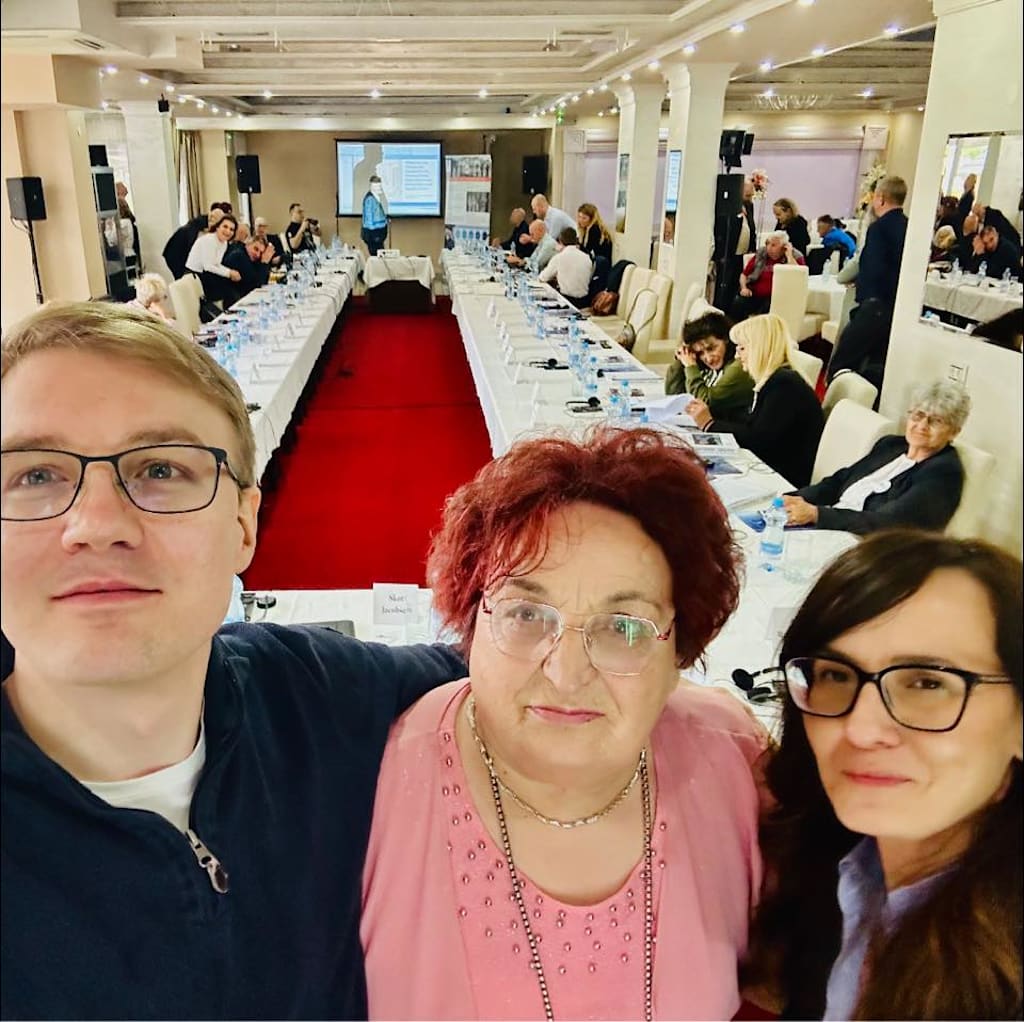
By Scott Douglas Jacobsen and Jelena Gruicic (Interpreter, English-Serbian)
Ana Pejić is a Serbian human-rights activist and founder of the Association of Parents of Missing Babies of Vojvodina. According to Pejić’s account, after giving birth to a daughter in Sremska Mitrovica on August 24, 1988, she was told the newborn had died, was denied access to the body, and initially left without documentation about the child. Her case became part of Serbia’s missing-babies movement, challenging hospital secrecy, state inaction, and inadequate legal remedies while demanding truth, DNA investigation, and possible family reunification.
Scott Douglas Jacobsen interviews Ana Pejić, Serbian human-rights activist and founder of the Association of Parents of Missing Babies of Vojvodina. Pejić recounts giving birth in Sremska Mitrovica in 1988, being told her newborn daughter had died, and receiving no documentation or access to the body. Her testimony connects personal trauma to Serbia’s missing-babies movement, demanding truth, DNA investigation, institutional accountability, and possible family reunification after decades of unanswered questions across Serbia and the region.
Scott Douglas Jacobsen: What motivated you to become involved in this form of human rights activism?
Ana Pejić: I became involved after coming to believe that my child had been taken from me. I was sent to a hospital even though there was no medical need.
Jacobsen: How was your treatment during childbirth different from the standard care expected for mothers and parents?
Pejić: I was sent to the hospital without medical necessity. My town had a maternity ward, but doctors from the local health centre sent me to a larger hospital. I had no contractions, no pain, and no indication that labour had begun. It was my second pregnancy, so I knew what childbirth felt like. When I asked why I had to go, they said it was only a precaution.
Jacobsen: Who do you mean by “they”?
Pejić: The doctors who were treating me at the local health centre. They sent me to the hospital even though everything was normal. When I arrived, I was taken to the delivery room and left there without explanation.
Because I was not having contractions and labour had not begun, they kept me in the delivery room for hours on end. I was alone—cold, hungry, and without clothing. They kept me there in isolation. When I asked why I was there and what I was waiting for, they told me to keep quiet. They said my only duty was to wait in silence.
At the beginning of every shift, the staff performed physical examinations. These were repeated so often that they caused me significant pain. One night, around one o’clock in the morning—I know the time because there was a clock opposite my bed—two women in white coats entered the room and turned on the lights. The room was not a regular hospital room but a delivery room, more like an operating theatre.
I had not seen them before and wondered why they were there, since it was neither a shift change nor a scheduled examination. I assumed they would not examine me at that time. However, they approached the table—an operating table, not a bed—and instructed me to spread my legs. Although I would normally object, I did not respond at that moment and allowed the examination.
During the procedure, one of the women forcefully inserted her hand, causing intense pain. I screamed. She then said, “There go the waters,” indicating that my amniotic sac had ruptured.
After that, the amniotic fluid began to flow. I told the woman, “My water did not break—you tore it open.” The fluid continued to drain throughout the night and into the morning.
Early in the morning, around seven o’clock, the head of the department, Dr. Petar Peruničić—who was responsible for my care—arrived. I was waiting for him so I could report what had happened during the night. I hoped I could still carry the pregnancy to term and that treatment might prevent infection.
He told me not to worry and said he would give me antibiotics, explaining that this would protect the baby from infection despite the loss of amniotic fluid. He instructed me to remain calm and continue waiting.
I accepted his explanation and asked to be moved to another room where I could warm up, eat, and rest, as I was exhausted. A midwife then checked the baby’s heartbeat using a listening device and confirmed that the baby was alive. I was moved to a small, single room, where I fell asleep around eight o’clock.
About an hour later, Dr. Peruničić woke me and told me to prepare for a caesarean section. I began gathering my belongings and followed him toward the operating room. As he left, a midwife entered and asked me where I was going.
The midwife asked me where I was going. I told her I was going for a caesarean section because the doctor had instructed me to do so. She questioned this, saying there was no reason for a C-section, as the baby was fine and everything had been normal during her earlier examination.
I did not respond and continued to follow the doctor. I assumed he knew better. Looking back, I consider that a mistake.
The caesarean section was performed at around ten o’clock in the morning. During the procedure, I briefly regained consciousness. I was afraid something was wrong, as I had already felt that the situation was not normal. I was alone, without control, and entirely dependent on the medical staff.
I became aware at the moment the doctor lifted the baby from my body. I saw the baby in his hands. I heard the anesthesiologist say that I had woken up, and I was immediately sedated again. I remember nothing after that.
The next thing I recall is waking up in an intensive care unit. The doctor was standing beside me and told me that I had given birth to a daughter weighing 2,250 grams.
The doctor told me it was Wednesday and that he would bring my daughter to me on Friday, after I had rested and recovered. He said the baby would remain in an incubator until then.
I was transferred to a shared room with another mother who was able to walk. I repeatedly asked her to check on my baby. She went to the incubator and returned, telling me that my daughter was moving her arms and legs and that she was well. This reassured me greatly.
This continued through Wednesday and Thursday. On Friday morning, I was waiting for them to bring my baby, as promised. I had not seen her at all.
That morning, the doctor came and told me that my daughter had died during the night. I cried and begged them to show her to me, even if she was dead. I wanted to see her at least once. They refused, saying that it was not hospital practice to show a deceased baby.
I was then transferred to another department and told that the hospital would arrange the burial. I was kept sedated. During the caesarean section, my bladder had been injured, and I remained in the hospital for 15 more days because of complications.
I spent those days in grief. When I was discharged, I was given no documentation about the child—no records, no official papers. It was as if nothing had happened. At the time, we trusted the doctors, so I returned home and tried to continue my life.
From that day on, I avoided anything connected to children. I did not attend birthdays, even those of babies, and I avoided passing by baby shops. It was a deep wound that I could not share with anyone. I did not speak about it.
At times, my husband blamed me for our child’s death. Those moments contributed to the breakdown of our marriage, and we eventually separated.
I gave birth on August 24, 1988. In 2010, I remarried a former classmate. My second husband encouraged me to search for documentation and find out what had happened to the baby. He could not accept the explanation that the child had died.
In August 2015, we decided to go to Sremska Mitrovica to obtain records. By then, my daughter would have been 27 years old.
Jacobsen: Thank you very much for the opportunity and your time, Ana.
Last updated May 3, 2025. These terms govern all In Sight Publishing content—past, present, and future—and supersede any prior notices. In Sight Publishing by Scott Douglas Jacobsen is licensed under a Creative Commons BY‑NC‑ND 4.0; © In Sight Publishing by Scott Douglas Jacobsen 2012–Present. All trademarks, performances, databases & branding are owned by their rights holders; no use without permission. Unauthorized copying, modification, framing or public communication is prohibited. External links are not endorsed. Cookies & tracking require consent, and data processing complies with PIPEDA & GDPR; no data from children < 13 (COPPA). Content meets WCAG 2.1 AA under the Accessible Canada Act & is preserved in open archival formats with backups. Excerpts & links require full credit & hyperlink; limited quoting under fair-dealing & fair-use. All content is informational; no liability for errors or omissions: Feedback welcome, and verified errors corrected promptly. For permissions or DMCA notices, email: scott.jacobsen2025@gmail.com. Site use is governed by BC laws; content is “as‑is,” liability limited, users indemnify us; moral, performers’ & database sui generis rights reserved.

 In-Sight Publishing