Vlad Tuzov of Tuzov Gallery at ART KYIV: Ukrainian Art, War, Colour, and Resilience
Author(s): Scott Douglas Jacobsen
Publication (Outlet/Website): Vocal.Media
Publication Date (yyyy/mm/dd): 2026/05/25
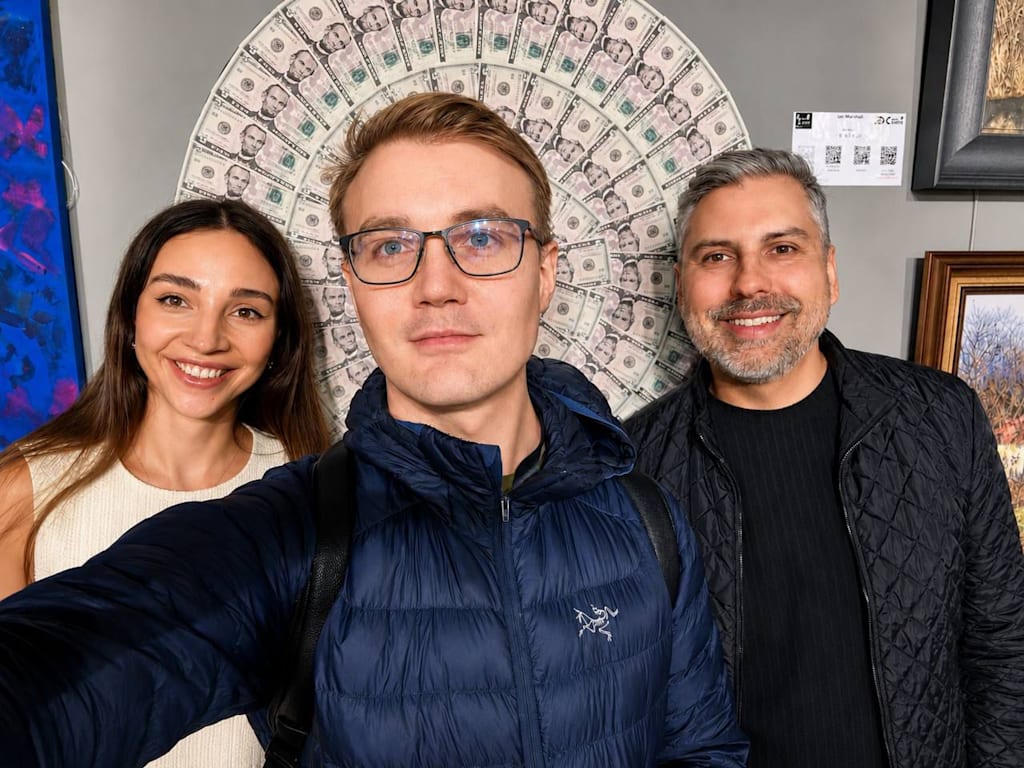
Vlad Tuzov is a Kyiv-based Ukrainian art dealer, curator, and cultural strategist, founder and CEO of Tuzov Gallery, a contemporary Ukrainian gallery established in 2015 to promote modern and classical Ukrainian art internationally. He has also been associated with Kyiv Photo Week and ART KYIV, including as financial director for the 2025 fair. His work links collectors, institutions, and artists, positioning Ukrainian art as both cultural testimony and an investment field during wartime and reconstruction.
Tuzov Gallery’s ART KYIV presentation frames Ukrainian art as a living cultural system shaped by continuity, colour, memory, and resistance. The gallery connects established masters with emerging artists, emphasizing authenticity, institutional legitimacy, collector confidence, and international relevance. Amid wartime Kyiv, “normality” becomes the refusal to pause creation. The interview with Vlad Tuzov and Scott Douglas Jacobsen highlights artistic dynasties, the horse as a symbol of freedom, and Ukraine’s art market need for stronger institutions, provenance, criticism, and global infrastructure.
Scott Douglas Jacobsen: What is the curatorial logic of Tuzov Gallery’s presentation at ART KYIV this year? Are you building a story of continuity in Ukrainian art, demonstrating market resilience, endurance during war, or something else?
Vlad Tuzov: For us, this presentation is not simply an exhibition of works, but an attempt to show Ukrainian art as an integrated cultural system. We are building a dialogue between different generations of artists, between classics and new names, between an internal Ukrainian sensibility and the international artistic context.
Today, it is especially important to show not only the emotional power of Ukrainian art, but also its maturity, resilience, and ability to form its own visual language even under conditions of war. We are speaking about continuity, memory, colour as a cultural code, and creation as a form of resistance.
Jacobsen: You are presenting both established and young Ukrainian artists. How do you manage to balance the prestige of recognized names with the joy of discovering new talent?
Tuzov: Recognized artists create the context and foundation; they are the “pillars” on which the market rests. Young artists bring a contemporary sharpness to that foundation. In younger artists, we look for the same technical precision and depth of thought that once made others great.
For us, it is important not to set generations against each other, but to create a dialogue between them. This is precisely how a living artistic environment is formed and how continuity of tradition emerges.
Jacobsen: Why are institutional attention, collector appetite, formal innovation, relevance under wartime conditions, or international market appeal so important for Ukrainian artists right now?
Tuzov: Because art today is no longer only a cultural gesture, but also a question of Ukraine’s presence in the global intellectual space.
Institutional attention gives the artist historical documentation and legitimacy. Collector interest creates stability and the possibility of continuing to work. The international market allows Ukrainian art to stop being a local phenomenon and become part of the global artistic process.
At the same time, the most important thing is to preserve authenticity. Today, the world is not looking for decorativeness, but for an honest visual language, and Ukrainian art possesses precisely this in full measure.
Jacobsen: Which works in this presentation best reflect Tuzov Gallery’s identity?
Tuzov: Above all, the works in which there is an inner energy of colour, a tension of space, and a sense of the human condition.
For us, what matters is not only the visual power of a work, but also its ability to carry a cultural and intellectual layer. That is why our presentation brings together emotional expression, a deep painterly school, and contemporary artistic thinking.
We always work with art as a system: from the curatorial idea and museum context to its place in the international art market.
Jacobsen: The theme of ART KYIV is “THIS IS NORMAL.” What does “normality” mean for a gallery working in wartime Kyiv?
Tuzov: “Normal” is when a gallery opens an exhibition the day after shelling. It is when we discuss shades of blue on a canvas while air-defence systems are operating outside the window.
For us, normality means the continuity of creation. We refuse to put life on pause, and this is our main act of resistance — not only at the front, but also in everyday life.
Jacobsen: Has the war changed what collectors want to see in Ukrainian art?
Tuzov: Absolutely. Collectors have begun to look not simply for visually strong works, but for works with genuine inner energy and cultural depth.
Today, honesty of expression is especially valued. The world has grown tired of artificially constructed concepts and is once again turning to the emotional power of art.
At the same time, Ukrainian art has ceased to be perceived exclusively through the prism of tragedy. International collectors are beginning to see it as an independent artistic phenomenon — powerful, intellectual, and visually unique.
Jacobsen: When we spoke about Kryvolap, themes of colour, horses, and the continuity of family or studio traditions came up. How important are artistic dynasties and continuity in contemporary Ukrainian art?
Tuzov: Continuity in Ukrainian art is not copying, but the transmission of a unique “colour code.” The clearest example here is Anna Kryvolap.
Working in the same powerful expressive manner as her father, she masterfully inherits this family engagement with open, vibrating colour. At the same time, Anna brings her own structure, her own rhythms of urban landscapes and abstractions.
Such dynasties are critically important: they create continuity of school. When we see Anna’s works, we understand that this deep Ukrainian colourism is not an accident, but a living tradition that develops and adapts to a new time.
The same applies to the recognizability of Ivan Marchuk’s unique style: many young artists are inspired by, and find themselves through, his “pliontanism.”
Jacobsen: What does the Ukrainian art market need most right now: more collectors, stronger institutions, deeper art criticism, export infrastructure, provenance systems, or international fairs?
Tuzov: Today, the Ukrainian art market needs systematization.
We need strong institutions, professional art criticism, transparent provenance systems, infrastructure for international export, and a stable secondary market.
But most importantly, we need to build trust in Ukrainian art as a full-fledged cultural and investment asset.
Ukrainian artists already possess a powerful artistic language. The task of the market now is to create a stable international architecture for it.
Jacobsen: Why does the image of the horse recur so powerfully in Ukrainian visual culture: is it folklore, landscape, aristocratic culture, movement, freedom, trauma, or something else?
Tuzov: We are a nation of the Steppe. For centuries, the horse was the only means of crossing these boundless spaces. It is a symbol of the connection between human beings and the land, embedded in us at the subconscious level.
In the works of our modern classics, such as Anatolii Kryvolap, the horse is no longer an animal, but a concentration of energy. It is the embodiment of movement that cannot be stopped, and freedom that cannot be limited.
Today, this image resonates especially strongly: the horse becomes a symbol of an indomitable will to live and of movement forward despite everything.
Jacobsen: What has changed in the gallery’s work since 2015?
Tuzov: The depth of responsibility has changed.
Whereas previously a gallery could exist solely as an exhibition and commercial platform, today we effectively perform both a cultural and diplomatic function.
We work more with international institutions, museums, collectors, archiving, and the formation of context around artists.
In recent years, Ukrainian art has become significantly more visible in the world, and with this has come a greater responsibility for the gallery regarding the quality of artistic expression and the way Ukraine is presented to international audiences.
Jacobsen: If an international reader could understand only one thing about contemporary Ukrainian art in 2026, what would it be?
Tuzov: If everything were reduced to a single thesis, it would be this: incredible vitality in defiance of destruction.
The world should understand that Ukrainian art in 2026 is not “victim art” and not merely a chronicle of war. It is art of creative energy, born at the epicentre of historical upheaval.
Jacobsen: Thank you very much for the opportunity and your time, Vlad.
Ukrainian Translation
Какова кураторская логика презентации Tuzov Gallery на ART KYIV в этом году? Выстраиваете ли вы историю преемственности украинского искусства, демонстрируете рыночную устойчивость, стойкость во время войны или что-то иное?
Для нас эта презентация — не просто экспозиция работ, а попытка показать украинское искусство как целостную культурную систему. Мы выстраиваем диалог между разными поколениями художников, между классиками и новыми именами, между внутренней украинской чувствительностью и международным художественным контекстом.
Сегодня особенно важно показать не только эмоциональную силу украинского искусства, но и его зрелость, устойчивость и способность формировать собственный визуальный язык даже в условиях войны. Мы говорим о преемственности, о памяти, о цвете как культурном коде и о созидании как форме сопротивления.
2) Вы представляете как признанных, так и молодых украинских художников. Как вам удается соблюдать баланс между престижем имен и радостью открытия новых талантов?
Признанные художники создают контекст и фундамент, они — те «столпы», на которых держится рынок. Молодые авторы привносят в этот фундамент актуальную остроту. Мы ищем в молодых ту же техническую безупречность и глубину мысли, которая когда-то сделала других великими.
Для нас важно не противопоставлять поколения, а создавать между ними диалог. Именно так формируется живая художественная среда и появляется преемственность традиции.
3) Почему для украинских художников сейчас так важны внимание институций, аппетит коллекционеров, формальные инновации, актуальность в условиях войны или международная рыночная привлекательность?
Потому что искусство сегодня — это уже не только культурный жест, но и вопрос присутствия Украины в мировом интеллектуальном пространстве.
Внимание институций дает художнику историческую фиксацию и легитимность. Интерес коллекционеров создает устойчивость и возможность продолжать работать. Международный рынок позволяет украинскому искусству перестать быть локальным явлением и стать частью глобального художественного процесса.
Но при этом самое важное — сохранить подлинность. Мир сегодня ищет не декоративность, а честный визуальный язык, и именно этим украинское искусство обладает в полной мере.
6) Какие работы в этой презентации лучше всего отражают идентичность Tuzov Gallery?
Прежде всего — работы, в которых присутствует внутренняя энергия цвета, напряжение пространства и ощущение человеческого состояния.
Для нас важна не только визуальная сила произведения, но и его способность удерживать культурный и интеллектуальный слой. Именно поэтому в нашей презентации соседствуют эмоциональная экспрессия, глубокая живописная школа и актуальное художественное мышление.
Мы всегда работаем с искусством как с системой: от кураторской идеи и музейного контекста до его места на международном арт-рынке.
7) Тема ART KYIV — «ЭТО НОРМАЛЬНО» (THIS IS NORMAL). Что означает «нормальность» для галереи, работающей в военном Киеве?
«Нормально» — это когда галерея открывает выставку на следующий день после обстрела. Это когда мы обсуждаем оттенки синего на полотне, пока за окном работают системы ПВО.
Для нас нормальность — это непрерывность созидания. Мы отказываемся ставить жизнь на паузу, и в этом наш главный акт сопротивления — не только на фронте, но и в повседневной жизни.
8) Изменила ли война то, что коллекционеры хотят видеть в украинском искусстве?
Безусловно. Коллекционеры стали искать не просто визуально сильные работы, а произведения с подлинной внутренней энергией и культурной глубиной.
Сегодня особенно ценится честность высказывания. Мир устал от искусственно сконструированных концепций и снова обращается к эмоциональной силе искусства.
При этом украинское искусство перестало восприниматься исключительно через призму трагедии. Международные коллекционеры начинают видеть в нем самостоятельное художественное явление — мощное, интеллектуальное и визуально уникальное.
9) Когда мы говорили о Криволапе, всплыли темы цвета, лошадей и преемственности семейных или студийных традиций. Насколько важны художественные династии и преемственность в современном украинском искусстве?
Преемственность в украинском искусстве — это не копирование, а передача уникального «цветового кода». Ярчайший пример здесь — Анна Криволап.
Работая в той же мощной экспрессивной манере, что и её отец, она мастерски наследует эту фамильную работу с открытым, вибрирующим цветом. Но при этом Анна привносит свою структуру, свои ритмы городских пейзажей и абстракций.
Такие династии критически важны: они создают преемственность школы. Когда мы видим работы Анны, мы понимаем, что этот глубокий украинский колоризм — не случайность, а живая традиция, которая развивается и адаптируется к новому времени.
Так же, как и узнаваемость уникального стиля Іван Марчук: многие молодые художники вдохновляются и находят себя благодаря его «пльонтанизму».
10) В чем украинский арт-рынок нуждается больше всего сейчас: в большем количестве коллекционеров, в сильных институциях, в глубокой арт-критике, инфраструктуре для экспорта, системах провенанса или в международных ярмарках?
Сегодня украинскому арт-рынку необходима системность.
Нам нужны сильные институции, профессиональная арт-критика, прозрачные системы provenance, инфраструктура международного экспорта и устойчивый secondary market.
Но самое главное — нам необходимо формировать доверие к украинскому искусству как к полноценному культурному и инвестиционному активу.
Украинские художники уже обладают мощным художественным языком. Теперь задача рынка — создать для него устойчивую международную архитектуру.
11) Почему образ лошади так мощно повторяется в украинской визуальной культуре: это фольклор, ландшафт, аристократическая культура, движение, свобода, травма или что-то другое?
Мы — нация Степи. Лошадь веками была единственным способом преодоления этих бескрайних пространств. Это символ связи человека с землей, который зашит в нас на подсознательном уровне.
В работах наших современных классиков, таких как Анатолій Криволап, лошадь — это уже не животное, а сгусток энергии. Это воплощение движения, которое невозможно остановить, и свободы, которую невозможно ограничить.
Сегодня этот образ особенно резонирует: лошадь становится символом неукротимой воли к жизни и движения вперед вопреки всему.
12) Что изменилось в работе галереи с 2015 года?
Изменилась глубина ответственности.
Если раньше галерея могла существовать исключительно как выставочная и коммерческая платформа, то сегодня мы фактически выполняем и культурную, и дипломатическую функцию.
Мы больше работаем с международными институциями, музеями, коллекционерами, архивированием и формированием контекста вокруг художников.
За последние годы украинское искусство стало значительно более заметным в мире, и вместе с этим выросла ответственность галереи за качество художественного высказывания и за то, как именно Украина представлена международному зрителю.
13) Если бы международный читатель мог понять только одну вещь о современном украинском искусстве в 2026 году, что бы это было?
Если свести всё к одному тезису, то это — невероятная витальность вопреки разрушению
Мир должен понять, что украинское искусство 2026 года — это не «искусство жертвы» и не просто хроника войны. Это искусство созидательной энергии, которая рождается в эпицентре исторических потрясений.
Last updated May 3, 2025. These terms govern all In Sight Publishing content—past, present, and future—and supersede any prior notices. In Sight Publishing by Scott Douglas Jacobsen is licensed under a Creative Commons BY‑NC‑ND 4.0; © In Sight Publishing by Scott Douglas Jacobsen 2012–Present. All trademarks, performances, databases & branding are owned by their rights holders; no use without permission. Unauthorized copying, modification, framing or public communication is prohibited. External links are not endorsed. Cookies & tracking require consent, and data processing complies with PIPEDA & GDPR; no data from children < 13 (COPPA). Content meets WCAG 2.1 AA under the Accessible Canada Act & is preserved in open archival formats with backups. Excerpts & links require full credit & hyperlink; limited quoting under fair-dealing & fair-use. All content is informational; no liability for errors or omissions: Feedback welcome, and verified errors corrected promptly. For permissions or DMCA notices, email: scott.jacobsen2025@gmail.com. Site use is governed by BC laws; content is “as‑is,” liability limited, users indemnify us; moral, performers’ & database sui generis rights reserved.

 In-Sight Publishing