Claus Volko on Symbiont Conversion, Antimicrobial Resistance, and Experimental Proof of Success
Author(s): Scott Douglas Jacobsen
Publication (Outlet/Website): Vocal.Media
Publication Date (yyyy/mm/dd): 2026/04
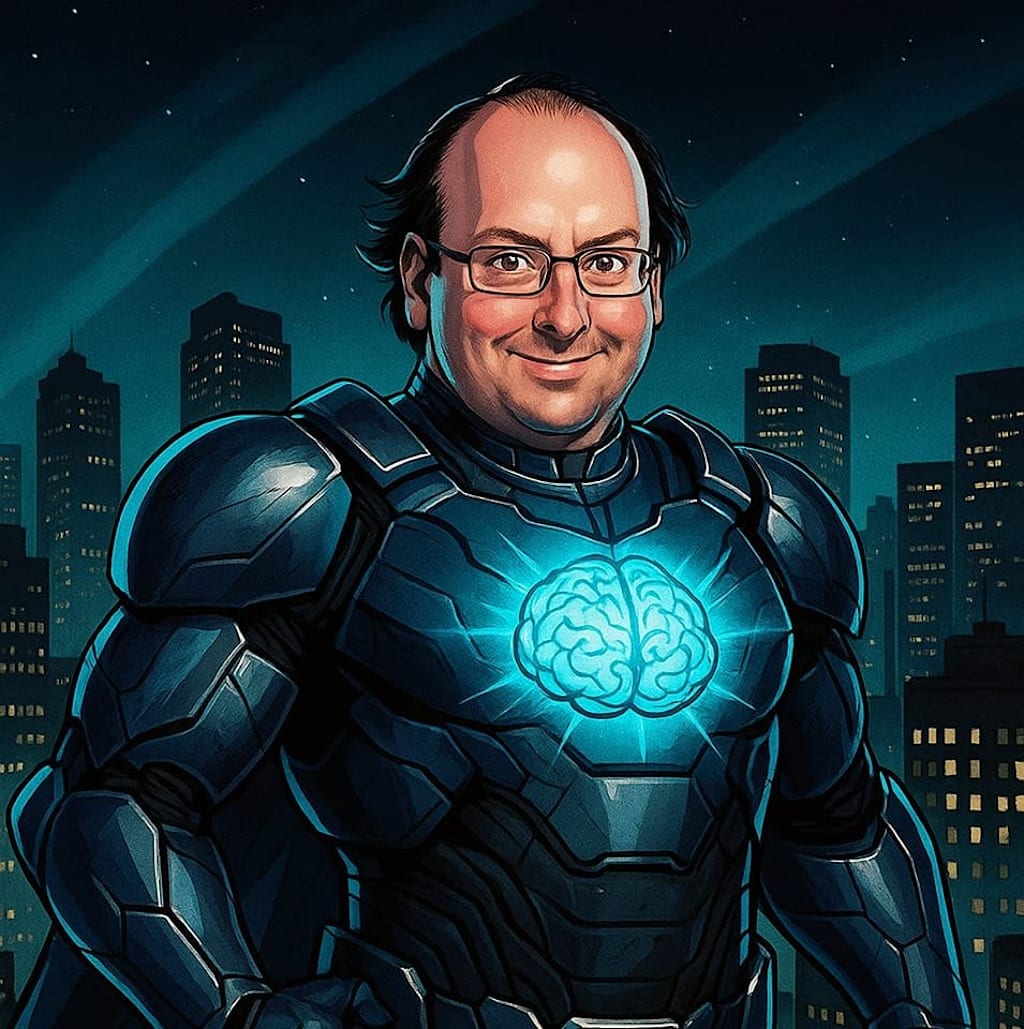
Claus D. Volko, M.D. born in October 1983, is the son of a teacher and an engineer. He showed an early interest in computing and began contributing to computer magazines at the age of ten. By twelve, he had become co-editor of an electronic magazine on computer art, where he played a leading role in expanding its readership. Volko later completed degrees in medicine, medical informatics, and computational intelligence before entering the private sector as a software engineer. In parallel with his industry work, he published medical research and pursued ideas intended to address the problem of antimicrobial resistance.
In this interview, Scott Douglas Jacobsen speaks with Claus Volko, M.D. about experimental standards for success, biological markers of microbial conversion, and the theoretical scope of symbiont-based approaches to infection and cancer. Volko explains why quantitative significance matters, why bacterial diseases such as tuberculosis may serve as proof-of-concept targets, and why symbiont conversion may offer ethical and clinical advantages over antibiotics, even as evolutionary risks and medical conservatism remain serious challenges for researchers today globally.
Scott Douglas Jacobsen: In the experiments proposed, what result would count as success rather than merely an interesting anomaly?
Claus Volko, M.D.: The experiments have quantitative results. In statistics there are some criteria which determine whether a quantitative result is significant, such as the chi squared test. So these tests would have to be applied to detect whether a result would count as success.
https://en.wikipedia.org/wiki/Chi-squared_test
Jacobsen: If reprogramming and reeducating are interchangeable, what biological change marks the point of actual conversion?
Volko: The incorporation of the DNA sequence that creates the protein that is beneficial for the host organism, and the removal of the pathogen.
Jacobsen: What other theoretical frameworks in the past seemed to be pointing towards yours, but not quite with the same coherence?
Volko: To be honest, I don’t know. It seems that some people have partially had similar ideas as mine but I haven’t read any paper that generalized the idea to comprise both bacteria and cancer cells, as I did.
Jacobsen: So, stability is not intended, because you want to perturb evolution. How does one prevent the perturbation from producing a worse or more resistant lineage in a structured way?
Volko: It is still possible that the bacteria evolve and in the end there will again be some bacteria which are pathogens. This cannot be prevented. But the chance that that will happen is rather low.
Jacobsen: Tuberculosis may be a strategically sane target. Why tuberculosis first?
Volko: It is just one of many possible targets because it is a bacterial infection. Another possible target would be syphilis, for instance. There are many possible targets, the list of all of them would be very long.
Jacobsen: Following from the previous question, what would make it a better proof-of-concept than other pathogens?
Volko: I mentioned it primarily because it is a very severe disease and we know that it is caused by bacterial infection.
Jacobsen: The ethical implication is do not kill them. How do you balance microbial moral status against urgent clinical situations, for example where rapid eradication becomes paramount to save the life of the patient?
Volko: I do think that symbiont conversion would not only be superior to antibiotics because of the ethical perspective, but also because it would work well even in life-threatening situations. Mind that antibiotics don’t remove bacterial toxins. They only kill bacteria. The toxins remain in the human body. In this respect, this doesn’t differ from my idea.
Jacobsen: You said medicine is less tolerant culturally than engineering because it attracts more conservative people. What kind of evidence would be enough to overcome that conservatism?
Volko: I don’t think that this conservatism is easy to overcome. Change is happening at a slow rate. For example, from 1945 to the 2010s the conservative, Christian democratic Austrian Medical Students’ Union had the majority of the seats at the Medical University of Vienna. But now, it has been replaced by a more progressive faction. This might have the effect that with some time, the percentage of progressive-thinking medical doctors will increase. But as said, it’s a slow process.
Jacobsen: Thank you very much for the opportunity and your time, Claus.
Last updated May 3, 2025. These terms govern all In Sight Publishing content—past, present, and future—and supersede any prior notices. In Sight Publishing by Scott Douglas Jacobsen is licensed under a Creative Commons BY‑NC‑ND 4.0; © In Sight Publishing by Scott Douglas Jacobsen 2012–Present. All trademarks, performances, databases & branding are owned by their rights holders; no use without permission. Unauthorized copying, modification, framing or public communication is prohibited. External links are not endorsed. Cookies & tracking require consent, and data processing complies with PIPEDA & GDPR; no data from children < 13 (COPPA). Content meets WCAG 2.1 AA under the Accessible Canada Act & is preserved in open archival formats with backups. Excerpts & links require full credit & hyperlink; limited quoting under fair-dealing & fair-use. All content is informational; no liability for errors or omissions: Feedback welcome, and verified errors corrected promptly. For permissions or DMCA notices, email: scott.jacobsen2025@gmail.com. Site use is governed by BC laws; content is “as‑is,” liability limited, users indemnify us; moral, performers’ & database sui generis rights reserved.

 In-Sight Publishing