Andrii Bystrov on Ukrainian Journalism, Media Freedom, and Wartime Ethics
Author(s): Scott Douglas Jacobsen
Publication (Outlet/Website): Vocal.Media
Publication Date (yyyy/mm/dd): 2026/05/08
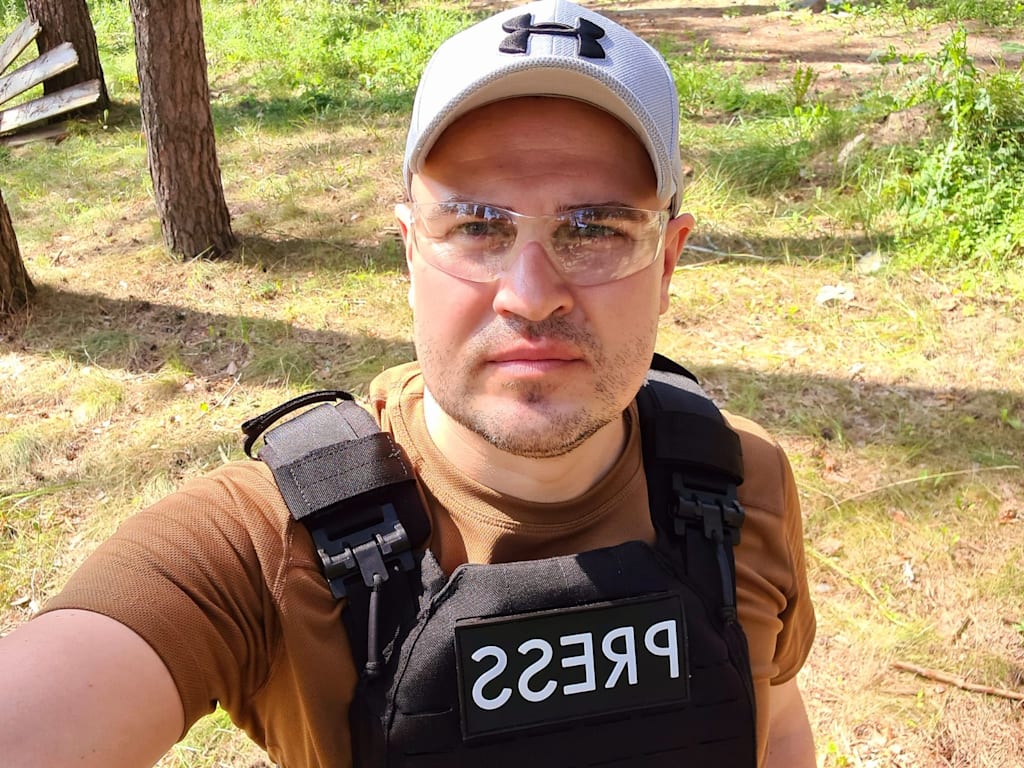
Andrii Bystrov is a Ukrainian journalist, editor, and media manager formerly at Ukrainska Pravda. His career spans television, online media, newsroom editing, and media leadership. Drawn first to the speed and adrenaline of TV news, Bystrov later focused on team management, editorial judgment, and investigative impact. He emphasizes curiosity, fast thinking, and the discipline of asking “why” as core habits for responsible journalism in democratic and wartime contexts.
Scott Douglas Jacobsen interviews Andrii Bystrov about his path into journalism, the attraction of television news, and the skills needed for strong reporting. Bystrov stresses curiosity, newsroom speed, and the importance of asking “why.” He discusses Ukrainian media freedom, internal self-censorship during war, corruption investigations, and the ethical tension between national defense and public accountability. The conversation frames journalism as both civic duty and disciplined communication under pressure.
Scott Douglas Jacobsen: Did you originally want to be a journalist?
Andrii Bystrov: Yes. When I made the decision, I was more than 20 years old. I had traveled a lot at that time, and one day I realized that I wanted to show other people what I understood, what I saw, what I felt, and to communicate with people. I understood that it was interesting. It could be interesting not only for me, and I was ready to share this information in a more philosophical sense.
Why did I decide to be a journalist and work for TV? Because it is fast news. It is news adrenaline. I was young, actually.
Jacobsen: Would you consider yourself, in your younger years, an adrenaline junkie, or someone who enjoyed the rush of this type of reporting?
Bystrov: In that case, it was a great idea to work fast and feel this rush. For me, it was okay. Now, for example, as a media manager, when I am looking for people for my team, when I meet people, regardless of age, if that guy or girl has worked for a news service, it is my passion because we can communicate fast. We can do our work and complete our tasks quickly.
Usually, I hire this person for my team because, for me, it is a marker that people can think fast, move fast, and are always available, not only from nine to six. Working in news is a great school for a journalist.
Jacobsen: What do you consider the necessary toolkit for a good journalist, 15 years ago compared to now?
Bystrov: It has not changed much. I think the main idea is to ask why. For example, when I see something unusual, I ask why.
Why this book? Why are there so many copies of this book? Maybe it is more popular, or maybe they have some marketing strategy. I always try to look for an answer. When people are bored, or they do not think about the process, maybe they are bad journalists. A good journalist always asks why.
Jacobsen: Is there any time when it is unreasonable to ask why, or when it is not necessary?
Bystrov: Very often, you can find a good topic or a good investigation in something unusual. When I meet some people, see a process, or observe some actions, and understand that it is unusual and needs more discovery, then you are a good journalist. If you do not care about this process and just work, that is different.
One young journalist once asked me what the difference was between our government and the Verkhovna Rada. I was working as an editor of the news team, and she asked why sometimes we write about the Cabinet of Ministers and other times about the Verkhovna Rada. She did not understand the difference. The Cabinet of Ministers is the government: the supreme body in the executive branch. The Verkhovna Rada is the parliament: the legislative branch. Maybe it is not good for a journalist when we do not understand these things and never ask what is going on.
Jacobsen: Out of the rankings or indexes measuring the health of Ukrainian society, the one that has shown the most marked improvement has been media freedom in Ukraine. Has that improvement in the index been reflected in your personal experience, even throughout the war, in terms of what your team can do, what you can do, and so on?
Bystrov: Well, maybe I am a lucky person. I have worked for different Ukrainian TV channels and many online media outlets, and I have never experienced pressure from the government, politicians, or businesses. I have always been able to write what I wanted, and my editorial teams have been able to cover the topics they wanted to cover.
Maybe the more important problem is when you have restrictions inside yourself. For example, when we have cases of corruption in the army, as a Ukrainian citizen I sometimes think, “Maybe not now,” because we are at war and we should support our army. So that pressure can exist internally.
I think situations like this could exist at the top level of media outlets, but I have never experienced them personally, and I cannot imagine a chief editor telling me, “You should delete this.” I have never encountered that in my life.
Jacobsen: What about not intimidation, but the opposite: bribery? For example, there are famous cases that have been ongoing for the last five years or so. Prime Minister Netanyahu faced bribery allegations connected to positive media coverage about him.
That involves a very high level of financial influence used to purchase positive opinion pieces. Are you aware of any cases like that in Ukrainian society? On one metric, reporters at the borders describe Ukraine as having very high media freedom—higher than the United States during wartime, and certainly higher than Russia or Iran.
At the same time, Ukraine’s corruption rankings have improved significantly, though the country still sits around the middle of the global average. So corruption might remain more of an issue than media freedom. Is that something you have seen happen, heard about happening, or seen exposed during your career?
Bystrov: Well, as you know, a lot of people say corruption is good for Ukraine because it is the mechanism that keeps things functioning properly, and if you touch it, the whole state system will collapse. Maybe it is a joke, but there is a part of dark humor in it.
But I do not think we can compare corruption and media freedom directly. If we talk about media freedom, there are many cases where my colleagues at Ukrainska Pravda produced investigations, and after those reports, members of parliament or government officials were fired. These are real cases. That is a real influence of media.
It does not work the same way with bribery or other forms of corruption. Of course, Ukraine, like every country, has a high level of bribery at different levels of society. But now, speaking as a citizen, when I interact with police officers or doctors, I never pay money.
At the same time, when I see investigations into the Kyiv city administration—such as buildings constructed in places where construction should not be allowed, extremely tall buildings placed in parks or restricted areas—we understand that bribery is involved. But that exists at the top level.
Very often, I see comments on Facebook after journalists publish investigations into officials connected with Zelensky’s office or other institutions. People say: “Wow, we spend enormous amounts of money on police, NABU, SAPO, the ESBU, and the entire anti-corruption ecosystem, but one cameraman can produce a report and suddenly everybody realizes that a government official may be corrupt.”
That shows the real power of journalism. Journalists move quickly. They do not always face the same restrictions as police investigators. They produce reports, conduct investigations, and publish findings. I remember that feeling very well: when you are searching for something important and finally publish it.
Jacobsen: What matters most in wartime journalism in terms of journalistic values and the practice of journalism? The values themselves may remain the same in war and peace, but perhaps the ranking of those values changes.
Bystrov: We have had many discussions about this with colleagues. Especially around 2020 and afterward, we discussed how we should cover war-related topics and the ethical questions involved.
I think every journalist searches for a personal approach to covering war. I know good journalists who say, “We discovered something, but we decided not to publish it because we understand that our country could be destroyed.” They understand that the army is a mirror of society. There are many different kinds of people within it. That position is normal for some journalists.
On the other hand, there are journalists who say, “It does not matter. It is not our problem. If somebody steals money from the army—from bulletproof vests, food supplies, or procurement contracts—then we must report it.” There were scandals about food procurement prices for the army being extremely inflated. Their position is simple: do not commit corruption, and journalists will not expose it in reports.
Also, there are more substantial issues than the price of eggs, right? The egg scandal became very prominent, but there were also larger cases. One of Zelensky’s closest associates, for example, was involved in a recent controversy this year.
Yes, so it depends on the people and on the situation. I think each journalist in that case has good reasons, and if we could communicate with each other, they would provide a reasonable list of explanations for their decisions.
Jacobsen: In the Afghan context, for example, there are at least three publications that I know of run by women, with mostly women journalists doing guerrilla journalism in Afghanistan, now considered one of the worst places in the world for women and girls. They have to work anonymously or pseudonymously, rely on funding from those publications to support both their reporting and their families, and take extensive security precautions because they cannot publicly claim credit for their work.
There is also the personal factor: the degree to which an individual journalist can tolerate the risks involved. Some people do not want to go to Kramatorsk or Dnipro. The farthest they might go is Kyiv, and then they return to Lviv and go home. That is a completely fair professional judgment. So I think your point about the independence of personal choice is also fair.
Jacobsen: Thank you very much for the opportunity and your time, Andrii.
Last updated May 3, 2025. These terms govern all In Sight Publishing content—past, present, and future—and supersede any prior notices. In Sight Publishing by Scott Douglas Jacobsen is licensed under a Creative Commons BY‑NC‑ND 4.0; © In Sight Publishing by Scott Douglas Jacobsen 2012–Present. All trademarks, performances, databases & branding are owned by their rights holders; no use without permission. Unauthorized copying, modification, framing or public communication is prohibited. External links are not endorsed. Cookies & tracking require consent, and data processing complies with PIPEDA & GDPR; no data from children < 13 (COPPA). Content meets WCAG 2.1 AA under the Accessible Canada Act & is preserved in open archival formats with backups. Excerpts & links require full credit & hyperlink; limited quoting under fair-dealing & fair-use. All content is informational; no liability for errors or omissions: Feedback welcome, and verified errors corrected promptly. For permissions or DMCA notices, email: scott.jacobsen2025@gmail.com. Site use is governed by BC laws; content is “as‑is,” liability limited, users indemnify us; moral, performers’ & database sui generis rights reserved.

 In-Sight Publishing