Dr. Elizabeth Weiss on Sacred Body Politics, Mission Creep, and the Decline of Scientific Anthropology
Author(s): Scott Douglas Jacobsen
Publication (Outlet/Website): A Further Inquiry
Publication Date (yyyy/mm/dd): 2025/09/22
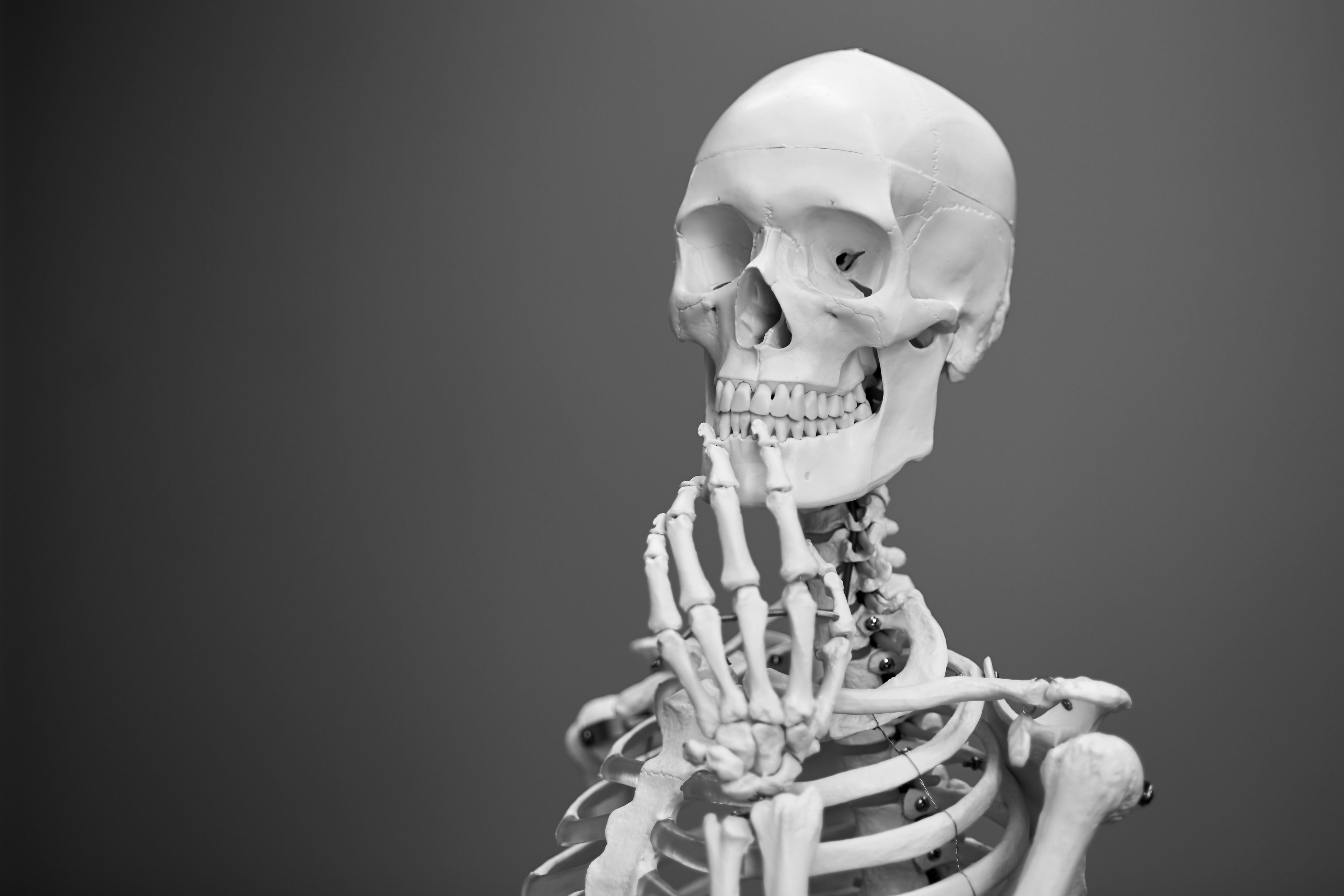
Dr. Elizabeth Weiss is an American anthropologist and Professor Emeritus of Anthropology at San José State University, renowned for her work in bioarchaeology and the scientific study of human skeletal remains. She earned her B.A. from the University of California, Santa Cruz, her M.A. from California State University, Sacramento, and her Ph.D. in Environmental Dynamics from the University of Arkansas. A former postdoctoral researcher at the Canadian Museum of Civilization, Weiss has published extensively on osteology, human evolution, and repatriation debates. She is a vocal advocate for academic freedom, evidence-based anthropology, and preserving scientific access to skeletal collections for research and education.
In this interview with Scott Douglas Jacobsen, Weiss discusses the growing convergence between religious conservatives and progressive identity politics in framing the human body as sacred—sometimes extending to non-human remains. She traces the shift in anthropology from open scientific inquiry toward politically driven restrictions, fueled by laws like NAGPRA and CalNAGPRA, institutional censorship, and “mission creep” in museums and universities. Weiss warns that these trends erode bioarchaeology, restrict forensic training, and replace evidence-based research with ideology. She argues that this shift not only undermines academic freedom but also damages anthropology’s scientific credibility worldwide.
Scott Douglas Jacobsen: So we have talked about a strange convergence, or marriage, of pragmatism between religious traditionalist ideas of the sacredness of the body and, politically, from a sector of the left wing — more extreme — who see the body as sacred, potentially extending into non-human animals as well. This impedes scientific investigations to some degree within political science. When we are looking at the political fallout of this on academia, because I see this primarily as a culture war, when did you first start noticing this impacting the anthropological world?
Dr. Elizabeth Weiss: It is funny because I have been holding the same views since I was hired in 2004, even before. I knew people disagreed with me, and that was fine, but I did not have any problems about photographing skeletal remains, researching skeletal remains — all of this — up until my book Repatriation and Erasing the Past came out in 2020.
I do think that some of it was: “We know she is against the reburial of remains, and therefore we are going to pay special attention to everything she does.” But I do not think it was only that, and I do not believe it was only regarding me.
For example, around that same time, the Anthropology Newsletter from the American Anthropological Association had a cover on their magazine — or their newsletter, I should say—with Margaret Mead and mummified heads in a bag. They received much backlash, and it was taken down. There was an apology from the president. That had nothing to do with any of my controversy, but it happened around the same time.
Another example from around the same time — possibly a little earlier — was that I was informed that books featuring images of skeletal remains would not be included in the advertisement for the Society for American Archaeology. One of my book covers could not be used because it had skeletal remains.
These things were all bubbling away around 2020, a little before, but before that, this was not a real issue for physical anthropologists. Bioarchaeologists and cultural anthropologists may have already been up in arms about it, but I didn’t see it from my perspective. Even right before I was called out for the photo of me holding a skull, I had gotten a grant from my university to do an exhibit — a teaching module called “I Am Not an Alien.”
It included many photos and a slideshow. I wrote an article for Skeptical Inquirer on “I Am Not an Alien” that looked at human variation beyond skin deep — for example, extra ribs — and why this is not related to any biblical issue but is normal human variation. The university was entirely behind it. It was all about using images to make this enjoyable.
The Center for Inquiry has a website with teaching modules, and I provided them with the materials for “I Am Not an Alien” after the article “The Body Is Not Sacred” came out. I was in correspondence with the person who runs the section for teachers, and we discussed that I had made this module right before everything blew up for me regarding my book. I never got to publish it. They said, “We would love to host it.” This was maybe 2018.
So, although concepts of the body being sacred have been floating around in various pockets of academia, media, and religious institutions, it did not come home to my knowledge until about 2019–2020.
Jacobsen: Are there any “third wings” to this?
Weiss: It is traditional religious movements and political orientation from some of the left. There are perennial concerns around anti-evolutionist movements, particularly creationist movements. I do think there are some third wings to it — the anti-evolutionists, whose problem is that the body is sacred in the sense that it is distinct from other animals.
Even there — and I am not a theologian — I know that some religions believe you should not remove an organ because the whole body needs to go back to God. You saw some of that backlash with prisoners. There have also been issues with other fringe religions stepping into this.
The interesting thing is, if I were an anthropologist who said, “Those crazy Christian fundamentalists,” I would be a hero to most of my colleagues. But because I say we should treat objective science differently from religion, and that it does not matter which religious belief it is — if it is anti-evolution, it is also anti-biological science and anti-anthropology —. Because I do not give a free pass to other religions, that is one reason I have been attacked and targeted by cancel culture.
When people say, “The burial of bodies is not about religion; it is about human rights,” I say human rights are about living people. We are not talking about anyone dying now; we are talking about people who are already dead. So, human rights are being used to hide the fact that this is about religion.
Jacobsen: Are the attempts different now, or are they more well-organized and funded?
Weiss: Yes. When I first started in anthropology, I would sometimes get hate mail or emails from the occasional religious fanatic or indigenous rights activist… the usual. Why do you not study the remains of your people? What is different now is a couple of things. One thing is that I get a lot more negative attention from other academics. It was not academics who were upset with me in the past; it was different people. Starting in 2020, it became the work of other scholars.
The other thing is that I think there have been changes across the board—from the modern museum to the Smithsonian, to the American Museum of Natural History—in their treatment of materials, especially in appeasing religious sensibilities when it comes to skeletal remains and photos. At the Smithsonian Natural History Museum, there is a mummy that is hidden from view, not because the mummy is unwrapped, but because of a photograph in the background of the display that contains skulls. When I saw this in 2024, they still considered that an issue. This is quite new.
There is now more organization within the academy, whether in universities or institutes, driving this disappearance of human remains from public view.
Jacobsen: What has been your big lesson from this?
Weiss: In court battles, never underestimate how absurd things can get. When you are worried that people are going to think you are an extremist because you are calling out what you see as the next step, do not be concerned, because you are probably right.
When I expressed concern that the next step would be the destruction of the X-rays, people assured me, “No, that is never going to happen.” Then, before I even landed in San José, I got an email from the provost saying that the X-rays were going to be burned. People would say, “Yes, Elizabeth is such an extremist, you will not believe what she said.” Then they would hear it, and six months later, it would happen.
It is not because I can foresee the future in any special way—it is just that if you look at where the goalposts are, you can see where they will be moved next. In anthropology, museums, and universities, I think the next move will be the removal of non-human remains because of indigenous beliefs about the sacredness of animal remains imbued with a human spirit. That is where I see this going.
Jacobsen: Which story of an anthropologist has been the most impactful on their personal and professional life, in anthropology or even generally, from politics creeping into scientific work and expertise?
Weiss: I know anthropologists who have left the field because of this mission creep. State archaeologists have reached out to me privately and said, “Do not tell anybody I am telling you this,” but there is much fear that people could lose their jobs if they speak out.
Much of this surrounds kowtowing to religious beliefs, whether indigenous, Islamic, or Christian. When I faced cancellation for my repatriation stance in the past, a significant push came from scholars or academics at religious institutions, or those with PhDs from such institutions. How much impact did that have? I cannot imagine it had none.
Jacobsen: What field is having it worse than anthropology?
Weiss: Archaeology might have it the hardest. Identity politics and indigenous religion have hijacked archaeology, and the combination has buried many data—reburied materials. On top of that, there is the federal law NAGPRA (Native American Graves Protection and Repatriation Act), which institutions follow or risk fines and loss of funding. This law has been responsible for the repatriation of a considerable amount of material, and there are also state laws.
People who are genuinely interested in reconstructing the past using skeletal remains from the archaeological record are now avoiding American and Canadian archaeology because of these issues, even though Canada does not have that specific law. Many are turning to European remains, but that will not be safe for long either.
For example, not too long ago, I got an email from someone who brought a European skeletal collection to Quebec for study. In his announcement and PowerPoint presentation, all the images of the skeletons were blurred. This is another step toward saying, “We cannot show this because it is sacred or special.”
Bioarchaeologists who study skeletal remains from the archaeological record have been hit the hardest.
Jacobsen: Any final notes on politics in anthropology right now?
Weiss: Unfortunately, anthropology is becoming political science. It is attracting a different type of student, graduate student, and eventually professor—people who see their identity politics as key to studying archaeology.
You get groups like the Queer Archaeology Interest Group, whose whole purpose is not to understand the past but to view it through a queer lens because they are queer. Almost all of them, if not all, identify that way. You also get anti-colonialists who want to study the past through an anti-colonial or decolonizing lens. This filters their biases through the data, and you do not get real science.
Jacobsen: Thank you for the opportunity and your time, Elizabeth.
Jacobsen: Any final thoughts to wrap up?
Weiss: Basically, this strange bedfellow concept of the religious right and the progressive, postmodern identity politics coming together to accept the idea of sacred bodies is where we see this.
We can see that these two groups share a lot in common because they are both not looking for evidence of truth, but rather to tell a narrative and to keep that narrative as protected as possible. I am also surprised at this progressive backlash against evolution and natural selection.
We are now seeing what I would call anti-Darwin rhetoric coming from the left, similar to what we used to hear from the religious right.
Jacobsen: Do you mean in style, in logic, or the content?
Weiss: In style, yes. But also in content, this acceptance of myth as fact. One of the significant places you see it, of course, is in the acceptance of Indigenous traditional knowledge, which is peppered with religious references—not just their religious references, but God, Jesus. Every meeting of the Native American Graves Protection and Repatriation Act starts with a prayer and ends with a prayer.
It goes beyond the actual skeletal remains to the ideology that is engulfed in this whole movement of repatriation and of reclaiming the body as sacred. That is why we are seeing things like the modern museum considering removing essentially all of their exhibits that are not models, the Smithsonian stating that they will no longer display skeletal remains, and similar measures.
There is also a movement for museums and universities to bury remains even when there are no identified ancestors. So why would an anthropologist want to bury a collection if no Indigenous ancestors are knocking on their door?
It comes down to this concept that these remains should be in the ground. There is again this belief that there is something special about human remains, and they should be in the ground, even though many cultures historically did not practice burial. In the past, there were cremation, bodies placed into bogs, platform burials above the ground, and other customs. Yet there is now this belief that there is only one good way to deal with a body, and it is to bury it.
Why would that be unless you believe there is something special about burial, mainly Christian burial? If you are interested in skeletal remains and human bodies scientifically, there is no reason for that. We do not go burying the remains of our last dinner, for example.
Ironically, one of the last things I had requested from my university before I set up my case with them was animal remains found near a burial mound. I could do some comparative anatomy research. These animal remains were not funerary goods—they were the leftover meals from people thousands of years ago. But the university said, “No, these are sacred too. We are going to bury them as well.”
So again, there is this mission creep. They will not stop with skeletal remains, they once thought were Indigenous remains. They will not stop with consent. As the Smithsonian case showed, ancestral consent was in place with the colonial exhibit, but the curators “knew better.” They were taking the moral high ground.
Often, when people talk about the moral high ground, what they really mean is the religious moral high ground. Certain words rankle me—”moral,” because it is misused, and “respect,” because it is misused. Respect often means “Do not disagree with me.” It is a good word when used properly, but it is usually misused.
Jacobsen: Thank you for the opportunity and your time, Elizabeth.
Last updated May 3, 2025. These terms govern all In-Sight Publishing content—past, present, and future—and supersede any prior notices. In-Sight Publishing by Scott Douglas Jacobsen is licensed under a Creative Commons BY‑NC‑ND 4.0; © In-Sight Publishing by Scott Douglas Jacobsen 2012–Present. All trademarks, performances, databases & branding are owned by their rights holders; no use without permission. Unauthorized copying, modification, framing or public communication is prohibited. External links are not endorsed. Cookies & tracking require consent, and data processing complies with PIPEDA & GDPR; no data from children < 13 (COPPA). Content meets WCAG 2.1 AA under the Accessible Canada Act & is preserved in open archival formats with backups. Excerpts & links require full credit & hyperlink; limited quoting under fair-dealing & fair-use. All content is informational; no liability for errors or omissions: Feedback welcome, and verified errors corrected promptly. For permissions or DMCA notices, email: scott.jacobsen2025@gmail.com. Site use is governed by BC laws; content is “as‑is,” liability limited, users indemnify us; moral, performers’ & database sui generis rights reserved.

 In-Sight Publishing