Serhii Huliienko, Ph.D. on Ukrainian Science, Membrane Research, and Wartime Academic Life
Author(s): Scott Douglas Jacobsen
Publication (Outlet/Website): Vocal.Media
Publication Date (yyyy/mm/dd): 2026/05/03
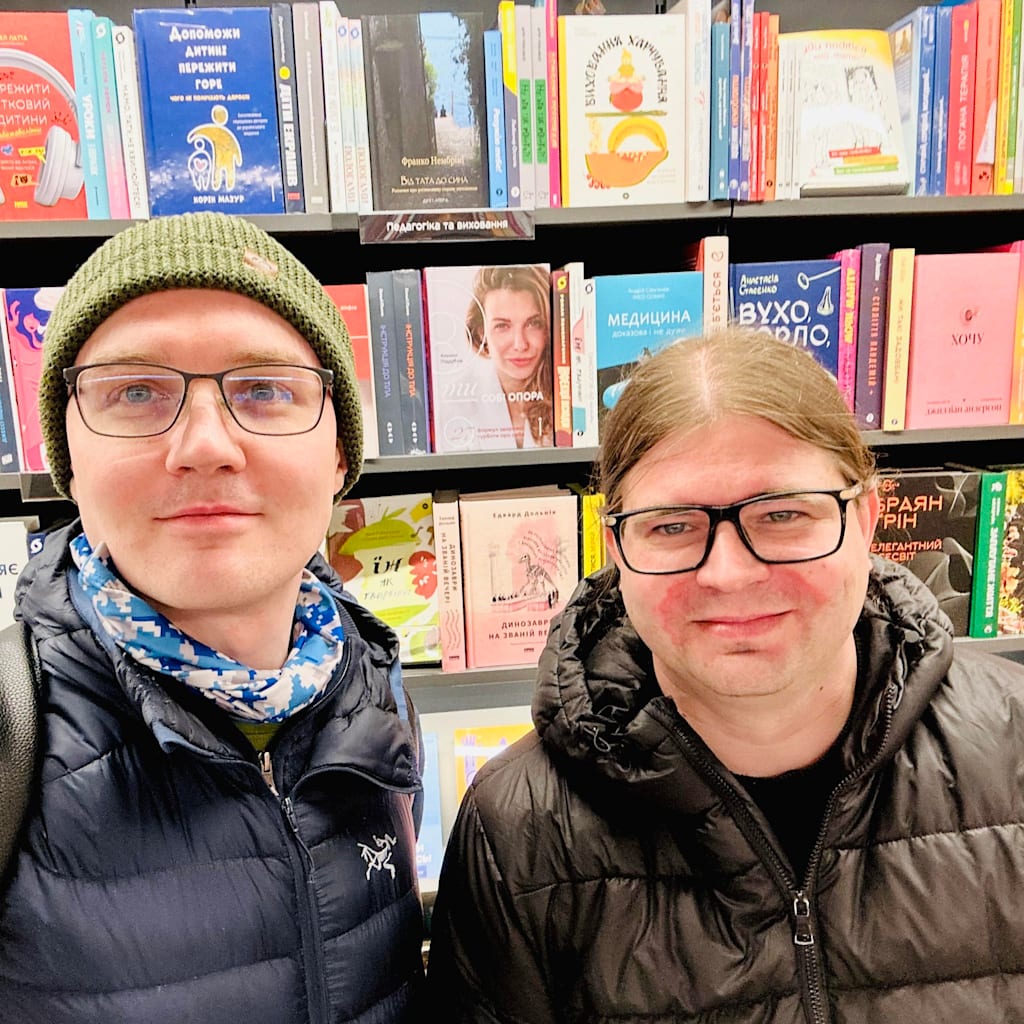
Dr. Serhii Huliienko is an associate professor at the National Technical University of Ukraine “Igor Sikorsky Kyiv Polytechnic Institute,” specializing in membrane separation, reverse osmosis, nanofiltration, and process simulation. His research examines fouling, regeneration of spiral-wound modules, concentration polarization, mass-transfer resistance, BaCl₂ separation, CFD analysis, spacer design, and channel-curvature effects. Across experimental and mathematical studies, he contributes to optimizing pressure-driven membrane technologies for chemical engineering, wastewater treatment, separation-equipment design, and industrial applications worldwide more broadly.
Scott Douglas Jacobsen interviews Dr. Serhii Huliienko about scientific thinking in Ukraine, from childhood chemistry interests and school competitions to membrane research and technical education. Huliienko explains Ukrainian distinctions between fundamental, applied, and technical sciences, university structures, and career motivations shaped by opportunity rather than wealth. The conversation also examines wartime scientific conditions, mobilization, volunteering, journal access, and how cross-cultural dialogue clarifies shared methods across different national understandings of science and human cooperation worldwide today.
Scott Douglas Jacobsen: What was your earliest moment of being introduced to scientific thinking? Not necessarily a scientific experiment or wanting to be a scientist, but scientific thinking. Maybe it was in school.
Dr. Serhii Huliienko: I had an interest in chemistry, but my school specialized in foreign languages, especially French. Still, my favorite subject was chemistry, and my chemistry teacher supported my interest.
I participated in what, in Ukraine, could be translated as a “little academy.” It was the Junior Academy of Sciences of Ukraine. I tried to do a scientific project there. It was about polyethylene, but it was not a very successful project. Still, I tried to do something in a scientific direction.
Later, at university, I finished my bachelor’s work with Anna and began my master’s degree. I started working on my master’s dissertation and did some experiments at the Institute of Engineering Thermophysics. It was about heat transfer in a specific geometric shape.
Jacobsen: I learned something from this trip that was very interesting. I learn something from every trip, and I mean that sincerely.
There are different things you find in different countries. Some people might ask, “Why go to Ukraine if you are not going to learn Ukrainian?” But the same person might have travelled to Canada. Then I would ask, “Did you learn French before you went?” They would say, “No.” So you can see the hypocrisy there.
These are things I notice. In terms of cross-cultural competence, conversations like this can help us all become more tolerant of our differences and work with what we have. Not everyone has a talent for languages, and tools like Google Translate help reduce the barrier.
Another thing I learned about science here, at least colloquially, is that it has a slightly different meaning than in some parts of Canada or the United Kingdom, based on what I have learned from British colleagues.
In Canada, we typically talk about science as physics, chemistry, and biology. In the United Kingdom, they sometimes distinguish between moral philosophy and natural philosophy, meaning ethics and the study of the natural world. Both fall under philosophy, which is different from the Canadian framing. But the process is the same: they follow the scientific method.
In Ukraine, I visited a design, fashion, and technology institute. It was formerly part of Kyiv Polytechnic Institute but later became a separate university. Their explanation was that they include science in the sense of technique as well. So the systematic process of doing embroidery, or doing things efficiently and well, can be described as having a science to it, in addition to the regular scientific method.
So it is similar to the other two traditions, but also distinct. The fundamental premise remains that one is using a systematic method. Is that an accurate depiction of some of the meaning of science here?
Huliienko: Yes, that is quite accurate. In Ukraine, there is a classification of different kinds of science. For example, we distinguish between fundamental science and applied science.
Before 2016, there was also a formal list of scientific specializations. When someone received a scientific degree, it specified the field, such as candidate of chemical sciences, physical and mathematical sciences, or biological sciences. There was also the candidate of technical sciences, and degrees related to social sciences and economics. So yes, there is a closer connection here between technology and science.
Okay, so, I ran my first experiment as a kid. I participated in a district competition in Kyiv and then went to the city-level competition, but I do not remember what place I received. It was not a brilliant result.
Jacobsen: Are science competitions common here, e.g., science competitions for school students?
Huliienko: Good question. Science competitions exist for different grades and at the university level in different cities. They are still common. Some of my colleagues even serve as judges in these competitions. They were common when I was in school, and they are still common now.
Regarding current projects, there is work on drone technology and AI. My colleagues showed me a project about personal protective equipment, involving a liquid component designed to reduce the force of impact on the body.
Jacobsen: Why choose science as a career?
Huliienko: It is not for the pay. The salary is acceptable, but people do not usually go into science to make money. I work at a technical university in Ukraine. Salaries are at a medium level, better than in some academic institutes, where the situation with salaries is much worse.
I finished my Master’s degree in 2009, after the 2008 global financial crisis, when many enterprises were in a difficult situation, so finding work was challenging.
Jacobsen: About university structure: is it divided into faculties or departments?
Huliienko: I think the terminology differs by country. In Ukraine, what is often called a faculty may be closer to a major academic division, while a department is usually a smaller unit within it. The terms do not always correspond exactly across countries.
So what we call a cathedra can be roughly translated as a chair, or sometimes as a faculty, but it is very difficult to explain exactly, my кафедра proposed that I continue and become a postgraduate student. At that time, when I considered what salary I could receive, I decided it was a very good opportunity, and I agreed. So I started working in this direction.
Jacobsen: How would you characterize the development of science during the war, funding pathways, research emphasis?
Huliienko: Scientists have very different situations. Some become soldiers, some try to avoid mobilization, and some leave for other countries.
The situation is different for each scientist, especially depending on family circumstances. Some had military training at university; others did not. It is very difficult to generalize. Some people decided to join the armed forces at the beginning of the war. It was a very brave decision.
At the beginning of the war, many university scientific staff received what we call “bron” (reservation), meaning they could not be mobilized during this period. Many people used this status.
Some scientists became volunteers. For example, Yurii Stepanenko is a very active volunteer in the community. Some people had the possibility to travel to other countries, most of them women.
One major change is that many publishers allowed access to scientific journals without payment during the war. This made it possible to access much more information than before. It is a very wide question. My experience is more limited in scope.
Jacobsen: Thank you very much for the opportunity and your time, Serhii.
Last updated May 3, 2025. These terms govern all In Sight Publishing content—past, present, and future—and supersede any prior notices. In Sight Publishing by Scott Douglas Jacobsen is licensed under a Creative Commons BY‑NC‑ND 4.0; © In Sight Publishing by Scott Douglas Jacobsen 2012–Present. All trademarks, performances, databases & branding are owned by their rights holders; no use without permission. Unauthorized copying, modification, framing or public communication is prohibited. External links are not endorsed. Cookies & tracking require consent, and data processing complies with PIPEDA & GDPR; no data from children < 13 (COPPA). Content meets WCAG 2.1 AA under the Accessible Canada Act & is preserved in open archival formats with backups. Excerpts & links require full credit & hyperlink; limited quoting under fair-dealing & fair-use. All content is informational; no liability for errors or omissions: Feedback welcome, and verified errors corrected promptly. For permissions or DMCA notices, email: scott.jacobsen2025@gmail.com. Site use is governed by BC laws; content is “as‑is,” liability limited, users indemnify us; moral, performers’ & database sui generis rights reserved.

 In-Sight Publishing