Shaun Anthony McMichael on “Whistle Punk Falls” (2025), Aberdeen, and Mental Health
Author(s): Scott Douglas Jacobsen
Publication (Outlet/Website): A Further Inquiry
Publication Date (yyyy/mm/dd): 2025/09/03
Part 1 of 2
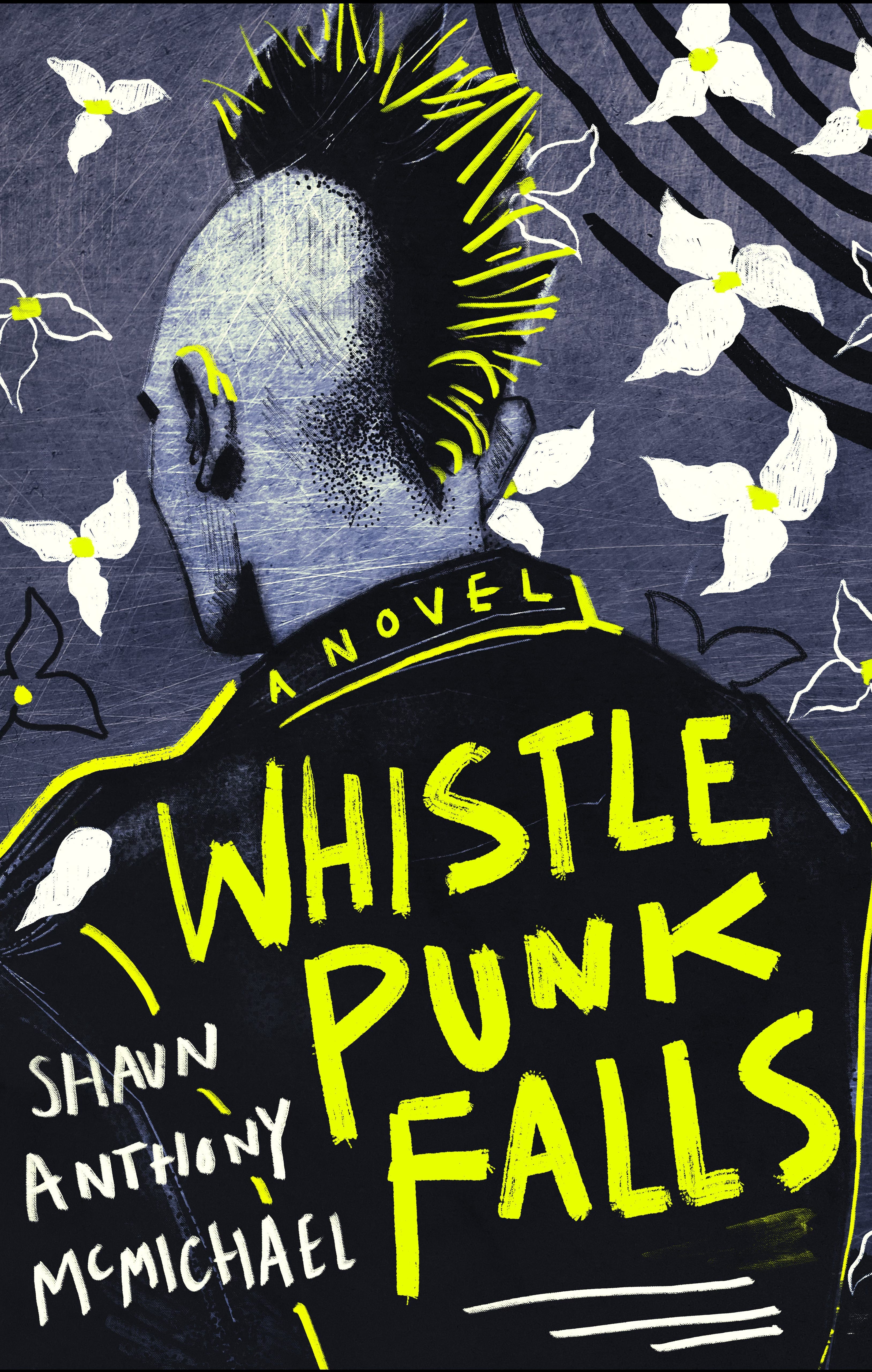
In this 2-part interview with Scott Douglas Jacobsen, Pushcart-nominated author Shaun Anthony McMichael talks about his upcoming novel Whistle Punk Falls (Alternative Book Press, 2025). McMichael shares how his personal history, studies in psychology, and years teaching teenagers shaped the novel’s raw portrayal of friendship, mental health, and the boom-bust cycle of Aberdeen, Washington. He discusses the inspiration behind his Native American protagonist, Loud McCrowley, and the careful research and cultural dialogue that inform his storytelling. McMichael’s dedication to authentic voices and gritty Northwest settings promises a haunting and honest literary journey for readers.
Scott Douglas Jacobsen: So, today, we are here with Shaun Anthony McMichael. He is the Pushcart-nominated author of Whistle Punk Falls, forthcoming from Alternative Book Press in 2025. He is also the author of Wild Familiar (CJ Press, 2024) and Jack of All (Poems): New Meridian Arts (2024). He is an unconventional writer, educator, and dedicated Pacific Northwesterner. He has taught writing classes to youth from around the world—in classrooms, juvenile detention centers, treatment programs, and drop-in centers—as part of his public service and community engagement work.
It is truly a noble life’s work that he has devoted himself to. He has edited two trauma-informed poetry anthologies and has published over 115 pieces in journals, including Chicago Review and Adroit Journal. Shaun also hosts the annual Shadow Work Writers Series. His fiction often explores themes of intersectionality, mental health, and the shortcomings of even well-intentioned systems—thought-provoking work, indeed. Thank you so much for joining me today. Let us jump right in. What inspired you to set Whistle Punk Falls in 2009 in Aberdeen, Washington?
Shaun Anthony McMichael: Well, first, I started with just the situation: a tight-knit group of friends. That was all I had when I was eighteen—just the characters living in my head. As I continued studying literature and writing, I realized the story needed real conflict. Around that time, I was majoring in psychology and creative writing, which helped shape my understanding of narrative structure and character development.
That background still helps me every day when I am teaching students. I decided that the conflict would be that one of these friends is dealing with a mental health challenge, and that struggle would become the spine of the story.
Next came the setting. Like many young writers, I once dreamed of writing the Great American Novel. You need the boldness and optimism of youth even to think that way—and that dream still lives in me.
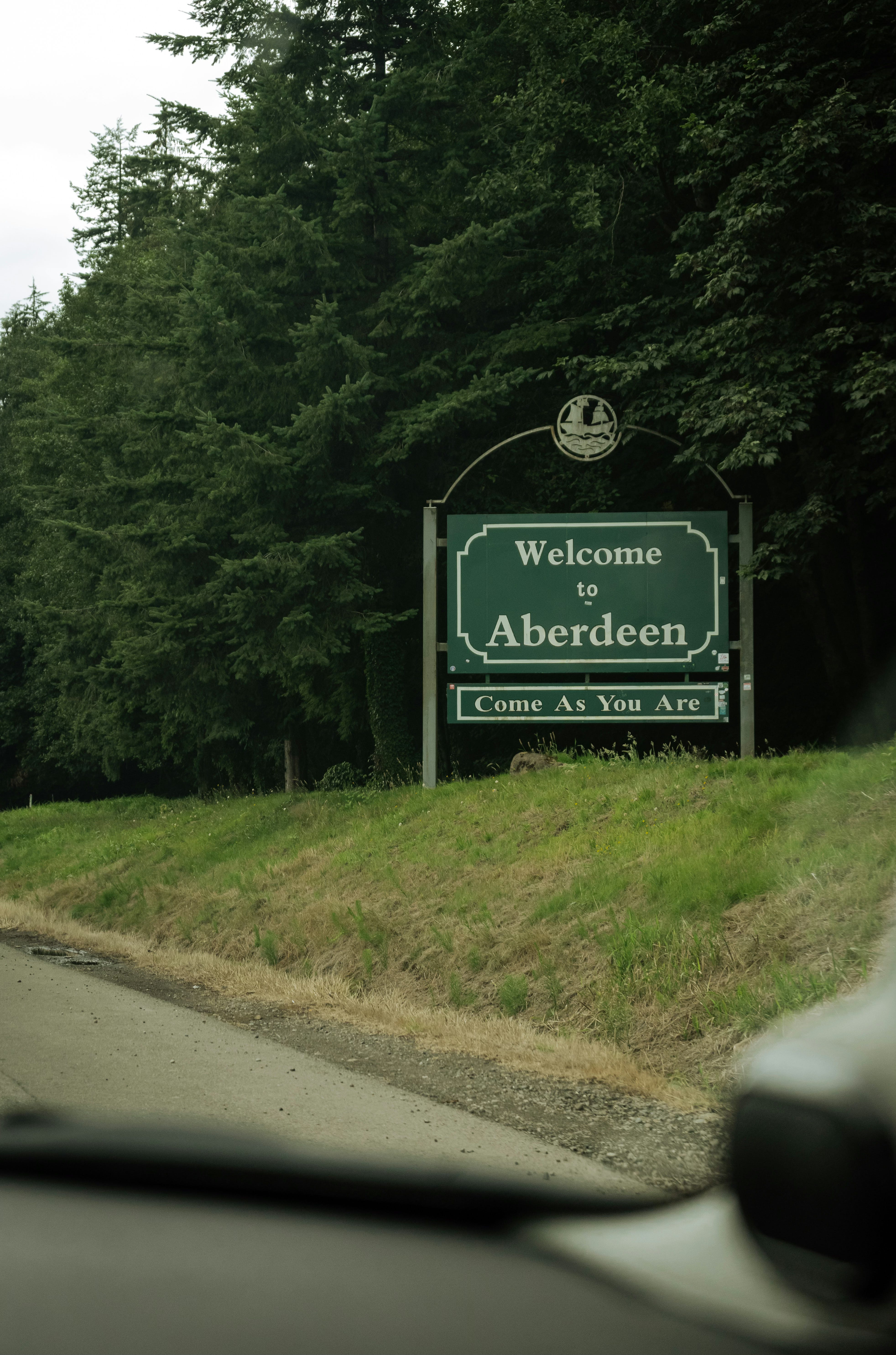
When it came to choosing a setting, I wanted something quintessentially Northwestern—something raw and honest that captures the character of Washington State. Aberdeen came to mind right away. I was born in California, but my family moved up here when I was in fifth grade. I remember taking a trip to the coast to visit Ocean Shores and the rainforest, like so many families do, and we passed through Aberdeen.
Immediately, Aberdeen left an impression on me. Even as a fifth-grader, I felt a strange, haunting energy in that town—a kind of lingering gloom that stuck with me. I could not have explained it back then, but something about the place seemed heavy with stories. I did not even know anything about Kurt Cobain at the time—just that the place itself felt like it had secrets worth uncovering.
So, when I sat down years later to write my novel, I thought: Why not set it there? That old memory of Aberdeen kept resurfacing, and I wanted to dig deeper into its spirit and history.
And so by that point, I knew about Cobain. I thought that, for teenagers, Cobain is such an iconic, almost mythical figure—a quintessential misfit and heartthrob. I could weave something of that spirit into the novel. However, the more I dug into Aberdeen, it was not just Cobain who intrigued me but also other misunderstood misfits from the town’s past—like Laura, Law, Billy Gohl, and John Turnow.
So, many figures from Aberdeen fascinated me, along with the town itself. It had been the logging capital of the world, but by the end of the Great Depression, it had pretty much peaked and never fully recovered. You can still see all these remnants of a once-booming town, yet now it is decayed in places—it has what I call a lot of “black teeth.” As I developed the characters and setting, it felt increasingly right.
The story follows my main character, Malachi “Loud” McCrowley. Part of the novel’s arc is his mental health decline—it parallels the town’s decline during the crash of 2009. I chose 2009 specifically because I did not want to set it in, say, 2001; there was too much happening then with Nirvana’s legacy, and Charles R. Cross has already told that story in Heavier Than Heaven and others. Before that, the setting did not resonate in the same way.
So, I chose 2009 because it was another harsh downturn for Aberdeen—and, as readers and writers know, you need solid conflict for your characters to grapple with. I thought 2009 gave me a fitting backdrop for resolution and tension.
Jacobsen: The American economy has a peculiar rhythm of boom and bust: massive growth followed by inevitable crashes, yet it somehow keeps recovering, which speaks volumes about American resilience. So, how does that boom-bust cycle feed into the overall atmosphere of your story?
McMichael: Yes, thank you for pointing that out. One of the reasons I was drawn to Aberdeen is that it embodies that cycle perfectly. I am a city person—I was born in Los Angeles and now live in Seattle, so I have a very urban upbringing. Moreover, politically, I would say I am center-left, although these days, that might even appear far left to some.
However, I do worry about people in the hinterlands. We in the cities rely on them—we buy the crops they grow, and we consume the resources they produce. However, we often overlook what happens to those communities when the industries collapse or shift away.
We buy timber, we use it for what we need—and then, when it is time to think about what they need, it is like, Get out of here. We treat rural people like diseased rabbits—push them away when convenient.
Jacobsen: It is an interesting analysis because, strangely, it is almost British in mindset: very utilitarian. Even the British manner of speech reflects that—straightforward language, sometimes embellished, but fundamentally direct. Looking at other Americans purely in terms of crops, timber, rare earth minerals, and steel—is a utilitarian way of viewing your fellow citizens. Moreover, it is not precisely the most American thing to do, right?
McMichael: I do not like that. It bothers me that these fascinating places in the hinterland get discarded and forgotten. Some of the anger fueling our current, frankly awful, political climate comes from the fact that “city slickers” forget about the people outside the cities.
So, yes—some of that spirit runs through the novel, too. In terms of boom and bust, it connects directly to the characters. It is about having strength, then facing weakness, finding a way to live with that strength, and then watching it collapse. That is precisely what the characters endure.
My main character, Malachi McCrowley—his nickname is “Loud”, so I might refer to him as Loud—is incredibly willful. Kurt Cobain writes in his song “Polly”, “It amazes me, the will of instinct.” Loud has that same unstoppable drive—an engine inside him, or maybe a furnace that keeps burning forward no matter what.
He faces countless challenges in life—some inflicted by others early on, many self-inflicted later—. However, he pushes forward, stubborn and defiant, living true to himself in a very punk way. Moreover, that is true for all the characters in the book. They each have their frailties and weaknesses—teenagers, adults, everyone. Those flaws get exposed. However, they persist; they keep trying, and that resilience shines through right up to the last page.
Last updated May 3, 2025. These terms govern all In-Sight Publishing content—past, present, and future—and supersede any prior notices. In-Sight Publishing by Scott Douglas Jacobsen is licensed under a Creative Commons BY‑NC‑ND 4.0; © In-Sight Publishing by Scott Douglas Jacobsen 2012–Present. All trademarks, performances, databases & branding are owned by their rights holders; no use without permission. Unauthorized copying, modification, framing or public communication is prohibited. External links are not endorsed. Cookies & tracking require consent, and data processing complies with PIPEDA & GDPR; no data from children < 13 (COPPA). Content meets WCAG 2.1 AA under the Accessible Canada Act & is preserved in open archival formats with backups. Excerpts & links require full credit & hyperlink; limited quoting under fair-dealing & fair-use. All content is informational; no liability for errors or omissions: Feedback welcome, and verified errors corrected promptly. For permissions or DMCA notices, email: scott.jacobsen2025@gmail.com. Site use is governed by BC laws; content is “as‑is,” liability limited, users indemnify us; moral, performers’ & database sui generis rights reserved.

 In-Sight Publishing