Saša Dobrijević on ICJ, Press Freedom, and the Future of Digital Journalism
Author(s): Scott Douglas Jacobsen
Publication (Outlet/Website): Vocal.Media
Publication Date (yyyy/mm/dd): 2026/04
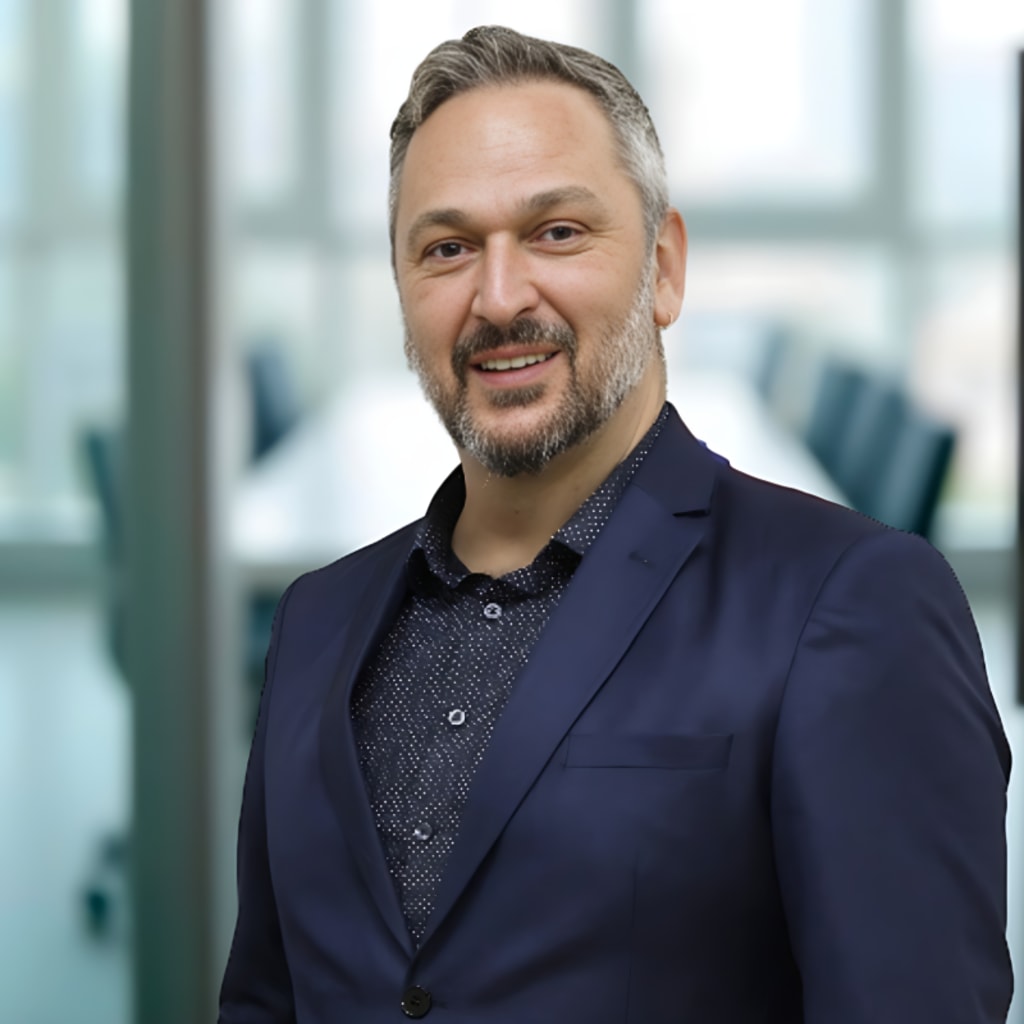
Saša Dobrijević is an award-winning Serbian international journalist and founder of the Intercontinental Connection of Journalists (ICJ), a global media initiative addressing structural gaps in journalism. Beginning his career at 19, he developed experience across European media landscapes, including work in Munich. His leadership focuses on creating accessible publishing platforms, supporting freelancers and students, and fostering cross-border collaboration. Dobrijević emphasizes investigative reporting, press freedom, and technological adaptation as essential to sustaining journalism’s democratic function.
In this interview, Scott Douglas Jacobsen speaks with Saša Dobrijević, founder of the Intercontinental Connection of Journalists, about journalism’s democratic purpose, leadership, and institutional gaps facing reporters. Dobrijević explains why ICJ supports freelancers, students, and senior journalists through publishing access, press credentials, and education. He also reflects on digital transformation, social media, mobile reporting, and the enduring necessity of strong questions, empathy, professional distance, and truthful storytelling under structural economic pressure.
Scott Douglas Jacobsen: Why did you pursue journalism and also leadership in journalism? This will lead into the more formal line of questioning.
Saša Dobrijević: This is a significant question. It brings me back to the beginning of my journalism journey. I started at 19 and quickly developed a strong commitment to the profession. I was drawn to the dynamic nature of the work and the capacity of journalism to influence society. That sense of purpose deepened over time, strengthening my commitment to the field.
My international career began in Munich six years ago, where I worked for Serbian television. The experience expanded my professional perspective. International journalism is demanding. It requires navigating time zones, coordinating with experts across regions, and adapting to different working rhythms.
Regarding leadership, relatively few individuals pursue such roles. In large organizations, only a small fraction advance into leadership positions. The motivation, persistence, and capacity required are uncommon, and the responsibilities are significant.
I do not view leadership in conventional terms. My focus has been on addressing structural problems within journalism. Through discussions with colleagues worldwide, I identified recurring challenges: layoffs, underpaid work, and the absence of accessible publishing platforms.
A central issue is that many journalists lack a place to publish their work. As a result, valuable reporting is often lost. I began developing the idea of a platform that would provide open access for publication.
I extended this inquiry to students in Germany, the Czech Republic, and other countries. They reported similar limitations. While universities may offer internal publications, these do not reach broader audiences.
To test the concept, I conducted an experiment with a Serbian media outlet. The response was strong. Contributors included diplomats, former European Parliament members, writers, senior journalists, and editors-in-chief. This confirmed a clear demand.
The need for such a platform is not theoretical. It reflects a structural gap in contemporary journalism. Recognizing this demand led directly to the creation of ICJ and my role in its leadership.
Jacobsen: What is the broader need for journalists? What is their purpose, and how does ICJ fulfill that need?
Dobrijević: Journalists need visibility. That is central to the profession. Their work must be transparent and accessible to the public. In that sense, journalism serves as a safeguard of democracy.
ICJ is designed to support that function. It provides contributors with press cards, a publishing platform, and free educational resources. The goal is to enable journalists to produce, share, and develop their work without unnecessary barriers.
A core objective is to act as a bridge—connecting freelancers, students, and senior journalists. Many experienced journalists cover specific beats in their primary roles but lack space to publish on other topics. ICJ offers that space. It also facilitates connections between journalists and media outlets, including opportunities to sell exclusive stories.
In this way, ICJ addresses structural gaps in the profession by aligning needs with practical solutions.
Contributors receive press credentials, allowing them to attend conferences and ask questions. They gain access to a platform where they can publish their work and maintain visibility. For those in career transitions, this also supports portfolio development and professional continuity.
Beyond this, ICJ aims to build a long-term professional community. The project includes plans for a digital library, which would serve investigative journalists, policymakers, and academic institutions. There are also plans for annual awards recognizing outstanding contributors.
These initiatives are intended to address current challenges in journalism through sustained infrastructure and collaboration.
Jacobsen: What about the technological transition in journalism?
Dobrijević: Over approximately the past 15 years, journalism has shifted from print to digital formats. This is not a simple replacement but a hybrid model in which print and online formats coexist. Social media has emerged as an initial layer for rapid dissemination and commentary, though not always for verification.
In this transitional period, journalists face significant technological change. As with any industrial transformation, the tools of the profession are evolving rapidly.
What journalists need is the capacity to adapt to these developments while maintaining professional standards. This includes integrating new technologies into reporting, distribution, and verification processes.
It is clear that journalism must continue to evolve alongside technological progress.
We are now seeing social media increasingly dominate the information space, often at the expense of traditional journalism. This has contributed to a decline in public trust. Today, almost everyone has access to a camera—tools that, decades ago, were unavailable even to top filmmakers.
This creates a tension between journalism and the spread of unverified information. However, it does not need to be a conflict. Journalism can integrate these developments by adapting to technological change. The widespread availability of mobile cameras, for example, is a powerful tool when used responsibly by journalists.
Short-form reporting—such as brief videos, photo stories, or exclusive footage—can be highly effective. Journalism must remain dynamic and responsive to evolving formats.
The transition from print to digital reflects a broader transformation in the field. Adaptation is essential. I have conducted many interviews using only a mobile phone, particularly when working independently without a full production team. For example, while covering protests in Luxembourg, Berlin, and Munich, I relied on a phone to document events. Those interviewed valued the opportunity to have their voices heard and their concerns represented. This illustrates the importance of flexibility and readiness in journalism.
Jacobsen: This is analogous to computing, where tools such as cameras, notepads, and phones resemble hardware, while the “operating system” reflects the journalist’s methods and judgment. Beyond tools and technology, what new “algorithms,” so to speak, do journalists need?
Dobrijević: That is a complex question. I have recently pursued further education to remain current with developments in the field. However, when discussing tools and evolving systems, it is important not to lose sight of the core principles of journalism.
At its foundation, journalism is about identifying meaningful stories, asking high-quality questions, and presenting truthful accounts. The effectiveness of a journalist does not depend solely on advanced tools. Even with basic equipment, strong reporting and well-directed questions can produce impactful work.
Technological developments, including artificial intelligence and algorithmic systems, are becoming increasingly relevant. However, these should complement—not replace—the fundamental skills and responsibilities of journalism.
Everything can support journalists in advancing their careers. However, these remain tools. The core of journalism lies in thought, perspective, and the ability to understand different viewpoints. A journalist must think from the perspective of those being reported on—whether protesters or broader segments of society. Without this capacity and without asking the right questions, no tool can compensate for weak reporting.
At the same time, empathy must be balanced. Journalists need sufficient understanding to accurately represent issues, but excessive emotional involvement can become a burden. Exposure to distressing material—especially in conflict zones or crisis environments—can lead to burnout. Maintaining professional distance is essential for long-term sustainability.
Jacobsen: Thank you very much for the opportunity and your time, Saša.
Last updated May 3, 2025. These terms govern all In Sight Publishing content—past, present, and future—and supersede any prior notices. In Sight Publishing by Scott Douglas Jacobsen is licensed under a Creative Commons BY‑NC‑ND 4.0; © In Sight Publishing by Scott Douglas Jacobsen 2012–Present. All trademarks, performances, databases & branding are owned by their rights holders; no use without permission. Unauthorized copying, modification, framing or public communication is prohibited. External links are not endorsed. Cookies & tracking require consent, and data processing complies with PIPEDA & GDPR; no data from children < 13 (COPPA). Content meets WCAG 2.1 AA under the Accessible Canada Act & is preserved in open archival formats with backups. Excerpts & links require full credit & hyperlink; limited quoting under fair-dealing & fair-use. All content is informational; no liability for errors or omissions: Feedback welcome, and verified errors corrected promptly. For permissions or DMCA notices, email: scott.jacobsen2025@gmail.com. Site use is governed by BC laws; content is “as‑is,” liability limited, users indemnify us; moral, performers’ & database sui generis rights reserved.


