Whistle Punk Falls (2025): Interview with Pushcart-Nominated Author Shaun Anthony McMichael
Author(s): Scott Douglas Jacobsen
Publication (Outlet/Website): A Further Inquiry
Publication Date (yyyy/mm/dd): 2025/09/04
Part 2 of 2
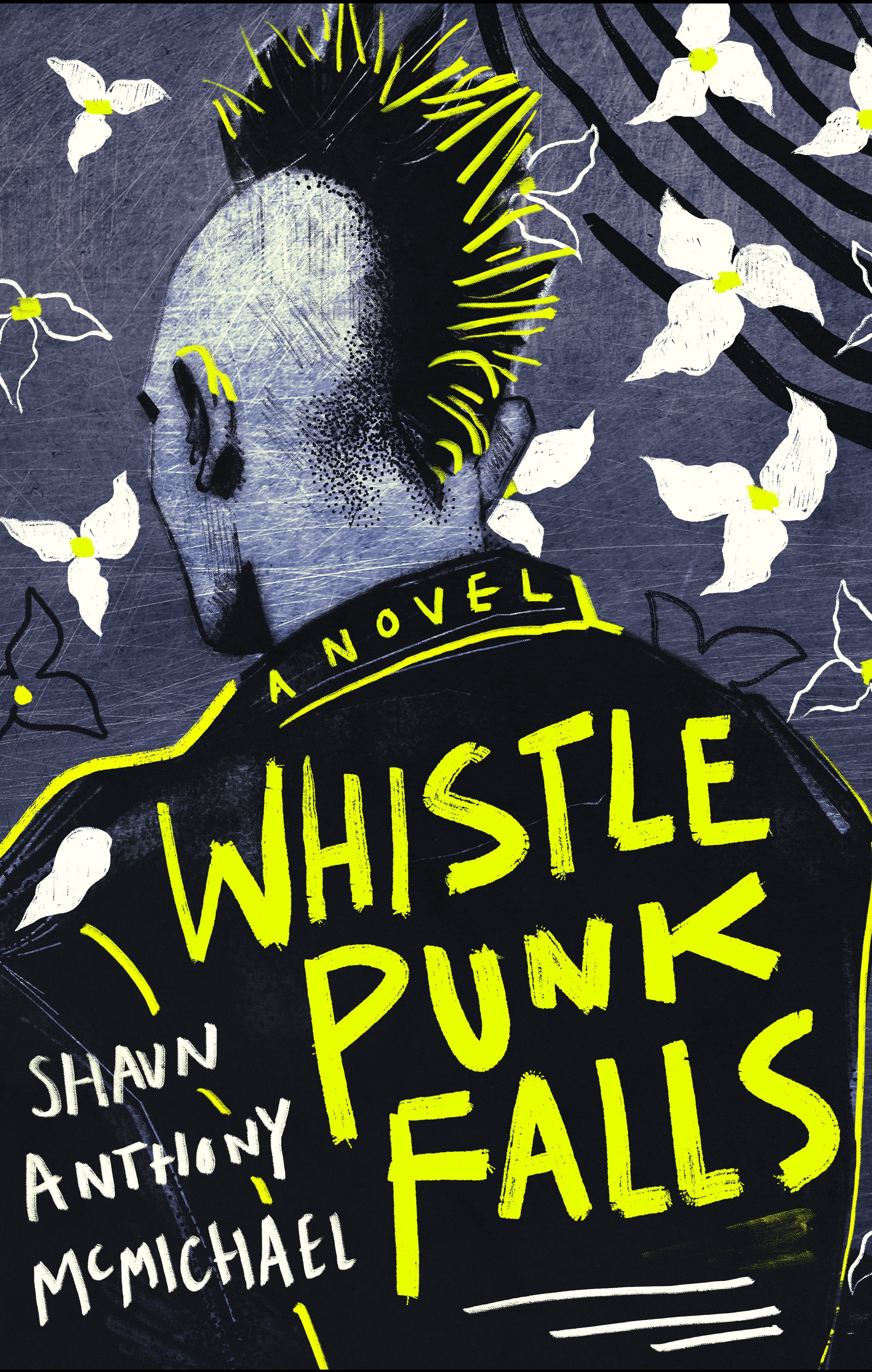
In this 2-part interview with Scott Douglas Jacobsen, Pushcart-nominated author Shaun Anthony McMichael talks about his upcoming novel Whistle Punk Falls (Alternative Book Press, 2025). McMichael shares how his personal history, studies in psychology, and years teaching teenagers shaped the novel’s raw portrayal of friendship, mental health, and the boom-bust cycle of Aberdeen, Washington. He discusses the inspiration behind his Native American protagonist, Loud McCrowley, and the careful research and cultural dialogue that inform his storytelling. McMichael’s dedication to authentic voices and gritty Northwest settings promises a haunting and honest literary journey for readers.
Scott Douglas Jacobsen: That is powerful. Now, to shift slightly—among the post-colonial states, I would say New Zealand has probably gone the farthest in terms of Indigenous and non-Indigenous reconciliation. Canada has indeed gone further than the United States. However, the conversation here in America is happening slowly.
In that American context—especially when writing Native American characters or racially marginalized groups in general—how did you prepare yourself to enter the right headspace and portray those experiences respectfully? Not everyone in a group will feel the same way, obviously, but how did you approach that dynamic?
McMichael: That is the gist of it, yes. So, yes—Loud is half Native American. His mother is Makah, from the Makah Tribe, and Loud does not identify with the tribe for reasons I will discuss shortly. However, yes, visibly, he looks Native American—no one would ever mistake him for white.
To get into his headspace, I needed to be in dialogue with Native American voices. I read Native American books—both fiction and nonfiction. I visited the Makah History and Cultural Center up in Neah Bay and paid for a tour. I read a detailed history of the Makah people, which helped solidify my understanding of their culture.
Moreover, this has not been a quick or superficial effort—it has spanned about a decade. I first conceived the core idea for the novel in 2012 and wrote the first draft in 2017. From 2017 to the present, I have continued to deepen my understanding of the subject. That first draft did not quite capture it—I knew I had not fully dug into what being Loud meant psychologically as a Native American teen.
So, all of that research and immersion helped tremendously. Along the way, I became friends with a novelist, Dennis E. Staples. We have had several conversations about the manuscript during its development. His input has been invaluable—he confirmed that my approach to Loud rang true in many ways but also helped catch a few missteps. It is so vital to have empathetic readers or culturally sensitive readers; Dennis served in that role for me, and I am very grateful.
I also tried to approach this work with big-heartedness—an understanding that every character’s issues have a larger context: a context of racial abuse, colonialism, and cultural erasure. It shocks people to realize that Native Americans were legally barred from practicing their religions until 1978 in the U.S.
Jacobsen: It was not until 1960 that they could vote in Canada.
McMichael: Wild. Oh my gosh—1960 in Canada? That late? Jeez. It is eye-opening. Moreover, it defines so much more than most Americans realize. So, all of that helped me step into Loud’s perspective—combined, of course, with my imagination. However, it is always intimidating. Sitting down to write is daunting enough, but adding the responsibility of racial representation—especially when writers who look like me have historically caricatured people like Loud—is heavy work.
Jacobsen: There was a comedian who had a whole routine about that stereotype. Richard Pryor introduced him on The Richard Pryor Show if I remember correctly: Charlie Hill. His opening line poked fun at how Hollywood has stereotyped Native Americans forever. He would come on stage and say, “Hi. How are you? Hi. How are you?”—mimicking that one-note, caricatured greeting. It was so on point.
McMichael: It is daunting. It feels like trespassing, right? Even so, despite that feeling, I still pressed on. I would rather have imperfect depictions of people of color than to not have them present at all. Too many white writers have played it “safe” in this way for far too long. Anyway, things have improved in some ways and worsened in others since I first began writing the novel in 2012. My racial consciousness has kept evolving. I am committed to continuing that growth.
I am looking forward to hearing people’s reactions to the book. My portrayal of Loud is heartfelt, that he is fully human, and that I have avoided caricature. However, as Thomas Mann, the German author, said—he learned the most from his critics. So, when the book is released, I fully expect that my understanding will grow through readers’ responses, especially from Native American readers. I am ready for that.
Jacobsen: I sense that, generally, most people want to be seen as a person first and only then as part of a group—if they want that at all.
McMichael: Yes, generally, if you get the facts right and build the character as an individual first, you can do justice to their voice. Loud definitely fits that. He does not want to be defined by a people group. He has a very unique story—he grew up in an all-white space and gravitated toward alternative white music. That became his identity.
Punk music, in particular, has always been his thing—his sanctuary. For many reasons, he does not identify with his Native Americanness, which is deeply problematic for him because he looks very Native. That dissonance causes him immense internal struggles—just one of many conflicts he faces.
Jacobsen: How has your experience teaching English—often as a second or additional language to immigrants, refugees, and institutionalized youth—influenced how you develop the voices of your characters?
McMichael: That is a good question—I appreciate that one a lot. Not directly, but indirectly. I have this broad canvas of what it means to be a teenager. Between my memories and growing up as a teen myself—
I graduated high school in 2004, so earlier than the teens in the novel. However, I have been working with teenagers since 2006, spanning the entire decade of the 2000s to the present. Over time, that experience has created a vast canvas for me—what teenagers think about, what they worry about, how they perceive the world, and what matters to them.
It gave me a lasting affection for my characters. In the first draft I finished back in 2017, the teens were too mean. They were too cruel to each other—over the top, almost Shakespearean in their betrayals. Yes, teenagers can be sharp with each other, but the plot in that draft pushed it too far.
It felt too much like Romeo and Juliet. When I teach Romeo and Juliet, I always ask my students, “Is Shakespeare exaggerating? Are teenagers really this reckless?” Most of my students say, “Yep—teenagers are that dramatic.” However, from my point of view, I tell them, “No—you are not that nuts.” You can be wild, sure, but not fall in love and kill yourself in 48 hours. Nobody is doing that.
So, working with students helped me temper the novel with more realism and compassion. I love my students—they teach me a great deal. They are gracious and hilarious the vast majority of the time. Moreover, when they are punky or act out, there is always a reason. Behavior is communication.
That background not only gave me a heart for my characters but also kept me believing in them—thinking that they deserve to be portrayed with dignity and truth. That helped me push through the rejections while submitting the manuscript, too. My students gave me the energy to keep fighting to get it published.
Jacobsen: What are one or two of your favourite quotes from your characters? Something that sticks with you.
McMichael: Oh, that is a good one—I love that because it gets right into the work itself, and I have not done enough of that lately. Here is one I love. It is from when they first met; this is from when Loud McCrowley—the main character—and Jeremy Sweet meet for the first time. Jeremy is my author stand-in; he is the narrator and the character most like me. He narrates the bulk of the story.
When they first meet, Jeremy is being bullied a lot—he has called the F-word slur repeatedly by some bullies. He has made himself a bit of a target because he is precocious and he is from Olympia, so he sticks out in Aberdeen. Anyway, a local bully is constantly calling him that word. So, when Loud and Jeremy meet, they have this exchange about it:
Loud McCrowley says to Jeremy, “So, are you gay?” Moreover, Jeremy says back, “Well, do you play rugby?” —because the bully knows Loud from summer rugby. Loud replies, “Be real about it. “
Jeremy says, “I do not think I am gay.”
Loud shrugs and says, “Anything is cool if you own it. Try it. Say, ‘I braid my butt hairs.'”
Jeremy responds, “Ew.”
Then Loud goes, “I use my mommy’s compact mirror,” and lifts his legs. Then Miss Riggby, their teacher, clears her throat and motions to the door with her chin—kicking them out.
So, that line—”Anything is cool if you own it”—sticks with me. It captures Loud’s worldview at that moment and shows how these two bond. They are the only ones still in this particular music scene while everyone else has moved on, and that is how their friendship begins.
Jacobsen: Well, Shaun, thank you so much for your time today. It was a pleasure to meet you.
McMichael: Thank you so much, Scott. It was great talking with you.
Last updated May 3, 2025. These terms govern all In-Sight Publishing content—past, present, and future—and supersede any prior notices. In-Sight Publishing by Scott Douglas Jacobsen is licensed under a Creative Commons BY‑NC‑ND 4.0; © In-Sight Publishing by Scott Douglas Jacobsen 2012–Present. All trademarks, performances, databases & branding are owned by their rights holders; no use without permission. Unauthorized copying, modification, framing or public communication is prohibited. External links are not endorsed. Cookies & tracking require consent, and data processing complies with PIPEDA & GDPR; no data from children < 13 (COPPA). Content meets WCAG 2.1 AA under the Accessible Canada Act & is preserved in open archival formats with backups. Excerpts & links require full credit & hyperlink; limited quoting under fair-dealing & fair-use. All content is informational; no liability for errors or omissions: Feedback welcome, and verified errors corrected promptly. For permissions or DMCA notices, email: scott.jacobsen2025@gmail.com. Site use is governed by BC laws; content is “as‑is,” liability limited, users indemnify us; moral, performers’ & database sui generis rights reserved.


