Dr. Anthony Trecek-King on Music, Engineering, and the Turn to Choral Precision
Author(s): Scott Douglas Jacobsen
Publication (Outlet/Website): Vocal.Media
Publication Date (yyyy/mm/dd): 2026/05/14
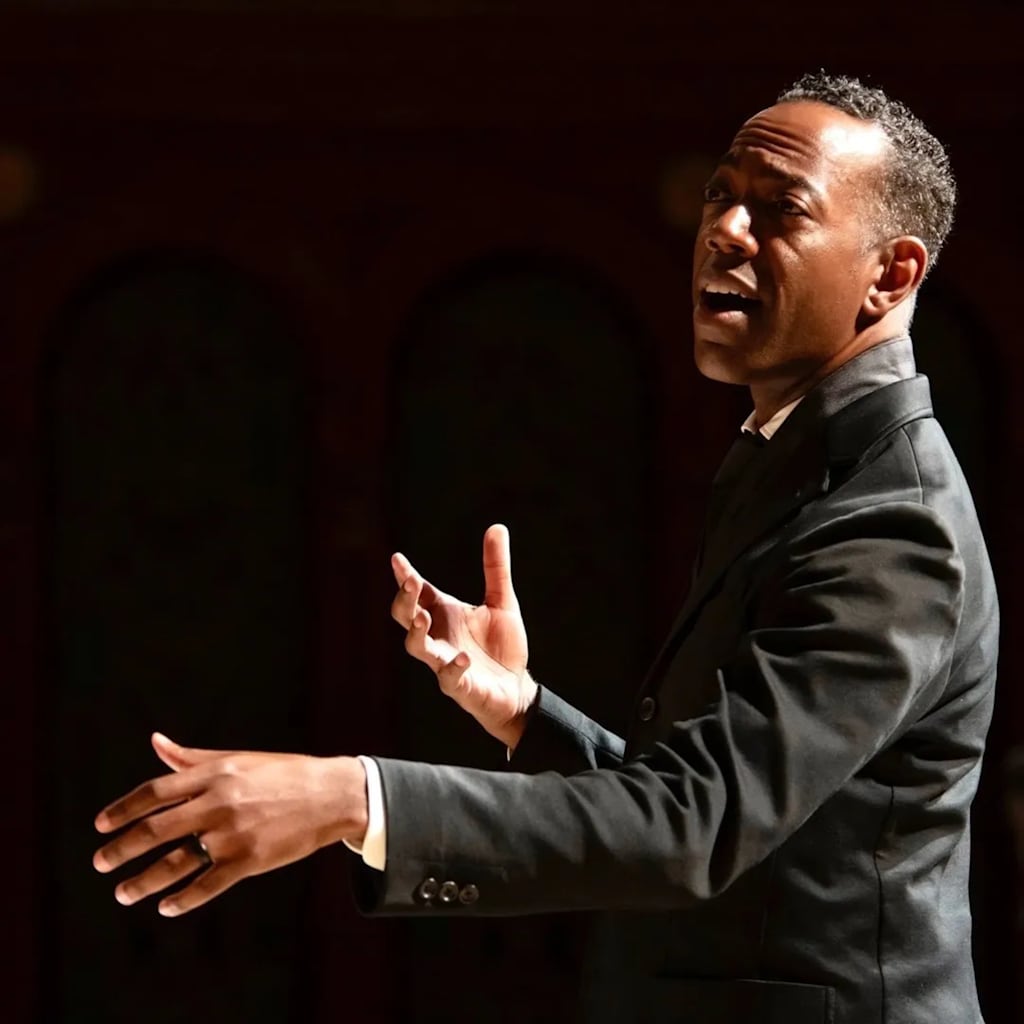
Dr. Anthony Trecek-King is an internationally active conductor, educator, and interdisciplinary artist whose work bridges choral and orchestral traditions, music technology, and cultural inquiry. Beginning as a cellist, he pursued dual studies in music and engineering before committing fully to a musical career, later integrating computational and technical expertise into creative practice. He has held academic appointments combining computer science and music, and has collaborated with elite ensembles such as the Netherlands Chamber Choir. His work spans six continents, emphasizing precision, emotional depth, and music as a vehicle for social reflection.
Scott Douglas Jacobsen speaks with Dr. Anthony Trecek-King about his early entry into music through cello, his parallel studies in engineering and music, and the gradual realization that music was the field he could pursue daily without it feeling like work. Trecek-King reflects on practical ambition, creative discipline, music technology, and the decisive influence of elite choral performance, especially his experience with the Netherlands Chamber Choir, on his artistic direction.
Scott Douglas Jacobsen: When did you start getting into music generally?
Dr. Anthony Trecek-King: There is a story from when I was a kid. My mom always got us involved in music. When I was in elementary school, we were singing in the chorus and so on, but it was really the fourth grade that was the turning point. I did not know it then, but it certainly was a turning point. In fourth grade, I went to one of my sister’s concerts and watched her because I was allowed to start taking instrument lessons. She played the violin, and I said, “The violin is stupid; I do not want to play that, but that bigger thing on the end seems doable, so let me give that a shot.”
My parents were really good about this because they always said, “You can try it, but if you are going to try something, no matter what you try, you have to commit to it for a certain period of time.” You cannot just try it for a few weeks and then quit. If you are going to pick up the cello, that is fine; you can do it for a year. After a year, you can quit, no questions asked. So I did that. I took it for a year, and at the end of the year, they asked if I wanted to do it again. I said sure, and they kept one-upping me each year for a very long time.
That was my start, through the cello, in a more formalized kind of studying music. I had wonderful teachers. I grew up on an Air Force base in North Dakota, and what is nice about being in an Air Force community is that they always say that whatever is available in the community will also be available on the base. They brought in all these teachers to teach us because none of them lived on the base, but we had the same teachers you would have in town. So it was good arts access.
When we moved to Nebraska, I continued playing the cello, then decided to join the chorus and began singing. That started me going through. I had zero intention of becoming a musician. I was going to be an engineer, and that is what I studied for my undergraduate degree. But I received a full ride in music. They said, again, that they were very kind to me because it is a music degree; you have to major in music. We do not care if you double-major, but one of your majors must be music. So I double majored in music and engineering.
The agreement was that after two years, I could drop the music major and keep the scholarship as long as I continued to play in the ensembles. This is great, so I would study engineering without having to pay for it, and I could do music for a few years. Well, two years in, I dropped engineering and pivoted toward music. I did not drop engineering forever, though. I dropped it for a while, finished my degree, and went on to do a master’s.
When I completed my master’s, I said that was fun; now, let me actually get a real job. So I started my master’s in computer science. While I was doing a master’s in computer science, I was hired in music at a university and was also directing some community work, so I began doing both. My first college teaching position was one-third time computer science and two-thirds time in music, so I had a split appointment. I had to teach in both areas.
Eventually, I got away from that, though. Engineering and computer science are things I do enjoy, but I cannot do them every day. What it really came down to is that music is what I can do every day without it feeling like work. That was a long-winded answer to the question of how I got started.
Jacobsen: Would “oscillatory” be a good descriptor of the way you felt between practicality and passion?
Trecek-King: Yes, I would say so, but I never felt that the passion was impractical. Oftentimes, we think there is no way to make a living in music, but I have not worked, and I have always worked to the fullest extent. I have never had to worry about food or anything like that. I have been very lucky, but I also worked for it. There is a piece of that.
There are ways to be successful. For me, it was not a matter of practicality versus passion; they were both passions. It was a matter of which one I could do every day without it feeling like work. That was the choice that I ended up making.
Jacobsen: What would you consider the point at which a sole focus on music became a serious choice?
Trecek-King: When I pivoted, it was a serious sole focus. My master’s degree was very focused, and it was all I was doing. I had a fellowship, and one of the stipulations was that I was not allowed to work. They fully funded me, and I could not work outside of that. I could play gigs, but I couldn’t just pick up a bartending job or something like that. That was part of the stipulation. So I spent a lot of time in the library reading, studying scores and in a practice room. It was really focused, and I felt like I grew quite a bit in that time period.
Afterward, once you get into actual teaching and working, even though I was split, all my computer science and engineering was geared toward music technology and using technology in the service of music. So it wasn’t hardcore coding, but I was still coding and building instruments. That was what I was doing, and that was what I was teaching. So it was always, even the technology, geared toward music and the creative side of technology.
But after I left that teaching position and moved to Boston, I had another choice to make. That was: Did I want to stay in choral music, or did I want to shift back into orchestral music? Because all my degrees up to that point were in orchestral music, but my jobs were in choral music. That is pretty funny.
There is, in the arts world, a way you can get pigeonholed into this small thing that you are. I have been very fortunate to avoid that for the most part. There are still people who see me as one of the facets, but they do not look at the totality of what I have done. So I have been very fortunate, again, to avoid some of that.
But the orchestral-choral thing is a big chasm. It is hard to cross back and forth fluidly, so I did have to make a choice, at least for a bit, about where I was going to focus for a while, and that was choral music.
Jacobsen: Why the ultimate switch to choral music, and how has it served you well?
Trecek-King: The ultimate switch to choral music was when I was in my 30s. This was my hustling time. I had the opportunity to work in Europe and with the Netherlands Chamber Choir. It is one of the great choirs in the world. It is in the top five. They are unbelievably good. When I was working with them, it was the first time that I worked with a choir that felt like an orchestra. The precision, the level of detail that you can work with, because they were just so good, was almost indescribable.
I have had that experience again since, and other ensembles are phenomenally good, but that was the first time I had that feeling. That made me decide, OK, if I can have that, then this is the direction that I want to go in. It is not like every ensemble is that good, but can I help create ensembles that have that kind of precision? So that became my next target.
And your other question is whether it has served me well. Absolutely. There is no question that it has served me well. I have made music on six continents doing choral music, so I feel very fortunate about that.
Jacobsen: Are the penguins the last ones on the list for the audience?
Trecek-King: I am scheming to see if I can make that happen.
Jacobsen: Thank you very much for the opportunity and your time, Anthony.
Last updated May 3, 2025. These terms govern all In Sight Publishing content—past, present, and future—and supersede any prior notices. In Sight Publishing by Scott Douglas Jacobsen is licensed under a Creative Commons BY‑NC‑ND 4.0; © In Sight Publishing by Scott Douglas Jacobsen 2012–Present. All trademarks, performances, databases & branding are owned by their rights holders; no use without permission. Unauthorized copying, modification, framing or public communication is prohibited. External links are not endorsed. Cookies & tracking require consent, and data processing complies with PIPEDA & GDPR; no data from children < 13 (COPPA). Content meets WCAG 2.1 AA under the Accessible Canada Act & is preserved in open archival formats with backups. Excerpts & links require full credit & hyperlink; limited quoting under fair-dealing & fair-use. All content is informational; no liability for errors or omissions: Feedback welcome, and verified errors corrected promptly. For permissions or DMCA notices, email: scott.jacobsen2025@gmail.com. Site use is governed by BC laws; content is “as‑is,” liability limited, users indemnify us; moral, performers’ & database sui generis rights reserved.

 In-Sight Publishing