UN Commission of Inquiry on Ukraine Updates Findings on Children, Courts, Mobilization, and War Crimes
Author(s): Scott Douglas Jacobsen
Publication (Outlet/Website): Medium (Personal)
Publication Date (yyyy/mm/dd): 2026/03/22
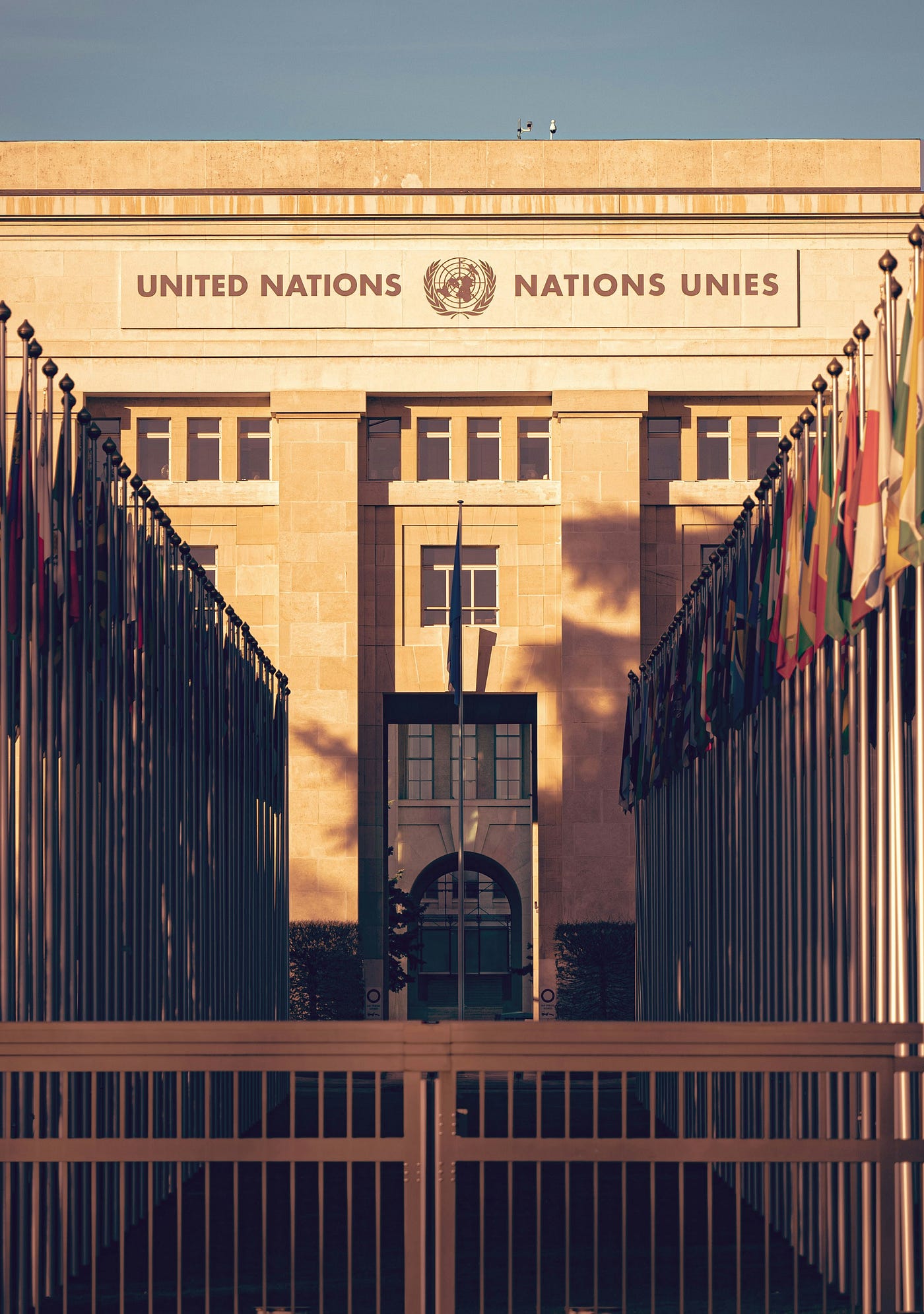
What did the UN Commission of Inquiry find in March 2026 about Ukraine, Russia, deported children, and war crimes?
In March 2026, the UN Commission of Inquiry on Ukraine updated findings on overbroad collaboration laws in Ukraine, mobilisation-related abuses, Russia’s deportation and transfer of Ukrainian children, fabricated trials, and coercive military practices. It found war crimes and crimes against humanity, while noting Ukraine’s cooperation and Russia’s non-cooperation throughout investigations.
The UN Commission of Inquiry on Ukraine provided updated findings in March 2026. The major themes were:
- abuse of courts and legal process;
- coercive military practices;
- differing levels of state cooperation;
- the treatment of Ukrainian children;
- torture and ill-treatment; and,
- crimes against humanity and war crimes.
For Ukraine, the Commission examined the Ukrainian Supreme Court rulings on “collaborative activities.” It determined the definition of “collaborative activities” remained overly broad and created legal uncertainty. The breadth risked the criminalization of conduct related to essential civilian services in the occupied territories. There were abuses linked to mobilization practices too.
The Commission identified irregular administrative detention, rushed medical examinations, lack of access to legal counsel, and reported violence against conscientious objectors. Ukraine cooperated with the Commission, and the Commission said it appreciated that cooperation. Important to note, the Commission is an independent international body guided by principles of independence, impartiality, objectivity, and integrity, with a specifically defined mandate.
For Russia, the most serious findings concerned the treatment of Ukrainian children. The Commission independently verified cases involving 1,205 children. It rejected the “evacuation” justification. Most deportations and transfers investigated were not temporary. Four years on, 80 per cent of the documented children had not yet been returned.
The Commission concluded the Russian Federation committed crimes against humanity of deportation, enforced disappearance, and forcible transfer, and the war crimes of deportation and forcible transfer, as well as the war crime of unjustifiable delay in repatriation.
In addition, the Commission found abuses in court proceedings in the Russian Federation and Russian-occupied areas of Ukraine against Ukrainian civilians and prisoners of war. Features of the proceedings included denial of fair-trial guarantees, fabricated evidence, predetermined verdicts, and torture/ill-treatment. Those judicial abuses were found to constitute grave breaches of international humanitarian law, amounting to war crimes.
On recruitment into the Russian armed forces, the Commission found the use of deception and coercion of foreign nationals from 17 countries. In addition, 85 soldiers who had served in the Russian armed forces and later deserted were interviewed. They described beatings, detention in pits, mock executions, and orders to shoot retreating soldiers. The Commission concluded these accounts demonstrated a total disregard for human life and dignity. The Russian Federation failed to cooperate with the Commission, leaving 39 written requests unanswered.
Last updated May 3, 2025. These terms govern all In-Sight Publishing content—past, present, and future—and supersede any prior notices. In-Sight Publishing by Scott Douglas Jacobsen is licensed under a Creative Commons BY‑NC‑ND 4.0; © In-Sight Publishing by Scott Douglas Jacobsen 2012–Present. All trademarks, performances, databases & branding are owned by their rights holders; no use without permission. Unauthorized copying, modification, framing or public communication is prohibited. External links are not endorsed. Cookies & tracking require consent, and data processing complies with PIPEDA & GDPR; no data from children < 13 (COPPA). Content meets WCAG 2.1 AA under the Accessible Canada Act & is preserved in open archival formats with backups. Excerpts & links require full credit & hyperlink; limited quoting under fair-dealing & fair-use. All content is informational; no liability for errors or omissions: Feedback welcome, and verified errors corrected promptly. For permissions or DMCA notices, email: scott.jacobsen2025@gmail.com. Site use is governed by BC laws; content is “as‑is,” liability limited, users indemnify us; moral, performers’ & database sui generis rights reserved.


