Dear Readers,
I have the summer issue, Women in Academia (Part One), in the archives for reading in PDF format.
All the best,
Scott
Share this:

Interviewer: Scott Douglas Jacobsen
Numbering: Issue 2.A, Idea: Women in Academia (Part One)
Place of Publication: Langley, British Columbia, Canada
Title: In-Sight: Independent Interview-Based Undergraduate Journal
Web Domain: http://www.in-sightjournal.com
Individual Publication Date: August 3, 2013
Issue Publication Date: September 1, 2013
Name of Publisher: In-Sight Publishing
Frequency: Three Times Per Year
Words: 1,881
ISSN 2369-6885

1. What positions have you held? What positions do you currently hold?
Currently, I am the head of the psychology department at University of the Fraser Valley (UFV). For many years, I was the chair of the academic appeals process and also for a few years the manager of the online campus. In academe, I have been a faculty member, a sessional instructor, a graduate student, and an undergraduate student.
2. How was your youth? How did you come to this point in your academics?
That’s a hard question to answer. My ‘youth’ was quite varied, good and bad, often weird and woolly….certainly I had no plan to become a professor!
When I was in high school, I skipped out as much as I could. My parents didn’t think much of the school system, so they were always willing to write me whatever notes were required. In my immediate family, reading and thinking were important but going to school or following the ‘rules’ were not. However, my father always said I should go to university. His description of what university would be like was quite romantic as it turned out. Few people in my family went to university or college, so my aunties looked at me with great suspicion when I did finally go.
After high school, I got a job in a bank. All the staff were women, many who had been there for 30 years or more, but all the managers were men (it was the ‘80s). After I’d worked for a few months, I looked around and thought, “I can’t do this for thirty years, it’ll kill me.” I quit my job, travelled a bit, and eventually applied to the University of Victoria. Again, no real plan, but I had some friends there and I was too timid to go where I knew nobody. I’d moved many times before that, so when I got to Victoria, I looked around and thought, “Yea, I could stay here for a year.”
I decided to take a Computer Science major. It was quite different then compared to computers today. There were no ‘personal’ computers, we all worked on individual terminals that accessed a very large computer called the ‘mainframe’. We learned programming languages like Pascal, and usually first year students got the midnight shift down in the basement. I lasted about a year and a half. I used to ask a lot of questions in class, for example, ‘what are the programs for?’, ‘how will people be able to use them’, ‘can we make computers easier to use?’ The instructors and my fellow students came to hate my interruptions and questions, and I felt like the target of the Orwellian ‘2 minute hate’. Of course, I wasn’t too fond of those folks either, so it seemed like a good idea to move on.
Now I had ruled out banking, waitressing, and computer science. I was taking a number of other courses, so I decided to interview my professors about their professions. Dr. Frank Spellacy, who taught brain and behaviour, was helpful and interesting (and he and his wife took me to lunch). The study of the brain fascinated me, so I decided to try psychology. I was behind a bit, so I had to take a lot of psychology courses at once (I never did take introductory psychology). I caught up and entered the honours program, mostly because the honours seminar was led one of my favourite professors, Dr. Gordon Hobson. In turn, he found me an excellent advisor, Dr. Otfried Spreen, in clinical neuropsychology. I had no idea how lucky I was.
A few months into my honours, Dr. Hobson asked me, “You’re applying to grad school, right?” “Sure I am”, I replied, and then had to ask around to find out what ‘grad school’ was. I was convinced none of the schools would take me, so I applied to quite a few across Canada. Pretty much all of them accepted me, I got an NSERC scholarship, and decided on UWO, again with no well thought out planning and because of some bad advice!
Frankly, I was just doing what was interesting at the time and taking opportunities as they arose. I was certainly a poor student in my first two years of university, skipping any classes I found boring and spending most of my evenings dancing at blues clubs. I recognize papers written the day before the due date easily, as I wrote many papers that way myself. I have a firsthand appreciation for the possibility that students who are doing badly in classes simply have more interesting things they prefer to do and, most importantly, that it could change. Over the years, I’ve seen more than one student who has done just that, turned things around to find something they love, and watching those students graduate and go on is particularly thrilling to me.
3. How did you gain interest in psychology? Where did you acquire your education?
My father (influenced by Hemingway and Postman) used to encourage my brother and me to develop a ‘Bullshit Detector’. Psychology is built around exactly that kind of tool, which I realized once I started taking research methods and statistics courses. I felt right at home.
4. What kinds of research have you conducted up to the present?
My main graduate research at UWO was studying learning and plasticity in rats with a model not used much now called ‘kindling’ (it is still used a bit as a model for epilepsy). I also did some research on anti-epileptic drugs that block excitatory amino acid receptors and also on neural grafting. At Mount Allison University, I worked on studying memory using a water maze.
My animal research ended when I moved back to B.C. to work at the University College of the Fraser Valley in 1993. The focus at UCFV (now UFV) was on teaching, so I had little time to do research.
A few years ago I took a short sabbatical to work on changing first year psychology instruction to increase success in some groups of first year students such as mature students, students from applied areas such as social work, and First Nations students. I used what I learned in developing my own teaching of introductory psychology and in creating a peer tutor program.
My current interests are in the area of the psychology of music, specifically health related outcomes for hand drumming and singing. However, I have not made much progress since I became department head and further work will likely have to wait until I am finished!
5. If you currently conduct research, what form does it take?
Not much right now, being head of psychology uses all my available neurons.
6. Since you began studying psychology, what do you consider the controversial topics? How do you examine the controversial topics?
What do you mean by controversial?…
7. …Self-Defined controversy in your field…
Psychology is by its nature controversial.
Any subfield of psychology challenges what ‘everybody knows’, from research methods (“Correlation is not causation”) to memory to development to social psychology and so on.
If you learn to think using the tools of psychology, you will be often on the other side of marketing in all its forms, including governments, newspapers, parents, teachers…
There are many classic studies, which we go through in introductory psychology, that illustrate this point over and over.
8. …In hindsight, do they seem controversial?
My guess is that at the time, they knew they were doing something controversial, challenging ‘what everybody knows’.
9. How would you describe your philosophical frameworks inside and outside of Psychology?
Well, that ‘Bullshit Detector’ has come in handy.
I wouldn’t say I have a specific philosophical framework anymore, but I do believe in personal responsibility and in fair processes.
10. How have your philosophical frameworks evolved?
My parents raised us as Objectivists, which is based on the writing of Ayn Rand. I sometimes call myself a ‘Recovered Objectivist’. If you look at the basic principles of reasoning in Objectivism, critical thinking and personal responsibility stand out, and I have retained those. I also retain a preference for minimal government. However, I do also believe in collective actions, like taxes to pay for education and health care, which would have me thrown out of the Objectivist meeting. If they had meetings…
Until I moved to the Fraser Valley, I didn’t realize how significant being raised without religion was to my philosophy and reasoning abilities. Now that I live amongst many folks raised with religious points of view, it is strange to have to declare myself an ‘atheist’, as other places I lived that was the dominant perspective.
11. If you had unlimited funding and unrestricted freedom, what would you enjoy researching?
I don’t want unrestricted freedom to research any question, it’s a nasty idea! Ethics boards sometimes seem a bit overly restrictive but as acting ethically isn’t intuitive, you need others to look at your ideas and question your methods. Ethics are foundational to psychology research.
12. For students looking for fame, fortune, and/or utility (personal and/or social), what advice do you have for undergraduate and graduate students in Psychology?
Tolerate ambiguity.
13. Whom do you consider your biggest influences? Could you recommend any seminal or important books/articles by them?
In my early years, I was influenced by Ayn Rand, Isaac Asimov and Oscar Wilde. At grad school, I was influenced by Doreen Kimura. Her approach to thinking about function and brain structures was exceptionally instructive to me. She made a number of important observations about the quality of the data and what could be drawn from it given the limitations of the methodology of that time.
Case Vanderwolf was also a greatly influential professor in grad school. If you asked Case a question about neurophysiology or brain and behaviour, his answer was usually, “Hmmm, I don’t know.” Then he’d pause, and then tell you all the relevant research that had been done, and how it was done, and he’d demonstrate how you went about thinking about the question, and what kind of questions still needed to be asked. After this, he’d still conclude, “I don’t know”.
I recommend to all my assessment students that they read Paul Meehl’s ‘Why I don’t attend case conferences’. It’s fairly old and somewhat acerbic, but it’s a good example that you can be trained in psychology and cognitive biases, but still fail to employ them. It’s a cautionary tale, useful reading.
I also recommend Janet Shibley Hyde’s ‘The Gender Similarities Hypotheses’ and Deborah Cameron’s ‘The Myth of Mars and Venus’, both are excellent demonstrations of critical thinking.
License
 In-sight by Scott Douglas Jacobsen is licensed under a Creative Commons Attribution-NonCommercial-NoDerivs 3.0 Unported License.
Copyright
© Scott Douglas Jacobsen and In-sight, 2012-2013. Unauthorized use and/or duplication of this material without express and written permission from this blog’s author and/or owner is strictly prohibited. Excerpts and links may be used, provided that full and clear credit is given to Scott Douglas Jacobsen and In-sight with appropriate and specific direction to the original content.
Share this:

Interviewer: Scott Douglas Jacobsen
Numbering: Issue 2.A, Idea: Women in Academia (Part One)
Place of Publication: Langley, British Columbia, Canada
Title: In-Sight: Independent Interview-Based Undergraduate Journal
Web Domain: http://www.in-sightjournal.com
Individual Publication Date: June 28, 2013
Issue Publication Date: September 1, 2013
Name of Publisher: In-Sight Publishing
Frequency: Three Times Per Year
Words: 3,004
ISSN 2369-6885

1. What is your current position at the University of Cambridge?
Professor of Experimental Physics. I am also the University’s Gender Equality Champion and a Deputy Vice Chancellor (mainly an honorary title which permits me to confer degrees)
2. Where did you grow up? What was youth like for you? What effect do you feel this had on your career path?
I was born in London. Neither of my parents had been to University, although my Grandfather had, and there was always an expectation that I would. I attended a single sex school which, probably unusually for a girls’ school of its day, had an excellent Physics teacher, something I am sure was very significant.
I had an older sister and we all lived with my maternal grandparents. My parents’ marriage broke up when I was 10 so I lived in a household of 4 women and 1 man (my grandfather). I think the most significant thing was the fact that I was always surrounded by books and with this expectation that if I wanted to go to university that I should. It was just taken for granted, particularly since I did well at school.
I was jumped up a year at school. My birthday is in May and during my secondary schooling (which is normally from 11-18) I was nearly 2 years younger than the oldest child in my year. I am sure this was significant as I didn’t fit in well with my ‘contemporaries’, probably because during adolescent such a big age gap can make a big difference. Probably this encouraged me to keep my head down and work hard, because I wasn’t going to fit in anyhow.
No one in my family were particularly interested in science, nor was it a subject I remember being discussed in a serious way. I did get taken to the Science Museum (in London) but I didn’t really connect that with my lessons at school or with any idea of a future career.
The hobbies I had were ornithology – which perhaps reflects an interest in ‘systematising’ but again, it was just what I did for fun and I didn’t connect it with anything I did at school – and music. There was a lot of music during my growing-up and as a teenager I was very involved both with singing in choirs and playing in orchestras. I played the viola and, since not many children do play this instrument, I had lots of opportunities to play with seriously musical peers. It was a major source of relaxation and also a way for me to socialise with other girls – both older and younger – given the trouble I had with fitting in with my ordinary classmates.
2. Where did you acquire your education? How did you come to the University of Cambridge?
My mother says I declared at 7 I was going to go to Cambridge University to read maths. This is probably an apocryphal story, but I think somehow I always fixed on the idea of going to Cambridge. It was where my grandfather had been after all (he read Classics there before the 1st World War), so there must have been some sense of connection. I first had Physics lessons when about 13 and seem to have known almost at once that this was what I wanted to study.
Cambridge University back then was overwhelmingly male, as none of the colleges was yet mixed. I am not sure I really thought very hard about that. One had to do a special entrance exam. I was very badly prepared for this as my school had been participating in a pilot course of study in Physics, with only about 7 schools pursuing this exam at A level. So I knew little of what others knew but lots of other stuff, particularly ‘modern’ physics. As well as an entrance exam for Cambridge, the colleges interviewed prospective students. Probably then I came across as much stronger for exactly the same reasons: I knew stuff they weren’t expecting interviewees to know. For whatever reason I was accepted by 2 colleges (there were only 3 that admitted women), and I chose to go to Girton, the college I had always had set my mind on.
3. Was Physics always ‘in the cards’ for you? Were you mathematically precocious in childhood and adolescence?
I always was highly competent at maths, but I don’t think I was precocious in the sense that I didn’t pursue it beyond the classroom in any way that I remember. I just got on with it. But physics was just something that clicked with me. I did then start reading around the subject, certainly by the time I was 16 or so, but I had no clear idea of what it might mean as the start of a career. In my day, and in my school, I got no careers advice and I simply didn’t think seriously about life beyond university. All I knew was that I wanted to study physics at university; it just seemed the logical thing to do.
4. Did you have a childhood hero?
No, I don’t think I thought in those terms at all. I had neither heroes nor heroines. Nor did I really think of gender as an issue either. I am sure that was in large part because I just didn’t really know any teenage boys – other than beyond the orchestra I played in and we simply got on with our music. When I met a bunch just before I started at university who asked me what I was going to study, their reaction for the first time told me it was odd for a girl to want to do physics. I don’t think, having been at an all-girls school, that had really crossed my mind before. There was no one to discourage me.
5. What was your original dream? If it changed, how did it change?
I also didn’t have a dream. I didn’t look ahead. If I thought about the future I just assumed that I would marry, perhaps a few years after college, and have a family. There was no expectation of a career as such. Having a career in academia was just something that happened; I never looked more than a year or two ahead. I was probably well into my 20s before I even started thinking about this. By then I was married (I got married to a mathematician during my PhD – and we’re still married!) and the complications of trying to sort out two lives to the satisfaction of both reared their heads. It is never easy.
6. What have been your major areas of research?
My field of research has constantly evolved. That is how I like it. I started off studying metals, using electron microscopy to study their internal structure. The technique of electron microscopy has remained a constant during my research career. After my first, and very unsuccessful postdoc in the USA (Cornell University) I switched to apply electron microscopy to plastics. It wasn’t till that point, after 5 years of research, that I really fell in love with it. I had an incredibly productive 2 further years in the USA and then returned to Cambridge. Over the years I have moved from the study of largely synthetic polymers to naturally occurring biopolymers including those relevant to food. I researched the internal structure of starch granules for many years, during that time building up collaborations both with industry and with plant geneticists. Then I moved on to study protein aggregation, a subject relevant both to food and to those studying many neurodegenerative diseases. I have continued to do electron microscopy, developing a technique which allows one to study samples without the dehydration usually necessary; this approach is known as environmental scanning electron microscopy and we did a lot of development work on it, analysing how to interpret images and seeing just how far we could push the technique. We also applied it to a wide variety of biological samples from bacteria to plants. This move into biological problems was also reflected in a modest research activity in cellular biophysics.
Overall the sorts of physics I do can be summed up as soft matter physics moving into biological physics. When I started working on starch, physicists doing this sort of work were regarded as very unusual. Now it is much more main-stream physics.
7. What is your most recent research?
As I say, I have moved systematically towards biological problems. The work we do on protein aggregation has implications for various neurodegenerative diseases, although I am always very careful to spell out we won’t be curing any diseases ourselves, we simply hope to provide some basic underpinning knowledge. But, as a physicist, I try to look for generalities of behaviour, particularly since we are interested in what happens when biological control is lost. In our case we typically use heat to study the response when proteins are denatured, which of course is totally non-physiological, but in the diseases of old age proteins also lose their native structures due to loss of biological control, so the parallels are fairly close.
8. If you had unlimited funding and unrestricted freedom, what research would you conduct?
I would like to be able to get much closer to biology and work in truly interdisciplinary teams on the subjects of neurodegenerative diseases such as Alzheimer’s and Parkinson’s Diseases.
9. There exist many cases of silence, even denigration, about the lack of women in science, especially young women. In fact, a case of speculation comes to mind on the part of an ex-President of Harvard – no less, Dr. Larry Summers, about innate average differences between men and women potentially explaining the difference of the sexes’ scientific prominence. To me, it seems silence on debating these issues exacerbates the problem. Given your involvement in advocacy for women in science, does silence exacerbate the problem? What things need doing? What message backed by data needs more advertising?
In the UK at least I don’t think silence is the issue any longer. I think many leaders appreciate the problems and are actively trying to overcome the under-representation and the lack of voice some women feel. Within UK universities we have a benchmarking scheme, the Athena Swan awards, for STEM departments which are very effective at making universities and individual departments look at both their statistics and practices, and come up with appropriate action plans. Indeed, some funders make such awards a condition. This has really changed the climate. However, there is no doubt there are still pockets of resistance, the unconsciously held views that all of us hold which stereotype people (and not just women in science) in all kinds of ways without stepping back and being objective.
We do need statistics, but we also need to recognize how much social conditioning affects every child from birth. I get fed up with being told that the statistics ‘prove’ girls don’t want to do physics, when we cannot tell much more than that boys and girls are encouraged to do different things as children, are treated differently and cultural messages are different.
10. In line with the previous question, what can people in society, without the influence of the Academy, do to help bring a new generation of women into science?
Avoid stereotyping any individual, boy or girl. Make sure that they appreciate any field is wide open to them. Encourage girls to explore their world – be it putting new washers into taps or climbing trees. Let them be brave and not be put off by being ‘nice’ or pretty. Give them solid aspirations and not just aiming at domestic virtues.
11. As an addendum to the previous two questions, can you describe the Matilda Effect to our readers?
The Matilda effect describes how women’s contributions to research are systematically undervalued and under-described. One specific example would correspond to the role Rosalind Franklin played in the discovery of the double helical structure of DNA, with Jim Watson never giving her contributions the credit they deserved. More generally, women working as part of a team may find that their names aren’t mentioned and their deeds can be attributed to others. Even when women are quite senior and leading teams you find comments being made implying such collaboration is a weakness not a strength, as it would be for a man.
12. How would you describe your philosophical frameworks inside and outside of Experimental Physics? How have your philosophical frameworks evolved?
I don’t think in these terms! What I do know is that I enjoy constantly exploring new areas, evolving from one area of research to another. A lot of the work I do is interdisciplinary. To succeed at such work one needs to be prepared to put the time into learning the language of someone else’s discipline, at least sufficiently far that you can explore the shared problem together. This can be challenging, but ultimately it is very rewarding. I am not the kind or person who likes to know everything about a small area, I prefer to take a more broad brush approach, look for connections between different areas and forge new connections. This means all the work I’ve done forms a sort of connected web, even though there may appear to be many different threads.
13. For students looking for fame, fortune, and/or utility (personal and/or social), what advice do you have for undergraduate and graduate students in Experimental Physics?
Work out what it is that you enjoy about physics. Is it simply the ability to problem solve, or getting stuck into some experimental technique or another? What motivates you – curiosity, solving some specific problem or contributing to a team effort? There can be so many reasons for pursuing physics and you have to work out what it is that you particularly enjoy. If you are seeking a fortune, then you will probably either want to do something more entrepreneurial or quantitative (eg in the financial sector), but if it is simply that you are curiosity-driven, there are many directions to head in. Physics is often described as a ‘difficult’ subject. If you are struggling it may simply be that your motivation isn’t high enough and you should choose some other path that excites you more.
14. Many assume a need for a genius level-intellect or above-average levels of mathematical facility (even in childhood) to think of a career in science. How much of this seems true? How much of this assumption seems like a myth?
You undoubtedly need to be competent at maths, but genius level is an overstatement for many parts of the field. I think it is probably more the case you need to be very logical in how you approach problems, able to think things through by breaking down a tough challenge into its component parts. You also need to be able to think in abstract terms. Physics isn’t just a case of memory work; you need to be able to understand underlying mechanisms and be able to see how to apply the mathematics and models you have learned in one situation to another, perhaps less familiar one.
15. Whom do you consider your biggest influences? Could you recommend any seminal or important books/articles by them?
Having a teacher at my school who was on top of the subject and able to answer my questions without anxiety was a great start. At university, having a ‘director of studies’ who was very supportive when I was struggling and encouraged me not to give up was also crucial. After I’d moved into research my supervisor at Cornell (Professor Ed Kramer, now of UCSB) and my head of department after I’d returned to Cambridge (Sir Sam Edwards) were also great influences on me, inspirational in the way they tackled their own research. They believed in me, believed I could follow a research career and gave me many opportunities early on that enabled me to lay down a firm foundation for my subsequent research. Finally the Nobel Prize winner Pierre-Gilles de Gennes, who was a friend of Sir Sam’s and whom I met fairly often in Cambridge, also was immensely supportive and inspirational. De Gennes wrote a number of books, of which ‘Scaling Concepts in Polymer Physics’ was probably the most important for me, even though at the time I found it very hard to understand!
16. What do you consider the most important point(s) about your line of research and work?
My research has moved from being fairly traditional for a physicist, working on conventional synthetic polymers, to working on natural materials such as starch and proteins. Initially some of my colleagues were very critical of me working on such materials, thinking they were far too messily complex to be able to do physics on them. But I persisted, applying standard physical tools and approaches to them. Ultimately I think others understood better that this was perfectly good physics. However, now much of my time is focused on issues around gender and I read a lot of sociology papers. This work is obviously not research-based. Some of it is experiential and it seems that, because I have a successful academic pedigree, people are more willing to listen to what I have to say. There are still many issues for women in science, so I am keen to use my voice to encourage others to think about their local practices and possibly prejudices.
License
In-sight by Scott Douglas Jacobsen is licensed under a Creative Commons Attribution-NonCommercial-NoDerivs 3.0 Unported License.
Copyright
© Scott Douglas Jacobsen and In-sight, 2012-2013. Unauthorized use and/or duplication of this material without express and written permission from this blog’s author and/or owner is strictly prohibited. Excerpts and links may be used, provided that full and clear credit is given to Scott Douglas Jacobsen and In-sight with appropriate and specific direction to the original content.
Share this:

Interviewer: Scott Douglas Jacobsen
Numbering: Issue 2.A, Idea: Women in Academia (Part One)
Place of Publication: Langley, British Columbia, Canada
Title: In-Sight: Independent Interview-Based Undergraduate Journal
Web Domain: http://www.in-sightjournal.com
Individual Publication Date: June 18, 2013
Issue Publication Date: September 1, 2013
Name of Publisher: In-Sight Publishing
Frequency: Three Times Per Year
Words: 3,865
ISSN 2369-6885

1. What is your current position?
My position is Professor of Medicine and Director of Myelodysplastic Syndrome (MDS) Center at Columbia University.
2. What positions have you held in your academic career?
I earned the appointment of Full Professor at Rush University in Chicago (Age 39). Subsequently, the University of Chicago appointed me the Charles Arthur Weaver Professor of Cancer Research. The Department of Medicine created a Division of Myeloid Diseases, where I was first Director. I moved in 2004 to the University of Massachusetts as Director of Hematology and Oncology. They gave me the Gladys Smith Martin Chair in Oncology. I have been in New York since 2007. Presently, I direct the MDS Center at Columbia University.
3. Where did you grow up? How do you think this influenced your career direction?
I grew up in Pakistan. This greatly influenced my career and life. Post-graduate work in Science was non-existent. I entered medical school as a tangential way of becoming involved in Molecular Biology. However, once I began seeing patients, I knew that I would never give that up. This led me to the idea of doing translational research. When I felt ready to graduate medical school, it had become abundantly clear to me, even after those three years of clinical work, that if I stayed back in Pakistan, I would not be practicing translational research, but would have no choice other than to become an activist. The conditions under which an impoverished population faces disease are such that one has few other options. I felt that way. Here, I came to understand my primary duty – sincerity to my passion: Science. In a way, I took to heart the advice of Polonius to Laertes:
“This above all: to thine own self be true,
And it must follow, as the night the day,
Thou canst not then be false to any man.
(Shakespeare, HAMLET, Act I, Scene III).
4. Where did you acquire your education?
Pakistan.
5. What was your original dream?
I became obsessed with ants at a very young age, maybe 4 years old. I used to lie for hours and watch them zip in and out of their little holes in long hot summer afternoons in Karachi and imagine their lives. I constructed imaginary homes for them and social lives complete with romance and all. As I grew and read about biology, I obsessed over Darwin and Freud. In fact, I obtained the first position in my pre-medical examination by scoring high during the viva part of the test, when I engaged the external examiners in a heated debate over Darwinian versus Lamarckian theories of evolution and showing why I was a die hard Darwinian at the ripe old age of 16. If I had grown up in the West, I feel confident I would be a scientist, and not a physician, but I had no way of following my dreams there. Medical School was the only option to study Biology. So I went to Medical School.
6. What have been your major areas of research?
I have focused extremely on studying the biology and pathology of myeloid malignancies since the start of my career, even before I started my Residency. This happened because I had come to the US soon after graduation from Medical School and had six months before the start of my Fellowship. I started working at Roswell Park Cancer Institute (RCPI) in Buffalo New York, where I started working with Acute Myeloid Leukemia patients. On completion of my Residency, I returned to RPCI for my Fellowship and stayed on as a faculty member for another 6 years. During this period, I had an experience with a patient who had acute myeloid leukemia (AML) which had evolved from a prior MDS or a pre-leukemia. This made me interested in MDS. As a Fellow and young Faculty member, I defined the Cell Cycle Kinetics of Myeloid Leukemia cells in vivo in both MDS and AML by developing a novel technique of studying cellular proliferation directly in patients. These studies led to a startling revelation that the low blood counts in MDS patients were not because of bone marrow failure. Rather paradoxically, the marrow was in a hyper-proliferative state. This led to the logical examination of rate of cell death and we were able to resolve the paradox by showing that the majority of hematopoietic cells in the marrow were undergoing a suicidal self-destruction by apoptosis. Further, this cell death appeared mediated by pro-inflammatory cytokines, especially tumor necrosis factor (TNF). Next, we treated MDS patients with the anti-TNF drug thalidomide, which produced complete responses in 20% patients. Thus, over a course of 10 years, we were able to develop biologic insights into the disease that translated into a novel treatment strategy.
7. What is your most recent research?
I remain completely focused on understanding the Etiology and Biology of MDS and now use the latest genomic technology to interrogate the pathology of these diseases. With the enabling technology, this whole field has become extremely productive and exciting. We are using exome sequencing, RNA Sequence and global methylation studies to carefully study large numbers of patients to identify new drug targets in MDS cells, and hopefully develop novel non-toxic therapies for these malignant diseases of the elderly.
8. If you had unlimited funding and unrestricted freedom, what research would you conduct?
My commitment is to therapy driven research. How can basic molecular research improve the outcome for my patients? I feel strongly that many effective drugs already exist to treat common cancers, but we do not know how to use them intelligently. Instead of tailoring therapy for individual patients, we blindly treat many with the same drug with the result that 20-30% patients respond. Usually, we do not know the responders.
The goal would be to match the right drug to the right patient. A goal for which we need detailed cellular signalling and molecular information. Basic concept: it seems that while multiple signalling pathways that start proliferation in normal cells, cancer cells become addicted to a particular pathway. These pathways of addiction differ between patients. It is critical to identify which pathway a particular patient’s cells are addicted to and then devise ways of interrupting it. If I had unrestricted funding, I would start a dedicated program to perform detailed genomic and methylation studies described above on every patient at diagnosis. Hopefully, this would eventually help identify the vital signalling pathways in individual patients. With this information available, the elegant concept of Synthetic Lethality can be applied where drugs or natural compounds are identified that can interrupt the particular pathway to which the cell is addicted and cause it to stop proliferating. So my dream research revolves around individualized targeted translational research. I would like to give one example here. In a recent patient, we identified a mutation that leads to over activity of the b-catenin pathway of proliferation. I was planning to treat the patient with a monoclonal antibody against TGFb, which is in trial at the MDS Center. However, it turns out that one of the checks on the b-catenin pathway is TGFb. In other words, if I had not performed whole exome sequencing on the genome, I would have treated the patient with an agent that would likely have worsened the disease by allowing the b-catenin to run amok with no checks at all. This information alone, which is the direct result of using genomics is probably life saving for the patient. In addition, we found that one possible way of interrupting the b-catenin may come from using small molecules that interrupt this pathway. Several of them being in trials in humans already, and also that Vitamin A (all trans-retinoic acid or ATRA) could do the same. In short, we saved the patient from getting a potentially harmful agent. Additionally, we may have found a perfect treatment for individualized therapy, which is a vitamin! This is my dream research if I have all the resources at my disposal.
As a second dream project requiring unlimited resources, I want to describe the Virome or viral make up of every MDS patient. The goal is to identify all endogenous and exogenous viruses that have become part of each patient’s genome and see whether any of these could have the label of causative. After all, cats regularly get MDS. In their case, the disease is because of the Feline Leukemia Virus. Practically every cat is infected with this virus, but only a handful get MDS. There must be
other co-factors involved in MDS causation. Defining the Virome would help all of this research.
9. What is your philosophical foundation? How did it change over time?
Humanism dictates the foundation of my philosophy. However, the practice and ultimate goals have undergone subtle changes over time. In my formative years, I felt more interest in dedicating myself to grander themes. For example, believing that the thinking and work of a few can change the lives of millions (penicillin is a prime example), I became consumed with a desire to find the cause and cure of cancer. Whether I would ultimately achieve it or not, at least I was ready to dedicate my life to the pursuit of this goal. With age, and one hopes, some level of maturity, the issues for me have transformed to more immediate and individual goals. Human conduct is connected by a series of incidents where one act is the result of another. This necessitated a philosophy that requires a dynamic accounting of one’s knowledge, desires, and deeds, and then to harness these in the service of humanity with humility and forbearance. In other words, instead of the grand designs of curing cancer for many, each individual patient has acquired a special place in my life and caring for their every physical, emotional, and psychosocial need has become far more important. This by no means indicates that my obsession to find the cure for cancer has lessened, but it means my focus shifted from many to one, from cancer patients to Mrs. X, Y, or Z. It is similar to Salman Rushdie saying in Midnight’s Children: “To understand one human, one has to swallow the world.” For me, the road to understanding and treating the disease is through grasping individual variations at the clinical level and caring for each patient as a special case. Of all the philosophical ideologies, humanism remains mine, but with an altered vision over time about how best to conduct myself in a manner that would be faithful to its basic principles.
10. What do you consider the controversial topics in your field? How do you examine the controversial topics? What do some in opposition to you argue? How do you respond?
In the current atmosphere of cancer research, researchers study the evolution of a cancer cell rather than its etiology. In at least a subset of patients, I have hypothesized for about two decades that MDS may begin as a viral disease. I committed a form of professional suicide by presenting very early work related to this hypothesis at an MDS Foundation meeting held 19 years ago in Prague. They have not invited me back to that meeting in the last two decades. I learnt a tremendous amount from this experience. For one thing, I became more self-critical and stringent in examining our own data. For another, I started collaboration with the top virologists in the country (Drs. Robert Gallo, Don Ganem, and Joe DeRisi). Finally, it made me more committed to finding the proof for my hypothesis. In that, instead of throwing up my arms in frustration, by persisting in our search for a virus, we are taking full advantage of next generation sequencing to identify non-human elements in the human genome and re-construct viruses from these pieces. The technology has reached a point where we are poised to unravel possible new retroviral sequences from the RNA Sequence data we have generated. This will still be only half the battle. The important study will be to prove the etiologic relationship of the pathogen to the MDS under study. This is where all the controversy creeps in again because the pathogens are often known organisms and no one is ready to believe they are the agency for causing the malignancy. Remember that to prove that helicobacter pylori was the cause of gastric ulcers, Barry Marshall had to swallow the pathogen and nurse ulcers in his own stomach before anyone would believe him! (Eventually, he got the Nobel Prize). Now we know that this bacterium is the cause of many stomach cancers. So, in my opinion, the etiologic studies remain extremely controversial and many a career has been sacrificed on the altar of virologic basis of malignancy. I nearly lost my career, but have been able to survive – thankfully. I continue my studies in the area, always trying for that moment:
“Chance will strike a prepared mind”
11. What advice do you have for young MDs?
A life without work is a life without worth, and this work should be done for the good of mankind as well as for one’s own good. Last year, I was fortunate to win the Hope Award for Cancer Research and in my acceptance speech; I gave advice to my 18 year old daughter which I wish to quote for the young MDs:
“At the risk of being a spendthrift of my own celebrity, I want to address my teenage daughter who is a sophomore at Columbia University and like her parents, plans on a career in science and medicine. You might be wondering why I have to use the 3 minutes allotted to me to do so in this room…well, as Nora Ephron once said, “When your children are teenagers, it’s important to have a dog so that someone in the house is happy to see you.” Actually, it is for two reasons…first because she is a captive audience and second because of the presence of all of you in this room and what this moment means and how indelibly what I say today may be etched on her brain. Sheherzad, as a result of several decades of experience and observation, I have narrowed down the formula for personal success to three cardinal rules: find your passion, find a mentor and then give it everything you’ve got. However, there is a different kind of success, one which many in this room epitomize. As living beings, we know that death will come inevitably, but thankfully, we do not know the hour of our death. What goes through the hearts and minds of souls who have received a diagnosis of cancer and hear the footsteps of death approaching closer every day? Theirs are the heroic stories of hardiness, ingenuity and resourcefulness. Some of us have the privilege of witnessing on a daily basis, the remarkable dignity with which they face their ongoing ordeals. You have decided to join the ranks of these privileged caregivers. As a little girl from age 3 to 8 years, you have already witnessed your father go through a losing battle with cancer. When faced with such human suffering, your qualifications, your CV or your degrees do not help. What helps is your heart, your sensitivity to feel the pain of others. On this special day, realize that you are fortunate to be in a room full of such compassionate and deeply committed individuals, realize that you will not need magic or miracles to help your patients but you will need serious scientific research and deep sensitivity to their anguish and suffering. Today, I use the honour bestowed upon me through this award to urge you to pledge that even as you will strive for excellence and follow the three rules to guarantee success in your personal life, you will never forget the dues you owe to the patients you will be caring for very soon.”
12. Whom do you consider your biggest influences? Could you recommend any seminal or important books/articles by them?
As far as my personal life is concerned, I am a reader of classics where the themes are grand, the language is noble, and the message is startlingly fresh for all times. When my husband Harvey Preisler died after a five year long battle with cancer, the way I dealt with the loss was to read (and re-read in most cases) the 100 Great Books of the Western Literary Tradition starting with Euripides and Aeschylus and working my way to Rushdie and Morrison. In this, my biggest influences have been the great authors. I feel deeply moved by poetry. My favorite poets are Shakespeare, Dante, Milton and Ghalib. I come from an oral tradition and committing poetry to memory was a given for as long as I can remember. Currently, I am memorizing the entire 33rd canto from Dante’s Paradiso during my morning runs. I feel profoundly affected by the thinking of these poets and have translated and interpreted (with my co-author Sara Goodyear) Ghalib’s Urdu poetry for our English speakers in a book, Ghalib: Epistemologies of Elegance. Among the American writers, the books of fiction I admire most are Melville’s Moby Dick and Morrison’s Beloved. Among the Europeans, it would have to be Cervantes’s Don Quixote and Dostoyevsky’s The Brother Karamazov. Finally, in non-fiction, my two favorite books are both autobiographies called The Confessions written 1000 years apart by Augustine and by Rousseau.
As far as my professional life is concerned, the biggest influence comes from patients. In particular, I had an encounter starting me on the path to dedicate my life to MDS, when I was barely 30. Here is a short accounting of that episode:
I had just finished my Fellowship in Medical Oncology at Roswell Park Cancer Institute in Buffalo, New York. A beautiful, young 32 years old woman was admitted with a diagnosis of acute myeloid leukemia (AML). The story she gave was rather peculiar. She had become pregnant almost two years before this admission with twins. During the pregnancy, she developed a fetish to smell gasoline. Most days of those nine months, she would go to the corner gas station, buy a dime’s worth of gasoline and smell it all day. At the end of nine months, she delivered a healthy set of twin daughters, but six months later, she was found to have low blood counts. Over time, a diagnosis of MDS was made. This was probably in some part at least, related to the toxic exposure she had experienced from smelling gasoline. In any case, there was no treatment for MDS at the time, and she only received supportive care with blood transfusions. Six months later, the disease progressed to AML and that is when she came to see us at Roswell Park.
We gave her high dose induction chemotherapy, to which she responded well and after a rather stormy course, entered a complete remission six weeks later. How sweet it was to see her going home with her lovely daughters at the end of this therapy! We then gave her three courses of standard consolidation therapy. She did well. During these repeated hospitalizations, and interim outpatient clinic visits, we became very close to each other. During each encounter, we talked to our hearts’ content, and JC shared many of her personal anxieties with me. I learned to appreciate the challenges of a schizophrenic life torn between fighting a potentially lethal illness at the ripe age of 32 while pretending to be a normal mother to 3-year old girls. At times, it felt heart breaking. At other times, the sheer force of her courage and sublimity of human spirit was brought home with incredibly graphic detail.
Courage takes many forms. There is physical courage, there is moral courage. Then there is still a higher type of courage; the courage to brave pain, to live with it, to never let others know of it and to still find joy in life; to wake up in the morning with an enthusiasm for the day ahead.
After stopping the final round of chemotherapy, JC returned to her normal life. She got caught with the daily routine of raising 3-year old twin daughters. Unfortunately, after a year and a half of remission, her leukemia relapsed, and this time around, none of our therapeutic approaches seemed to make much of a difference to her resistant leukemia. She developed a fungal infection of the lungs too. We were not able to give her any chemotherapy for fear of making the fungus spread faster. At this time, she made a wish to be admitted to the Hospital for her terminal illness as she did not want her daughters to be frightened unnecessarily. With a heavy heart, I took her in. It was instructive and astonishing to watch her face almost certain death with such unparalleled grace and equanimity. I noticed on my daily rounds was that she would be writing furiously. Finally, I mustered enough courage to ask her one day, “JC, what are you writing?” The answer she gave me changed my life forever. She said, “I am writing letters that I want my twin daughters to open on their birthdays. I have reached their twelfth. Keep me alive till I reach their twenty-first”.
Alas, we could not keep her alive for the few days she had asked for. I went home that day. I told my husband that I should study MDSs because this stage precedes the development of acute leukemia in a number of patients. Maybe, I could have saved JC, if I had treated her at the MDS stage of her disease. My idea was that the molecular and genetic lesions in frankly leukemic cell are too complicated. Perhaps, it would be better to start studying the biology of these cells at an earlier stage of the disease, say as in JC’s case when it was still MDS. If we follow the course of the disease and study serial samples, it may become possible to identify the sequence of events that convert a normal cell into a leukemic one. Another advantage of studying MDS would be that if we could effectively treat the patient at this earlier stage of the disease, then the patient would never evolve into the potentially lethal acute leukemic phase. Finally, I felt that at the MDS stage, the drugs required for treatment may not be as toxic as those needed for the acute leukemia stage. For all these reasons, back in 1984, I decided to dedicate myself to the study and treatment of MDS along with my continuing research in acute leukemias.
License
In-sight by Scott Douglas Jacobsen is licensed under a Creative Commons Attribution-NonCommercial-NoDerivs 3.0 Unported License.
Copyright
© Scott Douglas Jacobsen and In-sight, 2012-2013. Unauthorized use and/or duplication of this material without express and written permission from this blog’s author and/or owner is strictly prohibited. Excerpts and links may be used, provided that full and clear credit is given to Scott Douglas Jacobsen and In-sight with appropriate and specific direction to the original content.
Share this:

Interviewer: Scott Douglas Jacobsen
Numbering: Issue 2.A, Idea: Women in Academia (Part One)
Place of Publication: Langley, British Columbia, Canada
Title: In-Sight: Independent Interview-Based Undergraduate Journal
Web Domain: http://www.in-sightjournal.com
Individual Publication Date: June 10, 2013
Issue Publication Date: September 1, 2013
Name of Publisher: In-Sight Publishing
Frequency: Three Times Per Year
Words: 3,177
ISSN 2369-6885

1. Where did you acquire your education?
At the undergraduate level, at the University of Calgary. At the graduate level, at the University of British Columbia, from where I earned a Masters and Ph.D. degree in Developmental Psychology.
2. What originally interested you in psychology? In particular, what interested you about human sexuality?
Well, I acquired my degree from the department of educational psychology and special education. I applied there because I particularly wanted to work with one of the faculty, Dr. Kim Schonert-Reichl. She was doing research in socio-emotional learning and competence, and how it relates to things like psychopathology and peer relationships. That’s what I was initially interested in. In particular, I wanted to study those variables as they related to mental illness and various childhood mental disorders, and I especially wanted to work with Kim. However, well into my academic career, after many years teaching adolescent development, it came to my attention that textbook coverage of sexual development was lacking in many respects, and outright wrong (I hypothesized), in others. So I developed my first lab at Kwantlen (tentatively called a “Development Lab”) and conducted two large scale studies on sexual development among adolescents. From there, I developed an entire human sexuality course and changed the focus of my research to human sexuality.
3. What topics have you researched in your career?
As a graduate student, I was in two different research labs at UBC. One was the Socioemotional Development Lab run by Kim. We investigated things like moral reasoning, moral development, peer relationships, bullying, conduct disorder, empathy, and pro-social moral reasoning.. My masters work came out of that lab. The other lab I worked in was the Self-Regulated Learning Lab, which involved work on the self-regulated learning components of learning disabilities among children and adults. Kids and adults with learning disabilities tend to lack self-regulated learning. They tend to be unaware of their own learning difficulties. We developed some self-regulated learning strategies to help them monitor their own cognition, and their own learning styles. I was in that lab, and we did a number of studies in the local schools.
For my Doctoral Dissertation, I looked at children’s conceptions of mental illness, ‘how do children come to understand mental illness in their peers?’ They do see it – unfortunately. How do they understand its cause, its prognosis, its severity? How do they perceive these individuals in terms of friendship quality? Whether they would be good friends or bad friends, whether they would like them or not. And since leaving graduate school, and coming to Kwantlen, I have done several studies; most recently on human sexuality among adolescents and emerging adults. Things like the developmental progression of sexual events in life of adolescents and emerging adults. What do they do in their developmental progression? In other words, what they do first, what do they do next, and so on, and whether these series of events predict their level of promiscuity and level of unusual sexual activities. I also did another study on the predictors – I do a lot of regression research – of infidelity as measured by the big five personality variables.
4. What areas are you currently researching?
I have a couple of things on the go. Right now in my human sexuality lab we are looking at changes to current trends in exotic dance. We have two directions in which we are going. If you look at the popular media, you have lately seen a lot of exotic dance put out there as normative behavior. A person can take pole dancing classes. A person can learn how to lap dance, provide a lap dance. Popular culture is trending towards putting lap dancing and pole dancing out as a good means for aerobic exercise. Some researchers have coined the term `stripper chic`, which is the new culture of empowerment for exotic dancers. Given that, we hypothesize that there has been a shift. Traditionally, exotic dance has been stigmatized in the literature. Much literature has come out of the field of sociology, which results in a tendency towards female liberalism. Female exotic dancers have been viewed largely as victims. But we have a different take on that. While admittedly many exotic dancers have been victimized, we are putting forth the argument that exotic dancing can actually be sexually liberating. That exotic dancers are earning legitimate capital gain. They are providing a legitimate service, and with the general trend toward what is called `stripper chic, it may be changing not just societal views, but the views among exotic dancers too. The view of their own stigma; that their personal identity is viewed more positively. Also, we are going to look at predictors (regression is my thing!) of things like psychopathology, self-esteem, and standard measures of restrictive or permissive sexuality. We hypothesize that there will be no difference between the average population – Kwantlen students – and exotic dancers.
The other study that we are looking at is the enmeshment of gender identity with sexual orientation. There is considerable anecdote, even research, that people confuse sexual orientation with gender identity. For instance, there is a perception that if someone is gay, this person must not be gender normed; the perception that gay men are feminine and that lesbian women are masculine. We plan to tease this enmeshment apart by having participants evaluate the degree to which they think a gay person would be suitable for a job description that is exceptionally masculine or feminine. Of course, we think gay men will be viewed as less competent and that lesbian women will be viewed as more competent in a traditionally masculine job and visa versa.
5. What epistemologies, methodologies, and tools do you use for your research?
Almost all of my research is cross-sectional. I have not conducted any longitudinal designs, as many trained in developmental psychology do. Most of my research is quasi-experimental in nature that does not involve any manipulation of variables for the most part, but only to examine variables as they exist in cross-sections of the population. Two exceptions to this general trend; the study recently done in my lab on the confounding of gender and sexual orientation, and work with my honours student on sexual paraphilia. These were both experimental designs.
6. With your expertise, what do you consider the most controversial findings in psychology? What do you consider some of the implications of these findings?
Well, I cannot speak to the whole field, of course. However, if I were to speak generally I would look back at my introductory psychology classes and cover a broad range of topics. Generally, I would say, probably, in issues to this day of consciousness. How to know what consciousness is? How to measure it? These are still problematic for psychologists and philosophers. I would say, in my particular field, some of the big issues are things like causes of sexual orientation, and at a deeper level whether we should be even asking such questions. Such questions are biased, as we do not ask about the causes of heterosexual orientation. Being straight is presumed status quo. I would say, in my field, this area counts as one of the biggest of controversy.
There is also controversy around certain sexual disorders. In particular, hyper-sexuality and gender identity disorder as disorder. Both of these are in considerable debate as to whether they should be included or not in the DSM. I do not believe that either of those should be included, personally, from the research that I have read. I think they simply represent variations in human sexuality, which is exceptionally varied. I have difficulty reconciling many sexual disorders in the DSM, because they suggest there is a normative amount of desire; that there is a normative amount and that anything more or less than that is pathological. I consider human behavior much too varied, especially human sexual behaviour, to say, “Oh, this is the appropriate amount of sex, and any more than this, or less than this, is pathological.” I have some difficulty with that.
In the developmental field, again there is controversy relating to the DSM, particularly, what constitutes developmental psychopathology? What is considered appropriate behavior for children? Determining whether a children’s behavior is pathological hinges on the adult’s perception of the behavior, and so it is the parents or teachers that go to a psychologist or physician and say, “My child is ill.” The child rarely goes into the doctor and says, “I think there’s something wrong with me.” You don’t see that, right? There are disorders in the DSM for children that are debatable. Take for example, a new one that was under consideration, I think it was to be called temper-tantrum reaction disorder or something like that, being proposed for the DSM-5. It is based on parent’s reports of children having unreasonable and excessive temper tantrums; in other words, more than the norm! I am not suggesting that there are no mental illnesses among kids. I simply mean that the DSM has expanded to the point where much “normative” behaviour is designated pathological if the parameters are not exactly right. I think those are the biggest debates in the field of psychology that are of most interest to me.
7. If you restructure, or at least reframe, the study of sexuality, how would you do it?
Well, that is a tough question. I think this links somewhat to my earlier comments about pathology. I am teaching human sexuality now. The last several chapters are about things wrong in sexuality. Commercial sex, prostitution, exotic dance are wrong. Selling sex is wrong. Then, there are the sections of sexual dysfunction, like hyper-sexuality and hypo-sexuality, and how these are ‘disorder’. And then next week it is paraphilia; exhibitionism, fetishism, BDSM, etc. And it is all so structured like, “Wow, look how wacky everyone is…” Even the chapter on gender identity that I did last week was all about why would people want to transition from male to female? What is with these people? Look how these people are different? The science is set around pointing out what is presumed to be “normal”. Some textbooks are grey because they call these topics ‘sexual variations,’ but the implication is the same; that there is something somewhat wrong about it all. I do not like that. I do not teach my class that way. I am very liberal in my class encourage tolerance of these differences. There is nothing wrong with these differences. So, I would re-structure our science in how we pathologize everything, make everything seem like it is abnormal. I do not like that. While I appreciate that there IS pathology, I often believe much of the stress and stigma associated with pathology comes from the fact that we pathologize!
8. If you had unlimited funding, what would you research?
Unlimited funding? If I had unlimited funding, I would get two different pieces of equipment. One, I would get a penile plethysmograph, which measures tumescence of the genital organs for males. Two, I would get a vaginal photoplethysmograph, which is a measure of vasocongestion. They are both measures of physiological arousal. In sexuality research, the field is burdened by the social-desirability bias. People are going to say what they believe other people want to hear. Take for example the standard question, this is just an example, but take the standard question, “How many sexual partners have you had?” Men tend to overestimate their number of sexual partners and women tend to underestimate their number of sexual partners. The truth is somewhere in between. It is hard to measure things like sexual arousal based on self-report. And that is all the kind of data that I have been primarily working with; questionnaires, self-reports, survey data. If I had unlimited funding, I would buy those pieces of equipment and hidden camera equipment to conduct observational research in labs.
If I had unlimited funds, I would also want an fMRI machine. It would be amazing to see what happens in the brain during orgasm. Is it diffuse or localized? I would put technology on my side if I had unlimited funding. Although I have asked the university for a vaginal photoplethysmograph and a penile plethysmograph, there is so far no such luck in getting this equipment.
9. When you entered academia, you likely had a certain philosophical framework for understanding the world. How have your philosophical views changed over time to the present?
Well, there is no single salient point, right. I mean, as a professor, the only thing I want my students to take away from my class is – if you forget everything about theories, facts, and numbers – the most important thing that every student should take away is how to think critically – how to be a critical consumer of information. That is the most relevant thing in psychology. The knowledge we have about the brain, its desire to explain cause and to do that via making connections that are probably superfluous, they are not real – and I want students to be critical consumers of information because psychological information is everywhere. It is in the news, on the radio, on the television. If you cannot be a critical consumer of information, you are in trouble. Not everyone has a critical thinking style, which is why I consider it extremely important for people to be critical consumers.
10. What advice would you give to undergraduate psychology students aiming for a work, career, and general interest in psychology?
Good grades are important, but they will only get you so far. If you want a career in psychology, you need more than an undergraduate degree. That is my advice. Grades will help you get into graduate school, absolutely. But, back to my regression models, there are many predictors of success in graduate school. Grades are only one path – grades will put you into the competitive pool of graduate school. Yet, you will have more chances of getting into graduate school with strong letters of reference. Grades will provide your letter writer with something solid to comment on about you. However, that is where it stops. My advice for people in psychology is A) apply to graduate school and B) get in good with faculty. Join a committee. Join their lab. Participate in research. Do something in some way to make yourself known to them because that is the only way they will be able to write you a letter of reference that says something besides, “This is a good student in class and they have a good grade point average.” That is all that most professors could say with only grades to recommend you. Letters of reference go a long, long way.
11. Who have been the biggest influences on you? What books or articles characterize their viewpoint well?
God, I do not even know. This is a tough one. I do not even know, honestly. I would put my supervisor Dr. Kim Schonert-Reichl right up there. She is exceptionally well-published and a fabulous speaker. And she knows how to conduct research. She really taught me how to be a researcher and a critical thinker. I remember once that she told me about a study she was designing. She had developed a program evaluation for a well-known socioemotional development program called “Roots of Empathy”. The initial results were promising. Data suggested that kids exposed to the program had less classroom problem behavior, participated less in bullying, and displayed greater social competence and prosocial behavior. I remember Kim saying to me one day, “Look, the data indicates that bullying is decreasing and social competence is increasing. This is fabulous, but so flawed.” I wasn’t sure what she meant. She said, “Well, the bullying behaviors are decreasing and the social competencies are increasing, but compared to what? How do we know whether the behavior of all kids becomes better as the year progresses?” Now, it seems obvious. There was no control group! No baseline! Kim incorporated a control group into her subsequent evaluations of the program. It seems so obvious, but you have to be a sharp researcher to be able to recognize that flaw. That is critical thinking. That is just one of the many intelligent things that Kim has said since I have known her. She is just a solid researcher and really knows her stuff. She is well published and just recently made full professor. I feel like she has influenced many of my ways of doing and thinking about things. Even outside of being her student, when I first designed the human sexuality course – and I had not been her student for years, though we speak regularly – I told her about it and she suggested that I include some statement in my course outline about the topics discussed in the course bringing up difficult issues for some people. She is always thinking ahead. She said, “You may want to tell people that if they have difficulty with the material than they should be referred to see someone.” She is very thoughtful. She is always trying to help me be more thoughtful that way too. Some of the fundamentals of conducting research with kids she has introduced to me. Some basic stuff – this is how to treat your participants. This is how you ensure your participants are going to be willing to participate in your study. That the participants understand anonymity and confidentiality, and that they understand their contribution and why it is important. That is what I do with all of my studies now. That is how I relay the importance of my studies to all of my participants. I think she has been profoundly impactful on the way I conduct research, as well as how I run my class. She always made her classes relevant; she always brought the material around, emphasized how should we be studying this particular topic. Why we should be studying this particular topic. She took it away from the theoretical and brought it down into the relevant, the practical applications. And thanks to her, I have always tried to be that way too. That is my style with my own students. Even the way I write articles have been influenced by her writing style, the way that I mark papers, the way I make suggestions in comments These are just some examples of someone who has been immensely influential.
License
In-sight by Scott Douglas Jacobsen is licensed under a Creative Commons Attribution-NonCommercial-NoDerivs 3.0 Unported License.
Copyright
© Scott Douglas Jacobsen and In-sight, 2012-2013. Unauthorized use and/or duplication of this material without express and written permission from this blog’s author and/or owner is strictly prohibited. Excerpts and links may be used, provided that full and clear credit is given to Scott Douglas Jacobsen and In-sight with appropriate and specific direction to the original content.
Share this:

Aislinn Hunter, PhD (In-Progress): Instructor of Creative Writing at Kwantlen Polytechnic University
Interviewer: Scott Douglas Jacobsen
Numbering: Issue 2.A, Idea: Women in Academia (Part One)
Place of Publication: Langley, British Columbia, Canada
Title: In-Sight: Independent Interview-Based Undergraduate Journal
Web Domain: http://www.in-sightjournal.com
Individual Publication Date: June 5, 2013
Issue Publication Date: September 1, 2013
Name of Publisher: In-Sight Publishing
Frequency: Three Times Per Year
Words: 1,766
ISSN 2369-6885
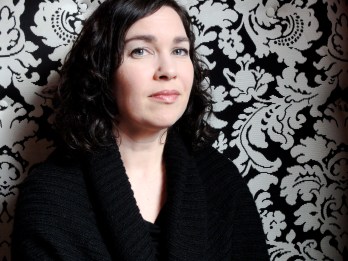
1. What positions have you held? What position do you currently hold?
I am currently a faculty member in the Creative Writing department at Kwantlen Polytechnic University, but I tend to teach part-time (in one semester) so that I can write more than four months a year. This has allowed me to take on writer-in-residence positions at other universities (Memorial University in St. John’s Newfoundland, Lancaster University in England, and Macquarie University in Australia) and to do freelance or contract work that interests me. It’s also afforded me time to undertake a PhD. Before coming to Kwantlen I taught creative writing as a sessional instructor at The University of Victoria and before that I worked on a contract-basis as a broadcaster and producer at CBC Radio and as a researcher at the National Film Board of Canada.
2. In brief, how was your youth? How did you come to this point in your academics?
My family was above middle-class economically but I didn’t grow up in what I’d now call a ‘culturally rich’ environment. (My friend’s parents owned an art gallery and they used to wake their kids up by blaring classical music – I remember feeling completely envious of their arty world.) My mom, who was a nurse, took a few university classes in psychology and sociology when I was growing up and her excitement and what she brought home from those classes helped cultivate my enthusiasm for learning. When I was old enough to express my leanings she enrolled me in dance classes and supported my interest in theatre. I was an inconsistent high school student (A’s in the arts, D’s in maths and sciences) but an amazing day-dreamer. At sixteen I dropped out of high school (where I was miserable) and at seventeen I moved on my own to Dublin, Ireland and got a job in a pub. A few crucial years followed: in them I had the freedom to discover what excited me – for example, I remember being obsessed with the material residue of the past which seemed to be everywhere in Ireland. At twenty-one I was accepted at the University of Victoria as a ‘mature’ student and I fell in love with art history and creative writing. In second year I unexpectedly received a small bursary, the Patti Barker Award for Writing, and it was a life-changing moment – I’d never been recognized for excellence before. I think that award gave me a new way to identify who I was and what I could do. An MFA in Creative Writing followed and then three book publications and then an MSc in Writing and Cultural Politics, and now I’m almost through my PhD in English Literature at Edinburgh. I’ve received a lot of encouragement in the form of academic awards along the way and I’ve worked hard. Still I think any success I’ve had has a lot to do with that old adage: do what you love and the rest will follow.
3. How did you gain interest in Creative Writing? Where did you acquire your education?
I was involved in theatre until I was 18 or so and had always been a bit of a scribbler, but I didn’t formally arrive at writing until I took an introductory creative writing class at The University of Victoria when I was twenty-one. That year Patrick Lane walked into the classroom, opened a book, read a poem by Gwendolyn MacEwan and made me, in one fell swoop, want to be a poet; made me want to know something the way a poet knows it, and to be able to say that back to others in the same way that MacEwan did. Patrick was around fifty then and a Governor General Award-winning poet with, I believe, a high school education. Still, in one year he taught me more than any other writer or professor about writing and about what it might mean to be a writer in the world. My soon-to-be-husband was like that too: a kind of Renaissance man with no formal post-secondary education, but incredibly, incredibly intelligent. He taught me, mostly by example, how to be a critical thinker. Any success I’ve had in my formal education (an MFA at The University of British Columbia and an MSc at The University of Edinburgh) owes something to these two men and the wonderful mentors inside and outside academia who have followed them.
4. You have written five books. What form has your creative expression taken over time?
I work in a variety of genres so generally the topic or the material dictates the form – something will generally ‘feel’ like content for a poem or for an essay or fodder for something more involved like a novel. I am obsessed by the past (as both a construct and as a site of historical events) and by how we engage with it (and it with us) and so that is always at the centre of my creative, and I suppose, my academic work.
5. Most recently, you have worked on your PhD at the University of Edinburgh. What is the basis of it?
I’m looking at resonance and beloved objects in Victorian culture, and asking why certain objects appear again and again in Victorian writers’ museum collections. It’s ‘thing theory’ so to speak (I’m asserting that certain ‘things’ are more fit for the task of acting as remembrancers than others) with a narrative through-line in that I am also looking at how, in life-writing and literature, we tend to describe the way an object presences the absent beloved for us. It’s quite a fascinating topic and intersects with some of the themes in my new novel.
6. Since you began in writing, what do you consider the controversial books or poems? Why do you consider them controversial?
I had to think a lot about this question because I don’t think I’m considered controversial at all (in relation to my work in the Canadian literary landscape). I am quite an earnest writer, a meliorist, and that effects, I suppose, how much I’m willing to discombobulate or challenge the reader. That said I think that there’s a slightly controversial position hovering thematically under a lot of my work (academic and literary) – ideas around how we humans presume too much agency for ourselves when things and events are actively shaping us all the time. I’m also interested in extended mind theory and in how we cognize the world through limiting ontologies (i.e. the depth ontology in Western culture where we forefront the concept of the ‘inner being’). The most deliberately provocative work I’ve done has been in the essay form. I wrote a piece on why writers shouldn’t do reviews for The Quill and Quire (an unpopular position) and a piece on the impossibility of competition amongst poets for Arc Magazine.
7. How do you describe your philosophical understanding of the art of Creative Writing?
I once said to a second-year creative writing class at The University of Victoria that “to be a writer one needs to procure wisdom, knowledge or wonder.” I said it wanting to be challenged but no one so much as raised an eyebrow or a hand.
8. How has it changed?
Well, given that I sort of believed what I said to that class a decade ago (though I remain open to revision) I’d have to say that my understanding of what is required of a writer or ‘writing’ hasn’t changed: I believe you need something of use to say, or an ability to create a sense of wonder in another, and craft in order to do so in a way that locates and dislocates the reader simultaneously, adds to what they had when they entered into the conversation with your work. But the literary landscape has changed significantly in the last few years, in part because what’s valued drives the market. Information is highly valued now (the kind of ‘information’ that’s arguably different from wisdom or knowledge) as is escapism, and so there’s a commerce in that; digestibility matters too, and that means that what gets written and what sells, what is ‘successful’ changes. I still tend to differentiate between classes of literature which is probably an old-fashioned thing to do in the age of the blog-turned-film-turned-novel.
9. What advice do you have for undergraduate and graduate students in Creative Writing?
Fail, fail better. Take risks. Remember that rejection makes you stronger.
10. Whom do you consider your biggest influences? Could you recommend any seminal or important books/poems by them?
I think the first time I felt as a reader that I was in the hands of a master writer was reading the Irish writer Dermot Healy. He’s widely considered a writer’s writer because you can marvel at his craft even as you’re set adrift in his narrative or poetic worlds. I especially love A Goat’s Song which is a novel and What The Hammer (poems) but all of his work has taught me something, and he innovates every time when a lot of writers would be content to repeat their successes. Anne Carson, Jan Zwicky and Carolyn Forché (all poets) make me think ‘why bother’ – they’ve already said so much so perfectly – but they also inspire me to keep at it. Alice Munro inspires me on numerous levels. It’s not that I want to write like her but I am in awe of her craft and her tenacity. She makes me aspire to be a better writer, to try to be great at it.
11. What poem has most influenced you?
TS Eliot’s Four Quartets. I don’t actually have an academic’s handling of it, but it sends me off in a new direction with every reading and I think his thinking about time in it is perfectly complex: ‘Time present and time past / Are both perhaps present in time future, / And time future contained in time past…’. It’s directly influenced a lot of my work.
License
In-sight by Scott Douglas Jacobsen is licensed under a Creative Commons Attribution-NonCommercial-NoDerivs 3.0 Unported License.
Copyright
© Scott Douglas Jacobsen and In-sight, 2012-2013. Unauthorized use and/or duplication of this material without express and written permission from this blog’s author and/or owner is strictly prohibited. Excerpts and links may be used, provided that full and clear credit is given to Scott Douglas Jacobsen and In-sight with appropriate and specific direction to the original content.
Share this:

Interviewer: Scott Douglas Jacobsen
Numbering: Issue 2.A, Idea: Women in Academia (Part One)
Place of Publication: Langley, British Columbia, Canada
Title: In-Sight: Independent Interview-Based Undergraduate Journal
Web Domain: http://www.in-sightjournal.com
Individual Publication Date: May 14, 2013
Issue Publication Date: September 1, 2013
Name of Publisher: In-Sight Publishing
Frequency: Three Times Per Year
Words: 1,657
ISSN 2369-6885

1. What positions have you held in Academe? What position do you currently hold?
I am currently a faculty member at Kwantlen Polytechnic Universtiy (KPU). My past positions include typical graduate student work like research and teaching assistantships and also lecturer positions at both the University of Victoria and Simon Fraser University. My position immediately prior to starting at KPU was as a Social Sciences and Humanities Research Council of Canada post-doctoral research fellow at Simon Fraser University.
2. How did you come to this point in your academics?
I arrived at this point in my career by serendipity. It would have been convenient if I always knew what I wanted to do and I simply executed my plan – that is not how my career evolved. Rather, I followed my interests, kept an open mind, and talked with people (all sorts). That process gave me a realistic understanding of what different career paths looked like and it also opened doors for me. My good luck led me to my career as a psychology faculty member.
3. How did you gain interest in psychology? Where did you acquire your education?
I asked a lot of “whys’ and “hows” growing up and being an inherently social person it was very natural for me to apply that curiosity to people. Although I pursued a number of interests in my undergraduate schooling, at a certain point psychology felt more right than the other subjects I was studying. Once I selected psychology I never looked back.
My university education began at the University of Victoria, then to Saint Mary’s University in Halifax to acquire a MSc. in Industrial/Organizational psychology, and then back to the University of Victoria for my Ph.D. in experimental psychology. My education was not as continuous as my brief description above would suggest. I took opportunities during these years to work, travel and ultimately cultivate experiences and a sense of self outside of the institutions I was studying in.
4. What kinds of research have you conducted up to the present? If you currently conduct research, what form does it take?
I enjoy research. My past and present research merges the areas of forensic and occupational health psychology. Although my interests are diverse, the core of my research pursuits is the understanding of how: (i) people assess one another and (ii) we might reduce bias and/or maintain accuracy in people’s assessments of situations, information, and individuals. I typically pursue these core interests in the applied areas of eyewitness memory and investigator decision making to an adverse event (industrial incident or forensic).
Historically my research on investigator decision making has explored ways to minimize confirmation bias in industrial investigation. People who investigate industrial events are typically foremen, supervisors or health and safety professionals of the organization in which the accident occurred. The contextual knowledge that comes with familiarity with the work environment can result in biased decision making as investigators may seek information that supports their preconceived notions. The eyewitness to an industrial or criminal event is equally as important a member of the investigative dyad as the investigator. Hundreds of studies tell us that eyewitness memory is fragile, malleable, and susceptible to forgetting, even in optimal conditions. I study factors that may lead to inaccurate witness recall post-event and/or factors that can help maintain the quality and quantity of a witness’s information. In collaboration with others, I have researched: the effects of witness fatigue and misinformation, access to memory of a central instance of a repeated event, post-event information on investigator and witness identification evaluations, and psychologically-based incident report forms.
5. Since you began studying psychology, what do you consider the controversial topics? How do you examine the controversial topics?
There are many areas of controversy in psychology but the areas that directly relate to my research are: how we as researchers try to ensure we are drawing reliable and valid findings from our studies, the role of personal responsibility (i.e., human error) in event causation, and the influence of post-event suggestions on memory (my co-contributor to this In-sight issue, Dr. Elizabeth Loftus, is likely a better candidate to tackle the implications of this last topic).
To address the first issue in the above list, because I am aware of the possibility of spurious results I take small steps to try to minimize error in my reporting of results, e.g., replicate when I can, use large sample sizes when possible, show restraint when talking about the implications of my findings. The other controversial area that I mention above is the role of personal responsibility in event causation. People’s views regarding human error can fall on a continuum from “the event was caused by a rogue employee who made an inappropriate decision” all the way to “there is no such thing as human error, all inappropriate worker action is a result of latent failures within the system.” A great deal of time has been spent discussing the most productive viewpoint to enhance safety. This controversy touches my research because the view of human behaviour taken by the investigating officer/organization may have implications regarding how information is sought and interpreted during an investigation, as well as, what the organization will do with the investigative findings.
Last, one area that I do not study but I follow closely is deception detection. This is a fascinating area that has evolved rapidly over the last few years. Researchers are pursuing different features of deception such as emotion and cognitive load to try and generate effective tools to enhance detection e.g., asking for the narrative in reverse order, asking about unanticipated features of the event, the strategic use of evidence or the emotion based microexpression research. This is a fun area of study that is always interesting to read about.
6. If you had unlimited funding and unrestricted freedom, what would you enjoy researching?
Well if there was really no constraints (and we could ensure no consequences for the people participating) I would move my research into a more externally valid framework. That is, I would expose people to high stakes situations and manipulate their physiological and psychological state to see how these factors affect their recall and decision making. It is hard to find research done in high resolution environments but a fairly recent collaboration of note is Loftus’s and Morgan III who used military recruits in survival school as their participants.
7. For students looking for fame, fortune, and/or utility (personal and/or social), what advice do you have for undergraduate and graduate students in Psychology?
I am hesitant to answer this question as I have neither fame nor fortune and my utility is likely up for debate (just kidding). My personal experience has taught me a few general principles that worked well for me: first, do your homework so you have a good understanding of the scope of what it is you are considering, second, talk with people and find out the pros and cons of any given situation/position, third, be open to feedback – it is rarely intended to insult rather it is usually offered as a means to help you grow, and last, get hands on experience when you can. If you have a career in mind, talk to people who hire for that job and find out exactly what they require as this will enable you to target your education and experiences more effectively.
8. Whom do you consider your biggest influences? Could you recommend any seminal or important books/articles by them?
The people who influenced me the most were the people I worked directly with during my graduate training, Dr.’s Elizabeth Brimacombe, Stephen Lindsay, Don Read, and Veronica Stinson. Each one of these academics modeled a unique approach to study, research, and networking and from each relationship I took valuable lessons. On a purely scholarly note I would say that the most influential author for me over the years has been Daniel Kahneman. His work encouraged me to think in depth about how we synthesize information and this ultimately helped me script my dissertation research. I hear Kahneman’s recent book, “Thinking Fast and Slow,” is very enjoyable and accessible reading (which I look forward to getting to when my busy first year of teaching is behind me!). The other authors I watch with interest tend to be more applied researchers, to name just a few, Elizabeth Loftus, Saul Kassin, Christian Meissner, Dan Ariely, Itiel Dror, Garry Wells, and Aldert Vrij.
9. You may consider many areas of Psychology important for academics and non-academics. Even so, whether one or many points, what do you consider the most important point(s) of Psychology as a discipline?
Humans are a marvel – we habituate but then adapt with lightning speed. We are frugal with our allocation of resources yet act with close to optimal performance with little (or no) executive effort. In psychology we recognize that the complex nature of people cannot be studied using only one perspective, we use a biopsychosocial approach and this is our strength. This multifaceted approach not only broadens our understanding of human behaviour from within psychology but facilitates collaboration with researchers from other disciplines (e.g., medicine, cultural anthropology). Being open to fresh perspectives and approaches may ultimately provide us with new and exciting understandings into human behaviour.
License
In-sight by Scott Douglas Jacobsen is licensed under a Creative Commons Attribution-NonCommercial-NoDerivs 3.0 Unported License.
Copyright
© Scott Douglas Jacobsen and In-sight, 2012-2013. Unauthorized use and/or duplication of this material without express and written permission from this blog’s author and/or owner is strictly prohibited. Excerpts and links may be used, provided that full and clear credit is given to Scott Douglas Jacobsen and In-sight with appropriate and specific direction to the original content.
Share this:

Interviewer: Scott Douglas Jacobsen
Numbering: Issue 1.A, Subject: Psychology
Place of Publication: Langley, British Columbia, Canada
Title: In-Sight: Independent Interview-Based Undergraduate Journal
Web Domain: http://www.in-sightjournal.com
Individual Publication Date: April 22, 2013
Issue Publication Date: May 1, 2013
Name of Publisher: In-Sight Publishing
Frequency: Three Times Per Year
Words: 3,524
ISSN 2369-6885

1. What is your current position at the University of California, Irvine?
My title is Distinguished Professor. My main appointments are in a couple departments. One is Psychology and Social Behaviour. Another is Criminology, Law, and Society. Then, I am also Professor of Law.
2. Where did you grow up? What was youth like for you? What effect do you feel this had on your career path?
I grew up in Los Angeles, not very far from UCLA.
I would say it was peppered with tragedies. My mother drowned when I was 14 and my brothers were 12 and 9. A few years later, our house burned down, and we had to live somewhere else while it was being rebuilt. Through all of this, I managed to keep studying and got into college.
Well, I feel a little like it contributed to my workaholic ways. You know, just keep working, working, working, and feeling a sense of accomplishment. Then, distract yourself from painful thoughts. Since I do not do psychotherapy that is just an armchair self-analysis.
3. Where did you acquire your education?
I went to college at UCLA. UCLA was close by to where I lived. UCLA was probably not the greatest idea since I lived about a half-mile away, and I ended up living at home. I graduated from UCLA and then ended up going to Stanford for Graduate School. I got my PhD in Psychology from Stanford.
4. What was your original dream?
At some point because I had a double major in mathematics and psychology, I thought I might teach mathematics. Something like high school or junior high, but that is not what I ended up doing. I don’t know if I had a dream. I just kept on with school, until I had a PhD and became an assistant professor.
5. How did you gain an interest in Mathematical Psychology?In Chapter 3 of Do Justice and Let the Sky Fall, Dr. Geoffrey Loftus recounts your hemming skirts and keeping familial correspondence up to date during your Graduate School training at Stanford. When did you realize Experimental Psychology was the new dream for you?
I did that because I was bored with mathematical psychology. I later happily discovered memory, ha! It’s what ultimately I would get a little more passionate about. I ended up going to Graduate School in mathematical psychology because I thought that combining my two majors in what would be a perfect field. I was not in the end taken by it. I did other things while listening to, in one ear, the talks, or presentations that were being made.
6. You have published 22 books and over 500 articles. You continue to publish new research on an ongoing basis. What have been your major areas of research?
Well, most generally it is human memory. More specifically, I studied eyewitness testimony for a long time. I studied people’s memory for crime and accidents, and other complex events that tend to be legally relevant. Even within that area, I studied how memories can change as a result of new information that we are exposed to. I did hundreds of experiments studying everything you would want to know about memory distortion in that kind of context. In the 1990s, when I started to get interested in what would be called ‘The Memory Wars,’ the debate about psychotherapy and whether some subset of psychotherapists were using highly suggestive procedures that were getting patients to create entirely false memories. I, with my collaborators and students, established a paradigm for studying the development of what we would later call, in a paper with Bernstein, Rich False Memories. Not just changing a detail here and there in memory, but actually applying people with suggestions so that they would develop these complete false memories.
7. Your research did not have immediate acceptance among professionals. In fact, it attracted much anger, which spilt over to you. In particular, what research set the controversy? What became the controversy? How did this come to a resolution?
I would take us back to around 1990, when I was confronted with an opportunity to consult on my very first repressed memory case. A case where someone was claiming repressed memory. It was a murder case where a man named George Franklin was being prosecuted for murdering a little girl twenty years earlier. The only evidence against him was the claim of his adult daughter that she had witnessed the murder when she was 8 years old and had repressed the memory for 20 years, and now the memory was back. It was in the context of that case that I began to scour the literature of what was the evidence for this kind of repression. She was claiming that she had repressed her memory of the murder. That she had repressed her memory for years of sexual abuse that the father had supposedly perpetrated on her. I could really find no credible scientific support for the idea that memory works this way. That you could take years of brutalization, banish it into the unconscious, and be completely unaware of it by some process that is beyond ordinary forgetting – and that you could remember these experiences completely accurately later on. And so I began to ask, “Well, if these memories aren’t real, (If there is no credible support for the idea that memory works this way) where could these memories have come from?” I began to dig through literature, and examples, ultimately court cases, and would discover that some of these memories were being created by highly suggestive psychotherapy procedures. When I began to speak out about this issue, then people began to get mad, and for those who got mad, this was something for whom repression was one of their treasured beliefs. The repressed memory therapists and the patients they influenced.
Early in my interest in memory distortion, I was thinking about legal cases. In fact, my earliest experiments were designed to map onto what happens when a witness sees an accident or a crime, and then is later exposed to some newer information about that experience, e.g. talks to other witnesses, is questioned in a leading or suggestive fashion, or sees media coverage about an event, my research modeled after that real-world situation.
Some things have happened in the law. In the eyewitness cases, because of many, many psychologists’ work, some jurisdictions have revised the way they handle eyewitness evidence in a case. Some courts have suggested that, and recognized the scientific work by devising new legal standards for handling eyewitness evidence. That’s been a change, and a fairly recent change. And then in the repressed memory cases, I think some jurisdictions have recognized now that this whole claim of massive repression is highly controversial at best. Some courts have ruled that it is too controversial for the cases to go forward. You know, one day we may prove that repression exists. It has not been proven. It is my opinion that we should not be throwing people in prison based on an unproven theory.
8. Subsequently, you took the role of expert witness in a number of important, controversial, and intriguing court cases. What are some of the court cases? Can you describe some of the more memorable moments with individuals involved in them?
Many of these cases involve people no one has ever heard of, of course, I have worked, and consulted, on some famous cases involving people like Michael Jackson, Martha Stewart, and Scooter Libby – a politician in the United States. I think some of the more memorable ones are people looked at accused of crimes convicted based on somebody’s memory when these people are either definitely innocent or probably innocent.
I think a memorable one was a man named Steve Titus, who was charged with rape based on the testimony of an eyewitness who somehow in the course of being interviewed went from not being particularly certain to being completely certain it was Steve. Steve Titus was convicted. Ultimately, he was able to get a journalist to show that another man committed these crimes. So Titus was freed, but he was very, very bitter. He had lost his job. He lost his fiancé. He lost his reputation. He lost his savings. He filed a lawsuit against the police and just as that case was about to go to trial, he woke up one morning and doubled over in pain and died of a stress related heart attack at 35. That is one of the saddest cases I have ever encountered.
If you want to write about one up in Canada, you might write about the teacher Michael Kliman, who, based on claims of repressed memory, had to go through three trials up in Vancouver before he was freed. I would bet my house the man is innocent.
9. What is your most recent research?
I started a line of work with Dan Bernstein and a couple of Graduate Students. We were looking at the repercussions of having a false memory. If I plant a false memory in your mind, does it have consequences? Does it affect your later thoughts, or intentions, or behaviours?
We started by trying to convince people they had gotten sick as children by eating certain foods. We succeeded in persuading people that they got sick eating hard-boiled eggs and dill pickles, and we did it with a fattening food, namely strawberry ice cream. Then, we showed that it could effect, not only what people thought they wanted to eat when they went to a party, but what they actually ate when you put food in front of them. Bernstein has gone on with some other collaborators to do further experiments on how it effects eating behavior. Most recently we have published a paper with collaborators showing these kind of suggestive manipulations work not just with food, but also can work with alcohol. We can plant false memories that you got sick drinking vodka and you don’t want to drink vodka as much.
That’s one line of continuing work.
For instance, in Asparagus: A Love Story, we described a study that showed that you could plant not only a getting sick memory that people then want to avoid. You could also plant a warm, fuzzy memory for a healthy food, and then people want to eat it more.
10. If you had unlimited funding and unrestricted freedom, what research would you conduct?
I am not sure if I want to conduct it, but with unlimited funding and no worry about ethics, ha! You could maybe do the kind of experiment to explore whether massive repression really occurs or it doesn’t. Where you could be able to expose people to prolonged brutalization, and really get a chance to study them thoroughly, but ethical concerns would prohibit that kind of study.
11. Currently, you are on the executive council for the Committee for the Scientific Investigation of Claims of the Paranormal – or CSI for short. What role do you play on the executive council? What is the core message of CSI?
I am a fellow of the CSI. Periodically, I give talks at various conferences that the organization holds or I might write something for the Skeptical Inquirer. But I am so busy with so many organizations that I don’t play a large role in the executive council. I mean, other people may have been providing more input to what to bring to the conferences or activities that the organization might engage in, but I am on so many committees and boards that I am spread a little too thin to spend too much time at one.
It’s an organization of people that are pro-science, against pseudo-science and flimflam. Trying to expose efforts to manipulate people into believing or thinking things that might be dangerous, harmful, or untrue.
12. Since you began studying psychology, what do you consider the controversial topics in Psychology? How do you examine the controversial topics in Psychology?
That is a big question, and I do not get into all of them. I’ve got my own little area in memory and memory distortion. I know a lot about the science of memory and lay beliefs about memory. I sort of tend to focus my efforts there. There are many controversial areas that one could look at, but you are going to have to find a different expert to talk about some of the other ones. A related one to the one I care about is using facilitated communication with autistic kids. There is controversy about vaccinations. I don’t think it is particularly controversial. There is controversy about the human contribution to climate change. I don’t think there is much of a controversy. You can find a few people out of the mainstream.
13. How would you describe your philosophical frameworks inside and outside of Psychology? How have your philosophical frameworks evolved?
I would say one of the things, and this is one of the great things about training in psychology, even if you do not go on to teach psychology or even to be a psychologist in your professional life. It teaches you a way of thinking. It teaches you to be thinking about, “What is the evidence for any claim that somebody might try to fob off on you?” We know not just how to ask, what is the evidence? But really, what exactly is the evidence? What kind of study was done? Was it an experimental study? Where you and say something about causation. It is it just correlational? Was there a control group? How well was it done? Is the sample size sufficient? What were the statistical results? We know how to think about evidence. That is one of the gifts that experimental psychology, the study of psychology, research methods in psychology, has given to people who have taken the time to expose themselves to it.
14. For students looking for fame, fortune, and/or utility (personal and/or social), what advice do you have for undergraduate and graduate students in Psychology?
It certainly helps if you can find some research to get involved in. As an undergraduate or graduate student, find some interesting research to get involved in. If you can feel a little passion about it, it can keep your motivation up to keep working hard. I think it is very helpful for students to try to work with faculty members, where you are working on something the faculty member is interested in, and hopefully with a faculty member is generous about publications with students. Having scientific research under your belt can open doors for you. It can get you into Graduate School. It opens doors to jobs. It can open doors to advancement in your field. Anything that you can do to beef up that aspect of your experience is bound to be helpful.
Once you get that under your belt, you might want to get something in a magazine or a journal.
15. You have earned numerous awards, but the AAAS award for Scientific Freedom and Responsibility seems most relevant to me. In your acceptance speech you state, “We live in perilous times for science…and in order for scientists to preserve their freedoms they have a responsibility…to bring our science to the public arena and to speak out as forcefully as we can against even the most cherished beliefs that reflect unsubstantiated myths.” I quote this in an interview with Dr. Daniel Bernstein and ask, “How important do you see criticizing ‘unsubstantiated myths’ in ‘perilous times’ for Science?” He says, “I think that this is excellent advice. Science has a responsibility to “give back” to the communities and cultures that invest in it. Scientists can and should correct myths whenever the opportunity arises.” Can you expand on this idea of scientific responsibility to society?
You know, I think he put it beautifully. Not everyone has to do everything, I think collectively we can all contribute to giving back to the society that supported the scientific work. Some people are going to be good at getting the experiments done and published in journals, and they’re uncomfortable speaking to the press or speaking in the context of legal cases. Other people are comfortable doing that. Some people are not comfortable writing for lay audiences. They only want to write for concise scientific journals. Collectively, I think there is something of a responsibility in an ideal world for people to want to give back.
16. Whom do you consider your biggest influences? Could you recommend any seminal or important books/articles by them?
Back in Graduate School, I had a professor that I did some research with on semantic memory that really taught me how to be an experimental psychologist. To be able to design a study with him, conduct and gather the data, analyze the data, and write up a publication. That was a great benefit for me. That collaboration was with a social psychologist named Jonathan Freedman. That was an important influence in terms of turning me into an independent experimental psychologist. I would say, in terms of people that I have never met whose work has probably set the stage for the tradition in which I work, Bartlett from England who was famous for his work on reconstructive memory. I see my work in the tradition of reconstructive memory. He was an important forefather.
If people want to read about memory distortion, I think they may want to read something more recent. I have a book by Brainerd and Reyna. It is rather advanced, but it is called The Science of False Memory. It is sort of everything you would ever want to know about false memories up to 2005 or whenever that book was published. For your readers, if they wanted something easy and fun for reading, I would recommend The Memory Doctor in Slate.com written by Will Saletan. That will give you a small slice of memory research. If you want more, you could probably read The Science of False Memory.
17. What do you consider the most important point(s) of Psychology as a discipline? In particular, what do you consider the most important point about cognitive psychology?
I do not think I want to go there. (Laughs) There are just too many. I have just been focused on the study of memory. I think the study memory distortion is an important area because of its practical and theoretical implications. I think some recent work in a completely different area has to do with learning and memory, in a classroom or an educational setting. The work that shows that if you test people, they learn better than if you just ask them to study again. All these findings on testing effects are interesting and we will see more work in that area.
This of course has many people interested in memory and neuroscience, and brain imaging. It is not something I do, unless I am collaborating with someone who does, but we will see where that will lead. It is certainly the subject of a lot of current research.
18. Three years ago, I informally asked Dr. Anthony Greenwald, “Where do you see Psychology going?” He said the frontier lies in cognitive psychology and neuroscience. However, a first generation of researchers, like the first round of soldiers marching out of the trenches, will fall – making all the necessary mistakes. After that point, the next generation of researchers will have learned from those mistakes to make deep progress. In the same stream of thought three years later, “Where do you see Psychology going?”
That is interesting because he has been quite successful with the implicit association test and all kinds of ramifications in uses of it, but he does not seem to be going in a neuroscience direction. However, he is a smart guy, whose speculation I would invest in.
People are enamored with this neuroimaging stuff. I do see a lot more research. I was about to say progress, but I do not know yet. The neuroscience of cognitive psychology, there has been a lot of discussion in our interdisciplinary teams, people seem to be enamored with the idea that if you bring together people from all different types of perspectives and fields, then you can come together to tackle problems. Will we see more of that – more funding of those type of enterprises? More research, more publications, involving these large interdisciplinary teams. It is a speculation, but it is an educated one given how enamored people seem to be of this notion.
License
In-sight by Scott Douglas Jacobsen is licensed under a Creative Commons Attribution-NonCommercial-NoDerivs 3.0 Unported License.
Copyright
© Scott Douglas Jacobsen and In-sight, 2012-2013. Unauthorized use and/or duplication of this material without express and written permission from this blog’s author and/or owner is strictly prohibited. Excerpts and links may be used, provided that full and clear credit is given to Scott Douglas Jacobsen and In-sight with appropriate and specific direction to the original content.
Share this:

Hi Readers.
The second issue of In-Sight will become based around the topic of women. In particular, interviews pertaining to women in research, with minority status, and/or succeeding in academia. Interviews have begun for the second issue. Stay tuned for the first interview, I will, likely, publish it in late April or early May.
http://in-sightjournal.com/insight-issues/
Scott
Share this:
In-Sight, Dual Issue 1.A & 1.B, Subject: Psychology
Dear Readers.
I have the first issue in PDF format attached in the archives.
Enjoy.
Scott Douglas Jacobsen
PS It is attached here too, merely follow the link to the page, and then click it once more on the page for the PDF:
http://in-sightjournal.com/insight-issues/
Share this:
Interviewer: Scott Douglas Jacobsen
Numbering: Issue 1.A, Subject: Psychology
Place of Publication: Langley, British Columbia, Canada
Title: In-Sight: Independent Interview-Based Undergraduate Journal
Web Domain: http://www.in-sightjournal.com
Individual Publication Date: February 8, 2013
Issue Publication Date: May 1, 2013
Name of Publisher: In-Sight Publishing
Frequency: Three Times Per Year
Words: 1,770
ISSN 2369-6885
Issue 1.A, Subject: Psychology
1. How did you gain interest in psychology? To date, where have you acquired education?
I was first interested in Psychology in high school, but I knew that I wasn’t interested in counselling as a profession and, like many, I didn’t really realize that Psychology involved much more than counselling. In 2004, I looked for a career change. I decided to attend an information session on the Bachelor of Applied Arts in Psychology and the whole world of applied and experimental psychology was opened up to me. I could see how I could pursue Psychology, but also leverage my experience working with technology. Before that, I felt held back by the idea of “starting from scratch”, but when I realized that I could build off of my past experiences, rather than leave them behind altogether, returning to school to pursue a BA didn’t seem quite so over whelming.
I received my Associate of Arts and my Bachelor of Applied Arts (Hons) from Kwantlen Polytechnic University. I am currently working towards a PhD at Ohio State University. I will receive my MA in Psychology in December 2012. I’m also working on a Master’s of Public Health in Health Behavior and Health Promotion which I’ll receive in May of 2013. If things continue as planned, I should be finished my PhD in May of 2015.
While I was still working I also completed a couple of programs that helped to further my telecommunications career. I received a certificate in Telecommunications Management from Vancouver Community College and a Data Network Administration certificate from Langara College.
2. What did you pursue prior to your interest in Psychology?
I spent 12 years working in telecommunications. I started in a Call Center, providing bilingual (French/English) customer service for long distance customers. From there, I started night school to move ahead and ended in management positions at companies like Bell Canada, Telus, and Best Buy Canada.
3. What kind of research did you pursue as an undergraduate student?
I worked in Dr. Bernstein’s Lab for two and a half years studying various aspects of social cognition. The B.A.A. at Kwantlen allows you to experience a lot of hands-on research. I was able to pursue projects in many different domains, which helped to refine my interest and led to my honours project – studying the effects of perceptual fluency on risk perceptions. More broadly, I became interested in how our judgments and decisions, and subsequently our behavior, are influenced not just by pertinent information, but erroneous sources that “rationally” should not affect our behavior.
4. What have you specialized in at Ohio State University? What do you currently research as a graduate student?
Officially, my specialty is Quantitative Psychology but my focus is in Judgment and Decision Making, which is grouped together with Quantitative Psychology at Ohio State University. What that means is that my required coursework is mostly in stats, while I pursue my own interests/research. I’m in the CAIDe (Cognitive and Affective Influences on Decision making) working with Ellen Peters. My main interest is in Medical Decision Making and I have been studying how we can manipulate attention to improve health decisions. One of the ways to measure attention is through eye movements. Therefore, much of my data is collected using eye tracking equipment.
5. Since you began studying psychology, what controversial topics seem pertinent to you? How do you examine the controversial topic?
To be honest, I am not terribly concerned with controversial topics. I am much more interested in the application of psychology to improve people’s lives. For example, how can we change the way that information is presented so that it actually changes behavior? In my area of research, the biggest controversy that I perceive is the ability to use what we learn to impact people’s behavior, specifically their health related behaviors. The question is, “where do you draw the line between libertarianism (free choice) and paternalism (influencing people to do what you think is best)?” We want to construct an environment that leads to people making the best choice, but who decides what is the best option? As a scientist, my interest is predominantly in how I can affect behavior, but I also need to consider the ethics of using my knowledge in a way that might impede free choice, as well as consider any unintended consequences of any intervention I might construct.
6. How would you describe your philosophical framework for understanding psychology?
In general, I am a pragmatist. I am open to using any reliable methodology that allows me to answer the questions I want to ask. I ask questions with a pragmatic nature. In that, they have a clear application with the intention to improve or “fix” a real life problem.
7. If you had sufficient funding for any topic of research, what would you like to research?
I am in the enviable position to have the necessary resources available to conduct the research most interesting to me at this time. Later on in my career, I hope to apply my training in psychology and public health to conduct research in order to develop public policies and programs that can successfully improve people’s health. We focus so much of our attention on disease, but the major causes of death and disease are due to health related behaviors (e.g., tobacco use, over eating). I would like to continue to research ways to help people improve their negative and positive health behaviors.
8. What advice do you have for undergraduate students intending to pursue graduate-level studies and research?
The most important thing is start early. Get involved in as much research as possible, go to as many conferences, and if possible present. Start studying for the GRE early; it took me at least 100 hours of preparation. There are dozens of reference books that will tell you what you need to do to get into grad school. Read them because they are mostly correct. The thing that cannot be stressed enough is the importance of selecting an advisor. This is true in undergrad for your honours thesis, but it is critical for graduate school. In a sense, I was lucky when applying to graduate schools; I did not have a clear understanding which schools were good, bad, or average – particularly the American schools. Specifically, I focused on finding people I was interested in working with rather than schools I wanted to go to. I contacted all of the people I wanted to work with via email, phone, and in person where possible. When it comes to the selection process, as much as they are interviewing you, you need to interview them to make sure you can work with them for the next five plus years. Regardless of how great a program, student, or advisor is, if the fit is not right, everyone loses. Even at Ohio State, where the competition to get in is fierce and the faculty are amazing, I have peers who are stagnating, partially due to mismatch with their advisor and, as a result, a number of them have left the program. I am lucky in that my advisor and I have very similar interests and we work well together. It has made all the difference in my research productivity.
One final note, if you do choose to go to grad school you need to prepare yourself for a big change in perspective. Overnight you go from being one of the top students to being decidedly average, and if you don’t feel stupid on a regular basis, you’re probably doing something wrong and aren’t being challenged sufficiently. It gets better, but there will always be someone who is smarter, progressing faster and publishing more than you. You’ll need to make sure you don’t compare yourself to others and focus on challenging yourself based on your own goals (and those of your advisor).
9. What individuals have influenced your thinking the most?
Except for the obvious choices of my advisors, I think I am too green to name someone who has influenced my thinking most with respect to psychology. I will have to get back to you on that. I will say that I have been enormously influenced by various mentors and teachers throughout my life. When I think of the trajectory my life has taken, and try to pinpoint a single thing that has enabled me to pursue my goals, what is most salient to me is the impact that my second grade learning assistance teacher had while helping me to improve my reading skills. I
was told, in no uncertain terms, that I was not allowed to use the phrase “I can’t” ever again, followed by frequent reinforcement over the span of a year. Looking back through the lens of my psychology training, I am certain that banning “I can’t” at such an early age had a much greater effect than simply changing my vocabulary. Asking the question “how do I,” rather than immediately saying “I can’t,” led to small successes that grew over time and helped me to develop a strong sense of personal agency, that has impacted every aspect of my life including how I approach my education and research.
10. If you have any books to recommend for people, what would you recommend as seminal/influential/required reading?
For a general overview of judgment and decision-making, the Blackwell handbook is quite good. It is a collection of chapters written by leading experts in various topics within judgment and decision-making.
The Blackwell Handbook of Judgment and Decision Making. Eds Derek Koehler & Nigel Harvey, 2007
Heuristics and Biases is another collection of papers by various researchers, but it focuses on intuitive judgments, which is to particular interest to me.
Heuristics and Biases, The Psychology of Intuitive Judgment. Eds Gilovich, Griffin & Kahneman, 2002
A couple of more commercial books that deal with intuitive decision making that I really enjoyed:
Blink: The Power of Thinking without Thinking. Malcolm Gladwell 2007
Nudge: Improving Decisions about Health, Wealth and Happiness. Thayler & Sunstein 2009
License
In-sight by Scott Douglas Jacobsen is licensed under a Creative Commons Attribution-NonCommercial-NoDerivs 3.0 Unported License.
Copyright
© Scott Douglas Jacobsen and In-sight, 2012-2013. Unauthorized use and/or duplication of this material without express and written permission from this blog’s author and/or owner is strictly prohibited. Excerpts and links may be used, provided that full and clear credit is given to Scott Douglas Jacobsen and In-sight with appropriate and specific direction to the original content.
Share this:

Interviewer: Scott Douglas Jacobsen
Numbering: Issue 1.A, Subject: Psychology
Place of Publication: Langley, British Columbia, Canada
Title: In-Sight: Independent Interview-Based Undergraduate Journal
Web Domain: http://www.in-sightjournal.com
Individual Publication Date: December 9, 2012
Issue Publication Date: May 1, 2013
Name of Publisher: In-Sight Publishing
Frequency: Three Times Per Year
Words: 1,231
ISSN 2369-6885

Issue 1.A, Subject: Psychology
What positions have you held with Kwantlen? What work have you performed here?
I have been a faculty member with Kwantlen’s department of Psychology for approximately 15 years, teaching and conducting applied research in an area known as Human Factor’s Psychology. During that time I have been involved in a number of department and institutional initiatives.
A little over 10 years ago I headed a committee responsible for developing the first applied academic degree, namely the Bachelor of Applied Arts in Psychology (BAA). This degree focused on workplace psychology, community service, research methods, and data analysis. The BAA was designed to provide employability skills including those necessary for further graduate training. Later I headed a committee that initiated Kwantlen’s Office of Research and Scholarship and our current Institutional Research Ethics Board (IRB). From 2008 to 2011, I served as Department Chair for Psychology, during which time our first formal program review and strategic plan were completed. Currently I serve on Kwantlen’s IRB and on the Senate Task Force for Academic Rank and Advancement.
How did you gain interest in Psychology? Where have you acquired your education?
I became seriously interested in Psychology while completing a Masters Degree in Environmental Studies at York University in Toronto. Prior to studying at York I completed an Honours BA at the university of Prince Edward Island with a double major in Philosophy and English. In secondary school I was enrolled in a pre-engineering program.
At York, I studied with Dr. Daniel Cappon, a physician who investigated human behaviour and health in the context of the built environment, architectural design and building interiors. While completing this degree, I was a teaching assistant for a professor in the Psychology department, who conducted Human Factors research, and was later introduced to Dr. Barry Fowler a Psychologist who worked in this same area with the School of Exercise and Sports Science. Dr. Fowler specialized in extreme environments and human performance. My doctoral work with him examined cognitive impairment associated with deep sea diving – inert nitrogen narcosis. My comprehensive area focused on biological rhythms and shiftwork. As part of my doctoral studies, I was employed as a research assistant and helped manage some of Dr. Fowler’s research contracts with Defence Canada.
Following my Ph.D., I was awarded a Post Doctoral Research Fellowship, funded by the Natural Sciences and Engineering Council (NSERC). In this capacity, I became further involved with Defence Canada for 2 years studying spatial disorientation effects associated with pilots training on flight simulators.
Where have you gone to work prior to joining Kwantlen.
In 1989, following my Post Doc, I began work as a Defence Scientist at the Defence and Civil Institute of Environmental Medicine (DCIEM) in Toronto. DCIEM is a Human Factors Lab and in this position I was engaged in a number of projects concerned with the performance of military personnel in a variety of extreme and unusual operational environments. Here, I developed considerable expertise in Environmental and Human Factors Psychology.
After approximately 7 years I left Defence Canada and moved to Vancouver to take a job with Hughes Aircraft as a Human Engineer, helping to redesign Canada’s air traffic control systems. The project was called the Canadian Automated Air Traffic Control System (CATS) and focused largely on workstation and computer interface design and large scale evaluations. As CATS neared completion, I was hired by BC Research Inc. (BCRI) as a Senior Ergonomist. At BCRI I was involved with several Coast Guard and US Army projects, again focused on performance in extreme operational settings. In 1997, I moved to Kwantlen to help teach in what was to become a new Applied Psychology Program.
What kinds of research have you conducted up to the present? If you currently conduct research, what form does it take?
In addition to the work I’ve already described, I have had a number of Honours students at Kwantlen and have supervised their theses in areas including Post Traumatic Stress in firefighters; computer interface evaluation with online learning; GPS integration in aircraft cockpits, and, most recently, hazard recognition training with coastal tree fallers – the most at risk profession in North America for accidents and fatalities. Currently I am helping WorkSafeBC looking at the use of 3D degraded imagery in hazard recognition training.
Since you began studying psychology, what controversial issues seem pertinent to you?
Working in applied research, I have seen several instances of people’s and organization’s agendas getting intertwined with how information is collected and reported. I learned that ‘politics and science’ can frequently become intertwined. As a researcher, I firmly believe that we need to be very cautious of such influences and that we should strive to be as objective as possible, regardless of research outcomes. In my view, the best approach is to let the science speak for itself.
How would you describe your philosophical framework for understanding psychology? Have your philosophical frameworks changed over time to the present?
I suppose I would say that I try my best to strive for a philosophical perspective that is broad, all inclusive, and as objective ‘as possible’. Human Factors research utilizes a systems approach in trying to understand the complex relationships between human beings, their behaviour, the tools they use and the environmental contexts in which they work and live. These relationships are the result of a multitude of variables interacting. Identifying relevant variables, their relative contributions to system output, and how they coexist dynamically, I believe is the key to really beginning to understand how things work. However, developing this kind of perspective is ongoing and rooted in accepting that we must continuously change how we look at things. Science in itself is but one system of comprehension, founded on assumptions which have their own logic and reality. I am intrigued when modern physicists argue that what we used to consider inarguable realities, such as time and causation, may in fact be mere mental constructs – lenses through which we view the world and ourselves in it. That James Lovelock, the reputed NASA scientist, in his mid-nineties decided we need to re-think everything and consider earth is one living organism is indicative of the value of fostering ever changing and broader perspectives. The universe and understanding what’s in it and how it works may be out of reach for mere human cognitive capacity. But the privilege of being able to contemplate such matters is a gift beyond compare. Perhaps the Taoists had it right when they said that as soon as you begin to use language to differentiate thought, real comprehension becomes impossible. In answering your last question – “have your philosophical frameworks changed over time” – absolutely – and I am excited by the prospect that they will continue to do so!
License
In-sight by Scott Douglas Jacobsen is licensed under a Creative Commons Attribution-NonCommercial-NoDerivs 3.0 Unported License.
Copyright
© Scott Douglas Jacobsen and In-sight, 2012. Unauthorized use and/or duplication of this material without express and written permission from this blog’s author and/or owner is strictly prohibited. Excerpts and links may be used, provided that full and clear credit is given to Scott Douglas Jacobsen and In-sight with appropriate and specific direction to the original content.
Share this:

Interviewer: Scott Douglas Jacobsen
Numbering: Issue 1.B, Subject: Psychology
Place of Publication: Langley, British Columbia, Canada
Title: In-Sight: Independent Interview-Based Undergraduate Journal
Web Domain: http://www.in-sightjournal.com
Individual Publication Date: November 19, 2012
Issue Publication Date: May 1, 2013
Name of Publisher: In-Sight Publishing
Frequency: Three Times Per Year
Words: 990
ISSN 2369-6885
Issue 1.B, Subject: Psychology
Intelligence Quotient (IQ) Tests: Are they a Valid Measure of Intelligence?
I conduct IQ tests in the Vancouver, B.C. area for people who wish to join the international high-IQ group Mensa. To join Mensa, the only criterion is to have an IQ in the top 2% of the population.
Three of the most common questions which people ask me about IQ tests are: ‘Are IQ tests a valid measure of intelligence?’, ‘Can I improve my score by writing sample exams?’, and ‘what about other measures of intelligence such as emotional IQ?’
To answer these questions, I refer to the origin of the modern IQ test, which was invented in France in 1905. The object of the test at that time was to identify children with verbal disabilities. Later on, IQ tests were used as screens to identify students with the highest potential. Controversially, IQ tests were also used in the distant past to deny opportunities to students with different cultural and socio-economic backgrounds. This discrimination led some social scientists to try to disprove the effectiveness of IQ tests in general. Does this mean that the use of IQ tests to measure intelligence is in dispute? Not really. The Wiki write-up on Intelligence Quotient (2012) summarizes the modern consensus:
Well-constructed IQ tests are generally accepted as an accurate measure of intelligence by the scientific community, but a minority continue to contest its efficacy as a metric, claiming instead that IQ represents (only) a type of intelligence.
Modern studies tend to show that high IQ has a strong correlation with superior scholastic achievement, the ability to learn skills quickly to succeed in the workplace, and to gain monetary success.
In 1921, psychologist Lewis Terman began a study of 1000 children who scored well in IQ tests. Terman’s study was to follow the group throughout their lives, and identify the group’s common characteristics. In 2003, 200 of the original group were still alive and participating in the long-term study. Although Terman has died, scientists at Stanford University continue the study which will terminate when the last of the group die or drop out of the study.
Terman published the results in five volumes ‘Genetic Studies of Genius.’ The fifth volume represents the most recent follow up. Terman concluded that in the group of 1000, the gifted had good health and normal personalities. Most did well socially, academically, and had lower divorce rates. Most in the group were generally successful, with many awards reflecting their achievements academically and within society. (Seagoe, M.V., 1975) While most reached their potential in adulthood, a few children in this group did not do well due to a number of factors, which included personal obstacles, insufficient education, and lack of opportunity. (Bernreuter, et al. , 1942)
Other studies show IQ strongly correlated with academic success and superior performance in business, science, and sport. One of these studies demonstrated the use of IQ as a predictor of income by removing biases such as family socio-economic background. Herrnstein published the study in the 1994 book “the Bell Curve”, et al. (Herrnstein, et al., 1994) ‘The Bell Curve’ provoked controversy because it also tried to demonstrate racial differences in IQ. However, it has been shown by others that racial IQ differences are primarily due to different cultures having different educational and socio-economic opportunities. One can only compare IQ and success in groups with identical cultural backgrounds.
One of the more unusual studies was conducted at the University of British Columbia and Simon Fraser University in Burnaby, British Columbia. The study by Dr.’s Weinberg of S.F.U. and Bennett of U.B.C. was titled ‘Human Perception: a Network Theory Approach,’ published in the journal Nature. (Weinberg, et al., December 1968) The study measured participant’s IQ scores and then correlated the ability of the brain of each subject to react to a strobe light. It found a linear relation: the higher the IQ, the faster the reaction time. To this day, one of the criterion in the U.S. Air Force in selecting fighter pilots is to screen for those with the highest IQ scores.
An interesting result of the Weinberg/Bennett study is that it suggests that IQ tests measure the ability of the brain to respond quickly, and to learn quickly. While a particular IQ test may require a working knowledge of English, or the ability to predict the next pattern, skills that involve some cultural bias, it is difficult to say why those with high IQ scores have brains, which respond more quickly to a stimulus.
Finally, what are other ways of measuring intelligence? Social scientists have identified over a hundred traits, which contribute to intelligence. One of the modern ideas was ‘Emotional IQ’ a term coined in Payne’s 1985 Ph.D. thesis Developing Emotional Intelligence. While the ability of the use of such traits to measure intelligence seem plausible, only long-term scientific studies of a large cohort of subjects such as the study Terman constructed will demonstrate whether such conjectures are valid. Only time will tell.
References
Bernreuter, et al. (1942) ‘Studies in Personality’
Herrnstein, et al. (1994) ‘The Bell Curve’
Payne, W. (1985) ‘Developing Emotional Intelligence’ Ph.D. thesis
Seagoe, M.V. (1975) ‘Terman and the Gifted’
Terman, L. ‘Genetic Studies of Genius’ five volumes beginning 1926 as the ongoing
study progresses
Weinberg, et al. (December 1968) ‘Human Perception: a Network Theory Approach’ Nature
Wikipedia (2012) ‘Intelligence Quotient’
License
In-sight by Scott Douglas Jacobsen is licensed under a Creative Commons Attribution-NonCommercial-NoDerivs 3.0 Unported License.
Copyright
© Scott Douglas Jacobsen and In-sight, 2012. Unauthorized use and/or duplication of this material without express and written permission from this blog’s author and/or owner is strictly prohibited. Excerpts and links may be used, provided that full and clear credit is given to Scott Douglas Jacobsen and In-sight with appropriate and specific direction to the original content.
Share this:

Interviewer: Scott Douglas Jacobsen
Numbering: Issue 1.A, Subject: Psychology
Place of Publication: Langley, British Columbia, Canada
Title: In-Sight: Independent Interview-Based Undergraduate Journal
Web Domain: http://www.in-sightjournal.com
Individual Publication Date: November 10, 2012
Issue Publication Date: May 1, 2013
Name of Publisher: In-Sight Publishing
Frequency: Three Times Per Year
Words: 2,337
ISSN 2369-6885
Issue 1.A, Subject: Psychology
1. What positions have you held at Kwantlen? What work have you performed here?
I have been an instructor of Psychology since 2005, when I began working at Kwantlen. In addition, I have sat on various departmental and university-wide committees while at Kwantlen.
2. Where have you worked prior to Kwantlen?
After I graduated from Simon Fraser University with my Ph.D., I was a Postdoc from 2001 to 2004 at the University of Washington. I started working at Kwantlen in 2005, and for the first year at Kwantlen, I was a visiting assistant professor at the University of Washington,
3. How did you gain interest in Psychology? Where did you acquire your education?
I was always interested in Psychology. I was the go-to person when I was young for friends’ troubles. I was always the mediator for relationships going askew because I never managed to have lasting romantic relationships of my own. When I was young, I took a real interest in the Clinical aspects of Psychology, the areas that tend to be of most interest to people. Later, I started taking an interest in the non-Clinical aspects of Psychology.
My undergraduate degree was from the University of California Berkeley. Following this, I did a Master’s degree at Brock University in Ontario. Then, I did my PhD at Simon Fraser University, and finished a Postdoc at the University of Washington. That is all of my Post-Secondary education.
4. What kinds of research have you conducted up to the present? If you currently conduct research, what form does it take?
That would take a long time to answer. I will give you very broad-brush strokes. I started doing work in sleep and dreams as an undergraduate student. I continued that work as a Masters student. I did my undergraduate and master’s work on sleep and dreams. While a Masters Student, I became interested in the cognitive effects of mild traumatic head injury. I continued that work when I started my Ph.D., but that was not the subject matter of my PhD. My Ph.D. work was on memory. More specifically, I studied how people make mistakes when thinking about the past. During my post-doc, I studied cognitive biases – or how people err in their cognition. I continue to pursue this work now.
5. Other institutions in Canada host more research-activities. Where would you like to see research move forward in Kwantlen?
I would like to see Kwantlen embrace a research culture without being bogged down with the treadmill mentality of chasing publications for tenure, and that is a fine balance to strike because it is hard to get people interested in research if that is not part of their job. I would like to see Kwantlen develop more of a research culture by offering and attending research talks and colloquia. Exposure to research will stimulate discussion about research. Currently, most conversations at Kwantlen center on teaching. This makes sense, after all, because Kwantlen is primarily a teaching institution.
6. Since you began studying Psychology, what controversial topics seem pertinent to you? How do you examine the controversial topics?
I think the first controversial topic that I really sank my teeth into was mild traumatic brain injury, which came from my own experience of skiing into a tree while a senior in High School. I had other head knocks growing up playing sports. I was just very interested in how these experiences affect someone’s cognition over the long term. The prevailing wisdom in 1993 was that people recover almost entirely from these head knocks within a short period, typically within 3 months. I did not believe that. I also did not believe that researchers were using the right tasks to elicit long-term cognitive deficits associated with mild head injury. Therefore, I took a controversial stance and argued, along with others, that these injuries possibly never resolved completely. I thought that if you smack your head hard enough that you have to stop what you are doing because you are dizzy, disoriented, or unconscious, you will have subtle residual deficits for the rest of your life. It does not mean everybody will have these deficits after a mild head injury. Instead, it means that when compared to individuals who have not bonked their heads, those who have sustained mild head injuries, will perform worse on highly demanding cognitive tasks years after the injuries. I think the tide is changing, and more people are open to this possibility.
When I was an undergraduate student, I studied dreams too, which was controversial by its very nature. While working on my post-doc much later, I got interested in False Memory. A highly controversial topic. I worked on this topic with Elizabeth Loftus, who served as a kind of lightning rod in this controversy. Beth showed me how to navigate controversy. In addition, while doing my Postdoc, I got interested in doing Hindsight Bias and Theory of Mind. Theory of Mind is the understanding that other minds are different from one’s. The prevailing wisdom in the developmental psychological field is that by the age of four and a half or five, children develop a theory of mind. It is as if a ‘light bulb’ goes on inside the child’s head. You not only understand that other minds are different from your own but that other people can hold mistaken beliefs about the world. Once you have this mature theory of mind, it is not something that extinguishes. But the acquisition of theory of mind is regarded by many as all or none – you have it or you do not. Very few things in psychology or in the world at large are all or none. With the exception of neurons, which either fire or do not fire, I can’t think of other examples of all-or-none constructs. I remember that in graduate school I was taking a seminar course on neuroscience. One of my colleagues in the program was doing his presentation on gender differences in the brain. He had racked his own brain for hours in preparation for his presentation and he had come into the presentation without any sleep. He came to class dishevelled the morning of his presentation. He said something to the following effect: “It occurred to me a few hours ago. The problem with this field is that gender is not discrete. It is continuous. It is not a categorical variable. Moreover, the reason that this field is so fucked up is that people refuse to appreciate the nuances of continuity. Instead, they want to slot you into this gender or that gender. Then, they look for differences in the brain. Well guess what folks, these differences are very difficult to detect on a consistent basis.” This was a deep insight. As I said, with respect to Theory of Mind, most people believe that it is categorical, you have it or you don’t. I am trying to show that it is not categorical. This is a controversial topic in a controversial field.
7. If you had sufficient funding for any topic, what would you research?
Exactly what I am studying now: Hindsight Bias, Theory of Mind, and False Memories.
8. Many assume scientists and social scientists to have ‘Eureka’ moments, where they discover some fundamental process about nature in an instant. Yet, the truth of research comes from the rarely heard story of the scientist or social scientist assiduously working for years in the laboratory, and finding clues to fundamental processes in nature. How do you conduct research? What do you consider your methodology for coming to new ideas, developing research hypotheses based off them, and designing experiments and requisite materials for said ideas?
I do not know. I do not think that I am very organized about it. I pursue questions that are interesting to me. Sometimes I wonder if I am interested in too many questions. Something will occur to me and I think it is a good question. I talk to colleagues, and they sometimes agree that it is a good question. Sometimes, they disagree and tell me that it is not a good question. If I think that a question is worth pursuing with an experiment or set of experiments, then I will set out to design the simplest experiment(s) to answer that question. Very few questions can be answered with a single experiment. I start with an experiment that can answer part of the question. As I delve more deeply into the question, I realize that I am signing onto years of experiments to answer the question more fully. I speak here only for myself. Many questions I choose to ask will not have ready answers, and I know that they will take years to answer. I probably choose hard questions intentionally. Who wants to answer easy questions? I find that boring. In fact, in research, I do not think I have answered fully any question I have asked. However, I am not alone. I do not think Psychology fully answers the questions it asks. Psychology is too variable. It is too multifaceted, and it is too fraught with interactions. We try to simplify things as much as possible so that we can do our experiments and talk about the nature of behaviour as if we understand it. Moreover, the busiest we ever seem to get in an experiment is a 3-way interaction. Really, folks? We are studying human nature and behaviour after all. Thus, it is unlikely that we will derive a satisfactory explanation from a 2-way interaction or a 3-way interaction. Our answers will probably require a 100-way interaction. We are years away from answering even the most fundamental questions regarding human behaviour precisely because those answers require extremely complex interactions. Perhaps we ask hard questions in Psychology because we do not want to answer those questions quickly. We want a good set of questions that we can pursue long into the future.
9. For students looking for fame, fortune, and/or utility (personal and/or social), what advice do you have for undergraduate and graduate students in Psychology?
As much as possible and widely. Do not be afraid to ask difficult questions. Do not be discouraged by people’s attempts to tell you that you are wrong. In the end, it is not so much about who is right or wrong, but about sticking to your guns and pursuing your questions, being open to criticism and feedback, valuing criticism and feedback, incorporating it into your pursuit, and adjusting your pursuit accordingly. That said, I remember reading an article some years ago in the APA monitor, the magazine of the American Psychological Association. The person who wrote it was a long-time cognitive psychologist. He had supervised some of the most influential cognitive psychologists working today. His advice was that it is just as important to have a good question that you can pursue for a long time, but that it is also important to be able to give up if the question is intractable. If you are pursuing a question that does not seem to be yielding at all, then it is time adjust your question, potentially ditch it and find a new question that does yield.
10. Whom do you consider your biggest intellectual influences? Could you recommend any seminal or important books by them?
Thomas Kuhn, The Structure of Scientific Revolutions. I took a course as an undergraduate with George Lakoff, who is a modern Whorfian and a linguist. Lakoff believes that our language and metaphor dictate the way we think rather than vice versa. This idea turns cognition on its head. It is not so much the way we think that dictates the way we speak, but the way we speak that dictates the way we think. The course was on metaphor, and the course was pivotal in shaping my interests. This course taught me to ask big questions, and to embrace controversy. In this class, we read “Metaphors We Live by”, Lakoff and Mark Johnson. Great book. Also as an undergraduate, I read Freud’s Interpretations of Dreams in my second year, when I took a directed study with my undergraduate supervisor Arnie Leiman. More than Freud, Arnie Leiman sparked my intellectual curiosity. Leiman was incredibly well read and once told me that, “When you cease to be well-informed, you become an asshole.” He was describing academia and beyond. If you want to be a responsible academic or world citizen, you should be well informed. This reminds me of Bob Dylan’s great line in a Hard Rain’s Gonna Fall, “I’ll know my song well before I start singing.” Other intellectual influences? During my PhD, I worked with two really smart people: Vito Modigliani and Bruce Whittlesea. During my post-doctoral work, I had the great fortune of working with Elizabeth Loftus, whose “Eyewitness Testimony” profoundly shaped the way we interview witnesses and view their testimony in legal cases. In addition, during my post-doc, I worked with Geoff Loftus and Andy Meltzoff who have both had huge impacts on psychology and my intellectual development. Other great academic works: Vygotsky’s Language and Thought and Mind in Society. Works of Fiction: Brothers Karamazov by Fyodr Dostoevsky. I once read or heard, but have not verified that Freud called Dostoevsky the greatest Psychologist. I think writers of fiction have a finger on the pulse of human nature and human behavior, and psychologists often overlook this fact.
License
In-sight by Scott Douglas Jacobsen is licensed under a Creative Commons Attribution-NonCommercial-NoDerivs 3.0 Unported License.
Copyright
© Scott Douglas Jacobsen and In-sight, 2012. Unauthorized use and/or duplication of this material without express and written permission from this blog’s author and/or owner is strictly prohibited. Excerpts and links may be used, provided that full and clear credit is given to Scott Douglas Jacobsen and In-sight with appropriate and specific direction to the original content.
Share this:

Interviewer: Scott Douglas Jacobsen
Numbering: Issue 1.A, Subject: Psychology
Place of Publication: Langley, British Columbia, Canada
Title: In-Sight: Independent Interview-Based Undergraduate Journal
Web Domain: http://www.in-sightjournal.com
Individual Publication Date: November 3, 2012
Issue Publication Date: May 1, 2013
Name of Publisher: In-Sight Publishing
Frequency: Three Times Per Year
Words: 2,010
ISSN 2369-6885
Issue 1.A, Subject: Psychology
1. Where did you acquire your undergraduate education? Where do you conduct your graduate studies?
I graduated with a BA Honours in Psychology from Kwantlen Polytechnic University. I recently began my Masters in the Forensic Psychology Program.
2. Where did you work prior to researching in Psychology?
I had various jobs. I was a farmer, a sign-maker: my most recent job was at a Casino.
3. You worked in a cognition lab with Dr. Daniel Bernstein. How did you become part of his lab?
There were two reasons. Mainly, I was interested in going to graduate school, but I felt unsure of how to get there. As well, I received good advice from the current Chair of Psychology at Kwantlen, Dr. Wayne Podrouzek. He suggested if I wanted to go to graduate school, I should acquire some research experience. I had taken memory with Danny and really learned a lot while enjoying the experience. I thought he was a friendly and approachable person.
4. How would you describe your experience working in a Psychology Lab? What positive and negative parts come with managing a lab?
I would describe the experience almost entirely positive: necessary to go to graduate school, and probably a big component of my education. I have recently realized that a lot of my education that is relevant did not come from the classroom alone, even though I really enjoyed my classes, learned a lot, and appreciated the instructors. However, there comes a point where you are so proficient at learning material in a textbook that you need a new experience, such as a lab setting with all concomitant experience. It brought me out of my comfort zone. It gave me all of the skills that I needed for graduate school. I can only recommend it for anyone wanting to go to graduate school specifically in Psychology. Additionally, I think it prepares people for graduate school in general because of the workload. Managing a lab of 12 people really took a large amount of time: scheduling the studies, trying to get rooms for the studies, keeping track of everyone for their studies, overseeing data entry, ethics applications, and contacts with people in the research office. Even though, it was challenging and time-consuming at times, it probably, in terms of graduate school, was the most valuable experience I had at the undergraduate level.
5. What kinds of research have you conducted up to the present? For your graduate studies, what research do you conduct?
Up until I graduated from Kwantlen, my research mainly focused on perspective taking, different cognitive biases, theory of mind, theory of mind deficits, individual differences in perspective taking, and a lifespan approach to theory of mind. As well, I did a bunch of hindsight bias research with Danny and worked on one of his false memory studies. I acquired a fairly well rounded experience, in terms of research, but most of it looked at perspective taking. My research now looks at perceptions of child witness credibility. In particular, I look at how adolescents are perceived in legal settings. I try to incorporate what I learned at the undergraduate level. I look at the way certain biases and stereotypes influence decisions, when people are dealing with children and adolescents. Although, my undergraduate research has influenced or transferred to some degree I have taken a slightly different path.
6. With your expertise, what topic(s) seem most controversial to you? How do you examine these topic(s)?
Maybe not controversial, but in my area because Judges do not like to talk about the way their decisions are determined and jurors are prohibited from talking about the deliberation process, my research is limited. It could be considered controversial because it is different from the American system. Jurors are allowed to discuss the process, making the system more transparent in a sense. Although, I understand the reasons for why jurors are prohibited from discussing the deliberation process in Canada, it makes my research difficult. I end up having to do many mock juror designs, which could be criticized. Many people might question the ecological validity of that type of research. However, I use university participants, as many of us do. I try to argue that certain cognitive processes are inherent to all human beings. So, we can look at university participants and how they make a decision in a certain area, or if presented with a certain scenario. Some of that will transfer to a juror or even a judge. I believe that judges are better trained than the average person is, but some of these biases will be inherent to the fact that they are human.
7. How would you describe the evolution of your philosophical framework?
My philosophical framework, I would say that my philosophical framework has evolved even since I entered graduate school. I am still a strong believer in things that can be measured empirically. I subscribe to the empirical model, especially that model of acquiring knowledge. Taking Law courses and looking at the operation of the legal system, I have begun to understand certain questions cannot be understood in the lab. I am beginning to gain a broad perspective on how to best answer questions in different areas. I have acquired a better appreciation for other approaches to knowledge. I have gained some practical experience in court and feel there are some questions we simply do not have the answers for, and we cannot necessarily find them using measurement and experimental design. From this, I have gained an appreciation for people that simply spend a great deal of time thinking and debating the hard questions.
There are certain things where we never know what ground truth is. However, even though I have an appreciation for debate or discourse that attempts to get at questions that do not, or appear to not, have an answer, it does not mean we cannot move closer to the truth through replication and good methodology. We can move towards the direction where we become more confident with those results. Of course, we have to be open to the fact that we could have been wrong. Having good methodology and replicating studies will increase our confidence in those questions that seem difficult to answer. Sometimes it is really more of a philosophical question such as “What is a natural human right? What are human rights?” these sorts of question can only be debated and not measured, as far as I am concerned. However, so many questions can be measured. It is about getting the right study, asking the right questions, gathering the information and bit by bit we get closer to learning the answers.
8. If you had sufficient funding, what would you most enjoy researching?
I am notoriously bad for being interested in too many areas. If I had unlimited amount of funds, I would probably, staying in my own area, travel to different countries and observe different legal systems. I would talk to jurors that I am allowed to talk to, and do decision-making research. I would compare the different country’s legal systems, and their different approaches. These are important questions. I consider how we treat people in the legal system from the time they are arrested to the time they are acquitted or convicted says a lot about our society as a whole, and looking even to our most direct neighbours there is a good deal of difference. It is evident in the standard of living and the quality of life for the citizens. I would love to do a kind of thing that’s international – it seems somewhat idealistic, but you have given me unlimited funding – I would like to do an international comparison of different legal procedures and look at which ones seem to have the best outcomes, and the least consequences. I think the treatment in some countries in some areas less than humane and there is a lot of room for improvement, just through the legal system, e.g. through prosecution, conviction, acquittal, wrongful convictions, how people are dealt with in the community, how people are released and rehabilitated in the community.
9. For students looking for fame, fortune, and/or utility (personal and/or social), what advice do you have for undergraduate students aiming for jobs/careers in Psychology?
For students looking for fame, write a good ‘catchy’ book, because you will not become famous doing the hard-core science: being an experimental psychologist. Some do, but much of your hard work and time will be spent in front of a computer. I do not think it is about being famous. One of the things I have learned over the past couple years is a lot of my time is spent writing…alone- writing for myself and not really for other people. It is something you do because you are simply motivated. You will not have that constant positive reinforcement, especially those looking to become famous. If you are lucky, I think you can become a successful psychologist. Yet, I truly think those who become famous are rare. I suspect for the most part an academic career, in experimental psychology, means spending a number of hours in solitude in your room, office, or lab with your own ideas…But there will always be time for fun……..at conferences.
10. Whom do you consider your biggest influences? Could you recommend any seminal or important books by them?
I tend not to have famous people as influences. I tend to look up to people who I have contact with on a regular basis. Those are the people that I consider my role models. Obviously, my current supervisor. I think she is a great fit for me. I have a great deal of respect for her. She is a very hard worker. She knows a lot about the area and is very dedicated. She is someone I consider a role model and has a lot of influence in my current life. Of course, Dr. Danny Bernstein is perhaps the most influential in my undergraduate career. He pushed me to work harder than I ever imagined. If it were not for him, I would not even know what I could do. In addition, he helped me become a better writer, which is a difficult skill to improve on once you begin to get A’s on all of your papers. Working with him really improved my skills. I am grateful to the entire Psychology department because it is a good set of instructors. I find, probably across my lifetime and especially in my time at Kwantlen and SFU, teachers have had the greatest influence. So, I can only recommend two books because I do not really read many books, unless they are assigned to me: the Road and the Count of Monte Cristo. Although, if you are like me, and kind of a crier, then you might not want to read the Road. The only famous person that has really influenced me is Camus. I do not even really know why, but I think his viewpoints or writings during World War II are moving. If I was to pick a famous person, it would be Camus, and the book would be the Plague or perhaps the Outsider – not the Outsiders – but the Outsider. I did not read the French version of either, and I will admit to that, but the Plague would probably be my favourite.
License
In-sight by Scott Douglas Jacobsen is licensed under a Creative Commons Attribution-NonCommercial-NoDerivs 3.0 Unported License.
Copyright
© Scott Douglas Jacobsen and In-sight, 2012. Unauthorized use and/or duplication of this material without express and written permission from this blog’s author and/or owner is strictly prohibited. Excerpts and links may be used, provided that full and clear credit is given to Scott Douglas Jacobsen and In-sight with appropriate and specific direction to the original content.
Share this:

Interviewer: Scott Douglas Jacobsen
Numbering: Issue 1.A, Subject: Psychology
Place of Publication: Langley, British Columbia, Canada
Title: In-Sight: Independent Interview-Based Undergraduate Journal
Web Domain: http://www.in-sightjournal.com
Individual Publication Date: October 28, 2012
Issue Publication Date: May 1, 2013
Name of Publisher: In-Sight Publishing
Frequency: Three Times Per Year
Words: 3,462
ISSN 2369-6885
Interview with Graduate Student Nicole Pernat
Issue 1.A, Subject: Psychology
1. Why did you start studying psychology? Where have you acquired your education?
I took an intro course in first year and loved it. I received my BA (Honours) Psychology from Kwantlen, with a minor in philosophy, and ended up getting a certificate in language studies (4 courses of German) after I graduated.
2. You published a paper with Dr. Elizabeth Loftus & Dr. Daniel Bernstein in 2011 entitled The False Memory Diet: False Memories Alter Food Preferences. What did you find in this research?
This particular publication gathered work that had already been done—largely by Danny (Bernstein et al., 2005), professor Loftus, Dr. Alan Scoboria (U. of Windsor), Geraerts (et al., 2008), and Laney (et al., 2008). The general theme was applying false memories to food experiences. Loftus’ famous work on false memories found that people’s memories for events, including videos, could be manipulated by wording. For example, subjects watched a video of a car accident and were asked to rate how fast the car was going. When the questions used loaded words such as “smashed” rather than “hit,” subject gave higher speed ratings. Memories can clearly be altered.
Entire memories can even be fabricated. The thesis of the book chapter was that implanting entirely false memories could change people’s food preferences and eating behaviour. Through various experiments, the aforementioned authors discovered that people can develop false memories about foods, such as getting sick from a particular food (e.g., egg salad sandwich), or liking the food as a child (e.g., asparagus). People are more likely to develop false memories for uncommonly eaten foods, such as ice-cream, and less likely to develop them for common foods, such as cookies. This makes evolutionary sense; humans are wildly omnivorous—we can eat almost anything, meaning we often encountered novel foods and needed to learn quickly if that food was poisonous. Thus, we can more easily develop aversion to novel food. In contrast, it is difficult to convince us that familiar foods that we have eaten for years suddenly turned poisonous and made us sick.
There are some commonly eaten foods, however, which are amenable to false memories. These are foods that contain naturally more “disgusting” (easily spoiled, or smell rotten) components, such as yogurt (dairy spoils) and eggs (which naturally smell of sulphur). This also makes sense in evolutionary terms. Although, pickles are also among that list, which is a bit mystifying.
Most interestingly, and to the point, they found that with false memories came corresponding attitudinal and behavioural changes. In one study, half the subjects developed the belief that they loved asparagus when they first tried it. A week later, the experimenters emailed the subject asking them to come into the lab, and pick what foods they wanted to eat; they ranked a list of sandwiches and vegetables by what they preferred. Thirty-four percent of the subjects in the Love Asparagus group indicated that they wanted asparagus. This suggests that false food memories influence preferences and behaviour. In another study, subjects were told that they got sick from egg salad as a child. Thirty-five percent falsely believed that this happened. Different types of sandwiches were offered at a later session, including egg salad. There was also a follow-up four months later, disguised as an unrelated taste-test. Participants were told that the food was going to be thrown out and that they could eat as much as they wanted. Those who erroneously believed they got sick from egg salad were less likely than others to eat egg sandwiches, both shortly after and four months after receiving false feedback. They also gave lower appearance and flavour ratings to egg.
I was not involved in the original experiments. My part was on researching applications for other health issues and disease. This focused on the “false memory diet,” suggested and coined by Danny and Loftus. It’s highly controversial idea, suggesting the implantation of false memories in order to manipulate diet choices. Nevertheless, it could be useful for neo-phobia (fear of trying new foods, which often results in restricted vegetable and fruit intake) and obesity. Ideally, the false memory diet would help people eat more healthy foods and fewer unhealthy ones—including alcohol.
Unfortunately, an average of merely 23% of subjects developed false food memories. So even if a false memory diet were to catch on, it would have a small market. Moreover, it’s unclear exactly who would benefit in the first place. Then there are obvious ethical concerns. First, you’re implanting fabricated memories. Second, a false memory diet could exacerbate eating disorders. That said, just as how the same medication brand may be good for one but harmful to another, false memory diets could still be helpful for some people.
Relevant references:
Bernstein DM, Laney C, Morris EK, Loftus EF. Soc Cognition. 2005a;23:11–34.
Bernstein DM, Laney C, Morris EK, Loftus EF. P Natl Acad Sci USA. 2005b;102:13724–31.
Bernstein DM, Godfrey R, Loftus EF. In: Markman KD, Klein WMP, Suhr JA, editors. The handbook of imagination
and mental simulation. New York: Psychology Press; 2009. p. 89–112.
Geraerts E, Bernstein DM, Merckelbach H, Linders C, Raymaekers L, Loftus EF. Psychol Sci. 2008;19:749–753.
Laney C, Morris EK, Bernstein DM, Wakefeld BM, Loftus EF. Exp Psychol. 2008a;55:291–300.
Laney C, Kaasa S, Morris EK, Berkowitz SR, Bernstein DM, Loftus EF. Psychol Res. 2008b;72:362–75.
Laney C, Bowman-Fowler N, Nelson KJ, Bernstein DM, Loftus EF. Acta Psychol. 2008c;129:190–7.
Scoboria A, Mazzoni G, Kirsch I, Relyea M. Appl Cognit Psychol. 2004;18:791–807.
Scoboria A, Mazznoi G, Jarry J. Acta Psychol. 2008;128:304–9
3. You entered an emerging field co-founded by Dr. Patricia Churchland called ‘Neurophilosophy’. Can you describe the field?
Neurophilosophy is the study of consciousness in philosophy that draws heavily on (cognitive) neuroscience and related sciences. My supervisor, Dr. Kathleen Akins, gives an excellent detailed description on her website:
“‘Neurophilosophy’ is an interdisciplinary field at the intersection of philosophy and the neurosciences. In neurophilosophy, we attempt to understand how various traditional, long-standing problems about the nature of the mind and the world can be resolved (or at least nudged towards resolution) by current findings within the neurosciences. In this group, we use current research within neurophysiology, neuropsychology, neurethology and psychophysics in order to understand the nature of perception, cognition, consciousness, the emotions and mental representation in general.”
(Please excuse the lack of APA style citation for the sake of ease).
I understand that ideally, there would be a 2-way dialogue between the disciplines—neuroscience informs philosophy, and philosophy can help guide neuroscience through testable hypotheses. Though I do not know how often, philosophers actually affect contemporary psychological sciences.
Neurophilosophy can be confused with philosophy of neuroscience, but they are distinct. The latter belongs to philosophy of science, and studies the foundations of neuroscience and its methods (see Stanford Encyclopedia of Philosophy [SEP]). SEP gives the following examples; philosophy of neuroscience might ask about different conceptions of representation and how they are employed in neuroscience. In contrast, neurophilosophy might examine how neurological disorders affect our view of a unified self.
4. Why did you choose it for graduate studies?
Because it is sexy. I wanted to get at the root of consciousness—specifically the neural correlates– and felt as though cognitive and perceptual psychology mostly tap around the periphery. I wanted to get at the heart, and figured that it would be either cognitive neuroscience or philosophy that would get me there.
Anyhow, I emailed Dr. Christoff Koch (Biology department, but famous for his work on the neural correlates of consciousness with Dr. Francis Crick) for advice on what was required to get into CalTech program. He was very amiable and responded soon after, advising a strong background in math, physics, chemistry, and/or bio. At least a minor in one of them would be preferable. Bummer. I was at the time, willing to go back and get the requisite background, but my lack of quantitative aptitude would continue to be a hindrance (I did well in psychological stats, but struggled horribly with calculus). I didn’t feel like I would thrive in the hard sciences environment. That’s certainly not to say that philosophers don’t make good quantitative people! Often it’s quite the opposite—for example, many physics undergrads with a thirst for the nature of reality (metaphysics) end up in philosophy. This comes from a professor of mine, Dr. Holly Anderson, who has a BA in physics.
Aside from the quant conundrum, I still loved philosophy. A previous PHIL professor, Dr. Colin Ruloff, finally helped convince me that philosophy was a sweet route. He had been telling me for years that I should go into philosophy, but I kept saying, “No, I like philosophy, but I want to do Psychology. I want the empirical side of things.” Well, in neurophilosophy, you get both. Colin pointed out that Dennett and Churchland (both prominent neurophilosophers) visit neuro labs and talk to the scientists. That sounded good to me. I mulled everything over and decided that I would go philosophy.
5. What topic(s) seem unsettled and controversial in neurophilosophy? If any, how do you analyze the topic(s)?
Take your pick. The nature of representations, unity of self, colour vision, inverted spectrum, sensory modalities, perception of time, emotions, social cognition… Neurophilosophy is still a toddler—a really smart toddler, mind you. It’s an open field out there. (Ha, stupid pun.)
Analyzing the topics is a challenge, at least for someone who’s not used to coming at a problem from two different disciplines. Take the following illustration: I am taking this fall (2012), appropriately called “Neurophilosophy.” For our projects, we pick a topic that traverses both philosophy of mind and neuroscience (surprise!). We look at the literature in both fields, and then synthesize them. So there are two components in neurophilosophy; analyzing the issue from both sides, and then synthesizing the sides. I do not know if it is all like this, but looking at some other pieces of neurophilosophy (e.g., the Churchlands, Akins), it seems to be a similar sort of process. I would recommend the piece, “What is it like to be boring and myopic?” where Kathleen describes in detail a bats echolocation system and surmises that through bat physiology and neuroscience we can indeed know what it’s like for a bat to be a bat (Akins, 1993).
6. You probably had philosophical assumptions prior to entering university. How have your philosophical views changed over time to the present?
I would say so. I now realize that philosophers can (and often do) object to assumptions that I’ve carried over from psychology. For example, I thought that it was a pretty easy answer as to whether there are moral truths; namely, “no, there aren’t any.” After all, morality evolved. If it evolved, then it’s superfluous to posit moral truths that exist objectively and independently of moral/social creatures. Now I realize, after working on the third version of a final paper for a meta-ethics class, that this question is not so easy to answer. There are many smart people arguing for moral realism, and they can make quite convincing cases. I was questioning my view (as I should be). Now, my view on morality is basically the same as it was (I don’t think there are moral truths), but it took more reasoning than I expected. In sum, I am slowly learning that sometimes what seems most obvious actually takes a good solid argument to establish.
In addition, I thought that science could answer every question, though now I am not so sure. Science can’t tell us what we should do; it only describes how things are. Science doesn’t tell us exactly what an explanation is, or how much you must explain for an adequate explanation. For example, if a 4-year-old asks, “Why does that thing float?” Their parent could answer “because it’s a boat and boats float.” In other words, for a child, learning that something belongs to a category with a particular property is sufficient for an explanation. Obviously, the same is not true for a physicist. They probably want a detailed causal story. But are laws sufficient? They seem rather empty, merely describing rules. And what exactly is causation? Is it a mechanism with consistent, identifiable parts? Is it what you get when you intervening on variables to control them? Again, it comes down to defining what exactly an explanation is. That is where philosophy comes in.
Lastly, I used to assume that the scientific method was independent of philosophy, thank you very much. Now I’ve changed my mind. The “artful” component of experimental design seems to be a philosophical exercise, for example. It’s the juice that gets the scientific method up and running. Or consider that when we construct operational definitions, we’re stipulating them. We’re picking out things in the world and identifying them. For example, perhaps “happiness” is X amount of endorphins or being paid more than $60 K a year. Of course we draw on past empirical work to help us along, but how and why we choose particular operational definitions, I argue, are at least partly philosophical. Reason marries science and philosophy.
In short, my previous assumption that science was all and Everything Forever has been overturned. Philosophy, it seems, helps us address questions that science, strictly speaking, cannot—what we should do, what explanations are, or how to design an experiment.
7. What advice do you have for undergraduate students in psychology intending to pursue graduate-level study?
Take time to figure out what you really want to do. Talk to many people in different disciplines, professors and students included; when you are prospecting potential supervisors, ask their students what their relationship with the prof is like, because your supervisor is someone you are going to be in close contact with for 2-7 years. Apply for a Tri-Council Scholarship. The process is a… challenge, but it’s rad if you get it. (Food!)
Ask yourself if you willing to spend another 2-9 years getting a degree, that might not get you the job you want? Also, if you don’t like travelling, academia probably isn’t the place for you; if you pursue academic work, you’ll go wherever the schools are and wherever the job is. Psychology and philosophy are overflowing with masters and doctorates, and there are very few jobs out there. For example, if you get a PhD from one of the top 50 philosophy programs, you might have a 25% chance of actually getting a career as a philosopher. And don’t expect the career to happen right away. Many have to wait a number of years before they get an untenured job as a sessional, with no health benefits and unstable work. It’s a damn tough market. That said; if your dream is to be a psychologist or philosopher, do not give up on it quite yet. Even though it’s tough to get into, there is still a job market. I hear it is slightly better for psychology.
Of course, you should read Scott Jacobsen’s blog.
8. Who influenced your intellectual development the most? Have they written any noteworthy books/articles that characterize their views well?
At the risk of sounding cliché, my professors at Kwantlen played important roles. Certain profs stand out clearly; in Intro Psychology I brought up some sketchy “evidence” from a book for some weird claim about consciousness; Jocelyn Lymburner asked to see the book’s references. That has stuck in my mind for eight years now. Wayne Podrouzek also punched some of the dumb out of me. He pushed me to really think about morality, consciousness, pseudo science, and personal issues. I used to think I had substantially different sensations and perceptions than others–Rick LeGrand challenged my interpretation, suggesting that perhaps I pay attention to those things more, and that because I share the human physiology, it’s likely that others (can) have similar experiences. Danny Bernstein drilled better writing skills into me (any errors I’ve made here are thanks to my neglecting his advice). I’m convinced that the 15 rounds of editing on one manuscript gave me my wicked score on the GRE’s analytic writing section. Overall, the most valuable thing that I got out of my degree was a radical shift in how I look at the world. I used to have unsubstantiated “New-Age” beliefs (ghosts, psychic powers, etc.). Now I have the training to scrutinize such claims and realize that either there is no evidence, or “evidence” from studies that usually had shitty methodology. It took most of my degree (and the professors) to get there, and the rest to hone my skills.
Outside of Kwantlen, I’ve been particular touched by the “4 horsemen,” Dan Dennett, Richard Dawkins, Sam Harris, and Christopher Hitchens. These four to me are paragons of critical thinking applied to religious dogma (find them on YouTube to see what I mean. I recommend Harris’ (audio) books “End of Faith” and “Letter to a Christian Nation.” Harris’ succinct, eloquent style is ear-candy; I recommend Harris’ (audio) books “End of Faith” and “Letter to a Christian Nation” His book, presumptuously entitled “Consciousness Explained,” is an eye-opening read for anyone interested in blind sight, split-brain phenomenon, illusions of time, 1st person science of consciousness, and I host of other related issues.
On the topic of colour vision and its pervasive use in philosophical thought-experiments, Kathleen Akins has moved me. She and Dr. Martin Hahn (SFU) are currently coming out with a tome on colour vision. Colour is not the basic property philosophers and others often think it is; chromatic information (hue / wavelength, brightness, and saturation) are each processed for multiple different functions, such as motion detection, object identification, and distinguishing surface properties from atmospheric ones (e.g., looking at obnoxious blue pants in a yellow-lit store looks different than under sunlight, but we compare the pants to colours of other objects to figure out what the colour of the pants actually are).
On a totally different vein, my interest in physics have led me to David Bohm’s “The Implicate Order,” where he discusses a notion based on quantum mechanics that events, not objects, are basic units of reality. In the first third of the book, he even suggests a verb-based language to reflect this—a rather philosophical endeavour for a physicist! He later argues that the universe is something like a hologram, with information about the whole existing in every part.
Of course, no dilettante of physics would be complete without Stephen Hawking, the god of black holes. His book “A Brief History of Time” is a pleasant-to-read, comprehensive overview of physics, starting with some of its philosophical roots (Aristotle), and discussing the evolution of physics, including, of course, our theoretical knowledge of black holes. I fell in love with those mysterious things in grade four, and owe much of the satisfaction—and sparking—of my curiosity to Hawking. Could black holes really lead to other universes? Is that where half of my socks have gone?
Coming back to Earth, dish-washing has become a mental adventure; the dishes feel solid, but are actually mostly empty space interlaced with collapsing probabilities—or something to that effect. (Thank you string theorist Brian Greene, for your description of quantum mechanics). When you are exposed to these ideas, you look at your environment and think, Holy shit, this is awesome. And then you wonder how a physical thing like your brain could produce all these fantastic experiences. And then you pursue something like neurophilosophy.
How has physics for lay people influenced my intellectual development? (1) By giving me mental stimulation, satisfying and provoking my curiosity in the nature of reality, and (2) by showing me that this is the value of science brought to the public. I think that science has a duty to share its findings with the public, and these authors have demonstrably (and admirably) fulfilled that duty. I think the same is true of all academic disciplines; access to what the Ivory Tower is finding can enhance the life quality of the (interested) public. At least, it did for me. And considering the public funds our work, it’s important to give information back to them. In this way, every academic author of books (that I have read) for the common person has affected me.
License
In-sight by Scott Douglas Jacobsen is licensed under a Creative Commons Attribution-NonCommercial-NoDerivs 3.0 Unported License.
Copyright
© Scott Douglas Jacobsen and In-sight, 2012. Unauthorized use and/or duplication of this material without express and written permission from this blog’s author and/or owner is strictly prohibited. Excerpts and links may be used, provided that full and clear credit is given to Scott Douglas Jacobsen and In-sight with appropriate and specific direction to the original content.
Share this:

Interviewer: Scott Douglas Jacobsen
Numbering: Issue 1.B, Subject: Psychology
Place of Publication: Langley, British Columbia, Canada
Title: In-Sight: Independent Interview-Based Undergraduate Journal
Web Domain: http://www.in-sightjournal.com
Individual Publication Date: October 20, 2012
Issue Publication Date: May 1, 2013
Name of Publisher: In-Sight Publishing
Frequency: Three Times Per Year
Words: 5,901
ISSN 2369-6885
Issue 1.B, Subject: Psychology
{Editor Note: Written prior to 2000}
The University after the Year 2000
I am a product of university education. I have three university degrees, and am well on my way to earning a fourth. I should be trying to use myself as a model of what is good about university education. And yet, my first response to a competition for the most interesting essay on the topic of “The University after the Year 2000” was to write a truly boring essay on that topic. What does this say about the education I have received?
I wish I could say I am an exception, that the university is in fact a highly interesting, stimulating place in which undergraduate students, intoxicated with learning, move eagerly from class to class, enjoying a heady mix of exciting, cutting-edge knowledge and profoundly engaging instructional techniques. I would love to say those students are brimming with enthusiasm, and that everything they do is imbued with that enthusiasm. It would be good to believe that their discussions are animated and their papers overflowing with intellectual joie de vivre.
Sadly, I have come to the conclusion that this is not so. For one thing, it is evident that undergraduate students are being induced to write papers just as boring as mine. I know, because I have read numerous student papers as a teaching assistant. Many student papers come close to putting me to sleep. Furthermore, students are often bored, as well as often boring. I can see it in the glazed eyes at lectures, the apathetic silence in tutorials, the slumped postures in library carrels. The primary motivating factor for undergraduates at every university I have attended is the same: terror of getting poor marks. Compared to this, the intrinsic joy of acquiring exciting new knowledge seems to be a feeble motivator; sometimes students actively suppress their drive for new knowledge for the sake of greater efficiency in chasing marks.
How did the university get to be such a boring place? Part of the problem, of course, is the competition for marks, which is fueled by the equally frantic competition for various other goods that are dependent on marks, such as scholarships, places in graduate school, jobs, and maybe even self-esteem. For better or for worse, we live in a competitive society, and this society creates a context where competition for marks may be inevitable.
Whenever students focus on marks or other extrinsic sources of motivation, they are bound to lose awareness of their intrinsic sources of academic motivation, such as joy in acquiring new knowledge. If students don’t believe they are motivated by love of knowledge, they genuinely do come to value knowledge less (except as a means to various ends). One result of this is the plethora of competent but uninspired term papers that afflicts university markers. Another is the large admixture of cynicism and apathy in students’ attitudes toward higher education.
Competition for marks is not the only source of the problem. It is true that competition for marks tends to drive out students’ intrinsic desire for knowledge. Nevertheless, this intrinsic desire for knowledge would not be so easy to drive out if this desire were firmly entrenched in the first place. Something that truly excites a person will continue to excite them even after they find themselves doing it for ulterior motives. In this essay I want to discuss two problems that I believe have undermined the inherent excitement of learning by weakening the esteem in which academic knowledge is held. These problems are the breakdown of metanarratives of legitimation and the fragmentation of knowledge.
The Breakdown of Metanarratives of Legitimation
Jean-François Lyotard (1979) defines the postmodern condition as a state of incredulity toward metanarratives. A metanarrative is a large narrative structure within which the day-to-day stories that help us make sense of our lives are embedded. The Christian construal of the course of world history, centering on the fall from grace, the incarnation of God, and the subsequent salvation of the faithful is one sort of metanarrative. Within this grand metanarrative, people could give meaning to their day-to-day activities by asserting that those activities helped glorify God, or else that they served to improve their personal chances of doing well in the next world. The enlightenment ideal of human progress was a very different sort of metanarrative, one that was particularly valuable in legitimating organized inquiry and making it seem meaningful. Marxism was one variant of that metanarrative.
Lyotard asserts that skepticism toward such metanarratives has become a standard feature of late 20th century discourse. He also claims that such skepticism is not necessarily a bad thing. I disagree. I believe that the inability of most people to heartily believe in some metanarrative has had very destructive consequences. For all their faults (chief among them being the fostering of intolerance and dogmatism), metanarratives do also have one important virtue: they give people a sense of being involved in an important shared enterprise. This sense of doing something important together is practically a prerequisite for enthusiasm. Without this sense, desire for individual accomplishment is the only spur to purposeful activity.
This individual competition is a poor substitute for shared goals as a motivator. Desire for individual accomplishment in the absence of superordinate common goals fosters competition for its own sake, without providing any sense that the activities that constitute this competition are meaningful in their own right. People who lose in the great competition have little with which to console themselves, while those who win must enjoy their laurels in an atmosphere poisoned by the resentment of those they have defeated. The people who hand out the winners’ laurels find the atmosphere even more poisoned, because the competitors harbor lingering suspicions that the whole evaluation process was unfair.
It was not too long ago that the universities, and people engaged in the organized acquisition of knowledge in general, still had a metanarrative that helped them imbue themselves with an overarching sense of purpose within the larger society. This metanarrative was the story of human progress, a story that presumably ended with the protagonists living happily ever after. The systematic quest for knowledge that academics engaged in was at the cutting edge of the quest to improve the human lot. Knowledge meant progress because it led to the improvement of techniques for wresting the good things in life from intransigent nature, as well as helping to create more rational human institutions to take the place of institutions that had been built in ignorance and that therefore caused needless suffering.
In recent times, this dream of using knowledge to bring about steady progress in the human condition has become much less credible. The holocaust, the invention of the atomic bomb, and other horrors of the 20th century have made it much more difficult to equate the acquisition of technical, scientific, and social scientific knowledge with the general betterment of humanity. Academics can no longer assert that they are acquiring knowledge for the sake of a better world, at least not when they are trying to legitimate their demands on the public purse. Instead, they must limit themselves to more limited and specific claims. “It may be that knowledge in general does not serve the human race,” they will say, “but the particular type of knowledge I am trying to produce will be cost effective. It will have practical applications. Students who learn what I am finding out will be able to get better jobs, earn more money, and pay more taxes to the government.” In other words, academic teaching and research is no longer an important, grand enterprise; at best, it is still a somewhat useful one. Small, practical goals are the order of the day. For an academic to claim any more grandiose ambitions would smack of megalomania. The professor who gets genuinely excited about what he or she is doing becomes an anomaly, a true believer in a world full of skeptics. It is often better for such enthusiasts to hide their enthusiasm beneath a veneer of hard-nosed pragmatism, at least in front of the uninitiated. The undergraduates in the lecture theaters are the first to feel the effects of this veneer, and we already know what happens to them: They get bored.
The Fragmentation of Knowledge
My personal epiphany concerning the fragmentation of knowledge came when I was doing background reading on theories of prejudice, my personal area of graduate research in psychology. My interest in prejudice stems from my strong conviction that there is too much hatred in the world, and that the separation of people into myriads of mutually hostile groups is bad for everybody. As far as I can make out, virtually all researchers in prejudice share my convictions. Thus, I expected that researchers in prejudice would practice what they preach and reach out to all other researchers in prejudice, without regard to minor differences of research emphasis, departmental affiliation, or theoretical orientation.
This is not what I found. Instead, the study of prejudice is profoundly divided. Researchers who study prejudice from a psychological point of view write as if the sociological theories of prejudice did not exist. Most sociologists return the favor. Cognitively oriented psychologists who assert that much of prejudice is due to processes common to all of us tend to dismiss psychoanalytic theories that emphasize the role of bad child rearing in creating prejudiced individuals; however, they do not then replace this with a theory of their own that explains why some individuals are more prejudiced than others. The attitude of Marxist sociologists of prejudice toward neoliberal sociologists of prejudice borders on contempt. The attitude is mutual. There are many other divisions in the field of prejudice research; there are at least 28 different theories of prejudice. This sampling should give some indication of the extent to which prejudice researchers exhibit the same incomprehension, intolerance, and outright hostility among themselves that they decry among others. Even more disturbing, these researchers seem unaware of their own hypocrisy in this matter. The study of prejudice, with its obvious practical applications, is severely hampered by the many divisions within what should be a seamless web of knowledge and understanding.
Like the breakdown of metanarratives, the fragmentation of knowledge makes it more difficult for people in universities to believe that they are involved in a coherent, important enterprise. The causes of this fragmentation are quite different from those for the breakdown of metanarratives, though. One very simple cause of this fragmentation is the explosive growth of systematic knowledge, combined with the inability of individual human beings, with their relatively fixed resources of time and attention, to learn any substantial proportion of that body of knowledge (Thorngate, 1990). Collectively, academics come to know more and more, but one of the main effects of this growth of collective knowledge is that, individually, academics come to be ignorant of more and more.
The growth of systematic knowledge to the point where it exceeds the capacity of individual knowers is an irreversible process. Nevertheless, this process does not have to lead to the ever greater fragmentation of knowledge. Other factors that encourage this fragmentation can potentially be reversed.
One such factor is a widespread contempt for generalization and synthesis, at least within the hard sciences (Greene, 1997). Such generalization and synthesis are often equated with popularization, which is not considered a serious scientific activity. Progress in science is seen as being constituted exclusively by the discovery of previously undiscovered facts of nature. Organizing already discovered facts tends to be considered a reshuffling of existing knowledge, rather than the creation of new knowledge. Thus, organization and synthesis of existing findings is not considered research. A similar ethos exists in psychology, where people publishing empirical articles are considered to be engaging in active research, while those publishing review articles are not.
This blinkered attitude toward integration can and should be changed. Incoherent knowledge is a contradiction in terms, yet incoherent knowledge seems to be the goal toward which we are steering. Greene (1997) fears that we are heading for a state of affairs in which the world is dominated by the products of hard science, but in which nobody within that world has a scientific world view. Such a state of affairs would be more than ironic; it could be catastrophic. The growth of human knowledge, even in its present fragmented form, has resulted in a growth of human power to change the environment. If this growth of power is not matched by a growth of wisdom, a growth of the capacity to understand the manifold consequences of human actions, then the human capacity for inadvertent destruction will also increase. It is hard to know how much more inadvertent destruction the world can tolerate before true disaster strikes.
What Can Be Done?
People in the 21st century are not doomed to be unable to feel a sense of shared purpose. The academic world is not destined to break up into ever more numerous, more specialized, and more mutually uncomprehending fields of study. The students after the year 2000 are not yet condemned to four years of academic boredom. Such outcomes look probable, but they can be avoided if the problems discussed above are recognized and appropriate steps are taken to alleviate them.
Three changes will need to be made if universities are to combat the drifting purposelessness of postmodern skepticism and the stultification of fragmented knowledge. These changes will consist of the formulation of a new, credible metanarrative justification for the organized pursuit of knowledge; a change in incentives to professors to encourage the integration of knowledge; and a change of the undergraduate curriculum to encourage students to develop broad understanding. In the process of implementing these changes, professors and students may find that their enthusiasm for the life of the university is at last rekindled.
New Metanarratives of Legitimation
When I speak of universities needing new metanarratives of legitimation, I am speaking of something more general than mere statements of purpose, such as the one recently drafted for Simon Fraser University by David Gagan (1998). This statement and others like it set out specific goals relating to teaching, research, support for international students, etc. However, a true metanarrative of legitimation does more than just set out specific goals for the institution: It narrates a project that is thought to comprise a goal of the society as a whole, and attempts to delineate the institution’s function within that project. Statements of purpose talk about the goals of the institution, but leave the larger goals of the society within which the institution is embedded implicit.
Many years ago, the organized pursuit of knowledge derived its sense of legitimacy from its pivotal role in promoting human progress. Nowadays, the grand epic of progress looks more like a farce, and the development of technology looks more like a way of creating amusing playthings to fuel increased consumer spending than it does like the best hope for the happiness of the human species. Nevertheless, the dream of progress was not a fraud. Many of the goals for which proponents of progress strove now look silly not because they were unrealistic, but rather because they have already been achieved, and are therefore seen as trivial. There are large sections of the world where nobody ever starves to death, where people seldom work themselves to death at mind-numbing manual labor, where capricious and arbitrary power is, if not eliminated, at least held within strict bounds. Access to education has become enormously easier. The sort of luxury and comfort that used to be the private preserve of the very rich and powerful has become common to all but the very poor.
The main reason for disappointment in the achievements of progress is not a shortfall of achievement compared to expectation, but rather the failure of people to be made happy by the fact that they are materially much better off than their remote ancestors were. Happiness does not come from the absolute level of one’s comfort, but rather from the match between expectations and reality. Reality has improved, but expectations have increased apace, and the ratio of the two remains about the same.
The metanarrative of progress has not been discredited, but rather ended. Now we’re in the part of the metanarrative that says “and they all lived happily ever after.” Even as a child, I always thought that was the most boring part of any story. The ultimate goal is not to live happily ever after, but rather to be involved in the sequel to the story. The end of one story is not the end of all stories. We have not reached the end of history, as Francis Fukuyama (1992) asserts. We are at the stage where we ask, “Where do we go from here?” This sort of identity crisis is difficult and painful, but should not last forever.
At the time of the rise of the metanarrative of progress, people were powerless in many ways. They had little control over the natural world, which sometimes bestowed its bounty, but sometimes brought plagues or starvation. Most people had little control over the course of their lives, which were heavily determined by the traditions governing their authoritarian societies, and by the positions into which they had been born.
Now technology greatly increases people’s power over the environment, while liberal democracy allows ordinary individuals to have a greater degree of control over their lives than would have been imaginable a few centuries ago. The problem now is not powerlessness, at least not powerlessness of the same sort as that that troubled our ancestors. The problem now is that power has outstripped understanding. As a result, it becomes increasingly easy to be harmed by exercising one’s power, rather than by being unable to exercise it. People in the richer countries no longer die of starvation because they cannot exercise the option of eating food, as opposed to not eating food. Instead, they die of heart attacks because they can exercise the option of eating food high in fats and salt, as opposed to food high in vitamins and complex carbohydrates. People are no longer at the mercy of arbitrary despots. Instead they are at the mercy of their own inability to distinguish an inspiring demagogue from a true leader at voting time. What people need now is not greater power over the environment and the course of their own lives, but rather sufficient understanding of the consequences of their actions to be able to make intelligent use of the power they already have.
This acknowledgment of the need for understanding is not the same as the widespread truism that we now live in an information age. Information can take the form of thousands of unconnected pieces. Information is the sort of thing computers deal with much better than humans do, yet computers are still more or less devoid of understanding. Computers can easily process huge volumes of information, but they are still incapable of doing many tasks that are easy for human beings. A large part of this inability has to do with something artificial intelligence researchers call the frame problem: Computers don’t know when to invoke information from outside a specific knowledge domain to solve a particular problem, nor which information is likely to be useful. In other words, something more than mere information is needed for understanding. That something more is the integration of that information into a coherent whole, leading to an intuitive feel for what sort of information should be used for decision-making in what sort of context.
I believe that the search for understanding has the potential to be the next great epic, the grand quest our society can undertake now that the quest for material and social progress has reached the point of diminishing returns. This is the new metanarrative we need to tell ourselves. Our situation used to be like that of a gardener who had trouble with her garden because she had no way of killing weeds. She set out to acquire ways of killing weeds: detonating bombs, spraying with herbicides, setting fire to the garden, strewing salt over the ground. Now she has virtually unlimited power over the weeds. What is needed is not more power, but rather enough understanding to be able to use that power wisely, so that a healthy garden will be able to grow over the corpses of the weeds.
This quest for the understanding and wisdom needed to make good decisions is a long-term project for the society as a whole; nevertheless, it is clear that universities have a special role to play within this project. No other institution is so well equipped to encourage people to think and to organize their understanding of the world. The university is the place where the atoms of knowledge that gave us power have the potential to be assembled into the coherent knowledge strucutres that may eventually allow us to use our power wisely. Of the various institutions that engage in research, only the university is sufficiently detached from short-term practical applications of research findings to be able to think about long-term costs as well as short-term benefits of new technologies and new knowledge.
If universities decide to tell this sort of story in order to legitimate themselves, they will have to change direction. One thing they will have to do is resist excessive encroachment of purely practical concerns in the curriculum. Practical knowledge is an important part of what universities have to teach, but it can never constitute the whole. Many people take universities to be little more than vocational training institutes. Vocational training is undeniably important, but the university itself will be dead if it ever devotes itself exclusively to such training. Short-term practical concerns create an atmosphere of excessive urgency. Urgency is the enemy of reflective, integrative thought of the type that leads to broad understanding. If the university devotes itself primarily to the immediately practical, it will have sacrificed the living, breathing metanarrative of the quest for understanding to the moribund god of the quest for material progress.
The other changes that this new metanarrative will necessitate will involve increasing the importance placed on integration of knowledge and the creation of broad understanding. Specific mechanisms for doing this will be discussed in the next two sections.
Change of Incentives to Professors
People make fun of the “publish or perish” incentive structure that governs the careers of professors. Actually, the “publish or perish” mandate is not even the most pernicious pressure on academics. The worst problem is the type of publication that is taken seriously. In the hard sciences, and in many social sciences as well, what is expected is the publication of a relatively steady stream of empirical research articles in high-status journals. Professors have to demonstrate that they are at the cutting edge of new knowledge creation by designing and carrying out empirical studies nobody has ever carried out before. Writing a book that integrates existing knowledge into a compelling new framework is much less consistently rewarded, unless one hits the jackpot and achieves instant international fame with one’s book.
The result of the mandate for academics to constantly carry out new empirical studies is that the academic world produces an enormous quantity of research. This can be considered good news, bad news, or terrible news. The good news is that most of this research is methodologically sound, and most of the findings are reliable. The bad news is that most of this research investigates completely trivial questions, questions whose answers, however reliable they are, have virtually no capacity to enrich our understanding of the way the world works. The really terrible news, though, is that it is becoming increasingly difficult to distinguish between profound findings and trivial findings, because nobody is rewarded for sifting through this great mass of findings and trying to figure out what they all mean. Occasionally a review article is published that attempts to survey the work in an area; even more rarely a book appears that tries to integrate the findings from several areas into a coherent framework. More often than not, these books are written by science journalists, rather than academic scientists, which is surely an indicator of the weak incentives present for this sort of integrating activity.
This lack of incentives for integration is not just a lack of incentives to publish integrative works; it also appears to consist of a disincentive against personal thought and the private integration of knowledge. Thorngate (1990) reports that professors of psychology typically spend only 3-6 hours a week reading scholarly literature. This is far too little to allow them to construct a comprehensive personal understanding of the context within which they work. Once again, the result is the sort of lack of perspective that encourages the publication of methodologically sound but trivial investigations.
The reasons for the small amount professors read is not hard to find. Professors are under tremendous pressure to teach, conduct research, and perform various administrative duties. Something has to be sacrificed in their busy schedules, and unless they want to give up sleep, reading and thinking are likely to be the first activities to be squeezed out. In order to reverse this trend, the universities after the year 2000 will have to either find incentives to encourage professors to read more or (probably more effectively) decrease the pressures for other sorts of activities.
Even if professors are allowed and encouraged to read a little more, the field of organized knowledge is too vast for individual scholars to completely understand the entire context within which their research fits. For this reason, Campbell (1969) advocates what he calls a fish-scale model of omniscience. This means that, although no individual can possibly grasp the whole of organized knowledge, nevertheless a large number of individuals have a better chance of evenly covering the field of what is known (instead of being sequestered in isolated subspecialties and subsubspecialties) if every scholar attempts to be reasonably well versed in several separate fields, rather than thoroughly grounded in one specialty and almost completely ignorant of neighboring specialties. This can be done by promoting contacts between different departments, encouraging faculty members to subscribe to idiosyncratic mixtures of journals, and fostering conventions that cross conventional disciplinary boundaries.
In addition to this emphasis on acquiring knowledge in different disciplines, there also has to be more reward given for active efforts at synthesis. Ongoing theoretical work that may eventually result in an integrative book should be rewarded in just the same way (i.e. in terms of its effects on career advancement, tenure, etc.) as ongoing empirical work that results in an extended series of short journal articles. After all, the work load involved in such theoretical, integrative work is equivalent or greater to that entailed by empirical work, and the benefits to knowledge (keeping in mind that knowledge must be known by somebody, and not just be sitting scattered and disorganized on library shelves) are also potentially greater.
Undergraduate Curriculum
Because taking electives is a requirement for graduation, undergraduate students at Simon Fraser University and other North American universities are already encouraged to cross disciplinary boundaries far more than are the faculty members who teach them. Nevertheless, still more needs to be done to encourage undergraduate students to acquire the breadth of perspective needed to develop the kind of understanding I have been promoting in this essay.
One weakness of electives in promoting breadth of understanding is that there is no incentive for integration. Students are evaluated in each of the courses they take, and therefore spend a great deal of time memorizing course contents before exams. However, they are never, under any circumstances, required to make use of information from two different courses simultaneously. It is perfectly possible for an undergraduate student to take a course in ecology, another in economics, and a third in political science, and yet never have to deal with the fact that ecological decisions have economic consequences, economic decisions have ecological consequences, and both types of decisions have political consequences.
What I would like to advocate is the creation of an undergraduate course called “synthesis”, which would be compulsory for all undergraduates at the second and again at the fourth year level. This course would attempt to teach the ways in which several different disciplines can be brought to bear on a single problem. Each student would choose the problem to which they would try to bring several disciplines to bear. This problem could be either theoretical (e.g. “What does current knowledge on the psychology of motivation tell us about the plausibility of economic concepts of utility, and how does this relate to the economics of environmental protection?”) or practical (e.g. “How can I promote racial and ethnic cooperation on campus?”). A requirement of the synthesis course would be that information from courses in at least three disciplines would have to be brought to bear on the chosen problem.
One important obstacle to the integration of knowledge is the fact that any given field tends to make knowledge claims that either contradict or are incommensurable with the claims of other fields. Thus, the budding undergraduate synthesist will have to have tools to assimilate diverging knowledge claims. This means that every student, regardless of their field of study, will have to study logic, rhetoric, and epistemology. This should probably accompany a more general grounding in philosophy. Many students seem to hate philosophy, but this does not mean they don’t need it.
It will be recalled that the objective of increasing the breadth of understanding cultivated by undergraduates is to promote wise, knowledgeable decision making by people who graduate from university, in order to allow us as a species to use our great power without producing horrible side effects. Not all branches of knowledge are equally valuable in helping people assess the potential side effects of powerful actions. Most of the side effects of human actions are either social or ecological in nature. Thus, the range of different courses students take should ideally include at least one, and preferably several courses in both the social sciences (e.g. anthropology, sociology, political science, psychology, economics) and in sciences related to ecology (ecology itself, other biology courses, chemistry, climatology, geography, etc.) It may also be appropriate to introduce the occasional problem-focused course, one that examines a single problem from several different disciplinary perspectives.
Needless to say, these rather elaborate breadth and integration requirements would exist alongside the more usual requirements for specific types of professional training in the field of the student’s choice. The likely outcome of the addition of these requirements would therefore be to lengthen the time it takes to earn a degree, perhaps from four to five years. This is not necessarily a disadvantage; the increase in the capacities fostered by such an undergraduate program would more than compensate students for the extra time.
History Repeats Itself
The present essay has focused on the evils of excessive specialization and the potential benefits of encouraging integration and the ability of both students and professors to perceive knowledge as an organized whole. This plea is not novel. Spranger (1910) reports that the same problem of overspecialization in higher education was widely perceived by intellectuals early in the nineteenth century, and that somewhat similar solutions were advocated. The fundamental unity of knowledge was a basic premise of this intellectual movement. The actions advocated to foster the ability of academics to perceive this unity were the integration of all branches of academic learning into a single institution, as well as centering that institution around the faculty of philosophy. The first of these proposed actions has been undertaken and not undone: Most higher learning still takes place at universities that contain several different faculties. The second of these proposed actions was also undertaken, but has since come almost completely unraveled: Philosophy has assumed a very subordinate role in the university, and no other integrative discipline has taken its place. The present proposal to have students complete courses on integration, logic, rhetoric, and epistemology would effectively put philosophy back into the center of the university. If properly applied, this proposal could also increase the intellectual sophistication of the university’s graduates, improve the general populace’s ability to call on a wide range of knowledge when making important decisions, and might just make the world a better place, where the tremendous powers we have gained from sophisticated technology are used wisely, with an eye to both the benefits and the long-term costs.
Best of all, students might once again come to believe that they are involved in an important shared enterprise, one that enhances their dignity regardless of how well they do in competition with other students. This belief could make them more enthusiastic, and banish the boredom of student life.
Conclusion
Universities have the potential to go in two different directions after the year 2000. One possibility is a continuation of the present course, where universities are seen rather cynically as factories to produce graduates who can get good jobs in a basically directionless society. Such a course, in addition to its potentially destructive consequences for the world as a whole, is damaging to the morale of students, because they see university education as little more than a hoop they have to jump through on their way to achieving their half-hearted hopes for a good life.
The alternative I advocate for universities in the new millenium is a revitalization based on a rethinking of the role of universities in the larger society. If it is realized that the major lack in western societies is no longer wealth but understanding, then universities will no longer be the servants of those that promote the production of ever greater levels of wealth. Instead, they will constitute the driving force of a cultural renewal with long term beneficial consequences. Such a change in the perception of the role of the university could not help but improve the morale of those associated with the university, as well as improving the quality of both the written products of academics and of the learning process of the students.
References
Campbell, D. T. (1969). Ethnocentrism of disciplines and the fish-scale model of omniscience. In M. Sherif & C. W. Sherif (Ed.s), Interdisciplinary relationships in the social sciences, pp.328-348. Chicago: Aldine.
Fukuyama, F. (1992). The end of history and the last man. New York: Avon.
Gagan, D. (1998). Proposed statement of purpose. Simon Fraser News, 12(2), 2.
Greene, M. T. (1997). What cannot be said in science. Nature, 388, 619-620.
Lyotard, J.-F. (1979). La condition postmoderne: rapport sur le savoir. Paris: Editions de Minuit.
Spranger, E. (1910). Wilhelm von Humboldt und die Reform des Bildungswesens. Tübingen (Germany): Max Niemeyer.
Thorngate, W. (1990). The economy of attention and the development of psychology. Canadian Psychology, 31, 262-271.
License
In-sight by Scott Douglas Jacobsen is licensed under a Creative Commons Attribution-NonCommercial-NoDerivs 3.0 Unported License.
Copyright
© Scott Douglas Jacobsen and In-sight, 2012. Unauthorized use and/or duplication of this material without express and written permission from this blog’s author and/or owner is strictly prohibited. Excerpts and links may be used, provided that full and clear credit is given to Scott Douglas Jacobsen and In-sight with appropriate and specific direction to the original content.
Share this:

Interviewer: Scott Douglas Jacobsen
Numbering: Issue 1.A, Subject: Psychology
Place of Publication: Langley, British Columbia, Canada
Title: In-Sight: Independent Interview-Based Undergraduate Journal
Web Domain: http://www.in-sightjournal.com
Individual Publication Date: October 2, 2012
Issue Publication Date: May 1, 2013
Name of Publisher: In-Sight Publishing
Frequency: Three Times Per Year
Words: 3,212
ISSN 2369-6885

Issue 1.A, Subject: Psychology
1. Where did you acquire your education?
I did my education all over. I went to grade school at various schools in Powell River, Greater Vancouver, and Calgary, including three alternative schools: the Oxford House of Knowledge (an extremely unpretentious place that happened to be on Oxford Street), the Ideal School (which didn’t quite live up to its name but was a big step up from conventional schools), and, in Calgary, the Alternative High School.
I received a B.Sc. in biology at UBC in 1983. Then, after some years of drift, I went back to school in 1988 and studied psychology at Concordia University in Montreal (though I spent a visiting year at Albert Ludwigs Universität in Freiburg, Germany), got my B.A. in psychology in 1992, then spent the next ten years doing my graduate work at SFU.
2. Why did you pursue that field of study? How did psychology interest to you?
I originally intended to be a clinician. I was working in a home for the mentally handicapped in 1988, and was quite burned out, but thought the work was important and wanted to pursue it at a higher level. I thought clinical psychology was the field for me. Of course, that didn’t quite work out.
3. What topics have you researched in your career?
I have researched only a restricted range of topics in my empirical research career. As an undergraduate, I was looking at belief in the paranormal. As a masters student I tried to develop a relatively nonreactive measure of prejudice, then as a doctoral student, I stayed in the area of prejudice, but tried to study whether people use gossip as a technique to incite prejudice in others. Once I started teaching full time, I could only do one project a year, but have looked at things like beliefs about the nature of evil, predictors of people’s car purchase decisions (this was in an environmental context), a couple of studies on system justification theory. My last several studies have had a very striking tendency to produce null results.
4. What areas are you currently researching?
If I can ever get it up and running, I hope to conduct a study on the relationship between narcissism and political attitudes. It’ll be a correlational study, and I’ll probably toss in a whole bunch of variables in the hopes of finding something.
5. How do you engage in research? What methodologies do you employ?
My methodology tends to be very straightforward, either simple correlational studies or experimental studies with just one or two variables manipulated. Most of the time this is done using simple paper-and-pencil measures, but sometimes I’ll do something a little fancier in an attempt to assess implicit cognition.
6. Within the field of psychology, what do you consider the most controversial topics? How do you examine the debates pertaining to these topics?
If one takes “controversial” to mean that everyone has a very strong opinion about the issue, and the opinions aren’t all the same, I would have to say that number one is still the status of psychoanalysis. A determined minority of psychologists still considers Freud half a step below God, a majority seem to think of him as some deluded anti-empirical megalomaniac with delusions of grandeur and no data, and not many psychologists sit on the fence about this. I may be one of them, though. The number of issues on which Freud may have been right is slowly growing in my mind, and I’m not quite as ready to dismiss him as I once was. To be honest, I barely examine this issue at all, though. Just in a few isolated moments I think “Hey! Freud may’ve been right about that!”
Another debate of the same ilk concerns the status of evolutionary thinking in psychology. Relatively few academic psychologists actually deny that human evolution has occurred. The issue is more whether the fact of our having evolved actually furnishes significant insights into current human psychology. This is a thorny issue that I do have to deal with on a fairly regular basis, and I must confess that my strategy here is to read the arguments on both sides, and then come to an informed decision based largely on intuition.
The most troubling argument I have heard goes something like this: “Evolutionary psychology promotes patriarchy.” I don’t think it does; at least, there are a number of feminist evolutionary psychologists out there, one of whom I know personally. Furthermore, having taught evolutionary psychology, I’ve gotten the impression that there is almost no other point of view so very good at making a lot of typical male dominance behaviours look completely ridiculous. Nevertheless, I must admit that, when I go to evolutionary psychology conferences, I do get the impression that the typical evolutionary psychologist is somewhat to the political right of the typical non-evolutionary psychologist.
What disturbs me about the argument though, is the idea that an idea should be suppressed if it has negative consequences, even if it happens to be true. I feel ambivalent about this idea, but tend to think that suppressing potentially true ideas is, if not always wrong, at least almost always wrong. The quest for truth is what got me into academic life in the first place, and I find the idea that we should hide the truth distasteful and potentially destructive.
A third controversy that doesn’t so much play out within psychology but instead between psychologists and other fields in the humanities and social sciences is whether there is such a thing as human nature at all. Most psychologists who are not behaviourists will answer this in the affirmative, but some learning theorists and many anthropologists and sociologists will contend that human behaviour is almost infinitely plastic, and that those who seek to find an enduring core to human nature will find nothing but sand. Given the large number of cross-cultural universals we have found that also seem to be thoroughly anchored in individual human development, I find the idea of an infinitely plastic human nature odd and contrary to all evidence I am aware of. This is not a dispute I spend a lot of time on; I’ve never yet heard a decent argument from the infinite plasticity camp, and so I consider it a big waste of time.
Please note that I am note contending that there is no plasticity; clearly there is. Learning takes place, cultures differ, and the brain rewires itself under certain circumstances. My objection is only to the idea that these processes are so all-encompassing that there is no longer an unchanging core that is resistant to these processes.
7. What do you consider the conventional epistemological framework in psychology?
This is of course hard to summarize in a few words, since we teach whole courses on epistemology to our undergraduates (though we call them “research methods” and “statistics”), and then make our graduate students study more epistemology. So it’s a complicated topic.
Despite this complexity, I may be able to point to a few basic assumptions. First, we tend to assume that there is no great mystery about what people do, only about why they do it. Hence, relatively little energy goes into purely descriptive work, whereas a tremendous amount goes into elucidating the causes of those simple, taken-for-granted behaviours. Thus, we may say that the goal of psychology is to attempt to explain human behaviour in terms of chains, or more likely webs, of cause and effect linkages.
A second mainstream assumption, one not shared by many environmental psychologists, is that these causes have the potential to be isolated from each other. That is, although all competent psychologists (and many incompetent ones as well) are aware that in many everyday situations a large number of causes may be operating at the same time, that it is nevertheless a viable analytical strategy to assume that this complex causal web can be usefully broken up into a number of simple, measurable causes, each of which can be experimented upon or otherwise examined individually.
A third mainstream assumption is that psychological propensities are relatively stable entities that do not change from time to time and place to place. You can see this if you look at the verb tenses in an APA-style article. The description of what was done in the experiment is written in the past tense, indicating (very properly) that the experiment was conducted in the past. The interpretation of the results, however, is written in the simple present indicating that the particular results obtained in the past was a particular manifestation of a broad, general, enduring core of human propensities. Please note that I endorsed the idea of an enduring human nature a few paragraphs back, so I don’t necessarily think this assumption is wrong (though I do think many psychologists’ lists of enduring human propensities are too long, and that a lot of psychological findings are the product of ephemeral culturally and historically situated propensities).
8. If you could restructure the epistemological foundation of psychology, how would you do it? Furthermore, how would you reframe the approach to that foundation?
I think the approach described above has some huge successes to its credit, so I certainly don’t want to see it scrapped or seriously revamped. What I would like to see is greater pluralism in epistemology, a recognition that we don’t really know what that psychological knowledge is, and that we should therefore be tolerant of a fairly wide range of epistemological approaches.
There’s a great section near the end of Kurt Danziger’s Constructing the Subject where Danziger points out that two basic classes of factors go into any psychological finding. One, of course, is the “real” world telling us how it works. The other is social factors (what some people might call artifacts) derived from the way the investigative situation has been set up and interpreted. Looking at any given psychological investigation or even any given psychological research program, it’s not clear how much, if any, of the core finding is “true” rather than a product of the investigative situation. However, if a bunch of people with very different epistemologies that have led them to set up very different investigative situations and interpret them using very different concepts and processes of reasoning nevertheless investigate the same approximate issue and come to the same basic conclusions, then it seems likely that the social factors largely cancel each other out and that that agreed-upon finding is derived from some fairly fundamental feature of the way the world works.
I always thought that this was a cool idea, but it only works if psychology comprises a wide variety of vibrant research programs based on a variety of very different epistemological foundations. A second prerequisite for this to work is that there have to be psychologists willing to look at work from all these different paradigms without to much prejudice to the effect that psychologists working in such-and-such a tradition are not “real” psychologists.
9. If you had unlimited funding, what would you research?
I’m not sure unlimited funding would change the general topics of my research all that much, but it would make the scope of the research projects much greater, and if the funding included course releases, I might also do more than one project a year.
My number one area of interest is summarized by the title of a paper I presented 11 years ago, “If everyone’s an environmentalist, why are SUVs selling so well?” There is a big disconnect between people’s stated concern for environmental issues and what they actually do, and I would love to explore that a little more. The question of discrepancies between attitudes and behaviours has been around since at least the 1930s and LaPiere, but in this applied context, there’s a lot more still to learn.
The other area I would love to research a little more is the study of trust, cynicism, and political participation. One of the most frightening trends I’ve seen lately is for young people to disengage from politics more or less completely, to the point where many people (not just the young) know nothing about what the politicians are up to in their name, and then either don’t vote or vote from a position of near total ignorance. The more widespread this becomes, the less politicians are held to account, with the result that the lying, corrupt scumbag politicians who turn people off politics in the first place find it easier to rise to the top without even having to pretend to be decent human beings. A better understanding of why this is happening would be a great thing.
10. What do you consider the most salient point for people to understand about psychology in light of your background, research, and current perspective?
I’m not sure there is a salient core truth about psychology that I can impart. Psychology is a sprawling multi-tentacle monster with no obvious centre and very few widely shared premises. As I indicated above, I consider this a good thing, and maybe would even like to see it become more like this.
After saying that, I have to admit that pluralism makes me a little uncomfortable. I went into psychology thinking that there were a relatively small number of core truths about human nature. That those truths were discoverable, and that psychology either had found or would soon find the way to get at those truths. The truth about human nature would lead to a technology of human nature, which would make the solution of a large number of problems with psychological roots a much more straightforward matter than it currently is. I find it much harder to believe in this now, for two reasons. First, I seriously doubt that psychology is on track to discover many such truths. Second, to the extent that we do have a technology of human behavior, the people who use it are not concerned citizens trying to solve human problems, but rather rich people trying to get richer and powerful people trying to get more powerful. For example, advertisers use a technology of behaviour to induce people to buy goods they don’t need with money they don’t have, which is all right, I guess. However, in the process the advertisers incidentally persuade many people that buying things is the primary route to happiness. We have data suggesting that this is an astonishingly pernicious belief to hold.
11. As you observe academics pursue their careers in search of fame, fortune, and/or utility (personal and/or societal), what course do you recommend for amateur academics? If you perceive pitfalls or benefits in particular reasons for and types of an academic career, can you bring some of these to the fore?
There are a bunch of different people who fall under the heading of amateur academics, and I think different things will bring them utility.
First, there are those who are in the academic world more or less by accident, perhaps even against their will. They`re living at home, and their parents will kick them out unless they either get a job or go to school. So they go to school. Or they`re on their own, but the economy`s bad, so they get student loans and study for a while.
I have a lot of sympathy for people in this situation. I have ‘been there, done that’. As an instructor, I often don`t like having people like this in my class, because their palpable boredom drags down the rest of the class, but I usually manage to avoid blaming them for it. I do have advice for such people: pretend you care. It`s not as good as really caring, of course, but it`s better than simmering in ennui and resentment for four years.
A second group, unfortunately much smaller, is motivated primarily by curiosity. These people don`t need advice. They`re in the right place, their appetite for new information will be satisfied as in almost no other environment, and all they have to do is follow their natural proclivities in order to succeed.
A third group, overlapping with the second, is the glory seekers. They hope to make a name for themselves by making some sort of big discovery, etc. My advice here is more complicated. First, if you`re part of this group, you`d better also be part of the second group, or you`re not going to make it. The process of discovery is so demanding of time and energy that if you don`t enjoy the actual process, you`re not going to get anywhere. Second, I`ve discovered that freedom is overrated.
Let me explain that remark. I`ve discovered that in graduate school, there are two sorts of academic supervisors. One type has a highly active research program on the go, with lots of graduate students and research assistants working on various components of that program. When the new graduate student comes, their range of freedom is severely limited: do they want to plug into this part of the program or that part? The second type of supervisor, for one reason or another, does not have a program of research which the student can plug into. They therefore give the student a great degree of freedom to do what they want. This has the advantage that the student can pursue their true interests, but also the disadvantage that the student gets relatively little guidance, and endlessly seems to be reinventing the wheel. This is a lot of fun for students in the second group, the highly curious, but a bit of a handicap for students in the third group, the glory-seekers, because productivity is likely to be low throughout graduate school and may remain low in their academic career.
12. Who have been the biggest intellectual influences on you?
When looking back on who has exerted the biggest influence on my thinking, it`s remarkable how few are psychologists. My move into social psychology in the early 1990s was inspired by Shelley Taylor, but the longer I stay in the field, the less I actually draw on her ideas. The two books I have read in the last 10 years that have influenced me the most have been Jared Diamond`s Collapse and Robert Putnam`s Making Democracy Work. I`ve traditionally been a big fan of Wittgenstein, though that influence is also waning. Probably the single psychologist who has changed my thinking the most in the last little while is Philip Tetlock with his Expert Political Judgment, which really revitalized my uneasy endorsement of pluralism.
License
In-sight by Scott Douglas Jacobsen is licensed under a Creative Commons Attribution-NonCommercial-NoDerivs 3.0 Unported License.
Copyright
© Scott Douglas Jacobsen and In-sight, 2012. Unauthorized use and/or duplication of this material without express and written permission from this blog’s author and/or owner is strictly prohibited. Excerpts and links may be used, provided that full and clear credit is given to Scott Douglas Jacobsen and In-sight with appropriate and specific direction to the original content.
Share this:

Interviewer: Scott Douglas Jacobsen
Numbering: Issue 1.A, Subject: Psychology
Place of Publication: Langley, British Columbia, Canada
Title: In-Sight: Independent Interview-Based Undergraduate Journal
Web Domain: http://www.in-sightjournal.com
Individual Publication Date: September 22, 2012
Issue Publication Date: May 1, 2013
Name of Publisher: In-Sight Publishing
Frequency: Three Times Per Year
Words: 1,260
ISSN 2369-6885
Keywords: Kwantlen Polytechnic University, University o
f British Columbia, psychology education journey, Dr. Betty Rideout interview, In-Sight Publishing
Issue 1.A, Subject: Psychology
1. Where did you acquire your education? How did you become interested in Psychology?
My first two years were completed at Kwantlen, back when Kwantlen first separated from Douglas college and was a series of trailers on 140th street. I was a mature student (relatively speaking) and wanted a way out of the boring job I was in. From Kwantlen I went onto UBC to complete my BA in Psychology (was tied for the governor’s general award at Kwantlen, GPA), but lost the award to another student because a few of my courses I had completed were taken at Cap College. At UBC I went on to complete an MA in Counselling Psychology, and I recently completed a PhD through an interdisciplinary faculty in education, the Centre for Cross Faculty Inquiry, which was a more sensible choice for me than a PhD in Counselling Psychology since my research interests had long since strayed from psychotherapy. My advisor though was the same advisor for my Phd as was for my MA, from Counselling Psychology.
2. What topics have you researched in your career?
My Master’s degree looked at the influence of divorce on adolescents – this was in the 1980’s and there actually wasn’t a lot of research at the time on that topic.
3. You recently earned your PhD. What did you research? How do the results extend into larger society?
My research looked at how young adults who describe themselves as spiritual but not religious, assess and critically reflect upon their spiritual beliefs. The research questions were twofold: what were young adults’ beliefs, and secondly, how did they critically reflect upon them. The second research question utilized King and Kitchener’s reflective judgment model to interpret and assess participants’ beliefs.
How do the results extend into the larger society? We found that participants scored at about the norm for their age and education level, but having said that, were alarmed at how participants’ beliefs seemed tentative and were not grounded into their personal philosophies. Hanan Alexander (2002) points out that “today’s spiritual seekers experience their moral intuitions as fragmented and ungrounded” (p. x) and comments that part of a spiritual exploration is asking big questions, meaning of life questions, the type of questions that typically include pondering the nature of goodness. These sorts of questions, and the answers we decide for ourselves, seem particularly relevant for young adults since one’s idea of the nature of goodness can guide both their career and relationship choices. It’s possible then that the kind of spiritual seeking that appears to be so common these days, without some type of intellectual support, inquiry, etc. may be one piece that contributes to the higher rate of depression and anxiety that we see in young adults today. There’s no doubt that institutional religion is no longer a source of undisputed guidance and meaning, more and more people tend to pick and choose their favourite religious pieces, but how effectively can we integrate those pieces into a larger personal philosophy that coheres, has integrity and can provide an authentic source of guidance for ourselves?
4. Other than the social domain, where would you like to take your research?
Well, I suppose the main thrust of my research is that I hope individuals will entertain the idea that one’s epistemological stance bears examination, and that the ideas and personal philosophies we hold outside of the academic world warrant just as much critical examination as the topics we prepare for in an examination. Maybe even more, because, if spiritual beliefs tend to include a notion of what is goodness, then this is a foundational belief that can only benefit from close scrutiny in order to make that belief a lived experience.
5. What do you consider the most controversial research in psychology? How do you examine this research?
In Psychology, hmm – I think actually I’d point to work in Philosophy and its influence on Psychology as a more significant source of controversy, particularly the work by post-modern theorists such as Foucault and Derrida. They’re changing the nature of language and core social concepts – and that’s powerfully influential. Foucault argued that the Social Sciences were the most influential academic area because it is the Social Sciences that produce and institute our cultural ideals, for better or for worse.
6. How have your philosophical views changed over time – in and out of psychology?
I’ve changed from a simple naïve realist to someone who is much more open to ontological possibilities I never would have considered in my thirties. I remain convinced that the method of science is the most powerful epistemological tool available to us, but wonder whether this method may evolve as well, and sometimes ponder whether there are possible realities that the human mind simply has yet to evolve the capacity to comprehend.
I’m also interested in Jonathan Haidt’s (2012) research – who points out that Psychology has solidly been influenced by a rationalist perspective from the time of Plato on – there is a direct line of influence to Piaget and Kohlberg. He argues that so much of human processing is non-rational – and we rationalists overlook this at our peril. My research falls squarely into a rationalist perspective; King and Kitchener were influenced by William Perry, who was influenced by Kohlberg, who was influenced by Piaget. There are researchers who propose a personal epistemology that is more embodied, intuitive, and perhaps I’ve overlooked the importance of this given my rationalist bias.
7. What advice would you give to undergraduate and graduate students aiming for a career in psychology?
Consider what your specific goal is, and if it includes working as a psychotherapist, make sure that you have had lots of opportunities to work in that kind of capacity before you commit. Not everyone is ideally suited to working with other people’s painful experiences, and psychological change is a slow process, successes are measured out in teaspoons.
8. What books, article, and/or people have most influenced your intellectual development?
I quite admire Jonathan Haidt – his book The Righteous Mind (2012) is a timely read given the polarization politically that is so dominant these days.
I admire Charles Taylor’s scholarship and ability to integrate diverse perspectives: A Secular Age (2007) and Sources of the Self (1989).
Foucault’s Madness and Civilization
Richard Rorty and Gianni Vattimo: The Future of Religion, argue a kind of post-modern update of religion, their ideas were brand new for me.
I still like Freud’s Civilization and its Discontents
9. What do you consider the take-home message of your research?
Know thyself? Perhaps not in the true Platonic tradition, but at least Jungian, and while we are blessed to live in multicultural times where the internet exposes us to lots of different perspectives, whatever ideals we choose we need to make our own, and that’s best achieved through the hard work of critical inquiry as well ensuring that our beliefs also become our lived experience.
License
In-sight by Scott Douglas Jacobsen is licensed under a Creative Commons Attribution-NonCommercial-NoDerivs 3.0 Unported License.
Copyright
© Scott Douglas Jacobsen and In-sight, 2012. Unauthorized use and/or duplication of this material without express and written permission from this blog’s author and/or owner is strictly prohibited. Excerpts and links may be used, provided that full and clear credit is given to Scott Douglas Jacobsen and In-sight with appropriate and specific direction to the original content.
Share this:

Keywords: Dr. Wayne Podrouzek, psychology department chair, Kwantlen Polytechnic University, psychology education, child studies
Interviewer: Scott Douglas Jacobsen
Numbering: Issue 1.A, Subject: Psychology
Place of Publication: Langley, British Columbia, Canada
Title: In-Sight: Independent Interview-Based Undergraduate Journal
Web Domain: http://www.in-sightjournal.com
Individual Publication Date: August 7, 2012
Issue Publication Date: May 1, 2013
Name of Publisher: In-Sight Publishing
Frequency: Three Times Per Year
Words: 3,108
ISSN 2369-6885

Issue 1.A, Subject: Psychology
1. What is your current position in the Psychology Faculty?
I’m currently full time faculty and chair of the department.
2. Where did you acquire your education? What did you pursue in your studies?
I did my undergrad work in Nova Scotia at Mount St. Vincent U, although there is (was) an interuniversity agreement there where many courses can be taken at Dalhousie, Saint Mary’s, or the Mount and simply count at the other universities, so I took many courses at the other schools. At Dal and SMU I did quite a bit of philosophy and religious studies, some bio at Dal, some behavioural stuff at SMU, etc. It’s actually quite a good system. All the universities are within about a ½ hour drive of each other, offer diverse courses, and there are a minimum of administrative obstacles.
I got edjamacated ‘cause I was working with children and teenagers with the equivalent of the Ministry of Children and Families and the Provincial Attorney General (with teens who had been incarcerated) in Alberta and realized that to have more influence I would need some university education (I had obtained a diploma). Mt. St. Vincent had one of Canada’s only two programs for working with children (Bachelor of Child Studies – BCS) and so I sent back there to pick up that credential.
3. What originally interested you in Psychology? If your interest evolved, how did your interest change over time to the present?
As part of the BCS, we were required to complete a substantial number of bio and psych courses, and I became interested in psychology, subtype developmental psychology, specifically child language development. I completed my BCS, then did a BSc Honours in Psych (minors in Math/Stats and Biology), and started a Masters in Education (I picked this up in my last year of my Honours as extra courses) and completed all the coursework but not the project. I was subsequently awarded an NSERC, and some other money, and was accepted into the MA at Simon Fraser, so abandoned my MEd to come out here. I kind of wish I had finished the MEd now – but I really just didn’t see the necessity at the time. Because of its emphasis on counselling and testing I could have used it to become registered in BC – it would have opened some doors. Can’t y’all just seem me as a therapist? Hmmm, that’s scary.
At any rate, I originally went to SFU because it was supposed to get some equipment to do acoustical analyses of language (which at the time was about a $60K piece of equipment called a Sonograph, and today you can do the same thing with an A-D board that costs less than $100), and I had done my Honours Project on “An acoustical analysis of pre-lexical child utterances in pragmatically constrained contexts” (or something like that and wanted to continue that work.) However, the equipment fell through, so I switch to perception. I did my MA thesis in perception on the question of the order of visual processing (what do you process first, the global scene and then analyze for the bits, or the bits first and then synthesize them into the whole scene: the Global-Local question).
I began my PhD in perception, but then met Dr. Bruce Whittlesea, and became interested in memory theory, so I switched to that area and completed my PhD in his lab. I did my dissertation on Repetition Blindness in Rapid Serial Visual Presentation Lists (an examination of the phenomenon that you tend not to see repetitions of words in quickly presented word lists).
Since my PhD I have become interested in how the blind spot gets filled in, subjective contours, retrieval induced forgetting, and for a brief time, the science underlying neuropsych testing.
4. Since your time as an undergraduate student, what are the major changes in the curriculum? What has changed regarding the conventional ideas?
Wow, that’s a hard one – so much has happened in so many areas. When I started as an undergrad (back when dinosaurs roamed the earth with people), the areas then are usually considered the “core” areas now. These included methods, stats, measurement theory, bio, social, developmental, cognitive, and behavioural in the experimental areas, and testing, abnormal, and therapy in the clinical areas. We had rat labs in intro – every student got two rats and we ran experiments on the rats and wrote the experiments up in the lab books (something like doing chem labs. Then we got to kill them). Consciousness was not discussed – that was akin to studying magic. Evolutionary Psych did not exist (although its precursor, sociobiology did). Although Kuhn had published his controversial book “The structure of scientific revolutions”, his ideas were discussed but, I think, not taken to heart by most scientists. Later, with other philosophers of science (e.g., Feyerabend, Lakoff), publishing works that in some ways augmented his, our assumptions and views of even methodologies changed. Of course, change your assumptions, change your methods, and you change your field. Things loosened up considerably. Areas of enquiry and the acceptable methods and what could count as reasonable data become much more encompassing, and thus new areas of psychology emerged. We certainly didn’t have courses on sex, for example, or prejudice, cultural, gender (other than straight up sex differences, other aspects of that field would have been taught in “Women’s Studies”), and the list goes ever on.
When I attended university there were upper level specialty courses in Psycholinguistics (Chomsky) – a brilliant, complex theory of language (particularly, syntax and transformations, and semantics), Piaget and Vygotsky, behaviour, modification (applied behavior analysis), parallel and distributed processing, and other things that are now of historical interest, but at the time were all the rage.
5. Many students graduating with a Psychology degree will not pursue careers in Psychology. What are your thoughts on this?
That’s great – I think society needs people who have broad understanding of the principles of psychology in a wide variety of positions. Psychologists tend to be quite well trained in methodology and stats, and this certainly enhances their ability to think about things methodological – certainly one of the pillars of good critical thinking.
Perhaps some of those folks with a good educational underpinning in critical thinking could go into politics? That would be awesome. It would be good to have some folks in government who can actually think.
Psychology interfaces well with Law: Again, the methodological and thinking skills can be brought to bear.
6. Kwantlen is attempting to expand that research on campus. What are the current attempts to expand research on campus? What is the progress of those attempts?
I know there is a real push to expand research at Kwantlen. Outside of Psych I’m afraid I’m not very knowledgeable about what’s going on. However, in the psych department we have many faculty who have active research programs, within Kwantlen and in collaborating with other universities and agencies. Several have international reputations. Given the level of funding, and our workload in teaching and service, I am pretty impressed at the level of research many of faculty in psych are managing.
7. If Kwantlen provided incentives via funding (grants), would you be interested in conducting research at Kwantlen?
Grants might be nice – along with time release for doing research. However, in my case, a lot of what I need is tech support. Many of the kinds of experiments I want to do require substantial expertise in programming and integrating output from different technologies. I haven’t done any programming in over 20 years now, and everything has changed (and what I did then was on MAC), and I don’t really have the inclination to take a year or two to learn to do it well. I have quite a few (I think) fairly good ideas for studies, but without substantial tech support, I’m afraid, I won’t be the one to be doing them.
And, I’m getting a tad long in the tooth to retool for a substantial research career. It would likely take me 1-2 years to get up to speed in a new area, and that pretty much puts me at retirement age. So, I just like doing what I think is interesting “stuff|” with like-minded students, at a very pedestrian pace.
8. To you, what are the most controversial areas of Psychology? Why do you (and your colleagues) consider them controversial? What are your personal views on them?
Lol – that’s a good one. I certainly won’t speak for my colleagues because I often play in the sandbox pretty much by myself.
Put 6 psychologists in a room and have them discuss any topic and you’ll get at least 7 positions. Except for perhaps bio, some descriptive developmental, low end sensation (which is pretty much bio), some social, and some behavioural, most areas of psych are pretty controversial, although there doesn’t seem to be much in the way of controversy – we just choose to ignore the difficulties and bung on ahead. And, for the most part, it doesn’t matter too much – we live in our little bubbles and every once in a while something we do becomes useful, and the rest of the time it doesn’t matter too much and it’s an excellent theoretical and intellectual exercise. Even in things like method and stats, there are different opinions on what is appropriate and why and how things should be interpreted, and so on. Don’t get me wrong, I think that in the long run what we do will become incredibly important, when we get to a certain point and it becomes integrated. All of it contributes to that corpus of knowledge, and even if wrong is very important. We learn most, I think, when we find we are wrong in interesting ways – and that really does entail controversy.
Where I get my knickers in a twist is when what we do has real implications for real people, and we are less than totally rigorous. I remember the “repressed memory” debacle, in which folks were sent to jail on the basis of testimony by psychologists. It turned out to be, what word am I looking for here, ah right, “crap”, and it ruined people’s lives. That has now turned from the repressed/false memory debate into the “dissociative identity disorder” debate. That is pretty controversial (at least in some circles).
And how about the “facilitated communication” debacle (there was, perhaps is still, even an Institute for Facilitated Communication at Syracuse, NY) – again, folks lives were ruined. Now, as before, psychologists fixed that through continued study (although not before being hired by a lawyer to see if it “really” worked), but much damage had been done. But that was a few years ago, and we tend to forget our past errors.
Another area that doesn’t seem to get much controversy, but perhaps should, is the use of certain measure of psychopathy. They are, as I understand it, being used outside of the parameters in which they were developed, and people’s lives are being profoundly affected by them. One girl (17 I think) was declared a Dangerous Offender and put in prison indefinitely based on misdemeanour crimes and her score on “the” checklist and the testimony of some “psychologist” or other. This was subsequently overturned in the Supreme Court of Canada, but again, damage had been done. What I find controversial is, where was the psychological community in expressing outrage over this travesty? Let me guess, the same as we usually hear from the Department of Foreign Affairs, “working quietly behind the scenes”.
The problem with Psychology is the same problem we have with Medicine and biochemistry, just worse. Very few people understand it, and it is complicated stuff (which is why I don’t understand why most folks think psych is some kind of a bird discipline that anyone and his dog could do). Psychologists are human, they want to have their moment in the sun, and money, and they say stuff and people believe it – without trying to critically evaluate it, and often in the absence of the ability to critically evaluate it. Sometimes it makes no difference. Whether memory is a series of stages or structures or is a set of differentially instantiable processes based on some form of information harmonic in the current circumstance is a very interesting question but is not likely to affect too many folks’ lives in the immediate future. So if people ignore the debate and believe one thing or the other makes little difference. However, the same cannot be said for so many other areas.
So, I guess that I think that much of psych is controversial. But that’s not a bad thing – it’s just that we should acknowledge that much of it is controversial not take ourselves too seriously. We are young, some 130 years old. Much of Physics is controversial as well – is the speed of light the limit of particle movement in the universe outside of the movement of the universe itself? (Although this result seems to be the result of a loose cable connection). Are there bosons? We speak of mass and gravity, but what the hell are they? Do causes always precede effects? What is the nature of time? Lots of debates = controversy. That is the stuff of science.
9. What do you consider the prevailing philosophical foundation of Psychology? If you differ, what is your personal philosophical framework?
Wow – you know how to pick your questions.
First, I don’t think there is ONE philosophical foundation in psychology any more. We are all linked by our methodologies – but even those are much more diverse than before. Not too many years ago, anything that remotely smelled like qualitative methodology was looked at askance by most experimental psychologists. Now, in our own department, we find there are several faculty using these methods, and the rest of us still associate with them, if begrudgingly… (Ok, joke).
Some years ago most of us would likely have identified as some variant of positivist, but now I suspect that, again, it’s much more diverse, and many might identify as cognitive relativists. I don’t even know how many of us would identify as ontological objectivists (philosophical realists) anymore. Actually, this is an interesting question, and I could see an honours project in some variant of this issue.
So, if we’re looking for the kinds of underpinning that really links us altogether I guess (hope) it would be some lip service to the general tenets of “science” and empiricism (although I have to wonder, when in our ethics – provided to us by the tricouncil guidelines, developed by “scientists” – we are to ensure the “spiritual” safety of our subjects – whatever that is: I just want some variant of quasi-objective measure of “spiritual well-being”). Perhaps there are more Cartesian Dualists out there than I would have thought. (Still the issue of measurement, though). There is no specific set of methods on which we all agree, no set of criteria to which we hold ourselves – but perhaps a Wittgensteinian language-game understanding of the word “science” is broadly descriptive, and perhaps good enough.
10. To you, who are the most influential Psychologists? Why are they the most influential to you?
I wish I were better read in psychology so I could better answer this question. I have great admiration for Skinner. I think he got the short end of the stick in evaluation of his debate with Chomsky (who I think is likely one of the brightest puppies to walk, crawl, or slither on the earth today – although I have always disagreed with virtually all of his psychology – considered “state of the art” when I was going to university: psycholinguistics, the pre-eminence of syntax, the existence of a language acquisition device, etc.). I think that Skinner’s contribution to psychology has been undervalued, and that much of his work may well reincarnate later in our history. I really liked the “tightness” of Skinner’s work: methodologically sounds, often insightful while being atheoretic, clever. I think he was a bit of an idealist and I don’t think his idea of Walden 2 would ever fly, but an interesting idea. I got an appreciation of Skinner’s work when I studied under one of his grads, Ron vanHouten.
I was also quite influenced by Vygotsky’s work “Thought and Language.” In particular he has helped shape my understanding of the relationships between thought, language, semiotics, and pragmatics, in a developmental context.
Of course, there are many psychologists in my own areas that have influenced my thinking. My advisor, Bruce Whittlesea, is certainly one of these. You cannot work closely with someone for a few years without walking away influenced. There are also big names – Tulving, Jacoby, etc. I tend to think about human processing in “Transfer Appropriate Processing” terms (a la, Bransford, Franks, Morris, & Stein). However, someone who is not so well known, Paul Kolers (Procedures of Mind, Mechanisms of Mind) has most influenced me in terms of thinking about theories of the types of processing that occur in mind. And Gibson’s notion of affordances always haunts my thought when I bend it to thought and action.
A number of philosophers; Carnap (logical positivism), Quine (ontological relativism and the underdetermination of theories), Popper (falsificationism), Nagel (philosophy of science, antireductionism re consciousness), Putnam (excellent discourses on reductionism and functionalism), and other philosophers of science (such as Russell) have probably had more influence on my thought about the nature of theories (in particular, cognitive theories) than psychologists. It’s kind of the difference between methods and substantive areas. The method is paramount; the understanding of the substantive area follows from the understanding of the method.
So, the short answer is: gee, I don’t know. It’s all pretty much a swirl.
11. Finally, many Psychology students are interested to know, do you know anyone famous within Psychology?
I’ve met several, and spoken with them, but I would not say that I “know” them. We would not even count as acquaintances, although quite a few are nice and say “hi” to me at conferences.
License
In-sight by Scott Douglas Jacobsen is licensed under a Creative Commons Attribution-NonCommercial-NoDerivs 3.0 Unported License.
Copyright
© Scott Douglas Jacobsen and In-sight, 2012. Unauthorized use and/or duplication of this material without express and written permission from this blog’s author and/or owner is strictly prohibited. Excerpts and links may be used, provided that full and clear credit is given to Scott Douglas Jacobsen and In-sight with appropriate and specific direction to the original content.
Share this:

Keywords: In-sight journal, undergraduate interview journal, professor interviews, instructor interviews, student publication
Welcome to In-sight.
Professor and Instructor interviews will be continually input to the online journal, where a critical mass of interviews will be entitled ‘issue 1’, ‘issue 2’, and so on.
See ‘about in-sight’ for more information.

