Vernon Oakes: How Cooperation, Not Domination, Builds Strength and Dignity in Communities
Author(s): Scott Douglas Jacobsen
Publication (Outlet/Website): A Further Inquiry
Publication Date (yyyy/mm/dd): 2025/10/29
Part 1 of 2
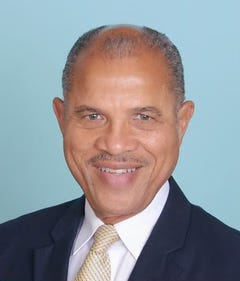
Vernon Oakes hosts Everything Co-op, a weekly radio show and podcast on cooperative economics airing on WOL 1450 AM in Washington, D.C. He is the General Partner of Everything: Coop Communications LLC. In 2024, Oakes was inducted into the Cooperative Hall of Fame for elevating cooperative leaders and educating listeners nationwide. His program features practitioners across credit unions, workers, consumers, housing, and purchasing co-ops, emphasizing democratic governance, shared ownership, and community wealth-building. A seasoned manager and educator, Oakes spotlights evidence-based strategies for under-resourced communities to build equitable, resilient local economies through cooperation in the United States.
In this two-part interview with Scott Douglas Jacobsen, Oakes frames strength as cooperation over domination and roots it in co-op values: self-help, self-responsibility, democracy, equality, equity, solidarity, and ethical values of honesty, openness, social responsibility and caring for others. He explains consensus-building as respectful conflict resolution, where decisions may be slower, but implementation is faster. Oakes highlights lifelong education as the fifth principle and ties cooperation to emotional intelligence and community dignity. Examples include credit unions, worker co-ops such as ChiFresh Kitchen, and Ujamaa in Pittsburgh; he notes that federations like Mondragón demonstrate that co-ops can scale. His closing: “There’s a co-op for that,” and “co-ops help people to come out of poverty with dignity”.
Scott Douglas Jacobsen: Today, we’re here with the lovely Vernon Oakes, host of Everything Co-op, the leading weekly national radio program on cooperative economics airing on WOL 1450 AM in Washington, D.C. Everything Co-op is also available as a podcast. Thank you very much for joining me today. I appreciate it.
Vernon Oakes: Well, I want to thank you for having me on. I look forward to our conversation.
Jacobsen: I want to start on a positive note. You’ve received several awards, including your induction in 2024. There have been others as well. What were those, and after decades of service, what did they mean to you?
Oakes: When I came to D.C. in 1986, I worked with the Stanford Alumni Consulting Team, or ACT. I joined a team to work with Community of Hope, a nonprofit providing homeless services and health care to low-income residents. The founder asked me to join the board, and I served for 18 years; I also served as interim general manager for six months and helped hire the current general manager.
Community of Hope recently gave me the Tom Nees Award for Exceptional Service, recognizing my 39 years of involvement with that community. Last week, I attended a celebration at Stanford on Friday. Stanford Graduate School of Business is celebrating its centennial — 100 years — and they selected 100 alumni who have provided high-impact service to their communities. I was one of those 100.
What it means to me is that it’s exciting and humbling. I grew up in Bluefield, West Virginia, on Tank Hill. I’m a Black boy from working-poor parents. To go to Stanford, to be recognized, or to come to D.C. and realize that, but for the grace of God, I could be homeless at any given point — and that I could take the skills I’ve learned, both leadership and business knowledge, and use them to help that organization — that’s very powerful to me. Very rewarding.
Jacobsen: This is Bluefield in Mercer County?
Oakes: Mercer County, West Virginia.
Jacobsen: Beautiful, green country. I love green spaces. Old trains run through my hometown, too.
Oakes: Yes.
Jacobsen: You mentioned the phrase, “but for the grace of God, go I.” We have a little extra time, so let’s explore it. We’re in an era of black-and-white thinking. People want to demonize secular people as immoral and hopelessly lost, and they want to demonize religious people as fundamentalists who wish to take over the government. Reflections like yours matter. Within your Christian faith, how does that inform your spirit of service — to the community, the world, or even to an individual you might encounter on the street?
Oakes: There’s a scripture to the effect that man is the head of the household as Christ is head of the church, which means being a servant leader. A man is to serve his spouse, his children, and his community — to lead through service. For me, that’s the foundation of my leadership and training, including when I earned my MBA. When I got the MBA, I wasn’t particularly spiritual. I was in it for the money — that was clear. Later on, it became something deeper…
A spiritual leader. And the thing I like about cooperation and cooperatives is the set of values: self-help, self-responsibility — it always starts with self, helping oneself and being responsible — then democracy, equality, equity, and solidarity. Solidarity means working and making decisions together in a way that lifts everyone; when the boat rises, everyone rises with it.
There are also the ethical values of honesty, openness, social responsibility, and caring for others. These principles of cooperation truly align with my value system, making it exciting to work in this cooperative space with like-minded individuals.
Jacobsen: You argue that strength begins with cooperation, not domination. How are you defining strength for men in 2025?
Oakes: Strength for men is found when we come together. In Black, Brown, and Native communities — really, since the beginning of time — when there are hardships like what we’re going through now with this political climate in the U.S., or during the Great Depression, we’ve had to pool our resources to survive. During slavery, Black people had to pool together.
That strength came from the group — from the collective, from solidarity, from cooperation. Sometimes it wasn’t called a co-op, because the formal structure came later, with the Rochdale Pioneers in 1844 in England. But the spirit of cooperation has existed, for me, since the beginning of time.
If we were in the Sahara Desert fighting the sabre-toothed tiger, we had to do it together. If we were in the Ice Age, trying to survive in caves when it was minus fifty degrees, we had to do it together to make it through. Togetherness, I believe, is the core of humanity — finding strength through cooperation.
Not the John Wayne ideal of “I’m the toughest, I’ll pull myself up by my bootstraps” — especially when you don’t even have boots — but the question of how we work together to move our community forward in a positive way.
Jacobsen: That’s an important point. It brings to mind Peter Kropotkin’s 1902 book Mutual Aid: A Factor of Evolution. He wrote it as a counterpoint to the “tooth and claw” misreadings of Charles Darwin’s On the Origin of Species from 1859. It took forty-three years for someone to respond to those distortions. Kropotkin offered one of the first proper readings of Darwin — that survival doesn’t mean being the strongest, fastest, or smartest. It means being best suited to one’s environment.
Human beings, through cooperation and mutual aid, have been able to thrive across all groups. Whether you look at Britain in that period or North America today, the same principle applies: cooperation is a key factor in survival.
Oakes: Yes, and I’d add that in the cooperative space, learning to get along is a skill. There are even classes on it. There’s always going to be conflict. You and I grew up in different times, we’re different ages, different cultures, even different countries. And if we’re in the same group trying to make something happen, we’re going to disagree.
And we could be 180 degrees apart — you may want to go left, and I want to go right. But what I’ve learned in cooperation is that if we can learn how to talk and really hear each other, we may find that going straight is better than either of those two ways. We might even discover a solution that neither of us had imagined. It’s about learning how to resolve conflict positively — respecting and trusting each other, and recognizing that we’re all working for the good of the group. That’s solidarity.
Jacobsen: How are co-ops better training grounds for character than traditional firms?
Oakes: I like that question — I really like that question. I told you I was at Stanford this past weekend. On Friday morning, I was sitting at breakfast with George Parker, a finance professor who taught me during my time there. He earned both his MBA and Ph.D. from Stanford and was one of the 100 alumni honoured for making a significant community impact.
He told me he liked co-ops, having been in the Peace Corps in the early 1960s and ran a credit union in Peru. He used the word Kumbaya about three times, describing co-ops as people coming together, loving each other, and getting things done. For me, that “love” isn’t necessarily about singing in a circle or hugging; it’s about respect and trust. That’s the core of cooperation — the core of humanity — learning how to get together and work as equals.
We live in a hierarchical world — at home, in church, and at work. We’re trained to function within a hierarchy. Learning to operate cooperatively as a group requires training. Education and training are central — in fact, “Education, Training, and Information” is the fifth of the seven cooperative principles. That’s the one I love most: training before you start, while you’re beginning, and after you’ve started. You never stop learning if you want to succeed in cooperation.
Jacobsen: This one’s particularly important. There’s a noted gap in emotional intelligence — often observed by women or by older, more experienced men — among many younger men, even adult men. Some of this might actually be developmental; boys and men tend to mature a bit more slowly in that area. How can the cooperative principles provide a space for cultivating emotional intelligence? I don’t mean book smarts, but sensitivity, awareness of context, nuance, and empathy.
Oakes: Emotional intelligence. My father’s father fought in World War I, and my father served in World War II. My parents didn’t say things like “I love you.” They didn’t hug. That was their culture — a distance, emotionally. But you still knew they loved you. You could see it in how they provided for you, not necessarily in what they said or showed.
I got hugs from my mom, but not from my dad. It was just a different culture, a different generation. Today it’s quite different. I just turned seventy-six, so that gap feels even more pronounced when I look back.
Jacobsen: Are you suggesting that many men of that generation expressed love for their families not by being with them, but by being away — through providing rather than presence?
Oakes: That’s right. If a father left his family, that was abandonment — no love there. But if he was working and away, that was his way of showing care. That wasn’t my situation, however. My father had a more traditional eight-to-five job.
My father worked an eight-hour shift, so he was around a lot. As I mentioned, we did the gardening together in the summertime. I had access to my dad, but affection wasn’t expressed the way it is today. Now it’s normal for a man to say “I love you” to his son, daughter, or spouse, to hug or kiss his spouse in front of the children. I never saw my father do that. I never saw my father kiss my mother.
Jacobsen: That’s striking. At the same time, there are international differences where public displays of affection aren’t frowned upon, but they’re done in private. It’s not that love isn’t there; the expression depends on cultural context — between the public and private faces of affection.
Oakes: In the co-op world, I define a cooperative as any business that is owned and controlled by its members for the benefit of its members. There are more technical and legal definitions, of course, but at its heart, that’s what it is — ownership and control by members, for members.
When members make decisions, they are usually made democratically — one member, one vote. Sometimes, though, co-ops use sociocracy, a form of governance based on consensus. That means everyone must agree 100 percent. I didn’t think that was possible until I learned methods to make it work. To reach consensus, you have to know people, understand them, listen to them, and respect their perspectives.
That process itself is a kind of love — not romantic love, but brotherly love. Say Scott and Vernon are in a group together: Scott wants to go left, Vernon wants to go right. We listen to each other, respect each other’s views, and look for the best path forward. I had to let go of the idea that I’m right. Instead, it becomes we’re right. We find the best choice together, and that becomes the right choice.
That takes respect. That takes trust. And within that trust and collaboration — that’s where love lives. That’s where emotion belongs in cooperation.
Last updated May 3, 2025. These terms govern all In-Sight Publishing content—past, present, and future—and supersede any prior notices. In-Sight Publishing by Scott Douglas Jacobsen is licensed under a Creative Commons BY‑NC‑ND 4.0; © In-Sight Publishing by Scott Douglas Jacobsen 2012–Present. All trademarks, performances, databases & branding are owned by their rights holders; no use without permission. Unauthorized copying, modification, framing or public communication is prohibited. External links are not endorsed. Cookies & tracking require consent, and data processing complies with PIPEDA & GDPR; no data from children < 13 (COPPA). Content meets WCAG 2.1 AA under the Accessible Canada Act & is preserved in open archival formats with backups. Excerpts & links require full credit & hyperlink; limited quoting under fair-dealing & fair-use. All content is informational; no liability for errors or omissions: Feedback welcome, and verified errors corrected promptly. For permissions or DMCA notices, email: scott.jacobsen2025@gmail.com. Site use is governed by BC laws; content is “as‑is,” liability limited, users indemnify us; moral, performers’ & database sui generis rights reserved.

 In-Sight Publishing