Tatiana Mironova and Anna Avetova on Galleries, Artists, and Cultural Resilience
Author(s): Scott Douglas Jacobsen
Publication (Outlet/Website): Vocal.Media
Publication Date (yyyy/mm/dd): 2026/05/09
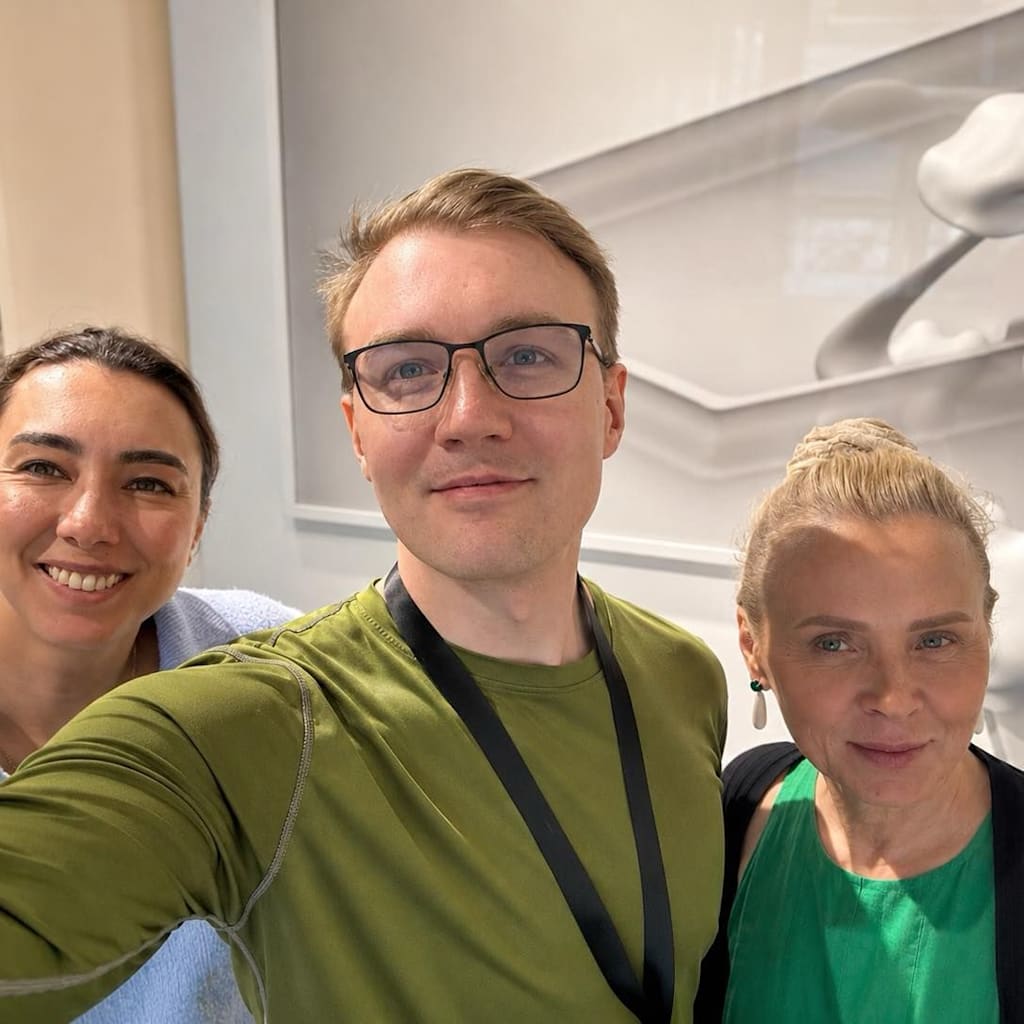
By Scott Douglas Jacobsen and Anna Avetova (Translator, English-Ukrainian)
Tatiana Mironova is a Ukrainian gallerist, curator, and cultural organizer. She is the Director of the Kyiv Municipal Gallery “Lavra,” the founder of Mironova Gallery and the Unlimited Art Foundation, and the organizer of major Ukrainian cultural projects, including Art Kyiv. Her work focuses on developing Ukrainian contemporary art, supporting artists, and strengthening cultural institutions.
Anna Avetova is a Ukrainian curator and cultural strategist with nearly 12 years of experience. She is the founder of consulting agency TUASHO and director of the Art Kyiv fair. She has curated projects in Berlin, Basel and New York, and the Ukrainian pavilion at EXPO 2020 Dubai. Co-author of Emerging Art in Ukraine.
Scott Douglas Jacobsen interviews Tatiana Mironova and Anna Avetova about building Ukraine’s contemporary art community through galleries, fairs, and cultural institutions during wartime. They discuss artistic trust, collector relationships, mentorship, market development, and the importance of interconnected cultural ecosystems that help artists survive economically, socially, and creatively amid national crises.
Scott Douglas Jacobsen: When did you begin working in art, and when did you begin building your own community around it?
Tatiana Mironova: I officially started in art around 2002 or 2003. My first gallery was a private, closed space. I want to assess how I would feel working in this field, as my original education was not in art. My background was in cybernetics and linguistics, so I came from a completely different direction.
I started the gallery together with my partner, Sergey Gusovsky, who is now a well-known restaurateur. At first, we worked with only two or three artists.
After about 2 years, my partner moved on, and I continued on my own. I focused on developing the gallery with local Ukrainian artists, not only from Kyiv but from across the country.
Jacobsen: When did the idea of building a broader community begin?
Mironova: My first focus was the private gallery. Later, between 2008 and 2012, I worked as an expert for the Ministry of Culture of Ukraine. I served as an official expert on issues related to galleries and gallery development. That was my first major institutional position in the art world.
After that, I served as director of the National Art Museum of Ukraine for one year, although it was a short term because the position was tied to an election and was very political.
Later, the Kyiv Culture Department invited me to serve as director of the City Gallery, officially known as the Kyiv Municipal Gallery “Lavra.”
It was not an easy time because the Revolution of Dignity had begun, and the political situation made it difficult to develop cultural projects. Still, we launched several initiatives and invited a German curator to help us shape the program. Step by step, we developed our platform and began creating more ambitious and interesting projects here.
The idea for the art market came two years ago, when our neighbours started organizing a design week. We decided to launch an art market here at the same time.
It was quite difficult the first time, but then we chose our team, and then Arnaud came. Now it is much better. That is the short answer to your question.
Jacobsen: What is effective in building an art community? Do you create the environment and draw people in, or do you proactively reach out and tell people, “You might want to come to this event”? Or do you use an entire arsenal of strategies and begin implementing them? It reminds me of the American film Field of Dreams: “If you build it, they will come.”
Anna Avetova: The fair is directly connected to that process. We use everything we can. We use Tatiana’s experience, gained over more than 20 years in the field. We use all types of marketing campaigns. We go outside and connect directly with people through booklets and personal outreach. We use Instagram, Facebook, Google, the media, our own network, and the networks of our galleries. We used everything we could to make it happen.
Jacobsen: To be clear, could you explain what this work means to you?
Mironova: It is very simple. It is my life. These art collectors helped me survive by buying art. That means giving money to artists so they can survive this war and support their families. Everything works like connected wheels.
We depend on sales, but the reason is not simply money. The reason is to make normal life easier. I also try to help my artists build trust with collectors.
We are all like one big family. If you are talking about our fair, it is the same as the galleries. We try to build this community so we can help each other, exchange work, and make our clients happy. We also want our government and city government to be proud and supportive.
Avetova: May I add something? We are all interdependent. Without artists, galleries cannot exist, as they need artists to exhibit and sell their work. The same applies to the art fair and the galleries. Without galleries, we cannot create an art fair, but without an art fair, the market is incomplete.
People need this because it creates a platform for new contacts and new possibilities. It is a circle, and it should work that way. When we started this fair, people could not immediately see what it would become. They will understand it better after a few years, since it is still a developing platform. In general, it will help grow the market and open new opportunities.
Jacobsen: You said something interesting about helping artists trust themselves. Do artists distrust their own abilities or their work? I want to dig deeper into why artists might distrust themselves. In conversations with artists yesterday, many said something similar, although not necessarily about themselves directly.
Mironova: I think we are working mostly with established artists, both young and old. They may not all be highly in demand, but they are all serious artists with whom I work. I always tell them that if they work hard, they will become successful. I respect artists who work constantly because if you continue trying and developing yourself, you must create something people will respect.
Some people left the country, and some artists left for different reasons. Maybe those artists lost confidence in themselves. However, the artists who stayed here, especially the older generation, are very tough. They are in demand among collectors. If they have money, they feel more secure. Money solves many problems.
With younger artists, we organize many exhibitions and try to support them. Here at Lavra Gallery, we have several studios. We invite new artists to use these studios for one year, and then we organize exhibitions for them. Most of these artists are already somewhat known.
Mostly, though, we are working with artists who are not yet major names.
Jacobsen: Thank you very much for the opportunity and your time, Tatiana and Anna.
Last updated May 3, 2025. These terms govern all In Sight Publishing content—past, present, and future—and supersede any prior notices. In Sight Publishing by Scott Douglas Jacobsen is licensed under a Creative Commons BY‑NC‑ND 4.0; © In Sight Publishing by Scott Douglas Jacobsen 2012–Present. All trademarks, performances, databases & branding are owned by their rights holders; no use without permission. Unauthorized copying, modification, framing or public communication is prohibited. External links are not endorsed. Cookies & tracking require consent, and data processing complies with PIPEDA & GDPR; no data from children < 13 (COPPA). Content meets WCAG 2.1 AA under the Accessible Canada Act & is preserved in open archival formats with backups. Excerpts & links require full credit & hyperlink; limited quoting under fair-dealing & fair-use. All content is informational; no liability for errors or omissions: Feedback welcome, and verified errors corrected promptly. For permissions or DMCA notices, email: scott.jacobsen2025@gmail.com. Site use is governed by BC laws; content is “as‑is,” liability limited, users indemnify us; moral, performers’ & database sui generis rights reserved.


