Ljydmila Ganushchak, Ph.D. on Ukrainian Higher Education, War, and European Integration
Author(s): Scott Douglas Jacobsen
Publication (Outlet/Website): Vocal.Media
Publication Date (yyyy/mm/dd): 2026/04
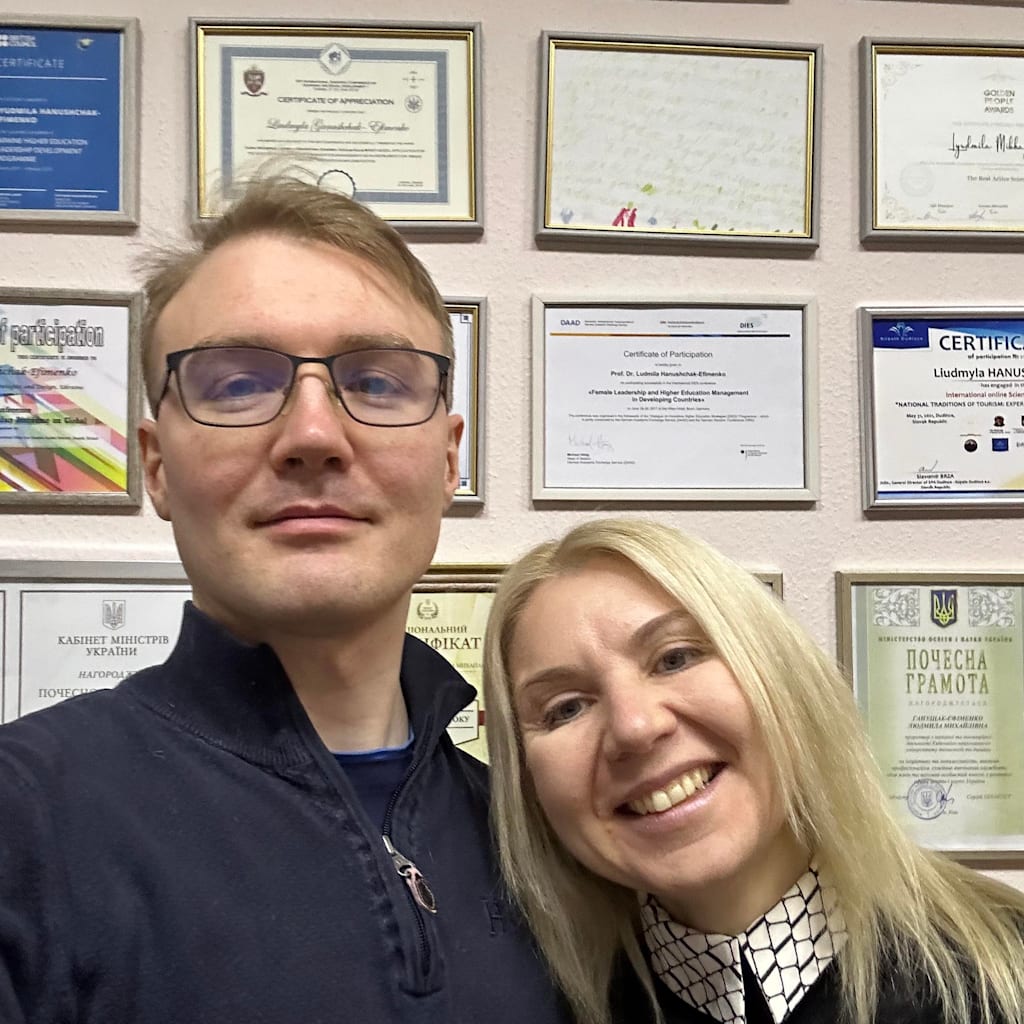
Dr. Ljydmila Ganushchak-Yefimenko is a Ukrainian academic leader associated with Kyiv National University of Technologies and Design. Her work focuses on educational modernization, research development, international cooperation, and student resilience during crisis. Through roles in faculty leadership, research, and innovation, Ganushchak has helped strengthen partnerships with European institutions, expand applied learning, and support Ukraine’s creative industries, including fashion, design, technology, and interdisciplinary education during wartime and post-Soviet transformation.
Scott Douglas Jacobsen interviews Dr. Ljydmila Ganushchak about Ukrainian university operations during COVID-19, Russia’s full-scale invasion, and post-Soviet educational reform. Ganushchak discusses student safety, blended learning, infrastructure modernization, European Union partnerships, Erasmus opportunities, and the role of applied research in rebuilding Ukraine. She also explains how Ukrainian higher education balances Soviet-era legacies with innovation, creative industries, international cooperation, and a growing commitment to European integration.
Scott Douglas Jacobsen: Let’s begin with university operations. The full-scale invasion began as COVID-19 restrictions were easing, although Russia’s war against Ukraine began in 2014. How did funding and university operations differ during the pandemic, during the full-scale war, and during ordinary Ukrainian life?
Dr. Ljydmila Ganushchak-Yefimenko: I conducted research and interviews on this issue. When COVID-19 began, we focused on preserving the quality of the educational process for students. We already had a strong platform for online and distance learning.
When the full-scale invasion began in February 2022, our first priority was student safety. Many students left for the European Union, so we had to respond quickly to help them remain connected to Kyiv and to our university.
We resumed in-person learning in August 2022, while continuing to rely on online and blended formats where necessary. The period from February to August 2022 was extremely difficult because it was hard to comprehend that a full-scale war could happen in Europe in the 21st century.
From 2022 through 2025, we focused on maintaining university operations for staff, students, infrastructure, and administration. We also expanded international partnerships and launched new projects. Kyiv National University of Technologies and Design is a multidisciplinary university in Kyiv, and its international office lists programs such as Erasmus Programme, Horizon Europe, Creative Europe, UNDP, and Digital Europe among its areas of cooperation.
These partnerships support research, education, and student opportunities. Some students spend part of the academic year in the European Union through exchange or scholarship programs and then return to Ukraine with new knowledge, professional experience, and a stronger understanding of Ukraine’s European integration.
This experience helps form a new generation with democratic values and international experience. The goal is for students to return to Ukraine, apply their knowledge, and help rebuild the country’s economy after the war.
International cooperation has increased since 2022. Our priorities now include education, research, bilateral projects, student initiatives, startups, technology transfer, and support for talented students.
For example, our students and graduates contribute to Ukraine’s creative industries, including fashion and design. Ukrainian designers have continued presenting work internationally during the war, including through Ukrainian Fashion Week showcases abroad.
Our university has produced well-known figures in Ukrainian fashion. Ivan Frolov, founder of FROLOV, is a Ukrainian designer whose work has been worn by Beyoncé and other international performers. Ukrainian brands such as COAT by Katya Silchenko also represent Ukrainian design internationally. These brands demonstrate how Ukrainian cultural identity, creative industries, and European integration are connected through education, design, and international cooperation.
Jacobsen: How do you see universities operating roughly 35 years after the Soviet period? What distinguishes the Soviet model of education from the Ukrainian system today?
Ganushchak-Yefimenko: I would not say the comparison is straightforward, but I can explain our university’s development. Our institution traces its origins to 1930, when it was established to support light industry, including textile and garment production, which were important for both civilian and military needs. At that time, the focus was on practical industrial output rather than broader academic development.
Initially, the university had a limited structure, with core areas such as engineering and economics. Later, additional faculties were introduced, including chemistry. During the Soviet period, the system was highly centralized, with frequent administrative changes and strong state control over curriculum, priorities, and institutional direction.
After Ukraine gained independence in 1991, the university, like many others, faced significant challenges, especially in terms of infrastructure and funding. Many buildings still in use today were constructed during the Soviet era, often 40 to 50 years ago, and required modernization.
Since around 2020, there has been a stronger emphasis on technological modernization and improving infrastructure. This is important because modern students expect updated facilities and learning environments. Infrastructure has become a key factor in motivating students to remain in Ukraine rather than studying abroad.
At the same time, students now have access to international opportunities through programs such as Erasmus Programme. They can study in European universities and experience different academic environments. Many observe that infrastructure in the European Union is often more advanced, but in my view, the quality of education in Ukraine remains strong.
Many of our graduates and colleagues conduct research in European universities and other international institutions. They act as informal ambassadors of our university and contribute to international collaboration. This growing network of partnerships strengthens both our institution and the broader Ukrainian research and education system.
Jacobsen: Thank you very much for the opportunity and your time, Ljydmila.
Last updated May 3, 2025. These terms govern all In Sight Publishing content—past, present, and future—and supersede any prior notices. In Sight Publishing by Scott Douglas Jacobsen is licensed under a Creative Commons BY‑NC‑ND 4.0; © In Sight Publishing by Scott Douglas Jacobsen 2012–Present. All trademarks, performances, databases & branding are owned by their rights holders; no use without permission. Unauthorized copying, modification, framing or public communication is prohibited. External links are not endorsed. Cookies & tracking require consent, and data processing complies with PIPEDA & GDPR; no data from children < 13 (COPPA). Content meets WCAG 2.1 AA under the Accessible Canada Act & is preserved in open archival formats with backups. Excerpts & links require full credit & hyperlink; limited quoting under fair-dealing & fair-use. All content is informational; no liability for errors or omissions: Feedback welcome, and verified errors corrected promptly. For permissions or DMCA notices, email: scott.jacobsen2025@gmail.com. Site use is governed by BC laws; content is “as‑is,” liability limited, users indemnify us; moral, performers’ & database sui generis rights reserved.


