Brittany Christenson on AidKit: Building Human-Centered Technology for Guaranteed Income and Equitable Aid Delivery
Author(s): Scott Douglas Jacobsen
Publication (Outlet/Website): A Further Inquiry
Publication Date (yyyy/mm/dd): 2025/10/15
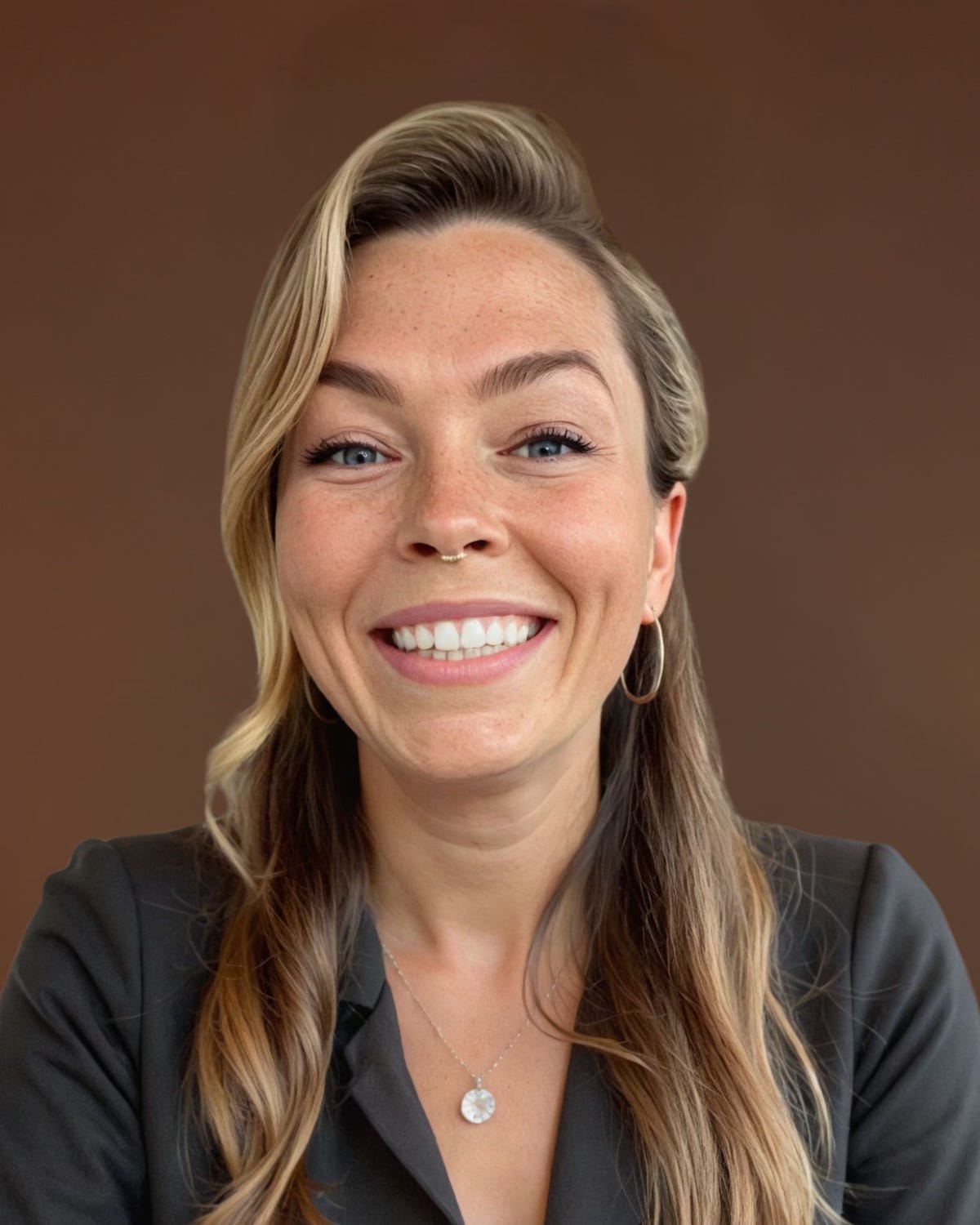
Brittany Christenson is the CEO of AidKit, the Public Benefit Corporation transforming how governments and nonprofits deliver aid. A former nonprofit leader, she brings deep empathy and accountability to tech-driven solutions built for dignity and fairness. Under her leadership, AidKit has scaled rapidly—partnering with more than 200 agencies, processing over half a million applications, and disbursing over $330 million in assistance—while keeping trust and accessibility at the core aidkit.comvcnewsdaily.com. Brittany holds a vision: agile, human-centered systems that adapt to communities, not the other way around—and that’s exactly what she’s building.
In this interview with Scott Douglas Jacobsen, Brittany Christenson, CEO of AidKit, explains how the company’s Public Benefit Corporation status ensures aid delivery prioritizes public good over profit. She highlights AidKit’s focus on breaking barriers—such as missing documents, lack of internet, or fear of exclusion—through human-centered design. Christenson shares lessons from projects like The Nest in Washington and the Amazon basic income pilot, stressing local adaptation. She outlines how AidKit balances fraud prevention with trust, enables rapid deployment, builds lasting partnerships, and supports impact measurement. Looking ahead, she sees growing global interest in guaranteed income, requiring scalable, equitable infrastructure AidKit provides.
Scott Douglas Jacobsen: AidKit describes itself as a Public Benefit Corporation. How does this legal and ethical framework shape your priorities?
Brittany Christenson: Being a Public Benefit Corporation means we’re legally accountable for more than profit. Our work has to prioritize public good, like making aid easier to access, protecting people’s data, and helping public agencies serve communities more fairly. That structure gives us permission to say no to things that don’t align with our values, and to design systems that are simple, secure, and actually useful to the people who rely on them. It keeps us focused on what matters most, making sure aid reaches people quickly, securely, and without unnecessary barriers.
Jacobsen: One of your core goals is ensuring that guaranteed income reaches underserved communities. What barriers happen most often?
Christenson: People we work with often face barriers that standard systems weren’t built to handle. Missing documents, no bank accounts, unreliable internet, and language gaps are common. There’s also real fear, especially among people who’ve been excluded before. Our job is to remove those barriers without lowering standards, so people can get help without being put through more stress.
Jacobsen: There are projects like The Nest in Washington State and the Amazon basic income pilot. What are the most important lessons in tailoring program design?
Christenson: The biggest lesson is that no two communities are the same, and successful programs have to reflect local realities. In Washington State, The Nest asked us to build a lineage tracker because tribal identity is based on family and community ties, not standard ID. In the Amazon, we supported the world’s first basic income pilot for Indigenous peoples, where internet access is limited and applications had to work fully offline. We developed a system that could operate without connectivity and still maintain identity integrity. In both cases, we co-designed solutions with local partners who knew what their communities needed. The technology had to adapt—not the people. That approach leads to higher trust, better access, and programs that people actually use.
Jacobsen: Guaranteed income programs often raise concerns about misuse. How does AidKit balance rigorous identity verification with maintaining trust?
Christenson: Every dollar protected is a dollar that can go into the wallet of someone who truly qualifies. We take fraud prevention seriously and have built a robust suite of cutting-edge tools to prevent bad actors from intercepting funds. At the same time, it’s critically important that fraud prevention measures do not create undue burden for applicants. We design our tools and process in a way that is easy to navigate for the vast majority of applicants while maintaining integrity, and for individuals who are unable to pass fraud controls automatically we create low-burden alternate pathways, like video calling or in person identity verification with trusted community partners. We also use technology to do as much of the work of applying as possible on behalf of applicants, so for example, if they upload a document, we scan the document to provide immediate feedback and extract the text to fill out forms to save them time. We know people are more than their paperwork. That’s why we also include human reviewers, so the system doesn’t make decisions in a vacuum, and edge cases don’t fall through the cracks.
Jacobsen: AidKit highlights the ability to move from concept to first payments. What are the technological and organizational innovations making rapid deployment possible here?
Christenson: We’ve built a system that doesn’t start from scratch every time. It’s flexible, so we can plug in different rules, documents, and payment methods quickly. We also work closely with partners during setup, so decisions get made fast and clearly. We’ve done launches in under two weeks, not because we cut corners, but because we’ve planned for this. It’s not magic, but it’s intentional design and experience, and it works under real-world pressure.
Jacobsen: What strategies have proven most effective for building strong partnerships?
Christenson: Strong partnerships come from trust and responsiveness. We spend time up front understanding the partner’s goals, constraints, and community. Then we co-design the program with them. We don’t hand over a one-size-fits-all solution. And we don’t disappear after launch —we stay involved, adapt when things shift, and help solve problems. That kind of collaboration builds real trust. When partners know we’re committed to them, the relationship gets stronger over time.
Jacobsen: How does AidKit help partners measure the long-term social and economic impacts of guaranteed income?
Christenson: AidKit provides the tools and infrastructure to track how aid is delivered and who it reaches, in real time. Beyond that, we help partners collect survey data and connect with research teams to assess long-term outcomes like housing stability, employment, stress levels, and financial resilience. The goal isn’t just to move money, it’s to understand what changes because of it. We don’t control the analysis, but we make it easier to gather high-quality, structured data that can inform future policy, funding decisions, and public trust in direct cash support programs.
Jacobsen: What is the long-term outlook for the global basic income movement over the next decade?
Christenson: We don’t try to predict policy outcomes, but we’re seeing growing interest in guaranteed income around the world. More cities, nonprofits, and funders are exploring direct cash as a way to address systemic gaps, whether in housing, food access, or financial stability. These programs often start small, but they raise important questions about what support should look like in the future. What we know is that if basic income continues to gain traction, it will require infrastructure that can adapt, scale, and protect dignity along the way. That’s where AidKit comes in. We’re not here to set the agenda. We’re here to make sure that when a community decides to act, the systems are in place to do it quickly, securely, and fairly.
Jacobsen: Thank you very much, Brittany.
Last updated May 3, 2025. These terms govern all In-Sight Publishing content—past, present, and future—and supersede any prior notices. In-Sight Publishing by Scott Douglas Jacobsen is licensed under a Creative Commons BY‑NC‑ND 4.0; © In-Sight Publishing by Scott Douglas Jacobsen 2012–Present. All trademarks, performances, databases & branding are owned by their rights holders; no use without permission. Unauthorized copying, modification, framing or public communication is prohibited. External links are not endorsed. Cookies & tracking require consent, and data processing complies with PIPEDA & GDPR; no data from children < 13 (COPPA). Content meets WCAG 2.1 AA under the Accessible Canada Act & is preserved in open archival formats with backups. Excerpts & links require full credit & hyperlink; limited quoting under fair-dealing & fair-use. All content is informational; no liability for errors or omissions: Feedback welcome, and verified errors corrected promptly. For permissions or DMCA notices, email: scott.jacobsen2025@gmail.com. Site use is governed by BC laws; content is “as‑is,” liability limited, users indemnify us; moral, performers’ & database sui generis rights reserved.


