Dr. Elizabeth Weiss on Politics, Sacred Bodies, and the Decline of Scientific Anthropology
Author(s): Scott Douglas Jacobsen
Publication (Outlet/Website): A Further Inquiry
Publication Date (yyyy/mm/dd): 2025/09/21
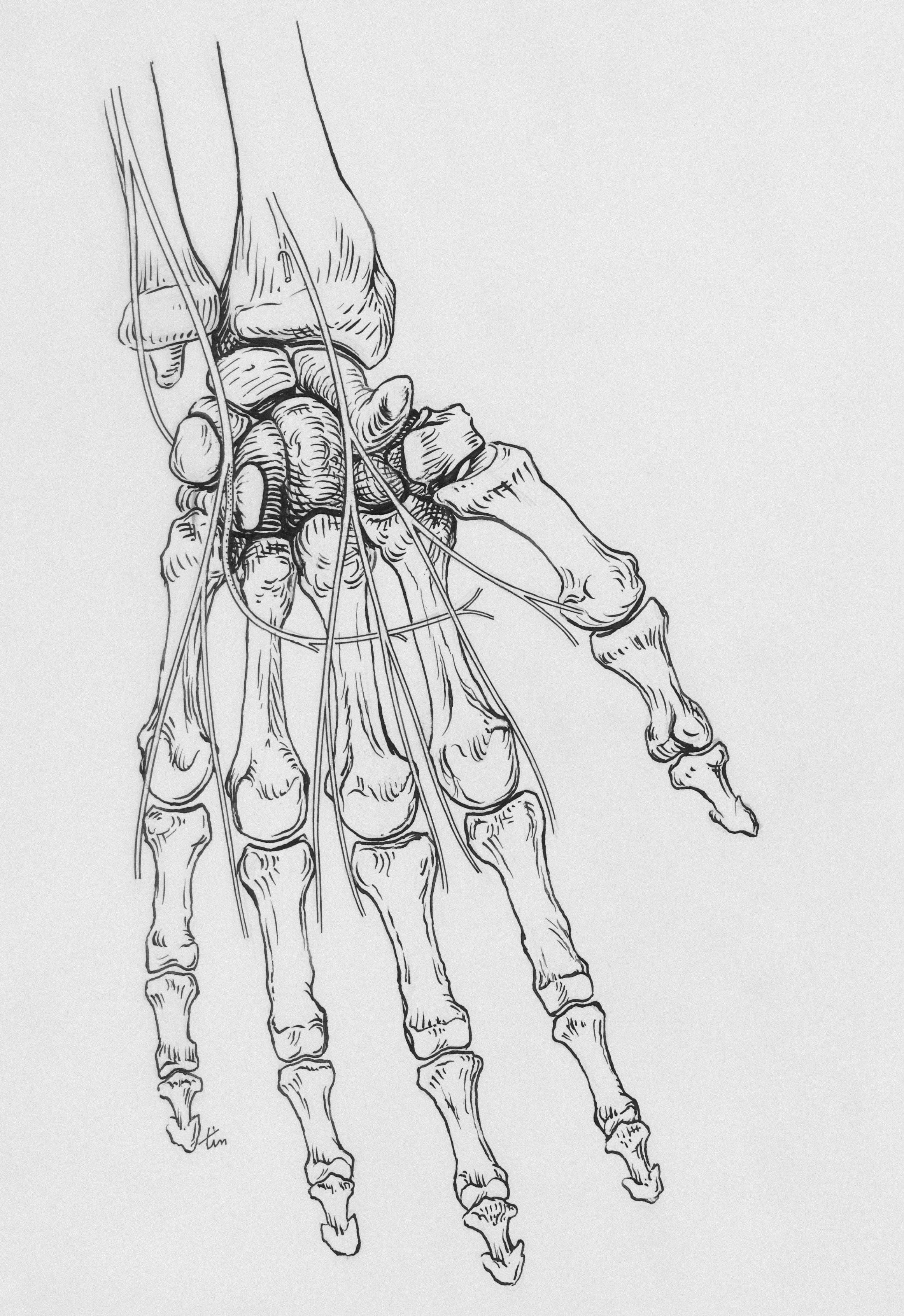
Dr. Elizabeth Weiss is an American anthropologist and Professor Emeritus of Anthropology at San José State University, renowned for her work in bioarchaeology and the scientific study of human skeletal remains. She earned her B.A. from the University of California, Santa Cruz, her M.A. from California State University, Sacramento, and her Ph.D. in Environmental Dynamics from the University of Arkansas. A former postdoctoral researcher at the Canadian Museum of Civilization, Weiss has published extensively on osteology, human evolution, and repatriation debates. She is a vocal advocate for academic freedom, evidence-based anthropology, and preserving scientific access to skeletal collections for research and education.
In this interview with Scott Douglas Jacobsen, Weiss warns that American anthropology is losing scientific rigor as politics and identity-driven activism replace evidence-based research. She argues that laws like CalNAGPRA and expanding sacred-body narratives have virtually ended skeletal research in California, crippling bioarchaeology, forensic training, and comparative studies. Weiss stresses that human remains are data, not relics, and calls for separating political beliefs from scientific inquiry. Drawing parallels to Bertrand Russell’s disciplined separation of activism from scholarship, she warns that conflating the two will reduce international credibility, weaken academic output, and deter serious students from entering the field.
Scott Douglas Jacobsen: So, we are going to talk about the general intellectual ecosystem of you as an anthropologist. The interpretation of findings within anthropology can sometimes be skewed. Students are trained—or encouraged—to adopt that skew. These students then go on to present research at international conferences, return home, and repeat the cycle over many years.
How does this affect the standing of American anthropological science when there is a reduced quality or rigor in the output of academic papers by high-level experts, or when the quality of graduates declines because they are more interested in placing a political spin on a scientific topic rather than focusing on the science itself?
Dr. Elizabeth Weiss: One of the consequences is that, over time, people will not be as interested in what American anthropologists have to say. If the work is not interesting science, the international community will stop sending their best students to American universities, because they will see that all they will be doing here is politics, not anthropology.
I wrote an article not too long ago about the American Anthropological Association conference, where there was very little science and very little anthropology being presented—just a great deal of political grandstanding. One of the things I noted, somewhat humorously, was that many presenters began by describing their own appearance: “I’m a white female with red hair, wearing a burgundy top.” They claim this is for the benefit of sight-impaired individuals, but in reality, it is often a way of declaring, “This is where I’m coming from,” implying that if they come from a more privileged background, the audience might weigh their words differently than someone from a more disadvantaged or victimized perspective.
Some would even introduce themselves as “the granddaughter of colonial Europeans,” and so forth. What struck me about these self-introductions—which are rooted in identity politics—is that, in many cases, the speakers had nothing else particularly interesting to say. You are essentially losing the science because you are attracting people whose only interest is identity politics or political activism.
When this mindset is brought into conferences and classrooms, you end up with less rigorous science, and you attract students who are less interested in learning the actual discipline, which can sometimes be difficult. In effect, you are raising a generation of political activists rather than anthropologists.
Of course, anthropology has political concepts and arguments to be made—such as in debates over repatriation—but at the end of the day, the field is about reconstructing the past, understanding evolution, and exploring the links between humans and non-humans. All of that is being lost.
Jacobsen: Bertrand Russell is a good example. He was a professional logician, philosopher, and mathematician, as well as a devout humanist, a secular humanist, and a dyed-in-the-wool empiricist. He was also a political activist who was jailed for his anti-war activism. He was a sincere and highly intelligent person, yet he seemed to maintain a distinction between his political activism and his professional academic work. You do not see him, for example, inserting commentary about anti-war demonstrations into the section on Plato in A History of Western Philosophy. That kind of demarcation is important. It is a line that needs to be drawn in certain parts of life.
For clarification, are there colleagues who are highly politically active—attending protests, writing letters to representatives—yet, when it comes to their scientific work, they do not muddy the waters?
Weiss: I do think there are still anthropologists like that. They tend to be from the older generation, and they are far fewer than before, but they do exist. I know of anthropologists who conduct solid anatomical work and are also progressive, or who hold political views that differ from mine. Some people might say, “Well, I’m political in my views on repatriation, and I fight against the reburial of skeletal remains.”
Yet when I conduct anatomical research, it can be entirely separate from those debates. One of the last studies I worked on involved a skull with a bump on the back of the head. It turned out to be osteoma from trauma—specifically, from being struck. Typically, head trauma results in an indentation, but this individual had a pronounced bump instead. This finding was a good reminder that we should not assume one specific type of skeletal trait always indicates violence; other possibilities must be considered.
This was a solid example of my anatomical anthropology research that had nothing to do with my work on repatriation. It was coauthored with a colleague who holds views opposite to mine on many issues, including repatriation. Nevertheless, we both agreed that anthropology is important, and that it is possible to produce good scientific studies separate from one’s political beliefs or activism.
I believe this separation is possible, but it requires discipline—and unfortunately, many people do not have that discipline.
Jacobsen: Before your retirement, did you see a reduction in the quality of students and academic output in the field, or was it still too early to tell?
Weiss: Yes, I did see a reduction in the quality of both students and scholarly output. For California anthropology and archaeology, the most severe blow came about two years ago with developments tied to the California Native American Graves Protection and Repatriation Act—CalNAGPRA—which has effectively banned the study of skeletal remains.
The restrictions go so far that even teaching collections are now off-limits. Teaching collections are typically a conglomerate of miscellaneous bones—specimens that could not be linked to any particular archaeological site or tribe. For example, they might include bones found in someone’s backyard, medical collections, or surface finds with no known provenance. These were historically considered ethically acceptable for teaching purposes because they had no identifiable cultural affiliation.
Now, even those are prohibited. I wrote an article for the Journal of Controversial Ideas arguing that the study of California’s past through archaeology and skeletal remains is, for all practical purposes, finished. Perhaps it will return someday, but I do not see that happening soon.
Just a couple of weeks ago, I was interviewed by California Globe about the latest developments. What is happening now is essentially the burial of evidence—so extensive that it not only prohibits the study of skeletal remains that are known to be Indigenous, but also those that might be Indigenous.
You cannot use skeletal remains in teaching collections. You cannot even show pictures of them. I went through nine years of journals to examine the output from California archaeology—especially research involving human remains—and found, as I detailed in my Journal of Controversial Ideas article, that there is now virtually nothing coming out of California that uses skeletal remains from Native Americans. This has effectively buried California archaeology.
This loss affects both our scientific understanding of the history of the Americas and our ability to study ancient diseases, trauma, and developmental patterns. It also affects Native Americans who do not adhere to this policy—those who deviate from community norms and genuinely want to learn about their own history.
We are losing our ability to conduct replication studies, which are essential to science. Sometimes earlier findings are wrong and need to be tested again. We are also losing the ability to use California remains as comparison samples. For example, about ten years ago, I conducted a study in which I used foot bones from a California site to compare with early human foot bones. The aim was to assess evidence of arthritis and determine whether a particular specimen—referred to as OH8—was actually a Homo habilis foot or perhaps an Australopithecine foot.
In that case, I was not reconstructing the life of the California sample, but I needed a sample of foot bones that had interacted with a similar type of environment as early Homo in Africa. California’s environment 3,000 years ago was comparable in some important ways—particularly when you consider that people were not wearing shoes—and that similarity made the sample scientifically valuable. Without access to such remains, we lose these kinds of comparative datasets.
We are also losing students and scholars who might have come to study those remains, given lectures, or presented talks at universities. All of this loss stems from the notion that we must not use skeletal remains because the body is sacred. In California, this mindset has gone so far that I am not sure how the field can return to a level of normalcy on these topics.
Regarding interventions, there have been cases where some Native American groups and other descendant communities have expressed a desire for research to continue. Unfortunately, such cases are becoming less common. Still, there are groups that want to know their past, and that is important.
Personally, I think it is better to help young scholars understand the science than to appease religious sensitivities about the body being sacred. If I am teaching a class on osteology—bone anatomy—scientific accuracy and rigor should take precedence over such constraints.
Some students come into the field saying they do not want to touch skeletal remains. Over time, I try to bring them around by pointing out certain realities. I might use an animal example, or note that in some cases these individuals died naturally, so there is nothing to fear. The point is to help them understand that the body is data, just as any other form of data, rather than something inherently special.
A bone is not a person—it is data. I compare this to teaching human evolution. If I have religious students in my class, I tell them, “These are the concepts you must learn. If you leave the classroom and choose not to believe them, that is your business.” The same applies to human remains: these are data you must analyze and study. If you believe they are sacred after you leave, that is your choice. But in the classroom or at a scientific conference, the body should be treated as data. Driving that point home is important.
I do not believe it is fair to divide knowledge into “Indigenous knowledge” versus “non-Indigenous knowledge,” or “Native American science” versus “non-Native American science.” Science is science. Knowledge is knowledge. When I talk about repatriation activists or Native Americans engaged in repatriation, I am referring specifically to those actively trying to stop scientific study—primarily for religious reasons related to the belief that the body is sacred, as in the Smithsonian’s colonial case.
I am not grouping all Native Americans together. I receive emails from Native Americans who are deeply interested in learning about their past and are frustrated by these regulations. They want more information, not less. It is important to emphasize that distinction: I am speaking about those who are actively working to prevent the study of skeletal remains, not about all Native Americans, and not about people of any race or religion who are not engaged in such efforts.
I am not religious—completely nonreligious—but I acknowledge that some people, even if religious, can compartmentalize and be excellent scientists. I do not fully understand how they do it, but I recognize that it is possible.
Whenever I taught human evolution, I would say: “Whatever your personal beliefs are, that is fine. But in this class, we are learning human evolution, and you must learn the concepts.” That was my way of explaining the professional expectation.
Jacobsen: Elizabeth, thank you very much for your time today. I appreciate it.
Weiss: No problem.
Last updated May 3, 2025. These terms govern all In-Sight Publishing content—past, present, and future—and supersede any prior notices. In-Sight Publishing by Scott Douglas Jacobsen is licensed under a Creative Commons BY‑NC‑ND 4.0; © In-Sight Publishing by Scott Douglas Jacobsen 2012–Present. All trademarks, performances, databases & branding are owned by their rights holders; no use without permission. Unauthorized copying, modification, framing or public communication is prohibited. External links are not endorsed. Cookies & tracking require consent, and data processing complies with PIPEDA & GDPR; no data from children < 13 (COPPA). Content meets WCAG 2.1 AA under the Accessible Canada Act & is preserved in open archival formats with backups. Excerpts & links require full credit & hyperlink; limited quoting under fair-dealing & fair-use. All content is informational; no liability for errors or omissions: Feedback welcome, and verified errors corrected promptly. For permissions or DMCA notices, email: scott.jacobsen2025@gmail.com. Site use is governed by BC laws; content is “as‑is,” liability limited, users indemnify us; moral, performers’ & database sui generis rights reserved.


