Golda Vynogradska on Maidan, War, and Fashion as Ukrainian Cultural Diplomacy
Author(s): Scott Douglas Jacobsen
Publication (Outlet/Website): Vocal.Media
Publication Date (yyyy/mm/dd): 2026/05/24
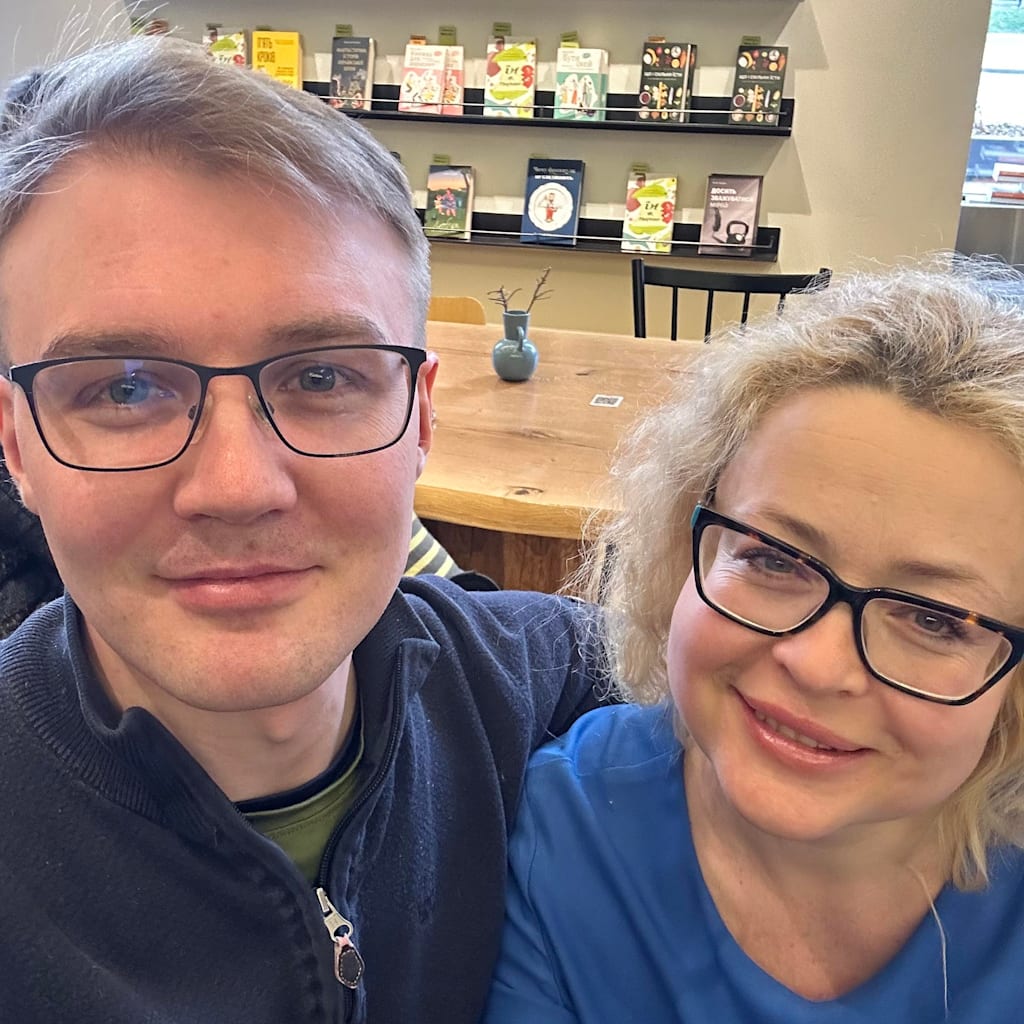
Golda Vynogradska is a Ukrainian fashion designer, founder and project manager of FashionGlobusUkraine, head of the National Sectoral Partnership in the Light Industry of Ukraine, vice president of the Confederation of Designers and Stylists of Ukraine, and a postgraduate researcher at the Institute of Vocational Education of the National Academy of Educational Sciences of Ukraine. Her work spans design, industry development, education, cultural diplomacy, public advocacy, and international representation for Ukrainian fashion and light industry sectors.
Scott Douglas Jacobsen speaks with Golda Vynogradska about how the Maidan and Russia’s wars transformed her from fashion designer into public advocate, volunteer, and cultural diplomat. She recalls staging a fashion show on the Maidan in deep winter, raising aid, supporting soldiers, and remaining in Ukraine after the 2022 full-scale invasion. The interview explores shock, betrayal, resilience, and her belief that fashion can communicate Ukraine’s identity, dignity, and strength to the world in wartime clearly.
Scott Douglas Jacobsen: So, what was your first memory of war in 2014 and in 2022? What were you doing?
Golda Vynogradska: My first memory, 2014. I was here on the Maidan.
It was interesting when I was in Maidan. This time, I was just a women’s clothing designer. Many people came here to make a revolution. Sometimes I felt that people stood here, but they stopped. Nothing was happening, but thousands of people stayed here in Maidan.
So, like a woman, I decided it was necessary to push these people to keep the activity going. And I decided to make a fashion show here in Maidan, on the main stage, in December, in 20 degrees of frost. I invited women from different barricades, and we put on a show here on the Maidan. It was exactly the start of the war.
So my activity as a public figure began here, exactly during the Maidan. I was going to New York City for the first time with my collection, and I remember very, very clearly my feeling: like, you’re bringing the feeling of these people from Maidan to New York. When I came back from New York, it was starting, these disaster days. Many, many people were killed. And I brought some small donations from Ukrainian society, from New York and New Jersey.
It was hell here. The people needed medicine. So I took this donation, came through all this hell to help these people who were wounded or killed. It was exactly the start of all my changes inside of me. The previous Golda was done. It did not exist anymore. And when the war started in 2014, I was ready to take a very active role.
I mobilized my friends, and we thought about what we could do for Ukraine. So I invited different designers from different regions of Ukraine. The owner of this shopping center here in Maidan gave us a big space. We organized our volunteer project, sold our collection, and, with the proceeds, created uniforms for Ukrainian soldiers. So it was starting like this.
After that, I decided to go to the United States next time. We made a show of Ukrainian designers to express who we are: we are a very peaceful country. I created a show, Expression of Ukraine by Podium, of different regions of Ukraine through fashion language. And it was my first speech through an American journalist who also said that Afghanistan is a country where continuous war is very far from us.
We do not have any connection to this. But the problem is that war can knock on your door at any moment. And most important is your reaction. You close this and say it is not concerning to me, or you do something. It was my first activity abroad, and I brought many collections.
And I started my activity in many countries. So it was 2014. During this time, I made a program of cultural diplomacy in 23 countries around the world. But when the full-scale invasion started in 2022, I stayed in Ukraine. Even though I could have moved to many countries, I decided to stay here. I decided to help people here.
I was involved in many different projects, informational projects, and volunteer projects. And I am needed here. I should be here. It is necessary to give our guys weapons; I am ready to do it. Of course, I was ready to go to the front line, but my mother has two children, and she’s old, and she says, ‘Go to the police.’ You can do everything you want, but here, not on the front line.
So I promised them, and I’m doing it here. It is two different reactions, but the most important thing is what you can do for this country. Not what this country gives to me, but what I can do for this country. And this is very important.
If I answer your question, there will be at least one resolution.
Jacobsen: From the UN around the 2014 annexation of Crimea, for withdrawal of all troops, return of annexed land, and then, I think, maybe reparations.
There was international recognition quickly. Do you think there was denial that this was really happening, or of the threat of it, from Ukrainians?
Vynogradska: First of all, for us it was a shock. It was a big shock for all Ukrainians.
Of course, we were not expecting this, because in 2022, we knew the Russian army was often near our borders, and we were waiting for when it would start. We did not know how it would turn out, but we were ready for it. In 2014, we did not know about this.
And after we discovered information from politicians close to this, it was a disaster, because we did not expect so many traitors sitting in Ukrainian politics. It was something hardly possible.
And I know from military guys, they said, “God, there was nothing for us to defend Crimea, nothing.” But we received a very clear order from Tymoshenko, from these people: you should not do it. So it means…
I am close to that.
You mean what we see in black people’s eyes? Yes, the gut betrayal.
We were not so naive as to think that Russians and Ukrainians were brothers and they would never do it. But we did not expect that it would be such a cruel and disastrous way.
And actually, I heard after some proposition that it was possible to rent, let us say, some territory in Crimea, to avoid this war. It was a clever way. But if we understand that, again, some traitors in Ukrainian politics had already decided something for all of us, you cannot… If we had known this before, we could have changed something.
If it is already a fact, it is a fact.
The situation with the full invasion was also not easy, because it is still unclear to the people here in the Presidential Administration how they knew about it and what positions they held accordingly. And for sure, if I were in their place, I would do other activities before and after.
But I know that people from the western part of Ukraine came to them and said, “You can do everything you want, even leave this country, but we will defend.”
The position changed.
In 2022, when things became even more serious, from October of the previous year, when the entire Russian army was standing, we had much information from our partners around the world and from intelligence services.
I tell you more: my brother lives in Israel, and two days before, he called me in the evening and said, “Golda, I know this one million percent, because we had business before in Moscow and we had some connections. They are planning an invasion. So take the children, take mother, and move.”
I said, “No, come on, what do you think?”
So if it started, it would be in some eastern part of Ukraine. We did not expect it to start here. We thought they would be in Kyiv on day two or three.
When we saw tanks in Obolon, it was shocking.
Actually, I live only 30 kilometres from Bucha. Can you imagine what a disaster it is to have information from these people about what happened there and not be able to help them?
It is a disaster when you feel helpless, when you cannot do something. Believe me, it is a disaster.
Jacobsen: What did it do to the fashion industry?
Vynogradska: From all fashion, only parts remained that we could use—garments for the army or for people, or to make camouflage nets. What is the name of this? When you cover something to hide a weapon, you camouflage it like weaving threads. Yes, we did this, like from blankets.
I will find this word and send it to you. Believe me, I started doing it from home. I took material from people and worked at home. Even when we did not have electricity, I did it myself. Already 55 large coverings for weapons.
So, from fashion at that moment, nothing remained.
Actually, the fashion story I told you from 2014: fashion can be a wonderful instrument for connecting people, attracting attention, and doing so more interestingly and creatively. It is still a very unique tool.
You can demonstrate your country through the language of fashion without any words. It is very workable, very tangible. Especially when you show different regions, different mentalities. And of course, we showed Crimea and Donbas. People in many countries were discovering Ukraine.
Even our show in Poland—can you imagine, Poland, a neighbour. When we had a show in Warsaw, they said they did not expect us to be so different. Because they knew Lviv and something closer, but they did not understand how different our clothes, mentality, and nature are, and how strong and brave we are. They were used to thinking that we just came to work there. They did not understand our mentality.
So I started, as a public person, to use fashion as a very unique instrument, and I am very proud of that.
Jacobsen: Does the Ukrainian government have cultural ambassadors focused on fashion?
Vynogradska: I tell you, first of all, if you speak not only about fashion, it is just the tip of the iceberg. It is a large industry that produces garments, shoes, accessories, and more.
Historically, in Ukraine, during the Soviet Union, we produced 70% of all garments for the Soviet Union. Can you imagine how big this industry is? Because I studied this deeply for my dissertation and monograph, focusing on the experiences of France, Italy, Turkey, India, and China.
About 15% of their total industry comes from textiles. Fashion is the most intellectual part of this. If we develop it, we can create more jobs and benefit the country.
I started to see this—from fashion—into many directions: economic, cultural, educational, and diplomatic. This is the evolution of my project and our association, improving in many directions through different projects. And it was wonderful.
Jacobsen: Thank you very much for the opportunity and your time, Golda.
Last updated May 3, 2025. These terms govern all In Sight Publishing content—past, present, and future—and supersede any prior notices. In Sight Publishing by Scott Douglas Jacobsen is licensed under a Creative Commons BY‑NC‑ND 4.0; © In Sight Publishing by Scott Douglas Jacobsen 2012–Present. All trademarks, performances, databases & branding are owned by their rights holders; no use without permission. Unauthorized copying, modification, framing or public communication is prohibited. External links are not endorsed. Cookies & tracking require consent, and data processing complies with PIPEDA & GDPR; no data from children < 13 (COPPA). Content meets WCAG 2.1 AA under the Accessible Canada Act & is preserved in open archival formats with backups. Excerpts & links require full credit & hyperlink; limited quoting under fair-dealing & fair-use. All content is informational; no liability for errors or omissions: Feedback welcome, and verified errors corrected promptly. For permissions or DMCA notices, email: scott.jacobsen2025@gmail.com. Site use is governed by BC laws; content is “as‑is,” liability limited, users indemnify us; moral, performers’ & database sui generis rights reserved.

 In-Sight Publishing