Oleksandra Yamshchikova on Ukrainian Entrepreneurs Rebuilding in Germany
Author(s): Scott Douglas Jacobsen
Publication (Outlet/Website): Vocal.Media
Publication Date (yyyy/mm/dd): 2026/05/11
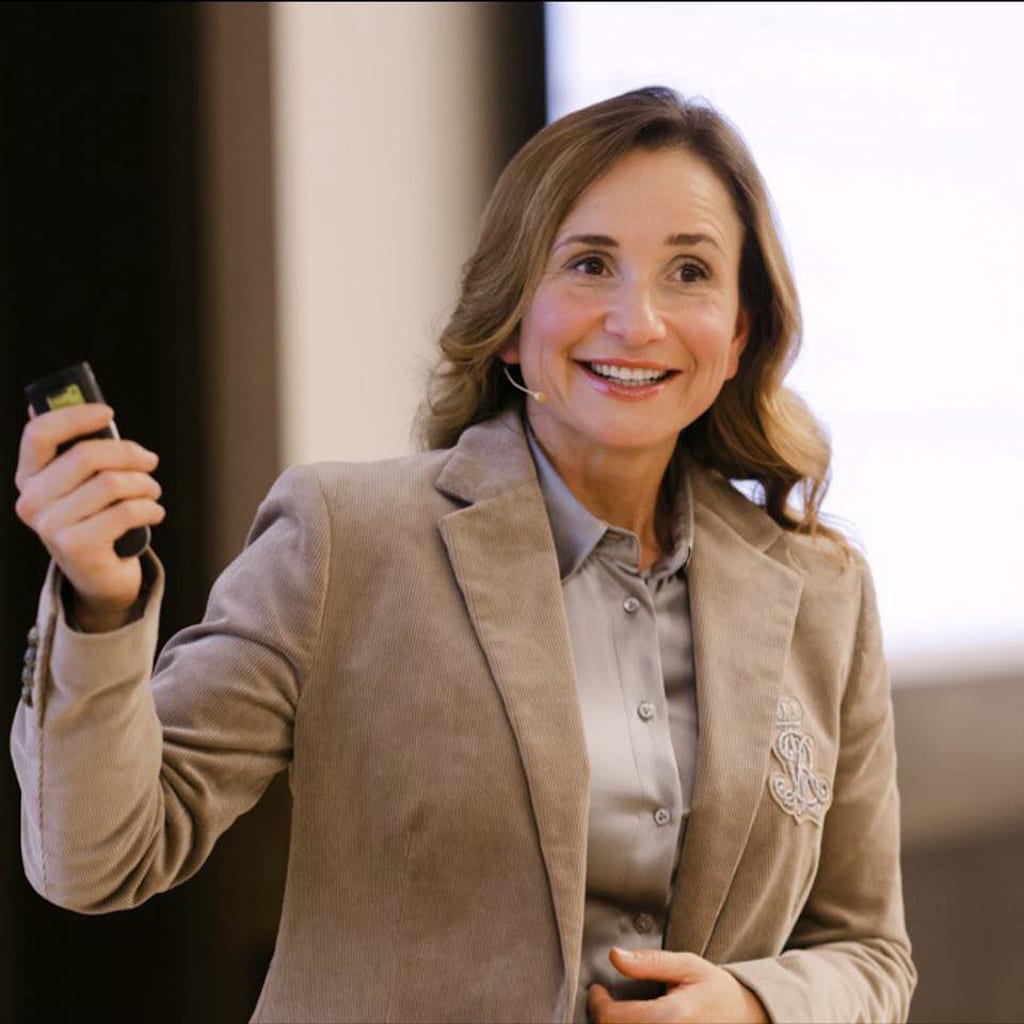
Oleksandra Yamshchikova is a Ukrainian entrepreneur based in Germany who built businesses in Ukraine before the war disrupted her company’s European labour-placements. After relocating to Germany, she founded communities, a nonprofit, and a business club to help Ukrainian entrepreneurs integrate, find clients, and grow. Her programs support founders from early-stage ventures to established firms, including youth entrepreneurship through Genius, acceleration, mentoring, networking, German market entry, and cross-border diaspora collaboration.
In this interview, Scott Douglas Jacobsen asks Oleksandra Yamshchikova how the war has reshaped her life, her business, and her understanding of Ukrainian entrepreneurship in Germany. Yamshchikova describes losing stability, volunteering, rebuilding from scratch, founding entrepreneur communities, and confronting German bureaucracy, tax systems, banking barriers, language issues, client trust, and cultural differences. She emphasizes community as the bridge between Ukrainian speed, ambition, survival pressure, and Germany’s slower but structured business environment for entrepreneurs seeking durable market integration abroad.
Scott Douglas Jacobsen: When the war broke out, however you define that, I know people define it in different ways, 2014 or 2022, how did this impact you personally, and how did it change considerations in your professional and business life?
Oleksandra Yamshchikova: At that time, we were very successful entrepreneurs. We had businesses in Europe. We lived in Ukraine and had two businesses: one in Ukraine and one in Estonia. We had a family and a very easy life. When it started, our business almost broke because our business was connected to sending people to work in Europe.
For one month, I volunteered. Then I understood that it was becoming a business process. So, we stopped volunteering, and I moved abroad to Germany.
We started from scratch. We considered starting the same business in Germany, but it wasn’t as easy as we thought. I joined startup programs and many programs in Germany that help Ukrainians start their businesses. One program from a German bank took us in and gave us a salary to join a new startup.
But I understood that it was not mine. I did not want to do this because it was an app working with depression and mental health. I understood that I should do what I wanted to do in Germany.
I’m building a community of Ukrainian and local entrepreneurs to make it easier for Ukrainian entrepreneurs to integrate. That was my idea because I understood, when I started the business, that it was very difficult: no information, no experience, nothing, and many boundaries to starting a business in Germany.
So, I started connecting entrepreneurs to help them learn how to start. We started offline meetings, and then I founded a nonprofit organization to help Ukrainian entrepreneurs integrate into the German entrepreneurial system.
Then I opened the business club, and step by step, I figured out that we needed some levels. So, I started working with entrepreneurs who were starting. It is a free business community for everybody. We opened it for all Ukrainian entrepreneurs around Europe. We connect with them and start supporting them.
The next level is an acceleration program, where we help with mentoring and help them grow their revenue from scratch to €100,000. At the next level, we have a business club. It is for more sustainable entrepreneurs, from €100,000 to €1 million. The next level is from €1 million to €50–200 million. So it is mostly for really big businesses. This week, we launched a program called Genius for young entrepreneurs aged 14 to 18.
Jacobsen: What do you teach them from ages 14 to 18 that they can use later in their adult life?
Yamshchikova: We started doing it because I have a daughter. She is almost 16. She already has experience with startups. She pitched her startup at Web Summit. We should develop skills for entrepreneurs from the age of 13. It really gives you an understanding of why you are learning, why you are going to an institute, and what is happening around the world.
You understand that you do not need to spend your time drinking beer in shops. You understand what you should do and what is happening in the world. They develop a motivation to do something special, something big, and to set goals.
We found a team to work with Cashflow games, sports, and startups to create their own startups in groups. Then we match them with VC funds, and they pitch their startups to those funds. That is the goal.
Jacobsen: In terms of the character of doing business, what do you see at the thousand-dollar level, and what do you see at the $50 million level and above? What is the distinguishing factor or set of factors there?
Yamshchikova: The big businesses are mostly developers, construction developers, IT companies, computer production distribution companies, family offices, and logistics companies. IT companies are one of the most popular directions. Of course, we also have other businesses, like car sharing, but those are less common.
Jacobsen: When you first moved to Germany, what were your issues with integration, and what was actually relatively easy in terms of integrating into the larger culture?
Yamshchikova: It was easier because European people are similar in many ways. We have similarities so that we can feel that. The difficult part was not knowing where to live or what to do. A lot of people, not me, but many others, did not know what to do: whether to stay or go back.
It was difficult for many people to make decisions because they did not know whether to stay, change countries, or return home. I make decisions immediately and live with them, but many people struggle with uncertainty.
The most difficult thing is that, in Ukraine, maybe you were not a very big person, but you still had a very good business. You had real opportunities because you had staff and people around you.
In Ukraine, you had enough cash to travel and live well. Then everything changed immediately. You did not know what would happen tomorrow. You started from scratch while also recognizing that you did not know the language.
But really, Germany gave the biggest help to the Ukrainian people. I think they have done a lot to help Ukrainians integrate. Germany did a lot: helping people find flats, organizing integration, and supporting people through the government system. It was not business doing this; it was government support. Of course, everything was not easy.
The most difficult thing in business, and I speak about this often on panels, is finding the first client. German people do not want to change the conditions. They do not want to change suppliers. So it is very difficult to start working with German people.
It is much easier with Ukrainians or Americans. German clients do not want to change the price, the process, or anything else. Finding the first client and getting references from German clients is very difficult. That is probably the hardest part of doing business in Germany.
This is why community helps. Your first clients can come from your community. Some local entrepreneurs in our business club have lived in Germany for 20 years, but they still have Ukraine in mind, so they understand us.
Of course, there are differences in mentality. Ukrainians always need things quickly: yesterday, now, and cheaper. Germans are more likely to say, “Maybe next year. We will drink coffee first. Send me something.” For Germans, they first want to build a relationship, and that can take a few years.
Ukrainians come hungry, and they need to start immediately. They cannot wait.
So, we solved this partly by connecting Ukrainian entrepreneurs who lived in Germany before the war with German business clubs. We organized connection events with German business clubs. It was not a quick process, but now we have some cooperation and friendships with German clubs that are happy to work with us.
Jacobsen: Thank you very much for the opportunity and your time, Oleksandra.
Last updated May 3, 2025. These terms govern all In Sight Publishing content—past, present, and future—and supersede any prior notices. In Sight Publishing by Scott Douglas Jacobsen is licensed under a Creative Commons BY‑NC‑ND 4.0; © In Sight Publishing by Scott Douglas Jacobsen 2012–Present. All trademarks, performances, databases & branding are owned by their rights holders; no use without permission. Unauthorized copying, modification, framing or public communication is prohibited. External links are not endorsed. Cookies & tracking require consent, and data processing complies with PIPEDA & GDPR; no data from children < 13 (COPPA). Content meets WCAG 2.1 AA under the Accessible Canada Act & is preserved in open archival formats with backups. Excerpts & links require full credit & hyperlink; limited quoting under fair-dealing & fair-use. All content is informational; no liability for errors or omissions: Feedback welcome, and verified errors corrected promptly. For permissions or DMCA notices, email: scott.jacobsen2025@gmail.com. Site use is governed by BC laws; content is “as‑is,” liability limited, users indemnify us; moral, performers’ & database sui generis rights reserved.

 In-Sight Publishing