Amos Guiora, Ph.D., J.D. on Recovered Holocaust Books, Enablers, and Denial
Author(s): Scott Douglas Jacobsen
Publication (Outlet/Website): Vocal.Media
Publication Date (yyyy/mm/dd): 2026/05/04
How do recovered Holocaust books connect Amos Guiora’s work on enablers to antisemitism today?
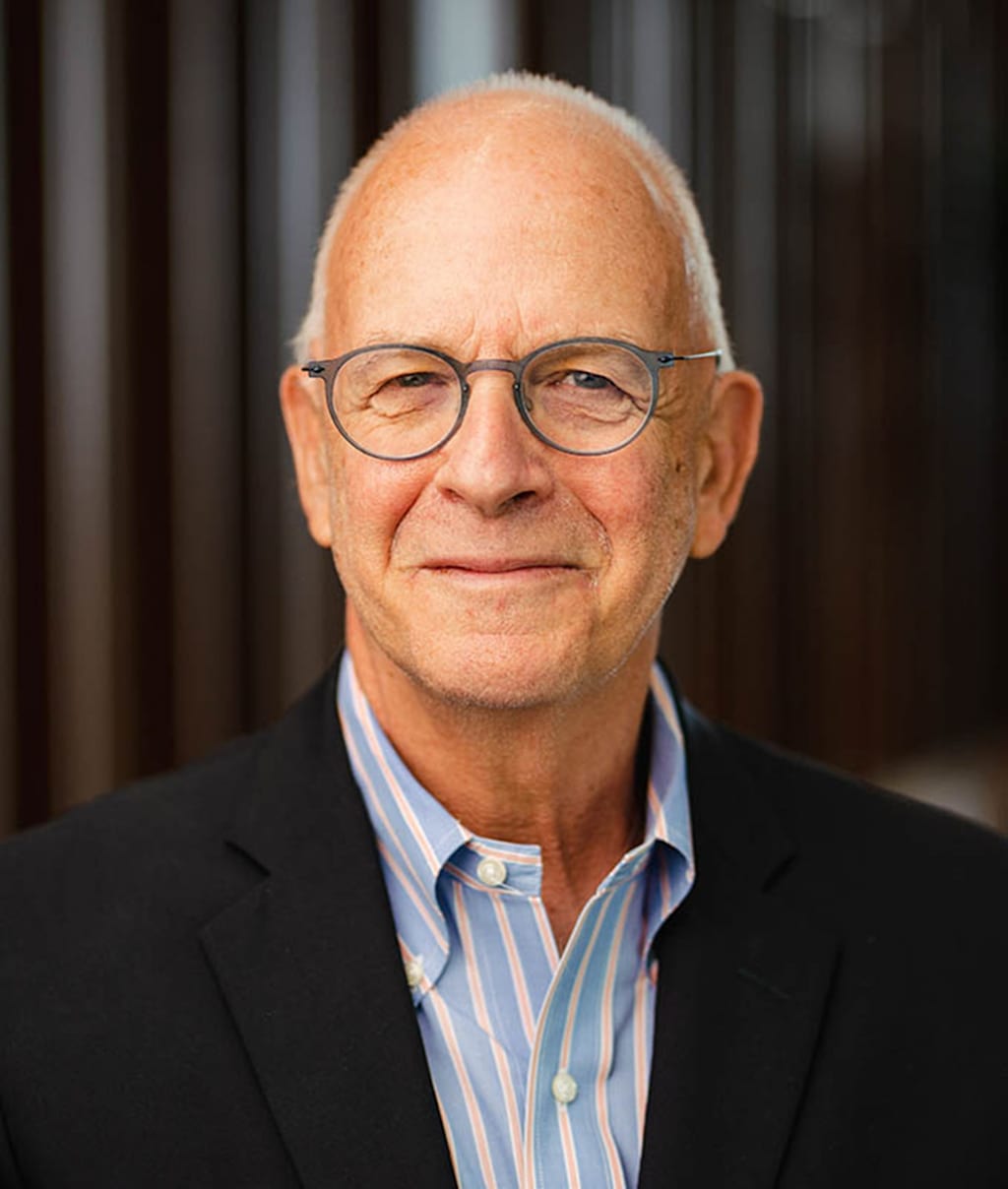
Prof. Amos N. Guiora is an Israeli-American professor of law at the University of Utah’s S.J. Quinney College of Law and directs the school’s Bystander Initiative. He holds an A.B. in history from Kenyon College, a J.D. from Case Western Reserve University School of Law, and a PhD from Leiden University. Guiora served 19 years in the Israel Defence Forces, retiring as a lieutenant colonel, and helped implement the Oslo Peace Process (1994–1999). His work examines national security, institutional complicity, and enabling cultures behind sexual abuse; he has authored The Crime of Complicity, Armies of Enablers, and Legitimate Target.
Scott Douglas Jacobsen interviews Amos Guiora about four recovered books belonging to Guiora’s grandfather, Shlomo Natan Goldberg, and their journey through Auschwitz, Nuremberg, and family memory. Guiora frames the project as a duty against Holocaust denial and minimization, connecting restitution, survivor testimony, Hungarian Jewish history, enablers, and bystander accountability. The exchange also examines antisemitism today, youth education, moral courage, and the legal responsibility to confront enabling across generations through witness, law, and remembrance.
For more commentary:
The upcoming book is Victory, Redemption, and Legal Responsibility: By Bystanding We Enabled, Springer Law at Springer Nature
Scott Douglas Jacobsen: Was any part of you hesitant to pursue this project?
Dr. Amos Guiora: When I received notice about the books, I was at home in Israel. I received the email at 11 p.m. The subject line was my grandfather’s name.
My first reaction was that it was spam. I thought, “All right, I will read it.” The first line said, “If you are Amos Guiora, continue reading.” The next line said, “If you are the grandson of Shlomo Natan Goldberg, continue reading.” I kept reading, and I was completely overwhelmed.
When the books arrived in Salt Lake City last February or March, a friend told me to record myself opening the boxes. I was so overwhelmed that I couldn’t get my phone to work, so I didn’t record it.
Then the question became what to do with all of this. One friend suggested writing an article; others suggested writing a book. Some even asked, “Where is the movie? Who will play Guiora?” At some point, it became clear that I wanted to do something. I was honoured that, in the end, I was able to work it out with Springer.
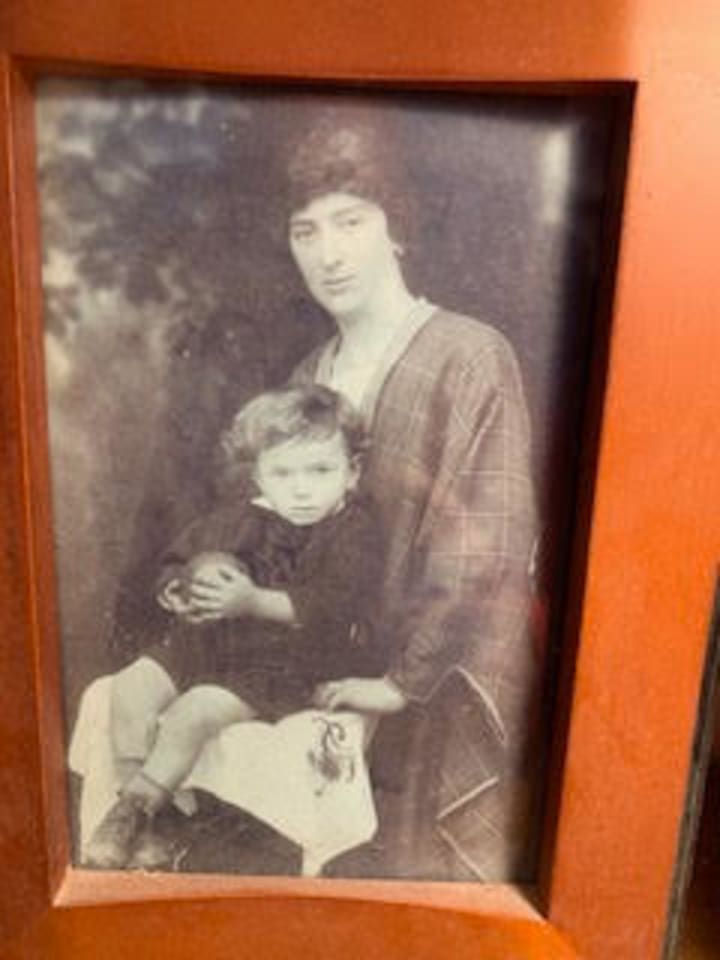
In response to your question, telling my grandfather’s story is critical and honours his memory. In an age of Holocaust denial and, more troublingly, Holocaust minimization, it has become urgent. As I sit here at my desk, I look at a photo of my father and my grandmother holding a child; it is not clear whether she is holding my father or my uncle. It never was to me. I feel a profound sense of duty and responsibility to my paternal grandparents, Shlomo Natan Goldberg and Therese Goldberg, who were murdered at Auschwitz.
That is what drives this. Once the collaboration with Springer began, it was clear that this was a book that had to be written. I want to emphasize that there is urgency in two ways. One is the urgency created by Holocaust denial. The other is the urgency created by the reality that there are very few Holocaust survivors still alive. For example, I found testimony from a woman who was four years younger than my father and who lived in his hometown. I found her testimony online, and I intend to reach out to her or her family.
There is also urgency in the reality of loss. My mother died four years ago; my father died ten years ago. In that sense, there is a clear sense of duty here, which is deeply serious. Friends have said to me, “Look at this: your grandfather was, as you understand it, a Hebrew school teacher of some kind and took books with him. Your father was an academic, and here you are, an academic as well, though you describe yourself as more modest compared to your father, who was a luminary.” There is something about books that ties it all together.
Jacobsen: One quick touchstone footnote: the oft-quoted phrase “history does not repeat itself, but it rhymes” is attributed to Mark Twain. About Holocaust denial and other forms of antisemitism, historical and factual, what through lines do you observe? What evolutions do you see?
Guiora: I want to show you this book: Holocaust Denial, Antisemitism, Racism, and the New Right by Gil Seidel. For me, the through lines are, first, the story itself. Second, absolutely, the story goes beyond the taking of the books. There is the Holocaust narrative: Hungary, deportation, Auschwitz, and pre-Holocaust Hungary.
In many ways, my emphasis, and I am not a Holocaust historian, is that one should understand what one is and not claim what one is not. The through lines, for me, are the roles of the enablers. That is the central through line.
So, in many ways, to your question, it is the books through enablers, and enablers through the books. There is an interplay there.
I am often asked whether I see a relationship or similarity between the Holocaust 80 years ago and events happening around the world today. I think about that. Antisemitism weighs heavily on me. The minimization of the “other” weighs heavily on me.
I have a student who wrote a strong paper about, for example, ICE. That weighs on me in this context. These through lines exist.
I want to be careful because I am focused on the book, Auschwitz, my grandparents, and the role of enablers. But in terms of concerns about contemporary society, yes. I am a fairly well-informed person.
In terms of antisemitism and Holocaust denial, several years ago, I debated a distinguished professor. We were debating a different topic, but on my way there, my research assistant told me that he was a Holocaust minimizer. I had never heard the term before.
It turned out that he had written that the Holocaust did happen, but that it was not six million victims, rather two million. At the end of the debate, I refused to shake his hand. He extended his hand, and I looked at it and refused. The following day, I received a scathing letter from his provost accusing me of violating academic integrity and decency.
I asked my dean what to do. He said I had three options: respond line by line, delete the letter, or tell him to go to hell. I chose to delete it.
I ran into that same professor a couple of years later. He said, “Amos, it is great to see you.” I looked at him and again refused to shake his hand, because I had my mother and father in mind.
To your question about through lines: Holocaust minimization is more insidious than outright denial. Saying it did not happen is one thing; saying it happened but reducing the scale is, in some ways, more dangerous.
My contribution, and I am grateful to Springer for the opportunity, is to examine history and law together. I hope, through the lens of my grandfather, to make a meaningful contribution to this conversation.
Jacobsen: Among different generations, for example, those in their 80s compared to those in their 20s, is Holocaust denial and minimization decreasing or increasing?
Guiora: I confess that until 15 or 20 years ago, when I had that debate, I had never heard the term “Holocaust minimization.” When my book The Crime of Complicity: The Bystander in the Holocaust came out, I received many death threats. My mother, who was a Holocaust survivor, was shocked that writing about the Holocaust could provoke that reaction.
When I told her about Holocaust denial, she could not comprehend it. For survivors, the idea that the Holocaust did not happen, or that it “was not that bad”, is something that must be confronted and corrected.
Unfortunately, my father was not cognitively able to understand that this was happening. But for Holocaust survivors, the record must be set straight.
If I have been allowed to play even a modest role in that, then it is my duty and obligation to do so. As you know, I have developed this concept of enablers. If I can frame this issue through the lens of enabling and enablers, it strengthens the argument by expanding the scope of those who bear responsibility for what was done to my grandparents.
Jacobsen: How did you receive the message about this project? How did you receive the books?
Guiora: I received an email from the Center Director, or on behalf of the Center Director.
Jacobsen: What was the format of it, and did you think it was fake?
Guiora: It was an email, and I initially thought it was spam. I read it at 11 p.m. here, and I told myself I would not wake my family so that I would wait until the next day. It was overwhelming.
Aside from a photograph of my grandmother, which is in front of me as we speak, I have nothing from my grandparents. Nothing at all. Since then, I have located documents my father submitted to Yad Vashem. While working on my previous book, I also obtained photographs and deportation records, documents listing their names, from May 1944.
However, I do not have a photograph of my grandfather. I have seen images of selection lines from that period, including photographs from the day they were likely in the selection line in May 1944. I find myself asking, “Could this be them?” but I have no way of knowing.
What makes this project so important to me is, first, to tell my grandparents’ story, or to try to tell it. Second, to connect the historical dots. Third, to reinforce the danger and moral failure of Holocaust denial and minimization. And fourth, to emphasize the critical role of enablers and the need to hold them accountable.
Since we signed with Springer and began work on the book, I have gathered substantial material. I have an excellent research assistant. At the University of Utah, we had the Bystander Initiative. There is also a scholarship in my father’s name. She is the next recipient of that scholarship while working with me on this book. There is a certain symmetry in that, which is meaningful.
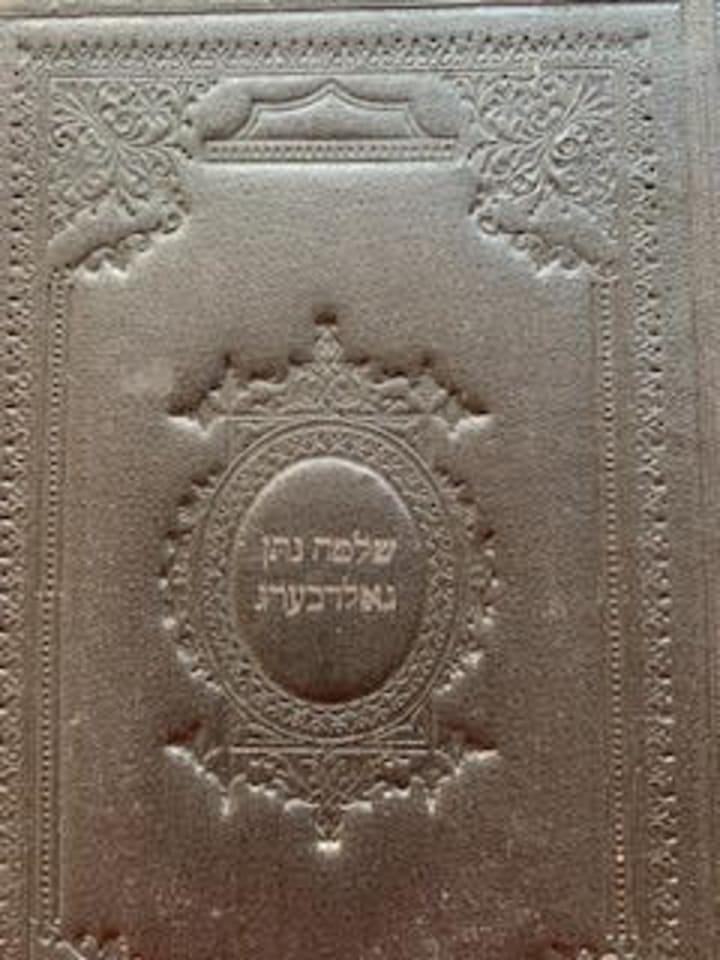
Jacobsen: When you saw your grandfather’s name embossed on the books, what did that add to your understanding of your family history that you may not have known before?
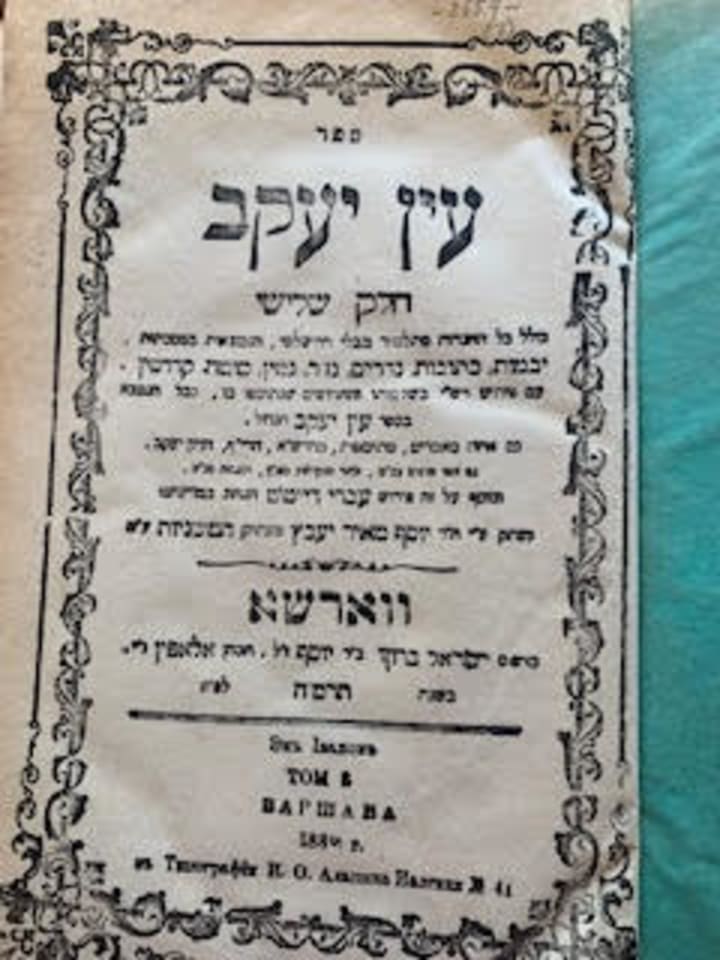
Guiora: First, beyond the overwhelming nature of it, there is the question I do not yet have an answer to: why did he take these four books with him? I hope to find an answer.
My great-grandfather, my grandfather’s father-in-law, was an important Orthodox rabbi associated with Satmar. In 1939, my grandfather obtained certificates that would have allowed the family to leave Hungary and come to what is now Israel. It was his father-in-law, my great-grandfather, who said no. The reason was theological: Satmar belief holds that Jews should not return to Eretz Yisrael, the Land of Israel, until the arrival of the Messiah.
This raises an issue I will have to address in the book, one that may make people uncomfortable: the role of certain Orthodox rabbinical authorities during that period. In 1939, he refused permission for his daughter, my grandmother; his son-in-law, my grandfather; and their children, including my father and his brother, to leave.
My grandfather, in an act of rebellion that ultimately saved lives, sent my father and uncle from their small town in eastern Hungary to Budapest, to a Jewish school. When the Nazis occupied Hungary, deportations initially targeted Jews in the provinces rather than those in Budapest. By defying his father-in-law, my grandfather effectively saved my father and uncle. That is a difficult but important story I will have to address.
Jacobsen: You mentioned other realities of human social life under extreme conditions, such as theological constraints in certain Orthodox traditions that discouraged return to Israel, and how that may have had consequences during antisemitic crises. You also referred earlier to cases where women were forced into sexual relations with Nazi soldiers to protect loved ones.
Guiora: It was not “selling.” I am convinced it was not that. My grandmother, my mother’s mother, acted under coercion to save her child.
My mother was taken to be shot twice when she was 12 years old. The first time, she was saved by someone she later encountered, by chance, at a dinner in Tel Aviv 25 years ago. The second time, I believe, based on what I have pieced together, that my grandmother provided sexual services under coercion to save her daughter. Anyone with children or grandchildren can understand the desperation in such circumstances.
My father survived two death marches. My mother was 12; my father was 19. People often use the word “resilience.” I am not a Holocaust historian, but I have interviewed many survivors. In my case, my grandparents were murdered.
To your earlier question about the through lines, books, Auschwitz, and enablers, that is what I hope to bring together in this work. I have two years under contract. I am scheduled to submit the manuscript on my birthday, May 31, 2028.
I also want to go to Nuremberg, where the books were found, and to eastern Hungary, where my father was raised and where I have been twice. When we go to Belgrade, I was hoping to visit Bor, the camp in Serbia where my father was held. However, I was told that it is a ten-hour round trip, so I may have to wait.
I would also visit the United States Holocaust Memorial Museum in Washington, D.C., and, of course, Yad Vashem here in Israel. There is a great deal of research to be done.
I am fully committed. This will not be easy; it will be challenging. But there is a profound sense of duty, more than anything else, a duty and obligation to tell their story, my grandparents’ story. To examine the role of enablers and to confront Holocaust denial and minimization.
I am deeply, truly honoured that the books found their way to me. I am grateful that we have them, and I want to do something meaningful with them.
Jacobsen: Thank you very much for the opportunity and your time, Amos.
Last updated May 3, 2025. These terms govern all In Sight Publishing content—past, present, and future—and supersede any prior notices. In Sight Publishing by Scott Douglas Jacobsen is licensed under a Creative Commons BY‑NC‑ND 4.0; © In Sight Publishing by Scott Douglas Jacobsen 2012–Present. All trademarks, performances, databases & branding are owned by their rights holders; no use without permission. Unauthorized copying, modification, framing or public communication is prohibited. External links are not endorsed. Cookies & tracking require consent, and data processing complies with PIPEDA & GDPR; no data from children < 13 (COPPA). Content meets WCAG 2.1 AA under the Accessible Canada Act & is preserved in open archival formats with backups. Excerpts & links require full credit & hyperlink; limited quoting under fair-dealing & fair-use. All content is informational; no liability for errors or omissions: Feedback welcome, and verified errors corrected promptly. For permissions or DMCA notices, email: scott.jacobsen2025@gmail.com. Site use is governed by BC laws; content is “as‑is,” liability limited, users indemnify us; moral, performers’ & database sui generis rights reserved.

 In-Sight Publishing