Maria Butyrina on Media, War Narratives, and National Identity: Ukrainian Journalism in Wartime
Author(s): Scott Douglas Jacobsen
Publication (Outlet/Website): Vocal.Media
Publication Date (yyyy/mm/dd): 2026/05/04
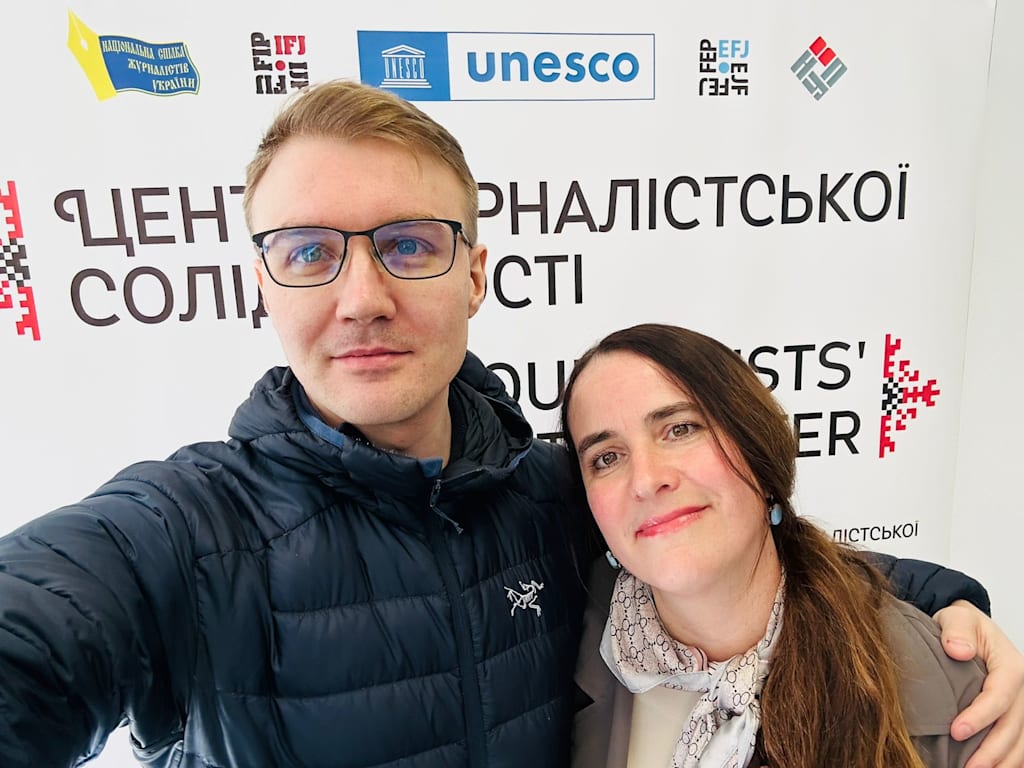
By Scott Douglas Jacobsen and Liana Okhrymenko (Translator, English-Ukrainian)
Maria Butyrina is a Ukrainian journalist whose work reflects the evolving realities of her country amid political upheaval and war. Motivated by both creativity and self-realization, she uses journalism to shape public understanding and social consciousness. Her reporting focuses on war, displacement, and human resilience, particularly following the Revolution of Dignity and the full-scale invasion. Butyrina represents a generation of journalists committed to truth, national solidarity, and responsible storytelling during crisis.
In this interview, Scott Douglas Jacobsen and Liana Okhrymenko speak with Maria Butyrina about her motivations and the transformation of Ukrainian journalism. She explains how war became the dominant theme after 2014 and intensified following the 2022 invasion, shifting attention toward displacement, loss, and survival. Despite regional differences in danger, Butyrina emphasizes a unified national media approach focused on accuracy, resilience, and informing both citizens and international partners about Ukraine’s ongoing struggle.
Scott Douglas Jacobsen: Was journalism your original dream?
Maria Butyrina: Journalism gave me the opportunity to work not only with creativity, but also with self-realization. Thanks to my journalistic work, I was able to achieve a higher level of self-realization. I also wanted to have some impact on society, because journalism gives me the opportunity to form opinion, to place certain emphases, and to offer interpretations of what is happening.
This is a good opportunity to influence how people understand events and, to some extent, human behavior and consciousness.
Jacobsen: How would you characterize the themes of journalism before the Revolution of Dignity, during 2014–2021, and after the full-scale invasion?
Butyrina: First of all, after the Revolution of Dignity, the annexation of Crimea and the war in eastern Ukraine became central themes. Military issues moved to the forefront, which is understandable, and there was less space for other thematic blocks in the media.
The daily news agenda began to form around these military narratives. After February 24, 2022, many more war-related topics emerged: internal displacement, relocated enterprises, and a significant number of sensitive issues connected to the full-scale invasion.
There was also strong attention to people who survived occupation, lost property, or lost loved ones. Of course, the thematic spectrum changed a lot. Even after 2014, we could already see this shift, because Crimea was occupied and the war in the east had begun.
After the full-scale invasion, we have even more problems here. Before that, there was already less attention to other topics. Right now, there is even less, because the war dominates the news, along with destruction and everything connected to it. We also have a huge focus on people who suffered because of the war—people who relocated, who need help with housing, with family, and with many other things.
That is why, right now, I would say that we still have other topics, but this is the primary one.
Jacobsen: Are you noticing any nuances in the tone of reporting between the frontline and the far west, for instance?
Butyrina: I do not see major differences in the presentation of military issues. Ukraine is one country living through the same war, even if the intensity differs by region. It does not matter where the journalist is from.
We all work in the same mode. We support our country, and we pay attention to our Western partners and to the people who make decisions about helping us. That is why international broadcasting and media diplomacy are so important for us right now. The world needs to see and understand what is happening in Ukraine. It is important to report on what is happening in our country objectively and truthfully.
Unfortunately, even western regions are affected by missile strikes and destruction, so there is no regional gap. Of course, people living closer to the frontline face more immediate danger, which can influence journalistic emphasis, but overall we operate within a shared national information reality.
Jacobsen: Thank you very much for the opportunity and your time, Maria.
Last updated May 3, 2025. These terms govern all In Sight Publishing content—past, present, and future—and supersede any prior notices. In Sight Publishing by Scott Douglas Jacobsen is licensed under a Creative Commons BY‑NC‑ND 4.0; © In Sight Publishing by Scott Douglas Jacobsen 2012–Present. All trademarks, performances, databases & branding are owned by their rights holders; no use without permission. Unauthorized copying, modification, framing or public communication is prohibited. External links are not endorsed. Cookies & tracking require consent, and data processing complies with PIPEDA & GDPR; no data from children < 13 (COPPA). Content meets WCAG 2.1 AA under the Accessible Canada Act & is preserved in open archival formats with backups. Excerpts & links require full credit & hyperlink; limited quoting under fair-dealing & fair-use. All content is informational; no liability for errors or omissions: Feedback welcome, and verified errors corrected promptly. For permissions or DMCA notices, email: scott.jacobsen2025@gmail.com. Site use is governed by BC laws; content is “as‑is,” liability limited, users indemnify us; moral, performers’ & database sui generis rights reserved.


