Author(s): Scott Douglas Jacobsen
Publication (Outlet/Website): Canadian Atheist
Publication Date (yyyy/mm/dd): 2021/02/05
René Grigori is the Media Liaison (Spokesperson), Southern California Chapter of The Satanic Temple. Here we highlight the work and activities of the Southern California Chapter of The Satanic Temple.
Scott Douglas Jacobsen: What is the story of coming to TST for you?
René Grigori: I was born into, and raised by, a Catholic family. Most of my schooling was in Catholic schools. Religious studies were paramount in High School where we were being trained as though we were in seminary. All throughout this time I was constantly questioning and doubting the doctrine of the religion.
Throughout most of my life I dabbled with the esoteric. I’ve always felt drawn to those things I was told are forbidden. I studied a number of esoteric matters: Theosophy, Order of the Golden Dawn, Ordo Templi Orientis, Laveyan Satanism, and Buddhism among many traditions.
As an adult I’ve been a staunch Atheist. I joined one Atheist group and, due to internal conflicts, I founded another group called the Riverside Atheists and Freethinkers (RAFT). Throughout much of this time I noticed a lot of cliques forming within the Atheist community. After some time the fractures I saw led me to consider altering where I stood on certain matters. In time I turned the group over to a triumvirate leadership allowing me to step out of the grind and give more thought to how I wanted to develop as a person.
Prior to turning the group over I had been hearing about The Satanic Temple(TST), and a number of their escapades so I decided to look into their religion a bit more. I was also checking out something called Secular Buddhism at the same time. Sadly, the folks promoting Secular Buddhism kept getting into the supernatural (something that I tend to avoid). However, everything I saw in TST just clicked for me: their mission statement, the 7 tenets, the literary perspective of Satan as the noble hero, etc…. Eventually, I decided I had to join and get in this religion. So far, it seems this was the best decision, aside from marrying my wife, that I ever made.
Jacobsen: How do most in Southern California tend to come to TST?
Grigori: I think every person’s introduction to TST is unique. Some have come, initially, out of curiosity (like myself), others may have seen the documentary: “Hail Satan?”, still others may have been involved in other Satanic traditions and migrated to TST because it better aligned with their values/mindset.
Jacobsen: For The Satanic Temple Southern California, you are the authorized spokesperson. The first thing standing out about TST Southern California is the logo remains much the same with some variation in the overall design. Why this particular design for TST SoCal’s logo? Who designed it?
Grigori: Our logo design was a group effort. We were provided guidelines by TST’s International Council (IC), and one of our Division leaders worked on crafting rough drafts for the rest of us to comment on. Eventually we arrived at something we were all happy with.
Side note: due to the large geographic area our Chapter covers we have broken areas down into Divisions. There are five Divisions corresponding to Ventura County, LA County, Orange County, San Diego, and the Inland Empire. The Chapter leadership and each of the Divisions are run by triumvirates.
Jacobsen: The seven tenets of TST non-theistic Satanism are as follows:
1. One should strive to act with compassion and empathy toward all creatures in accordance with reason.
2. The struggle for justice is an ongoing and necessary pursuit that should prevail over laws and institutions.
3. One’s body is inviolable, subject to one’s own will alone.
4. The freedoms of others should be respected, including the freedom to offend. To willfully and unjustly encroach upon the freedoms of another is to forgo one’s own.
5. Beliefs should conform to one’s best scientific understanding of the world. One should take care never to distort scientific facts to fit one’s beliefs.
6. People are fallible. If one makes a mistake, one should do one’s best to rectify it and resolve any harm that might have been caused.
7. Every tenet is a guiding principle designed to inspire nobility in action and thought. The spirit of compassion, wisdom, and justice should always prevail over the written or spoken word.
When you first came to TST, what were some of the appealing aspects of the tenets guiding the core philosophy of non-theistic Satanism?
Grigori: So prior to joining TST I was quite discouraged by the fracturing I saw in the Atheist community. I think that fracturing was due to nobody having a concise set of guiding principles; Atheism simply a matter of not believing in any gods. I realized that being part of a group with guiding principles was important. When I initially read the tenets all I could think was: “Wow, these tenets encapsulate my thinking perfectly.”. The tenets advocate for compassion and empathy, respecting the autonomy and freedoms of others, they advocate a science based approach to beliefs and knowledge, and there is an emphasis on being responsible for one’s own actions. This all thrilled me.
Jacobsen: TST SoCal has the following as a description:
The mission of The Satanic Temple is to encourage benevolence and empathy among all people, reject tyrannical authority, advocate practical common sense and justice, and be directed by the human conscience to undertake noble pursuits guided by the individual will. Politically aware, Civic-minded Satanists and allies in The Satanic Temple have publicly opposed The Westboro Baptist Church, advocated on behalf of children in public school to abolish corporal punishment, applied for equal representation where religious monuments are placed on public property, provided religious exemption and legal protection against laws that unscientifically restrict women’s reproductive autonomy, exposed fraudulent harmful pseudo-scientific practitioners and claims in mental health care, and applied to hold clubs along side other religious after school clubs in schools besieged by proselytizing organizations.
Obviously, these are more highly active forms of combatting theocratic mentalities and encroachment in schools, in politics, in disciplines in mental health, and scientific literacy in the public sphere. This differs from a number of other groups in which the emphasis remains on base community building and having a sense of common cause, internally. TST takes this externally. What have been some of the forms of activism externally by TST SoCal?
Grigori: So, we do foster community building within our Chapters and associated Friends of Groups (FoGs). Also, because of our tenets we have a sense of common cause. Our external efforts are simply a manifestation of our community’s shared values.
TST SoCal’s primary external focus has been on charitable works. Recently we wrapped up our Toasty Toes campaign where we collected socks, toiletries, and other items to help the homeless during the winter months. We ultimately contributed over $2,000 worth of goods to a variety of charities with that campaign.
Currently, we are focused on another charity drive we are calling: “The Devil’s Food Pantry”. So far we have raised over $1,000 in food goods that we will be donating to St. John’s Episcopal Church in San Bernardino. We collaborated with them in the past with great success and we hope to keep this relationship thriving.
That being said, we are certainly open to any national campaigns sanctioned by the IC. However, charitable works are something we can do all of the time.
Jacobsen: For those things not tackled, yet, what are the concerns in SoCal in regards to the encroachment of theocratic mentalities and activities in the public sphere? Are reproductive rights a big one?
Grigori: Yes, reproductive rights are incredibly important to us. Not only matters like access to abortion, but also the general care and welfare of people which is often overridden by religious objectors. As an example: a cis woman who may want a hysterectomy might be told by her Christian doctor that she should consult with her husband first before the doctor will proceed with any surgery. It should be that person’s decision alone and not anyone else’s; it’s her body after all.
Additionally, we strongly support the LGBTQ+ community which has been marginalized and outright attacked by more evangelical groups. The first event we did as a newly formed Chapter was a march in the San Diego Pride parade. During COVID, this past year, we hosted a virtual Pride for our members. People who respect the autonomy and freedoms of others should always feel accepted; gender identity and sexual orientation should have nothing to do with how we treat, and care for, our fellow human beings.
Jacobsen: There are a number of rules for TST SoCal members. These are great, pragmatic, and common sense solutions to some issues for minority religions, especially non-theistic ones, who already have enough stigma in the United States and don’t need infighting or (more) bad reputation/bad assumptions about them. I have to ask, “What necessitated the creation of the SoCal formulation of rules to you?”
Grigori: Many of our rules are derivative of our tenets. However, there are a number of rules which are there simply to protect our community. The act of identifying ourselves as Satanists can oftentimes lead to scorn and ridicule. So, we work to provide our members with a safe and loving community both online and off.
Jacobsen: The current coverage for TST SoCal: San Diego, Inland Empire, Los Angeles, Ventura County, and Orange County. With those covered, what was the chronology of formation? What are the general demographics, even a qualitative analysis of them?
Grigori: Each of our Divisions started out as Friends of Group (FoG), which are basically groups aligned with TST, but are not officially recognized as Chapters. The long story short is: the IC decided that it might be best if all of the FoGs in SoCal organized under one Chapter. We all agree to that and when the IC granted us Chapter status each of the individual FoGs became a Division within the Chapter.
Our Chapter is incredibly diverse with BIPOC members, LGBTQ+ members, members living either in chronic pain or disabled. I don’t have a breakout of percentages because it is not our objective to manage quotas, however, it is our goal to accept people who align with our tenets and consider themselves to be non-theistic Satanists regardless of their unique makeup; to that end we have a Diversity Committee responsible for ensuring we are open, welcoming, and mindful of the varying mix of members within our community.
Jacobsen: What seem like the next reasonable steps in a) expansion into new divisions and b) combatting other forms of anti-science and theocratic mentalities acted out in the public sphere?
Grigori: With regard to expanding into new Divisions: there are always ongoing discussions as groups outside of our coverage become interested in joining. At this time, there is nothing officially in the works for TST SoCal, but that could change in the future. Our Chapter Heads act as liaisons for several FoGs and our Chapter has good relationships with other Chapters; especially those in Northern California.
As far as combating “anti-science and theocratic mentalities acted out in the public sphere”, we address those on a case by case basis. At the moment, we are all abiding by the best scientific guidance regarding COVID-19. We keep the majority of our discussions online and we’ve had to adapt our rituals to conform to an online format. However, when and where it is safe and makes sense to do so, we will be there to fight the good fight for science based practices and religious plurality in the public sphere.
Jacobsen: Thank you for the opportunity and your time, René.
Grigori: Thank you. I appreciate the thoughtful, and well researched, questions. It has been a pleasure.
License
In-Sight Publishing by Scott Douglas Jacobsen is licensed under a Creative Commons Attribution-NonCommercial-NoDerivatives 4.0 International License. Based on a work at www.in-sightpublishing.com.
Copyright
© Scott Douglas Jacobsen and In-Sight Publishing 2012-Present. Unauthorized use and/or duplication of this material without express and written permission from this site’s author and/or owner is strictly prohibited. Excerpts and links may be used, provided that full and clear credit is given to Scott Douglas Jacobsen and In-Sight Publishing with appropriate and specific direction to the original content. All interviewees and authors co-copyright their material and may disseminate for their independent purposes.
Share this:

Author(s): Scott Douglas Jacobsen
Publication (Outlet/Website): Canadian Atheist
Publication Date (yyyy/mm/dd): 2020/01/31
Takudzwa Mazwienduna is the informal leader of Zimbabwean Secular Alliance and a member of the Humanist Society of Zimbabwe. This educational series will explore secularism in Zimbabwe from an organizational perspective, and more. Here we talk about Article 61(4) of the Zimbabwean Constitution.
Scott Douglas Jacobsen: Article 61(4)(a) of the Zimbabwean Constitution (2013) states, “All State-owned media of communication must… be free to determine independently the editorial content of their broadcasts or other communications…”
How does this influence some of the editorial decisions of the “content of their broadcasts or other communications”? In short, is there a boundary between finances provided by the State and the broadcasting content freedom of the producers of content?
Takudzwa Mazwienduna: There is a fair degree of freedom of the press in Zimbabwe. State owned media does give a platform to diverse worldviews and it has never stood in the way of secularist opinions.
Jacobsen: Article 61(4)(b)-(c) states, “All State-owned media of communication must… be impartial… and c. afford fair opportunity for the presentation of divergent views and dissenting opinions.” Are there any other legal or infrastructural frameworks providing the stipulated impartiality and fair opportunity for Zimbabweans?
Let’s say an issue on secularism was being presented to the public, and then the religious leaders and spokespersons were provided the opportunity to come forward and present their case, would a divergent and dissenting view be permitted or sought, e.g., an atheist or a humanist group?
Mazwienduna: The government has actually encouraged secularists to speak out both on national radio and in newspapers. The only instance where freedom of the press is compromised is when it comes to criticism of the government itself. The ruling ZANU PF party has a totalitarian approach to governance such that they crush any opposition with every means possible.
Journalists who criticize the government might go missing or face arbitrary arrest without being given proper legal representation as the current case of Hopewell Chon’ono who is in jail for exposing the government’s corruption or cases like Jestina Mukoko and Patson Dzamara who were abducted and never found again back in the Mugabe days. Other than that, freedom of press is allowed as long as it does not compromise the ZANU PF establishment.
Jacobsen: How does this level of free expression compare to adjacent States: South Africa in the South, Botswana in the West and Southwest, Zambia to the North, and Mozambique to the Northeast and East?
Mazwienduna: Our Northern neighbor Zambia however is not as tolerating to secular views. They even have a ministry of religious affairs. The president of the Zambian Humanists Association Larry Mukwemba Tepa has talked about how Zambian government transitioned from a Humanist approach when Kenneth Kaunda the Civil Rights icon was president in the 1960s and 70s to the theocratic approach it takes today under Edgar Lungu.
The state of secularism in Zambia is at an all time low and it is the worst case scenario in the SADC region. South Africa and Botswana on the other hand are beacons of light upholding both secular and liberal approaches. They are successful democracies not only in the SADC region, but in Africa.
Mozambique on the other hand is an interesting case. The main religion in our Eastern neighbor; the Zimbabwean border town to which I’m native to and grew, is African Traditional Religion. Unlike the totalitarian nature of monotheistic religions like Christianity or Islam, animist traditional beliefs encourage more tolerance.
They have an understanding of how everyone has different beliefs and so embrace diversity. Secularism has never been a problem in Mozambique because of this lack of organized religion and so different views face no opposition in the papers.
Jacobsen: Thank you for the opportunity and your time, Takudzwa.
License
In-Sight Publishing by Scott Douglas Jacobsen is licensed under a Creative Commons Attribution-NonCommercial-NoDerivatives 4.0 International License. Based on a work at www.in-sightpublishing.com.
Copyright
© Scott Douglas Jacobsen and In-Sight Publishing 2012-Present. Unauthorized use and/or duplication of this material without express and written permission from this site’s author and/or owner is strictly prohibited. Excerpts and links may be used, provided that full and clear credit is given to Scott Douglas Jacobsen and In-Sight Publishing with appropriate and specific direction to the original content. All interviewees and authors co-copyright their material and may disseminate for their independent purposes.
Share this:
Author(s): Scott Douglas Jacobsen
Publication (Outlet/Website): Canadian Atheist
Publication Date (yyyy/mm/dd): 2021/01/29
*Interview conducted October 2, 2020*
Hari Parekh, has worked in the field of psychology for over four years. He obtained his BA (Hons) degree in Psychology and Criminology at the University of Northampton in 2015, and his MSc in Forensic and Criminological Psychology at the University of Nottingham in 2016. He has worked for the student sector of Humanists UK, holding roles of President and President Emeritus. Following this, he is the current European Chair/Volunteer Regional Coordinator for Young Humanists International, and the Volunteers Manager for Faith to Faithless. He is consistently invited to universities to talk about the psychological difficulties relating to apostasy. Here we catch up and reflect on Humanism in the UK and in Europe.
Scott Douglas Jacobsen: Okay, so, we have done an interview before. We have known each other for, at least, a couple of years or of each other for a few years now. We are both deeply involved in our own national humanist and skeptic communities and scene. There’s a lot of context and interwoven networks.
I thought I’d reach out and get a retrospective of Humanists International and Young Humanists International happening virtually this year due to the current pandemic. You are the European Working Chair or the Regional Committee Coordinator. What were some things that have stood out in the youth humanist scene in Europe?
Hari Parekh: So, Europe is very lucky in relation to activism within Humanism. In that, there are a lot of fabulous people doing a lot of great work from Germany to Norway to Italy to Spain to Lithuania, Poland, even parts of Russia are calming down.
There’s a lot of good work in relation to nationalistically highlighting injustices within one’s own nation and then being able to highlight it. The rights of people who are LGBTQ+ in Poland and Lithuania at the moment are quite stark at the moment.
There is a lot of good work happening by activists to highlight the issues that then causes. The reason why we’re lucky, though, within Europe, we are able to work or act, or demonstrate, or do things in activism, without the worry of being sentenced or killed, or abused, as a result of it.
The legal consequences are much lower than the ramifications in places like Africa, Asia, and the States to be fair. As a result, there are pockets in Europe and the UK who are doing formal good work. I think in a country like mine. The issue: How do you bring unity to people that aren’t able to come to together in that way?
A lot of activism done in Europe or singularly are the way things have been. What are we going to rally towards? Because it is a difficult question about purpose and the point of activism in Europe. If we’re not having the stresses of being killed, it creates a problem with people doing good work uniformly while creating a different question.
A lot of work is being done that’s good. It is doing more together; we have only just started.
Jacobsen: In regards to some of the political landscape and social landscape seen in different areas in Europe, they do stand out to someone coming from North America because the news sources continually report on issues around LGBTI equality in various areas, in other words regression.
We can think of Orban in Hungary with direct attacks on some of these fundamental tenets of not only human rights, but also Humanism. As well, the political instability around Brexit and the kind of impacts this has on young people’s futures, not only in the United Kingdom, but other countries impacted by the detachment of a major country connected to the European Union, previously.
Parekh: I think what we’re seeing from a bird’s eye view is a lot of the way things are or the politics of the way things are people becoming more and more jaded by the way establishments or organizations have acted when they are in power.
As a result, the growing sense of concern creates a growing sense of “What about me?” and this has filtered itself within the consciousness of European nations and people within it. You can see where that comes from in relation to the difficulties people have now, e.g., inequality is high.
People below the poverty line are increasing daily. What is going on about it? People need to understand why that might be, where that comes from, and how that becomes a thing. Interestingly, therefore, politics and the consensus of public opinion has moved to become a lot more individualistic and nationalistic to protect one’s own before looking after others.
I think that’s, technically, where the culture and the themes of this are going. Interestingly, on top, nationalism, itself, isn’t a bad thing; individuality, in itself, isn’t a bad thing. It has just been used by people of certain dispositions to inculcate hatred, annoyance, further hatred and violence against people of the other.
It has been usurped by people in that way. It creates a climate of unrule and unrest, and ultra-swarthiness within society. You only have to look at the way leaving the European Union from the UK’s perspective has marginalized people, marginalized families, marginalized people beyond its dreams and still continues to do so.
Again, the issue politically, socially is a very sad one, which is, basically, the argument. When we’re in that sensitive climate among people in that sense of frustration, the values of human nature or the values of human roles, or the values of anything like that, then also struggle in itself.
It’s like, “What is going to happen now? What are European nationals going to do in the UK now?” I think it is a very sad state of affairs for anybody involved. Interestingly, there used to be a rise with that.
You only have to look at Poland to reasonably see what’s going on. From a really specific perspective, it is going through a transition one can only lament.
Jacobsen: Now, how is Humanism in the United Kingdom managing this political unrest, internally? For the United Kingdom, internally rather than the region, how is British Humanism managing the political and social unrest in and of itself?
These are factors impacting people’s lives, impacting on the status of respect for science, respect for human rights, and trying to build a culture of scientifically and compassionately informed public policy.
These are a lot of issues that are being just ignored, basically, in public life or in the larger public life in the United Kingdom. I could imagine a lot of British Humanism is taken very seriously. Although, it has been a whirlwind.
Parekh: Even moving through Humanism, I think it provides non-religious people in itself, in the greatest respects, with the perspective of something to hone in on. I think it provides a lot of normal religious people with the perspective that there is an issue here relating very strongly to the values that we hold dear, whether scientifically, rationally, etc.
I think the concern, from an outsider looking in, is the bottleneck of the people that are involved in that at the moment. The diversity and the way that those groups function and run at the moment. There’s a certain type of non-religious person that goes to those local groups at the moment.
The older generation of, generally, white religious aren’t going to it. So, there’s still a lot of work for non-religion in relation to reaching out to a wider audience of people and being more involved to get those people’s views in, but the current climate has provided a greater opportunity for non-religion in the UK to be more understandable rather than being a bit hooey.
In that, rather than being seen as being on the circumference of society, for example, there has been a real good point of putting those values cherished of science and ethical standpoints at the heart of these debate to really understand what is going on.
Now, whether those views are taken as serious, whether those views are understood by others, whether the views are accepted by others, the point: as long as those values are represented in the conversations, then that’s half the battle there.
Strength through the Brexit debate; strength through the coronavirus pandemic. Those are the values coming through about a sense of community, support. That seems to be where I’d put it at the moment.
Does it give us a bigger role to play? Yes. Does it give us more scope to do more stuff? Yes. Are we in a position where we are doing all we can do with it? Slowly, we’re getting there. As you know, non-religion within nations has a very push-and-pull relationship.
As it peaks, we will take advantage of the peak. As it troughs, we build ourselves back up again. That is the peak when it comes to it. I think we’re in a good place for it. It’s not as invisible as it used to be. There are more and more people talking about these issues.
There are more and more people of a diverse nature talking about these issues as well. That always helps. We’re moving non-religion or Humanism from its stereotypical view of being a Westernized, white agenda, when it isn’t. It is hardly that.
Jacobsen: I should note. Humanism and Ethical Culture, and similar philosophical orientations, are much, much older in the United Kingdom than in other countries. It has a longer tradition there.
So, it has real roots in a lot of modern thought becoming a legitimate tradition in that sense. It has a lot more ability to catch in the culture because it has been around in the culture. It has steeped in the stew longer.
Do you think that has helped alongside some of these divisive figures and divisive ideologies coming forward, ethnic or otherwise, political, etc., in the United Kingdom? In terms of people looking at them, “I don’t want that,” and looking for more universalistic and naturalistic viewpoints with Humanism and the like.
Parekh: It does help. If a perspective is always able to intertwine itself in a culture, then it will always do better. You only have to look at the way an organized religion like Hinduism seeped itself into the culture to see it.
You can, therefore, see its popularity within that nation-state (India). Humanism here in the UK is a notion of people know it exists. People know that it is around. People know that a lot of the public figures these days are aligned to those values and ethical principles.
Those public figures do a good job, at times, of talking about those views to get them out there. What I think is still an issue is the threat response to non-religious people in general anyway, I don’t think that really changes.
Threat response to a non-religious person within Nigeria or within Lagos, or in the Philippines, to here. It may not be as extreme. However, the reaction and the threat is still not that different. That is something even with the longstanding traditions of British Humanism, and how long it has been there; I think that will sadly still be a part of its acceptance and judgment on it.
So, yes, does it help? Of course. Does it allow people to understand or allow public figures to talk about it freely and get the word out there? Yes, it does. Does it still have the issues the other nations have? Yes, it does, but just not as extreme.
It is still a stress response to be a None. I think what I am trying to say is being somewhat morphed into the traditions of a nation doesn’t make it accept you within the culture of the nation. I think there is still a long ways to still being accepted, perhaps.
Jacobsen: What about the 18-to-35-year-olds? The youth culture of Humanism. Because if you look at the old guard, who are no longer with us, in fact, people like Bertrand Russell. People like Albert Einstein in some respects.
Figures who are seen as towering philosophical or scientific, or political, figures really imbibe humanist principles without necessarily wearing that badge at all times and all places. For instance, Einstein is quoted as an agnostic, as an atheist, as a pantheist.
It depends on the person he is talking to and the point in his life. That is a very different Humanism, the old guard Humanism, compared to the newer brand of Humanism. There’s just a lot of different people from different types of backgrounds coming into the fray, which is showing its universalism in practice.
Now, that the principles have been more established and have more of a traditional stance. How do you see this playing out in the next few years for youth humanists?
Parekh: The 18-to-35s are an interesting bunch because we’re the ones pushing those boundaries. I think that really there is an argument there. I was talking to someone not too long ago. The discussion was, “Do they want a society in which religion is no longer a thing? It is just Humanism or non-religion, then it runs its course. The way the 18-to-35s are making it.”
As is shown, my research is showing non-religiosity is increasing. Is that the kind of trajectory that we’re going with religion? Religion not dying out per se, but becoming less of a feature, for example. I don’t think so.
I don’t think that’s the way Humanism or non-religion should be hoping for or expecting. It is a very personal view. My view: So long as non-religion or Humanism, or people leaving their faith, has acceptance (for that perspective), that’s all that one could ask for.
There are more and more and more religious people who are quite happy with the view or quite soothed or stable or alright with the view of people in relation to faith and non-faith, etc. I think it’s that acceptance that we should be working towards, not just domination of the landscape.
With the acceptance that we can engender, again, there’s no issue with being religious at the end of the day. It is an ideology the way non-religion or Humanism is. It’s what you do. If you have an ideology used for hate, that’s the issue.
If we can reduce the level of threat people find within religious communities, then there won’t be much of the same issue in relation to blasphemy. It won’t be seen as such a bad thing. Therefore, we’re progressing from the old guard of religious people threatened by people leaving.
That’s where my view is where things can go. For the 18-to-35s, more people are able within that age range, for example, to identify the way that they want to or share the way that they think their beliefs are.
To be fair, that’s a great thing. It is a very Nawaz-ian view of things, where religion needs to adapt itself as we go along rather than sticking to its guns. So, that’s the projection, I think. The more acceptance we get; the more likely we are to have a standing within society and to be okay with that.
That’s part of the battle at the moment: Are we represented? Are we not? Are we heading into a bottleneck? Are we not? The more we are accepted than we are at the moment. That’s when those discussions dissipate because we’re alright with it.
That’s where those religious people have gotten. Because we’re all waiting for acceptance. I think it’s exciting, definitely.
Jacobsen: I have a worked a bit in terms of having some dialogues, some interbelief dialogues, with individuals who work as ordinary theologians, moderate people, who take their ideological stances and belief structures in a serious way, but not in an externally imposing way.
The proselytizing, the fundamentalism, isn’t truly part of just the way that they act in the world and believe in regards to their religion. Those people and individuals in Canada and elsewhere are extremely important in combatting very serious issues of extremism, whether along political-ethnic lines such as white supremacism and neo-Nazism or in the forms of religious fundamentalism, as such, including more extreme versions of things like Jihadi terrorism.
These kinds of outgrowths of extreme ideologies that lead to bad behaviour. What do you think are some of the importance(s) of taking those middleground(s) of belief leaders – let’s say – of religious communities to build a network, a safety network, to kind of put up a wall and prevent young people, traditionally men, from entering into these toxic ideologies – ethnic, political, or religious?
Parekh: I think it’s really important for non-religious and humanist people to take part in those discussions. Not just for the soul reason of being included, but also for the opportunity to show: We’re still human.
I think at the grounding of all the faiths out there, all the religions out there, etc. The need for humanity and the need for that principle, usually, comes out and trumps a lot of stuff within the religious faiths as well.
We only have to look at the way communities have joined together during this pandemic to see humanistic values, from the Dawkins perspective, trump the differences of religion and non-religion.
If we take that perspective, then it’s imperative to involve all those groups in the discussion. It is not simply supporting and taking part, which are all good things. We are role modelling the fact that just because you’re non-religious or humanist; it doesn’t mean that you’re not a good person or a bad person.
We’re, basically, taking a step to argue that we don’t fit that narrative of what religious ideologies have idealized non-religious people to be like. The moment we’re able to do that. Then we’ll be able to work with those community leaders in how non-religious people are seen, treated, and shunned, and see how non-religious people are treated as a result.
So, if we can change the religious people to reach the level of threat of non-religious people, then we can, hopefully, support the community leaders when they talk with their communities and see how non-religious people are all bad.
Some people when they leave their religion take a lot of stuff with them. It is not as though they become the embodiment of Richard Dawkins or Christopher Hitchens. With regard to extremism and things like that, again, it is one of those where humanity needs to prevail.
So, whatever perspective you hold, religious people, community leaders, and co., will be against anyone who wants to harm anyone else anyway. They do a lot of work now, anyway, to stamp that out.
From my perspective, it is reducing the level of perspective of the threat of non-religious people at the moment. It is getting to the point of non-religiosity as being quite acceptable. Once it is normalized, that’s part of the issue.
Jacobsen: What has been your experience with the youth humanist community, on an individual level, on a social, communal level?
Parekh: Lovely, there’s such a broad range of people with different experiences and different perspectives. You’ve got people who are going to university. You’ve got people brought up in the same way, who are passionate and driven to do amazing things and incredibly intellectually bright and fabulously driven.
Young humanists throughout Europe, for example, are all really dedicated, enthusiastic, and really interesting, lovely people to be around to be fair. They’re quite a bunch [Laughing].
Jacobsen: Will we be seeing more of you in the coming years?
Parekh: We’ve got the first conference. You’ll have seen me through that. I’ve got a campaign. I think with the research head and apostasy. I don’t think I’m going far.
Jacobsen: What should people keep in mind for this conference coming up? What happened at this inaugural European Humanist Month with the lovely, wonderful, and great, Young Humanists International?
Parekh: So, the issue with Europe, as I said at the start, with the activism is it’s very hard to get people together with “What do we do together as a whole?” There is a consensus of being in a good position of activists not getting killed. We are not in those positions.
Therefore, it creates a bit of apathy with respect to activism as a whole. When I started in Young Humanists International for the European sector, the problem was “What do you do?” I struggled for a year toying with this: “What is the point of activism in Europe as a whole when we don’t have these issues?”
When I released my research in January, 2020, I realized there are many nations in Europe still holding blasphemy laws. The problem with that is that’s seen as hypothetical when we challenge other nation-states, especially within the Middle East in relation to their blasphemy laws.
Because the response given often right away is, “What leg do you have to stand on when you still have them?” I think that’s a poignant point. People aren’t being killed. They are being fined. “It’s just a fine. What’s the big deal?”
The issue is it matters in principle. In Europe, we have talked about the traditionalism of Humanism. With all of that history, the fact that we had these outdated laws is a real principle issue. What I then did, I was talking to the UK branch of Humanism saying, “Guys,” when the pandemic started, “We don’t need to ruin it. Let’s just push it online.”
Every Wednesday in October, on the 7, 14, 21, and 28, we have a speaker on LGBTI+ issues, apostasy issues, and looking at blasphemy as a campaign, which we are running now. Hopefully, we can hand this onto the next nation of Humanism, e.g., Belgium and then Norway.
So, every nation-state annually holds an online conference with speakers that matter to them. It is really important that we do it and are sharing that young people doing good in these areas. So, we can get people excited about doing things that matter to us.
It is the first thing that we did in Europe as a whole for 5 or 6 years together. It makes it even more special.
Jacobsen: What helped bring these groups of individualists, as a culture, to an individual event for a month?
Parekh: “What helps is showing these are issues important to young people now, why wouldn’t you want to be a part of this?” It worked. The last event was on a campaign. On the first point, I realized that in Northern Ireland; they still have a blasphemy law.
Basically, the last event of the conference is informing our members that this is a campaign young people in Europe can support or run against. I think in 2008 Gordon Brown did it. Northern Ireland are still lagging in that.
My argument is if we can run a campaign this year, then there are other nations with these issues anyway. It gives Europe a purpose to stand behind. Whoever takes after me, at least, it gives them a standpoint and a purpose to do the job and to have a portfolio and template for Europe rather than being told, “Good luck.”
There is an annual conference. There is a campaign against blasphemy laws. It is enough for anyone taking this position within a year. I am very proud and happy with the support among Humanists UK for all of the work that they have done.
Hopefully, we have set a template. Basically, this is a 5-year plan for European Young Humanism, “How are we going to do it? How are we going to manage it? This is what the next person is going to do.”
When the next person of YHI comes in, then they can know what to do. It is a really good way to leave Europe rather than passing the buck.
License
In-Sight Publishing by Scott Douglas Jacobsen is licensed under a Creative Commons Attribution-NonCommercial-NoDerivatives 4.0 International License. Based on a work at www.in-sightpublishing.com.
Copyright
© Scott Douglas Jacobsen and In-Sight Publishing 2012-Present. Unauthorized use and/or duplication of this material without express and written permission from this site’s author and/or owner is strictly prohibited. Excerpts and links may be used, provided that full and clear credit is given to Scott Douglas Jacobsen and In-Sight Publishing with appropriate and specific direction to the original content. All interviewees and authors co-copyright their material and may disseminate for their independent purposes.
Share this:
Author(s): Scott Douglas Jacobsen
Publication (Outlet/Website): Canadian Atheist
Publication Date (yyyy/mm/dd): 2021/01/23
*Interview conducted June 6, 2020.*
*A number of interviews have had processing delays for a number of reasons. Apologies to both audience and interviewees in advance. These interviews, in terms of the information & crystallized views of the period – and the respect to the individuals taking the time to converse with a stray Canadian, will be progressively published now.*
Chalice Blythe is a former Member of the International Council of The Satanic Temple (TST). Jade Webber is Co-Chapter Head of The Satanic Temple Albany (TST Albany). It is a “non-theistic Satanic religious organization and IRS-recognized church.” Its fundamental principles amount to seven, as follows:
- One should strive to act with compassion and empathy towards all creatures in accordance with reason.
- The struggle for justice is an ongoing and necessary pursuit that should prevail over laws and institutions.
- One’s body is inviolable, subject to one’s own will alone.
- The freedoms of others should be respected, including the freedom to offend. To willfully and unjustly encroach upon the freedoms of another is to forgo one’s own.
- Beliefs should conform to our best scientific understanding of the world. We should take care never to distort scientific facts to fit our beliefs.
- People are fallible. If we make a mistake, we should do our best to rectify it and remediate any harm that may have been caused.
- Every tenet is a guiding principle designed to inspire nobility in action and thought. The spirit of compassion, wisdom, and justice should always prevail over the written or spoken word.
Here we talk about the personal stories and views of Webber and Blythe, including the Albany Chapter of TST (TST Albany), various forms of activism, Christian Nationalism, and resources available online and in community.
Scott Douglas Jacobsen: Jade or Chalice, what is some background in religion for you, whether individually or within community? How does this tie up with The Satanic Temple?
Jade Webber: We were not theistic to begin with. My mom let me find my own way. I have tried literally every religion. I got books from the library. Nothing really fit with me. I ended up falling on atheism for a long time.
Then I want to say around 2017. I, accidentally, found myself at the headquarters in Salem at The Satanic Temple. I went back to Albany and thought, “Man, I hope something like that is around here.”
That’s when I joined TST. That’s my story.
Chalice Blythe: Yes, my backstory is pretty basic. I was generic Christian. I don’t even know what sect we were, very generic. We followed the New Testament. It was, “Meh, we don’t care about it.” So, I didn’t learn about the Old Testament until much later in life.
I came into TST later in my teen years. I knew I wasn’t a Christian since I was 11. I stuck with atheism for a while. I looked into other religions. I was very familiar with Satanism by reading The Satanic Bible by Anton LaVey [Ed. Anton Szandor LaVey, born Howard Stanton Levey], who founded the Church of Satan.
I read that when I was a teenager, in fact a few times over the years. I didn’t identify as a Satanist until TST came along in 2014. The reason for that was I knew the foundations of Satanism. I agree with a lot of Anton LaVey had set up with The Church of Satan.
For me, I had hesitated identifying as a Satanist because the way The Church of Satan had some political views and antiquated views towards women. It didn’t flesh well with me. What we understood to be modern Satanism was understood at that time was how the Church of Satan was defining it, so, I was fine with being an atheist.
Discovering The Temple of Satan in 2014, and reading the tenets, and knowing the way in which they evolved what we understood as modern Satanism, and how this was applied to not only how we were affirming out rights in society, but also taking away the restrictions and the views from antiquated times, it spoke to me.
I like to say, “Satanism was my coming home religion.” It just made sense.
Jacobsen: What about the current context of religion in the United States? Religion in the United States has been an outlier in all developed nations. Its level of religiosity. Its kind of religiosity. It has been so powerful as a social and political force.
One could look at it as an economic force simply looking at the wealth with the megachurch pastors, for instance, and the Prosperity Gospel preachers and other grandiose personalities or outright charlatans. What is the response of The Satanic Temple to this political context of many people’s lives in the United States?
Blythe: Our response has been that we’re obviously against the encroachment, and abusing the separation of church and state. They’ve, essentially, violated that. What we have found, people are very much about this encroachment with a mentality of us versus them.
People’s rights being over others until the Satanists demand their rights be respected as well. What you’ll see TST has done, we are not being trolls. We are not demanding special rights. We are demanding our rights are respected as well.
What happens as a minority religion, especially one such as Satanism, you remind people as a religious group, as a religious people, that you have the same rights as others. Then it makes people think about what rights.
They’ve been sitting on privilege. That their rights are better or their ideas about the world. They have the majority. So, it means that they’re the law of the land. But the way of our country should be based on the Constitution.
There shouldn’t be any person ruling over another. So, when you have Evangelicals claiming that they should get special treatment, they think that they’re the majority; so, it should benefit them. It does benefit them. They don’t realize that it should benefit us, as Satanists, too.
It is asking people whether they want those special treatments to be upheld and go into effect because what will benefit an Evangelical Christian will benefit a Satanist. A good example is the invocations campaigns.
At city council meetings, they have a moment of silence or a prayer before council meetings. When we ask to partake in that, that’s when everyone had their foot out, “How is this possible? A Satanist wants to come and give an invocation. This is just for Christians.”
Jacobsen: Ha!
Blythe: It’s like, “No, no, this is not what this should be about. You don’t get exceptions or special treatment, especially under the law.” That’s not what it should be. We have been challenging that concept and that encroachment, not only highlighting the encroachment happening, but also showing their tactics and how they go about it.
Because they can’t get around it. They want to insert themselves in the public forum. We can do that with them.
Jacobsen: What is the interpretation when you’re making an equal rights argument? To me, it makes perfect sense. In the United States, religious privilege is enormous. So, if someone is saying to a Christian, fundamentalist Evangelical Christian, for instance, “I believe Satanists deserve equal rights with Evangelical Christians, whether for invocations or otherwise,” how is that interpreted?
Both in the responses Evangelical leaders are giving or in the rhetoric they bring to the pulpit regarding “Satanists.”
Blythe: Usually, they state we are not a religion. This becomes an argument about what constitutes a religion. For those of a theistic viewpoint, first, they try to get us on the fact that “you don’t get rights because you believe in a literal Devil and eat babies.”
Then you tell them, “That’s not at all what we’re about.” When you say you’re atheistic, then they state that since you’re atheistic; you aren’t a religion. They try to argue their way out. It is never about their response to the equal opportunity/equal rights argument.
It is always about “you aren’t a religion” argument. Because we are atheistic Satanists. They want to point to us as a hoax; and, atheism isn’t a religion. Atheism is not a religion; it is the lack of.
But because we have an atheistic viewpoint, we use the literary figure of Satan, which doesn’t make us any less of a religion. Going back to the invocation example, in Scottsdale, Arizona, we, recently, just got in a case.
A case went before the court. The court established that we are, in fact, a religion. We didn’t get the outcome that we wanted as far as Scottsdale getting away with what they did. One of the things that court established was that we are a religion.
In addition to getting our tax ID status, we are a religion. They can no longer use that tactic. It will be interesting to see how that goes moving forward. The court system with Jane Doe and reproductive rights.
Now, they can no longer have that tactic. I don’t know what tactic they’ll use since we’ve been affirmed. We are not only affirmed because we say we are affirmed. Now, we have the courts validating that as well.
Jacobsen: How is this played out in micro in Albany, Jade? The conflict between the way you’re making arguments for equal rights based on recognized federal status, for instance, and then the way this is heard by those they would deem the opposition either by themselves or others.
Webber: For the most part, our community has been fairly open. Albany is kind of forward thinking. So, when we interact with the public, we haven’t had pushback for a lot of conflict as far as that. It hasn’t been a real effect for us.
Jacobsen: What are the issues in Albany, even in a progressive area?
Webber: Our issues: The one that we are currently facing. I’m not sure if I am supposed to speak on it, as it is currently ongoing. Other than that, there haven’t been major issues.
Jacobsen: Chalice, you did a famous interview with Jim Jeffries. You have interviews elsewhere. Also, you’ve had longstanding work, which is almost unique with direct opposition, in an area where there isn’t a lot of pushback – which is the minds of children.
So, you ran the After School Satan program. Two questions there: What is the After School Program or programs? What is the development of them now?
Blythe: So, After School Satan clubs are meant to contrast with what is going on in the school system now with the church groups coming in and establishing a presence as an after school club in utilizing their placement there to evangelize children.
They use those children to recruit and proselytize to other kids. When you have something like that, when you look at the purpose of having after school clubs, there is a lot of need for there to be activities through the schools. No matter what that is.
It is also a form of childcare as well. A lot of parents rely on after school programs to take care of one extra half hour or 45 minutes for after the school day to go to work and then come and get their kids.
What we have been seeing with the Good News Clubs, the childhood evangelism fellowship has a goal. They have a goal to get into the school system. It is where children see things as “I go here to learn. Anything that I learn here is true.”
They also use these school teachers the children are dealing with during the day and then they have them as the teachers leading the Good News Club at night. The kids are not differentiating between school fact and what they are learning at the Good News Club.
We are talking about old school people who believe in fire, hell, damnation. They are teaching the concept of sin. If you disobey or if you don’t do something that you’re supposed to, then it is a sin. You can go to hell for sinning.
These are the things children are learning. That was made possible by the Supreme Court because the school grounds are a limited public forum and these groups have every right to be there to express for their First Amendment rights.
The After School Club is meant to contrast and provide a program based on science, logic, reason, and to teach the curriculum developed by people who have Master’s degrees in education. One of them through Harvard University.
It is meant to not be a religious teaching program, but one developing kids’ ability to understand empathy, reason, critical thinking, logic, science, and learning about the world. We feel that by being able to provide that; it is something the parents have the ability to decide, “I want my kid to be in an after school program, but not evangelized and taught that they will burn in hell forever if they sin.”
They can have a kid in a program like ours, which teaches the opposite and is the opposite. We are not proselytizing. We are merely providing an alternative.
Jacobsen: In the United States, the major fault line is not stated as often as it should be, especially around the efforts to repeal things, e.g., primarily women’s bodies. It is particularly women’s rights that are under attack. They have been for a long time.
I note a lot of the attacks in the United States with the Trump Administration have been attempts to restrict the access women have to abortion clinics and the various forms of reproductive healthcare, especially the women who tend to most need it: Native American women, African American women, and poor white women, in general.
I know there are clinics that are more plentiful than abortion clinics, for instance, which are, essentially, Christian centres that work to talk women out of getting abortions in the first place or to provide misinformation, so an individual woman can make an informed consenting decision about what to do with her body.
What are same counter forms of activism TST is providing along these lines as well? Because this is a very serious area of human rights violations.
Webber: They had this court case going back-and-forth with this one member (TST). They were standing up for a girl who was giving out pamphlets, which she had to review. They would not give her care. Unless, she reviewed these documents, which were stating their values, e.g., “Life begins at conception,” etc.
Blythe: What TST has done in the realm of reproductive rights is utilizing our own tenets of our body as inviolable subject to our own will alone and basing our care based on the best scientific knowledge available, we have exempted ourselves from some things our state has mandated onto us and for our ability to have access to this medical care, which we feel is not only scientifically illiterate but unnecessary for that care, so violating our religious tenets.
So, in the case of Missouri, where we had the two cases for reproductive rights, they have a 72-hour mandatory waiting period. Plus, they have to give anybody seeking an abortion a reading of state propaganda (basically) with life beginning at conception and that getting an abortion is against “Creator.”
It is shaming women out of making a decision. This is what you were talking about earlier with these pregnancy crisis centres. They pose themselves as being medical centres. They provide ultrasounds.
They say that they’re a clinic for anyone who is pregnant, but they’re truly set up of people of strong religious persuasion. Their entire goal and mission is to prevent women from making informed decisions.
They shame them into making a different decision about their medical care, which they would otherwise would not if they had access to actual medical information. Essentially, it is state-mandated ‘information,’ giving scientifically illiterate information.
We don’t need the 72 hours to contemplate this information, which we know to be false. We should not be subject to reading the information. We should not be subject to have the 72-hour mandatory waiting period, which is the excuse they use to have it.
Saying, “No, I am making a medical decision for myself. You are going to give me this procedure now.” We had two members of TST who gave the exemption letter. We have the exemption letter. It is available online and anyone can review those if you want to see what those look like.
But we’re saying, “Because of our religious views, we are exempt from these rules.” So, one of them is a case still in the court system delayed because of coronavirus. It is in legal limbo. Everyone is in legal limbo.
Also, there are fetal burial laws. I’m not sure if you’re familiar with those. Indiana and Arkansas have passed laws requiring healthcare facilities to bury or cremate fetal remains. That would be any fetal remains, even an ectopic pregnancy or a miscarriage.
They are requiring at the women’s expense or the care facilities expense to treat this tissue as an individual and requiring us to treat the tissue as an individual to get burial or cremation rather than seeing it as medical waste and being disposed of as such.
We’ve created an exemption [Ed. many exemptions extant here: https://thesatanictemple.com/pages/rrr-campaigns] to that as well. Because it violates our religious beliefs that this tissue is separate from our bodies and treat it based on the best scientific knowledge that we have rather than treating it as a religious ritual, acknowledging it as fetal tissue.
For a fetal burial, it is fetal tissue. We will treat it as medical waste. Also, the State cannot make mandates that we have a religious ritual for something that we aren’t acknowledging or otherwise wouldn’t do so.
Those are some things that we have done about this encroaching or this barrage of these Evangelical senators and lawmakers coming in and telling women, and people of childbearing potentia,l what they can and cannot do with their bodies and medical care.
Jacobsen: This is a remarkable level of encroachment.
Blythe: Oh, it’s more, a violation not encroachment.
Jacobsen: The mentality sounds as if not only that women are lesser than, but the idea that women are unable to make an independent choice. It’s the idea that women aren’t rational, moral independent actors. It requires all this infrastructure, “Are you sure?”
All of these are the question, “Are you sure?”, in various forms.
Webber: I experienced this for the past five years trying to get my tubes tied. They keep telling me that I’m too young. I should wait. I said to them, “People younger than me can make the decision to have a child, which is a lifelong decision.”
Jacobsen: [Laughing] That’s a brilliant response.
Webber: I’m 30 now. I’m going to go back and give it another try.
Blythe: I had a really bad health emergency. Essentially, I was growing a tumour the size of my fist inside of my uterus. For the longest time, I said, “Get the hysterectomy, I don’t want children. I’ve been saying it for years.”
I’ve known this since I was in my 20s. Every single time, I go to my gynecologist. I make sure that he noted every single time when I got my annual, “I do not wish to have biological children. I will, at some point, when you guys allow me to, make me permanently unable to have children. I made this choice. I know what I’m talking about.”
They refuse. It is always age. It is always, “You’ll change your mind.” I started developing a tumour. I started to bleed to death leading to hemorrhage. I wanted them to do a procedure, a hysterectomy. They refused. They did an embolization, which ended up saving my life.
The reason they did that because “You’re still so young. You may want childrens ome day.” It’s like: The embolization was killing part of my uterus. The tumour is no longer growing, but I still will develop cancer.
I’ll have to get examined for a very long time for the tumour to grow back. Then they will eventually let me get a hysterectomy. But when I was in a state of actively dying, I asked them to save my life with a hysterectomy.
But they did it so I kept some of my uterus. With the embolization, I can get pregnant, but the damage to my uterus is so bad. I could get a miscarriage and bleed to death from that. Again, whether it’s our decisions to end a pregnancy or to make it so we do not have a pregnancy, it’s too full.
You cannot make these decisions when you get to this state, a pregnancy. But we are not going to provide any education in the system and make it difficult to get contraception or sex education.
It is a disservice and even more of a disservice of whatever community; the racial disparity and access in education is absolutely devastating.
Jacobsen: This ties very well – and thank you both for sharing – into an entertaining and effective of activism to combat these that, I think, The Satanic Temple does better than anyone in the United States. One has to do with the Ten Commandments in big old stone tablets followed by a statue of Baphomet. We’ll cover that next.
But the representation of the fetus as a fetish or a fetish item, or an object of fetishization. This was a brilliant presentation around adults who are members of TST or friends of; I’m not sure who was who.
They were dressed up with baby faces, diapers, pouring milk on one another, and making whining noises that would simulate something like a crying baby or a newborn, for instance.
These are dramatic. These are artistic. These are very effective because they force the question. “Why do they do this?” I think Chalice, you were part of it.
Blythe: Those were two demonstrations by the former Detroit chapter. Those were the brainchild of the Detroit chapter. It is no longer a chapter. They are a friend of. With the departure of Jex Blackmore, that chapter went dormant and no longer existed.
It was a collective effort of a chapter that no longer exists. I could get you in contact with the person who created those, Shiva Honey. She was the mastermind behind those demonstrations. They are more localized chapters that made demonstrations.
They were incredibly effective. So when we talk about activism, especially with what TST has done in the past or what we are currently doing, I think we are very good at having two different types of conversations.
It is making a point in two different ways. One is making a point via the theatricals. You have the women and milk. These are shocking. They shock your senses and make you ask, “What the fuck are they doing?”
Jacobsen: [Laughing].
Blythe: [Laughing].
Webber: [Laughing].
Blythe: Whether you like the answer or not, it paints another type of imagery onto an issue that makes people uncomfortable. It makes them, maybe, not see their righteous standpoint on something as pure as they think it is; the fetishization of babies, the idea behind them, Shiva could probably speak more eloquently about it.
The results of having that image, especially because there were counter-protests to the events, like at Planned Parenthood. You have these demonstrators who say, “Killing babies is wrong.” They are putting up these images of fetuses.
They are exalting them and fetishizing them. They are turning them into something that they are not. They are facing the reality of what they were doing not from their view or just our view. They were distraught and didn’t like it.
They saw what they were doing to people just trying to get access to reproductive care. Also, another thing of activism or asserting our rights with the exemption letters, our members asserting rights, and affirming their beliefs in the tenets, and having the ability to not be as subjected to State or federal mandated violation of our rights based on another person’s viewpoint.
That’s how we do it. It is the visual and the practical fields to it.
Jacobsen: You only hope you could save some costs by living near to a dairy farm or something.
Blythe: [Laughing] It’s very expensive.
Jacobsen: It’s not only a violation of women’s bodies. I think you’re right to correct me earlier. It’s not just an encroachment. It’s a violation.
Also, it is making the State a tool of a particular religion and only one interpretation of that particular religion in order to violate women’s rights.
Blythe: That’s part of Project Blitz. I don’t know if you’re familiar with it.
Jacobsen: What is Project Blitz?
Blythe: It is a group effort by people of the Evangelical persuasion to institute laws, bills, basically through the legal system, to advance their point of view. So, why are all these bills being passed?
States are taking each others’ bills, “This bill was able to get passed.” It is, basically, a playbook of benign measures of getting things passed and under the radar. So, people aren’t aware this is happening
All of a sudden. They try to do something like have access to certain medical care. Women need access to abortion or contraceptives. Then it becomes an “In God We Trust” thing. They add up. You Google “Project Blitz.” It is a real thing.
These are commonplace. They are religious people affecting everyday Americans, even people of a Christian or theistic viewpoint and aren’t even Evangelical. It is very smart, viciously smart, by making America theocratic bit-by-bit, piece-by-piece.
Jacobsen: That’s the theocratic impulse.
Blythe: Yes, so, they pass bills to gain foothold in states and then mis-use religious freedom to justify discrimination and use this to tear down separation of church and state. Then they establish America as a Christian nation. That’s the goal.
Jacobsen: It’s easy to tear down a wall when you’re playing Jenga and taking it down bit-by-bit. I’m not surprised. When you look at the Discovery Institute, they had the Wedge Strategy document.
It was to try to ram through a (battering) ram to skip all academic procedure by going from expert professorial research down to graduate and undergraduate students and down to high school level in order to develop robust educational programs, in this case biology.
They decided to go straight to the high schools with Intelligent Design or Intelligent Design Creationism. Some of the big names on that were Philip Johnson who died last September, William Dembski who formed the information theoretic form of it, and Michael Behe who formed the molecular biology form of it.
It seems as if the same form with the attempts to ram through and make a lot of these moves a lot easier. I think this is a very effective and insidious form of imposing theocracy. It can go down to the community level too with members of community googling your name and stuff like this.
Blythe: The reason this violation exists is because we have this saying; we’ve come to know of this Project Blitz, “It is a very subtle and very slow-moving, but effective, way to create supremacy where we live.”
You pass things. You use your religious freedom; you mis-use it. It is using it to justify discrimination, then you tear down the separation of church and state to establish the Christian nation. Part of the reason we do the things we do – and to some of the history, we are Satanists and are a religious group.
When we see these things and it affects us, our ability to be religious people and to practice our religion freely, and to be able to live our lives according to our tenets. We can’t do nothing. So, that’s what separates us from other satanic organizations.
We get compared to the Church of Satan all of the time. But we are more active; Project Blitz is a good reason why we fight things the way we do. If it is the law, then it doesn’t mean it is holy, right, or just.
It doesn’t mean that it isn’t a violation of our freedoms and our right to be religious people. So, when religious people are asserting their religious rights and the “right” religious people, then you come in to re-evaluate if you want to open those doors.
Because they will do anything to keep us out. In that, they also start to affirm the separation between church and state. That’s why they coined the term “Lucien’s Law.” It is the idea of when you see a certain group coming in and trying to break down the doors of church and state.
Then you bring in the Satanists. Then they will re-evaluate if they want that privilege under the guise of religious freedom because that means freedom for everyone. You talked about the Baphomet statue. That’s a good example.
Seeing the encroachment on the public square, Satanists say, “All or nothing. Either representation of all creeds, colours, religions, faiths, representing the people in their differences and nuances, or you don’t allow for that representation to be there at all. Then you do your thing, which is not the business of religion.”
So, we try to erect a Baphomet statue. All of the sudden, everyone is wondering, “Do we want religious symbols on state property?”
Jacobsen: How much did the Baphomet statue cost?
Blythe: Wow – it was a lot. It is a full bronze statue. I can give you a ballpark. I don’t have an exact figure. It was well over $100,000. It is beautiful. I don’t know if you have been able to see it. Once the headquarters in Salem open up, I would recommend seeing it.
It is a big beautiful bronze statue. It is a sight to see. That much bronze is expensive [Laughing]. You have to pay the artist too.
Jacobsen: For any millionaires wanting to donate money, there are many states needing more statues of Baphomet.
Blythe: Yes, I was going to say. We have the mold still, so we could probably create replicas a little bit cheaper than the original.
Jacobsen: [Laughing].
Blythe: So, if we want, we could make more.
Jacobsen: What was the reaction from Christians and fellow Satanists about the statue of Baphomet? I think it’s great.
Webber: I loved it. I remember when it was behind in the shed. You could go out back. They open the shed doors. There was Baphomet sitting behind a shiny door. The art is gorgeous. It is impressive. You can see it. You can sit on its lap!
Jacobsen: [Laughing].
Blythe: You can do a lot of things on that lap.
Jacobsen: [Laughing].
Webber: [Laughing].
Blythe: I remember seeing the original drawings and the concept art that they were releasing prior to it being on the bill. I am really upset that I couldn’t make it to the unveiling, because being unable to see it in public for the first time and for what it represented.
It is one of the most unique pieces of art that exists, but it is a unique piece of art that has so much power behind it. It is not just appreciating the art itself. It is appreciating what it represents. The first time I got to see the Baphomet statue was in Salem.
Not to sound corny, it made me cry a bit. Not only was I seeing this beautiful piece of art by Satanists, I was also seeing the symbol of the struggle Satanists go through in society in the era of Evangelical violation.
To know, the reaction of the Baphomet statue since it was unveiled. In Detroit, there was death threats. There were people harassing people going to the unveiling. There were bomb threats. All these folks descending upon where the first checkpoint was; they were crying.
They were seeing this as some symbol of the End Times. They had to fight as if us versus them, Christians versus Satanists, because they built a statue. Still, people are absolutely horrified. They see Baphomet as this symbol of evil.
Not based on our actual beliefs, but based on their preconceived notion of what a Satanist is, if they are confronted by a goat figure; people have always associated goats with evil and it’s an icky animal.
They are so besides themselves that there are children. It justifies, in their mind, that there is some kind of overall conspiracy that we’re trying to come after their children and stuff like that. They put so much of their own viewpoints and their own biases, and their own views of the world onto this piece of art.
Whereas, from a Satanist point of view, it is just beautiful. It is a representation of seeing this and the craftsmanship going into it. It is these children seeing this and not being afraid. It is what we see in the world.
Just being different doesn’t mean it is bad, because I am a Satanist, it doesn’t mean that I am bad. Obviously, there were very stark differences to the reactions to it. But it’s a fucking amazing piece of art [Laughing], at the end of the day.
In Arkansas, there is a lawsuit going on right now. We’re part of that. We could always get you in contact with our legal people who could talk about the legal nuances of the lawsuits.
Jacobsen: Please do, that’s where the rubber hits the road.
Blythe: Same thing, they erected – Arkansas – a Ten Commandments statue. We applied to erect our own Baphomet. That’s been a headache. People see it. They don’t like the statue.
Jacobsen: I remember talking to Stu de Haan and Michelle Shortt [Ed. also, Sebastian Simpson of another chapter] a couple to a few years ago. One thing stands out from the interview, surely. It had to do with this notion that when Christian nationalists of various forms try to impose something on the rest of the population.
They get rejected or the proposal or policy is denied. They don’t get what they want or only get 99% of what they want: They play the victim. I believe I posed this as a question. Michelle and Stu responded, ‘100%, if they don’t get immediately what they want, they immediately play the victim.’
It is one of the ultimate ironies because it is coming out of a social and political persuasion that demonizes anyone taking a victim stance. It becomes a political and social platform, and theology, and projecting that victim status outward. Have you come across this as well?
Blythe: Yes, of course, we see it all the time. Other people asserting their rights see it as an attack against the majority. I don’t really know how much more I could add to that. So, they’ve had this position upholding this supremacy.
Then you have a minority utilizing this to uphold their own rights. But since the worldview is different, it is not right or wrong here. It’s about different. They see themselves as a victim. They want to see themselves as a victim and us affirming our rights as an attack, when we have been the ones attacked the entire time.
It is as though they are seeing how their own tactics are seen from the other viewpoint. Where, they have created this infrastructure where they benefit. But when someone else benefits from it, they say, “No, no, no, that wasn’t supposed to happen.”
So seeing what we’re doing as an attack, they’re not actual victims. Nothing is being taken away from them. By their own framework and by their own actions, because they want to inhibit us, whatever they want to put in place for us to be equals in whatever instance, they want to take that away.
They become victims. They do whatever they can to keep us from having our rights. Sometimes, this means taking away what they put in place to give them an advantage. It is this weird thing. They are not victims. They are not being attacked.
Whatever victimhood, whatever viewpoint that they have, it is not in reality. It is of their own choosing. They are choosing to be upset. It is not based on anything that we’re doing against them. We’re not doing anything against the Christians or those with a Christian viewpoint.
We are standing up for ourselves and things that would inhibit our ability to enact equality.
Jacobsen: The overall framework that I’m getting from that: If you have all the ordinary rights everyone should have set up while others do not have equal rights in every domain, then the attempts to get equal rights in those domains lacking, like the Satanists and others; that move towards equality can feel like an attack.
Blythe: We’re seeing that with the Black Lives Matter movement.
Jacobsen: Right, it is interpreted as only black lives matter. That’s where these phrases like All Lives Matter come out or these weird takes like Blue Lives Matter, as we all know it is a professional suit and not a skin or ethnic marker.
So, on that note, how are the Satanists part of some of the social movements we’ve been seeing active?
Blythe: So, TST came out with a statement on that. We’re not making this about us. We get asked, “What is TST doing about Black Lives Matter?” The answer is, “We’re not making this about us.” We’re not making this about religion.
As an organization, the things that we get involved with in any legal issues or matters has to do with the fact that it has to do with religious people. We keep it within that framework. But Black Lives Matter is not a religious issue, but a human rights issue.
It is something affecting black communities. We don’t want to be a distraction or to paint more targets on the backs of members of the black community, and other Satanists. It is not TST specific. Satanists as a whole are doing what they can to uplift voices in the black community, whether showing up at the protest or contributing funds to some of the legal aids or some of the victim funds to some who lost their lives.
They are doing it in a way that is not a distraction. That’s why you’re not seeing big banners of “TST!” at the protest because it is a distraction and makes it about our identity rather than what this is about, which is the black community and police brutality and their right to not be killed indiscriminately.
Jade and I can talk about what we have personally done. I don’t know if Jade wants to share.
Jacobsen: Please do.
Webber: Albany, there have been the protests happening nearby. We’re going to go out nearby and provide cleanup to any of the businesses needing cleanup after the fact. Because there has been some destruction.
Speaking on All Lives Matter, when we had the Boston Marathon bombing, they used to say, “Boston city strong.” They didn’t say, “Oh! All cities strong.”
Jacobsen: [Laughing].
Webber: That’s my biggest argument back when it happens. It is just because it is black lives that it is offensive. In a sense, it is racist.
Blythe: Saying, “All Lives Matter,” is more silencing of their voices, it is more of an insult. It is one more thing, and it’s not the point [Laughing]. We have different members and different chapters. One of the reasons behind that, this comes to why we recruit and don’t proselytize to people.
You have this event, Black Lives Matter. What they are trying to accomplish and what they are trying to talk about is unique to them, this is their discussion. This is their crying out, “Stop killing us.” They already have targets on their backs.
This is part of the overall problem. They already have targets. What benefit would it be with Satanists that we’re trying to deal with on the side? We have our own issues. People believing in ritual Satanic abuse. That we do terrible things.
We’ve got our baggage. None of these things are true. But these are things we fight in our own territory, on our own time, in our own way. The last thing that this community, which is already dealing with discrimination and loss of life, needs is for us to bring our baggage into it.
Anyone who is trying to find an excuse with “All Lives Matter.” Or, they are trying to say, “You’re just a bunch of thugs, who want to destroy property.” Black Lives Matter is this event. They want something simple.
They want to let the world know something is affecting this community, how unjust it is, and want it to change. They don’t want the distracting conversation of “We saw Satanists over here. So, you guys must be this, and this, and this.”
We have asked the black community. What we have been told, “Don’t be a distraction. Do not point more targets on our backs. Be an effective ally. Do what you can to uphold our voices and be known.”
That’s why you see a lot of us sharing things on social media. We have individuals and chapters going out to help with cleanups and even showing up to protests. Putting themselves between them and the police, as body guards.
We are doing the same stuff, but not under the Satanist banner. Otherwise, it would be making it about us and our identity, not about them and the issue that they’re trying to talk about. I’ll send you the statement.
Jacobsen: What are other areas that we have not quite explored or that you have not had explored in an interview?
Blythe: [Laughing] It depends. I’ve done so many different types of interviews and covered so many different types of things. It is nice doing an interview with someone who is a self-identified Satanist [Ed. card-carrying]. I haven’t had to justify why we’re a religion during this conversation, which is nice.
Jacobsen: [Laughing].
Blythe: Jade was talking about Albany. Albany is doing a bunch of other cool things. Because they’re a great fucking chapter. My history with TST. I have been with TST since 2014. I founded the chapter in Utah.
Then I became a member of the International Council. Then I was doing that for four years. I have been a part of a lot of chapters. I have been the spoiled brat of International Council, as I have been over some of the most amazing chapters that TST has ever seen or will see.
Albany is one of them. They do a lot of good things. They’ve got leadership and Jade here, and Shannon who you’ve talked to. Some of the most brilliant leaders we have; you guys, they get shit done. I would like to give her the opportunity to talk about Albany and what they’re doing.
Webber: We run the Menstruatin’ With Satan, where we collect feminine hygiene products for those who menstruate and donate them to Equinox, which is a women’s shelter down our way. They distribute the products to those in need.
Also, we do a toys for children drive during the Christmas months. We did the Brimstone Initiative, which is distributing care packages to the homeless. So, they have the essentials that they would need living life without a home.
Those are part of the projects. We are trying to get a strip of highway. They don’t want to say The Satanic Temple is part of the highway.
Jacobsen: [Laughing].
Webber: We’re getting a little pushback from New York [Laughing].
Jacobsen: If one looks at the United States, it’s an outlier. Most every other advanced economy, industrial society, provides either healthcare or pharmacare, or these sorts of things.
The universal access is standard in most industrialized societies, wealthy ones. If the United State provided to such universal access, would these kinds of drives be needed?
Blythe: That’s an excellent question. Maybe, you can tell us about living in Canada.
Jacobsen: Ah, yes!
Blythe: [Laughing]
Jacobsen: I forgot about that.
Blythe: I think the problems we face in America are uniquely American. It doesn’t mean it is necessarily a good thing. We have our struggles. I think that there are other societies as well. We have chapters all over the world now. Different chapters, we have one in Ottawa.
Jacobsen: That’s right! I did read about that.
Blythe: One of the things that we learned being international and crossing American borders. The Satanic Temple is a uniquely American organization because our founders are American. A lot of things that we do are based on the struggles in our American setup.
Our struggles are not only our identities as Satanists, but also asserting our rights in everyday life. It depends on where you’re at. I think that would be a really good question for people who run chapters outside of the US.
Because they can give an example of things outside of the US, “Those are their struggles. Here are our struggles.” Being a religious minority as a religious Satanist is a struggle no matter where you are, no matter how secular or religious the country is.
Even in Ottawa, there is pushback. When the Ottawa chapter did an event, they got so much pushback. They had a really strong reaction, strong negative reaction, by the people in Ottawa.
Jacobsen: You have to bear in mind. In Canada, so, it is somewhere between the United Kingdom and America, even on particularized beliefs dependent on larger structures, e.g., thinking human beings and all things in the world were created less than 10,000 years ago.
~¼ of Canadians believe this. There is a hunk, probably smaller than Americans, who believe in UFOs, ghosts, a literal Devil. Some of my favourite, they find one number believes in heaven, which is significant.
Yet, a smaller percent believe in hell. So, it is a very selective, positive theology. It reflects the demographics of the country. Some 2/3rds of the country [Ed. number statistically found has less now.], even in Indigenous (Inuit, First Nations, Metis) communities, identify as Christian of some form.
That’s the legacy of colonization. It is infused in the culture here as well. I do not see as virulent a form of it as in the United States. Part of it is probably the corporate backing. We have places like Rebel Media and Ezra Levant who pose themselves as journalists, but amount to propagandists for various rightwing arms of things.
It is the same for Fox News, Breitbart, Stormfront, and others. They tie themselves to religious ideologies. I know in the United States. A guy who was connected with Jim Jones, actually. I have done some interviews with people who have left.
It is about the tragedy and triumph through healing of some of their lives. It was around the WWII Healing Revival Movement. The Western world collapsed, people were looking for answers. White dudes came in to give them answers proposing themselves as prophets of God.
His name was William Branham [Ed. See Triumph Through Tribulation: William Branham’s Theology In and Out (2020) with former member and author John Collins].
So, he had deep ties to the KKK. He was a main influence on Jim Jones, therefore the People’s Temple. We know how that turned out. Similarly, we see those ideologies turning out. But they have been exported.
I think, in Canada, we have some of that around white supremacist, neo-Nazi groups. They are particularly virulent in the United States because of the political power a lot of the times. They have a history of making their ideology policy.
You can have semi-/demi-/hemi-black supremacists like Louis Farrakhan, but he talks big. He doesn’t really have the power to make policy or have a history of lynching. So, it’s a lot more virulent of an ideology tied to religious faith.
It is a big stew that a lot of this is in, but, at the end of the day, I think the major marker or divide is a battle over women’s bodies or women’s bodily autonomy. Because that’s how they pass on all of their values.
Women are to have lots of kids and only be in the home raising the kids by religious force or coercion, or fear of hell. In Canada, it is less like that, but it’s still a problem. I’m not surprised about the Ottawa chapter of TST.
It is a big porous, huge border. It is the orange line, at this point.
Blythe: Yes, we’re unique. That’s for sure. Given everything, I can say, “We’re unique.”
Jacobsen: So, the obvious question, “How can people get involved?”
Blythe: They can go to our website, which is www.thesatanictemple.com. They can find all sorts of information about how to locate chapters, can find out what we’re doing in the big national campaigns such as Grey Faction, Religious Reproductive Rights, After School Satan.
They can go to www.shopsatan.com. They can get some cool swag and support our legal efforts because lawyers are not cheap. There are also places there where they can help donate as well. If they like our cause, if they like what we’re about, even if they are not a Satanist, Jade, how do they get ahold of the Albany chapter?
Webber: So, we’re right at the top of the list.
Jacobsen: [Laughing].
Webber: We get a lot of interesting emails. We are right at the top of the list. On www.thesatanictemple.com, we have a list of the chapters. You can find the different ones posted there. We have all our contact information there. We can’t pay the Illuminati, sorry! [Laughing]
Blythe: Yes, sorry, we can’t even pay ourselves.
Jacobsen: Any books, authors, speakers, to recommend?
Webber: A book came out on how TST is changing religion and how we look at it. I just got it. It is pretty interesting.
Blythe: There’s also the Hail Satan? documentary that came out. It is accessible via Hulu or Netflix depending on where you’re at. But if people are more interested in where The Satanic Temple gets its framework of not only the religious identity, the tenets, and the background, if you go to Albany’s website, they have a book list.
It is probably one of the most comprehensive book lists I’ve seen compiled for TST. It covers TST and Satanism in general. It has videos or books relating to certain campaigns. There’s stuff in there about what Grey Faction does, or After School Satan.
You can get yourself acquainted with that. There’s a great book by Katherine Stewart called The Good News Club: The Christian Right’s Stealth Assault on America’s Children. You can find out everything about Good News Clubs and why After School Satan exists.
Albany would be the most comprehensive book list for things that we generally recommend for people.
Jacobsen: Thank you, it was lovely.
License
In-Sight Publishing by Scott Douglas Jacobsen is licensed under a Creative Commons Attribution-NonCommercial-NoDerivatives 4.0 International License. Based on a work at www.in-sightpublishing.com.
Copyright
© Scott Douglas Jacobsen and In-Sight Publishing 2012-Present. Unauthorized use and/or duplication of this material without express and written permission from this site’s author and/or owner is strictly prohibited. Excerpts and links may be used, provided that full and clear credit is given to Scott Douglas Jacobsen and In-Sight Publishing with appropriate and specific direction to the original content. All interviewees and authors co-copyright their material and may disseminate for their independent purposes.
Share this:
Author(s): Scott Douglas Jacobsen
Publication (Outlet/Website): Canadian Atheist
Publication Date (yyyy/mm/dd): 2020/10/14
Anya Overmann is the President of Young Humanists International and has held multiple roles in the American Ethical Union. Her roles have mainly been in the youth sections of these organizations. She was raised in the Ethical Culture movement and attended the Ethical Society of St. Louis as a child to the present. She received her Bachelor’s degree in Communication from Truman State University. Overmann is a freelancing writer currently living as a digital nomad. Her passion lies in advocating vigorously for humanist and progressive values both within and beyond the United States.
Here we discuss the former role as the Communications Officer of Young Humanists International, expectations at the start, rebranding in tenure, Marieke Prien, time since Oslo general assembly, Humanist Voices, African Humanism, and science.
Scott Douglas Jacobsen: To start off, how long have you been Communications Officer for Young Humanists International?
Anya Overmann: I started in 2015. That will make it about 5 years.
Jacobsen: Now, when you started, what were you expecting?
Overmann: Because the Americas had such a lacking presence, the US had little to no presence in the youth section. I didn’t know what to expect at all. That was the first engagement that any youth US organization had with IHEYO, at the time, and, now, Young Humanists International.
It is the first time that we had in-person interaction with the organization ever. It was back in 2015 back when I attended the general assembly in Oslo (Norway). I did not know what to expect. I ran for that position to get more involved.
Because it more aligned with my passions and where I wanted to go. I did not know what to expect because from the US perspective. We were not involved at all. I really glad to lead that charge to get us more involved, particularly because I believe that – like many American things – the humanist organizations tend to be American-centric.
I was glad to lead the charge in breaking away from that mentality.
Jacobsen: Now, what have been some of the outcomes of the outreach of the communication officer efforts from IHEYO to YHI?
Overmann: Obviously, we went through a massive rebranding over the last couple of years. A lot of that was based on simplifying things and making it appear more open and progressive as an organization.
Because, as you know, secular and non-religious communities are, often, majority white men, Western white men. So, the effort was not only considered simplifying the very complicated acronyms we have in place [Laughing]…
Jacobsen: …[Laughing]…
Overmann: …but also opening it up to being more feminist, more inclusive, less Western-centric – generally more inclusive and moving in that direction of not being so Western white male focused.
That was really the direction I saw it going. I was glad to be part of the effort of this playing out. This was the major transition aside from the visual changes to the logo, the branding. A change from a dark red to humanist raspberry [Laughing].
Jacobsen: [Laughing] I remember something like that. Yes.
Overmann: It is a softer colour. I don’t want to say, “It is more feminine.” But it does have an impact, visually. Aside from all that, I think the symbolism behind the rebrand was key. I am hoping the policies and the movements that we make as an organization reflect the branding.
Jacobsen: What do you think was the importance of the work that Marieke Prien did as the president in terms of service, in terms of leadership, and in terms of setting a tone for the leadership of the organization?
Overmann: Where do I begin? Marieke, she has done so much over the past several years. First of all, bridging the gap between the youth section and the parent organization, I think this has been really challenging.
There is this autonomy that we want to maintain as young people. But, at the same time, we don’t want to get too far away from the parent organization, who we are, and, frankly, the resources that they have.
I think she did a fantastic job in building the relationships with Humanists International and setting the stage for where we are headed next, which is to be a more integrated organization and removing some of the bureaucratic hurdles, which have been established.
I would say, “It was unintentional how those hurdles were erected.” When you are an organization establishing your own bylaws, she was key in seeing these hurdles for what they were and making moves in the direction of taking those down, so we as a youth section can do the work that we want to do.
It is in the respective communities having humanist perspective, having youth, and bringing youth in, without all the paperwork and hoops to jump through to get it done. She worked really to do that.
I think one of the most admirable things that she has done over the last few years is being a representative for young humanists at the Humanists International board level without having a vote.
She has attended these board meetings for a number of years now without, technically, having a vote. But because of the relationships built, and the advocacy done by her; she was really able to get – metaphorically – our foot in the door: to be heard, to be more considered.
She set us up for where we are headed next. I am so grateful for the work that she has done. She has done so much.
Jacobsen: When it comes to the parent organization and the youth section of the parent organization, what have been some of the more poignant parts of collaboration of a unified interest? The general organization will have some overlap with the youth organization interests.
It isn’t always the case. It may not have to be the case. Because a general demographic has some different concerns than youth. What has stood out in terms of the collaborative efforts to you, outside of individual admirable work of, for instance, the former president – since Oslo?
Overmann: I think the funding that has been put into the humanist grants, for example. That’s, maybe, the most substantial thing that we can point to – the overlapping interests. Those grants have been issued. People have used them to create events and workshops in communities that do not have a strong humanist presence or community presence.
So, particularly in Latin America and in Asia, and in Africa too, those grants have been put to use. I think that’s super important because building the youth community is an invaluable investment, especially right now.
Because if we want to build a stronger parent organization, we have to invest in youth now. That’s how you ensure a movement of humanists who will push the movement forward. I think the grants are probably the most powerful example of the parent organization really supporting the youth section.
Jacobsen: Humanist Voices, what are some highlights for you?
Overmann: We started that 2016/17. It was such a cool effort because it was such an unofficial thing. It came together as a sort of rough – let’s get some perspective out there, which isn’t officially attached to our name., but we support it.
I think that that was a really cool effort that we made. The content that we can put out has so much more potential there. We have put out – I mean, thanks to you. You have put out the majority [Laughing] of content with your interviews and the work that you have done.
We have been able to get a lot of different perspective just from the project, which has been entirely youth led. There’s been no funding put into that whatsoever. I think that’s the most impressive aspect of that entire project. It was youth-led and completely unfunded.
Humanist Voices is a really cool effort on its own. I will say this on the record. I do think that developing it into a podcast format or, at least, developing something similar that has an audiovisual component is going to really step up the exposure that we have and has the potential to bring in a lot more interest from both youth and older people interested too.
I think there is a lot of potential there.
Jacobsen: In terms of the diversification of the community base for young humanists, I think you’re right. I don’t think there has been a lot of emphasis, especially African Humanism or Eastern European Humanism. They’re there.
They have fewer resources, so they may not be as developed in having those fundamental aspects of infrastructure. But they have grounded ideas in the long-term traditions that they come from, the cultures. I think they have valuable contributions to the overarching humanist ideals.
Two examples come to mind, or one with two different titles is Ubuntu and Unhu, which is ‘I exist because you exist.’ In other words, it is an interpersonal sense of things. It is more communal while still saying there are individual people within the society who have their own rights.
That social responsibility and communalism is fundamental to Humanism. A lot of African humanists will talk about Ubuntu or Unhu prior to Arab-Muslim colonialism or European-Christian colonialism as really the core of a lot of African values.
Some termed it “African Humanism.” It’s there. That’s only one example. What are thoughts on some of these different areas of the world with young humanists coming up?
Overmann: I think it is very important and vital that those are highlighted, featured, and given exposure. Because, again, we are moving towards this global humanist organization. It means moving away from this exclusively Western focus with an emphasis on the individual more than the communal aspects of Humanism.
I think a unique perspective that I, specifically, can provide coming from an ethical humanist group is that there can be a lot of really important cultural aspects. These aspects are in religion too, which focus on community. There are pages out of the book of religion. Which we can take and apply in a humanistic way, I think Western humanists tend to shy away from that.
In that, they are entrenched in this Western mindset and believing so many aspects of religion are bad. They tend to miss out on the aspects that can really help us move forward. I think bringing in these different takes on Humanism, especially the African one.
Like you hit the nail on the head with that one, it is a really strong case for looking at Humanism differently and seeing how we can be more inclusive and communal. I think that’s super vital. Ethical culture does the same thing back in the States.
It is a different approach to Humanism. It doesn’t necessarily sit well with secular humanists because it is so inclusive. But at the end of the day, the motto is “deed before creed.” So, what it is saying, ‘We don’t care what your beliefs are. If you believe in a God, it’s not a big deal. You values and execution of the values are what matters.’
It is still so humanistic. I know secularists don’t necessarily like that. Because it looks like it includes religious people, but it does. But I think that opening ourselves up to those types of thinking help us excel, especially when we are trying to get away from the classic Western, secular humanist view of Humanism.
Jacobsen: Do you think the fact that Humanism is more empirical permits it to more consistently refine itself?
Overmann: Yes! [Laughing] I think it might be easier with my background and being a young person to be able to incorporate that into my view of Humanism. But I can see how someone who has been a humanist for a number of decades and is used to what you described as this empirical approach.
I can see how it might be challenging for them. It is really interesting because it is really reflective of these very white, male driven societies. We become entrenched in “this is how we will do it, and this is how it is” [Laughing].
I think humanists don’t want to believe that we fall into that mindset, but we do. I think that it just reinforces why it is so important to have these other approaches to Humanism, which are steadily gaining more of a voice and as a reminder: Our worldview should be more malleable, especially if we are seeking to be more inclusive every day.
As a movement, we are going to have to incorporate more views. I think that that’s totally part of it. I think science doesn’t necessarily go agaist that because science is learning new information, take that into account, and then you move forward.
So, it is not too far away from the scientific approach either. We don’t have to take spirituality and make it a part of Humanism because that is the way forward. I think there is a way to do that in a thoughtful and calculated way, which is both inclusive and considerate of where we are coming from.
Jacobsen: Science studies one unified reality. So, if anything is studying a human being, then it is studying human nature. So, to any anthropological study into any other way of looking at the world that we would fit into a humanist framework, it would be more revealing of what Humanism is truly about, because it is incorporating more and more aspects of what is possible for a human being to flourish, what is possible in human nature.
Overmann: Absolutely, I totally agree.
Jacobsen: What humanist value is the most important, stands out the most, of the declarations or manifestos formalized?
Overmann: That’s a good question. I think the one on climate change is really important. Right now, I think the Auckland Declaration is important denouncing the politics of division. I think that is so critical right now with the US in this really critical time of teetering on the edge of a fascist regime. I think having denounced that back in 2018; I don’t want to say, “We were ahead of the curve.”
But we were on top of it. The U.S. isn’t the only place in this circumstance. The UK is too. They are separating from Europe. The Philippines have been in that position for a while. Brazil is another example of that. I think that declaration was really important.
That one sticks out for me as being one of the most important values that we as an organization have publicly announced.
Jacobsen: Anya, thanks so much for your time.
Overmann: You’re welcome.
License
In-Sight Publishing by Scott Douglas Jacobsen is licensed under a Creative Commons Attribution-NonCommercial-NoDerivatives 4.0 International License. Based on a work at www.in-sightpublishing.com.
Copyright
© Scott Douglas Jacobsen and In-Sight Publishing 2012-Present. Unauthorized use and/or duplication of this material without express and written permission from this site’s author and/or owner is strictly prohibited. Excerpts and links may be used, provided that full and clear credit is given to Scott Douglas Jacobsen and In-Sight Publishing with appropriate and specific direction to the original content. All interviewees and authors co-copyright their material and may disseminate for their independent purposes.
Share this:
Author(s): Scott Douglas Jacobsen
Publication (Outlet/Website): Canadian Atheist
Publication Date (yyyy/mm/dd): 2020/10/19
Professor Ryan Burge‘s website states: “I am an Assistant Professor of Political Science as well as the Graduate Coordinator at Eastern Illinois University. I teach in a variety of areas, including American institutions, political behavior, and research methods. My research focuses largely on the intersection between religiosity and political behavior (especially in the American context). Previously, I have completed an appointment as a post doctoral research fellow at the Paul Simon Public Policy Institute in Carbondale, Illinois. While there I was an adviser on issues of survey methodology and polling, as well as providing data collection and analysis.
I have published over a dozen articles in a number of well regarded peer reviewed journals including Politics & Religion, the Journal for the Scientific Study of Religion, the Review of Religious Research, the Journal of Religious Leadership, Representation, Politics, Groups, and Identities, the Journal of Communication and Religion, the Journal of Religion, Media and Digital Culture and the Social Science Computer Review.
In addition, my research has been covered in a variety of media outlets including The New York Times, The Washington Post, CNN, NBC, Vox, 538, BuzzFeed News, Al-Jazeera, Christianity Today, Religion News Service, The Daily Mail, Deseret News, World Magazine, Relevant, and C-SPAN. I am the co-founder and frequent contributor to Religion in Public, a forum for scholars of religion and politics to make their work accessible to a more general audience.
Finally, I am a pastor in the American Baptist Church, having served my current church for over thirteen years.”
Here we talk about modern political party religious affiliation and income.
Scott Douglas Jacobsen: So, here we are again with Professor Ryan Burge, we’ve had the Democratic National Convention. We’ve had the Republican National Convention. So, something new has to do with income in the research for you. How do the religious versus the Nones [Ed. Sorry, Indi] compare in incomes?
Professor Ryan Burge: The perception people have is individuals who have more incomes are religiously unaffiliated or those who have no religion are less likely to be poor. The image of poor hillbillies. In fact, the reality is there is no real relationship between income and disaffiliation. There is some evidence that more higher income people are more likely to be religious. You have to think about it in terms of the vertical versus the horizontal.
When people think about religion, a lot think about the vertical, which is the relationship between a higher power and you. But religion has a strong social relationship too. It’s you and other people. People who get farther in life, economically, in terms of careers and things. They tend to have large social networks. Where is the place to have the social network? It is in the church. That’s where people make connections and move things forward. People are religious tend to be plugged in.
They aren’t necessarily funding anti-abortion clinics or things like that. They put a few hundred dollars in the offering plate, and want to see and be seen, and be part of the social scene. If you own a car lot, people are more likely to buy a car from you because they think you’re reputable and know you. It is practical and want to have a good business. It’s one way to have a good business. So, yes, there’s no real association become income and disassociation.
Jacobsen: The Greatest Generation had about 75% believing in God absolutely. 35% in Generation Z, why the 40% drop, approximately?
Burge: Yes, it is generation replacement – a lot of it. I don’t want to lay things at the altar of the internet too much. The internet did have a big impact on beliefs. Because if you were a kid growing up in rural Alabama in 1950, your only opportunity to hear about Judaism, Buddhism, or Hinduism was to go to the local library and find one or two books there talking about these things. Now, a 12-year-old can go on the internet and learn about the Five Pillars of Islam in 5 minutes, or Mormonism, or Hinduism, or learn about being an atheist or a humanist.
I think access to more and more information makes people more doubtful of the things that they currently because they see the buffet of beliefs in the world, “Maybe, I was not as right as I thought I was.” I think the internet has a lot to do with it, and secularization. We know America has become a much more secular country. Here’s what interesting: 40% of Gen Z claim themselves as religiously unaffiliated – agnostic, atheist, and nothing in particular, but only 18% hold an agnostic or atheist belief system. So, half of the people who identify from a belonging perspective as Nones do not from a believing perspective. Belief is the last thing to go. Attendance is the first thing. Belonging is the second thing. Belief is the third thing to go for most people.
Jacobsen: Why are retired atheists so prominent on social media, as in posting a lot?
Burge: This is conjecture from me. I think it’s an interesting question. I think a lot of retired atheists are retired, and bored.
Jacobsen: [Laughing].
Burge: If you were an atheist, you grew up when 85-90% of America was Christian in the 1960s and 70s. A lot of atheists grew up in culturally conservative households and communities. They really had to navigate a difficult space, where they couldn’t say what they really were politically or religiously. Once you get to retirement age, you don’t care what people think. I think you become more passionate. You don’t worry about getting your boss mad and getting ahead.
Atheists tend to have high levels of education – more than half of them have a bachelor’s degree. A lot of them have idle time, education, and make politics their hobby. Boom! Here it goes, they have nothing to lose. They want to post about politics a lot. It is overcorrection for their upbringing, “Look how liberal I am now compared to the religious town I grew up in.”
Jacobsen: Why were so Americans before saying that American atheists were a drain on the economy?
Burge: I have a theory. I don’t have strong data to back this up, yet. The arguments people make in public are the most socially respectable version of the argument that they really want to make. So, when it comes to immigration, it is a lot better socially to say, “I am opposed to immigration because I think they take good jobs from good, hardworking Americans and drive down wages.” It sounds palatable in a lot of ways. It is not about skin color, religion, or xenophobia. It is about cold, hard economics.
If you see the data, the age group most worried about immigration are people over the age of 65, which tells you pretty clearly. It is not about economics, “They are going to take our jobs.” It is about xenophobia and fear of the other. Once you look at the data, it lays bare this reality. It is not about “taking our jobs”; it is about “we don’t like brown and black people coming to our country. People coming here should be white and Christian. We just don’t like that.” Of course, nobody is going to say that at the dinner party because people will respond, “You’re racist.”
They couch this in economic terms. But it doesn’t pan out. Evidence is clear. Immigrants don’t make the economy worse. They make it better in a lot of ways.
Jacobsen: In August, 2019, you “scraped” 58,000 tweets from all democratic primary candidates. 0.2% – 2 in 1,000 – of them contained the word “God.” It doesn’t have to do with sentences, but with a word. Why that? Why more references to Islam than to Christianity?
Burge: Because the Democratic Party has become the party of non-white Christians. 38% of the Democratic Party is white and Christian. 75% of the modern Republican Party. The modern Republican Party is one that styles itself as a party that caters to white Christian people and white Christian values. The Democratic Party has to cater to everyone else, including the Nones, and religious pluralism. “America is not a Christian country, but a country that has a lot of Christian people.” It is a lot of virtue signalling.
“Listen, we’re open to every religion. If we talk about Islam, then it looks like we’re open to all religion.” It becomes a key to speaking about all religions. You’ve got to appeal to one group while not making the other group mad. Democrats tend to not speak about God too much, except in vague terms. Republicans are more open about it because it’s their base.
Jacobsen: Why does knowing someone with COVID-19 decrease support for Trump among white Evangelicals?
Burge: It makes it real. This happened in America, especially where I live in the rural southern part of the state of Illinois. When COVID-19 broke out in March and April, it was primarily a Chicago thing. Almost all the cases in the state were in Chicago. We might have 5 cases a week, which is almost none. The resurgence of COVID-19 now happens in rural counties. More people in Illinois got COVID-19 outside of Chicago than outside of Chicago. It has become more and more real.
For a long time, a lot of people in rural America were convinced this was a hoax. A lot are still convinced by the way. When you see someone die, you realize: This isn’t a messaging campaign by Democrats, or a hoax, or a conspiracy. People are sick and dying because the Trump Administration has done a terrible job handling the pandemic in every way. The risks are high. It is not politics. It is people’s lives on the line.
Jacobsen: How has the Republican Party changed in demographics from mainline Protestants, Evangelicals, and Catholics?
Burge: Yes! This is a big shift, not a lot of Americans understand. Mainline Protestants used to be 40% of all Republicans in 1978. 4 in 10 were Mainline Protestants, e.g., United Methodists, Episcopalians, non-Evangelical Protestants or moderate Protestants who do not want higher taxes, who have higher incomes and higher levels of education. Today, they went from 41% of the Republican Party to 14% of the Republican Party. Evangelicals went from 25% to 32%. So, they’re growing, but Catholics have grown as a share of the Republican Party too.
The Catholic vote used to be a solid blue vote, especially at the national level. You can think of Kennedy, New England Catholics. Over time, they have moved towards the Republican Party, especially among white Catholics. No religion, the Nones, used to be less than 5% of Republicans. Now, 13.6% are Republican. They are a small group and growing in size. As the Nones grow in size, you will get more. You would not get all Catholics.
The modern Republican Party is 1/3rd Evangelical, ¼ Catholic, and 13-15% Mainline Protestants, then those of other faith groups, and then No Religion. That’s what the modern Republican Party looks like.
Jacobsen: Thank you so much for your time, today.
Burge: Always a pleasure, Scott.
License
In-Sight Publishing by Scott Douglas Jacobsen is licensed under a Creative Commons Attribution-NonCommercial-NoDerivatives 4.0 International License. Based on a work at www.in-sightpublishing.com.
Copyright
© Scott Douglas Jacobsen and In-Sight Publishing 2012-Present. Unauthorized use and/or duplication of this material without express and written permission from this site’s author and/or owner is strictly prohibited. Excerpts and links may be used, provided that full and clear credit is given to Scott Douglas Jacobsen and In-Sight Publishing with appropriate and specific direction to the original content. All interviewees and authors co-copyright their material and may disseminate for their independent purposes.
Share this:
Author(s): Scott Douglas Jacobsen
Publication (Outlet/Website): Canadian Atheist
Publication Date (yyyy/mm/dd): 2020/10/17
Jonathan Engel, J.D. is the President of the Secular Humanist Society of New York. Here we talk about the case of Elizabeth Newman.
*Interview conducted on September 14, 2020.*
Scott Douglas Jacobsen: So, what is going on with this Newman case?
Jonathan Engel: It is very interesting. There is this woman named Elizabeth Newman. She worked for many years in government. She is a pretty high-up individual in the Department of Homeland Security. In April, she quit. She cited a reason as the Trump Administration not taking the most serious internal terrorist threat as a threat, which is white supremacist terrorist violence. She said, ‘I couldn’t get anyone to take it seriously. So, I quit.’ She has been vocal about it. I don’t know if she is writing a book.
I have see her on T.V. She spoke eloquently, ‘After a while, I had a to leave. Right now, I feel as if I have to sound the alarm. This government, as I know from being inside of it, doesn’t take it seriously.’ Then she was asked about Trump. They asked, ‘Did you vote for Trump?’ She said, ‘Yes.’ I am shocked about this. I am curious as to how many people support this guy. She didn’t fit the profile of a Trump supporter. She seemed generally reasonable, concerned about the public, intelligent, educated.
I was wondering what about the next question. They asked, ‘Why did you vote for Trump in 2016?’ Because there were so many things known about Trump in 2016. The settlement of Trump University for fraud to settle civil suits. It was known about the Central Park five young men who were accused of a heinous crime and then were exonerated with DNA evidence. Trump still wants them executed. We knew about that. We knew about the pussy-grabber-in-chief. We knew about all this.
How did somebody like Elizabeth Newman, a seemingly intelligent and decent person, vote for Trump? By the way, she says that she will vote for Biden in 2020. When asked, ‘Why did you vote for Trump in 2016?’ The first words out of her mouth and afterwards, ‘I was raised in a Christian household.’ She went on to talk about how he was supported by all the Evangelicals, ‘I don’t believe in abortion. I’m pro-life.’ The fact that the abortion rate has been going down steadily under democratic presidents didn’t influence that much.
It was almost as if this intelligent woman had a switch in her head called “Religion.” When the switch went on, critical thinking went out of the window. Trump supporters have this hate, ignorance, and xenophobia. I don’t like it. I see what it is, though. But it is the people who say, “I voted for Trump in 2016, but, now, I see it.” It is interesting to see. I am glad Elizabeth Newman is saying she is going to vote for Biden.
But again, I see her voting for Trump. It is as if the religion switch was turned on and the critical reasoning switch went off in her head. I don’t think that we look carefully enough at how religion turns off people’s critical thinking. If you believe in miracles, and if you believe in that kind of stuff generally, then it can hinder your ability to believe in science and the evidence of what you see.
I hope there are lot more people like her around who have seen the debacle Trump has been and will change their votes, but there are still a lot of people who for religious reasons will continue to support him. I think it is an existential struggle for the world, which is the ability to rely on science and reasoning being inhibited by people’s taught religious beliefs. They get these from the time they are little children. It is hard for them to give this up.
Jacobsen: John, thank you.
Engel: Thanks, Scott, see you next week. Take care.
License
In-Sight Publishing by Scott Douglas Jacobsen is licensed under a Creative Commons Attribution-NonCommercial-NoDerivatives 4.0 International License. Based on a work at www.in-sightpublishing.com.
Copyright
© Scott Douglas Jacobsen and In-Sight Publishing 2012-Present. Unauthorized use and/or duplication of this material without express and written permission from this site’s author and/or owner is strictly prohibited. Excerpts and links may be used, provided that full and clear credit is given to Scott Douglas Jacobsen and In-Sight Publishing with appropriate and specific direction to the original content. All interviewees and authors co-copyright their material and may disseminate for their independent purposes.
Share this:
Author(s): Scott Douglas Jacobsen
Publication (Outlet/Website): Canadian Atheist
Publication Date (yyyy/mm/dd): 2020/10/02
Jonathan Engel, J.D. is the President of the Secular Humanist Society of New York. Here we talk about the demographic projections influencing current political reactionary moves.
*Interview conducted on September 21, 2020.*
—
Scott Douglas Jacobsen: So, you’ve been reading your hometown newspaper, which is regular for those who have been reading this series on the regular. Let’s talk about the political divides happening now, at a particularly acute clip, what comes to mind? What articles are standing out from the New York Times as of our last discussion?
Jonathan Engel: The issue of the day, these things go with such speed in the modern culture. The biggest item of the today is the United States Supreme Court. Ruth Bader Ginsburg passed away this week. There are four conservatives, four liberals. It may be five because Chief Justice Roberts is conservative by nature, but has shown some liberal ideas in recent decisions.
So, this all goes back to 2016 when Antonin Scalia, a conservative justice, died in February of 2016. Many liberals like me thought, “Oh boy, we can get somebody picked by Obama.” Obama being Obama picked someone acceptable to Republican senators who were a majority. He wanted to get this picked through. So, he picked Merrick Garland. He is not liberal, but more center left and is an older person because these are lifetime appointments. All appointments to the federal Supreme Court are lifetime appointments.
So, someone not that young and not that liberal. As we all know, as what happens, Mitch McConnell, the leader of the Republicans in the Senate, said, ‘We don’t even find him acceptable. We are not going to give him a hearing. It is only 9 months to the election. Let Americans decide in the election, who the next president will be, then we will let that person pick the next justice.” Now, we are only 6 weeks from the election.
What do you know? What a shocker, McConnell has changed his tune and said, ‘No, no, no, we will have somebody elected by Trump before the election and too bad. Are we hypocrites? I don’t know. And who cares?” What can Democrats do anything about it? One of the big political issues ongoing here right now. Probably the single biggest now, Democrats have certain things that they can do. Will they or won’t they? It is an interesting question. Again, they could impeach Trump again because impeachment hearings take precedence over everything else, including Supreme Court justice selection.
Charles Blow in the New York Times wrote about this, in an article called “Conservatives Try To Lock in Power.” He talks largely about the things that are obvious and a lot of people are talking about; you have demographic shifts in the country that make it unlikely Republicans will win in terms of actual number of votes. Young people tend to be more liberal, especially about social issues like homosexuality and abortion.
Also, you have the country becoming less homogeneous. There is a rising Latinx population in this country. There is a rising Asian-American population in this country. So, it looks like demographically Republicans are in trouble. Therefore, they are trying to lock in power in the courts in order to preserve their power in a non-democratic way because they are not going to be able to win elections.
Here’s what is interesting to me, that is pretty standard stuff. Blow also talks about, not just that the country is becoming less white and younger people are somewhat more liberal with the primary concern being climate change, how the country is becoming less religious and, specifically, less Christian.
I thought that was worth noting because that is something many liberals and democrats are very hesitant to talk about. They are, at times, very defensive about religion, ‘No, no, no, we’re religious too. We’re religious too!’ They are very defensive about religion and fail to acknowledge the country is becoming more secular. Charles Blow, in his column, talks about this. A little quote from it, “As America becomes less religious and less white, more galvanized to find climate change, more open to legalizing marijuana, and more aware of systemic racism, the religious conservative spine of the Republican Party is desperate for a way to save a way of life that may soon be rendered a relic.” Then he goes on to talk about how the country is becoming less Christian according to surveys, less religious in general.
Just that fact that he points that out in terms of the demographic change in the country, it was a tremendous breath of fresh air. So many liberals are afraid of even just pointing out that we are becoming a less religious country, somehow, scares them. Somehow, it makes them feel like it is something that we just can’t say.
I was happy to see Charles Blow talking about the demographic changes in the country. That’s one of those changes.
Jacobsen: Jon! Thank you so much for your time and the commentary today.
Engel: It’s my pleasure as always. Take care of yourself.
License
In-Sight Publishing by Scott Douglas Jacobsen is licensed under a Creative Commons Attribution-NonCommercial-NoDerivatives 4.0 International License. Based on a work at www.in-sightpublishing.com.
Copyright
© Scott Douglas Jacobsen and In-Sight Publishing 2012-Present. Unauthorized use and/or duplication of this material without express and written permission from this site’s author and/or owner is strictly prohibited. Excerpts and links may be used, provided that full and clear credit is given to Scott Douglas Jacobsen and In-Sight Publishing with appropriate and specific direction to the original content. All interviewees and authors co-copyright their material and may disseminate for their independent purposes.
Share this:
Author(s): Scott Douglas Jacobsen
Publication (Outlet/Website): Canadian Atheist
Publication Date (yyyy/mm/dd): 2020/09/27
Gary McLelland is the Chief Executive of Humanists International: “Gary joined Humanists International in February 2017. Before this he worked for the Humanist Society Scotland since 2013 as Head of Communications and Public Affairs. He has also previously served as a Board member of the European Humanist Federation based in Brussels, as well as a board member of the Scottish Joint Committee on Religious and Moral Education. Before working in Humanist campaigning, Gary worked for a global citizenship project at the Mercy Corps European headquarters in Edinburgh, and also in policy and service delivery in education and social work. He has a BSc (hons) in psychology, a diploma in childhood and youth studies and master’s in human rights law, in which he researched the approach of the European Court of Human Rights and the United Nations’ approach to so-called ‘blasphemy laws’.”
Here we talk about vetting those in need, and international diplomacy.
*Interview conducted on September 4, 2020.*
Scott Douglas Jacobsen: Let’s talk about some filtering secular organizations, international and national, can do to vet asylum claims based on some form of fear of anti-secular reprisal, or religious fundamentalist violence against them, or legal actions against them. What are preliminary things to look for when vetting some of these cases?
Gary McLelland: Yes, one of the best ways to verify a case if it is possible is by referral. So, we have a matrix system, where we assign people scores based on different criteria. One of the criteria that we ranked very heavily is whether they are referred by another organization. Let’s take a hypothetical case of a humanist in India facing persecution because of some local incident, if that person can be referred to us by a member in India who knows them, has met them, can understand the context, can verify the level of threat that this person is facing, or, indeed, intervene and help them in some way. That goes a long way to establishing the credibility of the person.
Often, we don’t have that. We have people referred to us by a non-member. A lot of organizations will face this issue. As the public awareness of them providing support grows, because of news articles or more successful cases, the number of cases that get referred to it grows as well. It is happening to us as well. We have seen a massive growth in the number of referrals. One way is by the referral link. We can use the local members to help in another way. Sometimes, when we go through the verification process, we have said approximately 40% of the people who request help do not pass the verification stage. Often, this is because we can’t verify who they are or the risks that they are facing.
Sometimes, if they contact us, we will redirect them back to a local member, or another local contact in the region, to see what is the context, and if the story makes sense – a sense test. Another factor is the urgency of the case. Sometimes, it may be the case that someone may be seeking relocation because of some long and chronic issue. There are cases as in Mubarak’s because we had to jump on this immediately because we only knew that he had been apprehended. We didn’t know where to or why. The next thing is to get some level of verification from another form of contact in the region, which makes a lot of sense. Today, we were lucky to confirm another consultant on our staff, Kacem El Ghazzali. He is a Moroccan guy who has been working with us since 2013 t the United Nations. He came on board as a consultant for case work, specifically, for the MENA region. Kacem speaks Arabic and French.
So, also, he has a knowledge of the issues humanists face in the region. So, he is able to get in touch with people in different languages with some cultural sensitivity and awareness as to what is going on. These things can help having a conversation in their native language for 10 minutes versus an email exchange to understand the depth and the contexts for somebody who is genuinely in need. There is no one size fits all approach. The different requests that we get are very, very different. In many cases, it does require a lot of backwards and forwards. As I said in the article in The Friendly Atheist¸ the contact tends to move to an encrypted source, e.g., Signal, WhatsApp. That allows us to have a more in-depth conversation with a bit more understanding as to what is going on. The short answer is that it takes a lot of time. There is a lot of pressure when we get these referrals . They may often be in a heightened state of stress. The emotional reaction is to act as quickly as possible. However, the systems that we have in place and the policies that we have in place protect everybody. In that, we only protect people we can verify.
That process takes a lot of time. We ask for two. One is identification of the individual, identification documents. Another is verifying claim of being at risk, whether threats or harassment. So, we will request screenshots of credible threats, testimony of other people, so on and so forth. It can take a long time. Of course, a very, very stressful thing or the staff to review this stuff. We work as a team. We have a coordinator, Emma (who you should speak to at some point, actually), who has been doing this work for over 7 years. She worked on the writers at risk program at PEN International with some of the Bangladeshi bloggers. She has a real depth of knowledge about these issues. She coordinates not only our staff team, but our members, to respond to these cases and requests.
Basically, she will do this on an ongoing basis with my support. Every two weeks, we convene a case conference where the staff and I will discuss or go through the caseload to check what is happening with each case. Do we need to close a case or re-prioritize it, e.g., approve different levels of funding?
Jacobsen: As we should note, as a side point, Emma started the position on the Bala case.
McLelland: [Laughing] That’s true.
Jacobsen: Which is extraordinary [Laughing].
McLelland: She started the day before the Bala case started. I said this to Emma, “I know this is one of the most stressful jobs that you can do, which is to be in contact with people in a life or death situation. It is incredibly stressful. Inevitably, some things will not go the way you them to.” I wanted to have as long and as slow an introduction as possible to know the organization, the people, the history of the organization. Within 24 hours, Mubarak’s case began. She acted as professionally and diligently as anyone could have expected. She continues to be in daily contact with the lawyers and Leo. It was an incredible baptism of fire, you could say.
Jacobsen: [Laughing] We should take an educational point, as well, from extraordinary cases coming out of exceptional people like Gulalai Ismail. Those cases take years and extensive networks. We can’t go into depth there on some things. However, in general, what do organizations need when tracking, covering, and helping/assisting these extraordinary cases, singular?
McLelland: Like you said in the question, one is having a mind on the long game. I said this to some people when Mubarak was kidnapped in April, “Look, I know the urgency people feel about this. I feel it as well. If you allow yourself a few moments to reflect on Mubarak’s case now, where he is creamed in some prison in Nigeria worried about COVID-19, crammed with mosquitoes, wondering if people know where he is, not know what condition he is in (e.g., beaten up) without access to his lawyer. If you reflect on it, then you can understand why people feel a strong sense of urgency, why they want things to happen now, why they want people to get involved, why they tweet. It is important to channel the energy somewhere positive. However, what I think our experience, training, and policies also kick in, which is, perhaps, not a very natural response; a sense of calm, a sense of the long game, based on the experience with Gulalai. We know these cases take months, years. We know there will be back channel communications, negotiations, diplomacy, and a whole different set of layers of campaigning, not just the surface level that the public will see. There are a whole lot of challenges about that.
Not just from the management point of view, another case, Mohamed Cheikh Ould Mkhaitir, we did campaigning. We got support from Amnesty International on this case of a humanist anti-slavery campaigner from Mauritania. It was a win for us, in a sense. Amnesty can muster far more resources and change than us with our smaller size. From a management point of view, it is a tricky thing. You have to balance between getting public support to management to campaigning to taking action and standing outside of embassies. Also, you need to respect the other twin track diplomatic channel. We at Humanists International, our reputation is something that we value very highly. Many governments and international agencies around the world, because we practice the restraint and the long-term and quiet diplomatic approach, when we do ask for help on the rare occasions; people do respond.
When Mubarak went missing, within 48 hours, our briefing was read by over 25 governments around the world. We had direct contact with foreign ministers, U.N. officials, because we don’t jump on every single case without verification. Because people know that when we ask for help; it is urgent. We have checked for facts. It can be the real challenge. The challenge of what you can say publicly and what you can say privately. As you rightly said, we can’t go into too many details, because it is a core part of diplomacy that you respect the confidentiality of the process. If you think about Mohamed Cheikh Ould Mkhaitir’s case, his release came after months of negotiations with the Mauritanian government. We know some central government authorities would be more than happy to release prisoners of conscience, e.g., Mkhaitir, Gulalai, Mubarak, etc., because the international backlash impacts trade, tarnishes the image of the country. It is an awkward thing for global leaders to have to answer these questions during trade missions.
So, in many cases, we know that they would be far happier to see them released. However, there is also the internal politics in the country. Many, many times, they can’t be seen to lose face with the reactionary extreme religious elements in their country or rival political candidates. There can be so many different layers to what is going on here. Understanding that, and having some input into that process, it can be very helpful. That I an extremely frustrating thing. Because we rightly see someone like Mubarak as a friend and a colleague, as an individual; however, it is difficult to put yourself into the mind of having him as a pawn in some political game playing out in Nigeria. The sad truth is that for some people there; that’s the way that they see it. We have to be able to be willing to have some input. It takes so much trust to have meetings with foreign ministers, U.N. officials, have off the record briefings, and so on. It takes a lot of trust because people have to trust that we will not divulge the details of this communication. It is a very interesting process.
With many cases, you want to shout from the rooftop [Laughing] about all of the amazing work that you’ve been doing; it is very frustrating when you can’t. You have to ask people to trust you that you’re working on it. I can tell you. There are active updates in the last few days. Some certainly positive ones, but we can’t share them publicly, because it would put people at risk to divulge it; it is a very frustrating thing. Because we want people to know what we know. We have to have our eye on the long game. Breaching the trust of some contacts now, it comes with the risk that they won’t tell us things in the future; that’s a risk that we can’t take, frankly. It is a very frustrating line to walk, as I said.
Jacobsen: Gary, thanks so much for your time.
License
In-Sight Publishing by Scott Douglas Jacobsen is licensed under a Creative Commons Attribution-NonCommercial-NoDerivatives 4.0 International License. Based on a work at www.in-sightpublishing.com.
Copyright
© Scott Douglas Jacobsen and In-Sight Publishing 2012-Present. Unauthorized use and/or duplication of this material without express and written permission from this site’s author and/or owner is strictly prohibited. Excerpts and links may be used, provided that full and clear credit is given to Scott Douglas Jacobsen and In-Sight Publishing with appropriate and specific direction to the original content. All interviewees and authors co-copyright their material and may disseminate for their independent purposes.
Share this:
Author(s): Scott Douglas Jacobsen
Publication (Outlet/Website): Canadian Atheist
Publication Date (yyyy/mm/dd): 2020/09/22
Professor Ryan Burge‘s website states: “I am an Assistant Professor of Political Science as well as the Graduate Coordinator at Eastern Illinois University. I teach in a variety of areas, including American institutions, political behavior, and research methods. My research focuses largely on the intersection between religiosity and political behavior (especially in the American context). Previously, I have completed an appointment as a post doctoral research fellow at the Paul Simon Public Policy Institute in Carbondale, Illinois. While there I was an adviser on issues of survey methodology and polling, as well as providing data collection and analysis.
I have published over a dozen articles in a number of well regarded peer reviewed journals including Politics & Religion, the Journal for the Scientific Study of Religion, the Review of Religious Research, the Journal of Religious Leadership, Representation, Politics, Groups, and Identities, the Journal of Communication and Religion, the Journal of Religion, Media and Digital Culture and the Social Science Computer Review.
In addition, my research has been covered in a variety of media outlets including The New York Times, The Washington Post, CNN, NBC, Vox, 538, BuzzFeed News, Al-Jazeera, Christianity Today, Religion News Service, The Daily Mail, Deseret News, World Magazine, Relevant, and C-SPAN. I am the co-founder and frequent contributor to Religion in Public, a forum for scholars of religion and politics to make their work accessible to a more general audience.
Finally, I am a pastor in the American Baptist Church, having served my current church for over thirteen years.”
Here we talk about some particularized questions within the research, in brief, on why people voted for Trump, atheists and Jewish peoples, and the number of sexual partners in the last 5 years.
Scott Douglas Jacobsen: So, some quick questions based on the recent research. This is an interesting question. So, when you’re looking at what is more acceptable to say at a dinner party, “I voted for Trump because I want to end abortion,” or, “I voted for Trump because I wanted to end immigration.” Why did people vote for Trump?
Professor Ryan Burge: They’re Republican. He’s a Republican. That’s the simple answer. Aside from anecdotes, the reality is American society; we all understand is more based in religious belief than philosophy, logic, or science. If someone says, “I think Roe v Wade should be overturned and abortion should be illegal in America.” Most people will say, “Okay, I am not going to argue that position with you because you probably got that position from the Bible. You believe what you believe. I believe what I believe.” So, if people say they voted for Trump because of abortion, people will say, “Okay, I understand that.” Then the conversation moves onto something else.
If it is on immigration, like ending the “visa lottery” or something, even moderates or even slightly conservative Republicans will look at you like, “You want to end immigration too?” Evangelicals have gotten really smart at saying the thing that is kind of true, but not exactly true. Because they don’t want to have the conversation at a dinner party or a company party. Because if it is abortion, they know this will end the conversation. If you talk about immigration, you will get, “You’re a racist. You’re a xenophobe.” They are good at posturing themselves. They are really good at PR. This is how they manage to justify their own vote choice. Immigration is more consequential than abortion is for white Evangelicals.
Jacobsen: Why do atheists and Jewish people follow government and public affairs more than anyone else?
Burge: [Laughing] Because they have really high levels of education. Matters like that are tied to education; education is tied to income. Income is tied to following the news. If you own a business, then you will follow the news for business interests. I think it is highly correlated with overall levels of education. Especially for Jewish people, they are heavily populated in highly educated areas, like New England. They are news heavy people. It is who is the locus of where the information is coming from, which is the metropolitan areas. You have to soak into it for Jewish people.
It is all around you all the time. For atheists, 25% of atheists have a bachelor’s degree. It is really, really high, up there with Hindus and Buddhists. People care about education. It is more about demography and education, and less about the religious beliefs or the philosophical beliefs or structure that went into understanding the world. Jewish people have high levels of education as well. It is probably not religion there, and probably demography.
Jacobsen: What about number of sexual partners in the last 5 years?
Burge: [Laughing].
Jacobsen: How has that trend looked from 1991 to 2018? What is the summary statement there?
Burge: I think very stable. That’s the thing for people who don’t follow this very closely. If you look at sexual behaviour in Americans, it is down. For instance, 70% of adults in the last 12 months have had 1 or no sexual partners. That’s a huge – and these are adults too – number. Also, other data show high school students, of them, only 40% of them have had vaginal intercourse in the last 12 months, when it was 55% 20 years ago. That’s a 15-point drop in 2 decades. The number of abortions in America is lower than it has ever been, according to the Guttmacher Institute.
So, when you look at all of these things that tie into sex and sexual behaviour, America is, actually, not nearly as promiscuous as lots of people think it is. Probably, less than 10% of people have had more than 5 sexual partners in the last 5 years. So, when we see these archetypes of these guys who are out being promiscuous with lots of different partners, the reality is that just not true. It is very small percentage of Americans. The reality: Most Americans are monogamous or celibate.
Jacobsen: And that’s a wrap.
License
In-Sight Publishing by Scott Douglas Jacobsen is licensed under a Creative Commons Attribution-NonCommercial-NoDerivatives 4.0 International License. Based on a work at www.in-sightpublishing.com.
Copyright
© Scott Douglas Jacobsen and In-Sight Publishing 2012-Present. Unauthorized use and/or duplication of this material without express and written permission from this site’s author and/or owner is strictly prohibited. Excerpts and links may be used, provided that full and clear credit is given to Scott Douglas Jacobsen and In-Sight Publishing with appropriate and specific direction to the original content. All interviewees and authors co-copyright their material and may disseminate for their independent purposes.
Share this:
Author(s): Scott Douglas Jacobsen
Publication (Outlet/Website): Canadian Atheist
Publication Date (yyyy/mm/dd): 2020/09/21
Jonathan Engel, J.D. is the President of the Secular Humanist Society of New York. Here we talk about the National Democratic Convention.
*Interview conducted on August 24, 2020.*
—
Scott Douglas Jacobsen: So, it’s hot over there. It’s rainy and muggy over here, hence the British part. There was the Democratic National Convention, recently. You noticed something a lot of other people didn’t notice. Let’s start in brief. What was the thing that you noticed? What was the importance of this Democratic National Convention?
Jonathan Engel: As a secular person, I noticed. On the positive side, the Democratic platform includes a plank on freedom of religion that mentions the freedom to be non-religious, which is a great step forward. But the problem was, nobody reads the platform, but they do tune in to the convention. There are some who I know are secular and are featured speakers like Bernie Sanders, but they do not talk about secularism. It’s only in the platform. On the fourth night, the night Biden gave a speech, which I thought was pretty good.
Overall, I thought the convention went pretty well. I have been a democrat for many, man years. To say, ‘It went pretty well,’ means it wasn’t a total disaster [Laughing].
Jacobsen: [Laughing].
Engel: But there was a lot of talk about Biden’s “faith.” Why they don’t talk about religion? I don’t know. The word “faith” is interesting. What does it actually mean? That’s an interesting question. They were talking a lot about faith. As a quick aside, I think a lot of the talk using the word faith came in during the second Bush Administration, George W. Bush. It started as an office of faith based initiatives in the administration, in the White House. I remember thinking, “If he had called it an office of religion-based initiatives, people would say, ‘No, you can’t do that.’ So, they call it: ‘Faith.’” What does the word “faith’ mean at that point?
In any event, on the fourth night, last night, they had a nun, a Catholic un, giving a benediction talking about religion, God, and Jesus. I am sitting there saying to myself, “You belong to an organization that covered up tens of thousands of instances of child abuse. You didn’t resign from that organization. Why are you being given a respected slot in the Democratic National Convention?” To me, if I was a member of an organization where the higher-ups covered up child abuse, I’d quit. In any event, we had senator Chris Coons, who I know is very religious because I have heard him speak before, talking about Biden being a man of faith, etc.
Again, I am not sure exactly what that means. I was turned off by it. I flipped on the basketball game, actually, at the time, because I don’t want to listen to this anymore. The Democratic Party, it is not like I am going to become a Republican or anything. Republicans would be happy to put somebody like me in concentration camps, “Move over immigrant children, and bring in the heathens.” It is not like I have anywhere else to go. I feel the progress has been made in the Democratic Party a little bit. But again, the platform being the evidence of that and the webinar from the secular democrats being part of that.
But when it comes to the big events, they are still squeamish about us. I think that hurts our attempt to be seen and heard in the greater community because here is a place; they would never say anything that that thought was even inadvertently offensive to many of the constituent groups of the Democratic Party, e.g., women, blacks, Latinx people, the LGBTQ community, but they feel comfortable saying things that are somewhat offensive to their secular part of their constituency.
That was problematic for me. Again, I support Biden and Harris. I actually like them both. But I don’t want to be ignored; I would like to get a little respect.
Jacobsen: Something as well, you pointed out something about the United States Constitution. You are a trained lawyer. You do have a J.D., a juris doctor.
Engel: I do. A few weeks ago, Trump, who will say anything [Laughing], was attacking Biden and said, “Biden is anti-God, anti-religion, and anti-Bible.” When democrats responded pretty uniformly, it was by pointing out Biden is a regular Catholic who goes to church. So, it’s not true. What I didn’t here democrats say, except for me, and my platform is pretty limited, “Article VI, Paragraph 3 of he Constitution says, ‘There shall never be any religious test for any office or trust under the United States.’ That’s in the Constitution. It was put there for a reason.
There was a perfect time to say that. It was a perfect time to say, “Look, he is wrong on the facts. Joe is religious. But it really doesn’t matter. Look at the Constitution.” It is a perfect teachable moment. I can tell you. I strongly doubt that there are many Americans who know about that provision in the Constitution. It was a time to say, “Hey, there is no religious test.” That is what the Founding Fathers put on the founding document. So, it doesn’t matter what Joe’s beliefs are. I didn’t here that. It was also disappointing to me. It was a great opportunity to teach people about the Constitution. You have so many people who think that this country was founded as a Christian religious nation, when it was clearly not. It was a great opportunity, in my view, missed to educate the general public about true freedom of religion from the Constitution. If freedom of religion doesn’t include the right to be free from religion, then it’s really pretty much worthless.
Jacobsen: Jon! Thank you for your time.
Engel: Oh, it’s my pleasure, Scott, as always. You take care of yourself.
License
In-Sight Publishing by Scott Douglas Jacobsen is licensed under a Creative Commons Attribution-NonCommercial-NoDerivatives 4.0 International License. Based on a work at www.in-sightpublishing.com.
Copyright
© Scott Douglas Jacobsen and In-Sight Publishing 2012-Present. Unauthorized use and/or duplication of this material without express and written permission from this site’s author and/or owner is strictly prohibited. Excerpts and links may be used, provided that full and clear credit is given to Scott Douglas Jacobsen and In-Sight Publishing with appropriate and specific direction to the original content. All interviewees and authors co-copyright their material and may disseminate for their independent purposes.
Share this:
Author(s): Scott Douglas Jacobsen
Publication (Outlet/Website): Canadian Atheist
Publication Date (yyyy/mm/dd): 2020/08/28
Gayle Jordan is the Executive Director of Recovering From Religion. Her biography states: “Gayle is a former Southern Baptist who left the faith 10 years ago when her then-teenagers began asking questions she could not answer. Her research led her (and her children) into the light of reason and rationality. Years later, she still feels the effects, both positive and negative, of that dramatic shift in perspective and attitude. It is this sympathy and compassion that drives her to reach out to help others navigate the emotional and physical process involved in leaving one’s faith. Gayle is an attorney and former personal trainer. She lives on Freethought Farm in middle Tennessee, where she spends her days amongst her longhorns, goats, donkeys, chickens, and dogs. She blogs about life on the farm, endurance event training, and secularism at Happy. Healthy. Heathen.“
*Interview conducted on June 6, 2020.*
Scott Douglas Jacobsen: So! Today, we are with one of my favourite women secularists who I have been waiting a long time to interview. Happily, Dr. Darrel Ray of Recovering From Religion and the Secular Therapy Project gave the recommendation to me. Another person doing the work that needs to be done that hasn’t gotten enough coverage. I want to bring forward something the public may not know about, at least, in Canada, which is a quote or statement from a politician, male politician, who said, “In my 40+ years in politics, I’ve seen few candidates as dangerous as Gayle Jordan. We need to strongly reject her assault on faith and our Tennessee values.”
Gayle Jordan: [Laughing].
Jacobsen: Before we get into the other stuff, what was the context around that? How were you using that quote from that particular male politician?
Gayle Jordan: Thank you for remembering that. I ran for the state senate here in Tennessee in 2016 and in 2018. In 2016, it was a different era. If you remember, it was before the hard times for the U.S. [Laughing]. I didn’t get a lot of attention. It was my first time running for office. When I ran in 2018, it was unique circumstances. It was a special election. We were the only thing on the ballot. Trump had been elected. Things were a little bit different. I have been an atheist activist in my community for about 10 years. There was no getting around the fact that I am an out and vocal and visible atheist, nor did I have any desire to do that. So, when I ran for office that time, all of a sudden, it became an issue.
When we released the first campaign announcement, we said nothing about my beliefs. I was neither going to run on being an atheist, not was I going to run from it. A particular politician tweeted and attached the campaign video – thank you very much.
Jacobsen: [Laughing].
Jordan: That I was the most dangerous woman he had seen in his 40 years of politics. That person, the politician, was the Lieutenant-Governor of the State of Tennessee. It was a small state senate race. He felt the need to tweet that I was the most dangerous woman he had seen in his 40+ years in politics. I have highlighted that when telling my experience of running as an atheist. There is a talk available on the internet somewhere. I talk about, “Am I that dangerous?” I follow that up, “It depends on what you’re afraid of.” If you analyze it, if you are afraid someone will call you out for the Christian nationalism or the violation of church and state, then I might be the most dangerous woman in politics for you. Thank you for asking about that.
Jacobsen: If we take a long view, I have had some correspondence with some believers along a fundamentalist spectrum from Christian nationalist to end-timers. In corresponding with them, they have this notion, which is unusual as a Canadian. We don’t have this kind of social or political discussion as much if at all, at least in the mainstream media. In America, there is a mainstream discussion, which is illegitimate in my opinion. It comes down to America was founded as a Christian nation. If we look at the Treaty of Tripoli with John Adams stating, “America is not, in any sense, founded on the Christian religion.” The Constitution of the United States of America has no mention of the resurrection, of Christ, of Christianity. It has a firm bound between church and state. Where, then, is this coming from? Even around minor points of “In God We Trust” on the money, but I looked at that too, it didn’t come from 1776. It was imposed in 1956. So, where is this discourse coming from?
Jordan: Goodness sake, that’s the question of the hour. Isn’t it? Especially with the evangelical support of Trump and all of his policies, I can help but plug my friend’s, Andrew Seidel’s, book, The Founding Myth: Why Christian Nationalism Is Un-American. It gives so much background on how we have come here and the propensity for people, if you believe that the country was founded on Judeo-Christian values. It was the greatest motivator. Those two things are connected. The debate is overwhelming. I think it is a combination of the Dominionism of wanting to have control. I think it is the demographic freight train bearing down on a certain political party in our country. They see it the light at the end of the tunnel, as the freight train is bearing down on the. I think a lot plays into it. It is the question of out time. The belief on the part of those evangelicals that to be a Christian is to be a patriot. It is so entwined. Those of us who don’t share that belief are having to make our voices heard, “Really, really, no, that’s not what makes a patriot.” Here’s how I try to bring it around, it is to ask if our Founding Fathers/Founders wanted to make this a Christian nation; how would the Constitution read if they intended it?
Jacobsen: [Laughing].
Jordan: The Constitution is so secular. So when you ask the question that way, maybe, it helps people to think. If they wanted this to be a Christian nation, imagine if they wanted the language, then they simply didn’t.
Jacobsen: In the inception of the country, I agree with George Carlin in one of his last interviews. When he noted, of course, there were the crimes against the Native Americans with genocide and stealing of territorial land, enslavement of black Africans into North America, as well as annexation of Mexican land, but the ideas were good. That’s the story of America. Its narrative is a lot of civil and social rights movements, including the emancipation of women. So, at the same time, it is almost as if there has been a lost voice in the freethought community. We hear from Black Nonbelievers of Mandisa Thomas. We hear from Dr. Sikivu Hutchinson in a recent book, Humanists in the Hood. We hear from Hispanic freethinkers. We hear from general community in different categories of atheist, agnostic. All more or less on the same page.
But there’s one group not talked about as much or at all. I am talking about Native Americans in America or Aboriginals in Canada. For clarification of those reading this later on, in Canada, this means First Nations, Metis, and Inuit, where Metis is French-First Nations mix. If you look at the Vice-President of Humanist Canada, he’s Metis. If you look at the Freedom From Religion Foundation of the great Annie Laurie Gaylor and Dan Barker, Barker has Lenni Lenape or the Delaware Tribe of Indians heritage. So, they’re around in community, but I don’t see this discussed as much. Have you noticed this as much?
Jordan: I’m so glad that you brought this up, Scott. I haven’t put a voice to it, quite so much. But as you talk it through and as you identify that, I agree with you. I think that’s a miss on our part if we neglect that. In theory and in the abstract, I think we’d all say, “Yes, let’s reach out, this would be part of the greater secular community.” I don’t think there would be any disagreement about that. But as we have learned through the ages, it takes effort and elevating those voices. I think you’re correct about that. Perhaps, it’s an area where we all need to focus and give some attention and resources to.
Jacobsen: Now, one note, I have heard from some who don’t want mention. But within community, if they’re Aboriginal or Native American, whatever the particular band that they might be from, if they come out as a freethinker – in other words, they reject the supernaturalist claims, though having the ethnic heritage, when they told me, it was the same narrative, I heard, from African Americans who come out of the Baptist Church or the Methodist Church. If they leave, the idea of African American identity being connected to the black church is so entwined. That to leave the black church is to be considered not as much African American anymore or to have “thrown away the black card.” You lose all of the communal and collective resources, e.g., social, financial, etc., within the community, when you reject that supernaturalism. It appears to be the same, at least in some small sample that I’ve heard from, in some of the Aboriginal or Native American communities. That would be something that I would want the public to be sensitive about if they were to do any of this form of outreach. It will not be easy.
Jordan: Clearly, and unfortunately, as we have discovered through the African American community, and through others who have struggled with this, there appears to be one way out of that. That is visibility and breaking free of it. Those folks who are leaders, e.g., Mandisa, and others in the African American community. It takes taking the pushback and getting all of the negative comments, the negative feedback, and everything associated with that seems to help a way out. We have to help those people show that it’s not true. That just because we have rejected supernatural beliefs, and because we have rejected this cultural tradition, this church or whatever belief system, doesn’t take away from us, our heritage. I think you’re right. I think we need to go into that kind of outreach with that kind of sensitivity, as in every cultural movement. Those leaders, those folks who lead the way. They have to take so much of that pushback. I think that’s, tragically, the way out of it. It is to become visible, to become vocal, to become seen.
Jacobsen: Now, you are the executive for Recovering From Religion. First things first, how did you get involved?
Jordan: I am a formerly religious person. When I made my transition, it was 10 or 12 years ago now. Recovering From Religion was nothing but a germ of an idea in the brain of the brilliant Dr. Darrel Ray. As I began to transition, as I began to become familiar with the secular community, when the opportunity became available for this, it was such a wonderful experience. Our mission statement is so straightforward, Scott. We provide hope, healing, and support for folks who are struggling with issues of doubt and non-belief. We zealously guard mission drift. Everything we do has been focused around that statement. In such alignment with my own experience, it was a pleasure and a privilege for me to join the organization and to have the opportunity to lead it forward. It has been one of the greatest joys in my life.
Jacobsen: What are some of the heartening stories?
Jordan: As you know, we have a 24-hour telephone chat and 24-hour internet chat. The reason is we’re international. Not only are out clients around the world, our volunteers are as well. As folks reach out to us, we have a spectrum of where people originate. They might just be having doubts. They might be highly religious and just have doubts, and feel as if they can reach out with a question as we are a non-judgmental place. They may be very far in their journey, but they may need a little support. The stories that we’ve heard. Some of them start arduously. They are starting to have doubts and working through them. We ask questions and give feedback to help them process what they’re thinking and feeling. Some of those conversations, even in the course of a chat or a telephone call, you can see the person, not make progress to discount their beliefs but them, develop their critical thinking skills, developing their own skepticism. So, they can look squarely at what they embraced and have been taught to believe, and apply their minds to whether or not this is a reasonable, scientific evidence-based logical belief to embrace.
To me, that is the heartwarming stories. Of course, there are always stories of people who have always come through some pretty fundamentally damaging experiences and have come through the other side, but, for me, the gratifying phone calls are when people learn, “Okay, why do I believe this? Where did this come from? Let me examine it. Is there evidence for it?” That’s the process. We don’t want to tell people what religion does. It is not healthy anyway. We want them to tap into their own ability to be skeptical and critical of their beliefs. From my perspective, those are the heartwarming stories.
Jacobsen: Where are you getting most of your calls?
Jordan: Most of them start in the United States. But we, recently, added unique numbers for Australia and the United Kingdom. So, they can use our phone system. Before, they were limited because they were limited to the internet. With the addition of the other numbers, there is an increase. Let’s say there is a call from Australia, but it is ringing into an actual Australian volunteer, we see this beautiful picture happening with the clients and the volunteers coming from all over to provide this hope, healing, and support to those folks who are having these questions.
Jacobsen: What are some of the most common concerns brought to you?
Jordan: If you think this question through yourself, then you can probably do pretty good. One is, “How can you be a moral person without religion?” It seems to underly a lot of things. That seems like a big one. Another is the lingering fear of hell. The underlying stuff of the belief system, you should because it is such a horrifying concept. Another reason people reach out to the helpline because of the fractured social relationships. When you disassociate with a faith, there are people in community who cannot manage that any other way than saying, “You’re discarding me, this community, by rejecting what we commonly believe.” It is not the truth because people leave a religion, not the family, but the rest of family is in the grips of the religion. It is difficult for those folks to reject the belief without rejecting the family. The fracturing, it is the main reason for the internet and the phone line.
Jacobsen: Are there different kinds of questions men and women bring forward when they are looking to find a way out of a religious community? I can give an example as a trend. If you look at some of the former Muslim communities coming out of theocratic or outright theocracy countries, they, often, note the men have a lot more social freedom, a lot more access to financial resources. The men have a lot more leeway in terms of freedom in their lives. The women don’t. They are stuck in the home and don’t have control over the financial situation. Also, they don’t have any training to become independent in any way. Women would have more concerns, concrete and actionable, based on more degrees of freedom for the men and the fewer degrees of freedom for the women.
Jordan: What an astute analysis of the gender issue that would arise in the helpline, you’ve already identified from the surface, so many religions are so patriarchal. The restrictions on the men are so vastly different, particularly in the fundamentalist versions of all the religions. The role restrictions for men and for women, another thing is the women are often stuck with the childrearing. It feeds into their questions. Let’s say a young mother having concerns about that, it will reflect directly on her parenting. She will be terrified of this. She is applying critical thinking skills. At the same time, she has the burden, “I am going to have an impact on my children if I come out.” The men do too. But I think the women, particularly in traditional relationships, traditional families, which is another thing. Women have to deal with this as they come to us. It is not just gender roles. It is sexuality as well. Religion is so intrusive into our management – so to speak – of our sexuality. It is another entire layer, which has to be dissected and examined, relearned, and unindoctrinated, to come to conclusions about one’s gender and sexuality. Those issues are heavy with the religious community as people come to us to work with their struggles.
Jacobsen: Also for the DMS-V, in 2013, sex or sexual addiction was proposed for inclusion. It was rejected. Therefore, it is not a formal psychological condition, syndrome, or disorder. However, as I have done some research on many of these, many Christian counsellors will specialize in what they term ‘Sexual Addiction.’ They’re coming out of these training institutes or universities, private. They will specialize or do treatment in ‘Sexual Addiction.’ At the same time, they probably will know as well. It is not included in any DSM sections. In a manner of speaking, they are broadly doing malpractice to the general public when they are proposing this as a psychological construct. It is, actually, Dr. Darrel Ray pointed out to me. It is a theological construct posed as psychological.
Jordan: What a perfect segue into The Secular Therapy Project, we have a professional staff of colleagues and counsellors. Advocates who only provide evidence-based therapy. When a client reaches out, they are able to find them in their community. Secular therapists are at a disadvantage. If they hang out a shingle saying, “Only secular therapy here,” America is so heavily religious. In a lot of religious areas, this would decimate their practice. Even though religious people want a secular therapy, oftentimes, they will have an adverse reaction to “secular.” They’re in a catch-22. Recently, we’ve helped our 20,000th client because we have done the groundwork in making sure therapists only provide that (evidence-based therapy). The expression, “Sex Addiction,” the language, itself, implies sex is a bad thing. You have too much of it. It is going to be a problem. You’re right. It hasn’t been included as a diagnosis. However, often, therapists who are not secular therapists and who are not as scrupulous about providing secular therapy will go about treating, thinking, “This is a thing.”
Dr. Darrel Ray, the founder of Recovering From Religion and the president of the board of directors, if you look online, has a massive amount of lectures, which he as done on this. He has studies he has done on this. This is something Recovering From Religion supports through The Secular Therapy Project is ensuring that you do not walk into a therapist’s office who doesn’t look remotely religious on the outside. Yet, you open up in the sessions. You reveal personal information to them. Then in the 3rd, 4th, or more sessions, and then they begin to hear about finding a church community and about ‘sex addiction.’
Jacobsen: Now, I have done some educational sessions with Dr. Caleb Lack. Who are some other individuals people should keep in mind, support, signal boost in other words, on behalf of The Secular Therapy Project and Recovering From Religion?
Jordan: I appreciate you giving the opportunity to say that. Dr. Caleb Lack was the director of The Secular Therapy Project for about four years. He stepped down last December. He serves as emeritus and gives us counsel. Dr. Eric Sprankle is now the director of The Secular Therapy Project. He and his staff, all of the information can be found at our website: www.recoveringfromreligion.org and https://www.seculartherapy.org/. The work that they’re doing on what you mentioned earlier about academics. The people coming out of training with licenses and degrees. Yet, they are providing religious therapy to people. That’s a problem. Because people lean into this. It is not legitimate therapy. He and his staff, Dr. Sprankle and his staff are working to educate folks and help clients who reach out to us understand. It matters. Evidence-based therapy matter in the long-term mental health in everyone who needs some kind of mental health assistance.
Jacobsen: Is this part of another long-term trend in the United States, Canada, elsewhere, or religious individuals consciously being told by religious leaders to reach out to vulnerable people to spread the Gospel or whatever it might be?
Jordan: I think so. In trying to give them every benefit of the doubt, and trying to see them in the best light possible, perhaps, they are doing that consciously or their indoctrination coming through. Or perhaps, it is a little more insidious and intentional. They do see the value of exploiting folks who need a little bit of support and assistance. Drilling down on those doubts and fears, and supplanting and furthering religious doctrine, so, people can stay longer in the religion. I mentioned the demographic freight train with young people leaving religion. I would hate to think that religious mental health practitioners are doing this intentionally. Unfortunately, religion has the power to do that to people. I think the answer is it is probably more intentional than we would like for it to be.
Jacobsen: There is a lot of talk, appropriate at the moment, around forms of institutional discrimination. There is a long-term one, as long as many others, which is anti-freethought-ism, or something like this, where individuals, by the nature of legal apparatus and the policy and law framework, are left out of the power structures of the society. Dr. Herb Silverman made a record in South Carolina when he challenged a case around atheists not being allowed to run for public office. Many of those laws are on the book. That’s one case among many. How could we, potentially, for instance, alongside your own efforts, make a public effort of identifying these discriminatory policies and frameworks?
Jordan: That’s a good question. There are seven states whose state constitutions prevent an atheist from running for office. I think the language is something like a ‘belief in a higher power.’ They are archaic. Yet, they exist. They are still there. We have learned from LGBTQ brothers and sisters, and other social movements, that visibility is everything. It is the way we normalize it whenever we’re visible. Every time we get blowback. It is less if they have seen a series of freethinkers. You can almost gauge a person’s exposure to this thing [Laughing] by how strong their reaction is.
Jacobsen: [Laughing].
Jordan: Because the next person is a little bit less, and the next a little bit less. It is the key to letting people know. I am not the first person to think of this. As secular organizations, we all recognize visibility normalizes us. It makes people realize, even in the most religious of communities, that there are freethinking people among us. Whether you are running for state senate or just a member of your community, or volunteering on your local animal control board, or whatever it is, it is not that you have to wear an atheist shirt every time that you show up. Each person has to make a determination as to how they are going manage who they are, but not keeping it a secret that you are a freethinker, going with the flow, not disabusing someone of the notion that you’re a religious person. These are things that we need to get away from. Let us be visible, let us be vocal, let us be verbal, and agree, that kind of thing does more to further what we’re doing.
You don’t have to be outstanding or a high achieve, just a normal member of community who happens not to be a member of the community. As we make progress as a society, the more we can show that we are happy, healthy, functioning, contributing members of a society, and do not have religious belief. I think that is where the progress will come from. We need the big dogs. We need the big visibility. But not everyone can do that or wants to do that. Your family, your small neighbourhood, “I am a normal person like everyone else. I have struggles. I have issues. My kids are involved in this. Yet, I am not a religious person.” That on the granular level is as important as the high achievers.
Jacobsen: Now, on the gender and sex point, I wrote a several ten thousand word article incorporating several interviews over a significant amount of time of women in the secular community in terms of disproportionate negative treatment cases with some noteworthy news cases or a lack of representation of women of color in some of the organizational leadership, or the void in coverage on the history of women who have been very powerful moral forces in the history of secular activism across the freethought spectrum. It can even come to the case of people like Frederick Douglass being the first African American man part of a congress or a conference of women’s suffragists. And so, we see these areas of just below the surface, not hidden history, just overlooked history. What do you think are some things in the 2020s secular organizations could do to better cover the history that is there, and then to provide better representation for women in leadership? Some are doing this. It is not a concern for them. It is area of newer emphasis.
Jordan: Sure, it is a good question. My answer will not surprise you. The number one thing our secular organizations can do is to model this and to bring in women in positions of leadership, not just women, e.g., people of color. The modelling is the very first step. There is value to campaigns to try to educate people. The Freedom From Religion Foundation does a good job, highlights the voices in history. I think we all need to do that. At least as important as that, it is modelling. It is elevating them to positions of leadership, so they can be heard, can be highlighted. I think our movement is not perfect. I think as a secular movement as a whole; if we’re not succeeding at it, at least, we’re recognizing it. Of course, we can always do better. Out of all of the areas of our society, we have a responsibility because we understand the value in recognizing the lesser heard voice, to highlight them and bring them to the front. I think it takes an active intention on the part of our organizations – implementing and doing it is another thing. Modelling is the most important part of it.
Jacobsen: And this is a moral or an ethical question, which leads to something I wanted to talk about as well. A split in philosophical discourses in America and the United States, far more in the United States than in Canada. One is a transcendental traditional religious ethic, where morality gets outsourced to a transcendent object, which asserts grounds this morality more. Another is an international (secular) human rights framework for deciding or deliberating on various ethical questions. Now, the former does not permit equal status for the other part, while the latter does permit freedom of religion, belief, and conscience, which implies equal status for all. So, if we’re going to have an equal future together, religious/non-religious, then it will have to be an international human rights framework rather than a transcendental religious framework as nations and individuals. What are some risks in the United States with the rise of President Trump, Evangelical Christian nationalism, even Dominionism, into areas of decision-making power, policy-making power, with extraordinarily devout movements who simply want to have a religious framework on the world placed into political power and legal structures, which is not theocracy outright but is a theocratic orientation, certainly?
Jordan: What a profound question [Laughing], and what a profound topic, that’s everything. It has been the desire of the secular movement. We go through phases. We go through progressions, “What is our focus?” Sometimes, we focus on the right to not be religious, which is great. We fight for it. Sometimes, we fight for current cultural issues, racism, sexism. All of them are valid. What underlies all of that, and, maybe, the conversation fundamental to all of it is, “What does it mean to us, to be a good, moral person?” That is fundamentally the conversation. What do we mean by those words? What is a fundamentally good person? How do we dissect what religion teach and what a secular worldview gives us? Let’s first talk about, what does it mean to us to be a good, kind, moral person?
When we define that, it may be a little more subjective. It may not be entirely objectively because of regional and cultural differences. But if we can lay the groundwork for respecting other people’s human rights, respecting other people’s civil rights, giving people to follow their conscience, first, we have to decide that. What does it mean? Then, now, we can move onto the conversation. What most fosters that? What most fosters people being good members of the community, of the society? What are the activities one needs to take? DO we embrace universal education for all citizens? Let’s define what we mean by being a good human being, being a good citizen, how do we have that happen? Do religions foster that? Any religion of any kind, do they do that? Does a secular worldview do that? I think religious folks, as they struggle through this, as they work against their indoctrination; this authoritarian, Dominionist attitude, let’s not make it too personal, yet, on particular religions.
First, let’s talk about caring about fellow human beings, what does it take for a village or a society to thrive, for everyone to thrive? Then let’s see how we do that, I have gotten a little far afield. Your question is profound. I wish I had the answer to it. Fundamentally, backing away from “Is religion good?” or “Is there a God?”, those are great and theoretical. But first let’s identify, what makes for a healthy, thriving society, which, of course, is made of healthy and thriving individuals? Then we can go forward from there. Maybe, that is the conversation that we’re not having enough of; it may help reach the religious brothers and sisters more rather than bringing religion into it from the beginning.
Jacobsen: Looking to the final question for our denouement, on the note we started, for the woman seen as the most dangerous woman in 40+ years of this politician’s political life, what are the most effective pivots, pressure points, for secular activism in America now?
Jordan: I think, in the United States, it is a shit show. We have so many issues, which are critical “pressure points,” “pivot points,” as you call them. Secular people need to lead the way on this, whether criminal justice, economic equality. All of the components of that. We have sexism. We have such foundational inequality in economics. We have educational inequality. All of these, we are in a mess right now. We’ll get through this. Right now, instead of seeing this as a tremendous difficult time, we can see this as the secular worldview in which there is not the decisiveness of religion. It may not be a way to solve these issues, but to better resolve these issues. Let’s model the way that secular thought and embracing, we’re all human beings, faulty human beings. The secular worldview of there’s no chosen people. There’s not a blessed people. When we get away from that, we will see that we are all in this together. We will all thrive when we work take care of one another, build our communities, work together, when we try to resolve some of these issues, the secular worldview has a greater ability to bring us out of this. It is not an easy task. It will not be solved in one generation, or even two or three. It is our best avenue out of these cultural issues that we are beset by, as we go through this difficult time in our history. I think all of these are potential pivot points. I think all of us need the attention of the secular community and the explanation of how a secular worldview can bring us closer to resolving this issue than any kind of religious worldview ever has.
Jacobsen: Gayle, it’s been lovely. Thank you so much for your time.
Jordan: Oh! It has been lovely. I am so grateful for being able to do this. It has been wonderful, Scott. Not only am I grateful for it on behalf of Recovering From Religion, but I have thoroughly enjoyed it, I appreciate you reaching out to me.
License
In-Sight Publishing by Scott Douglas Jacobsen is licensed under a Creative Commons Attribution-NonCommercial-NoDerivatives 4.0 International License. Based on a work at www.in-sightpublishing.com.
Copyright
© Scott Douglas Jacobsen and In-Sight Publishing 2012-Present. Unauthorized use and/or duplication of this material without express and written permission from this site’s author and/or owner is strictly prohibited. Excerpts and links may be used, provided that full and clear credit is given to Scott Douglas Jacobsen and In-Sight Publishing with appropriate and specific direction to the original content. All interviewees and authors co-copyright their material and may disseminate for their independent purposes.
Share this:
Author(s): Scott Douglas Jacobsen
Publication (Outlet/Website): Canadian Atheist
Publication Date (yyyy/mm/dd): 2020/08/25
Jennifer Herrera, M.A., vice president of external affairs, is the chief communications officer for the National Women’s History Museum, where she oversees all public affairs, marketing, and media relations efforts.
On August 26, 2020, the National Women’s History Museum will celebrate the 100th anniversary of the ratification of the 19th Amendment with a full day of free programming and the launch of its new non-partisan voter engagement initiative, Women Vote, Women Win. Programming includes two virtual “Determined to Rise” panels, several film screenings, and a concert and rally to increase votes by and for women before the November election.
*Interview conducted on August 25, 2020.*
Scott Douglas Jacobsen: This is from the National Women’s History Museum. We’re going to be taking a programmatic perspective, an organizational perspective, on women’s history, women’s rights, in the United States. As many have noted, I am not original on this. This is a crucial moment in American rights history. What are some of the flagship programs of the National Women’s History Museum in regards to reminding individuals of the importance of fighting for women’s rights? In addition, how do you convey some of the histories of women’s rights to the next generations who are standing atop those rights? So, they may not understand the history of the rights or the time before the rights being established.
Jennifer Herrera: We exist as a museum because, traditionally, have been left out of the history books. We know that so many women’s history, voices, and stories remain uncovered and unshared. So, we feel a great responsibility to bring these stories to the light of day. That’s our responsibility as an institution. We do this through programming and events and providing resources to learners of all ages. So, that way, they can take away a broader and more complete understanding of history that includes the many contributions and accomplishments of the women who helped write it. In terms of conveying to the next generation, history is now. History is the past, but it is also the present. It is looking at history with the imperative lens of, not only uncovering the voices of the past but, also documenting the stories as we go. So, that way, in the future, we don’t have to construct the stories in hindsight. We have narratives. We know what the many accomplishments of women are. That’s our charge. We want to make sure that historic stories and contemporary stories are being told, so women are not left behind.
We do this through a lot of programming and events. For example, a few months ago, we launched the project, in the wake of the pandemic, called “Women Writing History.” The coronavirus journaling project, we asked women to share their experiences with us – of living through Covid-19. We asked them to do that in a variety of ways. We talk about the concept of journaling. What is journaling? It is not writing in a physical journal; it could be keeping an online diary, photographs, art, videos, iPhone recordings, and so on. Any way we can get women to document their experiences. We wanted them to do for this project. We asked women to journal in whatever way fits their preferences. To date, we have over 900 women to participate in this coronavirus journal project. Since we have asked them to submit physical copies or electronic copies for 30, 60, 90 days, or more, we are starting to collect the submissions from over the last several months. Because women want their voices heard. They don’t want to be left out of the Covid-19 story.
Jacobsen: Now, with the previous election in the United States and the current Trump Administration, following it, there was a very rapid series of forms of activism on the parts of men and women for women’s rights. How does the history look in the United States? Is this a common theme? A theme where there is either a representative, a movement, or a change in the legal structure that would either threaten or pull back the women’s rights gains in the United States, then there is a massive or a reasonably large pushback to re-instantiate and further some of the progress for women’s rights in the United States? Is this a common theme?
Herrera: Yes, time and time again, we have seen women at the forefront of social change. Often, they are under-represented in the narrative about the change. As a museum dedicated to the representation of women, it is really exciting to us to see such historic progress being made in terms of the representation of women across all political spectrums, across all levels of government. Women stepping off the sidelines and engaging in politics in whatever form. It is exciting to see women are working to support other women. They are creating organizations to ensure women can run for office and ensuring women can be elected to office. I am not sure if that answers the question. Women continue to be at the forefront of social change. We saw historic levels of participation in 2016, in 2018. Again, we see it this year, where so many women are running for office and breaking the barriers that still have yet to be broken, fighting to break these barriers.
Jacobsen: What is the importance of the recent news about Kamala Harris in the United States?
Herrera: Kamala continues to break barriers. So, the significance is how truly incredible it is – to have a woman running on a major party ticket. It speaks to women running at all levels of government. The urgency and the need to have this representation in the highest levels of government. It is historic. She is the first black woman and first Asian-American woman to run for Vice-President on a major party ticket. That is groundbreaking. That shouldn’t be a one-off. It should be every year. We continue to see women represented at the highest levels of government, whether a gubernatorial race or even on the down-ballot races. Women continue to be under-represented in politics. But we are making change, progress has been made. Kamala’s inclusion on this ticket speaks volumes because it is another place where women have made progress. What we hope to see moving forward, women are included on other tickets. This representation should happen in every election.
Jacobsen: We should cover something, which I received this morning. It is a new initiative coming out of the National Women’s History Museum. It is called “Women Vote, Women Win.” What was the inspiration for the initiative or the ways people can attend?
Herrera: On the 26th of August, it is the celebration of the ratification of the 19th Amendment. It is a pivotal moment in American history and women’s history. We recognized, for so many women, the fight continues, so many women of colour, Native American women, Asian American women, black women, Hispanic women. It is really important to highlight all of the women who worked so hard for the right to vote. Not just up until 1920, but beyond, there were so many women involved in this fight. The history routinely covers very few of them. It was the inspiration for how we celebrate the centennial and recognizing that this fight was so extensive and continues today with voting rights. We need to make sure. What better way to honour all of the women who fought bravely for the right of women to vote than asking women today to become active, engaged citizens in democracy by voting themselves? So, we really wanted to recognize the hard work and the tremendous sacrifices women have made for the right to vote by encouraging participation in this fundamental right.
Jacobsen: If we are looking at the election and after the election coming up, on the assumption that it runs, what are some of the plans for initiatives, events, after that point – forms of activism after that election?
Herrera: In terms of the initiatives, we’re doing. So, we’re in the middle of planning right now. Our focus is to ensure there is a greater representation of women and women’s stories heard, included in the history books, as we continue to write history today. How are these stories and narratives shared? What we plan to do after the election, it is still coming together, as you can imagine. The pandemic has changed a lot of things that we were planning on doing in person. It has opened up a lot of possibilities in terms of the content. We continue to deliver, virtually. We are going to continue to mark the centennial, the ratification of the 19th Amendment with more programming, e.g. “Determined to Rise” series, additional panel discussion, additional publications, and sharing the content from the panel discussions that we’ve already had before. We’re looking to explore opportunities with women, trail-blazing women, as they related to their work primarily in politics, advocacy work. The next issue of our magazine will look at women and the pandemic to share the stories of women on the front lines and explore how women are being disproportionately affected by Covid-19. Our late Fall issue/early Winter issue, will come out in December is about the centennial and the fantastic organizations, which exist to support women running for public office and holding elected office. We are continuing to develop content and programming that really shows the power of women voting, shows the power of women engaging in the political process at all levels of government. It is the power of what happens when a woman steps off the sidelines and decides to become engaged.
Jacobsen: Jennifer, thank you so much for your time today.
Herrera: Thank you, Scott, I really appreciate it.
License
In-Sight Publishing by Scott Douglas Jacobsen is licensed under a Creative Commons Attribution-NonCommercial-NoDerivatives 4.0 International License. Based on a work at www.in-sightpublishing.com.
Copyright
© Scott Douglas Jacobsen and In-Sight Publishing 2012-Present. Unauthorized use and/or duplication of this material without express and written permission from this site’s author and/or owner is strictly prohibited. Excerpts and links may be used, provided that full and clear credit is given to Scott Douglas Jacobsen and In-Sight Publishing with appropriate and specific direction to the original content. All interviewees and authors co-copyright their material and may disseminate for their independent purposes.
Share this:
Author(s): Scott Douglas Jacobsen
Publication (Outlet/Website): Canadian Atheist
Publication Date (yyyy/mm/dd): 2020/08/18
Omar Shakir, J.D., M.A. works as the Israel and Palestine Director for Human Rights Watch. He investigates a variety of human rights abuses within the occupied Palestinian territories/Occupied Palestinian Territories or oPt/OPT (Gaza and the West Bank, including East Jerusalem) and Israel. He earned a B.A. in International Relations from Stanford University, an M.A. in Arab Studies from Georgetown University’s School of Foreign Affairs, and a J.D. from Stanford Law School. He is bilingual in Arabic and English. Previously, he was a Bertha Fellow at the Center for Constitutional Rights with a focus on U.S. counterterrorism policies, which included legal representation of Guantanamo detainees. He was the Arthur R. and Barbara D. Finberg Fellow (2013-2014) for Human Rights Watch with investigations, during this time, into the human rights violations in Egypt, e.g., the Rab’a massacre, which is one of the largest killings of protestors in a single day ever. Also, he was a Fulbright Scholar in Syria.
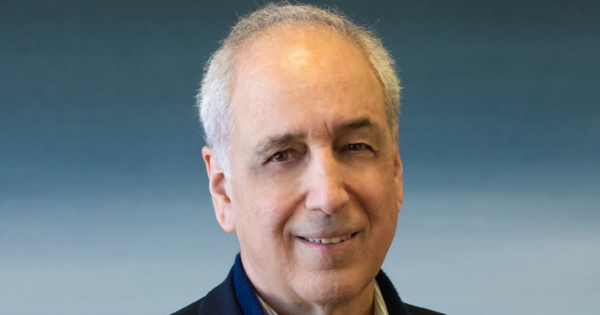
Professor S. Michael Lynk is the current (7th) United Nations Special Rapporteur on the Situation of Human Rights in the Palestinian Territories Occupied since 1967 (March, 2016 to Present). He is an Associate Professor at the Faculty of Law, Western University, in London, Ontario, who works in one of the most important legal and investigative positions in the history of rights and law reportage for the United Nations on this issue of Israel and the occupied Palestinian territories.
Language of the oPt/OPT is recognized in the work of the OHCHR, Amnesty International, Oxfam International, United Nations, World Health Organization, International Labor Organization, UNRWA, UNCTAD, and so on. Some see the Israeli-Palestinian issue as purely about religion. Thus, this matters to freethought. These ongoing interviews explore this issue in more depth.
Here we continue with the 8th part in our series of conversations with coverage in the middle of March to the middle of April for the Israeli-Palestinian issue. With the deportation of Shakir, this follows in line with state actions against others, including Amnesty International staff member Laith Abu Zeyad when attempting to see his mother dying from cancer (Amnesty International, 2019a; Zeyad, 2019; Amnesty International, 2020), United States Congresswoman Rashida Tlaib and United States Congresswoman Ilhan Omar who were subject to being barred from entry (Romo, 2019), Professor Noam Chomsky who was denied entry (Hass, 2010), and Dr. Norman Finkelstein who was deported in the past (Silverstein, 2008). Shakir commented in an opinion piece:
Over the past decade, authorities have barred from entry MIT professor Noam Chomsky, U.N. special rapporteurs Richard Falk and Michael Lynk, Nobel Peace Prize winner Mairead Maguire, U.S. human rights lawyers Vincent Warren and Katherine Franke, a delegation of European Parliament members, and leaders of 20 advocacy groups, among others, all over their advocacy around Israeli rights abuses. Israeli and Palestinian rights defenders have not been spared. Israeli officials have smeared, obstructed and sometimes even brought criminal charges against them. (Shakir, 2019)
Now, based on the decision of the Israeli Supreme Court and the actions of the Member State of the United Nations, Israel, he, for this session, works from Amman, Jordan. Similarly, Lynk remains prevented from carrying out the full capacities of the position based on barring from entry.
*Interview conducted on May 13, 2020. The previous interview conducted on April 19, 2020.*
Scott Douglas Jacobsen: To begin, this is a 3-way conversation with S. Michael Lynk and Omar Shakir. We are going to talk about annexation and an overview of the Israel-Palestine issue (Jacobsen, 2020a). On May 1, Michael, you released a press release (United Nations Human Rights Office of the High Commissioner, 2020) that was based around some of the annexation ongoing, which is based on a proposal from the White House (White House Staff, 2020). Also, the outcome would be akin to, or would be, Bantustans (The Editors of Encyclopaedia Britannica, 2019). The terms used by you, phrasing, “Palestinian Bantustan, an archipelago of disconnected islands of territory” (United Nations Human Rights Office of the High Commissioner, 2020). Can you expand on some of that and the implications for the lives of Palestinians and rights?
Professor Michael Lynk: This stems, most immediately, from the proposals in the Trump Peace to Prosperity plan (White House Staff, 2020) released at the end of January 2020, which calls for, among other things, the annexation by Israel of 30% of the West Bank, including much of the Jordan Valley and all of the 240 or more settlements (BBC News, 2020a; United Nations Human Rights Office of the High Commissioner, 2019). Obviously, the ones already in East Jerusalem are annexed, but 225 to 230 in the West Bank (Collard, 2012). This includes not only those who are close to the Israeli border, the seamline, and the separation wall, but also those who are quite deep into Palestinian territory. They create fingers of annexation and sovereignty, which would make an archipelago of what the Palestinians would be left with – to have a “state.”[1]
The important point to make about the annexation – that is, the formal de jure[2] annexation by Israel as outlined in the Trump plan and, apparently, as agreed to by the coalition agreement between Mr. Netanyahu and his new partner, Benny Gantz – is that it changes everything and it changes nothing (BBC News, 2020b).
It changes everything in the sense that Israel is now planning to step forward and make a formal annexation of about 1/3rd of the West Bank including all of the settlements in the occupied territory (Federman, 2020a; Zion, 2020; Federman, 2020b; The Associated Press). Eventually, this would mean the application of Israeli domestic law to the settlements instead of the formulation of the forms of special laws applying to the settlements (Amnesty International, 2019b).[3]
So, this changes everything in the sense that it is another form of annexation in East Jerusalem in 1980 and the Syrian Golan Heights in 1981 (UNISPAL, 1997; Jacobsen, 2020c; ECF, 2019).[4] Neither of which were recognized by the international community.[5] Both annexations were condemned in U.N. Security Council resolutions (United Nations, 1980a; United Nations, 1980b).[6],[7] This new annexation will now require the international community, particularly Europe and other powerful players in North America and other places in the Western world, to express a stance and, ideally, to take sanction measures[8] against Israel in the same way with sanction measures applied to Russia and its annexation of Crimea in 2014.[9],[10] This changes everything, as I said, in the formal renunciation of the Oslo process[11] and the end to any meaningful Palestinian state[12].
But it also changes nothing. The lives of Palestinians either in Area C (OCHAOPT, n.d.) under Israeli civil and security control or the Palestinians in Areas A and B in the towns and cities primarily in the center of the West Bank don’t change at all (BBC News, 2019). As before, they won’t have access to settlement roads (B’Tselem, 2004). As before, they will continue to lose land to settlement and military use by the Israeli occupation (Tahhan, 2017). As before, they still will not be able to vote in elections to form the government that ultimately controls their day to day decisions of their lives, i.e., the Israeli government (Krauss, & Daraghmeh, 2019).[13] What has happened over the last 50 years has been the steady process of a de facto annexation, where Israel took many different steps to alienate property from the Palestinians in the West Bank and offered enormous incentives for Israelis and immigrants to Israel to move into these settlements, which geographically hemmed in the Palestinians (El-Ad, 2020).
What the Palestinians have been left with are archipelagos of fragmented lands, there are 165 different islands of land in the West Bank, meaning that the Palestinians have very restricted freedom of movement (B’Tselem, 2017). When you have restricted personal freedom of movement, it also means restricted freedom of movement with respect to trading, importing goods, and finding external markets for their products as well (European Commission, 2020). So, you have a stunted economy with the restricted freedom of movement (B’Tselem, 2017; European Commission, 2020). All in all, what may happen or probably will happen sometime after the first of July will be a seismic change in the Middle East with the endorsement of a formal annexation. Yet, in many other ways, it will remain a continuation of life as it has been for the Palestinians as it has been.
Jacobsen: Omar, from the point of view of Human Rights Watch, how is this continuation going on without much or any consequences for the Israeli government?
Omar Shakir: In many ways, the Israeli push for annexation stems from the failure of the international community to sufficiently use its leverage to stop systematic Israeli rights abuse.[14] The reality here goes back decades. Israel has continued to build settlements, which are a clear violation of international humanitarian law[15], and have continued to further entrench a discriminatory system that treats Palestinians living in the same territory separately and unequally in virtually every aspect of life from legal status, to freedom to move, to freedom to build, to security of the legal status, to their ability to access water and electricity (Human Rights Watch, 2010). Annexation, in many ways, would merely formalize what has been the de facto reality where the Israeli government controls the entire area between the Mediterranean Sea and the Jordan River and rules over Palestinians unequally compared to Jewish Israelis and systematically suppresses them (Human Rights Watch, 2019b; Human Rights Watch, 2018; Human Rights Watch, 2019a; Human Rights Watch, 2020a). The reality is the peace process for half the life of the occupation has effectively become a fig leaf for this discriminatory Israeli rule. The international community allowed itself to be sucked into the narratives of temporary occupation, Palestinian self-governance, Israeli egalitarian democracy, and the peace process; all of which are smoke screens to a very apparent reality, where 6.6 million or so Palestinians live in this area between the Jordan River and the Mediterranean Sea, as do 6.6 or so Jewish Israelis, with Palestinians treated unequally in virtually every aspect of life.
The international community should use annexation as a wake-up call to both understand the reality of what is going on, on the ground, as well as to adopt the human rights based measures regularly taken in other parts of the world with abuses this grave. A peace process assumes that the problem is one that negotiations, as opposed to human rights measures, can cure. It is the wrong diagnosis for the underlying problem here. I think it’s beyond time in the international community to shift to action and accountability in holding Israeli authorities, as well as Palestinians when they abuse rights, to account for their serious abuses (Human Rights Watch, 2020b; Human Rights Watch, 2017).
Lynk: If I can add to that.
Jacobsen: Please.
Lynk: I don’t think that we would be here today discussing annexation here in 2020 if the world had imposed meaningful accountability measures in 1980 with the annexation of Jerusalem or in 1981 with the annexation of the Syrian Golan Heights (ECF, 2019; UNISPAL, 1997; Jacobsen, 2020c). We have virtually all the laws that we need to be able to assess that this occupation is illegal. The settlements are illegal.[16],[17],[18] The human rights violations – the various forms of collective punishment[19],[20], the blockage of Gaza[21],[22], the denial of self-determination[23] – are illegal; the location of the separation wall, is illegal. What we need is not more laws, we need accountability (The Palestinian Information Center, 2019; Jacobsen, 2020d; United Nations General Assembly, 2019).[24] It has been sorely missing in all of this. What I often note, particularly in the last weeks when discussing the issue of annexation with international audiences, is how swift the international community was to bring in meaningful and significant sanctions against Russia in 2014 with respect to its annexation of Crimea[25] and Sevastopol[26] (European Council/Council of the European Union, 2020; Popovici, 2018). Even though, these sanctions didn’t have the endorsement of the United Nations because of the Russian veto[27] in the Security Council (Chappell, 2014). Yet, there was a very swift movement to degrade political relations with Russia, to bring in targeted sanctions on specific individuals, to bring meaningful collective sanctions which significantly impacted on the Russian economy, and to ban goods coming out of Sevastopol and Crimea going to the world market (Gutterman, Grojec, & RFE/RL’s Current Time, 2018). It was done quickly. And it wasn’t done without cost to countries in Europe, particularly Eastern Europe, based on their dependence on Russian aid.
Here, we are talking about Israel, a country with 6% of the Russian population[28], which is heavily dependent on trade and with cultural ties to Europe and many parts of the world, including the United States. There have never been meaningful sanctions brought in to oppose Israeli policy. Even though, there are volumes of Security Council and General Assembly resolutions against the various forms of illegality that are integral to this 53-year-old occupation. As a result, there is a strong sense of impunity among the Israeli political leadership.
Today, we have come the point where almost 10% of the Israeli Jewish population are living in settlements in East Jerusalem and the West Bank, which has led to the pro-annexation lobby, a critical mass of the population (Myre, & Kaplow, 2016). When I did a nose count of the 120 Knesset members elected in the April election, I could only count 18 members of the Knesset who are opposed to the settlements and who would end them if they were in a position of power. 18 out of 120 are in that particular position. So, there is enormous domestic political support. Primarily because the ordinary Israeli doesn’t wake up and worry, “Will I get a travel visa if I wanted to travel to Europe or somewhere else?” Or, “Are goods all of the sudden more expensive?” Because there are many trade privileges that Israel enjoys. Israel has had the best of both worlds to continue with the annexation and all the while mouthing the words of a peace process and “let’s negotiate.” All the while extending the occupation because of the enormous number of settlements and settlers now in the occupied territory.
No Occupying Power engaged in creating civilian settlements, particularly at the pace that Israel has, can be serious about wanting to end its occupation and realizing the self-determination of the occupied population.
Jacobsen: How does the lack of accountability internationally degrade international institutions like the United Nations when particular principles are proposed and then not acted upon? This is to both of you.
Shakir: I think it is a universal pattern. When impunity reigns and states commit serious violations of international law without consequence, it is not only a green light for them to double down on the policies, but also signals to other actors that the principles that undergird the international system are selective and apply differently based on how much power you wield. The experience in Israel and Palestine, as well as the more universal phenomena, show that this really poses a fundamental challenge to international institutions, including U.N. bodies and international courts. A litmus test for any international institution is how principled they are and whether they are able to apply the same standards universally to all actors (Jacobsen, 2019). For example, the High Commissioner of Human Rights earlier this year took a strong step in releasing the database given the mandate to her through the Human Rights Council.[29],[30],[31] Similarly, I think the prosecutor of the International Criminal Court took an important step in concluding her examination into the situation in Palestine with a recommendation for a formal investigation to be opened. I think it is incumbent upon states and others that are concerned about the credibility of international law and institutions to ensure these a sorts of measures, of the variety that were foreseen by some of the foundational treaties when it comes to failure to comply with international norms, are adhered to. Otherwise, they are not worth the paper that they are written on.
Lynk: What I think is very damaging is the concept of legal exceptionalism, when the whole body of laws that we have created for the modern world after 1945 are ignored, our modern rules-based international order was meant to create a dense network of rights and responsibilities that international states had towards one another as one of the surest guarantees to prevent the repetition of annexing land, creating wars, and producing great human suffering.[32]
The world has not been perfect in the aftermath of 1945. However, we have had a much greater, longer run of political and economic stability thanks to this strong network of rules and responsibilities that the international community has signed onto. If a country that belongs to the rules-based order says, “These particular rules do not apply to me. The Fourth Geneva Convention does not apply to the occupied territories,” then this is cherry-picking international law; and, international law is not a menu a la carte. We have to listen to the 2004 Advisory Opinion of the International Court of Justice[33], and what the Security Council[34] has said in numerous resolutions with respect to our occupation.
What we are winding up doing – particularly in the eyes of those who pay close attention to the Israeli and Palestinian conflict – are two parallel ways in which state defiance is dealt with, when other would-be renegades of international law see that state exceptionalism is being tolerated for Israel, they will want to see if they can have the same incentives and the same legal exceptionalism applies to them as well. There are very few things that are as uncontroversial in international law as the legal fact that Israeli rule over the Palestinians is occupation and, therefore, the Fourth Geneva Convention applies. Accordingly, based on Article 49 of the Fourth Geneva Convention, the Israeli settlements created in the occupied territory are profoundly illegal under international law.
Indeed, the Israel settlements are a presumptive war crime under the 1998 Statute of Rome (Amnesty International, 2019c; International Criminal Court, 1998).Also, annexation is illegal under international law. The vast majority – I’d say over 99% – of international lawyers, international legal scholars, and for the diplomatic ministries of almost all states around the world accept that. But the difficulty, the refusal, has been the unwillingness to hold Israel accountable to all the standard norms that apply to an occupation.
We see this in the backsliding on international legal norms applying to an occupation on the part of the United States. In early November 2019, Secretary of State, Mike Pompeo, stated that the US State Department came to the conclusion that the Israeli settlements were not illegal under international law (Lee, 2019).[35] He said, ‘We have done a 40-page study.’ To the best of my knowledge, this study has not been released publicly. I certainly think it would be a document that international lawyers and scholars would have a field day in picking apart its findings and reasoning, which may be why it is not publicly released. He made the point that in other cases, ‘Settlements in occupied territory may be illegal or the annexation of occupied territory may be illegal, but not in this case involving Israel.’ You can see how the growth of international law exceptionalism[36] becomes a malignant stain on the whole body of a rules-based international order when clear rules can be undermined by powerful parties saying that they no longer apply to them.
Jacobsen: Some of the premises floating around are the non-transparency with Mike Pompeo in the 40-page report. Another is in the language used around some of the titles of things. So, Judea and Samaria rather than Area C (Israel Ministry of Foreign Affairs, 2015; BBC News, 2009). It is both the non-transparency and the part of actors for states and then the labelling things only among one’s own party and national group, where there is a well-established set of titles and terms with specific meanings based on a consensus internationally. That’s another important issue to touch upon for this too. For Human Rights Watch, what has their take been on some of this labelling unique to Israel and some allies compared to the generally accepted international community consensus?
Shakir: I think the shifts and changes in terminology are a reflection of underlying policies on place on the ground. One example to take is Israel has a formal separation policy between the West Bank and the Gaza Strip aimed at ensuring minimal travel between the two areas (Human Rights Watch, 2019a). It has resulted in significant changes. Part of it is an effort to break apart the idea of what is a single territorial entity under international law, to make Gaza its own stand-alone entity, not part of the larger equation in dealing with Israel-Palestine. Even the term “Gazans,”[37] often not with malintent, is part of the practice, it is reducing the people who live there to being tied to their specific geographic areas as opposed to having an identity common with those in the West Bank and East Jerusalem. Similar with terminology when it comes to the West Bank, part of Israel’s strategy to maintain settlements in the West Bank in perpetuity is to convey the idea of this area as the core part of their idea of Israel (Human Rights Watch, 2017). The change in the terminology is part of advancing that strategy. You see this in Jerusalem with the Temple Mount[38] as a reference to Al-Aqsa Mosque compound[39], which is, again, underlying a certain narrative.[40] A valid historical one, but it is only a part of the entire story there (Hammer, 2011). I think terminology is, of course, always contested everywhere, but, certainly, is used by the Israeli government as a way to muddy-up what are relatively straightforward notions of Palestine being a single territorial entity in terms of its connections between different areas and its historical roots (United Nations, 2012a; United Nations, 2012b).
Lynk: One of my most favourite passages on political terminology comes from George Orwell who wrote in the late 1940s on the necessity of those in power of finding euphemisms and bland words that will diminish the scar or the tragedy unfolding before our eyes.[41] When you look to uncover modern terminology being used by Israel with respect to the occupation, they don’t use the word occupation; they will use the word “administered territories” or “disputed territories” (BBC News, 2009; Israel Ministry of Foreign Affairs, 2015b). Settlements are no longer “settlements” in the phraseology at the Fourth Geneva Convention. They are Jewish neighbourhoods on biblical land. It is not the West Bank. It is Judea and Samaria. It is not an apartheid wall built largely in the West Bank. It is a fence. All of these choices of terminology are meant to diminish the horror of the scale of human rights abuses that are going through an occupation, where one national group is clearly dominant over another.
Where it has annexationist tendencies, and where there is no link between what they are doing and what international law requires them to wind up obeying, so, the use of this selective terminology in everyday political discourse and, certainly, in the arguments that they make legally to international diplomatic capitals or to courts such as the International Court of Justice or the International Criminal Court. It is all meant as a way to mask, to minimize, or to disguise the horror that we as civilians in democratic societies in the 21st century would normally want to feel if the true reality of what is unfolding in the occupied territories was said in immediate, urgent, and truthful adjectives and verbs.
Jacobsen: Another sociological variable, often, on the periphery of the commentaries, though central to the lives of many is religious identity and ethnic heritage. On the issue of religious identity, something that we note in Michael and I’s own country, Canada, is anti-Muslim sentiment or Islamophobia.[42],[43] On the ethnic heritage front, there is simply anti-Arab sentiment in addition to anti-Semitic sentiment as well. How do these points of contact play into the media portrayals from the occupied Palestinian territories and from Israel when there are certain flare-ups in the overall conflict?
Shakir: Look, I think there is a tendency when looking at conflicts around the world to reduce it to intrinsic ethnic, religious, or other sorts of intrinsic differences, and less of a desire to see conflicts for what they often are at core: access to land, resources, and rights, often, between different groups of people with various political leaders who often use difference to bolster their standing. I think the reality in Israel and Palestine is one such conflict. This is not some thousand-years-old ethnic and religious conflict, but one about land, resources, and rights, primarily. The other elements are certainly not irrelevant. Some policy positions can be informed by views that are bigoted or racist. We’ve certainly heard in the last rounds of Israeli elections statements by political parties that were bigoted. We have seen some anti-Semitic statements by Palestinian officials (Schrader, 2020; Nirenstein, 2020; Algemeiner Staff, 2020). But that is not what the heart of the conflict is about. There’s a significant underlying issue of discrimination and very severe discrimination and repression on account of identity, but, at the core, it is less about how the groups view one another and more about securing rights and privileges to land and resources by one group over another. While it manifests in one group having more of those things than another group, it is less about the tensions or animosities between members of those groups and more about struggles over rights, land, and resources.
Lynk: I would echo what Omar has said. For many people in the world, it reflects some of the reporting coming from the region. It has the appearance of being a religious or an ethnic conflict, or simply a neighbourhood squabble between irreconcilable people living next to one another. Often, the conflict is being presented as being intractable. In some of the reporting, it is seen as a tragedy of two people having equal rights to the land. In my view, I think this is what Omar was saying as well. Ultimately, this is a struggle over land and over justice. The ethnic veneer and the religious veneer explains some of the conflict, but the best explanation of the conflict goes to your understanding of the lack of rights and the lack of justice by one side caused by one side subjugating the other.
Yet, I am heartened when I am asked, “Is there any hope for the future?” I am heartened by the civil society efforts: Israeli civil society actors, Palestinian civil society, regional civil society, and international civil society. They want the same rights. They rely on the same international documents to proclaim the importance of human rights as a measuring stick to determine what is going on with that. I think Israeli and Palestinian civil society organizations are one of the important bridges to the future to building two societies living side-by-side, where there will be prosperity, reconciliation, equality; that they can wind up living productively with each other. It is the best hope and, in many ways, the only hope for the conflict being resolved. As Omar said earlier on, there is an equal number of Palestinian Arabs and Israeli Jews living between the Mediterranean Sea and the Jordan River. They are going to have to find some way to live in equality, whether two states or one state as a confederation. I do not purport to have a blueprint for that. It will have to be anchored on human rights law and democratic institutions to enable them to live side-by-side or an end to this conflict to occur. Any forms of a future depending on subjugation or domination with one group over another will sooner or later fall apart simply because people will not live under subjugation or domination for long periods of time.
Jacobsen: Any closing statements – either of you?
Lynk: Only this, I don’t think Omar would be doing this work – I don’t think I would be doing his work – without feeling some ingrained optimism amid all the struggles that we wind up seeing in front of us for this particular conflict. What gets us up every morning is our belief that international law and international morality can play, should play, and, ultimately, will play a decisive role in bringing justice and peace and prosperity to the 14 million Palestinians and Israeli Jews who live in the area. Through that lens, we can see a meaningful path to get to the future. Otherwise, I think that we would slit our wrists a long time ago. Let me speak for myself, although, I think Omar may agree with this as well; it is only going to happen through actively bending the arc of history towards justice; which means a meaningful peace and finding a modus operandi where the two people can live in harmony and equality via the decisive action from the international community. All by itself, this 53-year-old occupation will not die by old age. Israel can probably sustain the status quo long into the future. Only though the international community becoming motivated by international civil society to take decisive steps that would wind up bringing this subordination and domination to an end. Until that happens, we will see more of the same and more of these bitter human rights violations occurring, which are a credit to no people and, certainly, not to the Israeli leadership and, in its own way, the Palestinian leadership either.
Jacobsen: Omar, Michael, thank you for your time.
Shakir: Thanks so much, Scott.
Lynk: Thank you, Scott.
Previous Sessions (Chronological Order)
HRW Israel and Palestine (MENA) Director on Systematic Methodology and Universal Vision
Human Rights Watch (Israel and Palestine) on Common Rights and Law Violations
Ask HRW (Israel and Palestine) 1 – Recent Events
Ask HRW (Israel and Palestine) 2 – Demolitions
Ask HRW (Israel and Palestine) 4 – Uninhabitable: The Viability of Gaza Strip’s 2020 Unlivability
Addenda
Ask HRW (Israel and Palestine) Addendum: Some History and Contextualization of Rights
Other Resources Internal to Canadian Atheist
Interview with Dr. Norman Finkelstein on Gaza Now
Extensive Interview with Gideon Levy
Interview with Musa Abu Hashash – Field Researcher (Hebron District), B’Tselem
Interview with Gideon Levy – Columnist, Haaretz
Interview with Dr. Usama Antar – Independent Political Analyst (Gaza Strip, Palestine)
To resolve the Palestinian question we need to end colonialism
Dr. Norman Finkelstein on the International Criminal Court
References
Al-Haq. (2015, May 7). Collective Punishment in East Jerusalem. Retrieved from www.alhaq.org/monitoring-documentation/6541.html.
Algemeiner Staff. (2020, April 20). UN Human Rights Expert Sounds Warning on Rising Antisemitism During Coronavirus Pandemic. Retrieved from https://www.algemeiner.com/2020/04/20/un-human-rights-expert-sounds-warning-on-rising-antisemitism-during-coronavirus-pandemic/.
Amnesty International. (2019b, January). Chapter 3: Israeli Settlements and International Law. Retrieved from https://www.amnesty.org/en/latest/campaigns/2019/01/chapter-3-israeli-settlements-and-international-law/.
Amnesty International. (2019a, October 31). Israel/ OPT: Amnesty staff member faces punitive travel ban for human rights work. Retrieved from https://www.amnesty.org/en/latest/news/2019/10/israel-opt-amnesty-staff-member-faces-punitive-travel-ban-for-human-rights-work/.
Amnesty International. (2020, March 25). ISRAEL/ OPT: End cruel travel ban on Amnesty staff member. Retrieved from https://www.amnesty.org/en/latest/news/2020/03/israel-opt-end-cruel-travel-ban-on-amnesty-staff-member/.
Amnesty International. (2019c, December 20). Israel/OPT: ICC investigation into war crimes a ‘historic step towards justice’. Retrieved from https://www.amnesty.org/en/latest/news/2019/12/israel-opt-icc-investigation-into-war-crimes-a-historic-step-towards-justice/.
BBC News, (2018, January 17). Crimea profile. Retrieved from https://www.bbc.com/news/world-europe-18287223.
BBC News. (2020a, June 25). Explainer: Israel, annexation and the West Bank. Retrieved from https://www.bbc.com/news/world-middle-east-52756427.
BBC News. (2020, April 20). Israel’s Netanyahu and Gantz sign unity government deal. Retrieved from https://www.bbc.com/news/world-middle-east-52358479.
BBC News. (2019, April 8). Palestinian territories profile. Retrieved from https://www.bbc.com/news/world-middle-east-14630174.
BBC News. (2009, December 10). The Geneva Convention. Retrieved from news.bbc.co.uk/2/hi/in_depth/middle_east/israel_and_the_palestinians/key_documents/1682640.stm.
BBC News. (2016, August 12). Ukraine crisis: What’s going on in Crimea?. Retrieved from https://www.bbc.com/news/world-europe-25182823.
BBC News. (2016, October 18). Unesco passes contentious Jerusalem resolution. Retrieved from https://www.bbc.com/news/world-middle-east-37697108.
B’Tselem. (2017, November 11). Planning Policy in the West Bank. Retrieved from https://www.btselem.org/planning_and_building.
Chappell, B. (2014, March 15). Russia Vetoes U.N. Security Council Resolution On Crimea. Retrieved from https://www.npr.org/sections/thetwo-way/2014/03/15/290404691/russia-vetoes-u-n-security-council-resolution-on-crimea.
Collard, R. (2012, June 26). Tile by tile, Palestinians build Israeli settlements. Retrieved from https://www.pri.org/stories/2012-06-26/tile-tile-palestinians-build-israeli-settlements.
ECF. (2019). Israeli Annexation of the Golan Heights (1981). Retrieved from https://ecf.org.il/issues/issue/93.
European Commission. (2020, April 23). Palestine. Retrieved from https://ec.europa.eu/trade/policy/countries-and-regions/countries/palestine/.
El-Ad, H. (2020, July 16). Waiting for Annexation. Retrieved from https://prospect.org/world/waiting-for-annexation-israel-palestine/.
European Council/Council of the European Union. (2020, June 18). Illegal annexation of Crimea and Sevastopol: EU renews sanctions by one year. Retrieved from https://www.consilium.europa.eu/en/press/press-releases/2020/06/18/illegal-annexation-of-crimea-and-sevastopol-eu-renews-sanctions-by-one-year/.
Federman, J. (2019, May 6). Israel’s Gaza blockade under scrutiny after latest violence. Retrieved from https://apnews.com/7cc0aa222e1147f1bdab3a17d0662454.
Federman, J. (2020b, April 26). Netanyahu ‘confident’ US will support West Bank annexation. Retrieved from https://apnews.com/94a10865ff3c11e1f3fea4a0e78a8868.
Federman, J. (2020c, February 13). Pompeo ‘outraged’ by UN list of firms with settlement ties. Retrieved from https://apnews.com/c0ec6c0a8ebb1b68b4d233a894634b51.
Federman, J. (2020a, May 7). Set for new term, Netanyahu eyes risky West Bank annexation. Retrieved from https://apnews.com/6d41631863cc7fe78e39dc1c281895f1.
Federman, J. & Keaten, J. (2020, February 12). UN list targets firms linked to Israeli settlements. Retrieved from https://apnews.com/5c4eb3c4dd04a1ea0880dd735ebb0544.
Ferreras, J. (2018, November 30). In Canada, Jews face more hate crimes, while Muslims face more violent ones: StatCan. Retrieved from https://globalnews.ca/news/4714114/canada-jews-muslims-hate-crime/.
Gragg, G. & Volochine, E. (2019, March 20). The Crimean port of Sevastopol, a strategic link between Russia and Syria. Retrieved from https://www.france24.com/en/20190320-focus-crimea-sevastopol-port-naval-base-russia-navy-syria-war-operations-trade-tartus.
Gutterman, I., Grojec, W., & RFE/RL’s Current Time. (2018, September 19). A Timeline Of All Russia-Related Sanctions. Retrieved from www.rferl.org/a/russia-sanctions-timeline/29477179.html.
Hammer, J. (2011, April). What is Beneath the Temple Mount?. Retrieved from https://www.smithsonianmag.com/history/what-is-beneath-the-temple-mount-920764/.
Hass, A. (2010, May 16). Noam Chomsky Denied Entry Into Israel and West Bank. Retrieved from https://www.haaretz.com/1.5121279.
Human Rights Watch. (2019b). Born Without Civil Rights: Israel’s Use of Draconian Military Orders to Repress Palestinians in the West Bank. Retrieved from https://www.hrw.org/sites/default/files/report_pdf/palestine1219_web_0.pdf.
Human Rights Watch. (2017, June 4). Israel: 50 Years of Occupation Abuses. Retrieved from https://www.hrw.org/news/2017/06/04/israel-50-years-occupation-abuses.
Human Rights Watch. (2020b, February 13). Israel: New Database Will Aid Corporate Accountability. Retrieved from https://www.hrw.org/news/2020/02/13/israel-new-database-will-aid-corporate-accountability#:~:text=(Geneva%2C%20February%2013%2C%202020,Human%20Rights%20Watch%20said%20today.&text=The%20list%20also%20includes%20several%20Israeli%20banks%20that%20finance%20settlement%20construction.
Human Rights Watch. (2018). Israel and Palestine: Events of 2017. Retrieved from https://www.hrw.org/world-report/2018/country-chapters/israel/palestine.
Human Rights Watch. (2019a). Israel and Palestine: Events of 2018. Retrieved from https://www.hrw.org/world-report/2019/country-chapters/israel/palestine.
Human Rights Watch. (2020a). Israel and Palestine: Events of 2019. Retrieved from https://www.hrw.org/world-report/2020/country-chapters/israel/palestine.
Human Rights Watch. (2010, December 19). Separate and Unequal. Retrieved from https://www.hrw.org/report/2010/12/19/separate-and-unequal/israels-discriminatory-treatment-palestinians-occupied.
International Committee of the Red Cross. (1949, August 12). Convention (IV) relative to the Protection of Civilian Persons in Time of War. Geneva, 12 August 1949.. Retrieved from https://ihl-databases.icrc.org/ihl/WebART/380-600056.
International Court of Justice. (2004, July 9). International Court of Justice Advisory Opinion Finds Israel’s Construction of Wall ‘Contrary to International Law’. Retrieved from https://www.un.org/press/en/2004/icj616.doc.htm.
International Criminal Court. (1998, July 17). Rome Statute of the International Criminal Court. Retrieved from https://legal.un.org/icc/statute/99_corr/cstatute.htm.
International Middle East Media Center. (2019, February 22). The Escalation of Israeli Collective Punishment of Palestinians. Retrieved from https://imemc.org/article/the-escalation-of-israeli-collective-punishment-of-palestinians/.
Israel Ministry of Foreign Affairs. (2015a, September 16). The Temple Mount: Background. Retrieved from https://mfa.gov.il/MFA/AboutIsrael/Spotlight/Pages/The-Temple-Mount-Background.aspx.
Jacobsen, S.D. (2020c, March 20). Ask HRW (Israel and Palestine) Addendum: Some History and Contextualization of Rights. Retrieved from https://www.canadianatheist.com/2020/03/ask-hrw-israel-and-palestine-addendum-jacobsen/.
Jacobsen, S.D. (2020, March 26). Ask HRW (Israel and Palestine) 5 – The Trump Peace Plan: Is This the “The Deal of the Century,” or Not?. Retrieved from https://www.canadianatheist.com/2020/03/ask-hrw-israel-and-palestine-5-jacobsen/.
Jacobsen, S.D. (2020b, August 13). Dr. Norman Finkelstein on the International Criminal Court. Retrieved from https://www.canadianatheist.com/2020/08/dr-norman-finkelstein-on-the-international-criminal-court/.
Jacobsen, S.D. (2020a, May 6). Extensive Interview with Professor John Dugard – Fmr. (4th) United Nations Special Rapporteur on the Situation of Human Rights in the Palestinian Territories Occupied since 1967. Retrieved from https://www.canadianatheist.com/2020/05/dugard-jacobsen/.
Jacobsen, S.D. (2020d, August 4). Extensive Interview with S. Michael Lynk – (7th) United Nations Special Rapporteur on the Situation of Human Rights in the Palestinian Territories Occupied since 1967. Retrieved from https://www.canadianatheist.com/2020/08/lynk-jacobsen/.
Jacobsen, S.D. (2019, May 23). HRW Israel and Palestine (MENA) Director on Systematic Methodology and Universal Vision. Retrieved from https://medium.com/humanist-voices/hrw-israel-and-palestine-mena-director-on-systematic-methodology-and-universal-vision-a223d598f703.
Krauss, J. & Daraghmeh, M. (2019, September 13). Unable to vote, Palestinians shrug off Israel’s elections. Retrieved from https://apnews.com/5bd073882ef148a4be098b8e3754c0d1.
Lee, M. (2019, November 18). US angers Palestinians with reversal on Israeli settlements. Retrieved from https://apnews.com/3da4fb3671004679a91a7d4ae9ab4e57.
Mohammed, A., Spetalnick, M., & Pamuk, H. (2019, November 18). U.S. backs Israel on settlements, angering Palestinians and clouding peace process. Retrieved from https://www.reuters.com/article/us-israel-usa/us-backs-israel-on-settlements-angering-palestinians-and-clouding-peace-process-idUSKBN1XS2BF.
Myre, G. & Kaplow, L. (2016, December 29). 7 Things To Know About Israeli Settlements. Retrieved from https://www.npr.org/sections/parallels/2016/12/29/507377617/seven-things-to-know-about-israeli-settlements.
Nebehay, S. (2020, February 12). U.N. report names 112 companies doing business with Israeli settlements. Retrieved from https://www.reuters.com/article/us-israel-palestinians-un-companies/u-n-report-names-112-companies-doing-business-with-israeli-settlements-idUSKBN206234.
Nirenstein, F. (2020, April 21). How the Coronavirus Pandemic Has Sparked Anti-Semitic Conspiracy Theories. Retrieved from https://jcpa.org/article/how-the-coronavirus-pandemic-has-sparked-anti-semitic-conspiracy-theories/.
OCHAOPT. (n.d.). Area C. Retrieved from https://www.ochaopt.org/location/area-c.
Orwell, G. (1946). Politics and the English Language. Retrieved from https://www.orwell.ru/library/essays/politics/english/e_polit.
Popovici, A. (2018, July 12). Why Russia Wants Crimea. Retrieved from https://www.history.com/news/crimea-russia-ukraine-annexation.
Romo, V. (2019, August 15). Reps. Omar And Tlaib Barred From Visiting Israel After Trump Supports A Ban. Retrieved from https://www.npr.org/2019/08/15/751430877/reps-omar-and-tlaib-barred-from-visiting-israel-after-trump-insists-on-ban/.
Schrader, E. (2020, April 29). Arabic social media campaign compares Jews to coronavirus. Retrieved from https://www.jpost.com/opinion/arabic-social-media-campaign-compares-jews-to-coronavirus-626332.
Shakir, O. (2019, April 18). Israel wants to deport me for my human rights work. Retrieved from https://www.washingtonpost.com/opinions/2019/04/18/israel-wants-deport-me-my-human-rights-work/.
Shaw, M. (2019, November 13). International law: Jurisdiction. Retrieved from https://www.britannica.com/topic/international-law/Jurisdiction.
Silverstein, R. (2008, May 27). Shut out of the homeland. Retrieved from https://www.theguardian.com/commentisfree/2008/may/27/shutoutofthehomeland.
Statistics Canada. (2018). Police-reported hate crime, by type of motivation, Canada (selected police services): 2012 to 2018. Retrieved from https://www150.statcan.gc.ca/t1/tbl1/en/tv.action?pid=3510006601.
Stone, R.S., Elath, E., Ochsenwald, W.L., & Sicherman, H. (2020, August 12). Israel: Oslo Accords. Retrieved from https://www.britannica.com/place/Israel.
Tahhan, Z. (2017, November 21). Israel’s settlements: Over 50 years of land theft explained. Retrieved from https://interactive.aljazeera.com/aje/2017/50-years-illegal-settlements/index.html.
The Associated Press. (2020, April 23). EU warns incoming Israeli gov’t against West Bank annexation. Retrieved from https://apnews.com/8ae55dbfa82812f2e207eaa8f46a04ac.
The Editors of Encyclopaedia Britannica. (2019, December 4). Bantustan. Retrieved from https://www.britannica.com/topic/Bantustan.
The Editors of Encyclopaedia Britannica. (2020, January 28). Gaza Strip: Blockade. Retrieved from https://www.britannica.com/place/Gaza-Strip/Blockade.
The Palestinian Information Center. (2019, July 14). Lynk: Lack of accountability encourages Israel’s settlement expansion. Retrieved from https://english.palinfo.com/news/2019/7/14/Lynk-Lack-of-accountability-encourages-Israel-s-settlement-expansion.
U.N. News. (2020, February 14). Database of businesses linked to Israeli settlements ‘important initial step’ towards accountability: rights expert. Retrieved from https://news.un.org/en/story/2020/02/1057451.
UNISPAL. (n.d.). History of the Question of Palestine. Retrieved from https://www.un.org/unispal/history/#:~:text=In%20September%201983%2C%20the%20International,secure%20and%20internationally%20recognized%20boundaries%2C.
UNISPAL. (2006, February 13). Right of the Palestinian people to self-determination. Retrieved from https://www.un.org/unispal/document/auto-insert-187651/.
UNISPAL. (2019, October 23). Special Rapporteur on Situation of Human Rights in the oPt Presents Report to Third Committee – Press Release (GA/SHC/4273) (Excerpts). Retrieved from https://www.un.org/unispal/document/special-rapporteur-on-situation-of-human-rights-in-the-opt-presents-report-to-third-committee-press-release-ga-shc-42730-excerpts/.
UNISPAL. (1997). The Status of Jerusalem. Retrieved from https://www.un.org/unispal/wp-content/uploads/2016/07/The-Status-of-Jerusalem-Engish-199708.pdf.
United Nations. (2012a, November 19). 67/19. Status of Palestine in the United Nations. Retrieved from https://unispal.un.org/UNISPAL.NSF/0/19862D03C564FA2C85257ACB004EE69B.
United Nations. (1945, October 24). Charter of the United Nations – Chapter V: The Security Council. Retrieved from https://www.un.org/en/sections/un-charter/chapter-v/index.html.
United Nations. (2012b, November 29). General Assembly Votes Overwhelmingly to Accord Palestine ‘Non-Member Observer State’ Status in United Nations. Retrieved from https://www.un.org/press/en/2012/ga11317.doc.htm.
United Nations. (1980b, June 30). Resolution 476 (1980). Retrieved from https://undocs.org/S/RES/476(1980).
United Nations. (1980a, August 20). Resolution 478. Retrieved from https://undocs.org/S/RES/478(1980).
United Nations General Assembly. (2019, October 21). Situation of human rights in the Palestinian territories occupied since 1967*. Retrieved from https://undocs.org/pdf?symbol=en/A/74/507.
United Nations Human Rights Office of the High Commissioner. (2020, May 1). Israeli annexation plans would lead to “cascade of bad human rights consequences”, says UN expert. Retrieved from https://www.ohchr.org/EN/NewsEvents/Pages/DisplayNews.aspx?NewsID=25857&LangID=E.
United Nations Human Rights Office of the High Commissioner. (2019, November 19). Israeli settlements: UN expert condemns US decision to “jettison international law”. Retrieved from https://www.ohchr.org/EN/NewsEvents/Pages/DisplayNews.aspx?NewsID=25319&LangID=E.
United Nations Security Council. (1982, April 15). Attack on Al-Aqsa mosque – SecCo debate – Verbatim record. Retrieved from https://www.un.org/unispal/document/auto-insert-184305/.
United Nations Security Council. (2016, December 23). Resolution 2334 (2016). Retrieved from https://undocs.org/S/RES/2334(2016).
United Nations Security Council. (1979, March 22). Resolution 446 (1979). Retrieved from https://unispal.un.org/UNISPAL.NSF/db942872b9eae454852560f6005a76fb/ba123cded3ea84a5852560e50077c2dc?OpenDocument.
United Nations Security Council. (1980, March 1). Resolution 465 (1980). Retrieved from https://undocs.org/S/RES/465(1980).
Washington United in St. Louis: School of Law. (2012, December 28). Legal English: “De Facto/De Jure”. Retrieved from https://onlinelaw.wustl.edu/blog/legal-english-de-factode-jure/#:~:text=De%20facto%20means%20a%20state,i.e.%20that%20is%20officially%20sanctioned).&text=Instead%2C%20the%20general%20who%20sits,facto%20ruler%20of%20the%20nation.
White House Staff. (2020, January). Peace to Prosperity: A Vision to Improve the Lives of the Palestinian and Israeli People. Retrieved from https://upload.wikimedia.org/wikipedia/commons/a/a6/Peace_to_Prosperity.pdf.
Zeyad, L.A. (2019, December 16). Why is Israel preventing me from accompanying my mother to chemotherapy?. Retrieved from https://www.amnesty.org/en/latest/news/2019/12/why-is-israel-preventing-me-from-accompanying-my-mother-to-chemotherapy/.
Zion, I.B. (2020, May 13). Despite virus, Pompeo talks West Bank annexation in Israel. Retrieved from https://apnews.com/48a4df69f8735ef54fdf356cd004ce1f.
—
Footnotes
[1] “Dr. Norman Finkelstein on the International Criminal Court” (2020) in which Finkelstein stated:
On the UN question, Palestine is officially defined as a non-member observer state. That’s its status. So, it is not a member of the General Assembly, but it is classified as a state: non-member observer state. I think the only other entity that has that definition is the Vatican. The Vatican also has non-member observer state status. Whether or not Palestine is a state, the essence comes down to the following: technical, under what is called the Montevideo criteria, a state has four characteristics. It has a territory. It has a population. It has an effective government. And it has the capacity to engage in foreign relations to sign treaties and things like that. Those are the four technical criteria of a state. The issue that has been the most contentious between the two sides is the effective government.
See Jacobsen (2020b).
[2] “Legal English: “De Facto/De Jure”” (2012) states:
Today’s phrases, “de facto” and “de jure,” (Pronunciation: dee fak-toh/di joo r-ee: Origin: Latin) are closely related concepts. De facto means a state of affairs that is true in fact, but that is not officially sanctioned. In contrast, de jure means a state of affairs that is in accordance with law (i.e. that is officially sanctioned). Most commonly, these phrases are used to describe the source of a business or governmental leader’s authority, but they apply to a wide variety of situations. Here are some example sentences that use the phrases:
- “Our country is going through some very difficult times. We have an elected prime minister, but he has no actual power. Instead, the general who sits at the head of the military is the de facto ruler of the nation.”
- “I know that, de jure, this is supposed to be a parking lot, but now that the flood has left four feet of water here, it’s a de facto swimming pool.”
- “We understand that these are the de facto bounds of your manufacturing facility, but what do the official land records and surveys show? Is that mountain of scrap rubber over there encroaching on anyone else’s property?”
- “The rest of the world considers your company to be a U.S. corporation, but where is your de jure jurisdiction of incorporation? If it’s somewhere offshore, we might have a P.R. issue on our hands.”
As you can see, de facto refers to situations that are true for practical reasons, whereas de jure refers to formal, official status of the matter.
See Washington United in St. Louis: School of Law (2012).
[3] “Chapter 3: Israeli Settlements and International Law” (2019b) states:
Israel’s policy of settling its civilians in occupied Palestinian territory and displacing the local population contravenes fundamental rules of international humanitarian law.
Article 49 of the Fourth Geneva Convention states: “The Occupying Power shall not deport or transfer parts of its own civilian population into the territory it occupies.” It also prohibits the “individual or mass forcible transfers, as well as deportations of protected persons from occupied territory”.
The extensive appropriation of land and the appropriation and destruction of property required to build and expand settlements also breach other rules of international humanitarian law. Under the Hague Regulations of 1907, the public property of the occupied population (such as lands, forests and agricultural estates) is subject to the laws of usufruct. This means that an occupying state is only allowed a very limited use of this property. This limitation is derived from the notion that occupation is temporary, the core idea of the law of occupation. In the words of the International Committee of the Red Cross, the occupying power “has a duty to ensure the protection, security, and welfare of the people living under occupation and to guarantee that they can live as normal a life as possible, in accordance with their own laws, culture, and traditions.”
The Hague Regulations prohibit the confiscation of private property. The Fourth Geneva Convention prohibits the destruction of private or state property, “except where such destruction is rendered absolutely necessary by military operations”.
As the occupier, Israel is therefore forbidden from using state land and natural resources for purposes other than military or security needs or for the benefit of the local population. The unlawful appropriation of property by an occupying power amounts to “pillage”, which is prohibited by both the Hague Regulations and Fourth Geneva Convention and is a war crime under the Rome Statute of the International Criminal Court and many national laws.
Israel’s building of settlements in the West Bank, including in East Jerusalem, does not respect any of these rules and exceptions. [Emphasis added.]
See Amnesty International (2019b).
[4] “The Status of Palestine” (1997) states:
The 1967 war, which resulted in the occupation by Israel of East Jerusalem and the Palestinian territories, ended the armistice demarcation line between the eastern and western sectors but reopened with new vehemence the debate over the two competing claims. Israel, which annexed East Jerusalem in 1980, considers that “Jerusalem, whole and united, is the capital of Israel”, and wants the City to “remain forever under Israel’s sovereignty.” Its de facto control on the ground has enabled it to invest vast resources and efforts into changing the physical and demographic characteristics of the City. The Israeli claim to Jerusalem, however, has not been recognized by the international community which rejects the acquisition of territory by war and considers any changes on the ground illegal and invalid. On the other hand, the Palestinians have claimed East Jerusalem as the capital of a future independent State of Palestine to be established in the territories occupied since 1967. [Emphasis added.]
See UNISPAL (1997).
[5] Lynk, here, references the overwhelming consensus of the international community of the status of illegality of the Israeli settlements, of Israeli occupation, of Israel defined as an Occupying Power, and annexation in the West Bank and East Jerusalem as illegal under international law. Thusly, the international community does not recognize the 1980 and 1981 annexations by Israel.
[6] U.N. Resolution 478 came with 14 votes in favour, none against, and 1 abstention (The United States of America), and states, in full:
The Security Council,
Recalling its resolution 476 (1980),
Reaffirming again that the acquisition of territory by force is inadmissible,
Deeply concerned over the enactment of a “basic law” in the Israeli Knesset proclaiming a change in the character and status of the Holy City of Jerusalem, with its implications for peace and security,
Noting that Israel has not complied with resolution 476 (1980),
Reaffirming its determination to examine practical ways and means, in accordance with the relevant provisions of the Charter of the United Nations, to secure the full implementation of its resolution 476 (1980), in the event of non-compliance by Israel,
1. Censures in the strongest terms the enactment by Israel of the “basic law” on Jerusalem and the refusal to comply with relevant Security Council resolutions;
2. Affirms that the enactment of the “basic law” by Israel constitutes a violation of international law and does not affect the continued application of the Geneva Convention relative to the Protection of Civilian Persons in Time of War, of 12 August 1949, in the Palestinian and other Arab territories occupied since June 1967, including Jerusalem;
3. Determines that all legislative and administrative measures and actions taken by Israel, the occupying Power, which have altered or purport to alter the character and status of the Holy City of Jerusalem, and in particular the recent “basic law” on Jerusalem, are null and void and must be rescinded forthwith;
4. Affirms also that this action constitutes a serious obstruction to achieving a comprehensive, just and lasting peace in the Middle East;
5. Decides not to recognize the “basic law” and such other actions by Israel that, as a result of this law, seek to alter the character and status of Jerusalem and calls upon:
(a) All Member States to accept this decision;
(b) Those States that have established diplomatic missions at Jerusalem to withdraw such missions from the Holy City;
6. Requests the Secretary-General to report to the Security Council on the implementation of the present resolution before 15 November 1980;
7. Decides to remain seized of this serious situation.
See United Nations (1980a).
[7] United Nations Resolution 476, in full, states:
The Security Council,
Having considered the letter of 28 May 1980 from the representative of Pakistan, the current Chairman of the Organization of the Islamic Conference, as contained in document S/13966 of 28 May 1980,
Reaffirming that acquisition of territory by force is inadmissible,
Bearing in mind the specific status of Jerusalem and, in particular, the need for protection and preservation of the unique spiritual and religious dimension of the Holy Places in the city,
Reaffirming its resolutions relevant to the character and status of the Holy City of Jerusalem, in particular resolutions 252 (1968) of 21 May 1968, 267 (1969) of 3 July 1969, 271 (1969) of 15 September 1969, 298 (1971) of 25 September 1971 and 465 (1980) of 1 March 1980,
Recalling the Fourth Geneva Convention of 12 August 1949 relative to the Protection of Civilian Persons in Time of War,
Deploring the persistence of Israel, in changing the physical character, demographic composition, institutional structure and the status of the Holy City of Jerusalem,
Gravely concerned over the legislative steps initiated in the Israeli Knesset with the aim of changing the character and status of the Holy City of Jerusalem,
1. Reaffirms the overriding necessity to end the prolonged occupation of Arab territories occupied by Israel since 1967, including Jerusalem;
2. Strongly deplores the continued refusal of Israel, the occupying Power, to comply with the relevant resolutions of the Security Council and the General Assembly;
3. Reconfirms that all legislative and administrative measures and actions taken by Israel, the occupying Power, which purport to alter the character and status of the Holy City of Jerusalem have no legal validity and constitute a flagrant violation of the Fourth Geneva Convention relative to the Protection of Civilian Persons in Time of War and also constitute a serious obstruction to achieving a comprehensive, just and lasting peace in the Middle East;
4. Reiterates that all such measures which have altered the geographic, demographic and historical character and status of the Holy City of Jerusalem are null and void and must be rescinded in compliance with the relevant resolutions of the Security Council;
5. Urgently calls on Israel, the occupying Power, to abide by this and previous Security Council resolutions and to desist forthwith from persisting in the policy and measures affecting the character and status of the Holy city of Jerusalem;
6.Reaffirmsits determination in the event of non-compliance by Israel with this resolution, to examine practical ways and means in accordance with relevant provisions of the Charter of the United Nations to secure the full implementation of this resolution.
See United Nations (1980b).
[8] Lynk argued for this before. “Special Rapporteur on Situation of Human Rights in the oPt Presents Report to Third Committee – Press Release (GA/SHC/4273) (Excerpts)” (2019) states:
One of five mandate holders to present their findings, Michael Lynk, Special Rapporteur on the situation of human rights in the Palestinian territories occupied since 1967, focused on the deepening humanitarian crisis in Gaza. “This would properly be labelled a tragedy if I was reporting to you about a natural catastrophe and the ensuing scale of human suffering,” he said. However, this is a human‑made disaster. Israel’s now 12‑year blockade of Gaza is expressly prohibited under the Fourth Geneva Convention.
The will of the international community does not seem strong enough to compel Israel into compliance, he said. “No country is as dependent on the support of the international community as Israel, yet Israel allows itself to defy the world as few dare.” To ensure accountability, he advocated a complete ban on exports from illegal Israeli settlements, coupled with flight bans, refusing arms transfers and using universal jurisdiction to bring violators of international law to justice…
… Yet, Israel has demonstrated no accountability to address these actions, despite calls by the international community, by the 2019 Commission of Inquiry and by civil society. Describing the 53‑year‑old occupation as the longest belligerent occupation in the modern world, he said the international community has demonstrated “great unwillingness” to impose any meaningful accountability on Israel for its permanent occupation and its serious violations of international law.
He said Israel has rightly assessed that the international community — particularly Western industrial nations — lacks the political will to compel an end to its impunity.
See UNISPAL (2019).
[9] In reference to “Europe and other powerful players in North America and other places in the Western world,” this contains a historical context important for comprehension here. The United Nations formed after the collapsed efforts of the League of Nations. With this, at the foundation of the United Nations on October 24, 1945, the Israeli-Palestinian issue set forth, which came in the wake of the Second World War, as primarily a war with involvement of the Western world and the Europeans. In fact, the issue runs back farther. See UNISPAL (n.d.).
[10] “Crimea profile” (2018) states:
In early 2014 Crimea became the focus of the worst East-West crisis since the Cold War, after Ukraine’s pro-Moscow president Viktor Yanukovych was driven from power by violent protests in Kiev.
Kremlin-backed forces seized control of the Crimean peninsula, and the territory, which has a Russian-speaking majority, voted to join Russia in a referendum that Ukraine and the West deem illegal.
See BBC News (2018).
[11] See Stone, R.S., Elath, E., Ochsenwald, W.L., & Sicherman, H. (2020).
[12] “67/19. Status of Palestine in the United Nations” states:
Reaffirming its resolution 3236 (XXIX) of 22 November 1974 and all relevant resolutions, including resolution 66/146 of 19 December 2011, reaffirming the right of the Palestinian people to self-determination, including the right to their independent State of Palestine…
…Reaffirming also its resolutions 43/176 of 15 December 1988 and 66/17 of 30 November 2011 and all relevant resolutions regarding the peaceful settlement of the question of Palestine, which, inter alia, stress the need for the withdrawal of Israel from the Palestinian territory occupied since 1967, including East Jerusalem, the realization of the inalienable rights of the Palestinian people, primarily the right to self-determination and the right to their independent State…
…emphasizing the need for a way to be found through negotiations to resolve the status of Jerusalem as the capital of two States…
…Recalling also its resolution 43/177 of 15 December 1988, by which it, inter alia, acknowledged the proclamation of the State of Palestine by the Palestine National Council on 15 November 1988 and decided that the designation “Palestine” should be used in place of the designation “Palestine Liberation Organization” in the United Nations system, without prejudice to the observer status and functions of the Palestine Liberation Organization within the United Nations system,
Taking into consideration that the Executive Committee of the Palestine Liberation Organization, in accordance with a decision by the Palestine National Council, is entrusted with the powers and responsibilities of the Provisional Government of the State of Palestine…
…Reaffirming its commitment, in accordance with international law, to the two-State solution of an independent, sovereign, democratic, viable and contiguous State of Palestine living side by side with Israel in peace and security on the basis of the pre-1967 borders,
Bearing in mind the mutual recognition of 9 September 1993 between the Government of the State of Israel and the Palestine Liberation Organization, the representative of the Palestinian people,
Affirming the right of all States in the region to live in peace within secure and internationally recognized borders,
Commending the Palestinian National Authority’s 2009 plan for constructing the institutions of an independent Palestinian State…
…Recognizing also that, to date, 132 States Members of the United Nations have accorded recognition to the State of Palestine…
…1. Reaffirms the right of the Palestinian people to self-determination and to independence in their State of Palestine on the Palestinian territory occupied since 1967;
2. Decides to accord to Palestine non-member observer State status in the United Nations, without prejudice to the acquired rights, privileges and role of the Palestine Liberation Organization in the United Nations as the representative of the Palestinian people, in accordance with the relevant resolutions and practice;
3. Expresses the hope that the Security Council will consider favourably the application submitted on 23 September 2011 by the State of Palestine for admission to full membership in the United Nations… [Emphasis added.]
See United Nations (2012).
[13] “Unable to vote, Palestinians shrug off Israel’s elections” (2019), in part, states:
MAS’HA, West Bank (AP) — Barhoum Saleh’s town is surrounded by Jewish settlements, the sign above his roadside mechanic shop is in Hebrew, most of his customers are Israeli and he needs an Israeli permit to visit the beach a half hour’s drive away.
But unlike his Jewish neighbors, he can’t vote in next week’s elections.
Saleh is among the 2.5 million Palestinians in the West Bank who have no voice in choosing Israel’s next government and no control over whether it decides to annex part or all of the occupied territory, as Prime Minister Benjamin Netanyahu has vowed to do . With the peace process having sputtered to a halt a decade ago, they also have little hope of getting a state of their own anytime soon. [Emphasis added.]
See Krauss & Daraghmeh (2019).
[14] One of the, or the, fundamental violation of international law comes in the form of Article 49 of the Fourth Geneva Convention. The Fourth Geneva Convention deals specifically with the protection of civilians in war zones as a humanitarian matter. You can observe some of the common phraseology defined within the context of the occupation in the Fourth Geneva Convention, which gets used throughout the discourse, e.g., “Occupying Power,” where the means “Israel” in the context of Israeli annexation and settlements. Article 49 states:
Individual or mass forcible transfers, as well as deportations of protected persons from occupied territory to the territory of the Occupying Power or to that of any other country, occupied or not, are prohibited, regardless of their motive.
Nevertheless, the Occupying Power may undertake total or partial evacuation of a given area if the security of the population or imperative military reasons so demand. Such evacuations may not involve the displacement of protected persons outside the bounds of the occupied territory except when for material reasons it is impossible to avoid such displacement. Persons thus evacuated shall be transferred back to their homes as soon as hostilities in the area in question have ceased.
The Occupying Power undertaking such transfers or evacuations shall ensure, to the greatest practicable extent, that proper accommodation is provided to receive the protected persons, that the removals are effected in satisfactory conditions of hygiene, health, safety and nutrition, and that members of the same family are not separated.
The Protecting Power shall be informed of any transfers and evacuations as soon as they have taken place.
The Occupying Power shall not detain protected persons in an area particularly exposed to the dangers of war unless the security of the population or imperative military reasons so demand.
The Occupying Power shall not deport or transfer parts of its own civilian population into the territory it occupies.
See International Committee of the Red Cross (1949).
[15] See United Nations Security Council (2016).
[16] “Resolution 2334” states:
… Condemning all measures aimed at altering the demographic composition, character and status of the Palestinian Territory occupied since 1967, including East Jerusalem, including, inter alia, the construction and expansion of settlements, transfer of Israeli settlers, confiscation of land, demolition of homes and displacement of Palestinian civilians, in violation of international humanitarian law and relevant resolutions…
…Reaffirms that the establishment by Israel of settlements in the Palestinian territory occupied since 1967, including East Jerusalem, has no legal validity and constitutes a flagrant violation under international law and a major obstacle to the achievement of the two-State solution and a just, lasting and comprehensive peace…
See United Nations Security Council (2016).
[17] “Resolution 465” states:
…Taking note of the reports of the Commission of the Security Council established under resolution 446 (1979) to examine the situation relating to settlements in the Arab territories occupied since 1967, including Jerusalem, contained in documents S/13450 and Corr. 1 and S/13679…
…Deploring the decision of the Government of Israel to officially support Israeli settlement in the Palestinian and other Arab territories occupied since 1967,
Deeply concerned over the practices of the Israeli authorities in implementing that settlement policy in the occupied Arab territories, including Jerusalem, and its consequences for the local Arab and Palestinian population…
…Drawing attention to the grave consequences which the settlement policy is bound to have on any attempt to reach a comprehensive, just and lasting peace in the Middle East…
… 6. Strongly deplores the continuation and persistence of Israel in pursuing those policies and practices and calls upon the Government and people of Israel to rescind those measures, to dismantle the existing settlements and in particular to cease, on an urgent basis, the establishment, construction and planning of settlements in the Arab territories occupied since 1967, including Jerusalem;
7. Calls upon all States not to provide Israel with any assistance to be used specifically in connexion with settlements in the occupied territories;
8. Requests the Commission to continue to examine the situation relating to settlements in the Arab territories occupied since 1967, including Jerusalem, to investigate the reported serious depletion of natural resources, particularly the water resources, with a view to ensuring the protection of those important natural resources of the territories under occupation, and to keep under close scrutiny the implementation of the present resolution…
See United Nations Security Council (1980).
[18] “Resolution 446” states:
…Determines that the policy and practices of Israel in establishing settlements in the Palestinian and other Arab territories occupied since 1967 have no legal validity and constitute a serious obstruction to achieving a comprehensive, just and lasting peace in the Middle East…
…Establishes a Commission consisting of three members of the Security Council, to be appointed by the President of the Council after consultations with the members of the Council, to examine the situation relating to settlements in the Arab territories occupied since 1967, including Jerusalem…
See United Nations Security Council (1979).
[19] See International Middle East Media Center (2019).
[20] See Al-Haq (2015).
[21] “Gaza Strip: Blockade” (2020) states:
In autumn 2007 Israel declared the Gaza Strip under Hamas a hostile entity and approved a series of sanctions that included power cuts, heavily restricted imports, and border closures. In January 2008, facing sustained rocket assaults into its southern settlements, Israel broadened its sanctions, completely sealing its border with the Gaza Strip and temporarily preventing fuel imports. Later that month, after nearly a week of the intensified Israeli blockade, Hamas’s forces demolished portions of the barrier along the Gaza Strip–Egypt border (closed from Hamas’s mid-2007 takeover until 2011), opening gaps through which, according to some estimates, hundreds of thousands of Gazans passed into Egypt to purchase food, fuel, and goods unavailable under the blockade. Egyptian Pres. Hosni Mubarak temporarily permitted the breach to alleviate civilian hardship in Gaza before efforts could begin to restore the border.
In the years after the Israeli blockade on Gaza was instated, an organization known as the Free Gaza Movement made a number of maritime efforts to breach it. The first such mission—which consisted of a pair of vessels bearing medical supplies and some 45 activists—was permitted to reach Gaza in August 2008, and four missions in subsequent months were also successful. In May 2010 a flotilla bound for Gaza was the scene of a clash between activists and Israeli commandos in which 9 of the more than 600 activists involved were killed.
Under Mubarak, Egypt’s cooperation in enforcing the blockade was deeply unpopular with the Egyptian public. In May 2011, four months after a popular uprising in Egypt forced Mubarak to step down as president, Egypt’s interim government announced that it would permanently reopen the Rafah border crossing, allowing Palestinians to pass between Egypt and Gaza. About 1,200 people were allowed to cross the border daily, though it remained closed for trade. However, in the turmoil following the ouster of Egyptian Pres. Mohamed Morsi in the summer of 2013, traffic through the border crossing was reduced to 50 people per day because of security concerns and was later closed altogether.
After the PA took control of the Rafah border crossing in late 2017, Egypt began allowing 200 people per day to cross the border in May 2018. The border was closed briefly after the PA quit the Gaza Strip in January 2019, but it was reopened weeks later by Hamas. During this rare and prolonged easing of the border, tens of thousands of Gazans were reported to have permanently emigrated from the Gaza Strip.
After months of violence between Israel and Hamas in mid-2018, Israel began to ease restrictions on its blockade as a part of an effort to incentivize a more long-term cease-fire agreement between the two. In 2019 Israel allowed the flow of additional goods into and out of the territory, expanded the permitted fishing zone for Gazans to its largest extent in more than a decade, and began allowing thousands of Gazans to cross the border to work in Israel.
See The Editors of Encyclopaedia Britannica (2020).
[22] See Federman (2019).
[23] See UNISPAL (2006).
[24] “Situation of human rights in the Palestinian territories occupied since 1967” (2019) states:
…The key issues raised during the mission included the continued shrinking of civic space, the pervasive lack of accountability, especially in relation to the investigation and prosecution of hostilities in Gaza in 2014, home demolitions in the West Bank, in particular in East Jerusalem, the ongoing use of administrative detention and the detention of children, and the impact of various practices on the environment…
…Israel has demonstrated virtually no accountability for these actions despite calls by the international community and civil society for independent and transparent investigations into the incidents…
…Far too often, accountability has been applied by the international community in a selective and partisan fashion to many serious issues, reflecting a dispiriting mixture of design and indifference, collusion and apathy. On too many occasions, defiance has been ignored and outliers have been excused or appeased. This deficit of accountability erodes popular trust in the efficacy of international law, thereby jeopardizing a precious common good…
…The 52-year Israeli occupation of the Palestinian territory – Gaza and the West Bank, including East Jerusalem – is a bitter illustration of the absence of international accountability in the face of the systemic violations of Palestinian rights under human rights and humanitarian law. Accountability is the key to opening the titanium cage that is the permanent occupation, and its principled application is the best path to a just and durable settlement…
…The Court then elaborated upon the duty of accountability of the international community when a competent organ of the United Nations had issued a binding decision on the illegality of a situation…
…In a variety of forums, the United Nations has frequently called upon the international community to ensure accountability and to end impunity with respect to the Israeli occupation…
…In four major independent reports commissioned by the Human Rights Council since 2009, the constant theme has been the serious violations of human rights and humanitarian laws by Israel, the necessity to ensure Israeli accountability and the prevailing culture of exceptionalism…
…The General Assembly and the Human Rights Council have both accentuated the necessity for accountability by Israel, the occupying Power, in recent years…
…Impunity and the lack of accountability by Israel in its conduct of the occupation have also been addressed by the Secretary-General…
…The lack of accountability has also been a central concern of the United Nations High Commissioner for Human Rights…
…Of the 178 recommendations issued regarding accountability and access to justice, Israel had implemented 2, had partially implemented 8 and had not implemented 168 (90 per cent)…
…Much more can be said about the range of appropriate countermeasures that the international community has at its disposal to ensure accountability and an end to impunity regarding the Israeli occupation…
…It would realize that bold measures and the determination to enforce accountability in these circumstances would greatly improve the chances that the next obstinate occupier would not likely want to test its resolve…
See United Nations General Assembly (2019).
[25] See BBC News (2016).
[26] See Gragg & Volochine (2019).
[27] A single negative vote from one of the permanent members – China, France, Russia, the United Kingdom and the United States – of the Security Council would block a draft resolution. “Charter of the United Nations – Chapter V: The Security Council” states:
- Each member of the Security Council shall have one vote.
- Decisions of the Security Council on procedural matters shall be made by an affirmative vote of nine members.
- Decisions of the Security Council on all other matters shall be made by an affirmative vote of nine members including the concurring votes of the permanent members; provided that, in decisions under Chapter VI, and under paragraph 3 of Article 52, a party to a dispute shall abstain from voting.
See United Nations (1945).
[28] Approximately 9,000,000 Israelis divided by about 145,000,000 Russians comes to about 6%.
[29] The illegal settlements database provided an insight into the contexts for a number of the illegal settlement-dealing businesses. This comes from another portion of the international effort for a transition from statements or reminders of rights and abuses of said rights, and more into the firm transition into the world of accountability tied to action, so as to make the statements of rights and abuses of said rights substantive rather than null and void. This became part of a previous session with Shakir, in which we stated:
Jacobsen: The U.N. also recently released a list of companies, 112 [Ed. Countries with companies on the listing (number of companies in parentheses per country): France (3), Israel (94), Luxembourg (1), Netherlands (4), Thailand (1), United Kingdom (3), United States of America (6) (U.N. Human Rights Council, 2020).], who are doing business on Israeli settlements in the West Bank (Nebehay, 2020; Federman, 2020; Federman & Keaten, 2020). What does this mean for this similar discourse of rights violations through the annexation of land? What are the particular types of rights violations in this reportage?
Shakir: The long-awaited release of the U.N. Database of Settlement Companies should really put companies on notice: to do business with illegal settlements is to aid in the commission of war crimes (U.N. Human Rights Council, 2020). Companies have hid for too long behind the idea of these issues as too controversial or complex as a way to excuse their direct contribution to rights abuses. The underlying reality is that settlements are not only a violation of the Fourth Geneva Convention and a war crime (Diplomatic Conference of Geneva, 1949; Amnesty International, 2019b). They also entail systematic abuses to the rights of Palestinians. Settlements are built on land confiscated, stolen, from Palestinians (Amnesty International, 2019b). In order to maintain the settlement enterprise, Israel has erected a two-tiered discriminatory system in the West Bank that treats Palestinians separately and unequally (Human Rights Watch, 2010). Companies that do business in settlements not only further entrench the illegal settlement enterprise, but they actually profit from the theft of Palestinian land and contribute to the further dispossession of Palestinians. I think the release of this database is an important step towards ensuring transparency around these activities, but also towards protecting human rights, not only of Palestinians, but setting a precedent that can be used in other contexts to improve the standards around business and human rights.
See Jacobsen (2020e).
[30] See Federman (2020c), Federman & Keaten (2020), and Nebehay (2020).
[31] You can find the complete 112 out of the 188 companies who formally met the requirements for inclusion as follows:
| Business enterprises involved in listed activities | |||
| No. | Business Enterprise | Category of listed activity | State concerned |
| 1 | Afikim Public Transportation Ltd. | E | Israel |
| 2 | Airbnb Inc. | E | United States |
| 3 | American Israeli Gas Corporation Ltd. | E, G | Israel |
| 4 | Amir Marketing and Investments in Agriculture Ltd. | G | Israel |
| 5 | Amos Hadar Properties and Investments Ltd. | G | Israel |
| 6 | Angel Bakeries | E, G | Israel |
| 7 | Archivists Ltd. | G | Israel |
| 8 | Ariel Properties Group | E | Israel |
| 9 | Ashtrom Industries Ltd. | G | Israel |
| 10 | Ashtrom Properties Ltd. | G | Israel |
| 11 | Avgol Industries 1953 Ltd. | G | Israel |
| 12 | Bank Hapoalim B.M. | E, F | Israel |
| 13 | Bank Leumi Le-Israel B.M. | E, F | Israel |
| 14 | Bank of Jerusalem Ltd. | E, F | Israel |
| 15 | Beit Haarchiv Ltd. | G | Israel |
| 16 | Bezeq, the Israel Telecommunication Corp Ltd. | E, G | Israel |
| 17 | Booking.com B.V. | E | Netherlands |
| 18 | C Mer Industries Ltd. | B | Israel |
| 19 | Café Café Israel Ltd. | E, G | Israel |
| 20 | Caliber 3 | D, G | Israel |
| 21 | Cellcom Israel Ltd. | E, G | Israel |
| 22 | Cherriessa Ltd. | G | Israel |
| 23 | Chish Nofei Israel Ltd. | G | Israel |
| 24 | Citadis Israel Ltd. | E, G | Israel |
| 25 | Comasco Ltd. | A | Israel |
| 26 | Darban Investments Ltd. | G | Israel |
| 27 | Delek Group Ltd. | E, G | Israel |
| 28 | Delta Israel | G | Israel |
| 29 | Dor Alon Energy in Israel 1988 Ltd. | E, G | Israel |
| 30 | Egis Rail | E | France |
| 31 | Egged, Israel Transportation Cooperative Society Ltd. | E | Israel |
| 32 | Energix Renewable Energies Ltd. | G | Israel |
| 33 | EPR Systems Ltd. | E, G | Israel |
| 34 | Extal Ltd. | G | Israel |
| 35 | Expedia Group Inc. | E | United States |
| 36 | Field Produce Ltd. | G | Israel |
| 37 | Field Produce Marketing Ltd. | G | Israel |
| 38 | First International Bank of Israel Ltd. | E, F | Israel |
| 39 | Galshan Shvakim Ltd. | E, D | Israel |
| 40 | General Mills Israel Ltd. | G | Israel |
| 41 | Hadiklaim Israel Date Growers Cooperative Ltd. | G | Israel |
| 42 | Hot Mobile Ltd. | E | Israel |
| 43 | Hot Telecommunications Systems Ltd. | E | Israel |
| 44 | Industrial Buildings Corporation Ltd. | G | Israel |
| 45 | Israel Discount Bank Ltd. | E, F | Israel |
| 46 | Israel Railways Corporation Ltd. | G, H | Israel |
| 47 | Italek Ltd. | E, G | Israel |
| 48 | JC Bamford Excavators Ltd. | A | United Kingdom |
| 49 | Jerusalem Economy Ltd. | G | Israel |
| 50 | Kavim Public Transportation Ltd. | E | Israel |
| 51 | Lipski Installation and Sanitation Ltd. | G | Israel |
| 52 | Matrix IT Ltd. | E, G | Israel |
| 53 | Mayer Davidov Garages Ltd. | E, G | Israel |
| 54 | Mekorot Water Company Ltd. | G | Israel |
| 55 | Mercantile Discount Bank Ltd. | E, F | Israel |
| 56 | Merkavim Transportation Technologies Ltd. | E | Israel |
| 57 | Mizrahi Tefahot Bank Ltd. | E, F | Israel |
| 58 | Modi’in Ezrachi Group Ltd. | E, D | Israel |
| 59 | Mordechai Aviv Taasiot Beniyah 1973 Ltd. | G | Israel |
| 60 | Motorola Solutions Israel Ltd. | B | Israel |
| 61 | Municipal Bank Ltd. | F | Israel |
| 62 | Naaman Group Ltd. | E, G | Israel |
| 63 | Nof Yam Security Ltd. | E, D | Israel |
| 64 | Ofertex Industries 1997 Ltd. | G | Israel |
| 65 | Opodo Ltd. | E | United Kingdom |
| 66 | Bank Otsar Ha-Hayal Ltd. | E, F | Israel |
| 67 | Partner Communications Company Ltd. | E, G | Israel |
| 68 | Paz Oil Company Ltd. | E, G | Israel |
| 69 | Pelegas Ltd. | G | Israel |
| 70 | Pelephone Communications Ltd. | E, G | Israel |
| 71 | Proffimat S.R. Ltd. | G | Israel |
| 72 | Rami Levy Chain Stores Hashikma Marketing 2006 Ltd. | E, G | Israel |
| 73 | Rami Levy Hashikma Marketing Communication Ltd. | E, G | Israel |
| 74 | Re/Max Israel | E | Israel |
| 75 | Shalgal Food Ltd. | G | Israel |
| 76 | Shapir Engineering and Industry Ltd. | E, G | Israel |
| 77 | Shufersal Ltd. | E, G | Israel |
| 78 | Sonol Israel Ltd. | E, G | Israel |
| 79 | Superbus Ltd. | E | Israel |
| 80 | Supergum Industries 1969 Ltd. | G | Israel |
| 81 | Tahal Group International B.V. | E | Netherlands |
| 82 | TripAdvisor Inc. | E | United States |
| 83 | Twitoplast Ltd. | G | Israel |
| 84 | Unikowsky Maoz Ltd. | G | Israel |
| 85 | YES | E | Israel |
| 86 | Zakai Agricultural Know-how and inputs Ltd. | G | Israel |
| 87 | ZF Development and Construction | G | Israel |
| 88 | ZMH Hammermand Ltd. | G | Israel |
| 89 | Zorganika Ltd. | G | Israel |
| 90 | Zriha Hlavin Industries Ltd. | G | Israel |
| Business enterprises involved as parent companies | |||
| No. | Business Enterprise | Category of listed activity | State concerned |
| 91 | Alon Blue Square Israel Ltd. | E, G | Israel |
| 92 | Alstom S.A. | E, G | France |
| 93 | Altice Europe N.V. | E | Netherlands |
| 94 | Amnon Mesilot Ltd. | E | Israel |
| 95 | Ashtrom Group Ltd. | G | Israel |
| 96 | Booking Holdings Inc. | E | United States |
| 97 | Brand Industries Ltd. | G | Israel |
| 98 | Delta Galil Industries Ltd. | G | Israel |
| 99 | eDreams ODIGEO S.A. | E | Luxembourg |
| 100 | Egis S.A. | E | France |
| 101 | Electra Ltd. | E | Israel |
| 102 | Export Investment Company Ltd. | E, F | Israel |
| 103 | General Mills Inc. | G | United States |
| 104 | Hadar Group | G | Israel |
| 105 | Hamat Group Ltd. | G | Israel |
| 106 | Indorama Ventures P.C.L. | G | Thailand |
| 107 | Kardan N.V. | E | Netherlands |
| 108 | Mayer’s Cars and Trucks Co. Ltd. | E | Israel |
| 109 | Motorola Solutions Inc. | B | United States |
| 110 | Natoon Group | E, D | Israel |
| 111 | Villar International Ltd. | G | Israel |
| Business enterprises involved as licensors or franchisors | |||
| No. | Business Enterprise | Category of listed activity | State concerned |
| 112 | Greenkote P.L.C. | G | United Kingdom |
See U.N. Human Rights Council (2020).
[32] “International law: Jurisdiction” (2019) states:
Jurisdiction refers to the power of a state to affect persons, property, and circumstances within its territory. It may be exercised through legislative, executive, or judicial actions. International law particularly addresses questions of criminal law and essentially leaves civil jurisdiction to national control. According to the territorial principle, states have exclusive authority to deal with criminal issues arising within their territories; this principle has been modified to permit officials from one state to act within another state in certain circumstances (e.g., the Channel Tunnel arrangements between the United Kingdom and France and the 1994 peace treaty between Israel and Jordan). The nationality principle permits a country to exercise criminal jurisdiction over any of its nationals accused of criminal offenses in another state. Historically, this principle has been associated more closely with civil-law systems than with common-law ones, though its use in common-law systems increased in the late 20th century (e.g., the adoption in Britain of the War Crimes Act in 1991 and the Sex Offenders Act in 1997). Ships and aircraft have the nationality of the state whose flag they fly or in which they are registered and are subject to its jurisdiction.
The passive personality principle allows states, in limited cases, to claim jurisdiction to try a foreign national for offenses committed abroad that affect its own citizens. This principle has been used by the United States to prosecute terrorists and even to arrest (in 1989–90) the de facto leader of Panama, Manuel Noriega, who was subsequently convicted by an American court of cocaine trafficking, racketeering, and money laundering. The principle appears in a number of conventions, including the International Convention Against the Taking of Hostages (1979), the Convention on the Prevention and Punishment of Crimes Against Internationally Protected Persons (1973), and the Convention Against Torture and Other Cruel, Inhuman or Degrading Treatment or Punishment (1984). The protective principle, which is included in the hostages and aircraft-hijacking conventions and the Convention on the Safety of United Nations and Associated Personnel (1994), can be invoked by a state in cases where an alien has committed an act abroad deemed prejudicial to that state’s interests, as distinct from harming the interests of nationals (the passive personality principle). Finally, the universality principle allows for the assertion of jurisdiction in cases where the alleged crime may be prosecuted by all states (e.g., war crimes, crimes against the peace, crimes against humanity, slavery, and piracy).
See Shaw (2019).
[33] “International Court of Justice Advisory Opinion Finds Israel’s Construction of Wall ‘Contrary to International Law’” (2004) states:
The International Court of Justice (ICJ), principal judicial organ of the United Nations, has today rendered its Advisory Opinion in the case concerning the Legal Consequences of the Construction of a Wall in the Occupied Palestinian Territory (request for advisory opinion).
In its Opinion, the Court finds unanimously that it has jurisdiction to give the advisory opinion requested by the United Nations General Assembly and decides by 14 votes to 1 to comply with that request.
The Court responds to the question as follows:
“A. By 14 votes to 1,
The construction of the wall being built by Israel, the occupying Power, in the occupied Palestinian territory, including in and around East Jerusalem, and its associated regime, are contrary to international law”;
“B. By 14 votes to 1,
Israel is under an obligation to terminate its breaches of international law; it is under an obligation to cease forthwith the works of construction of the wall being built in the occupied Palestinian territory, including in and around East Jerusalem, to dismantle forthwith the structure therein situated, and to repeal or render ineffective forthwith all legislative and regulatory acts relating thereto, in accordance with paragraph 151 of this Opinion”;
“C. By 14 votes to 1,
Israel is under an obligation to make reparation for all damage caused by the construction of the wall in the occupied Palestinian territory, including in and around East Jerusalem”;
“D. By 13 votes to 2,
All States are under an obligation not to recognize the illegal situation resulting from the construction of the wall and not to render aid or assistance in maintaining the situation created by such construction; all States parties to the Fourth Geneva Convention relative to the Protection of Civilian Persons in Time of War of 12 August 1949 have in addition the obligation, while respecting the United Nations Charter and international law, to ensure compliance by Israel with international humanitarian law as embodied in that Convention”;
“E. By 14 votes to 1,
The United Nations, and especially the General Assembly and the Security Council, should consider what further action is required to bring to an end the illegal situation resulting from the construction of the wall and the associated regime, taking due account of the present Advisory Opinion.”
See International Court of Justice (2004).
[34] See United Nations Security Council (2016), United Nations Security Council (1979), and United Nations Security Council (1980).
[35] “U.S. backs Israel on settlements, angering Palestinians and clouding peace process” (2019) states:
Pompeo said U.S. statements about the settlements on the West Bank, which Israel captured in 1967, had been inconsistent, saying Democratic President Jimmy Carter found they were not consistent with international law and Republican President Ronald Reagan said he did not view them as inherently illegal.
“The establishment of Israeli civilian settlements is not, per se, inconsistent with international law,” Pompeo told reporters at the State Department, reversing a formal legal position taken by the United States under Carter in 1978.
His announcement drew praise from Netanyahu, who said it “rights a historical wrong,” and condemnation from Palestinian negotiator Saeb Erekat, who said Washington was threatening “to replace international law with the ‘law of the jungle.’”
Palestinians argued the U.S. stance flouted international law. The international community views the transfer of any country’s civilians to occupied land as illegal under the Fourth Geneva Convention of 1949 and U.N. Security Council resolutions.
“The United States is neither qualified nor is authorized to negate international legitimacy resolutions and it has no right to give any legitimacy to Israeli settlement,” said Nabil Abu Rudeineh, a spokesman for Palestinian President Mahmoud Abbas.
The United States said its stance could prompt violence, warning Americans in the region to exercise greater vigilance because those opposing the move “may target” U.S. government facilities, private interests and citizens.
Jordan’s foreign minister, Ayman Safadi, said the policy change would have “dangerous consequences” for the prospects of reviving peace talks and called settlements “a blatant violation of international law.”
See Mohammed, Spetalnick, & Pamuk (2019).
[36] As noted by Lynk, one of the prime issues comes in the opposition to the universalism or universal application of international law to all member states of the United Nations without exception – hence, exceptionalism as a concern and universalism as a necessary ideal – to the actions of any Member State, wherein one exception creates the basis for other borderline ill-actors within the international community asking, “Why not me?” Universalism must be universal without exception to be “worth the paper that they are written on.”
[37] If you search this term in any of the search engines available, then you will find such use of the term as a common occurrence.
[38] For one example, see Israel Ministry of Foreign Affairs (2015a).
[39] For an opposing example, see United Nations Security Council (1982).
[40] Now, these discrepancies can raise questions about historicity of the titular claims or the reality of the claims to appropriation of a site based on particular historical narratives. BBC News in “Unesco passes contentious Jerusalem resolution” reported in 2016 on this issue:
Unesco’s executive board approved the Arab-sponsored resolution, which repeatedly refers to only the Islamic name for a hilltop complex which is also the holiest site in Judaism.
The site is known to Jews as the Temple Mount and Haram al-Sharif to Muslims.
The resolution caused Israel to freeze co-operation with Unesco last week.
The stated aim of the text was “the safeguarding of the cultural heritage of Palestine and the distinctive character of East Jerusalem”.
It criticises Israel’s activities at holy places in Jerusalem and the occupied West Bank.
But it is how it refers to the sites which prompted Israel to act against the cultural body.
While acknowledging the “importance of the Old City of Jerusalem and its walls for the three monotheistic religions”, the document refers to the sacred hilltop only by the name “al-Aqsa Mosque/al-Haram al-Sharif” (Noble Sanctuary).
It is the location of two Biblical Jewish temples and is flanked by the Western Wall, venerated by Jews as part of the original supporting wall of the temple compound.
Haram al-Sharif is also the place where Muslims believe the Prophet Muhammad ascended to Heaven, and is the third holiest site in Islam.
The draft refers to the precinct in front of the wall as “al-Buraq Plaza ‘Western Wall Plaza'” – placing single quote marks only around “Western Wall”, giving the name as it is known to Jews less weight than the one by which it is known to Muslims.
Unesco’s executive board chairman Michael Worbs said on Friday he would have liked more time to work out a compromise.
He told Israeli television network Channel 10: “It’s very exceptional what happened yesterday, and I’m sorry for that.”
On Tuesday, Israel’s Unesco ambassador, Carmel Shama Hacohen, accused the Palestinians of playing “games”.
“This is the wrong place to solve problems between countries or people,” he told AFP.
But Palestine’s deputy ambassador to Unesco, Mounir Anastas, welcomed the adoption of the resolution, saying he hoped it would put pressure on the Israeli authorities to “stop all their violations”, particularly the excavation of sites in and around the Old City.
See BBC News (2016).
[41] Not sure if this is the correct quote, however, George Orwell, in Politics and the English Language (1946), states:
In our time, political speech and writing are largely the defence of the indefensible. Things like the continuance of British rule in India, the Russian purges and deportations, the dropping of the atom bombs on Japan, can indeed be defended, but only by arguments which are too brutal for most people to face, and which do not square with the professed aims of the political parties. Thus political language has to consist largely of euphemism, question-begging and sheer cloudy vagueness. Defenceless villages are bombarded from the air, the inhabitants driven out into the countryside, the cattle machine-gunned, the huts set on fire with incendiary bullets: this is called pacification. Millions of peasants are robbed of their farms and sent trudging along the roads with no more than they can carry: this is called transfer of population or rectification of frontiers. People are imprisoned for years without trial, or shot in the back of the neck or sent to die of scurvy in Arctic lumber camps: this is called elimination of unreliable elements. Such phraseology is needed if one wants to name things without calling up mental pictures of them. Consider for instance some comfortable English professor defending Russian totalitarianism. He cannot say outright, ‘I believe in killing off your opponents when you can get good results by doing so’. Probably, therefore, he will say something like this:
‘While freely conceding that the Soviet regime exhibits certain features which the humanitarian may be inclined to deplore, we must, I think, agree that a certain curtailment of the right to political opposition is an unavoidable concomitant of transitional periods, and that the rigors which the Russian people have been called upon to undergo have been amply justified in the sphere of concrete achievement.’
The inflated style itself is a kind of euphemism. A mass of Latin words falls upon the facts like soft snow, blurring the outline and covering up all the details. The great enemy of clear language is insincerity. When there is a gap between one’s real and one’s declared aims, one turns as it were instinctively to long words and exhausted idioms, like a cuttlefish spurting out ink. In our age there is no such thing as ‘keeping out of politics’. All issues are political issues, and politics itself is a mass of lies, evasions, folly, hatred, and schizophrenia. When the general atmosphere is bad, language must suffer. I should expect to find — this is a guess which I have not sufficient knowledge to verify — that the German, Russian and Italian languages have all deteriorated in the last ten or fifteen years, as a result of dictatorship. [Emphasis added.]
See Orwell (1946).
[42] Statistics Canada reported 429 hate crimes based on religion in 2014, 469 hate crimes based on religion in 2015, 460 hate crimes based on religion in 2016, 842 hate crimes based on religion in 2017, 639 hate crimes based on religion in 2018. This averages 567.8 hate crimes per annum over a five year period based on the years of 2014, 2015, 2016, 2017, and 2018. See StatsCan (2018).
[43] See Ferreras (2018), where one can see coverage of anti-Muslim and anti-Jewish hate crimes, defined as such, in about equal measure in the number of the respective raw occurrences. Although, more Muslims, by a large comparative amount, live in Canada than Jewish peoples. Thus, per capita, Jewish peoples, at a minimum, report more if not experience more. In this context, anti-Jewish means anti-Semitic, and vice versa.
License
In-Sight Publishing by Scott Douglas Jacobsen is licensed under a Creative Commons Attribution-NonCommercial-NoDerivatives 4.0 International License. Based on a work at www.in-sightpublishing.com.
Copyright
© Scott Douglas Jacobsen and In-Sight Publishing 2012-Present. Unauthorized use and/or duplication of this material without express and written permission from this site’s author and/or owner is strictly prohibited. Excerpts and links may be used, provided that full and clear credit is given to Scott Douglas Jacobsen and In-Sight Publishing with appropriate and specific direction to the original content. All interviewees and authors co-copyright their material and may disseminate for their independent purposes.
Share this:

Author(s): Scott Douglas Jacobsen
Publication (Outlet/Website): Canadian Atheist
Publication Date (yyyy/mm/dd): 2020/08/13
Dr. Norman Finkelstein remains one of the foremost experts and independent scholars on the Israeli occupation and the crimes against the Palestinians. His most recent book is I Accuse!: Herewith a Proof beyond Reasonable Doubt That ICC Chief Prosecutor Fatou Bensouda Whitewashed Israel (2020). Professor Emeritus John Dugard at Leiden University, former Special Rapporteur to the UN Human Rights Council on Human Rights in the Occupied Palestinian Territory and member of the International Law Commission, gave an endorsement, to the previous text Gaza: An Inquest into Its Martyrdom, “Norman Finkelstein, probably the most serious scholar on the conflict in the Middle East, has written an excellent book on Israel’s invasions of Gaza. Its comprehensive examination of both the facts and the law of these assaults provides the most authoritative account of this brutal history.”
Here we talk about the International Criminal Court.
*Interview conducted on July 27, 2020.*
Scott Douglas Jacobsen: So, we’ve done some interviews before. I have done some interviews with some others with some recommendations from you, or others who are journalists or dealing directly with the human rights violations regarding Israel and the occupied Palestinian territories. You have published another book. It is entitled I Accuse!. So, it is focused around the ICC Chief Prosecutor Fatou Bensouda. For those who are not aware of the developments happening at the International Criminal Court, what are some of the pieces of the image that can help sketch things out with regards to the development of the case on rights violations, rights abuse, in regards to Israel and the occupied Palestinian territories, or the Israelis and the Palestinians?
Dr. Norman Finkelstein: Well, the first point to make is it is a little bit confusing. So, I have to go slowly. Also, I have to clarify. At the outset, there are not one but two cases before the International Criminal Court pertaining to the Palestinians. The first case was referred to the court by the Union of the Comoros. The Union of the Comoros is a small country. It happened to be the country to which the Mavi Marmara, which was the flagship of the flotilla that went to Gaza in May, 2010, and came under Israeli assault. By the end, 9 passengers had been killed. A 10th died later, he was in a coma and died from his wounds. That case, as I said, was referred to the court by the Union of the Comoros. There are a lot of technicalities about the court, which, unfortunately, I have to go through in order to clarify the status of the cases. The first technicality is the International Criminal Court is not a universal court or does not possess universal jurisdiction. In order to bring a case before the court, you have to be a state. Effectively, what a state does, it says, “We will join the court or we’re requesting that the court take over criminal jurisdiction for this or that situation.” So, the Union of the Comoros is a state party to the ICC, the International Criminal Court. So, it had the option, which it exercised, to refer the case of the Mavi Marmara to the ICC.
The case sat in the ICC for quite a long time. Fatou Bensouda, the Chief Prosecutor, was trying to drag out the case. In the end, let me just clarify, there are several stages to any case that comes before the court referral. There are several stages to each situation that comes before the court. The first step is called the preliminary examination. In the preliminary examination, the Chief Prosecutor decides whether there is enough evidence to support an investigation. And then, after an investigation, there is, again, another stage. Is there sufficient evidence for an indictment? Then after the indictment, there is the actual prosecution, and the decision, whether or not the party or parties are guilty of the crimes. So, we’re talking about a very early stage, which is called the preliminary investigation. Fatou Bensouda decided that the case or the referral was, to a technical term of the court, of ‘insufficient gravity’ [Ed. “…the situation would not be of sufficient gravity to justify further action…”] to warrant stage two, an investigation. To now go through, quickly, because I think the basics are now clear for your listeners [Ed. readers], there was a lot of pushback in the court because it was clear the Chief Prosecutor was engaging in a whitewash and cover up. She, basically, simply appropriated all of the arguments and all of the effectively fake evidence that Israel presented in order to justify her refusal to move on to stage two, an investigation.
As I said, there was a lot of pushback in the court. A lot of people inside the court were not happy with the way Bensouda was conducting the case. There was sufficient pushback that she had to reconsider her decision. She alleged that she reconsidered it, but came to the same conclusion. For a second time, she declared the case closed. Then there was pushback again. The case, she was forced to reconsider. The third time, she declared it closed. Now, it is in a new stage of appeal by the lawyers for the victims in the case. So, that case, she’s attempted three times to kill it. She closed the case three times. However, now, it’s under appeal again. Simultaneously, with that case, the state of Palestine has referred a separate/distinct case to the court. Basically, its essence is the Israeli settlements in the West Bank, which are illegal under international law and a war crime under the Rome Statute of the International Criminal Court and the murderous Israeli assault on Gaza in 2014 Operation Protective Edge. Now, what happened there is, to make a long story short, Bensouda switched sides.
Where before, she carried out a whitewash and a cover up for Israel. In this new situation, as it is called, she has fiercely championed the Palestinian side. Now, it is coming under attack from the U.S. and Israel. Where we currently stand is, there are two technical issues in the case currently referred to by the state of Palestine. Each of the technical issues will be very clear to your listeners. So, it doesn’t require extensive elaboration. Issue number one, I said it earlier to you. In order to present the case to the court, you have to be a state. Basically, you’re delegating to the state. Your sovereign right to prosecute war crimes. You’re saying, “We’d rather you prosecute this case.” So, the issue arose, “Is Palestine a state?” If it is not a state, it doesn’t have the right to refer any situation to the court. So, question number one, “Is Palestine a state?” Question number two, if a court is going to prosecute, it has to know, “What is the territorial extent of the court?” So, you have to know. If a state refers a case, let’s say Canada refers a case to the ICC, Canada is a Member State.
Let’s say, for arguments sake, the United States launched an unprovoked attack on Canada. So, they attacked Canadian territory. Canada refers the case to the ICC. So, the first thing the ICC has to decide is, “Was the attack on Canadian soil?” Because Canada can only refer cases that occur in its state. So, the court has to know whether or not the attack occurred on Canadian soil or something under Canadian jurisdiction, e.g., a Canadian vessel or a Canadian plane. So, the second issue before the court is, “Even assuming Palestine is a state, what is the territory of that state?” Because, as you know, Israel insists the West Bank including East Jerusalem and Gaza are disputed territories. That there is no Palestinian territory. So, where that second referral now stands is, it has to be determined a) whether Palestine is a state; and b), if it is a state, what are the territorial demarcations of the state?
Jacobsen: With regards to the definition of a state within the United Nations, and as it is being presented to the court, and for the readers today, the terminology for a state within the United Nations is a “Member State,” as many are aware, for perfect clarity. With regards to the definition of occupied Palestinian territory or the state of Palestine, how is this proceeding in regards to the evidence being presented on a) status as a state and b) the territorial demarcations of said state, if defined as such?
Finkelstein: Okay, I’ll give you the principal arguments on both sides. On the UN question, Palestine is officially defined as a non-member observer state. That’s its status. So, it is not a member of the General Assembly, but it is classified as a state: non-member observer state. I think the only other entity that has that definition is the Vatican. The Vatican also has non-member observer state status. Whether or not Palestine is a state, the essence comes down to the following: technical, under what is called the Montevideo criteria, a state has four characteristics. It has a territory. It has a population. It has an effective government. And it has the capacity to engage in foreign relations to sign treaties and things like that. Those are the four technical criteria of a state. The issue that has been the most contentious between the two sides is the effective government. Israel and its supporters say, “Palestine does not have an effective government. It is under Israeli occupation. The governmental rights of the state, in particular the criminal rights of a state, were handed over to Israel in the Oslo Accord.”
So, the Oslo Accord says, ‘The Palestinians have no criminal jurisdiction over Israelis in the West Bank.’ The Oslo Accord says, ‘The Palestinians have no criminal jurisdiction over Area C,’ which is where most of the settlements are located. So, the argument of Israel is, “In the Oslo Accord, the Palestinians handed over already all criminal jurisdiction to Israel. Having done that, it cannot go and say it will hand over criminal jurisdiction to the ICC. They can’t do it because they signed over the jurisdiction in the Oslo Accord to Israel.” The main argument on the Palestinian side is, “If Palestinians don’t have an effective government, it is because of Israeli criminality. In particular, the building of the settlements, the building of the wall. All of these illegal undertakings are the reason why Palestinians don’t exercise effective government.” So, the argument is, “If you say, ‘Palestinians can’t refer a case to the ICC because they don’t have effective government,’ you’re, in effect, rewarding Israel for illegal behaviour.” The argument being, “It is Israeli illegal behaviour that is responsible for the fact that Palestinians aren’t able to exercise effective government.” So, those are the main arguments on both sides.
After the issue of territory, the main Israeli argument is, “The Palestinians agreed that territorial issues would be resolved in the course of negotiations. So, the Palestinians agreed to defer into the future the question of whose territory is it.” The main argument on the Palestinian side is, “It has already been decided by the International Court of Justice, for example, that the West Bank, including East Jerusalem and Gaza, constitute – to use the nomenclature of the UN including the ICJ, the International Court of Justice, which is the principal judicial body of the United Nations – occupied Palestinian territories.” So, they say, “The issue of territory has been resolved. You want to know what the territorial jurisdiction of the ICC in this case. All you have to do is look at UN resolutions, look at the advisory opinion of the ICJ (the International Court of Justice). They all agree that the West Bank, including East Jerusalem and Gaza, are occupied Palestinian territory.”
Jacobsen: Thank you for the opportunity and your time, Dr. Finkelstein.
License
In-Sight Publishing by Scott Douglas Jacobsen is licensed under a Creative Commons Attribution-NonCommercial-NoDerivatives 4.0 International License. Based on a work at www.in-sightpublishing.com.
Copyright
© Scott Douglas Jacobsen and In-Sight Publishing 2012-Present. Unauthorized use and/or duplication of this material without express and written permission from this site’s author and/or owner is strictly prohibited. Excerpts and links may be used, provided that full and clear credit is given to Scott Douglas Jacobsen and In-Sight Publishing with appropriate and specific direction to the original content. All interviewees and authors co-copyright their material and may disseminate for their independent purposes.
Share this:
Author(s): Scott Douglas Jacobsen
Publication (Outlet/Website): Canadian Atheist
Publication Date (yyyy/mm/dd): 2020/08/11
Donna Lent is the President of the National Women’s Political Caucus. Her profile states: “Donna Lent, a member of NWPC for twenty-five years, was elected to an unprecedented third term as President at the NWPC Biennial Convention in 2019. Donna has successfully reduced overhead for the National office by 62%. Prior to this position, she was First Vice President of the National Board and Vice President of Political Planning for four years. She has also served as President of the New York State Caucus.
Before entering public service, Donna enjoyed a successful career as a Law Office Manager and small business owner. In 2001, Donna left the private sector and joined an NYS Assemblywoman as the Chief of Staff, where she played a crucial role in the passage of important legislation protecting and expanding women’s rights. After serving the constituents of the Third Assembly District, she was appointed Chief Deputy Town Clerk for the Town of Brookhaven in 2010. Donna is currently the elected Town Clerk of Brookhaven, NY, a role she assumed in 2013 with 60% of the vote and elected to a second four-year term in 2017.
In 1992 Donna was one of the principals spearheading the nearly three year effort to create the NY State Choice Party; a counter to the NY State Right to Life Party.”
Here we talk about American politics and women’s rights.
*Interview conducted on August 3, 2020.*
—
Scott Douglas Jacobsen: So, this is the National Women’s Political Caucus. For those who do not know, what is the National Women’s Political Caucus in the United States? Also, how can some in Canada learn from such an effort and build on this to make sure Canadian concerns around these issues are more robustly supported as well – akin to this for the Americans?
Donna Lent: That is a very interesting point that you’ve made. Let me start out by saying, the National Women’s Political Caucus was formed in 1971. It is the oldest multi-partisan grassroots women’s organization dedicated to increasing women’s participation in the political process at all levels.
Our acronym, NWPC, refers to how we recruit, train, and invite pro-choice women at all levels of government. Also, we seek to put more women in appointed office. So, we have been doing this since 1971. Our founders include Americans Stella Adler, Shirley Chisholm, Gloria Steinem, Betty Friedan, Dorothy Height, these were great wonderful women who saw an opportunity that was not being addressed. They took the opportunity to getting more women involved in political office.
Because if we do not have a seat at the table, then you don’t have anything. That is what we’ve been doing. We have been doing trainings. We have trained many of the leaders of the country. We do training across the country. We have a “train the trainers” program.
I remember a few years back sitting in a training a few years back in Seattle, Washington. There was a woman from Canada for this. I cannot remember the name. People endorse us. The prospect of talking to somebody in Canada and doing something similar there; I would welcome it.
Jacobsen: How do American women’s rights campaigners, on the political level, look at the Canadian example? So, what is Canada doing right? What is Canada doing wrong?
Lent: I would say the first thing you are doing right is having the right kind of Prime Minister.
Jacobsen: Right [Laughing].
Lent: For one, it is is not really a discussion being had, but, maybe, it is an interesting topic to explore. It is not something to explore to me. We are so busy taking care of chapters across the United States. Not much thought is given to what is going on in other countries.
Sometimes, there will be comparisons to what happens here or other events at different locations when it comes to equality.
Jacobsen: As the NWPC President, the big picture view, what are your major concerns? Other than some of the daily putting out of small fires.
Lent: The reason, and 25 years ago when I got involved in the NWPC, is simply because my interest is in the political side. We are the NWPC. We grew out of the National Organization for Women. They are known as NOW and are more issue oriented. The caucus grew out of the political.
Jacobsen: One of the major political issues with social, economic, and policy implications in the United States has to do with the upcoming election with some caveats around some commentary around delays, as of recent.
However, given the erratic nature of the current Trump Administration, it could change. It could change in a number of ways. It could be worse. It could be better. You never know. However, assuming the election will run later this year, and with some of the candidates proposed now, what is the central concern outside from particular political candidates – we’ll get to those soon – for women who are of a progressive orientation looking at this very crucial election? What is the big “must” moving towards this election?
Lent: The big “must” is we must oppose Donald Trump [Laughing]. I do not know if the country will survive another 4 years. He has attacked the system, whether de-regulation, climate control, women’s rights, immigrant rights.
He has really methodically, methodically, been tearing down the fabric of what we have been building for years by trying to become a more progressive nation. In 4 short years, look at what he has done, there is nothing more important than removing him from office for us.
We were on board and behind Hillary Clinton before. To say we were disappointed, you cannot put that in words. There is no way to really express how devastating it was to women across the country. Not all women, I get that.
I remember the following day. I was getting calls from people who had worked with us, e.g., interns, staff person, etc. We realized that we had to pull it together because we had to show the younger women how to get into the fight again and continue working.
That is what we have been doing. In 2018, the women we endorsed for office, the campaigns that we helped, the trainings that we did. We have record numbers of women running in the United States. We have an assurance or a promise from Joe Biden that he is choosing a woman as his vice presidential choice.
We do not really care. It could be anyone. You see the different women who we profiled in the Imagine series. It could be any one of them. One thing is sure. If Biden is running, then there will be a capable woman running who will have our endorsement.
As an organization, we have already voted to endorse whoever is elected because when women show up; women win, and everyone wins. That is what we’re working for. We are really excited about the announcement that is going to come next week.
There is no proof as to who it is going to be. However, as I said, any one of them will be, certainly, someone who we will be proud to get behind and to help support, and to help this ticket win in November. That was our goal in the Imagine campaign.
It was to highlight the women being considered because we don’t want it to be a situation where once Biden chooses his vice presidential running mate; that the other women are forgotten. My sense is probably every one of those women will somehow be chosen to work at a high level in the Biden administration, if not even a Cabinet position.
We want to be sure. Even if they are not chosen to be the vie presidential nominee, we really did want to highlight them and to say, “We’re behind each and every one of them.” It is a great opportunity for a woman to be in the second command of this country.
Jacobsen: Who are the main threats in terms of organized groups in the United States to issues very much touchstones for women’s rights, i.e., reproductive healthcare, women’s free access to opportunities in education or employment, and the freedom to pick one of the three choices in life – in terms of free choice – in the home, a mix between home and professional life, or purely professional life?
Lent: When the announcement finally happens, I am looking to having, at least, one day of celebration.
Jacobsen: [Laughing].
Lent: And to feel some joy, because I know shortly thereafter the misogyny will begin and go on the attack. We have to be prepared for that. I think one of the things that we need to have in this country, and which Joe Biden supports, is the Equal Rights Amendment. We do not have one in this country.
Other countries are democracies. The United States will require the imagination that they have an equal rights amendment in their constitution. Yet, we do not have one in ours. I know many people are not aware. Women are not equal here.
The Equal Rights Amendment is for all people. It is not codified in the Constitution. So, a lot of the things mentioned by you. There is a lot of activity in the United States right now surrounding it. We are one of the lead organizations in another group called the ERA Coalition.
We have gotten hearings in Congress. We have assurances from the Senate minority leader. There is going to be a push for the ERA. The initial law requires 30 states. They have extended the time limit. Virginia became the 38th state to ratify.
The other 13 had time expire. We joined and filed an amicus brief in a case to do away with the time limit. We are hoping that that will be heard in next year’s session.
Jacobsen: As a side question, what state in the United States has the worst reputation and status for women’s rights?
Lent: Oh! There are so many.
Jacobsen: [Laughing].
Lent: Mostly, it is the southern states: Louisiana, Alabama, Tennessee. Even though, I have chapters in Tennessee to get women elected. Mississippi has never had a woman serving in Congress. There are other areas in regards to education.
There are so many. You have South Carolina. North Carolina, now, has a new governor. There is an effort in North Carolina to pass the ERA too.
Jacobsen: If Joe Biden is elected, and anyone of the women from the Imagine campaign is put forward and made the vice president, how would you rank order the top three asks as an organization, as NWPC, for improving the status of women’s rights? This will be time-bound because of the shredding of some facets of the institutions and the policies built in the past for the stabilization and implementation of women’s rights in the United States.
Lent: The first step would be passing tan Equal Rights Amendment. That would go a long way. Then we have healthcare. We have childcare. Those are really important issues, which are really compelling and deserve a lot of attention.
Then you have climate control. We have gun control. There are so may issues. Women bring a different perspective. I think that very often, especially in some of the states or the more [Laughing] red states with gun rights and fun ownership, families, and God; the gun rights can become more important than the making sure every child has a meal before they go to bed at night.
We have a Equal Rights Amendment. We have childcare. For example, here in the United States with the Covid issue, Trump is pushing to opening up the schools. However, we cannot have schools on part-time. Women are working. How are they going to care for their children?
You can’t have a job and work two days a week because, then, you’re not going to have a job. Yet, there has been no talk about provision to provide financial assistance with childcare to get women through this healthcare crisis. It is a healthcare crisis.
Jacobsen: In the general demographic cut up, according to experts in the United States, the categories that tend to come forward are white Americans, black Americans, Asian Americans, Hispanic Americans, Jewish Americans, Arab Americans, and Native Americans.
Each has different issues, different privileges, etc. What are the issue particular to women of colour in the United States? How is this reflected in some of the demands made upon politicians by women of colour who are ordinary citizens who happen, in general and on average, tend to lead more precarious lives than women who are not?
Lent: What is important in that, it is to be able to hear from women in each of those communities, to include those women in the discussions, policy discussions. How do you do that? You have them fill positions.
Maybe, it is not the woman struggling and working three jobs. But maybe, there are other women who understand the plight they are going through. Maybe, they women have chosen a path that is political and policymaking.
It is important to have voice for women of colour. It is important that we do not have one person, whether white or brown, speak for such a rainbow of people. Everybody needs to have their authentic voice heard. That is why women need to be at the table.
You cannot assume because you have put a woman in the position or that she wanted the position; that she will understand, at her core, what a Native American woman is going through. So, that is why it is important.
We have a diversity committee. I have a Vice-President for Diversity and Outreach, where a lot of attention is paid to this topic. When I was elected as president of this organization in 2015, I set out to have one of the most diverse boards that the caucus has ever seen.
“Diversity” does not mean black or white. It leads to disabled people, younger people, economic diversity. There are some women that have done very well for themselves. They serve on our board. But you also have to have the voice of a woman who can’t write the big cheque.
Because if you close yourself off to that, then you are really not serving.
Jacobsen: What is the most tragic story that you have ever heard?
Lent: We hear about women who really do struggle with a lot of issues. We hear from women because of an economic situation have lost their children. We have been involved in cases where the father of the house has taken the child back to another country.
I had a case in Florida who tried to get her child back. There is so many. A lot of people will contact her. They are grabbing at straws and looking for help. But because we, for the most part, as a political organization; we try to help by referring them out to other services that may able to help them.
I had one case. I will not say, “This is tragic,” by any means, but I want to give an idea of what we do. It was someone ex-military. Her husband was still on active duty. She had two children. One was a newborn. He had chosen – the husband – to work in the Trump Administration.
So, it was an open seat. That is what we call it when it is an incumbent running. She wanted to run, but she was out of the service for 2 to 2.5 years going against another very wealthy male candidate and was having trouble putting us together to run a campaign.
We arranged to get her complete professional wardrobe. We shipped it down to South Carolina. So, she could have more confidence and present herself professionally to help with the campaign. It was the primary. She was still involved politically.
I remember her first campaign video. She did the video breastfeeding her baby. That was new, only three years ago, roughly. That is our mission: to get women, find them, train them, recruit them to run, and have them cross the finish line.
Jacobsen: I am told of a growing academic literature rather than even a sociological commentary on the phenomenon of Christian Nationalism. This ties to the same idea as Dominionism or Reconstructionism within a particular brand of theocratically oriented theology coming out of Christianity.
What is the cross-section there between some of the work you’re doing, and some of the organizations or personalities that are grounded in this notion of the providence of the Christian god, for having a Christian nation and having their particular idiosyncratic reading of Christian theology placed into political life, policy, and the wider culture of the United States?
Lent: I am not by any means think I am an authoritative voice on this. I ma here to tell you. Here in the United States, Christianity is used in a way that, in the end, I believe, ends up hurting women and families, e.g., Betsy DeVos, the U.S. Secretary of Education.
She is definitely education here. Her and her husband made their money with for-profit prisons and charter schools. She is responsible for making policies for schools in this country. For the caucus, that is something.
For example, our board members, I have Jewish women. I am sure; I have agnostic women. I have Christians within the membership. I have Muslim woman on the board from Tennessee. The organization is based in politics. Religion is not the forefront of that.
Jacobsen: My final question: Any recommended books, authors, organizations, or speakers for the readers today?
Lent: There are so many books written on this topic. We have a little known book by one of our founding members. She is not even a well-known founding member. But she was featured on the recent Hulu series called Mrs. America. Although, I appreciate bringing some attention, certainly, to our organization.
I was not appreciative of the way in which they portrayed some of our founding women. It is called, the book, Not One of the Boys: Living Life as a Feminist by Brenda Feigen. It is not philosophical thought.
It is more a personal accounting of living during the 60s and the 70s trying to live life as a feminist. Many times, people start with Betty Friedan’s Feminine Mystique. There are a lot of works looking at the first wave, second wave, of feminism.
Personally, I am the person who does not want to sit around the table and talk about the philosophy of the feminist person. I am the type of person who wants to make it happen. That is why the caucus was good for me.
Because you work and then have a result. You find a woman who you think would make a good public official. You recruit her, train her, and then get her elected. Then you move on to the next. So, you can fill the table in every locality with a woman’s voice. That’s how change is made.
Because you need the perspective. The book I happen to be reading now is by Robyn DiAngelo called White Fragility: Why It is So Hard for White People to Talk about Racism if you want to talk about social impact.
Jacobsen: Donna, thank you for your time today.
License
In-Sight Publishing by Scott Douglas Jacobsen is licensed under a Creative Commons Attribution-NonCommercial-NoDerivatives 4.0 International License. Based on a work at www.in-sightpublishing.com.
Copyright
© Scott Douglas Jacobsen and In-Sight Publishing 2012-Present. Unauthorized use and/or duplication of this material without express and written permission from this site’s author and/or owner is strictly prohibited. Excerpts and links may be used, provided that full and clear credit is given to Scott Douglas Jacobsen and In-Sight Publishing with appropriate and specific direction to the original content. All interviewees and authors co-copyright their material and may disseminate for their independent purposes.
Share this:
Author(s): Scott Douglas Jacobsen
Publication (Outlet/Website): Canadian Atheist
Publication Date (yyyy/mm/dd): 2020/08/10
Omar Shakir, J.D., M.A. works as the Israel and Palestine Director for Human Rights Watch. He investigates a variety of human rights abuses within the occupied Palestinian territories/Occupied Palestinian Territories or oPt/OPT (Gaza and the West Bank, including East Jerusalem) and Israel. Language recognized in the work of the OHCHR, Amnesty International, Oxfam International, United Nations, World Health Organization, International Labor Organization, UNRWA, UNCTAD, and so on. Some see the Israeli-Palestinian issue as purely about religion. Thus, this matters to freethought. These ongoing interviews explore this issue in more depth. He earned a B.A. in International Relations from Stanford University, an M.A. in Arab Studies from Georgetown University’s School of Foreign Affairs, and a J.D. from Stanford Law School. He is bilingual in Arabic and English. Previously, he was a Bertha Fellow at the Center for Constitutional Rights with a focus on U.S. counterterrorism policies, which included legal representation of Guantanamo detainees. He was the Arthur R. and Barbara D. Finberg Fellow (2013-2014) for Human Rights Watch with investigations, during this time, into the human rights violations in Egypt, e.g., the Rab’a massacre, which is one of the largest killings of protestors in a single day ever. Also, he was a Fulbright Scholar in Syria.
Here we continue with the 7th part in our series of conversations with coverage in the middle of March to the middle of April for the Israeli-Palestinian issue. With the deportation of Shakir, this follows in line with state actions against others, including Amnesty International staff member Laith Abu Zeyad when attempting to see his mother dying from cancer (Amnesty International, 2019; Zeyad, 2019; Amnesty International, 2020), United States Congresswoman Rashida Tlaib and United States Congresswoman Ilhan Omar who were subject to being barred from entry (Romo, 2019), Professor Noam Chomsky who was denied entry (Hass, 2010), and Dr. Norman Finkelstein who was deported in the past (Silverstein, 2008). Shakir commented in an opinion piece:
Over the past decade, authorities have barred from entry MIT professor Noam Chomsky, U.N. special rapporteurs Richard Falk and Michael Lynk, Nobel Peace Prize winner Mairead Maguire, U.S. human rights lawyers Vincent Warren and Katherine Franke, a delegation of European Parliament members, and leaders of 20 advocacy groups, among others, all over their advocacy around Israeli rights abuses. Israeli and Palestinian rights defenders have not been spared. Israeli officials have smeared, obstructed and sometimes even brought criminal charges against them. (Shakir, 2019)
Now, based on the decision of the Israeli Supreme Court and the actions of the Member State of the United Nations, Israel, he, for this session, works from Amman, Jordan.
*Interview conducted on April 19, 2020. The previous interview conducted on March 16, 2020.*
Scott Douglas Jacobsen: With regards to Israel and Israeli society, what have been some human rights violations against Israelis since we last talked (Jacobsen, 2020a)?
Omar Shakir: I think the major issue that’s dominated the world for the past six weeks or so has been the coronavirus and the way in which different governments have responded to it (Schalit & Zion, 2020; The Associated Press, 2020; Akram, 2020a; Daraghmeh & Krauss, 2020; Akram, 2020b; Akram, 2020c; Federman, 2020; Reuters, 2020a; Ganeyeh & Shakhshir, 2020; Reuters, 2020b; Reuters, 2020c; Najib & Halbfinger, 2020). On the Israeli side, of course, that’s necessitated significant restrictions, including limitations on movement between towns and cities inside Israel, as well as closures of entire neighbourhoods (TOI Staff, 2020; Jerusalem Post Staff, 2020) where there has been significant exposure to the virus (al-Mughrabi, 2020). We have seen limitations on travel into and out of the country necessitated by the virus (Nimeh & Sawafta, 2020). So, a lot of the focus has been on both efforts to contain the virus as well, as on some of the restrictions brought about as a result of it (Toameh, & Ahronheim, 2020). Of course, the fact of restriction does not automatically connote rights abuse. It has to be taken holistically into account given the situation in the country. Certainly, there have been numerous ways in which the Israeli government’s response to the Covid-19 pandemic has manifested the institutional discrimination at the core of the system (Federman, 2020; Magdy & Krauss, 2020). For example, we have seen the Israeli government shut down testing centers in East Jerusalem for claiming that it was being supported by the Palestinian Authority (Hasson, 2020).
We have also seen areas in which the Israeli government has not provided sufficient testing of populations such as areas in the Jerusalem municipality, but outside the separation barrier, including Shuafat and Kafr ‘Aqab, where you have well more than 100,000 residents (Abraham, 2020; Al-Waara, 2020a). In these areas, there was no testing for several weeks until after the human rights group Adalah filed a lawsuit (Ibid.). We’ve also seen concerns raised about surveillance (Melman, R., Fatafta, M., & Berda, Y., 2020). The Israeli government, as part of its Covid-19 response, passed regulations that widened the scope of surveillance that Shin Bet and the government was allowed to carry out in response to the health crisis (Bajak & Winefield, 2020; Heller, 2020). Of course, there have been lawsuits filed by Israeli human rights organizations who fear this could widen the scope of surveillance conducted by the government and remain in place after the crisis wanes down.
Jacobsen: If we are looking down at one of the areas where people are most fearful of calamity, how are cases looking there?
Shakir: Gaza Strip, the number of cases remain low, but there is significant concern about what would happen should the virus enter (Akram, 2020d; Akram, Aji, & Krauss, 2020). The Israeli closure has weakened considerably the healthcare system in the Gaza Strip (United Nations Office for the Coordination of Humanitarian Affairs: Occupied Palestinian Territory, 2020). The local health ministry has reported on a shortage of ventilators and ICU beds (Relief Web/Physicians for Human Rights Israel, 2020). Of course, should the crises continue and there are more cases there, there is a question to what extent Gaza can handle such a situation amid closure (al-Qedra, 2020). At the same time, there is concern about the number of testing kits and a question as to the efficacy of the strategy of the Hamas authorities to largely focus on restricting those who re-enter Gaza and putting them in quarantine centers (Toameh, & Ahronheim, 2020). There isn’t widespread testing being done on the rest of the population (Reuters/Jerusalem Post, 2020). There is concern about number of testing kits received based on the restrictions by Israel, potentially the PA, and other actors (Ibid.; United Nations Office for the Coordination of Humanitarian Affairs: Occupied Palestinian Territory, 2020; United Nations Office of the High Commissioner, 2018). So, the Hamas authorities like others have shut down much of life in the Gaza Strip. There is a lot of concern given Gaza is one of the most densely populated places on Earth. Social distancing, which has been a central response around the world, is much more difficult in Gaza (BBC News, n.d.).
There is a concern about the possibility of an outbreak. It still yet has to take place; if this is to happen in the coming weeks and months, then the prospect for a humanitarian disaster, unfortunately, would be quite high.
Jacobsen: What about the West Bank?
Shakir: In the West Bank, the Palestinian Authority has very quickly, when this crisis began, taken measures in the areas where it exercises a degree of control (Haaretz, 2020). The outbreak began in Bethlehem there with a number of cases and spread to other parts of the West Bank (Zeidan, 2020). The PA has also declared lockdowns throughout (Ragson, 2020). As part of those efforts, it has been particularly concerned regarding Palestinian workers who have permits to work in Israel or settlements and have increasingly returned (Xinhua, 2020). Many of them came back with symptoms of the coronavirus (Al-Waara, 2020b). The government is taking a very proactive position because it faces limitations like in Gaza when it comes to healthcare capacity and ability to response, as well as the nature of Israeli hegemony and domination throughout the West Bank (Jacobsen, 2020a; Jacobsen, 2020b). These dynamics limit the degree to which the PA is able to take a robust response. Of course, there is concern again there about what could happen should things escalate. We have seen the PA and Israel take sharper measures to restrict movement within the West Bank and, of course, and between the West bank and inside Israel – and between East Jerusalem and the rest of the West Bank.
Jacobsen: With regards to East Jerusalem, is the situation more or less the same with hegemonic restrictions with the capacity to deal with the crisis?
Shakir: Israel annexed East Jerusalem in 1967 in a move no other country except maybe the Trump Administration in the U.S. acknowledges, but the municipality has in its planning document a commitment to maintaining the Jewish majority (Jacobsen, 2020c; Jacobsen, 2020b). It maintains deeply discriminatory systems. It has manifested itself in regards to the coronavirus, both in terms of availability of testing and the ways in which authorities have dealt with the different populations and communities. There have been more cases as of late. There have been efforts by the PA to help build the capacities of different neighbourhoods. Those efforts have resulted in the shuttering of testing centres, arrest of authorities linked to the PA trying to mount a response, at the same time the Israeli government has failed to meet its duties in regards to the communities there. In many ways, the Covid pandemic has exposed the deep discrimination at the core of Israel’s regime of control of Palestinians throughout the territories (Human Rights Watch, 2019).
Jacobsen: What about the relieving of the elderly and the sick, or otherwise, in Israel?
Shakir: I assume we’re talking about places of detention.
Jacobsen: Yes.
Shakir: There has been concern over the plight of prisoners about the spread of the virus in places of detention (The International Committee of the Red Cross, 2020; Nassar, 2020). We have seen places around the world shutter prisons and release prisoners (Radio Farda, 2020). On the Israeli side, we have seen the release of some detainees, particularly Jewish prisoners. We haven’t seen much movement to date in terms of Palestinian political prisoners, or what Israeli authorities consider “security detainees.” We do know that there were at least four Palestinians exposed to an interrogator who was infected by the coronavirus (Samidoun Palestinian Prisoner Solidarity Network, 2020). Of course, there has been concern about a potential outbreak in places of detention. Human Rights Watch has universally called on governments, including the Israeli government, to release detainees, particularly those who are vulnerable to the virus in addition to aggressively guarding against spread and ensuring quality healthcare for all in detention.
Jacobsen: Some have been making some commentary with Covid-19, the reactions to Covid-19, in terms of the governmental or state measures to restrict its measures throughout territories or societies. The comparison has been made on the restrictions on the lives of Palestinians imposed in part now in those in more free or the freer societies. Is this a window into seeing the situation through the eyes of Palestinians in terms of the restrictions on their lives when those restrictions, some of them, are imposed, for health reasons, on freer societies’ citizens’ lives?
Shakir: I would say Covid-19 restrictions offer a glimpse into the Palestinian experience. At the end of the day, it is only a glimpse because Palestinians have faced for decades far worse restrictions (Human Rights Watch, 2019). Covid-19 restrictions pale in comparison to what Palestinians have faced for decades. Take, for example, movement restrictions, the Israeli government inside its own government has imposed restrictions on inner city travel for short periods and has imposed closures on entire neighbourhoods, but Israel for the past 13 years has closed the Gaza Strip – effectively caged, alongside Egypt, 2 million people as per a generalized travel ban vastly disproportionate to any security threat, where people cannot travel or leave Gaza, including to the rest of the occupied Palestinian territory, with only narrow exceptions. Israel also for the 2.5 million Palestinians in the West Bank imposes severe travel restrictions, including blocking their access to the rest of the occupied West Bank, and having them face hundreds of checkpoints inside the West Bank where a routine drive to school, work, to family can turn into an hours-long humiliating ordeal (United Nations Office for the Coordination of Humanitarian Affairs: Occupied Palestinian Territory, 2020). Covid-19 has also resulted in family separation worldwide, but this has been Israeli policy with regards to Palestinians for many years. Israel passed a law in 2003 that prohibits Israeli citizens or spouses from bringing their spouse to live with them in Israel or in occupied East Jerusalem or to grant them long-term legal status if they are Palestinian from the West Bank or Gaza (Human Rights Watch, 2005). Israel since 2000 has largely frozen the process that would allow Palestinians in the West Bank and the Gaza Strip to confer status to a spouse that is not living in the same area. But unlike the coronavirus restrictions, which are temporary and meant to protect one’s citizens, the restrictions on Palestinians have been in place for over half of a century with no signs of ending any time soon and they’re not meant to protect Palestinians.
Jacobsen: What happened with the Gaza activists who were jailed by Hamas based on a video chat with Israelis?
Shakir: Sure, Hamas authorities in Gaza Strip have detained for over a week now 7 activists for participating in a Zoom call or video chat with Israelis (Akram, 2020e). They have charged them or have accused them with engaging in “normalization” or activities with Israelis not rooted in challenging Israeli repression. These detainees remain in detention. They have been subjected – some of them, at least –to mistreatment in detention. There is no justification for detaining people for their peaceful free expression, whether or not you agree with that political speech. Hamas authorities should immediately release these men. It is part of a systematic, longstanding process of arbitrarily arresting individuals based on their free expression and mistreating and torturing them in detention.
Jacobsen: What about the clinic in Silwan that was raided and then activists were arrested?
Shakir: As I mentioned, I think, it manifests part of the discriminatory system in Jerusalem and throughout Israel and Palestine. It seems that the Israeli government has failed in many areas to meet its obligation of providing testing and health care to Palestinian communities. When other actors try to provide that, instead of actually dealing with the underlying issue, which is the access to healthcare for the community, it has gone ahead and detained those who are trying to provide that service.
Jacobsen: Why does Saudi Arabia have a mass trial and arrests of Jordanians?
Shakir: I would refer you to a publication we just issued on the subject, which you can find online: “Saudi Arabia: Abuses Taint Mass Terrorism Trial.”
Jacobsen: Take care, Omar.
Shakir: Alright, Scott, take care and stay healthy.
Previous Sessions (Chronological Order)
HRW Israel and Palestine (MENA) Director on Systematic Methodology and Universal Vision
Human Rights Watch (Israel and Palestine) on Common Rights and Law Violations
Ask HRW (Israel and Palestine) 1 – Recent Events
Ask HRW (Israel and Palestine) 2 – Demolitions
Ask HRW (Israel and Palestine) 4 – Uninhabitable: The Viability of Gaza Strip’s 2020 Unlivability
Addenda
Ask HRW (Israel and Palestine) Addendum: Some History and Contextualization of Rights
Other Resources Internal to Canadian Atheist
Interview with Dr. Norman Finkelstein on Gaza Now
Extensive Interview with Gideon Levy
Interview with Musa Abu Hashash – Field Researcher (Hebron District), B’Tselem
Interview with Gideon Levy – Columnist, Haaretz
Interview with Dr. Usama Antar – Independent Political Analyst (Gaza Strip, Palestine)
To resolve the Palestinian question we need to end colonialism
References
Abraham, Y. (2020, April 12). Abandoned by Israel, Jerusalem’s refugee camp is left to fight COVID-19 alone. Retrieved from https://www.972mag.com/jerusalem-palestinians-refugees-coronavirus/.
Akram, F. (2020d, March 30). Fearing Gaza virus spread, Hamas preps for mass quarantines. Retrieved from https://apnews.com/b8be13c3d4c641e6b3757c82524c21b2.
Akram, F. (2020e, April 9). Hamas arrests Gaza activists after Zoom call with Israelis. Retrieved from https://apnews.com/18e66308fc566e5fd3739a3bc10d9944.
Akram F. (2020a, March 21). Palestinians report 1st cases of coronavirus in Gaza Strip. Retrieved from https://apnews.com/6781fae5863192edfa5c9896d242c0d6.
Akram, F. (2020b, March 31). UN begins home food drops for Gaza’s needy to stem virus. Retrieved from https://apnews.com/12b88738ae88958c4804f16a5703d115.
Akram, F. (2020c, April 10). VIRUS DIARY: Isolation and patience on a quiet Gaza farm. Retrieved from https://apnews.com/5dea21ac95468c48b2aa58def5c87ca9.
Akram, F., Aji, A., & Krauss, J. (2020, March 22). Virus now in Gaza, Syria, raising fears in vulnerable areas. Retrieved from https://apnews.com/e5f39091afda3b07a70464e602d844ec.
al-Mughrabi, N. & Sawafta, A. (2020, April 9). Lockdown in West Bank, crowds in Gaza: Palestinians divided over coronavirus. Retrieved from https://www.reuters.com/article/us-health-coronavirus-palestinians-restr/lockdown-in-west-bank-crowds-in-gaza-/.
al-Qedra, F. (2020, March 19). Gaza has no virus cases. How would it cope with an outbreak?. Retrieved from https://www.aljazeera.com/news/2020/03/gaza-virus-cases-cope-outbreak-200319121444619.html.
Al-Waara, A. (2020b, March 25). Coronavirus: Palestinian workers left in the lurch as Israel reneges on containment plan. Retrieved from https://www.middleeasteye.net/news/coronavirus-palestinian-workers-israel-reneges-deal-contain-pandemic.
Al-Waara, A. (2020a, April 8). Coronavirus: Rights group demands Israel open testing centres in Palestinian areas. Retrieved from https://www.middleeasteye.net/news/coronavirus-israel-palestine-demands-open-testing-centres.
Amnesty International. (2019, October 31). Israel/ OPT: Amnesty staff member faces punitive travel ban for human rights work. Retrieved from https://www.amnesty.org/en/latest/news/2019/10/israel-opt-amnesty-staff-member-faces-punitive-travel-ban-for-human-rights-work/.
Amnesty International. (2020, March 25). ISRAEL/ OPT: End cruel travel ban on Amnesty staff member. Retrieved from https://www.amnesty.org/en/latest/news/2020/03/israel-opt-end-cruel-travel-ban-on-amnesty-staff-member/.
Bajak, F. & Winefield, N. (2020, March 24). Europe eyes smartphone location data to stem virus spread. Retrieved from https://apnews.com/711ec49215d39d1c420622ade1a18f93.
BBC News. (n.d.). Gaza Strip: Population. Retrieved from news.bbc.co.uk/2/shared/spl/hi/middle_east/03/v3_israel_palestinians/maps/html/population_settlements.stm.
Daraghmeh, M. & Krauss, J. (2020, April 8). Outbreak General News Outbreak poses dilemma for Palestinians working in Israel. Retrieved from https://apnews.com/dcabfc66155943ffdb0f32685e356272.
Federman, J. (2020, March 19). Israelis accuse Netanyahu of exploiting virus to keep power. Retrieved from https://apnews.com/9023e2a54c5d5b6b28969292cd55aeba.
Ganeyeh, M.A. & Shakhshir, B. (2020, April 2). Packed with refugees, Palestinian camps face grave threat if coronavirus spreads. Retrieved from https://www.reuters.com/article/us-health-coronavirus-palestinians-camps/packed-with-refugees-palestinian-camps-face-grave-threat-if-coronavirus-spreads-idUSKBN21K1BC.
Haaretz. (2020, March 22). Palestinian PM Orders West Bank Lockdown; More Than 1,000 Coronavirus Cases in Israel. Retrieved from https://www.haaretz.com/israel-news/dozens-of-new-york-hasidic-jews-in-coronavirus-quarantine-after-arriving-in-israel-1.8689682.
Hass, A. (2010, May 16). Noam Chomsky Denied Entry Into Israel and West Bank. Retrieved from https://www.haaretz.com/1.5121279.
Hasson, N. (2020, April 15). Israel Shuts Palestinian Coronavirus Testing Clinic in East Jerusalem. Retrieved from https://www.haaretz.com/israel-news/.premium-israeli-police-raid-palestinian-coronavirus-testing-clinic-in-east-jerusalem-1.8767788.
Heller, A. (2020, March 17). Spying on the virus: Israel secret service to track patients. Retrieved from https://apnews.com/2ff4b8718fc7df111406c8296b69c049.
Human Rights Watch. (2019). Born Without Civil Rights: Israel’s Use of Draconian Military Orders to Repress Palestinians in the West Bank. Retrieved from https://www.hrw.org/sites/default/files/report_pdf/palestine1219_web_0.pdf.
Human Rights Watch. (2005, May 22). Israel: Reject Law Separating Spouses. Retrieved from https://www.hrw.org/news/2005/05/22/israel-reject-law-separating-spouses.
Jacobsen, S.D. (2020b, March 26). Ask HRW (Israel and Palestine) 5 – The Trump Peace Plan: Is This the “The Deal of the Century,” or Not?. Retrieved from https://www.canadianatheist.com/2020/03/ask-hrw-israel-and-palestine-5-jacobsen/.
Jacobsen, S.D. (2020a, April 9). Ask HRW (Israel and Palestine) 6 – Tripartite Partition: The Israeli Elections, the International Criminal Court (ICC), and SARS-CoV-2/COVID-19. Retrieved from https://www.canadianatheist.com/2020/04/ask-hrw-israel-and-palestine-6-jacobsen/.
Jacobsen, S.D. (2020c, March 20). Ask HRW (Israel and Palestine) Addendum: Some History and Contextualization of Rights. Retrieved from https://www.canadianatheist.com/2020/03/ask-hrw-israel-and-palestine-addendum-jacobsen/.
Jerusalem Post Staff. (2020, March 30). Dozens of Israeli towns close gates amid coronavirus outbreak. Retrieved from https://www.jpost.com/israel-news/dozens-of-israeli-towns-close-gates-amid-coronavirus-outbreak-622910.
Magdy, S. & Krauss, J. (2020, March 25). Aid group says Mideast lockdowns hinder humanitarian efforts. Retrieved from https://apnews.com/44e3114cd4bcda1fb63949b0fe1773f9.
Melman, R., Fatafta, M., & Berda, Y. (2020, April 19). Pandemic panopticon: Israeli surveillance during COVID-19. Retrieved from https://www.aljazeera.com/programmes/listeningpost/2020/04/pandemic-panopticon-israeli-surveillance-covid-19-200418090128636.html.
Najib, M. & Halbfinger, D.M. (2020, April 9). Palestinians Fear a Coming Coronavirus Storm. Retrieved from https://www.nytimes.com/2020/04/09/world/middleeast/coronavirus-palestinians-israel-gaza-west-bank.html.
Nassar, T. (2020, April 2). Palestinian released from Israeli jail has coronavirus. Retrieved from https://electronicintifada.net/blogs/tamara-nassar/palestinian-released-israeli-jail-has-coronavirus.
Nimeh, A.A. & Sawafta, A. (2020, March 25). Palestinians leave jobs in Israel, citing coronavirus risk. Retrieved from https://www.reuters.com/article/us-health-coronavirus-israel-palestinian/palestinians-leave-jobs-in-israel-citing-coronavirus-risk-idUSKBN21C282.
Radio Farda. (2020, April 18). UN Experts Call For ‘Immediate Release’ Of Political Prisoners In Iran. Retrieved from https://en.radiofarda.com/a/un-experts-call-for-immediate-release-of-political-prisoners-in-iran/30562715.html.
Ragson, A. (2020, March 22). PA premier declares wide-scale lockdown to head off spread of virus. Retrieved from https://www.timesofisrael.com/pa-premier-declares-wide-scale-lockdown-to-head-off-spread-of-virus/.
Relief Web/Physicians for Human Rights Israel. (2020, March 25). Corona in the Gaza Strip – Only 70 ICU Beds Available. Retrieved from https://reliefweb.int/report/occupied-palestinian-territory/corona-gaza-strip-only-70-icu-beds-available.
Reuters. (2020a, April 8). Gaza runs out of coronavirus tests, Palestinian health officials say. Retrieved from https://www.reuters.com/article/us-health-coronavirus-palestinians-gaza/gaza-runs-out-of-coronavirus-tests-palestinian-health-officials-say-idUSKCN21Q2Q3.
Reuters. (2020a, March 25). Palestinians report first death from coronavirus. Retrieved from https://www.reuters.com/article/us-health-coronavirus-palestinians/palestinians-report-first-death-from-coronavirus-idUSKBN21C2U9.
Reuters. (2020c, April 16). U.S. gives $5 million to Palestinians amid pandemic, after years of aid cuts. Retrieved from https://www.reuters.com/article/us-health-coronavirus-usa-palestinians/u-s-gives-5-million-to-palestinians-amid-pandemic-after-years-of-aid-cuts-idUSKBN21Y38E.
Reuters/Jerusalem Post. (2020, April 8). Gaza runs out of coronavirus tests, Palestinian health officials say. Retrieved from https://www.jpost.com/middle-east/gaza-runs-out-of-coronavirus-tests-palestinian-health-officials-say-624070.
Romo, V. (2019, August 15). Reps. Omar And Tlaib Barred From Visiting Israel After Trump Supports A Ban. Retrieved from https://www.npr.org/2019/08/15/751430877/reps-omar-and-tlaib-barred-from-visiting-israel-after-trump-insists-on-ban/.
Samidoun Palestinian Prisoner Solidarity Network. (2020, March 19). Four Palestinian prisoners in isolation for potential coronavirus exposure from Israeli interrogator. Retrieved from https://samidoun.net/2020/03/four-palestinian-prisoners-in-isolation-for-potential-coronavirus-exposure-from-israeli-interrogator/.
Schalit, A. & Zion, I.B. (2020, April 3). After ignoring warnings, Israeli ultra-Orthodox hit by virus. Retrieved from https://apnews.com/4896e6623e4200b927b935b647f401bd.
Shakir, O. (2019, April 18). Israel wants to deport me for my human rights work. Retrieved from https://www.washingtonpost.com/opinions/2019/04/18/israel-wants-deport-me-my-human-rights-work/.
Silverstein, R. (2008, May 27). Shut out of the homeland. Retrieved from https://www.theguardian.com/commentisfree/2008/may/27/shutoutofthehomeland.
The Associated Press. (2020, March 26). The Latest: WHO director warns ‘millions could die’. Retrieved from https://apnews.com/d8d31ae73b1d44146d5077fe3fa9ba8c.
The International Committee of the Red Cross. (2020, April 14). ICRC: Urgent Intervention Needed to Protect Palestinian Prisoners and Detainees in Israeli Prisons from COVID-19 Exposure. Retrieved from https://ccrjustice.org/icrc-urgent-intervention-needed-protect-palestinian-prisoners-and-detainees-israeli-prisons-covid-0.
Toameh, K.A. & Ahronheim, A. (2020, March 22). Coronavirus spread in Gaza would be a ‘catastrophe’. Retrieved from https://www.jpost.com/breaking-news/gaza-two-residents-diagnosed-with-coronavirus-621837.
TOI Staff. (2020, April 11). 3 Israeli towns close their roads to outsiders due to fears of virus spread. Retrieved from https://www.timesofisrael.com/3-israeli-towns-close-roads-to-outsiders-due-to-fears-of-virus-spread/.
United Nations Office for the Coordination of Humanitarian Affairs: Occupied Palestinian Territory. (2020). Gaza Blockade. Retrieved from https://www.ochaopt.org/theme/gaza-blockade.
Xinhua. (2020, March 19). Palestine tightens precautionary measures to curb spread of COVID-19. Retrieved from www.xinhuanet.com/english/2020-03/19/c_138893014.htm.
Zeidan, G. (2020, March 20). Coronavirus in the West Bank: We Palestinians Have Plenty of Experience Surviving Curfews and Lockdowns. Retrieved from https://www.haaretz.com/middle-east-news/.premium-west-bank-coronavirus-we-palestinians-know-how-to-survive-curfews-and-lockdowns-1.8690577.
Zeyad, L.A. (2019, December 16). Facebook Twitter Why is Israel preventing me from accompanying my mother to chemotherapy?. Retrieved from https://www.amnesty.org/en/latest/news/2019/12/why-is-israel-preventing-me-from-accompanying-my-mother-to-chemotherapy/.
License
In-Sight Publishing by Scott Douglas Jacobsen is licensed under a Creative Commons Attribution-NonCommercial-NoDerivatives 4.0 International License. Based on a work at www.in-sightpublishing.com.
Copyright
© Scott Douglas Jacobsen and In-Sight Publishing 2012-Present. Unauthorized use and/or duplication of this material without express and written permission from this site’s author and/or owner is strictly prohibited. Excerpts and links may be used, provided that full and clear credit is given to Scott Douglas Jacobsen and In-Sight Publishing with appropriate and specific direction to the original content. All interviewees and authors co-copyright their material and may disseminate for their independent purposes.
Share this:
Author(s): Scott Douglas Jacobsen
Publication (Outlet/Website): Canadian Atheist
Publication Date (yyyy/mm/dd): 2020/08/07
Jonathan Engel, J.D. is the President of the Secular Humanist Society of New York. Here we talk about American exceeptionlism.
*Interview conducted on August 3, 2020.*
—
Scott Douglas Jacobsen: Okay! This is another Ask Jon. You wanted to talk about the concept or the claim of American exceptionalism. A) What is American exceptionalism typically directed towards? B) What are some obvious critiques?
Jonathan Engelman: We should talk about what it is. American exceptionalism is a belief held by many Americans that the United States is somehow – with a religious orientation to it, and a political one too – having God anointing America the greatest country ever and, therefore, then it shall always be so. Many Americans believe it. Many Americans are afraid to say that they don’t believe it.
You would find it hard to see a politician say it. I will say it because I am not looking for everyone’s vote. But with the idea of America as always great and as always the best is, from the point of non-Americans, is arrogant and conceited, if you look at it from the view of an American, it is arrogant and conceited, foolish and wrong, but also dangerous. I think it is dangerous because it brings an air of complacency. That, somehow, the United States is untouchable.
Because we will always be great because that is the way that it is, then you don’t have to look at your faults, get better, improve as a society. That’s not true. We’re seeing this right now. The United States has handled Covid worse than anywhere else in the world. Trump and others tell us that we’re handling it better. There’s a receptive audience for him.
They will believe this without evidence and, in fact, contrary to what they see with their own eyes if they will only open them and take a look. Yet, they will believe it, because he says, ‘America is the best.’ So, they think, “America is the best.” You see this happening with Covid while having a ridiculous death rate, which is not going away.
That concept, again, has some religious overtones, as to how it developed, but that concept is very dangerous to us as a country. I was reading something, recently, about the view of the United States from foreign countries from around the world.
There was a time when the United States, for years, has been alternately hated, envied, and admired. Now, we’re being pitied. Just wrap you head about that, Americans who believe in our inherent exceptionalism. We’re being pitied by the rest of the world.
You are really a disgrace. But that’s the concept. That’s what a lot of people believe. You go back. People talk about the Founding Fathers of this country, as if they were gods. They weren’t gods. In fact, many of them were deists. They believed some creator started the world, but believed that’s it. It is all humans. Most importantly, deists believe that everything that you see on Earth has a reasonable, logical, and scientific explanation.
No supernatural explanation, they do not believe God is doing anything to direct affairs of human beings. Remember that the Founding Fathers of this country, I do not even like the sound of that phrase because it sounds so godly. They borrowed quite a bit from Enlightenment thinkers in Europe. They were very open about it. Jefferson was open about it. Hamilton was open about it.
They learned and borrowed from Enlightenment thinkers about it. Today, you have Americans saying, ‘The Founding Fathers brought the ideas originally,’ as if Moses coming down the mountain with the Ten Commandments. There’s no thought processes involved. It is very dangerous for our country. We are seeing how it is playing out here. We have got to get with the program.
We have one shot. It comes in November. For us to get back on track, with an understanding that the United States is only one country in the world, we have allies who pursue many of the same values, at least generally, that we do, which are liberal democratic society values believing in human rights, believing in basic freedoms, believing in justice and a system of justice.
And that we need to coordinate and be a part of that community. We need to advance those values, which under Trump we have stopped doing. We don’t seem to care much about values like justice and human rights. This is what we will need to do to rebuild our country. But we have got to think about this from the standpoint of “we have a lot of work to do.” It won’t happen magically because we are the United States of America.
We have seen how this virus has exposed that our infrastructure is crumbling and needs to be repaired. It has exposed that our healthcare system, if you can call it that, leaves too many people behind. It is going to be one of the big questions moving forward; obviously, only if, we get rid of Trump. What are we going to do moving forward to learn our lessons that we should be learning to grow from this crisis? To learn and grow, you have to acknowledge that you don’t know everything.
Jacobsen: Sir, thank you.
Engelman: Alright, Scott, take care of yourself.
License
In-Sight Publishing by Scott Douglas Jacobsen is licensed under a Creative Commons Attribution-NonCommercial-NoDerivatives 4.0 International License. Based on a work at www.in-sightpublishing.com.
Copyright
© Scott Douglas Jacobsen and In-Sight Publishing 2012-Present. Unauthorized use and/or duplication of this material without express and written permission from this site’s author and/or owner is strictly prohibited. Excerpts and links may be used, provided that full and clear credit is given to Scott Douglas Jacobsen and In-Sight Publishing with appropriate and specific direction to the original content. All interviewees and authors co-copyright their material and may disseminate for their independent purposes.
Share this:
Author(s): Scott Douglas Jacobsen
Publication (Outlet/Website): Canadian Atheist
Publication Date (yyyy/mm/dd): 2020/08/07
Gary McLelland is the Chief Executive of Humanists International: “Gary joined Humanists International in February 2017. Before this he worked for the Humanist Society Scotland since 2013 as Head of Communications and Public Affairs. He has also previously served as a Board member of the European Humanist Federation based in Brussels, as well as a board member of the Scottish Joint Committee on Religious and Moral Education. Before working in Humanist campaigning, Gary worked for a global citizenship project at the Mercy Corps European headquarters in Edinburgh, and also in policy and service delivery in education and social work. He has a BSc (hons) in psychology, a diploma in childhood and youth studies and master’s in human rights law, in which he researched the approach of the European Court of Human Rights and the United Nations’ approach to so-called ‘blasphemy laws’.”
Here we talk about the #HumanistsAtRisk campaign, #EndBlasphemyLaws campaign, and the annual report.
*Interview conducted on August 7, 2020.*
Scott Douglas Jacobsen: You are the Chief Executive for Humanists International, formerly International Humanist and Ethical Union, which is a major international humanist body. E talk about the Humanists At Risk campaign, the End Blasphemy Laws campaign, and the annual report. All three are touchstones and important for an international secular community. What is the Humanists At Risk campaign?
Gary McLelland: Thank you, Scott, the Humanists At Risk campaign is something that we launched in 2017. At that time, we were receiving an increasing number of requests from humanists and atheists around the world who were looking to relocate through letters of support for asylum to national authorities, or money support. Over the years, the number of requests have gone up over the years. The number of requests that we have received have gone up every year. To the end of 2019, we received about 96 requests.
As of this year, we’ve received – 2020 – over 100 already. That’s more than double in the space of the year. Over 2020, we have been able to hire a full time Humanists At Risk Coordinator. Her name is Emma Wadsworth-Jones. She’s fantastic. She joined us from PEN International, the writer’s charity, where she ran the Writer’s At Risk program. She has a lot of experience in helping people targeted for artistic expression
Often, those people are the same s humanists. There is an overlapping Venn diagram of human rights campaigns with an intersect with humanist campaigner, LGBT campaigner, democratic rights campaigner, artistic expression campaigner. If you understand the values underpinning humanism, it isk not a surprise that this is the case. Emma brings a wealth of experience. Overt he past few months since she started, we have instituted guidelines and rank the level of urgency of cases.
Even with saying what I’ve said, we are still a small organization with 8u members in the staff. It is difficult to maintain. We don’t ave that much money. Our annual budget is under half of a million U.S. dollars per year. It is hard to prioritize the monies. It means saying, “No,” which is not easy sometimes. We published an article on the Humanists International website today about how we provide the support and a breakdown of the ages and locations of the people and the countries that they come from.
It is something that we have been doing. We have been working with a range of partners behind the scenes. We have been looking to introduce a trusted partners scheme to flag individual cases and governments, and NGOs, to fast-track them for funding. Hopefully, this will help us to get them the help that they need.
One of the ones that I worth mentioning is the emblematic case of Mubarak Bala, the President of the Humanists Association of Nigeria. He was detained on the 28th of April. Yesterday, on the 6th of August, he has been detained for 100 days without trial, without charge, or contact for the lawyer, in spite of a court instruction or court order for the lawyer to have access. It is still not being granted by the police.
That is still emblematic of what we’re dealing with. It is important that Mubarak’s case is getting the attention. But it is still not enough. We have 100 or more cases without nearly this attention. As you know, there are also many cases that we can’t talk about; there are so many amazingly brave people in very brave circumstances that we know about but can’t talk about, because this would put them more at risk to be affiliated with an organization like ours.
It’s heartbreaking. There are some times that you make good progress on cases. This is one of the more difficult cases of the work for sure.
Jacobsen: Some of them get into trouble for particular reasons. This leads to the next campaign. What is the End Blasphemy Laws campaign?
McLelland: So, the End Blasphemy Laws campaign is a coalition that we lead and started back in 2015. Humanist Canada was one of the founding members of the End Blasphemy Laws campaign. It is a global coalition of humanist and other organizations. It comes together on this single issue of blasphemy laws and tries to make the coherent and easy argument: Blasphemy laws in themselves as bad, inherently bad, and don’t make sense, are inconsistent with principles of free speech and critical inquiry. Often, they are used in a discriminatory way against people who are minorities including humanists, atheists, and minority religious beliefs.
Ahmadiyya Muslims, Christians in Pakistan, etc., we have had charges of blasphemy against ex-Muslims in Britain. There was a case in Britain. But it has been repealed in Britain, as in Canada. As it was, it was understood to only apply to the Church of England or the majority historical religion, as it is around the world. It is meant to protect “incumbent interests” [Laughing].
This is a number of problems. One of them you’ve noted, which is humanist campaigners whose inherent expression and values can seem blasphemous. But also, it is for people who are progressive reformers within religious groups. Their views can be seen as heretical or beyond the pale, according to orthodox religious beliefs. That’s very dangerous, but very dangerous in a different category than atheists and humanists expressing themselves because we know that big ideas like religion.
They only reform and liberalize, and move forward, because of the courage of individuals to speak out and question taboos and orthodoxies. History is littered with victims who tried to do that in the past to varying levels of success. Blasphemy laws are a blockage in that process of group questioning and openness in ideology. That’s the End Blasphemy Laws campaign. It has a more succinct page, much more succinct than my explanation.
What we do, on that website, we record every country that had a blasphemy law at 2015 or onwards and every country that has repealed its blasphemy law in 2015 or onwards. You’ll see a colour coded map of green and then varying darknesses of red, according to whether it has been repealed and the harshness of the punishments up to 8 countries in which it is a capital offense. That is the End Blasphemy Laws campaigns as a coalition founded in 2015 with mainly humanist organizations.
We have updated it, added some new branding. What we’re doing at the moment is contacting other NGOs, even religious organizations, we have an idea that we want to make this idea much more broad-based. We genuinely think that the issue of blasphemy is one that can unite basically every right-thinking person. There’s no reason.
I should state. Many rights organizations are against blasphemy laws. Most religious organizations that I’ve spoken to realize that when they’re in the minority; they’re against blasphemy laws. As I said, sometimes, the majority or incumbent position make it more difficult. Especially in Western countries, when religion is becoming less and less influential, they see their trappings of establishment and state support as something that they need to hold onto in a defensive way.
However, the Church of England will support the right of Christians in Pakistan to practice without fear of blasphemy accusations. Of course, they will, and so on and so forth. We’re trying to appeal to religious NGOs to join our campaign to eliminate blasphemy laws.
Jacobsen: Lastly, the annual report, what can we expect?
McLelland: Yes, our annual report is strange because we run our reporting years January to December, which is not unusual. However, our AGM is held at various times throughout the year, not at a regular time each year, because we move the AGM around the world. You have hemispheric differences and cultural differences, etc. The AGM floats around the year from March to November. [Laughing] So, since we’re having a late AGM this year, it means that probably some time in August or September; we’re going to publish the 2019 report.
It is going to look very out of date. However, this year’s repot will look at humanists at risk because, partly, the reviewing and recapping the year of 2019. One of the big things for me, personally, and for the organization was the persecution of Gulalai Ismail who is one of our board members. She was detained in October 2018 on her way home from a board meeting in London. It will always strike me as one of the weird moments in life.
We had been out for dinner in London, trendy nice place. We had a nice dinner and three days of very intense discussions at the board meeting, enjoying and relaxing conversation. Gulalai is my friend. To get the call on the Monday/Tuesday morning on WhatsApp, she was being detained by the Pakistani intelligence services. I received a bunch of rambling calls and then some voice notes that she had been recording secretly under the desk when she was being interrogated.
From that point on, it was incommunicado for almost a year. That was a very difficult moment because I think it was the juxtaposition from being out and enjoying a meal in London to a few days later being detained without any information by the authorities in Pakistan. It was very, very difficult. Everyone in the organization was working incredibly hard alongside other organizations to get contacts, briefing people, and getting people in government to give statements of support.
In December of 2019, she made it safely to the U.S., where she claimed asylum. It was an incredible thing. However, that was an experience for us. It made us realize that if we are going to support humanists at risk like Gulalai or Mubarak; we need to do it seriously, because, in the past, the support was provided on an ad hoc basis
It was staff working on this as an adjunct to their workday rather than dedicated staff positions. One downside is lacking a development of specialized skills. People asked for legal advice. We were anxious to give legal advice to people in those dire legal circumstances because you want to make sure that it is correct. We decided in 2018 to make more support for it, which is the reason fro more funding and staff. 2018 made us aware of it.
It precipitated a bit of the moving around of the staff and some of the things to make this position possible. That’s one thing. Another thing, in 2019, we reported a 79% increase in our financial income based on 2018, which is quite a significant one. As an organization and as a movement, we are doing a lot of really good work to stabilize and grow our financial position and to professionalize. This is really good. At the same time, we have managed to more than 10x increase the amount given in growth and development.
We managed to give out around 10,000 pounds in 2018. In 2019, we gave out more than 100,000 pounds. This is wholly in grants, not staff costs. We talking about monies given to other organizations from us for capacity building and other things. With a small budget, we have been able to squeeze a lot of good outcomes out of it.
Of course, I hope this report will reassure members that we are spending their money in the best way that we can, like development agencies or government agencies, that Humanists International is an organization doing good work to protect human rights defenders and protect good liberal values as well as being an organization that they can partner with or fund.
So, that’s my advertisement.
Jacobsen: Gary, thank you.
McLelland: My pleasure.
License
In-Sight Publishing by Scott Douglas Jacobsen is licensed under a Creative Commons Attribution-NonCommercial-NoDerivatives 4.0 International License. Based on a work at www.in-sightpublishing.com.
Copyright
© Scott Douglas Jacobsen and In-Sight Publishing 2012-Present. Unauthorized use and/or duplication of this material without express and written permission from this site’s author and/or owner is strictly prohibited. Excerpts and links may be used, provided that full and clear credit is given to Scott Douglas Jacobsen and In-Sight Publishing with appropriate and specific direction to the original content. All interviewees and authors co-copyright their material and may disseminate for their independent purposes.
Share this:
Author(s): Scott Douglas Jacobsen
Publication (Outlet/Website): Canadian Atheist
Publication Date (yyyy/mm/dd): 2020/08/06
As far as I know, this is the first live group conversation between Professor John Dugard, Professor Richard Falk, and Professor S. Michael Lynk. As such, the subject matter became narrowed to the positions held by Dugard, Falk, and Lynk, and the current context before the International Criminal Court regarding jurisdiction.
Professor John Dugard is the Fmr. (4th) United Nations Special Rapporteur on the Situation of Human Rights in the Palestinian Territories Occupied since 1967 (2001 to 2008). He is Professor Emeritus at the Universities of Leiden and the Witwatersr, who remains one of the most important legal and investigative voices in the history of rights and law reportage for the United Nations on this issue of Israel and the occupied Palestinian territories.
Professor Richard Falk is the Fmr. (5th) United Nations Special Rapporteur on the Situation of Human Rights in the Palestinian Territories Occupied since 1967 (26 March 2008 – 8 May 2014). Professor Falk is Albert G. Milbank Professor of International Law and Practice, Emeritus, at Princeton University, the Director of the Climate Change Project, and an Advisor on the POMEAS Project in the Istanbul Policy Center at Sabanci University. He is widely revered as one of the great legal minds in the world today, especially on the issue of Israel and the occupied Palestinian territories, and reviled in other circles as well.
Professor S. Michael Lynk is the current (7th) United Nations Special Rapporteur on the Situation of Human Rights in the Palestinian Territories Occupied since 1967 (March, 2016 to Present). He is an Associate Professor at the Faculty of Law, Western University, in London, Ontario, who works in one of the most important legal and investigative positions in the history of rights and law reportage for the United Nations on this issue of Israel and the occupied Palestinian territories.
Their – Dugard’s, Falk’s, and Lynk’s – importance in the legal and rights history of this subject matter cannot be understated. In many ways, they set the tone and calibre of human rights and international humanitarian law reportage to this day. As well, this exists as a conversation with the current United Nations Special Rapporteur on the Situation of Human Rights in the Palestinian Territories Occupied since 1967 and two of the former special rapporteurs. The position of the United Nations Special Rapporteur on the Situation of Human Rights in the Palestinian Territories Occupied since 1967 isn’t, and shouldn’t, be taken lightly based the depth and length of the human rights issue, and on the level and extent of state and other actions one can encounter against oneself in the position devoted to this long-standing human rights catastrophe seen on the Israel-Palestinian issue. With great pleasure and honour, I present the extensive and narrowed live group conversation with Professors Dugard, Falk, and Lynk.
Here we talk about the role of the United Nations Special Rapporteur on the Situation of Human Rights in the Palestinian Territories Occupied since 1967 and the International Criminal Court in regards to jurisdiction.
*Interview conducted on May 1, 2020.*
Scott Douglas Jacobsen: So, let’s begin, this is a 4-way conversation with John Dugard, Richard Falk, and S. Michael Lynk discussing some narrow topics concluding on the International Criminal Court jurisdiction question based on some recent news put out by Fatou Bensouda. Starting with John, beginning, how do you view your prior role as a special rapporteur?
Professor John Dugard: I placed this question on the agenda because my role was so very different from both Richard and Michael because I was allowed to enter the occupied Palestinian territories. So, my role was that of a factfinder. I visited the occupied Palestinian territories twice a year for ten days each. I spent all of the time travelling around the country visiting not only the cities, but also the rural areas and taking evidence from people whose homes had been destroyed. In 2002, for instance, I was shown the beginnings of the Wall. There were stones marking the beginning of the Wall. I alerted the United Nations that the Wall was about to be constructed. My role was very much that of a fact finder on the ground. My reports were, in large measure, reporting what I had seen, and what conversations I had had with ordinary people in both urban and rural areas. Of course, I saw the political leaders too. I had access to the leaders of the Palestinian Authority. Yasser. Arafat gave me an open door as most foreign diplomats were boycotting him at the time. He was delighted to see me. Many members of the small communities I visited liked to see me as representing the United Nations. They tended to believe that I could remedy their situations. I always felt it embarrassing because many Palestinians believed I could change their lives but I could not. The United Nations was fairly oblivious to the reports from me. I also saw my role as that of advocacy, which I suspect is the way Michael and Richard have seen their roles. I reported on the violation of human rights and international humanitarian law. I argued strongly that the occupied Palestinian territory was subject to a system of apartheid. So, this was my role, as I saw it.
Jacobsen: Richard, how about yourself?
Professor Richard Falk: I did my best to continue in the spirit very successful tenure as Special Rapporteur. I had the disadvantage from, more or less, the outset of being a target of opposition by the governments of Israel and of the United States, and by the fiercely Zionist NGOs in Geneva and New York. This produced a situation in which my first attempt to enter, as John had done previously without incident, the occupied Palestinian territories resulted in my expulsion, and detainment in a prison near Ben Gurion airport. It seemed clearly, not so much a personal attack on me but, a signal to the United Nations that if they appointed someone to whom Israel had objections, there would be adverse consequences, including signals of non-cooperation. They objected to me from the outset. Not only would they refuse to cooperate with the United Nations, but they would make life as difficult as possible for whoever tried to carry out this investigative role on behalf of a UN agency, which they were bound by treaty to respect. My expulsion was at the time a particularly newsworthy event that surprised UN officials because we had submitted our itinerary to the Israel ambassador in Geneva advance without encountering opposition. Visas had been granted to the two people accompanying me. So, the people in Geneva were convinced that I would have no trouble entering Israel for purposes of carrying out the UN mission. As I had been so viciously attacked when appointed, I was more skeptical and hesitant to come from California only to be expelled. So, I am convinced that my impression is correct– Israel wanted to send a signal of non-cooperation with the United Nations to the extent that individuals perceived as critics who were appointed to be Special Rapporteurs in the occupied Palestinian territories would encounter endless difficulties. As a result, my missions were lacking the direct experience with people and conditions on the ground in occupied Palestine that were such an important aspect of John’s contributions. In contrast, I, and Michael after me, was confined to the neighbouring countries. I listened to the testimony to those who resided outside Palestine, or could cross the border and meet with me in Jordan, Egypt, and Lebanon.
My tenure coincided with the Arab Spring that unfolded in my last few years as SR. After the peaceful overthrow of the Mubarak government in 2011, it became theoretically possible to enter Gaza by way of Egypt, although obstacles of various sort remained. After several failed attempts, I managed to do this in 2012. It was the only time during the six years that I was able to set foot in the occupied Palestinian territories as a representative of the UN. This was my only experience of direct access to the occupied Palestinian territories. I had been throughout the occupied territories previously in my role as academic and public intellectual, but never while I was Special Rapporteur. To reiterate, my contribution substantively was an endeavor to continue the work John initiated so effectively. My central intention, aside from reporting on development bearing on human rights, was to alter somewhat, the parameters of discourse on the occupied Palestinian territories within the United Nations and among civil society NGOs. I reinforced John’s influential characterizing of the situation in Palestine by indirect, although explicit reference to apartheid, not as in South African but as descriptive of the manner by which the West Bank was being administered under occupation. John also introduced the concept of settler-colonialism to describe the overall relationship between Israelis and Palestinians living under occupation. Combined with some subsequent developments with which I was involved, the allegation of apartheid became normalized in discussion of the essential nature of the occupation. It was a more realistic way of talking about the relations of Jews and Arabs. This was a change in mainstream debate. Previously charges of apartheid were rarely encountered outside of radical student activism supporting the Palestinian. Even when I became SR it was not acceptable to refer to apartheid within diplomatic circles when talking about Israeli wrongdoing as an occupying power within the provenance of public international law. The United Nations has an unappreciated role as legitimating certain ways of describing controversial situations. This role continues to have an impact during the period that Michael has been dealing with so effectively. It is what I have written about in the past under the heading of ‘legitimacy wars,’ which are often resolved in the meeting rooms of the UN rather than on the battlefield.
Professor S. Michael Lynk: As you can tell, I do my work on the shoulders of two giants. Both in human rights law, generally, and as special rapporteurs who were exemplary in their analysis with respect to what was happening in the occupied Palestinian territories. I, like Richard, have been granted access to the occupied Palestinian territories. Unlike Richard, I do not even get to go to Gaza. Any requests made to get to Gaza through Egypt has been strongly discouraged by the United Nations and by Egypt with respect as to how to travel across the Sinai with respect to the unstable security situation there. So, I go once a year to Amman (Jordan) and a number of officials from the Palestinian Authority, the various United Nations offices in the occupied Palestinian territories, and various Israeli and Palestinian human rights groups will meet me, in Amman. Or, I will Skype them. I am also constantly in touch with a number of civil society organizations in Israel and Palestine, regionally and internationally, with respect to their analysis of what is happening in the situation. Often, I have said to people who talk about my inability to enter the occupied Palestinian territories.
I have two answers. I lived there six months a long time ago in 1989 working for the United Nations during the first Palestinian Intifada working out of Jerusalem while going to all of the refugee camps. I have a feel for the topography and the human rights conditions there, albeit somewhat dated. Secondly, I have kept constantly in touch with that since; I think Richard and John would agree with this. There is probably no long-lasting conflict in the world that is as so well covered, so well reported upon, and so well advocated about by civil society as the Israeli-Palestinian conflict. While my Plan A, as with all of us, would have been to spend time in the occupied Palestinian territories, a close Plan B has been to work with the civil society organizations to give me the benefits of their advocacy and to use it, which I use throughout all my reports, comments, and statements. It means, I think, that the human rights situation, which I can work on today, is reflective of the events on the ground in Israel and Palestine with respect to the occupied Palestinian territories.
Falk: One point, I have to mention. One advantage I had as a result of not being able to get to the occupied Palestinian territories and thus spending time each year in Egypt, Jordan, and elsewhere in the region, was the opportunity to meet several Hamas leaders. It was interesting because of their way of expressing their condemnation of the human rights situations in Gaza and the West Bank, coupled with their seemingly strong support for negotiating a long-term ceasefire lasting up to 50 years. Unlike public dismissal of Hamas as nothing more than a terrorist wing of the Palestinian struggle I found the individuals I met with to be thoughtful, informed, and given to reasonable proposals that moved in the direction of a peaceful resolution, not of the ultimate disposition of Palestine, but of working toward some alternative to the confrontational relationship that has existed, especially in Gaza ever since 2006 elections, which were followed by a harsh and unlawful blockade that has lasted almost 13 years and further inflamed by periodic massive military incursions and almost continuous military harassment.. These contacts were important for me, personally. It enabled me to understand more fully the complexities shaping the overall politics of the situation, which included, at that time, sharp tensions between the Palestinian Authority leadership and the Hamas leadership, and a resultant international projection of Palestinian disunity.
Dugard: To Richard and Michael, did you have any difficulties meeting with the leaders of Hamas from the perspective of the United Nations? I say this because when I was in Gaza on one occasion I met with the Prime Minister of Gaza, Ismail Haniyeh, the head of Hamas in the territory at that time. There were strong objections from the United Nations based on meeting an official from Hamas. It was the policy of the United Nations not to speak to a leader of Hamas. I ignored this. I was surprised the United Nations tried to pressure me not to meet with the leader of Hamas.
Falk: I did not seek permission from the UN, and the meetings were arranged outside of my itinerary at the initiative of Hamas, and were not reported on in my official presentations at the UN. I do not recall direct objections from the United Nations. There was strong pushback from the Palestinian Authority. They tried to suppress my early reports. They urged me to resign too. They spread some rumours about my non-existent medical problems, which were supposedly preventing me from carrying out the work of the mandate – and a series of other things. My problem resulting from the meetings, which were as I say informal meetings. Unlike John, I did not try to meet the formal leadership in Gaza although I had some friendly and helpful contact during my 2012 visit. I did meet with Mashal, who was, in some ways, at that time, considered the most important Hamas leader, but this happened in Doha where I was a speaker at a conference, and not in any way part of my work as SR. There was a second person in Cairo who was considered, at least, as important as Haniyeh, who was the actual lead administrator in Gaza. The United Nations people accompanying me did not try to interfere with these meetings. Also, it would not be accurate to say that, they encouraged them.
Lynk: I have not had the opportunity to go to Gaza in my capacity as the special rapporteur. I have not met with Hamas nor had to seek a meeting with Hamas. In my dealings with respect to Gaza, I am exclusively dealing with either Israeli or Palestinian civil society organizations. I have not tried to reach out to Hamas.
Falk: In my case, they reached out to me. I did not have to take the initiative. They arranged rather complicated logistical ways of making contact, particularly in Cairo, and in Qatar while I was in Doha.
Jacobsen: John, what was the main focus when entering into the special rapporteur role during tenure?
Dugard: My primary role was that of factfinder. I was the special rapporteur during the Second Intifada. I was, to a large extent, caught up in much of the violence when I visited the occupied Palestinian territories. I attempted to report on what I had seen there. My focus of attention in the West Bank was largely on the construction of settlements and the demolition of houses, especially for political reason. The restrictions of movement were particularly severe during the Second Intifada. When I was in Gaza, there were still Israeli settlements there at the time. I spent a lot of time speaking to Palestinians who had complaints about settlers and talking to people who had been subjected to violence. On one occasion when I visited an UNRWA school in Gaza city I listened to the counselling of young girls whose friends has been shot in one of the many of IDF attacks on Gaza city. My focus was on international humanitarian law in respect of the attacks on civilians and civilian targets, and then, in the West Bank, on settlements and demolition of houses and restriction of people’s movement.
Jacobsen: Richard, when gathering that baton, what was the central focus carrying forward for you?
Falk: It was not much different from John. However, I did not have much occasion for direct witnessing or experiencing conditions on the ground. Similarly to Michael, the way I gathered information was to make comprehensive use of public sources and accessible knowledgeable persons in relation to the main issues in tension. In this period, 2008 to 2014, there were two major military incursions, 2008/09 and 2012, into Gaza. (the 2014 incursion, perhaps the most devastating of the three occurred after my term expired in May), which were very important international developments with all kinds of ramifications for the way in which security was being pursued by Israel, and perceived internationally. After 2005, in Gaza, there was a big dispute as to whether the Israeli disengagement meant Israel no longer was in a position under international humanitarian law of being an occupying state (“Occupying Power”). I tried to address this by agreeing with the international and United Nations consensus that concluded that the idea and implementation of ‘disengagement’ did not alter the status of Israel as the Occupying Power with its attendant legal responsibilities. Elaborate assessments about the degree of effective control Israel exercised over activities both within Gaza and at the border that rigidly regulated the entry and exit of people and goods, as well as exerting direct control over Gaza airspace and access to Gaza from the sea.
So if on balance, the intrusion on the normal existence of the population living in Gaza was greater after this disengagement in 2005, which was mispresented, in my view, to the international community as a step toward peace and the failure to achieve a peaceful relationship with Gaza. It was more like, in my judgment, a flagrant and continuous violation of Article 33 of the Fourth Geneva Convention that unconditionally prohibited ‘collective punishment.’ There were disputes about the rockets. Were the rockets retaliatory? Were the rockets fired at the initiative of Hamas and provocative in that way? Were Israeli responses proportionate and discriminatory? In any event, the indiscriminate firing of rockets and other weapons by both side definitely violated international humanitarian law, but were not a fraction as damaging as the massive incursion of 2008/09 by Israel that led to the “Goldstone Report”; that was a very controversial phase in how to view Israeli and Hamas accountability during that period of the military incursion in 2008/09. I was rather involved with the controversy over the interpretation of the “Goldstone Report.” Again, I had trouble with the Palestinian Authority, which surprised me by objecting to my strong endorsement of the report and encouragement of the implementation of its recommendations. To my surprise and regret the PA was politically persuaded for tactical reasons to bury the report and not seek its implementation; this created problems for me as I was trying to exert what pressure I could, so as to have the recommendations of the report taken seriously. They included a potential reference to the international criminal court, which finally to have occurred ten years later, but still in a preliminary and inconclusive form.
Jacobsen: Michael, in your particular case, the one individual prior to you resigned. So, less of a smooth transition as from John to Richard inasmuch as one can have a “smooth transition” on this issue. Carrying forward on the legacy that they brought forward, what is the main focus now?
Lynk: To start off, my own appointment was controversial. It was raised in the Canadian Parliament. The Minister of Foreign Affairs had made several statements against my appointment. Even though, Canada has nothing to do with the appointment by the United Nations or by the Human Rights Council of the special rapporteur. To my great relief, both Richard and John were extremely supportive of my appointment and gave great advice during the early weeks and months of my appointment, and how to react to that. Also, the way to do the job. Whatever contributions I have made with respect to this, a great deal is owed to both the predecessors with respect to this (Richard and John). With respect to the role as the special rapporteur, there are two themes. One is what happens on the ground, in particular, with the respect to the events beginning in end of March in 2018 with Gaza with the Great March of Return and the shooting deaths of Israel troops at the Gaza frontier, including the shooting and killing of around 60 Palestinians around the middle of May of 2018. At that time, I was calling for the appointment, by the Human Rights Council, of a commission of inquiry. There was a special convening of the Council. At that point in time, after the shooting of the 60 Palestinian protestors, the High Commissioner of Human Rights made the same call. This was accepted.
The Commission of Inquiry released the report in February of 2019, which was a very strong report. I thought it was a very good report. Notwithstanding, the fact, I do not think any of the three commissioners had much of a background with respect to the Middle East about Gaza or the occupied Palestinian territories in general. They repeated the claim in the “Goldstone Report” in 2009 and the “Davis Report” in 2015 about lifting the siege on Gaza. All three reports made this present. The immediately retired Secretary-General of the United Nations made the call to lift the siege on Gaza. None of that has happened. While, I think, you may find polite statements emanating from Europe, there was not effective pressure on Israel by the international community to do anything about the full state of the living conditions in Gaza caused overwhelmingly by the siege. The other point or theme in the work is to try to locate aspects of the occupation and provide them a legal framework within international human rights law and international humanitarian law. My report in October, 2017, dealt with the concept of illegal occupation. At some point, an occupation may be legal. I would leave this to the historians to decide at what point the red line may be crossed. Surely, now, an occupation has been on for five decades with every sign given by the Occupying Power; it intends to annex all or some of the occupied Palestinian territories is surely a violation of international law.
Also, I have issued reports in 2018 on annexation. Both the illegal framework and the events on the ground. Most recently, in October, 2019, I focused on the issue of accountability or the duties owed diplomatically, politically, and, particularly, legally to unite or bring to an end an obvious hotspot with respect to human rights violations. What we see, this is what both Richard and John would have confronted during their tenures as special rapporteurs and continuing into mine. The international community will, sometimes, be willing to make rebukes of Israel’s behaviour or conduct in the occupation, or plans to further entrench in its claim of sovereignty in the occupied Palestinian territories while no willingness to do anything about it. There is criticism without consequences; there are resolutions without rebukes. It always astonishes me. The international community, particularly, with respect to Europe could bring about wide sanctions in regard to Russia and its annexation of Crimea in 2014, but can do nothing and remains paralyzed with respect to a much smaller country and over an issue with worldwide attention. So, this, I think, has become the issue of the day for all of the illegal steps Israel has taken and, now, plans to take; to what degree will the international community, particularly the most powerful players, want to hold Israel to account.
Falk: I want to make one point, which, I think, is important. The focus on the emergent unlawfulness of the occupation. There is a real deficiency in international humanitarian law, which does not put a time limit on the temporal extent of occupation. I argued during my mandate that prolonged occupation is incompatible with the underlying objectives of international humanitarian law. I received very little support for these contentions despite trying my best to get the International Committee of the Red Cross to back a call for reform. The ICRC did not want to touch the international humanitarian law framework, or be seen as engaging with controversial criticisms of Israel’s behavior. It is a real deficiency of the international humanitarian claims made on behalf of the Geneva Conventions. Occupied Palestine has endured five decades or more of occupation reducing the population to a condition of rightlessness and still allow this to remain subject to such an abusive form of militarized administration and, as Michael points out, to be further victimized further by Israel’s annexationist intentions; both de facto annexation by imposing control in a variety of ways, e.g., the settlements, the Wall, and other measures, and, now, a fallacious de jure push for annexation with a strong geopolitical green light given by the United States Trump Administration.
Jacobsen: I want to take this into fewer individuated responses and more groups discussions. What do you consider the main issues confronting Palestine now?
Dugard: I think; we would all agree. The main issue facing Palestine is the very real threat that Israel will annex large portions of the West Bank, a portion of Area C, and the Jordan Valley. We have to focus on this. We must distinguish between de jure annexation, as happened in the case of East Jerusalem and may happen in the case of the West Bank, and de facto annexation. It is really clear that over the last few decades, Israel has, in effect, been extending its authority over the West Bank in such a manner that it has annexed large portions of the West Bank. So, this is the reason for liking Michael’s focus on the illegality of the occupation. It is clear to me that this is not an ordinary occupation. It is one rendered illegal by reason of the prolonged nature of the occupation, as Richard pointed out, and the acts taken by the Israeli government such as the construction of settlements, the Wall, the establishment of the system of apartheid, and, overall, an annexation de facto and de jure of large portions of Palestine. This should be our principal focus at present.
Falk: I would completely agree with the statements by John. I would only add that a secondary focus seems, to me, a recognition of the non-viability of a two-state outcome to any future diplomacy. The extent of de facto annexation and the whole way in which Israel has taken advantage of the occupation makes the prospect of a viable, independent sovereign Palestine state no longer a feasible political project, and it may never have been a desirable solution. This is why I have been emphasizing, since I ended my role as Special Rapporteur, the importance of dismantling the apartheid structures by which the Palestinian people as a whole have been both victimized and subjugated within the occupation and beyond the occupation through fragmentation of their identity as a unified people. So, I participated in a study under the auspices of ESCWA (2017), which examined apartheid in relation to the claim of Israel practices and policies subjugating the entire Palestinian people to an apartheid regime. I know John has some differences with the enlarged view of the relevance of the apartheid analysis. His South African lineage gives him a special authority to talk on it, not only authority, but experience to speak about it. In our academic study for ESCWA, we were convinced that Israel was responsible for deliberate political fragmentation of the Palestinian people as a principle mode of discriminatory subjugation. Unless, apartheid is dismantled as a precondition for racial peace, as was the peacemaking process in South Africa itself. Until the Afrikaner leadership decided to dismantle Apartheid and release Nelson Mandela as a signal of the genuineness of its intention, there was no genuine prospect of reforming this kind of system in some gradualistic way through incremental measures. In other words, thinking constructively about real peace for the two people, for Jews and for Palestinians, it depends, in my judgment, on the centrality of apartheid as an obstacle to a solution more fundamental than even the continuing occupation of the West Bank, East Jerusalem, and Gaza.
Lynk: I may build on it. I may be anticipating something you are going to ask us, Scott, which is the Trump plan. It encapsulates everything that has gone wrong over the last 20-30 years in the making of peace in the Middle East. The Trump plan, in my view, changes everything and changes nothing. It changes everything; in that, it is a crack, a substantial crack, maybe, a fatal crack in the continuation of the Oslo process. That there would be a two-state solution in the end. No matter the difficulties of the international community would have in bringing two recalcitrant leaderships to this. More fundamentally, it changes nothing. It is the formal blessing by the American patron of this peacemaking process of the culmination of separation. What both Richard and John have described as apartheid in the making, it, probably, shows how ineffectual the international community, particularly the most powerful players, have been in trying to hold a flicker of hope. That some strong American bias towards Israel’s position, acting as Israel’s lawyer – as has often been reported, would result in a satisfactory solution for the Palestinians. This is what the Trump plan has brought to an end. It, certainly, appears little hope exists for a two-state solution. The only hope is a one-state apartheid reality or a one-state democratic reality. That’s where, I think, the future is going to lie.
Jacobsen: Some of the remarks by Gideon Levy and Norman Finkelstein have been on a lack of viability of a two-state solution or settlement to the issue or the conflict.
Dugard: Richard remarked on the apparent disagreement on the scope of apartheid. I have always taken the position that if one looks at the definition of apartheid in the Rome Statute, it is a very narrow definition. It would not cover discrimination against Palestinians in Israel itself and in the diaspora because the element of gravity is probably lacking. I am looking at this from the point of view of international criminal law and the jurisdiction of the International Criminal Court. Whereas, Richard has looked at this from the broader perspective of apartheid in general. That’s how I see it. It is important to stress that the International Criminal Court has the issue of apartheid before it and the Prosecutor clearly feels uncomfortable with this referral on the part of Palestine. Although, she is clearly prepared to accept jurisdiction, she seems determined to restrict crimes to war crimes and not crimes against humanity, which would include the question of apartheid. The reason for this is, frankly, the West, particularly the European Union, is opposed to the suggestion Israel practices apartheid if only in the occupied Palestinian territories. One has to work hard to persuade the Western states on this score We are facing a situation of apartheid, which is very similar to what happened in South Africa and, in many respects, is worse.
Jacobsen: Any final thoughts on this particular subject matter before the final question?
Falk: I would briefly reiterate my view of the scope of apartheid. Also, the sense that a more imaginative jurisprudence would incorporate the deliberate Israeli policy of fragmentation as a mode of racist subjugation into its understanding of apartheid and, thereby, extend the scope beyond occupation to the various domains within which the Palestinians have suffered, which looked at independently wouldn’t constitute apartheid. However, if you look at the fragmentation of the Palestinians as a whole which is what we did in our ESCWA study, then the fact that the Palestinian minority in Israel does not seem victimized by a compartmentalized view of apartheid, but it is indirectly being victimized to the extent that its national identity is part of a discriminated ethnicity subject to comprehensive repressive control. It is very important to conceptualize apartheid that include this Israeli combination of discriminatory subjugation and fragmentation of all Palestinians, including refugees and involuntary exiles whose identity had previously been existentially actualized as a unity.
Dugard: I agree with you, Richard, entirely. However, the contextualization does not fall under the definition of apartheid in the Rome Statute. That is where the difference lies. I am looking at this from the perspective of the Rome Statute.
Falk: A more sociological jurisprudential interpretation supports my approach. In my view jurists less attached to positivist conceptions of law would have little difficulty arguing that the Rome Statute of the ICC can be interpreted in the way that I favor conceptualizing apartheid.
Dugard: Let us agree to differ and leave it at that.
Jacobsen: [Laughing].
Falk: Not the first time.
Jacobsen: The final question around the recent update, yesterday, through the International Criminal Court with the Chief Prosecutor Fatou Bensouda around commencing investigations into alleged crimes. Any thoughts on this, concisely?
Lynk: Start with John.
Falk: Maybe, John has the closest familiarity.
Dugard: Scott, I think, we all agree that the fact that the Prosecutor has reaffirmed the reasoning in her request for the pre-trial chamber to exercise her jurisdiction is encouraging. She was not persuaded by other state parties, in particular, as well as some powerful supporters of Israel who made submissions. By and large, I am very encouraged by the developments in the International Criminal Court at present.
Falk: I also feel encouraged by this dramatic development. I have not read the Chief Prosecutor’s response in any careful way. I note, she excludes the exclusive economic zone off the Gaza coast from the territory of Palestine, which seems, to me, to be a questionable interpretation of the responsibilities and rights of a territorial state. It leaves, in a kind of anarchic way, the situation of Palestinian fisherfolk, who fish beyond the territorial waters off Gaza and whose mistreatment by Israeli coastal patrols forms part of the grievances put forward to justify jurisdiction. It may not be the core issue. Yet it is a disappointing way of confining jurisdiction, but less so than the arbitrary refusal of the Prosecutor to include Crimes Against Humanity in her recommendation to open investigations.
Lynk: For me, I am more positive today than two days ago from the perspective of the pre-trial chamber regarding the territorial jurisdiction question. The fact that the Chief Prosecutor made such a strong statement, well-reasoned and very coherent, gives me a lot more optimism that this will turn out successfully. When you think of how few areas there are for accountability presently, there are accountability measures for the CERB. There are accountability measures regarding the database. Although, that is relatively weak with the actions of the International Court of Justice. The most important action would be a positive outcome of the International Criminal Court. This will take a long time to wind its way if the pre-trial chamber agrees with the arguments of the Chief Prosecutor. It does give hope that issues on Palestine and accountability will be positively dealt with by important international forums.
Jacobsen: Gentlemen, thank you for your time.
Lynk: Thank you very much, Scott.
Dugard: Thank you very much, Scott.
Falk: Thanks, Scott.
License
In-Sight Publishing by Scott Douglas Jacobsen is licensed under a Creative Commons Attribution-NonCommercial-NoDerivatives 4.0 International License. Based on a work at www.in-sightpublishing.com.
Copyright
© Scott Douglas Jacobsen and In-Sight Publishing 2012-Present. Unauthorized use and/or duplication of this material without express and written permission from this site’s author and/or owner is strictly prohibited. Excerpts and links may be used, provided that full and clear credit is given to Scott Douglas Jacobsen and In-Sight Publishing with appropriate and specific direction to the original content. All interviewees and authors co-copyright their material and may disseminate for their independent purposes.
Share this:
Author(s): Scott Douglas Jacobsen
Publication (Outlet/Website): Canadian Atheist
Publication Date (yyyy/mm/dd): 2020/08/04
Professor S. Michael Lynk is the current (7th) United Nations Special Rapporteur on the Situation of Human Rights in the Palestinian Territories Occupied since 1967 (March, 2016 to Present). He is an Associate Professor at the Faculty of Law, Western University, in London, Ontario, who works in one of the most important legal and investigative positions in the history of rights and law reportage for the United Nations on this issue of Israel and the occupied Palestinian territories. As with the interviews with Professor Richard Falk (5th United Nations Special Rapporteur on the Situation of Human Rights in the Palestinian Territories Occupied since 1967) and Professor John Dugard (4th United Nations Special Rapporteur on the Situation of Human Rights in the Palestinian Territories Occupied since 1967), who held the positions prior to Lynk, this became another humbling experience because of the living reality of the human rights abuses Lynk investigates in a professional capacity. Their – Dugard’s, Falk’s, and Lynk’s – importance in the legal and rights history of this subject matter cannot be understated. In many ways, they set the tone and calibre of human rights and international humanitarian law reportage to this day. In addition, this exists as a conversation with the current, as opposed to a former, United Nations Special Rapporteur on the Situation of Human Rights in the Palestinian Territories Occupied since 1967. He has not been permitted access while the United Nations Special Rapporteur on the Situation of Human Rights in the Palestinian Territories Occupied since 1967 for first-person analysis of the human rights violations and breaches of international law in Israel and in the occupied Palestinian territories (the Gaza Strip, East Jerusalem, and the West Bank).
Here we talk about why he took this position, the very specialized form of human rights advocacy, what has happened to some in the past in the same position when they tried to get into relevant territories or nations, phrases including “occupied Palestinian territory” or “occupied Palestinian territories,” the Fourth Geneva Convention “Occupying Power” phrase and settler-colonial states, a Canadian national self-critical reflection or examination, United Nations report published on companies in illegal settlements, a short-term economic benefit from business finances and goods coming from Israeli settlement businesses, a trust or hope rather than stepwise extension of a solution, countries with settler-colonial histories, moves being made by the Chief Prosecutor of the International Criminal Court (Fatou Bensouda), the unlivability of the Gaza Strip in which 2,000,000 live, a global pandemic, attempts to simplify the entire Israeli-Palestinian issue or the entire Israeli-Palestinian conflict to religion, advice given by Richard Falk and John Dugard, appropriate responses to both of those charges, the alliance of Benny Gantz of the Blue and White Party and Benjamin Netanyahu of the Likud, some of the violations that we’re seeing from Fatah, Hamas, or the Palestinian Authority, terms from Israel including “terror tunnels,” “Iron Dome, or “rockets,” the reality on the ground of the efficacy of the Iron Dome for Israel, etc., the “hugging” of international law, and some of the more robust authoritative organizations, authors, or speakers on the Israeli-Palestinian issue.
*Interview conducted on April 6, 2020.*
Scott Douglas Jacobsen: This is the second U.N. Special Rapporteur interview, S. Michael Lynk. Let’s start with the length of time that you have been in this position, and why you took this position, I ask because this position has a checkered history in what comes at people when they do this very specialized form of human rights advocacy.
Professor S. Michael Lynk: I was voted unanimously to the position by the U.N. Human Rights Council in March of 2016. It is a 6-year unpaid position. So, I keep my day job as a Law Professor at Western University’s Faculty of Law, where I teach Labour Law and Constitutional Law. I will have been in the position for exactly four years on May 1, which is when the position officially started. As part of my work, I draft two substantive reports each year. I deliver them to the Human Rights Council in Geneva, Switzerland. I deliver the second to the U.N. General Assembly in New York, the Third Standing Committee of the General Assembly in New York. My reports are usually on specific themes. My report in 2019 in New York was on the issue of accountability and the responsibility of the international community to confront Israel with respect to its serial violations of human rights. My report in March 2019, a year ago, was on the Israeli exploitation of water and natural resources in the occupied Palestinian territories, which are forbidden to be done by an Occupying Power. I choose specific themes. I try to rely on work both the U.N. does, and work done by civil society. I have to say; my work is made an awful lot easier by the top-drawer civil society organizations, human rights organizations, that exist both in Israel and in Palestine, and internationally. Human Rights Watch and Amnesty International, activists and organizations in Europe, and human rights defenders – both Israelis and Palestinians, produce excellent reports, high-level advocacy. I sit on their shoulders in being able to write my reports to the international community.
Jacobsen: What has happened to some in the past in the same position when they tried to get into relevant territories or nations in the area to make sure that they can get the most accurate feel for the areas that they’re doing human rights reportage on?
Lynk: Sure, my prior two predecessors as Special Rapporteur; both were denied access by Israel into the occupied Palestinian territories. Richard Falk flew into Israel with an understanding that he was being permitted to enter and to go through a week or two-week long schedule visiting the occupied Palestine territories. He was arrested and detained overnight and sent back to North America. The same thing happened with my immediate predecessor. An Indonesian, Makarim Wibisono, who took the position with the presumption that Israelis would let him in. He resigned after 20 months because the Israelis would not let him in, and did not fulfill their promise. So, I’ve been obstructed in the ability to do my work. I think I would be able to do a better job if I was able to be let in and meet with Palestinians and Israelis, and with Israeli governments and with the Palestinian Authority as well, to do my work. But if I am not allowed in, as I am not, I have a pretty decent Plan B, which is to rely on the top-drawer work being done by civil society with their work and analyses, when I issue reports, commentary, and press releases on Israel and more specifically the occupied Palestinian territory.
Jacobsen: Following from the last phrase, “occupied Palestinian territory” or “occupied Palestinian territories,” as well as one of the earlier phrases “Occupying Power,” what is the contextualizations for those terms, for those who may not know when reading this?
Lynk: It is an important question that you ask. The world community has, since the West Bank, East Jerusalem, and Gaza Strip, among other territories, were occupied by Israel in the June 1967 war. The international community reflected through the United Nations has been very clear. In that, the Fourth Geneva Convention applies to these territories. The Fourth Geneva Convention is, of 1949, designed to protect civilians under occupied territory. It learned from the bitter lessons of the first and second world wars. That there has to be a detailed codified regime that spells out the extensive responsibilities that an Occupying Power has when they take a territory, not their own sovereign territory. These kinds of responsibilities focus on a range of issues. But the most important issue reflected in the Fourth Geneva Convention and in international humanitarian law is that an Occupying Power is simply a temporary sovereign over the territory. It gives the Occupying Power no right to annex even a square inch of the territory occupied. It must return the territory in as reasonable and as speedy a time as possible back to the people who are being occupied.
So, when we examine the very strict measures outlined in international humanitarian law and the Fourth Geneva Convention to how Israel has conducted its occupation. The international community has been very clear. There has been a range of violations of fundamental tenets of international law, including, obviously, the transfer or encouragement of civilian populations, Israeli-Jewish civilian populations, to settle in settlements in East Jerusalem and the West Bank and once upon a time in Gaza as well. Israel has annexed East Jerusalem and parts of the West Bank in 1967 and reaffirmed that in 1980. The annexation of East Jerusalem is illegal under international law. An Occupying Power cannot do that. The creation of 240 or so settlements in East Jerusalem or the West Bank, where approximately 650,000 to 680,000 Israeli settlers now live is illegal under international law. In fact, it has been a war crime for the last 20 years under the 1998 Rome Statute, which set up the International Criminal Court. The conduct of its occupation such as diverting water from the West Bank into Israel’s water resources, building quarries in the West Bank, using West Bank land to dump sewage and other environmental waste, the range of human rights violations through curfews, through the unequal treatment of Palestinians under occupation. There is a range of different violations that the international community, primarily through the United Nations have been identifying, those are the responsibilities given to me during my tenure as a Special Rapporteur: to comment on, to issue reports on, to investigate to the best of my ability, and to work with civil society and universities, and other international organizations to bring these human rights violations to an end.
Jacobsen: Some commentary will focus on the settler-colonialism. In the sense that, Israel will be defined, as per the Fourth Geneva Convention “Occupying Power” phrase, as a settler-colonial state. That’s a larger context and terminological issue of settler-colonialism. One of the ironies when colonialism was being discredited in the ‘30s and ‘40s. This was a time when Israel was formally being defined by its formal geographic boundaries and instantiated and then was passed off from the British to the United Nations, not necessarily in the cleanest of ways [Laughing]. So, this makes it one of the longest-standing human rights issues for the bureaucratic juggernaut known as the United Nations. Is this one of the last remnants of settler-colonialism from the 20th-century into the 21st?
Lynk: I am aware of the literature that talks about Israel being a settler-colonial society or a settler-colonial state. I’ve read a variety of commentary that, obviously, dates that beginning with the Balfour Declaration continuing to today. Certainly, wherever else that debate may lead us with Israel before 1967, Israel’s creation of settlements, colonies. The settlement and the encouragement of them, this has to be the biggest economic enterprises initiated by Israel. The creation of the 240 settlements in East Jerusalem and the West Bank, maintaining them, sustaining them, growing them. This would be a classic example of settler-colonialism. Settler-colonialism is the movement of people from the metropole, from usually a European nation. Although, in this case, it comes within Israel into the conquered or colonialized territory. In order [Laughing] not to benefit the Indigenous people being displaced, but in order to establish a colonial sovereign claim or an independent sovereign claim over that territory, certainly, when you look at the patterns of Dutch and British settlement in South Africa, British settlement in Rhodesia and in other parts of Africa, Spanish settlement in Latin and South America, these differ in some ways from what’s going on since 1917, particularly 1967. But I think there probably are different branches of the same tree going on. Certainly, I know in the academic literature on settler-colonialism. Israel’s settlement of colonies in East Jerusalem and the West Bank is commonly referred to as a classic modern example of a 20th-century problem that was, by and large, done and resolved in the 20th-century to allow colonies to become independent nations. You’re certainly right with respect to your location of timelines. Just at a time when decolonization was sweeping the world, particularly in the Caribbean, in Africa, and in Asia, in the 1960s and 1970s, Israel was launching upon a colonization project by initiating these settlements within a few months after it conquered the territories in the June, 1967 war.
Jacobsen: In terms of some of some of the war crimes, and the violation of the Fourth Geneva Convention mentioned before, how, as a national self-critical reflection or examination, is Canada complicit in this?
Lynk: There was once a quote from an unnamed – never got the name – Liberal Cabinet Minister who said, ‘We would aspire to be Israel’s best friend. We realize someone else has that title. I would be quite happy to be Israel’s second-best friend.’
Jacobsen: [Laughing].
Lynk: Certainly, our policy since the 1940s with having a Canadian, the first dean of my law school actually, Ivan Rand, sitting on the United Nations Special Committee on Palestine in 1947, which recommended the partition of a very small country. Not only was the partition against the wishes of the majority Indigenous population at the time, it was also, even on the elements of partition, a very unfair partition with a third of the population assigned 56% of the territory, including some of the very best agricultural land and, certainly, most of the coastline. From Canada’s initial support in 1947, through Ivan Rand’s participation on the UNSCOP committee, to the 1947 vote in November of that year and Canada’s vote in favour of partition, to its early recognition of Israel, through or since 1967. Canada has been articulating a 15-year statement, it believes there should be a Palestinian and Israeli state. It believes in a two-state solution. It believes that there should be a Palestinian and Israeli state. That annexation and settlements are against the Fourth Geneva Convention and against international law. It won’t agree to any change in the boundaries, except for those agreed to by the parties. That statement is actually quite good.
But when you compare this to the Canadian actions, whether the United Nations General Assembly every year in the basket of resolutions that come up to vote every December by every Member (State) of the United Nations or others. Canada, beginning with Paul Martin’s regime, certainly, intensified under Stephen Harper and really left unchanged under Justin Trudeau. Our voting record has been to vote in a very tiny minority in 6 to 9 nations.
Jacobsen: Right.
Lynk: Israel, the United States, sometimes the Czech Republic, Canada, and then a handful of the island (Member) States in the Pacific that were once ruled by the United States: the Marshall Islands, for example, or Vanuatu. These countries are a very small minority who end up voting “No” to these resolutions. Even though, these resolutions offer a fair, balanced approach to wanting to solve the Israeli-Palestinian conflict in a manner that is consistent with international law. When our former Foreign Secretary, Minister of Foreign Affairs Chrystia Freeland, made an official visit to Israel in November of 2018, she spoke to the Israeli Council on Foreign Relations, a very prestigious body. Prime ministers, presidents, top diplomats, top academics, who are routinely invited to speak to that council. She delivered an address in Israel. It is a matter of public record, where she spoke about the relations between Israel and Canada. She was only a few kilometres from occupied Palestinian territory. She never used the word “occupation,” never criticized Israel for its settlement policy, or for its annexation. She was very brief in her speech, in the delivery of her speech, with respect a two-state solution. Essentially, what foreign ministers over the past 17 to 18 years have said in Canada, Conservative and Liberal alike, is to urge the parties to go back to the negotiating table. That’s the only solution they say.
It will not be achieved through the International Court of Justice (ICJ) or through the International Criminal Court (ICC), or through votes in the United Nations. It has always struck me as very similar to a policeman at a complaint entry desk at a police station having a battered woman, a battered wife, come in to complain about the beating that she is receiving from her husband or partner and asking for police action, and the police asking her to go back and settle things by herself. It has the very same ring to it. I think, in many ways, when Canada says it is a defender of human rights. That it believes in a global-based, rules-based system. That is standing by international law as a means to resolve international conflicts. It has a blind spot when it comes to Israel-Palestine. That, when it was meaningfully meant, it was going to apply international law. It would not have signed a new free trade agreement with Israel in the last 15 months, which did not have a human rights clause in it. Unlike, the European free trade agreement with Israel. It would not allow Israeli settlement goods to enter into the Canadian market as if it were Israeli goods. Those are two examples of the assistance Canada winds up giving to Israel, winds up deepening the occupation, not helping it to redirect on a path that will bring the occupation to a complete end.
Jacobsen: A United Nations report was published on companies in settlements, illegal settlements. 188 were reviewed. 112 met the criteria for inclusion in the formal database. Some consider this a conservative database. Nonetheless, it is coming from the United Nations Human Rights Council. So, it is coming from a reliable, authoritative, international human rights body. Canada was not in that listing. Ones that were: Luxembourg, the United States, the United Kingdom. Israel with 94 of the companies, naturally. What is the importance of such a database? What, in practical terms, can be done?
Lynk: Sure, think of it this way, the issue that we have with Israel and Palestine is not a lack of international law. International law has been pronounced by the International Court of Justice, the United Nations Security Council, the United Nations General Assembly, among other bodies for years and years with respect to the violations of international law that is going on predominantly by Israel in its conduct of the occupation. The issue is not the lack of international law. The issue is the lack of international accountability. When we think of the mechanisms we have presently, the countermeasures the international community could use; that’s available to it, in order to bring Israel back into line with international law and to end the occupation. There hasn’t been that many initiated. Those that have been initiated have been by primarily the Palestinians themselves. The data is one. The International Criminal Court proceedings are an important second part or accountability measure. The database is important because it sheds a spotlight on the settlement economy. We know, given Israel’s small size, heavy dependence upon international trade, that if the international community was serious about its pronouncements on international law and their application to the Israeli-Palestinian conflict. It could with effective use of countermeasures, particularly economic or diplomatic countermeasures; Israel would very quickly realize that the international community meant what it had been saying all along and bring the occupation to an end. I see the database as one small step.
If we shed a spotlight on the companies, Israeli and international companies, involved in furthering the entrenchment of the settlement economy and then international action is taken to consider sanctions against those companies, prohibitions against those companies, boycotts against those companies, then we will have done a great deed towards slowly reversing the entrenchment of the settlements in the West Bank and East Jerusalem. I think you’re right regarding the database. I don’t think the database had a broad enough mandate in terms of the companies that you could wind up looking at. To name a couple of examples, there is a major German company, Heidelberg Construction, which has a number of quarries in the West Bank for housing materials. They are meant for housing developments in the settlements (West Bank and East Jerusalem) and for housing and construction in Israel itself. Heidelberg was not mentioned in the database. There are two Israeli companies, which operate wineries in the West Bank: Psagott and Shiloh. They, among other places, ship their settlement wines into Canada tariff-free under the free trade agreement as products of Israel. There is presently litigation ongoing in the federal court, in the Federal Court of Appeal, seeking to mandate that those settlement products coming into Canada, namely the settle wines, should be labelled as products of Israeli settlements, not Israel. The Canadian government is leading the litigation to defend the practice of allowing these goods to come in tariff-free with the label “Products of Israel.”
This probably gives you an indication of where Canada lies in terms of drawing a line in the sand. My most recent report calls for – and I will call for – is the international community to focus on accountability measures. I think the database is an important first step. It has to be continued. It has to be a living tool. It has to be properly resourced financially and staff-wise. It has to have a broader mandate, so it can look at any significant contributor to the settlement economy to be able to give out an accurate economic picture of foreign and Israeli companies; that is giving economic oxygen to the Israeli settlements.
Jacobsen: By analogy, if individuals want to relieve some anxiety or gain some temporary pleasure, they will take a toke of the cigarette. They will smoke in spite of the warning labels on the package. Similarly, if a short-term economic benefit from business finances and goods coming from Israeli settlement businesses, illegal settlement businesses, are these statements on the packaging, in practical terms, effective? Will they just be ignored?
Lynk: That’s up to civil society to determine. If Israeli wines coming in from the settlements have a more accurate label on them in terms of their origin, then civil society’s next step is to bring to attention discerning wine connoisseurs as to the political problems of buying Israeli settlement wine. Certainly, that worked – you’re not old enough to know this, but this worked 35 years ago with respect to South African wines. Many wine connoisseurs like South African wines. Once it was pointed out what they contributed to, the installment of the Apartheid regime in South Africa, we first boycotted them. They wound up not being allowed into Canada. As a constitutional law professor, I finished teaching my class several cases with respect to the constitutionality and government legislation requiring mandatory health warnings on tobacco products.
We don’t probably give enough credit. But the effect of the work done by any tobacco activist over the last 35 or so years to bring health warnings into society with respect to what it means to consume tobacco products. We have significantly cut the use of tobacco in Canadian society in a substantial fashion. In part, not because we banned cigarettes, but because we introduced significant healthcare measures together with the banning of tobacco advertising, and putting graphic warnings on tobacco products, over time, they all had a significant impact, significant positive impact, on the levels of Canadians who wound up smoking. That was a major governmental effort to try to bring down smoking rates. It will have to be left to civil society on Israeli products coming into Canada from Israeli settlements. But if we get the proper labelling on the wines, it opens the door for civil society to begin to take positive action around settlement products coming into Canada.
Jacobsen: I see a split there. On the one hand, civil society comes in national forms described before. So, that’s one example. We have evidence of it. International, we’re talking civil society in terms of a lot more countries. That’s a massive scaling of that type of solution to this. It is a statement, basically, based on trust or hope rather than, maybe, a kind of stepwise extension of that kind of solution.
Lynk: When you do polling of Canadians, or polling of Americans as well, you’ll find, certainly in Canada, a significant degree of Canadians expressing the sympathy of the Palestinian aspiration to self-determination and a significant proportion of Canadians expressing criticism towards Israeli policy towards occupied Palestinian territories. That’s not reflected in elite government opinion in what our government ends up doing. I think there is a latent empathy or a sympathy towards the injustice going on in the Israeli-Palestinian conflict. What we need is more mobilization in civil society and civil society organizations that would in Canada ensure that we hold governments to account with respect to their policies towards Israel and Palestine, certainly, that’s what you see in Europe. I am impressed with activists in some of the countries that I deal with, say in Belgium, or in the Netherlands, or in Ireland, or in Great Britain, with respect to their influence on high-level political and diplomatic decision-making with respect to Israel and Palestine. Certainly, they are more effective than we are in Canada. They even have large “C” “Conservative” governments more willing to criticize Israeli settlements in the occupied territories than the Canadian government.
Jacobsen: Do countries with settler-colonial histories – New Zealand, Australia, the United States, Canada – harbour the possibility, as they, at least, develop some reconciliation efforts – New Zealand has done more than the other three? Could this then potentially be an extension from the sympathy you’re noting in some of the survey data towards the Palestinians and, maybe, a change of policy at elite levels?
Lynk: One can be hopeful. The fact that in New Zealand, as you point, and we’re going through the early parts of the conversation for the last 5 or 10 years here in Canada. There’s a greater recognition that we are a settler-colonial population. I hear terms, particularly when I hear Indigenous leaders in Canada talk about the history and politics today that they’re confronting, about the settler-colonial background or the harms of colonialism. In a way, the people who are interviewing them, generally white, do not challenge them anymore. We have moved the needle in Canada on the hugely adverse impact European colonialization had on the Indigenous population and continues to have today. At some point, I would like to think that as we make stronger and stronger links here in Canada between European settlement and Indigenous populations and the harms done to the Indigenous populations; that we will make the same parallels with respect to European colonization in Palestine in the first part of the 20th century and the harm done there to the Palestinian population, and particularly with respect to the harm being done to the Palestinians in the occupied territory since 1967.
Jacobsen: What is the status at present of the moves being made by the Chief Prosecutor of the International Criminal Court, Fatou Bensouda? How are things proceeding?
Lynk: Right now, we are at an interesting stage. She is finished her preliminary review. She thinks there is enough evidence to move forward with a formal war crimes investigation, into the Israeli conduct in the 2014 war on Gaza with respect to the Israeli shooting of largely unarmed Palestinians since March, 2018 at the Gaza frontier, with respect to the settlements, and with respect to the conduct by Hamas and other armed groups within Gaza in shooting rockets into populated Israeli civilian areas. She said there is one procedural question, the jurisdictional question, which needs to be answered by the pre-trial chamber. It is about whether Palestine is a state for the purposes of the 1998 Rome Statute in order to be able to join the Rome Statute and to be able to initiate a request for an investigation of war crimes committed in occupied Palestinian territory. Because of the coronavirus, there has been a delay in the submission of various written arguments to the pre-trial chamber. So, what we were hoping for was an answer by May, it may well be delayed into the Summer. But there is a hope that it will be the Summer when the pre-trial chamber may issue a ruling on the jurisdictional question.
If it rules in favour of what the Chief Prosecutor has asked for, i.e., there is jurisdiction at the International Criminal Court to investigate. Then it will proceed to the formal investigation stage. If she says at some point down the road, “I have enough evidence to proceed to trial. We’re going to charge these individuals.” Remember, the International Criminal Court’s focus is on individual war crimes, not states. If she says, “I will identify these military leaders, militia leaders, or political leaders.” Then it will proceed to the third and final stage, which is trials before the International Criminal Court. That’s the other major accountability measure actively in place at the present time. Certainly, I think it will have military and political leaders worried in Israel. Certainly, Israel has been trying to coordinate, the government of Israel has been trying to coordinate, its reaction to the Chief Prosecutor’s stance towards the United States. The United States, presently, has made it very clear. Even though, it is not a member of the International Criminal Court; that it will do what it can do to thwart the ongoing proceedings involving the Palestinian complaint against Israel. To me, what is going on at the International Criminal Court, perhaps, at the moment, the most important accountability measure. We won’t be expecting the cavalry coming in from the General Assembly [Laughing] or from the Security Council to bring a positive end to the occupation.
It will have to come from the Palestinians themselves on the international diplomatic and judicial front and/or by civil society organizations, such as the launch, in Canada, of the wine labelling case. Those are the kinds of initiatives that we wind up needing to hold Israel up to the full extent possible for its ongoing defiance of international law and international consensus.
Jacobsen: Even if all of these measures are put in place, come to fruition, e.g., labelling of goods in the wine case, the court case going through the charging of particular individuals through Fatou Bensouda at the International Criminal Court, more reportage with more straightforward commentary with shooting at the kneecaps of journalists, medical personnel, civilians, children, and so on, there have been reports, for some time, at least 2015, probably earlier, about the unlivability of the Gaza Strip in which 2,000,000 live. Is there enough time even if these are put in place for some form of sustainable dignified livelihood?
Lynk: Gaza, in 2012, the United Nations released a report raising the question as to whether Gaza would be livable by 2020. We are there now. It released a subsequent report in 2017 on Gaza, saying, ‘Almost all of the social and economic and health markers had gotten worse since 2012.’ So here we are, 2020, I think, probably, somebody could make a very good argument that Gaza has become rather unlivable. No, there isn’t starvation there. Yes, there probably would be hunger and starvation if it weren’t for the international community. The money support from UNRWA’s operations. Money coming in from Qatar. Money coming in from the European Union. The money coming in from Turkey, which just built a brand-new hospital in Gaza. These are all important humanitarian gestures, but these are not bringing the Gazan-Palestinians any closer to salt land. They are keeping its head above water and not allowing it to go underwater with respect to this. Gaza has a collapsing healthcare system. It has regular supplies of power for only 10 to 14 hours per day. It has among the very highest unemployment rates of any economic unit that the World Bank winds up following. That’s despite having a fairly well-educated population, particularly well-educated younger population. It is ruled by Hamas with other Palestinian militias there, which are cruel and wind up ignoring human rights issues – have serious human rights violations of their own. But the primary issue has to be the almost 13-year-old massive blockade that Israel imposes on the Gaza Strip. It blockades Gaza by land, by sea, and by air. Nothing and nobody gets in, and nothing and nobody gets out of Gaza, except without Israeli permission.
That means with a collapsing healthcare system. Palestinians who are too sick to get care in Gaza, e.g., may get sick from cancer, have to seek permission from the Israelis to travel from Gaza to Palestinian hospitals in East Jerusalem or the West Bank to wind up dealing with those particular issues. Israel has had a recent record documented by the World Health Organization that it winds up denying a significant number of those applications. I believe the year was 2017, may have been 2018. But there were 54 Palestinians from Gaza who had applied to have travel permission from the Israelis to go to Palestinian hospitals in East Jerusalem or the West Bank who needed treatment and winded up dying. It is impossible to say whether their lives would have been lengthened had they received permission to go. But certainly, it is an indictment that those people couldn’t go in the first place when they, obviously, were making applications based on the fairly serious nature of their health. There has been an inability of Palestinians in Gaza to import high-tech machinery to conduct some of the high-level healthcare. Because the Israelis would refuse to allow some of the healthcare equipment in because it may be used for “dual-use.” It may have a military use as well. So, the Palestinian hospitals are not only relatively ill-equipped due to a shortage of doctors and nurses, but also ill-equipped due to a shortage of equipment to do diagnostics. Equipment to do radiation. Drugs to do a wide variety of health treatments. Basic health equipment, as well, such as gauzes and masks. These have all, at one time or another, been in short supply in Gaza in recent years in large part due to the blockade and the need to obtain Israeli permission for every single item that winds up coming into Gaza.
Jacobsen: Also, we’re in the midst, based on the World Health Organization statement, of a global pandemic. Something comparable, apparently, to the Spanish Flu of 1918/1919. In other words, this is a once-in-a-century occurrence. It is surprising to many, but ongoing. This is SARS-CoV-2 giving symptoms of COVID-19 or C-19. With this verge of collapse or extraordinarily inadequate healthcare system situation for the Palestinians in general, if SARS-CoV-2 does spread in the occupied Palestinian territories, what would be a predictable outcome?
Lynk: Sure, keep in mind, we talk about the occupied Palestinian territories. We’re talking about three different geographic areas ruled by three different authorities and have three different standards of living. But all of them all well, well, well below the Israeli standard of living: Gaza, East Jerusalem, and the West Bank. There are hospitals in East Jerusalem. There are hospitals in the West Bank. They can give care comparable to a lower-middle-income country. They don’t have the budgetary resources or the staff resources, or the equipment resources, to handle a large-scale pandemic. If COVID-19 ends up getting a deep grip into West Bank society, things are even worse in Gaza, where the annual per capita income the West Bank would be somewhere, probably, in the range of $3,000 or more than $3,000 per year American. It is probably a little more than $1,000 in Gaza and has been declining over the last number of years, ever since the blockade was imposed. The big worry, in Gaza, is the 2,000,000 with a small stretch of land with an entirely inadequate healthcare system that is extraordinarily under-resourced. That, in terms of the specifics of COVID-19, the inability to be able to test, let alone effectively treat, let alone effectively isolate, let alone have enough ICU beds, that would wind up managing a crisis if there was a stampede going to the hospitals. Gaza has had weeks and weeks of preparation.
Keep this in mind, the international community still considers Gaza to be occupied territory. Even though, Israelis, actually, left or moved its army more than 15 years ago. It is still occupied territory. Israel still has a number of responsibilities under the Fourth Geneva Convention, including significant health responsibilities to ensure that epidemics don’t take hold and that there is a satisfactory level of healthcare provided to the people there. That means Israel would have responsibilities that there are adequate treatment facilities there, adequate drugs, adequate materials such as gloves and masks, and of other forms of equipment and, maybe, even ensuring that there are adequate numbers of staff who are there to, maybe, respond to COVID-19, should it take hold in Gaza. So, the worries, I have read a fair amount on COVID-19 and Gaza. All of them are expressing concern or alarm as to what would happen there. It hasn’t happened yet. But we do know COVID-19 doesn’t obey boundaries. We know the persons with COVID-19 have already appeared in Gaza. All we can do is hold our breath and make sure that it doesn’t find itself entrenched in there. Also, that pushes Gaza and the international community to make sure there are enough people and medical goods to deal with COVID-19 should it attack Gaza.
Jacobsen: Some of the secular community, in spite of that is all said and in other interviews and in publications over decades, attempt to simplify the entire Israeli-Palestinian issue or the entire Israeli-Palestinian conflict to religion. This seems, if I am frank, extremely ignorant and… other things. When talking to Richard Falk, who held the position before, as we both know, he speaks of a notion of “biblical entitlement” as part of the issue. What role does religion or even biblical entitlement play in this overall issue?
Lynk: I think he is probably correct in the identification of that term. Certainly, Jews who have been part of the movement to Israel and the establishment of the state of Israel and the occupation after 1967. Some Israeli-Jews have used religion as a justification that the Bible is a form of real estate deed to be able to claim sovereignty over the mandate Palestine and, perhaps, beyond those boundaries. At the end of the day, I think religion winds up being a smokescreen or an argument to use, but what is fundamentally at work here is human rights and the denial of human rights. I remember when I first became aware of the Israeli-Palestinian conflict when I was going to McGill for graduate work in the mid- to late-1970s. I encountered young, very liberal American Jews studying at McGill in those days who were joining committees in support of Palestinians. To me, that was an eye-opener. It was an astonishing revelation that this wasn’t a struggle over ethnicity, ultimately. It wasn’t a struggle over religion. If young American Jews could wind up thinking through the particular issue and identify what was missing as the bottom-line harbinger of conflict was, then it was a struggle over rights. Then it seemed to me anybody could wind up identifying that. Certainly, I feel reinforced by that today in my role as Special Rapporteur when I deal with progressive and liberal Israeli organizations and individuals who wind up spending a large part of their professional life or their personal life agitating against the occupation and wanting to seek some kind of just, fair, equitable settlement based on international law and based on mutual respect between Israelis and Palestinians. Let’s face it, there are approximately 13,000,000 predominantly Israeli Jews and Palestinian Arabs, Muslim and Christian, who live between the Jordan River and the Mediterranean Sea. Neither is going anywhere.
The only long-term hope for any of them is to find a way of living equitably under the rule of law with a deep respect for human rights and a finding a way of developing a constitutional order, whether a two-state or a democratic one-state, for them to live in prosperity and harmony with one another. I think when there finally is a respect for human rights in Israeli society, in Palestinian society, and between Israelis and Palestinians; you have the basis for a cooperative society or a cooperative two societies living either with each other or side-by-side each other. It would probably be a model for the rest of the Middle East. That’s where my hope winds up going to, probably because I am so immersed in the issue of human rights. I see that as a primary issue that supersedes what religious differences there are and what ethnic issues there wind up being. Because at the end of the day, in a world that’s divided by religion, by class, by ethnicity, it is a human-made phenomenon, human rights and international law, that have the best chance of bringing us together. International rights and international relations, the spine of these are international law. The heart of this international law is international human rights law and international humanitarian law. If those wind up being respected and wind up putting curbs on avaricious behaviour on either Palestinians or Israelis, then they have a chance of finding themselves in an orderly, equitable, and just society or just societies. That will learn to use whatever tensions are between them in a cooperative and positive way rather than in an almost entirely negative way as it is right now.
Jacobsen: Some of the advice given to you, prior to entering the position, from others who held the position before, e.g., Richard Falk and John Dugard, etc. They mentioned one thing in particular, which is to be fearless. Why?
Lynk: [Laughing] They, actually, said two things to me. I would be curious where you found that.
Jacobsen: One was fearless. The other one was to make sure that, basically, what you say is as robustly substantiated as possible.
Lynk: Right, that was given to me by Richard Falk. Richard said to me. It’s the best. He and John Dugard gave me lots of words of very wise advice. But the best advice of all was to be fearless on the one hand. That I should stand up for human rights when I see them violated. That I should be outspoken in my defence and my advocacy for that. But he said the other thing was to be responsible. In that, to make sure that when you make a criticism or make a defence of human rights, I’m basing it on well-documented events and evidence. That I can back up what I wind up saying. That’s the best advice for a whole range of different things that you want to do in life that Richard wound up giving me. When I sit down to write a report, to give a press statement, to sit down to speak to governments, to sit down with civil society organizations, or other academics with respect to my work as Special Rapporteur, “fearless” and “responsible” govern virtually everything that I wind up saying.
Jacobsen: In terms of the responsibility and in terms of the fearlessness, granted, many have come before. Many have come under a lot of pressure. I’m sure. We’re both aware of several cases on that front. To those who document human rights violations and advocate human rights violations, in this particular issue, if someone critiques Israeli policy as a violation of international human rights or of international humanitarian law, they can be charged as an anti-Semite. In other words, they are given the charge of anti-Semitism. Or if someone is not of Jewish background, they have an Arab background. Then they can have a charge of being biased because of having an Arab background. What are the appropriate responses to both of those charges?
Lynk: I think it is to hug international law as much as possible. I am not saying this just because I am a lawyer. Because there are many people who do very good work on law, international law, with respect to Israel and Palestine who are not lawyers, but who understand the legal framework is the one common human-made platform that we’ve all wound up creating; that every country, at least on paper, is committed to wind up obeying and putting into practice. If you can show that you are operating from international law, and in particular human rights law and humanitarian law, you apply that in the analysis that you wind up conducting on Israel-Palestine. Then you end up putting yourself in as irreproachable a position as you can with respect to the inevitable criticism that will come back. John Dugard has been heavily criticized for his claim for apartheid. Boy, there are not many people on the planet, given his background (South African), who would know better what apartheid looks like than him. Richard Falk, particularly Richard Falk perhaps, because he is Jewish as well as a phenomenal human rights lawyer and scholar. He gets inevitably attacked for his views and because he is probably seen as defying organized Jewish community – not consensus because the Jewish community in Canada, the United States, and elsewhere (in particular on Israel and Palestine) – and institutions have been fierce in their criticism of him. [Laughing] I can only imagine how much that winds up hurting. Myself, I was criticized when I was first given this appointment by the current government, the new liberal government in Canada by the Foreign Minister.
Jacobsen: Also, this is in spite of unanimous voting from the United Nations Human Rights Council.
Lynk: Look, I wouldn’t have taken this position without knowing what the blowback could potentially be. I am not naïve to wind up thinking that you could criticize Israeli practices in the occupied territories without some people have a strong contrary view to who you are, what you’re saying, and what your motivations may wind up being. As long as I can attach myself to excellent Palestinian civil society and Israeli civil society, and international civil society reports and advocacy on this, as long as I can document my critical commentary with respect to the growth of the settlements, with the rise of annexation in the air, with respect to the lack of accountability being demonstrated by the international community towards Israeli practices, and base that all on what we commonly agree is out litmus test – international human rights law and international humanitarian law, then I have gotten thicker skin, certainly, in the last four years, but I can wind up living with what I wind up putting up. Obviously, I want to find language that will get the greatest number of people to pay attention to what I am writing. I try to do that. But I also try to do this in a manner that doesn’t downplay the very real patterns of human rights violations that are ongoing there. They have to be called out in that way.
I am lucky. Certainly, when I go to Europe, when I go to Geneva to the United Nations, or New York and meet people from the United Nations, doors open for me. I get to meet high ranking diplomats, civil society organizations, and top scholars, with respect to this. I get fairly prominent platforms to speak at universities and through the media on this. It’s a wonderful privilege that I have to be able to do this. But as we find out a few minutes ago, I get to do this. I try to be as fearless [Laughing] and responsible for putting forth what I think is the truth and the stance of international law to examine Israeli practices and, sometimes, Palestinian practices as well.
Jacobsen: Israel had an election.
Lynk: Had many elections [Laughing].
Jacobsen: [Laughing] Right, I was about to say, “Another election.” A surprise to many was the alliance, coalition, joining of Benny Gantz of the Blue and White Party and Benjamin Netanyahu of the Likud. Also, the Joint List had more seats than ever before with 15 out of 12, which is 2 more than before. What is the stance of this new partnership on oPt?
Lynk: If you’d asked me last week, and if you ask me a week from now, the politics in Israel seem exceptionally fluid, even more than regular Israeli politics.
Jacobsen: [Laughing].
Lynk: All I can say, as to the latest of what I’ve wound up reading; Benny Gantz has been tempted into a coalition government with Benjamin Netanyahu. It split his own party. It split the other minor Jewish party on the left, which is the coalition between the Labour Party and Meretz. Where two members, I believe, of the Labour Alliance are going over into the government as well, the issue, right now, seems to be everyone using the argument, ‘Oh, we need an emergency national government because of the COVID-19 challenge to Israeli society.’ But, certainly, Prime Minister Netanyahu is saying, ‘As a condition for joining the government, you have to agree to some form of annexation coming up. It was part of my promises in the last 3 elections. Certainly, it is within my own party and the parties right of Likud. They all expect annexation measures to be taken for this coalition government.’ Who wouldn’t expect that? He not only has his own 58 seats all expecting annexation. But certainly, there are annexation drives by other parties to the left of Netanyahu that were elected. Also, he has the American government on the annexation side as well. We will see in the next couple of days what the ongoing negotiations are to complete a government.
There are subtle issues still left to be resolved. But the pressure from the Israeli right, which is substantial – has a substantial size in the Israeli Knesset – is saying, ‘Look, we may not have this chance again for the next foreseeable future, where with an American president who has endorsed a plan named after him, substantial annexation of parts of the West Bank for all of the Israeli settlements, all or almost all of the Jordan Valley. After January 2021, we cannot waste this singular opportunity to be able to go forth and annex.’ My sense is how Benjamin is a much more skilled political operator than Benny Gantz, than any Israeli politician in government now. We are getting very close to annexation now. That’s what I am expecting will be the final core in the agreements among all the different parties. I know one thing is who gets what Cabinet post. The policies that will guide this government over the next 18 to 24 months; I would be surprised if immediate annexation was not part of the agreement.
Jacobsen: What about the oPt side? What are some of the violations that we’re seeing from Fatah, from Hamas, from the Palestinian Authority?
Lynk: Sure, some of them have to do with torture, arbitrary arrest, with respect to the degree of surveillance on their own populations, with respect to probably or particularly the need for democracy. They lack democratic institutions. They are 14 years into a 4-year mandate. They haven’t had elections. I want to acknowledge the difficulty in trying to organize elections when you don’t have control over East Jerusalem and don’t have control over Gaza and don’t have control over large parts of the West Bank. The Palestinian Authority has control, full military and civil control or security control, over 18% of the West Bank. Basically, the large Palestinian cities, they share security control with the Israelis over another 22% over Area B. Over Area C, which is 60% of the West Bank, that’s over sole Israeli military and security and political control. So, holding elections, it is a great challenge and a great difficulty. I think the reason why you don’t see a greater international push for Palestinian elections is that they might wind up being content with the leadership that’s there now. You have a Palestinian leadership that wants to see a resolution. You have a Palestinian leadership in the West Bank not engaging in violence against Israeli settlers and the Israeli military. Yet, also, you have a Palestinian Authority, which is pretty much hemmed into a pretty very area. Not unlike Gaza in the 18% of the West Bank that they wind up controlling, keep in mind, the West Bank is 165 different islands of control under the Palestinian Authority. It is completely surrounded by Israel. They have no ability to be able to go into Israel.
Palestinians in the West Bank, they have no ability to go into Jordan across the border, except with Israeli permission. Many of the blockade measures mentioned about Gaza also exist in the West Bank as well. But as much as they can, you would expect the Palestinians would have greater international legitimacy and greater legitimacy with respect to their own people if they were able to have bona fide elections to be able to renew their political leadership. That seems, to me, as a significant issue with respect to human rights and democracy going to the Palestinians. With respect to Hamas, it is worse. They hold no elections. Even though, there is nothing preventing them from holding elections in the Gaza Strip. They are blockaded externally, but do have some control within Gaza. They have some control to hold elections if they wish. It diminishes their ability to be able to claim to speak on behalf of the Palestinian population by not having elections either. To me, those are basic democratic rights; the Palestinians, in soccer, it is an “own goal” by not trying to pursue the establishment of elections and democratic institutions and popular control over their political leaders.
Jacobsen: Other phrases or terms coming to the public, come in more dramatic statements or news, or press releases, etc. In the media, we will see phrases like “terror tunnels,” “Iron Dome.” We will see terms like “rockets.” What is the reality on the ground, for instance, of the efficacy of the Iron Dome for Israel? What is the reality of terror tunnels? Are these rockets coming from Gaza, for instance, being launched at Israel truly rockets in any conventional military sense?
Lynk: Sure, with respect to the rockets, whether or not they’re – and you say, ‘Rockets in a conventional sense,’ certainly, they have the power to damage. A lot of them are being shot into, and this is part of the negligence of this, from Gaza into Israel. Some of them reach Israeli civilian territory. You could argue that these are the places that these are meant or intended to land. If you send military shells or rockets onto a civilian population indiscriminately, that, certainly, is a war crime. I do not have a hesitation using the same standards to say, “Those are wrong. Those should be investigated by the International Criminal Court. They should be tried. If convicted, they should be punished because of that.” We also have to acknowledge that there is an extraordinary asymmetrical relationship militarily, economically, and politically between the Israelis and the Palestinians, more specifically between Israel and Gaza. Whenever damaging rockets can be launched from Gaza and can land in Israel, and have the potential to do harm for Israeli citizens, the Israeli military’s ability, in terms of their possession of advanced state of the art rockets, planes, artillery, tanks, and so on, far outnumbers what the Gazans can wind up doing in return.
We have seen that in the wars in 2008/2009, 2012, and 2014, and the periodic retaliation Israel may launch against Palestinians when rockets come out of there. Their firepower, their ability to cause huge civilian tolls in terms of wounded and dead, and damage and destruction of civilian centers such as homes and organizations and hospitals, is extraordinary in comparison to what the Gazans are capable. We have to keep this in mind with respect to this. Anyone who ends up firing in a disproportionate way at civilians is guilty or likely guilty of a war crime. That’s whether or not you are a Palestinian Hamas Jihad supporter or an Israeli military/political leader conducting that as well.
Jacobsen: This would be the “hugging” of international law. What have we not covered?
Lynk: If you have one more question, I am happy to cover it.
Jacobsen: Who/what would you consider some of the more robust authoritative objective, in as much as that is possible, organizations, or authors, or speakers on the Israeli-Palestinian issue?
Lynk: When I think of civil society organizations that I work with; this is not an exhaustive list. I think extremely highly of B’Tselem and Gisha. I have regard for the work that they wind up doing. On the Palestinian side, I think of Al-Haq. I think of the Palestinian Human Rights Center. I think of Al-Mezan. I think of many others. In Israel, I think of Adalah, which fights for Palestinian-Israeli citizens of Israel to fight for their human rights. The Israel Association for Civil Liberties is an organization whose work I follow and admire internationally. Obviously, Amnesty International and Human Rights Watch do extraordinarily good work with regards to Israel and Palestine. If someone was interested in wanting to explore the issues of human rights and how leading organizations apply those standards to the Israeli-Palestinian conflict, I cannot think of better organizations for exploring their advocacy, and their reporting, then the organizations that I’ve just listed.
Jacobsen: Thank you for the opportunity and your time, Michael.
Lynk: Very well, Scott, thanks very much for this, you’re obviously well, well informed on this. I rarely come across an interviewer as deeply informed, and to have the pleasure to be given such thoughtful and wide-ranging questions as you’ve done. I am really pleased that you’re interviewing people like Richard Falk, John Dugard, among many other people. If I can do 1/10th of the quality of the work that they have done as Special Rapporteurs, I will have this on my tombstone and be very happy. They are extraordinary people. You are aware of the other organizations as well. It is all the people’s work who I end up cheering on. So, I’ll cheer on your work as well.
Jacobsen: Thank you, sir.
Lynk: [Laughing].
License
In-Sight Publishing by Scott Douglas Jacobsen is licensed under a Creative Commons Attribution-NonCommercial-NoDerivatives 4.0 International License. Based on a work at www.in-sightpublishing.com.
Copyright
© Scott Douglas Jacobsen and In-Sight Publishing 2012-Present. Unauthorized use and/or duplication of this material without express and written permission from this site’s author and/or owner is strictly prohibited. Excerpts and links may be used, provided that full and clear credit is given to Scott Douglas Jacobsen and In-Sight Publishing with appropriate and specific direction to the original content. All interviewees and authors co-copyright their material and may disseminate for their independent purposes.
Share this:
Author(s): Scott Douglas Jacobsen
Publication (Outlet/Website): Canadian Atheist
Publication Date (yyyy/mm/dd): 2020/07/31
Professor Ryan Burge‘s website states: “I am an Assistant Professor of Political Science as well as the Graduate Coordinator at Eastern Illinois University. I teach in a variety of areas, including American institutions, political behavior, and research methods. My research focuses largely on the intersection between religiosity and political behavior (especially in the American context). Previously, I have completed an appointment as a post doctoral research fellow at the Paul Simon Public Policy Institute in Carbondale, Illinois. While there I was an adviser on issues of survey methodology and polling, as well as providing data collection and analysis.
I have published over a dozen articles in a number of well regarded peer reviewed journals including Politics & Religion, the Journal for the Scientific Study of Religion, the Review of Religious Research, the Journal of Religious Leadership, Representation, Politics, Groups, and Identities, the Journal of Communication and Religion, the Journal of Religion, Media and Digital Culture and the Social Science Computer Review.
In addition, my research has been covered in a variety of media outlets including The New York Times, The Washington Post, CNN, NBC, Vox, 538, BuzzFeed News, Al-Jazeera, Christianity Today, Religion News Service, The Daily Mail, Deseret News, World Magazine, Relevant, and C-SPAN. I am the co-founder and frequent contributor to Religion in Public, a forum for scholars of religion and politics to make their work accessible to a more general audience.
Finally, I am a pastor in the American Baptist Church, having served my current church for over thirteen years.”
Here we talk about some of the areas of overlap and separation of religion and the government.
*Interview conducted on July 7, 2020.*
Scott Douglas Jacobsen: So, we’re looking at an intersection of finances from taxes distributed by the American government and religious institutions. In general, how do Americans see this kind of cross-section? Do they see it as a hot button issue or more as a lukewarm issue?
Professor Burge: I feel this is one of the issues sitting in the background of religion and politics. One, it is never at the top of the list. Two, I think the American public think the government should not get involved with religion and proselytizing or supporting one religion or another or no religion.
When we talk about he separation of church and state, it is not about the government giving money to churches. It is about the constellation of issues revolving around the Sun of the issue of separation of church and state. It will flare up. Then it will go away. George W. Bush had faith-based initiatives, where the government wanted to give money to churches to feed the hungry, cloth the hungry. It was an issue for a while.
It went away. Now, we see a new thing. It will go away. There will be another thing in the future. Definitely, right now, it is a hot button issue.
Jacobsen: How does this split in terms of the three major political affiliations in the United States – Republican, Democrat, and Independent?
Burge: Christians are generally Republican. Republican Party is the party of white Christians generally. Don’t get me wrong, The Democratic Party has half of its members identifying with Christianity. When we think of giving money to churches rom the government, Republicans are more supportive of it than Democrats.
If you ask, ‘Do you think if churches are given money by government that this will increase religious division?’ Democrats are more likely to say, “Yes,” than Republicans. Democrats are more likely to say that people shouldn’t be forced to engage in religious practice than Republicans. So, there’s always this divide.
The Democrats are very wary of using tax dollars to try to grow churches, to try to proselytize, evangelize, etc. This kind of stuff. They think the two spheres should be separate. There is a whole growing literature politics science called Christian Nationalism. It is this insidious belief that America is a ‘Christian nation’ founded on Christian principles and, therefore, the government should advocate for those Christian principles to the detriment of people who are non-Christians.
For example, Muslims, things like Sharia Law. Things like the Ten Commandments up. That’s a big deal for Christian nationalists. It is almost always a Republican idea; that America is a Christian nation, while most Democrats disagree and consider America a pluralistic nation of all religious groups and backgrounds and should celebrate that. Christian nationalists think we should celebrate Christianity and almost always conservative Protestant Christianity.
Jacobsen: Is another term for this Dominionism or Reconstructionism?
Burge: Yes, there’s this thing called the Seven Mountains. This is all part od Dominionism. If you get way down the rabbit hole of all this stuff, a lot of people who write about his stuff will write about America pre-destined by God, chosen by God; ‘we are the new Israel.’ Ron Reagan even used the language of John Winthrop calling us ‘a shining city upon hill.’ Like, ‘Everyone will come to us.’ It is exactly the language of the Old Testament of Israel being a shining city on the hill.
It goes back to saying, “We are not another nation. We are a special nation called on, by God.” I don’t think any other nation on Earth believes that, like we do in America. It is a big part of conservative politics in America in seeing us as special and themselves as part of it.
Jacobsen: When it comes to government and religion, what are the ones that come to mind now?
Burge: Yes, so, the one that’s really on everyone’s mind is the Paycheque Protection Program, which when Covid took hold and many businesses in America had to close shop; the idea was to give money to employers to keep people employed by their employers. It could be tens of millions out of work and on unemployment lines. The government strategy was, “Let’s give money to employers to keep those people employed by their employers, so, when Covid is over, it is easier for them to go back into the workforce. So, they don’t have to go on unemployment insurance and don’t have to be rehired.”
Basically, they would give you money to pay 10 weeks of payroll expenses. It was a loan. But if you filled out the forgiveness documents, you get all the money refunded or forgiven. It would be a forgivable loan, so a direct grant. The Trump Administration made the PPP loans available to religious organizations and churches. Many of them received funds with over $7 billion of federal money given to religious organizations and churches.
For a lot of constitutional scholars, especially on the left, they considered this a violation because it was state supported religion with paying clergy salaries. That’s clearly, for those people, a violation. For others, it says, “Other people got it. If churches didn’t get it, then it is a violation. It might also be a violation of the First Amendment.”
It is a big discussion in the secular communities. They are very upset that churches do not pay property taxes, don’t pay income taxes, and are enjoying the PPP loans. The reason for the flare-up now is the small business association released a list of everyone who received the loans of $150,000. It was 661,000 organizations. About 12,000 were religious organizations.
So, lots and lots of churches got lots and lots of money from the government to keep the doors open.
Jacobsen: What would happen without the funding to those churches?
Burge: Good question, mass layoffs in a lot of cases. When people think of churches in America, they think of thousands of people and 20, 40, 60, staff members. The average church is very small, less than 100 people. A lot of them were so vulnerable. The downturning in given would have to close the doors, couldn’t employ staff. It would have lead to the closure of many churches.
For bigger churches, like megachurches with 75 or 100 staff, it would lead to mass layoffs. You have to think from an economic standpoint. Is it good that these people were laid off for the economy as a whole, forgetting that fact that they work for churches? We don’t know the full effects of PPP yet.
According to the document that I saw, 31,000,000 Americans’ jobs were retained because of PPP, which is a huge chunk. We have 160,000,000 adult Americans. We’re talking about 20% of all adult Americans. Overall, I think it was a good program.
Jacobsen: When it comes to other forms, some of the aforementioned with tax exemptions for places of worship in general. How do Christian nationalists reconcile the idea of a separation of religion and government while also seeing the tax exempt status for their places of worship? Also, the other side as well, how do the ordinary believers and the secular believe this?
Burge: The thing about Christian nationalism, they do not want a separation of church and state. They want an integration of church and state as long as the church is the Evangelical Protestant Church. They want America to be a Christian government used for advocating Christian principles aimed for proselytizing Christian principles. They want the Ten Commandments up in the court rooms.
They want the Ten Commandments up as monuments. They want prayer in schools, public schools. It is all part of Christian nationalism as an idea. PPP is an idea. It should support the church because it is a Christian thing, but not to mosques, synagogues, and all these other groups. They might bristle at that idea. In the case of more moderate Christians, I think a lot of them take a pragmatic view of things like this.
They see churches need money to keep the doors open and do not necessarily see this as encouraging religion of a specific type. There has been a huge backlash from the secular community saying, ‘This is all a sham. Churches don’t pay taxes and should not get money back.” What is interesting, American Atheist, Freedom From Religion, the Humanist Society, Center for Inquiry took money too. They’re non-profits as well. It has been really funny.
Even the Ayn Rand Foundation…
Jacobsen: [Laughing].
Burge: …they even took a payout from the PPP. So, it goes to show you. Your ideals are one thing. When they are handing out cheques, everyone puts their hand out and tries to justify it on the backend while trying to justify it as they see fit. It has been an interesting exercise in seeing how theoretical policy meets real policy. We are seeing most Americans do not stick to their guns theologically or politically.
When the money comes around, they stick out their hands.
Jacobsen: What organizations did stick to their guns and not giving ad hoc rationalization?
Burge: It is hard to know. Some places did apply and didn’t get it, for whatever reason. We don’t know who didn’t apply. For instance, I look for the Southern Baptist Convention on the list. They weren’t on it. They may have had theological reasons or didn’t need the money or under a different name.
So, it is hard to know who didn’t do that. Tons of Catholic dioceses did that. This is what makes Catholic diocese more difficult. They have clergy, teaching schools. The money went to pay for teachers who work in the school systems too. It is hard to know out of the $7.3 billion went to clergy versus teachers, janitors, and others who do not do a clergy function while taking care of the building
We’ll never know the answer to that question.
Jacobsen: So, how much does America truly separate government and religion?
Burge: Some [Laughing], I think that’s the answer. I could go for an hour on instances where we give religion to wide of a range today. The court system in America has been incredibly deferential to religious groups.
A pastor can be fired at any time for any reason without any legal recourse. There are some states: If you run a private daycare, you are inspected several times a year. If you are a Christian daycare as part of a church, then you are never inspected because no politician in America wants to seem like they are antagonistic to religion or Christianity.
So, Christianity in America gets free range, in a lot of ways, because people are afraid to check them – politicians and bureaucrats as well. So, I think the answer is that Christianity does get a wide girth. I don’t think there are many instances where it is explicitly supported by money. However, churches are non-profits who don’t have to pay taxes or even file much paperwork.
If you are a non-profit in America, secular non-profit, you have to file a form every year listing how much is raised, how much is spent, who is on the board, and the salaries. Churches in America do not need to file any of this. It is an opacity in the report filing. It is an instance of American religion insulated from politics.
I think that’s the way most people like it – staying far away from it. However, I will say this. There are many churches who want to be political. There is something called Pulpit Freedom Sunday that happens every year. Some members of the clergy will give speeches in which they explicitly endorse political candidates for parties, which is a violation of the Johnson Amendment; it allows all these churches to have all this freedom to not pay taxes as long as they don’t endorse candidates.
These churches will endorse candidates as a means to thumb their nose at the IRS to see if they will revoke their tax exempt status. It never happens; it has never happened. Because again, the IRS is scared to death of seeming antagonistic to religion. They will never shut down a church, even if they are not only violating the spirit but the letter of the law of the Johnson Amendment.
So, churches in America have a lot, a lot, a lot of latitude in how they behave and the government doesn’t want to intrude on them.
Jacobsen: What would you consider the greatest area of separation? What would you consider the greatest area of overlap?
Burge: The biggest area is in hiring and firing. If you run a private business and fire or hire someone, you have to justify this. Churches have to justify none of this. They can fire anyone, anytime, for any reason. There are churches that have fired people for coming out as gay.
There was a Catholic church that fired a schoolteacher that had in vitro fertilization because it is a violation of Catholic doctrine. The courts have nothing to say about it. They intentionally will not mess with that at all. It is outside their purview.
When it comes to when they are really close together, I don’t think there are any really strong instances of that, except for the fact that there are times when churches will do things like voter registration drives in the lobby of the church. Even some churches in America, typically black churches, will have political candidates come speak at the pulpit, that’s a collide. White Evangelicals tend not to do that.
They tend to bristle at that. What they tend not to understand, the Black Church in America came up during Jim Crow and discrimination where the church became the meeting place in all aspects of life for African Americans because they did not have access to the Moose Lodge, the Elks’ Club, or a social club.
If you wanted to meet together in a big space, e.g., in the South during Jim Crow, the church became the place for that because it was easy. You didn’t think about the implications of a politician speaking from the pulpit. Mike Pence spoke from a church in Dallas a little while ago, predominantly white Evangelical church.
I think those are the times religion and politics are really, really close, when politicians try to reach out to religious demography while trying to win over votes.
Jacobsen: Professor Burge, thank you for your time.
Burge: Always a pleasure.
License
In-Sight Publishing by Scott Douglas Jacobsen is licensed under a Creative Commons Attribution-NonCommercial-NoDerivatives 4.0 International License. Based on a work at www.in-sightpublishing.com.
Copyright
© Scott Douglas Jacobsen and In-Sight Publishing 2012-Present. Unauthorized use and/or duplication of this material without express and written permission from this site’s author and/or owner is strictly prohibited. Excerpts and links may be used, provided that full and clear credit is given to Scott Douglas Jacobsen and In-Sight Publishing with appropriate and specific direction to the original content. All interviewees and authors co-copyright their material and may disseminate for their independent purposes.
Share this:
Author(s): Scott Douglas Jacobsen
Publication (Outlet/Website): Canadian Atheist
Publication Date (yyyy/mm/dd): 2020/07/30
Jonathan Engel, J.D. is the President of the Secular Humanist Society of New York. Here we talk about evidence-based policy.
*Interview conducted on June 22, 2020.*
Scott Douglas Jacobsen: So, you’ve been doing some reflection on evidence-based policy making and some research on the numbers of guns in the United States. What is your general reflection on evidence-based policy making? What are some of the numbers cropping up in the midst of the research on the staggering number of guns in the United States and the fallout from that?
Jonathan Engel: In the United States, there has been an outcry, of course. It has been well-known and publicized about police and policing with force and about black people. There has been a lot of thought and talk about restructuring policing in this country. It seems like a good idea. Many things don’t seem to be working. We have too many people in prison in this country. We have, obviously, crimes rates, generally, speaking, that are too high.
People do not feel protected by the police. In fact, there are many people of colour in this country who quite understandably feel afraid of he police. So, we have a situation ripe for rethinking policing. What are we going to do? What will do differently? What changes can we make to public safety? Again, not just policing, even public safety as an idea: What do we do to enhance our public safety?
Now, there are a lot of ideas going around, e.g., defund the police. It seems like a slogan meaning different things to people. One of them is taking resources used for policing and see if you can take some of those resources and put them in other areas, e.g., mental health resources, social service delivery, mental health delivery, substance abuse delivery, housing, and see if this can enhance public safety.
I’ll tell you something interesting. I saw it. I want to do some research on it. I find it fascinating. One way to reduce crime is to ameliorate lead paint in housing. We know that lead is one of the most poisonous substances on earth and affects the mind. There is some research indicating that one of the reasons why the crime rate has been slowly but steadily down in the United States is that we’ve worked, but not enough, to ameliorate lead paint. If we put resources into that, it could be successful.
It is important that what we do is evidence-based. You can’t just think about what you want to see, what feels right. To say, “It sounds like a good idea.” An example is a lot of the police departments in the last 10 or 20 years have had mandatory racial training in terms of racial sensitivity training for the police. It doesn’t appear to be working. Recent research shows that it doesn’t work.
We really need to make sure that whatever it is that we do is consistent with the evidence. You mentioned firearms in this country. It is one of the things that has to be looked into in terms of de-escalating confrontations between police and citizens. Right now, I am talking without having done the research, but I would like to do it. I run this as a hypothesis, not as a fact.
I would think that police in this country, when they stop somebody; when they interact with the citizen, there’s a legitimate concern of them being armed. The reason for this being legitimate: There are almost 400,000,000 firearms in public hands in the United States, which is incredible [Laughing]. It is over 120 firearms per 100 people.
So, what are the odds that when a policeman stops someone that they are armed? Pretty good. What happens? Again, I am not saying this from research, but research should be done on this. I would think that this would result in police in being a little more fast to reach for their own firearm. If you are thinking, “This person is quite possibly armed,” and in this country, it is true.
I recently saw a letter to the editor saying, ‘The U.S. should be more like the U.K.’ In this sense, many of the police officers on the beat in the U.K. do not routinely carry a firearm. It seems like a great idea. At the same time, the populace does not carry firearms for the most part in the U.K. In the U.K., there are a lot of people who own shotguns. There is a lot of hunting in the U.K. Apart from the shotguns, there are only 500,000 or so for 67,000,000 (500,000 firearms). Whereas, in the U.S., there are 400,000,000 for 320,000,000 or so people. It is a much higher rate.
It doesn’t seem realistic to ask the police to not carry firearms. Until, we start enforcing and enacting real guns laws that will reduce the umber of firearms in private hands to lessen the need for police to carry firearms.
Jacobsen: How is this conversation taking place in the secular society? What were some of the responses to some of the policy changes and plans until April of next year by Cuomo?
Engel: People are taking a “wait and see” approach. People do want change. That’s out there. I caution myself, “Let’s make sure the changes are evidence-based rather than knee-jerk and only sounds good.” Most seem pretty open. Some are more radical than others. I hear some people, ‘Defund the police,’ meaning, “Defund the police, no more police.” I think that’s the type of thing that is not going to be accepted by most citizens in this country.
You are walking towards your car at night and someone walks towards it. You don’t want to send a social worker.
Jacobsen: [Laughing].
Engel: And I have a lot of respect for social workers. It makes sense to look at the research and take some police resources, for the police too, so the police do not have to deal with situations in which they shouldn’t and aren’t trained for, e.g., mental health issues with a mental breakdown or something like that. It would be good for them too – to not be in a situation in which they were not trained for.
Cuomo has put forward some proposals. However, New York has a strange legislature – let’s see what gets enacted. I think this has really been a real time for rethinking. I hope we do it right, use evidence, use evidence-based research to make decisions; I do think that for a lot of people, certainly people of colour, the policing and public safety are not what they should and could be. We can do better; we can use the research to show us what we can do.
I do think that you’re making a mistake if you’re leaving anything that might have an effect off the table. One oft hose is the ubiquity of guns in private ownership. Also, the lethality of the guns and the assault rifles. It is all kinds of issues related around gun ownership. If you are going to rethink public safety, then this has to be on the table.
Jacobsen: Last question, is the policy here with a focus on evidence-based reasoning completely at odds with the proposals around faith-based reasoning? In that, as we talked about before, the “thoughts and prayers” culture is taking a whooping.
Whereas, the evidence-based stuff is becoming more and more accepted because people pray, unfortunately people die, and the reality test of death of those around oneself simply comes to the fore, whether one is watching the Floyd video or the Trayvon video or in some critical ward with coronavirus ravaging the lungs. A reality becoming more unavoidable for citizens in developed societies who take more faith-based reasoning in America on average.
Engel: Yes, I was talking to someone about this in the morning. I saw an article or a front-page article in The New York Times on the Trump supporters who went to his rally in Tulsa – the few [Laughing] – on Saturday. There were interviews with some of thee people who are saying things like, ‘I don’t believe this Covid stuff. I think it is all done to hurt President Trump,’ etc.
One of the things that came to mind, ‘Where did these people learn to believe things for which there was no evidence?’ In church, you are taught when little to believe things without evidence. It is the highest virtue that you can have to believe stuff without evidence. Faith, the belief in something without evidence. People are taught from when they are little kids in church and synagogue, and mosque, and Hindu temples, etc.
It is one of the greatest virtues to believe something for which there is no evidence. It is a very difficult chain to break. Hope springs eternal, I am hopeful that we can turn a corner. Are there people out there who pray for aunt Mary or someone who winds up dying of coronavirus anyway who will say, “The evidence shows, it doesn’t work”? I hope we’re moving forward.
However, civilization is not a straight curve upward. It zig-zags around. I would hope one of the results of this terrible pandemic is that there prayers simply didn’t work and, therefore, based on that evidence, “Let’s try something that the evidence does show works,” for example, wearing a mask.
Jacobsen: Sir, as always, thank you.
Engel: Thank you, Scott, you take of yourself! I’ll speak to you next week.
License
In-Sight Publishing by Scott Douglas Jacobsen is licensed under a Creative Commons Attribution-NonCommercial-NoDerivatives 4.0 International License. Based on a work at www.in-sightpublishing.com.
Copyright
© Scott Douglas Jacobsen and In-Sight Publishing 2012-Present. Unauthorized use and/or duplication of this material without express and written permission from this site’s author and/or owner is strictly prohibited. Excerpts and links may be used, provided that full and clear credit is given to Scott Douglas Jacobsen and In-Sight Publishing with appropriate and specific direction to the original content. All interviewees and authors co-copyright their material and may disseminate for their independent purposes.
Share this:
Author(s): Scott Douglas Jacobsen
Publication (Outlet/Website): Canadian Atheist
Publication Date (yyyy/mm/dd): 2020/07/28
Jonathan Engel, J.D. is the President of the Secular Humanist Society of New York. Here we talk about American social issues.
*Interview conducted on June 15, 2020.*
Scott Douglas Jacobsen: Today, we are going to talk about a letter to the editor of The New York Times by you. What was the instigation for it? What did you state in regards to rage?
Jonathan Engel: I was talking about the Bible more. There was an opinion piece in The New York Times called “What the Bible has to Say About Black Anger” by Esau McCaulley. He is an Assistant Professor of the New Testament at Wheaton College and a priest in the Anglican Church. He talked about the anger African Americans and others feel in the United States around police brutality and racial discrimination.
But The New York Times is kind of my hometown paper. Although, it considers itself to be an international media outlet as opposed to a local media outlet. It is the local paper for me. So, again, this person talked about what the Bible says about rage. It was a communication to Christians. It didn’t have a bad intent.
The intent, I think, was to talk to Christians and have them understand the rage that many of their fellow citizens are feeling right now involving issues around policing, racism, etc. So, in and of itself, I don’t think or consider this a bad person or what he wrote bad, but I don’t understand why anybody would look that particular book about anything that’s happening today – for inspiration about anything happening today.
One of the first things I look at it. Which Bible? When the phrase, “The Bible,” is used by a Christian, they assume their Bible is the Bible used by everyone. The Jewish Bible is different than the Christian Bible. Other holy texts are different. With the title of the article, what the Bible says about rage, it assumes everybody, “Yes! The Christian Bible…” The version of the Protestants is different than the Catholics. I am not sure what he is getting at there.
Also, something more pertinent, the ongoing racial problems that the United States has had over… always had, since Europeans came to these shores. The issues regarding, specifically, black people or African Americans stem from slavery. That’s how black people from African descent got to this country. They were brought here as slaves.
My question, “Why would you look for inspiration about how to deal with an injustice that was ignited by slavery or the belief that it is okay for one human being or own another human being? Why would you look for inspiration on how to deal with that to a book that says in many cases, ‘Slavery is okay’?” That’s illogical. It doesn’t make sense.
I wrote to the Times today. Again, it goes into the entire idea that somehow religion is a positive thing as opposed to sometimes a positive and sometimes a negative thing while looking at it objectively. There is no objective looking at religion, except for you and me [Laughing]. That’s why we do this. There’s no objective looking at religion as to whether it is good or bad because it is an assumption that it must be for the good. For what reason? I don’t know.
That’s the point. Why would you look to a book saying, “Slavery is okay,” when the book endorsed it?
Jacobsen: How has slavery played itself out into the current day? In that, American society has it off the books. It is no longer formalized. Yet, the manifestations of different outcomes over generations comes forward to the present day.
Engel: You can see it in how post-Civil War race relations in the United States played out. There is one of my favourite books of all time. The name of the book, winning a Pulitzer Prize for history, was called The Warmth of Other Suns by Isabel Wilkerson. In that book, the author talks about the Great Migration of African Americans from the South to points North and West from about 1900 through about 1975 or so, 1970 or so. So, the book is fantastic. You get a real picture of what life was like in the Jim Crow South for African Americans during that period, because you’re talking about the story of people leaving.
You start with ‘Why?” What made them make ths journey, which for many of them was very perilous in many ways, also, it was to places where blacks weren’t exactly welcome. Even in the North and in the West, it wasn’t as bad as the Jim Crow South, but it wasn’t a panacea of racial brotherhood either. So, you see for a lot of black people living in the South during this period. There was no more slavery. The Constitution had outlawed it.
However, life was not a whole lot better for them compared to under slavery.
There is the use of the police to enforce racial discrimination. All of this is post-slavery and early 1900s in the U.S. Many former slaves became sharecroppers, essentially staying on the land in the South where they had been slaves or their parents had been slaves – and having some sort of deal, not a very good one, with the person who owned the land who was always white.
So, the sharecropper, they were allowed to be on the land. The owner of the land would give them certain seeds to plant and things like that. In exchange for that, they would take a whole bunch of the crops with barely enough to subsist on. At the end of the year, they would total it all up asking, “Who owes who what? I gave you those crops and this stuff.”
Interestingly enough, it was always the black sharecropper who owed money. If they thought, “I want to leave. I have had enough of this.” The police would come, “You can’t leave.”
Jacobsen: That’s crazy.
Engel: This is a civil matter. This shouldn’t be a legal matter. But the police were a tool to enforce racism. This is post-slavery, etc. I think in coming forward to today; that’s what a lot of African American people in this country believe is happening in this country with good evidence. That the police are still being used as an instrument of the racial order, which keeps them at the bottom.
I think that’s an important factor to keep in mind when we looking at the unrest and the protests in cities today with regard to the police – all over the country too. It has been a function of the police for those sharecropping days in the country. The police have been used to enforce racial segregation and in hiring, etc.
That’s where you see this coming from slavery, where slavery is still something that affects this country. If it wasn’t for religion, for the fact that it was a religious term in many ways, I would echo what many say when they say slavery is America’s “original sin.”
Jacobsen: Two points of contact there for me. One is the comedy special entitled “8:46” released by the prominent American comedian Dave Chappelle who is carrying the torch from Richard Pryor. Richard Pryor’s opinion, not mine. He produced an unpolished and much shorter special covering police brutality, murder, protests in the streets, and so on, in the special.
This became a moderate cultural commentary piece amongst individuals including Candace Owens, Don Lemon, without much or any commentary by Laura Ingraham, where he mentioned all three in the special.
He made the same note as you. ‘It’s not then. It’s today.’ To the Cuomo point, he made a first and firm change in New York, which will come tied to funding for the police in New York with substantial reforms incorporating community transparency, community involvement, and deepening the degrees to which community in New York State communicate with the police and the police communicate with the public while having transparency and accountability on a level not seen for some time.
He was noting – Cuomo – that this was an issue for the last 40 to 50 years. Whether from leadership or popular truthtellers in American society, there’s been a limit hit to which the issues can’t be ignored as much. What are some other commentaries are changes in New York, for instance, that you notice, which would be considered of note for the conversation today?
Engel: Just what you just mentioned in terms of Cuomo, I think we’re seeing something changing and, hopefully, a harbinger of continuing growth and change with regards to race relations. If you look at the demonstrations about the Black Lives Matter, etc., a lot of white people out there and a lot of young white people out there. It gives me a lot of hope.
Not that this isn’t an African American movement, it should be led by them; it is led by them. But one thing I think people are realizing is that they don’t want to live in a society in which people are judged by the colour of their skin in any way, shape, or form. It’s white people saying this too, “We aren’t interested in privilege. We want to live in a society where everyone is treated equally.”
Also, I think we’re seeing a willingness to be open about the need for police reform. Being a cop is a hard job. There’s no question about it. But the police have been idolized in some ways for a long time, like the military. So, any ideas about how we can do public safety better have been quashed in the sense of “oh my god, you’re against the police!” It ends the conversation.
Hopefully, we aren’t seeing tis anymore. We are seeing a possibility of questioning the ways we go about achieving public safety. They don’t seem to be working well, especially for people of colour. Today, it seems as if you can question it, even a politician, without an immediate shutdown of the discussion because “you’re not a supporter of the police.”
This is something that I hope is coming out of this entire movement as a possibility because this way; it will enable us to move forward. The discussion isn’t shut down. It moves forward instead. Rather than say, “All police are monsters.” We still have to look at what they’re doing, how they’re doing it, and how we can be more equal in how we are policing people.
Jacobsen: Jon, thanks, man.
Engel: Scott, no problem, you take care.
License
In-Sight Publishing by Scott Douglas Jacobsen is licensed under a Creative Commons Attribution-NonCommercial-NoDerivatives 4.0 International License. Based on a work at www.in-sightpublishing.com.
Copyright
© Scott Douglas Jacobsen and In-Sight Publishing 2012-Present. Unauthorized use and/or duplication of this material without express and written permission from this site’s author and/or owner is strictly prohibited. Excerpts and links may be used, provided that full and clear credit is given to Scott Douglas Jacobsen and In-Sight Publishing with appropriate and specific direction to the original content. All interviewees and authors co-copyright their material and may disseminate for their independent purposes.
Share this:
Author(s): Scott Douglas Jacobsen
Publication (Outlet/Website): Canadian Atheist
Publication Date (yyyy/mm/dd): 2020/07/28
Professor Ryan Burge‘s website states: “I am an Assistant Professor of Political Science as well as the Graduate Coordinator at Eastern Illinois University. I teach in a variety of areas, including American institutions, political behavior, and research methods. My research focuses largely on the intersection between religiosity and political behavior (especially in the American context). Previously, I have completed an appointment as a post doctoral research fellow at the Paul Simon Public Policy Institute in Carbondale, Illinois. While there I was an adviser on issues of survey methodology and polling, as well as providing data collection and analysis.
I have published over a dozen articles in a number of well regarded peer reviewed journals including Politics & Religion, the Journal for the Scientific Study of Religion, the Review of Religious Research, the Journal of Religious Leadership, Representation, Politics, Groups, and Identities, the Journal of Communication and Religion, the Journal of Religion, Media and Digital Culture and the Social Science Computer Review.
In addition, my research has been covered in a variety of media outlets including The New York Times, The Washington Post, CNN, NBC, Vox, 538, BuzzFeed News, Al-Jazeera, Christianity Today, Religion News Service, The Daily Mail, Deseret News, World Magazine, Relevant, and C-SPAN. I am the co-founder and frequent contributor to Religion in Public, a forum for scholars of religion and politics to make their work accessible to a more general audience.
Finally, I am a pastor in the American Baptist Church, having served my current church for over thirteen years.”
Here we talk about some of the religious diversity of America and growing concern on polarization across generations and within generations, and a threat to a democratic society in America.
*Interview conducted on July 20, 2020.*
Scott Douglas Jacobsen: Let’s talk about Christianity in general with the research for you. We’ll be talking about Evangelicals and Catholics. What are some interesting variables where you can parse these sub-demographic populations of the religious population in the United States?
Professor Ryan Burge: So, a lot of people don’t realize. We are religiously diverse and regionally diverse inside that diversity as well. For instance, places like New England are highly Catholic and highly mainline Protestant with Episcopal and United Methodist churches. If you go to the South, it is almost impossible to find a church in the counties. You will find a Southern Baptist church on every corner and a megachurch. If you go out West, Seattle and Portland and the Pacific Northwest, they are incredibly religiously unaffiliated.
With America, we are religious as a country, but not every state is religious and not every region is religious in the same way. People in SoCal, you can have a mix of Hispanic Catholics, White Evangelicals, Buddhists, Hindus, and Mormons who migrate from Utah. America is religiously diverse. The other thing, Catholic is New England is not the same as a Catholic in the South or in California or in the Midwest.
Regional influence plays a role in doctrine, theology, and partisanship. A Baptist living in Alabama will be a MAGA hat wearing Trump supporter. An Evangelical in New England will be more moderate on immigration and same-sex marriage. If you go out West, you will get a special type of Evangelical one might find in Colorado or Montana. Those Evangelicals are more Libertarian.
They don’t care about abortions or two guys getting married. They want a government staying out of the way and as small as possible. It is hard to create equivalences between this or that Evangelical or this or that Catholic. So, you can’t really make those equivalences.
Jacobsen: Millennials have more liberalized opinions. At the same time, there are islands or pockets of some of these demographics of Millennials who can be conservative and ultra-conservative in contrast to the general trends that we see over generations in America. What are those trends?
Burge: A piece came out in Social Forces, which is a sociology journal. On the issue of abortion, they found that Millennial Evangelicals and Millennial Protestant Christians as a whole are more conservative on abortion than Gen X when they were the same age or the Boomers when they were the same age. What is even more interesting to me, Millennials as a whole are more liberal on abortion than Gen X when they were the same age and Boomers when they were the same age.
So, we are seeing a polarization among Millennials. I think we will see this with Gen Z, but they are too young for the data so far. If you are Christian and young, you are incredibly conservative. If you are young and not a Christian, you are pretty liberal. The gap between religious and non-religious people is getting bigger with every generation. It is pretty scary. It makes it harder to govern and navigate social media, even relationships.
If you want to be a Christian and get along with people, good luck, your positions are now very far from their positions. It portends a scary future for America with polarization getting bigger with each successive generation.
Jacobsen: Is it an even weight in terms of the bifurcation?
Burge: So, younger people, we know are trending towards being not religiously affiliated. The data that we have shows Millennials and Gen Z are 35 to 40% religiously unaffiliated, which is much higher than Boomers at 20% or so. Gen X falls in the middle. What I think we are seeing here, for younger people, there’s a fusion in their minds between conservative politics and Christianity.
If you are going to be Christian, mainline or Evangelical, you’re going to have to be conservative because that’s what the predominant voice is in those traditions. If you aren’t conservative politically, then you are defaulted into being a None or religiously unaffiliated. Older generations did not grow up that way. You can be Democrat and a Catholic or a Democrat and even a Protestant 30 or 40 years ago.
Today, you can’t be those things. It is the fusion of conservative politics and Christianity with those two images fusing to the point of young people not realizing liberal Evangelicals out there, not many, but they’re out there. You don’t have to vote for Donald Trump if you want to go to church and want to believe in things.
That is drawing a lot of young people away from the church. It is the politics. They are okay with the theology, Jesus, the smells, and tbe bells. They just can’t deal with the religion because they see religion tied with conservative political ideology.
Jacobsen: What are some unexplained phenomena?
Burge: There are so many weird little things that I see. I constantly look at how Evangelicals behave by level of church attendance. A lot of people will say, “The Evangelicals who elected Trump are the Evangelicals who never go to church.” That is patently false. There is a clear positive relationship between church attendance and Trump voting amongst Evangelicals. Meaning, the more that you go to church; the more likely you are to vote for Trump in 2016 in the general election.
There is a weird thing happening, recently, where Evangelicals who go monthly, which is the middle category of 6. They consistently show lower levels of support for Trump than people who go one category less, which is once or twice every couple of years or who go multiple times a week. To me, those are the Evangelicals who are like, “Yes, I’m Evangelical. I’m not going to give up my Republican-roots.” I take it as a protest vote.
They back away from going to church. They are a weird aberration. I am still trying to figure out. Why haven’t they gone to church, yet? Why wouldn’t they walk away from that identity, yet?
Jacobsen: What do you think is the scariest trend of Millennials and Gen Z coming behind them with increasing polarity on religion and politics?
Burge: I think everything feeds back up to that. We talk about policy and things like that. Everything is downstream from partisanship now. I think the average person underestimates how important and how strong partisanship is in the lives of everybody. You pick a side. You pick a team. You pick a team on policy across the board. I know people who I grew up with who were not religious at all.
If you invited them to church, they got mad. Now, they post Christian memes on Facebook because they have become hardcore Republicans. They know to become Republican is to be hardcore Christian. The issue is how to navigate a society in which you think your party is all that’s good about America; and if the other party is elected, then that’s the end of America. I find this so poisonous in America.
Both sides do it, but especially Donald Trump. ‘If Joe Biden is elected, then there will be chaos in the streets. You won’t survive four years of that.’ We had four years of Obama. It is continual. How do you turn up the volume and raise the stakes every four years? People have gotten so entrenched; there is no way through.
Here is my bigger worry, the one thing that I worry about is when Donald Trump says things to questions like, “If you don’t get enough votes and lose the electoral college, will you recognize that?” He says, ‘We’ll see.’ That’s the scariest rhetoric that exists today.
Because the peaceful handing of power from one party to another party is literally the hallmark of democracy. Without it, you don’t have democracy. When George Washington willfully gave the presidency up, it was the most important point in the history of American democracy, because never do leaders willingly give up their power.
No one assumed that that would happen. For him to cling to power when it no longer belongs to him anymore, it would tear at the foundations of what American democracy is. It would put us in a very bad place, where people will be stuck with a cult of personality versus what they know to be right and the rule of law.
That’s not a place where I want to be.
Jacobsen: Professor Burge, thanks so much.
Burge: Always a pleasure, man!
License
In-Sight Publishing by Scott Douglas Jacobsen is licensed under a Creative Commons Attribution-NonCommercial-NoDerivatives 4.0 International License. Based on a work at www.in-sightpublishing.com.
Copyright
© Scott Douglas Jacobsen and In-Sight Publishing 2012-Present. Unauthorized use and/or duplication of this material without express and written permission from this site’s author and/or owner is strictly prohibited. Excerpts and links may be used, provided that full and clear credit is given to Scott Douglas Jacobsen and In-Sight Publishing with appropriate and specific direction to the original content. All interviewees and authors co-copyright their material and may disseminate for their independent purposes.
Share this:
Author(s): Scott Douglas Jacobsen
Publication (Outlet/Website): Canadian Atheist
Publication Date (yyyy/mm/dd): 2020/07/27
Jonathan Engel, J.D. is the President of the Secular Humanist Society of New York. Here we talk about America now.
*Interview conducted on July 20, 2020.*
Scott Douglas Jacobsen: What’s new with America in the midst of its pandemic now?
Jonathan Engel: I think there’s a lot of talk about states that open too quickly with this new surge of viruses in so many states here. A lot of them did, something else that is problematic. It is not only opening too quickly, but too many people to this as, “Oh, we don’t need to do anything. We can go out and have good times, open churches, bars, restaurants, with everyone going in.” Obviously, this isn’t the case.
Once you open, you have to be so careful. Otherwise, the spread will happen again. Here in New York City, we have done pretty well. We are still doing pretty well. Over the weekend, there were reports of young people congregating in bars and restaurants and without masks and being to close to each other without social distancing. It is a possibility of closing down again if we start to see cases rising. It is amazing to me that so many Americans are out there talking about not wanting to wear a mask, “It is about my freedom.” Look what your freedom has gotten you.
You cannot go to Europe. You cannot go to Canada. You want to come to the state of New York. You have to quarantine for 14 days when you get here. Does that sound like freedom? It doesn’t sound like freedom to me. Freedom isn’t lack of responsibility. To me, Fat Donny, out esteemed president is out there talking about how important it is about the anarchists.
People say, “I don’t have to obey the rules, obey the law.” If that is now anarchy, what is? He is out there saying, “They are a bunch of anarchists.” You cannot believe a thing that the man says. You have to figure this out. I do not want New York City to become like the rest of this country. We are in a spot now. I am still being very careful. I allowed myself a little leeway. I have been out to a couple supermarkets.
We are wiping out food when it gets here, not prepared from restaurants, but ordering from supermarkets with wiping the cans and the bottles with alcohol wipes before putting it away. We are still doing it. But I have allowed myself to go to a couple supermarkets. Everyone is wearing a mask. But you have to be careful. You have to be careful and follow the rules.
It seems so strange. In this country, for years, the Republican Party since Reagan or before have been pushing the line that government is bad. Reagan famously said, “The nine most terrifying words in the English language are: I’m from the government and I’m here to help.” It is about government as part of the problem rather than the solution. Sometimes, you need government. You really do.
What is government? When you think about it, it is our collective selves. We are all together. When the second Bush was elected president, he inherited a big budget surplus from Clinton. The first thing he said was, ‘I am going to do a tax cut and give this money back to the people. This isn’t our money. It is your money.’ I was upset. It is our money. The surplus is our collective money.
It was your job, Bush, to use it in a way that benefits the most people. We really have ignored our infrastructure in this country for way too long. Why not use that money on infrastructure project? It would take a belief and an understanding that government is a reflection of the entire population of all the people, not just a bunch of individuals. I’m sorry.
No matter how much you believe in freedom, we are not just a bunch of individuals. This is not the dark ages as a peasant with a plot of land and never having to see people. This is the 21st century, as far as I can tell. You can talk about all the individual rights. Without an understanding of the collective good and having to participate in the collective good, and having to contribute to the collective good, you have individual rights, but your individual right isn’t permitting yourself to go out and kill other people. This is the big thing happening in this country.
We have done better in New York now. We have to be careful. Part of this is an understanding of living in a society and having an obligation to your fellow people, fellow Americans, fellow human beings, we all have an obligation like that. I think too many Americans put that aside and don’t even consider it. All they are interested in is “I have a right to…” It’s like, You have certain rights, and obligations too.”
Someone may say, “I love driving on the left side of the road. I lived in the UK. Why can’t I use my freedom?”” That is no more crazy than “Why do I have to wear a mask to protect people, potentially, if I have Covid-19 and give it to them?” How is this different than driving on the left side of the road? You could kill people. It is the lack of consideration of the needs of the many with those of the few.
Jacobsen: Jon [Laughing], thank you, you answered this with one question.
Engel: [Laughing] Well, I guess I had a lot to say.
Jacobsen: [Laughing] You’re welcome for the question.
Engel: [Laughing] Well, you know, it’s upsetting!
License
In-Sight Publishing by Scott Douglas Jacobsen is licensed under a Creative Commons Attribution-NonCommercial-NoDerivatives 4.0 International License. Based on a work at www.in-sightpublishing.com.
Copyright
© Scott Douglas Jacobsen and In-Sight Publishing 2012-Present. Unauthorized use and/or duplication of this material without express and written permission from this site’s author and/or owner is strictly prohibited. Excerpts and links may be used, provided that full and clear credit is given to Scott Douglas Jacobsen and In-Sight Publishing with appropriate and specific direction to the original content. All interviewees and authors co-copyright their material and may disseminate for their independent purposes.
Share this:
Author(s): Scott Douglas Jacobsen
Publication (Outlet/Website): Canadian Atheist
Publication Date (yyyy/mm/dd): 2020/07/22
Ranil Prasad “is a fourth year political science student at UBC, where he studies the relationship between party platforms and legislative activities. In his spare time, he is the Premier of the non-partisan BC Youth Parliament, a youth service organization in which youth engagement and community serviced are emphasized. He also hosts (extremely exclusive!) dinner parties and is an avid Canucks fan. From July to October he worked on campaigns with the BCHA.” Here we talk about municipal prayers.
*Interview conducted on June 17, 2020.*
Scott Douglas Jacobsen: So, when we are talking about municipal prayers, what is defined as a prayer in this context? Why focus on municipal in particular?
Ranil Prasad: First, the definition of a prayer is much looser than one would expect. In that, it is more of a pornography definition of “I know it when I see it.” It is important for municipalities because they do not have parliamentary privilege. They do not have the privilege to say what they want pretty much. For example, in a council meeting, they can be sued compared to the federal and provincial levels of government. It is one of the reasons for suing the City of Saguenay, which applies at the municipal level.
Jacobsen: You are doing this through the BCHA and at the nation-wide level. What is the importance of organizational backing? What is the importance of doing this study across Canada to challenge this unfairness?
Prasad: So, something we like to say, “Humanism doesn’t end at the Rocky Mountains.” It is not in our interest or the members’ interests to not deal with these things or egregious violations of religion and government in other cities. We know there are some local people who would like to challenge it. It is our rationale for it. Also, we want to know what is happening in the rest of the country because it is in our interest as well. On institutional or organizational backing, we have built a reputation for ourselves based on the research output and legitimacy. We have a good reputation with other humanist organizations and with the media. So, we have added legitimacy through these.
Jacobsen: What are some of the – in terms of the research at it stands now – more egregious cases of violations of the Saguenay decision, for instance?
Prasad: Yes, it is interesting. This is urban bias coming through. However, I thought smaller municipalities were the ones violating it, and the larger ones were at the forefront. I have noticed a lot of large municipalities are the ones violating it and trying to use mental gymnastics to get over it. The most egregious is Hamilton, Ontario. They are a workers’ city with a strong progressive history. But they started off in a prayer. Interestingly, Hamilton prayers are overwhelmingly Christian and overwhelmingly by men. They did try to protect it. It is interesting. They know it is wrong. Frankly, they were trying o get out of it.
Jacobsen: What are some of the mental gymnastics, some of the excuses?
Prasad: They invite guests into the Council [Laughing].
Jacobsen: [Laughing].
Prasad: I don’t think the court would agree this is a way to get out of the responsibility [Laughing].
Jacobsen: [Laughing] What are some phrases or terms used in some of the prayers, which make them more or less Christian in terms of the output?
Prasad: A lot of this is based on key words. Things about Jesus, the Father, the Son, the Holy Spirit. These are key words to see if these are Christian are not, in other words. They invite ‘Pastor Smith’ from the ‘Second Baptist Church.’ These are signals.
Jacobsen: What are suggestive alternatives that would not make them in violation of the Saguenay decision?
Prasad: Number one, do not begin the meeting with a prayer, they should follow the law. Otherwise, it is illegal. If you want to follow the law, they can begin the meetings in a moment of silence. It can mean something different for everyone else. Also, we can give land acknowledgements. It is not something as in vogue in other parts of the country as in Vancouver. It is a good conversation to have; one of us should be leading it, for Indigenous voices regarding colonization. It is something for them to consider.
Jacobsen: When it comes to the number of municipalities studied, how many are we talking about here?
Prasad: So, there’s a lot [Laughing].
Jacobsen: [Laughing].
Prasad: We’re doing the top 50 municipalities in every province across the country. It can be weird sometimes. Nova Scotia only has 48 municipalities in the entire place.
Jacobsen: When it comes to the magnitude of the number of municipalities studied by others and yourself, what are some of the most egregious cases, but the trend lines noticed throughout the country too?
Prasad: Cities like Hamilton and Halifax are violating the Saguenay decision.
Jacobsen: What about other than Ontario as the worst and Hamilton as the most egregious?
Prasad: There are differences with the inaugural council meeting session. Inaugural sessions are the first council meeting happening after an election. They’ll have a bagpiper bagpipe people into a room with much pomp and circumstance. You have people talking about different things. That’s what is interesting because most of the prayers happen at inaugural sessions. It is a way people can solemnize the occasion to add to the pomp and circumstance of the meeting. So, the vast majority of them happen in inaugural sessions.
Jacobsen: What about challenges to those majority inaugural session municipal prayers? In other words, what has been the reaction to challenges? What is the success rate if you happen to know it?
Prasad: I do not know if any municipalities have been challenged. Most quietly stopped doing it. They recognized that it was illegal, and should stop. I don’t know if any have had a Human Rights Commission challenge or lawsuit against them.
Jacobsen: Would citizens be able to take those formal challenges to court?
Prasad: I am pretty sure. If they want to bring a court case to directly challenge Saguenay through a formal lawsuit, then the municipality would have to stop.
Jacobsen: To be clear, the Saguenay decision set a precedent putting the challenge on the side of people who would be more freethought oriented. It places the side of the court, in general, or the side of the law on the side of freethinkers.
Prasad: Yes, absolutely. So, it was stated as a democratic imperative.
Jacobsen: Wow.
Prasad: [Laughing] If we do not have the state neutrality, then we don’t really have a true democracy. From Ontario, I have the list. The real big ones, Markham, Kitchener, Richmond Hill, Burlington, and Hamilton are the big ones.
Jacobsen: For the readers who may not know, who are the worst in all of the other provinces and the territories as a shorthand of the research for them?
Prasad: Most of them are small towns. It would be, in British Columbia, Victoria, for sure. That’s the most relevant. All of the big cities in Alberta with the worst as Wetaskiwin. Population like 12,000 or something. Saskatchewan, it is pretty good – mostly small towns. And most small towns do pretty good. The big place is Kindersley. In Manitoba, it is definitely Winnipeg. The biggest, as noted, in Ontario is Hamilton. We skipped Quebec and went to Nova Scotia. We are looking for French-speaking volunteers.
Jacobsen: Thank you for the opportunity and your time, Ranil.
Prasad: No problem!
License
In-Sight Publishing by Scott Douglas Jacobsen is licensed under a Creative Commons Attribution-NonCommercial-NoDerivatives 4.0 International License. Based on a work at www.in-sightpublishing.com.
Copyright
© Scott Douglas Jacobsen and In-Sight Publishing 2012-Present. Unauthorized use and/or duplication of this material without express and written permission from this site’s author and/or owner is strictly prohibited. Excerpts and links may be used, provided that full and clear credit is given to Scott Douglas Jacobsen and In-Sight Publishing with appropriate and specific direction to the original content. All interviewees and authors co-copyright their material and may disseminate for their independent purposes.
Share this:
Author(s): Scott Douglas Jacobsen
Publication (Outlet/Website): Canadian Atheist
Publication Date (yyyy/mm/dd): 2020/07/21
Professor Ryan Burge‘s website states: “I am an Assistant Professor of Political Science as well as the Graduate Coordinator at Eastern Illinois University. I teach in a variety of areas, including American institutions, political behavior, and research methods. My research focuses largely on the intersection between religiosity and political behavior (especially in the American context). Previously, I have completed an appointment as a post doctoral research fellow at the Paul Simon Public Policy Institute in Carbondale, Illinois. While there I was an adviser on issues of survey methodology and polling, as well as providing data collection and analysis.
I have published over a dozen articles in a number of well regarded peer reviewed journals including Politics & Religion, the Journal for the Scientific Study of Religion, the Review of Religious Research, the Journal of Religious Leadership, Representation, Politics, Groups, and Identities, the Journal of Communication and Religion, the Journal of Religion, Media and Digital Culture and the Social Science Computer Review.
In addition, my research has been covered in a variety of media outlets including The New York Times, The Washington Post, CNN, NBC, Vox, 538, BuzzFeed News, Al-Jazeera, Christianity Today, Religion News Service, The Daily Mail, Deseret News, World Magazine, Relevant, and C-SPAN. I am the co-founder and frequent contributor to Religion in Public, a forum for scholars of religion and politics to make their work accessible to a more general audience.
Finally, I am a pastor in the American Baptist Church, having served my current church for over thirteen years.”
Here we talk about some of the research questions, the answers, and the themes following from them.
*Interview conducted on June 17, 2020.*
Scott Douglas Jacobsen: We will focus on three things. The research question, the research question and some of the outcomes of it, and then some of the deeper meanings of some of those thematic elements of it. What were the main research questions asked in the set of research on the various religious and non-religious groups with an emphasis for the audience today on the Nones or the non-religious?
Professor Ryan Burge: Social science is just starting to tackle the idea that the Nones are not a monolithic bloc. We break them into 3 groups. There are different types of Nones. This is based on a survey question about present religion with 11 options: Protestant, Catholic, Mormon, Orthodox, Buddhist, Hindu, Muslim, and Jewish, and the last 3 options are Atheist, Agnostic, and “Nothing in particular.” So, how you respond to the question puts you in the None group, if you say, “Atheist,” “Agnostic,” or “Nothing in particular,” then you’re in the None category. They’re in the None category. But when we look at the differences between “Atheist,” “Agnostic,” or “Nothing in particular,” we find those groups are dramatically different from political partisanship, views of abortion, political activity, a lot of those are different on those things. Yet, we see them as a bloc as N-O-N-E-S, but they have differences based on the identification within it.
Jacobsen: Some of these demographics will have political view fallout. In that, if someone takes a religious stance, it is seen as a moral stance. That will impact social issues, political issues, and human rights issues. What were some of the findings around those differences of social, political, and human rights opinions in this research between, for instance, the atheists, agnostics, and the nothing in particulars, and, as far as I could tell, with White Evangelicals and Mormons?
Burge: Yes, on almost every measure, if we look at a public opinion question White Evangelicals are the furthest right in the religious spectrum; atheists are the furthest left on the religious spectrum. If we say to White Evangelicals, “Racial problems in the U.S. are rare, isolated situations,” 38% say this is the case. 9.6% of atheists say this is the case. You see this breakdown often. White Evangelicals take the more conservative positions with abortion, marriage, racism, and the police. White Evangelicals are the most conservative and Republican groups. Atheists are the most liberal. Agnostics are one or two steps away from them. Nothing in particular fall in the middle of the spectrum on many of the issues. Atheists are liberal; White Evangelicals are conservative.
Jacobsen: Does this play into the political context of the United States now?
Burge: The Democratic Party has a big problem now. It is the party of everyone else. Republicans are the party of White Christians. While the Democratic Party is none of the above, you’ve got Black Protestants who are theologically conservative and politically liberal. Atheists are theologically liberal and politically liberal. The theological unions are just mashed together. It is easier to be a Republican today. You only have to hit “Christian, White.” If Democrat, you have to hit all these different things. A democrat has to appeal to a wider demographic; it is harder than simply appealing to White Evangelicals.
Jacobsen: For those who are in Canada, there is a large contingent who are fans of Margaret Atwood. The first president of Humanist Canada was Dr. Henry Morgentaler almost singlehandedly won the reproductive rights for women. This is a tradition here. Also, it is a subtle and highly intelligent author’s literary works with Margaret Atwood, who has been hugely impactful. How is a religion of the various views mentioned – White Evangelical and Mormons versus atheists and agnostics – on women’s bodily autonomy and abortion? This is a political issue. Fundamentally, it is a human right issue.
Burge: In the United States, we had this interesting thing happen. In the 1970s, abortion was something Republicans and Democrats agreed on it. Even religious groups agreed, for instance, the Southern Baptist Convention is the largest Evangelical organization in America today. They said, ‘We don’t love the ruling. But it is a decision a woman needs to make with her doctor.” It has been ‘weaponized’ or utilized as a wedge to push Evangelicals to the edge with the ‘powers that be.’ With abortion, we se an interesting thing. Religious people are less willing to extend abortion rights. But the share of Republicans who are in favour of abortion in the case of rape and incest is lower than it has ever been. It used to be 85%. It is still relatively high at roughly 70%. While at the same time, the Democratic Party driven by irreligious people without any religious affiliation have become more permissive of abortion in any circumstance, e.g., doesn’t have the money, doesn’t like the man, etc. We have seen them become more supportive of abortion across the board. It is important to understand this across political life in America. A lot of Evangelicals are pro-life. Very few Americans, only 1/3rd of Evangelicals in American want to make abortion completely illegal. So, the majority of White Evangelicals are okay with abortion in some circumstances. It is the loudest voices on abortion are the most extreme voices on abortion. Those ones opposed to abortion in any circumstance are the ones making the most noise. The reality: White Evangelicals are opposed to abortion. The caveat is they have a nuanced view, while being right of center. While your atheists and agnostics are in favour of abortion across the board, even for not having enough money or not wanting more kids, things like that.
Jacobsen: How does this 1/3rd compare to atheists, agnostics, and Black Protestants?
Burge: [Laughing] Super interesting, Black Protestants’ views on the Bible are almost the same as White Evangelicals. The Democratic Party is so interesting because it has to appeal to Black Protestants who are also opposed to same-sex marriage while appealing to atheists and agnostics who are in favour of same-sex marriage. It is hard to appeal to Black Protestants who are important in Democratic politics, while saying to atheists and agnostics, “We are the party for you.” Groups vote for the democrats because the Republicans are a worse option for them, whether Black Protestants, atheists, or agnostics. The Democratic Party doesn’t do this perfectly on every party, whether economics or social justice, because it becomes the party of default; they’re not Republicans. It makes it hard to run for president.
Jacobsen: What does this mean in terms of the deeper themes coming out of this research? What are we taking home if this was an academic presentation, as the message?
Burge: Speaking academically, we need to sit down and think carefully as to what it means to be an atheist and to be an agnostic. They are relatively small, about 6% of the population each. To take on the “atheist” label, it means to take on all the baggage. Americans have very negative views of atheists. In fact, there are on the most disliked groups in America today. Americans like Congress more than they like atheists.
Jacobsen: [Laughing].
Burge: To take on the label, it means that you’re willing to take on all the junk going on with the negative things. In America, I have not seen polls on this. My thinking would be agnostics are disliked, but not as disliked as atheists are, for instance. We need to think carefully about what makes people go all the way and say, “I am an atheist.” We know; they are a very special American. They are very educated, have high incomes, are very engaged politically, and are very liberal. I would say this is a potent cocktail if you’re a Democrat in America today running in an urban district with a lot of atheists. It becomes a voting bloc for you. You can rely on it. As they grow in size, and as the stigma goes away, as it is, it means those people will have an easier time getting elected saying that they are atheist and getting people to vote and campaign for them. It is not something that we have seen before in American politics. Not a single politician has ever run for Congress and won on the backs of atheists and agnostics. We will see this moving forward because they are more vocal, larger, more active. We will see candidates realize this is the way that they get there. It is big from an academic standpoint and a policy standpoint. We will see a shift in American politics with openly atheist candidates who will try to appeal to atheist voters. Something that we haven’t seen before.
Jacobsen: Sir, thank you for your time.
Burge: Absolutely.
License
In-Sight Publishing by Scott Douglas Jacobsen is licensed under a Creative Commons Attribution-NonCommercial-NoDerivatives 4.0 International License. Based on a work at www.in-sightpublishing.com.
Copyright
© Scott Douglas Jacobsen and In-Sight Publishing 2012-Present. Unauthorized use and/or duplication of this material without express and written permission from this site’s author and/or owner is strictly prohibited. Excerpts and links may be used, provided that full and clear credit is given to Scott Douglas Jacobsen and In-Sight Publishing with appropriate and specific direction to the original content. All interviewees and authors co-copyright their material and may disseminate for their independent purposes.
Share this:
Author(s): Scott Douglas Jacobsen
Publication (Outlet/Website): Canadian Atheist
Publication Date (yyyy/mm/dd): 2020/07/20
Takudzwa Mazwienduna is the informal leader of Zimbabwean Secular Alliance and a member of the Humanist Society of Zimbabwe. This educational series will explore secularism in Zimbabwe from an organizational perspective, and more. Here we talk about Article 61(3) of the Zimbabwean Constitution.
*Interview conducted on July 20, 2020.*
Scott Douglas Jacobsen: Article 61(3)(a) of the Zimbabwean Constitution (2013) states, “Broadcasting and other electronic media of communication have freedom of establishment, subject only to State licensing procedures that…” I want to break some of this down some more. What are the main forms of “electronic media of communication” in Zimbabwe?
Takudzwa Mazwienduna: These would include radio stations that were once underground because they wouldn’t get licenses and online news publications.
Jacobsen: What does “freedom of establishment” mean here?
Mazwienduna: It means the right to get a license and legally exist as a media company in Zimbabwe. This was impossible before the 2013 constitution making process.
Jacobsen: How were “electronic media” and the “freedom of establishment” important for the foundation of Cornelius Press and for the media relevant to the Zimbabwean Secular Alliance and the Humanist Society of Zimbabwe?
Mazwienduna: We started Cornelius Press in South Africa which is a lot more liberal when it comes to media policy than Zimbabwe.
Jacobsen: Article 61(3)(a) of the Zimbabwean Constitution (2013) states, “…are necessary to regulate the airwaves and other forms of signal distribution; and…” If the government is a military state, what does “regulate the airwaves and other forms of signal distribution” mean in Zimbabwe? How are the rights and freedoms of expression curtailed in the context of a military state and then in a country with a renewed constitution (2013) as an effort to escape its colonial history?
Mazwienduna: The Zimbabwean military seldom respects the law. This regulation is one of those loopholes that the government loves pointing to after abused journalists take it to court.
Jacobsen: If still leaving the colonial history, what does this mean for the differential application of military force against protesting white Zimbabweans and black Zimbabweans if at all?
Mazwienduna: The 2013 constitutional reforms were a sham for the most part. They respect military force in Zimbabwe now rather than the law. Even the soldiers usually let you know when you try to refer to the constitution while they are abusing you, “The law doesn’t work here. You go to the police if you want to talk about the law, not here.”
Jacobsen: Article 61(3)(b) of the Zimbabwean Constitution (2013) states, “…are independent of control by government or by political or commercial interests.” Regarding (61(3)(a) and (b), how are the “State licensing procedures” fair and unfair?
Mazwienduna: The bureaucracy and corruption surrounding the licensing process make it very unfair. Nothing is that straight forward with the Zimbabwean government.
Jacobsen: What do you see as a way forward to bring the reality closer to the constitution of 2013?
Mazwienduna: Civic awareness should be raised and Zimbabwean citizens should unapologetically inquire about constitutionalism with every government policy or operation. They should pressure government institutions to be accountable and daily atrocities by the military should be reported and condemned
Jacobsen: Thank you for the opportunity and your time, Takudzwa.
Mazwienduna: It’s always a pleasure Scott.
License
In-Sight Publishing by Scott Douglas Jacobsen is licensed under a Creative Commons Attribution-NonCommercial-NoDerivatives 4.0 International License. Based on a work at www.in-sightpublishing.com.
Copyright
© Scott Douglas Jacobsen and In-Sight Publishing 2012-Present. Unauthorized use and/or duplication of this material without express and written permission from this site’s author and/or owner is strictly prohibited. Excerpts and links may be used, provided that full and clear credit is given to Scott Douglas Jacobsen and In-Sight Publishing with appropriate and specific direction to the original content. All interviewees and authors co-copyright their material and may disseminate for their independent purposes.
Share this:
Author(s): Scott Douglas Jacobsen
Publication (Outlet/Website): Canadian Atheist
Publication Date (yyyy/mm/dd): 2020/07/18
Takudzwa Mazwienduna is the informal leader of Zimbabwean Secular Alliance and a member of the Humanist Society of Zimbabwe. This educational series will explore secularism in Zimbabwe from an organizational perspective, and more.
Here we talk about the freedom of expression within the context of the Zimbabwean 2013 Constitution.
*Interview conducted on July 18, 2020.*
Scott Douglas Jacobsen: The fundamental right to the freedom of expression comes from several important documents and formed, naturally, as a consequence of international (‘globalist’) integration with many nations coming together, which can be influenced by intra-national social dynamics and political life – as the American case shows now, live. What have been some of the intra-national contexts in which Zimbabwe struggled to attain the rights for freedom of expression?
Takudzwa Mazwienduna: The most notable intra national context that has been an impediment to the freedom of expression in Zimbabwe has to be repressive legislation from the colonial times that is still used today. The Zimbabwean constitution has since been reformed but it is more or less irrelevant today since we are literally a military state. The government typically sends soldiers to terrorize citizens who protest or oppose it.
Jacobsen: How were the international contexts, e.g., the United Nations, important for providing a recipe or a framework for provision of the fundamental right of freedom of expression to the Zimbabwean people?
Mazwienduna: They pressured for the 2013 constitution reform. They however have no control on the abuse of these constitutional rights by the state using the military today.
Jacobsen: Article 61(2) of the Zimbabwean Constitution (2013) states, “Every person is entitled to freedom of the media, which freedom includes protection of the confidentiality of journalists’ sources of information.” What is this reflecting in the life of the media of Zimbabwe?
Mazwienduna: Those were some of the constitutional reforms of 2013. The government seldom respects them today and journalists continue to be abducted or arbitrarily arrested. A famous case is that of Itai Dzamara.
Jacobsen: You noted some of the problems for journalists in the past. How about now? What are the issues facing journalists in Zimbabwe now?
Mazwienduna: While their rights have been acknowledged in the constitution, the military force throws it all down the gutter. Journalists continue to be terrorized and victimized today.
Jacobsen: Even with Article 61(2) of the Zimbabwean Constitution, the confidentiality of the journalists’ sources is paramount; unless, one is doing an expose and the source wants to, as someone said recently to me, “Go nuclear.” I find this inclusion in Article 61 subsection (2) interesting because I note the precision of the statements targeting journalists and confidentiality, as well as “sources of information,” i.e., the individuals who are providing information and the data itself. What were the prominent cases involved in the inclusion of this part of the Zimbabwean Constitution? I am fascinated by this inclusion above.
Mazwienduna: There was a case of Baba Jukwa who was like the Zimbabwean version of wikileaks during the Mugabe era. He was a government insider leaking a lot of sensitive information and his court case made media waves when they finally captured him. He might have been working with some government factions however which is probably the reason he got off easy.
Jacobsen: How do journalists in Zimbabwe protect their sources?
Mazwienduna: They seldom mention their sources, but it has a downside with relation to fake news. It is common to hear several unverifiable claims citing anonymous government sources in a single week.
Jacobsen: Thank you for the opportunity and your time, Takudzwa.
Mazwienduna: Always a pleasure Scott.
License
In-Sight Publishing by Scott Douglas Jacobsen is licensed under a Creative Commons Attribution-NonCommercial-NoDerivatives 4.0 International License. Based on a work at www.in-sightpublishing.com.
Copyright
© Scott Douglas Jacobsen and In-Sight Publishing 2012-Present. Unauthorized use and/or duplication of this material without express and written permission from this site’s author and/or owner is strictly prohibited. Excerpts and links may be used, provided that full and clear credit is given to Scott Douglas Jacobsen and In-Sight Publishing with appropriate and specific direction to the original content. All interviewees and authors co-copyright their material and may disseminate for their independent purposes.
Share this:
Author(s): Scott Douglas Jacobsen
Publication (Outlet/Website): Canadian Atheist
Publication Date (yyyy/mm/dd): 2020/07/15
Rebekah Woods is a Canadian writer, settled on the coast with her spouse and beautiful toddler who fills the hours with challenges unequaled by the healing his life brings. Originally from Ontario, her father moved his family near a large Message Believer’s church when she was ten months old. Her siblings include five brothers and one sister. The struggle to sort memories on paper began in early 2012, but addiction held her back. Clean living away from illicit drugs started November 16, 2016, and continues this present day. She completed a memoir in February 2020. Now her goals are to publish her work, uplift others, publicly speak and build the role of Human Rights Activist. Woods is spiritual/agnostic. You can follow her blog www.rebekahcwoods.ca. Here we talk about The Message of William Marrion Branham in regards to women.
*Interview conducted on July 15, 2020.*
Scott Douglas Jacobsen: Let’s focus on the theistic aspects of justification of abuse within the cult of The Message of the late William Marrion Branham. Many will ask themselves, including myself earlier, “What is The Message? Who was William Branham?” Well, dear readers, he’s dead, while The Message theology continues. No need to give a fully outlined account here. What is the relevant theology of The Message and attitude of Branham towards women?
Rebekah Woods: Hi Scott. Thanks for having me. The Message theology states that a woman is below a man, and caused him to sin. They may speak well of their obedient wives, but as a female and a member, should you err for a moment, you could suffer severe consequences. There is little hope crossing the line of mercy. Like me, they could abuse you, shame you, and cast you out.
Jacobsen: Can you provide some examples in the theology?
Woods: Eve, the first woman, committed sin by seducing a Serpent, the fruit reference just a metaphor. She’s by nature evil and perverted. Also, Jezebel wore makeup and God fed her to the dogs. Branham envisioned souls lost in Hell, moaning, tormented, and wearing green eye shadow. That’s the punishment for modern femininity.
Jacobsen: Can you provide some examples in the speeches, homilies, or statements of Branham?
Woods: In his words, no one is designed to stoop so low and filthy. He’s encouraged his followers to call women Dog Meat to their faces. He’s been quoted saying that any woman who comes home drunk to her husband isn’t worth a good clean bullet. Branham disapproved of alcohol but I don’t recall such harsh suggestions for the men. He suggested beating his daughter with a 2 by 4 til her hide fell off though I’m afraid in this case, boys suffered equally.
Jacobsen: Branham taught a doctrine called the Serpent Seed. What was the personal experience for you?
Woods: My cult experiences began as a child and ended in my mid-teens when a Message preacher snapped scissors in my face, yelling Dog Meat! and came at me with his crutches; I heard the doctrine preached but because of my age, was only expected to obey. Upon reading John Collins’ newest book, The Preacher Behind The White Hoods, I’m able to scope its Klan origins and shocking purpose. Growing up, it disturbed me we couldn’t marry any race we chose, and that mixed children were frowned upon.
Jacobsen: How did this life experience limit worldview inside of The Message about women, girls, and yourself?
Woods: The Message limited worldview in complex ways, more so than a single doctrine. There’s too many to count. Yes, we were the Chosen Seed, we were Bride, yet born female had its disadvantages. There was a general feeling of male superiority. Women could not make life decisions without a man – either her father or her spouse. I didn’t experience the racial side of it because I am Caucasian.
Jacobsen: How did you liberate yourself?
Woods: I’ve always had a curious mind and even from a small child, knew something didn’t seem right. As a girl, my mother told me leaving meant the world would abduct me, rape me, or that I’d sell my body. Part of what she said was right, seeing that I was vulnerable, broke, and uneducated. That being said, I’d already experienced Hell inside the cult and at least the Hell outside had a taste of freedom. So I jumped. I dialed a radio show host in the middle of the night and explained that my family held me hostage with baseball bats. She directed me to Battered Women’s Services.
Jacobsen: What is life like for you now?
Woods: Life is beautiful, imperfect, and safe. I made a life-changing decision in November 2016 to get clean and keep my pregnancy. I am blessed with a loving spouse and father of my child who also grew up in the same Message Church. My toddler son has healed my deepest wounds in ways I can’t describe. Then, I completed a memoir of my secluded childhood and the dangers I faced thereafter. It was the wildest ride! PTSD can sometimes impede my everyday life; however, I believe I have a purpose. I host a small blog, strivetoinspire others on my journey and update those who are interested. They can follow me at www.rebekahcwoods.ca
Jacobsen: How many women and girls simply never get out and remain bound to the rantings and theology of a dead preacher?
Woods: To my knowledge, a fair majority. I’m very grateful to the ladies who left and have joined together. We’ve found our voices and reclaimed our power. Now I deeply wish that Message women will feed their curiosity and hear us!
Jacobsen: Thank you for the opportunity and your time, Rebekah.
Woods: Thank you very much, Scott.
License
In-Sight Publishing by Scott Douglas Jacobsen is licensed under a Creative Commons Attribution-NonCommercial-NoDerivatives 4.0 International License. Based on a work at www.in-sightpublishing.com.
Copyright
© Scott Douglas Jacobsen and In-Sight Publishing 2012-Present. Unauthorized use and/or duplication of this material without express and written permission from this site’s author and/or owner is strictly prohibited. Excerpts and links may be used, provided that full and clear credit is given to Scott Douglas Jacobsen and In-Sight Publishing with appropriate and specific direction to the original content. All interviewees and authors co-copyright their material and may disseminate for their independent purposes.
Share this:
Author(s): Scott Douglas Jacobsen
Publication (Outlet/Website): Canadian Atheist
Publication Date (yyyy/mm/dd): 2020/07/07
Jonathan Engel, J.D. is the President of the Secular Humanist Society of New York. Here we talk about July 4th, public safety and health, religion (naturally), education, and more.
*Interview conducted on July 6, 2020.*
Scott Douglas Jacobsen: We finished the July 4th celebration for America’s Independence Day. We finished Canada Day on July 1st. Some celebrate it. Others do not. I want focus more today on the American context. What is it?
Jonathan Engel: A quick thing talking about some people not celebrating Canada Day in Canada. In the United States, there are many people who do not celebrate July 4th in America. Frederick Douglass, the great philosopher and orator, talked about how the 4th of July does not represent freedom for black people in this country. That was pretty interesting. Yes, here in New York City, beautiful New York City, they were different than they usually are. I live near Union Square in New York City in Manhattan. I have lived in the same building for the last 35 years. Every one of those 35 years until this year, my wife and I, kids, and friends go to the roof and watch the Macy’s 4th of July fireworks. They didn’t do that this year. Primarily, they didn’t want people to watch them. New York was really the first place to get clobbered by coronavirus. One, it is the crossroads of the world. We get so many visitors from so many places. Before we knew what was happening, we were infected. Also, because we live on top of each other, we are millions of people [Laughing] living in a pretty small area. We jam together on buses, on subways, and jam together in stores. We live in apartment buildings that have people constantly in contact on elevators and hallways and lobbies. It was understandable that we got hit before anyone else did. But New York, right now, is one of the few places in the United States has really “flattened the curve.” That’s because we’ve done what we were supposed to do, what the science says you need to do.
What Europe found out, we should wear masks and practice social distancing. We’ve stayed inside. In fact, we are still not fully open. Many states opened up a month ago. We still don’t have indoor dining, indoor bars, allowed. Even though, we have flattened the curve. We are going to go very slowly to reopen these things, as we have seen what happened in other places. I got the sense of this on the 4th of July. There is a green market, a local farmer’s market, in the middle of New York City. Believe it or not.
Jacobsen: [Laughing].
Engel: Vendor from Long Island, Westchester, or New jersey, who come in 5 days a week and sell their stuff. My wife and I went into the green market to buy some stuff. They used to put out their stuff. If you wanted apples, then they would have crates. You pick the ones that you want and go out and pay for it. Now, they don’t let you do that anymore. You tell them, “I want 5 Granny Smith apples.” They put them in a bag. You pat for them. Everyone in the green market had masks. All vendors had a sign, “No masks, no service.” We have stayed pretty good. There have been a few times that I have seen people without masks on the street. For the most part, a solid 90% of people wear masks. I read something the other day. A guy from South Carolina, where it is spiking, the virus. He said that he lives near the resort area of Hilton Head, South Carolina and let him take a walk around. He didn’t go out for long, about 90% of the people were not wearing masks. So, we take it seriously here. New York is one of the least religious states in the country. New York City is not a very religious city, as cities go. Here in New York, we like to do what Tom Friedman said, which should be Biden’s motto: respect science, respect nature, and respect each other.
It requires a belief in science and nature, “No amount of prayer will protect anybody from it.” We need to respect science, and each other, when you live on top of each other. Paul Simon had a song, “One man’s ceiling is another man’s floor”:
It’s just apartment house rules
So all you ‘partment house fools
Remember: one man’s ceiling
Is another man’s floor
One man’s ceiling
Is another man’s floor
It’s true. You have got to respect people who are right next to you. You can’t say, “I can do whatever I want.” You don’t want to be blasting music and doing step-dancing at 3 o’clock in the morning because there is somebody underneath you. Our belief and freedom encompass responsibility to those around us. It is so necessary and required, but not in many states. Yesterday, in The New York Times, in Texas, it is much more religious and much more conservative. The governor of Texas who is a Republican and conservative recently put out an edict saying, ‘Everybody, you have to wear a mask outside in Texas.’ He is getting pilloried, “How dare you stomp on my freedom!”
Jacobsen: [Laughing].
Engel: “You can’t tell me what to do.” Government tells you all the time. It is good that it does. Government tells you to take a hunk of your money in the form of taxes. Government tells you you can’t speed in a residential area. Government says it’s not your right o drive if you’re blind drunk. Even the most elemental things, if you walk into the store, you can’t walk out of the store without stuff that you didn’t pay for, ‘What about my freedom?” No! If we are going to have any kind of civilized society with respect for other people, respecting each other, we are going to have to have certain rules. In a pandemic, one rule might be wearing a mask if you go outside. HERE IN New York, we have, for the most part, most people, not all, in New York City understand that. When I live in an apartment building with 30 stories and 270 apartments in it, there are signs when you walk into the elevator. One side says, “Two people per elevator only.” For a while, it was only one. The other side says, “Please respect neighbours and building staff and wear a mask in all common areas.” I have not seen a single person disobey that. I am pretty sure. People in New York City love freedom as much as people in Texas. Like Freidman said, though, “Respect science, respect nature, and respect each other.” That’s why I think even with the worst outbreak in the country; we have it under control. While in other parts, it has skyrocketed.
Jacobsen: What other factors are we not taking into account when we think about the impacts of religious faith on some of the issues within a pandemic? We were noting with Massachusetts. It is the most educated and the least religious; Mississippi, it is the most religious and the least educated. Those don’t seem like accidents or coincidences. Although, they are only correlations. We have situations in which people will replace knowledge of the world, facts, with sensibilities, with unevidenced belief structures. When crises happen, they will invoke them. When they invoke them, it leaves them adrift in dealing with the real situation. To take on the garbs of faith, it is, in many cases, equivalent, in terms of actual good, to doing nothing.
Engel: Yes! Absolutely, what they are doing is tending to their emotions and not to their intellect, because it might make them feel better to think, “God will protect me.” It is tending to the scariness, ‘I do not want to be scared anymore. So, I am going to fall back on the things that do not make me scared anymore.’ It is using the emotions and not the intellect. It is easier to just believe, but it is not going to help you. Yes, you see this. Some of this is anecdotal. I would love to see real research done on this. From the anecdotes, so many religious people have died or have had loved ones died because they said, “Of course, we are going to go to our church service.” By the way, church services are one of the biggest superspreader events. People are sitting close together, a large group of people. There’s a lot of singing and chanting, etc. Yet, the pressure to open up in so many parts of the United States has been from religious groups saying, “It is essential. We are an essential service. People need this. They need their comfort.” Of course, people need to be comforted and need to see positive things, but they need reality. They need to be told the truth. I finished reading a book by Erik Larson, The Splendid and the Vile: A Saga of Churchill, Family, and Defiance During the Blitz.
It is about Churchill and the Battle of Britain, when Churchill spoke to the British people. He told them the truth when the blitz was underway. Hi oratory was underway. ‘We will fight them on the beaches. We will fight them on the streets.” He inspired people while telling them the truth, ‘This si going to be really bad. This is going to be really hard. It is going to take all our resources, emotional and physical, to combat.’ But he told them the truth. People may need comfort. But when you say, “Don’t worry, go out there, don’t wear a mask, don’t social distance, sing out here in the choir, God will protect you.” They are not telling them the truth. So, people are dying. This country, now, is pitiable. It is really depressing. We really are pitiable because we don’t have the level of critical thinking and critical analysis that you need. That human beings need to make the decisions in order to protect themselves and protect everybody else from this illness.
Jacobsen: What do you think about this re-funnelling of finances to religious institutions in the United States instead of the intended good of public services to slow the spread of coronavirus?
Engel: Oh, it’s horrible. It is a never-ending fight. My father was one of the plaintiffs in the court case in 1972, which outlawed prayer in public school. It was a fight to maintain the separation of church and state ever since. To look back at the founding documents of the country, if you look at the people who founded this country, James Madison wrote the Bill of Rights, the first ten amendments to the Constitution; so, he wrote the First Amendment in which it says, “Congress shall make no law respecting an establishment of religion, or prohibiting the free exercise thereof…” Back in the day, he said the separation of church and state is to keep forever from our shores the bloody battles that have poured blood on the soils of Europe for centuries. He said, ‘Here’s the reason for separation of church and state.’ People now say, ‘What are you talking about separating church and state? I don’t see this in the Constitution.’ These are, basically, Christian nationalists who want this to be an avowedly Christian country against our founders. Pouring resources into churches and religious schools, you can see how this hurts us in a situation like this because people don’t understand science. If you don’t believe in evolution, you can’t understand biology. If you can’t understand biology, then you can’t understand science at all. In a way, it is going backwards. It is a tremendous battle in this country. I belong to an organization called Americans United for the Separation of Church and State. It exists because there are people who see: when government puts money into religion, society goes backwards.
Jacobsen: Jon! Thank you so much for your time.
Engel: Okay, Scott, speak to you soon!
License
In-Sight Publishing by Scott Douglas Jacobsen is licensed under a Creative Commons Attribution-NonCommercial-NoDerivatives 4.0 International License. Based on a work at www.in-sightpublishing.com.
Copyright
© Scott Douglas Jacobsen and In-Sight Publishing 2012-Present. Unauthorized use and/or duplication of this material without express and written permission from this site’s author and/or owner is strictly prohibited. Excerpts and links may be used, provided that full and clear credit is given to Scott Douglas Jacobsen and In-Sight Publishing with appropriate and specific direction to the original content. All interviewees and authors co-copyright their material and may disseminate for their independent purposes.
Share this:
Author(s): Scott Douglas Jacobsen
Publication (Outlet/Website): Canadian Atheist
Publication Date (yyyy/mm/dd): 2020/07/01
G.D. Basson is the Administrator of “The Angry African Atheist.” Here we talk about the background, religion, and how to become involved in some of the community in South Africa.
*Interview conducted on July 1, 2020.*
Scott Douglas Jacobsen: What was geographic, cultural, linguistic and religious personal and family background?
G.D. Basson: I was born and raised as a white, English speaker in South Africa, mom is Methodist and dad is a bad catholic. Sunday school was rather short-lived and I didn’t even get to my first holy communion, mostly due to my parents being sick of having to get up early on Sunday mornings with a hangover. The church was then relegated to Easter and Christmas until that eventually fell away too.
Jacobsen: How did these influence you growing up?
Basson: Privileged is probably the most accurate word to use, I grew up in a loving home and was taught to be fairly critical in my thinking. Thanks to my parent’s lazy religious outlook I was able to explore religions from a relatively early age.
Jacobsen: When did religion become less tenable as a life philosophy for you?
Basson: I started questioning religion in early high school, having understood that it was my eternal soul that was at stake I spent a fair amount of time researching different religions, from the Abrahamic to Zen Buddhism and everything in between. At the time I settled on LaVeyan Satanism though can honestly say that this was more to be different than actual honest belief. From there I had some issues with drugs and was sent to rehab, as tends to be the case in South Africa their “treatment” was very much based off of the narcotics anonymous program and I found myself becoming a bible bashing young-earth creationist. This continued for around 2 or 3 years before realising that I had simply replaced one unhealthy obsession with another. I re-evaluated the evidence and came to the same conclusion I had as a teenager, namely that there is not sufficient evidence in any deity to allay my doubts.
Jacobsen: What are some benefits of having an online community page for atheists?
Basson: Living in a country where the vast majority of the population believes in the Christian doctrine in one form or another, along with the persecution that comes with that situation can leave one feeling alone and unappreciated. communities online are a way to join like-minded people together.
Jacobsen: Why found “The Angry African Atheist”? What is its current purpose, scope of operation, and reach?
Basson: The purpose of founding The Angry African Atheist is to promote healthy discourse surrounding current events affecting Africans in general and South Africans specifically using satire and humour to engage with members. In terms of scope, I am the only person working on this project, unfortunately having to juggle a day job has made this a lot more difficult than anticipated. In terms of reach, the page currently has 74 likes but would obviously like to expand that exponentially. The long term plan is to make a career out of writing about current events in a funny, satirical and engaging way in order to highlight injustice and impart the truth.
Jacobsen: What do you hope for its growth and extension in reach as we move into 2021?
Basson: This is a difficult question to answer. what I’d like is the opportunity to write full-time, producing content on a daily basis and assisting the atheist community in Africa in a meaningful way. unfortunately juggling a day job makes this an exceptionally difficult task. realistically I’d like to produce more content and be able to at least start earning a fair income from ads etc. once I am able to do that I would be more comfortable looking at the possibility of quitting the day job and committing myself full time to this.
Jacobsen: How can people get involved in the freethinking African community?
Basson: We tend to be a friendly bunch, unfortunately, there isn’t much of an offline support structure in this country. The best place to start would be to join a few Facebook groups.
Jacobsen: What are other recommendations of webpage, groups, or people to keep an eye out for?
Basson: South African Atheist Movement https://www.facebook.com/groups/SAAM1 is a good resource with a diverse and amicable membership. The Angry African Atheist also has a blog, which can be found here: http://theangryafricanatheist.blogspot.com.
Jacobsen: Thank you for the opportunity and your time, Mr. Basson.
License
In-Sight Publishing by Scott Douglas Jacobsen is licensed under a Creative Commons Attribution-NonCommercial-NoDerivatives 4.0 International License. Based on a work at www.in-sightpublishing.com.
Copyright
© Scott Douglas Jacobsen and In-Sight Publishing 2012-Present. Unauthorized use and/or duplication of this material without express and written permission from this site’s author and/or owner is strictly prohibited. Excerpts and links may be used, provided that full and clear credit is given to Scott Douglas Jacobsen and In-Sight Publishing with appropriate and specific direction to the original content. All interviewees and authors co-copyright their material and may disseminate for their independent purposes.
Share this:
Author(s): Scott Douglas Jacobsen
Publication (Outlet/Website): Canadian Atheist
Publication Date (yyyy/mm/dd): 2020/07/01
Jonathan Engel, J.D. is the President of the Secular Humanist Society of New York. Here we talk about Mississippi, the Confederacy, Reconstruction, and more.
*Interview conducted on June 29, 2020.*
Scott Douglas Jacobsen: So, this is going to leave New York a bit, not only New York City, but New York State. You had some considerations of confederate representation in a flag and then the representation of religious language or the God concept in association with those. What is going on in the state of Mississippi? Why is this a problem?
Jonathan Engel: The state of Mississippi was the last state in the union to retain a piece of the Confederacy on its state flag. In the early 20th century, people in the South who never got over the Civil War started carrying and showing the confederate battle flag. I am not sure as to why it is that flag as opposed to the Confederacy, but this was a flag brought into battle when confederates fought American troops. It has become a big symbol of oppression for a lot of people and white supremacy for a lot of people. So, it has become really controversial. A few years ago, the state of South Carolina agreed that they would no longer fly the flag in the state capital alongside the American flag. They took it down. It was a big deal. The last state that kept doing this was Mississippi, which had a quarter of its state flag that confederate battle flag. So, every time an African American walks into the Mississippi state legislature. They see the state flag and think, “Great, I am a member of this state. Yet, they are flying a flag in a positive way the enslavement of my ancestors.” Obviously, it is an affront, but, to me, as an American. I regard the Confederacy as a treasonous organization. That tried to destroy the United States. It took up arms against American soldiers.
There has been pressure, a lot of rethinking in this country, regarding the Black Lives Matter movement and in terms of racial equality, etc. So, they had a vote over the weekend in Mississippi. They voted that that would no longer be their flag. That, from now on, that flag would no longer be their flag. They would design anew one. The law that passed was saying the new flag only not contain the confederate flag and somewhere on its design, “In God We Trust.” Now, in God we trust, it became the United States national motto in the 1950s as an anti-communist thing, as opposed to the original motto of the country, which is E Pluribus Unum. It means “Out of many, one.” So, they’ve done that. This is the law. I heard about this. I said, “Is it really progress? A lot of liberals and progressives, I understand why, but I think they’ve forgotten something. They are celebrating, “Oh boy, the state of Mississippi is finally getting with the program by getting rid of the confederate flag.” I go, “But yeah, they’ve gone from disrespecting African Americans to disrespecting freethinkers like me.”
Not everybody trusts in some mythical deity. There are quite a few people in this country who don’t trust in it. Unfortunately, we don’t – as the saying goes – punch our weight. There are a lot of people who are secular nonbelievers in this country, but it is kind of taboo to come out and say it. So, we don’t punch our weight in terms of, for example, the discussion happening now. It is about Joe Biden and who the Vice President will be in the coming election. Some African Americans are saying, “It should be an African American.” He has already promised that it will be a woman. I don’t hear anybody looking to say, “We need to get our base of freethinkers.” Part of this is due to atheists not being too organized. They say organizing atheists is like herding cats. There’s not too much organization, but, still, this bothers me. That my fellow progressives, my fellow liberals, would look at a law like that and say, “Hey, wait a minute, okay, great. You’re getting rid of the battle flag. But why are you disrespecting the fellow freethinkers in this country?”
Jacobsen: If you take an individual who harbours the amount of pride, not in the sense of hubris, but a personal sense of worth in a confederate history for them, they engage in the various re-enactments or the inverse history imaginary re-enactments in which the confederates win. What does this kind of representation in a flag mean to you? Furthermore, if they are religious or have an adherence to some form of God concept, what does that mean to them? In other words, this is taking the other point of view.
Engel: It is very important for people to know and remember that many of the confederate symbolism, which people say is important to them, etc. Those things became popular among the average people in the South long after the Civil War ended. This was post-Reconstruction. When the Civil War first ended, the United States of America put in place a number of reforms in southern states to enforce the rights of black people to vote. Black people were elected to public office. Then a massive backlash took place, the northern states decided it was better placating the South and allowing them to overturn Reconstruction, so began the era of Jim Crow. The use of the confederate flag and the monuments came from that era, not immediately post-Civil Era, but more like the early 20th century, when the Klu Klux Klan formed and whites in the South said, “We are moving back to the way it was.” Many northern whites decided, “It is more trouble than it’s worth. Let them do what they want.” When people say, “This is my heritage.” I want to know, “Heritage for what?” Heritage from the time of the early 20th century when black people got lynched on a regular basis. That’s what you’re really defending here. Even the defence of the South, I don’t see how you can come up with any kind of defence of slavery as an institution.
In Nazi Germany, after WWII, West Germany after WWII, Germans did a real self-reflection about the horrors, but that never happened in the American South. It was, ‘No, we’re proud.” If you saw people with a Nazi flag, you’d collapse, but with a confederate battle flag, ‘It’s common. It’s their heritage.” To people who say, ‘It is my heritage,” I say, “Take a look inside yourself, do you want part of the heritage of ancestors who were slaveholders? Break free of that, you don’t have to endorse that.” There’s something that all of our ancestors did that we were probably ashamed of it, but my ancestors [Laughing] weren’t in this country until after slavery was abolished. But still! Acknowledge that those are wrong, I’m not saying that you have to take personal responsibility. You weren’t alive then, but, by the same token, you have to take personal responsibility for your actions now. Flying a confederate battle flag says to the American neighbour, you’re still under the thumb. It’s not your country; it’s not for you. There’s no way of getting around that. Find something else for heritage, I love southern food. Don’t fly the flag, when you fly that flag, you’re saying to black people, “This country isn’t yours.” We have been struggling with this since day 1 of this country. It is time that we made greater progress, at least, in overcoming that.
Jacobsen: If we take the class or set of all minds, then it is not a mind. Similarly, groups are statistical artifacts. In that, you can find very strong general trends if not weak general trends amongst common groupings. To take the opposing view once more, what if an individual African American or someone who comes later as a black American in general doesn’t care about a confederate flag or is a secularist or secular humanist who doesn’t care about statements about the God concept or statements utilizing the God concept in flags or elsewhere? What, in the cases of individuals, of those types who would amount to, probably, statistical outliers to those classes or groupings? What would be their point of view? What would be a reasonable response to them?
Engel: A reasonable response might be – and I don’t presume to speak for anyone, I think their point of view, “Listen, I live my life. I do what I want. Why do I care about some stupid flag or what it says on some stupid flag?” My answer, “Somebody might be offended.” It violates my rights. You should care that my rights are being violated even if you don’t care that your own rights are being violated. I’ll tell you a story where I learned that once. I went to school on Long Island. It was getting to December. By the way, as a little aside here [Laughing], I love Christmas. I love the lights and the trees. I love how the city lights up. I love going to Rockefeller Center and seeing the big tree. When I went to high school, I had a lot of friends who were Jewish. But I also had friends who weren’t. Somebody said, ‘Hey! Let’s go get a tree and put it up in the courtyard. It’ll be fun.” I thought, ‘It’ll be harmless.” I was speaking to a teacher who I knew and respected, a really good guy.
I said, “Some kids are going to do this.” He said, “You shouldn’t. If one person in this school, if one student, or teacher for that matter, in this school is made to feel that they don’t belong here because of that tree, then that’s the reason why you shouldn’t do it.” It doesn’t have to be everybody or you. Okay, you’re not offended by it. Fine, but if one person is offended to the point, “This is not me, doesn’t represent me, or this school.” I thought about it for a bit and said, “You know what, you’re absolutely right.” And he was. So, a person can feel like they don’t care or doesn’t matter much. Think about the atheist or freethinker who does care, or the black person who does care about the battle flag, you’re defending their rights. I don’t have to be black to think black lives matter. I don’t have to be gay to say, “Gay rights are civil rights.” I don’t have to be an immigrant to say, “No hate, no fear, immigrants are welcome here.” You don’t have to be personally offended by this to defend the rights of people who are.
Jacobsen: What is it like in the state of New York for some of this stuff?
Engel: It depends on where you go. New York City and the rest of New York State [Laughing] are very different. Although, I think atheists and agnostics are still like the last people who it is the last people to dump on. You can’t dump on gay people anymore. But people think – even liberals – it is okay to dump on atheists and agnostics. In the city, it is better because it is a very cosmopolitan place. There are a lot of different viewpoints here. When you go upstate, it is different. A Supreme Court case from about 5 years ago was from New York state that was a horrible decision. It drives me crazy. It was called Town of Greece v. Galloway, where they started every town hall meeting with a Protestant minister. The Supreme Court upheld it, saying, ‘That’s okay,’ as long as different religions can give the prayer. It devolved into different arguments. Then the mischievous Satanists who are really freethinkers wanted to give a prayer or invocation before the meeting. Then some preacher comes and says, ‘If you do not have by Jesus, then you’re going to hell!’ That came from upstate New York. It is much more conservative and much less pluralistic. I think one of the things for this being in New York is so many different people being here, languages spoken, etc. You better respect everybody’s rights or nobody will respect yours. Upstate where it is more homogeneous, it is a little bit dicier, I think, for freethinkers and atheists.
Jacobsen: Jon, sir, it’s been a pleasure.
Engel: Sir, you’re very welcome, Scott.
License
In-Sight Publishing by Scott Douglas Jacobsen is licensed under a Creative Commons Attribution-NonCommercial-NoDerivatives 4.0 International License. Based on a work at www.in-sightpublishing.com.
Copyright
© Scott Douglas Jacobsen and In-Sight Publishing 2012-Present. Unauthorized use and/or duplication of this material without express and written permission from this site’s author and/or owner is strictly prohibited. Excerpts and links may be used, provided that full and clear credit is given to Scott Douglas Jacobsen and In-Sight Publishing with appropriate and specific direction to the original content. All interviewees and authors co-copyright their material and may disseminate for their independent purposes.
Share this:
Author(s): Scott Douglas Jacobsen
Publication (Outlet/Website): Canadian Atheist
Publication Date (yyyy/mm/dd): 2020/06/20
Rev. Tet Gallardo is the President & Executive Minister of the UU Church of the Philippines (National Office). Here we talk about Unitarian Universalism within the context of the Philippines.
*Interview conducted on June 19, 2020.*
Scott Douglas Jacobsen: Was Unitarian Universalism part of earlier life in any way?
Rev. Theresa (Tet) Gallardo: Indigenous values and princples were much more radical to our colonizers. Our radical hospitality, tolerance to diversity, and beloved communities were generally peaceful (we did not have constantly warring communities) and had a sophisticated order that was covered by cultural covenants. UU values resonated with our deepest concerns and that’s how we affiliated ourselves as part of a larger global tapestry of various legacies of resistance to oppression and struggle for justice.
Jacobsen: When it comes to the Philippines, it is a majority Catholic country. How does this influence the internal dynamics of the Unitarian Universalist Church of the Philippines?
Gallardo: The Vatican City and the Philippines are the last two remaining countries without divorce. Perhaps that’s how tight these two states are. This, despite that we have a now-corrupted culture of philandering husbands, rape jokes, and machisomo and yet we have one of the least gender gap in the world. Before Duterte disrupted our Western-loving narrative, Western bodies ranked us on top of the world as one of the most close-to-equal in rights between males and females, including the World Economic Forum ranking us 5th in the world in 2016. You would think we could muster to get a divorce bill through law, but no. That is the influence of the Catholics here, still in control of the narrative of right and wrong with women expected to be sacrificial as the Virgin Mary. In the UU churches, many women members still feel hijacked by that narrative, athough through the steadfast work of the UU women’s association and liberated women ministers, including LGBTIQA members, we see a mainstream questioning of such narratives and only a few victims are left in the margins. We do not shun Catholic practices like doing the sign of the cross, praying ”in the name of Jesus”, and participation in fun Catholic fiestas, we are still open to all beliefs.
Jacobsen: How does the Unitarian Universalist Church of the Philippines work with the wider culture in the Philippines while securing its own space and place in the society?
Gallardo: We do not evangelize about our theology, we work loud and proud on social justice issues and in correcting oppressions we see around us. That is our faith in action, and we don’t do it for show but because we like to work on our own personal integrity. Every UU has to come to a juncture where they need to clarify their own personal theology as they get exposed to many others. One doesn’t need church to be called spiritual, one doesn’t need to borrow a common creed to validate one’s own experience, one doesn’t need religion to be religious about humanitarian and ecological justice. UUs have a special calling to be in covenanted community helping one another become kinder.
Jacobsen: What is the general theology of UUism within such a populated nation-state as the Philippines?
Gallardo: UUs in the Philippines generally believe in covenants, conversations, and causes. Perhaps the fourth C is coffee!. All are welcome to come in covenant to uphold our principles espousing love, justice, equality, liberty and interconnectedness. We believe that our conversations need to be fearless, genuine, constructive and forgiving. We believe what Dr. Cornel West said, “Justice is what love looks like in public.” We try to work for a society where everyone is free to pursue, life, liberty and happiness while constructing systems that are just and equitable because our communities are not isolated, we are part of an interconnected web. As Dr. Martin Luther King said, “Injustice anywhere is a threat to justice everywhere.” We work on causes that seek to dismantle racism, sexism, and colonialism, among others. In the Philippines, we state our belief in God as ,”God is love.” Church members are free to interpret that as they deem necessary for their coherence of reality and their experiences.
Jacobsen: How do you translate those principles and sources into activism, community service, and regular services within the UU congregation throughout the year? What are the biggest events?
Gallardo: This is the only sect that has 90% of its members being farmers in Negros and people living in the shanties of Manila. We cannot be sustained by our own internal donations, but are sustained by the co-investment of members in the future of the church through labours in worship, community work, and leadership. Our church structure is formally integrated with an LGBTIQA organization, a women’s organization, a farmers association, and soon an indigenous peoples and artists association. We go and support Pride, HIV/Aids Day, Climate Strike, and Women’s marches. Our best community services are in providing scholarships to struggling students and loan access for small entrepreneurs.
Jacobsen: What are the general demographics and orientations in theology and philosophy of the Unitarian Universalist Church of the Philippines community/congregation now?
Gallardo: Majority of us are theists, believing in God a a conscious being merciful and loving – the Universalists; panentheists, believing in the force of God as love in all things; and humanists, believing that God works through people’s motivations and interests – the Unitarians. These three may not be mutually exclusive. These are from strongly embedded Asian roots with strong pagan and Taoist influences even now.
Jacobsen: Has the Duterte political context changed some of the issues of immediate social and economic import for ordinary UU community members in the Unitarian Universalist Church of the Philippines?
Gallardo: Duterte has helped shift the rhetoric away from American colonialism where you needed to love all things white while leaving us culturally bankrupt except for the intense consumerist culture of imperial neoliberal capitalism with corrupt corporate cultures. He hasn’t helped in the least bit deconstruct our Chinese ties. The Philippines has the oldest Chinatown in the world and its culture is well-loved among Filipinos who are highly exposed to Hong Kong, Taiwanese and some Southern China cultural threads. On the other hand, the founder in the Philippines has died by extrajudicial killing in 1988 during the honeymoon phase with Cory Aquino’s budding democracy after kicking out the dictator Ferdinand Marcos, so you can imagine how much we have learned early on that the lifting of dictatorship in the Philippines does not equate to the human security of farmers and poor folk. Farmers here have always felt the coercion and intimidation of the extreme Left who are in armed struggle against the government. No one can say for sure who killed our founder Rev. Toribio Quimada as he had made a few enemies. Every president of this country has had to come under the mercies of the Catholic Church, the oligarchy, and the military – this is known as the triangle of power. Duterte has managed to defuse the hold of the Catholic Church by exposing its corruption and connivance with government corruption; defang the oligarchy by showing political will in punishing tax evaders and exposing corrupt deals with past administrations; and gain the loyalty of the military with incentive schemes. Every president has had to come to the juncture of extending their terms through Charter Change courtesy of military ambitions, but as with every president before him, he’s toed the line and refrained from initiating a process that could perpetuate his power. The church will continue to dissociate with seditious forces and any anti-state armed struggle in creating new ways of focusing the discourse on the oppressed. In Negros Island where the National Office of the UUCP is located, there have been eight (8) extra-judicial killings only in my first year in office as president. These persons were mostly pro-Duterte – 2 journalists, 2 lawyers, and 4 government officials. There’s a very different view of Duterte on the ground.
Jacobsen: What are some of the most meaningful times for you, as a leader of and within the community?
Gallardo: I feel like an outsider most times. I am Tagalog-speaking holding office in a Cebuano-speaking Island. I am the first lesbian minister in the Philippines to come out. I am not from the families who built this church from the ground — I serve 3rd or 4th generation UUs, but I am the first of my family. So to be welcomed in this faith and elected as its President speaks volumes on who are the church members I am serving. They are people who live their faith and believe in the principles with their whole hearts. It is heartening, humbling, and inspiring. I still remember being the first ordained out lesbian minister in the nonWestern world, and that was a powerful moment. Everytime I feel the acceptance of my being, my imagination, and my vision in leading this church, I am made better as a person, not just by the affirmation that can be rewarding, but by the promise of commitment that each moment holds in which members willingly invest as much as I do.
Jacobsen: What are some interbelief/interfaith community activities for you?
Gallardo: We attend interfaith meetings whenever we are invited but there is no particular organization in which we are a member. I have an online Buddhist sangha that meets daily except Sundays. We pray in ways that do not alienate people of certain faiths. We invite Muslims, Hindus, Sikhs, and others to our church pulpit. I myself served in the Peacemakers Circle for a number of years. It’s an interfaith group promoting greater peace and understanding. But that was when I was still based in Manila before my election.
Jacobsen: How are the current crop of Filipino/Filipina leaders of the UUs leading the way for LGBTI rights and women’s leadership in the Philippines amongst all religions and faiths?
Gallardo: We are very visible in Pride marches. I am about to launch the first Pride Cooperative in the Philippines as its president with some co-founders outside of the UU church. And I am constantly in touch with LGBT members of various churches all over the world.
Jacobsen: Any recommended books or speakers on UUism?
Gallardo: UUism is currently undergoing a lot of anti-racism work as a result of the great fallout of 2017 when many of its top leaders resigned from the white supremacy scandals. So most of our books are undergoing some decentering from white theologies. But very new books have been written that hold promise in better articulating our narrative: (1) Widening the Circle of Concern by the UUA Commission on Institutional Change; (2) Centering: Navigating Race, Authenticity, and Power in Ministry, edited by Mitra Rahnema; (3) UUs of Color: Stories of Struggle, Courage, Love and Faith by Yuri Yamamoto (4) Spriit’s Breath by Tet Gallardo (available on Amazon).
Jacobsen: How can people get involved with the Unitarian Universalist Church of the Philippines or with UUism in general?
Gallardo: People can start engaging by attending online zoom services or watching streaming services on FB or Youtube.
Jacobsen: Any final feelings or thoughts based on the conversation today?
Gallardo: UUs in the Philippines are different from many other UUs in the world in that we are more likely to listen and read nonUU readings and presentations in order to better understand our own personal theology. We are more likely to invite nonUUs in our pulpits and are open to lively spontaneous debates in any assembly.
Jacobsen: Rev. Gallardo, I appreciate the time and the insights.
Gallardo: Thanks for this opportunity. Conversations help me filter my own thoughts as well.
License
In-Sight Publishing by Scott Douglas Jacobsen is licensed under a Creative Commons Attribution-NonCommercial-NoDerivatives 4.0 International License. Based on a work at www.in-sightpublishing.com.
Copyright
© Scott Douglas Jacobsen and In-Sight Publishing 2012-Present. Unauthorized use and/or duplication of this material without express and written permission from this site’s author and/or owner is strictly prohibited. Excerpts and links may be used, provided that full and clear credit is given to Scott Douglas Jacobsen and In-Sight Publishing with appropriate and specific direction to the original content. All interviewees and authors co-copyright their material and may disseminate for their independent purposes.
Share this:
Author(s): Scott Douglas Jacobsen
Publication (Outlet/Website): Canadian Atheist
Publication Date (yyyy/mm/dd): 2020/06/19
Marr Duk is the Media Liaison for The Satanic Temple – West Michigan. Here we talk about his story and The Satanic Temple.
*Interview conducted on June 9, 2020.*
Scott Douglas Jacobsen: Let’s contextualize this, what is the story of coming to TST or The Satanic Temple for you? These origin stories, as superhero movies are prominent now, are helpful in providing a different lens on how people come to different freethought views.
Marr Duk: Sure, myself, I was a black Southern Baptist growing up. I am originally from Detroit, Michigan. I grew up really strict Baptist, fire and brimstone, sinners are going to hell. I even went to a Christian college when I was younger.
Jacobsen: [Laughing] Which one?
Duk: I’d rather not say. It is a certain black Christian college. I won’t say to protect identity.
Jacobsen: Sure thing.
Duk: I went there, specifically to get closer to God and to study my theology from people that I thought were well-versed in the idea of forgiveness and the idea of Gospel as the New Testament might describe. In going there, it turned me around. I saw people who I did not agree with. I began to think for myself. I embarked on a journey to find the truth. I started to take truth more seriously and decided, “Maybe, I don’t believe this.” I broke away from the Christian church. I was only an atheist for about fours years and then found The Satanic Temple in early 2016. I joined The Satanic Temple in late 2016.
Jacobsen: So, this is a good point as well. Oftentimes, there’s a confusion between various branches of non-theism connected to ethical philosophies or political activism as opposed to a non-theist or atheist view as a neutral standpoint of rejection of, more or less, the supernatural, but in the guise of gods. A satanic temple as an advancement or building on the foundation. What tenets stood out to or for you? I should have this on the record. I do identify as a Satanist. It is a home team interview here. This is an important philosophy, especially in the context of America, with a lot of politically motivated religious fundamentalists.
Duk: You are a Satanist?
Jacobsen: Yes.
Duk: Of The Satanic Temple or a different branch?
Jacobsen: The Satanic Temple given the commitment to non-theism and around the orientation of some of its political activism with the After School Satan club or the statue of Baphomet to do protestation along the lines of church-state separation in terms of symbolism. Also, the stronger commitment around reproductive health rights for women. I think this is very important. I am a member of Humanist Canada. With Humanist Canada, our first president over 50 years ago was the one individual, almost, who set forth a lot of the rights revolutions and wins for reproductive rights for women, so, I think there’s a common theme in Canada with some of the women’s rights advancements farther along than in America while having some consistent threads in some of these freethought forms of philosophy building off of a non-theist framework. I mean, there’s flavours of non-theism. There’s flavours of atheism. But, more or less, those are splitting hairs. They do not have a direct impact on most people’s lives who have those kinds of stances. Unless, they develop an additional ethical framework around it. It could be the American Humanist Association, Black Skeptics Los Angeles, Black Nonbelievers, the Unitarian Universalist Association, the American Ethical Union, and so on. Those are accepting of non-theist views, if not affirming, while having an ethical or moral framework around them. They don’t agree on everything. They don’t take the same orientation on everything, but they have a lot of overlap. That’s the part that I’m interested in.
Duk: Right, good to know, it is interesting that you point that out. I do not have much background on women’s rights and different aspects of civil rights in Canada. There’s a lot going on here.
Jacobsen: [Laughing] Right.
Duk: [Laughing] I do not have a whole lot of time to look at Canada.
Jacobsen: You have my full sympathy as a Canadian looking at the context.
Duk: [Laughing].
Jacobsen: I mean, where do you start? Where do you start? The good thing, people could use this obvious series of injustices converging on this singular movement, probably the largest protest in American history, into real criminal justice reform, real economic equality. Also, the work towards bringing about better lives for those who are more or less at the bottom in proportion to the increase of productivity of the general population, which has been the problem for 40 or more years in the United States with explicit, conscious policy to drive inequality farther along. Which, people become disgruntled with: African Americans, Native Americans, Hispanic Americans, especially women in those categories, get the shit end of an already shorter stick.
Duk: Correct, correct.
Jacobsen: That’s why I think the activism is important. And besides, why not? What is the actual counterargument if we are talking about the well-being of American citizens across the board?
Duk: The bottom line.
Jacobsen: Yes [Laughing].
Duk: The bottom line of individuals would be the only counterargument there.
Jacobsen: So, with the particular chapter of The Satanic Temple, what are some social activities in the context of a) the current moment, which is inflammatory, and b) before and after this moment? This is only a moment in time. There is going to be an ordinary life before and after for these various chapters. For yours, as a media liaison, what are some of the activities – political, communal?
Duk: Our chapter focuses a lot on the communal activities. I’m not sure how much you know about Michigan, but Michigan is a really, really conservative state. Even though, it is in the North. We are victim of the stereotype of the North as so much better than the South. Things of that nature. Michigan is really conservative. We focus a lot on being a safe haven for people who want to hear opinions; that are not conservative. Most of the members have family members who are really, really conservative and have very different ideas than their own. We act as a place where they can, basically, for lack of a better term, let the fruit flies fly. They can come and be whoever they are; we provide activities. Our biggest activity is usually Pride. It takes place in June. It is where we shine. We provide ritual for bystanders to be able to be themselves, act Pride, and be able to do things like destroy their names for people in the trans community or destroy identities assigned to them. Also, we started an annual camping trip called Camp Satan in Michigan here. We like to get together and hang out. What we have been doing lately with mostly virtual meetups, we have a happy hour every Sunday. We sit, talk, and try to be together in some way.
We have our meetings virtually. We plan different events. Our ways of activism are, usually, knowledge and education here. We have a book drive for prisoners. We do this all throughout the year. We make several drops to several prisons here. We give books on philosophy. We tend to stay away from religion. We provide books on different skills, history. Anything that we can provide to give prisoners some connection to the outside and a way to feel as if they are using their time wisely. Also, we do different clothing donations to a local shelter for homeless teenagers here. It might be different materials for reading, writing. We provide clothes to the shelter. We do a good mix of communal and activism-style activities. We try to make a really good set of activities for the members and the affiliates. So, when they come here, they get a break from the world around them. I think, we do a really good job of that.
Jacobsen: Do the texts coming to the prisoners come from dialogue within the Michigan chapter or within the desired texts that the prisoners suggest or want themselves, or both?
Duk: It is a little bit of both. One of our members here has a connection to a prison guard. They came up with the idea, “Hey, let’s donate these books.” They knew for a while that there was a need for books and getting subjects to the prison. This guy went and got the guidelines as to the kinds of books. We went through friends, family, and libraries and donated hundreds of books over the last year. It is thousands by now, to various prisons here in Michigan.
Jacobsen: What are some statements coming from prisoners getting books to enhance a) philosophical understanding and b) technical knowhow?
Duk: I have not heard directly from prisoners. However, we work with the Unitarian Universalist church to distribute these books to different places. They said themselves that they see the surprise on the faces on the people receiving the books. I wish I had a better grasp on personal speeches with prisoners, as to what came out of these books. Sadly, I don’t have that. As you might imagine, it would be hard to track down the books and the effects on prisoners.
Jacobsen: In a conservative state, what difficulties arise around extreme stereotypes about Satanists in general and TST in general?
Duk: The sterotypes comes on an individual basis, we try to go with the moment. You will find us in places really open to us. Different bars, restaurants, and bookstores are open to us. As individuals, though, even today, I had a shirt on today. It was a shirt from the camping trip last year, had a pentagram on it, and said, “Camp Satan,” and the date of the strip and the state of Michigan. All I got was scowls. Some people look at me sideways, pretty evilly.
Jacobsen: [Laughing] I can imagine.
Duk: [Laughing] I find it interesting. I enjoy it. Maybe, people may comment, scowl, etc., but it makes them think about different views. At events, we have no problems. At Pride, people are really happy to see us. It is a place where we are accepted. At the meetups, we are accepted pretty well. Most of the weirdness comes from the internet. People who message the page with prayers, etc. People try to infiltrate the group online. Online, it is connecting with people. Things like that. Locally, we don’t go where we are not wanted. We accept people’s choice to not have us around; that’s really it. Oh! I shouldn’t skip over this. The most interesting time of interaction with conservatives in the state with the stuff getting in the news was the goat monument at the state capitol in Michigan. It was on the holidays around Christmas. We left it for about a week. It is interesting the reactions that we get. There have been a lot of news stories. People say, “We should burn it down! We should vandalize it!” People went out and attempted to vandalize it. People send death threats. We have an affiliate member who works around a police station in some capacity and heard death threats. We anointed it with blood every day while it was there.
Jacobsen: [Laughing].
Duk: People made death threats. That they would do stuff when we went to the hotels. We took it down and put it up every day as the law requires. It was interesting the different threats received. That was the only time that I felt the conservatives really came out to play for whatever reason. It really bothered them for us to put out a nativity scene and perform rituals there. They referred to it as a nativity scene.
Jacobsen: Christmas is a pagan holiday. It was co-opted by the Christians, but, at root, it is a pagan holiday. This is a widespread misunderstanding, coming my way, listening to both Canadians and Americans. In many ways, the secular groups using the iconography of and images antithetical to a lot of the Christian iconography in the United States and Canada are more right.
Duk: Right, we think the whole idea of having religious iconography on the state capitol is [Laughing] ridiculous. They’ve spent a lot of time on rules for this and magic paperwork for it. If everyone is going to have their message on the capitol lawn, we will as well. [Laughing] People didn’t agree with that. Our goal was to get the message across. If someone is there this year, we will be there as well.
Jacobsen: What are the demographics of the local chapter?
Duk: I don’t get too much into the membership of the chapter. I will say, “It is diverse and represents every racial and sexual/gender representation in Michigan,” for the most part. We do a good job reaching out to different people in different walks of life. I am actually pretty proud of that.
Jacobsen: What have been the points of political activism over the two weeks or so of protests over the murder of George Floyd or others?
Duk: We have not taken a position as a chapter. In fact, The Satanic Temple National Council has the same position of the local chapter. It is not the time for Satanists to be present as Satanists. It is not our place to wave our banner and sticking our nose in this matter. As individuals, we participate in a number of levels. There are worries of Covid-19, etc. There are provacateurs of violence who frequently show up to the protests. Many members of chapters, affiliates, and so on, have gone to various protests, rallies, and be vocal with various ally groups. I have been pleased in that regard. As a chapter, we have decided to stay out of it. We asked, certain members have asked, various groups, e.g., local BLM groups and other affiliate groups how they’d like us to help. Individuals help where they can in that regard. As individuals, we are always involved in helping various minority groups, as far as donations to the teenage homeless shelter. Most of the homeless kids here are LGBTQ of some stripe and/or minority. That’s usually the case with statistics in Michigan. A lot of our efforts go to helping these individuals.
With the prison population here, a lot of the efforts go to individual prisoners. We try to spread the activism around in that way. But, as far as these protests as Satanists, we try to help wherever we are at.
Jacobsen: What principles tend to bring individuals into TST?
Duk: It is a broad spectrum of principles. It is really hard to say. TST, as you may know, is really sex positive. It brings a lot of people in, LGBTQ of all stripes. It brings a lot of people in. People who are humanist and want to say more about what they do believe rather than don’t believe. You find them coming into TST. You find individuals coming into TST who are sick of the scientific illiteracy running rampant in the country, and like to join TST to support efforts such as Grey Faction. So, you find a lot of people joining TST around many different ideals. Our chapter here, we have a lot of people who are LGBTQ of some stripe. We have a lot of people here who are here for sex positive reasons. Pride is the big event for us and people feel comfortable with us there, at the Pride booth. It is sad that we weren’t able to be there this year, obviously, as it was cancelled. Being present in the community around women’s rights stuff, we plan to do women’s rights stuff. We have a lot of abortion clinics, Planned Parenthood protestors locally.
Jacobsen: How can people get involved with the chapter local to the themselves or the main national organization?
Duk: If individuals go to www.satanictemple.com, they can find a list of different chapters and prism groups in the area. Prism groups are in the beginning stages and do not have the full chapter structure, but are the way to the full chapter structure. They can go online and find chapters on Facebook. Chapters function in different ways. Ours is mainly Facebook. We may be getting away from this soon. Facebook, though, is the main way. Chapters have different membership structures. We allow pretty much anyone to join the Facebook page, as long as they pass a basic quiz. Then from there, membership is decided by the members. Other chapters have different rules and regulations around each chapter. That is the best way to get involved – go to the website, find the local chapter, every state has a chapter or a prism group, even internationally, e.g., in the UK. Go there, find out what your local chapter does, how to find them, and contact them.
Jacobsen: Marr, thank you so much for your time.
Duk: Yes, anytime.
License
In-Sight Publishing by Scott Douglas Jacobsen is licensed under a Creative Commons Attribution-NonCommercial-NoDerivatives 4.0 International License. Based on a work at www.in-sightpublishing.com.
Copyright
© Scott Douglas Jacobsen and In-Sight Publishing 2012-Present. Unauthorized use and/or duplication of this material without express and written permission from this site’s author and/or owner is strictly prohibited. Excerpts and links may be used, provided that full and clear credit is given to Scott Douglas Jacobsen and In-Sight Publishing with appropriate and specific direction to the original content. All interviewees and authors co-copyright their material and may disseminate for their independent purposes.
Share this:
Author(s): Scott Douglas Jacobsen
Publication (Outlet/Website): Canadian Atheist
Publication Date (yyyy/mm/dd): 2020/06/18
Jonathan Engel, J.D. is the President of the Secular Humanist Society of New York. Here we talk about God and the Governor of New York.
*Interview conducted on May 11, 2020.*
Scott Douglas Jacobsen: I want to touch on two points, as covered before. Prime Minister Trudeau, son of the late Pierre Trudeau, made statements on the coronavirus. His remarks were, more or less, on the idea of Canadian citizens deserving more than thoughts and prayers. He did not denigrate those who wish to use the language and have the sensibility. He was making the argument that the general population – religious and non-religious, in other words – need more than this in times of crisis, especially in a shooting. In New York, Cuomo impressed you, others, and me, stating God did not reduce the numbers of deaths and incidences of coronavirus, but people did. This is along the same line of thinking that we’re seeing more and more with Iceland under Katrín Jakobsdóttir. She speaks to mass testing. Same with South Korea. New Zealand under Jacinda Ardern, an agnostic. It is a foundational common element of non-religion’s general focus on science. It is an operationalism as foundational. So, with New York, what is more likely to make most of New York operationalistic, naturalistic about the world, scientific?
Jonathan Engel: I think, New York is a big state in terms of geography. About half of the population or more lives in New York City. When you include the suburban areas of New York and New York City, I went to college at the University of Buffalo. Obviously, Upstate is its own thing. But New York State is dominated by New York City. New York City is a cosmopolitan place. It is a place with a lot of different people from a lot of different places. We call ourselves a city of immigrants. We are! My father was an immigrant born in Canada. We are a city of immigrants. So, a lot of people come here. We are more like, in New York City, other Western countries than other states in the United States. Because the United States has a very heavy level of religiosity among the people more so than other Western countries, but New York City, in particular, and New York State as well. Andrew Cuomo is a child of New York City. His father was the Governor of New York too. He spent part of his time growing up in Albany, but a lot of time in Queens before Mario Cuomo became governor of New York.
So, he’s a New York City guy in a lot of ways too. He wouldn’t say this because he feels the need to represent New York State. He is a New York City guy. In New York City, there is less of that kind of religious influence, especially the extreme religious influence. There are pockets of it because there are pockets of Hasidic Jews, but they tend to be very insular. They don’t affect the rest of the culture as much as Evangelicals as somewhere in the Midwest. In, again, the city, it’s very cosmopolitan. It is more influenced as if by Europe. When people talk about socialism in parts of Europe, it is not something people in New York will be bothered by, as much as people in other parts of the country. This has helped us. The cosmopolitan aspect of the city is why it got hit so fast. So many people come into the city for business, for tourism with 40,000,000 tourists per year. We live – literally – on top of each other. It is not surprising that New York City was one of the first places to get hit so hard in the United States. Right now, if you look at the trends of coronavirus in America, the only place where it is going down is New York. Everywhere else is going up. Cuomo has been very good person to listen to, because he tells the truth, doesn’t sugar coat things. You get the real deal from him rather than listening to the Task Force from the federal government from Trump and Pence.
Who knows what you’re going to hear from these people? Partly, it seems like the nature of New York. We are not going to engage. You don’t have to convince that many people that if you have to social distance; that that’s going to be something to help solve the problem. Whereas, saying, “We have to get in a church and pray this away.” You have pockets of ultra-Orthodox Jews, but you don’t have the kind of religious fervour, as in other parts of the country. With people – literally – saying, “Jesus will save. I will hug my congregants. Jesus will protect them.” You have people with this form of magical thinking. But is not as prevalent in New York, again, I am a New Yorker [Laughing]…
Jacobsen: …[Laughing]…
Engel: …So, take that with a grain of salt. Some, they may want to go to church or synagogue for various reasons because that’s what they’ve always done. They love the community. They will turn around and say, “As long as we pray, the coronavirus will stay away from us,” which will obviously make it worse. It has not happened. We have 80,000 people dead, even so, and rising. Just as we’re talking about the magical thinking of religion, in the Trump White House, you have Trump saying, “I believe this is going to go down to zero. When it is April, and it gets warmer, it will go down.” ‘I believe…,’ ‘I think…,’ what do you mean? “That’s what I think.” That’s nothing. It is what you want, but what you want and what’s real aren’t the same thing. Again, Trump uses the language of religion, even while not religious. Even though, he panders about religion. In some ways, it is the same thing. What is its basis? With religious people, it is based on a book written thousands of years ago, who did not know the germ theory of disease. With Trump, it is just “I am smarter than everyone. So, what I say must have value, because, I am so much smarter than anyone else. I do not have to bother with research and learning.” A lot of people buy into it.
A lot of people in this country say, “You know, I like a guy who knows what he thinks and knows what he believes, and that’s that.” You get less of this in New York than other parts of the country. I am saying, “That’s what I believe,” right? You don’t see protests in churches saying, “We demand churches open up and get packed,” in New York City. So, I do know that for a fact. It has helped New York. In New York, the rate is going down. If you look at the country without New York, then the rate continues to climb, to go up.
Jacobsen: Thank you for the opportunity and your time, Jon.
Engel: Okay, thank you!
License
In-Sight Publishing by Scott Douglas Jacobsen is licensed under a Creative Commons Attribution-NonCommercial-NoDerivatives 4.0 International License. Based on a work at www.in-sightpublishing.com.
Copyright
© Scott Douglas Jacobsen and In-Sight Publishing 2012-Present. Unauthorized use and/or duplication of this material without express and written permission from this site’s author and/or owner is strictly prohibited. Excerpts and links may be used, provided that full and clear credit is given to Scott Douglas Jacobsen and In-Sight Publishing with appropriate and specific direction to the original content. All interviewees and authors co-copyright their material and may disseminate for their independent purposes.
Share this:
Author(s): Scott Douglas Jacobsen
Publication (Outlet/Website): Canadian Atheist
Publication Date (yyyy/mm/dd): 2020/06/16
Jonathan Engel, J.D. is the President of the Secular Humanist Society of New York. Here we talk about the the health of the socioeconomic status of America and the constructive channelling of legitimate rage.
*Interview conducted on June 1, 2020.*
Scott Douglas Jacobsen: So, today, based on some pre-talk, I want to focus on what you were terming “hate.” I want to scale that up to more “rage” that could be channelled constructively or destructively. At present, it is an admixture. As an American, as someone living in New York City, as someone seeing the developments of 2020 so far, what are you seeing in terms of the destructive channelling of this hate or rage? What are you seeing in terms of its constructive manifestations as well?
Jonathan Engel: On the destructive side, it is a distraction and an excuse for people who don’t want change. What we’re seeing, one of the things most destructive about the violence is ‘the powers that be’ will use it and are using it to attack any ideas of constructive change. If you can say, “These are destructive violence thugs,” it hides the real issue. There are weaknesses in this country in police violence, obviously, and in income inequality and health inequality. This Covid-19 shows the health inequalities based on health insurance and other individuals who are middle and upper class and can stay home. However, the people flipping burgers, the transit workers, etc., they have no choice; they have to go in and work and have to subject themselves to this. Yet, for many of them, they cannot make a living wage based on the pay. They don’t get health insurance. They don’t get paid sick days. From the negative point of view, this stuff is being distracted from, by the violence. Our so-called president is saying, ‘Get tough! We have the most amazing weapons. If they reach this place, the Secret Service has the best dogs and the most amazing weapons!’ What is he talking about, ray guns? Is this Star Trek? That’s the problem in terms of the rage, the violence, and the destruction.
It can be an easy distraction for the ‘powers that be.’ In fact, it is one of the ways that Richard Nixon got elected. Trump’s advisors are hoping that he can do the same with “Law and Order.” They never talk about law and order in the Board rooms.
Jacobsen: [Laughing].
Engel: They never talk about law and order on tax returns; it is only when it is a black guy. He is losing. But he is hoping to win as the “Law and Order” guy, ‘I am not namby-pamby. I am a tough guy.’ When the rage is channelled into the destruction, it is something bad for the goals, I think, of most of the people who are protesting, but channelling the rage in a positive direction means keeping on public officials, keeping on them constantly like white on rice, as they say, to make sure these concerns are dealt with; also, to me, the biggest thing is get out and vote. In fact, today, I heard George Floyd’s brother. It is a very moving speech. He said exactly that, ‘Tearing down the neighbourhoods is not a memorial to my brother.’ He also said, and this is important too. He gave a very inspiring talk. ‘Get out and vote, not just for president, but also about district attorney, attorney general, these are all of the important people in bringing about change in this country in both policing, which is the immediate, and in terms of the basic inequality finding black and brown folks at the bottom of the heap.’
Jacobsen: Killer Mike made similar statements or sentiments when providing his own reluctant speech to some of the public of Atlanta. He made the notion or motion towards voting rather than violence against property or destruction of property. This, he meant as a democratic norm and a constructive proposal for the sincere rage of many American citizens across the board over the murder of George Floyd and others. It didn’t happen in a vacuum. It didn’t happen all at once. It happened throughout this presidency, but rooted in a long history of American society. If we take the 30th of May, there was the launch of the joint SpaceX and NASA astronauts to the International Space Station, which was the first time since 2011. While, at the same time, there have been the single largest protests for women’s rights, for the protection of civilian people of colours’ lives in the United States with disproportionate state violence on them. Also, acknowledging the general trend line of a reduction of violence in the United States over the last decades, it is a strange dichotomy. It has been seen before with riots with strange figures heading up technology for advancements in different aspects of what human beings can be and can do together. Richard Pryor had an old sketch with the first black president in the 70s [Ed. 1977]. He was noting, ‘It’s about time black people went space. There’s a been a lot of white people who have been going to space. And you could say, ‘They’ve been spacing out on us.’‘
Engel: [Laughing].
Jacobsen: [Laughing] I think it’s similar. Most of the people focused on the SpaceX-Nasa joint venture. How ever positive with the advancement of the species, and a first since 2011 for Americans, it does represent a disconnect with what is happening on the ground socially, politically, and economically for most Americans, in terms of who has access to get an education in STEM or who have the finances for such expensive projects.
Engel: I agree with you. One of the issues here is the democracy is broken. I could give you lots of examples. We have this ridiculous Electoral College with one candidate winning three million more votes than the other candidate, and then the loser wins the presidency. That doesn’t look like democracy to me. You have gerrymandering in some states. One party can win 60% of the vote in general legislative elections and only get 40% of the representation because of the ways in which the districts are drawn cleverly to ensure democracy does not reign. The part who draws the districts wins. There is all sorts of voter suppression in this country. Since 2018, or January, 2019, when the now House of Representatives was sworn in, in the democratic house, they passed hundreds of bills that have gone to the Senate. It goes to the Senate. Some of those bills have bipartisan support. If you vote, then they would have passed. But if one person, and not a particularly decent one, Mitch McConnell, who is the leader of the majority in the Senate, if he decides no vote on the bill, then there is no vote. The House passes the bill. The Senate would pass the bill, but Mitch McConnell says, ‘I don’t like it. So, I’m not bringing it up for a vote. That’s that.’ That doesn’t feel like democracy.
If people feel as if they do not have a stake in society, then they are more willing to tear it down. Everyone needs some skin in the game. If you are walking down the street full of rage, and if you feel the society isn’t for you, if it works for the richest people and white people, and if it doesn’t “work for me” as a black or a brown person, then “this society is not for me. I do not have a stake in it. If it burns down, then it doesn’t mean anything to me.” That’s when I think rage gets translated into violence, “What do I care if this burns down? There’s nothing here for me. No one will listen to me. My vote won’t care, anyway.” That’s when rage gets channelled into violence. When people feel as if they have a steak in society. They will be heard. There is a reason “why I do not want this burned down, seeing a future for myself, seeing a job paying enough to live on and raise a family, and have a decent and middle-class life.” You say, “I don’t want this burned down. I am somebody. When I make demands, that we have a fair system in this country, then they will be heard.” If you don’t feel that way, “Nothing here is for me. It is for somebody else. What the hell? I might as well burn it all down.”
Jacobsen: Is the core of the argument: a bulky middle class is a buttress against self-destructive impulses towards a society, when I am making a conflation between the individual middle class person and the society?
Engel: I think so. I think the middle class is the bulwark. But we have been losing the middle class. People have been finding it harder to move into the middle class. The cost of higher education is too high. We are losing that. We have been losing that for years. Yes, the middle class, a reasonable middle class aspirations are important. I’ll tell you an anecdote Mitt Romney has become everyone’s favourite Republican down here. He stands up to Trump, the one Republican. Back in 2012, when he was running against Obama, he paid a visit to this guy John H. Schnatter. He went to the home of him. He was the founder of Papa John’s Pizza. He is no longer affiliated, but he founded it. He went to this guy’s house. This huge complex and mansion with the golf course; Romney looks around and says, ‘This, my friend, is the American dream.’ I saw that. I said, ‘You know, if that’s the American dream, then 99.999% of Americans will never reach it.’
How do you expect them to care about society? How do they expect people to care about society if you’re saying that is the American dream? How many people will reach it? In my opinion, the American Dream is start with nothing, get a good public education, work hard, get a decent job that pays you something to live on, has healthcare, can take a vacation once in a while. That’s the American Dream. It is reachable. It is, basically, a description of the middle class, which has been eroded in this country because the rights of workers have been taken away. There has been an effort to destroy unions. The tax rate keeps going lower, and lower, and lower. People can only talk about lowering taxes towards the richest people in the country. You end up with people who think they were middle class and slip into poverty themselves. A good middle class that is reachable and having the ability to reach aspirations for the average person, reasonable aspirations, not John H. Schnatter mansion, but a decent place to live with decent schools. That’s the type of thing; I think it is a bulwark against violence.
If you’re in the situation, then you can see how you have a stake in an orderly society. But also, if you feel, ‘If I say something, my vote counts, my vote matters.’ If gives you a stake in society and a stake in non-violence, we don’t want things burned down. We want them improved; we will be listened to. I think that’s a bulwark in steering the rage into constructive change as opposed into destruction and nihilism.
Jacobsen: Jon, thank you for your time.
Engel: Hey, Scott, take care of yourself.
License
In-Sight Publishing by Scott Douglas Jacobsen is licensed under a Creative Commons Attribution-NonCommercial-NoDerivatives 4.0 International License. Based on a work at www.in-sightpublishing.com.
Copyright
© Scott Douglas Jacobsen and In-Sight Publishing 2012-Present. Unauthorized use and/or duplication of this material without express and written permission from this site’s author and/or owner is strictly prohibited. Excerpts and links may be used, provided that full and clear credit is given to Scott Douglas Jacobsen and In-Sight Publishing with appropriate and specific direction to the original content. All interviewees and authors co-copyright their material and may disseminate for their independent purposes.
Share this:
Author(s): Scott Douglas Jacobsen
Publication (Outlet/Website): Canadian Atheist
Publication Date (yyyy/mm/dd): 2020/06/10
In a prior job at Conatus News in the United Kingdom, I conducted an interview with the prominent and respected author and philosopher of science, Dr. Rebecca Newberger Goldstein, who agreed to the interview and made some thoughtful comments about the idea of the “conatus” or the idea of an “effort or willing of something in order to improve itself.” This came with a context. She understood the intellectual environs and inspiration of the “conatus” coming from deceased philosopher Baruch Spinoza and others. Goldstein has a sentiment towards Spinoza, akin to Bertrand Russell’s when he said, “Spinoza is the noblest and most lovable of the great philosophers. Intellectually, some others have surpassed him, but ethically he is supreme.” As serendipity presents itself, sometimes, one can get the opportunity to interview an individual of similar intellectual calibre within many of the same philosophical traditions and ethical outlooks. Serendipity came through financial and social media assistance on the part of Professor Pinker towards an initiative to combat a particular form of superstition and supernatural belief in Africa. As it so happens, also, Pinker and Goldstein have been married since 2007. Professor Pinker is the Johnstone Family Professor of Psychology at Harvard University. His most recent book is Enlightenment Now: The Case for Reason, Science, Humanism, and Progress. With great pleasure, I present the interview with Professor Pinker from yesterday here, where we discuss current events in the United States in a larger non-pollyannaish context, journalism, cognitive biases, supernatural beliefs, creationism, global democratic movements, the language faculty, sex and gender differences, and Humanism.
*Interview conducted on June 9, 2020.*
Scott Douglas Jacobsen: Let’s start from the top with some of the current events in the United States, and some of the things happening in the world as well, if we look at some of the more current events in the United States over the last two weeks, it can given the impression of things being quite negative, in terms of the apparent destruction of property and violence against some citizens and authorities. Your recent work has been based around cataloguing long-term trends happening around the world, including in the United States. One of the caveats that you tend to give is that it is not pollyannaish in its perspective as well. So, what would be a broader perspective, even in the midst of some of the sociopolitical upheaval happening in the United States now?
Professor Steven Pinker: The overall levels of violence, including police shootings of civilians, were worse in the past. It’s unfortunate that this has been a long-simmering problem, particularly in the United States, where police kill far too many civilians. We should be grateful. Finally, this problem is going to be addressed. It is unavoidable. However, our impression of the present moment compared to other times should not be compared to the news of the day because the news is a highly non-random sample of the worse things happening on the planet on any given day. They can give a highly misleading picture of the trajectory of the world. The things that go right tend to be non-newsworthy. The country is not at war. That’s not news.
Jacobsen: [Laughing].
Pinker: Things that tend to get better creep up a few percentage points per year, which can then compound and transform the planet. However, if they don’t take place on a Thursday in February, then we will never read about them. While not denying terrible things can happen, indeed, an acknowledgement of human progress is not the same as the belief that nothing bad ever happens or things get better by themselves. We’re apt to underestimate progress when our source of information about the world comes through the news.
Jacobsen: Does this make a general statement about journalism and reportage, even in prestigious Western publications such as The New York Times, coming to the phrase, “If it bleeds, it leads”?
Pinker: Indeed, this is not to cast aspersions on the essential role of the mainstream media in our understanding of the world because it is the reporters who have the commitment to disinterested search of information. It is the institutions of fact-checking and editorial responsibility that are the only window to the world. It is not an accusation of any sinister, or even commercial, motive, but, rather, a kind of innumeracy. A kind of failure to appreciate the distortions coming about by sampling. In particular, the sample of the worst things taking place anywhere on the planet. The insensitivity to time scales. Something can go wrong very quickly. Something going right tends to be protracted over time. Also, a part of our psychology is unduly affected by the images, anecdotes, and narratives. Cognitive psychologists call this the Availability Bias/Heuristic. Events available in memory – because of vividness, recency, and concreteness – will tend to distort estimates of risk likelihood and probability.
Jacobsen: Even if we take the research of distinguished professors like Elizabeth Loftus at the University of California, Irvine, there is a robust phenomenon of False Memories and Rich False Memories. If we are taking social activism and political events over the scale of decades, does this further compound the cognitive biases with information recalled and observed and brought to the news?
Pinker: It is an additional source of distortion of our perception of the world. Above and beyond the fact, we are overly influenced by events and narratives. There is the problem: we don’t particularly remember them accurately, as Elizabeth Loftus’s work has shown. We tend to tidy up the details of our memories. So, they fit a coherent narrative. Our memories can be edited retrospectively by the way we think about them, the occasions of recollection. After we recall a memory, the filing back of the memory can be distorting once more. It is an additional source of cognitive impairment. All educated people should be aware of it, including journalists.
Jacobsen: Are there particular types of biases coming forward in more established mainstream institutional news organizations compared to more independent journalism?
Pinker: There can be. Overall, large journalistic institutions can afford editors and fact-checkers, and reporters to be sent out to remote and inhospitable locations. Plus, they have a reputation to defend. So, if they are caught on record with egregious distortions, then that will subtract from the reputation. There are some reasons for the big institutions needing to be more accurate. On the other hand, there are some reasons for reduced accuracy`. If there is a particular worldview, ideology, or mindset, often, it is hard to recognize them in yourself. There’s a quote, which I love, from the economist Joan Robinson, “Ideology is like breath. You never smell your own.”
Jacobsen: [Laughing].
Pinker: [Laughing] If an institution, including a journalistic institution, is captured by a political faction, whether on the left or the right, we know from a body of psychological research of a third type of distortion. Namely, the desire to filter evidence, so it reinforces beliefs held already by you. With Confirmation Bias, we tend to subscribe to themes and commentaries affirming beliefs rather than challenging them. We tend to be hardnosed methodological purists when it comes to research contradicting personal beliefs. Whereas, we tend to give an easy pass when it comes to research that confirms them. Indeed, political biases, almost a tribalism where the tribes are not ethnographic units or sports teams, are ideologies on the left or the right. They can be a major source of misunderstanding. Again, there is a biased bias. Where everyone is willing to admit this is true about the other side, their side is seen as completely objective and clear-eyed. There is reason to believe this is not true. In fact, we can find distortions in the factual understanding on both the left and the right.
Jacobsen: In the United States more so than Canada, and the United Kingdom much less so than Canada, there are a lot of supernatural beliefs across the board, whether devils, ghosts, all sorts of things. How do these then creep into some of the perceptions of a lot of the general public, even if they are reading decent, reliable, and validated reportage in the news?
Pinker: Yes, I am not aware of data comparing countries. What you say doesn’t surprise me, in a lot of measures of wellbeing and rationality, the United States punches well below its wealth.
Jacobsen: [Laughing].
Pinker: It is among the world’s wealthiest countries. It ought to be the healthiest, happiest, and the smartest in the world. It does okay.
Jacobsen: [Laughing].
Pinker: In many ways, it trails Canada and other affluent democracies. I wouldn’t be surprised if supernatural belief is one. Certainly, religious belief is one. Americans are more religious than any affluent democracy. The United States is an outlier. There are beliefs, which we don’t categorize as religion. They are supernatural or New Age. They are surprisingly prevalent in a lot of countries. Why would this be more the case in the United States assuming the science shows this? The scientific and pseudoscientific beliefs do not come from a first-hand knowledge of the relevant scientific literatures. Frankly, I am not enough of a population geneticist, climate scientist, or neuroscientist to defend all personal beliefs about the brain, the soul, the climate, and evolution. However, I know the way science works. They are the tribe for me. I know the intellectual ecosystem. It is peer review. It is open debate. If someone were to come up with a really good refutation of some dogma, then this would be a good career move because the upstart is often rewarded. I tend to believe: If something is in the scientific mainstream, then it is, typically, a better source of objective understanding than some random thing forwarded from Twitter or email.
On the other hand, there are people without this belief. They treat the scientific consensus, the consensus of institutions such as government and academia and hospitals and mainstream media, as another opinion. No more reliable than something retweeted. Tests of scientific knowledge when it comes to climate show people who accept the scientific consensus are not necessarily more informed than others who do not accept it. For those who accept manmade climate change, they think this has something to do with plastic straws and holes in the ozone. Climate change dealing with a sense of greenness. Their own not-so scientific beliefs happen to align with the scientific consensus because they tend to follow, more or less, the consensus. However, for people alienated from mainstream institutions, they have no reason to take this any more seriously than pronouncements of President Donald Trump. In the United States, assuming a greater degree of belief in the paranormal, pseudoscience, and so on, in addition to the well-documented level of religious belief, it may lead to greater alienation from mainstream institutions, which tend to be more trusted in other wealthy democracies, I assume.
Jacobsen: Skeptical Inquirer published a good article, recently. It had to do with Nobel Prize winners, some, who held not exactly the most robustly validated positions. In other words, it was a comparison between individuals who would very likely score very high on general intelligence while having certain forms of irrational beliefs. It is not directly related, but it is along the same line of thinking of some of the research into people who score very high on intelligence tests, general intelligence tests, having particular kinds of tendencies in irrational thinking. Is general intelligence a factor here when it comes to pseudoscientific beliefs, supernatural beliefs, and various forms of fundamentalist religious beliefs?
Pinker: It is a factor, but it is like anything in psychology or social science. There are correlations. They are significant, but well below 0.10.
Jacobsen: [Laughing] Right.
Pinker: [Laughing] People who score higher on IQ tests. They are more likely to be atheists. Also, they are more likely to get education, less likely to fall prey to fallacies of statistical reasoning. However, there are no shortage of exceptions to the correlations.
Jacobsen: In the United States, there has been a longstanding effort to try to combat the perceived encroachment of an atheist worldview or a secular frame of mind, especially in regard to evolution via natural selection. So, organizations like the Discovery Institute. Philip Johnson died last year in November. He is the legal mind of the orientation. The other two are Michael Behe and William Dembski for the molecular biology and information theoretic foundations of Intelligent Design creationism, respectively. They have been working for decades to try to impose creationist thought in the education system by skipping all manner of regular modern scientific procedure with peer review, debate, experiment, etc. Instead, they attempted to go straight to the high school system in the textbooks. So, when it comes to some, not simply errors in reasoning or correlations between general intelligence and certain forms of supernatural and pseudoscientific beliefs, what about these direct efforts to try to reduce the level of correct scientific and empirical theories, most substantiated theories, of the world seen today?
Pinker: Indeed, though, the Discovery Institute and the smarter creationists have been clever at insinuating what are disguised religious beliefs in the guise of scientific controversy. On two occasions, my hometown paper, the Boston Globe, one of the prestigious papers in the United States, published op-eds by people from the Discovery Institute trying to sew confusion about evolution. I complained in both instances to the editorial page. The editor was tricked by a fairly clever campaign to make this seem as if it was in the realm of ongoing scientific controversy. In that, it was a secular argument for Intelligent Design. Whereas, as the Kitzmiller case in Dover in 2005 established, there’s no question: This is disguised religious propaganda. Knowing the separation of church and state, at least in the United States, they realize the need to work around it. They were given a stunning defeat in 2005, but, certainly, they have not given up.
Jacobsen: Some of the earliest work was on an innate capacity of language. When it comes to a lot of the innate capacities, I, often, think of the cognitive biases, which appear, more or less, hardwired in how human beings evolved. When it comes to some of the attempts to educate along the lines of critical thinking, science, and empiricism, general rationality, even if there was pervasive critical thinking education, science education, logical reasoning education, and so on, from elementary school through to the end of high school, would there be an asymptote at some level in terms of the level of rationality to inculcate in the society, including among the wealthiest?
Pinker: Humans, certainly, are a rational species. In that, we have taken over the planet, even long before the Industrial Revolution and the age of colonization. From a homeland in Africa, humans outsmarted plants and animals in a variety of ecosystems because they could develop mental models about the ways the world worked. They were not so superstitious to not know when it could get cooler, how to track down an animal, and how to detoxify a plant. We have an innate capacity for reason. It seems rooted in the physical world, the concrete world, or the cause-and-effect arrows determining our survival. When it comes to history before we were born, when it comes to parts of the world where we don’t live, when it comes to things too small to see, or places too far away to live, we are susceptible to myths and fairytales. Probably, it’s because most of the history of the species existed before the era of science, statistics, and modern education. It didn’t matter much. On the creation of the cosmos, you could believe anything.
Jacobsen: [Laughing].
Pinker: A lot of beliefs were not in the realm of truth and falsity. Our modern attitude states, “We ought to apply this to all of our beliefs.” Rather, we look for narrative appeals of the story and the moral utility. That is, is this good for galvanizing people to do the right things? Whether it is true or false, it a secondary concern for a lot of our beliefs. I think this is true of a lot of religious beliefs. It is not even clear, whether religious beliefs for religious people are deep down believed to be true. In that, this is seen as an important belief to hold, or not, in spite of its truthfulness. I believe our cognitive systems have these two different kinds of belief. Modernity has seen the expansion and encroachment of the factual, scientific, logical, and historical, over the mythological, the narrative, the fable, and the morality tales. However, human nature makes the myth, the narrative, and the fable always pushback. We need, in the education system, political discourse, and journalistic discourse, an affirmation of the idea: some things are true; some things are false. We do not know, at any given time, what they are because we are not omniscient. We are not infallible. We have methods, which steer us on a path to greater truth, including the scientific method. We ought to valorize attempts at objectivity, even when they tug at our moral narratives or moral convictions.
Jacobsen: One of the approaches endorsed by you, which, I believe, comes from the late Hans Rosling: “factfulness.” What is factfulness? How does this reorient a lot of the discourses, whether floating in online spaces or some professional circles?
Pinker: Yes, I wish I came up with the word “factfulness.”
Jacobsen: [Laughing].
Pinker: It is an excellent addition to the English language suggested by a native speaker of Swedish, the late Hans Rosling, and his son, Ola Rosling, and daughter-in-law, Anna Rosling Rönnlund. Factfulness is the mindset of basing beliefs on the best vetted facts. In their case, and in mine, e.g., the book Enlightenment Now coming out shortly before Factfulness and partly based on Rosling’s data, it is the sense of the arc of history, of the state of the world now, should be driven by the best and most comprehensive data rather than by the headlines. Indeed, Rosling showed, in a number of surveys in The Ignorance Project, most people are out to lunch on knowledge of basic world developments such as people becoming richer or poorer on the whole, the percentage of kids who are vaccinated, the percentage of kids who are educated and literate. The majority of people believe things continue to get worse. People have not escaped poverty. Most people are illiterate. When in most cases, it is the great majorities.
Jacobsen: One of the big metrics, I believe the late Christopher Hitchens noted this in a debate with Tony Blair. The single best metric for the development of society is probably coming under the guise of the phrase: “The empowerment of women.” If women have equal rights on a variety of measures, whether reproductive health rights, economic access, educational access, and so on, the societies tend to be much healthier, and wealthier. What are some other metrics having an overall positive correlation with the health and wealth of a society?
Pinker: Yes, I think that is the essential question. To the frustration of social scientists, when you make comparisons across countries, across American states, across time periods, a lot of things get confounded. So, when you search for a cause and effect story, you need to be a really clever statistician or econometrician because countries with more empowered women are healthier, wealthier, more democratic. The questions: Which one is the cause? Which ones are the beneficial effects? The answer may be each of them reinforces each of the others. In countries with greater wealth, they will be less likely to imprison women in the kitchen and the nursery. Yet, when you have 50% of the population to apply their brainpower to the society’s problems, then this will likely make them richer moving forward. Likewise, richer countries tend to be able to afford schools and keep kids out of the fields and the factories. When you have a generation of kids who are better educated, they tend to be more receptive to the empowerment of women. It is an irrefutable idea [Laughing]. The idea of keeping half of the population in a state of oppression doesn’t make sense, when you observe the outcomes of societies empowering women. Other progressive belief systems such as the value of democracy over tyranny, the value of peace over conflict. These tend to correlate with better, more educated populaces.
I think Hitchens is right. In that, the empowerment of women is one driver. Although, it is hard to say, “It is the first driver.” In that, in any given society, if you simply educated girls, and if there were no other changes in health and infrastructure, then the society would improve. Certainly, it is a contributor. One way to think about this. Francis Fukuyama once said the key problem in human progress or human development, “How do we get to Denmark?” In this sense, Denmark is a lot like many countries. It has poverty. It has crime, but much less. In many ways, you could pick Norway. However, there are many, many better places to live than others. We can see how people vote with their feet. People, literally, want to get to Denmark via immigration there. It gives a benchmark for, at least at present, the highest places to aspire. Ideally, we would get the rest of the world to a state of happiness, health, and education, as Denmark. A lot of things differentiate Denmark from Togo or Bangladesh. Women’s empowerment would be one of them.
Jacobsen: What about the number of democracies in the world now? What about the strengths of the democracies? Is it fewer or more? Even if we take the total count, how robust are these democracies?
Pinker: In the past decade, the world has been more democratic than any other historical period and decade. There has been some backsliding in the past few years. Russia, Turkey, Hungary, and Brazil, for example, have slid back, including the United States and India. However, there is no comparison to the 1970s, when I was in the university system. There were experts predicting democracy would go the way of monarchy. A nice arrangement while it lasted.
Jacobsen: [Laughing].
Pinker: It is good to remember. Even with the alarming regression in democracy, we are seeing it. It is slight compared to the previous times of the world. Half of Europe was behind the Iron Curtain until 1989, living under totalitarian communistic dictatorships. Most of Latin America was under rightwing or military dictatorships. In East Asia, you had South Korea, Taiwan, and Indonesia under rightwing military dictatorships. All of them more or less democratic today. It is true. You cannot dichotomize the world into democratic and autocratic because a lot of crappy democracies exist. In that, people have the right to vote, but the government manipulates the vote. Either by outright fraud, by penalizing/outlawing opposition parties, by using the government organs as propaganda for the regime in power, by harassing journalists and opposition leaders on trumped up corruption charges, and so on, by dismantling civil society institutions like universities as Hungary did with the Central European University. That’s why a number of organizations give countries a grade. Sometimes, it is from minus 10 to plus 10 on an autocracy to a democracy scale.
Jacobsen: To the earliest work for you, as far as I know, it was language. You built off a lot of the work by Noam Chomsky or highly inspired by the work of Noam Chomsky. What is language, fundamentally, in terms of the modern research?
Pinker: My interests, in fact, were in all of human nature and human behaviour. I worked in visual imagery, auditory perception at McGill University before venturing into language. I did research into behaviour of rats and pigeons while a student as McGill. My first research was on excessive drinking in rats – of water, that is.
Jacobsen: [Laughing].
Pinker: My interest in language comes from a more general interest in human nature. Language is the most distinctively human trait. Although, it would not have evolved if not for other more distinctively human traits. Zoologically unusual features of homo sapiens including technological knowhow, figuring out how to outsmart plants and animals, how to develop tools and technologies, and social cooperation. We are unusual in the degree of social cooperation with members of the species who we are biologically unrelated. Language, it would not have evolved if we were not on speaking terms. Why share information or knowhow, or say anything to the enemy? The fact of the development of recipes, algorithms, and technologies and tools mean an interest in saying something to one another. We do not talk to merely amuse ourselves. In turn, it makes us valuable to other people as sources of information. It makes us more curious about our relations with other individuals. Language helps negotiate partnerships, spread gossip about partnerships to avoid, and so on. The three abilities – language, knowhow, and sociality – co-evolved. My original interest in language came from an interest in baby’s acquisition of it. This was a question for Chomsky. He did not study children’s language. He set a central theoretical problem in understanding language: How do we develop language in the first place? People need to learn to read, but not to speak.
All human societies have language without the benefit of some central committee with everything planned. The development and acquisition of language is part and parcel of the essence of human nature. For Chomsky, he implied a rich innate structure to language. Obviously, we can’t come into the world knowing anything about English, Japanese, Yiddish, or Swahili, but Chomsky proposed an innate universal grammar. That is, computational machinery optimized for language. Now, it is very hard to pin down what would go into this universal grammar. There is an enormous controversy around it. There is by no means a consensus in the researchers studying language. The challenge of explaining how kids learn language. It led me to being sympathetic to the idea of innate constraints or pre-programming of the possibilities of a language. Kids did not approach language as pure cryptographers trying to decode the probabilistic sequences of one sound after another. They come into the world expecting other people will communicate with them using arbitrary signs arranged by rules. They look for units of sounds. They listen for words. They are sensitive to the ways of combining them. Unless, you have a circuitry programmed to do it. Then kids would flounder around producing sounds approximating language without ever getting the point that a language is a bunch of signals.
Jacobsen: When we look at the various facets of human nature, one of the philosophical assumptions for humanists, like you and I, is human nature is fundamentally good. There are outliers among us. However, in general, human nature is fundamentally a good set up. As a philosophical assertion, how supported is this, empirically?
Pinker: Yes, I wouldn’t put it that way, myself. I stole a phrase from Abraham Lincoln for the title of a book I published, The Better Angels of Our Nature: Why Violence Has Declined, in 2011. Of course, putting aside the angels, it is a lovely metaphor. As it captures, human nature is complex. It has parts. I would not say, “Humans are fundamentally good.” I’d say, “There are subsystems in the human brain, which allows us to be good, e.g., empathy, a moral sense, a capacity for self-control, the power of reason.” However, it is not everything in the skull. We can be callous toward others. We can exploit them, whether exploitative labour, in sex, or through property. Some genders more than others have a stronger sense of dominance.
Jacobsen: [Laughing].
Pinker: We have a thirst for revenge. Sometimes, it is called justice. We can cultivate a sense of sadism. Depending on the social milieu, different parts of human nature can come to the fore. The challenge is setting up the norms, the institutions, the beliefs, and the laws calling out the better angels and suppressing the inner demons.
Jacobsen: What setups, empirically speaking, tend to bring the subsystems producing behaviours and thoughts, moral sentiments, bringing out the “better angels of our nature”?
Pinker: Democracy is one of them. The idea, no one has the right to dominate anyone else. There is a provisional, circumscribed, and temporary power granted to some individuals subject to recall and oversight to protect us against each other or to maximize public goods. That’s one of them. Cosmopolitan mixing of people and ideas. It becomes harder to demonize others if you know the state of the world in their shoes or from their point of view. Ideas such as human flourishing as the ultimate good rather than national glory or the propagation of dogma or adherence to scripture. The cultivation of a sense of fallibility, corrigibility, knowledge of human limits and human nature. So, we set up our institutions, not because any one of us can claim to be angelic or moral, or infallible or omniscient. Precisely the opposite, we set up rules of the game, so we can approach the truth or the morally best way of arranging our affairs. Even though, no one of us is good or wise enough to attain it. We have mechanisms with democratic checks and balances. We do not empower a benevolent despot because the despots are a guy or a gal complete with human infirmities. We do not allow scientific authorities to legislate a dogma. We have peer review. Even a Nobel Prize winner can’t get his or her stuff published without other people anonymously vetting it, it is part of the norm of science. Anyone can raise their hand and point out a flawed argument of anyone else. We don’t always implement them in as effective a form as desirable. However, those are aspirations. The fact of setting up rules allowing better states of knowledge, better forms of cooperation despite our limitations is a way in which we can outdo ourselves.
Jacobsen: You’ve done a debate or several debates on sex and gender differences. What are the differences between men and women, which are significant? What are some caveats to some of those significant differences?
Pinker: Yes, I consider myself a feminist. I celebrate the incomplete advancement of women’s rights and interests in all walks of life. However, I don’t think feminism demands sameness or interchangeability. In fact, I think it’s rather insulting to women.
Jacobsen: [Laughing].
Pinker: To say, it makes them worthy of rights, so they’re exactly like men. Because men and women have plenty of bugs, shortcomings, and flaws. Among the differences, the differences in sexuality. Men have a greater taste for sex for its own sake without consideration for emotional commitments. Perhaps, the most recent sign of this comes from the growing industry in sex robots.
Jacobsen: [Laughing].
Pinker: It is exclusively male. There are others. Men are the more violent gender. The homicide rates tend to be more than 10 times greater for male on male compared to female on female. Men tend to be more interested in things. Women are more interested in people. On average, in cognitive abilities, the differences are smaller and measurable. Men tend to be better at 3-dimensional spatial rotation. Women tend to be better at verbal fluency and arithmetic calculation. Men tend to be greater risk-takers, including stupid risks. There are others. Those are some of the major ones. Two major caveats, we are talking about two overlapping bell curves. For any difference in the averages, there are going to be plenty of women who are better than the average male and plenty of males who are better than the average female in spatial ability, in sexuality, in risk-taking, in interest in gadgets, etc. You name it. Also, we shouldn’t confuse the existence of observed differences amongst the averages or the central tendencies with political or moral rights/obligations. Namely, every individual should be treated as an individual and should have the opportunity to do whatever he or she finds is best for them. Florynce Kennedy once said, “There are very few jobs that actually require a penis or vagina. All other jobs should be open to everybody.”
Jacobsen: [Laughing] That’s a good quote. There’s another facet of this as well. It has to do with the factor of variance. If we look at the extreme levels of either end of the curve, the Gaussian normal distribution, the bell curve, let’s say 4 standard deviations on either side of the average, so, the profoundly gifted or the profoundly not, what shows up in the population of the profoundly gifted or not? For instance, the ratio of men to women at those levels. Also, if we look at the various standardized tests measuring at those levels, insofar as they do, what about the subtest scores in terms of the amount of sameness on all the subtests and the variability on all of the subtests too?
Pinker: There are a number of robust sex differences. There is more variability in men than in women. So, when you go out to the tails in either direction, the sex ratio is different. With the caveat, the farther and farther out one looks at the tails of the distribution, then the smaller and smaller are the sample sizes. So, the data get fuzzier. The other caveat is variance never reaches zero. So, no matter how far out one goes or not, you will see specimens of both sexes. However, in general, there are more men proportionately at the high and low end of most continua for which we have data.
Jacobsen: What are some of the socially predicted outcomes of this kind of variability? How does this manifest itself in society?
Pinker: One of them, if in a completely fair system, let’s say one utterly gender blind, you would not expect a 50/50 ratio in any profession. This has been long obvious to me based on the early career in childhood language acquisition. There was a statistical imbalance in favour of women. Both in sheer numbers and most of the intellectual superstars. In other fields, it may go another way, e.g., mechanical engineering, theoretical physics. Again, people tend to confuse the observation of the numbers as “not 50/50” with the claim of “no women.” It is preposterous. Only a madman would think women aren’t in physics or mechanical engineering. It doesn’t mean the numbers will be 50/50. In turn, it means departure from 50/50 is not, itself, a proof of sexism. Although, there may be sexism. Certainly, there is sexism. We can have any target, any aspiration. We can decide: It is an important social goal for 50/50 outcomes in mechanical engineering. I think this is a dubious goal. It means that we would not achieve the goal merely by a completely fair system. We would have to tilt this in the other direction with affirmative action policies in favour of women. Maybe, this is a social goal. Certainly, it must be a social goal. There should be no discrimination or harassment. Even in a utopian world in which discrimination and harassment fell to zero, we would not automatically end up with 50/50 ratios.
Jacobsen: If we look at a humanist philosophy, by the very nature of it, it is not merely atheism or agnosticism. In that, atheism is, as we know, simply a rejection of the supernatural in the form of gods. Agnosticism is a form of “I don’t know” about it. Humanism takes an ethical approach. At the same time, it incorporates science into its philosophical meanderings. So, it is open to revision. I think this is probably the reason for a moderately amusing thing among humanists, which is to make a lot of declarations (or manifestos) since 1933 forward.
Pinker: [Laughing].
Jacobsen: [Laughing] I wrote an article for a column for the Humanist Association of Toronto. I counted probably about 12.
Pinker: [Laughing].
Jacobsen: [Laughing] There’s, at least, that many. Some saying the same things. Others saying not the same things. You see variations between “ethical humanism” or “humanism.” You see an alternate religious philosophy and then non-dogmatic philosophy without incorporating religious terminology. When I frame this to myself, I look at Humanism as an empirical moral philosophy. By that nature, it will continually evolve as our best scientific understandings of the world evolve through the standard procedures of science mentioned before. If we take into account an ethical philosophy that evolves and will be ever, hopefully, improving based on improvements in our scientific understandings of the world, what do you think will be some of the next steps based on the richer understanding of science and very deep scientific sensibilities for Humanism as an ethical philosophy? What will be a reasonable next step?
Pinker: Yes, I think you’re right in differentiating and linking atheism per se. That is, atheism as the rejection of supernatural beliefs and Humanism has human flourishing as the ultimate moral good, and the scientific worldview states that we ought to base our beliefs on empirical verification and explanatory depth. They reinforce one another. Even though, they are not identical. Next steps, good question, I think some are a deeper understanding of human nature, of the sources of belief, sources of morality, and the conditions in which we are, more or less, rational. Why smart people can believe stupid things or, at least, irrational things? What are the social conditions allowing both humanistic and rational beliefs to bubble up, to become second nature? We have seen some this, particularly since WWII, where institutions are more secular and humanistic on average. However, we have seen the rise of authoritarian nationalism and populism. There are forces pushing against the Enlightenment cosmopolitan humanist worldview. What are the components of human nature allowing us to eke out a more humanistic worldview? What are the parts dragging this nature back down? What are the circumstances allowing human beings to flourish, as another line of inquiry? How come with all the improvements in objective human wellbeing, many countries do not have a commensurate rise in happiness? The United States is, by all measures, better off than 70 years ago. It is not much happier, if at all. Many countries are happier than the United States. Why is there so much grievance and anger despite the measurable improvements in people’s objective wellbeing? These are all fascinating empirical questions, which would reflect back on our moral worldview as well.
Jacobsen: Last question tied to a comment, so, Dr. Leo Igwe and I have been working through Advocacy for Alleged Witches (AfAW) to combat a big issue in the African continent around allegations of witchcraft and disbelief in witchcraft. You’ve made a donation and helped with social media on some coverage of this. So, thank you. There’s still a wide range of rationality and irrationality throughout the regions of the world. There will be wide disparities in the regions of the world based on the education systems, the wealth of the society, the rights implemented and not just stipulated. What do you believe or think needs the most pressure now, in the next few years, to move the dial towards Enlightenment Humanism and scientific rationality more than not?
Pinker: One is a rise in education. We know societies with more education are less vulnerable, though not immune, to supernatural beliefs, not least with witchcraft. An extraordinarily dangerous belief and prevalent across societies being more of a rule than an exception.
Jacobsen: [Laughing].
Pinker: It has to be singled out as a source of evil. Reminding people of the history, the accusers used to be the accused. Also, there is a need to promote a humanistic enlightened view as an alternative source of values and morality. You alluded to this before in tallying up the number of humanistic declarations. There is a need for them. Not, maybe, the declarations, but, certainly, the moral energy, it is not enough to debunk toxic beliefs. There has to be the promotion of moral values, which we can defend and strive towards. Humanism, for lack of a better word, is that belief system. It is one needing promotion in different guises. That is, it is not a question of appealing to superstitions and supernatural beliefs to be moral. In that, there is a coherent value system; namely, making people wealthier, happier, and healthier, more stimulated and safer, these are good things, moral things, and noble things. We haven’t found the right marketing, the right packaging, in order to promote them as a positive alternative to the toxic beliefs that we’re vulnerable to.
Jacobsen: Professor Pinker, thank you for your time, it was lovely.
Pinker: Thanks so much, Scott, it was good to talk to you.
License
In-Sight Publishing by Scott Douglas Jacobsen is licensed under a Creative Commons Attribution-NonCommercial-NoDerivatives 4.0 International License. Based on a work at www.in-sightpublishing.com.
Copyright
© Scott Douglas Jacobsen and In-Sight Publishing 2012-Present. Unauthorized use and/or duplication of this material without express and written permission from this site’s author and/or owner is strictly prohibited. Excerpts and links may be used, provided that full and clear credit is given to Scott Douglas Jacobsen and In-Sight Publishing with appropriate and specific direction to the original content. All interviewees and authors co-copyright their material and may disseminate for their independent purposes.
Share this:
Author(s): Scott Douglas Jacobsen
Publication (Outlet/Website): Canadian Atheist
Publication Date (yyyy/mm/dd): 2020/06/09
Jonathan Engel, J.D. is the President of the Secular Humanist Society of New York. Here we talk about the notion of thoughts and prayers in the context of Canada and America.
*Interview conducted on May 11, 2020.*
Scott Douglas Jacobsen: So, we are back with another Ask Jon. This time, we are going to be talking about an intersection between political leaders, whether at the state level or the national level, and then the chiselling away at some of the faith-based notions held in cultures, by and large. One of those deals with thoughts and prayers or the notion of an intervening God helping in the affairs in operating a state, city, or country. Let’s start with your case in New York, what was Cuomo’s comment or statement on coronavirus not too long ago?
Jonathan Engel: One thing that he said got a little bit of coverage, not a tremendous amount. He said, ‘Listen, prayer is not going to solve this for us. We have certain steps. That we have to take: stay at home orders, social distancing, wear a mask, wash your hands.’ He came out and said that. Which, in the United States, in many ways, it is a very religious country. It was extraordinary coming from him. He is not only the governor of the state that has the biggest city in the country. He is also the governor of the state that has the biggest coronavirus infection. It is not surprising given how many people come here. We get 40,000,000 tourists a year. People coming in and out. We live on top of each other in big buildings crammed into subways, which you can barely get into. It is not surprising. It is interesting that Cuomo has become quite an interesting figure in the United States. Because while Trump was doing his fact-free and knowledge-free daily coronavirus updates, Cuomo was doing them as well. People started to watch Cuomo more than Trump, even if not from New York state because Cuomo was giving the real deal and the truth: prayer is not going to stop this. It is not going to do it.
It said it in a matter-of-fact way. He was not saying it in a way to attack religion or anything. He said it in a matter-of-fact way. It is interesting because it is true and something that is unusual in this country, where people tend to give lip service to religious beliefs, whether they really believe them or not – especially political leaders. They feel that there’s never been much of an atheist political movement in this country. But religious politics – oh yes, very much so, it is to the fore. You will be more dangerous for a politician. “Dangerous” for being re-elected. It is more dangerous as a perception to say what he said rather than the Vice President Mike Pence thing with the picture of the Task Force kneeling in prayer prior to doing anything. Basically, they didn’t do much, so it didn’t really matter.
Jacobsen: [Laughing].
Engel: The words from Cuomo were very interesting. Perhaps, it is seeing a sea change in these types of things.
Jacobsen: In the Canadian case, we had one coronavirus unrelated, but a similar sentiment, with a case of a killing of more than 22 Canadians, or at least 22 Canadian, which amounts to the deadliest in the history of Canada of its kind. Our prime minister, and quoting now, said, “They were nurses and teachers, correctional officers and RCMP officers. They were someone’s child, someone’s best friend, someone’s partner. Their families deserve more than thoughts and prayers. Canadians deserve more than thoughts and prayers.” So, this followed an “effective immediately” banning of the buying, selling, import, or transport or use of military-grade assault-style weapons. It applies to 1,500 makes and models. So, that kind of statement came around one of the most dramatic murder sprees in Canadian history, which is, at least, 50% more than the one before it. It took an extreme event, more than the previous one. When it comes down to brass tax, even at the national level, there is a sensibility in Canada to have, at least, a boundary between what is reasonable and unreasonable, but it takes extreme circumstances to bring reality to bear upon the situation. I think this is an interesting commentary on North America, as we both know, with the Nones. I know people [Ed. Indi!] have problems with the term, so I won’t go into that.
Engel: I just wanted to comment on what you said. Something similar happened with the Parkland High School killings. A bunch of people were killed. After it happened, a lot of young people themselves – their parents too, but the ones who survived became very active for the movement for sane gun laws. One of the things that they were saying, ‘We don’t want your thoughts and prayers.’ It was the go-to for the politicians who had no intention of strengthening American gun laws or making them saner or anything like that. They had no intention of doing anything. What did they say? They would say, “Our thoughts and prayers are with the victims.” Then you had these kids. These high school kids who survived and saw their classmates have their heads blown off say, “We don’t want the thoughts and prayers. We want action. We want action on gun laws.” Which, by the way, we haven’t had much, except in Florida where this took place. They did pass some laws, not on the federal level, though. What they were saying to these sons of bitches politicians, who said, ‘We give our thoughts and prayers.’ Those who simply give thoughts and prayers, but don’t have to do anything and can get the sympathy of the public, “Oh, he’s a good guy.”
They’re coming out and saying, ‘We don’t want the thoughts and prayers. We want action.’ There is a subtext to that. The subtext is thoughts and prayers don’t do anything. Once you get into that, you think, ‘Wait a minute, thoughts and prayers don’t do anything?’ It is around the corner or a sideways, almost, assault on religion. They’re saying, “Prayers don’t do anything.” They’re talking about a context of gun violence. But if that is the case with regard to gun violence, then, heck, it is the case with pretty much everything. When things happen, when the gun massacre happens in San Antonio, Dayton, or wherever the hell, you are seeing fewer politicians hiding behind the thoughts and prayers fig leaf. The kids want something that actually works. It is an acknowledgement that prayers don’t work. So, I feel like, in this country, there is a little bit of a sea change. But how many people are making the connection? Some will say, “Of course, prayers work. I want new laws.” But if prayers worked, you wouldn’t need new laws. To me, that’s what I saw. Of course, I am an atheist. But I do think, and certainly hope, that this is a change: If they don’t work with gun violence, then they don’t work with anything else. Maybe, this can become a basis for questioning things. This is down the road.
This can apply to coronavirus too. There are a lot of religious people who said, “Jesus is protecting me,” “Allah is protecting me,” etc. Now, many are dead. Will people see the connection and see that this doesn’t work? If it doesn’t work with coronavirus or gun violence, then, maybe, it is time to question whether it works at all – and why or why not.
Jacobsen: Have you ever seen the “God Is Not Dead” series?
Engel: I have never seen it. I have heard of it, though.
Jacobsen: It has people like Kevin Sorbos in it.
Engel: [Laughing] I heard of him. He was Hercules or something like this.
Jacobsen: That’s right. He was a popular television star in the United States for the Hercules series among other things. I think he played the part of the atheist for it. I have seen clips and trailers, and some of the contexts and the script of it. Some of the commentaries on the film talks about a whole genre of Christian film with a consistent theme of a “Christian persecution complex.” This is coming out of American film or cinematography. It makes me think. When you have these kids coming out and saying these things in America, when at the same time there is a reaction of feeling under siege in America, how did the prominent Christian community who would be within the culture of a Christian persecution complex react to kids saying, “No more thoughts and prayers,” after several of their friends had been murdered in daylight before them?
Engel: Basically, they tied themselves in knots. There were some on the far-right, not necessarily religious leaders per se. My recollection, there were some who came out and attacked. There are the absolute far-right QAnon lunatics who said, “The whole thing was faked. No kids died. It was actors.” But then, you have people attacking them, “What do they know?” Going after them personally.
Jacobsen: They were going after kids?
Engel: A lot of the mainstream religious leaders, it was too fraught for them to come after these kids. For crying out loud, the things these kids went through. Even if they didn’t realize it would be wrong to go after these kids, they understand from a public relations standpoint. There is no attacking these kids, except for the extreme, extreme lunatic right. There is no attacking the kids and getting away with it, after what they had been through, especially after they said, ‘We don’t want your prayers.” They want action. As I said, there is a basic underlying understanding there; prayers aren’t action because they don’t do anything. The mainstream has gone farther and farther to the right in this country. It is one of the things, maybe, why young people are so powerful. They did manage to change some laws in Florida. Federally, they are still working on it. But are you going to attack these kids for saying, “Prayers don’t work”? It was too fraught, except for the most extreme lunatics to go after them.
Jacobsen: What is the long game here for thoughts and prayers culture in America?
Engel: These culture wars in the United States. I’m not sure. Nobody knows for sure how it will turn out. But the long game in a lot of ways is being out there and being an out atheist, having people know who you are – having people see you, etc. To get to the point where being an atheist is no different than being a Protestant, a Catholic, or a Jew, it is that type of basic understanding and basic acceptance of people who have different views. I don’t know how we get to that. I’m not really sure. But I think that’s the long game. Things like this. There are things like talking about Christian leaders and people who are saying, “We are giving up our safety, etc.” There has been a lot of backlashes. There will be a lot of backlashes. Awakenings here and there of religious fervour, but, hopefully, the further that we get down the track, the more people understand and can see for themselves. It is a matter of having to think for yourself. People will support you. But you have to think for yourself. We have to go ahead and teach our children to think for themselves. Once people feel more comfortable with it, I would hope that they would not need to have somebody telling them how to think because they understand that they can think for themselves. We are a long way from that, but people like you and I are fighting for it every day. We have to keep up the fight. Hopefully, as these things happen, they are gradual. Gradually, people will see thinking for themselves is liberating as opposed to being frightening.
Jacobsen: Jon, thank you!
Engel: Okay, Scott, thanks!
License
In-Sight Publishing by Scott Douglas Jacobsen is licensed under a Creative Commons Attribution-NonCommercial-NoDerivatives 4.0 International License. Based on a work at www.in-sightpublishing.com.
Copyright
© Scott Douglas Jacobsen and In-Sight Publishing 2012-Present. Unauthorized use and/or duplication of this material without express and written permission from this site’s author and/or owner is strictly prohibited. Excerpts and links may be used, provided that full and clear credit is given to Scott Douglas Jacobsen and In-Sight Publishing with appropriate and specific direction to the original content. All interviewees and authors co-copyright their material and may disseminate for their independent purposes.
Share this:
Author(s): Scott Douglas Jacobsen
Publication (Outlet/Website): Canadian Atheist
Publication Date (yyyy/mm/dd): 2020/06/06
Rev. Rob MacPherson is a Minister of the Unitarian Church of South Australia. Here we talk about coming to Unitarian Universalism, community, and philosophy.
Scott Douglas Jacobsen: Let’s start with some background questions quite naturally, what was some religious, or non-religious, background?
Rev. Rob MacPherson: I was raised a working class Catholic in a parish in the Archdiocese of Baltimore, the oldest Diocese in the country.
Jacobsen: How was religion talked about in the home, approached in the community, and established as a factor in friendships in earlier life?
MacPherson: The parish, and the parish school we went to, and the Boy Scout troupe the church sponsored, amounted to a sub-culture within our wider locality. Most of our friends and associates were in some way affiliated with the parish. It was more like a cult hiding in plain sight. My parents were very devout–my sister played the organ, my father was a cantor, my mother taught Sunday school and was involved in women’s groups like Sodality, and my brothers and I were altar boys. The nuns were to be feared, the priests were gods, and a visit from the bishop was like the second coming. It was total indoctrination through social manipulation, psychological pressure, and the epistemic authority of the Church.
Jacobsen: What was the point of affirming Unitarian Universalist values for you?
MacPherson: A free and responsible individualized spiritual journey.
Jacobsen: If you think about the ways in which Unitarian Universalism lives out its principles and is like by most people, except various forms of fundamentalists, what brings people into community? Because a large number of people exist in these churches and communities than they may realize at this time.
MacPherson: They come because they are seeking a genuine, non-mediated experience of spirituality that makes sense to them. If they stay, it’s because they find they like to be around fellow religious misfits, and can sit with people with whom they fundamentally disagree about important things.
Jacobsen: When did you decide to become a reverend?
MacPherson: I had ‘the call’ in 2006.
Jacobsen: What is the process for becoming a reverend?
MacPherson: There are a few pathways, but none of them in Australia. I applied for training with the UK Unitarians (I am also a UK citizen). After the paper application filtering stage, they invited 6 of the applicants to their school at Harris Manchester Oxford for a weekend’s in-person interviews and auditions. Of the 6, 5 were accepted for training. 4 became Ministers, and now only 2 of us are left in full-time ministry. I was sent to Unitarian College Manchester to train. I took a Postgrad Dip in Contextual Theology (accredited by Uni Manchester) after one year living there on a 10k bursary and my own savings. I was set to do a second year as an student pastor of a small congregation somewhere in the UK, but my Adelaide congregation was in crisis and called me back to take the pulpit prematurely in mid-2011. As a result I am what’s called ‘locally ordained’ as I never finished the apprenticeship in the UK. I have since applied to the UUA for full accreditation after nearly ten years on the job full time. That process should be completed by the end of this year and I will be accredited by the UUA.
Jacobsen: Now, you’re at Unitarian Church of South Australia. What does a typical service look like before coronavirus?
MacPherson: About 60-75 minutes of singing, music, storytelling, sharing check-ins, preaching and mediations/reflection, all supported by a projector AV system.
Jacobsen: What does a typical service look like during coronavirus restrictions?
MacPherson: They vary according to who’s taking the service–since March this year, I stepped down to part-time status to take up a full-time chaplaincy at the Pembroke school, so am only offering one service a month. Mine is an uploaded ppt slideshow with hotlinks for music singalongs and reflection music, plus a YouTube version of the same service. There’s a children’s story, a guided meditation, a reading, some invocations, and an address.
Jacobsen: With services moving online and with the podcast running, what have been some of the more popular themes and ideas?
MacPherson: Not sure I understand this question–themes and ideas of services or of the move to digital?
Jacobsen: You were preceded by Rev. Jo Lane from 2006-2011 and have been the Rev. for the Unitarian Church of South Australia since 2011. What has been learned while part of the community for such a long time?
MacPherson: Too much to say on this, but here are a few scraps–That everyone you meet has something to teach you, so they must be welcomed with a joyful and humble heart. That continual transformation is the purpose and path of ministry, and so keeping your own soul still and still moving is far more critical than trying to influence or shape that of others. That ministry of the word is a slow process of accretion. That the medium of the Spirit (the minister) is the message–it matters more what sort of person you are with them, than what you say. That church is at its best when it’s not a debate society, nor a book club, nor a ladies-of-a-certain-age gardening and knitting circle. Church is at its best when it provides a safe space for worshippers to travel deep into themselves, bear up others with whom they have little in common, be radically open to the world outside its walls.
Jacobsen: You have a focus on social justice and community outreach. Some of the programs and areas of focus include Australian Churches Refugee Taskforce (ACRT), Australian Religious Response to Climate Change (ARRCC), The Welcoming Congregation Program, and with a focus on asylum seekers, marriage equality, and poverty alleviation. Can you expand on some of the manifestations of the programs and areas of focus in community, please?
MacPherson: Mainly advocacy. We go to demos as a visibly branded church group, thus sending he message that our theology is in accord with human rights. I have spoken at public gatherings, written journalism, done TV interviews to offer a liberal religious response to things that matter in contemporary life. As a church, we divested from non-ethical investments and are now a model small church for the ARRCC. We have invited guest speakers to our hosted public talks on a range of such topics. We have collected for related charities, petitioned, and offered our meeting house free for non profit social justice groups.
Jacobsen: Who are the Kaurna people? What is the importance of land acknowledgement for the Unitarian Church of South Australia?
MacPherson: They are the traditional indigenous owners of the land of the Adelaide Plains where the church has drawn its life and livelihood since 1854. They are part of the oldest continuous human culture on the planet, and their experience is of a strong spiritual bond with the land itself. This land was conquered, but has never been ceded, and it is of continuing spiritual importance to the many living Kaurna people today. The least we can do as recent settlers is to acknowledge this and pay our respect. It is a way of humbling ourselves, seeking reconciliation, and ultimately justice.
Jacobsen: What is Lectio Divina?
MacPherson: I means “divine reading”, and is an old Catholic mystical practice which I’ve adapted to the UU theology. Basically it uses (not a Bible but) a book of crowd-sourced readings, anything people associated with the church have turned to for inspiration, consolation or guidance. We read, reflect, and allow ourselves to free associate about it with the question–‘what is this trying to say to me here and now.’ We do not debate each others’ responses, but allow each their own experience of the words.
Jacobsen: How are the principles of sources of wisdom lived out in the life of a UU member?
MacPherson: That’s up to each individual. We are non-doctrinal and reject coercion.
Jacobsen: If people want to become involved, how can they do so?
MacPherson: Contact the church, follow us on our many digital platforms, attend Sunday worship. Get involved in some of our groups. A good place to start is to chat to me about what you’re seeking and what your expectations are.
Jacobsen: Any recommended books or speakers on the subject?
MacPherson: Leading contemporary voices in our movement include Rev Forrest Church and Rev Marylin Sewell. There are introductions and UU ‘pocket guides’ available a uua.org.
Jacobsen: Any final feelings or thoughts in conclusion based on the interview today?
MacPherson: Nope, thanks for the chance to talk about our movement!
Jacobsen: Thank you for the opportunity and your time, Rev. MacPherson.
MacPherson: You are very welcome.
License
In-Sight Publishing by Scott Douglas Jacobsen is licensed under a Creative Commons Attribution-NonCommercial-NoDerivatives 4.0 International License. Based on a work at www.in-sightpublishing.com.
Copyright
© Scott Douglas Jacobsen and In-Sight Publishing 2012-Present. Unauthorized use and/or duplication of this material without express and written permission from this site’s author and/or owner is strictly prohibited. Excerpts and links may be used, provided that full and clear credit is given to Scott Douglas Jacobsen and In-Sight Publishing with appropriate and specific direction to the original content. All interviewees and authors co-copyright their material and may disseminate for their independent purposes.
Share this:
Author(s): Scott Douglas Jacobsen
Publication (Outlet/Website): Canadian Atheist
Publication Date (yyyy/mm/dd): 2020/06/05
Jonathan Engel, J.D. is the President of the Secular Humanist Society of New York. Here we talk about Bill de Blasio and ultra-Orthodox political currency.
*Interview conducted on May 4, 2020.*
Scott Douglas Jacobsen: Bill de Blasio, Mayor of the “Big Apple,” what is the case with some of the Orthodox Hasidic community and the change in tone over the last week with him?
Jonathan Engel: He finally took a stand on something. The ultra-Orthodox community in New York City concentrated in Brooklyn has, historically, had a lot of political power because they are a powerful voting bloc. They tend to be a powerful voting group and vote as a bloc. The top rabbis will say, “This is who I am supporting.” The congregations will go out and vote for them. The politicians will court them, “If you can get the rabbi to say you’re the guy, then you’ve got the bloc.” De Blasio has been different than his predecessor Bloomberg. He has really bent over backwards. I will give some quick examples of him not doing what he should have done. With the ritual, believe or not, of the bris, Jewish boys are born. There is a ceremony involving the circumcision. So very few, but some ultra-Orthodox, part of the ceremony, it is going to sound weird, because it sounds weird to me. And I grew up Reformed Jewish. The mohel, the guy who does the circumcision puts his lips to the penis to suck out some of the blood. It is weird. Yes, okay, it also raises the chances of the mohel passing herpes to the child if the mohel has herpes. It can lead to devastating effects, including death.
So, when Bloomberg was mayor, the Department of Health issued an edict, “You cannot do this.” A small amount of Hasidic people were up in arms. De Blasio says, “Okay, we’re going to give you advice not to do it. We won’t issue an order, but just advice.” It’s like, “Man, you are putting the public health over this. You are putting the health of small children at risk over this.”
Jacobsen: The elephant in the room is a religious practice, a religious cultural practice.
Engel: That’s right. Another example is in the Department of Education with ultra-Orthodox kids raised in religious schools called yeshivas. There have been reports. I have heard it from people who graduated from yeshivas. A woman said that she graduated and could barely do high school mathematics and science. All she was taught was about religion.
Jacobsen: I have heard from friends who left.
Engel: Yeah! The state education department, there are some things for every private school, whether religious or not. You still have to follow state guidelines. When reports were coming out, de Blasio was supposed to have the city Department of Education investigate. He really, really dragged his feet. It was left to the state education department to do real legwork to get this stuff done. With that kind of background with Bill de Blasio, I was pleased that he took a different track on a similar issue. It was a senior rabbi who died. When a senior rabbi dies, it is a big deal. They are attended by hundreds and thousands of people with streets blocked off. During the pandemic, you can’t do that. People did organize the funeral to try to make it so people would social distance. They lost control of it. So, you had a whole bunch of people mostly not wearing masks crowded shoulder to shoulder. De Blasio, this time, said, “I cannot allow this. We’ve got thousands and thousands of people dying in New York City.” He said, “Enough,” and sent in the police to break it up. The Police Commissioner was upset by the whole thing. 10% of the police force was out recovering from coronavirus to risk their lives while trying to break this thing up. It’s been interesting.
Jacobsen: To a fair point question, are there any other religious or non-religious groups not only in Brooklyn but in New York state where this happened? A large gathering grounded in a belief system, religious or cultural, where there was required or a need for breaking it up.
Engel: Not that I know of, I am not going to say, “It hasn’t happened,” but not that I know. The churches and synagogues have been doing virtual stuff. This is a very small minority of Jews, even in New York City. Most Jews are not ultra-Orthodox or Hasidic. Jewish congregations are doing the same things as churches and mosques, which is holding their services online, doing virtual services, and so on. I have not heard of anything. One of the reasons for this being an interesting question is the Hasidic and non-Hasidic groups of being borderline anti-Semitic for doing this or for what he said afterwards, which, in my view, was really ridiculous. He said, ‘You can’t do this. I am not going to make some separate exemption for Jewish people. You can’t do this.’ Some said, ‘Oh! You lumped all Jewish people together. We are only a small group.’ De Blasio said, ‘No, I didn’t!’ He’s right in this case. I am attuned to anti-Semitism. I can tell you, “This wasn’t it.”
Jacobsen: In the United Kingdom, mostly women running this particular campaign, but it’s also some men too. All are mostly around the identity of former Muslims. They have the campaign One Law for All. They have the issue around separate Islamic courts in the U.K., which creates a secular law for all, as per standard issue of the legal system, and then a distinct secondary legal system based on some interpretations of “religious law.” I believe the same campaign spirit of interpretation can be applied to New York. It is one country, one state. It’s one law for all. If you exclude yourself, then you are considering yourself above the law as a religio-cultural group.
Engel: It is fascinating. If you applied that to the United States, we have freedom of religion, but there are restrictions on it. This is coming up mostly in the most religious parts of the country, like in Brooklyn in Borough Park where Hasidic Jews dominate the area. But some states in the South in the United States; you have some Christian denominations that are larger swathes of those states. You have some pushback by some people saying that they want to hold a service. There was one guy named Tony Spell in Louisiana, who has been under house arrest!
Jacobsen: [Laughing].
Engel: Because he has been telling congregates to “come on out!” It is a very interesting thing, in my view, because a lot of this comes down to “How much do you really believe this stuff?” I supposed: if you are really a true believer, why not come out?! “Jesus and God will protect me.” We are hearing this all the time here. “God will protect me, and us. Why shouldn’t we go into church and have our services?”
Jacobsen: If God is always open for business, why the need to close the buildings?
Engel: That’s a good question.
Jacobsen: [Laughing].
Engel: “If they go out, they’re only risking their own lives.” Yeah, but they are going to go home and go to the store! If only adults of age could go there and only risk their own lives, I still wouldn’t like it. But that’s the problem. Because you’re risking a lot of people’s lives when you do that, including hospital workers and medical workers. They are already overwhelmed. If you get sick, then you will want them to treat you, right? We have a First Amendment, which allows freedom of religion. Yes, we do. It does allow freedom of religion. There are always limits. In a national emergency, that’s when you see real limits nationally. In our country, it is a very religious country in spots. You are seeing people saying, “Our freedom of religion says…” or similar to what you say about Sharia, “I answer to a higher authority than the civil, secular law.” The problem is, you get to pick the authority and what it says – don’t you? If it says to kill someone, are we supposed to follow that too? No, you can worship in synagogues and mosques, but not many follow the law. Once again, your right to believe in your religion ends when my health is involved. Your right to swing your arm around ends at my nose.
Jacobsen: Jon, thanks as always.
Engel: Okay, and thank you too, Scott, and stay healthy!
License
In-Sight Publishing by Scott Douglas Jacobsen is licensed under a Creative Commons Attribution-NonCommercial-NoDerivatives 4.0 International License. Based on a work at www.in-sightpublishing.com.
Copyright
© Scott Douglas Jacobsen and In-Sight Publishing 2012-Present. Unauthorized use and/or duplication of this material without express and written permission from this site’s author and/or owner is strictly prohibited. Excerpts and links may be used, provided that full and clear credit is given to Scott Douglas Jacobsen and In-Sight Publishing with appropriate and specific direction to the original content. All interviewees and authors co-copyright their material and may disseminate for their independent purposes.
Share this:
Author(s): Scott Douglas Jacobsen
Publication (Outlet/Website): Canadian Atheist
Publication Date (yyyy/mm/dd): 2020/06/04
Rev. Jim Parrish is the Minister of the UU Fellowship of Fayetteville, AR. Here we talk about coming to Unitarian Universalism, community, and philosophy.
*Interview conducted on June 3, 2020.*
Scott Douglas Jacobsen: So, my line of questions tend to set a tone about a story. We are our stories. Our stories will live on after us. Therefore, as a species, narrative is more important than anything in our lives. We build our sense of self around them. In your own family background, was there any sense of Unitarian Universalism? Or was this something that developed as you grew up and became more independent?
Rev. Jim Parrish: I came across Unitarian Universalist philosophy early in life. I grew up on a farm in Kansas. The upbringing was that of equity and caring for people. The small town that I grew up in had a Methodist Church and a Mennonite Church too. Probably, the largest population was Mennonite. We were part of the Methodist Church. I went through the classes and everything to join the church. To me, the classes, in some ways, created more questions, especially when it came to learning creed. I read a lot. I was a child of the World Book Encyclopedia. I went through it several times. This was back in the 60s and 70s. Looking for information, it was a time of change. It was a time still of the space race. We were going to the moon, which was a huge thing. I was a science and, probably, theology nerd. I read a lot of literature. When it came time to ask the questions between the two, theology and science, for example, I used my barn on the farm. If I laid down in front of my house and looked south, back in the day, the clear Kansas sky in the night, the Milky Way would be shining. I would be looking at Sagittarius in the south. We were learning more and more about the universe that we lived in. It was the center of our Milky Way. It was set towards Sagittarius.
The question came to me, “If the God of my Methodism, the Methodist Church, was the God of all of this too, what I was being taught and narrowly sold, was not big enough, the God was not holding onto all of the people of the planet. There were wars. There were famines. There was a conflict in Northern Ireland. My best friend who wasn’t Methodist meant we couldn’t be friends. Religion was not stepping in and saying, ‘No, no, wait, this is about one thing.’ Why are we are war with each other? Why aren’t we stopping wars?” It wasn’t what was being taught. I was going to have to find out what religion was all about because, obviously, it was not good enough for me at that time. I kept reading. I would go to school. Eventually, I did find Unitarian Universalism mentioned in a book in the libraries. I continued to search. I thought, “The description of UU, this is probably what I am. But in Kansas, I have little in the way of resources.” I went to college, eventually, in engineering. I went to the Unitarian Universalist fellowship in Manhattan, Kansas. They were the liberal, where you could ask questions about religion, folks. The fellowship was full of professors. I didn’t hang out with professors. They were pretty boring. it would be later on when I would finish university.
Also, in college, I found a book called The Gnostic Gospels by Elaine Pagels. These were the gospels rejected by Constantine’s church, who, basically, formed a church because he wanted the power to wield. These books were rejected because they would not provide a platform for that. Religion had another dimension. It was like, “This is a very human power and politics thing. Religions are intermixed.” It answered a few other questions. Going to getting out of school, going to get a job in Rockford, Illinois, where I went to and found a modest to large-sized Unitarian group of 500 or so people, this was home. This was where I found my religious self. I went to classes there. I did engineering for 25-ish years in Rockford. I decided it was a young person’s game. I had been through the hierarchy in the Unitarian church there. I decided to become a UU minister. I retired from engineering. I went to the seminary at Meadville Lombard Theological School in Chicago. I was ordained and graduated there in 2012. I have been ministering since. I went to interim ministry in Topeka, Kansas for two years. Then I was called to the UU Fellowship of Fayetteville, AR. That’s the mini-bio [Laughing].
Jacobsen: [Laughing] Now, if you’re talking all of this life experience and training in the philosophy and lifestance of Unitarian Universalism, what does a service look like? In other words, the important points of contact and the ways of conveying this philosophy to a community who make a conscious choice to attend a service and listen intently to a rendition of communal values, where they agree, fundamentally, with the ideas and concepts, and the feeling, coming from said values.
Parrish: Let’s step back into the central piece of Unitarian Universalism, the principles, they are our history evolved. Have you seen the book on the principles? It is a small book. Track it down, if you haven’t seen it, it’s about the history of the principles. Basically, the principles, every decade or longer will change. We will have a new set of principles. The principles were formed in the beginning when the UUA formed. They were going to be creeds to declare who they were. As Unitarianism and Universalists had their own thing going, until they joined with us in 1961, Unitarians, as they evolved, would change the principles. Transcendentalism changed Unitarianism early on. Transcendentalism about thinking outside of the box to a degree where that’s our opening to developing Humanism, eventually, allowing feminist philosophy joins with Unitarianism, allow Universalists and others, and the movements for abolition and suffrage. We were open to it. We had the good. We had the principles. What can change the world for the good, people are good. We have to embrace more and more ways of being. We did it badly sometimes, but we were always trying to do it. I will jump ahead to when Humanism came along. It was quite the fight of Liberal Christianity and the non-theism of Humanism and way of being and religion.
The ability to survive that and to create a space for more feminism, who created the sources and insisted: after the Unitarians and the Universalists came together, the principles formed at the time were still not respecting women, children, and men. It was all very patriarchal. The principles were hammered out over several committees and general assemblies. To me, they are still open. In fact, what is happening today, it tells me. There is a huge opening again. Circling back to the meaning of the sources, it is fascinating and wonderful. One of the things that I and other worshippers try to do is worship around the meaning of the principles, “How do we understand them? How do we practice them?” We vary the sources within the services. We leave open spaces. So, people of different sources. I have pagans. I have humanists. I have mostly those two. I have Buddhists who practice Asian philosophy, including Daoism, etc.
There are some who I am missing. Others who do not want to state while accepting the principles. For me, and for my community of worship, we have a message that “here’s what is happening in the world. Here is how Unitarians might look at that.” We bring people in to speak on different areas like Islam. What is happening in Islam? Someone who lives out the religion. The other spaces around it are left neutral for folks to be who they are within them based on choices and concerns. We have a silent prayer. The music from our hymnal, we try to create a worship that allows folks to be who they are, where they are, within Unitarian Universalist religious being. Also, it is to challenge then within the source as well. I ask, “Do you know as a UU Christian has meaning to a lot of UUs? It helps inform their lives as a UU humanist. Do you understand how that works? Are you in conversation with that?” I believe religious naturalism is a development of Humanism and Paganism coming together. The pagan world is about the natural world and science. I love science. But it can be kind of dry and uninspiring. So, paying attention to the evolutions is fascinating.
Jacobsen: There is an interesting phrase from a deceased writer-philosopher. He said, paraphrasing, ‘If we are alone in the universe, or if there are extraterrestrial civilizations in the universe, then either is a terrifying fact’ [Laughing].
Parrish: [Laughing].
Jacobsen: Similarly, we live in a very big place at any reasonable scale relative to human beings. So, a religious sensibility, by which I mean one in which you either imply a sense of awe and wonder about the universe or a basis for moral and ethical teachings, can provide a foundation for more communal solidarity more than the dry quasi-liturgical statements coming from a scientific textbook. Outside of the works of Dr. Neil deGrasse Tyson or the late Carl Sagan with a gift for words. It can be a dry presentation. Sometimes, or many times, individuals who accept all of the foundational facts and theoretical frameworks for understanding the natural world, adding a sense of awe in a formal communal framework can be a lovely addition to one’s life.
Parrish: Yes.
Jacobsen: If I look at the decline in a lot of fundamentalist religion in some of the developed world, then I believe the Satanists, the Ethical Culturalists, the Ethical Society people, the Humanists, the Unitarian Universalists, and others, are important for providing an alternative, a healthy and productive alternative, for a social species. So, for individuals who might be looking, searching, in transition out of a traditional religious framework or questioning one, or out of one and just floating, how can they get involved and find a Unitarian Universalist online group or physical space from which to build a new and conscious community for themselves?
Parrish: If they’re looking for one, it is oddly more accessible, as it is all over Facebook and social media, and the UUA website. It is really a great resource for connection, especially to the churches nearby. Church of the Larger Fellowship is an online version, which does great work of allowing folks to tap in. Right now, all of our services are online. You can find out how to join the services. You don’t have to try; you can be in Oklahoma, Missouri, anywhere. You don’t have to be in Arkansas. That’s the way it is for a lot of places now. I would say all of those are really good resources.
Jacobsen: If individuals have a change of mind about the religious upbringing or the religion in mind for them, what about books or authors who articulate the Unitarian Universalist vision well? Any recommendations along those lines?
Parrish: It is interesting. As a youth, I read a lot of science fiction. There was a lot of Unitarian Universalist philosophy in science fiction. It has changed. Science fiction has evolved too. I am reading a lot more science fiction from women of colour and other cultures. It is fascinating. The answer is, “Books” [Laughing].
Jacobsen: [Laughing].
Parrish: I look on my shelf here. If you want to try an African American humanist, Anthony Pinn, he’s a little academic, The End of God-Talk: An African American Humanist Theology. The book which I have dragged with me for decades. It is The Values of Belonging: Rediscovering Balance, Mutuality, Intuition, and Wholeness in a Competitive World of Carol Flinders. What that gave me, it was a sense of what religion was about. Religion, if you go back beyond the agricultural era, agriculture is where you had the religion of the kings and queens as a handmaiden for control. Religion to a hunter-gatherer society was how they lived, how they were in relationship to one another and the world around them. Unitarian Universalism and Religious Naturalism are trying to get to that. That’s what religion should be about. But it has been co-opted for power and greed for way too long. An odd one has an interesting view: A God That Could be Real: Spirituality, Science, and the Future of Our Planet by Nancy Abrams. Have you seen that one?
Jacobsen: No, what is the content?
Parrish: She is a quantum physicist. She’s a writer for science. She needed a sense of God, but because of addictions. She was searching for a God that might be real. She was looking to quantum physics, neuroscience, and things, to kind of come up with an idea of God, which is more like an idea of a God that is like the riots that break out o hold human culture accountable for its failures. It is a God that happens between people and is created as needed, as life changes. That’s a simple way of putting it. Her book is complicated. So, there are some books, I suppose.
Jacobsen: My final question: Any final feelings or thoughts in conclusion based on the conversation today?
Parrish: [Laughing] In the end, Unitarian Universalism is relatively simple. It comes down to the sources, which are brilliant in bringing together people in relationships in all these different ways. Looking at the principles and saying, “They evolved. How do we sort that out?” It is putting them up into the air and saying, “Our principles and sources are open for revision. They aren’t frozen in time. You don’t recite them. You, actually, incite them. You say, ‘I am going to evoke them. If they don’t work, then I will go back to pragmatic experimentation and try something different to see if it is, hopefully, approved,’ then see how that goes for a while.” It is an open-source religion. It is the only way that I think it should be.
Jacobsen: Rev. Parrish, thank you very much for your time.
Parrish: Well, thank you!
License
In-Sight Publishing by Scott Douglas Jacobsen is licensed under a Creative Commons Attribution-NonCommercial-NoDerivatives 4.0 International License. Based on a work at www.in-sightpublishing.com.
Copyright
© Scott Douglas Jacobsen and In-Sight Publishing 2012-Present. Unauthorized use and/or duplication of this material without express and written permission from this site’s author and/or owner is strictly prohibited. Excerpts and links may be used, provided that full and clear credit is given to Scott Douglas Jacobsen and In-Sight Publishing with appropriate and specific direction to the original content. All interviewees and authors co-copyright their material and may disseminate for their independent purposes.
Share this:
Author(s): Scott Douglas Jacobsen
Publication (Outlet/Website): Canadian Atheist
Publication Date (yyyy/mm/dd): 2020/06/02
Jonathan Engel, J.D. is the President of the Secular Humanist Society of New York. Here we talk about collectivist and individualist trends in America and the modern health of the nation.
*Interview conducted on March 30, 2020.*
Scott Douglas Jacobsen: So, we may be entering a once in a century issue. A pandemic that has been compared to, maybe not with the same severity but certainly compared to, the Spanish Flu in 1918/19. In the United States, New York state is where the pandemic disease is leading. What are some of the preliminary thoughts on that fact? That New York state in the United States is leading the pack in cases of coronavirus?
Jonathan Engel: New York City is the center of the world. As I sit here in New York City, in my apartment with nowhere to go, it is not surprising to me in a lot of ways. Because it makes some sense. Not trying to sound too arrogant about it, but we get a lot of visitors. We get a lot of visitors. People came here to work, people for meetings, people for conferences and, of course, millions upon millions of tourists. Of course, the other thing is we live on top of each other. I was talking to a friend of mine who lives in South California, near San Diego yesterday. I was thinking. Then he goes out to do something. He gets to his car. He has bought himself. He goes there. I go out to do something. I get into the subway. I am packed like a sardine.
Jacobsen: [Laughing].
Engel: Because we live on top of each other, in terms of our homes, of course, we have apartment buildings. My sister the other day, she lives in a house in the suburbs. I said, “Do you want to go out and take a walk? You don’t have to go down the elevator and share with the other people going into the lobby, where there might be other people.” It is harder. Because we have so many visitors, and so many people coming out of the city, and because we live so right on top of each other. It is not surprising that New York would be the epicenter, with New York City, generally. It’s not at all surprising. Whenever that may happen or does not happen, or whatever it is, I am not surprised by it. I do not think this is God trying to punish the evil New Yorkers who live for being liberals, for not hating homosexuals. I think there is a more rational explanation for why New York is the epicenter. That is what I said because we have so many visitors coming in and out of the city.
Jacobsen: How is this pandemic being exploited by some religious leaders in the United States?
Engel: It’s an interesting question because I think every time there’s some disaster; there’s always some religious leaders saying, especially the orange conservative’s ones, saying, “Oh! This is all punishment because we allowed gay marriage, we allowed abortion,” or whatever else it may be. So, there’s always that case. It happens again, plenty of preachers are out there saying, “This is God punishing us for this or that or whatever.” Then, it occurs to them, and then it crosses their mind that this may be God’s punishment for us putting little 5-year-old South American kids in cages. They are Mexican born. I mean, maybe, God is punishing us for that or utterly ridiculous things, but there’s people out there and will always be out there. The danger is some of these people believe this stuff and that become even dangerous because there are pastors holding churches. I think it’s going down the number because they’re starting to see what’s going on but there are still some out there that are, “Oh, come on in. Everyone, come on in. We are not going to let these people tell us. We are not going to let government tell us that we can’t pray.”
Of course, you can pray. You can pray anytime and anywhere you want. You cannot gather, but there are still some saying that and that is a tremendous danger in this country. I mean, it’s not only religions. We have thousands of 20-year-old knuckleheads found on the beaches of Miami saying, “Oh, it’s Spring break. We’re going to party and we’re not afraid of that coronavirus.” So, it is not all religions, but it is a big factor. Jerry Falwell Jr., who is the president of Liberty University in Virginia, the son of the evangelical leader Jerry Falwell Sr., he reopened the school. There are universities across the country. I mean, all schools but also universities that closed. My older brother’s a professor at the University of Oklahoma in Norman, Oklahoma. He is teaching via video, a video link, etc. That is how he is doing his lectures and that is how pretty much everybody is doing it, but Jerry Falwell Jr. decided, ‘President Trump wants us open; I’m going to be open.’ So, Liberty University is open and now. People at Liberty University are starting to test positive.
So, yes, there are definitely people who are looking to take advantage. Not to mention, there are religious people. It’s a better, nicer phrase than nut jobs, but they’re not “nut jobs” because they’re businessmen who are selling, handling fake cures. Jim Bakker, the famous Jim Bakker from the PTL network, he was involved in scandalous stuff. He is making a comeback with some crap that he saw on TV that he says will cure the coronavirus. So, there is another way that there are some. It is always holy water, words, whatever. Again, not all those conmen are religious in nature, but a lot of them are. Why? If you want to get people to believe in something that’s not real, religious people tend to be susceptible for that. So, that is another aspect of “you can do this” or “you can do that,” or “you can send me a hundred dollars” types of evangelists, whatever. It will protect you from the coronavirus. Some guy is saying in Florida, ‘I want my community coming on Sunday. It’s not killing my church. I will destroy the coronavirus. I destroyed it.’ It’s like, “Oh! That was you who did it? I should know that.” So, you got that thing going on. It’s extremely dangerous.
Jacobsen: Is this scummy, snake oil salesmanship simply more naked during the pandemic?
Engel: You would think so, but there’s always money to be made. I think it was P.T. Barnum who said this, “There’s a sucker born every minute.” Maybe, there was H.L. Mencken. I think he is the one who said, “You would never go broke underestimating the intelligence of the American people.” So, there is always going to be somebody out there. It is sad in so many ways because you are going to give people hope and what you’re peddling is not going to help.
Jacobsen: In the United States, after the Second World War, there was the Healing Revival Movement. It has been called this in retrospect by historians. This was a collective movement of several prominent, eventually men, fundamentalist Christian men, who led large numbers of people. Often, they based themselves on fear. Others, they based themselves on the presentation as God’s main modern-day prophet. William Branham in The Message (Branhamite theology) portrayed himself as some last prophet of God, basically, the last prophet. With a lot of these cases of religious fundamentalism tied to snake oil salesmanship in the United States in the midst of the pandemic, is there a possibility, a real possibility, of something like a revivalist movement, as there has been a large number of religious revivals in the United States through its history at turbulent points when people are looking for answers?
Engel: Sure, it is possible. Of course, I hope not, but, of course, it is possible because when many people get overwhelmed with things that are difficult to understand, etc. They want some answers when it is a complicated world. During a tragedy, you said, after World War II, or now, sure, there are some people who will be more drawn. “Give me a simple answer. This is horrible. I lost a loved one. I have lost whatever, and I feel loveless. Please, give me something that I do not have to think for myself. I do not have to work things out to myself. Somebody or some institution that will tell me how to live, what to do and promise me heaven because right now, Earth looks hell. So, promise me that I’ll be in heaven someday.” There is an appeal to that. I understand that, but I do not know. I am pessimistic, but I am wondering. Hoping, that maybe, it will flip the other direction. I mean, listen, look at it this way, a couple of things that are the right wing’s way of looking at things. Both religious and nonreligious, certainly, question to people who are willing to view a possibility that is not supernatural.
For example, obviously, there has been a lot of praying going on that does not seem to be working. There was no effect. It was 2 weeks ago that Trump called for a day of prayer in the United States to fight coronavirus. A couple of days later, I read in a magazine, Patheos, a headline that said, “Prayer vs. Coronavirus. We have a winner.” And it was not prayer. So, people see that that is not the way out. That is not going to work. Do people say, “Hmm, maybe, that doesn’t work”? But also, in this country, it has been an anti-government. The right wing has been anti-government since the days of Ronald Reagan. Ronald Reagan used to say things, ‘The scariest things in the English language are ‘I’m from the government and I’m here to help,’’ or something like, ‘Government is not the solution, it’s the problem.’ So, there has been a desire among the right in this country to dismantle the federal government. What they do is, when they are in power, they enact people in the country. So, when democrats are in power and say, “Okay, I want to propose the Affordable Care Act or Medicare,” the response is, “We do not have the money. We’re going to run out of money.”
“You passed a trillion dollars for the richest people in the country. That is why we don’t have the money.” “I don’t know, but we don’t have the money.” Maybe people are starting to realize, I hope, that there are some things requiring not only the government as a solution, but a federal government’s solution. This one of them. I mean, we have states right now, out there competing, driving up the price of ventilators, which are desperately needed to save people’s lives because there is no federal coordination of it. I mean, the federal government could. This is an emergency. The federal government could say, “Okay, states, we are going to buy all the ventilators. There will be no competition and we will allocate them to the states. We will have expected that if we give ventilators to say, New York City, right now, then they start coming down while other areas of the country are going up. Then New York City will then pass the ventilators along to other places that needs them more when New York City doesn’t need them. Federal government is going to do that.” I mean, there is no private enterprise that is going to ensure that each day gets a fair proportion of the supplies etc. They are not going to do that, and in states where government can’t do that by themselves. So, I’m hoping that people will see that sometimes; we need a federal government response or something that only the federal government can do and then you bridge over to health care. I am hoping that people get a look and say, “Listen, we have to have every person covered in this country.”
We can’t have a situation where people are like, ‘Oh, I can’t go to the hospital. I do not feel good. I have got a fever. I have been coughing. But if I go to the hospital, they may admit me and then I am going to get a bill for a hundred thousand dollars. Then, I ain’t got it. I ain’t going to the bank. I ain’t losing any penny I have. I’ll try to wait it out.” That will pass the infection further. I’m hoping that, at least, some people realize, who have been against the federal government and against ObamaCare. Because they didn’t like Obama and were against Medicare for All because of the perception of socialism. It is seen as socialism. Give me a freakin’ break. I’m hopeful that people will look at this at the least and say, “Okay, we got to have a system where everybody’s got covered, where everybody’s got access to health care that’s not going to bankrupt me.” I do not know; I always think of myself as a pessimist. I am not optimistic about that, but I do hope. I do hope that people will come to that light and, at least, look back even if they do not give up their religion, which would be nice too. But we have to get off this nonsense about socialism, medicine, and all the rest of that nonsense and realize, “It’s 21st-century America. We must have, must have, must have a health care system that is for everyone. Every person in the country. You get sick. You will get covered. You will not go bankrupt. We are all going to pay to that together.” Do you have something like that in Canada?
Jacobsen: By accident of history, we do not have national pharmacare. If we had national pharmacare, then we could have a national bargaining system, in other words, with large pharmaceutical companies. We do not have it. We are worse for it, in terms of a value in Canadian society around equity rather than autonomy. If you talk to a leading medical expert, in terms of what do nation’s value in their medical system, Canada and most other Western countries place the value on equity. Hence, they have national health care; and in other cases, they even have national pharmacare systems to help with the general health of the public. In other words, everyone gets a reasonably comprehensive package of medical care. This is part of something akin to a John Rawlsian social contract.
Engel: Right.
Jacobsen: In the United States, they have a value of autonomy, of freedom, of “my way or the highway,” and then ‘government ain’t going to tell me what to do.’ This is autonomy. So, if you take an objective evaluation of values, then the United States and its emphasis on the individual where people can be free to speak their minds, more or less, and write what they want more than any other country in the world, as per the First Amendment of the United States Constitution. This bleeds in to values of freedom that influence things in terms of what people want in a health care system. Of course, this is probably going to change as values shift overtime, but in the short term, at least, Canadian society values equity over autonomy and the United States values autonomy over equity. This value difference is one of the big differences in the reasons for the types of health care systems. This came in through Tommy Douglas provincially, and then this was quickly seen as reasonable thing among Canadian province to province, and then it went to federal level with Lester B. Pearson. Now, since the 1970s, we have a national health care system for the better. At the same time, the Humanist Association of Canada, Humanist Canada, was formed 51 or so years ago with Henry Morgentaler, who almost singlehandedly brought about freedom for women in this country around reproductive rights. He was a medical doctor. So, that idea of a national health care system and Humanism; all these other things are intimately tied up with one another.
Engel: Yes, I think that is a good point. One of the things that I have said for a while is that, one of the things that troubles America is that Americans have seen too many John Wayne movies.
Jacobsen: [Laughing].
Engel: And they think that the answer to the problem is one guy coming into town and taking care of all the bad guys.
Jacobsen: Or the occasion of Uma Thurman Kill Bill.
Engel: Yes, [Laughing] okay, the American thinking is the guy sitting on a horse. New York City’s police department still has horses. So even though, I am a city guy. I think of the horse.
Jacobsen: That is not surprising to the Canadian police forces, to have horses. Some will wear the same costumes during parades and stuff. Those big red-and-brown costumes.
Engel: Yes, for parades and things, it is a good idea for the horse because they are both mobile, give a police officer of view of everything that is going on around them that they would not see if they’re staying on the ground. But I do think that is true, though. I think that there is such a history in this country. Of the rugged individualism, is what we call it, you can be drowned. That is the thing too. For a number of years now, you see happy stories about some guy who’s sick and couldn’t pay his $50,000 medical fees, so, maybe, a charity steps in or, maybe, they did a GoFundMe page for the guy. You see all these stories, or all of people who contributed to the GoFundMe to the help a person who was sick and didn’t have health insurance and didn’t have money to pay for it. It is all great on a micro basis. But now, we are seeing the whole damn country getting sick on a macro basis. We cannot set up a GoFundMe page to help everybody who’s going to need help in this situation. You can talk about charity. Charity is wonderful, but, sometimes, the response that needed in this situation is so huge and so overwhelming. Charity not going to do it; GoFundMe is not going to do it.
The only thing that can do it is a federal government. The only thing that can do it. It is the only thing that can address a problem like this. If an individual, what are you going to when a person shows up with symptoms of coronavirus who has no health insurance and no way to pay for care? So, when it was not coronavirus, what do you do with a person who shows up with cancer? What do you do with a person who shows up with a broken leg? You are going to turn them away? And there are people in this country who would say, “Yes,” to that, “That’s their problem. They didn’t do what they needed to do,” or whatever it is or etc. There is that rugged individualism, which can work into callousness easily and quickly. But this situation that we have now, if you could take that paper and show up at the hospital, and if they’re coughing and a high fever, you can’t say, “You are on your own. Go ahead! Sorry.” Because you are going to send them back out there. How many more people are they going to infect? This is a nationwide problem. They require us all to work together. Rugged individuals are not going to do it. Again, my hope, maybe, in there is that people look and say, “Yes, there are times that challenges to the United States of American require a collective response rather than the rugged individualism alone because the rugged individualism is not going to do it.” If we’re prepared to do things only for ideological reasons or whatever else it may be, we’re going to suffer for it.
Jacobsen: Thank you for the opportunity and your time, Jon.
License
In-Sight Publishing by Scott Douglas Jacobsen is licensed under a Creative Commons Attribution-NonCommercial-NoDerivatives 4.0 International License. Based on a work at www.in-sightpublishing.com.
Copyright
© Scott Douglas Jacobsen and In-Sight Publishing 2012-Present. Unauthorized use and/or duplication of this material without express and written permission from this site’s author and/or owner is strictly prohibited. Excerpts and links may be used, provided that full and clear credit is given to Scott Douglas Jacobsen and In-Sight Publishing with appropriate and specific direction to the original content. All interviewees and authors co-copyright their material and may disseminate for their independent purposes.
Share this:
Author(s): Scott Douglas Jacobsen
Publication (Outlet/Website): Canadian Atheist
Publication Date (yyyy/mm/dd): 2020/05/26
Jonathan Engel, J.D. is the President of the Secular Humanist Society of New York. Here we talk about science, Trump, Fauci, and anti-intellectualism.
*Interview conducted on March 23, 2020.*
Scott Douglas Jacobsen: So, there has been a lot of things going on around Covid-19. In the United States, it is having rapidly increasing numbers as we are going after the expansion of the curve. It is March 23rd, at the date of recording. While I looked at the statistics yesterday, New York is, probably, half of the numbers in the United States.
So, it will be the first to, probably, cap out of all states in the United States. From a secular humanist perspective, what are some of the issues that are concerns that you have been having through this entire process in the United States?
Jonathan Engel: It is interesting because what I am hearing or what I am seeing. I live in New York City, which I may call ground zero for the epidemic here. I mean, it is not surprising we have so many. We have lived so much on top of each other. That is not surprising. The mayor of New York City is Bill de Blasio and the governor is Andrew Cuomo.
I mean they are okay. They are not, maybe, my favorite politicians, but they are alright. They have handled this in the way it needs to be handled. In a sense that, they are viewing this as a public health emergency, and they are taking the steps, whatever steps they can take, on a local level to try to stem the tide of the virus.
I have been pretty much inside my apartment. Last time I left, it was Friday. I do not plan on leaving again until I need to and “need” means I am out of food or whatever it is.
Fortunately, I get the New York Times online. With Trump, we all know. We’ve known for a long time that his only concern is himself. He’s afraid that the economy will plummet. Yes, there’s good reason of being afraid about the economy.
I mean, nobody wants a depression or recession, no less than depression. There are good reasons to be concerned about it, but the number one issue must be keeping people alive. He does not seem him to be concerned about that at all. He sees that as, “This is making me look bad.” We do not care about how you look. We care about the lives of our friends, families, and fellow Americans and not to mention everyone around the world.
At least, I do. That, again, is a sort of a secular humanist way of looking at things because one of the principles of secular humanism is that every human being in the planet matters and has a right to a decent life. So, I am concerned as a secular humanist about people getting sick and dying. Trump is most certainly not a secular humanist.
He would only be qualified as a humanist if he is the only person left behind because the only person he cares about is himself. He is using that to scare people. To get people above the economy and to contradict the scientists. That is something that is remarkably interesting because the scientists are the ones who bring the scientific method to a problem such as this and they know.
They look at the facts. They look at the research. They do the research themselves. They will go with the research. Whereas you have a lot of people in this country, especially, on the right – certainly, none of them are secular humanists, who believe in their dogma. They believe in certain things. I will give you an example. The United States has a law that was enacted during the Korean War.
A law that says that the president has the authority to get the United States manufacturing sector working towards alleviating a national emergency as opposed to what they already do. An example of that, this is before the law was passed so this was voluntary, but in 1940, a year and a half before the United States ended World War 2; FDR was negotiating with the car manufacturers in Detroit. He got them to stop making cars and start making tanks and war planes and that’s what this law is all about.
It’s like going to a dress manufacturer and saying, “Look, we need you to manufacture gowns and masks, right now, and the government will compensate you for whatever loss you have eventually. But right now, we need you to stop making dresses and start making gowns and masks.” That is the law, but Trump will not use that law.
I mean, he has sort of said something about it. But he has not actually used it. The reason why is because of conservative dogma is that, “Government is bad,” and the free market rules everything and let the free market manufacture the gowns. Now, the researchers telling us there are not enough gowns, there are not enough masks, what they call PPE, Personal Protective Equipment.
It is getting bad down in the trenches, in all hospitals and clinics, but he will not use that because the right-wing dogma is “Government is bad.” Government should never tell industry what to do despite the nature of this emergency. So, as a secular humanist, I am looking at it from the science and what is out there.
We have people running our country, unfortunately, not a state or city but the country, who believe that, “No, my underlying beliefs are always right, and I don’t care what the evidence shows. I do not care what I am seeing before my eyes. I believe what I believe.”
Jacobsen: How long until maybe 40% to 80%, as per one of the news reportages of New York, gets an infection?
Engel: I do not know exactly, but I know that I am taking this seriously and my family is taking this seriously. But I do not know how long it will be. It is terrifying. Especially, since one of the things that Dr. Fauci said early on that our health care system, such as it is, that you can’t even call it a system. It is not geared towards this kind of emergency. The reason it’s not geared is that it’s all in private hands even when it’s non-profit. It’s still in private hands.
If you are running a private business, for profit or nonprofit, you are gonna look at this situation and say, “I have to keep my fill.” So, I am not gonna increase my capacity, so that I can handle an emergency because most of the time that increase capacity will be empty and that is a bad business model. So, we are in that situation where I know here in New York City, the hospitals are overwhelmed.
Hospitals are simply overwhelmed. That’s, obviously, a huge problem. It will be as bad or worse in rural areas because in rural areas, a lot of hospitals have been closing for number of years because one thing is in states that did not accept the Affordable Care Act’s Medicaid Expansion; hospitals are going under. They view them not as public necessities, but, rather, another business.
So, when they do not have enough business, paying business, people who can afford to pay, who have insurance, they go under. What’s gonna happen to rural communities when their hospitals are gone? It’s frightening and right now, it seems so much so that we’re in a battle between the scientists and the medical health professionals and Trump and his minions. There are still people in the United States who believe that this is some sort of liberal plot designed to get Trump out of office.
“Oh, if we pretend that there’s a big health emergency, it’ll hurt the economy, and then Trump will lose the election.” So, they think that this is somehow being made up by the liberal media. Those people need to shut themselves into their houses and shut up, but that’s where the fault line is between people who believe in science like secular humanists or a few religious people who, obviously, believe in science, too, compared to the people who believe, “This is dogma. This is what I believe. This is what I think and that’s it.”
If science does not win here, we are in the even worse trouble than we think, but I will tell you something else. Me, personally, I am following the scientists. I am following what Dr. Fauci is going to say. It’s Trump. People are wondering about in a week. If he says, “Okay, everybody, go back outside. Go back to work. Go back to school.” I ain’t going. I am not going to listen to him. I am not going to risk my life. I do not want to risk anybody else’s life either. I am going to follow the science and, hopefully, a lot of people in this country will. But when will it be solved? I do not know.
Jacobsen: How is this being handled by the individual who is put in charge of it by the current president, Vice President Mike Pence?
Engel: Well, Pence is an empty suit. You know what I mean? [Laughing] People on the coronavirus task force that Pence is running. They are scientists. They know. Dr. Fauci knows, but Trump is such a damaged person, such a defective individual. The scientists sit around and talk about, “What could we say that will get the truth out to the public but so he won’t fire all of us?” It is an exceptionally fine line. Fauci has talked about that himself, sometimes.
By the way, the scientists who are on the committee have been trying to tell Pence to tell Trump that he should not be in these hearings; these daily press conferences. He should not be there, but he does not have his rallies because his rallies have been cancelled. He must be in front of everything, so he is there. He stands up there saying things that are clearly not the case and are dangerous for people’s belief, and then Fauci gets up there on a nice edge, tries to say, “I gotta make sure that the public gets the truth, but I gotta try it in such a way that doesn’t make this man child angry.” Otherwise, he will shut down the whole thing.
There will not be any scientists up there talking to the people and it is an exceedingly difficult thing for them to try to handle. Most of them, they get up there and say, “Oh, how do you deal with Trump?” “Oh, you have to praise him. You must praise him.” You have to say, “Oh, the president is doing such a wonderful job,” and then turn around and tell the truth.
It’s not easy for them and a lot of people, including me, are worried that Trump is – if he keeps hearing things from Fauci that aren’t anything other than, “Yes, what the president said was 100% true and isn’t he a tremendous leader?” Then Trump will fire Fauci. This guy is a guy who worked on the AIDS epidemic, Ebola, and H1N1.
I mean, this guy is, when it comes to infections, the leading public health authority in the United States. We’re sitting here terrified that when the country needs him. I mean, the man is 79 years old, he can be sitting back in retirement, and say, “Let somebody else do it,” but when the country needs him. He’s willing to come forward and to work and to help the country get through this terrible crisis. He might get fired.
Which is, absolutely, one of the most extraordinary things you could imagine. If I want to hear the truth, I do not care. That’s what I want to hear. So, as far as I’m concerned, again, living in New York City, the governor of the state in New York, Andrew Cuomo, my opinion of him, in general, is up and down. But when it comes to this, he’s doing a good job of talking to the people and telling them the truth about how bad it is and what we need to do and also being a little bit inspiring.
I bought a new book about Winston Churchill by Erik Larson. The name of it, I cannot remember. I am about to start it. It is about Winston Churchill in World War II and how much his communication to the people of England meant. He did not lie to them. He did not say, “Oh, the Nazis will be gone in a couple of weeks, don’t worry about it.” He told the truth, but he also inspired people to keep going. Cuomo is giving us a little of this. But from the president, you are not getting anything like that at all.
Jacobsen: What has been a conversation among New Yorkers about some of the reportage around individuals of infamy in jail getting coronavirus?
Engel: Purely capitalist society, now, I’m a capitalist in a sense that I don’t think government ownership of all business works well and that planning from the top works well, but I think that the capitalism needs to be tempered with the pubic good because you can talk about, “Oh, we want this company to do some public good.”
Kind of like, “Don’t expect them to do some public good because they won’t.” So, you gotta keep an eye on them. You gotta regulate them. You gotta make sure that the public good, at least, comes in to play. Even though, it is not the primary motivating factor. The reason I am talking about stuff like this is because the people who are the least among us have only suffered the most in tragedies like this, which is wrong.
Talking about people who have the least, people in prison, have the least. I have heard a lot of talk about, “Geez, what can we do about that?” But I have not heard quite much in the way of answers. They’re not the top priority, which is, again, an anti-humanist way of looking at things. A humanist would say, “Well, they’re human beings. Human beings are important.”
Yes, I have heard that they are worried about outbreaks. Think about it, people living on top of each other. I mean, some people are worried about that. In a way, it is the same kind of things with the nursing homes and senior living places. My 96-year old mother lives in a senior living place. She is locked down in her room.
They locked the whole place down. Not only can I not go visit her, but she cannot even go out anymore. She cannot go to the dining room and have dinner there. They bring the food to her. She cannot go out even to take a walk around the hallways. That is, probably, the way it should be. But is anybody doing that in the prison setting? I hate to say this, but as a society; I do not think we care enough about those people to be intervening.
It does not look that way. Hopefully, at least, here in New York City, that will change, but that is a frightening thing. Imagine yourself being and knowing that this disease is around, it is like, “Well, that’s the way it goes.” Time for breakfast and everybody in the prison marches into the same huge table room and it is like, “Well, that’s the way it is.”
My mother, at least, there is some caring in the sense, “Okay, we’re going to bring your meals to you.” But in prison, it seems that we do not, in many ways, care enough about people who have broken the law. Yes, they have broken the law and many of them belong in prison. Not all of them, in my view, but many of them belong in prison, but that does not mean that they should be thrown away. At least, I do not think so. I do not think any humanist thinks so.
We know that in a purely capitalist society that it does not have the same sensibility. People are going to be deemed disposable. That goes against anything humanism believes, but, unfortunately, that is kind of the way it is now. Sometimes, I have been keeping my eye on that, but I have not seen any measures put in place to protect people who are in prison.
Not to mention, the prison’s staff; I mean, if you cannot get enough humanity to care about offenders, at least, care about the staff. There still must be guards and medical personnel, clerical personnel, all the rest of that stuff in the prisons. At least, care enough about that. I do not know what exactly is being done. I hope that it is going to be something that will help stop the spread in prison and, basically, everywhere else too.
Jacobsen: Are some of these statements around the treatment of prisoners, around the lack of respect for scientific knowledge and expertise, as per the Fauci example, indicative of significant portions of American culture encouraging, if not, being anti-humanist?
Engel: I think so. I mean, I have not seen research on that, so I would say I am talking about my own opinions forged by my own experiences, but, yes, I think so. They call it the cultural wars here in the States. It tends to be a little bit crazy. “There are people who talk about expertise and science. They think they know better than I do.”
Several years ago, when Jon Stewart was still doing The Daily Show, he had a segment on hearings that were held in Congress, where Republicans invited these people to come up and talk about education. They advised people, “I know better than teachers who went on teaching school. Who knows better what my children should be learning than I do?” And Jon Stewart then, in that clip, said, “We might as well be having hearings bringing in people saying, ‘I know better than airline pilots how to transport my family to the air.’”
Jacobsen: [Laughing]
Engel: For expertise, “Oh, those liberal colleges where you learn this, you learn that, you don’t learn about God. Your religious kids, send them to college, and then they find out that the Earth is 4.6 billion years old, not thousands of years old. How can they teach them that stuff that contradicts me?” There’s anti-intellectual, anti-thinking about something, in this country. It is impacting on this disease.
No question about it. I saw pictures last week from Wednesday of last week of these idiots in Florida on spring break. Hundreds and hundreds of young people doing what they usually do on spring break. I am looking at that saying, “This is insane.” But I think part of that comes from people.
They are a bunch of liberals. Things like that. As far as the science, President Trump is there telling me that it is okay to do this, it is okay to do that or that anybody who wants to get tested can get tested. I am not going to follow the science. I do not listen to that and whatever they hear that this is a liberal thought.
Up until about a week and a half ago, Fox News especially, the people who say, ‘This is a plot by Democrats to take down Trump. That is what it is. Hundreds of people were dying every day in Italy. What are you? You do not believe that? You do not think that is true? That is not happening. All the pictures that we are seeing on the news. They are all made up. It is manufactured. We never landed on the moon.’
It is incredible that there is this vent. I read a book a while ago called Idiot America. He was saying that the United States has always been a great place for crackpots because we have freedom of speech, etc. He said, ‘We used to laugh at crackpots. Now, we send them to the Congress.’
Jacobsen: [Laughing].
Engel: He is right. I mean, we have a senator from Oklahoma, which is where my older brother lives. He always roll his eyes at his own senators.
Jacobsen: Oh, is this the “Snowball and, therefore, no climate change guy?” Oh my gosh.
Engel: Snowball. It was a cold day in Washington. I thought of climbing up at him, “Hey, idiot, it’s hot somewhere in the world today, you know? It’s global warming, not Washington D.C. warming” [Laughing].
Jacobsen: [Laughing].
Engel: We can laugh at it. We should because I do think the humor is so important to get through anything. We can laugh at it, but it is serious. This is part of that anti-science, anti-intellectual strain in this country that a United States senator can do that.
But he is a United States senator. He will not follow the science. You saw that right there. I mean, it is on climate change. On a lot of things, I think the future depends on climate change. Before this virus came around, climate change, the future depends on our ability to convince people to follow the science, and not superstitions and gut feelings and things. Mainly, Trump has said it several times, ‘I have a feeling, I don’t know. It’s what I think,’ but ‘I think’ as opposed to some guy who’s been studying it all his life.
Yes, that is a real danger in this country for many of these things. Of course, it is the virus right now. Thinking that, “What I believe is what’s true,” as opposed to, “This is what the science shows, and if it shows something antithetical to what I believe, then I guess what I believe was wrong.” Think about that, to try to even get a religious person to say, “Here’s the evidence, so I guess what I believe was wrong.”
But I feel that myself in my own life, there are times when the evidence shows this. I thought it was something else. I say, “Well, I guess I was wrong.” It is not the worst thing in the world to think that you were wrong. In fact, it is a sign of a healthy mind to believe that you were wrong about something about whatever. It is a sign of a mind that can learn.
It is the ability to adapt and to learn. Part of that comes from the amazingly simple ability to say, “I used to think that, but now that I’ve seen more evidence. I know that I was wrong then.” It does not mean that you are a stupid person, in fact, quite the opposite. It means you are a smart person because it means you can learn and take in information, data, and conclude based on that data.
That is a good thing. That is not a bad thing. On the last debate, I saw between Bernie Sanders and Joe Biden. They spent a lot of time attacking each other on votes that were taken. These are all guys, like 20-30 years ago.
“Yeah, I made that vote. It was wrong, I was wrong. I’ve seen evidence since then and it shows that I was wrong. Now, I’ve changed my mind.” People think, “Oh you’re a flip-flopper,” when they should be thinking, “Oh, you’re an intelligent person who learns things.” It’s so much of it here. It is about dogma. It’s about what I believe as opposed to, “It’s okay to believe things. But hey, if somebody shows me that I’m wrong, I’m going to change it.”
Jacobsen: Thank you for the opportunity and your time, Jon.
Engel: Okay. Thank you, Scott. Stay healthy, my friend. Wash your hands.
Jacobsen: On it [Laughing].
Engel: Okay.
Jacobsen: Take care.
Engel: Take care. Take it easy. Ba-bye.
License
In-Sight Publishing by Scott Douglas Jacobsen is licensed under a Creative Commons Attribution-NonCommercial-NoDerivatives 4.0 International License. Based on a work at www.in-sightpublishing.com.
Copyright
© Scott Douglas Jacobsen and In-Sight Publishing 2012-Present. Unauthorized use and/or duplication of this material without express and written permission from this site’s author and/or owner is strictly prohibited. Excerpts and links may be used, provided that full and clear credit is given to Scott Douglas Jacobsen and In-Sight Publishing with appropriate and specific direction to the original content. All interviewees and authors co-copyright their material and may disseminate for their independent purposes.
Share this:
Author(s): Scott Douglas Jacobsen
Publication (Outlet/Website): Canadian Atheist
Publication Date (yyyy/mm/dd): 2020/05/22
Jonathan Engel, J.D. is the President of the Secular Humanist Society of New York. New Yorkers are great conversationalists. Here we talk about prayer in the time of coronavirus.
*Interview conducted on March 16, 2020.*
Scott Douglas Jacobsen: This one is a little more time stamped. So, it is March 16th. The reason for the time stamp is because of Covid-19 or SARS-CoV-2. We are going to see a rapid trajectory around the world as we are, especially in the United States, with the level of mitigation. So, you wanted to talk about the inefficacy of prayer against Covid-19. So, what are some of your thoughts along these lines? Give some examples.
Jonathan Engel: I am not sure. It is an interesting question about, whether anybody is going to learn anything from this, but we will get there in a minute. One of the first mass type gatherings, where it was reported in the United States that people were contracting the virus was the CPAC Convention. That is the Conservative Political Action Committee Convention where they are all religious. They are virtually all Christians, not all, but virtually all Christians. They are all religious and this is where it hit, at CPAC. So, you wonder, “Well, why didn’t God protect CPAC?”
Jacobsen: [Laughing].
Engel: These are God fearing people. A few members of Congress including Senator Ted Cruz. Representative Mark Meadows who is now going to be the Chief of Staff in the White House. Representative Ted Collins, they have self-quarantined themselves after CPAC. They are doing the responsible thing; I do wonder why they do not simply pray the virus away. I would love for them to be able to do that. If they do, I will say, “I was wrong.” But it does not seem to be happening. Although, one person should be singled out, specially; Representative Matt Gates from Florida, big Trump supporter. When the news of the coronavirus first started coming out, he thought he would mock people who were nervous about this by going on to the floor of Congress with one of those big gas masks [Laughing]. See? I am joking about this. But he is now self-quarantining after being at CPAC. It is not something that looks so funny now. These people are all true believers and so it makes you wonder. Their own well-being is at stake. Suddenly, they are following the science. It is a good thing, but it also makes you wonder, “How much did you believe?” Which brings me to the Bethel Church in Redding, California, it is a mega church with over 6,000 members. Bethel Church followers believe that prayer can heal the sick and raise the dead. I am not sure I believe that, but okay.
Jacobsen: [Laughing].
Engel: So, members of the church go to local hospitals, pray for patients’ recoveries. That is a shame. They are people minded, community minded. They want to help people. They spend time doing something that is not going to help anybody. They have now suspended this practice. They are not going to the hospitals anymore. I am glad that they are not because they should not be. But I must wonder, “Why?” If they honestly believe that God heals people from whom prayers are said, why are they afraid of this coronavirus? I mean, they should be afraid of it. The reason is because God does not heal people. There is no God and what heals people are either naturally recoveries or it is a medical intervention. So, it makes you wonder. Now, I know there are some true believers. People who attend some church in Indiana saying, “We are all going to show up and we’re all gonna be here because Jesus will protect us.” It is something. Good luck with that. I do not think I am going, but alright. There are some true believers, but there seems to be a lot of people who talk about it. They talk, but they don’t necessarily mean it. I have always wondered about that. How many of the people, who are saying that they are believers who say, “Of course, prayer cures people,” believe that? Now, it is coming to show. We are seeing that, at least, some of them don’t. I am not sure. Is that a good thing? Because they do kind of believe in science and not in superstitions. Or is that a bad thing because it shows you what hypocrites they are? I am not sure I know the answer to that.
Jacobsen: Do you remember the George Carlin line about prayer? If God has a divine plan, and if you’re a rundown shmuck with a two-dollar prayer book, trying to come around and fuck up his plan, then don’t pray in the first place because it’s part of the divine plan.
Engel: [Laughing].
Jacobsen: God will do what he wants to, anyway, and so your prayer will be wanting to intervene in that divine plan. So, A, it is arrogant and B, people often say, “Well, that’s God’s will. Thy will be done.” In other words, God is going to do what he wants to do. He has this divine plan. Therefore, why bother praying in the first place?
Engel: That is right. It is gonna happen, anyway, whatever it is that his plan is. It is going to happen. Now, that you mentioned it. I remember that it was when Carlin talks about somebody in a driveway and hit the kid accidentally and the kid dies and people say, “Well, it’s God’s will. He envisions the town’s people taking up pitchforks and torches,” and saying, “God’s will? God did this? Go get that God guy.”
Jacobsen: [Laughing].
Engel: It is an interesting phenomenon that does not have any logical explanation or logical endpoint because logic is not what they are all about, reason and logic, but boy, we need it now more than ever. I mean, we are in a medical emergency.
Jacobsen: In a pandemic emergency.
Engel: Yes, a pandemic emergency. We need reason and logic. Again, it’s a good thing. I suppose to some people who say they believe that they can pray this whole thing away or who actually are taking steps to make sure that they stay healthy. Real steps, but, it also points out the hypocrisy. Also, you got some people who are going to believe that God is going to help them. This is one of the things I thought was funny. In France, the town called Lourdes where people go to pray for miracles or medical miracles, go there. If you are sick, God can heal you. They closed it down to all visitors. Now, that make sense from a medical point of view, but from a religious point of view; it does not make any sense at all. It is a place that heals and must close because people get sick? Unless, of course, you believe that, maybe, it doesn’t heal anybody. Maybe, that water from Lourdes, or whatever it is, doesn’t work. It’s an interesting phenomenon. I would hope that it would force people to maybe question their supernatural and superstitious beliefs to say, “Look, I didn’t rely on praying, but, maybe, that’s not a safe thing to rely on.” But I will not hold my breath. Because the human capacity for hypocrisy seems to be endless so, I am not going to hold my breath. But maybe, a couple of people will realize that this type of thing does not work. It does not mean anything. From now on, I am going to follow the science instead of the superstitions. But again, I am not that hopeful, but, maybe, at least a few people.
Jacobsen: What do you make of the, let’s say, strong reactions many individuals within, not all, but certainly several, dominant religious communities have to critical and, sometimes, harsh humor about things they think work but do not in any empirical sense? So, those who pray, think it is efficacious. If they go to Bethel Church, they think it raises the dead. If a secular humanist from New York comes along and asks a critical question, “Does this work?”, or maybe changes the tone like, “Does this work?” It is meant as a joke. What do you make of the sometimes-aggressive reactions, even bullying reactions, in response to that? Because it almost seems like a ‘tell’ in poker language, as to a not-insignificant proportion of believers in the efficacy of intercessory prayer that it does not work, but they still want to believe. In Daniel Dennett’s terms, it is that, “They believe in belief,” in intercessory prayer.
Engel: Yes. I mean, there was a line from Golda Meir, the Prime Minister of Israel, when asked whether she believes in God, she replied, “Well, I believe in the Jewish people and the Jewish people believe in God.”
Jacobsen: [Laughing].
Engle: Okay, thank you for that straight answer. [Laughing] I see you were a Prime Minister; I did not know that you were a tap dancer as well.
Jacobsen: That is a secularist with like a Phantom of the Opera half mask on. They are tap dancing around that one for sure.
Engel: Again, going back to what we were talking about earlier, about the people believe because of the idea of blasphemy etc., “Oh, you are saying bad things about my religion. Then you are out of bounds.” If you believe, what do you care what I think? What do you care what I say? You know the truth. I mean, I do not care what you say. You can say what you want about atheists. It does not bother me if you leave me alone. As long as you don’t physically attack me or something, but my asking the questions causes you so much upset, maybe, you want to look in the mirror and say, “Do I believe this?” Because I do think that my asking the questions would not bother you if you were at ease with your beliefs. When my asking the question or the fact that a non-belief bothers you that much, I think it tells me that you are shaky on your own beliefs. So, instead of getting mad at me for making me question your beliefs, go into it. Look in the mirror. Go into it. Question your own beliefs. See what answers will come out, but that is not a bad thing. That is a good thing.
Jacobsen: When you take the world at face value as a religious one as many North Americans do, they believe in a cosmic battle. They believe there is a God and a fallen angel who departed from God by choice and was cast out of heaven. So, in their mind, an ongoing battle between the forces of good and the forces of evil, and the forces of good are of God and the forces of evil are of the devil or Satan or Beelzebub. So, to someone who affirms non-belief or have a rejection of their God, but in a context in which they only think of their God, you will become a force of evil in the world by your mere existence. So, you are a negative aspect of existence or rejection of God incarnate by choice because you are using the free will, freedom of the will, given by God’s grace. You have made a free choice to reject this wonderful gift that God has given you. So, there is a story and narrative, a theological backing, to what I deem legitimate feelings. I do not think they are valid in terms of the content, but they are feeling those feelings towards you as a non-believer.
Engel: I would respond to that if I were having a real conversation. Listen, I do not blow my horn too much or at all, but let us look at that hypothetically. What if hypothetically, you looked at me and you looked at the kind of person I am, and the kind of life I lead and decided, “He does good things. He does not hurt people. He is charitable. He tries to help people.” You look at that. I mean, I worked at a non-profit sector. I help get housing built for homeless, mentally ill people. So, I think I can pretty much say – Perfect? Of course, nobody is. Close to perfect? No, it is not there either, but I think it is not exulting myself to say, “Oh, I’m a good guy.” So, you look at that and say, “Well, if I am a source of evil, has it come out that my actions are for the most part, good?
Jacobsen: Basically, not all, there will be a strong contingent of the belief community. This is based on reading and hearing and talking with people, to kind of hear them out, get their views. From their view, you can do good, but you still rejected the sacrifice of the cross. So, to them, even though you could do all this good, you are still bound for eternal damnation.
Engel: [Laughing].
Jacobsen: So, from that point of view, you are still, in spite of potentially being used by God for whatever good you are doing, an enemy that should be treated with a certain level of caution, if not suspicion, at any deviation from the good. That which comes directly from God by his nature, using their language, you will then, potentially, need an aggressive countering in some capacity.
I think this is where we then get cases of individual stories that you and I have heard of individuals having trouble getting employment, having trouble getting bound into a religious community because it is a highly religious community in a fundamentalist sense.
Engel: Right.
Jacobsen: So, these beliefs, once integrated, though not connected in any empirical sense but only to a set of kind of ideas and premises, then lead to behavioral consequences. That is where I think we hear the stories of, not terrible but, certainly bad treatment of many non-believers in North America, especially in places like in the United States. I mean, it comes up in South Carolina before. The inability of atheists to run for public office and countless other number of states as well.
Engel: I think that is certainly true. Although, hopefully, things are beginning to change a little. I think I mentioned in a previous call that there is now a Congregational Free Thought Caucus in the United States Congress. It is getting a little bit more open. The rise of presidents for democratic participation has been interesting because I do not think Bernie Sanders is religious at all, but he will not come out and say that he is not religious. Maybe, he is not making that part of his campaign.
Jacobsen: Maybe, he does not believe in God, but the Jewish people believe in God and he believes in the Jewish people.
Engel: There you go. [Laughing].
Jacobsen: [Laughing].
Engel: That is one of my favorites. That is tap dancing in full speed.
Jacobsen: [Laughing].
Engel: It is frustrating to me a little bit.
Jacobsen: Yes.
Engel: Yes, there are all those communities that would look at me and skeptically, because I am not a believer and it is like, “Boy, we have so many other things in common.” As Richard Dawkins said, when he talks about something like that, “Look, we’re talking to a believer. We’re both atheists when it comes to almost every God that is worshiped or has been worshiped in the history of the world.” I take my idea of one God one step further, right? I mean, if you believe, and believe that somehow I am an agent of evil and something like that, without knowing me, without seeing what kinda person I am, etc., I can simply point to the larger number of people dying in the world since the beginning of human history. It is not in my view, obviously, a positive thing. It is letting your superstitions get behind you. It is one of the things that you think about, too, in terms of how it is so much harder to hate people that you know. So again, I think that’s comparable to the gay liberation movement, where once people started coming out of the closet and more people got to know someone who is gay or got to know that someone they knew, they like, turns out was gay that they never knew. I think that can sort of change attitudes. So, I would hope that people who are Christian or religious, before they would condemn me, would, hopefully, get to know me a little bit. Suddenly, if they thought, “Okay, he’s a pretty good guy.” Maybe, it is possible that someone who does not believe can be a good guy, can be a good person. If we are going to turn that into their heads and creating that kind of positive distance, I think it is a step in the right direction. I mean, it is so silly when you think about it. What is the difference between me and someone who is a believer? We could believe in also some things that are the same. We have a disagreement. To me, it is not that big of a deal. But, of course, that is to me and a lot of religious people it is. I think religion needs to be open about who we are, etc., and hopefully, that can change a few minds. That can change a few people. It is not easy. I mean, there is still a little stick in the throat when I say, “I am an atheist.” What I usually say, “I don’t believe in Gods.” We will try to always make it plural or I say, “I don’t believe in the supernatural.” Then they ask me if I believe in God.
Jacobsen: [Laughing].
Engel: I’ve had that happen to me. But they ask if I believe in God. I say, “I don’t believe in anything supernatural.” They want to be modern people. Yet, they have this ancient belief. Hopefully, that will someday allow them to break free from the superstition. We can only hope.
Jacobsen: Thank you for the opportunity and your time, Jon.
Engel: Okay. Thank you, Scott. Take care now and wash your hands.
Jacobsen: Oh, yeah.
License
In-Sight Publishing by Scott Douglas Jacobsen is licensed under a Creative Commons Attribution-NonCommercial-NoDerivatives 4.0 International License. Based on a work at www.in-sightpublishing.com.
Copyright
© Scott Douglas Jacobsen and In-Sight Publishing 2012-Present. Unauthorized use and/or duplication of this material without express and written permission from this site’s author and/or owner is strictly prohibited. Excerpts and links may be used, provided that full and clear credit is given to Scott Douglas Jacobsen and In-Sight Publishing with appropriate and specific direction to the original content. All interviewees and authors co-copyright their material and may disseminate for their independent purposes.
Share this:
Author(s): Scott Douglas Jacobsen
Publication (Outlet/Website): Canadian Atheist
Publication Date (yyyy/mm/dd): 2020/05/18
Mandisa Thomas, a native of New York City, is the founder and President of Black Nonbelievers, Inc. Although never formally indoctrinated into belief, Mandisa was heavily exposed to Christianity, Black Nationalism, and Islam. As a child she loved reading, and enjoyed various tales of Gods from different cultures, including Greek and Ghanaian. “Through reading these stories and being taught about other cultures at an early age, I quickly noticed that there were similarities and differences between those deities and the God of the Christian Bible. I couldn’t help but wonder what made this God so special that he warrants such prevalence today,” she recalls.
Mandisa has many media appearances to her credit, including CBS Sunday Morning, CNN.com, and Playboy, The Humanist, and JET magazines. She has been a guest on podcasts such as The Humanist Hour and Ask an Atheist, as well as the documentaries Contradiction and My Week in Atheism. Mandisa currently serves on the Board for American Atheists and the American Humanist Association, and previously for Foundation Beyond Belief, the 2016 Reason Rally Coalition, and the Secular Coalition for America. She is also an active speaker and has presented at conferences/conventions for the Freedom from Religion Foundation, Secular Student Alliance, and many others.
In 2019, Mandisa was the recipient of the Secular Student Alliance’s Backbone Award and named the Freedom from Religion Foundation’s Freethought Heroine. She was also the Unitarian Universalist Humanist Association’s Person of the Year 2018.
As the president of Black Nonbelievers, Inc., Mandisa encourages more Blacks to come out and stand strong with their nonbelief in the face of such strong religious overtones.
“The more we make our presence known, the better our chances of working together to turn around some of the disparities we face. We are NOT alone.”
Here, we talk about managing chaos with a pandemic example.
*This was conducted near the start of the pandemic.*
Scott Douglas Jacobsen: So, we are beginning to see an uptick in some of these cases of the virus, COVID-19. At the same time, we are seeing a number of inadequate actions as well as leadership in terms of speech. How can or should, in these kinds of cases, leadership improve? How can some of the secular communities voice their own concerns around somebody’s issues because this will be something impacting all communities in the United States?
Mandisa: We are indeed seeing a rise in the number of COVID-19 cases in the United States. Which is due in part to our current presidential administration’s failure to communicate how infectious this disease could be, and enact safety measures within a time period where it could’ve been controlled more effectively. It is alarming that this pandemic wasn’t taken as seriously as it should have been, because many thought that it was something that only affected other countries. Now, we’re seeing an enormous rise of cases in the United States, which has chaos, and has also resulted in unnecessary deaths. In any situation of this magnitude, even if people fear what is to come, the best thing to do is to be honest about the circumstances, and what we can do to help. In all fairness, early on, there was still very little information about this virus and how to try and contain it. But as that changed and more became available, then it should have been shared, and safety measures put in place as soon as possible. Many companies/organizations have cancelled or postponed their spring 2020 events. American Atheists, for example, made the decision to postpone their national convention that takes place Easter weekend until 2021. Even though I personally was apprehensive about this (and dare I say disappointed), I understood the need to do so. And now we’re seeing that there are a number of major events that are being cancelled or postponed in the meantime, it shows the level of forward-thinking on their behalf. The risk that having large in-person gatherings is too great right now. And as always, I think establishing open communication, answering as many questions possible, and pointing people to the most valid sources for information and actions will be crucial in turning this thing around.
Jacobsen: What about boundaries? You had some comments there as well.
Mandisa: Yes, so with the COVID-19 virus, it is now mandatory for people to establish necessary boundaries with others because of its respiratory and airborne nature. Large in-person gatherings are now prohibited (no more than 10 ppl at a time) until this can be controlled. Also the 6-foot rule, and wearing masks and gloves when going outside, has been advised. To enter certain premises, it is now required. We need to make sure that we are protecting ourselves and others – especially if we are sick. And not just with COVID-19; there are still other illnesses that we need to be concerned with. Oftentimes, we do not think about how we affect other people when in the general public, so now there must be some limits imposed. This isn’t just about ourselves, it’s for the well being of our loved ones, and the general public. It’s important now that we do this in order to reduce the spread of the virus. Most states have enacted mandatory stay at home orders, with the exception of essential needs and outdoor activities (within reason), which I think everyone should be complying with accordingly.
This is a good lesson for us in general, for thinking about and improving how we engage each other, especially during times like this. What measures we should take to protect ourselves and those around us. It starts with good communication and boundaries, and I am convinced that they will really help in containing this illness and our overall health.
Jacobsen: Thank you for the opportunity and the PSA, Mandisa.
Mandisa: Thank you.
License
In-Sight Publishing by Scott Douglas Jacobsen is licensed under a Creative Commons Attribution-NonCommercial-NoDerivatives 4.0 International License. Based on a work at www.in-sightpublishing.com.
Copyright
© Scott Douglas Jacobsen and In-Sight Publishing 2012-Present. Unauthorized use and/or duplication of this material without express and written permission from this site’s author and/or owner is strictly prohibited. Excerpts and links may be used, provided that full and clear credit is given to Scott Douglas Jacobsen and In-Sight Publishing with appropriate and specific direction to the original content. All interviewees and authors co-copyright their material and may disseminate for their independent purposes.
Share this:
Author(s): Scott Douglas Jacobsen
Publication (Outlet/Website): Canadian Atheist
Publication Date (yyyy/mm/dd): 2020/05/16
Jonathan Engel, J.D. is the President of the Secular Humanist Society of New York. Here we talk about William Barr more, and gender equality.
*Interview conducted on March 2, 2020.*
Scott Douglas Jacobsen: We are back with another session of Ask Jon without an “h.” Two prominent Johns I know from New York. One has an “h,” and one does not, in their name. So, you have some family background in some legal struggles. I think we kind of touched on some of those in some earlier interviews, but in this series, we are going to be going down that path. Before we do, you wanted to focus on some of the statements by a man named, William Barr. So, my first question is to kind of set a preference for that. Following as a primer from the last session, who is he?
Jonathan Engel: William Barr is the Attorney General of the United States. That makes him the chief legal officer in the United States, presiding over the United States’ Department of Justice. He was the Attorney General in the end of the George H. W. Bush administration. After Trump decided that Jeff Sessions was not enough of a part of a loyalist for him, he decided to bring in Will Barr as his attorney general (Jeff Sessions).
Now, a lot of people thought, Will Barr, he is a kind of what they call an institutionalist. So, he will defend the institution against Trump. He has not defended the institution’s Department of Justice against Trump, in fact. But one of the things that I can say this much; I followed Barr’s congressional hearing on his appointments, etc.
I never knew that he was a real religious fanatic, an extreme Catholic. It is said, I don’t know if it is true that he is a member of it. The reason that we don’t know if that’s true is that it’s a secret organization of right-wing institutionalist Catholics. People who want to turn back the Vatican to people who want to make sure that math is given only in Latin and not in English because having it in English; people might actually understand it.
Jacobsen: [Laughing].
Engel: He’s religiously oriented. Lately, he’s made several speeches, like the most well-known, was last year at Notre Dame University, in which he went after the idea of a secular person or a secular country, etc., of secularism, in general. It was the old, “We can’t have morality if we don’t have religion.” Talking about things like that, social dysfunction in this country.
Things like drug abuse, violence, and things like that, are a result of an increase in the secularism of the people and of the government. Arguing against it in any kind of way including looking at the constitution of the United States and founding fathers and what they thought of religion and government should be in this country, but also another thing, “Is he, right?”
I mean, he does not cite any research or any hard data on his views. So, the question is what there is, but there is research and some hard data out there. The question is, “Does it show he is right, or does it show that he is wrong?” I think, basically, that is wrong. I can go through a few things here.
First of all, it shows that in the United States, which is what he was basically talking about. The worst quality of life tends to be among the most God-fearing or God-loving, or the most religious, states like Mississippi and Alabama. While most states with the best quality of life tend to be among the least religious states like Vermont and New Hampshire, you can go to the Pew Forums of Religious Landscape Survey. They will show you that the correlation is clear.
The more secular tend to better than the more religious on a vast host of measures including homicide and violent crime rates, poverty rates, obesity and diabetes rates, child abuse rates, educational attainment levels, income levels, unemployment rates, rape and sexually transmitted diseases, teen pregnancy, etc.
On almost every sociological measure, you are most likely to find that the most secular states with the lowest levels of belief and the lowest rates of church attendance; they’re the best. The most religious states with the highest levels of belief and rates of church attendance; they’re the worst.
So, when we look at the actual statistics, when we look at the research, it shows that the states in the United States, regardless of what Attorney General Barr says, that have the lowest level of religion tend to be the states that have the highest level of social commitment and positive societal outreach.
Jacobsen: Do you think this matches international statistics as well when you go nation by nation and then you rank all of them among similar metrics of wellbeing?
Engel: Yes, I do. But not just because I am thinking, but also because, again, that is what the statistics show. If you look at the 10 countries with the highest percentage of religious people, which are countries like Columbia, Jamaica, El Salvador, Yemen, Pakistan, Philippines, you look at the 10 countries with the lowest with countries like Scandinavian countries, Japan, Australia, etc.
In the 10 countries with the lowest level of religious participation, the homicide rate is 5 times lower, life expectancy is 25% higher, infant mortality is a thousand percent lower. Not to mention the fact, that gender inequality is 400% lower, so you see that when we’re looking at these countries that are non-religious countries, they tend to have better social outcomes; now, they also tend to be richer.
So, that may be part of the reason why they have better social outcomes, but I do not know. Correlation and causation are not necessarily the same thing. I do not know if the countries that are poorer if religion is a factor in that. It may be; it may not be. I do not want to say if I do not know, but I do know that countries with the lowest levels of religious participation tend to have better social outcomes.
Jacobsen: What do you make of the one metric mentioned around gender equality? Places like Iceland are the most gender-equal in the world. They still have many individuals who self-identify as religious with the state religion; however, they have a lot of metrics around gender equality. They have Siðmennt (Icelandic Ethical Humanist Association), which is the ethical and humanist organization there – which is doing good work.
I met some of the lead executives of that organization in May, June of 2019. So, if we’re looking at the countries that are most gender-equal like Iceland and many Western-European countries, can this treatment of women as full participants in society and as full human beings help with equal rights to men? Can women’s equality be considered a core metric, probably the most important metric, when looking at the wellbeing and health of societies? Those societies where these rights are the strongest, then you have the most secular-leaning and the free thought values truly inculcated.
Engel: Absolutely. The treatment of women around the world is a key factor in social development. I mean, think about it, you have countries in the world, many of them religious, where girls do not go to school and they don’t get advanced degrees and they don’t participate in the work force, etc.
When you have that, you are taking 50% of your brainpower, 50% of your initiative and just throwing it away and saying, “We’ll just operate on 50% brain capacity because the brains of women are not gonna be used in order to benefit in society. Things like inventions by women, discoveries by women, women starting new businesses, and things like that. Well, that’s out.”
I think that makes sense that countries who do not treat their women with equality will have lower standards of living and generally speaking, be less wealthy and be less healthy, and less wise, if you want to look at it that way. But I think that’s definitely the case. I think that correlates a lot, again, to religion. There is a lot of religious tradition that says that women are not equal, right?
The Ultra-Orthodox Jewish man, one of his prayers of the day is like, “Thank God that you didn’t make me a woman.” In terms of Christians in the United States who are religious and adhere to the Bible and what it says, etc., there’s a lot of people in this country who still believe that a woman’s place is in the home, the man makes the supervision, the man takes care of the woman.
“So, I will take care of you and in exchange for that, you don’t say anything, you don’t have any opinions, you just let me do all the thinking and you can do all the work.” Again, when that happens, you are taking half of the ability, half of the brain power. What kind of a message does it send to young girls in school who want to grow up to be a doctor, or an engineer, or a scientist or a teacher?
What does it say to her when in her own household, her own mother has to be quiet and just obey whatever the man says? It says to her that your abilities are not valued. You will not be valued to your abilities or intelligence like a man would. If he has the same brain as you, you would be thinking, “Oh, maybe I’ll go to medical school someday.”
But with you, “Oh, she’ll get married, and have children and she’ll do with her husband the same thing that her mother did with her father which is to obey unquestionably.” That could certainly lead to lower social outcomes that we think are important. Again, it just takes out from society; people who can contribute but do not because they do not see the value in their contribution to society based on religious doctrine.
Again, it is not that it is not a contribution to society to have people who are home taking care of kids or whatever it is. Of course, they contribute to society, but you can contribute in many ways and many can contribute in that way too. I have myself. Although, I do some things for a living, etc., but I work from home.
My wife is out. She is a teacher every day. I’m contributing to our household. I am contributing to her; the kids she teaches are getting a great education. I’m contributing to that because I’m at home taking care of the shopping and the cooking and the laundry and other things as well, but in a traditional religious household. Oh my god, I could never be “I’m a man. I can’t be doing those things. It should be the other way around.” But that’s not what suits me and my wife and you have to do what suits you and what is best for the world.
Jacobsen: When we are looking back then, in the United States situation, how is America leaning away from what we would see as secular humanist values, or at least humanist values, and more towards sort of William Barr’s vision of the world?
Engel: I am not sure where we are. Research shows that the fastest-growing religious denomination in this country when people ask what your religion is “none of the above.” So, I am not sure. I think what is happening is that the deeply religious in this country are now seeing that happening and they are using their power within society to fight it in a louder way, etc.
I think that is what is going on, becoming more religious in terms of each individual person in the United States, but I think the people with the power are using religion like the Orange Menace in the White house using religion in order to further their grasp on power because religion can be a potent concept for a lot of people. “Oh, come with us and we’ll respect your religious traditions and you’ll vote for us.”
I think there’s been a lot of that and, again, I think the people are seeing the rise of secularism among average people. It scares them and angers them. So, they’re trying to push religion even harder. I think you are seeing a more religious aspect in this country from its leaders hopping on it more, etc. I hope I am right, but I do not think necessarily that it means that, in general, American individuals are becoming more religious.
Jacobsen: Thank you for the opportunity and your time, Jon.
Engel: Okay, I just want to add one quick thing here.
Jacobsen: Go ahead.
Engel: There was a picture that went around recently on the news, etc., of the coronavirus task force praying in the White House. Of course, that is a violation of the separation of church and state. I mean, how can you assume that every person wants to pray or wants to pray to the same God or whatever it is? But also, what a useless waste of time and energy. That is not going to do anything to help us to be prepared and to fight against this pandemic. But that is for another week and it has been, as usual, a pleasure, Scott. I will speak to you soon.
Jacobsen: Thank you so much, Jon.
License
In-Sight Publishing by Scott Douglas Jacobsen is licensed under a Creative Commons Attribution-NonCommercial-NoDerivatives 4.0 International License. Based on a work at www.in-sightpublishing.com.
Copyright
© Scott Douglas Jacobsen and In-Sight Publishing 2012-Present. Unauthorized use and/or duplication of this material without express and written permission from this site’s author and/or owner is strictly prohibited. Excerpts and links may be used, provided that full and clear credit is given to Scott Douglas Jacobsen and In-Sight Publishing with appropriate and specific direction to the original content. All interviewees and authors co-copyright their material and may disseminate for their independent purposes.
Share this:
Author(s): Scott Douglas Jacobsen
Publication (Outlet/Website): Canadian Atheist
Publication Date (yyyy/mm/dd): 2020/05/15
Mandisa Thomas, a native of New York City, is the founder and President of Black Nonbelievers, Inc. Although never formally indoctrinated into belief, Mandisa was heavily exposed to Christianity, Black Nationalism, and Islam. As a child she loved reading, and enjoyed various tales of Gods from different cultures, including Greek and Ghanaian. “Through reading these stories and being taught about other cultures at an early age, I quickly noticed that there were similarities and differences between those deities and the God of the Christian Bible. I couldn’t help but wonder what made this God so special that he warrants such prevalence today,” she recalls.
Mandisa has many media appearances to her credit, including CBS Sunday Morning, CNN.com, and Playboy, The Humanist, and JET magazines. She has been a guest on podcasts such as The Humanist Hour and Ask an Atheist, as well as the documentaries Contradiction and My Week in Atheism. Mandisa currently serves on the Board for American Atheists and the American Humanist Association, and previously for Foundation Beyond Belief, the 2016 Reason Rally Coalition, and the Secular Coalition for America. She is also an active speaker and has presented at conferences/conventions for the Freedom from Religion Foundation, Secular Student Alliance, and many others.
In 2019, Mandisa was the recipient of the Secular Student Alliance’s Backbone Award and named the Freedom from Religion Foundation’s Freethought Heroine. She was also the Unitarian Universalist Humanist Association’s Person of the Year 2018.
As the president of Black Nonbelievers, Inc., Mandisa encourages more Blacks to come out and stand strong with their nonbelief in the face of such strong religious overtones.
“The more we make our presence known, the better our chances of working together to turn around some of the disparities we face. We are NOT alone.”
Here, we talk about getting flack.
Scott Douglas Jacobsen: You have gotten some flack. In getting some of that flack, it has been around people or commentaries looking at one small output of BN. Something as simple as a pamphlet or poster. Then there is a taking of this, a conflation with the seeing of the entire organization in a negative way. How should this be corrected? What is a more responsible form of commentating even if someone is critical and views BN negatively? What would be a fair analysis?
Mandisa Thomas: As with any organization that has been around for a few years or more, I always think there’s room for improvement. We take suggestions into consideration, and we always try to keep the well being of our members in mind. But one thing that we always hold true as an organization is the liberation of multiple kinds, especially sexually. We’ve always been pro bodily expression, and for people to tap into that sexier side – within themselves, and with others. With the consent of course, I’ve also led by example with said expression. In 2012, I took some sexy pictures for a calendar project. It never came to fruition, so I ended up posting them on my Facebook page. There were a few people who criticized me for doing this – basically saying, “How dare you expose your body like that?!” But most of the feedback was positive, especially from other women.
Now, I understand that people will not always agree with the things that we do, and that public criticism is a given. However, if the commentary is abusive and overly judgmental, then that’s where we draw the line. I also take other important factors into consideration – such as regular participation and support. And I’m happy to say that most who fall into that category agree with our approach. Over the years, we’ve refined our approach to those who disagree with us. We try to establish reasonable dialogue, and also find common ground. But again, If it’s determined that anyone is being unfair in their initial approach and/or in their responses, then we will cut the conversation short and say, “Buh-bye.”
Jacobsen: When is it appropriate when they are doing a broad-based negative critique against black non-believers or even BN? Maybe, it’s a church group that doesn’t like it. They don’t like the representation of African American non-believers. They don’t like sexy photos on posters that are used for some of the advertisements as a means of expression of the group in terms of some of the women of the group, being self-expressive. They disagree on the principle of the matter, but you can respect them in the sense of taking a wider view.
Mandisa: First and foremost, I always recommend that people view our website as well as research other information about us, so that they’ll (hopefully) understand our mission and work better. I’d like to think that we outline this very clearly, and that there are no misunderstandings. However, that isn’t always the case. Religious groups, of course, may not like us because we clearly represent atheism, especially in the black community.
I have personally told some religious folks where to go and not necessarily in the nicest way. Because they don’t have the right to come at us in a disrespectful manner. As for fellow nonbelievers who may be critique us, I may challenge them on the origins of their viewpoints to see if they may be valid. I’ve made a practice of looking at the social media accounts of said folks before deciding to respond. It helps with understanding where they’re coming from, and why they may say such things. I also try to be as diplomatic as possible. However, sometimes the way people come at us, it’s hard not to respond in kind. Again, we understand that people might not like what we do, or certain aspects at least – which is fine. But it is NOT okay for anyone to knock us over in the head with a hammer. Because we may swing that hammer right back. We always hope for the best possible outcome when it comes to disagreements and differences. However, we prepare and respond accordingly, with self care in mind.
Jacobsen: Thank you for the opportunity and your time, Mandisa.
Mandisa: Thank you.
License
In-Sight Publishing by Scott Douglas Jacobsen is licensed under a Creative Commons Attribution-NonCommercial-NoDerivatives 4.0 International License. Based on a work at www.in-sightpublishing.com.
Copyright
© Scott Douglas Jacobsen and In-Sight Publishing 2012-Present. Unauthorized use and/or duplication of this material without express and written permission from this site’s author and/or owner is strictly prohibited. Excerpts and links may be used, provided that full and clear credit is given to Scott Douglas Jacobsen and In-Sight Publishing with appropriate and specific direction to the original content. All interviewees and authors co-copyright their material and may disseminate for their independent purposes.
Share this:
Author(s): Scott Douglas Jacobsen
Publication (Outlet/Website): Canadian Atheist
Publication Date (yyyy/mm/dd): 2020/05/14
Jonathan Engel, J.D. is the President of the Secular Humanist Society of New York. Here we talk about work to diminish the separation of church and state in the United States.
*Interview conducted on February 24, 2020.*
Scott Douglas Jacobsen: So, with regards to the current political situation in the United States, religion is having a freedom fest in The White House. Who are some of the main personalities who appear the most egregious in their open statements and actions for violation of the traditional separation of church and state that is idealized in the United States?
Jonathan Engel: It seems like pretty much almost everyone who is surrounding Trump. Start with some of the people who have, not only in this administration but people that he chose to defend him in the impeachment hearing, I would call them extreme religious believers. These are not your average everyday churchgoer. These are people with extreme views, especially when it comes to separation of church and state.
Which is a subject that is especially important to me, extremely near and dear to me, it is endangered in this country. From Trump and then from the people around him who Trump is happy to please, he does not care. He is not religious. He has no beliefs other than the greatest Trumpists. It is hard to believe that Trump would think that there is a God who is any better than he is because he does not think anything is any better than he is.
But you (Trump) are letting them have their way, letting them have their sway over the government, talking about some of the people we’re talking about here, we can start with Pat Cipollone. He is part of the White House Counsel. People talk a lot about the right-wing evangelical protestants, but they are surrounding Trump. There are a lot of extreme right-wing Catholics as well. He is one of them.
He is on the board of the Catholic Information Center, which, in some ways, prioritizes anti-LGBTQ activism. He is a spiritual leader and godfather to much anti-gay-rights stuff. So, start with him, right there, then we are going on to some of the other people who suspended Trump’s impeachment.
We have Ken Starr. The famous Ken Starr from the Clinton investigation. From the Clinton impeachment who is also an extreme person when it comes to religion, he was fired as president of Baylor University, which is a devout Baptist school in Texas. He was fired as president for covering up a sex scandal among the football players.
So, there’s religion and then there’s football. I mean, come on, this is America, you know what I mean? Football is, basically, a religion itself. So, you have Ken Starr. You have Vice President Mike Pence who again, anti-gay rights, a believer that God has appointed him to be a politician.
Then, we have Secretary of State Mike Pompeo, who is a protestant fundamentalist, believes strongly in the rapture and the apocalypse that is coming when Jesus will come back to Earth. Well, first, we must have Israel. Established in the Middle East and, again, that is why so many fundamentalist protestants are pro-Israel because that’s part of the prophecy.
Israel has a war and then Jesus comes back, and the people throw all the non-Christians into the pits of hell including the Jews, by the way. Thank you for being pro-Israel. And Christians float up to him. This guy believes this is going to happen. As far as I’m concerned, all I want to see is, “Oh, if you want to throw me to the pits of hell, that’s okay, but let me see these people float up to him.” I got to think that would be something to see.
Jacobsen: [Laughing].
Engel: But you also think about, “How do you plan?” I mean, “Why plan for climate change when in 50 years, the world is going to be gone, anyway, with this rapture? Why plan for anything?” Then, of course, the idea of the support for Israel, which is favouring war because again, it is part of the prophecy.
So, that’s Pompeo. But the guy I want to talk, a little bit, the most about is William Barr. William Barr, the Attorney General of the United States. Hard to believe that is true, but it is. He gave a speech at Notre Dame University in the fall, in which he blamed, basically, all the problems of this country on secularism.
That secularists are these horrible people who are destroying the moral backbone of the country, as if religion has anything to do with morality. Again, he talks about a campaign to destroy secularists like me or who are out to destroy the traditional moral order.
The traditional moral order is gay people staying in the closet and blacks staying at the back of a bus and women staying in the kitchen, etc., destroying that traditional moral order, but I don’t think that’s what he was talking about. This is what Barr is looking to do now. Why would Barr continue to be part of Trump’s campaign?
Because Trump will let him do what he wants and this is scary, especially, for me.
A couple of examples of speeches Barr has made in the past. He keeps complaining about public schools failing to provide moral instruction. ‘The moral, the bottom public schools have been based on extremist notions of separation of church and state, on theories of moral relativism which reject the notions that there is such a thing as right and wrong to which the community can demand adherence. There can be no right or wrong without religion.’ I would say that comes as news to me.
Jacobsen: [Laughing].
Engel: He gave another speech when it was a previous term of the secretary of state in which he said, ‘Because human nature is fallen,’ whatever that means, ‘we will not automatically conform God’s law because we can know what is good. We are not going to be slaves to our passions and wants to the extent that the society’s moral culture is based on God’s law, you will guide men towards the best possible way.’
Okay, as if it should not be a choice or anything, ‘The secularists today are clearly fanatics and their actions are producing soaring rates of crime. Widespread drug addictions, 1.5 million children aborted each year.’ Okay, so, I’m getting into a little bit of what William Barr is all about, but one of the things. In terms of trying to get rid of the separation of church and state, that I find so alarming myself and part of it is my personal background, which is to talk about school prayer.
Like somehow, schools are the problem with kids today, where they do not pray in school. I do not know if I have mentioned it to you before. I do not know if you anything about me, but my father was one of the plaintiffs in these court cases here in the states in 1962 about school prayer.
Jacobsen: That is right.
Engel: So, to me, this is important, but you look at what people like Barr believe that, somehow, if you don’t pray in school, if you don’t have organized prayers in school, that somehow this is going to be a moral blight on the country. That you cannot have morals unless kids are forced to pray in school which I find ridiculous.
Jacobsen: Thank you for the opportunity and your time, Jon.
License
In-Sight Publishing by Scott Douglas Jacobsen is licensed under a Creative Commons Attribution-NonCommercial-NoDerivatives 4.0 International License. Based on a work at www.in-sightpublishing.com.
Copyright
© Scott Douglas Jacobsen and In-Sight Publishing 2012-Present. Unauthorized use and/or duplication of this material without express and written permission from this site’s author and/or owner is strictly prohibited. Excerpts and links may be used, provided that full and clear credit is given to Scott Douglas Jacobsen and In-Sight Publishing with appropriate and specific direction to the original content. All interviewees and authors co-copyright their material and may disseminate for their independent purposes.
Share this:
Ask Takudzwa 29 – Freedom of Expression’s Matrioshka: Member State to International States of Rights
Author(s): Scott Douglas Jacobsen
Publication (Outlet/Website): Canadian Atheist
Publication Date (yyyy/mm/dd): 2020/05/13
Takudzwa Mazwienduna is the informal leader of Zimbabwean Secular Alliance and a member of the Humanist Society of Zimbabwe. This educational series will explore secularism in Zimbabwe from an organizational perspective, and more.
Here we talk about the freedom of expression within the context of Zimbabwe and its important to humanists there.
—
Scott Douglas Jacobsen: Article 1 and 2 of Zimbabwe’s Constitution of 2013 make the important point of the democratic nature of the society and the supremacy of Zimbabwe’s Constitution of 2013 as the law of the land, people, and institutions of Zimbabwe. Therefore, all considerations of the freedom to express oneself remain grounded in the statements of Zimbabwe’s Constitution of 2013. Article 61(1) of Zimbabwe’s Constitution of 2013 functions in a context of the freedom of expression and the freedom of the media. I find the expressed emphasis on the media an important note to this conversation on freedom of expression within a, in principle, humanist document or constitution. What seems like the overarching rationale for the inclusion of the media and expression rather than expression alone with media implied in Zimbabwe’s Constitution of 2013?
Takudzwa Mazwienduna: The Zimbabwean independent media had carried out a lengthy campaign leading up to the 2013 constitution making process. The previous constitution had unconstitutional amendments limiting the media and making it so that only propaganda from state run newspapers was tolerated. A lot of independent journalists were arrested under the repressive legislation that included AIPPA which I talked about in the last interview. So the emphasis on media was a win pushed for by the opposition and activists calling for the journalists who were arrested to be released.
Jacobsen: Article 61(1)(a) states, “Freedom to seek, receive and communicate ideas and other information.” Where does this become particularly consequential for individual humanists who have been questioning and require the ability to research and substantiate questions about the household religion?
Mazwienduna: That section was also in relation to previous repressive legislation like AIPPA, mostly targeted to journalists rather than humanists. Prior to the 2013 constitution, there hadn’t been really any laws that protected church privilege or infringed on secular rights. Since independence, Zimbabwe was a legal heaven for religious minorities.
Just not a social heaven for them, but a legal heaven nonetheless.
Jacobsen: Article 61(1)(b) states, “Freedom of artistic expression and scientific research and creativity.” To the humanistic sensibility or philosophy, or more fundamentally the defining characteristic of human nature as in the instinct to creatively construct or to create, artistic expression and empirical research seem like different manifestations of truth through metaphor and truth through fact mediated through the evolved organism called a human being. A peculiar creature with certain needs and freedoms. How is this particular article important to creating a more rounded human being through a fulfillment of instinctual requirements for the flourishing of human beings? How does this further make this document humanist in its orientation?
Mazwienduna: Again, the context was mostly political and referred to how artists had been arrested for criticizing or even subtly insulting the regime. The likes of Thomas Mapfumo; a Zimbabwean Jazz legend had been in exile in the United Kingdom for decades all because a song of his criticized the then president Robert Mugabe. Oliver Mtukudzi, another Afro Jazz legend had his fare share of trouble for singing a song suggestive of Mugabe’s old age. So this came after years of campaigns against this tyranny. To the Zimbabwean government, politics is more important than religion and this was surprising yet relieving progress with regards to freedom of expression and speech where politics were concerned.
Jacobsen: Article 61(1)(c) stipulates academic freedom as a necessity within the freedom of expression article. What have been the most controversial parts of science and academic life for Zimbabweans in its history leading to the necessity for this freedom in spite of the offensive, factually incorrect, racist and xenophobic, or otherwise, research? How does freedom to research make an academic culture better rather than not, and a democratic society more democratic than not?
Mazwienduna: This gave freedom for university students to criticize the government in their academic theses or dissertations, something that was not allowed before. Robert Mugabe was the chancellor of all state university and I particularly remember when he caped us during the 2016 graduation ceremony, capping some students who had written theses criticizing him. This was unheard of before the 2013 constitution, and it was a big win for progress.
Jacobsen: Thank you for the opportunity and your time, Takudzwa.
Mazwienduna: It’s always a pleasure Scott.
License
In-Sight Publishing by Scott Douglas Jacobsen is licensed under a Creative Commons Attribution-NonCommercial-NoDerivatives 4.0 International License. Based on a work at www.in-sightpublishing.com.
Copyright
© Scott Douglas Jacobsen and In-Sight Publishing 2012-Present. Unauthorized use and/or duplication of this material without express and written permission from this site’s author and/or owner is strictly prohibited. Excerpts and links may be used, provided that full and clear credit is given to Scott Douglas Jacobsen and In-Sight Publishing with appropriate and specific direction to the original content. All interviewees and authors co-copyright their material and may disseminate for their independent purposes.
Share this:
Author(s): Scott Douglas Jacobsen
Publication (Outlet/Website): Canadian Atheist
Publication Date (yyyy/mm/dd): 2020/05/12
Mandisa Thomas, a native of New York City, is the founder and President of Black Nonbelievers, Inc. Although never formally indoctrinated into belief, Mandisa was heavily exposed to Christianity, Black Nationalism, and Islam. As a child she loved reading, and enjoyed various tales of Gods from different cultures, including Greek and Ghanaian. “Through reading these stories and being taught about other cultures at an early age, I quickly noticed that there were similarities and differences between those deities and the God of the Christian Bible. I couldn’t help but wonder what made this God so special that he warrants such prevalence today,” she recalls.
Mandisa has many media appearances to her credit, including CBS Sunday Morning, CNN.com, and Playboy, The Humanist, and JET magazines. She has been a guest on podcasts such as The Humanist Hour and Ask an Atheist, as well as the documentaries Contradiction and My Week in Atheism. Mandisa currently serves on the Board for American Atheists and the American Humanist Association, and previously for Foundation Beyond Belief, the 2016 Reason Rally Coalition, and the Secular Coalition for America. She is also an active speaker and has presented at conferences/conventions for the Freedom from Religion Foundation, Secular Student Alliance, and many others.
In 2019, Mandisa was the recipient of the Secular Student Alliance’s Backbone Award and named the Freedom from Religion Foundation’s Freethought Heroine. She was also the Unitarian Universalist Humanist Association’s Person of the Year 2018.
As the president of Black Nonbelievers, Inc., Mandisa encourages more Blacks to come out and stand strong with their nonbelief in the face of such strong religious overtones.
“The more we make our presence known, the better our chances of working together to turn around some of the disparities we face. We are NOT alone.”
Here, we talk about events in 2020 (previously expected with certainty and more with uncertainty now, but there’s a host of great community events and facets available through Black Nonbelievers).
*Interview conducted in early 2020.*
Scott Douglas Jacobsen: So, we’re writing in 2020. We’re hitting the ground running with a whole suite of new topics. What are some things people should keep in mind in terms of sign-ups and being ahead of the ballgame for the events of Black Non-Believers?
Mandisa Thomas: Absolutely. One of our major events is the second Woman of Color Beyond Belief conference at the end of September, but we are also hosting BN SeaCon 2020 aboard the Carnival Magic cruise ship. It will be a seven-night cruise this time, and we’ll have more interactive sessions this year. We start promoting the event in December of 2019.
Deposits were originally due on January 10th, but due to a technical glitch, (WordPress constantly changing/updating their functions) we extended the deadline date for registrations to January 15th. Now, that doesn’t necessarily mean that registration will stop, but the initial deposit was due January 15th. That opposed to January 10th. We’re excited about it because we have the opportunity to update folks as the year goes on what they should prepare for and what we have to offer, what the ship has to offer and everything.
Jacobsen: What are we looking at in terms of prices?
Mandisa: The prices start at $800 USD per person for double occupancy, which includes cabin fare, convention registration, port fees and taxes. Carnival, like most cruise lines, offer special amenities for group bookings, such as a cocktail reception and onboard credits. Also, for non profit organizations, Carnival donates a portion of the revenue generated from the group back to it. This gives us an opportunity to raise funds to help pay for our speakers and also to offer guests more perks that come along with being with our particular group – like T-shirts, and other items that we may provide.
Jacobsen: How many people are expected to sign up within the first little bit?
Mandisa: For BN SeaCon 2019, we had 33 people, which was on par with previous years. We’re expecting about 40, hopefully, 50, people this year. There are usually about 20 to 25 people who sign up initially. So, if people miss the initial deadline, it’s still fine for people to sign up afterwards. However, there may be a larger payment required. Cruises are usually paid in increments, and it’s no different when you register for BN SeaCon. But we try to announce the deposit dates early to allow for people to prepare for them, as well as payments down the line. But of course, the more deadlines missed, the more one has to pay in lump sums. So, if you’re prepared to do that, then great. But it’s usually best to stay on schedule with the payments.
Jacobsen: Any further notes with regards to what people should do after they’ve signed up, if they want to go for preparatory work?
Mandisa: Yes. Once you register, you are placed in our email database. So we start communicating monthly, including sharing tips to prepare for the cruise, and payment reminders. We also encourage budgeting for extra things that aren’t included, like drink and internet packages. These items can be prepaid, or onboard the ship.
We don’t want anyone being blindsided, so we try to provide as much information as possible. Again, it’s a trip where you have to be prepared, and should be comfortable, and not struggling at the last minute. It’s a huge part of the community building piece that we offer as an organization.
Jacobsen: Thank you for the opportunity and your time, Mandisa.
Mandisa: Thank you.
License
In-Sight Publishing by Scott Douglas Jacobsen is licensed under a Creative Commons Attribution-NonCommercial-NoDerivatives 4.0 International License. Based on a work at www.in-sightpublishing.com.
Copyright
© Scott Douglas Jacobsen and In-Sight Publishing 2012-Present. Unauthorized use and/or duplication of this material without express and written permission from this site’s author and/or owner is strictly prohibited. Excerpts and links may be used, provided that full and clear credit is given to Scott Douglas Jacobsen and In-Sight Publishing with appropriate and specific direction to the original content. All interviewees and authors co-copyright their material and may disseminate for their independent purposes.
Share this:
Author(s): Scott Douglas Jacobsen
Publication (Outlet/Website): Canadian Atheist
Publication Date (yyyy/mm/dd): 2020/05/09
Takudzwa Mazwienduna is the informal leader of Zimbabwean Secular Alliance and a member of the Humanist Society of Zimbabwe. This educational series will explore secularism in Zimbabwe from an organizational perspective, and more.
Here we talk about the rights for the non-religious in Zimbabwe.
—
Scott Douglas Jacobsen: The rights and freedoms enshrined in the Zimbabwean Constitution provide a context for things secularists (properly understood as Zimbabwean constitutionalists, as Zimbabwe is a constitutional republic) can do and can’t do in Zimbabwean society within the stipulated rights and freedoms. What is an important point for comprehension of the times when Zimbabwe transitioned from Rhodesia?
Takudzwa Mazwienduna: The Zimbabwean government practices the rule by law instead of the rule of law in colonial fashion. This is not the only instance in the constitution that contradicts the principles of constitutionalism. That part in the 2013 constitution however was a little progressive, an improvement from the previous law POSA (Public Order and Security Act) and AIPPA (Access to Information and Protection of Privacy Act) which made freedom of speech completely non existent. A lot of people who criticized the government or formed unauthorized meetings were arrested under these laws until 2013.
Jacobsen: To clear out the cobwebs and the dust in the attic here, Zimbabwe’s Constitution of 2013 in PART 9: GENERAL MATTERS RELATING TO PARLIAMENT 148. Privileges and immunities of Parliament 1 states the “President of the Senate, the Speaker and Members of Parliament” have, more or less, full freedom of speech privileges for the purposes of the elected or appointed roles. To Canadians, and the United Nations, this contrasts with “Freedom of Expression” as the utilized phrase in the case of the Universal Declaration of Human Rights in Article 19 and the Canadian Charter of Rights and Freedoms in Article 2(b). We see “Freedom of Speech” language acutely in the Constitution of the United States of America in Amendment 1. Any idea as to the language differences seen in this particular section of Zimbabwe’s Constitution of 2013?
Mazwienduna: When Zimbabwe transformed from Rhodesia, most of the old laws were retained except those that preserved white privilege. Equality was the order of the day and the 1980s were characterized by reforms that sought to uplift the formerly subjugated black Zimbabweans.
Civic awareness however remained and still remains a big problem. It explains how the government manages to get away with so many violations to the constitution.
Jacobsen: Zimbabwe’s constitution limits the freedom of expression, in an earlier section devoted to the more generalized form of communication terminology, in the case of hate speech. This becomes another time in which the term “speech” emerges in the constitution. Only in relation to the particularized idea of hate speech rather than speech in and of itself. Have any cases arisen relevant to humanists on the subject matter of hate speech against them?
Mazwienduna: The Humanist society in Zimbabwe has benefited from this law in 2017. In one particular instance, a government official who was the Master of Ceremonies at the former president Robert Mugabe’s birthday talked down on non Christians and asserted that Zimbabwe is a Christian nation before leading everyone into prayer. After some members of the Humanist Society of Zimbabwe raised their concerns referencing his stunt as hate speech, the government official wrote an official apology setting an example for other politicians never to do the same. It was one of those rare moments where the law was upheld and it brought hope to all of us.
Jacobsen: Any particular cases of hate speech without consequences while a common occurrence against non-believers in Zimbabwe?
Mazwienduna: The Non Believers in Zimbabwe have generally been safe as far as the law and government is concerned. It is the individual families and society that is ultra religious that is the problem for most.
Jacobsen: A rights-based order represents a humanistic or Humanist enterprise in ethics concretized in print for legal structure of a society compared to a Holy Law-based framework grounded in religious belief structure, text, authorities, and sentimentalities. Any rights-based moral structure separates the divine from the mundane. Thus, secular constitutions become Humanist constitutions in the most fundamental way. The rest becomes details. Zimbabwe, in this manner, wrote a humanist constitution. How does a humanist constitution and a secular society permit the religious and non-religious to live in more harmony together than a religious/theocratic one?
Mazwienduna: The Zimbabwean constitution has given humanists and non religious people the security of legal protection should they face persecution from the religious. This has also protected minority religions, notably African Traditional religions, Muslims, Hindus, Buddhists, Taoists and even Neo Pagans. The Zimbabwean society however remains mostly conservative fundamentalist Christians who break these secular laws a lot by praying in public spheres or holding church meetings in schools and continue to as long as no one reports them. There should be more enforcement of the country’s secular laws and individual humanists have done a great job bringing a lot of such cases to the attention of the authorities.
Jacobsen: Thank you for the opportunity and your time, Takudzwa.
Mazwienduna: It’s always a pleasure Scott.
License
In-Sight Publishing by Scott Douglas Jacobsen is licensed under a Creative Commons Attribution-NonCommercial-NoDerivatives 4.0 International License. Based on a work at www.in-sightpublishing.com.
Copyright
© Scott Douglas Jacobsen and In-Sight Publishing 2012-Present. Unauthorized use and/or duplication of this material without express and written permission from this site’s author and/or owner is strictly prohibited. Excerpts and links may be used, provided that full and clear credit is given to Scott Douglas Jacobsen and In-Sight Publishing with appropriate and specific direction to the original content. All interviewees and authors co-copyright their material and may disseminate for their independent purposes.
Share this:
Author(s): Scott Douglas Jacobsen
Publication (Outlet/Website): Canadian Atheist
Publication Date (yyyy/mm/dd): 2020/05/08
Mandisa Thomas, a native of New York City, is the founder and President of Black Nonbelievers, Inc. Although never formally indoctrinated into belief, Mandisa was heavily exposed to Christianity, Black Nationalism, and Islam. As a child she loved reading, and enjoyed various tales of Gods from different cultures, including Greek and Ghanaian. “Through reading these stories and being taught about other cultures at an early age, I quickly noticed that there were similarities and differences between those deities and the God of the Christian Bible. I couldn’t help but wonder what made this God so special that he warrants such prevalence today,” she recalls.
Mandisa has many media appearances to her credit, including CBS Sunday Morning, CNN.com, and Playboy, The Humanist, and JET magazines. She has been a guest on podcasts such as The Humanist Hour and Ask an Atheist, as well as the documentaries Contradiction and My Week in Atheism. Mandisa currently serves on the Board for American Atheists and the American Humanist Association, and previously for Foundation Beyond Belief, the 2016 Reason Rally Coalition, and the Secular Coalition for America. She is also an active speaker and has presented at conferences/conventions for the Freedom from Religion Foundation, Secular Student Alliance, and many others.
In 2019, Mandisa was the recipient of the Secular Student Alliance’s Backbone Award and named the Freedom from Religion Foundation’s Freethought Heroine. She was also the Unitarian Universalist Humanist Association’s Person of the Year 2018.
As the president of Black Nonbelievers, Inc., Mandisa encourages more Blacks to come out and stand strong with their nonbelief in the face of such strong religious overtones.
“The more we make our presence known, the better our chances of working together to turn around some of the disparities we face. We are NOT alone.”
Here, we talk about the picking spots and being more sure when, or if, contacting authorities.
*Interview conducted in early 2020.*
Scott Douglas Jacobsen: So, there is a reasonably or sufficiently common occurrence of people, often white, calling the police for people living out their lives when they’re black in America. There can be instances in the humanist community. There can be instances outside the humanist community, regardless. What are some things people should be taking into account before they escalate straight to calling the authorities, the police, which is a serious deal?
Mandisa Thomas: Lately, there have been a number of instances where white folks now who are rightfully receiving backlash for calling authorities on black people who are minding their business. In general, When it comes to a situation, and you think it may , I would ask myself a couple of questions. One, “Is anyone being harmed by these actions? Is there anyone in immediate danger?” If there isn’t, then it is best to leave people alone.
There can be dire consequences for black folks once law enforcement gets involved, and can possibly make a benign situation worse. If the situation is harmful, especially is children are involved, then yes, call the authorities, and let them handle it from there. Do not take it upon yourself to call the police or any type of authority if it isn’t absolutely necessary, and definitely don’t take it upon yourself to intervene directly.
Jacobsen: What are some common occurrences of this?
Mandisa: Well, there’s the ongoing issue of white people – women in particular – who will claim they’re not racist. The most recent was a woman who called on the black family who was barbecuing in a park. A couple of years ago, there was another incident where Yale graduate student who called the authorities on a student who was sleeping in a common area at the school. There are probably far more of these instances that are reported in the news. But upon reading up on these particular situations, I thought “If you receive backlash, you got what you deserved.” One of the women claimed that her life was ruined because of the backlash she got for calling authorities. But ultimately, we don’t have to show sympathy for people who potentially put other innocent people in danger.In this society where people are “colour blind”, they are inconsiderate of possible danger for people of colour when authorities are called. And there should be accountability for White people who continue to do this, because it reeks of privilege. We don’t need to “hear your side to clear you.” – a claim that many White people in these situations have made. Especially when you did not take the time to engage the subjects objectively. It’s ridiculous to me, to think that they deserve the benefit of the doubt.
Jacobsen: What about the overall situation?
Thomas: For overall situations, it depends on how close you might be. If there may be some resolution without having to call the authorities, then by all means, that’s best. However, it doesn’t mean that you should put yourself in danger. It may be hard to walk away from a situation that potentially could be dangerous. And the colour of one’s skin does NOT validate such a determination. And if there isn’t any imminent danger, I would either leave it alone altogether, or leave it to any authorities that may be passing by. Also, we must consider that eyewitnesses can be fallible. They can possibly be mistaken about something that they’ve seen. So it is best to remain objective and responsible in these situations, and check any biases in the process.
Jacobsen: Thank you for the opportunity and your time, Mandisa.
Mandisa: Thank you.
License
In-Sight Publishing by Scott Douglas Jacobsen is licensed under a Creative Commons Attribution-NonCommercial-NoDerivatives 4.0 International License. Based on a work at www.in-sightpublishing.com.
Copyright
© Scott Douglas Jacobsen and In-Sight Publishing 2012-Present. Unauthorized use and/or duplication of this material without express and written permission from this site’s author and/or owner is strictly prohibited. Excerpts and links may be used, provided that full and clear credit is given to Scott Douglas Jacobsen and In-Sight Publishing with appropriate and specific direction to the original content. All interviewees and authors co-copyright their material and may disseminate for their independent purposes.
Share this:
Author(s): Scott Douglas Jacobsen
Publication (Outlet/Website): Canadian Atheist
Publication Date (yyyy/mm/dd): 2020/05/07
Takudzwa Mazwienduna is the informal leader of Zimbabwean Secular Alliance and a member of the Humanist Society of Zimbabwe. This educational series will explore secularism in Zimbabwe from an organizational perspective, and more.
Here we talk about legacy in African freethought.
—
Scott Douglas Jacobsen: In spite of the extensive record of secularism and humanism being built on the backs of some prominent figures in the history of African freethought, including, as Dr. Leo Igwe remarked in the past to me (credit where credit is due), Tai Solarin, Sheila Solarin, Mokwugo Okoye, Beko Ransome Kuti, Wole Soyinka, Steve Okecha, Nkeonye Otakpor. Of course, we can see a current crop:
- Leo Igwe (Founder, Nigerian Humanist Movement; Founder, Advocacy for Alleged Witches),
- Mubarak Bala (President, Humanist Association of Nigeria)
- Alex Mwakikoti (Tanzania)
- Gayleen Cornelius (Co-Founder, Cornelius Press; Africa Regional Committee Southern Region Representative, Young Humanists International)
- Viola Namyalo (Uganda, Chair, African Regional Committee, Young Humanists International)
- Payira Bonnie (President, Humanists of Northern Uganda (Humanists NUg)
- Jani Schoeman (Former President, South African Secular Society)
- Rick Raubenheimer (President, South African Secular Society)
- Wynand Meijer (Vice-President, South African Secular Society)
- Haafizah Bhamjee (Executive-Administrator, “Ex-Muslims of South Africa”)
- Karrar Al Asfoor on Atheism (Co-Founder, Atheist Alliance – Middle-East and North Africa & United Atheists of Europe)
- Roslyn Mould (Board Member, Humanists International)
- Kwabena “Michael” Osei-Assibey (President, Humanist Association of Ghana)
- Immoh Obot (Nigeria)
- Abdulrahman Aliyu (Nigeria)
- Edward Seaborne (Administrator, “The African Atheist”)
- Kate Bukulu Sman (Uganda)
- Larry Mukwemba Tepa (President, Humanists and Atheists of Zambia)
- Nsajigwa I Mwasokwa (Nsajigwa Nsa’sam) (Founder, Jichojipya/“Think Anew”)
- Thasiyana Mwandila (Vice President, Humanists & Atheists of Zambia)
- Prosper Mutandadzi (Zimbabwean Author, Filmmaker, Freethinker, & Humanist)
- Kamugasha Louis (Executive Director, Freedom Center-Uganda)
- Kiketha Tadeo (Director, Kyangende Secular Services)
- Alton Mungani (Co-Founder, Editor, & Curator of Zimbabwean Atheists)
- Susan Nambejja (Malcolm Childrens’ Foundation)
- Bwambale Musubaho Robert (School Director, Kasese Humanist School – Rukoki/Muhokya/Kahendero)
- Abiodun Sanusi (Nigeria)
- Kenneth Kaunda (African Humanism)
- Norm R. Allen, Jr. (Former Executive Director, African Americans for Humanism)
- Lucas Isakwisa (Tanzania)
- Adeyemi Ademowo Johnson (Nigeria)
- George Ongere (Center for Inquiry in Kenya)
- Kato Mukasa (Former Board Member, IHEU/Humanists International)
- Chiedozie Uwakwe (Nigeria)
- Alex Kofi Donkor (Ghanaian Human Rights Advocate & LGBTQ Activist)
There are so many others, too, who I cannot even remember off the top. Some we have lost including Deo Ssekitoleko (Representative of Center for Inquiry International – Uganda), Ali A. Mazrui, J.K. Nyerere, George Ayittey, or Kingunge Ngombale Mwiru (Tanzanian politician). On the global community loss, as well, of Ssekitoleko, the idea of the average lifespan hovering around 61 years for Zimbabweans makes the regional community coming together on common problems a necessity, so as to provide a trajectory and sensibility of passing off something worth handing down to the next generations who will inevitably have more energy and less wisdom to comprehend the contexts around them. Why choose a path of secularism, of humanism, of freethought?
Takudzwa Mazwienduna: The cultural evolution in Zimbabwe was disrupted to a large extent by the disenfranchisement of Shona and Ndebele culture by the London Missionary Society. They committed mass genocide killing off natives who refused to convert to Christianity and demonized the local culture and this colonial legacy characterizes religion in Zimbabwe today. This is why religious relativism or progress is unheard of and most people are fundamentalists. There is no room for progress or evolution unless humanism and secularism is emphasized.
Jacobsen: What are the more effective mentoring strategies and development of community sensibility whilst retaining an independence mentality of autonomy and intellectual rigour in younger community members?
Mazwienduna: The most effective method would be to push for this conversation into the mainstream. The more people talk about it at a national level, the more the ideas become mainstream. Most Zimbabweans have never thought about secularism or humanism because they have never heard of it despite our efforts over the years.
Jacobsen: How should the shortness of life in all of our contexts make for a mentoring strategy incorporating of a sense of temporality, where temporality include the self, the larger communal self, and the legacy of those before and how one will become “the legacy of those before” too?
Mazwienduna: The shortness of life is for the most part a development issue particularly in Zimbabwe. 70% of the population lives in underdeveloped rural areas without adequate health facilities and dependant on communal farming, while the urban population has a higher life expectancy. This calls for us to value human development, particularly education, sustainability and health. It is a reminder that the human is the most important in any society and any idea should be given value in relation to how well it advances human wellbeing.
Jacobsen: Thank you for the opportunity and your time, Takudzwa.
Mazwienduna: It’s always a pleasure Scott.
License
In-Sight Publishing by Scott Douglas Jacobsen is licensed under a Creative Commons Attribution-NonCommercial-NoDerivatives 4.0 International License. Based on a work at www.in-sightpublishing.com.
Copyright
© Scott Douglas Jacobsen and In-Sight Publishing 2012-Present. Unauthorized use and/or duplication of this material without express and written permission from this site’s author and/or owner is strictly prohibited. Excerpts and links may be used, provided that full and clear credit is given to Scott Douglas Jacobsen and In-Sight Publishing with appropriate and specific direction to the original content. All interviewees and authors co-copyright their material and may disseminate for their independent purposes.
Share this:
Author(s): Scott Douglas Jacobsen
Publication (Outlet/Website): Canadian Atheist
Publication Date (yyyy/mm/dd): 2020/05/06
Professor John Dugard is the Fmr. (4th) United Nations Special Rapporteur on the Situation of Human Rights in the Palestinian Territories Occupied since 1967 (2001 to 2008). He is Professor Emeritus at the Universities of Leiden and the Witwatersr, who remains one of the most important legal and investigative voices in the history of rights and law reportage for the United Nations on this issue of Israel and the occupied Palestinian territories. As with the interview with Professor Richard Falk, this remained another humbling experience because of the depth of history, knowledge, subject matter expertise, and the South African heritage and nationality relevant for the instigation of the comparison with and discourse on apartheid on this topic. Their importance in the legal and rights history of this subject matter cannot be understated. In many ways, they set the tone and calibre of human rights and international humanitarian law reportage to this day. In addition, this exists as a conversation with the last United Nations Special Rapporteur on the Situation of Human Rights in the Palestinian Territories Occupied since 1967 with extensive access for reportage on ground zero, i.e., setting foot and observing, of Israel, Gaza, the West Bank, and East Jerusalem. He was the last permitted this form of access while the United Nations Special Rapporteur on the Situation of Human Rights in the Palestinian Territories Occupied since 1967 for first-person analysis of the human rights violations and breaches of international law in Israel and in the occupied Palestinian territories, as the subsequent three were not permitted entrance into the occupied Palestinian territories in any significant capacity. Indeed, former (6th) United Nations Special Rapporteur on the Situation of Human Rights in the Palestinian Territories Occupied since 1967, Makarim Wibisono, resigned/quit from the post, while Falk (5th) and Professor S. Michael Lynk (7th) only remain (Lynk), or only remained (Falk), able to report mostly or completely from surrounding territories and Member States with world-class coverage, fact-finding, and analysis from INGOs, NGOs, CSOs, and others in Israel, the occupied Palestinian territories, and internationally, to support the experiential lack grounded in denial of access.
Here we talk about the counter-responses to serious human rights advocacy and formal charges with documentation of human rights violations, non-criticism ‘criticisms,’ “frank criticism” as a problem for European representatives, individual organizational representatives mouthing state propaganda and not believing the propaganda themselves, South African heritage and nationality as a factor in analysis, common themes in some of these settler-colonial states or domains of European-Christian settler-colonialism, white supremacy as backed by religion in South Africa and the transition from this, Falk’s concept of “biblical entitlement” among some Israeli settlers, the Law of Occupation and the Fourth Geneva Convention in relation to an Occupying Power, distraction from political engagement, creationism, anti-evolutionism, apartheid, and the Evangelical movement, and apartheid discourse, the case of Dr. Norman Finkelstein, Palestine Non-Member Observer State status in regards to Canadian hypocrisy and Canadian complicity in the occupation, and the diverse nature of influences on the conflict or the Israeli-Palestinian issue.
*Interview conducted on April 9, 2020.*
Scott Douglas Jacobsen: Let’s start on some of the issues of when individuals historically to the present have critiqued human rights violations in the occupied Palestinian territories or in Israel, and the responses individuals have gotten for those, what came your way? What do you know comes people’s ways when they engage in serious human rights advocacy and charges, formal charges, with documentation, of human rights violations?
John Dugard: At the outset, you must distinguish between my role as special rapporteur and of the role as special rapporteurs of Richard Falk and S. Michael Lynk. That’s because I was allowed to visit the occupied Palestinian territory.
Jacobsen: [Laughing].
Dugard: I think that’s a very important distinction. I was appointed after 3 or 4 previous special rapporteurs who were sympathetic to Israel and resigned because they were opposed to the office of the special rapporteur. They thought; it was one where Israel was singled out for special attention. I think the Israeli government felt that they were on safe ground when I was appointed. I, recently, together with Richard Falk and Kamal Hussein compiled a report on the Second Intifada in 2001. Looking back at it, it was, generally, a very kind report – very kind to Israel. In the following sense, we were not sharply critical of select issues. We did not question, whether Israel practiced apartheid in the occupied Palestinian territories or not. Israel had reason to believe I was not going to be much of a threat coupled with the fact that ties between Israel and South Africa were very good. Certainly, the ties were very good before the end of South African Apartheid. So, the Israeli ambassador to Geneva, at the time, said to me, “We will not cooperate with you at all as special rapporteur. But as a South African, you will not require a visa and are very welcome to visit Israel and occupied Palestine territories.” I was allowed into the occupied Palestinian territories throughout my term as special rapporteur for seven years, which meant I was able to report the facts on the ground. Both Richard and Michael have had to take evidence in neighbouring countries. In this manner, I was very different from Richard and Michael. My reports were based on what I had observed in occupied Palestine territories.
Jacobsen: What about non-criticism ‘criticisms’ coming to individuals who point out human rights violations of all parties? For instance, some might get charges of anti-Semitism if they critique policy or the illegal settlements.
Dugard: First of all, I was the special rapporteur at a time when the charge of anti-Semitism was not as developed as today. For instance, I was never accused of being anti-Semitic by the Israeli government. I was accused of anti-Semitism by the American Anti-Defamation League, U.N. Watch, and other pro-Israeli NGOs. However, the Israeli government never went that far. You must bear in mind that when I started, I focused very much on violations of human rights and violations of humanitarian law. It was only near the end of my term as special rapporteur in 2007 that I said, ‘I have a sense of déjà vu being in the occupied Palestinian territory,’ because apartheid is practiced there. Then I made the comparison with South African Apartheid. Thereafter, I became heavily criticized, particularly by the Israeli government and United States in the Human Rights Council and the United Nations in New York. They never levelled a charge of anti-Semitism at me. Although, they were heavily critical of my reports. The vitriolic criticism came from NGOs and individuals. I had a very strange experience on one occasion. I was at a protest in Bil’in when the IDF fired a tear gas canister in my direction, which exploded fairly near to me. I got a whiff of tear gas and moved away. But it was misreported in the Palestinian press that the ‘special rapporteur was hit by a tear gas canister.’ I got a profuse apology from the Israeli Foreign Ministry. I had to write back, “I was not injured at all.”
It was a very strange relationship. The Israeli Foreign Ministry kept a watch over us. If we had a difficulty with the IDF, for instance, if we were held up for several hours at a checkpoint, we would phone the Foreign Ministry. It would intervene on our behalf. I can’t say that I was well-treated, but I was treated in a fairly civil fashion. I was, of course, regularly criticized by the Israeli government, by pro-Israeli NGOs and other governments. One representative of the European Union said I was not part of the solution; but part of the problem. Europeans didn’t like my reports because they didn’t like frank criticism of Israel or the European States.
Jacobsen: When you say, “Frank criticism,” what, in general terms, constituted “frank criticism,” which amounted to a problem for the European representatives?
Dugard: Most of my reports were from observations of the situation in the West Bank, Jerusalem, and Gaza, where I travelled freely until the end of 2007. I reported very frankly on what I had seen involving violations of human rights and humanitarian law; and, in later years, I described it as apartheid, which was embarrassing to some European states. Others were more supportive. I consulted frequently with diplomats from the European Union and got a mixed response. Of course, the Israelis and the United States were equally critical. Once, in the Third Committee of the General Assembly in New York, the U.S. delegate savagely criticized me, accusing me of bias and distorting the facts. During the coffee break, she came up to me and quietly apologized. She said that she had been obliged to read a speech prepared by the State Department.
Jacobsen: [Laughing].
Dugard: [Laughing] She clearly didn’t believe the statement read aloud by her.
Jacobsen: Is this common? In that, an individual United Nations special rapporteur dealing with one of the more difficult contexts. They acquire criticism from representatives of governments or organizations who do not even believe the criticism coming from them. They’re reading a script.
Dugard: That’s true. Many diplomats will carry out their government’s instructions of what to say in public. Others will inject personal opinions. It is important to bear in mind. I received a lot of criticism from the U.N. Secretariat. There is a tendency to think the U.N. is united in its response to the situation in Palestine with the exception of the Security Council, where the veto prevails. The U.N. Secretariat has been heavily infiltrated by the state of Israel. For instance, when I spoke to some of the senior officials during the proceedings before the International Court of Justice on the Wall, they were highly critical of the fact that the court was considering the matter at all. In fact, the Deputy Secretary-General for Political Affairs, Kieran Prendergast, from the United Kingdom, told me quite frankly; he had never been in favour of the advisory opinion. The Deputy Legal Counsel of the United Nations gave an opinion advising Kofi Annan, Secretary-General, that he was not obliged to follow the advisory opinion. I don’t think one can underestimate the influence of members of the Secretariat who are very sympathetic to Israel.
Jacobsen: When did the charge of anti-Semitism become more politically useful and, indeed, powerful against those who critiqued Israeli actions as a state?
Dugard: I would identify two reasons. First of all, I think the charge that Israel practices apartheid is very serious. Israel does not like to be accused of being an apartheid state. Although, one must bear in mind; that it kept very close relations with Apartheid South Africa. So too, its supporters abroad. The attempt to define anti-Semitism in terms of the International Holocaust Alliance definition of anti-Semitism has given rise to the present situation in which there is a determination to expand the scope of anti-Semitism to include vigorous criticism of Israel’s practices. For instance, one of the provisions of the International Holocaust Alliance definition provides that it is anti-Semitic to demand of Israel a higher standard of behaviour than other states. But that’s what was the precise problem with the Apartheid South African regime. Here it was, a white regime professing to aspire to Western values, which was behaving badly. So, the international community clearly demanded of the South African government a higher standard of conduct than other States, particularly developing States. However, now, in the case of Israel, we are told if you do so that it is anti-Semitic. The definition of anti-Semitism has been widely expanded. The problem is, of course, most public figures – and ordinary persons – do not like to be accused of being anti-Semitic. So, if one starts to talk about Israel-Palestine, it is much wiser to change the subject and talk about the weather. Otherwise, you will get into trouble. If you say anything highly critical of Israel, then you will be accused of anti-Semitism.
Jacobsen: Also, as a footnote to the commentary to Apartheid South Africa – two footnotes, it was a minority white population dominating the rest of the population. Another footnote to that. You are South African. So, how does this influence personal opinion and professional substance?
Dugard: I was part of the struggle against apartheid in South Africa. I directed a human rights NGO in South Africa. No one questions my credibility or my credentials as an opponent of apartheid, or someone who knew what apartheid was or wasn’t in South Africa. At the same time, I was allowed into occupied Palestinian territory for seven years by the Israeli government with permission to examine and observe the situation. So, I was given a rare opportunity to compare and contrast the two situations. I enjoy a special status when it comes to comparing apartheid in occupied Palestine territories with South African Apartheid.
Jacobsen: If we look at the history of Canadian society, of the four major settler-colonial societies – New Zealand, Australia, United States, and Canada, there was a long history of anti-Indian, in terms of the former phrasing, or anti-Indigenous peoples ideologies, actions, and policies within Canadian society. It was endorsed by the state and carried out by the churches in the cases in the Residential Schools. Our first colony in New France. There were slaves. 2/3rds were Indigenous. If we look at the educational outcomes, formal educational outcomes, of the Indigenous or the Aboriginal population today, it is different, on health, in both lifespan and healthspan. This is echoed in New Zealand, Australia, and the United States. Although, I am aware New Zealand moved farther in reconciliatory efforts with the Maori. If we look at these countries, it seems similar to the situation in South Africa Apartheid. In that, it was white racists, who were the settler-colonialists in many ways. What are some common themes in some of these settler-colonial states or domains of European-Christian settler-colonialism, which was carried out in a long-term, significant, and comprehensive manner?
Dugard: I think there were similar features in all those societies, so-called white dominions – Australia, Canada, New Zealand, and South Africa, until the end of World War Two. It was accepted that their policies were in line with the behaviour at the time. The first criticism of South Africa came from India with the treatment of the Indian minority in South Africa, not the treatment of black South Africans. Mistreatment of black South Africans came later in 1952. So, yes, there are common features. Today, it is no surprise to me that Israel claims its strongest support from Australia and Canada, apart from the United States, because these are both settler-colonial societies. New Zealand, thankfully, dissociates itself.
Jacobsen: Some commentary in the United States and in Canada media caters to certain sensibilities from previous eras. The demographics were different. The racist and sexist ideologies were ascendant. When examining some of the commentary, we’re seeing in the rise of ethnic nationalism (or white nationalist movements) as one form of strongmanism. How is the diminishment of that ideology akin to some of the things in Apartheid South Africa? These have been catalogued by the Canadian Anti-Hate Network or the Southern Poverty Law Center in the United States. Often, it is tied to some fundamentalist interpretations of Christianity alongside the ethnic supremacist ideological leanings. How was this combatted in South Africa?
Dugard: After the 1960s, one seldom heard justification for Apartheid in terms of religion or in terms of racial superiority. This is another thing, which I find very troubling. We are seeing the opposite happening in Israel. Israeli society is becoming more and more racist in terms of beliefs and racial superiority. That is what seems to drive the likes of Benjamin Netanyahu. One looks at the behaviour of Israeli settlers, Israelis. They are clearly guided by religious sentiment into believing in racial superiority. So, they are, in fact, practicing apartheid as originally practiced in South Africa in the first ten or fifteen years of Apartheid, when it was openly a policy of racial domination.
Jacobsen: Does the concept proposed by Professor Richard Falk of “biblical entitlement” come into play with ethnic supremacism as a bubbling or rising phenomenon among Israeli settlers?
Dugard: Yes, I would agree with Richard. That clearly was the position in South Africa in the first ten or fifteen years of Apartheid. Many white South Africans believed in Apartheid as a policy of racial domination. They got some comfort from religion. However, government spokesmen were clear about “Separate Development” not being a policy of racial domination. Apartheid in South Africa was terrible. There was racial discrimination. There was oppression. But at the same time, there was a sense of idealism in that the South African government wanted Bantustans to exercise self-determination. Thus, the government established schools, clinics, and industries to encourage blacks to move to the homelands. In my opinion Israeli apartheid, at present, is, in many respects, worse than South African because there is no idealistic element to it. The Israeli government unashamedly leaves all of the humanitarian work in Palestine to foreign donors. UNRWA and individual European states have projects in the West Bank and Gaza. So, they do take the place of Israel’s obligations. They are fulfilling an obligation, in which, under the Law of Occupation, rests with Israel.
Jacobsen: The Law of Occupation here, we’re referencing the Fourth Geneva Convention about Occupying Powers or the Occupying Power. In terms of something mentioned earliest in the interview, the United Nations Security Council, the use of veto power, and in the highly biased use of veto power in the favour of Israel as a Member State of the United Nations.
Dugard: The United States has cast over 40 vetoes in favour of Israel. So, it effectively ensured the Security Council is unable to act against Israel. That’s why Resolution 2334 on settlements adopted in 2016, in the last years of the Obama regime, was so important because the United States government decided to withhold its veto. However, as a footnote, one is led to believe Joe Biden was strongly opposed to the United States dropping its veto on that occasion. The United States was much stronger in its resolutions after the 6-Day War. It gave its approval to Resolution 242, which provided the parameters for peace. Thereafter, the United States became very pro-Israel. It has become even more so today. Now, we have the strange situation. The United States promoted the establishment of the Quartet comprised of the United States, the Russian Federation, the U.N., and the E.U. to further the peace process in the Middle East. The Quartet made a number of half-hearted attempts at formulating some policy for the Middle East. However, today, it no longer operates because the United States ensures its inoperability. The United States has managed to change the attitude of member States of the Security Council towards Israel. The US has furthermore encouraged States, including Canada, to reject the jurisdiction of the International Criminal Court in respect of the Palestinian issue.
Jacobsen: There’s a phenomenon probably in all developed nations. It has social and political consequences most seriously seen in distraction tactics as a cultural phenomenon. For instance, there are very large followings of conspiracy groups, conspiracy theory groups. There are very large followings of fundamentalist religious groups who think the End Times are coming, or ghosts are haunting them, or demons and the Devil will be coming after them, or some secret cabal is coming to destroy the way of life for them. Does this perform a particular function with distracting some publics away from serious political engagement on issues?
Dugard: You’re talking about strange religious beliefs. I don’t think one needs to go that far. I think that the United States Evangelicals have gone a long way in formulating policy towards Israel. The Jewish community in the United States is divided, but the Evangelical community is not. Of course, the Evangelicals in America have the most anti-Semitic view of all. They believe: if the Messiah comes again, the Jews will be exterminated if they do not accept him.
Jacobsen: To clarify, we’re talking about tens of millions of Americans.
Dugard: Oh, exactly.
Jacobsen: Even as a peripheral comment, I read all – literally all – of the commentary and organizations, and articles, on creationism in Canada, and some in the United States and North America. If you look at this stuff in general, especially Intelligent Design and some others, they will say, “It is not about God or the Christian God,” and so on. It is obvious, even from leading proponents. They still state this is based on John 1:1 or the God of Intelligent Design is, ultimately, the Christian God, etc. It is the presentation of a neutral orientation. Then when one reads formal publications of the individuals coming out of these organizations, they have an explicit Christian bias. If you look at the leadership, almost all are middle-aged to elderly white males who are Christian. You see rhetorical flourishes, dissimulation, and misrepresentation to the public. It is mendacious. I think some of this rhetoric around white nationalism and religious fundamentalism is similar.
Dugard: I think there is a pretty close correlation between creationism, anti-evolutionism, and apartheid, and the Evangelical movement. Let me, by way of digression, mention, the Apartheid regime was bitterly opposed to evolution, to the teaching of evolution. It was not allowed to be mentioned in schools. So, one sees the same creationist attitude replicated in the Evangelical movement in the United States. It is the same in many of the religious communities. There is a close relationship between creationism and support for apartheid. However, that’s your subject.
Jacobsen: We see this in the United States with voter disenfranchisement, poorer schools, and stark differences in levels of poverty. These have lifelong and intergenerational effects. It may be a convenience factor to ignore the issues or to demonize particular pockets of a population, or keep people distracted with various forms of fundamentalism, whether ethnic, religious, or secular – worship of the state. Anyhow, how does this conversation around apartheid apply, not in the abstract but, in the concrete to Israeli society, Israeli settlers?
Dugard: Apartheid is, today, designated as an international crime in the Rome Statute of the International Criminal Court. It is a species of crime against humanity. It is carefully defined. So, it is, in that context, important to the International Criminal Court because the Government of Palestine has referred the practices that prevail in occupied Palestinian territories to the International Criminal Court for examination with a view to investigation and prosecution. The Government of Palestine argues that the practices of Israel in occupied Palestine meet the necessary requirements for the crime of apartheid. Basically, there are three requirements. In the first case, there should be two ethnic or racial groups, the Jewish-Israelis and the Palestinian-Arabs. So, there’s no question about two racial groups. Second, there should be certain very serious inhumane acts such as murder, extermination, torture and persecution. Third, these inhumane acts should be carried out by one racial group with the intention to suppress and dominate the other group. When one looks at the policies of Israel in occupied Palestinian territories, it is easy to find that these requirements are met. That’s why Palestine has asked the International Criminal Court to investigate the crime of apartheid. Of course, the Court has other crimes before it for examination. The most obvious of these is the war crime of transferring Israeli civilians into the occupied territory of Palestine and the construction of settlements. Today, there are between 700,000 and 800,000 settlers in occupied Palestine that provide the basis for the policy of apartheid.
You have two racial groups with Jews in settlements and Palestinians who are treated differently, in much the same way blacks were treated in South Africa. The International Criminal Court is required to confront crimes of this kind – apartheid, the war crime of construction of settlements and violations of international humanitarian law. It is a difficult decision for the International Criminal Court. When one thinks about the European countries that provide the major funding for the International Criminal Court, they are very hesitant to give support to the label of apartheid being applied to Israel and Palestine because Israel may retaliate and label them as anti-Semitic. Many states and the Israeli government have sought to deflect attention from Israel’s crimes by arguing that Palestine is not a state and, therefore, has no right to bring this case before the International Criminal Court. I want to look at the whole question of apartheid in a broader perspective and to raise the question, “Why it is that Western states are unwilling to confront the evidence that apartheid is applied in the occupied Palestinian territory?” That is really what concerns me. These states are prepared to accept that Israeli settlements are unlawful; that Israel acts disproportionately in its attacks on Gaza. Even though such states are prepared to accept that Israel practices torture and demolishes Palestinian houses, they are not ready to confront the question of whether Israel practices apartheid.
I think that once most Western states accept that Israel practices apartheid that will be the end of occupation of the Palestinian territory.
Jacobsen: If we take a step back and zoom out from some of the commentary so far, with the U.N. Security Council, we have the United States using, potentially abusing, veto power 40 or more times. We have UNRWA, the European Union, various individual Member States of the United Nations, and organizations (NGOs, INGOs), funding or giving humanitarian aid to Palestinians in the occupied Palestinian territories. Also, we have a deflection of criticism with charges of anti-Semitism or, in prior times, during your tenure as the U.N. Special Rapporteur, of “strong bias.” In a sense, this is a context in which Israel occupies Palestinian territory since the June, 1967 war followed by attempts to bring formal critiques and then the United States blocking in the U.N. Security Council, then the European Union, individual Member States, and NGOs and INGOs, funding through humanitarian aid the individuals who are most in need. Another side of that coin being the funding of the results of the hemorrhaging of human lives and an occupation, and then using charges of a particular type of racism to deflect any form of formal criticism. Is this a unique situation in the setup to favour of occupation for Israelis against Palestinians in the Palestinian territories?
Dugard: I think one has to recognize that Israel occupies a very special position in today’s world. The South African Apartheid regime after some time lost the support of Western states completely. It had no Godfather, so to speak, to wave the magic veto wand. Ultimately, the United Nations did impose sanctions and an arms embargo. That was the situation in South Africa. In the case of Israel, there are a number of factors, which provide full protection for Israel. First, the fear of the label of anti-Semitism. Second, Holocaust guilt. Many Western European nations believe, rightly, that they behaved badly during the Second World War, as they could have done more to protect Jews. So now, they are doing their best to protect Jews in Israel. Norman Finkelstein is the expert here.
Jacobsen: As a small note for readers today, the Holocaust Industry, by Dr. Norman Finkelstein, is a seminal and important text, which Professor Noam Chomsky, formerly at M.I.T. and, currently, at Arizona State University, warned him against making any moves forward there. Although, he left him open to freely do it. If he did, he would have pissed off people in high places. It would not come consequence free.
Dugard: And that happened.
Jacobsen: Yes, Noam Chomsky wrote an article called “The Fate of an Honest Intellectual.” It was a similar case with the Joan Peters book. He went through the citations, showed it was a fraud, and this was when Chomsky was particularly warning him, ‘If you point this out, you’re going to show the American intellectual community as frauds. They’re not going to like it. They’re going to come after you. And they’re going to destroy you.’ He listened, didn’t take the advice. Now, someone who should be Professor Norman Finkelstein is a Dr. Norman Finkelstein with a doctorate from Princeton University in Political Science, who has, for his intellectual integrity, and really solo adventure and careful scholarship, paid the price for his entire life.
Dugard: I know Norman well. There is another fact that I have not mentioned. In addition to Holocaust guilt and anti-Semitism, there is the strength of the Israeli lobby. Not only in the United States, but also in other Western countries. It is very powerful and has strategies in order to advance its cause ranging from outright bribery to blackmail. Those three factors ensure that Israel is protected. South Africa tried desperately to get lobbies in foreign countries. It had no arguments such as anti-Semitism, and Holocaust guilt to fall back on. In short, the South African regime was unprotected while Israel is very, very strongly protected. It is difficult to see how Israel will ever be held to account. That’s why apartheid is important because once it is accepted that Israel applies the policy of apartheid in the occupied Palestinian territory; it will become untenable for some Western states to support it.
Jacobsen: In 2012, there was a resolution to give Palestine Non-Member Observer State status. 130+ Member States were for, 9 were against. 1 of those was Canada. So, Canada says the right things in terms of alignment with international consensus, international morality, international law, and international rights, it does the opposite based on the voting record. How are Canadian government and policy complicit in the occupation? There is a consensus in the international community on the existence of an occupation.
Dugard: The Canadian government is complicit in the sense that it supports Israel completely. The attitude of the Canadian government in the case of Palestine before the International Criminal Court (ICC) is unusual, confusing and duplicitous. Seven states have made submissions to the pre-trial chamber of the ICC stating that they are opposed to the exercise of jurisdiction by the International Criminal Court in respect of Israel’s crimes against Palestine. These countries are Germany, Austria, Czech Republic, Hungary, Uganda, and Brazil. Canada has not made such a submission. But Canada has written a letter, a confidential letter, to the pre-trial chamber giving its reasons for not supporting the exercise of jurisdiction. No one knows what is in that letter; there is a suggestion that is largely circulated that Canada has said, ‘Look, we are one of the major financial contributors to the International Criminal Court. If you proceed, you might not get a contribution from us.’ That is pure speculation. However, we know that Canada has written this letter to the pre-trial chamber opposing the exercise of jurisdiction by the Court. This is a very devious approach on the part of the Canadian government. It would be good if you could find out what that letter contains.
Jacobsen: If the occupation ends, how will this change the discourse in settler-colonial societies, settler-colonial states?
Dugard: I think one must see the ending of the occupation as the first step because this will lead to the acceptance of Palestine as a separate state. Then, of course, the relation between Israel and Palestine will be the next step. Settler-colonialism will be brought to an end when the occupation is brought to an end, as far as Palestine is concerned. The Palestinian minority in Israel is another question, which we have not mentioned. But I do think the ending of the occupation is the important issue one needs to address.
Jacobsen: There are members of the secular community, even prominent ones, who make extremely ignorant commentaries and statements. In other words, they boil down all the contextualizations, all the history, all the human rights violations, all of the issues, down to one variable: religion. What would be the response to the argument or representation of the entirety of the Israeli-Palestinian issue or the Israeli-Palestinian conflict?
Dugard: On the subject of religion, it is important to stress that different religions pose a particular problem in the case of the Middle East. This was not a problem in the case of South Africa because the black South African community is predominantly Christian and the white elite was Christian too. Islam was never accepted on a large scale in South Africa. There’s a relatively small Islamic community, largely Indian. So, religion was not a divisive factor in South Africa. The liberation struggle was led by Christian leaders. Whereas in the case of Israel-Palestine, we have two different religions. It only complicates the issue, which is another story.
Jacobsen: Mr. Dugard, thank you so much for your time, sir.
Dugard: I’ve enjoyed the conversation.
License
In-Sight Publishing by Scott Douglas Jacobsen is licensed under a Creative Commons Attribution-NonCommercial-NoDerivatives 4.0 International License. Based on a work at www.in-sightpublishing.com.
Copyright
© Scott Douglas Jacobsen and In-Sight Publishing 2012-Present. Unauthorized use and/or duplication of this material without express and written permission from this site’s author and/or owner is strictly prohibited. Excerpts and links may be used, provided that full and clear credit is given to Scott Douglas Jacobsen and In-Sight Publishing with appropriate and specific direction to the original content. All interviewees and authors co-copyright their material and may disseminate for their independent purposes.
Share this:
Author(s): Scott Douglas Jacobsen
Publication (Outlet/Website): Canadian Atheist
Publication Date (yyyy/mm/dd): 2020/05/05
VANCOUVER, British Columbia – May 5, 2020 – PRLog — Canadian Humanists are supporting calls from Humanists International to have Mubarak Bala released from a Nigerian jail. Bala, who is president of the Humanist Association of Nigeria, was arrested by Nigerian police April 28 following a complaint the had insulted the prophet Mohammed in a social media post. Bala, who is a former Muslim, has been arrested without formal charges. Bala’s lawyer has not been allowed access to his client.
“The right to be charged within 24 hours of arrest and the right to legal counsel are enshrined in Nigerian law. In addition, we would request: if Mr. Bala is charged with a crime, then the charge is, or those charges are, heard in a secular as opposed to an Islamic court, as he is a humanist, atheist, and former Muslim,” said Scott Jacobsen, international rights spokesman for Humanist Canada. Humanist Canada Vice-President, Lloyd Robertson, said Canadians can support Mr. Bala’s defence campaign organized by Humanists International by visiting:
https://www.gofundme.com/f/free-mubarak-bala
He added that international support is important for the protection of minorities.
License
In-Sight Publishing by Scott Douglas Jacobsen is licensed under a Creative Commons Attribution-NonCommercial-NoDerivatives 4.0 International License. Based on a work at www.in-sightpublishing.com.
Copyright
© Scott Douglas Jacobsen and In-Sight Publishing 2012-Present. Unauthorized use and/or duplication of this material without express and written permission from this site’s author and/or owner is strictly prohibited. Excerpts and links may be used, provided that full and clear credit is given to Scott Douglas Jacobsen and In-Sight Publishing with appropriate and specific direction to the original content. All interviewees and authors co-copyright their material and may disseminate for their independent purposes.
Share this:
Author(s): Scott Douglas Jacobsen
Publication (Outlet/Website): Canadian Atheist
Publication Date (yyyy/mm/dd): 2020/05/04
Jonathan Engel, J.D. is the President of the Secular Humanist Society of New York.
Here we talk about Reasonable New York, the Freethought Caucus, and Darwin Day.
*Interview conducted on January 27, 2020.*
Scott Douglas Jacobsen: What is Reasonable New York? Why was it necessary to found another organization apart from some of the other secular humanist organizations in New York?
Jon Engel: Reasonable New York is a consortium of secular organizations in the city. The members include the Secular Humanist Society of New York (of which I am a member and the President), the Center for Inquiry-New York City, the Center for Inquiry-Long Island, Feminist Freethinkers of New York, New York City Brights, New York City Skeptics, New York Society for Ethical Culture, Secular Coalition of New York, and the Stoic School of Life. Sometimes, it is funny. It sounds like the scene from Monty Python’s Life of Brian, where they are all arguing for the Judean People’s Front or the People’s Front of Judea. Sometimes, it sounds that way. One of the reasons that we started this organization, Reasonable New York, is to stay out of each other’s way. We check each other’s calendars to make sure that nobody is doing an event on the same day as somebody else. But also to exchange, “Where is a good place to hold an event?” This is a large reason as to why we did it. We do some things together. Twice a year, we do an event, a Summer Solstice party and a Winter Solstice party. It is a big get together to invite people from all the groups to talk and then exchange information.
Jacobsen: How does this extend into the political arena through the Freethought Caucus?
Engel: Reasonable New York is interesting. Some of these groups are very much non-political, but not us. We have some members of the Secular Humanist Society who are part of a national group that has created a PAC, political action committee, to help fund candidates who are either in or willing to be in the Freethought Caucus. The Freethought Caucus has 12 members in Congress. I think this is a fantastic thing. Religious groups are so represented. In April, in Washington, there is something that they call the Day of Prayer, which, actually, my group decided to counter with our own Day of Reason. But seculars, secularists, are not really represented very much in Washington. It is still difficult o get people to accept a nonbeliever and an atheist can be a good citizen. Of course, I know it’s true [Laughing]; I think you know it’s true.
Jacobsen: [Laughing].
Engel: The Freethought Caucus does a couple of things. One, it lets people know that we’re out there. Some members of the National House of Representatives include Jared Huffman (D-CA), Jamie Raskin (D-MD), Jerry McNerney (D-CA), Dan Kildee (D-MI), and Rep. Pramila Jayapal (D-WA). These are fairly normal people in the states. These are the people who you see on the T.V. if you watch the news shows. It is wonderful to have them out there. But also, they, from an issue point of view, have a mission statement through the Congressional Freethought Caucus to advance the use of science in Washington, which we could use more in the decision-making process, etc., for the government. They also champion the rights of freethinkers and nonbelievers to say, “They shouldn’t be discriminated against.” We have some contact with them. I have written a letter. Even though, it has not worked so far [Laughing].
Jacobsen: [Laughing].
Engel: Suggesting that my own representative join. I am going to try to get a meeting with my representative Carolyn Maloney, simply to remind her, “You have constituents who are not religious.” You want our votes. Also, you want the loyalties of all your constituents, including us. That’s the thing that I like about the Freethought Caucus. We vote. We are citizens. When they pass laws and say things, it is good to think of us, and not just the more religious members of the community.
Jacobsen: What is Darwin Day, by the way? What is Darwin Day Dinner?
Engel: Darwin was born on February 12th. I don’t have it in my head. Although, he was, interestingly enough, born on the exact same day as Abraham Lincoln. We celebrate his birthday with a dinner and a lecture about something to do with Darwin’s work. This year we are very pleased to have Dr. Isabel Behncke who is a primatologist, ethologist, who studies animal behaviour. She is one of the few people in the world who has followed up close great apes in the wild. She will talk to us about primate journeys, our primate origins. It is important that we celebrate Darwin. One of the greatest scientists who ever lived, of course, but also a person who put in motion in a lot of ways into where we came from. The religious idea, especially the Christian religious idea in the West, of how human beings came into being; that a deity shot some lightning bolts down and then caused human beings to come into being. That was considered science because nobody knew any better. With Darwin, of course, things changed. A literal interpretation of the Bible was no longer believed with science. This was controversial, even for some of the great thinkers of the day. It was very difficult for them to grasp the thing. To say, “Wait a minute, am I going to have to give up my religious beliefs to still be a scientist?” Because this was to contrast with the Bible, certainly the literal reading of the Bible. We are still going through that today. People who actually believe that the Bible is literally true. We feel that it is very important to celebrate Darwin and to celebrate the idea of freethought. As a concept, freethought, Darwin was the man. He grew up in a religious household. He, at one time, was studying for the ministry. But what he was saying, he found things in his research and in his science that contradicted a literal interpretation of the Bible. He was a freethinker. That’s the definition of it. He didn’t say, “I can’t believe this because this goes against my beliefs.” He said, “No, I have to believe this because this is what my research shows. This is what the science shows. There was, a few years ago, the T.V. presenter, Bill Nye “The Science Guy” had a ‘debate’ with Ken Ham who started the creationist museum. The most telling question at the debate: What would get you to change your mind? Ken Ham rambled on about being a Christian and this is what he believes. Bill Nye said evidence. If enough, and if good evidence, then that would be enough. That’s the difference between a freethinker and a non-freethinker. A non-freethinker will always look at the evidence. A person with dogma will not, “This is what I believe. Frequently, it is religion, but not always.” It still comes into play today. That is why we have for the large part celebrate Darwin. Someone who was willing to stick his neck out and say, “This is the evidence. It doesn’t matter that the dogma around religion. I have to go with the science.” We have this fight, this argument. It is far from over. We still have them today. Sometimes, it feels as if it waxes and wanes. Sometimes, science is more pre-eminent, but there are backlashes as we are seeing now with the denial of the science behind climate change. Really, there’s been a decimation of the scientific community in Washington since Trump came to power because he is backed by Evangelical fundamentalist Christians who do not want to see the science. We celebrate Darwin for what he did then; we celebrate Darwin for what he means for us now.
Jacobsen: Thank you very much for the opportunity and your time again, Jon.
Engel: You’re very welcome, Scott.
License
In-Sight Publishing by Scott Douglas Jacobsen is licensed under a Creative Commons Attribution-NonCommercial-NoDerivatives 4.0 International License. Based on a work at www.in-sightpublishing.com.
Copyright
© Scott Douglas Jacobsen and In-Sight Publishing 2012-Present. Unauthorized use and/or duplication of this material without express and written permission from this site’s author and/or owner is strictly prohibited. Excerpts and links may be used, provided that full and clear credit is given to Scott Douglas Jacobsen and In-Sight Publishing with appropriate and specific direction to the original content. All interviewees and authors co-copyright their material and may disseminate for their independent purposes.
Share this:
Author(s): Scott Douglas Jacobsen
Publication (Outlet/Website): Canadian Atheist
Publication Date (yyyy/mm/dd): 2020/04/24
Professor Richard Falk is the Fmr. (5th) United Nations Special Rapporteur on the Situation of Human Rights in the Palestinian Territories Occupied since 1967 (26 March 2008 – 8 May 2014). Professor Falk is Albert G. Milbank Professor of International Law and Practice, Emeritus, at Princeton University, the Director of the Climate Change Project, and an Advisor on the POMEAS Project in the Istanbul Policy Center at Sabanci University. He is widely revered as one of the great legal minds in the world today, especially on the issue of Israel and the occupied Palestinian territories, and reviled in other circles as well. The position of the United Nations Special Rapporteur on the Situation of Human Rights in the Palestinian Territories Occupied since 1967 isn’t, and shouldn’t, be taken lightly based the depth and length of the human rights issue, and on the level and extent of state and other actions one can encounter against oneself in the position devoted to this long-standing human rights catastrophe seen on the Israel-Palestinian issue, as Professor Falk and others encountered in their tenures. An individual with a clear sense of human rights, humanitarian law, and the range and character of history. This was a humbling experience. With great pleasure, and a deep sense of honour, I present the extensive interview with Professor Richard Falk to you.
Here we talk about the “Israeli Practices towards the Palestinian People and the Question of Apartheid,” apartheid discourse and sustainable peace, settler–colonialism and the Indigenous in Australia, Canada, the United States, and the United Kingdom, and the Golan Heights and Area C of the West Bank.
*Interview conducted on April 3, 2020.*
Scott Douglas Jacobsen: The topics to be discussed today based on the recommendations of Professor Falk were the relevance of apartheid discourse to a sustainable peace, the Great March of Return, and the annexation of the Golan Heights and Area C of the West Bank. Let’s start at one of the larger conversational pieces around discourse, when you’re phrasing things as “apartheid discourse” and “sustainable peace” as a particular type of peace, what are you intending by apartheid discourse and sustainable peace?
Richard Falk: That’s an important issue, I believe. The way in which language is used in trying to approach the preconditions of a settlement or a solution, and the nature of what one is trying to achieve is often conveyed by a choice of words. Part of my use of “sustainable peace” rather than the naked word ‘peace’ as in ‘peace process’ is to signal a critique of the Oslo diplomacy. I wanted to call attention to a series of failed negotiations and more specifically, to the way in which the United States Government tried to impose a framework of what was misleadingly being called ‘peace’ on negotiations between Palestine and Israel. The diplomatic dynamic was almost explicitly partisan in favour of the stronger side and would have introduced had it ‘succeeded’ – what I would call – a one-sided peace that over time would be little other than a ceasefire between phases of an ongoing struggle. Such an outcome reflecting the geopolitical disparities between the negotiating parties would not have been sustainable even if the Palestinian Authority was persuaded to accept what was being offered. Since it was not a genuine peace agreement it would be inevitably resisted and repudiated at some point. For this reason, it is more realistically understood and interpreted as a ceasefire. As suggested, even if the Palestinian leadership could have been induced to swallow such a one-sided peace arrangement, future generations of Palestinians and young Palestinians, and, maybe, Arab neighbours, would surely reject it when an opportune moment arrived, and then proceed to resume a politics of struggle with the goal of sustainable peace. A fundamental precondition of genuine peace is to treat the parties on the basis of equality and on this basis seek an outcome that embodies a fair compromise. To my mind, that cannot be achieved, so long as present structures of the domination and fragmentation of the Palestinian are maintained. This has made the apartheid discourse responsive to the realities of the diplomatic impasse that has kept the conflict alive decade after decade. It also makes it crucial to challenge, discredit, the alternative paradigm or narrative of liberal Oslo critics, which insists that “ending the occupation” is the vital precondition for reaching peace between Palestinians and Israeli. I believe there are several difficulties with any perspective that concentrates on territory rather than people.
Among other concerns, focusing only on the occupation marginalizes the grievances and rights of the several million Palestinians living in refugee camps in neighbouring countries, and those other Palestinians who are living around the world as involuntary exiles. Also, it doesn’t address the issue of discrimination within Israel itself as between Jews and non-Jews. My view is that this kind of hegemonic relationship between the Jewish/Israeli form of governance and the Palestinian people seen as a whole are, in different ways constitutive of the interaction. This embedding of inequality has to be removed for restorative diplomacy to be able to fulfill its stated purpose of lasting accommodation reflecting widely endorsed views of fairness to both sides. So, my view, and the view that is embodied in the UN study [Ed. “Israeli Practices towards the Palestinian People and the Question of Apartheid” or the Economic and Social Commission for Western Asia (ESCWA) Report.] I prepared in collaboration with Virginia Tilley [Ed. Professor of Political Science at Southern Illinois University]. In our report to the UN, we agreed that the indispensable precondition for diplomacy leading to what I am calling a “sustainable peace” needed to be based on existential equality of the peoples, and this could not be achieved without the prior dismantling of Israel’s apartheid structures of control. The further point is: unless, equality is established between the peoples there will be resistance to the status quo exerted both by Palestinians living under occupation and by a global solidarity movement that is guided by diaspora Palestinians. In turn, continued resistance by Palestinians will lead Israel to respond by a variety means designed to crush, demoralize, and discredit resistance. If this transpires, the likely prospect is a cycle of violent and non-violent confrontations, possibly aggravated by ethnic cleansing of the weaker Palestinian side. This combination of different modes of struggle has characterized the whole century during which this conflict has unfolded. More or less, this analysis of why peace has eluded the parties arises from the contradictory agendas of the two sides, even as they both claim a dedication to a negotiated agreement. This interpretation of failed diplomacy expresses my personal view as to why the apartheid discourse is a preferable and necessary precondition for reaching a genuine peace while endorsing the slogan ‘ending the occupation’ is not. Ending Israeli apartheid clears a more credible realistic path, at least this is so if we assume that the goal of this diplomacy is what it claims to be—the search for a sustainable peace. This assumption is somewhat questionable as the evidence seems to support the view of Rashid Khallidi, and others, that Israel never sought a diplomatic solution, at least after Rabin’s assassination in 1995, and that the U.S. was complicit in acting as if Israel was ready to accept an independent Palestinian state.
Jacobsen: How would Israeli citizens and Palestinian citizens integrate with one another within this “sustainable peace,” early on, given the history?
Falk: Underlying this issue is the anti-colonial movement, which gained strength after World War II, that is, after 1945. One of the perplexing peculiarities of this conflict is that Israel established its political independence at the very time that colonialism around the world was discredited and in a condition of free fall. In one way, the Zionist project was facilitated by the historical context. Zionism overcame many formidable obstacles on the path to its goals by gaining a great deal of sympathy and support as a consequence of the Holocaust and the failure of the liberal democracies to take action that might have prevented genocide against the Jews. This failure produced a post-war sense of liberal guilt. It allowed a myopic sense of Palestine to dominate the political imagination. This land of Palestine was open to settlement by a people dispersed around the world who had a strong historical attachment and strong biblical feelings of entitlement, to be sure, that could be traced back to ancient times. Yet Jews, despite a huge effort to encourage immigration remained a relatively small minority, even as late as 1945 – with about 30% of the population of Palestine being Jewish. This demographic imbalance remained despite the feverish Zionist efforts since the issuance of the Balfour Declaration in 1917 to encourage and subsidize Jewish immigration. This included striking a series of Faustian bargains between the Zionist movement and anti-Semitic governments – Poland, Germany, Ukraine, and others – relating to receiving aid in exchange for settling expelled Jews in Palestine often against their will.
Zionism was also assisted in establishing its military capabilities and arrangement for the removal of Jews from the various European countries. It was understandable to rescue Jews from these very crude forms of persecution, but the process also served the pragmatic priorities of the Zionist movement by increasing the Jewish demographic presence in Palestine. This Zionist Project also served the interests of these European governments that welcomed the removal of Jews from their societies. These developments largely preceded the genocidal phase of Nazism, which didn’t begin to occur until midway through World War II. There was earlier persecution and concentration camps. However, the deliberate and systematic killing of Jews came later and before that the favoured anti-Semitic policy during the 1930s was ethnic cleansing, achieved through some form of voluntary expulsion. That served the world Zionist movement, which was trying to create a sufficient Jewish presence in Palestine. Zionism was totally committed to fulfilling its statist ambitions that included a commitment to establish a democratic political framework, which was understood to require an assured Jewish majority. It is important to understand both of the elements were posited as essential goals in this dominant tendency of Zionism to attain Jewish statehood and legitimacy through being democratic. It sought to attain sovereignty by dominating the political realities of Palestine.
As earlier observed, it was remarkable from a Zionist point of view and tragic from a Palestinian point of view, that a settler colonial polity could be established and gain international acceptance in the middle of the last century. A utopia on one side, a catastrophe on the other side. In this period all forms of European colonialism were being discredited and collapsing in the response to anti-colonial movements dedicated to national independence. This has always created part of the puzzle confronting the state of Israel. How could Israel become internationally legitimate when its origins entailed the cruel displacement of the resident majority population? Several troubling elements accompanied the birth of Israel.
First, the way the 1947/48 War was conducted, including the denial of any right of return to the Palestinians who had been dispossessed and displaced and numbered anywhere between 700,000 and 800,000 from many peasant villages. During the fighting Palestinian civilians were encouraged or forced to flee and many were so frightened that they left their villages just to escape the ravages of combat. Several hundred of these villages were later bulldozed and destroyed by Israel to send a message that those Palestinians who left had no future in Israel and were not welcome to return. This meant the creation of a permanent refugee and dispossessed population that coincided with the establishment of Israel as a sovereign state. These flaws or crimes associated with the establishment of Israel were overlooked by most of the non-Arab members of the international community. Israel received the most important symbol of international legitimacy early in its existence by being admitted as a full member of the United Nations while the Palestinian fate was left unresolved, a huge and unforgivable mistake by the UN.
Combining this failure to find a solution prior to granting Israel UN membership was made that much worse by recommending a partition of Palestine to satisfy the irreconcilable claims of these two peoples. Such a proposed solution was put forth in defiance of the dominant trend toward regarding self-determination as the fundamental and inalienable right of a people, Palestinians and the Arab neighbours overwhelmingly rejected the idea of an imposed partition on the territorial entity governed as a unity during the period of the British Mandate. The British, as was their custom in a series of countries once colonially administered, were the original sponsors of a partition approach, which they had imposed on India, Ireland, Cyprus – a whole series of countries—in part, the outcome of their ‘divide and rule’ approach to colonial administration. This partition policy produced a series of disastrous results, with the worst outcome inflicted on the Palestinian people with no end in sight. The British were not solely responsible for the adoption for this partition approach. The British came to the conclusion that they could no longer govern Palestine effectively as the mandatory power, a role entrusted to them after the collapse of the Ottoman Empire in World War I. In frustration, the British gave the UN the responsibility for determining the future of Palestine, a role for which it was not able to discharge in an equitable and fair manner. The United Nations, as became its practice, appointed an international commission dominated by a Euro-American outlook, which came up with this partition proposal. As might have been predicted, it was accepted by the Zionist leadership and rejected by the Palestinians.
I believe the Zionist Project always had on its agenda–which was then a prime goal of Israeli public policy, the recovery of the so-called “Promised Land,” the cultural/secular conception of Palestine as a biblical entitlement of the Jewish people. This sense of biblical entitlement produced an additional kind of tension, which is very often overlooked in commentary on why the political impasse has never been broken. Feelings of entitlement to the land are a fundamental part of the self-justifying narrative affirmed not only by Israel, but also by Jews around the world. This claim of right is not one of self-determination or rooted in international law, or even international morality, although these elements are not entirely ignored in Israeli legitimation discourses. Read the Israeli proclamation of independence and the relevant provisions of the Basic Law of Israel as formulated in 1948 makes evident this emphasis on the Jewish return to a land that was contained in a sacred promise to the Jewish people.
Even after 1967, when Israel first occupied Jerusalem and the West Bank, it never accepted the international language of “West Bank” or “occupied territory.” Israeli politicians of all political persuasions consistently referred to the West Bank by its biblical names of “Judea” and “Samaria” (provinces of the original ancient Jewish state). I believe that calling the West Bank Judea and Samaria was a signal that this land is part of the biblical entitlement, and hence is part of the incomplete Zionist project, and always been part of the unacknowledged political agenda, and not subject to negotiation with the Palestinians. If this is correct is means that the image of a two-state solution was never accepted on the Israeli side and the diplomatic impasse was a convenient way to gain time to establish reinforcing facts on the ground, which is one way of interpreting the settlement movement.
After the 1967 ceasefire Israel almost immediately declared Jerusalem as the eternal capital of Israel and by its law enlarged the area of the city. This contradicted the UN partition resolution, General Assembly Resolution 181 that proposed Jerusalem as the joint capital of Israelis and Palestinians and\ as an international city. There were many changes in expectations reflecting changing power balances and due to the fact that the Zionist Project publicly revealed its full extent only gradually. With tactical ingenuity Israel took what it could get away with at any moment in time, while not treating the last phase of expansion as satisfying the overall vision of the Zionist Project. In reaction, the Palestinians seemed innocent and naïve, and were consistently outmaneuvered, yet helpless. To some extent, the Palestinians didn’t seem to realize that Oslo diplomacy was basically a trap, giving Israel time to alter realities on the ground, mainly through the expansion of the settlement process and the building of the separation wall.
A number of developments created a new set of expectations. The failure o the Oslo diplomacy to find the sustainable peace played very strongly into the favour of Israel and very much to the detriment of Palestine. That, to me, is part of the recent story. One thing I have emphasized throughout is the degree to which the Zionist movement successfully swam against the anti-colonial current and managed to create this, essentially, colonial-settler state in a historical period, where colonialism was discredited and collapsed. This discrediting was reinforced by the United Nations, which was, originally, neutral about colonialism. Gradually, the UN adopted an anti-colonial posture. Partly, this was a result of the outcome of the colonial wars and the anti-colonial movements. Partly, the Soviet pressure always hostile to colonialism, ever since the Russian Revolution, and partly because the United States was ambivalent towards European colonialism, despite its own imperial background, having a certain national pride in being the first movement to an anti-colonial war in its War of Independence. Looked at more critically, the victory was rather hollow. It was the settlers repelling the colonizers, not the native or resident population.
Jacobsen: Regarding expulsions and colonialism, two things come to mind from the history and the description there. You mentioned “colonial-settler state” in a time in which colonialism was in a state of discrediting.
Falk: And collapsing, as well as delegitimizing the whole project of colonizing a foreign people.
Jacobsen: Within some of the anti-colonialist movements or adaptations, and modernizations, to the present, they may not use the phrasing of “colonial-settler state.” They will use the phrase “settler-colonialism.” In other words, they will look at societies like Canada or the United States with some or much of their history as settler-colonialism playing out. If there is a discrediting and collapse in the 20th century of colonial-settler states or settler-colonialism, by and large, yet, we have the Israeli-Palestinian issue grounded in that history since the inception of the United Nations. Does this make that issue, in particular Israel, the state of Israel, the last remnant of a colonial state, settler-colonial state, from the 20th century in the 21st?
Falk: I think, Israel is the last important remnant of the settler colonial political dynamic. What you raise leading up to that issue is interesting because, as you point out, Canada, Australia, the United States, New Zealand, are all settler-colonial states, that have essentially, established their international legitimacy and de facto control long before colonialism was delegitimized. They established kind of closure with respect to their legitimacy essentially by effectively neutralizing the native populations in their respective countries. One way of looking at Israel-Palestine: Israel, despite the ethnic cleansing of 1948 and again in 1967, hasn’t been able to establish that kind of sufficient control to be able to dispose of the native population, that is, the Palestinian population. Also, the historical context was different. When these successful settler-colonial movements occurred, colonialism did not have a negative connotation; in national or international law, or even from most ethical perspectives. Colonialism up to and including World War I was endorsed by the international legal system, reflecting the self-interest of the colonial powers themselves. So, the separation of these countries – United States, Canada, Australia, and New Zealand – was something ambiguous from a de-colonization perspective. These countries were treated as independent sovereign states with only ritualistic ties to their mother country, and spared a colonialist taint. In one respect these countries that broke with colonialism were ironically the most abusive toward the native populations. Their hegemonic control over the native population was sufficient to result in marginalizing the native population, which enabled the erasure of both the discrediting settler and colonialist identity.
The issue hasn’t disappeared altogether in any of these countries. I have been to all of them at one time or another, and have been academically interested in supporting the rights of Indigenous peoples, as they are generally called, there have been different strategies emerging in each of these countries. You could say, “Israel is trying to find some kind of strategy for dealing with the Palestinian people without acknowledging their equality, yet without the ability to marginalize the Palestinian presence. Yet they are being denied the benefits of belonging to their own country of residence, their own homeland.” Of course, such a denial is something in the anti-colonial international atmosphere existing now that is hard to imagine the Palestinian people swallowing without resisting to the extent of their capacity. Indigenous people, as you know in Canada, the United States, Australia, and New Zealand seem a lost cause politically, yet still challenge the established order culturally and socially. The representative voices of the Indigenous communities refuse to accept the legitimacy of the arrangements that exist. These indigenous movement are helpless to challenge, except emotionally and in terms of expressing their sense of being victimized by the historical process by which these states have consolidated their power. Their self-assertion is an expression of spiritual resilience, a refusal to surrender of identity despite an acceptance of powerlessness.
Jacobsen: Different countries will have different ‘outcomes.’ In Canadian society, we have had protests around pipelines. In the United States, they had protests at Standing Rock, which became violent to some degree with militarized police coming into the situation. In general, since you have been to these places, read more, seen more, had more authoritative positions, and had conversations with the individuals who would have authoritative synoptic judgments about these issues, if you’re looking at the Aborigines in Australia, the Maori (in New Zealand), the First Nations, the Metis, the Inuit in Canada, or just any of the number of Native American tribes in America (e.g., Iroquois, the Hopi, etc.), what cases come to mind that mirror some of the issues of the Palestinians and the ways in which there was some leverage of equality for that “sustainable peace”?
Falk: Yes, we are on territory that I have not explored very much recently. However, these experiences are certainly very interesting and somewhat relevant. I think, the Palestinians, unlike the Indigenous peoples of the white settler-colonial countries, were not pre-modern. There was a difference in their political consciousness, an identity that was aligned to modernity. The Palestinians had a sophisticated intellectual class. Palestine was considered the most educated Arab population when the Balfour Declaration was issued in 1917. There was intellectual concern and a sense of foreboding within Palestine from the beginning of the Zionist penetration at the beginning of the 20th century. Although there are similarities, there are important differences. This made it more difficult for Israel to address the resident population in the ways these other governments managed to do prior to the decline of colonialism, which partly reflected the changed historical situation and increased support for self-determination. These values precluded the methods used in the United States, Australia, Canada, and, to a lesser degree, in New Zealand, as far as I know. I spent some time in New Zealand talking with some of the Maori. They, interestingly, said, “We are able to preserve our way of life to a greater extent than the Australian aboriginal people have done because we are like the Vietnamese. We were never defeated in war. We retreated to the mountains. We signed a treaty.” The dominant white population in New Zealand acknowledged the cultural equality of the Maori. I remember, when I was there, even the Prime Minister was studying the Maori language. There were something like 18 Maori language schools in Auckland alone. This does not alter the reality of political marginalization, but rather expressed cultural resilience.
There was a different kind of feeling, as recently as the end of the last century. There could be a cultural accommodation, and a sense of mutuality and equality between settlers and indigenous people. In Australia, you get this feeling that meetings and conferences begin with almost an apology and a prayer. It is a gesture, an expression of guilt. It seems a little hypocritical, but is very much a part of the living sense of how the excesses of the colonialist background should be addressed. You could never imagine this kind of acknowledgement of guilt happening in the United States in the manner of Australia and New Zealand. Americans have written and talked movingly about the injustice done to the Native Americans, there are important Indigenous leaders who have articulated the injustice and founded movements seeking some kind of self-determination within the modern political landscape. I was a friend of Russell Means who was one of the leading voices of the Sioux people and a major figure in the American Indian Movement that captured the nostalgic moral imagination of many Americans projecting a different image of the past than that portrayed in cowboy and Indian movies that often disclosed genocidal patterns of thought and behaviour.
Jacobsen: If you look at the amount of land the Hopi kept, contiguous land, one hunk (surrounded by the Navajo), if you count the square mileage there, it’s about as much as 1/5th of all the land combined that Canadian Aboriginals kept. So, there was something in the history of the dynamic that played out much differently, at least in Canada compared to the United States, in the case of the Hopi compared to the 600+ bands in Canada. So, another topic on the agenda is the Great March of Return or the Great Return March. Depending on the person that you talk to, the phrasing will be different. The most frequent one that I have heard is the “Great March of Return.” So, with regards to it, there is a day, for those who may not know reading this, called Nakba day. For the Great March of Return, what has been the reaction of the international rights community?
Falk: First of all, the Great March Return should be perceived and understood as a largely non-violent movement among the people Gaza who are claiming the right to return to their homes from which they, their parents, or their grandparents were expelled or fled decades ago. The basic image of “return” is a sense of legal, moral, and political entitlement. They are not trying to enter a society in which they have no legitimate claims. They have many serious grievances, painful experiences, and long records of having rights denied. These Palestinians sought to dramatize those grievances so long denied by confronting Israel at its border. Israel responded with live ammunition, use of snipers that targeted medical workers and others, and, definitely, engaged in or relied upon tactics that were excessive from the perspective of international humanitarian law by reference to Israel’s right to defend its borders and prevent unauthorized individuals from breaking the fence and crossing into Israel. On the Palestinian side is the issues related to seeking visibility and international support for unacknowledged grievances that have persisted over such a long time and have been accompanied by the blockade of Gaza for more than twelve years, accompanied by a very harsh form of confinement and occupation. It is misleading to separate the protest activity from the overall oppressive conditions: an overcrowded living space, an impoverished population with the great majority of inhabitants jobless and dependent on humanitarian assistance just for survival. Gaza has been the target of periodic military incursions or armed operations by Israel in 2008/09, 2012, and 2014, as well as pervasive daily uses of force that have traumatized the entire society; a civilian population confined in these very difficult circumstances, which I have witnessed. I was able to travel to Gaza via Egypt before al-Sisi limited access in 2012. It is difficult to imagine living in for a week, much less a lifetime.
This initiative was not started by Hamas, which is in control of the administrative processes of Gaza. The Great March was at the start a spontaneous civil society initiative of coming together every Friday to protest. This was an impressive movement because it mobilized a large number of Palestinians in spite of the violent Israeli response by way of sophisticated weaponry and excessive uses of force directed at basically unarmed demonstrators who lacked any means of self-defence. These Palestinian protestors continued to show up on successive Fridays for more than a year in spite of enduring heavy casualties and the deliberate crippling of protestors caused by snipers shooting at and below the knees. A very shocking pattern of Israeli response that wasn’t responsibly dealt with by the international community, especially if proper account is taken of Israel’s obligations as an Occupying Power in relation to the civilian population of Gaza. The Palestinians have long been lectured by liberals in the West: Since Israel is a democratic society it would be responsive to non-violent protests by Palestinians. This experience once more showed Israel’s iron fist tactics as applied to the Palestinian people no matter how their opposition was manifested. Despite these concerns, as far as I could tell, there was virtually no sympathetic coverage of the Great March in the mainstream media. What attention was given was devoted to reporting on how many people were killed, what happened week-to-week as to the size of demonstrations. So, it’s a very dispiriting outcome, which reinforces the conception that Israel thinks it can defeat militarily the Palestinian challenge and, basically, create a situation not so unlike the situation that exists in these other settler-colonial states that are no longer criticized because of their treatment of the natives. Once the native population becomes so demoralized, humiliated, and defeated, Israel can then govern the whole of Palestine as part of an apartheid one-state solution.
This kind of Israeli endgame was set forth in the Trump-Kushner so-called peace proposals, which incorporated the persistent advocacy of Daniel Pipes who is one of the prominent Zionist militant intellectuals who had been developing an argument for an Israeli victory scenario during the past several years on his website Middle East Forum: diplomacy had been attempted in relation to the conflict and failed to reach agreement. In light of this, the only way for this conflict to end if diplomacy fails is to allow one side to win and the other side to lose. The challenge to Israel, according to Pipes, is to make the Palestinians accept the reality that their struggle had become a lost cause. Pipes urged Israel to increase its coercion so as to convince the Palestinians of the futility of their further resistance. Of course, the Great March of Return was defying that defeatist attitude. That Pipes approach is adopted, in my view, in the extremely one-sided proposals contained in this Trump-Kushner plan endorsed by both Gantz and Netanyahu who together represent the large majority of Israeli public opinion. One of the things that has happened over the course of this prolonged struggle is that Israeli internal politics have move steadily to the right. By “to the right,” I mean embracing the maximal Zionist vision to a solution is more or less uncontested in Israel, although there are ambiguities, including an Israeli majority that still favours a two-state solution if it were viable. This move toward a victory scenario amounts to an annexationist approach to the West Bank, which has been, from an international law and United Nations perspective, occupied territory. Over the years, especially Area C that is 60% of the West Bank, has been treated more and more as de facto Israel. Again annexation has been given, more or less, a green light by the Trump presidency. Although such encouragement by Washington has no legal status, it exerts a political influence that reinforces Israeli expansionism.
I think, the Israeli leadership, the Likud leadership, and even the Blue and White opposition to the Likud, see the Trump presidency as a time-limited opportunity to complete the Zionist Project by proclaiming that the conflict is over. Some Palestinian communities will be somewhat self-governing, a policy comparable to what South African tried to do in the last phases of South African apartheid. Israel, facing different conditions, has shaped its own form of apartheid. It is helpful to recall that in South Africa a minority elite created structures of racial domination to subjugate the large majority African population. One can learn, in several ways, from this earlier apartheid experience, particularly the connection between dismantling apartheid and achieving racial peace. South Africa only moved toward ending the struggle when it decided to release Nelson Mandela from prison as a symbolic step toward the dismantling apartheid. Without that dismantling, that struggle would still be happening. That’s my central point with respect to Israel: If Israel wants peace, then it must get rid of apartheid. There’s no other way for these two peoples to live together in some coexisting and peaceful manner.
Jacobsen: The last two points were the Golan Heights and Area C of the West Bank. Any points for the audience there?
Falk: I think, the Golan Heights and Area C are part of the expansionist vision of the Zionist Project. Israel feels it is now strong enough that can incorporate these territories into its state control in ways that will bring it to some kind of new reality. In other words, the Golan Heights has already been annexed with the explicit approval of the Trump presidency, which is appropriating Syrian territory going against the basic rules of post-1945 international law: no territory can be acquired by uses of force. As for the West Bank, specifically Area C, as I said earlier, is part of the Zionist sense of biblical entitlement. This was part of the Promised Land. Israel feels that it’s entitled to include within its sovereign domain. In this sense, I think, religion as fused with cultural traditions has been relevant to the modern Jewish political sensibility, including even the secular political class. Jews worldwide generally assume that respecting their religious and cultural roots should take precedence over Palestinian claims based on law, secularism, and modernity. So, it is an odd thing. On the one side, Israel is claiming to bring the benefits of modernity to Palestinians and the Arab population. If only the inhabitant would accept benevolent Israeli governance, they would benefit from this Europeanized way of organizing social and economic life. At the same time, Israel’s claims ultimately rest on this pre-modern idea that they, on the basis their religious and cultural tradition, have a superior claim to consider the land their homeland to that of the people living there. That’s the radical nature of the Zionist claim. In effect, the Jewish diaspora deserves precedence over the claims of the native population, the resident population, when it comes to delimiting national homelands. In that way, the period before World War II, the Zionists turned against their original colonial sponsors, the British, and succeeded in making the British regard Palestine ungovernable. Zionism then claimed to be an anti-colonialist movement of the Jewish nation. When you read the influential Exodus narrative that glamorized Zionism and erased the Palestinian you understand the process better by which fiction became fact. The Zionist Project succeeded in appropriating the anti-colonial ethos as the core event of their emancipatory history while persuading much of the world to overloo the cruelty of the Nakba and the displacement of the Palestinians.
Jacobsen: Thank you for the opportunity and your time, Professor Falk.
License
In-Sight Publishing by Scott Douglas Jacobsen is licensed under a Creative Commons Attribution-NonCommercial-NoDerivatives 4.0 International License. Based on a work at www.in-sightpublishing.com.
Copyright
© Scott Douglas Jacobsen and In-Sight Publishing 2012-Present. Unauthorized use and/or duplication of this material without express and written permission from this site’s author and/or owner is strictly prohibited. Excerpts and links may be used, provided that full and clear credit is given to Scott Douglas Jacobsen and In-Sight Publishing with appropriate and specific direction to the original content. All interviewees and authors co-copyright their material and may disseminate for their independent purposes.
Share this:
Author(s): Scott Douglas Jacobsen
Publication (Outlet/Website): Canadian Atheist
Publication Date (yyyy/mm/dd): 2020/04/24
Mandisa Thomas, a native of New York City, is the founder and President of Black Nonbelievers, Inc. Although never formally indoctrinated into belief, Mandisa was heavily exposed to Christianity, Black Nationalism, and Islam. As a child she loved reading, and enjoyed various tales of Gods from different cultures, including Greek and Ghanaian. “Through reading these stories and being taught about other cultures at an early age, I quickly noticed that there were similarities and differences between those deities and the God of the Christian Bible. I couldn’t help but wonder what made this God so special that he warrants such prevalence today,” she recalls.
Mandisa has many media appearances to her credit, including CBS Sunday Morning, CNN.com, and Playboy, The Humanist, and JET magazines. She has been a guest on podcasts such as The Humanist Hour and Ask an Atheist, as well as the documentaries Contradiction and My Week in Atheism. Mandisa currently serves on the Board for American Atheists and the American Humanist Association, and previously for Foundation Beyond Belief, the 2016 Reason Rally Coalition, and the Secular Coalition for America. She is also an active speaker and has presented at conferences/conventions for the Freedom from Religion Foundation, Secular Student Alliance, and many others.
In 2019, Mandisa was the recipient of the Secular Student Alliance’s Backbone Award and named the Freedom from Religion Foundation’s Freethought Heroine. She was also the Unitarian Universalist Humanist Association’s Person of the Year 2018.
As the president of Black Nonbelievers, Inc., Mandisa encourages more Blacks to come out and stand strong with their nonbelief in the face of such strong religious overtones.
“The more we make our presence known, the better our chances of working together to turn around some of the disparities we face. We are NOT alone.”
Here, we talk about the decade in review.
*Interview conducted in early 2020.*
Scott Douglas Jacobsen: So, this is ambiguous because this is a little bit after because we’re working through a lot of material. But this is the Decade in Review or the 10-year review of Black Nonbelievers Inc. Let’s do some highlights, what have been those developments and successes of Black Nonbelievers Inc. over the last almost decade, from 2011 to 2019 end?
Mandisa Thomas: I remember my youngest son, Miles, was still an infant. He was about nine months old. my other children were much younger. I was completing the first year of my job. I completed it. I was successful in reducing the overtime that was a problem at the job.
I remember my boss at the time saying that; I was able to accomplish something that the other managers before me couldn’t. I remember during that time. I wasn’t a believer, but I was still spiritual if you will. But I simply remember within that decade, from 2009 to 2010 onwards; it was when I simply started strengthening my non-belief and my descent with religion.
That was in 2010. I formally identified or re-identified as an atheist in 2010, in the end, Christmas Day. It was within that time that my atheism was reaffirmed. My desire to become more involved with the secular movement increased. When I discovered that there was work that was still needed, regarding the black community and atheism, that was when the Black Nonbelievers was born. Our official 10-year anniversary will be in 2021.
But within this decade, the 2010s, I think we’ve accomplished a lot. I know that in between that time. I have left that job because developing the organization became a full-time responsibility. It was my family as well. Certainly, there are dynamic, better changes. My daughter graduated from college. She is now in Shanghai teaching English as a second language.
So, my youngest son, who was still a baby, Ken. He’s in the 5th grade. He’s competing in the Georgia State Technology competition. My youngest son is now a teenager at 14. It’s simply amazing to see not simply my family grow, and spouse, if you will, but the organization and within the decade how things had turned out.
Jacobsen: What about organizational milestones? What are those been?
Thomas: So for Black Nonbelievers, we started in 2011. We officially became a 501©3 nonprofit organization in 2014 and that’s when we became a member organization of the Secular Coalition for America. So, we started expanding our organization the same year we were founded.
All of our milestone features in the media. We were on CNN twice, CBS Sunday Morning, Humanist Magazine, NPR, National Geographic, Playboy, and many others. Those have been major for us. That’s when we launched our Change of Life Campaign, in which we started sharing the testimony of our members. So, there has been a lot that we’ve done. We’ve expanded the organization now to multiple cities, double digits.
Those are what I consider big milestones for us because of the visibility and, of course, the community building and support have always been important to our mission, has been crucial. In the past few decades, I’m happy that we were able to reach not simply ordinary people, but simply a number of outlets that can become more connected and acquainted with our work.
Jacobsen: Has it been changing some of the conversations within the black community and the United States?
Thomas: I mean, it has. Even in 2009, even before then, I’ve always known folks in the black community to challenge religion. We talked about that, how religion was challenged through black comedy and literature, but over the decade, there is definitely part of this whole conversation surrounding the institution of the church, the black church in particular, how relevant it is to our community and to people’s lives.
There have been more critics over the years and the things that you are more are open, not only to expressing their discontent but to become one understanding and tolerance of atheism. Even if we don’t always agree and they remain believers.
One thing we understand that not all atheists are bad or, as a matter of fact, most of us tend to be good. Even though, there is still a huge negative stigma. There are more people who are getting a better understanding of the opposition. In fact, there are a lot of things that we could probably work on, as opposed to simply being an enemy.
Jacobsen: Have any particular stories stood out of an ordinary American who was part or became a part of Black Nonbelievers who went through a hard time coming out as a non-believer?
Thomas: Yes. One of our featured testimonies was from a member who came from a family that was full of vegans and church leaders. She was molested. It was often like a family secret. She had to keep that silent. She had suicidal thoughts. Of course, we always encourage people in those situations to seek clinical help. But it was finding Black Nonbelievers. That was so validating to her position about the non-existence of God.
That helped to reaffirm and help bring her from that dark place. We always have peer support and support from those who understand and know where they’re coming from. This is hugely important, in addition to clinical help. So, yes, this person has said that we saved their life.
This was what prompted us to launch that campaign because we have heard this from people that it wasn’t simply life-changing or life-saving. To know that we were a part of that world and that process, it confirmed that what we do is needed because simply our presence as non-believers, atheists, etc., can simply be very polarising. They can simply be ostracising.
We want to make sure that we continue to do it. Not simply those who are atheists or those who have faith, but again, for those who are looking for information for those who are questioning and for good engagement with the community.
Jacobsen: How has this been observed and commented on by religious leaders, pastors, ministers, deacons, bishops, etc.?
Thomas: It’s interesting because we haven’t had much push back from many religious leaders. So, I now have a good friend that is a pastor who spoke at our fifth-anniversary celebration in 2015. I do recall when he first reached out and wanted to interview me. I remember being so skeptical, “Why do you want to talk to me if you’re a pastor?”
He has shown himself to be such an ally. Even though, he is still very much a believer and those are the types of connections that we want to maintain and develop. But I will say something about the members of the Congressional Freethought Caucus, which was formed in 2017. I had the opportunity along with other secular leaders to meet with them, probably this year, in February.
When I spoke, I introduced myself and to open for the organization that I was representing. The members were like, “Wow, you have a huge five-minute view.” They understood the challenges that we face within our community, to see us and to see our organization represented like, “Wow. Oh my gosh, I’m so glad you’re here,” because it’s definitely needed.
I would consider that to be one of the most monumental reactions to us. We have religious folks try us. They call us, telling us that we’re wrong and such, but it’s good when we have a representative understand our mission and the work that we do. Because, oftentimes, we need to get push back from within the secular community about liability for Black nonbelievers.
No matter how hard time gets, no matter how they become, we know that we have support because of the visibility and representation supports the advocacy, which has simply all played a huge part in what we do.
Jacobsen: In spite of the name-calling or past traumas that are coming to you, personally, how do you stand tall?
Thomas: There are times that it becomes very, very difficult. There were times when I would feel, with my previous job, that I thought about quitting and simply staying at work because it felt like at the time that job allowed me more stability with my family and travel schedules and such I was able to have some flexibility when I became involved in the movement.
But there are times where I wish I could have simply hung it up because for the people who say they need us, they don’t necessarily support us the way they should. But it is through the steady participation, we’ve been able to get involved in other leadership roles and simply the camaraderie and the friendship and bond that I have formed in this community have simply kept me going.
It’s been engaging people on the ground in person, and knowing what they go through and realizing that seeing those transitions, seeing those changes in folks have simply been inspirational to me. Because of the fact that you don’t know when people are in simply because we don’t see success right away.
Most of the time, human beings, we want things to be spontaneous, we want things to come to us almost immediately and the work comes in where- when you least expect it, the reward. I had to remind me that this isn’t an overnight process, it isn’t an overnight process for people to overcome their beliefs and to leave to those communities behind.
It isn’t an overnight process to get people to understand why supporting us, especially financially, is important. Because I know, I can only speak for myself when I say that this isn’t something that I’m trying to get rich off. Sure, should it get to a point where it can be completely paid for, absolutely, but I know that there is a service that is being provided for the people who need us and that is worth supporting.
I know that we will eventually get there. It has been coming because the more we persevered, the more support we have generated I know we will continue to generate support in the future. that is what keeps me going, in addition to all the people that we have engaged and held in one way or another.
Jacobsen: When 2021 comes around and you’re looking forward from this standpoint, what do you see as most needed for the non-belief community in the United States amongst African Americans in particular or black Americans in general (the diaspora in the United States) who, again, simply it doesn’t take for them?
Thomas: It’s definitely more visibility, more exposure, more opportunities for us to sufficiently engage the communities and folks that we’re trying to reach. This is starting to happen through a number of projects and one of them I mentioned previously, was the project with the National Museum of African American Culture and the fact that we now have institutions that are looking to us because we have provided that visibility and community.
I think that once it is placed on almost this national platform, I think that we will be able to generate the support that we need to sufficiently become that institution that people automatically see or recognized. Not that it isn’t happening now but it will be on a much wider scale and that is what is needed for the future. There is simply no one grand design or one big thing that will happen. It will happen through consistency and maintaining the organization and continuing to do what we do.
Jacobsen: Thank you for your service, Mandisa.
Thomas: Thank you.
License
In-Sight Publishing by Scott Douglas Jacobsen is licensed under a Creative Commons Attribution-NonCommercial-NoDerivatives 4.0 International License. Based on a work at www.in-sightpublishing.com.
Copyright
© Scott Douglas Jacobsen and In-Sight Publishing 2012-Present. Unauthorized use and/or duplication of this material without express and written permission from this site’s author and/or owner is strictly prohibited. Excerpts and links may be used, provided that full and clear credit is given to Scott Douglas Jacobsen and In-Sight Publishing with appropriate and specific direction to the original content. All interviewees and authors co-copyright their material and may disseminate for their independent purposes.
Share this:
Author(s): Scott Douglas Jacobsen
Publication (Outlet/Website): Canadian Atheist
Publication Date (yyyy/mm/dd): 2020/04/23
Mandisa Thomas, a native of New York City, is the founder and President of Black Nonbelievers, Inc. Although never formally indoctrinated into belief, Mandisa was heavily exposed to Christianity, Black Nationalism, and Islam. As a child she loved reading, and enjoyed various tales of Gods from different cultures, including Greek and Ghanaian. “Through reading these stories and being taught about other cultures at an early age, I quickly noticed that there were similarities and differences between those deities and the God of the Christian Bible. I couldn’t help but wonder what made this God so special that he warrants such prevalence today,” she recalls.
Mandisa has many media appearances to her credit, including CBS Sunday Morning, CNN.com, and Playboy, The Humanist, and JET magazines. She has been a guest on podcasts such as The Humanist Hour and Ask an Atheist, as well as the documentaries Contradiction and My Week in Atheism. Mandisa currently serves on the Board for American Atheists and the American Humanist Association, and previously for Foundation Beyond Belief, the 2016 Reason Rally Coalition, and the Secular Coalition for America. She is also an active speaker and has presented at conferences/conventions for the Freedom from Religion Foundation, Secular Student Alliance, and many others.
In 2019, Mandisa was the recipient of the Secular Student Alliance’s Backbone Award and named the Freedom from Religion Foundation’s Freethought Heroine. She was also the Unitarian Universalist Humanist Association’s Person of the Year 2018.
As the president of Black Nonbelievers, Inc., Mandisa encourages more Blacks to come out and stand strong with their nonbelief in the face of such strong religious overtones.
“The more we make our presence known, the better our chances of working together to turn around some of the disparities we face. We are NOT alone.”
Here, we talk about the year of 2019 in review.
*Interview conducted in early 2020.*
Scott Douglas Jacobsen: So, Mandisa Thomas round-up for 2019. What are some of the highlights? What are some fun things that happened?
Mandisa Thomas: Yes, 2019 has been an amazing whirlwind of a year. In January, I wrote an article for a Black digital travel magazine called Griots Republic. This was for their “faith exploration” issue, and I wrote about Black Nonbelievers as an organization. Our beginnings, what we do, why we do it and the events that we have coming up. I also wrote my first ever grant proposal for the Soros Foundation along with the help of some of our members who are more skilled in that area. One of our members from BN’s Atlanta affiliate will be featured in a production with the Smithsonian Museum and the Museum of African American Culture. It’s their six-part series called “god-Talk,” which will eventually be turned into a documentary. It focuses on religious perspectives in the Black community – millennials in particular. And we were contacted for an atheist/nonreligious representative.
That was just the beginning. In February, I had the opportunity to meet with some of the researchers at Pew. They’re crafting a new study on religion in African American life. They wanted to speak with me and others from the organization about questions and other areas that they could consider adding in order to generate more participation from black atheists, agnostics, non-religious, etc.
From there, there’s just been a slew of speaking engagements. I’ve travelled pretty much all over the country this year with my last appearance in the Phoenix, Arizona area. And among the events was the first ever Women of Color Beyond Belief conference that was produced by BN, Black Skeptics Los Angeles, and the Women’s Leadership Project. In November, we finished our third annual cruise – complete with a new title, and aboard a new ship. That among other things, has just made it an amazing year. There were some the first time visits too – the cities of Phoenix (as mentioned earlier), New Orleans and Pittsburgh. I tend to document my travels on social media, and this year has been confirmation why I resigned from my full-time job the year before. The number of places I’ve “checked” into are almost exhausting, lol!!! Also, before I forget, I also received two awards this year: the Backbone Award from the Secular Student Alliance and the Freethought Heroine Award from the Freedom From Religion Foundation.
So, it has also been a year of recognition. As I’ve said before, it seems weird that I would even receive awards, and it almost seems unbelievable that the work is being recognized in such a way, but again, I’m glad it is.
Jacobsen: How does that make you feel?
Thomas: Now, I know that what I’m doing is important. It’s work that I’ve come to love, growing the black atheist demographic in particular and community in general. It’s showing our growth of the organization. We launched our Columbus, OH, and New Orleans affiliate this year. It’s a challenging process, and we carefully vet new organizers. They don’t have to be as dedicated as me, but at least committed to staying involved. That’s the best way we make sure that we reach the people efficiently. I tend to suffer from Imposter Syndrome quite a bit. If you aren’t familiar with the term, it’s a fear that people will find out that you’re a fraud or you’re not really doing as much work as you say you are. It tends to be common among folks who actually are doing a lot of work, but feel like we’re still not doing much at all. So while I KNOW there are a lot of great things going on, that I know I’m doing great work, and that the accolades are deserved – the syndrome makes things weird.
Jacobsen: What criteria should be used when recognizing others for their activism, or for the community organizing, or for their written popular or academic works for secular communities?
Thomas: So, I know that we’ve discussed this previously. I tend to look at a person’s ability to communicate – whether it’s punctual, reciprocal, and if it’s considerate of all aspects and people who are involved.
Also, for certain types of activism – church and state separation for example – front line for protesting or picketing and such, tends to get a lot of recognition. There’s also lots of credit given to speakers with academic credentials, and perhaps a body of literary work under their belt. But how people are treated on the back end is a HUGE factor for me. I could care less about what you have written and what you say in the public realm. If you treat people badly privately, in my eyes, that negates all of your public work.
I think this is also how leaders and organizers should communicate and work together. If we are actually practicing what we preach, and putting their money where their mouths are, this is a very important piece to what we do. Because much of the organizing work tends to go uncredited, especially for women in the movement. This speaks to values, and how you develop teamwork. It doesn’t mean that it’s going to be perfect, but as long as you’ve done your part, then that speaks to your ability to build that community and the support and the visibility that people need.
Jacobsen: What about your final thoughts for 2019? The wrap-up.
Thomas: 2019 is when I completely went into activist mode. I am definitely now full-time. It has been a test of my skills, as well as my ability to remain as level headed as possible. That part can be challenging, and having been involved in a number of projects this year, it takes a lot of multitasking. It has taken a lot of re-evaluation, and reflection on what I need to prioritize. This year has definitely pushed the boundaries of my organizing abilities, and what I can do for the future. Now, that we have certain things in place at the organization, we can focus on improvement in other areas. So while it has been daunting at times, I am proud to say that we have the foundation to keep moving forward.
Jacobsen: Thank you for the opportunity and your time, Mandisa.
Thomas: Thank you.
License
In-Sight Publishing by Scott Douglas Jacobsen is licensed under a Creative Commons Attribution-NonCommercial-NoDerivatives 4.0 International License. Based on a work at www.in-sightpublishing.com.
Copyright
© Scott Douglas Jacobsen and In-Sight Publishing 2012-Present. Unauthorized use and/or duplication of this material without express and written permission from this site’s author and/or owner is strictly prohibited. Excerpts and links may be used, provided that full and clear credit is given to Scott Douglas Jacobsen and In-Sight Publishing with appropriate and specific direction to the original content. All interviewees and authors co-copyright their material and may disseminate for their independent purposes.
Share this:
Author(s): Scott Douglas Jacobsen
Publication (Outlet/Website): Canadian Atheist
Publication Date (yyyy/mm/dd): 2020/04/22
Abdulrahman Aliyu is a Nigerian Humanist and Freethinker involved in the community and movement in Nigeria.
Here we talk about Nigerian humanism now.
Scott Douglas Jacobsen: Nigeria is the most populous country in Africa. It is one of the most populated nations on earth. Its politics impact the rest of Africa and set a mark for the progress or regress for all of Africa. Many in the African diaspora, I would assume, look at the marvel at the developments in much of post-colonial (Arab-Muslim and European-Christian) Africa while in horror at some of the facets of their culture. It’s mixed. What do you, as a humanist, find are the best things about Nigeria?
Abdulrahman Aliyu: Yes, you are right, Nigeria could be the most vital country in Africa in terms of impacting either a progressive Africa or regressive one. In other words, if Nigeria prospers, we do so along with our brothers and sisters across the continent. As a humanist, I find that the best things about Nigeria are our diversity and the potential we hold in all the various spectra of life. So, we can explore those potentials to challenge wrong ideas such as dogma and superstition and campaign for good ones like humanism.
In summary, the best thing about Nigeria is that there is lots of untapped potential that we are attempting to bring out with our campaign for humanism. I strongly believe this will make us a more compassionate, tolerant, and prosperous society.
Jacobsen: What are the worst things about Nigeria as a humanist?
Aliyu: As a humanist, I must say it’s quite unfortunate and very frustrating that one cannot challenge or critique dogmatic beliefs that are clearly anti-human without watching one’s back. Imagine, as a humanist one has to be subtle in condemning ills and notions that are clearly against humans like child marriage, genital mutilation, sex slavery, and the oppression of women. Clearly, Nigeria is a deeply religious culture, so when one says that religion promotes anti-human ideals; one is expected to respect the boundaries of that religion. Well, in my view, we ought not be soft on bad ideas that are clearly anti-human. We have to devise ways and strategies to combat ideas that are anti-human. But we must do so in ways that do not endanger our lives. In other words, we must do so carefully.
Jacobsen: What are your thoughts on the “leaving things to God” attitude of many Nigerians in the midst of coronavirus pandemic?
Aliyu: God should be left out of issues that are clearly medical in nature. God might be real and alive for many but not in our medical or science labs. There simply no evidence of God’s presence in the way nature works. God, in my opinion, is a thing of faith. And right now, we need to listen to medical expert’s advice, not some pastor or imam. Leaving things to God is very destructive, I strongly advise against it, especially in the midst of the coronavirus pandemic.
Jacobsen: What would be a contextually appropriate Nigerian humanist response to this pandemic given the culture, the resources, the peoples, and the politico-social environment?
Aliyu: Campaign. Campaign. Campaign. We need to inform our neighbours and countrymen in general about the coronavirus. And we have to recognize the fact that religion is crippling the campaign against the virus, hence the need to find ways to bring religious leaders into the fold.
Jacobsen: In your (recent) essay on coronavirus and the pandemic, you noted the reactions of the communities in Nigeria closing down or calling to close down churches, temples, mosques, and the like. How are these measures important for the prevention of the spread of the virus? What has happened in some documented reportage?
Aliyu: These measures are very important. We cannot afford to let mass gatherings continue while we are facing a huge public health crisis. Since the virus cannot travel alone, it needs us to spread the disease. Simply abiding by medical advice is the only way forward, and right now, closing mass gatherings and maintaining social distancing are critical in controlling the spread of the disease. The sad thing about what is really happening here is that some authorities are clearly not following the medical advice, such as the wearing of face masks, avoiding public gatherings, and maintaining social distancing. As for documented reportage, we have seen reports on how churches and mosques are ignoring the authorities by gathering in their respective worship centres. Also, lots of people are gathering to worship at resident’s houses, especially in the northern part of the country.
Jacobsen: Dr. Leo Igwe has been studying and working on witchcraft in Nigeria. How have his efforts been important in the advancement of human rights, scientific skepticism, and the protection of the vulnerable, i.e., elderly women targeted for illegitimate accusations or allegations of witchcraft (because witchcraft in the sense of the supernatural does not exist at all, at all)?
Aliyu: Yes, of course witchcraft holds no supernatural powers. But sadly, many here in Nigeria believe in it and become the targets of exploitation because of their belief. I respect Dr. Igwe for doing a wonderful job in that regard. I think we need so many more like him in Nigeria to help in that battle.
Jacobsen: Which politicians have been most helpful in the advancement of secular and humanist values in Nigeria?
Aliyu: I’m not sure about the politicians. But there are definitely some brilliant Nigerians who have contributed immensely to secular and humanist values, to the movement. People like; Wole Soyinka, Femi Falana, Professor Attahiru Jega, and many more.
Jacobsen: I like Falz, the Nigerian artist. I like the social commentary in his music— frank, direct, and compelling. As he notes, many Nigerians, many people in general, can be carried away with entertainment and not be conscious enough of the political message. What importance do some Nigerian artists place upon making people more conscious of the serious issues facing Nigerians in the political and social spheres? He expands the controversial and social commentary to Africa as a whole, especially when he stresses the importance of needing to vote and how young people can help change the social, political, and economic context for many Nigerians by voting. Many of the problems facing Nigerians are issues facing Africans in general.
Aliyu: Artists are crucial in raising consciousness regarding serious issues. That’s right, I like Falz too, we need many more of his like in Africa. Yes, we have many who are also addressing serious social issues.
Jacobsen: As a humanist, how are you coping in Nigeria in the midst of the pandemic?
Aliyu: It’s been very difficult. It’s hard to cope here, most people don’t seem to believe in the truth of the pandemic. Sometimes I find it frustrating attempting to rebut the various conspiracy theories about coronavirus being a political disease and not an actual one. Can you imagine? How deluded can one be?
Jacobsen: Is the humanist community becoming stronger in weaker recently, what is the progress report in general?
Aliyu: Let me tell you something. The campaign for humanism may not be moving as fast as we would like, but it is definitely growing day by day.
License
In-Sight Publishing by Scott Douglas Jacobsen is licensed under a Creative Commons Attribution-NonCommercial-NoDerivatives 4.0 International License. Based on a work at www.in-sightpublishing.com.
Copyright
© Scott Douglas Jacobsen and In-Sight Publishing 2012-Present. Unauthorized use and/or duplication of this material without express and written permission from this site’s author and/or owner is strictly prohibited. Excerpts and links may be used, provided that full and clear credit is given to Scott Douglas Jacobsen and In-Sight Publishing with appropriate and specific direction to the original content. All interviewees and authors co-copyright their material and may disseminate for their independent purposes.
Share this:
Author(s): Scott Douglas Jacobsen
Publication (Outlet/Website): Canadian Atheist
Publication Date (yyyy/mm/dd): 2020/04/21
Dr. Jon Cleland Host is a scientist who earned his Ph.D. in materials science at Northwestern University & has conducted research at Hemlock Semiconductor and Dow Corning since 1997. He holds eight patents and has authored over three dozen internal scientific papers and eleven papers for peer-reviewed scientific journals, including the journal Nature. He has taught classes on biology, math, chemistry, physics and general science at Delta College and Saginaw Valley State University. Jon grew up near Pontiac, and has been building a reality-based spirituality for over 30 years, first as a Catholic and now as a Unitarian Universalist, including collaborating with Michael Dowd and Connie Barlow to spread the awe and wonder of the Great Story of our Universe (see www.thegreatstory.org, and the blog at evolutionarytimes.org). Jon and his wife have four sons, whom they embrace within a Universe-centered, Pagan, family spirituality. He currently moderates the yahoo group Naturalistic Paganism and posts videos on his YouTube Channel. Jon is also a regular columnist at HP. His column is called Starstuff, Contemplating.
Here we talk about his views, projects, and life, and extensively about Naturalistic Paganism and Humanistic Paganism.
Scott Douglas Jacobsen: You host a super-minority and intriguing view within the Humanist community, internationally. I haven’t seen much like it. So, I wanted to get the view out there, as another consideration. Often, there can be grazing the orbit of this manner of looking at the world in some popularizations of agnosticism, Humanism, and science, in à la carte manner. For example, the late Carl Sagan and Sagan’s intellectual descendant, Neil deGrasse Tyson (Frederick P. Rose Director of the Hayden Planetarium at the American Museum of Natural History), speak of the awe, majesty, power, and wonder of nature qua nature for them. This amounts to the sensibility without the formal personal identification and philosophical affirmation of Naturalism and Paganism, i.e., Naturalistic Paganism, where Tyson, for example, mightily identifies as an agnostic based on the not-knowing of certain things, trained as an astrophysicist, earned Humanist awards, gets coverage in the Humanist press, while never identifying as a Naturalistic Pagan or a Humanistic Pagan. Something like an Agnostic-Humanist with Pagan sensibilities. Let’s define some terms. What is paganism in this context?
Dr. Jon Cleland Host: I’m glad that the term “Paganism” has evolved from its earlier use as a derogatory term applied by Christians to non-Christians (those out in the “country” – “paganus” in Latin) to a more accepting use now. Today, “Pagan” is an umbrella term encompassing many different spiritual paths. I think that the international Pagan Federation’s definition of “Pagan” is helpful:
“Pagan: A polytheistic or pantheistic nature-worshipping religion.”
Source: https://www.paganfederation.org/what-is-paganism/.
This includes a huge range of Pagan paths, including the Goddess worshipping Wiccan, the Atheist who knows how she is enmeshed in our vast web of life, the Odin worshipping Asatru, the follower of Bast, and so many more. Much of the reason for our diversity of belief is our rejection of the Christian idea of eternal torture for having the wrong beliefs. Because Pagans don’t expect anyone to be tortured for having different beliefs, it’s much more common (though not universal) for Pagans of different beliefs to accept each other. Our diversity gives us strength.
What’s most important, and what unites us Pagans, is that we Pagans explicitly celebrate our world, our Universe. We openly embrace the wonder, joy and awe we feel from being connected to, indeed being part of, our natural world. We don’t need an excuse or a reason, we feel the deep power of the atoms and cycles of which connect us. There is no embarrassment, and we don’t care if society doesn’t like it. Paganism gives us permission to dance under a waterfall, to be overwhelmed by a starry sky, to be in love with our world. We proudly proclaim that this is one F**ing awesome universe, to the point of worship, and if someone thinks that we shouldn’t say that, and that we should be worshipping only their imaginary sky daddy instead, then they can go jump in a (wonderful, awesome) lake.
Jacobsen: What is Humanism in this context?
Host: Humanism is an ethical approach to life that is based on reason, naturalism and making the best of this one life we know we have, for ourselves and for everyone. Though originally focused on humanity, Humanists today include our whole Earth, our whole web of life, recognizing that we are not separate from the web of life, so we can’t have a flourishing humanity without a flourishing web of life. Humanists want to help build a just, healthy and sustainable world for everyone, and know that decisions based on reality and focused on this world are the best way to do that. I love the Humanist community. We do a lot of good. But I’ve found that Humanist based celebrations and rituals feel stilted at best. It’s really hard for us rational people to let go of the analysis and live in the moment – more on that below.
Jacobsen: What is naturalism in this context?
Host: By “Naturalism”, we are referring to philosophical naturalism – the belief that the universe is governed by natural laws, and that there aren’t any disembodied spirits, ghosts, deities, magic, or other supernatural. This is not a claim or assumption, but is rather a conclusion – the result of simply trying to be unbiased. Why do I say that?
Well, consider the opposite. Imagine that I was to say that supernatural things are real. Well, how would I support that? Perhaps by pointing to sacred scripture, such as, say, the Amitabha Sutra. But if I accept the Amitabha Sutra as describing reality, then that means that I have to reject other sacred scripture (say, the Pearl of Great Price), because they contradict each other. In fact, the same thing happens with any supernatural belief source. Oh, I talked firsthand with a person who had a personal vision of the supernatural? But then why would I accept that over another person’s personal revelation, which contradicts it?
Should I believe one over the other simply because I randomly happened to meet one person and not the other? OK, how about I apply some critical thinking to the other revelation? I would soon find that the other revelation is not supported by the evidence. So does that mean I should just believe the first person’s revelation – hook, line and sinker? Of course, that’s not being fair. And as soon as I apply the same critical testing to the revelation from the first person, I see that it also is unsupported by the evidence. In fact, realizing that people “remember” things that didn’t happen (big topic – look it up), or that humans can and do hallucinate (with or without the aid of drugs), and that literally thousands of people have described supernatural revelations, shows that even if I myself remember having a revelation, that it too might not survive a look at the evidence. If a revelation does survive a look at the evidence, then I can just go by the evidence and then I don’t need the revelation anyway. In fact, if I accept my own memory of a revelation as a way to know what’s true, then what possible basis could I have for rejecting someone’s revelation telling them to kill people in a terrorist attack?
Additional examples of supernatural beliefs are all around us – in religions and pop culture. Looking at any of them shows pretty quickly that people believe in supernatural things for often random or emotional reasons, such as which country they happened to be born in, or what their parents believed, or who one’s friends are. If we are to fairly look at beliefs, then it’s hard to avoid a conclusion of naturalism (as explained above). Perhaps the clearest evidence for this the fact that we naturalists can say to nearly everyone (to Muslims, Asatru, Christians, Hindus, etc) that “you already believe in practically everything that we believe in”. Nearly everyone already believes in things like atoms, like gravity, sound, rockets, cooking, animals, and so on. The things that everyone agrees are real are very likely real – because the overwhelming evidence is why there is nearly universal agreement on their reality. For us naturalists, those are our beliefs (more at https://humanisticpaganism.com/religious-naturalism/). For me at least, my naturalism gives me profound meaning and purpose (link https://humanisticpaganism.com/2014/03/12/starstuff-contemplating-by-jon-cleland-host-a-naturalistic-credo/).
This means that naturalism is not an arbitrary choice among equals, and is certainly not dogmatically believing what one is told. The demographic patterns, the evidential justification, the robustness to testing, and so much more show that we naturalists are not picking naturalism willy-nilly from a menu of equally likely worldviews, listed after, say, “Catholicism, Zoroastrianism, …” and just before “Jainism, Crystal Healing, Judaism, etc.”. Unlike the others, naturalism is the only path which says that because our world is what is important, and because real understanding is most likely to give the best results, finding the most likely truth is more important than following tradition, obeying dogma or believing things for arbitrary reasons. Instead, naturalism means that we look at the evidence, form hypotheses, test them, revise them based on the evidence, and repeat. It means that we look at the tested and predictive consensus of the experts in areas we can’t test ourselves, and it means that all conclusions are tentative, getting us closer to the likely truth.
Because believing wrong things leads to taking wrong actions, and because taking wrong actions hurts real people (others, ourselves and/or future generations), naturalism seems to me to be the only ethical approach to knowledge. There are, of course, a wide range of consequences to different beliefs. I’m certainly not saying that all non-naturalistic belief systems are horrible. It’s quite clear that the Judaism of Anne Frank makes the world a better place compared to the religious belief system of the KKK. Also, all of us have been influenced by our life history, and I’m grateful for being brought to the point where I could choose to test my beliefs against the evidence (many people never get that opportunity). I’d like to think that believing things based only on evidence is simply a matter of self-respect and respect for everyone, but, of course, our life histories are more complicated than that.
Jacobsen: Following the last three questions, what knits these together in two sets of two as either Humanistic Paganism or Naturalistic Paganism?
Host: Naturalism brings hard-headed scrutiny of the evidence. While not always fun (like most humans, none of us enjoy the slow realization that one of our beliefs is likely wrong), it gives us the wonderful gift of being wrong a little less often. Like other forms of honesty, it is overall a small price to pay for the benefits to us and our world. Naturalism means that we are a little more likely to have the positive effect on the world we intend, and by at least trying to use critical thinking in every area of our lives, we are a little more likely to avoid the lies, and resulting harm, from a demagogue.
But there is another huge benefit – one that is perhaps a surprise to some. At least for me – and I’ve heard this from other too – naturalism brings an amazement, an awestruck wonder, to our lives. To see the marvels all around us, and especially to learn about the workings of each through the incredible wealth of information we now have though science, fills me with a joyous astonishment. It’s impossible to describe. I’ve tried to do so in a post (https://humanisticpaganism.com/2014/06/11/starstuff-contemplating-by-jon-cleland-host-the-wonder-amplifier/). Simply put, learning more about the scientific details of every aspect of our Universe makes them each all the more rapturous. At first, I really wasn’t sure this would continue – but it never stops. Every year I learn more and find more incredible things, and they seem to feed on each other, maybe squaring the wonder over and over as I learn more. Even after a half-century of life, there is no end in sight. I’m especially grateful to Carl Sagan for helping open this door for me.
This joy could be trapped inside. But it’s not. Raising kids helps – kids, like Pagans, don’t need permission to revel in the joy of a waterfall, forest ridge or science experiment, and neither does their Dad! Paganism also provides a life-changing, a life-giving, outlet for this joy given by our universe. The rituals, the daily practices and especially the recognition that our real universe is deeply, powerfully sacred, are things that enrich my life.
Naturalism and Paganism are knitted together in my life with the universe supplying a deep well of inspiration, and Paganism providing the tools that help me live this inspiration, to drink it in and weave it into my life. Together, they are so much more than either could be alone.
Jacobsen: How did you enter the world as a Catholic (imposed) and come to the point of Unitarian Universalism, Humanistic Paganism, and Naturalistic Paganism?
Host: My own history starts out with the very common story of one leaving Catholicism. I was raised Catholic, and unlike some, was still solidly Catholic in my teens. But then I started to see contradictions. Logical problems, like “if God is just, why are non-Catholics sent to Hell, if they are raised in another religion?” etc. I even booked a time with a priest to discuss them. I thought that since the Catholic church had been around for well over 1,000 years, with tons of top-notch scholars, these silly questions must have been figured out many centuries ago. The priest offered trite sayings that didn’t answer the questions. It began to dawn on me that there the “answers” *didn’t exist*! Such a huge shift takes time, and it was years before I could look at things based mostly on evidence instead of how I had been taught to see things. Looking at the evidence, it became clear that the traditional religions had grown from real needs, and been invented by people, partially to gain power over others. I also realized that many religions have been, and continue to be, harmful in many ways, including fighting against women’s rights, the abolition of slavery, LGBT rights, scientific advancement, and evidence-based problem-solving. I became the stereotypical Atheist, eschewing all religious observations because they weren’t based in reality. I found this to be too empty. I’m human – I need emotional connection, colour, vibrancy. I realized that humans for well over five thousand years, and probably much more, have been finding deep significance in the yearly cycle of the Sun, and especially the sunrise moment of the Winter Solstice. So I started a simple practice – watching the sunrise on the Winter Solstice. I found that it is invigorating to be celebrating, noticing, and being deeply moved by, this one moment in time when our Ancestors stood in fear and hope, and when we, with understanding given by science, can stand in confidence that the Sun will return. These powerful moments gained strength every year, connecting me to billions of lives of people who, like me, strove to attach meaning to the best and most reliable understanding out of the world around us.
I met my wife around that time, and with that powerful connection growing every year, it was only natural for us to add the Summer Solstice. The others were added over time, until we’re celebrating the Wheel of the Year. We realized how moving, how awe-inspiring, we found this approach to be – drawing on the grand Universe as revealed to us by science, and celebrating that connection with the Wheel of the Year and other Pagan metaphors. We discussed a lot of names, and settled on Naturalistic Paganism because it both described what we were (instead of what we were not, as in the term “Atheist”), while also being clear (“naturalism” has a clear philosophical definition – “no supernatural”). That was 2003. We started a webpage (Naturalpagans.org), and a yahoo group followed (Naturalistic Paganism). Later (2011), B. T. Newberg created the Humanistic Paganism website (having arrived at the same idea independently). B.T. explains this history and the longer-term history of Naturalistic Paganism in this post. https://humanisticpaganism.com/2015/06/09/exploring-the-historical-roots-of-naturalistic-paganism-by-b-t-newberg/ I joined the team around 2015, and it has been wonderful seeing this (and other) forms of Naturalistic Paganism continue to grow (such as Atheopaganism, see below).
Throughout all of this, It’s been wonderful to connect with other Pagans in the wider Pagan community, and join in many different rituals and celebrations. It can be a tricky balance at times between my own hard-nosed naturalism/atheism and the prevalence of pseudoscience/woo in the wider Pagan community. I sometimes have to remind myself to consider if a supernatural belief is very harmful or not, but overall it’s been great to simply enjoy a ritual with others, even if we personally think of the language used differently – such as if many others see a deity as literal and I see a metaphor. After all, no one thinks anyone is going to hell for being a heretic.
Jacobsen: How does materials science training help with developing a clearer picture of the world rather than one clouded by mystery assuming a form of non-technical operations to the world? I separate this form of mystery from an empirical mystery point of view standard in all or most great scientists, or the epithet used against some others as in “the New Mysterians.”
Host: The most important part of my Materials Science background has been learning critical thinking and logical skills, which are universal to the sciences and needed for avoiding common errors in thinking. These include treating evidence as more reliable than tradition, testing hypotheses (and especially being able to change one’s view if unsupported), looking for logical fallacies, and so on. A good overview of these can be seen in Carl Sagan’s “Baloney detection kit”.
Being aware of the most often abused ways to deceive people is especially important. There are too many to go into here, but one that I’ve seen a lot of, especially today, is when a single case is used to make a point, often hiding the real picture. For instance, a shared video of a single mild case of Covid-19 used to say that the whole pandemic isn’t a concern, or the voice of a black Trump supporter shown to suggest that most black people support Trump, or the case of someone who prayed and then their cancer went into remission, etc. An understanding of large and small numbers allows one to see how we are fooled and make responsible choices.
Though I personally learned these guidelines of clear thinking through science, they are much more universal than that. Nearly all of us need this to be beneficial to those around us, to ourselves, to wider society, and to future generations. These aren’t “just for scientists”. All of us make choices about our own medical care, our own lifestyle, our own votes for our leaders, our environment, how we teach the kids in our lives, etc. Clear thinking is essential for all of those and so much more.
These are at least as important today as ever. With a US president who routinely lies, pseudoscience appearing online and on the TV, and a rise in evidence denials such as the anti-vaxxer and flat-earth movements, our world needs clear thinking to reduce the damage around us.
Jacobsen: How have the working relationships with Michael Dowd and Connie Barlow developed into the present? Any particular fun and funny stories to share in the midst of collaboration?
Host: Sure! Once, we were recording an interview and suddenly Connie stopped Michael in mid-sentence. She said “wait, there – look! There’s a bald eagle going for fish on the lake!”. We turned and sure enough, there was an eagle who had swooped down to the lake surface and was working to regain altitude. We couldn’t tell if the eagle had a fish or not. Connie quipped “Yeah, life is tough not havin’ a home!” (they don’t have a permanent house, but rather are constantly travelling to different speaking engagements). We were recording the interview rather quickly before the rest of my family arrived, after which it would have been difficult due to my four rambunctious kids.
You can hear this interview (including the eagle part) here. It’s great for those of us interested in a naturalistic lifestyle. http://inspiringnaturalism.libsyn.com/4b_jon_cleland_host_it_s_all_really_there.
(the other interview recorded that day is also relevant for a naturalistic lifestyle) http://inspiringnaturalism.libsyn.com/4a_jon_cleland_host_inspiring_naturalism_for_families.
Jacobsen: You have 4 children. Can you clarify, please? What is “Universe-centered, Pagan, family spirituality”?
Host: Yes, let’s break that down.
“Universe-centered” – Focused on this real world, not on some imaginary afterlife, or any other supernatural idea. While this seems like a minor point (“why not live this life while imagining a possible heaven?”), it turns out that it’s a huge shift. If we are focused on this world, then we work to make this world better, instead of treating this world as unimportant, as one might do if they thought there were going to another world in a few short decades. If we are focused on this world, we work to make everyone’s life better, instead of trying to please this or that imaginary space ghost.
Pagan: We Pagans celebrate our Earth, its cycles, its seasons, and our universe. We do so often using the Wheel of the Year, the four directions, and Pagan metaphors, often in the Pagan community. The many practices we do have become a fulfilling part of my life, and covering all of them would be a book in itself. Here are some of them.
The Wheel of the Year: The Wheel of the Year is simply the calendar year mapped onto a circle, with 8 holidays. These are the Solstices, Equinoxes, Thermstices, and Equitherms (the peaks and midpoints of the yearly cycle of light and warmth). These are described in detail here, along with the specific celebrations we hold in our family. (https://humanisticpaganism.com/2015/03/09/starstuff-contemplating-our-powerful-sabbats-by-john-and-heather-cleland-host). We hold many of these in our stone circle – a place the has stones for the directions (the four cardinal points plus the directions halfway between them). Over time, repeatedly using this place as sacred has helped make it a special place for us all.
Ritual: We usually attend or hold a ritual for each holiday and at other times. These vary over a huge range. As humans, we feel more group energy with more people – at least more than just a single person, and over 10 is even better. Most of these are with a few other Pagan families, and are often simple enough to include the kids. Pagan rituals often start with casting a circle to designate sacred space, and then calling each direction to connect us to the Earth. Our Ancestors for millennia lived and died depending on knowing the directions, and so there is a reason they touch our hearts. To get a feel for the power and poignancy of Pagan rituals, finding one and attending it is much more effective than any words I can put down here (some rituals are much better than others). But I can give a summary of the most recent large ritual I was at (which had around 200 people, at Convocation in Detroit, February 2020). This was a ritual to honour our Ancestral mothers. In a darkened room lit by candlelight, we formed a (very large!) circle. After a basic start to the ritual, the person leading the ritual led us through a story like a description of our Ancestors, leading back through time, with a melodic, rhythmic, ritual voice. The floor had six large paintings of Ancestral mothers from our past. By this time I felt distinctly out of my day to day life, as if I was in a timeless place. A chant was raised, and with the slow chant, we formed lines, slowly walking past the images, taking time to look at each one and thank them. A mirror gave us each a chance to look at ourselves, seeing who we have become and who these mothers have given us. At the front of the darkened room was a large, dimly lit painting of the Lascaux cave bull painting. We each pressed our hand into a bowl of paint, and put our handprint on the painting, as if we were in Lascaux, 17,000 years ago. The ritual continued with more time for meditation on what we had felt, and steps to bring us back to normal time and a normal state of mind. This was a deeply centring experience – the kind of experience I would not want to be absent from my life. Similarly, even the simple rituals for the eight points of the Wheel of the Year greatly help in feeling connected to our Earth, to feel like I’m not missing watching the seasons pass.
There are a lot more Pagan practices in our family life – many are described in the links.
Family: My kids are the most important aspect of my life, and any spirituality which is completely self-centred is not healthy, so it’s not a surprise that our family is centrally important in my spirituality. As described in the link above (and here https://humanisticpaganism.com/2014/12/14/starstuff-contemplating-by-heather-and-jon-cleland-host-celebrating-meaning-in-our-lives-through-family-holidays/), there are specific, fun ways that we celebrate each holiday with the kids. If you want to find out what is important to someone, asking them is not necessarily the best way to find out. Instead, look at two things: their calendar and their chequebook. Where we put our time and money will show what is important to us – and likely what our effect on future generations will be. Holidays are no different – they teach our kids (and ourselves!) what is important. If holidays are empty consumerism, or worse, “celebrate” things we don’t believe or support, then what do the kids learn from that? This is why we make sure that our holidays teach the kids that we are part of the Earth, that our Universe is awesome, and that having fun is both important and can be done in a reality-based way. For this reason, what we do with the kids is at least, if not more, important than me personally being moved by a ritual. It’s a delicate balance to make our family celebrations honest and real, while still being similar enough to the surrounding culture so that none of this becomes too hard to maintain over many years. For instance, for Yule, we do have gifts and a tree. The gifts are opened on Winter Solstice morning, and the tree is fully reality-based.
Jacobsen: Any upcoming projects to announce for us?
Host: Yes! Though everything is shut down now with the pandemic, when life returns to normal I hope to continue discussions in the Detroit area Pagan community about an outdoor sacred ritual location. One cool thing about Pagan ritual is that we like to hold them outdoors. A ritual at sunrise or under the moonlight, in a forest or clearing, taps into environments that put our brains into a different state due to millions of years of evolution.
Also, a good friend of mine in the Naturalistic Pagan community just started a nontheistic Pagan podcast, called “The Wonder: Science Based Paganism”. The plan is for a podcast every week! Here is the link. https://thewonderpodcast.podbean.com/.
Jacobsen: Any recommended, authors, organizations, or speakers?
Host: For the wonder of Naturalism, I highly recommend the original Cosmos Series by Carl Sagan. It’s on Netflix and other outlets. Even after decades, the only thing out of date is Dr. Sagan’s turtleneck sweater. The recent second Cosmos Series by Neil DeGrasse-Tyson is a very close second. These are both perfect for family viewing and discussion except for the youngest kids. For the youngest kids, start them off with the first and second seasons of Scooby Doo (where all supernatural claims turn out to be a fake money making scam), Grandmother Fish (by Jonathan tweet), and walks in the woods.
Though our Naturalistic Pagan community is still small, we are growing, and already have resources out there. I edit the Humanistic Paganism blog (https://humanisticpaganism.com/, also on Facebook), there is a rapidly growing Atheopagan community (https://atheopaganism.wordpress.com/, also on Facebook) which Mark Green started, and two books have also just come out – “Atheopaganism” by Mark Green and “Godless Paganism” Edited by John Halstead. I’m available to speak, as are probably others. I’d also recommend checking out your local Pagan or CUUPS (Covenant of Unitarian Universalist Pagans) group. It’s hit or miss, but many of us are out there, and we are growing every day. There is a reason, after all, that myself, B. T. Newberg, Mark Green, John Halstead, and many others realized this same idea of Naturalistic Paganism independently.
Also, my wife (Heather) and I wrote a book about some of our family practices – specifically about how we celebrate birthdays by atomic number (so a 6th birthday is has a carbon theme – the 6th element, an 8th birthday has an oxygen theme, etc.). The book is “Elemental Birthdays” by Jon and Heather Cleland Host, and it has birthday party plans, science experiments for each birthday, etc. It’s available at (http://www.solstice-and-equinox.com/elementalbirthdays.html).
Jacobsen: Any final feelings or thoughts in conclusion based on the conversation today?
Host: Sure. There is an important concept that I haven’t touched on yet. I’ve explained why naturalism is not just another belief system among all the different superstitions out there, but instead is the simple result of trying to be as least biased as possible when looking at the world. I haven’t explained why Paganism is important, at least to me.
Understanding the literal mountain of evidence from geology, biology, anatomy, cladistics, genetics, and more makes it clear that we have evolved from non-human Ancestors. The evidence shows that our brains have evolved, just as our arms, livers, feet and ears have evolved. We can better understand those organs by looking at their evolutionary history and resulting structure. People often shy away from doing the same with our brains, I think due to the cultural prevalence of philosophical dualism, itself a hangover from Christianity (which is fully dualistic). Dualism is beyond the scope of this interview, but the point is that we can look at our brains the same way we look at any other part of our bodies – in light of the reality of evolution.
Looking at our brains in the light of evolution, we see that they have evolved from the inside out, with primitive, basic functions deepest down, at the brain stem, and subsequent additions on top of that. Of course, this is a model, and is not perfect. Evolution doesn’t make anything perfect, but jury-rigs everything, making connections here and there, and some happen to survive. This gives us a roughly four-part brain, with the deepest part, the brain stem, governing basic survival. This is our Lizard brain, in control of the four “F’s” – Feeding, Fleeing, Fighting, and Mating. The next part out is the mammal brain (the limbic system), which is where our emotions, “gut feelings” and feelings of love, connection, and bonding come from. The biggest part is the neo-cortex, our “monkey mind” or primate brain – able to figure out complex puzzles, handle language, and analyze data. Lastly, in the front, we have the Frontal Lobes – our “higher human”, which can make long term plans, think about the future or even the time long after we die.
We need to feed and satisfy all parts of that brain which we all have (notice that Maslow’s hierarchy is simply the brain structure described above). Religion taps into the needs of the limbic system – the mammal brain which needs community, needs ritual, and needs feelings of purpose and bonding (and hopefully the parts above that too). Religion activates many of our most powerful motivators and response centers, guaranteeing the person’s attention and devotion. This means that humans, with rare exceptions, need a spirituality/religion. Humans will seek one out, and even build one themselves (often only a temporary solution). If a healthy, reality-based, beneficial religion is not available, millions of people will join harmful religions, harming our future world. If we are to have any hope of building a just, healthy, sustainable world for ourselves and future generations, we need to build a spiritual approach that is both reality-based and still includes ritual, symbolism, practices, and community. Carl Sagan recognized this too, when he said:
A religion, old or new, that stressed the magnificence of the Universe as revealed by modern science might be able to draw forth reserves of reverence and awe hardly tapped by the conventional faiths. Sooner or later, such a religion will emerge.
Building such a religion is not easy. Building anything like that is a lot of work, and this is even more difficult because many of the most effective survival tools of supernatural religions (thought control, supernatural threats, etc.) are harmful, and so avoiding them is needed, but makes our task harder. Our own evolved brains require the emotion, connection, and feelings of rituals and ceremonies, while at the same time, Humanist rituals and ceremonies are often stilted and uncomfortable (as I alluded to earlier), if they happen at all. That’s a huge topic, which I’ve written a 15,000-word essay on (maybe I should clean it up and publish it as a book?). I won’t be able to cover it well, but here is a summary.
Why and how are Humanist (and any new, reality-based) rituals often stilted and uncomfortable? Two of the main reasons are because they lack emotion, and because they are unfamiliar.
Humanist rituals often lack emotion because we Humanists are often very rational, evidence-based, people who care what is really, literally true. We know that to keep from being fooled (especially by ourselves!), we need to control our emotions and instead use evidence and logic to determine what is most likely real. In addition to this, we see the immense harm of emotional thinking around us every day – from nationalism, racism, devotion to lying leaders, religious wars, quack health “cures”, and so much more – usually preying on the most vulnerable. Emotion is like fire – it’s very useful, and essential to our lives – yet it can be intentionally abused or accidentally released out of control, and in either case, real people suffer. This can make us uncomfortable when we try to harness it in even healthy ways when those are in a context (ritual or ceremony) so similar to the ways it is usually abused. Effective ritual and ceremony draw on the power of our emotions which requires that we mute the rational, analytical parts of our brains. We Humanists don’t easily mute that part of our brain (for good reason).
The other reason might be harder to see. A major part of the power of a ritual or ceremony is the feeling of familiarity and comfort it brings (do you remember the warmth from rituals of your childhood?). It feels safe and familiar because you’ve been doing it over and over for years. But hold on. Humanists don’t have rituals we’ve been doing for years! The familiarity isn’t there, and so you feel “unnatural” and self-conscious instead of comforted and secure. Worse, we can’t do the Christian rituals many of us are familiar with, because they are based on a false and harmful worldview which we don’t want to promote. It’s a catch-22: it takes repetition for the rituals to fully work, but it’s hard to repeat them when they aren’t fully working. With repetition, the rituals eventually begin to fully work, but it’s a big enough barrier (like an activation energy in chemistry) that prevents most people from getting to the other side. This is doubly true for a small group seeking new people, because everything we do will be new to a new person, and hence will not feel as natural as rituals done around longtime friends or family.
Both of these reasons are why rites of passage rituals are so much easier for us Humanists than seasonal or other rituals. With a baby blessing (previously called a baptism), wedding or funeral, the powerful emotions make easy for us to let the emotion take over – so that essential step is accomplished. Similarly, the situation gives us a clear and unquestioned focus (a baby, couple, or deceased loved one), and also provides a lot of familiarities – both from the many dear friends and family often present as well as with known parts to the ritual (such as vows, rings, etc.). It seems that a good path forward for any reality-based religion, whether Humanism or Naturalistic Paganism, is to first hone our ritual skills by celebrating these rites of passage rituals, while slowly adding the repetition and practice needed to get similar power from other rituals. Other components and methods of effective ritual are too big a topic for this interview, but my earlier description of a ritual contains many of them, and you can also learn them both by reading on this topic, and even better – by attending rituals, which is part of why I attend Pagan rituals.
I can’t know if Naturalistic Paganism will be the religion that succeeds in both rituals and overall. However, attempts at Naturalistic Islam or Christianity are chained to the anchor of their vicious, flat-earth “holy” books, as are many other religions. Any religion that rejects naturalism sets us up for the wars of “whose supernatural revelation is right” that have already killed literally dozens of millions of people. I’m sure there are other ways too. We’ll have to see how things go, but I know that for me, Naturalistic Paganism gives me hope for the future, and joy, meaning and purpose for today.
Jacobsen: Thank you for the opportunity and your time, Jon.
Host: Thank you!
License
In-Sight Publishing by Scott Douglas Jacobsen is licensed under a Creative Commons Attribution-NonCommercial-NoDerivatives 4.0 International License. Based on a work at www.in-sightpublishing.com.
Copyright
© Scott Douglas Jacobsen and In-Sight Publishing 2012-Present. Unauthorized use and/or duplication of this material without express and written permission from this site’s author and/or owner is strictly prohibited. Excerpts and links may be used, provided that full and clear credit is given to Scott Douglas Jacobsen and In-Sight Publishing with appropriate and specific direction to the original content. All interviewees and authors co-copyright their material and may disseminate for their independent purposes.
Share this:
Author(s): Scott Douglas Jacobsen
Publication (Outlet/Website): Canadian Atheist
Publication Date (yyyy/mm/dd): 2020/04/13
Wesam Ahmad works for Al-Haq. He is a Palestinian-American born and raised in the U.S. He earned a B.A. in Political Science and Sociology, and a J.D., from Louisiana State University. Also, he completed an LL.M./M.L. in International Human Rights Law from the National University of Ireland – Galway. Al-Haq is an independent Palestinian human rights organization based in Ramallah, West Bank (occupied Palestinian territories). It was founded in 1979 devoted to documenting human rights violations of “parties to the Israeli-Palestinian conflict” or Israeli-Palestinian issue with the continual production/issuance of reports and detailed legal studies.
Here we talk about the blockade, the Question of Palestine, humanizing the issue, the Great March of Return/Great Return March, illegal settlement businesses in the West Bank, and more.
*Interview conducted on April 1, 2020.*
Scott Douglas Jacobsen: Okay, so, let’s start with some of the more perennial issues well past a decade since their inception to do with the blockade, what is the current status of this? What have been some of the impacts? Some people may not know, but the serious impacts on the lives of Palestinians due to this. The blockade and how this affects Palestinian society in general in the oPt.
Wesam Ahmad: The situation in Gaza has been dire for an extremely long time. Even U.N. agencies addressed the issue, the current situation, about Gaza being an uninhabitable place with extreme population density and lack of access to resources, and various other factors like water and electricity, it makes the situation very difficult. This has been the result of concerted efforts by the Israeli occupation to confine and punish the Palestinian population living in the Gaza Strip as part of its broader policy of occupation toward the entirety of occupied Palestinian territory (oPt). The impact is having a very dire impact on Palestinians living in the Gaza Strip. The ability to pursue the most basic elements of a dignified life are stripped away. They are unable to access one of the greatest resources, which is the Mediterranean Sea, whether for fishing or, in a larger sense, the access to natural gas reserves. So, Israel controls the entirety of the occupied Palestinian territories, but, in many ways, takes advantage of the resources there, as well.
Jacobsen: In regard to some semblance of justice, this has been marginally acquired for Palestinians and Palestinian society in general. This is one of the longest-standing issues in the United Nations entitled the Question of Palestine. Also, it is one of the major, last colonial facets of the 20th-century spanning into the 21st. There have been some developments with regards to the International Criminal Court, the ICC, with Fatou Bensouda (Chief Prosecutor of the ICC). What, from the perspective of Al-Haq, are some of the updates there?
Ahmad: I mean, like you said, Scott. The issue is very much a connection between the colonial past of the world and the present situation Palestinians are facing. It is a test for international law in terms of its development to stop these colonial practices. Practices the world has deemed as inappropriate behaviour in international relations. We see the ICC as a manifestation of the development of international law as an institution to hold perpetrators accountable who are involved in the breach of international law and various crimes. The test is for the ICC to stay true to its principles and show the revolution of international law, and the institutions associated therewith, are principled and withstand even politically sensitive issues. Otherwise, it would only be another institution in which only the weak are subjected to account.
Jacobsen: In the Gaza Strip, in the West Bank, and in East Jerusalem, what are the conversations among civilians? How do they view it? Their attitudes and feelings to humanize the issue, where the abstract legal and other aspects are covered along those lines.
Ahmad: In one sense, it is about trying to control that segment of the population and ensure the costs do not outweigh the benefits of the control. So, Israel is able to benefit from the captive population therein, in terms of sales of products. Also, it is able to exploit the natural gas reserves off the coast of the Mediterranean preventing Palestinian access to it. So, it becomes part of the broader matrix of control, where Israel is trying to manage the colonial practices and the people under its control while, at the same time, exploiting whatever resource are available, whether natural resources or the people themselves, in order to maintain this cost-benefit calculus.
Jacobsen: Every week, for some time (March 30, 2018, to December 27, 2019) [Ed. Originally, these were planned from Land Day (March 30) in 2018 to Nakba Day (May 15) in 2018.], there was the Great March of Return/Great Return March. What were some of the communities’ reactions to this and the international community?
Ahmad: Look, the Great March of Return, like any developments in a Palestinian context, is part of a much bigger issue. We can’t look at that in isolation. It is very much connected to the ongoing blockade and the creation of this uninhabitable situation. You don’t have to be Palestinian. You don’t have come from Gaza in order to understand human nature and the reaction to a horizon of an uninhabitable society before you. The ability to see how people would react to this prospect. It is against human nature to simply sit back and accept this kind of demise. We are seeing this around the world today. Even the freest societies have fights over toilet paper, so, we have to look into the nature of the human being. What makes them react in a particular way within a particular context? Then you can very much see the parallels.
Jacobsen: Regarding some of the issues in some of the freer societies, and in some of these societies with more abundant resources, for example, the mentioning of the hoarding of toilet paper hitting the newsstands in some of these more abundant countries. How is COVID-19 impacting Israeli society and Palestinian society?
Ahmad: A dramatic impact on everyone in the world. Given the Palestinian context, the inability of the Palestinians to decide their own fate because so many things are under Israeli control. It highlights how interconnected we are and how important it is for us to have freedom. Not simply for the purposes of determining our fate, but the ability to ensure our survival, these things are very much becoming more acute in the developments with regards to the pandemic. Even more so in the current moment than before, there is an opportunity for the world to, not only sympathize with the Palestinians but, empathize and relate more than before.
Jacobsen: As you were noting, many of the issues Palestinians are facing, which are numerous and enormously impactful in their daily lives. The issue around COVID-19 and the lack of resources – intensive care beds, masks, testing kits, etc.; the lack of these can be largely attributed to the blockade.
Ahmad: With regards to the Gaza Strip, absolutely, the blockade exists in different manifestations and different parts of occupied Palestinian territory. It is the sea access, which gives it a unique dimension with regards to Gaza. Anything Palestinians want to import or export is subject to Israeli discretion, whether it is in Gaza or in the West Bank. It is much more difficult when you’re dealing with the situation in Gaza.
Jacobsen: In fact, there was another thing. The U.N. Human Rights Council released a list of businesses dealing internationally – Israel, Luxembourg, France, Netherlands, Thailand, the United Kingdom, and the United States. Countries doing business, basically, on illegal settlements in the West Bank with the number coming out as 112. Is this a healthy first step in moving things towards justice rather than not in this domain of businesses in the illegal settlements in the West Bank?
Ahmad: It is an important positive development. It is a U.N. body providing affirmation to this issue. However, at the same time, it is a very conservative document, which does not take into account the much broader scope and engagement of multinational corporations within the Israeli settlement enterprise. For us, it is about keeping the U.N. involved in this issue, but, also, to not forget the information in the U.N. database does not cover everything. We have to ensure all actors are not involved in violations of international humanitarian law and not profiting from the conflict.
Jacobsen: From the point of view of Al-Haq, what would be the scope required to more accurately represent, not only the businesses listed in the U.N. Database but also, the aforementioned multinational corporations and others?
Ahmad: I can direct you to a fellow organization, which is an Israeli human rights organization. It has a much more extensive listing of corporations. It gives a sense of the scope because there is direct and indirect involvement. There is a supply chain. There is a benefit. All of these things. If you really want to address the issue of fatality, then you have to look at this in a more holistic manner. As they say, “Follow the money.”
Jacobsen: What other organizations would you recommend for readers today?
Ahmad: There are many great organizations working very hard, even within the current situation. I’ve mentioned “Who Profits.” B’Tselem, some of the Israeli organizations, Adalah (Palestinian organization in Israel), some other great Palestinian organizations in the Gaza Strip (Al Mezan, Palestinian Center for Human Rights). You have a lot of other great Palestinian organizations here in the West Bank focused on specific issues, e.g., Defense for Children International – Palestine (DCI-P) focused on children. Anyone who wants more information can go to Al Haq’s website and see the various organizations, which we work with, to get more information.
Jacobsen: Will there be any upcoming reports or reportage that will be particularly prescient and important for some of the topics covered today, including the ICC, COVID-19, and the blockade?
Ahmad: The pandemic has had an impact on a lot of the work that we’ve been doing. It is a question of balancing the things that were in the pipeline before and addressing the current situation. I think a lot of the timelier work will be related to the current situation and the COVID-19 outbreak, and how that plays out within the dynamics of the conflict. Other issues will be continuing to address the ICC, which is really within the hands of the Court because we’ve already submitted necessary documentation. Only last week, we had involvement in issues regarding the blockade in Gaza with other organizations. So, it is a very fluid situation, which we try to continue to balance more short-term issues and more long-term issues.
Jacobsen: Any final feelings or thoughts in conclusion based on the conversation today?
Ahmad: No, I think it’s great to have your readers interested in the situation here. I hope that as the situation develops over time; that we come to see our interconnectedness, to see ourselves as a collective of humanity rather than individual states competing with one another. Hopefully, this will lead to positive change for all.
Jacobsen: Thank you for the opportunity and your time, Wesam.
Ahmad: Thank you, Scott, take care.
License
In-Sight Publishing by Scott Douglas Jacobsen is licensed under a Creative Commons Attribution-NonCommercial-NoDerivatives 4.0 International License. Based on a work at www.in-sightpublishing.com.
Copyright
© Scott Douglas Jacobsen and In-Sight Publishing 2012-Present. Unauthorized use and/or duplication of this material without express and written permission from this site’s author and/or owner is strictly prohibited. Excerpts and links may be used, provided that full and clear credit is given to Scott Douglas Jacobsen and In-Sight Publishing with appropriate and specific direction to the original content. All interviewees and authors co-copyright their material and may disseminate for their independent purposes.
Share this:
Author(s): Scott Douglas Jacobsen
Publication (Outlet/Website): Canadian Atheist
Publication Date (yyyy/mm/dd): 2020/04/10
Dr. Darrel Ray is a Former Clinical Psychologist in Practice (30 years) and an Organizational Psychologist, Speaker, and Activist, as well as one of the Founders of Recovering from Religion. Recovering from Religion is a 501(c)3 non-profit dedicated to helping people leave religion. He earned a B.A. in Sociology, an M.A. in Religion, and an Ed.D. in Counselling Psychology from the Peabody College of Vanderbilt University. Also, he founded the Secular Therapy Project in April of 2012 providing support for those who are leaving or have left religion.
Here we talk about, once more, religion and work Dr. Ray does in supporting individuals who happened to have had highly bad, traumatic, experiences with religion and chose to leave it, with a connection to formal therapeutic interventions provided by Recovering from Religion in general as a resource and the Secular Therapy Project as a means by which to connect with secular therapists in particular.
*Interview conducted on March 20, 2020.*
Scott Douglas Jacobsen: So, some of the issues that we are seeing now. They have been a World Health Organization declaration of a pandemic with the symptomatology of COVID-19 produced by, SARS-CoV-2. It is, basically, the sequel that no one wanted from the 2002/2003 movie SARS-CoV-1. When we are looking at some of the services to those who are leaving or who have left the negative impacts of a traditional fundamentalist religion, what are some of your concerns, as someone who has studied this, looked into this, over time?
Darrel Ray: I am concerned that not only is the virus being spread biologically in normal ways. But that humans are facilitating the spread. So, you get ministers refusing to quarantine and having services anyway. You have priests, in Italy, going to visit people and, probably, spreading the virus themselves. Calvinists say that you can all drink out of the communion cup. And if they come to this particular religious group, God will protect you. Others will say that God will protect you, if you believe in their God virus. I call this a virus. People are taking advantage of people’s concerns to get more and more money for their religious organizations. I also see people coming to us. “Us” being Recovery From Religion. Those who are trying to suck people back into religion based on normal fears of this invisible virus. It is invisible as humans. We only know about it because we have molecular biology [Laughing], to back us up.
Jacobsen: Psychologically, for someone who might be on the fence around some of their fundamentalist upbringing, those believing in apparitions, miracles, efficacy of intercessory prayer. How do they, in times of crisis or in crises, get pulled back into that world of supernatural, magical thinking, wishful thinking?
Ray: Scott, we always go back to childhood. That is when you get infected with religious ideas. At the age of 3, 4, or 5 years old, I am guessing that you were taught English.
Jacobsen: Yes.
Ray: Somebody in Germany was taught German. You just accept it. You imbibe what is in your environment. Now, it would be nice to learn German or French. However, this is in retrospect. You did not have a choice. If you were raised in a very religious environment like Iran, Pakistan, a Jehovah’s Witness home in Colorado or a Mormon home in Utah, you would have not – at the age of 3, 4, or 5 – have thought, “Why aren’t my parents teaching me Catholicism or Buddhism?” It would not have occurred to you. While you are learning the language, you are learning a religion. Parents are very important to a child. You live or die based on the protection your parents give you. Your parents, let us go back to the old times, 100,000 years ago; you’re in the Savannah of Africa. Your parents say, “Don’t go over there in the bushes. There are lions that will eat you.” The next day, the parents say, “Don’t go over by that tree because there are demons that will infect you, or get you.” As a child, you have no way to know which to believe. So, you believe both. The same is true today. Parents say, “Don’t read that book or the Devil will get you. Don’t watch that television or Satan will infect your mind.” It is the same as “don’t go play outside in the street.” The children do not know which is true, so believes both. It is the way in which you imbibe language at that time in your life. Now, you are 30, 40, or 50 years old. You have believed this stuff as a child. You realize it was all bullshit.
There are no demons over there. Yet, your pre-conscious mind still harbours those fears and those ideas, and those beliefs. They are something that you learned right away. Certainly, you cannot unlearn them just as you could not unlearn the language learned at 3-years-old. You got language at 3-years-old. You got religion at 3-years-old. It is very difficult to unlearn something like that. What we are doing is to help people build strategies for bypassing those, it is not like you are going to unlearn it. I drive down the street. I see the “Love Jesus” signs.
Jacobsen: [Laughing].
Ray: It pisses me off now. It is probably based on some learning from my grandmother many years ago. That is the reason people have a hard time leaving the religion. And why after leaving it, the draw is there. Literally, last night, I had an extended conversation with a former Baptist minister. Now, he has been out of the ministry for 5 years. He was up there preaching fire and brimstone as recently as 5 years ago. Now, he realizes it was all a con game. He is out. He talked about how difficult it is now with the coronavirus stuff going on, and the fear with it. Even though, he knows the science. He did not know before. He wants to go back to church. He still wants to pray. He wants to feel as he felt as a child when they sang children’s religious songs. I want the feeling of safety within my family, within my tribe. That is what your tribe did. Your tribe sang. Here is how we know that; the hymns of the Baptist church will make you feel comfortable. If you raised in a Baptist church, then you will feel comfortable with Baptist kinds of music. But if you wanted to get the religious music fix by going to a Catholic or an Anglican church, then those songs will not make you feel comfortable. In fact, they will make you feel uncomfortable. To this former Baptist preacher, I said, “You need to sing religious songs, sing them in a Lutheran church, see what happens.” He laughed. He laughed at me, “That won’t work. It has to be Baptist songs and stuff” [Laughing]. Therein lies the secret for how religion works, you are so young that you cannot reasonably understand what is going on. You feel secure with your tribe. But it can only be Baptist tribal stuff. You can be a full-on atheist and still get the comfort of singing Baptist songs.
Jacobsen: What about some of these multimillionaire mega-church pastors in the United States who are beginning to and will continue to abuse crises, epidemics, for personal financial gain? Do any particular examples come to mind?
Ray: Yes, Kenneth Copeland is probably the wealthiest mega-church minister out there. Joel Osteen is another major mega-church minister who is very wealthy. A good friend of mine, Hector Garcia, wrote an excellent book called Alpha God. It helps us understand how our primate nature to follow an alpha leader is so strong in us. That those people are simply taking advantage of a deeply embedded, probably almost instinctual, desire to find the alpha male and follow the alpha male. I do mean male. Because it does not work as well with the females of our species. As we all know, every species has a pattern and behaviour with regards to sex and sexuality and how people respond to sexual dominance, and sexual submission. So, you watch a troupe of chimpanzees. The top two or three males dominate the sexuality of all of the females. The females themselves do not present themselves to beta males. They only present themselves for sex to the alpha males. It is easy to understand as primates because every primate has this kind of pattern. They differ by species, of course. But we have the same pattern. We can see this in bonobos. We can see this in chimps. We can see this in gorillas. We can see this in ourselves. So, you have the sheikh who has four wives in Saudi Arabia, but then you have Mohammed who had fourteen wives as the alpha male. In Christian culture, you have the same things happening. Even if a male cannot have more than one wife, many, many ministers have been caught with his pants down with the wrong female.
Jacobsen: [Laughing].
Ray: Because Christian mega-church ministers very well have groupies, like rock stars. Mick Jagger has groupies. We have women who will go to bed with him anytime. Chances are Kenneth Copeland does too. Same with Joel Osteen. They get caught. Then they seem to always get forgiven. They are forgiven because they are so valuable to the spreading of their particular God virus. You cannot fire a Catholic priest. It took 8 years or more to train that priest. You are not just going to throw him out because he raped a few children. They will send him to a new parish. The same thing happens with Baptist ministers. A Baptist minister rapes a 14-year-old girl in his congregation. They overlook it. They overlook it two or three times. Until, they send him off or send him to prison. What I am trying to illustrate, I am not saying this is about sex alone. I am talking about dominance and dominance hierarchies. Humans have an incredible need to follow the dominance hierarchy. That is why our current President got elected. He acts more dominant than just about anyone since Teddy Roosevelt. It is the way that he acts. It is attractive to a certain sector of the population that craves that form of leadership. It is how you get Hitler or Mao Zedong. These people have a way of tapping into the human need for dominant alpha males in our society. It makes them feel comfortable, even at the risk of their own life. This is what you see in alpha males, whether it is a great Assyrian ruler, or Julius Caesar. You name it. They know how to tap into the alpha male. The alpha male in any culture. That is what Kenneth Copeland does. That is what religious leaders do. People need to feel safe. That is what these people provide. A very visceral sense of safety under this alpha male. The biggest one in this framework is Yahweh, God, or Jesus. These guys represent that alpha male. That alpha male says that he protects you. There’s evidence that he can because the police and the army all follow the same alpha God, “In God we trust,” is on our license plates.
Jacobsen: [Laughing].
Ray: It is all there and ties into alpha males, dominance hierarchies, and sexuality. You cannot divorce these things. We are animals, like chimpanzees.
Jacobsen: When you are having conversations with former religious leaders, in your country, it will be Christian of various forms. What are some of their transition points? What were the lynchpins? Because, in my experience in talking with people, not in a clinical way or with the background of knowledge you may have, it is the general sense of not all at once. Because the entire system of belief was built piece-by-piece and so falls away piece-by-piece. You noted this in an earlier response with an individual who may not believe in any god, but may still feel comfortable in the music or the community, or the worship aspect of faith while not believing any of it. Similar to those who may have left an abusive religious upbringing, do not believe in any of it, while has a visceral fear of hell, this sort of thing.
Ray: We see this a lot with people who come to us for help. That is, the journey is generally fast. Some people will say, “I can tell you the night that I figured it all out.” They can name the night or day. However, they bring with them the residuals of the former religious structure. The residuals hide. They are hard to find sometime, but they are there. For example, it comes out often in waking up in cold sweats over a nightmare of hell. We get thousands of chats per year – literally thousands, many may deal with the fear of hell. I mean 50% or, maybe, more of things that we deal with: the fear of hell or the fear of punishment in the afterlife. It may not be hell in the Christian sense. It may be hell in the Hindu, Muslim, or Buddhist sense. They all have a kind of punishment. Some kind of consequence if you don’t live the life prescribed by them in life. Fear of hell is #1. It comes up over, and over, and over, again. There are other indicators of them bringing religious residuals into their new secular life. It often centres around sexuality. So, #2 behind the fear of hell are issues around their sexuality and things like, “I know it’s not wrong to masturbate, but I still feel guilty,” “I am a sex addict because I look at porn.” There’s tons of evidence that the most religious people self-identify the most as “sex addicts.” Not to mind, there is no such thing as sex addiction. There’s no way to define it. I have argued with atheists that have been atheists for 20 years who say that they are sex addicts. Help me understand, how did you get that diagnosis? “My mother-in-law diagnosed me” [Laughing]. “I look at porn once or twice a week.” I do not care if you look at porn once or twice an hour. You are still not a sex addict. So, get over that. You may have other issues. You may have some compulsions. You may have some fear of driving the issue. But it almost always comes down to early childhood religious training, as we spoke about earlier. So, people are simply responding to the programming. Even though, they are atheist, secular, agnostic. I do not care what you call yourself. You are still dealing with the programming. Sometimes, you can go an entire lifetime with a guilt, a shame, a fear, rooted in religion. You do not even know it is there. You may not even know that your inability to have good, positive sexual relationships with somebody is directly related to being spanked by your mother or father for touching yourself when you were 6 years old. All of that stuff that people get programmed with. It is a journey. It may be a lifelong journey. It may be 10 months. It is rarely, rarely under 2 or 3 years. Unless, you were raised in something like Episcopalians or Unitarians. Those people do not have much to get over. The Baptists, the Catholics, the Muslims, the Hindus, and the Buddhists, all of those religions. Do not let anybody tell you, “Buddhism is not a religion.” It is a fucking religion just like any of the others. It teaches as much shame and guilt about your body. It is as misogynistic as any patriarchal religion. That is my lecture on Buddhism.
Jacobsen: What are some examples of Buddhist sexism?
Ray: First of all, they take 9-year-old boys and put them in a monastery. There, they are victims of monks who could do whatever they want to do; the sex scandals in Thailand are as bad as any Catholic sex scandal. It is not just in Thailand. Although, this is the place where this has most clearly been exposed. Another thing is the theology: women are second-class citizens. It is harder for women to get the rewards of the so-called afterlife – nirvana, etc. – than a man. Also, women are second-class citizens within the hierarchy. Have you ever heard of a Dalai Lama who is female?
Jacobsen: [Laughing].
Ray: [Laughing] There is no such thing. Because men are always dominant in Buddhism. It is a patriarchal religion down to its founding. So, people are always saying, “Buddhism is different.” No, it is not. Maybe, California Buddhism is different. But how many female Buddhist gurus are there? How many female gurus in Hinduism are there? There are few if any. It is, basically, misogynistic and patriarchal.
Jacobsen: When individuals make a transition, there are points that can be little mini-phase changes for them. When they start to do this within a community that may be highly religions, so, the ones that hit the newspaper stands and the online media outlets for Canadians when looking at the United States in the current moment would be the Evangelical Christians. In other cases, it is going to be Catholics. In general, it is two: the Evangelical Christians and the Roman Catholics taking the media time when Canadian secular people are looking at the United States, probably. Similarly, in Canada, it is about the same. It is, typically, the Evangelicals in certain areas of the country. In other cases, it is going to be Catholics. I think the Roman Catholic example is due to demographic dominance similar to the United States. When it comes to communities that are particular to the jot and tittle of Catholicism and Evangelicalism in the United States, and I would extend this to the Canadian landscape as well, what are typical things individuals can expect from that community when they find that they are not believers or are questioning their belief? How does this impact social life? Then how does this impact professional treatment, when they are talking with colleagues or at their workplace?
Ray: Wow – there are two big questions there. A third thing that I want to address right off the bat. You have a big problem in Alberta and in Manitoba because we get a lot of calls from them. We know it. Not very highly populated provinces of Canada, they are more like Alabama in some ways, Mississippi. They may not like me saying it [Laughing].
Jacobsen: [Laughing].
Ray: I also want to expand the question. It is a universal pattern. It is not whether it is Catholic or Evangelical. We see the same pattern coming out in Mormonism and the same pattern coming out Jehovah’s Witnesses. We see the same pattern coming out of highly Islamic families in America as well as Pakistan and Saudi Arabia. It is more a matter of degree than religion. If the religion is extremely fundamentalist, then the degree is going to be a hell of a lot more in terms of how they will be treated upon leaving that religion. We see a whole lot of Southern Baptist families disowning their children at any age, whether still teenagers at home or adults, over simply not believing their doctrine anymore. Even if the person leaves Baptists and becomes a Methodist, they may still be disowned. It is not just leaving the religion. We know of Catholic families who have disowned their children because they became Evangelical Christians. That pattern is a tribal thing: “You are no longer a part of our tribe. We are not going to protect you anymore. We are not going to give you the benefit of our largesse. You are not going to get a casserole when you are sick. You are no longer a part of us. You are ex-communicated socially if not theologically from our religion.” The pattern is the same whether Westboro Baptist Church, which is only 45 miles from my house, by the way. Or a Mormon polygamist [Laughing], if you will, family from Salt Lake City, Utah. The patterns are almost identical.
First, they get a rather strict warning and an offer to get back under Jesus’ protection. If they do not follow that warning, then they will be ostracized and put out of the community. They will be allowed back into the community in the case of the Mormons or the Jehovah’s Witnesses only if they show certain penances. With the Evangelicals, they cannot control people quite as much. But you are still not going to get back in as easy. Also, the Evangelicals do not have the formal structure that one sees in Mormonism or Catholicism being put out or being brought back in. You ask about the professional. There are two professional things that I want to talk about. If you are in a community dominated by a particular religion, such as Mormons in Utah or Baptists in Alabama, your boss is probably Mormon of Baptist too. You may not go to the same church. But once the boss finds out that you are now an atheist, your job may not be secure in the future. They will find ways to fire you. We get lots of examples, “I tried to hide my atheism. I did it for three years. My boss found out and fired me.” Even if you are fired for illegal means, who is going to sue him? What Lawyer is going to take his case? There is a whole structure for supporting and forcing people to stay inside of the religion or, at least, to keep their mouth shut. That is the crime. Scott, the crime is not necessarily becoming an atheist or becoming secular. It is opening your mouth about it. That is the crime.
Jacobsen: That is a very good point.
Ray: I told my parents at 16, “I don’t believe in this stuff anymore.”My parents said, “Okay, just keep your mouth shut and don’t tell anyone, because it will be a disgrace to the family. By the way, you still have to go to church, still have to sing in the choir, etc.” If the child agrees to not talk about their atheism, then they may be able to survive. We have many college kids saying, “I don’t believe any of this shit anymore. My parents said, ‘As long as you keep your mouth shut, we will keep paying your college bills. The minute that you open your mouth. We are cutting you off.’” That is a real thing that we see a lot.
Jacobsen: The parents are afraid of social opprobrium.
Ray: That is exactly right. Religion teaches, bring up your child in God’s name and nothing will go wrong. When the child questions or leaves, it becomes a judgment on the parents, “You must have done a bad job as a parent. Otherwise, your child would not have strayed.” It is a reflection of the parents. That is what they are afraid of suffering. That they were a bad parent. There is a scripture. But I cannot quite it right now – ‘Bring up the child in the ways of the Lord, and he will never go astray,’ which is bullshit. Children have a mind of their own.
The second thing that I want to talk about. When people leave, there are enormous mental health and emotional consequences for leaving a religion that dominates an entire community. Let us just give a radical example, which is not really that radical, a girl in Iran tells her family that she no longer believes. She may find herself being stoned to death. In Saudi Arabia, she may get her head cut off. She will, certainly, be abused by her family. It is no wonder that somebody leaving a religion under those circumstances might experience depression.
A mental condition, I am hesitant to call it a mental illness because it really is not. You may become depressed in that environment. But that is probably a pretty reasonable response to that environment. An illness denotes a problem or some internal problem. The internal problem in this case is the structure does not parallel the internal belief system. So, the cognitive dissonance that you are having to deal with every single day is difficult. It would cause emotional distress and, finally, depression. Back to the second part of that question. What will that parent do when their child is depressed, the child knows, “I am depressed.” They do not know the psychological component. The child knows, “I do not believe in this stuff anymore. Mom and dad are making me go to church and read the Bible. I don’t want to do that.” The conflict is causing cognitive dissonance and the child does not know how to deal with that, which causes depression. The parents say, “Our child is not acting right, Our child has flunked out of school and was a good student.” They send this person to a counsellor or a therapist. When the child gets there, it may be a Christian counsellor. Therein the professional piece, which I want to talk about, is being sent to a fucking Christian counsellor to deal with the depression brought on by the religion of Christianity.
We are seeing a massive number of schools training and graduating Christian counsellors who are licensable in many states. Liberty University is graduating licensable Christian marriage and family counsellors. Regents University, Oral Roberts University, Pat Robertson, George Fox University, all these universities are graduating people. Brigham Young University too, they teach that gayness is a disease and God will judge you, put you in hell, for being anything except straight, missionary position. There is another professional issue there. There is very little help for people leaving religion, even children, in the mental health world. There is a hell of a lot of apparently qualified counsellors, psychologists, psychotherapists, psychiatrist. I say, “Apparently qualified,” because their underlying belief structure is one of supernaturalism. If you pray good enough, then you will get over your depression. I have literally heard psychiatrists. This is an M.D. person. They say, “Yes, I will pray with my client.” They themselves have a religion “because I think prayer helps people get over depression.” The depression was caused by the thing that you were praying to in the first place.
That is why I created Recovering From Religion in 2009. We are 11 years old now. In 2012, I created the Secular Therapy Project because there are so damn many religious counsellors. You cannot find a counsellor who does not bring Jesus into the therapy session. To diagnose the depression and relate this to the non-belief, it is practically illegal in the therapy world because we are taught as therapists: You cannot challenge somebody’s religion. Religion is the cause of a hell of a lot of mental illnesses. If it is not the cause, then it, certainly, exacerbates. You are a child with a tendency towards depression. Your religion tells you that you are a worthless piece of shit and you are going to hell; and your body is your enemy. Is it any surprise that you will experience intense depression? That is just not allowed in many training programs, even secular – so-called secular – programs at state universities. They teach, “Don’t challenge someone’s belief system. Don’t challenge someone’s religion.” I am calling bullshit. We need to challenge them. But we need to challenge them in a respectful way. The job of the therapist is not deconversion. The job of the therapist is to help deal with the dysfunctional beliefs underlying the issue.
Jacobsen: If someone comes to a counsellor, and if someone has done their homework, then they may come to someone who is a highly religious oriented and trained counsellor or therapist while being a secular person reaching to someone for some psychological help, whatever the help might be. If someone has not done their homework, they made that mistake. What can they do in terms of reporting malpractice of a highly religious counsellor attempting to convert a client themselves, in sessions, for one? For two, what are the ways in which those highly religious counsellors who are trained at these highly religious universities use these ideas to help people through real psychological problems with supernatural ‘therapies’?
Ray: It is very hard for somebody who has a fundamental supernatural belief structure to have a well-formed, well-trained therapeutic approach. I will tell you why. Right now, we call this evidence-based practice, EBP. If you are using evidence-based practice, and if you are well-trained, the fundamental foundation for all EBP is rational-behaviour therapy, cognitive-behavioural therapy. It is the same thing, different name. Let me say, the inventor or the developer of cognitive-behavioural therapy, which virtually every EBP therapist will have been trained in was founded by Dr. Albert Ellis. My mentor, I studied with him back in the 70s. Dr. Albert Ellis founded the whole school of cognitive-behavioural therapy. He was a fucking out atheist, big time. He was named Atheist of the Year by American Atheists back in 1981 or something like that. There are no ifs, ands, or buts, Using cognitive-behavioural analysis, you are analyzing belief structures and your rational /irrational ideas. If you use that effectively, there is not a single religious idea that will stand up to that examination. It is almost – I won’t say this 100%, but will come real damn close to it – I can’t see how you can be a good therapist and hold any kind of supernatural beliefs because, by definition, those supernatural beliefs are irrational. How can you help somebody else deal with an irrational belief that you believe? That is my question.
That is a fundamental problem of any therapy training program that graduates people that have supernatural beliefs. I am pretty strong about that. That is why I started the secular therapy project. If someone has not done their homework, before seeing a religious therapist. I am sorry. You have wasted the first 4 hours of sessions on that therapist who is a Jesus believer. What I would suggest, first thing, you can tell your therapist, “I am an atheist. I expect you to use evidence-based practices with me. Period.” You have to be assertive because they may not respect your boundaries. That is a boundary that you need to put in place, as soon as you find out the therapist has any supernatural beliefs, e.g., New Age, crystals, chakras. Anything like that. There is no scientific evidence for this stuff. If they cannot respect the boundary, you have got a problem and need to get out of there. Here is the thing, Scott, poor therapy is frequently worse than no therapy. You may feel better because they are a good listener. There are many therapists who are good listeners. But listening is different from therapy. So, you need somebody who really know show to guide you into the place that you want to go. You cannot do that if they don’t know how to do good therapy. Second thing, if you want help beforehand, you contact us. People can chat into Recovery From Religion has a chatline at the website. Ask, “Can you give me guidelines for finding a good therapist?” We have a whole set of guidelines.
You can sign onto the Secular Therapy Project and find if there is a therapist near your zip code. These days, you will need to schedule a teleconference with them because of the pandemic. If you find a therapist that is violating their own ethics, trying to convert you, or to bring religion into it. If a client brings religion into their session, then the therapist can work with the client working in their framework. The therapist should never bring their religious framework into a session, ever. If that happens, then they should report that person to the licensing office of their particular state. I would love it if they would contact us: www.seculartherapyproject.org. You can ask for Dr. Travis McKie-Voerst. We have to challenge illegal and unethical practices in the United States. There are ethical guidelines against these violations. The legal entities and the associations are ignoring those guidelines when it has to do with religion. Religion is getting a pass. Even though, it is illegal and unethical.
Jacobsen: What is the state of the peer-reviewed evidence on teletherapy versus in-person therapy?
Ray: Oh! Good question, there is a growing amount of evidence that teletherapy or distance counselling is almost as effective. We won’t say, “As effective.” But it seems almost as effective as face-to-face. I do not know how you would put a percent on it. There have been a few studies comparing the two. It is hard to do. It is really hard.
Jacobsen: Let us say someone is having some issue, in an in-person session, it takes, on average, 10 weeks of therapy to work through and process that issue for an average person. Averaged over a general population, etc. We do all the proper controls – p-values, effect sizes, and so on. We look at the tele-help. It takes 12 weeks. Then we can say, “It takes 20% longer with teletherapy compared to in-person therapy for this particular issue for an average North American in Canada, America, or Mexico.” What I am getting from you, the evidence still needs to poor in, in addition to some form of metanalyses of efficacy.
Ray: We are not there, yet. I am not an expert here. What I have seen and heard, and read, there has been very few studies. What we do know, it is still in its infancy. There is a big problem with legality. It is hard to do a study. It is almost like, “Let’s do a study of the efficacy of marijuana in Kansas versus California.” It is fucking illegal. So, it is hard to study the stuff as openly if it is against the law. This is what we are facing here. Teletherapy is – literally – illegal in some states. It is prohibited across state lines in virtually all states. I can do counselling in Kansas. But if someone wants me to call them, or wants to do a Skype session over the internet in Massachusetts, Kansas will not allow it. Insurance will not pay for it. Medicare will not pay for it. By the way, my professional insurance will not cover me if I get sued. So, there are enormous obstacles to providing teletherapy in the United States. There is not in Canada. Thankfully, you guys do not have this level of regulation. However, also, this means people do not have the level of security in the people providing therapy. It has its ups-and-downs, pluses-and-minuses. That is a big problem for us, now.
We have this gigantic crisis with the coronavirus. People are desperately in need of mental health support. They cannot get out of their house to see the therapist. What is the therapist supposed to do, it is illegal to provide it. I live just outside of Kansas City, Kansas. If I had a client living in Missouri 25 miles away, I could not provide tele-help for them. They would have to drive in their car over to Kansas to get therapy in my office. But I am retired. I do not practice anymore. I do not want anybody calling me. So, those are some of the obstacles that we are facing. This crisis is going to force the world of psychology and psychotherapy, as a legal structure, to re-examine how we deliver services. We have been pitching for teletherapy for a long time, called tele-health, because a doctor has the same problem. Going across state lines, the licenses do not necessarily protect you. If you mis-diagnose something, or provide less than whatever the quality of care is, you are not protected. It is not just psychology. It is also medicine. But medicine is solving some of those problems. I think psychology will have to solve them too. We depend more upon the spoken word and face-to-face contact. A physician can look at tests, interview you while looking for symptoms. They are not necessarily looking if you have depression or bipolar. There is a real difference in how a physician and a psychologist would practice tele-health. Gosh! We got off pretty far on that tangent. Man-oh-man [Laughing].
Jacobsen: A few things will not be affected at Recovery From Religion. One will be the blog. Another will be the podcast. Another – ding-ding – will be donations. They will not be impacted because you can do them online. When it comes to the Fall Excursion, what is the status of that? Because I know some secular event shave put question marks up around their happening based on the SARS-CoV-2 crisis.
Ray: Wow – Scott, that is a great question. You know more about our organization than I probably thought that you did. Fall Excursion is, literally, still up in the air. We had a conversation yesterday. Even if the crisis is over by September when we scheduled it, people’s financial issues may be difficult. We are not sure people will be able to afford it. So, this is not official. It is not looking good. However, we are working really hard to make some lemonade out of the lemons that we have been given. We have meetings. These are local meetups for Recovering From Religion. We have gotten meetings here in Kansas City, in San Diego, in Columbus, Ohio. They meet once or twice per a month. People can come and sit down in a library or in somebody’s coffee shop and talk about their recovery with a trained facilitator. They are not a psychologist or a therapist, but are trained to help people process their emotions in leaving religion. We cannot have those, anymore, at least until the crisis is over. We’re rapidly transitioning into an online format. We believe this will allow us to serve a lot more people. We are also transitioning the Secular Therapy Project into some psychoeducation programs, which will be online, free. We charge nothing for any of our services. Everything at Recovering from Religion is free. So, we are going to be putting together a team of therapists to put together some psychoeducation.
Basically, we are not doing therapy, but educating people on things that might help them to help themselves. In fact, I did a talk for Atheists United in Los Angeles by Zoom. I will be doing three more talks on Monday evenings by Zoom and we will have more over the coming months by other people and therapists. We have 100 placements available on Zoom. We are looking to do more of that stuff. We think that we can provide a lot of support to people online. Since a lot of people are sitting at home with nothing to do…
Jacobsen: …[Laughing]…
Ray: …we recently had two online events, where we would normally expect 20 people to show up. 29 showed up to one and 50 at the other. So, I think people are hungry for this. They want to have a connection back to their group. They want to have the support of someone who is competent and willing to listen. Also, they want education. How many people know how to deal with this kind of a situation? I confess. I am probably as well trained as anybody. I am still trying to figure out what is the best approach to things. That is what we are doing at Recovering From Religion. Unfortunately, it may mean we have to cancel the Fall Excursion, which was a success beyond our wildest dreams. We were amazed at how well things went for us. This is coming from someone who was skeptical at first. However, our social media person, Shannon Nebo, convinced us to give it a shot. I am glad that she did.
Jacobsen: What do you see as the main service, non-tangible service, of the Secular Therapy Project and Recovering From Religion?
Ray: Our premier service is the chatline and the phone line. You can call from anywhere in North America, Australia, or the UK and get a human being to talk to. There are no robots. It is human beings. They will talk to you. We are hoping to open phone lines to South Africa, New Zealand and other countries in the future. There is a big market. Our premier program, at this time, serves probably 1-on-1 somewhere between 3,000-5,000 people per year. However, behind that, we have our resources. Our resources website is massive. It is by far the biggest resource page for any kind of recovery stuff on the planet. I have never seen anything that even comes close to it. You name it. The gay kid in the Mormon home. We have a whole set of resources just for you. Or, you are Catholic, Buddhist, etc. We have a lot of resources for ex-Muslims. I dare say our resources are second only to the Atheist Republic or Ex-Muslims of North America. I am not sure. We do not compete with any other organizations. We’re sending people all the time to their organizations. The big thing is the resource webpage. It is the heart and soul of Recovering From Religion. Even though, you would not know it. When you call into us, and tell us about your problems, we will not do therapy with you. We will say, “We have this page. We have this website. This book to read.” We will be pointing to very, very targeted resources that fit your particular needs. To me, this is amazing. That is our real service. It is helping people get connected with resources for their particular needs and conditions.
We will help you to find a therapist. You can do this yourself or tell us the postal code, to help find a therapist in your community. The Secular Therapy Project is 30% of our program. We are connecting people with therapists. However, it is an extension of our resources if you think about it. If you look at the resources, then a big part is finding a therapist. We have 427 (Ed. April, 2020 numbers) registered, evidence-based therapists in the Secular Therapy Project (STP). Over 19,000 people have registered as clients to find therapists over the years. The STP is growing about 28% per year, in clients, but only about 9 or 10% per year in therapists [Laughing]. We need more therapists, a lot more therapists, in other words. So, if that is what you are asking, the other program I told you about earlier – the meetup program, where we have face-to-face meetings in coffee shops. That program is growing. We will continue this when the crisis is over. Right now, that one is transitioning into online support rather than face-to-face. We have a bunch of other things, which we are working on now. For example, before the crisis, we were about ready to launch ourselves into South America. We have been looking to launch into Germany for over a year now. We may not go as fast as we wanted now, due to the crisis. We do not have the bandwidth to process everything we want to do. The Recovering From Religion blog; we will be opening this for the Spanish-speaking world with a Spanish-speaking blog and resource page. Golly! Is that what you are asking, or did I go off it?
Jacobsen: This is good. I think a question in terms of not only what you are providing with the Secular Therapy Project. But, what do you need?
Ray: Money! [Laughing] Money, the bottleneck for any organization is the funds to expand and grow. We started 11 years ago without a dime. We built this whole thing to over 120 volunteers and over 420 therapists. All of the webpages, the development, software development, for the Secular Therapy Project – alone! – was massive, just gigantic. To the degree that we have funds, we can expand. For example, I told you. We have been thinking about opening phone lines. We will only be able to open those phone lines in Australia and the United Kingdom if we have the funds to back those up. When we get grants, we are happy to get grants every now and then. They get you started. They do not keep you going. If we open a program, we want to be able to sustain it. It takes a long time to build a program. If it goes offline as it takes a lot of time and effort to bring it back online. If we know people are giving $5, $10 or $50 per month, then it helps us plan what we want to do. The big grants that come in every one or two years help us get started, but we need to know how to keep things going. Small donors giving us money each month. We love it. A lot of those people got services from us, or volunteer for us. What else do we need? Volunteers, we always need volunteers, Scott. We have a 24-hour helpline, phone line. We are every time zone on the planet. We are always looking for more volunteers both inside North America, and outside. We are looking, potentially, into getting some Spanish-speaking volunteers too. We think there is a real possibility in expanding into the Spanish-speaking world and into the Arab-speaking world. That is where we are now with the programs and the plans.
Jacobsen: Any final feelings or thoughts in conclusion based on the conversation today?
Ray: I think as a secular person; you are stuck with making your own meaning. As a religious person, it comes from a god. A secular person, meaningfulness comes from actions. That is why we are here and started Recovering From Religion. I see Recovering From Religion as a way for people to give back to the community and to help other people who are in the same place that they were five years ago. Actually, Scott, it is highly therapeutic for our volunteers. I just listened to a conference between our volunteers recently. I realized, these people are really dumping their hearts out to one another. It is very therapeutic for them. I think that is the big part that I discovered. I did not start Recovering From Religion to be therapeutic for the volunteers. I intended this as therapeutic for our clients. As it turns out, this is creating a sense of purpose and meaning among our volunteers. This is where I come from. I like to make meaning and feel like what I am doing has an impact on other people’s lives.
Jacobsen: Thank you for the opportunity and your time, Darrel.
Ray: Yes! You went a lot farther than I thought you would [Laughing]. Catch you later.
License
In-Sight Publishing by Scott Douglas Jacobsen is licensed under a Creative Commons Attribution-NonCommercial-NoDerivatives 4.0 International License. Based on a work at www.in-sightpublishing.com.
Copyright
© Scott Douglas Jacobsen and In-Sight Publishing 2012-Present. Unauthorized use and/or duplication of this material without express and written permission from this site’s author and/or owner is strictly prohibited. Excerpts and links may be used, provided that full and clear credit is given to Scott Douglas Jacobsen and In-Sight Publishing with appropriate and specific direction to the original content. All interviewees and authors co-copyright their material and may disseminate for their independent purposes.
Share this:
Author(s): Scott Douglas Jacobsen
Publication (Outlet/Website): Canadian Atheist
Publication Date (yyyy/mm/dd): 2020/04/09
Omar Shakir, J.D., M.A. works as the Israel and Palestine Director for Human Rights Watch. He investigates a variety of human rights abuses within the occupied Palestinian territories/Occupied Palestinian Territories or oPt/OPT (Gaza and the West Bank, including East Jerusalem) and Israel. Language recognized in the work of the OHCHR, Amnesty International, Oxfam International, United Nations, World Health Organization, International Labor Organization, UNRWA, UNCTAD, and so on. Some see the Israeli-Palestinian issue as purely about religion. Thus, this matters to freethought. These ongoing interviews explore this issue in more depth. He earned a B.A. in International Relations from Stanford University, an M.A. in Arab Studies from Georgetown University’s School of Foreign Affairs, and a J.D. from Stanford Law School. He is bilingual in Arabic and English. Previously, he was a Bertha Fellow at the Center for Constitutional Rights with a focus on U.S. counterterrorism policies, which included legal representation of Guantanamo detainees. He was the Arthur R. and Barbara D. Finberg Fellow (2013-2014) for Human Rights Watch with investigations, during this time, into the human rights violations in Egypt, e.g., the Rab’a massacre, which is one of the largest killings of protestors in a single day ever. Also, he was a Fulbright Scholar in Syria.
Here we continue with the 6th part in our series of conversations with coverage in the middle of February to the middle of March for the Israeli-Palestinian issue. With the deportation of Shakir, this follows in line with state actions against others, including Amnesty International staff member Laith Abu Zeyad when attempting to see his mother dying from cancer (Amnesty International, 2019; Zeyad, 2019; Amnesty International, 2020), United States Congresswoman Rashida Tlaib and United States Congresswoman Ilhan Omar who were subject to being barred from entry (Romo, 2019), Professor Noam Chomsky who was denied entry (Hass, 2010), and Dr. Norman Finkelstein who was deported in the past (Silverstein, 2008). Shakir commented in an opinion piece:
Over the past decade, authorities have barred from entry MIT professor Noam Chomsky, U.N. special rapporteurs Richard Falk and Michael Lynk, Nobel Peace Prize winner Mairead Maguire, U.S. human rights lawyers Vincent Warren and Katherine Franke, a delegation of European Parliament members, and leaders of 20 advocacy groups, among others, all over their advocacy around Israeli rights abuses. Israeli and Palestinian rights defenders have not been spared. Israeli officials have smeared, obstructed and sometimes even brought criminal charges against them. (Shakir, 2019)
Now, based on the decision of the Israeli Supreme Court and the actions of the Member State of the United Nations, Israel, he, for this session, works from Amman, Jordan.
*Interview conducted on March 16, 2020. The previous interview conducted on February 17, 2020[1].*
Scott Douglas Jacobsen: Since February, middle of February (Jacobsen, 2020), what have been some of the updates in terms of rights abuses within the Israeli-Palestinian issue?
Omar Shakir: Of course, we had Israeli elections on March 2nd (Federman, 2020a; Federman, 2020b; Zion, 2020; Goldenberg, 2020a).[2] A lot of the attention has been taken up by the elections and what that might mean for the human rights situation on the ground. As of now, there are still ongoing negotiations (Federman, 2020c). Benny Gantz[3], the leader of the Blue and White Party (2020), has been tasked with the first opportunity to form a government.[4] He will have some time now to do that.[5] The impact on rights remains to be seen. Another significant development as part of a global environment has been the spread of the coronavirus in Israel and Palestine (Federman, 2020d). Israel has recorded hundreds of cases (Ibid.). We have a few dozen cases in the West Bank as well (Daraghmeh, 2020). Of course, those numbers will continue to likely increase.[6] The spread of this virus has brought about a series of measures taken by both Israeli and Palestinian governments that intersect with a range of human rights issues (Daraghmeh, 2020; Federman, 2020d).
Jacobsen: When we’re looking at some other nations, some will go into complete national or provincial/state lockdown (Barry & Calanni, 2020; Barry & Geller, 2020; The Associated Press, 2020a). Others will deal with things bit-by-bit by closing down schools (Neumeister & Villeneuve, 2020), closing down sporting events (Reynolds, 2020a; Reynolds, 2020b), telling the public not to go into public spaces (Khalil, 2020), because there is no major immunity in the population at large[7]. What are some of the measures being taken in Israeli society and Palestinian society?
Shakir: The Israeli and Palestinian authorities have taken different steps (Federman, 2020d; Daraghmeh, 2020). On the Israeli side, of course, we have seen a series of restrictions on travel (Gambrell, 2020). Most significantly, the Israeli government requires all Israeli citizens and residents returning from travel to go into home quarantine for a period of 2 weeks (The Associated Press, 2020b). So, obviously, this effects thousands of people. The Israeli government is not actively enforcing this, though there have been press reports of folks being questioned, even arrested, for violating that order. The Israeli government has also announced surveillance measures that they are taking against those suspected of having the virus (Mitnick, 2020). That has been a policy that has raised significant rights concerns on the intrusion on the right to privacy (OHCHR, 2020). It also opens the door to discrimination and other rights abuse (Ibid.). In addition, on the Israeli side, there has been a policy that all non-citizens and residents, all foreigners, will be denied entry if they cannot prove that they have the ability upon arrival to self-quarantine (The Associated Press, 2020b).[8] We have also seen, of course, measures taken with regards to Palestinians on the Israeli side.
Among them has been the virtual closure of Bethlehem, once Bethlehem reported a number of coronavirus-related cases (Daraghmeh, 2020). We have also seen a restriction on Israel’s land borders, in terms of entry to Gaza being restricted to humanitarian cases. So, certainly, a lot of these preventative measures have been quite wide. We have seen schools and other institutions closed (Federman, 2020e). Israel hasn’t gone to the point of complete lockdown, as have some countries (Gambrell, 2020; Barry & Geller, 2020). Of course, these policies affect many, but most drastically affect, vulnerable communities. On the Palestinian side, we have seen in the West Bank, authorities have instituted restrictions (Vahdat & Kullab, 2020; Akour & Karimi, 2020). They first imposed some restrictions around access to Bethlehem. Of course, they have limited authority, but their security forces have set-up more checkpoints to monitor movement by Palestinians. Just today, we have seen the Hamas authorities, apparently, closed their side of the border with there’s crossing with Israel. They have announced measures on the Rafah Crossing, where they were putting folks arriving into a quarantine, an institutional quarantine, at a school (Vahdat & Karam, 2020). There have been reports of there being abuses there, having taken place.
Jacobsen: What about issues around conflict increases or decreases along borders? Have there been escalations in conflict before some of these quarantine measures were being more taken into account since we last talked along the border between Israel and Palestine, or (occupied) Palestinian territory?
Shakir: With respect to the Gaza Strip, there was a period earlier in the year with low-grade hostilities between both sides (Federman, 2020f; The Associated Press, 2020c; The Associated Press, 2020d). There were some explosive devices being sent off from Gaza (U.N. News, 2020) and measures by the Israeli’s being taken on restrictions on a fishing zone and a number of permits being given (Federman & Akram, 2020). We have seen those sorts of actions being taken. But there have been on-and-off situations, interim agreements reached, reportedly reached between the sides. Those took place earlier in the year. Things have, obviously, shifted, now, with some of the restrictions taken around the coronavirus.
Jacobsen: What will be the likely policy and political outcomes over the term of, another term of, Benjamin Netanyahu?
Shakir: It is quite clear. Over the course of over a decade of Prime Minister Netanyahu’s rule, his government has pursued a policy seeking to only further entrench and make permanent Israel’s rule over millions of Palestinians in the West Bank and control over the populations in Gaza (Goldenberg, 2020b; Goldenberg, 2020c). In the elections, he made crystal clear his intention to annex settlements to Israel, all settlements, and to continue and maintain restrictions in place against Palestinians (Goldenberg, 2020b). Over the course of the decade, we’ve seen increasing attacks on human rights groups and on critics of Israeli government policy (Human Rights Watch, 2018; Human Rights Watch, 2019a; Human Rights Watch, 2019b; Human Rights Watch, 2020). It is quite likely that those will continue and potentially intensify.[9] There have been several election cycles now, where the Netanyahu government, their coalition partners, and even other parties, have engaged in regular race-baiting and expressed a total disregard for international law and norms (Weiss, 2020; Hodgkins, 2019; Dugard, 2019). All indications are that these abusive policies could very well continue under a Netanyahu government.
Jacobsen: There’s been much commentary around the “Deal of the Century” of the Trump Administration (White House Staff, 2020; Heller & Lee, 2020; Daraghmeh & Akram, 2020). There has also been counter-commentary comparing setup, the eventual setup that would be the setup on this, to the Bantustans of apartheid South Africa (Jabari & Smith, 2020). What are some of your thoughts on this “Deal of the Century” (Jacobsen, 2020)?
Shakir: Look, the Trump plan seeks to make permanent Israel’s discriminatory rule over Palestinians (Ibid.). It is presenting the repressive status quo as a final solution. It is quite clear the Israeli policy towards Palestinians has been about boxing them into dense population centers and maximizing the land on the West Bank for illegal Israeli settlements (Ibid.). This policy would, essentially, put the United States’ stamp, which has already been firmly placed through decades of support and decades of unwillingness to use leverage to stop policies on the one-state reality on the ground today where Israel effectively rules the entire area from the Jordan River to the Mediterranean Sea, and discriminates institutionally against the Palestinians, treats them unequally in all these areas, and ensures the control and domination by Jewish-Israelis, this would lock in that reality (Ibid.).
Jacobsen: In the case of an outbreak of COVID-19 or SARS-CoV-2, what will be the political fallout of that over time, potentially?
Shakir: I think it is difficult to predict. This is, in many ways, a fast moving and unprecedented sort of development. There have been efforts by some Israeli political forces to use the outbreak of COVID-19 as a way to establish a unity government between the Blue and White Party and the Likud Party (Heller, 2020c). Those efforts, at the time of recording, have not yet materialized. It is certainly possible that the imperative of dealing with this situation could, particularly if things continue to escalate, create a situation in which it facilitates a unity-type government. Certainly, with regards to human rights situation the West Bank and the Gaza Strip, the poor state of healthcare, in particular in the Gaza Strip as a result of decades of restrictions on movement of people and goods and the occupation more generally, makes Gaza more susceptible to a large-scale type crisis should the virus make its way into the Gaza Strip, particularly in its refugee camps (The Associated Press, 2019; The Associated Press, 2018). There are, obviously, some in the West Bank as well. In many cases, the virus around the world has affected vulnerable populations, be they minorities, elderly or refugees. Certainly, it raises the real risk that these communities would face heightened challenges should this virus continue to spread.
Jacobsen: What should we be paying more attention to between March and April looking forward?
Shakir: I think right now the world’s attention is around containing this virus. I think the key things to look for in this period, obviously, will be Israeli government formation and what that might mean for the human rights situation for Palestinians, annexation, and the situation in Gaza. Will we see COVID-19 make its way into Gaza? Will the crisis continue to develop across the world and in Israel and Palestine? Also, of course, we have the International Criminal Court studying the question of jurisdiction over Palestine in light of the prosecutor’s request. A decision on jurisdiction could come in the spring, although that could very well drag out further.
Jacobsen: Thank you for the opportunity and your time, Omar.
Shakir: Alright! Thank you.
Previous Sessions (Chronological Order)
HRW Israel and Palestine (MENA) Director on Systematic Methodology and Universal Vision
Human Rights Watch (Israel and Palestine) on Common Rights and Law Violations
Ask HRW (Israel and Palestine) 1 – Recent Events
Ask HRW (Israel and Palestine) 2 – Demolitions
Ask HRW (Israel and Palestine) 4 – Uninhabitable: The Viability of Gaza Strip’s 2020 Unlivability
Addenda
Ask HRW (Israel and Palestine) Addendum: Some History and Contextualization of Rights
Other Resources Internal to Canadian Atheist
Interview with Dr. Norman Finkelstein on Gaza Now
Extensive Interview with Gideon Levy
Interview with Musa Abu Hashash – Field Researcher (Hebron District), B’Tselem
Interview with Gideon Levy – Columnist, Haaretz
Interview with Dr. Usama Antar – Independent Political Analyst (Gaza Strip, Palestine)
References
Akour, O. & Karimi, N. (2020, March 21). Jordan goes on virus lockdown as Iran’s death toll mounts. Retrieved from https://apnews.com/200ce5cb66dc03650ef6af8911bce3ef.
Amnesty International. (2019, October 31). Israel/ OPT: Amnesty staff member faces punitive travel ban for human rights work. Retrieved from https://www.amnesty.org/en/latest/news/2019/10/israel-opt-amnesty-staff-member-faces-punitive-travel-ban-for-human-rights-work/.
Amnesty International. (2020, March 25). ISRAEL/ OPT: End cruel travel ban on Amnesty staff member. Retrieved from https://www.amnesty.org/en/latest/news/2020/03/israel-opt-end-cruel-travel-ban-on-amnesty-staff-member/.
Barry, C. & Calanni, A. (2020, March 9). Italian premier locks down entire country to stop virus. Retrieved from https://apnews.com/3ff579e06d07428f0bc993c0a98c001d.
Barry, C. & Geller, A. (2020, March 9). Italy expands lockdown, Israel tightens entry to halt virus. Retrieved from https://apnews.com/e1fe7ed2e111436c68c9673bee1c0d4c.
Blue & White Party. (2020). Blue & White Party. Retrieved from https://kachollavan.org.il/.
Central Elections Committee. (2020, March 2). Elections for the 23rd Knesset. Retrieved from https://bechirot23.bechirot.gov.il/election/english/Pages/default.aspx.
Daraghmeh, M. (2020, March 5). Bethlehem’s storied Nativity Church closes amid virus fears. Retrieved from https://apnews.com/c57bc457c0c1c02a910c1564d8f76715.
Daraghmeh, M. & Akram, F. (2020, January 28). Palestinians angrily reject Trump Mideast peace plan. Retrieved from https://apnews.com/0dcb0179faf41e1870f35838058f4d18.
Dugard, J. (2019, April 17). Why aren’t Europeans calling Israel an apartheid state?. Retrieved from https://www.aljazeera.com/indepth/opinion/aren-europeans-calling-israel-apartheid-state-190410081102849.html.
Federman, J. (2020b, March 2). Exit polls: Netanyahu short of majority in Israel vote. Retrieved from https://apnews.com/1465b297a02795783f5d8927b7058c72.
Federman, J. (2020d, March 15). Israel takes step toward monitoring phones of virus patients. Retrieved from https://apnews.com/97dbcb6d4ef71a48d15a7ec5dd7b4c48.
Federman, J. (2020e, March 12). Israel’s Netanyahu calls for emergency government with rival. Retrieved from https://apnews.com/0ba6a56ddc9fc6645027d2f18cc999de.
Federman, J. (2020f, February 23). Israel Strikes Gaza, Syria After Palestinian Rockets Attacks. Retrieved from https://www.usnews.com/news/world/articles/2020-02-23/palestinian-rockets-strike-israel-after-gaza-border-clash.
Federman, J. (2020a, March 3). Netanyahu’s future still uncertain after Israeli election. Retrieved from https://apnews.com/39e3dfb7abe5d933933dd6e117b341f8.
Federman, J. (2020c, March 15). Netanyahu rival Gantz chosen to form new Israeli government. Retrieved from https://apnews.com/63f367ec108720d910b436d2ff1e45c7.
Federman, J. & Akram, F. (2020, February 24). Shaky truce appears to take hold in Israel-Gaza fighting. Retrieved from https://apnews.com/945ef225d5958ef5dedaa10673b3fca5.
Gambrell, J. (2020, March 9). Saudi Arabia, Israel tighten restrictions to counter virus. Retrieved from https://apnews.com/2c9415e2787d325c14a097a836d533f9.
Goldenberg, T. (2020b, February 20). Israel leader vows thousands of new homes in east Jerusalem. Retrieved from https://apnews.com/b39239157fd5818fee6fe213ad103f48.
Goldenberg, T. (2020c, February 24). Netanyahu banks on Trump plan to drive up pro-settler votes. Retrieved from https://apnews.com/5e699d2478ef6f1b560dcc7214f423eb.
Goldenberg, T. (2020a, March 4). Netanyahu still short of majority after Israel’s election. Retrieved from https://apnews.com/6156d9095e470602fea55c449c724226.
Harvard University T.H. Chan School of Public Health. (2020). The latest on the coronavirus. Retrieved from https://www.hsph.harvard.edu/news/hsph-in-the-news/the-latest-on-the-coronavirus/.
Hass, A. (2010, May 16). Noam Chomsky Denied Entry Into Israel and West Bank. Retrieved from https://www.haaretz.com/1.5121279.
Heller, A. (2020b, March 10). Israeli court rejects Netanyahu request to delay trial. Retrieved from https://apnews.com/b1b8983151165281d695d47bd38536c5.
Heller, A. (2020a, March 8). Israel election challenger gets extra security after threats. Retrieved from https://apnews.com/ac1891327f4bc1157d6f10bbb2c1c319.
Heller, A. (2020c, March 16). Israel swears in new parliament under coronavirus shadow. Retrieved from https://apnews.com/8ed9580624d342a650d52a38cdc2b449.
Heller, A. & Lee, M. (2020, January 28). Retrieved from https://apnews.com/f7d36b9023309ce4b1e423b02abf52c6.
Hodgkins, A. (2019, Winter). Israel in the Age of Netanyahu. Retrieved from https://www.thecairoreview.com/essays/israel-in-the-age-of-netanyahu/.
Human Rights Watch. (2019b). Born Without Civil Rights: Israel’s Use of Draconian Military Orders to Repress Palestinians in the West Bank. Retrieved from https://www.hrw.org/sites/default/files/report_pdf/palestine1219_web_0.pdf.
Human Rights Watch. (2018). Israel and Palestine: Events of 2017. Retrieved from https://www.hrw.org/world-report/2018/country-chapters/israel/palestine.
Human Rights Watch. (2019a). Israel and Palestine: Events of 2018. Retrieved from https://www.hrw.org/world-report/2019/country-chapters/israel/palestine.
Human Rights Watch. (2020). Israel and Palestine: Events of 2019. Retrieved from https://www.hrw.org/world-report/2020/country-chapters/israel/palestine.
Jabari, L. & Smith, S. (2020, February 22). Facing a Palestinian state, Arab Israelis find Trump’s Mideast plan unworkable. Retrieved from https://www.nbcnews.com/news/world/facing-palestinian-state-arab-israelis-find-trump-s-mideast-plan-n1140331.
Jacobsen, S.D. (2020, March 26). Ask HRW (Israel and Palestine) 5 – The Trump Peace Plan: Is This the “The Deal of the Century,” or Not?. Retrieved from https://www.canadianatheist.com/2020/03/ask-hrw-israel-and-palestine-5-jacobsen/.
Khalil, A. (2020, March 9). Hundreds in DC asked to quarantine after exposure in church. Retrieved from https://apnews.com/575774c710e6413383dd1c7fd9419002.
Mitnick, J. (2020, March 16). Better Health Through Mass Surveillance?. Retrieved from https://foreignpolicy.com/2020/03/16/israel-coronavirus-mass-surveillance-pandemic/.
MEMO: Middle East Monitor. (2020, March 9). Israel bars entry to foreigners over coronavirus. Retrieved from https://www.middleeastmonitor.com/20200309-israel-bars-entry-to-foreigners-over-coronavirus/.
Neumeister, L. & Villeneuve, M. (2020, March 15). News New York City schools to close Monday to fight coronavirus. Retrieved from https://apnews.com/a514b654b61395e8bc236b6678040bf0.
OHCHR. (2020). The Right to Privacy in the Digital Age. Retrieved from https://www.ohchr.org/EN/Issues/DigitalAge/Pages/DigitalAgeIndex.aspx.
Reynolds, T. (2020b, March 12). MLS shutting down for 30 days due to coronavirus. Retrieved from https://apnews.com/36359214c3d5b244ac1d502542ccf4a5.
Reynolds, T. (2020a, March 12). NBA suspends season until further notice, over coronavirus. Retrieved from https://apnews.com/226da6f7fadbb1968af3552c25e7d09c.
Romo, V. (2019, August 15). Reps. Omar And Tlaib Barred From Visiting Israel After Trump Supports A Ban. Retrieved from https://www.npr.org/2019/08/15/751430877/reps-omar-and-tlaib-barred-from-visiting-israel-after-trump-insists-on-ban/.
Shakir, O. (2019, April 18). Israel wants to deport me for my human rights work. Retrieved from https://www.washingtonpost.com/opinions/2019/04/18/israel-wants-deport-me-my-human-rights-work/.
Silverstein, R. (2008, May 27). Shut out of the homeland. Retrieved from https://www.theguardian.com/commentisfree/2008/may/27/shutoutofthehomeland.
The Associated Press. (2020b, February 26). Israel advises against foreign travel over virus concerns. Retrieved from https://apnews.com/448c9bdc5eee3714948b2794bbefdcd4.
The Associated Press. (2020d, March 5). Israel demolishes homes of 2 alleged Palestinian attackers. Retrieved from https://apnews.com/8a5e114eeadfc8939dd69b1ccfd0d717.
The Associated Press. (2020c, March 11). Palestinians: 15-year-old killed in clash with Israeli army. Retrieved from https://apnews.com/2fb8b72bb4b5f49db4070b41003757d9.
The Associated Press. (2019, January 22). Trump’s Palestinian Aid Cuts Means Thousands Lose Access to Food and Healthcare. Retrieved from https://www.haaretz.com/middle-east-news/palestinians/with-the-loss-of-u-s-aid-palestinian-dreams-of-peace-move-even-farther-away-1.6866397.
The Associated Press. (2018, January 14). Trump to cut millions from UN agency for Palestinian refugees – officials. Retrieved from https://www.theguardian.com/world/2018/jan/14/trump-cut-millions-united-nations-agency-palestinian-refugees.
The Associated Press (CGTN). (2020a, February 28). Wuhan’s war on COVID-19: How China mobilizes the whole country to contain the virus. Retrieved from https://apnews.com/0c86d5814f1c243e0c4778c231ef121c.
U.N. News. (2020, February 24). With Gaza violence ‘escalating as we speak,’ UN envoy calls for ‘immediate stop’. Retrieved from https://news.un.org/en/story/2020/02/1057971.
Vahdat, A. & Karam, Z. (2020, March 14). Iran death toll from virus passes 600, Syria shuts schools. Retrieved from https://apnews.com/0b65f7d3f64d44f2027f8af20bd940b9.
Vahdat, A. & Kullab, S. (2020, March 16). Virus toll in Iran climbs as lockdowns deepen across Mideast. Retrieved from https://apnews.com/f28047fc8972b4b1dd688e5590a02f43.
Weiss, P. (2020, March 10). Trump’s interference in Israeli election backfired, leaving Netanyahu and ‘Deal of Century’ at risk. Retrieved from https://mondoweiss.net/2020/03/trumps-interference-in-israeli-election-backfired-leaving-netanyahu-and-deal-of-century-at-risk/.
White House Staff. (2020, January). Peace to Prosperity: A Vision to Improve the Lives of the Palestinian and Israeli People. Retrieved from https://upload.wikimedia.org/wikipedia/commons/a/a6/Peace_to_Prosperity.pdf.
Zeyad, L.A. (2019, December 16). Facebook Twitter Why is Israel preventing me from accompanying my mother to chemotherapy?. Retrieved from https://www.amnesty.org/en/latest/news/2019/12/why-is-israel-preventing-me-from-accompanying-my-mother-to-chemotherapy/.
Zion, I.B. (2020, March 1). AP Explains: Israel’s upcoming vote, its 3rd in under a year. Retrieved from https://apnews.com/2445d92222cc13de54c55cc64d5376eb.
[1] For more information, the 5th session in this educational series seems the aptest for updates up to and including the middle of February. See Jacobsen (2020).
[2] Election results showed the following outcomes by the party and the parenthetical numbers of seats won, given by the most recent (of several) elections:
- Likud (36)
- Blue & White (33)
- Joint List (15)
- Shas (9)
- Yisrael Beiteinu (7)
- United Torah Judaism (7)
- Labour-Gesha-Meretz (7)
- Yemina (6)
Central Elections Committee. (2020, March 2). Elections for the 23rd Knesset. Retrieved from https://bechirot23.bechirot.gov.il/election/english/Pages/default.aspx.
[3] There has been substantial and strong rhetoric in the midst of this interim period, circa the time of the interview:
“Netanyahu: The public atmosphere and the threats worry every national leader,” he said, pointing his finger forward. “The incitement is raging everywhere and you are silent.”
“I won’t allow you to sow fear. I won’t allow you to turn man against his brother. I won’t allow you to bring about modern Israel’s first civil war in return for a ticket out of your trial,” he added. “Your regime has trampled all norms.”
Also, Netanyahu remains in difficulties in terms of criminal charges and legal issues:
Netanyahu is scheduled to go on trial next week to face corruption charges of fraud, breach of trust and accepting bribes. Israel’s longest-serving leader is desperate to remain in office, because installing a new government would give him an important political boost and potentially allow him to legislate his way out of the legal quagmire.
On Monday, Amit Haddad, one of Netanyahu’s lawyers, said he would seek a delay in the start of the trial. He said the request was “technical” and meant to give the defense time to review investigative materials that it still has not received.
The main question, at the time of the Heller reportage, remained who would lead the coalition between the Blue & White Party and the Likud, and the specific length for the initial leadership. See Heller (2020a).
[4] Duly note, there have been significant issues with the security for Benny Gantz of the Blue & White Party because of the continual and growing acrimony between the Blue & White Party and the Likud with each successive election. Gantz faced death threats and received increased security. See Heller (2020b).
[5] With ongoing issues around the charges against Benjamin Netanyahu, the death threats against Benny Gantz, human rights violations with the illegal settlements in the West Bank, the perilous potential for a calamity with SARS-CoV-2 entering Palestinian society, and the ongoing negotiations for the joining of the parties, the situations for human rights and for respect for international law may remain at its current standstill until the context becomes more stable.
[6] All countries once having a few cases continued to increase for some time with many on exponential, or worse, increases or curves in the number of the cases and, thus, the numbers of deaths due to the novel coronavirus.
[7]Harvard University (2020) stated:
COVID-19 will be defeated forever only when enough people develop immunity to it so that it can no longer spread easily from person to person, according to experts. This so-called “herd immunity” can happen in one of two ways. A vaccine—the preferred way—is at least a year away. The other way happens naturally, when a large percentage of the population becomes infected and develops antibodies to the disease that protect from reinfection. The problem with the second way is that many will die in the process. In addition, it’s unknown what percentage of the population needs to become infected to provide herd immunity. Even for those who have developed immunity, “we don’t know how effective it is or how long it will last,” said William Hanage. He said that, until a vaccine is available, repeated rounds of physical distancing may be needed.
See Harvard University T.H. Chan School of Public Health (2020).
[8] Israel stopped entry, at the time of the interview, to all internationals. See MEMO: Middle East Monitor (2020).
[9] That is to say, with the continual assault on international human rights, international humanitarian law, and the like, the trendline appears strongly in favour of the argument of a continuation of the breach of international law and the disregard for international human rights disproportionately by the Israeli government.
License
In-Sight Publishing by Scott Douglas Jacobsen is licensed under a Creative Commons Attribution-NonCommercial-NoDerivatives 4.0 International License. Based on a work at www.in-sightpublishing.com.
Copyright
© Scott Douglas Jacobsen and In-Sight Publishing 2012-Present. Unauthorized use and/or duplication of this material without express and written permission from this site’s author and/or owner is strictly prohibited. Excerpts and links may be used, provided that full and clear credit is given to Scott Douglas Jacobsen and In-Sight Publishing with appropriate and specific direction to the original content. All interviewees and authors co-copyright their material and may disseminate for their independent purposes.
Share this:
Author(s): Scott Douglas Jacobsen
Publication (Outlet/Website): Canadian Atheist
Publication Date (yyyy/mm/dd): 2020/04/06
Sigurður Rúnarsson was born in Iceland in 1974 and works as a humanist officiant for both Siðmennt (The Icelandic Ethical Humanist Association) since 2013 and HEF (The Norwegian Humanist Association) from 2015. He was on the board of HEF in Drammen and Lier (Norway) local affiliate and served as a board member alternate for Buskerud county affiliate in Norway. He now lives in Oslo, Norway, but works both in Iceland and Norway.
Here we talk about some of the cultures of Norway and Iceland, and the ways in which this can be influential on the forms of humanism, gender equality progress, and the like.

Scott Douglas Jacobsen: I went to Iceland last year in the Summer. All light during the day; mostly light-ish during the night with pubs and bars open until 4:00 am or later – completely baffling and incomprehensible to a North American and, as I was told by Europeans, to Europeans. Also, a super gender-equal country by most metrics, as I found out based on conversations with many Icelandic women and looking at the real statistics. The public opinion matches the statistical rankings of gender equality – truly a remarkable achievement. How does this gender equality and openness of the people and tourism create the basis for a global, internationalist outlook on the world in Iceland?
Sigurður Rúnarsson: We have been going from Christian opening hours to more normal humans [Laughing]…
Jacobsen: …[Laughing]…
Rúnarsson: …opening hours for restaurants and bars. So, that’s what really has been happening in Iceland for the last 30 years because we have been so tightly connected to the church, the state church. We cannot have restaurants, bars, and clubs open on Good Friday. We cannot have them open on Easter Day, and so on. Because we have been very tightly connected with the Christian religion and the church. So, to address that, it is the state furthering itself from the Christian values in many ways. Because when I was younger, we had to close at 2 o’clock or 3 o’clock. But it is getting longer and longer opening hours for the clubs. Things are changing. We are distancing ourselves from the religion.
Jacobsen: How is this influencing the way young people talk about religion?
Rúnarsson: In Iceland, and, actually, in Norway too, young people do not talk that much about religion. They’re not very connected with religion. Until, it comes to the age of about 14 years old, when they are supposed to be confirmed. Religion, for young people, if that’s the question, is not something people talk about or practice in Iceland. So, in many ways, it is like a private club somewhere in the background. There are some people practicing the religion. But many people who are doing that; they are doing this very privately. They don’t boast about it, don’t tell others about, even if they go to young Christian camps, which we still have. It is not very much spoken about. People don’t talk about it in school. It is a private thing. It is getting more and more unusual or special to be very religious in many ways. Young people try to steer away from talks.
Jacobsen: I want to focus on gender equality too. Because most religions through most of the last several thousand years have had an emphasis on not being fair or equal to women. Iceland, according to the World Economic Forum, has been the most gender-equal country in the world for many years, probably almost a decade straight. Obviously, this is a conscious move and affects culture. I can give a personal example. When I was in the pubs in Iceland, it was a common and casual thing: if a guy likes a gal, he buys her a drink, which is normal in North America and expected, but the reverse was also the case. If a girl liked a guy, she would buy him a drink. So, it was less a gender thing and more, “Do you like this person? Do you make an offer to them?” It was different. Is gender equality part of the erosion of religious traditionalism?
Rúnarsson: I think the short answer is, “Yes.” I think the long answer is, “Women don’t want to be owned anymore.”
Jacobsen: Right.
Rúnarsson: They don’t want to be in debt or get the feeling that they owe a man something because of all of the drinks. I think we have come so far in equality in Iceland. It is not about religion anymore. It is about the independence of the woman. The women, they are exactly the same free spirit as men. They can do what they like with their mind, body, and soul. They can have boyfriends and lovers. They can choose to buy a guy a drink. They don’t owe anybody anything. This is more to do with the independence of the woman. In the last years with the Me Too revolution, but it started much sooner in Iceland, women went out and fought for equal pay. They fought for an equal pension. All of those things. We have gone through them for the lost 30 or 40 years. You are seeing something today at the bars; a process that has been boiling for 40 or 50 years in Iceland. You are seeing very strong, independent women who take matters into their own hands. They go by the Iceland women’s strong spirit. Definitely, Iceland women possess it.
Jacobsen: At the University of Iceland bookstore, one of the gentlemen behind the counter recommended a book to me. I think it was called Independent People. I did buy it. It was by Laxness.
Rúnarsson: [Laughing] By Halldór Laxness, yes, winner of the 1955 Nobel Prize in Literature.
Jacobsen: I was told this was the most famous or prominent late/deceased author in Iceland. He told me, “This particular author really got the heart of what Iceland is, Icelandic people are, truly about.” I think it goes right to the point that you’re making in terms of the evolution over the last 30 to 40 years of independent people.
Rúnarsson: Yes.
Jacobsen: That really encapsulated a lot of my experience there. It really did.
Rúnarsson: I think, without being a book critic, and I have read this book, but not in recent years, that he is writing about how the men and the fathers control everything. In the book, in a clever way, he is talking about how the mothers and the women control a lot without it being at the forefront. So, women’s equality, he is dipping his toe into it. This is very early, the last century. So, he is, actually, describing the beginning of women’s evolution or revolution. I think, in many ways, Iceland as in other countries, like in Africa, and so on, the mothers have always controlled things a lot, e.g., the ‘big mommas’ or whatever you call this – when the mother controls the home, the food, the food supplies, the children, and the men are more outside working. This is very early 1920 to 1935, where this book is written and taking place in Iceland in the early 20th century. You can probably see this in the book. But I don’t have the details. This is starting there. I don’t know if this is the same feeling that you get. When we Icelanders read it, we definitely see a man writing the book. But he is definitely talking about how the mothers and grandmothers are teaching their children and grandchildren how to do their job, how to do the work of the farm, even speaking the Icelandic language correctly.
Jacobsen: Fishing still is a big, but was a much bigger, part of the economy.
Rúnarsson: Fishing hasn’t really reduced in the last 50 years. But we have had other export industries that have grown bigger. Fishing is as big as it was before. But we have had other IT, medical, and, of course, tourism, starting to be bigger than fishing export. Fishing is, definitely, as big as before. At least, we are catching as much cod as before. We have had other technological advantages, as well as tourism being much bigger in Iceland than it was.
Jacobsen: How about tourism? Is this a big industry and a way in which there’s an internationalist view of the world, but by Icelanders?
Rúnarsson: I don’t think so. I really don’t think so. I think Icelanders are very well informed. They watch a lot of foreign TV. We have always watched TV in the original language and with text instead of dubbing. We have seen a lot of TV from the States. We have seen a lot of TV from the UK. We have seen a lot of TV from the Nordic countries, from Germany. We are very well informed about international politics. I am not sure how big the tourism industry has done for us. I think this comes from within the Icelandic soul and from within the Icelandic culture. We’ve always been explorers in many ways. Before, we got a lot of our international information from Denmark because Denmark used to be our mother country until 1944. We had a Danish crown over us until 1944 in the Second World War. Copenhagen used to be our capital city. That’s just in recent years. For example, with my grandparents, they remember that. So, before, we got all the information from Scandinavia, mainly from Denmark. After the information revolution, we started to see Sky News, CNN, and Al Jazeera. We have Icelandic News Television. In many ways, we are interested in the world. We have always looked for information. We have never been closed in our small country.
Now, I am talking about the last 30 years. Before, we only got the information from the capital city of Copenhagen in Denmark. In the last 50 years, we’ve been educating our students abroad. We sent them to universities; or, they have chosen to go to universities abroad. They go on to academic teaching and working, e.g., doctors, historians, and whatnot. We are very interested in what’s happening in the world. We have always, some percentage of us, been up to date in everything in international politics. For example, let’s just say, India, everyone was watching what was happening when she was running for office or Putin when he was going from the presidency to be the prime minister and from being prime minister to being president. We were always watching international politics, of other countries. Let’s not forget the States, we are very interested in what happens in the States, in the pre-caucuses, and have been for many years. So, tourism is only expanding in the last 10, 15, or 20 years. I don’t think that we get our information from tourists or because of the tourists. I think we started much earlier doing that.
Jacobsen: What do you consider the sensibilities of Iceland that are easily aligned, now, with Humanism? What values of Iceland are similar to the values of Humanism?
Rúnarsson: I think, in many ways, my previous answer to the interest with international things, international politics and discussions, are also a primer to this. In many ways, we are very taken by technology, very taken by science in everything, of course, nature, and religion. You could say, “Where science deepens the theories of Christianity,” for example, “about the Earth, the weather, the plagues, medicine, and many things.” So, I think when you have a nation, which is much better than before. People start to wonder, “Why are we believing in a book – Bible (New Testament, Old Testament)?” It is just storybooks, like Hansel and Gretel. It is just storybooks. After they grow up, you could say; they grow out of this – we call it – “children’s belief in God.” Somehow, the children believe in God, but not the parents. But the parents allow them. I think many parents have, in many ways, relaxed about it. Because the parents found out when they grew up. They just went away from this religious belief and thing. Children, somehow, do this when they get older. I think the answer is that people are aligning with the humanist take on life, the human, and the world – the mind, science, not least all the beautiful things in the world like music and art. We have a relaxed attitude against everything.
The humanists in Iceland are not very extreme. They take part in public talks about the church and religion, but not very extreme. They do a lot of services to the people or to their congregation. They do naming conventions, confirmations (coming of age), weddings and do funerals. They are providing these essential services and ceremonies to the people, where people can relax and go on with, if you can say, a typical ceremony without the burden of religion. I think, in many ways, Iceland started the humanist revolution in Iceland with – we call it – “a citizen confirmation,” where a 14-year-old girl. What do you call this in English, “Coming of age”? Many people were enlightened. They didn’t need to go through the church system or back to the church. Their parents hadn’t been in their church for many years. A part of the success of the humanists in Iceland and the reason that people are aligning with them is that they have a relaxed attitude against procedures and religion. But they are still doing ceremonies in a way that the people want to have them done. Siðmennt humanists have taken a position in some cases on assisted death, opening hours of public places that I mentioned at the beginning of the interview – opening hours of restaurants and bars, how we are not able to play Bingo on Friday and such.
They have been trying to take part in public discussions and telling the governments to relax a little bit with the old law that banned this and that on Easter days and Christmas days. For example, there are not many years since we weren’t allowed to have restaurants open on Christmas Day. Then we had already started Christmas trips to Iceland for foreigners. We have had problems finding a restaurant for travellers.
Jacobsen: [Laughing].
Rúnarsson: Because out of religious belief, we are not allowed to be open on Christmas Day, Long Friday, and Easter Day, and so on. So, it was very strange, very old-fashioned thinking. We needed to correct it; and, we did. So, it is much better now. The humanists have been taking a lead in some or, actually, many of the discussions, where rules and regulations are still built on church rules or religious rules. I think humanists are aligned with the thinking of many people in Iceland. I think that’s part of the magic that has happened with the humanists in the later years.

Jacobsen: How is the humanist community in Norway?
Rúnarsson: The humanist community in Norway is big and well known amidst the Norwegian people. The Norwegian Humanist Association has, as of 2018, over 90,000 members registered in the organization.
Jacobsen: How is the humanist community in Iceland? How do these two compare to one another?
Rúnarsson: In March 2007 a giant step towards this goal was taken when Baard Thalberg, one of the leaders/trainers at the Norwegian Humanist Association’s ceremonies service came and held a training program for Icelandic celebrants. The course was aimed primarily at training celebrants for secular funerals but also covered baby namings and weddings. Of the 10 Icelanders who undertook this training, 6 of them became the first official Siðmennt celebrants when our ceremonies service was inaugurated in May 2008. Siðmennt has run several training programs in recent years and now has 25 celebrants.
Jacobsen: How does one become a humanist officiant?
Rúnarsson: I got to know of humanist ceremonies through my upbringing in Reykjavik. Siðmennt – the Icelandic Ethical Humanist Association was founded in February 1990, a year after a group organized the first coming of age education program or civil confirmation (Icel. borgaraleg ferming) in Iceland.
Even though, I did not take part in their ceremony; I always found this new approach to teenagers fascinating and heard of many that went through their course.
Later, Siðmennt started offering celebrant for civil funerals and weddings. And it was in 2010 that my brother and his fiancée where married in a humanist ceremony at Geysir in Iceland by a humanist celebrant on behalf of Siðmennt.
In 2013 I was working at a funeral home as a funeral director as I hade done from 1990 when I was 16 years old in my family business.
That year we got surprisingly many requests for funerals without priests or a church being involved. We arranged for that and some ceremonies were conducted by a humanist celebrant and somewhere just conducted by us, the funeral directors and family member. After this experience, I contacted Siðmennt and met with them. I signed up for the course they were starting for new humanist celebrants in the fall of 2013 and graduated a few months later with a diploma and a license from the Icelandic government, arranged for by Siðmennt as a registered secular life stance organization, to officiate weddings. The following week I got my first chance to conduct a funeral for a woman and soon after that, I had my first naming convention for a young girl. This was the start of my career as a humanist officiant both in Iceland and Norway.
I’m still doing humanist ceremonies today. 2019 was a very busy year for me as I conducted over 20 humanist ceremonies in Iceland and Norway, both wedding and naming conventions, where over 70 children got a name. 2020 is already looking to be the busiest as I have 10 weddings already booked until Christmas 2020.
More ceremonies will follow, but naming ceremonies in Iceland tend to be booked with very short notice.
The custom in Iceland for naming ceremonies is to hold one ceremony for every child, and they are either held in the home of the parents or family member or in a small venue like a hotel or community halls.
In Norway the procedure is different. There the parent’s book in advance on one of the prearranged naming convention days of one of the local branches of the Human-Etisk Forbund (The Norwegian Humanist Association) and up to 10 children are joined with parents and family in a public ceremony in one of the community halls.

Jacobsen: What makes a humanist ceremony aligned with the principles of Humanism? What are the necessities and negotiables of humanist ceremonies?
Rúnarsson: People can choose ceremonies, which are purely secular or those which also contain Humanistic values. Our naming conventions do not involve inducting the child into our life stance organization, the way baptism involves induction into a religious organization. Siðmennt discourages people from enrolling babies and children into life stance organizations until the age of 16. For this reason, our civil confirmation program does not require joining Siðmennt and is open to everyone. Neither our naming conventions nor our confirmations require any oath or commitment to follow any leader or accept any dogma, as is done in Christian confirmations.
Siðmennt supports human dignity, human rights, and a broad-minded diverse secular society.
Jacobsen: What have been some intriguing requests and outcomes for some humanist ceremonies?
Rúnarsson: The vast and changeable nature of Iceland, the venues in Iceland, the clothes we the celebrants wear. Standing on a stone or a cliff, near bubbling volcanic waters and blue lagoons, the gazing wind, the rain and snowstorm, performing and conducting the ceremonies in sync with the magnificent nature and unpredictable and ever-changing weather.
Over 50% of weddings conducted by Siðmennt, in 2019, was for foreign citizens travelling for the sole purpose of getting married there. Many of them only travel alone and have nobody from their family or friends circle.
Jacobsen: Any final feelings or thoughts in conclusion based on the conversation today?
Rúnarsson: Many of the things that I have already said also apply with Norway. I think, in many ways, this is Scandinavian thinking. Of the four Nordic countries, Denmark and Sweden have not gone as far as Iceland and Norway. So, but there is more to be done in this part of the world, the humanists in Scandinavia and the Nordic countries need to work more together and put pressure on governments to relax in the same way that the governments in Norway and Iceland have done. That’s probably my special take on the matter because I worked in Norway and Iceland.
Jacobsen: Thank you for the opportunity and your time, Sigurður.
Rúnarsson: Sure! You can find more information here: https://Siðmennt.is/english/history/.
License
In-Sight Publishing by Scott Douglas Jacobsen is licensed under a Creative Commons Attribution-NonCommercial-NoDerivatives 4.0 International License. Based on a work at www.in-sightpublishing.com.
Copyright
© Scott Douglas Jacobsen and In-Sight Publishing 2012-Present. Unauthorized use and/or duplication of this material without express and written permission from this site’s author and/or owner is strictly prohibited. Excerpts and links may be used, provided that full and clear credit is given to Scott Douglas Jacobsen and In-Sight Publishing with appropriate and specific direction to the original content. All interviewees and authors co-copyright their material and may disseminate for their independent purposes.
Share this:

Author(s): Scott Douglas Jacobsen
Publication (Outlet/Website): Canadian Atheist
Publication Date (yyyy/mm/dd): 2020/04/03
Gideon Levy is an Israeli Author and Journalist, and a Columnist for Haaretz. He has earned several awards for human rights journalism focusing on the Israeli occupation of the Occupied Palestinian Territories or the OPT (or oPt). Language recognized in the work of the OHCHR, Amnesty International, Oxfam International, United Nations, World Health Organization, International Labor Organization, UNRWA, UNCTAD, and so on. Some see the Israeli-Palestinian issue as purely about religion. Thus, this matters to freethought. These ongoing interviews explore this issue in more depth.
Here we talk about coronavirus (SARS-CoV-2)/COVID-19, Israeli elections, medical infrastructure or lack thereof, coronavirus on the ground, and a lot more.
*Interview conducted on March 28, 2020.*
Scott Douglas Jacobsen: Last time we talked was May (2019), there have been some general changes. Some have been game-changers with coronavirus giving symptoms of COVID-19. Perhaps, we can start with that as the most pressing thing based on its global scope and hitting the general territories (oPt) as well as Israel. With regards to the coronavirus with Israel, what is the situation on the ground? What has been some of the reaction of the authorities?
Gideon Levy: I think there has been confusion and some sense of fear. A lot is unknown, like any other place. With some more hysteria, which is typical to Israelis and going from one extreme to the other, we are really in the middle of it. So, no one can really judge. What is it? What will be the outcomes? What will be the consequences? It is too early to judge. The government and the politicians are using it for their own purposes. Obviously, for me, personally, it was a reminder for the Israelis to the conditions that we are enforcing on the Palestinians, because, now, we are in a kind of closure, which, in many cases, is the best that the Palestinians can dream about in many times in history. But maybe this, but this is just a sidekick. Maybe, this will make more Israelis understand how the Palestinians live under our occupation.
Jacobsen: Have you heard or read anything in terms of the reaction on the oPt side, whether through some of the work, brave work, of Amira Hass or others?
Levy: First of all, Amira Hass is not in the country now. I know very little, but I understand that everything is very similar there. They are also living under fear, in many ways. There is isolation. There is some kind of closure. The big issue is Gaza, not the West Bank. Because if God forbid, if it happens in Gaza, then it might develop into an unbelievable catastrophe, unbelievable disaster because, in Gaza, you cannot isolate anybody. You don’t have ventilators. You don’t have anything. You don’t have the infrastructure for fighting the coronavirus. Right now, things are on hold. I don’t think much is happening.
Jacobsen: Is one of the main reasons for the lack of infrastructure, medical infrastructure, in Gaza due to the blockade?
Levy: It’s not one of the reasons. It is the reason. Undoubtedly, it is almost 13 years of closure. After 13 years of remarkable brave behaviour of the medical teams there, those who, don’t forget, had to deal with bloodshed in certain periods and with very, very little means. For sure, anything that happens today in Gaza is due to the closure. Gaza is a cage. Life in a cage can be only like life in a cage.
Jacobsen: Last time we talked, also, you were very explicit about: the two-state solution is dead. And that the main orientation from your own professional opinion is that it should be a one-state perspective, and then a question as to what kind of state it will be. Have you had any developments in that opinion since May of 2019?
Levy: Unfortunately, not, because the issue is totally off the table, we had some time when there were some talks about the “deal of the century,” which just enforced me. Because the “deal of the century” was the final funeral of the two-state solution. If anybody needed proof of the fact that there is no chance for a two-state solution, then came the American plan, it showed it clearly. This was a clear plan for annexation. But all this is now off the table because nobody talks about it. Nobody deals with it. Right now, everything is about the coronavirus.
Jacobsen: What about the numbers on the ground for the coronavirus? How is the testing? How are the cases in terms of critical/serious cases or mortalities?
Levy: It is growing like any other place. I think the coming days are very critical because, if it will not be stopped, they will have to take more serious measures. Namely, to tighten the closure even more than it is, it will, obviously, have a lot of economical and other effects. We have already within weeks. We are facing 21% [Ed. circa March 27, 2020] unemployment from a figure of 4% or 5%. We are having over 700,000 unemployed, declared unemployed, people. It all goes to very dangerous directions. The question is, “What will be in those days?” Right now, there are 11 death cases, which is rather low. But the figures of those who got the disease is tripling every 2 or 3 days.
Jacobsen: You mentioned the known “unemployed.” What about those who are not registered as unemployed? They are not necessarily on the books – so to speak. Would things be worse if they were taken into account – if there are such numbers on that?
Levy: No, they are not taken into account. They will not be compensated. Here, again, we fail the weakest parts of society. Namely, the asylum seekers, African asylum seekers, who have no rights. Obviously, tens of thousands of Palestinians who came to work here every day. Most of them are prevented now. No one will compensate them. Over the long run, this could become a catastrophe.
Jacobsen: You have been reporting on the African asylum seekers for some time now. From their perspective, what is their attitude about the institutional treatment around compensation before the coronavirus became an issue, and leading up to it?
Levy: First of all, the figures, Israel has really minimized their numbers to something around 30,000 asylum seekers. It’s much less than ever before. We had 60,000, 70,000, and 100,000. They succeeded to deport, to convince, anything possible to get rid of them. Really, it is only about 30,000 people who are really nothing. It is a tiny minority. For those people, even for those people, Israel is not ready to be generous and human enough to take some minimal measures like giving them possibilities to make their living. They deposit some of their income. They are obliged to deposit some of their income at the government until they’re leaving. Now, when they are unemployed, the most natural things are to freeze some of those. It’s their money. They should get it. Until now, the government didn’t do anything about it.
Jacobsen: Any issue following from the economics is the issue around businesses. The United Nations Human Rights Council, as you know, released its report on 112 businesses around the world who are doing business on illegal settlements. 94 of which or of whom have been listed as Israeli. Others including places like Luxembourg, United Kingdom, United States, and so on, have companies doing business on that list. How is this impacting, in a positive manner, moving the dial towards justice and respecting international law rather than not?
Levy: It is still a very, very long way to go, but it is the first step. It is very hard, first of all, to separate companies making business in the occupied territories and companies making business with Israel because occupied territories are part and parcel of Israel. You never know. Who doesn’t do business in the occupied territories? I can think only about McDonald’s, which decided not to have any branch in the occupied territories. But they are almost the only big company that I can think about; that wouldn’t work in the occupied territories directly or indirectly. This separation is very at issue. Finally, Israel is invested in the occupation project. All Israel, all Israelis, all Israeli companies, in one way or another, indirectly or directly, even my newspaper Haaretz (which is fighting the occupation like no other) sells the newspapers for the settlers. Even us, we are not completely clean because we have to survive somehow. It is a good beginning, though. I don’t want to underestimate it. It is a good beginning, but it is one way. Above all, it is not enough to have a list. It is enough to take measures.
Jacobsen: Has Amos Schocken given any statement on this?
Levy: No, not that I know, but Amos also has other troubles because if this situation goes on. Then we are all afraid about the future of the newspaper. This coronavirus will kill many institutions. I don’t know exactly the situation. I do not see any advertisement whatsoever. I don’t know how long it can survive in those conditions. I can just tell you. Amos Schocken, in the past, wrote an article favouring international pressure on Israel and international economical pressure on Israel, which are responsive. I am not sure if he is supporting BDS.
Jacobsen: I think this leads naturally to, not only social and political commentary but also, politics and governance. Israel had the election, recently, with the Blue and White Party and the Likud, basically, having an alliance set up with the front person, now, going to be Benny Gantz. What seems to have been the reasoning around this? What are the consequences for ways in which governance will be running forward through 2020 and some of 2021?
Levy: Gantz declared that he will join the Netanyahu government. This was very surprising for many people. Not least surprising, that I am supporting it, because I don’t see, now, any alternative except for more elections, which is really unbelievable. I mean, we cannot go for fourth elections. We have to pass this period of coronavirus with some kind of government. Therefore, I think he did the right step joining the Netanyahu government, because he had no option to create a government by himself. Above all, I am not sure if I see many, many dramatic differences between Netanyahu and Gantz when it comes to the major issues, like the occupation. Both are equally supporting the occupation. For me, the rest is much less important.
Jacobsen: Is there any political party, whether they have a chance or not, that has any policy or platform piece that is favourable to the human rights and dignity of the Palestinian peoples in the occupied Palestinian territories?
Levy: Yes, there is one. This is the Joint List, which is mainly Palestinian, Israeli-Palestinians, Israeli citizens who are Palestinians. I must tell you. They are the third party in the Parliament. They had great success in the last elections. They have 15 seats out of 120. The only problem is, until now, that they were quite excluded from the political game. The influence is, therefore, very limited.
Jacobsen: You used the phrase “political game.” How, or in what ways, was this third party kept out of this political game?
Levy: They were treated as non-legitimate partners by almost all of the other parties. Netanyahu incited against them and called them “terrorist supporters.” Also, the other parties did anything possible to delegitimize them.
Jacobsen: What was the reference for “terrorist supporters” of Benjamin Netanyahu, when making that charge against them?
Levy: First of all, it doesn’t need any references. When you incite, you incite. You don’t need any facts for it. They have one section because it is a combination of 3 or 4 parties. One section is more nationalistic. Among them, there was one new member of Parliament who once posted or tweeted some sentences that might be construed as supporting terror. It is all ridiculous, but it is incitement where facts are not relevant.
Jacobsen: Also taking another pivot into the international rights realm and the advocacy for rights realm, there are a few cases in, maybe, 2007/08 to present with either deportations, travel bans, or restricted entries. Some individuals coming to mind would be Noam Chomsky, Norm Finkelstein, Laith Abu Zeyad, and Reps. Rashida Tlaib and Ilhan Omar. They’ve had, at least, one of those applied to them, in that period of time. Since our last conversation, in November, the Human Rights Watch Israel and Palestine Director, Omar Shakir, had his work permit revoked, what was the media conversation outside of Haaretz regarding this particular event? Basically, it resulted, at present, in Shakir working from Amman, Jordan.
Levy: It was mainly hardly covered, which is in many cases more criminal than being covered in a biased way. Because ignoring it is saying, “It is not important,” “not interesting,” or both. It is the same, like with many other things concerning the occupation. The Israeli media just prevent any coverage by self-censorship, not that anyone pushes us to do so. But those issues, if not Haaretz, it is hardly discussed. When it comes to more famous figures like congresswomen who were banned here so obviously, it was also in the other media. But when it comes to the activists, even a Human Rights Watch representative, the coverage was poor. And it was a non-issue.
Jacobsen: Will this kind of action be extended into the future if there are no consequences for restriction on those who are either reporting on human rights violations or advocating for human rights?
Levy: Like many other things, it depends on one thing. Will the world let Israel go like this? If the American, the Canadian, or other governments don’t take measures, because this is the right of their citizens, if they don’t treat Israelis in the same way, then Israel will continue to do so. The day that it will change will be the day that Israelis will be treated the same and banned by entering the United States, Canada, or elsewhere. Until now, the governments in the West couldn’t care less about those cases. None were really protested or took any kind of measures. As long as this will continue, Israel will continue. Why not?
Jacobsen: If we look at a self-critical examination of the North American case, even, in particular, in the Canadian case, what is Canadian society, at least as you are aware, have read, have heard, doing right and doing wrong in regards to the human rights and international law norms in Israel or the occupied Palestinian territories?
Levy: I think there’s no argument about the fact that Israel is ignoring international law, maybe like no other country in the world: systemically, over a long, long period of time, just ignores international law. This really is the world’s fault, not less than Israel’s fault. Because by the end of the day, the world knew very well how to treat violations of human rights in other places on Earth. If the population of the West did not go against the apartheid system in South Africa, then the apartheid system in South Africa would last until this very moment. The question is, “Why, what was so evident in South Africa, is not existing when it comes to Israel?” Almost, the same kind of violation of human rights; the same kind of regime; the same kind of thinking. That there are two kinds of peoples. One has all the rights. The other should not get any rights. You see the world either apathetic, indifferent, or even continues to hug Israel, to see Israel as an outpost of the West, of Western values, in the Middle East. As long as this continues, as long as Israel is not punished, as long as Israel will not pay for the occupation, the occupation will last.
Jacobsen: If we look at American history, as we both know, it started – or recent pre-American history started – with a near-genocide of Native Americans, annexation of territorial lands, annexation of Mexican land, enslavement of different tribes of Africans forced to come from Africa to North America. In addition, in the Canadian case, with our first colony in New France, we had slaves. 2/3rds were Indigenous. There’s a long history of both the state sanction and church carrying out of things like Residential Schools as an extension of colonization. Is part of the national reluctance, of several countries to criticize the very obvious parallels in the Israeli-Palestinian issue, a reluctance based on the fact that a country or a nation has that history itself is applying the rights standards externally in the particular case that is ongoing, live, for more than half of a century then imply having to apply the same standards to their own situation and rights record that runs back farther?
Levy: I am not sure. Because if this would be the case, how did the world react against South Africa? Why this didn’t appear then, emerge then? I think it has to do with history, but more with Jewish history. I think that guilt feelings of the world and, mainly, of Europe, obviously, toward the Jewish people have a bigger role, and the way Israel is manipulating those guilt feelings; together with the belief that Israel is a special case. Together with the unbelievable strategy of Israel. Namely, to convince the world – that is a normal success in recent years, to convince the world that any critique of Israel is anti-Semitism, and once you identify or label any criticism of Israel on the occupation as anti-Semitism, you paralyze almost any criticism of Israel. This was really successfully implemented in recent years. So, altogether, it has more to do with more than what you mentioned. Also, we cannot ignore Islamophobia, which is growing in the last decade playing into Israel’s hands. Because Israel says, “You see. We are facing those Islamists in our backyards.” Altogether, there are many, many factors because the question still stands, “How come the world continues to let the last colonial country continue?” How the world does so little? If you ask civil society, there is a clear majority all over the world resisting or being against the Israeli occupation. But when it comes to governments outside of lip service, you get nothing.
Jacobsen: Also, internationally, external to Israel, there was the issue around charges of rampant anti-Semitism within the Labour Party within the United Kingdom under Corbyn. That’s quite past some of our previous interview. However, just as a retrospective, what do you think can be learned in terms of how the public was told about this particular case and the reality of the case?
Levy: Look, I don’t live in the UK. I really don’t know how far anti-Semitism is in Labour. But I have no doubt knowing the actors. I have no doubt Israel, and the Jewish establishment and the Jewish lobby, did manipulate even this to the service of the Israeli propaganda. Corbyn, who had really a chance of changing the international discourse about Israel or, at least, to be the first important Western leader who would change the discourse throughout Israel, had no chance once Israel, the Zionists, the Jewish establishment, labelled him and his party as anti-Semitic, as an anti-Semitic party. Unfortunately, it was very, very effective. By this, I don’t mean to say that there is no anti-Semitism in The UK or in Labour. I guess, there is. The first question is, “How deep, and how spread, is it?” The second question is, “Are you really convinced that what you call anti-Semitism is not just pure criticism about the Israeli occupation?” Those questions are not very clear.
Jacobsen: In your own opinion, what is a proper definition of anti-Semitism? What might be improper ones, where, for example, there’s an extension, as you were noting, to any criticism of Israeli policy then becomes tied to a charge of anti-Semitism, which would ignore the fact that there are Arab-Israelis?
Levy: So, first of all, it is very clear anti-Semitism should be fought and should be condemned. There is anti-Semitism. There was anti-Semitism. It brought, maybe, the ugliest phenomena in human history. No doubt about this. No doubt about the role of anti-Semitism in World War II, in the Holocaust. Even after, having said this, this does not mean that any criticism of Israel or even on Jews is not legitimate. When it gets to generalization or prejudice, like any racism, then it is unacceptable, like any other kind of racism, like Islamophobia, but when it comes to criticism about Israel, about Zionism, what is more legitimate than criticizing Zionists? What does this have to do with anti-Semitism if someone thinks that Zionism is a form of colonialism? What is legitimate? What is illegitimate in fighting against the Israeli occupation in any way, which is a non-violent way, like calling for boycotting Israel? What is not legitimate in this? What does this have to do with anti-Semitism? You have the right to boycott sweatshops in far East Asia because of their morality, or lack of morality. You have the full right to boycott the meat industry because you believe animal rights are violated. Why don’t you have the full legitimacy, right, and, in my view, duty, to fight against the Israeli occupation?
Jacobsen: Also, on another note, we were talking before, in May, I think, about 12 or 11 months out of some of the therapies, which you had for another instance of cancer. How is your health now?
Levy: I am okay. As far as I know, there are no checkups. But I hope I am okay.
Jacobsen: Good, I’m glad. Have there been any individuals or books that have shed an interesting and unique, or simply a novel, light on the Israeli-Palestinian issue or on Israeli society that have come out since 2019 to now?
Levy: Not that I know. Not enough is written. Not enough is published, for sure not in Israel. Even Ilan Pappé’s classical book, The Ethnic Cleansing of Palestine, it was never published in Israel. So, not that I know.
Jacobsen: For those reading this when it eventually comes out, Gideon did correct me, last time. That the Israeli press is free, and so it’s private interest when beginning to have a bias. There’s no complicated situation there, in terms of the influence on media. Are there any topics that I’m not quite covering today?
Levy: Same as one year ago, and even worse. The occupation is not covered. The asylum seekers, their struggle is hardly covered. Anything which might bother the readers or the viewers will not be covered because of economical considerations, not because of any ideology. The Israeli media is very courageous when it comes to fighting corruption, when it comes to fighting the Israeli politicians, very independent, very powerful. When it comes to certain topics and above all the occupation, Israel is living in denial. This denial has a lot to do with the way that the occupation is covered by the Israeli media.
Jacobsen: Another thing, on the 28th of January, there was a press conference with (Israeli) Prime Minister Benjamin Netanyahu and (U.S.) President Donald J. Trump without any Palestinian representatives at the time. There is an optics matter there, as well as simply how things play out matter as well. The Trump peace plan, the mid-east plan, or the “Deal of the Century,” what is its status within the Israeli political scene? What will be the outcome of this? As far as I know, I think, one The Associated Press article reported 94% of Palestinians based on a survey rejected the plan, which is overwhelming.
Levy: I don’t know about the 6% who is supporting it. I am sure there is some error. Because there is not one single Palestinian who can support this plan. It is not a peace plan. As I said before, it is an annexation plan. But in any case, it is off the table right now. If Donald Trump will not be re-elected, then it will be totally forgotten. If he will be re-elected, then it will be back on the table, but not before the upcoming elections in the United States. Anyhow, this would not lead to anything but annexation.
Jacobsen: Something I hear and read a lot of in some of the secular communities are the influence of the fundamentalist Evangelical Christians – some – within the United States of America, and different factions of those with somewhat similar ties in Canadian society. What is the real influence of, broadly speaking, some sectors of fundamentalist Christianity with political aims on Israeli society?
Levy: You mean Christian religious movements.
Jacobsen: Yes, fundamentalist in particular.
Levy: They have very little ties with Israel. In Israel, they are quite involved in the settlement project. They are even sending all kinds of lunatic volunteers to help the settlements, even in settlement work and in the fields. Their main influence is within the United States and, maybe, even Canada. Their main influence is there, not here. They are one of the main powers, which shape the American policy toward Israel.
Jacobsen: Who are the other ones?
Levy: I guess, the evangelists, the military establishment, the weapons industry, and, obviously, the Jewish community.
Jacobsen: In some prior commentary, if I recall correctly, you were making some mentions in an interview in late 2019 about Benjamin Netanyahu evading justice in various ways, but, inevitably, this would not be an indefinite evasion. What – if I am completely misrepresenting, please just tell me, but if I am remembering this right – was meant by those just general sentiments? And what would be the timeline in non-indefinite evasion?
Levy: For Netanyahu, look, for me, this is a minor issue. But he has to go to court. No doubt about it, like any other citizen. He does anything possible, and even more so, to avoid it. He did so much until now. Right now, I am not sure if he will get to court at all. He is really a magician, super-magician – manipulations, of political maneuvers. Until now, he was very successful in postponing his trial, including this coronavirus, which, by all means, he has nothing to do with it. But he is using it so well for his own personal interests. Until now, very successfully.
Jacobsen: There have been some cases of coronavirus, I believe, in Palestinian territories. Have these raised hairs for you?
Levy: Look, there are no borders to the coronavirus. There is even one dead person already in the West Bank. I didn’t get into it because I can’t go there, ever since it started with isolation and closure. Also, I have to take of myself. But by the end of the day, there are no borders here. The only difference is that the conditions there are much, much poorer. My main, main, main concern is Gaza. I do not want to think about Gaza under epidemic. This will be a catastrophe. I really cross my fingers that the 2, maybe 3, cases found in Gaza are the last ones. Because if it is there, then we will see something that we didn’t see anywhere else. Because there isn’t any other cage anywhere else in the world.
Jacobsen: If I recall some commentary on a report on Gaza, for the 2,000,000 people there, they have only 60 intensive care beds. That’s nothing.
Levy: Right, and, therefore, the concern is so great.
Jacobsen: Any final feelings or thoughts in conclusion based on the conversation today?
Levy: No, except for being interesting, nothing more.
Jacobsen: Sir, thank you so much, I’m glad you’re doing well.
Levy: I’m very happy. And we’ll do it again if you wish.
Jacobsen: I’d be pleased and honoured.
License
In-Sight Publishing by Scott Douglas Jacobsen is licensed under a Creative Commons Attribution-NonCommercial-NoDerivatives 4.0 International License. Based on a work at www.in-sightpublishing.com.
Copyright
© Scott Douglas Jacobsen and In-Sight Publishing 2012-Present. Unauthorized use and/or duplication of this material without express and written permission from this site’s author and/or owner is strictly prohibited. Excerpts and links may be used, provided that full and clear credit is given to Scott Douglas Jacobsen and In-Sight Publishing with appropriate and specific direction to the original content. All interviewees and authors co-copyright their material and may disseminate for their independent purposes.
Share this:
Author(s): Scott Douglas Jacobsen
Publication (Outlet/Website): Canadian Atheist
Publication Date (yyyy/mm/dd): 2020/04/01
Arantxa León is a Master’s student in socioreligion, genders and diversities. Here we talk about the research on religion in Central America.
Scott Douglas Jacobsen: What is the main question within the research for you?
Arantxa León: I will give some information to make this easy to understand why I asked this specific thing [Laughing]. I was in university. It was six years ago. Something like that. We were doing research about how teenagers stick with his or her mother. So, we asked some things like, “What was the main thing that you discussed with your mother?” Things like that. They said, “My mother is so annoying, she doesn’t let me go to parties,” or something like that. We were really surprised that they said, “My mother doesn’t let me go to church.” We say, “Okay?” [Laughing].
Jacobsen: [Laughing].
León: One says, “My mother drinks beer on Fridays. I don’t like it.” You are 17. So, maybe, this is weird for us. We began to think about this. I remember that in the history. Sometimes, you have the concept circling back. You go far, go back, go far, and then go back. It is like a circular trip. I think, “Maybe, this generation is thinking to go back to church, back to religion, again. Because we have a period of time, where people went far away.” That’s why I started thinking, “I will see why young people are going to church.” I gathered 12 young people. 6 are going to different churches, 3 Roman Catholic and 3 Evangelical. I began to ask them some things about their experience. When the research came to an end, they all go to churches and have a religion. I chose 4 of them, who I realized have real trouble in this society. They have real ideas about human rights, abortion, marriage, etc. They said, “I am okay with it. My church is not.” I am sure how to deal with that information. I choose from the 6 people who have these characteristics. I started to see their past few years, how they understand that, and their thoughts about that.
Some of them realized that their religion was not the best for them. Yet, they still believed something different while attending the church. Others, 2 of them, decided, “No! I am okay with my religion. My religion gives me things that I want. But I am not okay about everything in my religion.” It was really interesting. My main question was to understand how people face these different thoughts between what they believe on a personal ground and what the church said to them; that they had to believe. It was about human rights. That’s some of the research.
Jacobsen: In your undergraduate work, you looked at religious phenomena through the lens of psychological science, as well as taking into account the political context of Costa Rica. What is the significance of religion in Central America?
León: I think it is really difficult to think of Central America as a homogeneous region because we are really different. Costa Rica really stands out in the region. Costa Ricans, we are a confessional state. I don’t know if you know that.
Jacobsen: No, I don’t.
León: So, we are the only one in all of Central America. It means the country has a state religion. In our case, it is the Catholic Church. It is about in vitro, abortion, and so on. Those are opposed by the Catholic Church. For example, until last year, there was the day after pill. Even in the case of rape, you could not take it. We are different than other countries in that specific way. We are like 100 or more years behind other countries in Central America. It is different in other cases. Things like education, like health. We are very advanced in those, but we are not in terms of human rights. I cannot talk about Central America in its entirety. But also, something that we are speaking about now. The recent political parties have been allied with really radical Evangelical courts. Partisans and populists are really Evangelical. This is something that is happening more in the region. It is happening more in Guatemala, El Salvador, Colombia, even Brazil in South America. So, that is something that is really dangerous. We are trying to figure out how that happened [Laughing]. Costa Rica is part of that. So, my hypothesis, in that case, is that the Evangelical churches arrived where the government hasn’t, in some of our countries. That’s because the church has a really foundational role in our communities. They have free social activities and provide them with food, sometimes a house. Things like that. So, I think the church and, specifically, the Evangelical church has reached where the government hasn’t, doesn’t want to, or have the goal to give it.
Jacobsen: What about Costa Rica, in particular, as it regards religious experience? So, you have a political context in Central America. You have a unique context with a confessional state. Then you have a religious population that identifies with the tenets of Catholicism, by and large, and then have them bolstered by something that cannot be questioned through scientific, objective inquiry for most people. By which I mean, they have a personal experience. They label this as proof for their religion. This becomes a motivation for their social and political views as well. When people have religious experiences in a Costa Rican context, how does this influence how they see the world, how they vote, how they live their lives?
León: In Costa Rica, it is different than other countries, as I told you. The other reason is in Costa Rica, I think, the vast majority of the people believe in a God. Like, everybody has to have the religious approach. Even if you do not believe, you will be around people who believe. You can, maybe, say, “I don’t believe.” People gasp. Maybe, you have to hide that part of you. There are people who are trying to say, “Yes, I believe. However, I have my own beliefs about some stuff.” People can be unsure about you while not knowing the religion for you. These religious values are important for the society. They think: if you are religious, then you are an honest person. You will be willing to help other people and will be a good person. If you do not believe, then you will be seen as a person who does not have the right values. Maybe, not a bad person, but a person who you can not believe in, or have confidence in them. It is difficult in Costa Rica here to say that you do not believe and do not have a religion. People are not doing activism about it. Maybe, most activists and those who do not believe exist in the feminist groups who are thinking about human rights, e.g., abortion, sex education, and things like that. That’s like the nearest approach for activism. Otherwise, you have to hide it. It is important to believe in Costa Rica, in our country. It is okay if people do not go to church ever. If you say, “I’m Catholic.” People think, “Okay!” But you have to say it, “I believe.” They think, “Yes, that’s good.” It is all of these things. It is different and is really interesting in the universities. As part of my research at the universities, if you believe, it can be something really bad; but out of the universities, if you believe, it is really okay. There are few places that you can be you if you do not believe. Most of the places, you cannot be yourself. It is difficult for young people.
Jacobsen: Another follow-up to that would be: if someone says, “I don’t believe in Catholicism. I am agnostic. I am a freethinker. I am a humanist. I am an atheist,” whatever it might be, how are they seen by the general culture?
León: Someone who does not have values. Someone who is not honest. Someone who is a person that you cannot trust. Someone who can’t be a friend because he will try to change your mind and your religion. Some people do not want to be near them. That’s why people do not identify as those as much. It is even more difficult in a social context. At work, maybe, or with family, it will be like, “Oh!” No one may be your friend. No one will talk to you. It is changing. But here in Costa Rica, it is very little steps. As I said, there are some places where it is okay. But I just heard a really sad story about a girl who is 14 or something like that. She said, “I do not believe in God,” in her school. People were like, “You are so bad,” and then bullied her. So, that’s what happens here in Costa Rica. You cannot say it.
Jacobsen: There’s different social treatment depending on what you believe.
León: Of course, of course, it will be tricky in some spaces or some places. Maybe, if you are going with your family, please don’t tell them, they might not want you back. People will say, “Please don’t tell dad or mom, or my friends,” because you will be treated differently. It is a bad thing here.
Jacobsen: I have heard that same story all over the world. It doesn’t matter if a rich country or a poor country. It is the same phenomenon. It depends on the laws and the social privileges of the religious. In general, though, there is always a backlash. The kind of it and the strength of it depends on the culture and the laws. What are religious experiences from a scientific view? What are religious experiences from a cultural, Costa Rican view?
León: As I understand religious experiences, they are an individual experience. But it is collective, as it is understood collectively. Here in Costa Rica, they are seen as good experiences, which help people in some way. I believe in an objective way: religion is here for a reason. There is a reason why. If religion doesn’t work, then the religion wouldn’t be there. For some people, it is an important part of their lives. It gives them hope and some material things. Maybe, if you are a poor family, then the church will help you. It is important for them. If you are a teenager, then there is a space for culture and art, as it is expensive to do anything here. So, for young people, it is like, “Wow! There is a space near my house where I can go and see other people.” They do parties, the way they do them, but they do them. I can talk with other people, meet with other people. Maybe, I can play an instrument or help with a younger child. Something like that. There’s a really good experience for them because the church and the religion gives them the kind of things that they can’t have in other spaces. Also, there are really bad experiences about feeling bad about themselves because religion says they are wrong. That you will never be liked. That you are really a bad person. But at the same time, it is like, “God loves you,” but you are a bad person. You don’t deserve anything in your life. It depends on the individual experience. It depends on the religion and the church, specifically, where you are going. Also, it depends on individual experience before. So, it is different for everyone. I can’t tell you, “Religion is all good or all bad,” because it is a personal thing based on researching.
Jacobsen: When you are looking at these 4 individuals in the graduate research, what are their demographics? What is a common theme in their stories?
León: They are young people. They are between 18 and 23. Their life experience is emerging adulthood. They are at the university. Same, I think, as in other countries. Here in school, you have to be in religious classes (Catholic religious classes). You have to believe. If you do not believe, then you still have to attend all of the classes. It is still very difficult. Then you go to the university. There are a lot of professors who say, “I am a freethinker. I am a humanist.” Something like that. You open your mind to other things. For people who went to the universities, some of them went to the public universities. Some of them went to the private universities. They are different from each other. They are like middle-class people. They are women and men. I think that’s the graphic. They are from San Jose, too. The common theme is that they have issues about inclusion and human rights. It has to do with their careers and their group of friends too. They have issues about it. Because, of course, the Catholic Church, “You can’t include everyone,” for example, homosexual people, or people in the LGBTIQ community, etc., or some groups. You can’t have an abortion or something like that. It is like the common theme in the stories. They are not sure about what to do with what they’re doing because they believe in god. It is really interesting because some of them believe in god because of his/her father or mother, or even their grandparents. Also, 2 of them, it was something that they started to believe when they were teenagers. Their close group of friends, at the moment, believed. They started to attend the church, even when the mother or the father was more like a part of that. One of their mothers is an atheist. She is at the point in life, where church is not that good for her. That’s the main topic. That they don’t know if one way or another, or just to be in the middle. They have really different stories. They started different things in different universities. Everything is different [Laughing] from one person to the other, but the common thing is them being in the middle and then trying to decide.
Jacobsen: Other than impressions, what are the emotions or thoughts that these people are telling or conveying in their transition from religion to non-religion?
León: First, there is a lot of confusion because they free thinking about what they thought that they believed. It is a really confusing time of their lives. Also, there is the position that to not believe is fully against what they learned over several years. It is like, “Well, maybe, I was just thinking that this was the right thing for me, for like 5, 6, 11 years. Now, I am thinking, ‘It isn’t for me.’ It was a dogma moment of life.” Also, they experience a lot of fear, for different things. First, they are not sure what will happen to them because they are not sure if there is a life after this life. So, it is like, “Oh, maybe, I will go to hell because I do not believe. They told me for 20 years that I will go to hell. I was never sure of that. I will never be sure of that.” They experience a lot of fear and, also, have a lot of fear about what the other people will say to them. The people in the church who they grew up with. They will feign saying, “Oh! I am going to another church.” Because they don’t want people to think, “Oh, he/she is a bad person.” They cannot be real with the people around them. Also, with their families, they say, “Oh! I cannot go to church because I have a lot of homework.” The family will say, “Oh, yes, you haven’t gone in like 2 years” [Laughing]. They have experienced these kinds of things. Also, they have a fear of being alone. But also, when the time passes, and then they start to believe in realizing what is happening, and start to read about it, and get more information, they feel satisfaction about the decision that they are making. They feel more free to really have their own thoughts and to do those things that feel right rather than the things that other people say are right. I think everyone will have a happy ending, I hope. Some of them are experiencing this in this moment. Some of them aren’t. I always think one of the them may return to church because I see this as always a possibility; because it is really difficult for them. Maybe, the easiest way for them is simply to return. It will be right for them.
Jacobsen: Those will be common stories. I have seen them. Individuals will leave a faith, then will have difficulties professionally and personally. In the professional sphere, they experience lack of promotions, harassment, condescending comments. In personal life, a lot of the same stuff, but without the boundaries of discourse and conduct that professional life puts on others. So, they are subject to more visceral forms of prejudice, bigotry, hate, bias, appeals to emotion, evangelism, and then the ironic claim that they themselves are not allowed to talk to the people who are evangelizing about their faith. It becomes a one-sided issue. That steadfastness becomes an important marker, I think. It becomes a marker of being solid in oneself. I noticed the dropping of fear in the commentary there. It becomes an important point at which people do not have to fear others or, from their view, now, an imaginary realm of hellfire and demons and angels, and blessings and curses, and so on.
León: I feel like it’s really important that I was reading a lot of papers. There is something that happened at this point in their lives, their journeys. But when they have a real couple or even kids, they return to that because it is the way that society tells them. They are only a good couple or a good dad in this way. It is always tricky. You will never be like in a comfortable situation in society, as someone who does not believe.
Jacobsen: How can someone challenge a confessional state to make it not a confessional state?
León: That’s really difficult. 51% or 52% of the people think that things will be better without a confessional state. But it is only half of the people. There is a reason. That is, people don’t understand what is a confessional state and do not realize what is happening. It is believed 1 or 2 years ago. The statistics would be like 20% of the people. There is really good work by some feminist groups, collectives. Also, some universities that are talking to people about it, and what that means. The percent of people who give to state go to church. For the Catholic Church, maybe, if you are idealistic, then it might not be that good for you. The kids have to have Catholic classes in their schools or something like that. I think the main topic here is to make the people understand what we want as changes. The Catholic Church says, “Oh no! They will be really upset about it.” It’s like, “No, we won’t be upset about it.” Let’s talk about it first, it is about a political thing and do not be mad because 5,000,000 people don’t make their choices about what the Catholic religion says. I don’t know if I am making the point clear. It is making the point that it’s not about them not being able to attend church, have faith activities, and so on. It is just that not all people in Costa Rica are the same as you, and that’s okay. You should be open to other beliefs and just let the people in the society decide in a political way, in a democratic way, not just what the Catholic Church says. That’s why in Costa Rica; there’s a lot of false information.
Jacobsen: Thank you for the opportunity and your time, Arantxa.
León: No! Thank you.
License
In-Sight Publishing by Scott Douglas Jacobsen is licensed under a Creative Commons Attribution-NonCommercial-NoDerivatives 4.0 International License. Based on a work at www.in-sightpublishing.com.
Copyright
© Scott Douglas Jacobsen and In-Sight Publishing 2012-Present. Unauthorized use and/or duplication of this material without express and written permission from this site’s author and/or owner is strictly prohibited. Excerpts and links may be used, provided that full and clear credit is given to Scott Douglas Jacobsen and In-Sight Publishing with appropriate and specific direction to the original content. All interviewees and authors co-copyright their material and may disseminate for their independent purposes.
Share this:
Author(s): Scott Douglas Jacobsen
Publication (Outlet/Website): Canadian Atheist
Publication Date (yyyy/mm/dd): 2020/03/26
Omar Shakir, J.D., M.A. works as the Israel and Palestine Director for Human Rights Watch. He investigates a variety of human rights abuses within the occupied Palestinian territories/Occupied Palestinian Territories or oPt/OPT (Gaza and the West Bank, including East Jerusalem) and Israel. He earned a B.A. in International Relations from Stanford University, an M.A. in Arab Studies from Georgetown University’s School of Foreign Affairs, and a J.D. from Stanford Law School. He is bilingual in Arabic and English. Previously, he was a Bertha Fellow at the Center for Constitutional Rights with a focus on U.S. counterterrorism policies, which included legal representation of Guantanamo detainees. He was the Arthur R. and Barbara D. Finberg Fellow (2013-2014) for Human Rights Watch with investigations, during this time, into the human rights violations in Egypt, e.g., the Rab’a massacre, which is one of the largest killings of protestors in a single day ever. Also, he was a Fulbright Scholar in Syria.
Here we continue with the 5th part in our series of conversations with coverage on regular updates, the American context for the Israelis and the ongoing human rights issues, the release of the American peace plan, the reactions of the international community, the release of the U.N. Database of Settlement Companies, and some clarification on claims about relations between HRW and Interdisciplinary Center (IDC) Herzliya. As a note, Shakir’s work permit revoked based on the decision of the Israeli Supreme Court in late 2019 (Krauss, 2019). One can see similar actions with travel bans, ongoing, against others, including Amnesty International staff member Laith Abu Zeyad (Amnesty International, 2019a; Zeyad, 2019; Amnesty International, 2020). Reps. Rashida Tlaib and Ilhan Omar were subject to being barred from entry (Romo, 2019). Dr. Noam Chomsky was denied entry, previously (Hass, 2010). Dr. Norman Finkelstein was deported in the past (Silverstein, 2008). With the deportation of Shakir based on the decision of the Israeli Supreme Court, Shakir, for this session, works from Amman, Jordan.
*Interview conducted on February 17, 2020.*
Scott Douglas Jacobsen: In the previous session, Session 4, we covered some of the feedback and responses coming my way (Jacobsen, 2020a; Jacobsen, 2020b). However, I can see some of these coming probably to others covering similar human rights abuses and violations of international law [Ed. Shakir noted, in “Human Rights Watch (Israel and Palestine) on Common Rights and Law Violations,” the following, “It is a similar pattern everywhere. Israel-Palestine, we have seen the same dynamic. The Israeli government says that we are biased against them. When we released reports, as we have done for more than two decades, on arbitrary arrests by the Palestinian Authority or Hamas, or the unlawful use of force by them, we are accused… of being part of an agenda of Israel and the United States to undermine them. Even in the last year, we have seen accusations from both Israelis and Palestinians” (Jacobsen, 2019)]. Now, people can reference that if any concerns regarding some of these secondary concerns. For February 17th, what are some updates on the Israeli side? And then we can move into some other questions, basically, in a logical progression here.
Omar Shakir: Sure, I think, the most significant newsworthy development has been the release of Trump’s “Deal of the Century” and reactions for what it might mean in terms of the human rights situation on the ground affecting Israelis and Palestinians (White House Staff, 2020; Heller & Lee, 2020; Daraghmeh & Akram, 2020).[1] That plan unveiled in late January (White House Staff, 2020). Of course, it elicited a wide range of responses in the international community.[2] And, of course, within Israel and Palestine, that in conjunction with statements made by the Palestinian Authority, as well as the build up to the Israeli election, has been among the more significant developments (Krauss, & Daraghmeh, 2020).[3] Obviously, while these are political considerations, the ramifications for human rights are rather significant (Jacobsen, 2020b).
Jacobsen: Has the American context for relations with Israel, basically, since the inception of this particular human rights issue (Ibid.) been central to human rights issues down the line, whether indirectly or directly in other words?
Shakir: Sure, Americans for much of the past quarter century have played a leading role in negotiations between the Israelis and the Palestinians. The United States has never been an honest broker.[4] It has always taken the Israeli side and frequently turned a blind eye to its human rights abuses or would underplay their prominence (Jacobsen, 2020b). Under this U.S. Administration, we have seen a shift in the United States, as it has greenlighted and, in some cases, is complicit in Israeli human rights abuses on the ground (Lederer & Sanminiatelli, 2019). This plan, while departing from U.S. positions on a number of issues, lays bare what the peace process has become: a fig leaf for Israel’s discriminatory rule over Palestinians from the Jordan River to the Mediterranean Sea (White House Staff, 2020; Lederer & Sanminiatelli, 2019). There are many possible paths to peace that ensure a better future for Israelis and Palestinians, but none that are not rooted in the dignity and rights of those on the receiving end of any peace deal (Jacobsen, 2020b).
Jacobsen: When this was released on the 28th of January, no Palestinian representatives were present (Heller & Lee, 2020). However, the Prime Minister of Israel, Benjamin Netanyahu, was present in terms of a press conference with President Donald Trump (Ibid.). Is this in line with the obvious message being sent?
Shakir: Of course, the United States government under the Trump Administration has taken a series of steps that are intended or have the effect of utterly decimating organized Palestinian politics, and the institutions that work on issues related to Palestinians, as well as the issues themselves, but it goes beyond the optics of having only one side present (Lederer & Sanminiatelli, 2019). I think this plan takes the status quo, which is a reality that can be characterized by institutional discrimination, systemic repression of Palestinians, and serious human rights abuses, and calls it its final solution (Human Rights Watch, 2019a; Human Rights Watch, 2019b). It strives to make permanent a one-state reality in which 14 or so million people, about half of whom are Israeli or Palestinian, live in the area between the Jordan River and the Mediterranean Sea with Palestinians treated unequally.[5] This would make permanent this reality and facilitate Israeli annexation of the West Bank and allow it to, in essence, maintain full domination and control over Palestinians and its abusive system of control over them (The Associated Press, 2020a; Krauss & Daraghmeh, 2020).
Jacobsen: How are American allies reacting to the release of this? Is it complacency or explicit support in many cases?
Shakir: There has, of course, been a mixed response in the international community (Daraghmeh & Akram, 2020). I think, on one hand, there is a desire by many states for a political process in a context where for a number of years in which there has been little movement. I also think there has been a widespread rejection of the way in which this proposal undermines international law (Lederer & Sanminiatelli, 2019; Daraghmeh & Akram, 2020). Of course, any process should be open to different and new ideas, but this proposal does nothing more than entrench an abusive, discriminatory status quo. But I think you have seen some interesting developments. You have seen a rejection of the plan by significant blocs of states, including the European Union (Emmott, 2020), the League of Arab States[6] (Fahmy, el-Din, & Laessing, 2020), the Organization of Islamic Cooperation[7] (Kalin & Abdullah, 2020), among others. You have also seen the European Union and some states in Europe make clear that any future resolution should be rooted in the equal rights of all people[8] (United Nations, 1948; Jacobsen, 2020b), which, while a straightforward notion, has not been the sort of language and framing that has been used in this context. I think it underlies the basic reality that Israel cannot continue to use the logic of occupation to justify the mass suspension of basic Palestinian rights (Jacobsen, 2020b). There have been some states (Daraghmeh & Akram, 2020) that have reacted more positively to this initiative, but, at the same time, I think the overall trend has been a rejection of the attempt to liquidate core rights for Palestinians (Human Rights Watch, 2019a; Human Rights Watch, 2019b; Jacobsen, 2020b).
Jacobsen: How are the conversations taking place over time since the 28th[9] in the Gaza Strip, in the West Bank?
Shakir: Look, I think for many Palestinians this plan is nothing new. [Laughing] It is the reality that they have lived under for more than half of a century of ugly occupation characterized by entrenched discrimination and serious rights abuse (Human Rights Watch, 2019a; Jacobsen, 2020b). Polling data indicates that 90%+ of Palestinians reject the plan (The Associated Press, 2020b).[10] There have, certainly, been demonstrations and uses of force by Israeli security forces against demonstrators (Daraghmeh & Akram, 2020; Goldenberg, 2020). There have also been more violent attacks by Palestinians against Israeli security forces and civilians (Akram, 2020; Krauss, 2020a; Krauss, 2020b; The Associated Press, 2020c). We have seen a range of different reactions (Lederer & Sanminiatelli, 2019; Krauss & Daraghmeh, 2020; Daraghmeh & Akram, 2020; Heller & Lee, 2020). I think Palestinians understand this plan for what it is: an attempt to make permanent the discriminatory status quo (The Associated Press, 2020b).
Jacobsen: The U.N. also recently released a list of companies, 112[11] [Ed. Countries with companies on the listing (number of companies in parentheses per country): France (3), Israel (94), Luxembourg (1), Netherlands (4), Thailand (1), United Kingdom (3), United States of America (6) (U.N. Human Rights Council, 2020).], who are doing business on Israeli settlements in the West Bank (Nebehay, 2020; Federman, 2020; Federman & Keaten, 2020). What does this mean for this similar discourse of rights violations through the annexation of land? What are the particular types of rights violations in this reportage?
Shakir: The long-awaited release of the U.N. Database of Settlement Companies should really put companies on notice: to do business with illegal settlements is to aid in the commission of war crimes (U.N. Human Rights Council, 2020).[12] Companies have hid for too long behind the idea of these issues as too controversial or complex as a way to excuse their direct contribution to rights abuses. The underlying reality is that settlements are not only a violation of the Fourth Geneva Convention and a war crime (Diplomatic Conference of Geneva, 1949; Amnesty International, 2019b).[13] They also entail systematic abuses to the rights of Palestinians. Settlements are built on land confiscated, stolen, from Palestinians (Amnesty International, 2019b). In order to maintain the settlement enterprise, Israel has erected a two-tiered discriminatory system[14] in the West Bank that treats Palestinians separately and unequally (Human Rights Watch, 2010). Companies that do business in settlements not only further entrench the illegal settlement enterprise, but they actually profit from the theft of Palestinian land and contribute to the further dispossession of Palestinians.[15] I think the release of this database is an important step towards ensuring transparency around these activities, but also towards protecting human rights, not only of Palestinians, but setting a precedent that can be used in other contexts to improve the standards around business and human rights.
Jacobsen: Is there a project ongoing with the Interdisciplinary Center Herzliya (2020a)? Is there a partnership between HRW and IDC Herzliya in terms of a rule of law project called “Reconnect” (Cronin, 2020)?
Shakir: No, there isn’t. The RECONNECT project is a multidisciplinary research project focusing on rule of law in Europe (2020b). It involves several universities and academic institutions. The international advisory board, on which one Human Rights Watch staff member serves in her private capacity, is solely linked to the RECONNECT project (IDC Herzliya, 2020c), and it does not involve any dealings with the individual academic institutions and their individual programs, curricular, research etc.
Jacobsen: Have there been any force or military engagements in the last month as well?
Shakir: There have been, of course, in the aftermath of the U.S. plan. There have been demonstrations. There have been instances, certainly, of Israel in keeping with its practice of apparently using excessive force and policing operations in East Jerusalem and along the fences separating Gaza and the West Bank. Those practices, certainly, have continued. There have also been instances in emanating from Gaza and the West Bank of Palestinians using violence that affected civilians. So, those have continued in line with the practices that have been documented before.
Jacobsen: Thank you for the opportunity and your time, Omar.
Shakir: Bye now.
References
Akram, F. (2020, January 21). Israeli army kills 3 Palestinians after attack at Gaza fence. Retrieved from https://apnews.com/dc0239c088f22d3f5a6639b171a3f181.
Amnesty International. (2019b, January). Chapter 3: Israeli Settlements and International Law. Retrieved from https://www.amnesty.org/en/latest/campaigns/2019/01/chapter-3-israeli-settlements-and-international-law/.
Amnesty International. (2019a, October 31). Israel/ OPT: Amnesty staff member faces punitive travel ban for human rights work. Retrieved from https://www.amnesty.org/en/latest/news/2019/10/israel-opt-amnesty-staff-member-faces-punitive-travel-ban-for-human-rights-work/.
Amnesty International. (2020, March 25). ISRAEL/ OPT: End cruel travel ban on Amnesty staff member. Retrieved from https://www.amnesty.org/en/latest/news/2020/03/israel-opt-end-cruel-travel-ban-on-amnesty-staff-member/.
Cronin, D. (2020, January 27). Why has Human Rights Watch teamed up with Israeli warmongers?. Retrieved from https://electronicintifada.net/blogs/david-cronin/why-has-human-rights-watch-teamed-israeli-warmongers.
Daraghmeh, M. & Akram, F. (2020, January 28). Palestinians angrily reject Trump Mideast peace plan. Retrieved from https://apnews.com/0dcb0179faf41e1870f35838058f4d18.
Emmott, R. (2020, February 4). EU rejects Trump Middle East peace plan, annexation. Retrieved from https://www.reuters.com/article/us-israel-palestinians-eu/eu-rejects-trump-middle-east-peace-plan-annexation-idUSKBN1ZY1I9.
Fahmy, O. el-Din, M.S., & Laessing, U. (2020, February 1). Arab League rejects Trump’s Middle East plan: communique. Retrieved from https://www.reuters.com/article/us-israel-palestinians-arabs/arab-league-rejects-trumps-middle-east-plan-communique-idUSKBN1ZV3QV.
Federman, J. (2020, February 13). Pompeo ‘outraged’ by UN list of firms with settlement ties. Retrieved from https://apnews.com/c0ec6c0a8ebb1b68b4d233a894634b51.
Federman, J. & Keaten, J. (2020, February 12). UN list targets firms linked to Israeli settlements. Retrieved from https://apnews.com/5c4eb3c4dd04a1ea0880dd735ebb0544.
Goldenberg, T. (2020, February 6). Mideast violence flares as anger mounts over Trump plan. Retrieved from https://apnews.com/c3ce0c94b262b60fe3fc0ce317450aa1.
Hass, A. (2010, May 16). Noam Chomsky Denied Entry Into Israel and West Bank. Retrieved from https://www.haaretz.com/1.5121279.
Heller, A. & Lee, M. (2020, January 28). Retrieved from https://apnews.com/f7d36b9023309ce4b1e423b02abf52c6.
Holland, S., Williams, D., & Mohammed, A. (2020, January 28). Trump leaps into Middle East fray with peace plan that Palestinians denounce. Retrieved from https://www.reuters.com/article/us-israel-palestinians-plan/trump-leaps-into-middle-east-fray-with-peace-plan-that-palestinians-denounce-idUSKBN1ZR1SR.
Human Rights Watch. (2019a). Born Without Civil Rights: Israel’s Use of Draconian Military Orders to Repress Palestinians in the West Bank. Retrieved from https://www.hrw.org/sites/default/files/report_pdf/palestine1219_web_0.p.
Human Rights Watch. (2019b). Israel and Palestine. Retrieved from https://www.hrw.org/world-report/2020/country-chapters/israel/palestine.
Human Rights Watch. (2010, December 19). Separate and Unequal: Israel’s Discriminatory Treatment of Palestinians in the Occupied Palestinian Territories. Retrieved from https://www.hrw.org/report/2010/12/19/separate-and-unequal/israels-discriminatory-treatment-palestinians-occupied.
IDC Herzliya. (2020a). About IDC. Retrieved from https://www.idc.ac.il/en/pages/home.aspx.
IDC Herzliya. (2020c). International Advisory Board: Lotte Leicht. Retrieved from https://reconnect-europe.eu/project-info/iab/.
IDC Herzliya. (2020b). RECONNECT: Interdisciplinary Centre Herzliya. Retrieved from https://reconnect-europe.eu/partners/idc/.
International Committee of the Red Cross (Diplomatic Conference of Geneva of 1949). (1949, August 12). Convention (IV) relative to the Protection of Civilian Persons in Time of War. Geneva, 12 August 1949. Retrieved from https://ihl-databases.icrc.org/applic/ihl/ihl.nsf/Treaty.xsp?documentId=AE2D398352C5B028C12563CD002D6B5C&action=openDocument.
Jacobsen, S.D. (2020a, March 20). Ask HRW (Israel and Palestine) 4 – Uninhabitable: The Viability of Gaza Strip’s 2020 Unlivability. Retrieved from https://www.canadianatheist.com/2020/03/ask-hrw-israel-and-palestine-4-jacobsen/.
Jacobsen, S.D. (2020b, March 20). Ask HRW (Israel and Palestine) Addendum: Some History and Contextualization of Rights. Retrieved from https://www.canadianatheist.com/2020/03/ask-hrw-israel-and-palestine-addendum-jacobsen/.
Jacobsen, S.D. (2019, May 25). Human Rights Watch (Israel and Palestine) on Common Rights and Law Violations. Retrieved from https://www.newsintervention.com/human-rights-watch-israel-and-palestine-on-common-rights-and-law-violations/.
Kalin, S. & Abdullah, N. (2020, February 3). Organization of Islamic Cooperation rejects Trump peace plan: statement. Retrieved from https://www.reuters.com/article/us-israel-palestinians-oic/organization-of-islamic-cooperation-rejects-trump-peace-plan-statement-idUSKBN1ZX1BH.
Krauss, J. (2020b, February 7). Palestinians deny US charges of incitement, blame Trump plan. Retrieved from https://apnews.com/b6504c5c673c656b233657655b6fe8c1.
Krauss, J. (2020a, January 31). Palestinians protest Trump plan, Gaza militants fire rockets. Retrieved from https://apnews.com/8b1e187b73181b12f29f5709a95b8f9b.
Krauss, J. (2019, November 24). Rights researcher deported by Israel vows to continue work. Retrieved from https://apnews.com/0affecdba13e41afbdeb9be9825f97b5.
Krauss, J. & Daraghmeh, M. (2020, February 6). Anger at Trump plan could mobilize Arab voters in Israel. Retrieved from https://apnews.com/37982cbe5f3596249c70b907ec87aee2.
Lederer, E.M. & Sanminiatelli, M. (2019, September 26). Abbas slams US for ‘depriving peace process of credibility’. Retrieved from https://apnews.com/c865a01d924542caa0aac0607ba8a63c.
Nebehay, S. (2020, February 12). U.N. report names 112 companies doing business with Israeli settlements. Retrieved from https://www.reuters.com/article/us-israel-palestinians-un-companies/u-n-report-names-112-companies-doing-business-with-israeli-settlements-idUSKBN206234.
Romo, V. (2019, August 15). Reps. Omar And Tlaib Barred From Visiting Israel After Trump Supports A Ban. Retrieved from https://www.npr.org/2019/08/15/751430877/reps-omar-and-tlaib-barred-from-visiting-israel-after-trump-insists-on-ban/.
Silverstein, R. (2008, May 27). Shut out of the homeland. Retrieved from https://www.theguardian.com/commentisfree/2008/may/27/shutoutofthehomeland.
The Associated Press. (2020b, February 12). 94% of Palestinians Reject Trump’s Plan; Support for Armed Struggle on Rise, Poll Says. Retrieved from https://www.haaretz.com/middle-east-news/palestinians/poll-94-of-palestinians-reject-trump-s-plan-support-for-armed-struggle-on-rise-1.8527500.
The Associated Press. (2020c, January 16). Israel hits Hamas target in Gaza as balloon attacks resume. Retrieved from https://apnews.com/ebebb6d4bdf31c9f7a004a86326ff4a1.
The Associated Press. (2020a, January 28). Netanyahu to ask Cabinet on Sunday to endorse plan to annex parts of West Bank. Retrieved from https://apnews.com/c253924f9bd9c5e0d385cb5f8bed5305.
U.N. Human Rights Council. (2020, February 12). Database of all business enterprises involved in the activities detailed in paragraph 96 of the independent international fact-finding mission to investigate the implications of the Israeli settlements on the civil, political, economic, social and cultural rights of the Palestinian people throughout the Occupied Palestinian Territory, including East Jerusalem. A/HRC/43/71.
U.N. News. (2020, February 14). Database of businesses linked to Israeli settlements ‘important initial step’ towards accountability: rights expert. Retrieved from https://news.un.org/en/story/2020/02/1057451.
United Nations. (1948, December 10). The Universal Declaration of Human Rights. Retrieved from https://www.un.org/en/universal-declaration-human-rights/.
White House Staff. (2020, January). Peace to Prosperity: A Vision to Improve the Lives of the Palestinian and Israeli People. Retrieved from https://upload.wikimedia.org/wikipedia/commons/a/a6/Peace_to_Prosperity.pdf.
Zeyad, L.A. (2019, December 16). Facebook Twitter Why is Israel preventing me from accompanying my mother to chemotherapy?. Retrieved from https://www.amnesty.org/en/latest/news/2019/12/why-is-israel-preventing-me-from-accompanying-my-mother-to-chemotherapy/.
—
Footnotes
[1] In terms of the presence at an announcement or an unveiling of the “Deal of the Century,” the Mideast plan, the Trump peace plan, or the release of the publication entitled “Peace to Prosperity: A Vision to Improve the Lives of the Palestinian and Israeli People,” it was reported by the Associated Press:
“It’s going to work,” Trump said, as he presented the plan at a White House ceremony filled with Israeli officials and allies, including evangelical Christian leaders and wealthy Republican donors. Representatives from the Arab countries of Bahrain, Oman and the United Arab Emirates were present, but there were no Palestinian representatives [emphasis added].
See Heller & Lee (2020).
[2] The Associated Press stated:
Palestinian President Mahmoud Abbas said “a thousand no’s” to the Mideast peace plan announced Tuesday by President Donald Trump…
…“We are certain that our Palestinian people will not let these conspiracies pass. So, all options are open. The (Israeli) occupation and the U.S. administration will bear the responsibility for what they did,” senior Hamas official Khalil al-Hayya said as he participated in one of several protests that broke out across the Hamas-ruled Gaza Strip…
…EU foreign policy chief Josep Borrell said Trump’s initiative “provides an occasion to re-launch the urgently needed efforts towards a negotiated and viable solution” to the conflict…
…U.N. Secretary-General Antonio Guterres said the United Nations supports two states living in peace and security within recognized borders, on the basis of the pre-1967 borders, according to his spokesman…
…Saudi Arabia said it appreciated the Trump administration’s efforts and encouraged the resumption of direct talks between Israel and the Palestinians “under the auspices of the United States…”
…Jordan, meanwhile, warned against any Israeli “annexation of Palestinian lands” and reaffirmed its commitment to the creation of a Palestinian state along the 1967 lines, which would include all the West Bank and Israeli-annexed east Jerusalem…
…Egypt urged Israelis and Palestinians to “carefully study” the plan and said it appreciates the administration’s efforts.
See Daraghmeh & Akram (2020).
[3] The Associated Press stated:
The Palestinian Authority in the West Bank also has adamantly rejected the plan [emphasis added], which would allow Israel to annex all of its settlements and large parts of the West Bank, leaving the Palestinians with limited autonomy in an archipelago of enclaves surrounded by Israel.
See Krauss & Daraghmeh (2020).
[4] The Associated Press stated:
Palestinian President Mahmoud Abbas took to the world stage on Thursday to slam the United States for “depriving the peace process of any credibility” and undermining prospects for a two-state solution to the decades-old Israeli-Palestinian conflict.
In a speech before the U.N. General Assembly, Abbas also criticized the U.S. for recognizing Jerusalem as Israel’s capital, for saying that Israeli settlements in the Palestinian territories are legitimate and for cutting development aid to the Palestinians.
U.S. policy, he said, is “pushing large segments of the Palestinian people to lose hope in the possibility of long-awaited peace,” and renewed his call for an international peace conference.
See Lederer & Sanminiatelli (2019).
[5] This differs from the United Nations stance up to the U.N. Secretary-General making the stance explicit as recent as early 2020. The Associated Press stated:
U.N. Secretary-General Antonio Guterres said the United Nations supports two states living in peace and security within recognized borders, on the basis of the pre-1967 borders, according to his spokesman.
“The position of the United Nations on the two-state solution has been defined, throughout the years, by relevant Security Council and General Assembly resolutions by which the Secretariat is bound,” the spokesman, Stephane Dujarric, said.
See Daraghmeh & Akram (2020).
[6] Reuters stated:
The Arab League rejected U.S. President Donald Trump’s Middle East peace plan [emphasis added] at a meeting of foreign ministers in Cairo on Saturday, saying it would not lead to a just peace deal.
The Arab League will not cooperate with the United States to execute the plan, a communique said. Israel should not to implement the initiative by force, it said.
See Fahmy, el-Din, & Laessing (2020).
[7] Reuters stated:
The Organization of Islamic Cooperation said on Monday it rejects U.S. President Donald Trump’s Middle East peace plan [emphasis added].
The 57-member organization which held a summit to discuss the plan in Jeddah said it “calls on all member states not to engage with this plan or to cooperate with the U.S. administration in implementing it in any form”.
See Kalin & Abdullah (2020).
[8] The United Nations stipulated:
…recognition of the inherent dignity and of the equal and inalienable rights of all members of the human family is the foundation of freedom, justice and peace in the world…
…THE GENERAL ASSEMBLY proclaims THIS UNIVERSAL DECLARATION OF HUMAN RIGHTS as a common standard of achievement for all peoples and all nations…
…All human beings are born free and equal in dignity and rights. They are endowed with reason and conscience and should act towards one another in a spirit of brotherhood…
…Everyone is entitled to all the rights and freedoms set forth in this Declaration, without distinction of any kind, such as race, colour, sex, language, religion, political or other opinion, national or social origin, property, birth or other status. Furthermore, no distinction shall be made on the basis of the political, jurisdictional or international status of the country or territory to which a person belongs, whether it be independent, trust, non-self-governing or under any other limitation of sovereignty…
…All are equal before the law and are entitled without any discrimination to equal protection of the law. All are entitled to equal protection against any discrimination in violation of this Declaration and against any incitement to such discrimination.
See United Nations (1948).
[9] The “Deal of the Century” or the “Peace to Prosperity: A Vision to Improve the Lives of the Palestinian and Israeli People” released on this date. See Holland, Williams, & Mohammed (2020).
[10] The Associated Press (in Haaretz) stated:
Ninety-four percent of Palestinians reject President Donald Trump’s Mideast initiative according to a poll released Tuesday, which also found plummeting support for a two-state solution with Israel and nearly two-thirds backing armed struggle [emphasis added].
The Palestinian Center for Policy and Survey Research was published the poll as thousands of Palestinians rallied in the West Bank and Gaza to reject the Trump plan and express support for President Mahmoud Abbas in his efforts to gain backing at the UN Security Council for a resolution opposing it.
The survey, the first of Palestinian public opinion to be released since Trump’s plan was announced, undercuts the administration’s claims that opposition to the plan is largely confined to the Palestinian leadership, and raises concerns that the implementation of the proposal, which heavily favors Israel, could ignite a new round of violence.
Trump’s Mideast plan, announced at the White House on January 28, sides with Israel on virtually all of the most contentious issues of the decades-old conflict…
…The Palestinian leadership, which cut off ties with the United States after Trump recognized disputed Jerusalem as Israel’s capital in 2017, have adamantly rejected the plan.
The opinion survey found that an overwhelming majority of Palestinians in the West Bank and Gaza also oppose it.
“I don’t think we’ve ever seen such a level of consensus among the Palestinian public,” said Khalil Shikaki, the head of the polling center…
…“All Palestinian people and all the factions, national and Islamic, are standing behind President Mahmoud Abbas,” Prime Minister Mohammed Shtayyeh told the crowd in Ramallah. “All the streets are full,” he said. “This is the Palestinian response.”
See The Associated Press (2020b).
[11] U.N. News stated:
A database of 112 businesses connected to Israeli settlements in the occupied Palestinian territory has been hailed by an independent human rights expert as “an important initial step towards accountability and the end to impunity”.
Ninety-four of the businesses are domiciled in Israel and the rest are in six other countries.
“While the release of the database will not, by itself, bring an end to the illegal settlements and their serious impact upon human rights, it does signal that sustained defiance by an occupying power will not go unanswered”, Special Rapporteur Michael Lynk said on Friday…
…“Without these investments, wineries, factories, corporate supply and purchase agreements, banking operations and support services, many of the settlements would not be financially and operationally sustainable. And without the settlements, the five-decade-long Israeli occupation would lose its colonial raison d’être”, he stated.
The rights expert urged UN Member States to implement laws banning the import of goods produced in illegal settlements located in any occupied territory.
“The international community has rightly condemned the illegal status and harmful impact of the Israeli settlements,” the Special Rapporteur said. “But by engaging in trade and commerce with the settlements, the international community sustains their viability and undercuts its own pronouncements”.
Special Rapporteurs are appointed by the Geneva-based UN Human Rights Council to examine and report back on a specific human rights theme or a country situation. The positions are honorary and the experts are not UN staff, nor are they paid for their work.
See U.N. News (2020).
U.N. Human Rights Council lists the companies in this footnote below the rest of this contextualization text. The report stated, “OHCHR found that 112 of the 188 business enterprises considered for inclusion in the database met the required standard of reasonable grounds to believe that they were involved in one or more of the listed activities (see table below). The remaining 76 business enterprises did not meet the standard of proof and were not included in the database.” The classifications for the “Category of listed activity” in the table of the 112 businesses references II. Mandate 6. (a) through (j), as follows:
(a) The supply of equipment and materials facilitating the construction and the expansion of settlements and the wall, and associated infrastructure;
(b) The supply of surveillance and identification equipment for settlements, the wall and checkpoints directly linked with settlements;
(c) The supply of equipment for the demolition of housing and property, the destruction of agricultural farms, greenhouses, olive groves and crops;
(d) The supply of security services, equipment and materials to enterprises operating in settlements;
(e) The provision of services and utilities supporting the maintenance and existence of settlements, including transport;
(f) Banking and financial operations helping to develop, expand or maintain settlements and their activities, including loans for housing and the development of businesses;
(g) The use of natural resources, in particular water and land, for business purposes;
(h) Pollution, and the dumping of waste in or its transfer to Palestinian villages;
(i) Captivity of the Palestinian financial and economic markets, as well as practices that disadvantage Palestinian enterprises, including through restrictions on movement, administrative and legal constraints;
(j) The use of benefits and reinvestments of enterprises owned totally or partially by settlers for developing, expanding and maintaining the settlements.
OHCHR noted, “With respect to three listed activities (see para. 6 (c), (i) and (j) above), OHCHR did not find any business enterprise satisfying the standard of reasonable grounds to believe involvement consistent with the definitions set out above.” Please find the complete 112 out of the 188 companies who formally met the requirements for inclusion as follows:
| Business enterprises involved in listed activities | |||
| No. | Business Enterprise | Category of listed activity | State concerned |
| 1 | Afikim Public Transportation Ltd. | E | Israel |
| 2 | Airbnb Inc. | E | United States |
| 3 | American Israeli Gas Corporation Ltd. | E, G | Israel |
| 4 | Amir Marketing and Investments in Agriculture Ltd. | G | Israel |
| 5 | Amos Hadar Properties and Investments Ltd. | G | Israel |
| 6 | Angel Bakeries | E, G | Israel |
| 7 | Archivists Ltd. | G | Israel |
| 8 | Ariel Properties Group | E | Israel |
| 9 | Ashtrom Industries Ltd. | G | Israel |
| 10 | Ashtrom Properties Ltd. | G | Israel |
| 11 | Avgol Industries 1953 Ltd. | G | Israel |
| 12 | Bank Hapoalim B.M. | E, F | Israel |
| 13 | Bank Leumi Le-Israel B.M. | E, F | Israel |
| 14 | Bank of Jerusalem Ltd. | E, F | Israel |
| 15 | Beit Haarchiv Ltd. | G | Israel |
| 16 | Bezeq, the Israel Telecommunication Corp Ltd. | E, G | Israel |
| 17 | Booking.com B.V. | E | Netherlands |
| 18 | C Mer Industries Ltd. | B | Israel |
| 19 | Café Café Israel Ltd. | E, G | Israel |
| 20 | Caliber 3 | D, G | Israel |
| 21 | Cellcom Israel Ltd. | E, G | Israel |
| 22 | Cherriessa Ltd. | G | Israel |
| 23 | Chish Nofei Israel Ltd. | G | Israel |
| 24 | Citadis Israel Ltd. | E, G | Israel |
| 25 | Comasco Ltd. | A | Israel |
| 26 | Darban Investments Ltd. | G | Israel |
| 27 | Delek Group Ltd. | E, G | Israel |
| 28 | Delta Israel | G | Israel |
| 29 | Dor Alon Energy in Israel 1988 Ltd. | E, G | Israel |
| 30 | Egis Rail | E | France |
| 31 | Egged, Israel Transportation Cooperative Society Ltd. | E | Israel |
| 32 | Energix Renewable Energies Ltd. | G | Israel |
| 33 | EPR Systems Ltd. | E, G | Israel |
| 34 | Extal Ltd. | G | Israel |
| 35 | Expedia Group Inc. | E | United States |
| 36 | Field Produce Ltd. | G | Israel |
| 37 | Field Produce Marketing Ltd. | G | Israel |
| 38 | First International Bank of Israel Ltd. | E, F | Israel |
| 39 | Galshan Shvakim Ltd. | E, D | Israel |
| 40 | General Mills Israel Ltd. | G | Israel |
| 41 | Hadiklaim Israel Date Growers Cooperative Ltd. | G | Israel |
| 42 | Hot Mobile Ltd. | E | Israel |
| 43 | Hot Telecommunications Systems Ltd. | E | Israel |
| 44 | Industrial Buildings Corporation Ltd. | G | Israel |
| 45 | Israel Discount Bank Ltd. | E, F | Israel |
| 46 | Israel Railways Corporation Ltd. | G, H | Israel |
| 47 | Italek Ltd. | E, G | Israel |
| 48 | JC Bamford Excavators Ltd. | A | United Kingdom |
| 49 | Jerusalem Economy Ltd. | G | Israel |
| 50 | Kavim Public Transportation Ltd. | E | Israel |
| 51 | Lipski Installation and Sanitation Ltd. | G | Israel |
| 52 | Matrix IT Ltd. | E, G | Israel |
| 53 | Mayer Davidov Garages Ltd. | E, G | Israel |
| 54 | Mekorot Water Company Ltd. | G | Israel |
| 55 | Mercantile Discount Bank Ltd. | E, F | Israel |
| 56 | Merkavim Transportation Technologies Ltd. | E | Israel |
| 57 | Mizrahi Tefahot Bank Ltd. | E, F | Israel |
| 58 | Modi’in Ezrachi Group Ltd. | E, D | Israel |
| 59 | Mordechai Aviv Taasiot Beniyah 1973 Ltd. | G | Israel |
| 60 | Motorola Solutions Israel Ltd. | B | Israel |
| 61 | Municipal Bank Ltd. | F | Israel |
| 62 | Naaman Group Ltd. | E, G | Israel |
| 63 | Nof Yam Security Ltd. | E, D | Israel |
| 64 | Ofertex Industries 1997 Ltd. | G | Israel |
| 65 | Opodo Ltd. | E | United Kingdom |
| 66 | Bank Otsar Ha-Hayal Ltd. | E, F | Israel |
| 67 | Partner Communications Company Ltd. | E, G | Israel |
| 68 | Paz Oil Company Ltd. | E, G | Israel |
| 69 | Pelegas Ltd. | G | Israel |
| 70 | Pelephone Communications Ltd. | E, G | Israel |
| 71 | Proffimat S.R. Ltd. | G | Israel |
| 72 | Rami Levy Chain Stores Hashikma Marketing 2006 Ltd. | E, G | Israel |
| 73 | Rami Levy Hashikma Marketing Communication Ltd. | E, G | Israel |
| 74 | Re/Max Israel | E | Israel |
| 75 | Shalgal Food Ltd. | G | Israel |
| 76 | Shapir Engineering and Industry Ltd. | E, G | Israel |
| 77 | Shufersal Ltd. | E, G | Israel |
| 78 | Sonol Israel Ltd. | E, G | Israel |
| 79 | Superbus Ltd. | E | Israel |
| 80 | Supergum Industries 1969 Ltd. | G | Israel |
| 81 | Tahal Group International B.V. | E | Netherlands |
| 82 | TripAdvisor Inc. | E | United States |
| 83 | Twitoplast Ltd. | G | Israel |
| 84 | Unikowsky Maoz Ltd. | G | Israel |
| 85 | YES | E | Israel |
| 86 | Zakai Agricultural Know-how and inputs Ltd. | G | Israel |
| 87 | ZF Development and Construction | G | Israel |
| 88 | ZMH Hammermand Ltd. | G | Israel |
| 89 | Zorganika Ltd. | G | Israel |
| 90 | Zriha Hlavin Industries Ltd. | G | Israel |
| Business enterprises involved as parent companies | |||
| No. | Business Enterprise | Category of listed activity | State concerned |
| 91 | Alon Blue Square Israel Ltd. | E, G | Israel |
| 92 | Alstom S.A. | E, G | France |
| 93 | Altice Europe N.V. | E | Netherlands |
| 94 | Amnon Mesilot Ltd. | E | Israel |
| 95 | Ashtrom Group Ltd. | G | Israel |
| 96 | Booking Holdings Inc. | E | United States |
| 97 | Brand Industries Ltd. | G | Israel |
| 98 | Delta Galil Industries Ltd. | G | Israel |
| 99 | eDreams ODIGEO S.A. | E | Luxembourg |
| 100 | Egis S.A. | E | France |
| 101 | Electra Ltd. | E | Israel |
| 102 | Export Investment Company Ltd. | E, F | Israel |
| 103 | General Mills Inc. | G | United States |
| 104 | Hadar Group | G | Israel |
| 105 | Hamat Group Ltd. | G | Israel |
| 106 | Indorama Ventures P.C.L. | G | Thailand |
| 107 | Kardan N.V. | E | Netherlands |
| 108 | Mayer’s Cars and Trucks Co. Ltd. | E | Israel |
| 109 | Motorola Solutions Inc. | B | United States |
| 110 | Natoon Group | E, D | Israel |
| 111 | Villar International Ltd. | G | Israel |
| Business enterprises involved as licensors or franchisors | |||
| No. | Business Enterprise | Category of listed activity | State concerned |
| 112 | Greenkote P.L.C. | G | United Kingdom |
See U.N. Human Rights Council (2020).
[12] By the statements from Shakir’s expert evaluation, and the personal analyses above, France, Israel, Luxembourg, the Netherlands, Thailand, the United Kingdom, and the United States of America are actively engaged in aiding “in the commission of war crimes” based on “business with illegal settlements” to the tune of 3 companies, 94 companies, 1 company, 4 companies, 1 company, 3 companies, and 6 companies, respectively.
[13] Amnesty International states:
Israel’s policy of settling its civilians in occupied Palestinian territory and displacing the local population contravenes fundamental rules of international humanitarian law.
Article 49 of the Fourth Geneva Convention states: “The Occupying Power shall not deport or transfer parts of its own civilian population into the territory it occupies.” It also prohibits the “individual or mass forcible transfers, as well as deportations of protected persons from occupied territory”.
The extensive appropriation of land and the appropriation and destruction of property required to build and expand settlements also breach other rules of international humanitarian law. Under the Hague Regulations of 1907, the public property of the occupied population (such as lands, forests and agricultural estates) is subject to the laws of usufruct. This means that an occupying state is only allowed a very limited use of this property. This limitation is derived from the notion that occupation is temporary, the core idea of the law of occupation. In the words of the International Committee of the Red Cross, the occupying power “has a duty to ensure the protection, security, and welfare of the people living under occupation and to guarantee that they can live as normal a life as possible, in accordance with their own laws, culture, and traditions.”
The Hague Regulations prohibit the confiscation of private property. The Fourth Geneva Convention prohibits the destruction of private or state property, “except where such destruction is rendered absolutely necessary by military operations”…
… The settlements have been condemned as illegal in many UN Security Council and other UN resolutions. As early as 1980, UN Security Council Resolution 465 called on Israel “to dismantle the existing settlements and, in particular, to cease, on an urgent basis, the establishment, construction and planning of settlements in the Arab territories occupied since 1967, including Jerusalem.” The International Committee of the Red Cross and the Conference of High Contracting Parties to the Fourth Geneva Convention have reaffirmed that settlements violate international humanitarian law. The illegality of the settlements was recently reaffirmed by UN Security Council Resolution 2334, passed in December 2016, which reiterates the Security Council’s call on Israel to cease all settlement activities in the OPT. The serious human rights violations that stem from Israeli settlements have also been repeatedly raised and condemned by international bodies and experts.
See Amnesty International (2019).
[14] Human Rights Watch reported:
This report consists of a series of case studies that compare Israel’s different treatment of Jewish settlements to nearby Palestinian communities throughout the West Bank, including East Jerusalem. It describes the two-tier system of laws, rules, and services that Israel operates for the two populations in areas in the West Bank under its exclusive control, which provide preferential services, development, and benefits for Jewish settlers while imposing harsh conditions on Palestinians…
…It is widely acknowledged that Israel’s settlements in the West Bank, including East Jerusalem, violate international humanitarian law, which prohibits the occupying power from transferring its civilian population into the territories it occupies; Israel appears to be the only country to contest that its settlements are illegal…
…Since 1967, when it seized the West Bank from Jordan during hostilities—and under a variety of governments, since the right-wing Likud party first came to power in 1977—Israel has expropriated land from Palestinians for Jewish-Israeli settlements and their supporting infrastructure, denied Palestinians building permits and demolished “illegal” Palestinian construction (i.e., Palestinian construction that the Israeli government chose not to authorize), prevented Palestinian villages from upgrading or building homes, schools, health clinics, wells, and water cisterns, blocked Palestinians from accessing roads and agricultural lands, failed to provide electricity, sewage, water, and other utilities to Palestinian communities, and rejected their applications for such services.
See Human Rights Watch. (2010).
[15] Human Rights Watch stated:
Israeli and multinational corporations and their subsidiaries profit from settlements in a variety of ways, including by receiving, producing, exporting, or marketing settlement agricultural and industrial goods, and by financing or constructing settlement buildings and infrastructure. Companies have directly contributed to discriminatory rights violations against Palestinians, for example through business activities based on lands that were unlawfully confiscated from Palestinians without compensation for the benefit of settlers, or activities that consume natural resources like water or rock quarries to which Israeli policies provide settlement industries preferential access, while denying equitable access to Palestinians. These businesses also benefit from Israeli governmental subsidies, tax abatements, and discriminatory access to infrastructure, permits, and export channels; Palestinian businesses deprived of equitable access to these government-provided benefits are sometimes as a result unable to compete against settlement-based companies in Palestinian, Israeli, or foreign markets.
See Ibid.
Previous Sessions (Chronological Order)
HRW Israel and Palestine (MENA) Director on Systematic Methodology and Universal Vision
Human Rights Watch (Israel and Palestine) on Common Rights and Law Violations
Ask HRW (Israel and Palestine) 1 – Recent Events
Ask HRW (Israel and Palestine) 2 – Demolitions
Ask HRW (Israel and Palestine) 4 – Uninhabitable: The Viability of Gaza Strip’s 2020 Unlivability
Addenda
Ask HRW (Israel and Palestine) Addendum: Some History and Contextualization of Rights
License
In-Sight Publishing by Scott Douglas Jacobsen is licensed under a Creative Commons Attribution-NonCommercial-NoDerivatives 4.0 International License. Based on a work at www.in-sightpublishing.com.
Copyright
© Scott Douglas Jacobsen and In-Sight Publishing 2012-Present. Unauthorized use and/or duplication of this material without express and written permission from this site’s author and/or owner is strictly prohibited. Excerpts and links may be used, provided that full and clear credit is given to Scott Douglas Jacobsen and In-Sight Publishing with appropriate and specific direction to the original content. All interviewees and authors co-copyright their material and may disseminate for their independent purposes.
Share this:
Author(s): Scott Douglas Jacobsen
Publication (Outlet/Website): Canadian Atheist
Publication Date (yyyy/mm/dd): 2020/03/20
Omar Shakir, J.D., M.A. works as the Israel and Palestine Director for Human Rights Watch. He investigates a variety of human rights abuses within the occupied Palestinian territories or oPt (Gaza and the West Bank) and Israel. He earned a B.A. in International Relations from Stanford University, an M.A. in Arab Studies from Georgetown University’s School of Foreign Affairs, and a J.D. from Stanford Law school. He is bilingual in Arabic and English. Previously, he was a Bertha Fellow at the Center for Constitutional Rights with a focus on U.S. counterterrorism policies, which included legal representation of Guantanamo detainees. He was the Arthur R. and Barbara D. Finberg Fellow (2013-2014) for Human Rights Watch with investigations, during this time, into the human rights violations in Egypt, e.g., the Rab’a massacre, which is one of the largest killings of protestors in a single day ever. Also, he was a Fulbright Scholar in Syria.
Here we continue with the fourth part in our series of conversations with coverage of some of the real responses to this and prior work with Shakir, and then some updates on the end of December of 2019 and the first half of January of 2020 for Israel and Palestine. As a note, with the deportation of Shakir based on the decision of the Israeli Supreme Court, Shakir, for this session, works from Amman, Jordan.
*Interview conducted on January 12, 2020.*
Scott Douglas Jacobsen: Based on some of the interviews we’ve done (Jacobsen, 2019a; Jacobsen, 2019b; Jacobsen; 2019c; Jacobsen, 2019d; Jacobsen, 2019e; Jacobsen, 2019f), and some of the more extensive work you’ve done through Human Rights Watch (HRW) on Israel and Palestine regarding human rights violations on all sides (Human Rights Watch, 2019c), you can get peripheral critiques, or ad hominem, i.e., “Ad hominem: This is an attack on the character of a person rather than his or her opinions or arguments,” or red herrings, i.e., “Red Herring: This is a diversionary tactic that avoids the key issues, often by avoiding opposing arguments rather than addressing them” (Purdue University, 2020). One can be standard. For instance, if you critique human rights violations by Israel or Israeli policy, you can be labelled anti-Semitic. What is generally the context for that charge? What is an appropriate response?
Omar Shakir: Anti-Semitism is a serious problem around the world, but to conflate criticism of Israeli policy or human rights documentation with anti-Semitism is to undermine what is a really serious societal ill (United Nations, 2019b). The reality is Human Rights Watch covers human rights abuses in over 100 countries around the world [Ed. HRW states, “Our researchers work in the field in 100 some countries, uncovering facts that create an undeniable record of human rights abuses” (Human Rights Watch, 2020b)]. We use the same methodologies in every country in which we work in. Often times, abuse of governments and their supporters instead of dealing with the substance of our work and our documentation will instead attack the messenger and assert claims of bias, as a way to attempt to shift attention from the underlying human rights abuse. But this strategy has failed around the world. Folks understand that concerns about human rights abuse stems from a desire to improve the lives and the respect for the human dignity of all peoples.
Jacobsen: How does this cheapen real charges of anti-Semitism against those who are victimized by that kind of prejudice?
Shakir: It undermines the fight, the necessary fight, against all forms of racism, including anti-Semitism, to conflate Israeli policy with that societal ill. The reality is that human rights documentation in any context and advocacy for protection of human rights is an attempt to protect the rights of all people, including the right to be free from discrimination of all forms, including anti-Semitism.
Jacobsen: Another one that came my way. The idea that you have Arab ethnic heritage and, therefore, you are biased against Israel or likely to be biased. Is this along the same lines of a red herring-ad hominem?
Shakir: Absolutely, we have researchers of diverse backgrounds at Human Rights Watch. Often, we have a person from the country who is covering that country. Of course, I’m neither Israeli or Palestinian. My predecessor was Jewish Israeli. Our methods are the same regardless of the identity of the particular researcher. To assert that someone because of their background is more or less able to do the research is a real reductionist argument. It is important to also note the research of Human Rights Watch is not the work of one person. We are an organization with a review process that goes through, at least, four other people. So, everything that goes out of the organization has been vetted to ensure that it meets the rigorous research standards, and that it applies through all the work of Human Rights Watch.
Jacobsen: For others, they mentioned not referencing Hamas attacks or other attacks against Israelis. I think that one is straightforward. They can look at other content that we have produced [Ed. Shakir stated, “Armed Palestinian groups also fired hundreds of rockets towards Israeli population centres that injured more than 75 Israelis. These are indiscriminate attacks that are war crimes. Those hostilities, of course, raised a number of other human rights issues” (Jacobsen, 2019f). Also, Shakir, in another session, stated, “It is a similar pattern everywhere. Israel-Palestine, we have seen the same dynamic. The Israeli government says that we are biased against them. When we released reports, as we have done for more than two decades, on arbitrary arrests by the Palestinian Authority or Hamas, or the unlawful use of force by them, we are accused… of being part of an agenda of Israel and the United States to undermine them. Even in the last year, we have seen accusations from both Israelis and Palestinians. I think the way to respond to that is to be methodologically consistent, to use the same tools, and to document the abuses of all parties” (Jacobsen, 2019c)]. They’re pointing to the idea that people reading this series will only come out with the idea that Israel is a colonialist, racist nation. I think we have covered this is in other sessions.
Shakir: Our documentation looks at abuses committed by all actors in Israel and Palestine. Take 2019, we issued a report that called the firing of indiscriminate rocket attacks by Palestinian groups war crimes (Human Rights Watch, 2019c). Also, we released a report documenting systematic, arbitrary arrest, mistreatment, and torture of people in detention by both the Palestinian authority and the Hamas authorities in the Gaza Strip. We regularly do this. Not because we are trying to create a “balance,” but because the reality of human rights abuse on the ground is that it is committed by a range of actors – not solely Israelis, not solely Palestinians. Our work covers the range of different actors involved in human rights abuse.
Jacobsen: The last one on the list was labelling some of the work you’ve been reporting on to me as irresponsible propaganda [Ed. “irresponsible propaganda” against Israel]. Maybe, we can focus on the ways in which many international respectable rights organizations are coming to the same conclusions as Human Rights Watch.
Shakir: Human Rights Watch regularly does thorough, meticulous investigations speaking to a range of different witnesses of different backgrounds, consulting and seeking to corroborate all our findings with physical evidence and video evidence, a range of different sources, opinions of all stakeholders. Our research and conclusions, often, are reaching similar results as those reached by Israeli, Palestinian or other international human rights organizations. I think, an easy way to dismiss an argument instead of dealing with the substance is to attach a label on it rather than delving into the substance in depth.
Jacobsen: Thank you, let’s delve more substantively into current events. As we are moving close to the second half of January in 2020, what are some of the important updates on the Israeli side and the Palestinian side?
Shakir: Let’s start with the Gaza Strip. The United Nations put out a report a few years ago saying that Gaza would be unlivable by 2020 (United Nations Relief and Works Agency, 2012; Macintyre, 2019; Belousha & Berger, 2019; Baroud, 2020). As we turn the page into a new decade, Gaza continues to be on the brink. Economically, 80% of the population relies on humanitarian aid (United Nations Office for the Coordination of Humanitarian Affairs, 2015), unemployment figures hover around 50% (Estrin, 2018), and are even higher for women and for youth. Gaza continues to be in a process of de-development with a GDP per capita lower than it was 25 years ago [Ed. “Since 1994, Gaza’s per capita GDP has shrunk by 23 per cent” (United Nations Conference on Trade and Development, 2017). That reality continues. In the West Bank, of course, we are in the 53rd year of the occupation [Ed. “It is the longest occupation in recent history” (Ibid.)]. We see, now, a new Defense Minister [Ed. The Minister of Defense for Israel is Naftali Bennett (Knesset, 2020).] who has reiterated the desire to not only continue the systematic abuses, but, in fact, accelerate the construction of illegal settlements in the West Bank, as well as to facilitate and increase demolition of Palestinian homes and other structures (Kubovich, 2020; Lazaroff, & Toameh, 2020; Japan Times, 201). In 2019, we saw alarming figures regarding demolitions of homes in East Jerusalem and elsewhere in the occupied West Bank (Jacobsen, 2019e). I think these are among the significant developments. Of course, while much of the focus is on Israeli elections (Jerusalem Post, 2020), we continue to see the government double down on abusive policies (Human Rights Watch, 2019a). None of the major political parties are articulating an alternative vision.
Jacobsen: On the issues of unlivability in 2020, what are the most significant issues regarding that? What are the most pressing ones, e.g. around clean water?
Shakir: I think the most significant are limited access to clean water, limited or restricted access to electricity, and the larger humanitarian considerations that come with caging 2 million people in a 25 x 7 mile or 40 x 11 kilometre strip of land for more than a decade (Human Rights Watch, 2019c; Human Rights Watch, 2020a). That creates environmental and other issues. It is not a sustainable model. Much less, one that safeguards the rights entitled to the Palestinian population living in Gaza.
Jacobsen: Are there any comments or updates on the blockade?
Shakir: The blockade continues into its 12th year (The Editors of Encyclopaedia Britannica, 2019b). The Israeli government continued in 2019 a policy, where punitively in response to actions by armed groups or hostilities will, at times, further tighten the noose, e.g., restricting the access of fishermen off the coast of Gaza, access to the sea, or closing its crossing for the movement of people and/or goods, occasionally restricting export and import of goods. Otherwise, the ongoing policy, which is, in essence, a generalized travel ban of the people in Gaza outside of a narrow set of exemptions, continues to be in place (Human Rights Watch, 2019c; Human Rights Watch, 2020a). As well, there are restrictions on what goods can be exported out of Gaza, including to the occupied West Bank, which is part of the singular territorial entity, or to the outside world.
Jacobsen: What has been reported as the single most significant thing that could be done to improve the livelihood and the livability of Gaza?
Shakir: I think there’s no question. The single thing that must be done is to end the sweeping, unlawful restrictions on the movement of people and goods. The reality here is that movement of people and goods is key to developing the economy of Gaza and increasing the capacity of Gaza’s population, which is urban, highly educated. There are, of course, many other steps that can be taken by the Egyptian government, which controls one of the crossings out of Gaza, and the Palestinian Authority and Hamas, which have a degree of control. The single most important thing would be to end the closure. That does not mean to open the borders to all goods and traffic into Israel. Of course, Israel can enact some restrictions in the name of security, but a broad, sweeping, generalized ban that only lets people on an exceptional basis is unlawful. Rather, the baseline should be free movement with restrictions on individual movement on specific cases, where Israel has demonstrated a legitimate security concern.
Jacobsen: What about North American and Western European backing of Israel that permits the continuance of things like the blockade or the rights violations?
Shakir: I think the international community has failed to use its power and leverage to restrain Israeli rights abuses. Of course, we have the U.S. Administration under President Trump that has gone even further from the historic U.S. position of failing to use its leverage to stop rights abuse, to greenlighting and, in some cases, even being directly complicit in rights abuse. With Europe, there have been, at times, strong statements of concern, but a failure to take or support actions that would, in fact, deter rights abuse. Not only by the Israeli government, mind you, but also with regards to its support to Palestinian security agencies. There is a need for concrete action, including supporting efforts around accountability through the International Criminal Court, actions such as at the U.N. with a database of businesses being compiled the U.N. High Commissioner of the businesses operating in settlements (Zeyad, 2019). These are the sort of actions that are needed for there to be real change in the systematic rights abuse that we see year and after.
Jacobsen: As I am speaking from Canadian response, what has been the Canadian response?
Shakir: I think the Canadian government’s response has shifted and changed through different governments (Government of Canada, 2019). Canada has of late often voted alongside the United States, making it among the handful of nations that will fail to support resolutions that reiterate basic principles of international law or call for common sense statements or actions regarding unlawful policies. Canada is among that governments that sometimes fail to even endorse consensus international positions on a range of issues; much less, taking action on Israeli abuses.
Jacobsen: Where do you think things are going for the rest of January?
Shakir: With the focus on Israeli elections on the Israeli side, we will likely continue to see sharpened rhetoric, particularly around annexation, settlement expansion, home demolitions, as we have seen in the previous election cycles. The one-upmanship among different political forces at the expense of Palestinian lives. On the Palestinian side, there is clearly pressure around holding elections, but there appears to be lack of will by both Hamas and the Palestinian Authority to move to elections. Stagnation, as has been the case for some time now, will likely continue.
Jacobsen: Thank you for the opportunity and your time, Omar.
Shakir: Thanks, Scott.
Previous Sessions (easier access than References, in chronological order)
HRW Israel and Palestine (MENA) Director on Systematic Methodology and Universal Vision
Human Rights Watch (Israel and Palestine) on Common Rights and Law Violations
Ask HRW (Israel and Palestine) 1 – Recent Events
Ask HRW (Israel and Palestine) 2 – Demolitions
Addenda
Ask HRW (Israel and Palestine) Addendum: Some History and Contextualization of Rights
References
Baroud, R. (2020, January 7). Gaza is now officially uninhabitable. Retrieved from https://gulfnews.com/opinion/op-eds/gaza-is-now-officially-uninhabitable-1.68839655.
Belousha, H. & Berger, M. (2020, January 2). The U.N. once predicted Gaza would be ‘uninhabitable’ by 2020. Two million people still live there.. Retrieved from https://www.washingtonpost.com/world/2020/01/01/un-predicted-gaza-would-be-uninhabitable-by-heres-what-that-actually-means/.
Estrin, D (2018, December 29). Desperation In Gaza, Where Over Half Of Work Force Is Unemployed. Retrieved from https://www.npr.org/2018/12/29/680882575/desperation-in-gaza-where-over-half-of-work-force-is-unemployed.
Government of Canada. (2019, March 19). Canadian policy on key issues in the Israeli-Palestinian conflict. Retrieved from https://www.international.gc.ca/world-monde/international_relations-relations_internationales/mena-moan/israeli-palistinian_policy-politique_israelo-palestinien.aspx?lang=eng.
Human Rights Watch. (2020b). About Us: What We Do. Retrieved from https://www.hrw.org/about-us.
Human Rights Watch. (2019b). Born Without Civil Rights: Israel’s Use of Draconian Military Orders to Repress Palestinians in the West Bank. Retrieved from https://www.hrw.org/sites/default/files/report_pdf/palestine1219_web_0.pdf.
Human Rights Watch. (2019a). Israel and Palestine: Events of 2018. Retrieved from https://www.hrw.org/world-report/2019/country-chapters/israel/palestine.
Human Rights Watch. (2020a). Israel and Palestine: Events of 2019. Retrieved from https://www.hrw.org/world-report/2020/country-chapters/israel/palestine.
Jacobsen, S.D. (2019d, May 23). Ask HRW (Israel and Palestine) 1 – Recent Events. Retrieved from https://www.canadianatheist.com/2019/05/ask-hrw-israel-and-palestine-1-recent-events/.
Jacobsen, S.D. (2019e, October 29). Ask HRW (Israel and Palestine) 2 – Demolitions. Retrieved from https://www.canadianatheist.com/2019/10/ask-hrw-israel-and-palestine-2-jacobsen/.
Jacobsen, S.D. (2019f, December 25). Ask HRW (Israel and Palestine) 3 – November-December: Deportation from Tel Aviv, Israel for Human Rights Watch Israel and Palestine Director. Retrieved from https://www.canadianatheist.com/2019/12/ask-hrw-3-jacobsen/.
Jacobsen, S.D. (2019b, May 23). HRW Israel and Palestine (MENA) Director on Systematic Methodology and Universal Vision. Retrieved from https://medium.com/humanist-voices/hrw-israel-and-palestine-mena-director-on-systematic-methodology-and-universal-vision-a223d598f703.
Jacobsen, S.D. (2019c, May 25). Human Rights Watch (Israel and Palestine) on Common Rights and Law Violations. Retrieved from https://www.newsintervention.com/human-rights-watch-israel-and-palestine-on-common-rights-and-law-violations/.
Jacobsen, S.D. (2019a, May 6). Interview with Omar Shakir – Israel and Palestine Director, Human Rights Watch (Middle East and North Africa Division). Retrieved from http://www.canadianatheist.com/2019/05/shakir-jacobsen/.
Japan Times. (2019, December 2). After U.S. drops opposition, Israel plans new Jewish-only settlement in Hebron flash-point. Retrieved from https://www.japantimes.co.jp/news/2019/12/02/world/social-issues-world/u-s-drops-opposition-israel-plans-new-jewish-settlement-hebron-flash-point/#.Xh-qCchKhPY.
Jerusalem Post. (2020). Israel Elections. Retrieved from https://www.jpost.com/Israel-Elections.
Knesset. (2020). Naftali Bennett: The New Right. Retrieved from https://www.knesset.gov.il/mk/eng/mk_eng.asp?mk_individual_id_t=864.
Kubovich, Y. (2020, January 9). Defense Chief Bennett Announces Task Force to Strengthen Israeli Settlement Activity. Retrieved from https://www.haaretz.com/israel-news/.premium-defense-minister-announces-plan-to-strengthen-settlement-presence-in-west-bank-1.8375453.
Lazaroff, T.& Toameh, K.A. (2020, January 9). Bennett doubles down on Palestinian demolitions. Retrieved from https://www.jpost.com/Arab-Israeli-Conflict/Bennett-doubles-down-on-Palestinian-demolitions-613714.
Macintyre, D. (2019, December 28). By 2020, the UN said Gaza would be unliveable. Did it turn out that way? Retrieved from https://www.theguardian.com/world/2019/dec/28/gaza-strip-202-unliveable-un-report-did-it-turn-out-that-way.
Purdue University. (2020). Logical Fallacies. Retrieved from https://owl.purdue.edu/owl/general_writing/academic_writing/logic_in_argumentative_writing/fallacies.html.
The Editors of Encyclopaedia Britannica. (2019, March 27). Gaza Strip: Blockade. Retrieved from https://www.britannica.com/place/Gaza-Strip/Blockade.
United Nations. (2019, October 17). United Nations Organizations’ Joint Event Calling on Member States to Address Global Rise in Antisemitism, at Headquarters, 18 October. Retrieved from https://www.un.org/press/en/2019/note6530.doc.htm.
United Nations Conference on Trade and Development. (2017, September 12). Fifty years of occupation have driven the Palestinian economy into de-development and poverty. Retrieved from https://unctad.org/en/Pages/PressRelease.aspx?OriginalVersionID=423.
United Nations Office for the Coordination of Humanitarian Affairs. (2015, July 2). The Gaza Strip: The Humanitarian Impact of the Blockade | July 2015. Retrieved from https://www.ochaopt.org/content/gaza-strip-humanitarian-impact-blockade-july-2015.
United Nation Relief and Works Agency. (2012, August). Gaza in 2020: A liveable place?. Retrieved from https://www.unrwa.org/userfiles/file/publications/gaza/Gaza%20in%202020.pdf.
UNODC. (2017, March 6). Amendment No. 28 to the Entry Into Israel Law. Retrieved from https://www.unodc.org/res/cld/document/law-no–5712-1952–entry-into-israel-law_html/Entry_Into_Israel_1952.pdf.
Zeyad, L.A. (2019, September 20). UN database of companies operating in Israeli settlements could help prevent human rights abuses. Retrieved from https://www.amnesty.org/en/latest/campaigns/2019/09/un-database-of-companies-operating-in-israeli-settlements-could-help-prevent-human-rights-abuses/.
License
In-Sight Publishing by Scott Douglas Jacobsen is licensed under a Creative Commons Attribution-NonCommercial-NoDerivatives 4.0 International License. Based on a work at www.in-sightpublishing.com.
Copyright
© Scott Douglas Jacobsen and In-Sight Publishing 2012-Present. Unauthorized use and/or duplication of this material without express and written permission from this site’s author and/or owner is strictly prohibited. Excerpts and links may be used, provided that full and clear credit is given to Scott Douglas Jacobsen and In-Sight Publishing with appropriate and specific direction to the original content. All interviewees and authors co-copyright their material and may disseminate for their independent purposes.
Share this:
Author(s): Scott Douglas Jacobsen
Publication (Outlet/Website): Canadian Atheist
Publication Date (yyyy/mm/dd): 2020/03/20
Adaptations and changes made based on feedback from some readers with the Addendum, here, as one supplementary piece to the educational series with Human Rights Watch. Other materials can be found through keyword search on the Canadian Atheist website for “Ask HRW (Israel and Palestine).”
Duly note, as some history and contextualization of rights, Palestine, “formerly belonging to the Turkish Empire” (League of Nations, 1922), existed as a former “Ottoman” territory within the United Kingdom’s administration in 1922 under the League of Nations (United Nations, n.d.). All former Ottoman territories became independent, eventually, except for the Palestinian territory. This was part of the British Mandate (League of Nations, 1922) incorporating the 1917 Balfour Declaration (Rothschild et al, 1917). In 1947, the United Kingdom relinquished complete control of the problem of Palestine over to the United Nations, which took the place of the League of Nations after its dissolution on April 19, 1947 (United Nations, n.d.; The Editors of Encyclopaedia Britannica, 2020). That is to say, this remains one of the longest unresolved problems or questions – the Question of Palestine – in the history of the United Nations harkening back to its inception as an international human rights institution and bureaucratic juggernaut.
Upon which, the United Nations proposed a, and in November of 1947 voted for the, partitioning of the Palestinian (British) mandate territory/mandate Palestine into two independent states with one as an Arab state and another as a Jewish state (United Nations, n.d.; United Nations General Assembly, 1947). Jerusalem became internationalized in 1947 in Resolution 181 (II). From 1948 to 1949, this was the time of Israel’s War of Independence and The Palestinian Nakbah [Ed. “Nakbah” means “catastrophe” or “disaster.”], where combat began “almost immediately between Jews and Arabs in Palestine” (The Editors of Encyclopaedia Britannica, 2019). With the May 15, 1948 withdrawal of British troops, Israel declared independence. Nakba (“Nakbah”) Day is commemorated on the Gregorian calendar as the “Day of Catastrophe” on May 15; Yom Ha’atzmaut or the “Day of Independence” is celebrated on May 14. Each in reference or correspondence to the “Day of Catastrophe,” on the one side, and the “War of Independence,” on the other side, respectively. The 1948 Arab-Israeli war led to over half of the Arab Palestinian territory fleeing or forcefully being expelled (United Nations, n.d.). Israel, following the vote and the war, expanded to 77% of mandate Palestine (Ibid.). Resolution 181’s stipulated territory for the Arab state (Palestinian territory) alongside the Jewish state (Israel) went under the aegis of Jordan and Egypt (United Nations General Assembly, 1947; United Nations, n.d.).
Another pivotal war broke out in 1967, from June 5 to 10 in an event called the Six-Day War, in which Israel controlled the Gaza Strip, the West Bank, and East Jerusalem. This war resulted in a second expulsion of Palestinians estimated at half of a million Palestinians (United Nations, n.d.). The United Nations Security Council resolution 242 (United Nations Security Council, 1967) “formulated the principles of a just and lasting peace, including an Israeli withdrawal from territories occupied in the conflict, a just settlement of the refugee problem, and the termination of all claims or states of belligerency” (United Nations, n.d.). Further conflict in 1973 led to the United Nations Security Council resolution 338 (United Nations Security Council, 1973), which made an open call for peace negotiations. On November 22 of 1974, in resolution 3236 (XXIX) of the United Nations General Assembly, the inalienable rights of the Palestinian people were “reaffirmed” with specifications on the “right to self-determination without external interference; the right to national independence and sovereignty; and the right of Palestinians to return to their homes and property, from which they had been displaced and uprooted” (United Nations, 2019; United Nations General Assembly, 1974a). On the same day – November 22, 1974, the United Nations General Assembly conferred Observer Status on the Palestinian Liberation Organization or the PLO (United Nations General Assembly, 1974b). With November 10 of 1975 resolution 3376 (XXX), in the United Nations General Assembly, there was the establishment of the Committee on the Exercise of the Inalienable Rights of the Palestinian people with a request for a systematic set of recommendations on the implementation of the enabling of the rights of the Palestinian people (United Nations General Assembly, 1975).
Circa June, 1982, Israel aimed to eliminate the PLO through aggressing against Lebanon, where a ceasefire was arranged, eventually, as the PLO left Beirut and transferred to “neighbouring countries” with Israeli forces completely leaving Lebanon in June of 1985 (United Nations, n.d.; The Editors of Encyclopaedia Britannica, 2019). The International Conference on the Question of Palestine (ICQP) adopted some principles including “the need to oppose Israeli settlements and Israeli actions to change the status of Jerusalem, the right of all States in the region to existence within secure and internationally recognized boundaries, and the attainment of the legitimate, inalienable rights of the Palestinian people” in September of 1983 (United Nations, n.d.; United Nations, 1983). In 1987, a mass uprising took place against the Israeli occupation of the Palestinian territories (occupied Palestinian territory or the oPt) in an event known as the Intifada/Intifadah, or the “shaking off,” with the “methods used by the Israeli forces” creating “mass injuries and heavy loss of life among the civilian Palestinian population” (United Nations, n.d.; Araj, B. & Brym, R.J., 2018). The Palestine National Council in Algiers, in 1988, “proclaimed the establishment of the State of Palestine” (United Nations, n.d.) with the proclamation of independence on November 15, 1988 relayed by ambassador Abdullah Salah and (in Annex I) Dr. Riyad Mansour, Deputy Permanent Observer (United Nations Security Council, 1988). In Madrid, Spain in 1991, there was a Peace Conference convened for the purpose of the direct negotiations for a peaceful settlement of disputes between Israel and Arab States and Israel and Palestinians (United Nations, n.d.) because of resolution 242 (United Nations Security Council, 1967) and resolution 338 (United Nations Security Council, 1973), which resulted in the “mutual recognition between the Government of Israel and the PLO, the representative of the Palestinian people” in the signing of the Declaration of Principles on Interim Self-Government Arrangements, the DOP, or the Oslo Accord from 1993 (United Nations, 1993). These lead to partial withdrawal of Israeli forces, and the elections of the Presidency of the Palestinian Authority and the elections to the Palestinian Council (United Nations, n.d.), with, importantly, the “establishment of a functioning administration in the areas under Palestinian self-rule.”
The Oslo Accords deferred some issues until permanent status negotiations held at Camp David in 2000 and at Taba in 2001 with inconclusive results at the time (Ibid.). In Jerusalem in 2000, Ariel Sharon of the Likud Party of Israel travelled to and visited Al-Haram Al-Sharif (Temple Mount), the second intifada or the Al-Aqsa Intifada followed this event and then Israel began construction of the separation wall of the West Bank with locations “mostly within the Occupied Palestinian Territory” (Beauchamp, 2018; United Nations, n.d.). An action ruled as illegal by the International Criminal Court. The United Nations Security Council affirmed an Israel-Palestine two-States solution to the issue (United Nations Security Council, 2002). The Arab League (2020) adopted the Arab Peace Initiative in 2002 (Agence France-Presse (AFP), 2002) followed by, on May 7 of 2003, the European Union, Russia, the United Nations, and the United States of America, also known as the Quartet (United Nations, 2020) – who follow the principles of “non-violence, recognition of Israel, and acceptance of previous agreements” (Israel Ministry of Foreign Affairs, 2008; United Nations, 2020), publishing “A Performance-based Road Map to a Permanent Two-State Solution to the Israeli-Palestinian” (United Nations Security Council, 2003a). The United Nations Security Council resolution 1515, on November 19 of 2003, endorsed “A Performance-based Road Map to a Permanent Two-State Solution to the Israeli-Palestinian” proposed “a three-phased performance-based strategy to move the peace process towards a final resolution of the conflict.” The Israelis and the Palestinians widely promoted an unofficial Geneva peace accord in 2003, too (United Nations, n.d.). Israel, in 2005, withdrew both “settlers and troops” from Gaza while maintaining control over the airspace, borders, and seashore (Ibid.). With the Palestinian legislative elections in 2006, the Quartet ensured support on a conditional basis to the Palestinian Authority with requisite commitments to nonviolence, a recognition of Israel, and an acceptance of previous agreements, i.e., the affirmed guiding principles as endorsed in United Nations Security Council resolution 1515 (United Nations Security Council, 2003b; United Nations, 2020; United Nations, n.d.).
However, with an aggressive/armed takeover of Gaza by Hamas in June of 2007, Israel imposed a blockade, which followed a series of restrictions on Gaza by Israel in the 1990s onwards with the culmination of the blockade with approximately 1.8 million or more Palestinians in Gaza “locked-in” to the Gaza Strip (Oxfam International, 2019; United Nations, n.d.; United Nations Office for the Coordination of Humanitarian Affairs, n.d.). November 27, 2007 to about the end of 2008 exemplified another attempt at a peace process with the Annapolis process (Canadians for Justice and Peace in the Middle East (CJPME), 2017). Operation “Cast Lead” in Gaza by Israeli forces followed escalations in rocket fire and air strikes in late 2008, where Human Rights Watch reported Israel violated the Fourth Geneva Convention regarding “wanton destruction” (Institute for Middle East Understanding, 2012). Resolution 1860 was adopted by the United Nations Security Council with reiterations on Palestinian territory and eventual statehood, and the importance of a ceasefire (United Nations Security Council, 2009). In 2009, the Goldstone report resulted from the investigation into violations of international law during the recent Gaza conflict (United Nations General Assembly, 2009). The Palestinian Authority in 2009 developed a programme for the development of State institutions, which “received wide international support” (United Nations, n.d.). More peace negotiations happened in 2010, which broke down following the patterns of previous meetings following an “expiration of the Israeli settlement moratorium” (Ibid.). President Mahmoud Abbas submitted a 2011 application for the membership of Palestine in the United Nations (United Nations Security Council, 2011) with United Nations Educational, Scientific and Cultural Organization (UNESCO) admitting Palestine as a member and exploratory Israeli-Palestinian talks being held in early 2012 in Amman, Jordan (United Nations, n.d.). Following more combat breaking out in November of 2012 between Israel and Palestine, Egypt managed to get a ceasefire between all parties (United Nations Security Council, 2012). November 29, 2012, marks the granting to Palestine of non-member observer State status at the United Nations (United Nations General Assembly, 2013) with the United Nations General Assembly stating 2014 as the International Year of Solidarity with the Palestinians/“Palestinian People” (United Nations, 2014). New negotiations started in 2013 with a suspension of the talks by Israel in April of 2014 with the announcement of a “Palestinian national consensus Government” with further fighting occurring between Israel and Gaza between July and August of 2014 (United Nations, n.d.) with the adoption of resolution 2334 on settlements by the United Nations Security Council (2016).
Human Rights Watch, for some more recent coverage, provided reportage on the 2017 and 2018 contextualizations of events (Human Rights Watch, 2018; Human Rights Watch, 2019a). More recent coverage for 2019 from Human Rights Watch covers the closure or blockade imposed on the Gaza Strip by the Israeli government, the injuring of 11,453 and killing of 71 Palestinians in Gaza circa November 11, 2019 (with another 114 injured and 33 killed between November 12 and 14) by Israeli forces, the injuring of 123 and killing of 4 Israelis and firing of 1,378 rockets towards Israel by Palestinian armed groups, unlawful Israeli settlements in the West Bank and East Jerusalem, discriminatory policies and demolition of Palestinian homes by Israelis, “onerous” restrictions of movement imposed by Israel on Palestinians, arbitrary detention and the detention of children by Israel of Palestinians, Palestinian Authority’s “in effect” criminalization of dissent through detention of Palestinians based on insulting “higher authorities” and the creation of “sectarian strife” including 752 detainments for “social media posts,” the upcoming Israeli elections (March, 2020) and the National State Law or the Basic Law: Israel as the Nation-State of the Jewish People (State of Israel, 2018) impacts on inequality in the prioritization to construct homes and revocation of Arab as a state language in Israel, the Israeli government attempts to and Supreme Court decision for the expelling of a Human Rights Watch official, i.e., Omar Shakir, (Human Rights Watch, 2019b; Ayyub, 2019; Democracy Now!, 2019; Conley, 2019) or the prevention of a Palestinian staff member of Amnesty International, Laith Abu Zeyad, from traveling outside of the Occupied West Bank (Amnesty International, 2019; Middle East Monitor, 2019) or entry into Israel of United States Congresswomen Ilhan Omar and Rashida Tlaib (BBC News, 2019; The Associated Press/CBC News, 2019), the non-legal status of same-sex marriage in Israel, acknowledgement of the ongoing issues related to the annexation of the Golan Heights and other bounded geographic areas, issues around global tourism centered on Airbnb, the conclusion of the prosecutor (International Criminal Court, n.d.), Fatou Bensouda, for the International Criminal Court (ICC) for meeting the criteria to move forward with a formal investigation into these issues, and some more (Human Rights Watch, 2020a). For a more comprehensive look, please examine the publication “Born Without Civil Rights: Israel’s Use of Draconian Military Orders to Repress Palestinians in the West Bank” by Human Rights Watch (2019c). Now, since Session 3 of this educational series, Shakir worked outside of Israel based on expulsion from Israel because of the decision of the Israeli Supreme Court about Shakir.
References
Agence France-Presse (AFP). (2002, March 28). Text of Arab peace initiative adopted at Beirut summit. Retrieved from www.webarchive.loc.gov/all/20081017165433/http://www.reliefweb.int/rw/rwb.nsf/AllDocsByUNID/5a7229b652beb9c5c1256b8a0054b62e.
Amnesty International. (2019, October 31). Israel/ OPT: Amnesty staff member faces punitive travel ban for human rights work. Retrieved from https://www.amnesty.org/en/latest/news/2019/10/israel-opt-amnesty-staff-member-faces-punitive-travel-ban-for-human-rights-work/.
Arab League. (2020). Arab League. Retrieved from www.arableague-us.org/wp/.
Araj, B. & Brym, R.J. (2018, May 2). Intifadah. Retrieved from https://www.britannica.com/topic/intifadah.
Ayyub, R. (2019, November 25). Israel Expels Human Rights Watch Official Over Boycott Accusations. Retrieved from https://www.usnews.com/news/world/articles/2019-11-25/israel-expels-human-rights-watch-official-over-boycott-accusations.
BBC News. (2019, August 15). Israel bars Ilhan Omar and Rashida Tlaib from visiting. Retrieved from https://www.bbc.com/news/world-middle-east-49363041.
Beauchamp, Z. (2018, May 14). What were the intifadas?. Retrieved from https://www.vox.com/2018/11/20/18080066/israel-palestine-intifadas-first-second.
Canadians for Justice and Peace in the Middle East (CJPME). (2017). The Annapolis Negotiations Process. Retrieved from https://www.cjpme.org/fs_030.
Conley, J. (2019, November 25). ‘Who’s next?’ Israel expels Human Rights Watch director for opposition to illegal Israeli settlements. Retrieved from https://www.alternet.org/2019/11/whos-next-israel-expels-human-rights-watch-director-for-opposition-to-illegal-israeli-settlements/.
Democracy Now!. (2019, November 26). “An Attack on the Human Rights Movement”: Israel Deports Human Rights Watch Monitor. Retrieved from https://www.democracynow.org/2019/11/26/human_rights_watch_monitor_deported_from.
Human Rights Watch. (2019c). Born Without Civil Rights: Israel’s Use of Draconian Military Orders to Repress Palestinians in the West Bank. Retrieved from https://www.hrw.org/sites/default/files/report_pdf/palestine1219_web_0.pdf.
Human Rights Watch. (2018). Israel and Palestine: Events of 2017. Retrieved from https://www.hrw.org/world-report/2018/country-chapters/israel/palestine.
Human Rights Watch. (2019a). Israel and Palestine: Events of 2018. Retrieved from https://www.hrw.org/world-report/2019/country-chapters/israel/palestine.
Human Rights Watch. (2020a). Israel and Palestine: Events of 2019. Retrieved from https://www.hrw.org/world-report/2020/country-chapters/israel/palestine.
Human Rights Watch. (2019b, November 25). Israel Expels Human Rights Watch Director Today. Retrieved from https://www.hrw.org/news/2019/11/25/israel-expels-human-rights-watch-director-today.
Institute for Middle East Understanding. (2012, January 4). Operation Cast Lead. Retrieved from https://imeu.org/article/operation-cast-lead.
International Criminal Court. (n.d.). Office of the Prosecutor. Retrieved from https://www.icc-cpi.int/about/otp.
Israel Ministry of Foreign Affairs. (2008, December 16). Statement following adoption of UN Security Council resolution 1850. Retrieved from www.mfa.gov.il/MFA/About+the+Ministry/MFA+Spokesman/2008/Statement_UN_Security_Council_resolution_1850_16-Dec-2008.htm.
League of Nations. (1922, August 12). Mandate for Palestine. Retrieved from https://www.un.org/unispal/wp-content/uploads/2017/05/C-529-M-314-1922-VI_BI.pdf.
Middle East Monitor. (2019, December 17). Israel bans Amnesty staffer from accompanying mother for chemotherapy. Retrieved from https://www.middleeastmonitor.com/20191217-israel-bans-amnesty-staffer-from-accompanying-mother-for-chemotherapy/.
Oxfam International. (2019). Timeline: the humanitarian impact of the Gaza blockade. Retrieved from https://www.oxfam.org/en/timeline-humanitarian-impact-gaza-blockade.
Rothschild, W., Balfour, A., Amery, L. & Milner, L. (1917, November 2). Balfour Declaration. Retrieved from https://www.un.org/unispal/wp-content/uploads/2017/05/Balfour_declaration_unmarked.jpg.
State of Israel. (2018, July 19). Basic Law: Israel as the Nation-State of the Jewish People. Retrieved from https://avidichter.co.il/wp-content/uploads/2018/07/leom_law_en_press_18.7.18.pdf.
The Associated Press/CBC News. (2019, August 19). Omar, Tlaib speak out on travel restrictions after being denied entry into Israel. Retrieved from https://www.cbc.ca/news/world/omar-tlaib-travel-restrictions-israel-palestine-1.5252351.
The Editors of Encyclopaedia Britannica. (2019, January 17). Arab-Israeli wars. Retrieved from https://www.britannica.com/event/Arab-Israeli-wars.
The Editors of Encyclopaedia Britannica. (2020, January 3). League of Nations. Retrieved from https://www.britannica.com/topic/League-of-Nations.
United Nations. (2014). 2014 International Day of Solidarity with the Palestinian People. Retrieved from https://www.un.org/unispal/events/international-day-of-solidarity-with-the-palestinian-people/2014-day/.
United Nations. (1993, September 13). Declaration of Principles on Interim Self-Government Arrangements (Oslo Accords). Retrieved from https://peacemaker.un.org/israelopt-osloaccord93.
United Nations. (n.d.). History of the Question of Palestine. Retrieved from https://www.un.org/unispal/history/.
United Nations. (1983). International Conference on the Question of Palestine (ICQP) – Geneva (1983) – Report. Retrieved from https://www.un.org/unispal/document/auto-insert-200696/.
United Nations. (2020). The Quartet. Retrieved from https://www.un.org/unispal/un-system/un-system-partners/the-quartet/.
United Nations. (2019). The Question of Palestine: Mandate and Objectives. Retrieved from https://www.un.org/unispal/committee/mandate-and-objectives/.
United Nations General Assembly. (1974a, November 22). 3236 (XXIX). Question of Palestine. Retrieved from https://www.un.org/unispal/wp-content/uploads/2016/05/ARES3236XXIX.pdf.
United Nations General Assembly. (1974b, November 22). 3237 (XXIX). Observer status for the Palestine Liberation Organization. Retrieved from https://www.un.org/ga/search/view_doc.asp?symbol=A/RES/3237(XXIX).
United Nations General Assembly. (1975, November 10). 3376 (XXX). Question of Palestine. Retrieved from https://www.un.org/unispal/wp-content/uploads/2016/04/RES3376.pdf.
United Nations General Assembly. (2009 September 25). A/HRC/12/48. Retrieved from https://documents-dds-ny.un.org/doc/UNDOC/GEN/G09/158/66/pdf/G0915866.pdf?OpenElement.
United Nations General Assembly. (1947, November 29). A/RES/181(II): XVII. Resolution Adopted on the Report of the Ad Hoc Committee on the Palestinian Question. Retrieved from https://www.un.org/en/ga/search/view_doc.asp?symbol=A/RES/181(II).
United Nations General Assembly. (2013, March 27). A/RES/67/190. Retrieved from https://documents-dds-ny.un.org/doc/UNDOC/GEN/N12/490/00/pdf/N1249000.pdf?OpenElement.
United Nations Office for the Coordination of Humanitarian Affairs. (n.d.). Gaza Blockade. Retrieved from https://www.ochaopt.org/theme/gaza-blockade.
United Nations Security Council. (2003a, May 7). A Performance-based Road Map to a Permanent Two-State Solution to the Israeli-Palestinian. Retrieved from https://peacemaker.un.org/sites/peacemaker.un.org/files/IL%20PS_030430_PerformanceBasedRoadmapTwo-StateSolution.pdf.
United Nations Security Council. (1988, November 18). A/43/827. Retrieved from https://documents-dds-ny.un.org/doc/UNDOC/GEN/N88/302/56/img/N8830256.pdf?OpenElement.
United Nations Security Council. (2011, September 23). A/66/371–S/2011/592. Retrieved from https://www.un.org/ga/search/view_doc.asp?symbol=A/66/371.
United Nations Security Council. (2012, November 21). S/PV.6869. Retrieved from https://documents-dds-ny.un.org/doc/UNDOC/GEN/N12/600/50/pdf/N1260050.pdf?OpenElement.
United Nations Security Council. (2002, March 12). S/RES/1397. Retrieved from https://documents-dds-ny.un.org/doc/UNDOC/GEN/N02/283/59/pdf/N0228359.pdf?OpenElement.
United Nations Security Council. (2003b, November 19). S/RES/1515 (2003). Retrieved from https://unispal.un.org/DPA/DPR/unispal.nsf/0/71B2C135FCA9D78A85256DE400530107.
United Nations Security Council. (January, 2009). S/RES/1860. Retrieved from https://www.un.org/unispal/wp-content/uploads/2016/08/S_RES_1860.pdf.
United Nations Security Council. (2016, December 23). S/RES/2334. Retrieved from https://unispal.un.org/DPA/DPR/unispal.nsf/0/6E628F30062A868385258096005D36BE.
United Nations Security Council. (1967, November 22). S/RES/242. Retrieved from https://www.un.org/ga/search/view_doc.asp?symbol=S/RES/242%281967%29.
United Nations Security Council. (1973, August 15). S/RES/338. Retrieved from https://www.un.org/ga/search/view_doc.asp?symbol=S/RES/338(1973).
License
In-Sight Publishing by Scott Douglas Jacobsen is licensed under a Creative Commons Attribution-NonCommercial-NoDerivatives 4.0 International License. Based on a work at www.in-sightpublishing.com.
Copyright
© Scott Douglas Jacobsen and In-Sight Publishing 2012-Present. Unauthorized use and/or duplication of this material without express and written permission from this site’s author and/or owner is strictly prohibited. Excerpts and links may be used, provided that full and clear credit is given to Scott Douglas Jacobsen and In-Sight Publishing with appropriate and specific direction to the original content. All interviewees and authors co-copyright their material and may disseminate for their independent purposes.
Share this:
Author(s): Scott Douglas Jacobsen
Publication (Outlet/Website): Canadian Atheist
Publication Date (yyyy/mm/dd): 2020/03/20
Kwabena “Michael” Osei-Assibey is the President of the Humanist Association of Ghana. We will be conducting this educational series to learn more about humanism and secularism within Ghana. Here we talk about newsletters, podcasts, outreach, and media.
Scott Douglas Jacobsen: Has there been work for the development of print materials like newsletters, blog posts, and so on, for the Humanist Association of Ghana?
Kwabena “Michael” Osei-Assibey: Yes. However, we do not have any in print. As part of reducing our carbon footprint as an organization, all our resources are online. Our monthly newsletter, the Hagtivist Report is subscription-based and it features stories, news, articles and links to other interesting multimedia. The newsletter also introduces subscribers to entries on our blog. Our blog is on our website and features a range of stories and articles written by members.
Jacobsen: Why form a podcast? How has this been helpful in providing another angle of outreach for humanism in Ghana?
Osei-Assibey: The podcast was initially just another outlet for members to express themselves. The initial format was that of a newsroom, discussions around topics in the news and of interest to the podcast team. It evolved to a space to discuss ideas and now as a vehicle to tell humanist stories, and share humanist values. Although the listener-ship of the podcast is small, it is growing. The way I look at it, all these resources are more for future generations of freethinkers and humanists, a way of ensuring that they have access to our ideas and thoughts as African freethinkers from this space and time. Our stories, values, ideas, hopes, plans; all become valuable resources to anyone trying to find their way to humanism.
Jacobsen: What other medium be covered for the Humanist Association of Ghana? I am aware of some feminist audiovisual materials.
Osei-Assibey: Yes! The feminist videos were great. It was part of a series trying to humanize feminism. It was called Feminist Voices. We took part in Atheist Voices with a subgroup from the Humanist Association of Ghana called Atheists in Ghana. We have plans of releasing Queer Voices as well. Some materials will also be released from our Honest Discussion Series where we discuss issues pertaining to beliefs with some believers and atheists. In all this, the goal is to create as much content as possible, showing our ideas as Freethinkers and humanists from an African perspective.
Jacobsen: Thank you for the opportunity and your time, Kwabena.
License
In-Sight Publishing by Scott Douglas Jacobsen is licensed under a Creative Commons Attribution-NonCommercial-NoDerivatives 4.0 International License. Based on a work at www.in-sightpublishing.com.
Copyright
© Scott Douglas Jacobsen and In-Sight Publishing 2012-Present. Unauthorized use and/or duplication of this material without express and written permission from this site’s author and/or owner is strictly prohibited. Excerpts and links may be used, provided that full and clear credit is given to Scott Douglas Jacobsen and In-Sight Publishing with appropriate and specific direction to the original content. All interviewees and authors co-copyright their material and may disseminate for their independent purposes.
Share this:
Author(s): Scott Douglas Jacobsen
Publication (Outlet/Website): Canadian Atheist
Publication Date (yyyy/mm/dd): 2020/03/20
Minister Amanda Poppei is a Senior Leader & Unitarian Universalist Minister at the Washington Ethical Society (Ethical Culture and Unitarian Universalist). Here we talk about some of the Opening Word and Opening Song
Scott Douglas Jacobsen: How is the Opening Word important for setting a tone of the service? What have been some recent contents of opening words for the Washington Ethical Society?
Minister Amanda Poppei: I try to choose words that will not only introduce the theme or core message of the platform service, but will also set the tone. If we are having a platform that is about grief, the opening words will be more comforting or thoughtful. If a platform about justice, then I’ll choose words that exhort or inspire. Most of my opening words are poems, some are quotes or readings. I write them myself sometimes, but mostly share words from someone else.
Jacobsen: Why have those topics been focused on, in the recent opening words? How do these provide a context to transition into an Opening Song, which, as you noted, is a sing-along format?
Poppei: Sometimes I get lucky and find a poem or reading that really leads into the opening song perfectly, but most of the time it’s about having a similar tone.
Jacobsen: Thank you for the opportunity and your time, Minister Poppei.
License
In-Sight Publishing by Scott Douglas Jacobsen is licensed under a Creative Commons Attribution-NonCommercial-NoDerivatives 4.0 International License. Based on a work at www.in-sightpublishing.com.
Copyright
© Scott Douglas Jacobsen and In-Sight Publishing 2012-Present. Unauthorized use and/or duplication of this material without express and written permission from this site’s author and/or owner is strictly prohibited. Excerpts and links may be used, provided that full and clear credit is given to Scott Douglas Jacobsen and In-Sight Publishing with appropriate and specific direction to the original content. All interviewees and authors co-copyright their material and may disseminate for their independent purposes.
Share this:
Author(s): Scott Douglas Jacobsen
Publication (Outlet/Website): Canadian Atheist
Publication Date (yyyy/mm/dd): 2020/03/17
Mark A. Yuskis is the Co-Founder/Coordinator of the UUSIC Secular Humanists from Iowa City, Iowa. Jeannette Carter and Caryl Lyons are part of the same community.
Here we talk about some of their lives, and much of their work and community.
*Please see Appendix I for the Mission Statements, Appendix II for the Vision Statements, Appendix III for the “A Secular Humanist Considers Our Fourth Principle” transcript, Appendix IV for the reason behind the comments by Yuskis, “Scott, you were so very generous and supportive in your comments to me…” and Appendix V for an image of a flyer for the Andrew L. Seidel Event. I tend not to share private correspondence in such a direct manner. Same with interactions, as I continue to see these as such, as per the title, as private. However, given the gentleness and respectfulness of the request, I am obliging here.*
Scott Douglas Jacobsen: What is family background? What are some pivotal moments in personal history important for the development of humanistic sensibilities and a humanist outlook for you?
Caryl Lyons: I was raised as a Presbyterian, regular attender every Sunday throughout elementary and high school. Then became a Methodist with my husband-to-be in college. We co-taught Sunday school to elementary students. I sang in choirs at both churches and attended Presbyterian youth groups through high school.
Mostly the fact that my father was a political science professor and sponsor of the International Relations Club. We often had people from many countries and of various religions in our home. Very early on, I knew that there was more than one way to envision the world, and that good people came from everywhere. I first questioned Presbyterianism as a 5th or 6th grader, realizing that I didn’t think I believed in God. I kind of buried that for a long time since my family, especially my father, was so religious, though very accepting of people from many backgrounds. But as we taught Sunday school, the other teachers began pressuring us to try to get money from our “students” to send Bibles to places that were not Christian, and we decided we couldn’t do that. So we stepped away from that sort of evangelical Christianity. After we married, we went to church exactly once and then took a 25-year hiatus from religion until we, almost by accident, discovered Unitarian Universalism.
Mark A. Yuskis: I grew up in NW Illinois, the son of a Catholic father and Church of Christ mother; so, I was raised Methodist. President of our Intermediate Youth Fellowship in Jr. High and then President of our Methodist Youth Fellowship in High School, I took this religion stuff very seriously. Why would adults proffer untruths? If this was true, it was nothing to “mess around” with; I kicked kids out of our popular yard for swearing! Those years of happy, religious “fake news” lasted until University studies in Biology, when Biochemistry, Comparative Vertebrate Anatomy, Embryology, and Evolutionary Biology made clear an evolutionary path from beginning to present that needed no supernatural help. Ideas like Virgin Birth, Resurrection, Heaven, Hell, Soul, and all that supernatural stuff made no sense and Eternal Life…how boring that would be after a hundred, a thousand, a million, and especially 5 billion years when the expanding sun engulfed our burnt crisp of a cinder Earth. I was an Atheist! An atheist who eventually became the whole Biology Department at Mount St. Claire College along the Mississippi River in Clinton, Iowa with a host of dear, delightful, liberal Franciscan Sisters who thought I was St. Francis reincarnate. They’d sit in on some of my classes and had no problem with evolution or the long history of Earth; they were bright and very progressive. They rarely showed their contempt for the Patriarchy of their religion, but it was there. My discovery of organized Humanism came when I moved to Iowa City and found the Unitarian Universalist Society there. A UU Society member, Betty McCollister, was also on the Board of the American Humanist Association. She took me under her wing, mentored me, and showed me that Humanism was much more than atheism; it affirmed Social Justice for all humanity across the planet, Democracy and Equality in human affairs, Moral Education of children, Rights of reproductive choice and sexual preference, Skepticism of untested claims, and an Optimistic viewpoint, and so on. I was on a path now of Humanistic Unitarian Universalism. The two philosophies wove together quite well for me. Though as UUism started to further embrace Spiritualism and the Language of Reverence around the turn of this century, we atheistic humanists started to feel somewhat marginalized in our formerly staunchly Humanist UU Society. Thus, we established our Secular Humanist group at UUSIC. We chose “secular” to distinguish ourselves from the UU Religious Humanists. We didn’t feel religious. We didn’t come to/join UUSIC for “religious growth,” rather we joined for the Humanistic Principles and Community. For us, it wasn’t a perfect fit, but it was the “best game in town.”
Jacobsen: How did you find the UUS Secular Humanist Community in Iowa City?
Lyons: We went to the funeral of a young man, adopted son of friends and a classmate of our daughter, who had committed suicide at age 14. He left a letter blaming a girl. We heard the then-minister of UUSIC give a humanist funeral, where there was no talk of God or heaven or angels or any of the trappings of a Christian funeral (“I go to prepare a place for you.”). Instead, the sermon was addressed to the teenage friends of the young man, telling them that they were not responsible for his death, that parents and teachers and counselors and everyone had tried to help him without success, and that this was a decision that the young man had made for himself. We mourned him but could not blame ourselves.
Hearing the UUS minister say these things was a life changing moment for me to realize that there were people who thought as we did. Then we read the 7 principles and knew we had found something special. We didn’t yet even know the concept of humanism, but when we read the principles, we knew they represented us. We attended the society within the next several weeks and joined by the fall after the summer funeral. That was 33 years ago.
When we first joined in 1986, UUS was quite a humanist group, I now know. Nearly 15 or so years later, it was becoming somewhat less so, enough that my husband and I wondered if it still was fitting in with out beliefs or lack of them. That was when Mark and a few others started the Secular Humanist group. We joined it almost immediately and its existence has kept us happily in the UUS community for another nearly 20 years. Being more accepting of those with views that fit more into the religious than the secular mode has been possible for me because I have had the UU Secular Humanists to relate to and work with for all these years. There is a rather large group of secular humanists but there is also an even larger group of people whose beliefs seem to be only a little more like those of members of mainstream religions, and then there is a group who are focused on spirituality, unlike most of us Secular Humanists.
Yuskis: New to Iowa City and seeking “community but not church,” noting that the Unitarian Universalists (who I’d never heard of before) called themselves a Society and not a Church, I was curious. I visited, read their Principles, met several members and stayed. And, as I shared above, we eventually felt the need to organize a Secular Humanist Group at UUSIC. I’ve been the Coordinator/Facilitator for most of the group’s 16 years.
Jacobsen: As the Co-Founder and Coordinator of the UUS SecHum Group Iowa City, what tasks and responsibilities come with the position, how have these change over a decade and a half of service to the community?
Yuskis: My role as Coordinator over the years has been basically two-fold: plan programs and facilitate meetings. Our Secular Humanist group meets on the 3rd Tuesday, monthly between September through May, following the Academic Calendar of the University of Iowa and the Liturgical Season of UUSIC. Facilitating meetings is the easier responsibility; it involves setting an Agenda, including a Welcome/Introduction, Announcements, Old Business, Upcoming Events/Meetings, and Introduction of our Speaker or Topic for Discussion or Program/Video. A very important responsibility is ending the formal meeting on time – some of the looks or tapping on watches are subtle reminders that “it is time!” We then adjourn to informal conversation, chatting with the speaker, and sharing of treats and beverages. Planning programs, lining up speakers, and coordinating special events are the real challenge to sustaining an active, well-attended SecHum group. It is also the most satisfying, especially when all goes well and as planned. (Later responses go into examples of special speakers, presenters, and special moments that perpetuate interest in our group.) One very significant change over the years is that for the last 5, or so, years SecSI (the Secular Students at Iowa (University of)) have continually attended our monthly meetings. Around 15 students generally join us, adding a fresh, youthful perspective to discussions. SecSI often prepares and presents one meeting during the year. One memorable meeting they prepared was a Video Compilation of Irreverent, Off-Color videos and cartoon clips. Not shocked or appalled, but rather thoroughly entertained were we by their creativity and unabashed sharing. They are very bright and add to our SecHum experience. Another change over the years is that we no longer set out a contribution basket for Wine Money. With some of the students being underage and with UUSIC formulating all sorts of new rules about this and that, we don’t have the autonomy to do these things “under the radar.” We no longer have our own independent checking account; it’s amazing we ever did! But we did, and it was very convenient and expeditious.
Jacobsen: What are the demographics of the community of 20-40 members who attend at regular events and 150 members who attend at special events?
Yuskis: As stated earlier, UUSIC has historically been a very Humanist UU Society. When I first discovered UUSIC about 1995, I felt a kinship and real philosophical “home” among like-minded folks. That has changed somewhat over time (emphasis on Spirituality and the Language of Reverence mentioned before) and our group has steadily aged. The UU makeup of our group is typically older, most in their 60s through 90s. I just turned 70 and am probably younger than the average age of the UU folks in the group. Now the advent of SecSI, ages 18 -24, into our group has greatly reduced our average age. The problem, not actually a problem, is that unlike us, they never get older; they are just replaced by newer students, the same age. The special event that attracted around 150, mostly UU, people was An Evening with Walt Whitman (see poster advertisement attached). Sponsored and planned by our Secular Humanist group, it celebrated the first anniversary of UUSIC being in our newly constructed, beautiful, “greenest” church in Iowa. With the University of Iowa so close, we were able to enlist two internationally respected/celebrated Whitman scholars, Ed Folsom, the Editor of the Whitman Quarterly Review, and Christopher Merrill, the Director of the International Writing Program at Iowa. One UU member called the “Evening” the best program he had seen at UUSIC. We’d like to think it WAS one of the best. We’ve also sponsored Dinner/Theatre and other events at UUSIC, on Campus, and soon at the celebrated Prairie Lights Bookstore, downtown Iowa City, where we’ll host Andrew Seidel of the Freedom From Religion Foundation in Madison, WI as he presents/reads from his new book Founding MYTH: Why Christian Nationalism is Un-American. Andrew is currently on a coast-to-coast tour promoting this book.
Jacobsen: How do these demographics change the characteristics and possibilities of the events?
Yuskis: Because we are now joined by SecSI for our meetings and so cherish their presence and contributions, we no longer meet at UUSIC, where we met when we had our 100+-year-old building downtown next to campus (easy for students to walk to). Now, we meet at Old Brick, another old church building saved from demolition years ago and now serving many agencies and as a meeting place, wedding site, etc. Our new UU building is over in Coralville now, too far for students to travel, thus Old Brick. The students rarely attend Sunday Services at the UU, most find it too “churchy” for their tastes (as Secular Humanists frequently do). Our programming also benefits from opportunities to join in some SecSI events for an occasional monthly meeting of ours. Recently, we joined them on campus for a presentation by Dan Barker, Co-President of Freedom From Religion Foundation. Dan spoke about his new book Life Driven Purpose: How an Atheist Finds Meaning. Our group is familiar with Dan and Staff Attorneys from FFRF, as they have presented for us over the years. Our members share FFRF memberships and a few are Life Members of FFRF.
Jacobsen: What have been the more special moments in community for you? Why?
Jeannette Carter: Some of the special moments have been when we heard from our UI group of students about their struggles growing up as atheists; having programs presented at our UU Society by Mark and others to the general UU congregation on Sundays, and “spreading the word” about secularism; working on being a secular, atheist member of a general society which doesn’t look favourably on such beliefs; seeing the commercial by Ron Reagan on national T.V. promoting the Freedom from Religion Foundation.
Yuskis: A very special moment of this Secular Humanist community had to be the inaugural meeting of August 21, 2003. I opened the meeting with a reading from that “Good Gray Poet” and my gay, atheist comrade Walt Whitman:
I think I could turn and live with animals,
they’re so placid and self-contain’d,
I stand and look at them long and long.
They do not sweat and whine about their condition,
They do not lie awake in the dark and weep for their sins,
They do not make me sick discussing their duty to God,
Not one is dissatisfied, nor one is demented with the mania of owning things,
Not one kneels to another, nor to his kind that lived thousands of years ago,
Not one is respectable or unhappy over the whole earth,
So they show their relations to me and I accept them.
Interestingly, after this start with Walt Whitman, we had our “biggest” event 15 years later with our Evening with Walt Whitman, featuring Whitman scholars Ed Folsom and Christopher Merrill (see above). I gave a Summer Service talk June 16, 2006: “Secular Humanists Add to the UUSIC Experience.” The talk was part of the summer theme This I Believe. I joked that they asked a confirmed atheist to speak thinking “maybe it would be a SHORT talk?” Well, I used my full time. Starting with some personal background and various past and future programs as our “contributions.” I ended with a “match that quote with its author” game. With names of historical figures posted on the wall in front, folks had a handout with 12 quotes to match. After they finished their “quizzes,” I read the quotes and gave the authors. There were many “oos” and “ahs” as they got them right or not. Since claiming that our group added to the UU experience, we have sponsored several special events:
In November, 2007 we invited Dan Barker, Co-President of the Freedom From Religion Foundation to share his story of From Boy Evangelist to Adult Atheist. We held a Chili Dinner prior. After dinner we retired upstairs to the Sanctuary where Dan played our baby grand and sang familiar melodies, but with altered, irreverent lyrics from his CD. Over 60 attended. We’ve maintained a close relationship with FFRF ever since.
While in Hawaii, I met Gary Anderson at the Honolulu UU. He toured the country doing a One-Man Theatrical Performance of CLARENCE DARROW: THE SEARCH FOR JUSTICE. We booked him for April 11, 2008. Fortunately, our UU’s Susan Boyd, wife of Univ. of Iowa’s President Emeritus, Sandy Boyd, for whom our Law School Building is named, made it possible for this event to be held in the Law School’s Supreme Court Chambers (Levitt Auditorium). Gary was marvellous; it was the most memorable performance in the perfect setting.
In September, 2014 SecSI (Secularists at Iowa at that time) invited Sean Faircloth of Secularity USA to speak at the Iowa Memorial Union on his new book Attack of the Theocrats: How the Religious Right Harms Us All – and What We Can Do About It. The night before, our Secular Humanist group sponsored a Reception for Sean in Channing Hall at our old UUSIC building on 10 S. Gilbert. More than 50 attended, including UUs, Students, and others interested. This event marked a turning point in the development of a close relationship between our UU Secular Humanist group and the Secular Students at Iowa. We had over 50 attend our reception and the students’ IMU event with Sean was very successful.
In March of 2015 the UU Secular Humanists hosted Floyd Sandford, retired Biology Professor at Coe College in Cedar Rapids, for a Dinner/Theater event. Floyd travels the country performing his One Man Show: Darwin Remembers – Recollections of a Life’s Journey, in two acts. I set the stage in Channing Hall at the UU as Darwin’s Study, complete with plants, and ancient zoological specimens in glass containers (from the Coe College Biology Department where I was hired after Floyd retired). We began the evening with a Chili Supper. Floyd was convincing as his Darwin character and shared much of Darwin’s personal life and struggles. Around 75 people filled Channing Hall. It was another night to remember at UUSIC. We raised $725 of which $225 went to support SecSI, $100 went to the UU Young Adults group, and we sent $400 to the Southern Poverty Law Center.
On Saturday, October 27, 2018 we presented An Evening with Walt Whitman in the Sanctuary of the beautiful, new UU Society building, our most ambitious venture to date. After commitments from Ed Folsom, world renown Whitman scholar and Editor of the Whitman Quarterly Review, and Christopher Merrill, Director of the Univ. of Iowa’s prestigious International Writing Program and driving force in Iowa City gaining UNESCO City of Literature status, we partnered with the UU Board to make this a First Anniversary Celebration of being in our new building. Ed and Chris shared reflections on Whitman’s democratic epic “Song of Myself” and on Whitman’s recently discovered “Lost Book” The Life and Adventures of Jack Engle. We had nearly 150 in attendance. Cake, coffee, book sales and signing followed in the Fellowship Hall. A great evening for all who attended.
Maybe more to the question asked, Jeanette Carter, UU Secular Humanist since its establishment, shared: “One of the special moments in community with SecSI was when they shared their struggles growing up as atheists.” I’ll add to that by saying there is a mutuality in our relationship with SecSI; I believe it is comforting to those students who could not “come out” to their, especially religious, families to find a community of like-minded folks their parents’ (make that often their grandparents’) age. And, of course, we have benefitted from these young students’ enthusiasm and curiosity and deep questioning of so much. We have also found great comradery in meeting, interacting, sharing, and supporting other area Atheist and Humanist groups; such as, Humanists of Linn County (Cedar Rapids) with whom we’ve joined in some of their events and they in ours. We met and conferred with a delegation from the Des Moines UU who wanted advice on the Freethinker Friendly Congregation designation (granted through the UUA’s UU Humanist Association), which we had just completed working on with our congregation and that they were just considering. More on our process and results and feelings of the FFC next) (Also, please see comments from Jeanette Carter and Caryl Lyons on special moments) Another important recent event was a Sunday Service I presented August, 2018: A Secular Humanist Considers Our 4th Principle: a Free and Responsible Search for Truth and Meaning. It was the highest attended service of the summer, a full house. I’ll attach the text of my Talk [Ed. Please see Appendix III.]
Jacobsen: What are the challenges of community for you? What are the benefits of community for you? What makes sense of a UU and a Secular Humanist view on the nature of the world and the ethics of human relations to you?
Carter: The greatest challenge is to find like-minded people who can come together for discussion and reflection (besides our Secular Humanist group); trying to fit in to Sunday services at our UU Society, which carries the trappings of traditional Christian churches in their services; feeling comfortable in a “Christian” nation.
Lyons: UUS gives a place from which to operate within the broader community, supporting many forms of social justice and social activism. The larger UUS community is very involved in terms of social activism, both as a congregation and as individual members. Some of our ministers have been extremely active within the Iowa City community in terms of giving a face to UUism, which makes me happy. The UU community also provides enrichment benefits individually, such as a book discussion group I have been part of for 30 years. Also, we, as almost all “faith” organizations do, provide support for each other at times of crisis in our lives—providing food, rides to appointments, conversations, or whatever is needed. It seems to me that the 7 principles are what ties secular humanists to the rest of the society. They are what we all basically agree on. Other differences sometimes seem like basic differences and sometimes seem to be mostly semantic. But words do make a difference.
Our secular humanist focus on books such as “Good without God” speaks to our beliefs that ethics are centered in how we treat other human beings and how we live our lives based on our UU 7 principles rather than on any “divinely inspired texts” or any kind of creeds. Something I like best about UUS services are these words we say each Sunday: “Love is the doctrine of this church, the search for truth is our sacrament, and service is our prayer.” This, to me, is secular humanism, and no one seems to be objecting to saying these words regularly.
Yuskis: Probably our greatest challenge in being in “community” within our UU congregation came after our year-long effort working with our congregation to become a designated Freethinker Friendly Congregation. We held forums, had informational tables during coffee hours, handed out brochures we made describing all facets, criteria, and benefits of becoming an FFC. All went “swimmingly” for 11 months and we thought we’d done so well and it would easily pass a congregational vote. In the last month, we started to hear concerns and doubts from members of our UU Society. Prior to the vote at the Congregational Meeting there were many surprisingly negative comments and one member passionately exclaimed, “this is so divisive, this is so divisive.” The vote tally was 78 yes, 42 no, and 18 abstain, not sufficient support to proceed with our application to the UU Humanist Association. This was the most disappointing time of our 16 years as part of our UU community. Our minister is now conducting 8 monthly forums designed to “bridge the gap in our Theological Diversity.” [Please see also comments by Jeanette and Caryl on “challenges and benefits” I’ve emailed] To me the benefits of being humanists/atheists in a UU community include being mostly accepted within the broad reach of UUism, having a community whose Principles are very humanistic, and affording an opportunity to be in community with other thoughtful, liberal people eager to serve and work toward a better world. Early in my UU years, I had the pleasure of serving on the Welcoming Congregation committee, which was successful in getting the UUA designation that specifically welcomes GLBT+ people. I also headed up our Free Lunch committee for nearly a decade. So yes, the two sets, UUism and Secular Humanism, I feel greatly overlap and atheists, agnostics, skeptics, and other freethinkers fit somewhat easily in that intersection, can find meaningful community, and feel very much at home (maybe with ignoring some of the supernaturalism, mysticism, and “bad science” embraced by some at the other end of the Theological Spectrum of UUism).
Jacobsen: Any recommended authors, organizations, or speakers?
Yuskis:
Authors we’ve read/discussed:
- Four Horsemen of Atheism (Christopher Hitchens, Daniel Dennett, Sam Harris, and Richard Dawkins)
- Steven Pinker.
- Susan Jacoby.
- Michelle Goldberg – Kingdom Coming.
- Greg Epstein – Good without God.
- Hector Avalos – Bad Jesus.
Organizations:
- FFRF of Madison.
- WI.
- AHA.
- UU Humanist Association.
- Americans United for Church and State Separation.
- Council for Secular Humanism.
- Secular Student Alliance.
Speakers:
- Dan Barker and Staff Attorneys from FFRF.
- Andrew Seidel – Founding MYTH (FFRF).
- Robert Cargill (He is a wonderful presenter) – University of Iowa Department of Classics and Religious Studies, a CNN contributor for Finding Jesus, and author of Journey through the Archeology and Cities that Built the Bible.
Jacobsen: Any final feelings or thoughts in conclusion?
Yuskis: Scott, you were so very generous and supportive in your comments to me about my concerns of being such “small potatoes” in comparison to the Big Guys and Large Organizations who you cover/interview and who support atheist, secular, and humanist thought, values, and concerns here in North America and internationally. Those words meant a lot to me and to our group. Thank you. I think if you shared that comment some way in your postings that it would mean a lot and resonate and give an uplift to other small groups like ours in Canada, the US, and beyond. If all this rambling doesn’t merit any type of posting, that’s cool. It’s been an important exercise for me (and others) to reflect upon all our years as a UU Secular Humanist Group here in Iowa City, to think of all the good people who found kindred mentalities with a science-, reason-, and evidence-based take on the nature of the world around us and our part there within, and to be in deep, appreciative community together in a world ripe in superstition and supernatural beliefs.
Jacobsen: Thank you for the opportunity and your time, Mark.
Appendix I: Mission Statements
As Secular Humanists we welcome atheists, agnostics, freethinkers, and other non-theists who desire a community that embraces reason, science-based inquiry, humanist values, and the separation of church and state.
As Secular Humanists we take a life stance that embraces healthy relationships, reason, rational ethics, and scientific naturalism as bases for morality, decision making, emotional well-being, social justice, and graceful living.
As part of a strong and altruistic Secular Humanist movement, we take responsibility for finding personal purpose and fulfillment in life, and work to benefit humanity through using free inquiry, reason, science, critical thinking, and compassion.
Guided by reason, inspired by compassion, and informed by experience, we affirm our ability and responsibility to lead meaningful, ethical lives of personal fulfillment that aspire to the greater good of humanity.
To provide to the greater Iowa City area a secular community, free from religious dogma and supernatural beliefs, that promotes the greater good of society based on science, reason, and moral and ethical thinking.
Appendix II: Vision Statements
We offer social interaction, education, and programs that explore and promote secularism, social justice, non-theistic advocacy, and compassion, free from supernaturalism, pseudoscience, and superstition.
We provide a socially active and involved community of atheist, agnostics, and other non-theists for UUS members, Secular Students at Iowa, and the Johnson County area. We strive to promote secular values and enrich the lives of members and visitors through meaningful programs, expert speakers, and special events of interest to secularists.
We provide a community for non-theists, eschew supernaturalism, educate members and visitors via programming, discussions, and interaction to promote secular values and reduce the stigma of non-belief. We strive to move secular humanism from intellectual exercise to true social movement.
Through our activities and discussions, we hope to educate the public about secular ethics, speak out as advocates for the separation of church and state, and promote a philosophy that reliable knowledge is best obtained when we use the scientific method, seek to develop and improve ethical principles by examining the results they yield in the lives of real men and women, stand for human rights and social justice, and assert that humanity must be responsible for its own destiny.
In our individual and collective relationships with religious humanists at UUS and with the congregation as a whole, members of UUSSH practice radical acceptance of one another’s beliefs, and we greatly value the opportunity to join with UU religious humanists for social action based on our shared humanistic values.
Within our UUS Secular Humanists group, members of UUSSH practice scientific skepticism as our means of seeking truth and meaning regarding or own and others’ beliefs, and we focus on promoting separation of church and state and the use of scientific rationalism as the basis of ethics and a just world.
A secular community that provides to members and to the public the opportunity to understand, enhance, enrich, and promote secular values through meaningful programs, expert speakers, and special events to bring about social justice for all.
Appendix III: A Secular Humanist Considers Our Fourth Principle
*Presentation of the text given on August 26, 2018.*
Good morning, I’m here today representing our UUS Secular Humanist Group, and we are dangerous! The late (thank…goodness) Sen. Jesse Helms of N.C. wrote that, “When the U.S. Supreme Court denied children from participating in voluntary public school prayers…it also established a national religion in the United States – the religion of Secular Humanism.” Jesse had a few details wrong about the ruling, but details or the “truth” weren’t things to deter his, or others’, zeal and rhetorical flourishes!
In “A Christian Manifesto,” the evangelical theologian Francis Schaeffer claimed that: the humanist worldview includes many thousands of adherents and today controls the consensus in society, much of the media, much of what is taught in our schools, and much of the Law being produced… (he continues)… The Law, especially the courts, is the vehicle to (force) this total humanistic way of thinking upon the entire population. I think he underestimates our numbers and overestimates our powers, but he, and his ilk, would likely be pleased to see the direction that the Courts may now be heading.
I’d like to share with you the UUS Secular Humanist’s recently adopted Mission Statement, and let you be the judge of just how “dangerous” we are. After a year’s work with much member input, our Mission states:
We are a secular community promoting the use of reason, scientific inquiry, humanist values, and church/state separation as the bases for a just world.
You may wonder why we use Secular Humanists, rather than just Humanists, or Religious Humanists? Well, that’s been commonly asked of us. When we organized 15 years ago, our then minister at our initial meeting argued that we needn’t form a new group, because there was a UUA sanctioned Huumanist organization (with 2 Us in Humanist, of course), and it had a publication called Religious Humanism. Frankly, we didn’t and don’t feel “religious” and we concurred that “secular” described better our take on Humanism. One interim minister even called us an “oxymoron.” Our choice of Secular was a conscious decision, much like the decision in -1961- when the Unitarians and Universalists merged, to call ourselves the Unitarian Universalist SOCIETY of Iowa City, instead of a church.
Even in 1841 when first established in Iowa City, they chose to be called…First Universalist Society. Now, we’ve pretty much let that church/society issue go…it’s just awkward saying “I’m going to Society meeting today at our new Society building.” Now for complete disclosure, for a while in our earlier history, we did call ourselves: “All Souls” and I couldn’t find if we finished that with Church or Society of Iowa City. Jeanette or others on our Historical Records Committee could likely settle that question for us.
I’m here in Title today to consider our 4th Principle as a Secular Humanist. I could make this real brief by acknowledging Mary Loesch’s talk and just say “ditto.” Or similar for Kim and Lula’s talk earlier this month. Lula shared with me after their talk: “I think I’m a secular humanist,” I responded “I think so.”
I’ll start briefly with the notion of a Free search, and finish with a personal comment on Meaning, but focus mainly on, from my perspective, what a Responsible search is, and what makes a reasoned Truth. I often say I’ve been the most and least religious person in my family…you can guess which of these I am now! As a kid I took all my Methodist instruction VERY seriously…hell or heaven, eternal salvation or damnation… this was nothing to mess with or take lightly…I even kicked kids out of our yard for swearing… if they could only hear me now, especially when the Orange Man appears on TV (and he’s always on TV)!
I guess I was Free to question or doubt (love that word doubt, wish there were more of it), but I wasn’t as precocious as others I know, and I was thoroughly soaked in my familial, cultural, and religious milieu. I didn’t have enough doubt or skepticism in those early years to question that which adults around me seemed to believe.
Finally, as a Biology Major at ISU (the one in Illinois), I started to see the light, and it cast broad shadows on my former thinking and beliefs. Oh my g..gosh, I’m an atheist! But I didn’t just toss out God, I cleaned house…no ghosts, no spirits, no soul, no miracles (I really don’t like the abuse of that word), and… no one watching all those pointing skyward after touchdowns, pins, or homeruns.
In actuality, I’m an asupernaturalist…it indeed covers way more ground. Like virgin birth (if they’d only known any reproductive biology) and resurrection (Occam’s Razor suggests the body was grave robbed, physics tells us it didn’t pass up through the cave ceiling…no two objects can occupy the same space at the same time. And, “asupernaturalist” doesn’t immediately precipitate all those negative connotations that seem to run through people’s thoughts when they hear the word “atheist.”
In the description of my talk, I suggested “the bases of our beliefs are more important and more significant than our actual beliefs. Beliefs are only as good as the ‘data’, the reasoned and open inquiry, and the facts that they’re based on. This describes a Responsible search for truth .. for me. Myth, superstition, comfort and wishful thinking, and unverifiable religious claims, including escaping death and seeing those who have “passed” before us (sometimes even our pets) … do not. You’ve heard in politics that “you can have your own opinions, but you can’t have your own facts.” I believe it’s similar that you can have your own personal subjective beliefs, but they may not be grounded in facts or a more objective universal truth.
Historically, Truth came from scriptures, whether Christian, Jewish, or Islamic. In John 14:6 of the Christian Bible, Jesus says: “I am the Way, the Truth, and the Life.” Jesus also, supposedly, said: “The Truth Shall set you Free.” Well, I agree with that one.
Fortunately, this basis for Truth began to crack in the well-named 17th/18th century’s Enlightenment, when the introduction of the scientific method transformed society by using science and reason rather than political or religious dogma to explain natural phenomena. Frank O’Gorman in his book, The Long Eighteenth Century, identifies and describes this period as from 1685 to 1815. This process of enlightenment (little e) is still ongoing, while theistic religions around the world still hold sway and radical religious extremists make life intolerable and dangerous for far too many.
Though not named until Friedrich Niethammer in the early 1800s, Humanism or human centered thought has been germinating since recorded history with the Catholic Church suppressing it all along (think Galileo). Then after the Reformation this suppression was joined by the Protestants, and the evilness of Humanism is voiced viciously now by conservative and evangelical Christians. Again, I reiterate we’re really not dangerous or evil.
The Enlightenment, Humanism, and Unitarianism and Universalism have been part of a long continuum and have much historical connection.
As early as the 1830s both Unitarianism and Universalism were studying religious texts other than the Bible; and, by the early 1900s, humanists in both groups were advocating that people could be religious without believing in God… saying: no one person, no one religion, can embrace all truths.
So, from the Enlightenment, through the rise of Humanism, and its advance thru Unitarianism and Universalism, with the concomitant decline of Christian influence, we’re at a point now where UU congregations around the country (and world) have differing flavors of belief… from liberal Christian to a large congregation in London with an openly atheist, non-supernaturalist minister who puts up a sign saying “We believe in Good.” UUS falls in between these, historically leaning Humanist.
And, then comes along Postmodernism; I never appreciated Postmodernism. Just as we were developing many reasoned, objective truths about the world around us, Postmodernism casts doubts upon them, calling them relative and subjective.
Some have even called Unitarian Universalism the Postmodern religion. You’ve heard the response some have given to the question of what do UUs believe, they, unfortunately, too often respond: “Whatever you want.” But, that isn’t true; you just have to look at our 7 principles for what we Do believe in.
Daniel Dennett, famous American philosopher, is no fan of Postmodernists either; he believes (quote) “They are responsible for the intellectual fad that made it respectable to be cynical about truth and facts.”
MEANING, on the other hand, is more subjective to the individual. Some get meaning in life from the comfort of a loving, beneficent, god and the promises accorded. I totally get it, just don’t buy it.
Others, embrace a Higher Power, which may be Nature, the cosmos, a kindred community, an inter-connected humanity, or that which gives enrichment and meaning to their lives.
As for many of us, my Meaning comes from here and now, especially here at UUS. This Society has given me so much: like opportunities to contribute in ways such as:
- Serving, and at times, leading our Welcoming Congregation effort in my earlier years and the Interweave Group that followed for GLBT folks and our amazing allies.
- Leading the Free Lunch program for many years at the Wesley Center, when we still called to arrange for food and volunteers. I very much enjoyed those friendly chats. The funny part of that time was that the attendees thought I was the Minister. 😊 Yep, Rev. Mark…an interesting word pairing!
- Then, 15 years ago sipping wine with Harry Kane, we decided we needed a Humanist group. UUSIC had a long, noted Humanist history. Things were changing: we were embracing the “language of reverence,” we were becoming more “churchy,” and many of us were feeling marginalized.
Thus began the Secular Humanist Group. I’ve had the privilege to lead this group for at least 10 of its 15 years. Most proudly, in the past several years we’ve been joined in our meetings with 10-20 Secular Students at Iowa, or SecSI for short.
- In this last year, out of the Secular Humanist group has come the Freethinker Friendly Congregation Committee, working toward an official designation from the UUA’s UUHumanist Association for UUS. Just like we were welcoming to GLBT folks prior to becoming a designated Welcoming Congregation, we have been welcoming to atheists, agnostics, and other non-theists throughout our history. If approved, we will openly welcome Freethinkers of all stripes through our website, literature, and advertising.
But most importantly, the UUS has given me a wonderful community to be part of, and my dearest, closest friends.
So, you see this Society is a very special home for me and has given great Meaning to my life. And, I hope you support the Freethinker Friendly Congregation effort, so some other person like me can more easily find a life-enriching, Meaningful home and community like our UUS.
Thank you.
Appendix IV: Opening Correspondence and Response by Scott
Yuskis opened with some comments recognizing the group and the requests for emails in addition to the celebration of the 16th year as an acknowledged focus group within the Unitarian Universalist Society of Iowa City/Coralville. He noted being a co-founder and the current coordinator of the group. He described interacting, as a focus group, with most of the atheist, humanist, and secular groups in Iowa, especially from Des Moines eastward. In addition, he described being one of the oldest such groups in Iowa, by their examination of the histories and assessments of the group. They have had guest speakers including Dan Barker and Staff Attorneys from the FFRF, Madison, ISU’s Hector Avalos, David Breeden at FUS, Minneapolis, and some experts from the University of Iowa. The Andrew Seidel reading event flyer can be seen in Appendix V. He noted this is what he could share and wanted to wait to see if I wanted to proceed more. My response was probably what Yuskis intended with the final response in the interview:
Scott, you were so very generous and supportive in your comments to me about my concerns of being such “small potatoes” in comparison to the Big Guys and Large Organizations who you cover/interview and who support atheist, secular, and humanist thought, values, and concerns here in North America and internationally. Those words meant a lot to me and to our group. Thank you. I think if you shared that comment some way in your postings that it would mean a lot and resonate and give an uplift to other small groups like ours in Canada, the US, and beyond. If all this rambling doesn’t merit any type of posting, that’s cool. It’s been an important exercise for me (and others) to reflect upon all our years as a UU Secular Humanist Group here in Iowa City, to think of all the good people who found kindred mentalities with a science-, reason-, and evidence-based take on the nature of the world around us and our part there within, and to be in deep, appreciative community together in a world ripe in superstition and supernatural beliefs.
Here’s the response to the early correspondence from me:
This is great. Keep sharing, I want as many voices as possible. I noticed a dearth of ordinary voices, who, I think (and feel), should be the ones on the forefront of the entire media landscape and, often, are not there.
Next, I stated:
To use an American cliché, though Canadian while feeling like Vonnegut as a “man without a country,” size does matter to some; to others, size does not matter. In this context, size does not matter. Those larger voices would not exist except in the light of the smaller voices. I disagree with individuals who attempt to characterize the smaller groups as not as substantial as the larger groups in size, import, and influence, as this characterization seems dishonest. The larger groups are comprised of the smaller groups and the prominent voices rely on the acceptance and propping-up of the smaller groups. So, I agree, however, with the idea of the focus needing to be on the smaller groups because this puts the attention where it’s more needed for democratic decision-making and providing a voice to the oft-ignored. It comes down to the small groups at the end of the day. Furthermore, and to a deeper dream for me, the smaller groups should have some democratic command over their movements and their communities, including, even especially, in freethought movements and communities. A-women.
License
In-Sight Publishing by Scott Douglas Jacobsen is licensed under a Creative Commons Attribution-NonCommercial-NoDerivatives 4.0 International License. Based on a work at www.in-sightpublishing.com.
Copyright
© Scott Douglas Jacobsen and In-Sight Publishing 2012-Present. Unauthorized use and/or duplication of this material without express and written permission from this site’s author and/or owner is strictly prohibited. Excerpts and links may be used, provided that full and clear credit is given to Scott Douglas Jacobsen and In-Sight Publishing with appropriate and specific direction to the original content. All interviewees and authors co-copyright their material and may disseminate for their independent purposes.
Share this:
Author(s): Scott Douglas Jacobsen
Publication (Outlet/Website): Canadian Atheist
Publication Date (yyyy/mm/dd): 2020/03/17
Edd Doerr was the CEO of Americans for Religious Liberty. He was in this position since 1982. He was the author of a number of books including My Life as a Humanist. He was a member of the Unitarian Universalist Church of Rockville, Maryland.
Here we talk about his life and work in brief.
*I have been informed Mr. Doerr died on February 6, 2020.*
Scott Douglas Jacobsen: What was early life like for you, e.g., geography, culture, language, religion or lack thereof, education, and family structure and dynamics?
Edd Doerr: Grew up in Catholic schools. Made the easy change to humanist by age 18. Married. Two children. Served as president or vice-president of the American Humanist Association 14 years between 1985 and 2003. A columnist in humanist journals for over 50 years. Writer for nearly 70 years.
Jacobsen: What levels of formal education have been part of life for you? How have you informally self-educated?
Doerr: B.S. in Education, Indiana University, 200+ credit hours. Taught school in Indiana and South America for about 9 years.
Jacobsen: What were the main takeaways from those 9 years of teaching? What were the core differences that you noticed between teaching in Indiana and South America, e.g., the students and the expected educational methodology?
Doerr: In South America I taught in a private school, in the US in public schools. I came away with an appreciation for the importance of good secular education for all children and have spent the last 50-plus years defending public education and church-state separation.
Jacobsen: How did you get up to 200+ credit hours? That seems quite high. Why pursue so many credits?
Doerr: Working and going to evening classes to work on a master’s degree, which I did not quite finish.
Jacobsen: As a writer for more than 70 years and, especially, for humanist audiences, what have you seen as the main objections against humanism? What has been your standard response? Also, you debated the late Christopher Hitchens. Several years after his death, what do you consider his legacy in writing and in impact on secular culture?
Doerr: The objections to humanism by traditional religionists are too numerous to list and of course are easily refuted. A great many people in the US, Canada, Europe, and other developed countries have lost interest in religion but simply have either not heard of humanism or have given the matter little thought. Hitchens and I agreed on many things; our disagreement seemed to be over my view that humanists need to work with religious folks on issues of common interest, such as climate change, religious liberty, public education, reproductive choice. I might add that I was long a friend and admirer of Dr. Henry Morgentaler, and that I was the person who proposed Margaret (“Handmaid’s Tale”) Atwood for the Humanist of the Year award.
Jacobsen: As the President of the Americans for Religious Liberty, what tasks and responsibilities come with the position?
Doerr: Writing and editing Voice of Reason quarterly journal for 36 years. Published over 20 books. Testified at congressional hearings. Guest on hundreds of radio and TV talk shows. Lectured in over 30 states. Plus, Canada, Mexico, Norway, Colombia. Involved in over 70 church-state legal cases. Sadly, after 36 years ARL finally ran out of resources and had to cease operations.
Jacobsen: Founded in 1981, what have been the real victories and honest failures in the efforts of Americans for Religious Liberty for secularism, the separation of church and state?
Doerr: Hard to judge total impact, but believe that our efforts had some effect in defending secularism, public education, women’s rights, and church-state separation.
Jacobsen: Who have been integral individuals and organizations that you have collaborated with on secularism in America? What were those battles?
Doerr: Far too many to list. American Civil Liberties Union, teacher organizations, assorted coalitions, Paul Kurtz, Francis Crick, Leo Pfeffer, and many many others.
Jacobsen: What continue to be the perennial issues of the separation of church and state for the United States?
Doerr: Defending public schools, abortion rights, church-state separation, working on climate change are the major ones.
Jacobsen: What are the newer and ongoing issues? Why are these crucial issues under the current administration?
Doerr: Same as above. The Trump administration has of course been the worst in memory.
Jacobsen: Who are important voices in the combatting of these regressive forces on each of the issues listed above?
Doerr: Civil libertarians, liberal Democrats, teacher unions. pro-choice organizations, concerned citizens across the religious spectrum.
Jacobsen: What relevant books, and activists, artists, authors, philosophers, public intellectuals, scientists would you recommend for readers here?
Doerr: Among many others – Paul Kurtz, Bertrand Russell, Leo Pfeffer, ACLU, Council for Secular Humanism and Free Inquiry magazine, Isaac Asimov, Richard Dawkins.
Jacobsen: Who would you consider the greatest humanist in history?
Doerr: Many of them – Epicurus, Lucretius, Tom Paine, Darwin, Jefferson, and many more too numerous to list.
Jacobsen: How can people become involved with the donation of time, the addition of membership, links to professional and personal networks, giving monetarily, exposure in interviews or writing articles, and so on?
Doerr: Support humanist, abortion rights, environmental, public education, women’s rights, church-state separation groups. Be active on the internet where it can be useful. Write letters to editors.
Jacobsen: What are organizations dealing most effectively with those issues, specifically?
Doerr: Too many to list in the US and I am not familiar with those in Canada other than the Ontario group that defends public education.
Jacobsen: Any final feelings or thoughts based on the conversation today?
Doerr: With Trump in the White House and political and religious extremist conservatives in positions of power in many countries, we all need to work harder than ever to keep our world safe.
Jacobsen: Thank you for the opportunity and your time, Edd.
License
In-Sight Publishing by Scott Douglas Jacobsen is licensed under a Creative Commons Attribution-NonCommercial-NoDerivatives 4.0 International License. Based on a work at www.in-sightpublishing.com.
Copyright
© Scott Douglas Jacobsen and In-Sight Publishing 2012-Present. Unauthorized use and/or duplication of this material without express and written permission from this site’s author and/or owner is strictly prohibited. Excerpts and links may be used, provided that full and clear credit is given to Scott Douglas Jacobsen and In-Sight Publishing with appropriate and specific direction to the original content. All interviewees and authors co-copyright their material and may disseminate for their independent purposes.
Share this:
Author(s): Scott Douglas Jacobsen
Publication (Outlet/Website): Canadian Atheist
Publication Date (yyyy/mm/dd): 2020/03/17
Musa Abu Hashash is a Field Researcher (Hebron District) for B’Tselem/ The Israeli Information Center for Human Rights in the Occupied Territories. The organizational name, “B’Tselem,” comes from the Member of Knesset, Yossi Sarid, as an allusion to “And God created humankind in His image. In the image of God did He create them” from Genesis 1:27. B’Tselem aims to achieve democracy, equality, human rights, and liberty as a future for all people. Founded in 1989 devoted to documenting Israeli violations of Palestinians’ human rights in the West Bank (including East Jerusalem) and the Gaza Strip. They have published eyewitness accounts, reports, statistics, testimonies, and video footage. After more than a half of a century of occupation, B’Tselem as a human rights organization unequivocally demands an end to the occupation.
Here we talk about his story and his work.
Scott Douglas Jacobsen: Let’s start with some brief background to provide a context of development for you. What are some family and personal backstory for you? Only have to provide that which you feel comfortable divulging at this time.
Musa Abu Hashash: First things first: I am Musa. My parents were refugees from a Palestinian village called Iraq Almansheyyah north of Gaza and close to the Israeli town Kiryat Gat. The village was wiped out and no marks have been left to tell about the history of the people who lived there for hundreds of years. My parents fled to Hebron district and lived in a refugee camp called Fawwar camp south of the city of Hebron where I was born and brought up in a tent for five years before UNRWA built small rooms for the families where I continued my life together with my brothers and sisters. I am the eldest. I have 26 brothers and sisters. Life in a small overcrowded house in an overcrowded refugee camp was not easy for me. I had to leave the camp when I got married. I am a father of 5 children who live in Ramallah with their mother.
Jacobsen: As we are here today, you work in the occupied Palestinian territories (oPt). In particular, you are a Field Researcher in the Hebron District of oPt. It is the work for B’Tselem. What is B’Tselem? How did you find B’Tselem? What was the development of becoming the Field Researcher for the Hebron District?
Hashash: I joined B’Tselem in the year 2,000, the very day of the start of the second Intifada, B’Tselem thought that they might hire me for a short time, hoping the Intifada would stop in a week or so, but it has been 20 years now. I still work for them. My work in B’Tselem changed my life as it gave me the chance to meet and listen to thousands of victims who were from the poor Palestinians. Despite the sadness and anger, I have experienced; I would say that working for Human Rights was interesting and rewarding, unlike other jobs.
Jacobsen: What is the real history of the Palestinians in the West Bank, the Gaza Strip, and East Jerusalem?
Hashash: The history of the Palestinian territories, West Bank (including East Jerusalem) and the Gaza Strip refer to the early fifties of the last century, when the West Bank including East Jerusalem was annexed to the kingdom of Jordan and when Gaza was annexed to Egypt. In 1967, these territories were occupied by Israel in the 1967 war. Israel immediately annexed Jerusalem and declared the united Jerusalem (East and West) as its capital.
Jacobsen: What is the emotional and physical toll on refugees? What is the same toll on their children during critical moments of development?
Hashash: The Palestinian refugees’ issues for me are the core of the struggle. Without solving it, the struggle will continue. In 1948, 60,000 Palestinians were forced to leave their homes in Palestine and took refuge in West Bank, Lebanon, Syria, and Jordan. They settled in refugee camps and most of them still, including my family. Life in camps has never been stable and comfortable and refugees felt it was temporary till 1967 when many of them lost hope and when hundreds of thousands of them fled to Jordan and became refugees for the second time in new refugee camps. The number of refugees increased by birth and statistics tell about more than six million Palestinians living abroad around the world. Most refugees still stick to their right of return and Israel and the other hosting countries did nothing to change their lives and kept them in miserable refugee camps much worse than the camp where my family still live (Fawwar refugee camp), where 12,000 people live in an area of one square kilometre in overcrowded houses and with a high rate of unemployment. In general, refugees were excluded from development in the hosting countries, especially in Lebanon.
Jacobsen: Thank you for the opportunity and your time, Musa.
Some Background Resources on Musa
B’Tselem [btselem]. (2016, July 31). Inhuman conditions for Palestinian workers entering Israel: Checkpoint 300, June 2016. Retrieved from https://www.youtube.com/watch?v=zi-XXYmIm_c.
Benton, S. (2014, February 22). Palestinians unite to demand ‘Open Shuhada Street’. Retrieved from www.jfjfp.com/palestinians-unite-to-demand-open-shuhada-street/.
Dudai, R. (2001, June). NO WAY OUT: Medical Implications of Israel’s Siege Policy. Retrieved from www.derechos.org/human-rights/mena/doc/nowayout.html.
Dudai, R. (2001, March). TACIT CONSENT: Israeli Policy on Law Enforcement toward Settlers in the Occupied Territories. Retrieved from https://www.btselem.org/sites/default/files/publications/200103_tacit_consent_eng.pdf.
Hashash, M.A. (2014, August 15). An Open Letter to His Colleagues at B’Tselem from the Most Decent, Honorable, Good, Humble Person I Have Had the Honor to Know: Musa AbuHashash of Fawwar Camp, Hebron. Retrieved from www.normanfinkelstein.com/2014/08/15/an-open-letter-to-his-colleagues-at-btselem-from-the-most-decent-honorable-good-humble-person-i-have-had-the-honor-to-know-musa-abuhashash-of-fawwar-camp-hebron/.
Hass, A. (2016, August 21). One Killed and Dozens Wounded at a Palestinian Refugee Camp, All for Two Pistols. Retrieved from https://www.haaretz.com/israel-news/.premium-palestinian-killed-dozens-wounded-all-for-two-pistols-1.5427113.
Kate. (2016, August 22). Amid mass hunger strike, UN deplores number of Palestinian detainees, now at an eight-year high. Retrieved from https://mondoweiss.net/2016/08/deplores-palestinian-detainees/.
Levy, G. & Levac, A. (2013, March 2). What Killed Arafat Jaradat?. Retrieved from https://www.haaretz.com/.premium-what-killed-arafat-jaradat-1.5232055.
Mutar, H. (2014, February 21). Palestinians demand Shuhada St. reopened after 20 years. Retrieved from https://www.972mag.com/palestinians-demand-shuhada-st-reopened-after-20-years/.
License
In-Sight Publishing by Scott Douglas Jacobsen is licensed under a Creative Commons Attribution-NonCommercial-NoDerivatives 4.0 International License. Based on a work at www.in-sightpublishing.com.
Copyright
© Scott Douglas Jacobsen and In-Sight Publishing 2012-Present. Unauthorized use and/or duplication of this material without express and written permission from this site’s author and/or owner is strictly prohibited. Excerpts and links may be used, provided that full and clear credit is given to Scott Douglas Jacobsen and In-Sight Publishing with appropriate and specific direction to the original content. All interviewees and authors co-copyright their material and may disseminate for their independent purposes.
Share this:
Author(s): Scott Douglas Jacobsen
Publication (Outlet/Website): Canadian Atheist
Publication Date (yyyy/mm/dd): 2020/03/12
Terry Waslow, M.B.A. Executive Director is the Executive Director (former Board Chair) of the Congress of Secular Jewish Organizations and a Board Member of the International Institute for Secular Humanistic Judaism. Terry’s Master’s degree in Business Administration is focused on Nonprofits, while her undergraduate degree is in Human Services/Counseling. She has worked for over 25 years with individuals and families impacted by physical, intellectual and/or economic challenges to build fully inclusive communities.
Here we talk about the heart and mind of secular Judaism, and the Congress of Secular Jewish Organizations.
Scott Douglas Jacobsen: As the Executive Director of the Congress of Secular Jewish Organizations, and even before, you work with individuals and families of the secular Jewish community. So, you know it. You know the people, intimately. What is the heart of secular Judaism?
Terry Waslow: I like to think of it as the heart of Jewishness, distinguishing it from the religious rituals and theistic doctrine of Judaism. At the heart is our identity as a people with a culture and history that binds us as a family. Jews have lived in just about every country in the world and have adapted to and adopted elements of the local culture. Yet Jews have always identified as a unique people separate from the main culture that surrounds them wherever they reside. It is incorporating a global and particular view simultaneously: identifying as a separate community within a country and yet assimilating aspects of the locale. You find this in every aspect that defines a culture, from food, language, music and other aspects of everyday life. As an example, all Jews celebrate the holiday known as Passover. We may say the name differently based on the Jewish language that is the tradition of our particular family; pesach (Hebrew), peysekh (Yiddish), pesah (Ladino), and we may have different foods on our seder table. However, we will all eat matzo and we will all celebrate freedom. This is our Jewish family as both universal and unique.
The other major part of the heart of Jewishness is our strong commitment to Tikkun Olam, repairing the world. Secular Jews have historically and continue to be extremely active in progressive social movements. Some identify Jewishly, such as the many groups working on issues regarding hunger, environmental issues, refugee resettlement and any number of other social justice issues. You also find a large proportion of Jews belonging to secular progressive organizations. In the recent past Jews were at the forefront of the labour movement, helping to create safe working conditions, weekends and child labour standards. Tikkun Olam is what keeps us involved and working to constantly improve conditions not just for Jews but for the world. Here we have the particular working for global betterment.
We have a concept, l’dor v’dor, literally from generation to generation. It is our responsibility to pass on our Jewish traditions to each succeeding generation. As secular Jews, we take this responsibility very seriously as we have created schools and community groups and family traditions that teach the essence of secular Jewishness.
Jacobsen: What is the mind of secular Judaism?
Waslow: Judaism focuses on books and laws and the constant questioning and studying to increase our knowledge. This comes from a religious tradition. As secular Jews, we also see our Jewishness tied to lifelong learning. We have secular supplementary Jewish schools for our children and adult study groups. We prize education and delving into the laws and traditions to better understand the relevance for our lives today.
Clearly, as secular Jews, we do not understand our traditions and history as the word and works of god. However, we do see the value in understanding what these words are and what the teachings can tell us about our history and how to live our lives. I’ll use the holiday of pesach again as an example. Secular Jews definitely do not believe that Moses parted the sea or god smote the first born Egyptians. However, we celebrate freedom and we understand the idea that no one is free unless everyone is free. We honour the traditions of understanding the suffering of slavery and acknowledge the cost to the slave holder during the righteous fight for freedom. The Seder, the traditional holiday meal honours the idea of questioning and spells out the various types of learners. Even as this holiday reaches to the depths of our hearts we are challenged to expand our knowledge and enhance our mind as we repeat these traditions year after year, generation to generation.
Most important is that we realize that the heart and mind work together. Our love of our culture and heritage goes hand in hand with our learning about our history and traditions. I mentioned Tikkun Olam earlier and it is just one example of how concepts and learning (the mind) can be meaningless without the care and actions (the heart) that contribute to the well-being of all people. The concept of repairing the world is empty if we do not struggle to ensure the rights of all living beings. Our survival depends on it.
Jacobsen: How do these, the heart and the mind of secular Judaism, define the ordinary lives of followers of secular Jews within the remit of the Congress of Secular Jewish Organizations?
Waslow: There is no question that for those of us engaged in the activities of the Congress of Secular Jewish Organizations our identity is infused with our connection to our Jewish heritage. Our members function outside the traditional religious framework and develop schools and study groups and traditions that lead us towards understanding our people’s past and enriching our present Jewish lives. Our philosophy as an organization is to stress the cultural, historical and ethical aspects of our Jewishness in an effort to create an identity that is relevant to contemporary life that is committed to justice, peace and community responsibility. Through educational, cultural, and social activities we strive to instill in our members an ever-deepening sense of Jewish identity and pride in being Jewish.
Gerry Revzin, the first Executive Director of CSJO said it very well; “The pluralistic nature of our movement gives us a unique opportunity for creativity. We come together from all walks of life with a single purpose, to spread our message of secular humanistic Jewish life to those unaffiliated Jews who cannot accept the philosophy of the established Jewish community, but who don’t know what we offer. Herein lies our greatest challenge: the creation and development of new groups, schools, clubs in all parts of the United States and Canada and the world, where children and adults can explore the meaning and joys of their Jewish peoplehood, their ethnic identity; where Jewish interests and human concerns do not conflict; where thoughtful, even critical approaches to Jewish issues are welcomed; where holidays and traditions are observed with understanding, with creativity – out of choice, not obligation.”
Jacobsen: Thank you for the opportunity and your time, Terry.
License
In-Sight Publishing by Scott Douglas Jacobsen is licensed under a Creative Commons Attribution-NonCommercial-NoDerivatives 4.0 International License. Based on a work at www.in-sightpublishing.com.
Copyright
© Scott Douglas Jacobsen and In-Sight Publishing 2012-Present. Unauthorized use and/or duplication of this material without express and written permission from this site’s author and/or owner is strictly prohibited. Excerpts and links may be used, provided that full and clear credit is given to Scott Douglas Jacobsen and In-Sight Publishing with appropriate and specific direction to the original content. All interviewees and authors co-copyright their material and may disseminate for their independent purposes.
Share this:
Author(s): Scott Douglas Jacobsen
Publication (Outlet/Website): Canadian Atheist
Publication Date (yyyy/mm/dd): 2020/03/04
With long-awaited and great pleasure, I am introducing or bringing one of the most well-known and controversial ethicists (and atheists) in the (current) modern world, Professor Peter Singer, to Canadian Atheist. Singer is the Ira W. DeCamp Professor of Bioethics in the University Center for Human Values at Princeton University & Laureate Professor at the University of Melbourne, in the School of Historical and Philosophical Studies. He has been termed the “world’s most influential living philosopher” by some journalists. His work dealing with the ethics of the human treatment of animals has been credited with the foundations of the modern animal rights movement. His writing assisted in the development of Effective Altruism. He has made a controversial critique of the sanctity of life ethics in bioethics. He co-founded Animals Australia, formerly the Australian Federation of Animal Societies. Australia’s “largest and most effective animal organization.” He founded The Life You Can Save (see interview for ebook and audiobook options for a book by the same name as the organization). Other important writings include his 1972 essay “Famine, Affluence, and Morality” and books entitled The Life You Can Save (2009) and The Most Good You Can Do (2015). He has done a TED talk entitled “The why and how of effective altruism” garnering nearly 2,000,000 views.
Here we talk about Effective Altruism and The Life You Can Save.
Scott Douglas Jacobsen: What is the development of the formal ethical system by you? How has this evolved over time into Effective Altruism?
Singer: My ethical system is utilitarianism: the right act is the one that will lead to the best consequences, for all affected. Utilitarianism leads to Effective Altruism, because EA is about doing the most good we can, and using reason and evidence to find out what choices will do the most good — choices like donating to the most effective charities and also your choice of career. But you don’t have to be a utilitarian to be an EA.
Jacobsen: Who do you consider the most significant intellectual precursors to the development of Effective Altruism? Who are some lesser-known names who deserve due credit for their contributions to this ethical system?
Singer: As I have said, utilitarian thinking is a kind of precursor to EA, so the founders of utilitarianism can be seen as precursors of EA — Jeremy Bentham, John Stuart Mill, and Henry Sidgwick, in particular. But with regard to the birth of EA itself, around 2008 and in the following years, young philosophy students like Toby Ord and Will MacAskill played a crucial role.
Jacobsen: What do you consider the most significant and powerful argument in favour of Effective Altruism?
Singer: It’s the simple idea of getting value for your money, or your time. We all want to do that when buying something for ourselves. Imagine impulsively buying a new laptop, and paying twice as much as your friend — who did some online research before deciding what to buy — paid for hers, and ending up with a laptop that isn’t even as good as hers! Wouldn’t you feel stupid? But that’s exactly what people do when they impulsively give to a charity that has an appealing picture of a child on its website. A little research could often show you that some charities do not just twice as much good per dollar spent as others, but 10 or 100 times as much good.
Jacobsen: What do you consider the most significant and powerful argument against Effective Altruism?
Singer: EA research points to the interventions that do measurable good, and this tends to mean that it encourages people to donate to charities that save lives cheaply, say by distributing bednets against malaria, or that restore sight in people with cataracts, or eliminate internal parasites. It’s much harder to measure bigger, long-term interventions, like attempts to eliminate agricultural subsidies in rich nations that hurt smallholder farmers in poor countries, because the subsidised crops undercut their ability to earn income on the global market.
Jacobsen: What have been the most controversial positions following from the ethics of Effective Altruism for you? How has the general public reacted to them? How have the community of ethicists reacted to them? What do you consider the appropriate responses to said reactions from both the general public and the community of ethicists, professional moral theorists?
Singer: In some circles, it’s controversial to say that we should not donate to art museums or opera houses, because we can do so much more good by donating to charities helping people in extreme poverty in low-income countries. Most ethicists agree with that, but not people involved in the arts.
The most appropriate response is, in my view, just to state the obvious: for the cost of, say, a $500 million renovation of the main concert hall at the Lincoln Center in New York, it would have been possible to restore sight, or prevent blindness, in 5 million people. What’s more important? Giving wealthy concert-lovers a nicer venue, or enabling 5 million people, in countries where there is no support for people with disabilities, to see?
Jacobsen: What do you consider the most significant derivative from Effective Altruism?
Singer: Substantial amounts of money — billions of dollars — flowing to organizations that do a lot of good with it.
Jacobsen: You are an atheist. How does this build into the system of Effective Altruism?
Singer: EA fits well with atheism because it’s not about obeying moral rules handed down by a divine being, nor about following sacred texts, or religious leaders. It encourages us to focus on what we all value for ourselves and those we care about — reducing pain and suffering, increasing happiness, giving people more fulfilling lives — and to recognize that just as these things are important for us, they are important for everyone else capable of experiencing them — and not only humans, but all sentient beings.
On the other hand, you don’t have to be an atheist to be an EA. In fact, Christians who believe that the gospels are true accounts of what Jesus said should all be EAs, because he told them, in many different passages, to help the poor. It’s surprising, really, how many rich Christians there are who just ignore all of that.
Jacobsen: Is traditional religion and fundamentalist religion a net negative or a net positive in this ethical system?
Singer: That’s a very big question, and not easy to answer. The major religions do emphasize obligations to give to the poor, and that’s good. But they do lots of other things that are bad — the terrorism perpetrated by some Islamic fundamentalists is the most obvious example, but opposing contraception, abortion, same-sex relationships, and medical aid in dying are other examples.
Jacobsen: You debated on the purported resurrection of a supposed divine figure called Yeshua ben Josef or Jesus Christ. What place do supernatural, metaphysical, and naturalistic claims have in Ethical Altruism? Most atheists would probably dismiss the first, might consider the second, and would place much emphasis on the third category.
Singer: I think EAs would agree with the atheists you describe, except perhaps that as many of them are interested in philosophy, they would spend more time discussing metaphysics than non-philosophers might do.
Jacobsen: Any upcoming exciting projects, recommended authors/organizations/speakers?
Singer: I’ve recently completed a fully revised and updated 10th-anniversary edition of my book The Life You Can Save, and I’m delighted to tell all your followers that they can download a completely FREE eBook or audiobook from www.thelifeyoucansave.org. Print copies can be bought from online booksellers or your local bookstore.
Jacobsen: Any final feelings or thoughts in conclusion based on this long-awaited interview?
Singer: Sorry I kept you waiting so long! My final thought is: if you agree with me, please make it practical! Check out www.thelifeyoucansave.org and see what you can do.
Thank you for the opportunity and your time, Professor Singer.
Singer: Thanks and all the best to you.
License
In-Sight Publishing by Scott Douglas Jacobsen is licensed under a Creative Commons Attribution-NonCommercial-NoDerivatives 4.0 International License. Based on a work at www.in-sightpublishing.com.
Copyright
© Scott Douglas Jacobsen and In-Sight Publishing 2012-Present. Unauthorized use and/or duplication of this material without express and written permission from this site’s author and/or owner is strictly prohibited. Excerpts and links may be used, provided that full and clear credit is given to Scott Douglas Jacobsen and In-Sight Publishing with appropriate and specific direction to the original content. All interviewees and authors co-copyright their material and may disseminate for their independent purposes.
Share this:
Author(s): Scott Douglas Jacobsen
Publication (Outlet/Website): Canadian Atheist
Publication Date (yyyy/mm/dd): 2020/02/29
Bwambale Musubaho Robert is the School Director of the Kasese Humanist School (Rukoki/Muhokya/Kahendero). Here we talk about his life, views, and work.
Scott Douglas Jacobsen: How do Humanists get stereotyped in primary and second schools?
Robert Bwambale: People think humanists are devilish, satanic, devil worshipper, ritualistic, non-believers, worshippers of science, Illuminati, homosexuals and are going to hell and perish in the fires.
Jacobsen: Following from the previous question, how do the pupils get impacted by this stereotyping?
Bwambale: It all takes enlightenment to debunk the lies or misconceptions. We encourage our students to learn more about humanism and what it actually means, teach them humanist values, ethics and the moral code and point out famous secular minds both living and past ones.
Of course, the stereotyping is a bad blow to our initiatives but since they are all lies and ignorant statements made by our enemies we encourage the pupils to dispel and ignore them and be in a position to defend Humanism or Atheism in that regard as per their understanding.
Jacobsen: When it comes to funding in Uganda, do the religious nursery, primary, and secondary schools get preferential treatment by the government?
Bwambale: Yes, most schools in Uganda are religiously funded or having an attachment to a particular religion. We have government-aided schools which are helped by the government and these get enormous funding ranging from classroom constructions, essential textbooks, paying staff salaries, school furniture, latrine constructions to mention but a few.
Jacobsen: There is a larger context surrounding any educational system for the young. When the children go home, and if they have a Humanist education, obviously, the parents have made a conscious choice for the future of their children, in spite of the potential backlash from their community. Why do parents make this choice? What do they or the kids say to you?
Bwambale: Some parents are knowledgeable especially those who understand better the waves between science and religion, such as who question religion would feel safer having their kids educate through our schools.
The agnostic parents too would enjoy educating with us.
Those other parents who look at a school as a place for knowledge and not a preaching ground would mindless about what goes on, after all, they know that what we offer is knowledge.
Most parents give us children after seeing the variety of what we can offer ranging from the curriculum subjects, humanist studies, computer knowledge and vocational skills subjects. Our strong commitment to promoting science is another good attraction for why parents love our school.
The generosity and compassionate nature of our school and its exposure to the international community also put us at an added advantage. Our parents need a helping hand to give them a boost.
Some parents comfort and encourage me not to listen to the lies or smears against my campaigns.
Some school children do report to me some pastors who say bad words against our schools but all I say to them is that the pastors, too, are promoting their businesses by encouraging more people to come to churches so that they can reap big in the baskets at each end of service, so it’s a win-win game.
Some kids have ever told me that each time I take a photograph, I take them to witch doctors to attract fortunes and favours, but I tell my children at the school that this is part of ignorant statements religious fanatics continue to make that are baseless for am against all forms of superstitions and beliefs in magic.
Jacobsen: This is something not asked much, but as something of advice for other Humanist school headmasters and teachers. When it comes to the parents in a religious schooling context, what seems to work in assuaging fears of Humanism and schools devoted to its educational endeavours?
Bwambale: Am assuring parents who educate in religious schools not to fear bringing their children to humanist schools because our schools are centers for knowledge which an average student is entitled to attain, our schools are the best in the present setting as the country cherishes globalization, democracy, human rights and the need for a fair and just world.
The world right now needs no segregation, discrimination, hate or divisions. A school is in no way a preaching place or a worship center but a place that offers knowledge.
Those serving in humanist schools especially the staff and school managers, should be able to defend Science, Logic and reason and enlighten the masses about the goodness of rational living.
Jacobsen: Following from the previous question, what tends to be the sequence of events in the reduction of stereotyping and fear of Humanist schools for parents of prospective pupils?
Bwambale: Sensitization and awareness about humanism campaigns on radios, home visits and outreach missions.
Holding debates on science and religion
Encouraging critical thinking to students and parents of the school
Educating parents of the school about what it means to be a humanist and his or her mode of life.
Jacobsen: Also, how are cost comparisons now? Does Kasese acquire more governmental or any government funding comparable to the local religious schools?
Bwambale: There no feasible government funding to the Kasese Humanist School, Local religious schools are however helped big in some way.
Jacobsen: What the demographics of pupils and staff now?
Bwambale: Rukoki School – Primary section = 214 pupils
Staff = 14
Rukoki School – Secondary section = 54 students
Staff = 12
Bizoha School – Muhokya = 280 pupils
Staff = 12
Kahendero Humanist School = 205 pupils
Staff = 10
Jacobsen: What are some of the positive outcomes from its educational endeavours?
Bwambale: Some of our graduates are trained teachers, doctors, engineers, nurses while others are farmers, carpenters, drivers to mention but a few.
Jacobsen: What are the hoped-for outcomes for 2020/2021?
Bwambale: We are optimistic our candidates will pass with flying colours in their terminal exams.
Jacobsen: Thank you for the opportunity and your time, Robert.
Bwambale: Welcome.
License
In-Sight Publishing by Scott Douglas Jacobsen is licensed under a Creative Commons Attribution-NonCommercial-NoDerivatives 4.0 International License. Based on a work at www.in-sightpublishing.com.
Copyright
© Scott Douglas Jacobsen and In-Sight Publishing 2012-Present. Unauthorized use and/or duplication of this material without express and written permission from this site’s author and/or owner is strictly prohibited. Excerpts and links may be used, provided that full and clear credit is given to Scott Douglas Jacobsen and In-Sight Publishing with appropriate and specific direction to the original content. All interviewees and authors co-copyright their material and may disseminate for their independent purposes.
Share this:
Author(s): Scott Douglas Jacobsen
Publication (Outlet/Website): Canadian Atheist
Publication Date (yyyy/mm/dd): 2020/02/29
Immoh Obot is a certified fire officer. He is also a computer programmer and a freelance creative writer. Here we talk about his story, his life.
Scott Douglas Jacobsen: What is family and cultural background? Some of the relevant details to provide a rounded perspective on you.
Immoh: I was born in a small village in Southern Nigeria in 1978. My first spoken language was the Ibibio tongue. My parents were Orthodox Christians and so was every one of my five elder siblings. As I became more conscious of my environment, I realized that there were lots of cultural constructs. Some of these constructs were age long traditions the church earnestly was striving to contain.
The idea of traditional belief systems, festivals, and masquerades and some other indigenous cultures were considered devilish and Christians were warned by their clergies and other leaders in their places of worship not to associate with them.
My family was a sweet place to be. I could remember my father and two elder sisters worked in Lagos, the capital of Nigeria at the time. Papa visited us back home as often as he was on vacation. In the house there were several primary, secondary school and religious literatures, one of them was My Book of Bible Stories from which my elder brother read and interpreted to me in my indigenous language especially when I troubled him to do so.
Other things made life in the village and family quite interesting. The traditional evening folklores, riddles and games, especially whenever there was the glittering full moon. Stories were often told in the evenings after the day’s last meal, it was considered a mild taboo to engage in story telling during day time. Of course, only lazy bones who wouldn’t go to the farms or school could afford the leisure of day time stories. These tales were usually intertwined with moral lessons, and I love them a lot. One of the tales was a legend – the couple in the moon. I made up my mind then I was going to learn how to read and understand English very quickly, so I could read up as many Bible stories and other literatures as I wanted. After all, my elder brother wasn’t always at my disposal to read to me as much as I would love to.
Most kids who grew up with me in the village had better eyes than I did. Many of them talked about the picture of a couple in the full bright moon. They claimed the image was that of a man whose head was severed apart by the very axe head he was using to cut a dead tree limb in his farm on a Sunday. The myth had it that the stubborn couple had gone to their farm on a Sabbath, i.e., on a Sunday, which is observed in my community as the day of rest, to fetch fire wood when the misfortune befell the male spouse. The axe head broke off its handle while he was cutting and burst his head in pieces. The accident was permitted by God and he (God) subsequently placed the stubborn couples’ picture in the moon to serve as a deterrent to all who disobeyed his holy laws, especially violating the holy day of rest. Of course, the kids were merely repeating a myth the elders peddled. Whoever composed this tale, we never knew, yet its influence was strong as the farms were deserted by believers and heathens on Sundays. Only churches thrived on our supposed Sabbaths.
In my personal struggle to convince myself of the ill-fated moon couple, I tried so often to see this picture but all my vision could capture was some formless cloudlike patches on the big bright yellow ball that sometimes hung in our night sky. Well, I had to concede to what the grownups and majority of my mates saw. They were too numerous to be wrong about the picture of the stubborn man in the moon. All these happened while I could barely read and write, I was probably 4 or 5 years old then. I remembered I was eager to get enrolled in school but I couldn’t as my right hand placed over my head couldn’t touch my left ear. That meant I wasn’t old enough to start elementary 1 with slate and chalk. I had to wait a little more, albeit very impatiently.
Jacobsen: What were some pivotal moments in early life critical to the development of critical capacities and the ability to think rationally and scientifically about the claims of adults who may not know or who may not have the best interests of the youth in mind, at the time?
Immoh: My early life was basically a flow along the tide. I believed what my people believed. However, there were a few things that I sometimes skeptically mused about: the teaching that an almighty God was going to someday punish Satan and some evil people, including the good ones who fell short of some few Bible injunctions, in hell. The teaching that Jesus would return ‘soon’ and, of course, the man with a broken head whose picture was pasted in the moon for all to see. I did feel there were more to be learnt about these popular beliefs and notions. Sometimes, I was too scared to keep my doubtful thoughts. At other times, it was simply the life and pleasure of childhood that matters. Life went on just normal until I began learning to read and write.
By the time I was enrolled in school, I would hear more stories from my parents and teachers even during day time. Stories were permitted in school once it was its time. While I relished these narratives of the Bible stories and other stories I heard at home, in school and church, I was quite uncomfortable with the tale of the couple in the moon.
Still on things that pushed my deep thinking, I recall feeling so uneasy about the Noah’s Ark story where even babies outside the ark were not spared from death by an overwhelming flood from God. It really scared me then that as a child I could suffer such a disaster from an all knowing being. I sometimes really felt bad about it. I was also unsettled by the fact that so many good people in the Bible stories read to me were often found wanting in one way or the other by the same God they loved and served so dearly. As a way of consoling myself, I sometimes agree that it wasn’t God’s fault after all. If they were upright at all times, he (God) wouldn’t inflict pains on them; and, if I lived a perfectly upright life, I sure won’t suffer the fate of those Bible figures.
Whereas my whole community were predominantly Christians and watched by God, people still hurt others a lot. Some adults could still take what never belonged to them. Even some good God lovers in my community still suffered loss of loved ones, illness and other ill fortunes that really shouldn’t befall children of God. It seemed then to me that it really mattered little or nothing what people believed. But again, I had to wait till I grew older and could know better.
Still, I had several other concerns. Worried, I was, about the fact that some of my age mates could still get quite naughty and troublesome right after walking out of church, Sunday School, Catechism or a moral classes, it seemed I was about the only one who gave these stories and prayers some serious attention. Why didn’t my friends care much once the moral conditioning sessions were over? Perhaps I was too scared? Again, I resolved back then not to mind my age group but to follow the rules in the Bible and school so strictly more than all the good people I’ve heard about in the Bible, but then my human nature often got in my way, I also did get naughty and sometimes kept long malice in spite of my firm resolve not to. All the same, I was going to be a very righteous man when I grow up; I would read up every bit of the word of God and pray so hard till nothing bad or evil could be found in me and then I wouldn’t suffer any ill fate. I would assure myself.
Looking back today, I really do think those ‘uncomfortable tales’ from the Bible and the legend of the ill-fated couple in the moon somehow reinforced my resolve to read the Bible and the desire to know more about our world. The troubles within my community in spite of the daily devotions also primed my mind to desire more knowledge on why things were that way. The corresponding action in my growing years and adult life led me to some long personal studies on the Bible and Science and that I can say led me to the discoveries that turned me around from a faith-based life to a fact based life. Those childhood resolutions to read about our world and humanity would eventually demystify so many myths and convinced me to give more attention to reason rather than sheer belief and superstition.
It is important to point out that the school in my village was more or less an extension of the church. Upon my enrollment into elementary 1, I found out morning assembly was a mandatory morning prayers session. Afternoon assemblies were irregular. In any case, each class said closing prayers or sang a doxology before dismissal. Some of our head teachers and class teachers often spoke condescendingly of our cultures and traditional belief system. They warned us to attend churches and to stay away or even report boys who don the masquerades. Ironically, they seem to dread stuff like witchcraft, evil spirits, and other traditional phenomena. But then my elder brother was a science student and when I questioned him about our natural world, he gave me some insights and science perspectives. This also made me resolve to study sciences; that way I would be able to understand the Bible all the more and have a well-rounded knowledge of God and the Universe I thought he created.
Jacobsen: Who were important authors or public figures as your views on the world matured?
Immoh: From the age of 6 or so, I spent more of my life in Lagos state, a very large and busy urban center compared to my first community. Here my life continued with my innate quest to understand the world. I read literatures. While I paid rapt attention to science documentaries on TV, I also really admired some popular televangelist I often watched on television or listened to on radio.
On
books: religious books to start with, the Bible was and perhaps remains one of
my most read books. Once I knew how to read, I took it as a point of duty to
read it cover-to-cover. By the time I’d read it through and through for more
than ten times, beside random readings and studies, I began seeing the flaws in
its authorship, logic and claims. But I needed to be sure of my discoveries, so
set out to learn a bit more on how the Bible was written.
I read many other theological works from my pastors’
library and took several correspondence Bible courses.
I read God’s General. I read Charles G.Finney’s, E.M. Bounds’, Rick Joyner’setc
English literatures: Chinua Achebe, Wole Soyinka, Cyprian Ekwensi, Nguggi Wa Thiong’o, Rosemary H. Uwemedimo, Kola Onadipe,Nkem Nwankwo, T.M. Aluko, John Pepper Clark, Ayi kwei Arma etc
Politics: Awolowo’s, Azikiwe’s, Ray Ekpu’s,Nkurima’s,
Science literatures: A.F.Abbott, P.N.Okeke, Nelkon and Parker, O.Y Ababio, etc.
Others: Stephen Hawking, Robert Ingersoll, Sam Harris, Brian Tracy, John Grisham, Jeffrey Archer, etc to mention but few.
Like I mentioned earlier, the public figures I looked up to were more of the popular pastors in Nigeria. They came across to me as very perfect and honest people who were speaking nothing but the truth. But as my investigation deepens and my studies broadened, I found so many glaring flaws and even deliberate deceptions in some of the things some of these men of faith said and tenaciously held on to and their hitherto strong influences on my person began diminishing rapidly
Secular authors and advocate like Achebe, Soyinka, Fela Kuti etc began making more meanings in their book, public positions and advocacies than the clergies and their sermons. I also found a number of very interesting free thinkers on line who were quite spot on in their stance for humanism and free thinking.
Jacobsen: What have been important organizations for the development of networks of Humanist activism in Africa now?
Immoh: Honestly I’ll say the world wide web, and social media. Top organizations like Humanist Association of Nigeria, West African Humanist Network, etc., are also great factors in the development of network for humanist activism in Africa and their effort is seriously aided by the internet.
Jacobsen: Who have been leading the charge – women and then men?
Immoh: I’m relatively new in the fold of Humanist associations, so I wouldn’t know so many names here, but I think the likes of Professor Wole Soyinka and Dr. Leo Igwe have definitely made some indelible marks.
Jacobsen: What will be significant actions to solve the problems of fundamentalist religion and superstition in Africa?
Immoh: Deeper and holistic education. More critical thinking exercises in our primary, secondary and higher institution curriculums.
More humanist based organizations. More science institutes and science research. All these leading to more activism for reason based living over superstitious ones will sure go a long way.
Jacobsen: What organizations are you involved in now? What is your role – or are your roles – there now?
Immoh: There are a number of them. At the moment, I’m more involved with Humanist Association of Nigeria (HAN) and presently one of the interim officers in the Lagos Chapter.
I run other small groups on social media, e.g. Beyond Religion, which is more of a meeting point for people to think, question, and investigate some of our beliefs, myths, and superstitions.
I earnestly desire to find or set up groups that can proffer science based solutions to our socio economic challenges in small and large scales. Projects in rural areas that can bring people to understand the ‘miracle’ and power of science and critical reasoning over mere ancient beliefs, doctrines, and dogmas.
Jacobsen: How can the international Humanist community help the local African Humanist communities and organizations take charge of their lives?
Immoh: The international humanist community needs to aid Africans to look inwards and know their history very well. So many Africans barely know that there were (and still are, though few) several humanist cultures on the continent. Many Africans see Humanist call for an egalitarian society as strange and foreign; whereas, these values have been there and only need to be expanded, so the people may be at peace with it. For instance, I personally don’t fancy a tattoo. I have none and have absolutely no problem with those who cherish it. People should be free if they want to tattoo their skin, but there are many African homes who abhor their children or adults wearing tattoos. They often think it’s a borrowed culture and a taboo. They forget or are completely ignorant that these artificial skin markings are as old as Africa itself.
My very brief studies of African histories reveal several things, including a culture of civilization and egalitarianism. Of course, this is not to say that Africa had it all from the onset rather it goes to show that were the African-self-developmental process allowed to grow without brute intrusion and subsequent muscling by the colonialists the continent would have evolved more naturally and definitely developed more rapidly.
The international humanist community needs to encourage humanist hubs on African soil. They should seek to host and hold more international humanist conferences right here in Africa.
The Humanist international community should seek to establish strong rapport with the government of African countries to educate the citizenry on the ethos of humanism. Same should be done through the United Nations.
The international humanist community should aid critical reasoning projects in urban and rural African communities. This approach will further aid acceptability of humanist ideas and would in the long run bring about a large scale of enlightenment of its course as well as improve the lots of our humanity.
Jacobsen: Thank you for the opportunity and your time, Immoh.
License
In-Sight Publishing by Scott Douglas Jacobsen is licensed under a Creative Commons Attribution-NonCommercial-NoDerivatives 4.0 International License. Based on a work at www.in-sightpublishing.com.
Copyright
© Scott Douglas Jacobsen and In-Sight Publishing 2012-Present. Unauthorized use and/or duplication of this material without express and written permission from this site’s author and/or owner is strictly prohibited. Excerpts and links may be used, provided that full and clear credit is given to Scott Douglas Jacobsen and In-Sight Publishing with appropriate and specific direction to the original content. All interviewees and authors co-copyright their material and may disseminate for their independent purposes.
Share this:
Author(s): Scott Douglas Jacobsen
Publication (Outlet/Website): Canadian Atheist
Publication Date (yyyy/mm/dd): 2020/02/19
Dalton McCart is the President of the Missouri State University-Springfield Secular Student Alliance. Here we talk about his story and work on secular activism.
Scott Douglas Jacobsen: What is family background, e.g., geography, culture, language, and religion or lack thereof?
Dalton McCart: My family background is from the American South/Midwest. I grew up in Southern Missouri to a white English speaking family who at large was rather poor. The main religious influences in my life were Pentecostal, Baptist, Lutheran, and one Wiccan grandmother.
Jacobsen: How did this influence personal background?
McCart: Growing up, my immediate family wasn’t very religious, but my extended family was severely so. I tried to become a better Christian in my youth which put me at odds with a lot of my personal beliefs and eventually I left it. This lead to a lot of hostility towards me and my parents, and ultimately the person I am is a direct result of the negative treatment I was given by the people who claimed to be loving and tolerant.
Jacobsen: When did secularism and freethought become more of a philosophical stance for you?
McCart: Early in my teens I experimented with various religious practices to see if something fit for me. After about 2 years, I came out explicitly as an atheist and since then secularism and humanism have been my guiding principle.
Jacobsen: Following from the previous question, did this change the characteristics and interactions with friends and family?
McCart: This changed my entire social and familial dynamic. I lost contact with the majority of my family and a good amount of my friends who rejected me for not following their beliefs. I learned to be more careful about who I let into my life, and spent a long time being angry and closed off because of this treatment.
Jacobsen: How is the secular and freethought community on the Missouri State University-Springfield campus?
McCart: We are still in the bible belt, that aside MSU as an organization has been very understanding and welcoming to our group and like-minded students. The student culture allows us to express ourselves without too much push back. The only other point that I have to say is that we are the only organization on our campus focused on secularism in schools and communities among the probably 30+ religious organizations.
Jacobsen: What are demographics and targeted objectives of the Missouri State University-Springfield Secular Student Alliance? Why those goals?
McCart: Our primary goal is to provide a community for secular students. We strive to give students a place to freely express themselves and engage in discourse on subjects of secularism to help work through their own stories. We are the family that many of us lost on our journey. Secondly, we focus on activism. We try to be involved in local and state communities and politics to help create a better society so that future secular people don’t go through the same struggle we have.
Jacobsen: Missouri State University-Springfield Secular Student Alliance won the December 2015 – “Outstanding Activism” from the Secular Student Alliance. What does this mean for the Missouri State University-Springfield Secular Student Alliance?
McCart: The award is an honoured acknowledgement from our parent organization. They support us incredibly well and we attempt to honour them for doing so. This award tells us that we are making an impact in the lives of students and community members which is what SSA wants us to be doing.
Jacobsen: As the President, what tasks and responsibilities come with the position?
McCart: The job descriptions for our organization tend to get blurred. We help each other out with duties as needed. Ultimately my job as President is to inspire and guide my students. I look at this position as the position of leadership that it is, which means my main goal is to take care of the people in our community, whether or not they are members, and to act in a way that represents the good people they are. My day to day duties are as mundane as any officers. I handle a majority of the planning and execution of all of our meetings and events and most of the networking we do on and off-campus, but I receive tremendous help from my team of dedicated officers and even regular members.
Jacobsen: What are the ways in which people can become involved with the Missouri State University-Springfield Secular Student Alliance? How can other groups or organizations support and bolster the capacities of the Missouri State University-Springfield Secular Student Alliance?
McCart: Anyone who is interested can feel free to contact us at ssa@missouristate.edu or on our Facebook page facebook.com/msufreethought. We are open to membership from students and community members alike.
Jacobsen: What are the controversies involving issues for secularists and humanists on campus and the surrounding area? How does this influence the discussions and activities of the group?
McCart: The main controversies we deal with on campus is the continued struggle to increase awareness about secular students and our values. Trying to convince a majority religion in an area that the people they were told from childhood are evil are not is a struggle. We do receive pushback for some of what we do, but I believe most of that comes from individuals not campus groups. In the surrounding area it is a constant battle to keep religious founded legislation from taking hold. Missouri has terrible laws allowing the discrimination of lgtbq+ individuals and women’s bodily rights which are a huge focus for us.
Jacobsen: What are the upcoming activities for the group? What do you see as the important things for the future of the organization, including passing the torch to the next leadership?
McCart: This semester we are co-sponsoring a debate between a Ph.D. in theology Dr. Kirschner and Dan Barker from the Freedom From Religion Foundation, bringing in Dr. Marty Klein to give a talk on sex and sexuality, and hosting a screening of Hail Satan? With the local Satanic Temple. These events will be listed on our Facebook page, and are free and open to the public.
Jacobsen: Who have been crucial mentors and supports for the organization?
McCart: In the time I have been here 2 names come to mind. Damon Bassett, our faculty adviser, and Dr. Suzanne Walker-Pacheco, a professor of anthropology have been instrumental in supporting us and helping us get involved with connections outside of campus and on-campus alike.
Jacobsen: Any final thoughts or feelings in conclusion?
McCart: I just want to emphasize that students are the future of this nation, and we need to be open and encouraging to all students to express themselves healthily so that when this generation starts to replace the politicians in office now they can help reinforce a better society for the generations to follow. Secularism isn’t about the abolishing of religion, but instead enforcing religious freedom for all which is often skewed to look like taking down the religious majority. This is only because the religious majority tends to legislate against religious freedom, but instead toward religious exclusion and the rise of their own agenda.
Jacobsen: Thank you for the opportunity and your time, Dalton.
License
In-Sight Publishing by Scott Douglas Jacobsen is licensed under a Creative Commons Attribution-NonCommercial-NoDerivatives 4.0 International License. Based on a work at www.in-sightpublishing.com.
Copyright
© Scott Douglas Jacobsen and In-Sight Publishing 2012-Present. Unauthorized use and/or duplication of this material without express and written permission from this site’s author and/or owner is strictly prohibited. Excerpts and links may be used, provided that full and clear credit is given to Scott Douglas Jacobsen and In-Sight Publishing with appropriate and specific direction to the original content. All interviewees and authors co-copyright their material and may disseminate for their independent purposes.
Share this:
Author(s): Scott Douglas Jacobsen
Publication (Outlet/Website): Canadian Atheist
Publication Date (yyyy/mm/dd): 2020/02/18
Takudzwa Mazwienduna is the informal leader of Zimbabwean Secular Alliance and a member of the Humanist Society of Zimbabwe. This educational series will explore secularism in Zimbabwe from an organizational perspective, and some more.
Here we talk about helping adolescents.
—
Scott Douglas Jacobsen: Teenagehood is a tough time of life. Lots of physical changes. A lot of new thoughts and feelings coming online, in more mature forms. It is a literal time of “Storm and Stress” or “Storm and Drive,” or Sturm und Drang. Just as a fun starter to this session, what are some of the colloquialisms in Zimbabwean culture for the transition from childhood into adolescence and then for adolescence itself?
Takudzwa Mazwienduna: That period of time is known as ujaha or umhandara which translates to young manhood or young womanhood.
Jacobsen: How do religions operate at this stage of life from the point of view of the parents and the general adult culture regarding their teenagers?
Mazwienduna: The default for most societies or families in Zimbabwe is that teenagers should be in Youth clubs at their churches. It’s rare to come across a Zimbabwean youth who is not in one of those. At the church I grew up in, they even had two buildings, one for the adults and another one for youths.
Jacobsen: From the point of view of the adolescents, how can they view the adult establishment (sorry, making it sound like a criminal syndicate) and the religious leaders in their communities in Zimbabwe?
Mazwienduna: The Zimbabwean youths usually supports the adult establishment mainly because those are their meal tickets. Even the ruling party has an army of Youths that are known for terrorizing people on their behalf in rural areas.
Jacobsen: What is the central claimed purpose of the religious leaders in Zimbabwe in inculcating their values in young Zimbabweans? How is this claim true? How is this claim false?
Mazwienduna: Religious leaders in Zimbabwe usually hold the most important social roles in most communities in Zimbabwe, they are believed to be the moral authority and they are guidance counsellors to the youths. They impart biased religious perspectives however and the most harmful aspect of this arrangement is the advice they give to teenage girls, encouraging them to be docile and subservient.
Jacobsen: How do the adult establishment and the religious establishment (only half-sorry this time) coordinate to bring about the religious personal identification in the youth to make the young the new representatives of the religions – whatever religion?
Mazwienduna: In most religious denominations, the youth clubs are designed to groom them for religious leadership, even I passed through these and aspired to excel at it like everyone else during that time in my life. They have merit-based systems in most of these youth clubs and excelling at them gains as much status and dignity in Zimbabwean society, just as much as graduating from university would.
Jacobsen: What are the stories of teenagers coming to the Humanist Society of Zimbabwe?
Mazwienduna: The Humanist Society of Zimbabwe hasn’t had teenagers joining particularly because it is extremely rare to find a teenage Atheist. The one member who joined when he was 18, however, was McArthur Mkwapatira. He is an exceptional young man who used to be in the junior parliament too, and he is in his early 20s and one of the founding members of the HSZ.
Jacobsen: How can, and do, you help them?
Mazwienduna: As we get more established, efforts will be made to reach out to that age group and support teenage Atheists wherever they could be. With the nature of religiosity in Zimbabwe, most of them are probably in the closet.
Jacobsen: Thank you for the opportunity and your time, Takudzwa.
Mazwienduna: It’s always a pleasure Scott.
License
In-Sight Publishing by Scott Douglas Jacobsen is licensed under a Creative Commons Attribution-NonCommercial-NoDerivatives 4.0 International License. Based on a work at www.in-sightpublishing.com.
Copyright
© Scott Douglas Jacobsen and In-Sight Publishing 2012-Present. Unauthorized use and/or duplication of this material without express and written permission from this site’s author and/or owner is strictly prohibited. Excerpts and links may be used, provided that full and clear credit is given to Scott Douglas Jacobsen and In-Sight Publishing with appropriate and specific direction to the original content. All interviewees and authors co-copyright their material and may disseminate for their independent purposes.
Share this:
Author(s): Scott Douglas Jacobsen
Publication (Outlet/Website): Canadian Atheist
Publication Date (yyyy/mm/dd): 2020/02/14
Faye Girsh is the Founder and the Past President of the Hemlock Society of San Diego. She was the President of the National Hemlock Society (Defunct) and the World Federation of RTD Societies (Extant). Currently, she is on the Advisory Board of the Final Exit Network and the Euthanasia Research and Guidance Organization. Here we talk about the proverbial hemlock.
Scott Douglas Jacobsen: What are some of the common means by which people kill themselves in moments of desperation?
Faye Girsh: Firearms are the most used in the U.S. Although, there is a 15% failure rate. I’m not sure about Canada where it’s harder to get a weapon. Hanging is used often, e.g., Robin Williams.
It is apparently hard to succeed if the windpipe is injured but the carotid arteries are intact. In India people, especially farmers, swallow fertilizer. It is unfortunate that these unreliable, often painful, lonely ways to die are used by desperate people. Jumping, from tall buildings or in front of trains, is a frequent means. This almost always works but traumatizes train engineers or bystanders.
Ingesting medications that are not necessarily lethal can make one severely ill, but rarely result in death. The inhalation of Helium was an easy and reliable method, but not since the gas was diluted with 20% air. Nitrogen and other inert gases do work, but good supervision is important.
Jacobsen: What are the most common means by which individuals commit suicide in a controlled, pre-planned setting in the form of a Rational Suicide?
Girsh: In Canada, now, a qualified patient can request either orally ingested medication or a lethal injection. The latter is chosen as the vast majority of the time. This method is also available to qualified patients in the Netherlands, Luxembourg, and Belgium. In the US, an organization, Final Exit Network, teaches eligible clients the use of the Nitrogen method which is quick, painless and certain.
It used to be that some organizations recommended ordering secobarbital (Seconal) or pentobarbital (Nembutal) from China, but these websites are no longer reliable and are often scams. It is not easy to die well.
Jacobsen: In your time at the Hemlock Society of San Diego in the past and in the World Federation of RTD Societies, what are some of the discussions around the future technologies utilized for the minimization of pain and suffering for individuals who wish for a Rational Suicide?
Girsh: An informal organization called NuTech, founded by Derek Humphry and Canadian John Hofsess, has been meeting for the past 15 years to discover and develop new technologies for self-deliverance. Currently, Philip Nitschke is the leader of the group which is open to doctors, engineers, divers, anyone with ideas. The Helim and Nitrogen methods emerged from the ideas of this group.
There is some interest in sodium nitrites but there is little data on this method. We all agree that the method should be quick, certain, painless, and easy to use without help. Many things are lethal but produce an unpleasant, uncertain, often grotesque death. We believe people should not die alone which precludes measures like jumping, shooting and hanging.
Jacobsen: Thank you for the opportunity and your time, Faye.
License
In-Sight Publishing by Scott Douglas Jacobsen is licensed under a Creative Commons Attribution-NonCommercial-NoDerivatives 4.0 International License. Based on a work at www.in-sightpublishing.com.
Copyright
© Scott Douglas Jacobsen and In-Sight Publishing 2012-Present. Unauthorized use and/or duplication of this material without express and written permission from this site’s author and/or owner is strictly prohibited. Excerpts and links may be used, provided that full and clear credit is given to Scott Douglas Jacobsen and In-Sight Publishing with appropriate and specific direction to the original content. All interviewees and authors co-copyright their material and may disseminate for their independent purposes.
Share this:
Author(s): Scott Douglas Jacobsen
Publication (Outlet/Website): Canadian Atheist
Publication Date (yyyy/mm/dd): 2020/02/13
Mubarak Bala is the President of the Humanist Association of Nigeria. We will be conducting this educational series to learn more about humanism and secularism within Nigeria. Humanists in Nigeria and some other African states have some of the toughest sensibilities built on real hardship unseen by much of the rest of the humanist movement. I like them, a lot. This makes their writing, often, cutting, direct, and no-nonsense with a sharp wit to boot. Here we talk about some more history of personal and professional punishment, imprisonment, even torture, based on the rejection of the supernaturalisms of the dominant cultures and communities, of Bala.
Scott Douglas Jacobsen: What was the reason for the punishment by the religious fundamentalists against you?
Mubarak Bala: I was mostly threatened in the hope I recant and convert, the punishment was largely medical, with false diagnosis; I was administered epileptic drugs even as I was not.
The other punishments meted were isolation, boycott, seizure of assets by parents, and disinheritance, in hope that the elements get me. Several times I had nothing, and no friends, but other times, a few loyal friends and relatives come to the rescue.
The cultures are never tainted nor refined by the colonists here in the north. So, they are in their pristine forms, with all the accompanying misogyny and patriarchy, as well as elements of slavery and archaic punishments.
But I was lucky to be economically above the mob class, the middle class are mostly respected, as they have something to offer financially, which I did at most times, to be safe from those around me, of the lower socioeconomic class, which produces most of the mob.
Jacobsen: More on the state and punishment of nonbelievers. How did religion and state converge for the punishment of you?
Bala: The Kano government practices sharia, and when I left Kano, they announced that I have converted back, and that I have apologized for my blasphemy. The laws of the Federation are secular, and superior to the state’s laws, and as such, secular cities such as the capital, provided an escape.
The society mostly copies from the cultures of the Middle East and North Africa, and even though these cultures have long weaned off Islamism and are fighting it, in many fronts, the region here, makes sure no one wakes up, by tagging any progressive ideas as alien, western, satanic, bound for hell, and dangerous.
The real emancipation came with the internet, for this landlocked region, with the highest number of out of school children, highest birthrate globally, and the highest poverty rate.
The internet, not only brought home the information catalyst; no, it also allowed for secularists and rationalists to come together, form a community, socialize, help each other, befriend and network, as well as safely debate without actually meeting people, or jeopardizing their location and privacy.
Although, the big media locked us out; and the social media shuts down many of our accounts, based on the number of complaints over blasphemy and anonymity for those who could not really reveal their real identity. We endure, and forge ahead.
Atheist, agnostic and humanist ideals are now normalized even if not accepted. Instead of threats of actual violence, over the years, all we now endure is hate speech and threats of imagined monsters supposedly after we die naturally. A lot has been done, and there is progress…
Jacobsen: What were the justifications for the punishment of a nationally leading humanist with some international renowned?
Bala: Honor, prestige, conservatism, puritanism, narrow mindedness, fear of imagined gods, lessons to be set so others would not tread such path of apostasy.
In the end, they succeeded in only earning the cause more publicity, embarrassing themselves and rubbishing the system since they actually are corrupt, and also do such sins they caution against, sins they fear would be normalized, such as adultery and fornication, even as videos of their sexual escapades emerge online, with even little children.
In the end, though, something good happened, even theists now tilt aware from the hitherto trendy fanaticism, jihadism and fundamentalism, online, on-air and even in town hall gatherings.
It is all a new phenomena, a new social revolution, overturning the age-old system on itself. Facebook, Instagram, and Twitter trends from northern Nigeria, is now awash with #MeToo like narratives, #NewIdeas as well as #SocialChange tags which most importantly, is led by young ladies, under 30, defiant and progressive. There is hope for the next generation.
Jacobsen: Thank you for the opportunity and your time, Mubarak.
License
In-Sight Publishing by Scott Douglas Jacobsen is licensed under a Creative Commons Attribution-NonCommercial-NoDerivatives 4.0 International License. Based on a work at www.in-sightpublishing.com.
Copyright
© Scott Douglas Jacobsen and In-Sight Publishing 2012-Present. Unauthorized use and/or duplication of this material without express and written permission from this site’s author and/or owner is strictly prohibited. Excerpts and links may be used, provided that full and clear credit is given to Scott Douglas Jacobsen and In-Sight Publishing with appropriate and specific direction to the original content. All interviewees and authors co-copyright their material and may disseminate for their independent purposes.
Share this:
Author(s): Scott Douglas Jacobsen
Publication (Outlet/Website): Canadian Atheist
Publication Date (yyyy/mm/dd): 2020/02/11
Faye Girsh is the Founder and the Past President of the Hemlock Society of San Diego. She was the President of the National Hemlock Society (Defunct) and the World Federation of RTD Societies (Extant). Currently, she is on the Advisory Board of the Final Exit Network and the Euthanasia Research and Guidance Organization. Here we talk about time, meaning, and wills.
Scott Douglas Jacobsen: As a species, we appear driven a teensy bit mad by thinking about the passage of time. From hopes or assertions of an ever-after to considerations of an extended legacy in the memories of loved ones, we fret.
I see this in the elders around me. I see this in myself. A sense of the impending – either far off at the ultimate ultimatum of life or some assignment due for a course. I think about the individuals coming forward with living wills.
How far in advance of a typically expected death are wills produced by people? How is this will timing production different from a sudden or creeping illness with poor recovery prospects landing onto a person’s conscious life? I may be wrong, but I would assume a difference in the timelines.
Faye Girsh: In the event of the proverbial being hit by a truck, an advance directive is recommended for anyone over 18. No doubt our wishes would change if we had a lingering illness and pain and weren’t able to do the things we enjoy. In my retirement community, I am impressed (and surprised) at how people cling to life when they are dependent on caregiving, medication, and even a loss in cognitive functioning.
Sometimes younger people say they would not want “anything” if they were in a dependent situation. But once there people do change their minds. You can always change your document but it’s important to have one.
Jacobsen: Observationally, experientially, time seems intuitively hooked to a sense of the significance of things, of meaning, and gets all the more amplified with digital technology. Stuff that counts units of time.
Sometimes to the accuracy of the radiative tick of a Caesium 133 atom – truly astonishing, almost miraculous. Is this ever remarked upon or written within the books, journals, or newsletters of the societies in which rational suicide, dying with dignity, and so on, are central premises of their vision and mission?
That is to say, is there lengthy conversation on a sense of time and its relation to a sense of meaning/significance in life?
Girsh: This may be above my pay grade. I don’t know any research on this point. Time is a variable that markedly changes depending on what’s happening during the passage of it.
Steve Jobs, in a speech before he died, expresses his gratitude to death. “Death is very likely the single best invention of life…It clears out the old to make way for the new.”
Time is the gift we take for granted. How we use is our legacy: what we accomplish, what we do for humanity, what we leave for our loved ones. As it gets shorter it does seem to pass more quickly.
Jacobsen: Following from the previous question, does this change the quality or reflective quality of the wills?
Girsh: As I speculated above, younger people are more careless about time and often ready to say “enough” if their quality of life is at all compromised. As we age, that time shrinks and we do everything possible to hang on to what’s left.
Jacobsen: Thank you for the opportunity and your time, Faye.
License
In-Sight Publishing by Scott Douglas Jacobsen is licensed under a Creative Commons Attribution-NonCommercial-NoDerivatives 4.0 International License. Based on a work at www.in-sightpublishing.com.
Copyright
© Scott Douglas Jacobsen and In-Sight Publishing 2012-Present. Unauthorized use and/or duplication of this material without express and written permission from this site’s author and/or owner is strictly prohibited. Excerpts and links may be used, provided that full and clear credit is given to Scott Douglas Jacobsen and In-Sight Publishing with appropriate and specific direction to the original content. All interviewees and authors co-copyright their material and may disseminate for their independent purposes.
Share this:
Author(s): Scott Douglas Jacobsen
Publication (Outlet/Website): Canadian Atheist
Publication Date (yyyy/mm/dd): 2020/02/08
Takudzwa Mazwienduna is the informal leader of Zimbabwean Secular Alliance and a member of the Humanist Society of Zimbabwe. This educational series will explore secularism in Zimbabwe from an organizational perspective, and some more.
Here we talk about written and video productions.
—
Scott Douglas Jacobsen: What is the publication for Shingai Ndoro? What have been some of the themes and topics covered by him?
Takudzwa Mazwienduna: Shingai Ndoro’ s column is called Chiseling The Debris, and it is published in the country’s best selling Sunday newspaper; The Sunday Mail. It scrutinizes the accuracy of religious claims and attitudes, planting seeds of doubt into the religious establishment.
Jacobsen: What is the publication for Miriam Tose Majome? What have been some of the themes and topics covered by her?
Mazwienduna: Miriam Tose Majome contributes articles for Newsday, the biggest anti government newspaper in the country. The newspaper is always critical about the misgovernance in the country and it talks about the rule of law most of the time. Miriam writes about the constitutional importance of secularism in the same regard.
Jacobsen: How did Shingai and Miriam secure the columns in some of the largest publications in Zimbabwe?
Mazwienduna: They did so by pitching their ideas to the authorities in these publications. Miriam is a prominent lawyer in Harare while Shingai is a prominent member of the Harare business community, they both had the significant influence with the relevant authorities to land these columns.
Jacobsen: What have been the central contents developed – so far – for Prosper Mtandadzi via YouTube?
Mazwienduna: Prosper Mtandadzi has made a series of cartoons revisiting the Humanist foundation of precolonial culture. His content is usually aimed at reconstructing African values, and fostering a sense of progressive cultural pride to counter the acculturation that has made most Zimbabweans superficial Christians.
Jacobsen: Can you provide some of their resources for the audience here today, please?
Mazwienduna: Definitely, You can find Shingai’s content here: https://www.sundaymail.co.zw/tag/Shingai-Rukwata-Ndoro.
Miriam’s content here: https://www.google.com/amp/s/www.newsday.co.zw/2019/06/our-growing-infatuation-with-first-ladies/amp/.
And Prosper’s content: https://youtu.be/rmFZ-j4U2hY.
Jacobsen: Thank you for the opportunity and your time, Takudzwa.
Mazwienduna: It’s always a pleasure Scott.
License
In-Sight Publishing by Scott Douglas Jacobsen is licensed under a Creative Commons Attribution-NonCommercial-NoDerivatives 4.0 International License. Based on a work at www.in-sightpublishing.com.
Copyright
© Scott Douglas Jacobsen and In-Sight Publishing 2012-Present. Unauthorized use and/or duplication of this material without express and written permission from this site’s author and/or owner is strictly prohibited. Excerpts and links may be used, provided that full and clear credit is given to Scott Douglas Jacobsen and In-Sight Publishing with appropriate and specific direction to the original content. All interviewees and authors co-copyright their material and may disseminate for their independent purposes.
Share this:
Author(s): Scott Douglas Jacobsen
Publication (Outlet/Website): Canadian Atheist
Publication Date (yyyy/mm/dd): 2020/02/06
Faye Girsh is the Founder and the Past President of the Hemlock Society of San Diego. She was the President of the National Hemlock Society (Defunct) and the World Federation of RTD Societies (Extant). Currently, she is on the Advisory Board of the Final Exit Network and the Euthanasia Research and Guidance Organization. Here we talk about the extensive and deep loss of moral authority.
Scott Douglas Jacobsen: One of the main perceived moral authorities – and sometimes, rightly – have been hierarchical and patriarchal (supremely male-run, male-owned) institutions bound to assertions of transcendent, if not divine, powers of ethical judgment.
These continue to die with the onslaughts of modernity, not explicitly perceivable in the raw numbers but, observable in the rights afforded to women against the dictates of their divinely-ordained domineers, protections provided for children from robed predators, science applied to technology to ease life in ways only excused by former sacerdotalism, and… streaming television.
How has the weakening of the moral authority of religious institutions permitted an opening for questions about individual choice in the most profound topic of human life, death, only equalled by its opposite, conscious life?
Faye Girsh: Wow, what a question!!! Surely the response is that with the increasing power of Humanism, in art, theology, music, literature, etc. the individual is more reliant on their own decisions and judgment. I am not sure it is the authoritarian structure that forms the opposition to assisted dying as much as tradition, unfounded fears, and the tendency to not change things. The U.S. is struggling with this much more than Canada which has taken so many progressive steps forward, and is moving rapidly, toward a rational system of assisted dying. Canada is not hidebound by the reactionary forces we have and is providing people with choices we may never get to in the U.S. By the way, I do think the ancients had doctors who did not allow them to suffer and took matters in their own hands. It is the amazing progression of modern medicine that has reinforced the ethic of Do Everything — Death is a Failure.
Jacobsen: What nuanced qualms around death have most waned in the blazing trails of individual freethought?
Girsh: The idea of an AfterLife has been a constraint to all kinds of behaviour, with the Big Court in the Sky deciding if you will burn in Hell for your Sins. Without this very successful form of social control humans have more freedom to make their own choices with consequences being governed by natural law. Now many are coerced into living by “loving” relatives and a medical system that sees death as defeat.
Right now in our country, we are trying to find a morality that should govern human behaviour even when man-made laws are being flouted. Many people feel it is consistent with their morality to determine the time and manner of their death. They are constrained only by lacking the means to do it.
Others still cling to the idea that they should not be in control of Life, that there is a cosmic order determining when and how we die. Those who reject ending their suffering often do so because they cling to the pleasures of living, or the difficulties of finding a peaceful death while others are still bound by the ideas of Sin and God and the Final Judgment.
Jacobsen: Some theologians, in the past, have, to their credit, emphasized individual conscience as the final arbiter in ethical decisions. How has this influenced the growth and development of theologies for dying with dignity religious groups, rational suicide faith-based organizations?
Girsh: Some supporters of the right to choose your own death have been respected theologians, albeit they are in the minority. One such person has been Episcopal Bishop John Shelby Spong who has openly supported self-determination and the futility of suffering. In a plea to the U.S. Congress, he stated, “I come to these conclusions as a Christian…My personal creed asserts that every person is sacred. I see the holiness of life enhanced, not diminished, by letting people have a say in how they choose to die….
Many of us want the moral and legal right to choose to die with our faculties intact, surrounded by those we love before we are reduced to breathing cadavers, with no human dignity attached to our final days…Life must not be identified with the extension of biological existence…..”
Jacobsen: Thank you for the opportunity and your time, Faye.
Girsh: Thanks, Scott.
License
In-Sight Publishing by Scott Douglas Jacobsen is licensed under a Creative Commons Attribution-NonCommercial-NoDerivatives 4.0 International License. Based on a work at www.in-sightpublishing.com.
Copyright
© Scott Douglas Jacobsen and In-Sight Publishing 2012-Present. Unauthorized use and/or duplication of this material without express and written permission from this site’s author and/or owner is strictly prohibited. Excerpts and links may be used, provided that full and clear credit is given to Scott Douglas Jacobsen and In-Sight Publishing with appropriate and specific direction to the original content. All interviewees and authors co-copyright their material and may disseminate for their independent purposes.
Share this:
Author(s): Scott Douglas Jacobsen
Publication (Outlet/Website): Canadian Atheist
Publication Date (yyyy/mm/dd): 2020/02/05
Faye Girsh is the Founder and the Past President of the Hemlock Society of San Diego. She was the President of the National Hemlock Society (Defunct) and the World Federation of RTD Societies (Extant). Currently, she is on the Advisory Board of the Final Exit Network and the Euthanasia Research and Guidance Organization. Here we talk about suffering and death.
Scott Douglas Jacobsen: Future generations, if they exist at all in a viable manner and with enough oxygen to think, may reflect with modest pity over the chief characteristic of the newest incarnation of the Technocratic Golden Age. To echo the remarks of late Glenn Gould, the Canadian pianist, about golden ages, there’s been quite a lot of them. We left off on the note of irrational reasons for suicide, in which Rational Suicide becomes interpreted, more properly, as Irrational Suicide or (Ir)Rational Suicide. When does suicide not make much sense to most people, most of the time?
Faye Girsh: When there is hope. For a cure, for better living conditions, for better relationships, for greater enjoyment of life. But it’s impossible to put ourselves into the minds of people who seem to feel their suffering is unbearable, permanent, and getting worse. We hate to see it in healthy people without visible or treatable causes of suffering.
Jacobsen: What mental health problems can feed into suicide as a public health issue rather than an end-of-life planned ceremony with proper ratiocination about it?
Girsh: Loneliness, the expense of being old and sick, expansion of mobility and communication aids, easier access to good long–term care. Mental illness and concussion-related brain injury. Continuous, irrational wars.
Jacobsen: Some fear mass suicides or increases in suicides if euthanasia, dying with dignity, rational suicide, physician-assisted suicide, and so on, become legal and accepted throughout cultures. Does this hold empirical weight? What does science tell us – the statistics?
Girsh: Certainly, the rate of assisted dying in those countries that make it legal shows an annual increase. But that is not mass suicide, merely a choice between methods of dying. In the U.S. it is really hard to get help to die for most people and our suicide rate is soaring. If those people had more peaceful ways to end their lives — and some oversight and help — it would lower the high suicide rate of people using violent and uncertain means. I don’t think there is good scientific data on this issue.
Jacobsen: Thank you for the opportunity and your time, Faye.
License
In-Sight Publishing by Scott Douglas Jacobsen is licensed under a Creative Commons Attribution-NonCommercial-NoDerivatives 4.0 International License. Based on a work at www.in-sightpublishing.com.
Copyright
© Scott Douglas Jacobsen and In-Sight Publishing 2012-Present. Unauthorized use and/or duplication of this material without express and written permission from this site’s author and/or owner is strictly prohibited. Excerpts and links may be used, provided that full and clear credit is given to Scott Douglas Jacobsen and In-Sight Publishing with appropriate and specific direction to the original content. All interviewees and authors co-copyright their material and may disseminate for their independent purposes.
Share this:
Author(s): Scott Douglas Jacobsen
Publication (Outlet/Website): Canadian Atheist
Publication Date (yyyy/mm/dd): 2020/02/03
Takudzwa Mazwienduna is the informal leader of Zimbabwean Secular Alliance and a member of the Humanist Society of Zimbabwe. This educational series will explore secularism in Zimbabwe from an organizational perspective, and some more.
Here we talk about project statuses and cultural updates.
—
Scott Douglas Jacobsen: Let’s talk more specifically about some ongoing events for 2020 in the Spring. What are some of the projects more fully developed or in progress?
Takudzwa Mazwienduna: The only projects so far have been efforts by members to raise awareness about secularism in national media and government platforms.
Jacobsen: What ones are the closest to completion?
Mazwienduna: It’s hard to determine what would signal the completion of these campaigns, but as long as there are Secular concerns, HSZ members are going to continue fighting the good fight.
Jacobsen: What ones, with some more time, appear as if they will take several years to unfold?
Mazwienduna: Some members like Shingai Ndoro and Miriam Tose Majome have secured weekly newspapers columns in the biggest national newspapers while other like Prosper Mtandadzi have started making animations on YouTube. These projects might go on for years.
Jacobsen: What are the current shortfalls in institutional resources for the Humanist Society of Zimbabwe?
Mazwienduna: The only limitation is financial resources. That has led to the main initiatives being mostly individual efforts because attempts to mobilize the whole society have been futile for financial reasons.
Jacobsen: On the same tack of the previous question, where are they not? In other words, where should people focus their efforts and not focus their efforts in supporting the Humanist Society of Zimbabwe?
Mazwienduna: People should focus on mobilizing the community because at the moment, it’s not easy keeping track of individual efforts that could be amplified if the community was mobilized.
Jacobsen: By the end of the Spring, what will, most certainly, have been completed since the beginning of the formalization of the Humanist Society of Zimbabwe?
Mazwienduna: There is no specific project that is expected to end any time soon.
Jacobsen: Thank you for the opportunity and your time, Takudzwa.
Mazwienduna: It’s always a pleasure Scott.
License
In-Sight Publishing by Scott Douglas Jacobsen is licensed under a Creative Commons Attribution-NonCommercial-NoDerivatives 4.0 International License. Based on a work at www.in-sightpublishing.com.
Copyright
© Scott Douglas Jacobsen and In-Sight Publishing 2012-Present. Unauthorized use and/or duplication of this material without express and written permission from this site’s author and/or owner is strictly prohibited. Excerpts and links may be used, provided that full and clear credit is given to Scott Douglas Jacobsen and In-Sight Publishing with appropriate and specific direction to the original content. All interviewees and authors co-copyright their material and may disseminate for their independent purposes.
Share this:
Author(s): Scott Douglas Jacobsen
Publication (Outlet/Website): Canadian Atheist
Publication Date (yyyy/mm/dd): 2020/02/02
Takudzwa Mazwienduna is the informal leader of Zimbabwean Secular Alliance and a member of the Humanist Society of Zimbabwe. This educational series will explore secularism in Zimbabwe from an organizational perspective, and some more.
Here we talk about a small adjunct on Ubuntu and Unhu, and Humanism.
—
Scott Douglas Jacobsen: How does Ubuntu translate into Unhu and vice versa?
Takudzwa Mazwienduna: Ubuntu and Unhu both mean Humanism. Ubuntu is Swahili and Unhu is Shona.
Jacobsen: How does Humanism advance the notions of Ubuntu and Unhu?
Mazwienduna: The transition can be facilitated for by a cultural reform campaign, or capacity building programs in communities, strengthening the role traditional leaders who represent such values already strive for.
Jacobsen: What will be the transition from current Zimbabwean culture to an Ubuntu-Unhu-Humanism culture? How will this take place?
Mazwienduna: Humanism has the same outlook on life as Unhu or Ubuntu. Both words literally mean Humanism, or goodness, the highest virtue anyone can have in Bantu cultures.
Jacobsen: Thank you for the opportunity and your time, Takudzwa.
Mazwienduna: It’s always a pleasure Scott.
License
In-Sight Publishing by Scott Douglas Jacobsen is licensed under a Creative Commons Attribution-NonCommercial-NoDerivatives 4.0 International License. Based on a work at www.in-sightpublishing.com.
Copyright
© Scott Douglas Jacobsen and In-Sight Publishing 2012-Present. Unauthorized use and/or duplication of this material without express and written permission from this site’s author and/or owner is strictly prohibited. Excerpts and links may be used, provided that full and clear credit is given to Scott Douglas Jacobsen and In-Sight Publishing with appropriate and specific direction to the original content. All interviewees and authors co-copyright their material and may disseminate for their independent purposes.
Share this:
Interview with Charles D. Miller – President, Kahal Chaverim, NJ Congregation for Humanistic Judaism
Author(s): Scott Douglas Jacobsen
Publication (Outlet/Website): Canadian Atheist
Publication Date (yyyy/mm/dd): 2020/01/30
Charles D. Miller is the President of Kahal Chaverim. Here we talk about his life, work, and views.
Scott Douglas Jacobsen: What were some moments impactful on worldview development?
Charles D. Miller: I am the youngest of 4 kids. We went to a conservative temple when I was younger, to a Jewish temple. Then, as I grew older, my folks moved to a Reform temple, where I was Bar Mitzvah’d. I had a traditional, Northeastern American Jewish experience with being Bat Mitzvah’d, did all the holidays, we were NOT kosher, it was cultural.
My parents never had ham growing up, which meant that we never had ham in the house. So, I grew up never having ham. Not because it is not kosher, but because we just never had it. Even though, I like a good cheeseburger with bacon. It is that kind of cultural Jew without the orthodoxy side of it.
From an early age, I questioned pivotal concepts. I’ll leave it at that. When I got older, my trade: I have graduate degrees in both history and in religious studies – the secular study of religion. As I dove deeper into history, I realized human beings defined themselves with or without religion as part of their identity.
I thought, “Wow, if I want to understand history better, then I better study how people view religion.” I studied religion from a secular viewpoint. As I dove deeper and deeper, the ideas of capital “T” truth got further and further away from things that made sense to me on a more personal level.
So, I had moved away from traditional Judaism, not feeling comfortable in Reform or Orthodox, certainly not Orthodox temples, with what people said and how they lived their lives – what they did and said in the temple during the holidays. So, you were having particularly intelligent scientists who understood the world through science, logic, and reason.
Yet, they would be saying prayers that went away from that. What they said and what they believed, it seemed to not really connect. I always find that people will find great workarounds when their personal beliefs do not necessarily mesh with their metaphysical beliefs.
They do a bunch of mental gymnastics, which I was not able to do. When I dated, it was not of interest of me to marry someone in the faith, but I was not opposed to it. I married someone who was not Jewish. Although, our kids are being raised Jewish, but in a secular humanistic congregation.
So, I don’t know if that answers the questions, or if that overkills the question.
Jacobsen: That is a great lead-in, actually. When it comes to parenting in a secular or humanistic Judaism, how do you bring this about while rejecting the supernaturalisms?
Miller: It is interesting. In the American context, now, you will get the academic side of my head. In the American context, in the absence of – and I am saying, “The United States,” not North American as Mexicans are in North American, which is a snobbery of Americans – anything in your home, in the absence of any belief system, children will end up adopting a worldview that is Christian-based, not Jesus-based.
But they will understand the world through Christian concepts. What are those concepts? There is a dichotomy: good and evil. They are just the concepts. They will wrap their heads around holidays. Winter is not a “Winter holiday.” It is a “Christian holiday” for school. It is “Easter break.”
If you do not have anything in the house, I will not do anything. It will not be in the house. The worldview is based on Christian morality because the United States is based on Christian moralities. We are founded on Enlightenment philosophy, but based on Christian morals. All the Founding Fathers were Christian of some sort.
How do we do that in the house? One of the things my wife and I decided early on. My wife said, “Look, I don’t care how we raise the kids. But I want them to have something. Then they can decide on their own later on, when they do.”
So, when they talk about things, and they go to school, my wife ends up being co-chair of our congregation’s education program, as she is a teacher, too, which made things easy. We talk about Jewish culture, Jewish history. Our congregation has been celebrating our 20th anniversary at Kahal Chaverim.
When we talk about things in our Sunday school, and when we talk about things in the holidays, we have people in the congregation who are somewhat theistic or spiritual, but they are humanistic. We have others on the other extreme who are secular and do not see an existence of a metaphysical power in the universe or who sees human beings do everything.
We talk about it. We speak about this from a young age. We have always spoken about, “What does it mean if you say, ‘There is an afterlife or not an afterlife. Do Jews believe in an afterlife? Is it the same as other afterlives?’” It is an amazing conversation to have with children.
I understand kids take on their parents’ biases. All kids do this. In a Buddhist town, the kids will have a Buddhist perspective. Until, they decide to reject it or continue in it. So, my kids, unlike their cousins who are more traditional Jews, are generally of the age and say, “I do not believe in a God. When we say our prayers, why would I thank God for everything in the universe when it is not how I view things?”
My kids, over time, say, “Okay, I get that. What about ghosts?” They say, “Yes, of course, it makes sense.” I am having this conversation with a 5-year-old and a 7-year-old. It interesting to where they got to. They got to the concepts of ghosts and spirits, and an afterlife. It is not metaphysical. It is because the cartoons have ghosts.
I used to collect comic books. Comic books have an afterlife. You come back from it. Someone’s dead. My kids are familiar with mythology from school. For them, there is no incongruity between the theology of the afterlife, which may simply be spirits that are unhappy or not able to pass on to the right place and to come back as ghosts.
They do not worry about the theological side of the question. They say, “Sure! You see this in cartoons all the time. Ghost form and not ghost form.” I have to laugh. Because here, I am thinking my kids are missing the intellectual side of it. However, my kids nailed it on the head.
Sure, the stuff exists, we talk about this stuff in books and movies all the time. Charles Dickens and all that stuff. But as they have gotten older, I don’t press the conversation as much. We do have conversations. I hear them talking with their friends who may be Jewish, “How can you be Jewish if you cannot believe in God?” My sons said, “I am Jewish because I am Jewish. There is a whole history of Judaism. I do not believe God split the Red Sea. I do not think these things make sense.”
So, as he has gotten older, he has gotten more sophisticated thought processes. But it circles back to the concept that in the United States, in absence of anything, then the kid sees the world through those Christian mores. I am thinking, even in the T.V. shows.
It always cracks me up. There is the T.V. show Bewitched, Supernatural Witches, Charmed, and so on. What’s interesting, I always thought about this. The conservative or religious conservative groups are appalled by these things, by Harry Potter, because it talks about witches.
I have had these conversations with very devout faith-based or theistic-based people. They say, “I would prefer my kids to not talk about witches and not see Harry Potter.” They go through this whole thing. I do not argue with them. But we have some generally good conversations.
I always tell them, “I think you’re missing the point. By having the conversation that there are demons and witches, there is already an assumption of a Christian-based worldview because Buddhism and Hinduism, even most Americans, do not have that kind of worldview. Jesus doesn’t even have that kind of worldview, unlike Christianity.”
Just by their existence and the way they present the heroes and the villains, they are very much already assuming that Christian perspective. Again, it circles back to having to present something. So, in our household, we present Jewish culture, Jewish history.
I am going to go out tonight and get some bread with some wine. I will light the Shabbat candles. But our prayer is not, “Thank you, God, for bread.” We went through the prayers. They were humanistic prayers that SHJ has had. That Rabbi Sherwin Wine who started humanistic Judaism had done them.
I tweaked his a little bit because they didn’t resonate with me as well as I would have liked. We took out any mention of God. We talk about how we are glad for wine because it represents something – and bread represents something. The light of candles represents something.
It is a connection between us and our Jewish heritage, and our ancestors who lit candles for various reasons. Not having food meant something to them. So, bread, being able to share bread on a Friday night, was very important to them. All of these things.
We count these things in those terms.
Jacobsen: What are some other Kahal Chaverim in terms of Sukkot, Yom Kippur, and so on, when you’re not taking part in the large culture of Christian mass media?
Miller: In Kahal Chaverim, we share in all of the Jewish holidays. We just went through with the high holidays. We did Rosh Hashanah. We had the two nights of it. The night and then the day, there is a ceremony of a leader who is not a rabbi, but just a ceremonial leader and a founding member of the congregation. There is a point at which people stand up. It is the remembrance of all those who one has lost. They say, “I remember…”
They go through a list of everyone special to them: their father, their mother, a child, a dear friend, who has passed way. We are a small congregation. [Laughing] we are a very small congregation. I should be fair about that.
Everyone got a chance to say something (everyone who wanted to). My comment, to circle back, about in absence of anything in the home; children will see the world through more Christian eyes, not Jesus, but in those kinds of things.
Judaism is what people present. So, if you have a Jewish home, whether it’s Reform, Orthodox, Conservative, Reconstructionist, Humanistic, by having that in your home, you are already presenting something very different than what the mass culture is.
There’s not much you can do with Christmas or Easter, when everything around you is celebrating Christmas and Easter. With the lights, the commercials, Santa Clauses on the corner of every street…
Jacobsen: …[Laughing]…
Miller: …all of those things. You cannot really do anything about it. I don’t think that we need to do anything about it. My kids know that they are Jewish and don’t celebrate Christmas. Although, if they want to go to their friend’s house, then they go to their friend’s house and can celebrate their holidays.
I have no problem if they go to their friend’s house as long as they are invited.
Jacobsen: We are in a time of strongman-ism across cultures, including North American and American. This comes, sometimes, tied with openly prejudiced and bigoted attitudes and remarks, and treatment, of sub-groups or sub-ethnic groups in the United States.
How do larger cultural phenomena impact sub-cultural phenomena found in humanistic Judaism and its communities?
Miller: Explain to me, define if you would, “strongman-ism,” so that we’re on the same page.
Jacobsen: Male-based, patriarchal demagoguery, something like that.
Miller: It is funny. Is there a rise of it, or is it a re-assertion of those who feel that they lost something? That is an interesting question in and of itself. It sounds like you’re asking that, “In modern culture, right now, especially in the United States but this is a worldwide phenomenon, is there a re-assertion of this patriarchal, male-dominated worldview with a resurgence and re-assertion of male perspective that also is denigrating others that are not like that person?” Is that close to it?
Jacobsen: That’s true. Yes.
Miller: Am I pretty much hitting the question correctly?
Jacobsen: Yes.
Miller: I think one of the things in humanistic Judaism. It is a very accepting worldview. People are people. I am trying this apart from the broader secular humanistic movement and its perspective.
Let’s say less as President of Kahal Chaverim, and the spokesperson of the congregation, and more as Charlie Miller, they are very close. However, the way I see it in the world is people are whoever they are.
Therefore, the idea of a right type of human being and a wrong type of human being; a better type of human being and a worse type of human being. That my group is better than your group, just doesn’t work for me.
I just don’t see human beings that way. Historically, we are very much like that. Historically, human beings love to make groups and think, “My team is better than your team.” We see this all the time in tribes in how they interacted with one another.
They would define “human” as their group. It is interesting. In Indonesia, in the headhunting societies, you could kill someone else outside of your tribe and under certain conditions because it wasn’t murder. Because the others weren’t real humans. That is how people can treat others.
Why could whites treat blacks so badly? Because blacks were not considered human by many whites. The slaves were not considered human by their white owners. They were considered sub-human by many whites. Therefore, it made it easier on the dominant culture to say, “Oh, I am not treating a human being poorly. I am treating this sub-human poorly, which is okay.”
I am not saying that it is okay. I am saying that it is abhorrent. But people justified their actions in their psyche by re-making blacks sub-human. Christianity supported this idea. People would trace back human roots to Cain and Abel, and Seth, or something like that, to scripture and justify their actions in biblical terms.
People will do mental gymnastics to say, “You’re not co-equal with me. Therefore, I can treat you this way.” Literally, I was teaching, yesterday, a history class to students, colonial laws and women, and how women were not allowed, in colonial America, to own land, have a job, to inherit property.
Basically, it was legal to beat your wife. Interesting, the laws that we had in the 13 colonies. It is not the same across the board. So, there is human history where we do this. I think it’s incumbent upon people today to say, “Yes, we used to do this. Time to move on. Now, we treat people for who they are and their actions, and my interaction with them. They do not get a pass because of the color of their white skin or their male gender.”
For me, personally, how you behave is more important than any other attribute that you may have, it took a long time to get to that statement. I think I would try to impart that on my kids. I know my kids were far better boys than I was.
Not that I was bad. I see them interacting with people. They are just good people and good kids. I think that is partly based on the congregation, in how we are accepting of people. They are, for example, accepting of same-gender parents. To them, it is not different than any other parent relationship.
Jacobsen: Does this make the perspective on humanistic Judaism and secular Judaism as more oriented around a life as an ethic lived out? So, in other words, getting ridding of the supernaturalism and focusing on how one deals with people day-to-day in an ordinary way.
Miller: I, definitely, think that’s part of it. That’s it, somewhere, in its very essence. “We say what we mean, and we mean what we say.” It’s an expression that I’ve heard when I went looking for this type of congregation and met this type of congregation.
We don’t say, “Thank you, God, for creating the universe,” because I don’t believe in God. Human beings created the problems in the world. We are the ones who are going to fix it. We are the ones who created it. I think secular humanistic Jews look to science, logic, and reason to understand the universe.
A response to that comment is science eliminates beauty by making everything rational or not. I disagree, it doesn’t mean there is no beauty. I think a sunrise or sunset is stunning. But I don’t need a powerful God or other to make it even more beautiful. So, it is beautiful. It is stunning, especially if I am on the beach. I am a beach person.
But when we look at global patterns right now, when we look at issues of weather and how things have changed from records of 100 years ago, I think humanistic Jews tend to say, “Alright, there is science behind the fact that human beings are at cause here. Guess what? Science says that or demonstrates that if our understanding is off, then we will adjust the understanding with newer science, newer data, and newer information.”
“We will not be held bound by, ‘This was passed down from generation to generation and, therefore, we cannot change this scientific theory.’ No! If a better one comes along, and if it makes better sense, and if it explains the universe in a more realistic way, then fantastic!”
By “realistic,” I mean what is truthful. If our understanding is enhanced by the new theory, great, we will use that. Also, in our congregation, we have very social and political views. We have some who are slightly conservative, while many others are more centrist or liberal.
I know there are more humanistic congregations that have everything from a political perspective to Republicans, to Democrats, to fiscally conservative Republicans to fiscally conservative liberal Democrats. At the core, wherever you go in humanistic Judaism, based on personal interaction with other humanistic Jews, the burden is on the human being to better him or her self and the world around them.
It is our job to make a better world. We can’t just put our hands together and then hope for something better to happen. We have to, actually, do the work to make it happen. That will end up in our relationships with human beings. Our relationships between men and women.
Our relationships with LGBTQ. Our relationships with people of different colour. Our relationships with people of different political views, different social views. How we interact with them, it is all on us, the human being.
It is not on a metaphysical being. But it is interesting. It does not mean that we don’t have people who have a spiritual connection. I even know some logical, intelligent, articulate humanistic Jews who have a relationship with God.
They believe in God, in a way that I do not. But they are comfortable within the humanistic environment because humanistic Jews do not preach, “This is the way that you have to be.” I think we are far more open to people working on their own, dealing in their own relationships, believing in their own evolution that way.
Jacobsen: Thank you very much for the opportunity and your time, Charlie.
Miller: Sure, I hope I was helpful with that.
License
In-Sight Publishing by Scott Douglas Jacobsen is licensed under a Creative Commons Attribution-NonCommercial-NoDerivatives 4.0 International License. Based on a work at www.in-sightpublishing.com.
Copyright
© Scott Douglas Jacobsen and In-Sight Publishing 2012-Present. Unauthorized use and/or duplication of this material without express and written permission from this site’s author and/or owner is strictly prohibited. Excerpts and links may be used, provided that full and clear credit is given to Scott Douglas Jacobsen and In-Sight Publishing with appropriate and specific direction to the original content. All interviewees and authors co-copyright their material and may disseminate for their independent purposes.
Share this:
Author(s): Scott Douglas Jacobsen
Publication (Outlet/Website): Canadian Atheist
Publication Date (yyyy/mm/dd): 2020/01/25
Ming-Feng Chen is an HPT Director and an Elementary School Science Teacher, and a Freethinker in the tradition of Yiguandao. Here we talk about nonbelievers in Taiwan as part of an ongoing effort of collecting Asian region freethinker voices.
Scott Douglas Jacobsen: In short, what was a point of becoming a freethinker for you?
Ming-Feng Chen: Surprisingly, my religion is the point how I enlightened and became a freethinker. My religion is Yiguandao, which mainly inherits from Manichaeism and claims inclusivism from the top 5 religions (It’s a Chinese centrism term, means Christianity, Islam, Buddhism, Daoism and Confucianism). Although Yiguandao emphasizes religious authority and tradition, I and those ex-believers all agree the humanistic values and multi-theism from Yiguandao help us evolve into freethinkers.
Jacobsen: When did you find the community of nonbelievers in Taiwan?
Chen: Mainly found the non-believers from the internet. An atheist is not so common in Taiwan, most of the mid-age people and elders have faith. Non-believers are usually radical. Yet, rather than discrimination, people tend to label atheists as” not yet- believers”. Folk belief, witchcraft, Buddhism and Daoism traditions allow people find their own faith at least before mid-age. Scientists and science teachers are usually agnostics with sorts of beliefs. The youth are usually unfaithful believers. Nonbelievers are difficult to hold a community but not be oppressed by the society.
Jacobsen: How is Taiwan for nonbelievers, freethinkers?
Chen: The agnostics in my generation are usually participating in some religious events but don’t take them as truth. I think it’s related to the scandals of religions that are revealed by the press. However, some of the believers and freethinkers will critic the new religious movement which participates deification of religious leaders together.
Jacobsen: What are the current problems for nonbelievers, freethinkers, in Taiwan now?
Chen: Family issues are their hugest problem, especially in our generation
Taiwanese non-believers and freethinkers are facing generational conflict and gay marriage issues. Generational conflict means no descendant inherits ancestor worship. No matter in Buddhism, Daoism or other folk religions, spiritual world is parallel from the material world and the clan is the core of Eastern Asian society. Thus, elders will get happiness and wealth in the spiritual world from their descendant’s worship. Having children inherit worship is one of the most important social values. Ironically, this conflict originally comes from Christians. Protestants refuse idolatry and ancestor worship, but Catholics make some compromise to this tradition. What we worry about is that Christians make a “united front” with these elders by the gay marriage issue. This strategy increases the influence of conservative churches in Taiwan (most of them are influenced by American evangelists). Moreover, the elders may hate atheists more than before.
However, I think it’s also an opportunity for freethinkers, more people will ask:” gods exist or not, “Do gods support anti-gay ideology” by those societal debates. Anti-gay and anti-abortion movement makes more people have a negative view toward religions.
Jacobsen: Finally, what would be your idea for an event or a political activist initiative for Taiwanese nonbelievers, freethinkers in the 2020s?
Chen: I feel like to be a freethinker is more possible than to be an atheist in Taiwan. I’m not sure that I use the term “freethinker” as same as other countries, but I think freethinker may believe some deities and supernatural beings existing. Freethinkers should emphasize reason and human efforts, taking supernatural force only as a sidekick, not a hero. Directly preaching atheism will make hopeless people convert to the extreme cult and charismatic worship (for example communism).
I know some youth left Christianity because of the conflict between social issues and religions. Although they are still believing in God, the ways they against church authority are similar to freethinkers. It’s the reason why I suggest not to narrow freethinker definition as atheist in Taiwan.
Jacobsen: Thank you for the opportunity and your time, Ming-Feng Chen.
License
In-Sight Publishing by Scott Douglas Jacobsen is licensed under a Creative Commons Attribution-NonCommercial-NoDerivatives 4.0 International License. Based on a work at www.in-sightpublishing.com.
Copyright
© Scott Douglas Jacobsen and In-Sight Publishing 2012-Present. Unauthorized use and/or duplication of this material without express and written permission from this site’s author and/or owner is strictly prohibited. Excerpts and links may be used, provided that full and clear credit is given to Scott Douglas Jacobsen and In-Sight Publishing with appropriate and specific direction to the original content. All interviewees and authors co-copyright their material and may disseminate for their independent purposes.
Share this:
Author(s): Scott Douglas Jacobsen
Publication (Outlet/Website): Canadian Atheist
Publication Date (yyyy/mm/dd): 2020/01/23
Takudzwa Mazwienduna is the informal leader of Zimbabwean Secular Alliance and a member of the Humanist Society of Zimbabwe. This educational series will explore secularism in Zimbabwe from an organizational perspective, and some more.
Here we talk about African cultural embedment.
—
Scott Douglas Jacobsen: What is Africa to you?
Takudzwa Mazwienduna: Africa to me is home. I grew up in the culture and amongst the people, and the society shaped me. There is always a strong sense of familiarity whenever I’m in any African country.
Jacobsen: What is Zimbabwe as a culture embedded in the wider African culture(s) to you?
Mazwienduna: Zimbabwe like most African countries, is a young nation with a dark past of colonialism, still battling its demons from that era. The borders of the country were drawn by Otto Von Bismarck at the Berlin Conference in 1888, with no single African in attendance, so it’s not a nation that defines a people. A lot of Karanga, Ndau, Tonga and Manyika people can also be found in Mozambique, Malawi, South Africa and Zambia; other countries that should have been one with ours. They all used to be part of the Mutapa empire: a 14th century post Great Zimbabwe empire that defeated Portuguese invasions several times before British colonization 400 years later. I like most nationalists identify with that older establishment, we are the same people with the same history split in 5 countries by the Berlin Conference. The concept of nationalism is that complicated in most African countries which explains the Civil Wars and endless coups in countries where borders were drawn with various opposing tribes like Nigeria or Rwanda.
Jacobsen: What in Africa embodies a humanist state of mind, in terms of the ethics and practices found throughout Africa?
Mazwienduna: There is a common cultural doctrine in every Bantu society from West Africa right down to Southern Africa called Ubuntu (Unhu in my language). It basically translates to humanism or humane manners. It is the ethics that guide human interactions in Bantu culture and most African kingdoms were sort of Utopias because of that until colonization disrupted the cultural progress, replacing it with dogma. Humanism for Africa is a matter of claiming that cultural heritage back and discarding redundant notions that have come with colonial culture.
Jacobsen: How do these grounds make for fertile soil for humanist values to take root in Zimbabwe more in this – what we hope is a – post-colonial context?
Mazwienduna: Most Zimbabweans just like most Africans can relate to Ubuntu, it’s the principles our grandparents used to teach us before our parents took us to church. They simply have to reconnect with that narrative.
Jacobsen: How is the future of Zimbabwe linked up to the future of science, technology, human rights, and, indeed, an African humanist future orientation in political and social life?
Mazwienduna: There is a lot to be done to promote a culture of enlightenment in Zimbabwe. With the rise of the internet, the society is radically transforming and catching up to science and progress. If the conversation goes mainstream, we will be having a different discussion in a decade.
Jacobsen: How can the Humanist Society of Zimbabwe be a frontrunner in this wave?
Mazwienduna: The Humanist Society of Zimbabwe has to get the conversation going, and increase civic awareness amongst the people. They have to create a platform for religious dialogue.
Jacobsen: Thank you for the opportunity and your time, Takudzwa.
Mazwienduna: It’s always a pleasure Scott.
License
In-Sight Publishing by Scott Douglas Jacobsen is licensed under a Creative Commons Attribution-NonCommercial-NoDerivatives 4.0 International License. Based on a work at www.in-sightpublishing.com.
Copyright
© Scott Douglas Jacobsen and In-Sight Publishing 2012-Present. Unauthorized use and/or duplication of this material without express and written permission from this site’s author and/or owner is strictly prohibited. Excerpts and links may be used, provided that full and clear credit is given to Scott Douglas Jacobsen and In-Sight Publishing with appropriate and specific direction to the original content. All interviewees and authors co-copyright their material and may disseminate for their independent purposes.
Share this:
Author(s): Scott Douglas Jacobsen
Publication (Outlet/Website): Canadian Atheist
Publication Date (yyyy/mm/dd): 2020/01/23
Kuan-Yu Chiang is an HPT Chief Supervisor and Medical Doctor and a Freethinker from Taipei, Taiwan. Here we talk, in brief, about nonbelievers in Taiwan as part of an ongoing effort of collecting Asian region freethinker voices.
Scott Douglas Jacobsen: In short, what was a point of becoming a freethinker for you?
Kuan-Yu Chiang: Don’t want to be restrained, and will not be run and suppressed by narrow Internet opinion.
Jacobsen: When did you find the community of nonbelievers in Taiwan?
Chiang: In the battle against cyberbullyers with progressive values, I finally found a group of like-minded people who can have friendly discussions on the Internet.
Jacobsen: How is Taiwan for nonbelievers, freethinkers?
Chiang: It can’t be recognized on the surface, but it is actually the common aspiration of every core idea that has not been examined by religion and specific groups.
Jacobsen: What are the current problems for nonbelievers, freethinkers, in Taiwan now?
Chiang: Still weak.
Jacobsen: Finally, what would be your idea for an event or a political activist initiative for Taiwanese nonbelievers, freethinkers in the 2020s?
Chiang: Promote more friendly and inclusive discussions, reduce bullying, return to rational and horizontal communication, criticize the mainstream hegemony of the Internet, and gain more recognition. This may be the common goal that non-believers in Taiwan can do at this stage.
Jacobsen: Thank you for the opportunity and your time.
License
In-Sight Publishing by Scott Douglas Jacobsen is licensed under a Creative Commons Attribution-NonCommercial-NoDerivatives 4.0 International License. Based on a work at www.in-sightpublishing.com.
Copyright
© Scott Douglas Jacobsen and In-Sight Publishing 2012-Present. Unauthorized use and/or duplication of this material without express and written permission from this site’s author and/or owner is strictly prohibited. Excerpts and links may be used, provided that full and clear credit is given to Scott Douglas Jacobsen and In-Sight Publishing with appropriate and specific direction to the original content. All interviewees and authors co-copyright their material and may disseminate for their independent purposes.
Share this:
Author(s): Scott Douglas Jacobsen
Publication (Outlet/Website): Canadian Atheist
Publication Date (yyyy/mm/dd): 2020/01/21
From her website: “I’m an academic, writer and broadcaster. I’m interested in the structure of humans, how we function, and our place in the wider environment.
I make programmes and write books about human anatomy, physiology, evolution, archaeology and history. I passionately believe that universities are about generating and spreading knowledge to the widest possible audience.
I’m a medical doctor, and went on to become a university lecturer. I taught human anatomy to students and doctors, and did research into human origins and disease in ancient skeletons – which formed the basis for my PhD. But all the time, I felt that it was important to engage with people outside universities, of all ages and backgrounds. I’ve been Professor of Public Engagement with Science at the University of Birmingham since 2012.
I made my television debut back in 2001, as a human bone specialist on Channel 4’s Time Team. I went on to present Coast on BBC2, and then to write and present a range of television series for BBC2, including The Incredible Human Journey, Origins of Us and Ice Age Giants, as well as several Horizon programmes. I’ve presented five series of the popular Digging for Britain series, looking at the freshest, most exciting archaeology in the UK. We’ll be returning with Series 6 later this year.
I’ve written seven popular science books. My book The Incredible Unlikeliness of Being, was shortlisted for the Wellcome Book Prize 2015.”
Source: https://www.alice-roberts.co.uk/.
Here we talk about her life, work, and views.
Scott Douglas Jacobsen: Let’s start from the top. What is your story of finding humanism, finding science, and becoming one of the most prominent people in the community?
Professor Alice Roberts: I think, for me, it’s about an extension of a scientific worldview. I was interested in science from a young age – and I was interested in biology in particular. I went on to study medicine at university, and became a medical doctor, before taking a side-step into academia – as an anatomy lecturer.
I was brought up as an Anglican – in the Church of England. My parents were very religious, and went to church every Sunday. As a child, I went to Sunday School and then to church later. I was even confirmed at age 14. I think that sharpened my mind a bit – it makes you look hard at your belief.
The following year, I decided that I simply didn’t believe in enough of the dogma to call myself a Christian any more. There was just far too much that seemed to be unsubstantiated claims.
Jacobsen: You were ‘disconfirmed’.
Roberts: Yes [Laughing], my confirmation lessons were interesting. We didn’t talk about God that much. I was doing Ancient Greek GCSE at school, and my local vicar was a classicist – so we had a great time translating bits of the Bible. I approached it like any other text – something which was wonderfully ancient, but not the ‘word of god’.
The following year, I thought about this more deeply. I had conversations with my father over the year. He was quite sanguine about most of the bible, seeing it as rich in storytelling and metaphor. Anglicanism does seem pretty much as close to agnosticism as you can get, as a Christian, anyway!
Modern Anglicanism does allow for that critical approach to the texts. My father approached it like that, seeing the Bible as a collection of stories – particularly the Old Testament, which is a collection of stories put together by people over perhaps thousands of years. They are legends and myths – fact and fiction intertwined.
But when it comes to the New Testament – as a Christian, you have to believe in the veracity of that, or at least some of it. Even if you don’t believe in the miracles of Christ, even if you think most of it is storytelling and not factually accurate – you have to believe in something, if you call yourself a Christian. You have to believe in Jesus as the son of God – and you have to believe in God.
So I got to the point with my questioning of my own belief, where I realised I simply didn’t believe in God. For me, Anglicanism as a form of Christianity contained the seeds of its own destruction – as it gave me permission to be critical, to question the dogma. If you start seeing some of the ancient texts as essentially mythological, that can expand to include the entire bible.
For me, the endpoint of the critical enquiry was that I didn’t see any real evidence for God, and didn’t see a reason to believe in something just because other people think it might exist, with no way of testing or proving that.
So, aged 15, I stopped believing (if indeed I ever really had) and I stopped going to church. It was a difficult decision at the time – my whole family was religious. When I’d gone to church on a Sunday, it was quite social – I’d see my grandparents there – so there was a strong social element that I missed. I definitely felt a feeling of separation from that community I’d been brought up with.
Jacobsen: But having rejected religion – what did atheism – and humanism – mean to you?
Roberts: Well, I actually remember feeling a bit uncomfortable with the definition of atheism. The fact that atheism is defined as an absence. I find this really odd – to be defined by something you don’t believe in. I don’t believe the Earth is flat – but I wouldn’t describe myself as an un-flat-earther. It is an odd cognitive and descriptive problem, I think. It comes from the historical hegemony of religion, I suppose – at one time, most people were religious. But now more than half the UK population is not religious, it seems out of date to define anyone by a lack of religion.
Later on, when I came across humanism, I found that fitted very well with my personal philosophy on life. In fact, I think that’s true for a lot of people. I’ve certainly found that when I’ve explained to people – in person and on social media – what humanism’s about. You often get the response: “Oh, ok, I probably am a humanist, then.” It does seem quite natural and uncomplicated – you approach the world rationally, and value empathy and kindness too.
Quite importantly, humanism is about believing in the capacity of humans to create goodness in the world. The fact that goodness comes from people. I am on very friendly terms with my local vicar, and we’ve had some interesting conversations about religion and humanism. When I first tried to explain humanism to her, I said I thought it might ultimately boil down to this question of the source of goodness, of morality. That the religious perspective is that goodness comes from some external, divine source. But the humanist perspective is that it simply comes from us, from inside humans. That doesn’t mean I think good morals are somehow innate – it’s something that has to be worked on, as individuals and as a society.
I am a great fan of Steven Pinker. He’s argued in The Better Angels of Our Nature that, over time, we’ve been able to increasingly employ the better aspects of our human nature, and that we’ve emerged with better morals than our ancestors had in the past. We’ve mostly done that through the application of reason to moral problems. A combination of logic and empathy underpinned the rights revolutions, from the 19th century, into the 20th century, and into the 21st century. I think most people would agree those rights revolutions represent moral progress. I think Pinker’s right – they really happened through the application of reason and the infallibility of the logic – that says, “You’re not worth more than anyone else. So – you must have equality.” That was a long-winded answer!
Jacobsen: It was a very good answer. How did you get interested in anatomy?
Roberts: I cannot remember a time not being interested in it. I remember being absolutely fascinated with finding little skeletons of rats and birds, and coming home with little bird skulls.
I was particularly fascinated by human anatomy, and I really enjoyed studying biology at school. I went to university in the early 90’s in Britain. At that point, anatomy was a big part of the medical course. I spent 9 hours a week dissecting human bodies. I thrived on it. I was absolutely fascinated by the intricate machinery of the human body. I did an extra degree in the middle of my medical degree, where I specialized in anatomy and embryology.
I qualified as a doctor, worked as a junior doctor in South Wales, and then did what I thought would be a 6-month teaching job at Bristol University. It’s quite a standard thing for young surgeons to take some time out to teach medical students, and it helps you brush up on your own anatomy. But I ended up staying for 11 years!
I think that I would have been perfectly happy as a surgeon. In some parallel universe, there I am – as a paediatric surgeon. I didn’t really make a conscious decision to leave medicine and surgery; I just got delightfully sidetracked into academia.
So I entered academia as a clinical doctor, but not with a PhD. I then did a long-winded, long-drawn out PhD, which took me 7 years, looking at shoulder disease in ancient skeletons, and in apes, from an evolutionary perspective.
Jacobsen: Do you think religion affects how people look at the human body, and the ethical debates such as the pro-life/pro-choice debate?
Roberts: Yes, absolutely. Those important ethical questions are, I think, issues where there does tend to be a difference of opinion between the majority of people who are religious and the majority of people who are not religious. But I don’t think it is across the board. I know plenty of religious people who are pro-choice. I know some non-religious people who are pro-life. But religious attitudes to the human body – and human life – can make a huge difference in a country or state where a particular religion holds sway.
There you have a religious institution or a church, essentially telling people what they should do with their bodies. I think similar debates then play out at the end of life as well. Your religion may tell you that life is sacred, and that you would be committing an ultimate sin by deciding to take your own life – even if you were terminally ill.
Jacobsen: Both cases – assisted dying and abortion – touch on the topic of individual autonomy. Is that the crux of it – that the humanistic ethic promotes individual autonomy whereas the religious ethic says, “You don’t have a choice over ending your life because you don’t, ultimately, own your own life. You are God’s child,”?
Roberts: I think you’re right – it is about autonomy. That harks back to what I talked about earlier too – that idea of an external arbiter of morals. The idea that you cannot depend on your own reason to reach a decision about whether to end the life of an embryo or the right to end your own life. It is can never be right because an external arbiter has already decreed that it is not right.
Jacobsen: If we look at the human body, what are good cases for seeing ourselves as evolved organisms?
Roberts: I did a program on this for the BBC last year. We had great fun with it. It started because I had said, on numerous occasions, that I thought – despite the human body being a marvellous machine, intricate and beautiful, and detailed – it was also riddled with flaws. It is a bit of a hodgepodge in places – because of both evolutionary development and embryonic development. Obviously, when you’re developing in the womb, that embryo, that fetus, has to work as a body. And that’s a very different physiological challenge to when you’re born – and become an air-breathing, independent organism. The way things form in the embryo also leave some baggage behind as well. Some things form more quickly than other things. You get wires to develop with muscles and then migrate elsewhere, so the nerves have to migrate with them. Then you will get another structure intervening and pushing the nerve, until it becomes much longer. There’s a great example of this in the throat: the recurrent laryngeal nerve. It supplies the voice box, which I am using right now. It branches off its parent nerve high in the neck here – then it should have a journey of a couple of centimeters to the voice box. Instead, it goes all the way down to the chest, under the subclavian artery on the right and the aorta on the left, then goes right back up again. It is a ridiculous thing. You could certainly tidy it up.
There are lots of other bits of anatomy, where you think, “I could design that better!”
For instance, I wouldn’t have gone for the 5 lumbar vertebrae; I would go for the original ape spine, which, we think was just 4 lumbar vertebrae – less flexible but more stable. It would eliminate the problem of slipped discs, brilliant! Bad backs – one of the most common reasons people attend a physician. You could get rid of that very easily, if you were God, if you were an ‘intelligent designer’!
On that BBC programme, we collided science and art. I worked with an amazing artist named Scott Eaton. He scanned my body and then tweaked it in all sorts of ways, that I suggested, to make it ‘perfect’. Of course, every tweak had a knock-on effect – and one of the take-home messages was that – the body might be a bit of a hodge-podge, but it all works, taken together.
I’ve looked at anatomy and development in my writing too. I wrote a book weaving together embryology and evolution called The Incredible Unlikeliness of Being. It also touches on humanist, atheist ideas throughout, without explicitly saying, “This is a book about atheism, and why I am an atheist.”
One of those ideas is the sheer unlikeliness of your being here. Obviously, you are a unique genetic individual. That relied on a chance meeting. Then, that month for your mom’s egg – and one single sperm among millions. When you were conceived, it could have easily been another egg, another sperm. Each one has a different complement of DNA – so ‘you’ would have ended up being a completely different individual than you are now.
That unlikeliness of existence makes me think, “Yes, it is highly unlikely for me to be here. But as an atheist and a humanist, I am lucky to be here. I might as well enjoy it and make my life meaningful.” Humanists don’t believe in any divine purpose behind our existence. There is no external meaning: we have to create the meaning in our own lives.
I find that a positive philosophy. A joyful philosophy. You are not put here for a reason. But you make a reason by the time that you die.
Jacobsen: In your latest book, Tamed, you’ve written about later human history – particularly the start of farming – and how that ties in with religion. What can we learn about the emergence of religion from archaeology?
Roberts: Well, one of the most interesting sites that I have ever been to was in Southern Turkey, about 30 miles from the Syrian border. It’s called Gobekli Tepe. I was lucky enough to visit there 11 years ago, when Klaus Schmidt, the original director of the excavations, was digging there.
He took me on a tour. It is an utterly astonishing site with huge stone T-shaped pillars arranged in circles. It doesn’t seem to be a settlement. There doesn’t seem to be any evidence of people living there. So – it seems to be a ritual site, perhaps we could even call it a temple. It certainly looks like some form of ritual activity bringing people together on a large scale.
The iconography on the pillars is utterly mind-blowing. There are images of birds, mammals. Some are carved in relief, others in the round. It is 11,500-years-old. When it was first discovered, I think a lot of people didn’t believe the date because it seems to be too early for anything that sophisticated in terms of the craftsmanship.
I don’t think we will ever know what those images mean – though we know they mean something. They seem to be stories – but again, we will never know the details of those stories.
In that storytelling, we may be seeing the beginnings of what could be called a religion. And that turns our ideas about when and how religion appeared on its head. We used to think organised religion came after farming – but Gobekli Tepe is pre-agricultural. Perhaps, religion is emerging first as a system of thinking, a system of belief, which brings people together on a large scale and influences them to be involved in the collaborative projects like building Gobekli Tepe. And then that’s what leads into the Neolithic Revolution – because you need to provide food for all those people. They’ve also recently found early evidence of beer from Gobekli Tepe [Laughing].
Jacobsen: [Laughing] it could have been – I don’t know – a cave club.
Roberts: Yes, some kind of beer cult [Laughing].
Jacobsen: Are you worried about the rise of nationalistic problems, xenophobic problems and even threats to human rights in the world right now? Do you think humanism can provide answers?
Roberts: I think a lot of people here in Britain and throughout the world would recognise the phenomenon you’ve described: nationalism, a rising authoritarianism, and a possible reversal of some of the rights revolutions that have happened from the 19th into the 21st centuries.
If this is true, it is immensely worrying. I don’t think many of us would want to go back to a world when particular people in our societies were oppressed. From a humanist perspective, going back to the infallible logic, logic does not recognize a difference between you and me. There should be no difference between you and me: so we should strive for equal rights.
But I think the big elephant in the room is the economic disparity around the world. We’ve come a long way with human rights. But I wonder if – when people will look back on us in, say, 500 years – if we are still here as a species (which I hope we are) – whether they will as relatively still medieval, in terms of our ability to distribute wealth evenly and to give people equal life chances.
If we should be treated equally in terms of the law in an individual country, then you can extend that argument globally. You can say, “We should be striving for equal life chances across the world.” I don’t think that’s even dimly on the horizon, yet.
Having said that, most countries in the world saw an increase in the quality and longevity of life over the 20th century. So we’re heading in the right direction. But we still have a long way to go.
I think that is the business of the immediate future. We should make sure that hard-won rights are not reversed. The first thing to do is to make sure they’re translated into law. Once they are translated into law, it becomes harder to dismantle.
This has always been part of what Humanists UK does. They are constantly lobbying government to make sure that progress on rights are enshrined in law – making sure that same sex marriage is legalised, that weddings for non-religious couples are legalised, for instance.
Jacobsen: In personal life, what role are you most proud of? In professional life, what role have you been most proud of?
Roberts: In my personal life – I think most parents would say this: “my kids.” Becoming a mom, a parent, completely transforms you. I have found it a really amazing journey – and a fulfilling, and satisfying, journey. It is interesting going from being a person in a couple, without children – wondering if you have it in you to be unselfish enough to have children. And then you do – and it certainly makes you less selfish.
You have to change your life, in ways that you cannot even imagine before you have children. And it’s wonderful. They are wonderful. My two are 9 and 6 now.
Professionally, I have been very lucky to receive lots of or various accolades over the years. I feel privileged to the current President of Humanists UK. And this year, I’m also President of the British Science Association.
Ten years ago, I would not have imagined I’d be in these roles today – I feel really humbled and honoured. But in terms of what I’m proudest of, professionally, I think it has to be about my Ph.D.
It went on, and on, and on, and on, and on. I nearly gave up on a few occasions. And I bloody got it! [Laughing]
Jacobsen: What traits do you identify as most valuable in human beings?
Roberts: The two things which I think are fundamental are reason and empathy. You can see that going back into prehistory, from the dawn of our species, even.
I think the empathy comes from being sociable animals. We exist in large groups. There’s good reason to believe that much about the evolution of the large human brain is about sociality.
That is certainly what we see among other animals. The more social animals are, then the bigger the brains. Then I think that what we have seen going through human history, and what we see clearly now, in terms of a kind of moral-ethical approach – is that we are at our best when we cooperate with each other.
When I say, “At our best,” I mean, we have our best chance of improving lives for everybody when we cooperate with each other. That has to be a reasonable aim.
And I think this moves us beyond moral relativism. I think cooperation, which depends on traits like empathy, has been really important throughout human history. Reason, which we see in a problem-solving approach to the world, working out cause and effect, and being able to modify the world around you, by applying reason to problems – provides us with the cognitive tools to overcome real world challenges. I think those two together – reason and empathy – make us the best that we can be.
Jacobsen: Softballs, what book or books are you reading now?
Roberts: I just finished – it was amazing! – Naomi Alderman The Power, which is a bit of a mind-bending book about women developing the power to electrocute people – and how that might change society. I loved the ending. It’s a brilliant book.
I am also reading Pavaliland Cave and the ‘Red Lady’ by Stephen Aldhouse-Green – about the oldest burial in Britain, 30,000 years ago. There is always an academic book on the go at the same time as a novel!
And I am also reading a book to my children as well, written by my very good friend, Janina Ramirez, called Way of the Waves. It’s her second novel for children about a Viking girl who is also a detective, and it’s excellent.
Jacobsen: Last question, for the next generation, even your children when they become adults, what do you want them to know?
Roberts: I want them to know themselves. I want them to be confident that they can approach the world out there and the world of human learning. I want them to know that they can make the world a better place.
Jacobsen: Thank you for the opportunity and your time, Professor Roberts.
License
In-Sight Publishing by Scott Douglas Jacobsen is licensed under a Creative Commons Attribution-NonCommercial-NoDerivatives 4.0 International License. Based on a work at www.in-sightpublishing.com.
Copyright
© Scott Douglas Jacobsen and In-Sight Publishing 2012-Present. Unauthorized use and/or duplication of this material without express and written permission from this site’s author and/or owner is strictly prohibited. Excerpts and links may be used, provided that full and clear credit is given to Scott Douglas Jacobsen and In-Sight Publishing with appropriate and specific direction to the original content. All interviewees and authors co-copyright their material and may disseminate for their independent purposes.
Share this:
Author(s): Scott Douglas Jacobsen
Publication (Outlet/Website): Canadian Atheist
Publication Date (yyyy/mm/dd): 2020/01/18
Takudzwa Mazwienduna is the informal leader of Zimbabwean Secular Alliance and a member of the Humanist Society of Zimbabwe. This educational series will explore secularism in Zimbabwe from an organizational perspective, and some more.
Here we talk about making headway with humanist organizations.
—
Scott Douglas Jacobsen: Things in Zimbabwe are complicated. Including its history, From 1898 to 1964, “Zimbabwe” was called “Southern Rhodesia,” or until 1980 based on British law, “Rhodesia from 1964 to 1979, and, for – literally – a few months, “Zimbabwe Rhodesia” between June, 1979 and December, 1979. This represents the complicated work of extrication from colonial institutional and legal rule. Its economy is largely mining and agriculture. Its GDP at PPP (Purchasing Power Parity), circa 2017, is $34.27 billion or 127th in the world. This is, internationally speaking, a relatively poor context. In turn, fundamentalist religion can be more likely to flourish and secular activism can be more difficult to enact. What would be a restriction on an individual working to found a group, financially, in Zimbabwe?
Takudzwa Mazwienduna: Founding a group in Zimbabwe indeed has a lot of financial obstacles. It’s costly to mobilize people who are scattered across the country, let alone getting all the clearance needed for that in the corrupt military/ police state that Zimbabwe currently is.
Jacobsen: Why would making a new humanist group make less sense than simply joining the one for yourselves in this financial context – as citizens may struggle without independent wealth?
Mazwienduna: That is because the resources and red tape needed to pull that off is astronomical. It is also important to have connections with the establishment which already existing organizations have.
Jacobsen: What is the status of informal groups in Zimbabwe now? Because these were the touching points before the humanist society launched as the inaugural, only, and groundbreaking humanist organization recognized by the government of Zimbabwe in Zimbabwe.
Mazwienduna: Informal groups in Zimbabwe today are usually just individual initiatives by members of the already established Humanist Society of Zimbabwe. Some members may have found issues that they feel need attention that are not covered by the established organization such as the secularism and cultural reform awareness campaign; Zimbabwean Atheists. They are individual efforts that could break into the mainstream movement one day of they are successful or gain traction.
Jacobsen: Thank you for the opportunity and your time, Takudzwa.
Mazwienduna: It’s always a pleasure, Scott.
License
In-Sight Publishing by Scott Douglas Jacobsen is licensed under a Creative Commons Attribution-NonCommercial-NoDerivatives 4.0 International License. Based on a work at www.in-sightpublishing.com.
Copyright
© Scott Douglas Jacobsen and In-Sight Publishing 2012-Present. Unauthorized use and/or duplication of this material without express and written permission from this site’s author and/or owner is strictly prohibited. Excerpts and links may be used, provided that full and clear credit is given to Scott Douglas Jacobsen and In-Sight Publishing with appropriate and specific direction to the original content. All interviewees and authors co-copyright their material and may disseminate for their independent purposes.
Share this:
Author(s): Scott Douglas Jacobsen
Publication (Outlet/Website): Canadian Atheist
Publication Date (yyyy/mm/dd): 2020/01/14
Melissa Story lives in Eastern Ontario with her husband and three cats. She studied Advertising & Public Relations at St. Lawrence College in Kingston. She worked in the events industry for a few years, before returning to post-secondary to pursue a degree in Psychology. She received her psychology BA from the University of Waterloo in 2010 and continued her studies at Carleton University until 2013 when she graduated with a double honours BA in psychology and religion. She was the recipient of the Robert E Osbourne memorial scholarship for excellence in the study of religion in 2012 and 2013. Melissa currently works from home as a writer, blogger, and social media marketer, while also pursuing her artistic passions. She shares her perspective on religion and public life on her social media feeds and on her blog: https://thefeed.blackchicken.ca/.
Here we talk about provinces and territories, and creationism.
Scott Douglas Jacobsen: Provinces and territories differ in Canadian society in some ways. One comes from the creationist efforts. The territories see much less or none compared to the provinces. Why the differential between the provinces and the territories? It cannot be the weather alone.
Melissa Story: I’m not familiar with the current rates of creationist efforts in the territories or across the country, however, it’s safe to assume that creationist efforts are concentrated in populations that can sustain the movement. Much like any movement, it’s centered where it’s going to be fed in order to maximize success of surviving and growing.
Jacobsen: What makes the provinces better suited for creationist theological ideologies to flourish in the churches, the home schools and associated home school efforts, the private institutions of higher learning, and the spread of the false notion of controversy amongst scientists on the fact and theory of evolution via natural selection? As we both know, the ‘controversy’ does not amount to a scientific one, but to a socio-cultural and educational curriculum one.
Story: I don’t think they are necessarily better suited. I think we see more creationist activity in provinces because we see more diversity, and thus more people challenging worldviews. I think you will see more creationist activity in the future in the territories as creationist groups who are already mobilised spread the movement into untapped areas. In my own community, one local ministry aligned with the apostolic reformation has plans for a mission to Nunavut. They are collecting cash donations, gas cards, and non-perishable items to drive to Nunavut. We’ve seen these kinds of evangelical missions before. We know they come with a heavy dose of attempted indoctrination. We are also seeing more people identify as non-religious and this threatens the very notion of a Christian society. For those who take the world of God literally, this can present an existential crisis. I think that is why we are are seeing the resurgence of some of these groups and indeed splintering of these groups occurring. The next few years are going to be interesting.
Jacobsen: Sometimes, those who believe in a flat Earth get accused of reading the Bible in too literal a fashion for the young Earth creationists who in turn get seen as reading the Bible in too fundamentalist a manner for old Earth creationists, into the progressive creationists and theistic evolutionists, and so on and so forth, in North America. What in-fighting seems quintessentially Canadian in this regard within the creationist communities found in this country? One would assume a lot of non-Apologetics apologetics, in traditional Canadian fashion. I recall a recent interview with Margaret Atwood, in which she notes Canadians don’t do pride very well – very true.
Story: I’m not sure there is a quintessential Canadian attribute because I see this as a worldwide movement. In particular, there is a lot of influence from some of the megachurches down south. What is quintessentially Canadian is our politeness around the subject of religion. As a multicultural nation, we try and respect all cultures, that includes various Christian cultures, and indeed Creationist ideology. As a Canadian, you are free to believe. The challenge is to bring religion into a public debate about its influences on our institutions. Canadians don’t talk much about religion and therefore they don’t believe we have problems with religion influencing the public sphere. It’s a very slippery slope.
One example I like to point out is that it is very rare for Canadian politicians to talk much about their religion. They usually don’t advertise it on their political pages. Contrast that with our neighbours to the south and you’ll see that a politician’s religion is proudly announced on their political pages. Canadians put forth the appearance of a separation between church and state, but I fear that as that line becomes less and less clear, that Canadians may not even notice it happening. As I’ve mentioned in a previous interview, Canada does not have a strict separation of church and state enshrined into its Charter. Canadians don’t like to talk religion, but the fact is – there IS religious privilege in this country. One only needs to look at ongoing funding of the Catholic School Board to see how Canada is anything, but religiously neutral.
Jacobsen: Thank you for the opportunity and your time, Melissa.
Story: Thanks, Scott.
License
In-Sight Publishing by Scott Douglas Jacobsen is licensed under a Creative Commons Attribution-NonCommercial-NoDerivatives 4.0 International License. Based on a work at www.in-sightpublishing.com.
Copyright
© Scott Douglas Jacobsen and In-Sight Publishing 2012-Present. Unauthorized use and/or duplication of this material without express and written permission from this site’s author and/or owner is strictly prohibited. Excerpts and links may be used, provided that full and clear credit is given to Scott Douglas Jacobsen and In-Sight Publishing with appropriate and specific direction to the original content. All interviewees and authors co-copyright their material and may disseminate for their independent purposes.
Share this:
Author(s): Scott Douglas Jacobsen
Publication (Outlet/Website): Canadian Atheist
Publication Date (yyyy/mm/dd): 2020/01/13
This is an ongoing and new series devoted to the South African Secular Society (SASS) and South African secularism. The Past President, Jani Schoeman, and the Current President, Rick Raubenheimer, and the current Vice-President, Wynand Meijer, will be taking part in this series to illuminate these facets of South Africa culture to us. Rick and Wynand join us.
Here we talk about marriage officer applicants in South Africa.
Scott Douglas Jacobsen: Let’s talk about some of the formal opposition to SASS. As you were noting to me, some of them comedic, and educational at the same time. What have been some of the oppositions to SASS? How have you dealt with them? How have you learned from them?
Rick Raubenheimer: Let’s talk about our experience with the Department of Home Affairs in trying to register as an organization that can designate marriage officers. We originally were prompted by one of our members who wanted to become a marriage officer.
We discovered that he needed an organization to back him. Being a secular person, he asked if SASS could back him. He had already got the information that Home Affairs needed to Home Affairs, but then he needed a recommendation from an organization.
So, we inquired of Home Affairs. They said that they wanted a list of 250 members with their signatures to prove that we were an existing organization. The fact that we were a non-profit organization registered with the Department of Social Development didn’t cut any ice for them.
They were keen on knowing that we were a national organization. We went to quite a lot of trouble because we are a national organization for members to sign online. We would send them electronic proof of an electronic signature, which we duly did.
And they rejected it [Laughing]. We did a bunch of to-ing and fro-ing. We asked them, “What do you really want?” They appeared to be moving the goalposts for a while. I had a quite sharp conversation with Mr. Gunning’s superior, “sharp” from his side.
The next day, he was quite reconciliatory. It was amazing. It was as if he had a bad day and then had a good night’s sleep and felt better the next morning. The goalposts came to rest on giving a list of 250 member names with South African Identity numbers.
We have identity numbers that start with our birthday in the form of 2-digit year, 2-digit month, 2-digit day. Then there is a number below 5,000 if you are female and above 5,000 if you are male, and then with digits at the end. Those mean a variety of things.
The ID number can be verified as being a valid ID number. So, we then created a whole campaign again. We emailed all the people who signed up for the first time. We put the thing up on the website.
We ended up with something like 320 if I remember correctly after publicizing this on social media and phoning a few people. Then the two aspirant marriage officers phoned their contacts. We sent more to them.
They did duly approve of us. That was our experience with Home Affairs, as far as that was concerned.
Then as we mentioned in the preamble, now, that we can register marriage officers. We have had various applications from theists. We point people at the SASS mission statement and ethos, which includes the naturalist worldview.
We say very early on, “Do you support the SASS mission and ethos?” The only choice is, “Yes.” We say, “Are you prepared to do marriage ceremonies free of supernatural content?” The only answer is, “Yes.”
We say, “Are you prepared to do same-sex and heterosexual sex marriages?” The only answer is, “Yes.” There is, “Are you prepared to do counselling?” It is an optional one. Anyway, people will blithely skim through these, “Yes, yes, yes, carry on, no problems.”
Then we ask for motivation, “Why do you want to become a secular marriage officer?” At that point, we can quite easily get things like, “Oh, I am a pastor at so-and-so congregation. I wanted to marry my congregants.”
Jacobsen: [Laughing].
Raubenheimer: We also get, “I am a prominent member of x, y, z church.” We don’t see it is in the motivation, but we also ask them for sample ceremonies.
Jacobsen: [Laughing].
Raubenheimer: For example, in fact, we had one very recently. I hadn’t gone through the ceremony when we copied it in. We put this one on Google Docs, so the whole team could see it. But I started reading it.
And oops! This chap is mentioning God!
Jacobsen: [Laughing].
Raubenheimer: He has 4 citations of God! He has got several references to several biblical verses.
Jacobsen: [Laughing].
Raubenheimer: Now, in fact, Wynand can tell you more about how this one got through the cracks. He set up various protections. But due to technical website issues, he turned it off. So, the person had got through right to that point.
I emailed him to say, “I noticed that you’ve ticked all the boxes saying you’re a secular person and everything else. You’ve agreed to the terms and conditions and everything else. But I see that you’re citing God and making biblical references in your marriage ceremonies. Can you clarify for us?”
He writes back and says, “Cancel my application, I am a Christian and I believe in GOD!”
[Wynand’s Meijer’s wife laughing in the background – not part of the conversation, but listening into it, obviously.]
Jacobsen: [Laughing].
Raubenheimer: I wrote back saying, “Please tell us how you got that far through our form, so that we can make it easier and waste their time.” I didn’t mention wasting our time, which was obvious as well.
I did not hear back from him. The interesting thing is, this man is an attorney.
Jacobsen: Oh my goodness.
Raubenheimer: So, you can understand a lot of these people who are pastors or ministers have started a church, read a bit of the Bible, are good speakers in the vernacular, have a congregation, have some people who support them, and so on.
They are not what you and I would call educated people. So, we can understand them not understanding terms like “secular,” even “applications of the supernatural” or what have you, but here’s an attorney!
You would think, first of all, that he understands the concept about not lying on an official document. He understands the concept – you would hope – of reading a document before you put your name to it.
Yet, here he is, he has gone through the whole process and didn’t stint on the ceremony. He, actually, did quite a lot of work on it: writing it out, putting out the details, and much better than others who give us a few lines, which is not acceptable.
Someone gave us a one-liner for each of the ceremonies [Laughing].
Jacobsen: [Laughing].
Raubenheimer: So, it is puzzling where his head was. Maybe, it is a case of the idea of being secular and not believing in God was so far out of his frame of reference; that it didn’t feature anywhere in his consciousness.
That’s all I can think was the case for him. I don’t think he was deliberately trolling us. One of the ones who has come through more recently may be doing that now.
Another question included is paying for SASS membership in becoming a marriage officer, as long as they are a marriage officer.
Jacobsen: What is the big takeaway for some other organizations that want to set up a marriage ceremony program/officiant program?
Raubenheimer: You have to be very clear on what you mean by “secular.” Even now, I can screen share if this will be of interest to you. I have a big block on a yellow background above the application saying, “Please STOP NOW and STUDY the SASS Mission Statement and Ethos. Kindly note that we have a rational, science-based worldview. That supports Humanism, freethought, “Brights”, non-religion, atheism and agnosticism. SASS will NOT accept you as a Marriage Officer if you promote belief in the supernatural. This includes a god (or gods), devils, angels, fairies, tokoloshe, witchcraft, astrology, psychics, homeopathy, Creationism, crystal healing, and similar non-science.”
Jacobsen: What is tokoloshe?
Raubenheimer: That is a local…
Wynand Meijer: …Leprechaun.
Jacobsen: [Laughing] what is its power?
Raubenheimer: It is supposed to be a very little creature that steals people when sleeping.
Jacobsen: A little person steals big people.
Raubenheimer: Perhaps, they come in numbers. We’re not sure because no one has ever captured one.
Jacobsen: That’s unfortunate. What’s their colour?
Raubenheimer: Again, this is not obvious. A comic strip of ours ran a series on them for a while. But it was probably not related to the mythology. Interestingly enough, as a result of the superstition, if you go into the homes of a lot of black people (in South Africa), you will find that their beds are up on bricks, to get them higher off the ground so the tokoloshe can’t reach them.
Jacobsen: What’s the equivalent in the Afrikaaner community?
Raubenheimer: I don’t think there is one.
Meijer: We don’t have one, really. There are things we do have; it is more like karma based. die blinde sambok, the blind sjambok …
Raubenheimer: A sjambok is a type of whip.
Meijer: Yes, it is a type of whip. If you do something, and if it is not really up to standard, then die blinde sambok will come and get you. It is more karma. If you do something bad, then it will come and get you.
Raubenheimer: I don’t recall that one. And I grew up in an Afrikaans community.
Meijer: Yes, die blinde sambok. Others scare their children with the sakabula, like the Boogeyman. You say it once or twice. But there is not a whole mythology behind the thing.
Jacobsen: In some of Canada, you can do ‘ghost’ tours. In my own province, they have several. We have several. Is there something like that in South Africa like tourism for supernatural claims?
Raubenheimer: Yes, in Johannesburg, there is a ghost bus tour that runs occasionally.
Jacobsen: A real ghostbuster!
Raubenheimer: No, a vehicle, a bus, they take a tour visiting graveyards and visit houses where there have supposedly been murders.
Jacobsen: [Laughing].
Raubenheimer: Things like that. I don’t know great details of it. There was, for example, a famous murderer called Daisy de Melker who murdered her husbands for the insurance money. She had something like 4 husbands whom she murdered for the insurance.
Eventually, she was caught. And hanged.
Jacobsen: That’s morbid.
Raubenheimer: I think her house might be one of the items on the tour.
Jacobsen: Oh my gosh.
Raubenheimer: Yes, someone who you would not like to marry.
Jacobsen: [Laughing] following from those, are there any other moments in SASS history along those lines when accidents really happened, and you learned from them?
Raubenheimer: Yes, in fact, we didn’t finish saying what we did on the website to try to eliminate the theists. So, I’ve got this big yellow block. I finish by saying, “If you practice any religion, please do not waste your time and ours by applying. Please return when you have taken reason and reality as your guide, and abandoned superstition. Thank you for your interest!”
Apparently, people go straight past that. No problem.
Jacobsen: [Laughing].
Raubenheimer: They carry on with the form. So, Wynand has put in the Dawkins Scale right near the top.
Jacobsen: Good.
Raubenheimer: If anyone is near theist side of the scale, the form says, “Sorry, we can no longer continue with this application.” We also have a question, “Are you a minister, pastor, spiritual advisor, or leader of your community?”
“Yes” is the default for carrying on.
Meijer: We have seen people who bypass by selecting the right answer on the Dawkins Scale. But then, you sit with “Are you a minister?…” We have found how to better navigate. It is to stop people from entering details.
I would say that we, generally, get 3 to 4 applications a week without these stops in place.
Raubenheimer: Yes, there were, of course, technical issues. There, Wynand turned off the code preventing people from going further. We do get people saying, “I do not believe God exists,” then they are able to carry on.
Meijer: Something else came up. This is, essentially, where the Dawkins Scale came from. We would get individuals who claim, “I am spiritual, but I am not religious,” which poses some very difficult and weird things. It doesn’t really fit in.
There was a lot of debate on it, among the leadership. As well, we posed this to our community in establishing it. Where is that line to allow somebody? Where is it when somebody is spiritual, in the sense of “I have an acknowledgement and an appreciation for that around me, and being mindful,” versus, “I am spiritual because I like crystals”?
Jacobsen: [Laughing] yes, in some sense, some people just mean “communal.”
Raubenheimer: Some people do, yes. For instance, we have turned down people where it was clear that they did not follow any established religion, but then they were practicing Reiki and crystal healing. That’s why I mention it explicitly.
So far, where we have not picked up any red flags from the application, we seem to have picked them up during the interview. Wynand, Wilhelm, Jani and Judith have been most dedicated in helping with the online interviews, which can take up to an hour each.
Another odd thing is those who seem to lose interest: I have about a dozen applicants who went to the trouble of putting in the application, which included two sample marriage ceremonies, and then doing the interview; now I cannot get them to give me the details we need for the Department of Home Affairs. They just don’t respond to emails or WhatsApp messages, and don’t answer their phones. I will probably have to lapse their applications.
Jacobsen: Returning to our subject, has there been any other formal opposition to SASS?
Raubenheimer: Not really. That probably means that we have not made enough waves yet.
OGOD, which we discussed in an earlier interview, got a lot more publicity.
Our main opposition, although they don’t oppose us directly, would probably be the ironically-named “Freedom of Religion South Africa”, which gives them the catchy acronym of “FOR-South Africa”. They are actually a right-wing Christian organisation, opposing secularism, abortion, same-sex marriage, and so on.
Amusingly, they ran a few “surveys” on their website on their issues. Various atheist Facebook groups I participate in directed members to those surveys, and we roundly outvoted them on their own site, even though they worded things deceptively.
Jacobsen: Thank you for the opportunity and your time, Rick and Wynand.
License
In-Sight Publishing by Scott Douglas Jacobsen is licensed under a Creative Commons Attribution-NonCommercial-NoDerivatives 4.0 International License. Based on a work at www.in-sightpublishing.com.
Copyright
© Scott Douglas Jacobsen and In-Sight Publishing 2012-Present. Unauthorized use and/or duplication of this material without express and written permission from this site’s author and/or owner is strictly prohibited. Excerpts and links may be used, provided that full and clear credit is given to Scott Douglas Jacobsen and In-Sight Publishing with appropriate and specific direction to the original content. All interviewees and authors co-copyright their material and may disseminate for their independent purposes.
Share this:
Author(s): Scott Douglas Jacobsen
Publication (Outlet/Website): Canadian Atheist
Publication Date (yyyy/mm/dd): 2020/01/12
Mandisa Thomas, a native of New York City, is the founder and President of Black Nonbelievers, Inc. Although never formally indoctrinated into belief, Mandisa was heavily exposed to Christianity, Black Nationalism, and Islam. As a child she loved reading, and enjoyed various tales of Gods from different cultures, including Greek and Ghanaian. “Through reading these stories and being taught about other cultures at an early age, I quickly noticed that there were similarities and differences between those deities and the God of the Christian Bible. I couldn’t help but wonder what made this God so special that he warrants such prevalence today,” she recalls.
Mandisa has many media appearances to her credit, including CBS Sunday Morning, CNN.com, and Playboy, The Humanist, and JET magazines. She has been a guest on podcasts such as The Humanist Hour and Ask an Atheist, as well as the documentaries Contradiction and My Week in Atheism. Mandisa currently serves on the Board for American Atheists and the American Humanist Association, and previously for Foundation Beyond Belief, the 2016 Reason Rally Coalition, and the Secular Coalition for America. She is also an active speaker and has presented at conferences/conventions for the Freedom from Religion Foundation, Secular Student Alliance, and many others.
In 2019, Mandisa was the recipient of the Secular Student Alliance’s Backbone Award and named the Freedom from Religion Foundation’s Freethought Heroine. She was also the Unitarian Universalist Humanist Association’s Person of the Year 2018.
As the president of Black Nonbelievers, Inc., Mandisa encourages more Blacks to come out and stand strong with their nonbelief in the face of such strong religious overtones.
“The more we make our presence known, the better our chances of working together to turn around some of the disparities we face. We are NOT alone.”
Here, we talk about December, 2019 and some lighter activities.
*Interview conducted in early December, 2019.*
Scott Douglas Jacobsen: In December, with the Sunday Assembly, to wind down post-yachting was a community, what will be done?
Mandisa Thomas: [Laughing] yes, the month of December will be lighter for me after my trip to Phoenix to speak with Secular Coalition for Arizona and the Humanist Society of Greater Phoenix.
Black Nonbelievers will host a special guest, Chris Cameron, who will be discussion his new book Black Freethinkers: A History of African American Secularism. And on the day recognized as Christmas, we will be hosting a secular celebration/potluck along with the Sunday Assembly Atlanta.
This will be our third year hosting this event. The holidays tend to be quite challenging, especially for nonbelievers.
Oftentimes, many of us are dealing with religious family members, which can be very stressful and isolating. It is a nice way to engage those who need a break from their religious counterparts and are looking for a place – even if for a little while – to kick back, have a good time, get to know new people, and see some folks they may not have seen all year.
It is a good way to continue to build that community for those who need and want it.
Jacobsen: Why is Christmas not an issue for this community effort in December? Where for others, it can be an issue. What is the dividing line there for you?
Thomas: Many humanists, atheists, and freethinkers recognize Christmas as, ultimately, a secular holiday. It has pagan roots; nothing about Christ included. However, it has become being very commercial, and the images of Santa are Eurocentric in nature.
A lot of people will go into debt buying Christmas gifts for loved ones. I know there are some secularists who have an issue with that from a societal perspective. I think one of the reasons why the holiday season isn’t much of an issue for us in Atlanta is because many of us enjoy it.
Personally speaking, it is still a great way to be with family. Also, there are other holidays that people can celebrate. There is Human Light, Winter Solstice, Hanukkah (for the culturally Jewish) and Kwanzaa (primarily African American). We like being festive. We want to continue in that community celebration to, at least, bring people together in a positive manner.
It doesn’t always have to be downtrodden for us. We can turn that around and create new traditions. There’s no need to reinvent the wheel, and the communities we have established have been really helpful for us.
Jacobsen: Also, for some, hearing that, the idea Christian rooted in a pagan holiday, “What do you mean? This is not a pagan holiday. It is meant to celebrate our Lord and Saviour Jesus Christ.” Things of this sort. It can be jarring. What would be a response to many Americans who see Christmas as a purely religious and, therefore, non-secular celebration?
Thomas: Well, I always recommend that people do their research [Laughing]. It is important to understand the Christmas being rooted in the birth of Jesus Christ on December 25th is, in fact, borrowed from older religions whose gods were born on that particular day. All of them are fictional anyway.
I try to refer people to sources where they can read more on it themselves. Of course, people may choose to do what they want with that information, which is either continuing the celebration as they’ve been indoctrinated, or they can take it all into consideration and make revisions. Some do both. They do both Santa and Jesus, which I find odd. The history of the holiday is more rooted around gift-giving, food, and having a really good time.
It is always good to incorporate education and information with celebration. Edutainment, the term that the great rapper KRS One coined, (also was the name of one of his albums) [Laughing]. I would recommend this for someone who is so hardcore in wanting to emphasize Jesus Christ and God during this holiday.
Jacobsen: What are your opinions on the popularization of this holiday as marketing and salesmanship or salespersonship ploy in the United States, where it becomes about applying the biggest, newest, baddest toy someone can find
Thomas: Unlike what some people have said, particularly in the Black community – Black Friday, is NOT about enslaved being sold. It is the time of the year where companies’ project their profits to go “in the black”.
It is actually a boost to the economy. But again, it can have a down side, and I do think that Christmas has indeed become over-commercialized.
While growing up, I recall that my mother stopped celebrating Christmas. Our household started celebrating Kwanzaa, which does incorporate gift giving, but not to the excessive point of Christmas.
It can be overwhelming pressure for people to buy gifts that they cannot afford. There is also the reinforcement of guilt if you do not buy presents. Or if someone (mainly children) does not have a gift during the holidays, there is potential pressure and ridicule.
I think that’s another reason why the holidays can be depressing for many folks. And it takes a strong will to resist that.
Recognizing that part of the holiday while enjoying the Christmas lights, the celebrations, the gingerbread houses, food, etc. is very beautiful to me. I enjoy that very much.
Most people’s “spirits” tend to be joyous during this time of year. And I enjoy seeing people have a good time. While it is good to acknowledge the history and how polarizing it can be for some, it’s also good to partake in the festivities, and make the most of the season.
Jacobsen: Thank you for the opportunity and your time, Mandisa.
License
In-Sight Publishing by Scott Douglas Jacobsen is licensed under a Creative Commons Attribution-NonCommercial-NoDerivatives 4.0 International License. Based on a work at www.in-sightpublishing.com.
Copyright
© Scott Douglas Jacobsen and In-Sight Publishing 2012-Present. Unauthorized use and/or duplication of this material without express and written permission from this site’s author and/or owner is strictly prohibited. Excerpts and links may be used, provided that full and clear credit is given to Scott Douglas Jacobsen and In-Sight Publishing with appropriate and specific direction to the original content. All interviewees and authors co-copyright their material and may disseminate for their independent purposes.
Share this:
Author(s): Scott Douglas Jacobsen
Publication (Outlet/Website): Canadian Atheist
Publication Date (yyyy/mm/dd): 2020/01/12
“Andrew is Chief Executive of Humanists UK (formerly the British Humanist Association). He became Chief Executive in 2010 after five years coordinating Humanists UK’s education and public affairs work. Andrew is also President of Humanists International.
Together with A C Grayling, Andrew edited the Wiley Blackwell Handbook of Humanism (2015) and he is the author of Secularism: Politics, Religion, and Freedom (Oxford University Press, 2017) and Secularism: A Very Short Introduction (Oxford University Press, 2019). He has written on humanist and secularist for The Guardian, The Independent, The Times, and New Statesman as well as for various journals.
Andrew has represented Humanists UK and the humanist movement extensively on national television including on BBC, ITV, Channel 4, and Sky, as well as on programmes such as Newsnight, The Daily Politics, Sunday Morning Live, and The Big Questions.
He has also appeared on BBC radio programmes such as the Today programme, You and Yours, Sunday, The World Tonight, The World at One, The Last Word, and Beyond Belief as well as on other local and national commercial radio stations.
Andrew is a former director of the European Humanist Federation (EHF) and is currently a trustee of the International Humanist Trust. He has previously served as head of the Humanists International delegation to the Council of Europe in Strasbourg and has represented humanist organisations at the United Nations and the Organisation for Security and Cooperation in Europe (OSCE).
He has advised on humanism for the Qualifications and Curriculum Development Authority, the Department for Children, Schools, and Families, the BBC, the Foreign and Commonwealth Office, and the Office for National Statistics. For ten years, Andrew was a member and then Chair of the Westminster Standing Advisory Council on Religious Education. He was a member of the Advisory Group for the Humanist Library at London’s Conway Hall and, in a previous post in the office of Lord Macdonald of Tradeston in the House of Lords, he provided the secretariat for the All Party Parliamentary Humanist Group (APPHG).
Andrew served for many years as a director and trustee of the Religious Education Council, the Values Education Council, and the National Council for Faiths and Beliefs in Further Education.
Andrew was born in Nuneaton. He studied Classics and Ancient and Modern History at the University of Oxford and was a member of the winning team of the 2005 Young Educational Thinker of the Year Programme. He is currently studying for an MBA at the University of Warwick.
Andrew is a Member of the Chartered Institute of Public Relations, a Fellow of the Chartered Management Institute, a Fellow of the Royal Society of Arts, and an Associate of the Centre for Law and Religion at Cardiff University.”
Source: https://andrewcopson.net/about/.
Here, we talk about news and updates in Humanism.
Scott Douglas Jacobsen: What is the most exciting thing happening for Humanists International aside from rebranding as IHEU?
Andrew Copson: [Laughing] I think one of the most exciting things is our growing impact and presence in the international institutions. This week, as we are discussing here, the second international ministerial on freedom of religion or belief is taking place in the U.S. in Washington, hosted by the United States government. Humanists International has been invited to participate in a couple of sessions. I think that new international recognition gained for humanism as a non-religious worldview and not just a negation of religion provides an opportunity for greater international presence.
In Europe, national humanist organizations are working with their governments in a respected partnership, not just protesting outside of their doors, but helping with policy formation and that is exciting regionally, but with Humanists International, the most exciting thing is the new access that we are getting in the human rights world.
Jacobsen: If we are looking at some of the campaigns, there has been some funding for Humanists At Risk. What are some instances of Humanists At Risk? How can people become involved in their locale and in terms of fundraising?
Copson: Humanists are at risk in an increasing number of countries. The rising persecution of humanists is something noted by the United Nations Special Rapporteur and by many national governments and NGOs.
Now, to some extent, there is a good news story hiding way underneath that fact, which is that humanists around the world are increasingly organizing. They are emerging in countries where they have never emerged before. They are speaking out in countries where they have never spoken before. They are putting their heads above the parapet in new ways in countries where that has not happened historically.
The downside to that is that they are immediately lined up for persecution. They are visible. They can be found. They can be chased. They can be effectively quashed. There is scarcely a country in Asia and Africa where either systemic discrimination or active persecution is not in place.
As you probably know, Humanists International produces an annual Freedom of Thought Report on every country in the world. It shows clearly that there are increasing instances of persecution and bias against humanists.
We all know the example of the Bangladeshi bloggers. Effectively, it is a death list or death target list created by Islamists leading to a great number of the humanist bloggers on the list being killed, even in countries where the bad situations are less likely for them, including India.
We see rising persecution for humanist activists over the last three years – murdered with impunity. We have vigilante lynching in Pakistan. People having to go underground in countries like Egypt or fleeing from Saudi Arabia.
What the Humanists At Risk project does, as part of Humanists International’s work, is provide direct case support to those people, now, there is a lot that individual humanists can do to stand in solidarity with their fellow humanists around the world.
Obviously, the most important thing is donating their money if they have anything that they can spare to support that work. If they have no funds but are in strategically positioned countries – like Nepal, for example – then they can help in getting people across the borders and to provide safe havens to people in the region.
If they are in Western European countries, especially if they worked with a humanist organization, they can provide training and support to humanist organizations in countries that are less stable. They can also arrange things like student visas for people who might be at risk of persecution and might need to escape their countries of origin.
It is a good idea for people to sign up as individual supporters of Humanists International. Individuals can sign up and get involved in our work and can volunteer to do that. They should do so.
Jacobsen: What about a prominent case of Gulalai Ismail? What is the status of it? How can individuals bring more coverage to it, in a respectful light?
Copson: Gulalai’s situation is, of course, extremely serious. She is a young woman who already has an impressive C.V. around human rights activism. She is an activist for self-determination regionally and for women and girls to run a program that trained Malala Yousafzai – who, of course, has come to international prominence as a human rights campaigner for the rights of girls and women.
Gulalai has been subject for a couple of years now to petty official harassment. However, this has escalated rapidly in the last year and a bit. When she arrived home in Pakistan from her last speaking engagement abroad in the UK with the governing Conservative Party conference at the end of last year, when she went back to Pakistan, she was immediately arrested.
Her passport was confiscated. She was placed on an Exit Control List. It is a list or mechanism to stop critics of the government from leaving the country, preventing the freedom of movement of people who leave the government voluntarily.
After many months of campaigning and hard work in Pakistan by her own team, her passport was restored to her. Her name was removed from the Exit Control list. She proceeded to fly for Canada. She had a speaking engagement. Her passport was currently in the Canadian High Commission.
She was speaking out mostly a couple of months ago about the lack of justice for crimes against young women on one case. A warrant was issued for her arrest. It is quite difficult at this distance to know the circumstances.
Although, we are in touch with her family and her sister in the United States. It is difficult to know why she is being pursued by the authorities, what their real motivation is. She has an accusation of blasphemy against her once before.
She successfully managed to defend herself against it. But she got such a broad range of activism on human rights issues. It is hard to know what the government is going after her for. The current situation is that she is in hiding.
Her family is in hiding. They cannot leave their house. They are now threatened with imprisonment and with arbitrary torture that Pakistan enforces. What we’re trying to do at the moment is raise awareness of her case with Western governments and other governments in the region to the Pakistani government to prevent this unfair and arbitrary treatment of her, and to allow her to leave the country, it is very difficult to know what the situation on the ground is right now.
[Ed. Subsequent to this interview, Gulalai escaped to the U.S.]
Jacobsen: In Iceland, there was an addition of a significant number of organizations into the Humanists International MO listing. It was a significant growth. What was the reaction, internally, to this massive growth? What were the regions of emphasis for more growth than others?
Copson: Recently, we have been prioritizing certain global regions for growth. We have established a new growth and development program under our growth and development officer Giovanni, who has been working for us for a couple of years now.
He has managed that program incredibly capably with additional funding from generous donors and from MOs including Norway and the UK. We have established quite a substantial growth and development fund to move organizations – even from before becoming organizations as groups of people who want to create some humanist movement in their country on the ground – from the emergent beginnings to the state of an organizational development where they can stand together as a cohesive organization in their country.
One of the things that we have done with this growth and development program is prioritize some regions including Latin America and Africa. So, it was very gratifying to see new organizations come from those regions.
Hopefully, in the next couple of years, they will be joined by just a large of a group or more groups from Asia, which is a future priority. This is something that happened. In the last 70 years, Humanists International went from an almost white Western European or Anglo, or American and Western European organization to being genuinely global.
We have members from every continent. We have member organizations from every region in the world. This reflects the growth of humanism globally as a way of looking at the world and approaching life, but also the hard work of Humanists International – who themselves have grown over the last couple of years.
Jacobsen: What about some of these grant programs that Humanists International is running now? What have been prominent cases? What have been some benefits to some of those involved in them?
Copson: I think the best overall scheme that has been running is this Café Humaniste, which is a way of stimulating organization or bringing people into the same place in a less formal way than we have in the past.
In the 1950s when the International Humanist and Ethical Union, which is Humanists International’s former name, there was this almost 19th century feeling in which there needed in every country to have an organization with a constitution and a chair, and well-governed rules. Then over time, they would be federated into a sort of global union. That model never really applied to more than a few organizations. Like I said, those in Western Europe. It, certainly, does not apply to things today when things are much more networked than they were in the past.
Today, we have been trying to stimulate things in terms of organization in terms of the connections between people and the connections between organizations internationally. One of the things that we have done, recently, is this Café Humaniste project.
We used to provide funding so people could get their organizations going: training in rules, how to have management, and so on. Now, we stimulate activities like this. They can get together. They can discuss certain topics. This has been quite productive.
That, I think, has been the most effective use of growth and development money so far. We are still open for bids for that sort of money. They next thing that is of a piece with this idea in seeing the global humanist movement as a network as Humanists International’s role in strengthening those connections.
The idea is regional hubs in which you could have regional hubs for funding some standout activity that can be visible best practice for everyone else in the area. This has worked in Latin America. They have not only spread personal context in the region and build those up.
But also, examples of what has worked for some groups and other groups in their early stages can work from. In Guatemala, they really managed to spread some good ideas across the region. It does not take much money from Humanists International’s point of view to get those things going.
Jacobsen: In our prior contacts, in terms of publications last year [Ed. 2018], it was April 1st in Canadian Atheist. We did a short interview. Then on April 7th [Ed. 2018] in The Good Men Project, we covered some of the history of humanism work that you have presented on and written on.
Copson: Did we? You are very prolific, aren’t you?
Jacobsen: [Laughing] if we are looking at the early 21st century, who are some individuals who stand out in the humanist tradition, or who may not identify formally as humanist but, certainly, harbour humanistic values, principles, and ideals?
Copson: I think it is far too early to say that if you want to take a historical view.
Jacobsen: [Laughing].
Copson: Do you mean politicians or people in the world?
Jacobsen: Within the framework of the interview and the position today in Humanists International, I am framing globally. So, for instance, if we look at Humanist Canada, one of the first patrons was Bertrand Russell.
Copson: Oh really?
Jacobsen: Yes, often, people point to him. This is in the 20th century. Often, the early part of the 20th century. If we are looking at the 21st century, maybe, we could look to people who are doing good work in their respective countries for the work through, for instance, Aware Girls with Gulalai with women’s and girls’ rights.
Copson: Those are the people who we have given international awards to, in the last few years. Gulalai Ismail received Humanist of the Year. Narendra Nayak received Humanist of the Year. I think the work that activists against superstition in India are doing extremely important work from that view.
You are looking for grassroots people.
Jacobsen: Yes.
Copson: I suppose the thinker equivalent are people like Stephen Pinker or A.C. Grayling. Narendra and Gulalai are stand-up people. The 2014 World Humanist Congress had such amazing presentations from people who ran grassroots organizations, humanist organizations, in so many different countries in Uganda, Nigeria, or Ghana.
I think they would be the sort of heroes or unsung heroes that you are talking about. Otherwise, only time can tell. Don’t you think? Of course, Bertrand Russell was a legend in his own lifetime. We might have to wait a bit longer for others like that.
Jacobsen: What books have you been reading?
Copson: I have been mostly reading novels because I have been on holiday, including the latest by Madeline Miller, Circe. She wrote a wonderful reimagining of the Achilles story a few years ago and this latest novel from her is just as good. Other than that, it’s just trashy detective novels. I am afraid.
Jacobsen: [Laughing] if we’re looking at the advancements of humanism, as science advances, as societies develop, as we get new intellectuals, new books, new lectures, new framings of different topics within the aegis of humanism as a general worldview, life stance, and philosophy, what have been some interesting, or at least intriguing, proposals or developments in the Humanists International community?
Copson: I think some of the most challenging questions have been those raised by Stephen Pinker’s recent books, where he is attempting to defend the idea of progress and enlightenment – as a real phenomenon. I think that what is really interesting, to me, about that is some self-described humanists in the Western world saying, “Oh! This is outrageous.” And somewhat decrying the idea of progress. Then you see other humanists predominantly from Africa or Asia, but also, I think, to some extent Latin America or the global south in general with whom his books have resonated, saying, “Of course, progress is possible. It is part of the humanist agenda. It is what we stand for.”
That tension between the optimistic and not-so optimistic has been an interesting, not fault line as yet, but a potential fault line for humanists internationally. I think that is been interesting.
I think there has been an interesting tail end to the New Atheism where people in the liberal, Western world say, “This is over the top and aggressive now. We should all calm down now. We should be more courteous, and not, potentially, whip up hostile feelings towards minorities living in Western countries.” On the other hand, again, in the global south, they are energized by this new intellectual radicalism and iconoclastic approach of people like Richard Dawkins. It is another interesting tension that exists in the world.
Jacobsen: What region in the world probably has the longest road to go in terms of the advancement of humanist values?
Copson: The Arab world – obviously, we cannot stereotype the whole of the Arab world – but the Gulf region is so far from this, at the elite level anyway. There are also countries with things going backwards like Russia and China. Then there are countries in which progress might be occurring beneath the radar, but you are not quite sure. That is many countries in the Arab world. Old orders are very – although, they look robust – much more fragile than they appear. Populations have begun to become connected to the outside world, especially through the English language.
That great secularizing force of Anglo culture, which just spills out wherever English is spoken increasingly. The Arab world might surprise us. It would be – not amusing but – funny if the Arab world became a more humanist region before China.
Jacobsen: [Laughing].
Copson: It could happen. Places like China and Russia are going backwards.
Jacobsen: If we take some of the issues for and opposition to the humanist community globally, what are the opposition and issues?
Copson: There are several tendencies that stand against humanism and the growth of humanist values globally. One, obviously, is the oldest one, which is religion – especially, of course, more extreme manifestations of religion, whether that is in the Islamic world or in global Protestant NGOs or in the global reach of the Catholic Church.
All three of those forces in their own quite different ways stand against either liberal values or human rights, or equality of people or human beings of different types. It is the same as it ever was in terms of the source of opposition to humanism.
There is also a rising ethnic nationalism, which is against humanist values in a different way. It is a cultural conservatism that puts the idea of progressive aspects of the humanist vision in jeopardy. I think particularly in the Western world, but also in Russia and Middle and Eastern Europe, and the United States, and in some Western European countries where this idea of peculiar traditional values, or cultural values, as opposed to universal human rights, is gaining ground. Wherever that idea gains ground, the humanist idea that universal human rights should be the basis of that sort of discussion, that we are one species, that it is possible to answer the question, “What is a good human life?” in a universal way rather than in a culturally specific way – all that is in jeopardy as those movements or trends gain ground. That would be the one to watch.
Jacobsen: Thank you for the opportunity and your time, Andrew.
Copson: Thank you!
License
In-Sight Publishing by Scott Douglas Jacobsen is licensed under a Creative Commons Attribution-NonCommercial-NoDerivatives 4.0 International License. Based on a work at www.in-sightpublishing.com.
Copyright
© Scott Douglas Jacobsen and In-Sight Publishing 2012-Present. Unauthorized use and/or duplication of this material without express and written permission from this site’s author and/or owner is strictly prohibited. Excerpts and links may be used, provided that full and clear credit is given to Scott Douglas Jacobsen and In-Sight Publishing with appropriate and specific direction to the original content. All interviewees and authors co-copyright their material and may disseminate for their independent purposes.
Share this:
Author(s): Scott Douglas Jacobsen
Publication (Outlet/Website): Canadian Atheist
Publication Date (yyyy/mm/dd): 2020/01/11
Takudzwa Mazwienduna is the informal leader of Zimbabwean Secular Alliance and a member of the Humanist Society of Zimbabwe. This educational series will explore secularism in Zimbabwe from an organizational perspective, and some more.
Here we talk about communication and the outside world.
—
Scott Douglas Jacobsen: Often, in the WhatsApp group, of which I am a part, there is commentary and reference to secular relevant events outside of Zimbabwe. How does this show the commonality of the experiences and troubles experienced for humanists around the world?
Takudzwa Mazwienduna: Contemporary issues affecting secularism and humanism around the world more often than not relate to our own experience as Zimbabwean Humanists and Secularists. They inspire us and the thought that we are not alone is consoling.
Jacobsen: What’s the importance of humour in commentary on stupidity, non-sense, and cruelty on the part of mostly religious hierarchs?
Mazwienduna: Humor and ridicule in such instances usually influences emotional responses that can shutter cognitive dissonance or faulty ways of thinking. The more a faulty idea is ridiculed, the less popular it becomes.
Jacobsen: Have you considered other safe communications methods including Signal and Telegram?
Mazwienduna: We do have a telegram group. Most people however prefer using WhatsApp because there are cheaper internet bundles given by service providers for it. Signal on the other hand is not so popular in Sub Saharan Africa, very few people have heard of it.
Jacobsen: Thank you for the opportunity and your time, Takudzwa.
Mazwienduna: It’s always a pleasure Scott!
License
In-Sight Publishing by Scott Douglas Jacobsen is licensed under a Creative Commons Attribution-NonCommercial-NoDerivatives 4.0 International License. Based on a work at www.in-sightpublishing.com.
Copyright
© Scott Douglas Jacobsen and In-Sight Publishing 2012-Present. Unauthorized use and/or duplication of this material without express and written permission from this site’s author and/or owner is strictly prohibited. Excerpts and links may be used, provided that full and clear credit is given to Scott Douglas Jacobsen and In-Sight Publishing with appropriate and specific direction to the original content. All interviewees and authors co-copyright their material and may disseminate for their independent purposes.
Share this:
Author(s): Scott Douglas Jacobsen
Publication (Outlet/Website): Canadian Atheist
Publication Date (yyyy/mm/dd): 2020/01/10
Vince Hawkins is a writer and published author on Secular AA.
Here, we talk about his life, work, views.
Scott Douglas Jacobsen: What is family background, e.g., geography, culture, language, and religion or lack thereof?
Vince Hawkins: I was brought up in Kent in the south of England as the eldest of three boys by a former Regimental Quartermaster Sergeant who was at the battle of Alamein in the 8th army – a desert rat – and a grammar school / land army girl from Wiltshire. My parents devoted their resources to the family and my own cultural seeds were sown by the English grammar school system. At school I studied Advanced Level English, History and Art, but left home at 17 before sitting the exams to avoid parental control over my drinking. Religious background was Church of England. How could the product of a King of England’s lust for a young girl be taken seriously? One can have any belief or none in the church of England. It provided me with a tiny income as a choirboy, supplemented by a paper round and, later, supplanted by a more lucrative window-cleaning round. My parents allowed me to make my own decision as a young teenager about being ‘confirmed’ and I opted out. I could always apply more serious consideration later.
Jacobsen: Following from the last question, how have these factors influenced personal life and views?
Hawkins: I suppose self-reliance was the big factor. Some things seemed to be lucky or unlucky like a roll of the dice. Others seemed to be the product of hard work and applying one’s talents which, in my case, was an ability to write. After my first job, spending a summer at a holiday camp, I went to London where I became a financial journalist. Later I worked for stockbrokers and banks writing reports on commercial sectors and companies’ share price prospects. I once turned down a job on the Daily Telegraph because it was for a temporary summer appointment and at the time I had a permanent job on a magazine. When I found out this was a common route to a permanent newspaper job I thought my decision could have been an unlucky one. But by my late 20s I was writing freelance for The Times, Financial Times, Telegraph and Irish Independent and still had the magazine job when a stockbroking company doubled my income in a trice, taking me on as a gold mining investment analyst. From this point there was a long downward slide until I was 48 and stopped drinking. Since then there has been a recovery in my fortunes. Some would say a ‘miraculous’ recovery, but not me. At the time I was deputy editor on a trade magazine based in a provincial town, basically running the creche containing young aspiring journalists who needed knocking into shape. Three months after I stopped drinking I wrote to a company in London that produced business reports on retail sectors, saying that I could contribute to its success. I was hired as managing editor to run the production half of the company; the other half being the sales function run by the sales director. Later I went self employed and continued the editorial function at this company but added freelance journalism as well. It was as though the last 20 years hadn’t happened. There had been a lot of fun moments, but the darker side had got much worse towards the end when my second wife said: “I’d rather you didn’t comeback to the house until you’ve done something about your drinking.” It was a life-saver. I would have been dead in six months.
Jacobsen: What is the essence of addiction, e.g., alcoholism? How does this provide an explanatory framework for the comprehension of the issues facing numerous members of every community?
Hawkins: No control over the consumption/habit. Can I quote from one of my books Everyone’s an Addict: For the inquisitive drinker asking the question ‘Am I an alcoholic?’ the question is: Do you have trouble stopping drinking once you have started? If so, you are most likely an alcoholic. Is it the same for you with drugs, eating, gambling or violent behavior? Did you indulge in it when your intentions were dead set against it? Do you have other disorders around eating, like bulimia? Is sex something that preoccupies you unduly? Do you have behavioral problems in other directions such as anger, over-dependence on other people, hiding away from the world, lying, bullying and so on? Sometimes it is a multiple problem and the prime addiction needs to be identified.
Addicts themselves can gain comprehension of what they face by joining a 12-step program, taking a course in a clinic, or joining alternative self-help organisations like SMART Recovery. If you are asking how non-addicts can gain comprehension of the issues, it is extremely difficult for them to put themselves into the shoes of the addict, but there are some rules to follow like; Don’t enable the addict in any way. Don’t obtain their substances for them. Don’t clear up after them. Make them face the consequences of their actions. This may bring them to the point of helping themselves earlier than would otherwise have happened. But if it gets too much there must be ‘detachment with love’ to save the relative or partner from unbearable unnecessary anguish. There are organisations that help non-addicts affected by addiction such as Al-Anon, an organisation parallel to Alcoholics Anonymous (AA).
Most 12-step programs have a list of questions that an addict can use to identify themselves. In AA if you answer yes to as few as three questions, you have a problem. Here are the questions in Narcotics Anonymous (NA): Do you ever use alone? Have you ever substituted one drug for another, thinking that one particular drug was the problem? Have you ever manipulated or lied to a doctor to obtain prescription drugs? Have you ever stolen drugs or stolen to obtain drugs? Do you regularly use a drug when you wake up or when you go to bed? Have you ever taken one drug to overcome the effects of another? Do you avoid people or places that do not approve of you using drugs? Have you ever used a drug without knowing what it was or what it would do to you? Has your job or school performance ever suffered from the effects of your drug use? Have you ever been arrested as a result of using drugs? Have you ever lied about what or how much you use? Do you put the purchase of drugs ahead of your financial responsibilities? Have you ever tried to stop or control your using? Have you ever been in a jail, hospital, or drug rehabilitation center because of your using? Does using interfere with your sleeping or eating?
Does the thought of running out of drugs terrify you? Do you feel it is impossible for you to live without drugs? Do you ever question your own sanity? Is your drug use making life at home unhappy? Have you ever thought you couldn’t fit in or have a good time without drugs? Have you ever felt defensive, guilty, or ashamed about your using? Do you think a lot about drugs? Have you had irrational or indefinable fears? Has using affected your sexual relationships? Have you ever taken drugs you didn’t prefer? Have you ever used drugs because of emotional pain or stress? Have you ever overdosed on any drugs? Do you continue to use despite negative consequences? Do you think you might have a drug problem?
Jacobsen: As an atheist, how does this present a problem for standard AA content, especially at the time of its founding?
Hawkins: The founders of
AA were deeply influenced by a Christian group called the Oxford Movement. A
peculiar aspect of this movement was that it called itself non-religious when
what it really meant was that it was non-denominational – a ruse to maximise
membership. The group’s members were meant to walk in the footsteps of Jesus
Christ. Forgive me, another quote: Founded by American Christian
missionary Frank Buchanan in 1921, his basic tenet was that at the root of
man’s problems were fear and selfishness. The solution was to surrender to
God’s plan. The Oxford Group was a social gathering seeking to be
led by a Christian God, building on the work of Jesus. Participants should
share their thoughts and test their intentions against honesty, purity,
unselfishness and love. However, when the founders of AA met, Bill Wilson
explained two non-Oxford ideas to Bob: that he had kept himself off
drink by trying to help others, and that he believed alcoholism was a disease instead
of a sin. Then Dr Bob stopped drinking, too. From its Christian roots the
Oxford Group is now an informal, international network of people of many faiths
and backgrounds seeking world peace. Now known as Initiatives of Change, it
encourages the involvement of participants in political and social issues. One
of the Oxford Group’s core ideas was that change of the world starts with
seeking change in oneself. While AA also acknowledges the importance of change,
ironically this does not apply to its basic textbook.
So Christian members of AA see a belief in god as essential to treating
alcoholism successfully. This leads to plainly dishonest practices such
as advising non-believers to “fake it to make it”. The idea is that
new non-believing members will eventually come to believe in a god and so, save
themselves. It is no less than religious conversion, missionary work on the
side. These religious nutters effectively expel members who refuse to accept
their god ideas. Can you blame any atheist addict for refusing help from the
likes of these nuts?
Jacobsen: How does a secular point of view provide room for accommodation of the inclusion of religious content in the methodologies, for the religious?
Hawkins: Thanks for the opportunity to plug my books. They are not the only secular books for addicts, of course, but my other two are: An Atheists Unofficial Guide to AA and An Atheists 12 Steps to Self-improvement. All three of my books re-write the 12 steps for the non-religious. They encourage addicts to construct their own individual programs with the help of more experienced members and, eventually, to re-write their own version of the steps. Also, being an atheist does not exclude a spiritual side as some religious members claim. There is a spiritual aspect to members having a special understanding with each other of their shared problem. And it is easy to name “greater powers” that are not gods. They just have to be something bigger than oneself to help keep ego down to a “right” size. Examples might be evolution, energy, the universe and so on.
In no way are religious members excluded from this process. When I look at the science of addiction I use the conclusions of a professor I met at a convention. He said that the key to the door of treating addiction and producing a healthy human of use to others was abstention. A belief in god was not a requirement, though it helped addicts of a religious bent. In AA, each meeting is autonomous so secular and standard Christian meetings can be accommodated in the same organisation. Religious members are welcome at secular meetings but after completion of the 12 steps, in whatever kind of meeting, members are supposed to help others, first other addicts and then other people in the wider world. At that stage, say after a couple of years, I think religious people will find it difficult to help the atheists or agnostics because preaching is definitely not a part of any AA meeting. It is completely beside the point of treating addictions. Having said that, there are plenty of other places in which to exercise their religions.
Look at it another way. Until the recent mushrooming of secular AA meetings (more than 500 now), atheists who attended standard meetings had to find their own way by constructing a DIY program that shut out the religion and absorbed all the good stuff that was left. Other 12-step addiction programs are much less religiously orientated than AA so the problem is not as marked.
But in AA, for religious members in a secular meeting, they will simply think of god as their greater power and, hey presto, the meeting will work for them, too. We find that they don’t have to bang on about god all the time, though, like religious members in some ‘standard’ meetings.
Jacobsen: How does being an atheist gives a better, more scientific and naturalistic, account of dealing with addictions?
Hawkins: I think you’ve just made the point yourself there, Scott
Jacobsen: What are some of the main nuggets of advice for those who have alcoholic family members/friends or have succumbed to alcoholism themselves?
Hawkins: For the non-addicts, it is don’t enable the drinker. Don’t buy drink for them. Make them face the consequences of their own actions. Don’t phone up work for them.
For the alcoholic, get treatment in a clinic or at an AA meeting, or both. If you try to stop on your own it’s a miserable existence.
Jacobsen: Who are some recommended speakers, authors, or organizations?
Hawkins: Go to conventions from your earliest time in a 12-step or other addiction treatment organisation. You will always find a speaker or two, or many more, that you like. And the camaraderie is tremendously uplifting. I don’t know if I would have found the amateur live podcasters on Facebook of interest when I first started but, sorry, now that I have a few years under my belt I find them so full of pretentious claptrap.
I only promote my own books on my website vincehawkins.com but provide links to other sites that do recommend many others:
AA Agnostica is a treasure trove of secular literature, regular articles and information for recovering atheists, agnostics and freethinkers. (Type ‘Everyone’s an Addict’ or ‘Guide to AA’ under SEARCH FOR ARTICLES and click on the relevant picture.) aaagnostica.org
AA Beyond Belief is a continually growing library of podcasts and sound recordings in the secular genre. It also invites submission of articles. (Click ‘literature’ and scroll down to An Atheists Unofficial Guide to AA.) https://aabeyondbelief.org
ICSAA, the International Convention of Secular AA has been held three times to date, at two-yearly intervals, in Santa Monica 2014, Austin 2016 and Toronto 2018. The next one will be in Washington DC in 2020. (Click ‘secular aa/links’/scroll down to click on ‘Vince Hawkins’.) secularaa.com
Rebellion Dogs Publishing is an online magazine for, and about, the secular AA community in printed and sound formats. (click ‘Reading Room’ and scroll down to the Amazon link for An Atheists Unofficial Guide to AA.) rebelliondogspublishing.com
Secular AA is a constituent of Alcoholics Anonymous. It runs ICSAA and has its own website with a list of secular AA meetings and its own resources for members. (Click on ‘Links’ and scroll down to click on ‘Vince Hawkins’.) secularaa.org
A word of warning on clinics. The ones that are set up like five-star hotels can provide a very comfortable detox but may be more interested in seeing you for another detox later, rather than treating your addiction. I get the strong impression that the ones that are set up like boot camps are far more effective. You can look up 12-step organisations online, and I list them in my books, and there are non-12-step organisations like SMART Recovery that you can also look up online. Where organisations have incomplete geographical coverage, they often run meetings online.
Jacobsen: Any final feelings or thoughts in conclusion?
Hawkins: Atheists are ‘coming out’ in AA, just as gays did a while ago and I’m so pleased about the global march away from religion. Another issue that remains under the carpet is overpopulation. How much more sensible it would be to give sex education and free condoms to everyone on the planet rather than listen to the non-contraception mantra of the Catholic church. Addicts need to be selfish at first to get well, but then they can turn their minds to saving the planet. Can I repeat my favourite quote? It is from Einstein: “To help each other. That is the answer to the question ‘why are we here’? ”
Jacobsen: Thank you for the opportunity and your time, Vince.
Hawkins: No, it’s my pleasure, thanks very much to you, Scott.
License
In-Sight Publishing by Scott Douglas Jacobsen is licensed under a Creative Commons Attribution-NonCommercial-NoDerivatives 4.0 International License. Based on a work at www.in-sightpublishing.com.
Copyright
© Scott Douglas Jacobsen and In-Sight Publishing 2012-Present. Unauthorized use and/or duplication of this material without express and written permission from this site’s author and/or owner is strictly prohibited. Excerpts and links may be used, provided that full and clear credit is given to Scott Douglas Jacobsen and In-Sight Publishing with appropriate and specific direction to the original content. All interviewees and authors co-copyright their material and may disseminate for their independent purposes.
Share this:
Author(s): Scott Douglas Jacobsen
Publication (Outlet/Website): Canadian Atheist
Publication Date (yyyy/mm/dd): 2020/01/07
Larry Bode is the Choir Organizer for the Greater Manchester Humanist Choir. This is an interesting depiction of the admixture of the arts and humanities and a secular life philosophy (Humanism).
Here, we talk about his life, work, views.
Scott Douglas Jacobsen: What is family background, e.g., geography, culture, language, education, and religion or lack thereof?
Larry Bode: I am the eldest of two boys born to ‘lower middle class’ parents in a leafy Cheshire suburb of South Manchester. My mother, especially, insisted on impeccable manners and behaviour. Our somewhat strict upbringing probably awakened a rebellious spirit within me. Religion was not high on the family’s agenda.
We occasionally attended Sunday School and our mother would take us either to the local Anglican or United Reform Church on special days in the Christian calendar. The weather dictated which church we attended; if it was raining, we would go to the nearer United Reform church. I was fortunate to pass the ‘11 plus’ examination and therefore enrolled at the prestigious local state Grammar School for Boys which had an outstanding academic record.
I was only the second member of both sides of the family to go on to University. On leaving University I pursued a career in Oral and Maxillofacial Surgery.
Jacobsen: What is personal background including the discovery or development of a secular outlook on life and philosophy?
Bode: At school, I hated sports. A childhood illness of poliomyelitis meant that my sporting prowess was somewhat limited. I particularly hated cross-country running. I just could not understand what the point of it was. Along with a few like-minded boys, I would run just out of sight and wait there until we felt it was appropriate to return to base.
Three or four of us would congregate beneath an oak tree and discuss the meaning of life. I remember vividly showering after ‘exercising’ when one of my peers shouted: ‘Bode!’ (in my traditional school none of us had first names). ‘Bode! You’re a Humanist’. This was the first time I had heard the word ‘Humanist.’
I was fifteen. I consulted various books and my colleague was indeed correct. I was a Humanist. I wanted to share the humanist worldview with others, so wrote an article for the school magazine. It was titled “Humanism…..intellectual twaddle?” Shortly after publication, the father of a first-year pupil contacted me and invited me to join a local Humanist discussion group.

Jacobsen: As the Choir Organiser for the Greater Manchester Humanist Choir, what tasks and responsibilities come with the position?
Bode: In 2013, following the success of the London Humanist Choir (formerly the British Humanist Choir), it was thought worthwhile setting up a Humanist Choir in the North West of England. Having difficulty uttering the word “no,” I agreed to oversee the administration of choir activities. Duties include engagement of musical directors, attracting new members, finding suitable and affordable practice spaces, and keeping a lookout for opportunities to perform. I also deal with the finances.
Jacobsen: Many see “choir” and assume “religious choir” or “spiritual music.” What is the status of the humanist music genre? Who were the first pioneers in humanist music or, at least, humanistic music?
Bode: I must say that when I first heard that there was a Humanist choir based in London. I thought the concept was a bit odd. I thought it would be a parody of a religious choir. It is not. On reflection, I realized that there are many types of choirs that have no religious connotations e.g. blues choirs, pop choirs, male voice choirs, and so forth.
Perhaps, a choir dedicated to Humanism was not so odd. In the UK, there are currently 3 Humanist choirs that I am aware of. I understand the hope is that further choirs will spring up. Music with Humanist sentiments has been around since time immemorial. For example, we enjoy singing a Karl Kramer arrangement of Seikilos Epitaph which is said to be the oldest piece of music for which we have both the words (Ancient Greek) and musical notation. This dates from around the 1st century CE. The rough translation is: Be joyous and dance and seize the day. We are only here until we are gone. And time demands to be paid. This is in keeping with the Humanist ideal that we should aim for happiness in the one life we have.

Jacobsen: What principles and values undergird humanist choir music? In other words, much of the classical music may have religious content, which, in some sense, may have interpretations as humanistic, or simply religious music performed by a humanist community of singers. Nonetheless, I wonder as to an expert on the nature of humanist music and humanist choir performances. Same tools of musicology and the same theory behind it, but different sensibilities and different interpretations (if not creations) of music.
Bode: Our Humanist choir’s repertoire is influenced by many different musical genres. Essentially the lyrics often refer to the many aspects of the human condition; love, joy, mutual caring, loneliness and so on. A few examples follow. ‘Imagine’ by John Lennon is popular with Humanist/Atheist audiences especially with the words ‘and no religion too’. We are happy singing the Jewish ‘Shalom Havayreem’ -‘Glad Tidings we bring of Peace on Earth’. The Shakespeare sonnet ‘Fear No More’ provides the lyrics for a beautiful arrangement by William Morris. This piece was specially commissioned by the British Humanist Association. ‘If I can dream’ by Walter Earl Brown was popularized by Elvis Presley and takes the famous Martin Luther King ‘I have a Dream’ speech as its inspiration. ‘All Things Dull and Ugly’ a Monty Python parody on the hymn ‘All Things Bright and Beautiful’ is a popular item in any Greater Manchester Humanist concert. ‘Streets of London’ by Ralph McTell is a contemporary folk song which asks, ‘How can you tell me you’re lonely’ and relates the dire straits of the London homeless and dispossessed. Just a few examples from our repertoire.
Jacobsen: How large in the Greater Manchester Humanist Choir? What are the demographics of the Greater Manchester Humanist Choir?
Bode: We are a small choir of around 8 to 10 members. We have members spanning a wide range of ages (20 to 70 years old). Despite our hard efforts it has proven difficult to recruit new members. We are working on this problem.
Jacobsen: What makes the Greater Manchester Humanist Choir unique in its dynamics and performance style compared to other choirs of the area?
Bode: This is a difficult one to answer. I suppose the very name ‘Humanist Choir’ is intriguing. Apart from the choir’s aim of producing entertaining performances we hope to encourage discussion and thought about Humanism. We hope the choir stimulates an interest in Humanism and perhaps our audiences might be inspired to investigate further the concepts of Humanism.
Jacobsen: Where has the Greater Manchester Humanist Choir performed in the past? Who have been distinguished performers or guest-listeners to performances of the Greater Manchester Humanist Choir?
Bode: We have performed at local and national Humanist gatherings. We have been invited to sing at Sunday Assembly meetings. Sunday Assembly is a non-religious organization meeting to celebrate life with songs, readings and words of wisdom. We have also sung in Unitarian chapels as part of Sunday services. (Curiously I am also a Unitarian lay preacher who likes to give a Humanist take on life; I am often surprised how accepted my atheist views are). At Christmas, the choir sings at the Manchester Christmas Markets and raises money for charitable organizations. Our proudest performance was singing at the 2014 World Humanist Congress which took place in Oxford. We sang in the 17th century Sheldonian Theatre in front of an audience of around 900 which included many world-renowned Humanist leaders.
Jacobsen: Who are some humanist composers to listen to now?
Bode: We particularly like the humorous but often profound songs of the Australian Tim Minchin. Songs such as ‘White wine in the Sun’, ‘Thank you, God’ and, ‘Pope Song’, are popular but somewhat irreverent.’
Jacobsen: Any final feelings or thoughts in conclusion?
Bode: I feel the concept of a Humanist Choir is in its infancy. We have much to learn. The London Humanist Choir is already making great strides and we hope to follow their example. Thanks for asking me to talk about the Greater Manchester Humanist Choir. It is been a pleasure speaking to you.
Jacobsen: Thank you for the opportunity and your time, Larry.
License
In-Sight Publishing by Scott Douglas Jacobsen is licensed under a Creative Commons Attribution-NonCommercial-NoDerivatives 4.0 International License. Based on a work at www.in-sightpublishing.com.
Copyright
© Scott Douglas Jacobsen and In-Sight Publishing 2012-Present. Unauthorized use and/or duplication of this material without express and written permission from this site’s author and/or owner is strictly prohibited. Excerpts and links may be used, provided that full and clear credit is given to Scott Douglas Jacobsen and In-Sight Publishing with appropriate and specific direction to the original content. All interviewees and authors co-copyright their material and may disseminate for their independent purposes.
Share this:

Author(s): Scott Douglas Jacobsen
Publication (Outlet/Website): Canadian Atheist
Publication Date (yyyy/mm/dd): 2020/01/06
Patrick Gray is the Secretary of The Radical Party. The rendering of secular orientations into political life may be the more important, in practical terms, parts of enacting secular philosophies.
Here, we talk about his life, work, views.
Scott Douglas Jacobsen: Why was The Radical Party formed?
Patrick Gray: The Radical Party was established to define and promote a fresh, social market vision for the British left of centre, which has virtually disappeared from sight as the Labour Party has fallen under the influence of old style, Marxist inspired, socialism. The Party believes that growing inequality is fundamental to the social ills facing our country and that tackling it demands not just a redistribution of wealth, but also of power through electoral reform (something the Labour Party is unwilling to endorse). This puts the Party firmly in the tradition of the British Radical Movement, which has campaigned to bring about greater equality and individual freedom for much of the last two hundred years.
The efforts of those who followed in the footsteps of the founders of Radicalism helped make Britain, after the war, one of the most democratic and economically egalitarian societies in the world, with laws which provided an effective safety net for the less well off in housing, health care and employment rights. As such, Britain fitted into a group of nations including Germany, Canada, the Netherlands, Sweden and Denmark, which combined social market economies with strong democratic institutions and labour legislation. But with the Labour Government of the time crippled by internal disputes and chaotic industrial relations, all that ended abruptly with the election in 1979 of Mrs Thatcher, who came to power armed with a ready-made, neo-conservative agenda imported lock stock and barrel from Ronald Reagan’s US Republican Party.
Since then, the foundations of social Britain have been eroded by successive Conservative Governments, while the Labour Party has oscillated between adopting much of Mrs Thatcher’s agenda under Tony Blair and periods promoting old-style socialism, which no longer has much resonance with working people. As a result, Britain has become a laboratory for policies championed by the Reagan, Trump and those around them. This change has now been crystalized though the decision to leave the European Union, following intense campaigning by the right-wing press motivated by the aim of disengaging the UK from social Europe and integrating our economy with US capitalism.
Jacobsen: How does that change the character of politics in the United Kingdom?
Gray: The decision to leave the EU and the election of Boris Johnson, a right-wing conservative, as Prime Minister with a huge majority in December 2019 has profoundly altered the shape of British politics. This has come about because of our first-past-the post electoral system and the bone-headed tribalism of the leaders of the established progressive parties, who refused to work together to achieve real influence over our future. With an 85 seat majority in Parliament, the Conservatives can now happily ignore the 56% of the electorate who voted against them and continue their long-term drive to reshape society in the interests of big business and the better off. Granted that they are virtually certain to be in opposition until at least 2024, the question for progressives must be what can be done in the meanwhile to prevent the Conservatives consolidating their hold on power for a second five years? Certainly, some sort of alliance to bring about electoral reform will be essential, but so too will be a clear intellectual alternative to neo-conservatism, which at the moment is sorely lacking. In the Radical Party, we believe that such a vision should reflect a modern social market economy along the lines of countries such as Finland and Sweden, which have very successfully combined democratic institutions, egalitarianism and a prosperous market economy.
Jacobsen: Does an understanding of causes of the collapse of the Soviet Union help to identify solutions to the problem of increasing inequality facing ordinary people in Britain and other Western countries?
Gray: It is important to remember that the Soviet Union emerged from a society that was profoundly different from those of Western Europe and North America. Until 1861, almost 40% of the population of Russia were serfs, who could be bought and sold like slaves, and the lives of the people in Russia were tightly controlled by the Orthodox Church and in the future Southern Republics by Islam. Communism triumphed because many millions of people believed that it would bring them freedom, dignity and prosperity. Their hopes were betrayed because Marxist doctrine became a straightjacket and did not reflect fundamental features of human nature, such as the desire for autonomy and the right to be different, to better oneself and to take one’s own decisions as to how one’s children are brought up. And then of course, the whole system became fossilised and dependent for its survival on a huge repressive structure designed to deny the public access to just the kind of new ideas and information which would have been essential if the system were ever to evolve. So, one clear lesson from the demise of the Soviet Union is that a plural media and free exchange of information will be essential if we are to build a dynamic, democratic and open society. This, of course, is extremely relevant in Britain, where and we have just emerged from a disastrous campaign to divorce the UK from our friends and allies in Europe and where 80% of the newspapers that are affordable for people on modest incomes are controlled by six right-wing billionaires.
Jacobsen: In Canadian society, there is growing discussion around gender equality, even among ordinary people. How does the Radical Party orient itself around such issues?
Gray: We recognise that many elements in society are involved in the ongoing struggle against discrimination and in favour of full equality, and these objectives are central to our aims. The demand for full equality in terms of gender, ethnicity and belief goes right back to the origins of Radicalism and developed through the 19th century in the campaign to abolish restrictions in public life and education on people of Catholic and Jewish religion. In the UK, as in Canada and other parts of the World, the last few decades have seen an enormous change in attitudes, which has opened the way to important legislative reforms. Who would have thought, even a few years ago, that a Conservative Prime Minister, David Cameron, would be instrumental in carrying though legislation to permit gay marriage? Popular campaigns and a positive approach from the BBC, in particular, have played a very important role in changing public attitudes and the legislative changes are now pretty much entrenched. The challenge now is to ensure that the law is enforced effectively, not least in areas of life where forms of discrimination (such as denying young people freedom in their choice of life partner), are still widespread and are defended by many religious leaders.
Jacobsen: When you’re looking at the history of the Radical Movement in the United Kingdom, who have been some bright lights in it?
Gray: In the early days, Charles James Fox played a big part in the campaign against the slave trade and for freedom of belief; Mary Wolstenholme championed the rights of women; and Tom Paine opposed colonialism and fought for civil rights for all. More recently, those engaged in the women’s suffrage movement were part of the same drive to bring about real democracy and equal rights through constitutional change, which is at the core of what the Radical Party stands for.
Jacobsen: Do you think income inequality is the centrepiece for many derivative problems that we see around much of the West?
Gray: Yes, particularly in Britain, which has diverged sharply from international best practice over the last 40 years. Indeed, on some measures the UK is now the third most unequal of the major OECD member states after the United States and Singapore. This remarkable change has largely come about as a result of piecemeal changes, whose significance was not properly recognized at the time, even by politicians. The removal from elected local government bodies of the means to provide social housing, the adoption of the US system of tuition-fee funded higher education, cuts in public support for poorer people in the justice system, the soaring prison population are all examples of how both main parties have progressively eroded the social market system since Mrs Thatcher came to power.
Jacobsen: Around the world, we see a clamour for easy answers and short-term solutions expressed through demagoguery and strongman politics. That kind of nationalism is extremely concerning. What hopeful signs can you see in terms of an increase in democratic participation as a means for tackling negative populism and nationalism?
Gray: That’s a very interesting question. It must be said that, in Britain, populist nationalism has largely been expressed through hostility to the European Union rather than through the overt racism that has emerged in some other European countries. That’s partly because our Conservative Party has swung to the right and partly because the explicitly anti-European UK Independence Party and the Brexit Party, have avoided the issue of race to avoid being tarnished the eyes of the electorate through association with thuggish extremists. The Brexit issue has brought people who didn’t previously vote into politics and challenged longstanding loyalties, but what influence they will have in future is hard to predict. On the other hand, opposition to Brexit has also encouraged millions of young people to voice strong opposition to populist nationalism – and they too will be a significant element in future debates on issues such as immigration and our relations with our neighbours. Unfortunately, as Britain leaves the European Union, we will lose a number of important legislative protections against extreme nationalism, which is a matter of deep concern.
Jacobsen: Where do you think things will go in the next 5 years?
Gray: Much will depend on choices made by the incoming Prime Minister, which are currently impossible to predict as he appears to be basically opportunistic and, within the Conservative Party spectrum, to have no very clear and stable views of his own. He has surrounded himself with minsters drawn almost exclusively from the anti-European right wing of his party and appears keen to cuddle up to Donald Trump. But if he maintains this line, he will inevitably run up against the fact that the working class voters who put him into power are very attached to the National Health Service and the remaining elements of the welfare state. He will also be confronted by the fact that Trump’s view of America’s economic interests proses a grave threat to the large positive balance in manufactured goods that the UK currently enjoys in its trade with the US.
Jacobsen: What is the position of the Radical Party on freedom of conscience, freedom of belief and of religion?
Gray: Freedom of belief has been one of the central demands of the Radical Movement, right since its beginnings. As part of that, we strongly believe that the state should not promote one religion or the another. In Britain, we have a state religion in the form of the Church of England. Twenty-two seats in the House of Lords are reserved for Anglican bishops and the law requires all schools to provide education within a “broadly Christian” framework, except for “free schools” which can choose another religious framework – which in practice in almost all cases means either Islam or Judaism. Explicitly secular education is not allowed, whatever parents may feel, though in practice, in a country where only 14% of the population identify with the state religion and over half say they have no religion at all, the legal position has become increasingly irrelevant. The former Prime Minister, Mrs May, appointed education ministers who sought to facilitate the promotion of religion in state schools but on present showing it seems unlikely that the present incumbent will prioritise this approach. In the Radical Party, we believe that parents should decide the philosophical framework in which their young children are brought up and that the public education system should respect diversity of opinion, and not promote any one system of belief or other.
Jacobsen: What rights enshrine this within the United Kingdom and within the European Union that the Radical Party would explicitly affirm and promote?
Gray: We strongly affirm the founding principles of the United Nations and the ideals embodied by the European Union regarding issues such as freedom of belief, equality of opportunity and gender rights and equality. Freedom of movement within the Europe is important for creating a tolerant and open society. We strongly support the strengthening of the international community based on international, democratic structures. We believe that, in future, Britain should re-join the European Union and increase its support for the United Nations and its agencies. A disturbing aspect of elements of the right-wing press and the anti-European movement is a dismissive attitude towards international engagement and the work of the United Nations. It is too early to say whether these attitudes will take root in the Conservative Party under Boris Johnson, but I think that it is unlikely that we will see prominent political figures openly promoting such views in the way that Donald Trump regularly does.
Jacobsen: Has the Radical Party worked in any campaigns, activism, or outreach with organizations in the United Kingdom such as Humanists UK or similar organizations internationally but located in the UK such as Humanists International?
Gray: We seek to promote the aims of a number of like-minded organisations, notably The Secular Society, whose policies we strongly support.
Jacobsen: Thank you very much for the opportunity and your time, Mr. Gray.
Gray: It’s been a pleasure.
License
In-Sight Publishing by Scott Douglas Jacobsen is licensed under a Creative Commons Attribution-NonCommercial-NoDerivatives 4.0 International License. Based on a work at www.in-sightpublishing.com.
Copyright
© Scott Douglas Jacobsen and In-Sight Publishing 2012-Present. Unauthorized use and/or duplication of this material without express and written permission from this site’s author and/or owner is strictly prohibited. Excerpts and links may be used, provided that full and clear credit is given to Scott Douglas Jacobsen and In-Sight Publishing with appropriate and specific direction to the original content. All interviewees and authors co-copyright their material and may disseminate for their independent purposes.
Share this:
Author(s): Scott Douglas Jacobsen
Publication (Outlet/Website): Canadian Atheist
Publication Date (yyyy/mm/dd): 2020/01/05
Mandisa Thomas, a native of New York City, is the founder and President of Black Nonbelievers, Inc. Although never formally indoctrinated into belief, Mandisa was heavily exposed to Christianity, Black Nationalism, and Islam. As a child she loved reading, and enjoyed various tales of Gods from different cultures, including Greek and Ghanaian. “Through reading these stories and being taught about other cultures at an early age, I quickly noticed that there were similarities and differences between those deities and the God of the Christian Bible. I couldn’t help but wonder what made this God so special that he warrants such prevalence today,” she recalls.
Mandisa has many media appearances to her credit, including CBS Sunday Morning, CNN.com, and Playboy, The Humanist, and JET magazines. She has been a guest on podcasts such as The Humanist Hour and Ask an Atheist, as well as the documentaries Contradiction and My Week in Atheism. Mandisa currently serves on the Board for American Atheists and the American Humanist Association, and previously for Foundation Beyond Belief, the 2016 Reason Rally Coalition, and the Secular Coalition for America. She is also an active speaker and has presented at conferences/conventions for the Freedom from Religion Foundation, Secular Student Alliance, and many others.
In 2019, Mandisa was the recipient of the Secular Student Alliance’s Backbone Award and named the Freedom from Religion Foundation’s Freethought Heroine. She was also the Unitarian Universalist Humanist Association’s Person of the Year 2018.
As the president of Black Nonbelievers, Inc., Mandisa encourages more Blacks to come out and stand strong with their nonbelief in the face of such strong religious overtones.
“The more we make our presence known, the better our chances of working together to turn around some of the disparities we face. We are NOT alone.”
Here, we talk about archival works.
Scott Douglas Jacobsen: We have some really, truly exciting history for Black Nonbelievers and secular African-American history. What happened recently? Who contacted you? What instigated their contacting you?
Mandisa Thomas: I was contacted by Teddy R. Reeves, who is one of the researchers and directors at the Smithsonian Museum of African-American Culture. He contacted me to start sending them archives of Black Nonbelievers’s work.
What facilitated this was cultivating a working relationship based on the 6-part “gOD-Talk: A Black Millennials and Faith Conversation Series” on Black Millennials who are leaving religion. I had the opportunity to work with his staff when they shot the Atlanta segment.
He also wanted to circle back around to interview me, and others in the organization. He reached out on October 16th about starting the process of collecting the archived work.
This is major for us. Because, as we talk about the trajectory of the Black community, especially with the role that religion plays, now that BN is representing black atheists, they want to document us.
It is amazing because we have had people interview us, previously. There has always been good interest. But to have this interest from a major institution like the Smithsonian, is groundbreaking.
Jacobsen: In a way, the work of the Smithsonian reaching to you. It sets a tone of the importance of secular and freethought history of African-American history within American history. How do you see this moving forward?
Thomas: I think it is going to move forward and be progressive because of the detailed history that the Smithsonian Museum of African-American Culture provides. It goes all the way back to the 16th century, when my African ancestors were brought [E.d non-consensually/by force] to this part of the world, and the horrific treatment and enslavement.
It also speaks to Black accomplishment. It speaks to our community. Certainly, the secular piece has been omitted for a large part. Now, there are organizations like Black Nonbelievers, and individuals who are now detailing not just our experiences and making new history, but revisiting parts of African-American history that have taken a back seat for so long.
We are not just making history. We are also reshaping the historical narrative and rewriting history in the process. It is not just important for our community know, but for everyone to know and understand this information.
Jacobsen: What do you want to be the main takeaway for individuals who visit and see this aspect of African-American history – freethought and secular history – at the Smithsonian?
Thomas: The main takeaway that I want them to have is that atheism and secularism isn’t foreign to African-American community. It has always been a part of our history; in fact, we have always been part of making history within our community. Whether it has been critique about religion and the church as well as those who are letting go of these God concepts, we have always been here. However, there are now more of us who are becoming visible and open about our perspective.
It is important that we acknowledge all of the history – good and bad. It is important to emphasize the Black community is not, and never has, been monolithic.
There are many schools of thought and perspectives that have nothing to do with belief in God. The church does not define all of us. And with time, this is changing even more. And our communities need to be prepared.
Jacobsen: Will this go out in phases or stages planned so far? or is that still up in the air?
Thomas: Because we haven’t had the initial call (at the time of this writing), I am hoping that it will be done in stages. There will be time needed to gather the materials.
I know that we’ve done so many interviews. Although most of them are chronicled and cataloged in a centralized database, the information will still need to be complied. So hopefully, we can all put this together and make sure that it is a fantastic project. One that will resonate with the visitors of the Smithsonian if our work is ever on display.
It will not be an overnight process However, it is something that I am anticipating and preparing for.
Jacobsen: Will other secular African-American organizations help you?
Thomas: At this point, I am not too sure. I know the Center for Inquiry still has some archives from the African-Americans for Humanism program, which just went defunct. I will need to contact the researchers over there.
Also, some of the Black secular organizations that were around when we got started, should be able to help.
So hopefully, it will be a collaborative project. I still have a good relationship with the other African-American secular leaders, so we should be able to work together.
Jacobsen: Could other organizations, like the Secular Coalition for America, assist in the effort with compiling the history?
Thomas: I hope they can. Our resources are limited, so assistance from other organizations would be welcome. However, WE (i.e., Black Nonbelievers) are the ones that need to ensure proper representation and information. Although I would love the Secular Coalition for America’s (and others’) help, it is important that we spearhead the project.
I know the Freedom From Religion Foundation has an amazing archive of African-American freethinkers. We will be contacting them as well. That is work that I willing to do because it is part of what I have taken on as part of the demographic.
Jacobsen: What other museums or organizations would be good to catalogue this aspect of American history?
Mandisa: Definitely, the Schomburg Center for Research in Black Culture in New York City. There’s also the National Civil Rights Museum/Civil Rights Memorial in Montgomery, which I visited in 2016. There’s a lot of information on the Civil Rights Era of the 1950s and 1960s. Additionally, there’s the Auburn Avenue Research Library in Atlanta.
Since this research is so new, we are paving the way for those facilities to have catalogues of African-American humanists, freethinkers, nonbelievers, etc. And I am happy to be breaking ground on it.
Jacobsen: Thank you for the opportunity and your time, Mandisa.
License
In-Sight Publishing by Scott Douglas Jacobsen is licensed under a Creative Commons Attribution-NonCommercial-NoDerivatives 4.0 International License. Based on a work at www.in-sightpublishing.com.
Copyright
© Scott Douglas Jacobsen and In-Sight Publishing 2012-Present. Unauthorized use and/or duplication of this material without express and written permission from this site’s author and/or owner is strictly prohibited. Excerpts and links may be used, provided that full and clear credit is given to Scott Douglas Jacobsen and In-Sight Publishing with appropriate and specific direction to the original content. All interviewees and authors co-copyright their material and may disseminate for their independent purposes.
Share this:
Author(s): Scott Douglas Jacobsen
Publication (Outlet/Website): Canadian Atheist
Publication Date (yyyy/mm/dd): 2020/01/04
Ann L. Watzel is a member of the Humanist Forum of the UU Church of Bloomington, Indiana.
Here, we talk about her life, work, views, and some more.
Scott Douglas Jacobsen: So, where are you at here? How did you move into atheism and humanism?
Ann. L. Watzel: The Humanist Forum is a prepared topic by one person with discussion and questions following it. That is how we work here with an alternation between two groups.
It seems, to me, that I have withdrawn from the church-y activities in our group. I still take part in the reading group. However, I have withdrawn from the church Sunday services. I only go there for this humanist group, which meets in the same place on Mondays.
At least, I can rub elbows with the same people in the congregation.
How I got to be more of a humanist person and atheist person, that’s because of the Hubble Telescope. Friends with physics degrees who I talk with, where the world got bigger, and bigger, and bigger around me. I became much more atheistic in my outlook.
Jacobsen: Have you noticed similar transitions in others who are in the UU community towards a more atheistic and humanistic lens, at times?
Watzel: In the UU community, I am not sure. I feel that our church has gotten more church-y and much less oriented towards humanistic topics. That just may be with our church. I do not know about the larger community.
I have withdrawn from the groupings that happen across districts and multiple states. Although, I can only speak to what I see here at Bloomington.
Jacobsen: When you’re in community for the humanist portion of, basically, the UU community there in Bloomington, what are some discussions had at a lay level – ordinary conversations among members important in daily lives and in their philosophy?
Watzel: If you looked at or opened any of our topics, you would see what we talk about over the years. It would be the best. Some of it is very personal. Here, someone speaking about something current in the church, right now.
Maybe, it is something about childhood education or something else local. A couple weeks later, we are talking about something unrelated to UUism, at all [Laughing].
Jacobsen: [Laughing].
Watzel: We are staying current with the world and looking at where the world is going, and where the human population is gaining new knowledge.
Jacobsen: I did look at all of the topics spoken of. The range is quite wide and the topics are quite varied.
Watzel: Yes, they are.
Jacobsen: Some of the more recent ones, I think, were around death and dying.
Watzel: Yes, we did have an interesting discussion on that. It was interesting to see some in the group never told the immediate family their views. They simply knew that their views were much different from an older, religious outlook.
I was curious at how in the world they would handle the decisions handled within a family, when the family doesn’t know the person has a totally different viewpoint, currently. That was a fascinating discussion after the initial presentation.
Jacobsen: How do the demographics of the UU community and the humanist community in Bloomington, Indiana community split up?
Watzel: We are [Laughing] right on the edge of Indiana University. So, a large portion of our population is university oriented. We have a number of ex-professors. We have a number of ex-ministers from other religions.
I don’t know if it is oriented to a particular age group. Certainly, they are focusing on the interested of the younger generations. But I don’t think they are focused on the younger populations. It is a range of people who we serve – younger people, older people, and everyone in between.
Jacobsen: How does this compare to Indiana in general in educational levels?
Watzel: Bloomington is an oasis in the middle of a big, red state. That includes some very old-timey religion. [Laughing] yes, Bloomington is an interesting town in the middle of Indiana. Even in the coffee shops, they are more cosmopolitan.
People stay around. We have all sorts of restaurants. It is very different than general Indiana community. That’s reflected in the UU church as well, in the humanist group. It is interesting. We have a variety of people in our humanist group.
We have happily attracted a couple of new young men who were very new in their careers. They are not university people, not university professors. We’re glad that we’re, at least, able to connect on that score.
Jacobsen: With the rise of some forms of very strong right-wing politics, how has this impacted some of the discussions and surrounding community dynamics for those who are in Bloomington and part of the humanist community, the UU community, and entangled in a larger state that is, as you noted, is largely red?
Watzel: We have had the issues some other communities have had in that regard. You could probably Google: “Farmer’s Market White Supremacy Bloomington.” You could see the confrontation in the community with it.
Antifas, protest groups, all involved and making national headlines [Laughing]. It is different. We do face those problems here in Bloomington like every place else.
Jacobsen: Do you see the Bloomington orientation of White Nationalism mixed up with religion as well?
Watzel: The woman most affected by this white supremacist situation in Bloomington was someone who identified herself as a naturalist. That was a new term to me. I didn’t quite understand what that meant. I don’t know how it connects religiously.
I really don’t have any idea on that one. But she has been part of the farmer’s market for years, and years, and years. Evidently, she was never proselytizing for a particular viewpoint. Someone found her views on social media.
That raised a big question for, at least, group of people, saying, “We don’t want the white supremacists here.” I am quite sure that they exist all around us.
Jacobsen: Sure.
Watzel: So, even though, she didn’t do anything within the social setting that we have here in Bloomington with the farmer’s market, didn’t do anything wrong. She was, evidently, “found out,” I guess, because of verbiage on social media.
So, that’s lead to questions about what kind of farmer’s market. There were divisions around it. People showing up in black masks and black t-shirts. It has been interesting to follow it.
Jacobsen: How does knowledge of extreme views on social media impact a person’s placement or position within a community, especially communities that are smaller and more quaint, like those including a farmer’s market?
How does the community find and discuss this information about preventative measures on negative behavioural consequences on such views enacted in public?
Watzel: I am not a Facebook user. A whole lot of people are talking about these things on Facebook. Within my Unitarian community, I know quite a lot of people are involved in a lot of active groups, where the purpose is to create Facebook meetings across these kinds of divides.
We hope to understand each other better, a little bit. It has worked for those who have been involved with the discussions with the proviso that some discussions will never have people on the same page. Or, they don’t accept me; and I don’t accept them.
That feeling between the two parties. I think there’s hopefulness because enough people are involved in those planned activities, where the idea is to, indeed, know someone better. There is hopefulness that that will continue.
We have a good group in the church, in the civil rights area, very supportive of the Black Lives Matter group. Both in town, in the community, and in the church. It is a lot of crossing from one idea to another. There is a good bit of cross-stimulation between the two.
At least, from my viewpoint, if that is true across the larger community, I don’t know.
Jacobsen: When it comes to Indiana proper, the state, who are prominent people in history or now? Those who advance notions of ways of life apart from traditional organized and fundamentalist religion.
Watzel: I can’t tell you that. I don’t really know. I think we’ve had some really good people in the state. However, I am not sure how that relates to Humanism or religion, or advocacy, in that regard. We’ve got some people who, I think, politically are very much oriented towards total civil dialogue coming from Indiana.
It is wonderful. I am thinking of Lugar who is still terribly well-respected and is a sensible human being [Laughing] with sensible ideas, and community back-and-forth. There are others who are in the same boat as that.
I don’t know about a broad range, whether writers, artists, or others. We have a few of those. However, I don’t think that any of them are out there advocating a particular way of living.
Jacobsen: Thank you very much for your time, by the way.
License
In-Sight Publishing by Scott Douglas Jacobsen is licensed under a Creative Commons Attribution-NonCommercial-NoDerivatives 4.0 International License. Based on a work at www.in-sightpublishing.com.
Copyright
© Scott Douglas Jacobsen and In-Sight Publishing 2012-Present. Unauthorized use and/or duplication of this material without express and written permission from this site’s author and/or owner is strictly prohibited. Excerpts and links may be used, provided that full and clear credit is given to Scott Douglas Jacobsen and In-Sight Publishing with appropriate and specific direction to the original content. All interviewees and authors co-copyright their material and may disseminate for their independent purposes.
Share this:
Author(s): Scott Douglas Jacobsen
Publication (Outlet/Website): Canadian Atheist
Publication Date (yyyy/mm/dd): 2020/01/02
Gerardo Miguel Rivera is part of the Leadership Council for the Latinx Humanist Alliance and the Vice President for the Secular Humanist Association UPRM (University of Puerto Rico – Mayagüez University Campus). Rivera is an undergraduate student at the University of Puerto Rico – Mayagüez University Campus. He is on the Board of Directors of Secular Humanists of Puerto Rico and the Youth Advisory Council of Americans United for Separation of Church & State (AU), as well as the National Leadership Council of Secular Student Alliance. In addition to this, he is a representative of Puerto Rico to Humanists International.
Here, we talk about his life, work, views, and some more.
Scott Douglas Jacobsen: So, with regards to secular humanist and similar values, what was the early development of those for you?
Gerardo Miguel Rivera: It is a kind of intermediately long story. Since I was very small in Puerto Rico, I was born in a city called Mayagüez. Ever since I was pretty small, I have always enjoyed science and biology in particular, studying animals and plants.
My family, though my father, from a small boy until about 13 or 14 years old or a young teen, took me to temple. The only good thing was studying the Bible in detail. Even though, I got the pretty detailed study of thr Bible and Christianity in general.
I was never extremely keen on participating in the religious activities. After that subsided, and he stopped taking me to his temple for whatever reason (which is still unclear to me), my mom saw this as a golden opportunity to decide to take her son to a church, a Catholic Church.
Interestingly enough, my mom and dad got married and, obviously, divorced. Even though, they were from different religions at the time. They ended up getting married in a Presbyterian church [Laughing].
Jacobsen: [Laughing].
Rivera: They figured, “Since we’re from different religions, let’s just get a middle ground and pick some other religion.” That is liberal enough from either of their churches. They decided to get married in the that Presbyterian church.
Ironically, I became an atheist, right?
Jacobsen: [Laughing].
Rivera: We’ve got everyone’s perspective in the spectrum in our family. Even after my mom started taking me all to her Catholic activities, Confirmation and studying the Catholic bases, (before I continue, I should say) when my father took me to the temple, I already had Catholic Baptism from the start because Jehovah’s Witnesses baptisms are when you’re old enough to accept Jesus into your heart.
As I was saying, I was never, ever extremely religious. I remember, since I started in the temple and then going to Catholic masses and studying Catholicism, having stronger questions and criticism.
I remember when taking confirmation classes. I would ask the Catholic teacher, “Why is so and so like this? This doesn’t make sense. Science says this.” It was always an inner battle that things did not make sense.
I was always, in that sense, very open-minded. I think stuff is lucky for me. I lived mostly with my mom. Even luckier, in the sense that my family was never, my mother was never conservative enough to ingrain religion in my mind.
I always had the choice to criticize and be open-minded, not like in other families, which my girlfriend may have been stunted by religious “oppression.” I consider myself very lucky in that sense.
When people ask me about my mother, I say, “I am lucky that she was Catholic. She was pretty laid back.” I call her a “Light Catholic,” because, now, she is more liberal on the stances on religion.
She thinks there is this general being that exists that controls good and bad, but she is criticized, a lot, the Catholic Church, particularly for their obvious cover-ups of a sexual nature. She is very keen to criticize organized religion.
She likes to, sometimes, criticize the various aspects of why religion may not be that great. She still believes in this general deity up there. She accepts my being an atheist and a humanist. I have had these questions over various times.
Because sadly, the only person who doesn’t know that I am an atheist is my father. I do not have a very good relationship with my father. Because he is not a great dad, since I was a teen. Even though, I really had a chance to tell him. I didn’t.
I regret not telling him because he is more fundamentalist in a sense. I can’t fathom him. What would be his reaction if he found out that I do not believe in God? Years ago, I criticized his religious hypocrisy. It was not a good result in a conversation, to say the least.
Any further questions? [Laughing]
Jacobsen: What is your involvement with the secular and the humanist community in Puerto Rico now?
Rivera: You might find this interesting. Specifically, when I started using the label atheist, it was when I was in high school. When I started high school, here it might be slightly different, I started in 10th grade. Now, it is 9th here.
I did start using the word “atheist” to refer to myself. I noticed, in my high school, they were tending to do these religious activities. The main one was one occasion when my school started organizing, in the middle of the school, religious activities.
You could not argue that they were not religious.
Jacobsen: [Laughing].
Rivera: These students lead, and organized by two teachers, and started these masses in the middle of the school with drums, musical instruments, and then they’d talk about religion. I was not happy.
Specifically, here in Puerto Rico, the Constitution here says, ‘There will be a separation of church and state…’, which is something I am proud of – having a constitution that is fairly nuanced on this specific issue.
Interestingly enough, it is because of the religious minorities on the island asked for this to be put in the Constitution because of the fear of the Catholic majority potentially discriminating against them and then using the Constitution against them.
I remember being mad, because after I realized it was an inappropriate action from the school and by these teachers to be organizing such an activity during school hours. I entered the school’s library pretty upset and talked to some of my friends.
Now, when I think about, there was a friend who was an atheist, too. Now that I think about it, I am surprised there was another outspoken atheist in my school [Laughing].
Jacobsen: [Laughing].
Rivera: I was explaining being upset at such actions in a school. I remember the librarian – a lovely and very helpful woman – coming to me and saying, “Maybe, if you do not like what happens in the school, perhaps, you can go to another part of the school where it is far away, so you do not get upset.’
[Laughing] I told her straight up, “This shouldn’t be happening in the first place. So, I shouldn’t have to be moving because this is an inappropriate activity on school grounds and during school hours.”
She didn’t like that answer to say the least. That is when I decided to write a letter to the school and the administration to collect the signatures for myself and from fellow students. They were, mostly, for being from another religion.
For example, I remember a girl who was Jewish. She was not very religious. Now, I know: she is agnostic. It is interesting to note people who studied religion with you were less religious than thought [Laughing].
I wrote this letter. I have it. I still keep a copy of the signed letter. I talk to this teacher who was a Catholic. She was my biology teacher. She happened to be a lawyer. I remember her telling me. Even though, I am religious. I know these activities should not be happening.
They completely violate church and state separation. They are coercing students to participate in an activity that should not happen in the first place. I was pleased to have her and another teacher – the history teacher – to lend their help to me, in these endeavours.
I wrote the letter. I went to the school director. Whoever I deemed necessary, I ended up having a meeting with all of them. I explained why it was that this was incorrect [Laughing]; that they were potentially risking getting sued if something happened.
The school director completely agreed with me. The only she said, “I am from a minority religion.” I don’t remember the specific religion. But it was very minority [Laughing] here on the island.
“Even though, I agree with you. I don’t know what to do. You’re right. But the majority of the school is participating in this and taking part in this. I don’t know what to do. I don’t want to break up this lovey-dovey moment, as they’re happy about it.”
She didn’t know what to do. I told her, “You have to find a way to make these activities stop or to allow them to continue doing them that is more neutral, does not mention a god, and are less cultish” [Laughing], in a sense.
Jacobsen: [Laughing].
Rivera: If you can tell them to do this in a more neutral way, I do not have a problem in doing this in a more reflectionary way. I do not have a problem with it. I remember going to the teacher who is one of the organizers of the activities.
I told her why I think it is inappropriate. She was not happy. She was very, very, very religious, devout Christian. She said that if she was not allowed to continue these on school grounds; she would move them to a public space across the school.
I told her, “Isn’t that correct? It isn’t that moral of you, right? It means you’re willing to move the activity during school hours across the street in which students are not allowed to leave school grounds during that time. Are you encouraging students to cut classes and participate in this activity? If they cross the street and, let’s say, they tragically get hit by a car. Are you willing to take responsibility for influencing them?”
She denied that she would take responsibility for any of that. I told her, “I don’t know if Jesus would approve of that” [Laughing].
Jacobsen: [Laughing].
Rivera: That was clearly the first instance of trying for church-state separation. I think it is a common thing for most newcomers, the young students in this movement, right? It is becoming more and more common for students to be finding that their schools, or whatever, are church-run spaces or are becoming more religiously incorrectly influenced.
Because my stance will always be that I am not against religion. I completely pro-people being able to manifest their religious rights. But we want the government to be neutral, but towards believers and non-believers alike.
Some of my best friends are religious. They understand that clearly. That’s what I see as, for now at least, my goal in life, to be the best example for my younger peers. That we can, actually, live a moral life without religion.
Luckily enough for me, as we all know, the younger you are; the more receptive you are to these secular values. So, at least in Puerto Rico, we are gaining substantial ground with the youth. They may not know or do not know they are an atheist.
Jacobsen: [Laughing].
Rivera: Because they have not been confronted with the word “atheist.” I have interacted with people in conferences for the Secular Humanist Association UPRM. Sometimes, they tell their stories. It is always thrilling for me.
People are trying to get help and saying, “I am experiencing this at my school. I don’t know what to do. They are trying to push religion down our throats, practically. I have this awesome opportunity to work with people who are awesome.”
Working with people who are awesome, like Shirley, or my group or a campus diversity group, even students who come with all of these different viewpoints, something that I am very, very keen on, currently.
It is something that I think the movement should focus on. Sometimes, I criticize the secular movement because I, personally and most of us, tend to be very, very liberal. Knowing most of us have progressive values, I think, sometimes, we should act in such a way, so we can make sure people who are not necessarily that progressive or liberal-leaning are more conservative and find themselves more comfortable.
Because it is never going to be an easy battle to get more people on our side if they do not, actually, start acting within us. There are people. Specifically, those who come from religiously regressive families.
They do not know how to interact with those who are not religious. They are scared. They are getting this complete image of what being a secular humanist is. They can be overwhelmed at times. I try to be as politically neutral as possible.
In my group, I am happy to be as inclusive and open as I can. We want as much of the social, political, and economic spectrum as we can. Secularism is not just a closed box. It is more complicated than it is for a lot of people.
So, yes, Scott, any further questions? [Laughing]
Jacobsen: [Laughing] what are the major secular policy and political issues in Puerto Rico now?
Rivera: I can only speak for the Secular Humanist Association UPRM. It is practically the same for Shirley’s group too. Currently, in Puerto Rico, from the secular humanist group, we are, mainly, the first active group fighting for church and state separation.
Specifically, LGBT rights, we are very keen on social justice in lots of aspects. We try, our work specifically is against the legislative actions that are currently happening. We always have them happening.
If I can be more specific on more recent events happening here, just yesterday, the House of Representative has been dancing around and considering, since 2017, these bills to apply here a more aggressive version of the Religious Restoration Act, which Bill Clinton signed in 1993.
It has been an uphill battle fighting against this bombardment of things being fought against here because, sadly, Puerto Rico, even though, we have a very, very bad situation with secular issues and with trying to maintain our wall of separation; sadly, we have, practically, a non-existent, except for a few, lawyers and policy activists.
Those willing to fight against these forest policies trying to be pushed. Normally, in the U.S. and in other states, you have the ACLU, and other groups, willing to help. Here in Puerto Rico, the ACLU and other groups including us as a secular humanist organization are in over our heads.
We have so much to do, so little funds. We are sparsely staffed most of the time. We, sometimes, have to depend on U.S. organizational help with more capacity than us. Sometimes, even that, it doesn’t help because we need somebody who is locally based to help us.
Luckily, we have some magnificent lawyers who give more than an arm and a leg to be constantly in this uphill battle. Normally, in the U.S., it is easier to get the documentation that you have. But here, there’s way too many violations in how documents are stored, if they are available to the public, which [Laughing] most of the time they are.
[Laughing] sometimes, in an illegal way, they are not. There is currently some construction being done on this plaza completely motivated by religion. It is a religious construction. It is going to have a religious statue in the middle, apparently. We are having trouble accessing some documents that we need to prove that some impropriety is happening.
Above the senate, the president and the house speaker are [Laughing] trying to, or toying with us, prevent us getting those documents. We focus on those issues. Because, luckily, Puerto Rico tends to be socially progressive, at least.
In my opinion, but if you ask people like Eva Quinones, she will say, “Puerto Rico is very socially conservative, but economically not” [Laughing].
Jacobsen: [Laughing].
Rivera: Maybe, I have a more optimistic view of Puerto Rico. Besides that, something that I got instantly inspired from. I have wanted for a long time to start doing humanist ceremonies here in Puerto Rico.
To my unhappy reality, and for Eva’s and others’, Puerto Ricans can’t have humanist weddings because our civil code does not make this possible. We hope to be campaigning in the future. Already, we are. That is one of my focuses.
I am very keen on that. Our fellow friends who are atheists, obviously, from the Pastafarian Church can, and often do, perform these ceremonies. We do not want to necessarily register our organization as a church.
We do not think this is appropriate for us or our members. But hopefully, we can manage to change the laws. So, it can be open enough to allow us to perform, in the future, our humanist ceremonies. Any other specific questions? I hope I am answering your questions as best I can [Laughing].
Jacobsen: They are good answers, thank you. Another question, who are infamous political and policymaking actors who stand against secular reform progression and change in Puerto Rico?
Rivera: [Laughing] that’s a great question. That is what I call my “Black List.”
Jacobsen: Ha!
Rivera: In Puerto Rico, mostly nobody knows about our political state here. Obviously, we have the Lower house and Upper House, our Senate and House. The President of the Senate is called Thomas Rivera Schatz. The President of the House, as we call it, is called (the chair) Carlos Johnny Méndez, so Johnny Mendez or Johnny.
They are both from the New Progressive Party, ironically called. It Spanish it is called Partido Nuevo Progresista, PNP. It is one of our three main longstanding parties here. The New Progressive Party is only progressive in the sense that it wants Puerto Rico to be a state, as it is a state party.
Interestingly enough, our political parties are based not on necessarily normal policies on economics and stuff like that. It depends on whether you want Puerto Rico to be a U.S. state or an independent nation, or just be the current territorial status with the U.S.
So, these political representatives mostly belong to the PNP, which, as I already explained, is only progressive in Puerto Rico only being a state. Its policy is not socially progressive. Those leaders of the House and of the Senate are from that party.
They have constantly, constantly, manifest that they want to push more religious fundamentalist bills. They have stated this constantly in the past; that they are willing, they are willing, to put religion over our Constitution.
They have stated that clearly in the past. We have another, specifically, a member of that party. Her name is María Milagros Charbonier Laurean. We call her Tata. No [Laughing], when I say, “Tata,” there is no connotation to breasts, obviously.
Jacobsen: [Laughing].
Rivera: It is a word that people here use to refer to a mother figure or mother figures, sometimes. She is extremely, extremely religious regressive. She has constantly been, if there is somebody that comes to mind when you speak about religion in Puerto Rico, the figurehead.
She has been the main promoter of bills in the House. She is a Member of the House of Representatives. She has constantly worked to make religious exceptions to government workers. So, they have an excuse to discriminate.
She has gone every chance on T.V. and radio, as an outspoken person for any religious regressive bill. She is the curse to most of the things that happen here, Scott. Another helper from this Black List of mine is a senator from the city of – here we have 78 cities and senators for each region, obviously – Carolina, which is a city here. Her name is Nayda Venegas Brown. Besides being a senator, she is also leading a church.
She leads a church. She is outspoken within her religion, as he has a right to do it. When we combine her with Maria Charbonier, and the leaders of the House and the Senate constantly grouping to group these legislations, it is a horrendously hard hill to be battling against.
Then we add to that, these horrendously regressive, conservative religious groups here on the island. One of them is called Puerto Rico for Family, or Puerto Rico por la Familia. It is a very conservative group led by people like Dr. César A. Vázquez Muñiz and another pastor from the south of Puerto Rico called Pastor Venida. I call him “The Minion.”
They are the main religious voices who are not Catholic in most of the legislations, where they work to ban abortion. They want these exceptions for religious workers in government. So, they are able to discriminate to their citizens.
Practically, they represent everything, which I don’t. Luckily or unluckily, I have never had the chance to meet Dr. Vasquez or Pastor Venida in person. But we have more than interacted online or on radio. Eva is constantly having to retract what they say online and on the radio.
It is horrendous. Just today, after the governor decided not to push or give his approval to a bill that happening, which is the one that I refer to in regards to religious exceptions to the Religious Restoration Act in Puerto Rico.
Even though, the original bill was submitted in the house and then he decided to veto it. He would not approve of it. He then decided to submit his own version, where he was trying to get some consensus between the religious community and the LGBT community.
What our stance is, there is no need to get consensus when the purpose of the legislation is to discrimination; there is no consensus on discrimination. The only consensus we can get is no discrimination against anybody.
This bill that we have been talking about. The governor, just yesterday, decided to withdraw his own bill. So, it is hilarious. You see a government that is constantly saying that it is pro-LGBT rights and pro-non-discrimination, but then decides to promote its own legislation in these regards.
It is an obvious political play. My speculation is the governor may not be against LGBT rights. He is pretty young, actually. My interpretation of what tends to happen is most of these politicians know that their constituency approved of these legislations.
But they want to secure the voters who are very fundamentalist and religious. So, they, at least, try to push for these bills. Even though, they might not be sure if they can pass them or not. They gave us quite a scare because, sometimes, they get very close.
Maybe, my interpretation: they try to play this charade to get the impression to make their fundamentalist and religious voters think that they are, actually, doing something for them. So, that’s, more or less, our main pushers of religion into politics.
We do have some other Catholic priests who do come out and push for these legislations, too. Surprisingly, the Catholic Church [Laughing] in Puerto Rico is less of a problem than these Protestant groups or churches, which is surprising me.
I don’t know why. Interesting fact, in the past, when Puerto Rico after the 1950s, it did have a political party for a few years, which was a Catholic political party by name and by policy, right? The leaders were Catholic. Interestingly enough, the governor at the time entered into these battles or political battles with the Catholic Church. He managed to win. I suspect this is why the Catholic Church tends to be more apolitical in Puerto Rico.
Rarely, you see them doing something very, very clearly political here in Puerto Rico. For example, something against abortion. They are more neutral than we would think, here.
Jacobsen: What seems like the largest wins in the history of Puerto Rico for secularism?
Rivera: [Laughing] that’s a good question. I am trying to think of any. Scott, I have to be very honest. I do not necessarily think that Puerto Rico has had very many. In my mind, at least, there have been some wins, in the sense of progressing in some sense.
I can mention them soon enough. Honestly, Puerto Rico has been lucky – or lucky and unlucky. I do not mean this as a political or personal stance on Puerto Rico being a U.S. territory. For better or worse, what I mean, Puerto Rico has been applied as a U.S. territory rather than a state.
So, we do not have the freedom to push these legislations like a state. We do not have the right of a state with a constitution, which would be normal states’ rights advocates would want. At most, the Supreme Court decides something, obviously, makes things way more easier to apply here because we do not have the states’ rights argument for what the Supreme Court of things that happen.
Automatically, our application of U.S. federal law is easier here. We avoid most of that states’ rights argument here, which a lot of states have in the U.S. What I would say, a lot of the changes have come because the Supreme Court has done that here.
You will never find a Puerto Rico Supreme Court case in which things have been done in a nuanced way for secular purposes. Courts here are scared. They tend to say, “Let’s leave this to the Supreme Court.”
They tend to be very scared to take action in that sense. We have had various ways in which our organization has gone to court. Our judges are afraid – our interpretation. You cannot argue a federal judge is afraid, right?
Jacobsen: [Laughing].
Rivera: Yes, they try. They are more hesitant to act. When they themselves admit that it is clear that this is a violation of church-state separation, I would not chuck off our Supreme Court or our courts to be the leaders of change.
Any change done locally for the Supreme Court has been when the court has done something. We have been successful with being more inclusive and for pushing legislation that has made, for example, giving marriage licenses to couples – same-sex couples.
There was some very progressive legislation that had been pushed here with a lot of success. Some applications, some local judges, have been progressive and open-minded enough to fight some federal cases for giving LGBT members of the community some more equality.
But purely, purely, purely church-state separation, we don’t have a lot of change. I will mention a specific case soon. For example, now, one of our worries is that schools are being privatized and being made religious or private religious schools during this government’s and administration’s funding periods.
They’ve been greatly funded. It is something U.S. organizations like Americans United have been fighting against. Puerto Rican public school system is something that I take very dearly leading a product published from the U.S. school system, which I am very proud of.
Jacobsen: [Laughing].
Rivera: It is Church School Legislation in which schools can be teamed up with churches. It has become very, very bad to fight these laws, which were made possible with schools being private while still funded by the state to promote religion and used for religious purposes.
There are vouchers for students. Vouchers, sometimes, are more complex as a debate. But we do have our stances against some parts of vouchers being used for religious education here. So, in that regard, we are not being very successful in fighting that.
People do not see the secondary consequences of giving the state funds being given for religious education. The expenses for such education being a violation of the Constitution. Our Constitution here is very progressive here.
It clearly states that we will not give any funds for private purposes. It is a complex situation here in most of these cases. But one of the prime cases was when, in 2016, the President of the House of Representatives introduced with Maria Charbonier and another representative a bill in which they would declare.
There was a declaration of 40 days of fasting and prayer on the island because they felt that they needed to give thanks to God through prayer and fasting, but throughout Puerto Rico. This was a declaration signed by the House of Representatives.
This was a clear, clear, violation of our Constitution. There is no doubt about that. No doubt. Eva sued the House of Representatives. It was a costly suit. When we sued the President of the House, it was a long proceeding.
At the end of the day, the judge decides that we had no standing because, apparently, there was no harm being done. The whole point of our argument was “no harm” was not an argument against our case because the harm being done couldn’t be done necessarily to people because the first stance that the harm was being done by violating the Constitution.
There was not a need to argue that there needed to be harm done to a specific person to be able to bring the suit to court. That ended up like that. They have not done such a declaration again. We are very sad that, even though successful in stopping a lot of it, the declaration still took effect in some of its parts.
If we actually had judges that weren’t clearly scared on a clear violation, we would have won the case. If there is something I can ask my U.S. based colleagues, it is that we, here, in Puerto Rico need more help from lawyers, from people who can fight this unbelievable brunt, which is most of the world.
We have a saying, “Half of the battle is just showing up and doing something.” Because most people don’t. The reality is that we need people who are willing to take these cases to court. We need more people who can help us with that.
One of my goals in life is that, hopefully, if I have the chance; I can study law. So, I can help out however I can in fighting these legislations in court. We really, really drastically need people who can do that.
Jacobsen: If you are looking at the latter half of 2019 and into 2020, how can people become politically involved in Puerto Rico as well as helping from the outside?
Rivera: [Laughing] I would hate to say something cliché. Obviously, we should always work from the place of everyone needing to donate for our members to keep our members, as these legal battles cost a lot.
Sometimes, these lawyers do this pro bono most of the time. But we need funding to fight these battles in court to do what we need to do. We always have activities around the island. We are always, at least in my campus, trying to recruit people, especially youth who will be the next voters.
We are trying to convince people because, obviously, in politics. This is a common thing. People vote for a few or a single policy. Then they don’t see these politicians simply lying to them in regard to the social and secular aspects.
We need people to be more conscious when they vote. We need someone who is honest and representing them, appropriately – and their beliefs on non-discrimination and treating everyone the same.
We try to convince people to come and participate in our activities. Normally, we have these conferences and invite people to donate, to give some time too. When we tell people, “Hey, this bill is being considered by the Senate. We need you to go with us at such and such a place and at such and such a time, because representatives and senators do not respond to only a couple of people showing up.”
We need to show up when the people show up at the committees. So, we can show that there is no consensus on these bills breaking church-state separation. We find that most of the citizenship does not necessarily know what to do.
That’s mostly what we need people to do. It is to show up when we say, ‘We need your help. We need you to speak out at these committee meetings, as to what our stances are.” With regards to that, as I asked, if there is anybody out there, we are [Laughing] campaigning on this now.
Jacobsen: [Laughing].
Rivera: We need people just graduating from law school working pro bono, or if we can pay any way possible, then we need those people who are passionate about the separation of church and state to donate some of their time and some of their cash to combat some of the issues faced here in Puerto Rico.
That is what we really, really need right now. For citizenship, we need them to speak louder now. The donating and showing up when we need them during these hearings. We need people, like I said, who are starting law or are studying something, or have relevant experience (that you think might be helpful.
Our arms are always welcome to those who would help us. I know there are a lot of talented people out there. Whatever it is, they are just not getting here to us, for whatever reason. That is practically what I would suggest now.
I am more practical in that sense.
Jacobsen: Any recommended or speakers, or organizations, that are within the Puerto Rican diaspora?
Rivera: Diaspora, surprisingly, I, personally, don’t know of a lot of people. I, actually, talk about this with people recently. We do not have a lot of people who are necessarily distinguished Puerto Ricans who are publishing a lot of stuff like that.
It is commonplace in Latin American culture. For whatever reason, we are not very keen to publish or write things about these issues for some reason. We have very few publications on this in Puerto Rico.
We do not have a lot of publishers or those who are experts on this. Eva and I commonly find ourselves being the only people we can trust to speak on these issues. We have a lot of colleagues who do now and believe in church-state separation.
They may be activists from the LGBT and other communities. But I would hate to call ourselves “experts.” However, they are not necessarily experts in arguing from a separation of church and state stance, from arguing from secular humanist and a secular stance.
There aren’t a lot of people who I can point out and say, “Here in Puerto Rico, we have such and such a person.” I do have a good friend, who I mentioned to you, Scott. His name is Pedro. If you want, you can share his Facebook profile. I can share his blog with you later.
He runs a very, very nice blog that is against pseudoscience and, obviously, these religious issues. He is very well written and spoken in Spanish. He is extremely underrated and a [Laughing] very, very good writer.
He is a Professor of History at the University of Puerto Rico in Cayey. I would highly recommend people to read his blog. If anyone is interested in reading some of his blog publications, I would happily share them with you.
Right now, though, there aren’t really a lot of publications in Puerto Rico in that sense. I don’t know about a lot of people in the diaspora. I don’t know. I do not hear about a lot of people. There probably is, but these are not stories that we hear about here.
They may be active in their locale, but not here. So, I won’t comment on that, as I really don’t know. Sadly, I don’t know.
Jacobsen: Any final feelings or thoughts in conclusion based on the conversation today?
Rivera: Scott, it has been an extremely good opportunity. I thank you for giving me this opportunity to speak with you. It was great talking to you also [Laughing]. If anything, I hope this might help people and, hopefully, young Puerto Ricans, specifically, who find themselves in whatever situation they are – to be more open, happy, and comfortable that they are atheists, or whatever label they wish to use in the secular spectrum.
What I want, I want people to be happy and for them to live in a society in which they then say, “I am not religious,” and this doesn’t get pointed at as immoral. I really want to shout out and give thanks, to you for this opportunity, and to all my national and international colleagues in the secular space.
I know they do a lot. I am here. Eva is always here. Puerto Rico is always here. Our secular community will always be here with open hands to help out and greet you all. If you have an opportunity to come down here, I invite you guys to just come and experience Puerto Rico for yourself.
Like I said, if you want, Scott, to take a vacation here, we are always keen to have you, to be host. Like I said, Scott, I hope – I really, really truly hope – to help how ever much time I have on this earth to fulfill what I see as one of my main duties, which is to make sure Puerto Rico becomes a truly secular society in which we can have everybody, religious or not, manifest their will as they see fit within the parameters of the law.
How many years I have to give to this movement, and to this passion that I have for secularism, I will truly and without a doubt dedicate to that.
So, I leave you with those final thoughts [Laughing].
Jacobsen: Thank you for the opportunity and your time, Gerardo.
Rivera: Thank you, Scott.
License
In-Sight Publishing by Scott Douglas Jacobsen is licensed under a Creative Commons Attribution-NonCommercial-NoDerivatives 4.0 International License. Based on a work at www.in-sightpublishing.com.
Copyright
© Scott Douglas Jacobsen and In-Sight Publishing 2012-Present. Unauthorized use and/or duplication of this material without express and written permission from this site’s author and/or owner is strictly prohibited. Excerpts and links may be used, provided that full and clear credit is given to Scott Douglas Jacobsen and In-Sight Publishing with appropriate and specific direction to the original content. All interviewees and authors co-copyright their material and may disseminate for their independent purposes.
Share this:
Author(s): Scott Douglas Jacobsen
Publication (Outlet/Website): Canadian Atheist
Publication Date (yyyy/mm/dd): 2020/01/01
Steve Bowen is the Chair of the Kent Humanists. Here, we talk about his life, work, views, and some more.
Scott Douglas Jacobsen: What is family background, e.g., geography, culture, language, education, and religion or lack thereof?
Steve Bowen: I was born in the late fifties an only child to an engineer father and stay at home mother. I grew up and went to school in South London where I had a typical Church of England centred education with morning acts of worship and religious instruction as part of the curriculum. My parents were not overtly religious, more apatheist than atheist so I did not attend a church until I joined the scout movement when again Anglican Christianity was very central. Nevertheless I never really believed in or warmed to the idea of God, I had Catholic friends and their outward expressions of religiosity frequently made me uncomfortable. I was always interested in Science and Nature and eventually went on to read Biology at university.
Jacobsen: What is personal background including the discovery or development of a secular outlook on life and philosophy?
Bowen: The first time I heard the word atheist was from my scout master. At the age of nine I was trying to get out of the closing prayer to carry on with the game we had been playing. I told the pack leader I didn’t believe in God and was told in no uncertain terms that atheists weren’t welcome… I left soon after. Consequently, I always had a suspicion of religion after that. I was not aware of the concept of Humanism until I went to university. As a biology student, I was familiar with Dawkin’s “The Selfish Gene” ( He hadn’t of course written “The God Delusion” by then) and argued with Christian friends for a Darwinian view of ethics. A Baptist friend dubbed me a “Humanist” during one of those conversations. However, I did not self-identify as such until much later in life. My active involvement in any sort of atheist movement began online following 9/11 and reading the well known four horseman books as well as commenting on atheist blogs. I started my own blog http://stevebowen58.blogspot.com/ Atheist MC in 2010 which I kept up for a few years. In 2012 I went to a British Humanist Association convention where I met people from Kent Humanists and joined them that year. I was elected Chair in November 2018
Jacobsen: As the Chair of Kent Humanists, what tasks and responsibilities come with the position?
Bowen: Very few really – I am responsible for sourcing and booking speakers for monthly meetings, chairing and moderating events if necessary and being the point of communication with the public and media. I am also a Humanists UK school speaker and represent Kent Humanists in local secondary schools when invited to speak on Humanism to students.
Jacobsen: Why meet at the St. Stephens Church Hall on the third Sunday of each month?
Bowen: The irony of using a church hall is not lost on us… we used to be based at the local university but this became increasingly difficult to book reliably so we were forced to find alternatives. St Stephens is convenient for many of our members and the church is actually very accommodating of us. We do get occasional members of the congregation at our meetings.
Jacobsen: Why fund The Canterbury Foodbank this year?
Bowen: We adopt a different charity each year. Recent ones have been The Red Cross, a women’s shelter and a riding school for the disabled. At the last AGM, it was decided that a local food bank would be appropriate. It is a church-run charity but one of our members volunteers there. It does have the secondary benefit of keeping Humanism visible.
Jacobsen: What have been more impactful social and political activities of the Kent Humanists?
Bowen: Kent Humanists has for a long time been as much about a local humanist community and meeting place for like-minded people. It has a rather “philosophical” bent which is reflected in many of the topics we cover in meetings. As individuals we have members who take part in interfaith dialogue, act as humanist pastoral carers in hospitals and provide educational support to schools.
Jacobsen: What are the demographics of the Kent Humanists? How does this impact the nature of the provisions for the community and the capacities for the community, e.g., giving to the foodbank?
Bowen: Hmmm! We are reliably white, middle class and middle-aged although fairly well gender-balanced. I would tentatively say we are a largely left-leaning bunch politically which may have some bearing on where we concentrate our outreach.
Jacobsen: Who have been integral individuals to the work of the Kent Humanists? Who have been important people to the advancement of the humanist community in the United Kingdom in general? Why them?
Bowen: Undoubtedly the biggest contributor to Kent Humanists was its founder member Professor Richard Norman who remains active with the group after 25 years. I took over from him as Chair. Richard is a VP of Humanists UK and has published several books on ethics and humanism. He is also the founder of “Humanists for a better world” which campaigns on environmental issues.
Jacobsen: Any recommended authors, organizations, or speakers?
Bowen: We’ve had so many. We draw quite heavily on Humanists UK for resources and have had presentations from Jeremy Rodell on interfaith dialogue and most notably a contributor from “Faith to Faithless” an affiliated charity that helps people leave coercive religions. Another popular speaker was Ann Furedi CEO of BPAS who spoke on her book “The Moral Case for Abortion”.
Jacobsen: Any final feelings or thoughts in conclusion?
Bowen: My association with Kent Humanists has undoubtedly made a difference to the way I approach my long-standing atheism. I don’t think I’m any more “ethical” as a result as I hope I would be that anyway but it has enabled me to frame my ethics in a more coherent way.
Jacobsen: Thank you for the opportunity and your time, Steve.
License
In-Sight Publishing by Scott Douglas Jacobsen is licensed under a Creative Commons Attribution-NonCommercial-NoDerivatives 4.0 International License. Based on a work at www.in-sightpublishing.com.
Copyright
© Scott Douglas Jacobsen and In-Sight Publishing 2012-Present. Unauthorized use and/or duplication of this material without express and written permission from this site’s author and/or owner is strictly prohibited. Excerpts and links may be used, provided that full and clear credit is given to Scott Douglas Jacobsen and In-Sight Publishing with appropriate and specific direction to the original content. All interviewees and authors co-copyright their material and may disseminate for their independent purposes.
Share this:
Author(s): Scott Douglas Jacobsen
Publication (Outlet/Website): Canadian Atheist
Publication Date (yyyy/mm/dd): 2019/12/31
Takudzwa Mazwienduna is the informal leader of Zimbabwean Secular Alliance and a member of the Humanist Society of Zimbabwe. This educational series will explore secularism in Zimbabwe from an organizational perspective, and some more.
Here we talk about religion as politics in Zimbabwe.
—
Scott Douglas Jacobsen: We have talked about religion and politics in Zimbabwe. How has the idea of a religious political personality created a basis of someone who is, functionally, better off because of the Halo Effect around being a religious individual & a public servant?
Takudzwa Mazwienduna: Definitely, all the leading politicians in Zimbabwe have appealed to the religious with even the most progressive of them all claiming to be a pastor towards election time. This has affected their stance on the legalization of homosexuality. They have all vowed to keep homosexuality illegal because of their religious personas.
Jacobsen: What political figures in Zimbabwe are religious and work for the public good who are better known?
Mazwienduna: Pastor Evan Mawarire is one of the most significant political activists that came up in Zimbabwe this decade. He launched a political campaign on social media, calling for the rule of law and government accountability in what is now known as the #ThisFlag movement. The campaign inspired demonstrations and strikes against the government that were met with brutal violence. The state-sponsored reign of terror on the campaign ended up shutting the whole movement down and pastor Evan who has been in exile in the United States of America for a while has been silenced for good. His fight for the rule of law is worth noting however. It is exactly what Zimbabwe needs to start moving forward.
Jacobsen: What political figures in Zimbabwe are religious and work for self-interest who are better known?
Mazwienduna: That would be every other politician who views religion as a political vehicle. Unlike Pastor Evan; an already religious figure who decided to stand up for the rule of law, Zimbabwean politicians do religious stunts especially towards elections to garner support profiting of the Christian majority in the country. The President appeals to African Apostolic sects, the most popular one in the rural areas: the same people who deny their children medical care and do child marriages. These are the John Marange and John Masowe sects. Their leaders, in turn, command their followers to vote for the dictator and it always works since the majority of the Zimbabwean population is from the communal rural areas where these sects are dominant. The opposition leader Nelson Chamisa also conveniently became a pastor in a pentecostal evangelical church towards the elections making his whole campaign centred in a religious mantra. Unfortunately for him, the urban population that goes to Pentecostal churches is not as big as the rural one that follows the African Apostolic Church.
Jacobsen: What political figures in Zimbabwe are religious, are intoxicated with supernatural ideas, and propose crazy policy or state bigoted things against ethnic groups, against the non-religious, and against women who are better known?
Mazwienduna: While religion is used for political mileage, it hasn’t been used against the non-religious community. Zimbabwean politicians understand very well that the constitution protects none religious people and Atheists, so they don’t attack us. Both the ruling and opposition party leadership have however condemned the LGBTQ community countless times and people’s sexuality is still criminalized because of it, even in the constitution. When confronted about it by LGBTQ activists former president Robert Mugabe said, “Gay people are dogs, they don’t deserve any of my attention.” He later on apologized saying that he realized his comments were insensitive… to dogs. He went on to say gay people are worse than dogs, “…at least dogs know the reproductive roles God gave them, not this Sodomites.”
Jacobsen: Thank you for the opportunity and your time, Takudzwa.
Mazwienduna: It’s a pleasure Scott.
License
In-Sight Publishing by Scott Douglas Jacobsen is licensed under a Creative Commons Attribution-NonCommercial-NoDerivatives 4.0 International License. Based on a work at www.in-sightpublishing.com.
Copyright
© Scott Douglas Jacobsen and In-Sight Publishing 2012-Present. Unauthorized use and/or duplication of this material without express and written permission from this site’s author and/or owner is strictly prohibited. Excerpts and links may be used, provided that full and clear credit is given to Scott Douglas Jacobsen and In-Sight Publishing with appropriate and specific direction to the original content. All interviewees and authors co-copyright their material and may disseminate for their independent purposes.
Share this:
Author(s): Scott Douglas Jacobsen
Publication (Outlet/Website): Canadian Atheist
Publication Date (yyyy/mm/dd): 2019/12/31
Mandisa Thomas, a native of New York City, is the founder and President of Black Nonbelievers, Inc. Although never formally indoctrinated into belief, Mandisa was heavily exposed to Christianity, Black Nationalism, and Islam. As a child she loved reading, and enjoyed various tales of Gods from different cultures, including Greek and Ghanaian. “Through reading these stories and being taught about other cultures at an early age, I quickly noticed that there were similarities and differences between those deities and the God of the Christian Bible. I couldn’t help but wonder what made this God so special that he warrants such prevalence today,” she recalls.
Mandisa has many media appearances to her credit, including CBS Sunday Morning, CNN.com, and Playboy, The Humanist, and JET magazines. She has been a guest on podcasts such as The Humanist Hour and Ask an Atheist, as well as the documentaries Contradiction and My Week in Atheism. Mandisa currently serves on the Board for American Atheists and the American Humanist Association, and previously for Foundation Beyond Belief, the 2016 Reason Rally Coalition, and the Secular Coalition for America. She is also an active speaker and has presented at conferences/conventions for the Freedom from Religion Foundation, Secular Student Alliance, and many others.
In 2019, Mandisa was the recipient of the Secular Student Alliance’s Backbone Award and named the Freedom from Religion Foundation’s Freethought Heroine. She was also the Unitarian Universalist Humanist Association’s Person of the Year 2018.
As the president of Black Nonbelievers, Inc., Mandisa encourages more Blacks to come out and stand strong with their nonbelief in the face of such strong religious overtones.
“The more we make our presence known, the better our chances of working together to turn around some of the disparities we face. We are NOT alone.”
Here, we talk about BN SeaCon 2019.
Scott Douglas Jacobsen: So, you finished the cruise. What were some of the highlights?
Mandisa Thomas: Yes, we completed BN SeaCon 2019 aboard the Carnival Horizon, which sailed out of Miami, Florida on Sunday, November 10th and returned on Saturday, November 16th.
It was a longer cruise this time (6 nights almost a half day), and was our best to date. We had a lot of great speakers, including Dr. Darrel Ray from Recovering From Religion, Bridgett Crutchfield, one of BN’s board members, and the Detroit affiliate lead organizer, Phil Session from the Freethinker’s Association of Central Texas and Austin Atheists Helping the Homeless, (formerly with the Atheist Community of Austin). We also had Brandi Alexander from Compassion & Choices, who discussed death with dignity, and end of life preparation.
It wasn’t just a fun trip, it was educational and full of outreach. And it is indeed a very aggressive event. Because doing a convention on a cruise can intimidating for some. You have to prepare financially for sure; because we advertise a year ahead and cruises can be paid in deposits, we try to assist with as much information as possible. But it can still be overwhelming.
However, it was a great way to bring people together. For many of our attendees, it’s their first time on a cruise. This is an awesome opportunity for everyone to get to know their fellow nonbelievers in an enclosed space for an extended period of time.
It builds the camaraderie and community that we so often seek.
Jacobsen: When you get the feedback from participants and from people who have been invited as speakers, how do you incorporate that into your decision-making processes for the next year, for an improved cruise?
Thomas: I start thinking about the next year while already on board for the current year. My mind is never at rest; I am always in planning mode. And while we receive feedback throughout the cruise, the last day of the convention portion is when the decision to proceed for the following year is cemented. Because that is our “BN Changes Lives” session.
Attendees stand up in front of the conference room, and share their “testimonies” and experiences. We share, we laugh, and we cry. Sure, it tends to coincide with the all you can drink (alcoholic beverages) cocktail reception that is reserved for all on board groups, but that is beside the point [laughing].
Everyone there remarks that they had such a wonderful time, and how important BN is. In that space, in that time, we already know that we’re going to plan this for the following year.
There are some amazing pictures that have already been shared. Which helps with our communication and seeing feedback during the event. And of course, we solicit feedback once it has concluded.
One thing that has improved from the first year to this is our communication with each other. No matter the problems, they are usually resolved before leaving the cruise, which has been great.
There may be some feedback that we don’t receive right away, or not until the event approaches. But we can use the information to plan for the following year.
Jacobsen: Life is unpredictable, even for the best of plans. Accidents can arise given the size of the events. What happened on the Friday of the cruise?
Thomas: Before I get into that – during the cruise, we went to Hell [Laughing]. There is a town called Hell on Grand Cayman Island that we visited; it’s centered around a black limestone formation in the area.
Jacobsen: [Laughing].
Thomas: One of our attendees was accidentally left behind as we were preparing to leave the port. For my part, I was trying to keep track of everyone in our group, including my youngest son and my husband, who has a serious medical condition. Plus, it was very hot that day, so our minds slipped.
She did get back to the ship on time, and was understandably upset. However, we were able to hash that out, which was great. So, we left someone in Hell by mistake [Laughing]. Also, there were a few people that were treated for heat exhaustion at that port. As you said, things can get unpredictable, and good preparation is key.
On that Friday night, completely unrelated to our group, there was a man who attempted to hand someone his room key from a deck above and fell! There was immediate attention to the situation, but he ended up dying from his injuries. There was even a story in the New York Daily News about this.
While this was very tragic, it most likely could have been avoided. I can only speculate, but due to the abundance of alcohol available on cruises, it can factor into people making unwise decisions.
Security immediately blocked off the area, and were able to get witness statements. A few of our group members were near the area when the incident occurred; I’m not sure if they witnessed it entirely. Ironically, some of us were on the same deck around that same time, but on the other side of the ship. So we were completely unaware of what happened until we were back home.
I have to commend the high level of care that Carnival took to make sure that this wasn’t widespread before our departure.
Jacobsen: What can people hope and expect for 2020?
Thomas: I already booked our group for 2020; we will be sailing on the Carnival Magic. I will be writing a public Patreon post about the “magic” of BN SeaCon 2019.
The cruise will be longer, 7 nights this time. We will start promoting shortly. And we expect more interactive engagement, and of course, we would like more people to attend.
Because this was a transitional year for this event, I did all the of planning this time. I spearheaded logistics for the attendees, getting their cabins assigned, and making sure everything was set in proper order.
Also, the fundraising and programming was done the way I really wanted, but with input from others. This was significant because I’ve expanded my horizons as an organizer, and my focus is always in the best interest of the group, and how we can all achieve a great experience.
And this was not lost on the attendees and speakers; they had a really great time. In 2020, there will be expanded programming, and not just in speaker presentations. This year, we introduced Salsa lessons from one of our attendees; he is a dance instructor.
It was well received, We will include them in 2020. Others on the cruise who aren’t officially a part of the convention may also want to attend on the hush-hush [Laughing].
Jacobsen: [Laughing].
Thomas: Some attendees may not want to exit on the ports of call, as is quite common. There will be 4 next year, so hopefully everyone will have a well rounded experience. But if the choice is made to stay onboard, there are some great activities that people can partake in – both with the cruise line and part of BN SeaCon 2020.
That is part of the overall experience that we want to provide.
Jacobsen: Thank you for the opportunity and your time, Mandisa.
License
In-Sight Publishing by Scott Douglas Jacobsen is licensed under a Creative Commons Attribution-NonCommercial-NoDerivatives 4.0 International License. Based on a work at www.in-sightpublishing.com.
Copyright
© Scott Douglas Jacobsen and In-Sight Publishing 2012-Present. Unauthorized use and/or duplication of this material without express and written permission from this site’s author and/or owner is strictly prohibited. Excerpts and links may be used, provided that full and clear credit is given to Scott Douglas Jacobsen and In-Sight Publishing with appropriate and specific direction to the original content. All interviewees and authors co-copyright their material and may disseminate for their independent purposes.
Share this:
Author(s): Scott Douglas Jacobsen
Publication (Outlet/Website): Canadian Atheist
Publication Date (yyyy/mm/dd): 2019/12/31
Faye Girsh is the Founder and the Past President of the Hemlock Society of San Diego. She was the President of the National Hemlock Society (Defunct) and the World Federation of RTD Societies (Extant). Currently, she is on the Advisory Board of the Final Exit Network and the Euthanasia Research and Guidance Organization. Here we talk about age, time, and death.
Scott Douglas Jacobsen: We get old. We die. Whether now or in the future, we will hit limits. We will realize or have realized physical or mental decline – how ever subtle through the wear of time. When does this realization hit people?
Faye Girsh: For some it’s when someone they care about declines, suffers, dies from a difficult condition. There are more ways to expose people now to the problems with prolonged dying — movies, books, public exchanges — are helping to bring people out of denial. But it is very slow.
Jacobsen: Does this never hit some people?
Girsh: And their loved ones. Though grief and loss are painful, some families are so unwilling to acknowledge that death is natural and unavoidable that when sickness, disability and death come they are in despair, shock, rage, denial. Religion and a belief in the afterlife can be a great comfort to help people “pass” since they know they will be “in the arms of Jesus” that there is “eternal life” and the loved ones will be reunited. Of course, religion which preaches the value of life — regardless of quality — or in the power of prayer, or that miracles will happen — does not make death easier to face.
Jacobsen: Are there sex and gender differences here? I note some nation-states where men die dramatically earlier than women, for instance.
Girsh: I don’t know any studies on gender differences in accepting death or on actual mortality.
Jacobsen: What are the first plans for individuals considering death in a rational manner?
Girsh: Start talking about in the home, around the death of pets, grandparents. Teach about how/why people die in the schools. Take kids to nursing homes, ICUs, hospices and see how fighting death vs accepting it can make a difference. Never deny that losing a person to death can be painful, heart breaking, disruptive, life-shattering. People should experience these emotions and go to grief support groups for help but still be able to have a rational attitude toward the inevitability of death.
Jacobsen: What reasons for Rational Suicide are completely irrational?
Girsh: I think it is not rational to consider ending a life where there is no long term physical or mental suffering, that it is done on impulse when life looks hopeless for a short time. It would be good to have suicidal people know they can help with a more peaceful, rather than a violent lonely one, if they could talk to someone who could present alternatives to their situations and also offer help for a peaceful death. I’m not sure we could agree on what’s rational although we are expanding our criteria for who is eligible for help to die. I live with old people, many of whom feel their lives are over and would be thankful for help and for acceptance but society is not ready to provide that. Dementia is the worst problem facing us now and a rational ending means taking your own life while it still has quality — really a sad thing to have to do. Someone said: May you live as long as you want to and may you want to as long as you live. Maybe too simplistic: it is complex question. Shakespeare dealt with it eloquently: To be or not to be…
Jacobsen: We can cover some more of this in the next session, perhaps, Faye.
Girsh: Sure.
Jacobsen: Thank you for the opportunity and your time, Faye.
Girsh: And thanks for the little push. It’s helpful to ponder these profound questions.
License
In-Sight Publishing by Scott Douglas Jacobsen is licensed under a Creative Commons Attribution-NonCommercial-NoDerivatives 4.0 International License. Based on a work at www.in-sightpublishing.com.
Copyright
© Scott Douglas Jacobsen and In-Sight Publishing 2012-Present. Unauthorized use and/or duplication of this material without express and written permission from this site’s author and/or owner is strictly prohibited. Excerpts and links may be used, provided that full and clear credit is given to Scott Douglas Jacobsen and In-Sight Publishing with appropriate and specific direction to the original content. All interviewees and authors co-copyright their material and may disseminate for their independent purposes.
Share this:
Author(s): Scott Douglas Jacobsen
Publication (Outlet/Website): Canadian Atheist
Publication Date (yyyy/mm/dd): 2019/12/30
Simone Krüsi is the Office Manager/Secretary General in the Secretariat (National Committee) of the Freethinkers Association of Switzerland. She studied German language and literature, ethnology, European history, and Balkan Studies at Universities of Freiburg i. Ue., Zurich and Vienna. She worked for the “Tagesschau” or a news programme of the Swiss broadcasting company SRF.
Here we talk about her life, work, and views.
—
Scott Douglas Jacobsen: What are some of the facets of family and personal background important for personal growth over time?
Simone Krüsi: If I talk about my own background, I’ve always read a lot since I was a kid. Especially literature. That helped and helps me to understand life better and better. Salman Rushdie, whom we recently awarded this year’s Swiss Freethinker Award, said at our event: “In an age of lies – which I think is the age we live in – paradoxically, it may be a valuable thing to have literature around, trying desperately to tell the truth.” With these words, he echoed my exact sentiments.
Jacobsen: If we look at some of the community events for freethinkers one Switzerland, what are they? How are these impacted the size and the mandate of the Freethinkers Association of Switzerland?
Krüsi: The Freethinkers are organized in eleven regional sections under the national umbrella organization, the Freethinkers Association of Switzerland (FAoS). The FAoS and its regional sections regularly organize talks, panels, cultural events, and the like. The World Humanist Day (21st June) and the Human Rights Day (10th December) form an inherent part of our calendar. Once every two years we host the science festival Denkfest that extends over several days. In addition, several of our sections host social meet-ups, usually on a monthly basis, and organize talks and debates. Of course, we are always happy when non-members visit our events and thus become aware of us and as a consequence perhaps join or subscribe to our magazine.
Jacobsen: How does the Freethinkers Association of Switzerland impact the political and social scene of Switzerland?
Krüsi: Our goal is clear: to influence in political decision-making. Specifically, we participate in consultations on legislative changes that affect our core concerns. Occasionally, we launch referendums, if a change in law runs counter to the aims of a secular state. Last year we passed a resolution calling for the abolition of the ban on blasphemy, which still exists in Switzerland.
As far as the social scene is concerned, we want to show people that you can also be happy and joyful without God. We get involved in ethical-philosophical debates. And we also offer very concrete things: We train humanistic celebrants who organize funerals, weddings or naming ceremonies for newborns. In doing so, the focus is not on gods, but always on the human being.
Jacobsen: As the General Manager of the Freethinkers Association of Switzerland, what tasks and responsibilities come with the position?
Krüsi: I take care of a lot of things. I have an open ear and a helping hand for everyone – for members as well as for outsiders. These are often media representatives, or even people who come to us with specific questions, for example about leaving the church. I am also active as an editor and help with the organization of our numerous events. I want to be there for everyone – which is not always easy because I only work part-time. Fortunately, however, we can take additional part-timers on board in 2020 and hopefully make our presence even more visible.
Jacobsen: What are some activities of community for young people? What are some activities of community for old people?
Krüsi: Every summer we organize Camp Quest, a scientific-humanistic summer camp for children and youths between nine and 15 years of age. We try to encourage them to think for themselves in a playful way. The regular meetings of the individual sections are certainly interesting for older people. In addition, we are in the process of introducing a humanistic counselling as an alternative to confessional pastoral care. It will not be tailored specifically to the elderly, but we certainly want to service them, for example in old people’s homes or hospitals.
Jacobsen: Who are currently opposed to the work of freethinkers in Switzerland? Why them? How are they acting this opposition to Freethought?
Krüsi: “Opposition” may not be the right term to use. But our national parliament, for example, is lagging behind social developments in certain aspects: a good quarter of the Swiss population is non-religious – but there are not many politicians who are decidedly committed to secular concerns. That being said, things have improved a little recently: we had national elections this autumn and the parliament has become younger, which in this case also means that it has become more secular.
Also at the cantonal level (Switzerland consists of 26 cantons and has a federal structure), there are some worrying tendencies: The Canton of Zurich (the most populous canton in Switzerland), for example, intends to finance education for imams. And the Government is also examining a bill, which would allow the State to enter contractual agreements with currently non-recognized religious communities. We are observing this process very carefully and are prepared to bring the bill to the polls through a referendum if it runs counter to the aims of a secular state.
Jacobsen: How is Freethought different in Switzerland than in other European countries? Why is this the case?
Krüsi: We see ourselves as a part of the international humanist community. We, therefore, share many interests and aims with our sister organizations in the European Humanist Federation and Humanists International. One thing, however, differs from country to country: the degree of overlap of church and state. Depending on local conditions, humanist organizations strive for different changes to the status quo. The Humanistische Verband in Germany aims to become state-recognized as a life stance organization across the country. Switzerland also has state-recognized and «free-floating» faith groups. We, however, strive for a clear separation of church and religious entities, i. e. our position is that faith groups should not be granted any privileges that are out of reach for other civil organizations.
Jacobsen: What are your hopes for the community of freethinkers moving forward?
Krüsi: To some degree, our aim is to become redundant as a lobby group for the nonreligious – this could be the case once state and churches have become properly disentangled, ethics has replaced religious education in public schools, and social care is no longer outsourced to religious organizations. But for the time being, we’re not exactly out of work. And even in a more secular Switzerland, we’d probably continue to organize talks, debates, science festivals, summer camps and the like.
Jacobsen: Thank you for the opportunity and your time, Simone.
License
In-Sight Publishing by Scott Douglas Jacobsen is licensed under a Creative Commons Attribution-NonCommercial-NoDerivatives 4.0 International License. Based on a work at www.in-sightpublishing.com.
Copyright
© Scott Douglas Jacobsen and In-Sight Publishing 2012-Present. Unauthorized use and/or duplication of this material without express and written permission from this site’s author and/or owner is strictly prohibited. Excerpts and links may be used, provided that full and clear credit is given to Scott Douglas Jacobsen and In-Sight Publishing with appropriate and specific direction to the original content. All interviewees and authors co-copyright their material and may disseminate for their independent purposes.
Share this:
Author(s): Scott Douglas Jacobsen
Publication (Outlet/Website): Canadian Atheist
Publication Date (yyyy/mm/dd): 2019/12/30
Mandisa Thomas, a native of New York City, is the founder and President of Black Nonbelievers, Inc. Although never formally indoctrinated into belief, Mandisa was heavily exposed to Christianity, Black Nationalism, and Islam. As a child she loved reading, and enjoyed various tales of Gods from different cultures, including Greek and Ghanaian. “Through reading these stories and being taught about other cultures at an early age, I quickly noticed that there were similarities and differences between those deities and the God of the Christian Bible. I couldn’t help but wonder what made this God so special that he warrants such prevalence today,” she recalls.
Mandisa has many media appearances to her credit, including CBS Sunday Morning, CNN.com, and Playboy, The Humanist, and JET magazines. She has been a guest on podcasts such as The Humanist Hour and Ask an Atheist, as well as the documentaries Contradiction and My Week in Atheism. Mandisa currently serves on the Board for American Atheists and the American Humanist Association, and previously for Foundation Beyond Belief, the 2016 Reason Rally Coalition, and the Secular Coalition for America. She is also an active speaker and has presented at conferences/conventions for the Freedom from Religion Foundation, Secular Student Alliance, and many others.
In 2019, Mandisa was the recipient of the Secular Student Alliance’s Backbone Award and named the Freedom from Religion Foundation’s Freethought Heroine. She was also the Unitarian Universalist Humanist Association’s Person of the Year 2018.
As the president of Black Nonbelievers, Inc., Mandisa encourages more Blacks to come out and stand strong with their nonbelief in the face of such strong religious overtones.
“The more we make our presence known, the better our chances of working together to turn around some of the disparities we face. We are NOT alone.”
Here, we talk about music and pop culture.
Scott Douglas Jacobsen: Sometimes artists can do 180s or 100s or some turning that’s quite dramatic from their standard repertoire, or what’s seen as their standard repertoire of music. What happened in the culture, recently? Why is this surprising in some ways and not in others?
Mandisa Thomas: Music tends to be fluid, and many artists have their creative streaks. Some may change the direction of their music depending on personal and societal factors. This has been the case with the music and visual arts as well.
However recently, Kanye West, who’s now considered a controversial artist, released an album called Jesus Is King. He seems to have gone sort of full right-wing, which has aligned with his now-political views, and being an open Trump supporter.
Now, he’s on what appears to be an evangelical tear with his beliefs. He’s even established a “church” service, which is mostly about music. But it still reinforces belief in some way. I’ve seen a change in Kanye and his musical direction, as well as how he carries himself, ever since the mid-2000’s. He’s always been pretty arrogant, but he was also a good producer of not only his own, but other people’s music. His first three albums were really good in my opinion. But he started shifting and become more of a caricature. This new album appears to be no different. He’s just now gone almost completely right, if you will. Not left, but right [Laughing], it’s very interesting to observe his antics, and how it’s been reflected in his work. It’s not indicative of a person with a sound mind, and this has been confirmed by a number of media appearances and reports over the years.
Jacobsen: Is this a common trend in American music, where people seem edgy and question some of the status quo of the culture, eventually, some, do a complete turn to, more or less, the standard in the society while seeming revolutionary?
Mandisa: I wouldn’t say it’s standard. There are quite a few artists who expand their creative horizons, and it reflects in their music. Some of them may switch gears from time to time. There have also been American artists who have used their music to challenge the political status quo. They’ve totally discussed controversial topics in their lyrics. Take some Christian artists, for example. Most of the time, they stick with the traditional “I love the Lord” format. However, during the 1990’s, a gospel group called The Winans (from the prestigious Winans gospel music family) started speaking more about the atrocities that were taking place throughout the world, and making change for the betterment of humanity. This has been true for the hip-hop genre as well. Music, as well as comedy, have always been those places to challenge ideas and express dissent with what’s going on in society. But for artists to do a complete 180, as we described in Kanye’s case, tends to be very rare.
Jacobsen: Thank you for the opportunity in your time, Mandisa.
Mandisa: You’re welcome. Thank you.
License
In-Sight Publishing by Scott Douglas Jacobsen is licensed under a Creative Commons Attribution-NonCommercial-NoDerivatives 4.0 International License. Based on a work at www.in-sightpublishing.com.
Copyright
© Scott Douglas Jacobsen and In-Sight Publishing 2012-Present. Unauthorized use and/or duplication of this material without express and written permission from this site’s author and/or owner is strictly prohibited. Excerpts and links may be used, provided that full and clear credit is given to Scott Douglas Jacobsen and In-Sight Publishing with appropriate and specific direction to the original content. All interviewees and authors co-copyright their material and may disseminate for their independent purposes.
Share this:
Author(s): Scott Douglas Jacobsen
Publication (Outlet/Website): Canadian Atheist
Publication Date (yyyy/mm/dd): 2019/12/29
Takudzwa Mazwienduna is the informal leader of Zimbabwean Secular Alliance and a member of the Humanist Society of Zimbabwe. This educational series will explore secularism in Zimbabwe from an organizational perspective, and some more.
Here we talk about prayers in public organizations.
—
Scott Douglas Jacobsen: Other countries have prayers in some public organizations. Is this a problem in Zimbabwe?
Takudzwa Mazwienduna: It is definitely a problem in Zimbabwe. Meetings in any professional place always start with an opening prayer and it has become a norm, people would think something is wrong if a prayer wasn’t part of any formal agenda.
Jacobsen: Other nations have prayers done by political officials, public servants. Is this a problem in Zimbabwe?
Mazwienduna: Definitely a problem. The Humanist Society of Zimbabwe has managed to get apologies from some public officials after some of our members complained about it, but the problem is persistent and religiosity is generally understood as political goodwill and mileage in Zimbabwe. Even our president wears robes from churches he has never attended before just to ensure that he gets their votes
Jacobsen: What could be an equivalent, if desired, in a secular setting such as in the Humanist Society of Zimbabwe?
Mazwienduna: The purpose of prayer is supposedly to solve problems and foster hope. As the Humanist Society of Zimbabwe, we can do that without bending our knees, clasping our hands or mumbling to invisible people. The ritualistic essence of prayer is irrelevant to the community.
Jacobsen: Also, we’ve been on this for some time now. Any review updates for progress in 2019 as a whole?
Mazwienduna: 2019 has been a tough year for Zimbabweans. Most people are trying to survive really given the severe economic crisis and gloomy political climate. The situation is probably a lot worse than Venezuela and we are almost in the same place as we were in 2008 when a loaf of bread cost ZW$5 trillion because of hyperinflation. The Humanist Society of Zimbabwe has not been able to mobilize primarily because of that. On the bright side however, we managed to register the society as a formal organization and it has been the biggest development this year.
Jacobsen: Thank you for the opportunity and your time, Takudzwa.
Mazwienduna: Always a pleasure Scott.
License
In-Sight Publishing by Scott Douglas Jacobsen is licensed under a Creative Commons Attribution-NonCommercial-NoDerivatives 4.0 International License. Based on a work at www.in-sightpublishing.com.
Copyright
© Scott Douglas Jacobsen and In-Sight Publishing 2012-Present. Unauthorized use and/or duplication of this material without express and written permission from this site’s author and/or owner is strictly prohibited. Excerpts and links may be used, provided that full and clear credit is given to Scott Douglas Jacobsen and In-Sight Publishing with appropriate and specific direction to the original content. All interviewees and authors co-copyright their material and may disseminate for their independent purposes.
Share this:
Author(s): Scott Douglas Jacobsen
Publication (Outlet/Website): Canadian Atheist
Publication Date (yyyy/mm/dd): 2019/12/28
Mandisa Thomas, a native of New York City, is the founder and President of Black Nonbelievers, Inc. Although never formally indoctrinated into belief, Mandisa was heavily exposed to Christianity, Black Nationalism, and Islam. As a child she loved reading, and enjoyed various tales of Gods from different cultures, including Greek and Ghanaian. “Through reading these stories and being taught about other cultures at an early age, I quickly noticed that there were similarities and differences between those deities and the God of the Christian Bible. I couldn’t help but wonder what made this God so special that he warrants such prevalence today,” she recalls.
Mandisa has many media appearances to her credit, including CBS Sunday Morning, CNN.com, and Playboy, The Humanist, and JET magazines. She has been a guest on podcasts such as The Humanist Hour and Ask an Atheist, as well as the documentaries Contradiction and My Week in Atheism. Mandisa currently serves on the Board for American Atheists and the American Humanist Association, and previously for Foundation Beyond Belief, the 2016 Reason Rally Coalition, and the Secular Coalition for America. She is also an active speaker and has presented at conferences/conventions for the Freedom from Religion Foundation, Secular Student Alliance, and many others.
In 2019, Mandisa was the recipient of the Secular Student Alliance’s Backbone Award and named the Freedom from Religion Foundation’s Freethought Heroine. She was also the Unitarian Universalist Humanist Association’s Person of the Year 2018.
As the president of Black Nonbelievers, Inc., Mandisa encourages more Blacks to come out and stand strong with their nonbelief in the face of such strong religious overtones.
“The more we make our presence known, the better our chances of working together to turn around some of the disparities we face. We are NOT alone.”
Here, we talk about the timings of outreach for running secular conferences in fast and slow ways.
Scott Douglas Jacobsen: There are times to reach out fast and slow with conferences. What are some considerations here?
Mandisa Thomas: It depends on the time frame of each event, and also when you start advertising and promoting. There are some events that launch a few months before the date. Others, like the ones that I plan, tend to be approx. about a year in advance. There’s usually plenty of time to contact folks, and to follow up if you receive no response. For a shorter time frame, say 3 to 6 months, it’s good to follow up within the initial 2 to 3 weeks. With shorter term planned events, the details should be firmly in place. And one should request a 24 to 48-hour response time for speakers, volunteers and exhibitors. If the event is a further out – a year, for example, you can probably give yourself about 2 to 3 months before reaching out again. There is still enough flexibility in the planning phase at that point, and changes can be made with fewer penalties if done well in advance. And as a general rule, quicker response times can show commitment and efficiency. Another major factor is how quickly one works. I use myself as an example all the time. I tend to have a million things going on at once, which can often trigger anxiety – something that admittedly I struggle with. However, I set the expectation that a good planner, at least one who has entry-level skills, should be following up 2 to 3 weeks after initial contact. There should be a rapid turnaround time for the first month or two, especially with the event planned further out. Afterwards, there can be some leeway with communication until the date (or dates) come closer.
Jacobsen: If someone was expecting you to reach out to them again, and if someone was angry when you reached out when reaching out much later when reaching out past expected, how do you mediate the emotions there and manage that difficult reaction?
Thomas: That is an interesting one. If you are a speaker, and we need information, sometimes, one or both parties may drop the ball. I always try to start with an apology, and err in favour of the invited. I always try to clarify whether I am going to be the one to follow up or if they should get back to me within a certain time. In many cases, it can be both.
Of course, as being human beings, we do not always read things in detail. However, it is always good to try and review all correspondence to see who was supposed to follow up with whom, while not placing blame.
Once you point the finger, it never goes well [Laughing]. As the organizer, though, it is good to put your best foot forward and say, “I will review my notes. I will make sure that I will respond in a more timely manner,” just to take that pressure off.
If something falls through the cracks, then that is not the fault of the person. If it is an attendee or a vendor, then, if they want your business, they should be following up with you, and not the other way around. The expectation is that the person who wants the business should respond in a certain time period.
It is always formalities, “My apologies…. Such and such a thing happened,” if some tensions are there. You are acknowledging that something has faltered, and that hopefully, we can resolve the issue and move forward.
Jacobsen: What about a case, more difficult, of further belligerence and forfeiting commitment to the organization and just want to vent now? Something akin to a soliloquy argument.
Thomas: No one should be subjected to unreasonably rude, or even abusive behaviour, especially if apologies and resolutions have already been introduced. There are limits.
You can always try to make things right. And hopefully, that will move the conversation forward and alleviate any tensions. But if that is not the case, and if the person is obstinate, then it might be just best to sever that relationship and then just move on to another vendor, speaker, or if another person has paid a certain amount of money for attendance – depending on the terms – then you can issue a refund and say, “Have a nice day.”
No one should have to endure abuse for someone being angry. Perhaps one can always ask, “Why don’t we come back to this another day? When things have calmed down.” That is not always realistic in the business world [Laughing]. But it is always best to try to resolve these things as quickly as possible and then hopefully maintain a positive working relationship.
Jacobsen: I am reminded of one of your topics. It was either titled or quoted, ‘Everyone ain’t goin’ to make it.’
Thomas: That’s correct [Laughing].
Jacobsen: That applies to some of our conversations including this one.
Thomas: That’s true. In my professional capacity, I have always found that it is best to err on the side of caution regarding what is best for all parties. If there is a way to resolve conflicts amicably, then that’s always best. However, it is not always possible. We should be prepared to say, “Hey, this is not something that I will or can deal with.” Some people think that you should just take whatever they give you. It is not only unfair, again it is abusive.
No one in a service capacity should have to endure abuse by a customer, boss or other authority. Yes, there are some folks who cannot resolve things in an amicable manner. In those cases, you may have to simply end things amicably, yet immediately. It is possible to keep one’s peace of mind in the process of working on intense projects – that’s what I try to remind myself.
Jacobsen: Thank you for the opportunity and your time, Mandisa.
Thomas: Thank you.
License
In-Sight Publishing by Scott Douglas Jacobsen is licensed under a Creative Commons Attribution-NonCommercial-NoDerivatives 4.0 International License. Based on a work at www.in-sightpublishing.com.
Copyright
© Scott Douglas Jacobsen and In-Sight Publishing 2012-Present. Unauthorized use and/or duplication of this material without express and written permission from this site’s author and/or owner is strictly prohibited. Excerpts and links may be used, provided that full and clear credit is given to Scott Douglas Jacobsen and In-Sight Publishing with appropriate and specific direction to the original content. All interviewees and authors co-copyright their material and may disseminate for their independent purposes.
Share this:
Author(s): Scott Douglas Jacobsen
Publication (Outlet/Website): Canadian Atheist
Publication Date (yyyy/mm/dd): 2019/12/27
Eric Townson is one of the organizers for Humanism With Heart. Here we talk about some of his family and personal background, Unitarian Universalism, Humanism, and Humanism With Heart.
Scott Douglas Jacobsen: A brief backdrop for some people reading this today. What is some brief family background, some personal background, or some context as to your personal journey into this world view, life stance, and so on?
Eric Townson: I grew up in a remote Appalachian town in Western North Carolina where most people held conservative views that were in stark contrast to my family’s progressive views. My father was an architect and my mother was an English teacher. I feel fortunate that they taught me to rise above the bigotry, homophobia, and sexism I faced daily as a child. I’m also grateful that they gave me a lot of freedom to explore ideas and culture.
At age 13, I went through formal education in Episcopalian doctrine, and was confirmed in the Episcopal church. Sometime after that, on a Sunday morning on the way to church with my mom and sister, I expressed to my mom that I wasn’t enjoying the services. I described to her the intense feelings of what I now know as cognitive dissonance. She said that I had been instructed in the church’s teachings and I was old enough to decide whether I wanted to attend. She turned the car around, and after that we rarely went to church.
This set me on a journey to develop a worldview that could help me make sense of life. I was compelled to be a seeker of truth and meaning because my parents were unhappy alcoholics even though they had attained much of “The American Dream”. As a child I would sometimes experience wonderful feelings of inner peace when I was consumed by the gorgeous nature of Appalachia. I yearned to feel connected to something much larger than my individual self. And yet, I was also deeply inspired by science and technology starting from when I watched the Apollo 11 moon landing at age 7.
Trying to reconcile my spiritual feelings and desires with a scientific perspective was a difficult process because I found so little support. I came across and explored a lot of things that promised to make me happy, only to be disappointed when it became clear that it was yet more unfounded nonsense. I didn’t fit well with most hardline atheists, and even less so with most religious people, and this left me philosophically isolated much of my life.
At age 15 I was exposed to Alan Watts, a humanistic thinker who presented Buddhism as a spiritual undertaking to “lose oneself” in the here and now. His depiction of Buddhism was stripped of supernatural concepts such as reincarnation, and I found myself coming back to his teachings over the years.
When I was in college I was “proselytized” atheism by the head of the philosophy department. He argued that trying to conceptualize a god was deeply problematic and ultimately provided no helpful purpose. This made sense to me and after that I started formally referring to myself as an atheist.
Soon after I came out as an atheist, a religious friend countered me by saying “there has to be something bigger than us”. And that also made sense to me and stuck with me all these years.
I often jokingly refer to myself as the world’s worst atheist because I spend so much time contemplating all the things that I have no control over that are utterly essential to “me”. For example, I cannot claim responsibility for my genetics, all the culture that has been absorbed into me, my respiration, the beating of my heart, how my brain works, my mostly privileged upbringing, and on and on. I see myself, not as a fixed thing, but a continual, ever-changing process.
I am still a seeker of truth and meaning, but at this middle-aged point in life, I am finally content with my worldview and the answers I have found that are based in science. I’ve loosely adopted Acceptance and Commitment Therapy (ACT) as a personal spiritual framework, and I highly recommend it to anyone trying to reconcile science and spirituality.
ACT depicts the human condition as a double-edged sword dealt to us by evolution. We are the only animals that possess language beyond rudimentary elements such as simple vocalizations. The power of language is enormous. We now know that it is the basis for most of memory and our sense of identity. It also enables us to record and communicate recipes for everything from how to bake a cake, to how to sequence a genome. It enables us to coordinate in extremely sophisticated ways as we collectively pursue things like science. And yet, it is also what enabled the Holocaust and the nuclear bomb. And, it is what causes us to be the most anxious animal on the planet because we are the only creatures that are aware of our own mortality. We constantly seek meaning, and yet even deeply religious people like Mother Teresa, can experience the “dark night of the soul”.
ACT attempts to help us by teasing out the “active ingredients” in Buddhism and other philosophical systems and practices. For example, it advocates developing a slight detachment from our thought streams in order to stop fueling harmful levels of anxiety. And yet, ACT also urges us to embrace and judiciously exercise the immense power that language affords us.
Jacobsen: So, let’s talk about Humanism with Heart, which is the name of the group. Why found it? What is its purpose? And what are some of the activities?
Townson: I became a Unitarian-Universalist (UU) about 10 years ago because UU has a deep connection with humanism and is very accepting of atheists and agnostics. I joined the Unitarian-Universalist Fellowship of Winston-Salem (https://uufws.org) because over half of our congregation, including our minister, identify as humanists, and many others are humanistic in their outlook.
I started Humanism with Heart because I wanted a forum to explore, through the lens of natural philosophy, all kinds of topics, including the deepest questions in life. I also wanted a way to make social connections with other humanists.
We have the full support of our UU congregation and are affiliated with the UU Humanist Association. We are aligned with the American Humanist Association (AHA) and take much of the group’s description from the most recent Humanist Manifesto. We often have AHA speakers present to our group through web conference.
We have found social media such as Meetup to be a great way to attract attendees. Our group will often be people’s first exposure to UU and humanism.
Our meetings typically have 10 to 20 attendees, which is a good size to keep things from getting stale, and yet small enough to afford meaningful connections to form.
I chose to use heart in the name to signal that we weren’t a bunch of angry atheists railing against religion, and were, for example, much more interested in exploring why religion is so pervasive in human culture. And, in fact, we now have several regular attendees with divinity backgrounds. The co-organizer for the group had attained two divinity degrees before having a crisis of faith that led him out of Christianity. Other regulars include a 30-year Mennonite missionary to Africa, a retired Moravian minister who was the first Moravian since the 1700’s to be convicted of heresy, and an ex-Anglican priest.
My wife suggested we call it Humanism with Heart and not Humanists with Heart, because she likes to give herself freedom to evolve, and avoids labeling herself. This also makes it fit well with UU because we are non-doctrinal and call ourselves to support one another in our unique, personal development.
Jacobsen: Does religious humanism seem like the identical principles of humanism plus the sensibility of just community, ritual, and something other than oneself? That certain instinctual feeling one gets in community and ritual.
Townson: Yes. That’s really a nice way to put that. For me, it’s a reminder to every now and again, look away from the gizmos and gadgets I’m so glued to, and remember, “Holy cow … existence!” [Laughing].
Jacobsen: [Laughing].
Townson: I think this ability to be struck by awe and wonder is available to all of us. UU for me, when it is at its best, helps me experience moments of transcendence in ways that are still compatible with the scientific materialism at the core of my worldview.
Community is the other crucial component of religious humanism. Coming together in community is difficult, because even when we are mostly like-minded, we will always find ourselves splitting philosophical hairs until we reach points of disagreement. And yet, I feel it’s been psychologically healthy for me to be part of a community.
I think the truly scientific mind is one that’s open and even ready to challenge things that you might cherish. You’re probably familiar with the notion that there are parts of our brain that are aware of our intention to make a decision before becoming consciously aware of that ourselves.
Jacobsen: Yes, this is Benjamin Libet’s research. I remember asking one of the leading psychologists. Actually, the leading Canadian psychologist living or dead, Albert Bandura, during a book signing once.
He noted that there are some flaws in the research, but this was years ago when he put out his book, Moral Disengagement. I know that Benjamin Libet’s research has been under more scrutiny as of recent.
Townson: Yes. That’s exactly where I was going with bringing this up. Sam Harris and others see much of our behavior as highly deterministic. I find this very appealing because it helps me be more compassionate with myself and others – a very UU compatible sentiment. So, it was a bit difficult for me to have some of the scientific basis for this view called into question. That’s the tough thing about being a scientific skeptic. We must be open to modifying previously accepted ideas as new information becomes known, and this is often a somewhat difficult process. Being in a community with others, brings me into contact with lots of different ideas, and this similarly causes me to stretch and challenge things I hold dear, but in the end, I feel like I’m better for it.
Jacobsen: How are you hoping to develop Humanism with Heart into the future?
Townson: At this stage we’re focusing more on facilitating discussion in our meetings as opposed to being so much about presentation and education. We find that our members prefer this approach and I think we’ll continue to see some growth in our attendance. We still provide a good bit of education, but it’s working better to open up to allow for more participation.
Jacobsen: Thank you for the opportunity and your time, Eric.
Townson: Thank you.
License
In-Sight Publishing by Scott Douglas Jacobsen is licensed under a Creative Commons Attribution-NonCommercial-NoDerivatives 4.0 International License. Based on a work at www.in-sightpublishing.com.
Copyright
© Scott Douglas Jacobsen and In-Sight Publishing 2012-Present. Unauthorized use and/or duplication of this material without express and written permission from this site’s author and/or owner is strictly prohibited. Excerpts and links may be used, provided that full and clear credit is given to Scott Douglas Jacobsen and In-Sight Publishing with appropriate and specific direction to the original content. All interviewees and authors co-copyright their material and may disseminate for their independent purposes.
Share this:
Author(s): Scott Douglas Jacobsen
Publication (Outlet/Website): Canadian Atheist
Publication Date (yyyy/mm/dd): 2019/12/27
Shirley Rivera is the Founder and President of the Ateístas de Puerto Rico. The intent is to learn about Puerto Rican atheism and culture, as an educational series.
Here we talk about modern social movements.
Scott Douglas Jacobsen: So, we are a couple of years or more into the more prominent #MeToo movement starting with Tarana Burke. Also, it took off with some boost from Alyssa Milano. Now, this is a general cultural problem indicating some social pathologies, where women did not feel heard. Therefore, they spoke out.
At the same time, there can arise other issues. In general terms, what are some of those other issues? How are we finding this out in real-time?
Shirley Rivera: Basically, since this #MeToo movement came up, it is taking more of an irrational side, avoiding, naturally, the way we are, how we relate, how couples relate, how male and female relate. I think when you touch that, when you cut that natural flirtation. The way males and females interact.
It is the way people start. They approach each other in a certain way. In this, it comes to #MeToo. You go on a date with someone. You meet them on the internet. They are not having this natural way in life in which people interact. So, all types of interactions become bad, become harassment.
I see a male tell me a compliment. That’s harassment. What is harassment? What type of compliment is harassment? What type of compliment is not harassment? I cannot tell someone that they have pretty hair because this means that I want to fuck her. [Laughing] where do you put that line?
I am confused. I am a female. In the #MeToo movement, I think it is not working. I think it is coming into how male and female interact in a natural, proper way. You make a date and discover, and meet, that person. It is as if all types of approach are wrong.
I wish that I can know which is the right way to approach somebody and the wrong way to approach somebody. It looks like all forms of approach are wrong. Because you have to ask for consent. How will I know? Will I have to call my lawyer to say, “Good morning”? Do I need to call my lawyer to say, “Your hair is beautiful”? What is harassment? What is not harassment?
We have to start with that. What is harassment? Because a white male said something to you. What if a Mexican or Dominican, or Puerto Rican? If a white guy, you have a 90% probability of being burned. If you say any type of normal comment, you let somebody know that she is pretty.
That becomes harassment. So, where is the line? What is harassment and not harassment? I think that will be a good conversation, an open one. Because, at the beginning, all these harassment movements were because some females had to do certain stuff to reach a status or a position.
A male will follow or harass in an industry. If you do not consent or you do not want that person or reject them clearly, and if they are persistent, then that will be harassment. But if someone thinks you’re pretty sporadically or approaches, and if you say, “No,” or if they say, “I want to meet you,” then that person continues that becomes harassment.
If a boy told me, “I think you’re pretty,” and asked for the phone number, I have two answers, “Yes,” or “No.” If I say, “No,” he has to stop. If he doesn’t stop, then it is harassment. It is pretty much in that line.
Jacobsen: What about the different forms of consent? You asked the question, “What is consent?” I have heard many definitions of it, what has been seen as a major, medium, and minor issue depending on the context.
Rivera: Body language can count as consent. Continuing to approach a person can be consent, if we are in the bed, and I have my clothes off, and if I decide that I do not consent, you have to get out of the room. If I do not consent, and if I continue to have a relationship with someone, I will not believe you.
If you do not have consent and do not believe in that guy, why go to his house? Why keep dating him? No, I think it is body language. We feel. We assume. If I approach this guy, and this guy talk back to me, and if this guy takes me out to dinner, then this will tell me that this guy has an interest in me.
Maybe, I can get what I want from him. Maybe, I can go home tonight. This is how people approach each other. This is natural. You want to talk with him, have sex with him. But in his mind, it is “just, just, just.” It means that in his mind; he has a probability of being with the girl.
I think this is all about it. We all assume because this is what always happened. With all this now, and with all these different interpretations of consent, everyone gets confused. To me, it can be physical or an approach consent. I keep dating with you, keep talking with you.
If I am going to go to a room with you, it is clear you want to have sex with me. If you do not give consent, then you are not clear on having sex with the person. If you want to have sex with the person, then you need to be more clear. If you want to have sex with the person, it doesn’t mean that he can do anything with that person.
But I need to be more clear about what I want – to go home and have some drinks or watch a movie. We can give all the responsibility to the males. “Okay, I go to your house and am unclear why I went there. He went to touch me.” He was assuming. He will feel guilty.
I don’t think it is good to put the whole guilt on one person. I think more people need to be more clear and express themselves from the beginning and be very clear. I don’t think it is fair when a male go to a female’s house, watch movie, and then they change their mind.
I don’t think it is fair for either. I think males and females need to be more clear. Most of these cases have the female claiming, “He has power. I don’t need to say, ‘No.’” Because I don’t know. I am currently President of the Atheists of Puerto Rico. The men cannot say, “No,” to me because they are intimidated. If he forces you to go to his house, then it is assault, rape.
This is the tricky part, where I don’t see how males can protect themselves in these situations. Now, guys don’t want to date or go out with us. We don’t get invitations. They don’t know what to do with us. It comes to the pointing of messing with human relationships, with male and female relationships.
It is ruining everything. A guy may not want to go home with a person because he might get accused of sexual assault. Maybe, it is not the case with me. But other people will think about that. I see guys, now. They use Tinder because they don’t want to meet anybody in person. They just want someone who wants to have sex.
Now, we are turning relationships into sex, not feelings, not meeting a person in a coffee shop, or falling in love. Because both are scared. She is scared that he is a sexual predator. He is scared that she is complaining about everything. So, we are killing all of that.
Of course, in the meantime, it was not fair. We still see females getting raped. But if you see the rape, it is always in the house, the same family members. You don’t see this common thing about a guy who drinks and then rapes you. It happens, but it is not common.
Your uncle, your grandfather, your stepfather, that is more common. Most of the females who have been raped have been because of family members. How do we translate this into this? Why do we not focus on statistics? They say girls 12-16 are the majority victims of the rape. Why do we not focus on them?
It doesn’t make any sense.
Jacobsen: How can we use the empirical evidence that we have now, and various statistics – one of the aforementioned, to build targeted concerns rather than general concerns? Everyone would agree, probably, that sexual assault or sexual violence against men or women, by men against men, by men against women, by women against women, by women against men, is a problem.
The question then becomes in what way and what demographics given the evidence that we do have. Of course, for men and women, there will be underreporting. There will be botched handling of some cases. In the terms of using the evidence that we have, or that’s known to you, what will be a way to use that to make our concerns more concrete, more precise, and more scientific?
Rivera: I think the statistics are there. We have to know how to target those real victims. Education starts from there. If we do the whole movement, then we will focus on sexual harassment in labour. Human resources already do all of that. Why the levels of child pornography to minor? The real ones.
We can say, “Most females are less interested in filing a complaint or an allegation.” Or we can say, “Males who rape. They are more interested in younger girls because they have no way to defend themselves. They are an easy target to them,” which makes sense.
Because these people who love to do this. They are looking for domination. A little 16-year-old girl, he can dominate her. She will not talk about it. In the case of a female with 25 or 30 years, it is highly probable that she will talk about it. She will report. She does not have to go tom the parents. She can feel that she can go to straight to the company.
It is about what is easy. All female do these complaints. Most of the focus is on the older females. Something is wrong there. When you continually see this focus, it is a campaign of anti-males. It is not about women’s rights (at that point). As if, we just hate them. We want you to hate them too.
Jacobsen: Can you break that down more?
Rivera: From my perspective, as I have seen over the last, probably, 5 years, it is not about if my co-worker is told by the boss. If she does to have sex with him or does not go on the date, she will not get a promotion in the job. That is not the case. If that happened, she can go to human resources, the police. She can do all this.
This does mean this guy in the bar who asked for your number is harassing you. He just approached you. If you say, “No,” then that’s it. The cases that they’re trying to bring up. It doesn’t match to me with the movement. If it is labour harassment, you have places to complain about it.
If it is rape, you have places to complain about it. What are you attacking? You are attacking regular approaching of males and females. The normal approaching to me. Because, these are how humans approach one another without computer, internet, or phones.
How 500 years ago did a male state to a female? Did they send an email or in person? You are killing. This movement is killing that. That’s not healthy. We will end up like Japan. No one wants to get married. No one has any kids. The population is decreasing.
People are renting one-room apartments, living by themselves, working 12 hours, and are depressed, killing themselves. They do not live a normal life. This is not about being conservative. This is about what is the reproduction cycle or the life cycle, so we can continue. You can see a normal life in certain things.
I don’t want everybody to get married to have a ‘normal’ life. But in certain things, it is healthy. It is natural. It is why we are here. Evolution makes this romantic live for a purpose for the parents to raise the kids and for the kids to have protection and safety.
That’s the reason for romantic love. Otherwise, we will be like dogs [Laughing]. All of that. In humans, it is different. We have this romantic attachment. This romantic way of how we stay together for 10, 20, or more years. Your body makes you feel attached to the other person.
That guarantees those kids will be protected and be raised together. Of course, it is being raised with parents. Those raised with both parents are more successful. The studies show this. They do not do drugs. They do not drop out of school as much.
It is a lifestyle because evolution ‘wants that.’ Again, I am not saying everyone has to get married or have kids. What I am saying is that the approaching is natural, it is not when one part says, “No,” and the other side continues. If someone says, “I do not want to talk to you anymore,” or, “I do not have an interest in you.”
The other person has to understand this and then move on. If it is continuing the approaching, then it is two people consenting to the approaching. Then I think it is unfair for the other person to complain afterwards. Why didn’t you say something?
In most of these cases, what is interesting, after having the relationship, you just say that you didn’t consent. That is what bothers me more. How do I know if that guy wants to do things with me if he is doing everything with me? We hang out. We have sex.
3 months late, I say, “I did not consent. I was not making good decisions.” The decisions you make need to consequences. If you change your mind after, it doesn’t mean that you can ruin somebody’s life because he was thinking it was right. I think females need to think about this.
If you date with a guy, putting the female perspective forward, if this guy buys you jewelry, buy you clothes, take you to dinner at a restaurant, take you to a house, hang out with you, go out with you, what do you think, female? You would think he is in love with you and wants to be with you.
The same happens to the male side. If she accepts his presents, if she has sex with him, if she have an approach with him – meaning conversations, move forward another step, then he will think everything is good. That he has a green light to continue.
When you think you do not want anymore, you have to stop. Otherwise, it is rape. But if you continue, you are giving physical consent. I don’t want the guy saying, “Hey, can we stay together?” It is awkward. Of a guy asking, “Hey, Shirley, can I have consent to have your number or have sex with you?”
No, please, please, it is ridiculous. I understand women have been raped. But it is not because they have been asked for the phone number at the bar. If he wants to rape you, he will wait until you walk alone from the bar to the car. It is common sense.
Statistics, they don’t say the guys who ask or your number 90% want to rape you. No, it’s not the case.
Jacobsen: In conversations with women friends, has this only put tensions on relationships?
Rivera: I don’t think it is only that. I think it is a cultural thing. I think females who say these things may have interpersonal problems. What is a healthy relation? What is a good approach? They have a distortion of this because they have been loved. They have been having a healthy relation.
They could be raped in the past. Two of them I know, they have been raped when they were little. So, they do not understand what is a healthy relationship. All these approaches. They do not know what is a healthy approach. I have never been in that situation.
So, maybe, for me, it will be okay if a guy asks for my number and wants to try to date me. So, I probably what is a healthy consent, and approach, or non-approach, for a relationship. Maybe, these girls have social skill issues, or may have been abused in the past.
They may not understand what is a healthy approach or not. I think that’s the case. I see this more in the white community than the Hispanic community. In the Hispanic community, for us, it is probably normal because, I think, Latino males are more fresh. They can say things to your face.
For others, it cannot be that open. But in the culture, it is more normal. I don’t know if it is normal, if it’s good or bad, in the Hispanic community. But you just walk away, whatever. Here, you need to write on Facebook, write about it, “Oh my gosh, he told me that I am pretty. He said, ‘I am pretty.’ Oh my gosh.”
I do not want to say that they are overreacting. But I do not think it is proportional hat we doing with that thing. I do not think it is proportional or working. All of this cultural stuff. It is bad. Some people like it. Some people don’t like it. People need to understand, “I don’t like you. I don’t want to date with you.”
Please don’t go to his house. He might understand. Men cannot assume. But don’t be with him if you don’t want to be with him! I am telling you. If this guy takes me to meet his mom, if this guy takes me to dinner, if this guy buys me presents, I think everything is progressing.
I would assume it. If the next day, the male say, “Oh, Shirley. I didn’t want to fuck with you. You raped me.” I was like, “What did I do?” I would be confused. I would think everything is fine. He never said, “No.” He bought me this stuff. He invited me to places. What did I do?
It is the same for the male side.
Jacobsen: Tarana Burke lamented the characterization of #MeToo as a vindictive plot to take down powerful men. Some of her concerns are being raised in a counter-response without realizing that she raised these a while ago. Noam Chomsky, in some of his commentary, noted the pointing out of the real “social pathology” (the sexual misconduct).
At the same time, he wanted to make a distinction between allegation and demonstration. The allegation of a crime. The demonstration of a crime occurring. How do these two considerations of prominent people, considered moral people generally, play into your perspective in this ongoing and developing cultural phenomenon?
Rivera: Allegation and demonstration, I have a live video days ago about it. I did not mention allegation or demonstration. But I talked about a formal complaint. It can be a good term. Allegation, demonstration, I will talk about what we have right now.
Hopefully, I do not move out of the topic. It is not just the fact that you say something. It is good. If something happened, say something, but if you throw out everything out, you can use the right process in the right pattern. We are lucky. We have places to go to do this stuff.
It is not just a demonstration. It is difficult to demonstration these harassment situations. It is difficult to demonstrate a sexual harassment with a rape kit months later. It is how you are for real complaining. If you do an accusation, don’t give it on Facebook, a blog, go to the police, I will take into consideration those allegations.
They went to the police. She is looking for justice because she went to them. But if you are going to the public place without an alternative for investigation, and if trying to make a demonstration with opinions! You’re not doing anything. I will not believe you.
I will not take consideration of your allegation because demonstration. Where? Where are you demonstrating? And what? The police or your friends in a blog? Demonstration, you have a bunch of evidence. You have friends who make comments about it.
It is not a demonstration. It is shocking. You have to go to the right place to demonstrate with the right people with the right place to do the right investigation to see if a rape happened 10 or 5 years ago. We will have to go very deep. But I don’t think there is a demonstration with opinions because they are just opinions about an event that happened with uncertainty if people were there.
Allegation, where did you do the allegation? Where? Demonstration, who were the people demonstrating this? Is it just people make an opinion about this? You are not demonstrating anything. Allegations, again, where – in a police department or a in a blog? Demonstration, who – the police or your friends making opinions about this? Everyone then judging and making conclusions about the issue. You didn’t demonstrate anything.
Jacobsen: What about the poor processing of rape kits by the authorities, police, and so on
Rivera: I work in these areas. 75% of the population, I work with sex offenders against minors and adults. Rape kit, probably, 24 hours after the event. You can take the kit. You cannot take a shower. That is the best thing. Most victims are not able to take this in 24 hours. Most of them hide themselves, insulate themselves. I don’t know how you say this word in English.
The victim avoids people, that’s the first thing with rape. They avoid people. Nobody knows anything. It is difficult until you get a sample of a rape kit because you can prove that contact. After that, it is very difficult to prove rape. There is no evidence, except testimonies. Or probably, people who see you together with them.
If there is no rape kit, then there is no evidence. It is hard to believe. I have people who have been out of jail because the person changed their mind later. Everyone thought that he actually raped her, for 8 years. 8 years later, she decided to talk. They dropped his charges. For 8 years, people thought these he did because her testimony looked real, feels real. I share this story from days ago.
In this county, 44% of the cases, it was just false testimonies. If we put this at the big scale, what number would you have? 44% is a lot. It is a lot.
Jacobsen: Is this after or before considering under-reportage of men and under-reportage of women victims?
Rivera: Females, females.
Jacobsen: I guess, this would apply to men as well. In this sense, is this before the consideration of under-reportage? So, of those reported, the 44% number comes up.
Rivera: The reportage, it was all females.
Jacobsen: How serious is eye-witness testimony taken in the United States of America?
Rivera: Most of the testimony, pretty much all of them, are minors. It happens with parents in the house. Most of these events, the child says, “This just happened to me.” Most of the cases, honestly, they let the parents know right away. But the parents do not prevent this from happening. They bring people over.
They drink. It s a party. Then this stuff happens. It is weird. But most of these cases for adults, they were dating. It is a pattern. It is the same characteristics when they happen. For minors, it happens in the house, always alcohol is involved. When it is adults, usually, they are dating or are going to hang out.
Jacobsen: It is alcohol or an intimate partner, or both.
Rivera: Never a stranger in most of the cases that I’ve seen.
Jacobsen: Again, to repeat, this is based on professional work experience for you. You work in correctional facilities with sex offenders.
Rivera: Yes.
Jacobsen: Many people don’t want that job.
Rivera: [Laughing] yes. It is what it is.
Jacobsen: It’s true.
Rivera: That’s I tell you. It is never strangers. It never people who are strangers to you. It is always people you know and who you bring to your house. I want evidence because I can ruin someone’s life with words.
Jacobsen: What are the best forms of evidence in these extreme forms of sexual violence allegations?
Rivera: Right away, get a rape kit, don’t shower, you have more than 24 hours if you do not shower.
Jacobsen: Why is it 24 hours?
Rivera: Because of the fluids. The fluids from the person who raped you from his body. All of that. It is better to check in before 24 hours. After 24 hours, or if you shower, it is going to be gone. If you scratch the person, the touch will stay there. Of course, we can find saliva in the genitalia if he forced oral sex on you.
There are plenty of ways that you can prove that.
Jacobsen: Are there any weaknesses in the forms of rape kits that we have now? Is there only one type? Or are there different types? Is there more than one form of rape kit or only one generic form?
Rivera: Usually, when they do penetration or sodomy, there is a separate way of judging them. Then when they ask for oral sex from the young, it is, usually, a stepfather or people who you bring over to the house. People have to be careful who they bring over to their house. Sometimes, get too drunk and go to sleep with strangers in the house, you give your kids to the predators. You are doing it.
You are responsible. Or it is the stepdad. People have to avoid this. They are sick. They do not understand. They do not understand a healthy relationship. That’s how they understand things. They think this is normal. They will do it. We have to prevent it. We have to put them on that situation. Because there is no way to stop that.
I have a friend telling me in Puerto Rico that they do not do the rape kits. We have them in the United States. Most of the hospital emergency rooms have the rape kits. If you get raped or are forced to do sexual contact, you can go to the emergency room. Most of the hospital have a rape kit. I do not know how it is in Canada.
Jacobsen: The processing time is 24 hours for a rape kit.
Rivera: It can be longer, just don’t shower.
Jacobsen: There is no issue to do with the processing time of them in certain areas of the country, maybe, being lackadaisical in terms of the processing time for them or the backlogging of them.
Rivera: Like the time?
Jacobsen: Let’s say a hypothetical case of a police department being overdrawn in terms of their internal resources, so they deal with other cases. The rape kit cases get delayed.
Rivera: You can go straight o the emergency room. Even if you do not want to make an accusation, you can go there. If a minor, they will call the police. If an adult, then you can go to the emergency room and have the rape kit done. It is optional to do the complaint to the police.If it is a minor, then the police can do the complaint directly because the child can be raped by their own parents. But the rape kits, you can go straight. I say that.
If somebody rapes you, go straight to the emergency room, you do not have to go to the police. Make them get the rape kit for you, talk to somebody there, get your testimony from someone, they can be a testifier for you. Doctors have to testify when they get a patient like that. But if you go to the police, you will lose hours there.
Your evidence will be lost there. It is better to conserve the evidence and go to the hospital.
Jacobsen: Of all of the sides in the public conversation being talked about by lay people without necessary experience in law and law enforcement, in legal contexts, in experience, in knowing someone who has gone through that experience, and so on, what is one nuance that you just never see talked about in the public?
Rivera: Wow – something I never see talked about in public. When we are talking about rape things, I wish people being raped by people who are in the house. The offenders are in the house. The majority of the rape cases, the offender lives in the house. They are there with the child. Nobody will talk about it.
If you have your uncle, your stepfather, with the kids, those can be a predator. The problem is that people leave and the kids are there. Nobody says, “If you leave the stepfather or the uncle with the kids, they can be the predator.” They leave for work. No one can say anything while out at work. The kids say nothing because they are scared.
We need to talk more about what happens in the houses.
Jacobsen: Thank you for the opportunity and your time, Shirley.
License
In-Sight Publishing by Scott Douglas Jacobsen is licensed under a Creative Commons Attribution-NonCommercial-NoDerivatives 4.0 International License. Based on a work at www.in-sightpublishing.com.
Copyright
© Scott Douglas Jacobsen and In-Sight Publishing 2012-Present. Unauthorized use and/or duplication of this material without express and written permission from this site’s author and/or owner is strictly prohibited. Excerpts and links may be used, provided that full and clear credit is given to Scott Douglas Jacobsen and In-Sight Publishing with appropriate and specific direction to the original content. All interviewees and authors co-copyright their material and may disseminate for their independent purposes.
Share this:
Author(s): Scott Douglas Jacobsen
Publication (Outlet/Website): Canadian Atheist
Publication Date (yyyy/mm/dd): 2019/12/26
Richard Bob Dalida is the Chairman of PATAS. He tells a common story of the social and familial linked issues in rejection of the supernatural beliefs of the community. Here we talk about his life, work, and views.
Scott Douglas Jacobsen: What was early life like for you, e.g., geography, culture, language, religion or lack thereof, education, and family structure and dynamics?
Richard Bob Dalida: I grew up in Mandaluyong, Philippines. Just like Manila, it is a city. I love Philosophy a lot. I grew up in a library of Don Bosco Technical College. My favourite authors were Jacques Derrida, Anne Rice, Edgar Allan Poe, and many more when I was a kid. I grew up in witness of buildings, skyscrapers, bridges, pollution, noise, stress, and a lot more of the city life.
Middle-class family, also, I studied in an all-boys exclusive school. When I grew older, I became a lover of brewed black coffee. That rich great blend and aroma that stimulates me deep down my spine. A taste that would touch the soul of my body, awakening from a great slumber. I grew up with both my parents as a devout Roman Catholic.
It was never easy for me to express my feelings when I was a kid; that I, being an atheist since my younger years, will be beaten into tiny little pieces once revealed, maybe or so? So, I started confessing that I am an atheist when I became older, when I was around 16 years old. First to my sister, then my little brother, then my mom, and then my dad.
At first, all of them were in contest of what I am, they were pretty shocked. I explained how Science and all other dynamics of academe fall-short and irreconcilable with Religion; I’ve discussed fallacies, logic, and reason. Sometimes, when my dad’s not busy, it would take a whole day of argument with him with regards to my atheism.
That is why no-one can beat me on debates, up until now. I have practiced theological debate with my dad since I was 16 years old. I am already 37 now. My dad tried his best to convince me about the Bible and stuff. At first, I trembled of fear, not because of threat, but on how I started thinking that I might have hurt his feelings.
My dad is the best dad in the whole world. I don’t want to hurt him. He is my best friend. I love my dad very much, and so as my whole family. I got afraid that they will get hurt. But well, I did; I did hurt them. And so one day, when I was going home from work, I started telling my parents that I am no longer an atheist.
I even joined Christian churches to show them. One after another. I joined the Lutherans, the Armenians, and the Calvinists. It took me so many years to study those in which I learned a lot about the Bible, History, Theology, and Philosophy even more. But it is too unbearable up until – and finally! – I have moved out of my parents’ house, to live on my own.
From then on, I felt free to express myself in public knowing that the Philippines is a very conservative and devout theistic country. I felt proud. I found friends. I found love. I found a new family. I found my home. But as I was so busy growing up, I forgot that my parents are growing old. I want to be honest with you, I was never free. I got enslaved by my own feelings, of too much of missing my parents, been away from them for quite a long time.
I still do visit them from time to time, call them up when I am not busy; however, I find that TIME as too short now. So whenever I visit them, I deliver the message that I was never an atheist, for I worship them as my one and only God and Goddess. I love my mom and my dad so much. I think I did not answer your question properly, and please forgive me for that.
Jacobsen: What levels of formal education have been part of life for you? How have you informally self- educated?
Dalida: I took-up a Bachelor of Science in nursing; however, I did not practice it. Rather, I became a certified ITIL Practitioner and a Certified Service Desk Analyst, working at a Data Centre as a supervisor of their client support organization.
Jacobsen: What is the context of atheism and agnosticism in the Philippines?
Dalida: I cannot speak for the whole Philippines. But based on PATAS Constitution, we understand and acknowledges the same etymology and epistemology of atheism and agnosticism, pragmatically based on Western Philosophy.
Jacobsen: As the CFO of PATAS, what are the tasks and responsibilities that come with the position?
Dalida: As the new Chairman, I called for a General Assembly last 2 weeks ago to change the structure of the group. I have reconstructed it to make a better productivity and align the group with our mission and vision. Before, the hierarchy of officers are as follows: President – Vice President – CFO – Secretary – Board of Trustees.
But now, I reconstructed it to a new structure which is as follows:
Reporting to me will be the following directors:
1) Executive Director – CEO; the role of the executive director is to design, develop and implement strategic plans for the organization in a manner that is both cost and time-efficient. The executive director is also responsible for the day-to-day operation of the organization, which includes managing committees and staff as well as developing business plans in collaboration with the board. In essence, the board grants the executive director the authority to run the organization.
2) Legislative Director – Lead Comrade; responsible for any Change Management requests such as the constitution amendment. This includes but not limited to Regional Affairs, Sectors, and Affiliates of organization. The Lead Comrade is involved and responsible for a Regional legislation and all others General Assembly, convention, and interviews.
3) Project Director – Research and mobilization initiators. Responsible for project management role in which an individual strategically oversees, find, monitors, and manages NGO projects from an executive level. As the most responsible authority over a project, this individual is charged with managing team members and allocated resources. Sales team should work hand in hand with the Project Director for proper transition and project endorsements.
4) Financial Director – Oversees the finance health and responsible for removing any profit from the revenues. Responsible in combining operational and strategic roles, manage accounting and financial control functions, and establish a financial strategy for the revenues long-term growth of PATAS Inc.
5) Membership Director – Membership directors are responsible acquiring and maintaining membership for main chapter and regional chapters of the organization. Among their most important responsibilities are maintaining membership levels by outreach to potential members through marketing techniques, the commission of advertisements, and using the Internet and social media. Additionally, the membership director is tasked with keeping records of existing members, collecting payment of membership dues, and addressing the concerns of members to facilitate solutions and their continued association with the organization. Membership directors are also often in charge of budget monitoring and maintenance. The membership director is often one of the first people with whom prospective members come into contact, so it is vital that the director is outgoing and personable, able to answer questions, and able to explain the benefits of membership. The membership director must also possess the skills necessary to create and execute effective marketing and recruitment strategies. Problem- solving skills are tested when members come to the director with concerns, and aptitude with mathematics helps directors maintain a budget.
6) Social Media / Helpdesk Director – A director should handle the moderators and admins of the page and public groups. Also called the Marketing Director; market and sells the entire organization, responsible for strategic marketing analysis and revenue market stability including website implementation, issue mitigation, and data gathering.
Jacobsen: What are the important developments in 2019/2020 for PATAS?
Dalida: A lot. This is a complete paradigm shift. We have multiple projects including The Project Logos – 8 supplemental courses will be given to the general and young key population of Marikina City.
Free Courses offered are as follows:
Session 1: September 21, 2019 – Hygiene/HIV Awareness (Sex Education) & Well-Being (Anti-bullying)
Session 2: September 28, 2019 – Microbiology, Chemistry, & Recycling Workshop
Session 3: November 30, 2019 CARE & Mental Health (Depression) & Reproductive Health
TBA:
Session 4: The Science of Evolution Session 5: Financial Literacy Session 6: Basic Baybayin Session 7: Basic Pastel Drawing Session 8: Music
PATAS continues its community projects as we show the world that we can be good even as atheists or agnostics. As secular and evolutionary humanists, we stress the potential value and goodness of human beings, emphasize common human needs, and seek solely rational ways of solving human problems.
Big thanks to LGBTBUS, Better Philippines, and EHBB-GBS and to all our sponsors for having these projects and may we continue to have these activities for the betterment of humanity in our society.
We look forward to more volunteers to join us in continuing our advocacy. See you on our upcoming projects!
Jacobsen: Who are important authors and speakers in the Philippines on atheism and agnosticism? What other organizations do important work for the secular and free thought communities in the Philippines?
Dalida: There is a lot. If I mention one name then one of my other friend may become jealous! So I have to be very-very picky! Hahahaha. Just kidding.
I am more into an artist who can express themselves freely and leave you on the state of aporia.
1) Carlos Celdran:
Let me start with the late Carlos Celdran who just passed away last October 8, 2019. His legacy will never be lost, Celdran had lived in Madrid since late January 2019, and 5 months after the Supreme
Court (SC) upheld the decision of the Court of Appeals that found him guilty of “offending religious feelings.” Celdran faced a minimum prison time of 2 months and 21 days, and maximum of 1 year, 1 month, and 11 days. The decision was on appeal when he left for Madrid.
Lay Catholics had filed a blasphemy case against Celdran after he disrupted a service at the Manila Cathedral on September 30, 2010. Clad as the Filipino national hero Jose Rizal, the outspoken reproductive health advocate held up a sign with the words “Damaso,” in reference to the villainous priest in Rizal’s famous novel Noli Me Tangere. He did this to protest against the Catholic Church who opposes the Reproductive Health bill, with statements from both pro and anti-camps making headlines nearly every day, and the Church playing a vital role in its determent. Statistics put 8 in 10 Filipinos to be Catholic, which leaves them highly likely to listen to the Church’s opinion.
2) Mideo Cruz: This man needs no introduction. You can just Google his name and you will find a lot of articles about his works. Here are some examples and let it speak for itself. I don’t want to spoil it for you.
3) Sunny Garcia: One of my favourite atheist artist in the Philippines. All of his artworks are amazing. Indescribable. You can find some of his old works on this site: https://www.flickr.com/photos/sunny_garcia_artist/. Also, you can find him every Sunday selling his artworks in The Legazpi Sunday Market. Located at the corner of Legaspi and Rufino Streets, Legazpi Village, Makati City. It’s near Union Church of Manila. The market is open every Sunday from 8 AM to 2 PM.
Jacobsen: What are some fun and interesting community and social activities of PATAS for its membership?
Dalida: A lot to mention. For students, we can even help you with your college thesis.
Membership includes IDs, Shirts, Pens, and many more.
Meet-ups and conventions are free.
Once part of our organization, members can volunteer to some of our social outreach projects such as:
• Tree Planting
• LGBTQ+ A (Ally) Convention
• LGBTQ+ Metro Manila Pride March
• Project Logos Season 1 – 4
• Rural Aid
• Calamity Response Team
• Donate a blood
• HIV AIDS Programs
Jacobsen: If you could pass one important lesson onto upcoming generations who are active and involved in civil society fighting for secularism, especially under Duterte, what would that message be for them?
Dalida: You are not alone. Do not be afraid. PATAS will help you. Think without fear, live without delusions.
Jacobsen: How can people become involved through the donation of time, the addition of membership, links to professional and personal networks, giving monetarily, exposure in interviews or writing articles, and so on?
Dalida: Through Legislation drive. For now, my goal is to be an international organization. Which is only possible through international partnership. Speaking of which, I am formally appealing for a partnership with your group: The Canadian Atheist Group. We would like our works to be shared in your group as well as your works be shared in our group ☺ this is so exciting!
Jacobsen: Any final feelings or thoughts based on the conversation today?
Dalida: I am very, very thankful once again to your group for giving us the opportunity to speak out.
Jacobsen: Thank you for the opportunity and your time, Richard.
Dalida: Thank you as well! Hope to hear from you soon!
License
In-Sight Publishing by Scott Douglas Jacobsen is licensed under a Creative Commons Attribution-NonCommercial-NoDerivatives 4.0 International License. Based on a work at www.in-sightpublishing.com.
Copyright
© Scott Douglas Jacobsen and In-Sight Publishing 2012-Present. Unauthorized use and/or duplication of this material without express and written permission from this site’s author and/or owner is strictly prohibited. Excerpts and links may be used, provided that full and clear credit is given to Scott Douglas Jacobsen and In-Sight Publishing with appropriate and specific direction to the original content. All interviewees and authors co-copyright their material and may disseminate for their independent purposes.
Share this:
Author(s): Scott Douglas Jacobsen
Publication (Outlet/Website): Canadian Atheist
Publication Date (yyyy/mm/dd): 2019/12/25
Omar Shakir, J.D. works as the Israel and Palestine Director for Human Rights Watch. He investigates a variety of human rights abuses within Occupied Palestinian Territory (Gaza and the West Bank) and Israel. He earned a B.A. in International Relations from Stanford University, an M.A. in Arab Studies from Georgetown University’s School of Foreign Affairs, and a J.D. from Stanford Law school. He is bilingual in Arabic and English. Previously, he was a Bertha Fellow at the Center for Constitutional Rights with a focus on U.S. counterterrorism policies, which included legal representation of Guantanamo detainees. He was the Arthur R. and Barbara D. Finberg Fellow (2013-2014) for Human Rights Watch with investigations, during this time, into the human rights violations in Egypt, e.g., the Rab’a massacre, which is one of the largest killings of protestors in a single day ever. Also, he was a Fulbright Scholar in Syria.
Duly note, the Question of Palestine continues since April of 1947. On November 22 of 1974, in resolution 3236 (XXIX) of the United Nations General Assembly, the inalienable rights of the Palestinian people were “reaffirmed” with specifications on the “right to self-determination without external interference; the right to national independence and sovereignty; and the right of Palestinians to return to their homes and property, from which they had been displaced and uprooted” (United Nations, 2019; United Nations General Assembly, 1974). With November 10 of 1975 resolution 3376 (XXX), in the United Nations General Assembly, there was the establishment of the Committee on the Exercise of the Inalienable Rights of the Palestinian people with a request for a systematic set of recommendations on the implementation of the enabling of the rights of the Palestinian people (United Nations General Assembly, 1975).
Here we continue with the third part in our series of conversations with updates on November and December of 2019 between Israel and Palestine, and the recent decision of the Israeli Supreme Court to deport Shakir, which resulted in having to work, eventually, in Amman, Jordan at the time of the third session.
*Interview conducted on December 15, 2019.*
Scott Douglas Jacobsen: We have been doing, more or less, something like an intermittent educational series with updates on some of the activities of the Israel-Palestine issue.
How have things been characterized in November-December so far? It is midway through December on the 15th.
Omar Shakir: The most significant human rights event of November-December would have to be the escalation between Palestinian armed groups in Gaza and the Israeli army in mid-November of 2019, which involved both Israeli airstrikes that killed more than two dozen Palestinians in Gaza, including a number of members of armed Palestinian groups, but also a number of civilians.
Armed Palestinian groups also fired hundreds of rockets towards Israeli population centres that injured more than 75 Israelis. These are indiscriminate attacks that are war crimes. Those hostilities, of course, raised a number of other human rights issues.
Of course, elsewhere, we have continued to see home demolitions take place, the number of which has risen in 2019 (See: Ask HRW (Israel and Palestine) 2 – Demolitions). So, those have been among the many human rights issues that we have continued to see take place in Israel and Palestine over the last six weeks.
Jacobsen: As a result of some of the reportage through Human Rights Watch, you have been critiqued lightly in some ways and heavily in others (Al-Jazeera, 2019; Kuttab, 2019; Safi, 2019). This can come with state-based consequences when you were living in Jerusalem. What happened there?
Shakir: The Israeli government for more than two and a half years now has sought to restrict Human Rights Watch’s access to Israel and the Occupied Palestinian Territory. Of course, for more than a decade, it effectively blocked our access into Gaza, except for allowing us to enter on an exceptional basis in 2016.
However, in February 2017, the Israeli government denied Human Rights Watch a permit to hire a foreign employee to work from Israel and the occupied West Bank. Amid public pressure, they eventually reversed the decision and gave the organization a work permit.
I received a work visa under that. But in May of 2018, Israel revoked my work visa. We challenged that decision in court. In early November of this year, the Israeli Supreme Court upheld the government’s deportation order.
I was deported on November 25th, 2019 as a result of my human rights advocacy. This event comes amid many other efforts, systematic efforts, to muzzle human rights defenders. They come at a time in which many other international rights advocates have been denied entry.
A time in which Israeli and Palestinian human rights defenders are maligned, face restrictions on their ability to receive funding, and have faced arrest, or received travel bans, amid many other punitive measures.
But the case also marked a dangerous escalation– because not only did the Supreme Court put its stamp on the government’s effort to clamp down on human rights advocacy, but the Israeli government went further in using allegations in support of boycotts to effectively say that mainstream human rights advocacy – in our case, calling on businesses to refrain from contributing to rights abuse, which is the kind of work that we do in 100 countries around the world – is grounds for denying entry to and deporting a representative of one of the largest human rights organizations. This sort of action could not only precipitate further denials of entry and deportations, but could be used to also restrict or close Israel’s doors to other critics and to further restrict Israeli and Palestinian human rights defenders who, themselves, engage in very similar work.
Jacobsen: What other types of states are known for this kind of activity?
Shakir: Human Rights Watch works in over 100 countries across the world. This is the first time a country that calls itself a democracy has deported or blocked access to one of our staff members.
In so doing, Israel joins a club of countries like Venezuela, Cuba, North Korea, Egypt, and others, who have blocked access to Human Rights Watch staff. Israel can aspire to join countries like Uzbekistan, the DRC, and Ethiopia who expelled our researcher and, eventually, allowed us back into the country.
Israel claims to be the region’s only democracy, but, at the same time that I have been expelled from Israel, we have offices in Jordan, Lebanon, Tunisia where foreign colleagues work from. I am speaking to you, now, from Amman. I am continuing to cover Israel and Palestine alongside my team on the ground.
I think this highlights not only the government’s attack on human rights advocacy, but also its larger disdain for basic international norms.
Jacobsen: Whether you are allowed back into the country to continue your human rights work through Human Rights Watch (Human Rights Watch, 2019a; Human Rights Watch, 2019b), or not, what does this do in terms of the image of Israel as a state over the long haul?
Shakir: The world saw through the Israeli government’s explanations here. The world saw this as an attack on the human rights movement. The reality is that the Israeli Foreign Ministry long opposed my deportation, because it knew that it would hurt Israel’s image.
But Israel’s image is primarily hurt by the fact that it continues to systematically abuse the rights of Palestinians. The best answer to that is to stop abusing the human rights of Palestinians. The attacks on human rights defenders must be seen in the larger context of a more than half a century occupation [Ed. 52 years now] that is defined by institutional discrimination and systematic abuses of the rights of Palestinians.
Jacobsen: Have other researchers or human rights defenders been deported from Israel (rather than an organizational representative)?
Shakir: This is the first time that the Israeli government used a 2017 amendment to the law of entry [Ed. Amendment No. 28 to the Entry Into Israel Law from March 6 of 2017] that permits it to deny entry to people that they allege support the Boycott, Divestment and Sanction movement (UNODC, 2017).
We will continue to do in Israel and Palestine the same work that we have done with our team of local researchers on the ground in close coordination with our Israeli and Palestinian partners.
Of course, the larger impact of this decision is that this limits our ability to engage authorities – Israeli and Palestinian, which is much more easily done face-to-face on the ground.
We will continue to engage them by phone, but that certainly makes things more complicated. Also, it limits the access of Israeli and Palestinian rights groups and human rights victims themselves to Human Rights Watch.
But we are determined to compensate for that in different ways. We also have a team of researchers without portfolio, which can be deployed under my supervision when needed to supplement our documentation on the ground.
So, the work won’t stop; the advocacy won’t stop. We will be as committed as always to human rights in Israel and Palestine, as we are around the world.
Jacobsen: Thank you very much for the opportunity and your time, Omar.
Shakir: Thanks so much, take care.
References
Al-Jazeera. (2019, November 25). HRW’s Omar Shakir pledges to continue work after Israel expulsion. Retrieved from https://www.aljazeera.com/news/2019/11/hrw-omar-shakir-pledges-continue-work-israel-expulsion-191125093439511.html.
Human Rights Watch. (2019a, November 5). Israel: Supreme Court Greenlights Deporting Human Rights Watch Official. Retrieved from https://www.hrw.org/news/2019/11/05/israel-supreme-court-greenlights-deporting-human-rights-watch-official.
Human Rights Watch. (2019b, November 5). Israel Expels Human Rights Watch Director Today. Retrieved from https://www.hrw.org/news/2019/11/25/israel-expels-human-rights-watch-director-today.
Kuttab, D. (2019, December 18). HRW calls for equal Palestinian rights. Retrieved from https://www.arabnews.com/node/1600596/middle-east.
Safi, M. (2019, December 17). Israeli military law stifles Palestinian rights, watchdog says. Retrieved from https://www.theguardian.com/world/2019/dec/17/israeli-military-law-stifles-palestinian-rights-watchdog-says.
United Nations. (2019). The Question of Palestine: Mandate and Objectives. Retrieved from https://www.un.org/unispal/committee/mandate-and-objectives/.
United Nations General Assembly. (1974, November 22). 3236 9XXIX). Question of Palestine. Retrieved from https://www.un.org/unispal/wp-content/uploads/2016/05/ARES3236XXIX.pdf.
United Nations General Assembly. (1975, November 10). 3376 (XXX). Question of Palestine. Retrieved from https://www.un.org/unispal/wp-content/uploads/2016/04/RES3376.pdf.
UNODC. (2017,March 6). Amendment No. 28 to the Entry Into Israel Law. Retrieved from https://www.unodc.org/res/cld/document/law-no–5712-1952–entry-into-israel-law_html/Entry_Into_Israel_1952.pdf.
License
In-Sight Publishing by Scott Douglas Jacobsen is licensed under a Creative Commons Attribution-NonCommercial-NoDerivatives 4.0 International License. Based on a work at www.in-sightpublishing.com.
Copyright
© Scott Douglas Jacobsen and In-Sight Publishing 2012-Present. Unauthorized use and/or duplication of this material without express and written permission from this site’s author and/or owner is strictly prohibited. Excerpts and links may be used, provided that full and clear credit is given to Scott Douglas Jacobsen and In-Sight Publishing with appropriate and specific direction to the original content. All interviewees and authors co-copyright their material and may disseminate for their independent purposes.
Share this:
Author(s): Scott Douglas Jacobsen
Publication (Outlet/Website): Canadian Atheist
Publication Date (yyyy/mm/dd): 2019/12/24
This is an ongoing and new series devoted to the South African Secular Society (SASS) and South African secularism. The Past President, Jani Schoeman, and the Current President, Rick Raubenheimer, and the current Vice-President, Wynand Meijer, will be taking part in this series to illuminate these facets of South Africa culture to us. Rick and Wynand join us.
Here we talk about capacity building.
Scott Douglas Jacobsen: We’re going to be dealing with capacity building in terms of people and institutions. What are the ways in which, without necessarily focusing on partnerships, SASS has been able to capacity build and institution building?
There is a low staff number across many secular organizations. This is particularly true in the African region. How is this a problem for SASS? What have been some discussion points in terms of dealing with it?
Rick Raubenheimer: We have an Executive Committee of 4 people. None of us is paid. Two people on the Ex. Co. changed in March when we changed the committee.
Where I think we are building capacity is in the marriage offices and the aspirant marriage offices because we’re making part of their conditions of becoming marriage officers, firstly, paying membership fees and, secondly, taking part in the general meetings that we have once per month, preferably, they would take part in the meetings or meetups in their particular area.
That’s given us a larger pool of activists. Although, they are not particularly active. Wynand?
Wynand Meijer: Yes, I would agree with the points that Rick has highlighted. We strive to build a community as such. We try to engage the community by online activity, whether Facebook interactions and things that we post on our social media but also in our Telegram group.
People can chat interactively with each other. It has grown quite nicely. I think we are in excess of 96 people in there. That is national. When possible, we, also, try to have the people meet in person – get away from the keyboard, from your little safe space, and get out and meet people.
It is part of having an online and in-person presence for them to see other people in the group in person.
Jacobsen: What about institution building, basically the infrastructure? How do they build that up not necessarily online?
Wynand: I think there is a need for finance. Having financial resources to our availability, as Rick did mention, it is having marriage officiants as paid members to help with cash flow. However, I do not see that we can start a brick-and-mortar building within 2 months’ time from now.
It is a very gradual process. People are also not very engaging if we have volunteers come with us. If there is no money involved in it, then people think, “Why should I use my money to go there?” Rick?
Raubenheimer: Yes, we do have a bit of trouble involving events. The meetings are fairly well attended. The ones at my place, in Johannesburg, tend to be falling off in numbers. Wynand’s place is growing more and being better attended.
Yes, I think that is partly because, in his area, people tend to be more religious. When they are atheists there and find an atheist group, they tend to give it more value. Whereas Joburg is more liberal less religious.
So, perhaps, people feel less need to create a community or find one. It is perverse really [Laughing].
Meijer: Looking at establishing a stronger footprint, it is one reason why we have looked into engaging other groups who have a similar, secular outlook as well. In trying to tap into that and create more awareness, it is just another way that we are trying to gain more influence, so that we can further the cause.
So, we can get to the point of being a household name in a few years’ time. However, it is slow and steady as a process.
Jacobsen: If you look at Humanists International, they have affiliates. If you look at the Secular Student Alliance, they have student groups on campuses. Of course, those are varying kinds of focus for the SSA.
There are a bunch of groups like that at the small level and some at the medium level. They have proxies place all over their various locales. Could something like this be something for SASS – finding people who are good in SA in getting things done and hosting the community, and then becoming groups in those areas?
Wynand: Again, I feel the resources, the human resources, is limited. We are a small group doing small things. It is not a lot of room for delegating. A lot of the time we have to spread ourselves thin to reach all of the other areas.
Raubenheimer: Yes, we, as far as we can, are doing what you have outlined in terms of the marriage officers forming the core of the groups in the various areas. For example, I am thinking of Gail in Makhanda.
Our most recently qualified marriage officer is in the Western Cape. We don’t have anybody in KwaZulu Natal yet. That’s the more easterly coastal province. We don’t have anybody qualified in Gauteng either.
Although, we had a bit of setback in the last two weeks when I found out that all of the marriage officers, which was 3 of them, who had written exams that were being marked had failed. The good news is that they can re-write as long as we re-apply for them.
Then they can keep writing until they pass. However, we had hoped to have more qualified by this time.
Wynand: I think another thing that makes this more difficult for marriage officers is that it takes a long time to get certified. You set a date, take an exam, get feedback about rewriting or not. It can take 3 months or more, easily.
It is not a quick turnaround time either.
Raubenheimer: Currently, it is worse because the person who deals with this at the Department of Home Affairs has been going on seminars associated with them amalgamating the three or four different marriage acts that we have in SA into one.
It means that she has been spending time out of the office and not getting around to her regular work. Which means, the things like getting the letter for the exam from them has stretched from an intended 6 weeks into an unintended 8 weeks.
Jacobsen: What are some positive trends?
Raubenheimer: Atheism is definitely on the rise. Our marriage officer web page appears to be wonderfully popular. Unfortunately, it happens to be among theists. Wynand added a feature that people have to rate themselves on the Dawkins scale.
We would not accept anyone more theistic than an agnostic. He turned off the feature that blocked them. I have turned down about 7 theists in the last 2 or 3 weeks.
Jacobsen: [Laughing].
Raubenheimer: He has now reinstated, thank goodness. Thank, Wynand. So, we got a decent one today, which I still have to reply to.
Wynand: Another positive is the Telegram group, our chit-chat group. If you just leave it, and don’t look at your messages, you can get 100 or 200 messages by the next day of people engaged in conversation.
It is definitely a positive. When you look at people engaging in the conversation, it is different people in the conversation who are active. It is busy as well. I would see this as a positive of that activity as well.
Raubenheimer: Of the 96 members, I just saw somebody signing on now. There are about a dozen contributing on a regular basis. Then there are others without work or lives who contribute frequently.
Jacobsen: Thank you for the opportunity and your time, Rick and Wynand.
License
In-Sight Publishing by Scott Douglas Jacobsen is licensed under a Creative Commons Attribution-NonCommercial-NoDerivatives 4.0 International License. Based on a work at www.in-sightpublishing.com.
Copyright
© Scott Douglas Jacobsen and In-Sight Publishing 2012-Present. Unauthorized use and/or duplication of this material without express and written permission from this site’s author and/or owner is strictly prohibited. Excerpts and links may be used, provided that full and clear credit is given to Scott Douglas Jacobsen and In-Sight Publishing with appropriate and specific direction to the original content. All interviewees and authors co-copyright their material and may disseminate for their independent purposes.
Share this:
Author(s): Scott Douglas Jacobsen
Publication (Outlet/Website): Canadian Atheist
Publication Date (yyyy/mm/dd): 2019/12/24
Daniel Mallett is the Secretary for the Kelowna Atheists, Skeptics and Humanists Association (KASHA) located in British Columbia.
Here we talk about his background, work, and views.
Scott Douglas Jacobsen: How did you get a start in Edmonton? How did you transition into a more secular outlook over time?
Daniel Mallett: Yes, my family of origin is deeply Catholic and extremely devout in their Catholicism. I was raised as a creedal Catholic. My family of origin was very “true Catholic,” wouldn’t use birth control, would go every week to Mass if not every day, would attend all holy days of obligation, would pray the rosary every day – very, very devout.
Also, I believed in this traditional Catholic value, where, at least, one child should join the clergy as a priest or a nun. I was the designated one from my family [Laughing] to follow that “priest or nun” path.
Jacobsen: Why?
Mallett: Maybe, because I took to it more seriously, I was naturally interested in religion and was a fervent believer. For whatever reason, I took to it [Laughing].
So, I had gone, as a teenager, to the Discernment Camps. Where you would go and discern a vocation as to whether or not you should become a priest, you sit and wait for the spirit to move you.
To be fair, they were not overly pushy to make someone become clergy, but they were happy if you were so inclined. I was steeped in religion. I very much believed in Catholicism.
Also, at the same time, I had my doubts and a lot of questions from a young age. I noticed the hypocrisy of the Catholic eligion. You would sit down and be reading in church about selling everything that you have, while people drove home in Cadillacs.
It was the hypocrisy of going to church. They would tell you how Jesus would want you to live life. The idea: if you really believe this stuff, it should be the most important thing in your life.
The ideas of God, religion, and belief in the supernatural realm, it was incredibly important. For the majority of people around me, church was something that they did once per week.
Essentially, they lived secular lives, except for the one hour of church per week. That always really bothered me. I always thought, “If I would become a believer, and really believed this, I would take this 100%.”
It was all or nothing. 16, 17, and 18 were when they went really heavy into it. The Eucharistic Adoration, the trying to go to church as much as possible. It was hard to do. It is part of such an untenable world.
If there was one thing that, eventually, led me out, it was a love of science. It is funny. My mom, who was probably the most deeply religious person known to me, who encouraged me to be religious, always taught me the value of science.
It is interesting. When I went to university, I went to the University of Alberta. To this day, they are still strange. You can take Catholic theology courses for university credit.
Jacobsen: Why is this the case? How is this weird?
Mallett: These are university courses indoctrinating you into the beliefs of one particular religion, using public tax dollars to do it, and being given privileged status on the campus by having their own facilities, buildings, funding, being put right in the curriculum.
So, besides my science courses and computer science courses, I have courses in Jesus and the Bible, the New Testament and the Old Testament, and the Catholic Catechism.
They are courses not based on any sort of rigorous academic worldviews or content. As far as I can tell, they are based on one sectarian religious worldview. If you want to take that stuff on your own dime, that’s fine.
But I don’t think this should be happening at a, supposedly, secular public university. It is weird how I took those credits for graduation with a bachelor’s degree in science [Laughing], but I did.
One of the interesting courses there was this religion and science course by Dennis Lamoureux. He is quite a character. He is a Catholic who supposedly became an atheist and came back to Catholic while going to church more as a Baptist.
He would teach this course on, basically, the classic evolution versus creation debate. ‘Are they in conflict?’ He would broaden the categories. I think he was trying to deal with the fact that so many college-age students lose their faith.
I think that is part of what this religious course was about there. To your question as to the transition from Catholicism to a secular worldview, it was the course including Richard Dawkins and atheism. My world was so sheltered at that time.
I couldn’t believe, at the time, that there was somebody who would be a Richard Dawkins who would openly and blatantly deny God. I thought, “Man, this guy must be insanely evil.”
Jacobsen: What was the feeling there?
Mallett: The feeling of hearing about him was a shock. It was hard to even fathom. Maybe, I had the notion that, “Sure, there would be people out there who are atheists.”
But the fact that people could be out there openly and blatantly writing and speaking about this in a public forum. It was shocking and even depressing a bit.
I thought, “I can’t believe there could be such evil in the world with people who would so openly deny the existence of God.”
Jacobsen: What was the conversation with people around you – of people of like mind in community?
Mallett: All over the map. I was very deeply a part of the Catholic community at the University of Alberta. There would be some people who took the religion as seriously as I did or even more so, to become a priest or a nun.
They didn’t seem to be having the same questions or the same sorts of concerns. There were other people that seemed to be able to balance their science and religious beliefs, to put them in separate spheres of influence and happily go forward believing in them to this day.
I still have friends from those days who I am still in touch with, such as Peter here. The guy who I did the YouTube videos with. I saw many rationalizations given a modern worldview.
I was interacting with a lot of Protestants at the time. She hung out with a lot of Protestant folks. I had a lot of interesting conversations with them.
Jacobsen: When you joined the Kelowna community, KASHA, those involved in formal communities of secularism, humanism, atheism, and so on.
What was the feeling of finding the community? What was the reason for entering into a semi-leadership role as the Secretary?
Mallett: When I found the community, it was at the Imagine No Religion conference. A lot of us from Edmonton went to Kamloops to go to the conference.
I don’t know if we already planned to go to the Okanagan or not. It was heartwarming to meet people of similar minds and similar worldviews in the place that I was moving to.
I think part of the biggest reason that I wanted to be in the Board and a leadership role of the organization is having the organization continue to exist and be a place for those struggling to leave religion.
I know, for myself, leaving religion was very isolating. Being so steeped in a community and having that community, in many ways, turn their back on me…
Jacobsen: …in that pain, how did they start to turn their back on you? Ultimately, how did they turn their back on you?
Mallett: Mostly, they do not want to engage in the topics that you’re interested in. I would talk to people about my concerns, my questions, my doubts.
Sometimes, it would be downright hostile, as in “you’re being lead astray for believing those things. You shouldn’t believe those things.” Some people, very friendly, would say, “I don’t want to talk about that.”
They wouldn’t be hostile about it. They just weren’t interested in a relationship with you anymore. They made it quite clear. Obviously, you don’t feel welcome.
It is hard to be there. You do not want to be in a community, at least, on the surface about shared beliefs. When you do not believe those things any longer, you start to realize that the glue is shared beliefs.
It seems weird that humans need that glue for the community in shared beliefs. Somehow, it seems to work that way. So, if you do not share the beliefs, they were not interested in what I had to say.
People would become hostile or simply not want to talk about “these topics.” So, you get the impression these are people who you are not [Laughing] going to spend time with anymore, nor do you want to at some point.
If people who do not want to speak to you, say that, then they turn their backs on you. I feel that I did not do that to them. I do have friends from that time who I do appreciate from that time.
But you have to respect people’s choices at some point.
Jacobsen: Do you notice this glue in the freethought community too? A shared set of beliefs as a glue for them.
Mallett: Not as much, I wonder if this is part of the reason why the community struggles to feel as much as a community, and to be as bonded, close, and supportive as people like.
Because for a lot of nonbelievers, atheists, or skeptics, “Why would I need to get around and sit with people who shared beliefs?” We don’t need to get together and say that we believe in God.
I do believe that there is more glue for people who have left religious beliefs and left deeply religious families because there is so much struggle, pain, and continued problems that that encounters. There is a shared experience.
Jacobsen: Does this sound like shared trauma?
Mallett: Yes, I think so. It is shared trauma. But it is almost like strategy planning sessions. How do we deal with the situations that we are in, especially when it comes to family – grandparents or parents?
People who you are close to, but still want to be in relationship with. Those who are shunning you because you no longer share their beliefs. It is a hard thing to deal with.
Talking to other people, getting ideas, getting perspective on it, it is very helpful. As I said, it is a large reason why I like to support this group. There can be such a large void when people are left alone, by their own decision or by shunning of their former communities – as part of their religion.
Jacobsen: What topics do you see needing more broaching in religious communities and secular communities in Canada?
Mallett: That’s a good question. In a naïve idealistic world, I would love for the religious communities to focus more on freethinking and skepticism, and what constitutes valid evidence.
I do not think that’s going to happen [Laughing]. Maybe, a more realistic one would be understanding and supporting the separation of religion and government, and respecting everyone’s rights to believe or not believe.
In that, the government should treat us independently of our belief or lack of belief in any deities or religions. That would be one that I would love to see more and more religious people tackle. Some people do that.
Communities where women and minorities are persecuted by government. Whereas, the ones that have been in power, like the Catholics, tend to look at it that way.
In terms of the secular world, I think the same thing. It is always important to be reminded about what constitutes good evidence, about how to continue to be skeptical how to continue to analyze claims, and evaluate claims, reason decisions, and make even tentative decisions.
So, that epistemology. One of the favourite things that we do in the Kelowna group is trivia nights. We try to do Spot the B.S. nights.
Jacobsen: [Laughing].
Mallett: [Laughing] who can make up the craziest stories and things? It is exercising the skeptical muscles. I think it is always valuable and something worth continuing. I know that I have to always work on it.
I think where I see the secular world lacking. My religious buddies always poke me on it. The seeming lack of community and support of charitable organizations among secular groups.
Whether that is entirely true or not, I don’t know. I will have some secular friends as part of a fundraiser to support some homeless group or somebody who has lost a home, or somebody who has gone through some great period of suffering in their church.
is a lot of support. People will provide food, gifts, or energy. In the secular world, sometimes, I do not see that support or charitable giving. Maybe, it is a little more hidden from the rest of us. I don’t know.
However, that might be another topic in need of more broaching. It is something that we talk about more in our Kelowna group. It is doing more things, being giving, being more charitable, and supporting the community and the people in the group.
Jacobsen: What are some other social and communal activities of KASHA?
Mallett: It is interesting. The events that people seem to love are the pub nights. We are always trying to do new things outside of that. But then, people don’t show up as much.
So, we have a lot of pub nights. We have a lot of coffee times as well. We are trying to do more of these service/speaker topic events. We have a KASHA Forum. We’re working on this now.
We have a dinner. We present on a topic. It has been successful. People really enjoy it. I was not there for it. However, we had a booth at the Pride Parade.
A large number of people went to the Pride Parade under the KASHA banner. From what I heard, it was a very positive event. We got our name out there to people who did not know an atheist, humanist, and skeptic group was in town.
So, that was, from all reports, very positive. It is, mostly, in person things. We do not have a ton of online things going now. We don’t have a ton of online things going, which is something I’ve wanted to work on.
It hasn’t gotten very far, e.g., recording talks, lectures, and having them on YouTube, or having an online community where people can support one another. We do not tend to have a lot of that.
It tends to be a lot of in-person stuff over a coffee, over a bear, type of events. The on that we have done, which has been pretty interesting is an Ask An Atheist series.
We haven’t done this for a few years. We did one at a Baptist church. We reached out to the pastor of the church. He invited anyone in the congregation to ask atheists anything that he wanted to.
It was a really enjoyable, really interesting experience. For this side of our group, I think that we do quite a bit, actually.
Jacobsen: What should skeptics, humanists, and atheists remain continuously vigilant about in British Columbia?
Mallett: For me, it is always the separation of religion and government topics. For example, the one that we were talking about at the Pride Parade. It was the BCHA campaign around the petitioning of the BC Legislature for Humanist marriages.
Right now, if you are a religion in BC, you are given special privileges to officiate marriages. We’re basically supporting BCHA in the cause of allowing humanists and non-religious individuals to have the same right as religious individuals.
I might have taken a different approach. It shouldn’t matter. You should have the same rights to be an officiant at religious ceremonies. Right now, that is not the case here.
It is an excellent example of the kinds of government and religious issues needing vigilance.
Jacobsen: What are some mistakes or missteps of the secular communities in Canada?
Mallett: That’s a tough question. I am not sure. In what I’ve seen, I always feel like there’s a lot more opportunity to promote our presence and to let others know that we even exist now.
I wouldn’t call this a mistake. It is a struggle to try to get yourself out there and to promote yourself. That’s one. I don’t know if any of the other groups do this.
I think more and more are doing this. When we started KASHA, we tried really hard to have some clear policies and guidelines for the membership and the group. I don’t know if other groups do that or not. It is important to us. It is a tough question.
Jacobsen: Any recommended authors, organizations, or speakers in Canada, or even internationally?
Mallett: Canada is tough. I know that we have struggled with that. We always want to see if we can bring a speaker in. I do note that we do get quite a bit of support from the University of British Columbia-Okanagan campus.
We have professor members there. It is a local connection there to the local academics. It has been a good source of speakers and for individuals to come and speak on topics to our group and the wider community too.
We have had events with university professors that attract larger crowds than our little group. In terms of authors or speakers across Canada, I don’t have a lot of names that jump out at me.
The controversial one that everyone talks about is Jordan Peterson, but he is not necessarily a [Laughing] secular speaker. He is definitely someone who touches upon a lot of the boundaries of the sorts of concerns humanists, atheists, and skeptics have.
Internationally, I was always a bit of a history and biology geek. There was a fellow by the name of Robert Price. He has a theology degree. So, I think he is Dr. Robert M. Price. He was teaching in South Carolina or something.
He has a podcast called The Bible Geek. He is an atheist who studies the Bible in depth. He takes questions on it. He was somebody who was instrumental in my leaving of religion because of his skeptical, historical analysis of Christianity and religion in general. He is always someone who I recommend to people.
He has a great sense of humor too.
Jacobsen: What about in history? Someone who is dead.
Mallett: I was a huge fan of Christopher Hitchens. When he passed, it was not that long after I had left religion. I was quite steeped in a lot of his writings, lectures, and YouTube videos.
I was shaken by his passing. I remember the group in Edmonton. He had a debate in Toronto with Tony Blair. We had an event, where everyone watched that together. It was interesting. That’s recent history.
Robert Ingersoll is an amazing freethinker and skeptic. They call him The Great Agnostic. He has one called Mistakes of Moses. I loved his writing.
Again, it more along the lines of the geeky, Bible sort of stuff, where he is being quite critical of the Bible and the Old Testament. I feel bad. I do not know any Canadian freethinkers to mention to you. I will have to do some homework on it.
Jacobsen: Any final feelings or thoughts in conclusion based on the conversation today?
Mallett: A couple things that pop out to me. I do not know if you have much of a religious audience who read your articles. I always think, “From the religious side, if you are somebody steeped in a religion, I wonder why some people seem afraid to examine the claims of those that are skeptical of religion.”
I could reference back to my own experience, in how I was upset in how a Richard Dawkins could exist – just anger, emotional. From the atheist side, it is difficult to maintain the communities, but it is rewarding.
That’s why I give my time and effort to it. It is important for those on the secular side to understand how important it is for those who are leaving religion to give them a soft landing and help them cope, move on, and grow, and become happy, healthy human beings into the future.
I am really thankful that these groups have existed and helped me, in this regard. That’s why I try to support our little KASHA group and keep it strong, and growing, into the future. I think there are good signs that this will happen to us.
Jacobsen: Thank you for the opportunity and your time, Daniel.
Mallett: Yes, that was great.
License
In-Sight Publishing by Scott Douglas Jacobsen is licensed under a Creative Commons Attribution-NonCommercial-NoDerivatives 4.0 International License. Based on a work at www.in-sightpublishing.com.
Copyright
© Scott Douglas Jacobsen and In-Sight Publishing 2012-Present. Unauthorized use and/or duplication of this material without express and written permission from this site’s author and/or owner is strictly prohibited. Excerpts and links may be used, provided that full and clear credit is given to Scott Douglas Jacobsen and In-Sight Publishing with appropriate and specific direction to the original content. All interviewees and authors co-copyright their material and may disseminate for their independent purposes.
Share this:
Author(s): Scott Douglas Jacobsen
Publication (Outlet/Website): Canadian Atheist
Publication Date (yyyy/mm/dd): 2019/12/22
Mandisa Thomas, a native of New York City, is the founder and President of Black Nonbelievers, Inc. Although never formally indoctrinated into belief, Mandisa was heavily exposed to Christianity, Black Nationalism, and Islam. As a child she loved reading, and enjoyed various tales of Gods from different cultures, including Greek and Ghanaian. “Through reading these stories and being taught about other cultures at an early age, I quickly noticed that there were similarities and differences between those deities and the God of the Christian Bible. I couldn’t help but wonder what made this God so special that he warrants such prevalence today,” she recalls.
Mandisa has many media appearances to her credit, including CBS Sunday Morning, CNN.com, and Playboy, The Humanist, and JET magazines. She has been a guest on podcasts such as The Humanist Hour and Ask an Atheist, as well as the documentaries Contradiction and My Week in Atheism. Mandisa currently serves on the Board for American Atheists and the American Humanist Association, and previously for Foundation Beyond Belief, the 2016 Reason Rally Coalition, and the Secular Coalition for America. She is also an active speaker and has presented at conferences/conventions for the Freedom from Religion Foundation, Secular Student Alliance, and many others.
In 2019, Mandisa was the recipient of the Secular Student Alliance’s Backbone Award and named the Freedom from Religion Foundation’s Freethought Heroine. She was also the Unitarian Universalist Humanist Association’s Person of the Year 2018.
As the president of Black Nonbelievers, Inc., Mandisa encourages more Blacks to come out and stand strong with their nonbelief in the face of such strong religious overtones.
“The more we make our presence known, the better our chances of working together to turn around some of the disparities we face. We are NOT alone.”
Here, we talk about contingencies in running events.
Scott Douglas Jacobsen: One thing that can arise in running an event or helping others do so is having contingencies. What should be kept in mind?
Mandisa Thomas: With almost 10 years experience as an event services manager, I can speak to this sufficiently. For every event, there will be people who sign up or express interest. However, as time and the planning process goes, you will have some that will either not follow up, and even not show up. They will also sign up and drop out. This occurs with attendees and speakers, which can be very frustrating and daunting. Then you have to stay in touch with vendors and other organizers. It’s a constant stream of communication, which at times, feels so one-sided. This is something that should be kept in mind for all events. Prepare for things to not go according to plan. It sounds a bit pessimistic, but it is a good rule of thumb for organizers. Always keep in mind that while a large number of people may show interest, only a certain percentage will attend. Mind the initial numbers if you can help it. Otherwise, you may be responsible for charges, especially if you’re hosting at a venue that requires advance payment. Also, It is important to keep in mind to effectively promote the events. Whether it is through free social media platforms, paid advertising etc, let people know what is going on, but try to avoid sounding like a “bot”, for lack of a better term. Avoid sounding like you’re ONLY reaching out to sell your event.
Jacobsen: [Laughing].
Thomas: Always anticipate working as if you’re the only one doing the job while also working with a team. Usually, everyone involved will lend a great hand. But at the same time, I can’t help but think, “Hey, there are things that could go wrong”. It is always good to expect the best, but prepare for the wors. It is also good to have checklist for yourself. If organizing isn’t an area of expertise (or even if it is) it is always good to have that, and to establish timeline; to follow-up with folks and to stay on schedule. Ultimately, It is about making sure things don’t go all the way left at the last minute, and ensuring success.
Jacobsen: What were some things that went wrong? You wish you had a contingency, but didn’t.
Thomas: I can’t say anything that was so extreme that it wasn’t fixable [Laughing], or that things fell completely apart. I do recall for BN’s 5th anniversary celebration in 2016, that there were a few speakers who couldn’t attend at the last minute. Luckily, the hotel where we hosted the event was very flexible, and I didn’t have to pay any cancellation fees. But at that time, our materials were already printed, so when they couldn’t, it was like, “Yikes!”
[Laughing] You kinda wish that you knew people couldn’t attend in advance. Because it can become costly. But there are times when certain circumstances become difficult to gauge, so anticipation is necessary.
That’s one of the worst things. And it is always disappointing when some details fall through. But again, it’s never been anything that we couldn’t handle, and our events always turn out well.
Jacobsen: Thank you for the opportunity and your time, Mandisa.
License
In-Sight Publishing by Scott Douglas Jacobsen is licensed under a Creative Commons Attribution-NonCommercial-NoDerivatives 4.0 International License. Based on a work at www.in-sightpublishing.com.
Copyright
© Scott Douglas Jacobsen and In-Sight Publishing 2012-Present. Unauthorized use and/or duplication of this material without express and written permission from this site’s author and/or owner is strictly prohibited. Excerpts and links may be used, provided that full and clear credit is given to Scott Douglas Jacobsen and In-Sight Publishing with appropriate and specific direction to the original content. All interviewees and authors co-copyright their material and may disseminate for their independent purposes.
Share this:
Author(s): Scott Douglas Jacobsen
Publication (Outlet/Website): Canadian Atheist
Publication Date (yyyy/mm/dd): 2019/12/22
Larry Mukwemba Tepa is the President of the Humanists and Atheists of Zambia. African states continue to work within some of the hardest conditions for the freethought community throughout the world. The problems are plural with long histories. Some due to internal issues. Other due to historical and external imposition involving colonialism. The post-shockwaves of these effects continue into the present in different forms. The freethinkers of Africa represent a stalwart force to observe, encourage, and support in making their own path and choosing their own way based on the needs of the citizens of each African state. The freethought community, including in Zambia, can be part of this new narrative moving forward.
Here we talk about Larry, his organization, and Zambian culture.
Scott Douglas Jacobsen: In your journey, how did you grow up? What was the religious view of the community and of the family?
Larry Mukwemba Tepa: I grew up in a religious family, a religious community. I went to a religious school. Zambia is very religious. So, most of the community is equally religious.
Jacobsen: How is the educational system?
Tepa: The system combined, it has got a lot of secular courses. It has got a lot of religious-ness to it. For example, you can talk about courses, R.E. (Religious Education), and things like that.
Jacobsen: How does identification with one of the main religions in Zambia, basically, influence social perspective, interpersonal value to other people and help one professionally?
Tepa: Zambia is very traditional. Its perspective on religion is very fundamentalist. So, Christianity is rooted with the traditions that we have, in the culture. They both come in one package. How it works for those people who are religious, it works out for them. But then, if you are an outsider, it will be difficult for you. Some companies will not hire you. If you are Muslim, they might. They tend to keep other religions and other religious beliefs to the curb.
They are not that accepting to divergent opinions.
Jacobsen: What are some scandals in Zambia with regards to religion?
Tepa: Just a few weeks to a few days ago, the Ministry of Affairs and Guidance banned a South African celebrity, because he is gay. So, that was a huge scandal. People were wondering what is going on there. Some people agreed with it.
What type of scandal are you referring to?
Jacobsen: A religious leader or someone who identifies as religious in Zambia who gets away with a crime or having a lowered sentence because they identify with or preach that religion. On the other hand, those who do not have a religion being demonized and persecuted in public.
Tepa: In Zambia, we have a public holiday reserved for a specific purpose. It is the national day of repentance, prayer, and reconciliation. That day is used as a political tool to cover up the corrupt practices that are becoming rife. Whenever we have an issue with the way leaders are running the country or there is a serious situation that we need to deal with, our leaders use religion to keep people quiet.
They say, “Let’s pray about it.”
We have a drought and the country is starving, they will still say “Let’s pray about it.”
And in the end, we really don’t solve anything.
Jacobsen: In conversations with individuals who run secular organizations, such as yourself, and this will be touched on in a few questions, the different treatment of men and women in community is part of the wider culture and, therefore, part of the secular and the religious cultures. How do religions in Zambia treat men and women differently? How does this even influence secular culture in Zambia?
Tepa: It is well-known: Christianity is sexist. It does influence the Zambian culture in a lot of ways. The common belief that the household should have a man as a leader is also part and parcel of culture now. We have people in homes that are subjugated to a hierarchy, where the men are treated like kings and the rest like subjects. For example, if you are a woman, you have to kneel when serving food to men. That is the culture and that is what women are expected to do.
The treatment of women and men in Zambia is based on archaic cultural views, men are considered first class citizens and women are not. We don’t see them having the equal rights that the modern world advocates for.
Jacobsen: Does this also play out in the privileges men and women have in the community, not simply the rights?
Tepa: Men are incredibly privileged in such a culture. Many things that men can do; women’s can’t. It is a traditional perspective to think that a man can cheat, can go around cheating, but it is wrong if a woman does that. There is a huge, huge, huge gap when it comes to equality between men and women. Recently, there was a case where a Member of Parliament, assualted his wife and she took him to court.
The case was dropped because he is a man in a government position. It is only after a public outcry from many activists and people who want to see equal rights for women, that the case went back to court – such things happen and will happen in a country that doesn’t acknowledge equal rights for women.
Jacobsen: If we are looking at Zambian secular culture, what organizations exist?
Tepa: there is only one organization for secular individuals in Zambia, Humanists and Atheists of Zambia. For the last couple of years we really wanted an organization that can represent the community and last year the organization was officially founded.
Jacobsen: How big is the community?
Tepa: As of now, we have, at least, approaching approximate 400 secular people. At least, the numbers that I see, even close to 500. That would be an accurate description. But then, of course, there are people out there. Sooner or later, we will see these numbers increase.
Jacobsen: What is the age bracket that is most common in it?
Tepa: The majority is under the age of 35. Most are youth. Very few are adults over 35. Because most of the older generation or most of the people are over 35. Their time in this country has been in a very religious one. They have not had the opportunity of expressing their opinions on social media.
Jacobsen: Many African nation-states work within a post-colonial context. People will reference Nelson Mandela, Kwame Nkrumah, and others in a humanistic circle may reference Dr. Leo Igwe working out of Nigeria, as you mentioned. Does Zambia deal with some of the same issues in some of this post-colonial context?
Tepa: Post-colonial context, you mean after the colonial era. People that stood up for rights.
Jacobsen: Yes, the downstream effects of this with the generations living in the current context.
Tepa: The first Zambian president, Kenneth David Buchizya Kaunda, had what we called “Zambian Humanism,” but that is different from secular Humanism. I do not think that he created an environment where divergent opinions or people with different beliefs can co-exist in the country. So, we don’t really have a figure to look back on and say, “This man is the man that really allowed secular beliefs to flourish.” We do not have that.
Zambia is a country that has been declared as a Christian nation and the laws and policies favor the Christian belief more than any other religious or secular beliefs. The country is headed in that direction, growing steadily with a deeply religious majority populace.
Jacobsen: What task and responsibilities come with the leadership position for you?
Tepa: I recently witnessed how the public reacted to the memo I wrote to our secular community informing them of an event in October. It got shared on various platforms and on various groups and pages. I saw a lot of awful comments because my country has a majority of deeply religious people. So, you get called names and you face discrimination. That’s the most difficult part.
The part that I enjoy and most people on the Board enjoy is that we are all trying to impact the community in a positive way.
We are trying to fight for the rights of individuals to freely believe in what they think is true, and in what we know is scientifically proven to be true.
Jacobsen: What have been some positive developments in Zambia for the secular?
Tepa: As I mentioned before, the government isn’t headed in that direction. We are headed more into amending laws to favour the Christian belief. Unless.
The Ministry of Religious Affairs and Guidance is a section of the government specifically focused on upholding Christian morals and values and some people expect the Ministry to shut down our organization in its infancy because we are secular humanists.
Jacobsen: Is the Constitution secular?
Tepa: The Zambian constitution recognizes this country as a Christian nation, but also allows the freedom of belief.
Jacobsen: How much funding does religion or Christianity get in the country?
Tepa: It gets a lot of funding, too much funding if you asked me. The government can hire stadiums for people to worship god.
It is considered part and parcel of Zambian culture for the government to fund national gatherings that are religious.
So, Christianity receiving funding is the norm. People do not question it. Because it is what the majority believes in.
Jacobsen: How else is religion used as a political tool in Zambia?
Tepa: The second republican president declared Zambia a christian nation in order to win an election. President FTJ Chiluba did that to gain popularity and get votes.
Christianity is widely used by politicians.
Jacobsen: Are there any particularly amusing YouTube clips of purported miracles?
Tepa: In Zambia, we had this character by the name of seer one, he promised people he could make something called miracle money. It was pure comedy and he robbed a great many people before he was deported.
We are exposed to other neighbouring countries’ prophets’ and pastors’ YouTube ‘miracles’ because they frequent Zambia allot. I have seen one where a prophet from Malawi named Bushiri tries to fly or something. There are shadows around him, making us aware that he is being carried.
Jacobsen: [Laughing].
Tepa: [Laughing] so, there is that.
Jacobsen: Some of this stuff looks so transparent and comical in terms of the level of fraud. What is the way in which people can become involved in secularism through in the organization and in your country?
Tepa: There are a lot of ways. We are quite new to this. People with more experience can come into advise us on how to go about allot of things, especially given the situation we find ourselves in, being in a deeply religious country can be allot of trouble for us.
We do not have adequate funding for a lot of projects that we hope to do. It is amazing how being a part of Humanists International has helped us with a huge part of our goals and aspirations.
There are also simple things like books, which would help. People that are new to humanism would learn allot from reading about it.
Things like that. There are so many ways to get involved. Those are the things that I can think of, off the top of my head.
Jacobsen: Any recommended speakers, writers, or organizations?
Tepa: I’ve been, for a while, looking at Leo Igwe, Armin Navabi. When it comes to organizations, I’ve seen how the Humanists UK do their work. Same with the Humanist Association of Australia. HALEA in Uganda, it has been amazing. Viola Namyalo, she is a really, really good activist. Also, Takudzwa Mazwienduna.
Jacobsen: Yes, his partner is Gayleen Cornelius.
Tepa: Takudzwa, he is a great speaker.
Jacobsen: Any final feelings or thoughts in conclusion based on the conversation today?
Tepa: Thank you for providing me with this opportunity, it has been great to talk about the Zambia and our secular community. I am definitely looking forward to coming to a place where Humanists and Atheists of Zambia are directly influencing, and challenging the cultural and traditional views that a lot of Zambians hold. We would like to make a difference as a humanist community.
I think that’s it, Scott.
Thanks again.
Jacobsen: Thank you for the opportunity and your time, Larry.
Tepa: Alright, have a great day.
License
In-Sight Publishing by Scott Douglas Jacobsen is licensed under a Creative Commons Attribution-NonCommercial-NoDerivatives 4.0 International License. Based on a work at www.in-sightpublishing.com.
Copyright
© Scott Douglas Jacobsen and In-Sight Publishing 2012-Present. Unauthorized use and/or duplication of this material without express and written permission from this site’s author and/or owner is strictly prohibited. Excerpts and links may be used, provided that full and clear credit is given to Scott Douglas Jacobsen and In-Sight Publishing with appropriate and specific direction to the original content. All interviewees and authors co-copyright their material and may disseminate for their independent purposes.
Share this:
Author(s): Scott Douglas Jacobsen
Publication (Outlet/Website): Canadian Atheist
Publication Date (yyyy/mm/dd): 2019/12/22
Shirley Rivera is the Founder and President of the Ateístas de Puerto Rico. The intent is to learn about Puerto Rican atheism and culture, as an educational series.
Here we talk about general culture and social pathologies.
Scott Douglas Jacobsen: Some sensitive topic to some in several communities. Although, I want to relate this to some personal experience relayed to me. What is something in general culture, seen as a social pathology? How can we work on it? How can we provide some understanding and some solutions?
Shirley Rivera: So, in the topic of sexual harassment, I think this has been a decades-long problem. We are allowing more women to speak out. I see people saying, “This is a modern problem.” No, it is another type of generation.
I think religion has a lot to do with this. Because the females, the women, are less than the males. The boys, you can see how it is more easy for them to accost or harass a person, invalidate that person, not consider the person, and treat them as less.
This is how you have this harassment coming up. It is all the ingredients, “I think she is less than me. I think she cannot defend herself. I think I have the opportunity to do this or that.” You can see how harassment can get into the work environment. In a position of power, it is one.
You can have this thought that she will get something if she does this. When you have these ingredients, they feel powerful. They feel more open to just do that. When you have women in power positions or males are thinking of women as less, as coming from the ribs, it is there.
But in the work environment, it is more beautiful for that to happen because they are in a position of power. More men are at the top. You ask for solicitation. She will see, “If I do this, then I can reach this.”
Not in all cases do women agree to this. Years after, they complain about it. Because they do not realize the problem as much. The abuse of power. She is in a vulnerable position. All those ingredients make this continue, continue, and continue without speaking out. The only way to control this is that the patrons and workers in companies need to know “what is sexual harassment?”
They need parameters on what is sexual harassment. You need to put this clearly. Each company needs to say, “This is sexual harassment. We will ban and not allow solicitation, favours, or try to treat a person, ‘If you do this, then you will get this. If you do not do this, then I hurt you.’”
When you put the parameter for the work environment, the next step is education. In my work environment, they are pretty good. It is strange with this. It still happens. I cannot imagine a company that does not give sexual harassment training.
I went to a conference. This happened last year. She was talking about how to prevent sexual harassment. When she was talking, she said, “Do not put a picture of a vacation when you’re in a swimsuit in your office because it is unprofessional and makes people make opinions about the picture.”
This is the statement. Okay, it can be unprofessional to put a swimsuit picture on your desk. Maybe, it is unprofessional. When you say that, you are sending the message, “If you place a photo with a swimsuit, I can harass you, because you’re in the wrong.”
She didn’t say that. But what happened if she wants to put the picture in her best swimsuit of a vacation? So, he can harass me? I am the one wrong because I put the picture. Who is at fault here? The one who harass or the one who put the picture.
We have to be careful with how we put things. I stay quiet. Because I am angry. If I speak out and tell her, “I am wrong.” I will miss the training. I cannot imagine all the males in the training there with me.
In their mind, they think, “It is wrong to put a picture with speedos or a swimsuit. It is her problem.” You incentivize that culture. You cannot teach them that. You have to teach them respect for people no matter how they are or how they act.
If I want to walk naked in the shop, they have to respect me. Not that I walk naked, or that they want to say whatever they want to me, or that that is an open invitation. It comes with nudity too. People think, “Oh my gosh!”
Jacobsen: [Laughing].
Rivera: [Laughing] they give you value based on how much you show. The more you show then the more value you have. Clothing is a concept. It is something that humans create. Animals do not use clothes.
We are the only ones who do that. So, it is respecting enough people no matter how they look. That is how it should be in everything. Like racism, people do not respect them because they are black, are gay, are lesbian.
People are constantly judging everybody. That’s what you have all these issues. If people respected people, they may want to put a cup on the head. Whatever! Respect them no matter how they look, if you did that, you would not have harassment or discrimination, or anything like that.
Jacobsen: If we take a context of mis-statements that can be taken as excuses for blaming the victim, or if we can take the context of professional standards of what can or cannot be shown in a professional work environment, what would be a proper way in presentations, in lectures, in lessons to the community of workers to separate those two? So, there is greater clarity on this issue.
Rivera: One thing is good taste. If you are a pervert, one thing is good taste [Laughing].
Jacobsen: [Laughing].
Rivera: It is extreme [Laughing]. It is funny. People need to separate if they are exposed [Laughing]. It is unprofessional. If I go to the bank, I don’t want to see it. It is bad. But it does not mean that it gives me the right to treat them badly.
We have to teach the culture that this is not in good taste. It is not necessary. But if it happens, I still love you. I still think that you’re a good person and have value, and still deserve to be treated right if it happens.
Good taste always and thinking the workplace is for the workplace. If I go to the court, I would not go to show my body. If I go to the beach, then there are places. It is not that I cover me or not. It is picking the right places, good taste [Laughing].
Jacobsen: What would be an appropriate North American, or American, way to enact this? For example, a concrete case of an American business environment. In that business environment, there is a separation and a presentation to the community of workers and managers of appropriate behaviour and dress in terms of professional presentation, and sexual harassment or sexual assault.
Rivera: So, in certain ways, this is a mess [Laughing]. In North America, it depends on who you are talking about. If you see a white girl in Missouri with shorts showing everything, no one thinks anything. But if a black girl, people will think things.
It is funny. I see this everywhere. You can see skinny girl, blonde, with shorts showing half the butt. No one says anything. If a Latina, “Oh my gosh, she is showing everything,” or if a black girl, “Oh my gosh, she does not have good taste.”
It depends on whoever comes. They judge based on the skin colour, here in America.
Jacobsen: How is this problem in business culture reflected in general culture?
Rivera: In the work environment, I have been working for the government for the past 5 years and for private companies for the past 8 or 9 years. Government, you are surrounded by old people. People who are probably less educated, believe it or not.
Then in our private company, people have to fight for their job. You have to be super prepared. In private companies, you can see that there are more liberals, if I can say that word, or more open or easygoing.
It depends on the case. You can see in the work environment; people question more. I wear makeup every day. They say, “Why are you so fancy?” I say, “Fancy? This is my culture. You put on makeup for work.”
So, when you work in a private company, everyone wants to look good. Your image depends. Because it demands that you look good, in shape, always clean. They are more open to everyone doing whatever they want.
In America, in a private company, people are more obsessed with what is proper and improper. I remember months ago. One lady asked me, “Why do you wear a dress here?” Is it illegal to wear a dress here? A long, grandma dress [Laughing].
Is it necessary to go in slacks or pants all the time? No! You can see how they respect some things. In general, it looks good. I don’t care. I look at your face, not your clothes. Most people here, old people here, are more obsessed with their own concept of what is a good thing.
What is the right way to dress for work? Pretty much, I guess, people are obsessed about other people’s lives.
Jacobsen: Does some of this confusion on the topic of sexual harassment, sexual assault, the professionalization of the workplace and dress, reflect an almost “when in Rome” situation?
When the subculture, whether Missouri or Puerto Rico, or a work culture with older people like the government, or younger people like a music studio, it can be different.
Where the amount of skin showed, what skin showed, what coloir of dress, the flashiness of the dress and the makeup, and so on, is seen as varying degrees of flaunting an inappropriate or an appropriate manner?
Rivera: Yes, it is the whole thing. Who has it? Where they have it? That’s the whole thing.
Jacobsen: This is like when we were kids learning about the “who, what, where, when, and why.”
Rivera: Yes, probably.
Jacobsen: What would be seen in American culture, generally, as almost always a red line that should never be crossed in a professional context? Young culture, old culture, and so on.
Rivera: In my personal space, youth clothes is related to black people. That is not tolerated. It is interesting because Caribbeans use the same colourful stuff, same fabrics. You will see white people do not use that.
When you use something like that, you are Hispanic. In their brains, it is code for black people. I have dresses that I buy like the Jamaican people. People ask, “Where do you get that dress? You can see through the dress.”
It is where they associate that. If you get a Calvin Klein dress, no one will say anything. If I get Jamaican dress, same dress or shorts, then you will get a different comment. It is pre-judgment. I am guessing.
That has, pretty much, been my experience.
Jacobsen: Has the country acted poorly or well to the mass movements arising mostly on social media but important because they are based on conversations about and among women, and some men, on sexual harassment in the workplace? I mean in the context of the culture handling it.
In other words, people bring forth trauma, instances of abuse.
Rivera: So, the perception, I see how they perceive this stuff. Males, what I see, they think, “Oh, another class of this. Feminist drama.” For them, not all of them, or most of them, these are unnecessary because they have not been exposed to those uncomfortable moments.
They do not understand that. This is an example that I bring to you because of the photo in the desk. It went very deep to me. We can relate this to these questions. They feel as though this is normal.
They see that if they ‘compliment’ to a female, then it is okay. It depends on what is a compliment. I say, “Nice hair color,” or say, “I want to pull your hair.” It is about the hair.
Jacobsen: Who are these men?
Rivera: [Laughing] it is a contest. I can tell you. “I like that dress” compared to “I want take off that dress.” So, they do not see the difference between what is a compliment and what is an uncomfortable comment.
I do not think that they see the difference. They do not pay attention to the classes because they do not think this happens.
Jacobsen: What about some sectors of men throwing their hands up and saying, “We’re at ground zero again. We have to go back to basics. I do not know how to act anymore.”
Rivera: They are frustrated.
Jacobsen: But more compassionate, those sectors of men who do not know what to do anymore. Although, it seems like an exaggerated response to me. What is a gentle and friendly response or retort to that, to some men?
Rivera: It is hard. Maybe, it is bad to me. Maybe, it is not the same for another woman. Maybe, they want to throw everything away and then do not want to do anything about it. Maybe, they should be always looking for consent before doing something.
It doesn’t have to be, “Hey, can I have consent?” [Laughing] it doesn’t have to be that. I don’t want to say, “Men sometimes act stupid” [Laughing]. Sometimes, they do not know what is appropriate or not.
This guy, when he was saying goodbye the other day, he leaned into me. I do not always have a relationship that is that comfortable. Maybe, a guy and I meet as we have known each other for years. It is different than someone who I knew for a few days or weeks.
You need consent. If you are asking for nice photos on the desk, you should maintain a distance and maintain a separation between friends and colleagues. For me, I know it can be frustrating. They say, “I am scared to go on a date with someone because I don’t know when I go over the line of harassment.”
Or you date a girl. You have a night together. Then she says the next day that you assault her. She didn’t consent. But what is consent? How can females make that clear? How can males assume what is not consent? How can males look for consent or assume it is consent?
Because usually, we assume this. That’s our brain. We see faces. We think it is mild. We interpret this in our brain. In my mind, he thinks, “This isn’t okay. I can touch this person, because I assumed something.”
For males interacting with females, they assume because she is talking with him about some topics. He feels as though he can do this or do that. It is because people assume all the time. She is smiling.
Maybe, she is smiling because she is uncomfortable. In my case, it happens often. Sometimes, when I am uncomfortable, I smile. If the person do not know me, they do not know this is a scared smile, not a happy smile.
That’s the problem. We have to give a personal space to people, and do not take extra rights if you do not know the person or are not close to that person. For males, it can be difficult, “How can I introduce myself with this girl and try to show that I like her?”
It is confusing. However, time with the other person, in their personal space. Because I can talk with a male, have a great conversation, smile, be open, and friendly. It doesn’t mean that “I want to take off your dress” [Laughing].
Jacobsen: [Laughing] if we read online articles, we can see women and men using these various apps, Grindr, Tinder, etc. In Iceland, apparently, they have one, specifically, for Icelanders. The reason: Iceland vastly, mostly ethnic Icelandic.
So, if they want to sleep with someone, then they put themselves on the app. Then they can see, “Oh, you’re not my third cousin.”
Rivera: [Laughing].
Jacobsen: So, men and women use these. They come in a variety of forms. At the same time, almost all women, probably, if they see one, they don’t like it. I’m speaking of lewd images, e.g., men’s genitalia, sent to them.
Men showing this off as if it is a display in a fine art museum.
Rivera: [Laughing].
Jacobsen: Perhaps, one actionable would be to kibosh that part of sub-culture.
Rivera: If it works for some people, why not? [Laughing]
Jacobsen: [Laughing] your hesitation makes the point for me.
Rivera: [Laughing].
Jacobsen: Does some of this reflect either a breakdown or a communication that was not ever there? If we look at North American culture, and if we’re looking at the questions, “What is consent?”, or if we use the terminology, “When does someone fully, enthusiastically consent?”
Rivera: Call my attorney [Laughing].
Jacobsen: I believe Dave Chappelle had a joke about this called “The Love Contract.”
Rivera: What is consent?
Jacobsen: There are bombastic spokes-dolts around the public sphere asking these questions in a non-curious, non-inquisitive, and hostile way. However, if the tone is appropriate, these questions can be important.
Does this aspect of North American culture of all the views coming forward, people feeling like they couldn’t come forward before, people not knowing in response when something is or is not appropriate, reflect a breakdown in communication or an aspect of communication that was never there?
Rivera: Exactly, people use body language for consent. So, that’s when I talk about “assume.” People assume by body language, “I am welcome to do this.” Plus, all the ingredients that we talked about earlier.
Body language should not be considered consent, in a way. But maybe, people have been using this for years. Sometimes, it works. Sometimes, it doesn’t work, and very badly. When you cross the line of touch, there is no way back.
Maybe, you can say something inappropriate for that person or something without consent or try to go the extra mile. It hurts less than saying, “Oops, sorry.” If you touch the person wrong, you will lose that person forever.
In some ways, that person will feel uncomfortable and will try to avoid you forever. That happened to me. You cannot be there. It came into my mind whenever I see that person. Males do not understand that.
It happens to males in other ways. For females, it is traumatizing when it comes to touch. I get compliments all the time. I already handle it. [Laughing] “another one,” if you are not welcome or do not have consent, or do not have permission to do that, it is traumatizing.
Some males do not understand that. They do not see how deep things can go into somebody. You never forget that. They do not understand because they have never been exposed to it. Unless, you have 100% empathy skills.
Jacobsen: Does this level of uncomfortableness reflect many conversations with girlfriends?
Rivera: How?
Jacobsen: If you’re relaying an experience to women friends of yours, do they, if they have a similar experience, feel the same?
Rivera: I guess. So, yes. I have been stronger than other females who I know who have been through this. Some, they just quit the job. Sometimes, they just stay quiet about it. I feel as though I have been stronger than other females.
I don’t quit. Because I am not the person who commits the mistake. I think this problem is bigger than we thought. Females, because they feel less than automatically based on the culture in place, are scared of people pre-judging them, “This happened to you because you were talking to him.”
People will always to place the fault on you, “You are the main reason for this happening. You are the reason for this happening.” I think, in my friends’ experiences, it is the same thing that I have been through.
You freeze when it happens. When it happens, you do not know how to react, even if you practice before. What you will say, you will forget in the moment. You do not know what to tell this person in the moment, or to avoid the situation, or to tell him clearly that you do not like it.
Even if you are a very powerful woman in an emotional way, you forget it. For some reason, you are thinking, “They will be bad to me, not to him.” That is the main thing.
You feel, “Oh my gosh, if you say this to him, it will be awkward. Everybody will think bad about me.” All of those things are why you think, “If this happens in a company, then someone close in the company may think this or that about me.”
This is the main stuff. It is those things that come into your thoughts. Because I was reflecting on it. I think that was the main thing coming to me. I was having people around me. I was totally, in my innocence, never drunk, never been in a marriage, nothing.
Why did I freak out? It is the same thing. I would feel bad if other people would react to me. How would they react if I talked about this? That’s what it is in my experience.
Jacobsen: Does this reflect a strong sex and gender difference between males and females, men and women, in terms of the level of feeling about and, potentially, callousness about this?
Rivera: Clearly, because females are being more exposed to this, it is probably 8 females to 2 males. It is very common. It is hard. It is hard, hard.
Jacobsen: What would be a recommendation for men and women victims, or girl and boy victims, to come forward, so this doesn’t sit for months and years?
Rivera: Not just looking for help. You have to understand how to be strong because it will happen again. It will happen again. It has happened 5 times to me. One person held me in front of the camera. If you are a bad person, you do this in front of a camera.
If it is in front of a camera, then you believe this behaviour is okay. But it is not okay. When it happened, this person grabbed me. How in the world can you hold a person in front of the camera and not let them go? It happened 2 years ago to me. I was freaked out.
I was like “leave me alone.” I didn’t want him to touch me. I walked out. I told my boss, “This just happened.” She said, “Just walk out of the building. Do whatever you need to do. Get out of there.” That person, of course, got in trouble and lost their job after that.
To me, it is serious with a camera and 20 people there, and in the work environment in the middle of some break room [Ed. Rivera worked on television.]. People know me. I am well. I am a good person. I do not know what happens if this happens to a lady without many friends, in the back, in a factory.
All these stories about rape. They always blame the victim. This bothers me more thinking about how this can be possible to me. I think, “What can happen to other people who are not loud like me, not strong like me?” I can’t live with that. I think, “This is not right.”
I do the right thing. I kick the person. I do this the right way. I wish that I had the strength to kick and push this person in the right moment [Laughing]. Why do we not do that? Why are we not more strong and aggressive? They are more strong and aggressive. We should be stronger.
It is something that I have to change personally. I have to be stronger and louder when something like that happens. But it bothers me when this happens to someone who is not like me. It is going to get deeper into my own experiences.
I know, I know. It’s hard.
Then there was one last week. I told you. It is that often. Two times in one week, one on Tuesday and one on Saturday; it is two different people in a work environment.
Jacobsen: What do you think is going to be the fallout of this?
Rivera: In my case or in general?
Jacobsen: In general.
Rivera: It will fall in parts. We have to start this as soon as they understand talk. We have to not talk about this but put this into practice. It happened today to me. Today, one of our people, I talked and gave an answer to the people. They want to talk to my boss. Why? They will give the same answer.
My boss said, “They think since you’re a woman, then they will give a different answer. It is because you’re a woman.” We have to show the kids. If a female worker, then show that you think that she can do a good job. Then the kids will understand automatically that it is the same. The male and females are capable of doing the same bad or great things
They deserve to be treated right. They deserve the same opportunities to grow. It is funny. When you see these cases of females raping boys, you see, “I wish I had a teacher like that when I was in school.” You think this is stupid. You are making fun of it.
No one thinks about it. If it happens to a girl, everyone gets crazy about it. You can see how this culture affects males too. It is affecting them too. You are now victimizing the males. So, you can feel compassion in the same way. You can be better next. He will move on.
When female, you take her. You victimize her. You feel compassion for her. It is the same thing. When a girl is raped, you victimize her. You think she cannot defend herself. You see that in these types of situations when people are partial with how they ask about these situations like this.
Jacobsen: Does this seem like a strange inversion of the callousness? Young age, compassion for one group. Callousness towards the other. Both grow up, then it inverts.
Rivera: [Laughing] maybe, maybe.
Jacobsen: Any final thoughts?
Rivera: I think we need to have compassion for males or females. We need to start the culture. This is the only way to have things in balance between the genders and other genders too. I think people need to start this new generation with all these things the right way, to treat people right.
When you respect people no matter how they look, no matter what they’re like, everything will come as automatic good. When you have that as a base, and when you don’t prejudge everyone, you can let the people be. When you understand that, then you can understand that.
When we see these females do this or do that, we can see in China one of the high ranking ministers who is a female, which is among the first time that high. You can probably see these kids taking this as normal. They are normalizing women in high positions with women capable of doing anything.
When you see women as capable of doing anything, parents will need to be strong in doing this as school is not doing this. School is not teaching a gender perspective education. I am pretty sure gender perspective education is important for these human rights because of homophobia, patriarchy, and so on, otherwise.
The harassment, the discrimination, you should understand everyone is a human. When you understand everyone is a human, this can remove any bad treatment or discrimination, or not taking care of people, when you see everyone as the same s you. This is one of the problems with social classes.
People also discriminate to corner people. People do not talk about it. People talk about black, white, lesbian, and so on. But if rich and gay, no one will mess with you.
Jacobsen: [Laughing].
Rivera: [Laughing].
Jacobsen: Because you’re fabulous.
Rivera: Exactly. But if you are a poor gay, you will have double discrimination. If you are a gay president, everyone will love you no matter what because you are in a position of power. You will have to reach that, though. The only way people can reach their goals is fairly and with respect, respect, respect.
Jacobsen: Thank you for the opportunity and your time, Shirley.
Rivera: Thank you, Scott. Bye.
License
In-Sight Publishing by Scott Douglas Jacobsen is licensed under a Creative Commons Attribution-NonCommercial-NoDerivatives 4.0 International License. Based on a work at www.in-sightpublishing.com.
Copyright
© Scott Douglas Jacobsen and In-Sight Publishing 2012-Present. Unauthorized use and/or duplication of this material without express and written permission from this site’s author and/or owner is strictly prohibited. Excerpts and links may be used, provided that full and clear credit is given to Scott Douglas Jacobsen and In-Sight Publishing with appropriate and specific direction to the original content. All interviewees and authors co-copyright their material and may disseminate for their independent purposes.
Share this:
Author(s): Scott Douglas Jacobsen
Publication (Outlet/Website): Canadian Atheist
Publication Date (yyyy/mm/dd): 2019/12/21
Neil Barber is the Communications Officer for the Edinburgh Secular Society. Here we talk about his life, work, and views.
Scott Douglas Jacobsen: What is family background, e.g., geography, culture, language, and religion or lack thereof?
Neil Barber: I was Christened in a Catholic church to please my Grandmother. My mother unlearned her Catholicism when first married due to the church’s silly prescription on contraception: my parents couldn’t afford to have children at the time and were not about to abstain from sex! My dad was an atheist/agnostic.
Jacobsen: Following from the last question, how have these factors influenced personal life and views?
Barber: My parents wanted me to make up my own mind re: religion. As a child I’d liked to have believed: I was attracted to the ritual and mysticism… but then I discovered my rational intellectual self and Dungeons and Dragons!
Jacobsen: How does a rejection of the supernatural change the way one lives one’s life? How does an understanding of the natural influence views on life and meaning in the light of the aforementioned rejection?
Barber: When you realize that you only have one life and that meaning is not given by a supernatural being, you are free to maximize every waking moment of your brief and lucky existence.
The notion of “jam tomorrow” promised by religious notions of an afterlife can be a cruel and time-wasting distraction from that urgency, not to mention the warping of morality often associated with religious belief.
Jacobsen: What are your tasks and responsibilities at the Edinburgh Secular Society as the communications officer?
Barber: Writing letters and tweets on topical issues. Taking part in debates on television and radio. Fronting campaigns. Composing soundbites for impact.
Jacobsen: What does an average event or activist of the Edinburgh Secular Society look like?
Barber: Members tend to be atheist or humanist.
Meetings involve discussion to arrive at society-wide policy which licences my public statements as Communications Officer. We discuss tactics for ongoing campaigns. We sometimes have guest speakers.
Jacobsen: How is the integration with the larger culture for the Edinburgh Secular Society? How does secularism provide a greater range of flexibility than atheism?
Barber: Atheism (as actively expressed by Humanists) is, of course, the rejection of belief in any gods. Secularism, at least as understood in Scotland, has no philosophic position at all and is simply a principle of social administration by which religion is kept separate from the state. We say …believe what you want as long as you don’t presume to impose these views on others through privileged platforms in education and government bodies. You are free to recruit adults to your faith if you can, but children must be protected from proselytizing at an intellectually vulnerable age.
In the UK we have bishops in The House of Lords; compulsory religious education in state schools; faith schools funded by the taxpayer; religions are exempt from many aspects of equality legislation; the state tiptoes politely around religious demands to the right surgically to alter the genitals of children, discriminate against gay people or promote non-stun animal slaughter; religions are allowed charitable status (with the associated tax breaks) simply because they are “promoting religion”; despite now being a minority in the UK, religious leaders are the default stewards of civic events such as Remembrance.
Jacobsen: What are some joint activities with other faith/non-faith groups in the larger community?
Barber: There are some adherents to non-Christian religions who are secular sympathizers as they similarly don’t want to see the privileging of Christianity. Secularists have a qualified affiliation with Humanists: neither of us wants to see Christians being privileged but the Humanist solution sometimes is to have Humanists sharing the privilege which Secularists feel is a step in the wrong direction.
Jacobsen: Who are some recommended speakers, authors, or organizations?
Barber: We have had talks/discussions with many people who have a concern about religious privilege: LGBT leaders, academics, moderate religious groups, authors whose work has been censored by religious gatekeepers, those whose campaigns have been opposed by privileged religious pressure e.g. assisted dying, marriage equality, abortion etc.
Jacobsen: Any final feelings or thoughts in conclusion?
Barber: I have a friend from Texas who was over in Scotland studying for a year. She reported that the Texas humanist/secularist/atheist scene was so small that there was little room for the delineations she discovered in Scotland.
Fewer than half of all Scots now identify as having any religion and Christianity is a further subset of that minority. Even if the numbers were more favourable to Christianity, as they used to be, it would still be wrong to impose religious views on others. The secular mantra is “Freedom of religion and freedom from religion.” Secularism protects all. In countries where the religion IS the state the first thing they do is discriminate against minority religions. The Pakistan government recently voted down a proposal to make it legal to have a non-Muslim prime minister! Of course ironically in The UK, we similarly have religious restrictions: the head of state (queen) must be a Protestant!
Edinburgh Secular Society is currently campaigning against a generations-old anachronism that is three unelected religious representatives sitting on all local education committees. This surely derives from a time when religion was deemed to be good for all.
We do not oppose the adult choice to hold religious beliefs but they should not be privileged in government, schools or the law.
There is, of course, a big overlap between secularists and atheists but, in campaigning, we are concerned to play that down to avoid our opponents saying, “Well you would say that…you’re an atheist”
Jacobsen: Thank you for the opportunity and your time, Neil
Barber: You’re welcome mate. Canada seems to lead the way on so many issues. Good luck in the future.
License
In-Sight Publishing by Scott Douglas Jacobsen is licensed under a Creative Commons Attribution-NonCommercial-NoDerivatives 4.0 International License. Based on a work at www.in-sightpublishing.com.
Copyright
© Scott Douglas Jacobsen and In-Sight Publishing 2012-Present. Unauthorized use and/or duplication of this material without express and written permission from this site’s author and/or owner is strictly prohibited. Excerpts and links may be used, provided that full and clear credit is given to Scott Douglas Jacobsen and In-Sight Publishing with appropriate and specific direction to the original content. All interviewees and authors co-copyright their material and may disseminate for their independent purposes.
Share this:
Author(s): Scott Douglas Jacobsen
Publication (Outlet/Website): Canadian Atheist
Publication Date (yyyy/mm/dd): 2019/12/20
Dean Smith is the Founder of the Society of the Midlands. Here we talk about him and some of the work of the society (FSM).
Scott Douglas Jacobsen: What is the family background? How is this important for understanding the context of family life?
Dean Smith: I was raised Pentecostal, spoke in tongues and everything. I didn’t become an atheist until I was in my mid-thirties.
Jacobsen: When was the Freethought Society of the Midlands founded? What were some of the guiding principles?
Smith: The FSM was founded as a Meetup in 2003 under the name Agnostics, Atheists, and Freethinkers of the Midlands. The idea was that it would be a way for like-minded Freethinkers to meet and socialize.
Jacobsen: What is the difference between the Drinking Skeptically and the more topical meetings?
Smith: Drinking Skeptically is in a restaurant that serves alcohol, though most of us don’t drink much. There’s no topic, agenda, or business; just socializing. I heard of a similar event when I attended the Amazing Meeting several years ago and we copied it.
Jacobsen: What have been some coordinated political and social actions with the surrounding communities and organizations of the Midlands?
Smith: Some of our members participate in Atheists Helping the Homeless and /or make donations to that local cause. Occasionally we will collect donations for other local charities like Sister Care. Our primary purpose is to provide a community for Freethinkers.
Jacobsen: What makes a freethinkers group, potentially, more able to play with a wider range of ideas than others?
Smith: Because we’re almost purely a social group, we connect with all kinds of people, and entertain seriously all kinds of ideas. If something is supported by evidence and reason, the principles of free thought require us to take it seriously. Nothing is automatically wrong just because it doesn’t fit whatever worldviews we may have in place.
Jacobsen: What is Atheists Helping the Homeless?
Smith: AHH is a cause championed by our member and founder of Palmetto Atheists, Steve Weston. The purpose of the group is to assist homeless people with necessary sundries while also kind of pointing out that atheists help people too. It’s a nationwide charity that Palmetto Atheists and FSM support.
Jacobsen: What is the FSM Kiva Team?
Smith: Kiva offers a conduit to provide small loans to disadvantaged persons and groups so they can improve their lives, such as by helping buy seed for crops or equipment for a business. FSM has a Kiva Team and members have made dozens of loans over the years through the team.
Jacobsen: What have been the important developments of the community over time?
Smith: FSM has been around for 16 years, and in that time has grown from a small group meeting once a month in a coffee/dessert bar to having over 50 active members who attend at least one of our several monthly meetings. We have become moRe gender diverse and have more family involvement than the sort of ‘boys club’ we were in our first few years.
Jacobsen: How does the work of the Freethought Society of the Midlands make the news if at all? If so, why? If not, why not?
Smith: I think we may have made a human interest story once or twice, but I don’t remember any details. We haven’t sought publicity, we have members who don’t feel they can afford the consequences of being outed as atheists, usually professionally or at home, so we don’t do much to raise our profile.
Jacobsen: Any recommended authors, organizations, or writers?
Smith: I personally would recommend The Case Against God by George Smith (no relation).
Jacobsen: Any final feelings or thoughts in conclusion based on the conversation today?
Smith: When I started the group, I had read that atheists on average didn’t live as long as theists. A little more reading showed that wasn’t true in Western Europe. At the time I was 42 and had knowingly met only two other atheists my whole life. I thought that might be part of the reason for the difference in lifespans, that in America it was harder for atheists to connect with like-minded people and that lack wasn’t good for them. But with tools like Meetup and Facebook, there was a new way to reach out and arrange to meet IRL, even in religiosly conservative state like South Carolina.
Jacobsen: Thank you for the opportunity and your time, Dean.
License
In-Sight Publishing by Scott Douglas Jacobsen is licensed under a Creative Commons Attribution-NonCommercial-NoDerivatives 4.0 International License. Based on a work at www.in-sightpublishing.com.
Copyright
© Scott Douglas Jacobsen and In-Sight Publishing 2012-Present. Unauthorized use and/or duplication of this material without express and written permission from this site’s author and/or owner is strictly prohibited. Excerpts and links may be used, provided that full and clear credit is given to Scott Douglas Jacobsen and In-Sight Publishing with appropriate and specific direction to the original content. All interviewees and authors co-copyright their material and may disseminate for their independent purposes.
Share this:
Author(s): Scott Douglas Jacobsen
Publication (Outlet/Website): Canadian Atheist
Publication Date (yyyy/mm/dd): 2019/12/19
Jonathan Engel, J.D. is the President of the Secular Humanist Society of New York. Engel took the reins from John Rafferty who I have interviewed before, as we will see in this particular interview. This was an enjoyable interview with a funny, gregarious, and generous man, Engel. This, I hope, will give some insight into some aspects of New York secular humanism in the midst of an entertaining conversation.
Here we talk about his life, work, and views.
Scott Douglas Jacobsen: Superhero stories are popular now with Thanos and the like. So, origin story, what is it?
Jonathan Engel: I was born in 1958 on Long Island. I was raised in a Reform Jewish household. But we had an interesting, more than interesting [Laughing], event. In 1962, I have an older brother who is 7 years older. In 1958, I was born. My father with some neighbour started a lawsuit against the local school district because the local school district has adopted a prayer in the morning in the school.
My father and 4 other neighbours started a lawsuit that was Engel v. Vitale, 370 U.S. 421. It went to the Supreme Court. It was the suit where the court decided that organized school prayer in public school was a violation of the Constitution. It was a pretty big case. I remember our next-door neighbour, the Roth family.
They were part of the suit too. When I was about 5-years-old when the suit was decided, there was hate mail, threatening phone calls. My father got a phone call in his office saying, ‘We have your kids,” to him. It was bad.
One of my earliest memories of my life, when I was 5-years-old, was hearing sirens in the middle of the night, and waking up and seeing flashing lights, and finding out someone burned a cross on or neighbour’s driveway, that was one of the earliest memories [Laughing] of my life.
Like I said, I was Bar Mitzvah’d. We started off pretty skeptical. I am not sure if my father really believed. There was once a quote from Golda Meir. The former Israeli prime minister, she was asked if she believed in God. [Laughing] she tip-toed around it. She said, “I believe in the Jewish people. And I believe the Jewish people believe in God.”
Jacobsen: [Laughing].
Engel: My father kind of liked that. It was a cultural thing. How much he really believed? I don’t know. This was more to the point; my parents are very committed to civil liberties. They were founding members of the Nassau County Civil Liberties Union. They thought “This is wrong.”
Larry Roth, our next-door neighbour, was an atheist. My father didn’t want his kids praying in the way that they said that they should pray. My father didn’t want Larry Roth’s kids to have to pray if they didn’t want to do it.
That was sort of a big part of my youth and upbringing, etc. But I didn’t really pursue that. I went to law school. I am a lawyer. I have had a general civil practice for a lot of years. Basic stuff, real estate, trusts, estates, and stuff like that; I decided that I didn’t want to do that anymore.
My brother, one of my brothers, came to me after our father died – about 10 years ago – and said, “One of us should be talking about the Engel v. Vitale case,” [Laughing], “People don’t remember it enough. And I think it should be you” [Laughing].
Jacobsen: [Laughing].
Engel: I said, “Okay.” I put together a presentation about school prayer in general and the Engel v Vitale case in particular. I was searching around for groups to give my presentation to. I have given it to a number of groups. The last time that I gave it. There is a high school in New York City, Stuyvesant High School, which is one of the best high schools in New York City. I gave a lecture to the AP History class on the case.
One of the groups that I happened to contact. It was John Rafferty at the Secular Humanist Society. He said, “Do you want to give the presentation?” I said, ‘Yes, sure.” When I learned more about Secular Humanism, I thought, “That sounds like what I believe.” What really solidified that for me, I was a History major in college. I studied, primarily, 20th-century European History.
I took classes on the Holocaust. I was always skeptical. After that, I thought, “That’s ridiculous. The God that they tell me about. He could have stopped it.” It is like the Epicurus thing. If God isn’t all-powerful, who is he? If he is malevolent, etc., it didn’t make sense to me. I thought, “This is ridiculous.” The horrors of this were mindboggling.
But also, supposedly, we were his Chosen people. Chosen for what?! It never made sense. A lot of it never made any sense to me. In any event, when I went and gave the presentation, I gave their materials too. Eventually, I joined as a member of the Secular Humanist Society of New York.
Then they asked me to be on the Board. So, I said, “Okay.” I have been on the Board for a few years. Last year, John, who has been the man for a number of years, said, “I am over 80. It is time for me to step back a little bit.” To me, it seemed like the right place. Then the Board, all of them lined up.
John said, “Who ever wants to be President step forward?” Everyone stepped back. So, [Laughing]…
Jacobsen: …[Laughing]…
Engel: …I am the President. I am really getting my feel for it, my feet wet. We had our first Board meeting where I presided over a couple of weeks ago. It seems to be the way it’s happening. I am getting into it. I am getting into meeting people, meeting people from other organizations. Things like that. We will see how we go.
Jacobsen: You were mentioning the legal case. You were also mentioning some of the experiences of doublemindedness, the cognitive dissonance, in being raised in a culture with one idea and then being confronted with the facts of the world about other ideas.
Where, you have a supernatural world being proposed by wider culture and a naturalistic world, implied at least, by a more literate culture. How did you grapple in terms of interaction with others while having this cognitive dissonance? What was the reaction to you?
Engel: To be honest with you, I am not a really confrontational person, which is weird for a lawyer. It is one of the reasons that I didn’t like it. Mostly, I kept my head down. I wasn’t among people who were, actually, really believers. My parents, you go to Yom Kippur and Rosh Hashanah. My mother likes music. That sort of thing of the Jewish ceremonies and services.
I didn’t come right out and say anything. It wasn’t in my face anywhere. None of my friends, growing up, were particularly religious. In college, a group of friends, I didn’t know anyone particularly religious or religious at all. I sort of stopped, too. One of the things, through high school, I would go with my father to services.
I didn’t really want to do it. It was mostly high holy days. If my father said to go with him, then I would go with him. When I was in college in Buffalo, in New York, when high holy days arrived, I wasn’t there. I was in school, not at home. That was the end of it. I just stopped going.
I got married. My wife and I, once we had kids, joined a local synagogue. Both kids were Bar Mitzvah’d. I had no problem with that. It is an interesting right of passage. To my way of thinking, it is tough to be 13-years-old and stand up there, and read the Torah to a bunch of people.
But in terms of actual belief in any of it, I didn’t have it. I’d go and listen to it. There are certain aspects of the service or the Bible stories, which really drove me out of my mind. I thought, “This is horrible. What in the world?” Yom Kippur [Laughing], one of my sons a few years ago.
He said he was going to fast on Yom Kippur. I said, “Why?” He said, “I want to test it.” That night, we went to breakfast. They had a bar. My son is of age. My son was drinking. My son didn’t realize that he was the only one fasting there. He drank and then got sick.
The next day, I said to him, “There are two things that I want you to learn here. One, never drink on an empty stomach. Two, fasting on Yom Kippur is for suckers.” Hopefully, he took that to heart. It is insane. If you want to make amends for things that you’ve done that are wrong, there’s nothing wrong with that. It is a good thing.
But do something! How is making yourself sick and depriving yourself of water going to do that?! If you feel like you need to take a day to do good deeds, how is not eating going to help anybody? It is not like the food that you’re not eating is going to go to anyone else. What is the purpose of this?
The more and more that I thought about it. I didn’t talk about it too much at home. It didn’t really matter. My parents weren’t that religious. We didn’t keep kosher. Basically, they belonged to a temple. On Yom Kippur and Rosh Hashanah, they went to services. I think it was out of tradition more than anything.
I know mother never was. She is still around, 95, and is not a believer. It wasn’t that big of a deal. My older brother, my younger brother, my sister, none of them really are particularly religious. The weird part is that being Jewish is that the culture and the ethnicity intertwine with the religion.
It is like separating those things is an interesting thing to my way of thinking. I say, as an example, I have a friend who is of Irish descent, who was born in the United States with Irish ancestry and Catholic. If he decided that he didn’t want to be Catholic anymore, doesn’t want to go to church or believe in it, he would still be of Irish heritage.
You wouldn’t take that away. But with Jewish people, it is intertwined and intermixed a little bit. You are Jewish as indicating both culture and religion. It was an interesting journey for me to mix those things. I feel culturally and ethnically Jewish. But I cannot be considered religiously Jewish because I do not believe in God, the miracles, or the supernatural. Anything to do with that.
I think prayer is absolutely 100% useless. If something happens to me, come and rescue me, and if I am drowning, please don’t pray for me, come and rescue me, please! I do not believe in an afterlife or any of those things. But I am still culturally and ethnically Jewish.
When people come to dinner, I still serve too much food.
Jacobsen: [Laughing].
Engel: [Laughing] it is part of the culture. “You made all this!” What can I say? It is part of my culture. No one should go home hungry.
Jacobsen: Is there extra food on Yom Kippur [Laughing]?
Engel: [Laughing].
Jacobsen: No one is fasting here. There should be extras.
Engel: For a while, I used to say, “I don’t fast, but I eat a little bit less. Because I figure my sins aren’t that bad. If a guy who was a murderer can be get rid of his sins by not eating at all, then, maybe, a guy who was a little grouchy every once in a while can get rid of his sins by just cutting down a little.” See, that’s logic.
But I do not think that goes with religion that well.
Jacobsen: Why did America in the 20th century harbour such strong religious commitments? We can watch the videos of Billy Graham and others.
Engel: Right.
Jacobsen: We can watch across the religious spectrum, particularly with the Christian denominations, in the United States. Why the high numbers of religious people? Also, why the high numbers of fervent belief, of the zeal?
Engel: That’s an interesting question. When you look at the dynamic opposed to countries with official religions. You look at Europe. The Church of England is the official church of England. Yet, people in England tend to be less religious than the United States. But people think that since we do not have an official religion, then religions are competing for adherents.
Since they’re competing for adherents, it becomes a contest. There is a lot of outreach. There is a lot of proselytizing. There is a lot of “come on, come on, come on over here!” In England, people think, “Good old Church of England, the country Vicar,” and so on. People don’t really go to church.
Over here, people see, “This guy, he will do good for you,” especially in the mid-20th century and a little later onwards. The start of the Prosperity Gospel, “You will make money. You will do this.” People have fallen for this left, right, and center. But there seems to be more of it here. I think that’s part of it.
Today, a lot of this is the reaction to the times, to the people, to the times changing. That good old time religion isn’t what is used to be. Gay people used to know to stay in closet. Now, they don’t stay in the closet anymore. People think, “It is a lack of religion.” People can blame all sorts of social ills on it.
“People are getting away from religion.” And people are getting away from religion! Some people are crazy enough to think, “If we aren’t religious enough, we will get more earthquakes and hurricanes!” But that’s how people remember it always was. People were more religious.
As science advances, it makes sense that people tend to become less religious. Let’s face it: the Bible makes certain scientific claims about the age of the Earth. It is absolutely wrong! People learn, “That’s not right. The Earth is not 10,000 years old.” They think, “What else did they teach in religion class that was wrong too?” They worry about people becoming more secular.
It is that people are afraid of the change. I think that’s what is a lot of what is going on in our country with Trump. People – a lot of people – feel the world is changing. To me, to my way of thinking, a society has to change or the society dies. If society is static, it gets caught in a rut and never goes anywhere.
You lose out on what you had. To me, societies need to change. But a lot of people are afraid of it, especially white people. They are afraid that they are losing their status in society. They think back to the days in the 1950s when black people were in the back of the bus; gays were in the closet; and women were in the home cooking. That was it.
“That has comfort, to me.” That change scares them. It becomes, “Let’s be more fervent. The preacher Falwell telling us to be submissive to their husbands. Homosexuality is an abomination from God.” So, the idea is to go back to that. But the genie will never go back into the bottle. It will never happen.
More and more people in this country are identifying as having no particular religion. I think it is easier for people to say, “I have no particular religion,” rather than, “I am an atheist.” It is hard because it has been demonized so much. With Engel v Vitale case, one of the things that I mention is that religion got entwined with anti-Communism.
Because Communists were considered atheists. The Soviet Union was an atheist country. People wanted to differentiate themselves. Americans and Soviets, the Capitalists and the Commies were different. One was, “We are a God-fearing people.” I think that’s why the school wanted to bring the prayer into the school in the first place.
It was a reaction to the Cold War and the fight against those God-less Communists. I think the religion became tied up with nationalism, with American Nationalism “If you are American, a Real American, you are a Christian.” One thing that drives me insane. The idea: if you are religious, then you are more moral.
You see it. It is receding; I hope. But you see this all the time, “So-and-so was such a good kid. He always went to church.” 20 years ago or so, there was a spy who was caught named Aldrich Ames. I think he is still in prison. He was spying for the Russians. The New York Times did a front-page article on him.
After he had been arrested, it was national news. It was a background article called “The Paradox of the Pious Spy.” They wrote, ‘He came to church. No one can believe it. He spied against his own country. He was a Deacon in his church.’ I said, “Wait a minute – what difference does that make?”
They think that because somebody is up there somehow who controls the world and started this 10,000 years ago – even though, the world is over 4 billion years old; somehow, that makes them a better person. “How does that make you a better person than me? Are you kind to people? Are you charitable to people? Are you decent to people?” These are the things that matter to a person’s character.
How that matters, I have no idea. Nobody ever explained this to me. But boy, you still see it. Last year, 2018, there was started in the United States something called The Freethought Caucus in the U.S. House of Representatives by 4 people. Now, there’s 10.
There are caucuses. There is the Black and Hispanic Caucus. There is the Freedom Caucus; these are the right-wing assholes (not the Black and Hispanic Caucus or the Freethought Caucus). Patriotism being the last refuge of the scoundrel.
So, they started a Congressional Freethought Caucus. They are up to 10 members. It is showing people. Because there are good people doing good for their communities who are not believers. I think that’s one of the things that I think is really important.
It is one of the things going forward; that I would like to put out there more, etc. We have to be visible. People who are nonbelievers. We have to be visible. I equate this with the Gay Rights Movement. It becoming visible was such a big part of the Gay Rights Movement.
People say, “This guy up the hall. Bachelor, never married… oh! He’s gay.” People have to know each other. People have to know us. I do not look… I may look occasionally goofy and am prone to hats. But no one can look at us and know that we’re atheists. They may think things. Like the woman at the party, ‘I hope you’re not one of the God haters,” one time, she was nice. She even liked me, a little.
I was hopeful. Maybe, she realized, “That guy does not believe in God and is a nice guy.” If I can create the cognitive dissonance in people, then this can be a good thing. The idea of being a good human being and being religious is from whole cloth. It is from nothing. It has no meaning.
Jacobsen: What are some community activities done in New York for secular humanists?
Engel: We have a bunch of things. There a bunch of different groups. There are the New York Atheists, Gotham Atheists, New York City Brights. A number of groups, we all do different things. For us, we have a number of monthly activities, where we have a Brunch and Conversation where we meet in a restaurant and meet for brunch.
Someone brings up the topic. We discuss it from a secular viewpoint. Also, once a month, we do Great Lectures on DVD. We have DVDs and lectures about Humanism that people come and see. Once a year, we do our Day of Reason brunch with a speaker. People come and have brunch, and listen to the speaker.
This is in response to the Washington Day of Prayer. We have the Freethought Day brunch. We have our Darwin Day Dinner in February. Again, it is with a speaker. We have a fiction book club. We have a non-fiction book club. We are always looking for things. One of the things that I am working on is one of the new initiatives as outreach to college students and general outreach to the community.
So, that’s the bulk of it. That’s most of what we do. We are always looking to start something new. Also, we partner with other people. Reasonable New York is an umbrella group of secular organizations. With Reasonable New York, we have Drinking Reasonably once at a bar. Come to a bar, sit, have a drink, and with, hopefully, reasonable people.
As part of the Secular New York Coalition, we have events on our Summer Solstice celebration and our Winter Solstice celebration. So, that’s most of what we do.
Jacobsen: What did the passing of Paul Kurtz do to the secular New York community?
Engel: I didn’t know him personally. You always worry. I don’t want to call this a movement too much. There is a fear – as the movement gets associated with one person – that the passing of the person can affect the movement. It is already hard enough to organize atheists. As they say, “It is like herding cats.”
Like they say, someone will have to enter into the breach and take up the banner. Of course, I am not saying the death is good. It is bad. But things decentralized. With the media, they go to the central people. In some ways, it was like, “What happens now?” We have carried on, basically.
Jacobsen: Is it similar when people who are known for another profession, like writing but identify as a humanist or an atheist (either or both), e.g., an Isaac Asimov, dies?
Engel: Yes, you do not want things to die out with the one person. Kurt Vonnegut wrote a book of essays called A Man Without a Country before he died. He noted Isaac Asimov became the honorary president of the American Humanist Association. When he died, Kurt Vonnegut became honorary president.
When they had a memorial for Isaac, the first speaker was Kurt Vonnegut. Kurt Vonnegut walks up tom the podium, looks around, and says, “Isaac’s in heaven now.” In the book, he said that it was the funniest joke he’d ever told. He had the humanists rolling on the floor.
Also, you have to understand. This is not the type of thing that should be top-down. Individual people have their own foibles. We do not want to make the same mistake that other people do when they put so much or invest so much in one person. It turns out the individual may have had faults, etc. It doesn’t diminish the beliefs and the movement. Because I have seen that.
I was at a meeting, recently, of secular groups representing the Secular Humanist Society. Someone brought up Richard Dawkins, “Did you hear about disparaging remarks about women?” It is not something that I had heard before. But listen, for humanists, you don’t want to make Richard Dawkins a god. He is not.
He is a human being. Everyone is a human being. I read The God Delusion and The Greatest Show on Earth and several other of his books. I think he is very bright and very smart. But he is a human being like everyone else. Whether someone’s passing away or fall from grace, you don’t want to place too much of the movement’s emphasis on any individual people because people are fallible, change their minds, pass away, and the ideas are more important than individual people.
Although, to have people in the public eye who are open about being an atheist, it is a very positive thing. It brings that knowledge, “I know him. Ricky Gervais is from the English version of The Office. He is such a funny guy. Oh, he is an atheist.” I think that is a good thing.
But we don’t want to put too much of what we’re doing and what the overall purpose is on any individual. That’s just my opinion.
Jacobsen: What about groups or collectives? If we are looking at some of the counter hammer blows to the election of Donald Trump or the Trump Administration with President Trump or Vice-President Mike Pence, we see the counter hammer blow and activism of women, especially in response to those who will be opposed to attempts at restrictions to reproductive rights.
What is important, in the current moment, for voicing women’s human and reproductive rights?
Engel: Here, it is very important. Aa day after the inauguration, that first major march was for women. Men were involved. Especially on reproductive rights, women are most highly affected by it. But men are too! It is not something that they can just walk away from. But frequently, they try to.
I think it is important that that takes a leadership role. I am pro-choice. I believe in women’s reproductive health rights. It doesn’t quite have the same resonance when I speak on the topic as when a woman talks about it. It speaks to the importance of our organization or what we try to be. That women take leadership roles.
We have the Vice-President of the organization who is a woman, Claire Miller. John Rafferty’s wife passed away last year, Donna Marxer. But she was the Treasurer of the organization. It is important. When we have the Sunday brunch, the person who leads the conversation is a woman.
She says the subject matter and moderates the conversation. I think that it is important. It is hard to describe. Women atheists, somehow, seem less threatening to people. They shouldn’t [Laughing]. But somehow, people think they are. Somehow, you wouldn’t want to stop them from believing.
Do I want people to stop believing in God? Yes, I admit that. However, I am a strong believer in the Constitution. I do not think you can coerce people. You can persuade people. First, it is unethical to coerce people to give up religion. People get the idea. If a woman’s face is on it, then it is less threatening.
Maybe, it is a stereotype of mine. But I think it’s true, where it is less threatening with a woman’s face on it. We are in the 21st century. Whatever good is done by religion can be done without it, let’s put it that way, if you want to be a kind person and help people, and if you’re charitable, and if you want to be neighbourly, you may say, “My religion teaches me to do that.”
I feel that myself. Yet, it has nothing to do with religion. I believe in the First Amendment. I believe people have the right to practice their religion, but not to impose the religion on me.
Jacobsen: Any recommended books or speakers?
Engel: Ooh! Books, books… Susan Jacoby, do you know Susan Jacoby?
Jacobsen: Certainly.
Engel: She spoke at one of our Darwin Dinners a few years ago. I was a history major in college. I still love reading history. Her books on the history of secularism. I find them really, really interesting. Let’s see, who else’s books do I find interesting? I mentioned Richard Dawkins. The God Delusion was very good.
We have the Vice President, David Orenstein, who is a professor at Medgar Evers College in Brooklyn here. He gave the Darwin Day lecture on evolution. It was really interesting. Speakers, speakers, speakers, I am not sure. It is interesting. I have a brother who is a scientist.
I was never interested in science. Now, I am older. I have an interest in science. As long as it is written for a layman, I have an interest in it. So, I like Susan Jacoby’s and Richard Dawkins’s books. There is probably more flitting around the back of my head. Oh! Another name is Rob Boston.
He is the Director of Communications for Americans United for Separation of Church and State. I am a member. I have written a couple of essays for Church and State. I like the stuff that he has written on the separation of church and state, which is part of my heritage, “Dad, I am doing it.”
[Looks up]
I don’t know why I am looking up because he’s not there.
Jacobsen: Any final feelings or thoughts in conclusion based on the conversation today?
Engel: I’ll tell you. I am glad to meet you. Sometimes, it is easy to feel alone, insulated, etc. It is good to know there are other people in other places. One of the things that we do at the Secular Humanist Society of New York, which I probably forgot to mention. We have people active at the United Nations in the Committee for Religious Freedom.
They want to go out there and remind people that the freedom to religion is also freedom from religion, e.g., to be an atheist and to not practice. We have some communications going on with people around the world. Our news magazine, Pique, is sent to people in Europe and various places around the world. I do not know if John informed you.
It is good to know others are around with similar beliefs. It is good to feel not alone in a particular belief. I am happy to have spoken with you.
Jacobsen: Thank you very much for the opportunity and your time.
Engel: It’s my pleasure. Anytime, people who know me. They know that I can really yack. It is like, “How do you want it to be?” I say, “How long can I make it? Because I can stand up here forever.”
Jacobsen: It is almost like a stereotype.
Engel: You get paid by the word when you’re a lawyer [Laughing].
Jacobsen: [Laughing].
Engel: I do not practice too much. New Yorkers can talk. We talk like this. I know that I have a fairly thick New York City accent.
Jacobsen: I am told that I have an admixture of an American and a Canadian accent.
Engel: Although, I am so embarrassed by who is President of this country. I was in England not that long ago, even in Canada. People ask, “Are you American?” I say, “I do. I live on a small island off the mainland.”
And I do. It is called Manhattan. People who live here do not really consider ourselves American. People live on the mainland really do not consider us Americans. So, we have an interesting relationship with America.
License
In-Sight Publishing by Scott Douglas Jacobsen is licensed under a Creative Commons Attribution-NonCommercial-NoDerivatives 4.0 International License. Based on a work at www.in-sightpublishing.com.
Copyright
© Scott Douglas Jacobsen and In-Sight Publishing 2012-Present. Unauthorized use and/or duplication of this material without express and written permission from this site’s author and/or owner is strictly prohibited. Excerpts and links may be used, provided that full and clear credit is given to Scott Douglas Jacobsen and In-Sight Publishing with appropriate and specific direction to the original content. All interviewees and authors co-copyright their material and may disseminate for their independent purposes.
Share this:
Author(s): Scott Douglas Jacobsen
Publication (Outlet/Website): Canadian Atheist
Publication Date (yyyy/mm/dd): 2019/12/18
Rick Gold is the Organizer for the Gainesville Humanistic Judaism Community (Gainesville, Florida) & a Board Member for the Society for Humanistic Judaism.
Here we talk about his background, work, and a community of humanistic Judaism.
Scott Douglas Jacobsen: Mr. Gold, when it comes to early life, what were some pivotal experiences for you?
Rick Gold: I grew up in a Jewish family. My mother was religious in a Congregation growing up. She was an atheist. She did not believe. My brother and I, who were about the same age, felt that if you were going to a religious school there, and if you weren’t an atheist by 8-years-old, then something was wrong.
Not that we liked being nonbelievers, it wasn’t important. Over the years, going to religious services never did anything for me, I went into the foreign service and travelled around the world and linked up with Jews wherever I lived, particularly in Morocco and Egypt. I would speak to the rabbis and tell them, “Prayer does not do anything for me.”
So, rabbis couldn’t answer that question very well. I was very interested in my Jewish heritage as a means of social justice. I helped organize a U.S. network of organizations that were using a Jewish heritage for progressive political action. That was in 1980. The group was called New Jewish Agenda.
I was organizing the Washington, D.C. chapter at the time. When I would go to demonstrations, I would see representatives of Machar, the Washington Congregation for Secular Humanistic Jewish. It was just starting around that time. It struck my interest. Subsequently, I went overseas on and off for 19 years.
When I came back to Washington with my kids, who I wanted to bring them up in a relatively secular Jewish environment, I found Machar, one of the two humanist Jewish congregations in Washington, D.C. I really enjoyed them. I felt that they represented my values and principles. It was a match.
I was active in Machar from 1999 until 2014. I ended up being on the Machar board and then the President. I have been on the board for the Society for Humanistic Judaism for 8 or 9 years or so. I left Washington for Gainesville, Florida about 5 years ago. It took a while. But I began to organize a humanistic Judaism community in Gainesville.
Jacobsen: What activities are done in the Humanistic Judaism Community of Gainesville, Florida?
Gold: We are 2 years old. I started by giving a presentation at the Humanist Society of Gainesville. About 40 people have attended our meetings. Normally, 10 to 15 people show up at a meeting. The first year was going over the basic principles of humanistic Judaism. We would have meetings to discuss that.
Then we would celebrate some holidays like Hanukkah and Passover. But I would deal with issues that I think were interesting, e.g., the role of Jews in anti-racism organizing, particularly within the Communist Party within the U.S. We had a program on secular Jews and secularism in Israel.
It was another interesting thing. Then we had some discussions of Jewish authors like Philip Roth. So, that was the first year. Second year, we celebrated high holidays like Rosh Hashanah and Yom Kippur, from a non-theistic perspective. This year, we have been doing some programs that are focusing on anti-Semitism, separation of church and state, non-theistic approach to death, dying, and bereavement.
We celebrate other holidays. This Friday, I am leading the first humanistic Shabbat at the University of Florida Hillel. We are getting ready to participate in the Gainesville Pride Parade for the second time. There are a lot of things. We are happy with how far it has come. It is hard to maintain attendance. Maybe 70 or 80 people are on our Meetup group.
Maybe, 80 are interested in us through Facebook.
Jacobsen: What are the demographics?
Gold: This is Florida. There are a lot of retirees. I am in a city, which is a university town. We have the University of Florida, which is a large and prestigious university in Florida. I cannot remember. Let’s say, there are about 50,000 students there. Then, there are retirees. People who work here, who are associated with the university.
Its health services are very big. That’s what we have to draw from here. The Jewish community is small. There are 6,000 Jewish students on campus. There are a number of humanist groups around here, e.g., the Unitarian Universalists, the Sunday Assembly. I am a member of the Humanist Society of Gainesville.
I have attended humanist groups based at the University of Florida, e.g., Gator Freethought, Humanists on Campus, and Secular Student Alliance.
Jacobsen: If you take into account some of the important parts of the community, including discussions on political topics, what have been some of the events? What has been important to the community? What have been rising or diminishing concerns?
Gold: We haven’t done that much outside of the meetings. Like I said, we try to march in the Pride Parade for the second year. We postponed our meeting on the separation of church and state a day or two after the Tree of Life Synagogue was shot up. Instead, we used that meeting to share our concerns and to comfort each other.
When we first started, there was a planned visit of a neo-Nazi, Richard Spencer to Gainesville. He came and the Jewish community was saying, “Stay home, don’t go out.” A lot of people associated with my group did protest his visit. There were like 500 police protecting supporters who came with him.
It reflects where we are coming from here. Gainesville is a very progressive political city in a very racist, conservative geographic area. So, the city, itself, is very welcoming to immigrants. That’s an interest in my group. We’re not aiming to be a partisan political group. However, clearly, everyone is on the Left.
One time, we had a meeting, where someone came and said, “I am a Trump supporter.” The rest of the people in the meeting got up and left. I could not facilitate and get people to talk.
Jacobsen: The concerns are overlapping. One is strongman-ism around the world. Another is white nationalism. Then, of course, there is standard religious fundamentalism on the rise, too. What are the central concerns around a group of peoples who have been, historically, discriminated against, like the Jewish peoples?
Gold: Yes, it is not obvious to everyone. We try to focus on Jewish history. So, everyone understands the overall environment is much different from that of our parents and grandparents in the opportunities for Jews to do what they want in society. The attack in Pittsburgh was a wake-up call.
Like I said, we are politically active and recognize that coming from a secular perspective is important to show that you are willing to act for a better society. You don’t need God to do that. There are a lot of people in Jewish history who give us an example of making a better world.
Jews coming out of a Jewish tradition, but not, necessarily, a perspective in which the Bible is a divine document.
Jacobsen: How does the community view the Bible in more benign moments of commentary and in more highly negative forms of commentary?
Gold: We have atheists. We have people more comfortable in being part of a regular congregation. I cannot stomach saying words that I do not believe in, where I ‘believe’ in a God who is a king and a decision-maker. So, I try to not push too hard from an atheist perspective.
However, people feel comfortable in our community. We are a group that brings together atheists, agnostics, secular humanists; and those who question the Jewish establishment. You can fall anywhere among those. You’re welcome. So far, nobody has felt that this isn’t really a place for them.
Jacobsen: Outside of the players of extremism against the Jewish community, the humanistic Jewish community, who are lesser acknowledged problem groups and actors in society now, in Florida now?
Gold: Gainesville has the notoriety of being a place where a Christian pastor said that he would publicly burn the Quran. That created a tremendous backlash. The faith communities organized against it. I took part in candlelight marches dealing with immigration. There are faith communities on the left.
So, they don’t see eye-to-eye with the faith communities on the right or the far-right. There are a lot of churches and religious groups in Gainesville. There are some small groups of different religions. But I am impressed that the community is big enough to have a Sunday Assembly.
In terms of objectionable groups, there are quite conservative political organizers in and around the Gainesville area. As I said, in general, it is very liberal. The city council is very liberal. The county surrounding is very liberal. In general, it feels like a comfortable place for Humanistic Jews to live.
Jacobsen: In my opinion, Trump-ism and strongman-ism won’t last forever, but the citizens will be impacted directly through involvement or indirectly. How could the community in Gainesville or in the country move past this rather pitiable moment in American history?
Gold: I am a specialist in Democracy and Governance, particularly in terms of the analysis of US democracy assistance overseas. I look at this from a higher-level perspective than who will win the next presidency. I do think the U.S. political systems are quite stable, but they only work when there is goodwill.
Right now, there is no goodwill to provide greater support for the democratic institutions that we have here. But I think that you’re right. Trump-ism will pass. Unfortunately, we have done so much damage to so many different aspects of U.S. government policy and weakened the legislative and judiciary and the media.
It is going to have an impact for decades, unfortunately, in some areas. But I am hopeful that the Republicans will get rid of him and try to develop their own identity rather than accepting whatever he does. Personally, I am left-liberal. I am not a super supporter of the Democratic Party. But most of the time, I feel comfortable with the way they are going.
Jacobsen: When you’re looking at younger generations, there is the question of passing the baton. There is always the question of growing, peaking, declining, and dying.
How do you do this in Gainesville to a next generation living in a different milieu, especially living in a world of new technology, cosmopolitanism, and the Internet?
Gold: It is more general than that. Apparently, almost any Jewish organization in Gainesville has an extremely difficult time attracting students. Like I said, most of the students are secular, frankly. But they don’t want to go off-campus. There are two major organizations on campus. One is Hillel. One is Chabad. Hillel is Reform-ish. Chabad is Orthodox. But Chabad has better food and more alcohol, so students prefer to go there.
I have been trying to build relationships with Hillel. This Friday, I am leading a service on humanistic Shabbat service there. I am hopeful that there will be some students who are attracted to it. We had two students come to our meetings over the last two years. So, that says something.
I have advertised in student newspapers, in many different ways. Normally, I advertise on MeetUp and Facebook and through the Jewish Council e-newsletter. Also, I have advertised on newspaper websites or event websites. There is an article in Gainesville’s progressive newspaper. I made some announcements on the web site of Humanists on Campus.
I have had difficulty in advertising to the Jewish groups on campus. In terms of media, I do not think media is the problem. It is not the culture of students to go off-campus. I am hoping to use Hillel and build a nucleus from there.
Jacobsen: Any recommended speakers, writers, or other organizations?
Gold: We have an Israeli professor who gave a lecture on Yiddish. We have a law professor who is an ordained rabbi. He gave a lecture comparing the liturgy of Humanistic Judaism with traditional Judaism.
That is the beginning of my effort to reach out to speakers. I’ve generally been leading it myself. I’m hopeful that there’ll be some people step up and become leaders with me. At this point, I have not seen it, yet.
Jacobsen: Any final feelings or thoughts in conclusion based on the conversation today?
Gold: I am not sure who your audience is, but I think that what I’ve been able to show you is that it is possible to organize a community, a non-theistic community that is based on Jewish culture, ethics, and heritage. That attracts some people.
It is a long, hard struggle. I think that people shouldn’t shy away from doing it. I have some skills that allow me to cover a lot of different subjects. I am a little versatile. I have been helping nurture another group in St. Petersburg, which is about 2.5 hours away.
We’re learning from each other. One group in Tampa/St. Petersburg could not sustain their efforts and stopped meeting. Then another group started up again. Even then, they are having their issues. But they see the worth in doing it. I am happy about that.
Jacobsen: Thank you very much for the opportunity and your time, Rick.
Gold: Wonderful to talk to you, Scott.
License
In-Sight Publishing by Scott Douglas Jacobsen is licensed under a Creative Commons Attribution-NonCommercial-NoDerivatives 4.0 International License. Based on a work at www.in-sightpublishing.com.
Copyright
© Scott Douglas Jacobsen and In-Sight Publishing 2012-Present. Unauthorized use and/or duplication of this material without express and written permission from this site’s author and/or owner is strictly prohibited. Excerpts and links may be used, provided that full and clear credit is given to Scott Douglas Jacobsen and In-Sight Publishing with appropriate and specific direction to the original content. All interviewees and authors co-copyright their material and may disseminate for their independent purposes.
Share this:
Author(s): Scott Douglas Jacobsen
Publication (Outlet/Website): Canadian Atheist
Publication Date (yyyy/mm/dd): 2019/12/17
Gary McLelland has been the Chief Executive of Humanists International, formerly the International Humanist and Ethical Union, since February 2017. He has worked for the Humanist Society of Scotland as the Head of Communications and Public Affairs, the Board of the European Humanist Federation, and the Board of the Scottish Joint Committee on Religious and Moral Education. Also, after meeting in Iceland in person in May/June of this year, he is one of the funniest Scottish storytellers known to me, personally.
Here we talk about his background, and some updated work of Humanists International.
*Interview conducted in June, 2019.*
Scott Douglas Jacobsen: We have been in the midst of a brand change from the “International Humanist and Ethical Union” into “Humanists International.” You are the Chief Executive of Humanists International. What was the reasoning behind the rebranding of the international umbrella organization?
Gary McLelland: The reasoning behind the rebranding behind Humanists International, or what was then called the International Humanist and Ethical Union. Primarily, it is a long, a long and unwieldy, name. The name was a product of a committee decision in 1952. Most people will recognize, certainly, for the modern age; it is a long and complicated name. The consequence of having such a long and complicated name. It has been invariably shortened and abbreviated to IHEU.
It is a noise that does not come readily to many people. The abbreviation sounds different in many different languages. Also, when it is shortened to IHEU, it creates a barrier to humanism. I remember first becoming involved in the international humanist scene many years ago. It took some explaining as to what IHEU was and how it differed from IHEYO, which is the International Humanist and Ethical Youth Organisation. It produced a barrier to what we do.
It also represents a missed opportunity to say the word “humanist” or “Humanism.” That is one of the reasons behind the change. Another reason, I think there is a new energy on professionalization, improving, and expanding the work of the organization in the past few years. I think it is really a strategy that we should change on the way up and not on the way down. We thought this was a good opportunity for the organization to re-focus itself, to take another opportunity to restrategize, and to figure out what it is that we are for and what we want to do.
Part of that, of course, was strategic in terms of thinking about what is Humanists International for and what do we want to do. It is represented in the new language of the brand. In that, Humanists International is part of a diverse, global humanist movement. It is important as the heart of the movement. In part, Humanists International is a leader of the movement. We try to lead on campaigns and policy areas. But we are also the network and the umbrella between the movement.
So, we are a democratic forum. The opportunity to debate and discuss policies and ideas to decide on the future of our coordinated humanist movement. It is quite a lot of things to be doing. So, we think that this new brand, Humanists International. Obviously, part of this is the new visual identity with the new lovely colour, which we have named “International Raspberry” along with the logo and styling. Hopefully, it will hold us in good stead for these tasks that we have ahead of us.
That is the main reason for wanting to think about a rebrand at this stage.
Jacobsen: Did the rebranding come with role tasks and responsibility changes for you? If so, what? If not, why not?
McLelland: So, yes, one of the main jobs for me, on the rebrand, is like most of my role in the organization. I am a facilitator. I facilitated the consultation happening a year before my appointment. I continued the facilitation with all of our members, individual supporters around the world, likeminded organizations, and organizations that share goals and aims, with our staff and board, and some others, including experts in PR (PR firms) and design (design agencies).
It is taking all the information and boiling this down to something to implement. This process began way back in 2016 in the General Assembly in Malta. There was a discussion held about our name and whether or not people, our members, thought that it was appropriate and helpful, or whether they wanted to change it. Very clearly, from the members back then, they wanted to change it. Another more detailed period of the consultation came at the beginning of 2017.
We asked, ‘What are the words, feelings, and ideas that you think are related to the work that we do? What are the scope and purpose our work? This, again, was all synthesized down. We used various tools to analyze what the feedback was. This was around about the time that I was appointed in February 2017. One of the very useful tools was the Word Cloud. We fed back all the data from several hundred responses and tried to highlight what the most commonly used words and phrases were, handily enough, that emerged from the data were “Humanists” and “International.”
It became clear that this could be the way forward. The next stage was to consult the General Assembly or our AGM. It is the worldwide forum of the humanist movement about these stages. We put forward a motion in 2017 to say, “Okay, this is the result of the consultation. That we change our name to Humanists International.” That was approved by the General Assembly in 2017. One thing I did say to the General Assembly in 2017 [Laughing]. In retrospect, I am very glad I did. I said, “We don’t want to be bound to a specific timeline.” Many people know that we have only 5 members of staff at Humanists International, which is very few people to try and run an organization with a global scope and reach.
I knew that it was going to take us some time to implement these changes to the high standard that I expect and I know that our members expect of the organization. At the end of 2017, and the beginning of 2018, it was really the time to recruit an external consultant to manage the redesign and rebrand. We ended up getting two agencies. We got one design agency to lead on the development of the brand. We got one agency to lead on the development of the website, written materials, and so on.
This was in 2018, in May. We got a sign-off from the Board about the new brand. We had a presentation on what the new brand could be. On May, 2018, we settled on the “International Raspberry” colour and design. Then from May to the end of 2018, the next big job was to redesign the website This was a much bigger job than most people realize. Although, we don’t have a members database or a members forum on our site. We have a lot of information.
There is a lot of content on the history of the organization. One thing that I was keen to see is that we upload and make available a searchable database with all of our policies. I would recommend anyone interested in the organization to look at the policy database. This shows you all of the statements, positions, and campaigns that we have taken on since 1952. I think anyone who is involved in the movement will feel incredibly proud of themselves if they read the ideas and campaigns that we are challenging, which is long before it became popular by other communities and organizations.
It is something that I am really proud of. All of this hard work, which was mainly led on by Bob Churchill, the Director of Communications and Campaigns, culminated in the launch of our new brand in February, 2019. This went incredibly well. I think partly because we had a very long lead time. We tried to make sure that our members were consulted on in quite a lot of detail, so we had a seamless change. Before the launch, a week before, we had a soft launch. We had a video on Facebook, which was a preview of the new brand to come.
This was an idea that we borrowed from Humanists Guatemala. We have a ‘glitcher.’ We have a video showing the old brand fading out with the hint of the new brand coming in behind it. This was to soften people up to the idea that we were changing brands. Of course, changing an organization with such a long history, of Humanists International, it has been a brand held in very high esteem. We are an organization that speaks about human rights abuses at the United Nations.
We are consulted by governments and their policies. We are asked to speak at expert panels. So, this is something that we had to do with a certain amount of dignity and care to make sure that we didn’t lose that respect and dignity that the organization has. So, that was my role, basically. It was to try and oversee, and to act as the web, to connect all of the different groups and audiences together, which is to bring them on board with these changes. I think, although, people will agree the rebrands went very well.
I am very grateful to our staff and Board for the work that went on behind the scenes.
Jacobsen: What were the important changes as the organization transitioned into Humanists International?
McLelland: As I said, one of the important changes was to make sure that we respected the dignity and status of the organization. The rebrand was to have this fit for the 21st century, which was engaging, catchy and could inspire people. But also, we wanted to remain faithful and respectful to the past of the organization, and the dignity, and the history of it. That was, certainly, something that needed preparation. Of course, there are many technical, legal details needing to get right. We are an unusual legal setup.
I am speaking to you from London, where the organization’s administration is based. Most of our staff are based here. But we are an American organization incorporated in New York State as a not-for-profit or a 501©3. We are a foreign company. Although, we, legally, operate in the United Kingdom. We are not formally registered there. Of course, the organization was born in the Netherlands. So, we had tom do technical and legal changes to make this possible, as well as updating different contact records, and so on.
Also, there was a massive amount of IT challenges, as there are. Once again, Bob Churchill took charge of it. It required the creation of an entirely new emailing system, cloud system, and all different IT functions. We decided to go with a fairly, potentially, controversial domain name, which is Humanists.International with “.International” in place of “.com” or “.co.uk”. It will take people time to get used to it. However, we wanted to be the vanguard of this. There were a lot of things behind the scenes to get the organization ready for that, include getting Member Organizations on board with it.
One thing, I wanted to make sure the American Ethical Union was happy with these changes. Many people think that the use of the term “Ethical” in our previous name was a reference to “general ethics,” or that we wanted to be an ethical organization. While that is partly true, of course, it is truer to say that this refers to a very specific secular movement. It was, to my knowledge, in the United Kingdom and, more recently, in the U.S.A. of the “Ethical Culture” movement. One of the biggest ones remaining is the American Ethical Union.
They, of course, were one of the founding members of the International Humanist and Ethical Union, which was one of the reasons why our name was what it was. I talked to several members of the organization (American Ethical Union) and made the reasoning explicitly clear that they were still valuable members of the movement, but that we needed to shorten the name of it. I am very happy to say that the American Ethical Union accepted the proposals and are very much involved in the organization and the movement.
That was something that we needed to be very much prepared for.
Jacobsen: What were the specific alterations important to the Canadian secular communities?
McLelland: I wouldn’t say there is anything specifically important to the secular communities in Canada. Of course, we have continued to have a good engagement with the members in Canada. We should note Humanist Canada is one of the organizations, which led the way in terms of the naming convention that we see taking hold across humanist organizations across the world. In the last few years, at some point (and I don’t know when), the Humanist Association of Canada changed its name to Humanist Canada.
This has also happened in Guatemala, in Sweden, in the United Kingdom, and in very many other humanist organizations around the world with the name “Humanist” or “Humanists” followed by the name of the country. We noticed Canada did this sometime before us. That was part of the inspiration and reassurance for the changing of the name the way that we did. We still needed to change the name. Specifically, we continue to coordinate with the organizations in Canada with the impressive, important, and the vital leadership role that they have taken with regard to asylum seekers and refugees fleeing persecution for their religion or belief.
Jacobsen: As always, what are the plans for 2019/2020? How can people become involved and donate to Humanists International?
McLelland: The big plans for 2019/2020. Internally, we have a lot of big changes happening in the organization. I have just come back from the General Assembly in Reykjavik, where we made changes to the internal membership rules, democratic participation rules, and the fee structure rules. This is to simplify and make more fair and transparent for the Member Organizations (national humanist organizations) and Associates. For Members, they will have a 1% membership fee. For Associates, they will have a 0.5% membership fee.
This has really been brought in to make it much simpler for people to understand what it means to be a Member of Humanists International in terms of membership financial contribution. Also, we want to make it easier for MOs to participate in the democratic process. Before, in the past rules, it only allowed for a small selection of full members to vote. This was overwhelmingly wealthy, European large members. The changes that we have now brought int will mean more members from the Global South can attend the General Assembly and vote on the future of the organization.
With these new rules that we have brought in, it means that we will have voting members from Latin America. Something that the organization is very proud of, including me. These are some changes happening internally. It will take time to flesh them out – several years – and see the benefits. In terms of the work that we are doing, we continue to expand our growth and development work. Every year, we continue to give out more money than the year before to humanist organizations around the world, including developing countries in the Global South.
This year, for the first time, we are working on European organizations to try and improve and build capacity within the professional network of humanist organizations around Europe. The hope is that this will bring about a virtuous cycle, whereby they can contribute to the international effort by recruiting more members, by stepping up their campaigns and public relations work, and by providing more ceremonies and services to their members. This is a really important thing that we will be doing in the future. Another thing to expect in 2019/2020 is the relaunch of the blasphemy campaign.
This is something that humanists in Canada have been very active and supportive in backing us on the campaign, back in 2015. We’re currently working on a new, exciting strategy to re-energize and relaunch the End Blasphemy Laws campaign. It has become the key campaign for humanists around the world. You can expect a rebranded and relaunched version of the campaign through 2019/2020. Finally, I would say that people can get involved by going to Humanists.International or searching for us on Google.
Go to the website, make a donation, it goes a very long way to help us do the work that we do. Next week, on the 21st of June, it will be World Humanist Day. We will be launching the annual fundraising campaign called the Humanists At Risk campaign. This goes a long way to highlight and help individuals at risk, help those people who are persecuted because of their religion or belief and, hopefully, look forward to a time when we have to reduce the number of people that we need to help in this way.
Jacobsen: Thank you for the opportunity and your time, Gary.
License
In-Sight Publishing by Scott Douglas Jacobsen is licensed under a Creative Commons Attribution-NonCommercial-NoDerivatives 4.0 International License. Based on a work at www.in-sightpublishing.com.
Copyright
© Scott Douglas Jacobsen and In-Sight Publishing 2012-Present. Unauthorized use and/or duplication of this material without express and written permission from this site’s author and/or owner is strictly prohibited. Excerpts and links may be used, provided that full and clear credit is given to Scott Douglas Jacobsen and In-Sight Publishing with appropriate and specific direction to the original content. All interviewees and authors co-copyright their material and may disseminate for their independent purposes.
Share this:
Author(s): Scott Douglas Jacobsen
Publication (Outlet/Website): Canadian Atheist
Publication Date (yyyy/mm/dd): 2019/12/15
Simon Nielsen Ørregaard is the Chairman of the Atheist Society. Here we talk about his background, work, views, and more.
Scott Douglas Jacobsen: Naturally, let’s start on the foundation of family for yourself. What is family geography, culture, language, and religion or lack thereof?
Simon Nielsen Ørregaard: Well, my family is rather small, and everyone has a background in Jehovah’s Witnesses (JW). We come from various parts of Denmark and my sister lives in the Faroe Islands. Most of my family comes from the Northern part of Denmark, called Jutland. On my father’s side, they were fishermen. In that social environment, religion played an important role because fishing was a dangerous business. The men took a risk when sailing out, and sometimes they didn’t make it home again. So that’s where JW historically found a ground in Denmark along with other religious movements in the late 19th century.
In 2013 I was divorced after 18 years of marriage. I have a daughter aged 20 and a son aged 18. In 2015 I went on national radio and talked about my life in JW. Shortly after I was excommunicated. Apart from my son who lives with me, I haven’t had any contact with my family and friends since.
Jacobsen: How were these factors important to create the basis of a personal worldview?
Ørregaard: My family and everybody we knew were totally integrated in the organization of JW. That means living by very strict religious rules. It means daily study. Three meetings per week in the “Kingdom hall”. And off course going out in the service, preaching on the street, and from door to door. It is a full-blown indoctrinating fundamentalism. I was living under surveillance 24/7. Partly by my parents and friends, but most importantly Jehovah (God) who I believed could and would see everything I did and knew every single thought in my mind.
Jacobsen: When did atheism become the correct philosophical stance for you? What other positions – social, political, philosophical, etc. – may follow necessarily from this worldview because of the entanglement of theistic assumptions or assertions, rather, with various social, political, philosophical, and other realities?
Ørregaard: Shortly after my daughter was born in 1999, I realized I was an atheist, but it took me years to acknowledge. Up until then my life had basically been an existential crisis because I always doubted the teachings outlined by the Watchtower Organization in New York. While conforming to the life of JW, I decided by pure emotion that God HAD to exist and that there HAD to be a higher meaning in life.
However, after years of struggling, I had to look myself in the eye. And I reckoned that I was an atheist since I had no faith in any kind of god or religion. And of course that meant – what I had known all along – that my previous world view was totally wrong and had to be reconstructed from the bottom. First, it meant I had to face the reality of death. That itself was anxiety-provoking, because in JW I believed that I would live eternally after Armageddon which would take place in my lifetime.
Secondly, I had to face the social control of (JW) which meant even more anxiety and seclusion. Then I had to consider all the moral aspects of existence. I had to reset my whole life in my mid-40’s mentally, existentially, socially, economically.
My escape was music and a tendency to reading books. Curiosity is the key. I spent countless hours at night on YouTube with my new “friends” Dawkins, Hitchens, Harris, Krauss etc. I felt that my past experience and knowledge from JW committed me to become an activist against the destructive sides of religion.
Jacobsen: As the Chairman of the Atheist Society, what tasks and responsibilities come with the position?
Ørregaard: I am the main public face of our organization. Our purpose is political in order to fight for a secular society. And then surely with that follows a lot of critique of religion. So there is a fairly big portion of public debate and visits to schools and various organizations.
Another important thing is to consolidate the organization to be ready for future tasks. I.e. there is a democratic festival in Denmark each summer in which we participate. We try to set up a merchandise website. We lobby with as many politicians as possible. We do events called “Godless Thursday” with guests from all sides of different fields, scientists, politicians, artists, priests etc. There are so many ideas, and a very long to-do list.
Jacobsen: What are the demographics of the Atheist Society? Why?
Ørregaard: In the years I have been involved we count about 800 members. And then lots of followers and supporters. This year we also founded a youth organization named – surprise – “Godless Youth”. It is great fun and it really raised some eyebrows here and there. Our members represent the whole country, but we do have a majority of male members. We try to figure out why, and to meet that challenge. Good ideas from abroad to bring more women to the cause are welcome.
Jacobsen: What have been the main activities and provisions for community of the Atheist Society?
Ørregaard: The most time-consuming things are the events and writings in the public debate. The biggest matter we pursue is the separation of church and state. But to be realistic this is more of a headline since it involves a change in the Danish constitution.
Another big issue is the involvement of the Danish public church in the national public school. The church actually has access to mission in school through a big school-subject called Christian studies and through confirmation class. I mean, in 2019? Surely this is anachronistic and unnecessary unless it fulfills a purpose to someone – like the church.
We also support a prohibition of circumcision which is a very hot political matter in Denmark.
The list is long, but we feel there is a wider understanding about what we try to accomplish.
Jacobsen: Have there been any social and political activist activities of the Atheist Society? If so, what, and why? If not, why not?
Ørregaard: We meet up at any relevant demonstration (if we are not there it’s only because we are only so few). It could be the Gay Pride Parade or a happening in protest of Jehovah’s Witnesses which we did this summer. We also do pop-up events on the streets, talking to people that we meet and promote atheism. We also help those who are interested to resign from the Danish public church, which can be a tricky thing. We do that through our webservice “udmeldelse.dk”. Through the site, it only takes a minute and since 2016 more than 36.000 people have used this opportunity.
Jacobsen: Who are some leading lights of atheism to you – writers or speakers?
Ørregaard: Apart from those already mentioned, I like to read Bertrand Russell, George Orwell, Friedrich Nietzsche. And among the living, I’m inspired by Michael Shermer, Lawrence Krauss, Matt Dillahunty and Aron Ra. There is also a Danish pioneer Georg Brandes (1842-1927). He was the leading force in the Danish modern breakthrough, through some radical lectures in academia.
And not to mention, a lot of standup comedians: Ricky Gervais, Bill Maher, Bill Burr and of course Monty Python. They all play the very important role of the jester telling the awful truth or the little boy in Hans Christian Andersen’s “The Emperor’s New Clothes” who exclaims: “But he hasn’t got anything on!”
Jacobsen: How can people become involved with and donate time/money to the Atheist Society?
Ørregaard: Become a member or donate an amount, or even write us in your will. Some people actually do that. But economics aside, every helpful hand is welcome. Some stand up and speak and write, but every contribution helps us fighting this important cause. We do not have that much money, so if you could give us a lift, help us out with our website or whatever – everything helps, and we are very grateful.
Jacobsen: Any final feelings or thoughts in conclusion?
Ørregaard: First, I want to thank you for this opportunity. I think it is important for us to engage across borders. Thank you very much for that.
Then I want to mention a project that came out as an offspring from the atheistic scene I Denmark. An organization/network called Eftertro (post-faith). It is not an atheistic project per se, but a social project. Here people who suffers from doubt or social control from various religious backgrounds can meet and exchange experiences, and create a new network. It is very helpful for a lot of people, and it would be great to see similar initiatives internationally, so we could work together in order to get political attention to a somewhat overlooked problem.
Lastly I will say this: We all fight a very important and profound cause. In Denmark most people do not believe or practice a religion. However, the public church is still very powerful and that reflects in all political issues regarding basic values and even foreign policy. We see a strong national conservative movement – like in most of Europe – that claims Christianity as the only answer to radical Islam. I think that is dangerous. The frontline is not between different ancient religions. It is between humanistic rational values against religious dogma as an excuse for nationalism. This should be obvious in our day and age, but it’s not. All the more, is it important for us to take a stand. The more the merrier. Let’s join all good forces and do this together!
Jacobsen: Thank you for the opportunity and your time, Simon.
Ørregaard: Thank you so much from The Atheistic Society of Denmark. Let’s stay in touch.
License
In-Sight Publishing by Scott Douglas Jacobsen is licensed under a Creative Commons Attribution-NonCommercial-NoDerivatives 4.0 International License. Based on a work at www.in-sightpublishing.com.
Copyright
© Scott Douglas Jacobsen and In-Sight Publishing 2012-Present. Unauthorized use and/or duplication of this material without express and written permission from this site’s author and/or owner is strictly prohibited. Excerpts and links may be used, provided that full and clear credit is given to Scott Douglas Jacobsen and In-Sight Publishing with appropriate and specific direction to the original content. All interviewees and authors co-copyright their material and may disseminate for their independent purposes.
Share this:
Author(s): Scott Douglas Jacobsen
Publication (Outlet/Website): Canadian Atheist
Publication Date (yyyy/mm/dd): 2019/12/13
Mandisa Thomas, a native of New York City, is the founder and President of Black Nonbelievers, Inc. Although never formally indoctrinated into belief, Mandisa was heavily exposed to Christianity, Black Nationalism, and Islam. As a child she loved reading, and enjoyed various tales of Gods from different cultures, including Greek and Ghanaian. “Through reading these stories and being taught about other cultures at an early age, I quickly noticed that there were similarities and differences between those deities and the God of the Christian Bible. I couldn’t help but wonder what made this God so special that he warrants such prevalence today,” she recalls.
Mandisa has many media appearances to her credit, including CBS Sunday Morning, CNN.com, and Playboy, The Humanist, and JET magazines. She has been a guest on podcasts such as The Humanist Hour and Ask an Atheist, as well as the documentaries Contradiction and My Week in Atheism. Mandisa currently serves on the Board for American Atheists and the American Humanist Association, and previously for Foundation Beyond Belief, the 2016 Reason Rally Coalition, and the Secular Coalition for America. She is also an active speaker and has presented at conferences/conventions for the Freedom from Religion Foundation, Secular Student Alliance, and many others.
In 2019, Mandisa was the recipient of the Secular Student Alliance’s Backbone Award and named the Freedom from Religion Foundation’s Freethought Heroine. She was also the Unitarian Universalist Humanist Association’s Person of the Year 2018.
As the president of Black Nonbelievers, Inc., Mandisa encourages more Blacks to come out and stand strong with their nonbelief in the face of such strong religious overtones.
“The more we make our presence known, the better our chances of working together to turn around some of the disparities we face. We are NOT alone.”
Here, we talk about conferences.
Scott Douglas Jacobsen: You have attended several conferences. You have spoken at conferences. You have been in hospitality in earlier career work. You can help us learn more on how to do conferences. What have been the big takeaways on conferences that have been done well?
Mandisa Thomas: I have had the good fortune to take part in conferences, both big and small. What I find for most of them is that, for one, there is a lot of hard work involved. These things are not easy to put on.
I think people tend to take for granted what goes on behind the scenes. The time that it takes, and the funds that need to be raised. Organizing these events are really a labour of love, but they cannot survive on love alone. But I DO love them, attending and organizing alike. I also love to observe and learn from other conference organizers, as I tend to get some good ideas for my own events. And there are good opportunities to work with other people. The ability to bring people together – whether it is to have a good time, to be educated and informed, encourage more activism, or all of the above – is a skill set that can be developed and mastered. Though some may just have the natural knack for doing this kind of work.
It is really, really a good thing to know how to do. And it is often underrated by many.
Jacobsen: What about a context of individuals who you want to put on speakers list as well as the individual, or two individuals, sometimes, who you want to raise as the keynote, the distinguished speaker, of a conference, especially at community freethought events?
Thomas: It is interesting. Many conference organizers look for “big names,” within the community to be keynotes at conferences. There are even a few organizations who push for really big name celebrities, if you will, to be their spokespersons. If that is possible and works for the event, then that’s great. Now, there are other events who look for people who have done some noteworthy activism, which is important. What I tend to look for in a keynote are people who, for example, at the Women of Color Beyond Conference, are people like Sadia Hameed. She is the spokesperson for the Council of Ex-Muslims of Britain, and represents women of colour who are ex-Muslim.
As we know, it is very, important work and can be very dangerous too. Also, when looking at speakers, I look for folks who have worked their way up, and may not have as much popularity. I can appreciate that I have now become popular as a speaker, because this has certainly been my experience.
I think that it is important to bring in new speakers/presenters, and highlight people who the mainstream community may not be aware of.
And a lot of those tend to be people of colour. It is important to bring them to the forefront so that hopefully, they will become keynote speakers. We cannot have an effective voice if it is singular.
It helps me, and the organization and our events. So that’s what I try to have in my criteria for keynotes and speakers.
Jacobsen: As you were in the hospitality industry, what are things all secular communities should keep in mind when it comes to the clientele or the customers and the big takeaway?
Mandisa: It is important to make sure the atmosphere remains festive and respectful, and that everyone on attendance feels like they belong in the space. This is where codes of conduct come in.
It also means considering speakers who are vibrant and give great information. And that they know how to talk to people. That they will not just recite their speech, and then leave. It is making sure there are people who are good at engagement and discussion.
It is good to have people who live those values every day. Because then, people will want to come back and continue to support. An important piece here is saying, “Thank you”. Thank your members, attendees, sponsors – ALL supporters. You don’t want people to think that you are just taking their money and support for granted. Applying that customer service aspect to our community is important. And no matter how challenging it becomes at times, maintaining it will be the key to continue to growth and support.
Jacobsen: Thank you for the opportunity and your time, Mandisa.
License
In-Sight Publishing by Scott Douglas Jacobsen is licensed under a Creative Commons Attribution-NonCommercial-NoDerivatives 4.0 International License. Based on a work at www.in-sightpublishing.com.
Copyright
© Scott Douglas Jacobsen and In-Sight Publishing 2012-Present. Unauthorized use and/or duplication of this material without express and written permission from this site’s author and/or owner is strictly prohibited. Excerpts and links may be used, provided that full and clear credit is given to Scott Douglas Jacobsen and In-Sight Publishing with appropriate and specific direction to the original content. All interviewees and authors co-copyright their material and may disseminate for their independent purposes.
Share this:
Author(s): Scott Douglas Jacobsen
Publication (Outlet/Website): Canadian Atheist
Publication Date (yyyy/mm/dd): 2019/12/12
Ian Bushfield, M.Sc., is the Executive Director of the British Columbia Humanist Association (BCHA). Here we discuss exciting updates for the BCHA in 2019 following in the line of some of the other update-interviews with the BCHA Executive Director.
Scott Douglas Jacobsen: It has been some number of months since the last major update on the activities of the British Columbia Humanist Association. What have been some of the major community activities developments in terms of the Sunday meetings and book club?
Ian Bushfield: The BCHA supports Humanists across British Columbia with members from Saanich to Fort St John and many communities in between. We’re proud to work with local groups like the Victoria Secular Humanist Association, the Comox Valley Humanists, the Sunshine Coast Secular Humanist Association, Langley-Maple Ridge Humanists and Kelowna Atheists, Skeptics & Humanists Association. Here in Metro Vancouver (where I work from), some of our events – like the Sunday meetings and book club you mentioned – have been operated variously by our board, volunteers or staff in the past. As our organization continues to grow – we’re now over 320 paid members and about 3000 in our email database – our board is getting out of the direct operations of events and we’ll be transitioning those meetings to local volunteers to manage them going forward.
Beyond that, we’re excited to continue building up new ways for individuals to be a part of the Humanist tent that perhaps didn’t always feel as welcome in freethought groups. Our Queer Humanist Alliance will continue to meet and build its presence in the new year and we’re eager to try other initiatives to build the nonreligious community.
Jacobsen: There have been political and research reports updates too. What has been done by the BCHA, in coordination with others, on the secularism front?
Bushfield: We were really lucky to receive significant funding from Canada Summer Jobs this year to hire three summer interns, two of whom worked on our campaigns. A big chunk of that work, as we’ll discuss, was around prayers in the BC Legislature but they were also able to dive into prayers at municipal councils, religious property tax exemptions and catalogue the various laws that exempt religion.
Another aspect, that we worked on with our allies at Centre for Inquiry Canada was to look at how much it costs Canadians to recognize “advancement of religion” as a charitable purpose. That report, the first of a series CFIC is working on with us, estimated that subsidy could be as high as $2.6 billion.
Jacobsen: What happened in the political arena around the BC Legislature and prayers in 2019?
Bushfield: I don’t want it to come off as too pompous but I think there’s a good case to be made that our House of Prayers report was unprecedented in how it looked at religious privilege in Canada. It represents the culmination of about 60 people’s work over several months, looking at over 15 years worth of data to make the case for ending prayers in the legislature. I really encourage everyone to check it out as we know it’s being looked at across the country.
Prior to this report, the practice in the BC Legislature was for a different MLA each morning to get up and begin the day’s proceedings with a “prayer” selected from one of five standard prayers provided by legislature staff or to deliver one of their own. Unsurprisingly, we found the prayers included a grossly disproportionate number of religious prayers compared to the increasing secular nature of the province (or as we argued, there should be no prayers since our governments have a duty of religious neutrality).
That effort, coupled with the nearly 600 emails supporters sent to their MLAs this fall, led the Legislature to amend its standing orders to rename the section from “prayers” to “prayers and reflections.”
While we still balk at the inclusion of “prayers” in a formal aspect of our government, this is a big step toward a more secular BC and one that recognizes that not all British Columbians – and not all MLAs – are religious. Looking ahead, I’m really eager to see if this change encourages nonreligious and non-practicing MLAs to provide secular affirmations in that period.
Jacobsen: What are the expected initiatives for 2020 on the political and social activism front?
Bushfield: We’re going to continue rolling out the results of our research from this past summer, including reports on prayers in municipal councils, the costs of religious property tax exemptions, more data on private schools and how our laws privilege religion in other ways. We’re also going to continue to work with our partners in BC, across Canada and around the world to advance secular and progressive values.
Jacobsen: Thank you for the opportunity and your time, Ian.
License
In-Sight Publishing by Scott Douglas Jacobsen is licensed under a Creative Commons Attribution-NonCommercial-NoDerivatives 4.0 International License. Based on a work at www.in-sightpublishing.com.
Copyright
© Scott Douglas Jacobsen and In-Sight Publishing 2012-Present. Unauthorized use and/or duplication of this material without express and written permission from this site’s author and/or owner is strictly prohibited. Excerpts and links may be used, provided that full and clear credit is given to Scott Douglas Jacobsen and In-Sight Publishing with appropriate and specific direction to the original content. All interviewees and authors co-copyright their material and may disseminate for their independent purposes.
Share this:
Author(s): Scott Douglas Jacobsen
Publication (Outlet/Website): Canadian Atheist
Publication Date (yyyy/mm/dd): 2019/12/11
Takudzwa Mazwienduna is the informal leader of Zimbabwean Secular Alliance and a member of the Humanist Society of Zimbabwe. This educational series will explore secularism in Zimbabwe from an organizational perspective, and some more.
Here we talk about the media.
—
Scott Douglas Jacobsen: As McArthur Mkwapatira wrote in “The Rise of Secularism in Zimbabwe,” the atheists in Kenya have been organizing. The humanists in Zimbabwe have begun to continue to organize over time, as well, especially into the, recently, founded Humanist Society of Zimbabwe.
This was an article for the defunct Cornelius Press republished in the flagship publication for Young Humanists International entitled Humanist Voices.
How is not only the influence into the public sphere through radio appearances on Faith on Trial but the commentary on such an general public presence important for the early formal advancement of humanism in Zimbabwe?
Takudzwa Mazwienduna: Breaking into the public sphere has been our biggest breakthrough as a society. Notable efforts by Shingai Rukwata Ndoro, Miriam Tose Majome and Prosper Mtandadzi have made secularism a legitimate force to reckon with.
It has made Humanists feel represented and not alone. I can safely say that being represented in public spheres and gaining recognition has been the best thing that has happened to secularism and humanism in Zimbabwe so far.
Jacobsen: In some of the work of the former, or defunct, Cornelius Press, there was reportage on South African and commentary on the political situation, on women’s rights, and the like.
How can the media be more helpful to the humanist cause in accurate, non-stigmatic news on humanist activities?
Mazwienduna: The media can be helpful to the Humanist cause in that way by making religious diversity a sacred principle when sharing opinions. Publications and broadcasters should also cease promoting uninformed religious narratives that misrepresent the Humanist Society.
Jacobsen: Camp Quest is a program for kids. Have you seen this? Could this be something for the Humanist Society of Zimbabwe to incorporate into its programming?
Mazwienduna: I have come across news on Camp Quest and yes, I believe that it can do a lot more for the Humanist Society of Zimbabwe. The community gets a lot of inspiration from such groundbreaking initiatives.
Jacobsen: Thank you for the opportunity and your time, Takudzwa.
License
In-Sight Publishing by Scott Douglas Jacobsen is licensed under a Creative Commons Attribution-NonCommercial-NoDerivatives 4.0 International License. Based on a work at www.in-sightpublishing.com.
Copyright
© Scott Douglas Jacobsen and In-Sight Publishing 2012-Present. Unauthorized use and/or duplication of this material without express and written permission from this site’s author and/or owner is strictly prohibited. Excerpts and links may be used, provided that full and clear credit is given to Scott Douglas Jacobsen and In-Sight Publishing with appropriate and specific direction to the original content. All interviewees and authors co-copyright their material and may disseminate for their independent purposes.
Share this:
Author(s): Scott Douglas Jacobsen
Publication (Outlet/Website): Canadian Atheist
Publication Date (yyyy/mm/dd): 2019/12/11
Dr. Bonnie Cleaveland is the President of the Secular Humanists of the Lowcountry. Here we talk about the community there, and some of Dr. Cleaveland’s background.
Scott Jacobsen: So, in terms of some background for the readership, what are some pivotal moments in the development of personal philosophy, and life stance, especially in a secular direction, or a secular humanist direction in particular?
Dr. Bonnie Cleaveland: I grew up non-religious, although with two religious parents. I was interested in religion when I was younger. I remember asking my mom if I could go to church. She took me to church, but afterwards, I said, “That’s enough. I do NOT want to do that again!” [Laughing]. It was pretty boring for a kid.
I grew up in the Southern United States, so many of my friends are religious. When I was in middle school, forty years ago, I wanted to talk to a friend about the abortion debate. She refused to have the discussion, saying, “God said it. I believe it. That settles it!” Later in life, I realized that that is a standard Christian response to many topics.
That probably made me more anti-religious. This way of talking about issues shuts off your brain off entirely. Questioning isn’t encouraged.
I found the Secular Humanists of the Lowcountry about five years ago. I was excited to find a group of people who were similar, even in this small Bible Belt town of Charleston, South Carolina.
Jacobsen: Are there topics in the secular community that harbour a certain unquestionability, akin to the aforementioned?
Cleaveland: The only thing I am worried about is that we do tend to be uniformly progressive. At least here in Charleston, it is assumed: if you are secular, then you are progressive, but it’s not true for everyone. We have libertarians and conservative members. I worry, sometimes, that they may not feel as welcome, which is unfortunate.
Jacobsen: What could increase the level of inclusion of those voices?
Cleaveland: That is a great question. By being aware, not everybody has the same progressive beliefs. It is interesting because it has a parallel to religion in the South where everyone is assumed to be a Christian. One of the first questions is this, “Where do you go to church?’ It is part of the water in which we swim.
You drive down the road and there are churches everywhere. Charleston is known as the “Holy City” because we have so many churches [Laughing]. So, it can be truly hard to be secular in the Holy City. So, I do not want progressivism to be the water that we swim in as secular humanists.
We need to continually acknowledge that there are different political viewpoints. Primarily because right-wing Christians have claimed religions as theirs. But that does not make any sense. There are plenty of religious people on both sides of the spectrum. Just because you are politically conservative does not mean you need to be a believer.
Jacobsen: What are some fun and community activities of the Secular Humanists of the Lowcountry?
Cleaveland: We did all kinds of great things. We have trivia, happy hours, and we go to performances and events together.
We enjoy volunteering together, as well. About quarterly, we bring food and serve it to the underserved in a downtown park for Potluck in the Park. A group of us go quarterly and pick up trash at our assigned section of roadway. We always have a great time. Anything we do as community is fun.
Jacobsen: Who are some prominent members of the community?
Cleaveland: One prominent member is Herb Silverman, our founder, who also founded the Secular Coalition for America. In 1994, Herb started giving some talks around town and talking about secularism. Lots of people said, “I wish there were more secular people I can talk to.” Secular people felt alone. Herb founded Secular Humanists of the Lowcountry. We joke that Herb is the closest thing we have to a god!
Most of us are regular people, who are not necessarily well-known around town or in the secular community. We do have Amy Monsky who founded Camp 42, a group of summer camps around the South – in South Carolina, Florida, and Mississippi.
Jacobsen: What are some of the social or political activities, or issues, the Secular Humanists for the Low Country have been involved in, in the past? What have been some currently or ongoing that they have involved in, if any?
Cleaveland: There are many. Because we are in the Bible Belt in the US; there are frequent violations of the First Amendment, which guarantees the separation of church and state. So, we see things like classes engaging in prayer or a teacher using or displaying religious materials in the classroom.
We often are standing up for secular families and people of other religions who are not in the majority Christian religion. I have become increasingly concerned with the expansion of Christian Nationalism, since about 2016.
The Religious Right in the US has been organizing for 30-40 years. They are reaching the pinnacle of their power right now, both in national politics and local politics. In South Carolina, an evangelical ministry in the Upstate of South Carolina, near Greenville, gets federal funding for foster care and adoption. Because they get federal funding, they are supposed to help all people who are considering to foster an adoption.
Under our governor, Henry McMaster has gotten a waiver that they can turn away people of non-Evangelical religion. A Catholic woman who wants to foster and adopt was turned away once they found out she is a Catholic. She was simply turned away.
The secular community is working to introduce ourselves to legislators and highlight that we do not want federal funds given to private religious activities. In Charleston County, which is relatively liberal compared to the rest of the state. We have a school board committee who are in charge of sex education. Several members of that committee are designated as religious leaders. So, there are more religious leaders who are given specific seats on that committee than medical people. I have recently been appointed to that committee for a three year-term, so I hope we can make some progress toward evidence-based sex education. Religion should have nothing to do with sex education in public schools.
So, those are some of the most important issues that we fight for, kids’ rights and people’s rights, to not have their federal tax dollars fund religious activities.
Jacobsen: You mentioned “kids’ rights and people’s rights.” In terms of overall context of the social and political activities mentioned, what does this portend for women’s rights in the Bible Belt in America?
Cleaveland: It is clear that Christian Nationalists primarily want to control and oppress women. They are fighting to close abortion clinics, for example. They’re attempting to control women. They are not focusing on men’s responsibility in pregnancy, for example. Women, and therefore society, is better off when birth control is freely available and comprehensive sex education available to everyone.
The religious right fights efforts to make birth control and other family planning accessible, so they obviously care more about controlling women than about reducing unwanted pregnancy. It is important for us as secularists to stand up for women’s rights, and probably join with even religious organizations who are moderate and who want a sensible science-based approach to legislation and public policy.
Jacobsen: According to the Guttmacher Institute, although a progressive organization, granted, the work to decriminalize abortion for women reduces the number of abortions and increases the health and wellness of women who do get them.
In addition, it respects bodily autonomy and the independent and free choices of women, if given freely, equitably, and in a safe manner.
In other words, if one has pro-life stated aims, and if one looks at the data, internationally provided by the Guttmacher Institute, and others, in terms of organizations, then a true pro-life person should, in fact, take a pro-choice position.
Does this dialogue emerge in any of the secular dialogues with religious leaders in the low country, or in the popular media in the United States? I mentioned the United States because I live in Canada.
Cleaveland: I only recently learned that the rates of abortion in a country that do and do not allow legal abortion are almost exactly the same. Honestly, I believe that many religious people are so insulated in the information that they consume; that they do not realize many of the facts about abortion.
So for us secular science-based people, one of the things we can do is spread science-based information. Many people understand that making abortion illegal does not stop abortion, but it makes abortion less safe.
We know from lots of studies that providing sex education and access to birth control tremendously decreases the rates of abortion. It’s easy to think that, if people knew the reality, then people would be more open to the pro-choice point of view.
One of the things we often do as secular humanists is spending time trying to provide data and information, because we do tend to be more based on reason and in science. We are learning that people do not change their minds particularly based on data, but based on emotion. We have to change social norms.
Jacobsen: How can people become involved through the provision of time, effort, finances, professional networks, and so on, to the Secular Humanists of the Lowcountry? How can this recommendation expand in the Bible Belt in general in terms of secular organizational health?
Cleaveland: So, anybody, wherever they are, could Google “Secular,” “Secular Humanist,” “Atheist,” “Agnostic,” or “Freethought” in order to find a local secular group. I am amazed at how many secular organization there are even in small towns. If it is not in their own particular town, there is probably an organization in a town or two over.
People can find us at our website, http://www.lowcountryhumanists.org/, We started a Twitter feed, @CHSHumanists, just over a year ago, and we put out a lot of information, stories, and links to other secular organizations. We are also on Facebook and Meetup.
I do think it is so important to have people with similar values around you. We enjoy donating to local secular charities, volunteering around town, and getting together for social activities.
We have family friendly activities, too, so, we have a separate Facebook group for local families, including secular home-schooling families.
We recently had Andrew Seidel, Constitutional attorney from the Freedom From Religion Foundation, about his new book, The Founding Myth. These great discussions are my favourite part of the Secular Humanists of the Lowcountry.
Jacobsen: Any final thoughts in conclusion based on the conversation today?
Cleaveland: If people have younger kids, then I would strongly urge them to look into the secular summer camps. Camp 42 here in the Southeast US or Camp Quest around the US and Canada provide secular kids life-changing experiences.
Jacobsen: Thank you for the opportunity and your time, Dr. Cleaveland.
Cleaveland: Thank you so much, it was nice talking with you.
License
In-Sight Publishing by Scott Douglas Jacobsen is licensed under a Creative Commons Attribution-NonCommercial-NoDerivatives 4.0 International License. Based on a work at www.in-sightpublishing.com.
Copyright
© Scott Douglas Jacobsen and In-Sight Publishing 2012-Present. Unauthorized use and/or duplication of this material without express and written permission from this site’s author and/or owner is strictly prohibited. Excerpts and links may be used, provided that full and clear credit is given to Scott Douglas Jacobsen and In-Sight Publishing with appropriate and specific direction to the original content. All interviewees and authors co-copyright their material and may disseminate for their independent purposes.
Share this:
Author(s): Scott Douglas Jacobsen
Publication (Outlet/Website): Canadian Atheist
Publication Date (yyyy/mm/dd): 2019/12/10
Mandisa Thomas, a native of New York City, is the founder and President of Black Nonbelievers, Inc. Although never formally indoctrinated into belief, Mandisa was heavily exposed to Christianity, Black Nationalism, and Islam. As a child she loved reading, and enjoyed various tales of Gods from different cultures, including Greek and Ghanaian. “Through reading these stories and being taught about other cultures at an early age, I quickly noticed that there were similarities and differences between those deities and the God of the Christian Bible. I couldn’t help but wonder what made this God so special that he warrants such prevalence today,” she recalls.
Mandisa has many media appearances to her credit, including CBS Sunday Morning, CNN.com, and Playboy, The Humanist, and JET magazines. She has been a guest on podcasts such as The Humanist Hour and Ask an Atheist, as well as the documentaries Contradiction and My Week in Atheism. Mandisa currently serves on the Board for American Atheists and the American Humanist Association, and previously for Foundation Beyond Belief, the 2016 Reason Rally Coalition, and the Secular Coalition for America. She is also an active speaker and has presented at conferences/conventions for the Freedom from Religion Foundation, Secular Student Alliance, and many others.
In 2019, Mandisa was the recipient of the Secular Student Alliance’s Backbone Award and named the Freedom from Religion Foundation’s Freethought Heroine. She was also the Unitarian Universalist Humanist Association’s Person of the Year 2018.
As the president of Black Nonbelievers, Inc., Mandisa encourages more Blacks to come out and stand strong with their nonbelief in the face of such strong religious overtones.
“The more we make our presence known, the better our chances of working together to turn around some of the disparities we face. We are NOT alone.”
Here, we talk about one human species.
Scott Douglas Jacobsen: There can be flare-ups in American politics and American social life. One of those is around the idea of “send them back.”
This has a long history of various forms. How do you deal with individuals who use that rhetoric? How do you clarify to those who have not thought about the issue much?
Mandisa Thomas: Yes, the people who make those claims are ill-informed and ignorant of American history. They don’t consider the number of white people who were once immigrants to this country, as well as the number of the Africans who were brought here involuntarily.
If one truly studies American history, then we should ALL go back [Laughing].
Jacobsen: [Laughing].
Thomas: There were many of us born here in the United States. Many who were born here tend to reflect their parents’ cultural and ethnic origins. While my first name is South African, my parents made an effort to connect with African culture, and this was a popular trend in the 1970’s Black community.
I am a New York City native. If someone looked at my name, then one might say that I should go back to “where I came from”.
Unfortunately, many people tend to be very ignorant. They are woefully misinformed about public policies, as well as historical and current events. It is the ridiculous notion that anyone who does not reflect or represent the majority is automatically foreign.
It is prejudicial, and can be/has been racist. Astounding is probably the mildest way to describe it.
Jacobsen: How do these genetic kits people have an interest in help with better understanding the situation of one species? The idea that there is no pure anyone, probably. Outside of evolutionary theory, how can a lay knowledge of these genetic kits like 23andMe help with this better understanding?
Thomas: Those, of course, are very helpful. YouTube also has a lot of interesting and informative videos that can explain things very simply.
If someone doesn’t have either the time or inclination to read published books or journals, then they can click on YouTube video that offers good information on genetics. Of course, it’s always best to have literary references and read more, but that’s a good start.
There are also some podcasts, though I cannot name them offhand. They discuss history and scientific inquiries. People can listen to them to get a better understanding of how this all has progressed over time.
Jacobsen: What would you hope for a future dialogue in America? One more informed by science. And one more informed by mutual understanding.
Thomas: It needs to be both. There must be an educated and informed perspective when it comes to dialogue; these two aren’t mutually exclusive. The scientific method is the most crucial part. Unfortunately, it doesn’t always show people how to be empathetic and understanding. Also, the notion that there must be a divine premise to show understanding is absolutely ridiculous. This is actually more humanist in nature; we are curious beings, and we can also be nurturing. Compassion is not the enemy of reason and logic, I always say.
In this country especially, the educational systems are so fragmented. All information is not given to us, especially in our formative years. Education is a lifelong process, and there are some who are more aware and informed at different stages in life than others.
We must understand the disparities that are at stake here. But also, it is having a better understanding of what people go through that will be important to furthering the dialogue.
Jacobsen: Thank you for the opportunity and your time, Mandisa.
Thomas: Thank you.
License
In-Sight Publishing by Scott Douglas Jacobsen is licensed under a Creative Commons Attribution-NonCommercial-NoDerivatives 4.0 International License. Based on a work at www.in-sightpublishing.com.
Copyright
© Scott Douglas Jacobsen and In-Sight Publishing 2012-Present. Unauthorized use and/or duplication of this material without express and written permission from this site’s author and/or owner is strictly prohibited. Excerpts and links may be used, provided that full and clear credit is given to Scott Douglas Jacobsen and In-Sight Publishing with appropriate and specific direction to the original content. All interviewees and authors co-copyright their material and may disseminate for their independent purposes.
Share this:
Author(s): Scott Douglas Jacobsen
Publication (Outlet/Website): Canadian Atheist
Publication Date (yyyy/mm/dd): 2019/12/09
Bart Campolo is the Humanist Chaplain at the University of Cincinnati. He is the host of the Humanizeme podcast. He is a former Christian and became a secular humanist circa 2011, at least in public.
Here we talk about his (well-documented) life, work, and views.
Scott Jacobsen: So, this is an interview with Bart Campolo. Let us start from the top, what were some pivotal moments in terms of your own humanist intellectual and life-stance development?
Bart Campolo: Wow, that is a big question, man, tell me the story of your life. What is interesting, I am at a stage in my life. My story is ridiculously documented. I wrote this book with my dad called, Why I left Where I Stayed, which is a chronicle of my journey into humanism, out of evangelical Christianity, which is where I grew up.
My dad’s a big, big time Christian leader to this day, and so a dialogue between us. This is what happened while we were writing that book, a friend of mine who is a documentary filmmaker, recorded some conversations between me and my dad. Because we thought that might be helpful for the book.
He ended up trying to make a documentary about it. Then they ended up making this documentary called Leaving My Father’s Faith, which was an interesting project. I did not make it, but it has been interesting to watch the final product.
Because it has Christians and atheists in it. Because it may be a certain model, for sure, in how it portrays how you can have an authentic relationship with somebody across those lines. The story of my life is fairly well documented.
I would say that the crucial moments are when I got into Christianity. I was a 15-year-old kid in high school who got swept up in a youth group. I had this experience of walking into this big, megachurch. Feeling I had walked into a club with nice people, it was the nicest people I had ever met.
People who are interested in making the world a better place. It had me at “Hello.” I was so attracted to the community. Since I grew up in a Christian family, I knew the line.
But I may not have been fanatical at that point, in the community, so I hang around. I found: if you hang around with a group of people who are so far sharing that worldview, loving you, and then you are doing good work together. Then you turn on to stuff.
Eventually, I am up on a retreat with the group. We are all out there one night. 300 kids sweating in music with our candles, saying, “I love the Lord.” I lift my voice. I felt something transcendent, what you would call a transcendent moment.
That moment I felt I got swept up into something bigger than myself. They had me. I was in. At that moment, feeling those feelings. I was like, “Oh, there is something happening here. That is God.” So then, I believed in God. I love the community.
So, once I believed in God, I was down for the program. That began my Christian journey, a hero to atheist people. People thinking, “Oh, he must be so embarrassed pretending that he felt the Holy Spirit or pretending that he heard the voice of God or something.” I do not know if I would explain it differently to you now.
I would explain that experience differently. But to any atheist, he says, “I do not believe the transcendent experience.”
“Wow, I am sorry. You must have had something. You have been locked up too” [Laughing]. “You used to do drugs. You have not fallen in love with the right partner.” It is well-documented. People would say they are happening in your brain.
But the narrative you are in when they happen, it confirms that narrative. So, if I would have had one of those transcendent moments, with all my Islamic friends in Afghanistan, I would probably be going, “Oh my gosh, that is Allah.”
I would have been in as a Muslim because, when you are in the community, it creates this plausibility structure around you, where it becomes possible to believe those things.
But then when you have experience in that context; it is easy. Christianity itself may be an irrational worldview. But becoming a Christian or believing in God isn’t irrational at all.
If you grow up surrounded by people who believe in God, and you have experiences that seem to validate that that worldview is rational as well. So, of course, it is evident here. Everybody will burn me and tell me that God is real to them.
So funny, that was the first thing or experience, which was entering a youth camp. For the next thirty years, to put it in short terms, my experience was that I became more and more committed to those values, loving relationships to make the world a better place for other people to build community.
I became less and less able to believe in the supernatural narrative. For acts of God and the Christian church, people rising from the dead and eternal heavens and things like that. So, that I thought was the second big moment within me; I was an involved Christian in the inner city missionary projects for many years.
I was a guy who spoke at large Christian events. So, I had this whole career as a professional Christian, as I am passing through every stage of heresy, trying to stay Christian because I love the community. I want to be a Christian.
But slowly changing my theology, and eventually, I had a bicycle accident in which I almost died. I had a pretty traumatic brain injury. It took me about a month to be able to think straight again.
When I recovered from that bike injury, I remember looking at my wife and saying, “I am going to die. I almost died out there.” My personality right here in my brain smashed against the tree at 40 miles an hour, which will change that when we die.
I won’t exist anymore. My identity will be gone. This is all we get. “You are right about this,” she said. “You should be getting a job. I do not think you can be a professional Christian anymore. There is nothing left.”
When I told people that when I told her, I told my friends, “I am not a Christian anymore. I am a post-Christian. I am done.” They are all acting as if I was coming out gay, “I do not believe in God.” They were like, “We knew you did not believe in God. We wondered when you’d figure it out.”
“You are trying so hard to stay in; you have not believed in a God that does anything for a long time.” So, that was my moment of realization. Then the question that comes, “Do you still love loving relationships, and community building?”
If you still believe in making the world a better place, if you think that is the best way to live, how do you do that in a secular way? Where the secular community of people, of nice people, that want to get together and help each other, become more loving and do more good and make the world a better place, I went looking for that community.
That was the beginning of my humanist journey.
Jacobsen: How did your way of looking at the world, and speaking about the world, change when you had the confirmation from people outside of you who affirmed that lack of former belief?
Campolo: At that point, you have a choice if you are a guy like me. There are tremendous numbers of Christian ministers, who stop believing in the supernatural God, and take on a more materialistic worldview.
But they continue the Christian language, so when they say, “God, the universal Jesus, the general idea of Love and Redemption.” They wrapped their secular worldview in Christian language, so that they can stay in the church.
Someone has to make a wise decision. You got families. You got jobs. They are not in a position to be openly secular. There are real, and even moral, concerns that devastate people. They will put our people’s lives at risk; they will put themselves at risk.
For me, I was in a position where that is the one option. One option is you. You become one of these people that were there for Rob Bell, or my friend Mike Charge, or people that are in that world like Rachel Held Evans who recently died. She was one of those.
She would even say, “Some days, some days, I do not know.” She loved the Christian community and wanted to stay in it. I knew about those people. I knew there were lots of those people. What I was aware of is, first, that wasn’t going to work for me because I am not a person who does well at holding my tongue, or speaking in the cheerful language.
My rap as a Christian minister was, “Oh, that is the guy who’s authentic. He’ll tell you what he thinks. That is why my theology is always changing. I would change my mind. That is what I am talking about now.”
So, it wasn’t an option for me to extend the radar. But the other thing, as I started to be open about being secular, I would meet lots and lots of people who would say, “I used to be a Christian too. I am secular. I miss it. I miss the music. I miss youth group trips. I miss getting together with a bunch of nice people once a week and encouraging each other to be more loving.”
They missed the community. They miss the community that would say, “Hey man, ‘Couldn’t you build a community like that? Couldn’t you build a church for people who do not believe in God?’” That became a real fixation for me.
There are people who, even tose within the ultra-progressive form of Christianity, who do not believe that supernaturalism is an option for them. Sometimes, they say what they mean. Sometimes, they have been hurt by that structure or marginalized by the structure in a way that feels too painful. They have all sorts of bad associations for me.
So, I was for the one or two people of the secular because I wanted to try to figure out what openly secular communities of people who pursue love as a way of life looks like, as enacted in the real world. That is what I want to work on, now.
100 years from now, the vast majority of people are going to have a hard time believing in that kind of supernaturalism. But those people are still going to need a community. Those people are still going to need pastoral care. Those people are still going to need somebody to help them figure out how and what they believe, as a worldview translates into everyday life: “If you believe this, you should live this way. This is logical. This is the content. If this is true, then this is the only sensible way to pursue something.”
Not everybody thinks that we never figured that out. So, throughout history, people have organized, “You are pretty good at articulating those ideas. That’ll help the rest of us get on with our lives.” So, I was interested in what would it mean to be one of those people that articulates the idea of loving kindness.
Not only have a response to the reality of human finitude, but perhaps the most promising vision. Certainly, that is best for me. But I am sure there is a bell curve and loving-kindness isn’t going to work as a way of life for everybody [Laughing], but the vast majority of people are in that bell curve.
That is human tribalism. We are a pack animal. We do not do well in isolation. We need to feel connected. There are certain practices and techniques and messages that have, historically, not been in Christianity, but across all cultures.
If you research stuff, then you get this stuff that works for most people. People need this ritual. They need some structure. They need a sense of mission, a sense of doing something, within their part of something bigger than themselves.
So, I am interested in trying to figure out how do you organize people in such a way that they thrive. Because human thriving is the thing I care about the most now.
Jacobsen: How does this translate into the work, in terms of the humanist chaplaincy at the University of Cincinnati?
Campolo: I got inspired. What happened to me, I was looking around, “What do you do if you are a minister who no longer believes in God? What do you do if you still want to interact with people in that way?”
Where you are trying to help people get through life, help them work through relationship problems, and help them find meaning and purpose, a friend of mine handed me a book, Good Without God by Greg Epstein.
He was the humanist chaplain at Harvard. I read it. I thought, “Oh man, it sounds like something I could wrap my head around or something. I can get behind this.” I called him up. I said, “Hey, can I come out there and talk to Harvard and spend a weekend?”
It sounded like every youth group. I was around a bunch of nice kids, hugging each other, pulling out books and reading them, and swapping ideas about how these books can be applied to the business of being a good person.
They were going on trips to help those who are less fortunate. Craig was good at this. So, he ended up introducing me to the humanist chaplain at USC campus in the California University system. That guy said, “Man, we want to have a humanist chaplain here. I cannot pay you, but I can give you an office.”
So, I moved to LA. I became a humanist chaplain at USC for three years. It was a wonderful experience. I loved it. Then ultimately, my wife said, “I would rather live at home with our friends in Cincinnati. Can we do this back home?”
We ended up moving back to Cincinnati. When I first showed up at USC, the religious groups were on campus. I was there to debate them.
Jacobsen: [Laughing].
Campolo: They thought, “Oh slithered, he comes.” They thought I was going to be an angry atheist club where we get out there and have signs, “Graveyards of the gods,” and make fun of people who believe in God and point out the ridiculousness of that business.
I have no interest in reconverting all these Christians that are running around. Half of the campus does not believe in God at all. I am not sure how to convince Christians to give up their belief in God.
I am here to convince secular people that they should do something more important than making rich people rich for the rest of their lives. If this is the only life that you have, there are implications. How can I maximize life? How can I die if I invested in the most wonderful way?
So, I wasn’t trying to convert Christians to secularism. I was trying to convert secular people into meaning, purpose, and love as a way of life. Our little secular fellowship became a place where the conversation was not, “How do we undermine Christianity?”
It became a place where it is, “How do we make the most of this life? How can we use this to build better relationships? How can we use that to make the world a better place for other people? How can we use this information to help be more thankful and more grateful for the privilege of being a human being?”
Data suggests: people who are grateful, who make a difference in the world, who have loving relationships, end up thriving and having a great sense of well-being and flourishing in every way.
For me, my pursuit of this stuff is driven by my conviction that this life is all we have. I am obsessed with the question, “How do we make the most of this life?” The interesting thing is as my hero Robert Ingersoll once said, “Happiness is the only good. The time to be happy is now. The place to be happy is here. The way to be happy is to make others so.”
There is a set of data to suggest that mirror neurons are natural. We are hardwired. When we feel that we are meaningfully contributing to the tribe, we have a sense of peace, well-being, purpose, and value.
Jacobsen: How do you work within that context now, where the community is more built for humanists on the University of Cincinnati campus?
Campolo: In the simplest analysis, you go out to campus with a table. You put up a sign that says, “Are you a humanist?” Kids walk by and they go, “I do not know. What is a humanist?” You go, “You give us your definition of human.”
When I was in Christianity, I was so embarrassed by the other Christians, sometimes. These Christians are burning down this and they are doing that, because I am not that Christian. I am not one of those.
There are many different kinds of Christians. It is the same with humanism or atheism. There are many different kinds. So, when they say to me, “Are you humanist?” For me, humanism means that you are pursuing all these values, but you do not believe in God. They state the values. Half of the time the kid goes, “Oh my gosh, that is me. I do not believe in God, but those values are important to me.”
We say, “Oh, you should join our gang.” All the data would suggest that you can have the finest values in the world, but you are only to live them now. Whether it is working out, political activism, or losing weight, people need to band together to try to pursue their values together.
They are more successful together than in isolation, “Hey, you should band together with us. If those are your values, let us pursue them together.” It is someone going, “I am too busy for that,” compared to someone going, “That sounds great.”
That is enough, So, ultimately, on a campus like the University of Cincinnati, the main thing needed is putting up a flag and saying, “This is what we are doing over here. Anybody want to do this with us?’
It is Organizing 101. It is not complicated. The question is, “When they show up in the meeting, can we organize a meeting that makes people train leaders?” In that, when somebody walks into the meeting, they feel, “Oh my gosh, I like these people.”
This group with these people is making me a better person. Because, ultimately, whether people do not go to church, mosque, synagogue, or anywhere for long, they must feel some benefit out of it.
Of the secular groups met by me, they say, “We are promoting this idea.” How long can the idea keep people engaged? At some level, people want to be part of something that makes their life better.
So, you have to build a group offering friendship, meaning, and an opportunity to serve, where people think, “Oh my gosh, this is going to help me now. That is going to help me in my life.” It is not hard to provide this for people. Then they have some friend whose life is floundering.
They can say, “You should come to this group. They are nice. It helped me. That is how a group grows organically. It is not by putting up a million posters. It is by pulling people together in a joyful way for them. It is them saying, “Hey, does anybody else want to enjoy the same experience? Bring them along.”
Jacobsen: What are some issues of students who come to the humanist chaplaincy at the University of Cincinnati when it comes to personal problems, academic problems, and worldview problems?
Campolo: They are the personal problems of saying, “My whole life: my mother’s dying of cancer. My boyfriend broke up with me. I do not know what to do after graduation. I am flunking this course. I am struggling with drugs and alcohol.”
It is this human stuff to address those questions differently than a Christian or a Muslim chaplain. A different way of addressing those kinds of problems. “I got raped.” Those happen on college campuses. When you are a caring adult who is hanging out your sign and saying, “I am interested. I’d like to hear about your life.”
It isn’t hard to find kids who do not look for somebody who cares about the life of kids who come from families that are not super supportive. So, that problem is exacerbated if you are growing up in Cincinnati, or in the Midwest of the United States, which is a fairly conservative area.
So, if these kids come to school, and if they come from Christian families, and if they are geeks who do not believe, then when they have those problems; they have another problem, which is the system.
They begin to think, “The way of thinking that I used to use to solve these problems does not work for me anymore. So, I need a new framework for the other things. My parents are talking to me,” or, “I do not know how to talk to my parents.”
“How do we bridge this gap at Thanksgiving this year?”, or, “I am gay. My Christian family does not have a space for me,” or, “I am gay. He does not have a space for me, but they are always praying for me in a way that makes me uncomfortable.”
So, for my students, it is navigating their relationships with believers in a way that is both, loving and kind, on the one hand, but also authentic and not demeaning. Those are challenges. We spent a lot of time talking about that stuff.
Academically, stuff comes up in the classroom. However, the fact of the matter is most classes and most public universities are taught from a fairly secular perspective. Everybody might be a Christian, but when they are teaching macroeconomics or neurobiology; that stuff does not enter into it.
So, most of the academic problems are run of the mill. Their relational problems are often specific to a secular person living in the Christian world.
Jacobsen: How do you expect the humanist chaplaincy at the University of Cincinnati and other American universities to grow into the near future?
Campolo: Very, slowly.
Jacobsen: How so?
Campolo: There is no money in it. Most of the money that is available to people in organized secular stuff is for church and state separation and to bash Christian stuff. It is New Atheism oriented.
This is community building. When I was in the USC, I was trying to raise money for it. People ask, “Why would you want to pay somebody to create meaningful experiences for kids who are already the most privileged kids in the world?”
I can understand that. Eventually, it dawned on me. The only people that are going to support my work, my ministry to students at USC, are humanists who graduated from USC, who were touched by this work.
So, it takes a while before you can have enough graduates that they become alumni donors. However, that is how all campus organizations work in terms of finances. It has always been financed by people for whom the stuff was meaningful while they were there.
Then they turn around and finance it for other people. So, we do not have enough of a track record. Not too many people are looking over their shoulders and paying it backwards. I make my living as a podcaster doing counselling and coaching for people via Skype.
All over the world. People who are going through religious transitions, working through relational issues. I do not make a living as a humanist chaplain. It is an identity that I value. I do it as a volunteer.
So, it’ll grow slowly, but, ultimately, there will be humanist communities that will look at college campuses and say, “Oh my gosh, if there is ever a moment in a person’s life when we should try to influence them, and turn it into a force for good in the world, then it is while they are in college.”
Every other movement knows this. Eventually, humanists will figure this out, “Oh my gosh, if we turn those kids on to this way of life, they would be humanists for life.” They would make a difference in the world.
Jacobsen: Any recommended speakers or authors?
Campolo: Ultimately, the single person that has been the most influential on me as a humanist is Robert Ingersoll, who lived some hundred years ago, the great agnostic around Lincoln’s time. Ingersoll was the first person I encountered that took a secular worldview and made it sing.
He recognized our land has the best story in the world to tell, but hitherto we have not told it in a way that is compelling emotionally. Ingersoll understood that: if you are rational, then you’d be smart enough to realize that you cannot speak to people’s reason.
But the way to move people into different kinds of behaviours is not to speak to the reasons, but to speak to their hearts. So, he was the first person who said to me, “Hey, a guy you who can tell a story, who can hold crowd, and who can throw a party that makes people feel welcome, to touch people and reach them in that way. There is a need for that on the secular side of things.”
Because, ultimately, I do not think you win people to a better way of life by winning the argument and few people are married to doing what they are doing, because they did some cost-benefit analysis and it proved to be that was the rational choice.
Jacobsen: [Laughing].
Campolo: That is in behavioural economics. People are rational actors. So, if you want to make a difference in the world, if you want to help people into a better way of life, and a better way of thinking, you better learn to speak to their hearts. Ingersoll was my dude for that.
Jacobsen: Thank you for the opportunity and your time, Bart.
Campolo: Hey, thanks for talking to me.
License
In-Sight Publishing by Scott Douglas Jacobsen is licensed under a Creative Commons Attribution-NonCommercial-NoDerivatives 4.0 International License. Based on a work at www.in-sightpublishing.com.
Copyright
© Scott Douglas Jacobsen and In-Sight Publishing 2012-Present. Unauthorized use and/or duplication of this material without express and written permission from this site’s author and/or owner is strictly prohibited. Excerpts and links may be used, provided that full and clear credit is given to Scott Douglas Jacobsen and In-Sight Publishing with appropriate and specific direction to the original content. All interviewees and authors co-copyright their material and may disseminate for their independent purposes.
Share this:
Author(s): Scott Douglas Jacobsen
Publication (Outlet/Website): Canadian Atheist
Publication Date (yyyy/mm/dd): 2019/12/08
Chris Johnson went out and explored the voices of over 100 famous atheists around the world and published the prominent A Better Life, the book, and “A Better Life,” the documentary.
Here we talk about him and his work.
Scott Douglas Jacobsen: As an author, filmmaker, atheist, and humanist, how did you become involved in a humanistic and freethought outlook?
Chris Johnson: One thing I’m very grateful for, is that I’ve always been an atheist. My parents raised both my brother and me (in Seattle, WA) to be curious, inquisitive, and search ourselves for the answers in life. It’s something I’m very grateful for. Since I was never religious, it became an interest of mine at Concordia University in Montreal and I ended up minoring in religious studies because I found it so interesting. This was also around the same time that the new atheist movement really took off, so I began to really identify with that word (atheist) at that time in a way that I hadn’t before.
Jacobsen: You travelled around the world and interviewed famous atheists including Richard Dawkins, A.C. Grayling, Greta Christina, Daniel Dennett, and a host of others. How was this project funded? Over the travelling and interviewing, and photographing, for the year and a half of the project, what interviews stood out to you?
Johnson: I hadn’t really been involved in the humanist/atheist community before I started A Better Life. It was wonderful that the community was so welcoming to me and my to approach this topic. I felt it was important for us not to just talk about what we didn’t believe. It was equally important that we take a stand and talk about what’s important in life from our atheistic worldview. How does not believing in God change one’s life? How do we handle life’s obstacles without religion. There are so many places in the world — even here in the US — where atheists are vilified. It’s important that we change those perceptions and be vocal and outspoken about who and what we are.
I did a Kickstarter crowdfunding campaign for the book (and later the film). It became the second-highest-grossing publishing project at the time and is still something I’m very proud of, though it was probably the most stressful two months of my life!
In my conversation with AC Grayling, he talked about having less than 1000 months in your life. Supposing you live until you’re 80 years old x 12 months a year = 960. He said, 300 months of that you’re asleep, and 300 you’re waiting in line somewhere, so you’ve really only got 300 months to do whatever it is you want to do in your life and to make the most of it. That really stuck out to me and shapes the way I live my life.
Jacobsen: What were some of the common themes of the interviews? Do you think those would differ from some themes in a similar hypothetical project with famous religious believers around the world?
Johnson: Common themes in the book/film surrounded making the most in the short time we have together and being proactive in making the world a better place. Unlike many religious figures, I think atheists tend to really own the responsibility of creating the world we want to live in and fixing so many of the systemic issues that cause strife, pain, and suffering in the world. No prayers or God to fix things, it’s up to us to make the change we want to see.
Jacobsen: Your tone and presentation are calm, rational, and compassionate. Why is this tone important to set to present to the internal and external community of atheists?
Johnson: [Laughing] I’ve never thought of myself as being calming, but people have told me that I sound that way. I’m glad that people think my demeanour and attitude fit in with my message and the theme of my work. At the end of the day though, I’m just myself and hope that calming attitude has a positive impact on others.
Jacobsen: Who did you not get for an interview – but wanted to get for an interview?
Johnson: That’s a tough one. There were so many wonderful people I met. I did photograph Carol Blue, Christopher Hitchens’ widow, but he had passed away before my project. It would have been great to have interviewed him as well.
Another thing is that I met so many wonderful people after doing the book/film that I wish I had known beforehand as I would have loved to include them. Perhaps there will be a sequel someday, but we’ll see.
Jacobsen: What has been some of the feedback on the documentary?
Johnson: It’s been really great. I did a screening tour after I premiered the film where I went to over 120 cities on six continents to show the film and do talkbacks. It was an incredible experience! It’s one thing to just put a film out there in the world for people to see. It’s another to be there in the room with people all over the world to get their immediate reaction and feedback. It was also an amazing opportunity to meet secular groups and people from around the globe — from Iceland, New Zealand, South Africa, Singapore, Peru, to all over the US. It was great. Sadly, I was never able to get any events off the ground in Canada! Next time!
Jacobsen: When the project started, what were the fears? When it finished, what was the feeling and the reflective thoughts on the 18 month or so journey?
Johnson: Obviously, it was a lot of work putting both the book and film together (as well as the screening tour after). Travel is exhausting, and it’s all a lot of hard work. I was thrilled though that everything was so well received and my work has had a positive impact on people. It’s a humbling experience and I hope to continue to create meaningful and impactful work that resonates with people in the future.
Jacobsen: What interviewees see unique in their background and outlook on the atheist community?
Johnson: I really enjoyed meeting and speaking with rock climber Alex Honnold, who went on to be in the Oscar-winning film Free Solo. In addition to being an incredible athlete, he’s also a kind, compassionate, inquisitive and reflective person. He’s really a great guy.
Jacobsen: Any recommended other speakers or writers?
Johnson: My friend Dave Warnock who has been on his Dying Out Loud tour is very inspiring. We just spent some time together in Seattle working on a project and had a great time. After his recent ALS diagnosis, he’s been using the time he has left to inspire others to appreciate the moments in life and use the most of the time we all have together.
Jacobsen: Thank you for the opportunity and your time, Chris.
Johnson: Thanks Scott! Much appreciated!
License
In-Sight Publishing by Scott Douglas Jacobsen is licensed under a Creative Commons Attribution-NonCommercial-NoDerivatives 4.0 International License. Based on a work at www.in-sightpublishing.com.
Copyright
© Scott Douglas Jacobsen and In-Sight Publishing 2012-Present. Unauthorized use and/or duplication of this material without express and written permission from this site’s author and/or owner is strictly prohibited. Excerpts and links may be used, provided that full and clear credit is given to Scott Douglas Jacobsen and In-Sight Publishing with appropriate and specific direction to the original content. All interviewees and authors co-copyright their material and may disseminate for their independent purposes.
Share this:
Author(s): Scott Douglas Jacobsen
Publication (Outlet/Website): Canadian Atheist
Publication Date (yyyy/mm/dd): 2019/12/07
Marc is the Unitarian Universalists Hong Kong Treasurer. Here we talk about some of the community.
Scott Douglas Jacobsen: Let us start on personal and family background. How did they lean you into a Unitarian Universalist perspective and community?
Marc UU Hong Kong: My mother’s side is Baptist. My father’s side is non-religious. Long time ago Jewish but does not practice, German Jews a long time. I did not really believe in Jesus Christ. It was a social thing in junior high and high school.
I am not an atheist. I believe in God. I did not believe in the Christian God. In New England, Maine and Massachusetts, that area has a lot of UUs. They started out as mainline protestants. Now, they do not function as such. In every UU church, they are all different.
They have their own autonomy. It is not like the Catholic Church where everything is top down and organized. UU churches are completely independent.
Jacobsen: What is the flavour in Hong Kong while being consistent with the principles and organizing to the relevant community and culture?
Marc: Actually, very good, we do talks. We have the Hindu temple, the Sikh temple. We have been to Buddhist things. They have a Russian Orthodox Church in Hong Kong [Laughing].
Jacobsen: [Laughing].
Marc: Actually, our best event with the most people was a Canadian atheist speaker. He wrote a book. His name escapes me now. That was about 4 years ago. We had a Canadian atheist speaker. He is in Thailand now.
We had a huge turnout to that event. A lot of the people who come to UU Hong Kong, UUHK, have no other home. It started back in 2005 as a place for gay Christians. I am not gay. But I support them. They escaped to UU. They had a straight pastor.
He was administering to gay Christians. We did not call ourselves UUHK for the first couple of years. It was until around end of 2005 that we applied to Boston for the international recognition as UUHK. I would say that it is liberal people, open-minded.
We have had a lot of different things. Hong Kong is the type of place that you can do it because it is international here. Also, the Chinese culture, Western culture is “my way or the highway.” You are either Protestant or Catholic.
Even though, HK has 15% of the population as Christian – season greetings, happy holidays, and so on, are being presented here. Anything to make a dollar. HK is very tolerant with religions. That is part of the trouble here now with HK.
A lot of the religious groups are afraid when China takes over. Until the year 2047, HK has its own autonomy. They are afraid when they look to China with religion as really oppressed. Something not seen since the 1960s. They are really scared.
Jacobsen: How is the UUHK mixing with the local religions? You mentioned it. How is this done in practice?
Marc: We do this in their place. We dialogue with them. We get to know them. We build the bonds. Also, we are like a clearing house. In my neighbourhood, there is a Sri Lankan cultural centre. I helped arrange a trip to them.
Even though, we do not agree on everything. We, at least, want to know where you are coming from. Also, HK is also, geographically, a small place. It is easy to go around to go and meet people around here. There is also a big Indian community here.
India has so many religions [Laughing].
Jacobsen: [Laughing] it has a supermarket of gods.
Marc: Yes, we work with other groups. It is Meetup.Com. It is Hong Kong Sacred Space.
Jacobsen: For those who do not know, what is a sacred space?
Marc: Ha! It is whatever you find sacred. They do tours. They visit museums. They go to churches and hikes of places like deserted villages. I am a member of that. But I am not the top person in there. In UUHK, I am the Treasurer. We have another group connected with UUHK.
It is the International Association for Religious Freedom. It started over 100 years ago in Chicago. It is over 100 years old. So, we formed a branch here about 2014. It is not exactly like the UUs. Many UUs were involved or active in setting it up.
Jacobsen: Ideological structures can be defined within the width or range of their degrees of freedom. UU is probably not disliked by many people because it has a very wide range of degrees of freedom. What are the boundaries, borders, the limits, on those degrees of freedom, ideologically, within a UUHK context?
What defines in and out in this sense?
Marc: Actually, I would say that we would be on the left. We do not seek out evangelical churches. We tend to be with the more liberal churches. We do not touch the Mormons.
Jacobsen: [Laughing] why don’t you touch the Mormons?
Marc: I do not know. I had bad experiences with them. Personally, same with the Jehovah’s Witnesses. I find them to be very pushy and proselytizing. If you start talking, it does not go anywhere. We just do not involve those groups.
There is another guy here, who is Korean. He says he is immortal.
Jacobsen: Is it Falun Gong?
Marc: Actually, Falun Gong is CIA supported. There was another rich guy from Korea. They approached. We did not reciprocate. We said, ‘We are too busy.’ We did not close the doors. They had conferences with the Sikhs and the Sri Lankan Buddhists. The people that they dealt with were burned and would not have anything to do with them.
Actually, Falun Gong is interesting. A Chinese guy in America. It is like the Scientologists. They are anti-gay. It does not really bother me that the Chinese go after me. There will be counter-protests that say, ‘Falun Gong will come.’ Let us face it.
CIA and other American groups want to disrupt Chinese society.
Jacobsen: Does this make UU anti-dogmatic?
Marc: I am speaking as an individual. I cannot speak for all people in the group. Alex Seto is the top guy. You communicated with him, first. You sent him an email. He sent this or forwarded it to me. We are mixed Chinese.
Most of the Chinese can speak good English. But they felt the only person representing a foreigner better would be me.
Jacobsen: How is the UUHK surviving in the light of the protests when things become explicitly violent?
Marc: Actually, we do not have a permanent church. We have meetings once per month. So, they cannot attack us. We did not do anything against it. It has not affected us. We had a meeting scheduled for tonight. But because of transport, I will not attend it.
It is a meeting about these Pakistani Muslims. Because of the transport situation, I will not go. It has not really affected us. As Alex said, if we go to China, there are three ways. There are the communists and the Christians. We are the middle way.
We do not try to proselytize. A lot of people are anti-communist. A lot do not like the evangelicals. So, we call ourselves the middle way.
Jacobsen: One UU minister noted, in correspondence, to me, that there is no tradition of UU-evangelism. One, a lot of people do not know a lot about them or of them, the UUs. Two, the fact that people generally like the UUs.
Marc: I would say, “That’s spot on. It is 100% true.” There is no proselytizing. That is why a lot of people have never heard of us and agree with us.
Jacobsen: Someone has to be open-minded to find out about them. If they do find out about you, they must be open to you, so would be open to liking you.
Marc: We do not have the money too. We operate on a shoestring budget. Actually, there were separate UUs. In Britain, it just called Unitarians. In the U.S., it is called Unitarian Universalist. In France, it is Unitarian. Unitarians rejected the Trinity.
Universalist does not believe in hell and rejects Jesus in some ways. In America, in 1961, they came together as one. They were so similar. They tried to pool their resources. Until 1961, they were separate churches.
Actually, Unitarians have been around for 600 years. They started in Romania, actually Transylvania. When they were in power, they had some political power in Romania at that time. They were tolerant toward the Jewish.
Jewish shtetls thrived. Unitarian is not a new thing. It is not a new wave religion or anything like that.
Jacobsen: How are they more tolerant towards the shtetls and other marginalized communities?
Marc: A lot of Jewish people are UUs. I am from Maine, New England. They come from a lot of Christian households and pick UUism as a middle ground.
I am trying to think of some famous ones. The famous astronomer from Cornell. Carl?
Jacobsen: Sagan.
Marc: Yes. He was Jewish but Unitarian. The former Secretary of Defense for Bill Clinton, William Cohen. Because they still accept Jewish people. I have been to a number of events here. We have never had a major incident. We have been going on for 15 years. No major incidence with the government. Only about 25 signed up as members with about 10 people per meeting. We visit places.
Sometimes, we have meetings in a restaurant like a vegetarian restaurant or something like that. We are very simple.
Jacobsen: How is the association with Ethical Culture, UU Humanism, and Humanism?
Marc: I am on Facebook with them. But we do not communicate with them. Sometimes, we have visitors from America. We show them around. There was a specific UU meeting in the Philippines. They wanted us to go to have some representation.
It is in association with the UUA. As I understood it, a lot of people from India and some from Australia. Most from the Philippines. It was the first one ever in the Asia-Pacific regional meeting of the UUs. I am still working.
Alex is a medical doctor. We could not take off the last weekend of October to take part in that. The Philippines are the most active with 3,00 members. They have their own churches. Japan is interesting. They have monthly meetings in Tokyo.
India has some in the northeast in a place called Shilling. That is just on paper. Taiwan had a group. It comes and goes because people move out. There is absolutely o sustainability. I heard Singapore had a discussion group. I do not hear about it anymore.
The Philippines is the most active in Asia.
Jacobsen: I know some of the humanists and groups in the region there. What do you hope for the next 5 to 10 years for the UUHK?
Marc: Good question. Increase membership, this is a long story. I was a teacher before. I retired at the age of 62 as a secondary school teacher. It means that I had a lot of time on the weekends. I am working at a language institute, which is a private business.
I work Saturdays and Sundays. It suffered as an organization with my new schedule. I plan to retire soon. I want to increase our events. So, that is what I am looking towards. Something like that. In this recent HK demonstrations, we have not gone as a group.
There are not enough of us. On Facebook, you will see a lot of that stuff. We have not organized to protest together.
Actually, both sides have done awful things. China has a lot of problems. People have a right to protest. But some of the vandalism is absolutely incredible, disrupt transport. Both sides have done atrocities. I think you read about the police shooting somebody.
If this was in America, before they stormed the legislative council, if they tried this in America in Congress, then there would be a lot of dead people. Can you imagine disrupting the House of Representatives?
Canada would not allow that and then to wreck things and spray paint. Generally speaking, there is the violence. Compared to the Western countries, this is nothing compared to them.
Jacobsen: How about the leadership of the UU in the Asian region? How are they working together to keep the community alive and growing, and dynamic?
Marc: Actually, just through email communication, I mentioned the meetup in the Philippines. But not all that much. Before, we had the UUs from Japan visit us. It was an American guy. Gene Reeves helped us. He was a Buddhist scholar. He made a movie.
He lived in Japan for 30 years. He helped us set up the International Association for Religious Freedom. He is a Buddhist UU. He is really famous. We do a lot of email and the Asia-Pacific conference. The outsiders, the Indians and the two Australians both went to it.
We are not that tight. We are not like the Catholic Church, top-down.
Jacobsen: Any final thoughts based on the conversation today?
Marc: How did you find out about us?
Jacobsen: Through listings of Unitarian Universalists, I am going through small communities to get those voices out there.
Marc: I was surprised to have the email forwarded to me. I was wondering why some guy in Canada would have an interest in me.
Jacobsen: [Laughing] I get that a lot from a lot of different groups. It is a completely independent endeavour. So, fair enough.
Marc: Really?
Jacobsen: Yes. I mean it’s young, old, secular Jewish organizations, the UUs, the humanists, atheists, freethinkers, all of the groups. It is a lot. I saw a gap and decided to do it, then kept at it. It is as simple as that. Thank you for the opportunity and your time, Marc.
License
In-Sight Publishing by Scott Douglas Jacobsen is licensed under a Creative Commons Attribution-NonCommercial-NoDerivatives 4.0 International License. Based on a work at www.in-sightpublishing.com.
Copyright
© Scott Douglas Jacobsen and In-Sight Publishing 2012-Present. Unauthorized use and/or duplication of this material without express and written permission from this site’s author and/or owner is strictly prohibited. Excerpts and links may be used, provided that full and clear credit is given to Scott Douglas Jacobsen and In-Sight Publishing with appropriate and specific direction to the original content. All interviewees and authors co-copyright their material and may disseminate for their independent purposes.
Share this:
Author(s): Scott Douglas Jacobsen
Publication (Outlet/Website): Canadian Atheist
Publication Date (yyyy/mm/dd): 2019/12/06
Mandisa Thomas, a native of New York City, is the founder and President of Black Nonbelievers, Inc. Although never formally indoctrinated into belief, Mandisa was heavily exposed to Christianity, Black Nationalism, and Islam. As a child she loved reading, and enjoyed various tales of Gods from different cultures, including Greek and Ghanaian. “Through reading these stories and being taught about other cultures at an early age, I quickly noticed that there were similarities and differences between those deities and the God of the Christian Bible. I couldn’t help but wonder what made this God so special that he warrants such prevalence today,” she recalls.
Mandisa has many media appearances to her credit, including CBS Sunday Morning, CNN.com, and Playboy, The Humanist, and JET magazines. She has been a guest on podcasts such as The Humanist Hour and Ask an Atheist, as well as the documentaries Contradiction and My Week in Atheism. Mandisa currently serves on the Board for American Atheists and the American Humanist Association, and previously for Foundation Beyond Belief, the 2016 Reason Rally Coalition, and the Secular Coalition for America. She is also an active speaker and has presented at conferences/conventions for the Freedom from Religion Foundation, Secular Student Alliance, and many others.
In 2019, Mandisa was the recipient of the Secular Student Alliance’s Backbone Award and named the Freedom from Religion Foundation’s Freethought Heroine. She was also the Unitarian Universalist Humanist Association’s Person of the Year 2018.
As the president of Black Nonbelievers, Inc., Mandisa encourages more Blacks to come out and stand strong with their nonbelief in the face of such strong religious overtones.
“The more we make our presence known, the better our chances of working together to turn around some of the disparities we face. We are NOT alone.”
Here, we talk about ethics and cultures.
Scott Douglas Jacobsen: So, there was a recent event, not an uncommon one. It had to do with a pastor. That pastor was caught with another person who is not his wife. He was performing oral sex on this person. This is in America. What does this bring to mind, for you, about general culture, religious culture, and the things that float around that?
Mandisa Thomas: Yes, to give a bit of background, there was a scandal involving a pastor out of Texarcana, Texas. From what I understand, there was a general attempt to expose preachers in that area, however, this particular pastor’s son was allegedly looking to expose his father in greater detail. The pastor, whose name is David Wilson, was recorded performing oral sex on a woman who was not his spouse. From an article I read, once the video was leaked, someone asked the wife if she was the woman in question.
Of course, she said, “No.” What this brings to me is the ongoing [Laughing] hypocrisy of the black church. It becomes, “Oh great, another pastor doing something that they try to discourage other people from doing. They are supposed to follow the cross, but they also tend to be lecherous. They tend to take advantage of the congregation.” It seemed like another day in the life. There was also the question of if he will get away with it. Will his church forgive him? Will his wife forgive him? Many of the jokes were, “Where can I get that healing tongue?” I watched the 1-minute clip (before it was removed online), and from what I saw, the pastor was doing a pretty good job [Laughing]. But that is beside the point. There are still not enough good conversations about sex and sexuality in our communities – what it means to have changing dynamics in relationships, and to openly discuss polyamory in healthy sexual relationships, even among leaders in our communities.
And again, you have these men who preach one thing and then do something else. There is a lot to unpack with this whole situation.
Jacobsen: Why the double standards for men and women, for leaders and laity?
Thomas: I think this double standard comes in an ongoing conversation about male privilege. The idea that “men will be men.” Men have “weak flesh” or what have you. They are expected to be the ones chasing after women and playing around. Even though, they are supposed to be setting examples. They are still entitled to pursue these encounters with women, with little repercussion. Also, of course, as you may guess, if it was a woman at the center of it all, then she probably wouldn’t be forgiven at all. It’s entitlement, privilege, and societal “roles” at the core of it all.
Jacobsen: Do you think that younger adolescent men, and young men, are watching these adult pastors and taking a cue?
Thomas: I think to an extent that is partially true. What is very interesting – I saw a comment on social media about this – it showing how immature many adults are still. There are younger people taking note, and are tired of the church. They are tired of the hypocrisy of the people in the church and the leadership. They are really, really tired of people saying one thing and doing something else. They are really frustrated.
Some young people are also picking up on the behaviour and thinking, “I am just doing what you do.” Others are seeing how messy and how hypocritical and backwards the church can be. Again, this isn’t lost on them. In this age of information, and being able to find different outlets, they’re not taking it anymore. And I can’t say that I blame them.
The scare tactics that were employed years ago, aren’t as effective as they once were. And of course there is nothing wrong with sex, but in such a repressive institution, we know situations will arise. And when you have leaders who engage in reckless behaviour (again, not so much sex itself), it calls for accountability. After a while, they can hold no one but themselves responsible when young people stop listening to them.
Perhaps if they were more honest and owned their mistakes, and said, “This is what happens. This is what people do. I messed up”, then there may be more credibility given. Until that is done, I am not sure things will get better.
Jacobsen: Thank you for the opportunity and your time, Mandisa.
Thomas: Thank you.
License
In-Sight Publishing by Scott Douglas Jacobsen is licensed under a Creative Commons Attribution-NonCommercial-NoDerivatives 4.0 International License. Based on a work at www.in-sightpublishing.com.
Copyright
© Scott Douglas Jacobsen and In-Sight Publishing 2012-Present. Unauthorized use and/or duplication of this material without express and written permission from this site’s author and/or owner is strictly prohibited. Excerpts and links may be used, provided that full and clear credit is given to Scott Douglas Jacobsen and In-Sight Publishing with appropriate and specific direction to the original content. All interviewees and authors co-copyright their material and may disseminate for their independent purposes.
Share this:
Author(s): Scott Douglas Jacobsen
Publication (Outlet/Website): Canadian Atheist
Publication Date (yyyy/mm/dd): 2019/12/05
Monica L. Miller works as the Legal Director and Senior Counsel at the AHA’s Appignani Humanist Legal Center and as the Executive Director of the Humanist Legal Society.
Here we talk about her current positions and the current issues for secularism in America through the American Humanist Association.
—
Scott Douglas Jacobsen: Let’s start with some brief background, so people know where you’re coming from. Although, you are an increasingly prominent name in the humanist community in North America, in the region, as well as in the legal scene for humanists.
What brought you to a humanist outlook on life and then what brought you to the form of humanist community?
Monica Miller: Great question. I think a lot of people would answer it this way, but I feel like I’ve always been a humanist. Even though I went to Catholic school growing up, I was raised in a relatively secular family. I went to parochial school but I think I’ve always been a humanist.
By college, I didn’t believe in god but didn’t have a label for what I did believe. Maybe belief is the wrong word, but I espoused the idea that we should take care of the environment, non-human animals, and other people. All the values that humanists hold I felt resonated with me as well.
Then I came upon the American Humanist Association in law school. I found an internship opening in Washington, D.C. I’d already been very interested in separation of church and state. I’d been working with attorney Michael Newdow who did the “under God” case in the U.S. Supreme Court
I just really found my niche there.
Jacobsen: At the American Humanist Association, you have 2 positions. What are those? What are some tasks and responsibilities?
Monica: It’s really one position. The title is Legal Director and Senior Counsel, our former Legal Director moved on.
I now manage our legal department. We just hired a new staff attorney, so I’m managing him as well. But as far as what I do, I litigate our cases in federal courts across the country. I had a U.S. Supreme Court case this past year so that was a big milestone for us and our legal center.
Jacobsen: What is the scope of the Humanist Legal Society now?
Miller: [Oh yeah], I’m also the Executive Director of the Humanist Legal Society, an adjunct of the AHA. It’s a networking tool for attorneys, other legal professionals, and law students who are humanists and want to engage on a more involved level than our regular members, but more on the legal side of things.
It’s fairly new. So, we’re sort of still evolving our goals, our mission, and our activities. We have an upcoming panel event at the National Press Club in Washington, D.C. on January 13.
Jacobsen: When you’re looking at some of the legal battles that you have fought, including the Supreme Court case, recently, what were some of the outcomes? What were some of the subject matter?
Miller: The subject matter of our cases all surround church and state separation, but the actual facts of the cases differ pretty strongly. We have cases involving school prayer, graduation prayer, schools taking students to religious field trips, that kind of thing, but then we also have our fair share of display cases, which might involve a cross on government property, we’ve had two display cases in Arkansas, then we have some legislative prayer cases. Those are where the government officials are leading prayers before a meeting. We have a case in Florida involving a police-lead prayer vigil. So, it’s a diverse array of issues, but they all surround church-state separation.
Jacobsen: When you’re talking about church-state separation with school prayers, for instance, what are some of the arguments that you put forward to counter this action in public schools?
Miller: There are several. Some of the predominant reasons that the Supreme Court has found prayers problematic is the coercive aspect of it: that school children are impressionable and susceptible to both peer pressure as well as actual coercion; that parents have a constitutional right to raise their children with the religion of their choice or no religion at all. So, when there’s a prayer being given at your student’s, or your daughter’s or son’s, graduation ceremony, they feel compelled to either take part in the prayer or else protest about religion. Either way you have it-it’s coercive. But then there’s also the endorsement issue: that the government is basically putting a stamp of approval on a prayer that’s given at a government control event. Then there’s also other issues of religious entanglement and unconstitutional service, but I’d say the biggest concern is usually the coercion.
Jacobsen: When it comes to tax exemptions for various religious sectors, how does that compare for the secular communities in America?
Miller: It’s tricky. Over the years, the Supreme Court has gone back and forth on tax exemptions and its treatment of religious entities. The secular community has been feeling lately that all must have the same exemptions.That they’re parallel. The American Humanist Association, is a humanist organization, even though we don’t call ourselves a religion, we function in the same way as a real religion would in terms of our programming and outreach. But we have to file certain disclosures that churches are exempt from.
There have been lawsuits and challenges to this. They just haven’t gone very far yet.
Jacobsen: What do you think is most needed in terms of legal battles for further equality for the secular and humanist communities in America?
Miller: That’s a good question. For one, our court system is stacked against us right now. That has a lot to do with who our current president is, and we have lost cases that we absolutely should have won based on the president- solely because we had a judge that was very partial and had an agenda that was against us.
So, elections matter, I think that’s sort of step one as far as other challenges and stuff. It’s like playing whack-a-mole when it comes to putting out violations.
Jacobsen: [Laughing].
Miller: Trying to get one school prayer out, then the next school, we still make progress. We can set precedent that we can take to the next school. It’s usually a faster legal proceeding in the next case, but it still is something that feels kind of overwhelming.
Especially because the religious right in our country, people feel emboldened right now. Based upon who the judges are, who the president is, they feel like they can get away with more and, frankly, in a sense, they are now.
So, we have to stay vigilant and continue to bring these challenges. Even though it feels like an avalanche, you have to keep that wall of separation high in every area where it’s being breached.
Jacobsen: Different religious groups and individuals take their religions in different ways. I think that’s a truism. By implication, there will be differences in how different religious groups in America will take their particular religious views from the personal life to the public, but, in particular, the political.
In other words, they want to have their religion influence and be integral to, if not integrated into, the general political system, if not the legal system. Who are some of those denominations that are most apt to do that kind of overstretch in terms of the practice of their faith?
Miller: That’s a good question. There is a documentary on Netflix right now. I’ve only started. This has to do with a manipulative non-denominational Christian group called “The Family.”
How much influence that they have over government officials in Washington and the state government? I can’t think of a singular denomination. I can’t think of any that is particularly more egregious than the others.
Maybe, in general, it is probably the baptists in the South, but there are also baptists that very strongly support separation of church and state. So, it just depends where they’re geographically located and whatnot, but that’s been my experience.
Jacobsen: How does this impact ordinary humanists and how does this inequality impact their lives and the trajectory of the lives?
Miller: I think it affects them in smaller communities where they are the minorities, and they feel like they can’t even complain about the church-state violation because they will be a pariah in their community.
So, I think that that’s where the everyday humanists are the most affected, in small communities, rural communities.
Jacobsen: What about some of the typically more vulnerable groups? It might differ for individuals, but as groups, the LGBTI community tends to get a pretty hard wrap from fundamentalist far-right religious groups.
How does this manifest in a legal context? How is the society working against those efforts?
Miller: We’re blending together a lot more with other progressive causes and groups than we did, say, before Trump was elected. We can’t fight these battles alone and we have to join together on issues that might not be our primary issue, but it’s something that’s completely aligned with our mission. So when it comes to the Equal Rights Act and same-sex marriage and all those things we’re thinking of with those marginalized groups.
Jacobsen: In Canada, there is an increased conversation on a number of fronts about secularism and place of worship, or religion, and state separation. One of those has to do with having a single secular public school system. Another has to do with the church tax exemptions throughout the country.
Miller: Right.
Jacobsen: I note the differences between the American and the Canadian legal systems. However, there should be general heuristics, concerned humanists, and secular and free thought citizens in America could take into account for combating this sort of financial, social, and legal privilege throughout the country.
How would you think about this issue with your legal background and training and current experience in a humanist legal setting?
Miller: Great question. I know in our country it has been an issue of standing – the ability to even bring a challenge in court. If we want to challenge the clergy tax exemption, we would need a secular person to be denied tax exemption by the IRS.
That requires the IRS to audit you. Sometimes, they don’t do that. You can’t just go to our court system and bring those challenges. You have to wait until there’s the right group that has standing.
So, I don’t know if that’s the same case in Canada, but that’s always the first step, making sure that you have a group that has the ability to bring this case in court. I guess, the next thing is public awareness, making people aware that there is that sort of an inequity and get the public behind it.
Interviewer: What if municipal councils or provincial governments, collected as a whole, simply don’t want to touch the issue? I note this in some recent reports in British Columbia.
Miller: That is also a good question. I’m not sure if I have a good answer for it. I think it’s something where you definitely want to make sure you have all the support possible. But also, there needs to be some sort of campaign and public support in place to explain why it’s a problem.
The reason [local government officials] don’t want to touch it is because they’re worried that it looks like they’re against religion or against the church. Instead, they should be explaining why it’s unfair to not pass similar situated groups that are providing the same public benefits.
That they aren’t getting the same treatment or highlight some churches’ practices. I think there’s probably a way to garner public support. But from the legal standpoint, that’s sort of a different animal.
Jacobsen: All legal battles require money and time and professional networks and other forms of resources. How can individual American citizens or international organizations support the legal arm of the American Humanist Association in setting a national precedent and an international example as to the battles that can be won in church-state separation and otherwise?
Miller: Obviously, there’s giving donations to support groups like ours that bring church-state separation cases.
Frankly, if we just hear enough from our members, from people complaining, that they all sort of share the same grievance on something. We’ll, usually, pay more attention to it. Or we’ll put it up on our priority list.
I think it is just a matter of making it clear that in order to advance other secular causes like the advancement of LGBTQ+ rights, you really have to break through this church-state barrier because it’s really standing in the way of our society’s progress.
Jacobsen: Thank you very much for the opportunity and your time, Monica.
Miller: My pleasure.
License
In-Sight Publishing by Scott Douglas Jacobsen is licensed under a Creative Commons Attribution-NonCommercial-NoDerivatives 4.0 International License. Based on a work at www.in-sightpublishing.com.
Copyright
© Scott Douglas Jacobsen and In-Sight Publishing 2012-Present. Unauthorized use and/or duplication of this material without express and written permission from this site’s author and/or owner is strictly prohibited. Excerpts and links may be used, provided that full and clear credit is given to Scott Douglas Jacobsen and In-Sight Publishing with appropriate and specific direction to the original content. All interviewees and authors co-copyright their material and may disseminate for their independent purposes.
Share this:
Author(s): Scott Douglas Jacobsen
Publication (Outlet/Website): Canadian Atheist
Publication Date (yyyy/mm/dd): 2019/12/03
Tim Mendham is the Executive Officer & Editor for Australian Skeptics Inc. Here we talk about some recent activities.
—
Scott Douglas Jacobsen: What has the Australian Skeptics been up to, lately?
Tim Mendham: The Skeptics started off dealing mostly with the paranormal areas almost 40 years ago. UFOs, psychics, and those sorts of areas, with the growth of alternative medicine as another area. We have grown into consumer protection areas if you like, but always from that scientific perspective.
It has raised a lot more activists. It has made it even more increasingly so. Gradually, we are moving into social justice areas. The issue there is that our basis has always been scientific investigation. So, we are not approaching or overtly approaching those areas, social justice areas, from a rationalist or a humanist perspective, but from a scientific point of view.
We did a report on gay marriage, which was the big gay marriage debate in Australia a few years ago. Gay marriage passed. Gay marriage is now legal with all other forms of marriage. We did a report on that. We looked at the evidence put forward by the pro-gay marriage and the anti-gay marriage lobbies, and assessed how much evidence there was to support their claims.
As it turned out, the anti-gay marriage claims were highly unsupported and really came down to religious objection.
Jacobsen: What religions?
Mendham: Mainly Christian, Australia is largely a Christian country. Islamic in Australia is quite small. It would mainly be religion of all sorts, Catholic. Anglican is a bit softer. Catholics in that area have trouble with gay marriage at the same time as they have trouble with the priesthood, where they do everywhere in the world at the moment.
But the gay marriage debate was very much sided in favour of marriage. It was a given, really, for years. It was being largely fought by the Christian right that had, at that stage, had a big influence in the political scene. It still does to a certain extent, but it fluctuates.
But the people largely, not always, came down in favour of gay marriage. The politicians who are on the Right had to accept it. A lot of those when they finally had to ratify the vote. It was a non-compulsory vote. It didn’t have political or legal regulatory powers.
But it, certainly, indicated to the politicians that these were the ways that people were viewing it. They vote overwhelmingly in favour on both sides of politics, except for a few from the Right – as you would understand from the Canadian system, the Westminster system.
They didn’t vote. They didn’t even enter into the House to vote.
Jacobsen: Were statements put forward by politicians who abstained or rejected it?
Mendham: There were some politicians. The vote was tallied on the basis on electorates. Each politician knew how his electorate voted. Given the progressive nature of the electorates – some, obviously, aren’t, some electorates had 55% against gay marriage and 45% for it.
Those politicians were in a dilemma. If they agreed with gay marriage, their personal views were against their electorate views. Some of them said that their electorate were wrong and said, “Ok, I will vote in favour.”
Some said, “I agree with the gay marriage thing, but I will follow my electorate.” Others said, “My electorate was for it. But from a moral and religious stance, I can’t vote in favour. So, they did not vote at all.”
In other words, the people of their electorate. The vote wasn’t based purley on electorate, but it was indicative of how people were thinking. Some of them voted against how their electorate voted. But the only ones who abstained were a small number, a handful.
They didn’t enter the Parliament at all. They didn’t show their hand, which was pretty cowardly. Another small handful did sit at the Parliament and did vote against it. They were open about being anti-gay marriage. You’re talking 95% of the politicians who were for it, eventually.
It was a no-brainer. Like I said, we didn’t investigate the rationalist, humanist, or purely religious-based points of view. Because they are, from our point of view, not entirely scientifically assessable. But we did look at the argument being put forward and found that the argument being put forth against gay marriage that gay parents, same-sex parents are not good parents.
The children do not have a role model, and so on. The evidence did not show that this was correct at all. We looked at that. More recently, we looked at a more specific area around gay conversion therapy, which is looking at the religious groups trying to convince their gay members to be un-gay [Laughing].
Jacobsen: [Laughing].
Mendham: It is through Pavlovian responses mainly. We did look again. But the science is untenable, apart from being morally untenable. We said, “The evidence shows gay conversion therapy was more dangerous than helpful.”
We have calmed down a bit. One thing quite controversially, which is science-based. We put out a strong statement being pro-climate change. That it is happening, created by man, and is an emergency situation
We had people, even within the skeptic community, who have criticized us for doing it. One person has written us out of his will. There are a fair number of people out there, even in the skeptical community who do not accept climate change.
We see the scientific evidence is overwhelming. But most people who are anti-climate change are almost manipulating the evidence to fit their political and financial perspective. We have lost members over it. However, it was a stance that we needed to take.
But again, the vast majority of skeptics accept climate change. That wasn’t too hard on our position. Better still, the vast majority of our work is in the anti-science movements, pseudoscience movements. That means, in Australia, all of the alternative medicine areas through chiropractic, homeopathic, anti-vaccine areas.
Increasingly, we are seeing a bit of a growth in psychics, which brings us back to some of our original areas [Laughing].
Jacobsen: [Laughing].
Mendham: More organized than they used to be, more professional than they used to be. We are seeing a rise everywhere of ghost hunting and talking to the dead. It has been quite strong lately. We are turning to that as a subject area.
Jacobsen: They phrase it as “talking to” not just “talking at” the dead.
Mendham: “Talking with” or “getting instructions from,” I went to a presentation not long ago on psychics. You always have to put psychics in virtual quotes (‘psychics’). “I am getting a message from Bob, Billy, Michael. What’s his name?” There is always someone to pick on in the audience.
The usual generic topics, there was only one person who had anything close to a detailed response. You got the indication that they might be a current client, the person in the audience might have been a current client. It was unimpressive, very vague, usual cold reading techniques.
From that point of view, they’re really not that much of a challenge, but, from a public point of view, it is a minority. But it is a fair amount who believe in psychic powers and talking to the dead are a thing. It can be done. It can be tapped into.
That’s what amuses me, how readily they can tap into someone’s relative out of the billions of people that have died. It is a bit like Godel. They are quick in their searches to find someone. They happened to find someone in the audience who matches up to them.
It is an area that we are looking at closely.
Jacobsen: What areas seem benign, comical, and simply wastes of financial resources of an individual? What ones seem more sinister of other forms of resources – emotional, intellectual, and so on?
Mendham: There are some alternative medicine areas. The line about alternative medicine. Some of it will not do any harm because it won’t do you any good.
Jacobsen: [Laughing].
Mendham: But if you’re taking away proper science and scientific diagnosis, then it becomes dangerous because you’re not taking advantage of things that can actually help you. That has a benign and a malignant side to it. Most psychics are just a fun thing.
The one who wears a scarf and flips the cards over. In most cases, it is a pretty harmless form of entertainment. But in places where people are taking it seriously, that can financially be an issue, as well as personal spiritual, or even a life decision danger.
There are aspects to that as well. Most of these things have a bit of a two-edged sword. Anti-vaccination has absolutely no good side to it, ever. That is a danger. As we see around the world, it is an increase in the cases of Measles. Australia is Measles-free, supposedly. But we are having cases of people from overseas bringing Measles with them.
Now, doctors who are seeing Measles who never saw Measles before. I am of an age when Measles were common. But it has been removed from most people’s awareness. It is the same for Mumps and that sort of thing. The anti-vax is one movement.
The pseudoscience movements are benign, a lot of them. We still get a lot of perpetual motion machines and free energy machines.
Jacobsen: [Laughing] really? Those ones seem like curveballs to me.
Mendham: What’s a curveball in cricket?
Jacobsen: Something out of expectation.
Mendham: Cricket is a reliable sport. We are still covering some of those pseudoscience movements and investigate them. It is painfully obvious the people putting them forward have no sense of physics. One thing in Australia is dowsing, being a very dry country. It is very agricultural based. Certainly, a long time in its history.
Dowsing is, not wide but, used a lot in certain areas. We have done a number of tests over the years of dowsers, haven’t found any that can do their or show their skill under scientific conditions.
Jacobsen: Quelle surprise [Laughing].
Mendham: [Laughing] we have a $100,000 challenge for anyone who can prove any paranormal skill. We have done this for a long time and probably tested more than 200 people. More than half of them have been dowsers. They are nice people.
They are probably genuine people believing they can do what they say can do. You might wonder why they can have any success in the field. But in all of their tests, none of them have indicated anything else other than chance in what they can do.
That crops up from time to time. I am on the frontline, of course. I am Executive Officer of the skeptics here. It is a paid profession, believer it or not. I am a professional skeptic.
Jacobsen: Huzzah.
Mendham: I am a professional skeptic, which is pretty unusual in the world, actually, these days.
Jacobsen: We need more of you.
Mendham: I will claim myself. Yes, we are paid for by a skeptical group in Australia. So, it is not through donations to podcasts or anything like that. The Australian Skeptics have had some decent bequests, which have allowed us to get grants for good work and to support other skeptical groups, and challenge of course, and to pay people to do the grunt work if you like.
So, I am Executive Officer from bookkeeping to interviews to putting out a magazine. We also have a part-time social media manager.
Jacobsen: That’s helpful.
Mendham: It is. It is very helpful with the whole skeptical movement changing from when I initially joined, which was the magazine only and the meetings to more people involved than ever before. But not necessarily in a formal sense.
So, social media is a vital component of what we do in promoting the skeptical cause and communicating with other skeptics. Other areas of activity, I get questions about astrology, UFOs, and other things. They’re largely benign.
Most people regard astrology as a bit of an amusement. The unknown animals, apart from a few people who are obsessed by them, are amusing entertainments. The strongest areas these days are the pseudomedicine.
That’s certainly the area with the strongest malignant aspects to it, very few benign ones.
Jacobsen: What about areas important for the next generations of biological scientists and medical scientists? By which I mean, the ideas of young earth creationism, old earth creationism, etc., trying to be forced into the public schools.
I mean, the Americans have a very long history there. There have been some issues in Canada. I could run through them.
Mendham: Yes, run through them, I would be interested to know.
Jacobsen: There is an association for all of British Columbia. There is an association for all of Alberta. There is an association for all of Saskatchewan. There is a small one, not quite formal and no website, for Manitoba. There’s another for Quebec. They have speakers.
They have events, usually at churches. They have presenters. They have articles that they publish. Usually, they’re done by a select group of men. So, the one in British Columbia was founded in 1967. And that ran through until about 1995/96 when things came to head in one city’s school district with a court case [Ed. the associations still exist.].
This was in British Columbia. It was in Abbotsford, which is known for a Sikh community, the Mennonite Brethren community, and the Dutch Reformed Church communities. Trinity Western University, which seemed like an equivalent to the Liberty University in the United States as the main and largest Christian university, in particular, Evangelical university, in Canada, one man who was on the school board.
I think the chair during this flare-up of young earth creationism attempting to be imposed in the Abbotsford school system was from Trinity Western. So, it was an admixture, within British Columbia, which was a hotbed of it, of Langley and Abbotsford cities or townships. Abbotsford, in particular, that ended up not going through, of course, properly. In particular, it ended up as a ban in the province.
This is the only province in which this has been done, or territories because it was such an egregious case, likely. So, there are a number of other small individuals running various museums. They are nothing akin to the Petersburg, Kentucky museum by Ken Ham with the $100 million, $120 million, or $150 million, depending on the reportage, Ark [Ed. public taxpayer money as far as I know], where they got the team from Jurassic Park to build animatronic dinosaurs with saddles, as you know.
Mendham: [Laughing].
Jacobsen: There is the Garden of Eden. Adam and Eve are partially covered up because it is immodest. There is one travelling museum in Canada. They go around and give lectures. Again, these often function through churches. There is another guy who was, and is, a lifelong member of Mensa Canada.
He somehow hornswoggled Mensa International through their need for social interest groups to create a social interest group for “Creation Science,” which is short for just creationism. It attempts to put a veneer of scientific respectability to it.
Mendham: Yes.
Jacobsen: They have different terms for it: Creation Science, Creationism, Intelligent Design, Creation Ministries, etc. There is a connection between the regional, the international, and the national groups. The group that was set up for Mensa as a social interest group has a website from 2005 in the Summer.
It ended around July. So, it didn’t last long. It was present, though. So, it did happen. There are a number of areas of concern. However, I will give them one point. That point is openness. They are very transparent. They’re honest about presentation.
They state, ‘We believe…’ Then they will give their reasons. Almost all of them are based on holy texts, Christianity, etc. They are honest in their presentation of themselves as ‘this is what we believe.’ They become dishonest when they state, “Creation Science.”
They become honest when they state, “Creation Ministry.” Because if they are proposing a religious view based on x, y, and z principles, then it becomes a ministry and not a scientific process. I would only accept when they state creationism or creation ministries.
And it shows. They do the presentations in the churches. We can go on for some time on the issues.
Mendham: Yes.
Jacobsen: The problem is the quietness of Canadian society with regard to it. In recent surveys, about 21% of Canadians, about 1 in 5, will accept the Earth as under 10,000 years old and human beings created in their current form. It comes from religion.
These are standard, boilerplate interpretations of the book of Genesis. It becomes Christian mainly with a little bit of flavouring of, probably, some Muslim communities, but not as many because they are not as prominent as the Christian communities – as you noted in one response in Australia and the issue of gay marriage, same-sex marriage.
It is similar in Canada too. It passed in, probably, 2005. It was a similar issue. The objections would come from conservative-oriented people with the concerns oriented around conservative traditional religion, Christian religion.
So, that’s kind of a general idea of the creationism that we have in Canada. I would have to look it up to get more stuff off-hand.
Mendham: It’s interesting. I am a bit surprised. I thought Canada was a bit more rational. In Australia, they are fairly mild in their religious views. The people who identify as religious are the people who say they’re religious. They have always been religion.
There are churches with very, very low numbers, except in the case of the Pentecostal churches – which are doing well. They are experiencing a strong growth from a small base. I wouldn’t say Australians are apathetic towards religion, but they are certainly not a strong basis in society outside of things like the gay marriage and that sort of area.
As I said, the vast majority of people voted in favour of gay marriage. The religious dominance was not there in terms of the philosophy. The background of Australian Skeptics started in 1981. At that stage, we had a fairly conservative government in Queensland, which is our far north.
In America, you’d call it the deep south.
Jacobsen: [Laughing].
Mendham: A lot of people in country areas of conservativism. The premier of the state who was the then leader of the government was into teaching creation science in science classes, in high school. That was the first real strong activist movement that the skeptics did in Australia. We waged a major campaign.
We put out publications that the ‘science’ was garbage, pointing out the correct position of evolution via natural selection. We had serious academics in a whole range of areas on our side and contributing. It was hugely successful. It stopped the creation movement in Australian schools full stop.
There were a few trying to sneak it into the science classrooms, but it has never been particularly strong in Australia. Creationism in Australia is very, very fringe, as far as we know. You talk about some groups being overt. They do not run universities.
There are a couple of Catholic universities that are not fundamentalist universities. There will probably be some small creationist fundamentalist gatherings, but they are not a stronghold. We don’t have a museum of creationism. We do not have travelling exhibitions.
Jacobsen: [Laughing].
Mendham: There may be some preachers who espouse creationist views. Interestingly, after our big activism, we, actually, exported creationists; some of the people prominent in the creationist movement. They had a philosophical split. I have a scientific point of view on it.
A lot went overseas to America. Ken Ham is Australian. Some of the higher profile creationists in the U.S. are Australian. What seems to have happened, we exported creationists. We imported some anti-vaccinationists [Laughing].
Jacobsen: [Laughing].
Mendham: I think we lost on the trade. I would rather have creationists than anti-vaccinationists. One woman named Meryl Dorey. She’s made a good product. She has a good talent for media. That is the most recent campaign, activist campaign, going on for a long time and the body for advocating for anti-vaccination in Australian is being wiped out.
There is still a strong formal movement. The group that had free reign for a long time has been severely curtailed by the skeptical movement and by people associated with the skeptical movement, generally. So, no, creationism is not really an issue.
It, certainly, is not proselytized very much in schools or anything. On the second level, because Australians’ religious background and history, there’s always been a teaching of religion in schools, in Australia, called Scripture Classes.
I am not quite sure if you have it in Canada. It is, basically, one period per week or an hour, if that, in which local religious people, whatever religion, come into scripture classes in primary schools, junior schools, and in high schools.
Over the last 10 or so years, there’s been a movement for non-scripture classes, where kids had to opt out of scripture classes. That’s been highly successful. A lot of those places with the schools hardly have anyone going to Scripture class.
But how serious one takes it, it makes a change from doing maths anyway. [Laughing] it is probably a lot more fun than maths. In high school, they haven’t had the opt-out system. My son went through primary school in this no scripture classes, so they brought in ethics classes.
In high schools, they still have scripture classes. Honestly, it is something that kids put up with and ask embarrassing questions by and large, which my son said he quite enjoyed it.
Jacobsen: [Laighing].
Mendham: He asked quite curly ones. One semi-permanent scripture teacher in the school was having a hard time finding all of the heathens in the school. Australian schools, especially in the public school system, are a-religious or non-religious.
There is a strong tendency of Catholic schools and Anglican schools in the independent school area, especially when the state limits resources to independent schools when the government is under pressure. The resources in the public schools is not always up to scratch.
The private schools, some of them are very, very high profile and expensive schools to attend. They tend to be religion based. They tend to be more Anglican. Protestant religion based rather than Catholic; Catholic are usually in poor areas and doing much the same stuff.
Again, you’re not finding creationism taught in those schools or intelligent design, or anything pretending to be creation science, in those other schools. So, it is not an issue, quite frankly, which is a good thing. We have. I know we have creationists who subscribe to our magazine.
A group called Creation Ministries International, which is one of the few creation science groups left in Australia. They look at ours. Why not? I look at theirs. They have a magazine called Creation, which is quite a glossy looking magazine.
It espouses creation science sides, points of view. I do not know how good the circulation is. But they still exist to a small extent in Australia. But judging by what you’re saying in the U.S., in Australia, it is a non-event.
Jacobsen: If you look at some of the events over the years, you can see some amusing items in the news. For instance, there will be items stating ‘Old earth creationists criticize flat earthers for taking the Bible too literally.’
Mendham: [Laughing].
Jacobsen: ‘Young earth creationists debating old creationists for taking the Bible too literally.’ Then you run down the list of theistic evolution, etc. That seems to be the trend. They try, if they’re more sophisticated, to pose this as a freedom of speech or freedom of expression, and open debates, notion found in a sort of John Stuart Mill mode. One who they reference.
They will try to take this as a point of superior intellectual practice to debate these ideas with the premise of them as different, valid views on the world, scientific views on the world. Not necessarily theological, but scientific views on the world, it seems like a huge waste of time to me, of their time. But it is theirs to use as they wish. But these sorts of things pop up.
Mendham: As I said, in Australia, there’s no doubt. In religious groups, in Pentecostal groups, I do not know how literally 6,000 years is a fundamentalist belief. The long earth, they try to blend in the billions of years with God creating the heavens the earth.
It would exist in a number of churches. But it nowhere near as organized or overt as you’re saying. The interesting thing about old earth creationists, which is one of the strangest phenomena of recent times. You look and say, “What?” [Laughing]. Where does this come from?
It is a bit of a fashion believing in flat earth.
Jacobsen: [Laughing].
Mendham: Like a lot of conspiracy theories. I had a recent article with a hollow earth criticizing flat earthers. They don’t understand the science [Ed. They said] [Laughing].
Jacobsen: I give up [Laughing]. I’m being facetious.
Mendham: I think the flat earthers are dying out a bit. It had its moment in the Sun. It will come back as most of these things do. I hadn’t heard much of it, because the people may have been made fun of, quite decidedly.
At a recent skeptics convention, we phoned up and said, “We’re still here. We exist in Australia. We’re in a different time zone.” It’s a joke. I don’t think anyone here takes it very seriously. They had a convention, a flat earther convention. Nobody turned up [Laughing].
Jacobsen: It sounds like the ‘storm Area 51’ idea.
Mendham: Yes, I would agree with that.
Jacobsen: Now, what are some things coming online for Australian Skeptics now, in, basically, the new year?
Mendham: It is business as usual. As I said, as in many areas of skepticism, you feel as though you’re beating a head against the wall. Two steps forward, one step back, and so on, wat the skeptical movement over the years is forced a lot of proponents to get more serious about their claims, less totally flippant.
Not just entertainment value only, some deep justification for their causes is attempted. We continue to fight against that. Anything specific that is new. As I said, it is the social justice areas. Perhaps, looking at more of working on ethical areas per se, the humanist and rational movements in Australia are not particularly strong.
They tend to have an older clientele. We made a point in the skeptical movement of being more appealing to younger people, which I think we’ve done. The skeptic movement would be much more than the Australian skeptics and the magazine.
We act as an umbrella group and as a funding group. We have a strong group in what we’re doing. There is a lot of activity outside of the formal skeptic movement, which is a good thing in a way. So, the anti-vax movement is still strong.
So, that will continue to be a battle, even if it is less against some organized groups. In the region per se, it is not particularly strong. Certainly, not for our areas. The pseudoscience areas, the pseudomedicine areas, it is still strong.
We have a body in Australia designed to vet advertising by medical groups called Therapeutic Goods Association. It is fairly toothless. It does make announcements and does tell certain advertisers to cut all the supplies’ advertising when advertising a certain way.
But by and large, it is nowhere near as effective as it should be because it is nowhere near as effectively sourced as it should be. It doesn’t do testing of medical products. It is about the promotion of medical products.
It is not quite the equivalent of the FDA or something like that. It is a constant source of frustration when it is seen to be by, in a benign way, endorsing traditional Chinese medicine and other areas. If it is traditional, how do we argue against it?
We would argue, “Quite easily.”
Jacobsen: [Laughing].
Mendham: In many cases, they’re avoiding the issue in some areas. For instance, they say that there are certain terms that you can use on packaging for products, “This can be used for blah blah blah.” A particular treatment or condition, some of the things allowed through in traditional Chinese areas is ridiculous and laughable: “Unleash the fluids of hope” or something like this.
Jacobsen: [Laughing].
Mendham: The yin and the yang, and the chi, and all this sort of stuff. You say, “Really? You really want people to say this on the packs of the products” [Laughing].
Jacobsen: “Unleash the fluids of hope” is two men drinking at the bar.
Mendham: [Laughing] I forget what some of the terminology was. There were some brilliant ones. Some absolutely brilliant ones, which we absolutely blasted. But they are a joke. Some of the ‘medical’ terminology used for these medical products, especially the Traditional Chinese Medicine (TCM) end of it.
The TCM movement is probably is stronger here in Australia than creation science movement There is a bit of infiltration into medical areas. Things like that of complementary medicine being slipped in under the guise of science and scientific experiments.
There’s one particular body called the National Institute of Complementary Medicine, which is in a university in Sydney. It is largely funded by the complementary medicine industry, especially in the Chinese complementary medicine areas.
That is supposedly doing serious research, which, from our view, we would applaud. The research in these areas. But we think this is heavily weighted in favour of these areas and leaning towards them. A lot of universities, at the same time, are dropping complementary medicine and TCM courses.
Skeptics had a big campaign a couple of years ago showing the huge range of these courses in Australian universities who were not just doing research, which is fine, but actually teaching how to be practitioners of these things.
These had to be the inspiration for the creation of Friends of Science in Medicine that are against teaching the pseudosciences and pseudomedicines, especially in the universities.
Jacobsen: Good for them, thank you for their work.
Mendham: Of course, they’re a cabal being paid for by Big Pharma [Laughing], as we all are [Laughing]. I wish. I would have a lot more money if I was paid for by Big Pharma. I don’t know anybody receiving money from anybody, except in the case of volunteers or bequests.
Jacobsen: It is not to say it doesn’t happen. It is just rare.
Mendham: Yes, I think it is very rare. There may be some researchers in universities who are getting grant funding by pharmaceutical groups. We fund research in universities. That could be see as being biased. But it is very hands off.
In fact, we insist on being hands off, getting the results, doing research of interest to us, it doesn’t necessarily align 100% with what we believe, but it is worth doing. There are no doubts that there are pharmaceutical companies funding research.
There are also complementary groups funding research. There are some complementary groups selling supplements and get funding, and celebrity endorsements.
Jacobsen: Even if we take the fundamental premise of taking those who would take the Big Pharma payoffs, to be fair, let’s say the people are paid off, the medical researchers are paid off. Thus, the research is biased.
But then, the alternative research is not done. Therefore, by their conclusion, the alternative research is more substantiated. All this means, to me, is the alternative research hasn’t been done. So, it’s also unsubstantiated at that same time.
Mendham: Yes. Someone said to me, who was a small supplier of alternative medicines and things, “All this demand for research. We cannot afford to do research.” I said, “You cannot also afford to say ‘It’s true.’”
Jacobsen: [Laughing].
Mendham: They say, “The other side is wrong. Therefore, we’re right.” The university should have a control over the research. The propriety of the research that they do. They are not seen to be just making steps to make the grant supplier happy.
Certainly, in this complementary medicine area, it is designed to influence and get the results, the imprimatur of science that they need to put out there to persuade people and, perhaps, even in the government areas.
We have a system in Australia, where we have private health insurance companies. The health system is free. Hospital is free – hospital and general medical. The things
Jacobsen: Tommy Douglas in Saskatchewan set ours up in Canada.
Mendham: Ours was set up many years ago by a left wing government, by a Labour government in Australia. The Conservatives tried to diminish it. It was brought back stronger. Medicare is regarded as a very successful system.
Like the NHS, you still have private practitioners if you want to go to them and pay more – and you pay. So, that happens. But in the specialist areas, and hospital areas, people take out insurance if they want to – if they don’t want to go through the public system.
As under resourced in some areas, they may want a private practitioner. They can get a private insurer. But it is a bit expensive. It is a bit subsidized by the government a bit to take the pressure off the publics system.
What the government said recently, “We will not support any insurance that funds the following areas: homeopathy, Reiki,” and a whole bunch of alternative practices that they say, “Have no scientific foundation.” Therefore, they cannot fund those activities.
It is a pretty radical movement. It certainly put a lot of the practitioners of those things up in arms, saying, “It was a freedom of practice,” essentially. You can still get the treatments. But you have to pay for them yourself.
It is a gradual process to try and alert people and the authorities. These things do not have scientific validity, or, at least, a lot, for the claims in a lot of areas. Alternative practitioners keep saying, ‘We can cure cancer.” It is illegal to say that in Australia.
If you say that we have something that can cure cancer rather than treat cancer, then it is instantly jumped upon by the authorities, fined, and then debarred for saying so. There ain’t no such thing, unfortunately. That works in such a way. That is 100% successful.
There is a movement to control some of these more outlandish organizations or practices. There are a whole lot of other areas that are a whole lot more active. There is still chiropractic and a whole lot of others areas. In fact, the chiropractic movement was trying to portray itself as the primary healthcare movement.
You would go to a chiropractor to diagnose your problems and, perhaps, diagnose medication for it, which is a very dangerous proposal. That is pseudomedicine. It is still the biggest area that we will be looking at.
But it is a continuation of what we have always done. There is nothing particularly new on the horizon, except for the occasional thing that pops its head up in the “whack-a-mole approach” [Laughing].
Jacobsen: [Laughing].
Mendham: You hit it here. It pops up elsewhere. I do not know if there is a new thing down the tracks. Except, personally, I would like to ramp things up on the psychic industry because I see that as a danger.
Jacobsen: Thank you for the opportunity and your time, again, Tim.
Mendham: It’s okay, pleasure.
License
In-Sight Publishing by Scott Douglas Jacobsen is licensed under a Creative Commons Attribution-NonCommercial-NoDerivatives 4.0 International License. Based on a work at www.in-sightpublishing.com.
Copyright
© Scott Douglas Jacobsen and In-Sight Publishing 2012-Present. Unauthorized use and/or duplication of this material without express and written permission from this site’s author and/or owner is strictly prohibited. Excerpts and links may be used, provided that full and clear credit is given to Scott Douglas Jacobsen and In-Sight Publishing with appropriate and specific direction to the original content. All interviewees and authors co-copyright their material and may disseminate for their independent purposes.
Share this:
Author(s): Scott Douglas Jacobsen
Publication (Outlet/Website): Canadian Atheist
Publication Date (yyyy/mm/dd): 2019/12/02
Rebecca Hale is an American icon of the humanist movement. She is the Former President of the American Humanist Association, Co-Owner of EvolveFISH.com, Co-Founder of the Freethinkers of Colorado Springs, and a current Board Member of Humanists International (formerly International Humanist and Ethical Union). She became a Member of the American Humanist Association in 1996 and then served as Vice President from 2005 to 2012.
Here we catch up and continue discussion on women freethinkers, and more.
—
Scott Douglas Jacobsen: What personal accomplishments make you most proud as true achievements – within the secular movement as a woman over time?
Rebecca Hale: There have been a couple of things. The first and the one that really started it all was EvolveFISH. My husband, Gary, and I were watching and experiencing the pressure and influence of the evangelical, radical religious right in our own community. And It was the thing that brought me into view by the American Humanist Association.
What we did with EvolveFISH was really grow the movement into a wider arena, we gave people symbols to use to express themselves and knowledge of the movement and of the ability to be non-theistic, and not be isolated. I often, speak of our early days before www. and the internet, we did print advertising.
That is how long ago. We used 800 numbers. A person would see an ad in Discover Magazine or even Playboy; and they would call us. People were, literally, in their closets. They did not want their families to know. The idea of other people out there who did not believe was starling and lifesaving for many people.
Bringing the movement out of the deep academic institutions where it had lived and putting it into the mainstream where people would see it in magazines, it was a major accomplishment. I did not do this myself. My husband, Gary, was very, very involved.
So, growing the movement, has been something that we have really been very active in. Along with that, when I was elected to the American Humanist Association (AHA) board, was pushing the AHA to be more activist oriented. The humanist movement was largely still an intellectual space while the atheist contingent was more of a common movement of people who had been burned by religion and for the most part, angrier.
The humanist movement was more intellectual and buried in academic institutions. It had the whole elitist kind of aura around it. Can I use “aura” [Laughing] in a secular view?
What I did in AHA was push us to be more activist, more involved on the grassroots level, get out of the ivory tower, and look at how humanism can be applied, and should be applied in everyday life, it is not just a philosophy to think about. It is an active thing.
Humanism is a way people live their lives. I think that the background from Evolve Fish and knowing how many customers we had helped me understand that there were many more functional humanists out in the world than our organizations knew. EvolveFISH had one of the first websites out there. One of the first to use the internet for commercial purposes. We had a website out there before the internet was the great marketplace; and we used it to spread ideas as well as advertise products.
I had a sense of the demand. I had a sense of the growing interest in the United States and in Canada, because we had a lot of customers from Canada – and around the world. I had a sense of the growing interest in secularism.
On the AHA board, I was able to give us (AHA) a bigger vision. That we are not just this oppressed minority. We are where the populations want to go. We must remove the politics and the politicians and to talk about what people are really feeling, really looking for, in their lives.
It is a growing movement. There are vast numbers of unclaimed humanists We had to look at it, again. How do we find them? How do we engage them? Those were the motivations on the larger scale. To identify the vast numbers of people who are functional humanists, people living their lives with humanist values. All the while not knowing that there is a name for their way of bing in the world. And that there are others like them.
As far as being on the board of the American Humanist Association or on any board, when you are on the board, it takes very strong personalities who get involved in this movement.
The average person doesn’t get involved, like they traditionally do with churches and religion. The every day humanist is busy living their life, going to work, spending their energies with their families, often focused on other community involvement. The people who are willing to stand out and, maybe, unthinkingly make themselves a target are the ones who end up on the boards and who end up in the leadership positions, and who end up joining these organizations.
One thing I brought to the AHA board was the ability to weather the strong personalities. Sometimes, you get people who can be almost toxic on the boards – very difficult personalities are on these boards because strong people are in these movements. People with strong ideals and outspoken and sometimes not particularly easy to get along with.
It is important to be able to step back, not take them personally, not get your own ego involved, look at what they are trying to say, look at what they are trying to say, in order to keep the board cohesive and moving forward. I think I was successful at that while I was president. I think those are the primary achievements that I can look at during that time.
Jacobsen: Who have been the most outstanding and outspoken secular women in the last decade?
Hale: This is really a tough one. There are so many women who are active, some with big national profiles and some working on the local level. In my experience, women are often the drivers and I don’t see them as in short supply or underclass. There are women who have been really friends and mentors to me, who did not always agree with them on everything. Bobby Kirkhart who, I think, a lot of people may not know anymore, has been a strong, caring and compassionate leader of Atheists United and Atheist Alliance. She is very much a leader in this movement.
I have a whole list here, more than I will remember or that we have time to discuss. Some that have been here a long time and continue with their head down and continue their work. Margaret Downey is an incredibly effective and energetic person, who has been in the trenches for a long time and has been involved with many of the national organizations.
There are – before the call we talked about philosophers – people like Rebecca Newberger Goldstein with influence more on the intellectual level, and her work is inspiring.
Greta Christina has done wonderful work. She has written books that are straightforward and clear and lectured all over the country. She is writing a column for AHA. Greta has a wonderfully obvious way of addressing the issues that people deal with.
There is Debbie Allen. I think she is going to keep moving forward. Mandisa Thomas and Black Nonbelievers, she is really taking on a big task and doing well with it. Of course, Annie Laurie Gaylor from FFRF.
Sarah Haidar, with Ex-Muslims of North America, that is putting her life on the line. She is soft spoken and delivers a strong clear powerful message.
I am focusing on the United States. I am focusing on the people who I know in the United States. I have seen the local leaders of so many of the chapters of the American Humanist Association. People active in Foundation Beyond Belief, like Noelle George.
Local leaders in atheist and Meetup groups, so many of them are women. They are doing fantastic things. We have these luminary names on the national or international stage. They are out there saying things for the public, their names are often familiar and there are the women whose names you don’t know if you aren’t in the local group.
The leaders of the local groups at the grassroots are, very often, women. They are creating good reputations for the secular community. There is a local woman here. Her name is Crystal Starkey. Her group focuses on charitable events and social justice issues, and thensome social activities.
She has created an entire community, an entire support network for non-theists. It is duplicated all over the country. I am sure it is happening in Canada and in some of the South American countries. Many of these local leaders who are women, who are unsung heroes.
You do not read about them because they have not written books. You do not hear about them because they have not done something that makes headlines. But they are right there making the movement with the people in their communities. They are right there in their communities.
Then you have women like Monica Miller, the AHA attorney, who argued the Supreme Court case on the cross and now leads our Appignani Legal Center. There are hundreds of others.
There are a lot of women in the movement. We will get to that when we get to another question that you have here.
Jacobsen: What initiatives have worked to include secular women more in the public and institutional spaces of the secular communities and organizations? What ones have been abject failures?
Hale: In my experience, which is largely focused on the American Humanist Association, they told the nominating committee to look to get an equal balance of gender and race on the AHA board. They went out and searched for women to be on the board.
Humanists are humanists [Laughing]. We kept voting for women and for diversity. At AHA we may have more than the majority of the board now that are women. I think it is a targeted activity by the nominating committees with the follow through by the membership if it is a voting membership, which we have at the AHA. I think it was very effective.
When we put together our conferences and publications, when we look for the speakers or the awardees, we make a conscientious effort to look for women and people of color to be awardees or to be speakers. It is a targeted, intentional activity.
I think it has been very effective. As a result, AHA does not look – like my husband used to call them – a “bunch of grey beards” sitting around.
Jacobsen: [Laughing] or gray chops like an Isaac Asimov.
Hale: [Laughing] yes, we have put them (women and people of color) up where they can role models and made a space for them. I think it has been effective.
As far as the glaring failure, this is something that I was personally offended by. The Women in Secularism conferences, I was personally offended to have them putting on a conference by men with the theme of “Why are there no women in leadership?”
At the time, I was President of the AHA. The AHA had an equal split of gender on the board. I was very familiar with Margaret Downey and the Freethought Society and Bobby Kirkhart, and Atheists United, and Annie Laurie Gaylor, and Freedom From Religion Foundation, and Ellen Johnson who had been president of American Atheist, and Mandisa Thomoas had Black Nonbelievers going on at the time, I think Sarah Haider (Ex-Muslims of North America) was active then.
There were plenty of women leaders. It was offensive. It was misogynist to have a group that was largely male proclaiming that there are no women leaders, which only proved to me: they were not seeing us. Because we were clearly there. I would say, “That’s a big fail.”
Jacobsen: In a sense, it does not amount to a standard sense of a failure. It amounts to a failure to take stock and look around.
Hale: Yes, to see.
Jacobsen: The blindness connected to the lack of inquisitiveness were the offensive part of it.
Hale: Exactly.
Jacobsen: For secular women in the 2010s, what seems like the most significant achievement as a cohort or sub-demographic of the secular community?
Hale: I think it is moving the secular movement out of the pure academic and intellectual box. So, we are more relevant to everyday life. Secular women are motivated by practicality and action. I think women tend to be more practical than men.
Jacobsen: H.L. Mencken called women the supreme realists of the species.
Hale: [Laughing] I agree. It is not enough to sit around and talk about the issue. We want to make the world better, and better for our children or better for our friends or better for our spouses or boyfriends or partners or whatever.
Maybe, it is the maternalistic gene. I am not sure. But I think it is the practicality of getting this inculcated into the general society and being activist.
Jacobsen: Any recommended annual events, authors, speakers, or organizations? For instance, international fireworks, I am a huge fan of…
Hale: …[Laughing] I think it is a lot of fun. [Ed. We talked about probably two hours before and fireworks came up. I knew next to nothing before Becky telling me about it.] I am proud. One of the other things that I pushed for when I was the president of the AHA was a conference that would be more accessible to everybody.
The last AHA conference, we did that. It was online. It was far more complex than I had originally envisioned. But I think that it worked out. The speakers were phenomenal. It is going to be up on the YouTube channel. It gave accessibility. So, people who did not have the financial wherewithal or the time to travel and to go to a conference; they could see it. It was free.
Jacobsen: I have seen this done with fireworks conferences and performances.
Hale: I am going to get you [Laughing].
Jacobsen: [Laughing].
Hale: It was a very low carbon footprint. Because I am concerned about the environment. It allows people to be involved without having to use carbon to get there.
The other event that I am going to pitch is the World Humanist Congress 2020 Beyond Borders, Our Global Humanist Culture. It will be in Miami, FL, August 6-9
It is a wonderful opportunity to see how humanism or secularism is being practiced around the world. And it is open to everyone, we invite you to come and join in the meetings, festivities and camaraderie.
There will be people from Africa and talks about what they are doing in Africa. There are people from South America. There are people from Northern Europe, Eastern Europe, Russia, Australia, New Zealand, and Asia, Pakistan, the Philippines, Malaysia. I am not sure if there is anybody in Malaysia.
Jacobsen: Oh! There is, MASH.
Hale: It is wonderful to see what is going on around the world because it is much different than this confrontational thing that happens here in the United States. It is a wonderful opportunity to meet people from around the world.
It is wonderful to see how similar and how different people can be. I did not have a chance to come up with speakers. I know Seth Andrews does a wonderful job as the Thinking Atheist to reaching out to people who are curious as to how to move out of their Christianity or Evangelicalism to secularism.
Aron Ra is more on the science side and a great speaker. Greta Christina, there are a lot of really, good presenters in the movement. People who can help you think about various aspects of it, and how to move it forward in the world.
But I did not get a good list together for you, Scott, too short of a period. My fault; [Laughing] I should have asked you for the questions sooner.
Jacobsen: Thank you for the opportunity and your time, Becky.
License
In-Sight Publishing by Scott Douglas Jacobsen is licensed under a Creative Commons Attribution-NonCommercial-NoDerivatives 4.0 International License. Based on a work at www.in-sightpublishing.com.
Copyright
© Scott Douglas Jacobsen and In-Sight Publishing 2012-Present. Unauthorized use and/or duplication of this material without express and written permission from this site’s author and/or owner is strictly prohibited. Excerpts and links may be used, provided that full and clear credit is given to Scott Douglas Jacobsen and In-Sight Publishing with appropriate and specific direction to the original content. All interviewees and authors co-copyright their material and may disseminate for their independent purposes.
Share this:
Author(s): Scott Douglas Jacobsen
Publication (Outlet/Website): Canadian Atheist
Publication Date (yyyy/mm/dd): 2019/12/01
Joe C. comes from Rebellion Dogs Publishing and Beyond Belief Agnostics & Freethinkers AA Group. Here we talk about his life, work, and views.
—
Scott Douglas Jacobsen: What is family background, e.g., geography, culture, language, education, and religion or lack thereof?
Joe C: Grew up with a 2nd Gen Canadian Scottish father and a 2nd Generation Canadian Icelandic mother. My father was from a rural Ontario farm and my mom was 9th of 11 kids of Icelandic immigrants on a Saskatchewan farm. Mom and dad met at Ryerson University. My dad was atheist, my mother was religious, I went to a catholic school in the Montreal area, mostly as my dad wanted to please his catholic parents. I attended church until grade six or seven when I let religion go, along with tooth fairies, Santa, ghosts, etc.
Jacobsen: What is personal background including the discovery or development of a secular outlook on life and philosophy?
Joe C: The best I can recall, I didn’t reject religion; I just outgrew it. I loved music so there were songs about the Devil and the Lord that I might sing along to, but I didn’t treat that sort of storytelling as a literal interpretation or worldview. In my teens, I was increasingly engaged in drugs and drinking. If the topic of Supernatural intervening higher powers came up, I would say, “What’s more likely: that a god created humans in its image, or we created a god in our image?” I don’t know who said it but I would quote, “If there were no gods, man would create one.”
I bottomed out with drugs and alcohol in my teens and I was introduced to AA in Montreal in the mid-1970s. According to AA’s membership survey 1% (approx.. 20,000) of members are under the age of 20)[i]. A lot of the groups would read the 12-steps which refer to turning one’s will and life over to “God as you understand Him.” I was already a pretty committed nonbeliever, but I didn’t take the higher power and prayer part of the package seriously or literally and no one was pushing any monotheistic ideology on me. The early AA literature is of course informed by the Judeo/Christian 1930s America that it came from but in the 1970s in Montreal anyway, the focus of an AA meeting was talking about the characteristics and personal experiences of alcoholism and strategies for recovery.
AA, along with the book Alcoholics Anonymous (the Big Book) from 1939, published Living Sober (1973) which, to this day, is the most secular of AA literature. Living Sober is practical collective experience about just thinking about sobriety one day at time, how to find a positive attitude about recovery, how to avoid the mental traps and rationalizations that lead to drinking, how to deal with social situations that involve drinking, the evidence of alcoholism as a progressive, incurable disease, finding connections and making a new sober network. The older literature wasn’t a focus of AA meetings I attended in Montreal, certainly not in the mid-1970s. So, the blatant religious language of Alcoholics Anonymous didn’t dominate the meetings. I remember when Star Wars came out and the movies idea of “May The Force be with you” had more influence on how AAs talk about reliance on a higher power than the blatant monotheism of early AA. I was always encouraged to forge my own path in AA recovery and no one’s worldview was foist upon me.
Jacobsen: What is Rebellion Dogs Publishing? What are some of its activities, projects, and its overall vision?
Joe C: I’m a writer—songs and non-fiction mostly. I’d been writing about finance, music, billiards and odds-and-sods and at the turn of the century. As my son developed an interest in music, he and I shared a passion for songwriting – sometimes collaborating. We recorded an EP in 2005 of original songs when he was in grade 10. The turn of century and our adoption of the internet was the genesis of more addiction/recovery forums (magazines, blogs, social media). I started writing more about peer-to-peer recovery communities and the larger addiction/recovery/wellness complex. The Rebellion Dogs tag-line is, “A contemporary look at 12-Step life, now with less dogma and more bite!”
In the 80s I was part of a band with my son’s mother—we were all in AA—and Cathy wrote a song called “Rebellion Dogs” It’s a play on words from a line out of an AA book, Twelve Steps & Twelve Traditions which reads, “Rebellion dogs our every step at first.”
I loved her song because she made a verb out of the noun and a noun out of the verb. The song stuck with me and the name, Rebellion Dogs sounded perfect for a forward-thinking publishing company focused on addiction and mental health. My publishing company is where I channel the bulk of my addiction/recovery writing. I write for TheFix.com under a pseudonym, Jesse Beach and I wrote a secular daily reflection book for people in recovery from substance use and behavioral disorders called Beyond Belief: Agnostic Musings for 12 Step Life (2013). These daily reflection books are wildly popular in the recovery community, but they were almost entirely catering to those who believe in a prayer-answering, recovery-granting higher power. There are plenty of those, so I wrote a book for the rest of us.
https://rebelliondogspublishing.com also features links, resources and my podcast. For over ten year’s I’ve done a weekly radio show devoted to Canadian independent music (www.indiecan.com) so a magazine-style recovery themed radio show was something I had the skills for so I thought I would do it. It’s a gateway for talking to other authors, visiting trade shows and conference for addiction treatment professionals, policy makers etc.
In terms of vision, the initial inspiration for Rebellion Dogs was to give more of a voice and legitimacy to the secular approach to mutual-aid recovery. AA and Narcotics Anonymous (NA), while their aim is inclusivity, not exclusivity, it seemed to me—I don’t represent the views of AA as a whole—that AA meetings were getting more rigid and dogmatic while the rest of society was growing more liberal. Insistence on adherence to the Twelve Steps, exactly as written, isn’t the AA I grew up in and, in part, Rebellion Dogs was a vehicle to give a voice to a more secular narrative of AA philosophy.
Belief in God isn’t going out of style anytime soon but there is a healthy and growing secular culture inside AA (and other 12-Step fellowships). Also meeting the demand for an irreligious approach, we see the emergence of SMART Recovery, Life Ring, Women for Sobriety and SOS (Secular Organizations for Sobriety). James Christopher, who founded SOS in the mid-80s was frustrated by the automaton talk about dependency on an intervening higher power to get sober. He shared with me once in an interview, “AA Is a religion in denial.”
While I don’t think that’s a universal truth; every AA group is free to conduct itself as it sees fit so there are many flavours of AA. Still, I share his frustration as I’ve heard AA members, in so many words, say to a newcomer, “AA is spiritual—not religious. Now hold my hand while we recite the Lords Prayer.”
Today, the options are better than ever, and peer-to-peer groups are meeting the growing appetite for a secular narrative about recovery. At the other end of the spectrum there is Alcoholics Victorious and other fellowships that are very Christian. So, while Rebellion Dogs is still catering to a secular-minded audience, I spend less time legitimizing atheist/agnostic 12-Step approaches within Rebellion Dogs Publishing and I just focus on the issues at hand in AA and the larger addiction/recovery community.
Jacobsen: As a member of the Beyond Belief Agnostics & Freethinkers AA Group in Toronto, what is the community there? How is this important for alcoholics, i.e., a freethought community of alcoholics as a coalition of the supportive?
Joe C: AA isn’t needed or wanted by everyone who’s choosing sobriety over alcohol use disorder. But just like if you want to get in shape, hanging out at the gym will be a better influence than hanging out with your smoking friends. Secular AA groups are like other special purpose AA groups. There are AA groups for the LGBTQ+ community, women only, men only, young people, and sometimes career specific—pilots, lawyers, doctors, for instance. In my early AA, as a youth, I wasn’t so excited about being sober the rest of my life. I didn’t share my ambivalence with fellow AAs but I was planning my exit strategy in the back of my mind while I shared how grateful I was to be sober in AA. At the time, young people’s groups connected me with AA in a way that mainstream meetings hadn’t. Getting to know sober people in their teens and twenties framed living clean and sober in ways that made being an alcoholic seem less like a handicap. Young people’s AA groups were full of people who spoke my language about addiction and recovery. So the idea of secular meetings to help meet the needs for atheists and agnostics made sense to me.
There were six to ten of us who started Beyond Belief in 2009. AA is very regional, some meetings are more conservative, some liberal, some structured, some more spontaneous, attendance might be six people, or six hundred. Formats vary from group to group. There is no mandate from centralized AA about how to run a meeting; any two alcoholics who have an idea can start their own meeting. AA’s Fourth Tradition is “Each group should be autonomous except in matters affecting other groups or A.A. as a whole.”
In Toronto, at the turn of the century, I felt up against a surging fundamentalism in AA. The majority of AAs are moderate but this louder, dogmatic view of AA was going unchecked and I was tiring from the dismissiveness of some that was directed at a freethinker’s approach. I had been part of an online agnostic/atheist AA community and, at the time, New York City agnostics/atheists in AA’s website posted a list of all the secular AA meetings worldwide. While there have always been AA meetings that were more secular, more liberal than some of the others, the first weekly AA for agnostics and atheists meeting started in Chicago in 1975. Not long after, there were meetings in LA, New York City and by the turn of the century there were over forty of them. In 2019, there are 500 worldwide face-to-face AA meetings + online groups.
In a worldwide fellowship of over 125,000 AA groups (5,000 in Canada), secular AA isn’t taking over but we have always been out there. I decided to go to a secular AA meeting when I was in New York and I brought the idea back to Toronto. A group of us AA members formed a committee, rented a classroom at U of T to hold our weekly meeting and we committed to trying it out for a few months. Well, that was ten years ago; we meet three times a week, now. Another meeting started called We Agnostics and visitors to Toronto would come and check us out and some of them took the idea to their hometown. As of October 2019, of the 500 worldwide secular AA groups, over forty are found spread from Vancouver Island to Halifax.
Some of our early members were outspoken atheists and others were closeted doubters, going along to get along in AA. It was very liberating for me, when it was my time to share, to not have to preface my comments with, “I don’t mean to offend anyone but…” I could just talk about my addiction and recovery in a language that feels natural to me.
Many others feel the same way. Some find a certain microaggression about atheism in some AA meetings. Many meetings pray as part of their format and it’s very popular to read the AA Twelve Steps, written in 1939. To a nonbeliever, you can feel excluded or that you have to bend yourself into the popular higher power vernacular. For those who find that uncomfortable, secular AA avoids all the God-talk. We even have religious people who like our meeting because they don’t want to mix their religious practice with sobriety. Our meetings are neither religious nor irreligious. While the majority of attendees are atheist/agnostic, everyone is welcome.
Jacobsen: What are some of the more touching stories of the individuals who come through secularized forms of AA?
Joe C: I got sober in the mid-1970s. A member who stumbled across our Friday meeting, We Are Not Saints, came to check us out, liked it and came back. As she started telling her story, she’d been introduced to recovery back in the 1970s, too. I got sober in Montreal, and I stayed clean and sober. But Sharon’s Toronto’s east-end experience was different. I found AA members to be indifferent to what I did and didn’t believe; “take what you like, leave the rest,’ was the policy. Sharon found the Toronto meetings alienating with all the God-talk; she never stayed in AA. She’d come to AA when she was pregnant and stay sober for a while but always go back out, not being able to relate to other AA members. In and out she went and when she found an east-end agnostic group over five years ago, she thought, “This could work for me.” Sharon hasn’t had a drink since.
Some of our members started their recovery journey in treatment centers. Some of the Twelve-Step Facilitation based centres can misinterpret a skeptical, questioning client as resisting treatment and some of our members got kicked out of treatment centres or got fed up and left themselves. They didn’t think AA was for them and wondered how they would stay sober. Google searches lead these people to our secular meetings some of the time; hearing how welcome and hopeful they feel, is gratifying. In 2009 we had no idea if we were just a band of rebels or if there was an unmet need for secular AA.
Secular AA groups are better connected than ever before. In the 1970s and ‘80s when agnostic/atheist meetings were started in LA, Austin, Seattle, New York and Chicago, they didn’t have any means in which to communicate with each other. The internet changed all that; we found each other. In 2014 the first International Conference of Secular AA (ICSAA) was held in Santa Monica. In 2016 we gathered again in Austin. In 2018, Toronto hosted ICSAA and in 2020 we’re off to Washington DC to enjoy AA “without a prayer.” An active online secular AA community exists, Zoom meetings, social media groups have formed. A secular AA committee meets quarterly between our biennial conferences to discuss matters of concern for our members. At the 2020 World Convention of Alcoholics Anonymous in Detroit, we’ll have a hospitality suite where likeminded AA members can gather.
One of our joint efforts has been to encourage AA to offer more secular literature. Beyond Belief Agnostics & Freethinkers Groups, along with meetings in Kansas, New York, Seattle and others, all petitioned our district committees to have AA World Services adopt a UK pamphlet (2016) called, “The ‘God’ Word: Agnostics and Atheists in AA.” AA’s 2018 General Service Conference voted with substantial unanimity to adopt the pamphlet and immediately print it in English, Spanish and French. AA’s monthly magazine, AA Grapevine is full of contributions from members. In October of 2016 they devoted the edition to Agnostics and Atheists in AA and last year they published a book called, One Big Tent, a collection of atheist/agnostic contributions from the 1940s to 2017.
Jacobsen: What is an open meeting through the group? What is a closed meeting through the group?
Joe C: Alcoholics Anonymous is not a secret society but it goes to great lengths to protect the confidentiality of members. The stigma associated with addiction is very real. AA meetings are listed as either “open” or “closed.” Anyone can attend an open AA meeting. Family members, media, students, or curious onlookers can go observe an open meeting. Closed meetings are reserved for people who self-identify as alcoholic or think they might have a problem with drinking. AA talk can get pretty intimate and graphic. Some members would prefer to share their troubles and secrets with others who have been there.
Jacobsen: How can people support the group and become involved?
Joe C: AA doesn’t accept financial support from non-alcoholics. Expenses for room rent, coffee and pamphlets that groups give away are paid for by “passing the hat” at each AA meeting. Only AA members contribute. It’s one of the Twelve Traditions: “AA ought to be fully self-supporting, declining outside contributions.” Any group that collects an excess beyond a prudent reserve will pass the money on to area committees that do outreach to corrections facilities, treatment centers and the general public, or forward the money on to AA World Services where, unlike at the local level, paid staff are needed to manage publication, communication, etc. So if you’re a non-alcoholic wanting to support an alcoholic in your life, you can attend AA with them for moral support but AA accepts no financial help from the public.
If you’re considering how serious your own drinking is getting away from your control, google Alcoholics Anonymous Meetings. If you specifically want to know more about secular AA, visit https://secularaa.org
According the Canadian Centre for Substance Use and Addiction (https://ccsa.ca) “Alcohol is the most commonly used substance in Canada. It causes more substance use related costs than either tobacco or all other drugs combined.” 80% of Canadians 15 years of age+, report that they drink. While there are 12-Step programs specific to Marijuana, Cocaine, Methamphetamine, Heroin, or Narcotics more generally, AA’s own membership survey reveals that over 60% of AA members have other substance use disorder as well as alcohol.
Jacobsen: What are some good books on secular AA from Canadian authors?
Joe C: Drunk Mom: A Memoir by Jowita Bydlowska if, like me, you enjoy being disturbed by art, Drunk Mom will twist your guts and keep you up at night. Jowita took a beating for writing this book. Critics loved it, but if you think stigma inflicted on persons with addiction is real, there’s a readership who believe there’s a special place in hell for a mother who can’t stay sober. Truth is a pathless land and recovery journeys are no exception. This book will open your eyes to the insatiability of the addictive cycle.
AAagnostica.org has a number of titles published. Not all the authors are Canadian, but publisher, Roger C lives in Hamilton. He’s got a couple of titles of his own. Start with Do Tell! a follow up to Don’t Tell! Both are collections of AA stories. Don’t Tell looks at, how in more conservative AA circles, atheists stay closeted or sometimes face microaggression or discrimination for refuting the cherished idea held by AA’s more religious members that only consciousness with God can ensure a real alcoholic lasting sobriety. Do Tell has a more liberated tone as these stories are drawn from a time where there is growing access to atheist and agnostic AA meetings – here in Canada, at the time of writing BC, Alberta, Saskatchewan, Manitoba, Ontario, Quebec, New Brunswick and Nova Scotia all have secular AA meetings and https://secularaa.org has several online meetings to choose from throughout the week. Considering there were no active secular AA meetings early in 2009 and ten years later there are 41, AA “without a prayer” may be the fastest growing subculture in the peer-to-peer recovery community. Besides AA meetings, there are regional gatherings starting all the time and secular recovery podcasts, social media groups and blogs available. So, my point is that Do Tell articulates the secular AA journey from a number of different places, personalities and viewpoints. While at https://AAagnostica.com consider A History of Agnostics in AA and The Little Book: A Collection of Alternative 12 Steps – both by Roger C.
Key Players in AA History is by Durham’s Bob K. It’s not about secular AA; it’s about AA’s checkered pasts and remarkable personalities, told through the eyes of an AA heathen with 28 years of continuous sobriety.
Michael Bryant’s 28 Seconds is another memoir that includes a descent into addiction and 12-Step recovery. While Bryant’s worldview isn’t clearly articulated, he does focus his discussion about the secular aspects of AA recovery: fellowship, mentorship, personal reflection and an attitude adjustment. His follow-up, Mere Addiction is worth adding to your basket, too. It’s a critical look the Canadian justice system and the counter productive results of criminalizing addiction. As an alcoholic and a former Attorney General, he’s got most of the bases covered.
There are some other Canadian authors who don’t faun over the 12-Step approach but they offer an intelligent and independent look at addiction today. Try Ann Dowsett Johnston’s Drink: The Intimate Relationship Between Women And Alcohol and Marc Lewis, who has two books I’ve enjoyed but for drama, start with Memoirs of an Addicted Brain: A Neuroscientist Examines his Former Life on Drugs.
Jacobsen: What is the typical internal narrative colouring the journey of alcoholics without supernaturalism?
Joe C: Spontaneous remission is a thing for people suffering from alcohol use disorder (and/or other substances). Many people reach a crossroads with addiction, chose recovery and spontaneously—without outside agency— “put the plug in the jug” and live sober. What peer-to-peer members, like 12-step members, have in common is that their unaided will was insufficient to quit, or more accurately, stay stopped.
In my case, I quit drugs and alcohol on more occasions than I can remember, to pursue my own goals, to win the trust of loved ones, from the shame and shock of unintended hospital visits. In my cases, between the age of 14 and 16, I was brought to hospital on a Friday night three times:
First, having been found unconscious, face-up in my own vomit on a bathroom floor by the Zamboni driver of my high school arena.
Secondly, to have emergency facial reconstruction for a beating taken from Satan’s Choice bikers because I was selling hashish in their territory and my freelancing wasn’t to be tolerated.
My third visit was to have my wrists stitched after a suicide attempt in a drunken stupor. All of these events startled me into quitting for good this time, only to be back to my own behavior before the wounds healed. I could quit; I did many times. I could not stay stopped. No indignity was so great that I couldn’t normalize it and continue my addiction.
I didn’t stay stopped until I was in the company of fellow addicts/alcoholics, I didn’t join AA, signing up for a life of abstinence. I was bringing my cousin whom I thought would die without finding sobriety and I was her sober alcoholic/addict buddy. I don’t recall exactly what my exit strategy was but loosely I thought I would stay until she was stable, she would carry the message of hope to others while I slipped out the back door and died a tragic alcoholic death. I don’t know why I was resigned to death from addiction but when I was new to recovery, I saw sobriety as a punishment for admitting I was alcoholic. Sex and drugs and rock ‘n’ roll sounded inseparable. Sobriety sounded to me like a provisional life.
The unintended consequences of helping my cousin was that I began to see value in recovery. Straight-edge people I met were joining bands and going to concerts, mountain climbing, travelling, finishing school, starting jobs and seeing all these things through with integrity and competence. I came to see that recovery might be the key to a more meaningful life—not just the life of a quitter.
What did I need to stay stopped? Outside agency. For me, it was the power of example of other alcoholics, especially the youth who seemed to speak my language and share common goals and dreams. I found connection in positive example and that wore off on me. I felt accountable to someone other than myself. I was immersed in an AA community. So, the times that I got thirsty or sought oblivion, I didn’t want to let others down. I felt that they were counting on me. I don’t know if that was true or not but feeling that way certainly aided my abstinence.
What I just described is a secular explanation of addiction and recovery. A believer might describe this transformation as being touched by the hand of a loving higher power. When AA was a few years old, founder Bill W wrote, “Remember that we deal with alcohol—cunning, baffling and powerful. But there is One who has all power, that One is God. May you find Him now.” He would later concede that this binary narrative led to erroneous conclusions.
I felt a power, but it wasn’t supernatural. It was a power of example. It was hope, it was accountability.
All AA members share the same relatable experience of spiraling alcoholism and how each alcoholic found sobriety. Recovery isn’t a reprieve from troubles, it provides better coping mechanisms to deal with sorrow, anger or self-doubt. This experience of AA is universal. A supernatural vs a secular explanation of addiction and recovery can make it sound like this same experience is two different things. The experience is the same. Explanations vary greatly.
Jacobsen: Any final feelings or thoughts in conclusion?
Joe C: AA has some zealots and some outspoken critics. I believe they both share the same myth about AA being a one-size-fits-all solution. That hasn’t been my experience; nothing is sacred, and nothing is forbidden. AA meetings are as varied as drinking establishments. Some might like fancy cocktails served by waitstaff in tuxedos. Others want live music and others prefer a skid row vibe. Secular AA isn’t a better system than a spiritual approach but it’s legitimate AA. It’s been ten years since we started Beyond Belief Agnostics & Freethinkers AA group. Some of our members stick to a strict diet of atheist/agnostic meetings. Others mix in secular AA with mainstream AA, taking what they like and leaving the rest. I first saw AA and living sober as a real possibility from my exposure to Young People’s AA meetings. For other people, LGBTQ+ AA or women’s only meetings were the jam that helped them connect.
AA has an outreach slogan: If you want to drink and can, that’s your business. If you want to quit but can’t, that’s our business; call AA. Abstinence isn’t the answer to everyone and AA isn’t the only road to abstinence, but for someone test driving sobriety, try a variety of things and consider secular AA.
Anyone with questions or comments can reach me directly at secularaa@gmail.com
Scott Jacobsen: Thank you for the opportunity and your time, Joe.
[i] https://www.aa.org/assets/en_US/p-48_membershipsurvey.pdf
License
In-Sight Publishing by Scott Douglas Jacobsen is licensed under a Creative Commons Attribution-NonCommercial-NoDerivatives 4.0 International License. Based on a work at www.in-sightpublishing.com.
Copyright
© Scott Douglas Jacobsen and In-Sight Publishing 2012-Present. Unauthorized use and/or duplication of this material without express and written permission from this site’s author and/or owner is strictly prohibited. Excerpts and links may be used, provided that full and clear credit is given to Scott Douglas Jacobsen and In-Sight Publishing with appropriate and specific direction to the original content. All interviewees and authors co-copyright their material and may disseminate for their independent purposes.
Share this:
Author(s): Scott Douglas Jacobsen
Publication (Outlet/Website): Canadian Atheist
Publication Date (yyyy/mm/dd): 2019/11/30
Takudzwa Mazwienduna is the informal leader of Zimbabwean Secular Alliance and a member of the Humanist Society of Zimbabwe. This educational series will explore secularism in Zimbabwe from an organizational perspective, and some more.
Here we talk about Zimbabwean humanists and science, and vigilance.
—
Scott Douglas Jacobsen: Zimbabwean humanists, as with other nations’ humanists, will remain a minority for the foreseeable future. Its emphasis on science may limit the degree to which individuals may adhere to the principles of humanism as a complete set. What will be some barriers involving scientific topics into the mainstream of the culture through the advancement of humanism with science component and chip of it?
Takudzwa Mazwienduna: Indeed, scientific literacy is a barrier since many Zimbabweans do not take the discipline as seriously as they do religion. Most of them understand science as a Western concept rather than the universal aspect it is.
Most people see it as a troublesome useless subject that should stay in the classroom and be done only by those crazy enough to be interested in it. Most Zimbabweans also probably can’t tell the difference between science and Scientology.
Implicating science in worldview matters won’t fly in most Zimbabwean circles. If anything, most will see it as Satanism as they do everything else that contradicts their Christian beliefs.
Jacobsen: What does this minority status within the larger religious demographics mean for the humanist community in Zimbabwe in political and social involvement (when that time comes as it must)?
Mazwienduna: It means the Humanist Society in Zimbabwe should remain vigilant and bold if they want to stay relevant in socio-political circles. We should stand up for secularism every time it is compromised and as long as the law is on our side, making sure it is enforced is the best we can do. All the weight we can give it.
Jacobsen: Thank you for the opportunity and your time, Takudzwa.
Mazwienduna: Thank you, Scott.
License
In-Sight Publishing by Scott Douglas Jacobsen is licensed under a Creative Commons Attribution-NonCommercial-NoDerivatives 4.0 International License. Based on a work at www.in-sightpublishing.com.
Copyright
© Scott Douglas Jacobsen and In-Sight Publishing 2012-Present. Unauthorized use and/or duplication of this material without express and written permission from this site’s author and/or owner is strictly prohibited. Excerpts and links may be used, provided that full and clear credit is given to Scott Douglas Jacobsen and In-Sight Publishing with appropriate and specific direction to the original content. All interviewees and authors co-copyright their material and may disseminate for their independent purposes.
Share this:
Ask Dr. O 4 – The Full Lamont-y: The United Nations as, in Principle, Extended Bureaucratic Humanism
Author(s): Scott Douglas Jacobsen
Publication (Outlet/Website): Canadian Atheist
Publication Date (yyyy/mm/dd): 2019/11/29
Dr. David L. Orenstein is a Full Professor of Anthropology at Medgar Evers College of the CUNY (City University of New York) who has authored two books: Godless Grace: How Non-Believers are Making the World Safer Richer and Kinder (2015) and Darwin’s Apostles (2019). In early professional training, Orenstein was a primatologist, he grew into a prominent national (American) and international humanist and freethinker with a noteworthy civil rights and human rights activist history through the American Humanist Association (AHA). He represents the AHA at the United Nations through the NGO/DPI program. Also, Orenstein is an ordained humanist chaplain who serves on the board of several local and national groups including The Broader Social Impacts Committee of the Hall of Human Origins/Smithsonian Institution, and the Center for Freethought Equality, and The Secular Humanist Society of New York.
Here we talk about the United Nations and humanism.
Scott Douglas Jacobsen: So, there is an older and, I believe, deceased humanist of modest prominence named Corliss Lamont. He talked about the United Nations and humanists as a community, and Humanism as a life stance or a philosophical worldview. [Ed. Also, Lamont invented a wonderful neologism: “Omniabsent.”]
Dr. David Orenstein: I think there’s a lot of ways The Universal Declaration of Human Rights (UDHR) is very strongly related to positivity in humanism at its most grandiose view of the world. If you look at the Preamble of the UDHR, it mentions the inherent dignity and inalienable rights of all members of the human family.
That, to me, is the start of the humanist manifestos. If you look at the Humanist Manifesto III, by the nature of being born, we have social, livable rights. That not only should exist but can be impinged upon by another group.
The UDHR defends and declares that people have the right to live where they wish, to receive an education if they wish, and to continue on to be able to speak out freely. The Humanist Manifesto III says the same thing with respect to education and the trust for science.
I think it is doubtful that if you have a respect for education that you would not have a respect for science. I think both of them are human pursuits in order to make the world more livable, the cosmos more understandable.
Jacobsen: What about ideas of freedom of conscience, freedom of belief, and freedom of religion, as a set?
Orenstein: It is the UDHR speaking to those things. They mention freedom of religion. I believe, now; it includes religion or belief. It is the main committee that I sit on. Meaning that, if you choose not to believe that you have an equal right to all those other things, including freedom of assembly, freedom of conscience, freedom of belief, and to live free from fear of being harmed or harassed by another group because of those things or those belief systems as well.
Jacobsen: What about the freedom of speech or, more generally, freedom of expression, and humanism?
Orenstein: I think you see that. Here’s the thing, the UDHR has been updated several times. The Humanist Manifesto III is on its third iteration. It means that, as time changes, the rules that are applied in the most liberal form have to be re-engineered as we learn more about human nature and as we learn more about protecting the rights of all peoples for all things.
In the United States, there’s the Constitution, which is also saying, “All people are created equal… life, liberty, and the pursuit of happiness…” It was an incomplete document. That is why you have amendments to the Constitution.
That’s why you see a liberal secular democracy, like the United States, was looking to be going through these changes as time moves slower. We see this in the UDHR. You see this happening to the Humanist Manifesto III.
They have in common the trying to find the sweet spot at the same time as being the guidepost as secular humanists; people who believe in the rights of living freely, and so on. The Humanist Manifesto III doesn’t focus on freedom of speech outright.
This document is an aspirational document, certainly. It talks about human beings having ethical values derived from human experiences, to have a life fulfilled by participation in culture. So, while it might not specifically say, “We have a right to free speech,” just like it’s afforded in the Constitution, at least, in the U.S., it does say almost the same thing.
If I can interpret a little bit, it says that this is an add-on.
Jacobsen: Are the American Ethical Union and the Unitarian Universalists represented alongside the American Humanist Association in the DPI-NGO?
Orenstein: Yes, they are represented alongside minority groups. Their freedom to believe or not, or freedom to express or gather, has been, in some way, impinged by another culture or another government, or another group.
So, they, certainly, exist in the U.N. mandate of the UDHR. In many ways, we are just degrees apart when we talk about humanism and some of these ethical culture folks, and so on and so forth.
Jacobsen: What is the status of majority faith – much of the Muslim, Hindu, or Christian – communities around the world versus most of the minority religions or belief structures – as found in Humanism, Unitarian Universalism, or Ethical Culture – afforded their rights within the context of the DPI-BGO?
How does this play out in real terms? When, in real life, majority religions hold a lot of sway and minority religions hold little sway.
Orenstein: We know people, because of their faith, will see any other religion or personal philosophy as a threat to their views, and their way of life. If you just read the most recent Freedom of Thought Report published by Humanists International, you find – lo and behold – in the same places where religious intolerance is most active; those who have non-belief face the same threats.
That is a cause of concern because these nations that are frequently called out in the Freedom of Thought Report are the Member States to the United Nations and are supposed to support [Laughing] the UDHR.
That’s why I say, in many cases, that these are aspirational documents. We know that we want to live in a world where people are treated equally and can live and express themselves as openly and honestly as we wish.
But we find that we’re not there yet. We are a species; that, in some cases, remains very, very tribal. We are a species of human that can, in our worse case scenarios, be very brutal to each other.
We see this time after time after time. However, we’re living in a time, in the 21st century, where the rise of secularism, atheism, and humanism are making leaps and bounds to such as extent that it can no longer be ignored.
Therein lies the threat, but therein lies the possibility to be more inclusive, if we were to look at not just those countries that fear humanists or atheist, certainly, even if you look at the United States, we have our own set of craziness under Trump.
More and more young people are non-believers. Some insane number, like 70%, of Gen Z-ers – 18-to-24-year-olds – do not go to church. We know the trends are on our side. The problem is, is that power does not relinquish itself easily.
So, you have situations where in these nations, especially those that are openly hostile to nonbelievers and will harm them, a real culture war is ongoing now. It is going around globally.
Jacobsen: “Nonbelievers,” in a global sense and in a regional sense, simply means rejection of the dominant faiths for the most part and the denominations of them, sects of them.
For instance, young people may identify as “nonbelievers,” but they may hold fast to other forms of supernaturalism in a more disjunct form rather than as a coherent philosophy.
Although, I would argue on my own point of a “coherent philosophy” [Laughing].
Orenstein: Look, you’re absolutely right. We can’t think everyone who is a “non-churchgoer” is a nonbeliever. There are people who are religious who are deeply secular who want to keep their religion private, and do not want to see this in the political sense.
I know a lot of people who fight for secular freedom and who have the same understanding that secularism is good for everybody [Laughing] because it is so darn inclusive.
Jacobsen: Thank you for the opportunity and your time, Dr. Orenstein.
License
In-Sight Publishing by Scott Douglas Jacobsen is licensed under a Creative Commons Attribution-NonCommercial-NoDerivatives 4.0 International License. Based on a work at www.in-sightpublishing.com.
Copyright
© Scott Douglas Jacobsen and In-Sight Publishing 2012-Present. Unauthorized use and/or duplication of this material without express and written permission from this site’s author and/or owner is strictly prohibited. Excerpts and links may be used, provided that full and clear credit is given to Scott Douglas Jacobsen and In-Sight Publishing with appropriate and specific direction to the original content. All interviewees and authors co-copyright their material and may disseminate for their independent purposes.
Share this:
Author(s): Scott Douglas Jacobsen
Publication (Outlet/Website): Canadian Atheist
Publication Date (yyyy/mm/dd): 2019/11/28
Graham Pierce is the Secretary for the Oxford Humanists. The United Kingdom is one of the hearts of humanism in the world. Here we talk about his life, work, and views.
Scott Douglas Jacobsen: What is family background, e.g., geography, culture, language, education, and religion or lack thereof?
Graham Pierce: I was born on Merseyside and come from a working-class background. Neither of my parents were religious. Both had experienced distressing deaths in their families. ‘Praying’ had done nothing, so I guess that caused them to let go of what little religion they had. Also my father had been in the army, seen the army chaplains spouting platitudes and felt the church was there as an arm of the Establishment and no friend of the working classes.
Jacobsen: What is personal background including the discovery or development of a humanistic outlook on life and philosophy?
Pierce: The only religious education/indoctrination I had came from school. The grammar school I attended paid the usual lip service to religion. It was an age when people would ask for your ‘Christian name’ and you would automatically write ‘C of E’ in the ‘religion’ box on forms.
I was more concerned about the concept of infinity. The paradox of infinity seeming to be an impossibility. Nothing could be infinite, but if you put a boundary to it there had to be something beyond the boundary; which brought you right back to infinity again. In a similar vein, if there were a god then what came before god? Who made god and what made that? None of this god-stuff impressed me.
When I was in the sixth form we took turns reading the lesson in morning assembly. One day when it was my turn the Head was standing at the lectern announcing that today’s hymn would be ‘God moves in a mysterious way his wonders to perform’, at which the deputy head who was standing alongside me whispered ‘Too darn right He does’. It summed up the spirit of those times: It’s ok to be a non-believer, but whisper it quietly and don’t rock the boat.
Jacobsen: The milieu of Oxford and the United Kingdom seems more conducive to the population accepting humanist values. Both hold a special valence in the minds of the West.
Pierce: I had lived all my life in the North West of England until, at 57, I came down to Oxford to work at Sir Michael Sobell House, a hospice with an international reputation. Oxford is a city which draws in people keen to work in world-class facilities, whatever their area of work. That’s one thing that makes the city special.
From an incomer’s perspective I notice the vast wealth the Oxford colleges have. Old buildings are maintained seemingly regardless of cost and when new buildings go up only the best will do. This makes it a joyous city to be in if you have a love of great buildings and the built environment.
In amongst that there are reminders that the university’s roots are in a Christian past and to some degree a Christian present. The city’s cathedral after all does double duty as Christ Church College chapel. Thus whilst it is the city of Dawkins it is also a city of church functionaries and even of brown robed monks. I’m told that evensong in the various chapels is well attended, with even non-believers drawn to attending for the beauty of the music and the rhythm of the occasion. It’s ok to be a non-believer, but whisper it quietly and don’t rock the boat.
Jacobsen: What are the demographics of the Oxford Humanists?
Pierce: As a formal group our numbers are falling. Our membership gets older but younger people are not interested in joining a local group. Nevertheless there is a lively humanist presence in the county. For example there is a humanist member of the local hospital chaplaincy and there are several Humanist UK trained school speakers and ceremonies officiants working locally.
Times are changing. Many of our members, being of an older generation, were brought up with religion and found comfort in joining a local group as they grew beyond that and discovered humanism. Younger people seem to be drawn more to joining national groups, which the internet very much facilitates. How we move with the times in order to stay relevant is something our committee has been giving a lot of thought to this past year. Watch this space!
Jacobsen: What is the best short-form description of humanism ever encountered by you? What is the best long-form description of humanism ever found by you?
Pierce: The definition which Oxford Humanists is adopting is one taken from the Humanists UK web-site:
A Humanist is someone who…
- trusts to the scientific method when it comes to understanding how the universe works and rejects the idea of the supernatural (and is therefore an atheist or agnostic)
- makes their ethical decisions based on reason, empathy, and a concern for others
- believes that, in the absence of an afterlife and any discernible purpose to the universe, human beings can act to give their own lives meaning by seeking happiness in this life and helping others to do the same.
The shortest definition of humanism I can think of is “A non-religious philosophy, based on liberal human values”, though there’s a risk of opening up an endless debate about what ‘liberal’ means.
As a strap line I really like “For the one life we have”. My personal pet hate: “Living without religion”. I don’t like being defined by what I’m not.
Jacobsen: What humanists truly impress you? Why? What books or audiovisual materials have been impactful within the humanist community?
Pierce: Well Richard Dawkins has to be at the top of the list. I’m not sure of the tone of some parts of his latest “Outgrowing God” book (a little too acerbic for me), but the ‘Magic of Reality’ is superb. I’ve just given a copy to my grandson for his thirteenth birthday.
I think in general people impress me first and it’s later I find they are humanists. Stephen Fry and Sandy Toksvig spring to mind. Other people I admire, such as comedian and Marxist curmudgeon Alexei Sayle, strike me as humanists but whether it’s a label they’d want to own I don’t know.
Regarding educational materials for adults, I always point people towards the excellent on-line ‘Futurelearn’ courses devised by Humanists UK. https://humanism.org.uk/education/courses/
Jacobsen: What non-humanist organizations seem like natural allies, as in non-humanist but humanistic organizations?
Pierce: We have a lively local ‘Skeptics in the Pub’ group. I believe there is a group called Cafe Scientifique, though I’ve no personal experience of that. We had a Sunday Assembly in Oxford but that flowered only briefly (Getting the non-religious organised can be a bit like herding cats).
Jacobsen: What are some of the more important secular and humanist projects of Oxford Humanists for community-building and community maintenance?
Pierce: Each year we have a summer party and a winter solstice party for members and friends. Each month we have a Friday evening event where we have some very high quality speakers. We have stands at local community events and university events such as freshers’ week and interfaith fairs.
Over the last decade, we’ve also regularly had an open air stand out on the main pedestrianised shopping street. This is very much welcomed by many people, having run the gauntlet of proselytising Christian and Muslim groups along the street. And it gives us a chance to have interesting conversations with international students and visitors, some of whom welcome talking more freely about atheism and secularism than they would dare to do in their home country. Sadly our ageing members are finding it ever more difficult to erect the gazebo which is an essential part of our street stand, so its continuance is currently under review.
Another sign of the times: as recently as six or seven years ago both our universities (Oxford and Oxford Brookes) had thriving ASH societies [Atheist, Secularist & Humanist]. We were very involved in supporting them and for three years helped organise major “Think Week” events. Sadly neither university currently has an ASH, and Humanists UK tells us this is part of a national trend.
I’d also like to mention the Uganda Humanist Schools Trust, a national charity which Oxford Humanists supports, as do many of our individual members. http://www.ugandahumanistschoolstrust.org/
Jacobsen: What have been important means by which to build bridges rather than burn them, and to set a tone of rational self-defence of self-respect and organizational standing at the right times?
Pierce: We have a presence on the local SACRE [Standing Advisory Council for Religious Education], a peculiarly English institution designed to oversee local RE (Not all SACREs welcome non-religious representatives). [The presence of organised religion as part of our national education system is a major issue too big to pursue here]. We also have a representative on the local interfaith forum and thanks to the persistence of our former Chair we now have official representation at the commemoration ceremony at Oxford’s war memorial each November.
Jacobsen: What will be the next steps for Oxford Humanists?
Pierce: Interesting you should ask that! Our committee’s been thinking long and hard. Local groups with fixed membership structures seem to be having a hard time attracting new members. And as the existing membership grows older it gets more difficult to find active committee members, and to find fit members able to perform what used to be simple tasks such as erecting gazebos or moving furniture prior to meetings.
So where do we fit in to what definitely continues to be a lively humanist/atheist local scene? To that end, we’re looking at how other groups work. Skeptics in the Pub, for example, is thriving despite no formal membership structure, successfully relying on people throwing donations into a bucket on the night. I can’t say any more at this point; we are looking at creative answers to these questions but obviously we need to discuss and get approval from our membership before ‘going public’.
Jacobsen: Any final feelings or thoughts in conclusion?
Pierce: I think these are challenging times for locally based organisations of any kind. It is much easier now to feel part of a national group or even, via the internet, to get involved internationally. I also get the impression that life is getting more demanding and all-consuming both for those in work and for students. One of our members queried whether Oxford Humanists has “done it’s job”, as a haven for the generations brought up on religion and who welcomed support and companionship when moving toward humanism. I’m not so sure. Hopefully there will always be a place for a local group reminding people that it’s ok to be a non-believer, and you don’t need any longer to whisper it quietly and not rock the boat.
Jacobsen: Thank you for the opportunity and your time, Graham.
Pierce: You’re welcome.
License
In-Sight Publishing by Scott Douglas Jacobsen is licensed under a Creative Commons Attribution-NonCommercial-NoDerivatives 4.0 International License. Based on a work at www.in-sightpublishing.com.
Copyright
© Scott Douglas Jacobsen and In-Sight Publishing 2012-Present. Unauthorized use and/or duplication of this material without express and written permission from this site’s author and/or owner is strictly prohibited. Excerpts and links may be used, provided that full and clear credit is given to Scott Douglas Jacobsen and In-Sight Publishing with appropriate and specific direction to the original content. All interviewees and authors co-copyright their material and may disseminate for their independent purposes.
Share this:
Author(s): Scott Douglas Jacobsen
Publication (Outlet/Website): Canadian Atheist
Publication Date (yyyy/mm/dd): 2019/11/27
Amy McGrath is part of Humanists Meath. It is one of the innumerable small, informal, community-oriented, and important humanist groups found throughout the world dependent on the base principles of humanists in addition to the local culture.
Here we talk about Humanists Meath within the context of the Humanist Association of Ireland.
Scott Douglas Jacobsen: What is family background, e.g., geography, culture, language, and religion or lack thereof?
Amy McGrath: My family are Roman Catholic and that is the background I come from in Ireland. I went to a religious school in Dublin and First Holy Communion and Confirmation were big events in my life, as they were in everyone’s lives in my community.
Jacobsen: Following from the last question, how have these factors influenced personal life and views?
McGrath: Being religious was the norm. However, when I went to University, I experienced things that challenged my beliefs, not so much in God, but in the mechanism of churches and religions. I realised that the function of these organisations is authoritarian: to control and maintain order, as perceived by its leaders. This particularly affected me in relation to my feminist beliefs. I saw how religions have functioned to deny women’s rights for thousands of years, whereas, in the pre-Christian era in Ireland, for example, society was friendlier to women.
Jacobsen: How does a rejection of the supernatural change the way one lives one’s life? How does an understanding of the natural influence views on life and meaning in the light of the aforementioned rejection?
McGrath: I believe in our ability to acquire knowledge and I have a sense of wonder about the universe. However, my life has changed because I am much less accepting of dogma. I believe this is a good thing. I refuse to allow dogma to influence how I treat others.
Jacobsen: What are your tasks and responsibilities at Humanists Meath?
McGrath: Humanist Meath is a small, informal group of people who are questioning and intellectually curious. We enjoy discussing philosophical questions without the strictures of strict belief. I must mention that our group is part of the Humanist Association of Ireland, which is a wonderful group that organises talks and events across the country.
Jacobsen: What does a community event look like? How does the maintenance of humanist culture with events and online fora continue the modern tradition of belief communities without the supernaturalism in a 21st-century context with the internet?
McGrath: We are still the minority in the community. In terms of events, the HAI organises lots for anyone who is interested in taking part. They just had a summer school in Tullamore.
Jacobsen: How is the integration with the larger culture for Humanists Meath?
McGrath: People know we are here and are free to come and chat if they like. I feel that we are defiant in the face of those telling us what we should think about. I believe that fear is a major factor in those who adhere to dogma. Of course, I have all the same fears of death etc… but I refuse to allow those fears to dictate my thinking.
Jacobsen: What are some joint activities with other faith/non-faith groups in the larger community?
McGrath: We haven’t done any joint activities as of yet.
Jacobsen: Who are some recommended speakers, authors, or organizations?
McGrath: We have most recently been reading Julian Huxley.
Jacobsen: Any final feelings or thoughts in conclusion?
McGrath: It feels strange that the way you think can be a subversive act but it is. I think this demonstrates how religions have become social structures on which people rely. There is a fear of exclusion and rejection. I feel that we need to look at social groupings critically, and examine how they affect members and the people around them. Sometimes I think that adhering to dogma is just an excuse to not think. Acceptance is easier than criticism, particularly when you are not one of the people affected by the rules of the group.
Jacobsen: Thank you for the opportunity and your time, Amy.
McGrath: You are welcome.
License
In-Sight Publishing by Scott Douglas Jacobsen is licensed under a Creative Commons Attribution-NonCommercial-NoDerivatives 4.0 International License. Based on a work at www.in-sightpublishing.com.
Copyright
© Scott Douglas Jacobsen and In-Sight Publishing 2012-Present. Unauthorized use and/or duplication of this material without express and written permission from this site’s author and/or owner is strictly prohibited. Excerpts and links may be used, provided that full and clear credit is given to Scott Douglas Jacobsen and In-Sight Publishing with appropriate and specific direction to the original content. All interviewees and authors co-copyright their material and may disseminate for their independent purposes.
Share this:
Author(s): Scott Douglas Jacobsen
Publication (Outlet/Website): Canadian Atheist
Publication Date (yyyy/mm/dd): 2019/11/26
Rob Boston is the Senior Adviser and Editor for Church and State of Americans United for Separation of Church and State, which is the monthly membership magazine. He began work at Americans United in 1987 and authored four books entitled Close Encounters with the Religious Right: Journeys into the Twilight Zone of Religion and Politics (Prometheus Books, 2000), The Most Dangerous Man in America? Pat Robertson and the Rise of the Christian Coalition (Prometheus Books, 1996), Why the Religious Right Is Wrong About Separation of Church and State (Prometheus Books, 1993; second edition, 2003), and Taking Liberties: Why Religious Freedom Doesn’t Give You The Right To Tell Other People What To Do (Prometheus Books, 2014). Mr. Boston can be contacted here: boston@au.org.
Here we talk about the voices needing more coverage.
Scott Douglas Jacobsen: If you like at the submissions and the editorial positions with the secular and freethought communities’ publications, what voices and educational backgrounds seem the least represented and, proportionate to the rest of the demographics and educational attainments of the secular and freethought community, require more coverage and support to bringing more colours into the non-religious rainbow?
Rob Boston: The typical demographic profile for many humanist groups in the U.S. is older, white and male – oftentimes someone with a college education or advanced degrees. Folks who fit that profile have led and built humanism for many years, and I’m grateful for that.
But for humanism to grow in America, it needs to become more diverse. Our nation is becoming increasingly diverse, and that trend will continue. Thus, we need to hear the voices of people of colour, women and younger activists.
I’m also interested in hearing more from members of the LGBTQ+ community since conservative forms of religion have been used to suppress LGBTQ rights for centuries. Finally, I think we need to dispel the idea that humanism is only for people who have college degrees or a large amount of formal education.
Humanism is for everyone and must be accessible to everyone. As someone who comes from a working-class background, I’m well aware of what humanism has to offer members of this community. I want to hear their voices and learn from them.
Jacobsen: Thank you for the opportunity and your time, Rob.
License
In-Sight Publishing by Scott Douglas Jacobsen is licensed under a Creative Commons Attribution-NonCommercial-NoDerivatives 4.0 International License. Based on a work at www.in-sightpublishing.com.
Copyright
© Scott Douglas Jacobsen and In-Sight Publishing 2012-Present. Unauthorized use and/or duplication of this material without express and written permission from this site’s author and/or owner is strictly prohibited. Excerpts and links may be used, provided that full and clear credit is given to Scott Douglas Jacobsen and In-Sight Publishing with appropriate and specific direction to the original content. All interviewees and authors co-copyright their material and may disseminate for their independent purposes.
Share this:
Author(s): Scott Douglas Jacobsen
Publication (Outlet/Website): Canadian Atheist
Publication Date (yyyy/mm/dd): 2019/11/26
Kim Newton, M.Litt. is the Executive Director of Camp Quest Inc. (National Support Center). We will learn some more about Camp Quest in an educational series.
Here we talk about major supports and networks for the US wing of Camp Quest, the impacts of different demographics on the functioning of Camp Quest, and financial barriers and overcoming them, and the concrete points of contact in the mission of Camp Quest.
Scott Douglas Jacobsen: What have been the major supports and networks helping to build the US wing of Camp Quest?
Kim Newton: Our success has been due to the hardworking volunteers who run our programs and who dedicate themselves to advancing our mission in new locations. Our network has grown through the relationships and friendships that our campers and volunteers form at camp year after year. We’ve been fortunate to have some support from other secular organizations, particularly the Free Inquiry Group of Cincinnati and Northern Kentucky (which founded the first camp in 1996), as well as the Institute for Humanist Studies, the American Humanist Association, the Freedom From Religion Foundation, the Stiefel Freethought Foundation, and others. Overall, however, we rely primarily on the generosity of individual donors to sustain our year-round operations.
Edwin and Helen Kagin were our founding camp directors and were both members of the Free Inquiry Group. The idea to offer a summer camp program designed for children from atheist, agnostic, humanist, and other freethinking families originated partially in response to the Boy Scouts of America’s increasing enforcement of their policy requiring boys to profess a belief in God. It became clear that children from nontheistic families needed their own place to belong and enjoy the summer camp experience.
The desire to expand prompted Camp Quest in 2000 to incorporate independent of the Free Inquiry Group, with Fred Edwords, former executive director of the American Humanist Association, serving as the first president. Over the next several years the Institute for Humanist Studies awarded grants to support the formation of new Camp Quest camps. These new camps were independently operated, but were based on the same mission as the original. We now have camps in 13 states and last summer served 1055 campers. We’ve reached over 10,000 campers served by Camp Quest in our history, which I think is pretty amazing.
Jacobsen: What have been the impacts on different ethnic, educational, and sex-gender demographics with Camp Quest in America?
Newton: The national conversation about diversity and inclusion in the US has, overall, taken a dark turn in recent years in my opinion. This is deeply upsetting to me because, from my Humanist perspective, I want to see a society that accepts and welcomes all people, regardless of their ethnicity, country of origin, gender identity or sexual orientation. Camp Quest has always been a community that is welcoming of differences, whether that is a difference of opinion or belief, or of life experience. As an educational nonprofit, we encourage campers to interact with people from different backgrounds; this is how we help grow empathy and compassion, which I think is sorely needed in these divisive times. In the past several years, gender diversity and inclusion has come to the forefront of our program values, and most of our locations now offer gender inclusive cabins. I think a driving motivator of this is the current generation of campers, who generally view their gender and sexuality as being a significant part of their identity. Camp Quest has already helped to make our society more welcoming and accepting of people who are nonreligious, and our goal is to continue that as well as to make society a more welcoming place for all.
Jacobsen: Does finance present a barrier to participation? How is this being overcome because poor people may be restricted in secular activities for the youth?
Newton: Financial assistance is available for families, and many camps offer early bird and sibling discounts. We try to keep registration costs very low. In fact our average registration cost is less than $600, which is half the average cost for weeklong overnight camps nationwide. We recognize that not all families can or want to send their children to overnight camp, so we’re also exploring ways to expand our reach through day camps and other programs. If you are interested in helping to start a Camp Quest in your area, we want to hear from you! Please write to us at camp@campquest.org.
Jacobsen: The mission of the organization: “Camp Quest provides an educational adventure shaped by fun, friends and freethought, featuring science, natural wonder and humanist values.” How does this become incorporated into the general work with the kids and the training of the leaders of Camp Quest?
Newton: Each of our camps offer activities that directly correlate to our mission in some way, whether they are offering science activities, nature hikes, having discussions in our Socrates Cafe or Famous Freethinkers™ programs, or just spending time making friends and having fun! Every day at Camp Quest is a day that our mission is being put into action and is being experienced by each and every camper.
Camp volunteers commit many hours to training, both through online videos, as well as in-person training conducted at our camp sites. We are very lucky in that many of our volunteers are highly skilled experts in their fields; some are school teachers, others are scientists, engineers, and other types of professionals who bring their experience to Camp Quest by developing unique and innovative activities.
In one activity this summer, campers had the opportunity to write letters of support (or objection) to their local government and nonprofit leaders about issues they care about. This is one example of how we are helping kids discover that they have the personal agency and responsibility to make a difference in their communities and the world. Acting upon our humanist values is a key component of what Camp Quest is all about. You can learn more about Camp Quest at CampQuest.org, where you can sign up for information about our camps, volunteer, or donate to support our mission.
Jacobsen: Thank you for the opportunity and your time, Kim.
License
In-Sight Publishing by Scott Douglas Jacobsen is licensed under a Creative Commons Attribution-NonCommercial-NoDerivatives 4.0 International License. Based on a work at www.in-sightpublishing.com.
Copyright
© Scott Douglas Jacobsen and In-Sight Publishing 2012-Present. Unauthorized use and/or duplication of this material without express and written permission from this site’s author and/or owner is strictly prohibited. Excerpts and links may be used, provided that full and clear credit is given to Scott Douglas Jacobsen and In-Sight Publishing with appropriate and specific direction to the original content. All interviewees and authors co-copyright their material and may disseminate for their independent purposes.
Share this:
Author(s): Scott Douglas Jacobsen
Publication (Outlet/Website): Canadian Atheist
Publication Date (yyyy/mm/dd): 2019/11/25
Rev. David Breeden took some time for an extensive interview on the work and theological orientations, and social work, and the community life, of the Unitarian Universalists with a particular emphasis on the Unitarian Universalist community in Minneapolis. Breeden is a Senior Minister of the First Unitarian Society of Minneapolis.
Here, we talk about his life, work, views, and a whole lot more.
Scott Douglas Jacobsen: Let us start from the top. How did you become involved in the humanist and the Unitarian Universalist community?
Rev. Dr. David Breeden: I started attending a Unitarian Universalist Humanist group back when I was an undergraduate in the 70s. The group that I first met with was on campus. They were humanist from the get-go. I became a college professor and stayed with smaller groups.
My entire experience of Unitarian Universalism for 20 or so years was with a humanist group – several of them. That was always my experience with the Unitarian Universalists.
Jacobsen: How did you become a minister? What is the process? How did you form an interest?
Breeden: I was a college professor. I had an interest. I was with a Unitarian Universalist group. I retired after 25 years. I decided to go back to seminary–UU seminary Meadville Lombard in Chicago, Illinois. I got my M.Div. I started serving UU congregations.
Most of those congregations are a mixed group. Eventually I had the good fortune to be called by the First Unitarian Society of Minneapolis, which was the first congregational humanist congregation in the Unitarian tradition–back in 1916.
So, they have been humanists a long time, over a century now.
Jacobsen: When you are serving community, how do you develop a service? How does this differ from other religions?
Breeden: First and foremost, the great insight of my predecessor in the congregation, John Dietrich, was doing a Sunday morning service without reference to religion whatsoever. Mainline Protestant traditions can be removed from there. He had poems rather than scripture read.
You have a meditation in place of prayer. You have hymns rather than songs. Then you have positive messages. You talk about the positive things of the day. We talk about how to be a humanist in the world. We do not use any materials that have any reference to any religious tradition at all.
It might be much different than you might think.
Jacobsen: If you are looking at communities now, what are some of the positive developments?
Breeden: My congregation has about 450 adult members. We have about 75 children. Like many mainline congregations, though, we do have quite a few younger people there; we still do not have as many young people as we would like in the congregation itself. It is a very dynamic congregation, very alive.
I see it surviving into the future doing what it is doing. We, as an institution, have explored more secular ways of doing things. We encourage other groups, including the American Humanist Association group and Black Nonbelievers. We want them to survive and thrive.
I do not see the congregational model surviving all that well in the US. It is not doing well in other parts of the world. I suspect this will happen in the US as well over time. But for now we have a robust assembly every Sunday. We are looking for other ways of doing things as well.
Jacobsen: How does the First Unitarian Society of Minneapolis work? What is its organizational structure? How does this organization structure influence its internal dynamics with community?
Breeden: It has an organizational polity. Its organization is democratic. It is why UU congregations can be explicitly humanist if this congregation wishes to be, if the majority wishes to be. The minister is called by majority vote.
That is what they did in my case. They made sure that I am a humanist through and through; that I represent humanist values. That is why they choose me. I was and will be a humanist. The First Unitarian Society of Minneapolis is an outlier because we are explicitly and completely humanist. Most UU congregations are not.
But that is part of the tradition. It was there in 1916. They have remained humanist explicitly.
Jacobsen: What were some momentous occasions on its centenary?
Breeden: We had humanist celebrations of when John Dietrich came. We had a conference that included some of his granddaughters to indicate the historical aspects of it. We had Tony Pinn come too. He talked about the future of humanism, as it has been over the century – what we should do to look at the future.
We continue to examine it. It is the most important thing for us. The thing is to be innovative and dynamic in humanism. We are going to keep working on that one.
Jacobsen: What are some taboos within a standard UU framework or community? What are some taboos within a UU humanist framework or community?
Breeden: We have a kind of tongue-in-cheek class called “7 Words You Can’t Say at First Unitarian Society.”
Jacobsen: Did it go to the Supreme Court? [Laughing]
Breeden: We really do. We avoid any reference to any religion, which is, in some ways, difficult because so many UUs come out of a religious tradition. They will call it a sanctuary, a church, a hymn, a prayer. We do not do that officially. But it still slips in sometimes.
We do try to stay away from that language. That we are not like the run of the mill or the ordinary Unitarians where Protestant liturgy terms are used with abandon. We try to stand as an example of how you do not have to do that, because I see it as a failure of imagination to have to fall back into that kind of language.
Jacobsen: What are some fringe communities with UU traditions with more strange beliefs? The ones that stand out based on their unique qualities.
Breeden: The congregational polity angle of UUism definitively gives rise to various flavours. It tends to be a regional difference very often. On the East Coast, UU congregations are still vaguely Christian very often in the way that they use language and practice from Sunday to Sunday.
Here in the Midwest, we have people who use theist and non-Christian language. Then there are some who lean more to a more humanist angle. Then there is a grab-bag based on the history of the congregation. Also, the California kind of vibe does seep in, sometimes, to the understanding there.
A humanist like me would consider this New Age. But again, each congregation can have its own flavour. It is really the people who make it up that choose these things. It is a wide range. Anyone who is checking out a UU congregation should check out the website and see how they are going about doing things.
Jacobsen: If we look at the flavours of atheism and their communities, and if we look at the flavours of agnosticism, of humanism, and of Christian and other traditions, there will always be a controversy arising in each period of development of those communities and worldviews, and traditions. What have been some controversies since 1916 with the UU Humanist tradition? How have those resolved in some ways? How have those not?
Breeden: Yes, one of the problems or challenges is if humanism equals atheism or agnosticism or both of those. I often say, “We have to remember that atheists have partners, spouses, kids, etc.” How do we, since we function as a congregation, manage those waters?
In the congregation, there are about 80% agnostics-atheists. Most people do not want to talk about theism and do not even consider it very interesting to talk about. So, we do want to underline, however, that we do not in any way attack or denigrate different religions.
We are not in that mindset. We are, rather, in the view that human agency is important. I tend to say that as long as you as an individual believe human beings solve human problems, then you will be very happy in a UU Humanist congregation.
With people, we always get into our own hobby horses and into our own dogmatic mindsets. I think it is getting better as the US becomes secular. Fewer people are damaged by major religions. Fewer people who are angry at religion and more people who are interested in this old-fashioned flavour of thinking about things and without the emotional attachment that older people have with them.
Jacobsen: You mentioned fewer individuals damaged by the various religions. What are some ways in which people can be damaged by some of the standard or more dominant religions in the world?
Breeden: Myself, I grew up Pentecostal in the United States. It is a thing that you do not get over easily. You must come to terms with what it means for yourself. We have people who call themselves recovering Catholics. We have former JWs. We have former Evangelicals who discovered atheism or unbelief.
There are tough things that people face. They can face job loss or divorce. Religion has not stopped damaging people. That is for sure. So, we see a broad range of everything from people who have lost everything because they have stopped believing in people who have never even heard much about religion.
Their parents may have been something vaguely, but they were something vague, maybe. It is a broad range of damage.
Jacobsen: What about modern adaptations of religions onto modern problems? For instance, those with a New Age form of spirituality connected to traditional religious values with something akin to, or as, Indigenous Christianity for people who, within their worldview, see some reconciliation with “God’s Providence” as Indigenous peoples within the Christian tradition.
Breeden: Right, that is something that we are trying to explore increasingly. Humanism and UUism in American has been in reaction to Christianity. Since things are changing, we really need to get past that. We have increasingly people who have very different cultural understandings of religion. For us, as humanists, the way, I think, to do that is to look seriously at the ideas.
We, at our congregation, are grappling with this in the humanist tradition. It is outside of the understanding of the mainstream American religious tradition. People are trying to figure out how this fits in. I really see this as we are going or moving forward will be something in which there will be many kinds of humanism within the same framework.
It will be the same congregation and same tradition, but it will be various kinds of humanism expressed. We are just at the ground floor of that way of thinking. It is time that we begin to grapple with that.
Here in the US, we have a group called Black Nonbelievers with Mandisa Thomas. Her understanding and witness is that the black church in America is a very particular thing and leaving it has very particular kinds of challenges. Her organization is going to deal specifically with those things.
I can see that kind of developing here in the United States with Islam, for example, etc. I think we are just at the ground floor of that development. We need to keep looking at it. It is the challenge of the future.
Jacobsen: What will be some points that rub up against those movements and as they, potentially, diverge from one another?
Breeden: That is very interesting. I am trying to figure that out in my own mind. We are trying to do this through the AHA and Humanist UU-ism. It is to train the leaders of tomorrow – the multicultural and diverse folk who have the understandings of those traditions to work within them.
It is one thing for seminaries to train people who understand the various kinds of cultural standings that we have. I think that long-term; the walls will begin to fall. We see this in American Protestant denominations.
Nowadays, who knows the difference between a Presbyterian and an Episcopalian?
Jacobsen: [Laughing].
Breeden: American Protestantism is reflecting that. When you go to the congregation that has the best volleyball court [Laughing], people choose their congregations for very different reasons than they once did. If you were Scottish-American, you went to a different church.
I think it is going to become the same in the future congregations. There will be various kinds of humanisms growing together as we move into a more multicultural world. That is my hope, at least. I think it can happen.
Jacobsen: In the American traditions, we can see the obvious tie-in between the religions and the conservative orientations with an explicit move into the political arena. We are witnessing the live action of this now. I note some in Canada. However, I do not note the virulence in Canada as we see in America. What are some concerns around this in the United States, as you are in the United States?
Breeden: Yes, it is interesting to see the situation of the United States. We have always had the de facto Protestantism, which has held sway. Then that, of course, began to change in the 1970s from a very liberal president Eisenhower Protestantism into the more virulent forms that now support Donald Trump.
It is a very, very different understanding. I talk about the two Christianities. They do not even seem to come from the same root, even though they do. It is very, very strange. The Republican Party makes huge claims in terms of Evangelical Christianity.
Then the Democratic Party, essentially, acts as if it is secular, which is not true because, here in the US, liberal Episcopalians, and other mainline denominations, are very liberal. They just do not talk about or get involved in politics.
In the US, we have a situation in which people who are outside of Christianity think Christianity is only right-wing. Yet, the majority would say that they are, in some respect, liberal. It is very odd in this way. I understand the national Democratic Party has gotten themselves an executive to work on that problem to reclaim liberal Christianity within the party and begin to blunt that tool that the right-wing has used in being the only religious party.
It is an interesting turn because the liberal American religion has taken a back seat for so long.
Jacobsen: What about the political orientation of much of the secular communities? In general, they lean democratic or independent. What seems to explain this? Is it a reaction to some of the things? Or, is it based sincerely on policy, temperament, and beliefs?
Breeden: I think it is all over the map. The Humanist Manifesto came out in 1933. It was signed by the guy who founded my congregation. The first Humanist Manifesto was very explicitly a Democratic Socialist product of the Franklin Roosevelt New Deal.
They were explicitly Democratic Socialist. They were people who explicitly believed in restructuring the systems of society to become more democratic. That system is very much alive. A good many of my congregants and, frankly, myself, have been democratic socialists from the get-go and are happy to see the emergence of the conversation in the Democratic Party in the US.
If you make the argument that every human being has inherent worth and dignity, it is difficult to say, “I do not need to do anything about that,” with the word “dignity.” Of course, in the wider agnostic-atheist world in the US, we have a libertarian edge to folks who see it as a freedom issue of keeping the government out of it and “leave me alone – so I have my freedom.”
I see this as a problem because I know there are oppressed people due to governmental policy. How do we fix that? Especially with the atheist community, there is more of a libertarian turn to things. We (humanists) are pretty much in the liberal political US spectrum.
Jacobsen: Does the superannuated nature and the premise of a greater naturalistic and scientific understanding of the world, and empirical understanding of the world, make Humanism and UU-ism, in some ways, almost an eternal super-minority in the US and elsewhere in the Western world?
Breeden: It certainly looks that way [Laughing].
Jacobsen: [Laughing].
Breeden: Curtis Reese, who was the partner in crime of Dietrich back in the 1920s who became the first president of the AHA, was calling what he was doing before—before he adopted the term “humanism”–was the “religion of democracy.”
He believed, as with Felix Adler before him with the Ethical Union side of things, that living in a democracy would eliminate the idea of a monarchical god. People would lose the ability to think of a king on a throne.
People would think of a more horizontal and relational world. I do not think that was the case. Christianity came along at a very particular time in the Western world. The emperors were absolute in their power.
That translated into European politics and translated into the colonialism that Europeans practiced and spread all over the world. We are still living with it. If you look at First Nations or African cultures, many are much more alive in the pantheistic view of reality.
In its nature, it is naturalistic rather than animistic, very often. Therein lies my hope, that people will awaken to the pre-Christian aspects of Western society and will wake up to their own cultural roots of pre-Christianity and begin to recapture a pantheistic view of the world.
It fits into religious naturalism and naturalism in general. Because, hey, we are just molecules floating. It makes sense. That makes sense.
Jacobsen: If we understand culture in a broad sense of the arts and humanities, ethics, science, philosophy including epistemology and ontology, and so on, if we look at some of the authoritarian regimes and some of the theocracies today on offer and in history, there seems to be a strong emphasis on powerful ruling classes and elites to keep the rest of the population at a low cultural level.
James Randi noted, to me, that there is, typically, an emphasis on the promotion of traditionalist or fundamentalist religion in societies by, sometimes, governments. Does this seem true to you, too? If so, why? If not, why not?
Breeden: [Laughing] absolutely. I think here in the US. We can track the rise of the Religious Right to Nixon’s Southern Strategy. It has a lot to do with racism in the US as much as it has to do with religion. But everything in the US [Laughing] has to do with racism and religion.
Jacobsen: [Laughing].
Breeden: That tradition continues in the US. The US is not a greatly educated country, popular image to the contrary. We have a fairly poor system of education in the country. As long as that is true, people will continue to look for absolutist answers.
Evidence indicates education is the first way out of a lot of things, including religion and binary politics. I think that is one reason liberals value education. Many of us found our ways out of right-wing ideas via learning and being open to innovative ideas.
Yes, I think it leans on the idea of the strongman, which is all over the world now. It is people looking for easy answers. The line is: All we have to do is do cruel things to people, and then we will be better off. Things run in cycles. It looked that way in the 1930s with the rise of Fascism and Communism.
It is looking that way, again, in a very populist way. My hope is that as these programs do not pan out–as I do not think they can–I hope more and more people will move towards the center and will try to think of more solid problems in the gray areas rather than black and white.
Jacobsen: If we take the split between the supernatural, e.g., praying for help with the spelling bee or to cure some physical ailment through an abrogation of the laws of nature, and the metaphysical, including larger frameworks for understanding the world including the laws of nature and the principles and constants of nature, does the UU Humanist view of the world provide room, not for the supernatural but, for the metaphysical in this sense?
Breeden: That is an interesting question. I talk about it from the angle of the ATM God. Many people think that if they just give the proper PIN number in there . . .
Jacobsen: [Laughing].
Breeden: . . . God will help them get what they want. That does not work, even in the most fundamentalist religions. Eventually, people are always going to say, “God does what God wants to do. You may not understand it.”
That is how people get around the fact that you can pray for rain for a very long time and it does not come.
Jacobsen: [Laughing].
Breeden: [Laughing] So, I think that the very idea of asking and donating and promising–this, again, goes back to the monarchical view of the Deity–“If I pray or sacrifice properly, then I will get the ATM to work.” Unfortunately, I think that is almost a basic wiring of humanity.
That we believe in some magic that way. It can be easily encouraged and triggered this way. We, in my congregation, never pray. I am asked to offer prayers publicly at times, for business people and such. When I get those invitations, I always take them because I want to model in a way that I do not have to be asking–begging and pleading–for these things.
My public meditations are mindful of what is happening in the world. I say, “Maybe,” as an aspirational: “Maybe, remember the poor.” It is different than thinking a prayer will lead to a dinner (for the starving). We need the difference between those two things made very, very clear in our own minds. Petitionary prayer, unfortunately, is there.
We humanists need to be the model for not having to do that. You can be intentional and think about and through things without bowing and scraping. That is what we try to do.
Jacobsen: When you are talking about leading the next generation of leaders in the UU tradition, who are they? How do you reach out to get the training done?
Breeden: The AHA, I am on the education committee. We have been working with Meadville Lombard, one of the UU seminaries here in the US there. We are developing a humanist concentration within the ministerial track, as an MA program.
We hope it will lead to certifying humanist chaplains and also humanist leaders. One of the problems of humanism that we have had is that we have not had any quality control, frankly. People can call themselves humanist–and do–because they are no longer Christian and have become angrily atheist.
I see humanism as a way to treat the world and other living things in it. We are trying to get increased information our there about how to be good without god, as the AHA says. The broad training that we get. The broad visibility that we get with the programs is better.
There are a lot of young people who are very interested in getting involved in this project. A lot of dedicated young people are in it. A lot of people of colour are interested in getting involved in humanism. We must, as a movement, as I was mentioning earlier, about cultures must be ready to move over and accept that things can be done in a unique way.
That is the way to the future for humanism. Things worked in the past. Some things need to go out of the window as a new generation arrives.
Jacobsen: What are some social and communal activities of the congregation for you?
Breeden: The UU Humanist association formed in the 60s. For years, it functioned as, more or less, a way of celebrating our general assembly, getting major speakers in, doing a scholarly journal, and, more or less, that was the focus.
It was to do things at the General Assembly and to get scholarly work out to our membership. That model is changing. When I came in as president, my number one goal was to move things towards a unique way of understanding.
I see the need out there. I hear it all the time from all races and groups that exist within the larger UU congregations. They need material. They need ideas. So that, what I see as the future of the UUHA, there are fewer and fewer people going to GAs.
There are fewer and fewer who will read a scholarly journal nowadays. These are not the future. Certainly, social media has stepped in to get increased information out there and to make increased connections between vast distances.
That is a process that I began doing. I very much encouraged that other people different than myself–an old white guy–I have encouraged them to enter the organization and transition it. The current leader of the organization is Amanda Poppei. They are coming at it from her direction now.
It is a needed direction. I was pleased that I was able to move it from a direction of mostly older white guys to something that will be supportive of a new generation of humanists who are often people of colour and a lot of women.
It is not just for the cranky scientist type guys anymore. That was my push. I think we are going in that direction.
Jacobsen: What would you consider the largest existential threats not to the livelihoods but to the ways of life of the UU Humanists in America?
Breeden: I think the biggest threat to UUism is a little bit different from the threats to humanism. The threat to UUism is that as the mainline religious traditions have really collapsed here in the US. I think the general idea of liberal religious stances will get lost.
I had a good friend who is a United Methodist minister saying to me one morning, “Oh yes, my 9:30 service is a Unitarian service.” The United Methodists know what they are doing. They are around the world. As liberal denominations get more liberal, where is the space for UU pluralism?
It is a question that UUs need to look towards. I think the answer is more of a humanist answer because it is distinctly different from the others. It is about human responsibilities. We can address those problems. We can be different than super-liberal Episcopalians and super-liberal Catholics.
I think there is a threat in UUism itself–Can it change fast enough away from a simply liberal Christian model?
Jacobsen: There is no inevitability to any growth, maintenance, or collapse to the humanist traditions. Do the more fundamentalist traditions of the world have a greater chance of in effect ideologically surviving compared to the mainline denominations or traditions, or those found in UU, in UU Humanists, and humanism?
Breeden: I do not think there is a real possibility of liberal religions disappearing soon. However, in the US, we know the Evangelical fundamentalist traditions are growing. There are a lot of Ex-vangelicals who do not buy the right-wing exclusionary ideas.
There is a future for liberal Christianity – to use a negative idea – Christianity Light.
Jacobsen: [Laughing].
Breeden: I do not think our humanist message will become the dominant one. But we will survive as a different kind of organization than we have had in the past. I think that we have a bright future. I do not think that we have a dominant future.
Jacobsen: What are some weaknesses in a humanist philosophy? In other words, not necessarily wrong or incorrect in any necessary way. Those points of contact in the premises behind the general philosophy, worldview, and life stance that can be okay but necessarily a firsthand truth.
Breeden: I think we are going through those right now in the UU tradition. The Steven Pinkers among humanists [Laughing[. They are optimistic about the human future in the big view. Pinker is a perfect example of that. Jonathan Haidt is a good example here in the US.
That kind of liberalism and humanism is “true,” but it also leaves out so many social problems that are so real for poor people. I think those who are going to see their philosophical traditions in an abstract way are almost not communicating with the people who are suffering from all kinds of economic issues, etc.
We must pull ourselves back from that edge from being overly scholarly, overly academic, and just pull ourselves back and remind ourselves that it may be true that people are living longer. But when a loved one dies; it does not matter [Laughing].
Day-to-day life is not always like this golden life. I do not think that it’s appropriate all the time to be overly academic. Humanism must deal with the everyday of depression and poverty from the viewpoint of “we’re going to do this,” but “we can fix this.”
We have the tools. But we do not communicate this, except in the sense of an academic and ivory tower sense.
Jacobsen: How does this myopic and pollyannish view of the world simply not deliver emotionally for the needs of most people most of the time in those important points of life, whether marriage, death, birth, baby namings, and so on?
Breeden: One of my favourite philosophers is Martha Nussbaum. Her philosophy has been to say, ‘Reason and rationality are only another piece in the range of emotion.’ I think that through a strict materialist view; it cannot be denied. We have not grappled with that fact yet. Martha Nussbaum is not the figure who is going to be read in book clubs. I think we need to get those ideas out there. Reason is also an emotion. Reason is also embodied, as is everything else.
Once we begin to look at things from that viewpoint, I think the humanist position will be more successful. Daniel Kahneman, I think, has shown definitively that we do not have reason and unreason. It is that we have thinking fast and thinking slow.
Jacobsen: Is this in that famous book?
Breeden: Yes, thinking fast is the gut, it is intuition; it is our emotions. Those work for us most of the time. We need to use them. But thinking slow, it is the way that we have figured out how to keep the water out of our bedrooms. It is how we figured out how to water fields.
We need not set up such a dichotomy that we do not think that when we are thinking slow then we are not human anymore; because we are. Our thinking is emotional. We have motivated reasoning. The more we have found that we have fallen into things that we thought were completely rational, but were in a European colonialist viewpoint.
I think as we discover this more–the more the logic side will become more gentle. We will become more humble. We will become a full body again. That we are a complete organism here. That we need to focus on both of those things at the same time, if that makes sense.
Jacobsen: Who is the most popular UU humanist author?
Breeden: That is a wonderful question. I am so glad that we have moved beyond the New Atheist period. I do not know if we have someone like Dawkins and Harris who have been popular among us. I would want Martha Nussbaum to become popular. But her philosophy just does not do it.
I do not think we have a book that quite does it. It is out there. The book Sapiens by Hariri is a good introduction to thinking like a humanist in an effective way. It was on the New York Times bestseller list.
Jacobsen: What about speakers or high-level orators?
Breeden: I think the best articulation of humanism is Anthony Pinn. He went from the black church experience to the UU experience to the humanist experience. I think he understands all of those. I think he understands the limitations of all of those.
I could listen to him all day. He is a brilliant articulator and a clear humanist mind of where things need to go currently.
Jacobsen: Who has done a disservice to the UU community?
Breeden: It is broader than that. In the UU, as the humanism got rolling with the religious humanists, as they were called in those days, after the Cold War, as the idea spread, it became a particular thing. That particular thing reflected a white flight, upper-middle-class, very privileged, suburban mindset.
There were very particular reasons for that. The US government was spending a lot of money on science, whole suburbs grew up around universities and institutions; those people became UU humanists. That set a tone for the kind of humanist who was upwardly mobile and believe in reason, music, and the great Western art museums.
All of these things that were part of the American middle class at a time when it was reaching to achieve more, and more, and more. That is gone. It no longer exists in the US. You could get an education and still be in grinding poverty, as you know.
So, the upwardly mobile and then going to the burbs no longer exists. There is an attitude that continue to live out of that. Even though, those people are extremely elderly or have died. There is still a piece of UU Humanism that is what Humanism is. It is not.
It never was. It, certainly, was not in the early days of the John Dietrichs who were seeing it as a Democratic Socialist proletariat. It exists in UU. The Steven Pinkers really reinforce that kind of humanism in a very unfortunate way.
That is the greatest challenge for those of us who want to change into a new Humanism. So much of UU Humanism is the past, of the glory days of the US, which is no more.
Jacobsen: Some things to bring together. North American, Western European, and East Asian nation-states do not replace themselves at a sufficient rate. They are below the replacement fertility rate, as many know.
At the same time, those subpopulations within those nation-states with the above replacement rates tend to be on the more fundamentalist and religious sides or orientations. With that, in the long to medium term, what does this portend in terms of the religious and the secular populations in these regions? Also, the demographic statistics tend to indicate individuals who grow up in a religion stay in it, to add to that argument as well, or that question moreover.
Breeden: Yes, one could become very depressed at that. But if we look at the history of ideas, one thing that becomes clear is that liberal values have never been popular. They have never been majority. They have been localized and marginalized over time.
In the Middle Ages of Europe, it was education and the idea of education. I think we forget the changing nature of reality if we think, “The Middle Ages or Dark Ages are upon us,” as we have the information before us. If the information stays readily available, you will have people who become atheists.
It is just that simple. Just as a kid in Mississippi who is gay can look up information online and has a normalization of being gay, which is good, similarly, if a kid in Mississippi can look up humanist materials that normalizes the idea of unbelief, that human experience is the basis of reality rather than some supernatural reality.
If the information is out there, I believe people will come to it. Never a majority. I think, it was, again, a mistake of Europeans and North Americans after the Second World War to think everything would, eventually, become secular. Peter Berger was the scholar who came up with the Secularization Theory as it was called after the Second World War.
He thought social safety nets and secularization would destroy religion. He was wrong. Before his death, he recanted the theory. It does not mean that people are not going to figure out that we are making this up ourselves.
That edge of people will always be here, I believe. What we must do moving into the future is guaranteeing the ideas of secularity, separation of church and state, work against theocracy whenever we see it, I believe the future can be bright.
We must figure out a way to get out of the Anthropocene. If we get together and start talking to each other, we can do it.
Jacobsen: You have mentioned the Anthropocene. Some have called this the Capitalocene as well [Laughing]. If we look at the UU community, is it more capitalistic, socialistic? What are the economic orientations of the UU community?
Breeden: I think the broader UU community is compassionate capitalism. Among humanists, there is much more of a Democratic Socialist view of things. Often, I think that is because of the analysis. We know from economists that, in a capitalist system, money keeps going towards the top. Until you do something.
The best thing to do is tax . . . because bloody revolutions are not good for anyone. You must get a tax structure that takes the top off and redistributes downwards. I think a large majority of humanists do believe that that kind of intervention is necessary to a future . . . or a humane future.
Otherwise, we will have gated communities, and inequality will rise if we do not do it. That is the way that I see it, anyway. One cannot be a brutal capitalist and be a Unitarian Universalist or a Humanist. That is what we do. We bring in the voice of the oppressed.
Keep working with that in mind, keep working for more equality.
Jacobsen: How does the UU community incorporate more modern definitions and movements of gender equality?
Breeden: One of the interesting things about UUism–my congregation, when it started being a Unitarian congregational group, was on the left fringe. In 1950, the average Unitarian was probably a centrist Republican in that way.
What has happened over time, and this is true of most mainline denominations, I count UUism in that category, is moving more in a Left-Right split. The war in Vietnam was very divisive among UUs. Many people simply left because of the anti-war stand of the UUA.
Nowadays, as it turns out, the current UU congregant is very left of centre. We see this in the US. The centrists are problematic. We know a centrist group voted for Obama and then for Trump. It is almost mindboggling for those on the more extreme left how those people can make that move.
To them, it makes a great deal of sense. That person is not in a UU congregation nowadays. Moderation is a challenge among UUs, increasingly so, as we find in the United Methodist Church as the question LGBTQ rights has become the catalyst of left and right.
The Methodist denomination is splitting, but not in half. It is going to be more to the right than to the left. There was a book called Saving Grace that looked at American religion after WW II.
The fact is before WWII, Americans chose their politics based on religion. After it, they now choose their religion based on their politics [Laughing]. We do not have many Trump supporters jumping into UU congregations.
Jacobsen: [Laughing].
Breeden: My minister friends who have more moderate political divisions–Episcopalians and Presbyterians, and such–here is a problem there.
In the US, two groups are facing some turmoil and identity crises. One is the Reformed Judaism, which is going further and further Right because of the Israeli question.
Also, the more middle-class African American congregations. I have a good friend who leads an African American congregation. He says that he does not really preach anymore because he has a lot of Trump supporters now.
It boggles his mind. It boggles my mind. But American politics has gotten very strange in that. You cannot walk into an African American congregation now and assume you can preach the Social Gospel. Things are becoming more polarized and stranger.
Jacobsen: What myths do the secular have about the religious? What truths dispel those, and vice versa?
Breeden: Yes, the great cliché about humanists is that we do not have any place to base our morality. That boggles my mind; that that argument is still in place, as it was disproved by about 1650. Among humanists, there is a misunderstanding of liberal Christianity and liberal Islam as well.
People can be devoutly religious and know all about science. They can live in the doubt, often, as some do. Others live in science, religion, politics, and have different rooms in their brain – compartmentalization. I know people who remain liberal Christians because they believe the tradition has value.
They believe the teachings of Christ as leftist radical visions of equality in the world. They are very sincere about that. I, often, get very angry and tired at both sides of that argument. There is a middle ground, where someone can be devoutly Muslim and still not hate homosexuals.
It is possible. People will believe devoutly and, also, be people who allow difference in the world and do not force their views on others. We need to get the word out. I wish more people understood it.
Jacobsen: In the United States, we can see Liberty University, Pat Robertson, Jerry Falwell, and the like. In Canada, we can see Trinity Western University and a variety of other institutions oriented around fundamentalist Evangelical Christianity. What are some issues for the LGBTI+ community in those areas?
Maybe, what are some nuances some of the secular, maybe, do not understand?
Breeden: That is interesting. I have a transgender child who converted to Reformed Judaism. It makes perfect sense to her, to do that. There are nuances within all these traditions that are not immediately apparent. One of the oddities, I think, of right-wing religion is that the United States is, in many ways, the inventor of the fundamentalist thing.
It may be our most dangerous export after munitions. You know?
Jacobsen: [Laughing].
Breeden: [Laughing] it can be accentuated in African nations where the fundamentalist narratives go in and rile up the nation. Hate of that sort is hate [Laughing]. It is not religion. It is hating. It is fearmongering. It is using the base reactions of people’s humanity. I just do not think that is where religion lives.
Of course, it (the origin of religion) was not about hating people. There simply was no discussion of many of the issues that nowadays define fundamentalism. It was not discussed. We do not have to be that to be who we are. A fundamentalist or Pentecostal person can be a good, accepting, and loving person. But the politics have gotten involved and turned things in a particular way.
They did not have go that way. They do not have to stay that way.
Jacobsen: You are describing two more fundamentalist, traditionalist, and conservative religious groups. One, LGBTI communities do not exist. You are going to hell, not because of what you believe but, because of who you are. In fact, we do not believe who you are because you are simply living a lifestyle rather than living inside a lived experience and identity.
On the other side, we can see concern and complaint in overweening, supplicant, and guilt and shame ridden progressives around the LGBTI+ communities. It is too much in the opposite direction. What are some palliatives to that latter issue?
Breeden: In the state of Minnesota, where I live, we had a ballot initiative. Should gay people be able to get married? I was, as a minister, on the forefront of that battle to get things changed, so that gay marriage would be legal in the state.
One of the ways that we went about doing that was not by talking about rights, and not by talking about the law, but simply having people talk about their lived experience. They had a thing. One initiative was “be gay at work day” [Laughing].
Jacobsen: [Laughing].
Breeden: Just talk about it. And the change that I began to see working on this day after day was that I began to hear in church basements older ladies who were saying, “My granddaughter, she is a lesbian. She is okay.” Or, “My grandson is gay.”
This was in the Methodist and Baptist churches.
Jacobsen: [Laughing].
Breeden: The real thing that must happen is that we must be brave enough to be out there, so people know gay people. They do know gay people. Every statistic tells us everyone knows gay people, in Iran too. So, of course, how do you cross that line? That is the issue and the problem.
I think that family bonds are, in many ways, the answer to that. We just must keep talking. In the States here, one thing going down in history as beginning the move towards gay rights is a TV program called Will & Grace. It was network television show. It had a gay guy.
Gayness was being normalized on the American television screen. That is what we must do. It is to get the information out there. We know that homosexuality is an absolutely natural thing for animals to do. We know that. But religions have, traditionally, condemned it.
These are Western religions, monotheisms. We have to say, “You got that wrong, culturally. Here are some reasons why you got that wrong.” I keep hammering on it. Evangelicals become Ex-vangelicals because they realize the Evangelical stance on homosexuality is dumb, just dumb.
I think the newer generation is more prepared for that. Max Planck, the physicist, talked about how science advanced one funeral at a time. Gay rights, they have too. They must advance one funeral at a time. I wish it would not [Laughing].
Jacobsen: [Laughing] that is true.
Breeden: I wish that people would reconsider just by looking at the simple science. That may be a little optimistic.
Jacobsen: That Max Planck quote was actually very good. One can say the same for Einstein on Quantum Theory. He would not accept it. He would not accept the idea, not of epistemological chance as in statistical mechanics but, in ontological chance. In that, the universe simply works and exists with incomplete knowledge of itself.
So, “God does not play dice with the universe.” Well, you advance that field, even Einstein had to die in a way. To pivot from that particular point, if we look at some definitions of God, if we look at individuals who identify as elite religious scientists with a serious intent to discover principles about the dynamics and operations of the world, they could define a God in such a way that they could take their standard understanding of “theology” as “the study of God” into the scientific arena.
It would be relatively trivial and a truism in terms of its definition, in the ways in which we naturalistically understand the world empirically through the methods of science, but it may provide a framework for those, probably, with a UU and other similar orientation to become or aspire to professional and elite, if very talented and hardworking, scientists in the future or at present. Does this seem to jive to you?
Breeden: Absolutely. One thing that we forget is that the assumption that God, the Maker, made things logically and, therefore, we can figure out those laws; it led to science [Laughing]. It led to understanding. The whole key to the whole scientific project in the Western world was from the idea that God created these laws.
Spinoza–many of us have gone on from there to completely materialistic viewpoints. But I believe that I can prove there is a god, simply by saying that I define God as the observable universe. If I want to define God that way, then God exists, because the universe exists. I am not against that idea. I just think that, sometimes, it is a little bit condescending to define “god” in such a specific way.
In that, I can go around and say, “I am a theist, therefore… I understand God in a more unique way than you do, and then I am going to play your game.” I do not do that. I think many UUs do. By saying, “I understand God that is completely naturalistic.” John Dewey started it. He probably started that in A Common Faith. He says, “Atheists should and can use the word ‘God.’’ I find that a little wonky. I think there can be a case made for a materialistic God. But that is not the God that many people want to exist.
It is usually about magic and miracles, and the moral laws of human societies. I do not think you can get that from a naturalistic understanding of God.
Jacobsen: Pivoting further from the idea of a future redefinition, in a way, of theology, if we are looking at, simply, social life and secular communities, what are some failures? What can we learn from those? For example, the treatment and inclusion of trans people, of the transgender community at large. I ask this because you are the father of a trans child.
Some of those things would be important for some to hear, to read about, and, maybe, to reflect on a bit.
Breeden: The more stories that we can get out there, the better. I try to be mindful that my child’s story is not my story to tell. I am a parent. The most telling thing in my experience–I was not a minister yet–I had been a UU for many years when my child came to me and told me this. I did not have any trouble accepting it, fine with me.
I worried about my child, of course, because it is dangerous, physically and psychologically. The most telling moment for me: As I told you, I came from a Pentecostal background. I was terrified that my kid would tell my mother. She was illiterate and a fundamentalist Christian. I never told my mother that I was an atheist, “I will not confront them. I will not tell them. They won’t understand.” My kid said, “I can’t do that. I have to tell grandma.”
That kind of family bond, of understanding, that goes beyond the extremely oppressive black and white thinking of fundamentalist Christianity. It is there. Of course, I have had transgender friends who were disowned by their parents and shunned by their family. That happens too. Yet, there is always going to be that edge of love, which trumps all of that.
That is what we must believe in, finally. I must admit–I was completely and wrong. My kid was right. My mother died in the full knowledge of who my kid was; my kid was proud of that. It worked out well, I think.
Jacobsen: What book has blown you away, recently?
Breeden: I get blown away by books all the time. I am an inveterate grazer of books.
Jacobsen: [Laughing].
Breeden: I cannot help myself from reading the latest one. A book that I just got in the mail, which I am really enjoying the heck out of. It is Out of Our Minds: What We Think and How We Came to Think It by Felipe Fernández-Armesto. It is a brand-new book. It just came out. It is a look at the history of ideas. How ideas come about, become socially commissioned, this book is just amazing.
Everybody who has any interest in the history of ideas should read this book. Go for that; it is a brilliant book. Another one along the way that I found was Selling God from a while ago. It is looking at how American religion, because it had to live in the marketplace, became commercial. That is a fascinating book. The 7 Types of Atheism that came out a few months ago.
I thought it was a very good book about how atheism can be misinterpreted and weaponized, shall we say, and how it can be made into a very compassionate humanism. I read all the time.
Jacobsen: Who do you consider the most impactful UU individual in the history of Unitarian Universalism?
Breeden: Wow! That is interesting. There are several of them. Ralph Waldo Emerson drew me into UUism. I took an introduction to American literature class as an undergraduate and went into Emerson, Thoreau, and Melville, and the American transcendentalist thinkers from the time. I think Emerson still stands out in American political thought and social thought, and theological thought.
He was someone able to think outside of the box. It was probably coming from a lot of colonialism– translations of Hinduism and Buddhism began to come in. He probably would not have thought what he thought without the critical work being done at that time.
He is someone who you can go to. You can read his 1830s paper Nature. It is still good.
Jacobsen: New Atheism, or Firebrand Atheism and Militant Atheism, did a service in this sense. They blasted the door open for a marginally wider acceptance and knowledge of the meaning of atheism in many contexts.
Breeden: Yes.
Jacobsen: How did this movement differ from previous forms? What were some successes? What were some failures?
Breeden: Of course, as someone who was already a humanist, though I was not a minister but a college professor at the time, it was good to hear smart atheists speak to the viewpoint. It was very empowering. There were books. There were people reading and talking about them. The first blast, I loved it. As it went on, the Sam Harrises and Dawkinses began to say more, and more, and the more I began to cringe.
I do not think that anyone can be argued into atheism who has not been already exposed. I do not think browbeating is the way to go. I think we need to take a stand as to how we do things with invitational stances. I think they simply went too far. They armed the angry atheists among us in some unfortunate ways.
It was good for those of us who were already convinced. I know some people who read the books and became atheists. They did ‘convert’ some people, but those were probably already questioning, frankly. I do not believe in the confrontational way of doing it.
Jacobsen: If we are looking at the massive rise of the Nones, which is at an incline of 8-figures worth of Canadians and Americans combined coming along a concomitant decline in believers, what are some positive lines being drawn there? What are some potential misinterpretations in terms of looking at the data, at the superficial analysis of it?
Breeden: I keep a pretty close eye on the data. In fact, I have been trying to figure it out. It is not as positive a reflection on humanism as one, at first, thinks. It has more to do with, I think, a general secularization of North America, but in a way that is moving more towards a completely syncretic religious understanding.
When I became an atheist in the 1970s, only 1% of the population was atheist.
Jacobsen: [Laughing].
Breeden: You did not talk about it outside of universities [Laughing]. Now, we are around 10%. That is exponential growth in my lifetime. People are now openly atheist. That exponential growth is still a tiny group of people. We know the Nones are predominantly not atheistic and believe in someone like a deistic god that makes things go right. You can make a prayer, so things feel better.
So, you can rely on external help and that kind of understanding. This is my old Pentecostalism speaking: There is no cost to it. You can be theistic, and God wants you to do well in the world, but you do not think you have to do anything. We old Pentecostals think you must pay for your faith. We atheists think that you must pay for yours.
I think there is an ease to the Nones. That they just do not think about it. I am glad that American society is no longer as it was when I was a kid, ‘Do you go to church?’, was considered a valid question, even for job interviews.
Nones are not joining congregations of any sort. They are less likely to become involved politically. People who do not join congregations. That is not good.
I do not think the current trend is a win for atheists, agnostics, and humanists as a community. I do not think we are winning because somebody stays home on Sunday morning and plays video games or because brunch has replaced communion. We are not winning that; we are not winning souls and minds in that equation. We must keep reaching out with a positive image. That a positive secular community does positive things for society and you.
Jacobsen: As you look at statistical data from Pew and elsewhere, in general, most of North America is scientifically illiterate in several ways. If we look at Liberty University, Trinity Western University, and elsewhere, and if you look at the offerings, it will have a proposal as if creationism and evolution are on the same footing, but they are not.
Even though, internationally, evolution via natural selection is in the minority view in the world. What are some effective ways to get the message across about scientific principles, methodologies, and general theories that bind together the findings to a wider section of the general population?
Those that have not been reached so far.
Breeden: That is a very good question. One of the oddities of my congregations here in Minneapolis, Minnesota: They started as a Darwin reading group in the 1870s trying to grapple with the book and what it meant. We are still grappling with the book and what it means. Even though, we know Darwin had some missteps as well.
The amazing thing is that almost everything that we do in terms of applied science, medicine, etc. It assumes that this is true. So, you are going to get things back from the scientific assumptions; that natural selection is how it works. So, we have this view on creation. Our scientific community depends upon it. Our health community depends upon an idea that the general population really cannot grasp.
One of the things that I talk about in my congregation is the theory of natural selection. I keep up with evolutionary biology, neurology, because we simply learn increasingly about why human beings act as we do, as we get deeper and deeper into our understanding of how evolution plays out in the human family.
It explains increasingly why we do what we do. There is a little kerfuffle going on with how much evolution affects the political parties and partisanship. Is it a lot? Is it a little? If a lot, can we change political views? Or did you walk into the politics exactly how your genes came together? It is all fascinating stuff. As we see and explain increasingly about human behaviour based on the use of the ideas from natural selection, it increasingly normalizes those ideas.
We must keep talking about that.
Jacobsen: What are some exciting and positive developments in the UU community?
Breeden: With the American Humanist Association and the UU Humanist Association, they are getting some education in place for some future humanist leaders. I find that exciting. That we will institutionalize humanism and how to minister humanism. We have increased people of color coming into the humanist community to be out and proud as a naturalistic thinker.
I think that is great. I think we have increased with people like Mandisa Thomas out there. We have more people of color. It is supporting a move toward a naturalistic understanding. The secular humanist groups sponsored by the American Humanist Association and the American Ethical Union are all growing. I see all of that in a positive light.
We must get the message out. We must keep talking, not isolate ourselves by bomb throwing…
Jacobsen: [Laughing].
Breeden: …the more that we do this. The more people think, “Wow. This is comfortable. I am not sure what I believe, but I want stand up here as a questioner.”
Jacobsen: Any final feelings or thoughts based on the extensive conversation today?
Breeden: Your questions are great. Back when I was in the radio business, I was not an interviewer like you, believe me. You are doing great. One thing, I guess, I would reflect on, which I think about a lot. It is very unfortunate that humanism became the name that we call it. Some people or many people interpret it. I really like the term freethinker so much better.
Freethinker, someone who thinks freely, even thinks different things tomorrow than they think today, which is not always a bad thing. Freethought is where it is at as far as I am concerned. It is why humanity has achieved what it has achieved. Let us keep thinking freely.
Jacobsen: Thank you for the opportunity and your time, Minister.
License
In-Sight Publishing by Scott Douglas Jacobsen is licensed under a Creative Commons Attribution-NonCommercial-NoDerivatives 4.0 International License. Based on a work at www.in-sightpublishing.com.
Copyright
© Scott Douglas Jacobsen and In-Sight Publishing 2012-Present. Unauthorized use and/or duplication of this material without express and written permission from this site’s author and/or owner is strictly prohibited. Excerpts and links may be used, provided that full and clear credit is given to Scott Douglas Jacobsen and In-Sight Publishing with appropriate and specific direction to the original content. All interviewees and authors co-copyright their material and may disseminate for their independent purposes.
Share this:
Author(s): Scott Douglas Jacobsen
Publication (Outlet/Website): Canadian Atheist
Publication Date (yyyy/mm/dd): 2019/11/23
Dr. Bonnie Cleaveland is the President of the Secular Humanists of the Lowcountry. Some may recall this organization from the conversations with Dr. Herb Silverman. There is a good reason for this. Dr. Silverman is the founder of the Secular Humanists of the Lowcountry, among other initiatives by him.
Here, we talk about developments in personal life, unquestionable things in the secular community, and more.
Scott Jacobsen: So, in terms of some background for the readership, what are some pivotal moments in the development of personal philosophy, and life stance, especially in a secular direction, or a secular humanist direction in particular?
Bonnie Cleaveland: I grew up non-religious, although with two religious parents. I was interested in religion when I was younger. I remember asking my mom if I could go to church. She took me to church, but
afterwards, I said, “That’s enough. I do NOT want to do that again!” [Laughing]. It was pretty boring for a kid.
I grew up in the Southern United States, so many of my friends are religious. When I was in middle school, forty years ago, I wanted to talk to a friend about the abortion debate. She refused to have the discussion, saying, “God said it. I believe it. That settles it!” Later in life, I realized that that is a standard Christian response to many topics.
That probably made me more anti-religious. This way of talking about issues shuts off your brain off entirely. Questioning isn’t encouraged.
I found the Secular Humanists of the Lowcountry about five years ago. I was excited to find a group of people who were similar, even in this small Bible Belt town of Charleston, South Carolina.
Jacobsen: Are there topics in the secular community that harbour a certain unquestionability, akin to the aforementioned?
Cleaveland: The only thing I am worried about is that we do tend to be uniformly progressive. At least here in Charleston, it is assumed: if you are secular, then you are progressive, but it’s not true for everyone. We have libertarians and conservative members. I worry, sometimes, that they may not feel as welcome, which is unfortunate.
Jacobsen: What could increase the level of inclusion of those voices?
Cleaveland: That is a great question. By being aware, not everybody has the same progressive beliefs. It is interesting because it has a parallel to religion in the South where everyone is assumed to be a Christian. One of the first questions is this, “Where do you go to church?’ It is part of the water in which we swim.
You drive down the road and there are churches everywhere. Charleston is known as the “Holy City” because we have so many churches [Laughing]. So, it can be truly hard to be secular in the Holy City. So, I do not want progressivism to be the water that we swim in as secular humanists.
We need to continually acknowledge that there are different political viewpoints. Primarily because right-wing Christians have claimed religions as theirs. But that does not make any sense. There are plenty of religious people on both sides of the spectrum. Just because you are politically conservative does not mean you need to be a believer.
Jacobsen: What are some fun and community activities of the Secular Humanists of the Lowcountry?
Cleaveland: We did all kinds of great things. We have trivia, happy hours, and we go to performances and events together.
We enjoy volunteering together, as well. About quarterly, we bring food and serve it to the underserved in a downtown park for Potluck in the Park. A group of us go quarterly and pick up trash at our assigned section of roadway. We always have a great time. Anything we do as a community is fun.
Jacobsen: Who are some prominent members of the community?
Cleaveland: One prominent member is Herb Silverman, our founder, who also founded the Secular Coalition for America. In 1994, Herb started giving some talks around town and talking about secularism. Lots of people said, “I wish there were more secular people I can talk to.” Secular people felt alone. Herb founded Secular Humanists of the Lowcountry. We joke that Herb is the closest thing we have to a god!
Most of us are regular people, who are not necessarily well-known around town or in the secular community. We do have Amy Monsky who founded Camp 42, a group of summer camps around the South – in South Carolina, Florida, and Mississippi.
Jacobsen: What are some of the social or political activities, or issues, the Secular Humanists for the Low Country have been involved in, in the past? What have been some currently or ongoing that they have involved in, if any?
Cleaveland: There are many. Because we are in the Bible Belt in the US; there are frequent violations of the First Amendment, which guarantees the separation of church and state. So, we see things like classes engaging in prayer or a teacher using or displaying religious materials in the classroom.
We often are standing up for secular families and people of other religions who are not in the majority Christian religion. I have become increasingly concerned with the expansion of Christian Nationalism, since about 2016.
The Religious Right in the US has been organizing for 30-40 years. They are reaching the pinnacle of their power right now, both in national politics and local politics. In South Carolina an evangelical ministry in the Upstate of South Carolina, near Greenville, gets federal funding for foster care and adoption. Because they get federal funding, they are supposed to help all people who are considering to foster an adoption.
Under our governor, Henry McMaster has gotten a waiver that they can turn away people of non-Evangelical religion. A Catholic woman who wants to foster and adopt was turned away once they found out she is a Catholic. She was simply turned away.
The secular community is working to introduce ourselves to legislators and highlight that we do not want federal funds given to private religious activities. In Charleston County, which is relatively liberal compared to the rest of the state. We have a school board committee who are in charge of sex education. Several members of that committee are designated as religious leaders. So, there are more religious leaders who are given specific seats on that committee than medical people. I have recently been appointed to that committee for a three year-term, so I hope we can make some progress toward evidence-based sex education. Religion should have nothing to do with sex education in public schools.
So, those are some the most important issues that we fight for, kids’ rights and people’s rights, to not have their federal tax dollars fund religious activities.
Jacobsen: You mentioned “kids’ rights and people’s rights.” In terms of overall context of the social and political activities mentioned, what does this portend for women’s rights in the Bible Belt in America?
Cleaveland: It is clear that the Christian Nationalists primarily want to control and oppress women. They are fighting to close abortion clinics, for example. They’re attempting to control women. They are not focusing on men’s responsibility in pregnancy, for example. Women, and therefore society, is better off when birth control is freely available and comprehensive sex education available to everyone.
The religious right fights efforts to make birth control and other family planning accessible, so they obviously care more about controlling women than about reducing unwanted pregnancy. It is important for us as secularists to stand up for women’s rights, and probably join with even religious organizations who are moderate and who want a sensible science-based approach to legislation and public policy.
Jacobsen: According to the Guttmacher Institute, although a progressive organization, granted, the work to decriminalize abortion for women reduces the number of abortions and increases the health and wellness of women who do get them.
In addition, it respects bodily autonomy and the independent and free choices of women, if given freely, equitably, and in a safe manner. In other words, if one has pro-life stated aims, and if one looks at the data, internationally provided by the Guttmacher Institute, and others, in terms of organizations.
Then a true pro-life person should, in fact, take a pro-choice position. Does this dialogue emerge in any of the secular dialogues with religious leaders in the low country, or in the popular media in the United States? I mentioned United States because I live in Canada.
Cleaveland:. I only recently learned that the rates of abortion in a country that do and do not allow legal abortion are almost exactly the same. Honestly, I believe that many religious are so insulated in the information that they consume; that they do not realize many of the facts about abortion.
So for us secular science-based people, one of the things we can do is spread science-based information. Many people understand that making abortion illegal does not stop abortion, but it makes abortion less safe.
We know from lots of studies that providing sex education and access to birth control tremendously decreases the rates of abortion. It’s easy to think that, iff people knew the reality, then people would be more open to the pro-choice point of view.
One of the things we often do as secular humanists is spending time trying to provide data and information, because we do tend to be more based on reason and in science. We are learning that people do not change their minds particularly based on data, but based on emotion. We have to change social norms.
Jacobsen: How can people become involved through the provision of time, effort, finances, professional networks, and so on, to the Secular Humanists of the Lowcountry? How can this recommendation expand in the Bible Belt in general in terms of secular organizational health?
Cleaveland: So, anybody, wherever they are, could Google “Secular,” “Secular Humanist,” “Atheist,” “Agnostic,” or “Freethought” in order to find a local secular group. I am amazed at how many secular organization there are even in small towns. If it is not in their own particular town, there is probably an organization in a town or two over.
People can find us at our website, http://www.lowcountryhumanists.org/, We started a Twitter feed, @CHSHumanists, just over a year ago, and we put out a lot of information, stories, and links to other secular organizations. We are also on Facebook and Meetup.
I do think it is so important to have people with similar values around you. We enjoy donating to local secular charities, volunteering around town, and getting together for social activities.
We have family friendly activities, too, so, we have a separate Facebook group for local families, including secular home-schooling families.
We recently had Andrew Seidel, Constitutional attorney from the Freedom From Religion Foundation, about his new book, The Founding Myth. These great discussions are my favorite part of Secular Humanists of the Lowcountry.
Jacobsen: Any final thoughts and conclusion based on the conversation today?
Cleaveland: If people have younger kids, then I would strongly urge them to look into the secular summer camps. Camp 42 here in the Southeast US or Camp Quest around the US and Canada provide secular kids life-changing experiences.
Jacobsen: Thank you for the opportunity and you time, Dr. Cleaveland.
Cleaveland: Thank you so much, it was nice talking with you.
License
In-Sight Publishing by Scott Douglas Jacobsen is licensed under a Creative Commons Attribution-NonCommercial-NoDerivatives 4.0 International License. Based on a work at www.in-sightpublishing.com.
Copyright
© Scott Douglas Jacobsen and In-Sight Publishing 2012-Present. Unauthorized use and/or duplication of this material without express and written permission from this site’s author and/or owner is strictly prohibited. Excerpts and links may be used, provided that full and clear credit is given to Scott Douglas Jacobsen and In-Sight Publishing with appropriate and specific direction to the original content. All interviewees and authors co-copyright their material and may disseminate for their independent purposes.
Share this:
Author(s): Scott Douglas Jacobsen
Publication (Outlet/Website): Canadian Atheist
Publication Date (yyyy/mm/dd): 2019/11/22
Rob Boston is the Editor of Church & State (Americans United for Separation of Church and State). Here we talk about secular and freethought communities, the American story.
Scott Douglas Jacobsen: What defined communities of secularism and the values of freethought in earlier periods of the American story? What define the communities of secularism and the values of freethought now?
How is this reflected in the newer writers and speakers – and their content – in the secular and freethought communities now?
Rob Boston: If you read the history of freethought in America, you’re struck by how the early battles were basically about the struggle for these ideas to even exist. Both the government and the larger culture were hostile to the idea that God might be mythical. Some freethinkers were arrested for blasphemy, and freethought materials were sometimes banned. Anyone who wants to learn more about this period should read Susan Jacoby’s book Freethinkers.
Modern-day secularism is like any other philosophy or idea in that it contains a range of people who bring different ideas and aspirations to the table. Some secularists want to focus on increasing the acceptance of non-theists in American society. Others want to work on separation of church and state. Still others argue for a broad social justice approach.
I remember the days when organized freethought groups were dominated by older white men. I’m thankful for the work theses leaders did in launching the movement. However, demographically, America is undergoing a lot of changes.
For secularism/freethought to be viable in the years to come, it will have to broaden its approach and welcome younger people, women, communities of color and members of the LGBTQ community. For freethought to appeal to the members of these communities, we need to make it clear that we share their concerns.
I see this happening, but it has been a slow process, and there has been a backlash to it. The rise of the internet has amplified some atheist voices that are misogynistic and racist. One of the reasons I hew to humanism is that the values of humanism rebuke misogyny and racism. I believe that an embrace of a truly inclusive humanistic ethic is not only the moral choice, it is our best hope for the future.
Jacobsen: Thank you for the opportunity and your time, Rob.
License
In-Sight Publishing by Scott Douglas Jacobsen is licensed under a Creative Commons Attribution-NonCommercial-NoDerivatives 4.0 International License. Based on a work at www.in-sightpublishing.com.
Copyright
© Scott Douglas Jacobsen and In-Sight Publishing 2012-Present. Unauthorized use and/or duplication of this material without express and written permission from this site’s author and/or owner is strictly prohibited. Excerpts and links may be used, provided that full and clear credit is given to Scott Douglas Jacobsen and In-Sight Publishing with appropriate and specific direction to the original content. All interviewees and authors co-copyright their material and may disseminate for their independent purposes.
Share this:
Author(s): Scott Douglas Jacobsen
Publication (Outlet/Website): Canadian Atheist
Publication Date (yyyy/mm/dd): 2019/11/20
Dr. David L. Orenstein is a Full Professor of Anthropology at Medgar Evers College of the CUNY (City University of New York) who has authored two books: Godless Grace: How Non-Believers are Making the World Safer Richer and Kinder (2015) and Darwin’s Apostles (2019). In early professional training, Orenstein was a primatologist, he grew into a prominent national (American) and international humanist and freethinker with a noteworthy civil rights and human rights activist history through the American Humanist Association (AHA). He represents the AHA at the United Nations through the NGO/DPI program. Also, Orenstein is an ordained humanist chaplain who serves on the board of several local and national groups including The Broader Social Impacts Committee of the Hall of Human Origins/Smithsonian Institution, and the Center for Freethought Equality, and The Secular Humanist Society of New York.
Here we talk about the definitions of cultures, human rights, the United Nations, and more.
Scott Douglas Jacobsen: So, when we’re dealing with descriptions of cultures as such, and then the human rights violations that may follow from particular cultures or aspects of cultures, when can we draw that line firmly? How does this play out in some of the conversations at the UN?
Dr. David Orenstein: Here’s the thing, most people at the UN are not anthropologists. Most people serve at the UN for diplomatic reasons. They may or may not be there because they want to be there. For some, it is just a job.
For some, it represents a place to represent their group or their nation. But there is a general consensus that politics – from my time there – will always play a role in the ultimate decisions that are made those in power in the United Nations regarding what is violence, what is culture, and who gets to be protected.
It doesn’t always work out fairly. I’ll certainly give you an example. About 4 years ago, when I just started serving. There was a discussion on the rights of non-believers in some Arab and Muslim countries.
It was made very clear. That one very large Arab state would not sign onto anything that gave shade to humanists, or atheists. In fact, they threatened to withhold something else that was much more public if they felt that the humanist cause was being taken up more seriously by the United Nations in general.
That is, or at least was, a big problem. I wrote about this several years ago for the AHA when I found out about it. But we talked about culture. We know, as part of the Universal Declaration of Human Rights. People have a right to their culture.
They have a right to express that culture freely without any harm, whether religious or not. But where the rubber meets the road is what mechanisms does the UN use to enforce its dictates or its mandate regarding the human rights and cultural violations.
The UN tries to be the best it can be for everyone and, in that, it sometimes will make enemies. I think from a culture point of view. There is very much statement and are statements about minority rights, about religious and non-religious rights within the context of minority rights.
People should be harmed or hurt. Things like that. They have this small group of statements. But then there is the reality; people are harmed for expressing their independent thought.
The UN doesn’t, really, have a mechanism because it is fighting against itself, in many ways. Not necessarily fighting against its own self-interest, but wanting to find its right to speak.
The UN, of course, does not believe anyone has the right to oppress another person. Member states have to sign onto this. But in practice, it is clear that under of the guise of “this is my culture” things do occur; that would seem, in the West, very, very dramatically different, whether about atheist rights or humanist rights, or LGBTQ rights, and so on and so forth.
There is a lot of – not hypocrisy but – more evidence that we can’t, as a species, get our act together, which is a shame. But I am also very, very hopeful that one day, we will. I would not want to see a world without the United Nations because no terrible how things are.
A world without the United Nations would be a thousand times worse in my opinion.
Jacobsen: Thank you for the opportunity and your time, David.
License
In-Sight Publishing by Scott Douglas Jacobsen is licensed under a Creative Commons Attribution-NonCommercial-NoDerivatives 4.0 International License. Based on a work at www.in-sightpublishing.com.
Copyright
© Scott Douglas Jacobsen and In-Sight Publishing 2012-Present. Unauthorized use and/or duplication of this material without express and written permission from this site’s author and/or owner is strictly prohibited. Excerpts and links may be used, provided that full and clear credit is given to Scott Douglas Jacobsen and In-Sight Publishing with appropriate and specific direction to the original content. All interviewees and authors co-copyright their material and may disseminate for their independent purposes.
Share this:
Author(s): Scott Douglas Jacobsen
Publication (Outlet/Website): Canadian Atheist
Publication Date (yyyy/mm/dd): 2019/11/20
Minister Amanda Poppei is a Senior Leader & Unitarian Universalist Minister at the Washington Ethical Society (Ethical Culture and Unitarian Universalist). Here we talk about ‘standard’ services for the UUs and ethical societies.
Scott Douglas Jacobsen: Let’s talk about some of the functions within the community, what is the standard service repertoire – and proper terminology for everything within it – in a Washington Ethical Society Service?
Minister Amanda Poppei: Our “flow” on a Sunday morning looks pretty similar to a Protestant service, although we use different language for many elements…and of course all of it is from a humanist orientation.
We have Opening Word and an Opening Song (which is usually a sing-along), a Welcome and Community Candlelighting (when we say, every week: We kindle within us the warmth of compassion, the light of understanding, and the fire of commitment to build a bright future for all), a Meditation and music that goes with it, a Platform Address and a musical response to that, Community Sharing when people can share what resonated for them or what they are taking away from the morning, then Collection, a Children’s Sharing which might be a story or might be hearing from the kids about their classes, and then Appreciations and a Closing Song (again usually a singalong, and usually the same for the whole month because it will fit with the month’s theme) and Closing Words. The whole thing, from start to finish, is called a Platform Service.
Jacobsen: How does this differ from other ethical societies?
Poppei: Not all Ethical Societies light a candle or do a meditation, and not all use a monthly theme the way we do. All of them have a Platform Address, and almost all of them have something like Community Sharing, though for some it might be a Q&A format, whereas ours is just hearing from people without responses from the speaker. We also have more music, and definitely more singalong music, than most other Ethical Societies.
Jacobsen: Also, what is the code of conduct or the means by which to standardize, for base consistency, the messaging, imagery, topics, and presentations of the ethical societies, at least in the United States?
Poppei: There’s really no means of standardizing–it’s up to each Ethical Society to create what is meaningful for their community.
Jacobsen: Thank you for the opportunity and your time, Minister Poppei.
License
In-Sight Publishing by Scott Douglas Jacobsen is licensed under a Creative Commons Attribution-NonCommercial-NoDerivatives 4.0 International License. Based on a work at www.in-sightpublishing.com.
Copyright
© Scott Douglas Jacobsen and In-Sight Publishing 2012-Present. Unauthorized use and/or duplication of this material without express and written permission from this site’s author and/or owner is strictly prohibited. Excerpts and links may be used, provided that full and clear credit is given to Scott Douglas Jacobsen and In-Sight Publishing with appropriate and specific direction to the original content. All interviewees and authors co-copyright their material and may disseminate for their independent purposes.
Share this:
Author(s): Scott Douglas Jacobsen
Publication (Outlet/Website): Canadian Atheist
Publication Date (yyyy/mm/dd): 2019/11/19
Sadia Hameed is an ex-Muslim and human rights activist focused on women’s rights in particular. She is a Spokesperson for the Council of Ex-Muslims of Britain. She grew up in Oxford. She lost faith at age 15. Her brother was bullied for speaking out as an atheist and, likely due to the backlash and bullying for this, committed suicide in 2015. The last wishes of Razaa were not respected during the funeral for him. This estranged Sadia and her family. She was featured in the film Islam’s Non-Believers (2016).
Here we talk about the FiLiA conference.
Scott Douglas Jacobsen: So, you got involved in the FiLiA conference. Who founded it? Why was it founded? How did you get involved?
Sadia Hameed: It was founded by Lisa Marie. It started as Feminism in London. It was a feminist conference in London that fizzled away. She then created FiLiA, which, I think, means daughter. So, she created this conference year on year. It has gotten better and better.
I have been involved in the past 2 years. It has gotten better and better. The demographics got wider and wider. I think that she just wants to take feminism to as wide an audience as possible. But a very, very honest feminism rather than the kind that shies away from anything.
She really believes in freedom of speech and equality regardless of who you are. She does not shy away from anything, which is very admirable in this day and age.
Jacobsen: Are there any confirmed speakers?
Hameed: At the moment, no, we are planning for 2019. I am hoping for the Pakistani activist Gulalai Ismail. She was charged with terrorism for her human rights work and her work in the Pashtun Tahafuz Movement (or the Pashtun Protection Movement, PTM), which highlighted some of the Pakistani army’s behaviour tactics and abuses within the Pashtun area.
The moment that she focused in on the army. All of a sudden; she was targeted with terrorism and then went into hiding. She got out of the country, eventually. She is in New York, now, as far as I know. Her getting out of the country was not the last thing that they did.
Now, they went after the parents. Her father is in custody under false charges because she is against the army. The army is very powerful. Touch wood, we are hoping to bring her next year. No formal speakers as of yet.
Jacobsen: Who does Lisa Marie look up to?
Hameed: [Laughing] I do not know, actually [Laughing]. She has a lot of lovely feminist friends, perhaps them. I cannot say for certain. I would have to ask her.
Jacobsen: What have been themes discussed and ones more appealing for the overall conference?
Hameed: So, the sex work theme. That was very, very popular. It was on the FiLiA website. This was the first time. For the last few years, FiLiA hosted a panel on secularism. This was the first time that they had a panel on blasphemy and apostasy.
The interesting thing that happened at the conference this year. It was a couple sentences to open the panel on secularism. The first was, ‘Religion is misogynistic.’ There was no problem in the room whatsoever. [Laughing] All of the women nodded their heads. The women were like, “Yes, you’re telling us something that I already know.”
Second, ‘Islam is misogynistic.’ Then gasps through the room. I said, “What is the fucking problem, mate? What is the problem? I said exactly the same thing. I just mentioned a religion rather than just religion.”
It was a really good conference for people, women, that were definitely thinking. I felt like the conference was sewn together quite a lot this year. Some of the women this year managed to sew together the issues between the women talking about the trans issue and the women talking about secularism.
They realized that it was hard to reach them. It was the first time for when we went to the conference and realized the similarity of our issues. It took years but thank you very much for fucking realizing it. There was quite a lot of positivity this year.
They also talked about surrogacy. Sadly, I missed that panel. So, I could not tell you too much about it, myself. We had Marie Legar this year as well. The issue was a woman who attacked in France for speaking back to a catcaller.
They had panels on women’s health, failing families, femicide, the trans issue in terms of children, class. If you go to the website, you can see the panel. It was so diverse. It was pretty fantastic, actually.
Jacobsen: What would be the principles of founding the conference or developing a conference for others to take into account – just to put those seeds in people’s mind if they want to create their own conference?
Hameed: I would say, “Have a clear, concise, simple objective.” Lisa Marie’s most recent objective is to bring feminism to as many women as possible. She has worked really damn hard for it. She fundraises for women who cannot attend it.
Her whole idea was a simple, straightforward one. It was to bring as many amazing women together as possible. If your objective is simple, then you are going to gain a really, really big audience. This is the first conference that I went to in which every single speaker was so diverse.
It was a tick-box feminism conference. People being like, ‘Let us bring in the token darky to meet our quota of darkies.’
Jacobsen: [Laughing].
Hameed: [Laughing] there is a dishonesty in that, isn’t there? With FiLiA, it did not feel forced. Every single thing there felt like a real space was carved for everyone. This conference finished; within days, she said, ‘Okay, onto 2020.’
The only other place I have seen that so far is the Battle of Ideas. It is like a genuine free speech conference in the UK. That is the only other place where I have seen a genuine willingness to keep the space open regardless of whether the organizers agree or disagree.
I think that is really, really key. A good researcher is able to keep impartial. I think a good journalist. I think the same applies to a good conference organizer. You do the organizing. You do not control who says what and how they say it.
You open the space for it. You let things happen quite naturally, really.
Jacobsen: Last question, with one minute…
Hameed: … [Laughing]…
Jacobsen: …how do you manage the stress of the kinds of difficult issues that you’re dealing with day in and day out on sexual abuse and survivors as well as the men and the women who are going through this over the long term, and not just dealing with one person and then it is over?
Hameed: Yes, I am working very hard to begin rolling out a campaign next year because in the sexual violence sector is, actually, a mandatory getting of a supervision. It is like internal therapy. It is mandatory as a professional working with victims who are very, very traumatized. It is impossible as a human not to take on some of it.
Part of a job, something that is mandatory is that you get therapy along the way. So, that is built into the job. It is monthly, usually. Actually, the sexual violence sector is the only sector in which it is mandatory. It is not mandatory in every single sector.
Even in the atheist sector, where I am right now, there is no need to provide me with therapy in spite of the difficult stories that I am hearing, including the sexual violence stuff that I am seeing. What I am going to be doing with the campaigns next year is to start lobbying governments to make it mandatory in every single care sector where you are dealing with difficult stories, the employer has a statutory responsibility to provide this support.
So, they can get the service. The impartiality of the service is crucial because the managers who ask if you are okay; in case, they can use it against you. Managers are notorious for cunts. Aren’t they? [Laughing] they are not always thinking about your well-being, but the organization and their own agenda.
Staff wellbeing, absolutely, assures client wellbeing. If you are not looking after staff, then you’re looking after your clientele. If staff are burned out, then they will do a great job in the daily work of the organization.
It is important for any sort of care sector. We will be looking for that full steam. We cannot do anything as of now because Parliament has been dissolved with the current General Election. I am sure that we will have another one [Laughing].
Jacobsen: Thank you for the opportunity and your time, Sadia.
Hameed: Thank you so much!
License
In-Sight Publishing by Scott Douglas Jacobsen is licensed under a Creative Commons Attribution-NonCommercial-NoDerivatives 4.0 International License. Based on a work at www.in-sightpublishing.com.
Copyright
© Scott Douglas Jacobsen and In-Sight Publishing 2012-Present. Unauthorized use and/or duplication of this material without express and written permission from this site’s author and/or owner is strictly prohibited. Excerpts and links may be used, provided that full and clear credit is given to Scott Douglas Jacobsen and In-Sight Publishing with appropriate and specific direction to the original content. All interviewees and authors co-copyright their material and may disseminate for their independent purposes.
Share this:
Author(s): Scott Douglas Jacobsen
Publication (Outlet/Website): Canadian Atheist
Publication Date (yyyy/mm/dd): 2019/11/20
The Brainstorm podcast is Saskatchewan’s first skeptic and atheist podcast. An eclectic group of local skeptics discuss a variety of topics relating to science, skepticism, religion and politics while having a few drinks and a few laughs.
“The 49th Parahell with Rob Rousseau” episode link here:
http://brainstormpodcast.ca/the-49th-parahell-with-rob-rousseau
In this episode of the Brainstorm podcast Skeptic Studio, Cory talked to Rob Rousseau who is a well known Canadian leftist and host of the podcast 49th Parahell. They talk about the far right, politics, and being a leftist in Canada.
Here are some links to Rob’s content:
http://49thparahell.libsyn.com/
https://soundcloud.com/49thparahell
https://www.patreon.com/49thparahell
https://twitter.com/robrousseau
https://twitter.com/49thParahell
For anything else you can contact us at mail@brainstormblog.net
You can follow the show on twitter @brainstormpod, check out the facebook page at facebook.com/brainstormpodcast, or join our discussion group, search for The Brainstorm Podcast Discussion Group https://www.facebook.com/groups/Brainstormpodcastfriends.
You can sign up for our newsletter at https://www.brainstormblog.net/newsletter
Or you can follow me on twitter @hardcoreskeptic
Thanks to our financial supporters Seanna, HJ, Magnus, Stephanie, BobbGlenn, The Utah Outcasts, Zack, Freethinker 215 and Lisa Simpson support American Atheists, Keith, Jesse, Peter, Kim, Larry, Drifa, Rob, Richard, Darryl, Aaron, Destin Doesn’t Suck That Much, and The Flying Spaghetti Monster (Sauce Be Upon Him). If you want to join them and help the show grow then you can do that at www.patreon.com/brainstormpodcast or you can do a one time donation at www.paypal.me/brainstormpodcast
Remember to check out aloststateofmind.com and www.voidpod.com
For more show notes check out our website www.brainstormblog.net and follow the show on Spreaker for notifications whenever a new episode is up or we go live.https://www.spreaker.com/user/brainstormpodcast
And join our Discord chat for live chat during the show https://discord.gg/7ZJCcKP
Check out our new store online for some Brainstorm gear. It’s athttps://www.teepublic.com/stores/brainstorm-podcast-gear?ref_id=5797
We’ve teamed up with Reason Revolution too. You can find that at www.reasonrevolution.org
Remember to give us a rating, a thumbs up or a fav on your podcatcher of choice podknife or podchaser, join our facebook group, like our page, follow us on twitter, share the show and spread the word.
Seriously, share the show. It means a lot and helps the show grow.
Thanks for listening and remember, the truth matters
—
Just want to say thanks for listening to our show. We work hard to produce good, fun, skeptical content and hope that you enjoy it. If you want to support the podcast or any of our other projects you can find more information on our main website www.brainstormblog.net or go to our Patreon page at www.patreon.com/brainstormpodcast
License
In-Sight Publishing by Scott Douglas Jacobsen is licensed under a Creative Commons Attribution-NonCommercial-NoDerivatives 4.0 International License. Based on a work at www.in-sightpublishing.com.
Copyright
© Scott Douglas Jacobsen and In-Sight Publishing 2012-Present. Unauthorized use and/or duplication of this material without express and written permission from this site’s author and/or owner is strictly prohibited. Excerpts and links may be used, provided that full and clear credit is given to Scott Douglas Jacobsen and In-Sight Publishing with appropriate and specific direction to the original content. All interviewees and authors co-copyright their material and may disseminate for their independent purposes.
Share this:
Author(s): Scott Douglas Jacobsen
Publication (Outlet/Website): Canadian Atheist
Publication Date (yyyy/mm/dd): 2019/11/20
Stefan Paintner works for Atheist Refugee Relief. Here we learn more about some of the issues and difficulties of refugees, and the manner in which organizations can help support them to safety. This issue, apart from religion, will continue to increase as a problem for many years.
Scott Douglas Jacobsen: How did you become involved, originally, with Atheist Refugee Relief?
Stefan Paintner: In 2015, when the big refugee migration came to Germany, we thought it would be important for us as an atheist group to also get involved in the social work that had to be done at the time. In Germany a lot of the social sector is run by the church, even though the population is not very religious. When we started getting involved, we met Rana Ahmad, a Saudi activist who got famous when she published a photo of her hand holding a notice with “Atheist Republic” written on it, inside of Mecca with the Kaaba in the background. She connected us with atheists in the camps in Germany. Together we tried to help them with a network of secular organizations like the GBS (Giordano Bruno Stiftung) that has local groups all over Germany.
Jacobsen: How have these efforts through Atheist Refugee Relief provided a basis solidifying moral precepts on top of the standard and mostly correct notion of atheism as a negative/rejecting belief?
Paintner: Through our practical work and our self-conception we increasingly succeed in convincing people that we are not just atheists, but atheists who care. This is the best way to promote atheism and humanism. We stand for human rights and humanist values. Also the atheists from the Islamic countries who have come to us, they all share the same basic values. If you really believe in the individual rights of every human being, you cannot be religious because many values would be excluded as a sin like for example homosexuality. A key element of humanism is also that there are no final truths, everything must always be up for discussion so that values and rules can improve further. So atheism is just a side effect of these values.
Jacobsen: What are some of the more prominent cases of atheist refugees?
Paintner: Regarding people, of course, it is Rana, the co-founder of the Atheist Refugee Relief, who also came here as a refugee herself. But we are also working with Worood Zuhair, a very powerful feminist activist from Kerbala, Iraq. Hisham is an atheist from Egypt who openly spoke about his humanist views on Egyptian television. Amed Sherwan, an Iraqi atheist who was tortured in Erbil because of his disbelief in Allah, he was 15 years old at that time. Munshi is an activist from Bangladesh, whose friends were murdered by Islamists. Hind Albolooki, a brave woman who managed to escape Dubai. And many, many more.
But it is also very important to raise awareness for the situation of ex-Muslim atheists. We were the first to expose the Saudi attempts to pressure Saudi refugees inside of Germany to go back to their home country or that their families tried to abduct them. But our main political success was to bring the criminal and Islamistic activities of the Shia militia “Al Salam 313” inside of Europe to the big media. Without the information we received from atheists we are in contact with, Europe would still not be aware of the serious threats that these militarily trained extremists pose to western societies. We even spoke about this in the EU parliament.
Jacobsen: Why is ProtonMail utilized by Atheist Refugee Relief?
Paintner: It was a recommendation by another activist. The data is stored in encrypted form and is therefore not accessible by third parties. When we communicate with other ProtonMail users, we can guarantee end-to-end encryption and the traffic cannot be monitored. Secure communication is crucial for many of our contacts.
Jacobsen: What is the right to self-determination for atheists in the context of religious societies? Also, what does this mean in theoretical and practical terms?
Paintner: They have to pretend to be religious, since it is not possible to leave Islam (currently, we are only in contact with ex-Muslims). If you do so you are guilty of apostasy and in 13 Islamic countries this is punishable by death. But also the threat and the pressure by their family can be enormous, especially for women. Women suffer the most, because if they don’t behave as a good Muslim, they might get beaten, tortured or even killed. Even small criticism can have harsh consequences, even here in Germany. One example is the atheist activist Yahya Ekhou from Mauritania. He posted a harmless comment regarding an accident in Egypt and the next day the Imam of the main mosque in Nouakchott (capital of Mauritania) announced a death fatwa against him. He is now in constant fear of his life, here in Germany.
Jacobsen: How many countries have the death penalty for apostasy or for leaving the faith? What countries? Why those nations?
Paintner: There are 13 countries that have the death penalty on apostasy (according to “WorldAtlas”). The most prominent is Saudi-Arabia, where atheists are terrorists by definition. And yet there are many living as atheists in the closet, as many people told us, who made it out of the Kingdom. The other countries are Afghanistan, Iran, Malaysia, Maldives, Mauritania, Nigeria, Pakistan, Qatar, Somalia, Sudan, United Arab Emirates and Yemen. The Islamic countries (except Turkey) have different degrees of fundamentalist legislation, but they are all based on the Sharia. Thus, in Islamic countries there will always be some laws against blasphemy, apostasy or the like, and the consequences are unacceptable in terms of human rights.
Jacobsen: What religions persecute atheists per capita – thus, even if one accounts for total adherent differences between the world major religions and the world minor religions – the most as a matter of course, as a matter of fact? Why?
Paintner: Until now we are in contact with Ex-Muslims only, who had to flee their country but they are still not safe in Germany. We support people from 19 different Islamic countries. In the world, we observe that Muslims share a very high degree of identification with their religion. Anti-Western sentiments and anti-Semitism are also very common, so if someone embraces the values of enlightenment she or he is considered a traitor. It is worse when for women, because beyond that, they put shame on the family and the community, maybe simply by living a free and modern life-style. >This is why these atheist activists need special protection that we try to provide by hiding their address or transferring them to other regions of Germany.
Jacobsen: How can people become involved and help with ARR?
Paintner: The core of the organisation in Cologne is just about ten people. Now we are founding many regional groups. So we will be located not only in Cologne, but also in Munich, Stuttgart, Hamburg and more are coming. And we also have a highly active group in Austria. We need people to bring the problems of the atheist refugees to public attention and to support local refugees. We are all volunteers and depend on donations.
Jacobsen: Any final feelings or thoughts in conclusion?
Paintner: It is very important for the atheist community to support the ones who are fighting to liberate their countries from religious terror. They pay a high price for this. They lose their friends, their home, their family, their community – everything. It is our duty to support them, because you don’t get freedom for free.
Jacobsen: Thank you for the opportunity and your time, Stefan.
Paintner: It has been my pleasure.
License
In-Sight Publishing by Scott Douglas Jacobsen is licensed under a Creative Commons Attribution-NonCommercial-NoDerivatives 4.0 International License. Based on a work at www.in-sightpublishing.com.
Copyright
© Scott Douglas Jacobsen and In-Sight Publishing 2012-Present. Unauthorized use and/or duplication of this material without express and written permission from this site’s author and/or owner is strictly prohibited. Excerpts and links may be used, provided that full and clear credit is given to Scott Douglas Jacobsen and In-Sight Publishing with appropriate and specific direction to the original content. All interviewees and authors co-copyright their material and may disseminate for their independent purposes.
Share this:
Author(s): Scott Douglas Jacobsen
Publication (Outlet/Website): Canadian Atheist
Publication Date (yyyy/mm/dd): 2019/11/18
Ric Glowienka “joined Humanist Canada in 2016, became a Humanist Officiant in 2017 and joined the Humanist Canada board in 2019. The son of refugees, Ric came to Canada in 1957. A fascination with computing, Ric has spent 40 years working with organizations around the world, implementing leading-edge systems that prepare them for the information age we live in today. Ric has assisted companies such as Ford, Intel, and NASA and cities like New York, Boston, and Baltimore in leveraging technology to improve their efficiencies and meet evolving customer needs. Ric is a believer in life-long learning. His goal is to refocus Humanist Canada’s message and mission so more Canadian Humanists following their values will be compelled to join the organization. He lives in Ottawa and enjoys travel, music, art and architecture, and cycling the bike paths of the nation’s capital.”
Scott Douglas Jacobsen: You are on the Board of Humanist Canada, which is the national representation of humanism. I am on the Board with you to be completely transparent and open for the duration of the interview. What are some moments when a humanistic orientation and life stance took root?
Ric Glowienka: That’s a good question. My roots of my humanism are basically in the Enlightenment philosophy, although I don’t know if I knew it as that at 14 or so – I had a scientific and mathematical orientation from early life.
I remember back in primary school doing a project in science class on statistical probability. I realized that the world was not a supernatural place. The world worked with some degree of rules. I was fortunate enough to have access to a set of Encyclopedia Britannica to be able to read about the physical world in which we lived.
As I went from that age to high school, I found that I was less and less inclined to give any credence to any supernatural effect or any phenomena. I really looked for scientific or other physical reasons for things happening.
That was the awakening of my skepticism. I think that’s where it all began.
Jacobsen: Do you think Canada has a different flavour of humanism than American or Western Europe?
Glowienka: I think different than Western Europe. I think Western Europe has codified, more than us in North America, a humanist response to social issues. In the United States, they are still much more likely to bend to a supernatural orientation.
I think Canada is in the middle. I have encountered people who say, “I am spiritual but not religious.” I think, “Are you hedging your bets?” I think that is our approach to governance in Canada; Canadians try hard not to offend.
A truly rational person would say, “Sure, believe what you want, but the matter of the fact is that we will legislate in accordance with reason and rationalism.” We are a weird mix between most Americans and the more humanist values seen in Europe.
Jacobsen: Do you think this influences our political and social outlook as well? Do you think it influences our relation to other countries in the world?
Glowienka: I think our approach to other countries is more humanistic than the United States. I think there’s more of a social justice to our work in international relations than our neighbours. I think that is deliberate and a healthy thing. I, personally, like the fact that Canada approaches things with an understanding of The Universal Declaration of Human Rights in its work with the world.
It is not business as usual. It is business unusual. We try, with moral persuasion, to say, “You have to get rid of some of these impediments to the conversations and the enactment of the UDHR.” Canada is one of those countries.
Good international relations start from a bedrock understanding of rights. That’s straightforward with Canada and its approach to the world stage.
Jacobsen: What do you think about Canada and the scientific literacy of its citizens?
Glowienka: I would like to say, “It’s stunning.”
Jacobsen: How does it look from Ottawa?
Glowienka: As Canadians, we are literate as to the operation of the environment around us. The way that we use science to improve our lives.
Let’s say it more specifically, we have relied as a nation on technology to survive. Canada has not been geographically challenged where food stuffs naturally grow. We’ve used science to improve the yields of what will grow, and what we can grow.
We are challenged in building shelter for our people given the extreme climate. I think all of those have led to impressive innovation in Canada. I think, as a country, we have a scientific orientation.
As bad as oil is for the climate, the fact is that a lot of brave people in Canada have done the hard job of extracting oil from oil sludge, from a product that is unusable. In terms of a scientific and cultural orientation, I think we’re in good shape.
I think a lot of people would defend that. We have lot of travelers or passengers in the Canadian environment taking advantage of a lot of technology without acknowledging the criticality of it, in our existence as a country.
In a long way around, we probably could do a better job in our educational system to get kids into STEM. My feeling is that we need to get more kids into STEM. We need to do a better job of getting more youth involved, so that they can take advantage of it and be the next generation of innovators.
Are we the world leader in it? You could say, “Canada is one of the major countries in the world.” Could we be doing a better job? Yes, I think we could be doing an even better job.
Jacobsen: Where do the arts and the humanities fit into the humanist worldview?
Glowienka: That’s a good one. I get pleasure out of solving logic problems. I get pleasure out of a rock song or seeing a fine piece of architecture.
We are not pleasure seekers but seekers of better experiences – let’s say that. The good and bad can be different for everybody. It could be a crossword puzzle. It could be a good rock concert.
What makes you happy? I think that depends on a person’s worldview and how they grew up. I think that kids were lucky if they grew up in a family that enjoyed music and art.
I believe it could virtually anything from writing a computer program to a drawing of a cathedral or something. That’s the long answer. The short answer is, “There are a wide variety of things that trigger happiness in human beings.”
All the arts. All the elements that make up a society are valid contributors to happiness.
Jacobsen: Have humanists made mistakes in their work in Canada? How so if so?
Glowienka: I think Humanism is an unknown concept to many Canadians.
Are humanists not as communal as people who belong to organized religion? Humans benefit from a sense of communal involvement, and we are competing with organizations that have – literally – thousands of years of communal structure.
Whereas, humanism as an organized community is under a century old. How do you create a culture of humanist community with deep history? We are seeing the beginnings of a humanist communal culture. We are all feeling it.
I am a member of Humanist Canada. I also joined the Humanist Association of Ottawa. They have things on offer to get people together. I do not take advantage of them. I feel this is the way for others.
What does this mean to the average humanist? We do not have a BBQ every September. We do not celebrate Isaac Newton’s birthday or anything like that as a capital “H” humanist. I see a whole series of humanist atoms that haven’t coalesced into anything more complex yet.
But I think the arrow of human nature and human behaviour points to more and more humanist structures, which would, in some sense, be analogous to religion without dogma. It is building a coherent humanist message in Canada, perhaps.
Jacobsen: Do you notice anything in the newest generations of young people?
Glowienka: I spent seven years mentoring college students for Nipissing University. I did a class in Information Technology Management. I spent a lot of time observing people in their 20s to 30s and how they approach life.
Their lives, in general, are far more open to experimentation without judgment than I recall in my teens and 20s. We have allowed youth to be more experimental in their approach to life, with fewer rushes to judgement.
We are not as judgmental about alternative ways of living as our parents were. I think a lot of kids take advantage of that. That’s cool. Again, we are still a nation of immigrants. We can see this in my classes and others as well.
In the 20 to 30 years an experimental lifestyle is no longer looked at with a stigma. There is a looking at other ways of thinking. We have a longer way to go. I think both of those things are positive.
Now, my daughter, on the other hand, is a spiritual child, which is fine by me. She must find her own way. I think in their teens and 20s, kids are looking for more direction. They are saying that there was, perhaps, a little too much freedom and openness.
Over the next few years, we may see a backlash to more ordered, structured, and regimented behaviours. My own view is that the long arrow of progress is towards wisely approaching opportunities and wisely approaching new things in a non-judgmental manner.
Again, long story short, in terms of what I see in society from youth, it is a more liberal view towards social norms.
Jacobsen: Americans like to speculate about if they ever had an atheist president in their history. Do you think Canadians have ever had a humanist prime minister?
Glowienka: William Lyon Mackenzie King was talking to his dead mom. So, that’s probably not a good example. If I had to pick an icon of humanism in Canada, I think that I might choose Lester Pearson. He was the son of a Methodist minister, but I don’t think that adversely impacted his governing style.
He seemed to be more of what I consider myself: a globalist or humanist of the world. I think Pearson did a good job of that. Prior to the Second World War, I think there was a heavy emphasis on religious activities and on religion.
In WWII, you get into, “The world is not made better by us slaughtering each other. So, let’s make it a better place.” Pearson was a role model of saying, “Let’s make this a better place or planet.”
Are there any others since then? I haven’t seen a real commitment to that sort of type of behaviour. I am Liberal by political orientation. So, I tend to see our liberal leaders with a bit of rose-coloured classes, and our conservative leaders with a more cynical bent.
If you had to ask me, “Do you feel any of the post-Pearsons are more humanist?” I would say, “From my perspective, I think they have all done their best to not let their own personal religious beliefs really colour their governing style to a detrimental effect.”
Even if it is a deeply held religious belief today, does this mean that they will lead the nation upon those beliefs? My gut feeling is “No.” I think that even if they have strong religious beliefs; I think that the Canadian scene over the last 50 or 60 years has been a lot more based on governing through a – let’s call it – humanist manner.
Jacobsen: What do you think are some of the more exciting initiatives of Humanist Canada now?
Glowienka: I think Humanist Canada could be more of a national organization. It is good for getting people like me to be wedding officiants. I like the idea that Humanist Canada is trying to be more countrywide. I am participating in the committee that is going to try to change perceptions of humanist officiants across Canada.
I think that is laudable. I think people who want a non-religious service should be allowed to have it. I believe in freedom of choice. I believe they should be able to marry whenever they want and to whoever they want.
I think we have a way to go in terms of spreading the goals of humanism as a life stance for more Canadians. Right now, we are still very low national leadership. We need to make the value of being a member of Humanist Canada have some serious value and some serious meaning. We should speak for the more than 25% of Canadians who have no religious affiliation.
So far, I have enjoyed the conversations that I have had with some of you. It is something that I was not doing up until 2 or 3 years ago.
Jacobsen: What about Humanist Association of Ottawa?
Glowienka: I haven’t had much to do with them. They have been more of a communal organization. I have been putting it off. I have a full-time job, so I try to preserve some time for myself. Then again, I think that I am missing out on something when I am not taking advantage of them and their community.
Jacobsen: Any final thoughts or feelings in conclusion based on the conversation today?
Glowienka: It is refreshing. I grew up in an Eastern European family. It was a Polish family, very Roman Catholic. We did grow up in that environment. I am sure that it is the same for many other cultures.
I am sure other cultures are even more rigid. The one thing that I am finding or learning, being a humanist that represents Humanism now; there can also be the same depth of culture to humanism.
I think a lot of people in North America still do not understand. They assume that humanism represents anti-theism. There is a cultural grounding to it. I say to people to learn about humanism. Maybe, that will make it easier to say, “I am a humanist. Here’s why…”
My wish for the years that I will be involved in Humanist Canada will be to help people understand the philosophical and cultural, or historical, underlying tenets of humanists. How we exist? Why we exist? How society benefits from our existence?
We want to say, “This is a positive. It is not anti- anything. It is a pro-human movement.”
Jacobsen: Thank you for the opportunity and your time, Ric.
Glowienka: Thanks, Scott! I hope that I have given you something useful and worthwhile.
License
In-Sight Publishing by Scott Douglas Jacobsen is licensed under a Creative Commons Attribution-NonCommercial-NoDerivatives 4.0 International License. Based on a work at www.in-sightpublishing.com.
Copyright
© Scott Douglas Jacobsen and In-Sight Publishing 2012-Present. Unauthorized use and/or duplication of this material without express and written permission from this site’s author and/or owner is strictly prohibited. Excerpts and links may be used, provided that full and clear credit is given to Scott Douglas Jacobsen and In-Sight Publishing with appropriate and specific direction to the original content. All interviewees and authors co-copyright their material and may disseminate for their independent purposes.
Share this:
Author(s): Scott Douglas Jacobsen
Publication (Outlet/Website): Canadian Atheist
Publication Date (yyyy/mm/dd): 2019/11/17
Mandisa Thomas, a native of New York City, is the founder and President of Black Nonbelievers, Inc. Although never formally indoctrinated into belief, Mandisa was heavily exposed to Christianity, Black Nationalism, and Islam. As a child she loved reading, and enjoyed various tales of Gods from different cultures, including Greek and Ghanaian. “Through reading these stories and being taught about other cultures at an early age, I quickly noticed that there were similarities and differences between those deities and the God of the Christian Bible. I couldn’t help but wonder what made this God so special that he warrants such prevalence today,” she recalls.
Mandisa has many media appearances to her credit, including CBS Sunday Morning, CNN.com, and Playboy, The Humanist, and JET magazines. She has been a guest on podcasts such as The Humanist Hour and Ask an Atheist, as well as the documentaries Contradiction and My Week in Atheism. Mandisa currently serves on the Board for American Atheists and the American Humanist Association, and previously for Foundation Beyond Belief, the 2016 Reason Rally Coalition, and the Secular Coalition for America. She is also an active speaker and has presented at conferences/conventions for the Freedom from Religion Foundation, Secular Student Alliance, and many others.
In 2019, Mandisa was the recipient of the Secular Student Alliance’s Backbone Award and named the Freedom from Religion Foundation’s Freethought Heroine. She was also the Unitarian Universalist Humanist Association’s Person of the Year 2018.
As the president of Black Nonbelievers, Inc., Mandisa encourages more Blacks to come out and stand strong with their nonbelief in the face of such strong religious overtones.
“The more we make our presence known, the better our chances of working together to turn around some of the disparities we face. We are NOT alone.”
Here, we talk about September 11th, 2001 for the United States.
*Interview conducted on September 11, 2001.*
Scott Douglas Jacobsen: Today is a particularly traumatic day, nationally, for the consciousness of America. For one, it broke the image of invulnerability. In another way, it marks a real tragedy for the number of dead and for the size of the attack. What does this day represent to most Americans and what are some reflections on religion in that context?
Mandisa Thomas: Yes, today is September 11th, and it is the 18th anniversary of the terrorist attacks in which some Islamic extremists hijacked a total of 4 planes. 2 that were crashed into the Twin Towers in New York City, 1 that was crashed into the Pentagon in Washington, D.C., and another one that went down in Pennsylvania.
What this represents, it was a tragic attack on America. So, what this means for us, it showed this country’s vulnerability. People did not think that there was any way that there could be this sort of attack on American soil. You only saw that stuff in movies. To see this sort of thing take place in cities that are near and dear to us was very frightening. There were a lot of people who lost their lives. The World Trade Center is a financial center of the world and to see the towers go down like that was heartbreaking. My husband and I are from New York City. We grew up with the World Trade Center and the Twin Towers, so it was very monumental to us. Also, my mother-in-law worked near the World Trade Center, so she was near ground zero, and had to evacuate from her workplace along with many others. She saw the Twin Towers go down. It was a very, horrific day for a number of people. Granted, there are horrific events that take place almost every day, but it is always special to the minds of Americans because of the way these attacks were orchestrated and on the day that it happened, September 11th, 9/11. So 9-1-1 is forever memorialized in people’s hearts and minds.
Jacobsen: What are some larger contexts here with regards to the style of religious belief and the fervour and zeal behind it?
Thomas: We know that there are people who are extremists about their positions. We see this with Evangelical Christians. Also, we see extremists in Islam, but, of course, they do not represent everyone in that community.
However, this goes to show how seriously people take their beliefs to their point where they will infringe on the human rights, including physical harm. This has been a key issue when it comes to women’s rights in Islamic countries and communities. Again, this isn’t relegated to this particular religion. But this was a very harsh reality, that some countries that are populated by Muslims really condemn the United States for what it stands for. And unfortunately, the 9/11 attacks did validate some ignorant propaganda of people who come from that area of the world. But it also put a face on people who were willing to not only die for what they believe in but also to kill for it. And they came from that part of the world.
Jacobsen: Is there any sex and gender aspect to this? For instance, some of the more extreme and horrific attacks or aggressions tend to come from men.
Thomas: Yes, [Laughing], that is interesting considering that Islam tends to favor men. Christianity does as well, like most religions do, but Islam in particular favors men, and the male ego. There are so many conspiracies surrounding the 9/11 attacks, and who was behind it. Supposedly, the most credible theories are that Osama Bin Laden orchestrated them. Yet, it does show the number of men who were willing to carry out these attacks. Again, it is a tragedy. However, it is hypocritical for Americans to act as if they are much different, even if they would not go to the extent of killing people for what they believe in. This country’s history proves that it is not above subjugating and oppressing women, children, and others who are marginalized.
Jacobsen: Why mostly men? [Laughing]
Thomas: Your guess is as good as mine.
Jacobsen: [Laughing].
Thomas: This goes back to the conversation we had about toxic masculinity, about what it means to be a man, and what it means to have power. Time and history has shown that men in particular, are so obsessed with power to the point where they will cause destruction. That they will cause, unfortunately, the deaths of innocent people. And this has a lot to do with the concept of God being in male form and having the ability to destroy and create at will. Because over centuries this notion has been able to thrive, then you have other men who will emulate it. Unfortunately, this has become institutional over the course of centuries and there is no telling how long it may take to undo it.
Jacobsen: Could this also, in turn, related to higher levels of aggression not healthily channelled in terms of some of the forms of masculinity we have been talking about before?
Thomas: Absolutely, it does. It seems like as much as people say they want peace; it’s lip service. Unfortunately, the human race has collectively thrived on aggression, violence and war. Definitely a “survival of the fittest” way of being. And because they have been able to getting away with it for so long, there is no telling if people will admit that there is an ongoing problem here, and if mental help – whether on an individual or collective level, will be effective. Again, there is no telling how long it will take for this to turn around. Hopefully, sooner than later.
Jacobsen: Thank you for the opportunity and your time, Mandisa.
Thomas: Thank you.
License
In-Sight Publishing by Scott Douglas Jacobsen is licensed under a Creative Commons Attribution-NonCommercial-NoDerivatives 4.0 International License. Based on a work at www.in-sightpublishing.com.
Copyright
© Scott Douglas Jacobsen and In-Sight Publishing 2012-Present. Unauthorized use and/or duplication of this material without express and written permission from this site’s author and/or owner is strictly prohibited. Excerpts and links may be used, provided that full and clear credit is given to Scott Douglas Jacobsen and In-Sight Publishing with appropriate and specific direction to the original content. All interviewees and authors co-copyright their material and may disseminate for their independent purposes.
Share this:
Author(s): Scott Douglas Jacobsen
Publication (Outlet/Website): Canadian Atheist
Publication Date (yyyy/mm/dd): 2019/11/17
David Flint is the Vice-Chair of the North London Humanist Group. Here we talk about his life work, and views.
Scott Douglas Jacobsen: What is family background, e.g., geography, culture, language, and religion or lack thereof?
David Flint: I’m mostly English. One grandmother was a lapsed Jew but I never met her and didn’t know her ethnicity till I was 63.
I was born and brought up in Birmingham the only son of an accountant and a stay-at-home housewife. My father was an agnostic, my mother a rather nominal Christian.
Jacobsen: Following from the last question, how have these factors influenced personal life and views?
Flint: Not very clear. I don’t think I was ever a Christian and I was never a member of a church. I attended a Congregational church weekly between the ages of 14 and 17 as a sort of quid pro quo for attending the church youth club. I stopped after the school RI master gave me Honest to God to read.
I found I was a Humanist later than year after the minister gave the youth club a talk on humanism.
Jacobsen: How does a rejection of the supernatural change the way one lives one’s life?
Flint: Not sure that it did much but then I don’t think that religious belief made much difference to the lives of those friends who had it. Apart from weekly church attendance.
Jacobsen: How does an understanding of the natural influence views on life and meaning in the light of the aforementioned rejection?
Flint: From age 18 I was at University reading Chemistry and an active member of two humanist groups. I also went to lectures on philosophy and other topics. So it’s hard to establish which experiences formed my views.
I think humanism led me to be:
- Sceptical of all claims that beliefs drive behaviour. I thought and still think it’s more common for interests and desires to drive beliefs.
- Open to naturalistic explanations including genetic explanations of behaviour.
- Sceptical of the value of moral preaching.
Jacobsen: As the Vice-Chair, what are your tasks and responsibilities at the North London Humanist Group?
Flint: To make some decisions jointly with the secretary and chairman and to chair meetings in the absence of the chairman.
Jacobsen: What does an average gathering look like to you? What are the demographics of the North London Humanist Group?
Flint: An average meeting is 15 people and lasts 2 hours. There is usually an external speaker and the topic is usually related to religion.
Many of the group are my age (72) or older and some of us have been friends for 50 years.
There are more men than woman, though not overwhelmingly, and c20-30% have Jewish ancestry.
Jacobsen: How do you prepare for the activities of the community? What are some enjoyable and prominent events happening on a regular or annual basis?
Flint: Monthly meetings. Lunches or dinners about 3 times per year.
Jacobsen: How is integration with the surrounding community and culture? What are some joint activities with other faith/non-faith groups in the larger community?
Flint: We are a small group with little visibility and little formal interaction with churches, etc. joint activities with other groups are very rare.
Jacobsen: Who are some recommended speakers, authors, or organizations?
Flint: Humanists UK, National Secular Soc.
Jacobsen: Any final feelings or thoughts in conclusion?
Flint: Humanism could be a call to arms. A demand that we base our lives and our politics on reason, evidence, and compassion. But though all humanists share those values they would be divided on their implications. (Except in our dislike of religious schools, the established church, religious dogmatism, etc. and support for legal abortion, voluntary euthanasia, equal marriage, etc.)
The humanist movement could have taken a lead on issues that are bedevilled by primitive thinking (not always religious) and a refusal to acknowledge evidence. These issues include policy on drugs, crime, and climate change. But since we are generally cautious and undogmatic disputes do not get resolved but rather tolerated.
I am not aware of any UK humanist body that has taken leadership on these, or related, issues.
That’s one reason why I devote most of my time to work on climate change policy for the Green Party rather than to humanism.
Jacobsen: Thank you for the opportunity and your time, David.
Flint: You’re welcome.
License
In-Sight Publishing by Scott Douglas Jacobsen is licensed under a Creative Commons Attribution-NonCommercial-NoDerivatives 4.0 International License. Based on a work at www.in-sightpublishing.com.
Copyright
© Scott Douglas Jacobsen and In-Sight Publishing 2012-Present. Unauthorized use and/or duplication of this material without express and written permission from this site’s author and/or owner is strictly prohibited. Excerpts and links may be used, provided that full and clear credit is given to Scott Douglas Jacobsen and In-Sight Publishing with appropriate and specific direction to the original content. All interviewees and authors co-copyright their material and may disseminate for their independent purposes.
Share this:
Author(s): Scott Douglas Jacobsen
Publication (Outlet/Website): Canadian Atheist
Publication Date (yyyy/mm/dd): 2019/11/16
Takudzwa Mazwienduna is the informal leader of Zimbabwean Secular Alliance and a member of the Humanist Society of Zimbabwe. This educational series will explore secularism in Zimbabwe from an organizational perspective, and some more.
Here we talk about governance in the history of Zimbabwe.
Scott Douglas Jacobsen: If we examine the history of Zimbabwe, and its modern leadership, who have been bright lights of science, cosmopolitanism, and the like?
Takudzwa Mazwienduna: The former minister of Primary and Secondary education Dr. Lazarus Dokora has been the most progressive force and he has faced backlash from the ultra-religious Zimbabwean population because of it. He banned religious prayers and proselytizing from public schools. He also introduced a program that enhanced science education in schools.
Jacobsen: Has anyone identified as a humanist, freethinker, atheist, or something akin to simply rejecting the religious beliefs of the general public without accepting them?
Mazwienduna: There hasn’t been a public figure that has come out as a Humanist or Freethinker in the history of Zimbabwe. It is political suicide considering that Zimbabwe is ultra-religious.
Jacobsen: How is the inherited political legacy of past generations holding some aspects of Zimbabwe back from progress? How is this bringing Zimbabwe forward in its efforts to modernize?
Mazwienduna: Patronage is the biggest problem in that regard. Liberation war credentials are the ultimate golden ticket for Zimbabweans to benefit from the corrupt, totalitarian system. The system of patronage impacts everything to do with progress.
Jacobsen: How can the Humanist Society of Zimbabwe utilize these heritages of national governance to bolster the efforts for humanistic progress in Zimbabwe?
Mazwienduna: The Humanist Society of Zimbabwe finds itself in a tricky position in this situation. Its mission is not a priority for the totalitarian government hence unlikely to receive any genuine support. Some government ministries have been welcoming however, since they had the same goals and initiatives, such as the ministry of education under Dr. Lazarus Dokora. The government is obliged to respect secularism as the constitution dictates, but they do otherwise very often and opposing them almost always ends in death. As long as the Humanist Society of Zimbabwe stand for secularism without crossing the government or countering its interests, they are safe.
Jacobsen: Thank you for the opportunity and your time, Takudzwa.
Mazwienduna: It’s always a pleasure Scott.
License
In-Sight Publishing by Scott Douglas Jacobsen is licensed under a Creative Commons Attribution-NonCommercial-NoDerivatives 4.0 International License. Based on a work at www.in-sightpublishing.com.
Copyright
© Scott Douglas Jacobsen and In-Sight Publishing 2012-Present. Unauthorized use and/or duplication of this material without express and written permission from this site’s author and/or owner is strictly prohibited. Excerpts and links may be used, provided that full and clear credit is given to Scott Douglas Jacobsen and In-Sight Publishing with appropriate and specific direction to the original content. All interviewees and authors co-copyright their material and may disseminate for their independent purposes.
Share this:
Author(s): Scott Douglas Jacobsen
Publication (Outlet/Website): Canadian Atheist
Publication Date (yyyy/mm/dd): 2019/11/14
Mandisa Thomas, a native of New York City, is the founder and President of Black Nonbelievers, Inc. Although never formally indoctrinated into belief, Mandisa was heavily exposed to Christianity, Black Nationalism, and Islam. As a child she loved reading, and enjoyed various tales of Gods from different cultures, including Greek and Ghanaian. “Through reading these stories and being taught about other cultures at an early age, I quickly noticed that there were similarities and differences between those deities and the God of the Christian Bible. I couldn’t help but wonder what made this God so special that he warrants such prevalence today,” she recalls.
Mandisa has many media appearances to her credit, including CBS Sunday Morning, CNN.com, and Playboy, The Humanist, and JET magazines. She has been a guest on podcasts such as The Humanist Hour and Ask an Atheist, as well as the documentaries Contradiction and My Week in Atheism. Mandisa currently serves on the Board for American Atheists and the American Humanist Association, and previously for Foundation Beyond Belief, the 2016 Reason Rally Coalition, and the Secular Coalition for America. She is also an active speaker and has presented at conferences/conventions for the Freedom from Religion Foundation, Secular Student Alliance, and many others.
In 2019, Mandisa was the recipient of the Secular Student Alliance’s Backbone Award and named the Freedom from Religion Foundation’s Freethought Heroine. She was also the Unitarian Universalist Humanist Association’s Person of the Year 2018.
As the president of Black Nonbelievers, Inc., Mandisa encourages more Blacks to come out and stand strong with their nonbelief in the face of such strong religious overtones.
“The more we make our presence known, the better our chances of working together to turn around some of the disparities we face. We are NOT alone.”
Here, we talk about maturity with time.
*Interview conducted before September 4th.*
Scott Douglas Jacobsen: Your birthday is on September 4th. What is some of your commentary based on that birthday – of getting older, being more mature, and letting certain things go over time?
Mandisa Thomas: Yes, on September 4th, I turned 43. As I have gotten older and over the course of my life, I realize that first, maturity doesn’t necessarily come with age. I see a lot of people who have gotten older physically, but they haven’t aged well mentally.
What I see as maturity is that you are not just thinking solely of yourself. However, there are moments that you must take for yourself, which is absolutely important. But it isn’t completely about self gratification.
Knowing that there’s some give and take in life is usually lost on younger people, which is understandable. Though I certainly do not think that younger people should always have to take on mature matters. Unless, it is absolutely necessary. But as we get older, there are life experiences that we process better, or at least we SHOULD.
Unfortunately, I have seen some of my peers not do that at all, which is very interesting, but also sad at the same time. But I realize that I have been mature most of my life. So it just seems like I’m just physically one year older with every birthday.
But at the same time, I’ve learned to process some things in ways that I would not have when I was younger. So there’s definitely been some growth over the years.
Jacobsen: By “mature,” this phrase can get thrown around at a lot, what do you mean by mature? What are some obvious stages of more maturity, not only in general terms of thinking of other people and taking time for yourself simply for health and well-being?
Thomas: Again, to me, “mature” is also how one thinks, and lives in this world. Being more mature means that you take situations on a case-by-case basis, you look at things more objectively than you would have a few or many years ago, whether it is through life experiences or it is through education.
You begin to reflect more. You are able to say, “Well, maybe there was a reason for this,” and not make excuses. Whereas before, you may have just had an opinion on something and just automatically thought it was wrong, that you begin to take a second (and even third) look, and gauge things based on the situation and also make an informed decision, not necessarily one that would best fit your viewpoint.
You begin to understand certain things and how they affect other people, and even how they may affect you in one or more ways. Learning to accept that sometimes we may be wrong. There are things that we may have to do that we would have never thought of before.
That, to me, is a good example of being mature. How we think, how we process, and how we adapt.
Jacobsen: Does this speak to more a universalization of principles then applied to people when you are having that thought process that is more mature?
Thomas: That is part of it. Because principles are a very interesting thing. It almost seems to border on the whole idea of what morality it is. Principles and moralities aren’t necessarily synonymous with each other, but they also harness the antithesis of each other.
I would say my principles are to ultimately treat people the way I want to be treated. Although, I think it is good to treat them accordingly at times, because there are some people who just aren’t deserving of your kindness.
I do try to be courteous and nice to everyone though. If someone needs help. I do not turn them away. I try to be as hospitable as possible.
I also look at how people treat others on a regular basis as opposed to when they are standing on a platform because that, to me, informs their principles. How they would treat someone when the rest of the world isn’t watching. Just because someone says they are “moral” and ethical, doesn’t mean they really ARE. It just takes paying close attention.
As we get older, our life experiences, our ability to educate ourselves when we do research, our ability to make decisions, as well as being able to change our minds and our actions when necessary, also informs our maturity and principles. It separates our reality from our idealism, which can be a glorious thing.
Jacobsen: Thank you for the opportunity and your time, Mandisa.
Thomas: Thank you.
License
In-Sight Publishing by Scott Douglas Jacobsen is licensed under a Creative Commons Attribution-NonCommercial-NoDerivatives 4.0 International License. Based on a work at www.in-sightpublishing.com.
Copyright
© Scott Douglas Jacobsen and In-Sight Publishing 2012-Present. Unauthorized use and/or duplication of this material without express and written permission from this site’s author and/or owner is strictly prohibited. Excerpts and links may be used, provided that full and clear credit is given to Scott Douglas Jacobsen and In-Sight Publishing with appropriate and specific direction to the original content. All interviewees and authors co-copyright their material and may disseminate for their independent purposes.
Share this:
Author(s): Scott Douglas Jacobsen
Publication (Outlet/Website): Canadian Atheist
Publication Date (yyyy/mm/dd): 2019/11/13
This is an ongoing and new series devoted to the South African Secular Society (SASS) and South African secularism. The Past President, Jani Schoeman, and the Current President, Rick Raubenheimer, and the current Vice-President, Wynand Meijer, will be taking part in this series to illuminate these facets of South Africa culture to us. The whole SASS-y gang join us.
Here we talk about support from the international community.
Scott Douglas Jacobsen: Let’s start with some commentary on the international community. Secular communities can vary in size and scope and depth per region and per country of the world.
How important is joining up with that global culture, that international community, of secular people?
Rick Raubenheimer: Well, it’s nice to have, I think, because we can exchange useful views, and there was the talk of possibly funding a conference in Africa. That would be useful, because we don’t have the funds to do something big ourselves. Otherwise, I must say we haven’t had much contact with them except for them asking us to join.
Jacobsen: When they reached out, what was the reasoning behind the decision to accept the offer or the invitation to join them?
Raubenheimer: The idea of them funding an African conference in South Africa was motivation.
Jacobsen: If you’re looking at Uganda or Botswana, or Ghana, and elsewhere, these individual organizations can only do so much and joining up with international contexts or an entire region of like-minded people can, basically, help them share information, strategies, things that have worked for them.
Things that have not, for them. Do you see that other organizations can find a benefit in joining up with a larger community of like-minded people?
Raubenheimer: I can imagine in the abstract that that would be the case. I don’t have contact with the other organizations to be able to say specifically that this has been the case.
Jacobsen: Moving forward, what are some early benefits that have come from being part of Humanists International? What, more particularly, would you like to see as some benefits coming from Humanists International?
Raubenheimer: In terms of what benefits have come so far, I would imagine the only benefit, so far, has been that we are listed on their website and people willing to dive into the website and locate the map to locate us on would be able to find us. That’s the only benefit I can see we’ve had so far from it.
In the future, more contact, I guess, I hope. I would’ve thought they might have an email newsletter, periodically, but I’ve heard nothing from them, and perhaps more contact in the conference I mentioned.
Jacobsen: I’m out of questions [Laughing].
Raubenheimer: I thought it would look like it would not be a very deep topic to mind, shall we say.
License
In-Sight Publishing by Scott Douglas Jacobsen is licensed under a Creative Commons Attribution-NonCommercial-NoDerivatives 4.0 International License. Based on a work at www.in-sightpublishing.com.
Copyright
© Scott Douglas Jacobsen and In-Sight Publishing 2012-Present. Unauthorized use and/or duplication of this material without express and written permission from this site’s author and/or owner is strictly prohibited. Excerpts and links may be used, provided that full and clear credit is given to Scott Douglas Jacobsen and In-Sight Publishing with appropriate and specific direction to the original content. All interviewees and authors co-copyright their material and may disseminate for their independent purposes.
Share this:
Author(s): Scott Douglas Jacobsen
Publication (Outlet/Website): Canadian Atheist
Publication Date (yyyy/mm/dd): 2019/11/13
Shirley Rivera is the Founder and President of the Ateístas de Puerto Rico. The intent is to learn about Puerto Rican atheism and culture, as an educational series.
Here we talk about the gender roles in Puerto Rico.
Scott Douglas Jacobsen: So, we have been talking about gender perspectives around religion, around politics, and around Puerto Rico. With regards to the gender and our perspectives of the church, how does this influence the general public? How does this even influence the way in which secular culture plays out and views itself?
Shirley Rivera: The culture is attached with the religion so most of these perspectives are about what is the role for the woman and what is the role for the man, how big of an influence in how the people raise their kids. Since they’ve grown up, they have become an adult. They keep this all stuff in their mind. All those stereotypes about what is the role for the female, what is the role for the male.
So, the church has a big influence because if we want to talk about the Christian religion, then the role for the female is clear. How, the woman has to stay in the house and also take care of the kids. You see all these stories in the Bible, how the Bible put it clear what a woman will have to do and what is wrong and since to that a woman is a rib.,
The woman can make you do things. Eve made Adam eat the apple. You’re not big enough to make decisions by yourself. He couldn’t say, “I do not want the apple.” So, you can see since in the beginning of the story, the Christian story in the Bible, how it influences the mind of the people. The women are perverts, the females need to come from the ribs of a male. You can always see how the women are always in the side. Why did not male came from the ribs of the female?
So, you see it is clear all those beliefs, all those stories make a perception and our perspective. To the people, it is the same still today. The people still have that. People still believe female came from ribs from the male. When you have that in your mind, automatically, the female is less than the male, so you see how the roles came to be since that time.
Jacobsen: The secular culture, does this seep into the way they work among themselves, the way they view themselves?
Shirley: Yes, it is still attached. In the past conversation, I was talking about in how a secular community. You can see how the female would automatically oppress themselves. When you are on a project, they have to take leadership. They always let the male make the decision because in their minds the male is the one who will have to make the decision because they have the last word about any decision.
So, you can see how internalized in the culture are their roles. The perspective is that he has to take the decision when he has the last word. In my opinion, it does not count. I can make my opinion, but, at the end, it does not count. You can see that in the secular life, in the secular minds, of the people because it is how they grow the culture.
Even though, they do not believe in god. They still have all those perspectives because that is how they grow, that is what they learn. Even when they directly not express that or they did not practice that, it is still deep in their minds; it is still that stereotype in their mind, still. Because you can see in how they act, how they talk, the decisions they take, everything is influenced by that.
Jacobsen: What might be a corrective to secular women always taking a backseat in secular movements, communities?
Shirley: Yes, you can see that today. You can see how in the groups, most of their leaders are male and how if you are in a board, you are in a group, the males are the one who make decision. You can see how the women do not speak out. Because they can speak out, I do not think males have any problem in secular groups in women taking a board position or making decisions. The females automatically have that stereotype.
They feel, “If I talk, my decision does not count. Or, it is going to be embarrassing or, maybe, my decision is now too smart or maybe because they do not believe among themselves because that is how they grow.
Jacobsen: What are the impacts of self-image and self-esteem on secular women?
Shirley: The secular groups bring the best of us into them. We, in the transition, in the process, still deal with the stereotypes within them. However, no one will know tomorrow as time moves forward.
The old culture, though, has been here since the beginning of time. I see how this impacts the ways in which more empowerment of women for each other is a positive force, when more women are speaking out and getting more important into the community. There is still a lot of work to do.
But it is sad in the leadership, I do not see any progress. We have a little bit of progress; but in the leadership, we need more empowered women in the secular community.
Jacobsen: When women lead these religious communities and then enter the secular communities. Then we can see the differences. At the same time, when are stereotypes not stereotypes and simply statistical generalizations that do reflect some of our reality of differences and in the way this plays out in religious communities, and in the secular communities, between sexes and genders?
Shirley: So, when these females do these transitions between the religious world and their secular work, they bring all that with them. It is how you see their world. Even if you still believe in god, even if you understand human rights, you still have those thoughts in your day.
How you raise your kids, your ideas, your ethics, your morals? Morality and ethics for me is the same thing. But how they base the decision on what they take. So, what do they take? Why the females getting considered trying to think of their decisions?
Females are getting considered when they choose work, what females take into consideration when they go into a relationship. It is all the daily stuff, how you see, how they keep that. Most of them want bigger.
For example, when I was a believer transitioning into an atheist, I was transitioning into something more secular. You need to have a secular mind or secular thought. That is the difficult part, even in males.
Jacobsen: How do these set of roles restrict not only women but men?
Shirley: Because they bring those roles with them in their mind too. That is how you continue the style of belief. For example, you are a male. You transition from a religion into a secular worldview. You bring all those cultures with you, even if you do not believe in god. What is the role for the female? What is the role of you?
you will still be responsible for your family. You need to be the head of the family. Your wife will have to do these stuff because you came with that. That is how you graze, that is how you see your parents; that is how you see your family; that is how you see your neighbour.
So, you will copy that. Even if you do not believe in god, the way you live. The way you make decisions. The way you see the roles. The way you assume the perspective of the addicts. You still bring that idea because the brain when you take decision will look, for example, in the past.
So, when your brain is looking for example in the past, the brain looks for reference, which you have. There is no way you can change that, only if you are super extra smart and delete that from your brain and be more neutral.
But when you have a male, for example, who does that? In the transition, they still bring all those roles and perspectives and stereotypes with them. Without any bad intentions? They will do it because that is how they grow.
They do not know if that is bad or good what they see. So, they will repeat that. So, you will see that in conscious ways. They will pass this on to the kids. That’s how you say this in English. They will pass this on to the family.
That is how they are going to raise the kids in a secular family because you cannot see atheist males. Their wife does not work. Their wife is staying in the house and raising the kids. You cannot see that in most secular communities.
Why? Because that is how they grow, that is how their roles change over time as they transition into a more secular mind compared to a previous religious mind. That is what they have in mind. They do not know another life.
They do not know another style of living because that is how they grow. That is in their minds. So, when the brain is growing, it is going to take that, for example, for the norms and ethics. It is to see how to live.
They are looking for how they grow in the conscience; they will do that. So, it is difficult. There are all these stereotypes in the religions. All those stereotypes and patriarchy affect the females and males. Because if leaving the female happy in the role of being in the house, you put pressure to the male. They are left with the responsibility for the financial needs of the family, and that is not fair for either.
Because you put the pressure in the male. They are responsible for taking care for the wife, for the kid, for the dogs, for everything, so you put the pressure on them; that is not fair too. So, people thinking with these types and styles.
You afraid of the female, “No.” You afraid of the kids, “No.” You afraid of the male because the kids are seeing that is not right. Then the male if they will lose everything, in their mind, then he will feel bad because you put that role on him.
That these types of stereotypes and perspectives affect these lives of the males too. It is not healthy. It does not make for a healthy family.
Jacobsen: What is the positive way forward for the secular communities?
Shirley: When you are being more inclusive, when you do not assign roles, when you start helping each other and become a team, when they are a team, that is good for the kids because they grow with that too.
So, when you have a partner, you have a marriage where both look partners rather than subordinates. They are not a head for the family. This is the feat for the family. You can see how partners can help each other.
When one of them goes and does a bad act or thing, the other one will help them. Because they will have the power to make that happen. Because, for example, if both of them are responsible for their family, and if one of them is gone, the rest will still survive because you did not leave the roles to both of them alone.
They shared their roles. If you let that down to the 5 kids, it will survive for the 5 kids because he never shared everything with her or the opposite with the male who is the one who is taking care of the whole family.
A family in which the female works in the house the whole time. What if something happens to the husband? What is she going to do? Because she never learned. She never learned all the roles. So, when you have a marriage or you have a partner or romantic relationship, both of them will have to share the roles.
Both of them need to be inclusive for the day when the other one is not there. Everything can still run. That would be the healthy way in both of them. You do not put the pressure to the male, and you do not put pressure to the female because at the end both will need some help and should be flexible, dynamic.
Jacobsen: If we are looking at the influence of religions in Puerto Rico, and if we are looking at some of those coming out of those restricted views, behaviours, and mindsets from the Roman Catholic Church and other religions, what are the risks of going back to default in the secular communities given that many people will have come out of religion?
Shirley: Puerto Rico is a religious place, but, at the same time, you can see how the crisis, how the style of living is making both of them work and have our roles. You can see we have religious families, but both have to work.
Both help each other because the necessities at this point will benefit both of them. The both will have to take care of the house because the crisis makes them do it. They need to survive. So, at that point, the male does not care about the roles, being the male for the house, because they need to survive.
It is not that clear or bad right now because that is the only way they can survive because nobody has jobs in the current crisis. They have to survive at some way. At that point, they do not care if the female work or not.
So, years ago, 62% in the university are female. They went more. They earned more degrees. It is much higher than the males and probably even higher now. In a couple of years, we will see more females in the workforce, in leadership positions, compared to the males. Because males have gone to work, so spouses have more time to go to school.
Jacobsen: Thank you for the opportunity and your time, Shirley.
Shirley: You are welcome!
License
In-Sight Publishing by Scott Douglas Jacobsen is licensed under a Creative Commons Attribution-NonCommercial-NoDerivatives 4.0 International License. Based on a work at www.in-sightpublishing.com.
Copyright
© Scott Douglas Jacobsen and In-Sight Publishing 2012-Present. Unauthorized use and/or duplication of this material without express and written permission from this site’s author and/or owner is strictly prohibited. Excerpts and links may be used, provided that full and clear credit is given to Scott Douglas Jacobsen and In-Sight Publishing with appropriate and specific direction to the original content. All interviewees and authors co-copyright their material and may disseminate for their independent purposes.
Share this:
Author(s): Scott Douglas Jacobsen
Publication (Outlet/Website): Canadian Atheist
Publication Date (yyyy/mm/dd): 2019/11/12
Nsajigwa I Mwasokwa (Nsajigwa Nsa’sam) founded Jichojipya (meaning with new eye) to “Think Anew”. He is among the best read – on primary freethinking and humanist sources – African freethinkers known to me.
We have talked before about freethought in Tanzania. They have an in-development YouTube channel here. Some grassroots activism here. Some work or organizations with activism and cultural exchange here: Galimoto’Kali, Sisi Kwa Sisi (Facebook/LinkedIn/Twitter/Felix Ntinda).
Here we talk about Tanzanian freethought.

Scott Douglas Jacobsen: What is the current state of freethinking in Tanzania?
Nsajigwa I Mwasokwa (Nsajigwa Nsa’sam): Let me start with an apology, sorry that it has taken me long to attend to this. It has been tight, too much pressure on my side, for over a year now – since April, 2018, precisely. I am involved in a civil case.
I was forced to open because my research investigation culminated into interviewing a prominent public figure that I had suspected and identified as a freethinker (and I was right..!), got copied verbatim in one of the Swahili newspapers here, without my permission. There was no acknowledgement whatsoever.
When I sent them a “Demand note,” they ignored it. I had two options, either to “leave it to the god” – a phantom nonbeing anyway, or go to the court.
I chose the latter course, no matter what consequences in terms of time and limited resources. I have stood on my own without a lawyer for that is damn expensive; I couldn’t afford it.
Since then, I have been attending to the court almost twice a month for over a year now, almost 40 times by now, inevitable sacrifice. I leave it to the court of law to decide; the court is a secular pillar here in Tanzania, the mainland side.

So recapturing the time, well, things have happened. We had our AGM on 15th June 2019. It was a huge success, many individuals attended – others from outside Dar es salaam.
We footed the bill from our own contribution and this time many people contributed, implying the interest and enthusiasm has soared, so after the AGM many have been joining us, importantly including ladies.

Back in January 2019, we had a guest named Kirstine Kaern from the Danish Humanist Society, who visited us here in Dar es salaam. She also had visited other east African countries and then continued to southern Africa.
We were together for 2 days and she interviewed four of us, including one brave lady. It is in her social media site named “Babelfish.” She has initiated a great idea, doing a commendable job. Jichojipya asks that she get the support to keep doing what she is doing going on.
On December last year, 2018, we were able to have our own office, and desk, within our member’s office in Dar es salaam. When Kirstine Kaern came, she met us at our office, 20+ km North from Dar es salaam city centre.
It is a positive step, progress to have that, and individuals interested are coming to visit, for discussion on secular humanist philosophy and borrow freethinking books that we have for their reading.

We also had another gathering on September 1st, 2019, as one of our members; Prof. Alex Mwakikoti had just returned to Dar es salaam from attending the burial of her mother aged 94 years. We did a dirge, condolence the humanistic way.
It is the trend we have initiated for such situations whatever it should happen. Everybody appreciated the move, more so Prof. Alex Mwakikoti himself.
Of course, we donated contributions between freethinkers ourselves, to meet the hotel room bill for the occasion, and once again many members contributed and 10 came for the occasion. We are becoming a Tanzanian freethinker’s family…!
There has been the emergence of female freethinkers thanks to Jicho Jipya efforts of identifying and unearthing. They are happy to know they were not alone as nonbelievers, giving a big relief to each.
It is a positive sign, and the idea of visiting to support an orphan centre has just been initiated by one of them in support of all. We are revamping the website because we intend to be more active and vigorous on that side.

Of course, we are doing all of these activities with our own pocket money. We have reached the stage where we need support to go massive scale on social media and to the public as a whole. This is just a quick update, sir.
Jacobsen: In terms of pragmatic first steps, what needs to be done in order to combat the superstition there, more than before? Of course, I am aware of the work by Jichojipya/Think Anew, in addition to our collaborative work beginning with African Freethinker as a publication.
Mwasokwa (Nsa’sam): It is unfortunate that in Tanzania; there has been a circle of recurrence of harmful acts of killing human beings engendered by witchcraft beliefs.
Early this year – January to February 2019, there were incidences of some children disappearing only to be found killed – in some cases their private parts removed. This was in Njombe – Southern highlands of Tanzania.
Our member of Jichojipya-Think Anew, Mr. Lucas Isakwisa, reported this in the article you published elsewhere. Needed is rational, empirical, secular education, and campaigns based upon.
Needed are resources for the rationalists and secularists like us, we need to be ever-present in the public, to enlighten the society about false claims, leading to these barbaric acts, superstition-based. It is a shame.
Victims were just school children going to school for education, only to meet their brutal death along the forest path towards, shocking.

Jacobsen: Thank you for the opportunity and your time, Nsajigwa.
Mwasokwa (Nsa’sam): Thank you too, so many things to do, my apology for taking this long, “Aluta continua.”
—
Nsajigwa has been interviewed here. We conducted other interviews/publications in Blogogate here, Canadian Atheist here, here, here, and here, in The Good Men Project here, here, here, here, here, here, here, and in Humanist Voices here and here, Tanzania Today here, and Tech2 here.
License
In-Sight Publishing by Scott Douglas Jacobsen is licensed under a Creative Commons Attribution-NonCommercial-NoDerivatives 4.0 International License. Based on a work at www.in-sightpublishing.com.
Copyright
© Scott Douglas Jacobsen and In-Sight Publishing 2012-Present. Unauthorized use and/or duplication of this material without express and written permission from this site’s author and/or owner is strictly prohibited. Excerpts and links may be used, provided that full and clear credit is given to Scott Douglas Jacobsen and In-Sight Publishing with appropriate and specific direction to the original content. All interviewees and authors co-copyright their material and may disseminate for their independent purposes.
Share this:

Author(s): Scott Douglas Jacobsen
Publication (Outlet/Website): Canadian Atheist
Publication Date (yyyy/mm/dd): 2019/11/11
Takudzwa Mazwienduna is the informal leader of Zimbabwean Secular Alliance and a member of the Humanist Society of Zimbabwe. This educational series will explore secularism in Zimbabwe from an organizational perspective, and some more.
Here we talk about areas of concern in legislation.
Scott Douglas Jacobsen: If we look at a Canadian context, one soft spot is the possibility for removal of the tax exemptions for churches or the creation of a single, secular, and public school system for all children and adolescents.
Roman Catholic Christians acquire privileges in society through public taxpayer monies due to the dominance of the faith at the foundation of Canada. Any comparable cases with Zimbabwe?
Takudzwa Mazwienduna: Such cases in Zimbabwe have been dealt with, the government is very secular and as from 2015, churches were taxed. Taxing churches has however posed a threat to secularism because they have now acquired a legal voice in political issues as taxpayers.
Jacobsen: Any possible starting points for these efforts? Any radical ideas or notions from not just the leadership but the membership of the Humanist Society of Zimbabwe?
Mazwienduna: We have raised our concerns when we have seen something like that happening and the government knows better than to repeat the same mistakes. Current threats to secularism from the political establishment are nothing more than stunts to get votes or scapegoat the government’s incompetence, corruption and violence, such as the recent National Prayer against sanctions.
Jacobsen: Could there be risks of violent reprisal on the part of the religious against the humanists and the secularists?
Mazwienduna: The religious stunts by the government are something we could speak against, if it was not for the fear of violence. We know just as well as everyone that religion is not at the core of the issues, rather political scapegoating. The government has a record for abductions of activists or opponents that contest them on any issue. The religious stunts are clearly not to endorse Christianity however, but an advancement of government propaganda.
Jacobsen: Thank you for the opportunity and your time, Takudzwa.
Mazwienduna: It’s always a pleasure Scott.
License
In-Sight Publishing by Scott Douglas Jacobsen is licensed under a Creative Commons Attribution-NonCommercial-NoDerivatives 4.0 International License. Based on a work at www.in-sightpublishing.com.
Copyright
© Scott Douglas Jacobsen and In-Sight Publishing 2012-Present. Unauthorized use and/or duplication of this material without express and written permission from this site’s author and/or owner is strictly prohibited. Excerpts and links may be used, provided that full and clear credit is given to Scott Douglas Jacobsen and In-Sight Publishing with appropriate and specific direction to the original content. All interviewees and authors co-copyright their material and may disseminate for their independent purposes.
Share this:
Author(s): Dr. Mir Faizal and Scott Douglas Jacobsen
Publication (Outlet/Website): Canadian Atheist
Publication Date (yyyy/mm/dd): 2019/11/11
Dr. Mir Faizal is an Adjunct Professor in Physics and Astronomy at the University of Lethbridge and a Visiting Professor in Irving K. Barber School of Arts and Sciences at the University of British Columbia – Okanagan.
Scott Douglas Jacobsen: When people talk about atheism or theism, it is important to know what is being asked. So, I would like to start the discussion with you by directly asking you if you think God exists.
Dr. Mir Faizal: To answer this question, we need to first define what we mean by God. The problem with this question is that the word ”God” has been used for so many different concepts, that it is hard to understand what one is talking about. This also causes problems in the discussion. It is known in physics that you cannot derive consistent results from a system, with unphysical gauge degrees freedom in it. So, to derive consistent results in such a system, we need to follow a procedure called gauge fixing to fix these unphysical degrees of freedom. Now in this question, we actually have unphysical degrees of freedom. This question actually contains two different questions. The first is about the meaning of the word “God,” and the second is about the existence of God. Usually, people try answering the second one without answering the first one, and this causes confusion. So, let us discuss the first question, then we will be more precise about better understand what we are discussing.
Jacobsen: So, you want to start by defining what you mean by the word “God.” Ok, then tell us, how would you define God?
Faizal: I would define God as the most fundamental aspect of reality from which all other aspects of reality are derived, and it is not derived from anything more fundamental. If it can be derived from something more fundamental, then it is not God, according to my definition, but that something from which it is derived is God. In other words, God by definition cannot “not” exist and everything that exists, exists because of God, and God does not exist because of anything more fundamental. Now this definition is pure tautology, and it does not provide any new information. It only fixes the unphysical degrees of freedom, and so we are now only left with one well defined question. Now we have assumed by definition that God is the most fundamental aspect of existence, it is meaningless to ask if God exists, as by definition it is equivalent to asking if existence exists. Now we are left with the unambiguous question about the nature of the most fundamental aspect of existence. This question is much more well defined than an ambiguous question about the existence of God, when we have not even fixed a definition of God.
Jacobsen: So, what is the most fundamental aspect of existence? May be start from telling us, what is the most fundamental aspect of physical reality?
Faizal: Well to understand that we need to understand an important concept in physics called as the effective field theories. If you are seeing any object around you, say a ball, it is actually a complex system of interacting atoms. But you do not need to know about atomic physics to know how the ball will move at your scale. All only need to know is Newton’s laws at that scale, as Newton’s laws are a good approximation to atomic physics. Going deeper, it is known that atoms are also made of fundamental particles. However, atomic physics is a good approximation to that system of fundamental particles. Now if you keep going deeper and deeper, you will come to a Length scale called the Planck scale. The physics here would be described by quantum gravity. Even though we do not have a full theory of quantum gravity, we have various approaches to it. String theory and loop quantum gravity are two famous approaches to quantum gravity, but there are several other approaches too. A universal prediction of quantum gravity is that space-time should break down at Planck scale. So, if you really look deep enough, you will discover that space-time and all objects in it are approximations to something more fundamental, and this fundamental aspect of existence is information. In other words, information is more fundamental than substance. In technical terms it is described as “it (substance) from bit (information), not bit from it.” So, the laws governing nature are more fundamental than nature itself. Instead of relativity existing because of space-time, space-time exists because of relativity. Physically the most fundamental aspect of reality is information, which is a mathematical structure. This structure is more fundamental than any physical structure like space-time, and hence cannot be possible derived from it. Even the multiverse exists as the level of it, and comes from some bit.
Jacobsen: So, would you say this is God?
Faizal: Well there is even a problem with that. A mathematical structure is an axiomatic structure. So, we start from some axioms, and derive consequences from those axioms. The problem now comes from Gödel’s incompleteness theorems. The first theorem states that any axiomatic structure is incomplete, or in simple words there are things which cannot be proved within an axiomatic structure. The second theorem states that the consistency of an axiomatic structure is one of those things. In other words, the consistency of a mathematical structure cannot be proved within that structure. Penrose has argued that even though formal proof cannot be provided for Gödel’s unprovable statements because of Gödel’s incompleteness theorems, human mathematicians can still prove them. In other words, we need consciousness to do mathematics, but reality is mathematics, and so I would say we also will need consciousness there to overcome this problem. However, it should be known that human consciousness occurs at low energies due to neurons in our brain, and now we are talking about a scale at which even space-time does not exist. So, rather the statement should be that a better linguistic approximation for the most fundamental aspect of reality is it has consciousness rather than the lack of it. However, this is still an approximation, and the actual nature of what produces this mathematics structure cannot be accurately expressed in language, which has evolved to express simple human actions.
Jacobsen: Can you give a simpler explanation about existence of God?
Faizal: We again start from the definition that God as the most fundamental aspect of existence. Then we can look at our universe and try to infer the nature of God from it. Now in popular discourse, theism is the assertion that the fundamental aspect of reality is infinitely intelligent, and atheism is the assertion that the fundamental aspect of reality has zero intelligence. It is difficult to deal with zero or infinity, and in physics usually a finite number is assumed during calculations, and this finite number is set to zero or infinity at the end of calculation. So, let us also do it here, and make the argument more precise. Let us assume that our universe is a simulation, and now what can we say about aliens who have simulated it. Well if they can simulate an complex living system, they would be intelligent. If they can simulate evolution on a planet, by which complex living system will evolve, they will be very intelligent. Finally, if they can write an mathematical structure, which produce correct physics, and which will cause the big bang and the right evolution of galaxies, and finally cause complex life to evolve from evolution, they have to be hyper-intelligent. If those aliens would be stupid, the universe would be full of inconsistencies, and would require corrections. As our universe is free from such inconsistencies, we can infer that the reality behind this universe is very intelligent. However, we cannot still prove if it is not a simulation, but that does not change the argument. As if this is a simulation, then the arguments just shift to the universe, where aliens have simulated us. Even if this is an infinite sequence, the argument will still hold using limits. After all infinite is just another number, and we can consistently deal with it using limits. Furthermore, the multiverse will just add another layer to it, as to simulate physics which will generate a multiverse is more difficult than to simulate physics which will generate a single universe. The problem with naive creationist argument is that they get stuck on biological evolution, and try to assume a God who breaks natural laws to spontaneously create complex life. The whole nature is exists because of God, and in this there is no need to assume that God will perform some miracle and spontaneously create complex life.
Jacobsen: How does this idea of God relate to the common religious ideas of God?
Faizal: There are again two aspects to it. Now in almost all religions there is a concept of the most fundamental aspect of existence, from which other existence proceeds, and it does not proceed from anything more fundamental. Interestingly it is also assumed that it conscious and it is not an object in space-time. So, Yahweh/God in Judaism, the Heavenly Father in Christianity, God/Allah in Islam, Ahura Mazda in Zoroastrianism, Brahnam in Hinduism, Tian in Confucianism all represent this idea. It may be noted that as in Christianity both Word and Spirit have a non-temporal causal origin from the Heavenly Father, who in turn does not have a causal origin from anything more fundamental, Heavenly Father in Christianity is linguistically equivalent to other terms in this list. Also it may be noted Tian in Confucianism has a will, and so again has consciousness and thus linguistically equivalent to other terms in the list. But then there is another aspect of these religions, in which earth or even humans are made the centre of existence. We humans are an insignificant species, living on an insignificant planet in an insignificant solar system in an insignificant galaxy, in possibly an insignificant universe. It is one thing to get inspiration from Moses or Jesus or Muhammad or Zoroaster or Confucius or Ram or Krishna or Buddha, and it is another thing to say that one of them is the most important being in the whole multiverse. There will be countless alien species, billions of times more intelligent than us. This anthropocentric view seems to be the result of our own imagination. Furthermore, the idea that a human is the most fundamental aspect of reality is totally meaningless. It is like saying a human being is gravity, or human being is evolution, which if taken literally is totally meaningless. It is not even wrong; it is simply meaningless.
Jacobsen: In this definition of God, how do you address the problem of evil, or the paradox relating to God’s ability to create a stone which God cannot lift?
Faizal: We have to differentiate between the most fundamental aspect of existence being conscious, and the linguistic approximation of this most fundamental aspect of reality in theology as God. The problem is that our language only evolved with us to express objects at our scale, and when we are dealing with such a fundamental reality, it breaks down. So, it is important to understand that any description of God, in any language is only a linguistic approximation of reality. So, as any approximation, this approximation will also break creating apparent paradoxes. Now these paradoxes occur due to breaking of linguistic structure rather than the concept that is being described. It is well known that deterministic mathematical structure cannot consistently explain nature. If we try to answer the question regarding the exact position and momentum of a quantum particle, we will not get consistent answers. It is not that we cannot obtain such information, but such information does not exist in the system. If we extract information about position, we are not left with any information about momentum. Now we cannot even ask this question. Similarly, we can adopt a non-deterministic language to solve such paradoxes. For example, God is good and God is powerful, but you cannot linguistically ask both questions at the same time. It is just like asking about momentum and position of a particle at the same time. Similarly, can God create any stone, and can God lift any stone, are two questions which cannot be asked at the same time. I think it would be nice to try to see how for such a non-deterministic language can be developed to rule out such paradoxes. But in any case, it is important to distinguish between fundamental reality and its linguistic approximation.
Jacobsen: How do you see miracles that break physical laws, which some religious people talk about?
Faizal: Another aspect that seems to be strange is to assume that certain miracles break natural laws. In our definition, God is the most fundamental aspect of reality. Now we also expected that space-time to break down at Planck scale, so this fundamental aspect of reality cannot be constrained by time. In other words, God’s nature would not change with time. As God’s action do not change with time, similar causes lead to similar effects, and this is why science works. However, it is possible that improbable events can occur (without breaking natural laws), and they can be interpreted as miracles. It may be noted that both the idea of God interfering only at specific points of time to do miracles, and God only interfering at the beginning of universe, as if that point is special, does not fit with this description of God. This is because in this description of God, as God is defined as the most fundamental aspect of existence, so linguistically we can say that God does everything. However, God does everything consistently, and there are no inconsistencies in the universe. So, even though we do not still have a consistent physical understanding of the physics at the point of big bang, big bang has to be explained physically. In simple words, God is not the God of gaps, with big bang being a big gap, but a God whose intelligence is so perfect that no gaps are left.
Jacobsen: Thank you!
License
In-Sight Publishing by Scott Douglas Jacobsen is licensed under a Creative Commons Attribution-NonCommercial-NoDerivatives 4.0 International License. Based on a work at www.in-sightpublishing.com.
Copyright
© Scott Douglas Jacobsen and In-Sight Publishing 2012-Present. Unauthorized use and/or duplication of this material without express and written permission from this site’s author and/or owner is strictly prohibited. Excerpts and links may be used, provided that full and clear credit is given to Scott Douglas Jacobsen and In-Sight Publishing with appropriate and specific direction to the original content. All interviewees and authors co-copyright their material and may disseminate for their independent purposes.
Share this:
Author(s): Scott Douglas Jacobsen
Publication (Outlet/Website): Canadian Atheist
Publication Date (yyyy/mm/dd): 2019/11/10
Mubarak Bala is the President of the Humanist Association of Nigeria. We will be conducting this educational series to learn more about humanism and secularism within Nigeria. Here we talk about a history of personal and professional punishment, imprisonment, even torture, based on the rejection of the supernaturalisms of the dominant cultures and communities.
Scott Douglas Jacobsen: You were punished by religious believers. How long, and in what ways? Why is this permitted by the culture in Nigeria?
Mubarak Bala: Well Scott, I was punished not just with the dumping in a psychiatric asylum, I was out a year plus, having been closeted half a decade. I was sanctioned and counselled, carrots mostly, in hope, but I also stayed, hoping to normalize relations and my secular life.
When my replies always became same, bold, blasphemous and sincere, they now sought prayer and psych analysis, this is what religion demands, after which, you have a 3-day ultimatum, die, or recant.
As I was drugged and put in that hospital, my father picked my phone and recanted, apologized and posted to the public, my reconversion back to Islam. He hoped by the time I woke up, I would be back to normal sense, back to their normal. I woke up angry.
It was 18 days, and was allowed visitation by govt. officials, clerics, family, and lawyers, all due to your action online. I thank you.
Before long, even the leader of Boko Haram has heard, and threatened me, raining curses, that this is what education entails for the northern Nigerian elite… leaving lovely Allah, an Allah so dear to both Boko Haram and northern Muslims.
This is all permitted by the culture in the north, because the region is unique, operates outside of the world system. We were never colonized, just a contact by the British mostly to our emirates as an indirect rule, they never wanted to disturb much of the system and stability built by the Usman danfodio Jihad, a century earlier, the region is too far from the coast, too vast, and too many people to rule without a possible mob action, we still are too many, a century later, the largest despondent human concentration in the world, largest uneducated, largest number of poor, largest fanatical populace, largest unemployed, this is why even today, the federal govt. has to look away, when parents, husbands, and males own their kids, and determine their lives, even in adulthood. Emirates still hold slaves. Too much conservatism. A 12-year-old will marry a 53-year-old, just as the best life is to copy the best of mankind, dare make an arrest, and Nigeria may be no more…
Jacobsen: You were punished by the state. The state endorses religion in several countries, explicitly and implicitly. How long, and in what ways?
Bala: I was never punished by the state, the governor had a Federal ambition, so cannot be seen by southern voters as an Islamic zealot, and rightly so, they mostly see sharia as a political liability, for the poor, uneducated, which meant deep down, I relieved them.
I was however left unprotected, unhelped, forlorn, left for picking, either by mob or by poverty, I was an IDP with no friends and no help, running around from place to place. But it is my life, my land, my region, I made sure I survived, because I anticipated worse, and devised ways to survive over the closet years. I still am alive today, normalizing humanism, a thorn they hate, but unhindered.
There are only 12 states of 36 in Nigeria that implemented the Sharia in 1999-2002. Others are secular. I live in Kano (home) and Kaduna (work) and visit Abuja, (the safest), and eke out survival tactics everyday. I plan to be President someday in future. It is going well, even in the Sharia states.
Jacobsen: What were the justifications for the punishment of a nationally leading humanist with some international renowned?
Bala: If I had died, by family punishment, a committee may be set up, paper work and money would pass around, and no one would go to jail, none may die.
If sharia had acted on me, I will still be tried shoddy, though the clerics would spew it just so the mob behead me lawless, in court, or in police custody, or in prison, it has happened before.
If the mob did it, no one would be arrested, politicians would only make noise, you from far away Saner Climes, would write, fuss, blog, spew and haggle, but I will stay dead, life will go on, and I am not even a Khasshoggi, so I would be forgotten far sooner.
If poverty had killed me, it is only natural they’d say, but is it? When friends left, family absconded, help ceased, I went hungry alone in my room, licking dry pepper, sugar and water, just to balance the electrolytes in the blood, no one knew… I would even post funny jokes on facebook… Those were hard times, 2013, 2014, 2015, and 2016, with some respite time to time, with help from Saner Climes, individual and Organizations… I thank all.
I am very comfortable now, with a job and contingency plan. But the government did not help. I was mostly alone, still mostly alone, the internet is my lifeline, my small zoo gives me happiness, and made a few friends here and there. Times have changed.
Jacobsen: Thank you for the opportunity and your time, Mubarak.
License
In-Sight Publishing by Scott Douglas Jacobsen is licensed under a Creative Commons Attribution-NonCommercial-NoDerivatives 4.0 International License. Based on a work at www.in-sightpublishing.com.
Copyright
© Scott Douglas Jacobsen and In-Sight Publishing 2012-Present. Unauthorized use and/or duplication of this material without express and written permission from this site’s author and/or owner is strictly prohibited. Excerpts and links may be used, provided that full and clear credit is given to Scott Douglas Jacobsen and In-Sight Publishing with appropriate and specific direction to the original content. All interviewees and authors co-copyright their material and may disseminate for their independent purposes.
Share this:
Author(s): Scott Douglas Jacobsen
Publication (Outlet/Website): Canadian Atheist
Publication Date (yyyy/mm/dd): 2019/11/09
Dr. David L. Orenstein is a Full Professor of Anthropology at Medgar Evers College of the CUNY (City University of New York) who has authored two books: Godless Grace: How Non-Believers are Making the World Safer Richer and Kinder (2015) and Darwin’s Apostles (2019). In early professional training, Orenstein was a primatologist, he grew into a prominent national (American) and international humanist and freethinker with a noteworthy civil rights and human rights activist history through the American Humanist Association (AHA). He represents the AHA at the United Nations through the NGO/DPI program. Also, Orenstein is an ordained humanist chaplain who serves on the board of several local and national groups including The Broader Social Impacts Committee of the Hall of Human Origins/Smithsonian Institution, and the Center for Freethought Equality, and The Secular Humanist Society of New York.
Here we talk about the relation of the issues of humanism and the UN, and more.
Scott Douglas Jacobsen: Let’s begin a little more on some concrete stuff. Some specifics on an American Humanist Association representative on American and humanist issues at the UN. What are some of the issues that come up when you’ve been there?
Dr. David L. Orenstein: I think some of the real controversy is trying to make sure that humanism, but, more importantly, secularism, not be denied as a human right. That is to say, the cause of people to be free of a group, to perform their lives – however they define their lives – in as secular a way as possible.
It doesn’t have to be in a humanistic way. We have to ensure freedom of religion and freedom from religion. If people want to live their lives without religion or without formal spirituality, then people should be allowed to do it, let alone be harmed by it.
Let alone be able to speak out when religion does something horrible like take away a woman’s right to choose or when people are vandalized because they are perceived as taking the name of “God” and blaspheming it, and being attacked because they have an alternative point of view.
Jacobsen: How is this received when you state these things or attempt to fight for these forms of human rights in action at the UN?
Orenstein: For the most part, in the past, there is almost an exclusion of the role of secularism in the past. There is more attention to it. We are constantly reminded by those of the Committee for Religion and Belief, and to make sure one’s spiritual group is not attacked by another’s spiritual group.
It is to make an equality of understanding between someone who espouses no religious beliefs and religious beliefs. People get it, at least in the public forum. What happens when people go back to their own organization? I couldn’t tell you.
But for those people of goodwill, they get it. They understand it. They see it as an equal protection. But I could not tell you right now that everyone on that committee privately agrees with it, but they might publicly agree with it.
Jacobsen: Religions posit a supernatural moral order. Humanism affirms a naturalistic one.
Orenstein: Assuming a materialistic order.
Jacobsen: How does an orientation within a naturalistic human rights framework differ from a religious, transcendental, traditionalist moral law framework? I mean “differ” other than the obvious ways.
Orenstein: It varies on the consideration on actions by the divine or the divine’s representative on earth as being the moral center of how people live within, not only the UN framework but also, their own moral framework.
There is no such pretext within the humanistic worldview. That is, a conclusion that the world has a material focus. It is not the same as belief in a spiritual or metaphysical world purpose, which, essentially, assumes some magic must be real because that is the only way the supernatural must work. It is another reality.
When you are talking about morals and their politics and policies within the UN framework, they do so based on, ultimately, how that belief is enacted. If you talk about Israel or the Arab states, or the Vatican, they are, certainly, looking at the world through the eyes of metaphysics before dealing with the material world.
That is indirect. What we do within the AHA framework within the United Nations, our morality is derived, and our empathy is derived, from common respect without the need for any individual personal belief in the divine.
Our trust and hopes in each other as humans. There is no intermediary between goodness and our actions. That’s not to denigrate people who believe that they need God to bring peace. But we do not need to use that stepping-stone to improve human life.
Jacobsen: Why do humanists seem more oriented within a human rights framework than some sectors of religious communities? Those “some sectors” of religious communities who simply want a leg up among everyone else, whether another religion or no religion.
Orenstein: It is a good question. Because there is no necessary monolithic answer to say, “Those people over there feel this way.” I think most humanists tend to feel is based on the fact that there is no other time other than the time that we are granted through the natural world.
The urgency is to figure out problems when you can be here to relish, or your offspring can relish, in those immediate fixes. If you are coming from a religious perspective, you’re thinking – or might be thinking, “Yes, there are some things that we can fix. But suffering is something people must do,” or, “It is okay to suppress another one’s views because I have the dominant faith and am openly, because of my religious belief, going to go to a special place later in another realm. That you don’t get to. Therefore, I don’t have to treat them necessarily very well because it won’t matter once I jump this mortal coil.”
This is not to slander anyone’s faith practice. Because there are people who because of their faith want to see people live more harmoniously. The urgency to see this happening in your particular life-time is there, in the way it is for humanists.
That there is only one material lifetime each of us have. So, we better make the best of it while we’re here rather than hope for a metaphysical lifetime and not care about what happens to the planet. There are those who deny climate change because God will never cause another environmental disaster.
Because He promised, after the Great Flood, that there won’t be any more disasters. I think there is a moral and ethical lapse of judgment there based on the supposition or belief that your particular god, and your very specific theology, is going to be responsible for the 8 and a half other billion people on the planet. That’s a leap.
Humanists take the other 8 and a half billion people and want them to live a healthy life at this time. Boy that was longwinded.
Jacobsen: And I’m out of questions. So, it is a meeting of times.
License
In-Sight Publishing by Scott Douglas Jacobsen is licensed under a Creative Commons Attribution-NonCommercial-NoDerivatives 4.0 International License. Based on a work at www.in-sightpublishing.com.
Copyright
© Scott Douglas Jacobsen and In-Sight Publishing 2012-Present. Unauthorized use and/or duplication of this material without express and written permission from this site’s author and/or owner is strictly prohibited. Excerpts and links may be used, provided that full and clear credit is given to Scott Douglas Jacobsen and In-Sight Publishing with appropriate and specific direction to the original content. All interviewees and authors co-copyright their material and may disseminate for their independent purposes.
Share this:
Author(s): Scott Douglas Jacobsen
Publication (Outlet/Website): Canadian Atheist
Publication Date (yyyy/mm/dd): 2019/11/07
Jamie Ireland is a member of the Congress of Secular Jewish Organizations. Here we talk about humanistic, secular Judaism.
Scott Douglas Jacobsen: What is family background, e.g., geography, culture, language, and religion or lack thereof?
Jamie Ireland: I grew up in California, we speak English, Secular Humanistic Judaism.
Jacobsen: Following from the last question, how have these factors influenced personal life and views?
Ireland: I know no other way. I always expressed my Judaism in a secular and humanistic way.
Jacobsen: How does a rejection of the supernatural change the way one lives one’s life? How does an understanding of the natural influence views on life and meaning in the light of the aforementioned rejection?
Ireland: That is all I know. It puts the responsibility of my life on me and that there are consequences in the here and now. There is no other life forgiveness at the end of life it is now.
Jacobsen: What are your tasks and responsibilities at the Congress of Secular Jewish Organizations?
Ireland: I am on the board of the CSJo but I am also on the board of our local affiliate and I teach Jewish Culture School and guide students through their Bar/Bat mitzvahs, put on holiday events.
Jacobsen: What does an average service look like to you? How does the maintenance of Jewish culture inside a secular lens provide some forms of solace, comfort, and connection to the past?
Ireland: We talk about our history and it depends on what holiday we are celebrating as to how we talk about the connection and to what part of our history we are exploring at the time. We sing and that connects us and we discuss what it was like to be Jewish at other times in history and in different places so we are connected to other Jews that we learn about.
Jacobsen: How is the integration with the larger culture for the Congress of Secular Jewish Organizations? What are some of the more popular, and important, secular Jewish events and activities for the community? Any personal favourites?
Ireland: One way we integrate is through our participation with the Interfaith Councils in our area. This helps to work with the broader community on issues that are important to all of us. Our Rosh Hashanah observance and our Passover Seder are our biggest draws. We have potlucks and come together in community.
Jacobsen: What are some joint activities with other faith/non-faith groups in the larger community?
Ireland: Light up the Season. It started as just a tree lighting in a nearby city but has become an event where different faith groups share their winter traditions. It is lovely.
Jacobsen: Who are some recommended speakers, authors, or organizations?
Ireland: Rabbi Judith Seid, Tri-Valley Cultural Jews.
Jacobsen: Thank you for the opportunity and your time, Jamie.
Ireland: Thank you for the opportunity to share my experiences with you.
License
In-Sight Publishing by Scott Douglas Jacobsen is licensed under a Creative Commons Attribution-NonCommercial-NoDerivatives 4.0 International License. Based on a work at www.in-sightpublishing.com.
Copyright
© Scott Douglas Jacobsen and In-Sight Publishing 2012-Present. Unauthorized use and/or duplication of this material without express and written permission from this site’s author and/or owner is strictly prohibited. Excerpts and links may be used, provided that full and clear credit is given to Scott Douglas Jacobsen and In-Sight Publishing with appropriate and specific direction to the original content. All interviewees and authors co-copyright their material and may disseminate for their independent purposes.
Share this:
Author(s): Scott Douglas Jacobsen
Publication (Outlet/Website): Canadian Atheist
Publication Date (yyyy/mm/dd): 2019/11/08
Mandisa Thomas, a native of New York City, is the founder and President of Black Nonbelievers, Inc. Although never formally indoctrinated into belief, Mandisa was heavily exposed to Christianity, Black Nationalism, and Islam. As a child she loved reading, and enjoyed various tales of Gods from different cultures, including Greek and Ghanaian. “Through reading these stories and being taught about other cultures at an early age, I quickly noticed that there were similarities and differences between those deities and the God of the Christian Bible. I couldn’t help but wonder what made this God so special that he warrants such prevalence today,” she recalls.
Mandisa has many media appearances to her credit, including CBS Sunday Morning, CNN.com, and Playboy, The Humanist, and JET magazines. She has been a guest on podcasts such as The Humanist Hour and Ask an Atheist, as well as the documentaries Contradiction and My Week in Atheism. Mandisa currently serves on the Board for American Atheists and the American Humanist Association, and previously for Foundation Beyond Belief, the 2016 Reason Rally Coalition, and the Secular Coalition for America. She is also an active speaker and has presented at conferences/conventions for the Freedom from Religion Foundation, Secular Student Alliance, and many others.
In 2019, Mandisa was the recipient of the Secular Student Alliance’s Backbone Award and named the Freedom from Religion Foundation’s Freethought Heroine. She was also the Unitarian Universalist Humanist Association’s Person of the Year 2018.
As the president of Black Nonbelievers, Inc., Mandisa encourages more Blacks to come out and stand strong with their nonbelief in the face of such strong religious overtones.
“The more we make our presence known, the better our chances of working together to turn around some of the disparities we face. We are NOT alone.”
Here, we talk about political work and more.
Scott Douglas Jacobsen: Let’s talk about secular people and ordinary religious people getting together and, basically, becoming more involved in the political arena based on some of the regressive policies affecting the lives of ordinary religious people and ordinary secular people every day. How do you recommend that happen in an American context?
Mandisa Thomas: I think it’s because we’re in an age of information and because there’s more dialogue among people from different backgrounds. They are also seeing how this particular administration is treating people of color, whether they are believers or not.
Other marginalized people are starting to see that their principles don’t necessarily align with those in power who represent their religious perspective. That there’s a need to care about others regardless of where they stand, because they realize that if we can be discriminated against, then so can they. No one should want anyone to be held back due to their skin color, their ethnicity, their gender identity, religious views,etc.
Now, as time moves forward, we realize that these policies can affect ALL of us. So it is important for people to actually come together, discuss the issues, especially to iron out any differences and determine where we find common ground.
Jacobsen: In your experience, who have been positive allies for the secular communities in this political activism?
Thomas: The Secular Coalition for America is a good ally. We are a member organization, and they are part of our lobby wing of the secular movement. They do pay attention. They are aware of what is going on in Capitol Hill. They are our voices.This is something that is very important for all of us. It is about listening to and representing the voices of those of us who are further marginalized.
There are a lot of people starting to shed their affiliation with traditional religion, organized religion, and the church. As a result, we’re find common ground with many people, as well as meeting more nonbelievers who may not have openly identified previously. So the SCA has been one of our organization’s good allies.
Jacobsen: How can secular communities be more careful in not doing the same as some religious communities have done to the secular in this political activism and bridge-building?
Thomas: I certainly think that there’s a lot that we could learn from the religious community as far as mobilizing people – without the guilt and fear factors of course. And I think the secular community can do better with not just reaching across the aisle, but also with leading by example and showing up to more events, and connecting with various organizations.
For example, the Secular Coalition for America, the alliance with Americans United for Separation of Church and State, they are also aligned with the ACLU (American Civil Liberties Union), which aren’t necessarily secular organizations per se.
But they work for the rights of all Americans. It is aligning and collaborating with those organizations, as well as speaking on issues that pertain to other marginalized communities. Understanding that it isn’t just our issues (ie, church and state separation and atheist visibility) that are important, but there are also other issues that, even if they do not affect us directly, may affect us at some point. In fact, that there are some that already affect many of us.
That is what we also try to make the other side understand. There are many religious people who may have non-believers and atheists in their family. For some of them, it may take a better effort to show that they care. And we may be a resource for them, even if they aren’t coming over to our “side”.
Then there are things that they can learn from us. Same as we can learn from them.
Jacobsen: Thank you for the opportunity and your time, Mandisa.
Thomas: Thank you.
License
In-Sight Publishing by Scott Douglas Jacobsen is licensed under a Creative Commons Attribution-NonCommercial-NoDerivatives 4.0 International License. Based on a work at www.in-sightpublishing.com.
Copyright
© Scott Douglas Jacobsen and In-Sight Publishing 2012-Present. Unauthorized use and/or duplication of this material without express and written permission from this site’s author and/or owner is strictly prohibited. Excerpts and links may be used, provided that full and clear credit is given to Scott Douglas Jacobsen and In-Sight Publishing with appropriate and specific direction to the original content. All interviewees and authors co-copyright their material and may disseminate for their independent purposes.
Share this:
Author(s): Scott Douglas Jacobsen
Publication (Outlet/Website): Canadian Atheist
Publication Date (yyyy/mm/dd): 2019/11/06
Rev. Dr. Todd F. Eklof is a Minister of the Unitarian Universalist Church of Spokane. Here we talk about his life, work, and views.
Scott Douglas Jacobsen: What was early life like for you, e.g., geography, culture, language, religion or lack thereof, education, and family structure and dynamics?
Rev. Dr. Todd F. Eklof: I was born in San Francisco, CA in 1964, and grew up in the Bay Area. I grew up mostly in Pacifica, CA, just south of SF, from the time I was 5-years-old until I left home at 18 years of age. I grew up in a poor neighborhood, in a small 1250 square foot house, in what must have been among the earliest integrated communities in the U.S. It was rough for the first years because our parents often passed their fear and prejudice on to us, all of us, white kids, black kids, Hispanic kids, Chicano kids, Filipino kids, Samoan kids, Iranian kids, and so on. But eventually we all grew to be friends despite our parent’s anxieties, and today I’m proud to have been among the first generation of kids growing up in integrated neighborhoods to have also helped elect our country’s first African American President. Integration works. I wish our country, as a whole, was still as segregated as it is. I was an English speaker who grew up in an unchurched family, though I became a Born Again Christian in my early teens and began attending church then. I was part of a blue-collar family with a working dad and stay home mother. My father was an abusive man, probably an undiagnosed and untreated paranoid schizophrenic, which made life Hell for my mother, myself, and my three siblings. I hated school, mostly because I was fearful of the world, lacked confidence, and was, thus, easy prey for the school bullies. I’m a high school drop out because of it.
Jacobsen: What levels of formal education have been part of life for you? How have you informally self-educated?
Eklof: I have an undergraduate degree in Philosophy and Communications, a Master of Arts in Religious Studies, and a Doctorate of Ministry. In addition to my formal education, I delight in continuing to self-educate, largely by reading and researching areas that interest me, as well as, occasionally taking formal classes or training. I’m a certified member of the APPA (American Philosophical Practitioners Association), have attended theologian Matthew Fox’s school, The University of Creation Spirituality, and most recently completed the Executive Program at Singularity University. I started off as a Southern Baptist minister, for a very short period, but left Christianity while still in seminary. I became a Unitarian Universalist shortly thereafter, in 1989, and reentered the ministry in 1999 as a UU.
Jacobsen: As a Minister in the Unitarian Universalist Church of Spokane, what tasks and responsibilities come with the position?
Eklof: I prepare and conduct worship services, provide pastoral care, officiate weddings and funerals, engage in the larger community through both involvement and social action. At UUCS, I’m also the Acting CEO, which means I’m responsible for managing the staff, budget, and general operations of the church. That’s the mechanical explanation. Day to day, my work changes constantly due to emerging needs that seem to always be coming up.
Jacobsen: In terms of the inclusion of women into religious traditions, the Unitarian Universalists appear much better than many other religious or non-traditional religious worldviews. What is the status of women within the formal teachings of the Unitarian Universalist Church?
Eklof: The UU religion is noncreedal, meaning it has no formal teachings, about women or anything else. However, we share many common values, including the belief we should respect, included, and empower everyone, regardless of identity, including females. Universalists, in particular, were the first official religion to ordain a woman in the U.S., Olympia Brown, in 1865. Some of the most renowned women’s suffragists were associated with Unitarianism, like Mary Wollstonecraft, Dorothy Dix, Margaret Fuller, Clara Barton, Elizabeth Cady Stanton, and Julia Ward Howe. Our female ministers have been increasing in number since the 1960s, and today outnumber males. During the past three years, the number of new ministers has been about 80 percent female.
Jacobsen: Women need the support of men in the current renewal and revival of the women’s movement. How can the Unitarian Universalist Church, if supportive, become a part of this?
Eklof: As evidenced by my previous response, the UU religion is already part of supporting the move toward women becoming more equal and empowered in our communities and our larger world. This is part of our general commitment to making sure this is so for all marginalized people, regardless of their gender, sexuality, ethnicity and race, religion, politics, class, etc., etc. We have a long way to go yet, but like many people committed to creating a more fair and just world, we’re working toward it, have made some headway, and will continue to do so in our individual relationships, congregations, communities, and in the world at large.
Jacobsen: What are some of the important teachings, and social and community-building activities, of the Unitarian Universalist Church of Spokane?
Eklof: Again, as a noncreedal religion, we don’t have formal teachings. However, we’re very proud to have a religious education program that teaches our kids to be well informed and open minded early in their lives. We are the only congregation in town that offers K-12 age appropriate sex education, not only to our members, but to the community at large. OWL (Our Whole Lives) is a successful sex education course that was developed nationally by Unitarian Universalism. We are engaged in many social and social justice activities in our community, many of which we also support financially through special collections. We are members of the Spokane Alliance, an organization that partners with other churches, educators, and unions to work together on our common concerns. Some of our members were among those in our community to first promote birth control (when it was still illegal), bring Planned Parenthood to Spokane, start NOW, help shut down the Hanford Nuclear reactor, and were crucial to passing marriage equality in Washington State, to legalize marijuana (cutting the number of police stop-and-searches in half). Most recently we’ve helped pass cutting-edge environmental legislation, stop executions in Washington, and have a program to help bail out and pay legal expenses for people in our community arrested by ICE. As a congregation, we have an active social life among ourselves, much of it informal, through the friendships that have formed through many years of working together in our larger community.
Jacobsen: Moving further into 2019, what do you see as the important activist activities of the Unitarian Universalist Church of Spokane?
Eklof: There are, of course, the obvious concerns continuing to plague us all, like Global Warming, income inequality, homelessness, systemic racism, rising healthcare, education, and housing costs, and so on. We also remain attentive to needs and issues as the unexpectedly emerge. Acts of gun violence and the racist desecration of religious buildings are examples. Given the coming 2020 election, politics is also heavy on our minds.
Jacobsen: Any recommended reading on Unitarian Universalism for those with an interest in it?
Eklof: The books written about our nebulous and evolving liberal religion are either too academic, or sparse. Instead, I recommend people read and research about us online. Read Wikipedia and go to individual church websites. Read or watch a few sermons and services. Then go visit churches in your area. It’s a better way to get a real feel for what the religion is about.
Jacobsen: How can people become involved with the donation of time, the addition of membership, links to professional and personal networks, giving monetarily, exposure in interviews or writing articles, and so on?
Eklof: The best thing to do, if one is interested, is to begin by attending a UU congregation for a while. Get a feel for it, as I say, then decide if it works for you or not. Like any church, one can be involved by simply attending services or functions and activities, as well as choosing to volunteer for various committees and projects. In most congregations, financial support is a term of official membership, though the amount is up to the individual contributors. We do have a national Association that also allows our members to be involved on a larger level with the organization, including many social justice organizations, like the UU Service Committee. As for publications, I’m afraid UUs are the worst self-promotors, largely because we’re not hung up on ideology, which means we don’t have any need to convince others “we’re right.” Most the time people “discover” us on their own, saying, “I think I’ve been a UU my whole life, I just didn’t know it.”
Jacobsen: Any final feelings or thoughts based on the conversation today?
Eklof: I appreciate your interest in our little liberal religion. We represent far less than even 1 percent of the population. You’d be lucky to find one UU in a group of 300. Yet, when people ask me, “How big is your church,” I sometimes respond by saying, “About as big as a stick of dynamite.”
Jacobsen: Thank you for the opportunity and your time, Rev. Eklof.
Eklof: It’s been my pleasure!
License
In-Sight Publishing by Scott Douglas Jacobsen is licensed under a Creative Commons Attribution-NonCommercial-NoDerivatives 4.0 International License. Based on a work at www.in-sightpublishing.com.
Copyright
© Scott Douglas Jacobsen and In-Sight Publishing 2012-Present. Unauthorized use and/or duplication of this material without express and written permission from this site’s author and/or owner is strictly prohibited. Excerpts and links may be used, provided that full and clear credit is given to Scott Douglas Jacobsen and In-Sight Publishing with appropriate and specific direction to the original content. All interviewees and authors co-copyright their material and may disseminate for their independent purposes.
Share this:
Author(s): Scott Douglas Jacobsen
Publication (Outlet/Website): Canadian Atheist
Publication Date (yyyy/mm/dd): 2019/11/05
Mubarak Bala is the President of the Humanist Association of Nigeria. We will be conducting this educational series to learn more about humanism and secularism within Nigeria. Here we talk about African freethought.
Scott Douglas Jacobsen: What defines African freethought?
Mubarak Bala: Africa, the cradle of homosapien species, and one of the earliest of civilizations, along major rivers and valleys sparring the continent, allowed for the development of humanity from the crudest hunter gatherer families, to settled agricultural communities, which naturally, inquired about how we came about.
This is interesting because, back then, pre-organized religion, priests were not yet ordained, and so, every family, community and civilizations, divided by contours, watersheds, hills and forests, developed their own unique stories that best explained the world to them, and passed it down through generations.
It
may interest the reader to know, that these wide variety of free inquiry, free
guesses and unhindered thought patterns, aided the development of languages,
tribal and cultural diversity, as well as provided later generations a way of
tapping into the experiences and lessons learnt over thousands of years, which
still manifests today beyond the continent.
Physically, the African thought process, grew from storytelling, to legend,
mythology, mysticism, magic, spirituality and nature worship, which best fits
the people and the threats they faced at any particular time.
Do not be surprised, Thunder, scared and rattled the primitive man, which then created many myths around it, becoming one of the main pillars of their belief, Sango in West Africa among the Yoruba, Amadioha, among the Ibos, Kwarankwatsa, among the Hausa, are all thunder and associated mythology of lasting impact on the psyche of people to this day. Thor has cousins you know.
So, thunder, rivers, fire, rains, fertility, organs of fertility, death, air, animals, disease, and strange looking residual mountains, all became part of the deified nature, to which Africans found meaning and purpose, and the will to inquire more, then came Jesus on a Chariot from the sky, and Muhammad on a flying winged pegasus, and everything turned upside down…
Without the freedom to think and inquire, since everything became blasphemy, heresy or apostacy, Africa lost its roots, lost its pandora-tree of sapping information from ancestor avatar, and became zombified by religions and modes of thinking of mostly, singular phased brains whose source of information was mostly dreams and whims.
Without such intervention, African free inquiry might have led the continent, into a more nature-friendly, sustainable, and better economic and social diversity, with enough resources to also tame the natural environment, and shape their destiny, not losing a single child or gold to ships sailing to far worlds…
Scott Douglas Jacobsen: How can Africans remove colonial baggage and traditionalist superstition to emancipate both mind and body for themselves?
Bala: Luckily, the same colonial conquests that destroyed African superstition for Abrahamic superstition, also came along with science and education, albeit with adulterated means and methods of dissemination of such, as well as disregard for diversity and history, so education became premium.
These unforseen circumstances, gave the continent a chance to reawaken and start over and pick up the pieces. Although many societies still lag behind others in the pace of rational awakening, the internet is doing wonders among the youth, unconventionally.
African youth have now set the tone that even political leaders, hardly ever stand on the way, talk less of trying to regulate the massive reawakening of the populace, effectively exposing lying pastors, abusive priests, murderous turbans, and purging poisonous texts away from curricula, imported to create as many minions as possible for desert perverts.
Africa is now being put back on track, not by he governments and the incompetent politicians, but by rational voices bypassing the conventional media, to set the tone, and set the agenda, for rational and empirically viable discourse that spills over to even beyond the continent. The next generation, I assure you, would not be as hopeless as this one, nor as wretched as the past few!
How can humanism provide a language and tradition for this?
Humanism, inculcated in not just children, but all free rational minds, have the power to turn around the continent, from mostly slumbering old giants ruddering the people to a clueless oblivion, back into the path for cohesion, freedom, compassion, education, free-inquiry, freethought, as well as sure footed political, social, economic, and sustainable, stable today and tomorrow.
Education is the key. Tolerance is the mechanism. Communication is the baton. Internet is the power.
Good news everyday so far, amid the appalling bad news. Nigerian government promising to lift 5m out of extreme poverty in 10 years. Also promising to put 10m children in school in 5 years. Also breaking 100s of chains from legs of adults and minors incarcerated in slavery, in Islamic torture centres in north Nigeria. Same government merging uniquely taught religious subjects to pupils in schools, into one course, which sees Islam and Christianity as well as a sprinkle of other paganisms into one course for all, does all the good we could hope for… Teach all the religions at once to kids or none at all, this would neutralize the radicalization and general delusion by growing minds, we always suggested, a decade into an endless war with terrorists and tribal hate.
We advocated all these and pressured the government to act, and yes, they did, and promise much, much more. There is hope!
Jacobsen: Thank you for the opportunity and your time, Mubarak.
License
In-Sight Publishing by Scott Douglas Jacobsen is licensed under a Creative Commons Attribution-NonCommercial-NoDerivatives 4.0 International License. Based on a work at www.in-sightpublishing.com.
Copyright
© Scott Douglas Jacobsen and In-Sight Publishing 2012-Present. Unauthorized use and/or duplication of this material without express and written permission from this site’s author and/or owner is strictly prohibited. Excerpts and links may be used, provided that full and clear credit is given to Scott Douglas Jacobsen and In-Sight Publishing with appropriate and specific direction to the original content. All interviewees and authors co-copyright their material and may disseminate for their independent purposes.
Share this:
Author(s): Scott Douglas Jacobsen
Publication (Outlet/Website): Canadian Atheist
Publication Date (yyyy/mm/dd): 2019/11/05
Cantor Dr. Jonathan Friedmann is the Community Leader of Adat Chaverim – Community Leader and the Education Director of the Congregation for Humanistic Judaism, Los Angeles. Here we talk about his life, work, and views.
Scott Douglas Jacobsen: What was family life growing up, e.g., geography, culture, language, and religion or lack thereof?
Cantor Dr. Jonathan Friedmann: I grew up in Southern California in the early 1980s in what was, at least in those days, a “normative” Reform Jewish household. My siblings and I attended supplementary religious school and the family went to services a few times a year, but the subject of theology was never discussed at home. It simply wasn’t interesting to us. We learned to read Hebrew and became relatively fluent in the conventional prayers, but never thought twice about the meaning of those prayers, which we treated as historical relics that connected us to a less enlightened past. Like many liberal Jews, our Jewish identity was almost entirely ethnic or cultural, and synagogue was just one part—and not necessarily a central part—of that identity. Although my parents were passively or functionally atheist, we were connected to the Reform synagogue because it was one of the few places where our Jewishness could be openly expressed. God, or the absence of God, had nothing to do with it.
Jacobsen: How were these family factors influential in the development of education and within the wider community of early life?
Friedmann: I remember attending Jewish sleepaway camp when I was in high school and encountering, for the first time, a Jew who professed a strong and unshakable belief in God. I was dumbfounded. In my limited experience, only Christians held such beliefs.
Jacobsen: How does Humanistic Judaism differ from other Judaisms?
Friedmann: The primary difference between Humanistic Jewish practice and other forms of liberal Judaism is that, for us, it’s vital that our ceremonial language reflect our actual beliefs and worldview. First and foremost, this means that our services are non-theistic, focusing instead on Jewish and universal teachings that resonate with the core principles of humanism: human dignity, agency, responsibility, and potential. This approach necessitates not only throwing out most of the age-old prayers, but also creating or compiling songs, meditations, and affirmations to take their place. As such, Humanistic Jews are able to experience Jewish holidays and life cycle events in a way that’s authentic and personally meaningful to them.
Jacobsen: What is the interpretation and meaning of community in a non-theistic Judaism with an emphasis on humanism?
Friedmann: Human beings are social animals and Judaism is, historically, a highly communitarian system. As much as an individual Jew might want to differentiate him or herself from the Jewish people, three very strong forces tend to push us together: antisemitism, the human need for community, and the affirmation that comes from sharing experiences with like-minded people. Humanistic Jews are doubly outsiders, first because, as Jews, we’re a minority group, and second because we’re not at home in conventional Jewish religious environments.
Jacobsen: How does Adat Chaverim – Congregation for Humanistic Judaism, Los Angeles provide a space for the safe and healthy practise of Humanistic Judaism compared to other areas of California or, indeed, of the United States with the recent waves of political and social strife in the country?
Friedmann: The Los Angeles area is predominantly liberal; we live in a “blue bubble.” Our community is overwhelmingly on the progressive or even radical end of the political spectrum, even on issues that often divide liberal Jewish communities—such as Israel and intermarriage. Our differences of opinion tend to be ones of degree rather than kind. Largely because of this, we’ve maintained an atmosphere of genuine openness and support. We speak openly about troubling events, giving particular attention to how these developments impact us as Jews and how we can put our Jewish/Humanistic values to use in affecting positive change.
Jacobsen: What are some community activities and popular events of the community at Adat Chaverim – Congregation for Humanistic Judaism, Los Angeles?
Friedmann: Our most popular activities include our weekly adult education sessions, which I lead, and our many field trips to places of Jewish cultural interest in the Los Angeles, of which there are many.
Jacobsen: How do you lead encourage, support, and initiate members of the Adam Chaverim congregation?
Friedmann: Los Angeles is home to the second-largest Jewish population in the U.S. (after New York). Yet, Humanistic Judaism remains a little-known option. Most of our members have either grown tired of “going through the motions” in larger denominations or have no prior synagogue affiliation. They typically discover us through Internet searches using some combination of “Jewish,” “atheist,” and “Los Angeles.” I’m the first point of contact at our congregation; I answer their calls or emails directly. More often than not, when they attend their first educational or ceremonial gathering, there’s an immediate feeling of finding a home.
Jacobsen: In the practical living of ethical action, what do reaching out to those in healing the planet, having a rational outlook, working with other Jewish peoples, charity, and human rights look like – through Adat Chaverim?
Friedmann: Because of its emphasis on science and reason, Humanistic Judaism can be overly intellectual in orientation. Our community is most energized when we’re engaged in rich discussions of literature, philosophy, history, archaeology, pop culture, and so on. However, we realize that words are often just words; there’s a world out there that needs healing. To that end, we’ve organized members for marches, collaborated with immigrant rights groups, volunteered with food and resource programs, worked with environmental organizations to plant trees and clean beaches, among other things. Also, last year I was invited to the first gathering of the So Cal Secular Leadership Summit, which brings together all sorts of secular, humanist, and atheist groups in the region with the goal of uniting our efforts toward social justice and secular advocacy.
Jacobsen: Any recommended speakers or writers? How can people become involved with or support the efforts of Adat Chaverim – Congregation for Humanistic Judaism, Los Angeles?
Friedmann: One of the leading scholars of secularism, Dr. Phil Zuckerman, is a professor at Pitzer College on the eastern edge of Los Angeles County. Phil has spoken at a few of our events and is in touch with the Society for Humanistic Judaism. The best way to get involved with Adat Chaverim is to visit our website (https://www.humanisticjudaismla.org/), contact us by email (info@humanisticjudaismla.org), and attend one of our gatherings. Visitors usually know within a few minutes whether our community is right for them.
Jacobsen: Thank you for the opportunity and your time, Jonathan.
Friedmann: My pleasure.
License
In-Sight Publishing by Scott Douglas Jacobsen is licensed under a Creative Commons Attribution-NonCommercial-NoDerivatives 4.0 International License. Based on a work at www.in-sightpublishing.com.
Copyright
© Scott Douglas Jacobsen and In-Sight Publishing 2012-Present. Unauthorized use and/or duplication of this material without express and written permission from this site’s author and/or owner is strictly prohibited. Excerpts and links may be used, provided that full and clear credit is given to Scott Douglas Jacobsen and In-Sight Publishing with appropriate and specific direction to the original content. All interviewees and authors co-copyright their material and may disseminate for their independent purposes.
Share this:
Author(s): Scott Douglas Jacobsen
Publication (Outlet/Website): Canadian Atheist
Publication Date (yyyy/mm/dd): 2019/11/04
Reverend Gretta Vosper is a unique individual in the history of Canadian freethought insofar as I know the prior contexts of freethinking in Canada’s past in general, and in the nation for secular oriented women in particular.
Vosper is a Member of The Clergy Project and a Minister in The United Church of Canada (The UCC) at West Hill United Church, and the Founder of the Canadian Centre for Progressive Christianity (2004-2016), and Best-Selling Author.
I reached out about the start of an educational series in the early pages of a new chapter in one of the non-religious texts in the library comprising the country’s narratives. Vosper agreed.
Our guest today, Rev. Jessica Purple Rodela, who graduated in 2008 from the Meadville Lombard Theological School and founded the anti-racism forum entitled The Kaleidoscope Initiative featured in The Arc of the Universe: The Unitarian Universalist Association’s Anti-Racism Work. She is a Minister in the Grand River Unitarian Congregation and the President of the Unitarian Universalist Ministers of Canada. She has served on the Canadian Unitarian Council Board of Trustees.
She is licenced to perform life cycle events including wedding ceremonies, funerals and memorials, baby namings, and Bar and Bat Mitzvahs. Handlarski focuses on “Tikkun Olam” or repairing the world, and the emphasis of ethical behaviour within Jewish culture.
Here we talk about women atheist leaders, once more in the pulpit.
Scott Douglas Jacobsen: Unitarian Universalists and The United Church of Canada provide an image of progressive belief structures, life stances, and leadership flexibility inclusive of women and various flavours of atheists at the lectern, which becomes a huge boon for women atheist leadership in traditional patriarchal institutions (supremacy and predominance of men in most levels of authority and sociocultural influence in the institutions).
Why do the Unitarian Universalists and The United Church of Canada provide this space in history and right into the present? How?
Rev. Jessica Purple Rodela: Thanks for the question.
I’ve found it a challenge to respond – and this struggle may be part of the full answer. On the one hand, I want to sing the praises of our Unitarian Universalist commitment to inclusion; on the other, I am called to critique a movement that applauds itself for having a better track record than most of including women, but like all movements it has not been only forward and onward forever.
Theologically speaking, Unitarians and Universalists (we are a merged tradition) were poised from the start toward an ever-widening circle of inclusion of people. We rejected the notion of original sin, substitutionary atonement, and ‘hellfire & damnation’ early on. It was a natural (though gradual) evolution that Unitarians and Universalists then embraced both women’s suffrage and the abolition of slavery in 19th century North America.
But theology is only part of the aspirational story of Unitarians and Universalists. The practice of inclusion is quite a bit muddier.
According to The Prophetic Sisterhood by Cynthia Grant Tucker, in 1836, Mary Ann Church was the only woman listed among the 400 Universalist preachers in North America. Mary Ann Church is believed to be the first woman to preach in any kind of church in Canada. In 1863, Universalist Olympia Brown was the first woman to be fully ordained by a major Protestant denomination. Mary Augusta Safford was leading a Unitarian congregation by 1880. And in 1888 Fidelia Gillette (Universalist), was the first woman to be ordained and called to serve a Canadian congregation. When Eleanor Gordon was ordained a year after Rev. Gillette, there were a total of 101,640 Protestant clergy in North America; only 70 were women. Over half of those 70 were Unitarians or Universalists (16 were Unitarians; 32 were Universalists).
But what many histories of our movement neglect to mention is that women were afforded these early opportunities mostly in areas where men did not want to serve – often in sparsely settled frontier towns. As those towns (and their congregations) were more established and lucrative, men moved in and women religious leaders lost their positions.
Our two traditions – Unitarianism & Universalism – had merged by the time I first felt a call to ministry. At the tender age of 10, I would have never seen or heard of a female minister. Only 3 % of Unitarian Universalist ministers were women in 1973. By the time I attended seminary in 2004, over half of Unitarian Universalist student ministers were women. But this acceptance was still new – the generation just ahead of me, my female mentors and ministers had been the trailblazers: these who were first and few, who faced criticism for ‘daring’ to leave “Sunday School” and the pews, for robes and pulpits and Board rooms. I listened to their tales with marvel that within my lifetime it has changed so dramatically and because of them I was welcomed wholeheartedly into the fold of ministerial fellowship. The Unitarian Universalist Association did not elect its first woman president until its most recent election, in 2016.
Today, binary gender inclusion is a natural assumption for Unitarian Universalists; and now we are focused on examining how to expand into genuine non-binary inclusion as well, so that we can truly live into our first principle: to affirm and promote the worth and dignity of every person.
Rev. Gretta Vosper: The conclusion of my “heresy trial” by way of a settlement reached between The United Church of Canada (UCC) and myself should not be misunderstood as a welcoming of atheists into the ministry. I believe that the denomination’s silence on the decision to allow me to remain indicates, rather, that they are barely tolerating my presence. It will be some time before celebrations of full inclusivity will be appropriate.
Indeed, that my denomination created a special process in 2015 – its ninetieth anniversary – that held clergy to belief in the archaic Trinitarian formula for belief – God as Father, Son, and Holy Spirit – is evidence of a shift toward a more rigid, belief-based Christianity than I have previously experienced within it. The church I loved was often described by its members and clergy as “non-creedal.” To require ordered ministers to profess a literal belief in the Trinity throughout their ministry stands in stark contrast to the church into which I was happy to be ordained. I consider the UCC’s turn toward a more conservative theology – one orchestrated by senior staff, not the people of the denomination – to be a betrayal of the church’s historical position with respect to other denominations and the Canadian context within which it was born.
As a child, my “belief” system was developed through a Sunday School curriculum based on the most progressive critical scholarship of the day. That curriculum, only in use for less than a decade, encouraged children and adults to consider the Bible as a human construction. As a theological student studying for ordination in the UCC, that perspective was upheld and reinforced. Comparing theological beliefs across the history of Christianity, we wrestled with a breadth of concepts. But concepts are just that: concepts. Without a human brain to consider them, they do not exist. At no time in my training was I required to believe “traditional” Christian beliefs were central to the UCC’s faith or a literal Trinitarian God. On the contrary, we were expected to wrestle with the “traditional” and live on the edge of faith where love and justice wrestled with contemporary society.
What the United Church welcomes are those who may comfortably identify as a-theists, a cerebral tip of the hat to elitist theological positions such as panentheism, a complex theological position held by many clergy but understood by a statistically miniscule number of congregants and even fewer Canadians. In other words, if you can come up with a definition of “god” that is so smokey no one knows what it really means, your presence will be celebrated. Christianity has been evolving its definitions of god into smoke for millennia; we are very good at it.
Beyond the obvious concerns regarding opacity, however, evolving new, smokier definitions of god has exacted a great price upon Canada’s church-loving population. Esoteric definitions for god have seriously undermined the social capital congregations have long poured into the communities beyond our doors. People who don’t want to do mental callisthenics for an hour on Sunday morning have been leaving church for a long, long time. We’ve barely a remnant left of what we once were. If you consider the influence denominations such as the UCC and the Anglican Church of Canada have had on Canada’s social democracy and consider its loss, the rise of populism quickly makes sense. The collapse of small charities, the reduction in volunteer hours, the loss of philanthropic investment in community, and the impact of all this on the country’s powerful social safety net, is a direct result of our refusal to steward the social capital invested in our congregations. It is a harbinger of a nastier Canada than we like to think we are and can be (recognizing that our Indigenous sisters and brothers have seen that nastier Canada since Confederation). Had senior staff in the United Church turned their attention to examining the denomination’s long slide into irrelevance and working to address it rather than plunging headlong into the excoriation of a scapegoat, our future may not be as bleak as many see it will be.
Women, persons of diverse sexual and gender expressions, the old and infirm, those who are physically, emotionally, and intellectually different, the racially marginalized – all these, I believe, have the challenge and the privilege of bearing the future, literally and figuratively. We have lived historically outside the circles of power, watching as decisions were made for us, not by us. From our vantage point, we have seen the manipulations and orchestrations of those who have written the rules, accorded the privileges, prevented whole sectors the rights and privileges to which they are rightly entitled. Perhaps, as we find our way into those circles, we will hold to the truths we have witnessed and speak them there, creating, as we do, something different, better, more humane.
I care not if we save the church and have said so publicly in the past. Indeed, I wonder that religion itself has not already outlived its benefits. The good that church and religion can accomplish, however, is worth saving and I find my ministry within that work. With or without belief, holding to one another and doing the work of making whole the relationships we create and nurture with others, and with our fragile ecosystems, that, I believe, is worth the struggle.
Jacobsen: Thank you for the opportunity and your time, Rev. Rodela and Rev. Vosper.
License
In-Sight Publishing by Scott Douglas Jacobsen is licensed under a Creative Commons Attribution-NonCommercial-NoDerivatives 4.0 International License. Based on a work at www.in-sightpublishing.com.
Copyright
© Scott Douglas Jacobsen and In-Sight Publishing 2012-Present. Unauthorized use and/or duplication of this material without express and written permission from this site’s author and/or owner is strictly prohibited. Excerpts and links may be used, provided that full and clear credit is given to Scott Douglas Jacobsen and In-Sight Publishing with appropriate and specific direction to the original content. All interviewees and authors co-copyright their material and may disseminate for their independent purposes.
Share this:
Author(s): Scott Douglas Jacobsen
Publication (Outlet/Website): Canadian Atheist
Publication Date (yyyy/mm/dd): 2019/11/03
Mandisa Thomas, a native of New York City, is the founder and President of Black Nonbelievers, Inc. Although never formally indoctrinated into belief, Mandisa was heavily exposed to Christianity, Black Nationalism, and Islam. As a child she loved reading, and enjoyed various tales of Gods from different cultures, including Greek and Ghanaian. “Through reading these stories and being taught about other cultures at an early age, I quickly noticed that there were similarities and differences between those deities and the God of the Christian Bible. I couldn’t help but wonder what made this God so special that he warrants such prevalence today,” she recalls.
Mandisa has many media appearances to her credit, including CBS Sunday Morning, CNN.com, and Playboy, The Humanist, and JET magazines. She has been a guest on podcasts such as The Humanist Hour and Ask an Atheist, as well as the documentaries Contradiction and My Week in Atheism. Mandisa currently serves on the Board for American Atheists and the American Humanist Association, and previously for Foundation Beyond Belief, the 2016 Reason Rally Coalition, and the Secular Coalition for America. She is also an active speaker and has presented at conferences/conventions for the Freedom from Religion Foundation, Secular Student Alliance, and many others.
In 2019, Mandisa was the recipient of the Secular Student Alliance’s Backbone Award and named the Freedom from Religion Foundation’s Freethought Heroine. She was also the Unitarian Universalist Humanist Association’s Person of the Year 2018.
As the president of Black Nonbelievers, Inc., Mandisa encourages more Blacks to come out and stand strong with their nonbelief in the face of such strong religious overtones.
“The more we make our presence known, the better our chances of working together to turn around some of the disparities we face. We are NOT alone.”
Here, we talk about events, recent work, and representation.
Scott Douglas Jacobsen: We were talking about demographic tendency differences over time. You recently came back from a two-week travel and work spiel. What were some of the events? What were some noteworthy demographic changes you noticed in the last few years, while attending this trip?
Mandisa Thomas: Yes, I recently spoke and represented Black Nonbelievers at the Skepticon, which took a break in 2018 after 10 years, and then returned this year, in Saint Louis, MO (it was previously held in Springfield). I also had the opportunity to speak at the Ethical Society of Saint Louis that same weekend.
I also had the occasion to come back to my hometown area of New York City, where I spoke with two groups: the Humanists and Freethinkers of Fairfield County (HFFC) and the Long Island Atheists.
For the first group, the first time I spoke there in 2015, there was a nominal crowd, with only about 2 to 3 people of colour in the audience.
This time, the organizers were very active in advertising the event, because they wanted more attendance. We also wanted more people of colour to attend. Now that we have a New York City affiliate of Black Nonbelievers, we were able to help. I kept some copies of the flyers; they looked amazing. And this time around, there was a crowd of approximately 50 people, which for the venue where it was held, was amazing. And about a third of the attendees were people of colour. So not only was the promotion better, but there was genuine interest from said folks in attending more events, as well as displaying their visibility as nonbelievers.
Also, the fact that the talk resonated so well is very important. There was also a young black man in attendance who was a reporter for an outlet called Subverse. He saw one of the flyers that were posted, covered the story, and made a YouTube video. There are some interesting comments on said video. I always tell myself, never read the YouTube comments, because they can be quite “trollish”. But it was quite interesting to see the feedback. Overall, there was a clear difference between the visibility from four years ago and today, which was inspiring. It showed that some predominantly white secular groups are committed to outreach improvement, especially for people of colour and in their activities. Also, the fact that our organization has grown and expanded has been a huge factor. Therefore, we are able to establish more networking and collaborative opportunities. We are making progress in areas of diversity and inclusion.
Jacobsen: Do you consider this more an increase in recognition of organizations representing those populations for African Americans or black folks in the United States feeling more comfortable coming out? Or is this people feeling convinced more within African-American communities by non-religious and secular arguments, in finding more appeal in those communities to come to those events, or both?
Thomas: I think it is both. First, it does make a difference to have representation. I speak on this often – what organizations should be doing to retain people of colour within their membership and also in their leadership. Of course, I reiterate the need to support organizations like BN, and others geared toward marginalized groups, as it does not take away from their membership – rather, it SHOULDN’T. But more people of colour are also finding their voices, as well as communities for support. Because yes, evidenced-based thinking and life approaches make more sense. And the more platforms we offer and the better the representation looks, the more we can strive for what is needed in our community.
Jacobsen: Thank you for the opportunity and your time, Mandisa.
Thomas: Thank you.
License
In-Sight Publishing by Scott Douglas Jacobsen is licensed under a Creative Commons Attribution-NonCommercial-NoDerivatives 4.0 International License. Based on a work at www.in-sightpublishing.com.
Copyright
© Scott Douglas Jacobsen and In-Sight Publishing 2012-Present. Unauthorized use and/or duplication of this material without express and written permission from this site’s author and/or owner is strictly prohibited. Excerpts and links may be used, provided that full and clear credit is given to Scott Douglas Jacobsen and In-Sight Publishing with appropriate and specific direction to the original content. All interviewees and authors co-copyright their material and may disseminate for their independent purposes.
Share this:
Author(s): Scott Douglas Jacobsen
Publication (Outlet/Website): Canadian Atheist
Publication Date (yyyy/mm/dd): 2019/11/03
Faye Girsh is the Founder and the Past President of the Hemlock Society of San Diego. She was the President of the National Hemlock Society (Defunct) and the World Federation of RTD Societies (Extant). Currently, she is on the Advisory Board of the Final Exit Network and the Euthanasia Research and Guidance Organization. Here we talk about religion, secularism, and Rational Suicide.
Scott Douglas Jacobsen: Some might read the combination of the words “Rational” and “Suicide” as “Rational Suicide” and scoff & huff, especially in the context of Abrahamic religion dominated societies in which the theology seeps into every facet of the society, “You cannot have a ‘Rational Suicide’ as God owns everything, including every body and soul. So, to kill oneself usurps God’s authority, this violates Natural Law and Moral Law. Both given by God Almighty. It is sin, pure and simple.”
What seems like a secular counterargument to this line of argumentation? What seems like a religious counterargument to this line of argumentation?
Faye Girsh: Not being a religious scholar — or believer — I probably do not have a convincing argument disputing the basic premise that God owns everything. Seems to me that a lot depends on how God is seen, i.e., as kind and merciful, generous with His or Her gifts such as free will, rationality, and choice. I think scholars have been arguing these issues for centuries.
Even in Islam there are various interpretations of how much their God controls things. My very religious Christian neighbor chose to end his life, as did his wife, because they felt they had accompished their mission in life and knew they would be together now in the arms of Jesus.
A minister who was a Hemlock member wrote a treatise arguing that Jesus had Divine Euthanasia, as evidenced by the fact that he died pretty quickly on the cross whereas the Romans intended it to be a prolonged death (like many people have now.)
The main thing, it seems to me, is that in a secular country no religion should impose its beliefs on others who think differently.
Jacobsen: How does religion and non-religion impact questions of a Rational Suicide?
Girsh: Certainly some religious people, such as Orthodox Jews, Muslims, Catholics, would never agree that taking one’s own life is a rational act, nor would some psychiatrists and other professionals.
Yet the rate of suicide is increasing so some religious people are desperate enough to take matters into their own hands in spite of the possibility of burning in hell and other penalties for violating religious doctrine.
As a psychologist I do believe that the choice of ending one’s own life in the face of unbearable suffering or of impending dementia is a rational one. But I have worked with many people for whom ending life is not rational.
There is realistic hope for them of having better days, cures for their suffering, and working through their problems. Understanding that death comes to all of us and that we do have some control over how it will be helps to let go of a difficult life.
There are so many forms of coercion forcing people to stay alive — including but definitely not limited to — religion that it seems important for people to accept that death will happen and life does not have to be the choice when it is not appropriate for them. Life is not always good, death is not always bad.
Jacobsen: Thank you for the opportunity and your time, Faye.
License
In-Sight Publishing by Scott Douglas Jacobsen is licensed under a Creative Commons Attribution-NonCommercial-NoDerivatives 4.0 International License. Based on a work at www.in-sightpublishing.com.
Copyright
© Scott Douglas Jacobsen and In-Sight Publishing 2012-Present. Unauthorized use and/or duplication of this material without express and written permission from this site’s author and/or owner is strictly prohibited. Excerpts and links may be used, provided that full and clear credit is given to Scott Douglas Jacobsen and In-Sight Publishing with appropriate and specific direction to the original content. All interviewees and authors co-copyright their material and may disseminate for their independent purposes.
Share this:
Author(s): Scott Douglas Jacobsen
Publication (Outlet/Website): Canadian Atheist
Publication Date (yyyy/mm/dd): 2019/11/02
Dr. Leo Igwe is the founder of the Nigerian Humanist Movement and former Western and Southern African representative of the International Humanist and Ethical Union, now Humanists International. He is among the most prominent African non-religious people from the African continent. When he speaks, many people listen in a serious way. He holds a Ph.D. from the Bayreuth International School of African Studies at the University of Bayreuth in Germany, having earned a graduate degree in Philosophy from the University of Calabar in Nigeria.
Here we talk about the character of the humanist traditions in Africa.
Scott Douglas Jacobsen: The character of Africa spans an enormous range. Traditional African ways of life and superstitions from the influence of the pre-colonial eras and remain influenced by the Christian and Islamic colonial periods.
All, now, influenced by modernity, cosmopolitanism, science, and technology. Humanism in its modern incarnation is new. It arose, in Nigeria, through you. What is the character of African Humanism?
Dr. Leo Igwe: Delineating the character of African humanism is problematic, especially within a historical context that is largely based on western, not African, representation of Africa or the African. Such a project is helpful, remedially useful in shedding some light on a phase described as dark, and in ascribing something, or better somebody, to a place, a time when ‘there was nothing’. The humanist cosmological outlook, as culturally linked to Europe, to the European renaissance or to the West seldom provides a coherent articulation of human centeredness, human assertiveness that speaks to ancient Africa, and the evolution of African humanism.
Humanist antecedents in Africa have largely been ignored or deemphasized because ancient African had been sliced from the tree of common humanity, leaving behind a gapping hole that yearns to be filled. Invariably, as an outlook that has humanity as its central element, the character of African humanism draws from varied sources and encounters, from the existential struggles in the precolonial, colonial and post-colonial formations. It is in this variety that the true character of African humanism rests. It’s in diversity that the strength of African humanism can be found. Indeed it’s only in such situation of the African human that the humanistic tendencies can be properly articulated. While, in the precolonial phase, superstitions wielded enormous influence, humanity overcame and overwhelmed the primitive tendencies. Although identified with ‘civilization’, the African contended with the malign influence of colonial- Christian and Islamic- religions. These contentions have continued in the post colonial era as the superstitious synergy of these foreign religions and their traditional counterpart pummels and tries to hinder and hamper the progressive emancipation of African human spirit. Thus the character of African humanism is summed, and can only be embodied in the virtues of defiance, resistance and affirmation, not in blind faith, unquestionable obedience and submission and passivity.
Jacobsen: How does this differ from the Nigerian type of humanism?
Igwe: Nigerian humanism is only a sub category of the African humanist formation. The Nigerian type does not necessarily differ in character and essence; it only contains specifics of these continent wide existential struggles. The Nigerian type of humanism has its own niche, and unique reference point. In many parts of the region, humanism contends with the dark influences of traditional superstitions and Christianity, or traditional beliefs and Islam or Islamic extremism and fundamentalist Christianity. Typical to the Nigerian situation is the combined negative influences of these superstitions and extremisms. Thus Nigerian humanism encapsulates strands of emancipatory narratives that speak to various traditions, and superstitions, to Christian and Muslim extremisms.
Jacobsen: What is the mutual interplay between African Humanism and Nigerian Humanism as emancipatory philosophies for African peoples who live in Africa now?
Igwe: In Nigeria and Africa, humanism can be resourceful in combating superstitious beliefs such as witchcraft and blood money that are too often used to exploit people. Persons living with albinism have become endangered species and are often denied their humanity; they are hunted down and butchered in the quest for their body parts in Kenya, Malawi and Tanzania. Elderly persons, women and children are accused of witchcraft, beaten, banished or lynched by mobs in Nigeria, Ghana and in other parts of the region. Nigerian and African Humanisms can reinforce each other in the quest to realize social change and progress.
Jacobsen: Thank you for the opportunity and your time, Dr. Igwe.
Igwe: You are welcome, Scott.
License
In-Sight Publishing by Scott Douglas Jacobsen is licensed under a Creative Commons Attribution-NonCommercial-NoDerivatives 4.0 International License. Based on a work at www.in-sightpublishing.com.
Copyright
© Scott Douglas Jacobsen and In-Sight Publishing 2012-Present. Unauthorized use and/or duplication of this material without express and written permission from this site’s author and/or owner is strictly prohibited. Excerpts and links may be used, provided that full and clear credit is given to Scott Douglas Jacobsen and In-Sight Publishing with appropriate and specific direction to the original content. All interviewees and authors co-copyright their material and may disseminate for their independent purposes.
Share this:
Author(s): Scott Douglas Jacobsen
Publication (Outlet/Website): Canadian Atheist
Publication Date (yyyy/mm/dd): 2019/11/02
Kwabena “Michael” Osei-Assibey is the President of the Humanist Association of Ghana. We will be conducting this educational series to learn more about humanism and secularism within Ghana. Here we talk about logistics, events, and maintenance.
Scott Douglas Jacobsen: Let’s say you’re going to pitch a new event idea or accept one, what would be the standard process of bringing this forward to the Board of the organization?
Kwabena Osei-Assibey: My organizational structure has an executive body of 6 members whom I report to. Running a volunteer organization I believe is much easier because most of the ideas do not originate from the executives. We have brain storming sessions almost every month and ideas are developed organically from there. Sometimes we accept an idea or event as a collective but it is ultimately up to the executives to drive the idea across the finish line. This is difficult sometimes when challenges of life prevent us from spending the time we want to on activism. We have been recently discussing ways to circumvent this bottle neck and hopefully in the future, we will be able to afford paid staff that will keep our ideas moving.
Jacobsen: What would be the criteria for consideration of the inclusion of a new event idea into the oeuvre of one-time events for the organization?
Osei-Assibey: The most critical thing is that whatever we do must align with our humanist values. Secondly, HAG as an association has certain goals which have been enshrined in our constitution. We need to make sure that the event speaks to those goals. Another thing is zero footprint. This is done when we are partnering with minority groups that are in danger or require special sensitive considerations. Finally, we have to look at cost. We have to ask ourselves whether we can get enough volunteers to donate towards the project.
Jacobsen: What would be the criteria on top of the former responses to qualify an event for consideration as a recurring one?
In addition to the above, we find that the most difficult hurdle for recurring events is location. We have had to change locations for our monthly free-thought events at least 3 times. We are currently running a video series dubbed Honest Discussions, and we have to make tough choices when it comes to getting free venues.
Jacobsen: What have been the most popular events in the past of HAG? Also, how can the podcast and other media be used intelligently for the outreach to potential interested publics about the work of HAG and its future events?
Osei-Assibey: Our Conferences have always been well attended and so has our free-thought events. Our vision is to create as much local content as possible, digitize and make them available for others to see that humanism or atheism translates well in the African context. We are also aware that the internet and access to data is still far from equitable. Our hope, however, is that, in the future, the internet will be more available and affordable, and what we digitize today, will be available for future generations to build on.
We have also been looking at targeted ads and we have employed a few in the past. However, those have not been as successful as we would have hoped. What has been most successful is the public response when we go on radio or TV and make our opinions on national issues heard. Traffic to our website and inboxes increases as we reach a larger audience, many of whom may not be on social media.
Jacobsen: Thank you for the opportunity and your time, Kwabena.
License
In-Sight Publishing by Scott Douglas Jacobsen is licensed under a Creative Commons Attribution-NonCommercial-NoDerivatives 4.0 International License. Based on a work at www.in-sightpublishing.com.
Copyright
© Scott Douglas Jacobsen and In-Sight Publishing 2012-Present. Unauthorized use and/or duplication of this material without express and written permission from this site’s author and/or owner is strictly prohibited. Excerpts and links may be used, provided that full and clear credit is given to Scott Douglas Jacobsen and In-Sight Publishing with appropriate and specific direction to the original content. All interviewees and authors co-copyright their material and may disseminate for their independent purposes.
Share this:
Author(s): Scott Douglas Jacobsen
Publication (Outlet/Website): Canadian Atheist
Publication Date (yyyy/mm/dd): 2019/11/01
“Terry Waslow was raised in a secular Jewish home. She became an active participant in the Jewish secular community in the mid-1990s when she enrolled her children in the Jewish Children’s Folkshul. She began attending the annual CSJO conferences in 2000 and has attended regularly since. Terry was a board member of Folkshul and CSJO. She spent 4 years as the Chair of CSJO before becoming the Executive Director. Terry has her Master’s in Business Administration with a focus on nonprofits and her undergraduate degree is in Human Services/Counseling. She has worked for over 25 years with individuals and families impacted by physical, intellectual and/or economic challenges to build fully inclusive communities.”
Here we talk about the secular Jewish communities, and more.
Scott Douglas Jacobsen: What have been the major milestones and developmental steps for the Congress of Secular Jewish Organizations? Conferences attended by people throughout the North American Continent. Ongoing connections to communities in France, Argentina. Publications of a number of books including a children’s book.
Terry Waslow: Two major milestones in the early years was expansion beyond supplementary children’s schools with the inclusion of adult community groups and developing a strong youth component in the ongoing administration of the organization. The name changed to Congress of Secular Jewish Organizations to be more reflective of this expansion. Since the initial meeting CSJO has organized annual weekend conferences attended by people throughout the North American continent. There is always a strong youth component in the conference planning and with presentations during the weekend. CSJO has connections to communities in France and Argentina. We have also published a number of books including a children’s book about an intercultural family and their celebrations.
Jacobsen: In professional tenure, what have been the proudest moments there for you?
Waslow: Prior to my start as the Executive Director of CSJO I am most proud of my work with families and individuals to become strong advocates for themselves and their family members. It is so gratifying to work with someone as they attain a sense of empowerment. I was able to mentor a number of direct staff to work in a culturally competent manner to assist numbers of families and individuals become effective self-advocates. Having the opportunity to hone my people skills has been a plus for my work with CSJO. I am so pleased to be able to meet people and share the vision of the organization. I am so motivated and I believe I have been able to bring some new energy and optimism to the group.
Jacobsen: Judaism and Jewishness comprise a number of different identities. What self-identity and group identity best encapsulates the view of the Congress of Secular Jewish Organizations about itself and themselves – group and individual members (bearing in mind individual differences)?
Waslow: Jews are a mosaic of values and beliefs. For CSJO Jewishness focuses on the cultural and ethical precepts of the Jewish people, learning our history and building a just future for all. For CSJO Jewishness and Judaism have a distinction. For us Judaism has a focus on the religious and ritual aspects of our people. While we may want to understand the Jewish religious practices it is to gain knowledge of our people rather than to incorporate them into our lives. Individual members of our organization identify themselves in a number of ways including as humanists, atheists, agnostics, ignostics, and free thinkers to name a few. As an organization we uphold each individual’s right to self-identity, but are clear that we are a secular, non-theistic organization.
Jacobsen: Any recommended speakers or writers? How can people become involved and support the world of the Congress of Secular Jewish Organizations?
Waslow: We have a number of members that speak on a wide variety of relevant topics. The easiest way to connect to someone for a speaking engagement would be to send an inquiry through our website csjo.org. It would enable me to try to find the best fit in terms of location and topic. We have members across North America that have expertise on such a wide variety of subjects, including history, music, the labour movement, Holocaust resistance, Yiddish and most anything else related to the Jewish people. I would also recommend our website for books as well. We have a variety of titles on subjects that include understanding secular Jewishness, how to celebrate holidays and rites of passage in a secular manner as well as a number of collections of folktales. There are a number of ways to get involved and support CSJO. Of course one can join as an individual member or if they are part of a secular Jewish group, encourage the group to affiliate or start a local affiliate. Also, I encourage people to come to our annual conferences. They are wonderful experiences filled with learning opportunities and friendship and fun. This spring we will be celebrating our 50th anniversary so plan on joining us. Information will be posted on our website as we get a little closer to the date. You can also sign up for our enews. It is a brief update on our activities that comes out a few times a month. Sign up is easy with a link on our homepage.
Jacobsen: Any final feelings or thoughts in conclusion?
Waslow: As we know, more and more people are describing themselves as not religious or as unaffiliated. Among Jews there is a significant growing group that identifies themselves as cultural, not religious. There is also a growing desire for a sense of community and a broader understanding of cultural heritage. CSJO is positioned to fill that void and welcomes all who wish to identify with the Jewish people.
Jacobsen: Thank you for the opportunity and your time, Terry.
Waslow: Thank you for giving me a chance to talk about something that is so important to me and that I am proud to represent. I truly appreciate this opportunity.
License
In-Sight Publishing by Scott Douglas Jacobsen is licensed under a Creative Commons Attribution-NonCommercial-NoDerivatives 4.0 International License. Based on a work at www.in-sightpublishing.com.
Copyright
© Scott Douglas Jacobsen and In-Sight Publishing 2012-Present. Unauthorized use and/or duplication of this material without express and written permission from this site’s author and/or owner is strictly prohibited. Excerpts and links may be used, provided that full and clear credit is given to Scott Douglas Jacobsen and In-Sight Publishing with appropriate and specific direction to the original content. All interviewees and authors co-copyright their material and may disseminate for their independent purposes.
Share this:
Author(s): Scott Douglas Jacobsen
Publication (Outlet/Website): Canadian Atheist
Publication Date (yyyy/mm/dd): 2019/11/01
Dr. David L. Orenstein is a Full Professor of Anthropology at Medgar Evers College of the CUNY (City University of New York) who has authored two books: Godless Grace: How Non-Believers are Making the World Safer Richer and Kinder (2015) and Darwin’s Apostles (2019). In early professional training, Orenstein was a primatologist, he grew into a prominent national (American) and international humanist and freethinker with a noteworthy civil rights and human rights activist history through the American Humanist Association (AHA). He represents the AHA at the United Nations through the NGO/DPI program. Also, Orenstein is an ordained humanist chaplain who serves on the board of several local and national groups including The Broader Social Impacts Committee of the Hall of Human Origins/Smithsonian Institution, and the Center for Freethought Equality, and The Secular Humanist Society of New York.
Here we talk about the relation of American humanism and the United Nations.
Scott Douglas Jacobsen: This is going to be focusing on human rights. To begin, you have been a representative for the American Humanist Association, the national humanist association for America, and a representative for the DPI/NGO program for it. What were some tasks and responsibilities with the position?
Dr. David Orenstein: It is a great question, Scott. I was invited by the AHA Executive Director, Roy Speckhardt, to support the organization, which is nationally focused. But I live in New York City. I represented at the United Nations. They asked me to serve as their representative. My goal has always been to be a fair, honest voice on one of the major issues, which is freedom of religion and belief. But also to serve on several other committees including the rights of women and the rights of the child, the goal being to ensure the Universal Declaration of Human Rights as it applies, not only to secular people but, to all people.
It holds up. People have the right to freedom to speak and believe who they wish to be regardless of their national boundary or personal sentiment.
Jacobsen: How is freethought and humanism seen at some of the largest international organizations like the United Nations, when you are representing national organizations?
Orenstein: I think the freethought community has been seen poorly in the past and has gotten better. I have been with the AHA role for 5 years. I have been involved with the communities and focusing on the rights violations of ethnoreligious communities by other ethnoreligious communities. I gave a short trip for humanists, atheist, and the violation of their human rights. In the last year, I have seen more of a recognition that it’s not just sectarian intra- and inter-religious violence.
There is also a recognition among the special rapporteurs that – yes – in the name of religion; some horrible things have been done to atheist bloggers in Bangladesh. That atheists, humanists, and nonbelievers in countries where they are the minority have suffered harassment, murder, and other forms of social and economic violence. There is a change for the better. At the UN, it is not everywhere. Of course, the challenge of the work is to set the rational goals and be the voice of people who cannot express their goals.
Jacobsen: For those who may not know or know a bit, but not in full, what is a “special rapporteur” within the context of the United Nations?
Orenstein: There are several. These are human rights workers who work within the construct of the UN and ensure, or work to ensure, groups that they are representing – could be women, civil and human rights, the rights of the child – through an office or agency. They are the diplomat and the manager who speaks on the behalf of the UN.
Jacobsen: What have been some effective and concrete examples benefitting the humanist community at the level of the United Nations? Other than representation.
Orenstein: About two years into my tenure at AHA, I wrote their policy regarding the murders of Bangladeshi bloggers who were nonbelievers. That was read to the officials in the UN in Geneva. That we are to represent all people based on their beliefs. That humanism – or non-belief – is equal to religious belief. That is one concrete thing done.
The other thing is that on the Committee for Freedom of Religion. There is the American Humanist Association. Now, there is Humanists International, formerly IHEU. There are several groups that have positions on this committee. There is work that I do to educate everyone on the committee. You have Scientologists. You have Mormons. You have Christian denominations. You have Bahai. You have Muslims. Everyone on that committee is servicing or trying to make aware that whoever is in power.
Their group is probably in the minority. Their group has probably suffered some type of human rights violation. We work in concert and say, “We understand them. As atheists and nonbelievers, we believe you have the right to your belief. But we cannot discount or disassociate with people who do not have religious beliefs from those human rights that everybody else wants for themselves.” So, we are serving as that kind of reminder. It is this heavily structured religious organization to have them be forced to acknowledge that non-belief locally, in whatever community, nationally, and internationally must be served like any other belief system.
Jacobsen: Thank you for the opportunity and your time, Dr. Orenstein.
Orenstein: Oh! My pleasure.
License
In-Sight Publishing by Scott Douglas Jacobsen is licensed under a Creative Commons Attribution-NonCommercial-NoDerivatives 4.0 International License. Based on a work at www.in-sightpublishing.com.
Copyright
© Scott Douglas Jacobsen and In-Sight Publishing 2012-Present. Unauthorized use and/or duplication of this material without express and written permission from this site’s author and/or owner is strictly prohibited. Excerpts and links may be used, provided that full and clear credit is given to Scott Douglas Jacobsen and In-Sight Publishing with appropriate and specific direction to the original content. All interviewees and authors co-copyright their material and may disseminate for their independent purposes.
Share this:
Author(s): Scott Douglas Jacobsen
Publication (Outlet/Website): Canadian Atheist
Publication Date (yyyy/mm/dd): 2019/10/31
Celia Anne Scott is a Former Board Member of Humanist Canada. She “was appointed a Justice of the Peace when she moved to Nova Scotia in 2016. Previously, she had practiced as a Licenced Wedding Officiant in Ontario. She loves officiating, and gets great pleasure in offering couples the opportunity to create their own unique civil ceremony which reflects their wishes and beliefs. She believes the ceremony needs to be balanced in terms of the serious aspects as well as the more joyful and humorous elements. She is happy to be a support to the couple during the planning stages.”
Here, we talk about her life, work, and views.
*Celia is a humanist and does not identify as an atheist.*
Scott Douglas Jacobsen: Was religion part of early life for you?
Celia Anne Scott: It was an integral part of life. I was raised as a Catholic in Western Scotland. Where I grew up, there is a long history of a religious divide. It is similar to Northern Ireland’s religious sectarianism. I questioned the whole social structure of Scotland due to this as well as the separate school system which still exists.
Jacobsen: How were young women treated in education in Scotland?
Scott: I had an education in an all-girls Catholic high school. Compared to other girls who went to co-ed schools, there were far more girls who went on to universities and became scientists, medical professionals and teachers than from co-ed schools. I attribute this to the high academic expectations at the school.
Jacobsen: What was early adult life like there for you?
Scott: My post-secondary education was at a university town on the Northeast of Scotland, which had a multicultural student population. There were plenty of students who came from other countries. It was a wonderful experience for me.
It gave me the freedom to go and explore different areas of life. I had never explored like this at home. For example, I was never in another church. I never had the opportunity to explore other people’s belief systems or to discuss different ‘ways of being’.
When I left home to study I had a major conflict with my father over my thirst for knowledge and alternate ways of thinking. We managed to get past it. Those were extremely formative and informative years for me.
Jacobsen: When questioning the faith, what were some of the questions?
Scott: One event triggered me. My elder sister was getting married to someone who was not Catholic. They were required to promise to raise the children Catholic. My brother-in-law refused to, so the priest refused to marry them.
With the refusal from the priest, they married in the Presbyterian Church, which created a huge crisis in the family. My father forbade our attendance at the wedding ceremony. This was the beginning of real questions for me. It seemed a most ridiculous point of view that another building could not be considered “the house of God”.
My sister was married in January, 1969. The Presbyterian Church did not require non-Catholics to make the same type of promise. Probably, for my siblings and I, this was the beginning of the end. The end of the association with the Catholic Church.
Jacobsen: Did the humanist community find you?
Scott: I went searching. Prior to Canada, I lived in South Africa. I struggled with living there. I felt isolated. I did not belong there. In other words, I became an outsider in Scotland. I was an outsider in South Africa.
I emigrated to Canada with my husband and two daughters in 1988. I became a clinical social worker. My main focus was in palliative care and chronic illnesses. I attended many of the talks given by the oncologist Dr. Robert Buckman. He was an inspiring speaker, teacher and broadcaster with TV Ontario.
He became the president of Humanist Canada. He was the key person who provided knowledge about the existence of a humanist organization in Canada.
Now, I am Justice of the Peace in Nova Scotia after being certified as an Officiant with Humanist Canada.
Jacobsen: Do people know the title “humanist officiant”?
Scott: When I told people, “I am a Humanist Officiant.” They wouldn’t know the word “Humanism.” I saw part of the Officiant role as being a good educator about humanism and secular ceremonies. I recognize the difficulty as well for Humanist Canada as a national organization because of the large landmass and low-density population.
Many Canadians do not question Christianity in the country. The Charter of Rights and Freedoms of Canada opens with a reference to the “supremacy of God.” Also, I realize many Liberals are Catholics.
Jacobsen: Yes, two-thirds of the non-aboriginal population identify as Christian. It is the same for the indigenous population. One in five or about 21% of the Canadian population, according to recent surveys, identifies as young earth creationist.
So, there is an embedment of faith as a stamp alongside the ideas and the worldview. There are many well-endowed and active members of the public who have a certain zeal and fervour.
If you look at the Freedom of Thought Report from Humanists International, formerly International Humanist and Ethical Union, Canada ranked low at 124th. So, if trusting this scale, we are low in free thought.
Scott: We finally had the repeal of the blasphemy law in Canada [Laughing]. It happened last year. It has to do with education. We need investigative minds to question the status quo. Even the skill of critical thinking… It is not taught in the schools.
This was the irony of my Catholic education, it gave me the critical thinking skills and desire for scientific knowledge. I absolutely loved my high school! When I went into final year, I realized I couldn’t go back the following year! I thought, “Oh no! What am I going to do?” [Laughing].
Jacobsen: [Laughing].
Scott: [Laughing] The science subjects were emphasized. All education was important. There was a strong scientific faculty at my high school. Scientific inquiry from school provided the basis for questioning society. I asked, “What is this belief? This does not hold water.”
I find the free ride for those with religious beliefs annoying. People think, “You cannot state certain non-religious opinions in the presence of a Christian or a Muslim.”
Jacobsen: You mean social protections. It is remarkable. Someone with a formal religion can state, “That offends me,” “I do not want to talk about that,” “Do not say that,” and so on.
It is a complete double standard. It goes against their own theology with the parable of the hypocrite or the golden rule. Someone without a formal religion. There will be barriers to direct conversation, sometimes.
Scott: Yes, I know someone who was summarily dismissed from her employment. Why? Because she was an atheist!
Jacobsen: I believe it. Gayle Jordan ran for the state of Tennessee. She was seen as a threat. One public official of the opposition stated, “This is the most dangerous woman that I have seen in 40 years.” She was secular, openly secular.
Scott: I think that in America, someone without a religion, could never be president. They have never elected a woman. They have never elected an openly secular person.
Jacobsen: How can people become involved with Humanist Officiant work?
Scott: The only province where Humanist Officiants are legally registered to officiate at marriage ceremonies is Ontario. When I moved to Nova Scotia, I had an expectation of attempting to make some change to the situation in the Province. Currently I am the only registered Humanist Officiant in the Province because of my certification with Humanist Canada. I chose to apply for an appointment as an Administrative Justice of the Peace in order to continue providing couples with the type of marriage ceremony they wish to have.
The Department of Vital Statistics holds the power to licence officiants. Last year the Department removed the opportunity for ‘single ceremony appoinments’ for those wishing to marry a friend or relative. Only clergy, or Justices of the Peace can be licenced now.
In 2016 the Nova Scotia Justice Department put out a call for individuals to apply for JP appointments due to the high demand for non-religious marriage ceremonies. In other provinces, marriage commissioners are appointed, however they are only permitted to charge a very low fee and low charge for travel expenses. Meanwhile, people may live in inaccessible places and have to travel long distances. This is an example of the vast differences which can exist inter-Provincially in Canada. I also think it reflects the domination of religion in Canadian culture and at the various levels of government. I think this is an opportunity for Humanist Canada to campaign for greater access to alternative rituals and ceremonies.
Jacobsen: What a lovely last line! Thank you much for the time and your opportunity, Celia [Laughing].
Scott: [Laughing] You are welcome, Scott. I do not know how you manage to do all you do.
License
In-Sight Publishing by Scott Douglas Jacobsen is licensed under a Creative Commons Attribution-NonCommercial-NoDerivatives 4.0 International License. Based on a work at www.in-sightpublishing.com.
Copyright
© Scott Douglas Jacobsen and In-Sight Publishing 2012-Present. Unauthorized use and/or duplication of this material without express and written permission from this site’s author and/or owner is strictly prohibited. Excerpts and links may be used, provided that full and clear credit is given to Scott Douglas Jacobsen and In-Sight Publishing with appropriate and specific direction to the original content. All interviewees and authors co-copyright their material and may disseminate for their independent purposes.
Share this:
Author(s): Scott Douglas Jacobsen
Publication (Outlet/Website): Canadian Atheist
Publication Date (yyyy/mm/dd): 2019/10/30
Mandisa Thomas, a native of New York City, is the founder and President of Black Nonbelievers, Inc. Although never formally indoctrinated into belief, Mandisa was heavily exposed to Christianity, Black Nationalism, and Islam. As a child she loved reading, and enjoyed various tales of Gods from different cultures, including Greek and Ghanaian. “Through reading these stories and being taught about other cultures at an early age, I quickly noticed that there were similarities and differences between those deities and the God of the Christian Bible. I couldn’t help but wonder what made this God so special that he warrants such prevalence today,” she recalls.
Mandisa has many media appearances to her credit, including CBS Sunday Morning, CNN.com, and Playboy, The Humanist, and JET magazines. She has been a guest on podcasts such as The Humanist Hour and Ask an Atheist, as well as the documentaries Contradiction and My Week in Atheism. Mandisa currently serves on the Board for American Atheists and the American Humanist Association, and previously for Foundation Beyond Belief, the 2016 Reason Rally Coalition, and the Secular Coalition for America. She is also an active speaker and has presented at conferences/conventions for the Freedom from Religion Foundation, Secular Student Alliance, and many others.
In 2019, Mandisa was the recipient of the Secular Student Alliance’s Backbone Award and named the Freedom from Religion Foundation’s Freethought Heroine. She was also the Unitarian Universalist Humanist Association’s Person of the Year 2018.
As the president of Black Nonbelievers, Inc., Mandisa encourages more Blacks to come out and stand strong with their nonbelief in the face of such strong religious overtones.
“The more we make our presence known, the better our chances of working together to turn around some of the disparities we face. We are NOT alone.”
Here, we talk about finances for organizations.
Scott Douglas Jacobsen: Let’s make this a very old hip-hop/rap-inspired…
Mandisa Thomas: …[Laughing]…
Jacobsen: …’Ask Mandisa’. As per…
Thomas: Yes.
Jacobsen: Eric B. & Rakim, how do you get, as an organization or as a public speaking individual, “Paid in Full“?
Thomas: [Laughing] Yes, I absolutely love this! Thank you very much. If I haven’t said it already, Hip-Hop is one of my favourite genres of music. And Eric B. & Rakim is definitely one of my favourite rap duos. For organizations to be financially secure (ie, paid in full), it will take for us to basically do what we don’t like to, which is asking for money.
For many secularists, that can be difficult. That’s true for me too. But in order for us to really get to the point where we can do the things that we really need to do to help people, then we need money. There’s no getting around that.
I have worked in this movement to the place where I require an honorarium. Especially now that I am a full-time activist. I still need to pay bills.
[Laughing] I still need to help put food on my table. I have a family. I have a household to support. There are many people who say they appreciate the work that I do. But in order to really, really get it done, we need resources. This is true for many organizations.
It must be understood that we cannot provide everything for free. And while we know that people have been burned if you will, by their religious experiences, we need financial resources in order to do this work.
Jacobsen: What are the emotional hurdles? What is the feeling internally when you are first getting into that ring and getting bruised while asking for money?
Thomas: I know for me, and I have also heard this from other people, that there is a sense of embarrassment. You don’t want to sound like you are begging. There are also many people who because they have little expertise in this area, they are hesitant to do “the ask”, as the term is often coined.
There is also this feeling of guilt that you are asking for money that people may not have, and that when you DO ask, they will turn right around and ask you for help. So, that has also been very frustrating.
Eventually, you want to get over that fear of asking for what you need. Perfecting the technique is extremely important.
Jacobsen: How would this differ from asking for financial support through foundations to ask for a grant through public calls for donations when the example that you are giving are person to person or organization to organization on a person-to-person basis?
Thomas: Yes, you certainly are doing an ‘ask’ when applying for grants and funds on a larger scale. However, it is different because you are actually perfecting your ability to engage with people.
Many forget that there is an art to speaking with folks, especially when you are conveying your message and you are trying to let people how important your work is. Talking to people, either face-to-face or on a smaller scale, is definitely good for perfecting those people skills.
You want to establish those professional-personal relationships because then people know that you are genuine and are serious. That they’re not just a sort of ATM to you. That you are not only approaching them simply because you want their assistance, or simply because you want their money.
Perfecting the smaller scale ask gives you the practice for doing so on a larger scale in the future.
Jacobsen: Any final words on Eric B. & Rakim and their master plan?
Thomas: Wow. You got me. [Laughing].
Jacobsen: [Laughing].
Thomas: You got to learn how to do it, and just perfect it as they did, as they became hip-hop cultural icons. Maybe one day, you can learn to be a president like Eric B. We can continue to do so in ways where we reach people that is effective, and in ways that are considered unorthodox because times change.
We need to be able to evolve, as hip-hop culture has. Just as how it has transcended out of what is considered the inner cities, to the worldwide stage. It is also important to treat our non-profit organizations as businesses, and develop them as we need to. That way, we all can become paid in full.
Jacobsen: Thank you for the opportunity and your time, Mandisa.
Thomas: Thank you.
License
In-Sight Publishing by Scott Douglas Jacobsen is licensed under a Creative Commons Attribution-NonCommercial-NoDerivatives 4.0 International License. Based on a work at www.in-sightpublishing.com.
Copyright
© Scott Douglas Jacobsen and In-Sight Publishing 2012-Present. Unauthorized use and/or duplication of this material without express and written permission from this site’s author and/or owner is strictly prohibited. Excerpts and links may be used, provided that full and clear credit is given to Scott Douglas Jacobsen and In-Sight Publishing with appropriate and specific direction to the original content. All interviewees and authors co-copyright their material and may disseminate for their independent purposes.
Share this:
Author(s): Scott Douglas Jacobsen
Publication (Outlet/Website): Canadian Atheist
Publication Date (yyyy/mm/dd): 2019/10/30
Daniel Sharp is the President of the University of Edinburgh Atheist, Humanist, and Secularist Society. Here we talk about his work and the society.
Scott Douglas Jacobsen: What is your background in secularism and freethought in family and early life? And 2. How did this provide a basis for developing into a secular person?
Daniel Sharp: First of all, thanks for asking to talk to me! And hello Canadian friends!
In my family and early life secularism and freethought were not concepts I knew anything about. Not because my family was particularly religious- my Dad was a bit of a Protestant, but not very churchgoing- but because, I suppose, British society is so secular that in many cases a lot of people have no need to think about such issues.
But these issues exist, of course, even in Britain (you’re shocked, I know, that Britain can be a terribly chaotic and awful place, all indications to the contrary). I first became aware of them- how else?- by reading Richard Dawkins’ The God Delusion in high school, after a friend recommended it to me. Though I had been vaguely Christian in my childhood- going to Scripture Union and church youth groups- I had just kind of fallen away from it. And Dawkins made me an explicit atheist, secularist, humanist, and freethinker.
Thereafter I read many more books on the subject, by all the usual suspects, and looked into all the debates surrounding these issues. And then I got involved with the Humanist Society- now the Atheist, Humanist, and Secularist Society- at the University of Edinburgh, and became passionate about secular issues in Britain, such as the bishops who sit by right in the House of Lords. I’m still a fairly unreconstructed New Atheist, I admit, but my interests are wide, and I’m interested broadly in political, social, historical, and other matters. On good days I’m the A.C. Grayling cuddly New Atheist; on others, the Hitchensian ruthless type!
Jacobsen: At the University of Edinburgh Atheist, Humanist, and Secularist Society, what are your tasks and responsibilities?
Sharp: I organise the weekly baby-eating ritual.
Aside from that, it’s mostly organisational: thinking of events, contacting speakers, booking rooms, and suchlike. And I have great fun hosting the events, introducing our guests and going to the pub after. I’m also the main host of the Society’s podcast, Pondering Primates. And then there are other administrative matters, like sending out newsletters, dealing with university bureaucracy.
As for responsibility- they really were idiots putting me in such a position! I like to participate, so it’s hard being the neutral host of an event, and I’m not always able to be entirely neutral. But I do take my responsibilities seriously. Since I’m in a position of trust, if anyone has issues they should feel free to come to me, or anyone else on the committee, without fear, whether they want help with personal issues- we can offer advice and point them to more qualified people- or are having an issue with a member of the Society (even if it’s one of the committee- just go to someone else, we’re not a clique, and are accountable to each other and to our members), or anything else. I also have to make sure events run smoothly- which means being alert to the possibilities of harassment, violence, and conflict of the unwanted sort (conflict of ideas and robust but civil disagreement is, of course, welcome).
Jacobsen: What are some of the fun community activities of the University of Edinburgh Atheist, Humanist, and Secularist Society?
Sharp: Going to the pub! Ha!
And, of course, our events- usually we have speakers and open discussions, so everyone is encouraged to ask questions and get involved. The podcast, too, is very fun, and open to anyone who wants to participate, from students to professors.
Jacobsen: How can people become involved in the University of Edinburgh Atheist, Humanist, and Secularist Society?
Sharp: Check out our Facebook page, or sign up to our mailing list, to see all our upcoming events- and come along, anyone is welcome! Or get in touch via social media or email, especially if you want to come on the podcast.
Jacobsen: What are some of the main reasons for the existence of groups like the University of Edinburgh Atheist, Humanist, and Secularist Society?
Sharp: Hmm. I think it differs. In the US, for example, such societies, I imagine, are more about raising awareness of atheists, given that atheists are still distrusted there. Here in Scotland, a very secular country already, we still have our issues, as mentioned above, especially in regard to tricky topics like multiculturalism, which too often is a disguise for religious reactionaries to impose their agendas, so by contributing to debate in the public square we participate in these essential discussions. Also, I think such societies tend to be the most in favour of debate and free speech, another tricky topic these days, sadly, and so we function as a place where the marketplace of ideas can flourish unfettered. Such discussions is in and of itself essential to any society which wishes to call itself civilised.
Jacobsen: Are there other societies or organizations that you would recommend for people?
Sharp: There’s a note on our Facebook page listing some organisations we align with. To mention a couple here: the National Secular Society, Humanists UK, and the Edinburgh Secular Society are all groups whose values we broadly support and whose work ought to be more appreciated, especially given the battles and pushback they face. In fact, our Society is affiliated with the NSS.
Jacobsen: As a MA Hons. English Literature and History student at The University of Edinburgh, who have been important writers and figures in the history of secularism and freethought? Why them? What were there most distinguishing contributions?
Sharp: Well, what a question! As suggested above, some of my main influences have been the so-called New Atheists, who are important because they brought the religion debate back into the centre of public attention and provided an admirable example of not giving a damn about sacred cows. Their robust approach- disagreeing while not lowering themselves to hurling insults as so many of their enemies did and so many people today do- is one we’d be well advised to emulate.
But as many have pointed out, the freethinking tradition is not new. It goes back a long way, to great Greek thinkers such as Lucretius, Enlightenment thinkers such as David Hume and Immanuel Kant, and more recent activists such as Robert Ingersoll in the US, Charles Bradlaugh, founder of the NSS, and Andrew Copson, currently the Chief Executive of Humanists UK. And so many others, past and present, from Annie Besant to Ayaan Hirsi Ali. All of these figures were distinguished contributors to the freethinking, secularist cause. What unites them, despite historical distance and sometimes disparate experiences and values, is a willingness to reason rigorously and campaign honestly. Atheism, humanism, secularism, and freethought are traditions as old as history, and learning about that history is as instructive as it is exhilarating.
Jacobsen: Any final feelings or thoughts in conclusion?
Sharp: I feel gratitude that someone thought I was worth speaking to! So thank you very much.
Jacobsen: Thank you for the opportunity and your time, Daniel.
Links:
- Society Facebook page: https://www.facebook.com/EdUniAtheistsHumanistsSecularists/
- Facebook group: https://www.facebook.com/groups/2253723026/
- Twitter: @UoEAthHumSecSoc
- Pondering Primates podcast: https://anchor.fm/ponderingprimates (also available on Apple Podcasts and other platforms).
- Email: ueatheistshumanistssecularists@gmail.com
- And, to be indulgent, my website: https://arepositoryofmyown.wordpress.com/
License
In-Sight Publishing by Scott Douglas Jacobsen is licensed under a Creative Commons Attribution-NonCommercial-NoDerivatives 4.0 International License. Based on a work at www.in-sightpublishing.com.
Copyright
© Scott Douglas Jacobsen and In-Sight Publishing 2012-Present. Unauthorized use and/or duplication of this material without express and written permission from this site’s author and/or owner is strictly prohibited. Excerpts and links may be used, provided that full and clear credit is given to Scott Douglas Jacobsen and In-Sight Publishing with appropriate and specific direction to the original content. All interviewees and authors co-copyright their material and may disseminate for their independent purposes.
Share this:
Author(s): Scott Douglas Jacobsen
Publication (Outlet/Website): Canadian Atheist
Publication Date (yyyy/mm/dd): 2019/10/29
Omar Shakir is the Israel and Palestine Director for Human Rights Watch (Middle East and North Africa Division). Here we talk about demolitions.
Scott Douglas Jacobsen: You have a specialty. That specialty is the Israel-Palestine issue. For June 2019, what were some of the major updates in terms of human rights violations and international law breaches on all sides?
Omar Shakir: The UN reported that April, actually, saw the most demolitions in East Jerusalem in a single month in over a decade and that the first four months of 2019 saw more people displaced than all of 2018. Home demolitions that take place outside of military necessity are a serious violation of international humanitarian law.
We have continued to see the Israeli army take punitive measures towards the people of Gaza in response to alleged acts of violence by some people in Gaza, including restricting the fishing zone off of the Gaza coast that thousands of families depend on for a living, as well as restricting the entry of fuel for a number of days, which reduced electrical supply to people in Gaza at a time in which there is significant demand for electricity.
Of course, collective punishment is a serious violation of international law. These developments come in the context of a more-than-decade-long Israeli closure of Gaza, in which it has greatly restricted the entry and exit of people and goods, sweeping restrictions that are also unlawful.
Jacobsen: How have the media reported this in the Middle East, in the West, and so on?
Shakir: These developments have been overshadowed by events on the political front. Particularly, there has been a focus on an economic workshop that the United States hosted in Bahrain in late June. That they claimed was aimed at generating interest and economic development planned for Palestine.
Of course, this $50 billion tenure plan aims to, by its own terms and power, unlock the vast potential of the Palestinian people. Yet, it says nothing about how Palestinians are disempowered today or why they’re unable to unlock their potential.
The fact that that event receives significant media attention and not the developments on the ground that are the most significant barriers to economic development indicate that this economic workshop amounts to nothing more than a sideshow divorced from reality.
Jacobsen: If we’re looking at the most severe crimes, what would you point to?
Shakir: The most significant barriers to economic development, for example, would be the closure of Gaza, the fact that Israel imposes a generalized travel ban on the 2 million Palestinians who are caged into a 25-by-7-mile territory. The economic development plan speaks of developing a transportation corridor to connect the West Bank to Gaza. But what good is a corridor when Israel and Egypt have effectively turned Gaza into an open-air prison?
The problem is not the lack of roads. In addition, the plan speaks of the importance of private property rights, without mentioning that the Israeli authorities have methodically stolen thousands of acres of privately-owned Palestinian land to build settlements, which are illegal under international humanitarian law, or the illegal exploitation of natural resources by the Israeli government for the benefit of their own population, while imposing severe restrictions on how Palestinians can use these resources.
The World Bank has estimated that Israeli restrictions in particular on Area C of the West Bank cost the Palestinian economy $3.4 billion a year. So instead of vast economic plans, throwing money at the problem, in essence, the lifting of those restrictions would do far more good for the Palestinian economy, ultimately.
Until, you take steps like ending arbitrary restrictions on movement, opening up Gaza, ending settlements, discrimination, which relate to core rights and legal principles, economic initiatives will fail ultimately. While there are many possible paths to a better future, there are none that are not centred on the dignity and respect for the rights of Palestinians.
Jacobsen: What about the targeted killings or, say, shooting at the kneecaps of journalists, medical personnel, civilians, children during, more or less, nonviolent protests?
Shakir: Every Friday Palestinian protestors in Gaza amass at the fences between Israel and Gaza. We’ve continued to see Israeli authorities fire live ammunition at protesters causing almost every week a significant number of serious injuries and some deaths. The number of injuries has declined in recent weeks in part, because the protests have been smaller in scale, but the policy of the Israeli government to fire on demonstrators irrespective of whether they pose an imminent threat to life, which is the standard under international human rights law, continues. It continues to guide Israel’s policing of demonstrations in both the West Bank and Gaza.
Jacobsen: Of those who are maimed but not killed and then returned to Palestinian society, do they essentially become seen as parasites because they are unable, based on the disability, to contribute productively to society?
Sharik: I think, certainly, throughout the world, not unique to Palestine, there is a stigma associated with people with disabilities. In the context of Gaza, though, there is a strong collection of civil society groups though that support people with disabilities.
Israel’s use of force against demonstrators has caused many people to lose a limb or otherwise experience a disability. One alarming trend we have seen is, according to the World Health Organization, in May of this past year, the Israeli army only approved 18% of their requests put forward by people injured during these demonstrations for urgent medical care outside of Gaza.
That’s compared to a 61% acceptance rate for requests or permits made by other people needing medical assistance, suggesting that the Israeli authorities are punitively denying medical care to these individuals as a result of their involvement in the protests.
Jacobsen: How does racism play into this dynamic of the conflict or the issue?
Shakir: Israel today maintains discriminatory systems that treat Palestinians unequally, whether they be Palestinians who are occupied in the West Bank and the Gaza Strip or those that Israel annexed in East Jerusalem or those who are citizens of Israel, or refugees denied their internationally recognized right to return. The reality is, Israel’s nation-state law passed in 2018 reflects what has guided Israeli policy for years and dedicates the state as a constitutional mandate to the supremacy of Jewish Israeli over other people living here.
That policy manifests itself in the discriminatory policies towards Palestinians on issues like access to land, freedom of movement for Palestinians in the West Bank and the Gaza Strip, the security of legal status, and marriage laws. It permeates almost every aspect of Israeli policy and everyday life.
Jacobsen: If we’re looking into July, what trends will very likely continue?
Shakir: On a month-to-month basis, for the duration of Israel’s more than 52-year-long occupation, the trends, unfortunately, look similar on a month-to-month basis: on the Israeli side, continuing expansion of settlements which are illegal under international law, demolitions of Palestinian homes for lacking a permit which are nearly impossible to obtain in East Jerusalem and in the majority of the West Bank under Israeli control, and, in Gaza, the maintaining of the closure policy and the generalized ban on travel. There are many others on the Palestinian side. We continue to document arbitrary arrests by the Palestinian Authority and by Hamas authorities, and mistreatment and even torture of detainees in detention. It’s quite likely those trends will continue.
Jacobsen: If academics want to research this in a very frank and honest light, what has happened in the past to their careers?
Shakir: I mean, look, it’s difficult to paint with a broad brush. Certainly, contexts differ from country to country. There are many academics that have published research and analyses that are critical of Israeli government policies. Certainly, there have been some academics who have been penalized, punished, apparently, in reaction to their scholarly work or political work critical of the Israeli occupation. So, it really depends on the country and the context.
Jacobsen: What are some glimmers of hope?
Shakir: I think the reality here is human rights groups on the ground, Israeli, Palestinian, international alike, continue to document rights abuses and principally insist on respect for international law, despite the shrinking of civil society space. I think there are indications that public opinion on some of these issues are shifting in key places.
There also are a number of important initiatives under consideration by the international community from the preliminary examination from the International Criminal Court to the UN Office of the High Commission for Human Rights mandated to publish a database of businesses that operate in settlements to efforts by some European countries to push back against settlement policies, including criticizing and even in some cases insisting for compensation for structures they funded being demolished in East Jerusalem and Area C. I think the fact that human rights advocacy continues despite the sustained assault by the Israeli government and its supporters on it is a hopeful sign.
Jacobsen: Any final feelings or thoughts in conclusion based on the conversation today for this session?
Shakir: Thank you for having me. I think you covered quite a bit.
Jacobsen: Thank you for the opportunity and your time, Omar.
Shakir: All right, Scott. Take care.
Jacobsen: Take care.
License
In-Sight Publishing by Scott Douglas Jacobsen is licensed under a Creative Commons Attribution-NonCommercial-NoDerivatives 4.0 International License. Based on a work at www.in-sightpublishing.com.
Copyright
© Scott Douglas Jacobsen and In-Sight Publishing 2012-Present. Unauthorized use and/or duplication of this material without express and written permission from this site’s author and/or owner is strictly prohibited. Excerpts and links may be used, provided that full and clear credit is given to Scott Douglas Jacobsen and In-Sight Publishing with appropriate and specific direction to the original content. All interviewees and authors co-copyright their material and may disseminate for their independent purposes.
Share this:
Author(s): Scott Douglas Jacobsen
Publication (Outlet/Website): Canadian Atheist
Publication Date (yyyy/mm/dd): 2019/10/29
Onur Romano is the Branch Manager of Centre for Inquiry Canada – Virtual Branch & Co-Branch Manager of Centre for Inquiry Canada – Victoria BC, former president of the Atheist Alliance International, and a whole lot more.
Here, we talk about his life, work, and views.
Scott Douglas Jacobsen: Let us start from the top. Basically, you are 36. You are half Greek, half Turkish, ex-Muslim. How did you become half-Greek, half-Turkish, and ex-Muslim. What is the family story?
Onur Romano: I am a Greek descendant, but I was born and raised in Turkey in Turkish customs. So, I consider myself more Turkish than Greek. I have only been to Greece twice in my life.
I was a good Muslim boy until I was 15. Religious studies classes was one of my most favourite courses. It was 1998 and I was at my grandmother’s summer house. My cousin who was 10 years older was also there. He was reading a book of an Islamic critic of the time, Turan Dursun.
The book was criticizing Quran verses. He asked me if I would like to take a glance at it. I said, “Yes” and then I finished the book over the next day. It planted seeds in my brain. I was questioning everything. I was skeptic over one night.
The more I read, the further away I got from the Islam. Yet, I wanted to play it safe just in case if there is a God. So, I was like, “Yes, I do not believe in prophets. I do not believe in religions, but I chose to believe in a supreme being.” I was a Deist. That was my stand from 16 to 20 years old.
Over time, I first became an agnostic and then I evolved into an atheist in the following years. The more you read and research, the closer you get to being a strong atheist. After a few more years, and personal experiences, I was like, “Maybe I should take this a notch more and see where I can take it” that is how I became a militant atheist.
I thought that would be selfish if I was to keep all these ideas to myself. So, I started to cheer the good people and that is how my disbelief developed.
Jacobsen: What was the reaction of those around you over the longer term into the present? How do you lose some people? How do you gain some people in general?
Romano: I am not coming from a religious – strictly religious – family. My family was a secular almost non-religious family. So, I was lucky in that regard. I did not have pressure from my family as a kid. But of course, once you are an open and loud atheist in the Middle East your childhood friends, and even your relatives keep their distance from you.
Especially, if you are living in Turkey which is a Muslim majority country, it is not the most favourite thing to discuss atheism openly, leave alone promoting it. However, it was not very hard for me because my family sent me away to study overseas when I was 15 years old.
For middle school, they sent me to a boarding school in the United Kingdom, Richmond and then for high school, they sent me to Austria, Salzburg, and then after that, I moved to Miami, Florida for university.
Starting in middle school until the end of the university, I was always in boarding schools overseas. Since I was in Western countries, I did not face that type of alienation from society in Turkey due to my atheism because I was not living there.
Jacobsen: If you are looking at some of the advanced education you got with Bachelor’s degrees, Master’s degree, and also aiming to pursue a Ph.D., how have your used advanced over time and become more rich, as education is want to do, for an individual?
Romano: This question takes me back to my Political Science 101 class at Saint Thomas University, Miami, Florida. My professor’s name was Thomas F. Brezenski. I still remember what he said. It made a big impact on me because he was explaining politics in a Catholic university at a time when I was shifting from deism toward agnosticism. It was our first class.
“Can you name the oldest politician that you can remember?” He asked all the classmates. Everybody made guesses, and then he said, “No, you guys are all wrong. The oldest politicians are the prophets because that is what they did.”
After that day, this is pretty much how I started to look at religions. The education I got in schools did not have much effect on my beliefs. It was mostly personal research conducted through years due to my area of interest. I agree with Mark Twain when he says we should never let our schooling affect our education.
Jacobsen: [Laughing].
Romano: That is something, you pursue yourself by doing your research and debates and exploring new ideas. This is not something you pick up in schools. You have to dedicate yourself to it. You have to have the hunger to go after things and do the research, and the debates.
So yes, part of studying in overseas definitely helped me because that is the classmates and faculty that you connect with and you communicate with. I am lucky that I was not studying in a religious country. Even though, I went to a Catholic school it was never in the practices of the university.
One’s education certainly has effects to a certain degree in this process awakening, but this is a journey one needs to take as an individual. I do not think that education and religious values always go hand in hand. In most cases, they do, but not in all cases. I have met many religious academics too.
Jacobsen: If we look at the context of refugees, asylum seekers, based on sincere belief or more properly the lack thereof, i.e. atheists and others, what would be your recommendations to them from personal experience? How can they seek some form of refuge, without too many difficulties or making some of the mistakes or failures that others may have made – in terms of navigating the systems that are in place?
Romano: I have served as Asylum Director at Atheist Alliance International in 2015-2016 before I was honoured to serve as president. I have also been serving as the Director of International Relations at the Association of Atheism, Turkey (Ateizm Dernegi) for a few years which basically handles atheist asylum cases. Recently, I have started volunteering for the Secular Rescue Project of the Centre for Inquiry as well as some other smaller atheist asylum programs and groups. I have also initiated an Atheist Refugee Assistance Program in Turkey which is planned to start in January 2020.
Plus, I myself happen to be an atheist refugee in Canada since 2017. So I have some experience and advice. Atheists usually do not have churches, or local communities in developing countries. In some parts of the world disbelief is basically risking your life. In such societies, atheists are mostly underground, or they are ‘closet atheists’ at best. So, you don’t have proof of your disbelief in most cases.
However, it is very important for a nonbeliever refugee to have all necessary documents, evidences, and letters ready before you leave your country. It is best to get all your documents certified translated to the language of the country of your final destination before you leave. It is very hard, complex, and costly to inquire and get all those materials once you are in another part of the world. Another advice is that, try to research and contact the local refugee organizations in advance if you will apply for pro-bono legal help, so that you avoid the long waiting lists and delays after you arrive. Supporting documents and letters are also very important. If you are an activist, make sure you document your volunteer activities if you have taken part in any. Join international secular/humanist/atheist NGOs to show your commitment. Do not wait until you apply for asylum for signing up as it may be considered late, and bring suspicion to your narrative and asylum case. Economic migrants who try to present themselves as atheist refugees are making the process very hard for the real nonbelievers running from persecution. Immigration Divisions of governments demand more proof every time they discover such fake atheist cases.
My own experience is a little bit more complex due to my politically motivated convictions in Turkey. But mostly, what I witness is that, atheist asylum seekers when they run away and seek refuge in a different country; most of the time they are not being accepted by the society, because, even though they are atheists, they are still regarded as Muslims or Hindus due to their race or ethnicities.
Jacobsen: Let us jump into another subject matter more local. Looking at Canada, how has Canada been as a free thinker, as an atheist in particular?
Romano: Canada is a great country. It is a modern and free country with a liberal way of thinking which is becoming more popular in Canada within the past few decades, as far as I read. Canada is a great place. Having said that, Canada used to have some blasphemy laws too, which was repealed last year. It is good progress, to say the least.
Right now, Canada is one of the safest heavens for non-believers in the world because of its diverse society; because in Canada, no matter what the people believe in, there is always a certain level of mutual respect and understanding.
It is not like that in all countries and cultures, but in Canada, it is like, probably, because of the cosmopolitan past of Canada and because it is a country, which has been progressing with help of immigrants.
That is why, Canada is not having any major problems, in terms of accepting refugees and integrating them into daily life here, because this is what this country is accustomed to. Yes. People here know how to approach different views, different religious backgrounds and how to have a certain level of mutual respect.
Jacobsen: What is the general population’s view of Erdogan in Turkey at present? How does the secular and free thought community view him?
Romano: The general population in Turkey likes Erdogan, and unfortunately, supports Erdogan too. Because in Turkey, the majority of society loves strong figures with power. Plus, when you have a semi-educated society it is really easy to manipulate people by using their religious values. Islam is their soft spot, that’s why Turkey is stuck with Erdogan. When it comes to the free-thinking, non-believer people of Turkey I can say that for almost all non-believers in Turkey, nobody likes Erdogan.
We see him as a bigot. Somebody who is trying to manipulate society by using religion. Oldest trick in the book. It is being repeated throughout history. It is that nobody is able to see what is his endgame is, what is his big plan is; Turkey is going towards an Islamic revolution. Now Erdogan has around 5 million pro-Islamic refugees in Turkey.
These are refugees from Afghanistan and Syria. Fundamentally Muslim refugees. He made most of those refugees Turkish citizens extremely fast without any integration just so, they can vote for keeping him in power. The secular people of Turkey, especially the atheists, think that if Erdogan feels unsafe about his future in Turkey, in terms of holding the office, then he can try to use those Islamic, Sharia-Law cheering people in Turkey to probably cause some sort of harm, maybe, a civil war. An Islamic revolution of a sort. I do not know; something along that line.
In my eyes, Erdogan already staged a fake coupe attempt in 2016 in order to declare martial law and become a legal dictator without having to wait to amend the constitution. Non-believers in Turkey are almost certain that he will not leave in peace with a simple election. Yes, elections sometimes are how dictators come into power, but they do not always go away with elections. We have seen a fine example of this in 2019 in Istanbul local elections for the major. Once pro-Islamists lost the city of Istanbul, Erdogan (through his party AKP) demanded the elections be repeated for a second time. This was a distraction so that his party could cook the books and cover-up for the corruption they have done for the past 22 years they have been ‘milking’ the city of Istanbul. Repeating the election was just to make some extra time and stall, so that Erdogan’s team can cover their tracks and the new major cannot trace back their frauds and corruption.
Sounds like a conspiracy, eh? I’d like to remind you that a $100 billion USD corruption scandal in 2013 led to the arrests of Erdogan’s close allies, and incriminated Erdogan. Following a souring in relations with his mentor Fetullah Gulen, Erdogan proceeded to purge Gulen’s supporters from judicial, bureaucratic and military positions. Since Erdogan controls 95% of the Turkish media and 100% of the justice system, the biggest corruption case in the world’s history was covered up in a year in this despicable manner. This was before the so-called coup attempt in 2016, which I strongly believe, Erdogan co-staged it with the supervision of Uncle Sam.
The majority of the opposition in Turkey agrees that Erdogan and his party has been rigging the elections all along. There were hundreds of such instances, may be thousands over the past 17 years. I am talking about the documented ones. However pro-Islamists practically ”own” today’s Turkish justice system, so it is a dead-end even to consider giving that fight.
So, the atheist community is a little bit afraid of what Erdogan is willing to do because, as far as we are concerned, he can do anything so the pro-Islamists stay in power. And I mean anything!
Jacobsen: Does Erdogan plan to reinstate something like an Ottoman Empire? Something like the Ottoman Empire, akin to the way Vladimir Putin appears to want to reinstate soviet borders for neo-Soviet Union?
Romano: Yes, Erdogan’s followers have been campaigning for it for over a decade now, so it is no secret that they are trying to recreate the Ottoman times. That is what they are trying to build right now. If you look at the Turkish TV shows of the past ten years you will see that it is the new trend. You can see a big rise, a big jump on the Ottoman Empire based TV shows. That is what they are trying to accomplish. They influence and shape society with TV shows. Quite a big part of the society in Turkey today are Moderate-Islamists and some parts of society are Pro-Islamist. They have their differences. But at the end of the day, almost all Turkish conservatives admire the mighty Ottoman times. Erdogan’s dream is to become the New Imperial Turkey where attacks are frequent and we should have say over our Eastern neighbours since Erdogan desires to recreate the Islamic caliphate which Turkey used to hold for centuries.
The Iraq situation is that it is now a country divided into three parts. The same is going to come down to Syria as well, probably within the next few years. Erdogan wants to play a role and take part in that too.
Mustafa Kemal Ataturk’s “Peace at home, peace abroad” was the motto of the young modern secular Turkish Republic for a long while, however, the Ottoman philosophy is more of a ‘command and control’ thing. So, yes, I am sure there are lots of people who miss those old days. To be honest, I do not see much difference between Ottomans and Turkey anymore. Turkey does not have the same level of democracy it once had. It is going backwards in time and getting closer to the Ottomans’ understanding of democracy. Yes, we may have some crumbs of democracy left on paper, but not in reality, not in the parliament, not in the municipalities, not in terms of division of power or checks and balances, nowhere. That is part of what the Ottoman Empire was all about. It is like a one-man rule. Erdogan is the God-Emperor of Turkey now. It is ironic though. Believe it or not, the Ottoman Empire was less religious than Erdogan and his party.
Jacobsen: [Laughing].
Romano: Ottomans were less religious than Erdogan’s Republic of Turkey of the past 10 years.
Jacobsen: [Laughing] it is so funny.
Romano: It was. The way how people dress, the way how people live their life. The Ottoman Empire was not as religious as today’s Turkey, and Erdogan is trying to build a more religious society because that’s what he feeds on. Islam.
Jacobsen: What is the status of women’s rights there? What is the status of gender equality there? How does this compare to Canada?
Romano: Turkey is one of the first countries in Europe that gave women the right to vote. Even before the United States, that was because of the founder of the Republic of Turkey, Mustafa Kemal Ataturk, because, I believe, he was perhaps an atheist, or at least an agnostic, or may be a deist at the very least. But certainly not a believer, not a Muslim. That’s my personal opinion of him after studying his life. He ended the Sharia law. He ended the rule of Islam. He ended the caliphates. He orchestrated a secularist revolution, there were new sets of rules in modern Turkey, and equality of women was one of the most important pillars. Up until some probably 20 years ago, Turkey was doing important progress about women’s rights compared to its Eastern neighbours.
Within the past 17 years, since the pro-Islamists are in power, Turkey is going backwards. There is over a 1000% jump in terms of violence against women. Women’s rights are declined drastically in Turkey. I am afraid that this pattern will continue if he stays in power. It is a cold fact, there is a direct correlation between Islam and violence against women. I am talking about true Islam.
The role of women in Islam is, as we all know, that women are second class beings in Islam. I cannot even say ‘second class citizens’. No, women are second class species in Islam. If you look at it from an Islamic perspective, if this is your holy book, you cannot go much further in terms of making women equal to men.
So, yes, that is a pragmatic problem. Comparing gender equality in Turkey and in Canada, I do not think that we can do a healthy comparison.
Jacobsen: [Laughing].
Romano: But I can say that Canada is perhaps a few hundred years ahead.
Jacobsen: What organization stands out based on its exceptional activism in Turkey to you?
Romano: I have established 3 atheist organizations in the Republic of Turkey since 2011. Congress of Atheists (Ateistler Meclisi) was the first one, Atheist Magazine (Ateist Dergi) was the second, and Association of Atheism, Turkey(Ateizm Dernegi) was the third. I cannot tell you that we have accomplished extraordinary things and repealed many laws, changed policies and so on. But I believe we still managed to do some progress in terms of informing the society about atheism. It’s mostly because our hands are tied since we need to operate under strict blasphemy laws. If we are too loud, if we are too successful in what we do, then the police raids start at our headquarters. This happened in 2015. Our members, board members, presidents, directors get sued for various cases of insulting the president, prime minister, religion or religious values of the people. Or worse, you have to flee the country like me or go to jail because of various phoney charges.
In terms of activism in women’s rights, such NGOs are also not able to do much in Turkey. Their hands are tied as well. Yet, FEMEN Turkey is the one to look for mainstream feminist activism. I respect them greatly. They are my heroines.
I am thinking about if there are any other organizations that I can give you as examples. Oh yes, there was also another extraordinary movement called BizKacKisiyiz (HowManyAreWe) it took place some in 2007, an activist, -back then journalist- Tuncay Ozkan (now a CHP opposition party congressman) started it as a platform to see if he can unite 1 million people to form a new secular political movement, soon after he was joined by ADD (Ataturk Society of Turkey) biggest and the oldest secularist NGO in Turkey. And another one CYDD which stands for the association for the Support of Contemporary Living. It’s an educational charity. Secular organizations and other opposition NGOs joined forces with this movement and they organized the biggest rallies in Turkey in three major cities. If I remember correctly, around 4 to 5 million people in total attended to those rallies in three major cities and some smaller cities in Turkey. Rallies were called the Cumhuriyet Mitingleri (Rallies for the Republic).
Soon after those protests, the leader of that movement, now congressman Tuncay Ozkan was imprisoned for over 4 years as well as the founder of CYDD Turkan Saylan, leaders of ADD and hundreds of activists from all directions who supported the rallies. In the following years those arrests were followed by more imprisonment of thousands of high ranking military officers who were arrested in Ergenekon, Balyoz, Ay-isigi, and similar staged/fake courtroom-drama cases which were all orchestrated by Erdogan to pursue his pro-Islamic agenda and to suppress and scare the secularists after they made a show of power with the ‘Rallies for the Republic’.
In 2013, the famous Gezi Park protests in Turkey took place. That was the peak of secular activism in Turkey. It started out as defending the trees, as an environmental protest to stop the demolishment of the Taksim Gezi Park and soon after it turned into a totally different protest. The biggest secular resistance movement, the biggest protests in Turkish history. 1.5 million secular protestors were in Taksim square. The Istanbul city center fell, and the control was seized by the protestors for almost a month.
There were no government forces or police allowed in the city center. It was a commune of people running the show. Erdogan lost control of the Taksim city center. He went mad. He started going after all secularist organizations which supported the protest which later on turned into a resistance movement. It was the biggest resistance in Turkish history. 8 protestors died during the fights with the police. Erdogan arrested the heads of those NGOs who took part in supporting the resistance. Imprisoned them, among hundreds of others. Punished the media outlets which aired the resistance movement and the businesses which helped the protesters by providing shelter or food. He made an example out of those people who supported the movement. So that such a thing never happens again. Turkey is now a state of horror, state of devastation. Most people are now scared of doing activism if it means opposing Erdogan in any way, shape or form. This includes journalists too.
Jacobsen: Are there any figures in Canada who stand out to you – in terms of their work for general equality over secularism?
Romano: BC Humanists is one of them. CFI Canada is also progressive and is trying to get back on its feet. Both NGOs play a big role in repealing the blasphemy law of Canada.
Other than that, in terms of individuals, there is my dear friend Gail Miller, current president of Atheist Alliance International who has started the critical thinking project with Dr. Cristopher DiCarlo. And there is Christine Shellska, a true activist who has been a great mentor to me during my time serving AAI. In terms of Canadian ex-Muslims, I can say that Ali Rizvi, and Armin Navabi, stand out in my eyes. There is also a local NGO here in my town, called Victoria Humanist and Secular Association, which was established some fifty years ago. They have a great history. I believe the real question here is why, there are not as many secular organizations and figures as there should be in Canada. I believe this is mostly because Canadian society never felt the need to put up a fight for such rights.
For example, in Turkey, if you are an atheist activist, that is a big thing, because that means you risk your life to fight for the rights of nonbelievers on a daily basis. Every public event you host, every speech you deliver, every interview or TV appearance you attend to, you risk your life in such a hostile society where the word ‘atheist’ is mostly used as hate-speech. If your name/face is on newspapers and TVs promoting atheism, then you are at risk every time you step out, to say the least. However, in Canada, as far as I know, there was never such religious pressure, or suppression at any point in history. Therefore, Canadians are somewhat privileged in that sense, because society never had to stand up and fight for freedom from religion or have to resist the religious fundamental leaders for basic human rights.
Jacobsen: Does this leave Canadians vulnerable to a wave of religious revivalism?
Romano: In a way, the secular people of Canada are not very well-organized, however, I do not think that this is a big problem. In Canada, religion is not a threat. In Canada, religion will never be a major problem in daily life because it is already a cosmopolitan and diverse society. That is what is good about cosmopolitan societies. You do not have much risk of religious people running the show and gaining control because there is no one mainstream major religion or sect in Canada which dominates over 90% of the population.
That happens only if the members of a certain sect or a certain religion are in the very high majority. However, in Canada, it is more homogeneous in terms of the spread between the various religions and sects. So, I do not think that will ever become a problem due to Canada’s diverse DNA.
Jacobsen: In spite of that prior response, are there any movements or individuals who remain a concern for you, in Canada?
Romano: The Conservative Movement, because religion poisons everything. I happen to see the Bloc Québécois (BQ) movement as very risky for Canada’s future. I also see that there are this patriotic, anti-immigration movements coming from your southern neighbour. I hope that the Republican patriotic wave coming from the United States will never hit Canada.
Jacobsen: Any recommended books, authors or speakers – Turkey and Canada?
Romano: The latest book I read which was published in Canada was The Atheist Muslim. It was Ali’s book, Ali Rizvi. I have also started a new book recently, a New York Times bestseller, ‘When Will Jesus Bring The Pork Chops?’ by George Carlin. Another one I suggest is ‘Atheism For Dummies’ by Dale McGowan.
As far as a Turkish read, there is a book called ‘Is there a God?’ (Tanri var midir?) by philosopher Prof. Dr. Orsan Oymen of Turkey which came out this year. It is a short book but an extraordinary piece.
Jacobsen: Thank you for the opportunity and your time, Romano.
Romano: Thank you very much. The pleasure is mine. It was an honour. I am looking forward to talking to you again. Hopefully, we can collaborate on many projects in the near future.
License
In-Sight Publishing by Scott Douglas Jacobsen is licensed under a Creative Commons Attribution-NonCommercial-NoDerivatives 4.0 International License. Based on a work at www.in-sightpublishing.com.
Copyright
© Scott Douglas Jacobsen and In-Sight Publishing 2012-Present. Unauthorized use and/or duplication of this material without express and written permission from this site’s author and/or owner is strictly prohibited. Excerpts and links may be used, provided that full and clear credit is given to Scott Douglas Jacobsen and In-Sight Publishing with appropriate and specific direction to the original content. All interviewees and authors co-copyright their material and may disseminate for their independent purposes.
Share this:
Author(s): Scott Douglas Jacobsen
Publication (Outlet/Website): Canadian Atheist
Publication Date (yyyy/mm/dd): 2019/10/28
Mandisa Thomas, a native of New York City, is the founder and President of Black Nonbelievers, Inc. Although never formally indoctrinated into belief, Mandisa was heavily exposed to Christianity, Black Nationalism, and Islam. As a child she loved reading, and enjoyed various tales of Gods from different cultures, including Greek and Ghanaian. “Through reading these stories and being taught about other cultures at an early age, I quickly noticed that there were similarities and differences between those deities and the God of the Christian Bible. I couldn’t help but wonder what made this God so special that he warrants such prevalence today,” she recalls.
Mandisa has many media appearances to her credit, including CBS Sunday Morning, CNN.com, and Playboy, The Humanist, and JET magazines. She has been a guest on podcasts such as The Humanist Hour and Ask an Atheist, as well as the documentaries Contradiction and My Week in Atheism. Mandisa currently serves on the Board for American Atheists and the American Humanist Association, and previously for Foundation Beyond Belief, the 2016 Reason Rally Coalition, and the Secular Coalition for America. She is also an active speaker and has presented at conferences/conventions for the Freedom from Religion Foundation, Secular Student Alliance, and many others.
In 2019, Mandisa was the recipient of the Secular Student Alliance’s Backbone Award and named the Freedom from Religion Foundation’s Freethought Heroine. She was also the Unitarian Universalist Humanist Association’s Person of the Year 2018.
As the president of Black Nonbelievers, Inc., Mandisa encourages more Blacks to come out and stand strong with their nonbelief in the face of such strong religious overtones.
“The more we make our presence known, the better our chances of working together to turn around some of the disparities we face. We are NOT alone.”
Here, we talk about music and the sacred.
Scott Douglas Jacobsen: How do secular, free-thought folk listen to music in a way just like religious people, simply without religious content, typically, or without the same belief behind it?
Thomas: For me, music is very sacred. I grew up with a classically trained singer. I always had an ear for jazz and music – and always had a deep feel to it. I actually appreciate the musical artistry that a lot of artists put into it.
But I know as an atheist there has been some black music that I’ve had to listen to with a different ear because of the lyrics. I’m all about the expression, but, at the same time, I do listen with a cautious ear now because many of the lyrics can be pretty degrading.
Music tends to tell the time of its era. The story of its era, so there’s lots of music that would be considered very, very degrading or very objectionable. Now, that wouldn’t have been done before. It doesn’t mean that it can’t be enjoyed, depending on what type of music you’re listening to.
But I enjoy music with lots of positive messages. There’s a lot out there that has nothing to do with God and beliefs. In fact, Gospel and Christian music are one of my least favourite genres.
Jacobsen: [Laughing].
Thomas: Having been very secular, I’ve been able to enjoy and officiate all kinds of music, which I appreciate. I know that not everyone has that same background. They have to find their own musical journey after they became adults. I’m fortunate.
Having been raised a musician, a classically trained singer as well as having parents who had a very, very eclectic taste in music, I had a very mature ear way before my adult ears.
Jacobsen: You’re going to see a concert. Why this particular artist?
Thomas: The artist that I’m going to see at this recording is Roy Ayers, who is a legendary R&B black jazz artist. One of his famous or notable songs is “Everybody Loves the Sunshine,” which debuted in 1976. What’s significant is that that is the year I was born and actually, a lot of good music that was made that year, Stevie Wonder’s “Songs in the Key of Life” was also made in 1976 or debuted in 1976.
But Roy Ayers music has been taken by quite a few rap artists, a few R&B artists, he’s collaborated with musicians that would’ve been bored at the time. He was very, very active, but they still appreciate his music. They appreciate the sound. He’s timeless.
That is what I appreciate about his music. This is the first time I’ll be seeing him live. I’m very much looking forward to it. He’s been very influential to a lot of artists, so I definitely appreciate that.
Jacobsen: How can secular artists take note?
Thomas: Well, for secular artists, and there are quite a few, I think they should be aware of the different people who might be listening to their music. There isn’t just one type of genre that they can hold from.
There are some atheist rappers. There are some other atheist artists. I think some of them do a very good job of incorporating the heart, especially of hip hop, which is one of my favourite. That’s near and dear to me, but I think other secular artists should be able to appreciate that there is beauty and talent in all of the genres.
We can incorporate them into our messages simply by doing what is already there. We don’t have to reinvent the wheel. It also doesn’t have to mimic a certain type of religious music, but we can let the artistry flow and let it go where it may.
Jacobsen: Who would probably be the most prominent secular artist today?
Thomas: As far as secular, that’s kinda tough. I would say probably within the community would be Greydon Square, who’s a rapper. I know there are other secular artists that are in the music industry. There are many songs that have been made, which have no type of religious overtone. It’s just positive music.
So it’s kinda hard to say, because again, I think there’s kind of a shortfall, if you will. I don’t think any of the artists have really come out or individual musicians have not come out as an atheist per se. It’s unfortunate because our community really does not put that much value on the artists as we should, but hopefully that will change in the future.
Jacobsen: Two people come to mind, off the top. One produces little tunes, but hasn’t necessarily gained prominence because of the music but for other reasons. This individual would probably be Dan Barker from the Freedom from Religion Foundation as a pianist.
Thomas: Yes.
Jacobsen: Another person who’s young, up-and-coming, and can be seen in some presentations and performances in the secular community on tour would be Shelley Segal.
Thomas: Yes. How could I forget her? [Laughing].
Jacobsen: So, there are members of the community around, with the talent to do it.
Thomas: You are absolutely right. I totally forgot about Shelley. I would say that she’s the most prominent at this time. She’s the most popular, most prominent secular atheist musician. So, I retract my previous statement.
[Laughing] Yes, Dan Barker is an accomplished musician. He’s an accomplished pianist. We often say that at the Freedom From Religion Foundation conventions, which I do think has helped with the flavour, if you will, of those conventions.
Jacobsen: It adds colour.
Thomas: Yes, he incorporates his art in with the message. I think that it is gonna be important for people to understand that that’s what it’s gonna take in order to reach a wider audience. We can appreciate it.
We can learn to incorporate our views, our musical values, and musical love in our messaging and what we’re trying to get across.
Jacobsen: Thank you for the opportunity and your time, Thomas.
Thomas: Thank you.
License
In-Sight Publishing by Scott Douglas Jacobsen is licensed under a Creative Commons Attribution-NonCommercial-NoDerivatives 4.0 International License. Based on a work at www.in-sightpublishing.com.
Copyright
© Scott Douglas Jacobsen and In-Sight Publishing 2012-Present. Unauthorized use and/or duplication of this material without express and written permission from this site’s author and/or owner is strictly prohibited. Excerpts and links may be used, provided that full and clear credit is given to Scott Douglas Jacobsen and In-Sight Publishing with appropriate and specific direction to the original content. All interviewees and authors co-copyright their material and may disseminate for their independent purposes.
Share this:
Author(s): Scott Douglas Jacobsen
Publication (Outlet/Website): Canadian Atheist
Publication Date (yyyy/mm/dd): 2019/10/27
Takudzwa Mazwienduna is the informal leader of Zimbabwean Secular Alliance and a member of the Humanist Society of Zimbabwe. This educational series will explore secularism in Zimbabwe from an organizational perspective, and some more.
Here we talk about freethinkers engaging with the media.
Scott Douglas Jacobsen: When you’re writing to these newspapers, what is their attitude or orientation?
Takudzwa Mazwienduna: The newspapers are usually indifferent to our plight. They are obliged to include us as national newspapers in the name of diversity because they get religious contributions too.
Jacobsen: What are the acceptance rate of articles and press releases submitted for distribution to these newspaper and media services for secular and freethought – humanist – content in Zimbabwe?
Mazwienduna: The Sunday Mail is Zimbabwe’s biggest Sunday newspaper, and Shingai Rukwata Ndoro has had a column for Humanist and secularist issues entitled Chiseling The Debris since 2014. It has gained a committed audience over the years.
Jacobsen: What have been the main messages other than “we’re here, we’re near, get used to it”?
Mazwienduna: We have helped in sensitizing the public to get up on speed with secular policies, raised our concerns over violations of secularism by government officials and the response was generally positive.
Jacobsen: Why do they portray the community of humanists as Satanists?
Mazwienduna: The nature of Christianity in Zimbabwe is totalitarian amongst the public. You are either for God or for Satan, a rigid belief that was established during colonial times by the London Missionary Society. I always ask people who accuse me of Satanism if they believe in Horus, and if they worship Seth because they don’t.
Jacobsen: When the community grows, or as the community develops, would an internal survey of demographics and attitudes help guide 5-year plans?
Mazwienduna: The nature of Christianity in Zimbabwe is totalitarian amongst the public. You are either for God or for Satan, a rigid belief that was established during colonial times by the London Missionary Society. I always ask people who accuse me of Satanism if they believe in Horus, and if they worship Seth because they don’t.
Jacobsen: How can technology be a means by which to self-publish content? Young Humanists International has a platform called Humanist Voices if they would like to contact me: Scott.D.Jacobsen@Gmail.Com. I am more than happy to publish and polish their content.
Mazwienduna: Internet is not as widespread as it is in South Africa or other well off countries in Zimbabwe. People seldom read online publications and the majority of the population lives in rural areas where they don’t even have electricity. National newspapers and radio have been the main platforms for us.
Jacobsen: Thank you for the opportunity and your time, Takudzwa.
License
In-Sight Publishing by Scott Douglas Jacobsen is licensed under a Creative Commons Attribution-NonCommercial-NoDerivatives 4.0 International License. Based on a work at www.in-sightpublishing.com.
Copyright
© Scott Douglas Jacobsen and In-Sight Publishing 2012-Present. Unauthorized use and/or duplication of this material without express and written permission from this site’s author and/or owner is strictly prohibited. Excerpts and links may be used, provided that full and clear credit is given to Scott Douglas Jacobsen and In-Sight Publishing with appropriate and specific direction to the original content. All interviewees and authors co-copyright their material and may disseminate for their independent purposes.
Share this:
Author(s): Scott Douglas Jacobsen
Publication (Outlet/Website): Canadian Atheist
Publication Date (yyyy/mm/dd): 2019/10/26
Shirley Rivera is the Founder and President of the Ateístas de Puerto Rico. The intent is to learn about Puerto Rican atheism and culture, as an educational series.
Here we talk about the gender roles in Puerto Rico.
Scott Douglas Jacobsen: The conversation for today will center on gender roles, on a gender perspective in general, on a particular colony. How does the state-based culture of America influence Puerto Rico? How does the Roman Catholic Christian Church influence the perspectives or the views, and also the general culture of Puerto Rico, of Puerto Rican citizens?
Shirley Rivera: American culture has a big influence in Puerto Rico, more than the Catholic one, but everything the bad stuff, I always say. We do not copy the good stuff. We always copy the bad stuff. You can see. We have our own traditions. Our traditions came more from Spain.
We celebrate Three Kings’ Day. We use green olives and all that stuff. But the US has more influence in our lives, in the way we see social issues. The Catholic Church has less visibility now. Probably the celebrations Good Friday. We get a week off. They do a procession. When they walk with Jesus with the cross, all that stuff came from the Catholic Church.
Positions people who do not accept abortion and do not accept remarriage, all that came from the Catholic Church. I do not think people from the Protestant Church have an issue with a second marriage, but these people from the Catholic Church have big issues with the second marriage.
If you are married by the Catholic Church, you cannot remarry again in the Catholic Church. They do not allow that. They do not allow divorce. I can see in those types of abortions and remarriages and all that stuff.
The Catholic Church has a big influence on the perspective and views. Most of the people, even people who are atheists, think abortion is wrong because they grew up with that, even if they do not believe in God. They do not understand those ideas came from religion. They cannot separate that.
It is stupid to me, but, at the same time, I understand what happened. They grew up with that idea. They are thinking you do not have the right to end a life. They are thinking it is a life. They do not understand it is a fetus, not a baby.
That is how the Catholic Church probably has a big presence there. Also, communion, the people do a cult. It is not a religion. If your man does communion, then you have to do communion. Your grandma does it. Your grandma will make you a dress because in her mind.
It is nice that your grandma makes you a dress for communion. It is not because you do a communion; and you do your stuff with God, but it is more a family event. It is, “Today is communion. Or next month, you have to get the dress. We have to make sure we have everything. The dinner after.”
It is a big event. That is why it is attached to the culture. Religion is culture. That is why it is difficult to put it out. The gender perspective thing, you can see the Catholic Church and the Protestant Church denomination.
They are getting together to try to ban gender perspective education. The gender perspective education came with the last governor we had in Puerto Rico. He signed a bill for gender perspective education coming into school.
The main reason was because of the LGBT kids and transgender kids. The main reason he brought that was not for the girls. It was to minimize the discrimination against lesbian, and gays, and transgender, and all those kiddos. That was the main reason.
But we started seeing the feminists on the island and how they started defending, “Be more inclusive with the women, too,” because most of the issue is because they do not respect girls. They do not respect teenagers because they do not have gender perspective education.
They are thinking, “They are superior and they are inferior.” You can see that. Months ago, a 19-year-old guy killed his girlfriend who was 13 years old. He put gasoline on her. He went to her house and put her on fire. Her body was 90% burned.
She died months later of a type of infection. She was in the hospital for those months. She never recovered. How in the world is it possible? A 19-year-old guy has a girlfriend of 13-year-old plus kills her because she breaks up with him.
You see how the males, since they were young, they have those thoughts they cannot accept if a female breaks up with them. They cannot accept a female sending you to hell. They cannot live with that, so he proceeds to kill her and set her house on fire.
He did not kill her. He set her house on fire. The mom tried to save her. The mom burned her hands too. The poor girl, 13-year-old girl, beautiful, she died on Mother’s Day, this past May. This has happened. This is something recent.
You can see why gender perspective education is important, for LGBT, and for females, and for everybody. The patriarchy affects males, females, and everybody. When you treat a woman as inferior, you are putting more responsibilities on the male.
People think this only affects females, and it is not. It affects males, too. You can see people getting grumpy because the dad showers the daughter. But if I am a mom and I shower my son, nothing is going to happen.
Nobody will say anything but people see it as weird if a dad showers his daughter but people do not see it as weird if a mother showers her son. We put in those roles and that affects the dad too because, maybe, that dad wants to have that experience of raising his kids.
But he feels bad to do it because the people will think he is a pedophile because he showered the daughter.
You can see how the roles exclude everybody, treat everybody badly. This does not only affect women. It affects everybody. Then when a couple gets married. That is a big example. Who has to buy a house? Who has to work? The male.
If you are a female who works and there are males in the house, “He is lazy. He is a bad man. She has to work. He helps her with nothing.” But if a couple gets married and she stays in the house, he goes to work, “She is a good mom. She is a good wife. She is in the house. She is taking care of the kids. She cleans the house. She cooks. He is a good man because he works for them and he bought a house for them.”
So, we are putting responsibilities on the male. We give/assign roles to the males. Why cannot she be the one to work? Why cannot they both work together? You can see that. Then, you see these males when they have a crisis in their accounts. You see how they commit suicide.
Most of the suicide for males is because of the economy, because of the finance system, because in their minds they feel responsible. When they are not capable to play that role, they feel frustrated and they kill themselves.
We see how males get females when they get jealous. You can see how males kill themselves because they are not capable to do what society tells them to do. That is why gender perspective education is important because it affects everybody. I do not focus on females.
I do not focus on lesbians, gays. I want to focus on everybody because I can see how it affects males too, badly. It makes frustrations for them. If you go to dinner, who pays the ticket/bill? The male. If you try to pay, they won’t let you.
Unless, it is a super-millennial or open-minded guy, but otherwise, they will say, “No. No. You cannot pay” [Laughing]. That is the reality. They will feel bad about it. They feel, “If she pays, I am less of a man, or I am not a real man if she pays for my food.”
You can see that today and that is not fair. Ladies they have to pay too.
Jacobsen: What becomes of the secular community in opposition to these older standards, or more traditional standards, and not only rejection of, but the proposal of, a more positive vision of a secular household, family, partnership, general community, and culture along these gendered analysis lines?
Rivera: How will they see it?
Jacobsen: Yes. Envisioning a more positive standard within the secular community.
Rivera: When this topic came up on the island, I remember they made protests, especially the Christians. They made banners saying, “I raise my kids. Nobody will tell me.” They thought the gender perspective education came to introduce the gay agenda. That is what they thought.
Jacobsen: [Laughing].
Rivera: It was funny because when we started bringing the topic. We make a rally about gender perspective education, when we were asking for that. The government signed the bill. But that time, they signed the bill.
They came with this big banner saying, “I raise my kids. Yo crío a mis hijos.” That is what they were saying. “I raise my kids. The government will not raise my kids. Sexual education is by us, not by the government or the department of education.”
We were saying, “How in the world do you say you are responsible for giving sexual education to your kids when you can see all of the numbers for all these pregnant girls because they did not have sexual education? How in the world can you say you give your kids the right sexual education and gender perspective education when you have a teenager killing another teenager because she broke up with him?”
You can see how they get pregnant at 13 years old, 14 years old. The highest number in sexual disease, gonorrhea, syphilis, and all those stuff, is in teenagers. The highest number is teenagers. Why? Because they do not have sexual education.
Because they are thinking it is having fun and they do not take precautions. They do not know the consequences of having unprotected sex. How in the world do you say you are giving education to your kids?
You are doing a bad job, then because the numbers do not say that. If you want to educate your kids, why did you not do that all this time? The numbers do not look like you are doing a good job. When this topic came up, they started accusing us, the females, me, fighting for other females to have rights, and males have the right to raise their kids a female does; they start saying we are “feminazis.”
I am a “feminazi” because I am fighting for the men to have the right to raise their kids too because that is the right way to do it. The kids need the paternal and the maternal side. They need both sides. We only focus on the maternal side. We are excluding the dad.
This gender perspective is not only about women’s rights. It is about respecting everybody and not assigning a role. A person can do what they want to do. That is it. That was all of the issues. So, we were “feminazis” because I was protesting, “I want males to have the right to see their kids.”
This is another issue on the island. When parents get divorced, the dad only has the right to see the kids two weekends in a month. That is not right. He is paying for that child. He loves that child. He is part of that child.
How in the world does the government, the judge, say, “You are going to see your son every two weeks? One week yes, one week no. Only on the weekend. You are a dad only four days in the month, Saturday and Sunday, Saturday and Sunday, two times in a month.”
So, we were fighting for that, too, but we were a “feminazi” because we were fighting for the males’ rights too. They do not see that. They are stupid. They think because you try to defend everybody at the same time. They expect you to take sides. They cannot accept when you defend both sides.
They assumed it was the issue with the gender perspective because they thought we were only defending women, so they can do what they want. The women can go dance and prostitute themselves and do that because when you say “women’s rights”; it is, “I can walk naked and get all the men I want.” That was why they were putting the idea up. It was not. When they crash with all of these proposals and all these ideas, they get crazy.
The governor, by that time, signed the bill and put forward a gender perspective. He chooses people for the activists for giving those conferences and those talks to the kids at our schools, but when this conservative governor gets in power after Trump, too, they take him off, so we do not have gender perspective for now.
Jacobsen: Thank you for the opportunity and your time, Shirley.
Rivera: Thank you. Take care.
License
In-Sight Publishing by Scott Douglas Jacobsen is licensed under a Creative Commons Attribution-NonCommercial-NoDerivatives 4.0 International License. Based on a work at www.in-sightpublishing.com.
Copyright
© Scott Douglas Jacobsen and In-Sight Publishing 2012-Present. Unauthorized use and/or duplication of this material without express and written permission from this site’s author and/or owner is strictly prohibited. Excerpts and links may be used, provided that full and clear credit is given to Scott Douglas Jacobsen and In-Sight Publishing with appropriate and specific direction to the original content. All interviewees and authors co-copyright their material and may disseminate for their independent purposes.
Share this:
Author(s): Scott Douglas Jacobsen
Publication (Outlet/Website): Canadian Atheist
Publication Date (yyyy/mm/dd): 2019/10/25
Faye Girsh is the Founder and the Past President of the Hemlock Society of San Diego. She was the President of the National Hemlock Society (Defunct) and the World Federation of RTD Societies (Extant). Currently, she is on the Advisory Board of the Final Exit Network and the Euthanasia Research and Guidance Organization. Here we talk choice in death and the rationale.
Scott Douglas Jacobsen: One of the most enduring problems of human life is the lack of choice and, at other times, too much choice. The ability to will, or select one, behaviour over another available in the field of conscious purview.
One of the most profound binary choices in human life: to die in the due course of time by nature/others or to die by self-selection. What emotions enter into the discussion of a rational suicide?
Emotions seem like non-rational, not irrational, parts of life with particular and individualized rationales important for rational suicide to me.
Faye Girsh: Love is a big one. Being attached to a spouse, a child, grandkids, friends — and not wanting to give that up. Fear is another. For some it’s fear of the unknown, for others it’s fear of judgment at the Pearly Gates and of not meeting the criteria for Heaven or winding up in the other place.
For me, it’s fear of a difficult, prolonged death where I might lose dignity and control — and wasting lots of money spent on my care. I think for many it’s relief that the suffering is ending and gratitude that it can happen the way you want it.
Jacobsen: What thoughts enter into the discussion of a rational suicide?
Girsh: For many it’s a balance sheet with how much you’re suffering on one side and what you’re enjoying on the other. For some it’s not those dimensions but how life would be if you let it go on too long, like in dementia or ALS.
For others it’s boredom, loneliness, the feeling of having completed life and there being no more that you have to do or want to do. This balance sheet has to weigh future dependence, how you want to be remembered. How much money you want to spend on yourself vs your loved ones or the causes that you care about.
One couple ended their lives together so they could give $100,000 to their church. Others weigh their own contributions to the world or to their families and make a rational choice to end their lives when they feel they have nothing left to contribute.
What we call Rational Suicide involves this kind of thinking. It becomes irrational when a person cannot see her way out of a dilemma or a problem when there is actually a solution besides — and better than — death.
Jacobsen: Thank you for the opportunity and your time, Faye.
License
In-Sight Publishing by Scott Douglas Jacobsen is licensed under a Creative Commons Attribution-NonCommercial-NoDerivatives 4.0 International License. Based on a work at www.in-sightpublishing.com.
Copyright
© Scott Douglas Jacobsen and In-Sight Publishing 2012-Present. Unauthorized use and/or duplication of this material without express and written permission from this site’s author and/or owner is strictly prohibited. Excerpts and links may be used, provided that full and clear credit is given to Scott Douglas Jacobsen and In-Sight Publishing with appropriate and specific direction to the original content. All interviewees and authors co-copyright their material and may disseminate for their independent purposes.
Share this:
Author(s): Scott Douglas Jacobsen
Publication (Outlet/Website): Canadian Atheist
Publication Date (yyyy/mm/dd): 2019/10/24
Stephen Wilder is the President of the Secular Alliance Louisville at Louisville University. Here we talk about his life, work, views, and role.
Scott Douglas Jacobsen: What is family background, e.g., geography, culture, language, education, and religion or lack thereof?
Stephen Wilder: My dad grew up Christian but converted to a Black Hebrew Israelite. The rest of my family are Christians. Most of my family is spread from Michigan down to Texas with a range of education, mainly high school graduates at best.
Jacobsen: What is personal background including the discovery or development of a secular outlook on life and philosophy?
Wilder: My venture into atheism began with YouTube videos. Predominately a lot of videos of people commentating on “SJWs” and other far right-wing videos. Over time I dropped the bigoted views, but atheism stuck around.
Jacobsen: Looking at the landscape of the secular life at Louisville University, what is the secular/religious status of Louisville University – its foundation and founding culture as a university, and its development over time into the present?
Wilder: Louisville is in the south, so naturally there is are more religious people here. Luckily, we are also a very diverse campus where generally there are minimal problems with people of different faiths, or none.
Jacobsen: Who are the major groups and figures of controversy over time regarding secular matters on institutional grounds?
Wilder: There are plenty of churches around the city that come to campus and often berate the students that pass on their way to classes and eat. Funnily enough, the students will often crowd around and fight back with them and protest them until they leave. It makes recruiting people for SSA much easier.
Jacobsen: If we take into account the culture surrounding Louisville University, what is it?
Wilder: We have a very diverse culture here at Louisville. Bigotry is not tolerated here, and we welcome diversity. It doesn’t mean everyone embraces the ideals, but more people believe that than not.
Jacobsen: What have been some noteworthy and controversial public statements, events, and groups in Louisville University and its surrounding community?
Wilder: The governor of Kentucky, Matt Bevin, is a very staunch Christian who recently promoted “Bring Your Bible to School Day.” The governor also mentioned before that in order to stop crime in Louisville people should pray together in the streets.
Jacobsen: What was the reason for founding Louisville University Secular Student Alliance?
Wilder: I was tired of all the church groups on campus running the show. Every time a large event was going on it would be supported by the University of Louisville directly or one of the many church organizations. I want people to have a place to have fun without god being involved.
Jacobsen: How did Louisville University Secular Student Alliance develop over time?
Wilder: It was slow honestly. I spent a lot of my time filling out paperwork and attending meetings trying to get SSA recognized on campus and when it finally was recognized, I was so burnt out because I spent months getting to this point. Now we are growing so fast and a lot of other students are emailing me about getting involved, it keeps me hopeful for the future of the club.
Jacobsen: How have non-secular forces and groups pushed back against the development and inclusion of Louisville University Secular Student Alliance in the ordinary community life?
Wilder: I have heard stories about event posters being ripped down by theists on campus. Thankfully that doesn’t happen anymore, but other organizations are wary to work with us because atheists aren’t respected by other groups.
Jacobsen: What have been some successful campaigns or collaborations with faculty advisors or others through the Louisville University Secular Student Alliance on secular issues on institution grounds?
Wilder: SSA has gotten speakers and debates organized on campus. We are always looking to interact with other groups and discuss our differences, but they don’t feel the same. So we make sure we protest churches whenever they are spewing hate around campus and let others know what they are doing is not okay.
Jacobsen: What were the demographics of the Louisville University Secular Student Alliance?
Wilder: Very diverse. Black and white students alike, but we are more diverse from our backgrounds. Lots of ex-Christians and Muslims. We are also very young, so we’ll be around on campus for the years to come.
Jacobsen: What have been some notable successes for the secular movements and communities on the Louisville University campus and in the surrounding area?
Wilder: The biggest success I believe is building a community for atheists. Although people will accept atheism, most Christians I’ve interacted with are not content with it. There are always students on campus that feel like it’s their mission to “show us the light” or something and SSA has facilitated a welcoming community to escape the madness surrounding us.
Jacobsen: How can secular communities and individuals build on them?
Wilder: Getting together and getting vocal. The reason religious communities are so popular is because they are always loud, they are relentless with their marketing, I think atheists could learn some things from them.
Jacobsen: How should young people become more deeply involved in the secular movements around the United States on the campuses?
Wilder: Honestly, speaking up. Telling people that atheists do exist and representing atheism as a regular citizen to get rid of the villainization that is so prevalent. Find a group that exists and get out to visit them. Being loud is the key. I know a lot of atheists that are closeted atheists and will not willing to speak out about the dangers of religion. I tell them to speak out because there are ten others that will face much harsher consequences if they do.
Jacobsen: What are some cautionary notes for them?
Wilder: Not everyone is going to be okay with you being an atheist. There are people that may not want to associate with you anymore, especially family for a lot of us. Make sure your messaging is clear and isn’t patronizing to theists or they’ll only resent you.
Jacobsen: What can build bridges between secular and religious groups?
Wilder: Dialogue. Make sure you invite people to ask questions about atheism and don’t be afraid to ask questions yourself. Letting religious groups know that you’re also a human that wants the best of the people around could go a long way. Be prepared for a lot of bad questions though, I cannot tell you how many times I was simply asked why I am an atheist.
Jacobsen: How can people learn from the existence of the Louisville University Secular Student Alliance at the time?
Wilder: Follow our account on twitter @SSA_UofL where we give updates on meetings and events!
Jacobsen: Thank you for the opportunity and your time, Stephen.
License
In-Sight Publishing by Scott Douglas Jacobsen is licensed under a Creative Commons Attribution-NonCommercial-NoDerivatives 4.0 International License. Based on a work at www.in-sightpublishing.com.
Copyright
© Scott Douglas Jacobsen and In-Sight Publishing 2012-Present. Unauthorized use and/or duplication of this material without express and written permission from this site’s author and/or owner is strictly prohibited. Excerpts and links may be used, provided that full and clear credit is given to Scott Douglas Jacobsen and In-Sight Publishing with appropriate and specific direction to the original content. All interviewees and authors co-copyright their material and may disseminate for their independent purposes.
Share this:
Author(s): Scott Douglas Jacobsen
Publication (Outlet/Website): Canadian Atheist
Publication Date (yyyy/mm/dd): 2019/10/23
Mandisa Thomas, a native of New York City, is the founder and President of Black Nonbelievers, Inc. Although never formally indoctrinated into belief, Mandisa was heavily exposed to Christianity, Black Nationalism, and Islam. As a child she loved reading, and enjoyed various tales of Gods from different cultures, including Greek and Ghanaian. “Through reading these stories and being taught about other cultures at an early age, I quickly noticed that there were similarities and differences between those deities and the God of the Christian Bible. I couldn’t help but wonder what made this God so special that he warrants such prevalence today,” she recalls.
Mandisa has many media appearances to her credit, including CBS Sunday Morning, CNN.com, and Playboy, The Humanist, and JET magazines. She has been a guest on podcasts such as The Humanist Hour and Ask an Atheist, as well as the documentaries Contradiction and My Week in Atheism. Mandisa currently serves on the Board for American Atheists and the American Humanist Association, and previously for Foundation Beyond Belief, the 2016 Reason Rally Coalition, and the Secular Coalition for America. She is also an active speaker and has presented at conferences/conventions for the Freedom from Religion Foundation, Secular Student Alliance, and many others.
In 2019, Mandisa was the recipient of the Secular Student Alliance’s Backbone Award and named the Freedom from Religion Foundation’s Freethought Heroine. She was also the Unitarian Universalist Humanist Association’s Person of the Year 2018.
As the president of Black Nonbelievers, Inc., Mandisa encourages more Blacks to come out and stand strong with their nonbelief in the face of such strong religious overtones.
“The more we make our presence known, the better our chances of working together to turn around some of the disparities we face. We are NOT alone.”
Here, we talk about complications of interfaith and secular partnerships, and more.
Scott Douglas Jacobsen: If we’re looking at a number of contexts of partnerships, it can be complicated. One can be a secular person with a secular person and another can be the common one of a religious person with a religious person. There can be complications of interfaith partnerships. There can also be the complications of a secular person with a religious person.
The complications might not necessarily be between them. It might be between those two individuals of those who they love but who have misgivings about either religion or about atheism, agnosticism, or secular thought and people in general. How do you navigate that context?
Thomas: Wow. It’s interesting because these types of scenarios are on a case-by-case basis. You do have some successful relationships that are interfaith. One partner may be religious, and the other a nonbeliever. There are many instances where these identities were known upfront or at the beginning. So if partners come to an understanding and it isn’t an issue, then that’s great.
However, in my engagement with many BN members, the couples start off religious, and then one partner starts questioning, and eventually transition away from the beliefs. And then that becomes an issue, especially when there are kids involved. There’s often tough discussions about whether or not the children should still attend church. Also, there’s pressure from the religious partner to maintain appearances, which can definitely be an issue.
In the cases where both partners are non-religious, they still face family pressure. That was certainly the case with one of our former organizers whose husband passed away. We found out later that her husband was agnostic. Apparently, they were surrounding herself with religious family members and friends on both sides – which in itself, isn’t objectionable. However, once a person steps up to a leadership role in a secular organization, volunteer or not, there’s an expectation that they will stand up for themselves in some way, and command respect for their position. There’s more that I can say about this particular situation, but I will refrain for the sake of my sanity.
It’s always up to the individual to what they can withstand or put up with. I do not encourage anyone to cave in to pressure, but I do understand how maintaining a cohesive family unit can be important.
So, the individuals and the partners involved really need to communicate. This is very important.
Jacobsen: What about when things go wrong? How do you break the glass, get the fire extinguisher, and cool things down?
Thomas: Speaking of cooling, the first thing…
Jacobsen: [Laughing].
Thomas: …is to make sure that cooler heads prevail. There may be times where things get so tense and may become volatile, but it’s always important that the people involved are speaking objectively, and that they are listening to each other as opposed to just yelling or responding out of sheer anger. That tends to make the situation more difficult.
What I also suggest, if possible, is therapy or clinical help. Preferably with a secular therapist, someone who’s not just gonna tell them to pray on it or give it to God.
Jacobsen: [Laughing].
Thomas: In these situations, I always contend that the problems are a buildup. The fallout doesn’t just occur overnight. It will take the individuals not only being honest with each other, but also themselves about what the concerns are, and how to resolve them.
Because there’s never a problem that is resolved with repetition of the same tactics. It really takes an honest assessment, and the ability to be vulnerable and open to new options.
This can determine whether the problems are solvable or not, and how to move forward from whatever point. Again, it’s different for everyone. They may have similar outcomes but not the same. Again, it all depends on the people, as well as the support system around them.
That’s a lot to take into consideration, but when the relationship is at a crisis point, then it’s important to make sure all of that is at hand.
Jacobsen: What if someone can’t afford a therapist?
Thomas: That’s a very real and good question, because that is very much the case for people. There are many online resources, especially Recovering from Religion, which has a hotline for people to call when they are in need of help – at no charge. They also facilitate the Secular Therapy Project, an online network of secular therapists. One can always check to see if these professionals are in their insurance network too, which may help tremendously.
So, I highly recommend people seeking them out. Also, they can look into their local secular organization to find a leader or organizer. They may have referrals to other resources that are either free or low-cost. But starting with an organization like Recovering from Religion would be a great start.
Jacobsen: Thank you for the opportunity and your time, Mandisa.
Thomas: Thank you.
License
In-Sight Publishing by Scott Douglas Jacobsen is licensed under a Creative Commons Attribution-NonCommercial-NoDerivatives 4.0 International License. Based on a work at www.in-sightpublishing.com.
Copyright
© Scott Douglas Jacobsen and In-Sight Publishing 2012-Present. Unauthorized use and/or duplication of this material without express and written permission from this site’s author and/or owner is strictly prohibited. Excerpts and links may be used, provided that full and clear credit is given to Scott Douglas Jacobsen and In-Sight Publishing with appropriate and specific direction to the original content. All interviewees and authors co-copyright their material and may disseminate for their independent purposes.
Share this:
Author(s): Scott Douglas Jacobsen
Publication (Outlet/Website): Canadian Atheist
Publication Date (yyyy/mm/dd): 2019/10/22
Faye Girsh is the Founder and the Past President of the Hemlock Society of San Diego. She was the President of the National Hemlock Society (Defunct) and the World Federation of RTD Societies (Extant). Currently, she is on the Advisory Board of the Final Exit Network and the Euthanasia Research and Guidance Organization.
Here we talk about rational suicide.
Scott Douglas Jacobsen: What is the work of rational suicide, dying with dignity, euthanasia, and the like?
Faye Girsh: The Right to Die movement attempts to relieve suffering and provide peace of mind to those (suffering from) ENDURING severe, chronic or terminal illnesses (or conditions) by providing legal means for a peaceful death when no other solutions are available or acceptable.
Suicide is a legal option but, to achieve a peaceful and dignified death, assistance is often necessary. ASSISTING A SUICIDE IS NOT LEGAL EXCEPT IN THOSE STATES AND COUNTRIES WITH AN AID IN DYING LAW.
We believe people should be able to choose a non-violent, quick and certain death consistent with their values and beliefs.
Jacobsen: Following from the previous question, how are these important for the general advancement of a humanistic ethic?
Girsh: Alleviating suffering, promoting choice and control of one’s life are all achieved by permitting a gentle death of one’s choosing.
Jacobsen: What makes a particular effort to advance rational suicide more effective than others?
Girsh: A lot has to do with the ethos of the country or community. Surveys tell us that opposition to a humane death is correlated with the frequency of church attendance. Religious opposition to control over one’s own life and death stems from a hierarchical system in which humans are at the bottom.
One’s fate is predetermined or determined by a higher authority. Independent thinking is punished by adverse results in an afterlife. In the US those states where church attendance is low have been the ones who MORE READILY HAVE permittED aid in dying, eg., Oregon, Washington, and California — and now there are more.
Many religious people now see that the alleviation of unnecessary suffering is consistent with their beliefs and support aid in dying.
Jacobsen: Thank you for the opportunity and your time, Faye.
License
In-Sight Publishing by Scott Douglas Jacobsen is licensed under a Creative Commons Attribution-NonCommercial-NoDerivatives 4.0 International License. Based on a work at www.in-sightpublishing.com.
Copyright
© Scott Douglas Jacobsen and In-Sight Publishing 2012-Present. Unauthorized use and/or duplication of this material without express and written permission from this site’s author and/or owner is strictly prohibited. Excerpts and links may be used, provided that full and clear credit is given to Scott Douglas Jacobsen and In-Sight Publishing with appropriate and specific direction to the original content. All interviewees and authors co-copyright their material and may disseminate for their independent purposes.
Share this:
Author(s): Scott Douglas Jacobsen
Publication (Outlet/Website): Canadian Atheist
Publication Date (yyyy/mm/dd): 2019/10/21
Thasiyana Mwandila is the Vice President of the Humanists & Atheists of Zambia. Here we talk about her life, work, and views.
Scott Douglas Jacobsen: What is family background, e.g., geography, culture, language, and religion or lack thereof?
Thasiyana Mwandila: Zambian, our tribe is Tumbuka, Village Lundazi. Both my parents are Tumbuka, by traditional customs. My family is largely Catholic with a few Jehovah’s Qitnesses.
Jacobsen: How was early life as a child and adolescent in school and in the community in terms of questioning faith and learning about other ways of thinking apart from tradition and religion?
Mwandila: Growing up, my parents were busy. Both with new careers and working extremely hard. I spent most of my days at a local library. Reading mostly about Darwinism and the science behind natural disasters. That and my parents never forced religion down my throat. I never really started to question religion, because I never knew that option existed, until I got to high school and started to take literature and world history. In literature I read the concubine, things fall apart, river between, tongue of the dumb and house boy; by Elechi Amadi, Chinui Achebe, Ngugi Wathiogo, Dominic Mulaisho and Ferdinand Oyono, respectively. What struck me about these stories is that God never really cared about the weak, it looks like the cruel always triumph, that, and that a woman was nothing without her god or her man. Later during my history lessons, it became apparent that whenever God arrived to save people in history death would soon follow. My history teacher was also a strong pan African, who encouraged critical thinking. I left high school a skeptic, and guilty, because I had started to question my heavenly father. Did I mention I was at an all-girls catholic school?
Jacobsen: How are the dynamics of gender equality and women in Zambia? How does this play into the cultural reactions to humanism and atheism in Zambia?
Mwandila: In opinion, people in the average Zambian society have some sort of bipolar disorder, when it comes to culture and gender equality. While a few claim to be progressive and want equality, they still strongly believe culturally a woman is beneath her husband. While equality is slowing sipping into the workplace. Women are still very much regarded as the weaker component. So the “cultural” tendencies, especially because bride price, that seem to justify the owning of women or their position as a commodity to be possessed, still greatly affect the idea of equality in many settings. It’s demeaning. From my experience, most people hold the idea that without a god you can not be moral. So being an atheist in the Christian nation is not welcome. Even the idea of ubuntu “humanism” will not resonate when it comes under the banner of atheism. Culturally most of our traditions have been usurped by Christian customs and dogma, so you can imagine the reaction to an atheist point of view in a country that believes god is the only way
Jacobsen: As the Vice President of Humanists & Atheists of Zambia, what tasks and responsibilities come with the position? How does this position – and this organization – provide a basis for better livelihoods of women and men freethinkers in Zambia, i.e., a space for improvements in rights for those without a formal religion?
Mwandila: You could say I am the voice of reason. (Lol. Joke.)
Currently, as HAZ, our goal is to command a presence a call that has opposing points of view and that are actively asking questions or have been questioning the status quo. Like many people out there when we begin to question we think we are alone. That shouldn’t be the case for everyone. Our goal is to make it known that we are here we are different, and will be heard. Regardless of gender, sex, affiliation etc No one should be scared or be ashamed for having a different point of view.
And my role (due to the fact that I am an open atheist) is to help identify and sort assure groups or individuals who are seeking. And just be the connection between outside groups and HAZ.
Jacobsen: How can people become involved with the Humanists & Atheists of Zambia? How can they support the Humanists & Atheists of Zambia?
Mwandila: They can reach out to us on our Facebook page. We are working on our website. Which will have future plans and any endeavours. Since our organization is fairly new. We are open to any progressive ideas and advice.
Jacobsen: Thank you for the opportunity and your time, Thasiyana.
Mwandila: Thank you, it’s been a pleasure.
License
In-Sight Publishing by Scott Douglas Jacobsen is licensed under a Creative Commons Attribution-NonCommercial-NoDerivatives 4.0 International License. Based on a work at www.in-sightpublishing.com.
Copyright
© Scott Douglas Jacobsen and In-Sight Publishing 2012-Present. Unauthorized use and/or duplication of this material without express and written permission from this site’s author and/or owner is strictly prohibited. Excerpts and links may be used, provided that full and clear credit is given to Scott Douglas Jacobsen and In-Sight Publishing with appropriate and specific direction to the original content. All interviewees and authors co-copyright their material and may disseminate for their independent purposes.
Share this:
Author(s): Scott Douglas Jacobsen
Publication (Outlet/Website): Canadian Atheist
Publication Date (yyyy/mm/dd): 2019/10/20
Kate Bukulu Sman is a Humanist from Uganda. Here we talk about the anti-LGBTI bill with an emphasis on the gay community.
Scott Douglas Jacobsen: The titled “kill the gay” bill from Uganda received some news attention, recently. What is the start of the bill, this narrative?
Kate Bukulu Sman: It is claimed by some gay rights advocates that around 500,000 people in Uganda or 1.4 percent of its population are gay. The existing laws criminalize LGBTI people with prison sentences lasting up to 14 years.
The Uganda Anti-Homosexuality Act, 2014 was overturned by the constitutional court because it includes the death penalty on a technicality in 2014.
The government is now reintroducing the same bill to criminalize LGBTI people and curb the promotion of homosexuality among youths as it is alleged by the Ethics and Integrity Minister, Simon Lokodo.
Jacobsen: What has been the admixture of responses from the public?
Sman: About 90 percent of our population is homophobic because they think homosexuality is evil and it is worrying that the bill is very popular among the population.
How can the secular and freethought community throughout the world provide some additional coverage on the facets of this bill: Creating anti-homophobic campaigns and awareness of LGBT rights in Uganda. The International uproar is very important in resisting this draconian bill.
Jacobsen: What is the important inflection point for the LGBTI community in Uganda.
Sman: LGBTI community activists are lobbying for human rights, especially when the LGBTI people are living in fear.
Jacobsen: Many in the west may not realize the number of humanist communities and organizations in Uganda in contrast to much of the African region, especially North Africa.
How is this one of the key African nations to fight for and entrench secular values and humanistic principles of governance?
Sman: Of all the tyrannies that affect mankind, tyranny in the region is the worst. In Uganda, evangelicals have spread the gospel of hate against the sexual minorities of Uganda. People believe it is inhuman to be gay.
Jacobsen: What are the humanist communities doing there now?
Sman: Of course the humanist communities are playing a big role in educating the masses to live life based on reason and science, not superstitions and believing religious fallacies.
Jacobsen: What are the major hurdles legally and politically to defeating this violence implying and human rights violating and equality destroying bill?
Sman: Most politicians use this bill as strategy for political capital.
Jacobsen: Any recommended organizations or contacts for talking more thoroughly and learning about this?
Sman: Dr. Frank Mugisha: frankmugisha@gmail.com Tel: +256 772616062.
Director: Sexual Minorities Uganda.
Jacobsen: Thank you for the opportunity and your time, Kate
Sman: You are welcome, the pleasure is mine.
License
In-Sight Publishing by Scott Douglas Jacobsen is licensed under a Creative Commons Attribution-NonCommercial-NoDerivatives 4.0 International License. Based on a work at www.in-sightpublishing.com.
Copyright
© Scott Douglas Jacobsen and In-Sight Publishing 2012-Present. Unauthorized use and/or duplication of this material without express and written permission from this site’s author and/or owner is strictly prohibited. Excerpts and links may be used, provided that full and clear credit is given to Scott Douglas Jacobsen and In-Sight Publishing with appropriate and specific direction to the original content. All interviewees and authors co-copyright their material and may disseminate for their independent purposes.
Share this:
Author(s): Scott Douglas Jacobsen
Publication (Outlet/Website): Canadian Atheist
Publication Date (yyyy/mm/dd): 2019/10/19
Shirley Rivera is the Founder and President of the Ateístas de Puerto Rico. The intent is to learn about Puerto Rican atheism and culture, as an educational series. Here we talk about the status of Puerto Rico regarding the United States of America and more.
Scott Douglas Jacobsen: Let us start on the issues of clarification, the clarification of the status of Puerto Rico. For one, some will think of Puerto Rico as a state. Others will think of it as a territory. Still others, they see Puerto Rico as a colony. What is it, and why?
Shirley Rivera: Puerto Rico is legally called a Commonwealth of the United States but acts as a colony. The name is “a US territory,” but when you see in the practice, in the day-by-day, how the law works, how the service works, how the elections work; you can see it is a colony.
It has been called a US territory since they get us after the war with Spain. That is how we get the name for the United States of America. After that, they make elections, years later. That is when they make Puerto Rico as a Commonwealth.
The first governor for Puerto Rico, he was military. When they took us, it was a military governor. It was a couple of military governors. Until finally, the people make a protest and then they finally get a governor.
The first governor, he was not Puerto Rican. We have a long story after we get the position for Spain. After the war, we have been in the possession of the United States until today. You can see in the politics how we cannot vote for the president.
That is one of them, and how we cannot buy supplies or food from other countries. Everything has to come through the United States. A boat for making entry to our port and bringing stuff to us. We cannot buy directly from Mexico.
We cannot buy directly from Cuba. We cannot buy directly from Brazil. We cannot buy directly from Spain. Everything has to stop first in the United States and then sell it to us.
Jacobsen: How is religion influential in political and social life in Puerto Rico?
Rivera: Right now, religion makes the laws. You can see the legislators and the senators making laws based on religious laws, abortion. Who opposes abortion? Only the Christians because that is what they say.
The Bible does not say anything about abortion. They mention nothing in the Bible about abortion, but in their minds: God is the only one who creates a life and takes a life. So in their minds, that is the reason to oppose abortion.
You can see, currently, the legislator passing a bill similar to Alabama and Missouri, where for you to have an abortion, you have to do it before six weeks. Most women do not know they are pregnant until after six weeks, so they are doing it so nobody can do it. You can see how influential they are.
I remember the past elections. The priest for the church made a list to the candidates. They post those papers in the church. They told the people, “These are the candidates you have to vote for. These are the people you need to vote for.” They gave it to the people who they have to vote for.
Probably the religion, the churches, we think they pay for campaigns. It is no way, how they endorse a candidate so openly and they do not care. They openly sponsor them. That is the one who won.
It is improbable, how it is possible a candidate is miserable but all the churches support him because he makes an agreement with them they will pass the laws they want. It was obvious in these past elections.
It is funny because the candidate that we have, he is conservative, but he is a doctor. He signed an agreement with one of the big organizations for evangelicals and protestants on the island. One of those, he will take him off the gender perspective education, abortion, and religious freedom.
But the “religious freedom,” it was more for allowing people to deny care or deny services to gay people. After the elections, these people in the organizations, in public, on camera, in a press conference, make a sign if he won, he is going to pass all those bills. You can see. Those bills are in, right now.
The gay people protest. The atheist people protest. Everybody protests but nothing happened because the majority of them are Christians, so nothing will happen. This is one of the recent things that happened with abortion. They passed the bill. Nobody can do anything.
They know nobody will talk. You can see it is a big influence. If you are a Christian, you can win the election. If you are a Christian, you get support from the people because in their minds. God put you there. God wanted you to be there.
No matter if you are a shit person, God put you there, so we have to vote for you. Now, you can see how miserable the island is, more than it was. Definitely, religion has an influence on politics, in the US and in Puerto Rico.
Jacobsen: You remain prominent in the media in Puerto Rico. You go into debates. You talk on the news. You were an anchor for a bit. What are some common tropes about secular people that you come across in the midst of debates or conversations on live air?
Rivera: When I was in the media, I was openly an atheist, I remember. I do the debates in particular. It was not part of my channel. I was working for Telemundo. I was making debates for Univision. I was a commentator on Univision.
Always, they have a panel where they discuss topics for debate. I was the atheist side. They have a religious person. Also, they have a person they put there. On TV, the secular community has a “before” and “after,” honestly. I bring discussions about gender perspective education.
I bring discussions about prostitutes, too, because we have that in Puerto Rico and nobody talks about it. We have prostitution in Puerto Rico and not in a bad way. A good way. I was bringing the topic in a neutral way, so we can understand. We criminalize the prostitutes there.
That is what we do. We put them in jail. At the same time, I was bringing all of those stereotypes about that profession. Even if you would not it, that is a profession for them. They make money with that and people pay for that service.
Religion was the one making a stereotype of that. “That is not the right way. That is not what a woman has to do. A woman cannot do that.” But nobody criminalizes the people who pay for them. I was bringing that topic, too, I remember. There was a big discussion about it for weeks.
And the gender perspective too, about the schools because in Puerto Rico, when you are in middle school or high school, we have home economics. They teach girls how to do sewing, how to cook. The boys attend a class where they can build key chains.
They can build a rocket ship. They can bring cool stuff but the girls go to a cooking class. When I was little, personally, I was denied to go to the class. I did not want to go cook. The reason I couldn’t attend that class was because I was a girl. I brought up that topic. Nothing happened.
In the end, I attended the class. My mom made a big fight. She said, “My girl does not want to go cooking. She wants to go to this one.” But the next year, they made me take the cooking one, anyways [Laughing]. I couldn’t graduate if I did not get the cooking class [Laughing].
It was with that inside me, when I have the opportunity to be an activist and debate. I bring that up. I was living with that inside me. It is not only my case. Of girls going through that too, even today, I bring that topic of the roles.
We tell the girls what they have to do because they are a girl. We tell the boys what they have to do because they are a boy. If a young girl wants to play basketball, you go, “Somebody will look at you weird because, ‘A girl playing basketball.’” Or if you were a boy and you want to play with Barbies, “You cannot because you are a boy. Boys cannot play with Barbies.”
I bring that topic, too. people, even Christians, understand. They were like, “What? You are right. That is true. My boy plays. He is not gay because he plays with Barbie.” I was, “Nobody is gay because you play with Barbies.” It is ridiculous.
Jacobsen: [Laughing].
Rivera: That is why I say, “before” and “after” means an end and a beginning. Nobody else has brought those topics before. Never. It is a stupid topic, probably, but that is the only way you can enter into the people’s minds and pull them to think.
I do not know tell to them, “Hey, God does not exist. It is fake. He is not real.” Then, if they bring the topic, I can tell them and let them know in their minds how religion creates stereotypes. We do not have any reason and any purpose, any root. It is somebody invented it. Everybody takes it like that. Who invented boys who play with Barbie are gay? Who invented that? Who in the world thinks because a boy plays with an object that has hair and boobies is gay?
When you bring that to them, they start thinking about it.
Jacobsen: With your description of it, the playing with a doll or an object with hair and boobies. One might draw the opposite conclusion as to what is asserted, the fact that they are gay. One might assume not.
Rivera: [Laughing] I do not know. When I was a teenager, I played with boys and people can tell, “She is a tomboy.” I remember I go into class. I was the only girl there. I enjoyed it. Everybody helped me to do everything but at the same time.
You could see how they were thinking I wasn’t capable to do stuff. I remember I enjoyed basketball. I enjoyed stuff that usually was for boys. I love video games. I played video games, Super Nintendo, Playstation 1 and all that stuff.
They are usually for boys but I am not a boy. When you go with three girls, we are three sisters. We want to do that, and why not? My parents did not deny me to do that but I see other families, or people saying to my family, “She plays too much with boys. Maybe.”
But I use high heels. I use a purse. That is good because that helped me in my development. I was always doing sports. Also, I danced ballet and played basketball and volleyball. I was pretty good in volleyball. That was my favourite sport when I was in middle school. That hasn’t changed me. People do not understand that. They are thinking.
I have my daughter and my son. They both play video games. That is what they do. That does not mean that is for boys or girls. They can play it. I do not care. But people do not see it that. If you see a boy on the floor playing Barbie with the sister, the dad will take him off the Barbie. I have seen that before.
I was working, a long time ago, in a school-aged program. I had a club for doing jewellery. When we did jewellery, the parents, when they pick up the kids and they see their boys playing with a necklace, you see how they open their eyes. “Why is he playing with jewellery,” or, “Why is he doing a necklace,” or “Why is he doing a bracelet?”
Because in their mind, it is roles. They have roles already assigned. If he is a boy, then he cannot have jewellery, or they cannot have a bracelet, or they cannot have earrings. But I open my eyes they do to me, and I was, “What? He is doing for his mom. He is doing for his sister.”
The child feels proud about it. It is not because he is making bracelet it is because he is gay. He is going to wear a bracelet. No. We have to open our minds. He is doing a bracelet for his mom. Or if he wants to wear it, it is too. What is the problem?
This is a hard daily war about gender perspective and the roles and all that stuff. This is a daily war. It is funny because when I see it day by day; this is every day. This is in our minds. I was reading an article this morning, about how in New York, they will put changing tables in the men’s restrooms because they are thinking now, “2019, men can change diapers too.”
How in the world it is possible 2019, somebody finally realizing dads are hanging out with the kids too? They need a changing table in the restrooms. Usually, we have changing tables only in the female’s restrooms.
You can see how quietly, the roles are still there, even if we say, “Women’s rights. Female’s rights. Man’s rights. Everybody’s rights.” No. Even in the simple thing, in the little thing, we still have those roles assigned.
Why in the world, in 2019, we still have changing tables only in the female’s restrooms? Because the government who approves the sanitation, in every business, or schools, or jobs, never think about that males change diapers too. That is how you can see how deep is that mindset, or patriarchy, or they want to call that. That is the reality.
Jacobsen: Thank you for the opportunity and your time, Shirley.
Rivera: Thank you. Take care.
License
In-Sight Publishing by Scott Douglas Jacobsen is licensed under a Creative Commons Attribution-NonCommercial-NoDerivatives 4.0 International License. Based on a work at www.in-sightpublishing.com.
Copyright
© Scott Douglas Jacobsen and In-Sight Publishing 2012-Present. Unauthorized use and/or duplication of this material without express and written permission from this site’s author and/or owner is strictly prohibited. Excerpts and links may be used, provided that full and clear credit is given to Scott Douglas Jacobsen and In-Sight Publishing with appropriate and specific direction to the original content. All interviewees and authors co-copyright their material and may disseminate for their independent purposes.
Share this:
Author(s): Scott Douglas Jacobsen
Publication (Outlet/Website): Canadian Atheist
Publication Date (yyyy/mm/dd): 2019/10/18
Rob Boston is the Editor of Church & State (Americans United for Separation of Church and State). Here we talk about passing the baton.
Scott Douglas Jacobsen: As times move forward from the origins of the modern secular communities and movements, the founders and the lights continue to leave us, as the ineluctable dark decrees.
With the passing of values to new generations and of batons to new leadership, how can smaller communities of the secular honour the dead, properly pass values, and elect the most appropriate skills and talents and temperaments to leadership?
Rob Boston: I’ve been involved with a humanist group in the Washington, D.C., area since the late 1980s. The group has been around long enough that many of its founders have died.
We honoured them with secular memorial services and by sharing stories and memories of their good deeds, kindness and vision. Speakers told stories of how these leaders affected their lives and built our secular community.
The founders of our group were smart enough to realize that they wouldn’t be around forever, and they groomed new leaders to take their place. The baton has been passed.
But even as they honour the contribution of founders, new leaders of humanist groups must look honestly at what they can do better. Humanism in the 1980s was largely white, male and aged. New leaders need to work to forge a humanism that looks more like America – or humanism will not survive.
Today’s leaders need to create a welcoming space for everyone and embrace the rich diversity that is increasingly the hallmark of our society. I also believe that a commitment to social justice is essential.
Humanists must oppose racial discrimination, sex discrimination, LGBTQ discrimination and other forms of discrimination. To ignore these issues is to court irrelevance.
Jacobsen: Thank you for the opportunity and your time, Mr. Boston.
License
In-Sight Publishing by Scott Douglas Jacobsen is licensed under a Creative Commons Attribution-NonCommercial-NoDerivatives 4.0 International License. Based on a work at www.in-sightpublishing.com.
Copyright
© Scott Douglas Jacobsen and In-Sight Publishing 2012-Present. Unauthorized use and/or duplication of this material without express and written permission from this site’s author and/or owner is strictly prohibited. Excerpts and links may be used, provided that full and clear credit is given to Scott Douglas Jacobsen and In-Sight Publishing with appropriate and specific direction to the original content. All interviewees and authors co-copyright their material and may disseminate for their independent purposes.
Share this:
Author(s): Scott Douglas Jacobsen
Publication (Outlet/Website): Canadian Atheist
Publication Date (yyyy/mm/dd): 2019/10/17
Takudzwa Mazwienduna is the informal leader of Zimbabwean Secular Alliance and a member of the Humanist Society of Zimbabwe. This educational series will explore secularism in Zimbabwe from an organizational perspective, and some more.
Here we talk about freethinkers coming out of their proverbial closet.
Scott Douglas Jacobsen: You mentioned the need, now, to bring more of the freethinking Zimbabweans out into the public sphere for the Humanist Society of Zimbabwe. What are some planned campaigns to normalize humanism?
Takudzwa Mazwienduna: We have been doing a lot of writing addressing secular issues in national newspapers and social media. It doesn’t look like a lot of Zimbabweans read however, so are thinking about awareness campaigns, sensitization meetings with community leaders and being represented on national talk radio.
Jacobsen: What have been some feedback from members of the community on the use of public campaigns to further bring closeted humanists into the Humanist Society of Zimbabwe community?
Mazwienduna: Some closeted Humanists have come out as a result, although not in large numbers. We received much more backlash from religious establishments and some of them even went on to write about us in national newspapers portraying us as Satanists.
Jacobsen: For those who were closeted, have they said anything about what would and would not be effective in the development and implementation of awareness campaigns in solidarity with the closeted humanists?
Mazwienduna: We have heard general discussion about that, but I’m realizing this instant that the previously closeted Humanists would probably have more insight into that. I will pass the idea by the group.
Jacobsen: What demographics will more likely embrace humanism and the Humanist Society of Zimbabwe?
Mazwienduna: Segregated religious minorities are likely to support secularism because they stand to benefit from it. We have received moral support from leaders of the African Traditional Religion and Muslims. They are excited about the prospects of religious diversity. It is only the dominant Christian establishment that is mostly appalled by the idea.
Jacobsen: Thank you for the opportunity and your time, Takudzwa.
Mazwienduna: It’s always a pleasure Scott.
License
In-Sight Publishing by Scott Douglas Jacobsen is licensed under a Creative Commons Attribution-NonCommercial-NoDerivatives 4.0 International License. Based on a work at www.in-sightpublishing.com.
Copyright
© Scott Douglas Jacobsen and In-Sight Publishing 2012-Present. Unauthorized use and/or duplication of this material without express and written permission from this site’s author and/or owner is strictly prohibited. Excerpts and links may be used, provided that full and clear credit is given to Scott Douglas Jacobsen and In-Sight Publishing with appropriate and specific direction to the original content. All interviewees and authors co-copyright their material and may disseminate for their independent purposes.
Share this:
Author(s): Scott Douglas Jacobsen
Publication (Outlet/Website): Canadian Atheist
Publication Date (yyyy/mm/dd): 2019/10/16
Mandisa Thomas, a native of New York City, is the founder and President of Black Nonbelievers, Inc. Although never formally indoctrinated into belief, Mandisa was heavily exposed to Christianity, Black Nationalism, and Islam. As a child she loved reading, and enjoyed various tales of Gods from different cultures, including Greek and Ghanaian. “Through reading these stories and being taught about other cultures at an early age, I quickly noticed that there were similarities and differences between those deities and the God of the Christian Bible. I couldn’t help but wonder what made this God so special that he warrants such prevalence today,” she recalls.
Mandisa has many media appearances to her credit, including CBS Sunday Morning, CNN.com, and Playboy, The Humanist, and JET magazines. She has been a guest on podcasts such as The Humanist Hour and Ask an Atheist, as well as the documentaries Contradiction and My Week in Atheism. Mandisa currently serves on the Board for American Atheists and the American Humanist Association, and previously for Foundation Beyond Belief, the 2016 Reason Rally Coalition, and the Secular Coalition for America. She is also an active speaker and has presented at conferences/conventions for the Freedom from Religion Foundation, Secular Student Alliance, and many others.
In 2019, Mandisa was the recipient of the Secular Student Alliance’s Backbone Award and named the Freedom from Religion Foundation’s Freethought Heroine. She was also the Unitarian Universalist Humanist Association’s Person of the Year 2018.
As the president of Black Nonbelievers, Inc., Mandisa encourages more Blacks to come out and stand strong with their nonbelief in the face of such strong religious overtones.
“The more we make our presence known, the better our chances of working together to turn around some of the disparities we face. We are NOT alone.”
Here, we talk about trips, awards, and the summer.
Scott Douglas Jacobsen: You have some upcoming events and associated travels. You have some award nominations and notifications. What are some of the trips? What are some of the awards? And why are those important to put a stamp on for the summer?
Mandisa Thomas: Yes. The first is the annual Secular Student Alliance Conference, which is taking place in Los Angeles, July 12th through 14th. I was chosen as their Backbone Award recipient for 2019. It’s very exciting. I wasn’t expecting it, but it was an honor to be chosen.
In October this year, I will also be presented with the Freedom From Religion Foundation’s Freethought Heroine Award for 2019. I was informed of this last year on their website, so it’s no secret. It was just announced on the 9th of July.
And next year, I will be receiving the Irving & Annabel Wolfson Award, which is presented by the Unitarian Universalist Congregation of Worcester, Massachusetts. They called to ask if I would accept the award, and I said yes.
For me, it feels a little weird, because I did not get involved in the movement to receive awards. But they ARE nice, like last year I was chosen by the Unitarian Universalist Humanist Association as their ‘Person of the Year.’I just feel like what I’m doing what is necessary. But it’s an honor when people see the work and they want to recognize it. It is much appreciated.
Jacobsen: What is the feeling?
Mandisa: As I said, it feels weird, and I actually get a little nervous. I’m so emotional, so I start crying. I always think “Wow, what did I do to deserve this?”. I KNOW that it’s warranted, but then I also start feeling as if I’m bragging too much. So yeah, there’s that, lol.
Jacobsen: What comes to mind when you’re recognized as one of the premier community organizers in the secular communities?
Mandisa: For me, there’s a bit of pressure. Because once you are recognized, it’s nice to know that people are starting to see you and see your work.
But the expectation for me only gets more intense. And the recognition and the acknowledgement, while some of them do come with additional incentives, ultimately I start thinking that the expectations that come along with them far outweigh the special benefits.
It’s always a reality check in my eyes.I’m always up for new challenges and new bridges to cross. But it CAN at times be overwhelming, especially when I am still building my profile in the movement. And to a point where it’s more than a volunteer basis.
There was an opportunity for me to acquire a paid position for which I was passed over. While the awards are nice,it only sets the bar higher because at this point; there needs to be a way that I can be fully employed in this movement, especially with the recognition I’m getting for the work.
There’s always the “What’s next, then?” “What do I need to continue to do?” and “How do I make this work?” Not just for me, but also for the organization.
Jacobsen: Statistically, within the secular movements and communities, there are few women of colour. In addition, statistically, in the United States, you’ll find a few women of colour who identify “secular.” As someone receiving all these awards, does this amplify the sensibility of responsibility, pressure, and so on?
Mandisa: It does amplify the pressure and responsibility for sure. However, we’ve accepted those things when we got started, so we’ll just need to press on.
So I think the recognition solidifies what we’ve been doing for the past eight years. There are more of us out here. There will continue to be more of us coming up. We are becoming more visible.
I think perhaps the pressure will also be on the other organizations to really start recognizing the work that we’re doing. Some of them who have created their own awards have been around for some time, and have a more solid foundation, which is understandable and respected.
However, we hope to gain enough support to give our own recognition in the future. And we’d like to get to the point where we are able to recognize the women of color who are doing the work that is necessary, and for the movement to understand and sufficiently see that while by far, I am among the most visible, it isn’t just me out there.
It is NEVER just about me. That’s something that I always try to make clear whenever I speak, especially when I am speaking on behalf of the recognition that I’m given. So, there’s isn’t just pressure, there’s more stepping up to challenges that we’re working on. Hopefully, the recognition will continue for more people of color in this movement.
Jacobsen: Thank you for the opportunity and your time, Mandisa.
Mandisa: Thank you.
License
In-Sight Publishing by Scott Douglas Jacobsen is licensed under a Creative Commons Attribution-NonCommercial-NoDerivatives 4.0 International License. Based on a work at www.in-sightpublishing.com.
Copyright
© Scott Douglas Jacobsen and In-Sight Publishing 2012-Present. Unauthorized use and/or duplication of this material without express and written permission from this site’s author and/or owner is strictly prohibited. Excerpts and links may be used, provided that full and clear credit is given to Scott Douglas Jacobsen and In-Sight Publishing with appropriate and specific direction to the original content. All interviewees and authors co-copyright their material and may disseminate for their independent purposes.
Share this:
Author(s): Scott Douglas Jacobsen
Publication (Outlet/Website): Canadian Atheist
Publication Date (yyyy/mm/dd): 2019/10/14
Takudzwa Mazwienduna is the informal leader of Zimbabwean Secular Alliance and a member of the Humanist Society of Zimbabwe. This educational series will explore secularism in Zimbabwe from an organizational perspective, and some more.
Here we talk about constitutional aspects of a humanist organization, and more.
Scott Douglas Jacobsen: Many organizations come with policy statements and governance documents. These set the boundaries of operation or scope of the organization. What is the progress on the constitution for the Humanist Society of Zimbabwe?
Takudzwa Mazwienduna: The Humanist Society of Zimbabwe drafted a constitution before it got registered. It covers all the aspects that relate to the organization and was approved by all the members
Jacobsen: What will be some of the upcoming policy statements of the Humanist Society of Zimbabwe?
Mazwienduna: There hasn’t been any talks about new policy statements lately, the organization’s priority at the moment is to mobilize members.
Jacobsen: Who are the drafters of these first constitutional and policy documents?
Mazwienduna: The interim chair Shingai Rukwata Ndoro and the interim secretary Tapiwa Muungani were the authors of the constitution.
Jacobsen: What are some things to keep in mind while developing such documents for the construction of a humanist society?
Mazwienduna: We maintained ideas of equality, fairness and cooperation when the constitution was drafted. We also defined our relevance in the framework of the national constitution.
Jacobsen: Thank you for the opportunity and your time, Takudzwa.
Mazwienduna: It’s always a pleasure Scott, thank you.
License
In-Sight Publishing by Scott Douglas Jacobsen is licensed under a Creative Commons Attribution-NonCommercial-NoDerivatives 4.0 International License. Based on a work at www.in-sightpublishing.com.
Copyright
© Scott Douglas Jacobsen and In-Sight Publishing 2012-Present. Unauthorized use and/or duplication of this material without express and written permission from this site’s author and/or owner is strictly prohibited. Excerpts and links may be used, provided that full and clear credit is given to Scott Douglas Jacobsen and In-Sight Publishing with appropriate and specific direction to the original content. All interviewees and authors co-copyright their material and may disseminate for their independent purposes.
Share this:
Author(s): Scott Douglas Jacobsen
Publication (Outlet/Website): Canadian Atheist
Publication Date (yyyy/mm/dd): 2019/10/15
Navdeep Singh is the General Secretary of the Asian Rationalist Society Britain: “The Asian Rationalist Society Britain (ARSB) was founded in 1997 by a group of immigrants from the Indian sub-continent with the main aim of raising awareness of rationalist ideas and promoting universal humanist values amongst Asian communities in the UK. Our highly successful programme of events in 2009 to commemorate the 150th anniversary of the publication of Charles Darwin’s ‘On the orgin [sic] of Species’ is indicative of our commitment to celebrate the loves of great scientists, thinkers and philosophers whose rationalist thinking has shaped our world.” Here we talk about his life, work, and views.
Scott Douglas Jacobsen: Let us start from the top. How did you become involved in rationalist thought, scientific thinking, and reason in general?
Navdeep Singh: That is an interesting story. I was born and brought up in India in a village of a northern state, Punjab, where there are so many superstitions and things like that around. There was some conflicting information in what the general beliefs were within the community, within the family, within the surrounding people.
Things happened and I started to ask questions. One specific question when I was about 10-11, in my village there was a gentleman. He used to be believed by the people of our village; that he got special powers, so if there is anything wrong you go to him, then he will utter a few mantras and your problem will go away.
Coming from the farming community, we always have problems with their animals, things like that, doing all sort of things. We used to go to him. When I used to go to him, his house was on another side of the village and in the middle of my classmates will be playing around in the evening time and one time I got to carry on playing with them and I forgot to go and see this gentlemen.
When I finished playing then I realized that I was supposed to go there. Then I got back home and told my mother and the problem was solved. It was a specific thing to do with the animal we were keeping. That never sat nice with me.
Otherwise, thinking here, they do not let me think and the problem goes away. So, it was sitting there and then in the late ‘80s, I migrated to England and what I read here that people and they were saying completely different things to different problems. From there, my journey started and I started to question more.
In traditional Punjabi community, you say or do what your family tells you to or your family will tell you to do, so you take it basically from there. That part was still there, that something is not right, so I started to study. I started to meet people.
In the area, there was constraint and trying to provide a little bit of explanation what are the real reasons behind the normal day-to-day problems. My journey started from there. Then you meet like-minded people, then you accelerate further more quickly [Laughing].
Jacobsen: [Laughing].
Singh: From there, then they got on to the region things, we were told when we were young. They did not happen. I will give you one specific example in Sikhs. They are supposed to have long hair, especially males, they do not cut their beard or grow long hair on their head.
There was a guy, he was a preacher or what they call themselves, saint. He said in one of his lectures, ”If you cut your hair in the next life you will turn into a sheep.”
Jacobsen: [Laughing].
Singh: Then I was thinking, back home in India in small villages, that is your world. You see similar faces, similar people who believe in the same religion you believe in. When I got here I thought, “How many people in England will have cut their hair?”
Either they shaved their beard or they trimmed their beard, they do not have long hair on their heads. Even in the female folks, the ladies, they have a haircut, so there should have been of sheeps in England.
That did not sit right with me. Those little things. Then you start to question of all the religious beliefs. Are they really real or believing it, or is it something being passed on from generation to generation without being questioned or being tested?
It never added onto two plus two, and never four; it was always five or three. So, my journey started from there [Laughing].
Jacobsen: How do faith, religion, and other ideologies impact the, especially in vulnerable years when, critical thinking skills have not been developed, if they will ever develop?
Singh: They spend their whole life being amid in dark. I see so many people around me, even today. I am going to give you one example. I went to India and this friend of mine. He was going to start an application for a job.
He said, “Could you help me?” I said, “I know nothing about the job market here because I have never been trialed or tested or applied for jobs in India. I am happy to discuss whatever you have put on your job application.”
We sat down, talked over a few questions. I gave him my input. Then he said, “I need to go and see so-and-so religious person. I am going to ask him on what day should I submit my application so I have better chances to succeed or get a job.”
I said, “If that is what you are going to do, why did not you ask him to give you the answers? Then you have more certainty. Then you will definitely get the job.” This guy, he’s got Masters in Chemistry.
He’s fussing on same old things, the old times without testing. Although, his education being science. You should question, you should ask, you should test, you should verify. If you do certain things, you follow certain protocols through standard procedures, then you should come to a conclusion more or less the same every time. That is the challenge assign for you.
He memorized the – probably the curriculum, or answered the – exam. He got his certificate, so he got M.Sc. But he never opened up his mind. He never applied those rules and that is the worst thing. He will replicate among the young because then he got into teaching. He’s a teacher now.
He’s a science teacher. I always wonder what message he’ll be sending over to the youngsters. So, this is how the whole scenario, the whole situation is perpetuated. We keep in the cycle because you never develop that scale where you open your mind opens up, then you have others to look things in more critical way and do not take it because it is being told by somebody who’s older than you.
Jacobsen: In democratic societies or even semi-democratic societies in the popular culture, the image of famous people, or in the political classes, becomes the individuals who probably most citizens admire, look up to, and try to take their own character and presentation after. How does this impact critical thought, rational thought as well when it becomes another form of faith-based ideological thinking in a secular framework?
Singh: India is a classic example. You will get bright people there, very sharp minds. They look up to these people or they are being conditioned or they are being trained to look up to certain people, and they maintain the status quo.
That could be in the village, it could be in your family. It could be somebody your family’s been following for generations because somebody did something, happened something, or they did a favour, and it carries on.
I can give you another example. In Punjab, especially where I am from, the water is the big problem. Its surface under the ground. It is going down and down and down and down. People are not listening to the voices who know about how the water is going down.
There is a gentleman, he passed away. He was well known. About in 1955, he wrote an article. He said the Punjabis must look after this, their water sources. Even in academia at that time, he laughed at him.
But now the academia is saying there are serious issues, but most of the political class, the most of religious preachers, they are not coming forward to highlight this issue. For them, that issue is whether you got long hair, whether you are Sikh, or whether you cut your hair, and you are a Hindu.
For them, that is the most important issue and the most important issue for the general public is what will happen in the next life. For them, the issue is not the problem in the next 10 years. The Punjab have a very, serious issue of the water.
In some villages even today people suffer, they do not know how to acquire clean drinking water. When I was growing old, the water was so plentiful. It was so clean. In last 30 years, the picture has changed completely.
So, when we come back to your question as to how has that kept them going, this is how. When people look up to these people and do not criticize or not look at the situation critically or apply any reason, this is how they are getting on a situation and to see how people’s lives are being delighted.
Jacobsen: How is the mix-up of the lack of gender equality with religious ideology in India and in the diaspora within Britain as well?
Singh: It is the same because this is what we are fighting against. In England, the first generation of migrants who migrated from India or Pakistan or Bangladesh, the Indian subcontinent, still have those beliefs.
They were in abundance or they were following when they were young and they are passing on to the generation here. When I migrated to England in 1988, I thought the youngsters who’ve been born and brought up here and whose schooling’s been here. They must be open-minded.
But to my surprise, working with the community, working with our organization, they are doing well-paid jobs, responsible jobs, and function well. They apply all the knowledge, but when it comes to the home.
In India, they used to say, “On Saturdays, you shouldn’t drink alcohol or consume alcohol or you shouldn’t consume meat.” People follow that. Even those people who are born and brought up here, been educated here, they are doing brilliant jobs and work.
When it comes to the superstition, they still follow that without questioning and doubting. It is even in the third generation of those migrant people. This is sometimes what we fight against here. We need to make them realize.
Sometimes people to believe so-and-so died in their family, that they turn into this lost soul or something [Laughing].
Jacobsen: [Laughing].
Singh: The soul is still following them. One day, I was talking to a gentleman. He’s worked for Minister of Defense here, well-paid job. I said, |How come that soul knows where you live? That when you move houses, they exactly know where you have moved to and they never get mixed up with your next-door neighbuor or two houses away?”
Jacobsen: Right, a Life of Brian sort of situation, where they go to the wrong manger.
Singh: Yes.
Jacobsen: [Laughing].
Singh: It is unbelievable that this is still happening. This is what we are trying to make people aware of. Probably, you need to apply the same knowledge, the same critique to other situations as well, the same critique you apply to solve your challenges at work.
Jacobsen: Does the superstitious stances and beliefs of individual Indian citizens and those with Indian heritage and diaspora limit their lives, limit their ability to think clear about the situation, even though they may themselves exist at a high level of authority and prestige and competency within their own societies?
Singh: Absolutely. I am going to give you another example. About 10 years ago, we were called to this family. The husband is a general practitioner, a doctor, and his wife was a [Inaudible] nurse in a hospital.
The issue was that moment, when they go to bed at night-time. They come in the morning there is water in the kitchen. They believe somebody done some black magic thing upon them and the water disappeared. It was sad.
When we had the first conversation with them, and were thinking at that time when we came into Britain where you have the cold water supply to the fridge, that turns into ice and then let down to cold water.
We were thinking there must be somewhere leakage. But when we looked at the fridge, it was a standard fridge. There was no water supply attached to the fridge. We got puzzled. ‘What is that happening?’ Then we [Laughing] looked around.
We moved the fridge around, it was fine, nothing around or at the back. What it was, when there is a condensation inside the fridge, sometimes, the water evaporated.
There is the hole in the fridge that let the water out, the few drops out, and to get back onto the motor at the back; it evaporated with a little bit heat. The hole was blocked and then rather than let the water escape through the hole the water was coming out in the morning. The problem went away.
Can you imagine two people who have been educated, highly paid jobs, and their whole education is based on to look, examine, and come up with a solution? They had paid a bit of money to get cured by the same people they believe had done something on them like a black magic.
They went to the tantric or local guy and then paid him probably in hundreds if not thousands in pounds to get the problem solved.
Jacobsen: We also live in a world in which the transparency to those with a critical eye of religious involvement in politics can be seen in Russia with the Russian Orthodox Church, America with the Dominionist Evangelicals, India with Hindu nationalism, in Brazil with evangelical Christians, the Philippines with Roman Catholicism, and so on.
We have large numbers of citizens throughout the world heavily influenced and indoctrinated within these societies often led by unscrupulous men, often termed ‘strongmen,’ with the backing of a variety of denominations of traditionalist, fundamentalist religions. What is a real buffer against this encroachment into political life of religious faith?
Singh: I’d like to hear the question again.
Jacobsen: Sure. The shorthand would be: What is a buffer against the influence of religion on politics?
Singh: It is because people – from my experience, when we interact with the people – when I initially started to work with people they always start with whether you believe in God. Then I was quick to jump to answer that question.
I said, “No, I do not believe in that anymore,” and immediately the conversation shuts down. They say, “You do not believe in God. There is no point to have a meaningful conversation with you.” But now, I start from a different angle.
I start the conversation: “Does that matter, whether I believe in God or not?” When we jump in to say that we do not believe in God, we shut down the conversation. This is how these people are trained or indoctrinated or ingrained. That anybody who does not believe in God is no good, no morality, no ethics. They are not good people.
People who are on the other side – people like ourselves; we need to keep the conversation flowing and we need to diffuse the situation to create the space where the conversation can take place where you can either start our journey with that person or at least, the minimum, make that person to listen to you, what you have to do.
People have the ability. All we need to do is need to make them aware that they have got the ability.
Jacobsen: If we look at the opposite side of the aisle in general, rationalists, freethinkers, etc., what have been mistakes made within communities there?
Singh: From my experience, I have friends who are religious, but I cannot talk to them. I cannot ask questions without offending them, without breaking down that conversation, without breaking down relationship I have with them. We both part ways. We are agreed to disagree on certain things.
Some time now, those people, they would not hear anything against their religious beliefs, now they say, “Not, if you were saying this, it does make sense.” For me that is the good point. At least if I can take them away from being part of that institutionalized region, I probably would have done my job there.
When people started to see each other as humans, whether they believe in God or they do not believe in God, there are better chances of better love, better society, or better coexistence. He’s professor Brian Cox.
Jacobsen: Yes.
Singh: He recently did an interview for BBC. He was asked the question if he knows the God exist. I never thought it through properly but initial reaction of mine was that he’s running down, when he said, ‘I do not know that God exist sor not.’ He said, ‘As a scientist, it is not my job to go out and find whether the God exist or not. I have got so many of the questions I need to find and this is what I am set out to find, whereas you have a Richard Dawkins…’ [Laughing].
Jacobsen: [Laughing].
Singh: ‘…argue and deny that God exists.’ So, we have two different stances. He did not say that he believes in a God. Brian Cox never said he believes in a God. But when it comes to the existence of God, he does not have a conclusive stance.
That is what he said. That he does not have that. Also, that is not his job. As a scientist, his particular job is not to find out whether the God exists or not. So, this is where probably, sometimes, we give a good tool to the people on the other side of the argument to be desperate.
If we tried to diffuse it, somehow, then we probably can take our message to the people.
Jacobsen: What are some activities, ongoing, into the rest of 2019 and into 2020 for the Asian Rationalist Society Britain?
Singh: Yes, we are doing a public meeting on Saturday where we are making people aware of the law. Majority of the people, they do not know if there is a legal remedy available today when it comes people paying of money to these tantrics or astrologers or people who pretend to be the gurus or religious figures.
When we started in 1997, the first case came to us and somebody paid 10,000 to this guy, to help with this family problem. We were very surprised somebody could pay 10,000 to such a person who has no idea what they are talking about or have any meaningful way to solve this family’s problems.
But now, we have cases where people have paid a hundred thousand plus British pound. Roughly about 180,000 Canadian dollars, this is not one of the cases. There are many. There are some laws existing where people can get the money back.
This is one thing we are doing this Saturday to making people aware. We are going to impress and the second thing: the focus is to deal with the community papers. They are full of advertisements of these people who claim, ‘If you pay us X amount of money, then we can do some a magic and it can cure all your problems.’
For example, if there is a problem with the husband wife, with their relationship, they can cure it. In the community language newspapers, these people are seen in India. They are running their campaigns here.
They are claiming they are gold medalists from the Indian universities in astrology; they can cure their problems, so that is a good bait. We going to go after them. We probably will work with the advertising standard agency here to deal with those where they are making false claims.
That is the second bit we are doing. The third sitting is where we are widening our network, where we are working with the like-minded associations, organizations, charities who are doing similar jobs, but they have a different skill set than us.
So, we can bring all those together, and if we can provide some solution or remedies for those people who are being exploited.
Jacobsen: If you look at Britain or United Kingdom in general, who are the biggest and worst purveyors of nonsense, who are the worst charlatans?
Singh: After we find somebody, he or she is bigger than the first one we found. We were working on a case. This came from India in the mid-80s or late 80s. He never worked in a factory, office, anywhere for a single day.
He has about 25 to 30 million pounds worth of property. There are people who have paid probably, on average, 50,000 each. So, we are investigating him with the national newspaper here. If we print it at this moment, if we are successful, he will be the biggest, what we have found so far.
But probably when we go on to the next one, he or she might be bigger than him.
Jacobsen: Are the levels of rationality of societies getting worse or better?
Singh: I would say better. When I say “better,” I am referring to the Asian community or particularly Indian community, because the first generation of migrants are losing their grip passing on to the next generations, where it probably serves a contradictory idea.
When organizations like ours or other organizations come forward, probably their message is filtering through, I am hoping things will get better. When I say it is getting better, what I mean is it is not reversing, at least, if it is at the same level as five years ago, 10 years ago, probably, it is a turn in a good direction.
In that sense, I am saying it is getting better, but the damages are there. At the moment, what happening in the Indian subcontinent, politically or religiously, and probably generally throughout the world, that work can reverse quickly if the forces on our side do not come together and keep up the momentum.
That could be easily undone. So, we are not out of the waters yet. The challenges are getting bigger but that is what the struggle is all about [Laughing]. You carry on fighting what you believe in; this is good.
Jacobsen: Does the lack of rationale in a society or an individual particularly reflect, in any research, a cognitive and emotional stunting in development? Are there physical, neurological corollaries that have been found in psychological research about a lack of rationality correlated with a stunting?
Singh: This is where we do not have a skill set within our organization or this is probably one of the area we need to grow more. That is why I said we need to widen our networking or collaboration with other organizations because our organization is relatively small.
When we find the organization who do such research, this is what we need to bring in to the full, to people. I am not able to answer your question with facts. I probably would not comment otherwise [Laughing]. It will not be the true reflection.
Jacobsen: What if we take a context in which some proxies might exist at the present? For instance, if we look at nations, states in which education levels are low and malnourishment is high in the young, do these societies more likely harbour a susceptibility to those who are unscrupulous and tend to be charlatans?
Singh: Absolutely. Absolutely, because things do not happen in the vacuum. The conditions have to be there. If somebody’s hungry and you offer him or her the food and you fulfill that requirement for that particular person, you have a big influence on that person.
If somebody is such and such a class, a social class and a particular religion who are under attack, either individually or as a community, whoever come forward to give them the protection, they’d probably go with them.
The fundamental necessities of life; most people say the hierarchy of necessities is you need to survive, you need food, you need shelter, you need safety. Sometimes, it is easy. That is evident in India.
People are using all the NGOs, all the charities. They are doing lot of work, offering all those things. In return, they are spreading their doctrines. They are spreading what they believe in, and people will take it.
Jacobsen: Who inspires you? Who do you admire, if any?
Singh: An individual or in general?
Jacobsen: An individual, especially in regards to the work of the society or its orientation and philosophy.
Singh: It is hard to say. I am probably inspired by my father. He was 43 when he passed away. The things he taught me, the things he said, never made sense to me when I was growing up and my father was around.
But now when I look back, when I reflect on them, he inspires me. He was a good person, not because he was my father, because of what he believed in. I can give you a little example. My father, one of his classmate, he belongs to a caste.
In India, they say we are untouchable. Whenever these so-called ‘untouchable’ people come into your houses, I do not belong to that but in that system where the family I was born in, we are farmers, a high caste; you can say, if I can use that word, do not let them sit by you, do not let them sit on the bed.
Or probably if you are sitting on the chair, they cannot sit on the opposite chair. I am talking about 40 years ago. 35 years ago, my father took a stand at that time. He was not a political figure. He was not a social activist. He was a guy who was looking after his family, doing things first for the family.
But he believed in things, so he made sure that I do not have that discrimination. He made sure his friend come to our house and sit with my father and can eat with my father. At that time, it could be a big thing.
That equality, that belief in humanity, and that belief that all humans are equal. Things like that. There are so many other things when I look back. He keeps me going. He gives me the strength when things get difficult. I definitely would say he was my father.
Jacobsen: Any recommended books?
Singh: Books for which section of the society? [Laughing]. When I talk about Indian community, the knowledge level, especially the people who migrated of my generation, one generation before, we read different books.
But we do not read books to start with. You walk into any Punjabi house. You probably will find three types of whiskies. [Laughing] somewhere sitting. But you will hardly find a book. I always say read any book, anything that interests you, read a book.
A couple of bucks I would suggest. There is Dr. Abraham Thomas Kovoor. He’s from Sri Lanka. He tells you all these people who claim they have all those powers and he investigated all his life and nobody has come forward and proved that they have a set of powers. Anybody who can get their hands on that, they can read that book.
Jacobsen: Any recommended organizations?
Singh: No, I do not get into the recommendations. I say work for the humanity. Wherever you think you can make a difference in other people’s lives, can make their life better, go and work for that community or for that organization. My mom’s sister, she was well-educated, she retired, and she was sitting home getting upset, getting depressed, and I said, “Why do you not go and do voluntary work?” She went and was working with the local hospital.
When she works with the patients who visit the hospitals, she helps them to find a place. She’s happy. She’s content. So, wherever they can utilize their time better to make other people’s lives better, wherever their interest is, they can work go and work there.
As long as we can make other people’s lives easier who live more peaceful, that is the organization they need to work in.
Jacobsen: Any final feelings or thoughts in conclusion based on the conversation today?
Singh: Frm my experience working with the different organizations, we are divided in – when I say “we,” the people on the rationalist side – many little things, so we need to come together, work better.
We can be heard, we can become a force to reckon with, and we can make a difference. Within the Indian diaspora, there are so many organizations that goes against what we are trying to achieve so this is something we need to seriously reflect upon and to seriously think about it, how we can come together, and have a force that can make a difference.
Jacobsen: Thank you for the opportunity and your time, Navdeep.
License
In-Sight Publishing by Scott Douglas Jacobsen is licensed under a Creative Commons Attribution-NonCommercial-NoDerivatives 4.0 International License. Based on a work at www.in-sightpublishing.com.
Copyright
© Scott Douglas Jacobsen and In-Sight Publishing 2012-Present. Unauthorized use and/or duplication of this material without express and written permission from this site’s author and/or owner is strictly prohibited. Excerpts and links may be used, provided that full and clear credit is given to Scott Douglas Jacobsen and In-Sight Publishing with appropriate and specific direction to the original content. All interviewees and authors co-copyright their material and may disseminate for their independent purposes.
Share this:
Author(s): Scott Douglas Jacobsen
Publication (Outlet/Website): Canadian Atheist
Publication Date (yyyy/mm/dd): 2019/10/13
Shirley Rivera is the Founder and President of the Ateístas de Puerto Rico. The intent is to learn about Puerto Rican atheism and culture, as an educational series. Here we talk about politics and religion in Puerto Rico with an example, and more.
*Interview conducted around the beginning of the original news.*
Scott Douglas Jacobsen: There is some controversy in Puerto Rico based on the actions of a politician. It involved finances. What is the relation between politics and religion here?
Shirley Rivera: The Governor Ricardo Rosselló was accused of denigrating females, denigrating the people with disease, and people from the LGBT community. Last Tuesday, the Secretary of Education and five other people from her team have been arrested by the FBI in Washington, D.C. Another was in Puerto Rico for stealing 15.5 million USD from the Department of Education.
All of those designated to fix the schools after Hurricane Maria. They did contracts to do them to create money. She gave the contacts to these people to do the project to fix them, but then they gave the money to them.
They have been accused of corruption and more. It is like nine charges, I guess. So, two or three days after, the governor was in Spain. He was in vacation in Spain. The next day when she was arrested she is from the United States and not from Puerto Rico.
This is the first time that we have a U.S. person who is coming to administrate Puerto Rico, Puerto Rican department. People were not happy with her from the beginning. At schools, these were the only schools in the town.
She closed 300 schools because she said there is not enough money to keep open those schools. Plus, for people, they were moving out to the U.S. They cut school to save money because there was not enough money.
After that came out, one page came out talking about the feminists protesting because we have a lot of gendered crime in Puerto Rico. It is common for the husband to choke the wife or kill the wife. It is something happening. It is shown in the numbers.
The feminists went to the governor’s house to try to talk with him. He did not receive them. They went plenty of times. He did not receive them until a rapper went to his house. He opened the house to the rapper. He said, “Let these ladies come to you and make their claims and do something. It is a gender emergency.”
They called it a “gender emergency.” It was like 5:4 in one week. Everyone said, “We have to do something,” including the policemen. Policeman were killing the wife and people thinking they should protect the people. Because they are probably as stressed out with the crisis and everything. Anyways, he let them in. But in that chat, it was making fun of puta, “puta” means “prostitute” in a bad way or a vulgar way.
That is the only page that was released. Everyone in the congregation crazy in the island. So, he arrived in Puerto Rico. Everyone is waiting at the airport. He went to his house. He got a press conference. He apologized because he is not supposed to call the females “putas.” He apologized.
He said that he would not do it again and be a man. The next day, the same website who is run by an investigation journalist. They released 800 or so pages for the same chat. In that 800 pages, I was reading. I stopped at 160.
There is no way! [Laughing] There is too much. One of the highlights put out by the press is making fun of the representative campaign help. The person making fun of him is someone helping him in the party. He is making fun of how he looks.
In another chat, he is making fun of someone who died. In another chat, he was planning, when Bush died, to make a press release or something. Everything was planned to look good. He was not empathic. He takes a picture when it was Hurricane Maria.
He said, ‘Poor people, look at these ugly places.’ It was people who lost their house for the hurricane. It went bad for everyone in the island. All the time, he was pretending. He was not empathic.
He did not have any sense of feeling what people are feeling. Like, so, he was the candidate who represents the conservative party. He represents the faith and values people from the Christian church. He represents the moral people in his campaigns. Now, we finish with a person who is worse than any other candidate at that time.
The religious bigots on the island were endorsing for his campaign. They also put out a list with all the candidates who should vote because they believe in God. If you believe in God, you should vote for these people.
He was on the list. He was the value candidate. So, that is why the people bully, and then he wins. We have a guy who called putas to the females, to making fun of the campaign, to making fun of the George Bush father when he died, and all the people not asking for his resignation.
He does not want to do it. He will not. We have the last three days. We have people protesting from his house, just an hour or two hours ago. The police are in front of his house because the people want to come and get him.
They try to break the people apart because it was already out of control. That is what happened today. This morning, the governor decided to get his car with his people and then went to church. So, he went to a Christian church, where they prayed for him.
The priest then interviewed after. The priest asked him to come, but he said it was a surprise and that they need them to pray for the governor.
Jacobsen: [Laughing].
Rivera: [Laughing] he came. When she was giving her service [Laughing], she asked if he wanted to give a word. He went to the podium. He apologized for everything that he does and promised to be a better man.
He said, ‘The powerful God will guide him now.’ I guess, God did not guide him the last two years [Laughing].
Jacobsen: [Laughing] exactly.
Rivera: He will not call the females putas. It means like, probably, whores here or something like that.
Jacobsen: Prostitute already has negative connotations to it. In addition to it, it becomes very vulgar. You are considered in the presence of someone saying it to be in bad company.
Rivera: Yes, putas, he called this to the feminists. They were asking to meet with him. I think this was the strongest thing in the chat. People were angry. People say, ‘He does not represent us.” They are voting to put him out.
Probably, we will not have the governor next week.
Jacobsen: The governorless state of Puerto Rico. How have some of the other leaders in America given license to this kind of talk as well as behaviour? Somehow, it has given it license to be out in the open and bold in a not-courageous way [Laughing].
Rivera: I guess because of the patriarchal culture. They feel, “It is normal.” The feminists are not strong now and choose to not speak out about it. The patriarchal culture may be strong inside them. I guess that is how they really think.
When this stuff comes closer, you can see how they really are. It was his whole thing. There was just talking in a disrespectful way as if it was normal. You can see in Trump when he is campaigns and ‘grabbing pussies.’ It is probably strongly in the Christian cultures.
As if females are inferior to them, that is why they act like that and make reference to us in that way. They see us as less than them. That is the only way. I am pretty sure that they would not talk that way about another male. They see us as inferior.
That is what the religion does. Male is first. Female is second. Female came from the rib of Adam. We came from the side and are less. Sometimes, in my personal experience, I can see when you speak out. They try to raise their voice.
When this is something like me who get quiet and talk to them, and do not care, and make my own space to talk about them, they cannot accept it. It happens with the old people in my work environment.
They say, “You have to respect.” I say, “What is respect – be quiet?” They see disrespect as talking over a man. Because you are inferior to them. So, I guess, it is that culture.
Jacobsen: Who have been some positive leaders who do not talk in demeaning language to anyone? But if they do, it is not about the person but about the ideas and ideals the person holds dear. It becomes a political difference rather than a personal difference.
Anyone who stands out in this case, in politics.
Rivera: In the feminist side, probably the youngest legislators, they show more empathy to this gender perspective, about female rights, are more aware about it. They are not the majority yet. We do not see any big change.
But last year, we have a female running for governor. She is an open atheist in Puerto Rico. So, you can see, little by little, that we have more prisons and the males are supporting them. She was like, “I am an independent candidate.” At the end of the campaign, she almost says that she is an atheist.
She had a daughter by insemination. She does not want the dad. She just wants to be the mom. That is it. She was very modern, I guess, in that way. People accepted her. She got a lot of votes. If you can translate that probably in the general population, you can see people are starting to change their minds, which just takes time.
Jacobsen: What do you think will come of this? Will this change any of the political culture?
Rivera: I guess, yes. Because we have these Baby Boomer generation dying. So [Laughing], at some point, that type of perspectives and thoughts will leave, will disappear. But I do not think we will be perfect either.
I do not think this generation will be perfect either. We will have a lot of stuff to fix and work. A lot of people say Millennials get offended at everything. That is true. You cannot work like that. How can you spread yourself and get offended? It is not respect. I am a Millennial. I am 30 years old.
I think we need stop being too touchy. Otherwise, we will not have good communication in a world where communication is part of work. I think homophobia, gender inequality, will disappear. I think we will have new problems.
Jacobsen: If we consider the ideals proposed, and if we take into account the degrees to which the world has approximated those values and ideals, e.g., gender equality, less prejudice, and so on, what are practical limits to those? What are potential innate limits to those?
Where, as societies become more free, certain innate capacities can flourish more and more. In other words, the developmental outgrowth of the human organisms males, females, men, women, trans, etc. – come out. What do you see as potentially some myths that the Millennials and others in a similar cohort hold about ideas, ideals, and values, where those hit a practical wall?
Rivera: I think the ways that Millennials are raising the kids. I think the parents are more open to talk to the kids about daily topics. I remember in our time, probably, parents are saying to not talk to the kids or not wanting to talk to the kids. It was more reserved.
Now, I see Millennials are more involved with the minors, the kids, in talking with them. In the culture, the Millennials do not have the prejudgment. In a way, when the Baby Boomer leave, you have Millennials and Generation X [Laughing] and in between both. I see it will change.
Prejudgment will probably leave. It will be open to speak out to how they are. My kids see LGBT people and think nothing of it. I remember as a kid, “Wow!” Because, you get that from your parents, from your family, because that is how you react. You will think this is weird.
Millennials do not see this as weird. They normalize all this stuff. They pass on the normalized stuff to the kids. The kids do not see any difference. Probably not now, but in 40 to 30 years, when the Baby Boomer disappear, by default, we can see, probably, a cultural change.
Plus, we are more connected. Soo, people who travel and talk with other people from other countries accept change because change does not accept them. They are exposed to more things. I guess it will be fine, except working with offended people [Laughing].
Jacobsen: The end.
License
In-Sight Publishing by Scott Douglas Jacobsen is licensed under a Creative Commons Attribution-NonCommercial-NoDerivatives 4.0 International License. Based on a work at www.in-sightpublishing.com.
Copyright
© Scott Douglas Jacobsen and In-Sight Publishing 2012-Present. Unauthorized use and/or duplication of this material without express and written permission from this site’s author and/or owner is strictly prohibited. Excerpts and links may be used, provided that full and clear credit is given to Scott Douglas Jacobsen and In-Sight Publishing with appropriate and specific direction to the original content. All interviewees and authors co-copyright their material and may disseminate for their independent purposes.
Share this:
Author(s): Scott Douglas Jacobsen
Publication (Outlet/Website): Canadian Atheist
Publication Date (yyyy/mm/dd): 2019/10/12
Takudzwa Mazwienduna is the informal leader of Zimbabwean Secular Alliance and a member of the Humanist Society of Zimbabwe. This educational series will explore secularism in Zimbabwe from an organizational perspective, and some more.
Here we talk about religious and political ties, and impacts on the community.
Scott Douglas Jacobsen: What will be the next stage of the difficulties as humanist become more noticed in Zimbabwe?
Takudzwa Mazwienduna: There is probably going to be backlash from Christian organizations that have political ties. We came across a newspaper article about us soon after we started participating in religious radio shows. It described us as Satanists who wanted to turn the country upside down and such backlash us only going to intensify from now.
Jacobsen: How can all freethought communities in Zimbabwe gather together in solidarity?
Mazwienduna: It wouldn’t take much except for resources and planning to gather all the free thought communities.
Jacobsen: Solidarity and mass activism is a basis for shifting some of the dial with the changes in the policymaking, political, and legal landscape as a basis for the prevention of discrimination. If you had one big funding ask from the international community of freethinkers, what would it be? How could they fund or provide backing for such an initiative?
Mazwienduna: It would be awesome to receive support from the wider international free thinking community. Funding for awareness campaigns and community sensitization on secular issues and raising civic awareness especially with regards to our secular constitution will come in handy.
Jacobsen: Thank you for the opportunity and your time, Takudzwa.
Mazwienduna: It’s always a pleasure Scott!
License
In-Sight Publishing by Scott Douglas Jacobsen is licensed under a Creative Commons Attribution-NonCommercial-NoDerivatives 4.0 International License. Based on a work at www.in-sightpublishing.com.
Copyright
© Scott Douglas Jacobsen and In-Sight Publishing 2012-Present. Unauthorized use and/or duplication of this material without express and written permission from this site’s author and/or owner is strictly prohibited. Excerpts and links may be used, provided that full and clear credit is given to Scott Douglas Jacobsen and In-Sight Publishing with appropriate and specific direction to the original content. All interviewees and authors co-copyright their material and may disseminate for their independent purposes.
Share this:
Author(s): Scott Douglas Jacobsen
Publication (Outlet/Website): Canadian Atheist
Publication Date (yyyy/mm/dd): 2019/10/09
Takudzwa Mazwienduna is the informal leader of Zimbabwean Secular Alliance and a member of the Humanist Society of Zimbabwe. This educational series will explore secularism in Zimbabwe from an organizational perspective, and some more.
Here we talk about building ties, mending relations, working together, and more.
Scott Douglas Jacobsen: When we’re looking into the racism experienced in the history of South Africa into the present moment, as you noted, even though the ongoing progressive advancements of secularism continue, this seems like one of the more obvious examples with the whites or Afrikaaners, the mixed race or the Coloreds, the non-indigenous blacks or Blacks, and the indigenous blacks or the Khoe-San. What about less blatant forms of racism between different sociological categories, different ethnic groupings in Zimbabwe, for example?
Takudzwa Mazwienduna: I never really thought about racism until I moved to South Africa. Prior to that, racism was something I only heard about in the movies or when I read history books. South Africa on the other hand is the most racist country in the world and Apartheid was invented there, so it was very shocking when I first moved here 2 years ago. There is no racism in Zimbabwe. There is no animosity between black and white Zimbabweans and they share the same culture; something the former president Robert Mugabe is credited for through his reconciliation movement in the 1980s. There is one episode however that that looked a lot like racial tensions to the outside world because of how the media reported it: the Land reform program where farms were forcibly taken from mostly white farmers by the government. In reality, it was not a race thing as the media portrayed it, the Commercial Farmers Union had helped sponsor an opposition party and it was the Totalitarian regime’s way of getting back at them. Black owned farms were seized in the process too showing that it was not a race issue. Zimbabwe has a lot of political problems because of the totalitarianism of the ruling party, race is not one of them however.
Jacobsen: What does a humanistic and freethought worldview provide as an antidote to these tensions if they exist?
Mazwienduna: The Zimbabwean traditional culture is very humanistic in nature. Zimbabwean manners are called “unhu” which translates to “being human” which is basically the same as Humanism. Zimbabweans are famous for being polite, friendly and welcoming. It is one of the reasons why racism does not exist and even the government’s authoritarianism doesn’t inspire any significant violent backslash from the peace loving people. Notable social problems in post colonial Zimbabwe however all come from Christianity; religious bigotry, especially homophobia and misogyny being at the top of the list. Traditionalist societies without much Christian influence rarely have problems with bigotry.
Jacobsen: How can the humanist community, though scattered, provide a different narrative than those seen in the past for the Zimbabweans?
Mazwienduna: The Humanist movement can restore the essence of our peaceful culture and remind Zimbabweans that “unhu” (also called Ubuntu in East Africa) is our greatest strength and the most significant attribute of our society.
Jacobsen: How can Humanists International and other organizations, or interested individuals, provide some financial or other support to these current efforts to bring the community under a common humanist banner – without regard, but with reasonable sensitivity, to ethnic differences and probable tensions in Zimbabwe?
Mazwienduna: Humanist International and other organizations can help us with awareness campaigns. We need a louder voice to remind people that our law is secular and our culture is Humanist. Misgovernance and Christian religious bigotry make people forget that.
Jacobsen: Thank you for the opportunity and your time, Takudzwa.
Mazwienduna: It’s always a pleasure Scott!
License
In-Sight Publishing by Scott Douglas Jacobsen is licensed under a Creative Commons Attribution-NonCommercial-NoDerivatives 4.0 International License. Based on a work at www.in-sightpublishing.com.
Copyright
© Scott Douglas Jacobsen and In-Sight Publishing 2012-Present. Unauthorized use and/or duplication of this material without express and written permission from this site’s author and/or owner is strictly prohibited. Excerpts and links may be used, provided that full and clear credit is given to Scott Douglas Jacobsen and In-Sight Publishing with appropriate and specific direction to the original content. All interviewees and authors co-copyright their material and may disseminate for their independent purposes.
Share this:
Author(s): Scott Douglas Jacobsen
Publication (Outlet/Website): Canadian Atheist
Publication Date (yyyy/mm/dd): 2019/10/08
Daniel Edwin Barker is an American atheist activist and former evangelical Christian preacher and musician. He is the Co-President of the Freedom From Religion Foundation with Annie Laurie Gaylor and the Co-Host of Freethought Radio, and a Co-Founder of The Clergy Project. He is the author of Maybe Yes, Maybe No: A Guide for Young Skeptics (1990), Maybe Right, Maybe Wrong: A Guide for Young Thinkers (1992), Losing Faith in Faith: From Preacher to Atheist (1992), Just Pretend (2002), Godless: How an Evangelical Preacher Became One of America’s Leading Atheists (2008), The Good Atheist: Living a Purpose-Filled Life Without God (2011), Life Driven Purpose: How an Atheist Finds Meaning (2015), GOD: The Most Unpleasant Character in All Fiction (2016), and Free Will Explained: How Science and Philosophy Converge To Create a Beautiful Illusion (2018). Barker is a member of the Algonquian-speaking Lenni Lenape Tribe or, more formally based on the official name, the Delaware Indians/Delaware Tribe of Indians (primarily named for being on the banks of the Delaware River rather than the state of Delaware) of Native Americans. Also, if interested, he is a member of the 4-sigma Prometheus Society. In this educational series, we will discuss some pre-American history, American history, and the ways in which freethought fits into this framework.
Here we talk about some personal background relevant to the series and start with some of the general pre-American history of freethought.
Scott Douglas Jacobsen: As this is intended as an educational series, the main framework will focus on personal heritage as a foundation to some of this series, as well as building into some of the Native American history relevant to the freethought communities today – and probably largely unknown to much of the freethought people of modern America. If we look at personal history, many in the freethought and secular communities in North America, perhaps, do not know about the personal heritage of one of the most prominent freethought men in the region. That is to say, you have Native American heritage, in general, and come from a line connected to the Lenni Lenape Tribe or the formal title of Delaware Indians, in particular. When was this found out for you?
Dan Barker: I have known this my entire life. We are enrolled members of the tribe, I have been carrying my (now battered) membership card since childhood. My ancestors have been members of the tribe since . . . who knows . . . prehistoric times. My Dad’s paternal grandmother was granddaughter of the last principal chief Ketchum. I tell the story in the book Paradise Remembered, a collection of my GrandDad’s memories.
Jacobsen: Did this impact personal outlook or professional work as an extremely prominent freethought person in North America?
Barker: I have always been sensitive to the plight of abused and colonized peoples, especially at the hands of Christian invaders.
Jacobsen: If we look at the history of the Delaware Indians, what have been the traditions and spiritualities of the community over time insofar as members of the community, anthropologists, and historians can discern about it?
Barker: I don’t know any more than what the history books tell about the tribe’s religious practices at the time of the arrival of the Europeans. I do know that the Lenape (Delaware) tribe was Christianized in the 1830s by Mennonites and Baptists when they lived on a reservation in Kansas. Since that time, most members of the tribe have considered themselves Christians . . . to the point that there now exists a Christian cross on the tribal seal. [Ed. Dan wrote about this in an article entitled “Your View by Lenni Lenape member: Why Lehigh County seal is a ‘symbol of white colonialism’.”]
Jacobsen: Were there explicit traditions or, at least, threads of freethought within the traditions and spiritualities of the community over time, and into the present?
Barker: I don’t know if there was any freethought movement within the tribe. I do know that at least two of us today are atheists.
Jacobsen: Thank you for the opportunity and your time, Dan.
License
In-Sight Publishing by Scott Douglas Jacobsen is licensed under a Creative Commons Attribution-NonCommercial-NoDerivatives 4.0 International License. Based on a work at www.in-sightpublishing.com.
Copyright
© Scott Douglas Jacobsen and In-Sight Publishing 2012-Present. Unauthorized use and/or duplication of this material without express and written permission from this site’s author and/or owner is strictly prohibited. Excerpts and links may be used, provided that full and clear credit is given to Scott Douglas Jacobsen and In-Sight Publishing with appropriate and specific direction to the original content. All interviewees and authors co-copyright their material and may disseminate for their independent purposes.
Share this:
Author(s): Scott Douglas Jacobsen
Publication (Outlet/Website): Canadian Atheist
Publication Date (yyyy/mm/dd): 2019/10/06
Takudzwa Mazwienduna is the informal leader of Zimbabwean Secular Alliance and a member of the Humanist Society of Zimbabwe. This educational series will explore secularism in Zimbabwe from an organizational perspective, and some more.
Here we talk about the humanist community, safety concerns, private communication, public communications platforms, and more.
Scott Douglas Jacobsen: Let’s do a short take on upcoming resources for the humanist community of Zimbabwe, which will experience the normal growing pains, but can become established over time. Especially with the resources developed in other countries in the African region, they paved a path and real successes and honest failures for them can help provide a pathway for others in Africa. What are some of the first resources in development for humanists in Zimbabwe?
Takudzwa Mazwienduna: The Humanist Society of Zimbabwe is still to mobilize members in order to meet up and prioritize initiatives. Our immediate concern however is representation in the public, from media to political platforms. Mass media communication support and awareness campaigns is what we will be looking at.
Jacobsen: Why those resources?
Mazwienduna: There is a great chance of getting through to the Zimbabwean society through speaking to community leaders and voicing secular concerns on public platforms. We have done something similar in the past but we were showing up on shows Christian organizations had paid for, it was easy for them to kick us out after a while.
Jacobsen: How can other groups in the country and the region become connected via the internet?
Mazwienduna: We have Facebook pages and groups by the names Humanist Society of Zimbabwe and Zimbabwean Atheists. We also have a huge Whatsapp group called Talk To A Humanist where discussions surrounding secular and progressive issues are always taking place between Atheists and Christians.
Jacobsen: Whatsapp and Signal provide some safety and refuge for the conversations and communications of the freethought community throughout Africa. The main concern is safety, as this remains an issue. Any other forms of communication and dialogue in a safe platform for freethinkers and humanists in Zimbabwe?
Mazwienduna: Whatsapp and Telegram are the safest platforms we have been using to communicate. Most people are more active on Whatsapp rather than Telegram however. Cell phone service providers offer cost-effective Whatsapp exclusive internet bundles, and this earns the platform loyalty from most Zimbabwean Humanists.
Jacobsen: Also, for those who are bold and do not care about safety issues, what seem like the most straightforward ways for them to get their word out?
Mazwienduna: Some members have been using Twitter, Facebook and showing up as panellists on national radio religious shows. Our most outreach was when we were panellists for 6 weeks on a Star FM show called “Faith On Trial.” It was the first time we made that much impact and got recognition from government authorities who were very sympathetic to our cause, so much so that they added a member to the National Censorship Board. The Board was dissolved after the former president Robert Mugabe was removed from power however because his daughter Bona was also on it. We are uncertain about where we stand with the new government today, but they have preserved the progress we pushed for in the secularization of education.
Jacobsen: Any websites for Zimbabweans humanists upcoming or extant?
Mazwienduna: There is a website started by members: www.zimbabweanatheists.com. Members write articles on secularism from time to time and it’s Zimbabwe’s first secular publication.
Jacobsen: Thank you for the opportunity and your time, Takudzwa.
Mazwienduna: It’s always a pleasure Scott.
License
In-Sight Publishing by Scott Douglas Jacobsen is licensed under a Creative Commons Attribution-NonCommercial-NoDerivatives 4.0 International License. Based on a work at www.in-sightpublishing.com.
Copyright
© Scott Douglas Jacobsen and In-Sight Publishing 2012-Present. Unauthorized use and/or duplication of this material without express and written permission from this site’s author and/or owner is strictly prohibited. Excerpts and links may be used, provided that full and clear credit is given to Scott Douglas Jacobsen and In-Sight Publishing with appropriate and specific direction to the original content. All interviewees and authors co-copyright their material and may disseminate for their independent purposes.
Share this:
Author(s): Scott Douglas Jacobsen
Publication (Outlet/Website): Canadian Atheist
Publication Date (yyyy/mm/dd): 2019/10/05
Melissa Story lives in Eastern Ontario with her husband and three cats. She studied Advertising & Public Relations at St. Lawrence College in Kingston. She worked in the events industry for a few years, before returning to post-secondary to pursue a degree in Psychology. She received her psychology BA from the University of Waterloo in 2010 and continued her studies at Carleton University until 2013 when she graduated with a double honours BA in psychology and religion. She was the recipient of the Robert E Osbourne memorial scholarship for excellence in the study of religion in 2012 and 2013. Melissa currently works from home as a writer, blogger, and social media marketer, while also pursuing her artistic passions. She shares her perspective on religion and public life on her social media feeds and on her blog: https://thefeed.blackchicken.ca/.
Here we talk about creationism internationally, nationally, and the harms of it.
Scott Douglas Jacobsen: What defines creationism, internationally?
Melissa Story: Generally, creationism is the idea that origins of life can be explained through divine, spiritual, or biblical terms, in opposition to evolutionary science. While creationism itself can be defined succinctly, the forms in which it can take varies. It’s important to note that creationism and religion are not one and the same. Many people follow religions with creation stories, but still look to evolutionary science to explain the origins of life.
Most of us are familiar with biblical creationism, but creationist stories are found in virtually every religion. For example, in Hinduism, Lord Brahma creates all and destroys all, only to create it once again. The concepts of karmic debt, reincarnation, and polytheism play intricate roles in Hindu creation stories. Similarly, indigenous cultures all around the world have their own creation stories. The Maori of New Zealand tell us of a male sky god named, Rangi, and a female earth god, Papa, and their six children, who were gods of the weather, crops, seas, forests, plants, and war. Rangi and Papa had come together to create their spawn, but because the sky and earth were together, their children had no space, so the children rebelled to separate their mother and father. Rangi’s arms were cut off so that he could no longer hold Papa, and they were separated, allowing the children to see light for the first time. Obviously, both these creation stories have very intricate narratives and I’ve only provided a brief synopsis. The point is that creation stories are intertwined into almost every culture and religion around the world, and just as those cultures and religions are diverse, so too are their creation stories.
Jacobsen: What defines creationism in Canada?
Story: Creationism in Canada is defined much the same way as it is internationally. It’s a basic viewpoint that origin of life can be explained through religious and cultural stories, rather than scientific pursuits. In Canada, pockets of evangelical Christians adhere to the belief that origins of life can be explained through biblical terms, specifically outlined in the book of Genesis.
Canada’s indigenous groups also have their own version of creation stories, and they are vast. The Mohawk tell of a story about a woman who fell from a hole in the sky world. She fell into our world which was only made of water. Noticing she was pregnant, birds placed her on a sea turtle’s back. In an effort to make the woman feel at home, marine animals gathered soil and plants from the sea and placed them on the turtle’s back. The woman walked counter-clockwise on the turtle’s back and that’s when the miracle of life happened. Seeds sprung humans, great crops, and herds of animals. As the woman continued to walk, she sang, and the turtle became the Earth, bringing forth all life.
Again, it’s important to emphasize that although these religions and cultures have creation stories, it’s doesn’t necessarily mean that their adherents are creationists. Many people are able to hold both viewpoints as having significance. Creationism becomes problematic when it is allowed to supersede scientific discoveries about the origins of life in the public sphere. As we previously discussed, this has happened in the past with some jurisdictions in Canada allowing the concept of creationism to be taught in science classrooms. Creationism has absolutely no place in science discourse, despite the efforts of new era creationists, such as intelligent design proponents. Intelligent design is essentially the idea that evolution could not have happened by chance and that it is the result of an intelligent entity. It’s basically pseudo-science for the existence of God.
Jacobsen: How is Canada betraying proper science, liberal religion and non-religion, and the educational rights of children to a solid science education, in the dispersal nationally and internationally of creationism?
Story: I think the biggest issue for Canada is the lack of clear divisions between church and state. Yes, Canada is a country where individuals are free to practise (or not) their personal religion, but there are no protections for the state itself. Public policies and government initiatives are not immune from being influenced by religion. For example, in regards to creationism in public science classrooms, the various levels of government in Canada acknowledge that some individuals and groups may dispute scientific discoveries based on religious grounds. These individuals and groups are often given accommodations in the public sphere. For example, disagree with the science education your child is receiving? You can pull them out of school and home school them, with very little oversight. So, it’s probably fair to say that not every Canadian child is getting a proper science education.
The dissemination of research on creationism also isn’t funded well, if at all. Simply put, there is just no appetite for discussions such as this in Canada’s socio-political discourse. Live and let live seems to be the mantra. But where could that leave Canada in the future? If students are not afforded a proper science education, then they will be unlikely to be a leader in the global science community. Sciences touch every aspect of our lives, so a basic understanding of the scientific method is crucial for citizens to understand the world in a global context. In addition, the apathy toward research and funding in this area means that if and when our public institutions are penetrated by religious ideology, it may be too late for us to do anything about it.
Bottom line is that Canada has to protect the integrity of science in matters of public life, but also afford citizens the freedom of and from personal religion. They can co-exist in our society, but it’s prudent for us to ensure that one does not try and disguise itself as the other.
Jacobsen: Thank you for the opportunity and your time, Melissa.
Story: Thanks for allowing me to share with your readers, Scott. Until next, time!
License
In-Sight Publishing by Scott Douglas Jacobsen is licensed under a Creative Commons Attribution-NonCommercial-NoDerivatives 4.0 International License. Based on a work at www.in-sightpublishing.com.
Copyright
© Scott Douglas Jacobsen and In-Sight Publishing 2012-Present. Unauthorized use and/or duplication of this material without express and written permission from this site’s author and/or owner is strictly prohibited. Excerpts and links may be used, provided that full and clear credit is given to Scott Douglas Jacobsen and In-Sight Publishing with appropriate and specific direction to the original content. All interviewees and authors co-copyright their material and may disseminate for their independent purposes.
Share this:
Author(s): Scott Douglas Jacobsen
Publication (Outlet/Website): Canadian Atheist
Publication Date (yyyy/mm/dd): 2019/10/04
Takudzwa Mazwienduna is the informal leader of Zimbabwean Secular Alliance and a member of the Humanist Society of Zimbabwe. This educational series will explore secularism in Zimbabwe from an organizational perspective, and some more.
Here we talk about the incorporation of a formal humanism into the Zimbabwean civil society.
Scott Douglas Jacobsen: If we’re looking at the incorporation of formal humanism into Zimbabwe, what does this mean for the freethought community in Zimbabwe?
Mazwienduna: Formal humanism in Zimbabwe means we are a significant member of the Civil society included in decision making or initiatives that cross paths with secularism. We are the official enforcers of the country’s secular laws that people overlook all the time.
Jacobsen: What will be the immediate first actions of the Humanist Society of Zimbabwe?
Mazwienduna: The immediate first action is to mobilize the members since we are scattered all over the country. A meet up is to be arranged to share ideas.
Jacobsen: What will be more superficial changes to culture needed for humanism and freethought for find a proper and respected place in Zimbabwean society?
Mazwienduna: Civic awareness and respect for the rule of law is what we need the most for humanism and secularism to be established in our culture.
Jacobsen: What will be more substantive changes required for the changes needed in Zimbabwe?
Mazwienduna: We already have the law established in the constitution, what we need now is to enforce it and raise awareness for people to respect it.
Jacobsen: What, especially now, seem like implacable objects in the work for proper secularism and mutual respect of the freethinkers and the religious in Zimbabwe?
Mazwienduna: Some religious establishments might have strong ties to the government and this poses a threat to secularism. The government has a notorious record of not respecting the rule of law.
Jacobsen: Morocco, Liberia, Ghana, Nigeria, Uganda, Rwanda, Burundi, The Democratic Republic of the Congo, Kenya, Tanzania, Malawi, Zambia, Botswana, South Africa, and Mauritius have made strides for the freethought and the humanist communities in Africa. What examples stand out in the region now? Why them? How could their successes be replicated by the Humanist Society of Zimbabwe?
Mazwienduna: We are especially envious of South Africa. Sure the country has its race problems but the rule of law is upheld and their respect for secularism is solid. Their society is diverse and progressive as a result and if we can nurture the same levels of civic awareness and rule of law in Zimbabwe, we will get there.
Jacobsen: Thank you for the opportunity and your time, Takudzwa.
Mazwienduna: It’s always a pleasure Scott.
License
In-Sight Publishing by Scott Douglas Jacobsen is licensed under a Creative Commons Attribution-NonCommercial-NoDerivatives 4.0 International License. Based on a work at www.in-sightpublishing.com.
Copyright
© Scott Douglas Jacobsen and In-Sight Publishing 2012-Present. Unauthorized use and/or duplication of this material without express and written permission from this site’s author and/or owner is strictly prohibited. Excerpts and links may be used, provided that full and clear credit is given to Scott Douglas Jacobsen and In-Sight Publishing with appropriate and specific direction to the original content. All interviewees and authors co-copyright their material and may disseminate for their independent purposes.
Share this:
Author(s): Scott Douglas Jacobsen
Publication (Outlet/Website): Canadian Atheist
Publication Date (yyyy/mm/dd): 2019/10/02
Melissa Story has been a researcher on creationism in Canada in the past (Part 1, 2, 3, and 4). Her work impressed me, as few reasonably comprehensive works exist in the public records – intriguingly enough. Therefore, I reached out for an interview with her.
Here we talk about her background and Christian creationism – the core source of this religious philosophy posed as natural philosophy, or this supernatural philosophy endorsed (by some) as worth teaching in scientific settings.
Scott Douglas Jacobsen: What was background or upbringing for you? Some of the family heritage and dynamics as a kid.
Melissa Story: I grew up in Belleville, Ontario with my two younger brothers. My Dad was a glazier and my mom worked in food services. My family was your typical blue collar family in Eastern Ontario in the 80s and 90s. Although my family did not follow a religious path, our community was predominantly Christian-oriented. While much of the community was in church on Sunday mornings, my family played baseball on Sunday mornings.
Jacobsen: What was some of the surrounding context for you as a young person?
Story: My community was religiously homogeneous. My family identity didn’t seem to belong in the context of this community so that caused me a lot of confusion. For example, when I was in middle school, I asked my Mom if I could be baptised. I’d heard my friends were baptised and I wanted to be baptised too. I didn’t really understand what it meant to be baptised, but according to my friends it was the only way I could get into heaven. My mom said no and told me I could decide that for myself when I was eighteen, but she did agree to allow me to attend Sunday school with one of my friends. My family just seemed different than those around us, and that really stuck with me and is probably why I gravitate toward outliers.
Jacobsen: When did religion, non-religion, and evolutionary biology and creationism become an interest for you?
Story: Religion became an interest for me at very young age. Although my parents were not religious (they identified as agnostic), they never discouraged my spiritual pursuits. In middle school, I wanted to be like my peers, all of whom followed the teachings of Jesus Christ. As previously mentioned, getting baptised was not an option, but I attended Sunday school for a brief period. It was there that I learned about Jesus. He simply fascinated me. I remember asking my mom if she believed in Jesus. She told me that he was probably a nice man that did a lot of good for people a very long time ago, but we weren’t Church people. That’s when I first understood there was a difference between religion and religious institutions. Jesus and the Church weren’t one and the same and you could believe in Jesus and not be Christian or have to go to Church for that matter. In my late teens, I flat our rejected Christianity as a viable faith path for myself. It didn’t fit with the context of who I was as a person. I started practicing Wicca from my late teens to mid-20s. I became very antagonistic toward any organized religion, but particularly those with a patriarchal focus. This was also when I experienced my first instances of religious discrimination. I was shunned, told I was going to go to hell, and asked on more than one occasion if I worshipped the devil and drank blood. My time as a Wiccan taught me that religions and their followers are often deeply misunderstood by outsiders. I wondered if I, too, misunderstood other religions and their followers. Why had I chosen this faith and not their faith? Was I following the right spiritual path for me, or was I simply gravitating to an outlier religion? The biggest question though, is why did I have to choose? Couldn’t I appreciate all religious faiths? As time went on, I stopped following the Wiccan path, and pretty well rejected all forms of religion and spirituality as being the ‘right’ path. What gave me the most comfort was accepting the fact that “I don’t know” is the only truth I have. And I’m okay with that. It means I never stop learning and growing. So, I adopted agnosticism as my official spiritual path. And surprisingly, my lack of religious affiliation was also met with discrimination, this time though, it was institutional discrimination. I had returned to my hometown to apply for my marriage licence. One of the boxes on the form was to indicate religious affiliation. I found it odd, but indicated ‘n/a’ under my name. My husband indicated ‘atheism’. Upon delivering it to the city clerk for processing, she indicated that n/a was not “nice” and that neither was that while pointing to atheism on my form. She wasn’t going to process my marriage licence until I changed those items. I asked her what I should change them to and she told me “unknown”. To say the least, I was flabbergasted. But, I wanted to get married, so that was a fight for another day. That led me on a quest to understand people and their religious convictions, and in particular biases those convictions can produce.
My academic interest in religion started in my late 20s when I returned to school to study for my BA in psychology. I took a handful of religion courses, and found that there was a lot of methods that I could apply my psychology studies to the study of religion. After completing my BA in psychology at the University of Waterloo, I enrolled at Carleton University to pursue a double honours BA in Religion and Psychology. Of course, much of my focus was on religious biases, discrimination, and stereotypes.
Jacobsen: As far as I can tell looking at all of the works and groups, and people, involved in creationism in Canada, your four-part work drafted from an honours thesis entitled “Creationism in Canada” amounts to the one publicly available comprehensive statement on creationism in Canadian society. I will use this as part of a larger project to catalogue creationism in Canada, i.e., much appreciated. Why focus so much attention on creationism in Canada in 2013?
Story: It’s interesting that you mention the lack of publicly available research. It’s very true for creationist movements in Canada. There isn’t much publicly available, except for newspaper clippings and opinion pieces. I was fortunate enough to have access to materials not available to the public through my studies at Carleton University. My focus on creationism in Canada started when I took an interest in creationist movements in the States. At the time I was working toward a double honours major in religion and psychology. I often wrote papers that combined the two disciplines. So, it seemed like a natural fit to look at a controversy that involved both science and religion. When I started doing my research, I realized there wasn’t much publicly available or much cohesiveness to the issue in Canada. That often happens here because we are so geographically separated and so diverse that we often don’t hear about issues or controversies happening on the other side of the country. Despite the lack of public information, I decided to dig further. I started with the Abbottsford, BC controversy in the 80s, because it is arguably the most high profile creationist controversy in Canada, and it has the most publicly available information. From there it was a matter of following breadcrumbs, so to speak. I chose to focus on creationism in Canada because Canada is often influenced by the socio-political discourse in the United States, which at times includes origin of life matters. I wanted to know, what if any creationist movements existed in Canada and how were they being influenced by their American counterparts?
Jacobsen: What were the main research questions?
Story: I explored creation science theories that had emerged to counter theories of evolution, while also reviewing some of the most prominent U.S. trials, such as the infamous Scopes Trial. How had these trials influenced Canadian discourse? Were there specific incidents of creationist activities in Canada? What, if any, creationist groups existed in Canada and what kinds of activities did they undertake? My main focus was on the Canadian public education system.
Jacobsen: Following from the previous question, what were the main findings?
Story: It was a bit of a mixed bag. Public education is mandated by the provinces in Canada, so there is no set standard on what is taught in science classrooms across the country. Indeed, my research showed that British Columbia was the only province to formally enact a policy explicitly banning creationist instruction in science classrooms. The other provinces and territories tended to leave room for interpretation and discussion, with many acknowledging that students and teachers may oppose or have questions about evolutionary theories. In Canada, most creation-science instruction takes place in at-home private schooling. But that’s not to say Canada’s public institutions and policymakers aren’t being influenced by creationist activities. For example, in 2006 a McGill researcher was denied funding to study creationist activities in Canada’s public school systems. The federal body that rejected the proposal, stated that there was not “adequate justification for the assumption in the proposal that the theory of evolution, and not intelligent design, was correct.” I cite this example in my paper. Even as recent as 2009, Canada’s own science minister refused to confirm the validity of evolution for religious reasons. Clearly, Canada’s public institutions are not immune to creationist ideology.
Jacobsen: What was the single most salient thing about creationism in Canada?
Story: Creationist activities in Canada are much more covert than U.S. counterparts. From politicians to policymakers and school administrators, most religious topics are off limits or kept to one’s self. This appears to create a wall of silence on the issue. Most creationist activity is undertaken in private educations settings; however, occasionally it influences our public institutions. That said, there is very little discourse when it does enter the public consciousness. Creationism is often dismissed by the masses as an issue that doesn’t concern them or an “American” problem. While creationist controversies are certainly more publicized there, the United States also has another big difference from Canada. They have a constitutional separation of Church and State. Canada does not. This may be why legal challenges to creationism in science classrooms are so much more salient. But we won’t know without proper research on the issue, and funding that kind of research is often met with apathy.
Jacobsen: How is Canada linked to the international creationist movements?
Story: The scope of my research didn’t dig too deeply into the links of Canada to international creationist movements, but there is certainly shared information and resources between Canadian and American organizations. Whether that link extends into funding and financing is a question that needs to be researched more fully.
Jacobsen: You moved on from the research after 2013. Why? I ask because of the national expert status for you- again, after researching comprehensively about groups and individuals in Canada.
Story: I moved on from formal academic research in 2013 to move back to my hometown and pursue some of my other passions, such as my artistic endeavors. I still tune into religious issues in Canadian public policy because I’m incredibly passionate about the subject. I share my perspective on a variety of issues that involve religion in public life on my social media feeds and blog.
Jacobsen: Do you plan to put your hat in the ring once more? If so, why? If not, why not?
Story: I’ve considered it, especially given the mood and atmosphere south of the border recently. It will inevitably have a trickle up effect on Canada. How quickly and how severely remains to be seen, but there appears to be some fine lines being toed between the separation of church and state for our neighbours.
Jacobsen: What should educational curricula and public media focus on now in regards to creationism and the influence on political and religious discourse?
Story: Canada is a cultural mosaic, so it’s fair to say that religion has a place in our society. The degree to which we allow religion to shape policies and institutions, such as our public education system, should not be met with apathy. In order for Canada to keep at pace with scientific advancements, public science classrooms need to be able to teach the scientific theories that the wider scientific community at large accepts. Further, it seems unwise for Canada to allow its public institutions to be unduly influenced by religion. Given the diverse nature of religious affiliation among Canadians, it would be irresponsible for public policy-makers to allow any single theological viewpoint to influence their decision-making. The biggest take-away though is that we should not be apathetic or allow a wall of silence to occur when religious motivations influence public office and institutions. While citizens are afforded the right of and from personal religion in Canada, no such protection exists for the government itself. Our government institutions are not immune from religious influence.
Jacobsen: Any recommended authors, organizations, researchers, or speakers?
Story: The BC Civil Liberties Association is great to keep informed about issues that affect public policy. Their archives were invaluable to my research. For a look at how Christian nationalism is intertwined into government in Canada, I suggest reading The Armageddon Factor: The Rise of Christian Nationalism in Canada by Marci McDonald. It was published in 2011 and focused on the previous administration, but it’s an interesting look at how religiously motivated organizations influence our highest levels of government.
Jacobsen: Any final feelings or thoughts in conclusion based on the conversation today?
Story: I appreciate the opportunity to share some of my research with your readers. I hope every Canadian begins to look at how religion may be influencing, not just our public science classrooms, but other facets of public life. In particular, those facets which religion cannot adequately resolve. More importantly, I hope we can find the right balance for science and religion in the public consciousness, because each has a unique and important place in the fabric of our society.
Jacobsen: Thank you for the opportunity and your time, Melissa.
License
In-Sight Publishing by Scott Douglas Jacobsen is licensed under a Creative Commons Attribution-NonCommercial-NoDerivatives 4.0 International License. Based on a work at www.in-sightpublishing.com.
Copyright
© Scott Douglas Jacobsen and In-Sight Publishing 2012-Present. Unauthorized use and/or duplication of this material without express and written permission from this site’s author and/or owner is strictly prohibited. Excerpts and links may be used, provided that full and clear credit is given to Scott Douglas Jacobsen and In-Sight Publishing with appropriate and specific direction to the original content. All interviewees and authors co-copyright their material and may disseminate for their independent purposes.
Share this:
Author(s): Scott Douglas Jacobsen
Publication (Outlet/Website): Canadian Atheist
Publication Date (yyyy/mm/dd): 2019/10/01
Takudzwa Mazwienduna is the informal leader of Zimbabwean Secular Alliance and a member of the Humanist Society of Zimbabwe. This educational series will explore secularism in Zimbabwe from an organizational perspective, and some more.
Here we talk about the registration of the Humanist Society of Zimbabwe.
Scott Douglas Jacobsen: What have been some of the most significant organizational updates for humanists in 2019 in Zimbabwe?
Takudzwa Mazwienduna: The Humanist Society of Zimbabwe has been registered as a formal organization. This makes it the first exclusively Humanist organization in the country and probably the first civil society organization to stand for secularism.
Jacobsen: How have the organizations and groups, informal and formal, been growing, developing, and formalizing this year?
Mazwienduna: The biggest news this year has been the registration. It will, however, take a lot more effort mobilizing members who are scattered across the country and making plans and strategies for initiatives.
Jacobsen: Any interesting initiatives or activist efforts at this time?
Mazwienduna: The Zimbabwean government and constitution upholds secularism but the same cannot be said about the citizens of the country. Efforts are being made through social media, national news platforms and public spaces to raise awareness about secular concerns.
A column in the biggest, best selling Sunday national newspaper, Sunday Mail, entitled “Chiseling the Debris” by the organization’s interim chair person Shingai Rukwata Ndoro has been dedicated for secular and Humanist issues.
Shingai has been running the column for a while now and he also makes appearances on national radio and television as a panellist on religious shows, giving the secular perspective.
Jacobsen: Thank you for the opportunity and your time, Takudzwa.
Mazwienduna: Good Day Scott!
License
In-Sight Publishing by Scott Douglas Jacobsen is licensed under a Creative Commons Attribution-NonCommercial-NoDerivatives 4.0 International License. Based on a work at www.in-sightpublishing.com.
Copyright
© Scott Douglas Jacobsen and In-Sight Publishing 2012-Present. Unauthorized use and/or duplication of this material without express and written permission from this site’s author and/or owner is strictly prohibited. Excerpts and links may be used, provided that full and clear credit is given to Scott Douglas Jacobsen and In-Sight Publishing with appropriate and specific direction to the original content. All interviewees and authors co-copyright their material and may disseminate for their independent purposes.
Share this:
Author(s): Scott Douglas Jacobsen
Publication (Outlet/Website): Canadian Atheist
Publication Date (yyyy/mm/dd): 2019/09/28
Takudzwa Mazwienduna is the informal leader of Zimbabwean Secular Alliance. This educational series will explore secularism in Zimbabwe from an organizational perspective, and some more.
Here we talk about democracy and secularism in Zimbabwe.
Scott Douglas Jacobsen: If we’re looking at the ways in which Zimbabwe lost one of its leaders, and the ways in which religion continues to influence political life, how can a secular outlook, a humanistic worldview, provide an alternative to the pervasive religiosity in politics?
Takudzwa Mazwienduna: A secular worldview would definitely inspire citizens to participate in the political discourse, becoming active members and reviving democracy. Most Zimbabweans turn to religion rather than facing their political problems like corruption. Civic awareness would also increase if the Zimbabwean population cease to see their leaders as gods whose faults they choose to ignore although they suffer the consequences. Zimbabwean politicians also endorse and appease churches that allow child marriages and deny children medical care or vaccinations to ensure their votes. This definitely comes under scrutiny from a secular perspective.
Jacobsen: If this is done, and if this is accepted, how might this change the overall landscape of policymaking?
Mazwienduna: Policymaking will be based on reason and human centered, rather than blindly nationalistic and culture centered. Both the government and the society would have more respect for human rights and repressive legislation from colonial times that is still in law today would be removed.
Jacobsen: What have been the central laws preventing full equality of the freethinkers and humanists in Zimbabwe?
Mazwienduna: The Zimbabwean constitution upholds secularism, but people act as if it was a theocracy anyway because of low civic awareness. The majority of Zimbabweans believe that the country is a Christian nation when the constitution says otherwise. There are however anti-gay laws in the constitution and homosexuality is punishable by lengthy prison sentences. There are colonial repressive laws that have been maintained to outlaw protests and free speech such as the Public Order and Security Act (POSA). Zimbabwean leaders still use these laws to silence activists, civil society and their political opponents.
Jacobsen: Thank you for the opportunity and your time, Takudzwa.
Mazwienduna: It is always a pleasure Scott!
License
In-Sight Publishing by Scott Douglas Jacobsen is licensed under a Creative Commons Attribution-NonCommercial-NoDerivatives 4.0 International License. Based on a work at www.in-sightpublishing.com.
Copyright
© Scott Douglas Jacobsen and In-Sight Publishing 2012-Present. Unauthorized use and/or duplication of this material without express and written permission from this site’s author and/or owner is strictly prohibited. Excerpts and links may be used, provided that full and clear credit is given to Scott Douglas Jacobsen and In-Sight Publishing with appropriate and specific direction to the original content. All interviewees and authors co-copyright their material and may disseminate for their independent purposes.
Share this:
Author(s): Scott Douglas Jacobsen
Publication (Outlet/Website): Canadian Atheist
Publication Date (yyyy/mm/dd): 2019/09/28
I wanted to explore some of the world of different Christian leaders, small and big. However, I wanted to report less on those and more in their own words. These will be published, slowly, over time.
This, I trust, may open dialogue and understanding between various communities. Of course, an interview does not amount to an endorsement, but to the creation of conversation, comprehension, and compassion.
Parkside Church is in Mission, British Columbia, Canada, as a Foursquare denomination of Christianity – meaning a “full” church or Christianity. This may provide some intimations as to the theological inclinations of this interviewee’s particular theological orientation.
Their leadership statement provides a framework for their theological foundations and practices: “We have a few guiding approaches to leadership: 1) Leaders are to be servants (of God, His Word, His Spirit, Prayer and People); 2) Leaders ought to work hard at replacing themselves; 3) Those called and capable of leadership recognize that it is by God’s grace and mercy, not merit; and 4) Every Christ follower has a call to lead by example and lead others to Jesus.”
Pastor Clint Nelson has two children. He is a graduate of Pacific Life Bible College. Nelson is a fan of food and chainsawing. [Ed. British Columbians have been known as lumberjacks, as some may recall the Monty Python sketch.] In 2013, unfortunately [Ed. and condolences], his wife, Angela, died from cancer and – within the religious philosophy or theology – “received eternity with God.”
Here we talk about his life, church, views, and community.
*Interview conducted in May, 2018.*
Scott Douglas Jacobsen: What was early life like for you, especially regarding religion and irreligion in peers and family?
Pastor Clint Nelson: My family were all Christians. Majority of my peers were not. My parents weren’t perfect, but they lived a genuine faith and were good parents. My friends thought I was weird for believing in Jesus, but I knew it was more true than anything the world had to offer.
Jacobsen: When did you first become Christian or a follower of Christ in an explicit way? Often, in conversation with Christians, the conversions come from upbringing or adolescence/later life experience of God – using their terminology.
Nelson: I gave my life to Jesus when I was 5. I’ve doubted my faith at various points along the way, but rational answers and/or personal experiences with God only served to strengthen my faith and erase my doubts.
Jacobsen: Parkside Church was established in 1995. Who was the founder? Why the title Parkside Church as the name of the church?
Nelson: A couple families started our church under the name Mission Foursquare Church. But in 2001, we joined with another church and chose a new name to reflect a merged community. The name Parkside was chosen to reflect our park-like physical setting, but also a reflection of the kind of community we endeavour to be (like a park – a place to find God, to rest, to walk and play with others, enjoy beauty – working towards a restored version of the Garden of Eden).
Jacobsen: What is the particular denomination of the church? How does this differ from other churches?
Nelson: We’re a part of a denomination called “Foursquare”. It’s an old English word that means “full”. It’s about 100 years old and has over 70,000 churches in 140 countries. It’s a denomination that is known for working well with other denominations. It is a Pentecostal-evangelical movement that has a few legal structure and cultural differences compared to other denominations.
Jacobsen: What does an average Sunday service look like at the church? How do you, as a pastor, prepare the sermon? What tend to be the topics taught or spoken about at the church?
Nelson: We gather for coffee and light breakfast then sing songs of love and praise to our God, we pray for various matters, share announcements, give an offering, share a sermon, and offer personal pray for those that want prayer. We have a few people that prepare and give a sermon. We prepare the sermon by reading, thinking, researching through the passage. We work through books of the Bible for the most part so over time we cover all the topics covered by the Bible.
Jacobsen: Thank you for the opportunity and your time, Pastor Clint.
Nelson: You’re welcome. I hope it helps. Thanks for your interest and patience.
License
In-Sight Publishing by Scott Douglas Jacobsen is licensed under a Creative Commons Attribution-NonCommercial-NoDerivatives 4.0 International License. Based on a work at www.in-sightpublishing.com.
Copyright
© Scott Douglas Jacobsen and In-Sight Publishing 2012-Present. Unauthorized use and/or duplication of this material without express and written permission from this site’s author and/or owner is strictly prohibited. Excerpts and links may be used, provided that full and clear credit is given to Scott Douglas Jacobsen and In-Sight Publishing with appropriate and specific direction to the original content. All interviewees and authors co-copyright their material and may disseminate for their independent purposes.
Share this:
Author(s): Scott Douglas Jacobsen
Publication (Outlet/Website): Canadian Atheist
Publication Date (yyyy/mm/dd): 2019/09/22
Phiona Ngabirwe is an impressive person. She is the Head Teacher of the Kasese Humanist Primary School in Uganda and the Chairperson of the Bizoha Women Empowerment Group.
Here we talk about her work and life, and views.
Scott Douglas Jacobsen: What was family background?
Phiona Ngabirwe: I am Phiona Ngabirwe. 15th born out of 18 children, I grew up in a humble family and polygamous family. We grew up doing some activities to earn a living like grazing animals and digging in the plantations to get money to help us with school fees and basic needs.
Jacobsen: What is personal background, e.g., geography, culture, language, and religion or lack thereof?
Ngabirwe: I am the headteacher at Kasese Humanist Primary School and the chairperson of the Bizoha Women Empowerment Group. I work hard to help girls and young mothers to be well.
My traditional name is Ngabirwe, which means that I was given to my parents because my mother produced only boys. So, she wanted to have a girl. At long last, she got me. She gave me that name. I am Omunyankole by tribe. I speak different languages like English, Kiswahili, little French, and our local languages here. I come from Bushenyi district. Although, I stay in Kasese. I was born a Protestant, though. In our family, we had many religions like Moslems. My mother is a born again Christian. My stepmothers are Catholic, so I grew up confused. Until, I learnt more about humanism. This made me doubt religions.
Now, I am a Humanist. I don’t think I will ever be religious again.
Jacobsen: How have these familial and personal contexts influenced direction into Kasese?
Ngabirwe: I came to Kasese in 2011 after completing my college. I was searching for a school to teach in. Lucky enough, I landed at Kasese Humanist Primary School, where I got a vacancy of teaching and what made me comfortable was that the school was a secular school. I felt at home.
Jacobsen: How is teaching at the Kasese Humanist School?
Ngabirwe: Oh, I may say that Kasese humanist schools are so unique. It gives freedom to children and being a Humanist school. It makes it different from other schools in Uganda. We follow Ugandan curriculum while teaching, but we a have a special subject which is humanism. I am proud to teach humanism in this school.
Jacobsen: What are some of the difficulties teaching at Kasese Humanist School? What are some of the rewards teaching at Kasese Humanist School?
Ngabirwe: The difficulties are not many. We only have one challenge, where most parents are religious. So, they think that school is evil. Maybe, the enemies of the school who try to destroy our name that we are not worthy. The reward is that our school is an international school. Our students are so exposed to technology.
Skills and knowledge even to the rest of the world. To me, I have met up with very many Humanists all over the world and teaching at Kasese humanist school has made me to be a very strong woman and focused.
Jacobsen: What have been the reactions of the different surrounding religion factions to the humanist educational system developed through Kasese Humanist School?
Ngabirwe: Oh, it has been very strange, very many religious leaders have tried their best to fail us in all ways by preaching against Kasese humanist. But good enough, we have stayed determined to serve and to show the truth in us.
Jacobsen: What is the curriculum taught at Kasese Humanist School?
Ngabirwe: We teach Ugandan curriculum, games, indoor sports, and outdoor activities. Only that we add humanism on a timetable, which is not in other schools.
Jacobsen: What have been the observed impacts of the children and kids coming out of the humanist school programs compared to the regular school system provided to children?
Ngabirwe: Yes, our students who complete their studies from Kasese humanist schools are always different from other students from different schools because we help our students to be good citizens, to be an example for others. They go out with skills like sewing, carpentry, and welding. This has helped them to be job creators rather than job seekers.
Jacobsen: What are the recommended materials for others who want to replicate the activities and humanist school programs of Kasese?
Ngabirwe: They need first love what they are going to do, determined and they have to read more about humanism books and maybe to have self-esteem in them.
Jacobsen: How can people become involved with or donate to Kasese Humanist School?
Ngabirwe: Oh, they can follow the links on the Kasese humanist’s website to have the details about Kasese humanist schools.
Jacobsen: Any recommended authors, organizations, or speakers?
Ngabirwe: l love the book Humanism as a Philosophy by Corliss Lamont.
Jacobsen: Any final feelings or thoughts in conclusion based on the conversation today?
Ngabirwe: I am so happy and excited to have my conversation with you, and talk about my lovely school and myself. I wish everyone to know the truth about humanism and this can make the world a better place to live in.
Jacobsen: Thank you for the opportunity and your time, Phiona.
Ngabirwe: You are welcome. I am very glad to get this time to talk about humanism and my school and the Bizoha women group.
License
In-Sight Publishing by Scott Douglas Jacobsen is licensed under a Creative Commons Attribution-NonCommercial-NoDerivatives 4.0 International License. Based on a work at www.in-sightpublishing.com.
Copyright
© Scott Douglas Jacobsen and In-Sight Publishing 2012-Present. Unauthorized use and/or duplication of this material without express and written permission from this site’s author and/or owner is strictly prohibited. Excerpts and links may be used, provided that full and clear credit is given to Scott Douglas Jacobsen and In-Sight Publishing with appropriate and specific direction to the original content. All interviewees and authors co-copyright their material and may disseminate for their independent purposes.
Share this:
Author(s): Scott Douglas Jacobsen
Publication (Outlet/Website): Canadian Atheist
Publication Date (yyyy/mm/dd): 2019/09/17
For those who have been wanting to write articles or conduct interviews, or who want to explore some of the literary world of the secular, sometimes, it might seem as if only a few individuals or a few handfuls may be the consistent writers and contributors to the variety of secular and freethought publications floating around on the web. Not necessarily true, but an understandable sentiment.
If you have been wanting to submit an article or an interview, or poetry, or imagery themed on some freethought or secular, or humanistic issue, personally, I would love to view them and consider them for submission in Canadian Atheist and its growing audience of the non-religious readership and, probably, some secular-curious religious citizens in this maple-leafed land.
In any case, if you would like to submit reflective pieces, love letters to the universe, dating advice for the freethought singles, statements of the importance of human rights activism (e.g., children’s rights, women’s rights, LGBTI+ rights, and so on), scientific proposals as to the reasons for belief or non-belief, poetic musings on the nature of consciousness and the universe, interviews with ordinary secular or religious folks or high-falutin’ freethought people with extraordinarily long and complicated position titles, plug an organization or a particular news item, or simply vent about negative experiences in community or just provide right praise about the positive times in community, please send to Scott.D.Jacobsen@Gmail.com.
All emails are read, not all responded to, though.
License
In-Sight Publishing by Scott Douglas Jacobsen is licensed under a Creative Commons Attribution-NonCommercial-NoDerivatives 4.0 International License. Based on a work at www.in-sightpublishing.com.
Copyright
© Scott Douglas Jacobsen and In-Sight Publishing 2012-Present. Unauthorized use and/or duplication of this material without express and written permission from this site’s author and/or owner is strictly prohibited. Excerpts and links may be used, provided that full and clear credit is given to Scott Douglas Jacobsen and In-Sight Publishing with appropriate and specific direction to the original content. All interviewees and authors co-copyright their material and may disseminate for their independent purposes.
Share this:
Author(s): Scott Douglas Jacobsen
Publication (Outlet/Website): Canadian Atheist
Publication Date (yyyy/mm/dd): 2019/09/11
The International Humanist and Ethical Union or IHEU was founded in 1952 in Amsterdam, Netherlands, by Julian Huxley, Jaap van Praag, Harold Blackham (Humanists International, 2019a). Humanism, as a philosophy and lifestance, needs little introduction to the community of readers here. The American Ethical Union, American Humanist Association, British Ethical Union, the Vienna Ethical Circle, and the Dutch Humanist League formed the first collective of IHEU (Ibid.). The first IHEU congress took place between August 22 and 27 in 1952. With five resolutions passed on the last day of the congress with the inclusion of the Amsterdam Declaration, not to be confused with the 2002 Amsterdam Declaration (Humanists International, 2019b; Humanists International, 1952). The 1952 Amsterdam Declaration emphasized the following principles:
- It is democratic.
- It seeks to use science creatively, not destructively.
- Humanism is ethical.
- It insists that personal liberty is an end that must be combined with social responsibility in order that it shall not be sacrificed to the improvement of material conditions.
- It is a way of life, aiming at the maximum possible fulfilment, through the cultivation of ethical and creative living.
(Humanists International, 1952)
These ethical and humanistic principles formulated the basis for what became the international democratic body of the humanist movement beginning in 1952. The organization has been registered in New York, USA with the main administrative headquarters in London, UK with operation as a non-governmental organization or NGO. The function of the international democratic body of humanists is the influence on international policy with concrete steps in representation on a number of United Nations committees and other international bodies (Humanists International, 2019a).
Interestingly, the founding declaration, the 1952 Amsterdam Declaration, states, “Ethical humanism is thus a faith that answers the challenge of our times. We call upon all men who share this conviction to associate themselves with us in this cause” – a faith (Humanists International, 1952). The 2002 Amsterdam Declaration advanced some of the notions with 50 years of development of IHEU:
- Humanism is ethical.
- Humanism is rational.
- Humanism supports democracy and human rights.
- Humanism insists that personal liberty must be combined with social responsibility.
- Humanism is a response to the widespread demand for an alternative to dogmatic religion.
- Humanism values artistic creativity and imagination.
- Humanism is a lifestance aiming at the maximum possible fulfilment.
(Humanists International, 2019b)
It went from democratic to the support for democracy and human rights, from a way of life to a lifestance, while remaining the same on items including the ethical nature of it. They have a youth branch for 18-to-35-year-olds entitled IHEYO or the International Humanist and Ethical Youth Organisation (Humanists International, 2019c). As 2019 rolled along, and as the history of the organization developed more into the present, circa May/June of 2019, IHEU went through a name change into HI or Humanists International as part of a rebranding and the same for its youth branch from IHEYO to YHI or Young Humanists International.
With elections to the boards, now, we can see the rebranding and the leadership – some renewed and some new – to Humanists International and Young Humanists International (recommendation: use the full titles rather than the initialisms). Humanists International’s Board composed of Andrew Copson (President, United Kingdom), Anne-France Ketelaer (Vice-President, Belgium), Boris van der Ham (Treasurer, Netherlands), Roslyn Mould (Board Member, Ghana), Kristin Mile (Board Member, Norway), Uttam Niraula (Board Member, Nepal), David Pineda (Board Member, Guatemala), Rebecca Hale (Board Member, America), and Gulalai Ismail (Board Member, Pakistan) – more on Gulalai in a recent article entitled “Some Minor Coverage and Recent News on the Co-Founder of Aware Girls” (Humanists International, 2019d; Jacobsen, 2019). “Young Humanists International executive committee is currently composed of 9 officers: the president, secretary general, treasurer, communications officer, and the chairs of each regional working group” with Marieke Prien (President, Germany), Jad Zeitouni (Vice-President, Belgium), Scott Jacobsen (Secretary-General, Canada), Anya Overmann (Communications Officer, America), Viola Namyalo (AfWG Chair, Uganda), Danielle Hill (AsWG Chair, Philippines), Hari Parekh (EWG Chair, United Kingdom), Rony Marques (AmWG Chair, Brazil) with the “WG” short for “Working Group” in each as in African Working Group, Asian Working Group, European Working Group, and Americas Working Group (Humanists International, 2019c).
Humanists International, as the full organization, represents 181 Member Organizations or MOs, which remains a staggering testament to the hard work and dedication of the entire global community to come together and the Board and staff – Gary McLelland (Chief Executive), Bob Churchill (Director of Communications and Campaigns), Dr. Elizabeth O’Casey (Director of Advocacy), and Dr. Giovanni Gaetani (International Development Manager) – of Humanists International (and Young Humanists International) to bring everyone within the global humanist democratic umbrella (Humanists International, 2019d; Humanists International, 2019e). A truly impressive achievement and growth trajectory for a, typically, marginalized or silenced – whether externally or internally – minority, or superminority depending on the specific context. All recent elections happened in Reykjavik, Iceland (Humanists International, 2019f). If you would like to join, or have an organization considered for membership, this would be highly encouraged and supported, as humanism and its values continue to grow as a community and a life stance around the world – in even some of the most unlikely places (Humanists International, 2019g).
So there you go, IHEU is Humanists International and IHEYO is Young Humanists International.
References
Humanists International. (2019a). About. Retrieved from https://humanists.international/about/./young-humanists-international/.
Humanists International. (1952). Amsterdam Declaration 1952). Retrieved from https://humanists.international/policy/amsterdam-declaration-1952/.
Humanists International. (2019f). General Assembly 2019. Retrieved from https://humanists.international/event/general-assembly-2019/.
Humanists International. (2019g). Join. Retrieved from https://humanists.international/join/.
Humanists International. (2019e). Our members: Members list. Retrieved from https://humanists.international/about/our-members/list/?page=CiviCRM&q=civicrm/profile&page=CiviCRM&gid=4.
Humanists International. (2019d). Our people. Retrieved from https://humanists.international/about/our-people/.
Humanists International. (2019b). The Amsterdam Declaration. Retrieved from https://humanists.international/what-is-humanism/the-amsterdam-declaration/.
Humanists International. (2019c). Young Humanists International. Retrieved from https://humanists.international/about/young-humanists-international/.
Jacobsen, S.D. (2019, September 10). Some Minor Coverage and Recent News on the Co-Founder of Aware Girls. Retrieved from https://www.canadianatheist.com/2019/09/aware-girls-jacobsen/.
License
In-Sight Publishing by Scott Douglas Jacobsen is licensed under a Creative Commons Attribution-NonCommercial-NoDerivatives 4.0 International License. Based on a work at www.in-sightpublishing.com.
Copyright
© Scott Douglas Jacobsen and In-Sight Publishing 2012-Present. Unauthorized use and/or duplication of this material without express and written permission from this site’s author and/or owner is strictly prohibited. Excerpts and links may be used, provided that full and clear credit is given to Scott Douglas Jacobsen and In-Sight Publishing with appropriate and specific direction to the original content. All interviewees and authors co-copyright their material and may disseminate for their independent purposes.
Share this:
Author(s): Scott Douglas Jacobsen
Publication (Outlet/Website): Canadian Atheist
Publication Date (yyyy/mm/dd): 2019/09/11
Annie Laurie Gaylor is the Co-President of the Freedom From Religion Foundation (FFRF) with Dan Barker. She has been part of the fight against the encroachment of religion on secular culture, and human and women’s rights for decades. She is the author of Woe to Women: The Bible Tells Me So (FFRF, Inc., 1981), Betrayal of Trust: Clergy Abuse of Children (FFRF, Inc., 1988), and Women Without Superstition: “No Gods – No Masters” (FFRF, Inc. 1997). Annie Laurie is among the most respected and prominent freethought women in the region, in North America.
Here we talk about social activism in secular communities.
Scott Douglas Jacobsen: Non-religious communities can, at times, differ in the emphasis of values. In a modern and, often, online context, some value freedom of speech, if American, or freedom of expression, if Canadian or globally-oriented, more. Others value social justice, based on human rights and equality. What appears to explain the difference in the emphasis of values in the non-religious or secular communities?
Annie Laurie Gaylor: Of course, in the U.S., we think of “free speech” probably because of the First Amendment. The underlying principle of the First Amendment is freedom of conscience: religious, political, speech (expression), the right to petition our government for redress of grievances. I think many freethinking or secular U.S. groups are very much engaged with human rights, equality and social justice, especially humanists who have a broad agenda. I do not really know what accounts for the difference, but I do know that ex-Muslims in the European Union (and UK) are very opposed to “identity politics,” which is used against them as they are often branded “Islamophobes” for speaking out against the Muslim religion or their treatment by Muslims. So sometimes there is tension between freethought rights and what is generally lumped together under social justice.
Jacobsen: It shows in the epithets, too. For example, some refer to individuals who value social justice more as Social Justice Warriors or SJWs. Some refer to individuals who value free expression or free speech more as Free Speech Warriors. How can a-religious communities engender a sub-culture away from epithets and more towards common values and civil disagreements?
Gaylor: We don’t use the term “warriors” at FFRF. The best way to have harmony in any society is to keep religion and dogma out of it. That values all citizens equally and should promote civil discourse and an emphasis on what we share in common, rather than what divides us.
Jacobsen: Many women appear to report a different form of online harassment if public in their secularism or advocacy of women’s rights: often sexual or gender-based forms of harassment. Can you relay some of the differences, please?
Gaylor: The language of the bible is not only misogynistic, but often lewd about “uppity” women or women in general. So it doesn’t surprise me if religion’s male followers take a page from the bible to demean women who publicly make known their dissent from religion or act as autonomous human beings. Or even if just nominally religious men feel entitled to take potshots. Patriarchal religions ultimately despise women, and demand subservience, so feminist or secular spokeswomen are daring to defy these strictures. When the first women’s rights proponents in the United States spoke, they were often mobbed, lights were turned out, they were humiliated, scorned, and the press went after them. Same old, same old! Elizabeth Cady Stanton reminisced that “The bible was hurled at us from every side.” But still, they persisted!
Jacobsen: Thank you for the opportunity and your time, Annie Laurie.
Annie Laurie: Thanks for asking, Scott.
License
In-Sight Publishing by Scott Douglas Jacobsen is licensed under a Creative Commons Attribution-NonCommercial-NoDerivatives 4.0 International License. Based on a work at www.in-sightpublishing.com.
Copyright
© Scott Douglas Jacobsen and In-Sight Publishing 2012-Present. Unauthorized use and/or duplication of this material without express and written permission from this site’s author and/or owner is strictly prohibited. Excerpts and links may be used, provided that full and clear credit is given to Scott Douglas Jacobsen and In-Sight Publishing with appropriate and specific direction to the original content. All interviewees and authors co-copyright their material and may disseminate for their independent purposes.
Share this:
Author(s): Scott Douglas Jacobsen
Publication (Outlet/Website): Canadian Atheist
Publication Date (yyyy/mm/dd): 2019/09/10
Gulalai Ismail lives in Khyber Pakhtunkhwa, Pakistan (Wikipedia, 2019). She is the Co-Founder of Aware Girls with Saba Ismail (a sister), and a human rights activist (Aware Girls, 2019). Her social activism and human rights work exists in a difficult area of the world compared to most humanists. She earned the International Humanist of the Year Award (2014), Commonwealth Youth Award for Asia (2015), Chirac Prize for Conflict Prevention (2016), and Anna Politkovskaya Award (2017). Her story amounts to one of the more prominent feminist campaigners and humanist stories, and human rights defenders in the current period (Gettleman, 2019). For those who know about Ismail within the freethought community, they consider Ismail a tremendously impressive organizer for women’s and girls’ rights in a difficult area for human rights and freethought in the world – ranked 192nd out of 196 on the Freedom of Thought Report 2018 (Humanists International, 2018a; Humanists International, 2018b).
Do not take my word for it, in different areas of emphasis, Amnesty International – in previous reportage on the same person from late 2018 and early 2019, Human Rights Watch, the World Economic Forum, and the United Nations Development Programme (UNDP) have noted the specific case of Ismail, the conditions of human rights in Pakistan, the equality of women and girls in Pakistan, and the human development level of Pakistan (Amnesty International, 2019; Amnesty International 2018; UNDP, 2019; Human Rights Watch, 2019; World Economic Forum, 2018). Imran Khan’s Pakistan Tehreek-e-Insaf party, the leadership of Pakistan, was called out by Human Rights Watch on its poor record for freedom of expression and attacks on civil society, freedom of religion and belief, women’s and children’s rights, terrorism, counterterrorism, law enforcement abuses, sexual orientation and gender identity rights, and the death penalty, even rejecting or not implementing several of the 2017 UN Human Rights Council Universal Periodic Review key recommendations in its third UPR (Human Rights Watch, 2019).
Based on reportage from the United Nations Development Programme (UNDP) Human Development Reports, Pakistan ranks 150th out of 189 on the overall metric entitled Human Development Index (UNDP, 2019). Overall, Pakistan ranked 148th out of 149 nations on gender equality within The Global Gender Gap Report 2018 (World Economic Forum, 2018), as the recent report stated:
Similarly, women hold just 34% of managerial positions across the countries where data is available, and less than 7% in the four worst-performing countries (Egypt, Saudi Arabia, Yemen and Pakistan)…
… While women and men are already equally likely to attain managerial positions in five countries (Bahamas, Colombia, Jamaica, Lao PDR and Philippines), there are six countries (Syria, Lebanon, Algeria, Egypt, Saudi Arabia, Yemen and Pakistan) where the gap is 90% or more…
… Bangladesh and Sri Lanka are the top-ranked countries in the region, having closed just over 72% and nearly 68% of their overall gender gap, respectively, while the lowest-ranked countries are Bhutan and Pakistan, having closed just under 64% and 55% of their overall gender gap, respectively… (Ibid.)
As noted by Imran Kazmi (2018), only Yemen fared better on this particular metric, in this World Economic Forum report. In other words, and back to the point, Ismail operates and fights for human rights, for well over a decade, in this difficult context for equality of women and girls for the purposes of education and peace through Aware Girls and similar initiatives. Recently, as reported and called out by CIVICUS (2019) on June 6, “Pakistani authorities must end their judicial persecution of human rights defender Gulalai Ismail… She is being investigated for defamation and sedition, and other charges under Pakistan’s Anti-Terrorism Act, for a speech she made condemning authorities’ inaction in a case of rape and murder of a 10-year-old girl, and has been forced into hiding.” Billy Briggs (2019) in The Ferret, reported almost identical actions on the Pakistani authorities or, stated, “Pakistani security services have also accused Gulalai of a litany of serious offences including sedition, financing terrorism and defaming state institutions, though the authorities have not filed formal charges against her.”
Similarly, Humanist Canada’s leadership have spoken on the case. Vice-President of Humanist Canada, Dr. Lloyd Hawkeye Robertson, said, “The Pakistani authorities need to realize that the world is watching and will hold them accountable for what happens to this defender of one of humanity’s most fundamental freedoms, the freedom to speak out against injustice” (Humanist Canada, 2019a). Echoing some of the sentiments of the Vice-President, Humanist Canada President, Martin Frith, stated, “The intransigence of the Pakistani authorities means that Gulalai’s only hope is public pressure from the international community. The Canadian government voiced support for human rights in the past. We urge the Government of Canada to act on the principles of support for human rights defenders and protection of human rights by publicly intervening in the case of Gulalai with the appropriate Pakistani officials.” (Humanist Canada, 2019b). Dr. Mehdi Hasan, Chairperson of the Human Rights Commission of Pakistan (HRCP), stated:
HRCP is seriously concerned over reports that activist Gulalai Ismail’s family has been threatened, allegedly by state agencies, in connection with her work as a human rights defender. HRCP urges the state to investigate the recent raid on Ms Ismail’s house in Islamabad, reportedly by a large contingent of men in civilian clothes. A family member has claimed that their driver was forcibly taken away, interrogated and physically harmed. There are also worrying reports that the persons involved in this incident threatened to harm Ms Ismail’s younger sister if the former did not cease her work as an activist.
Ms Ismail’s family has already been subjected to similar intimidation to the extent that she has had to severely curtail her activism. As a well-known human rights defender who has consistently highlighted human rights violations, especially in KP, attempts to harass and threaten her through her family and other household members are unacceptable. The state must protect civil society’s right to dissent by ensuring that the incident is investigated transparently and those involved, held accountable. (2019)
As Hashim (2019) reported on August 14 in Al Jazeera, in May, there were raids on the Ismail home. Several others have provided support or identified the same or similar issue with the charges against Ismail. Peace Direct expressed “full solidarity” with Ms. Ismail (2019). They direct attention to a petition here (Avaaz, 2019). Humanists UK issued support (2019). Even Pakistan’s Supreme Court “rebuked the powerful military and intelligence agencies” earlier this year (Agence France-Presse, 2019), also, National Endowment for Democracy reported on the attacks on Ismail through the charges by the Pakistani military (2019).
One problem for journalists, around the world in fact, not in Pakistan alone, comes from a climate of fear, induced and partially successful, to make speaking the truth and conducting honest journalism difficult (Ibid.). Zaffar Abbas, Editor-in-Chief of Dawn, stated, “[Journalists] know no new instructions are coming in from the editor, they know the news editor is not stopping them … from writing certain things, but the overall atmosphere that has been created through intimidation and other methods, it is having a psychological impact and it is affecting our journalism” (Ibid.). Interestingly enough, Prime Minister Imran Khan visited President Trump in July (Briggs, 2019; BBC News, 2019). Before the trip, members of the United States Congress were asked to sign a letter organized through Alliance for Peacebuilding with emphasis on the Ismail case (Briggs, 2019; Alliance for Peacebuilding, 2019).
Alliance for Peacebuilding’s call was picked up by Humanists International (2019) within a week. “Specifically, we urge you to raise concerns over the treatment of internationally recognized peacebuilder and women’s rights activist Gulalai Ismail, who is under immediate threat of indefinite detention for speaking out against cases of harassment and sexual assault by Pakistani security forces,” Humanists International and Alliance for Peacebuilding stated, “Gulalai has been charged along with other activists who have been part of a nonviolent movement seeking a truth and reconciliation commission to investigate human rights abuses by Pakistani forces during counterterrorism operations” (Humanists International, 2019; Alliance for Peacebuilding, 2019). Circa July 15, 2019, the following organizations signed onto the call – full statement here:
- 2-2 Consulting Group LLC
- Alliance for Community Based Organisations
- Alliance for Peacebuilding
- American Friends Service Committee
- Asian-American Network Against Abuse of Human Rights
- Association for Women’s Promotion and Endogenous Development
- Aware Girls
- Benenson Society
- Catalyst for Peace
- Center for Advocacy in Gender and Social Inclusion (CAGSI)
- Cepaz – Centro de Justicia y Paz
- Charity & Security Network
- Community Initiatives and Research
- Cultura Democrática
- Equity Now for Women and Girls
- Global G.L.O.W.
- Humanists International
- Idea Ghar
- Institute for Young Women Development
- International Federation for Human Rights (FIDH)
- Journalistes pour la Promotion de la Démocratie et des Droits Humains (JPDDH)
- JuventudLAC
- Karuna Center for Peacebuildng
- Nest
- Nonviolent Peaceforce
- Organization for Community Civic Engagement
- Organizing for Zimbabwe Trust
- Pakistan NGOs Forum
- PCDN
- Peace Direct
- PRBB Foundation
- Radial Show Cara & Sello
- RAW in WAR (Reach All Women in War)
- Roshan Democratic Institute, Islamabad, Pakistan
- Rural Women’s Network Nepal (RUWON Nepal)
- SUSTAIN Cameroon
- The Business Plan for Peace
- The Kota Alliance
- United Network of Young Peacebuilding
- Virtueconomy
- World Youth Movement for Democracy
- Youth 21 for community development
*This is far from complete reportage, limited to the last couple of months (mostly), and Ismail remains in hiding.*
References
Agence France-Presse. (2019, February 7). Pakistan’s Supreme Court tells military and intelligence agencies to stay out of politics. Retrieved from https://www.scmp.com/news/asia/south-asia/article/2185231/pakistans-supreme-court-tells-military-and-intelligence.
Alliance for Peacebuilding. (2019, July 17). 42 Organizations Stand with Peacebuilders at Risk in Pakistan. Retrieved from https://allianceforpeacebuilding.org/2019/07/42-organizations-stand-with-peacebuilders-at-risk-in-pakistan/.
Amnesty International. (2019, February 6). Pakistan: End crackdown on PTM and release protestors. Retrieved from https://www.amnesty.ca/news/pakistan-end-crackdown-ptm-and-release-protestors
Amnesty International. (2018, October 12). Pakistan: Release Pashtun human rights defender immediately and unconditionally. Retrieved from https://www.amnesty.ca/news/pakistan-release-pashtun-human-rights-defender-immediately-and-unconditionally.
Avaaz. (2019). Drop terrorism charges against Gulalai Ismail. Retrieved from https://secure.avaaz.org/en/community_petitions/The_Government_of_Pakistan_Drop_terrorism_charges_against_Gulalai_Ismail/.
Aware Girls. (2019). Aware Girls. Retrieved from https://www.awaregirls.org.
BBC News. (2019, July 23). Imran Khan: Pakistan PM meets Trump in bid to mend ties. Retrieved from https://www.bbc.com/news/world-us-canada-49032495.
Briggs, B. (2019, July 24). Pakistani human rights defender in hiding after parents charged with terrorism. Retrieved from https://theferret.scot/pakistani-human-rights-gulalai-ismail-hiding-accused-terrorist-link/.
CIVICUS. (2019, June 7). Pakistan: Human Rights Defender Gulalai Ismail at risk. Retrieved from https://www.civicus.org/index.php/media-resources/news?start=0.
Gettleman, J. (2019, July 23). In Pakistan, A Feminist Hero Is Under Fire and on the Run. Retrieved from https://www.nytimes.com/2019/07/23/world/asia/pakistan-gulalai-ismail-.html.
Hasan, M. (2019, July 8). From Our Member Human Rights Commission of Pakistan (HRCP), Pakistan – Threats to Gulalai Ismail’s family must stop. Retrieved from https://www.forum-asia.org/?p=29197.
Hashim, A. (2019, August 14). ‘Silenced’: Pakistan’s journalists decry new era of censorship. Retrieved from https://www.aljazeera.com/indepth/features/pakistan-journalists-decry-era-censorship-190813064754381.html.
Humanist Canada. (2019b, July 18). Humanist activist and family threatened by Pakistan: Canadian government asked to intervene. Retrieved from https://www.prlog.org/12780266-humanist-activist-and-family-threatened-by-pakistan-canadian-government-asked-to-intervene.html.
Humanist Canada. (2019a, July 1). Humanist Canada calls for the release of Pakistani Activist. Retrieved from https://www.prlog.org/12777172-humanist-canada-calls-for-the-release-of-pakistani-activist.html.
Humanists International. (2018a). Freedom of Thought Report. Retrievd from https://fot.humanists.international/ranking-index-2018/.
Humanists International. (2018b). Pakistan. Retrieved from https://fot.humanists.international/countries/asia-southern-asia/pakistan/.
Humanists International. (2019, July 23). US Senate joins international calls to end persecution of Gulalai Ismail. Retrieved from https://humanists.international/2019/07/us-senate-joins-international-calls-to-end-persecution-of-gulalai-ismail/.
Humanists UK. 92019, June 25).Humanists UK issues urgent call to drop charges against Pakistani human rights activist Gulalai Ismail. Retrieved from https://www.politics.co.uk/opinion-formers/humanists-uk/article/humanists-uk-issues-urgent-call-to-drop-charges-against-paki.
Human Rights Watch. (2019). Pakistan: Events of 2018. Retrieved from https://www.hrw.org/world-report/2019/country-chapters/pakistan.
Kazmi, I. (2018, December 19). Kazmi, I. Gender equality situation worst in Pakistan: WEF report. Retrieved from https://tribune.com.pk/story/1870520/1-gender-equality-situation-worst-pakistan-wef-report/.
National Endowment for Democracy. (2019, July 25). Pakistan’s military targets feminist icon. Retrieved from https://www.demdigest.org/pakistans-military-targets-feminist-icon/.
Peace Direct. (2019, May 28). We Stand with Gulalai Ismail. Retrieved from https://www.peacedirect.org/us/we-stand-with-gulalai-ismail/.
Siddique, A. (2019, August 29). AI Calls On Pakistan To Halt Crackdown On Pashtun Rights Group. Retrieved from https://gandhara.rferl.org/a/ai-calls-on-pakistan-to-halt-crackdown-on-pashtun-rights-group-/30136534.html.
UNDP. (2019). Pakistan: Human Development Indicators. Retrieved from hdr.undp.org/en/countries/profiles/PAK.
Wikipedia. (2019, August 26). Gulalai Ismail. Retrieved from https://en.m.wikipedia.org/wiki/Gulalai_Ismail.
World Economic Forum. (2018). The Global Gender Gap Report 2018. Retrieved from www3.weforum.org/docs/WEF_GGGR_2018.pdf.
License
In-Sight Publishing by Scott Douglas Jacobsen is licensed under a Creative Commons Attribution-NonCommercial-NoDerivatives 4.0 International License. Based on a work at www.in-sightpublishing.com.
Copyright
© Scott Douglas Jacobsen and In-Sight Publishing 2012-Present. Unauthorized use and/or duplication of this material without express and written permission from this site’s author and/or owner is strictly prohibited. Excerpts and links may be used, provided that full and clear credit is given to Scott Douglas Jacobsen and In-Sight Publishing with appropriate and specific direction to the original content. All interviewees and authors co-copyright their material and may disseminate for their independent purposes.
Share this:
Author(s): Scott Douglas Jacobsen
Publication (Outlet/Website): Canadian Atheist
Publication Date (yyyy/mm/dd): 2019/09/09
In the work at Canadian Atheist, we have a series of “Links,” “Podcasts,” and “Organizations.” These, as far as I can discern, amount to associates – wonderful ones – of Canadian Atheist, who may not be known by some of the national freethought community. They’re listed along the left side of the website as resources to check out, so please do! We love them very much. But who runs them? What are they? Let’s learn some more about them, in order from top left to bottom left:
In the Links section, Godless Mom (Twitter) is a secular mom and funny commentator, Courtney Heard, who parents without God or gods. More recent writings can be found at Patheos. She states, “I am a well-traveled, well-read extreme left atheist mother, wife and writer. I have a little dude about 5, a stepdaughter about 11, a rescue pup about 13 and a husband who likes to play the drums. I was not born and raised anything in particular.” (Biography may be out of date.) Godless Mom has a number of talents to boot, including hand painting portraits of famous nonbelievers, and designing and selling t-shirts. There is a YouTube Channel, and valuable social commentary contributions on serious subject matter, e.g., prisons and inmates. And what would Godless Mom be, as a godless mom, without an Ask Mommy series? She runs a podcast, Common Heathens, with Mr. Oz Atheist, Donovan. If you want to contact Godless Mom, she says, “If you want to yell at me, send me death threats, try to convert me or just cheer me on, you can email me at mommy@godlessmom.com” (Before sending emails, see the FAQ.) Godless Mom is for hire and offers advertising space, and accepts qualified guest bloggers. Also, buy her a coffee!
Another entertaining and intelligent secular woman commentator, ‘Eiynah Mohammed-Smith,’ founded Nice Mangoes (Facebook and Twitter) who is Pakistani-Canadian and a former Muslim and freethinker with a focus on politics, religion, and sexuality in South Asia (emphasis on Pakistan in particular). She is working on a large number of interesting projects requiring a wide range interests, talents, and skills, including “creating [a] Podcast, Illustrations, Art, Children’s Books, Blogs, Articles.” Eiynah runs a SoundCloud program called Polite Conversations with Eiynah with the wondrously entertaining and direct tagline, “Polite As Fu@k.” She wrote the children’s book My Chacha (Uncle) is Gay. An IndieGoGo campaign helped fund the children’s book. Her work has been featured in Pakistan Today too. She accepts story submissions for consideration, nicemangosDOTblogATgmailDOTcom, and can be supported through Patreon (do it!).
Sandwalk was founded by Laurence A. Moran, Professor Emeritus in the Department of Biochemistry at the University of Toronto. Moran named Sandwalk because this was the name of “the path behind the home of Charles Darwin where he used to walk every day, thinking about science.” Moran is a longterm skeptical biochemist with a rich story of information and narratives, and research commentary, on the website. He authored or co-authored Principles of Biochemistry 5ht Edition, Principles of Biochemistry: International Edition, and Biochemistry 2nd Ed. (1994). He has a series of awesome quotes on the site, too, including one from Darwin as follows, “The old argument of design in nature, as given by Paley, which formerly seemed to me to be so conclusive, fails, now that the law of natural selection has been discovered. We can no longer argue that, for instance, the beautiful hinge of a bivalve shell must have been made by an intelligent being, like the hinge of a door by man. There seems to be no more design in the variability of organic beings and in the action of natural selection, than in the course which the wind blows.” William Paley, an English Clergyman, wrote Natural Theology or Evidences of the Existence and Attributes of the Deity (1802) with argument for a divine watchmaker for the creation of life. This may have been peak creationism before the countervailing winds of evolution via natural selection rocked the boat with On the Origin of Species by Means of Natural Selection, or the Preservation of Favoured Races in the Struggle for Life from 1859.
In the Podcasts section, Brainstorm Podcast (Facebook, Twitter, and YouTube) works within the values of compassion, reason, and skepticism. It opens with a quote by Mark Twain on the front of the website, saying, “A lie can travel half way around the world while the truth is putting on its shoes.” Twain was a humorist, journalist, and novelist – and funny. They describe the purpose of the Brainstorm Podcast as “spread critical thinking, skepticism towards fringe ideas, acceptance of scientific consensus, and fact based information. Over the years it has grown into multiple shows covering a broad range of topics and a conference that brings speakers from across the spectrum of skeptical activism to Saskatchewan.” There are some sub-shows or series within the main YouTube channel entitled Hardcore Skeptic Examines and The Skeptic Studio. You can find more content in Skeptic Voices, Positively Skeptical, The Brainstorm Rectable, and Shift to Reason Radio. They have discussion group, a blog, memes and pics, a Discord server, a Libsyn listing of their episodes or on Spreaker. You can support them at Patreon by buying their merch!
Left at the Valley (Facebook and Twitter) is a Fraser Valley, British Columbia podcast. They state, “We are just regular (outspoken, opinionated, brash) Fraser Valley residents who wanted to offer news, profiles, and opinions that are outside the (corporate owned) mainstream media. We like to showcase other (awesome and not well-enough renowned) people who are making things better in our little slice of the world with their innovative ideas and actions.” You can find their most recent episodes on BlogTalkRadio. Archives are here. They were kind enough to host a series of other resources for other freethought people on the website. Also, they have a wonderful set of photos with some famous freethought people – lecture and speaker circuit secular folk – on the website too. On the main website, they have a wonderful series of books for discussion, and have published survey data about the listeners. They can be contacted via email at leftatvalley@outlook.com or in their contact form.
Life, the Universe & Everything Else (Facebook) “is a monthly show that delves into issues of science, critical thinking, and secular humanism.” They function through or out of Winnipeg Skeptics. Their two main producers are Ashlyn Noble and Gem Newman. The musical director is Ian James with regular panelists being Lauren Bailey and Laura Creek Newman. They are on Stitcher. They have had a wide variety guests and have produced a staggering 100+ episodes. They can be financially supported here, or here. They can be contacted via email: lueepodcast@winnipegskeptics.com and can be followed via the Winnipeg Skeptics newsletter. Their archives and area for Apple reviews are here.
The Reality Check (Facebook, Twitter, YouTube, and Instagram) is an extremely productive podcast with over 500 episodes: “a weekly Canadian show that explores a wide range of controversies and curiosities by probing popular myths and exposing the surprising truth behind them.” It is hosted and run by Darren “crash from Krypton” McKee, Adam “fighting evil by moonlight” Gardner, Cristina “JUNO and Platinum award winning music publicist” Roach, and “the engine that keeps TRC going” Producer Pat. It has had millions of downloads and “has been featured on CBC Radio, CFRA Radio and Guru Magazine.” You can donate or financially support them here, or on Patreon. They can be contacted via email info@trcpodcast.com or in their contact form.
In the Organizations section, Bad Science Watch (Facebook and Twitter) “is an independent non-profit consumer protection watchdog and science advocacy organization dedicated to improving the lives of Canadians by countering bad science.” They have been featured in the media and have a decent news section on the website. They’ve done a great job with building an advisory council, volunteer staff, a board of directors, and having an FAQ and Mission Statement. They have really good in working on a number of projects in the current period, NHP Monograph Consultations and The Marketing of Natural Health Products in Canada, and in the past, including Vanessa’s Law, Bill C-17, Ongoing Efforts Against EMF Pseudoscience, Investigation of Anti-WiFi Activism in Canada, and De-Registration of Homeopathic Nosodes. Bad Science Watch can be funded here. You can take action or volunteer skills for Bad Science Watch. They have a wide variety of needs at the moment, too. They can be contacted via email info@badsciencewatch.ca or in their contact form.
British Columbia Humanist Association (Facebook, Twitter, Instagram, and MeetUp) “has been providing a community and voice for Humanists, atheists, agnostics, and the non-religious of Metro Vancouver and British Columbia since 1982. We support the growth of Humanist communities across BC, provide Humanist ceremonies, and campaign for progressive and secular values.” It was originally formulated in one guise or another in the 1950s. It is among the most active and involved humanist groups in the country. With a staff and a board, and honorary members, they do a lot of great work. They have, systematically, put forth issues of concern, which makes their activities that much more coherent and effective. Their campaigns include medical assistance in dying, awareness of humanism, ending prayers in the legislature, freedom of expression, human rights, humanist action, humanist marriages, property tax exemptions, reproductive freedom, science, secularism, secular addictions recovery, and secular public schools. Not only a wide variety of campaigns, but a wide range of places for outreach, e.g., Comox Valley Humanists, Kelowna Atheists, Humanists & Skeptics Association, Langley-Maple Ridge Humanists, Sunshine Coast Secular Humanist Association, Vancouver Humanists, and Victoria Secular Humanist Association, as well as extensions with the Queer Humanist Alliance and Humanist Action. They have the BC Humanist Association Officiant Program, an Officiants listing, and a Humanist Chaplain listing too. For more information on their activities, please see their Latest, News, or Blog sections, or tune into their podcast, or read any of their books, member stories, reports, or submissions. They can be reached via email at info@bchumanist.ca, or contact Ian Bushfield, Executive Director, at exdir@bchumanist.ca. They have a members site, and accept donations (join here) and volunteers.
Dying With Dignity Canada (Facebook and Twitter) “is the national human-rights charity committed to improving quality of dying, protecting end-of-life rights, and helping Canadians avoid unwanted suffering.” It deals with one of the most profound topics of human life – its end. They are transparent with their annual reports and financial reports. They have a wonderful resource about how to find help at appropriate times. Dying With Dignity Canada has another great educational resource for interested individuals. Also, they focus on a wide variety of issues salient to those who consider the representation important. They have an patrons council, a board of directors, a clinicians advisory council, a disability advisory council, a first person witness council, and a staff. For those with an interested in keeping up to date with the activities, stories, and the like, of Dying With Dignity Canada, please make sure to read their blog or the newsletter, even attend a local event. For more information, email support@dyingwithdignity.ca. You can become involved through a chapter, an advisory council, or volunteering, even share your story.
Canadian Secular Alliance (Facebook, Twitter, and YouTube) “is a non-profit, public policy research and advocacy organization advancing church-state separation and the neutrality of government in matters of religion. We seek to represent all Canadians, religious and non-religious alike, who believe that the Canadian government should adopt public policies consistent with a secular state.” It is run by Bob Lent, Glen MacDonald, Greg Oliver, and Justin Trottier. They have a production of videos through Think Again! TV. They have a number of ways in which the public can become involved. You can donate to them. If you have some questions, please see the FAQ. They have a number of friends of the alliance. They have a number of policy positions and public statements too. Or if you want to become informed on relevant activities, you can see the news section, media section, or the events section. They can be contacted via email at info@secularalliance.ca.
Centre for Inquiry Canada (Twitter) “fosters a secular society based on reason, science, freedom of inquiry, and humanist values. We do this through the application of critical thinking skills; promotion of good science; adoption of secular decision making and through building communities of like minded people. CFIC is a national, volunteer led, charitable organization with several local branches across the country.” They have a well-qualified board of directors. They are a strong advocate of critical thinking and scientific skepticism as seen in their “Is It Science?” campaign. They support secularism. They have an impact. They have an Election Campaign. They have another campaign for removing ideology from the 2019 election. You can become a member. You can volunteer, as it is a volunteer organization. You can donate, whether PayPal or Canada Helps. They are working to build community. They have done this with a number of Centre for Inquiry Canada branches. For more complete of an idea about the long-term strategic plans of Centre for Inquiry Canada, please see the Strategic Plan and the newsletter entitled Critical Links. Also, as is relatively normal practice, you can find more resources in the Partners and Allies portion of the page.
Kelowna Atheists, Skeptics, and Humanists Association “is a non-partisan body that seeks to foster a secular community guided by reason, science, freedom of inquiry and humanistic values. We are a community of freethinking people who put on events, workshops, conferences and work to promote critical thinking and evidence based reasoning in Kelowna and in the Okanagan for greater community and cooperation.” Even as a small and local organization, they have a full board of directors and support. They do something not normally, but happily, done, which is feature members and indicate the diverse nature of the nonbelievers. They have been part of picnics, the pride parade, a skeptic café, and more. They have a number of great programs including Critical Thinking Parents’ Group, Secular Humanist Thinkers Café, Skeptics in the Pub, and Living Without Religion Discussion Group. They do not necessarily endorse but list local charities, national & international charities, and environmental charities. Their education section (including defining skepticism), useful learning links, secular, humanist and freethought links, and video resources are good. They are part of the provincial call for the secularization of British Columbia. They have further involvement of the membership, as a great idea, with the reflections page. For more information, please see here, the science news page, the current news page. Events listed here. Also, check out their Winter Solstice Tree and sign up or even for their newsletter (or both)! You can join them here (another link). They can be contacted through their contact form.
License
In-Sight Publishing by Scott Douglas Jacobsen is licensed under a Creative Commons Attribution-NonCommercial-NoDerivatives 4.0 International License. Based on a work at www.in-sightpublishing.com.
Copyright
© Scott Douglas Jacobsen and In-Sight Publishing 2012-Present. Unauthorized use and/or duplication of this material without express and written permission from this site’s author and/or owner is strictly prohibited. Excerpts and links may be used, provided that full and clear credit is given to Scott Douglas Jacobsen and In-Sight Publishing with appropriate and specific direction to the original content. All interviewees and authors co-copyright their material and may disseminate for their independent purposes.
Share this:
Author(s): Scott Douglas Jacobsen
Publication (Outlet/Website): Canadian Atheist
Publication Date (yyyy/mm/dd): 2019/09/08
“The short text divides into three sections with “Introduction to Herb,” “Ask Herb,” and “Ask Dr. Silverman.” Each built in terms of complexity with the first as a biography of Silverman; the second as an educational series on secular activism in a dialogue format with Silverman; and the third as an educational series on the philosophy of mathematics and then moving into some mathematicization of secular activism – in a manner of speaking – in another dialogue format with Silverman. In a natural way, the introductory section of the three provides some basis as to the identity of the “Ask Herb” and the “Ask Dr. Silverman” person (same person). The second section focuses on the public life of Silverman. The mathematics section focuses on some facets of the academic and professional life of him. Herb and I discuss secularism from a variety of angles with an educational and dialogue format in mind. His articles appear in the Washington Post, Huffington Post, Humanistic Judaism, The Humanist, Free Inquiry, The Secular Outpost, and, with Short Reflections on Secularism (2019), Question Time & Canadian Atheist between February 15, 2019 and August 30, 2019, as well as other publications.
Many in the secular movement may not realize the impact of this liberal, Jewish, and Yankee atheist. He was born in Philadelphia and earned a Ph.D. in Mathematics from Syracuse University. He is the former Distinguished Professor of Mathematics at the College of Charleston. He published more than 100 research papers on mathematics and received a Distinguished Research Award. He earned the American Humanist Association Lifetime Achievement Award. He authored Complex variables (1975), Candidate Without a Prayer: An Autobiography of a Jewish Atheist in the Bible Belt (2012) and An Atheist Stranger in a Strange Religious Land: Selected Writings from the Bible Belt (2017). He co-authored The Fundamentals of Extremism: The Christian Right in America (2003) with Kimberley Blaker and Edward S. Buckner and Complex Variables with Applications (2007) with Saminathan Ponnusamy.”:
License
In-Sight Publishing by Scott Douglas Jacobsen is licensed under a Creative Commons Attribution-NonCommercial-NoDerivatives 4.0 International License. Based on a work at www.in-sightpublishing.com.
Copyright
© Scott Douglas Jacobsen and In-Sight Publishing 2012-Present. Unauthorized use and/or duplication of this material without express and written permission from this site’s author and/or owner is strictly prohibited. Excerpts and links may be used, provided that full and clear credit is given to Scott Douglas Jacobsen and In-Sight Publishing with appropriate and specific direction to the original content. All interviewees and authors co-copyright their material and may disseminate for their independent purposes.
Share this:
Author(s): Scott Douglas Jacobsen
Publication (Outlet/Website): Canadian Atheist
Publication Date (yyyy/mm/dd): 2019/09/04
*From middle July but still relevant.*
TORONTO – July 18, 2019 – PRLog — Humanist Canada continues to join a growing chorus of denunciation of the Government of Pakistan in its treatment of human rights campaignerGulalai Ismail, including Humanists International and other human rights groups. Denunciation followed by calls to drop the sedition charge against Ismail.
Once more, we call on the Government of Canada to request and urge the Government of Pakistan to drop the charges of sedition against Ismail, as she worked, in a peaceful protest, to bring attention to the rape and murder of a 10-year-old girl, Farishta. Now, Humanist Canada extends the call to stop the (alleged) harassment of Ismail’s family.
“If the reports about Ismail and her family stand as sufficiently factual and accurate, the charge of sedition against Ismail remains suspicious, even potentially contrived, and the harassment, or state discrimination, of the family remains unjust and unfair with the appearance of the conscious punishment of Ismail’s family in the light of a possible spurious sedition charge against Ismail,” Humanist Canada Board Member and Young Humanists International Secretary-General, Scott Jacobsen, explained. “For example, according to reportage, the family of Ismail continues to suffer threats and harassment, a raid of the family home, with Ismail’s parents, recently, booked under First Information Reports (FIRs) with accusations of involvement in and monetary support of anti-state and terrorist organizations.”
Martin Frith, President of Humanist Canada, echoed the sentiments, saying, “The intransigence of the Pakistani authorities means that Gulalai’s only hope is public pressure from the international community. The Canadian government voiced support for human rights in the past. We urge the Government of Canada to act on the principles of support for human rights defenders and protection of human rights by publicly intervening in the case of Gulalai with the appropriate Pakistani officials.”
“They are under serious threat of arrest and in-custody torture. These are extremely serious allegations, [and] can cause their immediate arrest and long term [imprisonment]. It is [meant] to [torture] Gulalai Ismail and her family for being Human Rights Defenders and peace activists… Gulalai Ismail’s mother is a house-wife and has been dragged [into] the matter to torture Gulalai Ismail and her family,” Saba Ismail, Gulalai’s younger sister, said.
We urge members of the Canadian public and the international freethought community to email support to the Pakistani embassy in Ottawa at parepottawa@rogers.com. Human rights defenders and campaigners fight for the rights of others. Often, this comes with risks to themselves. Sometimes, they need defenders and campaigners, too.
“Ismail represents one of those rare and rarefied individuals known as human rights campaigners and defenders with the resilience, persistence, and moral courage to speak out on instances of unfairness and injustice with the full knowledge of the difficult circumstances in which this happens and the probable legal, penal, and livelihood consequences of voicing unpopular and uncomfortable truths on fundamental issues of human rights important for the protection of the weak, often voiceless, and vulnerable,” Jacobsen stated.
For more information from Humanists International, please see here:
About Humanist Canada
Humanist Canada is a national not-for-profit charitable organization promoting the separation of religion from public policy and fostering the development of reason, compassion and critical thinking for all Canadians through secular education and community support.
Contact Information
Scott Jacobsen
Board Member, Humanist Canada; Secretary-General, Young Humanists International
Info@HumanistCanada.Com; Sec-Gen.Young@Humanists.International
1-877-486-2671
Martin Frith
President, Humanist Canada
President@HumanistCanada.Ca
1-877-486-2671
License
In-Sight Publishing by Scott Douglas Jacobsen is licensed under a Creative Commons Attribution-NonCommercial-NoDerivatives 4.0 International License. Based on a work at www.in-sightpublishing.com.
Copyright
© Scott Douglas Jacobsen and In-Sight Publishing 2012-Present. Unauthorized use and/or duplication of this material without express and written permission from this site’s author and/or owner is strictly prohibited. Excerpts and links may be used, provided that full and clear credit is given to Scott Douglas Jacobsen and In-Sight Publishing with appropriate and specific direction to the original content. All interviewees and authors co-copyright their material and may disseminate for their independent purposes.
Share this:
Author(s): Scott Douglas Jacobsen
Publication (Outlet/Website): Canadian Atheist
Publication Date (yyyy/mm/dd): 2019/09/03
*From early July but still relevant.*
TORONTO – July 1, 2019 – PRLog — Humanist Canada calls on the Government of Canada to request the Government of Pakistan to release human right campaigner, Gulalai Ismail. She has been charged with sedition following her campaign to have the rape and murder of a 10-year-old Pakistani girl investigated by Pakistani authorities. As a human rights campaigner, and defender of children’s rights, Ismail has been facing arrest over a peaceful protest.
“The intransigence of the Pakistani authorities means that Gulalai’s only hope is public pressure from the international community,” explained Humanist Canada President, Martin Frith. “The Canadian government voiced support for human rights in the past. We call on them now to act on those principles by publicly intervening in the case of Ismail with the appropriate Pakistani officials.”
Humanist Canada Vice-President, Dr. Lloyd Robertson, said Canadians should e-mail their support for Ismail to the Pakistan embassy in Ottawa at parepottawa@rogers.com. “The Pakistani authorities need to realize that the world is watching and will hold them accountable for what happens to this defender of one of humanity’s most fundamental freedoms, the freedom to speak out against injustice,” Robertson stated.
For the Humanist International release see:
https://hawkeyeassociates.ca/images/pdf/news/IsmailHI.pdf
Contact
Martin Frith (877) 486-2671
Lloyd Robertson (306) 425-9872
***@hawkeyeassociates.ca
License
In-Sight Publishing by Scott Douglas Jacobsen is licensed under a Creative Commons Attribution-NonCommercial-NoDerivatives 4.0 International License. Based on a work at www.in-sightpublishing.com.
Copyright
© Scott Douglas Jacobsen and In-Sight Publishing 2012-Present. Unauthorized use and/or duplication of this material without express and written permission from this site’s author and/or owner is strictly prohibited. Excerpts and links may be used, provided that full and clear credit is given to Scott Douglas Jacobsen and In-Sight Publishing with appropriate and specific direction to the original content. All interviewees and authors co-copyright their material and may disseminate for their independent purposes.
Share this:
Author(s): Scott Douglas Jacobsen
Publication (Outlet/Website): Canadian Atheist
Publication Date (yyyy/mm/dd): 2019/09/03
Isabelle D. the main contact for Secular AA for the Montreal and/or Chomedey-Laval, Quebec, Canada groups). Here we talk about her background and work.
Scott Douglas Jacobsen: Family background, e.g., geography, culture, language, religion or lack thereof:
Isabella D.: I was born and raised in Montreal, QC, except for a short period when we lived in Vancouver, BC. My mother’s family was French-Canadian and so I am what you would call “Québécoise pure-laine” as some like to say, although I never really identified with that label. I dont know much about my father’s side, as he stayed away in BC after the divorce.
My grand-parents were non-practicing Catholics but, as the first of their 5 grand-children, they had me promptly and properly baptized in church as a baby, dolled up for my first communion in grade one, and then embarrassingly overdressed for my confirmation in fifth grade.
My 1st grade teacher was a nun and would have us recite the « Notre Père » (french version of the “Our Father » prayer) first thing every morning. But I wasn’t much of a believer even back then…
My mother was somewhat of a non-conformist hippie and had already taken us along to a few different religious groups she was exploring, such as Buddhists and mormons. So from a very young age, the notion that different people had different religions kinda just stuck and, to me, that was just the reality of things. I never felt one religion was better than the rest nor did I feel a compelling pull to adhere to the Catholic faith in particular.
Jacobsen: Personal background and some pivotal moments in education and in the social life around school:
Isabella D.: Mom was on welfare so we didn’t have much of anything growing up and moved a lot. I must have gone to at least 5 different elementary schools in 6 years, sometimes jumping between 2 schools in the same year. So I was often the new kid in class, feeling “different” or like an outcast until I made a few friends.
In high school, I usually kept mostly to myself and got good grades, despite the chaos and instability of home. During those years, I was temporarily “placed” in foster care three times (at my own request) with friends and/or neighbours and was out in my own place at 17, while finishing high school and working part-time. I didn’t mix well with the kids at school, having limited inadequate social skills, and was a bit of a loner. And so, having had a falling out with the in-crowd in my senior year, I skipped prom and couldn’t wait to move on to college.
Jacobsen: After primary and secondary school, what was life like for you?
Isabella D.: Having been in a long-term interracial relationship since the age of 14 (and shunned by my family for it), I had my first daughter at 19 while in college and my second at 22, during university while studying Social Work (feeling I could do so much better than my social worker did). My studies were interrupted for a few years after I became a single parent but I ended up going back to school and obtaining my bachelor degree in 2000, with my two beautiful girls posing beside me in my graduation pictures.
The responsibilities of single-parenthood kept me focussed and out of bigger troubles during my younger years. None the less, alcoholism caught up with me in my mid-forties and the time inevitably came to put an end to my drinking days. So off to AA I went and it was love at first sight; until religiosity reared its ugly head through the sponsoring I was receiving. It very nearly drove me away and out of the program. But then I found Secular AA and AA Agnostica on the net and felt I might be able to stay sober with the AA program after all. The problem was there was only one Secular AA group in the province of QC at the time and it was an hour away from me. Still, I went to check it out a couple of times and a few months later, in January 2019, the Secular AA Laval meetings started with the collaboration of two atheist AA members.
Jacobsen: In Chomedey-Laval, Quebec, Canada, what is the secular and agnostic meeting there?
Isabella D.: Essentially, it’s pretty much like a regular meeting except without prayer and no reference to religion or a belief in “bible-God” as a prerequisite to achieve or maintain sobriety. So we don’t read out the steps or “How it works”.
One thing that is different is that we allow members that are too far to attend the meeting in person to connect either via Zoom or phone. Our meeting is also bilingual and open to all who wish to stop drinking and share their experience, hope and strength in a non-religious spiritual manner.
Jacobsen: How does this become an important part of AA community life for the freethought community of Quebec?
Isabella D.: This is huge for Quebec as there is currently only one other secular AA meeting (that I know of) left operating in the province, in French and not in the greater Montreal area. “Les Libres-Penseurs” (Free-Thinkers) was the first and was created in April of 2018 in Saint-Hyacynthe. Then the group “Esprit-Ouvert” formed in December of the same year, followed in January by Secular AA Laval, the latter being the closest one to Montreal so far. Unfortunately, “Esprit-Ouvert” shut down recently and is no longer holding meetings.
Jacobsen: What people come to Secular AA in Montreal or Chomedey-Laval, Quebec? What has been their feedback?
Isabella D.: It’s been a mixed crowd of believers, atheists and agnostics so far, usually easy-going people looking for a meeting in Laval on a Friday night or a secular one specifically. The feedback has been very positive. They’re not sure what to expect at first but quickly feel at ease as soon as the usual sharing starts and the vibe is always good. Our room is in a community center that is easy to get to and well situated near a highway with lots of free parking, plenty of tea and coffee and lots of good literature laid out on display. People are usually very impressed with the location and the care that is put into the set-up.
Jacobsen: How do you manage the community, maintain solidarity and a place for public healing, and the openness and inclusion for a wide range of new members from a variety of different backgrounds?
Isabella D.: We don’t have a huge crowd of attendees just yet so it’s not been too challenging so far. One thing I do try to emphasize is that it is a secular meeting to which all are welcome: believers and atheists alike. So respecting everyone’s opinion while not imposing our own is very important. All should feel comfortable (and unapologetic) about their personal views on religion and God. This can get tricky with members who have been in contact with rigid Big Book thumpers at certain traditional meetings or as sponsors because they may need to vent. So there is a delicate balance to try to maintain in that respect.
Jacobsen: Any recommended literature or speakers?
Isabella D.: Yes! My favorite book so far is One Big Tent – Atheist and agnostic AA members share their experience, strength and hope. It stands out for me because it’s the first AA approved literature that I find truly geared towards and helpful for secular members looking for a way to make the AA program work for themselves. I am also a huge fan of “Staying Sober without God” by Jeffrey Munn.
Jacobsen: Any exciting new developments for 2019/2020?
Isabella D.: We have a new location at a different community centre in Laval and a new meeting name to go along with it: “Friday Night Sober”. Our next step will be to have the meeting listed on the AA.org website and then register as a group, once we have enough regular attending members. So come on down and check us out!
Jacobsen: Any final feelings or thoughts in conclusion?
Isabella D.: Yes. I’d like to invite anyone reluctant to giving AA a shot because of the “god thing”, like I was, to give Secular AA a try. I truly believe AA has a great program that works.
I’d also like to invite any current traditional AA members who feel they are “anti-Secular AA” to keep an open mind and think of Secular AA meetings as an additional tool to help the still suffering alcoholic increase their chances of finding their way to a happy, joyous and free life in sobriety. “I want the hand of AA always to be there and for that, I am responsible.”
Thanks for the opportunity to share. I hope this will reach anyone who needs it in the Montreal area of QC.
Jacobsen: Thank you for the opportunity and your time, Isabelle.
License
In-Sight Publishing by Scott Douglas Jacobsen is licensed under a Creative Commons Attribution-NonCommercial-NoDerivatives 4.0 International License. Based on a work at www.in-sightpublishing.com.
Copyright
© Scott Douglas Jacobsen and In-Sight Publishing 2012-Present. Unauthorized use and/or duplication of this material without express and written permission from this site’s author and/or owner is strictly prohibited. Excerpts and links may be used, provided that full and clear credit is given to Scott Douglas Jacobsen and In-Sight Publishing with appropriate and specific direction to the original content. All interviewees and authors co-copyright their material and may disseminate for their independent purposes.
Share this:
Author(s): Scott Douglas Jacobsen
Publication (Outlet/Website): Canadian Atheist
Publication Date (yyyy/mm/dd): 2019/09/02
Aug. 20, 2019 / PRZen / REGINA, Saskatchewan — Students from Regina took first and third prizes in the English language section of the Humanist Canada Essay Contest, a national contest for high school students. First prize winner Joshua Soifer of Luther College High School, in an essay entitled The Necessity of a Universal Base Income in Upholding Human Freedom, argued increasing income disparity between the “uber-rich” and other Canadians “destroys the ability of the individual to maintain freedoms and uphold democracy.”
The contest’s panel of independent judges awarded second prize to William Kirk of London, Ontario for his essay, The Right to Knowledge: Using Literacy as a Defence against Tyranny. Mr. Kirk provided examples of modern and historical tyrannies that repressed the dissemination of ideas and literature. Jasnoor Guliani submitted a philosophical paper entitled Evaluating the Role of Contrasting Perspectives in the Critical Pursuit of Knowledge and earned third place. Mr. Guliani argued rational pursuit of knowledge becomes enhanced with the synthesis of contrasting perspectives. He drew examples of this synthesizing process from the hard sciences to the humanities.
Honourable mentions went to Sinead Gibbs from Gimli, Manitoba and Sarah Rensby of Regina for essays entitled Gender Neutrality: A Step toward a better Future and The Women’s Pay Gap, respectively.
The Humanist Canada Essay Contest was developed to promote logical thinking and communication skills. Humanist Association of Ottawa (HAO) member Richard Thain, demonstrated a need for the contest and donated the prize money. Humanist Canada Vice-President, Dr. Lloyd Hawkeye Robertson, said, “Given the success we have had with the contest this year, we intend to add a second a second competition aimed at university undergraduate students in 2020.” Humanist Canada/ Association Humanist du Québec has a parallel essay contest for French Essays. Full information of the Humanist Canada Essay Contest can be found at: https://hc-contest.ca/en/.
Media Contact
Dr. Lloyd Hawkeye Robertson
3064259872
Follow the full story here: https://przen.com/pr/33308706
Read more: http://www.digitaljournal.com/pr/4422519#ixzz5yPGJMnuW
License
In-Sight Publishing by Scott Douglas Jacobsen is licensed under a Creative Commons Attribution-NonCommercial-NoDerivatives 4.0 International License. Based on a work at www.in-sightpublishing.com.
Copyright
© Scott Douglas Jacobsen and In-Sight Publishing 2012-Present. Unauthorized use and/or duplication of this material without express and written permission from this site’s author and/or owner is strictly prohibited. Excerpts and links may be used, provided that full and clear credit is given to Scott Douglas Jacobsen and In-Sight Publishing with appropriate and specific direction to the original content. All interviewees and authors co-copyright their material and may disseminate for their independent purposes.
Share this:
Author(s): Scott Douglas Jacobsen
Publication (Outlet/Website): Canadian Atheist
Publication Date (yyyy/mm/dd): 2019/09/01
Amy Boyle is the Lead at the Sunday Assembly Los Angeles. Here we talk about the Sunday Assembly in Los Angeles and its community, and more.
Scott Douglas Jacobsen: So, let’s start from the top. How did you become involved with some secular community, either early in life or later in life? Also, how did you become involved specifically in the Sunday Assembly of Los Angeles?
Amy Boyle: I was not involved in any secular organizations until recently. I grew up Catholic and when I first figured out where my personal beliefs fell, to atheism, I didn’t know any atheists and I wasn’t aware there were other people who thought like me.
So later, I was around 17, 19, I was working for Organizing for America, doing some community organizing in 2012. I was aware of national organizations for skeptics and atheists and agnostics that communicated and supported each other, but I saw a need for something more local and positive. Working on those foundations that other organizations use, based around what we have in common and building something together with the people who share your values and your interests.
I happened to run into some other people who were starting a local chapter of Sunday Assembly around that time. It was the right idea at the right time. I thought it was a little project and it became a big project.
Jacobsen: What music is played at the Sunday Assembly of Los Angeles?
Boyle: It is a lot of stuff. We use live bands. We have a house band with a bunch of very talented musicians who met through the Assembly. Mostly you’ll hear rock. Some rock anthems. Anything from Journey to the Beatles to Katy Perry. We have skeptic musicians.
So, depending on who the musician is and what the theme is for the month, we might put some folk in there. We have even done some Jewish folk songs and have had a cappella choir and a big musical choir come in and sing that style of music too. It is all over the place but mostly what people are going to jam in their car, on the radio.
Jacobsen: If you look at some of the demographics for the Sunday Assembly of Los Angeles, what are they? Why those specific demographics in your opinion?
Boyle: I’m interested in that. I’m hesitant to draw conclusions, but we do see people around my age in their mid-30s to early 40s. But it is a big branch. We have young children. Our oldest member is 94.
There is a slight majority of women, which is unusual for a secular group. We still are majority white, but not the white older male concentration that you might expect from an organization that is rooted at least in some way in skepticism.
Jacobsen: Do the majority of atheist, agnostic, free thought, deist, pantheist, humanist, etc. organizations in the West lean towards the near retired or retired white and male population more than the women? Why would a Sunday Assembly lean away from this style of demographic in some ways, in some sub-demographics? Young people, women.
Boyle: I like to think that Sunday Assembly works hard to be family-friendly and inclusive. So, it is easier to bring the family and come out and try something. You cannot say “community” if you have children and the place is offering childcare, or there are other people who look like you.
We made it a point to try to include people from different backgrounds on the board and on stage. So, that helps. There is always more we could be doing. But it is not a bunch of people needing their room talking about what they don’t believe in, which is a luxury that a lot of people who are maybe younger or who are facing a few challenges when it comes to balancing life and family. There is that.
Of course, the music will skew a bit younger. For the young kids, we usually try hard to plan activities around the people who come to us. So, take suggestions and try to empower volunteers and encourage people to start book clubs or personal growth clubs or museum trips, we do a Saturday social the weekend after each assembly. It is always family-friendly. We go to the park or a festival or the science centre.
Those things all help bring in different people from the beginning and then once you have a core group that does not represent a monolith, it is much easier for other people to feel welcome. I should mention though that we are not a group for free thought. The free thinkers and atheists and agnostics and pantheists or whatnot, everyone is welcome.
While what we present from the stage is science-based, we are not there to talk about atheists or make fun of religion or tell people what they should or shouldn’t believe in. Ideally, it is a place you can take your Christian mother to and not be cringing the whole time. That’s the idea.
Jacobsen: America contains the largest number, per capita, of single parents. Most single parents in America remain single mothers. However, most of the public, secular voices tend to be men.
Would the inclusion at services like Sunday Assembly or other communities of childcare and other things help provide women with a window, energy, finance and timewise, to spend some of those resources in the public eye more to voice their own concerns? Both within the secular communities and to the general public about the secular communities.
Boyle: So, without a doubt. It is why we included pre-childcare from the beginning. It is not an easy priority to make. It is in the number of people at service, which is much smaller than the rest of the offering. But it is important and means we have moms and single moms and single dads. There are other voices on our board and in our midst. We were at LA Pride last weekend and it was mostly families with young children.
I have 5-year-old twins myself. It is difficult to wrangle all of that and juggle the logistics. But that’s also a demographic that is looking to celebrate and reinforce their values and their children as a need. We want to make sure they’re a part of, not the membership but, the leadership.
Jacobsen: How do secular communities inadvertently prevent women from a legitimate and substantial participatory role and leadership role in the communities?
Boyle: I have to pre-empt this by saying it is my opinion and I do think of secular communities are becoming mindful and getting better, but when you start by having a demographic in your membership and in your leadership that is primarily male. You’re already preaching to the choir. As a woman going to a large skeptic conference, it is a very intimidating feeling.
Everything from the casual mentions of wives at home from the point of views that you’re hearing from the stage, to jokes that don’t land quite the way it might in a mixed audience. Those effects add up. Unless you’re actively doing something to correct that, it detracts for everyone who is sensitive to that thing or who wants to be a part of a group but isn’t represented.
There are also some other sorts of bias. There are certain stereotypes that women are more interested in more alternative medicine or non-skeptical things or are more religious. So, that can affect the tone that you’re putting out there and that in turn affects who you attract.
Jacobsen: Also, not only in terms of the serious structural and social interactions and systems, what about an individual perspective of ways in which the men in a community can be more attentive to listening? What about the ways in which the women can have those jokes potentially not land as well, but not be taken with a backlash too much? I state either of these positions based on statements from men and women in the community.
Boyle: I understand. It is much harder to build something than it is to speak out against it. That one of the best things that women can do with that energy, with that “backlash” is not to speak out but to make a point of having a voice.
Accept invitations to speak and support the voices that you might not hear as often. Including people of colour and those with different gender identities. For men, it is what people are starting to do, by having an awareness of this. By nominating people to your board, what is your representation like and are you listening to voices that aren’t like yours.
Are you creating feedback mechanisms? You’re not making assumptions; you’re getting the information you might need. When it comes to inviting speakers and booking music, it takes more legwork. It is something we are constantly encouraging ourselves to work harder on. To get diversified, to make contacts outside of your own bubble and have different points of view up on stage.
Jacobsen: Any other organizations or communities performing similar services as a Sunday Assembly that are up and coming but not as much known?
Boyle: Quite a few. There are groups, and I’m always surprised at how many people are forming things that are very similar. When there is a need, people get together and a solution arises. There is another called Oasis that has at least a couple locations in the US. They’re different than the Sunday Assembly. They’re a secular gathering that has TED-style talks.
There is a place called Secular Hub in Denver. There are meetups for atheists and agnostic and free thinkers who meet up around science. So, yes, there are and there will continue to be a lot of people, especially younger people are leaving religion and are not that interested in what it has to offer. People will always need each other and the support of each other.
Jacobsen: Any recommended speakers, authors, or other public people to the audience today?
Boyle: Jill Zuckerman, who spoke at one of our first assemblies, I heard of good stuff on sociological findings around Judaism – and is a good speaker and author. We have had Wendy Jackson, who wrote a cool book which is a good collection of quotes. It is funny with them all put together.
I would recommend her. She’s a great speaker and author. There are lots of great voices and people doing important work. There is no shortage. I would encourage people to look around and pick up something.
Jacobsen: Any final feelings or thoughts in conclusion based on the conversation today?
Boyle: Not really. It was interesting talking to you. I’m excited to see what’s going to happen next. We are seeing a change in the way people in the US view atheists and the way people think about not capital A atheism, but secular humanist values.
We are going to see more communities that are forming around what they do believe in and doing good and forcing the world to see that these are people and they’re people like you and to create a positive example of doing good.
Jacobsen: Thank you for the opportunity and your time, Amy.
Boyle: Thanks.
License
In-Sight Publishing by Scott Douglas Jacobsen is licensed under a Creative Commons Attribution-NonCommercial-NoDerivatives 4.0 International License. Based on a work at www.in-sightpublishing.com.
Copyright
© Scott Douglas Jacobsen and In-Sight Publishing 2012-Present. Unauthorized use and/or duplication of this material without express and written permission from this site’s author and/or owner is strictly prohibited. Excerpts and links may be used, provided that full and clear credit is given to Scott Douglas Jacobsen and In-Sight Publishing with appropriate and specific direction to the original content. All interviewees and authors co-copyright their material and may disseminate for their independent purposes.
Share this:
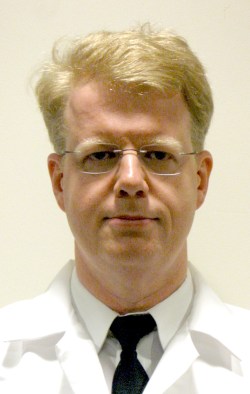
Interviewer: Scott Douglas Jacobsen
Numbering: Issue 30.E, Idea: Outliers & Outsiders (25)
Place of Publication: Langley, British Columbia, Canada
Title: In-Sight: Independent Interview-Based Journal
Web Domain: http://www.in-sightpublishing.com
Individual Publication Date: May 8, 2022
Issue Publication Date: September 1, 2022
Name of Publisher: In-Sight Publishing
Frequency: Three Times Per Year
Words: 2,546
ISSN 2369-6885
Abstract
Professor Benoit Desjardins, MD, PhD, FAHA, FACR, FNASCI is an Ivy League academic physician and scientist at the University of Pennsylvania. He is a member of the Mega Society, the OlympIQ Society and past member of the Prometheus Society. He is the designer of the cryptic Mega Society logo. He is member of several scientific societies and a Fellow of the American College of Radiology and of the American Heart Association. He is the co-Founder of the Arrhythmia Imaging Research (AIR) lab at Penn. His research is funded by the National Institute of Health. He is an international leader in three different fields: cardiovascular imaging, artificial intelligence and cybersecurity. He discusses: science; medicine; limits of science as applied to medicine; science fiction or science fact; human lifespan; the values of the medical field within the United States; venture capital firms decided to make medicine a business; venture capital firms; businesses made to appeal to patients with higher incomes; CEOs; American medicine; ignorance masquerading as knowledge comes to blows with evidence-based expertise; the lower strata of the educational and authority hierarchy in medical facilities; values and preferences of cultures; American patients different than others; American patients similar to others; pressure from administration towards physicians; rudest versions of this hotel mindset of American patients; American virtues; violent hysterics against Dr. Fauci; great examples of American ignorance; and mutually reinforcing trends.
Keywords: American, Benoit Desjardins, Dr. Fauci, incomes, Medicine, physicians, science, United States, venture capital firms.
The American Medical System and Physicians 1: Professor Benoit Desjardins, MD, PhD, FAHA, FACR, FNASCI on the U.S. Medical System, and American Patients and Physicians
*Please see the references, footnotes, and citations, after the interview, respectively.*
*This interview represents Dr. Desjardins’ opinion, combined to the current content of the published medical literature, and not necessarily the opinion of his employers.*
On science and medicine
Scott Douglas Jacobsen: Let’s start by defining terms, what is science?
Dr. Benoit Desjardins[1],[2]*: From Webster, science is the knowledge about general truths or general laws obtained and tested by the scientific method. The scientific method provides a set of principles for the pursuit of knowledge. It involves formulating a problem, collecting data by observation and experimentation, and formulating and testing hypotheses.
Jacobsen: What is medicine?
Desjardins: From Webster, medicine is both a science and an art, dealing with health maintenance and the prevention, alleviation, or cure of disease. It used to be primarily an art, but it has become firmly based on science as science evolved.
Jacobsen: What is a physician? How does a physician differ from other terms of professionals within medicine?
Desjardins: A physician is someone educated, experienced, and licensed to practice the science of medicine. The difference between physicians and other healthcare professionals is becoming less clear with time, as other professionals take on more and more of the responsibilities of physicians.
Jacobsen: What are the ultimate limits of science as applied to medicine?
Desjardins: Nobody knows. Science progresses constantly, and new scientific discoveries that positively impact medicine are produced every year. There are often tradeoffs limiting the applicability of some scientific advances to medicine. Let’s take an example from my field. There have been advances in cross-sectional imaging to image humans at extremely high spatial resolution. Flat-plate CT scanners can do that but require more radiation, which is a limiting factor for human imaging. As a result, they are mainly used to image small animals.
Jacobsen: Some make extravagant, though grounded in the natural rather than the supernatural, claims about longevity post-human or trans-human states of human life, e.g., Ray Kurzweil. Where, indefinite lifespans for humans are realized and ideal health statuses are attained. What’s the current front on this, more science fiction or science fact?
Desjardins: I have no expertise in this area. I see it as science fiction.
Jacobsen: What fields show the greatest promise in helping extend average human lifespan and ‘healthspan’ in real terms?
Desjardins: I have no expertise in this area.
On practicing medicine in the U.S.
Jacobsen: What are the values of the medical field within the United States? How does this differ from other fields?
Desjardins: There are values related to the patient, including compassion, respect, and justice. Other values are related to the physician, including a commitment to excellence, integrity, and ethics. Physicians take a Hippocratic Oath and swear to uphold specific ethical standards. It differs from other fields. Healthcare is, however, a business in the U.S., which creates conflicts with some of its values. For example, many medical practices start with noble goals, trying to help their community with devoted, caring physicians who will do whatever is best to help their patients. These practices sometimes get bought by venture capital firms. After the purchase, physicians become indentured servants, forced to perform massive amounts of work (e.g., seeing one patient every five minutes). They are forced to do whatever is best to maximize shareholders’ and investors’ profits at the expense of quality of care and consequences to physicians’ health.
Jacobsen: At some point, venture capital firms decided to make medicine a business. Is there a documented timeline of this?
Desjardins: Venture capital firms started buying physicians and medical practices in the late 1980s, a growing phenomenon.
Jacobsen: When do venture capital firms decide, in the life cycle of nobly aimed medical facility, to buy them out now? It must be a systematic process now, as it’s been done so much.
Desjardins: I am not familiar with the field of business, but they seem to buy them when they are profitable or have the potential to become profitable from the exploitation of physicians.
Jacobsen: Since medicine became more of a business than less of one, what are some choices the businesses made to appeal to patients with higher incomes, where these have nothing to do with medicine, saving lives, or better health, simply appealing to the culture of the wealthy or, at least, the rich?
Desjardins: Some hospitals offer entire floors reserved for wealthy patients, with hotel-like amenities in their rooms and increased access to services and physicians, a limousine drive from the airport, and lodging for patients’ families.
Jacobsen: How do CEOs and others interact with physicians?
Desjardins: CEOs have minimal direct interactions with physicians. They often provide mass emails to their entire medical center staff updating everyone on current issues, such as the pandemic or new initiatives, the hospital system’s latest national rankings, or financial health.
Jacobsen: Why is American medicine seemingly so terrible at outcomes while, at the same time, so expensive too – including destroying the livelihoods of the individuals giving the care?
Desjardins: American medicine is known as the “great outlier”: it is the worst healthcare system among high-income countries (Commonwealth Funds) but at the same time is the most expensive healthcare system in the world. It has a high infant mortality rate, low life expectancy at age 60, and high preventable mortality. Its infant mortality rate is comparable to some third-world countries, like Sri Lanka (Worldbank). This poor performance at extremely high costs is due to multiple factors. It includes a minimal focus on preventive medicine, emphasis on fixing catastrophic health outcomes after years of neglect, the practice of defensive medicine, and the business approach to healthcare. The traumatic nature of life in America, and the high poverty rate, have significant harmful effects on the population’s health.
Jacobsen: Whether they have terrible health patterns (so their fault), have a bad physician (so not their fault), both (so both their faults), or simply an accident brought about by something unexpected (so neither patient nor physician fault), the reactions from these events can be misinterpretation or malevolence. Each with consequence.
Although, if medicine marks a business, perhaps, we, the non-expert public, can see the issue as a natural derivative of the customer service axiom, “The customer is always right.” How are these issues exacerbating expectations from American patients coming to American physicians with sophisticated ignorance, when ignorance masquerading as knowledge comes to blows with evidence-based expertise?
Desjardins: Physicians are required by their Hippocratic Oath to serve their patients as best as possible. They use an evidence-based approach to healthcare, which is good medicine that can sometimes lead to bad outcomes. The latter often leads to patients physically harming or suing their physician, as patients are too ignorant to realize that good medicine sometimes leads to bad outcomes. Physicians can respond to this situation in two ways. First, they can continue using an evidence-based approach for healthcare until they either get harmed by their patient or more likely lose their practice license due to too many frivolous lawsuits against them. Or they can adapt to an ignorant, scientifically illiterate society by doing “defensive” medicine. The latter leads to overutilization of medical resources, patient harm, and increased U.S. healthcare expenses.
Jacobsen: What about the lower strata of the educational and authority hierarchy in medical facilities? I mean nurses and the like. How is their education? Are they given the same quality of education? How does their education impact the quality of care for patients?
Desjardins: Every member of the healthcare field receives the best possible quality of education addressing the tasks they are expected to perform, ensuring the highest level of quality in healthcare at different levels. Problems arise when healthcare workers lower in the hierarchy are given the authority to perform duties and actions for which they have not been trained to decrease healthcare costs. It has led to patients’ deaths.
On American patients
Jacobsen: I’ve done extensive interviews with Distinguished Professor Gordon Guyatt at McMaster University on Evidence-Based Medicine and other relevant subject matter. He talks about values and preferences. How are these values and preferences of cultures impacting the expectations from physicians by patients in the United States?
Desjardins: I am originally from Canada. Canadians have a more socialist mindset, think about the greater good, and are more reasonable. Americans have a more individualistic mindset. They will not tolerate waiting lists like in Canada. If they cannot see their physicians rapidly or get the device or the operations they want, they get angry and can become litigious. They will expect physicians to spend millions on extending grandma’s life by a few weeks. They have gone to court to prevent unplugging of brain-dead patients (remember Terri Schiavo), with brain dead U.S. lawmakers forcing doctors to keep these patients on life support.
Jacobsen: How are American patients different than others?
Desjardins: They have no personal accountability. They do not take care of themselves. They can chain-smoke for 50 years and then blame their physician if they develop cancer. They expect their physicians to be at their service 24/7/365, an unrealistic expectation, to work all the time without getting tired, and never make a mistake. They fail to realize that physicians are human beings. They still think of physicians as wealthy, privileged people driving expensive cars and living in mansions. U.S. physicians are instead in massive debts from medical schools, massively overworked, cannot take breaks, and are often suicidal from their working conditions.
Jacobsen: How are American patients similar to others?
Desjardins: They get sick.
Jacobsen: You have been in practicing medicine for over 20 years. How do these expectations from patients impact the pressure from administration towards physicians?
Desjardins: There is increasing use of patient satisfaction metrics by the administration to judge physician performance, which I believe is wrong. Most factors affecting patient satisfaction, like waiting time or access to physicians, are entirely beyond the control of physicians. Hospitals in the U.S. are like hotels. U.S. patients have unrealistic expectations because of this hotel mentality.
Jacobsen: What are the rudest versions of this hotel mindset of American patients?
Desjardins: We see more disrespectful behavior from patients and their families against doctors. Some patients will refuse to be examined by a black, Muslim, female, or foreign physician or by a medical trainee, intern, or resident. They will get angry at physicians if they must wait a long time before visits, if the price of their medication is too high, or if busy physicians do not spend enough time with them. And, of course, angry patients often write bad online reviews against competent, dedicated physicians, negatively affecting the physicians’ careers and livelihood.
Jacobsen: Americans are scientifically ignorant, not necessarily individual faults. They are greedy, coming out of a culture based on the superficial things of life, though, at the end of the adult day, is an individual value, so can be considered their fault. Same with cruelty akin to greed. What about American virtues? How are these ameliorating this issue of overwork or poorly cared-for physicians?
Desjardins: Americans can display generosity, compassion, honesty, and solidarity. They often raise thousands of dollars in crowd-funding of patients for an operation, a transplant, or medication. Unfortunately, there is zero empathy in American culture towards physicians. When Americans are told of the poor working conditions of physicians, they simply respond that physicians chose that profession, and they should accept the consequences of working in that profession, even if this leads to physician deaths. When a football player commits suicide, this is extensively covered in the news media, and small local memorials are erected around which people can deposit flowers and pay their respect. When a U.S. physician commits suicide due to poor working conditions, their body gets covered by a tarp, and the death is not reported in the news media. When patients come to their annual physician visit, they are told the physician moved away. After dedicating their lives to taking care of human suffering, their existence is simply eradicated and forgotten. But Americans will remember the football player forever.
Jacobsen: Are violent hysterics against Dr. Fauci ongoing?
Desjardins: I don’t think they will ever stop. In December 2021, Fox News host Jesse Watters urged listeners at a conservative meeting to take a “kill shot” at Dr. Anthony Fauci, the U.S. top government infectious disease physician. Since April 2020, Dr. Fauci and his family have received multiple death threats and have required security and bodyguards. Think about it for a minute. One of the most brilliant infectious disease scientists in the U.S. receives numerous death threats from Americans due to a world pandemic originating in China. What kind of society does that?
Jacobsen: What are two great examples of American ignorance in biology/medicine and basic astronomy?
Desjardins: At my institution, we invite the best scientists in the world to talk about their research. I was privileged to attend lectures by academics who devoted their entire careers to studying American ignorance and scientific illiteracy and trying to find solutions. Here are some examples they provided. Only about 20-30% of Americans believe in the theory of evolution, the core of all biological and medical science. 25% of Americans are unaware that the Earth revolves around the Sun. More recently, when Trump recommended injecting or swallowing Clorox to kill the coronavirus during the pandemic, thousands of Americans poisoned themselves by following his advice.
Jacobsen: All this commentary around scientific illiteracy is the larger discussion around the smaller discourse of medical illiteracy. Basic facts of health and wellness disseminated to the public for public benefit generally, who, by community social police, by malevolent religious leaders, by charlatans, by hubristic greedy ignorance-mongers, and others, are lied to, about it. They’re told the opposite.
They’re told physicians, as with Dr. Fauci, for example, are agents of malevolence, even of Satan, etc. These disconnects from Ground Zero contribute to this culture of ignorance, as many other cultures. However, everything’s on camera in the United States.
Is this a similar trend, as with the increasingly worse treatment of physicians over half of a century, of a collapse of the integrity of the proverbial social fabric and institutional trust in the United States? If so, are these mutually reinforcing trends, where, perhaps, some of the more intelligent physicians among physicians (who are already among the most average intelligent people our societies have) want to pull a House, M.D. on them (the patients)?
Desjardins: The combination of ignorance and hostility in the U.S., each reinforcing the other, leads to the current war against expertise, in which the expertise of physicians, scientists, and scholars is downplayed or wholly dismissed. I am reminded of the famous quote by Isaac Azimov: “There is a cult of ignorance in the United States, and there has always been. The strain of anti-intellectualism has been a constant thread winding its way through our political and cultural life, nurtured by the false notion that democracy means that my ignorance is just as good as your knowledge.” In his 2017 book, “The Death of Expertise: The Campaign Against Established Knowledge and Why It Matters,” Tom Nichols addressed the issue. Nichols notes that “increasing numbers of laypeople lack basic knowledge, they reject fundamental rules of evidence and refuse to learn how to make a logical argument.” He describes instances where scientifically illiterate patients tell their physician why their advice is wrong. He decries Americans’ lack of critical thinking abilities, their positive hostility towards knowledge, their rejection of science, and of dispassionate rationality, which are the foundations of modern civilization.
Footnotes
[1] Academic Physician; Member, OlympIQ Society; Member, Mega Society.
[2] Individual Publication Date: May 8, 2022: http://www.in-sightpublishing.com/american-medicine-1; Full Issue Publication Date: September 1, 2022: https://in-sightpublishing.com/insight-issues/.
*High range testing (HRT) should be taken with honest skepticism grounded in the limited empirical development of the field at present, even in spite of honest and sincere efforts. If a higher general intelligence score, then the greater the variability in, and margin of error in, the general intelligence scores because of the greater rarity in the population.
Citations
American Medical Association (AMA): Jacobsen S. The American Medical System and Physicians 1: Professor Benoit Desjardins, MD, PhD, FAHA, FACR, FNASCI on the U.S. Medical System, and American Patients and Physicians[Online]. May 2022; 30(E). Available from: http://www.in-sightpublishing.com/american-medicine-1.
American Psychological Association (APA, 6th Edition, 2010): Jacobsen, S.D. (2022, May 8). The American Medical System and Physicians 1: Professor Benoit Desjardins, MD, PhD, FAHA, FACR, FNASCI on the U.S. Medical System, and American Patients and Physicians. Retrieved from http://www.in-sightpublishing.com/american-medicine-1.
Brazilian National Standards (ABNT): JACOBSEN, S. The American Medical System and Physicians 1: Professor Benoit Desjardins, MD, PhD, FAHA, FACR, FNASCI on the U.S. Medical System, and American Patients and Physicians. In-Sight: Independent Interview-Based Journal. 30.E, May. 2022. <http://www.in-sightpublishing.com/american-medicine-1>.
Chicago/Turabian, Author-Date (16th Edition): Jacobsen, Scott. 2022. “The American Medical System and Physicians 1: Professor Benoit Desjardins, MD, PhD, FAHA, FACR, FNASCI on the U.S. Medical System, and American Patients and Physicians.” In-Sight: Independent Interview-Based Journal. 30.E. http://www.in-sightpublishing.com/american-medicine-1.
Chicago/Turabian, Humanities (16th Edition): Jacobsen, Scott “The American Medical System and Physicians 1: Professor Benoit Desjardins, MD, PhD, FAHA, FACR, FNASCI on the U.S. Medical System, and American Patients and Physicians.” In-Sight: Independent Interview-Based Journal. 30.E (May 2022). http://www.in-sightpublishing.com/american-medicine-1.
Harvard: Jacobsen, S. 2022, ‘The American Medical System and Physicians 1: Professor Benoit Desjardins, MD, PhD, FAHA, FACR, FNASCI on the U.S. Medical System, and American Patients and Physicians’, In-Sight: Independent Interview-Based Journal, vol. 30.E. Available from: <http://www.in-sightpublishing.com/american-medicine-1>.
Harvard, Australian: Jacobsen, S. 2022, ‘The American Medical System and Physicians 1: Professor Benoit Desjardins, MD, PhD, FAHA, FACR, FNASCI on the U.S. Medical System, and American Patients and Physicians’, In-Sight: Independent Interview-Based Journal, vol. 30.E., http://www.in-sightpublishing.com/american-medicine-1.
Modern Language Association (MLA, 7th Edition, 2009): Scott D. Jacobsen. “The American Medical System and Physicians 1: Professor Benoit Desjardins, MD, PhD, FAHA, FACR, FNASCI on the U.S. Medical System, and American Patients and Physicians.” In-Sight: Independent Interview-Based Journal 30.A (2022): May. 2022. Web. <http://www.in-sightpublishing.com/american-medicine-1>.
Vancouver/ICMJE: Jacobsen S. The American Medical System and Physicians 1: Professor Benoit Desjardins, MD, PhD, FAHA, FACR, FNASCI on the U.S. Medical System, and American Patients and Physicians[Internet]. (2022, May 30(E). Available from: http://www.in-sightpublishing.com/american-medicine-1.
License
In-Sight Publishing by Scott Douglas Jacobsen is licensed under a Creative Commons Attribution-NonCommercial-NoDerivatives 4.0 International License.
Based on a work at www.in-sightpublishing.com.
Copyright
© Scott Douglas Jacobsen and In-Sight Publishing 2012–2022. Unauthorized use and/or duplication of this material without express and written permission from this site’s author and/or owner is strictly prohibited. Excerpts and links may be used, provided that full and clear credit is given to Scott Douglas Jacobsen, and In-Sight Publishing and In-Sight: Independent Interview-Based Journal with appropriate and specific direction to the original content. All interviewees and authors co-copyright their material and can disseminate for their independent purposes.
Share this:

Interviewer: Scott Douglas Jacobsen
Numbering: Issue 30.A, Idea: Outliers & Outsiders (25)
Place of Publication: Langley, British Columbia, Canada
Title: In-Sight: Independent Interview-Based Journal
Web Domain: http://www.in-sightpublishing.com
Individual Publication Date: May 8, 2022
Issue Publication Date: September 1, 2022
Name of Publisher: In-Sight Publishing
Frequency: Three Times Per Year
Words: 1,654
ISSN 2369-6885
Abstract
Professor Benoit Desjardins, MD, PhD, FAHA, FACR, FNASCI is an Ivy League academic physician and scientist at the University of Pennsylvania. He is member of several scientific societies and a Fellow of the American College of Radiology and of the American Heart Association. He is the co-Founder of the Arrhythmia Imaging Research (AIR) lab at Penn. His research is funded by the National Institute of Health. He is an international leader in three different fields: cardiovascular imaging, artificial intelligence and cybersecurity. He is a member of the most elite high IQ societies in the world. He discusses: fonder memories; areas of specialization; pure mathematics; Atheism; some of the influences on this atheism; the Catholic high school education; children’s and your wife’s association with spirituality and religion; each of the degrees’ subject matter; the OSCP test; Prof. Tao; da Vinci; physicians; Canadian society; hacked; religion; education in critical thinking; and American scientific illiteracy .
Keywords: academic, American, Atheism, Benoit Desjardins, Catholic high school, Leonardo da Vinci, OSCP test, scientific illiteracy, spirituality, Terence Tao.
Conversation with Dr. Benoit Desjardins, M.D., Ph.D., on Specialization, Tao, da Vinci, and Scientific Illiteracy: Academic Physician; Member, Mega Society (3)
*Please see the references, footnotes, and citations, after the interview, respectively.*
Scott Douglas Jacobsen: That’s a very dramatic reveal at the wedding. At least, it spices life up a bit, I suppose. Any fonder memories come to mind rather than those featuring the dramatis personae? Something unmentioned.
Dr. Benoit Desjardins[1],[2]*: There were plenty of fonder memories in my early life, but nothing interesting to the readers. You know, getting puppies and stuff like that.
Jacobsen: What were the areas of specialization when doing graduate school? I do not mean the disciplines themselves, e.g., “Pure Mathematics, Artificial Intelligence, Formal Philosophy (Logic), and Theoretical Physics.” I mean the topics within the disciplines studied, e.g., the area of logic, the area of medicine. Also, why not pursue a CEO position within medicine to make even more money rather than make a lot of money, though less than a CEO, and in slave-like conditions?
Desjardins: Well, for Pure Mathematics, it’s your general graduate degree covering all basic areas. For Artificial Intelligence, I focused on the applications to healthcare and basic A.I. theory. For Theoretical Physics, I enjoyed quantum physics and mathematical methods. For Formal Philosophy, I focused on standard and non-standard logic, formal learning theory, formal discovery theory (my dissertation), and philosophy of science. I studied everything in those four fields relevant to theoretical artificial intelligence.
I was not born with the business gene. I developed a few computational tools over the years, and I was strongly encouraged to start a company to make money out of those tools. I had no interest in starting a company and decided to make the tools available for free to the medical community. Doing an MBA (a degree in greed) is undoubtedly an option for someone who collects degrees, but I have no interest in business.
Jacobsen: Why was pure mathematics the hardest? Why does pure mathematics seem to require such high levels of g?
Desjardins: Graduate-level pure mathematics builds on a full undergraduate-level mathematics curriculum that I never pursued. They did not allow me to register for that graduate program initially. They felt it was impossible for someone without an undergraduate degree in mathematics to complete a level 1 (top institution) graduate-level pure mathematics program. So, I made a deal with them. I asked which first-term pure mathematics graduate course was the hardest. They told me it was Advanced Abstract Algebra. I asked the program director, “if I take that course and do well in it, could I get into the program?” He said yes. It was challenging without an undergraduate background, but I got used to it and did well enough. So, they allowed me to enroll. None of those pure mathematics courses were easy, and many were an exercise in frustration. But I pulled through, somehow.
Jacobsen: What age was Atheism ‘it’ for you?
Desjardins: In early elementary school, when I first learned about religion. The concept of an invisible entity controlling our lives seemed ridiculous to me, and worshipping it sounded even more ridiculous.
Jacobsen: What were some of the influences on this atheism, or lines of thought within the mind of a profoundly gifted young Canadian?
Desjardins: None. I concluded by myself from the very start that religion made no sense. I was not exposed to any atheist group, and the public internet as we know it today did not exist at the time. Religion was starting to fade away in Quebec, which helped a bit.
Jacobsen: What were the benefits, and not, of the Catholic high school education?
Desjardins: It was better than public school. This specific high school also included a strong sports component, and my parents wanted me to become more active, besides reading and playing chess.
Jacobsen: What are your children’s and your wife’s association with spirituality and religion if I may ask?
Desjardins: They vary from strong atheism to mild religiosity.
Jacobsen: Are there fundamental interrelationships between each of the degree’s subject matter? In that, there is a theoretical and empirical foundation unifying the study of each, or these were, just that, a collection of stamps as degrees.
Desjardins: I did not start graduate school by doing four simultaneous degrees. For the first term, I just did artificial intelligence related to medicine. But during that term, I was exposed to formal philosophers with a solid logic and theoretical background. They had an incredibly deeper understanding of everything in the field. They operated at an intellectual level to which I had never been exposed. I was genuinely impressed by them, and I wanted to acquire the same skills, so I got into logic and then pure mathematics. Theoretical physics was just for fun. But all the degrees involved skills relevant to theoretical artificial intelligence, so they were not a collection of random degrees. They also involved topics in which I had a long-time interest.
Jacobsen: What is the OSCP test in hacking?
Desjardins: OSCP is a hands-on hacking course where you initially get exposed to a minimal set of hacking techniques. You then self-learn practical hacking skills by hacking into 50 machines on a virtual network by trial and error, each requiring a different hacking approach. It requires penetration followed by privileges escalation to the root level for each machine. In the final exam, you have 24h to hack into five machines on a virtual network. You must try every hacking technique you know and hope some of them work in the limited 24h of the test while staying awake. Although I have been forced to stay awake for up to 68h in medicine, hacking non-stop for 24h is extremely difficult because of the constant intense intellectual effort. It just burns you out.
Jacobsen: What makes Prof. Tao so smart, or impressively astute with mathematics?
Desjardins: Probably a combination of good genes and training and a well-connected set of neurons. He is the academic that other brilliant mathematicians consult when they get stuck on a problem.
Jacobsen: What aspect of da Vinci seems the most contributive to his creativity?
Desjardins: He was born at the right time in history and with the right set of creative skills for that specific time. I don’t know enough about his life to provide an intelligent answer to that.
Jacobsen: How does American society treat physicians like slaves? We can, as discussed, cover this in-depth a separate educational series here.
Desjardins: I will elaborate in the separate educational series.
Jacobsen: How does Canadian society treat them?
Desjardins: Much better. Canadian society is better educated and has more respect for physicians and scientists. Canadians are not at war with science like in the U.S. Canada is more like Europe. They do not have Fox News in Canada.
Jacobsen: Who are most likely to get hacked, or have attempts at hacking them?
Desjardins: If you think of individual people (as opposed to military installations or government institutions), then political leaders or famous people are more likely to get hacked. Trump got his Twitter account hacked a few times because he used trivial passwords. The actress Jennifer Lawrence got hacked so that they could get naked pictures of her from her cloud account.
Jacobsen: Why does religion, as a statistical tendency and a finding mutually known in psychology based on meta-analyses of I.Q. and religiosity and conservatism, attract more of the left side of the bell curve rather than less of the left side of the bell curve?
Desjardins: I am not an expert on that topic. I might be completely wrong, but this seems to make some sense. People on the left side of the Bell curve accept what they learn in school without much questioning. People on the right side of the Bell curve tend to question more what they learn and can more easily form opinions that are independent and different from that of their teachers. It includes views about religion.
Jacobsen: How much could education in critical thinking help with this problem of negative religiosity infecting public discourse, even politics, and public policy?
Desjardins: It would help a lot, and there is a lot of effort to implement critical thinking as part of the U.S. educational curriculum (e.g., gen-ed courses in U.S. colleges). But this is not easy, and there is surprisingly a solid reluctance to this initiative amongst U.S. students. An anecdote opened my mind to this problem. A physician colleague did part of his training at Harvard and was a mentor in an undergraduate course on critical thinking required for Harvard students. There were many complaints from the students in the class as they could not understand why a course in critical thinking was helpful for their major. If Harvard students don’t get it, how could students in less competitive institutions get it? How could people not attending college get it?
Jacobsen: How does this American scientific illiteracy show itself? In Canada, we have the same with Trinity Western University. The largest Evangelical Christian university in the country, largest private university in the country, is 5 minutes down the road from me, and creates a culture of Evangelical fundamentalism and resultant scientific illiteracy and monocultural prejudice in general, so most cases. 1/4 to 1/5 Canadians are young Earth creationists by title or by stipulated belief systems based on surveys.
Desjardins: You don’t have to look very far to find recent examples. Just look at the U.S. response to the current pandemic. A large portion of Americans refused to get vaccinated and wear masks. Ignorant and scientifically illiterate governors implemented horrible state policies, leading to COVID cases skyrocketing in red states. It led to over one million U.S. deaths from COVID, more than any other nation on Earth. After Trump suggested it, thousands of Americans poisoned themselves by swallowing disinfectants to try to cure COVID. U.S. judges, who are supposed to be educated and intelligent, forced physicians to administer horse deworming medicine to COVID patients, an act of pure idiocy. Physicians who prescribed this drug for COVID patients were fired for gross incompetence and stupidity.
Footnotes
[1] Academic Physician; Member, OlympIQ Society; Member, Mega Society.
[2] Individual Publication Date: May , 2022: http://www.in-sightpublishing.com/desjardins-3; Full Issue Publication Date: September 1, 2022: https://in-sightpublishing.com/insight-issues/.
*High range testing (HRT) should be taken with honest skepticism grounded in the limited empirical development of the field at present, even in spite of honest and sincere efforts. If a higher general intelligence score, then the greater the variability in, and margin of error in, the general intelligence scores because of the greater rarity in the population.
Citations
American Medical Association (AMA): Jacobsen S. Conversation with Dr. Benoit Desjardins, M.D., Ph.D., on Specialization, Tao, da Vinci, and Scientific Illiteracy: Academic Physician; Member, Mega Society (3)[Online]. May 2022; 30(A). Available from: http://www.in-sightpublishing.com/desjardins-3.
American Psychological Association (APA, 6th Edition, 2010): Jacobsen, S.D. (2022, May 8). Conversation with Dr. Benoit Desjardins, M.D., Ph.D., on Specialization, Tao, da Vinci, and Scientific Illiteracy: Academic Physician; Member, Mega Society (3). Retrieved from http://www.in-sightpublishing.com/desjardins-3.
Brazilian National Standards (ABNT): JACOBSEN, S. Conversation with Dr. Benoit Desjardins, M.D., Ph.D., on Specialization, Tao, da Vinci, and Scientific Illiteracy: Academic Physician; Member, Mega Society (3). In-Sight: Independent Interview-Based Journal. 30.A, May. 2022. <http://www.in-sightpublishing.com/desjardins-3>.
Chicago/Turabian, Author-Date (16th Edition): Jacobsen, Scott. 2022. “Conversation with Dr. Benoit Desjardins, M.D., Ph.D., on Specialization, Tao, da Vinci, and Scientific Illiteracy: Academic Physician; Member, Mega Society (3).” In-Sight: Independent Interview-Based Journal. 30.A. http://www.in-sightpublishing.com/desjardins-3.
Chicago/Turabian, Humanities (16th Edition): Jacobsen, Scott “Conversation with Dr. Benoit Desjardins, M.D., Ph.D., on Specialization, Tao, da Vinci, and Scientific Illiteracy: Academic Physician; Member, Mega Society (3).” In-Sight: Independent Interview-Based Journal. 30.A (May 2022). http://www.in-sightpublishing.com/desjardins-3.
Harvard: Jacobsen, S. 2022, ‘Conversation with Dr. Benoit Desjardins, M.D., Ph.D., on Specialization, Tao, da Vinci, and Scientific Illiteracy: Academic Physician; Member, Mega Society (3)’, In-Sight: Independent Interview-Based Journal, vol. 30.A. Available from: <http://www.in-sightpublishing.com/desjardins-3>.
Harvard, Australian: Jacobsen, S. 2022, ‘Conversation with Dr. Benoit Desjardins, M.D., Ph.D., on Specialization, Tao, da Vinci, and Scientific Illiteracy: Academic Physician; Member, Mega Society (3)’, In-Sight: Independent Interview-Based Journal, vol. 30.A., http://www.in-sightpublishing.com/desjardins-3.
Modern Language Association (MLA, 7th Edition, 2009): Scott D. Jacobsen. “Conversation with Dr. Benoit Desjardins, M.D., Ph.D., on Specialization, Tao, da Vinci, and Scientific Illiteracy: Academic Physician; Member, Mega Society (3).” In-Sight: Independent Interview-Based Journal 30.A (2022): May. 2022. Web. <http://www.in-sightpublishing.com/desjardins-3>.
Vancouver/ICMJE: Jacobsen S. Conversation with Dr. Benoit Desjardins, M.D., Ph.D., on Specialization, Tao, da Vinci, and Scientific Illiteracy: Academic Physician; Member, Mega Society (3)[Internet]. (2022, May 30(A). Available from: http://www.in-sightpublishing.com/desjardins-3.
License
In-Sight Publishing by Scott Douglas Jacobsen is licensed under a Creative Commons Attribution-NonCommercial-NoDerivatives 4.0 International License.
Based on a work at www.in-sightpublishing.com.
Copyright
© Scott Douglas Jacobsen and In-Sight Publishing 2012–2022. Unauthorized use and/or duplication of this material without express and written permission from this site’s author and/or owner is strictly prohibited. Excerpts and links May be used, provided that full and clear credit is given to Scott Douglas Jacobsen, and In-Sight Publishing and In-Sight: Independent Interview-Based Journal with appropriate and specific direction to the original content. All interviewees and authors co-copyright their material and can disseminate for their independent purposes.
Share this:


Interviewer: Scott Douglas Jacobsen
Numbering: Issue 30.E, Idea: Outliers & Outsiders (25)
Place of Publication: Langley, British Columbia, Canada
Title: In-Sight: Independent Interview-Based Journal
Web Domain: http://www.in-sightpublishing.com
Individual Publication Date: May 8, 2022
Issue Publication Date: September 1, 2022
Name of Publisher: In-Sight Publishing
Frequency: Three Times Per Year
Words: 1,865
ISSN 2369-6885
Abstract
Leann (Pitman) Manuel’s bio states: “Leann was as good as born on a horse, and has been fortunate to work with them daily since her very early twenties. From Pony Club and 4H as a child, through national level competition and several World’s Show qualifications with her Quarter Horse as a teen, to some Dressage tests, a few Cowboy Challenge clinics, and the daily operations at Riding 4 Life today, Leann’s horsemanship practice continues to seek out anything and everything she may be able to learn or experience with horses. Leann is passionate about helping others realize the value of having horses in their lives – no matter the breed or creed – and she hopes to continue to grow and nurture the horsemanship community in her region well into the future.” She discusses: earliest memory with a horse; the trend with a single digit age and a familial line; funding a business around horses; clients and staff; the niche of people or individuals on the autism spectrum.
Keywords: 4H, autism spectrum, equestrianism, Fort Worth, Leann Manuel, Pony Club, Quarter Horse, Riding 4 Life, Texas, Western classes.
The Greenhorn Chronicles 5: Leann (Pitman) Manuel on Becoming a Horse Woman and Riding 4 Life’s Beginnings (1)
*Please see the footnotes, bibliography, and citations after the interview.*
Scott Douglas Jacobsen: Today, we are here with Leann Manuel. We will talk about equestrianism. It is another addition to the series. So, my first question, typically, is around the foundation or the history of becoming a horse woman, a horse person, in this industry. What was the earliest memory with a horse for you?
Leann (Pitman) Manuel[1],[2]: Gosh, there was always a horse in my backyard. Some of my first memories are as a toddler of a barn being built in my backyard, and my family helping. So, there are pictures of my mom as a 10-year-old on her first horse. It’s in the genetic fabric of my immediate family, I guess. My mom’s passion. Ironically, when I was a kid, she didn’t think I would get into it.
She only had one horse. She sold extra equipment. Only kept around what she needed for her horse. Lo and behold, yes, it became my passion too. I ended up with my own horse, bought specifically for me when I was 11 years old.
Jacobsen: Typically, is this the trend with a single digit age and a familial line in it?
Manuel: It was, certainly, a trend for all of my peers. That I found myself in 4H Club with. I was in 4H Club, Pony Club, Quarter Horse organization, any kind of the communities in the horse industry. It was true of pretty much all of my peers. They came from existing horse families, especially if they stuck with it long-term.
For 4H, as it is government supported, it is a volunteer-based program with provincial and federal funding in it. That’s where we saw more kids who didn’t come from a farm background or an agricultural background, wanting to learn about horse. They would come to club meetings and learn a bit.
But when it came to participation of owning a horse, that’s when we saw a lot of those folks drop off. Because their families were either too intimidated of owning a horse and everything that entailed, and couldn’t financially support it, or there wasn’t an easy inroad for them to continue.
Jacobsen: How did this continue over time and to the point of founding a business around horses? That’s a big step.
Manuel: It was a big step, but a slow and inevitable progression as far as I experienced it. 11-years-old in Pony Club taking lessons. 13-years-old, my mom’s horse passes away. My parents purchase another horse. I fell in love with it. This horse has a rescue story behind it. It was purchased for not much money at all.
I ended up with the kind of bond with that horse that took me from the little novice kid riding up and down the road to a few years later competing at Thunderbird when it was still at 200th Ave. with the Keg restaurant at the end. I was 15 years old and way in over my head, and out of my league.
But the bond I had with this horse. I was competing with pros in the open division and winning. I look back at that. As a kid, I had no idea what I was doing. I was just at a horse show with a horse doing my thing. At 15, you don’t realize professionals up and down the coast from Washington State, Oregon, and California, watching me ride by and take their points, “Where did this kid come from?” [Laughing] I rode that horse for 8 years on the Quarter Horse circuit.
She was an American Quarter Horse. That was the association I was heavily involved with at the time because that’s the horse that I happened to have at the time. Along the way, other projects come along. So, I had her that I was showing. I was in 4H. Someone gave me another project, “Here, Leann, another horse to ride.”
Because my other now really accomplished show horse was way out of the league out of what was available to compete with in 4H. I took this Haflinger Belgian Quarter Horse cross 3-year-old not even halter broke really. It got out of the trailer and dragged me from the trailer to the barn where the other horses were.
That was my 4H project for the year. By the end of the 8-month project year, I was competing walk-trot-canter. He was doing cross rails. We were in some Western classes making it. We were bombing it. He went back to his owner and joined a lesson program. I had a project always cycling through that I was riding. By the time I hit graduation, which was this fork in the road, my dad was determined that there was no real way for me to make money in the horse industry.
Even though, I was competing at the professional level. The only next level to test me was to go to the World’s in Fort Worth, Texas. I couldn’t afford to go. I stayed back and mucked stalls at my friends facility while she went with her family to compete in my spot on the team.
So, financial barrier to really getting access to that community, that market, that level of competition. My dad insisted on my going to university. I got some scholarships and went to UVic. I left horses a little behind. They were what I did in the Summer time a little bit. I had another young horse, which I showed and developed a bit, ultimately, after a few years of university, coming back home in my early 20s, facing some mental health issues and PTSD from trauma, I realized; without horses, I don’t have solid ground to stand on, for myself.
This is part of who I am. It is cellular. It is in my bones. My best self and healthiest is when I have horses to work with. It became the foundation for what I do today at Riding 4 Life. I came home riding horse, teaching a few, riding, lessons. Inevitably, if you have something to offer, and don’t have money, when you’re young and have horses, you teach riding horses, muck stalls, or ride people’s horses to earn money to pay entry fees, to buy the saddle you need.
That’s how I started. I taught my first beginner lessons when I was 14 years old, maybe 13. I was training a few other people’s horses on the side for cash when I was 15, 16. It kept going from there. In my early 20s, I was teaching riding lessons in my parents’ backyard property again when one of my long-time clients who bordered her horse at my parent’s place when I was away at university; she was a foster parent.
She worked with special needs kids. She was starting a business. Getting out of being a foster parent directly and getting into being more of a supporter and foster of the community, she started a business with behaviour intervention and community support work with kids with various barriers. In particular, things like autism or developmental disabilities, or medical issues that made them very fragile.
She was always looking for things to do. She used funding to take them to riding lessons to help them with me, then this happened with 2 or 3, and then hit about 8 or 9. She had clients like that. She said, “You know, Leann, you should start this as a business.” That’s where that jumping off point happened with horses from passion, identity, hobby, skill set, to monetized formally.
It was pretty interesting because I’ve in my work life, never been as successful as when I am growing that. I grew that in my hometown for a few years, Port Alberni. Other life events made it impossible for me to continue. I fall off the radar a bit as an equine business operator. I still had horses. I fight to keep them, feed them. I head off to the Okanagan in 2008, which was my first brush with the restaurant industry. I picked up a job waiting tables in a restaurant in Osoyoos trying to feed my horses.
Tip money was the first money I had in my pocket when I crash landed here. I bought some hay and away we went. Here we are, 2022, I sent emails to all of my clients to see who wants to re-register for this year. There was over 60 clients on that list.
So, it’s busy and growing. Things tend to grow to fill the capacity for whatever resources we have to serve those folks.
Jacobsen: How clients do you have now? How many staff do you have to meet the needs of those clients?
Manuel: Gosh, like I said, the actual individual clients on our weekly roster. We are at about 60 to 65. We operate a Spring, Summer, Fall session. Without an indoor session, we cannot run a Winter session. Myself, my husband, we have 3 or 4 part-time staff who have been interns. Young people who have come up through my program or gained experience. There’s one who has gained experience and recently joined the program.
They help me teach beginner lessons now. They range from 14 to about 20. Then the other detail is roughly 50% of my clientele is on the autism spectrum, including some of my staff.
Jacobsen: How do people find out, by which I mean clients (or prospective), about Riding 4 Life, especially with the niche of people or individuals on the autism spectrum coming to you – at such overwhelming rates out of the proportion of the clientele, which is large itself?
Manuel: So, we specialize in autism services. We recently added beginner lessons as something we put front and center, because I was getting so many people requesting it. Even though, it was not my focus. It created this opportunity where I said to some of my teens who were looking for more, “Do you want to teach riding lessons?” We started an internship riding program.
I held my shingle out for beginning lessons to create work for them. Because we had the skill set here, the equipment. We had great horses. If I am teaching my lesson, and if there are two or three others with me with their students, “Let’s see if it works.” Out first crack at that was 4 years ago.
Of course, in the after school hours here last Summer and Fall, we had a 3 and 4 o’clock session with 6 or 7 horses with 7 instructors running out there at the same time. It offered training wheels. That’s how I describe how I teach. You get somebody going. You get the training wheels. As you get someone going, and develop their confidence, you slowly take those training wheels away. Same for our instructors.
They don’t think they can do it. I had one young woman. She moved away now. She was selectively mute. She came as a beginner, rider, client. She ended up as an instructor. Slowly push her out there, “You can do it.” [Laughing]
If the wheels really fall off there, you can do it. So far, so good.
Footnotes
[1] Instructor & Founder, Riding 4 Life Equine Enterprises.
[2] Individual Publication Date: May 8, 2022: http://www.in-sightpublishing.com/manuel-1; Full Issue Publication Date: September 1, 2022: https://in-sightpublishing.com/insight-issues/.
Citations
American Medical Association (AMA): Jacobsen S. The Greenhorn Chronicles 5: Leann (Pitman) Manuel on Becoming a Horse Woman and Riding 4 Life’s Beginnings (1)[Online]. May 2022; 30(E). Available from: http://www.in-sightpublishing.com/manuel-1.
American Psychological Association (APA, 6th Edition, 2010): Jacobsen, S.D. (2022, May 8). The Greenhorn Chronicles 5: Leann (Pitman) Manuel on Becoming a Horse Woman and Riding 4 Life’s Beginnings (1). Retrieved from http://www.in-sightpublishing.com/manuel-1.
Brazilian National Standards (ABNT): JACOBSEN, S. The Greenhorn Chronicles 5: Leann (Pitman) Manuel on Becoming a Horse Woman and Riding 4 Life’s Beginnings (1). In-Sight: Independent Interview-Based Journal. 30.E, May. 2022. <http://www.in-sightpublishing.com/manuel-1>.
Chicago/Turabian, Author-Date (16th Edition): Jacobsen, Scott. 2022. “The Greenhorn Chronicles 5: Leann (Pitman) Manuel on Becoming a Horse Woman and Riding 4 Life’s Beginnings (1).” In-Sight: Independent Interview-Based Journal. 30.E. http://www.in-sightpublishing.com/manuel-1.
Chicago/Turabian, Humanities (16th Edition): Jacobsen, Scott “The Greenhorn Chronicles 5: Leann (Pitman) Manuel on Becoming a Horse Woman and Riding 4 Life’s Beginnings (1).” In-Sight: Independent Interview-Based Journal. 30.E (May 2022). http://www.in-sightpublishing.com/manuel-1.
Harvard: Jacobsen, S. 2022, ‘The Greenhorn Chronicles 5: Leann (Pitman) Manuel on Becoming a Horse Woman and Riding 4 Life’s Beginnings (1)’, In-Sight: Independent Interview-Based Journal, vol. 30.E. Available from: <http://www.in-sightpublishing.com/manuel-1>.
Harvard, Australian: Jacobsen, S. 2022, ‘The Greenhorn Chronicles 5: Leann (Pitman) Manuel on Becoming a Horse Woman and Riding 4 Life’s Beginnings (1)’, In-Sight: Independent Interview-Based Journal, vol. 30.E., http://www.in-sightpublishing.com/manuel-1.
Modern Language Association (MLA, 7th Edition, 2009): Scott D. Jacobsen. “The Greenhorn Chronicles 5: Leann (Pitman) Manuel on Becoming a Horse Woman and Riding 4 Life’s Beginnings (1).” In-Sight: Independent Interview-Based Journal 30.E (2022): May. 2022. Web. <http://www.in-sightpublishing.com/manuel-1>.
Vancouver/ICMJE: Jacobsen S. The Greenhorn Chronicles 5: Leann (Pitman) Manuel on Becoming a Horse Woman and Riding 4 Life’s Beginnings (1)[Internet]. (2022, May 30(E). Available from: http://www.in-sightpublishing.com/manuel-1.
License
In-Sight Publishing by Scott Douglas Jacobsen is licensed under a Creative Commons Attribution-NonCommercial-NoDerivatives 4.0 International License.
Based on a work at www.in-sightpublishing.com.
Copyright
© Scott Douglas Jacobsen and In-Sight Publishing 2012–2022. Unauthorized use and/or duplication of this material without express and written permission from this site’s author and/or owner is strictly prohibited. Excerpts and links may be used, provided that full and clear credit is given to Scott Douglas Jacobsen, and In-Sight Publishing and In-Sight: Independent Interview-Based Journal with appropriate and specific direction to the original content. All interviewees and authors co-copyright their material and can disseminate for their independent purposes.
Share this:


Interviewer: Scott Douglas Jacobsen
Numbering: Issue 30.E, Idea: Outliers & Outsiders (25)
Place of Publication: Langley, British Columbia, Canada
Title: In-Sight: Independent Interview-Based Journal
Web Domain: http://www.in-sightpublishing.com
Individual Publication Date: May 8, 2022
Issue Publication Date: September 1, 2022
Name of Publisher: In-Sight Publishing
Frequency: Three Times Per Year
Words: 987
ISSN 2369-6885
Abstract
Dr. Julia Jane Stanley is a show jumper equestrian training under Laura Balisky. She earned a Ph.D. in Physics from the University of Calgary. She discusses: the first inklings of an interest in horses; the individuals who encouraged this interest in horses; the focus in horses; highest level of attainment in performance; Medical Physics; doctoral research; Physics; the current pursuits with horses now; plans with horses; physics; other animals; the trainers or mentors in Southlands; trail rides; Laura Balisky; pony club; riding; pursue science or medicine; and Grand Prixs.
Keywords: Canada, equestrianism, equine, Eventing, Grand Prix, Julia Jane Stanley, Laura Balisky, Maynard’s Pony Meadows, Physics, pony club, Show Jumping, Southlands, Sweet Briar College, University of Calgary.
The Greenhorn Chronicles 4: Dr. Julia Jane Stanley on Physics, Show Jumping, and Grand Prix Dreams (1)
*Please see the footnotes, bibliography, and citation style listing after the interview.*
Scott Douglas Jacobsen: When it comes to equestrians and equestrianism, one trend, certainly, of note, though preliminary in the research: A lesser educational attainment in the pursuit of a dream of becoming the next great Canadian equestrian, or the maintenance of a desired life(style) in the equine. I have zero survey or organization membership data to confirm this observation, but, in conversation, I have noted this – so preliminary, qualitative, and limited sample size. The series will be, and is in the process of, expanding outside of the remit of British Columbia and Canadian equestrianism. When talking to equestrians, and to you, I was informed of something. Your Ph.D. is from the University of Calgary in Physics. You have the highest education of any equestrian known to me so far. We will talk about this. However, as with every story, there is a “once upon a time…” Once upon a time, you didn’t have a Ph.D. You simply had an interest in horses. When were the first inklings of an interest in horses?
Dr. Julia Jane Stanley[1],[2]: I have always loved horses and all animals and I started riding in Southlands, Vancouver when I was five years old.
Jacobsen: Who were the individuals who encouraged this interest in horses?
Stanley: I had to beg for riding lessons when I was younger. My aunt took me on a trail ride when I was little and after my parents finally let me take riding lessons.
Jacobsen: What has been the focus in horses, e.g., show jumping, dressage, etc.?
Stanley: I originally started in eventing and pony club. When I was about 11, I had a very hot thoroughbred off the track who wasn’t suitable for the dressage phase of eventing but who would jump 1.40m and I switched to show jumping and have been focused on show jumping ever since.
Jacobsen: What has been the highest level of attainment in performance in equestrianism at the professional level for you?
Stanley: I currently ride as an amateur but the highest level I have shown at is the World Cup Qualifiers.
Jacobsen: How did you work with horses and then pursue an education in Medical Physics? Where was the undergraduate and graduate school (pre-doctoral level, unless simply jumping from B.Sc. to Ph.D. candidate)?
Stanley: I did my BSc in physics at Sweet Briar College in Virginia.
Riding was an integral part of life at Sweet Briar. My horse lived on campus with me and riding was a course scheduled into my day. I absolutely loved my time at Sweet Briar.
I did my MSc in Medical Physics at Duke University in North Carolina and my barn was an hour and a half drive from the university which was tricky. Luckily, there was another rider at my barn who let me stay with her when I didn’t have to drive back for classes.
Jacobsen: What was the doctoral research question? What were the main research findings in Physics from the doctoral thesis?
Stanley: Quantification of Uncertainty in Stereotactic Radiosurgery.
I found that the highest amount of uncertainty was introduced into the process during the contouring stage.
Jacobsen: While working in Medical Physics, why decide to come back to equestrianism? Is it the lifestyle, the horses, the riding, some admixture, etc.?
Stanley: I rode the entire time I was in school. I was hacking at least 12 horses a day towards the end of my PhD. I can’t imagine not riding. I love both the horses and competing.
Jacobsen: What are the current pursuits with horses now, e.g., leisure, competition, and so on?
Stanley: I compete in hunter/jumper shows.
Jacobsen: What are your plans with horses now?
Stanley: I would like to show in the Grand Prixs again.

06/09/2017 ; Calgary ; Spruce Meadows Masters ; 147, KARAMELL, JULIA STANLEY ; friday csi2 1m40 ; Sportfot
Jacobsen: Why choose physics?
Stanley: I really enjoyed math and problem solving. Physics uses these skills.
Jacobsen: What other animals were an affinity for you, in earlier life?
Stanley: I liked animals in general when I was very young. But horses were my main interest.
Jacobsen: Who were the trainers or mentors in Southlands, Vancouver at
five years old?
Stanley: I started out at Maynard’s Pony Meadows.
Jacobsen: How long were the trail rides with your aunt?
Stanley: We went once to a dude ranch near her house and I believe it was an hour or so. The horse I rode was a grey named Hickory.
Jacobsen: For show jumping, are you associated with a particular barn, ranch, or equestrian facility at this time? Or do you operate independently?
Stanley: I train with Laura Balisky.

05/07/2017 ; Calgary ; Spruce Meadows North American ; 652, KARAMELL, JULIA STANLEY ; 1m45 ; Sportfot
Jacobsen: In my whole not-even-a-year in the equine industry, pony club has been a term of conversation among some equestrians at work and in personal interactions with them, so far, for me. What is pony club?
Stanley: Pony club is an organization that teaches young people about horses. We had weekly stable management lessons and lots of fun activities such as mounted games, rally and quiz (a horse knowledge competition).
Jacobsen: How many days a week is riding an activity for you?
Stanley: I ride every day.
Jacobsen: If other women want to pursue science or medicine, while also wanting to continue to ride, what would be the advice for maintaining the balance of the two parts of life without losing healthy functioning in either?
Stanley: I recommend finding a university that supports and accommodates participation in athletics. I had a very positive experience at Sweet Briar. My passion for riding was supported and encouraged by my college and wasn’t seen as taking away from my academic interests. I was able to travel to horse shows with my college and my participation in shows was seen as representing my college – the same as if I had been on the football team.
Jacobsen: Why the Grand Prixs rather than other options?
Stanley: The horses I currently ride are jumpers. I also enjoy riding hunters but I don’t currently have a hunter.
Appendix I: Footnotes
[1] Ph.D., Physics, University of Calgary; Equestrian, Show Jumper.
[2] Individual Publication Date: May 8, 2022: http://www.in-sightpublishing.com/stanley-1; Full Issue Publication Date: September 1, 2022: https://in-sightpublishing.com/insight-issues/.
Appendix II: Citation Style Listing
American Medical Association (AMA): Jacobsen S. The Greenhorn Chronicles 4: Dr. Julia Jane Stanley on Physics, Show Jumping, and Grand Prix Dreams (1)[Online]. May 2022; 30(E). Available from: http://www.in-sightjournal.com/stanley-1.
American Psychological Association (APA, 6th Edition, 2010): Jacobsen, S.D. (2022, May 8). The Greenhorn Chronicles 4: Dr. Julia Jane Stanley on Physics, Show Jumping, and Grand Prix Dreams (1). Retrieved from http://www.in-sightjournal.com/stanley-1.
Brazilian National Standards (ABNT): JACOBSEN, S. The Greenhorn Chronicles 4: Dr. Julia Jane Stanley on Physics, Show Jumping, and Grand Prix Dreams (1). In-Sight: Independent Interview-Based Journal. 30.E, May. 2022. <http://www.in-sightjournal.com/stanley-1>.
Chicago/Turabian, Author-Date (16th Edition): Jacobsen, Scott. 2022. “The Greenhorn Chronicles 4: Dr. Julia Jane Stanley on Physics, Show Jumping, and Grand Prix Dreams (1).” In-Sight: Independent Interview-Based Journal. 30.E. http://www.in-sightjournal.com/stanley-1.
Chicago/Turabian, Humanities (16th Edition): Jacobsen, Scott “The Greenhorn Chronicles 4: Dr. Julia Jane Stanley on Physics, Show Jumping, and Grand Prix Dreams (1).” In-Sight: Independent Interview-Based Journal. 30.E (May 2022). http://www.in-sightjournal.com/stanley-1.
Harvard: Jacobsen, S. 2022, ‘The Greenhorn Chronicles 4: Dr. Julia Jane Stanley on Physics, Show Jumping, and Grand Prix Dreams (1)’, In-Sight: Independent Interview-Based Journal, vol. 30.E. Available from: <http://www.in-sightjournal.com/stanley-1>.
Harvard, Australian: Jacobsen, S. 2022, ‘The Greenhorn Chronicles 4: Dr. Julia Jane Stanley on Physics, Show Jumping, and Grand Prix Dreams (1)’, In-Sight: Independent Interview-Based Journal, vol. 30.E., http://www.in-sightjournal.com/stanley-1.
Modern Language Association (MLA, 7th Edition, 2009): Scott D. Jacobsen. “The Greenhorn Chronicles 4: Dr. Julia Jane Stanley on Physics, Show Jumping, and Grand Prix Dreams (1).” In-Sight: Independent Interview-Based Journal 30.E (2022): May. 2022. Web. <http://www.in-sightjournal.com/stanley-1>.
Vancouver/ICMJE: Jacobsen S. The Greenhorn Chronicles 4: Dr. Julia Jane Stanley on Physics, Show Jumping, and Grand Prix Dreams (1)[Internet]. (2022, May 30(E). Available from: http://www.in-sightjournal.com/stanley-1.
License
In-Sight Publishing by Scott Douglas Jacobsen is licensed under a Creative Commons Attribution-NonCommercial-NoDerivatives 4.0 International License.
Based on a work at www.in-sightpublishing.com.
Copyright
© Scott Douglas Jacobsen and In-Sight Publishing 2012–2022. Unauthorized use and/or duplication of this material without express and written permission from this site’s author and/or owner is strictly prohibited. Excerpts and links May be used, provided that full and clear credit is given to Scott Douglas Jacobsen, and In-Sight Publishing and In-Sight: Independent Interview-Based Journal with appropriate and specific direction to the original content. All interviewees and authors co-copyright their material and can disseminate for their independent purposes.
Share this:

Author(s): Scott Douglas Jacobsen
Publication (Outlet/Website): Canadian Atheist
Publication Date (yyyy/mm/dd): 2019/08/31
Mubarak Bala is the President of the Humanist Association of Nigeria. We will be conducting this educational series to learn more about humanism and secularism within Nigeria. Here we talk about Nigerian Christian and Islamic leaders.
Scott Douglas Jacobsen: The context for social work and political engagement can come from the religious sectors of society. Often, though, societies create an environment more or less inhospitable to normal democratic processes for the secular. How can this improve in Nigeria?
Mubarak Bala: The secular system enshrined in the constitution also allowed for religious freedom, allowing the religions to also operate within the system, as long as the constitution remains supreme, sadly, its not the case.
We, the secular however, have operated with a mandate also extracted from the same constitution, we have for instance, helped not just the secular, in our social work, but all across the social strata, Humanists Global for example, has carried out several humanitarian works within Nigeria, even in Madrassas, where boys called the Almajiri are groomed to be exclusively Islamists, but we tutor them with secular values of humanism and education, with often gifts of pillows, blankets, shoes and food, which normally, they have to beg for on the streets.
Apparently, even the theological system could be bought over with aid and free education, and the clerics would normally look away, since they also are lacking in resources, in the poverty capital of the world, northern Nigeria.
Political engagements however, are a trinket of alternating buttons of secularism, theology, democratic, and attimes, dictatorial trumpism, it is normal in Nigeria, to have a politician or a political party, to have several voices and manifesto, depending on where or which community they seek votes. They preach the bible and or the koran when and where it suits them, especially in the local languages during townhalls, and preach secular democracy when abroad, or in International engagements. They preach tolerance at the centre, and play the tribal cards in the extreme regions. Certainly, we have a long way to go.
Jacobsen: How can the Christians and Muslims of the country be allies in this?
Bala: So far, funny enough, only humanist and atheistic activities seem to unite both divides that otherwise aim to eliminate the influences of one another, sometimes physically clashing in bloodshed.
The political class however, from either divide, tend to unite in looting and plunder, leaving both Muslim and Christian downtrodden to oppress one another as well.
It is our vision, to unite the divides with education, tolerance, rational thought, humanism and economic emancipation, we made headways… mostly on the internet. We however, suffer big big setbacks on the same platforms that are supposed to uphold free speech and liberal rights. Currently, many of our voices on facebook and twitter are under suspension, over ‘community standards’, hate speech allegations. The robots and algorithms hardly distinguish between criticism of religions and dogma, and actual intolerance and hate speech by religions and their zealots. We get reported often, and we get suspended, while Boko Haram propaganda accounts in Hausa/Arabic, still flourish and recruit.
Jacobsen: What Islamic leaders prevent social progress? What ones help it?
Bala: The clerics that laid the foundation of Boko Haram, sponsored by Saudi Arabia, the Wahhabists, and their counterparts the Shiites, sponsored by Iran, are still active. The government need their massive votes and so look away, unless faced with a real confrontation, such as the Abubakar Shekau Wahabism of Boko Haram and Ibrahim Zazzaki Shiism. Both are at war eith the government, for a decade, and half a decade respectively.
Other smaller actors are backed up by state legislature, such as the 12 states that operate with Islamic sharia law, and so, do their fanaticism legally, such as seizure of alcohol from resident Christians, banning cinema and merriment, arrest and forcible confession of liberal persons with funky hairstyle or indecent nonveiled dressing, because the keratinous hair and nail arouse virgin-seeking mullahs.
Those helping it to some degrees are the traditional rulers, speaking out loudly against conservative barbarism, such as orders by Quran to hit the wife, or locking up women in the kitchen, the Kano emir almost lost his seat to his liberal views, and the President embarrassed himself with a joke to Merkel in Germany, that his wife’s duties remain in his bedroom and kitchen.
Jacobsen: Same for the Christian leaders. What one hinder progress? What ones help move it? I mean progress for the secular and the religious not simply maintaining privilege for the religious.
Bala: They are mostly entrepreneurs, hardly hindering social progress, they just pay more attention to how to milk the ‘sheep’, and how to counter herdsmen and Boko Haram attacks, as well as how to give folks bigger manhoods at Church sermons, or how the woman could bear children… And other archaic stupidities Europe saw in the 1300s.
The political class, also delve into ‘the word’ to pick a word or two just to get acceptance, and sound as ancient Israel as possible. The lot are all funny not really a threat to social progress. So they extract legitimacy and privileges that benefits mostly themselves as the flock wallow under insecurity and poverty.
Jacobsen: Thank you for the opportunity and your time, Mubarak, keep up the fight, I’m watching – for what it’s worth.
Bala: Thank you.
License
In-Sight Publishing by Scott Douglas Jacobsen is licensed under a Creative Commons Attribution-NonCommercial-NoDerivatives 4.0 International License. Based on a work at www.in-sightpublishing.com.
Copyright
© Scott Douglas Jacobsen and In-Sight Publishing 2012-Present. Unauthorized use and/or duplication of this material without express and written permission from this site’s author and/or owner is strictly prohibited. Excerpts and links may be used, provided that full and clear credit is given to Scott Douglas Jacobsen and In-Sight Publishing with appropriate and specific direction to the original content. All interviewees and authors co-copyright their material and may disseminate for their independent purposes.
Share this:
Author(s): Scott Douglas Jacobsen
Publication (Outlet/Website): Canadian Atheist
Publication Date (yyyy/mm/dd): 2019/08/30
Herb Silverman is the Founder of the Secular Coalition of America, the Founder of the Secular Humanists of the Lowcountry, and the Founder of the Atheist/Humanist Alliance student group at the College of Charleston. Here we finish up with an easy positive note and some summary reflections.
Scott Douglas Jacobsen: Freethinkers love to provide themselves with different labels to differentiate on the minutiae of differences in opinion for valid and invalid reasons. Regardless, a triplet value set comes in most of the groupings with compassion, reason, and science. Some minor squabbles about the meaning of each categorization. The general template of humanism here. What seem like the basic tenets for freethinkers? Why those values? How do those play out in everyday life? How would these impact the wider society if enacted in a broader way? What continues onward in their march as the impediments to this advancement fundamental freethinker values?
Herb Silverman: Many secularists are uncomfortable with the word “atheist” because it describes what we don’t believe, rather than what we do believe. After all, we don’t go around calling ourselves A-Easter Bunnyists or A-Tooth Fairyists. Other labels atheists use include freethinker, humanist, secular humanist, agnostic, rationalist, naturalist, skeptic, ignostic, apatheist, and many more. If you don’t know what each word means, don’t worry. Even those who identify with such labels often disagree about their meanings. Parsing words might be a characteristic of folks engaged in the secular movement. Though there are fine distinctions, which many of us like to argue about, it often comes down more to a matter of taste or comfort level than deep theological or philosophical differences.
Here’s an interesting distinction between Christians and secularists: Christians have the same unifying word, but fight over theology; secularists have the same unifying theology, but fight over words. At least our wars are only verbal.
At this point, you might ask, “What’s the difference between atheism and humanism?” And my answer is, “I’m not really sure.” I pretty much view them as two sides of a coin. I’m the same person whether I talk about what I don’t believe as an atheist or what I do believe as a humanist. Atheists and humanists try to be “good without any gods,” though humanists might focus more on “good” and atheists more on “without gods.”
So which word is better: atheist or humanist? My answer is neither or, more accurately, both, or even more accurately, it depends on the context. “Atheist” gets more attention and “Humanist” sounds more respectable to the general public. My “conversion” from agnostic to atheist was more definitional than theological. As a mathematician, I couldn’t prove there was no god, so I took the agnostic position, “I don’t know.” But when I learned that an atheist is simply someone without a belief in any gods, I also became an atheist.
Conservative religions tend to think morality is more about belief than behavior, and view this life as a preparation for an imagined afterlife. So how do atheists and humanists make moral decisions? We are guided by the expected consequences of our actions. We are committed to the application of reason, science, compassion, and experience to better understand the universe and solve human problems. The plight of the human race—indeed, of the planet—is in our hands, and social problems can be solved by methods that we develop and test.
Views of atheists can change based on evidence. We have principles and values written on paper, not commandments written on stone tablets. We don’t give credit to a deity for our accomplishments or blame the devil when we behave badly. We take personal responsibility for our actions. Immortality, for atheists, is the good works that live long after we have died. I know what my afterlife will be. I’m going to medical school, just like my Jewish mother always wanted me to do. I expect to use all my body parts when I’m alive, but hope others can make good use of them when I’m dead.
Despite the growing number of freethinkers, we haven’t been nearly as influential politically as most other minority groups. That’s in part because we pride ourselves on being so independent. But to gain significant influence, we have to become more cooperative and establish our legitimacy as a demographic. That’s why in 2002 I helped form the Secular Coalition for America, currently with 19 national member organizations, covering the full spectrum of nontheists. (Notice we say we are nontheistic, without any gods, so as not to offend those who prefer their special “word.”) The Secular Coalition incorporated as a political advocacy group to allow unlimited lobbying on behalf of secular Americans, with lobbyists in Washington, DC.
Some may construe the mere questioning of faith or presenting alternatives to it as too negative. I disagree. Being guided by reason instead of faith is not negative. Religion is a lot like politics—you get more followers by making big promises. Belief in a heavenly father who will always take care of you might be reassuring, but it’s important to distinguish between the world as we know it and the world as we’d like it to be. As George Bernard Shaw said, “The fact that a believer is happier than a skeptic is no more to the point than the fact that a drunken man is happier than a sober one.”
Here’s an example of what I would consider inappropriate. Religious people sometimes say to me: “I’ll pray for you.” An inappropriate response would be, “O.K., I’ll think for both of us.” But this hurtful reply would only offend a presumably well-meaning person. I think the best response is, “Thank you.” However, if the opportunity presented itself, I might get into a discussion about the efficacy of prayer with questions like: Why would an all-knowing, all-loving, god change his mind because you asked him to? Or why would a god who ignored the prayers of millions of Holocaust victims take a special interest in a football game? But I would only engage a person who seemed receptive to such a discussion.
As an atheist, some people assume I must be anti-religion. Not so. By one measure, I might be the most religious person in America. You see, I have not one, not two, but three different religions: I’m a member of the American Ethical Union, with Ethical Culture Societies; I’m a member of the Society for Humanistic Judaism, with atheist rabbis; and I’m a member of the UU Humanists. All three religions are nontheistic and active participants in the Secular Coalition for America.
I like to put a positive face on freethought. We want to maximize happiness, which usually involves making others happy, too. We have one life to live, and one chance to do something meaningful with it. I think the mathematician/philosopher Bertrand Russell summed it up nicely: “The good life is one inspired by love and guided by knowledge.” My wife has a T-shirt with a simple four-word message describing freethought. It says, “Be good, do good.” That’s really all you need to do.
Jacobsen: Thank you for the opportunity and your time, Herb.
License
In-Sight Publishing by Scott Douglas Jacobsen is licensed under a Creative Commons Attribution-NonCommercial-NoDerivatives 4.0 International License. Based on a work at www.in-sightpublishing.com.
Copyright
© Scott Douglas Jacobsen and In-Sight Publishing 2012-Present. Unauthorized use and/or duplication of this material without express and written permission from this site’s author and/or owner is strictly prohibited. Excerpts and links may be used, provided that full and clear credit is given to Scott Douglas Jacobsen and In-Sight Publishing with appropriate and specific direction to the original content. All interviewees and authors co-copyright their material and may disseminate for their independent purposes.
Share this:
Author(s): Scott Douglas Jacobsen
Publication (Outlet/Website): Canadian Atheist
Publication Date (yyyy/mm/dd): 2019/08/30
Dr. Christopher DiCarlo is an Author, Educator, and Philosopher of Science and Ethics. Here we get an exclusive interview with him.
Scott Douglas Jacobsen: So, we have done an extensive interview before. Let’s start from the top in terms of some activities and the programs that you’re rolling out. Since we last talked, which was a couple of years ago, what have been some developments of the critical thinking tools that you’re putting out now?
Dr. Christopher DiCarlo: I am working on my next book on critical thinking. Hopefully, it will be the last one that I need to write because I am becoming worried about becoming Noam Chomsky. I keep writing the same book over and over again.
Jacobsen: [Laughing].
DiCarlo: [Laughing] it has all the same stuff in it, the usual tools for critical thinking. It looks at more contemporary issues like what is going on with the abortion issue in the States, what is going on with anti-vaxxers worldwide. It looks at more of those types of issues.
This time around is a little different now. I have a New York City agent. He signed me with a fairly big-time publisher in the U.S. Hopefully, this will get a little more recognition, a little more notice in the mainstream, hopefully in the U.S.
Basically, it is trying to get the tools into the mind of the average citizen, so they can have more engaging and critical conversations. In the long run, the hope is that this saves time, money, and energy, so that a lot of time is wasted in not knowing how to communicate effectively.
There are different issues. There are different ways of saying what I think is important. In that respect, it is always a worthwhile endeavour doing. The title of the next, latest book is So You Think You Can Think?
Jacobsen: [Laughing].
DiCarlo: We will see if the publisher wants to go with that title by publication time. It is working with an editor and an agent to get this, hopefully, done in the next few months. That’s what I am doing in terms of the publishing right now.
In terms of working, I am not teaching a whole lot. I was teaching at the University of Toronto a bit. There were some issues with some faculty members there. That is a whole story in and of itself. I don’t know if it has to do if I am seen as a bit of a radical educator.
But a couple of the faculty members there got a little jealous and didn’t like how many students were appreciating what I was teaching, how I was teaching. I don’t know if it had anything to do with the fact that I have been on the same talk shows as Jordan Peterson, and if they were trying to lump me into that group.
I am basically on the outs with the University of Toronto. This is my fourth university in, basically, doing what Socrates was doing, which was trying to get people to think more responsible. Teaching is pretty much non-existent at this point nor will I ever fathom having an academic professorship.
The only people who get hired now are out and out nepotists. You just have to know somebody and you’re in. Or you’re so politically correct that they almost have to give you the job. I don’t think I am fitting those bills too much these days.
I feel a little uneasy just getting hired because I just knew somebody. Let’s face it, Academia, meritocracy, it is dead. It is pretty much dead. It has been dying the death of a thousand nepotistic rationalizations for years now.
We can finally put the tombstone on the grave. People don’t get hired in academia now; unless, they’re friends very, very deep inside. Or they’re very, very politically what that department wants in terms of diversity. I am talking of liberal arts and humanities. Sciences are a different story.
They play their game over there. In the arts and humanities, it has all pretty much gone to shit. I would really rather not have to do anything with academia for the rest of my life because it is such a mess at this point.
Even the department that I was working in, the University of Toronto didn’t offer a course in critical thinking. It is absolutely amazing what is going on at that level. I am thoroughly disgusted with postsecondary education. It is a joke, in the liberal arts and humanities.
I very much fear for the future of student education. I have been trying to get critical thinking in high schools in Ontario for almost ten years now. I have had some headway with the last provincial governments now and the minister of education.
Now that Doug Ford has taken over in Ontario, once he won, tried to get in contact with his minister of education of time, Lisa Thompson. Now, he has a new minister of education, to which my assistant put out a request immediately to meet with him to try to get critical thinking in high schools.
We haven’t heard back yet. We hope to get something done in terms of having a meeting with the new minister. But my hopes are not overly high because they are placing a lot of focus with various other facets of the ministry.
So, a lot of my work has been consulting, has been working with various clients on various levels, and, surprisingly, a lot of that has to do with mental health now. It has to do with critical thinking and how that applies to therapy, how it applies to ethics, how it applies to public speaking and communication. That sort of thing.
I have been totally out of academia since April, 2018. I don’t imagine that I am ever going to return. Unless, somebody, somewhere recognizes merit besides that they have the backbone to bring that into their curriculum, in whatever capacity.
We’ll see. Ryerson, I am going to be working with them on some level on a series on ethics for a special component within continuing ed. That is a whole other thing altogether. That is not University proper.
Otherwise, I have got a really, really interesting project coming up.
Over the last 20 to 25 years, you have noticed that I do some God debates.
Jacobsen: Yes.
DiCarlo: Every time, I am asked. I say the same thing, “What side would you like me to take?”
Jacobsen: [Laughing].
DiCarlo: There is always a bit of a pause if they are on the phone. They say, “You’re an atheist. Aren’t you?” I say, “Well, yes, to your religion, sure. But I am agtheist. I am an atheist to any stated world religion because I can’t imagine any of them have it right. They haven’t been able to demonstrate that. I am agnostic insofar as I am wondering, ‘What could we possibly imagine the concept of God to be beyond what our little peon brains have been able to fathom at this point?’ Since I don’t know, I am not going to try to guide my life by some conception of what that might be, and use what we have available to us: the principles of logic, the laws that we have figured out in terms of science, and critical thinking. Those will make things better for us and in understanding the universe. If we discover some god-like entity, Hey! Bonus! In the meantime, I am not going to get hung up on people’s weaker-than accounts of what they think their god happens to be and then expect me to go along with that. I can’t do that. It doesn’t make any sense to me.”
With all these god debates, none of them allow them to take my side and me to take their side. I have been able to get some people. One of them being Dr. Michael Murray. Do you know the John Templeton Foundation?
Jacobsen: Yes.
DiCarlo: He was the president of the John Templeton Foundation. He was at one of the Wycliffe talks in Toronto. He was on stage with Geordie Rose and somebody else. He was quite an interesting character. So, I contacted him.
I said, “Would you ever be able to do a God debate but switch sides?” He said, “Yes.” I said, “You’re kidding. Okay.” I contacted Richard Carrier. Do you know Carrier? Do you know his work?
Jacobsen: Yes.
DiCarlo: Okay, then we contacted a woman named Lorna Dueck, she is the host of a CBC show called Context. It is kind of a Christian show. She had Andy Bannister guy on it. I don’t mind Lorna. She was alright. Bottom line, Lorna Dueck and Dr. Michael Murray are going to debate Richard Carrier and myself on the existence of God, not a particular god, but a good old fashioned Socratic dialogue.
Carrier and I will take pro. They are going to take the con. They are going to argue against the existence of God. We are going to argue for it. It is going to take place on Friday, September 13th. The title is “The Switch Debate.” This will take place in Downtown Toronto at the Toronto Public Reference Library during some festival.
It will probably be getting a lot of attention over the next few months. The purpose or why I want this type of debate is to show a level of humility on the part of believers and nonbelievers, where they can give up their favourite side and can Steelman their opponent view to the best of their ability to show collegiality, knowing that we do not believe these particular sides.
But we should make every effort to be in the mind of another, as it were. My hope is to try to demonstrate to the world, especially the US, that it is a sign of intellectual maturity to be able to consider the other person’s side without calling them “crazy,” or whatever, but try to understand the biases at play that lead them to get to that belief that differs from yours now and to understand that it might change in the future.
A great way to get the dialogue going is to imagine what it is like to be that other person, to have that belief different than our own. We don’t do this anymore. The ancient philosophers used to practice this continuously.
Take the other side, “But I don’t favour the other side.” “We don’t care. Take the other side and see what you can do with it.” You can find some interesting things out about yourself and the other person.
It is about education and knowledge and beliefs in a way that allows us, as Aristotle said, “It is the mark of an educated mind to be able to entertain a thought without accepting it.” It is to be able to do this in good faith.
I have written up a short manifesto for this event in which Lorna Dueck, Michael Murray, Richard Carrier, and myself have to agree to take this serious and to make sure that we make the very best judgments on our part to put forward the strongest argument that we can without making it a mockery, without making it slip that we aren’t arguing from this particular side and being disingenuous and letting our true beliefs about the other side slip through.
It is a short manifesto that we’ll all sign and agree to prior to this event. We have a fairly distinguished moderator from a television show here called The Agenda here in Ontario from TVOntario. They are a fairly good journalist and will be a good moderator and will be fairly neutral.
The basic hope is that The Switch Debate can be a model for future discussions on important issues. This one will be about God. In the future, I would love to have it about the Israel-Palestine conflict and have scholars switch their sides. I would love to see debates on abortion or the gun debate, and have them switch and do the best they can to see how they can manage to try to argue what they know is directly [Laughing], diametrically opposed to their current belief system.
I think it is a healthy exercise in education and in public discourse. We have lost touch with that. So, I am going to try and bring it back, make it interesting, and make it relevant again. Hopefully, this will have some traction with the public.
I have been planning this with CFI for months now. We are going to go public with it in the next few weeks. We will start a marketing campaign. Because I was worried somebody else would take the idea and run with it, certainly not with God.
Carrier and I are fairly well known in the atheist community. I don’t know about Murray and Dueck. They are certainly well known in their communities. It can help people hopefully pay a little more attention and what it means to have a civilized conversation without the attacks of the ad hominems. We’re seeing this on the news.
A return to civil discourse is really what it is all about with all its wondrous aspects of humility and civility, and consideration, and due diligence, and taking things serious and doing the best that we can. I can let you know about this now as we are promoting it.
Jacobsen: In the beginning of the interview, you mentioned abortion in the U.S. and anti-vax in the world. What is the current state of the issues around abortion in the United States? What is the current state of issues around anti-vaxxers or anti-vaccination activists of a sort around the world?
DiCarlo: In the States, you have about 5 states – Georgia, Missouri, others – that are making it really, really difficult for women to access clinics for abortions. The appointment of Kavanaugh to the Supreme Court.
When you connect the dots, it looks like a challenge to a Roe v Wade challenge from 1973. It made abortion federally legal for women. It would be pretty gutsy to try to do that. If they already have the states being heavily involved in limiting the number of places in which people can have abortions, mind you, it is much more complicated than this.
At the same time of places offering abortions being closed, the number of places offering advice on reproductive capacities are springing up with names like Reproductive Information, Family Therapy and Counselling, and so on.
These are Christian organizations that do not talk, at all, about abortion or anything like that. This is really the flip side of shutting the clinics down and then having these things pop up in the guise of places that can give women information into what their options are.
People have gone into these. The Daily Show has done it. Samantha Bee’s show has done it. They’ve gone in and pretended to be women in need and recorded what is going on. They are told, “You have to keep the baby. You have to keep this kid.” They say everything, except, “This is a child of God.”
Once we go in, we know what their tactic is. It is a separation of church and state issue. It is very heavy-handed rightwing Christian ideologue religious beliefs that are getting in the way of essentially liberty. I have no issue with Christians being against abortion. It is internally consistent with the beliefs.
I think their beliefs are overall wrong. I don’t think they reflect how reality actually is. But I am also a person who cares enough about liberty to say, “You have the right to practice certain ideological beliefs.” But then there is always a proviso that comes with it, “So long as your beliefs do not harm others or other species.”
When they shut down abortion clinics and open Christian advisory clinics in the guise of being unbiased and neutral and whatnot, now, they are harming. Because what is going to happen, the pre-availability of abortion levels before Morgentaler’s 1988 court ruling, R v Morgentaler, [1988] 1 SCR 30, came into effect to allow Canadian women to seek out and access safe abortions.
You will see a lot of young women and maybe girls seeking out abortions from people who are highly unqualified and will unquestionably cause the same type of harms that we saw prior to the legalization and standardization of these kinds of procedures.
Add to that, the increase of unwanted pregnancies and magnify the type of complication that could be raised with a household that does not want the children or can’t care for them. What will happen to them? What quality of life will they have? It doesn’t make a lot of sense.
If you’re a Christian and if you put forward your political and social ideologies to stop women from getting abortions because you believe you are saving the souls of babies, you are creating far greater harm.
We have every right to call this out and turn over the rock into the light of day, and what harm is actually being done in the name of one particular Christian viewpoint. That is what is going on in the States now in several states. Alabama and others are following suit. Most of the people doing this are white males. If you look at it, they are white guys.
It is weird that these guys think they can have a claim over what women can do with their own bodies. Irony is very much lost in Alabama in that respect. So, we need to approach the issue of abortion and try to understand it in terms of the least amount of harm, and what is the greatest fairness and justice to all concerned when it comes to abortion.
You have a complex issue, but not so complex that we cannot make up our minds and generate laws to allow people, especially women, the freedom to exercise their decisions in a safe and effective way.
So, that is abortion. The anti-vaxxers, we are seeing measles on a 25 year high. Why is this happening? Because people have a little knowledge, which is a dangerous thing. The thing that scares me from the anti-vaxxer media.
For the longest time on public media, I have been seeing a lot of shows on CNN, MSNBC, Fox, where anti-vaxxers were given equal time to say their point. It is not as though I think they do not have a right to say what they believe.
But it is when they state the same premises over, and over, and over again that have been falsified. The media is unable to understand the basics of critical thinking. The conclusion is obvious: to not vaccinate your child. What are the premises? “That stuff, we don’t know what it is.” No, you know exactly what it is. You can go to the CDC website. You can ask your doctor. You doctor will tell you exactly what is in it.
The media hardly ever tells the public what a vaccine is and how it works. To me, this is the most fundamental thing that you have to do. If you have a story of vaccination and anti-vaxxers, how is a vaccine made? How does it work? Once you explain this in 30 seconds, you can present the arguments.
If you don’t know what is in it, here is what is in it. At that point, what can you say? If you just look at the numbers, the likelihood of adverse effects from a vaccine, on average through a world population, is 1 in a million.
The death of a child by measles is 1 in a thousand. So, if you just look at the numbers alone in terms of the parenting giving their child a vaccination, the number is with the vaccination. We cannot go off herd innoculations anymore, as this has dipped below 95%.
Herd inoculation if only around 95% of the public is vaccinated. 5% can say, “No.” The last calculation was around 92%. The 3% is the reason why we’re seeing the increase in mumps, measles, and rubella.
It is funny. Some say, “Don’t even have an argument with an anti-vaxxer.” You have to have the argument. It is about how to voice the conversation. I don’t think I have the solutions to all of these things, but I want to make an effort to, at least, try to cross the bridge and try to connect with the anti-vaxxers.
Because if you don’t, they’re going to just dig in more. More and more children will suffer because of their ignorance. This is a really interesting time in human history. These people are not stupid.
These people are often educated. They are literate. But they read the wrong kind of things. Then the confirmation bias gets so insulated. It gets so built up. How do you get through the insulated ignorance to penetrate to the core of the belief system to inject a little bit of reason? So, it can, hopefully, multiply and collect within their collective intelligentsia.
So, they can try to better understand what is actually at play here. Friends of mine who were born in Africa and live in Canada. They are amazed that people would not get inoculated. They do not know why people would not want to get proper vaccinations.
They would tell me stories of lining up for half of a day to get inoculated because they knew that this was going to keep them alive. In a way, it is a privilege over here. You can choose not to vaccinate your kid. They are quite surprised by those decisions.
Jacobsen: It seems like a problem quintessentially found in North America, first world or developed countries. The idea of malnourished fat people in the population. We have this. Similarly, we have the option to comfortably throw up perfectly good meals. Although, granted, it comes in a disorder in bulimia, bulimia nervosa.
It can come in situations in individuals who have the option to just be insulated in their informational networks and then deny really essential healthcare for kids to stay alive.
DiCarlo: Oh yes.
Jacobsen: You mentioned the death of meritocracy. In the academy or in Academia, what defines meritocracy in a brief definition? Then, what are some symptoms you noticed earlier on in the academic career previous?
DiCarlo: In Academia, meritocracy, merit is fairly objectively determined. It is who you worked with as a Ph.D. student, what university you graduated from, where you did your post-doc, what have you published, where you have published, where you have taught, have you gotten any grant funding, what conferences have you spoke at, what do people in general think about you.
So, those are the types of things that you see on a C.V. When they come across a desk, there are pretty obvious ways in which you can tell the merit of a person. If you are hiring someone to be a professor, you bring them in and say, “You published this. You published here. You’ve got so many books. You’ve got so many peer-reviewed articles. You’ve attained so much money from this organization and this type of government granting organization and whatnot. Great, how well can you teach? So, you can teach fairly well. You’re the complete package. You’re the right person for the department.”
That’s how it was done in the 70s. This was in the beginning of the 80s and prior. Once political objectives became entrenched within departments, it became really skewed. So, entire departments got taken over by either political ideologies, nepotism, or both.
Here is an example: go to any sociology department in Canada and the United States, England, ask how many rightwing professors that they have on staff. If you go to Guelph, let’s say 40 professors, they’d be lucky to have one, if that.
It is probably not even that. The university sings a good song about diversity. That might work for skin color, ethnicity, gender, ability. That kind of diversity, absolutely. Political, philosophical, ideological, no, no, pretty much every sociology department – not everybody, but pretty much – in Canada and the United States will be extreme left-leaning and very, very much involved in social justice from the point of view of a Marxist-Feminist approach.
Nothing wrong with that. It is another model. It is another way of looking at things. But everybody looking at things like that? That’s pushing it. So, it doesn’t matter what merit a person might have. If they are outspoken, or if they let us know that they are an atheist or even centrist, or who would even consider if there is any value to a rightwing idea, they are considered anathema.
Immediately, they are out of the door. A blind eye will be turned to the merit in those respects for political reasons. The nepotism is pure and simple. I just watched so many people [Laughing] get hired out of candidates. It is just how things get done at certain levels.
The old saying, “It is not what you know. It is who you know.” Yes, I have watched, in some cases, women get hired still doing their Ph.D. over people who have had 15 to 20 years of experience and written several books and whatnot.
It does not matter what the merit is. Somebody wanted that person for what ever reason, political or nepotistic reason. I kid you not. The person not even with a Ph.D. in hand gets hired. It is like, “Okay, at the point, there’s no hope for merit. The decision has been made for them. Why make an effort to accomplish anything if it is never going to recognized on a system that has been built over hundreds of years?”
That is the situation in Academia now in the liberal arts and the humanities. The students are going to suffer. The students will suffer. When they get out into the real world, the problem is going to be exacerbated, right? It is so unfortunate.
That we’re basically closing the minds of our youth. We are not giving them the tools to critically evaluate information. Instead, we are spoon-feeding them – vanilla mediocrity.
Jacobsen: If we look at the very sincere and different concerns of different constituents of the culture, one will be economic. Another will be intergenerational as expressed just then.
Another will be cultural health with culture defined broadly as arts, humanities, sciences, etc., in the general population having at least a working knowledge of those things and the processes that bring about that knowledge.
What would be an economic consequence of this or has been an economic consequence of this? What has been or is a cultural health consequence of this?
DiCarlo: So, economic, I think if you teach people false information about human nature and then that trickles out into the political realm, where laws are being developed and norms are being established for certain types of behaviours that don’t fit with reality.
That are developed through ideological-based reasoning and is an inaccurate way with how the real world functions. Then you’re always, as a society, going to be playing catch-up. You’re always going to be putting fires out.
If you have an ideological version of crime, one of the universities I worked at. I was brought in to help with the critical thinking and ethics for a criminology department. They were all Marxist-Feminist. They said, “Basically, capitalism is bad and the patriarchy out there.”
I said, “What does that mean?” They said, “If the world wasn’t so controlled by money, and if the world was not so controlled by men, then crime would be less.” I said, “How do you know this?” They said, “Come on, it’s obvious.” I said, “Really? How?” If we were communist and led by women, there would be a lot less crime.” They said, “Yes.”
I said, “I don’t think so. I think communism, at least socialism in certain levels, was a bit of a failure. I am all for social democracy. People should be able to make as much money as they want, so long as they are not harming others. We should help those who cannot help themselves. There is absolutely no question about that. But why do you think if you think there was no such so-called patriarchy that there would be less crime? Can you actually guarantee that?”
I looked at crime from a very broad, collaborative, interdisciplinary view. I want to look at neuropsychology. I want to look at genetics. I want to look at developmental behaviour. I want to look at nutrition. I want to look at sleep.
I want to look at economics. I want to look at history. I want to bring a bunch of different disciplines to the table when we’re talking about criminology. Because that’s what is there. You want to look at the complete aspect of human behaviour, not just capitalism and patriarchy.
Those might be important. But they are not the only things that we have to look at. If they keep cranking students at in this field, and if those students go into whatever branches of government, policing, or law, and if they try to put a square peg into a round hole thinking this is how human nature actually works, they are going to be woefully surprised.
What will happen, a huge amount of dollars will go into trying to put a square peg into a round hole. Now, we will try to play catch-up because that is not the way people are. We need to understand them in a more comprehensive way. Humans are more complicated than that. We need to be fairer in understanding human nature.
I’ll give you an example. A colleague of mine when I was at this particular university in the criminology faculty. I asked straight out, “I know we can’t put a figure on it. If you had to, nature-nurture, give me some numbers.” She said, “Oh! That’s easy. Nurture 99% and nature 1%.” I said, “You can’t be serious.”
She said, “What are you talking about?” I said, “Really? Everything is nurture. So, anyone can change at any time.” She said, “Yes.” I said, “So, why didn’t oppressed homosexuals when they were being murdered for simply being gay? Why didn’t they just choose otherwise if nurture is 99% of human behaviour? What about a serial killer? We find they have a grapefruit-sized tumour near the cerebellum. It made them think that God was talking to them. That he had to carry these things out. Or Vince Li, the Canadian, who killed that kid on the Greyhound bus because God told him he was sitting next to the Devil?”
If nurture was 99%, he should have been able to stop himself, but he was schizophrenic. Serial killers and even pedophiles have been found to have major impairments with their brain function. That alone should indicate to you that you’re wrong.
By the time I left the university, she changed her mind somewhat. She came to me and said, “I think nurture is 98% and nature is 2%.” She gave me a percent by the time I left. That type of thinking is going on. To me, it is just wrong. It is just factually wrong.
We know that culture and biology play equal roles or roughly equal components. Your biology dictates an awful lot about your behaviour. Your culture frames the way in which the behaviour manifests itself.
To me, it is the most responsible way in which to see and understand human behaviour. When you don’t and try to teach students that you can do and be anything, and can change, you have total freedom over who you are and what you will become.
I think it is so wrong. When they get out into the real world and try to make the real world fit with the mistaken ideology, it is really messing things up. Now, we are putting out fires because these people are in charge.
They are in HR. They are trying to hire on these bizarre political and philosophical ideologies. It is in the court system. It is in the schools. Really? This is how you think the world works and how humans behave. Where did you get your education?
What is happening, if merit is gone, and if this ideological hiring continues, it is just weakening the very fabric of society, the very understanding of society, and the ways in which we try to help individuals within society.
That is how I see that’s going to be a major factor in terms of its effects throughout society in general.
To speak to the last one, cultural health, it will lead to a greater weakening of humanity if we don’t understand ourselves honestly, warts and all. We have to understand the uglier side of humanity as much as we want to elevate the greater side of humanity as well if we wish to be fair
If we don’t wish to be fair, that’s fine. Let’s admit to that right now, but let’s stop being hypocritical and admit that we don’t care about fairness in hiring of staff. Clearly, they don’t care about it in the distribution of information.
Don’t forget, I did my Ph.D. thesis on evolutionary epistemology. That looks at the ways ideas survive in a Darwinian model, an evolutionary model. The ways ideas compete and survive. If you get enough people in a particular area maintaining that certain ideas are better than others to the exclusion of the truth, you can see what is going to happen with the bogus concepts of human nature.
That are going to hold us back further, and further, and further. I am going to go so far, right now, as to tell you. The central problem in the humanities and the social sciences – liberal arts, humanities, and the social sciences – is that nobody is willing to talk about the elephant in the room.
The groups in power now in these faculties – sociology, history, philosophy – or these disciplines, now, have a great deal of difficulty coming to grips with this central problem, which will be the topic of my next book. It is this topic of free will.
They are running from it. They are all running from it. The simple fact is, nobody has been able to disprove the position of hard determinism. I am willing to accept that we have freedom in some unbeknownst way.
That we, in some way, choose. But if we are being honest with ourselves, we have reached a point in our evolution as a species that we pretty much know all effects are the result of prior causes. If that is the case, then there is very little real choice that we can make.
It can seem like it. In some ways, I think it is important for societies to live out that illusion. But people really don’t like this conversation. I brought this up at one of the Imagine No Religion conferences. I gave a talk.
Then Daniel C. Dennett and I got into a scrape over it. Were you there?
Jacobsen: No, I could see the outplaying of this conversation, or dialogue, or scraping given the prior knowledge that I have of the two of you.
DiCarlo: Dennett has this weird soft determinism. That we choose. I kept asking him, “Of what is the will free?” He wrote books on it. I don’t fully understand it. Others don’t fully understand it. He said, “Christopher, you gave the example of the person with the tumour. Naturally, they weren’t free. Because they had the tumour. I, to my knowledge, do not have the tumour and, therefore, I am free.”
I tried to explain to him, “Whether you have the tumour or not, your brain is the function of prior causes to which you are completely out of control. So, it doesn’t matter whether you have a tumour or not. The same rules apply.”
The reason [Laughing] why you get to behave in ways where you don’t molest young children is because you don’t have the tumour, not because you don’t want to. It is not that you don’t choose to not have the tumor. You have a bunch of chemicals, neurotransmitters, coursing through your brain that keep you attracted to your wife or keep you attracted to yourself where you’re a prolific masturbator.
Jacobsen: [Laughing].
DiCarlo: Whatever it is, you are only in control as much as you think you are. The fact of the matter is: whether you have a brain tumour or not, you are still controlled by prior causes. They are inescapable. They dictate the effects of your capacity.
If I think that I am a good person right now because I obey the law, do not fool around on my wife, treat my kids with respect, and love my dog, and all of that, people look at me and say, “There is an upstanding civilian in the grand city of Guelph Ontario.”
How much credit do I get to take for that? What if the situation was really different? What if, for whatever reason, I am living under a bridge, lost my family, addicted to crystal meth, have several types of socially transmittable diseases, and people drive past me and think, ‘What a despicable character that is’?
How much control do I have choosing to eventually go that way if I lost my job, my wife walked out on me, my kids thought I was a moron, and my dog bit me and ran away? It turned into a country and western song.
Jacobsen: [Laughing].
DiCarlo: Right? How much control do we really have over what is the complete person right now? To me, that is at the very core. It is the elephant in the room of the social sciences and liberal arts professors, and humanities professors. It is what they will not talk about.
When you push them, they get a little scared. They get bothered, by it. It is a bit like death. Nobody wants to talk about death. We all ignore it. Until, we come close to it, somehow. There is a lump. It turned out to be benign, “Oh jeez.” You had a bad accident. You walk out of it.
We tend to push death off because are too busy trying to live here. It is a bit like determinism. It looks like I chose to have pancakes and syrup today. For breakfast, that I chose that. The fact of the matter, if I were born in Calcutta as a young Indian boy, I probably wouldn’t be eating pancakes and syrup for breakfast.
So, how much choice do I have for all these types of things? The fact of that matter is that I don’t. This is what I think is really at the heart of what is going on in Academia. When they see guys like me come in and I am a pretty decent critical thinker, and I can hold their feet to the fire about what they claim, the university does not want Renaissance men.
They do not want people who rock the boat. That is most university’s. That is not the University of Chicago. They are the exact opposite. The president came out and said, “If you come to this university, you are going to be challenged. If you cannot handle it, move on down the line to somewhere to where they will look for triggers warnings, things that might upset you and whatnot.” A lot of universities have become very soft.
They have become so mired in mediocrity and are serving pablum, vanilla-based pablum, to their clients. They are not students anymore. They are clients. It is so unbelievably distasteful that we have let them down.
For me, to watch this happen, and to suffer, my family and I are in such considerable debt because I have been fired from so many universities. You never get hired. I am never going to get hired. I think I should have had a fairly decent career as an academic and should have been tenured years ago.
That has been robbed. The books that I should have written. The students that I should have counselled and supervised and mentored. All of that has been lost over the last 20 or 25 years. I think, “Should I sue the ministry of colleges and universities for this kind of thing?” But I have enough on my plate trying to survive day to day.
The fact of the matter is, I do not have the time for that. But what a sad reflection on what has happened to our university system over the last 25 to 30 to 40 years, it is sad. It is unfortunate.
Jacobsen: Did you ever hear the joke about how to feel happy?
It is to listen to a country music song backwards. He gets his dog back…
DiCarlo: …[Laughing]…
Jacobsen: …he gets his job back. His house is not burned anymore. His wife comes back.
DiCarlo: That’s right.
Jacobsen: I am sorry. I know a few stories at this point. Some are public. Some are not. I will take a step back. Some are more public. Some are less public. This is on the left and right – socially, economically, politically, religiously. What does this portend if we look to the future of the nation-state here – if we look at the economic consequences, the intergenerational consequences of the clients, and the cultural health with the decline with, as you defined, meritocracy in Academia over time since the early 80s?
DiCarlo: Yes, I think it is both a crime against humanity. It is both a crime against information itself, especially if we allow it to take its furthest level of influence – which is to literally rewrite the past. It will be unfortunate if too much of the watered-down vanilla-flavoured mediocrity gets too ingrained into the intelligentsia of the public or the polis.
Then we can kind of do a lot of revisionist history stuff. We can rewrite a bunch of stuff. We can say whatever we want because it will satisfy the political ideology of the time. We will pat ourselves on the back.
The problem is, if we continue to be blinded, to allow ourselves to be blinded, to some of the harsher truths of human nature, we will do so at our peril; we will come to regret it. I am involved in mental health. I am the Ethics Chair for CMHA. I do a fair amount of private therapy with various clients to try to help business as much as I can.
Sometimes, I see things in the mental health field, where I wonder where some of these people have been educated and who have educated them. Some are very good. Some are very knowledgeable.
Some are so old school that they want to stay in their silo. They want to just do what is necessary from 9 to 5 and then go home. But mental health [Laughing] doesn’t shut down at 5 in the afternoon. We need a collaborative effort in understanding the complete human.
We need to have a system in which the psychiatrist can talk to the psychologist can talk to the neurologist can talk to the family doctor who can talk to the dietitian and the physiotherapist, and the occupational therapist and the housing person.
We need those people collected as a collaborative team if you really want to help that person. If that person does not have a house or a place to go to or lives on the street, they will constantly wonder where they will sleep at night.
If they have a drug issue, they will have to figure out how to make money to get their drugs. Then they will see the psychiatrist who will say, “I will take you off this medication and put you on the other medication. You have to get off pot.” Who is going to do this?
It is such a lack of understanding of human nature. So many mental health patients self-medicate that it is not funny. I hold the medical establishment accountable for this and big pharma a little accountable for this. I am not a huge hater of big pharma. I know we need them.
I know they are valuable. What bothers me about big pharma is that they create medical or psychiatric disorders without understanding that these patients will self-medicate with booze or other forms of drugs, they should know this.
All psychiatrists say the same thing, “We have to get you back to baseline. You have to get off all your drugs.” Are they even listening to themselves? Do they even think that these people are going to do that? Why would they? Their life is shit.
They are going through all kinds of horrific things. They are self-medicating with drugs. The reason is to escape the situation that they are currently in. The people who are involved – some of whom are great and others I have question where they got their education – are assuming that they can change, can just choose, a different lifestyle. I am thinking, “Are you out of your mind?”
How much of this is biologically based? The brain is the seat of all human experience. Except, you have gone through a 4-year education program to become a mental health worker on the frontline. You think these people are going to change for some bizarre reason? No! We need a far greater understanding of human behaviour, so we can best treat the complete, whole person.
That means that we have to understand them from the inside out – figure out what is going on in terms of understanding the mechanics of their bodies and then the interaction of those bodies with the cultural influences and the various systems through which they have to navigate.
If we can do that, we are doing the very best that we can for that person. Believe it or not, what I have been trying to do while here is that there is a place on the outskirts of town, it used to be a Catholic monastery called Ignatius College.
Let’s face it, there has been a decline in enrollment to become priests and monks. So, it has been sitting fairly dormant. Small businesses are renting from the archdiocese. But I have collaborated with a realtor, a local realtor.
A guy named Mark here. He has been able to convince the diocese to transform the building into housing, which is very much needed in the city. I went to him and said, “From where I am sitting as the Ethics Chair at CMHA, let’s turn the monastery into a new mental health facility, a world-leading and cutting edge mental health facility that does intake, assessment, treatment, housing, and employment all in the same place.
It can hold at least 75 beds. The infrastructure is fairly sound. So, I have been meeting with MPs and MPPs trying to get a hold of Doug Ford’s health minister to start this up with some government funding to get some private donations and philanthropic interests to further this along for, at least, a 3 to 5-year pilot project.
Every politician said the same thing, “This is a great idea. This is exactly what we need to do with mental health.” They always stop short. They send the letters to the minister of health and copy me.
I send notice after notice after notice. I say, “This will make you look real good.” Believe it or not, it would be a win-win for the city of Guelph, the families, and it is actually a win for the Catholic Church.
They get to say, “Look at what we did with one of our old monasteries.” I would want to coordinate with the University of Guelph with the psychology department and make this a research facility and treatment facility as a world-class institute for mental health. Everyone is sitting on their hands. I cannot get anyone to do anything.
Here is where I have used all my powers of critical thinking and insight into the mental health problem in my local area here. I have seen what appears to be a pretty decent solution to what any government should warrant as a 3-year pilot project. I cannot get anyone to move on this.
It is just so disheartening to see so many people fall through the cracks and either commit suicide or devolve into a state of being what you would never hope for or wish upon your enemies. We have the capacity to help them.
Everyone knows this could be a very good project. It is just sitting there. Nobody is doing anything, we are doing the same old, same old. I liken it to the analogy of being at sea on a wooden ship carrying a load of lumber. But you have to repair the ship while at sea.
You do not have time to dry dock and rerelease it, then get it going. The mental health profession is ongoing. You have to repair the ship while you’re at sea. I think this is a pretty good way to do that. I still can’t get [Laughing]…
Jacobsen: …[Laughing]…
DiCarlo: …these people to get any kind of serious traction on this. That lets you know one example within my little part of the world or what I am trying to deal with here, trying to make this world a little bit better of a place.
That’s my situation here.
Jacobsen: Time’s up. Any final feelings or thoughts in conclusion based on the conversation today?
DiCarlo: To me, if you want a better society, you have to teach critical thinking fairly young. So, we are better enabled and more empowered to use information more clearly. So, we can utilize the best information and the best practices to be able to care more effectively.
One of the movements that I am very much involved with now is EA. It is called Effective Altruism. It is the idea that it is not enough anymore to just be compassionate and fair about issues. If you really want to make a difference, you really have to know how to be effective. You have to know how to make good working business models that allow that to occur.
I am seeing an enormous amount of waste. It is good intentions, but, nonetheless, wasted efforts in trying to make the world a better place. The core of this is critical thinking. If you teach this clearly enough, you will have a more compassionate world, a calmer world.
But also, a world in which people can speak their minds about what they feel is objectively relatable and accountable for helping humanity and other species on the planet. Until that point, we will continue in the current way that we’re going with constantly putting out fires and constantly repairing this ship at sea without the ship sinking before we get to where we’re going.
Jacobsen: Thank you for the opportunity and your time, Dr. DiCarlo.
DiCarlo: My pleasure!
License
In-Sight Publishing by Scott Douglas Jacobsen is licensed under a Creative Commons Attribution-NonCommercial-NoDerivatives 4.0 International License. Based on a work at www.in-sightpublishing.com.
Copyright
© Scott Douglas Jacobsen and In-Sight Publishing 2012-Present. Unauthorized use and/or duplication of this material without express and written permission from this site’s author and/or owner is strictly prohibited. Excerpts and links may be used, provided that full and clear credit is given to Scott Douglas Jacobsen and In-Sight Publishing with appropriate and specific direction to the original content. All interviewees and authors co-copyright their material and may disseminate for their independent purposes.
Share this:
Author(s): Scott Douglas Jacobsen
Publication (Outlet/Website): Canadian Atheist
Publication Date (yyyy/mm/dd): 2019/08/29
Here we talk with a secular community member of Baylor University.
Scott Douglas Jacobsen: Looking at the landscape of the secular university life at Baylor University, what is the secular/religious status of Baylor University – its foundation and founding culture as a university, and its development over time into the present?
Secular Community Member at Baylor University: I must admit that I am ill-equipped to speak about the religious development of student life at Baylor, as I am from a different part of the state and have no relatives who have attended the university. I have, however, spoken with a long-standing professor (who is himself a Baylor alum) about student life during the late 1960s and early 1970s. From what I could gather, the university was much more religiously and culturally conservative during that time, particularly in the treatment of women: female students were required to wear long skirts or dresses (even for physical education classes, and in the Texas heat), a strict curfew was enforced for women living on campus, and the role of women as homemakers was emphasized. My professor recalled how men’s dorms were cleaned by maid services, whereas the women were expected to keep their own living quarters spotless – and experienced consequences for failing to do so. I vaguely recall him mentioning that the expected conduct for unmarried women was different than for married women, but I cannot remember if he went into specifics.
While the nightmarishly oppressive student life my professor detailed has since faded into comparative liberalism and equality, traces of those harshly conservative times still linger. For instance, the university code of conduct prohibits sexual intercourse between two unmarried people for both students and staff (although there did appear to be an unofficial exemption for football players prone to sexual violence), and included “homosexual acts” as misconduct until 2015. Additionally, there is a cultural pressure among the female students of Baylor to marry young. A negative but popular stereotype of female students is that most are “seeking an MRS degree” – additionally, the desires of many young women manifested in the “ring by spring” culture often leads to extra stress and turmoil. I will never forget speaking with my Catholic RA my freshman year as she vented to me about the stresses of finding a responsible man in college; while her studies and schoolwork were important to her, it didn’t appear to weigh as heavily on her as watching her crush sleep around and fretting over whether God would present her with a soulmate soon. Later that year, some of the RAs held a slumber party-like get-together in the basement where they discussed marriage, the importance of finding a godly man, how to keep your eyes open for your soulmate, and the importance of not giving up.
It occurred to me then that something was not right with this picture. College is supposed to be a journey of discovery and character-building, where you learn to grapple with the responsibilities of adulthood and begin truly coming into your own. However, for an entire population of women on campus, self-betterment seems to involve the addition of a man.
Baylor may be more inclusive and tolerant than it once was, but the remnants of old religious conventions are far from gone, and it affects most facets of student life for those groups not traditionally favored by religion – from every Title IX poster reminding women of the double standard for chastity from which the only escape is a lack of consent, to the continued rejection of the campus LGBT club (but casual approval from Student Activities for a poster from an alt-right group attempting – and failing – to insult the pride flag with the communist hammer and sickle), to the religious mantra engraved into the side of the campus science building (“By Him all things are made”), which claims the rights to entire fields of research – regardless of the faiths or lack thereof of those who breathe life into their disciplines – for a deity which has nothing at all to do with science.
As far as the university-endorsed stances are concerned, the college adopts a liberal, academic interpretation of the Bible – including a non-literal interpretation of Genesis, history-oriented explanations of Old Testament Law, and a facts-based approach toward the resurrection. The university does not endorse creationism nor intelligent design. However, many students and professors are either creationists or supporters of intelligent design, and they are left to their own as long as they do not claim to speak on behalf of the university. This leads to a bizarre dynamic wherein many students graduate from Baylor with a science degree and still reject common descent.
Jacobsen: Who are the major groups and figures of controversy over time regarding secular matters on the campuses?
Secular Community Member at Baylor University: While Baylor is a conservative Baptist university, students from all walks of life are in attendance. There are few conflicts between secular and religious matters, as the population of secular students is small and willing to play by the university’s rules. We knew what we were getting into when we came here, and, simply put, we do not want to be expelled. While Baylor can improve by allowing the voices of secular students to be heard (it’s difficult to have a place welcoming of open discourse regarding faith if we’re not allowed to discuss the lack of it), there are no battles between secular and Christian causes. However, Baylor does face a constant, albeit much different problem: fundamentalism.
Two men from Baylor’s engineering department stand out in particular to me: Walter L Bradley (now retired) and Robert J Marks II, who are both prominent figures in the intelligent design community. Because Baylor’s official stance is in support of the theory of evolution and common descent (in concordance with the university biology department), the administration is extremely careful about ensuring that they cannot be misconstrued as holding a contrary position. Their rigidity is necessary; Baylor is a research-oriented university and proud of it. I’ve noticed that some of their motivation seems to be in a “Baptists/Christians can do science, too” spirit, as most of the religious classmates I’ve experienced in STEM take their faith and identity rather seriously, and have expressed feeling uncomfortable or occasionally offended when working with secular students outside of Baylor (it is common procedure for students in STEM to visit other universities for summer internships, research experiences for undergraduates (REU), travel to conferences, etc.). Other religious students insist that they are discovering the beauty of how God works, etc. Whatever the motivation, I wholeheartedly support the university’s devotion to excelling in scientific research (with America lagging behind in STEM graduates, we need everyone we can get!). As a part of this devotion, the university understands the damage an endorsement of creationism or intelligent design will cause. The biology and medical programs in particular are Baylor’s bread and butter, so endorsing pseudoscience would destroy the university’s credibility and livelihood.
I encountered the perfect physical manifestation of Baylor’s Christian mission and faith-positive environment mixing with its scientific literacy during my honors college freshman camp. We were all piled into Bennett Auditorium, listening as a key figure within the English department encouraged us on our journeys in spiritual growth. She asked that we produce examples of “distractions from God” we may encounter during our college experience. The first student to answer responded with a quick, confident proclamation of, “Evolution!”
I watched as the professor faltered. She clearly did not want to correct the student and risk a negative reaction, but she could not endorse the position, either. After thinking on her feet, she then gently responded, “Scientism and materialism are problems, yes…” before continuing on to the next person.
I believe that, in that moment, that woman had become Baylor University incarnate.
In that same gentle spirit, the university required that Marks alter the website he created to promote intelligent design using Baylor’s servers as a host, and which insinuated university endorsement. They also revoked grant money after discovering that Marks was using it to fund his work with Discovery Institute fellow William A. Dembski, which appeared to support intelligent design. Many would consider a misuse of funds and jeopardizing the university’s academic standing a serious offense, but Baylor only politely removed themselves from the equation by ceasing financial support and asking that Marks insert a disclaimer on his website.
In response, Dr. Marks was interviewed in the propaganda film “Expelled: No Intelligence Allowed” and was touted as an example of how academic freedom is under attack. He now runs the campus apologetics club, Oso Logos (which some SSA members attend regularly for the sake of debate and communication) and is a bit of a celebrity to both clubs, albeit with opposite connotations.
Walter Bradley, though now retired, was a colleague of Marks who co-authored “The Mystery of Life’s Origin: Reassessing Current Theories.” Bradley had his work cited and was interviewed by Lee Strobel in “The Case for Faith.” In the interview, he is presented as an “origin of life expert,” though, to my knowledge, Bradley only formally studied engineering and does not have a strong background in biochemistry. Like Marks, Bradley taught in the engineering department. He was such a strong advocate for the Discovery Institute that they named a center after him.
However, these men are not Baylor’s closest brush with endorsing intelligent design. That would be William A. Dembski, a fellow at the Discovery Institute, who, in 1999, managed to become paid staff at Baylor thanks to his friendship with Robert B. Sloan, then-president of the university. Sloan hired him without departmental consultation, and without the knowledge of the vast majority of Baylor’s staff. Dembski founded the Polanyi Center, which was intended for research in intelligent design. When the website for the center went live, controversy immediately followed. Baylor staff protested the center’s existence, and boycotted Dembski’s efforts to establish credibility. Baylor’s faculty senate voted 27-2 to dissolve the center. President Sloan refused until an outside committee suggested repurposing the center and integrating it into the already-existing Institute for Faith and Learning, whereupon he conceded. Dembski remained on-staff until 2005.
Baylor university strikes a delicate balance between being just secular enough to cultivate a respectable research environment and just pious enough to encourage Christian faith. When key players such as those mentioned above attempt to disrupt that balance by pulling the university into fundamentalism, the staff are forced to restore the balance without appearing to contradict their Christian message.
It is actually quite impressive.
Jacobsen: If we take into account the culture surrounding Baylor University, what is it?
Secular Community Member at Baylor University: The culture within the university and the culture around the university are two very different subjects.
Baylor is a large, research-oriented private school with an acceptance rate of roughly 39%. The tuition alone is nearly $43,000 a year. The student population is primarily white, and the school is known for its law and medical programs. In contrast, Waco high school has a total minority enrollment of 90%, with 71% of the students being economically disadvantaged. Test scores are far below average. The school is underfunded, uncared for, and eclipsed by the shadow of Waco’s pride and joy, Baylor University. The university is physically located in a slum just outside of Bellmead, which has one of the highest crime rates in America.
Baylor is a fantastic university for those who can afford it, or for those who are lucky enough to have credit worthy family members who can co-sign a loan, or for those who go to a school which prepares them enough to do well on standardized testing and earn a scholarship. More often than not, those in closest physical proximity to the university are those least able to attend. To the university’s credit, they are encouraging of locals to apply, and they have great volunteer groups and missionary groups who assist Waco schools and the greater Waco area. However, the imbalance persists.
Largely, the culture within Baylor is centered around student activity groups, Christianity, mission groups, classes, and marriage, whereas the culture around the university seems to be based on scraping enough together to get by.
Aside from the poverty issue, Waco is best known for David Koresh and Chip and Joanna Gaines. Our town also features a museum where you may pay to look at corporate advertisements.
Jacobsen: What have been some noteworthy and controversial public statements, events, and groups in Baylor University and its surrounding community?
Secular Community Member at Baylor University: Baylor recently had a nationally-headlining rape scandal with its football program. The highest figure was 52 rapes by 31 players between 2011 and 2014, but I am not sure those numbers were ever confirmed. Baylor has apparently made steps to improve. But many students cannot help but question their safety — for instance, 3 rapes were reported at South Russell hall (an on-campus dorm) a semester ago, and neither students nor parents of hall residents were notified. Instead, everyone learned about it through the student newspaper.
While Baylor has denied a charter to the campus LGBT club, it has granted recently a charter to a chapter of the Young Americans for Freedom, who have already started mischief by insulting the LGBT community with asinine fliers which equate minority sexualities with communism, and by inviting Matt Walsh to slander the LGBT community on campus.
Jacobsen: What have been some notable successes for the secular movements and communities on the Baylor University campus and in the surrounding area? How can secular communities and individuals build on them?
Secular Community Member at Baylor University: Simply put, there are not really any secular communities in the Waco area. The nearest groups are in Austin and Dallas, which are both 100 miles away. As far as I know, we’re it. Because of this, our group is open to (and has attracted) non-students who are looking for a sense of community, or to become more involved in secular activism. As for our successes, we have managed to attract curious religious students, and have had fruitful conversations with many students who disagree with us. The best way to build on our community is to humanize atheism with kindness and compassion in order to undo the stigma and stereotypes religion so often saddles us with.
Jacobsen: How should young people become more deeply involved in the secular movements around the United States on the campuses? What are some cautionary notes for them?
Secular Community Member at Baylor University: If you are a student looking to get involved with secular activism on campus, joining your campus chapter of the Secular Student Alliance (or an atheist/agnostic/nontheistic group) is a fantastic first step. Coming from the president of a chapter with less than 10 members, believe me when I say that you can still do fantastic things with a small group! Find nonreligious charities or organizations to volunteer with in your community to give positive, productive atheistic representation. Though the negative stereotypes hanging over us were not created by our own actions and shouldn’t exist to begin with, they won’t go away until we actively reach out and break them. If you live in an area with atheist groups outside of campus, I would highly suggest joining at least one additional group as well; you’ll likely be met with a mixture of people from all walks of life, many of whom may be helpful in your journey as a secular activist.
If your campus does not have a nonreligious club, consider establishing your own chapter of the Secular Student Alliance — even if your university is religious. Starting a chapter is easy (just go to their website!), and you can be operating your own underground nonreligious club with the backing, resources, and support of a national organization within a few weeks. Speaking from experience, our campus organizers have been fantastic at helping us navigate the waters of recruitment and establishing a presence despite not being university chartered, and residing on a campus where our identity carries a heavy stigma. Even if you’re in a situation where you have to meet off campus and be secretive (our chapter has been there and done that), doing so is better than holding in your thoughts, emotions, and desires, and hoping that things will eventually get better. Establishing a chapter will, at the very least, give you a sense of community as you meet others in your same situation, and provide you with the peace of mind knowing that you put forth effort to make your environment a better place.
Utilize caution when publicly identifying with your group. Only post names or pictures of members with the permission of everyone involved. This is especially important if some members in your group are not out to family as nonreligious, or if you’re on a religious campus, where your standing with professors and friends is influenced by the tacit assumption that you are also religious. Do not do anything that would jeopardize your education.
Jacobsen: What can build bridges between secular and religious groups?
Secular Community Member at Baylor University: Reach out to religious groups on campus. Attend one of their meetings, introduce yourselves to their officers and members, and facilitate polite, casual conversation. If they ask questions about your lack of faith, try to answer in a way which is relatable and inspires critical thinking. Generally, we have found that asking questions is more effective than asserting things — the difference between “do you believe faith is an effective way to find truth” and “faith is not rational” may, to us, obviously state the same message. But to someone with whom you are ideologically at odds, they are more open to your ideas if you allow them to walk through the logical process themselves. I would highly suggest practicing before attempting to hold a conversation with a theist, as they may grow confrontational and the discussion has the potential to become high stakes — you are, after all, representing atheists, whom this group likely already has a bad image of. They may be more inclined to reinforce that preconception, so you might have to be careful. The mobile app Atheos is an excellent resource for helping you learn what conversations are worth engaging in, how to keep the discourse from escalating, and how to present your ideas in the most effective manner. Additionally, inquire about your conversation partner’s life and take an interest in them as a person. It goes a long way to humanize atheism, and you just might make a good friend along the way.
Jacobsen: Thank you for the opportunity and your time, and take care of yourself.
License
In-Sight Publishing by Scott Douglas Jacobsen is licensed under a Creative Commons Attribution-NonCommercial-NoDerivatives 4.0 International License. Based on a work at www.in-sightpublishing.com.
Copyright
© Scott Douglas Jacobsen and In-Sight Publishing 2012-Present. Unauthorized use and/or duplication of this material without express and written permission from this site’s author and/or owner is strictly prohibited. Excerpts and links may be used, provided that full and clear credit is given to Scott Douglas Jacobsen and In-Sight Publishing with appropriate and specific direction to the original content. All interviewees and authors co-copyright their material and may disseminate for their independent purposes.
Share this:
Author(s): Scott Douglas Jacobsen
Publication (Outlet/Website): Canadian Atheist
Publication Date (yyyy/mm/dd): 2019/08/15
Herb Silverman is the Founder of the Secular Coalition of America, the Founder of the Secular Humanists of the Lowcountry, and the Founder of the Atheist/Humanist Alliance student group at the College of Charleston. Here we talk about secular issues in secular communities.
Scott Douglas Jacobsen: Secular communities, and community members and leaders and organizations, can make mistakes, as with any human institution. What mistakes have been glaring in the history of secularism in the 20th century? What errors continue to plague the secular communities into the 21st century? What are the taboos of the community needing more open, though respectful, logical, and evidence-based, conversation? Of course, some items are seen as taboo – left, center, and right – and simply aren’t, while some simply remain missed – except by a few who become instantly marginalized. Can’t rewrite the past, can rectify aspects of its effects now, even so, how can secular communities create positive progress on net and in all secular communities without creating new bigotries passing off as secular ideals, and so on?
Herb Silverman: Secularists often disagree about what we should be called. Many secularists are uncomfortable with the word “atheist” because it describes what we don’t believe, rather than what we do believe. After all, we don’t go around calling ourselves A-Easter Bunnyists or A-Tooth Fairyists. Other labels atheists use include humanist, secular humanist, freethinker, skeptic, rationalist, agnostic, ignostic, apatheist, and many more. If you don’t know what each word means, don’t worry. Even those who identify with such labels often disagree about their meanings. Parsing words might be a characteristic of folks engaged in the secular movement. Though there are fine distinctions, which many of us like to argue about, it often comes down more to a matter of taste or comfort level than deep theological or philosophical differences.
I pretty much view “atheist” and “humanist” as two sides of a coin. I’m the same person whether I talk about what I don’t believe as an atheist or what I do believe as a humanist. Atheists and humanists try to be “good without any gods,” though humanists might focus more on “good” and atheists more on “without gods.” The word “atheist” gets more attention and “humanist” sounds more respectable to the general public. My “conversion” from agnostic to atheist was more definitional than theological. As a mathematician, I couldn’t prove there was no god, so I took the agnostic position, “I don’t know.” But when I learned that an atheist is simply someone without a belief in any gods, I also became an atheist.
Here’s an interesting distinction between Christians & secularists: Christians have the same unifying word but fight over theology; secularists have the same unifying theology, but fight over words. At least our wars are only verbal.
Despite the growing number of secularists, we haven’t been nearly as influential politically as most other minority groups. That’s in part because we pride ourselves on being so independent.
Whatever labels secularists prefer, it improves our culture by cooperating on the 95 percent we have in common rather than arguing about the 5 percent that sets us apart.
We need to establish our legitimacy as a demographic. That’s why I helped form the Secular Coalition for America, currently with 19 national member organizations, covering the full spectrum of nontheists. Its mission is to increase the visibility of and respect for nontheistic viewpoints, and to promote and strengthen the secular character of our government. The Secular Coalition incorporated as a political advocacy group to allow unlimited lobbying on behalf of secular Americans, with lobbyists in Washington, DC. So please check the website www.secular.org and consider signing up for action alerts.
One problem some secular organizations have is mission creep. For instance, all members of the Secular Coalition care about starving children, but that issue falls outside its mission. The Secular Coalition does get involved with issues like evidence-based education and science denial. Most secular organizations don’t have the resources to expand their mission.
While secularists certainly respect science, some also support scientism, which promotes science as the only objective means by which society should determine normative and epistemological values. Scientism claims that the scientific method must be used to answer all important questions, and that science is the only reliable source of knowledge. Some (but not I) would argue that all moral questions can be answered through science.
While fundamentalists in all religions seem to have an “Us vs. Them” mentality, so do many secularists who put all religious people in the same category. We turn off potential allies when we assume all religionists are fundamentalists, and ask them to justify passages in their holy books that they find every bit as absurd as we do. Some atheists make the same mistake as religious conservatives, treating the Bible as either all good or all bad. While it contains many boring, anachronistic, contradictory, misogynistic, and repetitive sections, it also has passages with rich and diverse meanings. The same can be said for Greek mythology—fictional tales that were once religious texts.
Progressive Christians are as appalled as we are by the merger of Christianity and government, embarrassed by Christians who use their religion for political gain, and annoyed that this brand of Christianity grabs media attention. I think we must look for opportunities to bring moderate religionists to our side. They are concerned that too many Christians are neglecting the Christianity promoted by the likes of Martin Luther King, Jr., who worked on behalf of the marginalized—the helpless, the sick, and the poor. Such Christians are more “us” than “them.” On most political issues important to secularists (separation of religion and government, LGBTQ and women’s rights, etc.), liberal religionists are usually our allies.
I try to find common ground with theists, even when it’s difficult. I was once asked if I could find any common ground with Jerry Falwell, and I could. Here’s how: Jerry Falwell once said, “God doesn’t hear the prayers of a Jew.” I agree with Jerry Falwell. But for very different reasons.
As far as taboos go for secularists, I think just about anything can be discussed and argued. Our local secular humanist group once had a meeting at which people could bring up views that other atheists would likely find objectionable. I spoke on “The joys of incest,” (and mentioning that for me the topic was purely theoretical). I said I saw nothing wrong if adult siblings wanted to have sex, as long as they took proper precautions to avoid having children. As did many in the audience, you should feel free to disagree with me about that.
Jacobsen: Thank you for the opportunity and your time, Herb.
License
In-Sight Publishing by Scott Douglas Jacobsen is licensed under a Creative Commons Attribution-NonCommercial-NoDerivatives 4.0 International License. Based on a work at www.in-sightpublishing.com.
Copyright
© Scott Douglas Jacobsen and In-Sight Publishing 2012-Present. Unauthorized use and/or duplication of this material without express and written permission from this site’s author and/or owner is strictly prohibited. Excerpts and links may be used, provided that full and clear credit is given to Scott Douglas Jacobsen and In-Sight Publishing with appropriate and specific direction to the original content. All interviewees and authors co-copyright their material and may disseminate for their independent purposes.
Share this:
Author(s): Scott Douglas Jacobsen
Publication (Outlet/Website): Canadian Atheist
Publication Date (yyyy/mm/dd): 2019/08/15
Interview with Shingai Rukwata Ndoro is the Interim Chairperson of the Humanist Society of Zimbabwe. We will explore the nature of theism and non-theism, and so on, in the context of Zimbabwe for this educational series.
Here we talk about the positives of religion, the negatives of religion, and political influence of religion in Zimbabwe.
Scott Douglas Jacobsen: When we think of the ways in which religion provides community, how does religion provide community, as a positive, in Zimbabwe?
Shingai Rukwata Ndoro: I’m not sure if we remove socialisation about religion and if we go into the psychology of the religious texts and the principals figures therein, one can find positives about religion in this country or any country.
There are these aspects of the Dark Side of the Bible ordinarily ignored by scholars and apologists:
1. Bible Vice Verses www.vice-verses.com/the-bible,
2. Bible Dark Side www.nobeliefs.com/DarkBible/DarkBibleContents.htm
3. Skeptics view of the Bible www.skepticsannotatedbible.com
4. The evil nature of the Bible www.evilbible.com
5. The Character of the Biblical Abrahamic God https://www.facebook.com/notes/shingai-rukwata-ndoro/the-character-of-the-biblical-abrahamic-god/1392135150800485/
Jacobsen: What negatives co-exist alongside these positives, which makes any analysis of religion, at root, complicated and ambivalent (as this only exists as one example)?
Ndoro: Despite Zimbabwe being a secular republic and a constitutional democracy, there is too much influence of the religious in the political system. This arose from the colonial privileges and advantages for Christianity that have remained protected and defended. School assembly Christian prayers, public events prayers and preachings, default Christian public swearing in public institutions, coverage of Christian events and views in public media and a total disregard for other religions and the non-religious, open Christian declarations by public officials as if it protects them from scrutiny, non-existent public questioning or examination of Christian beliefs and claims, Christian figures given undue privileges and prominence in public gatherings and national events.
Jacobsen: How does religion influence the political situation in the history of Zimbabwe? How deep is religious indoctrination in government now?
Ndoro: Christianity was introduced in the 16th century and then after some few years died.
It was then re-introduced by the colonizing Pioneer Column that arrived in 1890.
Before that locals had their own ceremonies, traditions and rituals that were then declared by Christian missionaries as evil and inspired by a devil.
The highest authority in the metaphysical “world” was the paternal ancestors who were then supplicated through appropriate music, traditional beer and ground tobacco.
Jacobsen: Thank you for the opportunity and your time, Mr. Ndoro.
License
In-Sight Publishing by Scott Douglas Jacobsen is licensed under a Creative Commons Attribution-NonCommercial-NoDerivatives 4.0 International License. Based on a work at www.in-sightpublishing.com.
Copyright
© Scott Douglas Jacobsen and In-Sight Publishing 2012-Present. Unauthorized use and/or duplication of this material without express and written permission from this site’s author and/or owner is strictly prohibited. Excerpts and links may be used, provided that full and clear credit is given to Scott Douglas Jacobsen and In-Sight Publishing with appropriate and specific direction to the original content. All interviewees and authors co-copyright their material and may disseminate for their independent purposes.
Share this:
Author(s): Scott Douglas Jacobsen
Publication (Outlet/Website): Canadian Atheist
Publication Date (yyyy/mm/dd): 2019/08/15
Prosper Mutandadzi is a Member of the freethought community and the budding humanist community in Zimbabwe, and an author and filmmaker. Here we talk about his life, work, and views.
Scott Douglas Jacobsen: What is family background, e.g., geography, culture, language, and religion or lack thereof?
Prosper Mutandadzi: I grew up in a Catholic Family and Catholic Environment. I am the second born in a family of five.
My father was a headmaster at a secondary school. But I started doubting religion when he was Deputy Headmaster at Assisi Secondary School around 1977. I was still young, having been born in 1971.
At the mission, a friendly white priest was replaced by a black one. This is when even at that tender age I started asking questions about religion.
The white priest had allowed us to eat the peaches and guavas at the trees inside the mission.
But the replacement, the black one, did not only stop us; he stoned us! Throwing stones at 5-or-6-year-olds made me question how a representative of god could be that cruel.
But being African, naturally, traditional religion has equal importance as much as the adopted Christian religions. So, at functions like marriage, death, etc., the two often come into conflict and, naturally, I witnessed the conflicts growing up.
Parenting became an issue at St. Alberts Catholic mission. My father headed the school. School kids were forced to attend. I, thus, was forced to because it would be contradictory for my father to force boarding kids without forcing me (a day scholar).
The incident I cited of stoning. Plus, at St. Albert’s, I saw many priests and nuns getting into relationships (sexual) with each other or the community. Most of them were also very cruel and did not practice what they preached.
I had also started reading novels a lot, especially investigative novels like the Hitchcock ones, the Hardy Boys, and even the Sherlock Holmes books (despite the author being religious). This gave me a questioning mind at a tender age.
So around 11 years, I was no longer religious, but was still being forced to attend church. I did not know about atheism. I did not know of any grown-up who was, so it was like a lone battle. I had no one to confide with.
I speak Shona and am of the Chovanhu (Bantu culture).
In grade 5, I and a friend wanted to avoid a teacher who was very cruel who wanted to teach us. The head, a nun would have none of that and, in fact, gave us an even worse cruel teacher just to get us fixed.
I must, however, point out that not all nuns were very cruel.
In 1978, Assisi school was closed at night by freedom fighters who burnt it. We became refugees at the nearby city then called Enkeldorn, (now Chivhu). We were housed at a Catholic church.
There were mosquito’s there biting us. My older brother tried to kill some in the presence of a nun.
The nun flatly refused. She remarked that the mosquitos were god’s creation and, therefore, should not be killed.
I was surprised. So, god wanted mosquitoes to suck on us? The nun was great, but it also left me with many questions.
Let me take an hour break then address the rest. I must visit someone in the hospital.
Jacobsen: How were parenting style and early school for you?
Mutandadzi: To their credit, my parents only forced us to church so that other students would not complain. After we left the mission, they never forced us to church anymore. In fact, I realized that my father was somewhat agnostic after we left the mission. But they also did not want to follow the traditional religion which most people did.
This resulted in them conflicting with many relatives. Most people in our culture believe any illness and death is caused by someone and spirit mediums or traditional doctors should be consulted. But my parents would have none of that.
Jacobsen: What have been important educational attainments for you?
Mutandadzi: I am not very keen on education. I have, however, a BA in English and Communication, another degree in Adult Education, and an MBA.
I hoped to perdue a doctorate one day, but as I grew older, seeing the most educated people in our community lacking a questioning mind. I became disillusioned. I no longer valued school after that.
Jacobsen: As you’ve been in professional life, what have you noticed as barriers to interpersonal life while at work in a largely religious workplace in terms of coworkers’ religiosity?
Mutandadzi: You are usually the easiest target if you are the only one without religion. A lot of people do not want to associate with you at your workplace. You are bullied. You are called names and the popular ones being Satanist and Illuminati. (Apparently, people here believe these groups are real and exist. If you are an atheist, you become an outcast and easily earn the password Satanist or Illuminati even at your workplace.)
You naturally get forced to join in prayer meetings (which most people believe in) or traditional things (mostly at family functions though. If say a relative is sick, a traditional healer may be consulted, and you are forced to know to at least you are accused of wanting that relative to die).
You are considered an unwanted pimple if nonreligious. In fact, some job adverts can be as segregatory with wordings like a Christian person wanted. Or it’s a Christian environment.
Most religious co-workers will not be that friendly with you and you are regarded as an unthinking person who at the earliest opportunity can lose the job if there is a need to remove some employees.
Even relationships (love affairs), you have many people refusing to have an affair with you if you declare that you are not religious. You must pretend that you are.
Jacobsen: What are some of the social and political, and professional, benefits to being religious in Zimbabwe?
Mutandadzi: Zimbabwe and Zimbabweans are highly religious. You get more respect, friends, love, and trust if you are religious (this has made our political leaders highly religious as well just to get the vote); I, thus, doubt an atheist can be voted for if he or she is open about his or her affiliation (non-)religious wise.
As I am writing this, I am in a heated argument with my relatives whom I am telling I want to donate my body to science when I die, but they are refusing. They are saying it’s against our culture (read: our religion), but this is what I want. Yet, all relatives, because of some religious affiliations, do not see that as something that should be allowed.
Jacobsen: If we examine different issues faced by men and women in Zimbabwe, in religious settings, how are the same? How are they different?
Mutandadzi: Most religions are anti-women in Zimbabwe. Yet, ironically the biggest followers are women. This is both in traditional religion, and in Christianity and Islam.
In fact, pointing out how unfair these religions treat women, ironically, gets one many enemies from the same women.
There are few women who can lead traditional ceremonies or Christian groupings, for starters, but most women in Zimbabwe do not find that amiss.
There are apostolic sects that make women get married as young as 11 years and also allow polygamous marriages and giving examples of biblical patriarchs who were also polygamists.
Jacobsen: Have there been particularly egregious scandals involving religious leaders and others?
Mutandadzi: There have been issues of rape, misappropriation of funds, corruption, and allegations of murder among Zimbabwe’s religious leaders.
As we speak, one of the millionaire religious leaders has a case in the courts on raping several of his congregation members. Another was arrested around 2013 for a similar crime and is still in jail. Another in 2015.
Some congregations have also alleged some women were killed to be silenced. There are also cases of people who used their money after being lied to that it would multiply several times if they gave the pastors, but it did not. In fact, they got nothing in return.
Jacobsen: What did the secular learn from those public events?
Mutandadzi: The nonbelievers are very few and already knew of such possibilities. The religious, however, are quick to jump into the arms of the next pastor (choosing pastors is like a fashion show. There are a new trendy pastor people follow six months or so. And that keeps changing).
So instead of seeing that they are being fooled most are the ‘see no evil hear no evil and talk no evil’ type. If they don’t defend their accused pastor with a passion, they will simply hop in with the next trendy pastor, and the mad circle continues, forever!
Jacobsen: What would be a major victory for the freethought community in Zimbabwe?
Mutandadzi: Getting a foothold in the media would be a great accomplishment.
Jacobsen: How could it get done?
Mutandadzi: I am a writer and completed a sayings book on atheism last year (“He Said, She Said”), which, unfortunately, did not do so well. I am also in the process of writing another one called The Biblie. The main problem. Here it’s difficult to get our books on Amazon, for instance, so they hardly sell internationally.
I am, however, also a filmmaker. Because of a lack of filming equipment, I am concentrating on cartoons and starting this week will be releasing a cartoon series on YouTube entitled: “The Priests Dilemma.” This is to popularise atheism here and elsewhere.
It would have been easier, though, with our own TV station (that is difficult in Zim) or filming equipment, so that we give finished products to our national broadcaster like the religious do.
This would see us gaining ground from the religious. Around 1999, there was a programmer on our TV that pitted the Jews against the Christians, which was popular with many people because of the debates.
If such a programmer was revived but with atheists as some of the participants, I am sure we will get mileage. It would be a major step in the right direction.
Jacobsen: Any recommended authors or speakers?
Mutandadzi: I have not met an author who writes on atheism in Zimbabwe or Africa as yet. I am trying to be one myself pioneering that.
Jacobsen: Any recommended organizations?
Mutandadzi: In Zimbabwe, there are none that I know of.
Jacobsen: Any final feelings or thoughts in conclusion
Mutandadzi: The Humanist Community in Zimbabwe just needs a small opening, and they will be a force to reckon with. I know a lot of people who are willing to give humanists a chance, but do not have many details about it. So finding a way of highlighting our issues to the public will go a long way.
Jacobsen: Thank you for the opportunity and your time, Prosper.
License
In-Sight Publishing by Scott Douglas Jacobsen is licensed under a Creative Commons Attribution-NonCommercial-NoDerivatives 4.0 International License. Based on a work at www.in-sightpublishing.com.
Copyright
© Scott Douglas Jacobsen and In-Sight Publishing 2012-Present. Unauthorized use and/or duplication of this material without express and written permission from this site’s author and/or owner is strictly prohibited. Excerpts and links may be used, provided that full and clear credit is given to Scott Douglas Jacobsen and In-Sight Publishing with appropriate and specific direction to the original content. All interviewees and authors co-copyright their material and may disseminate for their independent purposes.
Share this:
Author(s): Scott Douglas Jacobsen
Publication (Outlet/Website): Canadian Atheist
Publication Date (yyyy/mm/dd): 2019/08/12
Here we talk with members of the Sante Fe Freethinkers Forum about their community.
Scott Douglas Jacobsen: Let’s start with some background, either family or personal, what are some important details and stories?
Gonzales: I was born into a Catholic Hispanic family and baptized. When I was 10, my parents got divorced and my mother remarried; she was no longer welcome in the Catholic Church, so we became Presbyterians. I began to doubt the existence of god when I was in high school in the sixties; but did not discover Unitarianism until the 1990s..
Chapman: I come from a rabidly fundamentalist family, was isolated from other children to protect me from wickedness, and only allowed to read the Bible, Encyclopedia, and a few science books. Hell was the core of the belief system. My love of science helped me escape (I still say that Einstein saved me from hell.) For years I hated all religion. But travel introduced me to eastern thought; reading led me to humanism, and in 1990, I discovered UU.
Brumley: After years of questioning fundamental religious teachings, the lights finally came on during my sophomore year at Baylor University. For the next forty years I shunned religious gatherings. In the late 90’s, a friend invited me to check out a Unitarian/Universalist Congregation with no creeds to adhere to and that is where I have remained
Austin: I was brought up in a conventionally (and not very actively) mainline Protestant family. My sister and I were sent to mainline Sunday schools, and in my high school years I became active in Presbyterian youth groups. I formed the notion of becoming a Presbyterian minister, and enrolled in divinity school. It became apparent before long that my “calling” was to academe, not parish ministry. I completed a Ph. D.in religious studies, with an emphasis on theology and philosophy of religion. I ended up teaching philosophy in nonsectarian universities for 43 years.
Jacobsen: How did you become intrigued and involved in secular issues?
Gonzales: The longer I live and the more I see, less logical is the existence of an omnipotent, loving “god”. And I began to wonder: how can I know what happens after death? What I know is that I have this Life, right here, right now; and I am part of a large system of humanity to which I have responsibilities and which I can see. I know this is a chance to make a difference, and I’m trying not to blow it. I also know that there is lots I don’t know and understand.
Chapman: At 12, I realized that the link between time and motion precluded combustion without time, freeing me from the fear of a timeless burning Hell. Literature and philosophy encouraged me to think and reflect. Music, art, theatre and nature’s beauty provide transcendent awe. I love reading the myths of various cultures, but the religions around them have done a lot of social harm. So I’m dedicated to learning, social justice, awe, and celebrating the joy of a secular life.
Austin: In the course of my academic life, I “evolved” toward secularity (no sudden break). One major impetus was a longstanding interest in science-and-religion issues, beginning with the time when I was about 13 and heard a church elder thunder “The trouble with evolution is that it takes away the credit from Almighty God.” Even then I thought something was askew there. A second impetus came in my early college years when I discovered utilitarian ethics, which immediately made much more sense to me than an oppressive morality of “thou shalt nots.”
Jacobsen: How did the Santa Fe Freethinkers Forum start?
Santa Fe Freethinkers Forum: Four members of the UU Congregation of Santa Fe – Mary Ellen Gonzales, Roger Brumley, Mim Chapman, and Bill Austin – met over coffee and shared our desires for a stronger humanist presence in our congregation. We decided to create a space and time devoted to discussing important topics and stimulating our thinking regarding political, philosophical, ethical and social issues. We knew many people in our UU community would be interested. The four of us also had connections in the wider community, and believed that, in addition to members of our congregation, others might be interested in a Humanist group. So Ms. Gonzales agreed to approach the administration of our UU Congregation to ask about meeting space and time. She also agreed to post notices of our meetings in local papers. The others personally invited their friends and connections to meetings. All of us discussed and researched topics, and we were off and running.
Jacobsen: What are the demographics of the community now?
Santa Fe Freethinkers Forum: The Freethinkers generally attract from 15 to 22 folks each third Sunday. Attendees are usually evenly divided by gender. Some members of the Unitarian/Universalist Congregation of Santa Fe (UUSF) attend. We meet on the third Sunday of each month from 8:30 – 10:00 am, ending shortly before the main service begins at 10:30A. Starting in Sept, we are going to experiment with extending the conversation over a brown bag lunch after the morning service,
Jacobsen: What are your tasks and responsibilities in the Santa Fe Freethinkers Forum?
Gonzales: I have two major jobs. One is interface with our local UU church, and the other is to get notices of our meetings and their topics in the local papers. Of course, I also help plan our activities and topics and sometimes lead our discussions.
Chapman: I maintain our Meetup site, posting each month’s topics, welcoming new members, sending email reminders. I also submitted our Freethinker Friendly Congregation application to UU Humanists and am our connection to AHA, of which we are an affiliate chapter.
Brumley: Generally, the task of managing the Freethinkers programs is shared among the four original organizers. This includes recruiting presenters, moderating the meeting, collecting donations, distributing Humanist/Freethinkers information, posting notices of meetings times and topics on local media, etc.
Austin: I participate in planning sessions of the “Gang of Four,” and sometimes lead Forum discussions.
Jacobsen: What have been important social and political activities of the Santa Fe Freethinkers Forum?
Santa Fe Freethinkers Forum: Important social and political activities are usually related to the subject matter being presented. During a recent restorative justice program, a local District judge came and contributed his experiences in the judicial system. The Freethinkers developed a welcoming statement that appears on the UUSF website. Our congregation has met all the requirements to be officially designated as a Freethinker Friendly Congregation, and last spring the Sunday service was totally devoted to a description of humanism, followed by a congregation-wide celebration of our Freethinker Friendly status. Third Sunday meetings are advertised on several local media outlets.
Jacobsen: What are some new projects for the Santa Fe Freethinkers Forum?
Santa Fe Freethinkers Forum: We are considering applying for a Humanist Chapter grant to enable us to expand our visibility and influence and to reach out more effectively to other parts of our community, such as our colleges, local atheist and skeptic groups, and other liberal organizations
Jacobsen: Who is an important person for secular work in your locale?
Gonzales: Marcela Diaz.
Brumley: The UUSF Minister, Gail Marriner is a public face for the Freethinkers, along the four organizers.
Jacobsen: What are other important organizations in the area?
Santa Fe Freethinkers Forum: Santa Fe, NM is the capitol for State government but has a long history of being a liberal, progressive community. There are numerous organizations that offer assistance for progressive causes. The City also offers many different healing organizations promoting holistic therapy.
There are a number of other non-theistic groups in New Mexico, including an atheist group and several non-theistic discussion groups.
Jacobsen: How can people become involved with the Santa Fe Freethinkers Forum?
Santa Fe Freethinkers Forum: People from the UU congregation see the notices of our meetings on their email log, and the larger community finds us through our postings in the calendars of several newspapers. We also have a Meetup site, so people can find us online.
Jacobsen: Any final feelings or thoughts in conclusion?
Santa Fe Freethinkers Forum: We’d love it if you shared with the Santa Fe Freethinkers information about how you are helping the atheist/Humanist/Freethinkers cause in Canada! Thanks.
Jacobsen: Thank you for the opportunity and your time, everyone.
License
In-Sight Publishing by Scott Douglas Jacobsen is licensed under a Creative Commons Attribution-NonCommercial-NoDerivatives 4.0 International License. Based on a work at www.in-sightpublishing.com.
Copyright
© Scott Douglas Jacobsen and In-Sight Publishing 2012-Present. Unauthorized use and/or duplication of this material without express and written permission from this site’s author and/or owner is strictly prohibited. Excerpts and links may be used, provided that full and clear credit is given to Scott Douglas Jacobsen and In-Sight Publishing with appropriate and specific direction to the original content. All interviewees and authors co-copyright their material and may disseminate for their independent purposes.