Rick Rosner On, 1: Spider-Noir, Nicolas Cage, Comic Canon, and Religion
Author(s): Scott Douglas Jacobsen
Publication (Outlet/Website): Personal SubStack
Publication Date (yyyy/mm/dd): 2026/06/06
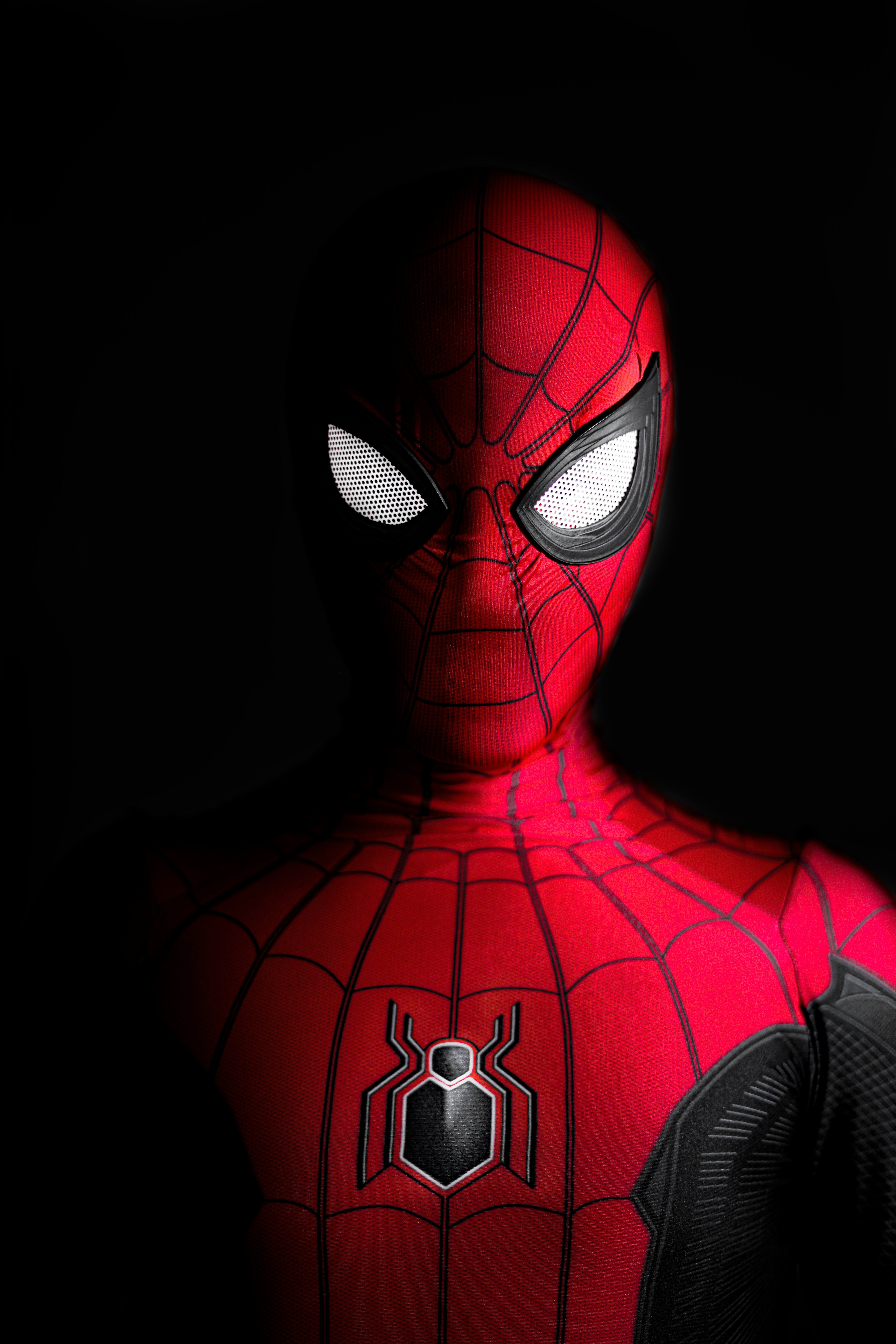
Scott Douglas Jacobsen and Rick Rosner discuss Nicolas Cage’s Spider-Noir event, its black-and-white and color presentations, 1930s New York atmosphere, and film-noir dialogue. Rosner reflects on Cage’s Superman connection, comic-book canon, Star Trek writer’s guides, and the elastic physics of superheroes. Jacobsen presses a sharper comparison between religious texts and comic-book authority. The exchange moves from drone anxiety to pop culture, period authenticity, Emmy category strategy, and 1930s diner food, with amused, skeptical attention to mythmaking and realism.
Scott Douglas Jacobsen: What is new with politics, or the comedy of politics, as the case may be?
Rick Rosner: I just got back from a Spider-Noir event with Nicolas Cage.
Jacobsen: Spider-Noir? How was it?
Rosner: It was good. It was very entertaining.
Jacobsen: What was the feel of it? How did they handle the filming and the color?
Rosner: You can watch it in color or in black and white. They showed us two episodes: one in black and white and one in color. Even the color version did not look fully modern. The series is set in 1930s New York, and they clearly wanted it to evoke the feel of early film noir. Cage talked about shaping his voice in a Humphrey Bogart direction. The dialogue was snappy. They also said Cage has made well over a hundred films, and this is his first lead role in a television series.
Jacobsen: Hold on.
[Pause]
It turned out to be machinery, not a drone.
Rosner: Do drones usually come during the day? I thought they tended to target electricity infrastructure.
Jacobsen: Usually, they do not. The other day, they did, and I went to the bathroom. It sounded as though there were several of them. It was genuinely scary. Anyway, back to Cage. What did you think of his cameo in The Flash, where he appears as Superman fighting the giant spider?
Rosner: Cage has had a long connection to Superman. He was attached to Tim Burton’s unmade Superman Lives, and his son is named Kal-El, though Cage has said the name was not chosen as a Superman tribute. He clearly likes comic books. I never became fully versed in comic books. I liked Mad Magazine, but I was never quite the right age for comic books to resonate with me. A lot of people know the full canon, especially because most big superhero movies are fairly canonical. For people who do not know what canon is, it means treating the source material as authoritative. You take what was said or shown in the comic books as the official version of events.
Jacobsen: That is an interesting thought. Do you think so-called holy texts are the original comic books? It seems like a similar impulse when you talk about canon. People will get into serious arguments over comic-book differences, though they usually will not kill over them. Religion has more ultimate stakes attached to it.
Rosner: I do not think the analogy fully holds. Whether or not the creators of religious texts believed everything they were writing, they certainly wanted other people to believe that the stories and rules were real. With comic books, nobody is trying to present them as literally true. Canon is different. I first heard the term, I think, in reference to Star Trek. Across its many series and films, Star Trek developed internal rules and writer’s guides so writers would understand the world, the characters, and the constraints.
For example, I do not especially like Star Trek, but I was interested in the math of warp drive: what speeds correspond to different warp numbers. In the original series, the warp scale was roughly the cube of the warp factor times the speed of light, so warp 10 would be 1,000 times the speed of light. Later, in the Next Generation era, warp 10 became a theoretical infinite limit. That gave the writers more room, because otherwise even very high warp speeds would still create huge travel-time problems. It is similar to Superman: Superman can go almost as fast as the plot needs him to go. In the first Christopher Reeve Superman film, he flies fast enough around Earth to reverse time and save Lois Lane. That is not how physics works, but it is how the story works.
Jacobsen: What stood out about Spider-Noir?
Rosner: The dialogue did not suck. Before the screening, they put up a “For Your Consideration” screen, and they seemed to be positioning it as an outstanding comedy series rather than a drama. It is not especially funny, but it has quippy dialogue. They may think it has a better shot in comedy. You have to choose whether to campaign as a comedy or a drama. The Bear, the restaurant show starring Jeremy Allen White, competes in comedy categories and often wins, even though it has more dramatic elements than comic ones.
I also like watching something as if I am from a different era. I pretended I was someone from the early 1930s watching it. A lot of the elements would have looked impressive if it had actually been made then: the special effects, the clothing, the actors, and the music. They did not strictly limit themselves to songs from the period, but the choices generally fit. One nightclub-singer character performed “Dream a Little Dream of Me,” which I first assumed was from the 1950s. It turns out the song dates to around 1930–1931, so it fits the period much better than I thought.
The clothing looked good. The actors looked good. One more detail: at the reception afterward, they served a little food to further butter us up. There were small shepherd’s pies, egg-salad sandwiches, and a plain green salad with a little chicken. On the way home, I realized they were probably trying to stay true to the period by serving simple 1930s-style diner food.
Last updated May 3, 2025. These terms govern all In-Sight Publishing content—past, present, and future—and supersede any prior notices. In-Sight Publishing by Scott Douglas Jacobsen is licensed under a Creative Commons BY‑NC‑ND 4.0; © In-Sight Publishing by Scott Douglas Jacobsen 2012–Present. All trademarks, performances, databases & branding are owned by their rights holders; no use without permission. Unauthorized copying, modification, framing or public communication is prohibited. External links are not endorsed. Cookies & tracking require consent, and data processing complies with PIPEDA & GDPR; no data from children < 13 (COPPA). Content meets WCAG 2.1 AA under the Accessible Canada Act & is preserved in open archival formats with backups. Excerpts & links require full credit & hyperlink; limited quoting under fair-dealing & fair-use. All content is informational; no liability for errors or omissions: Feedback welcome, and verified errors corrected promptly. For permissions or DMCA notices, email: scott.jacobsen2025@gmail.com. Site use is governed by BC laws; content is “as‑is,” liability limited, users indemnify us; moral, performers’ & database sui generis rights reserved.


