Acknowledgement and Introductions to “Finding Humanistic Education in Our Stories”
Author(s): Scott Douglas Jacobsen
Publication (Outlet/Website): Personal SubStack
Publication Date (yyyy/mm/dd): 2025/08/15
Introduction by Scott Douglas Jacobsen
“It’s easy to love somebody. Shit, sit with them a little bit and talk to them a while.
Richard Pryor
“The silver swan, who, living had no note, when death approached unlocked her silent throat.”
Orlando Gibbons
The reimagination of education from the Yousefis comes from a sensibility of a “return to” rather than a “getting over” frame. A return to a humanistic referential mindset on the education of human beings with rich internal tapestries of thoughts and feelings connected to webs of extended social relations in the world rather than getting over them through the imposition of artifice. The nurturance of intellectual acumen and emotional sensitivities in tandem.
The Peace School served hundreds in Iran. The same institution, with a humanistic orientation, was formally registered in Spring 2024 in Canada. Individualized education based on each student’s unique qualities demands extensive thought, time to plan, and care in implementing–a tall order.
Amid correspondence, Nasser described the times of working in Iran and difficult circumstances. A family who has come through conflict, societal constraints, and trauma to advance educational reform and to promote a humanistic vision through peace via innovative educational curricula. Their family’s life story brings the antipodean pillars called Theory and Practice to a satisfying resolution in the Peace School—an Equator.
Transformative education only has to meet human needs as its base, and the diverse approaches to meet those needs can be as creative as necessary. The Yousefis champion each student’s unique and individual cultural, emotional, and intellectual needs. Empathy and respect can counterforce the homogenization of education and approaches to each student. To argue for best practices in a humanistic educational curriculum does not mean an argument for standardized education; it means human beings in key development moments have basic and diversified needs, and principles can be the basis for formulating educational experiences for each pupil.
Their approach, fundamentally, is a values-based approach for the nurturance of critical thinkers who are knowledgeable and passionate citizens with a global perspective. This allows for a cross-cultural fluidity in seeing the universal endeavours and benefits of cross-cultural exchange and collaborative wisdom. Their unwavering dedication to humanistic approaches gives a bulwark against institutional inertia from political and societal barriers in Iran, and using this knowledge to advance humanistic education in Canada is a well-needed contribution to Canadian culture and global humanism.
This short book of conversations with the Yousefis gives insight into the communal bonds being built and the democratic participation being encouraged at the Peace School. Their approach isn’t dogmatic but prompt-based to let one sit and think more deeply about a particular topic in education. You are not necessarily supposed to agree. The act of gentle coaxing into further consideration is the point. This approach plucks the strings of both mind and heart. Occasionally, some harmony results.
Introduction by Dr. Nasser Yousefi
I have been working in humanistic education in developing countries for over thirty years and have established diverse connections with international organizations. During these years, I have met and interacted with many experts and thinkers. Mr. Scott Douglas Jacobsen is one of the passionate and dedicated experts in humanistic fields who works tirelessly. Despite being young and energetic, he manages and follows through on numerous humanistic projects and ideas with remarkable maturity.
With his prepared resources, Mr. Scott Douglas Jacobsen has shaped the foundations and principles of humanism in the global community more than any other expert. Through his patience and wisdom, these resources have been developed. Without him, these concepts would not have been so easily documented. I am deeply grateful to him.
I would also like to express my gratitude to Baran Yousefi. As a graduate of humanistic schools, Baran has profoundly understood and embodied many of these concepts. I truly appreciate the collaboration between the three of us in advancing humanistic education.
Dr. Nasser Yousefi
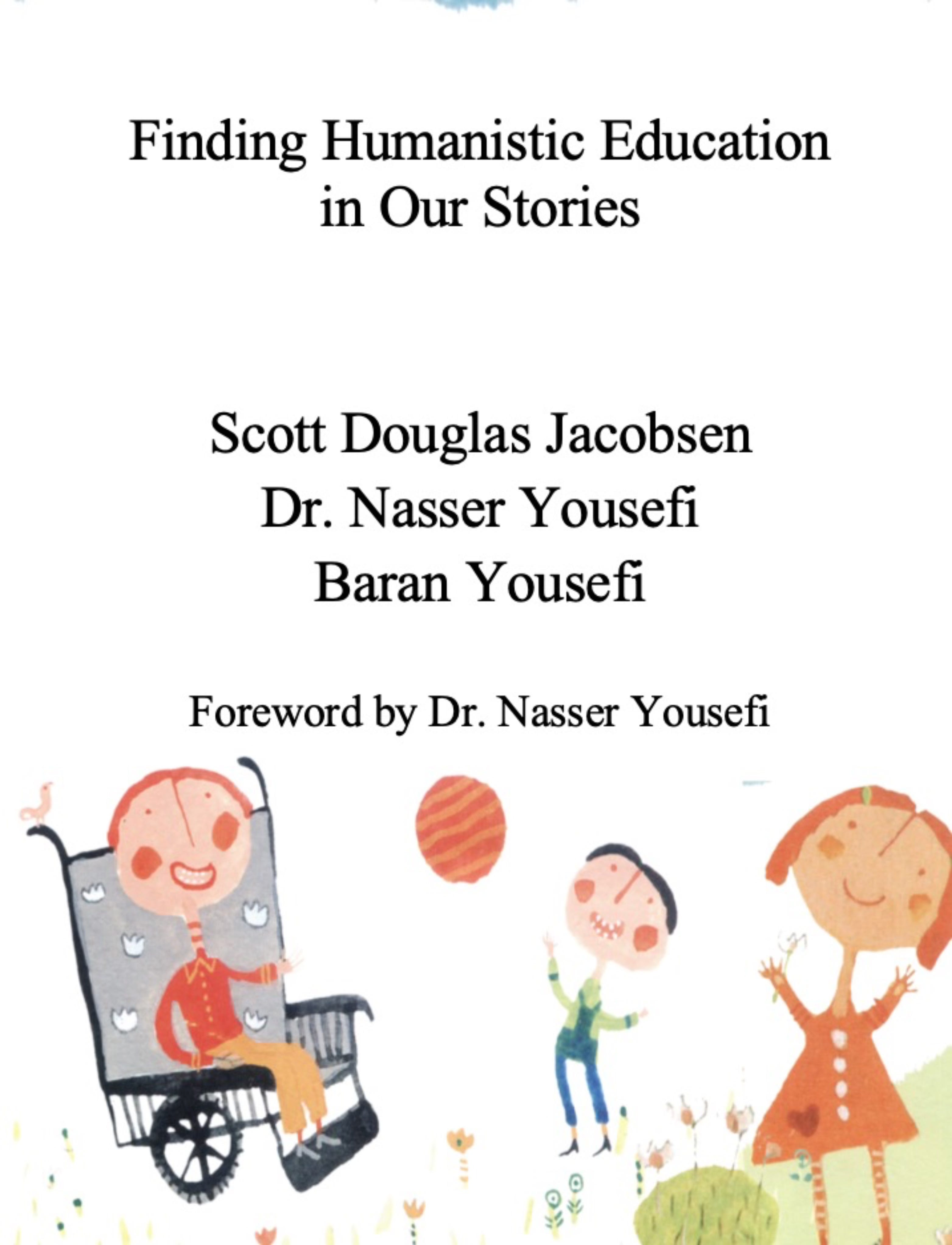
Photo by In-Sight Publishing (Cover), Atiyeh Razaghi.
Last updated May 3, 2025. These terms govern all In-Sight Publishing content—past, present, and future—and supersede any prior notices. In-Sight Publishing by Scott Douglas Jacobsen is licensed under a Creative Commons BY‑NC‑ND 4.0; © In-Sight Publishing by Scott Douglas Jacobsen 2012–Present. All trademarks, performances, databases & branding are owned by their rights holders; no use without permission. Unauthorized copying, modification, framing or public communication is prohibited. External links are not endorsed. Cookies & tracking require consent, and data processing complies with PIPEDA & GDPR; no data from children < 13 (COPPA). Content meets WCAG 2.1 AA under the Accessible Canada Act & is preserved in open archival formats with backups. Excerpts & links require full credit & hyperlink; limited quoting under fair-dealing & fair-use. All content is informational; no liability for errors or omissions: Feedback welcome, and verified errors corrected promptly. For permissions or DMCA notices, email: scott.jacobsen2025@gmail.com. Site use is governed by BC laws; content is “as‑is,” liability limited, users indemnify us; moral, performers’ & database sui generis rights reserved.


