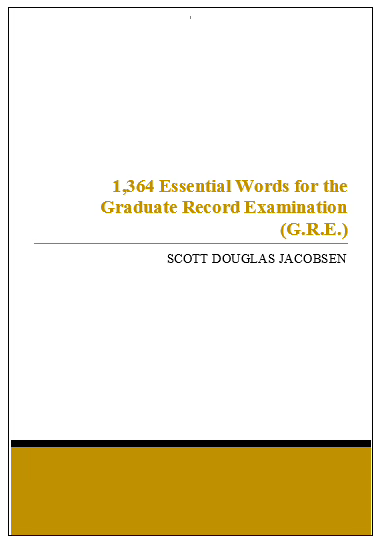
Introduction to “1,364 Essential Words for the Graduate Record Examination (G.R.E.)”
Author(s): Scott Douglas Jacobsen
Publication (Outlet/Website): Personal SubStack
Publication Date (yyyy/mm/dd): 2025/08/09
Contents
Introduction ……………………………………………………………………………………………………………….. 4
A ………………………………………………………………………………………………………………………………. 5
B ………………………………………………………………………………………………………………………………. 8
C …………………………………………………………………………………………………………………………….. 10
D …………………………………………………………………………………………………………………………….. 14
E …………………………………………………………………………………………………………………………….. 17
F …………………………………………………………………………………………………………………………….. 20
G …………………………………………………………………………………………………………………………….. 22
H …………………………………………………………………………………………………………………………….. 23
I ……………………………………………………………………………………………………………………………… 25
J ……………………………………………………………………………………………………………………………… 29
K …………………………………………………………………………………………………………………………….. 29
L …………………………………………………………………………………………………………………………….. 29
M ……………………………………………………………………………………………………………………………. 32
N …………………………………………………………………………………………………………………………….. 36
O …………………………………………………………………………………………………………………………….. 38
P …………………………………………………………………………………………………………………………….. 39
Q …………………………………………………………………………………………………………………………….. 48
R …………………………………………………………………………………………………………………………….. 48
S …………………………………………………………………………………………………………………………….. 51
T …………………………………………………………………………………………………………………………….. 57
U …………………………………………………………………………………………………………………………….. 60
V …………………………………………………………………………………………………………………………….. 61
W ……………………………………………………………………………………………………………………………. 63
Y …………………………………………………………………………………………………………………………….. 64
Z …………………………………………………………………………………………………………………………….. 65
License and Copyright ………………………………………………………………………………………………. 66
Introduction
1,364 Essential Words for the Graduate Record Examination (G.R.E.) represents an independent research project into the standardized testing industry’s core aspects with one major portion devoted to the verbal ability sections of the G.R.E. or the test required for multiple graduate level programs upon completion, and certification, of undergraduate studies.
All words researched, collected, and collated for ease of access with respect to the user, likely an undergraduate student or prospective graduate student.
If constrained to a 5-point scale of measurement for the difficulty of the words included in this compendium, where 1 equates to very easy, 2 equates to easy, 3 equates to average, 4 equates to hard, and 5 equates to very hard, the range seems within 1.5–3.5 (maybe) on the scale of difficulty with a handful or two of 4-point words.
Within these restrictions and provisions, this set of words should provide the basic foundation for the inclusion of the proper, or basic, study materials for the vocabulary sections of standardized tests with some (possible) transferability to common tests such as the verbal sections in intelligence tests such as the Wechsler Adult Intelligence Scale (W.A.I.S.) or the Scholastic Aptitude Test (S.A.T.).
Bear in mind, in the midst of this independent initiative, something came to the fore, quite glaringly. Standardized tests remain of utility, and not in other ways. Too much to delve into the subject to give the appropriate coverage to the more than a century of research and debate into the topic of intelligence research.
However, the nature of the tests seems of partial utility to discover generality of academic talents, temperaments, abilities, and skills. In this particular case, one’s verbal fluency based on raw vocabulary.
Insofar as this cautionary, and positive and hopeful, note leaves one in the mood for further motivation, best wishes with this volume as a supplementary compendium in preparation for standardized tests.
Scott Douglas Jacobsen
Last updated May 3, 2025. These terms govern all In-Sight Publishing content—past, present, and future—and supersede any prior notices. In-Sight Publishing by Scott Douglas Jacobsen is licensed under a Creative Commons BY‑NC‑ND 4.0; © In-Sight Publishing by Scott Douglas Jacobsen 2012–Present. All trademarks, performances, databases & branding are owned by their rights holders; no use without permission. Unauthorized copying, modification, framing or public communication is prohibited. External links are not endorsed. Cookies & tracking require consent, and data processing complies with PIPEDA & GDPR; no data from children < 13 (COPPA). Content meets WCAG 2.1 AA under the Accessible Canada Act & is preserved in open archival formats with backups. Excerpts & links require full credit & hyperlink; limited quoting under fair-dealing & fair-use. All content is informational; no liability for errors or omissions: Feedback welcome, and verified errors corrected promptly. For permissions or DMCA notices, email: scott.jacobsen2025@gmail.com. Site use is governed by BC laws; content is “as‑is,” liability limited, users indemnify us; moral, performers’ & database sui generis rights reserved.


