Christopher Atwood’s View of Decolonization in Ukraїner International’s Wartime Storytelling
Author(s): Scott Douglas Jacobsen
Publication (Outlet/Website): First Truth & Transparency Committee
Publication Date (yyyy/mm/dd): 2026/08/05
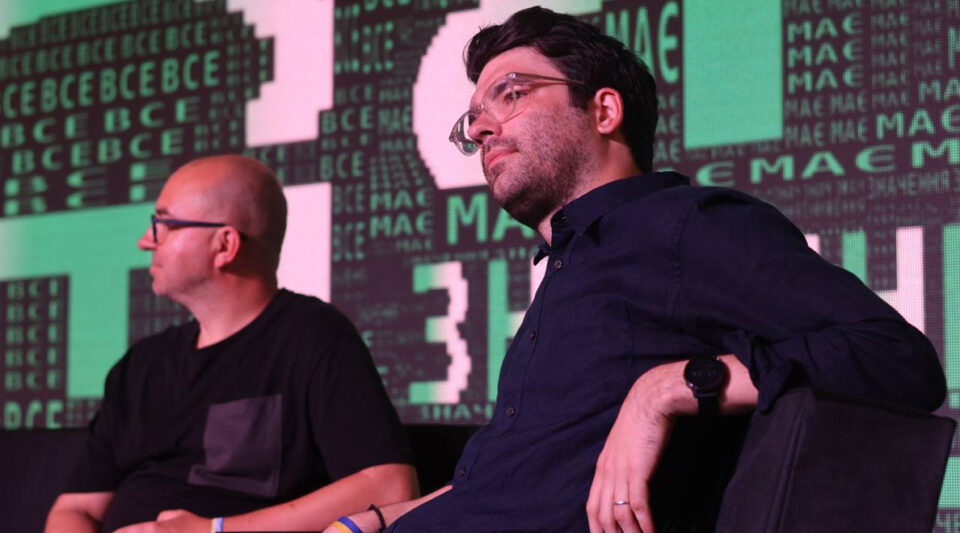
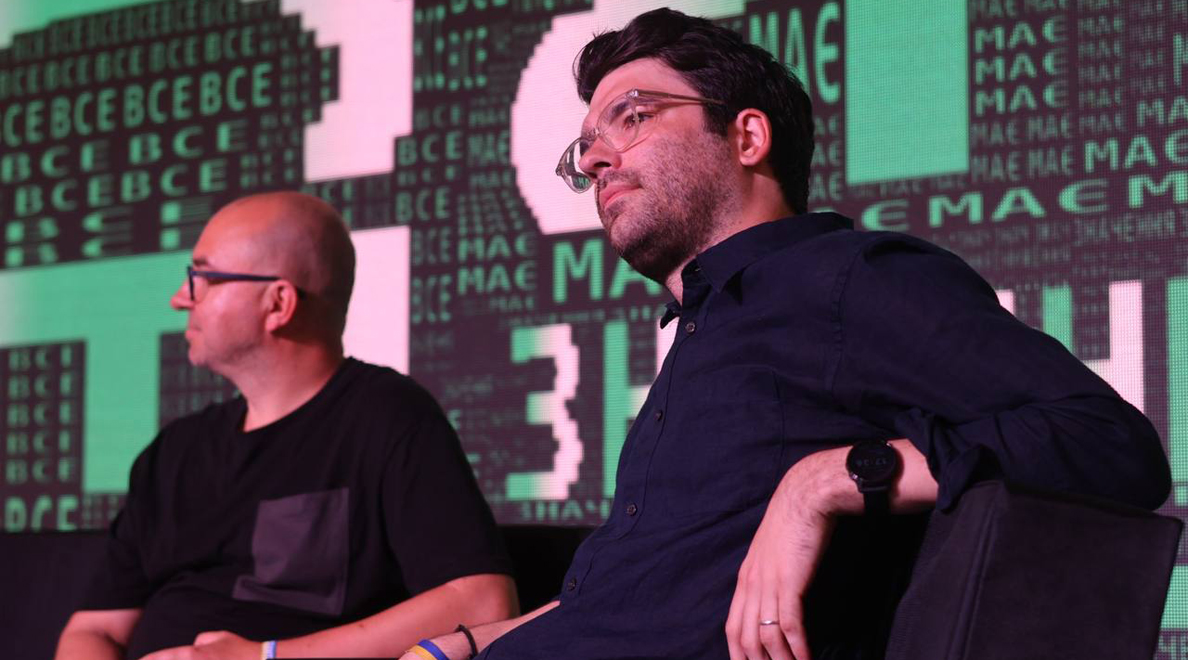
Christopher Atwood is Editor-in-Chief of Ukraїner in English and leads Ukraїner International’s global editorial work on Ukraine. An American media, communications, journalism, and human-rights professional, he has worked in Ukraine and the post-Soviet region, including genocide-research efforts on Russia’s war. His current work foregrounds decolonization as the centering of Ukrainian agency, documenting local traditions, contested Soviet-era inheritances, cultural memory, language politics, and the ethical responsibilities of outsiders telling Ukraine’s story for international audiences worldwide today.
Scott Douglas Jacobsen asks Christopher Atwood whether decolonization shapes Ukraїner International. Atwood says it is foundational: Ukraїner’s original expeditions already centered Ukrainian agency by documenting regions, traditions, and communities as worthy of attention. He discusses Zhytnii Rynok’s Russian-language Soviet facade, the “wonton font,” feminism as an analogy, and his Columbia thesis, arguing decolonization means practical, context-sensitive decisions about memory, imposed symbols, belonging, and the voices of historically colonized people within Ukraine’s wartime cultural discourse today.
Scott Douglas Jacobsen: Does decolonization as a framework play any role at Ukraїner International?
Christopher Atwood: Yes. As editor-in-chief, I will always default to doing what is in the interest of our publication. But I am also a big believer in maximizing what you are already good at and what your skills already are.
In Ukraine, the discourse about decolonization has not let up. It has just shifted from the theoretical discourse of 2022 and 2023 to the practical question of how to apply decolonization to different things.
I was speaking to a colleague yesterday about a very famous market in Podil, Kyiv, called Zhytnii Rynok. If you look at the facade of the market, there is still Russian on it, and there is a discourse in Kyiv about how to handle that. What does decolonization mean in this context?
On one hand, this is the colonizer’s language and the colonizer’s framework on the side of the building. There is a slogan that says something about commerce connecting millions of people, and then it has the Russian names of a number of cities, including the Russian names of Ukrainian cities, as well as cities in Russia and elsewhere in the Soviet Union.
At the same time, you have people who have grown up their entire lives seeing it. So, for them, it is Ukrainian, even though it was imposed by a colonial power. It still feels Ukrainian. There are plenty of parallels to different things.
The example I landed on was the so-called wonton font, the Chinese takeout font. That font was designed as a caricature of Chinese culture and language. It does not connect to Mandarin or Cantonese. It is not derived from the actual languages, strokes, or ways those cultures present written language. Rather, it was made to vaguely look like what white people, decades ago, believed Chinese characters looked like. So, in many ways, it is a colonial font. In many ways, it is a xenophobic font.
However, there are many Chinese Americans who grew up with that. So what do you do with it? How do you address it? To them, that is their culture, just as, for many Ukrainians, the facade on Zhytnii Rynok is Ukrainian culture. How do you engage with those things? That has become the discourse in Ukraine now.
The Ukrainian team has existed since the project’s inception in 2016 as an expedition. They did not frame themselves as a decolonial project at the time, but it was always decolonial because it was about centering agency.
Decolonization is really a term that means centering the agency of people who historically have been repressed and colonized. That is what it is. It is similar to feminism. I do not mean feminism in the sense of social discourse or culture-war debates, but feminism as a theoretical framework. The idea is to challenge our perception of women and to try to centre, to the maximum extent possible, the agency of women. Decolonization means centering the agency of people who historically have been colonized.
So Ukraїner went on expeditions around the country to document what reality was, and has been, for different people, treating them as deserving of being documented and treating their traditions as deserving of respect as Ukrainian traditions. That was a profound decolonial project from the beginning.
My master’s thesis at Columbia was about how Ukrainian intellectuals and public figures use a decolonial framework to understand their own resistance to Russian violence. So it is part of my own personal background, but it is also part of the background of Ukraїner. Making a concerted effort to approach things with a decolonial lens is almost something I do not even need to think about, because it is simply expected in my own way of understanding things.
Jacobsen: Thank you very much for the opportunity and your time, Christopher.
Last updated May 3, 2025. These terms govern all In Sight Publishing content—past, present, and future—and supersede any prior notices. In Sight Publishing by Scott Douglas Jacobsen is licensed under a Creative Commons BY‑NC‑ND 4.0; © In Sight Publishing by Scott Douglas Jacobsen 2012–Present. All trademarks, performances, databases & branding are owned by their rights holders; no use without permission. Unauthorized copying, modification, framing or public communication is prohibited. External links are not endorsed. Cookies & tracking require consent, and data processing complies with PIPEDA & GDPR; no data from children < 13 (COPPA). Content meets WCAG 2.1 AA under the Accessible Canada Act & is preserved in open archival formats with backups. Excerpts & links require full credit & hyperlink; limited quoting under fair-dealing & fair-use. All content is informational; no liability for errors or omissions: Feedback welcome, and verified errors corrected promptly. For permissions or DMCA notices, email: scott.jacobsen2025@gmail.com. Site use is governed by BC laws; content is “as‑is,” liability limited, users indemnify us; moral, performers’ & database sui generis rights reserved.


