What would lasting peace require beyond Putin’s departure or a ceasefire?
Author(s): Scott Douglas Jacobsen
Publication (Outlet/Website): Special Correspondents
Publication Date (yyyy/mm/dd): 2026/10/19
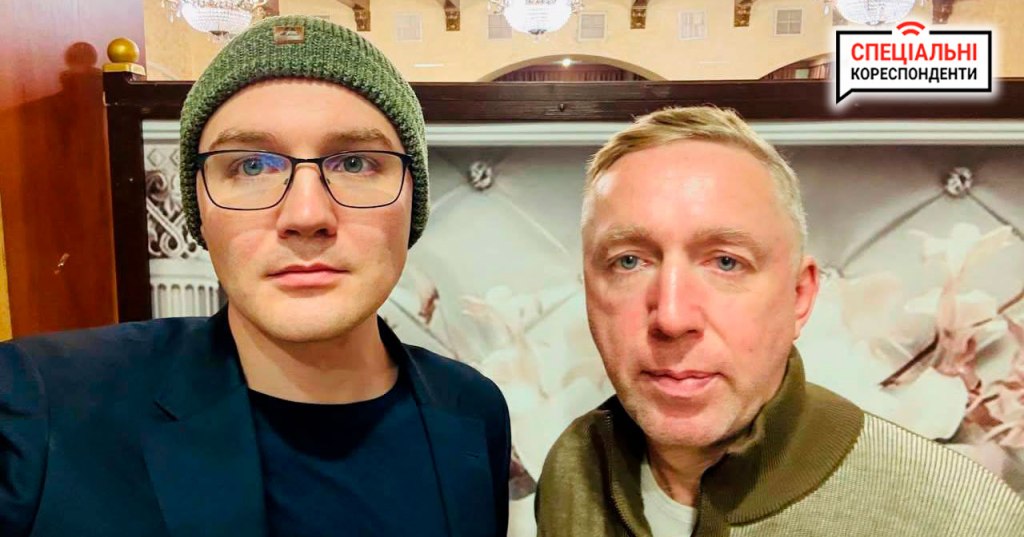
Aliaksei Frantskevich is a Belarusian civic activist based in Ukraine and head of the Belarusian Community of Ukraine. He leads the Free Belarus charitable foundation. His work includes supporting Belarusian refugees, assisting volunteers and their families, preserving Belarusian language and culture, and commemorating Belarusians killed while defending Ukraine against Russia.
Scott Douglas Jacobsen interviews Aliaksei Frantskevich about historical resistance to Russian expansion, the Battle of Orsha, and what Frantskevich calls collective Putinism. They examine military losses, bereaved families, recruitment incentives, and accountability. Frantskevich argues that lasting peace requires confronting imperial ideology and impunity, linking Ukraine’s victory to wider international security.
Scott Douglas Jacobsen: Do societies bordering Russia commonly understand their history as one of Russian invasions and repeated struggles to defend themselves over centuries?
Aliaksei Frantskevych: There is a significant historical example. Five hundred and twelve years ago, on 8 September 1514, the Battle of Orsha took place. Forces of the Grand Duchy of Lithuania and the Kingdom of Poland, commanded by Prince Kostiantyn Ostrozky, defeated the Muscovite army.
These were not modern nation-states, and we should not project today’s national categories directly onto those armies.
For me, this illustrates a confrontation stretching back more than five centuries. Lithuanians, Belarusians, Poles, and Ukrainians have struggled against Muscovy, the Russian Empire, and now the Russian Federation to preserve their existence.
As long as this imperial model survives, I do not believe the region will find lasting peace. We could have a ceasefire today and stop the fighting, but I fear that in two or three years it could resume with greater destructive force and worse consequences for European countries.
Jacobsen: Canada, as a confederated country, is younger than two babushkas put together. When I talk to Eastern Europeans, they often discuss history in terms of centuries. Canada’s history as a formal federation is comparatively short.
Do people in Eastern Europe commonly invoke grievances from centuries ago to justify present-day conflicts?
Frantskevych: Here, we are dealing with an empire and imperial thinking: the idea of a superior nation.
Take even the Russian opposition. Consider Crimea. When Navalny was asked about returning Crimea to Ukraine in 2014, he compared it to a sandwich that you can’t simply pass back and forth.
Even if Putin dies, the problem will remain unless we overcome what I call “collective Putinism.” It is a problem of political consciousness.
Nobel laureate Svetlana Alexievich has emphasized this.
This is a major problem for the world. Other countries are trying to improve conditions for their citizens. In my view, the Russian Federation is trying to drag everyone back into the Middle Ages.
Jacobsen: How does that feed back into everyday culture, especially outside Russia’s major cities, where children are growing up without fathers because their fathers were killed?
Estimates cited by the UK government put Russian military casualties at approximately 1.5 million. That includes killed and wounded, rather than 1.5 million deaths.
Among those killed or seriously injured are fathers who will no longer be able to raise their children, or whose ability to do so has been profoundly affected. What does that mean for their families and the wider culture?
That means many children are growing up without their fathers. Does that pain feed back into the culture and make people question whether this imperial project is worth it?
Frantskevych: If I understand correctly, you are asking about Russia’s heavy losses. Part of the issue is who is being sent to fight.
Russia has recruited prisoners and people attracted by the money. Families receive compensation when soldiers are killed. In my view, those payments help explain why the losses have not produced a larger protest movement.
You remember Afghanistan. Mothers spoke out and protested. Today, we do not see a comparable mass movement in Russia.
Jacobsen: Where does this ideology leave Russia in the long term?
Frantskevych: Things will be very bad for everyone. Western countries need to make a political decision and adopt a clear, firm policy towards Russia.
In my view, terrorists understand only strength. History shows what impunity breeds.
Unless accountability comes through something comparable to the Nuremberg Tribunal, I fear the consequences will be grave.
Putin has opened Pandora’s box. If we close our eyes while Russia kills civilians, who will object if, hypothetically, Trump takes Greenland or some other territory?
When asked about the limits of his international power, Trump said they were his “own morality” and his “own mind.” He also said, “I don’t need international law.”
We need to do everything we can to help Ukraine win.
Jacobsen: That is a good closing thought: peace and Ukraine’s victory. Those are two distinct but interrelated questions. Thank you.
Last updated May 3, 2025. These terms govern all In Sight Publishing content—past, present, and future—and supersede any prior notices. In Sight Publishing by Scott Douglas Jacobsen is licensed under a Creative Commons BY‑NC‑ND 4.0; © In Sight Publishing by Scott Douglas Jacobsen 2012–Present. All trademarks, performances, databases & branding are owned by their rights holders; no use without permission. Unauthorized copying, modification, framing or public communication is prohibited. External links are not endorsed. Cookies & tracking require consent, and data processing complies with PIPEDA & GDPR; no data from children < 13 (COPPA). Content meets WCAG 2.1 AA under the Accessible Canada Act & is preserved in open archival formats with backups. Excerpts & links require full credit & hyperlink; limited quoting under fair-dealing & fair-use. All content is informational; no liability for errors or omissions: Feedback welcome, and verified errors corrected promptly. For permissions or DMCA notices, email: scott.jacobsen2025@gmail.com. Site use is governed by BC laws; content is “as‑is,” liability limited, users indemnify us; moral, performers’ & database sui generis rights reserved.


