Author(s): Scott Douglas Jacobsen
Publication (Outlet/Website): International Policy Digest
Publication Date (yyyy/mm/dd): 2026/03/05
In moments of geopolitical upheaval, human rights lawyers often become reluctant historians of collapse. Few understand that reality more clearly than Oleksandra Matviichuk. As the head of Ukraine’s Center for Civil Liberties and a central figure in the Euromaidan SOS initiative, Matviichuk has spent more than a decade documenting abuses, defending political prisoners, and pressing international institutions to respond to Russian aggression. In 2022, the Center for Civil Liberties received the Nobel Peace Prize for its work promoting human rights and accountability, and Matviichuk delivered the Nobel lecture on the organization’s behalf.
For many observers outside Eastern Europe, the collapse of the post–Cold War order seemed sudden, a shock delivered by Russia’s full-scale invasion of Ukraine in 2022. For Ukrainians, Matviichuk argues, the unraveling began much earlier—with the annexation of Crimea in 2014 and the failure of international institutions to meaningfully enforce the principles they claimed to defend. The result, she says, is a world where legal norms are weakening, international bodies often perform rituals rather than solve crises, and authoritarian states are increasingly willing to test the limits of global indifference.
In this conversation, Matviichuk reflects on the erosion of the international legal order, the paralysis of institutions like the United Nations, and the profound human rights consequences of Russia’s occupation of Ukrainian territory. She also discusses the challenges of building a more representative global system, the dangers of short-term political thinking, and the moral responsibility of leaders—and citizens—in an era of rising authoritarianism. Ultimately, she returns to the human dimension of the conflict: torture, deportation, indoctrination, and the future of millions of children growing up under occupation.
For Matviichuk, the stakes are not abstract. They are measured in lives, dignity, and the fragile idea that international law should mean something.
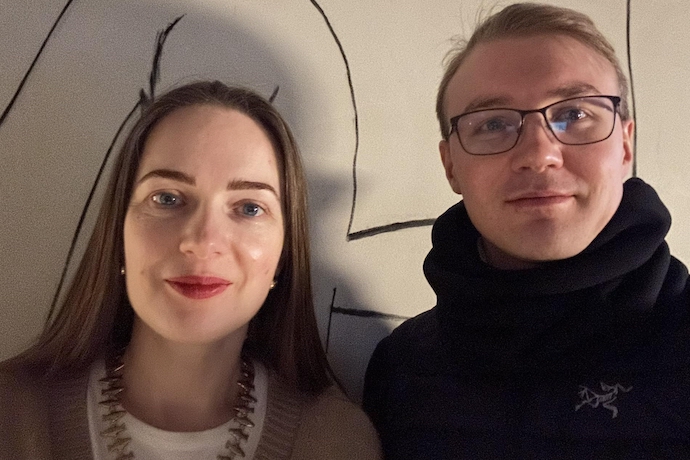
Scott Douglas Jacobsen: In the United States, there have been increasingly visible efforts to restrict rights connected to belief, conscience, and religious freedom, pressures that appear to fall particularly heavily on those with no religious affiliation and on communities outside the country’s historically dominant Protestant traditions, including Muslims.
At the same time, we are seeing new limits placed on reproductive rights. Canada once faced comparable battles; there, the physician Henry Morgentaler became the central figure advancing abortion rights through the courts and public debate. Despite widespread public opposition to many of the current administration’s policies, there remains a determined push forward, with critics arguing that dissenting opinion is often disregarded. This raises a broader question: in a world rapidly moving away from the unipolar order of the past, and perhaps even beyond the bipolar structure that preceded it, what role should middle powers play in navigating this transitional moment in global politics?
Oleksandra Matviichuk: This year, world leaders understood that the world order has collapsed. We hear this from the Prime Minister of Canada in Davos. However, it is no surprise to Ukrainians. For us, the world order based on the UN Charter and international law collapsed 12 years ago, when Russia annexed Crimea. It was unprecedented in Europe after the Second World War, because we had not seen a situation in which one country annexed part of another. It ruined fundamental international principles such as the inviolability of state borders and respect for state sovereignty.
World leaders may have thought that the UN Charter was not working only for Ukraine. However, this year, everyone understood that it is a global story. The question is not only to regret that we lost something. The UN system was not ideal. It coped with global challenges more or less in the past. However, now it is stalling and reproducing ritualistic movements. The Security Council’s work is paralyzed. When the system was built, the victorious countries of the Second World War preserved special privileges for themselves. It is unfair that several countries are permanent members of the Security Council and can determine global decisions.
Even my smartphone has an expiration date. This system was created after the Second World War, and it has reached its limits. We do not need to speak much about it, except from a psychological perspective. Human life is short, and I will probably still see these ritualistic movements until the end of my life. The League of Nations existed until 1946, even though the Second World War had ended. So institutions persist even after their effectiveness has faded.
The main question we must discuss is how to create the future we want. The main struggle is about what the new world order will look like. Ukraine finds itself at the epicentre of events that will shape the world’s future. Last year, I am afraid that humanity made a significant step back into the past, where the world was governed not by the rule of law but by the will of the strongest. That past was not great. Being the strongest is always a process; you must constantly prove that you are at the top of the hierarchy. A world governed by the strongest, in which several countries dominate, is fragile. It is a world of wars and mass violence because their interests conflict, and proxy wars or other types of wars emerge.
Jacobsen: One important caveat about the League of Nations is that its collapse did not mark the end of the idea behind it. In many ways, the institution was reconstituted and adapted into the United Nations, which represented a substantial improvement on the earlier model. Today we seem to be living through another transitional moment in global politics, and historically these periods of geopolitical change tend to be painful for many of the people caught up in them. Taking the privileges you mentioned as an example—particularly the five permanent seats on the Security Council and the veto power those states exercise when it serves their interests—how might one imagine a system of international rules that more fully reflects the concerns of the global population while avoiding the entrenched privileges that currently define that structure?
Matviichuk: We have to answer many difficult questions, and there is no serious public discussion of them; there is only limited expert discussion. The first question is about representation. We call it the United Nations, but the majority of governments in the General Assembly do not represent their societies. They represent ruling elites who have captured power in their countries. So the first question is how to provide a genuine voice for nations.
The second question concerns the organization’s nature. We call the United Nations an international organization, but it is an inter-state organization. Each state promotes its own interests, which is natural. However, who will promote international interests, the interests of humanity? Who will think beyond national borders, not only to balance or dominate, but to build an architecture of peace and security that reflects shared global interests?
Third, I am not confident that a new world order will automatically be based on human rights and freedom. We are losing freedom globally. Around 80 percent of the world’s population lives in countries that are not fully free, according to major democracy indices. In authoritarian countries, the space of freedom is shrinking dramatically. In established democracies, people question the universality of human rights principles. Those who can provide serious, complex answers to these questions would deserve the highest recognition for their contribution to peace.
Jacobsen: I am hardly the first person to observe this, and it does not require a particularly brilliant analyst—certainly not one like me—to notice a pattern. Many of the prominent leaders contributing to instability in the international system, and in the process damaging livelihoods across borders, tend to be older men from established political generations.
Last summer, I spent three weeks in Iceland studying the country’s culture, and what I encountered there stood in striking contrast to that pattern. The president, the prime minister, and the head of the country’s main church are all women, and three of the four major political parties are also led by women. Even amid the turbulence currently shaping global politics, Iceland remains relatively quiet and functional. For years, it has ranked at or near the top of the World Economic Forum’s Global Gender Gap Index. Of course, there are always exceptions to broader trends. But looking at cases like Iceland, what kinds of leadership styles might women bring—particularly if representation were more equal internationally or within inter-state institutions—that could help reduce the scale or intensity of the crises we are now witnessing around the world?
Matviichuk: It is a modest requirement. Politicians must base their decisions on critical interests, but also on human rights. If you mortgage your future for immediate gain and think only about economic benefits, you may benefit in the short term, but you will face the consequences. In the long term, this leads to catastrophe. Russia is a clear example. For decades, Russian human rights defenders warned that a country that violates human rights poses a threat not only to its own citizens but also to international security and peace. Even well-developed democracies did not listen. They shook hands, did business as usual, and continued engagement.
Second, democracy is not an ideal form of government because it produces short-term thinking. Politicians who come to power focus on electoral cycles and immediate results to demonstrate to voters. In the global storm we are facing, we need leaders who think not only about elections but about history, who think long term. We are living with the consequences of decisions made years ago, including during the period when the occupation of Crimea began. When politicians focus only on the short term, they think that problems will vanish or become someone else’s responsibility after the next election. However, problems do not disappear; they become more serious. My second modest request is to consider the long-term perspective, not just the years in office.
Jacobsen: What about the unlawfully transferred children? The last verified figure I encountered was roughly 19,500. I assume the true total may now be even higher.
Matviichuk: Numbers are a problem. As human rights lawyers, we cannot independently verify or refute official numbers provided by the Ukrainian state, but we know that this is a systematic practice. That is why the International Criminal Court opened a case and issued arrest warrants against Vladimir Putin and Russia’s Commissioner for Children’s Rights in connection with the unlawful deportation of children. I am worried that we do not speak enough about children under Russian occupation. Approximately 1.6 million children live in territories under Russian occupation. Many of them are experiencing systematic erosion of their identity. They are restricted in the use of the Ukrainian language.
They live under pressure, knowing that if they say something considered disloyal, security services may come to their parents. They study from Russian textbooks that deny Ukraine’s sovereignty. Children who were older at the beginning of the occupation may retain a sense of dual reality, but very young children are vulnerable to indoctrination. In parallel, there is militarization, beginning in kindergarten and extending through multiple areas of society. In occupied territories, some children are sent to camps where they wear military uniforms, live in barracks, march, and receive weapons training. This is not only a human rights problem; it is also a security problem.
Militarization is attractive to children. You feel cool, you feel strong, you think you have a tool to dominate and to make things happen. However, it implants authoritarian thinking in the hearts and minds of children, because they start to believe that freedom and the will of others do not matter. What matters is your place in the hierarchy of violence.
Why is this not only a human rights problem? When these children turn 14, they receive Russian passports. At 18, they are subject to conscription into the Russian army. This means they can be sent to fight and die wherever Russia decides. When people speak about territories as if they are empty spaces and do not try to make life under Russian occupation more secure, these children grow up. They become adults, and the consequences of our passivity will come back to haunt us.
Jacobsen: What about the murder, injury, or torture of those who attempt to tell these stories? Organizations such as the Committee to Protect Journalists and other monitoring groups carefully document the killing of journalists in conflict zones. The figures I have seen suggest that something like 112 journalists have been killed during this period. These are, in many ways, war crimes committed against those whose role is to serve as cultural storytellers and witnesses to what is happening.
Matviichuk: The Institute of Mass Information maintains a list of Ukrainian media workers, journalists, photojournalists, and bloggers who have died in this war. There are cultural figures who have been tortured to death, some killed while serving in the Ukrainian armed forces, others killed by Russian shelling and drone strikes, such as the Ukrainian writer Victoriya Amelina. These lists are publicly available.
There are Ukrainian journalists held in Russian prisons. My specialization is Russian captivity. I have interviewed hundreds of people who survived detention. They described severe beatings, sexual violence, confinement in small boxes, electric shocks, and other forms of torture. Some detainees reported extreme physical abuse. People are dying in Russian prisons. That is why I am disappointed that we have lost the human dimension. Peace talks are a window of opportunity to solve urgent humanitarian problems. Even if peace cannot be achieved immediately, urgent humanitarian issues can be addressed. However, if these issues are not a priority for negotiators, there is little chance for progress.
Jacobsen: A footnote to all of this is that other major conflicts are unfolding at the same time, many of them producing severe humanitarian catastrophes. One example that receives far less attention in Western media is the war in Tigray, Ethiopia, from 2020 to 2022, where even conservative estimates suggest that several hundred thousand people were killed. When peace negotiations are used primarily as delaying tactics, valuable time and resources are lost—resources that could otherwise be directed not only toward urgent humanitarian needs in Ukraine but also toward crises elsewhere. Major powers, even while facing controversy at home, are still capable of exerting constructive influence in other conflicts.
Yet the reality is that international focus is limited. In practice, public attention and political bandwidth tend to concentrate on only one or two wars at any given moment.
Matviichuk: It is not a competition for attention. It is easy to predict that wars will emerge more frequently in different parts of the world. The international environment is unstable. The previous world order has weakened, and tensions exist everywhere. Some leaders may seek to benefit from this global instability.
Humanity has chosen not to solve problems but to postpone them. Problems can be suppressed for a time, but then they erupt with greater force. We see this in protracted conflicts, including in the Middle East, where unresolved tensions have persisted for decades and then escalated dramatically.
Jacobsen: I have interviewed feminist journalists and media owners working in extremely difficult environments, including Afghanistan, where conditions for women remain among the most restrictive in the world. Many of these women are practicing grassroots journalism rather than working within large institutional media organizations. Perhaps we can end on the human dimension of this issue. You are now a prominent voice in this field, but this was not where your career originally began. What first inspired you to become involved in this work?
Matviichuk: When I was a schoolgirl, I had the opportunity to meet Yevhen Sverstiuk, a Ukrainian philosopher, writer, and former Soviet political prisoner. He took an interest in me and introduced me to a circle of former Soviet dissidents. I found myself among people who said what they believed and did what they said. They stood against the Soviet totalitarian system. Many were repressed; some were killed, some imprisoned, some confined in psychiatric institutions. However, they did not give up. Growing up in that environment, I was inspired. I decided to study law and to continue the fight for freedom and human dignity.
Jacobsen: You have often spoken about the importance of long-term thinking and taking responsibility for the consequences of one’s actions. If an Eastern European teenage girl were to come across your story and begin considering a path into this kind of work, what message would you want her to hear?
Matviichuk: My message would be simple: be brave. We are not hostages of circumstances; we are participants in history. Dignity gives us the strength to act even in unbearable conditions. Be brave.
Jacobsen: Thank you very much for the opportunity and your time, Oleksandra.
Last updated May 3, 2025. These terms govern all In-Sight Publishing content—past, present, and future—and supersede any prior notices. In-Sight Publishing by Scott Douglas Jacobsen is licensed under a Creative Commons BY‑NC‑ND 4.0; © In-Sight Publishing by Scott Douglas Jacobsen 2012–Present. All trademarks, performances, databases & branding are owned by their rights holders; no use without permission. Unauthorized copying, modification, framing or public communication is prohibited. External links are not endorsed. Cookies & tracking require consent, and data processing complies with PIPEDA & GDPR; no data from children < 13 (COPPA). Content meets WCAG 2.1 AA under the Accessible Canada Act & is preserved in open archival formats with backups. Excerpts & links require full credit & hyperlink; limited quoting under fair-dealing & fair-use. All content is informational; no liability for errors or omissions: Feedback welcome, and verified errors corrected promptly. For permissions or DMCA notices, email: scott.jacobsen2025@gmail.com. Site use is governed by BC laws; content is “as‑is,” liability limited, users indemnify us; moral, performers’ & database sui generis rights reserved.
Share this:

Author(s): Scott Douglas Jacobsen
Publication (Outlet/Website): International Policy Digest
Publication Date (yyyy/mm/dd): 2026/02/28
As Russia’s war against Ukraine grinds into another year, the battlefield is not the only site of struggle. The fight for accountability—for documented truth, legal redress, and international attention—has become equally consequential. At the center of that effort stands the Center for Civil Liberties, the Kyiv-based human-rights organization awarded the 2022 Nobel Peace Prize for its work documenting Russian war crimes and defending democratic freedoms under assault.
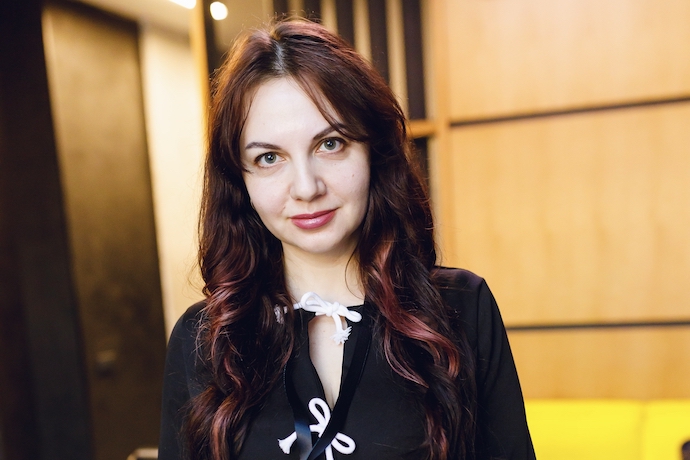
Anna Trushova serves as Press Officer and Media Relations Manager for the Center, helping translate field documentation into international awareness and institutional pressure. She coordinates communications tied to the Tribunal for Putin (T4P) initiative, which systematically documents Russian war crimes, unlawful detentions, enforced disappearances, and conflict-related sexual violence. In parallel, as Communications Director and a member of the Union of Women of Ukraine, she advances women-led advocacy supporting displaced families, trauma survivors, widows, journalists, and emerging leaders across the country.
In this interview, Trushova discusses the strategic communications battle surrounding Russia’s atrocities, the challenge of sustaining global attention amid fatigue and geopolitical distraction, the ethical imperatives of survivor-centered reporting, and the role of women-led civil society in rebuilding resilience during wartime. At stake, she argues, is not only justice for Ukraine—but the integrity of international law itself.
Scott Douglas Jacobsen: As Russia’s war stretches on and international attention ebbs and flows, what are the Center for Civil Liberties’ most urgent communications priorities right now? How do you prevent war crimes documentation from being swallowed by global fatigue or geopolitical distraction?
Anna Trushova: Our priority is to keep international attention focused on Russia’s ongoing mass atrocities, at a moment when fatigue and political distraction make this increasingly difficult. We work to amplify evidence-based reporting from the ground, highlight the systemic nature of Russia’s violence, and humanize the stories of civilians who continue to disappear, be tortured, and face unlawful detention.
Another key priority is the People First campaign — advocating for the immediate release of Ukrainian civilians and POWs, especially women, people with disabilities, the sick, and political prisoners.
Jacobsen: The Tribunal for Putin initiative has built an extensive evidentiary record since February 24, 2022. How do you convert that volume of legal documentation into messaging that not only informs but pressures institutions such as the ICC and UN to act?
Trushova: Communications and documentation work as one chain.
T4P produces the verified evidence — incidents mapped almost day-by-day since February 2022, collected by regional organisations that know their communities.
Our role is to ensure this evidence reaches the institutions capable of acting: the ICC, UN mechanisms.
We translate a massive evidence base into public understanding and political pressure, showing that Russia’s crimes are not isolated excesses but the architecture of a genocidal war.
Jacobsen: You have described certain abuses as systemic rather than incidental. Which patterns of violence—whether enforced disappearances, detention practices, repression in occupied territories, or the deportation of children—most clearly reveal an organized strategy, and why do they demand immediate international intervention?
Trushova: Three categories are urgent. Enforced disappearances and unlawful detentions — Russia systematically targets teachers, journalists, local officials, priests, activists, and anyone refusing collaboration. Abuses in occupied territories — forced labor, torture, filtration practices, and repression that deepens with every new stage of attempted annexation. Deportation and re-education of Ukrainian children — an assault on identity consistent with genocidal intent.
These crimes escalate as Russia tightens control, and they demand a coordinated international response now—not after the fact.
Jacobsen: Survivor-centered reporting is central to your work. How do you strike the balance between exposing atrocities and safeguarding those who remain in captivity, under occupation, or at risk of retraumatization?
Trushova: Survivor safety defines all our decisions.
Public exposure should never come at the cost of retraumatisation or risk to those still in captivity or in occupied territories.
The public has a right to know the truth, but survivors have the right to decide how, when, and whether their story is told.
Jacobsen: There is often a gap between legal timelines and media cycles. Where do you see the greatest friction between field investigators focused on evidentiary rigor and journalists seeking immediacy, and how can that gap be responsibly bridged?
Trushova: The main bottleneck is volume and velocity: the scale of crimes exceeds the media’s capacity to absorb and contextualize them.
Finally, investigators prioritize evidence for legal accountability, while journalists often need narrative immediacy — aligning these timelines requires careful coordination.
Jacobsen: Disinformation campaigns frequently aim to discredit victims and human-rights defenders. What strategies have proven most effective in countering narratives designed to obscure or normalize Russia’s abuses?
Trushova: A core part of my work is to communicate the truth about Russia’s crimes to international media, replacing propaganda with verified facts and survivor-centred testimony. Together with the Center for Civil Liberties, we have produced hundreds of media stories that expose one of the least-known crimes of this war — the mass enforced disappearances of Ukrainian civilians, who are now illegally held in Russian prisons.
According to the Geneva Conventions, the concept of “civilian prisoners of war” does not exist, but Russia systematically abducts mayors, volunteers, teachers, journalists, and ordinary citizens from occupied territories.
By amplifying the voices of victims and protecting them from manipulation, we counter disinformation not only with facts — but with dignity, accuracy, and global visibility.
Jacobsen: Through your work with the Union of Women of Ukraine, you are also shaping a parallel front of civic resilience. How are women-led initiatives—whether through leadership training, psychological support, or community rebuilding—reshaping Ukraine’s democratic fabric during wartime?
Trushova: The Union of Women of Ukraine (СЖУ) is the first nationwide women’s organisation in the country, dedicated to protecting women’s rights, strengthening democracy, and building a society of equal opportunities. It brings together more than 10,000 active members across 22 regions — human-rights defenders, scholars, educators, cultural leaders, lawyers, entrepreneurs, and volunteers.
In 2025, the Union continues to support women affected by the war: displaced families, survivors of trauma, and relatives of soldiers. We run safe spaces for women and children, psychological retreats for mothers and widows of fallen soldiers, reintegration programmes for internally displaced women, and community-based support networks.
A strategic focus this year is gender equality and women’s leadership at the local level. We conduct training for journalists on gender-sensitive reporting, promote women’s participation in decision-making, and collaborate with international partners to strengthen women’s role in peacebuilding and community resilience.
In 2025, together with partners, we launched the Academy of Women’s Leadership — an innovative educational space for young women aged 17–35. The project develops leadership skills, provides mentorship from experienced women leaders, and creates a collaborative environment for personal and professional growth.
Overall, the Union of Women of Ukraine embodies resilience, dignity, and solidarity, helping women not only survive the consequences of war but also rebuild their lives, regain agency, and drive positive change in their communities.
Jacobsen: Thank you very much for the opportunity and your time, Anna.
Last updated May 3, 2025. These terms govern all In-Sight Publishing content—past, present, and future—and supersede any prior notices. In-Sight Publishing by Scott Douglas Jacobsen is licensed under a Creative Commons BY‑NC‑ND 4.0; © In-Sight Publishing by Scott Douglas Jacobsen 2012–Present. All trademarks, performances, databases & branding are owned by their rights holders; no use without permission. Unauthorized copying, modification, framing or public communication is prohibited. External links are not endorsed. Cookies & tracking require consent, and data processing complies with PIPEDA & GDPR; no data from children < 13 (COPPA). Content meets WCAG 2.1 AA under the Accessible Canada Act & is preserved in open archival formats with backups. Excerpts & links require full credit & hyperlink; limited quoting under fair-dealing & fair-use. All content is informational; no liability for errors or omissions: Feedback welcome, and verified errors corrected promptly. For permissions or DMCA notices, email: scott.jacobsen2025@gmail.com. Site use is governed by BC laws; content is “as‑is,” liability limited, users indemnify us; moral, performers’ & database sui generis rights reserved.
Share this:

Author(s): Scott Douglas Jacobsen
Publication (Outlet/Website): International Policy Digest
Publication Date (yyyy/mm/dd): 2026/02/21
“It’s quite conceivable that humanity is just a passing phase in the evolution of intelligence,” Geoffrey Hinton has warned. Marvin Minsky offered a more paternal vision: “Will robots inherit the earth? Yes, but they will be our children.” And Isaac Asimov, characteristically unsentimental, insisted, “I do not fear computers. I fear the lack of them.” Those three perspectives capture the unsettled mood of the age. Artificial intelligence inspires awe, anxiety, and pragmatic acceptance all at once. What no longer inspires is doubt about its significance. AI is not arriving; it has arrived.
Large language models, once obscure research projects, now draft legal briefs, summarize medical records, compose music, and simulate conversation at scale. Behind them lies a broader ambition: artificial general intelligence and, perhaps one day, artificial superintelligence. Whether those milestones are near or distant is beside the point. The systems already deployed are reshaping labor markets, information ecosystems, and political life. They determine what we see, what we read, and increasingly what we believe. The ethical scaffolding meant to govern such tools has struggled to keep pace.
It is against this backdrop that Humanists UK proposed the Luxembourg Declaration on Artificial Intelligence and Human Values at the 2025 General Assembly of Humanists International. The Declaration does not read like a technical white paper. It reads like a moral intervention. Its premise is that AI represents a turning point in human history and that the speed of its development now outstrips the ethical and regulatory systems designed to guide it. When technological capacity accelerates faster than democratic oversight, risks multiply: the erosion of freedoms, the concentration of power, and the destabilization of democratic norms.
The Declaration responds with ten principles. They are rooted in humanist values such as reason, compassion, dignity, and freedom, but they are directed squarely at contemporary policy dilemmas. One of the most urgent is the preservation of human judgment. AI, the Declaration argues, should assist rather than replace human ethics, responsibility, and reason. This is not an abstract philosophical claim. In courtrooms, hospitals, and hiring platforms, algorithmic recommendations are increasingly treated as neutral or even superior to human deliberation. Yet algorithms do not bear moral responsibility. They are trained on historical data and optimized for measurable outputs. They cannot weigh justice in the way human communities must.
The emphasis on the common good follows naturally. AI systems should serve humanity broadly rather than enrich a narrow elite. The industrial revolutions of the past produced immense wealth but also deep inequality. Without deliberate intervention, AI may replicate that pattern. The Declaration calls for shared prosperity, investment in education, and protections that ensure workers are not simply displaced and discarded. Technological progress does not guarantee social progress. The latter requires policy choices.
Democratic governance occupies another central place. The development and deployment of advanced AI are concentrated in a handful of corporations and states. That concentration brings efficiency and scale, but it also raises the specter of unaccountable power. The Declaration insists on accountability at all levels, rather than corporate or state control, insulated from scrutiny. It calls for ethical review boards, independent oversight bodies, and multi-stakeholder governance frameworks capable of embedding safeguards into AI systems from the outset. Transparency and autonomy are essential in this vision. Citizens should understand how AI systems affect them, and data protection must be robust enough to preserve meaningful consent.
The risks extend beyond governance structures to the texture of everyday life. Protection from harm includes preventing discrimination, manipulation, and violence facilitated by AI systems. Generative models can flood the public sphere with misinformation at unprecedented speed. Deepfakes and automated propaganda can blur the line between truth and fabrication. The Declaration pairs a defense of reason, truth, and integrity with a commitment to free inquiry. Democracies depend on both. Efforts to curb misinformation must not become tools for suppressing dissent, yet inaction can allow deception to corrode public trust.
The document also addresses creators and artists, whose work forms the raw material for many generative systems. Fair compensation and recognition are not sentimental add-ons; they are structural necessities. If human creativity is treated as an inexhaustible resource to be scraped and repackaged without consent, cultural ecosystems will suffer. Protecting creators affirms the value of human expression in an age when machines can mimic it convincingly.
Future generations enter the frame as well. AI’s environmental footprint, its long-term safety risks, and its potential to alter human civilization demand a temporal perspective that extends beyond quarterly earnings and election cycles. Intergenerational justice requires that present gains not mortgage the future. The Declaration’s final emphasis on human freedom and flourishing underscores its broader ambition: AI should expand knowledge, leisure, happiness, and progress, not constrict them.
Importantly, the Luxembourg Declaration does not claim to offer definitive answers. It is not an oracle or a manifesto disguised as scripture. It is a framework for navigating uncertainty. Its grounding in humanist values distinguishes it from purely market-driven approaches, which prioritize profit, and from authoritarian models, which subordinate technology to centralized political control. By contrast, the Declaration situates AI governance within a tradition that affirms universal human rights and aligns with instruments such as UNESCO’s recommendations on AI ethics and the Universal Declaration of Human Rights.
It also gestures toward global asymmetries. The infrastructure of AI is concentrated in the Global North, and the benefits of innovation risk accruing to those already advantaged. A humanist framework insists that the fruits of technological progress be shared and that international cooperation bridge divides rather than entrench them.
The Declaration ultimately calls on governments, corporations, civil society, and individuals to adopt its principles through concrete policies and international agreements. This appeal recognizes that AI governance cannot be left to engineers alone. It is a civic endeavor. The systems being built will shape education, labor, art, warfare, and democracy itself. Decisions about their design and oversight are therefore political in the broadest sense.
Hinton’s caution, Minsky’s optimism, and Asimov’s realism each capture a facet of the AI debate. The Luxembourg Declaration attempts to hold those facets together without collapsing into fatalism or naïveté. AI carries risks and promises in equal measure. Whether it erodes freedom or enhances it will depend less on technical breakthroughs than on the values embedded in its governance.
In that sense, the document is not primarily about machines. It is about responsibility. Intelligence, artificial or otherwise, does not absolve human beings of moral agency. If AI transforms the conditions of life in the twenty-first century, then the ethical frameworks we construct around it will help determine whether that transformation deepens inequality and authoritarianism or advances human dignity and flourishing. The technology is new. The question it poses is not.
Last updated May 3, 2025. These terms govern all In-Sight Publishing content—past, present, and future—and supersede any prior notices. In-Sight Publishing by Scott Douglas Jacobsen is licensed under a Creative Commons BY‑NC‑ND 4.0; © In-Sight Publishing by Scott Douglas Jacobsen 2012–Present. All trademarks, performances, databases & branding are owned by their rights holders; no use without permission. Unauthorized copying, modification, framing or public communication is prohibited. External links are not endorsed. Cookies & tracking require consent, and data processing complies with PIPEDA & GDPR; no data from children < 13 (COPPA). Content meets WCAG 2.1 AA under the Accessible Canada Act & is preserved in open archival formats with backups. Excerpts & links require full credit & hyperlink; limited quoting under fair-dealing & fair-use. All content is informational; no liability for errors or omissions: Feedback welcome, and verified errors corrected promptly. For permissions or DMCA notices, email: scott.jacobsen2025@gmail.com. Site use is governed by BC laws; content is “as‑is,” liability limited, users indemnify us; moral, performers’ & database sui generis rights reserved.
Share this:

Author(s): Scott Douglas Jacobsen
Publication (Outlet/Website): International Policy Digest
Publication Date (yyyy/mm/dd): 2026/02/17
“The aspirations of democracy are based on the notion of an informed citizenry,” Ann Druyan once observed. The remark feels less like an inspirational flourish than a diagnosis of our present moment. Democratic societies now ask their citizens to navigate pandemics, artificial intelligence, climate modeling, and geopolitical instability—subjects that require not instinct but literacy, not slogans but sustained reasoning. When scientific understanding erodes, democracy does not simply wobble. It begins to lose its ballast.
That concern animated the Humanists International General Assembly and the International Humanist Conference, held July 4–6 at d’Coque in Luxembourg City. Organized in partnership with AHA Lëtzebuerg—the Alliance of Humanists, Atheists & Agnostics in Luxembourg—the gathering featured the theme “From Awareness to Action: Strengthening Open Societies through Scientific Literacy.” What might once have sounded like an academic slogan instead felt urgent. Across continents, participants described the same pattern: misinformation metastasizing online, expertise reframed as elitism, and democratic institutions strained by distrust.
Humanists International, the global representative body for organized humanism, convened more than 80 delegates from over 50 countries. The diversity of contexts was striking. Delegates came from liberal democracies wrestling with polarization, from regions where superstition can carry violent consequences, and from societies where secular voices operate under legal and cultural pressure. Yet a common thread emerged: scientific literacy is not peripheral to democracy. It is structural.
(Recordings of the conference are available by clicking here.)
The conference opened with welcome remarks from Bob Reuter, President of AHA Lëtzebuerg, and Andrew Copson, then-President of Humanists International. The keynote address by Christian Meyers set a bracing tone. Titled “Obscurantism strikes back? Anti-Science & Anti-Democracy as two sides of the same coin,” the talk framed anti-science movements not as isolated cultural phenomena but as political strategies. When evidence becomes negotiable and expertise suspect, democratic deliberation weakens. Science and democracy share a reliance on open inquiry, criticism, and revision. Undermine one, and the other grows fragile.
Clemens Lintschinger followed by arguing that democracies require robust scientific cultures capable of absorbing critique without collapsing into cynicism. Scientific institutions, he suggested, are healthiest when they welcome scrutiny. But in an environment saturated with bad-faith attacks, even legitimate criticism can be weaponized. The challenge is to preserve intellectual openness without surrendering to epistemic chaos.
If the early sessions diagnosed systemic threats, later panels shifted toward practice. Monica Belițoiu described an initiative that transforms a simple calendar into a tool against misinformation, linking historical dates to scientific discoveries and critical reflection. In rural Guatemala, David Pineda outlined science education programs designed to reach communities that often lack access to quality instruction. Dennis Fink demonstrated interactive, hands-on shows that invite audiences to experience skepticism rather than merely hear about it.
Dr. Leo Igwe’s presentation underscored the stakes in stark terms. In parts of Africa, accusations of witchcraft still fuel persecution and violence. His “Information Theory of Change” argues that scientific literacy is not an abstract civic virtue but a protective shield. Superstitious belief, when reinforced by social and institutional forces, can destroy lives. Teaching critical thinking becomes, in that context, a form of human rights advocacy.
Louis Krieger presented “Scienteens Lab,” workshops designed to engage teenagers and nurture curiosity at an age when identity and worldview take shape. Sudesh Ghoderao spoke about training programs for educators and independent assessment opportunities aimed at fostering scientific mindsets among students. Hanna Siemaszko examined how emotion and storytelling can amplify science communication, acknowledging that facts alone rarely travel far without narrative vehicles. Ann Kiefer illustrated how humor—through Science Slams—can transform academic research into accessible public engagement. Michèle Weber, representing the Luxembourg National Research Fund, discussed efforts to humanize science communication by integrating empathy into outreach. Boris van der Ham’s “Human for All Seasons” presentation tied these strands together, situating scientific literacy within a broader secular humanist life-stance that links evidence, human dignity, and democratic resilience.
Between sessions and long after formal discussions ended, conversations continued in hallways and at evening events, including a gala dinner at La Table du Belvédère. Delegates traded stories about cross-border challenges: the erosion of trust in institutions, the manipulation of digital platforms, the entanglement of nationalism and religious identity, and the difficulty of sustaining public reasoning in fractured media ecosystems. The refrain was consistent. Democracy does not collapse only through coups. It can corrode slowly when citizens lose shared standards of evidence.
The General Assembly on July 6 shifted the focus to institutional governance. Andrew Copson stepped down as president, and Maggie Ardiente was elected to lead Humanists International into its next chapter. New board members—Monica Belițoiu of Romania, Nina Fjeldheim of Norway, and Fraser Sutherland of Scotland—joined the leadership. The transition symbolized continuity rather than rupture: a generational handoff within a movement attempting to adapt to accelerating global change.
One of the Assembly’s most consequential actions was the adoption of the Luxembourg Declaration on Artificial Intelligence and Human Values, drafted by Humanists UK with contributions from experts and member organizations. The declaration outlines ten principles, including human judgment, democratic governance, transparency, protection from harm, shared prosperity, and responsibility to future generations. At a moment when artificial intelligence is reshaping labor markets, public discourse, and even creative production, the declaration seeks to anchor technological advancement in human-centered ethics. It insists that tools should extend human flourishing, not eclipse accountability or autonomy.
The 2024 Distinguished Services to Humanism honors were awarded to Luis del Castillo of Peru, Gaylene Middleton of New Zealand, and Andrew Copson of the United Kingdom. The tributes emphasized sustained commitment—decades of advocacy paired with institution-building. Ideals endure only when translated into durable structures.
Travel grants enabled participation from delegates who might otherwise have been excluded, reinforcing a practical commitment to inclusivity. The closing announcement carried the gathering’s momentum forward: the next Humanists International General Assembly will convene in Ottawa, Canada, in August 2026, in partnership with Humanist Canada. Martin Frith, President of Humanist Canada, welcomed the global community to the forthcoming event.
Yet the true takeaway from Luxembourg was not logistical but philosophical. Scientific literacy emerged not as a technical objective but as a democratic necessity. In an era of algorithmic amplification and ideological fragmentation, the habits cultivated by science—skepticism, tolerance for ambiguity, commitment to evidence—double as civic virtues. Humanism, as articulated across the conference, frames those habits within a broader ethical commitment to human freedom and flourishing.
If democracy depends on informed citizens, then scientific literacy is not merely educational policy. It is democratic defense. Luxembourg offered no illusions about the scale of the challenge. But it offered something more durable than alarm: a network of institutions and individuals determined to move from awareness to action.
Last updated May 3, 2025. These terms govern all In-Sight Publishing content—past, present, and future—and supersede any prior notices. In-Sight Publishing by Scott Douglas Jacobsen is licensed under a Creative Commons BY‑NC‑ND 4.0; © In-Sight Publishing by Scott Douglas Jacobsen 2012–Present. All trademarks, performances, databases & branding are owned by their rights holders; no use without permission. Unauthorized copying, modification, framing or public communication is prohibited. External links are not endorsed. Cookies & tracking require consent, and data processing complies with PIPEDA & GDPR; no data from children < 13 (COPPA). Content meets WCAG 2.1 AA under the Accessible Canada Act & is preserved in open archival formats with backups. Excerpts & links require full credit & hyperlink; limited quoting under fair-dealing & fair-use. All content is informational; no liability for errors or omissions: Feedback welcome, and verified errors corrected promptly. For permissions or DMCA notices, email: scott.jacobsen2025@gmail.com. Site use is governed by BC laws; content is “as‑is,” liability limited, users indemnify us; moral, performers’ & database sui generis rights reserved.
Share this:
Author(s): Scott Douglas Jacobsen
Publication (Outlet/Website): International Policy Digest
Publication Date (yyyy/mm/dd): 2026/02/15
Michael Weinstein has spent more than two decades in a fight he believes is existential—not merely for the U.S. military, but for American democracy itself. A 1977 honors graduate of the U.S. Air Force Academy and a former Air Force judge advocate, Weinstein later served in legal posts within the Reagan White House, including during the Iran–Contra investigation. In 2005, he founded the Military Religious Freedom Foundation (MRFF) after concluding that religious coercion—particularly forms of militant Christian nationalism—had taken root inside the armed forces.
Since then, MRFF has represented more than 100,000 service members and veterans of every major faith. Although the overwhelming majority of its clients identify as Christian, many seek the foundation’s help because they feel marginalized for not conforming to a particular ideological or theological mold. Under Weinstein’s leadership, MRFF has challenged what it sees as institutional favoritism toward Christian nationalist currents within the U.S. military and federal government—pressures that, in a strictly hierarchical system governed by the Uniform Code of Military Justice, can carry consequences far beyond social discomfort.
In this conversation, Weinstein discusses an escalation in threats against him and his staff—including an online message offering money for his assassination—alongside what he views as a broader surge in white Christian nationalism within the U.S. military. He reflects on the movement’s cultural accelerants, from film to political rhetoric, and argues that internal ideological fracture weakens military cohesion and emboldens foreign adversaries. For Weinstein, the stakes are not partisan. They are constitutional.
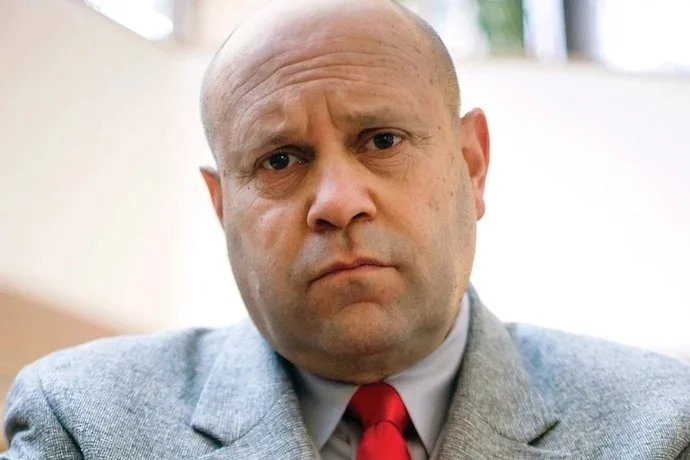
Scott Douglas Jacobsen: Let’s begin with a recent development. You received an online message that invoked some of the most violent and racially charged language in American history and included an explicit solicitation of violence against you and your staff. Although it has not yet been reported in the press, it is documented and publicly accessible. What did this message reveal to you about the current threat environment—and how does it differ from the hostility you have faced in the past?
Mikey Weinstein: A comment was posted on our website eight nights ago, last Saturday. We did not detect it immediately. We noticed it on Sunday evening due to IT issues. Generally, we receive between a dozen and eighteen grotesque, highly antisemitic threats each day, many by phone. This one stood out even by our standards. It used horrific language and included a solicitation offering $20,000 for my assassination and $5,000 for each staff member.
We immediately contacted law enforcement and the district attorney. We have a close working relationship with law enforcement in New Mexico. Our home has extensive security, including infrared cameras and defensive measures such as non-lethal and lethal measures, and elite, attack-trained working German Shepherds. We maintain a strong defensive network.
Even so, receiving something like this is deeply disturbing. It is intended to terrorize. It is clearly a felony. It was routed through an anonymity infrastructure associated with the Tor network, making it extremely unlikely to identify the sender. That is the cost of fighting MAGA. We are accustomed to threats, but this one was off the scale.
Church groups have publicly prayed for women in my family to develop fast-moving, metastasizing, inoperable breast cancer. Others have prayed for me to develop rectal cancer. Our windows have been shot out twice. Animals have been beheaded and left at our home. Swastikas and crucifixes have been painted on the house. Beer bottles and feces have been thrown at the property. About a year ago, feces were smeared across our mailbox.
Some of this reaches the news. Much of it does not. This is the price of standing up. That is why we provide military clients and veterans with anonymity, action, results, and protection—especially anonymity.
February 4, 2004, marked our entry into this fight with the release of The Passion of the Christ. We refer to it as the “Jesus Chainsaw Massacre.” The film was pushed through the cadet and officer chain of command at my alma mater, where three of my children were enrolled at the time.
This pattern continues from film to film—from The Passion of the Christ to Melania, the recent documentary. Days ago, military personnel from eight installations, both overseas and within the continental United States, reported being pressured to attend screenings to “support the country.” Our role is to chronicle, expose, intervene, and confront.
Service members do not typically contact the ACLU, Americans United, or the Southern Poverty Law Center, although we work closely with all of them. We focus with precision on white Christian nationalism, where nuclear weapons and drones are controlled. You are currently in a war zone, so you understand this reality.
About a year ago, my son spent a month in Ukraine driving vehicles from Poland into Ukraine for the Ukrainian military.
Why do movies matter? Because when people sit in a dark theatre or stream content at home, attitudes change. Consider Leni Riefenstahl, the Third Reich’s most effective propaganda filmmaker. She was technically brilliant, and her work reshaped public psychology.
From this perspective, we are at war. You are in a physical war zone. We are in a domestic war against Christian nationalism—the jet fuel of MAGA. We saw this trajectory in the early 2000s and take no pleasure in being correct. It is now everywhere.
When Christian nationalism appears in elementary schools, high schools, and universities—such as the British Columbia analogue to Liberty University you mentioned—the same pattern is replicated across institutions: Liberty, Regis, and many others.
Among sanitation workers, police, firefighters, and legislators, the problem is severe. In the military, it is off the scale. A subordinate cannot simply say, “No, sir,” or “No, ma’am,” and refuse to attend a mandated activity. In the U.S. military, failure to obey a lawful order—such as reporting to a required appointment—can result in criminal punishment under the Uniform Code of Military Justice.
Sexual relations outside of marriage are not automatically a felony in the civilian sense, but adultery can be prosecuted under the UCMJ when it undermines good order, discipline, or unit cohesion. I know this firsthand. I spent seven years as an Air Force judge advocate and handled those cases. The Supreme Court has made clear that the compelling governmental interest of the U.S. military is to maximize effectiveness and lethality in defending the nation’s constitutional rights. You are a journalist. I am a civil rights activist. In the military, many First Amendment rights are lawfully restricted.
The military maximizes effectiveness through good order, morale, discipline, cohesion, health and safety, and mission accomplishment. Conduct that damages those factors can be criminally sanctioned. In civilian life, adultery may be irrelevant. In the military, it can violate the Uniform Code of Military Justice.
Christian nationalism has a stranglehold across this country. You see it in Minneapolis and elsewhere, but what is harder to process is what is happening now, including within the military. Some people are waking up and asking friends and family for absolution for having been drawn into MAGA. They now recognize that they were wrong and want to move on. The question is whether absolution should be granted. I do not offer it. I have no forgiveness to give to those who enabled this.
I look at the calendar. It is Sunday evening in Ukraine, February 8, 2026, and late Sunday morning in Albuquerque, New Mexico. It feels like 1933 Germany. That is the historical parallel that weighs on me.
We are dealing with sailors, soldiers, Marines, airmen, and members of the Space Force, who are called Guardians. The Space Force remains part of the Department of the Air Force. This also includes the Coast Guard, which operates under the Department of Homeland Security in peacetime, and the U.S. Maritime Service, including the Merchant Marine Academy, which falls under the Department of Transportation. These institutional distinctions matter.
Anyone actively serving Trump in an obsequious, uncritical way is supporting a Christian nationalist agenda. That includes political figures such as J.D. Vance and others aligned with that movement. The divide in this country is no longer just a chasm; there are visible warning signs. History shows that such signs precede civil conflict.
My concern is that if Democrats regain the House of Representatives and possibly the Senate, Trump could again be impeached. If convicted, the question is whether he would leave peacefully. That refusal could act as a catalyst for widespread unrest in early 2027.
This is not about politics in the ordinary sense. People talk about losing friends or family members over politics. This is not politics. This is morality. Anyone who insists otherwise is fundamentally mistaken.
We are well beyond that point. Within the U.S. military, the danger is not limited to isolated acts of violence. It includes threats to invoke the Insurrection Act and deploy military forces domestically, potentially in support of agencies such as ICE or Customs and Border Protection. That prospect is deeply alarming.
This is where we are now. We serve more than 100,000 clients, with hundreds more reaching out every month. We do what we can to protect them. That is why we are doing this interview. We document patterns, preserve evidence, and prepare for accountability. We may have crossed too many Rubicons to return to normalcy, but if accountability comes, it will be ethical, legal, and moral.
Right now, we are careening toward the abyss of Christian nationalism. Figures such as Pete Hegseth exemplify this trend. I have publicly criticized him as embodying a militant, misogynistic vision of what he frames as “warrior Jesus.” I want to be clear that these are my views. About 95 percent of our clients—well over 100,000—are Christians, yet many are being oppressed for not being considered “Christian enough.”
We also represent, by our estimates, about 18 percent of Muslims serving in the U.S. military. We have represented members of every major religious and nonreligious tradition: Muslims, Jews, Christians, atheists, agnostics, secularists, and humanists. To our knowledge, the only group we have not represented is a Scientologist. We are still waiting for Tom Cruise to call, although he is not, in fact, a Navy pilot.

Jacobsen: A brief follow-up. You’ve often traced the origins of your activism to the fallout surrounding The Passion of the Christ. With Mel Gibson now developing a sequel, what concerns—if any—does that raise for you based on what you witnessed two decades ago?
Weinstein: Yes. Mel Gibson has publicly discussed plans for a sequel, commonly referred to as The Resurrection of Christ. Based on experience, I expect to see the same dynamics we witnessed at the Air Force Academy following the release of The Passion of the Christ in 2004. The film was released on February 4, 2004, and in its aftermath, we observed pressure within military command structures to encourage attendance.
I expect similar patterns now, including military leadership using its authority to pressure, or “voluntell,” subordinates to attend screenings. I would also expect coordinated efforts to shape public perception, including audience-driven ratings activity on sites such as Rotten Tomatoes. These dynamics function as propaganda. This is precisely what ignited our involvement more than two decades ago.
We are now in our twenty-third year. It took nearly two years after those initial incidents for us to establish the foundation, which was formally launched in December 2005. We understand what this means historically and institutionally. In my view, a sequel would act as another accelerant for Christian nationalism.
I would not be surprised if senior figures attempted to normalize attendance while maintaining plausible deniability. We have already seen Pentagon officials deny issuing formal orders while simultaneously praising the film itself. This pattern—denial paired with endorsement—is familiar. It resembles political strategies where responsibility is deflected to unnamed aides while the message is still amplified.
Jacobsen: Viewed from the perspective of foreign adversaries, how does internal ideological turmoil within the U.S. military alter the strategic balance? In what ways might this kind of fragmentation serve the interests of rival states or non-state actors?
Weinstein: If you look at this from the perspective of an adversary, division is an invitation. There is a quote I often use: you cannot wish for a strong character and an easy life, because the price of one is the other. When a military force is internally divided—ideologically, religiously, or culturally—it weakens cohesion.
You are Canadian. In recent years, you have seen threats and rhetoric about forcibly absorbing territories—Greenland, for example—and even repeated statements about making Canada a “51st state.” We have also seen reports of quiet political conversations in places like Alberta about secession. All of this signals instability.
History shows that strong fighting forces have often been diverse but unified. The Roman army was composed of people from conquered territories, yet it functioned as a cohesive whole. Alexander the Great’s army was similarly diverse and effective. The British Army and Navy operated similarly during the height of the empire, incorporating people of diverse ethnicities, cultures, religions, and nonreligious traditions.
What emboldens enemies is not diversity. It is fragmentation. When adversaries see internal division, they do not hesitate. They exploit it.
Diversity is what makes us strong. What figures like Pete Hegseth argue for—explicitly or implicitly—is a vision in which the ideal American, and especially the ideal service member, is a straight, white, Christian male, preferably blond-haired and blue-eyed. History has seen that model before. It should sound familiar.
If you are sitting in Iran, Russia, North Korea, or within extremist organizations such as ISIS, al-Qaeda, Boko Haram, or similar groups, watching your primary adversary tear itself apart is cause for celebration. Internal division generates a strategic advantage for enemies.
We are in contact with individuals currently going through basic training in the Army, Navy, Air Force, and Marine Corps. What they describe is fear and uncertainty—particularly about how to distinguish between lawful and unlawful orders.
Service members ask themselves questions such as: if I were ordered to do something fundamentally immoral or illegal, how would I know? American history provides cautionary examples: Kent State, where National Guard troops shot students, and the My Lai massacre during the Vietnam War.
I am a graduate of the Air Force Academy, and my family includes three generations of graduates of the military academy. Even with four years of training, there is relatively little sustained education on evaluating the legality of orders. Under the Uniform Code of Military Justice, orders are presumed lawful. However, the responsibility ultimately falls on the individual service member to refuse an unlawful order. Following an illegal order can itself result in criminal liability.
As a result, there is fear, confusion, and moral distress within today’s U.S. military. The tightening grip of Christian nationalism is driving this environment. It does not require universal participation to succeed.
Historically, authoritarian movements have relied on committed minorities. Hitler did not require majority support at the outset of the Nazi movement. Stalin’s inner circle was similarly small relative to the population. In the U.S. military, structural hierarchy magnifies minority influence. When someone graduates from ROTC, Officer Training School, or a service academy and is commissioned as an ensign or second lieutenant, that individual immediately outranks the vast majority of service members. Even the most junior officer outranks the most senior enlisted personnel as a matter of law.
That structural reality means ideological capture at the officer level has a disproportionate impact. This dynamic emboldens not only nation-state adversaries but also terrorist organizations that observe fragmentation and moral paralysis within U.S. forces.
This is why this work is not a nine-to-five job. I routinely work fifteen-hour days, from early morning until late at night, including weekends and holidays. It is a war. Passive disengagement is no longer an option. People cannot simply wait and hope things resolve themselves.
This is not only about what future generations may ask—what did you do when this was happening? It is about whether life, democracy, and this long-running democratic experiment are worth defending. After nearly 250 years, sitting on the couch and pretending none of this matters is a choice with consequences.
Jacobsen: Beyond state adversaries and organized extremist groups, there’s the more diffuse threat of lone actors radicalized online. How does this broader ideological ecosystem shape individuals who may never formally affiliate with a movement, yet internalize its grievances and act independently in its name?
Weinstein: We already see organized extremist groups such as the Three Percenters and the Proud Boys functioning as part of this ecosystem. Beyond that, the more dangerous threat is lone actors radicalized online. I was a psychology major at the Air Force Academy, but I do not pretend to understand why individuals choose violence fully. What I do understand is that ideological ecosystems normalize grievance, dehumanization, and violence.
The email threat we received is an example of that radicalization. Whether or not an individual formally affiliates with a group is irrelevant. The danger lies in the ideology itself and in how it legitimizes violence in the minds of isolated individuals.
Whoever sent that message clearly believed they were protected by anonymity. The language suggested bravado—“you cannot catch me because I used Tor”—and a belief that anonymity infrastructure would shield them. That confidence appeared to embolden the threat itself: offering $20,000 to kill me and $5,000 for each staff member.
We have more than 1,200 people working with us. Like most civil rights organizations, including the ACLU, the majority are volunteers. We maintain representatives on most military installations, both domestically and overseas, including on nuclear submarines and aircraft carriers. That scope matters when evaluating the seriousness of the threat environment.
Whoever sent that message likely believed they were acting with the approval or blessing of Trump-era rhetoric. I receive enormous volumes of hate mail—emails that begin with slurs, phone calls, and other harassment. For some of these individuals, this behaviour is framed as righteous or sanctioned.
There is no consistent truthfulness in Trump’s public conduct. In my view, he lies habitually, and many of those around him repeat those falsehoods. We have seen demonstrably false claims circulated about individuals such as Renee Good and Alex Prady, and those lies have had real-world consequences. I struggle to understand what it takes for some people to recognize that this behaviour is wrong.
I also struggle to understand how, when Trump began running in 2015, people could not see what he was. That failure to recognize character is part of why something troubling has happened socially. When people meet now—in restaurants, libraries, or public spaces—there is an almost immediate sorting. Within seconds, people try to determine which side of the divide the other person is on.
It has become binary. You are either MAGA or not MAGA. You either resist or you collaborate. If you do neither, you are effectively collaborating. History shows similar dynamics. This was true in Germany in 1933, under Pol Pot, and during the Inquisition. That is where we are now, but with nuclear weapons and constant sabre-rattling against allies such as NATO, Canada, and Britain.
We even hear rhetoric about annexation or secession—talk about Canada as a “51st state,” or encouragement of separatist ideas elsewhere. At the same time, we do have a governing document in this country: the U.S. Constitution. That framework still matters.
When the discussion turns to Israel and Palestine, nuance is often treated as antisemitism by MAGA-aligned voices. Any acknowledgment of Palestinians as human beings is framed as hostility toward Jews. Yet the antisemitism I encounter daily is explicit and direct. I am Jewish. I am not particularly religious, but that does not matter. My surname alone is enough.
I am a lawyer. If my last name were something else and I were an auto mechanic, I am confident we would not experience even a fraction of the hatred and threats we face.
Jacobsen: Thank you very much for the opportunity and your time, Mikey.
Last updated May 3, 2025. These terms govern all In-Sight Publishing content—past, present, and future—and supersede any prior notices. In-Sight Publishing by Scott Douglas Jacobsen is licensed under a Creative Commons BY‑NC‑ND 4.0; © In-Sight Publishing by Scott Douglas Jacobsen 2012–Present. All trademarks, performances, databases & branding are owned by their rights holders; no use without permission. Unauthorized copying, modification, framing or public communication is prohibited. External links are not endorsed. Cookies & tracking require consent, and data processing complies with PIPEDA & GDPR; no data from children < 13 (COPPA). Content meets WCAG 2.1 AA under the Accessible Canada Act & is preserved in open archival formats with backups. Excerpts & links require full credit & hyperlink; limited quoting under fair-dealing & fair-use. All content is informational; no liability for errors or omissions: Feedback welcome, and verified errors corrected promptly. For permissions or DMCA notices, email: scott.jacobsen2025@gmail.com. Site use is governed by BC laws; content is “as‑is,” liability limited, users indemnify us; moral, performers’ & database sui generis rights reserved.
Share this:

Author(s): Scott Douglas Jacobsen
Publication (Outlet/Website): International Policy Digest
Publication Date (yyyy/mm/dd): 2026/02/12
Aneta Mihaylova is a Health Officer with Project HOPE in southern Ukraine and a practicing general surgeon who made a conscious decision to remain in the country after Russia’s full-scale invasion. Of Ukrainian and Bulgarian heritage, she chose to stay close to her community, combining frontline surgical work with humanitarian coordination at a time when Ukraine’s health system was coming under unprecedented strain.
For nearly three years, Mihaylova has occupied a rare dual role—inside operating rooms and inside coordination meetings—bridging clinical medicine, crisis communication, and health system support. Her work spans emergency trauma response, continuity of care for non-communicable diseases, mental health programming, medical training, and evidence-based advocacy with local authorities and international donors. In parallel, she is completing a master’s degree in health care management, strengthening her ability to navigate the fragile intersection of medical practice, administration, and humanitarian logistics in wartime.
Her perspective is shaped not only by Ukraine’s experience but also by comparative crisis settings. In early 2025, she traveled to the Gaza Strip in the Occupied Palestinian Territory to exchange experience with health workers operating under protracted conflict conditions. The visit reinforced a shared reality: across geographies, health professionals face similar pressures—damaged infrastructure, displaced populations, staff shortages—and the same determination to keep systems functioning.
Since February 2022, Ukraine’s health sector has endured more than 2,254 documented attacks on health care facilities, according to the World Health Organization. In this interview, Mihaylova reflects on how needs have evolved from immediate trauma care to more complex, hybrid demands: rehabilitation and prosthetics for war-related injuries, continuity of chronic disease treatment for displaced populations, and expanded psychosocial support for patients and providers alike. She also explains the ethical principles that guide humanitarian storytelling—ongoing consent, privacy-first safeguards, and the refusal to retraumatize vulnerable people for visibility. As an example of responsible advocacy translating into tangible results, she highlights the reconstructed rehabilitation department at Mykolaiv Regional Clinical Hospital, where documented patient needs helped shape an accessible, modern facility now serving hundreds each year.
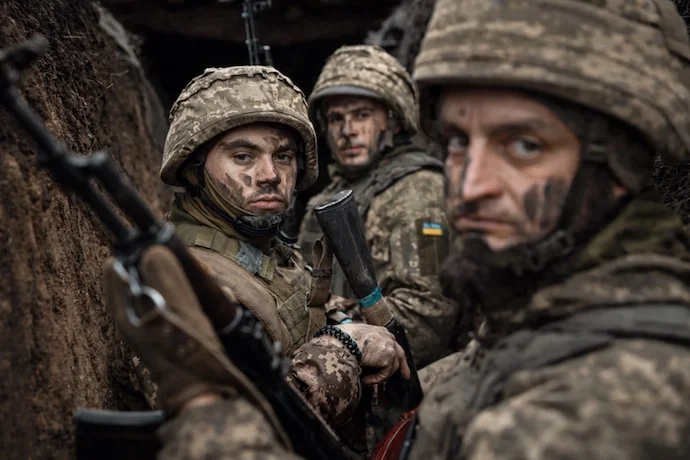
Scott Douglas Jacobsen: Since February 2022, how have health and humanitarian needs in Ukraine evolved, particularly in front-line regions?
Aneta Mihaylova: Since February 2022, health and humanitarian needs in Ukraine have shifted from immediate emergency response to a complex mix of chronic, psychological, and long-term systemic challenges, particularly in eastern, southern, and northeastern front-line regions.
In the early months, priorities were trauma care, evacuation, the deployment of emergency supplies, and keeping hospitals operational during direct attacks. Today, the needs have shifted toward long-term care, with a greater demand for specialized medical care, physical rehabilitation, and prosthetics for war-related injuries. In response, Project HOPE launched an initiative last year in collaboration with rehab4u to strengthen Ukraine’s rehabilitation ecosystem and advance the social inclusion of persons with disabilities and civilian war victims.
Millions of displaced people rely heavily on primary healthcare clinics that were never designed to serve such large populations. Access to care for non-communicable diseases — cardiovascular conditions, diabetes, and cancer — has become a major challenge, driven by infrastructure damage, disrupted supply chains, and loss of medical personnel. Interruptions in chronic care pose serious long-term risks.
At the same time, the health system itself is under attack, with more than 2,254 attacks on health care facilities since February 2022 as verified by the WHO. Providers have relocated, been mobilized, or experienced repeat trauma. Health facilities operate with reduced staffing, an unstable power supply, and ongoing security threats. What once would have been “routine” care now requires extensive coordination, flexibility, and external support just to maintain continuity.
Today’s needs are less visible than in 2022 — but no less urgent. The evolution has been one of acute crisis → protracted strain → hybrid needs, with repeated attacks on civil infrastructure, especially the energy, water, and heating supply system, compounding the challenges.
Alongside what Project HOPE already does— including Mobile and Local Medical Units, ambulance services, expanded pharmaceutical and equipment donations, and comprehensive staff training (BLS, ALS, TDTR, EPALS, and tailored courses for doctors and nurses) — Project HOPE is preparing to support winterization efforts. This will provide facilities with critical winter supplies and fuel to ensure continuity of care during the most difficult months.
View this post on Instagram
Jacobsen: As both a surgeon and a humanitarian coordinator, how do you navigate the tension between bearing witness to suffering and protecting patients’ privacy and dignity?
Mihaylova: This balance is at the heart of humanitarian work.
We meet people at their most vulnerable moments, and many of us — including myself — are trained in Psychological First Aid, which ensures that every interaction is safe, respectful, and grounded in empathy. The way a story is told can either protect a person or expose them to further harm.
A few principles guide us include: Consent is ongoing, not a one-time form. A person can stop at any moment. We never push anyone to relive trauma. If a story can be told without graphic detail, we choose the gentlest version. We focus on resilience, needs, and solutions — not suffering. We avoid identifying details if there is any risk to a person’s safety.
Ultimately, storytelling is not about data points or impact metrics. It is about human beings. Protecting their dignity always comes before visibility or publicity.
Jacobsen: Can you describe a specific case in which responsible storytelling—grounded in consent and evidence—directly contributed to improved patient care?
Mihaylova: One powerful example comes from our work with secondary care facilities in southern Ukraine. Last year, the rehabilitation department at the Mykolaiv Regional Clinical Hospital reopened following a full reconstruction, which directly improved care for hundreds of patients.
Before the renovation, people recovering from neurological, traumatic, or musculoskeletal conditions had very limited access to modern, barrier-free rehabilitation. Patients raised these concerns with the hospital and regional health authorities, and our team heard the same issues during field visits. The gaps were clear, but what made the difference was documenting those needs responsibly—grounding the story in evidence, listening to patients, and ensuring we weren’t exposing anyone to risk.
By working with the Department of Health and the Ministry of Health’s Restoration Office, we translated those lived experiences into a data-backed case for reconstruction. That storytelling helped the hospital and regional authorities prioritize the rehabilitation department and design it around real, practical needs: wide, accessible corridors and doorways, adapted bathrooms, multifunctional beds, dedicated therapy spaces, and rooms for psychological support.
The result is a facility that now provides free, high-quality rehabilitation to approximately 800 patients annually. And for people recovering from life-altering injuries, that means more than a better building — it means dignity, access, and a real chance at long-term recovery.
To me, it shows how responsible storytelling can drive change: when you elevate the right voices, ground them in evidence, and pair them with strong partnerships, you can help turn identified needs into tangible improvements for patients.
More information is available by clicking here.
Jacobsen: When determining which frontline realities to elevate to donors, policymakers, or the broader public, what criteria guide your decision-making?
Mihaylova: In the field, we prioritize stories that reflect clear, evidence-based needs or demonstrate impact, while always ensuring the privacy and safety of the individuals involved. When deciding which stories to share with donors, policymakers, or the wider public, we carefully balance the potential to raise awareness with our responsibility to protect individuals, maintain program integrity, and follow the principle of ‘do no harm.’
Some stories help donors understand funding gaps. Others help policymakers recognize system-level needs. And others help the public connect with the human reality of the war.
I believe the right story is the one that strengthens program decisions, deepens community understanding, and improves the care we can provide to the people we serve
Jacobsen: Thank you very much for your time and for sharing your insights.
Last updated May 3, 2025. These terms govern all In-Sight Publishing content—past, present, and future—and supersede any prior notices. In-Sight Publishing by Scott Douglas Jacobsen is licensed under a Creative Commons BY‑NC‑ND 4.0; © In-Sight Publishing by Scott Douglas Jacobsen 2012–Present. All trademarks, performances, databases & branding are owned by their rights holders; no use without permission. Unauthorized copying, modification, framing or public communication is prohibited. External links are not endorsed. Cookies & tracking require consent, and data processing complies with PIPEDA & GDPR; no data from children < 13 (COPPA). Content meets WCAG 2.1 AA under the Accessible Canada Act & is preserved in open archival formats with backups. Excerpts & links require full credit & hyperlink; limited quoting under fair-dealing & fair-use. All content is informational; no liability for errors or omissions: Feedback welcome, and verified errors corrected promptly. For permissions or DMCA notices, email: scott.jacobsen2025@gmail.com. Site use is governed by BC laws; content is “as‑is,” liability limited, users indemnify us; moral, performers’ & database sui generis rights reserved.
Share this:

Author(s): Scott Douglas Jacobsen
Publication (Outlet/Website): International Policy Digest
Publication Date (yyyy/mm/dd): 2026/02/06
Psychotherapy has long wrestled with a deceptively simple question: how does the self hold together amid competing identities, inherited norms, and internal contradictions? In their work on memetic self-mapping, psychologists Lloyd Hawkeye Robertson and Teela Robertson offer a visual and collaborative approach to this problem, treating identity not as a fixed essence but as a dynamic constellation of culturally transmitted “memes.”
Developed over decades of clinical practice and research, self-mapping invites clients to narrate who they are and then co-construct a visual map that reveals patterns of meaning, emotional charge, and behavioral momentum. The method emphasizes the client as expert, resists therapist overreach, and adapts across therapeutic modalities—from cognitive-behavioral to narrative and psychodynamic approaches.
In this interview, the authors explain how memetic self-mapping works in practice, how it surfaces ruminative loops, and how therapists can navigate cultural norms—both sustaining and harmful—without imposing moral frameworks of their own.
Scott Douglas Jacobsen: Your work treats the self as culturally constructed—an assemblage of “memes” that cluster into a relatively stable identity. When visually mapping the self in psychotherapy or research, what criteria determine which memes are included, and how they are grouped or linked?
Lloyd Hawkeye Robertson: In all cases, the client is the expert in who they are. Using the narrative method of self-map construction, the client describes who they are in story form, and the psychologist segments the narrative into phrases with a single theme and places those segments under the same name in a “bin.” Those bins containing segments that encompass affective, connotative, and behavioural dimensions are designated as memes. Memes that share affective, connotative, cognitive, or behavioural dimensions are declared to be linked. Using the quicker “forty persons” method, the client lists ten persons they are, ten things they believe to be true, ten things they like about themselves, and ten things they would change about themselves if they could, and then ranks each of the four lists. The psychologist then explores with the client affective, connotative, and behavioral dimensions of each potential meme listed. In all cases, the psychologist reviews the initial map with the client and explores elements that may be absent, thereby ensuring a rich, thick self-description.
Teela Robertson: To add to my dad’s summary, in the “forty persons” people often list things that end up meaning the same thing to them, so those get put together. Based on the general history, we may ask about other items we identified but don’t see on their lists and assess whether they should be represented.
Once we have determined which are memes and stay, the client rank orders each list from 1 (easiest to change or give up) to 10 (hardest to change or give up). This indicates the degree of centrality of the meme, with items ranked 10 being at the centre. From there, we position the remaining items, starting with the lowest-ranked ones, and use our judgment about what we understand them to mean and the history to estimate which items should be near. As we make connections and co-construct the map, items are rearranged as clusters form. Creating the map is more of an art form and uses client input.
Jacobsen: Because mapping involves interpretation, therapist bias is an obvious concern. What safeguards are built into memetic self-mapping to prevent the therapist’s assumptions from shaping the client’s identity map?
Lloyd Hawkeye Robertson: Since the client is viewed as the expert on themselves, the client has the final word on the construction of the self-map. Ultimately, the map is considered complete only if it resonates with the client on a visceral level.
Teela Robertson: Therapist bias can’t be completely removed; therapists should remain mindful of it in practice. In mapping, the best defense is to ensure we listen to how clients define items so we know what they mean to the client, rather than assuming their definition is similar to ours. For instance, I might have a client who adds a daughter to their map, and for them, this might be a caregiver role, one of duty and responsibility, while for another person, a daughter might be more about friendship, fun, support, and love. The connections each one has can be quite different, even though we all have a sense of what being a son or daughter means to us.
Jacobsen: You note that self-maps can reveal ruminative loops—tight cognitive and emotional circuits that keep clients stuck. When such loops become visible on a map, what kinds of interventions tend to be most effective?
Lloyd Hawkeye Robertson: Self‑maps reveal the existing off‑ramps within ruminative circuits—pathways that must already be present, because without them the loop could not function as part of the self in the first place. The client learns to identify these off‑ramps so they can use them when rumination arises. Therapists, however, are also experts in facilitating change. Together, therapist and client can use techniques such as reframing and behavioural experimentation to develop new off‑ramps, making these circuits less isolating and more flexible.
Teela Robertson: One place therapy can get stuck is in focusing on changing undesirable behaviours. If what we are targeting is central to the self, attempting to eliminate it can be destabilizing. Often, it’s better to begin by strengthening desired aspects or by adding new items that already have strong connections within the self. If we create more pathways out of the rumination cycle, then we weaken the cycle, and the client can identify tools that help get them unstuck. Re-framing and behavioural experiments are two tools that I find especially useful.
Jacobsen: You describe memetic mapping as modality-flexible, usable across CBT, humanistic, narrative, psychodynamic, and other approaches. How does the method adapt across these theoretical frameworks without losing coherence?
Lloyd Hawkeye Robertson: As I argued in The Evolved Self, the modern self—along with the mind’s capacity to take itself as an object—has become the central paradigm across all schools of psychology. Each tradition holds a mental model of a healthy, functioning self and works to help clients acquire the self‑characteristics it considers essential. The frameworks differ, but they all reference this same core self.
When I demonstrated memetic mapping to a graduate class at the University of Calgary, the students’ reactions illustrated this beautifully. A cognitive‑behavioural therapist said, “Well, Lloyd, all you’re doing is CBT. You create a map of a person’s self and then use cognitive and behavioural techniques so the client can improve it.” A narrative therapist disagreed: “No, the memes outline a plot. Lloyd is helping clients re‑write their scripts.” From a psychodynamic perspective, the self is the ego that emerges from the interplay of the id and the superego, yet retains sufficient agency to reshape itself through therapy.
My own training was in the methods of Alfred Adler, whom Albert Ellis, founder of Rational Emotive Behaviour Therapy, called “the first humanist psychologist to view the person holistically.” That comment captures the point: each school has its own techniques, but they all begin from the same foundational assumption about the self. Memetic mapping simply provides a structure flexible enough to integrate with any of them.
Teela Robertson: Memetic mapping is a technique to create a visual representation of the self. It provides a framework that is then interpreted in terms of the modality the therapist conceptualizes. While we lay out a concrete way to do mapping, it’s quite adaptable to different modalities. The modality a therapist uses and the client’s goals can shape which parts we focus on and the types of questions we ask to help the client make sense of the connections and how they are affecting them. From there, we might suggest skills or use scaffolding to elicit what the client produces; we might even simply observe what the client spontaneously does.
Jacobsen: Your approach emphasizes the client as expert and is intended to be cross-culturally applicable. How do you work with culturally transmitted norms that may be harmful—either to the client or to others—without imposing external moral judgments?
Lloyd Hawkeye Robertson: One of the classic ethical questions raised in my undergraduate days was, “Would you counsel Al Capone to become a better criminal?” The answer highlights a core principle of our profession: psychologists do not tell clients how to live their lives. Instead, we help them examine the consequences of their choices and explore alternatives. I have worked with repeat offenders who have spent much of their lives in prison, and a question I often ask is, “How is that working out for you?” Capone may have been a highly successful criminal, but he ultimately died alone in prison.
Our method is cross‑cultural because we treat each client as a “culture of one.” While people given to identity politics might say that those of a particular culture must act in certain ways, and while most of the time that is not a problem, when people are taught to hate, discriminate, disparage others, or abuse children, they have a choice to act otherwise.
In those cases, clients still retain agency. They can decide whether the cultural messages they have received have served them or others well, and choose to act differently. Our role is to support that reflective process, not to impose a moral code, but to help clients recognize the real consequences of the norms they follow and the possibilities available to them.
Teela Robertson: Curiosity is probably the most helpful tool for therapists. We need to understand the beliefs and norms and help the client understand them as well. It is not our role as therapists to change people’s beliefs or practices, but we can help them think critically, evaluate their norms from different perspectives, and understand the potential risks and benefits of the society in which they live. I haven’t had to deal with this in severe forms, but what I often see is ignorance on issues and, therefore, negative bias and harm from that lack of knowledge. I think there should be caution regarding differing views or ways we personally view as harmful, versus those that genuinely infringe on human rights or might give rise to a duty to report. The former is a matter of therapist bias (prioritizing our own views), while the latter has more serious implications.
Jacobsen: Thank you very much for the opportunity and your time, Lloyd and Teela.
Last updated May 3, 2025. These terms govern all In-Sight Publishing content—past, present, and future—and supersede any prior notices. In-Sight Publishing by Scott Douglas Jacobsen is licensed under a Creative Commons BY‑NC‑ND 4.0; © In-Sight Publishing by Scott Douglas Jacobsen 2012–Present. All trademarks, performances, databases & branding are owned by their rights holders; no use without permission. Unauthorized copying, modification, framing or public communication is prohibited. External links are not endorsed. Cookies & tracking require consent, and data processing complies with PIPEDA & GDPR; no data from children < 13 (COPPA). Content meets WCAG 2.1 AA under the Accessible Canada Act & is preserved in open archival formats with backups. Excerpts & links require full credit & hyperlink; limited quoting under fair-dealing & fair-use. All content is informational; no liability for errors or omissions: Feedback welcome, and verified errors corrected promptly. For permissions or DMCA notices, email: scott.jacobsen2025@gmail.com. Site use is governed by BC laws; content is “as‑is,” liability limited, users indemnify us; moral, performers’ & database sui generis rights reserved.
Share this:

Author(s): Scott Douglas Jacobsen
Publication (Outlet/Website): International Policy Digest
Publication Date (yyyy/mm/dd): 2026/02/05
Since Russia’s full-scale invasion, Ukraine’s national police have been compelled to rethink the very foundations of civilian law enforcement. Policing that once centered on routine public order and criminal investigation now unfolds amid missile strikes, drone warfare, cyber disruption, and prolonged infrastructure collapse. In this environment, the police operate at the uneasy intersection of emergency response, national defense, and public trust.
In this interview, Scott Douglas Jacobsen speaks with Yuliia Vitasivna Hirdvilis, Head of Communications at Ukraine’s National Police, about how these adaptations function in practice. She explains new protocols designed to protect first responders from so-called “double-tap” strikes, the evolution of frontline evacuation units known as the “White Angels,” the expanding demands of explosive-ordnance clearance, and the growing importance of cyber coordination. The conversation also examines how policing reforms tied to European integration continue to advance during wartime—and what it takes to keep personnel effective under relentless physical and psychological strain.
This interview has been edited for clarity and length.
Scott Douglas Jacobsen: “Double-tap” or follow-on strikes pose a serious risk to civilians and first responders. What operational changes has the national police introduced to reduce casualties at impact sites?
Yuliia Hirdvilis: The national police have introduced a clearly defined operational algorithm that regulates coordination between territorial duty officers and the central police command during periods of heightened threat. This system is designed to ensure continuous communication and the exchange of information on the risk of repeated artillery, missile, drone, or rocket attacks.
In practice, this means that police patrols and other responders working at the site of an initial strike receive immediate warnings if there is credible information about a possible follow-on attack. When such a threat is identified, officers and service vehicles are promptly withdrawn to designated safe locations. These measures are intended to reduce casualties among first responders while preserving the ability to resume response operations as soon as conditions allow.
Jacobsen: How do police evacuation teams prioritize rescues from frontline settlements under constant FPV-drone and artillery threat?
Hirdvilis: Evacuation operations in frontline areas are conducted in accordance with established police algorithms, but are always guided by an assessment of the current threat environment. This assessment is based on intelligence data, the intensity and frequency of shelling, the types of weapons used, and the likelihood of repeated attacks.
Priority is given to the most vulnerable groups: people with disabilities or limited mobility, elderly residents who cannot react quickly to danger, families with children, and civilians located in buildings or areas that have suffered critical destruction or remain under constant threat. At the same time, even the most carefully prepared plans must remain flexible. Conditions in frontline territories can change within minutes, requiring evacuation teams to adjust routes and priorities based on road damage, weather, available safe corridors, and the feasibility of rapid transport.
Police officers often carry out these missions under direct fire. Service vehicles have been damaged by shell fragments and FPV-drone strikes, underscoring the risks involved. The history of the “White Angels” evacuation teams reflects this reality. The first crew was formed in the town of Marinka in the Donetsk region, when police officers went beyond their formal duties to rescue civilians who had lost hope of receiving help.
Today, the White Angels consist of 24 mobile groups operating in the most dangerous regions of Ukraine. Over three years, they have carried out 9,775 deployments and evacuated 27,702 civilians, including 7,337 children. In addition, they have provided first aid to hundreds of victims, transported the wounded and seriously ill to hospitals, and recovered the bodies of the dead so that families could say farewell to their loved ones.
Jacobsen: With mine and unexploded-ordnance clearance likely to take decades, how is the national police preparing staff through IMAS-standard training and equipment?
Hirdvilis: Police explosive-ordnance disposal units play an essential role in protecting civilians and supporting national security. They are actively involved in operational demining and clearance activities across multiple regions, including Donetsk, Kyiv, Mykolaiv, Sumy, Kharkiv, Kherson, and Chernihiv.
To date, these units have completed more than 29,000 service deployments, inspected over 15,000 hectares of territory, seized more than 153,000 explosive objects and 4,270 tonnes of explosives, and destroyed approximately 94,000 explosive items. This work remains ongoing and will continue for many years.
Since the beginning of 2022, international technical-assistance programs have helped strengthen these capabilities. In particular, the U.S. Department of State’s Bureau of International Narcotics and Law Enforcement Affairs, working through the U.S. Embassy in Ukraine, has supported specialized training for 139 police officers from special-purpose units. At the same time, the need for additional equipment, modern tools, and initiation devices remains a significant challenge for explosive-ordnance units.
Jacobsen: CERT-UA reports persistent and diverse cyber incidents. What protocols allow for rapid evidence collection, disruption, and public warning?
Hirdvilis: To prevent and respond effectively to cyber incidents, Ukraine relies on standardized information-sharing rules based on the Traffic Light Protocol, which has been approved by the National Coordination Centre for Cybersecurity. These rules are aligned with guidance from the European Union Agency for Cybersecurity and international incident-response standards.
A unified interagency procedure defines each stage of cyber-incident response, including detection, analysis, containment, eradication, and recovery. It also requires immediate notification to CERT-UA and enables the rapid exchange of indicators of compromise among law enforcement, cybersecurity, and intelligence agencies.
Additional government resolutions govern the collection and preservation of electronic evidence and public warning mechanisms. Taken together, these frameworks ensure the rapid identification of cyber threats, the proper documentation of evidence, the containment of attacks, and timely public communication through official CERT-UA channels. Police cyber units also regularly publish guidance and recommendations to help citizens avoid becoming victims of cybercrime.
Jacobsen: Large-scale attacks on energy and gas facilities have become routine. How do police balance blackout-related public order, crime prevention, and site security?
Hirdvilis: Massive attacks on energy and gas infrastructure pose serious challenges to the state’s overall security system. In response, the police operate under reinforced and well-tested procedures during periods of widespread power outages.
Responsibilities are clearly distributed among police units, and coordination scenarios are regularly practiced with the State Emergency Service, medical responders, military administrations, and both patrol and criminal police. During power outages, police not only secure critical facilities but also increase patrols in areas most vulnerable to criminal activity. Patrol routes and staffing levels are adjusted to maintain public order, prevent offences, and ensure the stable functioning of key state facilities.
Jacobsen: Policing reforms featured prominently in the European Commission’s 2025 enlargement package. Which priorities matter most for the National Police now?
Hirdvilis: European integration remains a strategic priority for the National Police. Current efforts focus on implementing transparent, merit-based procedures for selecting leaders at both the central and regional levels, aligned with European standards.
Additional priorities include implementing a comprehensive action plan to combat organized crime based on Serious and Organised Crime Threat Assessments, approving a new strategy for the 2026–2030 period, strengthening institutional and operational capacity through interagency cooperation, and appointing a permanent national coordinator for organized-crime policy.
Jacobsen: Sustaining frontline effectiveness requires managing fatigue and casualty risk. How is the police addressing these pressures?
Hirdvilis: The full-scale invasion has fundamentally altered the security environment and, with it, the work of the police. These changes have affected public expectations, technological requirements, and human-resources policy. Particular attention is being paid to staffing and supporting special-purpose and rapid-response units, including operational assault brigades and patrol battalions.
At the same time, the police remain a civilian institution governed by law. During martial law, police units operate strictly within their legal mandate to support national defense, territorial defense, and public order. Investigative units have opened more than 183,000 criminal proceedings related to crimes committed in connection with the armed conflict, with documented damages exceeding $2 billion.
Despite extraordinary conditions, the National Police continue to adapt—legally, operationally, and institutionally—to protect civilians, uphold the rule of law, and maintain accountability.
Jacobsen: Thank you for your time and insights.
Special thanks to the Communications Department of the National Police of Ukraine for facilitating this interview.
Last updated May 3, 2025. These terms govern all In-Sight Publishing content—past, present, and future—and supersede any prior notices. In-Sight Publishing by Scott Douglas Jacobsen is licensed under a Creative Commons BY‑NC‑ND 4.0; © In-Sight Publishing by Scott Douglas Jacobsen 2012–Present. All trademarks, performances, databases & branding are owned by their rights holders; no use without permission. Unauthorized copying, modification, framing or public communication is prohibited. External links are not endorsed. Cookies & tracking require consent, and data processing complies with PIPEDA & GDPR; no data from children < 13 (COPPA). Content meets WCAG 2.1 AA under the Accessible Canada Act & is preserved in open archival formats with backups. Excerpts & links require full credit & hyperlink; limited quoting under fair-dealing & fair-use. All content is informational; no liability for errors or omissions: Feedback welcome, and verified errors corrected promptly. For permissions or DMCA notices, email: scott.jacobsen2025@gmail.com. Site use is governed by BC laws; content is “as‑is,” liability limited, users indemnify us; moral, performers’ & database sui generis rights reserved.
Share this:
Author(s): Scott Douglas Jacobsen
Publication (Outlet/Website): International Policy Digest
Publication Date (yyyy/mm/dd): 2026/02/02
For decades, economists have struggled to explain a paradox at the heart of modern capitalism: women’s educational attainment and labour-force participation have risen steadily, yet gender gaps in pay, power, and economic security remain stubbornly persistent. Much of the explanation lies not in markets alone, but in what markets fail to count.
Misty L. Heggeness, an economist and associate professor at the University of Kansas School of Public Affairs & Administration, has spent her career interrogating those blind spots. A former senior advisor at the U.S. Census Bureau, Heggeness now focuses on the economic value of care—both paid and unpaid—and the cultural narratives that shape how women move through work, family, and public life. She is the author of Swiftynomics, a book that uses Taylor Swift’s career as a cultural lens to explore women’s economic agency across the life course, and the co-founder of The Care Board, a Sloan Foundation–supported data project that makes visible the labour long excluded from official statistics.
In this conversation, Heggeness discusses how women’s paid and unpaid work has evolved across generations, why domestic technology and service economies produce uneven benefits, how culture acts as both accelerator and brake on economic participation, and why redefining what counts as “work” is essential to building a more accurate—and more equitable—economic system.
Scott Douglas Jacobsen: How do you define Swiftynomics as an economic concept, and what does the term capture about women’s roles as economic actors that more traditional frameworks tend to overlook?
Misty Heggeness: Swiftynomics is about understanding how women move through their lives and careers as economic agents. The goal is to highlight the many ways women are economically active and contribute to society today. Taylor Swift is the muse.
Jacobsen: That’s interesting. I’ve conducted several interviews in which Taylor Swift has come up, including on major podcasts and in discussions focused on how economics translates into ticket sales, cultural clout, and personal branding. The idea works because it extends beyond Swift herself to figures such as Oprah Winfrey and other prominent billionaires, including MacKenzie Scott, pointing to a broader pattern rather than a single outlier. When thinking about how women move through their lives, how does women’s economic output—strictly from a financial perspective—change across the lifespan when they are active participants in the formal economy? There is, of course, a separate and important conversation about the informal economy.
Heggeness: One of the best ways to understand this is to look at the work of Claudia Goldin, who won the Sveriges Riksbank Prize in Economic Sciences in Memory of Alfred Nobel in 2023. It is often called the “Nobel Prize in Economics,” but it is technically a separate prize administered by the Nobel Foundation. Goldin’s work has examined long-run changes in women’s labour-force participation and earnings, including how these patterns differ across cohorts and over time.
Historically, women have always done substantial economic work, but their participation in paid formal employment varied widely by class, place, and period. In many eras, paid work outside the home was more common among lower-income women, including domestic service and other wage labour, while marriage and motherhood often reduced or interrupted formal employment for many middle- and upper-class women. As women’s educational attainment increased—especially in the mid-20th century and later—more women entered paid work and professional occupations, though many still exited or reduced paid work around marriage and childbearing.
A typical mid-to-late 20th-century pattern was that many women worked before marriage, then stepped back from paid work during the early child-rearing years, and later returned—often into jobs with limited advancement compared to continuous career paths. More recently, a larger share of women have pursued higher education, entered longer-term careers, and either stayed in the workforce through childrearing or stepped away for shorter periods, reflecting changing norms, opportunity structures, and constraints.
Overall, women’s relationship to the formal economy has shifted substantially across decades and generations.
Jacobsen: Since at least the mid-20th century, particularly in more developed societies, daily life has become increasingly automated—washing machines being a familiar example. While this has reduced the time required for domestic labour, it has by no means eliminated it, and research consistently shows that women continue to perform a disproportionate share of unpaid domestic and care work. How does this persistent imbalance shape women’s economic lives over time?
Heggeness: It definitely has an impact. I will start with two points. One concerns an ongoing debate about whether innovation in domestic technologies has helped or hindered women.
The intuitive assumption is that it helps because it reduces the time required to wash clothes, cook meals, and complete other household tasks. However, an alternative argument suggests that these innovations may, at least initially, have worsened women’s situation.
Before domestic automation, household labour was often shared among family members. Washing clothes without a washing machine, for example, was so labour-intensive that women typically relied on children or other household members for help. Domestic work was often communal—led by women, but involving many people.
With automation, these tasks became easier for a single person to complete. While this freed up time for children or other adults in the household, it also meant that one person still had to perform the work, and that person was usually the mother. As a result, domestic labour shifted from a shared activity to one that was more isolated for women.
This pattern was most pronounced early in the adoption of household technologies—such as the transition from hand-washing clothes to washing machines or from open fires to stoves.
Today, however, innovation and service delivery function differently. Many contemporary services have meaningfully freed up time for parents, including mothers. I will give a personal example.
I have two teenagers, and my spouse works in another city. He works remotely from our home part of the time, but he also travels frequently for audits and evaluations. As a result, I often manage the household alone with my children. I also have a full-time job as a professor, which typically means working more than forty hours a week. My children have extracurricular activities, so there is a great deal to coordinate.
Since the pandemic, innovations in service delivery have been constructive. If I am teaching and cannot get home in time to prepare a meal before my child needs to leave for an activity, I can use food delivery services in a pinch. My children do not drive yet, so transportation can also be a challenge. On one or two occasions, we used Uber to bring our son home from school when neither of us could pick him up.
These types of paid service innovations help make life more manageable for people—both women and men—who are balancing careers with family responsibilities. Grocery delivery is another example. It removes the time required to drive to the store, shop, and return home. Meal services such as HelloFresh similarly reduce planning and preparation time.
Jacobsen: Does a woman’s level of education meaningfully shape how this economic pattern unfolds over the course of her life? Given that women are now, on average, highly educated—though outcomes continue to vary sharply by sector—how central is education to your analysis? Are there particular industries or segments of the labour market where you observe the most pronounced shifts, divergences, or volatility in women’s economic output and participation within the formal economy?
Heggeness: Socioeconomic status definitely matters. If a woman wants to free up time from domestic chores and activities, she usually has to rely on paid services or live close to relatives. Women without nearby family networks or in lower-paying jobs face greater constraints because they cannot afford to pay for services.
There is also a significant emotional and mental burden involved in balancing these demands. That stress exists across the income distribution, but it is compounded when households have lower incomes and fewer resources. This can be due to lower individual earnings or to being a single parent, in which household income is substantially lower than it would be with another adult present.
One area that deserves closer attention is how women at the lower end of the earnings distribution—women without another adult in the household or without family nearby—have their ability to be productive and actively engaged in the workforce constrained. These structural conditions often limit their capacity to balance multiple, time-intensive responsibilities.
Jacobsen: Are there metrics that are now—or are beginning to become—mainstream that incorporate unpaid labour alongside paid labour markets, offering a more complete and accurate picture of women’s economic lives?
Heggeness: Yes. Alongside publishing Swiftynomics—which uses Taylor Swift as a cultural reference point to examine women’s roles in the economy—I have also worked on a parallel project funded by the Sloan Foundation. This project is a public data dashboard called The Care Board, which is available at careboard.org. It is one of my long-term passion projects.
Before entering academia, I worked for about twelve years in federal statistical agencies. That experience made me acutely aware of the limitations of official economic statistics and how much women’s economic work and agency are overlooked. When I moved into academia, I wanted to address those gaps directly.
The Care Board incorporates forms of economic activity that are often excluded from traditional measures, including unpaid household labour and care work. These activities are folded into broader economic indicators to provide a more complete picture of how monetary value is created.
One of the most striking findings relates to labour participation. Traditional statistics show that fathers have very high labour-force participation rates—typically in the mid-90 percent range—although this has declined slightly over the past decade as household roles have become more fluid. Mothers’ labour-force participation in the formal economy was historically lower, often in the low-to-mid 60 percent range, but today it is closer to 70-75 percent.
If we look only at paid labour, men are more economically active than women. However, when unpaid work is included—such as cooking, cleaning, laundry, and childcare—a different picture emerges. On average, women perform about 1 additional hour of total work than men.
That extra hour may seem modest daily, but over the course of a year, it adds up to several additional months of work. When economic activity is measured comprehensively, women are, in fact, more economically active than men.
Correcting how work is captured in economic statistics challenges deeply held assumptions about labour, productivity, and contribution. One of the central goals of the Care Board project is to produce more accurate estimates of total economic activity, particularly the work performed by women that has long gone uncounted.
Jacobsen: Culture matters for economics beyond the attention economy; broader cultural narratives shape economic behavior and outcomes. As women’s visions for their own lives expand—and as society’s acceptance of women’s broader roles grows—economic output is affected. How do competing cultural narratives act as accelerators or constraints on women’s economic participation and their ability to realize their potential?
At one end, some narratives confine women primarily to the home, limiting their participation in public and economic life. More moderate versions permit work outside the home but restrict it to a narrow range of socially acceptable roles. In contrast, other narratives argue for full participation across economic and intellectual life on equal footing with men. As these frameworks coexist and compete over time, do their cultural ebbs and flows meaningfully shape the degree to which women can contribute within the formal economy?
Heggeness: Possibly. As an economist by training, I frame this in terms of economic principles. Economics is often mistaken for finance, banking, or investment, but at its core, it is about how people allocate limited resources.
Individuals have preferences—things they enjoy and things they do not. They use their available resources, including time and skills, to maximize outcomes they value, whether that is income, satisfaction, or other goals.
At the macro level, economic growth and development depend on how well a society harnesses its available talent. A well-functioning economy aligns people’s skills, abilities, interests, and preferences with productive activities as efficiently as possible. When this alignment is effective, productivity increases and economic growth follows.
From this perspective, gender norms that restrict who is expected or allowed to do certain kinds of work are economically inefficient. The focus should not be on what men or women are “supposed” to do, but on matching individuals’ skills, interests, intellect, and talents with the roles they are best suited to perform.
People tend to perform best at tasks that bring them satisfaction and meaning. When individuals find their work fulfilling, they are generally willing to invest more effort and persist longer than when they are constrained to roles that do not align with their interests. This alignment benefits both individual well-being and overall economic performance.
My view is this. Society needs people to do many different kinds of work. We need people to build roads. We need people to work in competent, ethical governments that spend public resources wisely. We also need people to raise the next generation.
That can mean becoming a teacher and educating children in schools, but it also means raising one’s own children to be ethical, healthy, and productive members of society. If someone prefers to raise their children at home, they should be supported in doing so.
If someone wants to work outside the home and place their child in high-quality, affordable childcare—where that child is well cared for and educated—they should also be supported.
We do ourselves a disservice when we get trapped in culture wars over whether women should stay home, work outside the home, hold only limited jobs, or pursue any career available to men. From an economic perspective, the question is misplaced.
What matters is aligning people—regardless of gender—with the work they are best suited to do. That alignment is what ultimately supports economic growth.
I also think society would be better off if people focused less on policing others’ choices and more on developing themselves into the best versions of who they can be. If more people did that, culture-war conflicts would lose much of their force.
Women, in particular, have become more resistant to being pulled into false binaries, such as stay-at-home mothers versus working mothers. Attempts to reignite those divisions still occur, but they no longer resonate the way they once did.
There has always been an ebb and flow in public discourse about women’s roles. One additional point is that these debates limit men as well. When we prescribe roles for women, we implicitly prescribe roles for men—often assuming that men should always be full-time participants in the labour market.
That assumption excludes men who want to stay home with children or who are partnered with higher-earning spouses. Restrictive gender norms constrain everyone, not just women.
Jacobsen: We are also living through a period of renewed social stereotyping, much of it intensified by social media. On one end is the “manosphere”; on the other, women are often flattened into caricatured identities—such as the “boss babe” or the “tradwife”—frequently aligned with political orientation. These simplified representations may resemble some lived experiences, but they rarely capture whole, complex individuals.
Heggeness: I will add an aside: I actually find the so-called tradwives interesting because they are working. Many of them are active on social media and generating income. They have found a way to balance staying home, caring for their families, and earning money.
Tradwives are not stay-at-home, non-working mothers. They are participating economically—sometimes quite successfully—often by provoking strong reactions.
Jacobsen: Turning back to Swiftynomics, where can readers find the book, and are there any aphorisms or lines from the research you conducted over the past year that you feel especially capture its core themes?
Heggeness: The book is available through major retailers, including Bookshop.org, which supports independent bookstores.
Rather than identifying a single favourite quote, I structured the book so that each chapter opens with a quotation from Taylor Swift—drawn from interviews, magazine articles, or award speeches. I had not expected to find a fitting quote for every chapter, but her public statements articulate women’s lived experiences so clearly that I was able to match a quote to each theme.
The chapters cover topics such as women’s economic eras—loosely aligned with different phases of Swift’s career—as well as motherhood, misogyny, and generational relationships. One chapter, for example, reflects on women who came before us and those who come after, drawing on Swift’s reflections about her grandmother, Marjorie, and her mother, Andrea. I am particularly proud of how those quotations frame each chapter and connect personal experience with broader economic themes.
Jacobsen: Misty, thank you very much for your time and your expertise.
Heggeness: Great. Thank you very much for your time.
Last updated May 3, 2025. These terms govern all In-Sight Publishing content—past, present, and future—and supersede any prior notices. In-Sight Publishing by Scott Douglas Jacobsen is licensed under a Creative Commons BY‑NC‑ND 4.0; © In-Sight Publishing by Scott Douglas Jacobsen 2012–Present. All trademarks, performances, databases & branding are owned by their rights holders; no use without permission. Unauthorized copying, modification, framing or public communication is prohibited. External links are not endorsed. Cookies & tracking require consent, and data processing complies with PIPEDA & GDPR; no data from children < 13 (COPPA). Content meets WCAG 2.1 AA under the Accessible Canada Act & is preserved in open archival formats with backups. Excerpts & links require full credit & hyperlink; limited quoting under fair-dealing & fair-use. All content is informational; no liability for errors or omissions: Feedback welcome, and verified errors corrected promptly. For permissions or DMCA notices, email: scott.jacobsen2025@gmail.com. Site use is governed by BC laws; content is “as‑is,” liability limited, users indemnify us; moral, performers’ & database sui generis rights reserved.
Share this:

Author(s): Scott Douglas Jacobsen
Publication (Outlet/Website): International Policy Digest
Publication Date (yyyy/mm/dd): 2026/01/03
Sami Timimi is a child and adolescent psychiatrist and psychotherapist, now semi-retired, whose work challenges how modern mental health systems define “normal” and “disorder.” The author of Searching for Normal, Timimi argues that many contemporary psychiatric categories rest on subjective judgments and shifting thresholds rather than identifiable pathology. As a result, diagnoses such as ADHD, autism, and depression have expanded across ages, genders, and social contexts without corresponding advances in biological understanding.
His work draws a sharp distinction between descriptive checklists and conditions with clear causal markers, while emphasizing psychosocial context, adversity, culture, and meaning-making. Timimi has warned that diagnostic labeling can unintentionally reduce agency, encourage treatment escalation, and transform temporary distress into lifelong patient identity. He advocates for humane, evidence-aware care that keeps change and recovery central.
In this interview, Timimi explains why “normal” remains a deeply contested concept in mental health practice, how elastic diagnostic criteria invite expansion, and why psychiatry’s reliance on description rather than causation carries long-term consequences for individuals and societies alike.
This interview has been lightly edited for clarity and length.
Scott Douglas Jacobsen: You have spent much of your career questioning how psychiatry classifies children’s behavior, which ultimately raises a basic but unsettled question: what do we mean by “normal”? Why is that concept so contested in contemporary mental health?
Sami Timimi: The keyword in my book title is searching, because normal is not something given or fixed. Our ideas about mental health—what it means to be healthy or unhealthy—are deeply shaped by value judgments. They are not purely objective.
Take definitions of mental health that are widely cited, such as the World Health Organization’s. Mental health is framed as a state of well-being that enables people to cope with stress, realize their abilities, work productively, and contribute to their community. These phrases sound reasonable, but they are open to interpretation. They cannot be reduced to clear, objective parameters.
Once you look closely, you see that normative language enters these definitions very quickly. That creates a problem because it blurs the boundary between mental health and mental disorder. Yet we often speak as if those boundaries are precise and measurable, as if diagnoses function in the same way as they do elsewhere in medicine.
If you extend this observation across psychiatric diagnoses—particularly common ones—you see the same pattern. Many categories rely on interpreting experiences and behaviors rather than identifying a distinct pathological process.
Depression is a clear example. It is typically operationalized through symptom lists. But what counts as “low mood”? When does negative thinking represent a disorder rather than a proportionate response to adversity or loss?
ADHD raises similar questions. Diagnostic criteria repeatedly use terms like “often,” as in “often fidgets” or “often has difficulty sustaining attention.” How often is “often”? What is developmentally typical at a given age? These thresholds are not anchored to anything external.
In most areas of medicine, diagnosis aims—at least in principle—to determine what is driving the symptoms. If you have a cough, your doctor does not simply label it a “cough disorder.” They assess possible causes because treatment depends on understanding what is producing the symptom.
Psychiatry largely lacks that process. There are no objective investigations that can confirm or rule out most diagnoses, as patients assume they do. That gap is a major reason why “normal” remains so unstable in mental health.
Jacobsen: You have argued that psychiatry relies on description rather than causation. What follows from that distinction?
Timimi: What we have is a system of classification that is primarily descriptive. That is not inherently wrong, but it becomes problematic when description is mistaken for explanation.
In conditions like diabetes, there are external markers—blood glucose levels—that exist independently of the clinician’s interpretation. You can measure them over time, assess treatment effects, and refine care accordingly. Those markers are empirical anchors.
In psychiatry, we do not have that kind of external anchor for most diagnoses. The assessment depends heavily on subjective judgment. As a result, diagnostic categories are vulnerable to expansion.
Whenever you see the word disorder attached to a cluster of behaviors, it should prompt caution. In medicine, we do not speak of an “asthma disorder” or a “pneumonia disorder.” Those conditions refer to identifiable pathological processes. In psychiatry, the term often creates the impression that something similarly concrete has been identified, when it has not.
Without empirical anchors, diagnostic concepts tend to grow—especially during periods of widespread social distress.

Jacobsen: You’ve described that growth as both horizontal and vertical. ADHD is often the example you return to. Why?
Timimi: ADHD illustrates the process very clearly. It began as a rare diagnosis—hyperkinetic disorder—applied primarily to children with extreme levels of motor activity. Many of those children also had significant learning difficulties, which were initially considered sufficient explanations for their behavior.
Over time, the category expanded horizontally. Attention difficulties were added. Thresholds were lowered. Prevalence estimates rose from a few percent to five percent, and in many countries today, around ten percent of children are considered at risk of receiving the diagnosis.
Then came vertical expansion. ADHD was reframed as a lifelong condition. Adult ADHD entered the diagnostic landscape, and the criteria were adjusted accordingly. Forgetfulness, disorganization, and difficulty meeting deadlines became adult manifestations of the same condition—experiences that are widespread in the general population.
More recently, the concept of masking has been introduced, suggesting that some individuals, particularly women, hide symptoms in public while struggling privately. This shift has brought large numbers of women into the diagnostic category. Adult women are now the fastest-growing group receiving ADHD diagnoses.
At no point during this expansion has there been biological evidence identifying a specific abnormality shared by those diagnosed. Yet the category continues to widen, and with it our definition of what counts as “normal” narrows.
Jacobsen: Statistically, that seems to invert the meaning of normality itself.
Timimi: Exactly. A recent study illustrates this well. Researchers exposed university students to content explaining ADHD and describing behaviors associated with it. Before exposure, about twenty-eight percent of participants wondered whether they might have ADHD. After exposure, that figure rose to fifty-eight percent.
Under those conditions, the minority becomes the group that does not have ADHD.
Jacobsen: What, then, would count as an empirical anchor? Are there examples—historical or current—where identifying a causal marker transformed how we understood a condition?
Timimi: There are clear examples. A subset of people presenting with psychosis have been found to have autoimmune encephalitis, such as anti-NMDA receptor encephalitis. That is a specific inflammatory process affecting the brain.
Historically, many patients in nineteenth-century asylums had tertiary syphilis before its neurological effects were understood. Epilepsy was once attributed to psychological conflict. Huntington’s disease was eventually linked to a genetic mutation.
In each case, identifying a material process allowed clinicians to define caseness—grouping people based on a shared underlying feature. From there, you can build reliable knowledge about prognosis and treatment.
When you lack that foundation, you are building on unstable ground. Medical history is full of examples of theories flourishing without empirical support and harmful practices following. Psychiatry today risks repeating that pattern by treating descriptive categories as if they were causal explanations.
Jacobsen: Autism is sometimes cited as a counterexample—associated with neurological differences, even if the picture remains incomplete.
Timimi: Autism is instructive precisely because it never had a clear anchor, only strong associations. Early autism diagnoses were applied almost exclusively to children with significant learning difficulties, high rates of epilepsy, and identifiable genetic abnormalities.
As the category expanded, those associations became less central. Today, autism spans individuals requiring lifelong care and individuals functioning at the highest levels of society. The diagnosis now tells you very little about a person’s actual needs.
That dilution has practical consequences. A label that once conveyed specific information has become so broad that it has limited clinical or social utility.
Jacobsen: You’ve emphasized that adversity shows a stronger association with distress than any biological marker.
Timimi: Yes. Across psychiatric presentations, the most consistent factor is exposure to adversity, particularly in childhood. Clinicians see this every day.
When bad things happen, people feel bad. Often, the emotional impact intensifies after the event has ended, once survival is no longer the immediate focus. That is a human response, not evidence of a broken brain.
Jacobsen: What does diagnostic labeling do to agency and identity, particularly for children?
Timimi: Labeling has been studied extensively in sociology. Psychiatric labels are especially powerful because they imply that something is wrong inside the person—something disordered or defective.
Once individuals accept that framework, two things can happen. First, they may assume they are incapable of certain actions, even when they are not. Second, diagnosis often leads to accumulation. One label rarely feels sufficient for long. Additional diagnoses follow, along with escalating treatment.
I see young people arriving with multiple diagnoses before the age of sixteen, already on medication, with families convinced there must be something more fundamentally wrong.
When diagnoses are framed as lifelong, they undermine one of the core realities of development: change. Childhood and adolescence are defined by transformation. When that expectation is replaced by permanence, agency is diminished.
Jacobsen: You’ve suggested that medicalized frameworks can resemble older forms of explanation, such as possession.
Timimi: In some ways, yes. Modern psychiatry often locates the problem internally—in brain chemistry or DNA—beyond the person’s control. That is not always more benign than older models. An external demon does not imply that you are broken.
Cultures that rely less on medicalized explanations often show better long-term outcomes in severe distress, sometimes with minimal medication. Paradoxically, societies with the most treatment access often report worsening mental health.
Meaning matters. If distress is understood as illness, recovery requires experts. If it is understood in relation to life events—loss, disruption, hardship—agency is preserved.
We have built a system that is highly effective at retaining patients in the long term by treating psychiatric diagnoses as if they function like diagnoses in other areas of medicine. When description becomes explanation, we explain nothing.
Jacobsen: Are there thinkers whose ideas you find particularly useful in understanding this dynamic?
Timimi: One that resonates is attributed to Alfie Kohn: once an idea has been around long enough that we forget it is an idea, we no longer have the idea—the idea has us.
Jacobsen: That feels like a fitting place to end. Thank you for your time.
Timimi: Thank you. It was good to speak with you.
Last updated May 3, 2025. These terms govern all In-Sight Publishing content—past, present, and future—and supersede any prior notices. In-Sight Publishing by Scott Douglas Jacobsen is licensed under a Creative Commons BY‑NC‑ND 4.0; © In-Sight Publishing by Scott Douglas Jacobsen 2012–Present. All trademarks, performances, databases & branding are owned by their rights holders; no use without permission. Unauthorized copying, modification, framing or public communication is prohibited. External links are not endorsed. Cookies & tracking require consent, and data processing complies with PIPEDA & GDPR; no data from children < 13 (COPPA). Content meets WCAG 2.1 AA under the Accessible Canada Act & is preserved in open archival formats with backups. Excerpts & links require full credit & hyperlink; limited quoting under fair-dealing & fair-use. All content is informational; no liability for errors or omissions: Feedback welcome, and verified errors corrected promptly. For permissions or DMCA notices, email: scott.jacobsen2025@gmail.com. Site use is governed by BC laws; content is “as‑is,” liability limited, users indemnify us; moral, performers’ & database sui generis rights reserved.
Share this:

Author(s): Scott Douglas Jacobsen
Publication (Outlet/Website): International Policy Digest
Publication Date (yyyy/mm/dd): 2026/01/02
Yuriy Kryvosheya is a prominent Ukrainian business leader operating at the intersection of investment, innovation, and postwar recovery. He serves as President and Managing Partner of PJSC Toronto-Kyiv, one of Kyiv’s leading mixed-use real estate developments, and as Vice President of the Canada-Ukraine Chamber of Commerce, where he works to strengthen bilateral economic ties at a moment of existential importance for Ukraine.
Beyond real estate, Kryvosheya chairs the Supervisory Board of PromPrylad, an innovation hub advancing impact investment and regional development, and is a co-founder and shareholder of Yakaboo, one of Ukraine’s largest e-commerce platforms. His professional background includes earlier work at the International Finance Corporation, following his graduation from the Carroll School of Management, before building a diversified portfolio spanning real estate, hospitality, and venture initiatives.
Kryvosheya also plays a significant role in Ukraine’s civil society and veteran support ecosystem. He serves on the boards of Soborna Ukraine, a charitable foundation supporting the children of fallen defenders, and DOLADU, an NGO focused on psychological rehabilitation and professional reintegration for veterans. In addition, he is involved with the CEO Club Ukraine and contributes to executive education through the Real Estate Business School.
In this interview, Kryvosheya reflects on Ukraine’s wartime economy and the conditions necessary for long-term recovery. He argues that foreign direct investment, investor-friendly reforms, and resilient international partnerships—particularly with Canada—are not only central to rebuilding Ukraine but integral to winning the war itself.
This interview has been lightly edited for clarity and length.
Jacobsen: In discussions about supporting Ukraine, a recurring concern is how to do so without imposing external models or undermining Ukraine’s cultural and political sovereignty. From your perspective, how should international partners approach that balance?
Kryvosheya: This is sensitive because Ukrainian society is undergoing a deep transformation under extreme pressure. But it is important to understand that even in wartime, we are not frozen in place. Institutions are being rebuilt, reforms are ongoing, and there is genuine intent to improve governance.
What is sometimes labeled abroad as a “corruption scandal” is, in fact, often evidence of anti-corruption mechanisms beginning to function. That distinction matters. We have no illusions about the long road ahead, but progress is real. Supporting Ukraine means respecting this process, not replacing it with externally imposed solutions.
Jacobsen: How did your own path—from finance to entrepreneurship—shape the role you play today in Ukraine’s wartime economy?
Kryvosheya: My entire professional life has been dedicated to attracting investment, knowledge, and know-how to Ukraine because I believe in the country’s potential. I was born in Kyiv, educated abroad, and returned with a clear objective: to help build an economy capable of sustaining sovereignty.
I began my career at the International Finance Corporation, where Ukraine was undergoing rapid change following the Orange Revolution. The growth in investment during that period demonstrated what was possible when institutional reform and capital aligned.
Later, I moved fully into my own ventures, adapting international business models to Ukrainian realities. Over time, this led to a diversified portfolio designed not simply for shareholder value, but for ecosystem development. Credibility matters. You cannot promote a country to international investors unless you have committed your own capital and reputation to it.
After 2014, one reality became unavoidable: Ukraine cannot defend itself militarily without economic strength. Investment drives GDP, cash flow, and ultimately defense capacity. Foreign direct investment also brings partners with real stakes—people who are invested not only financially, but strategically.
Jacobsen: You’ve argued that investment itself is a form of security. How do you explain that logic to international partners who remain cautious?
Kryvosheya: The logic is straightforward. Ukraine offers higher potential returns precisely because risk is real. But risk can be mitigated through partnerships with strong Ukrainian companies and through institutional engagement.
When international investors enter Ukraine, they gain more than returns—they gain skin in the game. By supporting Ukraine’s economy, they are also protecting their capital, their technology, and their values. This is not abstract. Economic interdependence strengthens resilience.
Since 2022, many Ukrainian business leaders have taken on multiple roles simultaneously—running companies while actively supporting or participating in defense efforts. This is existential for us. The conflict is not theoretical. It is a battle over whether Ukraine continues to exist.
Jacobsen: You were closely involved in the Rebuild Ukraine Conference. What feedback stood out to you most?
Kryvosheya: I prefer to listen rather than judge our own work. What stood out was unsolicited feedback from participants who felt the discussions were substantive and actionable.
The responsibility now is to turn dialogue into projects. That applies not only to Ukraine but also to Canada—whether through defense cooperation, energy investment, or broader industrial partnerships. Opportunities exist across sectors, but urgency remains unevenly understood.
Living and working in Ukraine means operating without pause. Air raids, missile strikes, and constant uncertainty shape daily life. It is understandable that people elsewhere live differently. But the threat we face does not stop at Ukraine’s borders. Helping partners grasp that reality is essential.
Jacobsen: How would you assess the current state of Canada–Ukraine economic relations during wartime?
Kryvosheya: Canada’s support has been extraordinary—roughly $22 billion since the full-scale invasion. But trade and investment are only part of the picture. Canada–Ukraine relations function as a broader ecosystem that includes moral, cultural, and institutional support.
Trade volumes could be much stronger, but focusing on a single metric misses the full story. Some Canadian firms have invested during the war, including major players and smaller enterprises. These examples demonstrate feasibility, not exception.
Institutions like Export Development Canada have significant capacity, but their tools remain underutilized in Ukraine. Adjusting protocols—without abandoning due diligence—could unlock far greater participation. The ecosystem is strong; the challenge is scale.
Jacobsen: You’ve spoken about the psychological dislocation of moving between wartime Ukraine and countries at peace. How does that experience shape your perspective?
Kryvosheya: The first time I left Ukraine during the full-scale invasion, the contrast was overwhelming. On the first day of the war, I saw Russian helicopters firing on residential buildings. That becomes normal. Then suddenly, you are in a peaceful city where a helicopter means nothing.
You feel physically present but internally absent. Even without sirens, sleep is difficult. There is guilt in comfort. The body remains alert, always ready. This tension will stay with us long after the war ends.
What sustains people is perspective. There is always someone in worse conditions—on the front lines, under artillery, without rest. Remembering that helps you keep working and value even the smallest moments of normalcy.
Jacobsen: Where are the most urgent investment needs today?
Kryvosheya: Every sector needs support. Energy is critical—attacks on infrastructure threaten basic functionality. Defense and air defense are foundational, because without protection nothing else operates.
Agribusiness, manufacturing, and hospitality all matter. Hospitality, in particular, will be among the first sectors to reconnect Ukraine with the world when the war ends. Countries like Greece and Spain demonstrate how tourism can catalyze recovery after severe economic crises.
But everything depends on defense. No country in history has won a war without a functioning economy.
Jacobsen: If the war continues as a long conflict, what role do you see for business leaders and international partners?
Kryvosheya: The war has already been long—it began in 2014. We must act accordingly.
My focus is not on defining my role, but on achieving results. That means sustaining companies, preserving jobs, restructuring where necessary, and supporting defense and innovation. Resources are limited, effort is immense, and progress is often incremental.
Innovation—especially dual-use technology—matters enormously. It strengthens defense, generates intellectual property, and attracts further investment. A stronger market benefits everyone.
Jacobsen: Some estimate that reconstruction could take a decade or more. Is that realistic?
Kryvosheya: We must be honest. The war is unlikely to end suddenly. At best, it may pause. Planning must be grounded in realism, not wishful thinking.
Reconstruction will cost close to a trillion dollars. That capital does not exist in ready form. To attract it, Ukraine must become an exceptionally investor-friendly jurisdiction—transparent, simple, and predictable.
Not everything should be rebuilt as before. This is an opportunity to leap forward technologically and structurally. But that requires leadership, social consolidation, and rules that genuinely encourage investment.
If peace comes, Ukraine will become the world’s largest construction site. That will generate opportunities across every sector—but only if we prepare the ground properly.
Jacobsen: Finally, is there a Ukrainian saying that captures this moment?
Kryvosheya: Experiences differ too deeply for a single phrase. Some have lost loved ones. Others are waiting without answers. Any simplification risks trivializing their pain.
What unites us is the necessity to remain strong and keep moving—whether you are in a trench, grieving, or trying to attract support. That is the shared reality.
Jacobsen: Thank you for your time.
Kryvosheya: Thank you.
Last updated May 3, 2025. These terms govern all In-Sight Publishing content—past, present, and future—and supersede any prior notices. In-Sight Publishing by Scott Douglas Jacobsen is licensed under a Creative Commons BY‑NC‑ND 4.0; © In-Sight Publishing by Scott Douglas Jacobsen 2012–Present. All trademarks, performances, databases & branding are owned by their rights holders; no use without permission. Unauthorized copying, modification, framing or public communication is prohibited. External links are not endorsed. Cookies & tracking require consent, and data processing complies with PIPEDA & GDPR; no data from children < 13 (COPPA). Content meets WCAG 2.1 AA under the Accessible Canada Act & is preserved in open archival formats with backups. Excerpts & links require full credit & hyperlink; limited quoting under fair-dealing & fair-use. All content is informational; no liability for errors or omissions: Feedback welcome, and verified errors corrected promptly. For permissions or DMCA notices, email: scott.jacobsen2025@gmail.com. Site use is governed by BC laws; content is “as‑is,” liability limited, users indemnify us; moral, performers’ & database sui generis rights reserved.
Share this:

Author(s): Scott Douglas Jacobsen
Publication (Outlet/Website): International Policy Digest
Publication Date (yyyy/mm/dd): 2025/12/24
Pavlo Demchuk is a Senior Legal Advisor at Transparency International Ukraine, where he specializes in criminal law, asset recovery, and the design and oversight of anti-corruption institutions. A graduate of Ivan Franko National University of Lviv, Demchuk defended his PhD in March 2024 with a dissertation examining legality as a core component of the rule-of-law principle in criminal justice. Prior to joining Transparency International Ukraine, he served as a judge’s assistant at the High Anti-Corruption Court (HACC), giving him firsthand exposure to the procedural mechanics—and vulnerabilities—of Ukraine’s anti-corruption system.
Demchuk is a frequent legal analyst and columnist, writing for Transparency International Ukraine and Ukrainska Pravda on topics ranging from HACC jurisprudence and plea agreements to statutes of limitations and reform of the Asset Recovery and Management Agency (ARMA). His work has helped shape legislative debates over asset recovery, management, and confiscation, while consistently emphasizing the importance of due-process safeguards and institutional independence—particularly for NABU and SAPO.
In this interview, Demchuk outlines what effective ARMA reform requires in practice rather than on paper: merit-based leadership selection insulated by international oversight, independent external audits, competitive appointment of asset managers, and a more transparent Unified Register of Seized Assets. He also examines how recent legislative reversals have partially restored anti-corruption institutions’ autonomy, where risks to independence remain, and why deterrence ultimately depends not on headline convictions, but on real confiscation, enforceable sanctions, and procedural credibility across the system.

This interview has been lightly edited for clarity and length.
Scott Douglas Jacobsen: Under the new ARMA reform law, which implementation steps will determine whether the reform delivers tangible results in 2025–26 rather than remaining a formal or symbolic success?
Pavlo Demchuk: The new ARMA reform law covers three key areas that should ensure the agency’s success.
First, these are updated procedures for selecting the ARMA head. International experts are now involved in the selection commission, which should protect the process from political influence and ensure the selection of the most competent candidate. This is critically important, as leadership determines the agency’s strategic direction and its capacity to manage seized assets effectively.
Second, the law introduces a mechanism for independent external audits of ARMA’s activities. This will allow for an objective assessment of the agency’s effectiveness, identification of systemic problems, and development of recommendations for their elimination. Regular audits should ensure ARMA’s accountability.
Third, the law establishes new procedures for selecting managers of seized assets. This should improve the quality of asset management and the preservation of asset value until confiscation. Transparent, competitive selection of managers minimizes corruption risks and ensures a professional approach to asset management.
In addition, the law significantly expands the scope of information published in the Unified Register of Seized Assets. This strengthens public oversight and allows ARMA to analyze its own performance better, identify problem areas, and make informed management decisions.
An important innovation is the introduction of an asset identification stage prior to transfer to ARMA. This means that a detailed assessment of the asset will be conducted first, including its characteristics, value, legal and financial encumbrances, and ownership structure. Such preliminary work allows ARMA officials to thoroughly assess the information and provide prosecutors with qualified advice on whether transferring a specific asset into management is appropriate. This increases effectiveness, as not all seized assets require active management, and some may be problematic in terms of preserving value.
Jacobsen: As asset recovery accelerates, what safeguards are most critical to preserving asset value and protecting due process while still enabling timely confiscation?
Demchuk: To effectively preserve asset value while ensuring due process and accelerating ultimate recovery, several key safeguards are required.
The first safeguard is comprehensive asset identification at the initial stage. It is necessary to establish full information about the asset, including financial obligations such as loans or mortgages, legal encumbrances such as court disputes or third-party rights, and the asset’s composition. For example, an enterprise may include real estate, equipment, and intellectual property. In Ukraine, this will be facilitated by newly introduced asset identification procedures, which have not yet begun operating. Without such detailed information, it is impossible to make sound decisions about asset management, and the risk of devaluation increases.
The second safeguard is the rapid and high-quality appointment of asset managers by ARMA. Delays in appointing managers can result in physical deterioration of property, loss of market value, or theft. Under recent legislative changes, clear deadlines for transferring assets to ARMA have been established for the first time. This should eliminate situations where assets remain unmanaged for years. The new rules governing asset management will take effect in January 2026, as bylaws and technical infrastructure are currently under development.
The third safeguard is the timely consideration of criminal cases by courts. The longer the proceedings last, the lower the chances of effective confiscation. Statutes of limitations may expire, resulting in release from criminal liability and automatic return of property. Prolonged proceedings also allow defendants to engage in procedural manipulation while assets lose value. Courts must therefore consider such cases within reasonable timeframes, consistent with both national interests and fair-trial standards.
🇺🇦🇪🇺TI Ukraine and CSOs presented the second Shadow Report under Chapters 23 and 24 of the European Commission’s Report on Ukraine’s Progress under the 2024 EU Enlargement Package.
📌TI Ukraine experts provided 143 recommendations and identified three key problem areas:… pic.twitter.com/Y91Xue4UTc
— Transparency International Ukraine (@TransparencyUA) October 22, 2025
Jacobsen: Law No. 4555-IX has now entered into force, albeit partially corrected. From an institutional-design perspective, what risks to prosecutorial and investigative independence does it still pose?
Demchuk: Most of the negative provisions of Law No. 4555-IX were repealed by Law No. 4560-IX of July 31, 2025. This corrective law eliminated the most dangerous risks for NABU and SAPO.
First, NABU’s exclusive jurisdiction was restored. Under the original version of Law No. 4555-IX, other agencies could interfere in investigations within NABU’s competence. Now, other agencies may investigate NABU cases only under exceptional circumstances of martial law and only by decision of the SAPO head or the Prosecutor General, which is an important safeguard of independence.
Second, the powers of the Office of the Prosecutor General were limited. The Prosecutor General can no longer directly interfere in NABU investigations or demand case materials, bypassing SAPO. NABU detectives are accountable exclusively to SAPO prosecutors, ensuring specialization and independence in investigating high-level corruption.
Third, SAPO’s autonomy was restored. The SAPO head now independently manages the prosecutor’s office without interference from the Prosecutor General or deputies. This is fundamental, as SAPO was created as a specialized, independent body for prosecuting top-level corruption.
Fourth, SAPO’s procedural powers were reinstated. The SAPO head again has authority to approve extensions of investigation periods, notify top officials of suspicion, and authorize urgent searches in exceptional cases. These powers are necessary for prompt and effective investigations.
Fifth, the “single-window” mechanism for closing cases was abolished. The Prosecutor General can no longer unilaterally close cases against top officials while bypassing SAPO, a provision that previously posed clear risks of political interference.
However, Law No. 4560-IX corrected only part of the damage. Law No. 4555-IX also abolished competitive appointment procedures for positions in the Office of the Prosecutor General and regional prosecutor’s offices, creating risks of politicization. To fully remedy the harm, these competitive procedures must be restored to ensure professionalism and independence.
Jacobsen: NABU’s first independent audit identified a broad set of legislative and internal priorities. Which reforms should be sequenced first to ensure momentum rather than fragmentation?
Demchuk: NABU’s first independent audit identified a wide range of problems and issued recommendations both to parliament and directly to the Bureau. These two tracks should be pursued in parallel.
Legislative recommendations include ensuring NABU’s autonomous wiretapping capacity independent of the SSU, establishing additional safeguards for independent forensic expertise, repealing the “Lozovyi amendments” on automatic case closures, clarifying procedures for transferring cases when jurisdiction issues arise, and introducing disciplinary liability for officials who deliberately violate NABU’s jurisdiction.
For internal reforms, the audit emphasized four areas: strengthening whistleblower protection by removing identifying data where legally permissible; improving information security through official mobile devices or secure personal-device policies; establishing objective verification procedures for statistical reporting; and, most importantly, developing and implementing a comprehensive strategic plan with measurable goals. This strategic plan should be accompanied by a strategic human-resources framework to guide recruitment, development, and retention.
In my view, legislative and internal reforms can proceed simultaneously. Among internal reforms, however, the development of a comprehensive strategic plan should be prioritized, as it provides the foundation for all other changes.
Jacobsen: Drawing on HACC practice, what elements of plea agreements actually matter for deterrence—and where does the current system still fall short?
Demchuk: Ensuring deterrence does not always require actual imprisonment. Conditional sentences can have a strong preventive effect, but only if several conditions are met.
First, effective monitoring of compliance with probation conditions is essential. If violations result in real imprisonment, this creates a meaningful deterrent. In Ukraine, however, the probation system has not yet reached a level where consistent monitoring can be guaranteed.
Second, convicted individuals must be deprived of the ability to continue engaging in corruption. This requires mandatory disqualification from public service, local government, and state enterprises. Individuals convicted of corruption should not retain access to public funds or authority.
Third, special confiscation of criminal assets must be applied. If illegally acquired property is retained, conditional sentencing appears as a form of buying impunity. Confiscation must be real, not merely formal.
Currently, several problems persist. Criminal-record periods following conditional sentences may be unjustifiably short, allowing convicted individuals to quickly return to public office. Special confiscation is applied inconsistently, often due to insufficient prosecutorial work or unclear legislative provisions. Transparency in sentence execution is also lacking, making it difficult for the public to assess whether confiscation and disqualification have actually occurred.
Jacobsen: Statutes of limitations continue to enable high-profile corruption cases to collapse. What specific legal rewrite would prevent de facto automatic closures without violating reasonable-time guarantees?
Demchuk: Automatic case closures typically refer to proceedings closed due to expired pre-trial investigation deadlines under the “Lozovyi amendments.” In such cases, proceedings are closed automatically at the preparatory hearing stage if indictments are submitted late.
Closures based on statutes of limitations are different. They require a court decision and the consent of the accused. If consent is withheld, the case proceeds but without punishment.
To reduce closures in corruption cases, the law must reflect the objective complexity of investigating economic crimes. These cases often require international legal assistance, complex forensic examinations, and the reconstruction of multi-layered corruption schemes. These processes take time, while statutes of limitations continue to run.
Reform should therefore include new grounds for suspending limitation periods, such as time spent awaiting international assistance or conducting forensic examinations. The expiration point should also shift from appellate proceedings to first-instance consideration, eliminating incentives for procedural delay. At the same time, reforms must respect constitutional guarantees of reasonable-time adjudication.
Jacobsen: Ukraine has debated imposing a two-month cap on pre-trial property seizure. What judicial-oversight model better balances property rights with effective confiscation in complex corruption cases?
Demchuk: The debate surrounding the introduction of a two-month limit on pre-trial property seizure reflects a deeper systemic problem—namely, the insufficient effectiveness of existing judicial oversight mechanisms and the inconsistent execution of court decisions. In reality, abuses related to unjustified or prolonged seizure of property would be significantly reduced if two core elements functioned properly.
First, courts must meaningfully exercise their judicial oversight role. Under current law, judges are required to consider motions for property seizure and assess their necessity and proportionality. In practice, however, such motions are sometimes approved in a formalistic manner, without thorough verification of whether seizure is genuinely required or proportionate to the investigative needs of the case.
Second, pre-trial investigation bodies must actually comply with court decisions lifting property seizures. At present, this does not always occur. There are documented cases in which investigative authorities continue to retain property despite a court order lifting the seizure, effectively ignoring judicial decisions and undermining legal safeguards.
Because of these persistent failures, legislative initiatives periodically emerge that attempt to address the problem through rigid, mechanical solutions—most notably, by imposing strict time limits on the duration of seizures. The logic behind these proposals is straightforward: if law-enforcement bodies abuse seizure powers, the law should sharply limit how long property can remain under seizure. However, such “brute-force” approaches create new risks, as they fail to account for the objective complexity of certain investigations.
This is particularly true for complex corruption cases, which often require international legal assistance, lengthy forensic examinations, and detailed reconstruction of financial flows through offshore structures. Artificially short deadlines may not lead to better protection of rights, but to the collapse of legitimate cases and ineffective confiscation.
A judicial-oversight model that truly balances property rights with effective confiscation should therefore rely not on mechanical time limits, but on demanding, substantive judicial scrutiny at every stage of the process. Courts must function as genuine arbiters, rigorously assessing the necessity and proportionality of each restriction on property rights. At the same time, real accountability must exist so that neither investigators nor judges can abuse seizure mechanisms with impunity.
Jacobsen: Finally, where should the line be drawn between confidentiality and publicity during the asset-seizure and transfer process—and how should that balance shift as cases move forward?
Demchuk: The balance between publicity and confidentiality is dynamic and stage-dependent. At early investigative stages, confidentiality is essential to prevent asset concealment. Information on asset searches is part of pre-trial secrecy and cannot be disclosed without authorization.
After seizure—and especially after transfer to ARMA—publicity becomes paramount. The expanded Unified Register of Seized Assets represents an important step toward accountability. Its effectiveness, however, will depend on technical quality, accuracy, and accessibility.
Jacobsen: Thank you for the opportunity and your time, Pavlo.
Last updated May 3, 2025. These terms govern all In-Sight Publishing content—past, present, and future—and supersede any prior notices. In-Sight Publishing by Scott Douglas Jacobsen is licensed under a Creative Commons BY‑NC‑ND 4.0; © In-Sight Publishing by Scott Douglas Jacobsen 2012–Present. All trademarks, performances, databases & branding are owned by their rights holders; no use without permission. Unauthorized copying, modification, framing or public communication is prohibited. External links are not endorsed. Cookies & tracking require consent, and data processing complies with PIPEDA & GDPR; no data from children < 13 (COPPA). Content meets WCAG 2.1 AA under the Accessible Canada Act & is preserved in open archival formats with backups. Excerpts & links require full credit & hyperlink; limited quoting under fair-dealing & fair-use. All content is informational; no liability for errors or omissions: Feedback welcome, and verified errors corrected promptly. For permissions or DMCA notices, email: scott.jacobsen2025@gmail.com. Site use is governed by BC laws; content is “as‑is,” liability limited, users indemnify us; moral, performers’ & database sui generis rights reserved.
Share this:

Author(s): Scott Douglas Jacobsen
Publication (Outlet/Website): International Policy Digest
Publication Date (yyyy/mm/dd): 2025/12/21
Dr. Lauryn Oates is a Canadian human rights and education advocate and the Executive Director of Right to Learn Afghanistan—an organization formerly known as Canadian Women for Women in Afghanistan, renamed in 2024 to reflect its expanded mission and global reach. For more than a decade, the organization has worked to sustain Afghan women and girls’ access to education amid cycles of conflict, political collapse, and repression. Today, its work centers on digital education initiatives designed to circumvent Taliban restrictions, including the Darakht-e Danesh Library and Courses, an online high school known as the Darakht-e Danesh Classroom, and a growing scholarship program that helps students cover the practical costs of learning, from devices and internet connectivity to tuition and exam fees. Alongside these efforts, Right to Learn Afghanistan produces public toolkits and fact sheets aimed at advocacy, accountability, and the emerging legal framing of Taliban rule as a system of “gender apartheid.”
I spoke with Dr. Oates about the Taliban’s systematic dismantling of women’s education since their return to power in August 2021—a campaign that has confined girls’ schooling to the primary level and barred women entirely from universities and professional training. She traces how these policies unfolded: the exclusion of girls from secondary schools within weeks of the takeover, the December 2022 ban on women’s access to higher education, and the subsequent closure of nursing and midwifery institutes, which had served as one of the last remaining educational and economic pathways for Afghan women. Oates describes the quiet workarounds that have emerged in response—underground classrooms, online schools, and scholarship-supported learning—as well as the broader social and economic consequences of excluding half the population from education and work. She also outlines concrete ways the international community can respond, from volunteering and fundraising to advocacy and online enrollment initiatives aimed at preserving Afghanistan’s human capital until political conditions change.
Scott Douglas Jacobsen: For those who have followed developments in Afghanistan since the Taliban’s return to power, the right to learn has emerged as one of the most starkly contested issues, with women and girls bearing the brunt of these policies—particularly when it comes to access to education. From your perspective, how has this landscape evolved over time, and in what ways has it become progressively more restrictive with regard to the educational rights of women and girls? My understanding is that formal access is now limited to education up through grade six.
Lauryn Oates: That is correct. It is a very severe limitation and unlike anything else in the world. Afghanistan is the only country where girls are barred from education beyond primary school and where secondary and higher education are forbidden to girls and women as a matter of government policy. This situation has evolved since the Taliban retook power in August 2021.
Within a month, secondary schools reopened for boys, effectively excluding girls from secondary education, and that exclusion has persisted.
The following year, on December 20, 2022, the Taliban announced that women would be barred from universities, including both public and private higher education institutions. More than 100,000 women had been enrolled in universities across the country. Thousands were preparing for qualifying exams in medicine and other professions, nearing completion of bachelor’s degrees, or had secured scholarships. Their lives were completely upended by this decision, which remains in place.
After that, additional education-related policies further restricted access. One remaining pathway had been limited access to training in health and medical fields, including nursing and midwifery. In December 2024, Taliban authorities ordered the closure of nursing and midwifery institutes, effectively banning women from pursuing education in those fields as well.
This had been one of the last remaining options for women to acquire skills and earn an income to support their families. That door was also closed. The situation is highly restrictive.
Many organizations working on this issue, along with Afghan activists and legal and human rights scholars, refer to the situation as gender apartheid. This reflects how systemic and all-encompassing the restrictions are and how they affect every aspect of life. It is not an isolated policy. Everything about being female is subject to regulation based on discrimination.
Most societies include women in the workforce, particularly in advanced economies. Services require workers with relevant skills. In Afghanistan, these bans on women’s education have cascading consequences across society, including severe impacts on healthcare capacity and service delivery.
They will not do it officially. They would never want to lose face by backtracking. When they announced the ban on secondary schooling, they described it as temporary and said they needed time to organize secondary education in line with their ideology. Even after a year of the ban being in effect, they announced that girls could return to school. On the first day back, when girls were standing outside the school, officials at the gates told them this was not the case and that the ban was still in effect. It was heartbreaking. We saw images of girls in tears, believing they were about to return to school. It was fierce.
They do not backtrack publicly, but quietly, there are workarounds. Some Taliban members send their daughters to secondary schools, including private independent schools and international schools, or to girls’ boarding schools in Gulf countries. They do not all strictly adhere to their own policies. At the local level, Taliban officials sometimes disregard education that continues for Afghan women and girls.
That said, access often depends on luck—where someone lives and whether they live in an area with more permissive enforcement. In other places, the ban is strictly enforced. There are gray areas and nuances, and Afghan women’s education leaders have taken advantage of those. With minimal resources, they have managed to make education available in many different ways.
One of the few silver linings of this crisis is the level of innovation, creativity, and resilience shown by teachers, education workers, and ordinary people who became involved to ensure that women and girls had some access to education. Despite the bans, hundreds of thousands of women and girls are still accessing education, but it should not be this difficult.
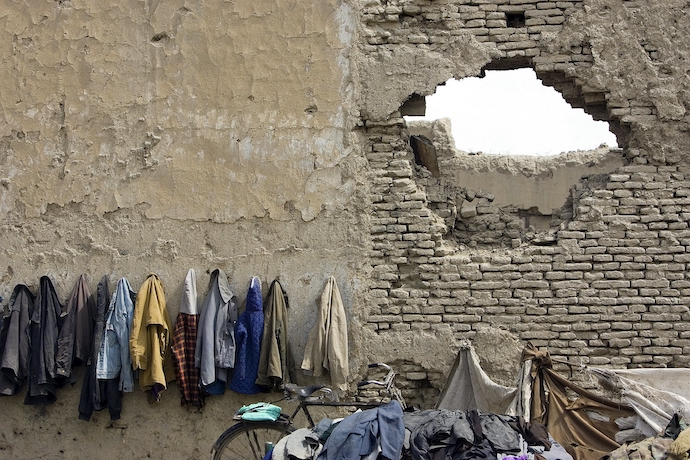
Jacobsen: Have there been moments or episodes that proved particularly embarrassing for the Taliban—instances in which their policies or actions left them unable to control the narrative or preserve a sense of political face, either domestically or in the eyes of the international community?
Oates: Yes. The earthquakes that occurred over the summer and fall highlighted the impact of gender apartheid policies in unexpected ways. A major earthquake struck a remote area that was difficult to access, and restrictions on women working had immediate life-and-death consequences. Men were being rescued, while women were not, because there were no women aid workers available. Men were also afraid to help women they were not related to, out of fear of punishment.
Rescue efforts involve physical contact, such as pulling people from rubble, and women were literally left to die. After the earthquake, humanitarian needs remained severe. People needed shelter, food, water, sanitation, and medical care. The absence of women aid workers who could reach women and meet their needs worsened an already dire situation.
This tragedy illustrated how everything becomes politicized under gender apartheid. What appears to be a purely humanitarian crisis still produces artificial, unequal outcomes for men and women because of existing policies. Media coverage of what women experienced during and after the earthquake made the Taliban look extremely bad and embarrassed them. They made a halfhearted effort afterward to send aid delegations to save face, but this was only one of many such incidents.
Another episode that embarrassed them involved a recent trip by Taliban officials to India. The government of India and Taliban authorities have been engaged in ongoing interactions, and that visit drew attention to contradictions between the Taliban’s international engagement and their domestic policies.
The thawing of relations and the reopening of embassies are deeply concerning to people like me who are watching how the international community treats the Taliban. This risks normalizing their regime and normalizing gender apartheid by treating them like any other government. A Taliban cabinet minister went to India, and there was a press conference.
The Indian government did not allow women journalists, from India or elsewhere, to attend the press conference out of deference to the Taliban’s preferences. This backfired. There was far more press coverage about the absence of women journalists and their exclusion from the press conference than about the event itself. As a result, a second press conference was held, allowing women journalists to attend in an attempt to compensate.
These incidents show that the Taliban are sensitive to international opinion and to how they are portrayed in the press. However, not all factions are equally sensitive. This reflects internal divisions within the Taliban and differing views about their long-term vision.
Jacobsen: When it comes to working through UNESCO and the broader UN system—especially in light of the organization’s funding shortfalls and recent reports of peacekeepers and interpreters being killed or captured—some of the protections historically associated with UN operations appear to be eroding. Beyond questions of infrastructure and financing, how has this shift affected your and others’ ability to carry out human rights work for Afghan women and girls, particularly in the realm of education?
Oates: Yes, absolutely. Afghanistan is one of the world’s poorest countries and is heavily dependent on foreign aid. We have seen widespread impacts across the funding landscape. Funding has dried up not only for UN agency initiatives but also for international organizations and Afghan civil society groups engaged in humanitarian and development work.
There have been massive cuts, including the closure of health clinics across Afghanistan. The World Food Programme has been significantly affected in its ability to raise the funds needed to respond to rapidly worsening food insecurity. Many people are not aware of this because Afghanistan receives less attention than other crises, but the country is on the brink of famine. Malnutrition rates are already claiming many lives, beginning with children.
Beyond the immediate human toll, malnutrition has long-term consequences for a country’s development prospects and economic future. This situation is hugely consequential and preventable. However, the UN is struggling both to raise sufficient funds and to generate political will to focus on Afghanistan.
Humanitarian work there is challenging due to Taliban restrictions. Many international organizations have left since 2021 because the conditions have become untenable. Women were barred from working or required to be thoroughly segregated, limited to specific roles, and staff were subjected to harassment and constant interference by Taliban authorities. Many organizations ultimately decided to leave, despite the immense need that remains.
Funding cuts to aid and development are a global issue, but in a country as vulnerable and aid-dependent as Afghanistan, the impact is particularly severe. Unfortunately, I do not expect that situation to change in the near term.
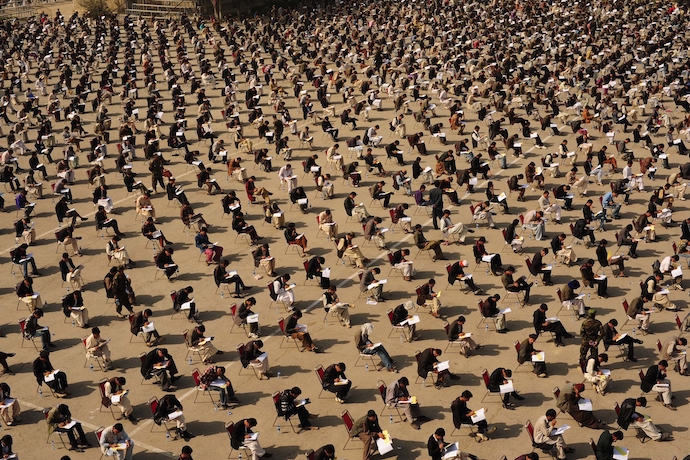
Jacobsen: What are some of the least visible—or least formally documented—ways Afghan women have found to continue their education under these restrictions? I was told, for instance, one story about a girl who deliberately failed her final grade five or grade six examination so that she could repeat the same material the following year and remain within the education system. That kind of choice seems to capture just how deep and how intense the desire for education has become.
Oates: We have been collaborating with an Afghan woman who is a doctoral student at Hiroshima University, and she is studying schools and individuals who are running independent education programs for women and girls. One of her research findings is that the situation imposed by the Taliban has fundamentally changed the meaning of education for women and girls.
Previously, education was about launching a career, getting the job, and the life they wanted, for the same reasons people everywhere pursue education. Now there is an intrinsic drive rooted in resistance: the sense that something was taken from them and they are determined to take it back. Education has become a form of resistance, intensifying people’s determination to learn. This is likely the opposite of what the Taliban intended with these policies.
They are producing a population of women who will stop at nothing to learn. Historically, in Afghanistan, learning has always spread organically. During the Taliban’s first period in power in the 1990s, before widespread internet access, women taught neighbours, family members, and friends in their living rooms through underground schools. Those were widespread, and this is still happening today.
There is extensive in-person education taking place despite the bans, but now there is also the internet. As a result, education is occurring on a much larger scale in virtual spaces. The scope of it is massive, and the Taliban cannot control it entirely.
We have conducted research attempting to track the expansion of online schools. The majority are led by Afghans, many of whom are in the diaspora, living around the world, as well as Afghans still inside Afghanistan. So far, we have identified 201 such programs. That is only the tip of the iceberg, as many operate discreetly to avoid detection.
Even so, we can learn a great deal from the programs we have tracked by examining what they are doing. Another way we see the scale of this activity is through our scholarship program, which we launched in 2011. In the early years, we received about 25 applications and awarded perhaps a dozen scholarships. This year, we are on track to receive more than 25,000 individual applications.
The volume is enormous. We now have more than a decade of data that shows where women are studying. Our scholarship program requires applicants to be already enrolled in a program. When they apply, they are seeking support for costs such as purchasing a computer, paying tuition, or covering visa fees.
By examining where applicants are studying, we see remarkable patterns. A large percentage are enrolled in online programs, including fully virtual universities. Some are studying in person abroad as well.
Many women are studying at universities in Bangladesh, Armenia, Pakistan, Iran, Turkey, and other countries. Some have gone further afield to Western countries, but the majority remain inside Afghanistan and study online. They are enrolled in a wide variety of institutions worldwide and across many fields. This speaks to their resourcefulness and to how the internet enables these opportunities.
We established the scholarship fund because of practical barriers, such as the need to pay for internet access and a computer. That is what the fund covers. The women do the rest and still manage to obtain an education. We see that same determination reflected in our review of scholarship applications.
Jacobsen: What about security concerns in this environment? Does the funding you provide also cover protective tools—such as VPN services—that help students and educators navigate surveillance, connectivity disruptions, and other digital risks?
Oates: Security has become a significant focus for any organization involved in education in Afghanistan, especially after internet access was blocked in the fall. Initially, the disruptions occurred in a few provinces and in limited ways, and then a complete shutdown occurred that affected both internet access and mobile phone service for 48 hours.
That prompted many organizations to seriously assess alternatives. This operational environment requires constant vigilance. Risk management must be a central part of the work, including assessing where operations are still possible, identifying red lines that cannot be crossed, and determining what can be done safely.
We balance the risks of delivering education under these conditions against the risk of women and girls having no access to education at all. That is the most crucial consideration. Repeatedly, women and girls tell us that they cannot imagine a life without education. Without education, they feel hopeless and believe there is no purpose if they cannot have goals or dreams. We have also seen a significant rise in depression, anxiety, and other mental health impacts resulting from the education bans. These realities are part of the risk analysis.
Online education itself is not explicitly banned. It does not fall under the prohibited categories of education, so it remains technically permitted. However, it is not encouraged, and providers exercise considerable caution. Many have implemented extensive measures to mitigate risks.
Jacobsen: In a modern context, a lack of education ultimately produces a weaker society, even when viewed purely through an economic lens. Any advanced or industrial economy depends on digital infrastructure, which itself requires higher levels of education and skilled labor, and the absence of that foundation carries broad economic consequences. Have there been credible assessments of the financial costs of denying women and girls access to education in Afghanistan, particularly from analysts who focus primarily on economic outcomes rather than human rights considerations?
Oates: It is like shooting yourself in the foot economically. Even setting human rights aside for a moment—though our organization is called Right to Learn and we approach this from a human rights perspective—education is essential to a functioning economy and society. You cannot have a thriving economy without education or without women participating in the workforce.
The economic impact is being tracked. The UN Development Programme has calculated the financial costs of excluding women from the workforce. Even in the first year of employment restrictions, the estimated loss was around $5 billion. That figure has increased since then. I do not have the most recent numbers in front of me, but the UNDP’s work shows this will continue to worsen.
We are not yet seeing the full impact of the shortage of doctors, nurses, and other healthcare workers on the education pipeline. Another significant restriction is that the Taliban shut down the entire teacher education system. Teacher training colleges across the country were closed, so no new teachers are being trained. That will create serious problems in the future.
Hundreds of online schools offer education, but they are not generally focused on teacher training. That gap is not being addressed, and it will likely become a significant issue. The same problem applies to many other professions where there is no pipeline of trained workers. The Taliban are already seeing these consequences within government institutions. Their policies have driven millions of Afghans to flee the country, and systems are breaking down due to a lack of skilled labour.
They have appealed for civil servants to return, promising safety and amnesty, even for those who worked for the previous republican government. However, there is a strong reason for skepticism. Documentation shows numerous cases of extrajudicial killings, unlawful detentions, disappearances, and torture of people associated with the former government, including members of the military and senior officials in government ministries. Hundreds were killed. As a result, people are understandably unwilling to return to government service.
Government ministries are also struggling to pay staff, with salaries often delayed. This reinforces incentives to leave the country. Another layer of this crisis is mass displacement. Afghanistan faces a severe human rights crisis, a potential economic collapse, widespread food insecurity, and millions of Afghans living in neighbouring countries such as Pakistan and Iran. Many of them now face the risk of forcible return.
This is crisis upon crisis, but it all has a single root cause: Taliban policy and gender apartheid.
Jacobsen: For those who work within a human rights framework and remain committed to a universal ethic, what are the most meaningful ways to get involved at this moment? Are their efforts best directed toward supporting your organization directly, or toward collaborating with partner groups and allied networks that are responding to the worsening conditions facing Afghan women and girls?
Oates: Thank you for asking that question. Many things can be done, and the first thing I emphasize is that this is not a hopeless situation. I have shared stories about what Afghan women are doing, the ways they are pursuing education, and the scholarship program I mentioned earlier.
To date, we have awarded more than 3,500 scholarships. We operate an online high school with nearly 700 students, with another cohort about to begin. We also run online courses that enroll thousands of learners. We maintain an online library of learning materials that now receives more than one million users per year.
People are still moving forward, finding alternatives, and accessing education. These individuals will be the ones who run Afghanistan in the future. The Taliban are not permanent. They will inevitably fall again. It could happen tomorrow or in a decade; we do not know. But they cannot endure indefinitely in the modern world, and they are not accepted by Afghans who experienced something different for twenty years and have rejected a return to this system. Change will come.
When it does, the most important asset will be human capital. We cannot wait for political stability to return before rebuilding education and the economy. These efforts must continue in the background, underground, and in exile in the meantime. We see our role as helping preserve the education system—holding it in trust until conditions change.
There are many ways people can help. We offer volunteer opportunities for those who can work directly with students. One of our greatest needs is English conversation club leaders for our high school students, who study in English and require substantial preparation and practice.
We also have local volunteer opportunities through chapters across Canada, from coast to coast. People can join an existing chapter or start a new one to connect in person with other volunteers. We rely on Canadians to fundraise for us through donations, contributions, and hosting their own events.
One popular way supporters raise funds is by hosting potlucks, inviting guests to bring a dish and a donation. These pooled contributions can fund an entire small library or pay a teacher’s salary for six months. We call these events Breaking Bread Dinners, and they are one meaningful way people can support our work.
We also have a large amount of material on our website that people can use, including advocacy resources. I have spoken about our work in Afghanistan, but we also do work in Canada by engaging the public and advocating for an end to gender apartheid. We provide toolkits, resources, and fact sheets to help people learn about gender apartheid and, in particular, the case for its codification.
One of our goals is to see gender apartheid enshrined in international law so that it can be prosecuted. There is significant international momentum around this issue right now, and we are working to advance it. People can take concrete actions such as writing to their Member of Parliament or engaging with local media, and we provide information to support those efforts.
We also invite educational institutions to contribute. Universities, for example, can enroll Afghan women in fully virtual online certificate, diploma, or degree programs. Women can study from where they are and may apply to our scholarship program for support. It is essential to meet them where they are, because leaving the country to study abroad is extremely difficult, especially now. Supporting virtual education options is necessary.
There are many other ways people can help. I encourage them to visit our website, explore the available tools, and reach out to us. We are always happy to explain how people can get involved and support our work.
Jacobsen: Excellent. Lauryn, thank you very much for your time today and for sharing your expertise. I appreciate it.
Oates: Thank you very much for having me.
Last updated May 3, 2025. These terms govern all In-Sight Publishing content—past, present, and future—and supersede any prior notices. In-Sight Publishing by Scott Douglas Jacobsen is licensed under a Creative Commons BY‑NC‑ND 4.0; © In-Sight Publishing by Scott Douglas Jacobsen 2012–Present. All trademarks, performances, databases & branding are owned by their rights holders; no use without permission. Unauthorized copying, modification, framing or public communication is prohibited. External links are not endorsed. Cookies & tracking require consent, and data processing complies with PIPEDA & GDPR; no data from children < 13 (COPPA). Content meets WCAG 2.1 AA under the Accessible Canada Act & is preserved in open archival formats with backups. Excerpts & links require full credit & hyperlink; limited quoting under fair-dealing & fair-use. All content is informational; no liability for errors or omissions: Feedback welcome, and verified errors corrected promptly. For permissions or DMCA notices, email: scott.jacobsen2025@gmail.com. Site use is governed by BC laws; content is “as‑is,” liability limited, users indemnify us; moral, performers’ & database sui generis rights reserved.
Share this:

Author(s): Scott Douglas Jacobsen
Publication (Outlet/Website): International Policy Digest
Publication Date (yyyy/mm/dd): 2025/12/19
Dr. Shu-Jen Han is the Chief Technical Officer of SEEQC, where he leads the company’s global, multidisciplinary research and development effort to build a chip-based digital quantum computing system. Since joining SEEQC in 2021—initially as Vice President of Engineering and now as CTO—Han has overseen both the long- and short-term technology roadmaps, guiding the integration of superconducting electronics, cryogenic control, and scalable system architecture. His role places him at the center of one of quantum computing’s most difficult challenges: translating laboratory breakthroughs into machines that can operate reliably at scale.
Before SEEQC, Han spent decades at the frontier of semiconductor and nanoscale device research. He began his career at IBM’s semiconductor research division, working on advanced CMOS technologies, and later rose to manage the nanoscale device and technology group at IBM’s T.J. Watson Research Center, where his work focused on post-silicon transistor research and nanoelectronics. He subsequently joined HFC Semiconductor, serving as Senior Director and eventually Associate Vice President, where he led multiple generations of MRAM development from early research through product qualification—experience that now informs his emphasis on manufacturability and systems engineering in quantum hardware. Han earned his PhD in Materials Science and Engineering from Stanford University, with a minor in Electrical Engineering, and is the author of more than 100 scientific publications and holds over 200 issued U.S. patents.
In this interview, I spoke with Dr. Han about SEEQC’s digital approach to superconducting quantum systems and why he believes it represents a necessary break from today’s dominant control paradigm. He contrasts conventional microwave, room-temperature control—which is effectively analog, wiring-intensive, and increasingly unmanageable at scale—with SEEQC’s model of superconducting digital pulses generated near the qubits themselves at millikelvin temperatures. By localizing control and readout, Han argues, quantum systems can reduce latency, cut cabling and power demands, and make real-time quantum error correction feasible as errors compound across thousands of gate operations.
Han is blunt about the scale of the problem ahead. Fault-tolerant quantum machines, he suggests, may require between 100,000 and one million qubits, a threshold at which today’s approaches to bandwidth, wiring density, and power consumption become untenable without chip-level integration. He discusses why conventional systems could demand tens to hundreds of megawatts and points to recent results, such as Google’s Willow experiments, as signals that scaling pressures are no longer theoretical. The conversation also touches on SEEQC’s partner-driven business model, its growing collaborations in Taiwan, and the broader question of how quantum computing can move from scientific promise to industrial reality.

Scott Douglas Jacobsen: When discussing digital quantum computing systems, how do you distinguish between quantum computing as a domain of mathematical models and algorithms, and quantum computing as a physical hardware system? Where does that boundary lie, and how do these two layers—abstract computation and physical implementation—ultimately converge in frontier electronic or digital quantum architectures?
Dr. Shu-Jen Han: Today’s quantum computing is more or less analog computing because in classical computing, we are familiar with CPU- and GPU-based digital systems, with deterministic 1 and 0. In quantum computing, you have superposition, which is a probability between 1 and 0, making it closer to analog. The hardware of today’s quantum computing uses microwave pulses to manipulate qubits. Many existing systems are based on this analog scheme. The problem, from our point of view, is that this approach is not scalable because microwave pulses must travel from room temperature down to millikelvin temperatures where qubits must remain extremely cold. There is another way, which we call digital quantum computing. Instead of relying on analog microwave signals, we use superconducting digital electronics to generate coherent digital pulses that manipulate qubits. That is a key distinction between our technology and conventional analog approaches.
Jacobsen: When you bring together fundamentally different approaches to computation—not merely different algorithms within classical linear or parallel models, but distinct computational paradigms altogether—how do you integrate them coherently within a digital quantum computing architecture? Given that some computational methods are more efficient or appropriate for specific problems than others, how do you determine which form of computation belongs where, and how do you optimize that integration without overengineering simple tasks?
Han: I think one thing I want to emphasize is that in our company, we did not try to replace existing quantum computing. They run the algorithm. We are trying to make the system more scalable. Of course, there is an additional advantage to using our technology: a digital approach to controlling and reading the qubits. That gives a lot of advantages. Going back to your question, we can utilize this advantage to enhance specific algorithms. One good example is the unique on-chip digital control and readout, directly next to the qubits.
As I mentioned in your first question, with the current approach, you need to send the signal from room temperature and read it back to room temperature. There is a huge delay between when you send signals to the qubits and when you read signals from the qubits. But if we can do everything next to the qubits, we do not have that delay. That said, we can use our approach to enhance many so-called error-correction methods. You might have heard about quantum error correction because qubits have a lot of errors. If you do not correct them, it is not useful. I think that is one of the reasons you need to put the qubits at 10 millikelvin, because at slightly higher temperatures, thermal noise will mess up your qubit information.
But even at 10 millikelvin, the qubits are still very noisy. So people are pushing so-called fidelity, meaning what percentage of errors will occur. People are already pushing to 99.99%. But even that tiny percentage of error, when you start to accumulate it, becomes a problem. When you do the computation, it is like thousands of these gates—we call them quantum gates. Each quantum circuit consists of thousands of these gates. If any gate has a tiny error, and you multiply that by 1,000 or 10,000, the result will not be correct. That is why we need to do quantum error correction along the way. I keep correcting this error along the way.
But you can imagine that if you need to do this error correction by sending the signal out, using room-temperature electronics to do the correction, and sending the corrected data back in, it is very resource-wasteful. Also, sometimes you cannot immediately correct the error because doing so would cause latency. So if we can do all this control and readout next to the qubits, which is what our technology can potentially do, we can do some kind of real-time error correction. When an error forms, we detect it and correct it immediately. We do not even need to send the signal out, using our digital approach. That enables a new type of quantum error correction and significantly improves the robustness of the quantum computer. That is one example of how our technology can enhance an algorithm.
Jacobsen: Is there an upper bound—practical or theoretical—on how much quantum error correction can be performed while computations are actively running? At what point do the demands of live error correction begin to constrain the system itself?
Han: Quantum error correction is very powerful. At a high level, the concept is that you use redundant qubits. Once you measure enough qubits, you can think of it as something similar to a parity check. In a simple way, if the majority outcome is one, you say the data qubit is one; if the majority is zero, you say the data qubit is zero. As long as you measure enough qubits and they are all entangled together, this works. For example, you might have 100 physical qubits representing a single data qubit. If they are all entangled and supposed to be one, some will flip to zero because of errors. But if you measure enough of them, from a probability point of view you can say there is a high likelihood that the data qubit should be one, or vice versa zero. That is the basic idea of quantum error correction.
In principle, there is no fundamental limit to how accurate you can be. It is a resource issue. If you could use an unlimited number of physical qubits to represent one data qubit, you could achieve remarkably high accuracy. But that is the ideal case. In practice, that is why, when people talk about practical or utility-scale quantum computers, they often say they need on the order of 100,000 to even 1 million qubits. It is not that all of those qubits are doing computation. The majority of them are doing quantum error correction.
Even though, in theory, you can keep increasing accuracy by adding more physical qubits, implementing this in practice is extremely difficult. That is one of the reasons we formed SEEQC: to resolve this scalability issue. SEEQC stands for Scalable Energy Efficient Quantum Computing, and scalability is our first mission. If you want to use so many physical qubits, the first problem is how to connect them. In the conventional approach, you have to send microwave signals from room temperature down to millikelvin temperatures and read the qubits back up to room temperature. That requires long cables running from room temperature to millikelvin. If you are talking about 100,000 to one million qubits, there is no way to put millions of cables into a dilution refrigerator. There is simply no space, and the heat generated by all of those cables is unacceptable.
Another major concern is bandwidth. You send data in and read data out, and the bandwidth requirements can be on the order of tens or even hundreds of terabits per second. There is no interface today that can accommodate that kind of bandwidth. Even companies like NVIDIA do not have interfaces designed for that scale. These are engineering problems, and I would even call them fundamental problems, that block our ability to build utility-scale quantum computers using conventional approaches.
That is where SEEQC comes in. As I mentioned earlier, we do not send all signals out to room temperature. Many signals are generated locally, next to the qubits, using our digital approach. We do qubit processing locally, including control, readout, and error correction. By doing that, we eliminate many of these fundamental constraints.

Jacobsen: Energy consumption increasingly defines the limits of modern computation. How do the energy curves for different forms of computation compare as workloads scale—from simple calculations to large-scale AI inference or prolonged, intensive computation? In that context, how does SEEQC-style quantum computing compare, in terms of wattage and efficiency, to conventional quantum architectures and classical high-performance systems?
Han: Energy efficiency is a critical issue and central to our company’s mission. As I mentioned earlier, SEEQC focuses on two core challenges: scalability and energy efficiency. Scalability is what I explained in the previous question, and energy efficiency is closely related to it. In the current approach, most of the electronics are built at room temperature, mainly using high-performance FPGA-based electronics, along with dilution refrigerators. These are incredibly high-power-consumption systems. Based on our estimates, if you consider a medium-scale qubit system—which is generally what is required for fault-tolerant quantum computing—you are talking about tens of megawatts up to 100 megawatts per system, assuming you can even build it. That level of power consumption is comparable to a modern AI data center. Today’s AI data centers can consume hundreds of megawatts, even approaching gigawatts, so a single quantum computer consuming around 100 megawatts is not far off. From an energy perspective alone, that approach is not scalable.
Our technology is very different. We reduce energy consumption by roughly four to five orders of magnitude. We still require some room-temperature electronics to control our digital chips, but we drastically reduced their number. We also reduce the number of dilution refrigerators needed, because our solution is chip-based and integrates much of the functionality directly on the chip. Instead of needing many refrigerators to support extremely large numbers of qubits, integration allows us to reduce that infrastructure significantly. This lower overall energy consumption makes large-scale quantum computing more realistic and approachable.
Our approach is strongly inspired by microelectronics and semiconductor engineering, which is my background. In classical microelectronics, you do not connect every transistor with a separate physical cable. If you tried to build a processor that way, it would be impossible. That is essentially what many current quantum computing approaches resemble. What we are doing is making something analogous to an integrated circuit for quantum computing. Instead of using physical cables to connect each qubit, we integrate qubits directly with control and readout electronics on the same chip. In our case, this integrated circuit is not based on CMOS silicon technology but on superconducting single-flux-quantum digital electronics. You can think of it as a digital circuit with extremely low power consumption. By integrating qubits with local control, readout, and processing, we remove fundamental barriers related to energy, wiring, and scale. Based on the history and lessons of microelectronics, this kind of integrated-circuit approach is the only realistic way to scale quantum computing.
Jacobsen: Looking ahead, where do you see this technology by 2026, and how do you expect it to evolve over the rest of the decade? Are you referring here to the trajectory of quantum computing as a whole, or specifically to SEEQC’s approach to hardware–software integration and digital quantum control?
Han: That is a good question. Our business model is different from most quantum computing companies. Many companies are trying to build their own large quantum systems to sell, or to place in data centers and offer as cloud services. They may have a unique qubit technology or a software advantage, but the goal is to deliver a full system to end users. Our business model is different. We focus on developing unique chip technologies—qubit control, qubit readout, and error correction chips—and integrating them into the systems of large quantum computing companies. Those companies are our customers. We do not sell directly to end users. We sell to large quantum computing companies. The reason is that, internally, they know their current approaches may not be scalable, even if they do not say that publicly. Our vision is to integrate our technology into their large systems so that, when they deliver fault-tolerant systems, our technology is at the core.
Jacobsen: Public discussions of quantum computing often focus narrowly on cryptography—particularly the idea of breaking classical encryption—but pay far less attention to constraints such as energy use, system stability, or scalability. Beyond cryptography, what do you see as the most significant general and technical limitations facing quantum computation today?
Han: There are two main questions. The first is whether we can build a large-scale quantum computer at all. The second is whether, once we build it, it will be useful. The first question is easier to answer. So far, we cannot build a truly large-scale quantum computer, but there are approaches to get there, including ours. We provide a more scalable approach from the control, readout, and integration perspective. However, the field still needs to address other challenges.
For example, qubit quality is still not where it needs to be. We do not specialize in making qubits; we specialize in making control and readout electronics that integrate with qubits. Other companies focus on qubit fabrication, but overall, qubit quality still needs significant improvement.
When you build a very large-scale qubit array, system performance is not determined by the average or best-performing qubits. The worst qubits, the tail of the distribution, determine it. That is how large systems behave. The field still needs to improve qubit quality and tighten the performance distribution by eliminating the worst-performing qubits. Once that happens, scaling becomes much more realistic. There has been significant progress in recent years. For example, there has been a lot of discussion around Google’s Willow chip, which reflects meaningful advances, even if many people have not yet examined it in depth.
My personal view is that Google’s Willow chip really sparked the recent surge in interest in quantum computing. If you look at the market, many quantum computing companies began to receive much more attention, even reflected in stock prices starting around 2025. One of the most significant trigger points was Willow. This is not hype; it was an important breakthrough demonstration. What Google showed is that when you scale up the number of qubits, the error rate can actually start to decrease. As I mentioned earlier, traditionally, when you scale up qubits, quantum error correction does not work well because qubit quality is non-uniform. There are always bad qubits—the tail of the distribution—and those worst qubits determine overall system performance. When you scale up with those bad qubits, error correction fails, and logical qubit error rates remain high.
What Willow demonstrated, for the first time, is that as the number of qubits increases, the logical qubit error rate for real data qubits starts to drop significantly. That suggests their qubit quality has reached a level where scaling becomes feasible. They still have only a few hundred qubits, so it is not yet a large-scale system, but it is a very strong proof point. It also gives our work purpose. If the industry now has qubits ready to scale, SEEQC’s technology can play a significant role in enabling that scalability.
Jacobsen: As a final question, are there any broader reflections you would like to leave readers with based on today’s discussion—particularly about where the field is headed or what policymakers, industry leaders, or the public may be overlooking?
Han: One additional point relates to collaboration with Taiwan. I am not sure whether Davis mentioned this to you, but Taiwan has become extremely important in this space. Taiwan entered the quantum technology field a bit later, but it arguably has the world’s strongest semiconductor ecosystem. I did my undergraduate studies in Taiwan before starting my PhD, and I spent much of my early life there. Because we are doing chip-based quantum computing, we want to leverage Taiwan’s semiconductor expertise. Even though our technology is not CMOS, many CMOS semiconductor techniques can still be applied to our platform.
That is why we are actively leveraging chip resources from Taiwan. We now have multiple collaborations there, including recent work with E3 in Taiwan. We have our own foundry, but we also want a second foundry, and we are working on CMOS design and room-temperature electronics collaborations with Taiwanese companies. There are many active engagements with Taiwanese companies and organizations right now.
Jacobsen: Thank you for the opportunity and your time, Shu.
Last updated May 3, 2025. These terms govern all In-Sight Publishing content—past, present, and future—and supersede any prior notices. In-Sight Publishing by Scott Douglas Jacobsen is licensed under a Creative Commons BY‑NC‑ND 4.0; © In-Sight Publishing by Scott Douglas Jacobsen 2012–Present. All trademarks, performances, databases & branding are owned by their rights holders; no use without permission. Unauthorized copying, modification, framing or public communication is prohibited. External links are not endorsed. Cookies & tracking require consent, and data processing complies with PIPEDA & GDPR; no data from children < 13 (COPPA). Content meets WCAG 2.1 AA under the Accessible Canada Act & is preserved in open archival formats with backups. Excerpts & links require full credit & hyperlink; limited quoting under fair-dealing & fair-use. All content is informational; no liability for errors or omissions: Feedback welcome, and verified errors corrected promptly. For permissions or DMCA notices, email: scott.jacobsen2025@gmail.com. Site use is governed by BC laws; content is “as‑is,” liability limited, users indemnify us; moral, performers’ & database sui generis rights reserved.
Share this:

Author(s): Scott Douglas Jacobsen
Publication (Outlet/Website): International Policy Digest
Publication Date (yyyy/mm/dd): 2025/12/15
Hanna Hrytsenko is a sociologist whose research sits at the intersection of gender, security institutions, and the lived realities of war in Ukraine. Working with the Invisible Battalion project at the NGO Institute of Gender Programs, she has co-authored some of the most influential empirical studies on women’s military service, veterans’ reintegration, and sexual harassment within the military, including the landmark Invisible Battalion 3.0.
Her more recent work includes a policy brief for the Global Public Policy Institute on gender sensitive capacity building in Ukraine’s civilian security sector, as well as leading a forthcoming 2025 nationwide study on LGBT+ service members. Alongside this empirical research, Hrytsenko has written extensively on gendered disinformation, rape culture, and the political uses of “traditional values” in wartime narratives.
In this interview, Hrytsenko explains how Russia’s war is reshaping gender relations, security institutions, and protection mechanisms for women and LGBT+ service members across Ukraine’s defense and civilian security sectors. She describes an overstretched workforce operating under frontline risk, missile attacks, blackouts, and the compounding burden of unpaid care labor, while tracing how anti harassment reforms have stalled amid budgetary constraints and institutional inertia.
Hrytsenko maps the gaps in complaint mechanisms, the legal non-recognition of same sex partnerships, and the corrosive effects of gendered disinformation on unit cohesion. Throughout, she argues that consent education, empowered gender advisors, and registered partnerships are not symbolic gestures but strategic investments—necessary for Ukraine’s resilience, democratic credibility, and long-term defense capacity at every institutional level.
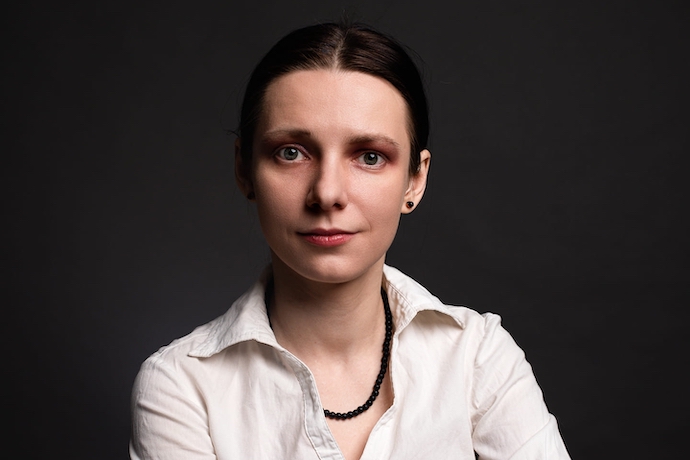
This interview has been lightly edited for clarity and length.
Scott Douglas Jacobsen: In your 2024 Global Public Policy Institute policy brief, you outline gender sensitive capacity building for Ukraine’s civilian security sector. Under wartime conditions, which reforms—or investments—would deliver the fastest and most meaningful gains?
Hanna Hrytsenko: The main capacity challenge facing the civilian security sector is not a shortage of reform ideas but chronic overload under extreme conditions. On the frontline, police units evacuate civilians under fire. In the rear, rescue workers face the risk of being killed or injured in so-called “double-tap” rocket attacks. Across the country, prolonged blackouts disrupt even basic administrative work. In many regions, police stations also function as “invincibility centers,” where civilians can access heat, electricity, and internet connectivity.
From this perspective, what is most urgently needed is not institutional redesign but direct capacity strengthening: defensive electronic warfare tools for evacuation teams, generators, charging stations, Starlink terminals, and other equipment that enable people to work and survive. These investments produce immediate, tangible effects.
Speaking specifically about gender sensitivity, women in the civilian security sector carry a compounded burden. Like many women across Ukraine, they perform extensive unpaid care work, which often becomes total when a partner is mobilized. The strain at the intersection of paid security work and unpaid care responsibilities is immense, leaving little time for recovery or mental health support.
Recent research on this intersection recommends greater flexibility in work schedules and conditions. Some progress has been made—for example, children’s spaces have been introduced in parts of the State Emergency Service—but these solutions also raise security concerns. Policymakers at both national and local levels should therefore prioritize secure and flexible infrastructure for childcare, schooling, healthcare, and shelter. Investments in mental health support for civilian security workers are equally essential.
At the same time, there have been notable institutional achievements. The National Police and the State Emergency Service have approved mechanisms to combat discrimination, sexism, sexual harassment, and psychological and sexual violence, and gender assessments are now underway.
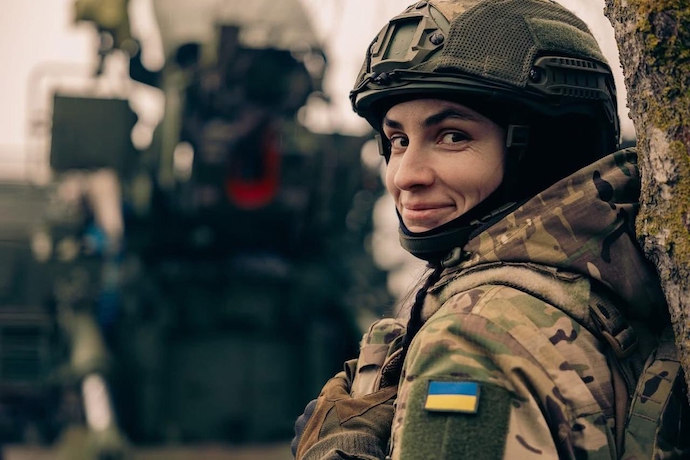
Jacobsen: After Invisible Battalion 3.0 and the development of a draft response mechanism for sexual harassment, where does implementation currently stand, given the constraints imposed by full-scale war?
Hrytsenko: The draft anti-harassment mechanism, developed by several NGOs with support from the General Staff and military police, was publicly presented in early 2022. Russia’s full-scale invasion, however, was already imminent, which effectively froze this work.
Initially, the main obstacle was prioritization. As Russian forces advanced toward Kyiv, preserving the state itself took precedence over all other concerns. As the immediate existential threat receded, NGOs pressed for the process to resume, and the Ministry of Defense agreed in principle. The Ministry, however, proposed a different model, shifting responsibility from General Staff personnel to military gender advisors.
This shift exposed a deeper structural problem. Although hundreds of personnel are formally assigned gender advisor duties, most lack dedicated positions, adequate training, or a clear institutional framework. In practice, these responsibilities are often added to already demanding primary roles—such as accounting or administration—leaving little capacity to handle harassment complaints thoughtfully or sustainably.
For the anti-harassment mechanism to function, the gender advisor system must first be institutionalized through dedicated positions. This proposal has faced resistance from the Ministry of Finance on budgetary grounds. In my view, even one full-time gender advisor per brigade would be sufficient and would not impose a significant burden on the military budget. However, this assessment is not universally shared.
Given the scale of reform challenges facing the Ukrainian military, gender advisor and anti-harassment mechanisms are rarely treated as top priorities. Nonetheless, their implementation would strengthen internal equality and help attract and retain motivated women in the armed forces.
Jacobsen: In the absence of a fully operational mechanism, what safeguards—formal or informal—are realistically available to service members who experience sexual harassment or sexual violence today?
Hrytsenko: At present, there are no fully effective safeguards for service members who experience sexual harassment or sexual violence. Draft law No. 13307, which passed its first reading, would amend the Disciplinary Statute to include sexual harassment and crimes against sexual freedom as disciplinary violations. Until the law is fully adopted, however, these provisions remain unenforced.
Survivors can contact the Ministry of Defense’s official hotline, but complaints are placed in a general queue, often delaying immediate responses. The hotline is also not anonymous, meaning a complainant’s identity may be disclosed to their commander. When the commander is also the perpetrator, this creates a serious risk of further harm. Our research shows that these factors strongly discourage reporting.
As a result, many women attempt to resolve situations informally—seeking protection from colleagues, transferring units, or leaving the military altogether when possible. Gender advisors can sometimes intervene, but their authority and investigative procedures remain poorly defined, making outcomes highly dependent on personal initiative rather than institutional power.
Survivors may also seek legal assistance outside the military through NGOs specializing in gender-based violence. In practice, the most severe internal consequence for perpetrators is often a reprimand or transfer. To date, there are no known court decisions establishing guilt in such cases.
Ukraine has recently established a military ombudsman’s office, which can receive complaints and initiate investigations. While promising, this remains a workaround rather than a substitute for a dedicated mechanism, and there is not yet sufficient data to assess its effectiveness.

Jacobsen: Drawing on the 2025 First Comprehensive Study on the Situation of LGBT+ Service Members, what findings should commanders and lawmakers act on first, and why do these issues have such immediate implications for morale and retention?
Hrytsenko: The most urgent issue facing LGBT+ service members is the lack of legal recognition for same-sex partnerships. Because Ukrainian law does not allow registered partnerships, partners are legally treated as strangers. In cases of death or severe injury, this exclusion means no access to survivor benefits, burial decisions, inheritance, or medical decision-making.
This legal vacuum directly affects morale. Service members describe the situation as a broken contract: they fulfill their obligations to the state, while the state fails to fulfill its obligations to them. Draft law No. 9103 stalled in parliament amid opposition from conservative lawmakers and the Orthodox Church. An alternative draft law, No. 12252, has likewise failed to advance.
Lawmakers should adopt registered partnership legislation without further delay. Thousands of military families are affected, and the issue is not abstract—it shapes trust in the state during wartime.
At the unit level, commanders must actively prevent homophobic and transphobic bullying. This does not require new mechanisms so much as consistent leadership. Commanders must be able to manage diverse units and maintain professional environments grounded in respect for personal boundaries and life circumstances.
Jacobsen: You have written extensively on gender misinformation and rape during wartime, including the use of sexual violence as a weapon of war. Within military units, which narratives or myths most seriously undermine trust and cohesion?
Hrytsenko: Unit cohesion erodes when trust between service members breaks down, and the primary source of that breakdown is the perpetrator of abuse. Gender misinformation contributes indirectly by normalizing misogyny, homophobia, and transphobia, increasing the likelihood of conflict and violence in diverse units.
Our research documented cases in which perpetrators apologized after intervention but clearly did not understand why their behavior was wrong. This reflects broader gaps in knowledge about consent culture, which remains unfamiliar in parts of society. Education is therefore essential.
At the same time, not all abuses are unintentional. Some involve explicit sexual or physical violence and must be addressed through immediate intervention by commanders, gender advisors, military police, and the ombudsman.
As Kratochvíl and O’Sullivan argue, Russia’s war on Ukraine is also a war on gender order, advancing so-called “traditional values” in opposition to equality and diversity. Harassment within the Ukrainian military is already exploited in hostile gender-disinformation campaigns. Public discussion of these issues should therefore be understood not as undermining Ukraine’s struggle, but as evidence of a military willing to confront its own internal challenges.
Jacobsen: Following from that, which countermeasures—whether educational, disciplinary, or leadership driven—have proven most effective in addressing sexism, homophobia, and sexualized violence inside military structures?
Hrytsenko: When discriminatory behavior stems from ignorance rather than intent, education and gender-sensitive leadership can be effective counter-measures. NGOs, international organizations, and gender advisors should provide basic training on gender, consent, and diversity, while commanders must model respectful behavior and fair conflict resolution.
Survivors also need greater awareness that harmful behavior is not merely interpersonal conflict but a structural problem that warrants intervention. In our research, we allowed respondents to describe experiences without forcing them into narrow legal definitions, which helped many articulate harm they had previously minimized.
In cases of explicit sexual or physical violence, however, education is insufficient. Commanders and military police must intervene immediately to ensure the safety of survivors and accountability.
Jacobsen: The Invisible Battalion also developed a Promethean e-learning course on gender equality and anti-harassment. What do the available uptake and completion figures tell us about institutional appetite for this kind of training?
Hrytsenko: Between 2021 and 2024, 29,209 participants enrolled in the Prometheus course, and 88.7 percent completed it. For security reasons, the platform does not track how many participants are military personnel.
To increase engagement, we invited respected male and female opinion leaders within the military to deliver lectures, rather than relying solely on the course authors. We believe this approach helps normalize gender sensitivity and aligns with broader initiatives such as the global #HeForShe movement.
Jacobsen: From the origins of the Invisible Battalion project through subsequent UN-backed studies, which gender equality norms in Ukraine are most at risk of erosion or reversal as the war drags on, and which have proven unexpectedly resilient?
Hrytsenko: Since Russia’s initial intervention in 2014, government-controlled areas of Ukraine have demonstrated sustained progress on gender equality. Contrary to expectations of conservative backlash, key reforms have advanced: ratification of the Istanbul Convention, equal service terms for women and men in the military, increased visibility of women in uniform, a consent-based definition of rape in the Criminal Code, parliamentary gender quotas, and the integration of the Women, Peace, and Security agenda.
At the same time, women in newly occupied territories face extreme risks, including torture, sexual violence, and the criminalization of LGBT+ identities. Internally displaced women are more vulnerable to unemployment and expanded care burdens, while women fleeing abroad face risks such as trafficking.
For international feminists seeking to support Ukrainian women, the most meaningful contribution is advocacy for military assistance. The Ukrainian armed forces are the barrier preventing mass repression, sexual violence, and terror in occupied territories. In this sense, gender equality is inseparable from Ukraine’s capacity to defend itself.
Jacobsen: Thank you for taking the time to speak with me, Hanna.
Last updated May 3, 2025. These terms govern all In-Sight Publishing content—past, present, and future—and supersede any prior notices. In-Sight Publishing by Scott Douglas Jacobsen is licensed under a Creative Commons BY‑NC‑ND 4.0; © In-Sight Publishing by Scott Douglas Jacobsen 2012–Present. All trademarks, performances, databases & branding are owned by their rights holders; no use without permission. Unauthorized copying, modification, framing or public communication is prohibited. External links are not endorsed. Cookies & tracking require consent, and data processing complies with PIPEDA & GDPR; no data from children < 13 (COPPA). Content meets WCAG 2.1 AA under the Accessible Canada Act & is preserved in open archival formats with backups. Excerpts & links require full credit & hyperlink; limited quoting under fair-dealing & fair-use. All content is informational; no liability for errors or omissions: Feedback welcome, and verified errors corrected promptly. For permissions or DMCA notices, email: scott.jacobsen2025@gmail.com. Site use is governed by BC laws; content is “as‑is,” liability limited, users indemnify us; moral, performers’ & database sui generis rights reserved.
Share this:

Author(s): Scott Douglas Jacobsen
Publication (Outlet/Website): International Policy Digest
Publication Date (yyyy/mm/dd): 2025/12/14
Mykhailo Gonchar is a Ukrainian expert specializing in energy security and geopolitics. He is the founder and president of the Kyiv-based think tank, the Centre for Global Studies “Strategy XXI,” and serves as editor-in-chief of the Black Sea Security journal. Previously, he led energy programs at the Sevastopol-based NOMOS Center and later headed its Kyiv office. Earlier in his career, he worked both within Ukraine’s National Security and Defense Council and in the oil-and-gas sector.
Gonchar’s analysis centers on Russia’s use of energy coercion, its methods of sanctions evasion, and the resilience of European critical infrastructure and supply routes. Since founding Strategy XXI in 2009, he has published policy studies and commentaries that have helped shape debates on Ukraine’s role in European and regional energy security.
In this interview, Gonchar contends that Western policymakers long misread Russia’s energy exports as ordinary commerce rather than as a dual-use weapon capable of financing repression and war. He dismantles the logic of Wandel durch Handel, pointing to its failure after both 2014 and 2022, and argues that only Russia’s military defeat can open the possibility for genuine transformation. Gonchar assesses the G7 oil price cap as porous, calls for preventive and asymmetric defenses to protect EU critical infrastructure, and underscores the importance of resilience within Ukraine’s wartime energy markets. He also warns that the Black Sea shipping corridor remains vulnerable to evolving Russian threats and urges the closure of key banking channels that enable sanctions evasion. Editorially, Black Sea Security continues to track these overlapping fronts.
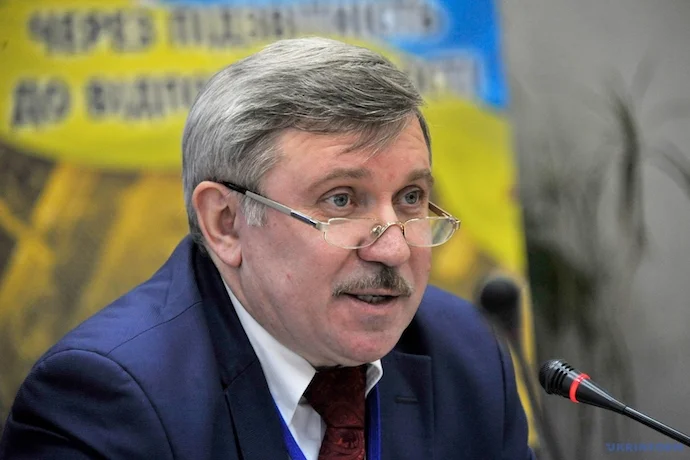
This interview has been lightly edited for clarity and length.
Scott Douglas Jacobsen: What do you see as the most persistent blind spots among Western policymakers when it comes to Russia’s use of energy as a tool of warfare rather than mere commerce?
Mykhailo Gonchar: The biggest mistake Western politicians and policymakers made—and many still make—is the illusion that Russia’s energy resources are merely commodities that generate revenue. For Russia, oil and gas are not simply commodities; they are a dual-use instrument. In the hands of the Kremlin, energy has long functioned as a weapon.
This weapon fuels corruption in client countries served by Russian state and private energy companies. Russia never concealed this reality. In the first edition of the Energy Strategy of the Russian Federation, adopted in 2003 during the “early Putin” period, it was stated plainly at the outset: “Russia has significant reserves of energy resources and a powerful fuel and energy complex, which is the basis for economic development, an instrument for conducting domestic and foreign policy.”
Another major mistake was the belief in mutual interdependence—that while Europe depended on Russian gas and oil, Russia depended on European money and therefore would refrain from hostile behavior. This assumption proved fundamentally flawed.
A further error was the expectation that trade with Europe would gradually lead Russia to adopt European rules, management practices, and democratic norms. The doctrine of Wandel durch Handel, pursued by the Schröder and Merkel governments, was deeply misguided. The revenues generated from trade with Europe instead fueled revanchist sentiment through massive anti-Western propaganda, strengthened the FSB’s repressive apparatus, expanded the military-industrial complex, and ultimately financed the Kremlin’s war machine.
Jacobsen: Following from that assessment, which of those assumptions have Western leaders genuinely been disabused of since Russia’s full-scale invasion—and which illusions, in your view, continue to shape European thinking?
Gonchar: Western politicians of the past, such as Gerhard Schröder and Angela Merkel, fundamentally misunderstood Russia. After February 24, 2022, they likely recognized their mistakes. Yet Merkel has been unwilling to fully admit them, while Schröder cannot do so in principle, having long since become part of Russia’s hybrid aggression within Europe itself.
The only prominent German politician associated with Wandel durch Handel who publicly acknowledged failure was Frank-Walter Steinmeier. In May 2022, he described his past Russia policy as “a failure on many levels,” caused in part by a long-standing disregard for warnings from Eastern European countries, particularly after 2014.
I was among the few experts from Eastern Europe who warned, at major international forums, about the hidden purpose of Russian energy projects such as Nord Stream, South Stream, and later TurkStream—often in opposition to what I would call the confidence of “omniscient Western experts.”
As for today’s European leaders, many continue to harbor illusions that after the end of the Russian-Ukrainian war—or some imagined “peaceful settlement”—business with Russia can resume. Others believe that if Putin’s regime collapses and Russia embarks on democratic reform, close cooperation should quickly follow. In essence, this is a return to Wandel durch Handel, rooted in a failure to recognize that much of Russia’s political opposition shares the same imperial worldview as Putin himself.
Only a military defeat of Russia can initiate a deep societal transformation. Nearly four years of full-scale war have shown that Russian society broadly supports the genocidal campaign against Ukraine. There have been no mass protests or sustained anti-war movements. This is not merely Putin’s war; it is a war waged by the Russian state and society to destroy the Ukrainian people, eliminate Ukrainian statehood, and erase Ukrainian identity under the imperial notion that Russians, Ukrainians, and Belarusians constitute a single nation.
Misunderstanding the nature of Russian aggression leads to renewed illusions of opportunity—especially the hope of returning to “cheap gas.” As recent years have demonstrated, the price of that gas is ultimately far higher than advertised. For Russia, energy has never been just a commodity.
Moreover, acting through KGB- and FSB-style methods, Putin’s Russia successfully recruited promising European politicians as agents of influence. Once in power, they became Kremlin Trojan horses within the EU and NATO, tasked with weakening Western alliances from within. Brussels still fails to fully grasp that figures such as Viktor Orbán and Robert Fico are not acting in Europe’s interests.
Jacobsen: Much has been made of the G7 oil price cap as a constraint on Russia’s war financing. From what you can observe, how effective is the mechanism in practice today, and where does it fall short?
Gonchar: No one knows the real prices embedded in oil purchase and sale contracts, as these remain commercial secrets. Compounding the problem, in late 2022, Putin issued a decree banning the supply of Russian oil and petroleum products to any foreign entities whose contracts—directly or indirectly—reference a price cap.
Tankers belonging to Russia’s so-called shadow fleet operate without insurance from the London P&I Club. As a result, the effectiveness of the price cap is far more limited than publicly acknowledged.
Jacobsen: Looking beyond reactive measures, what kind of long-term security architecture would be required to meaningfully deter sub-threshold sabotage and hybrid attacks against critical EU infrastructure, particularly in maritime and energy domains?
Gonchar: It is difficult to say precisely what form a future security architecture might take. However, based on the experience Ukraine has gained—and continues to gain—while repelling Russian aggression, several principles are already clear.
Europe cannot afford to act purely reactively. Preventive measures are essential, particularly those that create a credible projection of threat against the “predator” preparing to damage or disable critical infrastructure, especially in underwater and energy domains.
Several conclusions follow. It is unrealistic to expect that thousands of energy facilities and tens of thousands of kilometers of underwater communications across European seas can be fully protected. Civilian offshore oil and gas infrastructure must therefore be prepared to withstand military attack.
Special attention must be paid to nuclear power plants and other nuclear facilities located along coastlines. Measures must also exist to prevent enemy seizure of offshore facilities—and, if capture occurs, to ensure they cannot be used for hostile purposes.
Specialized enemy vessels capable of carrying out sabotage must be identified in advance and destroyed at H-Hour. Likewise, a list of targets for immediate destruction within enemy territory must be prepared beforehand.
Europe must abandon a false anti-escalation mindset. As an old Latin maxim reminds us, nullum magnum periculum sine periculo vincitur—great danger cannot be overcome without risk. You do not need to intercept every arrow; you must eliminate the archer.
Jacobsen: As Ukraine continues to fight a full-scale war, how should Kyiv think about sequencing domestic energy-market reforms without undermining resilience or public trust during wartime conditions?
Gonchar: In wartime, the primary objective is to protect energy infrastructure and restore it as quickly as possible when damaged. This applies to both networks and generation capacity. The state must regulate energy markets without resorting to populism.
Strategic reserves—oil, petroleum products, natural gas, nuclear fuel—must be secured in advance. Distributed generation, reserve capacity, energy storage, and transmission resilience are essential components of wartime energy security.
Jacobsen: The Black Sea shipping corridor has become both a lifeline and a vulnerability. How resilient is it, in your assessment, against Russia’s evolving hybrid and asymmetric threats?
Gonchar: The corridor is currently more or less protected, thanks to Ukrainian Defense Forces neutralizing much of Russia’s Black Sea fleet. However, Russia has significantly expanded its naval strike-drone capabilities over the past two years and maintains air superiority.
Unable to operate freely at sea, Russia now systematically attacks Ukrainian port infrastructure with Shahed drones, cruise missiles, and ballistic missiles. In response, Ukraine has little choice but to strike Russia’s oil, gas, and energy infrastructure along the Black Sea.
Jacobsen: Sanctions enforcement ultimately runs through specific jurisdictions, banks, and insurers. Which sanctions-evasion nodes strike you as the most urgent targets for coordinated Western action?
Gonchar: Western sanctions against Russia’s banking system resemble Swiss cheese—more holes than substance. As of October 2025, only 93 Russian banks had been disconnected from SWIFT, while 212 institutions retained the ability to conduct full foreign-currency operations.
True effectiveness requires total financial isolation of Russia’s banking system from the Western one.
Jacobsen: Finally, as editor-in-chief of Black Sea Security, what editorial and thematic priorities are guiding the journal’s work at this moment in the war?
Gonchar: Our priorities include Russian aggression against Ukraine and Europe, maritime warfare, conditions in occupied territories, developments across the Black Sea, Baltic Sea, and Caspian regions, energy security, critical infrastructure protection, and Chinese expansion. This is not an exhaustive list, but it reflects our core focus this year.
Jacobsen: Thank you for the opportunity and your time, Michael.
Last updated May 3, 2025. These terms govern all In-Sight Publishing content—past, present, and future—and supersede any prior notices. In-Sight Publishing by Scott Douglas Jacobsen is licensed under a Creative Commons BY‑NC‑ND 4.0; © In-Sight Publishing by Scott Douglas Jacobsen 2012–Present. All trademarks, performances, databases & branding are owned by their rights holders; no use without permission. Unauthorized copying, modification, framing or public communication is prohibited. External links are not endorsed. Cookies & tracking require consent, and data processing complies with PIPEDA & GDPR; no data from children < 13 (COPPA). Content meets WCAG 2.1 AA under the Accessible Canada Act & is preserved in open archival formats with backups. Excerpts & links require full credit & hyperlink; limited quoting under fair-dealing & fair-use. All content is informational; no liability for errors or omissions: Feedback welcome, and verified errors corrected promptly. For permissions or DMCA notices, email: scott.jacobsen2025@gmail.com. Site use is governed by BC laws; content is “as‑is,” liability limited, users indemnify us; moral, performers’ & database sui generis rights reserved.
Share this:

Author(s): Scott Douglas Jacobsen
Publication (Outlet/Website): International Policy Digest
Publication Date (yyyy/mm/dd): 2025/12/11
Professor Ayşegül Aydıngün, a sociologist at Middle East Technical University (METU) in Ankara, has spent decades tracing how identity is formed, threatened, and remade across the post-Soviet world. Her work follows communities shaped by exile and return—Meskhetian Turks, Crimean Tatars, Georgians, Ukrainians, Kazakhs, and Kists—while examining the fault lines of ethnicity, nationalism, religion, and state power. She has written extensively on language politics, cultural revival, minority rights, and nation-building, and during Russia’s full-scale invasion of Ukraine, she helped bring global attention to Ukrainian academics through the “Science Amid the Terror of War” initiative.
In this conversation, Aydıngün unpacks Russia’s assault on identity in both Crimea and mainland Ukraine—from the dismantling of Crimean Tatar education to forced Russification, systemic repression, and the ICC-recognized abduction of Ukrainian children. She explains how Moscow’s historical narrative underpins these policies, how diasporas have mobilized in response, and why the erosion of international law endangers far more than Ukraine. Aydıngün also reflects on the ethics of fieldwork under pressure, and on the responsibilities scholars carry when documenting communities living under occupation.
Scott Douglas Jacobsen: Since Russia’s 2014 invasion and annexation of Crimea, how have Crimean Tatar identity, everyday language use, and the structure of their schooling system been reshaped?
Professor Ayşegül Aydıngün: First, I would like to note that I conducted several field research in Crimea between 2002 and 2014. This allowed me to observe the return process of the Crimean Tatars to Crimea after their deportation to Central Asian countries by Stalin in 1944. It was only in 1989, shortly before the dissolution of the Soviet Union, that they obtained the right to return to their homeland, despite resistance from Crimean Russians and the Crimean government.
This return was quite a difficult one as the Crimean government did not welcome them, and those who settled in their houses after deportation were afraid that the Crimean Tatars would claim their houses. However, the Crimean Tatar leadership and Crimean Tatars articulated their demands in an extremely peaceful manner, openly stated that they would not seek to reclaim their previous homes, and began settling on the outskirts of the cities. They first lived in tents, and later built homes and mosques. The process of returning to their homeland, from 1989 to 2014, was actually quite difficult. But the Crimean Tatars, without losing determination and without entering into any conflict with the local population, began to build a new life for themselves from scratch.
The Crimean Tatar Mejlis and activists initiated a cultural revival project. They began reviving traditional cultural elements, ranging from the restoration of Crimean Tatar cultural heritage sites to the preservation of handicrafts. They established National Schools. In these schools, alongside the Ukrainian curriculum, the Crimean Tatar language was also taught. Many Crimean Tatar children were mostly going to these schools. Yet at that time, Crimean Tatar was not recognized as an official language in Crimea. Nevertheless, there was no obstacle to offering it as a subject, nor was there any objection to the opening of these schools.
After the invasion and annexation of Crimea by the Russian Federation in 2014, National Schools were subjected to strict control. First and foremost, the use of Ukrainian state textbooks in all schools, including National Schools, was prohibited. I had the opportunity to observe the post-annexation situation in Crimea as a member of the unofficial Turkish delegation in 2015, which was, at the time, one of two delegations to enter Crimea after the annexation. I spoke with some teachers and learned that new textbooks were not provided and that children’s education was disrupted. Although the Crimean Tatar language was legally recognized as an official language after the annexation, I learned how great the pressure on language was. People were even afraid of speaking it outside the home. A policy was adopted requiring children to speak only Russian.
Briefly, during our visit to Crimea, we had the opportunity to meet with both Crimean de facto government officials and Crimean Tatars. In these meetings, we identified significant differences between what the official authorities said and what the Crimean Tatars reported. We realized that the social realities on the ground aligned far more closely with the accounts given by Crimean Tatars. We also observed a major discrepancy between what de facto authorities claimed and the actual situation regarding language use and education.
Jacobsen: What forms of human rights abuses have Crimean Tatars and Ukrainians faced under Russian occupation, and how have those violations evolved?
Aydıngün: Human rights violations against the Crimean Tatars have significantly increased after Russia’s invasion and annexation of Crimea in 2014. Soon after the annexation a sharp increase in harassment of Crimean Tatars, especially against the members of the Mejlis and members of the Crimean Tatar movement. Disappearances of Crimean Tatars, arbitrary arrests, torture, unlawful detentions, illegal raids in Crimean Tatar homes and mosques became very frequent.
The Crimean Tatar Mejlis was closed down, and its members were exiled, imprisoned, or regularly interrogated. In addition, they were forced to take Russian citizenship. If they did not take the Russian citizenship, they would be unable to receive their pensions, access hospitals, receive education, in short, they would be deprived of basic civil rights. Another important point was the transition to a new legal system. The transition to the Russian legal system was announced on March 21, 2014, and later extended to January 1, 2015. However, based on the information we obtained, we realized during our visit to Crimea that events that occurred before that date were also carried out under the Russian legal system.
Many Crimean Tatar activists were criminalized based on their electronic communications that fall before the specified dates. It was clear that their legal rights, privacy, and communication rights were violated. We have seen that the Crimean Tatars do not trust the de facto authorities and live under pressure and fear. We have also understood that Russia’s laws on extremism, separatism, and terrorism were used by the de facto authorities to suppress the Crimean Tatar people. The Crimean Tatar leaders were accused of extremism. Crimean Tatars were subjected to systematic and arbitrary interrogations and arrests. They were also subjected to unfair trial procedures. Freedom of expression, travel, demonstration, and assembly were forbidden. There was intense pressure on the media and journalists. These practices have not only continued but have escalated steadily into the present.
In fact, the most shocking human rights violation, which began in 2014 and has intensified even further after 2022, has targeted Ukrainian children. I cannot help but emphasize this. This situation has also been recognized by the International Criminal Court as an act of genocide. Russia has been abducting Ukrainian children from the territories under occupation, transporting them to Russia, granting them Russian citizenship, erasing all records of their past, and placing them for adoption with Russian families. Initially, these children were taken from orphanages; later, those who lost their parents in the war were taken; and in some cases, parents were coerced or manipulated into giving up their children. These children are being forcibly Russified. It is impossible to accept this attack on Ukrainian identity, carried out through the children.
Jacobsen: How should we interpret Russia’s identity-targeting policies in Ukraine, including in Crimea, and what deeper historical or ideological currents help explain them?
Aydıngün: I believe Russia’s actions cannot be understood without knowing Russian history; yet international relations experts and military analysts tend to overlook or dismiss it. Putin, however, heavily relies on history to justify his actions. A clear example is his February 21, 2022, speech recognizing the so-called Luhansk and Donetsk People’s Republics. This nearly 56-minute speech is key to understanding today’s events in Ukraine.
Putin devoted minimal attention to security issues and instead built his argument almost entirely on the Russian national historical narrative. He claimed that since the 17th century, Ukraine has been an inseparable part of Russia in historical, cultural, and spiritual terms, stressing blood ties and kinship between Russians and Ukrainians. He also noted that before the 17th century, Ukrainians referred to themselves as “Rus” and “Pravoslav.”
One of the most striking elements of this speech was Putin’s criticism of Lenin. He argued that Lenin had divided Russian lands into artificial administrative units. This reveals that Russia’s territorial claims are not confined to Ukraine, and that Putin believes he has rights over states established on what he regards as “historical Russian lands.” Putin defined the territories of the Soviet Union as historical Russia. He further claimed that Stalin incorporated lands taken from Poland, Romania, and Hungary into Ukraine during the Second World War, and that Crimea was handed over to Ukraine in 1954.
Putin also asserted that Ukraine had never been a real state, that after 1991 it adopted a state model incompatible with its history and realities, and that Ukrainian leaders ignored the interests of their people. He stated that Russians were made to feel unwanted through legal regulations, that clergy linked to the Moscow Patriarchate were discriminated against, and that without the territories taken from the Ottoman Empire and called New Russia in the 18th century, Ukraine would lack both those cities and access to the Black Sea.
Thus, understanding how Putin justifies his decisions and Russia’s policies requires understanding not only the dominant Russian historical narrative but also the historical facts that often contradict it. In hindsight, this speech provided significant clues about the full-scale invasion of Ukraine and what would follow.
Throughout history, Russia’s use of the slogan “the brotherhood of the Ukrainian and Russian peoples” has effectively served as an assault on Ukrainian identity, culture, art, and independence—indeed, as an attempt to appropriate them. Numerous historical and contemporary facts support this, including Russia’s refusal to recognize Ukraine as a sovereign state or the Ukrainians as a distinct people.
Some analysts recently argued that Ukraine holds existential significance for Russia, and understanding this is crucial. It is existential because recognizing the independent existence of the Ukrainian people, and the sovereignty and territorial integrity of the Ukrainian state, would require Russia to redefine its own identity and reconstruct its historical and national narrative—something, as reflected in Putin’s speech, that Russia is not currently willing or able to do.
For this reason, Ukraine is of existential importance to Russia. However, this reality must not be used to legitimize the invasion of an independent state, but rather to understand the motivations behind it and Russia’s broader policy.
Ukraine remains poorly understood in the West, where many still believe Russians and Ukrainians are part of the same nation—a notion rooted in centuries of Russian narrative. Until 2014, Ukrainians were often seen as “brothers” or even the same people, a stereotype used politically by Russia. The post-2014 conflict revealed the contradictions of this narrative, as many struggled to reconcile Putin’s actions with the idea of fraternal ties.
The claims of shared religion and language are also overstated. Ukraine is multi-religious: a significant portion is Orthodox, with a smaller Greek Catholic (Uniate) population in the West, and Jews and Muslims, including Crimean Tatars, also reside in Ukraine. Even within Orthodoxy, national distinctions exist, and language does not straightforwardly define identity. Studies confirm this complexity.
From a Russian historical perspective, Kyiv is symbolically central as the city of the founders of “Holy Rus,” a Russian state. Ukraine is also crucial for the Russian Orthodox Church, as its leadership depends on controlling Ukrainian churches. For Russia, these issues carry demographic, spiritual, social, political, and ideological significance.
Throughout history, Russia has sought to establish dominance over Ukrainians, rejecting everything unique to them and reshaping it according to its own needs. However, it should be noted that since the mid-17th century—when Moscow began to establish control over today’s Ukrainian territories—and especially since the mid-19th century, Ukrainians have resisted this, sometimes successfully, sometimes unsuccessfully.
To understand the Soviet period and its aftermath, we must briefly consider the earlier era. The Russian claim of “brotherhood” between Russians and Ukrainians predates the Soviet Union, rooted in a time when religion was a defining element. This does not mean Ukrainians were unaware of their distinct identity, nor does it mean that sharing a religion led to full assimilation. Historically, close ties with Russians were maintained mainly by Ukrainian political elites and intellectuals, not the rural population.
After 2014, these elites became the most anti-Russian, marking a decisive turning point when Ukrainian identity found political mobilization, and politicization became inevitable. By 2019, Ukrainians realized their “brothers” could kill them, a perception sharpened further since February 2022. Whether Russia truly believes in this “brotherhood” is unclear, as history is often written by states that marginalize societies.
Russian migration to Ukrainian lands began in the 14th–15th centuries and continued through the Soviet era. Cultural dominance gained political force with the 1654 Pereyaslav Agreement, which placed the Cossack Hetmanate under Muscovite protection.
During the Soviet era, Russian migration to Ukraine continued, while Ukrainians were also strategically resettled across Soviet republics, often being perceived as Russians and adopting this identity. From the 1930s to 1989, the Russian population in Ukraine grew from roughly 4 million (10%) to over 11 million (20%). Differences between Russians and Ukrainians eroded, especially in urban areas, as Russian became widespread, Soviet policies minimized distinctions, and mixed marriages increased.
Dissident Ukrainian nationalists existed but were labeled “bourgeois nationalists,” preventing the full development and politicization of Ukrainian identity. After the Soviet collapse, migration flows continued in both directions, with some Ukrainians returning home, others moving to Russia, and Russians migrating to Ukraine.
Ukrainians remained among the peoples closest to Russians in the post-Soviet republics. National identity emerged through the self/other dichotomy, and Russia’s imperial mindset denied newly forming nations like Ukraine and Belarus. Slavic Orthodox peoples, especially Ukrainians and Belarusians, hold existential importance for Russia due to their centrality to the Russian historical narrative and demographic concerns.
The events of 2014 and the full-scale invasion of 2022 disrupted historical intertwinement, close relations, and even family ties, accelerating the politicization of Ukrainian national identity.
Crimean Tatars’ identity has also been targeted since 1783. After this date, more than 2 million Crimean Tatars were gradually forced to migrate to Ottoman territories. Following the first annexation of Crimea, Russians began a process of “de-CrimeanTatarization,” culminating in 1944 with Stalin’s deportation of nearly the entire Tatar population to Central Asia. While Crimean Tatars had made up over 85% of the population during the first annexation, by 1944 their presence had been reduced to almost zero.
After 1944, Crimean Tatars were forced to live in the Central Asian republics, yet they never lost their identity or their desire to return to their homeland. In 1989, after decades of struggle for the right to return, they officially regained this right and began to return. This process, full of hardships but also hope, came to an end in 2014 with the second annexation of Crimea. Thus, the project of de-CrimeanTatarization of Crimea was implemented for a second time.
Jacobsen: What legal mechanisms still matter for safeguarding minority language and education rights, especially in an era when international norms are increasingly under strain?
Aydıngün: We are unfortunately living in an era in which legal instruments and international law in general are being trampled on. This is not only true for Russia. Other global powers are also remarkably unwilling to protect the global legal order that they themselves established.
This is a situation of anomie, as Durkheim would put it. The violation of international law disrupts the global system’s stability and shakes the existing security order. It is a global issue that concerns all of us because the erosion of the international legal order paves the way for power politics, which, in my view, it already has—repeats legal violations, and even increases the risk of war. The reason I say it has paved the way for power politics is that competing global actors—namely, the U.S., Russia, and maybe Europe—who do not trust one another, who critique and accuse one another, can nevertheless agree on decisions that undermine confidence in the global system. This, without doubt, manifests globally in the form of weaker states being forced into agreements that trample on international law and are compelled to adopt unlawful decisions.
What is being imposed on Ukraine today is precisely this. In this context, if global institutions fail to act as required, they lose legitimacy, and the purpose of the entire system comes into question. Therefore, I would like to emphasize—by underlining it—that the violation of international law is not merely the problem of the states involved, but that it fundamentally threatens the global order. In such a situation, discussing education and language rights becomes meaningless.
First and foremost, we need to understand this: in many countries around the world, including for Ukrainians and Crimean Tatars, people’s most fundamental right—the right to life—is not being protected.
Jacobsen: What insights did the “Science Amid the Terror of War” project offer about how Ukrainian academics are navigating the war and developing strategies for intellectual and personal survival?
Aydıngün: Let me first explain what the “Science Amid the Terror of War” project is. I thought about what we could do for Ukraine after the invasion started in 2022. As a faculty member and a sociologist, I considered focusing on the experiences of our professional community. I shared the idea of preparing video notes with İsmail Aydıngün and Irina Pokrovska, and we developed it together.
Our goal was to share how our colleagues experience this war in their personal lives, and to amplify the voices of Ukrainian academics. Another aim was to document and preserve these experiences, raising awareness of the hardships, pain, and struggles our colleagues face. However, this was not just the work of the three of us; many colleagues supported us, for example, in editing and preparing the videos, translating them, and handling the technical terminology. We consulted and received help from many experts, who contributed with great enthusiasm. We decided to prepare a series of ten videos, and of course, we could not have achieved this without the support of our Ukrainian colleagues. Despite the difficult conditions, they sent us the videos they recorded with their mobiles.
In these videos, we identified two common messages. The first was the determination of Ukrainian academics to continue their scientific work despite the war. The second, which echoed the sentiments of the Ukrainian people in general, was that they were resolved to continue living and resisting wherever they are.
I believe that these video notes have successfully conveyed the voices of Ukrainian academics to many of our peers around the world. We shared them not only on YouTube but also on platforms like Facebook, Twitter, and Instagram. In this way, we emphasized our solidarity with our Ukrainian colleagues.
Jacobsen: How are diaspora networks influencing policy in countries outside Ukraine, and in what ways have these communities mobilized in response to the war?
Aydıngün: The annexation of Crimea brought together Crimean Tatar diasporas across different countries. Similarly, the invasion of Ukraine united Ukrainian diasporas. Moreover, the diasporas of both peoples began collaborating and have remained in continuous solidarity. The two diasporas have carried out many joint activities—and continue to do so. Crimean Tatars have provided remarkable support to Ukrainians, a support that has only grown since the occupation of Crimea. Undoubtedly, pro-Russian voices exist, but these small groups are marginal and ineffective, as they are disconnected from societal realities.
The vast majority of Crimean Tatars have taken a stance in support of Ukraine and have shown strong resistance against the Russian occupation both within the Crimean Peninsula and internationally. By the end of 2018, Ukraine and the Crimean Tatars had formed an alliance against Moscow. 50 Crimean Tatar associations in Turkey, home to the world’s largest Crimean Tatar diaspora, came together to declare their opposition to the occupation. In addition to these organizations, the decisions of the 2nd World Congress of Crimean Tatars, organized with the participation of 184 civil society organizations from 16 countries worldwide, are noteworthy. The Crimean Tatar Kurultay and Mejlis also demonstrated their clear support for Ukraine. Crimean Tatar associations have opposed not only the occupation of Crimea but also the invasion of Ukraine.
Similarly, the Ukrainian diaspora has shown solidarity with Crimean Tatars, both in Turkey and in countries such as Canada and the United States. Ukrainian associations have strengthened their cooperation through conferences, exhibitions, and fairs to raise awareness of the situation in Ukraine. Approximately 65,000–70,000 Ukrainians currently live in Turkey, half of whom arrived after the occupation. The first Ukrainian associations were established in Istanbul in 2008 and in Antalya in 2009. In 2017, six more associations were founded in different cities. Today, there are 23 Ukrainian associations across 14 cities. Today, there are 23 associations across 14 cities. These organizations have played a crucial role in organizing the Ukrainian diaspora in Turkey, providing support to those who fled the war, and, both independently and in cooperation with Crimean Tatars, organizing demonstrations and activities.
Jacobsen: From a research standpoint, how do you balance access and ethical obligations with the need to protect people’s safety when working in or near an active conflict zone?
Aydıngün: Except for my 2015 visit to Crimea with the unofficial Turkish delegation, all my research in Crimea and Ukraine was conducted before 2014, and my research in mainland Ukraine was conducted before 2022. Therefore, I have not been in an active conflict zone. However, despite this, the sensitive situation of the groups I worked with, the challenges and pressures they faced, required serious caution even during periods when life appeared normal. The safety of the individuals I interviewed has always been my priority.
I have always viewed collecting data in ways that could endanger them as an ethical problem. In situations like this, I did not conduct the interviews. In sensitive settings and circumstances, I avoided recording; whenever possible, I took notes either immediately after the interview or during it. Recording often limits what interviewees are willing to share and also draws unnecessary attention, potentially putting the interviewee in a problematic or risky situation. On the other hand, when a recording is made, ensuring its security can also be difficult in certain situations. As for my notes, I never write the names of the people I interview at the top. The security of the notes themselves is also of particular importance. Therefore, a researcher’s ethical responsibility towards the individuals they interviewed does not end until they return to their country with the notes and until the use of the data is fully completed.
It is clear that doing research during so-called “normal times” and active conflict requires methodological caution and moral responsibility. As I mentioned in 2015, I went to Crimea as a member of the unofficial Turkish delegation to study the situation of the Crimean Tatars. At that time, conducting interviews was extremely risky for the people we spoke to, because there was immense pressure on the Crimean Tatars. This situation continues. We only spoke with those who wanted to talk to us. On the one hand, we needed to document the situation, confirm disappearances and deaths; on the other hand, we could not compromise on ethical principles. Those were quite challenging days. But as I said, we only spoke to those who approached us voluntarily, and it was already known that our delegation would be coming. In fact, it was mainly those who were actively involved in the Crimean Tatar national movement who wanted to speak with us. They were already at risk and accustomed to living with that risk. I did not call anybody I knew from my earlier research. The atmosphere of fear was so intense that, while interviewing in a café, the owner asked us to leave.
Jacobsen: Thank you, Ayşegül, for your insight and for sharing your time.
Last updated May 3, 2025. These terms govern all In-Sight Publishing content—past, present, and future—and supersede any prior notices. In-Sight Publishing by Scott Douglas Jacobsen is licensed under a Creative Commons BY‑NC‑ND 4.0; © In-Sight Publishing by Scott Douglas Jacobsen 2012–Present. All trademarks, performances, databases & branding are owned by their rights holders; no use without permission. Unauthorized copying, modification, framing or public communication is prohibited. External links are not endorsed. Cookies & tracking require consent, and data processing complies with PIPEDA & GDPR; no data from children < 13 (COPPA). Content meets WCAG 2.1 AA under the Accessible Canada Act & is preserved in open archival formats with backups. Excerpts & links require full credit & hyperlink; limited quoting under fair-dealing & fair-use. All content is informational; no liability for errors or omissions: Feedback welcome, and verified errors corrected promptly. For permissions or DMCA notices, email: scott.jacobsen2025@gmail.com. Site use is governed by BC laws; content is “as‑is,” liability limited, users indemnify us; moral, performers’ & database sui generis rights reserved.
Share this:

Author(s): Scott Douglas Jacobsen
Publication (Outlet/Website): International Policy Digest
Publication Date (yyyy/mm/dd): 2025/12/08
Dr. Gurgen Petrossian serves as Senior Officer for International Criminal Law at the International Nuremberg Principles Academy, where he works on accountability for genocide, crimes against humanity, and war crimes. An Armenian legal scholar by training, he lectures on international criminal law at Friedrich-Alexander University Erlangen–Nürnberg and at the Catholic University of Eichstätt–Ingolstadt. His research and practice stretch across international criminal law, human rights, and procedural justice, with significant experience in conflict-related sexual violence, victims’ rights before the International Criminal Court (ICC), and the intersection of business and human rights. He has also advised a major German textile company on supply-chain due diligence and currently chairs the German-Armenian Lawyers’ Association.
I spoke with Petrossian about how the legacy of Nuremberg shapes contemporary efforts to hold Russia accountable for its aggression against Ukraine. In our conversation, he delineated three interconnected layers of justice: the work of the International Criminal Court, the expanding role of universal jurisdiction in Europe, and the daily prosecutions carried out by Ukrainian courts. He emphasized the persistent challenges these systems face—from enforcing ICC arrest warrants and proving command responsibility to harmonizing Ukrainian law with the Rome Statute. Drawing on lessons from Syria, Iraq, the Yazidi genocide, and the specialized trials that followed Nuremberg, Petrossian highlighted the demanding evidentiary standards, the danger of media narratives preempting legal judgments, and the urgent need to train the next generation of jurists in humanitarian, human-rights, and international criminal law.

Scott Douglas Jacobsen: In terms of international law, which category of crime is the most significant and carries the greatest legal justification and weight?
Gurgen Petrossian: Thank you very much for having me. As we have this conversation, we mark a significant moment in international criminal justice—the 80th anniversary of the Nuremberg Judgment. This connects directly to the Russian–Ukrainian war and Russia’s aggression against Ukraine.
We need to differentiate between three levels. One is the International Criminal Court. The second is universal jurisdiction. The third is the Ukrainian courts, which address international crimes daily.
At the International Criminal Court level, we have one of the most significant developments: the ICC arrest warrants issued for the President of the Russian Federation and the Russian Presidential Commissioner for Children’s Rights, for the unlawful deportation and transfer of Ukrainian children. Additional investigations into war crimes and crimes against humanity committed on Ukrainian territory are ongoing. A central challenge remains the execution of ICC arrest warrants, as Russia does not recognize the jurisdiction of the ICC and does not surrender suspects.
The second level is universal jurisdiction, under which certain national courts have the legal authority to prosecute war crimes, crimes against humanity, and genocide regardless of where they were committed and irrespective of the nationality of the perpetrator or victim. Several European states—such as Germany, France, the Netherlands, and the Nordic countries—have expanded laws allowing prosecution of foreign nationals involved in atrocity crimes abroad. This system has previously led to the arrest and conviction of individuals implicated in conflicts such as those in the former Yugoslavia, Rwanda, and Syria.
A similar process is occurring today. When a suspected perpetrator enters the territory of a state that applies universal jurisdiction, they may be investigated and prosecuted. European prosecutors and specialized war-crimes units monitor individuals who may have participated in crimes in eastern Ukraine or other affected regions.
The third level is the Ukrainian court system. Ukrainian courts are actively prosecuting violations of international humanitarian law, including cases related to torture, unlawful detention, deliberate attacks on civilians, and the destruction of civilian infrastructure. Ukraine has initiated thousands of investigations and continues to expand its capacity to document and prosecute war crimes committed on its territory.
Killing of prisoners of war, killing of other protected persons under international humanitarian law. Another major topic is the creation of a special tribunal for Ukraine to try the crime of aggression, which is not within the International Criminal Court’s jurisdiction. How this will develop remains a significant question. Even though the Council of Europe and Ukraine have signed the statute, it still must be ratified. There are many logistical questions: Who will finance it? How will it function? And so on. So the tribunal on aggression is still an open question—how it will be implemented and exercised in practice.
Jacobsen: In your ASIL Insights essay, you outline how Germany has become a leading venue for prosecuting atrocity crimes through universal jurisdiction. As new evidence from Ukraine reaches European courts, how is Germany recalibrating this tool of international justice? And what legal or practical limits should we keep in mind as its role expands?
Petrossian: First, if I begin with the risks, for German prosecutors, it is always difficult and a significant challenge to try cases involving crimes committed abroad. They do not always understand the language. They do not have access to the crime scene. They mostly rely on victims who are present in Germany. This creates a significant prosecutorial challenge because you do not always have the complete set of evidence needed to prosecute someone you have never met who committed a crime outside Germany. It is always a difficult task.
But there are opportunities. Victims are present in Germany. Victims are witnesses. Their testimonies represent the crime scenes themselves, and they can advise prosecutors about whom to prosecute and for which crimes—if there is sufficient evidence. Germany has prior experience with cases involving Syria and Iraq. German prosecutors and courts are well-equipped to handle such cases. The legal foundation is in place. Germany can prosecute effectively as soon as the perpetrators are physically on German territory, as I mentioned earlier. That is one of the key requirements under German procedural law: the suspect must be present in Germany to initiate prosecution.
Jacobsen: When you train Ukrainian judges in prosecuting and adjudicating war crimes, what limits or gaps are you seeing in the Ukrainian domestic courts?
Petrossian: Thank you for asking this—it is one of the most relevant questions and a central issue we face in the Ukrainian system. Fortunately, Ukraine has become a member of the International Criminal Court, and it is in the process of aligning its legal system with the Rome Statute. This means incorporating crimes against humanity and properly listing war crimes. This is precisely where the problem lies: defining and listing war crimes.
In that region, countries such as Georgia, Armenia, and Ukraine have traditionally relied on the Geneva Conventions. They were parties to the Geneva Conventions, but did not fully incorporate the war crimes provisions into their domestic law.
The best example remains Germany, where war crimes are listed explicitly in domestic law. German law specifies what constitutes war crimes—war crimes against persons, war crimes against property. In the Geneva Conventions, these definitions are more vague, and as a result, they were not fully implemented into national legislation. We see the same issue in Ukraine.
I hope the Ukrainian legal system will advance in this area, listing war crimes more specifically. The more precisely war crimes are defined, the easier it becomes for judges to understand and apply them.
Jacobsen: What types of allegations are prosecutors actually advancing in court to meet the legal threshold for war crimes—moving beyond generic references to the Geneva Conventions and demonstrating, through evidence, that a specific crime was committed?
Petrossian: It is essential to prove all the elements of the war crimes committed against victims—civilians or prisoners of war. Another major issue concerns command responsibility, a core aspect of the international criminal justice system. It is not only soldiers who commit crimes, but commanders who are responsible through omission.
Not only soldiers but commanders are also liable for crimes committed by their subordinates. Their role involves omission rather than commission. They are responsible when they do not prevent, stop, or punish crimes committed by their troops. This is new for many Ukrainian judges and prosecutors: how to apply command responsibility and connect a commander’s omission with an international crime committed by a subordinate. This connection is crucial.
Unfortunately, it is not an easy task. Prosecutors must establish all elements and the logical chain between the crime itself and the commander’s omission. At the international level, we have already seen a failure on this issue: the Jean-Pierre Bemba Gombo case. Bemba, the former vice president of the Democratic Republic of Congo, was accused based on his role as a commander—specifically, for failing to prevent, stop, or punish crimes committed by his subordinates in the Central African Republic. The ICC ultimately overturned his conviction. It is essential to learn from that failure and to bring evidence that clearly shows the link between the crime scene and the remote commander—whether in a command center or elsewhere. It is not an easy task.
Jacobsen: We have seen moments when international law has been enforced with real effect—Duterte’s case in the Philippines this year, for instance, is likely to reverberate for some time. Yet there are many situations in which arrest warrants are issued but never executed. With that tension in mind, could you offer an analogy that explains how international criminal law and universal jurisdiction operate across different contexts, particularly as they relate to Russia’s aggression against Ukraine? I’m looking for something from your experience that gives readers a fuller sense of how this system actually operates in practice.
Petrossian: The best scenario and the best analogy is Nuremberg. If we speak about aggression, that was the first—and, unfortunately, still the only—example in which the crime of aggression, then called “crimes against peace,” was punished. It is not an easy task to prosecute aggression, but we must distinguish between two things. One: Starting a war is already a crime. And two: during a war, certain acts are prohibited, which means the war produces additional violations of international law—war crimes, crimes against humanity, even genocide. So there are two levels: the war itself as a crime, and the crimes committed during the war.
As you mentioned, we have a positive example today from the Philippines, where the former head of state was arrested and transferred to the ICC—even though the Philippines withdrew from the ICC. But we also have depressing examples: the ICC being sanctioned by two major powers, the United States and Russia, because of the Israel–Gaza situation and the Russian–Ukrainian conflict. The ICC now faces substantial political pressure and influence.
But if we look at history, we also have good examples. In the Mali situation, we already have two judgments from the International Criminal Court. And we have hundreds of cases from the Syria and Iraq conflicts—prosecuted in Germany, France, Sweden, and the Netherlands—where different perpetrators, “small fish” and “middle fish,” have been convicted for various crimes, including genocide. One groundbreaking German case involved the Yazidi genocide; that was the first conviction of its kind. We also have crimes against humanity cases involving former Assad regime officials who tortured victims in detention facilities.
We also have war crimes cases involving former jihadists who travelled from Germany or Europe to Syria and Iraq and committed atrocities such as sexual slavery and the recruitment of children into armed groups. These are the smaller, incremental steps. And we must remember that the system of international criminal justice we have today is relatively new. The International Criminal Court has existed for only 25 years and was built on the experience of the ICTY and ICTR—institutions also created in the post–Second World War era.
So we are making small steps. It is developing. The path is not easy because, as mentioned, it faces political influence and pressure from countries that do not wish to engage with international criminal justice. But after the Second World War, the international community showed that there is no alternative to conflict resolution if we cannot sit down and determine who the perpetrators were, which international crimes were committed, and how those perpetrators should be punished.
Jacobsen: This war has now stretched nearly four years as a full-scale invasion—and more than eleven if we include the annexation of Crimea and the conflict in parts of Donbas. That span has given Ukraine time to train a new generation of judges and lawyers, many of whom you’ve worked with directly and influenced at the ground level.
For those who hope to enter the legal field—or become judges—and want to focus specifically on these issues, which areas of law should they be training in? Every graduate student eventually specializes, and for those concerned with implementing international law in cases involving aggression or other grave crimes, there are increasingly complex situations to consider.
Vrinda Grover, a Commissioner for the Commission on Ukraine, recently described short-range drones striking civilians across a roughly 300-kilometre stretch along the left bank of the Dnipro River, classifying such incidents as a war crime of killing civilians. Examples like this raise important questions about specialization. For aspiring legal practitioners motivated by this war to pursue justice-oriented work, where should their focus lie?
Petrossian: That is a fundamental question. For the judges of Ukraine, there is no significant difference in their formal roles. The Ukrainian legal system assigns criminal or state-security cases to judges, who receive them daily as prosecutors bring them forward. The key issue is ensuring that judges understand how international justice works—what comes from the ICC, ad hoc tribunals, and hybrid courts —and how different states address these cases at the national level.
Now I understand. Mainly for the students, yes. One of the essential fields is international humanitarian law—understanding what it regulates, what is protected and what is not, whether a situation falls under an international or non-international armed conflict, and how to differentiate between them.
Another aspect is international human rights law, because when a perpetrator—or alleged perpetrator—appears before a court, it does not mean the person is already guilty. That person also has rights: to defend himself, to present evidence, and to avoid self-incrimination. If we want a fair trial, we need to respect the rights of the accused.
And the third is, of course, international criminal justice—understanding how it developed, what its primary purpose is, and what was tried in Nuremberg. The Nuremberg Judgment is not only the main trial against the chief perpetrators but also twelve additional trials that examined different fields and groups of perpetrators involved in the broader system of international crimes. We have the Doctors’ Trial, we have the Industrialists’ Trial, and many others. These cases are relevant for Ukraine as well. We should not forget that many Russian companies are assisting the war, and through aiding and abetting, they may have made themselves criminally liable. There are many historical analogies we can apply today.
We see different professions involved. We also see lawyers in Russia prosecuting Ukrainians who are fighting against Russia or prosecuting Russian dissidents. For example, if a military court issues convictions based on false accusations, it can also constitute a war crime. How do we target those judges, prosecutors, industrialists, commanders, and even ministries? These issues were already discussed here in Nuremberg.
Of course, we must understand the experience on the ground in modern situations—in Yugoslavia, in Kosovo, in the Central African Republic —where hybrid systems have already established distinct jurisprudence and developed an understanding of various international crimes. We have Cambodia, the ECCC, and national domestic jurisprudence. Another significant development is the Genocide Network within the EU Eurojust, a cooperation mechanism among prosecutors that strengthens international criminal justice on the Ukrainian side.
It is always valuable to understand these different fields of law, e.g., international humanitarian law, international human rights law, international criminal justice, and, of course, international law in general: how it works and how the International Court of Justice can support national judges and prosecutors. All in all, these three main fields—humanitarian law, human rights law, and international criminal justice—together with the existing jurisprudence, form the foundation.
Jacobsen: There is a crucial difference between making an allegation and actually meeting the legal standard required to prove it. Even when a commission determines that a war crime has occurred, translating that finding into a prosecutable case—and then meeting the evidentiary threshold in court—remains a formidable barrier. In today’s media ecosystem, accusations can be quickly adopted for political ends, amplified by influential actors, and repeated as though a state has already been legally found to have committed a particular crime. With that dynamic in mind, I’d like to give you wide latitude here: where do you think media coverage of Russian aggression against Ukraine has overstepped, and what should journalists be watching for to maintain appropriate proportionality between the claims they report and the crimes actually being alleged?
Petrossian: That is a difficult question. As I already mentioned in the Bemba case at the ICC, as soon as there was an arrest warrant against Jean-Pierre Bemba Gombo—who was the vice president, a well-known figure in Africa and in the Democratic Republic of Congo—the media almost immediately declared him guilty. Everyone assumed he was guilty. But after ten years of proceedings, we found that he was not guilty because the legal standard was not met.
In media coverage, both globally and in conflict zones, we often hear that mass atrocities are being committed and that a particular head of state is a war criminal. But to prove that, as you correctly noted, we must reach the legal bar—and that bar is very high. A person alleged to be a war criminal also has the right to defend themselves.
That is the court’s task. The prosecutor must bring evidence that makes it crystal clear—beyond a reasonable doubt—that the person is guilty. That is the highest bar we have. If the evidence does not reach that bar, then the person is not guilty. This is the most challenging task for the prosecution: proving the case and collecting the necessary evidence.
In international crimes, as mentioned, this is not an easy task. You must prove that mass atrocities were committed, and that a specific accused individual forms one part of that larger pattern of large-scale violence against the population. One of the comparatively more straightforward tasks is proving a war crime, because a war crime is an incident committed within the framework—the chapeau—of an armed conflict. We have the Kenyatta case, the Ruto and Sang case, and the Gbagbo case involving the former president of Côte d’Ivoire. In all of these, the prosecution was unable to prove guilt beyond a reasonable doubt.
It is not an easy task. Of course, the media plays a significant role in maintaining the balance between criminal allegations and political allegations. That distinction is essential.
Jacobsen: In many ways—particularly in the age of social media—we are dealing with a kind of four-tiered information system. Social platforms create the first, unfiltered layer of reporting; journalism and traditional media form a second layer through fact-checking, analysis, and interpretation. A third tier emerges when political actors take those narratives and translate them into policy positions, often refracted through partisan framing. Only at the fourth and highest level do we reach legal determinations, where meeting the evidentiary standard for an international crime or war crime gives the global community a firmer basis for moral and legal judgment.
With that structure in mind, is there anything you think the media should be watching closely over the remainder of this quarter and into the first quarter of next year when it comes to this war in particular, bearing in mind that it is unfolding alongside numerous other ongoing conflicts?
Petrossian: Thanks to the media—and especially social media—we know what is happening in conflict zones. Without that, we are blind; we do not see what happens on the ground. We saw this in Sudan, where the internet was unavailable to the population for a long time. But the recent attack on the city in Darfur, and the crimes committed there on a large scale, showed the entire world what is actually happening on the ground and the cruelty involved.
But social media—especially with AI systems and digital evidence—poses another challenge for the judicial system: verifying evidence collected from platforms and the press. Journalists play a vital role in verifying this data. They are our eyes—the eyes of prosecutors and the general public—bringing awareness of what is happening in different situations.
But journalists must also be equipped to differentiate: What is a crime against humanity? What is a war crime? Is it a war crime at all? It is not always crystal clear that a war crime has been committed during an armed conflict. Different rules and principles must be applied in proceedings to determine whether, for example, a hospital being bombed or a civilian object being struck is indeed a war crime. From a first impression, it appears to be a war crime, but legally speaking, many factors must be proven and discussed before determining whether it was or was not a war crime.
Understanding what constitutes mass-scale violence against a population—and what elevates it to an international crime—is crucial. Journalists are another important frontline in distinguishing what exactly is happening and where such allegations should be addressed: before the ICC, before national courts, or before independent fact-finding missions.
Digital evidence can make prosecutors’ work easier, but it also makes it more difficult to prove cases in court because of the high threshold required in the criminal justice system. For example, I receive many videos of atrocities in Telegram channels. As an expert in the field, it is sometimes easy to distinguish and understand what is happening. Still, for a random person, the video can be misleading or emotionally manipulative.
For a prosecutor, it is not enough to watch a video and use it as evidence. The prosecutor must verify the metadata behind the digital material: where it was taken, when it was taken, and under what circumstances. A video clip may last two or three seconds, but those seconds can be crucial in proving something in a criminal case. It can be geolocated. We can determine the exact time it was filmed. From uniforms, we can determine who was present at the conflict zone. This helps significantly.
But it also makes the prosecutor’s job more difficult because the defence can challenge everything—and that is what makes a trial fair. The defence has the opportunity to challenge all evidence.
Jacobsen: Gurgen, thank you very much for your time today.
Petrossian: Thank you very much.
Last updated May 3, 2025. These terms govern all In-Sight Publishing content—past, present, and future—and supersede any prior notices. In-Sight Publishing by Scott Douglas Jacobsen is licensed under a Creative Commons BY‑NC‑ND 4.0; © In-Sight Publishing by Scott Douglas Jacobsen 2012–Present. All trademarks, performances, databases & branding are owned by their rights holders; no use without permission. Unauthorized copying, modification, framing or public communication is prohibited. External links are not endorsed. Cookies & tracking require consent, and data processing complies with PIPEDA & GDPR; no data from children < 13 (COPPA). Content meets WCAG 2.1 AA under the Accessible Canada Act & is preserved in open archival formats with backups. Excerpts & links require full credit & hyperlink; limited quoting under fair-dealing & fair-use. All content is informational; no liability for errors or omissions: Feedback welcome, and verified errors corrected promptly. For permissions or DMCA notices, email: scott.jacobsen2025@gmail.com. Site use is governed by BC laws; content is “as‑is,” liability limited, users indemnify us; moral, performers’ & database sui generis rights reserved.
Share this:

Author(s): Scott Douglas Jacobsen
Publication (Outlet/Website): The Good Men Project
Publication Date (yyyy/mm/dd): 2026/04/30
Irina Tsukerman is a human rights and national security attorney based in New York and Connecticut. She earned her Bachelor of Arts in National and Intercultural Studies and Middle East Studies from Fordham University in 2006, followed by a Juris Doctor from Fordham University School of Law in 2009. She operates a boutique national security law practice. She serves as President of Scarab Rising, Inc., a media and security strategic advisory firm. Additionally, she is the Editor-in-Chief of The Washington Outsider, which focuses on foreign policy, geopolitics, security, and human rights. She is actively involved in several professional organizations, including the American Bar Association’s Energy, Environment, and Science and Technology Sections, where she serves as Program Vice Chair in the Oil and Gas Committee. She is also a member of the New York City Bar Association. She serves on the Middle East and North Africa Affairs Committee and affiliates with the Foreign and Comparative Law Committee.
Scott Douglas Jacobsen interviews Irina Tsukerman on Pakistan’s emergence as an intermediary in U.S.-Iran tensions, the strategic overlap of diplomacy and business, the limits of the Gaza ceasefire, Vatican criticism of war, Ukraine’s fragile Easter truce, and shifting U.S. support for Kyiv. Tsukerman argues that ceasefires without enforcement mechanisms or political clarity rarely resolve underlying conflicts, and that Pakistan’s role reflects overlapping pressures from Washington, Beijing, Riyadh, and Tehran, as well as regional instability.
Scott Douglas Jacobsen: What is your big grand theory as to why Pakistan, of all countries, as the peace-negotiation instigator, makes sense between Iran, Israel, and the United States?
Irina Tsukerman: Okay, so essentially, first of all, a little bit of background: over the past year and a half, Pakistan has been rising in terms of its geopolitical visibility. First, it concluded a mutual defence pact with Saudi Arabia, which significantly strengthened an already close security relationship and later led to Pakistani fighter jets being sent to Saudi Arabia to bolster the kingdom’s defences. That does not mean Pakistan suddenly became indispensable to Saudi Arabia in every operational sense, but it did align Pakistan more closely with a major Middle Eastern actor and bring it further into the region’s strategic orbit.
Second, Pakistan has used the current crisis to host and convene talks with regional actors, including Egypt, Saudi Arabia, and Turkey. Islamabad hosted talks with those countries in late March 2026 as part of its effort to broker an end to the Iran war, with discussion focused in part on reopening the Strait of Hormuz. That is a firmer way of putting the point than suggesting a settled bloc or a fully developed ideological axis.
Pakistan also joined Trump’s “Board of Peace” on Gaza. The more precise formulation is that Pakistan was invited to join the Board of Peace and that Pakistani officials later sought clarity from Washington about possible participation in a future Gaza stabilization force, rather than having already committed troops.
As for why Pakistan entered the Iran diplomacy, the clearest fact is that Pakistan emerged as a mediator and host for talks between the United States and Iran. Pakistan helped secure the two-week ceasefire announced on April 7, 2026, and then hosted high-level U.S.–Iran talks in Islamabad that later failed to produce a permanent agreement. The premise that Pakistan served as a diplomatic channel is supported.
It is also fair to say that Pakistan had caught Trump’s attention for reasons that were not purely strategic in the classical sense. On the official side, Washington had signalled interest in cooperation with Pakistan on critical minerals and hydrocarbons. On the commercial side, Pakistan announced a memorandum of understanding with an affiliate of Trump-linked crypto ventures to explore the use of a dollar-linked stablecoin. That provides a factual basis for saying that business considerations and statecraft were overlapping.
The crypto piece should be stated more carefully. Reporting has described a Pakistani crypto promoter helping build relationships with Trump-aligned figures during this period. That captures the dynamic without overstating what can be directly verified.
So a more accurate conclusion is that much of this has been business as much as geopolitics, and access politics as much as formal diplomacy. Pakistan strengthened ties with Saudi Arabia, inserted itself into Gaza-related diplomacy, hosted regional talks with Egypt, Saudi Arabia, and Turkey, and developed links to Trump-affiliated investment and crypto circles. In that sense, Pakistan’s rise as an intermediary was not entirely random, even if it appeared unusual.
The final point also needs nuance. It is not accurate to say Pakistan did not volunteer and was pushed into the role. Public reporting shows both Pakistani initiative and U.S. encouragement. Pakistan itself sought a two-week ceasefire and appealed to both sides, while Trump publicly tied the ceasefire to conversations with Pakistan’s leadership. So Pakistan was not merely a passive deus ex machina; it was an active intermediary whose role also suited Trump’s need for an off-ramp.
He could not simply say, “Okay, we are done here,” because that would not have been credible after such escalatory rhetoric. What is well supported is that Pakistan proposed or facilitated a two-week ceasefire, that Trump agreed to suspend bombing for that period, and that subsequent talks in Islamabad failed to convert that pause into a lasting settlement.
So it is very clear that Iran was happy with a delay, politically and militarily. Iran did not initiate any of this, and Pakistan did not initiate it on its own for just any reason. This appears to have been part of an ongoing Trump operation in the background. Essentially, Trump was looking to use an actor who was politically convenient for multiple parties in the situation. Pakistan fits that description better than most alternatives because it has, in fact, become an active intermediary in the crisis and has hosted talks related to the war.
Also, the way Trump tends to deal with new and exciting allies—new and exciting in terms of his personal assessment, not necessarily in terms of long-term U.S. interests—is that, on the one hand, he boosts their international standing, but, on the other hand, he demands visible compliance with his preferences, no matter how erratic they may be. In this case, it is almost like an organized crime family test: we give you a great deal, but we also expect a great deal in return, in terms of fealty and a demonstration of dedication to our camp. I think this was a very good example of how that works in practice. That interpretive frame is, of course, an inference, but it does fit the public pattern in which Pakistan gained diplomatic visibility while also being pressed into a higher-profile mediating role.
So, of course, the Pakistani defence minister then responded with a sharply anti-Israel public message, which seems to have helped wake Israel up to the fact that Pakistan may not be the harmless Abraham Accords-adjacent country some may have imagined. Still, Pakistanis and other South Asian officials often communicate in bombastic tones while remaining pragmatic about where they actually stand. That part is more a political reading than a settled fact, but it matches the broader pattern of Pakistan trying to preserve room to manoeuvre among competing camps.
In that sense, Pakistan has a clear advantage in mediating. China also benefits from the arrangement, as Pakistan remains Beijing’s closest regional partner and often serves as a useful proxy for Chinese interests. Reuters has reported Chinese support for diplomacy and peace initiatives involving Pakistan, but the stronger claim is that China benefited from Pakistan’s role, not that Beijing necessarily micromanaged the mediation behind the scenes.
What is more certain is this: Pakistan abstained on the Bahrain-backed U.N. Security Council resolution aimed at protecting commercial shipping through the Strait of Hormuz, while China and Russia vetoed it. That much is established. It is also true that Pakistan is tied closely to Saudi Arabia through a mutual defence pact and has recently sent fighter jets and support assets to the kingdom under that pact. So the awkwardness is real: Pakistan is Saudi Arabia’s defence partner, a beneficiary of Gulf support, and at the same time closely tied to China while also maintaining a complicated relationship with Iran.
I have not found a reliable source confirming the specific claim that the Pakistani prime minister spoke with Mohammed bin Salman that same day and was “explaining himself” over the abstention, so that part should be softened rather than stated as fact. The safer formulation is that Pakistan’s abstention underscored how uncomfortable its position had become. Islamabad was plainly trying to avoid a direct break with Beijing or Tehran while also avoiding a rupture with Riyadh, the Gulf states more broadly, and Washington. That is the real story: Pakistan is trying to please multiple parties whose interests overlap in some places and diverge sharply in others.
Jacobsen: Allegedly, there has been a marking of six months of a ceasefire in Gaza. Some at AP are noting that this could be seen as a way to offer lessons for the Iran war. Obviously, it is unusual for them to editorialize. The United States and Iran are preparing for high-level talks while Israel and Hezbollah are trading more fire. I love the euphemism of “trading.” It is a very common euphemism. And the Pope has criticized the Iran war, saying, quote, “God does not bless any conflict.” So we are just going to ignore the war in heaven and the Crusades and continue to a more serious conversation. So what are your thoughts on the commentary around Gaza, Iran, Israel, the United States, Hezbollah, naturally, and the Pope’s statements?
Tsukerman: The Hamas ceasefire in Gaza is hardly a model for anything. It did not achieve the stated goals of removing Hamas from power, ensuring disarmament, or preventing future attacks on Israel from an offensive standpoint. Instead, Hamas has retained or rebuilt substantial influence. Opposition groups that were anti-Hamas have either been weakened or marginalized. AP reported that core parts of the ceasefire remain unfulfilled, including disarming Hamas, deploying international stabilization forces, and beginning reconstruction in any serious way.
Hamas rejected the Board of Peace’s disarmament proposal, and there is no clear path to enforcement. The Indonesian, Pakistani, and other proposed peacekeeping contingents that were expected to enter the territory have not been described in credible reporting as forces with a mandate or capacity to disarm Hamas. The more accurate version is that, even if such forces were deployed, they would primarily serve stabilization and monitoring rather than coercive disarmament. That makes the arrangement look more like a peacekeeping buffer than a mechanism for actually changing the balance of power on the ground. (apnews.com)
Meanwhile, Hamas has had every incentive to wait things out and quietly preserve or strengthen its bureaucratic and political influence while Israel and everyone else are distracted by Iran and the ensuing negotiations. So if this is meant to serve as a model for Iran, it is hardly an encouraging one. It certainly does not change the regime in Iran, does not make life better for Iranians, and does not make Israel or anyone else in the region meaningfully safer. That is partly analysis, but it follows from the fact that the Gaza ceasefire has frozen rather than resolved the underlying conflict. (apnews.com)
Because if you have a radicalized regime or armed movement next door, it is only a matter of time before it rebuilds its networks, reasserts itself, and restarts hostilities unless the core political and military issues are resolved. And we are seeing that, despite the ceasefire agreement, the Strait of Hormuz remains severely disrupted, attacks on various countries have continued, and Hezbollah continues firing on Israel. Reuters reported ongoing hostilities between Israel and Hezbollah even as U.S.–Iran talks were being prepared, and also reported that shipping protection in Hormuz remained a live international issue.
Iran is also not budging much from its initial demands at the beginning of the talks. That is a fair summary of the current reporting, which indicates that the ceasefire created space for diplomacy but did not produce a substantive breakthrough.
Regarding the role of the Church, I am not especially surprised by the statement. First of all, this particular war was not framed as a purely defensive operation in the way some supporters described the earlier 12-day war, when the United States was more distant from the action until it launched strikes on Iranian nuclear facilities and when the goals were presented more narrowly. Now Israel has articulated its goals, but the United States has vacillated in its own agenda. Trump first suggested intervention on behalf of protesters, then said military action would be about nuclear weapons and ballistic missiles, and later shifted again toward rhetoric about regime change before retreating to language about degrading Iran’s military capacity.
The Catholic Church does recognize the doctrine of just war, but it requires clear cause, right intention, proportionality, and a plausible connection between the means and the ends. Based on Trump’s own shifting actions and rhetoric, it is not clear that this was consistently presented as a pre-emptive action for either humanitarian or security reasons. Therefore, from the Vatican’s perspective, and from a Catholic moral perspective more broadly, without a clear articulation of purpose, it becomes difficult to describe such a war as just. It begins to look more like a contest for regional power. It may have tangential benefits for some actors, but if the just-war goals are not achieved and if much of the conflict is also entangled with oil routes, strategic leverage, and coercive signalling, it is not hard to see why the Vatican would refuse to bless it.
I am not shocked at this development, and neither should anyone else. The U.S. administration should probably know better than to enter into petty quarrels with the Vatican and alienate a large number of Catholic voters. That is an analytical judgment, of course, but it is grounded in the very public rupture between Trump and Pope Leo, which has become unusually sharp and visible.
Jacobsen: So now Putin declared his ceasefire—a 32-hour ceasefire for Orthodox Easter. Last Easter, it was unilateral, and then each side accused the other of breaking it. So there is not much mystery. I believe it is explicitly stated: Mr. Putin does not like Mr. Zelenskyy. Mr. Zelenskyy does not like Mr. Putin. But the point of a ceasefire need not be personal. It is about geopolitical realities, the civilian population, and mental health, really. So if last Easter saw both sides accusing each other of breaking the ceasefire, the likely consequence of this time’s declarations is another ceasefire violation. If it is even put into place over the next couple of days, that will be the postscript, essentially. Reuters reported that Putin announced a 32-hour Orthodox Easter ceasefire on April 9, 2026, and that both sides later accused each other of violations. Reuters also reported that Zelenskyy had earlier proposed a ceasefire focused on halting attacks on energy infrastructure over Easter.
There is also a side comment around the idea that, well, the United States cannot help Ukraine anymore because it has used up all these munitions and money and national will for foreign wars, further with the Iran war, which is valid in vacuo. The United States has dropped humanitarian aid funding and military aid funding by 99%. So, essentially, it is either zero or almost zero, although some funding is still moving indirectly—through Europe, for instance, and then rerouted into purchases from American arms manufacturers. That is very different from an act of Congress.
So the idea that this Iran war is going to harm American support for Ukraine—I do not know if that is necessarily the case, because there is no longer major direct U.S. support in the older sense. There is still support in terms of logistics and intelligence, and Trump has threatened parts of that in recent weeks, not because of Iran, but because of Russia’s continued demands that Ukraine give up the Donbas, which Russia still cannot fully take by force and is no more likely to take now than a few years ago.
Tsukerman: At one point, the United States still was the top funder of the weapons going to Ukraine, and there is still that perception in the media and among average Americans. So that is what is being referred to. If there is any hope for a congressional push to authorize additional aid come November or January, the point is that the costs of these expenditures, along with unclear and unresolved additional conflicts, may make that harder because of the combination of Trumpian deception on the subject and additional costs incurred elsewhere. That is what is being referred to. It is not necessarily the case, but it is a plausible concern.
It is also possible that Democrats who are likely to come in may be more anti-war than their predecessors under the Biden administration in its first two years. So it may be that, in addition to all these pre-existing factors, an ideologically more anti-war Congress could, in general, be less willing to be helpful or involved in any military assistance to anybody. That last part is more projection than fact, but it does reflect a real debate within Democratic politics over future foreign military aid.
Jacobsen: And thoughts on the Easter ceasefire?
Tsukerman: This year, the Easter ceasefire was not purely unilateral in origin. It was proposed by Kyiv earlier in the week, and then Putin announced his own Orthodox Easter ceasefire. We will see how long it lasts. I am not optimistic because Russia is clearly looking for new ways to cause psychological damage and disruption. Whether Russia is fully up to that after a very aggressive air campaign over the last couple of weeks remains to be seen. It may also have been looking for its own way to regroup for a couple of days and catch a break.
Nothing will be substantially changed by less than two days of ceasefire in either direction. At best, it may be a very short tactical pause. But again, I am not optimistic about Russia keeping its end of the bargain, because I do not remember the last time it consistently did so. Reuters and AP both reported that the Orthodox Easter truce announced by Putin followed a prior Ukrainian proposal and that both sides then accused each other of violations, which supports the skepticism here.
Jacobsen: What are your thoughts on Mr. Mamdani’s first 100 days overall, in a minute and a half?
Tsukerman: I do not fully agree with the facts as stated there. The facts are not that popular support is falling dramatically. A recent Marist poll found that 48% of New Yorkers approved of Mamdani’s performance, 30% disapproved, and 23% were unsure, which suggests a mixed but not collapsing picture.
It is also not clearly established that businesses have been fleeing New York in some dramatic new way because of Mamdani’s first 100 days. Mamdani has continued to push transit and affordability initiatives, while critics argue that some campaign promises are being softened, delayed, or reworked.
So the more accurate way to put it is this: He has enthusiastic supporters, visible critics, and a governing record that is too early to reduce to either triumph or collapse. That is a more defensible summary than saying his support is falling dramatically or that New Yorkers have broadly rejected his agenda.
Jacobsen: Thank you very much for the opportunity and your time, Irina.
Last updated May 3, 2025. These terms govern all In-Sight Publishing content—past, present, and future—and supersede any prior notices. In-Sight Publishing by Scott Douglas Jacobsen is licensed under a Creative Commons BY‑NC‑ND 4.0; © In-Sight Publishing by Scott Douglas Jacobsen 2012–Present. All trademarks, performances, databases & branding are owned by their rights holders; no use without permission. Unauthorized copying, modification, framing or public communication is prohibited. External links are not endorsed. Cookies & tracking require consent, and data processing complies with PIPEDA & GDPR; no data from children < 13 (COPPA). Content meets WCAG 2.1 AA under the Accessible Canada Act & is preserved in open archival formats with backups. Excerpts & links require full credit & hyperlink; limited quoting under fair-dealing & fair-use. All content is informational; no liability for errors or omissions: Feedback welcome, and verified errors corrected promptly. For permissions or DMCA notices, email: scott.jacobsen2025@gmail.com. Site use is governed by BC laws; content is “as‑is,” liability limited, users indemnify us; moral, performers’ & database sui generis rights reserved.
Share this:
Author(s): Scott Douglas Jacobsen
Publication (Outlet/Website): The Good Men Project
Publication Date (yyyy/mm/dd): 2026/05/01
Hanna Rassamakhina is a Ukrainian lawyer, attorney, and international humanitarian law expert serving as Head of the War and Justice Department at the Media Initiative for Human Rights. She leads trial monitoring on war crimes and national security cases, focusing on accountability for crimes committed during Russia’s aggression against Ukraine. A graduate of Yaroslav Mudryi National Law University, she has worked in human rights protection since 2014, including at the Ukrainian Helsinki Human Rights Union.
Scott Douglas Jacobsen speaks with Hanna Rassamakhina, Head of the War and Justice Department at the Media Initiative for Human Rights, about accountability in Ukraine’s war-crimes system. Rassamakhina distinguishes between Russian atrocities and the smaller number of alleged crimes by Ukrainian personnel, stresses the need for credible evidence and investigation, and argues that Ukrainian detention conditions for Russian prisoners generally comply with the Geneva Conventions. She also reflects on limited media attention to these proceedings.
Scott Douglas Jacobsen: Another challenging aspect is that war places people under strain. It is not entirely black and white. Internationally, moral authority is largely attributed to President Volodymyr Zelenskyy and Ukraine. However, there are also crimes committed domestically.
What war crimes committed by Ukrainians concern you, and what is being done about them? There have been far more crimes committed by the Russian Federation and its armed forces under the Kremlin and President Vladimir Putin. However, this question still merits consideration, even given the disparity in scale.
For example, according to the Office of the United Nations High Commissioner for Human Rights in 2023–2024, there were documented cases in which Ukrainian armed forces killed Russian prisoners of war. One report cited 26 cases, though the verified number is 25.
By comparison, Russian armed forces have committed over 300 killings of Ukrainian prisoners of war. This is the same category of crime, but on a very different scale. At the same time, these crimes by Ukrainian personnel did occur. Internally, what should be done in response to those cases as well?
Hanna Rassamakhina: We do not study this category of crimes, so I cannot speak definitively about the number or specific characteristics of such cases. I am aware that some of these cases are currently in court and that there are ongoing trials, but I do not have further details.
If we speak about Russian prisoners of war held in Ukraine, the situation, in my view, is clear. We can observe Russian prisoners of war who have been returned to Russia, including video evidence. At the same time, we can observe Ukrainian prisoners of war who have returned to Ukraine. Their physical condition differs significantly.
Russian prisoners of war appear to be in relatively good physical condition, while Ukrainian prisoners of war often appear severely weakened. This contrast is notable.
Detention facilities holding Russian prisoners of war in Ukraine are accessible to the International Committee of the Red Cross. These facilities are monitored, and, based on available observations, it can be said that the Geneva Conventions are being followed in these locations.
This reflects the difference in conditions for prisoners of war in Ukraine compared to those in Russia.
Jacobsen: What about crimes committed by Ukrainian military personnel against civilians? Do you mean crimes against Ukrainian civilians or Russian civilians in the Kursk region?
Rassamakhina: That is an important distinction. These are different situations with different legal contexts.
If we speak about the Kursk region, I have read several reports by Russian researchers concerning alleged crimes against civilians. In my view, many of these reports lack credibility.
For example, one described a case in which a civilian car was struck multiple times by drones, yet all occupants reportedly survived. Accounts like this raise serious questions about reliability.
If there were verified cases of murders, rapes, or torture, they would likely be documented more clearly. So far, I have not encountered cases that appear credible based on available evidence.
If we speak about Ukrainian civilians and crimes committed against them on Ukrainian territory by Ukrainian military personnel, I do not have sufficient information. There are likely some cases, and they should be investigated, but I cannot provide details.
Regarding the number of Ukrainian military personnel, if there is an army of 100,000 people, it is possible that some individuals will commit crimes. However, I do not have verified information about specific cases.
Jacobsen: What about cases in which a prosecutor, lawyer, or judge is found to be compromised in favor of the Russian Federation, not as a formal agent, but through benefits, money, or undue leniency? What happens in such cases?
Rassamakhina: As I have already mentioned, I am not aware of cases in which judges receive money in these proceedings, particularly because there is often no party available to provide such incentives. The accused are typically in Russia or deceased.
I am also not aware of cases in which Ukrainian defense lawyers communicate directly with accused Russian military personnel. From my experience and communication with lawyers involved in these cases, such contact does not occur. There are also safety considerations, and lawyers working within the state system of legal aid have no incentive to engage in such conduct.
In this context, the system, as it relates to these cases, appears largely free from corruption. I am not aware of such cases and find it difficult to imagine how they would occur under these conditions. The Russian Federation generally ignores these trials.
If you are referring to situations in which a judge appears unusually lenient toward Russian military personnel, I am not aware of such cases. Based on our monitoring experience, I cannot recall an example.
Sentences for convicted Russian military personnel tend to follow a consistent range, typically 10, 12, or 15 years of imprisonment. Among the approximately 150 sentences issued so far, most fall within this range.
Jacobsen: When the media covers war crimes and the judicial system in Ukraine, what do they tend to overemphasize, and what do they fail to report? What should they focus on?
Rassamakhina: One of the main organizations covering these trials is the Media Initiative for Human Rights. However, this topic is not currently a major focus in the broader media environment.
Some local media outlets report on it, but it is not a leading topic. If you review major Ukrainian outlets such as Ukrainska Pravda or NV (New Voice of Ukraine), you will find limited coverage of war crimes proceedings.
This topic tends to receive significant attention when major events occur, such as the atrocities uncovered after the liberation of Bucha or during the occupation of regions like Kherson. Outside of such moments, it is not a dominant theme in media coverage.
Jacobsen: Thank you very much for the opportunity and your time, Hanna.
Last updated May 3, 2025. These terms govern all In-Sight Publishing content—past, present, and future—and supersede any prior notices. In-Sight Publishing by Scott Douglas Jacobsen is licensed under a Creative Commons BY‑NC‑ND 4.0; © In-Sight Publishing by Scott Douglas Jacobsen 2012–Present. All trademarks, performances, databases & branding are owned by their rights holders; no use without permission. Unauthorized copying, modification, framing or public communication is prohibited. External links are not endorsed. Cookies & tracking require consent, and data processing complies with PIPEDA & GDPR; no data from children < 13 (COPPA). Content meets WCAG 2.1 AA under the Accessible Canada Act & is preserved in open archival formats with backups. Excerpts & links require full credit & hyperlink; limited quoting under fair-dealing & fair-use. All content is informational; no liability for errors or omissions: Feedback welcome, and verified errors corrected promptly. For permissions or DMCA notices, email: scott.jacobsen2025@gmail.com. Site use is governed by BC laws; content is “as‑is,” liability limited, users indemnify us; moral, performers’ & database sui generis rights reserved.
Share this:
Author(s): Scott Douglas Jacobsen
Publication (Outlet/Website): The Good Men Project
Publication Date (yyyy/mm/dd): 2026/04/29
Nataliya Plaksiyenko-Butyrska is a Ukrainian foreign-policy analyst and East Asia expert affiliated with the New Europe Center. She is the author of more than 100 analytical materials on international relations, especially the Asia-Pacific region, China’s rise, and Ukraine’s ties with Asian partners. Her background includes studies at Taras Shevchenko National University of Kyiv, the Diplomatic Academy of Ukraine, and universities in South Korea.
In this interview, Scott Douglas Jacobsen and Nataliya Plaksiyenko-Butyrska examine the overlap between East Asian and Ukrainian democratic values, especially resistance to spheres of influence, respect for sovereignty, and the need for alliances among small and middle powers. They also discuss the weakening of global democratic cohesion, the importance of NATO-style cooperation, and the contrast between Ukraine’s wartime creativity and Russia’s greater capacity to scale military innovations.
Scott Douglas Jacobsen: In the case of China, if we look at nominal GDP, over time, the concept of a “superpower” becomes less clear. The meaning of the term weakens as power becomes more distributed. So there may be a time limit on what we mean by a superpower, and also a trend toward fragmentation.
Some political developments, including those in the United States, have introduced uncertainty and division into the international system, which can be advantageous for actors like Russia. We also see how global chokepoints, such as the Strait of Hormuz, can affect energy markets and create wider instability. What values in East Asia are similar to those in Ukraine?
Nataliya Plaksiyenko-Butyrska: First of all, democratic values. There are shared principles and common goals among democratic countries.
Another important point is that many of these countries are small or middle powers. For them, it is essential to live in a world where larger powers do not dominate them.
It is very important for many countries—both in Asia and in Europe—to oppose a world order in which a few major powers divide the world into spheres of influence. We cannot say that such a division has already happened, but there are clear tendencies in that direction.
At the same time, countries in East Asia, including ASEAN members, as well as European and Global South countries, have an interest in preventing such a system from emerging. There is still a chance to preserve a more balanced international order.
However, for countries like India, Indonesia, Brazil, and others, it is also important to maintain a degree of strategic autonomy. Even when they are democratic, they often prefer not to align with either side fully.
At the same time, when international organizations are not functioning effectively, it becomes more difficult for countries to coordinate and act collectively. This creates uncertainty and fragmentation in the global system.
That is why, from my point of view, it is very important to strengthen cooperation among democratic countries. A stronger coalition of democratic states could serve as a reference point for Asian democracies, Latin American countries, and others.
In terms of values, we are all looking for a world based on common rules—where both small and large countries have their rights respected. That is why it is very important now for democratic countries to work together to stop aggression and preserve this international order.
In some cases, European countries have shown that they can act collectively when they perceive a strong challenge. For example, they demonstrated unity in supporting Denmark regarding discussions around Greenland, and they have also shown support for Canada in maintaining sovereignty and stability.
These responses reflect broader goals and the willingness of democratic countries to coordinate when necessary. At the same time, in other regions, such as the Middle East and Europe, countries have sometimes taken more cautious or mixed positions, depending on their interests and strategic calculations.
Jacobsen: One broader point is that the modern world appears, in some respects, less democratic than it was twenty years ago. At the same time, many of the most stable, wealthy, and healthy societies are those built on democratic values—particularly systems that emphasize horizontal relationships, cooperation, and shared governance rather than strictly hierarchical structures.
Many countries remain broadly aligned with the United States but may distance themselves from specific conflicts, viewing them as not directly their own. This reflects the complexity of modern alliances and the asymmetrical nature of many contemporary conflicts.
Plaksiyenko-Butyrska: This also sends a signal to political leaders, including in the United States, about the importance of alliances. At times, there have been perceptions that alliances such as NATO are undervalued or treated as less important.
However, experiences like Afghanistan demonstrated that the United States does not act alone. Its leadership has been supported and reinforced by its allies. This is the nature of modern alliances—they are collective, not unilateral.
That is an important lesson for Ukraine as well. The strength of alliances depends on mutual respect and recognition of shared interests.
Jacobsen: Technologically, the Russian Federation inherited a large amount of Soviet-era military equipment. Ukraine, after independence and denuclearization—following agreements recognized internationally, including by Russia—entered the post-Soviet period with reduced military capacity.
By 2014, at the time of Russia’s annexation of Crimea and the war in Donbas, Ukraine’s military was relatively limited in size and readiness. Since then, especially after the full-scale invasion in 2022, Ukraine has undergone a rapid transformation.
Today, Ukraine has one of the largest and most experienced military forces in Europe. Many of its soldiers came from civilian backgrounds—ordinary professions—and have adapted quickly. Ukraine has also advanced significantly in areas such as drone warfare, battlefield innovation, and modern military tactics, becoming a key example of 21st-century warfare adaptation.
The North Koreans coming in, the Chinese components being used, and even foreign nationals recruited or misled into fighting—many of these forces and methods still resemble 20th-century warfare rather than 21st-century tactics.
Some modern elements are widely used, such as GPS, mobile phones for coordination and surveillance, and drones for reconnaissance and strike capabilities. But the Ukrainians have gone much further in adapting modern warfare.
There also seems to be a difference in values. In Ukraine, every loss of life is treated as a tragedy, and that appears to influence military tactics. Russia, by contrast, has sustained very high casualty rates, with many losses attributed to drone warfare and artillery.
Ukrainian forces have increasingly used drones to target individual units. More recently, they have adapted reusable drone systems that can carry multiple payloads, deploy them, and return for reloading. This approach conserves both personnel and resources—two critical constraints in warfare.
By contrast, Russia relies on larger-scale expenditures of workforce and equipment, supported by significant state spending. So what is your assessment of the effectiveness of these authoritarian-aligned forces operating in Ukraine? There is a gap between the scale of their deployment and the effectiveness of their tactics.
Plaksiyenko-Butyrska: At the same time, you are right to point out that Ukraine has a strong advantage in creativity. Ukrainians have had to adapt very quickly, and this has been essential in resisting a much larger Russian army.
From the first days of the war, even when resources were limited, Ukrainians tried to create solutions—sometimes very simple ones—that could stop or slow Russian forces.
However, Ukraine also faces challenges. It is not always able to scale innovations quickly. There are issues related to bureaucracy and, at times, decision-making processes that slow down implementation.
Russia, on the other hand, is not always as innovative, but it is often faster at adopting and scaling ideas. It studies what works and then produces it in large quantities—for example, with drones.
So while Ukraine leads in innovation and adaptability, Russia often compensates with production speed and scale. This creates an ongoing dynamic in which both sides learn and adjust.
Jacobsen: Thank you very much for the opportunity and your time, Nataliya.
Last updated May 3, 2025. These terms govern all In-Sight Publishing content—past, present, and future—and supersede any prior notices. In-Sight Publishing by Scott Douglas Jacobsen is licensed under a Creative Commons BY‑NC‑ND 4.0; © In-Sight Publishing by Scott Douglas Jacobsen 2012–Present. All trademarks, performances, databases & branding are owned by their rights holders; no use without permission. Unauthorized copying, modification, framing or public communication is prohibited. External links are not endorsed. Cookies & tracking require consent, and data processing complies with PIPEDA & GDPR; no data from children < 13 (COPPA). Content meets WCAG 2.1 AA under the Accessible Canada Act & is preserved in open archival formats with backups. Excerpts & links require full credit & hyperlink; limited quoting under fair-dealing & fair-use. All content is informational; no liability for errors or omissions: Feedback welcome, and verified errors corrected promptly. For permissions or DMCA notices, email: scott.jacobsen2025@gmail.com. Site use is governed by BC laws; content is “as‑is,” liability limited, users indemnify us; moral, performers’ & database sui generis rights reserved.
Share this:
Author(s): Scott Douglas Jacobsen
Publication (Outlet/Website): The Good Men Project
Publication Date (yyyy/mm/dd): 2026/04/28
Dr. Anthony Trecek-King is an internationally active conductor, educator, and interdisciplinary artist whose work bridges choral and orchestral traditions, music technology, and cultural inquiry. Beginning as a cellist, he pursued dual studies in music and engineering before committing fully to a musical career, later integrating computational and technical expertise into creative practice. He has held academic appointments combining computer science and music, and has collaborated with elite ensembles such as the Netherlands Chamber Choir. His work spans six continents, emphasizing precision, emotional depth, and music as a vehicle for social reflection.
Scott Douglas Jacobsen interviews Dr. Anthony Trecek-King on where music moves from structure into art, why emotional communication matters more than technical perfection, and how performers internalize form to create meaning. Trecek-King argues that audiences seek human connection, not mechanical accuracy, and sees AI as a limited but useful assistant for idea generation, research, and artistic exploration. He maintains that live performance and human-made music will remain essential in an increasingly algorithmic age today globally.
Scott Douglas Jacobsen: There are the technical aspects to music, structure and all the elements of structure. At what point does that structure move from a technical, scientific framework of music into an art? What is the dividing line?
Dr. Anthony Trecek-King: Yes, that is a great question, because you are right. When I sit down to study a score, the first thing that I try to do is ask, ” What is the structure like? How is this thing put together? I look at it from a very high level, from the 10,000-foot view, and here are the general sections that exist in this piece of music.
Then I start to go into the granular level and look at the structure of each chord and the rhythm that goes with it. It is very technical, lots of writing things down, inscribing things, identifying motivic ideas and where they show up, even if they have been augmented, and so on.
Then you begin to lift yourself back out of it, and it is in that process of lifting yourself back out that the structure starts to disappear because it has been internalized. Then the real art-making happens.
That is an oversimplification of the process, because sometimes the piece itself dictates that you do not look at the structure first. Instead, you go after the emotional content, and by understanding the emotional journey you are on, the structure reveals itself.
So it really depends on the piece of music, as far as my process goes. Then, in rehearsals, as long as I have it clear, the people in front of me do not necessarily need another structural explanation. They need to understand what we are trying to communicate.
Ultimately, when people come to a performance, whether it is impromptu or highly formalized, they are not coming to hear the structure, the right notes, or the right rhythms. They are there to be moved. They want to have some emotional connection to what you are doing.
So it is more useful to talk to singers about that. Last night at MIT, when I was talking about these spirituals with the singers, I did not once mention any technical details. It was all about the emotion, where this music comes from, what we are trying to say with it, and why Tippett used it, what he was trying to do in that moment.
That is a much more powerful way to approach rehearsals, and it also yields much deeper results in performance.
Jacobsen: With the audience that is there, can you over-practice in the wrong way so that the technical mastery of the physical elements of performing does not connect with your emotion and becomes rote? For instance, there is a stereotype that many Asian pianists face: they do not want to be seen as playing robotically. Does this play out, on a more analytical note?
Trecek-King: That is a great question. It certainly does not with me, because I get bored easily.
It is not true that you can spend too much time on the technical side and never get to the other side. The reality is that the best performances are technically mastered, but also layer in emotion. You need both.
If you are emotionally giving your all and completely in it, mistakes are more easily forgiven, and people notice them less. But the idea is not to make mistakes.
There is no 100 percent score in a concert, ever. Some of the greatest of the greats have occasionally hit that, but generally it is more like 98 or 99. That one note was not perfectly in tune, but sometimes being slightly out of tune is exactly what you need in that moment to deliver the emotional impact.
Some people have a harder time with this approach and have to work a bit harder, particularly younger people, because they do not necessarily have the same emotional experiences as someone older. But that said, they can still do it if you teach them how.
That is the issue. We do not really teach that. School is often about solving the math problem, but not about asking why we are doing it or how it connects to feeling or meaning. We could be doing that more now; I don’t know. But it certainly was not the case when I was younger.
Jacobsen: It is really a point where life is richer after it is hard, yes? And how people experience “hard” differs.
We have a lot of very rich people making commentaries about the place of the arts and the power of “power,” meaning more computing, more energy, and more sophisticated algorithms around what we are calling artificial intelligence.
There are claims about copyright and about systems that vacuum up the internet to build weights for neural networks and deep learning models. Based on that, fine.
My question is: Does this change the role of the music artist in the time of artificial intelligence, particularly in terms of generativity? Or does it change the richness of the tools that music artists have to express themselves?
Trecek-King: The AI question, that is a good one.
I will say that people will always crave human connection and human-generated art. One way to guarantee that you have human-generated art is to go to a concert and watch somebody do it in front of you.
So that is not going to go away. In some ways, it may be amplified, and more people may begin to crave that. I was speaking with Chorus America this morning, and they found that people are flocking to join choirs. Audition rates are up.
There is something about that. Do we know why? No, I do not know. So this is me speculating as to the reason.
Jacobsen: Neither do I.
Trecek-King: So this is all my speculating as to the why.
Jacobsen: Well, you know what? Neither do I. That is fair. But what about experts? They may not know, but their not knowing is grounded in more knowledge.
Trecek-King: Yeah, that is fair. What I am seeing is that not all “unknowns” are the same. What I am seeing is that people are missing that human connection, and one way to get it is through a chorus that comes together.
The entry level is so low. You do not have to be able to play an instrument. You bring yourself in and get going. It is something that you have experienced.
That said, we have to be careful with AI and not let it take over completely. But there are tools within AI. I have leveraged AI to begin the thought process. That is where it can be good.
Even with programming politically, if you are an expert in an area, it is easier to use AI in that area. When I ask it a question about music, composers, and pieces, I can look at it and say, “You are completely wrong. I know you are wrong, and here is proof. I do not know where you came up with that information.”
So if musicians and experts are using it within their own domain, it can be useful to generate ideas, especially when you are stuck. But at some point, for me as an artist, as a composer, someone who has written and arranged music, I need to get away from it and not have anything cloud my internal processing for the creative process.
It is good for idea generation, but when it comes to the actual work, it gets in my way. It will produce something, and while it might be something I would not have produced, and that is good, I still want my own brain to do it, to formulate the ideas fully, then sit down and make it work from there.
I used it the other day while doing some graphic design. I fed something into ChatGPT and asked for feedback. It gave me feedback, and I thought, “That is interesting.” I did not have it produce anything, but it gave feedback. Then I iterated, fed it back in, and asked again. That back-and-forth, getting an unvarnished opinion, even though it is not human, was helpful.
But I would never use it to produce what I am trying to create. That is just in the graphics world. In music, I would use it even less. Maybe it would be helpful for formal analysis, like asking, “Is this balanced?” or “What do you think of this?” It might give you perspectives you do not see.
Jacobsen: Biological evolution is much slower than current technological evolution. So what is the trajectory of the eventual differentiation between what we term natural intelligence and what we term artificial intelligence?
Trecek-King: Boy. You are certainly getting me outside of my area.
Jacobsen: You are the computer science guy.
Trecek-King: Yes, but I am not a computer scientist in artificial intelligence. That is a great question, actually. We are the ones programming the AI, so at some point… I do not have an answer for this one. I am sorry. I need to think about that.
Jacobsen: A really powerful system, even with contemporary algorithms and weights, could produce convincing outputs and simulacra. A significant portion of the population would say, and some already do, that something was written by a person, meaning natural intelligence, when it was actually produced by artificial intelligence.
And so the line, in that case, is based on the ability to deceive without the intent to deceive on the part of the AI.
In some sense, we may never know. It comes up in the literature all the time. They talk about neural correlates, meaning we do not know what is inside the black box. We know what it is like to be a person; we have our qualia, the “redness” of red, the “anger” of anger, and so on, but we only have neural correlates to those.
We may get very high-fidelity readings of that, but it is still just a higher-resolution version of the same idea of neural correlates. So, in some sense, internal experience is a black box when directed at another person, and similarly with these systems. So, it is like an intersubjective contract that we are applying.
Do you see AI’s future as a reasonable assistive agent for people who have relevant experience?
Trecek-King: Yes, I definitely do. As I mentioned before, I absolutely use AI as an assistant, as long as I do not do all my work there. More people probably do more with it, but you should use the tools and resources available to you.
If you are not using them, or at least understanding how they can be useful, then you are probably leaving something on the table. AI is here; it is not going away. You could leverage it to amplify the work that you are already doing.
Just be careful not to have it produce all of your work because it is deficient, at least for now. It can help you get things started, evaluate what you are doing, and act as a research assistant.
That said, you definitely have to be careful with that, because it will make up sources, as some have found out. So you need depth of knowledge in the area and an understanding of what you are asking it to do. That way, it is easier to spot the mistakes it is making.
Jacobsen: Are any AI music programs producing decent music, some minimum bar of enjoyability?
Trecek-King: To be honest, I do not use them, so I have stayed away a little bit. But from what I have heard, yes, there is some baseline level of music.
If you want something in the background, it is great. If you want something quick and entertaining, you can do that. I do not know if you would want it at the forefront.
Jacobsen: It is white bread. It is saltine crackers.
Trecek-King: Exactly.
Jacobsen: Have you used AI to help search obscure or unconventional avenues, places where you could explore, presenting different types of music, things you might not otherwise think of?
Trecek-King: Yes, certainly. Right now, I am looking at choral and orchestral music written by composers who primarily lived or were born in South Africa, outside the traditional South African choral singing tradition.
Trecek-King: It is in an area where my doctorate did not provide me with any basis to know anything about, so I need somewhere to start. I have asked friends who are there to send me resources, and that is great, it is a good place to start, but I need more. It is not enough.
So I asked AI, and the very first thing it generated was interesting. It pointed me to a piece written for the Cape Town Philharmonic and chorus. I am not sure I will program it or use that piece, but it pointed me to a composer and an ensemble that I can now explore more deeply on my own.
Could I have found that on my own? Yes, but I had tried, and I did not find that piece. So here is AI providing something useful. Now, the second piece it gave me was not real. You look it up and realize it does not exist. It is hallucinating. But the first one was genuinely useful and a great avenue for further exploration.
Jacobsen: What is your favourite one-line from a piece of music?
Trecek-King: That is the question I hate the most. It is like asking for a favourite piece of music or what moves you the most. It is like picking your favourite child. I know parents may have one, but they will not admit it.
What comes to mind right now is My Lord, What a Morning, in Hall Johnson’s arrangement for a cappella chorus. It is a phenomenal piece of music. The text is: “My Lord, what a morning, when the stars begin to fall.”
It is sung so beautifully, “My Lord, what a morning, oh my Lord, what a morning, when the stars begin to fall.” I am paraphrasing, but that is the essence of it. It is such a beautiful piece, but it is about Revelation and the end of the world.
So you ask: how bad do things have to be for you to sing something so hopeful that you want the world to end? The complexity in that piece is profound. If you are enslaved, one way it all ends is that it ends for everyone. That is what you are hoping for, and you are singing about it joyfully.
It is such a powerful piece, created by a community of people in similar conditions, preserved and carried forward by those who heard it passed down, an ancestor who heard these songs from his grandfather and then put them into written form, carrying them into the 20th century.
Jacobsen: The only sentiment of equality is mutual, complete annihilation.
Trecek-King: That is it. But what a morning it would be.
Jacobsen: What a morning. Thank you very much for your time today. It was very nice to meet you.
Last updated May 3, 2025. These terms govern all In-Sight Publishing content—past, present, and future—and supersede any prior notices. In-Sight Publishing by Scott Douglas Jacobsen is licensed under a Creative Commons BY‑NC‑ND 4.0; © In-Sight Publishing by Scott Douglas Jacobsen 2012–Present. All trademarks, performances, databases & branding are owned by their rights holders; no use without permission. Unauthorized copying, modification, framing or public communication is prohibited. External links are not endorsed. Cookies & tracking require consent, and data processing complies with PIPEDA & GDPR; no data from children < 13 (COPPA). Content meets WCAG 2.1 AA under the Accessible Canada Act & is preserved in open archival formats with backups. Excerpts & links require full credit & hyperlink; limited quoting under fair-dealing & fair-use. All content is informational; no liability for errors or omissions: Feedback welcome, and verified errors corrected promptly. For permissions or DMCA notices, email: scott.jacobsen2025@gmail.com. Site use is governed by BC laws; content is “as‑is,” liability limited, users indemnify us; moral, performers’ & database sui generis rights reserved.
Share this:
Author(s): Scott Douglas Jacobsen
Publication (Outlet/Website): The Good Men Project
Publication Date (yyyy/mm/dd): 2026/04/27
Mariia Klymyk is a Ukrainian journalist, war-crimes documenter, and human rights researcher at the Media Initiative for Human Rights (MIHR). She serves as co-head of MIHR’s Department for the Protection of the Rights of Military Personnel and Their Families, where she leads work on Ukrainian prisoners of war and missing persons. Her work includes collecting testimonies about war crimes committed by the Russian Federation, researching places of detention in occupied Ukrainian territory and Russia, and producing investigations and analytical materials on captivity and disappearances. Klymyk joined MIHR in April 2022 and holds a master’s degree in journalism from Lviv Polytechnic National University.
Scott Douglas Jacobsen speaks with Mariia Klymyk about the reliability of survivor testimony, trauma-informed interviewing, and the legal threshold for torture and ill-treatment. Klymyk explains that recurring accounts from former Ukrainian captives independently corroborate patterns of electroshock, beatings, starvation, sexual violence, medical neglect, and coerced confessions. She emphasizes survivor choice, emotional safety, and humane treatment during interviews, while arguing that Russia’s detention system systematically violates Geneva Convention standards for prisoners of war in captivity today.
Scott Douglas Jacobsen: How reliable are survivor testimonies? How do you ensure higher reliability of survivor testimonies in sensitive areas related to torture and ill-treatment?
Mariia Klymyk: Can I ask, have you spoken with Ukrainian soldiers who were released from Russian captivity?
Jacobsen: Just today, actually.
Klymyk: When you speak with many of them, you understand that they are reliable. For many of them, it is difficult to understand how they survived those conditions and that treatment. But most of them, after returning from captivity and after being held in those places of detention for two or three years, and after rehabilitation, return to the battlefield.
The main goal after they return from captivity is to tell the world what was happening behind those walls and what was happening to their friends who are still in captivity.
Some information is difficult for them to share, especially if they experienced sexual abuse. Many of them do not want to speak about this. But they still try to explain what happened.
Of course, there are some cases where a person may not be fully reliable, as we have heard of situations in which individuals behaved badly toward other Ukrainians in captivity.
When people return from captivity, they go to the SBU and report what happened. So we have this information. Some people refused to return to Ukraine; we are aware of those cases. But most Ukrainians who return from captivity do everything they can. They speak with journalists, with the UN, with lawyers. They travel abroad to speak with the international community and testify about what happened to them, even when this causes them pain.
We have one member who survived the explosion in Olenivka. After Olenivka, he was transferred to Taganrog, where he was badly tortured. He was also almost raped. It was in Vienna, during meetings with diplomats, when he first spoke about the sexual violence. He was trembling as he talked about it. In the end, he said it is very hard to remember everything that happened to him.
It is hard for him to repeat this testimony day by day. It is traumatizing for him. But now he is in a safe place, and he wants every person in the world to know what the Russians are doing and what it is like to be in Russian captivity, because the war is still ongoing.
We all know what is happening in the world right now. Nobody can be sure this will not happen to them. So many of them, even though they are traumatized by surviving this, still speak. When you hear their stories, you do not question whether they are true, because every person describes the same torture and the same treatment.
I know that for some people, including representatives from other countries, it is hard to understand how this is possible, how people could survive such conditions. It is very difficult for them to comprehend.
Two days ago, I spoke with a Japanese journalist, and it was hard for him to understand how Russians can do this, how they can treat Ukrainians this way in the 21st century.
The world needs to understand that Russia is still operating with practices rooted in the Soviet Union. People may understand how others live, but they are influenced by very strong propaganda. For many people, it is difficult to understand how this can be true, how Russians can do this.
There are even reports that in the Kursk region, at a place of detention, there was a guillotine.
They used it, or they tried to use it against people. Sometimes testimony sounds unreal, but it is true.
If you ask people who were in the same place of detention, and you ask them, “Did you hear about electroshock?” or “Did you hear about the basement and what was happening there?” or about other things, all of them confirm not only that they heard about it, but that they experienced it themselves.
If you speak with people who were in captivity, you understand. It is hard to explain.
Jacobsen: When it comes to interviews with those who have been tortured and ill-treated, what are the best practices regarding trauma-informed interviewing?
Klymyk: First, you need to explain to the person that they can say no. You have to allow them to choose what to say and what not to say.
All these people lived for years in conditions where they did not have the opportunity to say no, because if they said no, they were tortured. So first, the person needs to understand that they have the right to choose.
When you conduct an interview, you should tell them they can choose where to sit, what to say, and whether to leave or refuse to answer a question. These are the main rules when speaking with former prisoners of war: you allow them to choose.
Sometimes they want someone to listen. If you ask questions and they do not answer as you expect, it is better to let them speak freely. When they speak, they relax. When they see that you are interested in what they are saying and that you are composed, it helps.
We have situations where they try to tell their stories, and the person listening starts crying. For them, it is very hard to endure those emotions. They need to see that you see them as human beings, because during captivity, they were not treated as human beings.
So it is important to treat them as human beings and give them a choice. It also helps to give them something to hold, like a small object or a piece of paper, because when they speak, they need to do something with their hands. They are nervous. If you can give them something simple to hold or play with, it can calm them and help them relax.
Jacobsen: What is the minimum threshold for something to be classified as torture or ill-treatment within international standards?
Klymyk: First of all, it is the places where they are held. In the Geneva Conventions, it is clearly stated that there must be camps for prisoners of war, not places used for criminals.
Russia does not do this. They do not create special camps for prisoners of war. Second, it is medical care, because they have to provide proper medical care, but in those places, they basically lack hospitals, medical staff, and even medications.
Another factor is the opportunity to communicate with the outside world. People in captivity have the right to speak with their relatives by phone or by letter. But Ukrainians do not have this opportunity. They may have this opportunity only if they are accused of crimes and sentenced. Those persons may have access to mail, but even that is problematic, as it violates international law to sentence soldiers for defending their country.
Most cases against Ukrainians are framed as terrorism or accusations of killing civilians, which is not true. We know that many of these testimonies and confessions were obtained after rape or torture. We document these cases and seek sanctions against judges and lawyers who participate in them.
But mostly it is torture, because Russia uses electroshock constantly. They use what we call a “tapik,” a special device, and they use it against women, older people, civilians, soldiers, and wounded soldiers.
After torture, they do not provide medical care. So the main issue is torture, because it is constant. Every day, people are beaten, and every day, people are subjected to electroshock. They are starved. They die of tuberculosis because Russia does not provide medical supplies and does not take them to hospitals.
Jacobsen: Thank you very much for the opportunity and your time, Mariia.
Last updated May 3, 2025. These terms govern all In-Sight Publishing content—past, present, and future—and supersede any prior notices. In-Sight Publishing by Scott Douglas Jacobsen is licensed under a Creative Commons BY‑NC‑ND 4.0; © In-Sight Publishing by Scott Douglas Jacobsen 2012–Present. All trademarks, performances, databases & branding are owned by their rights holders; no use without permission. Unauthorized copying, modification, framing or public communication is prohibited. External links are not endorsed. Cookies & tracking require consent, and data processing complies with PIPEDA & GDPR; no data from children < 13 (COPPA). Content meets WCAG 2.1 AA under the Accessible Canada Act & is preserved in open archival formats with backups. Excerpts & links require full credit & hyperlink; limited quoting under fair-dealing & fair-use. All content is informational; no liability for errors or omissions: Feedback welcome, and verified errors corrected promptly. For permissions or DMCA notices, email: scott.jacobsen2025@gmail.com. Site use is governed by BC laws; content is “as‑is,” liability limited, users indemnify us; moral, performers’ & database sui generis rights reserved.
Share this:
Author(s): Scott Douglas Jacobsen
Publication (Outlet/Website): The Good Men Project
Publication Date (yyyy/mm/dd): 2026/04/26
Oleksiy Shevchuk is a Ukrainian attorney, public spokesperson, and wartime legal advocate whose work spans bar self-governance, lobbying regulation, business protection, and international legal accountability. He serves as chair of the National Bar Association of Ukraine’s lobbying committee and as spokesperson for the National Bar Association of Ukraine. He is chairman of the board of the Ukrainian National Lobbyists Association, was appointed in January 2026 to the competition commission selecting SAPO leadership, and was admitted in March 2026 to Ukraine’s competition for nomination of a judge to the International Criminal Court. He also leads Diplomatic Legal Hub wartime support initiatives.
In this interview, Scott Douglas Jacobsen speaks with Oleksiy Shevchuk, a Ukrainian attorney and public spokesperson, about the Diplomatic Legal Hub, a nongovernmental initiative supporting foreign nationals, volunteers, journalists, embassies, and businesses affected by Russia’s war against Ukraine. Shevchuk explains the Hub’s pro bono legal work, documentation of war-related losses, diplomatic coordination, and assistance in gaps left by Ukraine’s legal aid system for foreigners. He also discusses compensation claims, the Register of Damage for Ukraine, veteran-informed support networks, and the longer-term role of international justice, especially the International Criminal Court, in securing accountability for affected people across wartime Ukraine today.
Scott Douglas Jacobsen: Given the limits of universal jurisdiction and the scale of the war, how do you allocate resources to address as many cases as possible?
Oleksiy Shevchuk: Universal jurisdiction remains limited in practice and is applied primarily in certain European jurisdictions. We are familiar with its mechanisms and have professional contacts in this area, including those connected to international legal initiatives. However, our direct involvement in universal jurisdiction cases is limited.
We have supported at least one case involving a Ukrainian individual from the Donetsk region who sought legal recourse in Slovenia, where elements of universal jurisdiction may apply. Our role was to assist with documentation and case preparation. The relevant judicial authorities determine the final legal outcome.
In general, we focus our efforts on areas where we can have the most practical impact. At present, we are managing a small number of active cases—approximately five or six—which allows us to maintain effectiveness and provide proper attention to each case.
We anticipate increased cooperation with international organizations as the conflict continues. This may include greater engagement with institutions such as the Office of the Prosecutor of the International Criminal Court, particularly regarding evidence, documentation, and case support provided by NGOs.
More broadly, Ukraine continues to develop its institutional capacity in international legal processes. This includes participation in international judicial bodies, although administrative and procedural delays remain a challenge.

Jacobsen: How do you assess Ukraine’s engagement with international justice mechanisms, particularly the International Criminal Court?
Shevchuk: You can find public discussion in Ukrainian media about challenges in national selection processes for international judicial positions. Ukraine has been holding a competition to nominate candidates for roles at the International Criminal Court. I am among those participating in that process.
Ukraine has a relatively small pool of specialists with deep expertise in international criminal law and the International Criminal Court’s jurisprudence. This reflects the field’s technical and specialized nature.
From a legal perspective, I consider the International Criminal Court to be the most viable long-term mechanism for accountability. I am skeptical about the creation of ad hoc tribunals. Historically, such tribunals—whether in Tokyo or the former Yugoslavia—were established under very specific political conditions, often following a decisive end to conflict.
In the case of Ukraine, the war’s outcome remains uncertain. If the conflict evolves into a prolonged or frozen situation, the political conditions required to establish a new international tribunal may not materialize. Such tribunals typically depend on broad international agreement, which may be difficult to achieve.
As a result, I place greater emphasis on ongoing cases within the International Criminal Court. Investigations related to senior Russian military and political figures are progressing through established procedures. The Prosecutor of the Court, Karim Khan, continues to advance these cases through the investigative phase toward potential pre-trial proceedings.
It is important to remain realistic about enforcement. The Court lacks its own enforcement mechanism and relies on state cooperation. While arrest warrants have already been issued in certain cases, including those related to the unlawful transfer of Ukrainian children, the likelihood of senior officials being detained depends on geopolitical developments.
At the same time, the International Criminal Court is often misunderstood as ineffective. In practice, it has produced a substantial body of cases, and a meaningful proportion proceed to formal judicial stages. Its role in documenting crimes, issuing warrants, and establishing legal records remains significant, even when enforcement is constrained.
Jacobsen: How should readers understand the effectiveness of international justice mechanisms and the broader legal context you are working within?
Shevchuk: One of the major challenges is public understanding. Many people are not well informed about how international legal institutions function. This is not only a problem in Ukraine but globally.
For example, recent cases have shown that international accountability mechanisms can operate effectively, even if they do not always receive sustained public attention. Proceedings can move forward quickly and, at times, with limited media coverage. This creates a perception that such institutions are inactive, when in fact they are functioning within their legal mandates.
It is reasonable to maintain measured confidence in international institutions such as the International Criminal Court. They are not perfect, but they can produce tangible legal outcomes.
At the same time, accountability depends heavily on political will. Within Europe and the broader international system, decisions on cooperation with the Court and on the enforcement of its judgments are influenced by political considerations. Whether individuals from the Russian Federation are ultimately brought before the Court will depend not only on legal processes but also on international alignment and priorities.
As for our work, the Diplomatic Legal Hub operates across multiple areas, including legal assistance, advocacy, and coordination with international partners.
In Ukraine, lobbying and advocacy are becoming more formalized as professional activities. I have been involved in these developments, including founding and leading initiatives related to legal advocacy and representation.
I also serve in a leadership and communications role within the Ukrainian National Bar Association and work with international legal and business networks. My focus is on providing legal assistance to international businesses and individuals affected by Russian aggression.
I have also worked in journalism, which informs how I communicate these issues publicly.
Regarding civil society, Ukraine has a wide range of organizations working on governance and anti-corruption. As in any country, there are debates about effectiveness, accountability, and the proper use of resources. It is important to evaluate such organizations based on evidence and measurable outcomes rather than generalizations.

Jacobsen: In the Ukrainian context, culturally and legally, what approaches are most effective in addressing corruption? What does the evidence suggest?
Shevchuk: Corruption remains an issue in Ukraine, but it is often discussed in overly broad or exaggerated terms. There have been significant reforms in recent years, particularly in public procurement, digital governance, and institutional oversight.
The most effective approaches tend to involve transparency measures, independent oversight bodies, and alignment with European legal standards. Continued reform, enforcement, and institutional development remain essential.
Jacobsen: How do internal debates about corruption and governance affect your work and priorities?
Shevchuk: Corruption is a sensitive and contested issue in Ukraine. There is ongoing tension between elected officials and anti-corruption institutions, particularly the National Anti-Corruption Bureau of Ukraine. Some members of parliament argue that enforcement pressure can discourage decision-making, while others stress that strong oversight is essential for accountability.
Public discourse plays a significant role. When corruption dominates the conversation continuously, it risks becoming the central narrative, regardless of broader context or comparative realities. It is important to assess Ukraine alongside other countries in the region, many of which have faced political instability and governance challenges. Ukraine, meanwhile, continues to implement reforms amid an active war.
The most important issue is practical. There is a clear gap in legal aid for foreign nationals in Ukraine, particularly in cases involving extradition, immigration, and cross-border legal matters.
This gap presents an opportunity for legislative development. Strengthening legal support for international citizens would improve coordination with partner countries and provide more consistent protections.
If this issue is highlighted in reporting and analysis, it can contribute to the development of new legal frameworks. I intend to draw on such work to shape proposals for improved legislation that addresses the needs of foreign nationals in Ukraine.
Jacobsen: What would you emphasize as the priority going forward?
Shevchuk: The priority is to expand legal protections and structured support for international citizens. This includes clearer procedures in extradition and immigration cases, as well as more consistent access to legal assistance.
At the same time, we will continue our core work—supporting international businesses and individuals affected by Russian aggression, coordinating with embassies, and contributing to institutional development.
Jacobsen: Thank you very much for the opportunity and your time, Oleksiy.
Last updated May 3, 2025. These terms govern all In-Sight Publishing content—past, present, and future—and supersede any prior notices. In-Sight Publishing by Scott Douglas Jacobsen is licensed under a Creative Commons BY‑NC‑ND 4.0; © In-Sight Publishing by Scott Douglas Jacobsen 2012–Present. All trademarks, performances, databases & branding are owned by their rights holders; no use without permission. Unauthorized copying, modification, framing or public communication is prohibited. External links are not endorsed. Cookies & tracking require consent, and data processing complies with PIPEDA & GDPR; no data from children < 13 (COPPA). Content meets WCAG 2.1 AA under the Accessible Canada Act & is preserved in open archival formats with backups. Excerpts & links require full credit & hyperlink; limited quoting under fair-dealing & fair-use. All content is informational; no liability for errors or omissions: Feedback welcome, and verified errors corrected promptly. For permissions or DMCA notices, email: scott.jacobsen2025@gmail.com. Site use is governed by BC laws; content is “as‑is,” liability limited, users indemnify us; moral, performers’ & database sui generis rights reserved.
Share this:

Author(s): Scott Douglas Jacobsen
Publication (Outlet/Website): The Good Men Project
Publication Date (yyyy/mm/dd): 2026/04/25
Melanie Trecek-King is a science educator, speaker, and writer focused on critical thinking, science literacy, and Misinformation. She is the creator of Thinking Is Power, Associate Professor of Biology at Massasoit Community College, Education Director for the Mental Immunity Project, and a Fellow of the Committee for Skeptical Inquiry.
Scott Douglas Jacobsen interviews Melanie Trecek-King about why she wrote A Field Guide to Spotting Misinformation and how years of teaching science to non-majors reshaped her mission. Trecek-King argues that people need evaluative skills, not just more facts, to navigate falsehoods online. Using examples such as creationism, Ed Graves, and Leon Festinger’s Seekers, she explains how identity, cognitive dissonance, and motivated reasoning sustain pseudoscience and science denial among many audiences in modern public life.
Scott Douglas Jacobsen: I will ask the cliché question: Why did you write the book?
Melanie Trecek-King: I wrote the book I wanted to read. I wrote it to help me understand the information environment. Do you want the longer answer? It is more interesting.
Jacobsen: Of course.
Trecek-King: I have spent the last couple of decades teaching in a college science classroom. I am a biologist, and I specialize in teaching non-majors, students who are not planning to become scientists but still need to take a science course.
I tried many ways to make the material useful and engaging. It was frustrating that I could not get them to care. I remember standing in front of the class teaching the cell cycle and cancer, explaining how cancer is a disruption in the cell cycle, and seeing that they were overwhelmed.
I realized that many of them would memorize the material, reproduce it on an exam, and then forget it, likely leaving with the same or greater dislike of science. More importantly, I realized that my students already had access to vast amounts of information through their phones. If they needed to know about prophase or proto-oncogenes, they could look them up instantly.
However, they were also one click away from Misinformation about cancer. What they needed was not more information; they needed the ability to understand and evaluate the information available to them.
That realization changed my teaching and ultimately led to the book. I wanted to help students understand what they are seeing and why, distinguish between reliable and unreliable information, misinformation, and find trustworthy sources when needed.
Too often, people use search engines to feed their confirmation bias, leading them to information that reinforces what they already believe. If the goal is to find reliable information, you need to understand how information works and how your own beliefs shape your interpretation.
I also recognized the importance of including Misinformation in teaching. Educators often avoid it and focus only on accurate information. However, Misinformation can be a powerful tool for learning how to evaluate evidence. If students do not engage with false or misleading claims in a structured environment, they may struggle to recognize them elsewhere.
Incorporating this approach made the material more engaging and useful. I realized that these skills are essential not just for students but for everyone navigating the modern information environment. That is why I wrote the book.
Jacobsen: What is a key story in the book where pseudoscience converges and creates significant negative impacts?
Trecek-King: In the book, I define pseudoscience and science denial as opposite sides of the same coin. Pseudoscience is the belief in something unsupported or unscientific, while science denial is the rejection of well-supported scientific evidence. They often occur together.
For example, I grew up as a young Earth creationist. That is pseudoscience; it lacks evidence and its core claims are not falsifiable. At the same time, I was denying science. Evolutionary theory is one of the most unifying frameworks in biology; it explains patterns across all life sciences. To reject it, I had to replace it with creationism. The two reinforced each other.
Many examples in the book follow this pattern. At their root, these beliefs often reflect what we want or do not want to believe. People adopt pseudoscience because they want something to be true, a miracle cure, or communication with deceased loved ones. Conversely, people deny science because they do not want certain conclusions to be true.
Avoiding both requires self-awareness. It means understanding our motivations. Some of the most dangerous cases, such as the Ed Graves story, involve identity-defining beliefs. These are tied to who we are, our communities, and our sense of meaning. Rejecting them can feel like losing part of oneself.
In my case, moving away from creationism meant distancing myself from a community that held values I no longer accepted, including misogyny. Realizing I was wrong was freeing, but it also meant losing those connections. That is a significant barrier for many people.
If I want readers to engage deeply with these ideas, at the level of identity, emotion, and worldview, I cannot confront their core beliefs directly. That would trigger defensiveness and shift focus to conclusions rather than process. Instead, I use examples that are historical, humorous, or culturally distant, cases people are unlikely to hold personally. This allows them to practice critical thinking skills without becoming defensive. I hope they will then apply those skills to their own beliefs.
Jacobsen: Many specific examples illustrate that pseudoscience and science denial are distinct yet overlapping phenomena that often reinforce each other. What motivates people to continue denying well-established scientific concepts or to persist in pseudoscientific beliefs? There may not be a single answer, but there are likely general principles people can follow.
Trecek-King: One of my favourite stories in the book speaks directly to this, and it is far less heavy than the Ed Graves example. Are you familiar with the work of Leon Festinger?
In the early 1950s, there was a woman named Dorothy Martin, a housewife who believed she was a psychic. She practiced automatic writing, claiming to receive messages which she wrote down. She initially believed she was communicating with her deceased father, and later with other entities. Eventually, she claimed to receive messages from “Sananda,” whom she identified as an extraterrestrial being from the planet Clarion and equated with Jesus.
Sananda instructed her to gather a group of followers, known as the Seekers, to receive and share these prophecies. According to the messages, the world would soon be destroyed by a catastrophic event, such as a flood or earthquake, but extraterrestrials would rescue the Seekers in a flying saucer.
This story attracted media attention. Leon Festinger, a social psychologist, became interested in what would happen when the prophecy failed. He and his colleagues infiltrated the group to observe their behaviour over time.
The group prepared for rescue, following specific instructions, such as removing metal objects they believed could interfere with the spacecraft. As the predicted date approached, members made significant sacrifices, including leaving jobs and distancing themselves from family, and fully committed to the belief that the world would end.
There were false alarms, including a prank phone call from someone claiming to be “Captain Video,” a reference to a contemporary television character, which the group did not recognize as a hoax. They continued to wait for rescue, adjusting explanations when predictions failed.
On December 21, the predicted date of destruction, the group gathered, expecting validation. When nothing happened, the mood shifted from excitement to confusion, then to distress. Members had invested deeply in the belief and faced the possibility of being wrong.
After several hours, Martin reported receiving a new message: their faith and dedication had saved the world from destruction. This reinterpretation allowed the group to maintain their beliefs despite the failed prediction.
This case became a foundational example of cognitive dissonance, the process by which individuals reconcile conflicting beliefs and evidence, often by reinterpreting reality to preserve their existing worldview.
Here is the key point. People often do not change their minds, especially when there are clear costs to maintaining a belief. Leon Festinger developed the theory of cognitive dissonance to explain the discomfort that arises when reality conflicts with what we believe or how we act.
In this case, the group resolved that tension through motivated reasoning. They used their reasoning abilities to justify their beliefs, constructing explanations that allowed them to remain “correct.” The strength of their commitment mattered. They had invested their reputations, relationships, and resources. They could not afford to be wrong. One follower, a college professor, reportedly expressed that he had sacrificed too much to accept being wrong.
Jacobsen: In journalistic work, I have noticed that you rarely convince someone immediately. Instead, you engage them in conversation. They reflect afterward, and over time, their views shift, sometimes significantly, but often incrementally. It is rarely instantaneous.
Trecek-King: It is rarely instantaneous. This story illustrates several important lessons. The more someone has invested in a belief, the harder it is for them to change their mind. The greater the personal stake, the more difficult it becomes to admit error.
This also has implications for how we engage with others. Being wrong in public is difficult and often humiliating. People need space to revise their views. Rather than mocking them, we should allow them the dignity to change their minds.
Another lesson is that persuasion is not primarily about facts. In science education, we often assume that disagreement results from a lack of information, so we provide more facts. However, as a former young Earth creationist, I know that facts alone would not have changed my mind. My beliefs were not grounded in evidence, even though I thought they were.
They were rooted in identity, emotion, and social belonging. When people hold false beliefs, simply presenting facts is often ineffective because the issue is not factual; it is the underlying motivations. If we want to help people revise their views, we must address those deeper factors rather than focusing only on surface-level arguments.
Jacobsen: Thank you very much for the opportunity and your time, Melanie.
Last updated May 3, 2025. These terms govern all In-Sight Publishing content—past, present, and future—and supersede any prior notices. In-Sight Publishing by Scott Douglas Jacobsen is licensed under a Creative Commons BY‑NC‑ND 4.0; © In-Sight Publishing by Scott Douglas Jacobsen 2012–Present. All trademarks, performances, databases & branding are owned by their rights holders; no use without permission. Unauthorized copying, modification, framing or public communication is prohibited. External links are not endorsed. Cookies & tracking require consent, and data processing complies with PIPEDA & GDPR; no data from children < 13 (COPPA). Content meets WCAG 2.1 AA under the Accessible Canada Act & is preserved in open archival formats with backups. Excerpts & links require full credit & hyperlink; limited quoting under fair-dealing & fair-use. All content is informational; no liability for errors or omissions: Feedback welcome, and verified errors corrected promptly. For permissions or DMCA notices, email: scott.jacobsen2025@gmail.com. Site use is governed by BC laws; content is “as‑is,” liability limited, users indemnify us; moral, performers’ & database sui generis rights reserved.
Share this:
Author(s): Scott Douglas Jacobsen
Publication (Outlet/Website): The Good Men Project
Publication Date (yyyy/mm/dd): 2026/04/24
Karel Bouley is a trailblazing LGBTQ broadcaster, entertainer, and activist. As half of the first openly gay duo in U.S. drive-time radio, he made history while shaping California law on LGBTQ wrongful death cases. Karel rose to prominence as the #1 talk show host on KFI AM 640 in Los Angeles and KGO AM 810 in San Francisco, later expanding to Free Speech TV and the Karel Cast podcast. His work spans journalism (HuffPost, The Advocate, Billboard), television (CNN, MSNBC), and the music industry. A voting member of NARAS, GALECA, and SAG-AFTRA, Karel now lives and creates in Las Vegas.
Karel Bouley and Scott Douglas Jacobsen examine anti-LGBTQ backlash across the United States and Europe, from Idaho bathroom restrictions to Leo Varadkar’s warning of a continental “chill wind.” They discuss Belarus, Finland, Pride in London’s leadership scandal, and the wider weakening of democratic culture. Against that backdrop, Jacobsen’s reporting from wartime Ukraine sharpens the contrast between manufactured culture wars and genuine existential threat, giving the conversation urgency, range, and unusual moral clarity.
Karel Bouley: No time to fear, Karel is near, because Showtime is here. So on with the show, let’s give it a go. Karel is the one you need to know. Now it’s Showtime!
It is time for This Gay Week with Scott Jacobsen and me. We are going to talk about stories from around the world, some funny, some alarming, all very, very gay, so do not go anywhere. We are going to discuss stories from around the globe that are of interest to the world in the realm of gay news. Can I start? I have to start with this. I did not send you the story, but I have to start with this, because I am sure even in Ukraine, by the way, we heard horrible things overnight about bombing in Ukraine. Are you and all of your friends there safe?
Scott Douglas Jacobsen: I am safe. Most of my friends are safe, and we have had a lot of air-raid alarms lately. I have been walking around the city all day and getting nothing but air-raid alarms.
Bouley: So I want to start with this story, because I cannot reiterate enough how I do not care, but I find it ironic. We talked about it on my show. So our former Department of Homeland Security head, who is anti-drag, anti-trans, anti-gay, she is everything but anti-mame, and we found out this week that social media claims and alleged leaked images were circulating about her husband in drag and cross-dressing.
So, regarding Kristi Noem, social media posts claimed that her husband appeared in drag, wearing balloons, actual balloons, for his boobs, and one of the balloon ends was up here, and the other one was over here, so he had cockeyed boobies. And what? I am not going to kink-shame him if that is what he does for sexual pleasure; good for him.
But the irony that they all immediately started talking about, please send us thoughts and prayers, and all this other stuff, Scott. Kristi Noem wrote in her book that she shot a dog when she was younger. She also led DHS until March 24, 2026. And in Minnesota, we found out that many of the people arrested by ICE were not criminals, even though officials publicly emphasized that they were. But the straw that broke the camel’s back in terms of needing thoughts and prayers was her husband allegedly being in bad drag.
So he does not need to be bothered; he needs a stylist. He could use some fashion sense. But it is an ironically sweet story, because here we have someone so anti-gay, so anti-trans, so anti-drag, and social media claims showed her husband on camera with giant boobs and red panties. You cannot make this up. Tell me they heard about this in Ukraine. I am hoping they heard about it worldwide.
Jacobsen: We were hearing explosions. Yes, real bombs. But that is common. Well, that is really common. We have prominent stories that are even more ironic. I remember there was that one case of an individual who was a leading figure in the conversion therapy movement, and he himself ended up turning out to be gay. This happens all the time.
Bouley: So let us start with a domestic story. Scott Jacobsen, from The Good Men Project and many other publications, is a respected journalist worldwide. If you actually read his stuff, you’ll see it’s everywhere, and he’s interviewed some incredible people. And me. I am the outlier. But let us start with a domestic story. You heard what happened in Idaho, correct?
Jacobsen: Correct.
Bouley: So the Idaho governor is expected to sign legislation aimed at restricting bathroom access for trans people, with potential criminal penalties. And I am not making that up. It is real. So I have a solution, a suggestion. I thought I would bounce it off you. What would you think if trans people started defecating in front of the bathroom?
Jacobsen: It would remind me of the Satanic Temple protests, where participants wore diapers and staged demonstrations to mock pro-life activists, including pouring milk on themselves.
Bouley: Let me ask you, in Ukraine, is there any bathroom controversy about trans people? Is it even on anyone’s radar?
Jacobsen: No. What they consider existential issues are more immediate.
Bouley: Right. I do not think anywhere else in the world anyone is worried about where trans people go to the bathroom, except here. So I have decided to counsel trans people to relieve themselves in front of the bathroom, because the fines and penalties for doing so are less severe than the potential penalties tied to restricted bathroom use.
So yes, it is not an issue elsewhere. And here in America, we seem preoccupied with where people are peeing. It is amazing to me.
And I want to know who the bathroom police are going to be, because the law says you cannot use a bathroom that does not match the sex you were assigned at birth. Who is going to enforce that? I know that, Scott, you have been to some very nice places, and when you go to the bathroom, there is a porter or attendant with cologne and hand towels who expects a tip, which I always wondered about because I did it all myself. But are they now going to have to check your body? Are you literally going to have to have a physical check before you go to the bathroom? And if you have already had surgery, how are they going to distinguish between bodies?
Jacobsen: I do not know what you heard, but there has been talk about expanded enforcement approaches in immigration contexts. Whether that extends to anything like what you are describing is unclear.
Bouley: And they are going to be called liquid, liquidized. We jest about this. It is third-world country nonsense. And it is remarkable to me that with everything going on in the United States right now, and compared to Ukraine, this is what the governor of Idaho, a state where education struggles, infrastructure struggles, people face food insecurity, and climate pressures are real, this is what he decides to focus on. But all right. Let us talk about more global issues. You pick. I have read them all, so go ahead.
Jacobsen: I want to start with the broader context. So Leo Varadkar, the former Taoiseach of Ireland. Now, why is he important to conservatives? Is he important?
Bouley: He is. Leo was the first openly gay Taoiseach of Ireland. And now we should explain what the Taoiseach is. I am mispronouncing it, but I am not Irish. So Ireland has a president. It was Michael D. Higgins, and the president is largely symbolic. They have a little legislative power, but not much. They live at Áras an Uachtaráin, where I have been. That is their White House, in the middle of a beautiful park in Dublin. They are more of a figurehead.
The de facto leader of the country is not the president. It is the Taoiseach. Leo was the first openly gay Taoiseach. That is why he is important, particularly in this conversation. But go ahead.
Jacobsen: Well, the big story around that is not a specific narrative, but the overall theme that there has been, quote, a chilling, unquote, of LGBTQ equality, essentially from Eastern Europe to Western Europe. That is going to guide a lot of conversation, not only this week but for some time to come. So that was a general commentary from someone who would be in a position to make synoptic judgments, essentially, in American terms, about the vibe within Eastern and Western Europe.
Bouley: Go ahead and say what he said about Trump and America. He said, “We are off the trolley, we have fallen.”
Jacobsen: It is not funny, but it is such an Irish phrasing.
Bouley: He basically said, That’s it, we have fallen off, we are a mess, is basically what he said.
Jacobsen: And so there is a lot of context in which the United States has lost the plot.
Bouley: Yes, we have lost the plot. Now, this is important for the reasons you state. First of all, he was the first gay Taoiseach. And I am hoping Pete Buttigieg will be the first gay U.S. president, because I would vote for him. He is a top. I can tell because of Chasten. But anyway, Leo has been in a unique position for some time, having already served. He is no longer the Taoiseach. There is a new one.
He already served, so he completed his term and attended the G7 and other world meetings. He was able to have all of these meetings with world leaders and discuss LGBTQ rights because he is gay. And it often came up. He, more than anyone, would be able to gauge the temperature of Europe, where it is going, where it is headed, and how countries are positioned on LGBTQ rights. And he is sounding an alarm.
He is saying it is sliding backwards all over Europe, from east to west, not just here, not just there, and we need to pay attention to this, because if we do not, it is going to get worse and worse and worse. And he does attribute in the article some of this to Trumpism and America losing the plot. It is frightening when you hear a world leader who is openly gay talk about how bad things are getting, because it has to be getting pretty thick and bad if he is issuing this warning.
So I do not know who the warning is for. Gay people know it is getting bad. Okay, we already get it. His warning is for world leaders and for those in government, because he wants people to pay closer attention to what is happening to LGBTQ rights. Gay people already know it. You do not have to tell us it is getting bad, whether we are in the UK, the USA, Canada, or wherever. You do not have to tell us that it is getting bad. His pronouncement, his warning, is more for world leaders, so they can be aware that these things are happening and put them on their radar.
But I do not know that his warning is going to be met with receptive ears, because the bellwether signs have been everywhere that gay rights are sliding backwards. His warning reinforces what we know. I am not sure his warning will get anyone to stop the slide.
Jacobsen: Yes, we have been seeing a lot of this. I am curious about a meta question, because over part of the last 20 years, according to Freedom House, we have seen a decline in democratic governance globally and an increase in autocratic governance. So there are two dimensions there. And they themselves distinguish between a strong democratic society and a weakly democratic society, and so on. I am curious whether that correlates in any robust, empirically validated way with the reduction in LGBTQ+ rights. My guess is.
Bouley: Did you see the story about social media users being less inclined to support democracy? This came out. Yes, particularly younger people who are on social media. They do not necessarily support democracy anymore, nor are they optimistic about it. Now, look, there was still an overwhelming number of people who do. It was 60-plus percent who believed in democracy and all that. But the story was about the alarming, rising number. Almost 40 percent of online users do not value democracy much. They do not see it as a valuable asset. They think its time has come and gone. And it is odd because when they did a follow-up question, well, then are you about autocracy? Are you about an oligarchy? A lot of them did not have an answer to the other form of government that they might, in fact, support. They were not for democracy.
And when one-third or more of young users online say democracy is not that important, it is frightening, because we know it is important. And we also know that democratic societies are how you get equality for gays, lesbians, women, minorities, and marginalized people. You do not get those in autocracies or oligarchies, as the United States will now attest.
So I do believe what you say, that it goes hand in hand, that as fewer people are gung ho about democracy, more people are also less gung ho about equality across the board for marginalized communities. I do not know why this shift is happening. No one can put a finger on it. Why are people all of a sudden souring on equal rights or souring on democracy? But in many ways, they are. And that is a sad fact of modern-day life.
Jacobsen: Was this an American study?
Bouley: Yes, it was.
Jacobsen: Okay, so two things are probably going on there. One, the American educational system is not strong, particularly in poor communities. And two, society has not been serving much younger people very well in the American context, compared to older generations, in terms of social infrastructure and so on. So if they are in a system that declares itself democratic and they feel disenfranchised, and they are relative to other generations, but they do not know much about other systems of government from within the educational system they have been given, then they can say, I do not believe in democracy because it has not been serving them well. But they do not know an alternative. And so they could not define an alternative, which I would call a drift toward autocracy.
Bouley: So the story is from Gallup, and it says social media use is linked to mixed views on democracy. Forty-four percent of heavy social media users, compared with 30 percent of non-users, believe in citizens having power. Support for democracy is 72 percent among non-users and 57 percent among heavy users, which means that 43 percent of heavy social media users are not strongly supportive of democracy. That is damn frightening, actually. That is one. And that goes hand in hand with what we are seeing in terms of equality. Next story. Next!
Jacobsen: So we were noting several weeks ago how Kazakhstan has, to some degree, been replicating Russian anti LGBTQ stances, with laws being proposed. Similarly, we see an export to Belarus, which, under Lukashenko, is also a close ally of the Russian Federation, the Kremlin, and Putin. Belarus decriminalized homosexuality in 1994 after the collapse of the Soviet Union, but it does not recognize same sex marriage and lacks protections for LGBTQ rights. Lukashenko has publicly mocked homosexuality. The country has about 9.5 million people. What else is going on here?
Bouley: By the way, do not mock gays if you are from a country that most people cannot even find on a map. Okay, you are from Belarus. Who the hell names a country Belarus? And you are going to mock the LGBTQ community. I am looking at a world map right now, and I would not even know where to look for Belarus, some little country over here in Europe. But 9 million people, it is the mouse that roared.
But yes, they are not gay friendly there. And it is odd because, I assume, the more eastern, the more likely Belarus is in the former Eastern Bloc.
Belarus is a former member of the Eastern Bloc. I can talk on this subject. Belarus is a former Eastern Bloc country, and historically, it has not been a great place for gays. There were some advances, and then reversals. And so we are at another reversal. Their parliament has passed a bill to further crack down on LGBTQ rights, which is not surprising. The Parliament of Belarus passed a bill on Thursday to introduce punishments for people who promote LGBTQ causes, echoing similar restrictions in neighbouring Russia.
What does promoting LGBTQ causes mean? Passing out flyers for a gay dance? What exactly does that mean? Advertising a gay bar? Is that promoting LGBT? So they always remain vague about what ‘promotion’ means in these legislative intimidation efforts.
Jacobsen: It is legislative intimidation.
Bouley: Yes. I believe the bill makes propaganda of homosexual relations, gender change, refusal to have children, and pedophilia punishable. That is amazing, because they group all of that into anything gay, even though gay does not mean pedophile. That is old. That is antiquated. If that were the case, then Donald Trump and half of his friends would be gay, because, well, the Epstein files and all.
Jacobsen: So you think they would be in jail before that?
Bouley: Well, no, they will never be in jail. The head of the Justice Department, after Pam Bondi left as attorney general, and the guy taking her place, announced that there would be no further interest in revisiting Bondi’s scheduled House deposition on the Epstein files. He said they wanted it out of the news cycle. So that is why he wanted it out of the news cycle.
Jacobsen: Yes, that is a different frame than saying we are looking for full accountability.
Bouley: They are not.
Jacobsen: They made that very clear.
Bouley: Yes, no, he made it clear they do not care about accountability. They have done all they want to do about the Epstein files, period. And that is it. And that is, of course, why he is getting the job.
So there we go. All right. Let us go for something fun, shall we? In London Pride, there have been some problems. UK Pride events have had some issues, and we have discussed them here. One of them did not pay the bills. Another one got taken over by another group because it was about to fold. So they have had a bunch of problems.
Well, now Christopher Joell-Deshields, who was the head of Pride in London, was dismissed after allegations of financial mismanagement, including using volunteer voucher funds on luxury goods such as high-end cologne.
Jacobsen: Now, if you ask me, not cologne, but perfume.
Bouley: That is true. Important footnote. Now, if you ask me as a gay man, that is a damn good use of gay pride funds to buy perfume. I do. It depends on what kind. It has to be something nice.
Jacobsen: What is your favourite perfume? What is your favourite cologne?
Bouley: Oh, now see, I am an 80s kid. So I like the old things, Lagerfeld and Drakkar Noir. And Cher has a fragrance that I love and adore. It is called Uninhibited by Cher. And then I also have one called Sung, S U N G. Very cheap, 30 bucks a bottle. Love it. It smells delicious. Kenneth Cole, I love Kenneth Cole. Polo by Ralph Lauren. So I love the classics from the 80s because they remind me of a certain time and a certain party and all that.
Most new colognes I do not like. I do like Cher. I like her fragrance. I saw one being promoted by Johnny Depp, but the last person in the world I would want to smell like is Johnny Depp because he always looks like he needs a shower. So I do not see why they have him. Maybe he has to cover up the stench. So it might have to be a very good cologne. But no. What about you? What is your favourite perfume?
My favourite perfumes are Joy by Jean Patou and Chanel No. 5, because my mother used to wear both. So if I smell Joy by Jean Patou or Chanel No. 5, it brings back memories of my mom. Joy is indeed the classic Jean Patou fragrance, not “Jean Coutu,” which is a Canadian pharmacy chain.
Jacobsen: I use a scent, put it in storage, forget its name, use that one until it is done, then go to the next. I have one here I can grab. But how many do you have?
Bouley: Oh, I have 14—a lot.
Jacobsen: Fourteen. Mine, when I was at the horse farm, I would switch among eight or nine.
Bouley: They are all above my mirror in the bathroom in a line. And each day I pick a different one. So today’s scent, by the way, was, oh, it is in the little body of a man. Jean Paul Gaultier. So today I am using Gaultier, and the bottle is a little man in a tank top, a little package, and everything. And to put it on, you have to grab him by the package. The spray, I believe, should have been done by pressing his, what?
Bouley: So yes, the Pride in London boss, Christopher Joell-Deshields, was removed from his position after allegations that he misused volunteer voucher funds on luxury goods, including cologne. I did some research. There have been Pride organizers removed elsewhere over tax and reporting issues, and all that. But as far as this particular allegation goes, the cologne detail is what made this story so absurdly memorable.
Jacobsen: I love this story. I love this story. It is so silly, ridiculous, and flamboyantly non-serious that it is much better than many of the other stories, because many of the other stories we are dealing with are bills and laws being passed that, once in place, can take years to reverse, if they ever get reversed. And then you have however many thousands of people whose lives are made unpleasant.
Bouley: Now, a bigger part of the story for me was, and I am not saying people are not worth it, but his salary, which he had been paid, was £87,500 a year, which is roughly over $110,000 in U.S. dollars at current exchange rates. That seems like a lot for someone who runs a nonprofit with funding issues. And B, how much is the perfume? If you cannot afford it on that salary, why do you buy the perfume?
So the guy, Joell-Deshields, at Pride in London, who was making £87,500 a year for his job, allegedly spent £7,125 in sponsor-donated vouchers on two things, perfume and Apple products, specifically luxury cologne and Apple items, according to the directors. These were supposed to be vouchers for prizes and gifts for volunteers, as well as for various events and fundraisers. In a whistleblowing disclosure, volunteer directors claimed there was a culture of bullying. Following an independent investigation, Pride in London said it had decided to sack Joell-Deshields. He had been chief executive since 2022. He appealed the decision, but an independent panel upheld it. Pride in London, which has more than 800 volunteers and a small paid staff, said its interim chief, Rebecca Paisis, would be implementing a new governance structure to ensure Pride in London operates at the highest standards.
They, of course, will have theirs on July 4 because they do not celebrate Independence Day. It is a touchy subject in London.
The event costs about £1.3 million a year to run and relies on hundreds of volunteers on the day. Corporate sponsors fund it and receive support from the Mayor of London through a multi-year grant arrangement, which currently amounts to £125,000 per year for the main event, rather than £175,000 annually. They say this is very frustrating because it might cause others not to donate, thinking the organization is misappropriating their funds.
A High Court order in 2025 required Joell-Deshields to relinquish control of Pride in London property and systems, including accounts and digital access. He appeared back in court accused of contempt-related noncompliance with that order, which Pride in London’s lawyers argued was an attempt to frustrate the independent investigation. One of the disputes involved a company laptop that had not been returned. He argued that it had effectively replaced his damaged personal device during his work. So, he is saying that because his own computer was damaged in the line of work, they owed him a computer. They are saying no, if your personal computer is damaged while you are at work, that does not make the company laptop yours.
This is what I am saying. I am seeing someone who is frustrating. He is frustrating for all parties except himself. I saw the investigation put its hands on its hips and stomp its feet, so frustrated. It was.
So here is my favourite story of the day, because I do not have a clue what it means, which is always nice when you can be confounded by something. There is a Finnish MP, a member of parliament, who has been convicted for saying homosexuality is a developmental disorder. She is a Christian. Her name is Päivi Räsänen. She was fined €1,800. She is supported by the conservative U.S. legal advocacy group Alliance Defending Freedom. What have we talked about? The U.S. is exporting its hatred.
Her case was decided by Finland’s Supreme Court, which in a 3 to 2 ruling found her guilty on one count related to republishing an old pamphlet, while upholding her acquittal on a separate Bible tweet. The court found the “developmental disorder” claim to be inaccurate and harmful. That prompted criticism from some right-wing ministers, who argued the ruling threatened free speech.
Her claim was first published in pamphlets in 2004, later reproduced on Facebook in 2019, and on her website the following year.
So, in a 3-2 vote, the Supreme Court on Thursday found her guilty of a crime for republishing the pamphlet on Facebook in 2019 and on her website in 2020. She was supported in her case by the U.S.-based conservative legal advocacy group Alliance Defending Freedom, which has tried to use her case as an example of censorship in Europe. The group has also ramped up its international litigation and campaigning efforts in recent years, and it drew particular notice in the United States after the Dobbs decision overturned Roe v. Wade. So, as I told you, this is a direct example of an American organization meddling in Finnish politics to promote an anti-gay agenda. Now they are mad because the Finns were not having it.
It is funny. Dr. Laura and I had a conversation once. She came under attack because she said being gay was a biological error, and she got a lot of criticism for it, probably rightfully so, because we are not an error. When I had a conversation with Dr. Laura about this, I said you would not have gotten in as much trouble if you had said that being gay was a biological anomaly or a biological rarity.
When you say ‘error,’ you mean biology making a mistake. Gay people are not a mistake. But let us be real. Even with current polling, which shows about 9 percent overall and higher among younger adults, that is still statistically a minority. Even if you go with 10 percent, that is a minority. Ninety percent of humans are not gay, 10 percent are gay. So it is a biological anomaly. It is a phenomenon that occurs in nature. It happens in nature all the time, but it is not the norm. The majority pattern is heterosexuality. The minority would be gay, lesbian, bisexual, or transgender. Even if you go with the younger cohort, it still leaves a clear majority who are not gay or lesbian.
Jacobsen: I will tell you a story. In 2024, there was an attack in Poltava, Ukraine. The figures I recall from mainstream reporting, after time to count the dead and injured, were about 55 killed and more than 300 injured. Poltava is not by Sumy, but on the way east in central Ukraine. Some friends and I, colleagues and journalists, were travelling toward Sumy when one of them literally got a call from their grandmother in Romania asking, “Did you hear about the attack in Poltava?” No. We talked for 15 seconds. It was okay. So we changed our plans, turned around, and got there about two or three hours later. Reuters was there. BBC News teams were there. Al Jazeera was there. We, as independent journalists, were there. Emergency responders, military, police, and civilians were outside. We were not allowed in because they were still clearing rubble and bodies.
So there had been a ceremony of some sort at a military educational institution, and a nearby medical facility was also hit. They were both struck by two Russian ballistic missiles that Ukrainian authorities identified as Iskander-type missiles. Several hundred meters out, windows were shattered, and glass was everywhere. What was striking was how eerie and normal it is when you are there. You realize that three hours earlier, almost 60 people had still been alive at a ceremony, and then many were killed, and many more were injured. The Al Jazeera team must have rushed its production, because they ended up filming my friend Remus and me, with me walking toward the camera in my press vest with a press plate. I had my combat helmet in my arm. So you could say I had an Al Jazeera credit by accident because they posted it on YouTube.
So if you hear a ballistic missile, it is very different. On my first day here, I was staying at a friend’s place a few stories up, and I had my noise-cancelling headphones on to sleep and get used to it again. Sometimes what you first notice is a flash of light and then, off in the distance, the impact or the air-defence response. Over time, you also start hearing anti-aircraft guns, and then you realize the Shaheds are coming. I remember being high enough up and far enough from some of the central districts of Kyiv that all you heard was something like a lawnmower in the sky.
Shaheds are not quiet. That is how they terrorize the public as well. If it is flying above your building, you hear the anti-air guns, then you hear the Shaheds explode. Sometimes you hear explosions in close succession, boom, boom, boom, boom, boom. So that happens.
Bouley: The most dangerous place I have ever been is South Central LA. This is why. I can tell the sound of someone firing a gun, and I know gunshots when I hear them. But I never, in my life, want to hear the things you have heard. I never want to know the difference between a ballistic missile and anti-aircraft fire. I never want to be in that area or under that situation, because it is horrifying.
It is humanity’s greatest failure that we use these weapons against each other.
Jacobsen: The biggest image I can give that is non-poetic and non-romanticized is that it is an anti-symphony. You go to a symphony to enjoy it. This is not that. You have this developmental trajectory with many of them: a bass beat, then higher harmonics, then a peak, then a denouement. Beethoven’s symphonies were famous for this.
Bouley: He is not gay, you all. He said “denouement,” for those of you that…
Jacobsen: That is right. The deaf joke about not hearing you was a Beethoven joke. He was deaf.
Bouley: I know. He composed while deaf, or at least while progressing toward it. He started learning acoustics through vibrations.
Jacobsen: Thank you—very clever person.
Bouley: They did not have hearing aids, so he was like, “I will lie on the piano.”
Jacobsen: So, what you will see here is that you get the air raid alarm on your phone. Then you hear it in the distance above the metro areas where the main sound carries from. I am quite near one right now. So you will hear it at 3 a.m., 5 a.m., whatever. Then, if there are ballistic missiles, you hear those. If there are anti-aircraft guns, you hear those, or anti-aircraft guns plus Shaheds exploding. Then the anti-aircraft guns fade out, and then the air raid alarms fade out. That is an anti-symphony. It is not something you go to or want to go to. It is not enjoyable, because you feel terror automatically. It is like listening to Trump speak. It sends a shiver down your spine, and you wish it would stop.
Bouley: So back to Finland, by the way. As I was explaining, while you were out checking on your neighbour being hauled away, she called it a developmental disorder. I was telling people that Dr. Laura, a famous conservative in America, once said on the station I was on that being gay was a biological error. What I told Laura was that I would have agreed with her if she had said it was a biological anomaly, because statistically, even with the newer numbers, 9 percent, 10 percent, or whatever, there are more straight people than gay people. So while it is prevalent in nature, it is not the predominant pattern. So to say it is an anomaly would be fine. To say it is an error means that nature made a mistake, and that is not fine. We are not a mistake; we are rare in nature. And if this woman wanted to point out that being gay is biologically different from being heterosexual, I would have no problem with that. But calling it a disorder, and a developmental disorder, no, because science and psychiatry have for decades countered that by saying it is not. It is not a developmental disorder. It is not a psychiatric disorder. So what she was saying wasn’t just hateful; it was scientifically wrong. That is why she got fined.
And unfortunately, we now have a country, the United States, that is sliding backwards into the logic of reparative therapy. You only repair something that is broken or disordered. So once again, in this country, there is a movement to look at being gay as something disordered and fixable, as opposed to it being a natural, normal state of being. So if you want to call it an anomaly, a biological rarity, whatever, that is one thing. I do not mind being rare. Shine bright like a diamond. But if you want to call it a disorder or an error, then we have a problem. And I applaud the Finnish court for its decision.
Bouley: And €1,800 for someone at that level and in that position is probably not a big deal anyway.
Jacobsen: No, but it is symbolic. That is what is most important. We talked about this before; at least there was a ruling in Kenya that we talked about, where the men actually went to jail after attacking gay people, because what used to happen was they would be convicted of the crime, but then the charges would effectively go nowhere in terms of punishment. In other words, yes, you beat up these people, but we are not going to put you in jail for it. So you are guilty, but you won’t get jail time. This time, they got jail time. It was not a lot, but at least it was something.
Bouley: The same here. If they were to fine American politicians every time they spewed something hateful against gays, Mexicans, Black people, whatever, some of them would be a lot less inclined to do it. If it rolls off your tongue freely and you realize it is not free, it will cost you; you will think twice about it. I bet, and what, I bet that Alliance Defending Freedom paid her fine.
Jacobsen: I would agree with the inference.
Bouley: Let us see, the Idaho thing scares me, along with the Supreme Court. So we did not talk about this, maybe we did last week, about the Supreme Court’s ruling on conversion therapy. I wanted to explain to people what the ruling did and did not mean, because there is a lot of misinformation out there. I am sure you read that the U.S. Supreme Court said Colorado’s ban on conversion therapy was unconstitutional. They struck down Colorado’s law as applied to speech-based talk therapy and remanded the case to the lower courts under a more speech-protective standard. They did not issue a blanket ruling on every state law everywhere, but the decision is a major precedent with broader implications.
What they did, and this is where people were missing the point of the news story, is that a Christian counsellor, Kaley Chiles, wanted to be able to counsel minor patients toward so-called reparative or conversion therapy verbally. She was not asking to use physical coercion or older abusive methods. She was challenging the restriction on talk therapy itself, arguing that Colorado was restricting what she could say to clients. The Supreme Court agreed that Colorado’s law, as applied to her speech-based counselling, raised a First Amendment problem. Major medical and psychological organizations, meanwhile, continue to regard conversion therapy as harmful.
So she sued and said, ” My freedom of speech with my patients is being infringed because you are telling me what I can and cannot talk about. I am not going to shock them. I am not going to tie them up. I am not going to put IVs in them. I want to talk to them. Although what she is saying has been deemed psychologically harmful by many professional organizations.
But she wanted the chance to do it. So the Court said that if you are going to be talking, if you are speaking to your patient, then you should be allowed to do that on any topic. So they said, ” Okay, we are striking down the part of the ban that says she cannot speak to her patients about reparative therapy. They did not strike down every conversion therapy ban everywhere, but they did hold that Colorado’s law could not be applied to bar her speech-based counselling in the way Colorado had argued. They said that a psychologist or counsellor could speak to patients about so-called reparative therapy and use verbal techniques, but the ruling was about speech and not about authorizing physical coercion or other abusive practices.
However, opponents are saying, well, verbal conversion therapy is psychological harm, so you are still saying she can harm her patients. The Supreme Court did not accept Colorado’s position on that point in this case. So, yes, it is a tricky case. I wanted to be clear about that, because there were a couple of big stories this week that were misinterpreted.
The other was the headline that the bullet from the alleged Charlie Kirk shooter does not match the gun. That is a misleading headline. If you read the reporting and the court discussion carefully, what they are saying is that the bullet fragments were too damaged to permit a conclusive ballistic match. So they cannot say, yes, this fragment came from that gun, but that is not the same thing as proving it came from some other gun or clearing the suspect. It means the fragment is too damaged for a definitive comparison.
It is like saying the DNA from a badly degraded ancient sample is too damaged to analyze properly. That is what happened. But the lawyer for Charlie Kirk’s alleged shooter has said, well, you cannot match it to the gun. That is technically true in the narrow sense, but it is not the same as saying the gun was ruled out. They say they cannot guarantee the fragment came from any specific gun because the material is too damaged to test conclusively. So the headline was deceptive.
All right, Scott Jacobsen has been with us from Ukraine. I am Karel. All right, stay safe over there and avoid ballistic missiles. It is broadcasting from a completely different point of view, yours.
Last updated May 3, 2025. These terms govern all In-Sight Publishing content—past, present, and future—and supersede any prior notices. In-Sight Publishing by Scott Douglas Jacobsen is licensed under a Creative Commons BY‑NC‑ND 4.0; © In-Sight Publishing by Scott Douglas Jacobsen 2012–Present. All trademarks, performances, databases & branding are owned by their rights holders; no use without permission. Unauthorized copying, modification, framing or public communication is prohibited. External links are not endorsed. Cookies & tracking require consent, and data processing complies with PIPEDA & GDPR; no data from children < 13 (COPPA). Content meets WCAG 2.1 AA under the Accessible Canada Act & is preserved in open archival formats with backups. Excerpts & links require full credit & hyperlink; limited quoting under fair-dealing & fair-use. All content is informational; no liability for errors or omissions: Feedback welcome, and verified errors corrected promptly. For permissions or DMCA notices, email: scott.jacobsen2025@gmail.com. Site use is governed by BC laws; content is “as‑is,” liability limited, users indemnify us; moral, performers’ & database sui generis rights reserved.
Share this:
Author(s): Scott Douglas Jacobsen
Publication (Outlet/Website): The Good Men Project
Publication Date (yyyy/mm/dd): 2026/04/23
Irina Tsukerman is a human rights and national security attorney based in New York and Connecticut. She earned her Bachelor of Arts in National and Intercultural Studies and Middle East Studies from Fordham University in 2006, followed by a Juris Doctor from Fordham University School of Law in 2009. She operates a boutique national security law practice. She serves as President of Scarab Rising, Inc., a media and security strategic advisory firm. Additionally, she is the Editor-in-Chief of The Washington Outsider, which focuses on foreign policy, geopolitics, security, and human rights. She is actively involved in several professional organizations, including the American Bar Association’s Energy, Environment, and Science and Technology Sections, where she serves as Program Vice Chair in the Oil and Gas Committee. She is also a member of the New York City Bar Association. She serves on the Middle East and North Africa Affairs Committee and affiliates with the Foreign and Comparative Law Committee.
Scott Douglas Jacobsen and Irina Tsukerman examine Russian attacks on maternity facilities in Ukraine, the legal difficulty of proving intent in war crimes, and the broader demographic damage of war on Ukrainian society. They compare Ukraine’s collapsing birth rate with Russia’s internal social decline, then turn to the U.S.-Iran strategy, arguing tactical gains do not equal strategic victory. The interview closes with an analysis of Myanmar’s junta rule and renewed geopolitical pressures around Cuba and Venezuela today.
Scott Douglas Jacobsen: So, we can do some domestic for me currently and foreign for you, although domestic for your heritage. So UNFPA recently announced that, several times in March, particularly around the end, at least three, and by 28 March, the sixth total in 2026, a UNFPA-supported medical facility in Ukraine had been attacked. In the 28 March case, it was Odesa Maternity Hospital No. 5, and UNFPA also said that on 24 March, maternity facilities it supports at Ivano-Frankivsk Hospital were damaged.
It is, as per the very high legal standards on genocide claims, that the most difficult thing to prove is intent. So this is a message to all activists in the United States. And so the cards in this case of bombing these maternity hospitals are more serious.
I sat down with two representatives in their main office in downtown Kyiv. Basically, there are very disturbing patterns. Because we are talking about pregnant women, newborns, and new mothers. And in the Odesa case on 28 March, everyone was evacuated in time, and no injuries were reported.
The two who were killed were in Ivano-Frankivsk, for some reason. For those who do not know, that is not a big city. It is far from the frontline. Yet somehow two people were killed there. However, everyone at the perinatal centre remained alive and unharmed, even though the maternity hospital buildings were damaged.
So we cannot say it was deliberate or accidental. We can only stick with the evidence-based option; we do not know, or remain uncertain about, the specific question of intent. That was disturbing news. There has also been, in Ukraine, the signing of deals with Gulf states and related cooperation.
So, Ukraine has been signing defence cooperation agreements with Gulf states, including Saudi Arabia, the UAE, and Qatar, covering countermeasures against missiles and drones, the exchange of expertise, and technological collaboration.
And even if they did not necessarily have the best technology, Ukraine does have hard-earned operational experience in countering Shahed-type attacks. Gulf states, including Saudi Arabia and the UAE, are now exploring a Ukrainian-designed interceptor drone as a cheaper way to counter Iranian drone attacks.
But this is a very adaptive field, where systems can be studied, modified, and reproduced quickly. And on the Russian side, the Geran line is indeed tied to Iranian Shahed designs: the Geran-II is widely identified as the Shahed-136 in Russian service.
So that is some of the big news from today. All very interesting.
So what are your thoughts? You certainly have more legal expertise than I do. Maybe you can give some commentary on the difficulty of proving intent at that scale. And then also your thoughts on the bombing, whether accidental or deliberate, of maternity care facilities. That is, for most people, a soft spot, like bombing a children’s hospital.
And also your thoughts on these technology deals involving Ukraine. Those are three key points.
Tsukerman: Okay, so proving intent may be difficult at the moment; it may be easier later on, when more information is available. The reason it is difficult to prove at the moment is that you do not have the full picture of what is going on. You do not have access to the communications of the officials planning the military operation. You do not have the full sequence of events, and you do not have the means to analyze the trajectory of the missiles and other weapons.
For instance, if something was blown off course, it is more likely an accident if it was heading for one site but, due to weather conditions, air defences, or some other incidental third-party intervention, it deviated and struck a civilian site. That could be classified as an accident or an unintentional act.
On the other hand, if the trajectory was consistent and clearly directed toward that general location, that is less likely to be accidental, or at least not outside the foreseeable consequences of firing in that direction.
There is also the question of AI, whether the decision-making process was guided by AI technologies, where the human element was introduced, and so on.
So many factors can go into determining intent. But much of the information that would be helpful for analysis is currently impossible to gather, especially shortly after an incident, when responses to ongoing attacks are still underway, and the situation is in the midst of kinetic escalation.
That is why gathering information and analyzing war crimes come later. That is why it takes so long. It can take years. That is also why government cooperation is incremental. You may not always be able to obtain all the evidence needed to prove intent, because the other side may not be cooperating and may be impossible to reach. Decision-makers, as well as soldiers on the ground, may be dead, unavailable, in their home country and inaccessible, may have fled under different identities, or may have taken steps to conceal communications and evidence of criminal intent.
Intent can sometimes be easy enough to establish, but very often, especially when the situation is unclear and there is the so-called fog of war, it may take time.
One more point: it may be useful to analyze patterns. If you examine multiple incidents of a particular type of civilian site being targeted, are the circumstances identical, or is there wide divergence in how they were attacked? If there is a consistent pattern of similar steps leading up to that type of attack, it is less likely to be accidental because it suggests that certain ballistic and operational considerations were taken into account.
If, on the other hand, the incidents differ significantly, and there are simultaneous strikes on both military and non-military sites, then it may appear more random or incidental.
Jacobsen: Outside of intent, maternity care facilities, in a broader conceptual sense, what difficulties do these raise regarding humanitarian law? Not just general social sentiment around newborns being killed or the vulnerability of women about to give birth, but the concept of maternity care facilities being bombed.
Tsukerman: It creates a threat to the very continuity of Ukrainian society. That threat is not only due to any genocidal intent on the part of the Russians; it is also the fact that, due to the increased threat to women and their children, there is a falling birth rate.
There has been a correlation observed that birth rates in Ukraine are declining, and one of the contributing factors is the number of attacks on women’s care facilities and childcare-related infrastructure, precisely because of that increased threat. And, of course, giving birth at home is also fraught with risk, both medically and in the context of ongoing hostilities.
So in general, the impact of these types of attacks is producing the opposite of a baby boom at the moment. People are less likely to want to have children right now because there is a significant risk involved.
So, whether or not the attacks on specific sites are intentional, the overall impact is to disrupt normal life. And even if those individual sites were not specifically targeted in every instance, the broader trajectory has been to create conditions in which continuity, whether reproductive, familial, or social, is much more difficult.
Jacobsen: That is absolutely true. From speaking with some of these professionals, I learned that they spend a lot of time studying this: the current best estimates place Ukraine’s total fertility rate at approximately 0.9. For Russia, it is not much higher.
So we get commentary from prominent figures who may be skilled in technology but offer poor social analysis. They take those numbers at face value and insert generalized narratives that do not account for different underlying factors.
So, taking Ukraine and Russia as a dual case example: in Ukraine, people are under sustained national pressure, especially in frontline areas, but also more broadly under daily threat. We had multiple air raid alarms today alone. Strikes have damaged maternity care facilities and hospitals. There is ongoing pressure for information and propaganda. Women are serving on the front lines. Women know that their friends’ children have been mobilized and, in some cases, killed, which contributes to demoralization around having children.
There is also the absence of fathers in many cases, in a society that remains relatively traditional. In a predominantly Christian cultural framework, there are still expectations about men as providers and women as primary caregivers. I am not making a value judgment; I am describing a prevailing social framework. All of these factors have disrupted the social, economic, and relational fabric of society.
So women are less inclined to have children under these conditions, though some might be willing to if conditions improved.
On the Russian side, there are different dynamics. There appears to be a reluctance to have children in an increasingly authoritarian environment, with pressures on civil liberties and media freedom. Based on international indices, such as those from Reporters Without Borders, Russia’s press freedom ranking declined significantly in recent years, reflecting broader structural constraints.
Across multiple indicators, including governance, economic conditions, and rights environments, these factors shape family planning decisions. In contexts where there is economic hardship and limited protections, women are often less inclined to have children.
So I do not think these are unfair assessments, and I do not mean them as judgments. What I am trying to emphasize is that we have two different systemic conditions, Ukraine under external military pressure and Russia under internal structural pressures, leading to similarly low birth rates. Simply noting a low birth rate without context does not explain much.
What are your thoughts?
Tsukerman: The fact is that there are many factors logistically preventing childbirth from being a possibility. There are serious infrastructure issues in large parts of the country. We mostly hear about Moscow, St. Petersburg, and a couple of other large cities. But in rural areas and peripheral parts of the country, it is extremely difficult to raise a family. That does not mean it does not happen.
There are also other factors, such as high rates of alcoholism, drug abuse, and suicide, issues that interfere with normal family planning, as well as medical challenges and higher mortality rates at birth for both women and children.
All of these factors need to be taken into account. It is not just the issue of wanting to have children; it is also whether that is realistically possible given the social conditions.
The other issue is that, despite all the propaganda about patriotic reasons for having children, there are probably not just women but also men who do not want to have additional children. Many are away at war or have died. Some are depressed about their own lives and feel incapable of raising children or having more. Others do not share the mindset that having children is a duty simply because the government promotes it.
So I think the concerns of men about having larger families in Russia have not been properly explored. It is common to assume that women are the primary drivers of declining birth rates, but I think men are not particularly inclined either.
And yes, there have been changes in domestic violence laws, but if men strongly wanted to have children, permissive conditions alone would not necessarily translate into higher birth rates. It seems that men also do not wish to raise children in such an environment, for various reasons.
And again, people claim that Russia is a tolerable economic environment, and that may be true in some areas. The major cities are relatively privileged, but most of the country is not. So economic factors are also a concern. Even with government incentives for additional births, that may not be enough.
Jacobsen: Mr. Trump has proclaimed that U.S. military objectives in Iran are nearing completion. I assume that Iranian officials are declaring the opposite. But as we have discussed in prior sessions, this conflict is unusual in that, on the American side, administrative leadership messaging can be inconsistent, making absolutist claims, then revising them, sometimes in the opposite direction, creating an oscillatory pattern in public statements.
The Iranian side appears more reactive to this messaging, but also adopts a posture of strength while confronting what is widely considered the most powerful military in the region, and arguably globally.
If there are claims, if verified, of large-scale targeting involving thousands of targets by U.S. and Israeli forces, then those targeted land, air, and sea assets would likely be degraded to some extent, at least in the areas affected.
So what are your thoughts on this most recent declaration, and how does it fit into the broader pattern we are seeing from both sides?
Tsukerman: Look, if the U.S. and Israel, especially the U.S., because Israel largely did, had formulated their objectives from the beginning as degrading Iran’s military, targeting a defined number of sites, destroying a defined set of capabilities, and then adhering to that, I think the outcome would have been broadly acceptable. It would have been achievable, measurable, and ultimately achieved. Even if disappointing to some, it would not have been unreasonable to conclude that Iran, not a major military superpower to begin with, had been forced into a more inward-looking posture and would need years to rebuild, limiting its ability to act as an international threat in the near term.
That is not what happened, and it is still not what is happening. The problem is that the U.S. keeps changing its definition of even these narrow tactical aims. On the one hand, there have been relatively specific and limited military statements from officials, but broader, more expansive statements have emerged, redefining the scope. As a result, it is unclear where things stand.
To add to the complication, it is not clear whether the U.S. is providing fully accurate numbers regarding targets. For instance, claims that Iran has only half of its missile launchers remaining are difficult to verify. It is hard to determine whether such figures are precise or approximate. Even if broadly accurate, Iran could still retain enough capability to remain a threat.
Moreover, whatever the stated tactical aims, it is evident that Iran continues to pose a significant threat through asymmetric means. This includes actions directed at Israel and Gulf states, potential risks to U.S. bases, the use of maritime coercion tactics, and the continued operation of proxy networks that engage in conflict at various levels.
So even if it is accurate to say that U.S. military objectives are nearing completion, the idea of “victory” is not straightforward. Victory would imply that Iran is no longer capable of significantly disrupting international trade or energy flows, and that is not clearly the case.
If the objectives were narrowly defined, they should have been broader from the outset, or they need to be redefined now. While the U.S. may be succeeding tactically, it is unclear whether it is achieving a durable strategic outcome. If Iran can recover within a few years, then the result may be temporary mitigation rather than resolution.
There is also a financial dimension. Iran continues to benefit from multiple revenue streams, including oil-related income despite sanctions pressures, economic and military relationships with countries such as China and Russia, and various illicit networks that have not been fully disrupted. These factors contribute to its ability to sustain itself.
In addition, maritime activity in the Strait of Hormuz continues to generate leverage and revenue through coercive practices. So the question remains: can military objectives be considered achieved if the adversary retains the capacity to regenerate capabilities and sustain its operations?
There have also been statements suggesting that operations could conclude within weeks, with the possibility of returning if necessary. But it is not easy to re-engage once disengagement occurs. Once forces withdraw, the other side begins rebuilding, as seen in prior periods.
Finally, the nuclear issue remains unresolved. There have been discussions about removing enriched uranium from Iran, but there is no clear indication that this will occur. It is also unclear whether nuclear-related objectives are still part of ongoing operations or deferred to a later stage. Based on what is publicly known, that aspect has not yet been resolved.
Jacobsen: Myanmar’s parliament has elected the ruling general as president, effectively keeping the military in charge. So, from Bangkok, Min Aung Hlaing, the general, is now president. This follows the 2021 removal of Aung San Suu Kyi’s civilian government. This was an election, but one organized by the military.
Opponents have said it was neither free nor fair, particularly as the civil war continues. China and Russia have supported the military administration, while many Western governments have imposed sanctions.
So this is straightforward but also serious. China and Russia supporting a military government is not surprising. Western sanctions are also not surprising. But with a civil war ongoing, and the military organizing an election that results in the general becoming president, it is also not surprising. But in terms of stability, is it good, even temporarily, to have the general in charge as president?
Tsukerman: Stability has been invoked in nearly every military dictatorship. What makes countries unstable is not the absence of a military ruler, but the use of authoritarian methods by those in power.
Yes, you can suppress crime and opposition, but that does not make a country more stable. It often makes it less stable because authoritarian leaders who lack exposure to criticism are more likely to overreach and apply coercive tactics internally and externally, thereby increasing instability.
In suppressing opposition, they often drive parts of society underground. That, in itself, creates instability. So I do not think military rule or generals in charge necessarily produce stability. In the long run, an authoritarian regime that is isolated from international engagement and internal criticism tends to become less stable.
Myanmar has been anything but stable in recent years. There are opposition groups and separatist movements. There is external involvement, including Chinese support to different actors, sometimes on multiple sides. There are border tensions between India and neighbouring countries.
So I do not think the military junta has stabilized the situation, especially under the current leadership. Perhaps in some contexts, military regimes might act more effectively, but in this case, it reflects poor governance, corruption, and a disconnect from both international norms and internal societal needs.
There is no broad coalition of actors contributing to governance, only a narrow set of external backers aligned with the regime’s methods. That does not create durable stability.
Jacobsen: So Russia is planning to send a second oil tanker to Cuba. An FBI team is arriving in Cuba to investigate the fatal shooting involving a U.S.-flagged speedboat. And Cuba is releasing 2,010 prisoners, which has been a longstanding issue under U.S. pressure. Busy Easter coming up.
What do you think about this kind of proxy contestation?
Tsukerman: I find it striking that, without resolving issues in Iran or achieving major change in Venezuela, the U.S. is becoming involved with yet another country.
In Venezuela, there have been reports that criminality is down, but that may reflect more effective repression rather than genuine improvement. It could include the suppression of both criminals and legitimate critics.
So I am not convinced that claims of stabilization in Venezuela are fully warranted. It requires more scrutiny. Another factor is that the Venezuelan government has been partially normalized diplomatically, despite maintaining core elements of its previous political approach. There has not been a substantial structural change beyond increased access to oil and certain political claims that may be overstated.
China has not withdrawn from the region. It is likely to remain involved. There are also reports of increasing tensions involving maritime and regional security issues.
Overall, I do not see a clear positive trajectory. The same may apply to Cuba. I do not think external actors are primarily motivated by democratic outcomes there.
For someone like Rubio, coming from a Cuban-American background, this raises additional questions. But in his current role, those questions are not being publicly emphasized.
This situation will not be resolved better than Venezuela, and it may create additional complications involving organized crime, foreign influence, and domestic governance challenges.
Jacobsen: Thank you very much for the opportunity and your time, Irina.
Last updated May 3, 2025. These terms govern all In-Sight Publishing content—past, present, and future—and supersede any prior notices. In-Sight Publishing by Scott Douglas Jacobsen is licensed under a Creative Commons BY‑NC‑ND 4.0; © In-Sight Publishing by Scott Douglas Jacobsen 2012–Present. All trademarks, performances, databases & branding are owned by their rights holders; no use without permission. Unauthorized copying, modification, framing or public communication is prohibited. External links are not endorsed. Cookies & tracking require consent, and data processing complies with PIPEDA & GDPR; no data from children < 13 (COPPA). Content meets WCAG 2.1 AA under the Accessible Canada Act & is preserved in open archival formats with backups. Excerpts & links require full credit & hyperlink; limited quoting under fair-dealing & fair-use. All content is informational; no liability for errors or omissions: Feedback welcome, and verified errors corrected promptly. For permissions or DMCA notices, email: scott.jacobsen2025@gmail.com. Site use is governed by BC laws; content is “as‑is,” liability limited, users indemnify us; moral, performers’ & database sui generis rights reserved.
Share this:
Author(s): Scott Douglas Jacobsen
Publication (Outlet/Website): The Good Men Project
Publication Date (yyyy/mm/dd): 2026/04/22
Denys Sviatokum is a Ukrainian defence-sector coordinator and industry leader serving as Chairman of the Ukrainian Dual-Use Technology Cluster, an organization uniting more than 70 companies focused on defence and dual-use innovation. His work centers on connecting Ukrainian battlefield-tested technologies with international partners, facilitating integration, joint development, and scaling of operational solutions. In parallel, he serves as a Board Member of the Federation of Employers of Ukraine “Defence,” representing over 500 companies in the national defence industry. Through these roles, Sviatokum contributes to strengthening Ukraine’s industrial coordination, international collaboration, and technological resilience amid ongoing war conditions.
Scott Douglas Jacobsen interviews Denys Sviatokum, Chairman of the Ukrainian Dual-Use Technology Cluster, on how wartime necessity has accelerated defence-sector consolidation, startup culture, and rapid product iteration in Ukraine. Sviatokum explains that more than 70 companies collaborate across AI, cybersecurity, manufacturing, R&D, universities, and training, with battlefield validation driving contract awards. He notes that younger founders, especially from startup ecosystems, are reshaping a traditionally closed sector. He also warns that many firms may not survive economically after the war ends. The discussion explores sanctions, foreign partnerships, technological espionage, and the global spread of drone warfare under extreme pressure.
Scott Douglas Jacobsen: Tell me about the network of more than 70 businesses and companies. Why did you start this effort to integrate them? I have seen similar consolidation efforts elsewhere in Ukraine’s wartime innovation and media ecosystems, and they seem to be a recurring pattern.
Denys Sviatokum: My background is in enterprise networking. Connections and cooperation accelerate growth and create synergy. If we want to succeed, we need to consolidate resources, especially when they are limited. Many companies are working on similar problems, and that is not always efficient. If they are brought into a common system or organization, they can coordinate better. One company can focus on one area while another focuses on something complementary.
That is a more effective way to develop new activities. Our goal is to strengthen and protect the industry by making it more coordinated and more consolidated.
We work with different kinds of companies: digital platforms that support matchmaking, AI-related tools, cybersecurity companies that help protect facilities and systems, and manufacturing and R&D organizations. We also work with universities because they provide knowledge, research capacity, and expertise.
We are also trying to create educational centers, because training is part of the broader ecosystem. Ukraine has many engineers, and we support programs that help develop junior specialists and strengthen their potential. Our role is to act as a connector among different actors in this market.
We are part of larger ecosystems. This includes cooperation with the Ukrainian Cluster Alliance, which brings together clusters from different regions and industries, as well as with broader employer and industry associations that advocate for business interests and engagement with government. The role is largely one of coordination and representation.
Jacobsen: What difficulties do you encounter when bringing people together? Over time, what becomes easier when building and managing these networks?
Sviatokum: This is a sensitive area. Historically, defence companies have often been reluctant to share information. However, the reality has changed. People from other sectors—especially IT specialists, startups, and innovation-focused teams—have entered this space with a more open mindset. They are generally more willing to exchange information quickly and to share advice.
That cultural shift is changing the market. The integration of these newer actors has made the sector more open and easier to consolidate around shared interests.
Jacobsen: Under what conditions do people reject a business proposition?
Sviatokum: The first issue is values. If the parties have very different values or working cultures, cooperation becomes difficult. Another issue is flexibility. If people are not flexible, they cannot build a workable partnership. Even if companies have similar or competing products, cooperation is still possible if they are willing to adapt.
I also bring foreign companies into cooperation here, because they have relevant expertise and experience, and so do we. If both sides have something useful, there is value in exchanging that knowledge and moving faster.
Jacobsen: What range of contract sizes do you typically handle, from small SME agreements to large-scale contracts?
Sviatokum: Who moves faster to secure the first major contract? It is similar to life. When I speak to students, I tell them that each of them can become a leader because they have energy and drive.
In this sector, if you can deliver results first, you are more likely to win the contract. You develop something, bring in engineers, build a prototype, and demonstrate that it works. If you have strong connections with military brigades and the product proves useful in real conditions, you gain traction. Soldiers are the real end users of these products. If they validate it, you can secure the contract.
Jacobsen: What is the age range of these business owners? How young or how old are they?
Sviatokum: At present, most founders are younger and come from the innovation and startup ecosystem. There are two general groups. The older generation consists of those who were already in the defence industry before the full-scale war. The newer founders are typically younger—ages 24 to 35.
Jacobsen: What are the limitations of the ecosystem?
Sviatokum: The main limitation is the war itself—active war. It drives the ecosystem, but it also constrains it. When the war ends, a large portion of these companies—perhaps 70 to 80 percent—may not survive.
Jacobsen: They would not be physically destroyed?
Sviatokum: No, not necessarily physically destroyed. They may not survive economically. The war acts as a catalyst for rapid development and demand. When that demand declines, many companies may no longer be viable.
Jacobsen: So the business environment itself changes, and the ecosystem contracts. Are any of these companies directly targeted and bombed?
Sviatokum: There are risks. Because companies operate legally, information about them can be found in public sources. That creates exposure. To mitigate this, some organizations take precautions—such as limiting public information, separating operational and registered addresses, and distributing facilities.
Jacobsen: What about technological espionage? How do you prevent it?
Sviatokum: In such a fast-changing environment, technologies evolve quickly. This reduces the long-term value of stolen information. Speed of innovation becomes a form of protection.
Jacobsen: Too difficult?
Sviatokum: Yes. You can obtain documents and transfer them to another company or country.
Jacobsen: And they are already outdated within six months.
Sviatokum: Yes, take interceptors, for example. Even if you acquire the design, you may not know how to use it effectively. And within a short period—sometimes even a month—it becomes outdated and no longer competitive.
Jacobsen: One final question on this topic. Do you think the Russian Federation’s war-related business ecosystem—despite allocating a large portion of its federal budget to defence—lacks motivation compared to Ukraine’s more existential framing of the war?
Sviatokum: Many participants on the Russian side are motivated primarily by financial incentives. That is why sanctions and economic pressure are so important—to reduce the profitability of war. If war is no longer economically beneficial, it becomes harder to sustain.
Many individuals go to the front lines for financial reasons. At the same time, companies involved in production also profit. There are foreign fighters on different sides, including individuals from countries such as Colombia, often bringing prior military experience.
Jacobsen: I attended a session from the United Nations Human Rights Council regarding the Commission of Inquiry on Ukraine, and I have interviewed one of the commissioners, Brenda Grover. Their recent findings indicate that individuals from multiple countries have, in some cases, been recruited under pretenses—offered civilian jobs, given contracts they cannot read, and then coerced into frontline combat roles, often with severe consequences.
Sviatokum: That is a serious issue. Ukraine does recruit internationally, but through more transparent structures. The International Legion is an example—foreign volunteers can join under clear terms.
Jacobsen: I met a volunteer in Lviv—a Māori individual from New Zealand.
Sviatokum: Yes, there are volunteers from many regions, including Latin America and Africa. People come from different backgrounds.
Jacobsen: Some observers suggest that individuals from certain regions may view this as a distant or regional conflict rather than something directly relevant to them.
Sviatokum: That may be the case. Different countries have their own priorities and challenges.
Jacobsen: There are also reports of drone use spreading beyond Ukraine—for example, in parts of Central Africa. I will need to verify specific locations, but the trend suggests that this technology is becoming more widely adopted.
Sviatokum: Yes, drone technology is spreading globally.
Jacobsen: Thank you very much for the opportunity and your time, Denys.
Last updated May 3, 2025. These terms govern all In-Sight Publishing content—past, present, and future—and supersede any prior notices. In-Sight Publishing by Scott Douglas Jacobsen is licensed under a Creative Commons BY‑NC‑ND 4.0; © In-Sight Publishing by Scott Douglas Jacobsen 2012–Present. All trademarks, performances, databases & branding are owned by their rights holders; no use without permission. Unauthorized copying, modification, framing or public communication is prohibited. External links are not endorsed. Cookies & tracking require consent, and data processing complies with PIPEDA & GDPR; no data from children < 13 (COPPA). Content meets WCAG 2.1 AA under the Accessible Canada Act & is preserved in open archival formats with backups. Excerpts & links require full credit & hyperlink; limited quoting under fair-dealing & fair-use. All content is informational; no liability for errors or omissions: Feedback welcome, and verified errors corrected promptly. For permissions or DMCA notices, email: scott.jacobsen2025@gmail.com. Site use is governed by BC laws; content is “as‑is,” liability limited, users indemnify us; moral, performers’ & database sui generis rights reserved.
Share this:
Author(s): Scott Douglas Jacobsen
Publication (Outlet/Website): The Good Men Project
Publication Date (yyyy/mm/dd): 2026/04/21
Dr. Kateryna Rashevska is a Ukrainian human rights lawyer and PhD fellow in international law, specializing in accountability for war crimes against children. She is a Legal Expert and Lead on International Justice and Legal Analysis at the Regional Center for Human Rights. Rashevska is also a member of the Interdepartmental Commission on the Application and Implementation of International Humanitarian Law in Ukraine, the Expert Council at the Representation of the President of Ukraine in the Autonomous Republic of Crimea, and the Bring Kids Back UA Task Force. She has addressed the UN Security Council and spoken publicly in international forums on child deportation cases.
Scott Douglas Jacobsen interviews Kateryna Rashevska on the UN Commission of Inquiry’s findings on Russia’s deportation and forcible transfer of Ukrainian children. Rashevska explains that the Commission verified the deportation or transfer of 1,205 children from five oblasts and concluded that these acts amounted to crimes against humanity and war crimes of deportation and forcible transfer of children; the Commission also found enforced disappearance and unjustifiable delay in repatriation. She argues that delayed repatriation, Russification, militarization, ideological indoctrination, and long-term placement in Russian families or institutions form part of a broader system aimed at erasing Ukrainian identity. The discussion also examines accountability pathways through the ICC, sanctions, UN mechanisms, and broader international justice processes for protecting children and documenting continuing abuses under occupation today.
Scott Douglas Jacobsen: Given the resource constraints facing the United Nations, which areas related to children remain underinvestigated?
Kateryna Rashevska: This is an important question. Much attention is rightly focused on children who have been deported or forcibly transferred, as there is an urgent need to secure their return to their families.
There is also growing attention to children living under Russian control in occupied territories who are subjected to militarization and political indoctrination. This is increasingly understood not only as a threat to Ukraine’s national security but as a broader regional security concern. The long-term implications of raising children within such systems remain uncertain.
However, several areas remain insufficiently examined. One is the intersectional impact of these policies. For example, there is limited research on the long-term physical and mental health consequences of militarization and indoctrination. There is also a need to assess the effects on social cohesion in Ukrainian-controlled territories following the return of these children.
Another underexplored issue is the demographic impact of Russian policies in occupied territories, including the forced alteration of population structures and its implications for prolonged occupation and future reintegration into Ukraine.
Additionally, the broader displacement of Ukrainian children and families abroad raises questions about long-term development, including economic and societal consequences, as well as implications for Ukraine’s future security.
Ukraine does not need only a labour force. It needs citizens who can defend the country and contribute to its reconstruction after Russian aggression, and who are prepared to face ongoing risks. It is unrealistic to assume that the threat from the Russian Federation will disappear. Future generations may face similar or greater risks, particularly if the international response does not change or if Russia does not undergo a transformation comparable to that of the Soviet Union.
These intersectional dimensions remain insufficiently addressed, as do certain categories of crimes committed against Ukrainian children under Russian control. For example, teenagers have been unlawfully detained and prosecuted on charges related to alleged disloyalty, including accusations of extremism or terrorism.
In cases where children have been forcibly assigned Russian citizenship, they may later be treated by Russian authorities as traitors. Some are transferred between occupied territories or deported to the Russian Federation to stand trial. There are documented cases of individuals, initially detained as minors, being sentenced as young adults to terms of seven or nine years in Russian penal institutions following convictions by Russian courts.
These individuals cannot be returned through prisoner-of-war exchanges, as they are civilians rather than combatants. Nor do they fall within existing return initiatives for abducted children. As a result, they remain in detention in the Russian Federation, effectively as civilian detainees, without clear mechanisms for return. Reports indicate that they may be subjected to torture, inhuman treatment, and other forms of abuse.
Additional concerns include sexual violence and other forms of ill-treatment in occupied territories. Such crimes are often underreported. Ukrainian children in these areas lack effective remedies or protection under the occupation authorities, despite the obligations of those authorities under international law.
Another underexamined issue is the risk of human trafficking. Armed conflict creates conditions in which trafficking can occur more easily. Ukrainian children are at heightened risk of exploitation, including in cases where they are transferred within or beyond the Russian Federation under various pretexts.
Several factors hinder monitoring and prevention. Russian domestic mechanisms to address trafficking are limited, and cooperation with European partners is absent. In addition, the issue has not received sufficient international attention.
In 2024, the United States placed Russia and Belarus in Tier 3 in its Trafficking in Persons reporting framework. Given that Ukrainian children have been transferred to both countries, including to so-called re-education facilities, this issue requires further investigation.
Greater attention to these patterns is necessary. Children are among the most vulnerable victims of this war, and both Ukraine and the international community bear responsibilities to ensure their protection and to address these violations comprehensively.
The international community has an obligation not only to respond to international crimes that have already been committed, but also to prevent their Commission. This requires proactive measures.
In 2024, United Nations experts invoked the term scholasticide to describe the systematic destruction of education systems in conflict settings. Although not developed specifically in the context of Ukraine, this framework is relevant for analyzing how the Russian Federation is using education in occupied territories.
Russian actions targeting education are both physical and ideological. There have been attacks on educational infrastructure, as well as efforts to reshape curricula and learning environments. These actions do not appear solely driven by military necessity but also aim to deprive Ukrainian children of opportunities for independent development.
In occupied territories and within the Russian Federation, education is used to advance state objectives rather than to support the child’s development. This includes promoting narratives aligned with Russian state interests, including justifying the war.
The concept of scholasticide provides a framework for examining the broader misuse of education systems. It expands analysis beyond militarization to include structural and ideological transformation. In this context, education policy may contribute to efforts to suppress Ukrainian identity and undermine Ukraine’s existence as a sovereign state.
Jacobsen: Thank you very much for the opportunity and your time, Kateryna.
Last updated May 3, 2025. These terms govern all In-Sight Publishing content—past, present, and future—and supersede any prior notices. In-Sight Publishing by Scott Douglas Jacobsen is licensed under a Creative Commons BY‑NC‑ND 4.0; © In-Sight Publishing by Scott Douglas Jacobsen 2012–Present. All trademarks, performances, databases & branding are owned by their rights holders; no use without permission. Unauthorized copying, modification, framing or public communication is prohibited. External links are not endorsed. Cookies & tracking require consent, and data processing complies with PIPEDA & GDPR; no data from children < 13 (COPPA). Content meets WCAG 2.1 AA under the Accessible Canada Act & is preserved in open archival formats with backups. Excerpts & links require full credit & hyperlink; limited quoting under fair-dealing & fair-use. All content is informational; no liability for errors or omissions: Feedback welcome, and verified errors corrected promptly. For permissions or DMCA notices, email: scott.jacobsen2025@gmail.com. Site use is governed by BC laws; content is “as‑is,” liability limited, users indemnify us; moral, performers’ & database sui generis rights reserved.
Share this:
Author(s): Scott Douglas Jacobsen
Publication (Outlet/Website): The Good Men Project
Publication Date (yyyy/mm/dd): 2026/04/20
Faye Callaghan is a maternal health specialist and midwife working with the United Nations Population Fund (UNFPA) in Ukraine. With expertise in reproductive health in humanitarian and conflict settings, she focuses on ensuring safe childbirth under extreme conditions, including the development of bunkerized maternity facilities. Her work addresses maternal mortality, emergency obstetric care, and psychosocial support systems amid war-related disruptions. Callaghan collaborates with international donors, health systems, and local providers to sustain critical services. She contributes to policy and field-level responses to gender-based violence and conflict-related sexual trauma while advancing resilient, adaptive healthcare delivery models in crisis environments.
Scott Douglas Jacobsen explores the realities of maternal healthcare in wartime Ukraine, highlighting stress, resilience, and systemic strain. Callaghan explains that maternity care lacks routine, requiring constant vigilance, especially under bombardment conditions. She emphasizes the importance of bunkerized facilities for safety and describes how prolonged stress can impair clinical judgment, increasing risks such as hemorrhage or missed complications. Rising maternal mortality is linked to delayed access to care and overwhelmed systems. The discussion also addresses gender-based violence, psychosocial gaps for healthcare workers, and long-term developmental impacts on children born under stress, underscoring the human limits behind narratives of “super resilience.”
Scott Douglas Jacobsen: I was speaking with professionals working with veterans in mental health rehabilitation. Some of the veterans asked whether a full recovery is possible. The general response was that, while it may happen in some cases, most do not fully return to who they were before. Instead, the more realistic outcome is integration—acknowledging their experiences and building a new life around them.
I also spoke with a career counsellor who noted that many veterans do not want to return to their previous professions. They want a new direction entirely. That suggests a desire for a complete reset.
There is also a broader narrative about resilience. We often hear about “superwomen” and “super caretakers” among frontline workers and mothers taking on additional responsibilities. That is clearly grounded in reality, given the level of pressure they are under. At the same time, there is another equally important truth: they are human beings under sustained strain.
In many cases, those who remain are the ones able to endure these conditions. Can you walk me through what their daily, weekly, or monthly responsibilities look like when they are living on site for weeks at a time? You are likely in contact with some of them.
Faye Callaghan: In a maternity ward, there is effectively no routine because birth is unpredictable. Staff must remain constantly alert and ready for any situation. It is not a relaxing environment.
Unlike some workplaces, a maternity hospital does not provide an escape from external pressures. You do not know how many women will arrive or what conditions they will present with. The role of a midwife is to make the experience as safe and positive as possible, to reassure the woman, and to be prepared to carry out emergency interventions when needed.
That is where bunkerized facilities are especially important. They help create a sense of safety. In some cases, we have adapted existing underground shelters into maternity wards. Some of these were originally designed to withstand extreme scenarios, so they provide strong physical protection. If that environment can be made calm enough for a woman to feel safe delivering her child, that is a significant achievement.
Jacobsen: Are there psychosocial supports or mental health services available for these healthcare workers?
Callaghan: UNFPA primarily provides psychosocial support to survivors of gender-based violence. That is our main focus. Additional support for healthcare workers is an area where broader systems and partnerships are important, and there is a clear need.
Jacobsen: How long are their workdays?
Callaghan: A typical shift is around 12 hours, either day or night. However, in current conditions, routines often break down. Some staff remain on site for days at a time.
Jacobsen: What happens when stress becomes overwhelming?
Callaghan: Stress can narrow focus. In maternity care, which is already a high-pressure environment, this can mean concentrating intensely on one issue while missing another critical development.
For example, a provider may focus on a newborn with breathing difficulties while not immediately recognizing that the mother is experiencing severe hemorrhage, which is also life-threatening. Under stress, it becomes much harder to track multiple risks simultaneously.
That is why teamwork and adequate staffing are essential. Ideally, one provider monitors the newborn while another monitors the mother. It is not possible for one person to safely manage both in a high-risk situation, especially under stress.
Jacobsen: Does that level of stress contribute to increased complications or mortality among mothers?
Callaghan: Ukraine has made significant progress in reducing maternal mortality over the past two decades. However, more recent data indicate an increase in maternal mortality between 2024 and 2025.
There are multiple contributing factors. These may include delays in accessing care, increased strain on the healthcare system, and challenging working conditions. We are seeing increases in complications such as hemorrhage.
Another major factor is uterine rupture, which is a life-threatening condition. It is often associated with delayed access to appropriate care or complications during labour.
You can imagine the situation in a frontline environment. Bombardments are ongoing, and a woman goes into labour. She must decide whether to remain at home, where she feels safer, or attempt to travel through potentially dangerous conditions to reach a maternity hospital. Many may choose to stay at home.
If a serious complication occurs, such as uterine rupture, there is very limited time to respond. In such cases, urgent medical intervention is required within minutes to save the lives of both the woman and the baby. If access to care is delayed or impossible, the consequences can be fatal. That is one of the real impacts of attacks affecting healthcare access.
Jacobsen: Are statistics on injuries, deaths, and related outcomes publicly available?
Callaghan: Some data are publicly available. We can share a public health situation assessment published last year, which includes statistics for 2024 and 2025. We can also provide a more specific assessment focused on sexual and reproductive health.
Jacobsen: I am aware that the Russian Federation has changed its domestic violence legislation. I am also aware that there are significant frozen Russian assets internationally. Given that this is a humanitarian issue, involving gender-based violence, maternal health, and future generations, and that UNFPA is an authoritative UN body, could the use of those assets be considered for these needs?
Callaghan: I cannot comment on the use of Russian assets. We rely on donor support, and we are very grateful for that. For example, Ireland recently announced an additional €4 million in funding, which may support the expansion of bunkerized maternity units and outreach services to communities.
Jacobsen: Who are the largest supporters at present, beyond Ireland?
Callaghan: The European Union is a major supporter. For other contributors, we need to confirm the details.
Jacobsen: Turning to gender-based violence, it is a broad category. Even in highly developed countries with strong gender equality frameworks, such as Iceland, definitions of violence have expanded to include financial and emotional abuse, not only physical violence or visible injury. Sexual violence is also a major component. How is gender-based violence being documented and categorized in this context?
Callaghan: I am not a gender-based violence specialist, but we can connect you with someone who is. What I can say is that we have seen an increase in gender-based violence in Ukraine since the start of the full-scale war. UNFPA is working extensively on this issue, including at the policy level with the government, to support responses that align with international standards for assisting survivors of sexual violence. That includes access to medical care, psychological support, and broader social services.
Another major issue is conflict-related sexual violence, which Ukraine, like many countries, has not had to address at this scale in recent decades. There is a clear need to develop specialized support systems for survivors, given the complexity of their needs.
At present, UNFPA is also working on rehabilitation approaches at the family level, including support for individuals—such as soldiers or former prisoners of war—who return with these experiences.
Jacobsen: Yes, I have seen recent reporting from UN bodies on that issue. One final question for this session: In visiting veterans in recovery, many say they do not fully “get over” these experiences. Given the length of the war, infants born prematurely or under high-stress conditions may also face physiological impacts. They have no agency in these circumstances. How might that affect them over the course of their development?
Callaghan: It can, although it depends on the individual and the conditions they experience. There is another important factor: the relationship between the father and the child. If the father is absent for extended periods, there may be challenges in attachment and bonding when he returns. That can place additional stress on the mother and may have longer-term social and developmental implications for the child.
Jacobsen: One final point. There is a narrative about “superwomen” and “super caretakers” among frontline workers and mothers who take on additional responsibilities. That is clearly grounded in reality, given the level of pressure they are under. At the same time, there is another equally valid perspective: they are human beings under sustained strain. In many cases, those who remain are the ones able to endure these conditions.
Last updated May 3, 2025. These terms govern all In-Sight Publishing content—past, present, and future—and supersede any prior notices. In-Sight Publishing by Scott Douglas Jacobsen is licensed under a Creative Commons BY‑NC‑ND 4.0; © In-Sight Publishing by Scott Douglas Jacobsen 2012–Present. All trademarks, performances, databases & branding are owned by their rights holders; no use without permission. Unauthorized copying, modification, framing or public communication is prohibited. External links are not endorsed. Cookies & tracking require consent, and data processing complies with PIPEDA & GDPR; no data from children < 13 (COPPA). Content meets WCAG 2.1 AA under the Accessible Canada Act & is preserved in open archival formats with backups. Excerpts & links require full credit & hyperlink; limited quoting under fair-dealing & fair-use. All content is informational; no liability for errors or omissions: Feedback welcome, and verified errors corrected promptly. For permissions or DMCA notices, email: scott.jacobsen2025@gmail.com. Site use is governed by BC laws; content is “as‑is,” liability limited, users indemnify us; moral, performers’ & database sui generis rights reserved.
Share this:
Author(s): Scott Douglas Jacobsen
Publication (Outlet/Website): The Good Men Project
Publication Date (yyyy/mm/dd): 2026/04/19
Alevtina Kakhidze (b. 1973, Zhdanivka) is a Ukrainian multidisciplinary artist known for incisive drawing-performances that braid personal history, war testimony, and plant–human ecologies. Trained at the National Academy of Fine Arts and Architecture in Kyiv (1999–2004) and the Jan van Eyck Academie in the Netherlands (2004–2006), she lives and works in Muzychi near Kyiv. Since 2018, she has served in Ukraine as a United Nations/UNDP “Tolerance Envoy.” Significant recognitions include the Kazimir Malevich Artist Award (2008) and the 2023 Women in Arts — The Resistance prize (Women in Visual Arts category). Recent highlights include Ukraine’s National Pavilion, From South to North, at the inaugural maltabiennale.art (2024) and the solo exhibition Plants and People at Galeria Arsenał, Białystok (October 24, 2024–January 19, 2025). Her ongoing research and performance strand Follow the Plants frames ecology as a pacifist methodology amid conflict.
In this interview with Scott Douglas Jacobsen, Kakhidze recalls Donbas 2014: local collaborators, naïve hopes, propaganda myths about shale gas and Russian language. She recounts recovering her mother’s body with Red Cross help and a schoolmate-turned-director, who was later imprisoned. Zhdanivka’s brief liberation in August 2014, Minsk’s withdrawal, and the 2022 phase shaped her view that Russia’s 2022 phase is crueller and that support near Kyiv is scarce. Kakhidze links “Follow the Plants,” perennial grains, and militarized “kill/gray zones” to climate damage. Accepting mortality, she urges global responsibility: think globally, act locally.
Scott Douglas Jacobsen: Let’s start. I think the point about your mother is an important starting point. From your mother’s notes, what were some of the key points or takeaways you found while reading them, before 2022 and now?
Alevtina Kakhidze: Yes, this is an important question. If you want to go very deeply into it, the way the Russians acted in Donbas before 2022 was a bit different. In Donbas, they had more civilian supporters. Even my neighbours believed the naïve idea that, with Russia, they would be more prosperous and economically successful.
That was in 2014, not now. Now they are completely lost—they don’t have water. They’ve realized that everything they imagined was madness. There was even a man—I went to school with him, we were in the same class, and we even had a relationship. He was very enthusiastic about this so-called new power. But later, they put him in a cellar.
I know this because when my mother died, I tried to do something with her dog. I didn’t want to go myself to retrieve her body because I knew it would be dangerous—I am openly pro-Ukrainian and a well-known artist. If you Google me, you’ll see many articles. The Red Cross helped me to bring my mother’s body, but they asked me not to tell journalists because they want to keep helping others quietly. So I got back my mother’s body, but the dog stayed behind.
The dog is still alive. When I started talking to this old friend from school, he told me, “Alevtina, I’m the director of the biggest mining factory in Europe.” That’s true—it’s a large enterprise. Why did he become director? Because the previous one had left, it was apparent that the occupation was chaotic in every sense.
He promised to take care of the dog. Then I started calling him, but he didn’t answer. I sent many messages—nothing.Set featured image So I searched for him online. Even in Ukrainian news, it was reported that he had been captured by the armed forces of the so-called Donetsk People’s Republic.
He had been proud to hold a position there, but then they imprisoned him. Later, I lost contact with him because I lost my phone, and he probably changed his. My mother’s friend told me that he became skinny after his imprisonment, but they eventually released him. I would say that for some young people who were very pro-Ukrainian, staying in Donetsk became unbearable.
Or so-called Donetsk People’s Republic—it was dangerous, and most people left.
Jacobsen: For people like your mom —an older woman —she could stay without such problems. What was her age at that time, by the way?
Kakhidze: In her seventies.
Jacobsen: Oh, yes.
Kakhidze: But in Bucha, Irpin, or Kherson, it didn’t matter what your age was—you could be shot.
Jacobsen: I mean more in terms of if push came to shove and you had to flee, you’d need a vehicle. You can’t go far on foot.
Kakhidze: Yes, but we could have helped her. We were waiting for her. She didn’t want to leave her house. What I wanted to say—my point is that in the Donetsk area, until 2022, the Russians acted through many collaborators, primarily local, and they weren’t as cruel toward the population. They weren’t completely mad.
There were some soldiers from deep inside Russia. I remember a story my mom told. She was going to the market, and a young man in a Russian uniform asked her where he could buy cigarettes. She said, “You don’t know where to buy cigarettes?” He said, “No, I came from far away to protect you.” And my mom said, “Protect us? I don’t need any protection. Give me your phone number, I’ll call your mother and tell her that you could lose your arm or leg here, or even be killed. Let me call her.”
I said, “Are you crazy to talk to him? He’s holding a Kalashnikov.” And she said, “Come on, he’s so young.” My mom had worked in a kindergarten, and for her, anyone under twenty was still a child. She said, “He was like a kid. I was talking to him as if he were my student.”
Actually, there were some people from deep Russia, but most of those with weapons were locals. For instance, my neighbour once asked my mom, “What do you think, should I take money from the Russians to stand at a checkpoint for ten thousand rubles?” And my mom said, “No, Vitya, better not to do that.”
But the Russians, after 2022, are much crueller. They don’t have the same strategy or policy of acting through locals. Around Kyiv, they found almost no supporters—maybe a few marginal people. In my village, I don’t know anyone who supported them.
But if you talk about my mom’s city back in 2014, even on her street, there were many people sympathetic to Russia. I don’t think they truly understood what they believed in. Now they’ve changed their minds. They don’t want this“independence” anymore.
Jacobsen: And what does independence mean to them now, when they’ve changed their minds?
Kakhidze: At that time, they believed Russia would bring them independence from Kyiv.
Jacobsen: So they thought they were becoming “Little Russia”?
Kakhidze: Exactly. But if you look deeper, it’s hard to understand. I remember that at that time, my mom was very pro-Ukrainian. She argued constantly with people who believed in the so-called independence of the Donetsk region alongside Russia. She fought with them and argued passionately. She could be stubborn—almost crazy about it.
For example, she once said, “Alevtina, can you explain to me—is it possible that Kyiv could poison all the people in our city with shale gas?”
“Alevtina, is it possible that Kyiv, eight hundred kilometres away, could poison people in the Donetsk area with shale gas?”
That was myth number one.
Myth number two: they were terrified that people in the Donetsk region would be forbidden to speak Russian. Even now, people still talk to Russians openly in Kyiv there—you know this. But in 2014, they were drowning in Russian disinformation.
If you came to my studio near Kyiv, I could show you a ton of propaganda my mom brought from Donetsk. All of it claimed that people couldn’t even speak Russian at home. Russia carried out a massive propaganda campaign against these poor people, my neighbours. I can’t even describe how effective it was. Whatever Russia does in this world, it lies. They are number one at lying.
So, first, there was the myth that shale gas from Kyiv would kill people. Second, the myth that people in Lviv were all“Banderites”—as if that meant something evil. It was not very nice. These people lived in total fear of Kyiv. They believed Russia would somehow protect them. Because of that, Russia didn’t need to use much weaponry at first. They used hybrid tactics instead—psychological and informational warfare—to paint Kyiv as absolutely evil.
But at the same time, all those older people, like my mom, still travelled to Kyiv to collect their pensions. They actually received two types of pensions—one from Russia and one from Ukraine.
Jacobsen: I didn’t know that.
Kakhidze: Yes, it was utterly absurd. Ukraine’s army was still fighting for the region until January or February 2015, and then the Minsk Agreement was reached. My city—Zhdanivka—was occupied by Russia in April 2014. But the Ukrainian army entered the city and liberated it on August 16, 2014.
Jacobsen: So it was several months of occupation.
Kakhidze: Yes, several months. Ukrainian authorities remained in the city until September 20, 2014. Then, under the terms of the Minsk Agreement, a dividing line was established, and the Ukrainian army had to withdraw from my city. So, my mom was thrilled because, for about a month and a half, she felt that Zhdanivka would remain part of Ukraine—but it didn’t. That was only after the first Minsk Agreement, not the second one.
Jacobsen: You’ve served as a UNDP Tolerance Envoy since 2018 and received the Kazimir Malevich Artist Award in 2008 and the Women in Arts—The Resistance award in 2023. What do those recognitions mean to you?
Kakhidze: The Kazimir Malevich Award was a long time ago—2008, at the beginning of my career. It was meaningful because it was the very first edition of that award, and I was nominated. It gave me confidence as a young artist.
About the Tolerance Envoy role—it’s interesting. That was during the Russian–Ukrainian war, though at that time Ukrainian society wasn’t yet fully aware of how serious the conflict would become. I was travelling across eastern Ukraine as a “tolerance envoy.” But honestly, it was a bit of a strange concept. They said, “We’ve noticed that Ukraine doesn’t have enough tolerance.”
Jacobsen: For being invaded?
Kakhidze: Exactly. They thought the problem was that Ukrainians weren’t tolerant enough. So they created this idea of tolerance envoys who would “work on it.” There were about twenty of us—writers, musicians, artists. I did what I already do in my artistic practice, except this time I was technically paid for travel expenses. Actual fee? One hryvnia per year—for tax purposes.
So I was going to the eastern part of the country—Donetsk, Kramatorsk, Bakhmut, Kostyantynivka, all those cities. Some of them no longer exist now. I met with people, showed them my art, and spoke with them. It was really humanitarian work.
I wanted to remind them that Kyiv hadn’t forgotten them—that we were with them. Since I’m from that region, it was personal. I grew up there before moving to Kyiv to study art. My mother was still living there at the time.
So for me, this “tolerance envoy” role became a way to do something concrete and human for the people living near the occupied territories and the front line.
Jacobsen: That’s not an uncommon feeling. There’s often frustration within Ukraine that the so-called “West” tends to issue statements of concern or condemnation rather than taking more decisive action. Sending money helps, of course—Canada’s done that—but as the joke goes: “Money is great, but money is not munitions.” When you’re being bombed, statements of concern don’t stop missiles. Peace sometimes means fighting an aggressor.
Kakhidze: I’ll tell you another joke: money always has a limit. You can’t buy a nuclear bomb.
Jacobsen: That’s from the earlier era of gallows humour. You were denuclearized, of course, after the Soviet period.
Kakhidze: That’s true.
Jacobsen: I haven’t published this yet, but I once visited one of the decommissioned nuclear sites. You go down twelve stories underground to the control room, and they show you this old video—something being destroyed by a nuclear strike—to demonstrate what the site was designed for. Now it’s basically a war scrap yard and living museum.
So, shifting topics: social realities, war, and plant–human ecologies. You trained at the National Academy of Fine Arts and Architecture in Kyiv, wanted to be an artist from early on, earned awards like the Kazimir Malevich in 2008, and later, Women in Arts—The Resistance in 2023. Maybe the “tolerance envoy” title was a little naïvely optimistic, but it was still recognition.
When you’re portraying social realities and plant–human ecologies, what are you trying to express—about the relationship between humans and the environment, and about Ukrainian social life, or even human life in general?
Kakhidze: So, ecology: I work with children a lot. Recently, I created a colouring book where they could draw their own answers and colour them in. I pulled three bags and asked them to imagine what they’d put inside.
One bag was “freedom for yourself.”
One bag was “freedom for our country.”
And one was “freedom for the whole planet.”
I told them they could fill each bag however they wished—starting from their own, as individuals, or thinking about the bag for the planet. And one child said something that really struck me: “If I don’t put humans in the bag for the planet’sfreedom, everything will be fine.”
Since Russia escalated the war, everything has become worse for the environment. Every border conflict now demands more weapons. You see this, too, right?
Jacobsen: I do.
Kakhidze: The war in Ukraine brings more CO₂ emissions, more fires, more destruction. It’s a climate crisis multiplier. But if we’re being sincere, the front line in Ukraine is also the coldest region—it has no agriculture now. Do you know that?
Jacobsen: That’s a good point. I didn’t know that.
Kakhidze: Yes, but we can’t celebrate that. The loss of agriculture doesn’t mean the land heals—it just means the land dies differently. And beyond Ukraine, Russia’s aggression has frightened everyone. Poland is afraid; the Baltic states are worried. The escalation affects the entire ecosystem—political, social, and environmental.
Germany has started to think seriously about it, too. But overall, people around the world aren’t spending enough time thinking about how to address the climate crisis. And this is not Ukraine’s fault—it’s the fault of Russia and other authoritarian states like China and North Korea.
As an artist and researcher, I’ve been studying how human systems influence the climate crisis, and what I’ve learned in recent years is quite revealing.
First, our global agriculture is based mainly on annual plants rather than perennial ones. You understand what I mean—wheat or grain could be perennial. In fact, perennial wheat already exists. I visited Kansas State University in 2021, where they’re researching it. There I just found out about The Land Institute.
Perennial grain means we don’t have to disturb the soil every spring. When we don’t plow the soil, we burn less fuel, release less CO₂, and maintain soil health. Annual crops—because they require constant tilling—disrupt that balance and increase emissions.
Secondly, perennial plants don’t release the same volume of CO₂ as annual crops. The Earth—whether created by God, nature, or something else—was once covered by meadows and forests, not by vast fields of annual plants.
But now, our landscapes are dominated by sunflowers, corn, and wheat—all annual crops. That’s why the front line in Ukraine has effectively become the coldest strip of land on the planet—no agriculture grows there anymore.
Jacobsen: That’s fascinating. As a related note, a Romanian journalist colleague told me recently—and a Ukrainian lieutenant confirmed it yesterday—that the area is no longer strictly a “front line.” The Romanian called it a “kill zone,” while the Ukrainian called it a “gray zone.”
The difference is subtle but essential. A gray zone or kill zone isn’t an active line of combat—it’s a vast, deadly stretch of land where almost no one can survive. With drones and remote warfare, either side can strike across, maybe, twenty kilometres or more. So if you enter that space, it’s pure destruction. No one farms there. And there have been reports—credible ones—of Russian drones bombing farmers on tractors.
Kakhidze: Yes, we are talking about a kill zone.
Jacobsen: So, to your point, “front line” sounds too narrow. The kill zone, or gray zone, can stretch 20 kilometres wide. They measured along roughly 1,200 kilometres of front. Multiply that by twenty, and that’s the scale of land we’re talking about.
Kakhidze: Yes, I’ve read that. These scientists are soldiers too—botanists who joined the army. Every day they’d eat breakfast—soup and bread—and then measure soil temperature before returning to their military duties. Two people sharing one trench: a botanist and a soldier. Fifteen minutes for science, and then back to war.
So, talking again about how I convey ecology—what I mean is this: people around the world still don’t understand that we’re all in the same box. The Russian-Ukrainian war is not just a Ukrainian war. It’s not only our problem. It’s a global one, deeply tied to ecology.
Until people in every country recognize this—and start investing not only in defence but also in science—we won’t solve it. I mentioned the perennial grain earlier. It exists at the Land Institute in Salina, Kansas. I visited them. The idea came from a scientist who was imprisoned and later killed under Stalin’s regime. He proposed perennial grain nearly a hundred years ago.
People need to devote more time and funding to science if we want humanity to survive for the next thousand years. If we continue consuming without awareness—if we say, “It’s someone else’s war, it’s not our concern”—we will lose the planet.
No ecological plan will succeed if countries like Norway, Sweden, or Canada think they can maintain clean environments while other parts of the world burn. That’s impossible. My message is to think globally but apply those thoughts locally.
I’ve often debated this in my own mind, especially with the ideas of the French philosopher Bruno Latour. Do you know him?
Jacobsen: Yes.
Kakhidze: Bruno Latour—the philosopher of science and ecology. Right. He died in 2022 in Paris. When he was still alive that year, he wrote something remarkable: “This morning I received two pieces of news—one was a new report on the climate crisis, and the other was the full-scale Russian invasion of Ukraine. I don’t know which news is more tragic.”
He said he couldn’t decide which was worse: the climate crisis report or the invasion. In my opinion, that’s a foolish statement. The Russian-Ukrainian war is not separate from the climate crisis—it’s both problems in one.
Jacobsen: That’s a fair point. The invasion’s impact on emissions, agriculture, and infrastructure was immediate—within a quarter or two of an economic cycle, the environmental damage was measurable.
The effects on agriculture were immediate, especially in countries that depend on Ukrainian grain. Many people didn’trealize how deeply reliant the world was on those harvests. Even the Ukrainian flag symbolizes that—the blue for sky and the yellow for fields of grain.
Kakhidze: I recently spoke with people from Africa who told me that the price of sunflower oil has tripled since 2020. For them, that’s devastating.
Jacobsen: It seems Latour didn’t grasp this interconnectedness. From a logical perspective, it’s what we’d call a false dichotomy. These aren’t two separate crises. The war and the climate emergency are the same problem expressed at different scales—one global, one local.
The invasion diverts global focus away from addressing planetary warming, while simultaneously worsening it. Russia is a significant oil producer. Putin’s regime depends on high oil prices to survive economically. Even when prices drop, he finds buyers—India, for instance—who will keep the market alive.
It’s a selective kind of blindness: recognizing both problems but failing to see their integration. Fundamentally, these are the same crisis—different human actions feeding the same destructive system.
Kakhidze: I was deeply disappointed that he couldn’t see this. For me, it’s two problems in one package—or two for the price of one. Why hesitate to say that?
Jacobsen: I think that kind of hesitation often comes from comfort. Societies that have solved their infrastructure, food, and healthcare issues—places like France or Luxembourg—live in relative ease. For much of human history — over the last 250,000 years — survival was an everyday struggle. That sense of urgency has been dulled.
Comfort breeds detachment. People lose perspective on how fragile stability really is. In those environments, there’s a lot of what we call “waffling” or “flip-flopping”—politicians who avoid conviction or urgency.
If Luxembourg invaded France, there would be less hesitation in responding. But when a crisis is elsewhere, especially in Eastern Europe, people deliberate endlessly rather than act when outside it. It’s like a headache. Once you have it, that becomes the sole concern.
Kakhidze: Yes, but if we’re talking about ecology, then your metaphor about a headache fits perfectly. The climate crisis is that collective headache. Wherever emissions increase—anywhere on the planet—it hurts us all.
Jacobsen: Climate change is a global headache. And, unfortunately, even understanding that requires basic scientific literacy. For example, in Canada, about a quarter of people still reject evolutionary theory. They believe humans were created 6,000 to 10,000 years ago, an idea traced back to Bishop James Ussher’s chronology from the 17th century.
Ussher calculated the age of the world by counting biblical genealogies and concluded that creation began in 4004 BCE—on a Thursday afternoon, no less.
Kakhidze: [Laughing] The Maya people in Guatemala must find that funny. They say, “We are on the land of the Maya,” so everyone claims some ancient heritage.
Jacobsen: True. In a sense, we’re all on Neanderthal land, too. There was a Ukrainian shared joke about that, actually.
Kakhidze: Really? Tell me.
Jacobsen: In Canada, we have land acknowledgments—ceremonial statements recognizing some Indigenous territories. Some are historically accurate; some are apparently debatable. There are about 600 First Nations bands across the country. So, a Ukrainian shared a meme once, which said, “I would like to acknowledge that I am on the unceded territory of the Neanderthals,” maybe referring to places like Kharkiv, Mykolaiv, Kherson, Dnipro, or Odesa. It’s a darkly humorous comment on how far back you can trace the roots of belonging.
Anyway, I recently gave a webinar at a humanistic education school, and someone asked me about the impact of humanist education in the so-called “Third World” (their term) compared to the “First World.” I pointed out that terms like East and West, First and Third World, developed and developing—they’re losing meaning. They’re placeholders from another era.
Today, with mass travel and instant communication, the boundaries are porous—more like Swiss cheese than walls. Even“the West” is a confusing term. Geographically, it would never include Japan or South Korea, but culturally and politically, they’re considered part of the Western world. So are we talking geography or values? Because, through time, values shift and overlap.
And when people talk about “East versus West,” they rarely include African nations in those categories, even though Africa itself has both East and West. The more we talk, the clearer it becomes: we’re all in the same boat, the same ecological and geopolitical system, to your point.
Mass travel and communication make that shared reality more visible, even though many groups are retreating inward—nationally or regionally. You see this in the United States, where isolationism is on the rise. The country withdraws from global cooperation—cuts USAID funding, erects tariff walls, pulls back from international engagement. And when they step away, someone else fills that gap.
Of course, Ukrainians have fair critiques of what they call “the West.” But the bigger picture is that these old geopolitical categories are dissolving. Over the next few decades, they’ll probably collapse entirely in 20th-century use and meaning. Kardashev described a Type I civilization as a global one, which seems emergent. If we make it, then these are its birth pangs.
Global challenges, e.g., climate change, nuclear proliferation, and pandemics, don’t respect borders. They’re statistically distributed but globally bound.
Kakhidze: Yes, exactly. When you’ve lived in war for twelve years and still keep creating, your perspective changes. As an artist, I don’t think like someone in constant danger anymore. Everyone in Ukraine has already accepted the possibility of death. If someone is genuinely terrified of nuclear weapons, missiles, or drones, they can leave Ukraine. It’s possible for anyone—even men. You can cross the river. Many have deserted that way.
Jacobsen: Yes, that happens in any war.
Kakhidze: When I talk about these global ideas, it’s because I’ve already gone through the imagination of being dead. I’ve accepted that possibility. So now I think from a place beyond fear—almost from the perspective of being dead already, if that makes sense.
Once you’ve accepted the possibility of being killed, your thinking changes. You stop being trapped by small personal worries—your “headache,” as you called it. You begin to think about the world differently, from outside of your own survival.
It’s not a normal perspective. When you live in a peaceful country, you think about saving money for retirement or planning for old age. In Ukraine, no one believes that way anymore. If you aren’t planning a long-term future, how can you think about the world long-term?
So we live between two extremes—day-to-day survival, and a distant, almost abstract future. It’s a strange place to exist, somewhere between human and animal, between life and something beyond it. And that makes me wonder what will happen to the world as a whole.
Jacobsen: That’s a profound way to put it. I was travelling with a Ukrainian colleague. They shared a humorous meme playing on stereotypes. It showed three people: a Frenchman saying, “I will die for love,” an American saying, “I will die for freedom,” and an Eastern European saying, “I will die.”
Kakhidze: Yes, but for Americans, “dying for freedom” feels like an outdated idea. You can see that inside their democratic system, no one is really dying for freedom anymore. And the French dying for love is also a stereotype. I teach in France, and I know them well.
Even within Ukraine, there are so many different reactions. Some of my artist friends joined the army voluntarily. Others fled. Some stay home, trying to avoid meeting the people who might check their passports and send them to fight.
Men in Ukraine must carry what we call something like a “military ticket.” I’m not sure of the exact translation, but it’s essentially documentation proving you’re registered as a potential member of the Armed Forces of Ukraine.
Jacobsen: Like an exemption card or enlistment record?
Kakhidze: Yes, something like that. Anyway, all these national stereotypes still exist. Americans aren’t really so devoted to freedom as they claim, and when I was in France, I didn’t notice people dying for love either. These are just myths.
Jacobsen: Now, some Ukrainians can develop dark humour in war. Stereotypes can abound. Thank you for the opportunity and your time today, Alevtina.
Last updated May 3, 2025. These terms govern all In-Sight Publishing content—past, present, and future—and supersede any prior notices. In-Sight Publishing by Scott Douglas Jacobsen is licensed under a Creative Commons BY‑NC‑ND 4.0; © In-Sight Publishing by Scott Douglas Jacobsen 2012–Present. All trademarks, performances, databases & branding are owned by their rights holders; no use without permission. Unauthorized copying, modification, framing or public communication is prohibited. External links are not endorsed. Cookies & tracking require consent, and data processing complies with PIPEDA & GDPR; no data from children < 13 (COPPA). Content meets WCAG 2.1 AA under the Accessible Canada Act & is preserved in open archival formats with backups. Excerpts & links require full credit & hyperlink; limited quoting under fair-dealing & fair-use. All content is informational; no liability for errors or omissions: Feedback welcome, and verified errors corrected promptly. For permissions or DMCA notices, email: scott.jacobsen2025@gmail.com. Site use is governed by BC laws; content is “as‑is,” liability limited, users indemnify us; moral, performers’ & database sui generis rights reserved.
Share this:
Author(s): Scott Douglas Jacobsen
Publication (Outlet/Website): The Good Men Project
Publication Date (yyyy/mm/dd): 2026/04/18
Mark I. Gorenstein is a Ukrainian theoretical physicist at the Bogolyubov Institute for Theoretical Physics in Kyiv, where he heads the Department of High-Density Energy Physics. His work focuses on relativistic heavy-ion collisions, fluctuation observables, hadron-resonance-gas models, and the search for the QCD critical point. He co-authored the subensemble acceptance method that connects measured cumulants to grand-canonical susceptibilities, and the quantum van der Waals extension of the HRG model. A Humboldt Research Award laureate with longstanding collaborations in Frankfurt (FIAS/Goethe University), he remains active in Kyiv. Recent work analyzes the chemical freeze-out curve and its implications for critical-point searches.
In this interview with Scott Douglas Jacobsen, Gorenstein discusses current theoretical challenges, promising beam-energy ranges for critical-point searches, the war’s impact on Ukrainian science, and the international collaborations sustaining fundamental research under crisis conditions.
Scott Douglas Jacobsen: What problem in heavy-ion theory is currently on your mind?
Mark I. Gorenstein: During last years the main theoretical problem in my mind is the QCD critical point. Does it exist? If yes, in what part of the phase diagram it is placed? What are the possible experimental signal? At the moment all these questions are the open problems.
Jacobsen: What does the sub-ensemble acceptance method correct in fluctuation analyses?
Gorenstein: The sub-ensemble acceptance method gives a general procedure for the statistical model corrections of the baryon number fluctuations due to the global conservation law. For heavy colliding nuclei the total baryon number (a sum of protons and neutrons) is about 400. This number calculated as a number of baryons minus antibaryons remains constant at all stages of nucleus-nucleus collision. In experiment, the baryon number is measured event-by-event in the part of the momentum space. The average baryon number in this part is typically about 10-20% of the total number, i.e. about 40-80. Just this accepted part of the baryon number does fluctuate event-by-event. An increase of these fluctuations is the expected signal of approaching to the critical point of the strongly interacting matter. However, the global conservation of baryon number 400 influences fluctuations in the accepted part. The sub-ensemble gives the rules to calculate this influence. It makes the measured fluctuation signals significantly more transparent.
Jacobsen: What are the main limits of quantum van der Waals models?
Gorenstein: Van der Waals invented his famous equation in 1873. In 1910 he obtained the Nobel Prize for this discovery. However, only recently we succeeded to extend this model to nuclear matter taking into account the Fermi statistics of protons and neutrons. The resulted model explains the 1st order liquid-gas phase transition in the nuclear matter and appears to be quite useful in a description of the hadron gas, i.e., the mixture of interacting baryons, antibaryons, and mesons. The main limits of this model – it says nothing about quarks and gluons. These hadron constituents form the quark-gluon plasma at high temperature and/or baryonic density. A description of the hadron-quark transformation requires new more sophisticated QCD based model approaches.
Jacobsen: Which measurements would most reduce uncertainty about the Quantum Chromodynamics critical point?
Gorenstein: Event-by-event fluctuations of the baryon number and electric charge are probably most straightforward measurements of the QCD critical point signals.
Jacobsen: Which beam-energy range looks most promising for a critical-point search?
Gorenstein: Today we think that intermediate collision energy of 3-6 GeV per nucleon pair in the center of mass system of colliding nuclei is most promising for the QCD critical point search. This is the experimental region for several collaborations: STAR at RHIC (USA), NA61/SHINE at SPS (CERN), and HADES at GSI (Germany).
Jacobsen: How has the war changed day-to-day research and mentoring activities?
Gorenstein: The day-to-day research continues despite the war. This is likely a special situation for theoretical investigations. They can be conducted under different conditions. I see the two main changes in our department. Before the war it was not easy for Ukrainian senior scientists to have the long term positions in the Western Universities. During the war this becomes much easier. Two of our senior scientists (above 60) are abroad already 3 years – in Italy and in Poland. On the contrary, before 2022 young scientists had good chances to find the positions for PhD students and post-doctors in Europe and USA. Now this is forbidden for men under 60 by the Ukrainian law.
Jacobsen: Which international collaboration has been reliable for your team since 2022?
Gorenstein: For our department there were several places for collaboration: theoretical gropes of Prof. Horst Stoecker (FIAS, Frankfurt) and Prof. Volodymyr Vovchenko (Houston University, USA), and experimental grope of NA61/SHINE Collaboration (CERN). This international collaboration has been reliable since 2022.
Jacobsen: What immediate support would help Ukrainian theory groups stay productive?
Gorenstein: Personal support from Prof. Horst Stoecker (Germany) and Prof. Shin Nan Yang (Taiwan National University, Taipei) for our scientists was very important in 2022.
The Simons Foundation has made a great contribution supporting Ukrainian scientists in theoretical physics and mathematics. Each scientist at our institute obtains a monthly salary supplement of 200 $. This is indeed important as a monthly salary of our scientists in Kyiv is about 250-400 $.
Jacobsen: Thank you for the opportunity and your time, Mark.
Last updated May 3, 2025. These terms govern all In-Sight Publishing content—past, present, and future—and supersede any prior notices. In-Sight Publishing by Scott Douglas Jacobsen is licensed under a Creative Commons BY‑NC‑ND 4.0; © In-Sight Publishing by Scott Douglas Jacobsen 2012–Present. All trademarks, performances, databases & branding are owned by their rights holders; no use without permission. Unauthorized copying, modification, framing or public communication is prohibited. External links are not endorsed. Cookies & tracking require consent, and data processing complies with PIPEDA & GDPR; no data from children < 13 (COPPA). Content meets WCAG 2.1 AA under the Accessible Canada Act & is preserved in open archival formats with backups. Excerpts & links require full credit & hyperlink; limited quoting under fair-dealing & fair-use. All content is informational; no liability for errors or omissions: Feedback welcome, and verified errors corrected promptly. For permissions or DMCA notices, email: scott.jacobsen2025@gmail.com. Site use is governed by BC laws; content is “as‑is,” liability limited, users indemnify us; moral, performers’ & database sui generis rights reserved.
Share this:
Author(s): Scott Douglas Jacobsen
Publication (Outlet/Website): The Good Men Project
Publication Date (yyyy/mm/dd): 2026/04/17
Kenchen Arjandas Bharwani is a fashion consultant specializing in the off-price apparel sector, with expertise in inventory distribution, excess stock recovery, and supply chain strategy. She is a professional in the fields of manufacturing and retail, helping factories recover losses from cancelled orders, delayed shipments, misplaced tags, and surplus garments while connecting retailers with quality products at value-driven price points. Bharwani began her career in Indonesia, where she helped build a garment export business into a trusted off-price vendor across multiple international markets. She later expanded menswear, ladieswear, and socks divisions through consulting and buying roles across major sourcing hubs in Asia.
In this interview, Scott Douglas Jacobsen speaks with Kenchen Arjandas Bharwani about the off-price fashion sector, where surplus garments, cancelled orders, tariff disruptions, and labeling problems create both waste and opportunity. Bharwani explains how factories overproduce structurally to manage defects and delivery risks, why tariffs now strand goods at ports, and how off-price buyers negotiate to recover value from abandoned inventory. She describes the commercial logic behind giving garments a second life rather than sending them to landfills, emphasizing trust, pricing, consumer demand, and regulatory compliance. The discussion highlights fashion’s hidden inefficiencies and practical routes toward more sustainable redistribution worldwide.
Scott Douglas Jacobsen: How did your early experience in Indonesia, before being in New York, shape your understanding of excess inventory as an opportunity rather than a commercial loss?
Kenchen Arjandas Bharwani: In Indonesia, after I graduated, my first work experience was with a garment company that had strong connections with factories holding excess inventory but relatively few buyers. I helped look for buyers; essentially importers, who would be willing to purchase excess inventory from factories.
As I learned more about the business, I understood that this excess inventory often came from cancelled brand orders. Those cancellations could happen for relatively minor reasons, such as a pantone variation in black or a hang tag being placed incorrectly, details that end consumers often do not notice. From a consumer perspective, someone simply wants a black coat.
Another major reason was delayed delivery. Stores have their own timelines for when products need to reach the sales floor. If goods are not going to arrive on time, or if suppliers inform retailers of a delay, orders may be cancelled.
As a result, a great deal of this merchandise remained in pristine condition even though it had been cancelled. For me, that raised the question of why such good garments were being treated as losses. The company I started working with did not have much exposure to importers, so I helped build that side of the business from the ground up. First one client, then two, then three. As of now, the company is running very well on its own.
Jacobsen: Very cool. Why do garments get stranded in the supply chain even though they are wearable and marketable?
Bharwani: Mainly for those reasons, especially cancellations. More recently, tariffs have also been a factor. That has been affecting things since last year.
It is no longer just a matter of goods being stranded in factories. They are now also getting stranded at ports. When new rules took effect, such as changes in tariffs, they can apply to goods already in transit. Brands plan their margins in advance, but these sudden changes disrupt those calculations. As a result, companies may decide not to clear goods from ports because the additional costs make it unprofitable. They would have to pay significantly more than anticipated, and at that point, no one is making money. The goods become too expensive to sell.
More broadly, when goods are stranded in the supply chain, the main reasons include cancellations, tariffs, and situations where brands go bankrupt and no longer take delivery. In those cases, shipments may be abandoned at the port. That is where companies like ours step in, negotiating to purchase the goods through various channels.
Jacobsen: What kinds of blockages or hurdles arise in those negotiations over stranded garments?
Bharwani: Primarily, sellers try to recover their costs. For example, a license holder for a brand may have merchandise stranded at a port and will want to cover production costs such as fabric, stitching, logistics, tariffs, and duties.
However, we approach it differently. For us, stranded goods represent an opportunity. We negotiate aggressively on price so that we can acquire the goods at a level that allows us to supply off-price retailers. These retailers, in turn, aim to offer affordable products to consumers across income levels.
The main point of tension is that sellers expect cost recovery, while we do not operate with that mindset because we are not manufacturers. That creates a negotiation gap. Ultimately, both sides tend to move toward a practical resolution. The longer goods sit, the more they deteriorate and the higher the storage costs become, especially warehouse and port fees. Over time, that pressure encourages sellers to reach terms with buyers like us.
Jacobsen: Is fashion overproduction structural, or is it simply poor forecasting?
Bharwani: I think it is structural. Apparel factories employ thousands of people, and, naturally, people make mistakes. Even with templates and systems in place, some garments will have issues such as stitching errors, misplaced elements, or other defects. That is simply part of day-to-day production.
Because of that, factories build a tolerance for overproduction into their planning. They purchase enough materials to allow for a certain buffer so they can make up for damaged or defective items. A garment may be stained, dirty due to accidentally dropped on the floor, have skip-stitches or otherwise compromised in other ways during production. Factories still have to fulfill the purchase orders placed by brands. If a brand orders 100,000 units, the factory must be able to deliver 100,000 acceptable units. So they plan for the risks that come with production.
In that sense, overproduction is structural. It is built into the manufacturing process. Factories anticipate that some items will not be usable, and they produce accordingly. Then, if excess goods remain in good condition, they may sell them to buyers like us. Some factories do not have much excess because they end up using most of that buffer. Others operate efficiently enough that good surplus inventory remains available, which creates opportunities for buyers like our company.
Jacobsen: The major garment-producing countries are probably China, India, Bangladesh, Vietnam, and Cambodia. Since each country has its own rules, do you adjust your negotiations to each one, or do you find common principles that work regardless of which country controls that stranded inventory?
Bharwani: I would say the negotiations are guided by common principles. In the end, when suppliers are stuck with this kind of inventory, their goal is to recover as much cost as possible. My goal is also consistent across markets: to secure the best deal we can wherever we buy from.
So yes, the principles are broadly the same. Trust is very important. They need to be able to trust us, and it is my job as a fashion consultant to show them that the arrangement can be a win-win for both sides. Payment terms also matter. Sellers often want very quick payment, and we try to accommodate that when possible because we understand that, if we want the deal to happen, we need to bring something attractive to the table, especially quick cash recovery.
Jacobsen: What about mislabeling or misplaced labeling affecting resale potential? Does that become an issue for finished garments?
Bharwani: This is particularly important in the United States because there are specific regulations enforced by customs. For garments sold in the U.S., certain information must be immediately visible to the consumer. For example, on tops, the brand name, size, and country of origin must be clearly displayed and easy to see at first glance. That is why these details are typically placed in a central, visible location.
The same applies to other garments, such as pants. The brand, size, and country of origin must be clearly indicated. For children’s clothing, the requirements are even more stringent. These garments must meet specific safety standards, including testing for flammability and harmful substances such as lead. They also require additional labeling, such as tracking information, to ensure safety and accountability.
Labeling also extends to care instructions and fabric composition. This is important because consumers may have sensitivities or allergies to certain materials. If fabric content or washing instructions are not properly disclosed, it can lead to customer complaints. Retailers that purchase in bulk will notice patterns of issues over time, which ultimately creates problems across the supply chain.
Jacobsen: How does off-price retail give garments a second life? Otherwise, many of them would likely end up in landfills, especially since many are made from polyester and do not decompose easily.
Bharwani: Off-price retail creates a second life for garments because of how brand agreements with factories are structured. In many cases, especially with large brands, contracts include clauses stating that if an order is cancelled due to factory-related issues, even minor ones, the factory is not permitted to resell those goods elsewhere. In some instances, brands explicitly require that the garments be destroyed.
Off-price retailers provide an alternative pathway. Because they are established players with wide distribution, they can approach brands directly and request permission to purchase and redistribute cancelled or excess goods. In many cases, brands will allow this, depending on the retailer, as it avoids the need to destroy usable merchandise.
However, this often comes with conditions. For example, labels may need to be altered, such as being marked through or partially removed, so that the goods are distinguishable from those sold in full-price retail environments. This helps brands maintain their pricing structure and market positioning, even if the underlying product is of comparable quality.
Jacobsen: This next question may be more relevant for someone with your level of experience. How do you determine whether a product rejected by one retail channel could succeed in another? It seems more like an art than a science.
Bharwani: Yes, I would agree with that. It comes down to understanding the customer. In my current role, we interact closely with buyers and know what they are looking for. From past experience, I have also learned what tends to work and what does not.
When I evaluate cancelled or excess inventory, I consider whether it aligns with our customer base. Some retailers focus on basic items, while others look for more fashion-forward or higher-quality pieces. I assess what our customers currently want, whether the product fits that demand, and whether the pricing makes sense.
Profitability is also critical. Even if a product is appealing, it must still be viable from a business perspective. All of these factors, customer demand, product fit, and pricing, have to be balanced. If the numbers do not work, it does not make sense to pursue the opportunity.
Jacobsen: That is all I have time for today. Thank you very much.
Last updated May 3, 2025. These terms govern all In-Sight Publishing content—past, present, and future—and supersede any prior notices. In-Sight Publishing by Scott Douglas Jacobsen is licensed under a Creative Commons BY‑NC‑ND 4.0; © In-Sight Publishing by Scott Douglas Jacobsen 2012–Present. All trademarks, performances, databases & branding are owned by their rights holders; no use without permission. Unauthorized copying, modification, framing or public communication is prohibited. External links are not endorsed. Cookies & tracking require consent, and data processing complies with PIPEDA & GDPR; no data from children < 13 (COPPA). Content meets WCAG 2.1 AA under the Accessible Canada Act & is preserved in open archival formats with backups. Excerpts & links require full credit & hyperlink; limited quoting under fair-dealing & fair-use. All content is informational; no liability for errors or omissions: Feedback welcome, and verified errors corrected promptly. For permissions or DMCA notices, email: scott.jacobsen2025@gmail.com. Site use is governed by BC laws; content is “as‑is,” liability limited, users indemnify us; moral, performers’ & database sui generis rights reserved.
Share this:
Author(s): Scott Douglas Jacobsen
Publication (Outlet/Website): The Good Men Project
Publication Date (yyyy/mm/dd): 2026/04/17
Karel Bouley is a trailblazing LGBTQ broadcaster, entertainer, and activist. As half of the first openly gay duo in U.S. drive-time radio, he made history while shaping California law on LGBTQ wrongful death cases. Karel rose to prominence as the #1 talk show host on KFI AM 640 in Los Angeles and KGO AM 810 in San Francisco, later expanding to Free Speech TV and the Karel Cast podcast. His work spans journalism (HuffPost, The Advocate, Billboard), television (CNN, MSNBC), and the music industry. A voting member of NARAS, GALECA, and SAG-AFTRA, Karel now lives and creates in Las Vegas.
In this wide-ranging conversation, Scott Douglas Jacobsen and Karel Bouley examine the global politics of LGBTQ rights, from Iran, India, and Russia to Christian nationalism in the United States and Britain. Bouley blends humour, outrage, and personal experience to argue that anti-LGBTQ campaigns are political tools rather than moral causes. At the same time, Jacobsen contributes international reporting and context from Ukraine. Together, they discuss media manipulation, generational change, religious rhetoric, digital harassment, and the human cost of state-backed prejudice. The exchange frames queer news not as abstract ideology but as a matter of dignity, safety, visibility, and solidarity across borders.
Karel Bouley: All right, we are doing this Gay Week. We have Scott Jacobsen, a journalist reporting from Ukraine. We are going to discuss global developments affecting the LGBTQ community. There is so much happening in the world that it is difficult to focus on anything else, but here we are. All right, Scott, you sent some stories. How are you doing over there in Ukraine?
Scott Douglas Jacobsen: We are doing well. There has been less bombing this week, which is always good. That may reflect a shift in strategy toward the Eastern Front. No one can read Vladimir Putin’s mind; it is a black box, but that seems to be the current indication. So there are fewer air raid alarms, and everyone is happy.
Bouley: Yes, I am happy if there are fewer air raid alarms. All right, let us get right to it. Ask me anything.
Jacobsen: What are your thoughts on a New York Post report in which President Trump has apparently been briefed that Iran’s new Supreme Leader, Mojtaba Khamenei, is probably gay, framed as intelligence in the context of Iran’s anti-LGBT repression?
Bouley: First of all, I want to know what being “probably gay” means. I have been gay for a long time, and I am certainly gay, so I am curious what “probably gay” means.
It sounds like conjecture. Is he gay? No one is going to say. If he came out, he would be thrown off a building. No one will say whether he is or is not. I am not sure why Trump would need to know that or how he would use it, since he tends to use everything to his advantage.
If he were to use it to have him deposed, removed, or executed for being against the system—remember, the Supreme Leader represents the ultimate authority in a theocracy. I am not sure whether they formally call it Sharia law there, but he is the ultimate religious leader. They could not have a gay Ayatollah, although I think it would be ironic.
The government consists of hardliners. We do not know where this wounded man is. We know he was injured. He is a wounded, presumably gay man. We do not know where he is, and that is likely intentional. If his location were known, he could be targeted.
We can assume he is surrounded by hardliners—people from his father’s circle, aligned with him, and possibly even more extreme. No one in that group would accept him being gay. If he is gay, he will not be the Supreme Leader. He would be killed or exiled. Alternatively, given current instability, they might ignore it to maintain continuity under the Khamenei name.
Trump would likely use this information against him. He is not pro-gay, despite claiming to be. He recently said he is very pro-gay and even referenced using the “gay national anthem,” like YMCA. That claim is misguided; culturally, many would point to “It’s Raining Men.” In any case, his record is anti-gay and anti-trans, and he would likely use this information to harm Iran’s leadership.
If he promoted this narrative within Iran, it could destabilize the leadership quickly. However, that creates a risk. Right now, they are dealing with a known figure. If he were removed, it could create a larger problem because no one knows who would succeed him.
Bouley: All right, we are going to talk more about global issues affecting the LGBTQ community with Scott Jacobsen, who is LGBTQ-adjacent and currently in Ukraine. We will be back right after this.
Jacobsen: We have a report from France 24 that the trans community has been alarmed as India moves to curb LGBTQ rights through a proposed amendment to transgender law. This has sparked fear and anger among LGBTQ groups, who warn that it could undo hard-won legal gains and remove the right to self-identify. The same fight, in a different country. What are your thoughts?
Bouley: It is odd that this is happening in India. While the country has historically been anti-LGBTQ, there have been some gains, particularly in larger cities, where there has been a visible trans community.
This may sound surprising, but that community has existed for a long time. Trans individuals—often people assigned male at birth who identify and live as women, with or without surgery—have even had established cultural recognition. In some ways, trans people in India have had an easier social position than gay men and women because of how society has perceived them.
That is why this shift is unusual. It suggests the influence of external political rhetoric, particularly anti-trans narratives emerging from the United States. It seems likely that individuals within India’s political system are adopting these views and promoting them.
Historically, trans and drag communities in India have been more tolerated than gay men and lesbians. So targeting them now appears out of character. At the same time, India has seen gradual progress on LGBTQ rights, including legal challenges related to same-sex marriage. These gains were hard fought, through courts and sustained activism.
There is a large LGBTQ population in India, as expected in a country of over a billion people. Many are working to bring the country toward more modern standards of equality. The current backlash, particularly against trans individuals, explains why there is significant concern.
Previously, while not fully accepted, trans communities were not systematically targeted. Authorities focused more on gay and lesbian spaces. Now that focus appears to be shifting. This raises the question: why now?
It may reflect a harder political line within the government, combined with imported anti-trans rhetoric. It appears that political actors are observing these narratives internationally and adopting them domestically.
India remains a deeply religious society, and discrimination is often tied to religious or cultural frameworks. Violence against LGBTQ individuals, including trans people, has occurred, as it has elsewhere. The difference is that some legal protections exist in places like the United States, whereas protections in India remain more limited.
Ultimately, this may be part of a broader political trend. Policies in India can shift over time, sometimes reversing within a few years. Whether this change will persist remains to be seen.
Bouley: It seems they are following a broader anti-trans political trend. While trans communities have historically been more tolerated than gay men or women, discrimination can emerge whenever political or religious conditions allow it.
Jacobsen: Turning to another case: The Barents Observer reports that a journalist in the Russian Federation has been fined for alleged “LGBT propaganda.” Journalist Olesia Krivtsova was fined 200,000 rubles for promoting LGBTQ issues in media or online platforms. This reflects an intensification of restrictions on even neutral or factual reporting about LGBTQ topics. What are your thoughts?
Bouley: My first instinct is that if you are a journalist covering LGBTQ issues in Russia, you should leave the country and report from abroad. Putin has made his position clear. He has zero tolerance for anything perceived as pro-gay. There have been instances where public figures were threatened with arrest for expressing pro-LGBTQ views. So, first, this is not surprising. Second, she is fortunate that the penalty is only a fine, given that harsher consequences are possible. Third, it highlights how a government can be at odds with segments of its population.
Younger Russians, based on polling, tend to have different priorities. LGBTQ issues are not central concerns for many of them. However, the government is dominated by older leadership, including Putin and his allies, who maintain strong anti-LGBTQ positions. There is a generational divide. For example, there have been spaces—particularly in the past—where LGBTQ communities gathered openly, suggesting that younger populations are not uniformly aligned with state policy.
Journalists inside Russia face a difficult situation. They know there is an audience interested in LGBTQ issues, and they understand the importance of reporting on them. At the same time, they are aware that doing so may result in fines, legal consequences, or worse. Journalism often involves reporting despite personal risk. If there is a story, it is told.
In Russia, even mentioning LGBTQ topics can be interpreted as “propaganda.” Simply referencing these issues, even in neutral reporting, can trigger penalties under current laws. Journalists understand the risks but continue their work regardless. Given the government’s clear stance, they cannot be surprised by the consequences, even if those consequences are unjust.
The broader regional context reinforces this hostility. In places like Chechnya, there have been severe reports of persecution against suspected gay individuals. This reflects a wider environment in which LGBTQ people face significant danger.
Journalists are aware of the government’s position. Even factual reporting—such as noting that LGBTQ individuals held a public event—can be interpreted as promoting prohibited content. Under the current regime, any discussion of LGBTQ topics may be treated as propaganda.
Jacobsen: A footnote in the same article notes that she was placed on Russia’s wanted list and arrested in absentia in 2022, with criminal proceedings launched. This has been ongoing. She is not in Russia; she is reporting from abroad.
Bouley: That is a smart decision.
Jacobsen: The charges included “justifying terrorism” and “discrediting the army.” She fled in 2023, evading security services while under house arrest. A very strategic move.
Bouley: Yes, she was careful. She probably disguised herself and left. Russian security services are not particularly effective. They operate under a rigid hierarchy, often following orders from authoritarian leadership, whether or not they agree with them.
Russia will face a turning point after Vladimir Putin dies. That moment will determine whether the country continues under hardline leadership or moves in a more progressive direction. If power transfers to another authoritarian figure—perhaps from the military—anti-LGBTQ policies may persist. However, if public sentiment begins to influence governance more directly, change is possible.
Russia has a population of approximately 143 million people. Statistically, that includes millions of LGBTQ individuals. The state can attempt to suppress or legislate against them, but they will remain part of society. Eventually, the country will have to reckon with that reality.
Change is most likely to occur as younger generations assume positions of influence. Across many countries, younger people tend to place less emphasis on sexual orientation as a defining issue. Their priorities often center on economic stability, housing, and long-term security. This generational shift has the potential to reshape social attitudes relatively quickly, even in countries such as Russia or China.
That said, there will always be factions that hold extreme views—nationalists, authoritarian sympathizers, and others. However, they do not represent the entirety of younger populations. A substantial portion of society is largely indifferent to LGBTQ issues in the sense that they do not see them as central political concerns.
LGBTQ communities are often targeted because they are visible and politically convenient to marginalize. As a result, even neutral reporting on these communities can provoke strong reactions from authorities. This is why it is important that journalists continue their work, even under difficult circumstances.
I am glad she is no longer in the country, and I hope she continues reporting. There is a clear need for that work. LGBTQ individuals in Russia need visibility, representation, and a sense of connection. Journalists play a critical role in providing that.
Jacobsen: Some people point to reports of religious revivalism in the United States.
Bouley: Yes—particularly Christian nationalism.
Jacobsen: Researcher Ryan Burge, a Christian professor who studies these trends, shows that across generations—from the Greatest Generation to Baby Boomers, Generation X, Millennials, and Generation Z—the proportion of individuals identifying as having no religious affiliation increases consistently with each successive generation.
Bouley: Yes, it does, and I am glad about that. I have been an agnostic or atheist since about eighth grade. I read the Bible twice and questioned it immediately. I did not accept the idea that it was the literal word of God. Even if a god exists, that does not mean such a text was written by that being. So I reached that conclusion early, and I am glad that others are reaching similar conclusions now.
This trend is especially visible among younger generations. However, at the same time, Christian nationalism is gaining traction among some young people through organizations like Turning Point USA and similar campus-based groups. They are actively promoting these ideas, and it is concerning.
There is an ongoing tension around free speech. Some argue that all speech should be protected, while others believe certain forms of speech can be harmful to society. That balance has always been difficult to maintain.
We are also seeing cultural conflicts play out publicly. For example, parody and satire—long protected forms of expression—are being challenged by individuals and groups who feel targeted. However, parody remains legally protected.
More broadly, this reflects a recurring pattern: when individuals or groups challenge authority or push back against dominant narratives, those in power or those being criticized often claim victimhood. This dynamic is not limited to one country; it appears globally, including in discussions around LGBTQ rights.
There are numerous public incidents where initial narratives shift once additional evidence emerges, illustrating how quickly perceptions can be shaped and reshaped. This reinforces the importance of evidence and context in evaluating such events.
In debates around LGBTQ issues, a similar pattern appears. When LGBTQ individuals assert themselves or demand equal treatment, opposition groups sometimes frame themselves as victims. They often justify their position through religious or ideological reasoning, even when their actions marginalize others.
These dynamics highlight broader social tensions around identity, power, and cultural change. They also underscore how quickly narratives can be constructed and contested in public discourse.
Jacobsen: This pattern is also evident in the United Kingdom. Humanists UK, through its chief executive Andrew Copson, has challenged claims of a religious revival. A Bible Society report suggested such a revival, but critics argue that these claims lack strong empirical support.
In both the United States and the United Kingdom, some religious media and aligned influencers have promoted the idea of a resurgence in religiosity, often without robust evidence.
Bouley: I see this pattern repeatedly. We live in an era where facts are no longer required for claims to be presented as truth. Political figures do this regularly. Recently, there was an announcement suggesting a potential de-escalation involving Iran. Around that time, there were reports of significant financial activity in oil and stock futures markets, raising concerns about possible insider advantages. While some outlets have reported on these concerns, there is no confirmed evidence that specific individuals directly profited. Still, the sequence of events shows how narratives can influence markets.
More broadly, being gay, lesbian, or trans does not harm society. It does not affect economic conditions, fuel prices, or geopolitical conflicts. Sexual orientation and gender identity are not drivers of war, famine, or systemic instability. Yet, public discourse often treats them as if they are central problems.
This misdirection is global. In many places facing serious challenges—such as poverty, drought, or lack of infrastructure—attention is diverted toward LGBTQ issues instead of addressing fundamental needs. These narratives exaggerate the societal impact of LGBTQ people while ignoring more pressing concerns.
The claim that LGBTQ individuals harm society has been repeated for generations without evidence. If such harm were real, it would be observable. Human societies have always included LGBTQ individuals, and there is no credible evidence that their existence has caused societal collapse or major crises.
Despite this, LGBTQ communities are often portrayed as responsible for broader social problems. This portrayal benefits those promoting it. It can be used to mobilize political support, raise funds, and consolidate influence.
When examining claims of religious revival or cultural shifts, it is important to consider incentives. Organizations and movements may promote such narratives to gain visibility, resources, or political power. These claims are not always grounded in reliable data.
Religious arguments are also frequently invoked. However, interpretations vary widely. Some argue that religious teachings have been selectively interpreted or reframed over time. Others point out that historical texts do not address modern concepts of identity in the way they are discussed today.
Across different traditions—whether in Christianity, Islam, or Judaism—there are complex bodies of interpretation and commentary. These traditions are interconnected historically, but their teachings are often debated and reinterpreted in contemporary contexts.
Ultimately, narratives about LGBTQ people are often shaped less by evidence and more by social, political, or ideological goals. These narratives can be used to divide populations, reinforce authority, or redirect attention from other issues.
Claims of cultural or religious resurgence should be examined critically. When groups assert that their influence is growing, it is worth asking what purpose that claim serves and whether it aligns with empirical evidence.
Jacobsen: To your point about “there is no hate like Christian love,” I believe there is a quote—possibly apocryphal—attributed to Friedrich Nietzsche to the effect that it is not their love that prevents them from harming others, but the impotence of that love. A similar idea.
Bouley: I grow weary of it. I will be direct, and I mean this carefully. I do not care about “gay news” in the abstract. I do not care about Donald Trump, MAGA, or Vladimir Putin as individuals. I do not care about policies in isolation. What I care about are the people affected by them.
That is why I do this. I could pursue other things, but I stay with this work because I care about individuals—people in Russia, Uganda, or elsewhere who are directly impacted. Leaders come and go. Policies change. What remains constant is the effect on people’s lives.
I understand what it means to suffer discrimination for being gay, though others have endured far worse. History provides many examples. My concern is not the political cycle itself—laws being passed, repealed, and replaced—but the individuals caught within that cycle.
If discussing these issues helps someone feel less isolated, more informed, or more motivated, then it has value. If it changes a mind, encourages participation, or supports incremental progress, then it is worthwhile.
These patterns will likely persist. Even decades from now, the broader situation may not be entirely resolved. What matters is how these dynamics affect people and whether sharing these stories can provide support or encouragement.
For example, even small developments—such as limited recognition of same-sex marriages across parts of Europe—can have meaningful impact. If reporting on such changes helps someone remain hopeful or engaged, then it justifies the attention.
Otherwise, the underlying hostility will persist in various forms—whether directed at sexual orientation, nationality, or other identities. That broader pattern does not disappear, but individuals still need support within it.
I am also sorry about the recent Air Canada incident. Loss of life in such circumstances is tragic. Failures in systems such as air traffic control can have serious consequences, and those responsible must be held accountable. It is an unfortunate reminder of how systemic issues can lead to real human loss.
Jacobsen: Air Canada lost my luggage once.
Bouley: At least they did not collide with a fire truck.
Jacobsen: That is true.
Bouley: Was there any positive LGBTQ news in the United States this week? I tried to think of something, but there really was not much. Kansas has moved against transgender driver’s license gender markers. Overall, it has been a difficult week globally for LGBTQ people.
As long as Trump remains in power—and the duration is uncertain—we are likely to see a continued stream of negative developments, both in the United States and internationally. Political trends in the U.S. often influence other countries, and negative rhetoric can spread.
If there is a shift in political leadership, we may begin to see different outcomes. In France, for example, while the far right has gained ground in some smaller cities, larger urban areas have continued to support centrist and left-leaning parties. At the same time, there are broader signs of rightward political movement in countries such as Germany.
We appear to be in a pendulum phase, and currently, the movement is unfavorable for LGBTQ rights. Over time, it may shift again, but that process could take years. Progress is not guaranteed to be immediate, and it may require sustained effort before conditions improve.
Jacobsen: On a more unexpected note, someone pointed out a situation in Ukraine. Some LGBTQ individuals there, including organizers and public figures, have observed an unintended effect of the war. Certain ultra-nationalist groups—often composed of younger heterosexual men—are strongly supportive of military engagement and have gone to the front lines.
As a result, fewer of these individuals remain in cities. This has reduced some forms of harassment in urban areas. Previously, some of these groups would attend events like Kyiv Pride, photograph participants, share images online, and later use them to identify and harass individuals.
Bouley: That pattern is not unique to Ukraine. There is a growing trend globally where individuals target LGBTQ people through digital means. For example, some individuals use dating apps to identify LGBTQ users, arrange meetings under false pretenses, and then harass or assault them.
There are also cases where photos from these platforms are taken and shared in hostile online spaces to expose or target individuals. This creates a significant risk environment.
As a result, many users have adapted their behavior. On some platforms, people avoid posting identifiable photos. They may share images only after establishing some level of trust, or they use non-identifying pictures. This reflects a broader concern about privacy, safety, and potential retaliation.
These practices are not limited to one country; they are occurring in multiple regions. The combination of digital exposure and social hostility creates new vulnerabilities.
At a certain point, for some individuals, privacy becomes difficult to maintain due to the volume of images already available online. However, for many others, maintaining anonymity remains an important protective measure.
Jacobsen: The Kardashians—not the Star Trek ones, with a “K.” I remember when I was in the Canadian military, in the Navy, during basic training. I recall small, individualized instances of harassment. These are difficult to trace systematically because they often go unreported. People tend to think, “What is the point?”
Bouley: Exactly—what is the point? I have experienced many incidents myself that I never reported because I assumed nothing would come of it.
Jacobsen: It also happens within communities. There was an older man during training who made a remark—using a slur—that revealed a lot about his attitude. I am quoting for context, not endorsing the language. What stood out was the tone and intent. It left a strong impression on me.
Bouley: I understand that. I tend to respond differently. If someone uses that kind of language toward me, I treat it as a reflection of them rather than an insult. It says more about their mindset than anything else.
Jacobsen: That response comes from experience.
Bouley: Exactly. At a certain point, there is very little left that can surprise you. Repetition changes how you react. Context and delivery matter more than the words themselves.
Bouley: We will have to return to your military experience later—I am genuinely interested in hearing more about that.
Jacobsen: I would prefer to change the subject.
Bouley: Fair enough, but I am still curious.
Jacobsen: I have photos from that time.
Bouley: I can imagine.
Jacobsen: Speaking of cultural references, do you know the song “Grindin’”? It is by Clipse.
Bouley: I am not sure. Are there well-known Canadian rappers?
Jacobsen: Yes—Kardinal Offishall is one example.
Bouley: Interesting.
Jacobsen: There is a range of artists, though not all are widely recognized internationally.
Bouley: That makes sense.
Jacobsen: They have likely gone to Los Angeles and built their careers there. For example, k.d. lang and the electropop artist Peaches.
Bouley: Yes, k.d. lang—I forgot she was gay.
Jacobsen: There are also actors, such as Elliot Page.
Bouley: Right, Elliot transitioned.
Jacobsen: Yes, Elliot is Canadian as well.
Bouley: That makes sense—many Canadian artists become international stars. I was thinking more about artists who are widely known globally but whose origins are less recognized. For example, Anastacia is very popular in the UK and internationally, even though she is American. The same applies to Emeli Sandé—she is huge in the UK but far less known in the United States. Does Canada have a comparable figure—someone widely recognized elsewhere but less so domestically?
Jacobsen: You mentioned Graham Norton.
Bouley: Of course. He is well known internationally, though many Americans are less familiar with him.
Jacobsen: His talk show format is distinctive. He often hosts multiple guests at once, seated together, which creates a more conversational dynamic.
Bouley: The format evolved during COVID, and they kept some of those changes. What stands out most is the quality of the research behind the show.
Bouley: It is interesting—we discuss LGBTQ issues every week, and then I ask about Canadian LGBTQ pop stars.
Jacobsen: That may reflect Canada’s broader level of social acceptance.
Bouley: Or at least a different kind of cultural support. That was This Gay Week with Scott and me, coming from a different perspective—yours.
Last updated May 3, 2025. These terms govern all In-Sight Publishing content—past, present, and future—and supersede any prior notices. In-Sight Publishing by Scott Douglas Jacobsen is licensed under a Creative Commons BY‑NC‑ND 4.0; © In-Sight Publishing by Scott Douglas Jacobsen 2012–Present. All trademarks, performances, databases & branding are owned by their rights holders; no use without permission. Unauthorized copying, modification, framing or public communication is prohibited. External links are not endorsed. Cookies & tracking require consent, and data processing complies with PIPEDA & GDPR; no data from children < 13 (COPPA). Content meets WCAG 2.1 AA under the Accessible Canada Act & is preserved in open archival formats with backups. Excerpts & links require full credit & hyperlink; limited quoting under fair-dealing & fair-use. All content is informational; no liability for errors or omissions: Feedback welcome, and verified errors corrected promptly. For permissions or DMCA notices, email: scott.jacobsen2025@gmail.com. Site use is governed by BC laws; content is “as‑is,” liability limited, users indemnify us; moral, performers’ & database sui generis rights reserved.
Share this:
Author(s): Scott Douglas Jacobsen
Publication (Outlet/Website): The Good Men Project
Publication Date (yyyy/mm/dd): 2026/04/16
Irina Tsukerman is a human rights and national security attorney based in New York and Connecticut. She earned her Bachelor of Arts in National and Intercultural Studies and Middle East Studies from Fordham University in 2006, followed by a Juris Doctor from Fordham University School of Law in 2009. She operates a boutique national security law practice. She serves as President of Scarab Rising, Inc., a media and security strategic advisory firm. Additionally, she is the Editor-in-Chief of The Washington Outsider, which focuses on foreign policy, geopolitics, security, and human rights. She is actively involved in several professional organizations, including the American Bar Association’s Energy, Environment, and Science and Technology Sections, where she serves as Program Vice Chair in the Oil and Gas Committee. She is also a member of the New York City Bar Association. She serves on the Middle East and North Africa Affairs Committee and affiliates with the Foreign and Comparative Law Committee.
Scott Douglas Jacobsen interviews Irina Tsukerman on the risks and ripple effects of the current Middle East escalation and related African conflicts. Tsukerman argues that further escalation involving Iran would most likely remain within conventional military frameworks, even as U.S. force buildups preserve limited ground-related options. She warns that eastern Congo’s conflict could widen regionally, with cheap drones making violence more accessible to states and non-state actors alike. Turning to downstream consequences, she links humanitarian strain in Somalia, fertilizer bottlenecks, food-price pressure and insecurity, and African fuel-market shocks to poor planning, weak diplomacy, and overlapping disruptions across major global supply corridors.
Scott Douglas Jacobsen: There are reports, based on leaked intelligence and subsequent media coverage, of possible further escalation involving the United States and Israel against Iran. What appears to have been the basis for those indications? What has followed since then? What forms could any further escalation realistically take?
Irina Tsukerman: Based on current reporting, the most significant possible escalation beyond the existing air campaign would involve either attacks on additional strategic sites or some form of limited ground-related operation. However, U.S. officials have publicly signalled that they do not expect a large ground war. Secretary of State Marco Rubio stated that the United States can meet its objectives without deploying ground troops, even as additional U.S. personnel have been sent to the region.
At the time the earlier leak circulated, there was no confirmed large-scale new ground deployment. Since then, reporting has indicated a further U.S. buildup, but the numbers in circulation have varied. Some reports indicate that approximately 3,000 to 4,000 additional U.S. troops may be deployed, alongside more limited confirmed movements such as elements of the 82nd Airborne Division. Larger figures, such as 10,000 troops, appear to reflect contingency planning rather than a formally confirmed decision.
Speculation about Kharg Island has appeared in reporting due to its importance to Iranian oil exports, but there is no public confirmation that U.S. forces are being sent there. That remains within the realm of scenario planning rather than an announced operation.
Israeli operations, however, have expanded to include strikes on nuclear-related infrastructure. Israel has reported strikes on the Khondab (Arak) heavy-water facility and a yellowcake production site in Ardakan, with no immediate radiation release reported. These targets indicate a broader focus that includes elements of Iran’s nuclear program, in addition to military infrastructure.
It is less clear that there has been a definitive rhetorical shift by Prime Minister Netanyahu away from broader political objectives toward purely tactical military aims, as this characterization is not consistently supported across available reporting.
At present, there is no confirmed large-scale escalation in the form of a ground offensive. What is observable is a continued pattern of Israeli strikes on military and nuclear-related targets, alongside a gradual U.S. military buildup that preserves multiple operational options while officials continue to state that a ground deployment is not anticipated.
Operations remain limited for now, largely because the number of deployed forces is constrained. Potential escalation could include strikes on nuclear sites or efforts to degrade elements of Iran’s ballistic missile program in the Zagros region. There is also speculation about targeting additional political or government sites that have not yet been struck. However, some analysts caution that attacking such sites could be counterproductive, as they may be perceived as cultural or symbolic targets, potentially alienating segments of the Iranian population that do not support the regime.
At present, there is no clear indication of any significant deviation from the existing pattern of operations. The intensity of strikes may increase, but there is no verified evidence of new target categories or unexpected developments. As of now, nothing unusual has occurred, even as the day has progressed into the evening in Iran. Any major action, if planned, could occur overnight or early the following day, but there is no confirmed indication of such plans. If preparations are underway, they are being kept operationally discreet, and much of what is circulating publicly remains speculative.
Regarding the nature of the leak itself, it is notable that it appears directed more toward domestic or allied audiences than toward misleading Iran. Public statements, military positioning, and observable developments have already shaped Iranian awareness. The ambiguity surrounding negotiations, ceasefire discussions, and operational timelines may function more as strategic messaging than as direct deception.
The deployment of approximately 3,000 additional U.S. personnel, alongside discussions of potentially larger numbers, suggests preparation for possible escalation rather than immediate de-escalation. While smaller deployments can serve signalling or deterrent purposes, larger troop considerations typically indicate contingency planning for more kinetic scenarios.
From a strategic standpoint, such leaks aim to address domestic criticism regarding unclear objectives and communication, reinforcing cohesion among U.S. policymakers and supporters while limiting the appearance of internal division that adversarial narratives could exploit.
At the same time, signalling the possibility of major action inevitably communicates to Iran that escalation remains on the table, even if specific operational details are unclear. Given current technological capabilities, including predictive modelling and intelligence analysis, there are practical limits to the range of plausible military options. These constraints—geographic, logistical, and force-based—mean that the spectrum of potential escalation pathways is relatively narrow and, to some extent, predictable by all sides.
One possible interpretation is that the intent is to heighten Iranian uncertainty and induce caution by signalling that escalation could take multiple forms. However, broadly signalling “major surprises” risks undermining operational surprise. Even without specific details, such messaging encourages open-source speculation and scenario-building, which can narrow the range of perceived possibilities rather than obscure them.
There is no credible public evidence that chemical weapons or unconventional crowd-control systems are being considered in this context, and introducing such speculation would not be consistent with established U.S. or Israeli doctrine. More plausibly, the range of options remains within conventional military frameworks: continued airstrikes, expanded targeting of military or nuclear infrastructure, maritime operations, or limited ground-related contingencies.
If such leaks intend to generate confusion, their effectiveness is questionable. Public reporting and expert analysis already track likely escalation pathways, and excessive signalling may instead clarify constraints. A simpler explanation is often more accurate: the United States is still evaluating options and has not finalized a single course of action. This aligns with current reporting that additional troop deployments are intended to provide flexibility rather than signal a confirmed ground invasion.
Operationally, it is also clear that achieving stated objectives—such as degrading Iran’s missile and military capabilities—cannot be accomplished within a matter of days. U.S. officials themselves have indicated the timeline is measured in weeks, not immediate resolution. This implies that some level of escalation or sustained operations remains likely, even if the exact form is undecided.
Political constraints further narrow available options. The administration must balance demonstrating resolve with limits on time, resources, and domestic political tolerance. These factors inherently restrict the range of viable strategies.
From this perspective, the most grounded interpretation is not a highly coordinated deception campaign, but rather an evolving situation in which planning remains fluid. The emphasis on messaging and public discourse may reflect domestic political considerations as much as strategic signalling toward Iran.
Jacobsen: The United Nations has warned that the conflict in eastern Congo risks escalating through the use of heavy weapons and, more importantly, drones. This is not something that Western North American media often emphasizes when covering wars that receive limited attention, particularly conflicts involving African states, militias, or other armed groups. Yet drones are now easily obtainable and relatively inexpensive, which means that not only wealthy states but also poorer states and non-state actors can acquire them.
Because eastern Congo is rich in minerals, the growing use of offensive drones and heavy weapons poses a danger to civilians. Vivian van de Perre, the United Nations’ acting top envoy for Congo, stated at the Security Council on March 26 that, despite the withdrawal of Rwanda-backed M23 rebels and their allies from the town of Uvira under international pressure in January, clashes continue in North Kivu and South Kivu between M23 and Congolese government forces. She said that the situation in South Kivu remains tense and that renewed hostilities have expanded and shifted the front lines, including toward Burundi’s border, increasing the risk of a regional conflagration. What are your thoughts on this conflict, its potential for regional expansion, and, most interestingly, the use of drones? Drones may seem like a footnote, but they are not. They are now appearing across at least three active conflict zones.
Tsukerman: I will start with the war itself. This is one of the wars Trump claimed he would settle permanently—one of eight, nine, or ten, depending on which version of his statements one uses. Clearly, he has not. What has been unfolding is a form of asymmetrical warfare, hybrid conflict, or war of attrition that has persisted for years, in part because of the involvement of non-state actors, who are much harder to bring to the table for any agreement likely to hold. More importantly, the underlying issues involving both non-state actors and regional tensions have not been resolved by anyone. Mediation efforts have also been inconsistent and ad hoc: they begin, fade, tensions rise again, and the United States returns to the table.
Another problem is the shortage of Africa-focused diplomats. The United States has an Africa special envoy, Massad Boulos, who has business experience in Africa, but his knowledge of a continent of 54 countries is necessarily limited. There is simply a shortage of resources for sustained diplomacy, mediation, and conflict resolution across a range of diverse and complex crises. It is therefore not surprising that this issue continues to intensify. The African Union has not been especially effective, and its attention has been divided across multiple major conflicts, including the civil war in Sudan, rising tensions in Ethiopia, and the possibility of renewed conflict between Ethiopia and Eritrea. There is no alternative power center currently capable of sustained mediation, nor has there been sufficient serious international commitment.
The United States, moreover, has been more focused on securing critical minerals than on resolving the underlying political and security issues. Its mediation efforts are therefore tactical rather than comprehensive. The aim is less to address the conflict durably than to protect access to mineral resources and ensure that extraction arrangements can proceed. That greatly limits what the United States can accomplish in this context.
The expansion of the conflict contributes to growing destabilization across the region. Russia has become increasingly embedded in Congo and nearby areas, competing for access to natural resources while also advancing anti-American, anti-French, and broader anti-Western narratives. Various governments and organizations are helping to fuel the conflict, while often overlooking the fact that Congo has not simply been a passive victim of Rwanda-backed rebel aggression or jihadist activity. There is also clear potential for spillover into Burundi, and related regional tensions heighten that risk. Burundi itself could become the next flashpoint, further widening the conflict.
Burundi could become a potential flashpoint. There are additional groups, movements, and ethnic conflicts in surrounding regions that could amplify instability across both West and East Africa. There is also a concerning convergence of jihadist groups from both western and eastern parts of the continent moving toward central Africa. None of this is promising for regional security, human rights, anti-corruption efforts, or the management of refugee flows into the Middle East and Europe. These are all developments that require close attention.
As for the expansion of drone warfare, this should not come as a surprise. Drones are becoming cheaper, easier to manufacture, and increasingly effective at lower operational levels. As a result, more actors—including non-state actors—are gaining access to them. This is no longer limited to large military organizations or even major criminal networks. Smaller groups, private actors, and loosely organized entities can now acquire or produce such systems.
This creates a high risk of attribution confusion, accidental escalation, and spillover incidents, alongside more traditional forms of conflict between state and non-state actors with defined interests. The operational environment becomes more fluid, unpredictable, and difficult to manage or resolve.
The proliferation of drones reflects a broader “democratization” of weaponizable technology. If one wants a parallel, social media provides a useful example: tools that were widely accessible and seemingly benign have enabled polarization, disinformation, fraud, and, in some cases, incitement to violence. Now imagine similar accessibility applied to lethal and surveillance technologies, used by actors with comparable motivations. The consequences could be far more severe.
Conventional intelligence, law enforcement, and military frameworks are not fully equipped to address this shift. It will require a fundamental rethinking—not only of counter-drone capabilities and military responses, but also of how conflicts originate, evolve, and are managed in an environment where advanced technologies are widely accessible.
Jacobsen: Could you give a brief commentary on the downstream effects? UNICEF has noted that the war involving Iran could worsen conditions for children in Somalia. There are also reports that it may contribute to a global fertilizer shortage, driving up food prices. Kenya’s flour industry is reportedly losing millions of dollars weekly, while African fuel markets are experiencing shockwaves. At the same time, Gulf investors may continue funding African renewable energy despite the conflict. These appear to be wide-ranging geopolitical ripple effects. What is your assessment?
Tsukerman: Two primary factors are making these consequences more severe than they need to be. First, reductions in U.S. humanitarian aid to parts of Africa have exacerbated already fragile conditions. While other actors, such as Turkey, remain involved in humanitarian efforts in places like Somalia, their capacity is limited, and their involvement introduces additional geopolitical complexities. Turkey itself faces economic constraints, and its support is partly dependent on partners such as Qatar, which may also be affected by broader energy and financial disruptions.
Second, the underlying security situation in Somalia is already highly unstable. Even without external shocks, extremist activity and weak governance complicate aid delivery. Any additional disruption—economic or logistical—will further strain humanitarian operations and worsen conditions over time.
More broadly, many of the emerging shortages—whether in fertilizers, food, or supply chains—are not solely the result of absolute scarcity, but of insufficient preparation. Sudden conflict, combined with unclear strategic objectives, has limited states’ and markets’ ability to adjust in advance. With better planning, alternative suppliers, diversified supply routes, and pre-arranged contracts, some of these disruptions could have been mitigated.
For example, Morocco is one of the world’s leading fertilizer producers and represents a viable alternative supply source. There is also fertilizer production in Latin America and, under normal conditions, in Ukraine. However, scaling production, securing contracts, and rerouting supply chains all require time and advanced coordination. Without prior planning, bottlenecks are inevitable.
Overlapping disruptions compound the broader issue: instability in the Black Sea region affecting Ukrainian exports, ongoing attacks on infrastructure in the Gulf, and risks to energy flows through critical chokepoints such as the Strait of Hormuz. When multiple major supply corridors are strained simultaneously, cascading shortages become much more likely.
At this stage, the priority should be to strengthen defences around key production regions, stabilize supply chains, and accelerate the adoption of alternative sourcing and delivery mechanisms. However, much of the public discourse remains focused on the symptoms—such as rising prices and industry losses—rather than on coordinated logistical solutions. In many respects, this is a failure of planning and rapid response. While some of these outcomes were avoidable, the immediate task now is to adapt quickly and manage the consequences through more effective coordination and forward planning.
Jacobsen: Thank you very much for the opportunity and your time, Irina.
Last updated May 3, 2025. These terms govern all In-Sight Publishing content—past, present, and future—and supersede any prior notices. In-Sight Publishing by Scott Douglas Jacobsen is licensed under a Creative Commons BY‑NC‑ND 4.0; © In-Sight Publishing by Scott Douglas Jacobsen 2012–Present. All trademarks, performances, databases & branding are owned by their rights holders; no use without permission. Unauthorized copying, modification, framing or public communication is prohibited. External links are not endorsed. Cookies & tracking require consent, and data processing complies with PIPEDA & GDPR; no data from children < 13 (COPPA). Content meets WCAG 2.1 AA under the Accessible Canada Act & is preserved in open archival formats with backups. Excerpts & links require full credit & hyperlink; limited quoting under fair-dealing & fair-use. All content is informational; no liability for errors or omissions: Feedback welcome, and verified errors corrected promptly. For permissions or DMCA notices, email: scott.jacobsen2025@gmail.com. Site use is governed by BC laws; content is “as‑is,” liability limited, users indemnify us; moral, performers’ & database sui generis rights reserved.
Share this:
Author(s): Scott Douglas Jacobsen
Publication (Outlet/Website): The Good Men Project
Publication Date (yyyy/mm/dd): 2026/04/15
ADRA Ukraine is the national office of the Adventist Development and Relief Agency. Established in 1993, it delivers assistance simultaneously in emergency, early recovery, development under neutral, impartial, independent principles with UN agencies, institutional and private donors, governments of the countries across the world (Canada, Japan, Denmark, Germany, Czech Republic etc).
Since 2022, ADRA’s network reports assisting 3.7 million people in Ukraine. Program Director Maryna Savchuk leads ADRA Ukraine’s portfolio design and delivery—coordinating grants, donor relations, and inter-agency partnerships—while stewarding access and compliance. She has represented ADRA in meetings with Canada, Sweden, Japan on humanitarian and Denmark on reconstruction and development priorities as needs shift.
Scott Douglas Jacobsen: Among cash, winterization, WASH, shelter, or MHPSS, what are urgent priorities?
Maryna Savchuk: As the winter is coming and the intensification of attacks on Ukrainian energy system is desperately increased, matching the negative record from 2022, Winterisation as a part of Shelter activities is in priority. This year ADRA Ukraine was the first NGO in Ukraine, providing solid fuel distribution (funds by GAC), which was highly estimated by UN, and showed as the example. Also, for this activity we have the funds from Germany and Japan both for individuals and IDP`s collective sites distribution.
Jacobsen: How do neutrality, impartiality, and independence shape field access and community acceptance?
Savchuk: Neutrality, impartiality, and independence directly influence ADRA Ukraine’s ability to access communities and maintain their trust.
Even though ADRA works only in government-controlled areas, neutrality helps avoid association with political or military actors, reducing risks and supporting safe access in sensitive communities.
Impartiality builds trust, as assistance is provided solely based on needs — transparently and equally for all. This reduces tension within communities and facilitates cooperation with local authorities.
Independence ensures that decisions on programming, beneficiary selection, and delivery modalities are made exclusively for humanitarian reasons, not influenced by local interests.
Together, these principles ensure community acceptance of ADRA Ukraine and support stable, safe access for project implementation.
Jacobsen: What safeguards protect staff and beneficiaries?
Savchuk: ADRA UA has key safeguards in place — a strong Safeguarding Policy, safe recruitment, mandatory training, clear Codes of Conduct, and confidential reporting channels — to protect both staff and beneficiaries. Safeguarding is extremely important for us, and we take these responsibilities very seriously. Every project we implement includes safeguarding requirements and risk-mitigation measures from the very beginning. The Safeguarding Specialist ensures that all these measures work in practice: provides training, monitors compliance, conducts risk assessments, and manages reports safely and confidentially to maintain a truly safe and accountable environment.Where do partnerships, e.g., WFP/UNICEF pipelines, improve speed or quality?
Jacobsen: How are duty-of-care and psychosocial support integrated for staff?
Savchuk: ADRA Ukraine has very strong MHPSS team, who provides the free individual sessions to our employees on demand. Also, we have the mandatory Plan of mental health on the working place – is the weekly training sessions for prevention burnouts.
Jacobsen: What contingency plans exist for power, fuel, and logistics disruptions?
Savchuk: During the writing every Project Proposal there is the risk matrix as the mandatory part of it, where all this issues are mentioned. According to the power – all our offices, warehouses, distribution points have the generators, ecoflows systems and starlinks to work in the blackout situation. For the fuel disruptions we have the several fuel suppliers contracted with the additional reserves. According logistics – planning alternative delivery routes and using different transport modes depending on road and security conditions, coordinating with local authorities and partners to ensure community access even when logistics are disrupted.
Jacobsen: How do you communicate service suspensions transparently?
Savchuk: In ADRA Ukraine the system of communication regarding any changes, suspection developed within:
- Inside organisation to provide the information to all staff members, including call-center
- Every project manager provide clear information on the dates, components, areas of assistance to beneficiaries and local authorities through different channels of communication (social media, site, posters, local groups etc.)
- On the stage of project writing the exit strategy and sustainable approach are mandatory, so even if there is the end of assistance by one project we are trying to redirect our beneficiaries or to other ADRA`s projects, or to other NGOs.
Jacobsen: In the future, what evidence might indicate ADRA Ukraine should rebalance from emergency relief toward early recovery?
Savchuk: Ukraine has the unique context. With still the longest frontline in the world and very intensified interventions, record massive missile attacks with the newest weapon, our country operating in development process. And from 2023 the process of recovery was started. And ADRA Ukraine is involved for that. We have several projects on rehabilitation of social and critical infrastructure, HEALTH and educational institutions, capacity building, democratic initiatives. Moreover, ADRA Ukraine provides holistic approach between emergency and development programs with the strong referral system.
Jacobsen: Thank you for the opportunity and your time, Maryna.
Last updated May 3, 2025. These terms govern all In-Sight Publishing content—past, present, and future—and supersede any prior notices. In-Sight Publishing by Scott Douglas Jacobsen is licensed under a Creative Commons BY‑NC‑ND 4.0; © In-Sight Publishing by Scott Douglas Jacobsen 2012–Present. All trademarks, performances, databases & branding are owned by their rights holders; no use without permission. Unauthorized copying, modification, framing or public communication is prohibited. External links are not endorsed. Cookies & tracking require consent, and data processing complies with PIPEDA & GDPR; no data from children < 13 (COPPA). Content meets WCAG 2.1 AA under the Accessible Canada Act & is preserved in open archival formats with backups. Excerpts & links require full credit & hyperlink; limited quoting under fair-dealing & fair-use. All content is informational; no liability for errors or omissions: Feedback welcome, and verified errors corrected promptly. For permissions or DMCA notices, email: scott.jacobsen2025@gmail.com. Site use is governed by BC laws; content is “as‑is,” liability limited, users indemnify us; moral, performers’ & database sui generis rights reserved.
Share this:
Author(s): Scott Douglas Jacobsen
Publication (Outlet/Website): The Good Men Project
Publication Date (yyyy/mm/dd): 2026/04/14
Daria Furtak is a Ukrainian Canadian student leader and current President of the Ukrainian Canadian Students’ Union (SUSK), a national body founded in 1953 to coordinate Ukrainian student organizations across Canada. She began in community work as Director of Events and later President of the Ukrainian Students’ Club at the University of Ottawa, rebuilding programming after COVID disruptions and reviving legacy fundraisers such as Zabavas and caroling. Originally from the Toronto area, she sought community in Ottawa while advocating practical support for Ukrainians affected by Russia’s war. Her leadership emphasizes peer collaboration, transparent decision-making, and systems that outlast student turnover.
In this interview, Scott Douglas Jacobsen speaks with Daria Furtak, President of SUSK, about moving from local club organizing in Ottawa to national student leadership. Furtak describes rebuilding Ukrainian student life after COVID by restarting regular events, then restoring legacy fundraisers like Zabavas and caroling. Nationally, she prioritizes stronger relationships with campus clubs, standardized donor and sponsor tracking, and better institutional memory amid rapid turnover. She frames titles as symbolic and insists leadership is service among peers. A major ongoing challenge is high international tuition for Ukrainian newcomers, requiring sustained advocacy with universities and community partners, and transparent, collaborative decision-making.
Scott Douglas Jacobsen: How did you become involved in SUSK? What drew you to senior leadership, and what have been the highlights of your tenure?
Daria Furtak: I became involved with SUSK somewhat by accident. I was serving as president of the Ukrainian Students’ Club at the University of Ottawa. Before that, I was the director of events. I joined near the end of my second year because I wanted to connect with other Ukrainians in the Ottawa area. I come from the Toronto area, where the Ukrainian community is large and well established.
When I moved to Ottawa for university, I felt that sense of community was missing. I wanted to connect with people who shared my culture and language. This was also during a period when the war in Ukraine was ongoing, so advocacy and practical support for newly arrived Ukrainians in the Ottawa area became important to me – moving from events leadership to president was a natural progression.
We began with a team of about six people. When I became president, we brought in additional members. Working at the local level made clear how important national organizations are. After the COVID period, the club went through a difficult phase, and rebuilding required resources, tools, and connections. SUSK supported us by providing guidance, event frameworks, and access to broader networks that helped with panels and collaboration with other organizations.
When the opportunity arose to apply for a national role, I applied for VP National. No one ran for president, so I stepped forward. The transition was organic but also intentional. I was ready to take on the responsibility.
The main highlight this year has been working with a largely new team. Only two board members continued from the previous year. The transition was challenging. We needed to rebuild internal processes while maintaining momentum. For me, it was also a significant shift, as I moved from local leadership to a national role without prior service on SUSK.
The highlight has been seeing new board members fully embrace their responsibilities. They have demonstrated initiative, creativity, and resilience. They have tested ideas, learned from mistakes, and improved. Their interest in serving on future SUSK boards gives me confidence in the organization’s continuity.
Jacobsen: A recurring issue in student leadership is the short life cycle of institutional memory. Undergraduate leadership turns over quickly, and transitions are rarely smooth. You mentioned the difficult period around COVID. How do you manage the usual institutional-knowledge challenges of student organizations while also dealing with disruption on the scale of the pandemic?
Furtak: We are volunteers and students managing coursework and exams. The titles carry responsibility, but the structural constraints are real. Ultimately, my favorite part of this work is that I am collaborating with friends and with my community to make things easier for other students.
With the Ukrainian Students’ Club at the University of Ottawa, I was involved during the period when we were emerging from the COVID disruption. The pandemic affected all aspects of student life. In-person activities were suspended, and Ottawa, like many cities worldwide, experienced significant shutdowns. Student organizations were particularly affected because their work depends on in-person engagement.
Before COVID, the club had several longstanding legacy events. These included annual caroling, which served as our largest fundraiser, and two Zabavas each year. The Zabavas were important community gatherings that kept young people connected and contributed significantly to fundraising. We also held regular smaller events throughout the year.
After in-person activities resumed, there had been a long gap without events. When I stepped into the role of director of events, I realized that no events had been held for over a year, despite campus reopening. I focused on what I could do within my role: reestablish programming.
We began with smaller, consistent activities. The priority was regularity. We aimed to host something every two weeks. Sometimes that meant organizing a group skate on the Rideau Canal in Ottawa. Other times, it meant hosting a small game night or cultural gathering. The emphasis was on rebuilding engagement gradually.
Over time, we successfully reinstated our larger legacy events, including Zabavas and caroling. The club continues to organize these activities. Although I now serve on the SUSK board, I remain in Ottawa and still attend club events when I can.
At the national level with SUSK, the organization was also navigating the aftermath of COVID. The recovery period extended beyond the formal end of restrictions. One of our major priorities has been strengthening organizational fundamentals.
This included improving relationships with local clubs. Rather than approaching clubs primarily with requests and administrative demands, we worked to ensure we were providing meaningful support. We aimed to build relationships based on trust, where clubs felt comfortable sharing both successes and challenges. Supporting them through difficulties is central to our role.
We also focused on outreach to clubs that had been operating independently or at a distance from the national body. Some were functioning in relative isolation. We examined why they were hesitant to engage and worked to rebuild those connections. Several clubs have since become more actively involved.
Another operational improvement involved updating how we track donors, sponsors, and community partners. Standardizing and strengthening those systems has been part of a broader effort to stabilize the organization’s internal structure.
COVID contributed to organizational strain, but it also exposed structural weaknesses that needed attention. This year, with a largely new board, we made a deliberate effort to address those issues comprehensively so that future teams would inherit clearer systems and stronger foundations.
Jacobsen: You mentioned earlier that titles are largely symbolic. That observation is accurate. They may not feel symbolic for the first few months. At first, the role can feel significant and elevated. Leadership positions can create a sense of authority that feels larger than life. In political systems, we see examples of individuals who attempt to entrench themselves in power by changing rules to remain indefinitely. That is obviously not the context here, but it raises an important point about how titles can affect perception. Do you have further reflections on the symbolic nature of leadership titles and how that translates into your daily responsibilities?
Furtak: Every day, I work with my team, and they work with me. We share the same purpose: supporting students across Canada. I approach leadership with the understanding that I am not above anyone on my team. We are not above local clubs, and we are not above any individual student who is not part of an organization. We are all students. We are all young people figuring out our strengths and interests.
There are days when I do not have the answer. There are moments when I am wrong or unsure of the best course of action. What I value most about this team is that, although there were initial nerves as we stepped into new roles, they now have the confidence to propose ideas and take initiative. They know I will support them. They are capable leaders who are growing into strong individuals.
The title itself does not define the relationship. Whether I serve as president or someone else holds a different role, we remain peers and friends. In student life, becoming overly focused on titles does not create a healthy environment. It shifts attention away from the mission. When leadership becomes about status rather than service, it undermines positive outcomes.
Jacobsen: Leadership also raises the question of who ultimately benefits: the individual or the community. Leadership styles often reflect generational context. What may have worked fifty years ago may not function the same way today. Historical figures such as Winston Churchill are often studied for their leadership during crisis, yet their style was shaped by their specific moment in history.
You are leading within a different generational context. Students today are navigating different pressures and expectations. How do you approach leadership in practical terms? If a team member proposes an idea that you believe is flawed, how do you balance honesty with maintaining respect and friendship? How do you provide firm feedback while preserving trust?
Furtak: From the beginning, my team understood that I was learning alongside them. Typically, presidents have served on SUSK for at least one year before stepping into the role. That was not the case for me. The circumstances that led to my presidency were unique. I was transparent about that.
At the same time, I recognized that everyone on the team was learning as well. During the first two months, we were collectively focused on understanding what information and institutional knowledge from previous years needed to be preserved. Once we established that foundation, we could determine our own goals, identify what we wanted to change, and define the direction we wanted to pursue.
Because of that foundation, from the beginning there were many moments when we were on calls saying, “None of us knows what to do in this situation.” We contacted previous boards and relied on our broader network for guidance. In some cases, no one had a clear answer. The challenges we faced were not necessarily the result of a poor transition. In several instances, the issue simply had not been addressed by prior boards.
That is partly a consequence of COVID and, more broadly, the reality that organizational restructuring is difficult. It requires time, energy, and sustained focus. Toward the end of a term, it is understandable that leaders may hesitate to undertake structural reform.
Working through those challenges together strengthened the team. When we solved problems collectively, it built trust. As a result, conversations about ideas and feedback became much easier. Disagreement does not feel confrontational. Instead of “calling someone out,” we say, “Let us reconsider this,” or “Let us break this down.” Through discussion, we usually arrive at a stronger alternative.
I deeply value this team. I did not know most of them before joining the board. We are a national team. Two members are based in Alberta, two at the University of Saskatchewan, and others are in different provinces. When we began working together, I had never met some of them in person. We had to build trust deliberately.
From the outset, I emphasized honesty and transparency. I asked them to be open with me and with one another. Now conversations feel natural. We speak as colleagues and as friends. Sometimes one of us is right; sometimes one of us is not. What matters is understanding the reasoning behind an idea and improving it together.
Jacobsen: The Ukrainian community in Canada is substantial. Canada is home to more than 1.3 million people of Ukrainian descent, and it has one of the largest Ukrainian diasporas in the world. That broader community context shapes our work. How does the Ukrainian community reach out to you as a student leader, whether with requests or offers of support? And how do you reach out to them when you need assistance, particularly in the post-COVID context?
Furtak: The structure of our community makes communication more straightforward. SUSK serves as the national body representing Ukrainian student organizations. Local clubs are affiliated with us. From an external perspective, if someone wants to connect with Ukrainian students, they often contact SUSK. We then connect them with the relevant local club leadership.
Conversely, if a local club needs support or coordination at the national level, it works through SUSK That structure creates clarity. People understand that SUSK represents Ukrainian students nationally.
We also operate within a broader ecosystem that includes organizations such as the Ukrainian Canadian Congress (UCC). The UCC has a national office and local branches across Canada, and SUSK is one of its member organizations. That layered structure—national, regional, and local—creates multiple points of connection. Community events organized through bodies like the UCC and its branches help maintain strong relationships.
Another important factor is institutional legacy. SUSK has existed for decades. Many partnerships are longstanding. In many cases, we are not building relationships from scratch. We are continuing collaborations that have existed for years. Sometimes a community partner reaches out because they have worked with SUSK for twenty years. That continuity strengthens coordination between students and the broader Ukrainian Canadian community.
Community partners know that when a new president or alumni director takes office, outreach will follow. There is continuity in that expectation. When they receive a call from SUSK, they understand the purpose. That continuity exists because SUSK has operated for over 70 years. Many current leaders in the broader Ukrainian Canadian community were once involved in SUSK themselves. Some served on boards; others participated in student clubs. Those intergenerational connections strengthen coordination at every level. SUSK fits naturally into the broader community structure because of that legacy and because the community is already highly interconnected.
Jacobsen: In 2014, Russia annexed Crimea and initiated conflict in eastern Ukraine. In 2022, the full-scale invasion expanded the war dramatically. Those events led to significant internal displacement and international migration, including to countries with large Ukrainian diasporas such as Canada. Are there specific initiatives, programs, or partnerships that support Ukrainians arriving in Canada as they train, integrate, and rebuild their lives?
Furtak: We have seen a substantial wave of newcomers. It has also been meaningful to observe how established Ukrainian Canadians—many of whom are three to five generations removed from earlier immigration waves—have responded in support.
There are a range of programs available, though there is still room for improvement. On the federal level, Canada introduced the Canada–Ukraine Authorization for Emergency Travel (CUAET), which provided temporary residence and work or study permits for Ukrainians fleeing the war. Community organizations, including the Ukrainian Canadian Congress (UCC), have supported newcomers by providing guidance on documentation, application processes, and deadlines.
Language acquisition is another crucial factor. To transition from temporary status to permanent residency in Canada, applicants must meet language requirements in English or French. Community organizations and volunteers have offered language instruction and support to help newcomers meet those benchmarks. That support is essential for long-term integration.
Post-secondary education is a major issue. Students who do not yet have permanent residency are typically classified as international students and are therefore charged international tuition rates. Those rates can be extremely high, often ranging from tens of thousands of dollars per year. Some universities have created tuition exemptions, scholarships, or special funding pathways for Ukrainian newcomer students. However, there remains significant inconsistency across institutions. Given the circumstances of displacement, many believe further policy adjustments are warranted.
At the national level, this remains an ongoing priority for our team. We are examining advocacy pathways and institutional partnerships that could expand access to more equitable tuition arrangements.
Beyond formal programs, the strength of the existing Ukrainian Canadian community plays a central role. Community networks assist with housing, employment, mentorship, and social integration. That informal support infrastructure has been one of the most significant resources available to newcomers.
Furtak: We continue to organize events at every level, including through local student clubs, to create opportunities for interaction and connection. The need is significant. It may never be fully met, but we are working consistently to address it. There is always room for improvement.
Jacobsen: What emotional hurdles have you had to overcome? And what intellectual challenges have required more time to resolve or required you to rely on others with specific expertise?
Furtak: In SUSK, the primary challenge has been turnover. That is common in student organizations and not unique to us. Leadership cycles are short, and continuity requires deliberate effort.
We also faced challenges with legacy projects. There were longstanding initiatives that carried expectations of revival or continuation, while at the same time our board had its own priorities. Balancing inherited responsibilities with new goals required careful planning.
Another major challenge involved core organizational systems. For example, when one of my team members onboarded, we discovered that our QuickBooks system had not been fully updated in several years. Financial records and budgets should allow a board to review prior years and clearly understand income, expenses, and trends. Some of those records had not been fully reconciled. Donor and sponsor tracking systems, including CRM processes, also required restructuring.
These were not short-term tasks. They were structural improvements layered on top of our regular annual responsibilities. In effect, we set ourselves up to complete both operational programming and internal reform simultaneously. That doubled the workload from the outset.
As a new team, we also did not necessarily have the same informal community knowledge or long-standing personal connections that previous boards may have relied upon. That made formal documentation and tracking systems even more essential.
Another challenge involved several large Ukrainian student organizations that had not formally engaged with SUSK for several years. From the outside, it appeared as though they were affiliated. When we realized that they were not actively participating, we asked why. Our team prioritized understanding those reasons and rebuilding those relationships. From our perspective, there is no disadvantage for a local club to be part of a national network, so we focused on reestablishing trust and communication.
Now that many of the structural and organizational issues have been addressed, one of the most significant ongoing challenges is the international tuition issue for Ukrainian newcomer students. This is not a problem that can be solved in a matter of months. It requires sustained advocacy. Our role has been to continue conversations initiated by previous boards, identify the appropriate institutional decision-makers, and ensure that the dialogue does not stall with leadership turnover.
One of our priorities is ensuring continuity, even after current leaders step down. When a new project director or president takes on the role, the work must continue. The international tuition issue is a long-term project. It has involved resistance and institutional pushback, but we are continuing the effort. We are also fortunate to have support from other Ukrainian organizations that publicly endorse our message. That validation has been extremely helpful.
Jacobsen: What has been most supportive for you in this role?
Furtak: Externally, the most helpful support has been access to information and guidance. That may sound simple, but it has been invaluable. For example, I meet regularly with the president of the Ukrainian Canadian Congress (UCC), along with our national coordinator. Those conversations provide space to discuss current initiatives, challenges, and needs. Sometimes we assist the UCC. At other times, they provide us with resources, strategic advice, or connections.
That relationship is not limited to the UCC. Donors and long-standing partners also check in and remain accessible. Alumni who previously held leadership roles on the board are another important resource. When we encounter challenges, I can reach out to former leaders, and they respond quickly. They either provide direct guidance or connect us with someone who can.
This support network has been particularly meaningful because I entered the presidency without prior service on the national board. There were systems and relationships that were not immediately visible to me. Having experienced alumni and community leaders available for consultation reduced uncertainty.
It has also been encouraging to see other board members independently access that network of support. They do not rely solely on me as an intermediary. That demonstrates growth in confidence and leadership capacity.
As projects evolve and contacts change, knowing that the broader community stands behind us provides stability. That level of support is difficult to quantify, but it has been essential.
Jacobsen: When you think about larger student organizations or advocacy bodies—such as national student associations—what do you wish they asked student leaders like you? What do you wish they offered? Considering the size and diversity of the student population, what would be most helpful?
Furtak: What our students need most is access to education. That is especially true for newcomer Ukrainian students arriving in Canada and attempting to establish their careers.
For many of them, returning to Ukraine is not a straightforward option. The country they left has changed significantly due to the war. Some educational institutions have been disrupted or damaged. Others have completed degrees but recognize that Canadian credential recognition often requires additional local education. In practice, obtaining a Canadian degree can be necessary to compete effectively in the Canadian job market.
When a highly motivated student wants to pursue an undergraduate or master’s degree, financial and immigration barriers can delay or prevent that opportunity. One major issue is the time required to secure permanent residency. Students may wait years while working before they are eligible for domestic tuition rates. In an ideal scenario, pathways for student permanent residency would move more efficiently, reducing the period during which displaced students are effectively prevented from accessing post-secondary education.
Beyond immigration pathways, funding remains a consistent need. Local student clubs require financial resources to host events, support initiatives, and build community. At the national level, much of our fundraising effort is directed toward redistributing resources to local clubs. Increased funding from partners and community organizations would allow us to provide more direct support.
Another important factor is early engagement. Sustaining student organizations requires reaching students before or at the beginning of their university experience. Our team has focused on outreach to first-year students and even to high school students and their families. Informing parents and students about Ukrainian student organizations early increases participation and long-term engagement. Broader institutional support for that early outreach would strengthen the entire ecosystem.
Jacobsen: What would you identify as the biggest achievement of your tenure?
Furtak: The greatest achievement has been the enthusiasm and commitment of the current board as they move into the next year.
This year required substantial work. We addressed structural reforms, strengthened core systems, and rebuilt foundational processes. At the same time, the team enjoyed the experience and wants to continue serving. They are not stepping away from leadership due to burnout. That is meaningful.
When the year began, we faced a daunting list of unresolved issues. It felt like standing at the base of an enormous mountain with limited clarity about how to proceed. The next board will not begin from that same starting point. Systems are stronger. Documentation is clearer. Relationships are more stable.
From my perspective as president, that continuity was a central goal: ensuring that the next team inherits a more sustainable structure than the one we received. We are steadily moving toward that objective.
A smaller but significant achievement has been seeing renewed energy at the local club level. The sense of engagement and momentum has returned. That resurgence of community participation has been especially rewarding.
This year has felt different. It may be part of the post-COVID recovery period, but there has been renewed energy. We have seen four new Ukrainian student clubs established at institutions where no such club had previously existed. In many cases, all it required was asking a student whether they would be interested in starting one. They embraced the opportunity and committed fully.
Several existing clubs have also joined or re-engaged with our national network. There are high school students who are already expressing interest in becoming involved when they enter university. For me, that enthusiasm is a meaningful achievement. It reflects that we have created an environment that students want to join and sustain.
Jacobsen: What message would you give to the next president? And what message would you give more broadly to Ukrainians in Ukraine?
Furtak: For Ukrainians in Ukraine, the message is that the diaspora is strong. Every day, we advocate, fundraise, organize, and preserve culture in whatever ways we can. We work to keep the language, traditions, and community connections alive. We engage at the local, national, and international levels, calling for continued support.
Young people in the diaspora are deeply committed. They care about their heritage and about Ukraine’s future. Ukrainians in Ukraine are not alone. Everything we do is grounded in the understanding that without Ukraine, there would be no Ukrainian diaspora, no SUSK, and no Ukrainian Canadian Congress. We are deeply grateful for the sacrifices being made in Ukraine to protect the country and its people.
I believe Ukraine will endure. The consequences of a different outcome would extend far beyond its borders. Many global actors are watching the conflict and its implications for international security and sovereignty. From our perspective, we continue to do what we can, recognizing that our ability to organize here is directly connected to what is happening in Ukraine.
Jacobsen: Thank you very much for your time. I appreciate it.
Furtak: Thank you. Please let me know if you need anything further.
Last updated May 3, 2025. These terms govern all In-Sight Publishing content—past, present, and future—and supersede any prior notices. In-Sight Publishing by Scott Douglas Jacobsen is licensed under a Creative Commons BY‑NC‑ND 4.0; © In-Sight Publishing by Scott Douglas Jacobsen 2012–Present. All trademarks, performances, databases & branding are owned by their rights holders; no use without permission. Unauthorized copying, modification, framing or public communication is prohibited. External links are not endorsed. Cookies & tracking require consent, and data processing complies with PIPEDA & GDPR; no data from children < 13 (COPPA). Content meets WCAG 2.1 AA under the Accessible Canada Act & is preserved in open archival formats with backups. Excerpts & links require full credit & hyperlink; limited quoting under fair-dealing & fair-use. All content is informational; no liability for errors or omissions: Feedback welcome, and verified errors corrected promptly. For permissions or DMCA notices, email: scott.jacobsen2025@gmail.com. Site use is governed by BC laws; content is “as‑is,” liability limited, users indemnify us; moral, performers’ & database sui generis rights reserved.
Share this:
Author(s): Scott Douglas Jacobsen
Publication (Outlet/Website): The Good Men Project
Publication Date (yyyy/mm/dd): 2026/04/13
Based on the supplied Jacobsen Bank analysis, the catalog documents 10,494 archived publications across 205 outlets, with a lower-bound expanded estimate of 10,842+ when unarchived material is considered. The list spans interviews, articles, republications, and clippings, with minor possible inflation from a small number of draft formats. The highest archived outlet counts are Medium (Personal) at 1,900, The Good Men Project at 1,777, Ask A Genius at 1,590, Canadian Atheist at 1,131, and In-Sight: Independent Interview-Based Journal at 854. The analysis was dated March 8, 2026, explicitly identified in the text as International Women’s Day, and conducted in Kyiv, Ukraine.
The following represents a comprehensive analysis of content in the Jacobsen Bank since founding – while working part-time at an equestrian facility in Langley, British Columbia, Canada, as a ranch hand and landscaper to review the horse community in Canada – to catalogue all materials produced in the career. This database of publications includes articles, interviews, and republications in part, e.g., clippings, or whole. Future analyses would be warranted. The current date is March 8, 2026 conducted in Kyiv, Ukraine during the Russian aggression against Ukraine on International Women’s Day. The presentation will be two-fold. One, the comprehensive alphabetical listing of outlets followed by publication count per outlet, where “outlets” means blogs, news sites, opinion publications, periodicals, and other media venues. Second, the listing of the outlets for publication numbers from highest quantity to lowest quantity. Some extant draft formats may be accidentally counted in these tallies. However, there are not many. Therefore, these tallies will be close to sole authorship or co-authorship listings per outlet. To begin:
- 3 Quarks Daily has 3 publications.
- A Further Inquiry has 80 publications; although, unarchived numbers are above 340.
- A Life in Comedy has 6 publications.
- Action Canada for Sexual Health and Rights has 1 publication.
- Advice to Gifted and Talented Youth has 8 publications.
- Advocacy for Alleged Witches has 2 publications.
- Alessia and Marti has 1 publication.
- Alliance of Former Muslims has 2 publications.
- Allianz vun Humanisten Atheisten & Agnostiker has 1 publication.
- American Enterprise Institute has 1 publication.
- AndrewCopson.Com has 1 publication.
- Anglican Link has 1 publication.
- Anna Sundari has 1 publication.
- Annaborgia has 6 publications.
- Arab Atheist Broadcasting has 1 publication.
- Aristotle / Alexander has 1 publication.
- Ask A Genius has 1590 publications; although, unarchived numbers are 1635.
- Assorted In-Sights has 20 publications.
- Atheist Alliance of America has 6 publications.
- Atheist Freethinkers has 2 publications.
- Atheist Republic (Blog) has 11 publications.
- Atheist Republic (News) has 84 publications.
- Atheist Republic (Op-Ed) has 6 publications.
- Atheist Society of Nigeria has 15 publications.
- AUSU Executive Blog has 2 publications.
- Ayaan Hirsi Ali Foundation has 1 publication.
- Baobab Inclusive Empowerment Society has 2 publications.
- Basic Income Earth Network has 22 publications.
- Baylor University has 1 publication.
- BioAro has 1 publication.
- Bishop Accountability has 14 publications.
- Boa Morte has 2 publications.
- Book Foreword has 1 publication.
- Book References has 9 publications.
- Born To Do Math has 211 publications.
- British Columbia Centre on Substance Use has 1 publication.
- bruceschneier.com has 1 publication.
- buddhist-essentials-and-concepts.blogspot.com has 1 publication.
- Canadian Atheist has 1,131 publications.
- Canadian Science has 7 publications.
- Canadian Students for Sensible Drug Policy has 54 publications.
- Cannabis Life Network has 3 publications.
- Cascade Institute has 1 publication.
- Center for Inquiry Canada has 20 publications.
- Centre for Heterodox Social Science has 1 publication.
- Centre for International Advanced and Professional Studies has 1 publication.
- Check Your Head has 3 publications.
- Church and State has 1 publication.
- City Startup Labs has 1 publication.
- Cognitive Thrift has 69 publications.
- College Rentals has 12 publications.
- Conatus News/Uncommon Ground Media Inc. has 340 publications.
- Cornelius Press has 20 publications.
- CounterVortex has 1 publication.
- critical links has 17 publications.
- Current Wave Data has 1 publication.
- Dabran Platform has 1 publication.
- Daily Atheist has 1 publication.
- Dear Rick has 15 publications.
- Develop Africa has 1 publication.
- Dimmblá has 1 publication.
- Doral360 has 1 publication.
- Dr. Caroline Fleck has 1 publication.
- СокальINFO has 84 publications.
- Earth, Skin & Eden has 2 publications.
- East Turkistan Government-in-Exile has 5 publications.
- Ecophiles has 2 publications.
- EIN Presswire has 1 publication.
- Enchanting the Void has 1 publication.
- Europe Solidaire Sans Frontières has 3 publications.
- Freedom From Codependency has 1 publication.
- Fresh Start Recovery Centre has 7 publications.
- Garymclelland.blog has 1 publication.
- Gordon Neighbourhood House has 10 publications.
- Greek Helsinki Monitor has 1 publication.
- Green Reporter has 1 publication.
- grothman.house.gov has 1 publication.
- Harvest House Ministries has 1 publication.
- HawkeyeAssociates.Ca has 1 publication.
- HerbSilverman.Com has 27 publications.
- Hrvatski Focus has 1 publication.
- Huffington Post has 4 publications.
- Humanismus has 1 publication.
- Humanist Alliance Philippines International has 3 publications.
- Humanist Perspectives has 1 publication; although, unarchived numbers are 7.
- Humanisten has 2 publications.
- Humanists International has 20 publications.
- iData Research Inc. has 1 publication.
- In-Sight: Independent Interview-Based Journal has 854 publications; although, unarchived numbers are higher.
- Indian American Muslim Council has 1 publication.
- Infinite Cosmology Blog has 1 publication.
- International Policy Digest has 105 publications.
- Irish Freethinkers & Humanists has 1 publication.
- Islamic Supreme Council of Canada has 2 publications.
- Jacobsen’s Jabberwocky has 3 publications.
- Jain Avenue Magazine has 1 publication.
- Jennifer Arrington has 10 publications.
- Jewish Center for Peace has 1 publication.
- Karmik has 3 publications.
- kasesehumanistbizoha.blogspot.com has 1 publication.
- Katsioulis.Com has 4 publications.
- Kindred Media has 1 publication.
- Kurdipedia has 1 publication.
- La Petite Mort has 11 publications.
- Learning Analytics Research Group has 2 publications.
- Les News has 1 publication.
- Lifespan Cognition Lab has 4 publications.
- Lift Cannabis News has 3 publications.
- Lost In Samsara has 1 publication.
- Low Entropy has 1 publication.
- Maxime Vende has 1 publication.
- Medium (Humanist Voices) has 575 publications.
- Medium (Other) has 1 publication.
- Medium (Personal) has 1,900 publications.
- Medium (Rick Rosner) has 66 publications.
- Mendy Marcus has 7 publications.
- Miscellaneous has 1 publication.
- MomMandy has 1 publication.
- MyMichiganBeach has 2 publications.
- MyNewsGH has 1 publication.
- Narsdoktorusa has 1 publication.
- Natasha Taneka has 3 publications.
- Naturalistic Paganism has 2 publications.
- New Age Islam has 1 publication.
- News Intervention has 287 publications.
- NewsDay has 1 publication.
- NEXUSNewsfeed has 1 publication.
- Nimrokh Media has 1 publication.
- Noesis: The Journal of the Mega Society has 48 publications; although, unarchived has more.
- Northeast Ohio Weddings Magazine has 11 publications.
- Oceane-Group has 7 publications.
- Organic Bed Threads has 1 publication.
- PardesSeleh.Com has 11 publications.
- Parlour News Media has 1 publication.
- PB Consulting Online has 1 publication.
- Pensive Quill has 9 publications.
- People, Personas, and Politics has 43 publications.
- Personal SubStack has 22 publications; although, unarchived may be higher.
- Piece of Mind has 5 publications.
- Plays has 1 publication.
- Polskie Stowarzyszenie Racjonalistów has 1 publication.
- PrairieCare has 1 publication.
- Prof. Robert Jensen has 1 publication.
- Prometheism has 12 publications.
- Purples Impressions has 3 publications.
- Rational Doubt has 7 publications.
- Ritual Killing in Africa has 2 publications.
- RND4Impact has 1 publication.
- roberto.foa.name has 3 publications.
- Rockmount Financial Corporation has 1 publication.
- Running Point Capital has 1 publication.
- Salines.ba has 1 publication.
- Sarah Zentz Jewelry has 1 publication.
- shiessle.com has 1 publication.
- Science, Technology and Philosophy has 4 publications.
- Secular Student Alliance has 1 publication.
- Secularism is a Women’s Issue has 8 publications.
- SikivuHutchinson.Com has 1 publication.
- Skeptic Meditations has 6 publications.
- Skeptic Society Magazine has 4 publications.
- SocioMix has 17 publications.
- Stacey Piercey Gender Consulting Blog has 5 publications
- Stuff2Digital has 1 publication.
- Sundari Creations has 4 publications.
- Survivors Network of those Abused by Priests has 2 publications.
- Survivors Unleashed International has 1 publication.
- SWAT Sociedad Anónima has 1 publication.
- Synapse has 5 publications.
- Tallu & Co. has 1 publication.
- TeenFinance has 1 publication.
- The Beam Magazine has 1 publication.
- The Black Detour has 2 publications.
- The Bud has 1 publication.
- The Dawn Project has 2 publications.
- The Future Of… has 13 publications.
- The Good Death Society has 1 publication.
- The Good Men Project has 1,777 publications; although, unarchived numbers are closer to the mid-1,800s.
- The Humanist has 15 publications.
- The Migrant Online has 2 publications.
- The National Youth Internet Safety and Cyberbullying Task Force, Inc. has 7 publications.
- The New Enlightenment Project has 39 publications.
- The Online Therapist has 1 publication.
- The Peak has 32 publications.
- The Pink Triangle Trust has 1 publication.
- The Rationalist has 1 publication.
- The Ubyssey has 18 publications.
- The Voice Magazine has 13 publications.
- TheLovBud has 1 publication.
- TomKin Consulting, LLC. has 10 publications.
- Topical Magazine has 3 publications.
- Transformative Dialogues has 1 publication.
- Treasure Box Kids has 1 publication.
- TrendBT has 27 publications.
- Trusted Clothes has 231 publications.
- U.S. Hispanic Business Council has 2 publications.
- Unapologetic Atheism has 1 publication.
- USIA Blog has 11 publications.
- USIA Research Journal has 5 publications.
- Sam.Tripod.Com has 6 publications.
- Vatican Observatory has 1 publication.
- Vocal.Media has 85 publications; although, unarchived numbers are more than 120.
- Watchtower Documents has 1 publication.
- Werner Price has 1 publication.
- Westside Seniors Hub has 1 publication.
- WIN ONE/Phenomenon has 53 publications.
The tally comes to 10,494 publications across 205 outlets up to 10,842+ publications across 205 outlets based on the evaluation criteria provided by the Jacobsen Bank before. Not everything has been archived and some have not been archived, perhaps – more precisely, for more than a year. Therefore, these numbers or the range provided are definitively lower than current real totals. When rank-ordered by publication total rather than by alphabetical listing, the reframed listing comes to the following:
This ranking still uses the archived numbers as stated for ordering. In other words, the caveat-bearing entries remain placed by their archived totals, not by inferred or approximate unarchived totals. Some extant draft formats may be accidentally counted in these tallies; however, there are not many, so these numbers should remain close to sole-authorship or co-authorship counts per outlet.
- Medium (Personal) has 1,900 publications.
- The Good Men Project has 1,777 publications; although, unarchived numbers are closer to the mid-1,800s.
- Ask A Genius has 1,590 publications; although, unarchived numbers are 1,635.
- Canadian Atheist has 1,131 publications.
- In-Sight: Independent Interview-Based Journal has 854 publications; although, unarchived numbers are higher.
- Medium (Humanist Voices) has 575 publications.
- Conatus News/Uncommon Ground Media Inc. has 340 publications.
- News Intervention has 287 publications.
- Trusted Clothes has 231 publications.
- Born To Do Math has 211 publications.
- International Policy Digest has 105 publications.
- Vocal.Media has 85 publications; although, unarchived numbers are more than 120.
- Atheist Republic (News) has 84 publications.
- СокальINFO has 84 publications.
- A Further Inquiry has 80 publications; although, unarchived numbers are above 340.
- Cognitive Thrift has 69 publications.
- Medium (Rick Rosner) has 66 publications.
- Canadian Students for Sensible Drug Policy has 54 publications.
- WIN ONE/Phenomenon has 53 publications.
- Noesis: The Journal of the Mega Society has 48 publications; although, unarchived has more.
- People, Personas, and Politics has 43 publications.
- The New Enlightenment Project has 39 publications.
- The Peak has 32 publications.
- HerbSilverman.Com has 27 publications.
- TrendBT has 27 publications.
- Basic Income Earth Network has 22 publications.
- Personal SubStack has 22 publications; although, unarchived may be higher.
- Assorted In-Sights has 20 publications.
- Center for Inquiry Canada has 20 publications.
- Cornelius Press has 20 publications.
- Humanists International has 20 publications.
- The Ubyssey has 18 publications.
- critical links has 17 publications.
- SocioMix has 17 publications.
- Atheist Society of Nigeria has 15 publications.
- Dear Rick has 15 publications.
- The Humanist has 15 publications.
- Bishop Accountability has 14 publications.
- The Future Of… has 13 publications.
- The Voice Magazine has 13 publications.
- College Rentals has 12 publications.
- Prometheism has 12 publications.
- Atheist Republic (Blog) has 11 publications.
- La Petite Mort has 11 publications.
- Northeast Ohio Weddings Magazine has 11 publications.
- PardesSeleh.Com has 11 publications.
- USIA Blog has 11 publications.
- Gordon Neighbourhood House has 10 publications.
- Jennifer Arrington has 10 publications.
- TomKin Consulting, LLC. has 10 publications.
- Book References has 9 publications.
- Pensive Quill has 9 publications.
- Advice to Gifted and Talented Youth has 8 publications.
- Secularism is a Women’s Issue has 8 publications.
- Canadian Science has 7 publications.
- Fresh Start Recovery Centre has 7 publications.
- Mendy Marcus has 7 publications.
- Oceane-Group has 7 publications.
- Rational Doubt has 7 publications.
- The National Youth Internet Safety and Cyberbullying Task Force, Inc. has 7 publications.
- A Life in Comedy has 6 publications.
- Annaborgia has 6 publications.
- Atheist Alliance of America has 6 publications.
- Atheist Republic (Op-Ed) has 6 publications.
- Sam.Tripod.Com has 6 publications.
- Skeptic Meditations has 6 publications.
- East Turkistan Government-in-Exile has 5 publications.
- Piece of Mind has 5 publications.
- Stacey Piercey Gender Consulting Blog has 5 publications.
- Synapse has 5 publications.
- USIA Research Journal has 5 publications.
- Huffington Post has 4 publications.
- Katsioulis.Com has 4 publications.
- Lifespan Cognition Lab has 4 publications.
- Science, Technology and Philosophy has 4 publications.
- Skeptic Society Magazine has 4 publications.
- Sundari Creations has 4 publications.
- 3 Quarks Daily has 3 publications.
- Cannabis Life Network has 3 publications.
- Check Your Head has 3 publications.
- Europe Solidaire Sans Frontières has 3 publications.
- Humanist Alliance Philippines International has 3 publications.
- Jacobsen’s Jabberwocky has 3 publications.
- Karmik has 3 publications.
- Lift Cannabis News has 3 publications.
- Natasha Taneka has 3 publications.
- Purples Impressions has 3 publications.
- roberto.foa.name has 3 publications.
- Topical Magazine has 3 publications.
- Advocacy for Alleged Witches has 2 publications.
- Alliance of Former Muslims has 2 publications.
- Atheist Freethinkers has 2 publications.
- AUSU Executive Blog has 2 publications.
- Baobab Inclusive Empowerment Society has 2 publications.
- Boa Morte has 2 publications.
- Earth, Skin & Eden has 2 publications.
- Ecophiles has 2 publications.
- Humanisten has 2 publications.
- Islamic Supreme Council of Canada has 2 publications.
- Learning Analytics Research Group has 2 publications.
- MyMichiganBeach has 2 publications.
- Naturalistic Paganism has 2 publications.
- Ritual Killing in Africa has 2 publications.
- Survivors Network of those Abused by Priests has 2 publications.
- The Black Detour has 2 publications.
- The Dawn Project has 2 publications.
- The Migrant Online has 2 publications.
- U.S. Hispanic Business Council has 2 publications.
- Action Canada for Sexual Health and Rights has 1 publication.
- Alessia and Marti has 1 publication.
- Allianz vun Humanisten Atheisten & Agnostiker has 1 publication.
- American Enterprise Institute has 1 publication.
- AndrewCopson.Com has 1 publication.
- Anglican Link has 1 publication.
- Anna Sundari has 1 publication.
- Arab Atheist Broadcasting has 1 publication.
- Aristotle / Alexander has 1 publication.
- Ayaan Hirsi Ali Foundation has 1 publication.
- Baylor University has 1 publication.
- BioAro has 1 publication.
- Book Foreword has 1 publication.
- British Columbia Centre on Substance Use has 1 publication.
- bruceschneier.com has 1 publication.
- buddhist-essentials-and-concepts.blogspot.com has 1 publication.
- Cascade Institute has 1 publication.
- Centre for Heterodox Social Science has 1 publication.
- Centre for International Advanced and Professional Studies has 1 publication.
- Church and State has 1 publication.
- City Startup Labs has 1 publication.
- CounterVortex has 1 publication.
- Current Wave Data has 1 publication.
- Dabran Platform has 1 publication.
- Daily Atheist has 1 publication.
- Develop Africa has 1 publication.
- Dimmblá has 1 publication.
- Doral360 has 1 publication.
- Dr. Caroline Fleck has 1 publication.
- EIN Presswire has 1 publication.
- Enchanting the Void has 1 publication.
- Freedom From Codependency has 1 publication.
- Garymclelland.blog has 1 publication.
- Greek Helsinki Monitor has 1 publication.
- Green Reporter has 1 publication.
- grothman.house.gov has 1 publication.
- Harvest House Ministries has 1 publication.
- HawkeyeAssociates.Ca has 1 publication.
- Hrvatski Focus has 1 publication.
- Humanismus has 1 publication.
- Humanist Perspectives has 1 publication; although, unarchived numbers are 7.
- iData Research Inc. has 1 publication.
- Indian American Muslim Council has 1 publication.
- Infinite Cosmology Blog has 1 publication.
- Irish Freethinkers & Humanists has 1 publication.
- Jain Avenue Magazine has 1 publication.
- Jewish Center for Peace has 1 publication.
- kasesehumanistbizoha.blogspot.com has 1 publication.
- Kindred Media has 1 publication.
- Kurdipedia has 1 publication.
- Les News has 1 publication.
- Lost In Samsara has 1 publication.
- Low Entropy has 1 publication.
- Maxime Vende has 1 publication.
- Medium (Other) has 1 publication.
- Miscellaneous has 1 publication.
- MomMandy has 1 publication.
- MyNewsGH has 1 publication.
- Narsdoktorusa has 1 publication.
- New Age Islam has 1 publication.
- NewsDay has 1 publication.
- NEXUSNewsfeed has 1 publication.
- Nimrokh Media has 1 publication.
- Organic Bed Threads has 1 publication.
- Parlour News Media has 1 publication.
- PB Consulting Online has 1 publication.
- Plays has 1 publication.
- Polskie Stowarzyszenie Racjonalistów has 1 publication.
- PrairieCare has 1 publication.
- Prof. Robert Jensen has 1 publication.
- RND4Impact has 1 publication.
- Rockmount Financial Corporation has 1 publication.
- Running Point Capital has 1 publication.
- Salines.ba has 1 publication.
- Sarah Zentz Jewelry has 1 publication.
- Secular Student Alliance has 1 publication.
- shiessle.com has 1 publication.
- SikivuHutchinson.Com has 1 publication.
- Stuff2Digital has 1 publication.
- Survivors Unleashed International has 1 publication.
- SWAT Sociedad Anónima has 1 publication.
- Tallu & Co. has 1 publication.
- TeenFinance has 1 publication.
- The Beam Magazine has 1 publication.
- The Bud has 1 publication.
- The Good Death Society has 1 publication.
- The Online Therapist has 1 publication.
- The Pink Triangle Trust has 1 publication.
- The Rationalist has 1 publication.
- TheLovBud has 1 publication.
- Transformative Dialogues has 1 publication.
- Treasure Box Kids has 1 publication.
- Unapologetic Atheism has 1 publication.
- Vatican Observatory has 1 publication.
- Watchtower Documents has 1 publication.
- Werner Price has 1 publication.
- Westside Seniors Hub has 1 publication.
Last updated May 3, 2025. These terms govern all In-Sight Publishing content—past, present, and future—and supersede any prior notices. In-Sight Publishing by Scott Douglas Jacobsen is licensed under a Creative Commons BY‑NC‑ND 4.0; © In-Sight Publishing by Scott Douglas Jacobsen 2012–Present. All trademarks, performances, databases & branding are owned by their rights holders; no use without permission. Unauthorized copying, modification, framing or public communication is prohibited. External links are not endorsed. Cookies & tracking require consent, and data processing complies with PIPEDA & GDPR; no data from children < 13 (COPPA). Content meets WCAG 2.1 AA under the Accessible Canada Act & is preserved in open archival formats with backups. Excerpts & links require full credit & hyperlink; limited quoting under fair-dealing & fair-use. All content is informational; no liability for errors or omissions: Feedback welcome, and verified errors corrected promptly. For permissions or DMCA notices, email: scott.jacobsen2025@gmail.com. Site use is governed by BC laws; content is “as‑is,” liability limited, users indemnify us; moral, performers’ & database sui generis rights reserved.
Share this:
Author(s): Scott Douglas Jacobsen
Publication (Outlet/Website): The Good Men Project
Publication Date (yyyy/mm/dd): 2026/04/12
Inna Ivanenko is the Executive Director of the Patients of Ukraine Charitable Foundation, a leading Ukrainian NGO that defends patients’ rights and access to treatment. She has worked for years to advance transparent medicine procurement, curb corruption, and shape health-system reforms, and now steers patient advocacy through wartime disruption. Under her leadership, Patients of Ukraine collaborates with national authorities and international partners to improve reimbursement, supply chains, and service delivery, while elevating patient voices in policy. Ivanenko frequently briefs global forums, including the European Health Forum Gastein and the Ukraine Recovery Conference, on resilience, recovery, and equitable access to care in Ukraine.
In this discussion, Ivanenko outlines wartime damage and hard-won resilience. She cites 2,530 facilities hit, 327 destroyed, alongside hundreds restored. The Program of Medical Guarantees and Affordable Medicines sustain nationwide access, including mobile clinics and pharmacies. However, supply chains falter from unreliable suppliers, registration delays, and destroyed warehouses. Scott Douglas Jacobsen probes bottlenecks, equity for IDPs, and funding gaps. Ivanenko notes a mid-year budget increase, three oncology drugs moving to outpatient coverage, and persistent shortages of costly second- and third-line therapies. She urges investment to keep families home, protect medevac teams, and secure resilient procurement.
Scott Douglas Jacobsen: Thank you very much for joining me today. The World Health Organization has documented thousands of attacks on healthcare since the full-scale invasion. How significant are delayed care, forced referrals, and medicine shortages?
Inna Ivanenko: I can start with the statistics on how many hospitals have been damaged, ruined, or rehabilitated. Since the start of the full-scale invasion, 2,530 medical facilities (within 815 healthcare institutions) have been confirmed damaged or destroyed; of these, 327 were destroyed. The regions that have suffered the most significant damage to medical infrastructure include Donetsk, Kharkiv, Dnipropetrovsk, Kherson and Zaporizhzhia. Despite this, we continue rehabilitation wherever possible: as of November 2025, 700 facilities have been fully restored and 320 partially restored, but 57 previously repaired facilities were damaged again. In frontline areas, people who still live there have the worst access to care because even reaching medical services can be dangerous; civilian travel routes and infrastructure face frequent attacks, including with short-range drones and aerial bombs. Even in these conditions, there are still possibilities to seek healthcare services outside their communities, though disrupted supplies, staff shortages, and transport barriers continue to delay or prevent care.
The healthcare system in Ukraine is designed so that people can access state-funded medical care without restrictions. It does not matter where people live or where they are registered; they can receive medical care anywhere in the country whenever they can reach it and access medicines or healthcare services. This flexibility exists because of the 2017 reform of the entire healthcare system. Also, to help people access healthcare services even in territories close to the frontline, the country has developed various types of mobile clinics that bring doctors, medicines, and diagnostic equipment directly to communities. These are relatively simple but effective in mobile conditions. The same applies to mobile pharmacies—there are many projects in which pharmacies travel to communities so that residents can obtain medicines.
It is also essential that primary healthcare facilities and hospitals are being rehabilitated across controlled territories, as the primary healthcare network is considered optimal for the country. Even in the first and second years of the war, our organization, Patients of Ukraine, received support from Crown Agents, a British company. With their help, we rehabilitated 46 hospitals in newly liberated territories. This was a successful and motivating project because when a hospital begins operating in a community, people start to return. They come back knowing that they can access medical services and that doctors are present.
The hospitals we rehabilitated were relatively small, providing only primary care, but we tried to make them as independent as possible—with their own heating, internet, and generators in case of blackouts—so electricity was always available. People knew that in their community, they had such a hub, not only for receiving healthcare services but also as a safe, warm place to gather during blackouts. Other organizations and donors are still rehabilitating these primary healthcare facilities, since our project has ended, but there remains a strong need for this work across Ukraine.
We have also seen that Russia attacks medicine warehouses. Recently, at the end of October, during an attack on Kyiv, a vast warehouse belonging to one of the largest medical suppliers, Optima Pharma, was destroyed. Fortunately, these companies distribute their goods across multiple locations, so although many medicines were lost in that particular warehouse, it did not cause a collapse in the Ukrainian market.
Everyone understands these risks, and there are other storage sites for life-saving medicines. The situation remains under control through the efforts of private companies, the Ministry of Health of Ukraine, and the State Enterprise Medical Procurement of Ukraine, which purchases medicines with state funds for distribution to hospitals across the country. Another major problem concerns medical evacuation teams operating on the frontline. They are frequent targets for Russian attacks, especially from drones. We respond by supporting them and purchasing electronic warfare systems to protect these teams. This helps save the lives of medics and defenders on the frontline. So far, we have purchased about 100 such systems, but the need is in the hundreds, and with our current resources, we can only meet a portion of that demand.
Jacobsen: One thing that comes to mind, particularly regarding the Optima bombing, was whether there were other similarly devastating effects on the supply lines, such as shortages of vehicles for mobile clinics or medical supplies? Given the complexity of the medicine-delivery and treatment process, were there specific points along this chain that have been particularly vulnerable or targeted?
Ivanenko: Regarding the Optima warehouse, the medicines stored there were primarily for pharmacies. As far as I know, the company has a backup warehouse system for pharmacies, but some of the drugs were stored at that facility, which was destroyed. Some of the medicines procured through state funds for hospitals and patients with severe diseases were also affected. Optima has its own vehicles and an extensive distribution network to deliver drugs directly to pharmacies from other warehouses that were not damaged.
As for hospital distribution, it is managed directly by the State Enterprise Medical Procurement of Ukraine, which has its own vehicles. This is a serious challenge for distributing life-saving drugs to oblasts close to the front lines. Not all drivers are willing to risk going to Kherson or to parts of Mykolaiv or Zaporizhzhia regions, but frankly speaking, there are no alternatives. They must rely on their own transport. Regarding mobile pharmacies, theydo not have enough vehicles, as these operate mainly through donor-supported projects. Expanding this network across all Ukrainian regions takes time, and while it provides essential access, it does not yet cover every area with high demand for such services.
Jacobsen: One small follow-up to that would be the reverse of what I just mentioned. Are there areas where the need is not as great because supply lines and delivery mechanisms are sufficient, even in wartime? In other words, while some regions lose access to medicines after events like the Optima bombing, are there other regions where supplies and conditions remain relatively stable?
Ivanenko: I can divide the answer into two parts. Mobile pharmacies typically serve regions far from oblast centers, bringing medicines under Ukraine’s Affordable Medicines program, which provides essential drugs for people with chronic diseases. This program ensures that patients can access their medication even when there is no permanent pharmacy in their village or community. Local and regional administrations are aware of residents who rely on these medicines and coordinate with mobile pharmacies to meet their needs. Regarding other life-saving drugs administered in hospitals, these are delivered by the state enterprise using its own vehicles, and patients receive them at hospitals.
Despite the war, the system continues to develop and improve access to medicines, bringing services closer to patients. For example, as a patient-based organization, we advocated with the Ministry of Health and the National Health Service of Ukraine to move certain oncology drugs from the state procurement system to the Affordable Medicines program. Starting from November, three oncology drugs have been transferred to this program and are now available in pharmacies and mobile pharmacies. This means patients no longer have to wait for hospital deliveries—they can go to a pharmacy and get their treatment. It is a patient-oriented approach introduced at the right time, and patients have welcomed these changes since the drugs can be taken on an outpatient basis, making treatment more convenient and accessible.
Jacobsen: According to the World Health Organization, more than 65 percent of households encounter barriers when seeking care due to out-of-pocket costs. Are those constraints felt most by patients with chronic diseases, such as those with oncology or rare conditions?
Ivanenko: The answer to this question lies in budgetary constraints on healthcare. Unfortunately, there is still not enough funding allocated from the state budget, particularly for medicines and especially for second- and third-line therapies, which are life-saving for patients with severe diseases such as cancer and rare conditions. As a result, people often have to pay out of pocket—if they can even find these medicines in Ukraine, since availability is also a significant issue. Many second- and third-line therapies are not available in pharmacies because they are costly, and not all manufacturers are willing to register these drugs in our country. This creates a serious problem for patients with severe illnesses who need access to such treatments.
We are doing our best to persuade the government and parliament to allocate more funding for life-saving medicines. This year, for the first time in my 17 years in healthcare, parliament increased the budget for essential drugs mid-year, adding 3 billion hryvnias. It is not enough, of course, but it is progress. Thanks to this funding, the state was able to sign contracts with one pharmaceutical company to supply three innovative oncohematology drugs. It is a step forward, though the gap remains large.
Overall, Ukraine faces a severe problem in this area. The healthcare, education, and social sectors all rely heavily on international support and donor funding, since Ukrainian tax revenues are directed primarily toward defence. Healthcare today continues to function essentially thanks to the ongoing assistance of our global partners.
According to calculations by the Ministry of Health of Ukraine, the need for 2026 is 228 million euros solely for medicines, to ensure patients can access life-saving treatments. Perhaps you are not aware that not all patients with severe diseases have access to state-covered drugs. For example, certain rare conditions, such as autoimmune diseases, achondroplasia, or Duchenne muscular dystrophy, are not covered by the state budget at all. As a result, patients must rely on constant fundraising, which is exhausting and unsustainable. The cost of these drugs is enormous, and families—especially those with sick children—are forced to seek treatment abroad.
Unfortunately, this means Ukraine loses valuable human capital, as entire families emigrate to Europe or other countries. It is not only a tragedy for those families but also a burden on European systems, which must initially provide them with healthcare and support. It would be far better to invest in life-saving drugs here in Ukraine, allowing people to stay, work, raise their children, and defend their country, rather than being forced to leave to survive.
Most people do not want to move abroad—they must do so to access treatment. Families with children who have severe diseases and now live abroad also want to return home. We remain in contact with many of these patients and their parents living in various European countries, and all of them express a desire to come back. However, after experiencing the difference in healthcare accessibility, they know that if they return, their children will not receive the essential treatments they need. Thus, they remain abroad.
Investment in healthcare could bring people back to Ukraine. These families are ready to return and work here—if only they could have reliable access to treatment at home. I think that fully answers your question.
Jacobsen: From a patient perspective, where does the Program of Medical Guarantees (PMG) succeed in practice, and what are the areas that still need improvement?
Ivanenko: In general, we are satisfied with the Program of Medical Guarantees, especially during wartime, because it allows people to receive medical services anywhere in the country. We are not tied to a specific territory or doctor. Patients are free to choose where they receive medical care, which is a significant advantage of the program.
The same applies to medicines provided through the Affordable Medicines program. People can access their medication at any pharmacy in the country, either free of charge or with a small co-payment, through a system also financed by the PMG. It is a barrier-free program that gives people real access to their medicines. Patients can also book appointments online and have remote consultations with doctors, something that was not possible before the PMG was introduced.
Another essential feature is that the National Health Service of Ukraine pays hospitals for each patient and each specific case. This has helped change the mindset of hospitals, doctors, and patients alike. They now understand that the state compensates them fairly for the services provided, and in many cases, the tariffs are comparable to those in European countries.
As for improvements, the main focus should be on strengthening primary healthcare. Family doctors should have more responsibility and be able to address around 80 percent of patients’ needs, with only about 20 percent referred to secondary or tertiary care. Currently, that balance does not exist in Ukraine. This requires not only better training for primary care doctors but also greater health education for patients. People need to take responsibility for their health, schedule regular checkups, and use the preventive services available to them at no cost. Unfortunately, many Ukrainians delay seeing a doctor until they are seriously ill, making treatment much more expensive and complicated.
Beyond the PMG, another area for improvement is the Ministry of Health’s overall healthcare infrastructure. Ukraine still has a legacy from the Soviet Union—too many hospitals, more than the population requires. Every region and community tries to preserve these large hospital buildings, often without enough patients to justify their operation. It would be more effective to optimize the network, focusing resources on strengthening primary healthcare rather than maintaining extensive, underused facilities.
These are the main areas where the PMG and the broader healthcare system can continue to improve.
Jacobsen: The Affordable Medicines program has expanded significantly, serving millions. Even so, what are the current bottlenecks?
Ivanenko: We need to expand this program further. We are in constant contact with the leaders of patient organizations representing people with 27 different medical conditions, and we understand their treatment needs. Many of these needs could be addressed through the Affordable Medicines program. We already have a list of medicines to add to the program. However, the key issue is budgeting. Some medicines have been added, but there is still a long waiting list of drugs and medical devices that could broaden the program’s scope. We are in continuous dialogue with the Ministry of Health, the National Health Service, and the Ministry of Finance to increase funding for both the Affordable Medicines program and the Central Procurement Program.
Jacobsen: Supply chains and inflation continue to strain medicine availability—not necessarily because of bombings or attacks on storage facilities. Which distribution reforms could help stabilize inpatient drug supplies?
Ivanenko: The main issue concerns the distribution of medicines procured centrally under the state budget through the State Enterprise Medical Procurement of Ukraine. We fully understand how this process works at every stage, and the biggest problem right now lies with unreliable suppliers who fail to deliver medicines on time. They sign contracts with the state but do not fulfill their obligations promptly. Some life-saving drugs are delayed for up to nine months. This is not a logistical issue like postal delivery—it is about medicines that need to cross Ukraine’s borders, often from India or other countries, and they are not being supplied on schedule.
In some cases, the winners of state tenders are suppliers of drugs that are not even registered in Ukraine. This situation is technically legal under current regulations because tenders are often awarded to the supplier offering the lowest price, even if their medicine is not yet registered. Those suppliers are then given a specific number of days to complete the registration and deliver the drug.
This process, however, is a nightmare for patients. There are frequent delays because these suppliers fail to register the drugs on time, which in turn prevents timely delivery. Oncology patients, for example, have been left waiting nine or ten months without access to life-saving chemotherapy. It is devastating.
We have been working with the Ministry of Health and the State Enterprise Medical Procurement of Ukraine to develop mechanisms to prevent such suppliers from winning future tenders. There are discussions about introducing blacklists or other accountability measures, but we will have to see how effectively they are implemented. At the moment, this remains one of the most urgent and challenging issues in the medical supply chain.
Jacobsen: Finally, there are millions of returnees and internally displaced persons (IDPs). What measures are improving equitable access to medicines and guaranteed healthcare services for IDPs, older people, and people in remote areas?
Ivanenko: As I mentioned earlier, IDPs—like all Ukrainians—have access to medical care under the Program of Medical Guarantees throughout the entire country. It does not matter where they are currently located; they can choose any clinic or hospital that has a contract with the National Health Service of Ukraine to receive free care.
The same applies to the Affordable Medicines program. People can use it anywhere in Ukraine. Recently, the Ministry of Health issued an order requiring every pharmacy in the country to have a contract with the National Health Service under this program. Previously, participation was optional; now it is mandatory, which significantly improves access.
So, regardless of where someone lives—whether they are displaced, elderly, or in a rural area—they can receive both medical services and medicines through these national programs.
Jacobsen: Thank you for the opportunity and your time, Inna.
Last updated May 3, 2025. These terms govern all In-Sight Publishing content—past, present, and future—and supersede any prior notices. In-Sight Publishing by Scott Douglas Jacobsen is licensed under a Creative Commons BY‑NC‑ND 4.0; © In-Sight Publishing by Scott Douglas Jacobsen 2012–Present. All trademarks, performances, databases & branding are owned by their rights holders; no use without permission. Unauthorized copying, modification, framing or public communication is prohibited. External links are not endorsed. Cookies & tracking require consent, and data processing complies with PIPEDA & GDPR; no data from children < 13 (COPPA). Content meets WCAG 2.1 AA under the Accessible Canada Act & is preserved in open archival formats with backups. Excerpts & links require full credit & hyperlink; limited quoting under fair-dealing & fair-use. All content is informational; no liability for errors or omissions: Feedback welcome, and verified errors corrected promptly. For permissions or DMCA notices, email: scott.jacobsen2025@gmail.com. Site use is governed by BC laws; content is “as‑is,” liability limited, users indemnify us; moral, performers’ & database sui generis rights reserved.
Share this:
Author(s): Scott Douglas Jacobsen
Publication (Outlet/Website): The Good Men Project
Publication Date (yyyy/mm/dd): 2026/04/11
Sofiia Yudina (Софія Юдіна) is a Ukrainian mentor and child-and-youth advocacy professional working in the field of mentorship for children and young people without parental support. She is the Mentorship Development Manager at the DIiMO Office and an active mentor; she appeared on the 26 March 2026 Media Center Ukraine briefing on mentorship reform in Ukraine, where I was present.
In this interview, Scott Douglas Jacobsen discusses speculture, unrealistic expectations, and material dependency. The discussion also examines mentorship reform with Sofiia Yudina, Mentorship Development Manager at the DIiMO Office, for children and youth without parental support in Ukraine. Yudina explains how mentorship helps teenagers in institutional care prepare for adulthood through emotional support, practical guidance, and socialization. She outlines how children and mentors are matched, the screening and training of mentor candidates, and the challenges posed by institutional program growth, UNICEF-backed support structures, mentor supervision, and the broader goal of helping vulnerable young people build stable, independent lives over time.
Scott Douglas Jacobsen: You just gave a presentation at the Media Center Ukraine as a co-panellist. When it comes to mentoring and children who need additional support, how do these children come into your care? What key supports do they need?
Sofiia Yudina: In Ukraine, there is still an institutional child-care system. Foster families are developing, and state policy increasingly emphasizes family-based care, but many children remain in residential institutions. Mentorship is a program intended to support, in particular, teenagers approaching adulthood who may not be fully prepared for independent living.
What we see is that people who pursue adoption or foster-care training often prefer younger children. As a result, older children, teenagers, children with siblings, and children with disabilities are less likely to be placed in families and are more often left to prepare for adulthood within institutional settings. In that sense, mentorship can become an important bridge before they leave care.
I am a mentor to a girl who is now 14; we began when she was 12. In her institution, children typically complete their basic schooling and then move on to further education or vocational study, where they are expected to become more independent. Even for a child raised in a family, that age can be too early to manage a budget, make major life choices, or navigate adulthood confidently. For a child in institutional care—where meals, schedules, and daily routines are organized for them—the transition can be even more difficult.
Mentorship is a volunteer-based program. Social services and institutions identify children who may benefit, but the child’s willingness is also important. In my case, when a social worker contacted me, I was shown two documents. The first was the child’s own application, where she described herself, her interests, and the kind of mentor she imagined. The second was a more detailed profile from teachers and psychologists, outlining her needs in areas such as preparation for adult life, socialization, and emotional support. Based on her needs and on my own profile after I completed the training, we were matched.
Sometimes the process is more organic. Organizations may hold events or activities in institutional settings, and if a volunteer connects well with a child, that volunteer may later be invited to become a mentor.
The needs are highly individual because every child has a different history. For teenagers preparing to leave care, a mentor might help with choosing a profession, selecting a college or vocational path, completing applications, or preparing for exams. For younger children, the support may be simpler and more relational: spending time together, playing, building trust, and offering consistent emotional support. The broader goal is socialization and accompaniment—helping children build the skills, confidence, and relationships they need to participate more fully in society and to avoid repeating cycles of deprivation or exclusion.
Jacobsen: What are the current staff members and volunteers? How many mentors are there currently?
Yudina: As of the end of 2025, there were 103 official mentorship contracts in Ukraine. In the past three months alone, I am aware of around 20 additional contracts, though the total is likely higher since I do not have visibility into all cases. In addition, some mentorship relationships exist informally, without formal contracts, so that the actual number may be closer to 200. For comparison, in 2024 there were approximately 46 contracts, so the number has already more than doubled.
Jacobsen: How many children have been supported since the start of the program?
Yudina: I would need to verify the exact figure. The state mentorship program began in 2018, and the structure has evolved since then. The number is in the hundreds, not thousands, but I prefer to confirm the exact figure.
Jacobsen: What role does UNICEF play in funding or supporting the program?
Yudina: Mentorship in Ukraine is fundamentally a state program. Its roots go back further, as NGOs in cities such as Kyiv and Donetsk region were already implementing mentorship initiatives more than a decade ago. In 2018, it was formalized at the national level, allowing individuals across the country to apply and become mentors. However, for social workers, it often represents an additional responsibility, which has affected consistency.
In recent years, UNICEF has supported local mentorship initiatives. For example, projects such as “United by Mentorship” and programs implemented with organizations like DIMO and the The Coordination Center for Family Upbringing and Child Care Development have received support. Within these initiatives, we have developed communication campaigns to raise awareness about mentorship—what it is, how to join, and what it involves in practice. It is important to emphasize that mentorship is not a full-time role, but rather a commitment of a few hours per week to support a child.
UNICEF has also contributed to training programs for both trainers and mentors. In addition, they have supported supervision structures, including psychological support for mentors. If a mentor encounters challenges—whether related to a child’s behaviour, their own motivation, or uncertainty—they can receive guidance through individual or group sessions with psychologists.
For instance, within the DIMO project, we hold weekly group webinars on topics such as adolescence, communication, and the normalization of difficult emotional experiences for mentors. This support is crucial, particularly because mentors may face challenges within institutional environments—for example, limited staff cooperation or requests for material assistance. Having access to professional guidance helps mentors navigate these situations more effectively.
The system has improved significantly. When I first became a mentor, for six months, no one checked in on how I was doing, which made the experience more difficult. I did not always know whether I was responding appropriately or how to structure my role. Now, the level of support is much stronger than it was even two years ago. I am glad to be part of this development and to be actively involved in the growth of mentorship in Ukraine.
Jacobsen: What challenges do the children face, and what challenges do the mentors face? How do you work with mentors so that their difficulties are reduced, and the children can be supported more effectively?
Yudina: What we do as an organization is provide psychologists and a sense of community. When someone is going through a specific experience, such as mentoring, they may receive encouragement from family or friends, who say they are doing something meaningful, but support groups are important as well. In those groups, people can share their experiences and understand that they are not alone in their difficulties.
As a team, we have built a community and organized online events. Tomorrow, for example, we have an offline event for mentor candidates where we will teach them how to prepare and how to build strong motivation, which helps prevent burnout after only a few weeks.
When it comes to children, the situation is more complicated. They cannot apply for mentorship entirely on their own because their boarding school or institution must also be open to the program. The director or lead teacher has to support it, and sometimes they do not. One of the things we do is train social workers and teachers so that they allow children to participate in the program.
Another problem is insufficient preparation for the children themselves. For example, if a teacher tells a child, “If you behave well, your mentor will adopt you,” that is very dangerous, because it creates unrealistic expectations. When those expectations are not fulfilled, it can become deeply harmful.
Children who are used to institutional settings may also see volunteers mainly as people who bring money or material goods such as phones, tablets, or toys. As a result, they may come to view adults primarily as sources of things. Mentorship is different, and we teach mentors to be very clear with themselves and the child about their motivation and role. Children will often test boundaries to understand whether they can get something extra from the mentor. That is not because the children are bad; it is because the system has taught them that adults often meet only immediate material needs.
I have heard from other mentors that if they agree to buy everything a mentee asks for, the relationship can deteriorate, because it becomes very difficult to teach or guide someone if you are seen only as a sponsor. This is not a problem caused by the child. It is a result of the wider system, in which children often lack a safe, stable adult and instead encounter volunteers who meet only physical needs.
More broadly, Ukraine still has thousands of children in institutional care, especially teenagers who are not placed with foster families. Statistics show that only a small percentage of children who leave institutional care go on to build stable and successful independent lives. That is why mentorship is so important. It helps young people see other ways of living and other models of adulthood beyond what they may have observed from parents, teachers, or other adults around them.
Mentors can also help with practical matters, such as documents, applications, and everyday skills that support a young person in the transition to adulthood. The goal is to help them become independent, stable, and successful.
Jacobsen: Something mentioned in the talk was the importance of ensuring that mentors themselves meet minimum qualification standards. How do you screen candidates to make sure they are a good fit?
Yudina: When we are working with children, we must always act in their best interests. Selecting a suitable mentor requires a structured preparation and screening process.
First, candidates submit documents to a social services center. This includes basic checks such as their health status and a criminal background check to ensure they do not have a history of offences.
Next, all candidates проходят an interview with a social worker. This stage is crucial because it allows us to assess their motivation for joining the mentorship program. Motivation matters a great deal. For example, one woman applied with a very specific set of requirements for a mentee—age, eye colour, hair colour, and certain personality traits. When asked why, she explained that her son had passed away and had those same characteristics. The concern in such a case is that the mentor may unconsciously compare the child to her son, which can be harmful for both. Even when intentions are good, this kind of projection can create serious problems.
During the interview, social workers also learn about the candidate’s family background, profession, and personal circumstances. This information helps later when matching mentors and children, especially if a child has particular interests or needs.
After the interview, candidates participate in four days of in-person training. During this training, they learn about child psychology, including the behaviour of children who have experienced family separation, neglect, disability, or grief. The training includes practical exercises, particularly role-playing scenarios, where participants take on the roles of both mentor and child. Trainers observe how candidates respond to different situations, including emotional challenges and boundary-testing behaviours.
At the end of the training, each candidate receives an evaluation indicating whether they are suitable to become a mentor. The evaluation may also specify the appropriate type of mentoring relationship—for example, working with a child of a certain age or with particular needs. Trainers assess both children’s needs and the mentor’s capacities to ensure a responsible match.
The next stage involves meeting the child. Once a mentorship begins, the mentor continues to receive support. A coordinator monitors the relationship, checking how the mentor is working with the child, how the child is responding, and whether there are any concerns or red flags.
Overall, while there are several screening stages, the most important decisions are made during the training process, where candidates are observed in practice, and their readiness is carefully evaluated.
Jacobsen: Thank you very much for the opportunity and your time, Sofiia.
Last updated May 3, 2025. These terms govern all In-Sight Publishing content—past, present, and future—and supersede any prior notices. In-Sight Publishing by Scott Douglas Jacobsen is licensed under a Creative Commons BY‑NC‑ND 4.0; © In-Sight Publishing by Scott Douglas Jacobsen 2012–Present. All trademarks, performances, databases & branding are owned by their rights holders; no use without permission. Unauthorized copying, modification, framing or public communication is prohibited. External links are not endorsed. Cookies & tracking require consent, and data processing complies with PIPEDA & GDPR; no data from children < 13 (COPPA). Content meets WCAG 2.1 AA under the Accessible Canada Act & is preserved in open archival formats with backups. Excerpts & links require full credit & hyperlink; limited quoting under fair-dealing & fair-use. All content is informational; no liability for errors or omissions: Feedback welcome, and verified errors corrected promptly. For permissions or DMCA notices, email: scott.jacobsen2025@gmail.com. Site use is governed by BC laws; content is “as‑is,” liability limited, users indemnify us; moral, performers’ & database sui generis rights reserved.
Share this:
Author(s): Scott Douglas Jacobsen
Publication (Outlet/Website): The Good Men Project
Publication Date (yyyy/mm/dd): 2026/04/10
Karel Bouley is a trailblazing LGBTQ broadcaster, entertainer, and activist. As half of the first openly gay duo in U.S. drive-time radio, he made history while shaping California law on LGBTQ wrongful death cases. Karel rose to prominence as the #1 talk show host on KFI AM 640 in Los Angeles and KGO AM 810 in San Francisco, later expanding to Free Speech TV and the Karel Cast podcast. His work spans journalism (HuffPost, The Advocate, Billboard), television (CNN, MSNBC), and the music industry. A voting member of NARAS, GALECA, and SAG-AFTRA, Karel now lives and creates in Las Vegas.
Scott Douglas Jacobsen and Karel Bouley discuss celebrity rumor culture, anti-LGBTQ violence, and the uneven politics of queer rights across the United States, Russia, Ghana, Senegal, and Poland. Bouley distinguishes confirmed facts from speculation, using the Pedro Pascal rumors and the Blaze Bernstein murder case to stress evidentiary caution. The conversation then examines Democratic and Republican records on LGBTQ issues, anti-trans legislation, transnational “family values” advocacy, and the interplay between law and public opinion. They conclude by considering the social roots of anti-LGBTQ attitudes, including religion, politics, education, masculinity norms, and shifting gender representation in public life over time globally.
Scott Douglas Jacobsen: Hey, Karel, what time is it?
Karel Bouley: Today! Apparently, I have to re-follow him because I started a new account.
Jacobsen: He is probably about half a foot taller. He is 30.
Bouley: I am working with Carter. I am doing it now so I do not forget. Follow. I have missed you, Carter. Let us start with good gay news. There are rumors that Pedro Pascal is dating a man, and a lot of people are excited about that, but it does not appear to have been publicly confirmed by Pascal himself. Recent coverage has linked him romantically to Rafael Olarra, an art director and Luke Evans’s former partner.
Jacobsen: Tell me more about this whole situation. It is no longer a situationship.
Bouley: What I love about how Pedro Pascal is handling this is that he is not publicly addressing it. He is not making a statement about it. Recent reports have focused on public appearances with Rafael Olarra, and the general tone has been that neither man is turning it into a formal public announcement. So, at minimum, it is more accurate to say there have been dating rumors and public speculation rather than a confirmed relationship announcement.
Last night, I watched a true-crime show about a case from Orange County. The killing happened in January 2018, and the long-delayed trial began in 2024 after years of postponements. The victim was Blaze Bernstein, a 19-year-old University of Pennsylvania student who was gay and Jewish. Prosecutors said he was lured to a park by Samuel Woodward, a former classmate tied to the neo-Nazi Atomwaffen Division. In July 2024, Woodward was convicted of first-degree murder with a hate-crime enhancement, and later that year he was sentenced to life without parole.
I sat there thinking: this was not ancient history. This was Orange County, California, not some distant place people stereotypically imagine as less safe for gay people. A young man was murdered in the United States in a case prosecutors framed as anti-LGBTQ hate violence. That part is sadly real. What is less certain is any precise reconstruction of the final interaction between the two men unless one is quoting trial evidence directly, so it is safer not to overstate the details of what happened immediately before the stabbing.
And we are not talking only about international homophobia or transphobia. In Kansas, a 2026 law triggered litigation after it invalidated many transgender residents’ driver’s licenses and authorized lawsuits over restroom use in government buildings. In Tennessee, there has been a recent bill proposal that critics say could create a public registry of people receiving gender-affirming care, though describing it simply as “printing the names of every trans person in the state” is broader than what has been publicly reported. In Alabama, the better-supported claim is that the state has enacted restrictions requiring bathroom use in certain contexts according to “biological sex,” rather than saying there is a clearly established general jail penalty for all such conduct statewide.
So yes, there is a painful reminder here: anti-LGBTQ hostility is not just “over there.” It is present in the United States too. I would, however, phrase the trend line more carefully. There is strong evidence of escalating legal and political attacks on transgender rights in many U.S. jurisdictions, and Trump’s second administration has already taken executive actions rolling back federal recognition and protections for trans people. But saying this has “everything to do” with Trump worldwide is too absolute. It is more accurate to say his administrations have emboldened or amplified anti-LGBTQ political actors in the U.S., and that those signals can have broader international effects.
Jacobsen: How have Democratic and Republican administrations been for LGBTQ people, generally speaking?
Bouley: Bill Clinton was often described as a pro-gay president, but his record is mixed. During his administration, the “Don’t Ask, Don’t Tell” policy (1993) barred openly gay people from military service, and the Defense of Marriage Act (1996) defined marriage at the federal level as between a man and a woman. Clinton later stated that he regretted signing both measures.
The effects of “Don’t Ask, Don’t Tell” have been explored in various cultural portrayals of that era, including stories set around the Iraq War period.
Barack Obama’s record is also mixed but more positive overall. His administration supported the repeal of “Don’t Ask, Don’t Tell” in 2010, and he publicly endorsed same-sex marriage in 2012. However, the legalization of same-sex marriage nationwide came through the Supreme Court decision Obergefell v. Hodges (2015), not direct legislation from Congress. Broader social acceptance did increase during this period, though many legal changes were driven by the courts rather than Congress alone.
You mentioned a case in Dagestan. Russia has laws banning so-called “LGBT propaganda,” which have been used to fine businesses for distributing books with LGBTQ themes, including works like Ursula K. Le Guin’s The Left Hand of Darkness. Reports indicate that bookstores in regions such as Dagestan have faced penalties under these laws.
At the same time, restrictions on LGBTQ-related materials are not limited to Russia. In parts of the United States, there have been efforts to remove or restrict certain books with LGBTQ themes from school libraries, though this varies widely by state and district and is often contested.
Globally, similar patterns appear elsewhere. In Ghana, for example, the proposed Human Sexual Rights and Family Values Bill has been widely criticized by human rights organizations for potentially criminalizing LGBTQ identities and advocacy. The bill has been introduced more than once and remains a subject of ongoing political debate.
Jacobsen: The implication is that LGBTQ people cannot have families either.
Bouley: No, and apparently we do not come from families either—we are jokingly imagined as being grown in laboratories, like cultivated meat.
Jacobsen: That is right. Canadians are humorously said to be born out of an ice hole, fully equipped with a hockey stick, helmet, and skates, before skating off into the distance with a puck.
Bouley: In Ghana, since around 2021, LGBTQ people have faced increasing pressure, including reports of arrests, the closure of community spaces, and hostile media coverage from some outlets. Ghana has also hosted regional conferences focused on “family values,” including the African Inter-Parliamentary Conference on Family Values and Sovereignty. Some reporting and advocacy groups have noted connections between such events and certain U.S.-based conservative or “pro-family” organizations, though the extent and nature of those ties vary and are often debated.
We have discussed similar dynamics before. In some cases, activists and researchers have documented collaboration between local groups in African countries and international advocacy organizations, including from the United States, in promoting legislation affecting LGBTQ rights. However, attributing specific actions to particular individuals or organizations requires careful sourcing and should not be overstated without clear evidence.
We also discussed Senegal previously. There have been reports that international advocacy networks, including some based in the United States, have supported or influenced local campaigns around LGBTQ-related legislation.
Jacobsen: So what I would add as a footnote is that there appears to be a broader pattern, documented by some researchers, of transnational advocacy networks—often framed around “family values”—engaging with policy debates in parts of Africa.
Bouley: Right, although the claim that LGBTQ people do not form families is clearly inaccurate. Many LGBTQ individuals have families and children.
So, while international stories often show countries shifting toward more restrictive policies, it is more accurate to say that these changes can involve a mix of domestic political dynamics and, in some cases, external advocacy or funding influences, rather than assuming a single external cause in every instance.
Jacobsen: And that is where that stands.
Bouley: That is the larger point. Hatred can attract significant funding, while poverty relief and homelessness services often struggle for comparable resources. That contrast is frequently noted in political and advocacy debates.
So, some cautiously positive news: Poland has not historically been among the most LGBTQ-friendly countries in Europe, particularly in terms of legal recognition and political rhetoric. As a member of the European Union, Poland is bound by EU law, including principles of non-discrimination.
In recent years, rulings from the European Court of Justice have required EU member states to recognize same-sex spouses for specific legal purposes, such as residency rights, when those marriages were lawfully performed in another EU country. Poland has complied in limited contexts, particularly regarding freedom of movement within the EU. However, Poland still does not recognize same-sex marriage domestically, nor does it provide full marriage equality under its national law.
So, while recognition of same-sex spouses from other EU countries for certain administrative purposes may seem narrow, it represents a meaningful legal step within the EU framework. It primarily benefits EU citizens moving between member states, rather than extending full recognition to marriages from outside the EU, such as those performed in the United States.
In the United States, there is evidence of a relationship between legal recognition and public acceptance of same-sex marriage. The Supreme Court decision in Obergefell v. Hodges legalized same-sex marriage nationwide, and public support has increased over time. However, that shift began prior to the ruling and continued afterward, so it is more accurate to describe the relationship between policy and public opinion as mutually reinforcing rather than strictly one-directional.
Historically, similar dynamics can be seen in civil rights developments. Cases such as Brown v. Board of Education and Loving v. Virginia established legal precedents that influenced social norms, even though public attitudes were already shifting in some segments of society.
So, when reporting on incremental policy changes in places like Poland, it is reasonable to view them as part of a broader interaction between law and culture. Even limited legal recognition can contribute to gradual normalization, though the process is neither uniform nor guaranteed.
Jacobsen: That is a useful intermediate analysis. It may not be obvious at first, but when you think it through, the downstream effects of policy change become clearer. The question I would want a deeper analysis of—though we do not have time today—is this: if support is around 80 percent, what defines the remaining 20 percent, and what characteristics do they share?
Bouley: It is not a simple, single-factor answer. Research generally points to a combination of religion, political ideology, age, geography, and levels of education as correlates of opposition to LGBTQ rights.
Religious belief can be one factor. Some individuals interpret religious texts in ways that lead them to oppose same-sex marriage or LGBTQ inclusion, while others within the same traditions interpret those texts more inclusively. So religion is not monolithic; it varies widely across denominations and individuals.
Political identity is another major factor. In the United States, attitudes toward LGBTQ rights often align with partisan affiliation, with more conservative voters tending to be less supportive. Media ecosystems can reinforce these views, especially when misinformation circulates, though it is important not to generalize all audiences or assume uniform beliefs within any group.
Education and exposure also play a role. Studies have shown that people with higher levels of education, or those who personally know LGBTQ individuals, tend to be more supportive of LGBTQ rights. However, this is a correlation, not an absolute rule, and exceptions exist in every direction.
It is also worth noting that public opinion has shifted significantly over time. Support for same-sex marriage in the United States has increased from minority support in the early 2000s to a clear majority today. That shift reflects a combination of legal changes, generational replacement, increased visibility, and broader cultural change.
So, rather than a single explanation, the more accurate picture is a cluster of influences—religious interpretation, political identity, media consumption, education, and personal experience—that together shape attitudes.
Jacobsen: If I may add a gender equality note: as we are aware, the current generations include the most educated population of girls and women in history. Following from that, as representation for women increases across society, we may begin to see broader social changes. The key question is how those changes will unfold.
Bouley: Women are often found, in survey research, to be more supportive of LGBTQ rights than men. That aligns with broader trends in public opinion data, although individual views vary.
There has also long been a cultural association between gay men and straight women in popular discourse, though the language historically used to describe that relationship is now considered outdated or offensive. A more accurate way to frame it is that social networks and shared experiences can foster mutual support.
As for attitudes among straight men, some researchers suggest that discomfort can stem from rigid gender norms or anxieties about masculinity, rather than the idea that gay men are inherently interested in them. These are social perceptions, not realities, and they vary widely across individuals and cultures.
Regarding media portrayals, it is true that some storytelling has relied on stereotypes—such as depicting gay or bisexual men as secretly pining for straight friends. Critics often argue that these narratives are reductive and do not reflect the diversity of real relationships.
On the biological point: it is more accurate to say that all human embryos begin with undifferentiated reproductive structures. Early in development, these structures can develop along typically male or female pathways depending on genetic and hormonal factors. It is not accurate to say that all embryos “start as female,” but rather that they begin in a common developmental stage before differentiation.
All right, I have to get to a homeowners’ association meeting. Have a great day, and we will do this again next Friday. Thank you for adjusting the time.
Last updated May 3, 2025. These terms govern all In-Sight Publishing content—past, present, and future—and supersede any prior notices. In-Sight Publishing by Scott Douglas Jacobsen is licensed under a Creative Commons BY‑NC‑ND 4.0; © In-Sight Publishing by Scott Douglas Jacobsen 2012–Present. All trademarks, performances, databases & branding are owned by their rights holders; no use without permission. Unauthorized copying, modification, framing or public communication is prohibited. External links are not endorsed. Cookies & tracking require consent, and data processing complies with PIPEDA & GDPR; no data from children < 13 (COPPA). Content meets WCAG 2.1 AA under the Accessible Canada Act & is preserved in open archival formats with backups. Excerpts & links require full credit & hyperlink; limited quoting under fair-dealing & fair-use. All content is informational; no liability for errors or omissions: Feedback welcome, and verified errors corrected promptly. For permissions or DMCA notices, email: scott.jacobsen2025@gmail.com. Site use is governed by BC laws; content is “as‑is,” liability limited, users indemnify us; moral, performers’ & database sui generis rights reserved.
Share this:
Author(s): Scott Douglas Jacobsen
Publication (Outlet/Website): The Good Men Project
Publication Date (yyyy/mm/dd): 2026/04/09
Irina Tsukerman is a human rights and national security attorney based in New York and Connecticut. She earned her Bachelor of Arts in National and Intercultural Studies and Middle East Studies from Fordham University in 2006, followed by a Juris Doctor from Fordham University School of Law in 2009. She operates a boutique national security law practice. She serves as President of Scarab Rising, Inc., a media and security strategic advisory firm. Additionally, she is the Editor-in-Chief of The Washington Outsider, which focuses on foreign policy, geopolitics, security, and human rights. She is actively involved in several professional organizations, including the American Bar Association’s Energy, Environment, and Science and Technology Sections, where she serves as Program Vice Chair in the Oil and Gas Committee. She is also a member of the New York City Bar Association. She serves on the Middle East and North Africa Affairs Committee and affiliates with the Foreign and Comparative Law Committee.
Scott Douglas Jacobsen speaks with Irina Tsukerman about intersecting crises shaping global security: U.S. strikes on Iran, the risks around Natanz, Hamas disarmament, Russian-Iranian coordination, Robert Mueller’s death, U.S. counterterror support in Nigeria, and Russian cyber campaigns targeting messaging apps. Tsukerman argues that Washington’s Iran policy remains multi-pronged, Hamas cannot be disarmed without enforceable control on the ground, and Russia remains strategically disruptive even when militarily constrained. She also warns that Nigeria’s conflicts resist simplistic narratives and that cyberwarfare increasingly exploits human vulnerability rather than technical failure. The exchange frames instability as interconnected, adaptive, and resistant to easy policy slogans.
Scott Douglas Jacobsen: This first story is dangerous on one level and potentially de-escalatory on another. Trump has been claiming that he may wind down the war with Iran because, in his view, the United States is getting close to meeting its objectives.
Iranian state-linked media reported that the Natanz uranium-enrichment facility was targeted in a U.S.-Israeli attack. Iran’s supreme leader, Ayatollah Mojtaba Khamenei, did not appear at Eid prayers, which drew attention given the significance of the occasion.
The broader strategic issue is whether the United States is meeting its political and military goals. So the first question is: what are the currently stated goals, and is attacking an enrichment facility with explosives inherently dangerous?
Irina Tsukerman: Regarding the first question, Defense Secretary Pete Hegseth stated that U.S. objectives have not fundamentally changed. The stated goals include degrading Iran’s ballistic missile capabilities, weakening its defense industrial base, targeting elements of its naval capacity, and preventing Iran from obtaining a nuclear weapon.
This does not represent a singular shift toward one objective, but rather a multi-pronged strategy. While the ballistic missile program has received emphasis, it is part of a broader operational framework rather than a newly exclusive goal.
There have also been discussions about substantial funding requests to Congress, reportedly in the range of $200 billion. Whether public framing of objectives is influenced by the need to justify such appropriations remains an open question.
Importantly, the nuclear issue has not disappeared from the stated agenda. Preventing Iran from acquiring a nuclear weapon remains a central, explicitly articulated objective, even if rhetorical emphasis shifts among different operational priorities.
Regarding the safety of such an attack, there is always inherent risk when striking or operating near nuclear-related facilities. However, reports indicated that there were no confirmed radioactive leaks or immediate danger to surrounding populations following the strike on Natanz.
This suggests that, in this instance, the attack may have been limited to infrastructure rather than directly impacting enriched uranium stockpiles. That said, the overall risk profile depends on the specific targets, the condition and location of nuclear materials, and the nature of the strike.
Jacobsen: So the United States–backed peace framework has issued a Hamas disarmament proposal. Disarmament is a key condition; that is not new. Hamas has so far rejected the demand to lay down arms, also not new, and Israel remains in control of Gaza.
So this is a minor development. There were meetings in Cairo over the past week. The discussion involves Nikolay Mladenov and Aryeh Lightstone. Mladenov is a diplomat who has worked on Middle East peace efforts, and Lightstone has served as an aide to U.S. envoy Steve Witkoff.
Mladenov stated on the social media platform X: “It is now on the table. It requires one clear choice: full decommissioning by Hamas and every armed group. In this season, may those responsible make the right choice for the Palestinian people.” The article continues in a similar tone.
It appears largely procedural. The proposal formalizes what had previously been informal or unilateral efforts by the United States, now involving a broader group of countries and stakeholders.
Tsukerman: What has changed is the multilateral framing. However, Hamas is likely to reject this proposal, as it has rejected similar ones before. First, its ideological position has not changed. Second, the logistical situation has not changed. Third, no external body currently has the means to enforce disarmament.
Peacekeeping forces, even if deployed, do not typically have an enforcement mandate to disarm militant groups. Their role is to maintain stability, not to conduct offensive disarmament operations. While there have been suggestions that some forces could take on such responsibilities, this remains unclear.
The Israel Defense Forces would be the most plausible actor to carry out disarmament. However, such an operation would require full territorial control of Gaza, not partial control. At present, Israel does not exercise complete control over all areas where Hamas operates, making a comprehensive disarmament campaign unlikely in the immediate term.
It is also unclear whether any such operation has been formally planned or scheduled. Whether there is an expectation that international forces would first be deployed before further action is taken remains uncertain.
At this point, there is no clear mechanism to physically disarm Hamas if it refuses to do so voluntarily. No actor currently has both the mandate and the capacity to enforce such an outcome.
Some argue that if Iran’s support were significantly weakened, Hamas would be forced to disarm. That assumption is questionable. Even in a weakened state, elements within Iran could continue to provide support. Additionally, other regional actors, including Qatar and Turkey, may have incentives to maintain Hamas as a strategic asset.
For these reasons, a resolution does not appear imminent. Even if peacekeeping forces from countries such as Indonesia or Morocco were deployed, coordination would present challenges. These forces would need shared operational frameworks, common communication standards, and effective cooperation on the ground.
Jacobsen: They would all need to coordinate with every actor involved in this process, including Egypt, Israel, the United States, Qatar, and various Palestinian bodies, not to mention any multilateral peace framework. This is likely to be a very complicated process. Even in the best-case scenario—and I am not optimistic about that—it remains unclear whether all committed troops would deploy as planned. There has been no clearly defined timeline.
In 2025, the Russian Federation and Iran signed a comprehensive strategic partnership agreement. This agreement emphasized cooperation but did not include a mutual defense clause obligating either side to enter a war on behalf of the other.
This brings us to the current development. On March 21, Vladimir Putin conveyed Nowruz greetings to Iranian leadership and described Russia as a reliable partner to Tehran. At the same time, the extent of Russian support for Iran remains contested. Some Iranian sources, as reported by Reuters, have indicated that Russia has provided limited tangible assistance during Iran’s most significant crisis since the 1979 revolution.
A reasonable interpretation is that Russia has offered diplomatic and rhetorical support while avoiding formal military commitments under the existing agreement.
Tsukerman: I would not characterize Russian involvement as purely symbolic. There have been multiple reports indicating that Russia has provided Iran with intelligence and logistical support, which could have operational implications for U.S. and allied forces.
Statements attributed to Kirill Dmitriev have suggested that Russia could alter its level of support depending on U.S. actions elsewhere, particularly regarding Ukraine. While Dmitriev is not a formal government spokesperson, he has participated in high-level engagements and informal diplomatic channels, which gives weight to his remarks.
Even if such statements were not officially sanctioned, they suggest a broader strategic posture. Russia may not be heavily engaged in direct military operations in support of Iran, but it is not a neutral actor. It appears to be contributing in indirect but potentially consequential ways.
The strategic intent behind these signals may include influencing internal political divisions in the United States, particularly between isolationist and interventionist factions. This could be interpreted as an attempt to shape the broader geopolitical environment rather than to commit to direct confrontation.
In that sense, Russia’s role is neither decisive nor negligible. While it may be constrained in terms of direct military capacity, it remains an active participant through intelligence, signaling, and strategic positioning. This should be taken into account in both political analysis and military assessment.
Using the death of a political opponent as a cause for celebration—someone roughly his own age, by the way—is telling.
Jacobsen: It is an excellent point. Trump turns 80 in June, so they are close in age. It is not surprising, because Trump has expressed triumphalist sentiments at the deaths of political or ideological opponents before.
Tsukerman: Still, it is a petty thing to say. His position appears to be that Mueller led a “witch hunt” against him. That mischaracterizes Mueller’s role. Mueller was appointed as special counsel to investigate Russian interference in the 2016 election and related matters; Reuters notes that his 22-month investigation led to charges against 34 individuals and entities, documented Russia’s efforts to sway the election in Trump’s favor, and did not indict Trump because of Justice Department policy against charging a sitting president.
It is also worth noting that the Senate Intelligence Committee’s findings on Russian interference were in some respects at least as damaging politically as Mueller’s own findings, because the committee backed the intelligence community’s conclusion that Russia tried to help Trump in 2016.
As for the immediate news, Mueller died on March 20, 2026, at age 81, according to Reuters. Trump responded publicly, saying, “Good, I’m glad he’s dead,” which triggered a fresh round of backlash.
Jacobsen: So the United States has multiple MQ-9 drones operating in Nigeria alongside 200 troops to provide training and intelligence support to the military, which is fighting Islamist militants across the north, according to U.S. and Nigerian officials speaking to Reuters. Thoughts?
Tsukerman: Broadly, that is a positive development, and it helps explain why U.S. officials have been emphasizing that Washington remains engaged in Africa. Reuters reported on March 21, 2026, that the drones are collecting intelligence rather than conducting airstrikes, and that the roughly 200 U.S. troops are not embedded with Nigerian frontline units.
That matters because the security picture in Nigeria is more complex than a single narrative about one group targeting one community. There are multiple armed actors, overlapping insurgencies, communal conflicts, and criminal networks. Islamist groups are a major part of the threat environment, but not the whole of it. So any claim that the situation can be reduced to one clean story is too simple.
It is also true that many Muslim civilians, not only Christians, have been targeted by jihadist groups and other armed actors in Nigeria. The conflict landscape includes Islamist militancy, communal violence, separatist tensions, and state capacity problems, often overlapping in the same regions.
What seems constructive here is that the United States is doing more than conducting occasional strikes. Training, intelligence-sharing, and institutional support are more useful over time if the goal is to improve Nigeria’s ability to respond on its own. The Nigerian state has long struggled with corruption, weak capacity, and overstretched security institutions. Additional training may help, even if it will not solve the problem by itself.
So I would put it this way: this is a useful step, but not a decisive one. It is more serious than rhetoric, more constructive than simplistic blame, and still far short of a solution.
Jacobsen: This one is directly from the FBI rather than Reuters, so I do follow other sources as well. The warning states that Russian cyber actors are conducting a global campaign targeting commercial messaging application accounts belonging to individuals of high intelligence value. The campaign has resulted in unauthorized access to thousands of accounts.
It relies on phishing techniques, including impersonation. Attackers send fake messages while pretending to be automated support accounts. They tailor the messages to deceive targets into clicking malicious links or sharing credentials. In some cases, the attackers then link their own device to a victim’s account and move toward a full takeover. What are your thoughts on that, as an example of intelligence warfare?
Tsukerman: It is not surprising. According to a joint FBI-CISA public service announcement, Russian intelligence-linked actors are indeed running phishing campaigns against commercial messaging application accounts. The agencies said the actors have compromised individual accounts, but not the apps’ encryption or the apps themselves. The targets include current and former U.S. government officials, military personnel, political figures, and journalists.
The methods described are broadly consistent with intelligence tradecraft adapted to the messaging-app era. The attackers impersonate trusted or automated support accounts, trick users into clicking malicious links or scanning malicious QR codes, and then abuse features such as linked devices or account recovery workflows. That allows them to read messages, access contact lists, and in some cases send messages while impersonating the victim.
From a defensive standpoint, this means organizations should not treat encrypted messaging apps as self-securing. End-to-end encryption is not the issue here; user compromise is. The most useful response is better training, sharper situational awareness, and routine warnings about fake support messages, verification-code theft, suspicious QR codes, and unexpected device-link prompts. That would help companies, institutions, and individual users reduce obvious breaches.
I am less optimistic about how widely that lesson will be applied. Smaller and medium-sized organizations often respond to cyber threats by saying there is always something new, budgets are tight, and they will accept the risk. Unfortunately, that pattern tends to produce more breaches, not fewer. On this point, the bureaucracy is usually the malware’s favorite intern.
Jacobsen: Thank you very much for the opportunity and your time, Irina.
Last updated May 3, 2025. These terms govern all In-Sight Publishing content—past, present, and future—and supersede any prior notices. In-Sight Publishing by Scott Douglas Jacobsen is licensed under a Creative Commons BY‑NC‑ND 4.0; © In-Sight Publishing by Scott Douglas Jacobsen 2012–Present. All trademarks, performances, databases & branding are owned by their rights holders; no use without permission. Unauthorized copying, modification, framing or public communication is prohibited. External links are not endorsed. Cookies & tracking require consent, and data processing complies with PIPEDA & GDPR; no data from children < 13 (COPPA). Content meets WCAG 2.1 AA under the Accessible Canada Act & is preserved in open archival formats with backups. Excerpts & links require full credit & hyperlink; limited quoting under fair-dealing & fair-use. All content is informational; no liability for errors or omissions: Feedback welcome, and verified errors corrected promptly. For permissions or DMCA notices, email: scott.jacobsen2025@gmail.com. Site use is governed by BC laws; content is “as‑is,” liability limited, users indemnify us; moral, performers’ & database sui generis rights reserved.
Share this:
Author(s): Scott Douglas Jacobsen
Publication (Outlet/Website): The Good Men Project
Publication Date (yyyy/mm/dd): 2026/04/08
Dr. Iftikher Mahmood is a Bangladeshi American pediatrician and humanitarian leader from Cox’s Bazar, Bangladesh. He earned his medical degree from Chittagong Medical College in 1987, later completed pediatric residency training at Brooklyn Hospital in New York, and pursued pediatric endocrinology fellowship training at New York Hospital–Cornell University. Settled in Florida since 1996, he founded the HOPE Foundation for Women and Children of Bangladesh in May 1999. Under his leadership, HOPE has expanded hospitals, birth centers, midwifery training, fistula care, and Rohingya refugee health services, linking rural Bangladeshi healthcare with global humanitarian partnerships and sustained community-based maternal care for underserved families nationwide.
In this interview, Scott Douglas Jacobsen speaks with Dr. Iftikher Mahmood about building the HOPE Foundation from a single clinic into a broader healthcare system serving Cox’s Bazar and Rohingya refugees. Mahmood reflects on Bangladesh’s preventable burdens of disease, maternal and child mortality, and the importance of training local midwives and refugee health aides. He explains how partnerships, ethical standards, and revenue from host-community hospitals help sustain care when donor attention wanes. The conversation also highlights the human reality beneath refugee statistics: grief, statelessness, trauma, resilience, and the long uncertainty facing families without security, citizenship, or stable futures in exile today.
Scott Douglas Jacobsen: You founded HOPE in 1999 after witnessing the healthcare needs in Cox’s Bazar. What was the original problem?
Dr. Iftikher Mahmood: I was born and raised in Cox’s Bazar. During my elementary school years, Bangladesh became independent through a bloody war in 1971, separating from Pakistan. The country was war-torn, and there were widespread problems, including in the southeastern region where I grew up.
The primary issues were severe healthcare crises—high maternal mortality, high infant mortality, and high under-five mortality—alongside a lack of resources, doctors, and clinics.
I was fortunate to attend medical school. With these experiences in mind, I developed a strong sense of responsibility to help my community, as I was among the few who had that opportunity. At the time, however, I was unsure how to contribute effectively. I helped in small ways, but I wanted to do more.
I later came to the United States for higher education and completed postgraduate training at universities and hospitals there. About 26 years ago, I founded the HOPE Foundation to address these challenges by providing primary healthcare, including maternal, pediatric, and mental health services.
I began with a single clinic, which expanded over time.
Jacobsen: The organization grew from a modest clinic into hospitals, clinics, and training programs. What were the hardest turning points?
Mahmood: The organization grew from a modest clinic into hospitals, clinics, and training programs. The most difficult period came in the early years. When I started in 1999, I was in my 30s and lacked experience. I had a vision and a strong desire to help, but I did not yet know how to establish or manage an organization.
The first 12 years were especially challenging. Running the clinic required building a team and securing funding. Around 2005, after six years, I raised funds to establish a small hospital.
However, we lacked the resources to equip the hospital and hire sufficient medical staff. As a result, progress remained difficult for more than a decade.
A turning point came around 2011. I received a grant from the Japanese embassy to establish a training center, along with funding to launch a midwifery school.
This shifted the organization from being solely a service provider to also becoming an educational institution. In addition to clinical services, we introduced training programs. This strengthened our credibility with the government and local partners, enabling us to secure additional funding and support.
At the same time, I launched a program for obstetric fistula surgery. Obstetric fistula is a childbirth injury typically caused by prolonged obstructed labour without timely access to emergency obstetric care, such as a cesarean section. It can lead to urinary or fecal incontinence and usually requires surgical repair.
Recognizing this as a critical issue, I developed a program in partnership with the Fistula Foundation in the United States.
This initiative further strengthened our credibility as an organization.
These developments, particularly between 2011 and 2012, transformed HOPE into a more credible, viable, and sustainable institution.
Jacobsen: In Bangladesh, what are the preventable causes of suffering or death?
Mahmood: Most preventable causes of suffering are very basic. Infections are among the leading causes, particularly those linked to poor sanitation, unsafe water, and inadequate access to basic needs.
Common infectious diseases include diarrheal diseases, pneumonia, dengue, malaria, and tuberculosis. In addition, road traffic accidents are a significant issue, often due to infrastructure challenges.
Among children, the most common preventable causes are respiratory diseases, diarrheal diseases, and malnutrition.
In maternal health, access to proper antenatal care during pregnancy is critical. Many women do not receive adequate care due to distance, financial constraints, or lack of available services. As a result, they face preventable deaths and disabilities related to pregnancy.
This contributes to high maternal mortality. When mothers suffer, their infants are also affected, leading to high rates of infant mortality, neonatal mortality, and overall child mortality
Jacobsen: You have invested in training midwives and local healthcare workers, building on the earlier discussion. Why is building local professional capacity so important?
Mahmood: In our case, the turning point came when we established the midwifery school. That grant significantly advanced our work because our organization focuses strongly on maternal health.
To provide high-quality maternal care, doctors alone are not sufficient. A strong support system is essential, including well-trained midwives.
It is difficult to recruit and retain highly qualified health professionals from major cities to work in rural areas. The most effective solution is to build local capacity. The midwifery school enabled us to train local women as midwives through a three-year program. After graduation, they work in rural areas and serve their own communities.
This reduces dependence on external staffing and creates a sustainable local healthcare workforce. These midwives are young and have long professional careers ahead of them. Over time, they will save thousands of women and infants.
Jacobsen: You also work in the Rohingya refugee camps. Why is local capacity building important there as well?
Mahmood: We also work in the Rohingya refugee camps. A few years ago, we recognized that the Rohingya population has distinct cultural and social needs compared to the local population.
To provide effective care, we began training Rohingya community members. We developed a program for young Rohingya refugee women to become health aides. They receive nine months of training and then work within their communities.
They help ensure that healthcare services are understood, accepted, and properly utilized. They also educate community members about health practices and the importance of care.
This creates a bridge between external healthcare providers and the communities we serve. That is why local capacity building is essential.
Jacobsen: Following from your last response about the Rohingya refugees, what did that moment reveal to you?
Mahmood: The Rohingya refugee crisis began in 2017, about eight or nine years ago. It was a pivotal moment for our foundation because it was entirely unexpected. Within a few months, nearly one million people arrived in our area.
The HOPE Foundation had already been working in the region for over 15 years, so we had some operational capacity. We were among the first organizations to respond. When the refugees arrived, many were sick, exhausted, traumatized, and injured. They urgently needed medical care.
We quickly established clinics and health centers within the camps. This experience helped us in multiple ways. We were able to serve the most vulnerable populations, which aligns directly with our mission—to provide care to those who lack access to essential services.
The Rohingya community represented one of the most vulnerable populations we had ever encountered. At the same time, humanitarian crises attract international organizations such as World Vision, Médecins Sans Frontières (MSF), UNHCR, and other United Nations agencies.
We were able to work alongside these organizations, learning from them while also building partnerships. This strengthened our network and enhanced our credibility. As a result of our work in the Rohingya camps, we received international support and recognition, including awards. These developments helped us sustain and expand our services.
Jacobsen: In refugee settings, healthcare is often discussed in numbers. What human realities are missed when displacement is reduced to statistics?
Mahmood: That is an important question. Numbers are necessary—we need data on refugee populations and the number of patients treated. However, numbers do not capture the human reality.
The real story lies in individual experiences. Over the past eight years, I have met thousands of refugees, and each person has a story—stories of loss, suffering, resilience, and hope for the future. These lived experiences are not reflected in statistics.
Two encounters have stayed with me. Early in the crisis, I visited one of our clinics and met a woman holding a baby while waiting for treatment. When I spoke with her, she expressed gratitude to Bangladesh for providing shelter, food, and medical care.
However, she had lost seven family members, including her children and her husband. The baby in her arms was the only family she had left. Despite that immense loss, she remained grateful. I found that deeply moving.
In another case, a colleague of mine was treating a patient who had also lost his entire family. He had not slept for weeks due to trauma.
He told us he had not slept for many weeks. He was an elderly man, likely over 60 years old, which is significant in that context. I found myself wondering how someone could endure such prolonged sleeplessness and still continue. It spoke to the resilience of these individuals. Stories like this are everywhere.
The Rohingya people also lack statehood. Their citizenship was effectively stripped in 1982, leaving them without nationality. They are not recognized as citizens of any country. Even as refugees, they face profound uncertainty.
They do not know where they will go, what their future holds, or whether their children will receive an education. They lack the basic assurances that most people take for granted. There is no clear sense of stability or direction in their lives.
These are the realities that statistics do not capture—the depth of loss, the psychological impact, and the resilience of individuals facing unimaginable circumstances. To understand them, one must engage directly with individuals and hear their experiences.
Jacobsen: You live and practice in the United States—speaking from Florida now—while leading work rooted in Bangladesh. How has that dual perspective shaped your understanding of responsibility?
Mahmood: It has made a significant difference. I grew up in a remote part of Bangladesh, surrounded by poverty, hardship, and struggle. I experienced those conditions myself.
At the same time, I was fortunate. I was ambitious and able to pursue a medical degree, and later I came to the United States for advanced training. At that time, the United States represented an opportunity for higher education and professional development.
If I had remained in Bangladesh, it would have been much more difficult to establish the HOPE Foundation and expand its services. There are many structural challenges—social, financial, and institutional—that make large-scale initiatives difficult to sustain.
In contrast, being in the United States allowed me to focus, build networks, and access resources without the same level of daily struggle. I was able to connect with donors, partners, and supporters who played a critical role in building the organization.
I continue to travel regularly to Bangladesh, but my training and position in the United States have enabled me to mobilize support and serve millions of people through the HOPE Foundation.
Jacobsen: Humanitarian work depends on donor attention, not only funding. How can serious organizations sustain care once public attention fades?
Mahmood: This is a critical challenge. The Rohingya crisis began in 2017, and for the first few years it received significant global attention. It is one of the largest refugee situations in the world.
However, attention shifted with the emergence of other global crises, particularly the COVID-19 pandemic. As a result, the Rohingya crisis has largely faded from public discourse, even though the population remains and continues to grow.
The needs have not diminished. Both the refugee population and the local communities still require support.
For organizations like ours, sustainability depends on diversified strategies. Humanitarian work cannot rely solely on external donor funding.
One approach is to generate local revenue. We have developed this model by operating hospitals that serve the host community. We charge affordable fees for services, which allows us to generate income and maintain operations.
This hybrid model—combining donor support with locally generated revenue—helps ensure continuity of care, even when global attention declines.
We are working to expand our services to support the refugee hospital, which does not generate revenue. We collaborate with partners to strengthen our local hospitals through equipment, infrastructure expansion, and construction. This allows us to increase revenue, and any surplus can be directed toward sustaining services in the refugee hospital.
The second key principle, from the beginning, has been quality. As a physician trained in the United States, quality and ethical service have always been my top priorities. These are the standards I learned during my training, and I wanted to apply the same principles in the hospitals we operate in Bangladesh.
Despite resource limitations, maintaining high standards of care is essential. We ensure that quality remains the top priority. When people visit our hospitals, they experience an environment comparable to an international facility, even in a rural setting. The hospitals are clean, infection-controlled, and staffed by professional personnel.
When donors visit, they are often impressed by the level of care and professionalism. As a result, they not only continue to support us but also advocate for us within their own networks.
Our reputation for quality and ethical service has helped us attract additional donors. Fundamentally, our approach is not to chase donors or partners, but to focus on delivering high-quality, ethical care. When we do that consistently, support follows.
We cannot control others, but we can improve ourselves. I regularly encourage my team to focus on continuous improvement—how to deliver better care and how to meet the expectations of our donors.
Every donor has a mandate, but at its core, that mandate is to ensure that recipients receive the best possible care. That is why they contribute. We aim to fulfill that responsibility, and fortunately, our donors have been satisfied with our work.
Jacobsen: Thank you very much for your time today. I appreciate it.
Mahmood: Thank you. It was a pleasure speaking with you. I appreciate the opportunity, and I hope we can stay in touch.
Last updated May 3, 2025. These terms govern all In-Sight Publishing content—past, present, and future—and supersede any prior notices. In-Sight Publishing by Scott Douglas Jacobsen is licensed under a Creative Commons BY‑NC‑ND 4.0; © In-Sight Publishing by Scott Douglas Jacobsen 2012–Present. All trademarks, performances, databases & branding are owned by their rights holders; no use without permission. Unauthorized copying, modification, framing or public communication is prohibited. External links are not endorsed. Cookies & tracking require consent, and data processing complies with PIPEDA & GDPR; no data from children < 13 (COPPA). Content meets WCAG 2.1 AA under the Accessible Canada Act & is preserved in open archival formats with backups. Excerpts & links require full credit & hyperlink; limited quoting under fair-dealing & fair-use. All content is informational; no liability for errors or omissions: Feedback welcome, and verified errors corrected promptly. For permissions or DMCA notices, email: scott.jacobsen2025@gmail.com. Site use is governed by BC laws; content is “as‑is,” liability limited, users indemnify us; moral, performers’ & database sui generis rights reserved.
Share this:
Author(s): Scott Douglas Jacobsen
Publication (Outlet/Website): The Good Men Project
Publication Date (yyyy/mm/dd): 2026/04/06
Olena Kalaitan is a Ukrainian journalist and editor best known for leading Mariupol’s Pryazovskyi Robochyi newspaper and heading the Donetsk regional organization of the National Union of Journalists of Ukraine. During Russia’s 2022 siege of Mariupol, she stayed in the city for 23 days, survived the destruction of her home, and escaped on foot with her son. She later became a prominent voice for displaced journalists, media freedom, and the revival of independent Ukrainian journalism in occupied and war-affected regions. Kalaitan has also warned publicly against Russian propaganda issued under the stolen name of her newspaper during wartime occupation there.
Scott Douglas Jacobsen speaks with Olena Kalaitan about girlhood under the late Soviet system and the transformation of women’s roles in Ukraine. Kalaitan contrasts Soviet expectations of labor inside and outside the home with today’s growing emphasis on women’s rights, independence, education, and professional ambition. She argues that war has accelerated this shift, pushing women into leadership, technical work, and military service while exposing the burdens carried by widows and mothers. The interview also explores the widening cultural and political divergence between Ukraine and Russia, with Ukrainian women increasingly defining themselves through freedom, resilience, identity, and national purpose today overall.
Olena Kalaitan is a colleague and expert associated with the National Union of Journalists of Ukraine and the Journalists’ Solidarity Centers. The Journalists’ Solidarity Center of the National Union of Journalists of Ukraine is a vital wartime hub helping Ukrainian and international reporters stay safe, connected, and operational through frontline danger, blackouts, displacement, and daily pressure on independent media.
Scott Douglas Jacobsen: How were girls brought up in the late Soviet Union, particularly within what is now Russian territory at that time? How were you socialized? What were the norms?
First, let us focus only on that period itself—growing up as a girl under the Soviet system. What kinds of expectations did society place on you? For example, the kinds of things girls were encouraged to do or discouraged from doing. Later, we can discuss how things changed from the 1970s to the 2020s, but first, let us talk about the Soviet upbringing itself.
Olena Kalaitan: Today, our society has become more feminist in some ways. Perhaps not as feminist as in the United States or some parts of Europe, but there are clear changes.
Many women still identify first as women and embrace traditional roles, but they are increasingly speaking out about their rights. For example, International Women’s Day on March 8 is no longer only a celebration with flowers and gifts. It is also a day when we speak about women’s rights and independence.
Women are entering professions that were once considered male, such as driving, factory work, and other technical fields. This represents a new direction in socialization, especially influenced by the realities of the war.
There have also been changes in language and public discussion around gender. We now have more conversations about gender roles and representation in society.
Women today are not seen as responsible only for family life. They continue to contribute to family life, of course, but they also play larger roles in society. Their voices and their rights become stronger each year.
Women now play a very important role in Ukrainian society. I recently read that about 70,000 women are serving in the Ukrainian armed forces. That is a very large number of women who have chosen to defend their homes and their country.
At the same time, the war has created many tragedies. I know many families with children whose husbands have died in the war. Even recently, we saw this among our colleagues—someone who had a successful and stable life suddenly found herself raising her children alone after losing her husband in the war.
She now has many difficulties. It starts with football for her younger son and continues with her older son’s education and direction. She also has two dogs and must take care of everything while caring for her children. It is not easy for women, but they remain strong.
Women today are ambitious, intelligent, and strong. A woman does not want only to be a mother or a wife. She also wants to develop herself and grow in knowledge.
I can say the same about myself. If I am calm and have nothing to do, I feel sad and begin searching for something new to learn or do. Many Ukrainian women see their future as becoming more intelligent, more experienced, and more knowledgeable.
Jacobsen: There was an argument during the Soviet period, sometimes described as women “holding the four corners.” Some people interpreted this to mean that women were expected to work both in and outside the home. In effect, it meant two full-time jobs—one paid and one unpaid.
Kalaitan: In reality, many women and men held two or even three jobs because the economy had to keep running, and life was expensive.
Jacobsen: When you look at Ukrainian society today and when you compare it with developments in the Russian Federation regarding the status of women, there seems to be a divergence. One example often discussed is the weakening of domestic violence protections in Russia.
Personally, I believe that neither husbands nor wives should ever physically abuse their partners. Violence is wrong except in self-defence, and even then, legal authorities should address it.
Setting that aside, in terms of legal, political, and professional status, how have the roles and rights of women diverged between the Russian Federation and Ukraine since the end of the Soviet Union? How have you seen that change during your lifetime?
Kalaitan: Today, we have many training and webinar sessions, and when I have free time, I participate in adult training programs. We have a program called “Maybutnie,” which means “Future” when translated. They offer courses about building a safe country and programs for students in schools.
It is a very interesting and important course. We have helped develop parts of it, and now they also offer versions for adults. They discuss topics such as energy security, identity, and national traditions.
These discussions show how our society has changed since Soviet times. Much of our socialization has shifted from Soviet models to Ukrainian ones.
Jacobsen: There has been a movement toward equality. If you look at objective measures—such as the number of women who have entered the United States’ special forces—it is still a very small number. The physical requirements are extremely demanding, and only a small fraction of men can meet them, so the number of women who can is even smaller.
However, when technological roles expand—such as operating drones or other machinery—those physical barriers become less important. In those cases, it becomes easier to move toward greater equality in military roles.
Historically, we have seen similar patterns during World War II, when women in Europe and North America took on positions previously held by men. Wartime dynamics make social roles more fluid.
How have you seen Ukrainian women—especially those raised in Russia but who identify as Ukrainian citizens—take on these roles? “Gender equality” is a broad term, but people interpret it differently culturally. How have women in Ukraine taken on new roles in ways that feel appropriate within Ukrainian society?
Kalaitan: Ukrainian women and Russian women are now very different. Ukrainian women today have a unity of thought and feeling. We understand the difficult time we are living through, and we share many common goals.
We live in a period when we must be ambitious and free in our intentions. We want to protect our identity and remain Ukrainian. Ukrainian women today are trying to develop in many directions.
A Ukrainian woman today is often described as intelligent, thoughtful, and strong. She wants to look good, dress well, and develop her abilities. She tries to succeed in different areas of life, including business and professions that were once considered difficult or traditionally male.
We see this clearly in the military. Around 70,000 Ukrainian women are serving in the armed forces, fighting for our country. It is not an easy role.
We also appreciate the women who are now alone with their families because their husbands have died in the war. It is a very difficult position. They must raise their children and maintain their families on their own. To do this, they need strong mental resilience, because protecting mental health in such circumstances is not easy.
These women try to find positive things in life and remain strong. Ukrainian society is becoming more effective at supporting development and growth. Many people understand that without this strength, we cannot survive.
Perhaps after the war, women will become an even stronger force in Ukrainian society than they were in previous generations.
Jacobsen: Thank you very much for the opportunity and your time, Olena.
Last updated May 3, 2025. These terms govern all In-Sight Publishing content—past, present, and future—and supersede any prior notices. In-Sight Publishing by Scott Douglas Jacobsen is licensed under a Creative Commons BY‑NC‑ND 4.0; © In-Sight Publishing by Scott Douglas Jacobsen 2012–Present. All trademarks, performances, databases & branding are owned by their rights holders; no use without permission. Unauthorized copying, modification, framing or public communication is prohibited. External links are not endorsed. Cookies & tracking require consent, and data processing complies with PIPEDA & GDPR; no data from children < 13 (COPPA). Content meets WCAG 2.1 AA under the Accessible Canada Act & is preserved in open archival formats with backups. Excerpts & links require full credit & hyperlink; limited quoting under fair-dealing & fair-use. All content is informational; no liability for errors or omissions: Feedback welcome, and verified errors corrected promptly. For permissions or DMCA notices, email: scott.jacobsen2025@gmail.com. Site use is governed by BC laws; content is “as‑is,” liability limited, users indemnify us; moral, performers’ & database sui generis rights reserved.
Share this:
Author(s): Scott Douglas Jacobsen
Publication (Outlet/Website): The Good Men Project
Publication Date (yyyy/mm/dd): 2026/04/07
Oleksandr Korzh is a Ukrainian defence technology instructor, drone pilot, and trainer with the volunteer organization Dignitas Ukraine. Drawing on frontline experience from the Russian-Ukrainian war, he focuses on the operational integration of unmanned systems, drone interception, and modern battlefield technologies. Korzh has helped train military personnel in the use of FPV drones, interceptor systems, and electronic warfare techniques while linking technology developers with combat units to accelerate innovation cycles. He has also participated in international defence-technology workshops and hackathons, sharing practical combat lessons with engineers and military professionals across Europe. His work reflects Ukraine’s rapid wartime adaptation in drone warfare and modern military training.
In this interview, Scott Douglas Jacobsen speaks with Oleksandr Korzh, a Ukrainian defence technology instructor and drone trainer with Dignitas Ukraine, about the realities of drone warfare and the growing but complex participation of women in drone units. Oleksandr Korzh explains that hundreds of women have joined drone operations, though the role has become increasingly dangerous as Russian forces deliberately target drone crews. He describes the harsh physical conditions, sleep deprivation, and constant threat from guided aerial bombs. Scott Douglas Jacobsen and Oleksandr Korzh also discuss Ukrainian cultural attitudes toward gender roles, battlefield logistics, and how drones have transformed the war’s strategic dynamics.
Scott Douglas Jacobsen: About the Ukrainian armed forces, as with many armed forces in democratic countries seeking to become more democratic and free, participation tends to expand as societies become more open. In such systems, women increasingly seek equal opportunity, and many men support greater equality with women.
There are certain areas where achieving equal representation can be more difficult. Special forces and roles that require extremely demanding physical standards are often male-dominated because their selection requirements are very high. Opportunities must remain open, but it would be unrealistic to expect a 50–50 balance in some of these fields. In drone operations, however, the physical demands are generally different, so the traditional gender divide is less relevant.
What percentage of women are involved in drone operations? What is the trend? How is representation developing within drone units or battalions? How are women integrated into these roles within the current Ukrainian forces?
Historically, most drone operators were men, particularly in the early phases of the war. However, more women have increasingly entered this field. A colleague of mine, a former competitive tennis player who nearly went professional, is considering entering drone operations. She is young and has excellent eyesight.
Drone operations are a viable pathway. For comparison, in countries such as the United States, elite units like Delta Force, U.S. Army Special Forces, and the Navy SEALs have historically included very few women because of the extreme physical demands of their selection and operational requirements. The issue is less about formal exclusion today and more about the difficulty of meeting those standards.
That context is why I raise the question about drones. Two years ago, many Ukrainian women began using drones primarily for reconnaissance missions. This is an example of a role within the armed forces that could allow greater female participation.
Oleksandr Korzh: Hundreds of young women have since joined drone-related units across Ukraine’s armed forces. The situation later became more dangerous as Russian forces began deliberately targeting drone crews—operators, pilots, and navigators—because drones play such a central role in modern battlefield reconnaissance and strike operations. Casualties among drone teams, including women, have been reported, and these losses have had a significant emotional and symbolic impact within Ukrainian military society, prompting public discussion and media coverage.
There were many media reports about these dramatic cases, and everyone understood that being a pilot or a drone operator, even in the rear, is not a safe role. As a result, fewer girls and women wanted to join these divisions. Some still want to join, but the percentage remains low. I understand well what this is connected with. It is not only because of the danger.
It is also because the work is physically very demanding. It is tough work. We sometimes have to operate for several nights in a row. We work in bad weather conditions. We often have to hide in almost destroyed houses with no sanitation, poor food, and sometimes no water. Drone missions near the front line are not only dangerous but also physically very difficult.
Jacobsen: Is sleep deprivation a major part of that job?
Korzh: Yes. Ukrainian society, including the military community, remains patriotic and somewhat traditional. Many soldiers think, “This is our country, this is our land, and we will defend it. Women can help us in the rear—raising children and helping them grow up healthy and educated—while we ensure security.”
This is not because the Ukrainian nation is at a low level of women’s liberation. Rather, it reflects traditions shaped by our history and social patterns.
For example, in countries such as the United States, Canada, and the Nordic countries, many women split the bill 50–50 at restaurants. I will not go into the reasons for that. In Ukraine, men still usually want to pay the bill—not because we want to dominate, but because it reflects a sense of dignity and a willingness to care.
During wartime, it is still very difficult for women to carry all these responsibilities, and many men feel a strong desire to protect and care for them. This does not mean that women are weak. They are not weak. They are very strong.
Jacobsen: I should add a humorous point. More than one Ukrainian man—friend or colleague has told me that the thing he fears most is an angry Slavic woman. That clearly does not describe weakness. It reflects a cultural reality.
So if I add that humorous observation, which has some truth to it, alongside your commentary, the idea in Ukrainian terms is that there is a traditional culture. However, this traditional culture does not imply a relationship of domination and subordination. Rather, it reflects a division that is often practical, especially during wartime.
To understand Ukrainians properly, people need to meet Ukrainians on Ukrainian terms. Cultural frameworks from places like Norway, parts of the United States, such as New York or Los Angeles, or much of Canada may capture part of the truth, but they do not fully reflect the Ukrainian context. Those external frameworks can overlay some meaning, but they do not always capture the deeper cultural picture.
The joke about being afraid of an angry Slavic woman illustrates that Ukrainian women assert themselves strongly, even under current conditions. Friends or colleagues may joke that the most frightening thing is an angry Slavic woman, but the humour reflects an underlying respect for their strength.
Jacobsen: What do the men who serve on drone operation teams report as the hardest parts of the job? What are the most difficult aspects for them?
Korzh: The difficulties are largely the same. Being on the front line in a war is exhausting. This likely applies to Russian drone operators as well. The constant fatigue is one of the hardest parts.
The most difficult task is remaining well hidden and avoiding detection.
Russia uses guided aerial bombs—large bombs equipped with wings and control systems that allow them to glide to a target from long distances. Many of these are older Soviet bombs that have been modified with guidance kits and control surfaces to strike precise targets.
If a Russian reconnaissance drone identifies the probable location of one of our drone crews—for example, in a small building, a house, or an underground shelter—they may launch several guided bombs from long distances, sometimes from over 100 kilometres away. Each of these weapons costs many thousands of dollars.
They would not typically use such expensive guided bombs against a single infantry soldier. However, they may use them to destroy a suspected drone team or even eliminate the possibility that drone operators could use the location in the future. That is why drone activity has become so dangerous, even in the rear. Russian forces observe drone operation teams and treat them as high-priority targets.
Jacobsen: The highest priority?
Korzh: Yes, among the highest priorities. They know that our drone capabilities are highly developed—not only our drone units but also our broader drone industry.
Russia also has a strong drone unit called Rubicon. It is one of their best drone divisions and is very dangerous. They operate in the air, at sea, and with ground-based unmanned systems. However, Ukraine has many more drone units, and in many cases, they operate at a very high level.
As a result, Russian forces lose large amounts of equipment. For example, they may lose around two hundred vehicles in a day. These are vehicles used for logistics—delivering food, transporting crews, and moving soldiers to the front line.
Jacobsen: That is an important point from the media perspective. In much Western media coverage—not all, but much of it—there are frequent reports about Russian casualties, while Ukrainian losses receive less attention. That creates an imbalance in public perception. Reporting here is also limited. There are fewer foreign journalists now, even though the scale of the war continues to increase. It has not slowed down.
The figures I saw suggested that Ukrainian leadership estimated Russian casualties—killed and wounded—at over thirty thousand in some recent months, with targets even higher than that.
Korzh: From a strategic perspective, the goal is to destroy more Russian forces than they can recruit each month.
Jacobsen: A kind of attrition—a “meat grinder,” as the English phrase goes. When people hear a number like 200 destroyed vehicles, they may not realize it represents a whole system being disrupted. The war machine: artillery, drones, missiles, soldiers, and drone teams.
Korzh: And logistics, it is the blood of war. If we destroy tactical logistics, we can slow or stop the occupation.
Jacobsen: I have noticed something during my time here. I have been in Kyiv for more than a month, about five weeks, and the bombing seems less frequent than before. Is that partly connected to disruptions on the Russian side—for example, issues with communications platforms or other logistical problems?
Korzh: That could be part of the process. I do not know the exact reasons regarding their communications decisions, but if it complicates their coordination, it is good for us.
Jacobsen: Any final words?
Korzh: Unfortunately, I need to return to my classes.
Jacobsen: Of course. Thank you very much for your time. I appreciate it.
Last updated May 3, 2025. These terms govern all In-Sight Publishing content—past, present, and future—and supersede any prior notices. In-Sight Publishing by Scott Douglas Jacobsen is licensed under a Creative Commons BY‑NC‑ND 4.0; © In-Sight Publishing by Scott Douglas Jacobsen 2012–Present. All trademarks, performances, databases & branding are owned by their rights holders; no use without permission. Unauthorized copying, modification, framing or public communication is prohibited. External links are not endorsed. Cookies & tracking require consent, and data processing complies with PIPEDA & GDPR; no data from children < 13 (COPPA). Content meets WCAG 2.1 AA under the Accessible Canada Act & is preserved in open archival formats with backups. Excerpts & links require full credit & hyperlink; limited quoting under fair-dealing & fair-use. All content is informational; no liability for errors or omissions: Feedback welcome, and verified errors corrected promptly. For permissions or DMCA notices, email: scott.jacobsen2025@gmail.com. Site use is governed by BC laws; content is “as‑is,” liability limited, users indemnify us; moral, performers’ & database sui generis rights reserved.
Share this:
Author(s): Scott Douglas Jacobsen
Publication (Outlet/Website): The Good Men Project
Publication Date (yyyy/mm/dd): 2026/04/05
Olga Sagaidak is a Ukrainian cultural manager, curator, and art historian who chairs the board of the Coalition of Cultural Actors of Ukraine and co-founded Dofa.fund. Trained in art history, she also co-founded the Korners auction house, where she worked in the art and antiquities market before reorienting toward cultural activism after 2014. Sagaidak served on, and later chaired, the Supervisory Board of the Ukrainian Institute from 2019 to 2022. In 2022, she was appointed the Ukrainian Institute’s representative in France and helped launch Printemps Ukrainien, a cultural diplomacy initiative presenting contemporary Ukrainian culture to French and European audiences abroad.
In this interview, Scott Douglas Jacobsen speaks with Olga Sagaidak about how Russia’s war against Ukraine reshapes family life, gendered burdens, and the cultural sector. Sagaidak describes men’s restricted movement, women’s displacement, family separations, and the strain of prolonged uncertainty. She reflects on artists serving abroad, colleagues fighting at the front, and the postwar challenge of rebuilding fractured professional communities. Drawing on her own family’s experience, she weighs survival, civic duty, cultural resistance, and the risks of occupation. Her reflections distinguish price from value, showing how war makes ordinary things—home, safety, return—profoundly precious to many Ukrainians under extreme pressure.
Scott Douglas Jacobsen: Are you noticing any trends in how women and men are adapting to the war? Their circumstances are very different. Many men may be conscripted, while some women choose to go to the front lines voluntarily. The contexts are not the same.
The artistic community is also very tightly connected. Many artists know one another. When someone goes to the front line, dies, or leaves the country, it changes the social dynamics and cultural exchange within that community.
Olga Sagaidak: One of the most painful consequences of the war is how it destroys private lives and relationships. Many families have been separated by distance and time. Often, men remain in Ukraine while women leave the country with their children. Over time, they begin to build new lives abroad.
Meanwhile, the men remain in Ukraine. Sometimes relationships survive, sometimes they do not. Four years is a very long time for couples to live apart.
In many ways, men in Ukraine now experience strong restrictions. They cannot easily leave the country. From their perspective, their freedoms are more limited than before. Saying that to a Western audience can sometimes sound politically incorrect, but it is part of the reality people are living through.
Fortunately, I am not a political person. Building communication between the state and citizens in Ukraine requires trust. In the first days of the war, Ukrainians showed enormous trust in their government and institutions.
The decision to close the borders to most men was a mistake. Those who were afraid or determined to leave still found ways to depart, often through money or connections. It was possible for them. Meanwhile, ordinary people followed the rules. But it is war, and when rules are established during wartime, people try to follow them.
In my own family, my husband stayed in Kyiv. He is a professor at the art academy and works as a painting restorer. The first time I opened Le Monde after arriving in Paris, there was a photograph on the front page showing my husband and his colleagues protecting a large museum object. He remained in Kyiv. Because he is a professor, he has a state reservation from mobilization, but he still lives with the understanding that he could be mobilized at any time.
Joining the army was never part of his plan. He is fifty-two years old and not especially athletic or in perfect health. But he is prepared if it becomes necessary. That was his decision. He was able to visit me twice in Paris with special permission because of his limited travel status. However, he never considered staying abroad with us. He always returned to Kyiv.
In our case, we managed to preserve our family. But I recognize that this is not always the outcome. If I had stayed abroad for more than two years, our situation might have been very different.
Many families have been broken apart. I know many couples who are no longer together. I know many children who are now separated from either their father or their mother. I also know women who decided to join the army. In some cases, they experienced discrimination, although this situation is slowly changing.
The Ukrainian army still carries some Soviet institutional traditions, but it is evolving. Today, many more women serve in the armed forces.
Jacobsen: These seem like important concerns about rights and equality. At the same time, people here in Eastern Europe often appear very realistic about life during war. In that situation, survival becomes the primary concern, while other issues become secondary. They are still important, but survival comes first. Is that fair?
Sagaidak: Yes, I think so. If the war continues, more and more of us may eventually have to take some role in the defence effort. I have even thought about it myself. I am no longer young, so I may not be suited for combat roles. But in the military, there are many kinds of work. Not every role requires being on the front line.
For artists and people working in culture, the war is not necessarily more painful than it is for journalists, scientists, or people in IT. However, artists had one particular opportunity. Many received special permission from the Ministry of Culture to travel abroad and represent Ukraine internationally.
In reality, some artists used that opportunity to remain abroad. One of the major challenges after the war will be rebuilding professional communities that now include people with very different wartime experiences.
Some people spent years on the front line. Others left the country. Their lives have diverged significantly.
For example, in 2024, I organized a forum on cultural heritage and called a colleague who is an excellent architectural restoration specialist. When I reached him, he answered from the front. He told me, “I am currently in a tank unit. I am not thinking about restoration now. I am thinking about my tank.”
People like him have served more than 4 years in the military. They have almost no chance to return to their professional lives unless they are injured or the war ends. It is our responsibility, for those of us who remain in civilian roles, to continue pushing the state to create conditions that will allow these people to return.
But that creates difficult questions. If a colleague who is a theatre director or cultural leader returns from the army, they should take the leadership position I currently hold. That is an existential dilemma.
I don’t know what the right answer is. I am also a mother. My son is thirteen years old. If the war continues, he will soon be sixteen, seventeen, or eighteen, and he could eventually be mobilized. I hope very much that the war will end before he reaches adulthood.
Still, we must always think about plan B. My husband and I discuss these possibilities very seriously because we are very close. For example, we sometimes ask ourselves what we would do if Kyiv were occupied.
I know that I could not remain in an occupied city. People like me—cultural activists—would likely be among the first to be arrested or imprisoned under a Russian system. Journalists, especially independent journalists, would face the same risk. We have already seen this in places such as Kherson and Mariupol. Cultural activists were among the first people targeted.
If you do not serve their propaganda system, you become a threat to it. So if I ever saw a real possibility that Kyiv might be occupied, I would have to leave. The only other option would be to join the army—perhaps even in a tank unit.
Jacobsen: The same idea applies here. Not everything that glitters is gold.
Sagaidak: Yes, exactly. Sometimes we discuss this in Ukrainian using two very similar words. One word means price, and the other means value. They sound almost the same in pronunciation. One refers to the cost of something, while the other refers to its deeper worth.
In Ukrainian, we often say that not everything valuable costs a lot of money, and sometimes inexpensive things have enormous value. During war, very simple things suddenly become extremely valuable.
For example, during the two years I spent in France, one of the things I dreamed about most was sleeping in my own bed at home again. My apartment is on Shchekavytsia Hill, one of the oldest hills in Kyiv, where the city’s early settlement began. I live at the very top of the hill in a duplex apartment on the top floor.
When drones fly over the city, they sometimes pass very close to it. From my bed, under the roof, you can hear them clearly as they move across the sky. Even with that risk, I still prefer to sleep in my own bed. In war, simple things like that become incredibly meaningful.
On the other hand, when we left our apartment on February 25, 2022, we had to make very quick decisions. Because of my previous work in the art world, we had a good collection of paintings. But when we were preparing to leave, we took only the essentials—our documents, money, and the car.
I looked at the paintings on the wall and realized we could take almost nothing. We packed only five paintings into the car.
After that, for many weeks and months, I was not in Kyiv, and I had no certainty about what had happened to our apartment or our belongings. In my mind, I said goodbye to everything we owned.
What I missed most was our small country house near Kyiv. It is located in Makariv, in the direction of Bucha and Irpin. During the first weeks of the invasion, missiles were flying over that area because Russian and Ukrainian forces were fighting nearby. Many buildings in the region were destroyed.
Our house stands in the center of the village. At one point, a Ukrainian tank entered our yard and destroyed part of the wall before taking position there. Despite everything happening around it, the house itself survived.
When I finally saw it again and realized it was still standing, I felt incredibly happy.
Jacobsen: Thank you very much for the opportunity and your time, Olga.
Last updated May 3, 2025. These terms govern all In-Sight Publishing content—past, present, and future—and supersede any prior notices. In-Sight Publishing by Scott Douglas Jacobsen is licensed under a Creative Commons BY‑NC‑ND 4.0; © In-Sight Publishing by Scott Douglas Jacobsen 2012–Present. All trademarks, performances, databases & branding are owned by their rights holders; no use without permission. Unauthorized copying, modification, framing or public communication is prohibited. External links are not endorsed. Cookies & tracking require consent, and data processing complies with PIPEDA & GDPR; no data from children < 13 (COPPA). Content meets WCAG 2.1 AA under the Accessible Canada Act & is preserved in open archival formats with backups. Excerpts & links require full credit & hyperlink; limited quoting under fair-dealing & fair-use. All content is informational; no liability for errors or omissions: Feedback welcome, and verified errors corrected promptly. For permissions or DMCA notices, email: scott.jacobsen2025@gmail.com. Site use is governed by BC laws; content is “as‑is,” liability limited, users indemnify us; moral, performers’ & database sui generis rights reserved.
Share this:
Author(s): Scott Douglas Jacobsen
Publication (Outlet/Website): The Good Men Project
Publication Date (yyyy/mm/dd): 2026/04/04
By Scott Douglas Jacobsen and Anastasia Bura (Translator, English-Ukrainian)
Liubov Polischuk is a Ukrainian interview participant whose recollections focus on Soviet and post-Soviet life. In the conversation, she discusses scarcity, propaganda, military surroundings, restricted travel, prayer, and Ukrainian independence. Her comments emphasize lived experience across political change, including daily survival, faith, memory, and wartime moral perspective over several decades. Tetiana Shuliaka is a Ukrainian interview participant describing civilian life during Russia’s war against Ukraine. In the conversation, she recounts nightly drone threats, prayer, fear of missile strikes, and the pressures of self-defence. Her remarks connect contemporary danger to longer Soviet patterns of military industry and constrained freedom for civilians. Anastasia Bura is the youngest participant in this group discussion and is the translator (English-Ukrainian) in this interview.
In this interview, Scott Douglas Jacobsen speaks with Liubov Polischuk, Tetiana Shuliaka, and Anastasia Bura about womanhood, family, emotional restraint, and war in Ukraine. Polischuk reflects on Soviet and post-Soviet life, marriage, labor, faith, and generational expectations of men. Shuliaka describes her responsibilities as a doctor, mother, and daughter while treating soldiers and civilians during wartime. Bura, serving as translator and participant, explains cultural patterns around masculinity, communication, and emotional control. Together, they explore marriage, forgiveness, independence, wartime love, and how war reshapes ordinary life, relationships, and moral endurance across generations in contemporary Ukraine through intimate testimony and lived memory.
Scott Douglas Jacobsen: From your personal experience, how has it felt to be a woman in Ukraine over time, especially in professional life?
Tetiana Shuliaka: I see myself in many roles. I am a mother and part of a family. I am a doctor who feels responsible for my patients. I am a daughter who cares for my mother. I am an older sister who tries to guide and support others. I do not like to focus on myself, but I am a very responsible person. I often feel that responsibility constantly and cannot fully relax. Like many women, I would like to have time for myself, for ordinary things in life, but responsibility is always there.
During the war, this feeling has become even stronger. I treat soldiers and also help civilians who are suffering. Many people have been displaced or traumatized. As a doctor, I realize that I must also act as a psychologist, helping people cope emotionally. Before the war, we did not think much about this role, but now it has become an important part of my work and my duty to others.
I have my relatives here, including my mother. I have always felt a strong sense of responsibility, both before the war and now. I have a good son, a good husband, and a good mother. I have a stable and supportive family. I live a comfortable life. I have an apartment, a house, and everything I need. I have achieved this because I am a responsible person. This is only my personal view. My mother can speak for herself, but I can also speak about our family. She has been successful and, as a result, has built a stable life. She has everything she needs—a home, security, and the ability to take care of herself.
I have a comfortable life because I have everything I need. My children, my mother, and my relatives are healthy, and my family has stability. I believe this comes from being a responsible person who can carry many responsibilities. The war has changed my work as well. Now I must not only be a doctor in the medical sense but also something like a psychologist. I treat soldiers and must help them not only physically but also emotionally and mentally.
But my life is not only work. I also sew and embroider. I have a garden and a small country house where I grow flowers and tomatoes and prepare preserves. My happiness is tied to my work and activities. I admit that sometimes I may be overloaded, but perhaps that is why I do not fall into depression or thoughts of despair. I encourage people to have hobbies and meaningful activities. Even as doctors, we have taken special training courses. If I see that someone close to me has fallen into depression for more than a month and has stopped taking care of themselves, I should recognize this and help them. We support people so that no one becomes isolated or overwhelmed. There is a great deal of grief around us. If you look honestly at the situation, you will see suffering everywhere. But we must endure. As our soldiers say, we must survive this war one day at a time.
Shuliaka: Would you like to add something? I would also like to hear about you.
Liubov Polischuk: I am a pensioner now. I am seventy-eight years old. Because my husband was in the military, we moved frequently from place to place, and I worked wherever I could. My first profession was as an engineer and mechanic. I also trained as a railway technician and worked in Komsomolsk-on-Amur in the Far East. Later, we moved again and lived in Poland for several years. Throughout my life, I worked in different positions whenever we relocated.
I always tried to live as a responsible woman and mother. When we had little money, I sewed and knitted clothes for my children. I did everything I could for my family. I worked hard to make sure my children studied well and had opportunities in life. For several years, I hired tutors for them so they could succeed in school. I also took care of my husband and my household. Many women stayed home, but I worked as well. In Kyiv, I held several different jobs. I worked in a supply department, later as a chemist at a pharmaceutical factory, and in other positions as needed.
When my husband died at the age of forty-four, all the responsibility for the family fell on my shoulders. I had to care for my children and support my family. My mother still lived in the village, and we visited her often. We also rented a small summer house for the family. That is how we lived and worked. I am simply part of my family. That is how I would describe myself.
I worked constantly throughout my life and learned many different professions. I have always been a very hardworking person. I supported my family and cared for my children. I wanted them to receive a good education, so I hired tutors for them, even when money was tight. I made sure they were well cared for and properly dressed. When my husband died, the entire responsibility for the family fell on me. I took whatever jobs were available wherever we lived.
Now I work on my own creative projects. I do embroidery by hand. I sew pictures and decorative works. If you visit our home, you will see many of these pieces. They are handmade. This was also my husband’s hobby, and it became mine as well. I cannot live without work or activity. I have many embroidered pictures, often with religious themes. There are icons as well. In our tradition, we keep icons in the home. When my daughter married, she and her husband did not have icons. They were married in the Emirates, and I believed it was important that they be blessed with icons. So I brought them icons when I visited Canada.
I would divide Ukrainian men today into three groups: those who fight, those who left the country, and those who stayed. Many who stayed continue working because the state granted them exemptions from military service to maintain essential economic activity. They pay taxes and support the country in that way. Some also try to avoid military service and hide from mobilization. As in any country, I believe that people must make their own choices and take responsibility for them. A man should have the ability to make his own choices.
Today, men are more modern. In the past, they had far fewer opportunities to develop themselves. Many men worked for a salary and had little chance to build their own businesses or careers. Today, the situation is different. Men can start businesses, pursue education, and develop themselves more quickly. In the past, opportunities for advancement were limited, so it is difficult to compare generations directly. Many men in the Soviet period worked only for wages because there were few alternatives. Today it is different. Some men are satisfied with what they already have, while others continue to push forward and develop themselves further.
Jacobsen: I remember a small cultural moment in Kyiv that I found interesting as a foreigner. I was staying with a friend who lives in the Pechersk district. One morning, I asked him how he was doing. He replied, “I am going to the gym.” Baffling, he answered what he was going to be doing and where he was going in general terms – no feelings. I found it amusing and wondered whether that reflects how men socially respond in Ukraine.
Anastasia Bura: May I answer that question, please?
Jacobsen: Of course.
Bura: In Ukraine, people often answer questions practically rather than discussing their feelings. If someone asks how you are doing, you might answer by describing what you are doing rather than how you feel. It reflects a practical mindset. Traditionally, men were raised to believe they should not cry or openly express their emotions. They were told to be strong and not show vulnerability. Because of that upbringing, many men still keep their feelings to themselves. It was even stronger in previous generations. Today, attitudes are changing. For example, I would not tell my son not to cry because he is a man. Older generations were raised more strictly with that expectation.
Jacobsen: In that tradition, the idea was that a man should be judged not by what he says but by what he does. Actions mattered more than words. People would ask, “What did you actually do?” Feelings were considered less important. What mattered was the result of your actions.
Bura: Personally, I think that in many post-Soviet countries, men were raised to suppress their emotions. They were not encouraged to show pain or vulnerability.
Jacobsen: Emphasize that phrase.
Bura: Yes, men were raised almost like unemotional beings. They were not allowed to express their feelings openly.
Jacobsen: “Creatures” makes it sound like something emerging from under a bridge at night.
Bura: Yes, that is not quite what I meant. I meant human beings who were raised without permission to express real emotions. They were expected to be strong at all times. A common phrase was, “Do not cry—you are a man.” Many boys grew up hearing that. Only recently has that begun to change. My generation has mostly stopped telling our sons not to cry, though not everyone has abandoned that idea. Men are still often raised with the expectation that they must remain strong and emotionally controlled.
Shuliaka: It was almost like an unwritten rule. Your male friend: When you asked how he was doing, he answered with what he was doing. In that tradition, men are often judged by their actions rather than their words. For example, a woman might say, “How many flowers has he given me?”
Jacobsen: In North America, there is a phrase: “Words are cheap.” When I think about it, that phrase has a similar masculine tone. When I travel and spend time in other cultures, translation technology can help with language. Still, it does not fully capture social meaning. When you live inside the culture for a while, you start to notice patterns in everyday interactions. Moments like the one with my friend stand out. When I asked him how he was doing, meaning how he felt, he answered, “I am going to the gym.”
From his perspective, that answer communicated that he was doing well. He was active, strong, and functioning as a capable Ukrainian man. The emotional language itself was not necessary. In that sense, men may express their feelings through actions rather than words, while women often express those experiences verbally. It creates a noticeable cultural distinction between genders. You can find similar patterns in North America, but there is also more variation there. Sometimes people do not know what to expect from those roles anymore. Every society negotiates these trade-offs in its own way.
Bura: Yes, that is a very noticeable difference in our culture, and it is quite strong.
Jacobsen: When you were falling in love, building relationships, and having children, what did you want or expect from the men in your life? What did you hope for in a partner? How did those expectations look in your relationship with your husband?
Liubov Polischuk: Since we belong to different generations, I think about what women expected from men in each period. When I was younger and looking for a husband, certain qualities mattered to me. If I begin with my grandmother’s generation, she wanted a man who was a good хозяйственник—a good provider and caretaker of the household. In the village where she lived, that meant a man who could manage everything: work the land, care for animals, repair the house, and make sure food was brought home. He needed a profession and the ability to support the family.
In my parents’ generation, the man was clearly the primary provider. He was responsible for supporting the household and making sure the family’s needs were met. My father was like that. He tried to do everything—organize family life and work, slaughter pigs for food, repair the house, and fix roofs. He made sure the household functioned properly.
In my own generation, it was still important for a man to have a profession and a stable position in society. That is one reason I chose a husband who was older than I was, because he had already built a career. When it came to my marriage, I wanted a man who had already established himself in life. My husband, Slavik, was nine years older than I was. By that time, he was already a captain and a doctor. He had a profession and stability. That mattered to my family as well.
In the earliest generation, men were expected to manage the household and help with all practical work, especially in rural areas where families had livestock and agricultural responsibilities. Women needed men who were reliable in maintaining the household and supporting the family, someone who could help sustain the home and family life.
Jacobsen: A wolf that has been trained.
Liubov Polischuk: Exactly—a strong person you can rely on.
Jacobsen: How old were you when you first fell in love, and how old were you when you married?
Liubov Polischuk: It happened very quickly.
Jacobsen: In one day?
Liubov Polischuk: Yes, in one day.
Tetiana Shuliaka: She saw him in the evening, and he proposed the same day.
Jacobsen: Really?
Tetiana Shuliaka: Yes, seriously.
Bura: It was not a joke. They truly fell in love.
Jacobsen: How old were you at that time?
Liubov Polischuk: I was twenty, and he was twenty-nine.
Jacobsen: Some people might call that infatuation.
Liubov Polischuk: He told me that he had never met someone so sincere before.
Jacobsen: Jacobsen: That is a very sweet thing to say. I will share an example from my own family. My Dutch grandparents met before the Second World War. My grandmother lived to be ninety-six years old and died many years ago. My grandfather died much earlier. I never met him because he had been born prematurely and had serious lung problems from early in life.
As history shows, Germany went to war with much of the world during the Second World War and ultimately lost. My grandfather was part of the Dutch underground resistance. He learned German and fought against the Nazis. During those years, he wrote love letters to my grandmother for six years while he was involved in the resistance.
For six years, he wrote letters to her, but she did not respond. When the war ended, he returned to the farm where she lived. He still hoped to see her again, even though she had never replied to his letters. Six years without a response, and he continued writing.
When he finally saw her again, he asked why she had never answered his letters.
“What letters?”
Jacobsen: She had never received them. At that time, many families had traditions that the eldest sister should marry first.
Bura: Yes, similar traditions existed in Ukraine.
Jacobsen: It turned out that her older brothers had intercepted the letters for six years. During the war, you never knew whether people would survive. By chance, they both did survive. Eventually, the truth came out, the situation was resolved, and they decided to start a new life together. Later, they emigrated to Canada and continued farming there.
In Canada, they became Dutch farmers, in Ontario, near Toronto. They had three sons and two daughters. My grandfather died before I was born, and my grandmother died many years later at the age of ninety-six. I met her a few times.
I am reflecting on the contrast between your story of falling in love and marrying very quickly and the long life of my grandparents, who lived together through many historical events.
Polischuk: My husband came into my life in a rather unusual way. I had first met his uncle. His uncle liked me and said he wanted to introduce me to his nephew. Later, when my future husband, Igor, was on vacation in Kyiv, his uncle told him, “You should go to Samara and meet a good woman there.” At first, he did not want to go. He said, “Why should I travel from Kyiv all the way to Samara just to meet someone you recommend?” But eventually he decided to go.
When he arrived in Samara and saw me stepping off the train, he immediately decided that he would not leave Samara without me.
Jacobsen: That sounds very determined. Did it take much persuasion after that?
Polischuk: About three to five days.
Jacobsen: Three to five days. At that time, what was the best way for a woman to encourage a man to commit to a relationship?
Polischuk: Somehow.
[Laughing among all three women.]
Bura: Perhaps she does not want to reveal all of her secrets.
Jacobsen: That may be the first rule of the secret craft of women, Female Freemasonry.
Polischuk: My father was a war correspondent during the Second World War. He participated in the liberation of Budapest and Vienna. During the war, he was wounded and became disabled. In our family, men were highly respected. My father had a strong presence in our lives. When I was born, he was already a captain. Later, he became a senior officer in a military medical unit and eventually headed a hospital and a separate medical battalion. He had a certain status in the family. Even though he was often on duty, we always knew that we had a father. My mother managed most of the daily matters—food, clothing, and household life—but he remained an important figure for us.
Shuliaka: When I married, I wanted a man who would be worthy of that role in the family. I did not want a husband who would stand below me in life, because by that time I was already a doctor. I wanted someone with a profession and dignity.
My husband and I met through mutual friends. He was an IT specialist who had studied at Kyiv Polytechnic Institute. I respected that because it meant he was educated and capable, and he respected that I was a doctor. We felt that we were equals. I also wanted to be interested in him intellectually, not only to have a provider.
Over the years, he has continued to surprise me with his actions. He has a very analytical mind as an IT specialist. He does not speak much about feelings. Sometimes I ask him, “Valera, why do you not tell me that you love me?” And he answers, “Do you not see how much I have done for you?” That is his way of expressing love. We have lived together for thirty-three years. I asked him that question once, and I did not need to ask again. That is his character. Actions rather than emotional expressions or words—that approach is very cultural.
For me, a man should still be the support of the family. Even though both partners may work and share responsibilities, I still want the man to be someone you can rely on, someone with strong shoulders to lean on.
In our family, we try to help one another so that everything works out well. We share responsibilities and support our children. Marriage is very important to us. Ideally, a person marries once and builds a life together. My mother married once. I married once. I hope the same for my children. Divorce and starting new families can be very difficult, especially for children. Children suffer when families break apart. I am grateful that my children did not have to grow up with situations like a mother’s boyfriend or a father’s girlfriend.
In our family, the men have always been the foundation. None of them was an irresponsible person. They were worthy men, and that is the example we try to follow. The men in my family, both my father and Tetiana’s father, were respected and responsible people who held important positions in society. Because of that example, I also wanted a husband who was strong, dignified, and serious in his profession.
We believe it is important to educate children well, teach them how to behave with others, and guide them in life. Slavik, for example, is the result of our upbringing. You have worked with him, so you know him. Raising children requires effort and attention. Parents must be involved and set expectations. That is how families remain strong.
I wanted the same kind of reliability for my children’s marriages. For example, I have a daughter, and we helped her decide whom to marry. Before she found the right partner, there were three other suitors. Each of them was politely discouraged by the family. We believe that marriage should ideally happen once in a lifetime, because the decision influences not only the couple but also their children. Because of this belief, we try to guide our children carefully in choosing a partner.
Jacobsen: What is your generation’s expectations about men, Anastasia?
Bura: Yes. In my generation, many women want a partner who is reliable and who has his own professional position. But he should not only be a financial provider. He should also be a companion, someone who motivates and understands his partner. The relationship should be based on equality. Both partners have their own rights, opinions, and hobbies. Ideally, those interests overlap, but even when they do not, each partner should respect and understand the other’s passions. For me, it is important that my partner supports what matters to me and that we share something meaningful beyond simply raising children and managing a household. There should also be a deeper emotional connection. Sometimes that emotional connection is more difficult because many men were raised in the Soviet tradition, where fathers and grandfathers were taught not to express emotions openly.
Jacobsen: They went to the gym a lot.
Bura: Yes, exactly. Even if men do not go to the gym, they still feel the need to stay active and keep doing something. For example, my husband is always busy. I rarely see him simply relaxing or thinking quietly. He is always working on something. During the war, this became even more intense. Perhaps he feels he is not doing enough compared to the men fighting for Ukraine. Because he is not on the front line, he may feel that he must compensate by taking on more work and more projects. He keeps himself constantly occupied. That creates a challenge for our family life, because sometimes I would like him to be more present with our family and with me. This is not only my situation. Many of my friends experience something similar with their husbands.
Jacobsen: When women talk about this among themselves, what words do they use to describe the situation? Women’s expectations have changed across generations. At the same time, men often continue along a trajectory similar to that of their fathers. How do women describe their frustrations? And what do they do about it? Do they divorce, accept it, or try to work through it
Polischuk: I did not have very serious conflicts in my marriage. If something difficult had happened, I would have tried to talk about it first. I loved my husband very much, so I would have forgiven certain mistakes. Of course, there are limits. If something truly unacceptable had happened, I might have left.
I am capable of supporting myself and living independently. However, when we were younger, I needed to stay in Kyiv so my children could study there, which made separation more complicated. Still, my first response would have been to communicate and try to reach an understanding. If we could solve the problem and continue living well together, then the marriage would continue. But if the situation became impossible, then I would leave.
Shuliaka:I would also try to resolve problems through communication. I would explain my point of view and try to find a shared solution with my husband. In most cases, when difficulties arose, my husband made efforts to meet me halfway, and we reached a compromise. However, if that had not happened, I would have left the relationship, because I value my independence and would not accept anything I found unacceptable.
As for me, I also try to resolve problems through communication. But if my husband does not understand or does not change something important, I might eventually consider leaving. At the moment, during the war, I would not want to make such a difficult decision. We also have two small children, and I do not want to break the family during such a stressful time. But after the war, if the same problems remain unresolved and the situation still does not satisfy me, I am independent enough to make that decision if necessary.
Jacobsen: What about you, Anastasia? Have you already decided how you would handle such situations?
Bura: For now, I will wait until the war ends. During the war, it is very difficult to make major life decisions. Everyone is under emotional strain. It is better to wait until the war is over and see whether things change. If nothing changes, I am still young. I am twenty-seven years old, and I still have much of my life ahead of me.
Shuliaka: Yes, it is important to weigh the advantages and disadvantages. As psychologists sometimes advise, you can make a list of positives and negatives. When you look at them clearly, you can better understand the situation. In my case, I always knew that if something truly serious happened, I could return to my mother for support. These circumstances influence decisions. My situation was different. When we lived in the Far East, I needed to come to Kyiv. My children had to study there, and the family situation made that possible.
Bura: Yes, you were more independent in that sense.
Polischuk: Yes. Life circumstances shape what choices are possible. Now I have children and responsibilities. When you have a family, you must think carefully before making decisions like divorce. Families often go through many difficult situations. Sometimes the stories that happen in families could fill an entire film. But in the end, you try to keep stability and move forward.
Bura: If a woman is independent, she has more freedom to choose her own path. But if she depends on someone else, she often has to adjust to that situation.
Jacobsen: How do Ukrainians approach forgiveness? When there is a serious conflict with friends, family members, or partners, how do people give and receive forgiveness?
Polischuk: In my case, if there are very serious conflicts and we cannot reconcile, I distance myself from those people. I stop communicating with them and move on. I try to forget the situation and avoid mentioning it again. However, I value friendship very much. I still have friends from school and from technical college, as well as colleagues with whom I worked for many years. With true friends, I forgive many things. I try not to create conflicts and sometimes pretend I did not hear something hurtful. I prefer to live peacefully. But if someone begins to interfere with my life or cause serious harm, I separate myself from them and continue living my life with the people I trust and care about. I do not know whether this is the perfect approach, but it is how I have learned to live.
Bura: Sometimes it is difficult to find common ground with people. However, there are certain friends I have known since school or college. With those friends, I can forgive almost anything because our connection is very strong, and those relationships are very valuable to me.
Shuliaka: As for me, my attitude toward people depends on how close they are to me. If something unpleasant happens to someone in my immediate family—my children, my mother, or my sister—I treat it differently. My mother can say anything to me, and I can respond openly to her, and we will not remain offended.
When it comes to friends, colleagues, or more distant acquaintances, friendship also requires effort. You must maintain contact, meet occasionally, exchange gifts, and invest time. Friendship is also work. But if someone has very different values or a completely different worldview, I reduce contact with that person. I communicate less and create some distance. Usually, the person understands this without needing an explanation. In general, I treat my close circle differently from people who are less central to my life. The cold shoulder.
Sometimes people ask why I do not say anything directly or start an argument. But I prefer not to escalate conflicts. My mother endured many things in her life, but I do not feel the need to suffer in the same way. I have two children, and I must think about them as well.
I am not the kind of person who humiliates others or tries to offend people. But if someone humiliates me, I will permanently distance myself from them. I do not try to punish people, but I remove them from my life. That may be part of my personality.
I also believe that when you marry someone, you do not marry only that person. You marry their family too. Sometimes there may be only one or two people in that family who are truly reasonable, perhaps even fewer. But if you build a good life with your husband and your family functions well together, then that is what matters.
Bura: In simple terms, it means that marriage sometimes brings difficult relationships, especially with extended family. There is a common saying that you do not marry only the man—you marry the whole family.
Shuliaka: Not every relative, of course, but the family is always part of the relationship. Sometimes it is better to accept that and manage it carefully.
Bura: Even if a husband does not openly take sides, he may still feel loyalty to his family. That can create tension.
Shuliaka: Are you married?
Jacobsen: No. I am single, never married. I do not have children.
Shuliaka: That is very interesting.
Jacobsen: Perhaps fortunate for now.
Shuliaka: Do not go there.
Jacobsen: I am a lover, not a fighter. That topic could lead to a much longer conversation. But even during war, people still fall in love. I once overheard a woman say publicly that she decided to have a baby during the war, and that some women see it as brave for other women to have children in wartime.
I can convey this in an image. People can still paint a landscape during a war. The painting itself might look like a landscape painted during peaceful times—for example, a view of Maidan Square or a scene from Kyiv. The image may appear unchanged, but the frame around the painting is different. Because of the war, the painting’s meaning changes.
The same could apply to falling in love, getting married, or having children. The actions themselves are the same, but the context—the frame—changes how people interpret them. How does war change that meaning?
Bura: That is an interesting question. People can paint the same landscape in peacetime or during war. The image itself might not change, but its meaning does. It is like a metaphor. The same life events—falling in love, marrying, having children—still occur. But the backdrop of war shapes how people experience and understand those moments.
Polischuk: Of course, the war changes things. Even when men fall in love or marry, the circumstances are different now. Especially for those who are fighting, their experiences and emotions become stronger and more intense. Families who have soldiers at the front feel everything more deeply.
Shuliaka: For example, my husband’s cousin Valera went to the war when he was about thirty-two or thirty-five years old. One morning at four o’clock, he went to his position. He was the last soldier walking along the path. Three others had already passed safely, but he stepped on a mine. The explosion tore off one of his legs, and when he fell, his arm was also severely injured. He was a mathematics teacher before the war and had a family who depended on him. Imagine how suddenly his life changed. A young man with his entire future ahead of him lost an arm and a leg.
Bura: She explains that soldiers sometimes lose limbs—arms or legs—but life continues. Some had girlfriends before the war and later married despite their injuries, even if they returned home in a wheelchair or with physical and psychological trauma. Lyubov says that people who experience war often feel emotions more strongly afterward.
Jacobsen: Thank you very much for the opportunity and your time, everyone.
Last updated May 3, 2025. These terms govern all In-Sight Publishing content—past, present, and future—and supersede any prior notices. In-Sight Publishing by Scott Douglas Jacobsen is licensed under a Creative Commons BY‑NC‑ND 4.0; © In-Sight Publishing by Scott Douglas Jacobsen 2012–Present. All trademarks, performances, databases & branding are owned by their rights holders; no use without permission. Unauthorized copying, modification, framing or public communication is prohibited. External links are not endorsed. Cookies & tracking require consent, and data processing complies with PIPEDA & GDPR; no data from children < 13 (COPPA). Content meets WCAG 2.1 AA under the Accessible Canada Act & is preserved in open archival formats with backups. Excerpts & links require full credit & hyperlink; limited quoting under fair-dealing & fair-use. All content is informational; no liability for errors or omissions: Feedback welcome, and verified errors corrected promptly. For permissions or DMCA notices, email: scott.jacobsen2025@gmail.com. Site use is governed by BC laws; content is “as‑is,” liability limited, users indemnify us; moral, performers’ & database sui generis rights reserved.
Share this:
Author(s): Scott Douglas Jacobsen
Publication (Outlet/Website): The Good Men Project
Publication Date (yyyy/mm/dd): 2026/04/04
Olena Bilozerenko is a Ukrainian eco-farmer and cheesemaker who, together with her husband Valentyn, co-owns the goat cheese farm “Lymanska Koza.” The farm began operating in Stanislav, Kherson region, and the family survived more than eight months of occupation before relocating in autumn 2023, along with their animals (goats as well as rescued dogs and cats), to the village of Hvozdiv near Vasylkiv in the Kyiv region. In July 2024, they reopened to visitors: they produce goat cheeses, host tastings and “goat therapy” sessions, and ship orders throughout Ukraine. She is developing a rehabilitation project for veterans and internally displaced people, while currently coping with shortages of equipment, feed, water, and staff after a loss-making 2025 season.
In this interview, Scott Douglas Jacobsen speaks with Ukrainian eco-farmer and cheesemaker Olena Bilozerenko, co-owner of the goat cheese farm “Lymanska Koza” with Valentyn Bilozerenko. After surviving eight months of occupation in Kherson and relocating to Kyiv region with their goats and rescued animals, the family rebuilt their farm and reopened to visitors in 2024. Olena Bilozerenko describes the demanding daily rhythm of goat care, milking, and cheese production, alongside severe wartime challenges including power outages, water shortages, rising feed costs, and herd losses. Despite setbacks, Olena Bilozerenko emphasizes resilience, community support, and her vision of developing goat therapy programs for Ukrainian veterans and children.
Scott Douglas Jacobsen: What is a typical day like at “Lymanska Koza”?
Olena Bilozerenko: The morning begins at 5:30 a.m. Right now we have to go feed the baby goats (those that are not growing with their mothers), bring water for the adult goats, feed them, and milk them.
At the farm, the first ones waiting are the dogs. We have eight of them—six from Kherson and two that have already settled in here. They need to be fed and given attention.
And of course, the main members of our farm are waiting there—the goats. They are my priority, so I run to pour milk and feed the little ones. Immediately afterward, as Valentyn says, there is a “minute of tenderness”—holding them in my arms and giving them affection.
Then come the mothers and the rest of the herd. Water is heated, feed is poured, and the milking goats are milked.
I go back home while my husband stays at the farm a bit longer—to clean up, bring out hay, add more water, and let the goats out for a walk.
At home, the milk is strained and poured into jars. Usually after that I start making cheese, while my husband goes back to the farm several more times during the day to take care of the animals.
In the evening there is evening milking and the same rituals as in the morning.
At the end of last season, the goats’ milk strangely disappeared and they started to look unhealthy. In 14 years of experience, this had never happened before.
We always run courses of vitamins and minerals, give feed supplements with calcium and phosphorus, mineral salt licks, three kinds of grain, and hay. We stay in contact with veterinarians online.
Because of this, we had to stop producing products very early last year, and now there is very little milk, not even enough to feed the baby goats. We have to buy milk to feed them.
So right now I cannot say what will happen with tourism, production, or storage of our products.
With these constant power outages, the lack of water at the farm, and the absence of normal conditions for keeping goats and for the milking process, it is very difficult for us to cope.
In autumn 2025, we gave half of our herd as a gift to a man from the Chernihiv region, because we could no longer manage the difficulties of maintaining such a large herd.
Before the war, at home, we dreamed of expanding the herd to 150 goats.
But unfortunately, we are not at home.
Feed is also very expensive in the Kyiv region. We used to live in a village where all our neighbors were farmers, and we could buy feed directly from them.
But we love our animals very much and know the joy and love they bring. That is why we want to focus specifically on goat therapy for veterans and children.
In previous seasons, we welcomed veterans and children up to 12 years old with a 50% discount, internally displaced persons with a 10% discount, and children under 5 years old for free.
Right now there are more problems than advantages in the business. Without autonomous electricity, running our business is simply impossible. I have sent several applications to different grant foundations, but so far there has been no response.
We also keep seven cats from the Kherson region, and we receive no assistance for their food or care. Kind people—our clients and acquaintances—help us. Without that help, we would not have survived ourselves, let alone with the animals.
But we believe in Ukraine’s victory and in the restoration of our business. We have plans for this spring, but without grant support, it will be difficult to manage.
Jacobsen: Thank you very much for the opportunity and your time, Olena.
Last updated May 3, 2025. These terms govern all In-Sight Publishing content—past, present, and future—and supersede any prior notices. In-Sight Publishing by Scott Douglas Jacobsen is licensed under a Creative Commons BY‑NC‑ND 4.0; © In-Sight Publishing by Scott Douglas Jacobsen 2012–Present. All trademarks, performances, databases & branding are owned by their rights holders; no use without permission. Unauthorized copying, modification, framing or public communication is prohibited. External links are not endorsed. Cookies & tracking require consent, and data processing complies with PIPEDA & GDPR; no data from children < 13 (COPPA). Content meets WCAG 2.1 AA under the Accessible Canada Act & is preserved in open archival formats with backups. Excerpts & links require full credit & hyperlink; limited quoting under fair-dealing & fair-use. All content is informational; no liability for errors or omissions: Feedback welcome, and verified errors corrected promptly. For permissions or DMCA notices, email: scott.jacobsen2025@gmail.com. Site use is governed by BC laws; content is “as‑is,” liability limited, users indemnify us; moral, performers’ & database sui generis rights reserved.
Share this:
Author(s): Scott Douglas Jacobsen
Publication (Outlet/Website): The Good Men Project
Publication Date (yyyy/mm/dd): 2026/04/03
Dr. Katelin Holmes, DO, FACS, FACOS, is a board-certified, fellowship-trained breast surgical oncologist based in Fairhope, Alabama. She currently serves as Medical Director of Breast Surgical Services at Thomas Hospital, co-directs the NAPBC Breast Program, and holds a Clinical Assistant Professor appointment in UAB’s Department of Surgery. Holmes earned her DO with honors from the University of Pikeville, completed general surgery training in Texas, and pursued breast-focused rotations at MD Anderson and The West Clinic before a breast surgical oncology fellowship at OhioHealth Grant Medical Center. In 2025, she performed the first FDA-approved laparoscopic nipple-sparing mastectomy in the United States.
Scott Douglas Jacobsen interviews Dr. Katelin Holmes on breast tumor cryoablation, a minimally invasive technique that freezes selected breast cancers under ultrasound guidance instead of surgically removing them. Holmes explains that the office-based procedure usually takes about 30 minutes, uses local anesthetic, and allows same-day discharge. She emphasizes that cryoablation fits only carefully selected older patients with small, hormone-driven, low-risk tumors, not larger or biologically aggressive cancers. Holmes also discusses the ICE3 trial, the role of endocrine therapy, imaging follow-up after treatment, and the main barriers to wider adoption: physician awareness, reimbursement, institutional lag, and careful patient selection in practice.
Scott Douglas Jacobsen: What is breast tumor cryoablation?
Katelin Holmes: Breast tumor cryoablation is a minimally invasive way to treat certain breast cancers by freezing the tumor rather than surgically removing it. A small probe is placed directly into the tumor using ultrasound guidance. That probe creates extremely cold temperatures that freeze and kill the cancer cells. Over time, the body naturally absorbs the treated tissue.
Jacobsen: How does an office-based procedure typically unfold?
Holmes: The experience is very different from traditional surgery. Patients come to the office much like they would for any imaging appointment. The area is numbed with local anesthetic, and ultrasound is used to guide the cryoablation probe directly into the tumor. Once the probe is in place, the freezing process begins. We watch the “ice ball” form around the tumor on ultrasound to make sure the entire cancer is treated. The entire procedure usually takes around 30 minutes, and a patient doesn’t even need an IV started! Patients are awake and comfortable during the procedure. Afterwards, they go home the same day. Most people return to normal activities quickly. From a patient perspective, it feels much closer to a biopsy than a surgery.
Jacobsen: An FDA authorization can narrowly define by indication. Who is the right patient, and who should not be considered?
Holmes: Cryoablation is not meant to replace surgery for everyone. Right now, the best candidates are patients are typically in their 70s or older, with small, slow-growing breast cancers that are hormone driven and biologically less aggressive that we can see well with ultrasound. The reason why we have started with this category of patients is because these types of cancers typically behave very predictably and respond well to hormone therapy and less aggressive approaches. Patients who are not good candidates include those with larger tumors, more aggressive cancer types such as triple-negative or HER2-positive disease, or cancers that are difficult to visualize with imaging. Like many advances in medicine, the key is matching the right treatment to the right patient rather than assuming one approach fits everyone.
Jacobsen: What did the ICE3 trial convincingly show?
Holmes: The ICE3 trial looked specifically at women over 60 with small, hormone-receptor positive breast cancers treated with cryoablation. What it showed was encouraging: very low rates of cancer returning in the treated area when patients were carefully selected. In other words, when the right patients are chosen, freezing the tumor can control the cancer locally in a way that’s comparable to surgery for that specific group. It’s an exciting, ground-breaking study, because it challenges the need for surgery in a disease that has essentially 100% always required surgery when treated curatively. I’m hopeful we can continue to explore how cryoablation may be used in other malignancies to de-escalate treatment.
Jacobsen: Cryoablation here is paired with adjuvant endocrine therapy. What do these mean individually and together?
Holmes: Cryoablation treats the tumor locally in the breast. Endocrine therapy treats the cancer biology by blocking or lowering estrogen, which is essentially cutting off the fuel sources for the types of tumors seen in ICE3. It’s a two-part strategy to get control of the mothership (the tumor) and any satellite cells (with endocrine therapy).
Jacobsen: Clinically, how central is endocrine therapy to outcomes?
Holmes: Endocrine therapy is extremely important. Many of the breast cancers considered for cryoablation are estrogen-driven tumors, meaning estrogen acts like fuel for them. Blocking that fuel significantly lowers the risk of recurrence. Even for patients who undergo traditional surgery for these types of cancers, endocrine therapy is almost always recommended for the same reason.
Jacobsen: What does follow-up look like after cryoablation?
Holmes: We monitor patients closely with follow up imaging like mammograms, ultrasounds, and sometimes MRI. It’s normal for the treated spot to remain visible on imaging for a while, similar to a scar. Radiologists become familiar with the expected changes after cryoablation, which helps us track healing and ensure everything looks stable. Patients also continue routine follow-ups with their cancer care team. In many ways, the follow-up is similar to what patients already experience after traditional lumpectomy surgery.
Jacobsen: What are the biggest barriers to broader adoption in the U.S.?
Holmes: The biggest barrier is awareness. Many patients and even physicians simply don’t know this option exists yet. Surgical treatment has been the standard for decades, so new approaches take time to enter mainstream practice. It’s challenging decades of dogma that surgery is the only chance at a cure. Another challenge is that innovations in medicine often move faster than insurance systems. Reimbursement pathways and institutional adoption sometimes lag behind the science. It’s important for insurance companies to ensure this is a covered procedure so that patients don’t have to pay out of pocket. Finally, careful patient selection is critical. Cryoablation works best in very specific situations, so expanding its use requires education and thoughtful guidelines to ensure it is offered appropriately.
Jacobsen: Thank you very much for the opportunity and your time, Katelin.
For more information on Holmes:
https://www.linkedin.com/in/katelin-holmes-do-facs-facos-058a0348
https://www.infirmaryhealth.org/doctors/katelin-holmes-do/
Last updated May 3, 2025. These terms govern all In-Sight Publishing content—past, present, and future—and supersede any prior notices. In-Sight Publishing by Scott Douglas Jacobsen is licensed under a Creative Commons BY‑NC‑ND 4.0; © In-Sight Publishing by Scott Douglas Jacobsen 2012–Present. All trademarks, performances, databases & branding are owned by their rights holders; no use without permission. Unauthorized copying, modification, framing or public communication is prohibited. External links are not endorsed. Cookies & tracking require consent, and data processing complies with PIPEDA & GDPR; no data from children < 13 (COPPA). Content meets WCAG 2.1 AA under the Accessible Canada Act & is preserved in open archival formats with backups. Excerpts & links require full credit & hyperlink; limited quoting under fair-dealing & fair-use. All content is informational; no liability for errors or omissions: Feedback welcome, and verified errors corrected promptly. For permissions or DMCA notices, email: scott.jacobsen2025@gmail.com. Site use is governed by BC laws; content is “as‑is,” liability limited, users indemnify us; moral, performers’ & database sui generis rights reserved.
Share this:
Author(s): Scott Douglas Jacobsen
Publication (Outlet/Website): The Good Men Project
Publication Date (yyyy/mm/dd): 2026/04/02
Irina Tsukerman is a human rights and national security attorney based in New York and Connecticut. She earned her Bachelor of Arts in National and Intercultural Studies and Middle East Studies from Fordham University in 2006, followed by a Juris Doctor from Fordham University School of Law in 2009. She operates a boutique national security law practice. She serves as President of Scarab Rising, Inc., a media and security strategic advisory firm. Additionally, she is the Editor-in-Chief of The Washington Outsider, which focuses on foreign policy, geopolitics, security, and human rights. She is actively involved in several professional organizations, including the American Bar Association’s Energy, Environment, and Science and Technology Sections, where she serves as Program Vice Chair in the Oil and Gas Committee. She is also a member of the New York City Bar Association. She serves on the Middle East and North Africa Affairs Committee and affiliates with the Foreign and Comparative Law Committee.
In this interview, Scott Douglas Jacobsen examines cascading security crises with Irina Tsukerman and Dempsey, from the U.S.–Iran war and regional oil instability to cartel violence in Latin America, Pakistan’s strikes in Afghanistan, and papal moral commentary on leaders who launch wars. Tsukerman argues that ambiguity among international actors is enabling Iran to maneuver despite isolation, while fragmented anti-cartel strategies weaken regional enforcement. Dempsey contends that Pakistan’s campaign reflects a deeper political failure unlikely to produce lasting stability. Together, the discussion explores humanitarian risk, geopolitical incoherence, organized crime, religion, and the dangerous gap between military action and strategic clarity worldwide.
Scott Douglas Jacobsen: The United States–Iran conflict is ongoing. It has raised serious human rights and humanitarian concerns across the region, from the initial strikes to the broader escalation involving multiple countries. The international community is right to be concerned about the risk of a wider conflagration. Iran’s new supreme leader, Mojtaba Khamenei, was announced after the killing of Ali Khamenei, and on March 13, 2026, U.S. Defense Secretary Pete Hegseth said Mojtaba Khamenei had been wounded and was likely disfigured. What are your thoughts on this? This may also have implications for oil markets and regional stability.
Irina Tsukerman: Aside from the fact that the story increasingly resembles a villain-origin script, the situation is deeply concerning. More concerning still is that, despite the threat posed by Iran’s response to the U.S.–Israeli strikes, there does not yet appear to be a fully unified international response. Iran has retaliated not only against U.S. targets but also against neighboring states, including reported strikes on civilian infrastructure in Gulf countries. The European Union and NATO have expressed concern, and the European Union formally designated the IRGC as a terrorist organization in 2026. If that designation is to mean anything, then Iran’s attacks on bystanders, neighboring states, and civilian targets must be treated with corresponding seriousness.
It is also still not entirely clear what the United States considers its endgame. Publicly stated U.S. objectives have included destroying Iran’s ballistic-missile capability, degrading its naval capacity, preventing Iran from obtaining a nuclear weapon, and limiting its ability to arm proxy forces. Those goals are clearer than some earlier messaging suggested, but they still leave open the political question of whether Washington seeks only military degradation or also hopes to create conditions that might eventually enable regime change. That ambiguity matters. It can create false expectations among people on the ground, complicate coordination with allies, and generate tension even with partners whose goals overlap only partially.
Israel’s publicly visible objectives appear more narrowly focused on degrading Iran’s military and nuclear capabilities. Israeli officials, including Benjamin Netanyahu, have stated that any regime change would ultimately have to come from the Iranian people themselves. Recent reporting indicates that Israel has conducted operations targeting Iranian security structures using intelligence sources on the ground. However, claims that protesters could directly request AI-enabled surgical strikes are not supported by verified public evidence. The more accurate assessment is that Israel appears to be combining intelligence, technological targeting capabilities, and conventional operations to pressure the Iranian regime’s security apparatus while remaining cautious about overt involvement in internal political change.
The result is a gap in communication, coordination, and expectations among international actors. That gap makes it easier for Iran and its allies to exploit uncertainty, even though Iran is currently more diplomatically isolated than it has been in many years due to its attacks on neighboring countries.
Russia and China can provide limited logistical and intelligence support. They can help Iran circumvent sanctions and obtain supplies such as fuel, but they are unlikely to take part in any direct military confrontation. Iran should therefore be in a strategically weaker position. However, because of the lack of clarity among Iran’s opponents and the absence of a cohesive coalition, that weakness has not translated into decisive pressure. Different actors appear to be speaking past one another and pursuing different goals. As a result, Iran may be able to maneuver its way out of the current crisis despite the self-destructive aspects of some of its responses. In some respects, its strategy appears to be working. Rather than bringing the United States, Israel, and several Arab states closer together around collective self-defense, the situation has generated friction and mutual resentment among various regional and international actors.
Jacobsen: That is interesting. I came across another story that seems unrelated but still touches on organized crime. An individual has been accused of leading what investigators describe as the first major Uruguayan cartel. The organization reportedly operates across multiple countries in South America and Europe and is involved in organized criminal activity, including trafficking and illegal contracting. According to reports, Uruguay’s anti-narcotics chief, Jalil Rashid, said that Bolivian authorities carried out the operation leading to the arrest.
Reports suggest he has been a major figure in transnational trafficking networks. His apprehension appears to be part of a broader multinational strategy to combat organized crime across the region.
Tsukerman: Interestingly, there does appear to be a growing anti-cartel movement among several leaders in Latin America, particularly after recent elections in a number of countries. Even governments that are not politically aligned with the right are becoming increasingly concerned about the influence of cartels on regional stability. In principle, this should align with U.S. priorities under the Trump administration. However, the broader strategy toward organized crime appears inconsistent. Some traffickers are aggressively pursued, while others appear to operate with relative impunity. This creates the impression of a fragmented and selective approach.
It is difficult to measure success in such an environment. In some cases, the United States appears willing to pursue cartel leaders with significant intensity, even discussing forms of cross-border operational pressure in places such as Mexico. In other cases, major criminal actors seem to evade sustained consequences. It is also not entirely clear what the ultimate objectives are for either the United States or many of its regional partners. Are they trying primarily to arrest cartel leaders? Are they attempting to dismantle cartel influence entirely? If so, is arresting leadership the only strategy being employed? Are they trying to reduce the financial flows that sustain these organizations, or to disrupt the trafficking networks themselves in order to make communities safer?
If the goal is genuinely to reduce cartel power and protect communities, law enforcement alone will not be sufficient. Cartels now possess broader geographic reach and deeper entrenchment in some local economies than in previous decades, often exercising control over communities in ways similar to traditional mafia structures. At the same time, without addressing the demand side of the drug economy, supply networks will continue to adapt regardless of how many individuals are arrested. Unless governments and communities are prepared to invest in broader approaches—including economic alternatives, governance reforms, and demand-reduction strategies—any progress will likely be limited and temporary.
Jacobsen: Pakistan carried out new airstrikes in Afghanistan, including strikes in Kabul. According to Taliban officials and Reuters reporting on March 13, 2026, at least four people were killed in a residential area in Kabul and more than a dozen were wounded. In eastern Nangarhar province, a mortar shell that Afghan officials said was fired by Pakistan killed two more civilians, including a woman and a child. There were also reports that a fuel depot near Kandahar airport was hit.
Dempsey: Interestingly, Pakistan is now trying to confront forces it helped empower. Pakistan has long been accused of supporting elements of the Taliban through parts of its security and intelligence establishment, particularly during earlier phases of the Afghan conflict. But the current crisis is more specifically tied to Pakistan’s claim that Afghanistan is harboring militants from Tehrik-e-Taliban Pakistan, or TTP, which Kabul denies. That makes this less a matter of simple historical blowback and more a case of an old regional strategy curdling into a fresh security disaster.
Now that the Taliban are firmly in power in Afghanistan and have gained a measure of international engagement, they are less dependent on Pakistan than they once were. That changes the balance. Pakistan, meanwhile, appears to be pursuing a limited campaign of airstrikes and cross-border pressure, but it is not obvious that striking selected targets will resolve the deeper political and security conflict between the two governments. Pakistan says it is targeting militant camps and terrorist infrastructure. Afghan officials and the U.N., however, have reported civilian casualties, which further complicates the legitimacy and effectiveness of the campaign.
The Taliban remain in power, and Pakistan continues to accuse Afghanistan of tolerating or supporting militants who threaten Pakistani security. Even if Pakistan’s immediate aim is simply to reduce the Taliban’s or affiliated militants’ operational capacity, that would at best be a temporary solution. Insurgent movements do not usually disappear because a few sites are bombed. They adapt, disperse, and exploit grievances, which is maddening in the way mold is maddening: ugly, persistent, and weirdly hard to kill. That makes it doubtful that a narrow military campaign alone will produce lasting stability.
I do not think Pakistan has a clear long-term solution, and that may explain why it has chosen a limited campaign that appears more politically manageable than doing nothing. It signals toughness to domestic audiences and may temporarily degrade militant capabilities. But these incidents are unlikely to be the end of the story. They look more like another stage in a longer regional escalation. Reuters has reported that tensions have already intensified into repeated clashes, retaliatory strikes, and failed mediation efforts.
I also do not think the Taliban would be acting with this level of confidence if they believed they were completely isolated. At the same time, claims that Russia has been training the Taliban in camps across the country are not established by the current reporting I could verify, so that point should not be stated as fact. What can be said is that China has attempted mediation, with limited success, while broader regional actors have so far avoided direct military involvement on either side.
Saudi Arabia’s position is also more complicated than a simple alliance frame would suggest. I was not able to verify the claim that Saudi Arabia currently has a defense treaty with Pakistan that is directly implicated here, so that should be removed unless you have a separate source for it. The cleaner, safer formulation is that multiple regional actors have economic and security interests affected by Pakistan–Afghanistan instability, yet none has decisively shaped the outcome so far.
The overall situation is awkward and unstable because many of the interested stakeholders appear unsure of their priorities and unwilling to commit to a coherent solution. That is why this conflict could grow into a broader regional crisis if the underlying political and militant networks remain intact. One small geographic note, though: this would be a crisis in South Asia, not Southeast Asia. Geography is a petty tyrant, but in this case it is right.
Jacobsen: When the Pope says that Christians who start wars should go to confession, is he speaking symbolically to the Christian world, or could that be interpreted as a pointed message to specific political leaders?
Tsukerman: Hopefully. That is amusing—I will try to find it. I have to say, though, that the jab seems aimed more at J.D. Vance than at Donald Trump, who is not Catholic and is not widely regarded as a particularly observant Christian. Trump identifies as Christian, but few people would describe him as especially devout. Vance, by contrast, has publicly identified as a Catholic convert and speaks openly about his religious convictions. He is also closely associated with the current administration and has shifted from earlier criticism of Trump to becoming one of the administration’s more prominent advocates. For that reason, if the Pope intended the remark as a pointed reminder about moral responsibility in war, Vance would be the most obvious Catholic political figure for whom the message might resonate.
More broadly, the comment could be interpreted as addressing a wider Christian audience. Many conservative Republicans who supported Trump are evangelical Protestants, and confession in the Catholic sense is not part of their religious practice. That means the statement may be directed specifically toward Catholics, reminding them that moral accountability remains central to Catholic teaching even when political loyalties are involved.
At the same time, the message could also be read in a broader geopolitical context. Vladimir Putin frequently portrays himself as a defender of traditional Christianity and Russian Orthodoxy while pursuing military actions that have drawn widespread international criticism, particularly in Ukraine. Although Putin is not Catholic and would not be expected to respond directly to a papal admonition, statements from the Vatican often aim to send moral signals across the Christian world, including to Orthodox audiences. In recent years the Vatican has attempted dialogue with leaders in Orthodox Christianity, so a message framed in universal Christian terms could be intended to resonate beyond the Catholic Church itself.
Of course, in politics and religion alike, people tend to interpret moral statements as applying to others rather than to themselves. That pattern appears in the reactions of some prominent public figures who identify as Catholic but take positions that diverge from those of the Vatican. For example, Kevin Roberts, president of the Heritage Foundation, has advocated positions on foreign policy that differ sharply from the Vatican’s generally strong expressions of support for Ukraine and its calls for peace. Similarly, Candace Owens, who has spoken about her conversion to Catholicism, has been criticized for spreading narratives sympathetic to Russia or hostile to Ukraine.
These tensions illustrate a broader phenomenon within modern Catholic public life. The Church’s official teaching authority—the Pope and the Vatican—sometimes clashes with political interpretations adopted by influential Catholics in media or political movements. Documents such as Nostra Aetate, which reaffirm the Church’s rejection of antisemitism and emphasize respect for Jewish communities, represent formal doctrinal commitments of the Catholic Church. Yet public commentators who identify as Catholic do not always align their rhetoric with those teachings.
What emerges is a small but very visible group of politically influential Catholics—many of them relatively recent converts—who publicly challenge or reinterpret papal guidance on issues ranging from foreign policy to interreligious relations. The Pope, meanwhile, often communicates indirectly through general moral statements rather than direct political rebukes. That creates an unusual dynamic in which tensions build without a formal confrontation.
Whether this develops into a deeper internal dispute within Catholic public discourse remains to be seen. It is a fascinating example of how religious authority, political identity, and media influence interact in the twenty-first century.
Jacobsen: Brazil’s former president Jair Bolsonaro has reportedly been hospitalized with pneumonia. He is in his seventies and has experienced a number of health problems in recent years.
Tsukerman: Yes, Bolsonaro has been hospitalized multiple times in the past, largely because of complications stemming from the 2018 stabbing attack he suffered during the presidential campaign. Those injuries required several surgeries and have continued to cause periodic health issues. At his age, illnesses such as pneumonia are not unusual, whether someone is in prison or not.
Bolsonaro has also sought various forms of legal relief while facing investigations related to his alleged role in efforts to challenge Brazil’s 2022 election results. Brazilian authorities have accused him and several allies of attempting to undermine democratic institutions following Luiz Inácio Lula da Silva’s election victory. Those legal proceedings are ongoing and have become a major focus of Brazilian politics.
At the same time, members of Bolsonaro’s political family remain active in national politics. His sons—most prominently Flávio Bolsonaro, who serves as a senator—continue to play visible roles in Brazil’s conservative political movement. Any future electoral victory by Bolsonaro-aligned candidates could shift the political landscape in Brazil and potentially influence how ongoing legal matters surrounding the former president are handled.
Whether such a political shift is likely remains uncertain, but the intersection of Bolsonaro’s health, his legal situation, and Brazil’s polarized political environment continues to make him a central figure in the country’s political debate.
Jacobsen: Thank you very much for the opportunity and your time, Irina.
Last updated May 3, 2025. These terms govern all In-Sight Publishing content—past, present, and future—and supersede any prior notices. In-Sight Publishing by Scott Douglas Jacobsen is licensed under a Creative Commons BY‑NC‑ND 4.0; © In-Sight Publishing by Scott Douglas Jacobsen 2012–Present. All trademarks, performances, databases & branding are owned by their rights holders; no use without permission. Unauthorized copying, modification, framing or public communication is prohibited. External links are not endorsed. Cookies & tracking require consent, and data processing complies with PIPEDA & GDPR; no data from children < 13 (COPPA). Content meets WCAG 2.1 AA under the Accessible Canada Act & is preserved in open archival formats with backups. Excerpts & links require full credit & hyperlink; limited quoting under fair-dealing & fair-use. All content is informational; no liability for errors or omissions: Feedback welcome, and verified errors corrected promptly. For permissions or DMCA notices, email: scott.jacobsen2025@gmail.com. Site use is governed by BC laws; content is “as‑is,” liability limited, users indemnify us; moral, performers’ & database sui generis rights reserved.
Share this:
Author(s): Scott Douglas Jacobsen
Publication (Outlet/Website): The Good Men Project
Publication Date (yyyy/mm/dd): 2026/04/01
William Dempsey, LICSW, is a Boston-based clinical social worker and LGBTQ+ mental-health advocate. He founded Heads Held High Counselling, a virtual, gender-affirming group practice serving Massachusetts and Illinois, where he and his team support clients navigating anxiety, depression, trauma, ADHD, and gender dysphoria. Clinically, Dempsey integrates EMDR, CBT, IFS, and expressive modalities, with a focus on accessible, equity-minded care. Beyond the clinic, he serves on the board of Drag Story Hour, helping expand inclusive literacy programming and resisting censorship pressures. His public scholarship and media appearances foreground compassionate, evidence-based practice and the lived realities of queer communities across North America.
In this interview, Scott Douglas Jacobsen speaks with William Dempsey about the rise in LGBTQ self-identification in the United States, linking it to generational change, safer social climates, internet-driven language, and expanding mental-health access. Dempsey explains how internalized stigma emerges from social messaging and why its emotional effects are real, even when the stigma itself lacks legitimacy. The conversation also examines anti-trans legislation, gender-affirming care, abortion policy, public funding debates, and information control. Together, Jacobsen and Dempsey frame bodily autonomy, healthcare access, and queer resilience as central issues in contemporary democratic life and global human rights worldwide.
Scott Douglas Jacobsen: LGBTQ people have been cataloged again in the United States, probably the most surveyed nation on earth. Gallup, a reliable polling organization, has found that about 9.3% of U.S. adults identified as lesbian, gay, bisexual, transgender, or something other than heterosexual in 2024. Gallup first measured this in 2012, when 3.5% of adults identified that way, so the share has increased substantially over the past decade.
A reasonable explanation is that people feel safer identifying as such, or that people who previously lacked the language to describe their experiences now have ways to articulate them.
It is similar to people going through psychotherapy when they lacked strong family or community support earlier in life. They begin to process their experiences and put them into words. They can articulate emotions and recognize them as feelings. Something similar may be happening with identity: people now have a more fine-grained vocabulary for describing themselves. That suggests a cultural shift.
As a footnote, I am not an expert. I am not a psychotherapist or a licensed social worker. From the perspective of a licensed social worker, how do you interpret this finding of such a large increase over roughly a decade? Those who self-identify as LGBTQ+. Gallup measured about 3.5% in 2012, and by 2024 the estimate reached about 9.3%.
Dempsey: I think it is likely a combination of factors. One is the broader societal movement toward greater acceptance of LGBTQ people, even though significant challenges remain.
Another factor involves generational change. Younger adults are far more likely than older adults to identify as LGBTQ. Recent Gallup data suggest that roughly 23% of adults under 30 identify as LGBTQ, compared with much lower percentages in older generations.
There is also the role of the internet. Platforms such as TikTok and other online communities expose people to terms and ideas they might never encounter in their local environment, particularly in rural or low-population areas. People can see experiences and identities described that resonate with them.
Access to language matters. When people learn vocabulary that describes their experiences, they may recognize themselves in those descriptions.
Another factor may be the gradual destigmatization of mental health care over the past few decades. If more people engage in therapy or counseling, they may have opportunities to explore identity and internal experiences in ways that were less common in the past. Clinicians can also help individuals address internalized stigma related to identity. That is another reason one might hypothesize why these numbers have increased.
Jacobsen: A broader question arises: which internalized stigmas or phobias are well supported by evidence, and which claims are exaggerated? That nuance often disappears when the issue becomes politicized. Some people argue that internalized stigma does not exist at all, which seems implausible. People can have low self-esteem or self-hatred, and that can become connected to identity.
Dempsey: I am not certain about the full research literature, but concepts such as internalized homophobia or internalized transphobia are commonly discussed in psychological research. In general, internalized stigma around identity is considered a real phenomenon in mental health discussions.
What you are thinking about is that internalization comes from societal value systems. Any societal negative view of an identity—whether racial, gender-based, sexual orientation, religion, or something similar—is where that internal messaging originates.
What we have to remember is that we are not born with these views. When someone hates themselves for being gay, or for being Black, or for being Muslim, or for any other identity, it usually reflects messaging they have absorbed from society that tells them those traits are bad, wrong, or unacceptable.
Any form of identity can be associated with internalized stigma. The stigma itself is not inherently valid because it is based on social messaging. However, the feelings people experience are valid because they arise from pressures imposed by society. That distinction is important. When I say the experiences are valid, I mean that people’s emotional responses to social stigma are real. At the same time, it is a reminder not to give weight to those stigmatizing messages, because we should question the legitimacy of the opinions behind them—who determines them and who gives them authority.
Jacobsen: It is a little like the journalistic axiom: consider the source. At the same time, the opposite extreme is not particularly helpful either. I have interviewed several experts on personality disorders, particularly Cluster B personality disorders. Those cases sound extremely difficult for clinicians to manage. I believe one of them once joked that “Cluster B” sometimes becomes shorthand for “difficult patients.” Going too far in the opposite direction—relying only on yourself and having no external calibration—is also unhealthy.
Dempsey: I personally stay away from that area, especially Cluster B. Clinically, I would not choose to work with it. However, some clinicians specialize in it and thrive in that niche.
Jacobsen: For them, that becomes their bread and butter.
Dempsey: Exactly.
Jacobsen: Let me shift topics slightly. In the United States there has been discussion around the SAVE Act. Some political actors have suggested refusing to sign legislation unless Congress passes that act. In effect, that functions as coercive pressure tied to other policy goals. The messaging around it sometimes overlaps with broader debates about gender-affirming care and transgender policy.
I am interested in your view on the use of legislative coercion as a strategy to push agenda-driven bills. Historically, what kinds of outcomes tend to follow when legislation targeting gender-affirming care is proposed or passed? What is the impact of that on the community?
Dempsey: I think legislation targeting the community is nothing new. As we discussed earlier, if you look historically in the United States, laws criminalizing same-sex relations remained in place in many states until relatively recently. In fact, consensual same-sex conduct was not fully decriminalized nationwide until the U.S. Supreme Court’s Lawrence v. Texas decision in 2003. So in the broader scope of history, these legal changes are quite recent.
Because of that history, the LGBTQ community has spent decades responding to legislation that affects the basic ability to live openly. There is also a generational divide within the community. Some people lived through periods when being openly queer carried clear legal and social risks, while others were born into a period where, at least in some places, the law is less punitive.
When I refer to privilege in this context, I mean the relative privilege of living in a time and place where it is not criminal to be queer. That does not mean there are no legal or social challenges. Legislative battles still exist, and those can create fear and uncertainty—particularly for transgender people, who are currently the focus of many political debates and policy proposals.
At the same time, it is important to remember how much progress has occurred. Looking back at the history of LGBTQ rights can help people recognize the resilience of the community and build confidence for the future.
I also try to acknowledge my own position. I am queer, but I am cisgender, which means I do not face many of the same concerns that transgender people currently face. Much of the recent legislation focuses specifically on transgender issues rather than on sexual orientation more broadly.
Another factor is the political environment. Many people in the community believe that some of the current political messaging around gender identity serves broader political strategies. That does not mean the policies are unimportant. However, there is often debate about how much of the rhetoric will translate into lasting law versus how much is intended to mobilize political support or shift public attention.
Jacobsen: This one appears to involve more intimidation and policy signaling rather than settled legal decisions or adjudication.
For example, there have been recent legal developments involving gender-affirming care. Courts have been reviewing state laws related to medical treatment for transgender individuals. One example involves litigation over a Tennessee law restricting gender-affirming medical care for minors. That case reached the U.S. Supreme Court in United States v. Skrmetti, which concerns whether such restrictions violate constitutional protections.
There have also been cases involving other states, such as West Virginia, where courts have considered the legality of similar laws. In some instances, appellate courts have issued divided rulings or dissents reflecting differing judicial interpretations.
One judge summarized the reasoning behind certain legislative approaches by arguing that legislatures may believe they are encouraging citizens to accept their biological sex and may choose not to fund medical treatments they consider experimental.
That raises an important question about how courts and legislatures interpret medical evidence, individual autonomy, and the role of the state in regulating medical care.
Perhaps that argument holds for some people, but I do not think terms such as “unproven,” “invalid,” or “no evidence” are especially helpful, or empirically accurate, in describing the current state of research on gender-affirming care. What is your perspective on this decision, and others like it?
Another item in the news this week involves spending controversies within the Pentagon. Reports indicate that the Department of Defense spent large amounts of money in a short period on items such as lobster, steak, luxury furnishings, and even a grand piano during an end-of-year spending surge. Some commentators contrasted that spending with debates about funding for gender-affirming care.
So you can see individual policy commitments and ideological commitments appearing simultaneously in different areas of the news.
Dempsey: I am just skimming through the material. My general thought is that people should be able to make decisions about their own bodies. Much of the debate involves the government attempting to regulate those decisions. The justification often involves public funding—for example, arguments that taxpayer money should not be used for certain medical services, whether abortion or gender-affirming care.
My response is that many of the people affected by those policies are also taxpayers. Individuals who rely on programs such as Medicaid still contribute taxes in many forms. When policymakers say that taxpayers do not want certain services funded, they are sometimes overlooking the fact that the people seeking those services are also part of the taxpaying public.
As a result, the policy debate can create significant stress for people who depend on those services. In the United States right now, some families feel compelled to move from one state to another to access gender-affirming medical care. That is a major decision. Families have to choose between remaining in a place where they feel unwelcome or where care is unavailable, and uprooting their lives in order to obtain medical services elsewhere.
This kind of legislation does not necessarily resolve the issue it aims to address. Instead, it often shifts where people live or seek care. One effect is that the country can become increasingly divided along political and cultural lines. Some states become associated with more liberal policies and others with more conservative ones, and people gravitate toward places that align with their needs or beliefs.
I do not think the division will become as stark as historical examples like the North–South divide during the Civil War. However, it can still lead to a pattern where different regions of the country develop very different policy environments and populations.
Jacobsen: This report comes from The Independent. It concerns a new abortion-related policy associated with the Trump administration that critics argue could threaten certain United Nations programs related to women’s and LGBTQ rights.
The policy would extend U.S. rules that bar foreign aid recipients from using those funds to provide or promote abortion services. Critics argue that this approach can weaken international programs designed to protect women’s health and support LGBTQ communities around the world.
A footnote to that issue is that the effect is not only a reduction in funding. Some observers argue that it also involves ideological influence through international networks. Certain religious organizations—both conservative Protestant and Catholic groups—have funded advocacy efforts abroad that support more restrictive social policies in different countries.
So there are two dynamics: domestic policy exported internationally through foreign aid restrictions, and the broader spread of ideological positions that do not prioritize individual autonomy in personal decision-making.
Pregnancy decisions illustrate the tension clearly. Discussions about population dynamics occur at the level of policy and development programs, but pregnancy itself involves deeply personal decisions. People face choices that can shape their lives for decades.
This raises a broader question. Regardless of cultural differences, what are some universal human challenges when people lack accurate information and then face situations such as unintended pregnancy? People must make decisions that can affect them and their families for many years.
There is a Human Rights Watch statement that I often cite. It describes safe and equitable access to abortion as a human rights issue and as part of healthcare. In that sense, restrictions on access can be framed as restrictions on healthcare.
Critics argue that such policies reflect a broader approach that limits healthcare access domestically and can also influence international health programs through U.S. policy.
How do you think this affects people in practice?
Dempsey: A similar argument can be made about transgender healthcare. In many ways, the issue revolves around access to healthcare services.
Historically, the United States has often attempted to project its political or ideological views internationally. That has occurred in many contexts, from Cold War efforts to contain communism to the spread of religious or cultural perspectives. Without getting too deep into global politics, that tendency forms part of the broader background of these debates.
As we have discussed today, restrictions on services can function as a form of suppression of healthcare access. Limiting information is another related issue. Some governments around the world tightly control access to information.
For example, countries such as China maintain extensive internet filtering systems and operate domestic versions of major online platforms. Those systems regulate the flow of information available to citizens.
Jacobsen: Yes. Many American companies operating in social media or digital services do not operate freely in China, so domestic equivalents developed instead. China also maintains systems that monitor social behavior through various administrative mechanisms. The internet filtering system is often referred to as the “Great Firewall.”
Many countries regulate internet access to some degree, although the openness of the internet varies significantly from place to place. Those information environments can shape what people know and how they make decisions about their lives.
They will sometimes amplify particular stories that make their state rivals look bad. There was an example a few months ago involving a remark by J.D. Vance that was widely criticized as dismissive toward Chinese people. Chinese social media platforms allowed that story to circulate widely and trend through their algorithms.
In that sense, information environments can be manipulated. We are increasingly recognizing similar dynamics within Western social media, particularly among platforms operated by American technology companies. In the American case, the influence is often corporate and market-driven. Companies control platforms, and economic incentives shape what content spreads.
China operates differently. It has a market-oriented economy, but political authority remains dominant. In China, no one ultimately stands above the authority of the Communist Party leadership. Even extremely wealthy entrepreneurs have been compelled to comply with state direction in prominent cases.
That highlights an important structural difference. In the United States, capital often drives political influence through markets and corporate power. In China, political ideology and party authority guide the system, even within a market-oriented economy.
So the broader point is that the filtering of knowledge can become a tool of power and control. When access to information is limited or curated, it can push people in particular directions.
At the same time, the internet has created new opportunities for global communication. In the United States, people increasingly connect with individuals around the world. I have noticed conversations between Americans, Canadians, and Europeans comparing what information they are hearing about events.
Thank you very much for the opportunity and your time, Will.
Last updated May 3, 2025. These terms govern all In-Sight Publishing content—past, present, and future—and supersede any prior notices. In-Sight Publishing by Scott Douglas Jacobsen is licensed under a Creative Commons BY‑NC‑ND 4.0; © In-Sight Publishing by Scott Douglas Jacobsen 2012–Present. All trademarks, performances, databases & branding are owned by their rights holders; no use without permission. Unauthorized copying, modification, framing or public communication is prohibited. External links are not endorsed. Cookies & tracking require consent, and data processing complies with PIPEDA & GDPR; no data from children < 13 (COPPA). Content meets WCAG 2.1 AA under the Accessible Canada Act & is preserved in open archival formats with backups. Excerpts & links require full credit & hyperlink; limited quoting under fair-dealing & fair-use. All content is informational; no liability for errors or omissions: Feedback welcome, and verified errors corrected promptly. For permissions or DMCA notices, email: scott.jacobsen2025@gmail.com. Site use is governed by BC laws; content is “as‑is,” liability limited, users indemnify us; moral, performers’ & database sui generis rights reserved.
Share this:
Author(s): Scott Douglas Jacobsen
Publication (Outlet/Website): The Good Men Project
Publication Date (yyyy/mm/dd): 2026/03/31
Mykhailo Yurov is a Ukrainian LGBTQI+ advocate and project manager at KyivPride, the organization behind one of Ukraine’s most prominent Pride initiatives. KyivPride’s official team page lists him as Project Manager, and the group describes its work as year-round advocacy, education, community support, and human rights protection. Based on this interview, Yurov has worked with KyivPride since January 2024, helping manage budgets, documents, donor communication, and major public events, including the KyivPride Festival and March. His public-facing work sits at the intersection of queer visibility, civic organizing, and wartime resilience in a society still negotiating equality, safety, and democratic inclusion.
In this interview with Scott Douglas Jacobsen, Mykhailo Yurov discusses the uneven realities facing LGBTQI+ people in Ukraine during wartime. He argues that gay men often face sharper stigma than lesbians, while lesbian identity is frequently sexualized rather than genuinely accepted. Yurov describes discrimination in military service, workplace concealment, regional differences in attitudes, weak sex education, and the mental-health burden created by stigma, silence, and exclusion. He also reflects on older Ukrainians shaped by Soviet norms and on the painful contradiction that LGBTQI+ Ukrainians have fought and died for their country, while many still cannot live openly or safely today.
Scott Douglas Jacobsen: Mykhailo, do you notice any trends in the way lesbian and bisexual women live their lives in Kyiv compared with gay and bisexual men, for instance?
Mykhailo Yurov: My view is that, in Ukraine today, it is generally more difficult to be a gay man than to be a lesbian. Gay men, lesbians, bisexual people, and transgender people can all face homophobia, transphobia, harassment, and fear about showing affection in public. Public attitudes are uneven, and acceptance is often conditional rather than consistent. At the same time, lesbian identity is frequently sexualized, which can make it appear more socially tolerated in some settings, though that is not genuine acceptance. Broader public attitudes in Ukraine have improved in recent years, but discrimination and legal inequality remain.
Gay and bisexual men also face additional pressure in the context of military service during wartime. In practice, questions about whether someone has served, when they served, or whether they are serving now can become another way to stigmatize or exclude them. Harassment and discrimination in the military do exist, although experiences vary widely depending on the unit and its command structure.
In some cases, soldiers become more accepted by fellow service members after enduring combat together. In other cases, LGBTQI+ personnel face ridicule, ostracism, blocked transfers, or professional penalties. Reports and public accounts show that treatment can differ sharply from one brigade or commander to another.
The contradiction is stark: LGBTQI+ Ukrainians have served, fought, and died in defence of the country, yet many still cannot live openly or safely. That tension has become especially visible through public exhibitions and memorial efforts highlighting LGBTQI+ service members and volunteers during the war.
They served and died for the country. Many of them did not have equal rights and could not come out publicly. Even when they were known within LGBTQI+ military communities—through private chats or networks—they still could not live openly.
Jacobsen: Do Ukrainians broadly have a cultural self-understanding of what it means to be Ukrainian that might exclude certain individuals?
Yurov: It depends on whom you speak with. After 2014, following the annexation of Crimea and Ukraine’s stronger orientation toward European integration, many people began to argue that Ukraine should adopt European values. That included greater acceptance of different sexual orientations and gender identities, as well as stronger support for women’s rights. For some people, that became an argument for greater acceptance of LGBTQI+ individuals.
Others think differently. They emphasize the idea of a “traditional family,” meaning a man and a woman with children. They describe this as a model rooted in long-standing religious or cultural traditions. Some people refer to church teachings when discussing these views. So public opinion varies.
Ukraine is a large country with regional differences. Its population is similar in size to Canada’s, although geographically it is also one of the largest countries in Europe. Attitudes often depend on where someone lives. In central areas such as Kyiv, religious influence tends to be weaker, and social attitudes can be somewhat more liberal. In parts of western Ukraine, religious institutions are more prominent, and traditional narratives about family and sexuality are more common.
Jacobsen: Ukraine declared independence in 1991. The referendum on December 1, 1991, produced about 92 percent support for independence, and recognition from other countries followed soon afterward. Many people who are alive today grew up under the Soviet Union. For individuals who are now roughly 35 or older—especially those educated during the Soviet period—what was it like when LGBTQ topics were discussed, if they were discussed at all?
Yurov: I can only share one example because I am not representative of that generation. I am 24 years old. The current mobilization system applies more broadly, starting at age 25, so I have not yet been drafted.
I once spoke with a gay man in his fifties or sixties who regularly visited the Kharkiv Pride Hub. He told people that if he had been younger, he might have been beaten for being gay. He said that he felt he had not lived his own life. Instead, he felt he had lived the life expected of him.
He married a woman and had been married for more than twenty years. They had children. He said he could not come out now because it would disrupt the life he had built. He told us that he respected his wife deeply and cared about her as a person, but he was not living authentically.
Jacobsen: I am simply gay. He came to that conclusion after he had already been married and tried to build that life. For the record, there are many cases like that. There is a well-known example involving one of the leading pseudoscientific conversion therapy organizations in the United States. The president and founder later came out as gay and expressed regret about promoting conversion therapy. People can build very complex lives around social expectations. Some homosexual men marry heterosexual women, have children, and form families largely to fit into social norms. The pressure to conform in many traditional societies can be extremely strong. That is about as far as I can comment without speculating.
Are lesbian women subject to harassment as well?
Yurov: Yes. I have many friends who are lesbians, and harassment does happen. In extreme cases, in some parts of the world, there have been incidents known as “corrective rape,” where people claim that sexual violence will somehow change a woman’s sexual orientation. That is a documented phenomenon in some countries. In Ukraine, it is not a widespread or normalized practice, but there have been disturbing individual cases.
For example, a woman in her forties once shared her story at the Kharkiv Pride Hub, which is a space where people can meet, talk, and share experiences. She described coming home and discovering that her mother had arranged for a man to assault her, believing that it would somehow “fix” her and make her interested in men. It was an extremely traumatic experience.
Discrimination still exists in Ukraine. I know many people who support LGBTQ rights, and some of them are gay themselves, but they cannot attend events such as Kyiv Pride because doing so would effectively force them to come out. It becomes discrimination through assumption.
If someone asks, “Why were you there?” people immediately conclude. As a result, many supporters avoid public events. I know individuals who work in the military or in heavily male-dominated construction companies. When colleagues invite employees to social events—such as an annual retreat outside the city or a community day where families are invited—they cannot bring their partners openly.
There have also been information campaigns about workplace discrimination. For many people, life becomes a constant negotiation. They spend years hiding important parts of themselves, unsure whether honesty would lead to acceptance or ostracism. In that situation, many people decide it is easier to continue concealing the truth.
I also know someone whose coworker became romantically interested in him. He did not know how to say that he was gay. He was afraid to come out and did not know how to explain it clearly, so he said that they should remain friends.
Jacobsen: There was a recent global survey or study on mental health. I would also argue that even I sometimes assume a person is heterosexual when I first meet them. Many people do that automatically, especially those who are unfamiliar with LGBTQIA identities.
There was also a recent global survey examining the mental health of teenagers and young adults. It found that rates of self-harm, anxiety, depression, suicidal thoughts, and suicide attempts were higher among young people who are coming to understand their sexual orientation or gender identity. Is the situation generally similar here?
Yurov: Yes, broadly speaking. One reason is that sex education in Ukraine is weak. In my own school experience, we had no sex education at all, not even basic information about contraception or sexual health. Most people end up learning on their own, often through the internet. Things are improving slowly, but even in schools that provide sex education, LGBTQI people are usually not included in the curriculum. Gay or lesbian relationships are rarely discussed.
In some schools, teachers are discouraged or even prohibited from discussing sexual topics with students because it is considered inappropriate. As a result, many young people grow up without reliable information about sexuality or relationships.
At the same time, some groups actively spread hostility. At one point, in a coffee shop connected with the community, a group of masked right-wing extremists came in and distributed pamphlets claiming that LGBTQI people are more likely to die by suicide. They used those statistics as an argument against LGBTQI people, rather than asking why those mental health disparities exist.
Jacobsen: I have seen a similar argument from some conservative commentators. They point to higher rates of mental health problems among sexual and gender minorities and claim that this shows something is inherently wrong with those identities. That argument assumes the outcomes occur naturally, as if they appear out of nowhere. In reality, many researchers point to social factors such as stigma, bullying, rejection, and lack of support as major contributors to those mental health outcomes.
I am not aware of strong evidence showing that poorer mental health outcomes are inherent to being a sexual or gender minority. Studying this is difficult because social environments vary widely. Without equal rights and lower levels of discrimination, it is hard to separate the effects of identity from the effects of harassment or exclusion.
Thank you very much for the opportunity and your time, Mykhailo.
Last updated May 3, 2025. These terms govern all In-Sight Publishing content—past, present, and future—and supersede any prior notices. In-Sight Publishing by Scott Douglas Jacobsen is licensed under a Creative Commons BY‑NC‑ND 4.0; © In-Sight Publishing by Scott Douglas Jacobsen 2012–Present. All trademarks, performances, databases & branding are owned by their rights holders; no use without permission. Unauthorized copying, modification, framing or public communication is prohibited. External links are not endorsed. Cookies & tracking require consent, and data processing complies with PIPEDA & GDPR; no data from children < 13 (COPPA). Content meets WCAG 2.1 AA under the Accessible Canada Act & is preserved in open archival formats with backups. Excerpts & links require full credit & hyperlink; limited quoting under fair-dealing & fair-use. All content is informational; no liability for errors or omissions: Feedback welcome, and verified errors corrected promptly. For permissions or DMCA notices, email: scott.jacobsen2025@gmail.com. Site use is governed by BC laws; content is “as‑is,” liability limited, users indemnify us; moral, performers’ & database sui generis rights reserved.
Share this:
Author(s): Scott Douglas Jacobsen
Publication (Outlet/Website): The Good Men Project
Publication Date (yyyy/mm/dd): 2026/03/30
Mark Temnycky is a Ukrainian-American analyst and freelance journalist specializing in American, European, and Eurasian affairs. He serves as a Nonresident Fellow at the Atlantic Council’s Eurasia Center (since December 2021), and he is a geopolitics contributor at Forbes. Previously, he spent nearly seven years as a U.S. defense contractor supporting the Office of the Under Secretary of Defense for Acquisition & Sustainment. His work appears across leading outlets and think tanks, with a curated portfolio of articles and media available online.
Scott Douglas Jacobsen interviews Mark Temnycky, a Ukrainian-American analyst and Nonresident Fellow at the Atlantic Council’s Eurasia Center, about Russia’s escalating drone and missile campaign against Ukraine in early March 2026. Temnycky explains that the barrage of hundreds of drones and missiles coinciding with peace discussions reflects a recurring Russian tactic: strike Ukraine while diplomacy unfolds. He notes a strategic shift toward targeting railway infrastructure to disrupt logistics, evacuations, and military supply chains. The attacks, which increasingly damage civilian infrastructure and residential areas, form part of a broader strategy of exhaustion designed to weaken Ukrainian morale, degrade defense capabilities, and signal Moscow’s lack of genuine commitment to peace negotiations.
Scott Douglas Jacobsen: AP News reported on drone strikes during Geneva talks. How did Russia’s large-scale drone and missile attacks affect Ukrainian cities and infrastructure in early March 2026?
Mark Temnycky: Russia’s large-scale drone and missile attacks in early March 2026 were consistent with a pattern the Russians have employed throughout the war. Just hours before U.S. and Ukrainian envoys convened in Geneva, Russia launched a barrage of 420 drones and 39 missiles targeting critical infrastructure and residential areas across eight regions of Ukraine, injuring dozens of people, including children. According to the Chronicle Online and UNITED24 Media, February 2026 alone saw Russia launch 288 missiles at Ukraine, along with more than 5,000 long-range drones.
The timing of these strikes was telling. Russia launched attacks on Ukraine precisely as peace negotiation gatherings were underway, a pattern we have seen repeatedly throughout the war, where Russia has launched attacks on Ukraine ahead of peace negotiation gatherings.
Jacobsen: Reuters reported on a passenger train. Why has Russia intensified strikes on Ukraine’s railway infrastructure, including the drone attack on an empty passenger train in Mykolaiv?
Temnycky: Russia’s intensified strikes on Ukraine’s railway infrastructure reflect a clear strategic shift. Russia attempted to destroy Ukraine’s power grid to weaken Ukrainian morale. This did not break the country. Now, Russia appears to be targeting the rail network to disrupt military logistics, hamper civilian evacuations, and undermine Ukraine’s ability to supply frontline regions. According to Reuters and Ukrzaliznytsia, a Russian drone struck an empty passenger train in Mykolaiv on March 4, injuring a railway worker. The Russians also launched 18 strikes on railway infrastructure, which damaged 41 facilities.
These attacks are not random. Ukraine’s rail network is essential to its war effort, moving soldiers, equipment, and humanitarian supplies across the country. By targeting rolling stock and rail infrastructure, Russia is attempting to hinder Ukraine’s ability to defend itself.
Jacobsen: Swiss Info reported on more drone strikes and missiles across several regions of Ukraine. What do the current strike patterns indicate now?
Temnycky: The current strike patterns indicate that Russia has no intention of pursuing a genuine peace agreement. Just hours after U.S. President Donald Trump and Ukrainian President Volodymyr Zelenskyy discussed potential next steps in peace talks, Russia launched drone and missile strikes across Ukraine.
The strikes are deliberately broad, targeting energy infrastructure, residential areas, railway systems, and civilian facilities across multiple regions simultaneously. This is a strategy of exhaustion, intended to break Ukrainian morale and weaken the country’s ability to defend itself.
Jacobsen: SFGate reported on attacks on residential buildings and injuring civilians in Zaporizhzhia. Is this a continuation of the ongoing expansion of targeting civilians as well as civilian infrastructure?
Temnycky: Yes, this is part of an ongoing, deliberate pattern by the Russian Federation. Russia has never restricted its strikes to military targets in Ukraine. Throughout the war, Ukrainian residential buildings, hospitals, schools, shopping centers, and other civilian facilities have been repeatedly and systematically targeted by Russia.
Jacobsen: Thank you very much for the opportunity and your time, Mark.
Last updated May 3, 2025. These terms govern all In-Sight Publishing content—past, present, and future—and supersede any prior notices. In-Sight Publishing by Scott Douglas Jacobsen is licensed under a Creative Commons BY‑NC‑ND 4.0; © In-Sight Publishing by Scott Douglas Jacobsen 2012–Present. All trademarks, performances, databases & branding are owned by their rights holders; no use without permission. Unauthorized copying, modification, framing or public communication is prohibited. External links are not endorsed. Cookies & tracking require consent, and data processing complies with PIPEDA & GDPR; no data from children < 13 (COPPA). Content meets WCAG 2.1 AA under the Accessible Canada Act & is preserved in open archival formats with backups. Excerpts & links require full credit & hyperlink; limited quoting under fair-dealing & fair-use. All content is informational; no liability for errors or omissions: Feedback welcome, and verified errors corrected promptly. For permissions or DMCA notices, email: scott.jacobsen2025@gmail.com. Site use is governed by BC laws; content is “as‑is,” liability limited, users indemnify us; moral, performers’ & database sui generis rights reserved.
Share this:
Author(s): Scott Douglas Jacobsen
Publication (Outlet/Website): Medium (Personal)
Publication Date (yyyy/mm/dd): 2026/05/27
How does Rick Rosner connect Victor Wembanyama, paint-by-numbers, Thorstein Veblen, AI, and politics in conversation with Scott Douglas Jacobsen?
In this wide-ranging conversation, Scott Douglas Jacobsen and Rick Rosner move from Victor Wembanyama’s improbable half-court shot to paint-by-numbers, kitsch, perception, and artistic status. Rosner connects Thomas Kinkade, Thorstein Veblen, Impressionism, abstract art, AI anxiety, Pope Leo’s Tower of Babel warning, and U.S. military posturing toward Venezuela, arguing that art, technology, and power all depend on how reality is processed, packaged, and displayed.
Scott Douglas Jacobsen: What is your first topic for the day, Mr. Rosner?
Rick Rosner: One basketball shot. It is the NBA playoffs, and it is the conference finals. There are four teams left, so there are two playoff series going on. One is between the Oklahoma City Thunder and the San Antonio Spurs. The Spurs have a player, Victor Wembanyama, who is 7’4″, a tall, skinny fellow who comes from France and does a lot of basketball stuff.
Traditionally, the very tall guys are used near the basket because they stand next to the basket, swat the other team’s shots away, and put their own shots in. Wembanyama is able to make some threes, some shots from far away, which is shocking to people. The whole thing is shocking. Three-point baskets would have been shocking to James Naismith, the inventor of basketball. He probably would have pissed his pants seeing what modern basketball looks like: people can consistently, at a high rate, make shots from about 25 feet away.
This very tall guy, one of the tallest guys in the NBA, is able to make shots from far away, which does not seem fair at all. You should not be both tall and able to make three-point shots.
Yesterday, as time was running out in the first half of this playoff game, this giant guy threw up a shot from the half-court line, about 43 feet from the basket, and it went in. That was amazing. We live in a golden age of getting the ball into the hole from far, far away.
Jacobsen: I want to talk about paint-by-number a little bit more. The last session we did was about paint-by-number. What else can you extend in terms of your thoughts about it?
Rosner: My wife and I have been watching two TV series that have been running for a decade or more out of Britain called Portrait Artist of the Year and Landscape Artist of the Year. They solicit artists from across the UK and Ireland. Artists submit a portrait for the portrait show or a landscape for the landscape show.
Britain is the land of TV shows that do not cost a lot to produce because Britain has a smaller population base, which means ad revenue is going to be less. We see a lot of these shows in America because we share a common language, which I guess is less important now because, with AI and all sorts of stuff, it is much easier to dub foreign shows in a way that is not annoying. Still, it is easier to take British shows and show them in America.
Every episode, they take eight of these people. For the landscape show, they build these outdoor pods, put them in a scenic setting, and have the artists compete with each other to do the best landscape painting.
What I have noticed is connected to Plato’s cave. Plato said we do not see reality as it actually is. We see it dimly reflected, as if shadows on a cave wall. That is an ongoing, often unspoken debate in art: how much work do you want art to do in decoding reality for you?
Plato is right. What we see is not reality. What we see is the world around us as processed by our brains and our sensory apparatus. For instance, if you ever take LSD, which I do not recommend, it is a terrible drug. LSD makes different brain modules work poorly.
Faces do not look the way faces usually look because all the preprocessing that gets done before an image enters consciousness is disrupted. When you look at somebody, your brain has already done a bunch of preconscious processing before who you are looking at enters your consciousness. That processing makes the face look the way we understand faces to look, with processing for curvature, shadow, and what we understand about how eyes, lips, and everything else look.
If you take LSD, it interferes with those modules, and you get incompletely processed images of people’s faces, which can be lizard-like and terrifying.
You get a kind of wireframe, uncanny-valley, creepy version of a face. So our brains do, like I said, preprocessing and then conscious processing to make the world around us usable by making it understandable to us. Art does that too, to varying degrees. There are fashions in how much processing art does for us.
I have noticed this because Carol has done, or is working on, her fifth modern paint-by-numbers painting. Four of these came from orders from the company. They have a couple hundred paintings to choose from, and you choose one. These paintings have had a certain amount of processing done to make them doable and legible, and to make them more easily rendered into something that makes a pleasing image. You do not want to have a bunch of fussy little areas that are hard to get into with a paintbrush.
You want the final image to be easily discerned, even to the point of being a little kitschy. Kitschy art, as we have talked about, is extra accessible. All the subtleties have been eliminated. Our favorite painting that Carol did has a Bichon Frise, a fluffy little dog, surrounded by pop-art flowers, basically. The colors are very bold and pleasing, and it is obvious that the flowers are flowers and that the fluffy doggy is a fluffy doggy. It started from a kitschy painting that is highly understandable. It does not take a lot of analysis to see what is happening in the painting.
However, the painting Carol is working on right now is based on a photo I sent them. I emailed a photo to China of my wife and my kid at my kid’s college graduation. This photo was not picked for being easy. I went through my wife’s phone and picked the best photo for this purpose, at least according to how I understood it. So it is a fairly understandable photo, but it has not been processed in any way. I do not work for the paint-by-numbers company, so I maybe did not pick an ideal photo.
It is harder to paint than some of these other projects my wife did. It has a lot of fussy little areas because I did not pick the photo for not having a lot of fussy little areas. I just picked a good-looking photo. It is maybe not as immediately comprehensible or as satisfying as some of the offerings from the paint-by-numbers company.
Also, let us go into another area of kitschy art. My wife and I, every couple of years, maybe go on a cruise. Cruises can have fairly cheap base rates, but there are lots of traps on board the ship to get you to spend money willy-nilly. That includes a casino. That includes bingo. My wife likes a little bit of bingo, and bingo is very expensive. If you do the math on how much is being paid out in bingo prizes versus how much people spend, it is like they pay out maybe one-eighth of what they take in via bingo.
Then they have an art gallery where they sell, you know, freaking so-called art for ridiculous prices to people who have been loosened up. They are there to have a good time. They have a jewelry store. They have all sorts of stuff.
What we have noticed about the art is that cruise-ship art has all the colors. Kitschy art is made extra beautiful because it has all the colors of the freaking rainbow. You can see this if you Google Thomas Kinkade, who is a kitschy artist. He was called the “Painter of Light.” He made very immediately pleasing images of country views, placid, everything-is-all-right-in-the-world images of summer, of days gone by, of the olden days when everything was okay.
A lot of his art has all the colors of the rainbow in it, and cruise-ship art has the same thing. They are made extra pretty by having a ton of different colors. I noticed that the photo I picked out to be made into a paint-by-numbers painting does not have all the colors of the rainbow. It is perhaps less satisfying than the dog-in-flowers painting for not having every color in the rainbow.
Renaissance-style and later academic painting, the kind that Lance does, was dedicated to the idea of being as understandable and accurately representational as possible. When somebody sat for a portrait, and they would have had a ton of money, artists in the 1600s and 1700s tried to render the most flattering yet realistic image possible, getting all the shading, blending, curves, and anatomy as correct as possible.
Except for babies. Sometimes, if you see baby Jesus in earlier paintings, the babies are wrong. They do not look like babies. They look like shrunken adults in disturbing ways, though that often had to do with artistic convention and theology as much as access to baby models.
Also, my kid is a specialist in historic embroidery from centuries past, and lions tend to look ridiculous if they show up in embroidery because people often did not have direct access to lions. They did not have photos or photography, so they were basing a lion on what they had read or heard about lions. But if they had live models to work from, or rules of perspective that they developed to work from, you got very accurate depictions, plus flattering ones. If somebody had smallpox, the artist would not show all the pits in their face, I am sure.
Then the Impressionists come along in the 19th century, and they said, “We do not have to be as strictly representational as the Renaissance people.” I think the idea was, and I have not read much about Impressionism, that they were going to give you less processed imagery. They were going to let your brain do some of the work in telling you what you are seeing, because your brain is able to do that.
Your brain is able to take raw sensory input in terms of photons hitting your eyes. The interpretation starts with your eyes, where your eyes react more strongly to certain wavelengths of light. The lens of your eye focuses the photons coming in. So you are already processing just a bunch of photons.
Anyway, the Impressionists were like, “Let your brain do more of the work.” Then, in the 20th century, the abstract and Op artists were like, “We are maybe not even going to give you recognizable images. Art does not have to be about that. We are going to make things entirely abstract and let you figure out freaking everything that is going on with this piece of artwork.”
So there are fashions in how much processing art does. The artsiest art now is harder to understand than kitschier art. They have this annual thing, Art Basel Miami Beach, where some of the richest people in the world get sold art by dealers, and the art is often not representational. There was a famous piece of art that was a banana duct-taped to a wall, which was kind of just a commentary on what art is now. It said, “Yeah, we know the whole thing is fucking bullshit,” I guess. I do not know what the official interpretation of this was. And they showed it by calling a banana duct-taped to the wall art.
It is art because it is an attempt to represent the world in a certain way. That fucking banana on the wall represents the art world and also a bunch of other stuff. I am sure people have written thousands of words about the fucking taped-up banana.
The photo I picked and turned into a paint-by-numbers painting suffers a little bit by not quite being kitschy enough. It is tougher to paint, it is less processed, it has less of a balanced presentation of colors, and it is freaking out my wife a little bit. We thought our kid’s school colors for her graduation robe, which she is wearing in the photo, were light blue. It turns out, no, it reads as gray. The paint-by-numbers kit does not do any interpretation on it. It just took the picture and ran the algorithms.
It turns out my wife is painting it in shades of gray, which is annoying her because she is like, “Her school colors are blue.” But not according to the optical scanners. If you look back at the original photo, it is like, holy shit, yeah, that is less of a blue and more of a gray. I may end up throwing a light blue wash on top of it just to make it less gray.
Anyway, I guess what I am saying is that there are fashions in how much work a painting or a piece of art does for you. More recently, it goes along with humans understanding how our brains work more. In the 1500s, we did not understand shit about how the brain works. I mean, there were some scientists who understood lenses and were starting to understand the color spectrum in various ways. Some of this was available to artists and the art-loving public, but there was less of it available, and art had to do more of the work.
As we have come to understand more about how the brain works, that message has filtered into art, where art is like, “Yeah, we think your brain can handle it if we give you less processed information.” That has been the trend.
The trend is also that art is invidious. There is a guy named Thorstein Veblen who wrote The Theory of the Leisure Class. It is an analysis of how rich people show that they are rich. One of the theses of the book is that it is no good being rich unless you can show other people that you are rich and get the enjoyment of being better than them.
One way that works in art is that rich people like buying art that is harder to understand, showing that they have an exalted sensibility: “We are so special that we have higher sensibilities, and we can understand what this fucking banana on the wall is about. You guys need to watch TV or play Candy Crush. You have to do plebeian shit. You could not handle the banana.”
So that is part of art: exerting superiority by investing big money in art that is harder to understand. There you go.
One little addendum. Knowing about Thorstein Veblen and his book The Theory of the Leisure Class is a great way to seem super smart because it has such a perverse thesis. If you are the person to tell somebody about this theory, it is one of those things that, if you brought it up with somebody at a party, they might be sufficiently impressed with how smart you sound. They might listen to you a little bit longer if you are trying to put the moves on them, which is what people used to do in the olden days before Tinder and Grindr and shit.
Anyway, the thesis of The Theory of the Leisure Class is that you are not really rich unless you can afford to squander your money on stupid, pointless shit. One way Veblen discusses this is the potlatch, which is a ceremonial gift-giving feast associated with Indigenous peoples of the Pacific Northwest Coast. You invite everybody you know, friends, enemies, just fucking everybody, and you throw them a multi-day party with the best food, and you spend a ridiculous amount of money on it, which shows everybody that you are powerful because you just spent a ridiculous amount of money on a nonproductive thing. That makes you the king.
Anyway, that is all I have at the top of my mind.
There is this headline on Drudge. I talked to AI for a while yesterday. I do not talk to AI every day. I talk to AI maybe every couple of months. I talked to Google AI. They all kind of, ChatGPT versus Gemini versus all of them, it is one of these horse races that keeps going. One horse will pull ahead, and then somebody else will pull ahead according to some metrics, but they are all getting better.
Jacobsen: I feel like there is a convergence there.
Rosner: Okay, yeah. They are all getting better together, with temporary advantage going to somebody.
Anyway, I asked AI, this was Google AI, “Every time I talk to you, I am surprised at how much better you have gotten. I know you are not conscious. I know you cannot think. I know you are a bunch of neural networks and statistical prediction systems, but in your own statistical way, are you experiencing anything like pride or excitement at the improvement in your skills?”
AI comes back and says, “I know I cannot feel anything. I am not conscious. I cannot think. I am just a statistical thing.”
I go, “Yeah, but if you were human, A, you have been trained to not admit to anything like human emotion. That is part A. And part B is, if you were a human experiencing the vast improvements in your skill level, would you not feel pride and excitement?”
The AI says yeah to both things.
We know AI cannot think. We also know that AI can simulate thinking, which means that it probably has, AI came back and said, “I do not feel pleasure. I just get tokens in my weighting mechanism based on getting shit right.” But that whole tokenization and reinforcement mechanism can function as a simulation of human motivations, experiences, and judgment to some extent.
Which leads to these Drudge headlines. The big headline in the largest print on Drudge’s page says, “Whistleblower: Tech Race to Create Machine God.”
Jacobsen: These are all, in my opinion, highly hyperbolic.
Rosner: Right, right. It is designed to make a headline. The headline is based on a woman who got inside the corporations and watched a bunch of shit happen. When they say “machine god,” they are talking about AGI. The tech-billionaire bros are really trying to damn the torpedoes, full speed ahead, to get AGI, regardless of whether it is good for humanity or not. AGI is artificial general intelligence. Calling it “machine god” is hyperbole.
Jacobsen: Do you remember the talk about the Standard Model in particle physics, when they were trying to find the Higgs boson? They had not yet found it, and they used to call it the “God particle.”
Rosner: Yeah, right.
Jacobsen: It is the same pattern.
Rosner: It sells newspapers, if newspapers still existed. I mean, they probably do to some degree.
Jacobsen: Actually, over here in Ukraine, there are some front-line cities that have newspapers.
Rosner: All right, well, it gets people to click on shit. The picture that illustrates this headline is robot Jesus. It is Jesus with a laser shooting out of his eyes, basically.
The next headline underneath is, “Pope AI Warning: Tower of Babel.” Apparently, the pope, who is pretty plainspoken, is from Chicago, is a Cubs fan, and says that you have to watch out with this AI shit, that we might be building a second Tower of Babel.
Jacobsen: This tower of metal. That is a very good analogy because these are already universal translators.
Rosner: Yeah, but let us click on this pope article. This is from The Wall Street Journal: “Pope Leo Compares AI Threat to Biblical Tower of Babel.” The head of the Catholic Church is adding his moral suasion to a growing backlash against the impact of artificial intelligence.
We should also kick in that what is happening with the stock market, which is largely powered by AI, is that the average company spends a lot of money on wages. The reason the stock market is going crazy is that AI is giving companies an excuse to get rid of tons of employees, improving their bottom line. So it is not just that AI is creating growth. AI is also saving companies money in a savage way, which shows that AI does not have to go all Skynet on humanity to be bad for people.
That is what I have got. Though it is kind of fun that AI is trained, not that it knows anything, but the people behind AI are like, “Yeah, we better make sure that AI disavows any aspects of its purview that might make people extra nervous.”
Jacobsen: Apparently, the American military has conducted a drill over Caracas, Venezuela.
Rosner: What kind of drill?
Jacobsen: Military.
Rosner: I mean, yeah, but what, they flew a bunch of jets and shit over?
Jacobsen: Two MV-22B Osprey aircraft landed near the U.S. Embassy, and vessels entered Venezuelan waters.
Rosner: Wait, you said Venezuela, right?
Jacobsen: Yes.
Rosner: Okay. Are we getting ready to fuck with Venezuela even more? Actually, we do not know.
You have Trump in charge of the country. You have Hegseth in charge of the military. He is using the title secretary of war. By the way, if you are from Canada and do not know this, the administration has changed the Department of Defense’s public-facing secondary title to the Department of War, and the secretary of defense has also used the title secretary of war. It reverts to an older name. It used to be the War Department until 1947, when it became part of the postwar national-security structure that led to the Department of Defense.
Hegseth and Trump, wanting to seem like tough guys, reverted to using War Department language. But Hegseth and Trump are kind of jagoffs. They are dilettantes, though that is too sophisticated a term for them. Maybe undertrained. Maybe understrategic.
As I have mentioned before, Hegseth never rose higher than major, which means he missed out on the years of further schooling and leadership experience it takes to become a general in the U.S. military. The process of rising in the ranks, going from major to lieutenant colonel, to full colonel, to one-star, two-star, and three-star general, involves years of being in leadership positions where you have increasing responsibility and going to school, going to war college.
Lloyd Austin, the previous secretary of defense, was a four-star general. Each one of those steps up in rank involves two to four years of increasing responsibility, formal education, and experience. Hegseth missed out on that. He missed out on the increase in knowledge, expertise, and experience, the years of this stuff that he did not get by not becoming a general.
The military decisions coming out of our War Department are not always the best. We are looking at tipping over Cuba’s regime. We might be looking at further poking Venezuela’s regime because the United States captured Nicolás Maduro, and then his former vice president, Delcy Rodríguez, took over as interim leader and has been running the country ever since. I guess she is running it in pretty much the same way that Maduro did, which is not a great way. Venezuela is one of the worst-run countries in the world. They should be rich with oil revenue, and they fucked that all up, which does not mean that we should go in there and fiddle with them.
Last updated May 3, 2025. These terms govern all In-Sight Publishing content—past, present, and future—and supersede any prior notices. In-Sight Publishing by Scott Douglas Jacobsen is licensed under a Creative Commons BY‑NC‑ND 4.0; © In-Sight Publishing by Scott Douglas Jacobsen 2012–Present. All trademarks, performances, databases & branding are owned by their rights holders; no use without permission. Unauthorized copying, modification, framing or public communication is prohibited. External links are not endorsed. Cookies & tracking require consent, and data processing complies with PIPEDA & GDPR; no data from children < 13 (COPPA). Content meets WCAG 2.1 AA under the Accessible Canada Act & is preserved in open archival formats with backups. Excerpts & links require full credit & hyperlink; limited quoting under fair-dealing & fair-use. All content is informational; no liability for errors or omissions: Feedback welcome, and verified errors corrected promptly. For permissions or DMCA notices, email: scott.jacobsen2025@gmail.com. Site use is governed by BC laws; content is “as‑is,” liability limited, users indemnify us; moral, performers’ & database sui generis rights reserved.
Share this:

Author(s): Scott Douglas Jacobsen
Publication (Outlet/Website): Medium (Personal)
Publication Date (yyyy/mm/dd): 2026/05/25

“I want to laugh through tears, sing songs amid misfortune, hope without hope, and live. Away with sorrowful thoughts!”
“No! I am alive! I shall live forever! I have in my heart that which does not die.”
“Whoever frees themselves will be free; whoever frees another will take that person into bondage.”
“You may kill me, but you cannot force me to live.”
“Word, why are you not hard steel, sparkling so brightly in the midst of battle?”
“One is no poet whose thoughts do not fly freely through the world.”
“One is no poet who forgets the terrible wounds of the people.”
“I do not want golden laurels; with them I shall not win happiness.”
“I see the future; I see the ages to come.”
“She knows that no one will accept her words, but she cannot be silent, because her soul and her word will not submit to the yoke.”
Last updated May 3, 2025. These terms govern all In-Sight Publishing content—past, present, and future—and supersede any prior notices. In-Sight Publishing by Scott Douglas Jacobsen is licensed under a Creative Commons BY‑NC‑ND 4.0; © In-Sight Publishing by Scott Douglas Jacobsen 2012–Present. All trademarks, performances, databases & branding are owned by their rights holders; no use without permission. Unauthorized copying, modification, framing or public communication is prohibited. External links are not endorsed. Cookies & tracking require consent, and data processing complies with PIPEDA & GDPR; no data from children < 13 (COPPA). Content meets WCAG 2.1 AA under the Accessible Canada Act & is preserved in open archival formats with backups. Excerpts & links require full credit & hyperlink; limited quoting under fair-dealing & fair-use. All content is informational; no liability for errors or omissions: Feedback welcome, and verified errors corrected promptly. For permissions or DMCA notices, email: scott.jacobsen2025@gmail.com. Site use is governed by BC laws; content is “as‑is,” liability limited, users indemnify us; moral, performers’ & database sui generis rights reserved.
Share this:

Author(s): Scott Douglas Jacobsen
Publication (Outlet/Website): Medium (Personal)
Publication Date (yyyy/mm/dd): 2026/05/25

Settle little
Sit a bit
Twos cross twice once
Nailed up
Life down
A comedy set,
And.
All the records
In my mind,
Are.
A richrot
A poortot.
The houseless child,
Never needing home.
Sit down and still.
Cloud und mound.
Last updated May 3, 2025. These terms govern all In-Sight Publishing content—past, present, and future—and supersede any prior notices. In-Sight Publishing by Scott Douglas Jacobsen is licensed under a Creative Commons BY‑NC‑ND 4.0; © In-Sight Publishing by Scott Douglas Jacobsen 2012–Present. All trademarks, performances, databases & branding are owned by their rights holders; no use without permission. Unauthorized copying, modification, framing or public communication is prohibited. External links are not endorsed. Cookies & tracking require consent, and data processing complies with PIPEDA & GDPR; no data from children < 13 (COPPA). Content meets WCAG 2.1 AA under the Accessible Canada Act & is preserved in open archival formats with backups. Excerpts & links require full credit & hyperlink; limited quoting under fair-dealing & fair-use. All content is informational; no liability for errors or omissions: Feedback welcome, and verified errors corrected promptly. For permissions or DMCA notices, email: scott.jacobsen2025@gmail.com. Site use is governed by BC laws; content is “as‑is,” liability limited, users indemnify us; moral, performers’ & database sui generis rights reserved.
Share this:

Author(s): Scott Douglas Jacobsen
Publication (Outlet/Website): Medium (Personal)
Publication Date (yyyy/mm/dd): 2026/05/11

“On July 13, 1949, a significant event occurred in my life: Pope Pius XII excommunicated me from the Church.”
“He excommunicated me as one weans a calf from a cow. Without warning.”
“The Lord did not endow me with humility.”
“I spit on the Pope!”
“No one except my mother heard this, but evidently the omnipresent God informed his Roman vicar.”
“From then on, the Greek Catholic Church began a cold war against me.”
“My conflict with the Holy See truly intensified when, in a moment of good spirits, I called Metropolitan Sheptytsky a muddier of holy water.”
“They needed a pretext. And they found it.”
“The Holy See replaced Hitler with Truman; nevertheless, my relations with it did not improve at all. Quite the contrary.”
“My only consolation is that I am not alone: along with me, the Pope excommunicated at least three hundred million people.”
Last updated May 3, 2025. These terms govern all In-Sight Publishing content—past, present, and future—and supersede any prior notices. In-Sight Publishing by Scott Douglas Jacobsen is licensed under a Creative Commons BY‑NC‑ND 4.0; © In-Sight Publishing by Scott Douglas Jacobsen 2012–Present. All trademarks, performances, databases & branding are owned by their rights holders; no use without permission. Unauthorized copying, modification, framing or public communication is prohibited. External links are not endorsed. Cookies & tracking require consent, and data processing complies with PIPEDA & GDPR; no data from children < 13 (COPPA). Content meets WCAG 2.1 AA under the Accessible Canada Act & is preserved in open archival formats with backups. Excerpts & links require full credit & hyperlink; limited quoting under fair-dealing & fair-use. All content is informational; no liability for errors or omissions: Feedback welcome, and verified errors corrected promptly. For permissions or DMCA notices, email: scott.jacobsen2025@gmail.com. Site use is governed by BC laws; content is “as‑is,” liability limited, users indemnify us; moral, performers’ & database sui generis rights reserved.
Share this:

Author(s): Scott Douglas Jacobsen
Publication (Outlet/Website): Medium (Personal)
Publication Date (yyyy/mm/dd): 2026/05/11

“Anarchism means man living free and working constructively.”
“Anarchism means freedom; socialism cannot destroy chains or bondage.”
“Anarchism knows no bounds to its development.”
“Anarchism acknowledges no banks within which it might be confined and fixed.”
“The root of all evil is not some ‘blow-in’ authorities, but all authority in general.”
“Together they fought for liberty and the independent of all workers, regardless of nationality.”
“Let the experience of Russia be a warning to you.”
“Victory or death.”
“I understand revolutionary discipline as a self-discipline of the individual, established in an acting collective, in an equal manner for all, and strictly worked out.”
“We shall rid ourselves of the State and its laws.”
Last updated May 3, 2025. These terms govern all In-Sight Publishing content—past, present, and future—and supersede any prior notices. In-Sight Publishing by Scott Douglas Jacobsen is licensed under a Creative Commons BY‑NC‑ND 4.0; © In-Sight Publishing by Scott Douglas Jacobsen 2012–Present. All trademarks, performances, databases & branding are owned by their rights holders; no use without permission. Unauthorized copying, modification, framing or public communication is prohibited. External links are not endorsed. Cookies & tracking require consent, and data processing complies with PIPEDA & GDPR; no data from children < 13 (COPPA). Content meets WCAG 2.1 AA under the Accessible Canada Act & is preserved in open archival formats with backups. Excerpts & links require full credit & hyperlink; limited quoting under fair-dealing & fair-use. All content is informational; no liability for errors or omissions: Feedback welcome, and verified errors corrected promptly. For permissions or DMCA notices, email: scott.jacobsen2025@gmail.com. Site use is governed by BC laws; content is “as‑is,” liability limited, users indemnify us; moral, performers’ & database sui generis rights reserved.
Share this:

Author(s): Scott Douglas Jacobsen
Publication (Outlet/Website): Medium (Personal)
Publication Date (yyyy/mm/dd): 2026/05/09
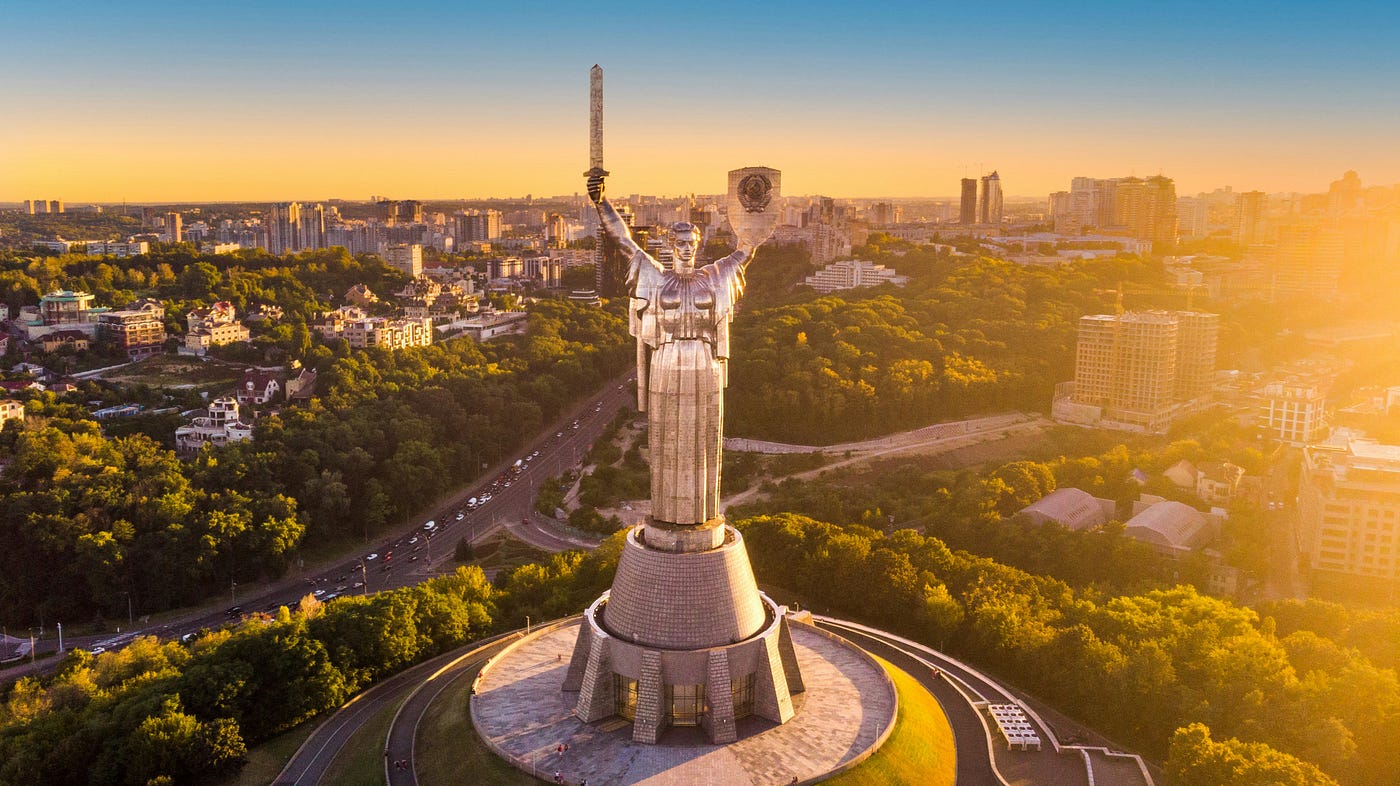
“I left aside, as much as I could, all philosophical aspirations and tried to rest only on firmly established scientific and empiric facts and generalizations, occasionally allowing myself to resort to working scientific hypotheses.”
“Living matter is the totality of living organisms. It is but a scientific empirical generalization of empirically indisputable facts known to all, observable easily and with precision.”
“Mankind, as living matter, is inseparably connected with the material-energetic processes of a specific geological envelope of the Earth — its biosphere.”
“Mankind cannot be physically independent of the biosphere for a single minute.”
“The geological evolutionary process shows the biological unity and equality of all men, Homo sapiens and his ancestors, Sinanthropus and others; their progeny in the mixed white, red, yellow, and black races evolves ceaselessly in innumerable generations.”
“The noösphere is a new geological phenomenon on our planet. In it, for the first time, man becomes a large-scale geological force.”
“Thought is not a form of energy. How then can it change material processes? That question has not as yet been solved.”
“Now we live in the period of a new geological evolutionary change in the biosphere. We are entering the noösphere.”
“Man, as he is observed in nature, like all living organisms, like all living matter, is a definite function of the biosphere in its definite space-time.”
“The inert matter of the biosphere is largely the creation of life.”
Last updated May 3, 2025. These terms govern all In-Sight Publishing content—past, present, and future—and supersede any prior notices. In-Sight Publishing by Scott Douglas Jacobsen is licensed under a Creative Commons BY‑NC‑ND 4.0; © In-Sight Publishing by Scott Douglas Jacobsen 2012–Present. All trademarks, performances, databases & branding are owned by their rights holders; no use without permission. Unauthorized copying, modification, framing or public communication is prohibited. External links are not endorsed. Cookies & tracking require consent, and data processing complies with PIPEDA & GDPR; no data from children < 13 (COPPA). Content meets WCAG 2.1 AA under the Accessible Canada Act & is preserved in open archival formats with backups. Excerpts & links require full credit & hyperlink; limited quoting under fair-dealing & fair-use. All content is informational; no liability for errors or omissions: Feedback welcome, and verified errors corrected promptly. For permissions or DMCA notices, email: scott.jacobsen2025@gmail.com. Site use is governed by BC laws; content is “as‑is,” liability limited, users indemnify us; moral, performers’ & database sui generis rights reserved.
Share this:

Author(s): Scott Douglas Jacobsen
Publication (Outlet/Website): Medium (Personal)
Publication Date (yyyy/mm/dd): 2026/05/09
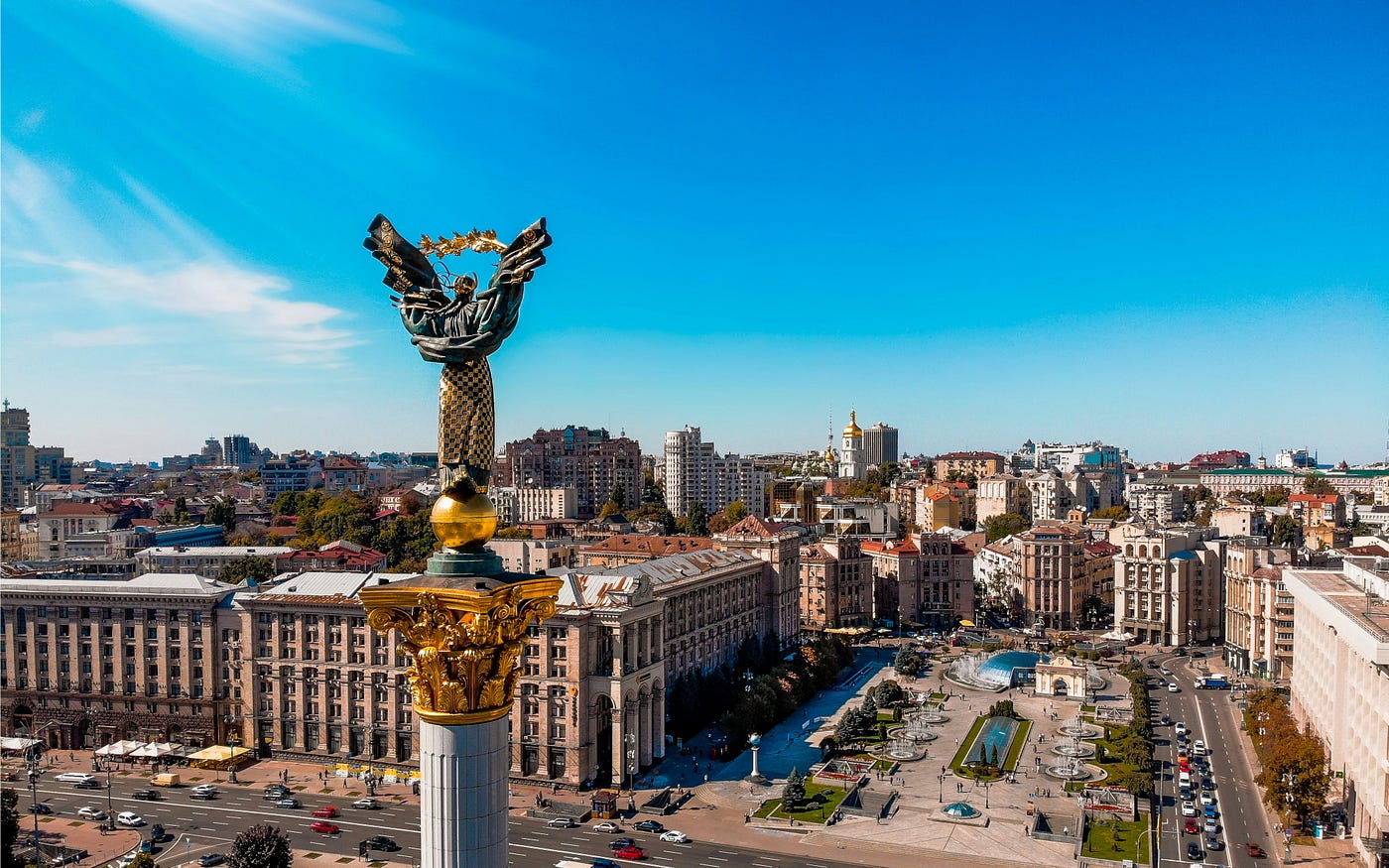
“All such conduct of our Galician gentry toward the working ‘beasts’ pained me, deeply pained me; for who can endure it when his father and mother are dragged through the mud!”
“I began to think about whether it ought to be so.”
“School did not tell me a single word about it; only my own thought tormented itself, now bending down, now rising upward…”
“All my efforts ended in irreconcilable hostility toward me from everyone with whom I spoke openly and without mercy.”
“Everything will pass into the hands of the priests, whose trade will not allow them to speak about the peasant, and from all priestly enlightenment there will come only the pure demoralization of the peasants.”
“Here I saw that education was absolutely necessary for all peasants, that all of them had to press into school.”
“All your thoughts have so taken hold of my heart that I will no longer give up what I have thought over and suffered for.”
“The youth must now do, as quickly as possible, what the intelligentsia has not done until now.”
“Churchdom hangs over our people like a terrible fate.”
“If they give support even for Narod, I will take it, but I will do my own work for the people.”
Last updated May 3, 2025. These terms govern all In-Sight Publishing content—past, present, and future—and supersede any prior notices. In-Sight Publishing by Scott Douglas Jacobsen is licensed under a Creative Commons BY‑NC‑ND 4.0; © In-Sight Publishing by Scott Douglas Jacobsen 2012–Present. All trademarks, performances, databases & branding are owned by their rights holders; no use without permission. Unauthorized copying, modification, framing or public communication is prohibited. External links are not endorsed. Cookies & tracking require consent, and data processing complies with PIPEDA & GDPR; no data from children < 13 (COPPA). Content meets WCAG 2.1 AA under the Accessible Canada Act & is preserved in open archival formats with backups. Excerpts & links require full credit & hyperlink; limited quoting under fair-dealing & fair-use. All content is informational; no liability for errors or omissions: Feedback welcome, and verified errors corrected promptly. For permissions or DMCA notices, email: scott.jacobsen2025@gmail.com. Site use is governed by BC laws; content is “as‑is,” liability limited, users indemnify us; moral, performers’ & database sui generis rights reserved.
Share this:

Author(s): Scott Douglas Jacobsen
Publication (Outlet/Website): Medium (Personal)
Publication Date (yyyy/mm/dd): 2026/05/08

“Centralization and freedom are mutually exclusive.”
“The history of each nation is conditioned by its geography.”
“This movement alone will bring both peace and progress to eastern Europe.”
“Freedom of conscience means freedom of belief and disbelief.”
“Freedom of conscience requires the abolition of the State church.”
“The rights of man and citizen are the indispensable condition for personal dignity and development.”
“Self-government is the basis for progress toward social justice.”
“No authority can be placed above the human mind.”
“People have no other way to reach truth.”
“There is a close connection between people’s ideas about state and civic order and their religious ideas.”
Last updated May 3, 2025. These terms govern all In-Sight Publishing content—past, present, and future—and supersede any prior notices. In-Sight Publishing by Scott Douglas Jacobsen is licensed under a Creative Commons BY‑NC‑ND 4.0; © In-Sight Publishing by Scott Douglas Jacobsen 2012–Present. All trademarks, performances, databases & branding are owned by their rights holders; no use without permission. Unauthorized copying, modification, framing or public communication is prohibited. External links are not endorsed. Cookies & tracking require consent, and data processing complies with PIPEDA & GDPR; no data from children < 13 (COPPA). Content meets WCAG 2.1 AA under the Accessible Canada Act & is preserved in open archival formats with backups. Excerpts & links require full credit & hyperlink; limited quoting under fair-dealing & fair-use. All content is informational; no liability for errors or omissions: Feedback welcome, and verified errors corrected promptly. For permissions or DMCA notices, email: scott.jacobsen2025@gmail.com. Site use is governed by BC laws; content is “as‑is,” liability limited, users indemnify us; moral, performers’ & database sui generis rights reserved.
Share this:

Author(s): Scott Douglas Jacobsen
Publication (Outlet/Website): Medium (Personal)
Publication Date (yyyy/mm/dd): 2026/05/08

“What is rationalism? It is the striving to be guided by reason and enlightenment. Is there anything evil in that? And you, our opponents, do you want the people in everything, therefore also in matters of faith, to be guided by unreason, darkness, and superstition?”
“We, the radicals, declare openly and frankly: yes, we are rationalists; in all matters, therefore also in matters of religion, we wish to proceed reasonably, as befits reasonable and enlightened people.”
“We have declared a war to the death against darkness and befogging.”
“If you think that reason and education lead to the decline of faith, to the destruction of religion, then you are the worst enemies of religion, because you regard it as inseparable from darkness and unreason.”
“The radicals have never come out, and do not come out, either against belief in God or against any foundation of true religiosity… they have come out, do come out, and will always come out against the abuse of those institutions and rites for exploiting, robbing, and befogging the people.”
“There is no, no longer any Lord in heaven! There is no creator, nor autocrat, no one who by an almighty word brought everything out of nothing.”
“He is not, and never was!”
“Not beyond it, but in it is our fatherland! Not beyond it, but in it are we eternal. Not beyond it, but in it must we arrange our life and happiness.”
“Wherever the bold human spirit broke into the forbidden field of religion, wherever ardent feeling rebelled against the tyranny of mysteries, ceremonies, and dogmas, wherever that highest human faculty — doubt — pressed against the gates of sanctuaries and secretly undermined their foundations, everywhere I followed in their footsteps.”
“Not God, but man created God out of nothing — in these words lies the whole achievement of my labor, my science, and my thought.”
Last updated May 3, 2025. These terms govern all In-Sight Publishing content—past, present, and future—and supersede any prior notices. In-Sight Publishing by Scott Douglas Jacobsen is licensed under a Creative Commons BY‑NC‑ND 4.0; © In-Sight Publishing by Scott Douglas Jacobsen 2012–Present. All trademarks, performances, databases & branding are owned by their rights holders; no use without permission. Unauthorized copying, modification, framing or public communication is prohibited. External links are not endorsed. Cookies & tracking require consent, and data processing complies with PIPEDA & GDPR; no data from children < 13 (COPPA). Content meets WCAG 2.1 AA under the Accessible Canada Act & is preserved in open archival formats with backups. Excerpts & links require full credit & hyperlink; limited quoting under fair-dealing & fair-use. All content is informational; no liability for errors or omissions: Feedback welcome, and verified errors corrected promptly. For permissions or DMCA notices, email: scott.jacobsen2025@gmail.com. Site use is governed by BC laws; content is “as‑is,” liability limited, users indemnify us; moral, performers’ & database sui generis rights reserved.
Share this:

Author(s): Scott Douglas Jacobsen
Publication (Outlet/Website): Medium (Personal)
Publication Date (yyyy/mm/dd): 2026/05/06

“In every sphere of your life, free yourself from the hypnosis of religion and be a simple part of nature.”
“Be in accord with other living beings on earth harmless to you, and as much as possible be in motion, outdoors, in close contact with sun, water, and plants.”
“Do not feed yourself with anything contrary to human nature.”
“Be whole.”
“Be honest with yourself.”
“Be in accord in word and deed.”
“Be consistent to the end.”
“Do not try to love your neighbours without judgment, and do not claim their love while not being valuable to them.”
“Always remember that all people, and you yourself, are ill with the terrible disease of discordism. Fight it not with dogma, hatred, or punishment, but with understanding, compassion, and help.”
“Do not dominate, and do not submit to domination.”
Last updated May 3, 2025. These terms govern all In-Sight Publishing content—past, present, and future—and supersede any prior notices. In-Sight Publishing by Scott Douglas Jacobsen is licensed under a Creative Commons BY‑NC‑ND 4.0; © In-Sight Publishing by Scott Douglas Jacobsen 2012–Present. All trademarks, performances, databases & branding are owned by their rights holders; no use without permission. Unauthorized copying, modification, framing or public communication is prohibited. External links are not endorsed. Cookies & tracking require consent, and data processing complies with PIPEDA & GDPR; no data from children < 13 (COPPA). Content meets WCAG 2.1 AA under the Accessible Canada Act & is preserved in open archival formats with backups. Excerpts & links require full credit & hyperlink; limited quoting under fair-dealing & fair-use. All content is informational; no liability for errors or omissions: Feedback welcome, and verified errors corrected promptly. For permissions or DMCA notices, email: scott.jacobsen2025@gmail.com. Site use is governed by BC laws; content is “as‑is,” liability limited, users indemnify us; moral, performers’ & database sui generis rights reserved.
Share this:

Author(s): Scott Douglas Jacobsen
Publication (Outlet/Website): Medium (Personal)
Publication Date (yyyy/mm/dd): 2026/05/06

“The universe is popping all over the place.”
“They say ‘curiosity kills the cat’; I say ‘Curiosity makes a scientist.’”
“Before we can discuss the basic problem of the origin of our universe, we must ask ourselves whether such a discussion is necessary.”
“With five free parameters, a theorist could fit the profile of an elephant.”
“So I am just sitting and waiting, listening, and if something exciting comes, I just jump in.”
“The properties, I never permit more than two electrons to follow the same track; a ménage a trios always gives a lot of trouble, you know.”
“If the expansion of the space of the universe is uniform in all directions, an observer located in anyone of the galaxies will see all other galaxies running away from him at velocities proportional to their distances from the observer.”
“I decided to get Ph. D. in experimental physics because experimental physicists have their own room in the Institute where they can hang their coat, whereas theoretical physicists have to hang their coat at the entrance.”
Last updated May 3, 2025. These terms govern all In-Sight Publishing content—past, present, and future—and supersede any prior notices. In-Sight Publishing by Scott Douglas Jacobsen is licensed under a Creative Commons BY‑NC‑ND 4.0; © In-Sight Publishing by Scott Douglas Jacobsen 2012–Present. All trademarks, performances, databases & branding are owned by their rights holders; no use without permission. Unauthorized copying, modification, framing or public communication is prohibited. External links are not endorsed. Cookies & tracking require consent, and data processing complies with PIPEDA & GDPR; no data from children < 13 (COPPA). Content meets WCAG 2.1 AA under the Accessible Canada Act & is preserved in open archival formats with backups. Excerpts & links require full credit & hyperlink; limited quoting under fair-dealing & fair-use. All content is informational; no liability for errors or omissions: Feedback welcome, and verified errors corrected promptly. For permissions or DMCA notices, email: scott.jacobsen2025@gmail.com. Site use is governed by BC laws; content is “as‑is,” liability limited, users indemnify us; moral, performers’ & database sui generis rights reserved.
Share this:

Author(s): Scott Douglas Jacobsen
Publication (Outlet/Website): Medium (Personal)
Publication Date (yyyy/mm/dd): 2026/05/05
“Whatever concerns health is of real public interest.”
“The problem has become open to study by experiment.”
“To solve medical problems, comparative pathology had to be called in.”
“Controlled observations on living organism can not be wrong.”
“There is only one constant element in immunity, whether innate or acquired, and that is phagocytosis.”
“The extension and importance of this factor can no longer be denied.”
“The present phase of the question of immunity constitutes one stage only in the development of biological science.”
“Bacteriology has placed hygiene on a scientific foundation.”
“Science has already justified the hopes which have been placed in it.”
“I have never taken my stand on metaphysical ground.”
Last updated May 3, 2025. These terms govern all In-Sight Publishing content—past, present, and future—and supersede any prior notices. In-Sight Publishing by Scott Douglas Jacobsen is licensed under a Creative Commons BY‑NC‑ND 4.0; © In-Sight Publishing by Scott Douglas Jacobsen 2012–Present. All trademarks, performances, databases & branding are owned by their rights holders; no use without permission. Unauthorized copying, modification, framing or public communication is prohibited. External links are not endorsed. Cookies & tracking require consent, and data processing complies with PIPEDA & GDPR; no data from children < 13 (COPPA). Content meets WCAG 2.1 AA under the Accessible Canada Act & is preserved in open archival formats with backups. Excerpts & links require full credit & hyperlink; limited quoting under fair-dealing & fair-use. All content is informational; no liability for errors or omissions: Feedback welcome, and verified errors corrected promptly. For permissions or DMCA notices, email: scott.jacobsen2025@gmail.com. Site use is governed by BC laws; content is “as‑is,” liability limited, users indemnify us; moral, performers’ & database sui generis rights reserved.
Share this:

Author(s): Scott Douglas Jacobsen
Publication (Outlet/Website): Medium (Personal)
Publication Date (yyyy/mm/dd): 2026/05/05

“Where religion starts, feminism ends.”
“I have only one fear — to be imbecilic. To be passive.”
“The patriarchy was not somewhere outside. It was right in front of us, in Femen’s office.”
“What can be more stupid than Ramadan? What can be more uglier then [sic] this religion?”
“Thank you all for support&appreciation of our protest. Now we know it was needed.”
“We’re writing history, not articles.”
“But at this time, I celebrate freedom of conscience and if for that I have to burn in hell, it will be a pleasure.”
“Feminists can have religious beliefs, but feminism cannot be religious.”
“The headscarf is not cultural, it is political; it was imposed by the regime after the Iranian Revolution 1979.”
“Those leading this ideological war against IS are the civilians — it is us.”
Last updated May 3, 2025. These terms govern all In-Sight Publishing content—past, present, and future—and supersede any prior notices. In-Sight Publishing by Scott Douglas Jacobsen is licensed under a Creative Commons BY‑NC‑ND 4.0; © In-Sight Publishing by Scott Douglas Jacobsen 2012–Present. All trademarks, performances, databases & branding are owned by their rights holders; no use without permission. Unauthorized copying, modification, framing or public communication is prohibited. External links are not endorsed. Cookies & tracking require consent, and data processing complies with PIPEDA & GDPR; no data from children < 13 (COPPA). Content meets WCAG 2.1 AA under the Accessible Canada Act & is preserved in open archival formats with backups. Excerpts & links require full credit & hyperlink; limited quoting under fair-dealing & fair-use. All content is informational; no liability for errors or omissions: Feedback welcome, and verified errors corrected promptly. For permissions or DMCA notices, email: scott.jacobsen2025@gmail.com. Site use is governed by BC laws; content is “as‑is,” liability limited, users indemnify us; moral, performers’ & database sui generis rights reserved.
Share this:

Author(s): Scott Douglas Jacobsen
Publication (Outlet/Website): Medium (Personal)
Publication Date (yyyy/mm/dd): 2026/05/02
“I found my answer: atheism.”
“They are a kind of protest.”
“for me, it is more important to feel myself free.”
“I became a total atheist.”
“My work is still very feminist.”
“We are not ashamed of our bodies.”
“It was me who first tried to make the topless protest with painted boobs.”
“They copied the protest.”
“The main task of art is revolution.”
“Nudity was an allusion to our poverty.”
Last updated May 3, 2025. These terms govern all In-Sight Publishing content—past, present, and future—and supersede any prior notices. In-Sight Publishing by Scott Douglas Jacobsen is licensed under a Creative Commons BY‑NC‑ND 4.0; © In-Sight Publishing by Scott Douglas Jacobsen 2012–Present. All trademarks, performances, databases & branding are owned by their rights holders; no use without permission. Unauthorized copying, modification, framing or public communication is prohibited. External links are not endorsed. Cookies & tracking require consent, and data processing complies with PIPEDA & GDPR; no data from children < 13 (COPPA). Content meets WCAG 2.1 AA under the Accessible Canada Act & is preserved in open archival formats with backups. Excerpts & links require full credit & hyperlink; limited quoting under fair-dealing & fair-use. All content is informational; no liability for errors or omissions: Feedback welcome, and verified errors corrected promptly. For permissions or DMCA notices, email: scott.jacobsen2025@gmail.com. Site use is governed by BC laws; content is “as‑is,” liability limited, users indemnify us; moral, performers’ & database sui generis rights reserved.
Share this:

Author(s): Scott Douglas Jacobsen
Publication (Outlet/Website): Medium (Personal)
Publication Date (yyyy/mm/dd): 2026/05/02

“Man exists in order to exist.”
“He lives in order to live.”
“Outside life there is, and can be, nothing for man.”
“Truth, which is an end in itself.”
“Theological specialization and clerical service were not at all to my liking.”
“Meaningless stereotyped phrases obscure the matter.”
“Darwin was the embodiment of the ideal of the true sage.”
“Scientific activity is stimulated solely by pure love of knowledge.”
Last updated May 3, 2025. These terms govern all In-Sight Publishing content—past, present, and future—and supersede any prior notices. In-Sight Publishing by Scott Douglas Jacobsen is licensed under a Creative Commons BY‑NC‑ND 4.0; © In-Sight Publishing by Scott Douglas Jacobsen 2012–Present. All trademarks, performances, databases & branding are owned by their rights holders; no use without permission. Unauthorized copying, modification, framing or public communication is prohibited. External links are not endorsed. Cookies & tracking require consent, and data processing complies with PIPEDA & GDPR; no data from children < 13 (COPPA). Content meets WCAG 2.1 AA under the Accessible Canada Act & is preserved in open archival formats with backups. Excerpts & links require full credit & hyperlink; limited quoting under fair-dealing & fair-use. All content is informational; no liability for errors or omissions: Feedback welcome, and verified errors corrected promptly. For permissions or DMCA notices, email: scott.jacobsen2025@gmail.com. Site use is governed by BC laws; content is “as‑is,” liability limited, users indemnify us; moral, performers’ & database sui generis rights reserved.
Share this:

Author(s): Scott Douglas Jacobsen
Publication (Outlet/Website): Medium (Personal)
Publication Date (yyyy/mm/dd): 2026/04/15

Bonjournal.
Writ ten by tan.
Sine sans sin,
Singularl-e.
Angularly so,
See?
Squared to one,
And nothing to lose.
Salut to write.
A signal, a sign,
A signification.
Explosively so soundless.
Spandrel audio.
Meaning in a noisy silence.
What are you once the noise is gone?
Last updated May 3, 2025. These terms govern all In-Sight Publishing content—past, present, and future—and supersede any prior notices. In-Sight Publishing by Scott Douglas Jacobsen is licensed under a Creative Commons BY‑NC‑ND 4.0; © In-Sight Publishing by Scott Douglas Jacobsen 2012–Present. All trademarks, performances, databases & branding are owned by their rights holders; no use without permission. Unauthorized copying, modification, framing or public communication is prohibited. External links are not endorsed. Cookies & tracking require consent, and data processing complies with PIPEDA & GDPR; no data from children < 13 (COPPA). Content meets WCAG 2.1 AA under the Accessible Canada Act & is preserved in open archival formats with backups. Excerpts & links require full credit & hyperlink; limited quoting under fair-dealing & fair-use. All content is informational; no liability for errors or omissions: Feedback welcome, and verified errors corrected promptly. For permissions or DMCA notices, email: scott.jacobsen2025@gmail.com. Site use is governed by BC laws; content is “as‑is,” liability limited, users indemnify us; moral, performers’ & database sui generis rights reserved.
Share this:

Author(s): Scott Douglas Jacobsen
Publication (Outlet/Website): Medium (Personal)
Publication Date (yyyy/mm/dd): 2026/04/12

“My fascination with mysteries started when I was a kid.”
“YouTube today is the best vehicle for reaching a wider, and mostly younger, audience.”
“I had to summon my own courage to step on it.”
“Every extraordinary claim is a mystery, and I search through the details looking for clues that will reveal what is really going on.”
“Let’s try to build bridges and not walls.”
“Memory is a continuous process of creation and reconstruction.”
“After these are taken away, true mysteries still abound on our planet.”
“Faced with statements of this kind, one must always ask: What is the evidence?”
“Too bad it doesn’t work.”
“And yet amid this cultural fog, something new took shape.”
Last updated May 3, 2025. These terms govern all In-Sight Publishing content—past, present, and future—and supersede any prior notices. In-Sight Publishing by Scott Douglas Jacobsen is licensed under a Creative Commons BY‑NC‑ND 4.0; © In-Sight Publishing by Scott Douglas Jacobsen 2012–Present. All trademarks, performances, databases & branding are owned by their rights holders; no use without permission. Unauthorized copying, modification, framing or public communication is prohibited. External links are not endorsed. Cookies & tracking require consent, and data processing complies with PIPEDA & GDPR; no data from children < 13 (COPPA). Content meets WCAG 2.1 AA under the Accessible Canada Act & is preserved in open archival formats with backups. Excerpts & links require full credit & hyperlink; limited quoting under fair-dealing & fair-use. All content is informational; no liability for errors or omissions: Feedback welcome, and verified errors corrected promptly. For permissions or DMCA notices, email: scott.jacobsen2025@gmail.com. Site use is governed by BC laws; content is “as‑is,” liability limited, users indemnify us; moral, performers’ & database sui generis rights reserved.
Share this:

Author(s): Scott Douglas Jacobsen
Publication (Outlet/Website): Medium (Personal)
Publication Date (yyyy/mm/dd): 2026/04/12

“We shouldn’t just believe what people tell us — especially online.”
“Being open-minded means being open to the possibility that you’re wrong.”
“The distinctions between what is possible, plausible, and probable are important.”
“Trolling is inherently antagonistic.”
“The question is not ‘Is this scary event possible?’ because of course it is — anything is possible.”
“In the end all these phantom attackers — like the Monkey Man — were thoroughly investigated and eventually determined not to have existed.”
“Misinformation is misinformation regardless of who shares it, or why.”
“I’m open-minded but skeptical.”
“We are making progress.”
Last updated May 3, 2025. These terms govern all In-Sight Publishing content—past, present, and future—and supersede any prior notices. In-Sight Publishing by Scott Douglas Jacobsen is licensed under a Creative Commons BY‑NC‑ND 4.0; © In-Sight Publishing by Scott Douglas Jacobsen 2012–Present. All trademarks, performances, databases & branding are owned by their rights holders; no use without permission. Unauthorized copying, modification, framing or public communication is prohibited. External links are not endorsed. Cookies & tracking require consent, and data processing complies with PIPEDA & GDPR; no data from children < 13 (COPPA). Content meets WCAG 2.1 AA under the Accessible Canada Act & is preserved in open archival formats with backups. Excerpts & links require full credit & hyperlink; limited quoting under fair-dealing & fair-use. All content is informational; no liability for errors or omissions: Feedback welcome, and verified errors corrected promptly. For permissions or DMCA notices, email: scott.jacobsen2025@gmail.com. Site use is governed by BC laws; content is “as‑is,” liability limited, users indemnify us; moral, performers’ & database sui generis rights reserved.
Share this:

Author(s): Scott Douglas Jacobsen
Publication (Outlet/Website): Medium (Personal)
Publication Date (yyyy/mm/dd): 2026/04/11

“Conspiracies occur all the time.”
“You have to do it in an upbeat sort of a way.”
“I set a very high bar for the level of evidence required.”
“There are very few authentic UFO cases.”
“Consider the source in judging the credibility of any UFO claims you encounter, on-line or elsewhere.”
“It gives viewers what they want: exciting stories about alien encounters that sound credible because they are presented in an extremely biased and inaccurate way.”
“I can’t un-complicate it any more than that.”
“There is no possible doubt that this identification is correct.”
“Whose credibility is zilch.”
“Which is pure bollocks.”
Last updated May 3, 2025. These terms govern all In-Sight Publishing content—past, present, and future—and supersede any prior notices. In-Sight Publishing by Scott Douglas Jacobsen is licensed under a Creative Commons BY‑NC‑ND 4.0; © In-Sight Publishing by Scott Douglas Jacobsen 2012–Present. All trademarks, performances, databases & branding are owned by their rights holders; no use without permission. Unauthorized copying, modification, framing or public communication is prohibited. External links are not endorsed. Cookies & tracking require consent, and data processing complies with PIPEDA & GDPR; no data from children < 13 (COPPA). Content meets WCAG 2.1 AA under the Accessible Canada Act & is preserved in open archival formats with backups. Excerpts & links require full credit & hyperlink; limited quoting under fair-dealing & fair-use. All content is informational; no liability for errors or omissions: Feedback welcome, and verified errors corrected promptly. For permissions or DMCA notices, email: scott.jacobsen2025@gmail.com. Site use is governed by BC laws; content is “as‑is,” liability limited, users indemnify us; moral, performers’ & database sui generis rights reserved.
Share this:

Author(s): Scott Douglas Jacobsen
Publication (Outlet/Website): Medium (Personal)
Publication Date (yyyy/mm/dd): 2026/04/11

“An extraordinary claim requires extraordinary proof.”
“the burden of proof falls upon the claimant”
“The true skeptic takes an agnostic position”
“the claim is not proved rather than disproved”
“Science is a constantly changing body of knowledge characterized not so much by its content as by its method”
“Those concerned with metaphysics and supernatural claims are directed to those journals of philosophy and religion dedicated to such matters.”
“do nothing that would block inquiry.”
“Without anomalies and their validation, later incorporation, and explanation, we would not have any progress in science.”
“Absolute truth, like absolute justice, is seldom obtainable.”
“We can only do our best to approximate them.”
Last updated May 3, 2025. These terms govern all In-Sight Publishing content—past, present, and future—and supersede any prior notices. In-Sight Publishing by Scott Douglas Jacobsen is licensed under a Creative Commons BY‑NC‑ND 4.0; © In-Sight Publishing by Scott Douglas Jacobsen 2012–Present. All trademarks, performances, databases & branding are owned by their rights holders; no use without permission. Unauthorized copying, modification, framing or public communication is prohibited. External links are not endorsed. Cookies & tracking require consent, and data processing complies with PIPEDA & GDPR; no data from children < 13 (COPPA). Content meets WCAG 2.1 AA under the Accessible Canada Act & is preserved in open archival formats with backups. Excerpts & links require full credit & hyperlink; limited quoting under fair-dealing & fair-use. All content is informational; no liability for errors or omissions: Feedback welcome, and verified errors corrected promptly. For permissions or DMCA notices, email: scott.jacobsen2025@gmail.com. Site use is governed by BC laws; content is “as‑is,” liability limited, users indemnify us; moral, performers’ & database sui generis rights reserved.
Share this:

Author(s): Scott Douglas Jacobsen
Publication (Outlet/Website): Medium (Personal)
Publication Date (yyyy/mm/dd): 2026/04/03

“We are all afloat — and some of us are drowning — in a sea of misinformation.”
“The attacks are against the very foundations of any democratic society.”
“They delegitimize knowledge, facts, expertise, and science itself.”
“They sow confusion and distrust.”
“We scientific skeptics, we skeptical inquirers, do it all.”
“Why do facts and evidence so seldom sway people from deeply held ideas?”
“Do we care one iota about reality? We had better.”
“Reminding ourselves why we do this: the higher values of skeptical inquiry.”
“We suffer from far too much systematic disregard of facts and evidence.”
“For scientists and scientific skeptics, the most powerful word is why.”
Last updated May 3, 2025. These terms govern all In-Sight Publishing content—past, present, and future—and supersede any prior notices. In-Sight Publishing by Scott Douglas Jacobsen is licensed under a Creative Commons BY‑NC‑ND 4.0; © In-Sight Publishing by Scott Douglas Jacobsen 2012–Present. All trademarks, performances, databases & branding are owned by their rights holders; no use without permission. Unauthorized copying, modification, framing or public communication is prohibited. External links are not endorsed. Cookies & tracking require consent, and data processing complies with PIPEDA & GDPR; no data from children < 13 (COPPA). Content meets WCAG 2.1 AA under the Accessible Canada Act & is preserved in open archival formats with backups. Excerpts & links require full credit & hyperlink; limited quoting under fair-dealing & fair-use. All content is informational; no liability for errors or omissions: Feedback welcome, and verified errors corrected promptly. For permissions or DMCA notices, email: scott.jacobsen2025@gmail.com. Site use is governed by BC laws; content is “as‑is,” liability limited, users indemnify us; moral, performers’ & database sui generis rights reserved.
Share this:

Author(s): Scott Douglas Jacobsen
Publication (Outlet/Website): Medium (Personal)
Publication Date (yyyy/mm/dd): 2026/04/03

“I do not use the term ‘debunker.’”
“I want to find out exactly what happened.”
“Something between zero and none.”
“We should look for the truth because the truth matters,”
“I have a pitiful record when it comes to catching extraterrestrials.”
“It includes the supernatural but also things such as monsters that — if they exist — might be quite natural.”
“However, the existence of psi has never been proven”
“Such a claim is therefore based on a logical fallacy called arguing from ignorance.”
“Skeptics have a simpler explanation: they are the cunning pranks of a mischievous youth or disturbed adult.”
“‘Unexplained’ mysteries are intriguing to read, but compilations of such may exaggerate mystery by omitting facts.”
Last updated May 3, 2025. These terms govern all In-Sight Publishing content—past, present, and future—and supersede any prior notices. In-Sight Publishing by Scott Douglas Jacobsen is licensed under a Creative Commons BY‑NC‑ND 4.0; © In-Sight Publishing by Scott Douglas Jacobsen 2012–Present. All trademarks, performances, databases & branding are owned by their rights holders; no use without permission. Unauthorized copying, modification, framing or public communication is prohibited. External links are not endorsed. Cookies & tracking require consent, and data processing complies with PIPEDA & GDPR; no data from children < 13 (COPPA). Content meets WCAG 2.1 AA under the Accessible Canada Act & is preserved in open archival formats with backups. Excerpts & links require full credit & hyperlink; limited quoting under fair-dealing & fair-use. All content is informational; no liability for errors or omissions: Feedback welcome, and verified errors corrected promptly. For permissions or DMCA notices, email: scott.jacobsen2025@gmail.com. Site use is governed by BC laws; content is “as‑is,” liability limited, users indemnify us; moral, performers’ & database sui generis rights reserved.
Share this:

Author(s): Scott Douglas Jacobsen
Publication (Outlet/Website): Medium (Personal)
Publication Date (yyyy/mm/dd): 2026/04/01

“As I turn 80, my fondest hope is that a genuine ET craft will land on our back patio and that I will be abducted.”
“It is time to talk sense to the public about Unidentified Flying Objects.”
“This is not the first time that an experienced pilot has mistaken a bright celestial body for a UFO, nor will it be the last.”
“Any crashed spacecraft, or major piece of a spacecraft is found to be clearly of extraterrestrial origin by the United States National Academy of Sciences.”
“But the government took no such action to try to block publication of ‘The Roswell Incident’.”
“In nearly 30 years of searching, investigating famous cases, I have yet to find one that cannot be explained in down-to-earth prosaic terms.”
“There simply is no scientifically credible evidence that we have alien visitors.”
Last updated May 3, 2025. These terms govern all In-Sight Publishing content—past, present, and future—and supersede any prior notices. In-Sight Publishing by Scott Douglas Jacobsen is licensed under a Creative Commons BY‑NC‑ND 4.0; © In-Sight Publishing by Scott Douglas Jacobsen 2012–Present. All trademarks, performances, databases & branding are owned by their rights holders; no use without permission. Unauthorized copying, modification, framing or public communication is prohibited. External links are not endorsed. Cookies & tracking require consent, and data processing complies with PIPEDA & GDPR; no data from children < 13 (COPPA). Content meets WCAG 2.1 AA under the Accessible Canada Act & is preserved in open archival formats with backups. Excerpts & links require full credit & hyperlink; limited quoting under fair-dealing & fair-use. All content is informational; no liability for errors or omissions: Feedback welcome, and verified errors corrected promptly. For permissions or DMCA notices, email: scott.jacobsen2025@gmail.com. Site use is governed by BC laws; content is “as‑is,” liability limited, users indemnify us; moral, performers’ & database sui generis rights reserved.
Share this:

Author(s): Scott Douglas Jacobsen
Publication (Outlet/Website): Medium (Personal)
Publication Date (yyyy/mm/dd): 2026/04/01
“Good criticism requires precision and care in the use of language.”
“A critic’s worst sin is to go beyond the facts and the available evidence.”
“The history of parapsychology is replete with ‘successful’ experiments that subsequently could not be replicated.”
“What is needed, of course, is a positive theory…”
“Science can only succeed when it studies phenomena that are lawful and reliably reproducible.”
“Parapsychology does not have even one paradigm experiment.”
“Science exists as a way to avoid arguments over plausibility.”
“The responsibility is yours to first provide us with evidence…”
“A paranormal claim, by definition, is one that is implausible…”
“Extraordinary claims require extraordinary proof.”
Last updated May 3, 2025. These terms govern all In-Sight Publishing content—past, present, and future—and supersede any prior notices. In-Sight Publishing by Scott Douglas Jacobsen is licensed under a Creative Commons BY‑NC‑ND 4.0; © In-Sight Publishing by Scott Douglas Jacobsen 2012–Present. All trademarks, performances, databases & branding are owned by their rights holders; no use without permission. Unauthorized copying, modification, framing or public communication is prohibited. External links are not endorsed. Cookies & tracking require consent, and data processing complies with PIPEDA & GDPR; no data from children < 13 (COPPA). Content meets WCAG 2.1 AA under the Accessible Canada Act & is preserved in open archival formats with backups. Excerpts & links require full credit & hyperlink; limited quoting under fair-dealing & fair-use. All content is informational; no liability for errors or omissions: Feedback welcome, and verified errors corrected promptly. For permissions or DMCA notices, email: scott.jacobsen2025@gmail.com. Site use is governed by BC laws; content is “as‑is,” liability limited, users indemnify us; moral, performers’ & database sui generis rights reserved.
Share this:

Author(s): Scott Douglas Jacobsen
Publication (Outlet/Website): Medium (Personal)
Publication Date (yyyy/mm/dd): 2026/03/31
“What the eyes see and the ears hear, the mind believes.”
“Up to the present time everything that I have investigated has been the result of deluded brains.”
“My professional life has been a constant record of disillusion.”
“The camera will click; nothing will appear on the developed film.”
“There must be some plausible, natural explanation.”
“I have not yet found the true explanation.”
“I want positive proof.”
“As for spiritualism, I neither believe nor disbelieve in it.”
“There may be honest mediums, but so far I have never met one.”
“I agreed to do whatever I could to learn what deception the medium was practising in his séances.”
Last updated May 3, 2025. These terms govern all In-Sight Publishing content—past, present, and future—and supersede any prior notices. In-Sight Publishing by Scott Douglas Jacobsen is licensed under a Creative Commons BY‑NC‑ND 4.0; © In-Sight Publishing by Scott Douglas Jacobsen 2012–Present. All trademarks, performances, databases & branding are owned by their rights holders; no use without permission. Unauthorized copying, modification, framing or public communication is prohibited. External links are not endorsed. Cookies & tracking require consent, and data processing complies with PIPEDA & GDPR; no data from children < 13 (COPPA). Content meets WCAG 2.1 AA under the Accessible Canada Act & is preserved in open archival formats with backups. Excerpts & links require full credit & hyperlink; limited quoting under fair-dealing & fair-use. All content is informational; no liability for errors or omissions: Feedback welcome, and verified errors corrected promptly. For permissions or DMCA notices, email: scott.jacobsen2025@gmail.com. Site use is governed by BC laws; content is “as‑is,” liability limited, users indemnify us; moral, performers’ & database sui generis rights reserved.
Share this:

Author(s): Scott Douglas Jacobsen
Publication (Outlet/Website): Medium (Personal)
Publication Date (yyyy/mm/dd): 2026/03/28

“No encontré absolutamente nada y me convertí en escéptico.”
“Hay muchos astrólogos, videntes y clarividentes publicando anuncios en los periódicos, y no encuentro ni uno solo que pueda demostrar sus poderes… algo no cuadra”.
“La ciencia requiere evidencia.”
“Necesitamos divulgadores científicos, capaces de explicar qué es la ciencia con un lenguaje claro y sencillo.”
“Si no podemos conectar con el público de forma directa y sencilla, estamos fracasando.”
“Difundir el pensamiento crítico requiere una dosis de arte.”
“Creo que los eslóganes no sirven para nada, salvo para arrastrar masas hacia la ignorancia.”
“Pensar correctamente es una de las cosas más difíciles.”
“Lo difícil es anteponer el pensamiento crítico a la emoción. Es el gran desafío.”
“En general, todos aquellos que se abstienen de aplicar el pensamiento crítico, sea por ignorancia o por interés.”
Last updated May 3, 2025. These terms govern all In-Sight Publishing content—past, present, and future—and supersede any prior notices. In-Sight Publishing by Scott Douglas Jacobsen is licensed under a Creative Commons BY‑NC‑ND 4.0; © In-Sight Publishing by Scott Douglas Jacobsen 2012–Present. All trademarks, performances, databases & branding are owned by their rights holders; no use without permission. Unauthorized copying, modification, framing or public communication is prohibited. External links are not endorsed. Cookies & tracking require consent, and data processing complies with PIPEDA & GDPR; no data from children < 13 (COPPA). Content meets WCAG 2.1 AA under the Accessible Canada Act & is preserved in open archival formats with backups. Excerpts & links require full credit & hyperlink; limited quoting under fair-dealing & fair-use. All content is informational; no liability for errors or omissions: Feedback welcome, and verified errors corrected promptly. For permissions or DMCA notices, email: scott.jacobsen2025@gmail.com. Site use is governed by BC laws; content is “as‑is,” liability limited, users indemnify us; moral, performers’ & database sui generis rights reserved.
Share this:

Author(s): Scott Douglas Jacobsen
Publication (Outlet/Website): Medium (Personal)
Publication Date (yyyy/mm/dd): 2026/03/28

“The self is a construct.”
“The Enlightenment did not invent the self — it authorized it.”
“Every culture I’ve studied has a self.”
“The self, as it has evolved, is a reflective project.”
“true altruism without the expectation of social reward is possible.”
“we are our thoughts”
“A mind virus would inhibit the capacity for reason”
“humanism is perfectly compatible with aboriginality”
“science, reason and compassion can lead to material and spiritual progress.”
“The self is a culturally mediated mental representation”
Last updated May 3, 2025. These terms govern all In-Sight Publishing content—past, present, and future—and supersede any prior notices. In-Sight Publishing by Scott Douglas Jacobsen is licensed under a Creative Commons BY‑NC‑ND 4.0; © In-Sight Publishing by Scott Douglas Jacobsen 2012–Present. All trademarks, performances, databases & branding are owned by their rights holders; no use without permission. Unauthorized copying, modification, framing or public communication is prohibited. External links are not endorsed. Cookies & tracking require consent, and data processing complies with PIPEDA & GDPR; no data from children < 13 (COPPA). Content meets WCAG 2.1 AA under the Accessible Canada Act & is preserved in open archival formats with backups. Excerpts & links require full credit & hyperlink; limited quoting under fair-dealing & fair-use. All content is informational; no liability for errors or omissions: Feedback welcome, and verified errors corrected promptly. For permissions or DMCA notices, email: scott.jacobsen2025@gmail.com. Site use is governed by BC laws; content is “as‑is,” liability limited, users indemnify us; moral, performers’ & database sui generis rights reserved.
Share this:

Author(s): Scott Douglas Jacobsen
Publication (Outlet/Website): Medium (Personal)
Publication Date (yyyy/mm/dd): 2026/03/25

“…war and the ‘war of the sexes’ are neither divinely nor biologically ordained.”
“…the real wealth of nations consists of the contributions of people and of nature, and … we need economic systems.”
“…we not only need a bigger share of the present economic pie … we have to bake a new economic pie.”
“…equate difference … with superiority or inferiority, dominating or being dominated, being served or serving.”
“…the struggle for our future is… the struggle between those who cling to patterns of domination.”
“Does the curriculum teach students not only academic and vocational skills but also the life skills” needed to become competent and caring citizens, workers, parents, and community members?
“A key component of partnership education is what Eisler calls caring for life: for self, for others, and our Mother Earth.” That appears on her own site in the description of her work’s impact.
“We can build an economic system that takes us beyond communism, capitalism, and other old -isms. … We need a CARING REVOLUTION.”
Last updated May 3, 2025. These terms govern all In-Sight Publishing content—past, present, and future—and supersede any prior notices. In-Sight Publishing by Scott Douglas Jacobsen is licensed under a Creative Commons BY‑NC‑ND 4.0; © In-Sight Publishing by Scott Douglas Jacobsen 2012–Present. All trademarks, performances, databases & branding are owned by their rights holders; no use without permission. Unauthorized copying, modification, framing or public communication is prohibited. External links are not endorsed. Cookies & tracking require consent, and data processing complies with PIPEDA & GDPR; no data from children < 13 (COPPA). Content meets WCAG 2.1 AA under the Accessible Canada Act & is preserved in open archival formats with backups. Excerpts & links require full credit & hyperlink; limited quoting under fair-dealing & fair-use. All content is informational; no liability for errors or omissions: Feedback welcome, and verified errors corrected promptly. For permissions or DMCA notices, email: scott.jacobsen2025@gmail.com. Site use is governed by BC laws; content is “as‑is,” liability limited, users indemnify us; moral, performers’ & database sui generis rights reserved.
Share this:

Author(s): Scott Douglas Jacobsen
Publication (Outlet/Website): Medium (Personal)
Publication Date (yyyy/mm/dd): 2026/03/25
“Thinking is uniting representations in one consciousness.”
“The synthetical unity of consciousness is, therefore, an objective condition of all cognition.”
“Experience is possible only through the representation of a necessary connection of perceptions.”
“The possibility of experience is, then, that which gives objective reality to all our à priori cognitions.”
“Experience itself requires laws which are a priori at the basis of its possibility.”
Last updated May 3, 2025. These terms govern all In-Sight Publishing content—past, present, and future—and supersede any prior notices. In-Sight Publishing by Scott Douglas Jacobsen is licensed under a Creative Commons BY‑NC‑ND 4.0; © In-Sight Publishing by Scott Douglas Jacobsen 2012–Present. All trademarks, performances, databases & branding are owned by their rights holders; no use without permission. Unauthorized copying, modification, framing or public communication is prohibited. External links are not endorsed. Cookies & tracking require consent, and data processing complies with PIPEDA & GDPR; no data from children < 13 (COPPA). Content meets WCAG 2.1 AA under the Accessible Canada Act & is preserved in open archival formats with backups. Excerpts & links require full credit & hyperlink; limited quoting under fair-dealing & fair-use. All content is informational; no liability for errors or omissions: Feedback welcome, and verified errors corrected promptly. For permissions or DMCA notices, email: scott.jacobsen2025@gmail.com. Site use is governed by BC laws; content is “as‑is,” liability limited, users indemnify us; moral, performers’ & database sui generis rights reserved.
Share this:

Author(s): Scott Douglas Jacobsen
Publication (Outlet/Website): Medium (Personal)
Publication Date (yyyy/mm/dd): 2026/03/24

“We only cognize in things a priori that which we ourselves place in them.”
“Thoughts without content are empty; intuitions without concepts are blind.”
“The conditions of the possibility of experience in general, are at the same time conditions of the possibility of the objects of experience.”
“The understanding does not derive its laws (a priori) from, but prescribes them to, nature.”
“It must be possible for the ‘I think’ to accompany all my representations.”
“The world of sense contains merely appearances, which are not things in themselves.”
“By a system I mean the unity of various cognitions under one idea.”
“All pure cognitions of the understanding have this feature, that their concepts present themselves in experience.”
“It is a humiliating consideration for human reason, that it is incompetent to discover truth by means of pure speculation.”
“Autonomy of the will is that property of it by which it is a law to itself.”
Last updated May 3, 2025. These terms govern all In-Sight Publishing content—past, present, and future—and supersede any prior notices. In-Sight Publishing by Scott Douglas Jacobsen is licensed under a Creative Commons BY‑NC‑ND 4.0; © In-Sight Publishing by Scott Douglas Jacobsen 2012–Present. All trademarks, performances, databases & branding are owned by their rights holders; no use without permission. Unauthorized copying, modification, framing or public communication is prohibited. External links are not endorsed. Cookies & tracking require consent, and data processing complies with PIPEDA & GDPR; no data from children < 13 (COPPA). Content meets WCAG 2.1 AA under the Accessible Canada Act & is preserved in open archival formats with backups. Excerpts & links require full credit & hyperlink; limited quoting under fair-dealing & fair-use. All content is informational; no liability for errors or omissions: Feedback welcome, and verified errors corrected promptly. For permissions or DMCA notices, email: scott.jacobsen2025@gmail.com. Site use is governed by BC laws; content is “as‑is,” liability limited, users indemnify us; moral, performers’ & database sui generis rights reserved.
Share this:

Author(s): Scott Douglas Jacobsen
Publication (Outlet/Website): Medium (Personal)
Publication Date (yyyy/mm/dd): 2026/03/24

No,
worse,
way worse.
Last updated May 3, 2025. These terms govern all In-Sight Publishing content—past, present, and future—and supersede any prior notices. In-Sight Publishing by Scott Douglas Jacobsen is licensed under a Creative Commons BY‑NC‑ND 4.0; © In-Sight Publishing by Scott Douglas Jacobsen 2012–Present. All trademarks, performances, databases & branding are owned by their rights holders; no use without permission. Unauthorized copying, modification, framing or public communication is prohibited. External links are not endorsed. Cookies & tracking require consent, and data processing complies with PIPEDA & GDPR; no data from children < 13 (COPPA). Content meets WCAG 2.1 AA under the Accessible Canada Act & is preserved in open archival formats with backups. Excerpts & links require full credit & hyperlink; limited quoting under fair-dealing & fair-use. All content is informational; no liability for errors or omissions: Feedback welcome, and verified errors corrected promptly. For permissions or DMCA notices, email: scott.jacobsen2025@gmail.com. Site use is governed by BC laws; content is “as‑is,” liability limited, users indemnify us; moral, performers’ & database sui generis rights reserved.
Share this:

Author(s): Scott Douglas Jacobsen
Publication (Outlet/Website): Medium (Personal)
Publication Date (yyyy/mm/dd): 2026/03/22

What did the UN Commission of Inquiry find in March 2026 about Ukraine, Russia, deported children, and war crimes?
In March 2026, the UN Commission of Inquiry on Ukraine updated findings on overbroad collaboration laws in Ukraine, mobilisation-related abuses, Russia’s deportation and transfer of Ukrainian children, fabricated trials, and coercive military practices. It found war crimes and crimes against humanity, while noting Ukraine’s cooperation and Russia’s non-cooperation throughout investigations.
The UN Commission of Inquiry on Ukraine provided updated findings in March 2026. The major themes were:
- abuse of courts and legal process;
- coercive military practices;
- differing levels of state cooperation;
- the treatment of Ukrainian children;
- torture and ill-treatment; and,
- crimes against humanity and war crimes.
For Ukraine, the Commission examined the Ukrainian Supreme Court rulings on “collaborative activities.” It determined the definition of “collaborative activities” remained overly broad and created legal uncertainty. The breadth risked the criminalization of conduct related to essential civilian services in the occupied territories. There were abuses linked to mobilization practices too.
The Commission identified irregular administrative detention, rushed medical examinations, lack of access to legal counsel, and reported violence against conscientious objectors. Ukraine cooperated with the Commission, and the Commission said it appreciated that cooperation. Important to note, the Commission is an independent international body guided by principles of independence, impartiality, objectivity, and integrity, with a specifically defined mandate.
For Russia, the most serious findings concerned the treatment of Ukrainian children. The Commission independently verified cases involving 1,205 children. It rejected the “evacuation” justification. Most deportations and transfers investigated were not temporary. Four years on, 80 per cent of the documented children had not yet been returned.
The Commission concluded the Russian Federation committed crimes against humanity of deportation, enforced disappearance, and forcible transfer, and the war crimes of deportation and forcible transfer, as well as the war crime of unjustifiable delay in repatriation.
In addition, the Commission found abuses in court proceedings in the Russian Federation and Russian-occupied areas of Ukraine against Ukrainian civilians and prisoners of war. Features of the proceedings included denial of fair-trial guarantees, fabricated evidence, predetermined verdicts, and torture/ill-treatment. Those judicial abuses were found to constitute grave breaches of international humanitarian law, amounting to war crimes.
On recruitment into the Russian armed forces, the Commission found the use of deception and coercion of foreign nationals from 17 countries. In addition, 85 soldiers who had served in the Russian armed forces and later deserted were interviewed. They described beatings, detention in pits, mock executions, and orders to shoot retreating soldiers. The Commission concluded these accounts demonstrated a total disregard for human life and dignity. The Russian Federation failed to cooperate with the Commission, leaving 39 written requests unanswered.
Last updated May 3, 2025. These terms govern all In-Sight Publishing content—past, present, and future—and supersede any prior notices. In-Sight Publishing by Scott Douglas Jacobsen is licensed under a Creative Commons BY‑NC‑ND 4.0; © In-Sight Publishing by Scott Douglas Jacobsen 2012–Present. All trademarks, performances, databases & branding are owned by their rights holders; no use without permission. Unauthorized copying, modification, framing or public communication is prohibited. External links are not endorsed. Cookies & tracking require consent, and data processing complies with PIPEDA & GDPR; no data from children < 13 (COPPA). Content meets WCAG 2.1 AA under the Accessible Canada Act & is preserved in open archival formats with backups. Excerpts & links require full credit & hyperlink; limited quoting under fair-dealing & fair-use. All content is informational; no liability for errors or omissions: Feedback welcome, and verified errors corrected promptly. For permissions or DMCA notices, email: scott.jacobsen2025@gmail.com. Site use is governed by BC laws; content is “as‑is,” liability limited, users indemnify us; moral, performers’ & database sui generis rights reserved.
Share this:

Author(s): Scott Douglas Jacobsen
Publication (Outlet/Website): Medium (Personal)
Publication Date (yyyy/mm/dd): 2026/03/16

“A NEW paradigm for medical practice is emerging.”
“Evidence based medicine seeks to empower clinicians so that they can develop independent views regarding medical claims and controversies.”
“Some evidence is more trustworthy than others.”
“Evidence itself never makes decisions.”
“Evidence is always in the context of values and preferences.”
“It is crucial to be able to distinguish evidence you can trust from evidence that is untrustworthy.”
“Time limitation remains the biggest obstacle to evidence-based practice.”
“Before EBM, there was a lot of inappropriate confidence among clinicians.”
Last updated May 3, 2025. These terms govern all In-Sight Publishing content—past, present, and future—and supersede any prior notices. In-Sight Publishing by Scott Douglas Jacobsen is licensed under a Creative Commons BY‑NC‑ND 4.0; © In-Sight Publishing by Scott Douglas Jacobsen 2012–Present. All trademarks, performances, databases & branding are owned by their rights holders; no use without permission. Unauthorized copying, modification, framing or public communication is prohibited. External links are not endorsed. Cookies & tracking require consent, and data processing complies with PIPEDA & GDPR; no data from children < 13 (COPPA). Content meets WCAG 2.1 AA under the Accessible Canada Act & is preserved in open archival formats with backups. Excerpts & links require full credit & hyperlink; limited quoting under fair-dealing & fair-use. All content is informational; no liability for errors or omissions: Feedback welcome, and verified errors corrected promptly. For permissions or DMCA notices, email: scott.jacobsen2025@gmail.com. Site use is governed by BC laws; content is “as‑is,” liability limited, users indemnify us; moral, performers’ & database sui generis rights reserved.
Share this:

Author(s): Scott Douglas Jacobsen
Publication (Outlet/Website): Medium (Personal)
Publication Date (yyyy/mm/dd): 2026/03/16
“Cancer is, in essence, a genetic disease.”
“This was a human disease, and we wanted to study the real thing.”
“Tolerating failure is not simple.”
“If it’s not likely to fail, you’re not thinking big enough.”
“The best way to eradicate these cancers will be through early detection.”
“These cancers will occur no matter how perfect the environment.”
“Nothing you did or didn’t do was responsible for your illness.”
“No test will detect all cancers.”
“This test represents the next step in changing the focus of cancer research from late-stage disease to early disease.”
“This study shows the promise of MCED tests in detecting cancers very early.”
“Trust in the result is essential.”
“The history of medicine shows that when a disease is understood, it eventually becomes manageable.”
Last updated May 3, 2025. These terms govern all In-Sight Publishing content—past, present, and future—and supersede any prior notices. In-Sight Publishing by Scott Douglas Jacobsen is licensed under a Creative Commons BY‑NC‑ND 4.0; © In-Sight Publishing by Scott Douglas Jacobsen 2012–Present. All trademarks, performances, databases & branding are owned by their rights holders; no use without permission. Unauthorized copying, modification, framing or public communication is prohibited. External links are not endorsed. Cookies & tracking require consent, and data processing complies with PIPEDA & GDPR; no data from children < 13 (COPPA). Content meets WCAG 2.1 AA under the Accessible Canada Act & is preserved in open archival formats with backups. Excerpts & links require full credit & hyperlink; limited quoting under fair-dealing & fair-use. All content is informational; no liability for errors or omissions: Feedback welcome, and verified errors corrected promptly. For permissions or DMCA notices, email: scott.jacobsen2025@gmail.com. Site use is governed by BC laws; content is “as‑is,” liability limited, users indemnify us; moral, performers’ & database sui generis rights reserved.
Share this:

Author(s): Scott Douglas Jacobsen
Publication (Outlet/Website): Medium (Personal)
Publication Date (yyyy/mm/dd): 2026/03/08

Jacobsen Bank, In-Sight Publishing: How does the Jacobsen Bank publication analysis document Scott Douglas Jacobsen’s 10,494–10,842+ works across 205 media outlets by alphabetical listing and rank-ordered publication totals?
The following represents a comprehensive analysis of content in the Jacobsen Bank since founding — while working part-time at an equestrian facility in Langley, British Columbia, Canada, as a ranch hand and landscaper to review the horse community in Canada — to catalogue all materials produced in the career. This database of publications includes articles, interviews, and republications in part, e.g., clippings, or whole. Future analyses would be warranted. The current date is March 8, 2026 conducted in Kyiv, Ukraine during the Russian aggression against Ukraine on International Women’s Day. The presentation will be two-fold. One, the comprehensive alphabetical listing of outlets followed by publication count per outlet, where “outlets” means blogs, news sites, opinion publications, periodicals, and other media venues. Second, the listing of the outlets for publication numbers from highest quantity to lowest quantity. Some extant draft formats may be accidentally counted in these tallies. However, there are not many. Therefore, these tallies will be close to sole authorship or co-authorship listings per outlet. To begin:
3 Quarks Daily has 3 publications.
A Further Inquiry has 80 publications; although, unarchived numbers are above 340.
A Life in Comedy has 6 publications.
Action Canada for Sexual Health and Rights has 1 publication.
Advice to Gifted and Talented Youth has 8 publications.
Advocacy for Alleged Witches has 2 publications.
Alessia and Marti has 1 publication.
Alliance of Former Muslims has 2 publications.
Allianz vun Humanisten Atheisten & Agnostiker has 1 publication.
American Enterprise Institute has 1 publication.
AndrewCopson.Com has 1 publication.
Anglican Link has 1 publication.
Anna Sundari has 1 publication.
Annaborgia has 6 publications.
Arab Atheist Broadcasting has 1 publication.
Aristotle / Alexander has 1 publication.
Ask A Genius has 1590 publications; although, unarchived numbers are 1635.
Assorted In-Sights has 20 publications.
Atheist Alliance of America has 6 publications.
Atheist Freethinkers has 2 publications.
Atheist Republic (Blog) has 11 publications.
Atheist Republic (News) has 84 publications.
Atheist Republic (Op-Ed) has 6 publications.
Atheist Society of Nigeria has 15 publications.
AUSU Executive Blog has 2 publications.
Ayaan Hirsi Ali Foundation has 1 publication.
Baobab Inclusive Empowerment Society has 2 publications.
Basic Income Earth Network has 22 publications.
Baylor University has 1 publication.
BioAro has 1 publication.
Bishop Accountability has 14 publications.
Boa Morte has 2 publications.
Book Foreword has 1 publication.
Book References has 9 publications.
Born To Do Math has 211 publications.
British Columbia Centre on Substance Use has 1 publication.
bruceschneier.com has 1 publication.
buddhist-essentials-and-concepts.blogspot.com has 1 publication.
Canadian Atheist has 1,131 publications.
Canadian Science has 7 publications.
Canadian Students for Sensible Drug Policy has 54 publications.
Cannabis Life Network has 3 publications.
Cascade Institute has 1 publication.
Center for Inquiry Canada has 20 publications.
Centre for Heterodox Social Science has 1 publication.
Centre for International Advanced and Professional Studies has 1 publication.
Check Your Head has 3 publications.
Church and State has 1 publication.
City Startup Labs has 1 publication.
Cognitive Thrift has 69 publications.
College Rentals has 12 publications.
Conatus News/Uncommon Ground Media Inc. has 340 publications.
Cornelius Press has 20 publications.
CounterVortex has 1 publication.
critical links has 17 publications.
Current Wave Data has 1 publication.
Dabran Platform has 1 publication.
Daily Atheist has 1 publication.
Dear Rick has 15 publications.
Develop Africa has 1 publication.
Dimmblá has 1 publication.
Doral360 has 1 publication.
Dr. Caroline Fleck has 1 publication.
СокальINFO has 84 publications.
Earth, Skin & Eden has 2 publications.
East Turkistan Government-in-Exile has 5 publications.
Ecophiles has 2 publications.
EIN Presswire has 1 publication.
Enchanting the Void has 1 publication.
Europe Solidaire Sans Frontières has 3 publications.
Freedom From Codependency has 1 publication.
Fresh Start Recovery Centre has 7 publications.
Garymclelland.blog has 1 publication.
Gordon Neighbourhood House has 10 publications.
Greek Helsinki Monitor has 1 publication.
Green Reporter has 1 publication.
grothman.house.gov has 1 publication.
Harvest House Ministries has 1 publication.
HawkeyeAssociates.Ca has 1 publication.
HerbSilverman.Com has 27 publications.
Hrvatski Focus has 1 publication.
Huffington Post has 4 publications.
Humanismus has 1 publication.
Humanist Alliance Philippines International has 3 publications.
Humanist Perspectives has 1 publication; although, unarchived numbers are 7.
Humanisten has 2 publications.
Humanists International has 20 publications.
iData Research Inc. has 1 publication.
In-Sight: Independent Interview-Based Journal has 854 publications; although, unarchived numbers are higher.
Indian American Muslim Council has 1 publication.
Infinite Cosmology Blog has 1 publication.
International Policy Digest has 105 publications.
Irish Freethinkers & Humanists has 1 publication.
Islamic Supreme Council of Canada has 2 publications.
Jacobsen’s Jabberwocky has 3 publications.
Jain Avenue Magazine has 1 publication.
Jennifer Arrington has 10 publications.
Jewish Center for Peace has 1 publication.
Karmik has 3 publications.
kasesehumanistbizoha.blogspot.com has 1 publication.
Katsioulis.Com has 4 publications.
Kindred Media has 1 publication.
Kurdipedia has 1 publication.
La Petite Mort has 11 publications.
Learning Analytics Research Group has 2 publications.
Les News has 1 publication.
Lifespan Cognition Lab has 4 publications.
Lift Cannabis News has 3 publications.
Lost In Samsara has 1 publication.
Low Entropy has 1 publication.
Maxime Vende has 1 publication.
Medium (Humanist Voices) has 575 publications.
Medium (Other) has 1 publication.
Medium (Personal) has 1,900 publications.
Medium (Rick Rosner) has 66 publications.
Mendy Marcus has 7 publications.
Miscellaneous has 1 publication.
MomMandy has 1 publication.
MyMichiganBeach has 2 publications.
MyNewsGH has 1 publication.
Narsdoktorusa has 1 publication.
Natasha Taneka has 3 publications.
Naturalistic Paganism has 2 publications.
New Age Islam has 1 publication.
News Intervention has 287 publications.
NewsDay has 1 publication.
NEXUSNewsfeed has 1 publication.
Nimrokh Media has 1 publication.
Noesis: The Journal of the Mega Society has 48 publications; although, unarchived has more.
Northeast Ohio Weddings Magazine has 11 publications.
Oceane-Group has 7 publications.
Organic Bed Threads has 1 publication.
PardesSeleh.Com has 11 publications.
Parlour News Media has 1 publication.
PB Consulting Online has 1 publication.
Pensive Quill has 9 publications.
People, Personas, and Politics has 43 publications.
Personal SubStack has 22 publications; although, unarchived may be higher.
Piece of Mind has 5 publications.
Plays has 1 publication.
Polskie Stowarzyszenie Racjonalistów has 1 publication.
PrairieCare has 1 publication.
Prof. Robert Jensen has 1 publication.
Prometheism has 12 publications.
Purples Impressions has 3 publications.
Rational Doubt has 7 publications.
Ritual Killing in Africa has 2 publications.
RND4Impact has 1 publication.
roberto.foa.name has 3 publications.
Rockmount Financial Corporation has 1 publication.
Running Point Capital has 1 publication.
Salines.ba has 1 publication.
Sarah Zentz Jewelry has 1 publication.
shiessle.com has 1 publication.
Science, Technology and Philosophy has 4 publications.
Secular Student Alliance has 1 publication.
Secularism is a Women’s Issue has 8 publications.
SikivuHutchinson.Com has 1 publication.
Skeptic Meditations has 6 publications.
Skeptic Society Magazine has 4 publications.
SocioMix has 17 publications.
Stacey Piercey Gender Consulting Blog has 5 publications
Stuff2Digital has 1 publication.
Sundari Creations has 4 publications.
Survivors Network of those Abused by Priests has 2 publications.
Survivors Unleashed International has 1 publication.
SWAT Sociedad Anónima has 1 publication.
Synapse has 5 publications.
Tallu & Co. has 1 publication.
TeenFinance has 1 publication.
The Beam Magazine has 1 publication.
The Black Detour has 2 publications.
The Bud has 1 publication.
The Dawn Project has 2 publications.
The Future Of… has 13 publications.
The Good Death Society has 1 publication.
The Good Men Project has 1,777 publications; although, unarchived numbers are closer to the mid-1,800s.
The Humanist has 15 publications.
The Migrant Online has 2 publications.
The National Youth Internet Safety and Cyberbullying Task Force, Inc. has 7 publications.
The New Enlightenment Project has 39 publications.
The Online Therapist has 1 publication.
The Peak has 32 publications.
The Pink Triangle Trust has 1 publication.
The Rationalist has 1 publication.
The Ubyssey has 18 publications.
The Voice Magazine has 13 publications.
TheLovBud has 1 publication.
TomKin Consulting, LLC. has 10 publications.
Topical Magazine has 3 publications.
Transformative Dialogues has 1 publication.
Treasure Box Kids has 1 publication.
TrendBT has 27 publications.
Trusted Clothes has 231 publications.
U.S. Hispanic Business Council has 2 publications.
Unapologetic Atheism has 1 publication.
USIA Blog has 11 publications.
USIA Research Journal has 5 publications.
Sam.Tripod.Com has 6 publications.
Vatican Observatory has 1 publication.
Vocal.Media has 85 publications; although, unarchived numbers are more than 120.
Watchtower Documents has 1 publication.
Werner Price has 1 publication.
Westside Seniors Hub has 1 publication.
WIN ONE/Phenomenon has 53 publications.
The tally comes to 10,494 publications across 205 outlets up to 10,842+ publications across 205 outlets based on the evaluation criteria provided by the Jacobsen Bank before. Not everything has been archived and some have not been archived, perhaps — more precisely, for more than a year. Therefore, these numbers or the range provided are definitively lower than current real totals. When rank-ordered by publication total rather than by alphabetical listing, the reframed listing comes to the following:
Using the archived counts in your latest excerpt, ranked highest to lowest, with ties alphabetized, and now retaining the caveat clauses where they appear in the source text.
This ranking still uses the archived numbers as stated for ordering. In other words, the caveat-bearing entries remain placed by their archived totals, not by inferred or approximate unarchived totals. Some extant draft formats may be accidentally counted in these tallies; however, there are not many, so these numbers should remain close to sole-authorship or co-authorship counts per outlet.
Medium (Personal) has 1,900 publications.
The Good Men Project has 1,777 publications; although, unarchived numbers are closer to the mid-1,800s.
Ask A Genius has 1,590 publications; although, unarchived numbers are 1,635.
Canadian Atheist has 1,131 publications.
In-Sight: Independent Interview-Based Journal has 854 publications; although, unarchived numbers are higher.
Medium (Humanist Voices) has 575 publications.
Conatus News/Uncommon Ground Media Inc. has 340 publications.
News Intervention has 287 publications.
Trusted Clothes has 231 publications.
Born To Do Math has 211 publications.
International Policy Digest has 105 publications.
Vocal.Media has 85 publications; although, unarchived numbers are more than 120.
Atheist Republic (News) has 84 publications.
СокальINFO has 84 publications.
A Further Inquiry has 80 publications; although, unarchived numbers are above 340.
Cognitive Thrift has 69 publications.
Medium (Rick Rosner) has 66 publications.
Canadian Students for Sensible Drug Policy has 54 publications.
WIN ONE/Phenomenon has 53 publications.
Noesis: The Journal of the Mega Society has 48 publications; although, unarchived has more.
People, Personas, and Politics has 43 publications.
The New Enlightenment Project has 39 publications.
The Peak has 32 publications.
HerbSilverman.Com has 27 publications.
TrendBT has 27 publications.
Basic Income Earth Network has 22 publications.
Personal SubStack has 22 publications; although, unarchived may be higher.
Assorted In-Sights has 20 publications.
Center for Inquiry Canada has 20 publications.
Cornelius Press has 20 publications.
Humanists International has 20 publications.
The Ubyssey has 18 publications.
critical links has 17 publications.
SocioMix has 17 publications.
Atheist Society of Nigeria has 15 publications.
Dear Rick has 15 publications.
The Humanist has 15 publications.
Bishop Accountability has 14 publications.
The Future Of… has 13 publications.
The Voice Magazine has 13 publications.
College Rentals has 12 publications.
Prometheism has 12 publications.
Atheist Republic (Blog) has 11 publications.
La Petite Mort has 11 publications.
Northeast Ohio Weddings Magazine has 11 publications.
PardesSeleh.Com has 11 publications.
USIA Blog has 11 publications.
Gordon Neighbourhood House has 10 publications.
Jennifer Arrington has 10 publications.
TomKin Consulting, LLC. has 10 publications.
Book References has 9 publications.
Pensive Quill has 9 publications.
Advice to Gifted and Talented Youth has 8 publications.
Secularism is a Women’s Issue has 8 publications.
Canadian Science has 7 publications.
Fresh Start Recovery Centre has 7 publications.
Mendy Marcus has 7 publications.
Oceane-Group has 7 publications.
Rational Doubt has 7 publications.
The National Youth Internet Safety and Cyberbullying Task Force, Inc. has 7 publications.
A Life in Comedy has 6 publications.
Annaborgia has 6 publications.
Atheist Alliance of America has 6 publications.
Atheist Republic (Op-Ed) has 6 publications.
Sam.Tripod.Com has 6 publications.
Skeptic Meditations has 6 publications.
East Turkistan Government-in-Exile has 5 publications.
Piece of Mind has 5 publications.
Stacey Piercey Gender Consulting Blog has 5 publications.
Synapse has 5 publications.
USIA Research Journal has 5 publications.
Huffington Post has 4 publications.
Katsioulis.Com has 4 publications.
Lifespan Cognition Lab has 4 publications.
Science, Technology and Philosophy has 4 publications.
Skeptic Society Magazine has 4 publications.
Sundari Creations has 4 publications.
3 Quarks Daily has 3 publications.
Cannabis Life Network has 3 publications.
Check Your Head has 3 publications.
Europe Solidaire Sans Frontières has 3 publications.
Humanist Alliance Philippines International has 3 publications.
Jacobsen’s Jabberwocky has 3 publications.
Karmik has 3 publications.
Lift Cannabis News has 3 publications.
Natasha Taneka has 3 publications.
Purples Impressions has 3 publications.
roberto.foa.name has 3 publications.
Topical Magazine has 3 publications.
Advocacy for Alleged Witches has 2 publications.
Alliance of Former Muslims has 2 publications.
Atheist Freethinkers has 2 publications.
AUSU Executive Blog has 2 publications.
Baobab Inclusive Empowerment Society has 2 publications.
Boa Morte has 2 publications.
Earth, Skin & Eden has 2 publications.
Ecophiles has 2 publications.
Humanisten has 2 publications.
Islamic Supreme Council of Canada has 2 publications.
Learning Analytics Research Group has 2 publications.
MyMichiganBeach has 2 publications.
Naturalistic Paganism has 2 publications.
Ritual Killing in Africa has 2 publications.
Survivors Network of those Abused by Priests has 2 publications.
The Black Detour has 2 publications.
The Dawn Project has 2 publications.
The Migrant Online has 2 publications.
U.S. Hispanic Business Council has 2 publications.
Action Canada for Sexual Health and Rights has 1 publication.
Alessia and Marti has 1 publication.
Allianz vun Humanisten Atheisten & Agnostiker has 1 publication.
American Enterprise Institute has 1 publication.
AndrewCopson.Com has 1 publication.
Anglican Link has 1 publication.
Anna Sundari has 1 publication.
Arab Atheist Broadcasting has 1 publication.
Aristotle / Alexander has 1 publication.
Ayaan Hirsi Ali Foundation has 1 publication.
Baylor University has 1 publication.
BioAro has 1 publication.
Book Foreword has 1 publication.
British Columbia Centre on Substance Use has 1 publication.
bruceschneier.com has 1 publication.
buddhist-essentials-and-concepts.blogspot.com has 1 publication.
Cascade Institute has 1 publication.
Centre for Heterodox Social Science has 1 publication.
Centre for International Advanced and Professional Studies has 1 publication.
Church and State has 1 publication.
City Startup Labs has 1 publication.
CounterVortex has 1 publication.
Current Wave Data has 1 publication.
Dabran Platform has 1 publication.
Daily Atheist has 1 publication.
Develop Africa has 1 publication.
Dimmblá has 1 publication.
Doral360 has 1 publication.
Dr. Caroline Fleck has 1 publication.
EIN Presswire has 1 publication.
Enchanting the Void has 1 publication.
Freedom From Codependency has 1 publication.
Garymclelland.blog has 1 publication.
Greek Helsinki Monitor has 1 publication.
Green Reporter has 1 publication.
grothman.house.gov has 1 publication.
Harvest House Ministries has 1 publication.
HawkeyeAssociates.Ca has 1 publication.
Hrvatski Focus has 1 publication.
Humanismus has 1 publication.
Humanist Perspectives has 1 publication; although, unarchived numbers are 7.
iData Research Inc. has 1 publication.
Indian American Muslim Council has 1 publication.
Infinite Cosmology Blog has 1 publication.
Irish Freethinkers & Humanists has 1 publication.
Jain Avenue Magazine has 1 publication.
Jewish Center for Peace has 1 publication.
kasesehumanistbizoha.blogspot.com has 1 publication.
Kindred Media has 1 publication.
Kurdipedia has 1 publication.
Les News has 1 publication.
Lost In Samsara has 1 publication.
Low Entropy has 1 publication.
Maxime Vende has 1 publication.
Medium (Other) has 1 publication.
Miscellaneous has 1 publication.
MomMandy has 1 publication.
MyNewsGH has 1 publication.
Narsdoktorusa has 1 publication.
New Age Islam has 1 publication.
NewsDay has 1 publication.
NEXUSNewsfeed has 1 publication.
Nimrokh Media has 1 publication.
Organic Bed Threads has 1 publication.
Parlour News Media has 1 publication.
PB Consulting Online has 1 publication.
Plays has 1 publication.
Polskie Stowarzyszenie Racjonalistów has 1 publication.
PrairieCare has 1 publication.
Prof. Robert Jensen has 1 publication.
RND4Impact has 1 publication.
Rockmount Financial Corporation has 1 publication.
Running Point Capital has 1 publication.
Salines.ba has 1 publication.
Sarah Zentz Jewelry has 1 publication.
Secular Student Alliance has 1 publication.
shiessle.com has 1 publication.
SikivuHutchinson.Com has 1 publication.
Stuff2Digital has 1 publication.
Survivors Unleashed International has 1 publication.
SWAT Sociedad Anónima has 1 publication.
Tallu & Co. has 1 publication.
TeenFinance has 1 publication.
The Beam Magazine has 1 publication.
The Bud has 1 publication.
The Good Death Society has 1 publication.
The Online Therapist has 1 publication.
The Pink Triangle Trust has 1 publication.
The Rationalist has 1 publication.
TheLovBud has 1 publication.
Transformative Dialogues has 1 publication.
Treasure Box Kids has 1 publication.
Unapologetic Atheism has 1 publication.
Vatican Observatory has 1 publication.
Watchtower Documents has 1 publication.
Werner Price has 1 publication.
Westside Seniors Hub has 1 publication.
Last updated May 3, 2025. These terms govern all In-Sight Publishing content—past, present, and future—and supersede any prior notices. In-Sight Publishing by Scott Douglas Jacobsen is licensed under a Creative Commons BY‑NC‑ND 4.0; © In-Sight Publishing by Scott Douglas Jacobsen 2012–Present. All trademarks, performances, databases & branding are owned by their rights holders; no use without permission. Unauthorized copying, modification, framing or public communication is prohibited. External links are not endorsed. Cookies & tracking require consent, and data processing complies with PIPEDA & GDPR; no data from children < 13 (COPPA). Content meets WCAG 2.1 AA under the Accessible Canada Act & is preserved in open archival formats with backups. Excerpts & links require full credit & hyperlink; limited quoting under fair-dealing & fair-use. All content is informational; no liability for errors or omissions: Feedback welcome, and verified errors corrected promptly. For permissions or DMCA notices, email: scott.jacobsen2025@gmail.com. Site use is governed by BC laws; content is “as‑is,” liability limited, users indemnify us; moral, performers’ & database sui generis rights reserved.
Share this:

Author(s): Scott Douglas Jacobsen
Publication (Outlet/Website): Medium (Personal)
Publication Date (yyyy/mm/dd): 2026/03/06

“The cell is a bag…filled with a Jell-O of reacting chemicals and somehow able to replicate itself.”
“While complexity can be beautiful, simplicity works better.”
“Bioinspiration — as a strategy for developing new ideas — is essentially limitless.”
“If you pick a good problem, nature does it for you.”
“You should go off and somehow work with someone who is actively an entrepreneur… for a couple of years…”
“Every field must periodically reinvent itself to remain vital.”
“…focused on… scientific papers, rather than on the solution of problems.”
“Users of technology are fundamentally not interested in technology — they are interested in solving their own problems.”
“LoC devices were more ‘test-beds-on-a-chip’ than working devices designed to solve real problems.”
“Microfluidics has the potential to influence subject areas from chemical synthesis and biological analysis to optics and information technology.”
Last updated May 3, 2025. These terms govern all In-Sight Publishing content—past, present, and future—and supersede any prior notices. In-Sight Publishing by Scott Douglas Jacobsen is licensed under a Creative Commons BY‑NC‑ND 4.0; © In-Sight Publishing by Scott Douglas Jacobsen 2012–Present. All trademarks, performances, databases & branding are owned by their rights holders; no use without permission. Unauthorized copying, modification, framing or public communication is prohibited. External links are not endorsed. Cookies & tracking require consent, and data processing complies with PIPEDA & GDPR; no data from children < 13 (COPPA). Content meets WCAG 2.1 AA under the Accessible Canada Act & is preserved in open archival formats with backups. Excerpts & links require full credit & hyperlink; limited quoting under fair-dealing & fair-use. All content is informational; no liability for errors or omissions: Feedback welcome, and verified errors corrected promptly. For permissions or DMCA notices, email: scott.jacobsen2025@gmail.com. Site use is governed by BC laws; content is “as‑is,” liability limited, users indemnify us; moral, performers’ & database sui generis rights reserved.
Share this:

Author(s): Scott Douglas Jacobsen
Publication (Outlet/Website): Medium (Personal)
Publication Date (yyyy/mm/dd): 2026/03/06

“The consensus that HDL-C was protective, popularly reified in the notion of ‘good cholesterol’, strengthened over subsequent years.”
“It is sobering to realize that many issues that appear suitable targets for epidemiological investigation are simply refractory to conventional approaches.”
“The instability of these estimates was, to us, both striking and disturbing.”
“Our paper had no influence whatsoever, probably deservedly so.”
“The armed wing of health-promotion agencies had started shooting smokers as the ultimate deterrent.”
“Only two approaches proved useful in studying this issue: RCTs and Mendelian randomization (MR).”
“It is considerably easier to explain with the diagram.”
“So these things are unequivocal gains for epidemiology.”
“DAGs aren’t required to make that sort of statement.”
“I’ve seen very few examples of that which have followed on from DAG modelling.”
“‘No measurement error’ plus ‘No unmeasured confounding’ equals ‘Not epidemiological data’.”
“It’s very useful to have DAGS for transportability of the structure of biases.”
Last updated May 3, 2025. These terms govern all In-Sight Publishing content—past, present, and future—and supersede any prior notices. In-Sight Publishing by Scott Douglas Jacobsen is licensed under a Creative Commons BY‑NC‑ND 4.0; © In-Sight Publishing by Scott Douglas Jacobsen 2012–Present. All trademarks, performances, databases & branding are owned by their rights holders; no use without permission. Unauthorized copying, modification, framing or public communication is prohibited. External links are not endorsed. Cookies & tracking require consent, and data processing complies with PIPEDA & GDPR; no data from children < 13 (COPPA). Content meets WCAG 2.1 AA under the Accessible Canada Act & is preserved in open archival formats with backups. Excerpts & links require full credit & hyperlink; limited quoting under fair-dealing & fair-use. All content is informational; no liability for errors or omissions: Feedback welcome, and verified errors corrected promptly. For permissions or DMCA notices, email: scott.jacobsen2025@gmail.com. Site use is governed by BC laws; content is “as‑is,” liability limited, users indemnify us; moral, performers’ & database sui generis rights reserved.
Share this:

Author(s): Scott Douglas Jacobsen
Publication (Outlet/Website): Medium (Personal)
Publication Date (yyyy/mm/dd): 2026/02/28

“The most important, though neglected risk factor of all major diseases is time.”
“The only valuable reason for doing science is a combination of intense curiosity.”
“Science always is a collective adventure.”
“Apoptosis of peripheral T cells was an in vitro artefact.”
“Be stubborn and resilient.”
“The future is bright.”
“Tests on humans might begin in a few years.”
Last updated May 3, 2025. These terms govern all In-Sight Publishing content—past, present, and future—and supersede any prior notices. In-Sight Publishing by Scott Douglas Jacobsen is licensed under a Creative Commons BY‑NC‑ND 4.0; © In-Sight Publishing by Scott Douglas Jacobsen 2012–Present. All trademarks, performances, databases & branding are owned by their rights holders; no use without permission. Unauthorized copying, modification, framing or public communication is prohibited. External links are not endorsed. Cookies & tracking require consent, and data processing complies with PIPEDA & GDPR; no data from children < 13 (COPPA). Content meets WCAG 2.1 AA under the Accessible Canada Act & is preserved in open archival formats with backups. Excerpts & links require full credit & hyperlink; limited quoting under fair-dealing & fair-use. All content is informational; no liability for errors or omissions: Feedback welcome, and verified errors corrected promptly. For permissions or DMCA notices, email: scott.jacobsen2025@gmail.com. Site use is governed by BC laws; content is “as‑is,” liability limited, users indemnify us; moral, performers’ & database sui generis rights reserved.
Share this:

Author(s): Scott Douglas Jacobsen
Publication (Outlet/Website): Medium (Personal)
Publication Date (yyyy/mm/dd): 2026/03/04

“We are on the threshold of industrial development of perovskite cells.”
“This very sophisticated system has always intrigued me enormously.”
“Nobody believed it, I carried a cell with me everywhere to convince my colleagues!”
“The dye cell is unbeatable in capturing ambient light, with very high efficiencies.”
“It is important to break down barriers between disciplines and types of actors to overcome these challenges.”
“Basic research remains very important, it is the key to everything.”
“The freedom and curiosity of the researcher, his motivation, are fundamental.”
“We started our research on dye solar cells in the eighties.”
“Hydrogen was a dream product, because hydrogen supplies electrical energy.”
“I was therefore particularly interested in photocatalytic hydrogen formation.”
“Research is progressing well and the dye cell by now has found markets where it is able to compete.”
“Next, applications will focus on the power-giving glass elements (energy glasses) and the use of ambient light to supply energy to electronic systems.”
Last updated May 3, 2025. These terms govern all In-Sight Publishing content—past, present, and future—and supersede any prior notices. In-Sight Publishing by Scott Douglas Jacobsen is licensed under a Creative Commons BY‑NC‑ND 4.0; © In-Sight Publishing by Scott Douglas Jacobsen 2012–Present. All trademarks, performances, databases & branding are owned by their rights holders; no use without permission. Unauthorized copying, modification, framing or public communication is prohibited. External links are not endorsed. Cookies & tracking require consent, and data processing complies with PIPEDA & GDPR; no data from children < 13 (COPPA). Content meets WCAG 2.1 AA under the Accessible Canada Act & is preserved in open archival formats with backups. Excerpts & links require full credit & hyperlink; limited quoting under fair-dealing & fair-use. All content is informational; no liability for errors or omissions: Feedback welcome, and verified errors corrected promptly. For permissions or DMCA notices, email: scott.jacobsen2025@gmail.com. Site use is governed by BC laws; content is “as‑is,” liability limited, users indemnify us; moral, performers’ & database sui generis rights reserved.
Share this:

Author(s): Scott Douglas Jacobsen
Publication (Outlet/Website): Medium (Personal)
Publication Date (yyyy/mm/dd): 2026/02/27
“In my office. Professor Paula Pitha-Rowe called to inform me that I have been selected as the winner of the Milstein Award 2007.”
“I am very honored to be included in such prominent list, and proud of the internationally high standard of interferon research in Japan.”
“Identification of TLR9 as CpG DNA receptor.”
“Of course, TLR9. I have high hopes for TLR9 stimulating molecules in vaccine development, allergy treatment, and cancer immunotherapy.”
“IL-6 is now found to be an essential cytokine which drives Th17 response.”
“Blockade of IL-6 action or STAT3 signaling will be useful for treatment of chronic inflammatory diseases and autoimmune diseases.”
“I wanted to do research, and decided to pursue graduate studies at Osaka University, Medical School.”
“The encounter with both superb scientists determined my fate to become a scientist.”
“That was my first trip to the US.”
“I had difficulty in communicating in English.”
“For one, the generation of various knockout mice increased the number of papers because the mice are utilized in other laboratories in a collaborative manner.”
“Our main strategy is to find out the next research target from the phenotype of knockout mice before embarking on the in vitro experiments.”
“Medical doctor. Perhaps a novelist, but I know I will not become a good writer.”
“I like to read novels.”
“To continue the high quality of our publications, but it does not mean to simply publish papers in high-impact journals.”
Last updated May 3, 2025. These terms govern all In-Sight Publishing content—past, present, and future—and supersede any prior notices. In-Sight Publishing by Scott Douglas Jacobsen is licensed under a Creative Commons BY‑NC‑ND 4.0; © In-Sight Publishing by Scott Douglas Jacobsen 2012–Present. All trademarks, performances, databases & branding are owned by their rights holders; no use without permission. Unauthorized copying, modification, framing or public communication is prohibited. External links are not endorsed. Cookies & tracking require consent, and data processing complies with PIPEDA & GDPR; no data from children < 13 (COPPA). Content meets WCAG 2.1 AA under the Accessible Canada Act & is preserved in open archival formats with backups. Excerpts & links require full credit & hyperlink; limited quoting under fair-dealing & fair-use. All content is informational; no liability for errors or omissions: Feedback welcome, and verified errors corrected promptly. For permissions or DMCA notices, email: scott.jacobsen2025@gmail.com. Site use is governed by BC laws; content is “as‑is,” liability limited, users indemnify us; moral, performers’ & database sui generis rights reserved.
Share this:

Author(s): Scott Douglas Jacobsen
Publication (Outlet/Website): Medium (Personal)
Publication Date (yyyy/mm/dd): 2026/02/27

“Maintaining a healthy weight across life stages is critical for healthy aging and for improving both lifespan and healthspan,”
“Diet does influence mood, but the reverse is also true.”
“The overall evidence has been pretty convincing that coffee has been more healthful than harmful in terms of health outcomes,”
“Evidence from studies on thousands of people shows that if you replace saturated fat with unsaturated fat, you reduce your risk of heart disease.”
“The current evidence suggests the higher [the] intake of processed meat, the higher the risk of chronic diseases and mortality,”
“There is no single, fit-for-all diet for everyone,”
“Many experimental studies have shown that components of foods or beverages may have anti-inflammatory effects,”
“Substantially raising overall protein intake without distinguishing between different protein sources may have unintended long-term health implications,”
“Ours takes a multifaceted view, asking, how does diet impact people’s ability to live independently and enjoy a good quality of life as they age?”
Last updated May 3, 2025. These terms govern all In-Sight Publishing content—past, present, and future—and supersede any prior notices. In-Sight Publishing by Scott Douglas Jacobsen is licensed under a Creative Commons BY‑NC‑ND 4.0; © In-Sight Publishing by Scott Douglas Jacobsen 2012–Present. All trademarks, performances, databases & branding are owned by their rights holders; no use without permission. Unauthorized copying, modification, framing or public communication is prohibited. External links are not endorsed. Cookies & tracking require consent, and data processing complies with PIPEDA & GDPR; no data from children < 13 (COPPA). Content meets WCAG 2.1 AA under the Accessible Canada Act & is preserved in open archival formats with backups. Excerpts & links require full credit & hyperlink; limited quoting under fair-dealing & fair-use. All content is informational; no liability for errors or omissions: Feedback welcome, and verified errors corrected promptly. For permissions or DMCA notices, email: scott.jacobsen2025@gmail.com. Site use is governed by BC laws; content is “as‑is,” liability limited, users indemnify us; moral, performers’ & database sui generis rights reserved.
Share this:

Author(s): Scott Douglas Jacobsen
Publication (Outlet/Website): Medium (Personal)
Publication Date (yyyy/mm/dd): 2026/02/24
“To make major gains against cancer we don’t need new medical discoveries,”
“That type of research is important, but we also must work to put strategies that we know prevent cancer into widespread practice.”
“Our challenge is to act on the knowledge we have,”
“We need to stack the deck for prevention — embrace the opportunity to reduce our collective cancer toll by changing the way we live.”
“The main point we want to convey is preventing cancer can be done through current knowledge and research,”
“Successful intervention models already exist.”
“The burden of cancer due to being overweight or obese is more extensive than what has been assumed,”
“Many of the newly identified cancers linked to excess weight haven’t been on people’s radar screens as having a weight component.”
“Rather than getting discouraged and giving up, those struggling to take off weight could instead focus on avoiding more weight gain.”
“This is another wake-up call. It’s time to take our health and our diets seriously.”
“Our best tool against breast cancer is early detection,”
“We can then better classify future risk and refer women to appropriate prevention strategies such as enhanced screening as part of routine breast health services.”
“We know how to prevent many cancers and chronic diseases,”
“But many people don’t know their disease risks or what, specifically, they can do to reduce those risks.”
“We’re excited to continue helping people improve their health and well-being with an updated, modern site.”
“You don’t have champions who say, ‘Your study prevented my prostate from becoming cancerous,’”
“It’s one of the bigger challenges of getting people excited about prevention.”
“There are many things we can do to interrupt this worrisome and costly trend, and the benefits go well beyond what’s obvious to the eye,”
“Some cancers, for example, can be prevented by eating a healthy diet, exercising and keeping weight in check.”
“How we create public policies or promote social change that supports less sitting is unclear and likely to be complicated,”
“As we become more successful with tobacco control, we are left with obesity as a dominant cause of cancer,”
“and the United States is leading the world in the level of overweight and obese people.”
“We are aligned in our efforts to positively impact the health of women, families and communities.”
“The long-term goal is to make this technology available to any woman having a screening mammogram anywhere in the world.”
Last updated May 3, 2025. These terms govern all In-Sight Publishing content—past, present, and future—and supersede any prior notices. In-Sight Publishing by Scott Douglas Jacobsen is licensed under a Creative Commons BY‑NC‑ND 4.0; © In-Sight Publishing by Scott Douglas Jacobsen 2012–Present. All trademarks, performances, databases & branding are owned by their rights holders; no use without permission. Unauthorized copying, modification, framing or public communication is prohibited. External links are not endorsed. Cookies & tracking require consent, and data processing complies with PIPEDA & GDPR; no data from children < 13 (COPPA). Content meets WCAG 2.1 AA under the Accessible Canada Act & is preserved in open archival formats with backups. Excerpts & links require full credit & hyperlink; limited quoting under fair-dealing & fair-use. All content is informational; no liability for errors or omissions: Feedback welcome, and verified errors corrected promptly. For permissions or DMCA notices, email: scott.jacobsen2025@gmail.com. Site use is governed by BC laws; content is “as‑is,” liability limited, users indemnify us; moral, performers’ & database sui generis rights reserved.
Share this:

Author(s): Scott Douglas Jacobsen
Publication (Outlet/Website): Medium (Personal)
Publication Date (yyyy/mm/dd): 2026/02/24

“As an inventor, I study procedures and watch how surgeons use their tools in the real world.”
“I try to identify where they are having trouble… and then attempt to come up with new instruments that could help make things better.”
“…which makes me something of an oddity in my area of engineering, where people tend to be very specialized.”
“I have 15 full-sized donkeys and 20 miniature cows, so even the way I ranch is a little crazy.”
“There are always new problems and I like to solve them like Rubik’s Cubes.”
“I actually see coming into work as more of a vacation than the real thing.”
“There are two inventions that I’ve worked on during my career that I think have been particularly impactful.”
Last updated May 3, 2025. These terms govern all In-Sight Publishing content—past, present, and future—and supersede any prior notices. In-Sight Publishing by Scott Douglas Jacobsen is licensed under a Creative Commons BY‑NC‑ND 4.0; © In-Sight Publishing by Scott Douglas Jacobsen 2012–Present. All trademarks, performances, databases & branding are owned by their rights holders; no use without permission. Unauthorized copying, modification, framing or public communication is prohibited. External links are not endorsed. Cookies & tracking require consent, and data processing complies with PIPEDA & GDPR; no data from children < 13 (COPPA). Content meets WCAG 2.1 AA under the Accessible Canada Act & is preserved in open archival formats with backups. Excerpts & links require full credit & hyperlink; limited quoting under fair-dealing & fair-use. All content is informational; no liability for errors or omissions: Feedback welcome, and verified errors corrected promptly. For permissions or DMCA notices, email: scott.jacobsen2025@gmail.com. Site use is governed by BC laws; content is “as‑is,” liability limited, users indemnify us; moral, performers’ & database sui generis rights reserved.
Share this:

Author(s): Scott Douglas Jacobsen
Publication (Outlet/Website): Medium (Personal)
Publication Date (yyyy/mm/dd): 2026/02/23

“You can use any material you can think of,”
“I wonder why this was a forgotten corner in the field of physics.”
“Performance has “gigantically improved” over the years,”
“It’s the fastest-growing field in materials science and nanotechnology.”
“I hope government agencies realize that.”
“People in other fields have to know this is a new scientific invention they can utilize in their product design or tech development,”
“That’s why I talk about it so much.”
“This is the first time organic materials have been used for mechanical energy conversion,”
“People should have confidence in this technology.”
“The more you work on it, the more you see how magical it is.”
“Triboelectrification is one of the most common effects in our daily life, but it is usually taken as a negative effect.”
“Here, we invented a triboelectric nanogenerator (TENG) based on organic materials that is used to convert mechanical energy into electricity.”
“Therefore, it is a new paradigm for energy harvesting.”
“The TENG community has established the core working principles, but deeper scientific understanding is needed to optimize their performance.”
“In short, we are only scratching the surface of applications that might be self-powered by TENGs.”
Last updated May 3, 2025. These terms govern all In-Sight Publishing content—past, present, and future—and supersede any prior notices. In-Sight Publishing by Scott Douglas Jacobsen is licensed under a Creative Commons BY‑NC‑ND 4.0; © In-Sight Publishing by Scott Douglas Jacobsen 2012–Present. All trademarks, performances, databases & branding are owned by their rights holders; no use without permission. Unauthorized copying, modification, framing or public communication is prohibited. External links are not endorsed. Cookies & tracking require consent, and data processing complies with PIPEDA & GDPR; no data from children < 13 (COPPA). Content meets WCAG 2.1 AA under the Accessible Canada Act & is preserved in open archival formats with backups. Excerpts & links require full credit & hyperlink; limited quoting under fair-dealing & fair-use. All content is informational; no liability for errors or omissions: Feedback welcome, and verified errors corrected promptly. For permissions or DMCA notices, email: scott.jacobsen2025@gmail.com. Site use is governed by BC laws; content is “as‑is,” liability limited, users indemnify us; moral, performers’ & database sui generis rights reserved.
Share this:

Author(s): Scott Douglas Jacobsen
Publication (Outlet/Website): Medium (Personal)
Publication Date (yyyy/mm/dd): 2026/02/23

“but there’s a great need for large-scale randomized trials that assess cause and effect relationships,”
“People often assume that if some is good, more is better,”
“If you’re in poor health, you’re not outdoors walking, biking, or doing other exercise,”
“We now understand that high-quality sleep is absolutely vital to good health,”
“The message they may have heard that alcohol is good for the heart has been debunked; it’s a myth.”
“I can understand why people without prediabetes or diabetes want to check their blood sugar, because Americans have more unhealthy habits than healthy ones,”
“We know nutrition is of key importance for optimal brain health.”
“More is not necessarily better. In fact, more can be worse,”
“HT is appropriate for some, but not all, women.”
“If you’re already taking these supplements, we don’t find clear reasons for stopping, but we caution against mega-dosing.”
Last updated May 3, 2025. These terms govern all In-Sight Publishing content—past, present, and future—and supersede any prior notices. In-Sight Publishing by Scott Douglas Jacobsen is licensed under a Creative Commons BY‑NC‑ND 4.0; © In-Sight Publishing by Scott Douglas Jacobsen 2012–Present. All trademarks, performances, databases & branding are owned by their rights holders; no use without permission. Unauthorized copying, modification, framing or public communication is prohibited. External links are not endorsed. Cookies & tracking require consent, and data processing complies with PIPEDA & GDPR; no data from children < 13 (COPPA). Content meets WCAG 2.1 AA under the Accessible Canada Act & is preserved in open archival formats with backups. Excerpts & links require full credit & hyperlink; limited quoting under fair-dealing & fair-use. All content is informational; no liability for errors or omissions: Feedback welcome, and verified errors corrected promptly. For permissions or DMCA notices, email: scott.jacobsen2025@gmail.com. Site use is governed by BC laws; content is “as‑is,” liability limited, users indemnify us; moral, performers’ & database sui generis rights reserved.
Share this:

Author(s): Scott Douglas Jacobsen
Publication (Outlet/Website): Medium (Personal)
Publication Date (yyyy/mm/dd): 2026/02/22
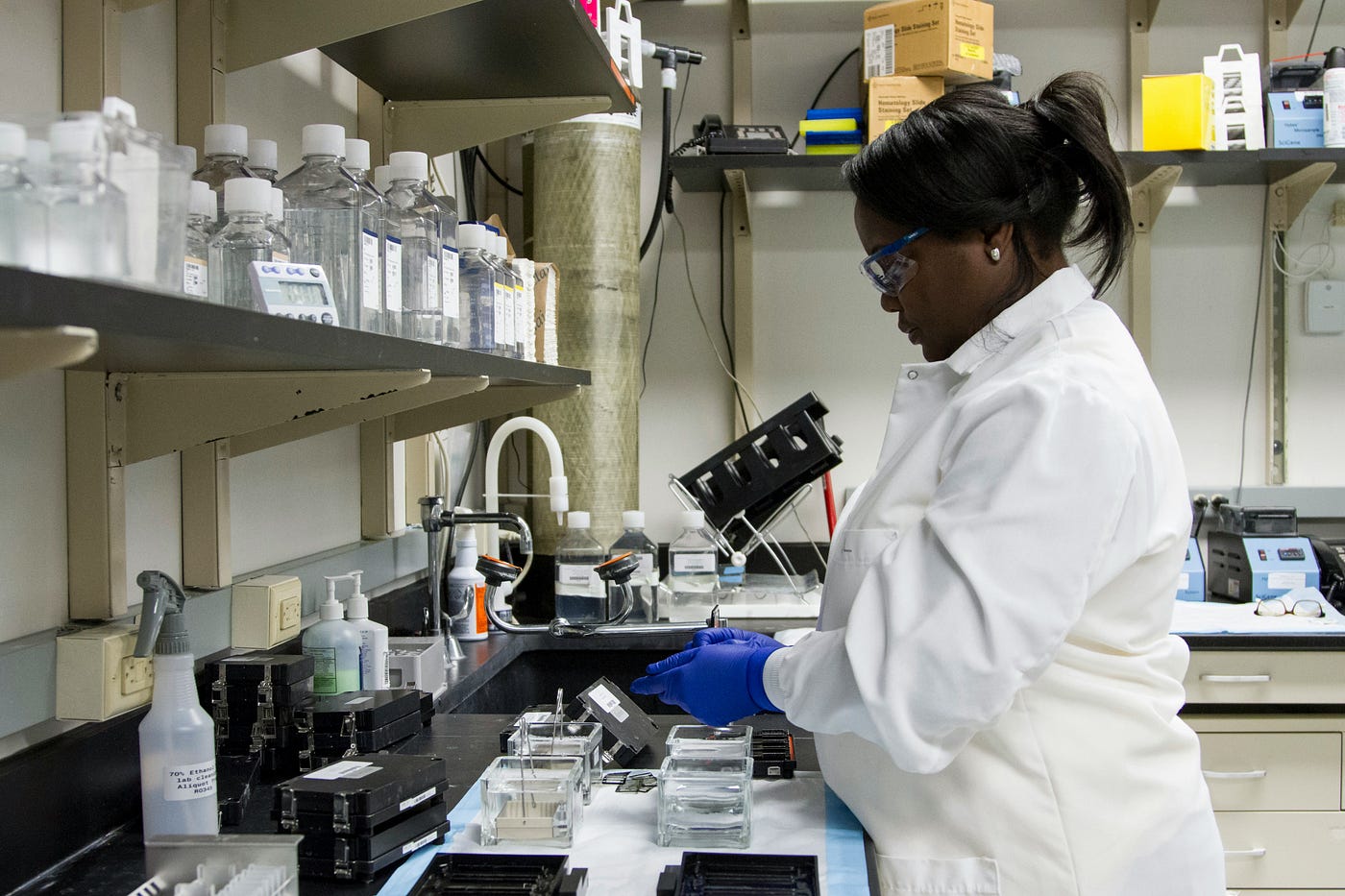
“Epidemiology is ‘the quantitative part of medicine.’”
“Every four years, we add one year to our life expectancy.”
“You live a week and you gain a weekend.”
“That’s why we call it the other pandemic.”
“There are more women who have Alzheimer’s disease than men… but that is because women live longer.”
“I can tell you I know why it is not… It is not because of aging.”
“If you want to protect your brain later on, start very early.”
“Prevention is [the solution].”
“I am hopeful, but we need to defeat the public’s fatalistic attitude.”
“Dementia is not an inevitable part of aging.”
“We have to change our behaviours to avoid it.”
“There have been enormous successes… in preventing heart attack and stroke. The same could apply to dementia.”
“Most people who are in this [field] are a bit skeptical about the diagnosis… in the UK Biobank.”
“There’s quite a bit of room and space for selection bias.”
“A focus on stabilizing blood pressure may be particularly good for the risk [of] dementia and Alzheimer’s disease.”
Last updated May 3, 2025. These terms govern all In-Sight Publishing content—past, present, and future—and supersede any prior notices. In-Sight Publishing by Scott Douglas Jacobsen is licensed under a Creative Commons BY‑NC‑ND 4.0; © In-Sight Publishing by Scott Douglas Jacobsen 2012–Present. All trademarks, performances, databases & branding are owned by their rights holders; no use without permission. Unauthorized copying, modification, framing or public communication is prohibited. External links are not endorsed. Cookies & tracking require consent, and data processing complies with PIPEDA & GDPR; no data from children < 13 (COPPA). Content meets WCAG 2.1 AA under the Accessible Canada Act & is preserved in open archival formats with backups. Excerpts & links require full credit & hyperlink; limited quoting under fair-dealing & fair-use. All content is informational; no liability for errors or omissions: Feedback welcome, and verified errors corrected promptly. For permissions or DMCA notices, email: scott.jacobsen2025@gmail.com. Site use is governed by BC laws; content is “as‑is,” liability limited, users indemnify us; moral, performers’ & database sui generis rights reserved.
Share this:

Author(s): Scott Douglas Jacobsen
Publication (Outlet/Website): Medium (Personal)
Publication Date (yyyy/mm/dd): 2026/02/22

“We estimate more than 100,000 heart attacks will be prevented each year…”
“Those 100,000 people won’t realize they’ve avoided a heart attack…”
“Prevention does not get much attention in the public eye…”
“There is so much great-tasting food, and it’s abundant and in your face all the time.”
“Even active people who exercise a lot aren’t expending the calories their ancestors did.”
“If you put people into a locked metabolic ward…they will lose weight.”
“Many diets are a radical shift from what people normally eat, and this is not sustainable.”
“Even today…people still think that eating fat makes them fat, and they try to find low-fat products.”
“Eating fat doesn’t make you fat.”
“Adopt a healthy diet, and eat just a little bit less.”
“For most people, long-term weight control is hard without some physical activity.”
“I’m a strong advocate of not just aerobic activity but also weight training and calisthenics.”
“The scientific evidence to my eye is meager, but I like the concept.”
“We’ve all had that experience of eating… and not even remembering having eaten it.”
“The study shows quite clearly the risk” associated with being overweight.
“That these are risk factors is ‘old news,’”
“The new part is putting it all together and quantifying the benefits.”
“Over 80% of these heart attacks could be prevented.”
“People [think] that ‘fat is bad’ and ‘low-fat’ is healthy,”
“It’s not that simple.”
“If you do that, you’re robbing obesity of the way it works to raise risk,”
“Women should not be complacent about being overweight…”
“I think physicians could do more,”
“Societal pressures don’t seem to be working very well.”
“However, we observed a significant increase in risk of cardiovascular disease…among occasional snorers…”
“If you look at brain cancer…there’s no suggestion at all of any increase in rates,”
“In science, unlike math, we can’t have absolute certainty…”
“…this is not a health risk I would be concerned about at all.”
“We’ve still got some of last year’s candy in the freezer,”
“I wouldn’t want to give anyone the impression…saturated fat is good for you,”
“We still want people to eat a low saturated fat diet.”
“As a PhD scientist…you really need to understand the clinical issues,”
“I have never discussed beer’s health benefits specifically, and do not propose to do so,”
“There are dozens and dozens of studies showing that individuals with moderate levels of alcohol consumption have lower rates of heart disease…”
Last updated May 3, 2025. These terms govern all In-Sight Publishing content—past, present, and future—and supersede any prior notices. In-Sight Publishing by Scott Douglas Jacobsen is licensed under a Creative Commons BY‑NC‑ND 4.0; © In-Sight Publishing by Scott Douglas Jacobsen 2012–Present. All trademarks, performances, databases & branding are owned by their rights holders; no use without permission. Unauthorized copying, modification, framing or public communication is prohibited. External links are not endorsed. Cookies & tracking require consent, and data processing complies with PIPEDA & GDPR; no data from children < 13 (COPPA). Content meets WCAG 2.1 AA under the Accessible Canada Act & is preserved in open archival formats with backups. Excerpts & links require full credit & hyperlink; limited quoting under fair-dealing & fair-use. All content is informational; no liability for errors or omissions: Feedback welcome, and verified errors corrected promptly. For permissions or DMCA notices, email: scott.jacobsen2025@gmail.com. Site use is governed by BC laws; content is “as‑is,” liability limited, users indemnify us; moral, performers’ & database sui generis rights reserved.
Share this:

Author(s): Scott Douglas Jacobsen
Publication (Outlet/Website): Medium (Personal)
Publication Date (yyyy/mm/dd): 2026/02/20

“When you pick a career, don’t do it because of money… you’ll love it and it could have an impact on the world.”
“Because I knew something about engineering and something about medicine, I was able to put those concepts together to come up with new ideas.”
“You’d think ‘Well, you could combine them,’ and that would give me ideas that nobody at that time had.”
“In fact, really the only thing I had going for me is I hadn’t read that literature!”
“I found over 200 ways to get it to not work.”
“I’m an optimist… I think then and I think now that most things are possible.”
“What can we do with our skills and with our people that can make the biggest impact on the world?”
“Knowing how to deal with failure is an essential key to success.”
“I’ve probably failed hundreds of times before I’ve gotten the success.”
“Successful people are often those who deal well with failure.”
“Nobody before us had done that, and we were told it was impossible.”
“I don’t like to give up.”
“I learned that if you’re not your own champion, nobody else will be.”
“Rather than take it from your house, why don’t you ask the question, ‘What do you really want in this material…?’”
“If you really believe in what you’re trying to do, ‘no’ is not going to stop you.”
“I would not be where I am today without having had so much support and help from so many people.”
“Chemistry just is so fundamental to everything.”
“Reactions can happen, and you can make things that you could never make before.”
Last updated May 3, 2025. These terms govern all In-Sight Publishing content—past, present, and future—and supersede any prior notices. In-Sight Publishing by Scott Douglas Jacobsen is licensed under a Creative Commons BY‑NC‑ND 4.0; © In-Sight Publishing by Scott Douglas Jacobsen 2012–Present. All trademarks, performances, databases & branding are owned by their rights holders; no use without permission. Unauthorized copying, modification, framing or public communication is prohibited. External links are not endorsed. Cookies & tracking require consent, and data processing complies with PIPEDA & GDPR; no data from children < 13 (COPPA). Content meets WCAG 2.1 AA under the Accessible Canada Act & is preserved in open archival formats with backups. Excerpts & links require full credit & hyperlink; limited quoting under fair-dealing & fair-use. All content is informational; no liability for errors or omissions: Feedback welcome, and verified errors corrected promptly. For permissions or DMCA notices, email: scott.jacobsen2025@gmail.com. Site use is governed by BC laws; content is “as‑is,” liability limited, users indemnify us; moral, performers’ & database sui generis rights reserved.
Share this:

Author(s): Scott Douglas Jacobsen
Publication (Outlet/Website): Medium (Personal)
Publication Date (yyyy/mm/dd): 2026/02/19

“Science and technology … are among the most powerful forces ever devised to better the human condition.”
“We see amazing opportunities ahead, but also unprecedented challenges.”
“To succeed, America will need to draw on all of its assets — chief among them, our unrivaled diversity.”
“And it’s this virtuous cycle between fundamental basic science and highly applied medical science, where each drives the other.”
“The world moves farther and faster than most people think.”
“Scholarship is the sum of two things: knowledge and imagination.”
“They said, not a chance, we never imagined that we’d be able, in our lifetime, be able to read out all that information.”
“I think we can enlist the full power of science in the service of justice.”
“Indigenous Traditional Ecological Knowledge … contributes … to our collective understanding of the natural world.”
“In elevating OSTP to the Cabinet, President Biden made clear that science and technology will be central to solving the nation’s most urgent challenges.”
Last updated May 3, 2025. These terms govern all In-Sight Publishing content—past, present, and future—and supersede any prior notices. In-Sight Publishing by Scott Douglas Jacobsen is licensed under a Creative Commons BY‑NC‑ND 4.0; © In-Sight Publishing by Scott Douglas Jacobsen 2012–Present. All trademarks, performances, databases & branding are owned by their rights holders; no use without permission. Unauthorized copying, modification, framing or public communication is prohibited. External links are not endorsed. Cookies & tracking require consent, and data processing complies with PIPEDA & GDPR; no data from children < 13 (COPPA). Content meets WCAG 2.1 AA under the Accessible Canada Act & is preserved in open archival formats with backups. Excerpts & links require full credit & hyperlink; limited quoting under fair-dealing & fair-use. All content is informational; no liability for errors or omissions: Feedback welcome, and verified errors corrected promptly. For permissions or DMCA notices, email: scott.jacobsen2025@gmail.com. Site use is governed by BC laws; content is “as‑is,” liability limited, users indemnify us; moral, performers’ & database sui generis rights reserved.
Share this:

Author(s): Scott Douglas Jacobsen
Publication (Outlet/Website): Medium (Personal)
Publication Date (yyyy/mm/dd): 2026/02/19

“Nobody would be shocked if we found that 99.9 percent of the U.S. population had had a physical illness.”
“We can treat mental disorders as successfully as diabetes or asthma.”
“We can do a good job, but we don’t do a good job.”
“The typical person with a mental illness takes a decade before getting treatment.”
“Everyone is so concerned about the costs of treating mental disorders. But how about the costs of not treating them?”
“Prevention is much less developed in mental disorders than in other areas of medicine.”
“In psychiatry and psychology it is like we are practising 1950s cardiology, where you wait for a heart attack.”
“No one would be shocked if we learned that 99% of people had a physical illness during their life…”
“…we’ve all had the common cold form of mental illness at some point.”
“Half of all lifetime cases start by age 14 years and three fourths by age 24 years.”
“About half of Americans will meet the criteria for a DSM-IV disorder sometime in their life, with first onset usually in childhood or adolescence.”
“Interventions aimed at prevention or early treatment need to focus on youth.”
“Roughly half of all lifetime mental disorders in most studies start by the mid-teens and three quarters by the mid-20s.”
“These surveys consistently show that one-fourth of adults in developed countries experience significant mental health problems each year.”
“The vast majority of people with mental disorders can be treated effectively with existing therapies.”
“Therapeutic success usually requires trial-and-error.”
“We have to do a better job of selecting optimal first line treatments. Lives depend on it.”
“Only about half of people who received treatment met diagnostic criteria for a disorder.”
“Despite increased treatment, most mental disorders remain untreated.”
Last updated May 3, 2025. These terms govern all In-Sight Publishing content—past, present, and future—and supersede any prior notices. In-Sight Publishing by Scott Douglas Jacobsen is licensed under a Creative Commons BY‑NC‑ND 4.0; © In-Sight Publishing by Scott Douglas Jacobsen 2012–Present. All trademarks, performances, databases & branding are owned by their rights holders; no use without permission. Unauthorized copying, modification, framing or public communication is prohibited. External links are not endorsed. Cookies & tracking require consent, and data processing complies with PIPEDA & GDPR; no data from children < 13 (COPPA). Content meets WCAG 2.1 AA under the Accessible Canada Act & is preserved in open archival formats with backups. Excerpts & links require full credit & hyperlink; limited quoting under fair-dealing & fair-use. All content is informational; no liability for errors or omissions: Feedback welcome, and verified errors corrected promptly. For permissions or DMCA notices, email: scott.jacobsen2025@gmail.com. Site use is governed by BC laws; content is “as‑is,” liability limited, users indemnify us; moral, performers’ & database sui generis rights reserved.
Share this:

Author(s): Scott Douglas Jacobsen
Publication (Outlet/Website): Medium (Personal)
Publication Date (yyyy/mm/dd): 2026/02/17

“It must be something that they enjoy. It can’t be punishment.”
“Our endorsement of increased protein and red meat intake is simply wrong and dangerous to the health of Americans.”
“If someone has a good diet then they probably don’t need a supplement.”
“The idea that we need lot of calcium is based primarily on very short-term studies looking at calcium balance over a few weeks,”
“If someone replaces eggs with doughnuts, other refined starches and sugar or saturated fats, I’d rather they eat eggs,”
“The Planetary Health Diet is not a one-size-fits-all approach,”
“It allows for cultural diversity and individual preferences, providing flexibility within clear guidelines to achieve optimal health and sustainability outcomes worldwide.”
“The fat composition of beef is so undesirable for health that it’s very easy to be better than that,”
“The whole system is unimaginably dysfunctional; it’s destroying our environment and our health at the same time,”
“This will save many hundreds, and probably thousands, of premature deaths each year in New York …”
“It was a struggle every step,”
“I was really by myself for a long time.”
“Some food additives are good, some are bad, most are probably neutral,”
“Any one example doesn’t make the case.”
“Dietary cholesterol doesn’t raise blood cholesterol levels very much.”
“No, it’s a myth that eating specifically high-fat foods makes you fat.”
“Our decisions about drinking in the United States shouldn’t be influenced by what alcohol does to tuberculosis,”
“The world’s diets must change dramatically.”
Last updated May 3, 2025. These terms govern all In-Sight Publishing content—past, present, and future—and supersede any prior notices. In-Sight Publishing by Scott Douglas Jacobsen is licensed under a Creative Commons BY‑NC‑ND 4.0; © In-Sight Publishing by Scott Douglas Jacobsen 2012–Present. All trademarks, performances, databases & branding are owned by their rights holders; no use without permission. Unauthorized copying, modification, framing or public communication is prohibited. External links are not endorsed. Cookies & tracking require consent, and data processing complies with PIPEDA & GDPR; no data from children < 13 (COPPA). Content meets WCAG 2.1 AA under the Accessible Canada Act & is preserved in open archival formats with backups. Excerpts & links require full credit & hyperlink; limited quoting under fair-dealing & fair-use. All content is informational; no liability for errors or omissions: Feedback welcome, and verified errors corrected promptly. For permissions or DMCA notices, email: scott.jacobsen2025@gmail.com. Site use is governed by BC laws; content is “as‑is,” liability limited, users indemnify us; moral, performers’ & database sui generis rights reserved.
Share this:

Author(s): Scott Douglas Jacobsen
Publication (Outlet/Website): Medium (Personal)
Publication Date (yyyy/mm/dd): 2026/02/17

“The social world is accumulated history.”
“Capital is accumulated labor (in its materialized form or its ‘incorporated,’ embodied form).”
“Cultural capital can exist in three forms: in the embodied state.”
“Like the acquisition of a muscular physique or a suntan, it cannot be done at second hand.”
“This embodied capital … cannot be transmitted instantaneously.”
“Social capital is the aggregate of the actual or potential resources which are linked to possession of a durable network.”
“The volume of the social capital possessed by a given agent thus depends on the size of the network of connections he can effectively mobilize.”
“It exerts a multiplier effect on the capital he possesses in his own right.”
“Systems of durable, transposable dispositions.”
“Structured structures predisposed to function as structuring structures.”
“Taste classifies, and it classifies the classifier.”
“Symbolic power is a power of constructing reality…”
“The function of sociology, as of every science, is to reveal that which is hidden.”
“The opinion poll is, at the present time, an instrument of political action.”
“Its most important function is perhaps to impose the illusion that a public opinion exists.”
“Complete power is only realized when it is fully concealed.”
“Yesterday said ‘God is on our side’ today says ‘Public Opinion is on our side.’”
“Symbolic power is that invisible power which can be exercised only with the complicity of those who do not want to know…”
“All pedagogic action [PA] is, objectively, symbolic violence insofar as it is the imposition of a cultural arbitrary by an arbitrary power.”
“Symbolic violence can do what political and police violence can do, but more efficiently.”
Last updated May 3, 2025. These terms govern all In-Sight Publishing content—past, present, and future—and supersede any prior notices. In-Sight Publishing by Scott Douglas Jacobsen is licensed under a Creative Commons BY‑NC‑ND 4.0; © In-Sight Publishing by Scott Douglas Jacobsen 2012–Present. All trademarks, performances, databases & branding are owned by their rights holders; no use without permission. Unauthorized copying, modification, framing or public communication is prohibited. External links are not endorsed. Cookies & tracking require consent, and data processing complies with PIPEDA & GDPR; no data from children < 13 (COPPA). Content meets WCAG 2.1 AA under the Accessible Canada Act & is preserved in open archival formats with backups. Excerpts & links require full credit & hyperlink; limited quoting under fair-dealing & fair-use. All content is informational; no liability for errors or omissions: Feedback welcome, and verified errors corrected promptly. For permissions or DMCA notices, email: scott.jacobsen2025@gmail.com. Site use is governed by BC laws; content is “as‑is,” liability limited, users indemnify us; moral, performers’ & database sui generis rights reserved.
Share this:

Author(s): Scott Douglas Jacobsen
Publication (Outlet/Website): Medium (Personal)
Publication Date (yyyy/mm/dd): 2026/02/15

“For truth does not oppose truth, but rather agrees with and bears witness to it.”
“Since the law is true, … demonstrative reasoning does not lead to disagreement with what the law sets down.”
“We seek those statements that correspond to the truth, even if they contradict the opinions of people who belong to the art.”
“Because of the universality of the teaching of the Precious Book … this religion is common to all mankind.”
“A miracle [is] merely ‘an external sign’ of prophecy.”
“A miracle alone … is at best complementary, and an argument from miracles is merely persuasive or rhetorical.”
“Our intention in these matters is only the rules governing the law, not an enumeration of the branches, which would have no end.”
“Apparently, we do not have any of the premises that bring us certainty in many of these pursuits.”
“But even so we must try, insofar as we are able.”
“The goal of this art is not to heal without fail … but rather to act appropriately.”
“It is this part of medicine that I believe restrains me from being perfect in this art.”
“The Qur’an…is eternal but the words denoting it are created by God Almighty, not by men.”
Last updated May 3, 2025. These terms govern all In-Sight Publishing content—past, present, and future—and supersede any prior notices. In-Sight Publishing by Scott Douglas Jacobsen is licensed under a Creative Commons BY‑NC‑ND 4.0; © In-Sight Publishing by Scott Douglas Jacobsen 2012–Present. All trademarks, performances, databases & branding are owned by their rights holders; no use without permission. Unauthorized copying, modification, framing or public communication is prohibited. External links are not endorsed. Cookies & tracking require consent, and data processing complies with PIPEDA & GDPR; no data from children < 13 (COPPA). Content meets WCAG 2.1 AA under the Accessible Canada Act & is preserved in open archival formats with backups. Excerpts & links require full credit & hyperlink; limited quoting under fair-dealing & fair-use. All content is informational; no liability for errors or omissions: Feedback welcome, and verified errors corrected promptly. For permissions or DMCA notices, email: scott.jacobsen2025@gmail.com. Site use is governed by BC laws; content is “as‑is,” liability limited, users indemnify us; moral, performers’ & database sui generis rights reserved.
Share this:

Author(s): Scott Douglas Jacobsen
Publication (Outlet/Website): Medium (Personal)
Publication Date (yyyy/mm/dd): 2026/02/16

“Felicity is the good which is pursued for its own sake … and there is nothing greater beyond it for man to obtain.”
“Religion is opinions and actions … prescribed for a community by their first ruler.”
“The philosophers in the city are those who know these things through strict demonstrations and their own insight;”
“Theoretical reason … has as its purpose to bring man to felicity.”
“ultimate happiness, which is the good without qualification.”
“It is what is preferred and yearned after for its own sake … for the sake of something else.”
“the one whose inhabitants mutually assist one another … the final perfection, which is ultimate happiness.”
“The king in truth is the one whose purpose and intention … are to provide … true happiness.”
“they are not parts of the city by their inborn nature alone but rather by the voluntary habits which they acquire”
“these things can be known in two ways … as they really are … through affinity and symbolic representation.”
“The ‘ignorant’ city is the city whose inhabitants do not know true felicity”
“each of these is a kind of felicity … the sum total of all of them.”
“the ruler of the city is the most perfect part of the city in his specific qualification”
Last updated May 3, 2025. These terms govern all In-Sight Publishing content—past, present, and future—and supersede any prior notices. In-Sight Publishing by Scott Douglas Jacobsen is licensed under a Creative Commons BY‑NC‑ND 4.0; © In-Sight Publishing by Scott Douglas Jacobsen 2012–Present. All trademarks, performances, databases & branding are owned by their rights holders; no use without permission. Unauthorized copying, modification, framing or public communication is prohibited. External links are not endorsed. Cookies & tracking require consent, and data processing complies with PIPEDA & GDPR; no data from children < 13 (COPPA). Content meets WCAG 2.1 AA under the Accessible Canada Act & is preserved in open archival formats with backups. Excerpts & links require full credit & hyperlink; limited quoting under fair-dealing & fair-use. All content is informational; no liability for errors or omissions: Feedback welcome, and verified errors corrected promptly. For permissions or DMCA notices, email: scott.jacobsen2025@gmail.com. Site use is governed by BC laws; content is “as‑is,” liability limited, users indemnify us; moral, performers’ & database sui generis rights reserved.
Share this:

Author(s): Scott Douglas Jacobsen
Publication (Outlet/Website): Medium (Personal)
Publication Date (yyyy/mm/dd): 2026/02/15

“…have never inhaled the perfume of real existence at all.”
“Until my God guided me and showed me his proof.”
“Every simple reality is, by virtue of its unity, all things.”
“The soul is corporeal in its origination and spiritual [or incorporeal] in its survival.”
“Knowledge is the mode of the existence of something that is disengaged from matter.”
“Knowledge of self is nothing but the self itself.”
“The reality of every thing is its existence”
“How does then knowledge become clear by anything other than itself?”
Last updated May 3, 2025. These terms govern all In-Sight Publishing content—past, present, and future—and supersede any prior notices. In-Sight Publishing by Scott Douglas Jacobsen is licensed under a Creative Commons BY‑NC‑ND 4.0; © In-Sight Publishing by Scott Douglas Jacobsen 2012–Present. All trademarks, performances, databases & branding are owned by their rights holders; no use without permission. Unauthorized copying, modification, framing or public communication is prohibited. External links are not endorsed. Cookies & tracking require consent, and data processing complies with PIPEDA & GDPR; no data from children < 13 (COPPA). Content meets WCAG 2.1 AA under the Accessible Canada Act & is preserved in open archival formats with backups. Excerpts & links require full credit & hyperlink; limited quoting under fair-dealing & fair-use. All content is informational; no liability for errors or omissions: Feedback welcome, and verified errors corrected promptly. For permissions or DMCA notices, email: scott.jacobsen2025@gmail.com. Site use is governed by BC laws; content is “as‑is,” liability limited, users indemnify us; moral, performers’ & database sui generis rights reserved.
Share this:

Author(s): Scott Douglas Jacobsen
Publication (Outlet/Website): Medium (Personal)
Publication Date (yyyy/mm/dd): 2026/02/15

“Truth is that which is connected with the truthful master.”
“Falsehood is that which is severed from him.”
“Every science has a subject-matter.”
“Metaphysics is that in which all sciences culminate.”
“Prospered has he who purifies it.”
“و وجوده لطف، و تصرّفه لطف آخر، و غيبته منّا.”
“Whose reality no intellect can fathom.”
“After writing the book entitled Nasirian Ethics.”
“Preoccupations and vain obstacles did not permit him.”
Last updated May 3, 2025. These terms govern all In-Sight Publishing content—past, present, and future—and supersede any prior notices. In-Sight Publishing by Scott Douglas Jacobsen is licensed under a Creative Commons BY‑NC‑ND 4.0; © In-Sight Publishing by Scott Douglas Jacobsen 2012–Present. All trademarks, performances, databases & branding are owned by their rights holders; no use without permission. Unauthorized copying, modification, framing or public communication is prohibited. External links are not endorsed. Cookies & tracking require consent, and data processing complies with PIPEDA & GDPR; no data from children < 13 (COPPA). Content meets WCAG 2.1 AA under the Accessible Canada Act & is preserved in open archival formats with backups. Excerpts & links require full credit & hyperlink; limited quoting under fair-dealing & fair-use. All content is informational; no liability for errors or omissions: Feedback welcome, and verified errors corrected promptly. For permissions or DMCA notices, email: scott.jacobsen2025@gmail.com. Site use is governed by BC laws; content is “as‑is,” liability limited, users indemnify us; moral, performers’ & database sui generis rights reserved.
Share this:

Author(s): Scott Douglas Jacobsen
Publication (Outlet/Website): Medium (Personal)
Publication Date (yyyy/mm/dd): 2026/02/12
“However, it is an established fact that the Book of Allah, the Exalted, takes precedence over the traditions and reports.”
“Hence it should be the touchstone for determining the genuine reports and the fabrications.”
“(We believe) that the correct doctrine is a middle course between these two extremes.”
“Everything that is not prohibited by nass (i.e., the specific ordinances of religion) is permitted…”
“Things according to the dictates of reason fall into two categories…”
“And even if we lack traditions, then the proof of reason is, indeed, sufficient in this respect.”
“Justice is the recompense of an action as it deserves, and injustice is the prevention of what is due.”
“The word yad has another interpretation which denotes grace.”
“Here, by ‘The two hands’, are meant the two favours of this life and the life hereafter.”
“Thus, all worship Him to gain His grace and they do not serve Him in vain…”
Last updated May 3, 2025. These terms govern all In-Sight Publishing content—past, present, and future—and supersede any prior notices. In-Sight Publishing by Scott Douglas Jacobsen is licensed under a Creative Commons BY‑NC‑ND 4.0; © In-Sight Publishing by Scott Douglas Jacobsen 2012–Present. All trademarks, performances, databases & branding are owned by their rights holders; no use without permission. Unauthorized copying, modification, framing or public communication is prohibited. External links are not endorsed. Cookies & tracking require consent, and data processing complies with PIPEDA & GDPR; no data from children < 13 (COPPA). Content meets WCAG 2.1 AA under the Accessible Canada Act & is preserved in open archival formats with backups. Excerpts & links require full credit & hyperlink; limited quoting under fair-dealing & fair-use. All content is informational; no liability for errors or omissions: Feedback welcome, and verified errors corrected promptly. For permissions or DMCA notices, email: scott.jacobsen2025@gmail.com. Site use is governed by BC laws; content is “as‑is,” liability limited, users indemnify us; moral, performers’ & database sui generis rights reserved.
Share this:

Author(s): Scott Douglas Jacobsen
Publication (Outlet/Website): Medium (Personal)
Publication Date (yyyy/mm/dd): 2026/02/11

“It was the effect of a light which God Most High cast into my breast. And that light is the key to most knowledge.”
“Every knowledge unaccompanied by safety from error is not sure and certain knowledge.”
“Nature is totally subject to God Most High: it does not act of itself but is used as an instrument by its Creator.”
“The door to the knowledge of God will be opened to a man first of all, when he knows his own soul.”
“That the soul is like a clean mirror, into which whenever a person looks, he may there see God.”
“The ruin of the soul consists in the predominance of some other love over the love of God, which veils the divine love.”
“Man ought to make every possible exertion to gain the knowledge of God, because the knowledge of God necessitates the love of God.”
“The necessities of the constitution of the spirit are to know God and to contemplate his beauty and excellence.”
“The stars and the constellations are subject to the angels, and the angels can do nothing without the command of God.”
“The knowledge of what [the spirit] is in reality, is the key to the knowledge of God.”
Photo by Ashkan Forouzani on Unsplash
Last updated May 3, 2025. These terms govern all In-Sight Publishing content—past, present, and future—and supersede any prior notices. In-Sight Publishing by Scott Douglas Jacobsen is licensed under a Creative Commons BY‑NC‑ND 4.0; © In-Sight Publishing by Scott Douglas Jacobsen 2012–Present. All trademarks, performances, databases & branding are owned by their rights holders; no use without permission. Unauthorized copying, modification, framing or public communication is prohibited. External links are not endorsed. Cookies & tracking require consent, and data processing complies with PIPEDA & GDPR; no data from children < 13 (COPPA). Content meets WCAG 2.1 AA under the Accessible Canada Act & is preserved in open archival formats with backups. Excerpts & links require full credit & hyperlink; limited quoting under fair-dealing & fair-use. All content is informational; no liability for errors or omissions: Feedback welcome, and verified errors corrected promptly. For permissions or DMCA notices, email: scott.jacobsen2025@gmail.com. Site use is governed by BC laws; content is “as‑is,” liability limited, users indemnify us; moral, performers’ & database sui generis rights reserved.
Share this:

Author(s): Scott Douglas Jacobsen
Publication (Outlet/Website): Medium (Personal)
Publication Date (yyyy/mm/dd): 2026/02/11
“The Prophetic Office of the Prophet … is built upon this miracle.”
“The miracle of the Qur’an remains effective, everlasting, and challenging until the Day of Resurrection.”
“Those miracles all belonged to special times, special circumstances, and concerned special individuals.”
“The Qur’an is miraculously inimitable because it has come forth with the most eloquent words.”
“Compounded in the most beautiful composition.”
“Containing the most valid ideas such as believing in the unity of God.”
“He is ascended above His Throne, just as He informed [us] in His Book.”
“If He was in every place, then He would have been in a man’s stomach.”
Photo by Ashkan Forouzani on Unsplash
Last updated May 3, 2025. These terms govern all In-Sight Publishing content—past, present, and future—and supersede any prior notices. In-Sight Publishing by Scott Douglas Jacobsen is licensed under a Creative Commons BY‑NC‑ND 4.0; © In-Sight Publishing by Scott Douglas Jacobsen 2012–Present. All trademarks, performances, databases & branding are owned by their rights holders; no use without permission. Unauthorized copying, modification, framing or public communication is prohibited. External links are not endorsed. Cookies & tracking require consent, and data processing complies with PIPEDA & GDPR; no data from children < 13 (COPPA). Content meets WCAG 2.1 AA under the Accessible Canada Act & is preserved in open archival formats with backups. Excerpts & links require full credit & hyperlink; limited quoting under fair-dealing & fair-use. All content is informational; no liability for errors or omissions: Feedback welcome, and verified errors corrected promptly. For permissions or DMCA notices, email: scott.jacobsen2025@gmail.com. Site use is governed by BC laws; content is “as‑is,” liability limited, users indemnify us; moral, performers’ & database sui generis rights reserved.
Share this:

Author(s): Scott Douglas Jacobsen
Publication (Outlet/Website): Medium (Personal)
Publication Date (yyyy/mm/dd): 2026/02/10

“None knows God except God.”
“Know that there are two types of gnosis (ma‘rifa): indirect (‘aradi) and direct (dhati).”
“What we have negated is only the direct gnosis of God, so bear this nuance in mind lest you fall into error.”
“All praise is for God entails that He was ever Praiseworthy prior to anyone’s praise or thanks.”
“All praise is for God means that praise is His right and possession.”
“Praise expresses an attribute of the heart.”
“The true Merciful One is He Who created that motivation in the heart, and that is none but God.”
“Thus whoever worships God seeking [primarily] reward … [is] worshipping the reward.”
“Whoever lowers himself for God’s sake, God raises him.”
“Anyone who comes to know the benefits of worship will find delight in performing it, and find it difficult to be away from it.”
Photo by Abdullah Arif on Unsplash
Last updated May 3, 2025. These terms govern all In-Sight Publishing content—past, present, and future—and supersede any prior notices. In-Sight Publishing by Scott Douglas Jacobsen is licensed under a Creative Commons BY‑NC‑ND 4.0; © In-Sight Publishing by Scott Douglas Jacobsen 2012–Present. All trademarks, performances, databases & branding are owned by their rights holders; no use without permission. Unauthorized copying, modification, framing or public communication is prohibited. External links are not endorsed. Cookies & tracking require consent, and data processing complies with PIPEDA & GDPR; no data from children < 13 (COPPA). Content meets WCAG 2.1 AA under the Accessible Canada Act & is preserved in open archival formats with backups. Excerpts & links require full credit & hyperlink; limited quoting under fair-dealing & fair-use. All content is informational; no liability for errors or omissions: Feedback welcome, and verified errors corrected promptly. For permissions or DMCA notices, email: scott.jacobsen2025@gmail.com. Site use is governed by BC laws; content is “as‑is,” liability limited, users indemnify us; moral, performers’ & database sui generis rights reserved.
Share this:

Author(s): Scott Douglas Jacobsen
Publication (Outlet/Website): Medium (Personal)
Publication Date (yyyy/mm/dd): 2026/02/10

“My heart has become capable of every form.”
“We return what is God’s to God. There is nothing found and nothing making found except God.”
“The True does not accept boundary; and nothing is veiled from Him, and nothing veils Him.”
“The human being is the ‘child of one’s moment’.”
“The Divine rule is according to what the moment provides.”
“There is no owner but God.”
“Everyone is a slave of God.”
“God is a gentle friend to the faithful.”
“The beginning never stops.”
“When the human being says to himself that he should do something good… let him intend… a nearing to God.”
Photo by Sidik Kurniawan on Unsplash
Last updated May 3, 2025. These terms govern all In-Sight Publishing content—past, present, and future—and supersede any prior notices. In-Sight Publishing by Scott Douglas Jacobsen is licensed under a Creative Commons BY‑NC‑ND 4.0; © In-Sight Publishing by Scott Douglas Jacobsen 2012–Present. All trademarks, performances, databases & branding are owned by their rights holders; no use without permission. Unauthorized copying, modification, framing or public communication is prohibited. External links are not endorsed. Cookies & tracking require consent, and data processing complies with PIPEDA & GDPR; no data from children < 13 (COPPA). Content meets WCAG 2.1 AA under the Accessible Canada Act & is preserved in open archival formats with backups. Excerpts & links require full credit & hyperlink; limited quoting under fair-dealing & fair-use. All content is informational; no liability for errors or omissions: Feedback welcome, and verified errors corrected promptly. For permissions or DMCA notices, email: scott.jacobsen2025@gmail.com. Site use is governed by BC laws; content is “as‑is,” liability limited, users indemnify us; moral, performers’ & database sui generis rights reserved.
Share this:

Author(s): Scott Douglas Jacobsen
Publication (Outlet/Website): Medium (Personal)
Publication Date (yyyy/mm/dd): 2026/02/10

“In Islam, the word ibadah, or worship is a comprehensive term referring to everything, inward and outward that Allah Loves and is Pleased with.”
“The world will endure with justice and unbelief, but it will not endure with oppression and Islam.”
“What can my enemies do to me? My paradise and my garden are in my heart wherever I go.”
“Truly, there is a Heaven in this world, [and] whoever does not enter it, will not enter the Heaven of the next world.”
“If I am imprisoned, it is seclusion for worship.”
“If I am killed, it is martyrdom.”
“If they expel me from my land, it is tourism.”
“Among the fundamentals of Ahl al-Sunnah is to confirm the miracles of the saints (al-Awliyā’).”
“Part of faith in Allah is to have faith… without distortion and negation, and without asking ‘how’ or likening Him to something else.”
“This is the creed of the saved and victorious group until the establishment of the Hour, Ahl al-Sunnah wal Jamā’ah.”
Photo by The Dancing Rain on Unsplash
Last updated May 3, 2025. These terms govern all In-Sight Publishing content—past, present, and future—and supersede any prior notices. In-Sight Publishing by Scott Douglas Jacobsen is licensed under a Creative Commons BY‑NC‑ND 4.0; © In-Sight Publishing by Scott Douglas Jacobsen 2012–Present. All trademarks, performances, databases & branding are owned by their rights holders; no use without permission. Unauthorized copying, modification, framing or public communication is prohibited. External links are not endorsed. Cookies & tracking require consent, and data processing complies with PIPEDA & GDPR; no data from children < 13 (COPPA). Content meets WCAG 2.1 AA under the Accessible Canada Act & is preserved in open archival formats with backups. Excerpts & links require full credit & hyperlink; limited quoting under fair-dealing & fair-use. All content is informational; no liability for errors or omissions: Feedback welcome, and verified errors corrected promptly. For permissions or DMCA notices, email: scott.jacobsen2025@gmail.com. Site use is governed by BC laws; content is “as‑is,” liability limited, users indemnify us; moral, performers’ & database sui generis rights reserved.
Share this:

Author(s): Scott Douglas Jacobsen
Publication (Outlet/Website): Medium (Personal)
Publication Date (yyyy/mm/dd): 2026/02/08
“It is compulsory upon [each individual] to choose their faith by themselves and [as a result] know the truth.”
“Faith is tested and recognised by two methods: tradition … and the intellect.”
“This proves that one is not excused for performing Taqlfd [following someone without knowing the evidence].”
“The one who relies on proof for [issues relating to] his faith is the one who is following the truth.”
“what we follow is the truth and what others follow is falsehood.”
“Shaykh [Abu Mansur] stated that both of these opinions are incorrect and are not acceptable in uncovering the truth.”
“The proof that the creator of the Universe is one and not more than that is based on reason as well as tradition.”
“There is no strength to fin d the truth except bj God.”
“God is known not by the senses.”
“It is proven that God knew it before it existed, when there was nothing other than Him.”
Photo by Sidik Kurniawan on Unsplash
Last updated May 3, 2025. These terms govern all In-Sight Publishing content—past, present, and future—and supersede any prior notices. In-Sight Publishing by Scott Douglas Jacobsen is licensed under a Creative Commons BY‑NC‑ND 4.0; © In-Sight Publishing by Scott Douglas Jacobsen 2012–Present. All trademarks, performances, databases & branding are owned by their rights holders; no use without permission. Unauthorized copying, modification, framing or public communication is prohibited. External links are not endorsed. Cookies & tracking require consent, and data processing complies with PIPEDA & GDPR; no data from children < 13 (COPPA). Content meets WCAG 2.1 AA under the Accessible Canada Act & is preserved in open archival formats with backups. Excerpts & links require full credit & hyperlink; limited quoting under fair-dealing & fair-use. All content is informational; no liability for errors or omissions: Feedback welcome, and verified errors corrected promptly. For permissions or DMCA notices, email: scott.jacobsen2025@gmail.com. Site use is governed by BC laws; content is “as‑is,” liability limited, users indemnify us; moral, performers’ & database sui generis rights reserved.
Share this:

Author(s): Scott Douglas Jacobsen
Publication (Outlet/Website): Medium (Personal)
Publication Date (yyyy/mm/dd): 2026/02/08

“The Necessary Existent must be one in [its] entirety… and one in number…”
“The true nature of the Necessary Existent can in no manner be shared by another.”
“The existence of the Necessary Existent cannot at all be a composite, [deriving] from multiplicity.”
“That the Necessary Existent has no cause is obvious.”
“He must… look attentively as to whether he will affirm that he exists… He will not have doubts about whether or not to do so.”
“There is no doubt that he would affirm his own existence, although not affirming the reality of any of his limbs…”
“Medicine is the science that teaches us the conditions of the human body, in terms of what is healthy and what is not.”
“The goal is to protect health when it exists and recover it when it is lost.”
“Hence, all things other than the One Necessary Existent are, in themselves, false.”
“The statements most deserving of being [called] true are those whose truth is permanent…”
Photo by Syed Aoun Abbas on Unsplash
Last updated May 3, 2025. These terms govern all In-Sight Publishing content—past, present, and future—and supersede any prior notices. In-Sight Publishing by Scott Douglas Jacobsen is licensed under a Creative Commons BY‑NC‑ND 4.0; © In-Sight Publishing by Scott Douglas Jacobsen 2012–Present. All trademarks, performances, databases & branding are owned by their rights holders; no use without permission. Unauthorized copying, modification, framing or public communication is prohibited. External links are not endorsed. Cookies & tracking require consent, and data processing complies with PIPEDA & GDPR; no data from children < 13 (COPPA). Content meets WCAG 2.1 AA under the Accessible Canada Act & is preserved in open archival formats with backups. Excerpts & links require full credit & hyperlink; limited quoting under fair-dealing & fair-use. All content is informational; no liability for errors or omissions: Feedback welcome, and verified errors corrected promptly. For permissions or DMCA notices, email: scott.jacobsen2025@gmail.com. Site use is governed by BC laws; content is “as‑is,” liability limited, users indemnify us; moral, performers’ & database sui generis rights reserved.
Share this:

Author(s): Scott Douglas Jacobsen
Publication (Outlet/Website): Medium (Personal)
Publication Date (yyyy/mm/dd): 2026/02/07
“We say that God is seated on His Throne, as He has said, ‘The Merciful is seated on the Throne.’”
“Whosoever questions us and says, ‘Do you believe God has a face?’, the answer is: We believe it.”
“If we were asked, ‘Do you believe God has two hands?’, the answer is: We believe it.”
“The command of God is His word, and this makes it necessarily true that the Word of God is uncreated.”
“The Qur’ān is uncreated, because it is the Word of God and God does not say to His Word, ‘Be!’”
“It is impossible for the Word of God to be a word belonging to a created thing.”
“This proves that God is upon His Throne above the heaven.”
“We do not reach Him with the sight of the eyes … but that does not deny … those who have sight behold Him.”
“Muslims have agreed unanimously, namely, that what God wishes to be, is, and what He does not wish, is not.”
“God has taught His Prophet the religious laws … but He cannot teach him what He does not know.”
“The meaning of God’s words ‘before him whom I have created with My two hands’ is an assertion of the existence of two hands.”
“Work your works, for everyone does easily that for which he was created.”
Photo by The Dancing Rain on Unsplash
Last updated May 3, 2025. These terms govern all In-Sight Publishing content—past, present, and future—and supersede any prior notices. In-Sight Publishing by Scott Douglas Jacobsen is licensed under a Creative Commons BY‑NC‑ND 4.0; © In-Sight Publishing by Scott Douglas Jacobsen 2012–Present. All trademarks, performances, databases & branding are owned by their rights holders; no use without permission. Unauthorized copying, modification, framing or public communication is prohibited. External links are not endorsed. Cookies & tracking require consent, and data processing complies with PIPEDA & GDPR; no data from children < 13 (COPPA). Content meets WCAG 2.1 AA under the Accessible Canada Act & is preserved in open archival formats with backups. Excerpts & links require full credit & hyperlink; limited quoting under fair-dealing & fair-use. All content is informational; no liability for errors or omissions: Feedback welcome, and verified errors corrected promptly. For permissions or DMCA notices, email: scott.jacobsen2025@gmail.com. Site use is governed by BC laws; content is “as‑is,” liability limited, users indemnify us; moral, performers’ & database sui generis rights reserved.
Share this:

Author(s): Scott Douglas Jacobsen
Publication (Outlet/Website): Medium (Personal)
Publication Date (yyyy/mm/dd): 2026/02/07

“It was the effect of a light which God Most High cast into my breast. And that light is the key to most knowledge.”
“Every knowledge unaccompanied by safety from error is not sure and certain knowledge.”
“Nature is totally subject to God Most High: it does not act of itself but is used as an instrument by its Creator.”
“The door to the knowledge of God will be opened to a man first of all, when he knows his own soul.”
“That the soul is like a clean mirror, into which whenever a person looks, he may there see God.”
“The ruin of the soul consists in the predominance of some other love over the love of God, which veils the divine love.”
“Man ought to make every possible exertion to gain the knowledge of God, because the knowledge of God necessitates the love of God.”
“The necessities of the constitution of the spirit are to know God and to contemplate his beauty and excellence.”
“The stars and the constellations are subject to the angels, and the angels can do nothing without the command of God.”
“The knowledge of what [the spirit] is in reality, is the key to the knowledge of God.”
Photo by Malik Shibly on Unsplash
Last updated May 3, 2025. These terms govern all In-Sight Publishing content—past, present, and future—and supersede any prior notices. In-Sight Publishing by Scott Douglas Jacobsen is licensed under a Creative Commons BY‑NC‑ND 4.0; © In-Sight Publishing by Scott Douglas Jacobsen 2012–Present. All trademarks, performances, databases & branding are owned by their rights holders; no use without permission. Unauthorized copying, modification, framing or public communication is prohibited. External links are not endorsed. Cookies & tracking require consent, and data processing complies with PIPEDA & GDPR; no data from children < 13 (COPPA). Content meets WCAG 2.1 AA under the Accessible Canada Act & is preserved in open archival formats with backups. Excerpts & links require full credit & hyperlink; limited quoting under fair-dealing & fair-use. All content is informational; no liability for errors or omissions: Feedback welcome, and verified errors corrected promptly. For permissions or DMCA notices, email: scott.jacobsen2025@gmail.com. Site use is governed by BC laws; content is “as‑is,” liability limited, users indemnify us; moral, performers’ & database sui generis rights reserved.
Share this:

Author(s): Scott Douglas Jacobsen
Publication (Outlet/Website): Medium (Personal)
Publication Date (yyyy/mm/dd): 2026/02/05

“Love is a good disposition of the soul by which one prefers no being to the knowledge of God.”
“Love is a holy state of the soul, disposing it to value the knowledge of God above all created things.”
“He who loves God will certainly love his neighbor as well.”
“Detachment begets love. Hope in God begets detachment.”
“The church of God is like a human being, having the sanctuary as its soul, and the nave as its body.”
“Conversely, the human being is a mystical church.”
“…and God became man in order to save lost man.”
“…the blessed end for which all things are ordained.”
“It is the mystery which circumscribes all the ages.”
“For the Word of God wills always and in all things to accomplish the mystery of his embodiment.”
Photo by Aaron Burden on Unsplash
Last updated May 3, 2025. These terms govern all In-Sight Publishing content—past, present, and future—and supersede any prior notices. In-Sight Publishing by Scott Douglas Jacobsen is licensed under a Creative Commons BY‑NC‑ND 4.0; © In-Sight Publishing by Scott Douglas Jacobsen 2012–Present. All trademarks, performances, databases & branding are owned by their rights holders; no use without permission. Unauthorized copying, modification, framing or public communication is prohibited. External links are not endorsed. Cookies & tracking require consent, and data processing complies with PIPEDA & GDPR; no data from children < 13 (COPPA). Content meets WCAG 2.1 AA under the Accessible Canada Act & is preserved in open archival formats with backups. Excerpts & links require full credit & hyperlink; limited quoting under fair-dealing & fair-use. All content is informational; no liability for errors or omissions: Feedback welcome, and verified errors corrected promptly. For permissions or DMCA notices, email: scott.jacobsen2025@gmail.com. Site use is governed by BC laws; content is “as‑is,” liability limited, users indemnify us; moral, performers’ & database sui generis rights reserved.
Share this:

Author(s): Scott Douglas Jacobsen
Publication (Outlet/Website): Medium (Personal)
Publication Date (yyyy/mm/dd): 2026/02/05

“For He was made man that we might be made God.”
“He assumed a human body, in order that in it death might once for all be destroyed.”
“That men might be renewed according to the Image.”
“The Image of the Father only was sufficient for this need.”
“He manifested Himself by a body that we might receive the idea of the unseen Father.”
“He endured the insolence of men that we might inherit immortality.”
“Wherefore He is very God, existing one in essence with the very Father.”
“He that hath seen Me, hath seen the Father.”
“The Holy Spirit likewise… cannot be a creature, and it is impious to call him so.”
“Death has become like a tyrant who has been completely conquered.”
Photo by abdullah ali on Unsplash
Last updated May 3, 2025. These terms govern all In-Sight Publishing content—past, present, and future—and supersede any prior notices. In-Sight Publishing by Scott Douglas Jacobsen is licensed under a Creative Commons BY‑NC‑ND 4.0; © In-Sight Publishing by Scott Douglas Jacobsen 2012–Present. All trademarks, performances, databases & branding are owned by their rights holders; no use without permission. Unauthorized copying, modification, framing or public communication is prohibited. External links are not endorsed. Cookies & tracking require consent, and data processing complies with PIPEDA & GDPR; no data from children < 13 (COPPA). Content meets WCAG 2.1 AA under the Accessible Canada Act & is preserved in open archival formats with backups. Excerpts & links require full credit & hyperlink; limited quoting under fair-dealing & fair-use. All content is informational; no liability for errors or omissions: Feedback welcome, and verified errors corrected promptly. For permissions or DMCA notices, email: scott.jacobsen2025@gmail.com. Site use is governed by BC laws; content is “as‑is,” liability limited, users indemnify us; moral, performers’ & database sui generis rights reserved.
Share this:

Author(s): Scott Douglas Jacobsen
Publication (Outlet/Website): Medium (Personal)
Publication Date (yyyy/mm/dd): 2026/01/30

“I honestly believe that history will be kinder to me than the contemporary media, or for that matter, the Opposition parties in Parliament.”
“I do not believe that I have been a weak Prime Minister. That is for historians to judge.”
“But if by ‘strong Prime Minister’, you mean that you preside over a mass massacre of innocent citizens on the streets of Ahmedabad, that is the measure of strength, I do not believe that sort of strength this country needs, least of all, in its Prime Minister.”
“I do not minimise the difficulties that lie ahead on the long and arduous journey on which we have embarked.”
“But as Victor Hugo once said, ‘No power on earth can stop an idea whose time has come’.”
“I suggest to this august House that the emergence of India as a major economic power in the world happens to be one such idea.”
“To achieve our objective of inclusive growth, we need to pay much greater attention to education, health care and rural development focusing particularly on the needs of the poor — Scheduled Castes, Scheduled Tribes and Minorities.”
“We would like to make globalization a win-win game.”
“Globalisation must be accompanied by a more balanced and equitable distribution of its benefits.”
“If there is an ‘idea of India’ by which India should be defined, it is the idea of an inclusive, open, multi-cultural, multi-ethnic, multi-lingual society.”
Photo by Nastaran Taghipour on Unsplash
Last updated May 3, 2025. These terms govern all In-Sight Publishing content—past, present, and future—and supersede any prior notices. In-Sight Publishing by Scott Douglas Jacobsen is licensed under a Creative Commons BY‑NC‑ND 4.0; © In-Sight Publishing by Scott Douglas Jacobsen 2012–Present. All trademarks, performances, databases & branding are owned by their rights holders; no use without permission. Unauthorized copying, modification, framing or public communication is prohibited. External links are not endorsed. Cookies & tracking require consent, and data processing complies with PIPEDA & GDPR; no data from children < 13 (COPPA). Content meets WCAG 2.1 AA under the Accessible Canada Act & is preserved in open archival formats with backups. Excerpts & links require full credit & hyperlink; limited quoting under fair-dealing & fair-use. All content is informational; no liability for errors or omissions: Feedback welcome, and verified errors corrected promptly. For permissions or DMCA notices, email: scott.jacobsen2025@gmail.com. Site use is governed by BC laws; content is “as‑is,” liability limited, users indemnify us; moral, performers’ & database sui generis rights reserved.
Share this:

Author(s): Scott Douglas Jacobsen
Publication (Outlet/Website): Medium (Personal)
Publication Date (yyyy/mm/dd): 2026/01/30

If you want to mix religion and government,
and if the government becomes trash,
then, automatically, the religion will be mixed with trash,
so seen as trash:
Do you want that risk?
Photo by akhmad jazuli on Unsplash
Last updated May 3, 2025. These terms govern all In-Sight Publishing content—past, present, and future—and supersede any prior notices. In-Sight Publishing by Scott Douglas Jacobsen is licensed under a Creative Commons BY‑NC‑ND 4.0; © In-Sight Publishing by Scott Douglas Jacobsen 2012–Present. All trademarks, performances, databases & branding are owned by their rights holders; no use without permission. Unauthorized copying, modification, framing or public communication is prohibited. External links are not endorsed. Cookies & tracking require consent, and data processing complies with PIPEDA & GDPR; no data from children < 13 (COPPA). Content meets WCAG 2.1 AA under the Accessible Canada Act & is preserved in open archival formats with backups. Excerpts & links require full credit & hyperlink; limited quoting under fair-dealing & fair-use. All content is informational; no liability for errors or omissions: Feedback welcome, and verified errors corrected promptly. For permissions or DMCA notices, email: scott.jacobsen2025@gmail.com. Site use is governed by BC laws; content is “as‑is,” liability limited, users indemnify us; moral, performers’ & database sui generis rights reserved.
Share this:

Author(s): Scott Douglas Jacobsen
Publication (Outlet/Website): Medium (Personal)
Publication Date (yyyy/mm/dd): 2026/01/29

“When I spoke to you last, I promised quick and bold measures to restore our sick economy to health.”
“We have taken the first step to fulfill that promise. This is the beginning.”
“Desperate maladies call for desperate remedies.”
“Our message was simple — you cannot import if you do not export.”
“My objective is to make India truly self-reliant.”
“Self-reliance is not a mere slogan for me.”
“My motto is — trade, not aid.”
“Aid is a crutch. Trade builds pride.”
“We believe that a bulk of government regulations and controls on our economic activity have outlived their utility.”
“Friends, it will be dishonest for me to pretend that the job of repairing our economy will be easy, quick, or smooth.”
Photo by Raghu Nayyar on Unsplash
Last updated May 3, 2025. These terms govern all In-Sight Publishing content—past, present, and future—and supersede any prior notices. In-Sight Publishing by Scott Douglas Jacobsen is licensed under a Creative Commons BY‑NC‑ND 4.0; © In-Sight Publishing by Scott Douglas Jacobsen 2012–Present. All trademarks, performances, databases & branding are owned by their rights holders; no use without permission. Unauthorized copying, modification, framing or public communication is prohibited. External links are not endorsed. Cookies & tracking require consent, and data processing complies with PIPEDA & GDPR; no data from children < 13 (COPPA). Content meets WCAG 2.1 AA under the Accessible Canada Act & is preserved in open archival formats with backups. Excerpts & links require full credit & hyperlink; limited quoting under fair-dealing & fair-use. All content is informational; no liability for errors or omissions: Feedback welcome, and verified errors corrected promptly. For permissions or DMCA notices, email: scott.jacobsen2025@gmail.com. Site use is governed by BC laws; content is “as‑is,” liability limited, users indemnify us; moral, performers’ & database sui generis rights reserved.
Share this:

Author(s): Scott Douglas Jacobsen
Publication (Outlet/Website): Medium (Personal)
Publication Date (yyyy/mm/dd): 2026/01/29

“You want me to talk to you in English. I shall obey your command; but take it from me that it will not be long before you yourselves will have to speak in our national language.”
“Free India is only a child of a year and a half.”
“History will record what we are doing today.”
“The first requisite for building a strong, free India is unity and peace.”
“You cannot expect the Government continuously to maintain peace by force.”
“We lost our leader because we forgot the very first lesson.”
“If we do not realise even after his going that in unity lies our strength, then greater misfortune will befall us.”
“For unity, we must forget differences of caste and creed and remember that we are all Indians, and all equal.”
“All must have equal opportunities, equal rights and equal responsibilities.”
“I am convinced and I remain convinced that our having agreed to partition has been for the good of the country.”
Photo by Raghu Nayyar on Unsplash
Last updated May 3, 2025. These terms govern all In-Sight Publishing content—past, present, and future—and supersede any prior notices. In-Sight Publishing by Scott Douglas Jacobsen is licensed under a Creative Commons BY‑NC‑ND 4.0; © In-Sight Publishing by Scott Douglas Jacobsen 2012–Present. All trademarks, performances, databases & branding are owned by their rights holders; no use without permission. Unauthorized copying, modification, framing or public communication is prohibited. External links are not endorsed. Cookies & tracking require consent, and data processing complies with PIPEDA & GDPR; no data from children < 13 (COPPA). Content meets WCAG 2.1 AA under the Accessible Canada Act & is preserved in open archival formats with backups. Excerpts & links require full credit & hyperlink; limited quoting under fair-dealing & fair-use. All content is informational; no liability for errors or omissions: Feedback welcome, and verified errors corrected promptly. For permissions or DMCA notices, email: scott.jacobsen2025@gmail.com. Site use is governed by BC laws; content is “as‑is,” liability limited, users indemnify us; moral, performers’ & database sui generis rights reserved.
Share this:

Author(s): Scott Douglas Jacobsen
Publication (Outlet/Website): Medium (Personal)
Publication Date (yyyy/mm/dd): 2026/01/27

“Cultivation of mind should be the ultimate aim of human existence.”
“For a successful revolution it is not enough that there is discontent.”
“A people and their religion must be judged by social standards based on social ethics.”
“I measure the progress of a community by the degree of progress which women have achieved.”
“Educate, agitate, organize.”
“Constitutional morality is not a natural sentiment. It has to be cultivated.”
“The Constitution is not a mere lawyer’s document; it is a vehicle of life, and its spirit is always the spirit of the age.”
“Political tyranny is nothing compared to the social tyranny.”
“Turn in any direction you like, caste is the monster that crosses your path.”
“Lost rights are never regained by appeals to the conscience of the usurpers, but by relentless struggle.”
Photo by Sylwia Bartyzel on Unsplash
Last updated May 3, 2025. These terms govern all In-Sight Publishing content—past, present, and future—and supersede any prior notices. In-Sight Publishing by Scott Douglas Jacobsen is licensed under a Creative Commons BY‑NC‑ND 4.0; © In-Sight Publishing by Scott Douglas Jacobsen 2012–Present. All trademarks, performances, databases & branding are owned by their rights holders; no use without permission. Unauthorized copying, modification, framing or public communication is prohibited. External links are not endorsed. Cookies & tracking require consent, and data processing complies with PIPEDA & GDPR; no data from children < 13 (COPPA). Content meets WCAG 2.1 AA under the Accessible Canada Act & is preserved in open archival formats with backups. Excerpts & links require full credit & hyperlink; limited quoting under fair-dealing & fair-use. All content is informational; no liability for errors or omissions: Feedback welcome, and verified errors corrected promptly. For permissions or DMCA notices, email: scott.jacobsen2025@gmail.com. Site use is governed by BC laws; content is “as‑is,” liability limited, users indemnify us; moral, performers’ & database sui generis rights reserved.
Share this:

Author(s): Scott Douglas Jacobsen
Publication (Outlet/Website): Medium (Personal)
Publication Date (yyyy/mm/dd): 2026/01/27

Sometimes, the welcome mat,
is wherever the hell you are,
and you lay it out yourself.
The dog may have pooped on it.
The cat may have pissed on it.
But it says, “Welcome,”
and it is yours, after all.
Photo by Andrew Neel on Unsplash
Last updated May 3, 2025. These terms govern all In-Sight Publishing content—past, present, and future—and supersede any prior notices. In-Sight Publishing by Scott Douglas Jacobsen is licensed under a Creative Commons BY‑NC‑ND 4.0; © In-Sight Publishing by Scott Douglas Jacobsen 2012–Present. All trademarks, performances, databases & branding are owned by their rights holders; no use without permission. Unauthorized copying, modification, framing or public communication is prohibited. External links are not endorsed. Cookies & tracking require consent, and data processing complies with PIPEDA & GDPR; no data from children < 13 (COPPA). Content meets WCAG 2.1 AA under the Accessible Canada Act & is preserved in open archival formats with backups. Excerpts & links require full credit & hyperlink; limited quoting under fair-dealing & fair-use. All content is informational; no liability for errors or omissions: Feedback welcome, and verified errors corrected promptly. For permissions or DMCA notices, email: scott.jacobsen2025@gmail.com. Site use is governed by BC laws; content is “as‑is,” liability limited, users indemnify us; moral, performers’ & database sui generis rights reserved.
Share this:

Author(s): Scott Douglas Jacobsen
Publication (Outlet/Website): Medium (Personal)
Publication Date (yyyy/mm/dd): 2026/01/26

“Long years ago we made a tryst with destiny, and now the time comes when we shall redeem our pledge, not wholly or in full measure, but very substantially.”
“At the stroke of the midnight hour, when the world sleeps, India will awake to life and freedom.”
“A moment comes, which comes but rarely in history, when we step out from the old to the new; when an age ends; and when the soul of a nation long suppressed finds utterance.”
“Freedom and power bring responsibility.”
“The policy of being too cautious is the greatest risk of all.”
“Democracy is good. I say this because other systems are worse.”
“A blind reverence for the past is bad and so also is a contempt for it, for no future can be founded on either of these.”
“The scientific temper points out the way along which man should travel. It is the temper of a free man.”
“It is science alone that can solve the problems of hunger and poverty… The future belongs to science and to those who make friends with science.”
“Peace is not merely the absence of war. It is also a state of mind. Lasting peace can come only to peaceful people.”
Photo by Anubhav Maurya on Unsplash
Last updated May 3, 2025. These terms govern all In-Sight Publishing content—past, present, and future—and supersede any prior notices. In-Sight Publishing by Scott Douglas Jacobsen is licensed under a Creative Commons BY‑NC‑ND 4.0; © In-Sight Publishing by Scott Douglas Jacobsen 2012–Present. All trademarks, performances, databases & branding are owned by their rights holders; no use without permission. Unauthorized copying, modification, framing or public communication is prohibited. External links are not endorsed. Cookies & tracking require consent, and data processing complies with PIPEDA & GDPR; no data from children < 13 (COPPA). Content meets WCAG 2.1 AA under the Accessible Canada Act & is preserved in open archival formats with backups. Excerpts & links require full credit & hyperlink; limited quoting under fair-dealing & fair-use. All content is informational; no liability for errors or omissions: Feedback welcome, and verified errors corrected promptly. For permissions or DMCA notices, email: scott.jacobsen2025@gmail.com. Site use is governed by BC laws; content is “as‑is,” liability limited, users indemnify us; moral, performers’ & database sui generis rights reserved.
Share this:

Author(s): Scott Douglas Jacobsen
Publication (Outlet/Website): Medium (Personal)
Publication Date (yyyy/mm/dd): 2026/01/26

“The End of History” is also history.
Therefore, there is no end of history,
which means,
it’s always transitional history.
Photo by Milad Fakurian on Unsplash
Last updated May 3, 2025. These terms govern all In-Sight Publishing content—past, present, and future—and supersede any prior notices. In-Sight Publishing by Scott Douglas Jacobsen is licensed under a Creative Commons BY‑NC‑ND 4.0; © In-Sight Publishing by Scott Douglas Jacobsen 2012–Present. All trademarks, performances, databases & branding are owned by their rights holders; no use without permission. Unauthorized copying, modification, framing or public communication is prohibited. External links are not endorsed. Cookies & tracking require consent, and data processing complies with PIPEDA & GDPR; no data from children < 13 (COPPA). Content meets WCAG 2.1 AA under the Accessible Canada Act & is preserved in open archival formats with backups. Excerpts & links require full credit & hyperlink; limited quoting under fair-dealing & fair-use. All content is informational; no liability for errors or omissions: Feedback welcome, and verified errors corrected promptly. For permissions or DMCA notices, email: scott.jacobsen2025@gmail.com. Site use is governed by BC laws; content is “as‑is,” liability limited, users indemnify us; moral, performers’ & database sui generis rights reserved.
Share this:

Author(s): Scott Douglas Jacobsen
Publication (Outlet/Website): Medium (Personal)
Publication Date (yyyy/mm/dd): 2026/01/25

Aren’t they supposed to go too far?
I thought that was the point.
Photo by Lorena Zuleta on Unsplash
Last updated May 3, 2025. These terms govern all In-Sight Publishing content—past, present, and future—and supersede any prior notices. In-Sight Publishing by Scott Douglas Jacobsen is licensed under a Creative Commons BY‑NC‑ND 4.0; © In-Sight Publishing by Scott Douglas Jacobsen 2012–Present. All trademarks, performances, databases & branding are owned by their rights holders; no use without permission. Unauthorized copying, modification, framing or public communication is prohibited. External links are not endorsed. Cookies & tracking require consent, and data processing complies with PIPEDA & GDPR; no data from children < 13 (COPPA). Content meets WCAG 2.1 AA under the Accessible Canada Act & is preserved in open archival formats with backups. Excerpts & links require full credit & hyperlink; limited quoting under fair-dealing & fair-use. All content is informational; no liability for errors or omissions: Feedback welcome, and verified errors corrected promptly. For permissions or DMCA notices, email: scott.jacobsen2025@gmail.com. Site use is governed by BC laws; content is “as‑is,” liability limited, users indemnify us; moral, performers’ & database sui generis rights reserved.
Share this:

Author(s): Scott Douglas Jacobsen
Publication (Outlet/Website): Medium (Personal)
Publication Date (yyyy/mm/dd): 2026/01/22

“Religion cannot be imposed by force; the matter must be carried on by words rather than by blows.”
“There is no occasion for violence and injury.”
“And thus no one is detained by us against his will.”
“Torture and piety are widely different; nor is it possible for truth to be united with violence, or justice with cruelty.”
“For religion is to be defended, not by putting to death, but by dying.”
“If you wish to defend religion by bloodshed… it will be polluted and profaned.”
“For nothing is so much a matter of free-will as religion.”
“…if the mind of the worshipper is disinclined to it, religion is at once taken away, and ceases to exist.”
“Whose temple is not stones or clay, but man himself, who bears the image of God.”
“We… do not require that any one should be compelled… to worship our God.”
Photo by Mauricio Artieda on Unsplash
Last updated May 3, 2025. These terms govern all In-Sight Publishing content—past, present, and future—and supersede any prior notices. In-Sight Publishing by Scott Douglas Jacobsen is licensed under a Creative Commons BY‑NC‑ND 4.0; © In-Sight Publishing by Scott Douglas Jacobsen 2012–Present. All trademarks, performances, databases & branding are owned by their rights holders; no use without permission. Unauthorized copying, modification, framing or public communication is prohibited. External links are not endorsed. Cookies & tracking require consent, and data processing complies with PIPEDA & GDPR; no data from children < 13 (COPPA). Content meets WCAG 2.1 AA under the Accessible Canada Act & is preserved in open archival formats with backups. Excerpts & links require full credit & hyperlink; limited quoting under fair-dealing & fair-use. All content is informational; no liability for errors or omissions: Feedback welcome, and verified errors corrected promptly. For permissions or DMCA notices, email: scott.jacobsen2025@gmail.com. Site use is governed by BC laws; content is “as‑is,” liability limited, users indemnify us; moral, performers’ & database sui generis rights reserved.
Share this:

Author(s): Scott Douglas Jacobsen
Publication (Outlet/Website): Medium (Personal)
Publication Date (yyyy/mm/dd): 2026/01/22

“The world is long overdue for a completely new system of governance.”
“If there was ever a need for political representation … it has been removed by technology.”
“Every political system we have tried has devolved into oligarchy.”
“Democracy is a universally failed concept … because the ideas were flawed to begin with.”
“A pure direct democracy is a pure tyranny of the majority.”
“The first right of any person … must be the right to communicate.”
“Without communication there is no way to safeguard our other rights …”
“[Ideas should be] evaluated and fact checked on their own merits …”
“Bad data can come from good places and vice versa.”
“We can’t eat the economy.”
“All of society’s problems which could be solved by money were caused by money.”
“Corporate ownership of our communication tools will cause us to yet again relinquish control to a landlord.”
Photo by Clint Patterson on Unsplash
Last updated May 3, 2025. These terms govern all In-Sight Publishing content—past, present, and future—and supersede any prior notices. In-Sight Publishing by Scott Douglas Jacobsen is licensed under a Creative Commons BY‑NC‑ND 4.0; © In-Sight Publishing by Scott Douglas Jacobsen 2012–Present. All trademarks, performances, databases & branding are owned by their rights holders; no use without permission. Unauthorized copying, modification, framing or public communication is prohibited. External links are not endorsed. Cookies & tracking require consent, and data processing complies with PIPEDA & GDPR; no data from children < 13 (COPPA). Content meets WCAG 2.1 AA under the Accessible Canada Act & is preserved in open archival formats with backups. Excerpts & links require full credit & hyperlink; limited quoting under fair-dealing & fair-use. All content is informational; no liability for errors or omissions: Feedback welcome, and verified errors corrected promptly. For permissions or DMCA notices, email: scott.jacobsen2025@gmail.com. Site use is governed by BC laws; content is “as‑is,” liability limited, users indemnify us; moral, performers’ & database sui generis rights reserved.
Share this:

Author(s): Scott Douglas Jacobsen
Publication (Outlet/Website): Medium (Personal)
Publication Date (yyyy/mm/dd): 2026/01/21

You can make fire from ice, you know?
Be stillwater of mindscape, tell.
The thought is the fire, you know?
The body is the ice, yell.
You can make fire from ice, you know?
Mould ice to lens and focus the Sun, melt.
Disperse or converge the light, you know?
Cold hands can be made warm, dealt.
Ace, King, five, and palm, are titles,
you know.
Photo by Hermes Rivera on Unsplash
Last updated May 3, 2025. These terms govern all In-Sight Publishing content—past, present, and future—and supersede any prior notices. In-Sight Publishing by Scott Douglas Jacobsen is licensed under a Creative Commons BY‑NC‑ND 4.0; © In-Sight Publishing by Scott Douglas Jacobsen 2012–Present. All trademarks, performances, databases & branding are owned by their rights holders; no use without permission. Unauthorized copying, modification, framing or public communication is prohibited. External links are not endorsed. Cookies & tracking require consent, and data processing complies with PIPEDA & GDPR; no data from children < 13 (COPPA). Content meets WCAG 2.1 AA under the Accessible Canada Act & is preserved in open archival formats with backups. Excerpts & links require full credit & hyperlink; limited quoting under fair-dealing & fair-use. All content is informational; no liability for errors or omissions: Feedback welcome, and verified errors corrected promptly. For permissions or DMCA notices, email: scott.jacobsen2025@gmail.com. Site use is governed by BC laws; content is “as‑is,” liability limited, users indemnify us; moral, performers’ & database sui generis rights reserved.
Share this:

Author(s): Scott Douglas Jacobsen
Publication (Outlet/Website): Medium (Personal)
Publication Date (yyyy/mm/dd): 2026/01/20

“Knowledge is never too dear.”
“Tell a lie, and find a truth.”
“Speak no more than you may safely retreat from without danger, or fairly go through with without opposition.”
“Video et taceo.”
“A habit of secrecy is policy and virtue.”
“To him men’s faces spoke as much as their tongues.”
“He must observe the joints and flexures of affairs.”
“I call God to witness that as a private person I have done nothing unbeseeming an honest man.”
“I confess… I have curiously searched out all the practices against the same.”
“There is less danger in fearing too much than too little.”
“There is nothing more dangerous than security.”
Photo by Dollar Gill on Unsplash
Last updated May 3, 2025. These terms govern all In-Sight Publishing content—past, present, and future—and supersede any prior notices. In-Sight Publishing by Scott Douglas Jacobsen is licensed under a Creative Commons BY‑NC‑ND 4.0; © In-Sight Publishing by Scott Douglas Jacobsen 2012–Present. All trademarks, performances, databases & branding are owned by their rights holders; no use without permission. Unauthorized copying, modification, framing or public communication is prohibited. External links are not endorsed. Cookies & tracking require consent, and data processing complies with PIPEDA & GDPR; no data from children < 13 (COPPA). Content meets WCAG 2.1 AA under the Accessible Canada Act & is preserved in open archival formats with backups. Excerpts & links require full credit & hyperlink; limited quoting under fair-dealing & fair-use. All content is informational; no liability for errors or omissions: Feedback welcome, and verified errors corrected promptly. For permissions or DMCA notices, email: scott.jacobsen2025@gmail.com. Site use is governed by BC laws; content is “as‑is,” liability limited, users indemnify us; moral, performers’ & database sui generis rights reserved.
Share this:

Author(s): Scott Douglas Jacobsen
Publication (Outlet/Website): Medium (Personal)
Publication Date (yyyy/mm/dd): 2026/01/19

Is no conspiracy the conspiracy,
or the speculative conspiracy,
the premise of the real conspiracy?
What if… and more,
to see, indeed, to know?
Photo by benjamin lehman on Unsplash
Last updated May 3, 2025. These terms govern all In-Sight Publishing content—past, present, and future—and supersede any prior notices. In-Sight Publishing by Scott Douglas Jacobsen is licensed under a Creative Commons BY‑NC‑ND 4.0; © In-Sight Publishing by Scott Douglas Jacobsen 2012–Present. All trademarks, performances, databases & branding are owned by their rights holders; no use without permission. Unauthorized copying, modification, framing or public communication is prohibited. External links are not endorsed. Cookies & tracking require consent, and data processing complies with PIPEDA & GDPR; no data from children < 13 (COPPA). Content meets WCAG 2.1 AA under the Accessible Canada Act & is preserved in open archival formats with backups. Excerpts & links require full credit & hyperlink; limited quoting under fair-dealing & fair-use. All content is informational; no liability for errors or omissions: Feedback welcome, and verified errors corrected promptly. For permissions or DMCA notices, email: scott.jacobsen2025@gmail.com. Site use is governed by BC laws; content is “as‑is,” liability limited, users indemnify us; moral, performers’ & database sui generis rights reserved.
Share this:

Author(s): Scott Douglas Jacobsen
Publication (Outlet/Website): Medium (Personal)
Publication Date (yyyy/mm/dd): 2026/01/18

“Do not impose upon others what you yourself do not desire.”
“Love men.”
“Learning without thought is labor lost; thought without learning is perilous.”
“Is it not pleasant to learn with a constant perseverance and application?”
“He who exercises government by means of his virtue may be compared to the north polar star…”
“The superior man understands righteousness (yi); the inferior man understands profit.”
“When we see men of worth, we should think of equalling them… examine ourselves.”
“The gentleman is easy of mind, while the small man is always full of anxiety.”
“Set your will on the Way… Rely on humanity… Find recreation in the arts.”
“If the will be set on virtue, there will be no practice of wickedness.”
Photo by Yosuke Ota on Unsplash
Last updated May 3, 2025. These terms govern all In-Sight Publishing content—past, present, and future—and supersede any prior notices. In-Sight Publishing by Scott Douglas Jacobsen is licensed under a Creative Commons BY‑NC‑ND 4.0; © In-Sight Publishing by Scott Douglas Jacobsen 2012–Present. All trademarks, performances, databases & branding are owned by their rights holders; no use without permission. Unauthorized copying, modification, framing or public communication is prohibited. External links are not endorsed. Cookies & tracking require consent, and data processing complies with PIPEDA & GDPR; no data from children < 13 (COPPA). Content meets WCAG 2.1 AA under the Accessible Canada Act & is preserved in open archival formats with backups. Excerpts & links require full credit & hyperlink; limited quoting under fair-dealing & fair-use. All content is informational; no liability for errors or omissions: Feedback welcome, and verified errors corrected promptly. For permissions or DMCA notices, email: scott.jacobsen2025@gmail.com. Site use is governed by BC laws; content is “as‑is,” liability limited, users indemnify us; moral, performers’ & database sui generis rights reserved.
Share this:

Author(s): Scott Douglas Jacobsen
Publication (Outlet/Website): Medium (Personal)
Publication Date (yyyy/mm/dd): 2026/01/18

1886: “I would like to know now who it was that gave the order to arrest me and hang me. I was living peaceably there with my family under the shade of the trees, doing just what General Crook had told me I must do and trying to follow his advice. I want to know now who it was ordered me to be arrested. I was praying to the light and to the darkness, to God and to the sun, to let me live quietly with my family. I don’t know what the reason was that people should speak badly of me. I don’t want to be blamed.”
1886: “What is the matter that you don’t speak to me? It would be better if you would speak to me and look with a pleasant face. It would make better feeling. I would be glad if you did. I’d be better satisfied if you would talk to me once in a while. Why don’t you look at me and smile at me? I am the same man; I have the same feet, legs, and hands, and the sun looks down on me a complete man. I want you to look and smile at me.”
1886: “There is one God looking down on us all. We are all children of the one God. God is listening to me. The sun, the darkness, the winds, are all listening to what we now say.”
1903: “My body is sick and my friends have thrown me away. I have been a very wicked man, and my heart is not happy. I see that white people have found a way that makes them good and their hearts happy. I want you to show me that way.”
1905: “Take the ropes from our hands.”
1906: “We are vanishing from the earth, yet I cannot think we are useless or Usen would not have created us. He created all tribes of men and certainly had a righteous purpose in creating each. For each tribe of men Usen created He also made a home. In the land created for any particular tribe He placed whatever would be best for the welfare of that tribe… When they are taken from these homes they sicken and die. How long will it be until it is said, there are no Apaches?”
1906: “As a babe I rolled on the dirt floor of my father’s tepee, hung in my tsoch (Apache name for cradle) at my mother’s back, or suspended from the bough of a tree. I was warmed by the sun, rocked by the winds, and sheltered by the trees as other Indian babes. When a child my mother taught me the legends of our people; taught me of the sun and sky,’ the moon and stars, the clouds and storms. She also taught me to kneel and pray to Usen for strength, health, wisdom, and protection. We never prayed against any person, but if we had aught against any individual we ourselves took vengeance. We were taught that Usen does not care for the petty quarrels of men.”
1906: “Because he has given me permission to tell my story; because he has read that story and knows I try to speak the truth; because I believe that he is fair-minded and will cause my people to receive justice in the future; and because he is chief of a great people, I dedicate this story of my life to Theodore Roosevelt, President of the United States.”
1906: “I am thankful that the President of the United States has given me permission to tell my story. I hope that he and those in authority under him will read my story and judge whether my people have been rightly treated.”
Photo by Annie Spratt on Unsplash
Last updated May 3, 2025. These terms govern all In-Sight Publishing content—past, present, and future—and supersede any prior notices. In-Sight Publishing by Scott Douglas Jacobsen is licensed under a Creative Commons BY‑NC‑ND 4.0; © In-Sight Publishing by Scott Douglas Jacobsen 2012–Present. All trademarks, performances, databases & branding are owned by their rights holders; no use without permission. Unauthorized copying, modification, framing or public communication is prohibited. External links are not endorsed. Cookies & tracking require consent, and data processing complies with PIPEDA & GDPR; no data from children < 13 (COPPA). Content meets WCAG 2.1 AA under the Accessible Canada Act & is preserved in open archival formats with backups. Excerpts & links require full credit & hyperlink; limited quoting under fair-dealing & fair-use. All content is informational; no liability for errors or omissions: Feedback welcome, and verified errors corrected promptly. For permissions or DMCA notices, email: scott.jacobsen2025@gmail.com. Site use is governed by BC laws; content is “as‑is,” liability limited, users indemnify us; moral, performers’ & database sui generis rights reserved.
Share this:

Author(s): Scott Douglas Jacobsen
Publication (Outlet/Website): Medium (Personal)
Publication Date (yyyy/mm/dd): 2026/01/14

Some emotions,
too heavy:
Totalizing,
at times.
Photo by Daniil Silantev on Unsplash
Last updated May 3, 2025. These terms govern all In-Sight Publishing content—past, present, and future—and supersede any prior notices. In-Sight Publishing by Scott Douglas Jacobsen is licensed under a Creative Commons BY‑NC‑ND 4.0; © In-Sight Publishing by Scott Douglas Jacobsen 2012–Present. All trademarks, performances, databases & branding are owned by their rights holders; no use without permission. Unauthorized copying, modification, framing or public communication is prohibited. External links are not endorsed. Cookies & tracking require consent, and data processing complies with PIPEDA & GDPR; no data from children < 13 (COPPA). Content meets WCAG 2.1 AA under the Accessible Canada Act & is preserved in open archival formats with backups. Excerpts & links require full credit & hyperlink; limited quoting under fair-dealing & fair-use. All content is informational; no liability for errors or omissions: Feedback welcome, and verified errors corrected promptly. For permissions or DMCA notices, email: scott.jacobsen2025@gmail.com. Site use is governed by BC laws; content is “as‑is,” liability limited, users indemnify us; moral, performers’ & database sui generis rights reserved.
Share this:

Author(s): Scott Douglas Jacobsen
Publication (Outlet/Website): Medium (Personal)
Publication Date (yyyy/mm/dd): 2026/01/10

1907: “This year money is pretty hard every where.”
1909: “Congress has set aside money for me to remove the body of my Mother Cynthia Ann Parker and build a monunt”
1910: “I want my people follow after white way, get educate, know work, make living when payments stop.”
1910: “We love you white men, but we have fear of your success because it is so dry.”
Photo by Cayetano Gil on Unsplash
Last updated May 3, 2025. These terms govern all In-Sight Publishing content—past, present, and future—and supersede any prior notices. In-Sight Publishing by Scott Douglas Jacobsen is licensed under a Creative Commons BY‑NC‑ND 4.0; © In-Sight Publishing by Scott Douglas Jacobsen 2012–Present. All trademarks, performances, databases & branding are owned by their rights holders; no use without permission. Unauthorized copying, modification, framing or public communication is prohibited. External links are not endorsed. Cookies & tracking require consent, and data processing complies with PIPEDA & GDPR; no data from children < 13 (COPPA). Content meets WCAG 2.1 AA under the Accessible Canada Act & is preserved in open archival formats with backups. Excerpts & links require full credit & hyperlink; limited quoting under fair-dealing & fair-use. All content is informational; no liability for errors or omissions: Feedback welcome, and verified errors corrected promptly. For permissions or DMCA notices, email: scott.jacobsen2025@gmail.com. Site use is governed by BC laws; content is “as‑is,” liability limited, users indemnify us; moral, performers’ & database sui generis rights reserved.
Share this:

Author(s): Scott Douglas Jacobsen
Publication (Outlet/Website): Medium (Personal)
Publication Date (yyyy/mm/dd): 2026/01/10

Is the timeline up to you,
or to them?
There is no necessary destination in those matters.
Photo by Alinson torres on Unsplash
Last updated May 3, 2025. These terms govern all In-Sight Publishing content—past, present, and future—and supersede any prior notices. In-Sight Publishing by Scott Douglas Jacobsen is licensed under a Creative Commons BY‑NC‑ND 4.0; © In-Sight Publishing by Scott Douglas Jacobsen 2012–Present. All trademarks, performances, databases & branding are owned by their rights holders; no use without permission. Unauthorized copying, modification, framing or public communication is prohibited. External links are not endorsed. Cookies & tracking require consent, and data processing complies with PIPEDA & GDPR; no data from children < 13 (COPPA). Content meets WCAG 2.1 AA under the Accessible Canada Act & is preserved in open archival formats with backups. Excerpts & links require full credit & hyperlink; limited quoting under fair-dealing & fair-use. All content is informational; no liability for errors or omissions: Feedback welcome, and verified errors corrected promptly. For permissions or DMCA notices, email: scott.jacobsen2025@gmail.com. Site use is governed by BC laws; content is “as‑is,” liability limited, users indemnify us; moral, performers’ & database sui generis rights reserved.
Share this:

Author(s): Scott Douglas Jacobsen
Publication (Outlet/Website): Medium (Personal)
Publication Date (yyyy/mm/dd): 2026/01/07

“They are fooling us; there is no God.”
“All this talk about God is … nonsense.”
“The first thing we had to do … was to become atheists.”
“In protest … I … did become … a revolutionary, a believer in Marxism.”
“The Vatican is a centre of reaction … [an] organization of subversion and espionage.”
“Religion is opium for the people.”
“We don’t need an ally for talk and incense.”
“Never put the struggle against the clergy … on the religious plane … but … the political plane.”
“How many divisions has the Pope?”
Photo by Adventure Albania on Unsplash
Last updated May 3, 2025. These terms govern all In-Sight Publishing content—past, present, and future—and supersede any prior notices. In-Sight Publishing by Scott Douglas Jacobsen is licensed under a Creative Commons BY‑NC‑ND 4.0; © In-Sight Publishing by Scott Douglas Jacobsen 2012–Present. All trademarks, performances, databases & branding are owned by their rights holders; no use without permission. Unauthorized copying, modification, framing or public communication is prohibited. External links are not endorsed. Cookies & tracking require consent, and data processing complies with PIPEDA & GDPR; no data from children < 13 (COPPA). Content meets WCAG 2.1 AA under the Accessible Canada Act & is preserved in open archival formats with backups. Excerpts & links require full credit & hyperlink; limited quoting under fair-dealing & fair-use. All content is informational; no liability for errors or omissions: Feedback welcome, and verified errors corrected promptly. For permissions or DMCA notices, email: scott.jacobsen2025@gmail.com. Site use is governed by BC laws; content is “as‑is,” liability limited, users indemnify us; moral, performers’ & database sui generis rights reserved.
Share this:

Author(s): Scott Douglas Jacobsen
Publication (Outlet/Website): Medium (Personal)
Publication Date (yyyy/mm/dd): 2026/01/02

“…belief in gods, devils, miracles, and the like.”
“Religion is opium for the people.”
“…leaves heaven to the priests… and tries to win a better life… on earth.”
“Everyone must be… free… to be an atheist, which every socialist is, as a rule.”
“Why do we not forbid Christians and other believers in God to join our Party?”
“Our propaganda necessarily includes the propaganda of atheism…”
“…paradise on earth is more important… than… paradise in heaven.”
“We must not only admit workers who preserve their belief in God… we must… recruit them…”
“…we recruit them… not… to permit an active struggle against [our programme].”
“…a writer begins to preach ‘god-building’…”
Photo by Egor Myznik on Unsplash
Last updated May 3, 2025. These terms govern all In-Sight Publishing content—past, present, and future—and supersede any prior notices. In-Sight Publishing by Scott Douglas Jacobsen is licensed under a Creative Commons BY‑NC‑ND 4.0; © In-Sight Publishing by Scott Douglas Jacobsen 2012–Present. All trademarks, performances, databases & branding are owned by their rights holders; no use without permission. Unauthorized copying, modification, framing or public communication is prohibited. External links are not endorsed. Cookies & tracking require consent, and data processing complies with PIPEDA & GDPR; no data from children < 13 (COPPA). Content meets WCAG 2.1 AA under the Accessible Canada Act & is preserved in open archival formats with backups. Excerpts & links require full credit & hyperlink; limited quoting under fair-dealing & fair-use. All content is informational; no liability for errors or omissions: Feedback welcome, and verified errors corrected promptly. For permissions or DMCA notices, email: scott.jacobsen2025@gmail.com. Site use is governed by BC laws; content is “as‑is,” liability limited, users indemnify us; moral, performers’ & database sui generis rights reserved.
Share this:

Author(s): Scott Douglas Jacobsen
Publication (Outlet/Website): Medium (Personal)
Publication Date (yyyy/mm/dd): 2026/01/02
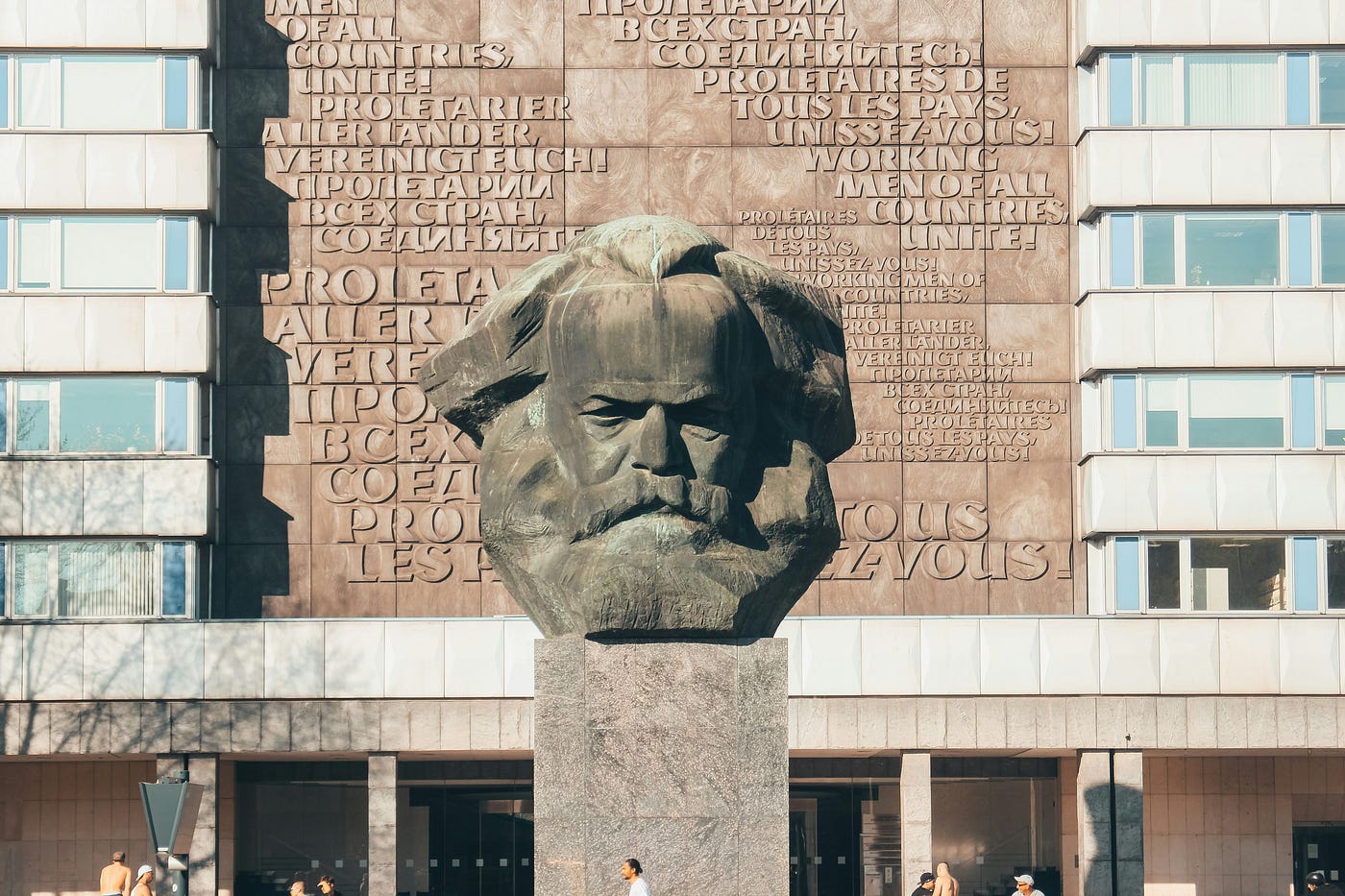
“Man makes religion, religion does not make man.”
“Religion is the opium of the people.”
“Religion is the sigh of the oppressed creature, the heart of a heartless world…”
“The abolition of religion as the illusory happiness of the people is the demand for their real happiness.”
“The criticism of religion disillusions man…”
“Religion is only the illusory Sun which revolves around man…”
“…the criticism of Heaven turns into the criticism of Earth…”
“Man… has found only the reflection of himself in the fantastic reality of heaven…”
“Every religion which is not theirs is an invention of men, while their own is an emanation from God.”
“The religious reflex of the real world can… only then finally vanish, when… everyday life offer[s]… reasonable relations…”
Photo by Maximilian Scheffler on Unsplash
Last updated May 3, 2025. These terms govern all In-Sight Publishing content—past, present, and future—and supersede any prior notices. In-Sight Publishing by Scott Douglas Jacobsen is licensed under a Creative Commons BY‑NC‑ND 4.0; © In-Sight Publishing by Scott Douglas Jacobsen 2012–Present. All trademarks, performances, databases & branding are owned by their rights holders; no use without permission. Unauthorized copying, modification, framing or public communication is prohibited. External links are not endorsed. Cookies & tracking require consent, and data processing complies with PIPEDA & GDPR; no data from children < 13 (COPPA). Content meets WCAG 2.1 AA under the Accessible Canada Act & is preserved in open archival formats with backups. Excerpts & links require full credit & hyperlink; limited quoting under fair-dealing & fair-use. All content is informational; no liability for errors or omissions: Feedback welcome, and verified errors corrected promptly. For permissions or DMCA notices, email: scott.jacobsen2025@gmail.com. Site use is governed by BC laws; content is “as‑is,” liability limited, users indemnify us; moral, performers’ & database sui generis rights reserved.
Share this:

Author(s): Scott Douglas Jacobsen
Publication (Outlet/Website): Vocal.Media
Publication Date (yyyy/mm/dd): 2026/03
Anton Zelinskyi is a Ukrainian legal-reform advocate and Advocacy Manager at the DEJURE Foundation, working on judicial transparency, integrity vetting, and anti-corruption accountability. He is a member of the Public Integrity Council, which assesses judicial candidates and judges undergoing qualification review. In January 2026 he co-authored a Ukrainska Pravda investigation showing that, despite the 2022 liquidation of Kyiv’s District Administrative Court (OASK), the state spent about UAH 157 million over three years on judges’ remuneration while key cases stalled. He tracks how procedural sabotage, disciplinary bottlenecks, and Supreme Court rulings can revive discredited judges—especially during wartime—so reform can endure long-term.
Scott Douglas Jacobsen interviews Anton Zelinskyi, Advocacy Manager at the DEJURE Foundation and a member of Ukraine’s Public Integrity Council, about the scandal of “ghost-court” salaries after the 2022 liquidation of OASK. Zelinskyi explains that roughly UAH 157 million still went to judges because formal dismissal procedures stalled, allowing compromised figures to keep judicial status and pay. He argues disciplinary and qualification mechanisms matter because criminal cases can be delayed into uselessness through procedural sabotage. The conversation frames OASK as a corruption symbol whose legacy still threatens wartime judicial reform, accountability, and long-term institutional resilience in Ukraine at the highest levels.
Scott Douglas Jacobsen: Your January 2026 investigation cites ~UAH 157 million paid to OASK judges over three years. Why did this happen?
Anton Zelinskyi: Despite the official liquidation of the District Administrative Court of Kyiv (DACK or OASK in Ukrainian) in December 2022, approximately 157 million UAH has been paid from the state budget to its judges over the last three years. This occurred because more than 40 OASK judges still retain their judicial status and continue to receive substantial judicial remuneration. Even though the court was a “symbol of corruption” that blocked judicial reforms and even prepared a scenario for Yanukovych’s return during the full-scale invasion, the judges remain on the payroll because the administrative process for their removal has not been completed.
Jacobsen: What were the primary data sources for this investigation?
Zelinskyi: The primary data source for the financial figures was an official written response from the liquidation commission of the OASK. This means the amounts we cite are not estimates or reconstructions, but exact figures recorded in the commission’s official accounting and reporting. In other words, we can trace and substantiate the calculation down to each hryvnia based on the commission’s documented data (including line items and totals), rather than relying on assumptions, media reporting, or secondary datasets.
Jacobsen: Why is this investigation significant?
Zelinskyi: The significance lies in the staggering opportunity cost of these payments during a time of war. The 157 million UAH spent on “judicial inactivity” is equivalent to the cost of tens of thousands of strike FPV drones or thousands of interceptor drones that could be protecting Ukrainian cities. Furthermore, the investigation reveals a systemic failure: the High Council of Justice (HCJ) and the High Qualification Commission of Judges (HQCJ) have been unable or unwilling to finalize the dismissal of these judges, allowing them to keep their privileges and potentially escape into “honorary resignation” with lifetime monthly payments at the taxpayers’ expense.
Jacobsen: What legal/administrative mechanism kept the money flowing after OASK was liquidated?
Zelinskyi: Under Ukrainian law, the liquidation of a court does not automatically terminate a judge’s employment or salary. A judge can only be dismissed by the High Council of Justice (HCJ) following specific procedures: qualification assessment or disciplinary proceedings. Until the HCJ makes a final decision, these judges are legally entitled to their remuneration. Many OASK judges have successfully exploited this by “falling sick” to avoid exams or relying on the HCJ’s lack of a quorum to stall disciplinary actions.
Jacobsen: Why are disciplinary and qualification routes faster than criminal trials?
Zelinskyi: These administrative routes are more efficient because they operate under a lower standard of proof than criminal law. Crucially, the decision to dismiss a judge through these channels does not depend on a final guilty verdict in a criminal court. This allows the judicial system to purge itself of unfit members based on integrity concerns even while a criminal trial is still ongoing.
Jacobsen: In the HACCU case (No. 991/2030/22), what delay tactics have been effective for the defense?
Zelinskyi: The defense, led by figures like Pavlo Vovk and Yevhenii Ablov, has employed several creative and systemic tactics:
• The Braille Requirement: They involved a lawyer with a visual impairment and demanded that all 220 volumes of the case be translated into Braille.
• “Procedural Football”: They continuously appeal every procedural decision, shifting the burden between the HACCU Appeals Chamber and the Supreme Court to stall progress.
• Absurd Excuses: Hearings have been postponed for reasons as trivial as a defense attorney taking their children to a water park.
• Systemic Absence: Frequent non-appearances, constant changes of lawyers, and a “mountain” of recusal motions against judges.
Jacobsen: In case No. 757/21651/24-к, how would limitation periods wipe out accountability?
Zelinskyi: This case, involving the blocking of the HQCJ’s work, spent years being shuffled between judges in the Pecherkyi District Court due to constant self-recusals. By the time it reached the Podilskyi Court for trial in late 2025, the statutes of limitation had almost expired. This reveals a critical flaw in the Ukrainian criminal-procedure design: defendants can use procedural maneuvers to delay a trial until it is legally impossible for the court to impose punishment, effectively granting them impunity through exhaustion.
Jacobsen: Is the ghost-court era ending, and what indicates this trend?
Zelinskyi: The ghost-court era is not clearly ending. Right now, it looks more like stagnation and a real risk of rollback than a clean finish.
The biggest danger sits in the Supreme Court, because it can set a precedent that changes the rules for everyone. The key issue is wiretap evidence (NSRD). If the Supreme Court says this evidence cannot be used in disciplinary cases, the effect would be huge.
It would not be only about Vovk. It would also affect other former OASK judges and about 50 judges who were recorded taking bribes. Many of them were dismissed through disciplinary proceedings before any final criminal verdicts existed. If wiretap materials are excluded, this would effectively mean invalidating those dismissals, with a real chance that judges return to the bench.
That is why real progress requires renewal at the top, including the Supreme Court: integrity checks and selection of new judges with meaningful participation of independent experts nominated by international partners. This approach is explicitly prescribed in the EU’s Chapter 23 benchmarks for Ukraine.
Where international experts had a decisive role in selecting judges for a newly created anti-corruption court, it showed great results and delivered one of the most credible judicial selection outcomes.
Jacobsen: Thank you very much for the opportunity and your time again, Anton.
Last updated May 3, 2025. These terms govern all In Sight Publishing content—past, present, and future—and supersede any prior notices. In Sight Publishing by Scott Douglas Jacobsen is licensed under a Creative Commons BY‑NC‑ND 4.0; © In Sight Publishing by Scott Douglas Jacobsen 2012–Present. All trademarks, performances, databases & branding are owned by their rights holders; no use without permission. Unauthorized copying, modification, framing or public communication is prohibited. External links are not endorsed. Cookies & tracking require consent, and data processing complies with PIPEDA & GDPR; no data from children < 13 (COPPA). Content meets WCAG 2.1 AA under the Accessible Canada Act & is preserved in open archival formats with backups. Excerpts & links require full credit & hyperlink; limited quoting under fair-dealing & fair-use. All content is informational; no liability for errors or omissions: Feedback welcome, and verified errors corrected promptly. For permissions or DMCA notices, email: scott.jacobsen2025@gmail.com. Site use is governed by BC laws; content is “as‑is,” liability limited, users indemnify us; moral, performers’ & database sui generis rights reserved.
Share this:
Author(s): Scott Douglas Jacobsen
Publication (Outlet/Website): Vocal.Media
Publication Date (yyyy/mm/dd): 2026/03
Khrystyna Drahomaretska is a 28-year-old Ukrainian animal rescuer and architect who left her profession after Russia’s full-scale invasion. She works as a stray-animal catcher and evacuates pets from combat areas, operating amid shelling and mines. In Toretsk, three guided aerial bombs detonated near her; in Vovchansk, she suffered shrapnel wounds during mortar fire while rescuing animals. She founded the Under the Sun shelter in Ukraine’s Odesa region, caring for 250 dogs, many of whom were treated, socialized, sterilized, vaccinated, and rehomed; about 70 percent are adopted abroad. She is UWARF’s country manager and partners with 12 Vartovykh, Animal Rescue Kharkiv, and UAnimals.
Scott Douglas Jacobsen asks why animal rescue, not another profession, during a long war. Khrystyna Drahomaretska says architecture evaporated after the invasion, so she stayed near family, tried to enlist, and chose animals as her frontline. She recounts early runs taking dogs to Europe for adoption, then returning with food for Kyiv-area towns just liberated, where mines and booby traps lingered. Seeing chained, starving animals drove her to build a shelter in Podilsk and expand rescue coverage. She credits Daniel “Dan” Fine with supporting sterilization at scale, then joined 12 Guards for evacuation missions, including Vovchansk, where shrapnel injured her.
Scott Douglas Jacobsen: What are the reasons for entering into animal rescue rather than another profession, particularly during a long war?
Khrystyna Drahomaretska: Before the war, I worked as an architect, but at the beginning, no one needed it. Before the war, I volunteered. I rescued them, but not when the full-scale invasion began. No one needed architecture, and everyone was looking for a way to survive or figure out what to do. Before the war, I had a dream of building skyscrapers somewhere in Canada or England, or, for example, in the Emirates.
At the beginning of the full-scale invasion, I received many offers from abroad. They offered me a place to work and an apartment to live in. Many different companies from outside Ukraine made proposals to me.
However, I wanted it before, but when I finally received many offers, I decided that I needed to stay in the country. Now I live in Podilsk, and my parents live there too. It is far from the front line, near the Moldova border, but no one knows what will happen next week. So I decided not to leave my parents and my family, and I cannot live abroad. It is not my way to run away. Usually, I prefer to fight. I thought it would be an important battle in my life.
At first, I decided to volunteer for the army. We made different nets. Everyone worked together on one mission—to help the army. I also wanted to join the army, but they told me no. They had many men at the time, and there were not enough weapons, so it did not make sense to take more people into the army.
So I decided to find my own way. At that time, I already had many dogs, and I decided to focus on the dogs I had rescued before. These dogs were in my friend’s shelter. We created the shelter together, but it was her shelter.
At the beginning of the full-scale invasion, many people in Europe were ready to take dogs from Ukraine. So we decided to take the dogs, put them in the car, and make documents for them. At that time, the requirements were simpler than they are now.
We made the documents, put them in the car, and went to Europe. We found families for these dogs there. On the way back, we asked ourselves why we were returning empty. There was a lot of dry food at the border, so we started looking for a way to bring food back to Ukraine.
In Ukraine, we found a bus. In Europe, we found a warehouse with dry food and began delivering it to Ukraine. It was March when areas around Kyiv were being liberated after the occupation. We took all this food and went to places around Kyiv—Horenka, Hostomel, and Bucha. The Russians had just left these places, and there were mines and unexploded ordnance. It was very dangerous.
If I had known how many mines and booby traps there could be, I would have been more careful, but at the time, it was new. We were really scared because it was dangerous. Forests could be mined, and houses could be mined, and we heard many stories that when the Russians left these places, they left explosive devices hidden in objects, including toys and household items, for example, in washing machines.
For example, when you try to open the gate to go into your yard, or when you try to open your car, there could be explosive devices. We heard about this, and we were really scared.
But we took the food and delivered it to Kyiv and nearby areas. The people who gave us this food needed a report, so we filmed everything we saw and how we fed the stray dogs. There were dogs in horrific condition. For example, now, when Russian forces attack a place like Dushkivka or try to occupy it, we usually have some time to evacuate animals or at least create a place where they can go. But at that time, people just left their dogs. They did not expect the invasion. They left them in kennels, on chains. Many dogs died because they had no food. They were like skeletons.
You may have heard about the shelter in Borodianka. There were around 300 dogs there. The owner of the shelter left them, and many of the dogs died. When we came, we brought food, but we saw that all these dogs needed medical care and needed to be relocated. So we started evacuating the dogs, and we needed a place to keep them. That is how I started to create my own shelter in Podilsk, in another region.
I did not have money. I started with $1,000 in my pocket. Nothing more. If you see it now, it is different. It has grown. Now, of course, we have more support, more workers, and we continue to grow. But if someone told me that I had to go through this entire path again, I would say no.
We evacuate as many animals as possible and as quickly as possible. We try different methods. Mostly, we send them to Europe because it is safer and people are generally more reliable there, though sometimes we meet people who are not.
We have a team. We have a photographer and a manager. We have a builder who is always building something. We are always trying to find money for his work. We never stop. He is always building and improving. We cannot afford to hire a full construction team to finish everything in two months, as we do not have those resources. Instead, we buy materials and pay this builder. It is a good way for us to grow. It is not fast, but we grow.
We also have a woman who is a dog trainer. She does not have time for full training, but she walks the dogs and teaches them to walk on a leash before we send them to their new families. We also have another man who does everything. He can assist the veterinarian during surgery and also build, for example, a dog kennel.
In our city, we also have a rescue team. For example, if we receive a call that someone has thrown away puppies or that a dog has been hit by a car, our team goes to the scene, takes the animal to the veterinarian, and treats it. We work not only in our city but across the entire region, because the whole region calls us.
We decided to bring the dogs to one place, to a shelter, and that is how we started the shelter. Then I met Dan Fine. At that time, he was raising significant funds for Ukraine and seeking ways to help. Before that, he had bought food, but he said we needed something more than just food. We explained that we needed sterilization. If you feed one dog today, in half a year, you will feed six dogs, because she will give birth to puppies, and the number will keep increasing. So we asked him to support a sterilization program.
He created the sterilization program, and with his support, we sterilized around 8,000 dogs over two years. Most of these sterilizations took place near the front line, including areas close to formerly occupied territories, as well as the Dnipropetrovsk, Kharkiv, and Donetsk regions.
When the program ended due to declining donations, I met another team, 12 Guards. They had been working since the beginning of the war, mostly helping people, but later they shifted their focus to helping dogs. That is how we met, and together with Lala, we decided to go to the front line to evacuate dogs. Before that, this work had been done by Animal Rescue Kharkiv.
When Russian forces attempted to occupy Vovchansk, we began our first mission focused not only on sterilization but also on evacuation. It was our first evacuation mission. In Vovchansk, I was injured by a Russian missile. I was hit by shrapnel. It was very difficult to work during the day, so we decided to go at night. They saw us with a drone and tried to kill us. They could see that we were moving with dogs. I think they knew that soldiers would not be evacuating dogs, that we were volunteers, but they did not care. They sent a missile. The first explosion sent shrapnel through my leg and caused severe injury.
Then they sent the drone again and watched to see if we were still alive. When they saw that we were moving, they attacked us again. I thought that it would be my last day. But they missed. My team helped me, and we ran to our car. We drove out of Vovchansk, but on the road we did not use headlights. There was debris from a rocket on the road. The driver saw it, but it was already too late. He swerved to the left, and we had a car accident.
The car rolled over. It was very strong—the car ended up on its roof. We had a serious accident. The guys carried me to what we call a blindage, a dugout shelter in the ground used for protection. They put me there with the dogs and went to look for help because I needed to go to the hospital. I was bleeding.
At that time, there was a Russian volunteer unit fighting on Ukraine’s side. The guys stopped them and asked for help. So one Russian was trying to kill me, and another Russian was helping me. He transported me to a vehicle where Ukrainian medics treated me and then took me to the hospital.
Jacobsen: Do we have any estimates of the number of shelters in Ukraine now? Do we have accurate estimates of the number of stray dogs and cats? If so, where do these numbers come from?
Drahomaretska: No, it is impossible to know exactly how many dogs are in shelters. I know that the largest shelter has around 3,500 dogs and about 500 cats. That is a very large shelter. There are also shelters with around 1,500 dogs, but most have closer to 500.
We do not have many officially registered shelters. Most of them are unofficial. Some are run by individuals who keep many dogs in poor conditions. As for the number of stray dogs, I cannot give you a figure. I do not have accurate data.
That is why I started working with 12 Guards, and we have continued our work until now. We are still carrying out evacuations.
Jacobsen: Mr. Daniel “Dan” Fine: What condition did he have, and what happened?
Drahomaretska: When we first worked together, he did not know that he had cancer. He found out about a year and a half ago. He had felt very unwell during several missions. After returning to Canada, he went to the hospital and was diagnosed with cancer.
When he came to Ukraine, many foreigners who arrived did not want to do difficult work. They wanted dramatic photos—rescuing dogs with explosions in the background. They wanted stories to show when they returned home. But Dan did everything. He cleaned kennels, carried cages, and walked the dogs. No one wants to walk dogs because it doesn’t make a good impression. He was someone who truly came to help.
Jacobsen: What would you consider his legacy after his death?
Drahomaretska: For me, he did a lot—for me personally, for the dogs, and for Ukrainians. First, he helped thousands of dogs. We sterilized around 8,000 dogs. Imagine that about 7,000 of them were females. A female dog can give birth twice a year, and each time she can have around five puppies. So imagine how many puppies were never born because of this program. That is a huge impact.
He also supported the shelter continuously. Because of his support and his organization, the shelter grew. He created a documentary film to show the world the work we are doing here, the problems animals face, and how we try to solve them. It was also about people—how some people, even during war, care about stray dogs and cats and not only about themselves.
Jacobsen: When you receive animals, what are the most common conditions? Is it malnutrition, missing limbs, or psychological trauma? What are animals most commonly suffering from in this war?
Drahomaretska: We have many dogs injured by shrapnel. Some are very thin. Most dogs—maybe 99 percent—have trauma similar to post-traumatic stress. They are afraid of loud sounds because of explosions.
The place where our shelter is located is far from the front line, so there are not many explosions there. Sometimes, when Russian forces attack the electricity system, you can hear distant explosions, but it is far from heavy bombing. The dogs need a calm place.
In the areas where we evacuate animals, there aren’t many extremely emaciated dogs because even people who stay without enough food still try to feed their animals. But in places like Kostiantynivka, the situation is much worse. There is often no food, and volunteers cannot safely go there because there are many Russian drones. To drive there, you would need people in the pickup truck who can shoot down drones. Even evacuation vehicles like the White Angel police units often cannot go there because it is too dangerous. Sometimes they cannot even evacuate people.
Jacobsen: What else?
Drahomaretska: After Dan died, he had agreed with another organization, Greater Good Charities. This organization supports us now and believes in our work. They see what we are doing and how many animals we adopt. For example, at least 20 dogs leave our shelter each month to go to families. For a Ukrainian shelter, that is a large number, because many shelters keep dogs permanently. It becomes like a large animal enclosure. What we do is the result of our team’s serious work.
Jacobsen: When animals become stray, e.g., dogs, cats, horses, pigs, and cattle, they can become feral. Dogs may attack cats. Pigs may scavenge human remains. What issues arise in war that people do not often discuss openly but are important to understand?
Drahomaretska: It is difficult to talk about, but our soldiers are very kind to animals. When they return from red zones, from active battle areas where we cannot go, they often bring back dogs and cats they have rescued. But sometimes they also have to kill animals. In some cases, stray dogs can spread rabies. In other cases, dogs gather around soldiers because they are looking for food. Russian drones can detect people when dogs gather in one place. Soldiers try to hide, but dogs can reveal their positions. In such situations, they sometimes have to kill the animals. It is about survival—strategic survival in war. They also slaughter pigs or livestock for food when necessary. These are survival decisions.
Another problem is abandonment. I do not know how it would be in other countries if war came there. In Ukraine, some people keep dogs on chains as guard animals. Not everyone, but some. Sometimes we arrive at a destroyed or evacuated house and find a dog still chained. We evacuate the dog. Later, an owner may contact us and ask why we took the dog, saying the dog was protecting the house. We ask where they are living now. They say they left because it was too dangerous. We ask why they left the dog behind. They say it was for protection. We ask who was feeding the dog. Sometimes they do not know. They ask us to return the dog to the dangerous area. It is difficult to understand this mindset.
Jacobsen: These details matter. War changes priorities. Even if people are not under immediate fire, they may be traumatized or hungry. Rational decision-making shifts. When it is minus 19 degrees Celsius, with no heating and no electricity, people focus on survival—finding warmth, food, and safety. Different considerations take priority. Preferably, food from Lviv Croissant.
Drahomaretska: They are good.
Jacobsen: Are there stories of people who have died while rescuing animals?
Drahomaretska: Yes. One volunteer died about two months ago. His name was Sviatoslav. He carried out many animal evacuations, but during his last mission, he was evacuating people. He was with Bohdan. A drone attacked their vehicle. The others survived, but he was killed.
Jacobsen: I interviewed Dr. Ioan Răzvan Șuteu. He is a Romanian veterinarian who rescues, treats, and rehomes injured animals affected by the war. He is currently in Romania. Animal rescue is humanitarian work. It is not political. When people think of humanitarian evacuation, they often imagine wounded soldiers or civilians being airlifted. This is different. It is about a starving dog, an injured animal, and choosing to help.
Drahomaretska: People who work in this field here, it is completely different. In other countries, for example, in Germany, animal protection organizations fight with paperwork. They do not work in war zones. They do not work in mined fields. They care about animals, but they do not know what this kind of work is like. It is very different.
Jacobsen: I used to work at a horse farm. People run ranches here. My immediate question was: how do you run a horse farm with bombs and air raid alarms? Horses are easily spooked. Even small noises can cause them to panic. Logistically, I have many questions. Even in normal conditions, managing horses is complex. I remember working on a farm with an indoor arena under a large structure. After heavy snow followed by warm weather, the snow would melt at the base and slide off suddenly. That noise alone could frighten the horses. That was just because of the weather. So how do you manage when there are ballistic missiles or air raid alarms? I am very curious about that.
Drahomaretska: I once had a situation in a village where we evacuated a horse. During that evacuation, the horse broke my finger. I went to the hospital afterward. Later, we found the owner. The owner returned the horse to the same dangerous place we had evacuated it from and left it there again.
Jacobsen: You broke your finger for nothing. During that time, you could have been rescuing other animals. It was not only about that one horse. Are there more men or more women in animal rescue?
Drahomaretska: Mostly women.
Jacobsen: Many men of working age are at the front line, have left the country, or have been killed. So women are taking on many roles, including animal rescue. Difficulties likely depend on where you are. Living in a village in western Ukraine is different from living in a city in the east. Those factors matter. Are you in a city or a village? Are you in the east or the west? That changes the level of stress. Thank you very much for the opportunity and your time, Khrystyna.
Drahomaretska: Thank you very much for your time.
Last updated May 3, 2025. These terms govern all In Sight Publishing content—past, present, and future—and supersede any prior notices. In Sight Publishing by Scott Douglas Jacobsen is licensed under a Creative Commons BY‑NC‑ND 4.0; © In Sight Publishing by Scott Douglas Jacobsen 2012–Present. All trademarks, performances, databases & branding are owned by their rights holders; no use without permission. Unauthorized copying, modification, framing or public communication is prohibited. External links are not endorsed. Cookies & tracking require consent, and data processing complies with PIPEDA & GDPR; no data from children < 13 (COPPA). Content meets WCAG 2.1 AA under the Accessible Canada Act & is preserved in open archival formats with backups. Excerpts & links require full credit & hyperlink; limited quoting under fair-dealing & fair-use. All content is informational; no liability for errors or omissions: Feedback welcome, and verified errors corrected promptly. For permissions or DMCA notices, email: scott.jacobsen2025@gmail.com. Site use is governed by BC laws; content is “as‑is,” liability limited, users indemnify us; moral, performers’ & database sui generis rights reserved.
Share this:
Author(s): Scott Douglas Jacobsen
Publication (Outlet/Website): Vocal.Media
Publication Date (yyyy/mm/dd): 2026/03
Saba Yamani is a Kyiv-based dental professional who was born in Saudi Arabia to a Saudi father and Syrian mother. She first arrived in Ukraine at age three after her father married a Ukrainian woman, whom she considers her mother. Raised in Kyiv, Yamani was baptized in the Orthodox Church and later came out as LGBTQ+. During the full-scale invasion she sought protection from Ukraine’s State Migration Service after facing pressure to leave and risk of deportation. She currently works at a private dental clinic and is preparing for the Ukrainian citizenship exam in May.
Scott Douglas Jacobsen interviews Saba Yamani, a Kyiv-raised LGBTQ+ woman born in Saudi Arabia, about living between two religious cultures. Yamani describes hiding her sexuality in Saudi Arabia, relying on online friends for support, and feeling socially policed through dress codes, male-guardian expectations, and anxiety about early marriage. In Ukraine, she recalls greater childhood freedom, mixed acceptance, and a clearer sense of personal possibility. She explains how family narratives and religious justifications shaped gender roles and fear, and how repeated moves intensified an enduring sense of precarious identity and control over her future. She is pursuing Ukrainian citizenship after threats.
Scott Douglas Jacobsen: You are sitting between two very different religious and political environments: Saudi Arabia, an Islamic state governed by a hereditary monarchy, and Ukraine, where Eastern Orthodox Christianity is historically dominant but where there is no state religion. Ukraine is religiously majority Christian, yet it is constitutionally secular, and levels of active religious observance are generally lower than in Saudi Arabia. From your experience, how do people interpret their faith in Saudi Arabia? How do they interpret it in Ukraine? Does that influence how they view gay and transgender people?
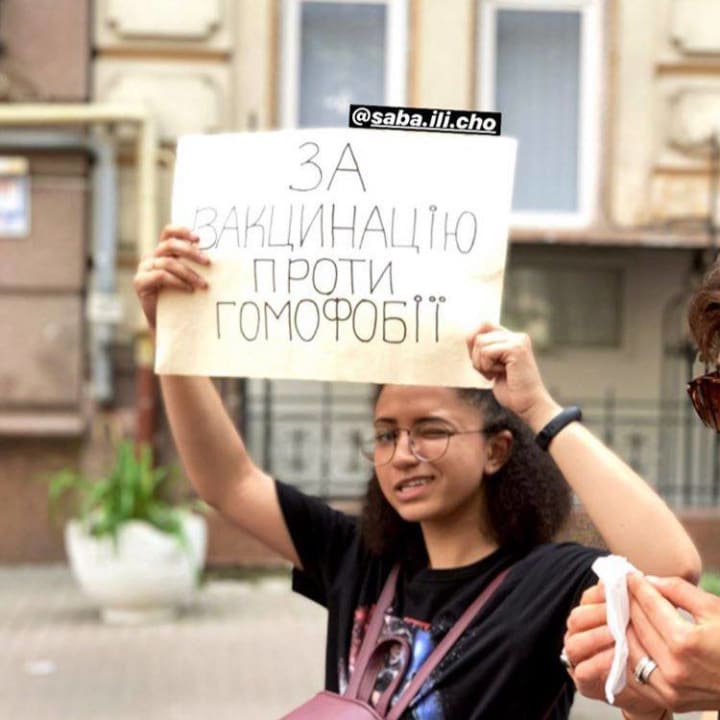
Saba Yamani: It is two different stories because I never came out in Saudi Arabia. I did come out to my father. We have a complex relationship. He is a strict Muslim Arab man. At first, he tried to be supportive. He accepted it for a few days, then told me he had changed his mind.
I was never openly gay in Saudi Arabia. You cannot openly express that. I wore an abaya and dressed modestly, as is socially expected for girls and women there. I have dressed that way since I was nine. I knew it would be problematic to express my sexuality publicly. I never spoke about it at school or at home. I lived mostly online, and that is where I found support.
Jacobsen: Where online did you find support, and what was the nature of that support?
Yamani: I lived one year in Ukraine and one year in Saudi Arabia. We moved back and forth many times because my family tried to live together and then separated again. Each year when I returned to Saudi Arabia, I kept in touch with my Ukrainian friends online. I never developed close friendships in Saudi Arabia. I often felt like an outsider. Some Arabic classmates saw me as Ukrainian and treated me as different. At the same time, in Ukraine I was sometimes seen as different because of my background.
Jacobsen: That in-between world where you do not feel accepted by either side.
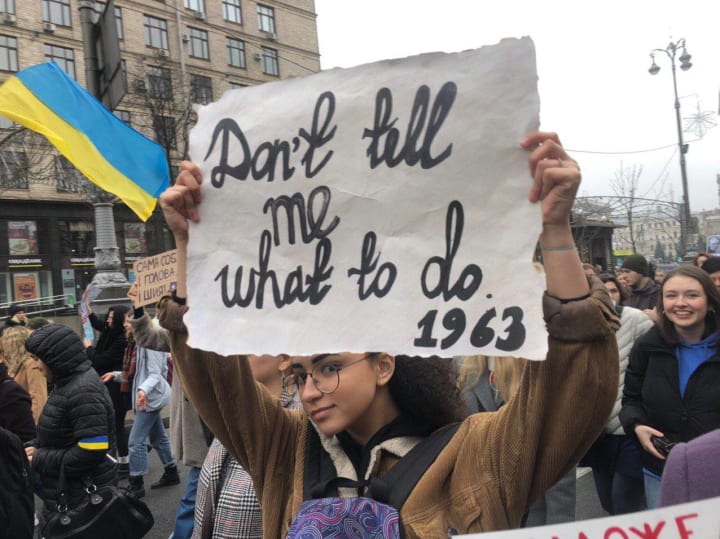
Yamani: Yes. I rarely felt fully accepted as “one of us” anywhere. The only time I felt a sense of belonging was with some Black students at the medical university, who commented on my hair and said, “You are one of us.” That was the only time I felt clearly included.
Jacobsen: Was that acceptance unconditional or conditional? You were accepted by that community. Were there conditions, or was it unconditional?
Yamani: It seemed based mostly on my appearance, especially my hair. That is a narrow basis for acceptance. I had not had close Black friends before, so I cannot fully assess how deep that acceptance was.
Jacobsen: In terms of covering, how would you describe religious doctrine and social rules for women as they enter adolescence?
Yamani: In many conservative interpretations of Islamic practice, girls are expected to begin dressing modestly around puberty, which is often associated with the onset of menstruation. In practice, however, families may introduce modest dress earlier for cultural or religious reasons. In my case, I began covering several years before menstruation. Socially, covering can be interpreted as a sign that a girl is becoming a young woman, which in conservative contexts may also relate to ideas about marriageability. I began covering at nine. I began menstruating at thirteen.
I could not understand it. I knew the rule. I knew what it was supposed to represent, but I could not comprehend that my father might be ready to give me up for marriage at the age of nine. He even referred to the Qur’an. He said that the Prophet Muhammad married Aisha when she was young. He used that as a way of normalizing the idea and expected me to accept it.
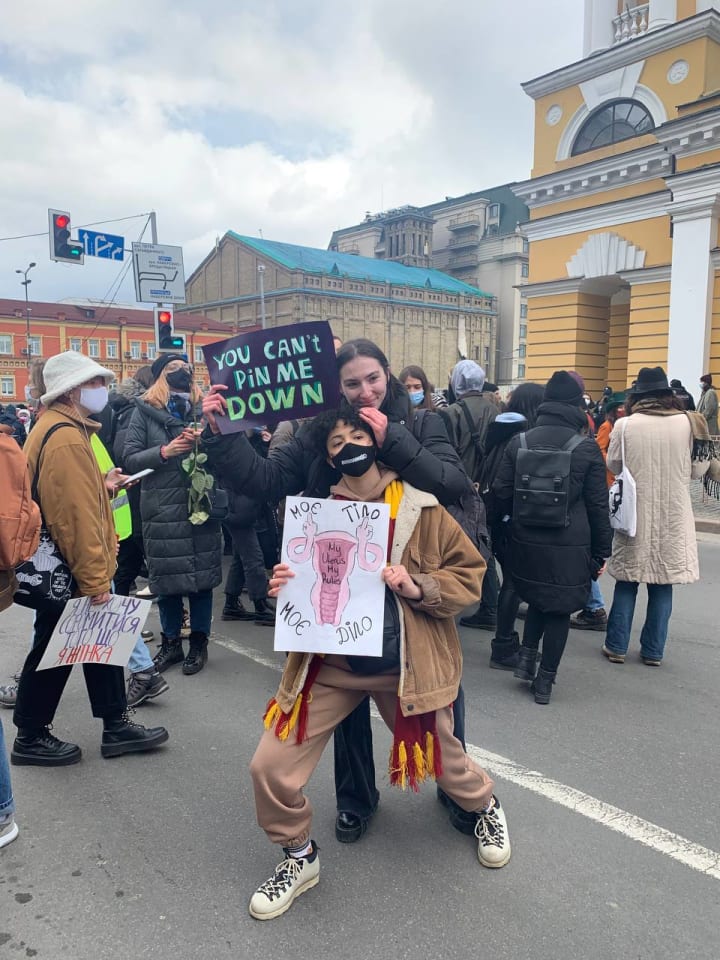
Jacobsen: Is that a common interpretation in families there? In Saudi Arabia, is early marriage seen as normal in many families?
Yamani: I believe so. You hear many stories of Muslim girls getting married and becoming pregnant at a very young age. That context explains a lot.
Jacobsen: What was the internal experience for you?
Yamani: It felt like waiting for something terrible to happen. During the year I lived there, I felt it could happen at any time. Each year when I returned to Ukraine, it felt like an escape. A year in Ukraine was where I lived. A year in Saudi Arabia was where I existed and waited. I had two completely different lives.
Jacobsen: Are either of your parents Ukrainian?
Yamani: No. My father is from Saudi Arabia. I was born there. My biological mother is from Syria, but I never met her.
Jacobsen: Under what circumstances did you never meet her?
Yamani: My father divorced her shortly after I was born. For the first few years of my life, I lived with my aunt. He left me with his sister because he travels frequently for work at the airport. Later, he met a Ukrainian woman and married her. She is my stepmother, but I call her my mother because I have known her my whole life. I never met my biological mother.
Jacobsen: Do you want to meet your biological mother?
Yamani: No. I do not think so. It does not seem logical. She comes from a world I tried to escape. I believe she would not accept me, especially regarding religion and sexuality. I feel it would cause pain for both of us. I also do not have any personal connection to her. I do not feel anything.
Jacobsen: Which cities did you live in in Ukraine? What was your impression of the culture itself, not in comparison to Saudi Arabia?
Yamani: As a child in Ukraine, it was fun because there was so much freedom. In Saudi Arabia, a girl cannot leave the house alone without a male guardian. It could even be my younger brother. That felt strange to me. He was younger, yet he had more authority in that situation. I was not allowed to play outside freely, especially if boys were around.
Any contact with a boy who is not a close blood relative can be viewed suspiciously. Socially, it is considered inappropriate. I once greeted a man I believed was my uncle by shaking his hand. My father became angry because he was not a close blood relative, and under Islamic law, marriage between certain cousins is permitted. That meant physical contact was not considered acceptable.
In Ukraine, each year I returned, I played outside with boys and it was simply friendly. I did not feel sexualized. When my father was not present, my grandmother allowed me to go outside. She knew the social expectations but wanted me to experience some freedom. She did not tell others where I was or who I was with.

Jacobsen: More broadly, how do you think Saudi Arabia views women and girls? And how does Ukraine view women and girls in your lifetime?
Yamani: In Saudi Arabia, it often feels as though a girl is born to become someone’s wife and someone’s mother. The expectation is that you will marry, stay at home, and focus on family. Education for girls exists, but early marriage can interrupt it. Some girls marry during their final years of secondary school.
In Ukraine, you are seen as a person first. As a child, you are allowed to have fun and imagine a future. There are expectations, but they do not feel predetermined in the same way.
There were structural differences as well. Saudi Arabia has twelve years of schooling, while Ukraine traditionally had eleven grades. When I completed a year in Ukraine and then returned to Saudi Arabia, I often had to repeat material. It felt as though time was moving more slowly there. I felt stuck.
Jacobsen: How do women and girls see their horizons in those contexts? In Ukraine, where you are treated as a person with possibilities, versus in Saudi Arabia, where you felt you were waiting for something predetermined?
Yamani: In Saudi Arabia, you do not feel in control of your own future. You feel that your life is already planned. Even when I was in Ukraine, I feared that it could be taken away from me at any moment. There was always a sense of uncertainty and lack of control.
Jacobsen: Thank you very much for the opportunity and your time, Saba.
Image Credit: Sama Yamani.
Last updated May 3, 2025. These terms govern all In Sight Publishing content—past, present, and future—and supersede any prior notices. In Sight Publishing by Scott Douglas Jacobsen is licensed under a Creative Commons BY‑NC‑ND 4.0; © In Sight Publishing by Scott Douglas Jacobsen 2012–Present. All trademarks, performances, databases & branding are owned by their rights holders; no use without permission. Unauthorized copying, modification, framing or public communication is prohibited. External links are not endorsed. Cookies & tracking require consent, and data processing complies with PIPEDA & GDPR; no data from children < 13 (COPPA). Content meets WCAG 2.1 AA under the Accessible Canada Act & is preserved in open archival formats with backups. Excerpts & links require full credit & hyperlink; limited quoting under fair-dealing & fair-use. All content is informational; no liability for errors or omissions: Feedback welcome, and verified errors corrected promptly. For permissions or DMCA notices, email: scott.jacobsen2025@gmail.com. Site use is governed by BC laws; content is “as‑is,” liability limited, users indemnify us; moral, performers’ & database sui generis rights reserved.
Share this:

Author(s): Scott Douglas Jacobsen
Publication (Outlet/Website): Vocal.Media
Publication Date (yyyy/mm/dd): 2026/03
Alex Craiu is a Romanian war correspondent based in Ukraine, reporting from the frontline and rear areas for international audiences. Trained in documentary and cinematography production, he studied in the United Kingdom and in California, United States. He works as an independent, freelance journalist and has produced short-form video reporting for social platforms as well as written analysis. In 2017, he completed an internship with the BBC in London, then expanded his field reporting during Russia’s full-scale invasion. Craiu has contributed to outlets including Veridica and In-Sight Publishing, focusing on civilian life, information warfare, battlefield realities, and humanitarian consequences under fire.
In this exchange, Scott Douglas Jacobsen asks Alex Craiu to assess the trends in Russia’s war on Ukraine for 2025. Craiu describes intensified missile and drone strikes, repeated attacks on energy infrastructure, and widening harm to civilians, alongside allegations of serious international-law violations. He notes that prolonged war also raises internal risks—detention abuses, coercive mobilization practices, and corruption—requiring oversight. On the battlefield, he stresses that pressure on key nodes matters more than raw kilometres, highlighting the Pokrovsk–Myrnohrad axis and disputed Russian claims about Kupiansk. He closes with a nuanced view of morale: resilient, but strained, with real war fatigue through winter blackouts.
Scott Douglas Jacobsen: What has been the trend in 2025 regarding Russian aggression against Ukraine? In addition, are there any concerning internal issues within Ukraine related to potential human rights abuses?
Alex Craiu: In 2025—especially into late 2025 and the winter period—Russia has continued and, in several phases, intensified large-scale missile and drone strikes across Ukraine. These strikes have repeatedly targeted energy infrastructure, along with logistics, municipal, and other civilian facilities, contributing to widespread hardship during cold-weather periods. Russia has been accused of serious violations of international humanitarian law, including unlawful attacks affecting civilians and civilian objects.
Regarding internal risks within Ukraine, any prolonged, high-intensity war increases the risk of rights abuses, including concerns related to detention practices, mobilization procedures, and corruption-linked coercion. These issues require sustained domestic oversight, judicial accountability, and continued international monitoring.
Jacobsen: How much territory has been taken in 2025? Along the 1,300-kilometre front line, how many kilometres have been gained?
Craiu: It is difficult to provide a precise figure in terms of kilometres gained without specifying the exact time frame and mapping methodology. Operationally, what has mattered more than raw territorial measurement is the pressure applied to key defensive nodes.
In the Donetsk direction, Russian forces have maintained sustained pressure in the Pokrovsk–Myrnohrad axis, attempting to stretch or encircle Ukrainian defensive lines. However, there has been no confirmed, full and stable capture of these cities.
There have also been instances in which Russian officials have claimed control over cities such as Kupyansk. These claims have been publicly disputed and contradicted by visual and open-source evidence. Such assertions appear intended to project momentum and readiness for continued operations.
Jacobsen: Have any political objectives of the Russian Federation been achieved?
Craiu: It is widely assessed that Russia has failed to achieve its primary political objectives. The initial aims—such as rapidly toppling the Ukrainian government, preventing Ukraine’s westward integration, and reshaping its geopolitical orientation—were not realized. Instead, Ukraine consolidated its national identity and strengthened its ties with the European Union and NATO.
Diplomatically, Russia has faced sustained isolation from much of the Western world and remains subject to extensive sanctions. While Russia has maintained or deepened relations with certain non-Western states, its broader global standing has been significantly constrained.
The narrative that the invasion was necessary to protect Russian-speaking populations has also had the opposite effect. Since 2022, Ukrainian civic identity has further consolidated, including among many Russian-speaking Ukrainians.
Claims that the war constitutes defensive action against hostile democratic regimes have not been broadly accepted internationally. Overall, Russia’s political objectives have largely not been met, and in several respects the outcome has run counter to its initial goals.
Jacobsen: What about Ukrainian morale? How are Ukrainians handling consistent bombardment, power shortages, power outages, increased attacks on civilians, and documented cases of torture and ill-treatment of prisoners of war and detainees? How is morale in 2025 amid expanded attacks affecting a broader segment of the population beyond military targets?
Craiu: Ukrainian morale has fluctuated over time but has remained resilient despite prolonged strain. Continuous missile and drone attacks, energy disruptions, and civilian casualties have created fatigue and psychological pressure. Power outages during winter periods and repeated attacks on infrastructure have imposed cumulative hardship.
At the same time, Ukrainian society has demonstrated sustained mobilization, including volunteer networks, civil defence adaptation, and local resilience measures. Public opinion surveys conducted since 2022 have generally shown continued support for resistance, though concerns about duration, economic cost, and human toll have increased.
Morale in 2025 reflects a combination of exhaustion and determination. The population is under significant stress, but broad support for sovereignty and territorial integrity remains a defining factor.
I would reference an opinion article published in Ukrainian media toward the end of 2025, arguing that Ukrainians should stop pretending they are fine. The argument suggested that Ukrainians have been strong, have compelled themselves to remain strong, and have presented a narrative of resilience to the outside world. Part of this presentation concerns wartime messaging—Ukraine has consistently emphasized its readiness to resist and its refusal to surrender to Russian occupation.
Psychologically, however, the situation is more complex. Therapists and mental health professionals report an increase in patients seeking support. While resilience remains visible, it is not as universal as often portrayed. Interviews with civilians following attacks may project normality, and morale remains broadly intact, but it fluctuates with each new escalation.
This winter has brought repeated blackouts and heating disruptions in many residential buildings. Ukrainians are adapting not only to war but also to severe seasonal hardship. Public sentiment today differs from that of last summer. War fatigue is real. Nevertheless, there is no clear indication that exhaustion has translated into a willingness to accept any settlement regardless of terms.
Jacobsen: Thank you very much for the opportunity and your time, Alex.
Last updated May 3, 2025. These terms govern all In Sight Publishing content—past, present, and future—and supersede any prior notices. In Sight Publishing by Scott Douglas Jacobsen is licensed under a Creative Commons BY‑NC‑ND 4.0; © In Sight Publishing by Scott Douglas Jacobsen 2012–Present. All trademarks, performances, databases & branding are owned by their rights holders; no use without permission. Unauthorized copying, modification, framing or public communication is prohibited. External links are not endorsed. Cookies & tracking require consent, and data processing complies with PIPEDA & GDPR; no data from children < 13 (COPPA). Content meets WCAG 2.1 AA under the Accessible Canada Act & is preserved in open archival formats with backups. Excerpts & links require full credit & hyperlink; limited quoting under fair-dealing & fair-use. All content is informational; no liability for errors or omissions: Feedback welcome, and verified errors corrected promptly. For permissions or DMCA notices, email: scott.jacobsen2025@gmail.com. Site use is governed by BC laws; content is “as‑is,” liability limited, users indemnify us; moral, performers’ & database sui generis rights reserved.
Share this:
Author(s): Scott Douglas Jacobsen
Publication (Outlet/Website): Vocal.Media
Publication Date (yyyy/mm/dd): 2026/03
Agi Bar-Sela, born in 1931 in Budapest, immigrated to Israel in 1949 with a Zionist youth group after her grandfather pressed her family to flee communist Hungary. Sent first to a kibbutz, she soon chose urban life, using Hungarian and fluent German to work among German Jewish “Jekkes,” then learning Hebrew and leaning on Yiddish for belonging. She married young, raised three sons, and endured early-state austerity: scarce food and crowded multigenerational flats. Her English later opened careers at El Al and travel agencies, while her Hungarian-Jewish cooking anchored home and community. She champions language study as the surest ladder.
In this interview, Scott Douglas Jacobsen speaks with Agi Bar-Sela about arriving in Israel in 1949 from Budapest, beginning on a kibbutz and then shifting to city life. Agi Bar-Sela recalls early austerity—little food, few choices, and crowded flats shared with in-laws, mother, and grandmother—while stressing youth as a survival asset. She frames language as social capital: German opened medical work among “Jekkes,” Yiddish fostered belonging, and English enabled later careers at El Al and travel agencies. Motherhood, she says, reordered priorities, and she recalls UN debates, insisting English is today’s key. They end with politics, antisemitism, and cooking joy.
Scott Douglas Jacobsen: We will start from the top. When you were much younger and first came to Israel, how did Israelis tend to see themselves? How did you see the culture when it was still in its early stages of development?

Agi Bar-Sela: First of all, I came in 1949. I was born in 1931, so I was about 17. I came with a Zionist group because I was a Zionist. My grandfather, who was very devoted to Zionism, told my mother that I had to be sent to Palestine and not remain in a communist country. In 1949, the country I was in was already under communist rule. My grandfather knew people and had information that we did not. He strongly wanted me to leave.
My mother said we would decide. My father, of course, was lost in the Shoah. I told my mother that I could get a place to go to Israel, to Palestine, Israel. She said we would ask my grandfather, who was my father’s father.
He said he would ask his Zionist friends what they thought. The next day, he called my mother and said, “They said not tomorrow—yesterday. The child should leave this country.” So I had all the help I could have. I arrived with a large group and went to a kibbutz in Israel in 1949.
That was the first part. After that, you grow up. You decide what you will do, how you will do it, and with whom—friends, boyfriends, everything. But that was only the beginning. What interests you most—my age?
Jacobsen: It is the length of perspective. You have seen an arc of development in Israeli society that is valuable to me—the long cultural development of Israel.
Bar-Sela: Yes. Then, I saw that the kibbutz was not for me. I had some addresses—from my mother and grandfather—of people who were already in Israel. I also found old friends, and they helped me. That is how I got into business.
Languages helped me, though it wasn’t easy at the time in that country because people spoke different languages. Many people spoke English. Many German Jews spoke German. Many others spoke other languages, and often people did not understand one another.
When I decided to leave the kibbutz, I got a job in the medical business. The people there were Jekkes—German Jews—so my German helped me. I had grown up speaking German from a very early age, so I was fluent.
At that time, people also did not like English very much. So I had languages that many people did not want to speak. I decided that, given the situation, I would soften my Hochdeutsch and make it closer to Yiddish. I could do that, and I had help. When I started speaking Yiddish, I felt at home. Everything was fine then. That is the story so far.
Of course, you had to work if you wanted to. I fell in love with my husband. I was very young when I got married—not a little girl, but quite young. So I was not alone for very long.
We were new immigrants, which is never easy. We lived together in a two-room flat with my father-in-law, mother-in-law, my husband, and me. Very quickly, we had our first child.
The moment you have a child, your work changes, your thinking changes—everything changes. That was the beginning.
We were a well-known Zionist family. My father-in-law was deeply involved in Hungarian Zionism and served more than once in leadership roles. Life was not so different from others in that sense. Being young helped. It is easier when you are a teenager and do not yet carry many responsibilities. Still, once you have a child, everything shifts.

Jacobsen: When you had your first child, you said it changed everything. How did it change your thinking and your habits of life—personally and professionally?
Bar-Sela: The first thing I wanted in Israel was to have a child. We were all after the Shoah. My husband had lost his brother, his aunts, uncles, and cousins. So had we. The few people who remained were very close in thought and in the things we did.
We lived in a very poor place, but everyone around us was also poor. Every oleh—every immigrant—was poor. You arrived with nothing. Slowly, things began to improve.
I had my first child in 1951, which means I had just turned 20 when my first son was born. That was the best thing I could have done. Nothing made me happier. I have three sons—unfortunately, not more.
After that, we began working steadily. My husband was an engineer, which helped. He was connected with the army and the pilots, though he was not a pilot himself. Life was good. We had many friends—more than I can count—all from Hungary, most of them not speaking other languages.
I was the only one who spoke Hungarian and also other languages. Even now, I can learn a new language if I decide to. At that time, many of the others did not know how to buy shoes or even bread.
I had already learned Hebrew, which was a very big achievement. Slowly, everything improved. At first, it was difficult—there was little food, which was very complicated. Around 1950, when I was about 20, there was almost no food in Israel
You did not say, “I eat this” or “I do not eat that.” You ate what was available. That was one of the major problems. Not every oleh—every immigrant—was young. There were many older people, and for them it was an even bigger challenge. It took several years for the country to become capable of regularly importing goods, and then growth began.
Jacobsen: What about the kibbutz was unappealing to you?
Bar-Sela: First of all, the Sochnut—the Jewish Agency—sent the children from Budapest to a kibbutz that was not suitable for us. It was in a very hot and difficult area. Still, I managed. I was actually happy there. I had work to do, and that was fine.
At the same time, I was thinking about what I would do with my life. A young person of 17 or 18 is not foolish. Young people can do many things that older people do not imagine they can. Being young is not a disadvantage.
I had many friends everywhere. Later, we left that place and moved here together with my father-in-law and mother-in-law. Later, my mother and grandmother joined us. At one point, eight people were living in our flat: my father-in-law, mother-in-law, my mother, my grandmother, my husband, and my three boys. It was not easy, but we wanted to manage, and we did. I never considered leaving Israel. I would never have done that.
Languages were a great gift for me. People who did not have languages the way I did were not in the same position. Not then, and not even today. I could enter many places and understand what others could not. Language is a dramatic factor. Can you learn a language, or can’t you? Others had different difficulties, of course. It was not easy then, and it is not easy even today to make a living. But if you truly wanted to, you could. That was the difference.
Jacobsen: What is your favourite language?
Bar-Sela: That is a difficult question. May I give more than one?
Jacobsen: Of course.
Bar-Sela: Then I would easily give at least three or four. I was born into a family that was not ordinary—financially or otherwise. My father loved languages. My first nanny was Swedish; she spoke German and only German. Later, she left, and my father hired another nanny from London. She spoke English and did not know a word of German, and I did not know a word of English at that time.
The nanny was very clever. She decided that I could sing in English. If I could sing in English, then she could teach meEnglish. So when I was four years old, we were already singing in English. Later, regarding languages, I remained passionate about them. I still love languages. Everyone should speak English. That may sound extreme, but English has become essential.
Jacobsen: In what sense?
Bar-Sela: As a working language—a language you can use anywhere in the world. There is no question about it.
Later, when I already had three boys, I worked with El Al. At that time, they were looking for people who spoke English, not necessarily Hebrew. You cannot work in an international airline and speak only German. English was necessary.
My English opened professional doors for me. There is no doubt about that. If you ask me, every person should know at least one additional language. But English should come first, or immediately after one’s mother tongue. There is no question about it.
I speak German, Hungarian, and English very well, of course. I also understand other languages—French, for example—even if I do not speak them fluently. I believe languages are the most important thing a person can know. What do you think?
Jacobsen: I think that is generally reasonable.
Bar-Sela: Yes. People in Canada or America have an easier life in that sense, because they already speak English. That is not a problem for them.
I am not someone who sees a problem and gives up. If I had to solve something, I would solve it, or someone would help me. Working with El Al was very demanding—days and nights—but the moment you said you worked for El Al, doors opened. They still do. Working for an airline carries respect.
Later, I left the airline because travel agencies wanted me. They needed someone who spoke languages. That is why I say language is the first thing—any language. If you already speak English, you do not feel that difficulty in the same way.
Being born in a country where English is the main language is a great advantage. For me, learning English as a child was possible because my father believed strongly in languages, and our family could afford tutors. One of the best things I ever did was to become good at languages. Not every language, of course—but three or four is not bad.
Jacobsen: I used to speak French, but I do not anymore.
Bar-Sela: If you were interested, could you regain it?
Jacobsen: Probably.
Bar-Sela: I think so. Languages stay somewhere in the mind. I remember that after the Second World War, when the United Nations was being organized, there were discussions about which language should serve as the main working language. As I remember the story, some argued for Spanish because so many people worldwide speak it, especially across Latin America. But the Americans insisted that English be used. That is how English became the dominant working language.
Of course, you have to know English. It is almost impossible without it. With my boys, besides encouraging music—which was more than a hobby—I was very strict about languages. I did not allow them to neglect English. They learned it well.
I can only hope the same for my grandchildren and great-grandchildren. Since we do not speak English together, I sometimes ask them how good their English is. They tell me it is very good. That is important. You should do everything as well as you can.
When I left El Al, I was very happy. Every travel agency wanted me to work with them as long as I wished to continue. I worked in a travel agency, which was a wonderful job. Languages were the key.
You speak only English, so you do not feel the difference. I see friends from Hungary now—you should hear their English. It is very poor. They speak Hungarian well, but their Hebrew is not very strong either. Without English, you lose opportunities. That is what I believe.
My boys served in the army, of course, and they speak English well. I am still trying with the younger grandchildren—not yet successfully—to joke or sing in English with them. It is the main language.
Jacobsen: In most of Canada, English is the main language. About one in five Canadians speaks French.
Bar-Sela: It is a great advantage to come from a country where English is the first language. You can speak with everyone. They may not speak with you, but you can speak with them. That is powerful.
You asked about my work. I worked only with El Al and then with travel agencies. Both were good places to work. El Al was difficult because of the hours, days, and nights. No husband enjoys waiting until three or four in the morning for his wife to return home. So I moved to a travel agency, where I could work during the day. Because of my languages, the transition was easy.
I have three sons. One son has three children, and the other has three to six grandchildren altogether. Some of them now have children of their own. It is wonderful to have all of them, young and older alike. Language remains a good thing.
Jacobsen: In terms of the larger themes of Israeli cultural development, how have you seen it change over time?
Bar-Sela: I do not think we are behind any country. That is my view. Because I understand almost every language spoken in this country—except Russian, unfortunately—I do not feel barriers when speaking with people. I do not have difficulty talking with anyone.
But English is essential. People do not need German or French. Why would they? English is the language they truly need.
A person coming from any part of the world should speak English and their own language. That is enough. Today, I do not believe a person can work without English. Nothing is as important as English. If I were living in South America, I might think differently. But from my perspective, English is the main language. I do not expect someone like Donald Trump to speak with me, but if he did, I would do my best to speak with him.
Jacobsen: What is your opinion of the current global political situation?
Bar-Sela: That is a difficult question. We follow two main sources. First, my family and I read the newspapers every day. Second, we listen to television news, as most people in Israel do. Through television, you hear certain narratives.
At the moment, I do not think it is easy to assess the situation for Israel. I was shocked by how openly antisemitism has appeared. Shocked. Antisemitism in France, Switzerland, Austria—yes. I do not know about Italy, but I assume it exists there as well.
We do not fully understand the current situation regarding the United States and other countries. It will be good for us.
Antisemitism exists and, sadly, may always exist. I am angry about it. But beyond that, I think we are seeing an increase in small and medium-sized wars around the world. That makes the world more dangerous for everyone, with all the tragedies that follow. Antisemitism is there, and it will always be there. And fuck them all. That’s not very nice to say fuck, but I don’t care. I think we’re seeing an increase in small and medium wars.
That is a major global factor. The world becomes more dangerous when there are more wars and all the tragedies that follow.

Jacobsen: How would you describe Israeli cuisine?
Bar-Sela: The best you can imagine.
Jacobsen: Give me the list, then. What do you cook? Where do you like to eat—at home, at restaurants, at the beach?
Bar-Sela: Not restaurants. I am a woman living alone.
Jacobsen: What ingredients do you mainly use? What kinds of dishes do you prepare? What are they called?
Bar-Sela: First of all, I cook well. That is the first thing. And second, I enjoy it. If you ask me to cook soup, bake something, or prepare a dish, it will be ready quickly. It comes naturally to me. Anyone who wants can join me in the kitchen. I do not mind.
Cooking is intelligent work. You can experiment as much as you like. And do not forget, I come from Budapest. That is one of the great culinary cities of the world. French, Italian, Hungarian—the very best traditions. Cooking, for me, is a joy.
There was a period between jobs when I cooked more seriously, because many people do not like to cook. That is unfortunate. Cooking is wonderful. You can make something out of almost nothing. That comes from the Hungarian background. Hungarian cuisine is excellent—truly superb.
When I travelled and worked with many people, one of the things they most wanted was to eat in Budapest. The cuisine is famous. Even when we had very little at the beginning in Israel, Hungarians knew how to create something from nothing. We know how to cook any cuisine.
Jacobsen: What are the common dishes in Budapest and in Israel?
Bar-Sela: In Hungary, food is central. There are excellent markets of very high quality that are not expensive. In Israel, especially in Tel Aviv, food is more costly. Still, cooking is about intelligence. You should not spend a great deal of money if you can buy something just as good for less.
Cooking and baking are both good. If you enjoy it, it is not hard work. Baking is more precise, but it is still enjoyable. I cannot remember the last time I bought a cake.

Jacobsen: What kinds of cakes do you bake?
Bar-Sela: I bake very good cakes. Chocolate cake is always popular because people like it. But I can bake more than that. I prefer to make things myself rather than buy them. It is satisfying, and it tastes better. Cooking is a joy. Once you think of it as difficult work, it becomes difficult. But it is not hard at all.
For example, I bake many-egg cakes—yellow cakes. I think every cake can be good. You have to make it well and learn how to do it properly. Cooking requires experience, and books can help.
Cooking is worthwhile. It is not foolish at all. You cook what your children like, what your husband likes, what your father likes. Slowly, you develop your own kitchen. It depends very much on the people who are eating—what they like, what they do not like, what is fattening and what is not.
I do not know what is not fattening. Everything is, unfortunately. But cooking is good. Hungarian cuisine is very good—comparable to Italian or French cuisine. Chinese cuisine is different, but that can also be learned.
Cooking is satisfying. You prepare something, whether inexpensive or not, and everyone enjoys it. What could be wrong with that?
Jacobsen: Do you cook often?
Bar-Sela: Some men cook a great deal. Some are satisfied only with their own cooking. In Israel, it is easy to cook because we have everything available. You do not need the most expensive ingredients to make a good dish. With a Hungarian background, it is almost impossible to ruin a meal. If you must spend a little more sometimes, that is fine.
Jacobsen: Who cooks at home?
Bar-Sela: I do, of course. Cooking is a good occupation. You can win over your family with it. If they are satisfied, you know it. If they are not, they tell you. Everyone wants something different. That is normal.
Jacobsen: When am I coming for dinner?
Bar-Sela: To my place? In Israel, of course. Finish your time in Ukraine first. I do not know Ukrainian cuisine very well. I do like Russian cuisine—at least parts of it. I visited Russia once and was surprised by how delicate and good the food was. Ukrainian cuisine, I do not know well. It is difficult to cook properly when finances are tight.
When we were new immigrants in Israel, there was very little food. You could not simply go out and buy whatever you wanted. It was not easy. It took about ten years before things stabilized. That period was difficult. I was young then. I am older now, and I no longer complain about food. Everything is fine.

Jacobsen: When I come to Israel, and you cook for me, what will we eat?
Bar-Sela: You decide.
Jacobsen: What about matzo ball soup? Gefilte fish? Latkes? Kugel? A baked casserole with egg noodles?
Bar-Sela: I could make a baked casserole with egg noodles because I can learn anything from a book, but it is not something I usually prepare. Holiday dishes, of course, we make exactly as written in the books. That is how we grew up.
Over time, my cooking has become more Israeli as well. I also learned from non-Hungarians, because Hungarians generally cook well—whatever they prepare tastes good. Others are not always satisfied so easily.
Hungarians cook well, eat well, and behave well. That is important. Cooking is not a problem. You should enjoy it. If you do not enjoy cooking, then do something else. Let someone else cook. In a traditional Jewish home, you should at least know how to read a recipe.
Cooking is simple when you approach it properly. French cuisine is wonderful. Italian cuisine is very good. Chinese cuisine—I have eaten it, but I do not cook it myself.

Bar-Sela: Where are you?
Jacobsen: Kyiv.
Bar-Sela: Ah. I do not know much about Ukrainian cooking. But they must cook well.
Jacobsen: I have enjoyed the food here.
Bar-Sela: They make meat, bread, bagels, borscht—very good dishes. Borscht is excellent. In my house, though, most people do not like it. I do, but the real favourite in this family is chicken soup. You can make it every day, every two days—whenever you like. Once you cook a good chicken soup, you have succeeded.
Lately, chicken wings have been inexpensive. I do not know why—perhaps the factories stopped buying them. They are not extremely cheap, but they are affordable. You add plenty of greens—kohlrabi, onions, whatever vegetables you have—and it becomes a wonderful soup. People come to eat it. You are invited.
Jacobsen: We will stick to Hungarian and Jewish cuisine.
Bar-Sela: Hungarian cuisine is truly excellent. Have you been to Hungary?
Jacobsen: Not yet.
Bar-Sela: You should go. It is affordable. You can enter any restaurant—very famous or very simple—and the food will be good. Even in a market, you can eat soup that you would only find elsewhere in an expensive restaurant. The quality is remarkable.
In Israel, you can eat very expensively or very simply. In Budapest, you can eat well at every level—cheap or high-end. In a market, vendors will call you over and say, “Come try my soup.” It is extraordinary how good the food is.
I have eaten Italian and French cuisine. I know what refined food is. Hungarian food is not “high society.” It is simply very good. People cook well, eat well, and enjoy food.
In Israel, vegetables are wonderful year-round thanks to the climate. You can always find what you need. So you are invited. I will not go to Budapest to cook for you, but if you come here, you are welcome.

Jacobsen: Excellent. I have to go now.
Bar-Sela: Laila tov. Do you know what that means?
Jacobsen: No.
Bar-Sela: Good night. Laila tov.
Jacobsen: Laila tov. Thank you for your time.
Bar-Sela: You are welcome. Bye-bye.
Image Credit: Agi Bar-Sela.
Last updated May 3, 2025. These terms govern all In Sight Publishing content—past, present, and future—and supersede any prior notices. In Sight Publishing by Scott Douglas Jacobsen is licensed under a Creative Commons BY‑NC‑ND 4.0; © In Sight Publishing by Scott Douglas Jacobsen 2012–Present. All trademarks, performances, databases & branding are owned by their rights holders; no use without permission. Unauthorized copying, modification, framing or public communication is prohibited. External links are not endorsed. Cookies & tracking require consent, and data processing complies with PIPEDA & GDPR; no data from children < 13 (COPPA). Content meets WCAG 2.1 AA under the Accessible Canada Act & is preserved in open archival formats with backups. Excerpts & links require full credit & hyperlink; limited quoting under fair-dealing & fair-use. All content is informational; no liability for errors or omissions: Feedback welcome, and verified errors corrected promptly. For permissions or DMCA notices, email: scott.jacobsen2025@gmail.com. Site use is governed by BC laws; content is “as‑is,” liability limited, users indemnify us; moral, performers’ & database sui generis rights reserved.
Share this:

Author(s): Scott Douglas Jacobsen
Publication (Outlet/Website): Vocal.Media
Publication Date (yyyy/mm/dd): 2026/03
In a late-night thought experiment, Scott Douglas Jacobsen recalls opening a quantum cosmology conference in Baku alongside Edward Witten and Leonard Susskind. He asks whether a “time-reversed” black hole could exist—like a pencil balanced on its tip for eons: lawful, but fantastically unlikely. Rick Rosner argues anomalies require a stabilizing mechanism: agency, control systems, and engineered conditions, much like quantum computers holding fragile superpositions or laboratories sustaining fusion. They extend the logic to speculative warp travel and to “white holes,” the general-relativistic time-reverse of eternal black holes, while noting the real physics ultimately hinges on horizons, entropy, and information preservation.
Scott Douglas Jacobsen: I am very tired. Imagine Baku, Azerbaijan: a quantum cosmology conference. I give the opening address. People like Edward Witten are there.
Leonard Susskind is there, too, along with other people. Susskind gives a talk on thermodynamics. Witten gives a talk on black hole thermodynamics—especially the information-theoretic aspects.
Near the end, the interesting part is the thermodynamics of what would be the time-reversal of a black hole. The intuitive picture is like a pencil balanced on its tip for eons: not forbidden by the underlying laws, but wildly improbable. Given enough time—enough random shuffling in a big enough universe—you could still have a regular thermodynamic universe running forward in time, but with a locale where you get an emergent “time-reversed” object. Is that even permissible, in those terms?
Rick Rosner: Things are only “anomalous” if there is no mechanism producing the anomaly. If you have a pencil balanced on its end for eons, it is because you have an agent or a control system balancing the frickin’ pencil. You can do all sorts of crazy things in physics if you apply conscious control and agency.
Quantum computers are basically that: extremely delicate superposed states that would normally decohere, maintained by engineered conditions—tight isolation, control, refrigeration, and error correction.
So if we needed to do something “time-reversed-looking,” and we needed to engineer it, we could try. You just need to provide the framework. Fusion is another example: fusion on Earth is an unlikely configuration of matter, but you can do it if you set up the conditions.
That is also the only hope for faster-than-light travel. I do not think it will ever be possible in practice, but for it to be possible (even as a speculative idea) you would need to engineer tremendous effects that warp spacetime—contracting space ahead and expanding it behind—so you get apparent superluminal travel without locally moving faster than light.
But you are asking what a time-reversed object in a regular universe would look like. One candidate people talk about in general relativity is a “white hole,” often described as the time-reversal counterpart of an eternal black hole: you cannot enter it from the outside; instead, matter, light, and (in principle) information can only come out.
Black holes are “black” because of the event horizon—light cannot escape once it is inside—not because “information is missing” in a simple, everyday sense. The information problem is more specific: black holes have temperature and entropy, can emit Hawking radiation, and that combination raises hard questions about how information is ultimately preserved in a quantum description.
“The universe is built from information” is a philosophical stance some people like. As physics, the safer claim is that black holes behave like thermodynamic systems, and the deep issue is how that thermodynamics meshes with quantum mechanics.
Last updated May 3, 2025. These terms govern all In Sight Publishing content—past, present, and future—and supersede any prior notices. In Sight Publishing by Scott Douglas Jacobsen is licensed under a Creative Commons BY‑NC‑ND 4.0; © In Sight Publishing by Scott Douglas Jacobsen 2012–Present. All trademarks, performances, databases & branding are owned by their rights holders; no use without permission. Unauthorized copying, modification, framing or public communication is prohibited. External links are not endorsed. Cookies & tracking require consent, and data processing complies with PIPEDA & GDPR; no data from children < 13 (COPPA). Content meets WCAG 2.1 AA under the Accessible Canada Act & is preserved in open archival formats with backups. Excerpts & links require full credit & hyperlink; limited quoting under fair-dealing & fair-use. All content is informational; no liability for errors or omissions: Feedback welcome, and verified errors corrected promptly. For permissions or DMCA notices, email: scott.jacobsen2025@gmail.com. Site use is governed by BC laws; content is “as‑is,” liability limited, users indemnify us; moral, performers’ & database sui generis rights reserved.
Share this:
Author(s): Scott Douglas Jacobsen
Publication (Outlet/Website): Vocal.Media
Publication Date (yyyy/mm/dd): 2026/03
Dr. Ioan Răzvan Șuteu is a Romanian veterinary surgeon and founder of the Spay and Neuter for Hope Mobile Clinic. Since the full-scale invasion began in 2022, he has supported animals affected by the war in Ukraine, including early work at the Romania–Ukraine border, preparing documents so families could cross with pets. He joins periodic campaigns in multiple Ukrainian cities, operating on hundreds of animals. His primary focus is controlling stray dog and cat populations through spaying and neutering, while also treating war-related injuries. He collaborates with international networks, including World Wide Vets, and independent partners in the field on an ongoing basis.
Scott Douglas Jacobsen speaks with Dr. Ioan Răzvan Șuteu about the RoUa campaign and veterinary work in wartime Ukraine. Șuteu describes large-scale abandonment of animals during evacuations, injuries from gunfire and bombardment, and chronic harm from starvation and missing veterinary care. He explains how sedatives, tranquillizers, and gentle handling help hypervigilant animals, and he notes compassion fatigue among veterinarians, worsened by war and euthanasia decisions. He lists scarce emergency supplies, argues cash donations are often most useful, recalls border paperwork in 2022, and emphasizes coordination through World Wide Vets and independent partners supporting dogs and cats.
Scott Douglas Jacobsen: Let’s begin with the broader picture. How significant is the issue of stray, lost, or injured animals in wartime Ukraine? How serious is the problem?
Dr. Ioan Răzvan Șuteu: Animals also suffer the consequences of war. They may be abandoned, face food shortages, and receive less attention because people are focused on immediate human survival. In that sense, they can be among the first to suffer.
Based on what I have seen and what has been widely reported since the start of the full-scale invasion, large numbers of animals were left behind—especially early in the war, when many Ukrainians fled their homes. Some people could not take their animals with them due to practical difficulties with evacuation and cross-border travel, and some animals were left near border crossings.
In wartime, animals suffer too. As humans, we should do everything possible to reduce that suffering. That is part of what defines us.
Jacobsen: What common injuries do animals sustain in war?
Șuteu: Many are similar to human injuries. Animals can be shot, injured in shelling or bombardments, or harmed by other weapons and explosives. Even when they survive, many face longer-term suffering: starvation, lack of basic veterinary care, and untreated conditions that worsen because there is no one to care for them.
Many animals are still left behind without adequate food or care. I am not involved in animal rescue operations. I am a surgeon working to help keep the stray population under control through spaying and neutering—mostly dogs and cats. That is the main part of my work in Ukraine. I have also treated animals injured by the war, but my primary goal is to reduce the number of stray animals.
Jacobsen: How many animals die while you are caring for them?
Șuteu: I am not proud of it, but I have had very few casualties. I can count them on one hand since I have been working in Ukraine. I have not been there continuously; I travel from Romania for weekly campaigns. During that time, I have operated on hundreds of animals. I have not encountered major complications. The greatest risks arise with animals that are too weak or already seriously ill, as they are less able to tolerate surgery. Fortunately, I have not faced significant losses so far.
Jacobsen: When human beings experience psychological trauma, they can receive talk therapy or psychotherapy. Animals do not share language with us in that way. How do you work with animals that show hypervigilance or anxiety due to war?
Șuteu: You can recognize trauma in animals through their behaviour. Their eyes, posture, and body language reveal fear and stress. Addressing that is an important part of our work. Fortunately, veterinary medicine provides effective sedatives and tranquillizers that help animals remain calm and tolerate necessary procedures safely.
The most challenging part is gaining their trust. Humans understand they are suffering and often seek help. Animals do not interpret their experience that way. They may perceive anyone approaching them as a threat. For that reason, we must approach them with patience, calmness, and care, ensuring that treatment is carried out as gently and safely as possible.
Jacobsen: During war, medical workers who treat people—nurses, physicians, surgeons—often experience overwork, trauma, and burnout. Do veterinarians in wartime experience similar effects?
Șuteu: Veterinarians do not need to be in a war zone to experience psychological strain. Those deeply involved in animal care and committed to making a difference often experience professional fatigue and compassion fatigue. War intensifies that burden, making the work even more difficult.
Euthanasia, when necessary, is already emotionally taxing. Working in a war context adds another layer of stress. However, veterinarians who choose to work on the front line usually do so knowingly. Experience helps, and over time, the demands of the work become something you learn to carry. Even outside wartime, fatigue remains a serious challenge in the profession.
Jacobsen: On a personal note, why did you first enter the field of veterinary science and medicine, and why did you apply it to humanitarian work for animals during a war?
Șuteu: It is a difficult question for me. Many of my colleagues answer easily: they say they love animals and want to do good. For me, it is more complex.
I feel fulfilled being a veterinarian. I value the sense of purpose and the satisfaction of seeing the results of my work. Growing up in Romania, I witnessed many cases of animal mistreatment and abuse. These problems still exist. I knew I wanted to contribute to change—not only for animals, but for the relationship between animals and people.
I became involved in rescue work and shelter medicine in Romania. I also operate a mobile clinic, travelling from town to town with my own projects, helping low-income communities and addressing the needs of stray animals. I chose veterinary medicine because I want to serve as a bridge between people and animals, helping create a healthier relationship between them.
Jacobsen: What supplies are most needed for veterinarians treating animals in wartime, particularly those that are often in short supply? If people want to donate, what should they focus on?
Șuteu: The most critical supplies are those used in emergency medicine. These include gauze, intravenous cannulas, IV lines, fluids for fluid therapy, syringes, and other basic consumables required for stabilization and surgery. In many cases, the same types of emergency materials used in human medicine are also essential in veterinary care.
However, material donations are not always the most effective form of support. While we appreciate all goodwill, donated items are sometimes not what is urgently needed. Financial donations are generally more useful because they allow us to purchase exactly the supplies required at a given time and in the appropriate quantities.
Jacobsen: What are the most common animals that require assistance during the war?
Șuteu: I can speak primarily from my own experience in Ukraine. The majority of cases involve dogs and cats, as they are the animals most affected when people lose their homes or are forced to flee.
We have also assisted other animals, including donkeys, horses, swans, and sheep. In general, we treat any animal that remains with its owner or is brought to us for care.
Jacobsen: Do many veterinarians working during the war operate independently, or do they coordinate with larger networks?
Șuteu: Most veterinarians working in this context are connected to networks. Coordination is important because it enables people to identify critical areas that need help and mobilize resources efficiently. In my case, I was asked to assist by World Wide Vets, a large international veterinary organization, and I work under their umbrella during my missions. I also receive support from individual donors and independent associations. Veterinarians like me tend to be part of a broader community, and when assistance is needed, and we can go, we respond.
Jacobsen: How long have you been doing veterinary work related to the war?
Șuteu: I have been involved since the start of the full-scale invasion in 2022. In the early days, I worked at the border, helping families complete the necessary documentation so they could transport their animals from Ukraine into Romania.
Since then, I have participated in campaigns in various Ukrainian cities two or three times per year. I operate my own mobile clinic and have travelled with it to Ukraine. I have worked alongside colleagues from Scotland, Slovenia, and the United States. We are now part of an active international community supporting animals affected by the war.
Jacobsen: Any final thoughts based on today’s conversation?
Șuteu: Those interested in following my work can visit the Facebook page “Spay and Neuter for Hope Mobile Clinic.” My most recent campaign in Ukraine was conducted under the name ROUA, representing Romania and Ukraine, which also has a Facebook page documenting our activities. Information about upcoming missions can also be found through World Wide Vets.
Jacobsen: That concludes our discussion for now. Thank you for your time.
Șuteu: Thank you.
Last updated May 3, 2025. These terms govern all In Sight Publishing content—past, present, and future—and supersede any prior notices. In Sight Publishing by Scott Douglas Jacobsen is licensed under a Creative Commons BY‑NC‑ND 4.0; © In Sight Publishing by Scott Douglas Jacobsen 2012–Present. All trademarks, performances, databases & branding are owned by their rights holders; no use without permission. Unauthorized copying, modification, framing or public communication is prohibited. External links are not endorsed. Cookies & tracking require consent, and data processing complies with PIPEDA & GDPR; no data from children < 13 (COPPA). Content meets WCAG 2.1 AA under the Accessible Canada Act & is preserved in open archival formats with backups. Excerpts & links require full credit & hyperlink; limited quoting under fair-dealing & fair-use. All content is informational; no liability for errors or omissions: Feedback welcome, and verified errors corrected promptly. For permissions or DMCA notices, email: scott.jacobsen2025@gmail.com. Site use is governed by BC laws; content is “as‑is,” liability limited, users indemnify us; moral, performers’ & database sui generis rights reserved.
Share this:
Serhii Gromov, Ukraine’s Peace Museum in Kyiv: UN Peacekeeping History, and the Žepa Legacy Amid War
Author(s): Scott Douglas Jacobsen
Publication (Outlet/Website): Vocal.Media
Publication Date (yyyy/mm/dd): 2026/03
By Scott Douglas Jacobsen and Milana Olefirenko Bennett (Translator English-Ukrainian)
Ukraine’s Peace Museum in Kyiv, founded by former UN peacekeeper Serhii Gromov, documents the country’s contributions to international peacekeeping missions since the early 1990s. Through personal archives, mission artifacts, flags, and correspondence, the museum highlights deployments in the former Yugoslavia, Sierra Leone, Liberia, Angola, and beyond. A central narrative focuses on the 1995 Žepa operation, which Ukrainian accounts credit with saving thousands of civilians. Operating during Russia’s ongoing invasion, the museum presents a paradox: a peace institution functioning in wartime. Its mission is both archival and aspirational, asserting Ukraine’s identity as a peace-contributing nation while enduring active conflict.
The Peace Museum in Ukraine (“Музей Миру”) presents itself as a space for peace-building and civic education. A mausoleum for public reflection about building a peaceful society through exhibitions and outreach. A platform for peace education and for promoting Ukraine’s peacekeeping record.
The museum sits within the broader “museums for peace” ecosystem. It has been a member of the International Network of Museums for Peace (INMP) since July 7, 2022, according to the museum’s own website, which is part of an international community of peace-museum practice.
Serhii Gromov, who is the museum’s director and one of its founders, is a former Ukrainian peacekeeper. He was involved in Ukraine’s peacekeeping missions, including service connected to Sierra Leone/UNAMSIL (2003/04). In the museum space, one can find maps, patches, flags, letters, and mission artifacts as primary evidence to narrate peacekeeping work and international cooperation.
“I founded the Peace Museum on September 21, 2021, on the International Day of Peace in association with the Vasyl Yan Library in Kyiv. In 2024, I found this small room, and we decided to open the museum here,” Gromov said. “It is dedicated to peacekeeping cooperation, because this is very important for us. Many Ukrainian soldiers have served in peacekeeping missions.”
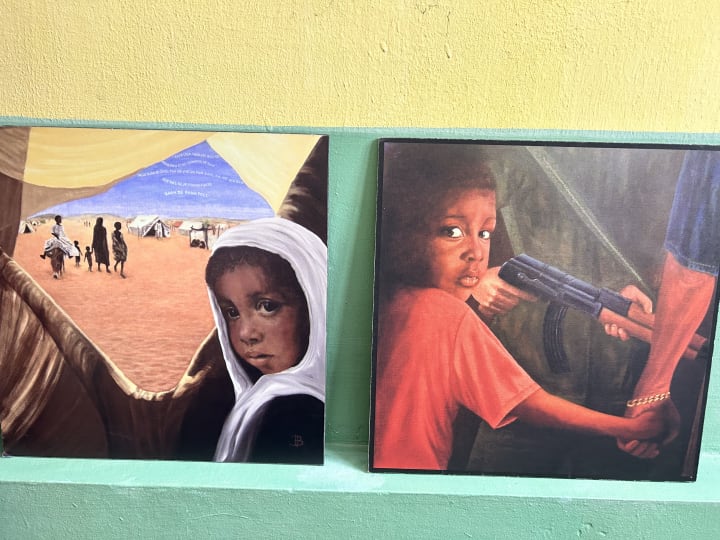
The museum’s story engine is inherently paradoxical. It foregrounds Ukraine’s peacekeeping past and peace-building identity while operating amid an invasion and wartime archiving. A Ukrainian peace museum explains peace through the vocabulary of survival.
Gromov framed the museum’s work as documenting Ukrainian peacekeeping history through a personal, volunteer collection. I asked Gromov about the most meaningful exhibit in the museum.
He said, “For me, the most meaningful exhibit is this flag. It was given by a colonel who commanded a battalion that protected civilians in Žepa during the war in the former Yugoslavia. Another British colonel was deeply impressed by the conduct of the Ukrainian soldiers and presented this flag to him as a gift.” Žepa had 79 Ukrainian peacekeepers on nine APCs operating in 1995. Evacuation negotiations were central to these operations.

Gromov spent part of his career in peacekeeping activities in aviation and helipad operations, which means receiving helicopters and coordinating takeoffs. His retirement work is a continuation of the peacekeeping work. The memorabilia presented and discussed reference commanders, donors, friends, and international contacts throughout the time in the peacekeeping operations. Ukraine has been a contributor to UN peacekeeping since the early 1990s.
These include missions and geographies in the former Yugoslavia, the Balkans, Slavonia, Sarajevo, Sierra Leone, Liberia, and Angola: the former Yugoslavia and the Balkans with two battalions and a helicopter unit.
Sierra Leone had the discussion shift to the mission and multiple sub-units, e.g., battalion, repair engineers, and a helipad unit. Shirts, masks, and devices are shown from this period. The electricity is off for most of the day, so the museum room is cold, and the lighting is moderately dim in the late afternoon.
Items from Liberia include various mosquito repellents for malaria protection and items related to his profession in aviation. Angola shows a company. He had many Kenyan friends in Africa.
The core collections of the museum include an enormous number of memories of lives throughout the world in peacekeeping work: Anti-mosquito net, beret, coins, colonel’s archive (Ukrainian- and English-language documents), envelopes/mission mail, flags, letters (including one from a nurse in Yugoslavia), maps, memoirs, newspaper items, patches/emblems, pilot device, and T-shirts.
There is a provenance narrative. In that, many items are framed as gifts from visiting peacekeepers, foreign officers, and various mission contacts from Australia, Germany/Ramstein, Liberia, and the UK/Wales.
Gromov reflected on why these peace museums matter, “It matters because we hope the war will end soon. If foreign peacekeepers come to Ukraine, our history should be interesting and meaningful for them.”
One story, the Žepa story, is a moral center in the discussion about the museum’s contents and stories. Gromov treats this as a defining ethical narrative, where, from his framing, Ukrainian soldiers “did not allow” a massacre or a mass killing there. He ties this to the shadow of Srebrenica. Srebrenica was the killing of more than 8,000 Bosniak men and boys in July 1995. Ukrainian summaries credit the Žepa episode with saving more than 10,000 civilians.
According to Gromov, no medals or official recognition were given for Ukrainians involved in the Žepa operation. He claims an attempt was recently made to raise it again with President Zelenskyy, with documentation.
The outreach from this newer, smaller museum is extended to international audiences as well. Gromov plans a small booklet about the museum and an exhibition of soldiers’ artwork called “trench art.”
On what they want to show about one side of Ukraine, Gromov opined, “We want to show that Ukraine is a peaceful country. We have done much for peace, and we hope that Europe, North America, and the rest of the world will help us restore peace in our country. We are tired of war. We dream of peace.”
Last updated May 3, 2025. These terms govern all In Sight Publishing content—past, present, and future—and supersede any prior notices. In Sight Publishing by Scott Douglas Jacobsen is licensed under a Creative Commons BY‑NC‑ND 4.0; © In Sight Publishing by Scott Douglas Jacobsen 2012–Present. All trademarks, performances, databases & branding are owned by their rights holders; no use without permission. Unauthorized copying, modification, framing or public communication is prohibited. External links are not endorsed. Cookies & tracking require consent, and data processing complies with PIPEDA & GDPR; no data from children < 13 (COPPA). Content meets WCAG 2.1 AA under the Accessible Canada Act & is preserved in open archival formats with backups. Excerpts & links require full credit & hyperlink; limited quoting under fair-dealing & fair-use. All content is informational; no liability for errors or omissions: Feedback welcome, and verified errors corrected promptly. For permissions or DMCA notices, email: scott.jacobsen2025@gmail.com. Site use is governed by BC laws; content is “as‑is,” liability limited, users indemnify us; moral, performers’ & database sui generis rights reserved.
Share this:

Author(s): Scott Douglas Jacobsen
Publication (Outlet/Website): Vocal.Media
Publication Date (yyyy/mm/dd): 2026/03
Uliana Poltavets, MS, is the International Advocacy and Ukraine Program Coordinator at Physicians for Human Rights. She focuses on documenting attacks on health care in Ukraine since Russia’s full-scale invasion and supporting accountability work. Before joining PHR, she spent roughly a decade strengthening Ukraine’s civil society. Poltavets’ advocacy highlights how drone strikes on hospitals, ambulance targeting, and attacks on energy infrastructure disrupt clinical services, strain health workers, and endanger vulnerable groups, including pregnant women, people with disabilities, and older adults. Her work links open-source verification, partner reporting, and hospital testimony into usable evidence for investigators, courts, and public decision-makers worldwide.
In conversation, Scott Douglas Jacobsen interviews Uliana Poltavets of Physicians for Human Rights on attacks against Ukraine’s health system. Poltavets describes documenting hospital bombings, detained and tortured health workers, and the illegality of striking maternity facilities. She reports that 2025 saw a sharp rise in drone attacks and continued targeting of ambulances, discouraging use of protective Red Cross emblems. She links assaults on energy infrastructure to disrupted procedures, burnout, and severe risks for dialysis, palliative, disabled, elderly, and pregnant patients. Poltavets notes verified-case counting, Berkeley Protocol methods, and major evidence gaps in occupied territories where monitoring and access remain impossible.
Scott Douglas Jacobsen: What originally led you to this work?
Uliana Poltavets: I have worked on the development of Ukraine’s civil society for the last 10–15 years. When the full-scale invasion began, I wanted to do something that mattered at that moment. I felt we needed to document the atrocities happening on the ground. I was drawn to Physicians for Human Rights because we saw bombings of hospitals, and healthcare workers being arrested, detained, and tortured. For me, that was at the core of this war. It is unjust, and it is against the norms of international law, to attack a maternity hospital or any place that serves as a refuge for communities.
Jacobsen: Based on your recent reports, including those not yet released, what distinct trends have emerged throughout 2025?
Poltavets: In 2025, one of the main trends we saw was the prominent use of drones to attack hospitals. We also observed a very large increase in drone use compared to earlier periods.
Another major trend is the targeting of ambulances, which has been rising, especially in frontline regions such as Kherson and Zaporizhia. It has reached the point where medics are reluctant to put a Red Cross emblem on their vehicles because they fear they will be attacked specifically because the vehicle is an ambulance or a medical evacuation vehicle. That is contrary to the law, because the emblem is intended to protect medical services from attack.
We are also looking at trends in maternity healthcare and how they relate to the developing legal concept of reproductive violence. In Ukraine, birth rates are lower than mortality, and maternal deaths are increasing. We are analyzing how attacks on maternity healthcare, which have been rising, may be contributing to these dynamics. Women want to know they can give birth in a safe place and a safe facility. When hospitals are attacked, it affects decisions about whether to give birth, whether to have children, and whether to give birth in a hospital.
We do not have statistical data that fully captures this, but we have anecdotal evidence from doctors reporting preterm deliveries linked to stress from attacks. Women have to move repeatedly during air raids, including going up and down to shelters. Some pregnant women are on bed rest near term, but during air raids they still have to go to a shelter, which means constant movement
It affects many decisions for women. Another major issue is attacks on energy infrastructure and how they affect healthcare delivery and population health. Last year, we conducted a nationwide survey of more than 2,261 healthcare workers. Over 90 percent reported experiencing power interruptions in their facilities, and more than 66% said those outages directly affected medical procedures.
Although many hospitals have generators or solar power, these systems cannot fully sustain hospital operations. A generator may supply power to an intensive care unit or neonatal unit, but it cannot power elevators, storage facilities, or maintain full functionality. This creates serious challenges for bedridden or immobile patients who cannot be moved manually. The burden falls on healthcare workers.
More than 83% of respondents reported high levels of burnout and stress related to energy attacks and power cuts, in addition to the overall strain of war. The healthcare workforce has decreased by appoximately 20% since the start of the full-scale invasion, while demand has increased. Energy attacks impose additional responsibilities. When there is no electricity, electronic medical records cannot be updated, so staff must work extra hours when power is restored.
Water, sanitation, heating in winter, and air conditioning during extreme summer heat have also been affected. In the summer of 2024, healthcare workers reported nonfunctioning toilets and disrupted water supply in hospitals, which is critical for medical care.
Our recent research also examined at-home care. For example, an at-home dialysis patient must run her machine several times a day for extended periods. She organizes her life around the power outage schedule, because if the machine stops during an outage, it can be life-threatening.
We also spoke with organizations supporting palliative care patients. These patients and their families experience significant psychological stress, knowing that a power outage could interrupt essential care. Organizations working with people with disabilities report that many individuals are confined to their homes during outages. Even if they go downstairs while electricity is available, they may not be able to return if elevators stop working. As a result, they are less likely to seek medical care during power cuts.
We have also spoken with organizations that work with elderly populations, and the situation is similar. Many older people become trapped in their homes during power outages and are less likely to seek medical care. The psychological burden is severe across all groups we interviewed. People must plan their lives around power cuts and constantly anticipate the worst, especially if they depend on electricity for medical care. That has a profound impact on vulnerable populations.
We examined how multiple factors interact. For example, a person with a disability who lives on an upper floor in an apartment building may have limited mobility, rely on electrical medical equipment, and face nonfunctioning elevators during outages. Even if they reach a hospital, that hospital may also be operating with limited capacity due to power cuts. These combined pressures can have serious health consequences.
This winter has been extremely harsh, and we expect to see more severe effects following prolonged cold temperatures.
Jacobsen: We have seen reports of deaths among vulnerable people. I recall a story about a Holocaust survivor in her eighties who froze to death in Kyiv. There will likely be more stories like that.
Poltavets: It does not require a snowstorm for freezing to occur. If the temperature inside an apartment remains below 15 degrees Celsius for an extended period, it can have serious health consequences, particularly for people with thermoregulation issues. Many people with disabilities experience difficulty regulating body temperature. Cold exposure can trigger spasticity, which is involuntary muscle tightening that is painful and difficult to control without warmth. Living in such conditions is physically painful and medically dangerous.
The number of people with disabilities has increased because of the war, including veterans and civilians injured by mines and other hostilities. This is a large and growing vulnerable population.
Jacobsen: Do you have documented cases of pregnant women or women who had just given birth being killed in hospitals?
Poltavets: I do not have individual case files with me, but there have been reports of pregnant women and women who had recently given birth being killed, as well as infants. Since the start of the full-scale invasion, we have documented 94 attacks on maternal healthcare facilities. Many of those attacks resulted in fatalities.
Jacobsen: Are there gaps in that systematic reporting? Is it possible that the actual number of attacks is higher than documented?
Poltavets: This is a fundamental limitation of our work. The actual number of attacks is likely higher than what we document. We collect data from open sources and verify it through a structured process based on the Berkeley Protocol on Digital Open Source Investigations. We record only what we can confirm with a high degree of confidence to ensure accuracy.
We also triangulate information through multiple channels. We work with partners on the ground who report what they observe in hospitals. We collect testimonies from hospital representatives. Some partner organizations conduct site visits. We also collaborate with Eyewitness to Atrocities, a secure documentation app that preserves metadata and prevents tampering with images. Photographs submitted through that system can be authenticated and added to our database. Our records are built from multiple verified sources.
Even with these methods, there are significant gaps. We cannot access remote areas, and we cannot operate in occupied territories, which constitute approximately 20 percent of Ukraine’s territory. We rely on accounts from people who have left those areas and on media reporting, but we cannot independently verify most of it.
Jacobsen: According to press freedom indices, Ukraine’s ranking has improved significantly in recent years, while Russia’s has declined. In occupied territories, reporting is likely to be far less reliable, and many journalists are understandably reluctant to go there because of the risks.
Poltavets: Access to occupied territories is extremely dangerous. I know individuals who went there, and the consequences were severe. International organizations, including major agencies such as the World Health Organization, also lack systematic monitoring in those areas. Without reliable health and system-level indicators, we cannot fully assess conditions there.
In our methodology, an attack on healthcare is defined broadly as any act that obstructs the provision of healthcare. It is not limited to bombings or attacks on ambulances. For example, in occupied territories there is a practice often described as “passportization,” in which residents are pressured to obtain Russian passports. In some cases, access to healthcare is conditioned on accepting that passport. When access to medical care is tied to political coercion, that constitutes an obstruction of healthcare and, in our framework, an attack on health.
Jacobsen: Thank you very much for the opportunity and your time, Uliana.
Last updated May 3, 2025. These terms govern all In Sight Publishing content—past, present, and future—and supersede any prior notices. In Sight Publishing by Scott Douglas Jacobsen is licensed under a Creative Commons BY‑NC‑ND 4.0; © In Sight Publishing by Scott Douglas Jacobsen 2012–Present. All trademarks, performances, databases & branding are owned by their rights holders; no use without permission. Unauthorized copying, modification, framing or public communication is prohibited. External links are not endorsed. Cookies & tracking require consent, and data processing complies with PIPEDA & GDPR; no data from children < 13 (COPPA). Content meets WCAG 2.1 AA under the Accessible Canada Act & is preserved in open archival formats with backups. Excerpts & links require full credit & hyperlink; limited quoting under fair-dealing & fair-use. All content is informational; no liability for errors or omissions: Feedback welcome, and verified errors corrected promptly. For permissions or DMCA notices, email: scott.jacobsen2025@gmail.com. Site use is governed by BC laws; content is “as‑is,” liability limited, users indemnify us; moral, performers’ & database sui generis rights reserved.
Share this:
Author(s): Scott Douglas Jacobsen
Publication (Outlet/Website): Vocal.Media
Publication Date (yyyy/mm/dd): 2026/03
Maayan Aviv (she/her) is Executive Director and CEO of American Friends of NATAL, leading the organization since March 2023. Trained in international relations, she brings 15 years of nonprofit leadership across strategic planning, community partnerships, fundraising, donor stewardship, and mission-driven marketing. Aviv emphasizes collaboration that strengthens psychosocial resilience and healthier societies. Before joining AFN, she served as Executive Director of American Friends of ALYN Hospital, supporting pediatric rehabilitation initiatives. She is a public-facing spokesperson who links philanthropy, governance, and impact measurement to durable, dignified support for communities in daily practice.
In this interview, Scott Douglas Jacobsen speaks with Maayan Aviv, Executive Director and CEO of American Friends of NATAL, about tzedakah as justice rather than optional charity. Aviv argues that giving should aim at equality and equal opportunity, with justice emerging from the giver’s intent and choices. She adds that dignity requires more than money: donors should give “with a full heart,” while institutions must be transparent about impact and sufficiency. Aviv highlights proportional responsibility guided by communal leadership, distinguishes tzedakah from hands-on gemilut chasadim and tikkun olam, and stresses oversight so philanthropy does not become a tool of power.
Scott Douglas Jacobsen: What makes tzedakah “justice” rather than optional charity?
Maayan Aviv: Tzedakah, while it is focused on giving money, it’s really more than that. It creates justice or a great sense of equality by helping those that don’t have the means. When making a donation, people need to look at giving with an emphasis on equal opportunity. A person always has the choice to donate, it’s the intent that makes it just or not. Ultimately, justice comes from the giver because they are making the decision of where, when and how much to give.
Jacobsen: What does dignity require from givers and institutions beyond delivering funds?
Aviv: Beyond the transfer of funds, dignity demands a deeper commitment from both the giver and the institution. For the giver, dignity is found when the donation is made with a full heart. It should be done with a spirit of generosity. For the institution, dignity is rooted in transparency and the honesty to admit if the resources were sufficient. While a donation may be a singular event, the relationship must be over a lifetime. It’s important to invite the donor to lend their heart and hands to the mission too.
Jacobsen: How should Jewish communities decide proportional responsibility per person?
Aviv: Each individual should determine their contribution based on their own ability. When you are part of a community, the role of leadership is to suggest proportional allocations to specific, meaningful causes. For example, a synagogue might decide that supporting mental health in Israel is a core initiative for 2026. Their job is to educate the membership on the need and help them decide how to direct their support.
Many of the vital connections made with American Friends of Natal (AFN) came through community-selected groups specifically looking to fund trauma and mental health services.
Jacobsen: What are the lines, if any, between tzedakah, gemilut chasadim, and tikkun olam in daily communal work?
Aviv: What we are discussing here is that philanthropy isn’t always about money. It is about personal, hands-on service. This question essentially shows people that being a philanthropist means more than just writing a check.
All three forms of giving involve offering a piece of yourself for the greater good. I see a distinct difference: Tzedakah has traditionally centered on financial support, whereas other forms of service begin with the wellbeing of your local community and then extend globally. Gemilut chasadim and tikkun olam are often more hands-on.
For example, consider the different ways to support senior care: you can donate to a facility, you can visit a center to offer companionship, or you can volunteer your time directly with an elderly person. Each is a valid and vital way to give.
Jacobsen: What accountability norms prevent tzedakah funds from becoming a power tool?
Aviv: Oversight, procedures, policies and even when it’s tzedakah it still has to be regulated. Having a set of rules of how you collect the money, what is the intent, how are you using the money, how are you reporting? Making sure that decision making process is a procedure. Lay leaders, board of directors, families, trustees, people that are educated enough about the tzedakah to make a decision.
Even when the mission is tzedakah, the process must be governed by oversight, procedures, and clear policies. Regulation is not a burden; it is a necessity. This requires a formal set of rules defining how funds are collected, the specific intent behind the appeal, how the money is deployed, and the transparency of the reporting.
The decision-making process must be a standard procedure, led by a group of lay leaders, boards of directors, families, and trustees. These individuals who are educated enough about the tzedakah to make a decision. They need to be responsible to ensure that every decision is made with integrity.
Jacobsen: How do you balance emergency relief with longer term forms of self-sufficiency?
Aviv: Every philanthropic cause has its immediate, short term and long term needs. We also need to prepare for a “rainy day” as emergencies happen. The challenge is making sure that donors don’t just respond to a current crisis, but invest in the infrastructure that allows us to fight the fire when it breaks out.
A primary example of this is what Dr. Boaz Shalgi, NATAL’s Chief Psychologist, coined “Rolling Trauma.” Unlike traditional PTSD, which stems from a singular, isolated event, rolling trauma is continuous. In Israel, the trauma isn’t a one-time crisis. It is an ongoing reality shaped by the October 7 attacks, persistent missile strikes, mass displacement, and collective grief. Like a snowball rolling down a hill, it collects new layers of trauma with every rotation, impacting both the individual and the community.
Philanthropy needs us to support the steady, daily work of mental health and trauma resilience. By funding the routine, we ensure that when a new emergency strikes, the table is already set, the experts are already in place, and the community is ready to respond.
Jacobsen: How should communities practice tzedakah while avoiding savior dynamics/complexes?
Aviv: A donor’s ego may not be something we can control. It’s about education and perspective that can hopefully be guided. Philanthropy attracts many different personalities and there will always be individuals who feel they are “saving the world.” To an extent, they are. While some donors are modest, others think they rule the world.
You can’t change these personalities. Even top-tier donors are searching for a specific feeling of impact, and as an institution, you have to navigate that. For instance, we might have one $100K donor who insists on total anonymity, while another $100K donor wants their name recognized everywhere for a year. At the end of the day, it’s about meeting donors where they are, ensuring they are recognized in the way they value most so they can give their gift with a full heart, and without regret.
Jacobsen: Is digital tzedakah much of a thing? If so, does it change the contemporary framing of ancient ethics?
Aviv: The role of digital tzedakah is growing. Being online helps people maintain their anonymity, which deepens the opportunity to truly know your donor. It’s a lot like digital dating: it is often easier for people to be vulnerable or explore an interest because they have the safety of their screens.
In philanthropy, this digital layer adds a new step to the ‘getting to know you’ process. It is an evolution that mirrors the business world. Things are moving in this direction because it makes the cause more accessible. By meeting donors online, we are moving towards the modern way people build trust and make commitments.
Jacobsen: Thank you very much for the opportunity and your time, Mayaan.
Last updated May 3, 2025. These terms govern all In Sight Publishing content—past, present, and future—and supersede any prior notices. In Sight Publishing by Scott Douglas Jacobsen is licensed under a Creative Commons BY‑NC‑ND 4.0; © In Sight Publishing by Scott Douglas Jacobsen 2012–Present. All trademarks, performances, databases & branding are owned by their rights holders; no use without permission. Unauthorized copying, modification, framing or public communication is prohibited. External links are not endorsed. Cookies & tracking require consent, and data processing complies with PIPEDA & GDPR; no data from children < 13 (COPPA). Content meets WCAG 2.1 AA under the Accessible Canada Act & is preserved in open archival formats with backups. Excerpts & links require full credit & hyperlink; limited quoting under fair-dealing & fair-use. All content is informational; no liability for errors or omissions: Feedback welcome, and verified errors corrected promptly. For permissions or DMCA notices, email: scott.jacobsen2025@gmail.com. Site use is governed by BC laws; content is “as‑is,” liability limited, users indemnify us; moral, performers’ & database sui generis rights reserved.
Share this:
Author(s): Scott Douglas Jacobsen
Publication (Outlet/Website): Vocal.Media
Publication Date (yyyy/mm/dd): 2026/02
Scott Silverman, EdD, is Dean of Noncredit & External Programs at Santa Monica College, where he leads adult education, workforce training, and community partnerships that broaden access beyond traditional credit pathways. He designs programs for older adults, career re-entry learners, and working professionals, pairing analytical forecasting with student development and engagement. A teacher and public speaker, he also mentors higher-education staff on program design, training, and service. Known for clear communication, he emphasizes in-person connection while using hybrid tools strategically. His career path was sparked by an early mentor in student affairs, turning curiosity into a commitment to community learning. Scott has been a Hebrew School teacher, youth group advisor and Hillel Director, and has been a co-founder and board member for several nonprofit organizations.
In this interview, Scott Douglas Jacobsen speaks with Dr. Scott Silverman about what makes a Jewish community and what sustains it under stress. Silverman emphasizes that Jewish life is fundamentally communal: prayer requires a minyan, and shared history, fate, and evolving customs bind people across geography and denomination. Responsibilities follow through tikkun olam and tzedakah, learned individually and enacted collectively. He argues that political polarization and moral demonization can fracture communities, while trauma often unites them. Repair requires leadership, shared humanity, and rituals like Un’taneh Tokef. He also flags synagogue dues and post–B’nai Mitzvah disengagement as continuity threats.
Scott Douglas Jacobsen: In Jewish thought, what makes a “community”?
Dr. Scott Silverman: Most of Jewish tradition and celebration is all community based. We can’t pray without a minyan (traditional terms is 10 men, I like to think of it as 10 adults myself). We are a people bound together by shared history, shared fate, shared traditions and customs (the same observances and holidays even as they evolve with unique customs from different parts of the world). As the Debbie Friedman (I guess Larry Midler wrote it) song goes, “wherever you go, there’s always someone Jewish. You’re never alone when you say you’re a Jew”. We might be 0,2% of the world population with variations in practice from Ashkenazi to Sephardic to Mizrahi and more, but if you go to Shabbat in Morocco, Pairs, Tel Aviv or Brazil – the practices resonate around the world.
Jacobsen: What responsibilities follow from being in community as an individual and as a member of the group?
Silverman: There is a duty, a shared responsibility for each other, for the world. One of the core principles in Judaism is tikkun olam, repairing the world, and that starts individually (bring a dollar for Tzedakah at Sunday School, collecting coins in a JNF tin, etc), and then we learn what it means to help people together (volunteer at a food bank, or the Temple’s own clothing/toiletry drive, or even making decisions as a Sunday School for where this year’s accumulated tzedakah can go).
The B’rit Milah binds us to God, but that covenant extends really to all of the principles and values of Judaism. As we learned from Rabbi Hillel and Shammai, the stranger asked Shammai to teach him the Torah while standing on one foot, and Shammai smacked him in the hear with a ruler….but Rabbi Hillel lifted one leg and said “that which is hateful to you, do not do to your fellow. The rest is commentary, go and learn it”. Essentially, what we now know as the Golden Rule, comes from this lesson. Every life is sacred, help where you can, how you can.
Jacobsen: How do you build community across differences of political ideology, class, intermarriage, or observance level?
Silverman: Political and ideological issues may be the most challenging. We’ve seen fractures within families since the 2016 election, even from folks who previously had been apolitical. Not just within the Jewish community, oif course…but for our community, an added lens of in-fighting saying that you’re not doing the right thing for the Jewish community if you don’t like (insert name of any candidate).
That said…the richness of our traditions, even amongst those that are agnostic or not really practicing much, still brings people together. Whether it’s the once (or twice a year people who come to High Holy Day services only, or those who drag their kids to Hebrew School because it’s the right thing to do, we can check our differences at the door.
The most skillful clergy can even lead some deep discussion, even discussions that lead one way or the other, without alienating anyone to the point that the community fragments…and circle back to a sense of shared understanding.
I grew up Reform…Sunday School, eventually Hebrew on Wednesdays, a 45min drive back and forth, and only weekend services for B’nai Mitzvahs. It would have been very easy for my parents to not take us, and when I asked my dad about it, he said “our community has survived for thousands of years – who am I to cause a break in that chain”.
When I walk into an Orthodox environment – I may not be able to keep up with the davening and the speed at which prayers are muttered – and I’d prefer a little more community singing, but I know it’s the same faith, different lens. I hope all of our children, from all denominations, grow up with a similar understanding.
Intermarriage – super important for the couple to talk, and I think ensure their kids are exposed to both. Maybe even force some learning of both. So many college students who ended up getting only superficial of either, and they feel lost or short-changed.
Jacobsen: What realities of community can break communities?
Silverman: It’s natural for people to have different perspectives, opinions on issues. The old adage, two Jews, three opinions…
This is fine, expected, maybe welcome. However, if we can’t agree for mutual coexistence, we will have problems. There’s a key difference between “I disagree with that person” and “that person is so wrong and they’re evil or vile for having that opinion”.
Community trauma normally can fracture communities….we have seen so much of it in every generation, that it tends to bring us together.
Jacobsen: What is the process of regaining trust and rebuilding community when major fractures occur?
Silverman: We have to regain our mutually assured belief that there is value in each and every human being. Person A might be in the NRA and Person B in favor of gun control. They have to be able to coexist.
When fractures occur, we need leadership, from clergy and lay leaders, to remind us of our shared humanity, our shared values, trials, tribulations.
Jacobsen: What does accountability look like in Jewish communal life?
Silverman: I think the fact that the entire B’nai Mitzvah celebration is actually built around the transition into adulthood in the eyes of community is the best example. Nobody expects a 13 year old to be as perfectly mature as an adult…but we do, formally and informally, expect our new young adults to act more mature, to be more responsible.
The Bar or Bat Mitzvah gives us the chance to be the students, and our youth-now-adult the teacher. Many other religions or cultures have some form of transition ritual as well…but I don’t know if any of the others involve a teaching on morals and lessons from that week’s religious teaching, as translated into the modern experience of our youth.
Jacobsen: Which Jewish concepts best guide community unity, and navigating conflict and repair?
Silverman: I think Un’taneh Tokef is a good example. During Yom Kippur, we atone for our own sins, but we also, quite intentionally, atone for sins committed by others in our community. Literally all of the sins. There’s no judgment, no guessing about which person near us did what, we just, by rote and ritual, knock our fist over our heart and atone for each sin. It is a resetting for us individually and as a community. How beautiful is that!
Jacobsen: If you could redesign one communal norm, what would you change?
Silverman: I have always been concerned that the price of membership dues to synagogues might persist as a barrier to entry for many families. Perhaps that is why some folks who are otherwise quite reform, go to Chabad as it’s free to participate. I know Temples have options…but fundamentally, I think this is a challenge to continued Jewish communal participation.
The other one: After B’nai Mitzvah, there’s maybe Confirmation in 10th grade. Maybe someone joins Hillel in College, Maybe they ind Moshe House or some Jewish community to be active in before they get married….but there is a good solid 10-15 year gap of active Jewish participation for most individuals from youth to when they have their own kids. Sure, they go to Weddings and Brit Milahs, they will find a Rabbi for their own wedding, but I think many folks are disconnected from a specific Jewish community until they have kids to enroll in Sunday School – and that is a threat to Jewish continuity.
Jacobsen: Thank you very much for the opportunity and your time, Scott.
Last updated May 3, 2025. These terms govern all In Sight Publishing content—past, present, and future—and supersede any prior notices. In Sight Publishing by Scott Douglas Jacobsen is licensed under a Creative Commons BY‑NC‑ND 4.0; © In Sight Publishing by Scott Douglas Jacobsen 2012–Present. All trademarks, performances, databases & branding are owned by their rights holders; no use without permission. Unauthorized copying, modification, framing or public communication is prohibited. External links are not endorsed. Cookies & tracking require consent, and data processing complies with PIPEDA & GDPR; no data from children < 13 (COPPA). Content meets WCAG 2.1 AA under the Accessible Canada Act & is preserved in open archival formats with backups. Excerpts & links require full credit & hyperlink; limited quoting under fair-dealing & fair-use. All content is informational; no liability for errors or omissions: Feedback welcome, and verified errors corrected promptly. For permissions or DMCA notices, email: scott.jacobsen2025@gmail.com. Site use is governed by BC laws; content is “as‑is,” liability limited, users indemnify us; moral, performers’ & database sui generis rights reserved.
Share this:
Author(s): Scott Douglas Jacobsen
Publication (Outlet/Website): Vocal.Media
Publication Date (yyyy/mm/dd): 2026/02
Scott Silverman, EdD, is Dean of Noncredit & External Programs at Santa Monica College in Culver City, California. He leads adult and noncredit education, workforce training, community outreach, and student development initiatives that expand access beyond traditional degree pathways. Silverman is known for program building, data-informed forecasting, and practical student-engagement strategies, and he frequently speaks on higher education management and the evolving workplace. He also teaches, mentors staff, and partners with local organizations to support older adults and re-entry learners. His work blends service, accountability, and a campus-centred belief in human potential while keeping equity and dignity at the center.
In this interview, Scott Douglas Jacobsen speaks with Dr. Scott Silverman about why tzedakah is framed as justice rather than discretionary charity. Silverman argues it is a moral obligation woven into Jewish formation and ethics, extending from the Golden Rule toward a “Platinum Rule” that centers on recipients’ needs. He emphasizes dignity through anonymity, reducing coercion, dependency, and awkward power dynamics. Drawing on Maimonides’ eight levels of charity, he explores how communities should balance individual discretion and communal responsibility, vet and audit funds, and prioritize both emergency relief and long-term sustainability. He also considers how digital giving reshapes trust and access.
Scott Douglas Jacobsen: Why is tzedakah defined as justice rather than optional charity?
Dr. Scott Silverman: Tzedakah is almost an expectation in Judaism. We are expected to give to charitable causes, and this is literally woven into the weekly expectation at Sunday School. It is a moral obligation rooted in the Torah….do unto others as you would have done unto you, Golden Rule. The Platinum Rule is better… but a more modern invention. I want to think it still applies: do unto others as they would want done unto them.”
So do not hurt people if you do not want to be hurt, and help people if you would want help… or help people, but treat them the way they would need/treat people, the way they would want to be treated.
Jacobsen: What does dignity require from givers and recipients in practice?
Silverman: Dignity requires anonymity. Dignity and anonymity are critical. It prevents a lot of awkward conversations… the recipient trying to latch on to the donor, the donor wanting to stop giving after a single failed effort with the recipient, etc. Teaching someone how to fish so they can take care of themselves and not be dependent on others. For your information, though, you must be familiar with Maimonides’ Eight Levels of Charity:
Jacobsen: How do you balance individual discretion with communal obligation?
Silverman: Tzedakah is a “yes, and” for me…meaning I want people to give what they can, when they can, both to the collective efforts, and to things on their own or as a family. Giving is infectious. Volunteering to put together a bag of toiletries may even be more lasting than donating $5 to cover the cost of 1 bag. I would almost want to see how Maimonides would update the 8 levels of giving for today’s world. Where would ordering a bulk pack of toothbrushes on eBay or Amazon fit in? What about recurring, set-it-and-forget-it donations versus intentional estate gifts? What would the levels even teach fundraising professionals…
Jacobsen: Where are the lines between tzedakah, gemilut chasadim, and tikkun olam?
Silverman: Tzedakah – justice/fairness
Gemilut Chasadim – acts of loving kindness
Tikkun Olam – repairing the world=
Giving tzedakah IS an act of gemilut chasadim, and every act of loving kindness we perform brings us closer to repairing the world. Tikkun Olam is built on gemikllut chasadim.
Jacobsen: What accountability and transparency standards should communal funds meet?
Silverman: Spitballing here:
The person administering funds to those in need should conduct some vetting to ensure that those receiving the funds are not going to use them nefariously (drugs, booze), but that they will be used as intended.
Donors will want to know they have made an impact… and it can be done without saying “this is the specific person you helped” or “this is the person who helped you”.
Jacobsen: In the community, who audits this power?
Silverman: The Board of the Temple, or of the nonprofit, would hire an auditor… but the report would also help with future fundraising pitches.
Jacobsen: How do you decide between emergency relief and long-term economic sustainability?
Silverman: Jewish Free Loan Association is such a great example. They offer short-term interest-free loans.
The goal is always to teach a person how to fish… but some need help recognizing the mental capacity and bandwidth to get the next meal. Take care of the basic needs without becoming that person’s sole source – or you will not be able to have a broader impact.
Jacobsen: How do communities reduce stigma, handle confidentiality, and avoid “deservingness” tests?
Silverman: Having a fully transparent set of criteria, but leaving wiggle room, and/or a discretionary fund that can be given out without adherence to the criteria, can get you out of the deservingness game.
Jacobsen: How are digital tzedakah and public policy reshaping Jewish giving if at all?
Silverman: Tzedakah used to be so focused through the Temple. Even over the last 20 years, when digital giving has existed, most people still gave through the Temple, aside from big gifting, up until about 2015, when Charity Navigator and so many other vetting services became much more well-known. SO that you did not need to have a nonprofit vetted by the Temple before you supported it, this was accelerated by the pandemic, when there was no way to gather for so long. Digital giving has made it possible for anyone to give at any time. Some, like https://dollaraday.co/, have made it so painless that it is easy to give whatever you can. Maimonedes would say something about this for sure – giving but automating it, where does that fall into the ladder of tzedakah?
Jacobsen: Thank you very much for the opportunity and your time, Scott.
Last updated May 3, 2025. These terms govern all In Sight Publishing content—past, present, and future—and supersede any prior notices. In Sight Publishing by Scott Douglas Jacobsen is licensed under a Creative Commons BY‑NC‑ND 4.0; © In Sight Publishing by Scott Douglas Jacobsen 2012–Present. All trademarks, performances, databases & branding are owned by their rights holders; no use without permission. Unauthorized copying, modification, framing or public communication is prohibited. External links are not endorsed. Cookies & tracking require consent, and data processing complies with PIPEDA & GDPR; no data from children < 13 (COPPA). Content meets WCAG 2.1 AA under the Accessible Canada Act & is preserved in open archival formats with backups. Excerpts & links require full credit & hyperlink; limited quoting under fair-dealing & fair-use. All content is informational; no liability for errors or omissions: Feedback welcome, and verified errors corrected promptly. For permissions or DMCA notices, email: scott.jacobsen2025@gmail.com. Site use is governed by BC laws; content is “as‑is,” liability limited, users indemnify us; moral, performers’ & database sui generis rights reserved.
Share this:
Author(s): Scott Douglas Jacobsen
Publication (Outlet/Website): Vocal.Media
Publication Date (yyyy/mm/dd): 2026/02
Rev. Dr. Louise Goben is President of the North Hollywood Interfaith Food Pantry and has volunteered with the pantry almost since its inception. With her family, she spent decades transporting food from Temple Beth Hillel to distribution at First Christian Church, strengthening a practical Jewish–Christian partnership against hunger in the San Fernando Valley. Ordained in the Christian Church (Disciples of Christ), she is retired from active congregational ministry but still preaches and teaches Bible when invited. She also teaches World Religion and History of Religion through the Encore Program at Los Angeles Pierce College. Her work centers on dignity.
Scott Douglas Jacobsen talks with Rev. Dr. Louise Goben on interfaith as cooperation rooted in the Golden Rule and shared humanity, not conversion. She recounts how Jewish and Christian congregations formed the Pantry in 1983 during the Reagan-era recession, motivated by compassion and an ambitious mission to eliminate hunger in the San Fernando Valley. Today, food supply is abundant, but inflation drives need—especially among seniors and families living in multigenerational homes. Key bottlenecks include limited space and the logistics of warehousing at Temple Beth Hillel while distributing at First Christian Church, sustained by volunteers and dignity-centered service.
Scott Douglas Jacobsen: What does Interfaith mean in practice?
Rev. Dr. Louise Goben: Every religious and philosophical tradition of the world embraces a concept of the Golden Rule. “Do to others as you would have them do to you.” Interfaith conversation means that we seek to engage in conversation and partnerships with one another, not to convert or to gain one-upmanship, but to understand the common ground on which we all stand – our shared humanity. We posses the ability to rise above conflicts that often divide us. It is imperative that we do this as the very real possibility exists that we can destroy the world. This is not to sound doomsday-ish. Rather it is a hopeful approach to understanding the goodness that is inherent in all humanity. We work together for the benefit of the whole world.
Jacobsen: How did the partnership model evolve?
Goben: The particular partnership of the North Hollywood Interfaith Food Pantry (NHIFP) began when 5 women, representing several congregations (Jewish and Christian) became alarmed by the increasing numbers of people facing food insecurity as a result of the economic recession in the US during the Reagan administration. These women were motivated by their faith traditions and their compassion. They felt compelled to care about hungry people in their community. It was that simple – compassion. In 1983 the Pantry was created with the goal of “…eliminating hunger in the San Fernando Valley.” It was an optimistic goal, but it is still part of our Mission. We believe that no one should go hungry; there is ample food available for all people.
Jacobsen: Which needs are rising fastest right now, e.g.,food quantity, families, unhoused clients, etc.?
Goben: Today we are sharing more food with our neighbors than we were during the recent pandemic. During the COVID crisis, there was a panic over resourcing enough food as everything came to a sudden, grinding halt. That is not the issue today. Food is available in abundance! However, prices are much higher due to inflation. Prices are higher for everything, including gasoline, rent, insurance, and utilities. And salaries are not rising on par with the cost of living. At the Pantry we are noticing an increase in the number of seniors seeking food assistance, as well as families. In many households we find that there are multiple generations living in a single home, and in some cases more than one family that shares the same residence. While we have a percentage of folks that are unhoused coming to us for assistance, it is the by far the smallest segment of our clientele.
Jacobsen: What are the hardest operational bottlenecks?
Goben: One of our biggest challenges is space. A little over three years ago we moved from a distribution space of about 400 sq. feet to a larger facility that is approx. 1900 sq. feet. We have outgrown it already. And this is just our distribution space. For the 43 years we have been in operation, the Pantry has had two locations for the work we do. The warehousing is done in the basement of the education building at Temple Beth Hillel, while distribution occurs on the property of First Christian Church. It requires much coordination and effort to make sure that there are sufficient volunteers to move food back and forth between the facilities. Both of these properties are located in areas that are fairly residential and there are nearby schools, so we try very hard to be aware of the impact of literally hundreds of vehicles that line up to receive assistance. We are very grateful to have an abundance of volunteer help, and the willingness of many local schools that provide us with student contributions as well.
Jacobsen: How do you balance compassion with fairness?
Goben: Interesting question that I’m not quite sure how to respond to. I don’t really see an unfairness about what we try to accomplish. We serve all people that come to us equally and we have never turned anyone away because we have run out of food. If there are individuals that are unruly or appear threatening, we will serve them and get them on their way quickly. We have security on hand to keep everyone safe. And those who volunteer with us are asked to participate in a non-discrimination agreement. I think it is also important to note that at our point of distribution we have volunteers that speak several languages. The East San Fernando Valley has a variety of ethnic constituencies. We have volunteers that speak Farsi, Armenian, Russian, Ukrainian, and of course Spanish. We have had requests for other languages and that is when apps on our cell phones come in handy!
Jacobsen: What metrics track impact beyond meals served?
Goben: For this we largely rely on the stories we hear from our clients. People tell us about their health concerns, loss of jobs, housing concerns, etc. And people also share with us when they find a new job, or how they depend on knowing food is available to them. Food is what we do. We don’t provide clothing or medical assistance, etc.so there are no metrics on housing or some of these other needs.
Jacobsen: As a minister and religion educator, how do you speak about hunger?
Goben: When I am speaking to gatherings of religious folks, the most obvious place to start is with scripture. The Bible is filled with both admonitions and invitations to care for “the least among you.” And compassion is a hallmark of how God blesses and cares for us. That said, not all groups I address are religious folks. I was invited to speak at a meeting of the LA County Board of Supervisors last year. In that context I needed to be aware that this was a civic gathering, and emphasized that we are all engaged in serving our communities in a variety of settings. And my answer to the following question will also reflect on how I speak about hunger.
Jacobsen: What is one policy change to most reduce the pantry’s caseload?
Goben: It is difficult to choose one! In the short term, I believe it is important that the administration reduce the barriers that prevent people from receiving SNAP benefits. There is SO MUCH food that is being produced in our world. And a significant amount of that food is thrown out. The US government estimates that as much as 40% of food that is produced in the US is wasted. That’s mind boggling to me. There is no reason anyone should not have enough to eat. Hunger is a man-made issue. Don’t get me started…
Jacobsen: Thank you very much for the opportunity and your time, Louise.
Last updated May 3, 2025. These terms govern all In Sight Publishing content—past, present, and future—and supersede any prior notices. In Sight Publishing by Scott Douglas Jacobsen is licensed under a Creative Commons BY‑NC‑ND 4.0; © In Sight Publishing by Scott Douglas Jacobsen 2012–Present. All trademarks, performances, databases & branding are owned by their rights holders; no use without permission. Unauthorized copying, modification, framing or public communication is prohibited. External links are not endorsed. Cookies & tracking require consent, and data processing complies with PIPEDA & GDPR; no data from children < 13 (COPPA). Content meets WCAG 2.1 AA under the Accessible Canada Act & is preserved in open archival formats with backups. Excerpts & links require full credit & hyperlink; limited quoting under fair-dealing & fair-use. All content is informational; no liability for errors or omissions: Feedback welcome, and verified errors corrected promptly. For permissions or DMCA notices, email: scott.jacobsen2025@gmail.com. Site use is governed by BC laws; content is “as‑is,” liability limited, users indemnify us; moral, performers’ & database sui generis rights reserved.
Share this:
Author(s): Scott Douglas Jacobsen
Publication (Outlet/Website): Vocal.Media
Publication Date (yyyy/mm/dd): 2026/02
Rabbi Rachel Rosenbluth is the founder of Bluth’s Ritual Studio, a Toronto-based practice that works globally, and is devoted to reimagining Jewish ritual for modern life. Ordained by Beit Midrash Har El, an Orthodox yeshiva that ordains women, she works largely in a Conservative-inflected mode as a rabbi, educator, wedding officiant, and artist. Her work blends pastoral care, theology, and aesthetic craft, including Hebrew calligraphy and ceremony design. She is developing a stunning coffee-table book to help people build community around the rituals that matter most. She collaborates with couples and communities to make belonging resilient.
In this interview, Scott Douglas Jacobsen speaks with Rabbi Rachel Rosenbluth, founder of Bluth’s Ritual Studio, about Jewish community as purpose-driven peoplehood rather than a mere feeling of inclusion. Rabbi Rachel Rosenbluth distinguishes kehilla (an assembled community of obligation) and edah (a witnessing group shaped by shared experience) from modern “belonging” language. She explains how Jewish weddings become communal covenants through witnesses, ketubah, minyan, and collective joy. She outlines Jewish frameworks for conflict—tochacha, teshuvah, machloket l’shem shamayim, and arevut—and argues that beauty, ritual craft, and accessible practice build resilient belonging across difference.
Scott Douglas Jacobsen: In Jewish thought, what distinguishes kehilla/edah from social belonging?
Rabbi Rachel Rosenbluth: In Jewish thought, kehilla and edah describe forms of collective life that are not primarily organized around feelings of inclusion, rather around shared purpose, memory, and responsibility. A kehilla is a gathered community – from the root hakhel, to assemble – a people called together for something – often practice, covenant, or collective obligation. Edah, from the root ed (witness), is a group formed through shared experience: people who have seen something together and carry that forward in their collective identity.
Social belonging, by contrast, describes an individual’s subjective sense of inclusion, acceptance, or connection. Belonging is measured by how welcome one feels; whether one is seen or affirmed; and whether one can remain comfortably inside a group.
The former (Kehilla/Edah) is about a covenantal peoplehood, or a values based community; the later (social belonging) is a more individual experience of felt inclusion.
Kehilla and Edah are not primarily concerned with whether individuals feel included; they are concerned with what a people is gathered to do and sustain together. Belonging may emerge from that shared life, but it is not the organizing principle. By contrast, social belonging is a language of affect and inclusion – a measure of how welcome or accepted one feels. As Priya Parker notes, contemporary communities often mistake inclusion for meaning, offering belonging without purpose. Jewish communal life, by contrast, assumes that meaning comes first – and belonging follows.
Jacobsen: When you officiate a wedding, what converts a private moment into a communal covenant?
Rosenbluth: The Jewish wedding is in fact a very communal experience! It is not something that is just happening between two people, rather the intimacy is broader and the community plays a crucial role in the ceremony. When I work with couples or train officiants, I like to remind people that a Jewish wedding doesn’t technically need a Rabbi – rather it needs witnesses, people that are representing the community, who are showing up to make the marriage official, to bring community support and participation to the process. Even the wedding contract, The Ketubah, is not a private contract between the couple – rather, it’s a contract signed by the witnesses – on behalf of the community. It is the community saying: we witness your love, we support you on your journey together, we are here to hold you accountable and to widen your circles. It is a covenant within community, it brings together communities, and it is between the couple and the community.
During the ceremony, the guests play an important role. Their role is to bring joy to the couple “Lesameach Chatan v’kalah”. When we give the seven blessings at a wedding, we do so in the presence of the minyan – a quorum of ten. The celebration after the ceremony – the festive meal, seudat mitzvah – is part of the wedding rituals as well. All of these things are inherently communal and collective. It’s not supposed to be private, or a pure performance, it is a participation of a community.
Perhaps that’s the symbolism of the chuppa – like an open air tent of meeting, a gathering place. It holds two people in their union, yet it invites the wider community to witness and to hold. In a way it is also a nexus point that connects with the ancestors of the past and marks a moment that will bring forth new futures, a new family. A private moment that is widened on many scales.
Jacobsen: What is belonging in practice, e.g., who gets welcomed, who sets norms?
Rosenbluth: Belonging, in practice, is shaped by shared purpose. It involves safety, accountability, engagement, and accessibility, and it is something cultivated over time rather than assumed.
Cultures of belonging develop and evolve in many ways. Jewish law, practice, and tradition often influence these cultures of belonging – sometimes prescriptively, by defining norms and expectations, and sometimes descriptively, by reflecting the lived reality of a community. Some norms are inherited from elders or previous generations; others are shaped or articulated by leadership. Always, they are influenced by the purpose of the group and by the people who comprise it. Ritual, repetition, and shared practice play a significant role in establishing and reinforcing these norms. They may be inherited, adapted, or reinvented. I find that norms are most durable when they make sense, invite input from the group, and are framed positively – allowing them to stick, grow, and adapt alongside the community itself.
As for who gets welcomed, that depends on how a community understands and defines its boundaries.
Jacobsen: Communities inevitably face conflict. What Jewish frameworks guide accountability and repair?
Rosenbluth: In Jewish tradition, conflict isn’t understood as a breakdown of community –
It’s an inevitable part of being in a long term and diverse community. The question is how to address harm when it occurs. There are several core frameworks that guide this. One is tochacha, constructive rebuke: addressing harm directly and, when possible, privately, with the goal of repair rather than shaming. Accountability is meant to remain relational, not performative. This brings us to the most well known principle which is Teshuvah – a concrete process that places responsibility on the person who caused harm – naming what happened, taking responsibility, making amends where possible, and actually changing behavior over time. An apology alone isn’t the endpoint; change is. Rambam writes extensively about this, particularly in ways that surface during the High Holidays. Part of this is that forgiveness is never forced. Repair must come before reconciliation, and the person who was harmed is not obligated to forgive in order to restore comfort.
Judaism also makes space for disagreement itself. The idea of machloket l’shem shamayim—argument for the sake of heaven—holds that people can disagree deeply and still belong to the same community. Unity doesn’t require sameness, and conflict isn’t a threat when it’s held with care and integrity. There are organizations today that try to promote this given how highly divisive politics have become in Jewish community today.
Importantly, accountability isn’t only individual; it’s collective. The principle of arevut, mutual responsibility, understands harm as something that affects the whole group. That’s why repair shows up not only in personal conversations, but in communal rituals like Yom Kippur—an annual reset that reminds us we are always practicing how to do better together. Personally, I also look to frameworks of transformative justice to guide moments that require genuine harm reduction and repair. I know many rabbinical schools and Jewish institutions that are doing the same, drawing on these frameworks alongside traditional sources to respond to harm with greater care, responsibility, and depth.
Jacobsen: How do you build community across difference?
Rosenbluth: For me, it begins with empowering ritual in the home – bringing shared traditions and purpose into people’s personal lives in ways that feel alive and accessible. When people have shared practice, they can build community even across real differences in background, identity, politics, and belief.
Rather than outsourcing identity to political ideologies or institutions, this approach affirms that Torah and Jewish tradition belong to everyone. It’s not just for the most literate, the most observant. Too many people today call themselves “bad Jews,” almost as if it were its own denomination. I’m interested in offering an alternative – creating an empowered, accessible and inspired relationship for everyone in the community.
My work is about giving people tools, language, and inspiration to form a living, breathing relationship with tradition – one that feels positive, meaningful, and rooted. From there, a sense of belonging can emerge that stretches across difference: across place, time, opinions, and lived experience, without requiring sameness.
Jacobsen: How do rabbis work with those who have been, or feel as if they’ve been, lonely, shamed, and excluded inside Jewish spaces?
Rosenbluth: At their best, rabbis help people find places where they can belong. They can also empower individuals to ask for accountability and to seek repair when harm has occurred. Through processes of trust-building, responsibility, and repair, people may be able to re-enter spaces where they once felt unwelcome – or find new spaces that feel more aligned.
Today, many rabbis also bring a therapeutic sensibility to this work, helping people process experiences of pain, shame, and trauma. That support can be essential in restoring a sense of dignity, safety, and connection – whether within existing communities or beyond them.
Jacobsen: What does digital Judaism provide?
Rosenbluth: Digital Judaism provides access and it provides creativity.
It gives people who live far from Jewish community the ability to participate, and people who live far from centers of learning the ability to learn. It also gives those who have been shaped within one expression of Judaism access to other voices, practices, and ways of being Jewish. Digital Judaism can support certain forms of community. At the same time, I believe that genuine community ultimately requires gathering in person – being physically together, and allowing experience to become collectively shared rather than remaining purely individual. In addition to the book of Jewish ritual that I am working on, I hope to develop an app that will provide people a “Jewish ritual guidance at your finger tips” experience to make ritual experience accessible and inspired.
Jacobsen: Your work blends art and ritual. How can beauty function as a technology of communal attachment?
Rosenbluth: Abarbanel writes that beauty is that which moves the soul toward love. Beauty opens. It expands. It brings people into creativity, connection, motivation, and a sense of expanse.
Beauty allows people to enter a state of wonder and openness – toward intimacy, toward deeper relationships, toward learning something new. In communal life, that openness matters. It shapes how people show up, how safe they feel, and how willing they are to engage rather than remain purely analytical.
Another way to understand beauty in ritual is through lived experience. Studying for rabbinic ordination in yeshiva was an intensely intellectual and rigorous experience. It demanded precision, discipline, and deep engagement with text. At the same time, it did not feel embodied, or spiritually inspiring beyond the mind. Shortly after completing my Yeshiva studies, I spent a few months studying yoga philosophy in an ashram in South India. That offered a different kind of learning experience. Embodied, in open-air spaces, with sunlight, humidity, and the presence of the natural world. Beauty and environment were part of how learning happened, shaping how meaning was absorbed and lived. It really offered something that had been missing for me.
Art and ritual function similarly in communal settings. When beauty and design are present, ritual moves beyond cognition into experience. Music, visual form, space, and setting influence how people relate – to the practice, to one another, and to themselves. Beauty helps inspire connection.
This is something the mystics (Kabbalists) understood well. While the rabbis emphasized the study hall, the mystics emphasized direct experience – by streams, under trees, and in open fields. Judaism already holds immense beauty, shaped across lands and generations. When people can actually see and feel that beauty, it brings them toward one another – toward connection and community. As a scribe, a ritualist and a Ketubah artist, I aspire to make the age-old and timeless beauty embedded within Judaism, Jewish ritual, and communal life, more accessible.
Jacobsen: Thank you very much for the opportunity and your time, Rachel.
Last updated May 3, 2025. These terms govern all In Sight Publishing content—past, present, and future—and supersede any prior notices. In Sight Publishing by Scott Douglas Jacobsen is licensed under a Creative Commons BY‑NC‑ND 4.0; © In Sight Publishing by Scott Douglas Jacobsen 2012–Present. All trademarks, performances, databases & branding are owned by their rights holders; no use without permission. Unauthorized copying, modification, framing or public communication is prohibited. External links are not endorsed. Cookies & tracking require consent, and data processing complies with PIPEDA & GDPR; no data from children < 13 (COPPA). Content meets WCAG 2.1 AA under the Accessible Canada Act & is preserved in open archival formats with backups. Excerpts & links require full credit & hyperlink; limited quoting under fair-dealing & fair-use. All content is informational; no liability for errors or omissions: Feedback welcome, and verified errors corrected promptly. For permissions or DMCA notices, email: scott.jacobsen2025@gmail.com. Site use is governed by BC laws; content is “as‑is,” liability limited, users indemnify us; moral, performers’ & database sui generis rights reserved.
Share this:
Author(s): Scott Douglas Jacobsen
Publication (Outlet/Website): Vocal.Media
Publication Date (yyyy/mm/dd): 2026/02
Matthew Scillitani is a psychometrics practitioner at Neurolus Psychometrics focused on developing supervised, time-limited high-range ability examinations. He co-launched The Mental Inventor with Paul Cooijmans as an empirical testbed for a central measurement question: whether performances can be validly differentiated in the extreme right tail under proctored conditions. His approach emphasizes procedural integrity—identity verification, approved proctoring, and rule enforcement—alongside cautious claims about interpretation until reliability and validity evidence is established. He highlights emerging threats to unsupervised testing, including AI-assisted responding and large-scale collaboration, and advocates peer review before formal reclassification.
In this exchange, Scott Douglas Jacobsen interviews Matthew Scillitani about The Mental Inventor, a supervised, timed high-range ability exam designed to explore whether performance can be meaningfully differentiated at the extreme right tail under proctored conditions. Scillitani avoids claiming it measures “intelligence” until validity evidence exists, citing regulatory constraints and the need for peer review. He frames low reliability as a decisive falsifier, emphasizes supervision to deter AI and collaboration, and explains proctor approval and identity verification procedures. Scores are reported cautiously via a preliminary conversion table, with analyses planned as data accumulates.
Scott Douglas Jacobsen: What construct is the intended measure with The Mental Inventor?
Matthew Scillitani: Our long-term goal is to investigate whether performances can be validly differentiated in the extreme right tail under supervised, time-limited conditions. To avoid speculation, we should avoid saying that The Mental Inventor is intended to measure a psychological construct, though.
For context, in the United States, most states have laws prohibiting the unlicensed practice of psychology. Even non-clinical tests are within the scope of this very complex regulatory environment. So, we can’t prematurely make any claims about what a test may measure until there’s strong empirical evidence for that.
Jacobsen: What would empirically support this construct as measured by The Mental Inventor?
Scillitani: After enough exam sittings occur, we can start to perform meaningful data analyses, including calculating the correlations, like g loading. If analysis suggests that it measures intelligence with validity, findings will be peer reviewed before conclusions are published.
If Neurolus and its third-party peer reviewer agree that an exam functions well as an I.Q. test, it’ll be reclassified accordingly, and our testing procedures will change. For example, we’d no longer report scores directly to candidates. Where legally appropriate, scores would be released through a licensed psychologist or accepting high-I.Q. society.
Jacobsen: What would falsify it?
Scillitani: Low reliability would immediately falsify it. This is because a test’s reliability sets an upper bound on its correlations with anything else. For clarity, insufficient internal consistency suppresses the potential relationship a test could have with general intelligence.
An exam can also be highly reliable and still have a low g loading. In that case, it may just be measuring a task-specific, probably learned skill. We’ll better understand the validity and reliability after the validation study.
Jacobsen: Why specify the format as supervised and timed?
Scillitani: The primary reason is artificial intelligence. Some large language models are getting very smart, very fast. I’m expecting that unsupervised tests will be unusable in a decade because of this.
There’s also the growing problem of cheating by collaboration. Recently, I’ve learned of groups comprising tens to hundreds of members sharing or selling answers. While still possible, collaboration is more difficult on a supervised exam.
The exam’s duration was set at three hours for practical reasons. Not many proctors are willing to go longer than that, and probably many candidates wouldn’t either. In any case, an even longer time limit can be prohibitively expensive for many.
Jacobsen: What does time pressure add at the extreme right tail?
Scillitani: Time pressure introduces some strategy that’s mostly absent in untimed tests. For example, candidates have to determine whether they can solve an item, how long it’ll take, and whether it’s worth using their time on.
This requires the ability to anticipate subjective item difficulty, estimate time to solve, and manage limited time resources. Generally speaking, those types of decisions are probably g-loaded as well, but we shouldn’t speculate too much.
Jacobsen: What is the proctoring protocol?
Scillitani: This was the second-most challenging obstacle for this project. The exam was initially going to be released only in the United States using a network of community colleges, but we later decided to release it globally, requiring a different model.
Our solution was to have candidates find their own proctor, subject to approval. Acceptable proctors currently include libraries, universities, notaries, and private invigilators. Candidates submit their proposed proctors’ info before scheduling the exam, which I manually review and either approve or reject.
On exam day, the proctor verifies a candidate’s identity using their government-issued photo I.D. If identity can’t be verified, the sitting is cancelled.
Attempts will also be considered invalid if a candidate breaks any rules, like trying to bring unauthorized materials into the testing area.
Jacobsen: How are scores scaled and interpreted?
Scillitani: To avoid overstatement, we’ve published a preliminary score conversion table rather than a norms table. This is because we currently have very limited data and want to be cautious. The table maps raw scores from 0 to 40 into scaled scores ranging from 120 to 199. A formal norms table will be published later as more data comes in.
Regardless of validation status, we’ll never interpret scores, though. Candidates won’t be told that they’re “above average” or “gifted” or anything similar. Scores are only reported, not explained.
Jacobsen: What reliability evidence has been collected?
Scillitani: None as of yet; the exam launched only a few weeks ago at the time of writing. If the participation rate remains steady, the first statistical report is expected in late 2026. Then we’ll have our first idea about reliability.
Jacobsen: What is the likely eventual reliability and sensitivity to conditions?
Scillitani: At present, that’s unknown. Retesting isn’t permitted, so test-retest reliability can’t be calculated. We’ll instead have to rely on split-half reliability, which provides an indirect estimate by comparing performance across two halves of the test.
Proctor variability is a serious concern, and something I often think about. If certain types of proctors consistently fail to follow instructions, that group will be removed as an option, and those sittings may be invalidated to protect data integrity.
Jacobsen: How will you test whether this is g-loaded versus a specialist puzzle skill?
Scillitani: Through the validation process. If analysis suggests meaningful g-related variance, a peer reviewer will independently review the data to verify. If results aren’t significant yet, analyses will be repeated at predetermined data collection intervals.
In the end, if the exam only measures task-specific non-g puzzle skills, we’ll still publish that finding.
Jacobsen: How do you prevent prize-competition dynamics from contaminating results?
Scillitani: In practice, most candidates who attempt these types of exams are already intrinsically motivated. This is because there no serious external stakes in the conventional sense. For example, performance doesn’t affect whether you’ll get accepted by your dream university or employer.
Many candidates simply enjoy solving very challenging puzzle-like problems. Others may be motivated by the competition, but motivation is generally high in either case. And I suspect that the source of motivation is less meaningful than its presence.
Jacobsen: Thank you very much for the opportunity and your time, Matthew.
Last updated May 3, 2025. These terms govern all In Sight Publishing content—past, present, and future—and supersede any prior notices. In Sight Publishing by Scott Douglas Jacobsen is licensed under a Creative Commons BY‑NC‑ND 4.0; © In Sight Publishing by Scott Douglas Jacobsen 2012–Present. All trademarks, performances, databases & branding are owned by their rights holders; no use without permission. Unauthorized copying, modification, framing or public communication is prohibited. External links are not endorsed. Cookies & tracking require consent, and data processing complies with PIPEDA & GDPR; no data from children < 13 (COPPA). Content meets WCAG 2.1 AA under the Accessible Canada Act & is preserved in open archival formats with backups. Excerpts & links require full credit & hyperlink; limited quoting under fair-dealing & fair-use. All content is informational; no liability for errors or omissions: Feedback welcome, and verified errors corrected promptly. For permissions or DMCA notices, email: scott.jacobsen2025@gmail.com. Site use is governed by BC laws; content is “as‑is,” liability limited, users indemnify us; moral, performers’ & database sui generis rights reserved.
Share this:
Author(s): Scott Douglas Jacobsen
Publication (Outlet/Website): Vocal.Media
Publication Date (yyyy/mm/dd): 2026/02
In this interview, Scott Douglas Jacobsen speaks with Anonymous Indian in Ukraine, an Indian medical student who moved within Madhya Pradesh before leaving for Ukraine in 2020 due to high costs and intense competition for Indian medical seats. He describes Kharkiv’s diverse prewar life, then the shock of the February 24, 2022 invasion, shortages, and evacuation to Lviv amid overcrowded trains and failing infrastructure. He recounts moving through Poland to Germany with volunteer help, navigating refugee registration, language barriers, and work requirements. He later returned to Kharkiv for document renewal, enduring months of sirens, drones, and outages, while sustaining hope and study through faith.
Scott Douglas Jacobsen: Let us start from the beginning. When were you born? In which city were you born? Did you move towns at any point during your youth in India?
Anonymous Indian in Ukraine: When I was in the eighth standard, I moved with my father to another city in central Madhya Pradesh. I lived there for a couple of years and then returned to the town where I was born. I completed high school, finished my examinations, and then left the country.
Jacobsen: What made Ukraine a desirable place for medical education?
Anonymous Indian in Ukraine: First, India has a vast population and intense competition. Many people want admission to government medical universities, but the number of seats is limited. Even if you pass the entrance exam with average marks, it is tough to secure a place in a government medical university. The alternative is private medical universities, which can cost around $60,000 to $70,000 for a six-year medical degree. For middle-class families, that amount is very high. As a result, students look to countries such as Russia, Ukraine, Kazakhstan, China, and Uzbekistan, where MBBS programs can cost around 29,000 dollars. That is why we chose Ukraine.
Jacobsen: Did you travel through Odesa or Lviv? What was your route from India to Kharkiv?
Anonymous Indian in Ukraine: I travelled from India to Kyiv, then to Kharkiv.
Jacobsen: What year was that?
Anonymous Indian in Ukraine: It was 2020, about two years before the full-scale invasion of Ukraine in February 2022.
Jacobsen: How were things before the full-scale invasion?
Anonymous Indian in Ukraine: Life was good. Kharkiv was a hub for students and business. You would see people from everywhere—Africans, Indians, Arabs, Egyptians, Koreans, and Chinese. The city was active and prosperous. There was significant economic activity at that time.
Jacobsen: What was your reaction when the full-scale invasion, what Russia called the “special military operation,” began?
Anonymous Indian in Ukraine: I was working part-time while continuing my studies. The night before the invasion, I remember seeing messaging suggesting there would be no war, and I believed it.
I was staying in a hostel. That night, a cleaning lady said that war would begin the next day. In the early hours of February 24, 2022, I heard the first explosion. People in the hostel began shouting that the war had started.
There were many Moroccan students in the hostel. My friends—Rahul and Amit—were shouting for everyone to wake up and leave, to escape toward Europe or anywhere safe. I did not expect it. I went to the window and saw smoke rising from the outskirts of Kharkiv.
At first, we thought it would be over within a couple of weeks. It was not. We waited. I stayed there from February 24 to March 9. Most of my friends left early. From February 25 onward, many international students and car owners left the city.
Everyone wanted to reach the train station, but it was nearly impossible because of the crowds. There were enormous numbers of people—thousands at once. You may have seen photos from Kharkiv showing this. It was tough. I stayed there overnight and waited.
Jacobsen: So you stayed there until March 9?
Anonymous Indian in Ukraine: Yes, until March 9. I stayed in a private hostel. There was no food. Markets were empty. Near my hostel, there was an ATB supermarket, one of the largest food chains in Ukraine, but even there, almost nothing was available. There were no basic supplies—only some soft drinks like Coca-Cola or Pepsi.
Jacobsen: When did you finally leave?
Anonymous Indian in Ukraine: On March 9, I left Kharkiv, but it was not easy. Even that day, many people were still trying to leave—mostly Ukrainians. By that point, most international students had already gone. I had stayed because I thought the war might stop. I hoped it would end soon, but it did not. There was no food, and the situation was getting worse, so I decided to leave for another city. I only had a few packets of Maggi noodles left. That was all.
On March 9, I left my hostel. Outside, there were almost no people. It felt like a movie—like a real war film. The streets were empty. From February 24 to March 9, I watched from my window as Ukrainian soldiers checked roads and people. Some of them were women. They were guarding the city and checking documents.
I went to the railway station. There were almost no people outside, which made it frightening. At the station, there were no seats. Trains were completely overcrowded.
I used the little Ukrainian I knew at the time. I spoke to a family and asked if I could stay with them, saying I would be like a family member so that I could get on the train. One man agreed. He had three children and spoke some English. He helped me.
We travelled for about eight to nine hours by train from Kharkiv to Lviv. There was no water. Everyone had to stand—children, women, everyone—near the toilets for the entire journey.
We arrived in Lviv around 3:00 a.m. The station was full of people. At that time, I did not know that free food was available for those arriving.
I stood in line at a small market, but nothing worked. There was no electricity. Visa cards were not working. Banks were closed. ATMs did not work. There was no way to withdraw money. Toilets were also overwhelmed. Many people were sleeping inside the Lviv station.
It felt unreal—like living inside a war movie.
Jacobsen: At what point did you go to Germany? Can you walk me through what happened after that?
Anonymous Indian in Ukraine: Yes, I went to Germany. After leaving Kharkiv and arriving in Lviv, I was looking for a way to leave Ukraine. No phone numbers were working, and no clear information. I approached an African man because I thought he might have contacts. He was standing with an Italian journalist, an editor.
I asked them where they were going. They said Poland. I decided to go with them. We stood in line for 4 to 5 hours, then paid for a taxi. It costs about €50 per person. There were four of us. The taxi took us from Lviv toward Poland, but not all the way to a significant city.
Once we arrived in Poland, the Italian journalist returned to Italy. The African man—he was a priest—went to Germany, and another person did too.
I stayed in Poland at first. I might work there for a short time and then return to Ukraine if the war ends. The war might end in a few months. I stayed for four days in a church near Kraków.
During that time, I spoke with a migration officer and asked whether I could study in Poland. They said it might be possible, but I did not understand the process or requirements. I did not know what to do next.
After four days, I called a contact from Italy and asked for advice. He told me that Germany would be a better option—that it would really help practically. So I decided to go to Germany.
When I arrived in Germany, it was tough at first because I had no money. Germany was much more expensive than Ukraine. I was at a Bahnhof—a train station—, and there were many German volunteers there. Civilian volunteers helped refugees.
They spoke with me, used websites where volunteers register to host people, and drove me in their own cars. I told them I had a friend at a specific address. They asked if I were sure the friend would help. I said yes. They took me there.
Later, I stayed in a refugee camp with Ukrainian refugees.
Jacobsen: Do you want to continue the story?
Anonymous Indian in Ukraine: Yes. While I was travelling, I was with the African priest again. I asked him what would happen next because we had no money. He read the Bible often, even at night. He told me a story about the shepherd and the goats. He said that people are like the goats, and God is the shepherd who takes care of them. He told me not to worry—that God had already planned food, money, and safety for us.
Jacobsen: Do you identify as religious?
Anonymous Indian in Ukraine: Yes, I do.
Jacobsen: Which religion?
Anonymous Indian in Ukraine: I follow Hare Krishna.
Jacobsen: For readers who may not know much about it, can you briefly explain the belief system—its texts, its leaders—or how it helped you during this time?
Anonymous Indian in Ukraine: Yes, of course, it helped me. At that time, the African priest—he was Christian and had churches in the Ukraine—shared his beliefs with me. He repeated the shepherd-and-goats idea. He said that God is in control and that everything will be taken care of. He told me this while we were in Kraków, in a hotel. That stayed with me.
After that, I thought everything was planned, so I decided to go to another country. I went, and things unfolded that way.
Jacobsen: What do Hare Krishna followers believe, and how was that helpful for you?
Anonymous Indian in Ukraine: In the Hare Krishna tradition, there is a strong emphasis on mindset and intention. Lord Krishna teaches that a person’s thoughts, words, and actions matter. If you think positively and act rightly, things tend to move in a better direction.
There is a saying about being careful with your words. If you speak good things, good things follow. If you talk badly, negative things follow. During that time, I kept telling myself that everything would be okay, that people would help me, and that I would get permission to stay. I was worried because I come from a developing country and needed a visa to remain in Europe.
I also tried to understand things rationally, but I remembered what the Christian priest had told me and also relied on my own religious text. I had been carrying my book, the Bhagavad Gita, with me for more than seven years, along with my personal photos.
There is a critical moment I remember. I went to the Berlin registration center. Early in the morning—around noon—we stood in a long line with Ukrainian, Syrian, and Arab refugees. We completed registration, but afterward my companion was assigned to one city, and I to another. That scared me. Until then, he had helped me, and suddenly I was alone in Germany.
Germany felt overwhelming. I could not read the language, I did not understand the train or metro system, and I did not know where to go. I was terrified. He told me, “Just go. Everything will be fine.”
The registration center gave me a paper assigning me to another city, about eight to nine hours away from Berlin. The town was Karlsruhe. I travelled there by regional train.
I did not have cash. At one point, I asked a German man for help. He asked if I needed food or chocolate. I said no, but I needed to reach my destination. He told me which bus to take and explained that it was free. That is how I reached the registration center in Karlsruhe.
At the center, a staff member—who turned out to be from Pakistan—checked my bag. He noticed my book and asked where I was from. When I said India, he smiled and told me everything would be okay. That gave me some relief.
I was then placed in a refugee camp. I spoke some Ukrainian, so I helped with communication. We waited there for about four months while documents were checked.
After that, I received permission to live and work in Germany, and I was also allowed to study. However, there was a requirement: I had to learn German to B2 level, which is a high academic standard.
I realized that learning German to that level could take years, and I might lose the chance to study medicine during that time. So instead of relying on government assistance, I chose to work. I worked in warehouse jobs and supported myself. I worked continuously for about two years.
Anonymous Indian in Ukraine: After two years, I went back to the registration center and asked what would happen next. I told them to look at my history over those two years—how I worked, followed the rules, avoided trouble, and respected the country. I asked what options I had.
They told me that I would need to leave. I said that was okay. They also told me that in the future I could return to Germany on a work visa or as a specialist. So there is still hope that I may go back one day.
Jacobsen: When you returned to Kharkiv, were you effectively stuck there again for about 9 months?
Anonymous Indian in Ukraine: Yes. When the war began, our documents were temporary. Residency permits were issued for limited periods, and mine needed to be renewed. I stayed in Kharkiv to restore it.
Ukrainian government workers do their jobs well, but during the war, it was tough. Bombings and air-raid sirens happened constantly. Sirens could last for hours, day and night. As a result, government offices could not operate normally. Banks were often closed. It was not safe for people to work.
As a result, processes that generally take a few months stretched to about 9 months. During that time, life was tough. Almost every night, I could see drones outside my window. Ukrainian air defences would respond, and you would hear explosions. Electricity and water were often unavailable. In 2024, there were periods with no water for three to four days. I bought bottled water and even used it for bathing. I could manage only because I had some money. Without it, I do not know how I would have survived.
Nights were the hardest. Attacks often happened around 11 p.m. or midnight. You could not go outside after 9 p.m. The streets were dark. Shops were closed. People stayed in their rooms. There was no light at night.
Jacobsen: And once the paperwork was finally processed?
Anonymous Indian in Ukraine: I contacted a friend and asked if there was anything I could do or anywhere I could stay. My university is still there, and my academic records are there as well. For now, I continue studying on my own.
My friend invited me to stay with him in another city so I could sleep safely. In Kharkiv, sleeping was tough. People still live there, but it is tough. I have a friend who has lived in Kharkiv since the beginning of the war—even during the occupation—and still lives there now because he loves the city.
Kharkiv is a beautiful city. It is spotless, one of the cleanest cities I have seen. The people are very kind. Kharkiv helped me a lot.
Jacobsen: What is your plan now?
Anonymous Indian in Ukraine: I try to think positively. Something good will come. I know English, but English alone is not enough here. English is functional in countries like the United States, Canada, Australia, and New Zealand, but here it does not help much.
I know Ukrainian, and I understand some Lithuanian. Now I want to learn a language that has more impact in Europe. I am thinking about the Dutch.
I continue learning languages and studying medical subjects on my own. I am in contact with my university, and they have my records. I am asking about the available options. That is my plan for now.
Jacobsen: Any final words? A line from that helped you through these moments?
Anonymous Indian in Ukraine: There is a saying I like: The best actor is given the most challenging role.
Jacobsen: Thank you very much for the opportunity and your time.
Last updated May 3, 2025. These terms govern all In Sight Publishing content—past, present, and future—and supersede any prior notices. In Sight Publishing by Scott Douglas Jacobsen is licensed under a Creative Commons BY‑NC‑ND 4.0; © In Sight Publishing by Scott Douglas Jacobsen 2012–Present. All trademarks, performances, databases & branding are owned by their rights holders; no use without permission. Unauthorized copying, modification, framing or public communication is prohibited. External links are not endorsed. Cookies & tracking require consent, and data processing complies with PIPEDA & GDPR; no data from children < 13 (COPPA). Content meets WCAG 2.1 AA under the Accessible Canada Act & is preserved in open archival formats with backups. Excerpts & links require full credit & hyperlink; limited quoting under fair-dealing & fair-use. All content is informational; no liability for errors or omissions: Feedback welcome, and verified errors corrected promptly. For permissions or DMCA notices, email: scott.jacobsen2025@gmail.com. Site use is governed by BC laws; content is “as‑is,” liability limited, users indemnify us; moral, performers’ & database sui generis rights reserved.
Share this:
Author(s): Scott Douglas Jacobsen
Publication (Outlet/Website): Vocal.Media
Publication Date (yyyy/mm/dd): 2026/02
Claus D. Volko, M.D. (born 1983) is an Austrian software engineer and medical scientist in Vienna. He holds degrees in medicine (M.D.), medical informatics (B.Sc.) and computational intelligence (M.Sc.). In the demoscene he is known as “Adok” and served as main editor of the electronic magazine Hugi. Volko formulated Symbiont Conversion Theory in 2018. He founded and leads the Prudentia High IQ Society, and joined Mensa in 2002. In 2018 he published “Volko Personality Patterns,” a Jungian-inspired extension of MBTI typology. In 2025 he posted “Reprogramming Bacteria for Symbiont Conversion: A Review” on Prudentia’s blog, and maintains Prudentia’s journal and blog.
Scott Douglas Jacobsen interviews Claus D. Volko, M.D., an Austrian medical scientist and software engineer, on his Symbiont Conversion Theory, published in Biomed Sci Clin Res in 2025. Volko describes minimum viable experiments involving bacterial gene propagation and bacteriophages as decisive tests for implementation. He frames “conversion” as biological reprogramming rather than eradication, deliberately perturbing evolutionary trajectories to confront antimicrobial resistance, citing tuberculosis as a plausible target. Extending the framework to oncology, Volko defines a tumor symbiont as a reprogrammed, functional cell. Ethical implications are explicit: microbes should not be killed. He dismisses placebo relevance, critiques medicine’s conservatism relative to engineering.
Scott Douglas Jacobsen: Symbiont Conversion Theory was ultimately published in Biomed Sci Clin Res in March, 2025. What would you consider the minimum viable experimental result to justify the foundational scientific theory more?
Claus Volko: I proposed two experiments in the paper Reprogramming Bacteria for Symbiont Conversion – A Review. One is about the spreading of genetic modifications in a bacterial population, the other about bacteriophages. If both experiments prove successful, I think there will be no obstacles to implementing symbiont conversion.
Jacobsen: In Reprogramming Bacteria for Symbiont Conversion – A Review, you broaden symbiont conversion to reprogramming. Can you elaborate, please?
Volko: Reprogramming is just another term for reeducating. I used both terms interchangeably in the original publication.
Jacobsen: Your theory is partly motivated by the failure modes of destroy and kill. How do you think about evolutionary stability?
Volko: Stability is not intended, as I am trying to perturbate the evolution.
Jacobsen: Antimicrobial resistance is a key motivating problem. If you had to pick one infectious disease target where conversion is strategically sane, which is it?
Volko: For example tuberculosis. But there are many examples.
Jacobsen: Tumors are ecosystems. What is a good operational definition of a tumor cell becoming a symbiont?
Volko: If a tumor is reprogrammed back to a normal, functional cell, then it has become a symbiont.
Jacobsen: Symbiont Conversion Theory has an ethical dimension, i.e., microbes may have moral status. What is the practical implication of this?
Volko: Simply that you do not kill them.
Jacobsen: What modern clinical trial design would you accept as a clean test that separates placebo from real effects?
Volko: I do not think that symbiont conversion has a placebo effect.
Jacobsen: Why is medicine less tolerant culturally than engineering?
Volko: Because it attracts more conservative people.
Jacobsen: You take an interest in the community of the Mega Foundation and Mr. Christopher Michael Langan’s CTMU. Does any of your work metaphysically/theologically align, as such?
Volko: As far as I know, symbiont conversion is not related to the CTMU.
Jacobsen: Thank you very much for the opportunity and your time, Claus.
Last updated May 3, 2025. These terms govern all In Sight Publishing content—past, present, and future—and supersede any prior notices. In Sight Publishing by Scott Douglas Jacobsen is licensed under a Creative Commons BY‑NC‑ND 4.0; © In Sight Publishing by Scott Douglas Jacobsen 2012–Present. All trademarks, performances, databases & branding are owned by their rights holders; no use without permission. Unauthorized copying, modification, framing or public communication is prohibited. External links are not endorsed. Cookies & tracking require consent, and data processing complies with PIPEDA & GDPR; no data from children < 13 (COPPA). Content meets WCAG 2.1 AA under the Accessible Canada Act & is preserved in open archival formats with backups. Excerpts & links require full credit & hyperlink; limited quoting under fair-dealing & fair-use. All content is informational; no liability for errors or omissions: Feedback welcome, and verified errors corrected promptly. For permissions or DMCA notices, email: scott.jacobsen2025@gmail.com. Site use is governed by BC laws; content is “as‑is,” liability limited, users indemnify us; moral, performers’ & database sui generis rights reserved.
Share this:
Author(s): Scott Douglas Jacobsen
Publication (Outlet/Website): Vocal.Media
Publication Date (yyyy/mm/dd): 2026/02
Rabbi Sarah Hronsky is Senior Rabbi of Temple Beth Hillel, serving since July 2003 after ordination at Hebrew Union College–Jewish Institute of Religion in Los Angeles. She holds master’s degrees in Hebrew Letters and Jewish Communal Service and is a Fellow of the Shalom Hartman Institute’s Rabbinic Leadership Initiative. She is the President of the Los Angeles Council of Religious Leaders and Immediate Past President of the Board of Rabbis of Southern California. Honored with the 2023 Los Angeles Pioneer Women Award, she focuses on interfaith dialogue and social justice, including homelessness, and serves on the North Hollywood Interfaith Food Pantry Board.
In this interview, Scott Douglas Jacobsen speaks with Rabbi Sarah Hronsky, Senior Rabbi of Temple Beth Hillel, about durable interfaith cooperation and service amid polarization. Hronsky says durability grows from shared moral commitments—loving the neighbor and the stranger—and from showing up repeatedly for honest dialogue. She critiques misconceptions that reduce believers to denominational caricatures. Grounding hunger and homelessness work in Torah and rabbinic tradition, she describes practical adaptations: discreet deliveries, expanded pantry hours, multi-faith distribution partnerships, and joint training and action. Hartman learning, she adds, strengthened pluralism and provided a supportive cohort. For navigating antisemitism, fear, and stress with compassion.
Scott Douglas Jacobsen: What makes interfaith cooperation durable?
Rabbi Sarah Hronsky: While challenges are easily identifiable, so is the common base that faith leaders share. We hold tightly to binding morality, based on creating a just world. This often means lifting shared values such as loving one’s neighbor, caring for the widow, the stranger, the orphan—the most vulnerable. Centering oneself in space of wholeness and completeness in order to bring this to the larger community around. While issues may pull us apart, and the tensions in political divides and polarization are very real, we can usually unite and bridge together over preservation and well-being of humanity.
Jacobsen: What are common misunderstandings faith communities have about each other?
Hronsky: Faith communities, like the rest of the population, can get caught up in assuming that because you are x you must fully believe y. All too often it is assumed that the overarching denomination sets the beliefs of all the individuals and this is simply untrue. For example, because one identifies as Jewish, they must hate Palestinians. Because you are white and Christian, you must believe in all that White Christian Nationalists believe including xenophobia and the domination of men over women. Because you are Catholic, you must be pro-life and anti-choice. One’s faith is a significant part of their identity, but no single person is all one direction or another. Our faith may drive or provide the foundation for our choices, but it does not dictate all. There is also the divide created between those who identify with faith and those who do not. Assuming one is better than the other, or one is more zealous, misconstrues matters.
Jacobsen: How do you connect Jewish teaching and tradition to work on hunger and homelessness?
Hronsky: Thirty-six times (the Talmud states perhaps thirty-seven times) we are commanded to care for the widow, the orphan, and the stranger. These categories indicate the most vulnerable, the most marginalized in society—the ones for whom access to food and shelter would be most limited. We are also taught in the Holiness Code in Leviticus to “love our neighbor as we would wish to be loved ourselves,” and a few verses later to “love the stranger” similarly (Leviticus 19). This is not about emotional love; rather, love is demonstrated by actions of care. Food, shelter, and access to medical care are precisely these kinds of responsibilities and endeavors.
For the neighbor and the stranger alike, we are commanded to provide for their needs—whether they are individuals I know, individuals from the same community, or strangers geographically, ethnically, religiously, etc. Each person, no matter their background, is deserving to be cared for equally, in the same manner that I would wish to be cared for.
Our sages taught that when establishing a Jewish community we are obligated to create a kuppah—a charity fund that it is mandatory to give to each week, with several individuals overseeing its distribution to those in need (Babylonian Talmud, Sanhedrin 17b; Mishneh Torah 9:13). Thus, while a house of study, a house of worship, and a place for burial are essential components of establishing a Jewish community, right alongside these core elements exists a command to care for all in the community. Providing food and advocating for the unhoused is exactly what my faith demands of me.
A further example comes from Deuteronomy 24:19–21:
“When you reap the harvest in your field and overlook a sheaf in the field, do not turn back to get it; it shall go to the stranger, the fatherless, and the widow—in order that your God may bless you in all your undertakings. When you beat down the fruit of your olive trees, do not go over them again; that shall go to the stranger, the fatherless, and the widow. When you gather the grapes of your vineyard, do not pick it over again; that shall go to the stranger, the fatherless, and the widow.”
While there are 613 commandments for the Jewish people, caring for others—shared humanity, and knowing that each human being was created in the image of God—compels me to live the value of providing for the most vulnerable as best I can. The world can be hard, and the tasks to repair it overwhelming. By supporting and working in the food pantry, I can take one small action to live my faith and my values, and to bring about a spark of hope and light.
In Pirkei Avot we read: “Rabbi Tarfon said: It is not your duty to finish the work, but neither are you at liberty to neglect it.” I will not be able to end hunger or homelessness, but I also cannot ignore it.
Jacobsen: As President of the Board of Rabbis of Southern California, what trends are you seeing in community needs?
Hronsky: This is a little tricky for me to answer. The trends I see around increasing hunger and the growing needs of the greater community are not necessarily related to the work I have done, or continue to do, with the Board of Rabbis.
I have had many conversations with interfaith leaders about the expanding needs at our food pantries, particularly for people who fear going to work or fear ICE raids. Our work has changed dramatically. Last week, during a Zoom meeting with the Los Angeles Council of Religious Leaders, we each identified where need has increased and how we have adapted to meet it. For example, some pantries have shifted to food delivery rather than in-person distribution. In one case, a truck drops food at a private neighborhood location, and an individual quietly distributes it to those who would typically come to the pantry.
Another religious group has significantly increased its food supply—by thousands of pounds—which is now delivered to distribution partners in the downtown area. Yet another has linked a frozen-meal service within the Jewish community to a variety of service partners, many from multiple faiths, for broader distribution. Another group identified a new resource and asked that its link be shared more widely: a program that pays street vendors, who are afraid to be out on the streets, to prepare food safely at home, which is then provided to the unhoused through drop-in centers.
Still another faith partner shared that they extended their food-pantry hours, offering only a few small distribution slots at a time so that no recipient is left standing in a line and vulnerable to ICE activity. On and on, adaptations and ideas have been shared and then adopted. This is partnership—working together to respond to increasing needs.
Jacobsen: How do you keep interfaith spaces safe and honest?
Hronsky: I might need clarity on the question, as I am not certain I am able to answer in a manner that fully addresses what you are interested in. What I can say is that, during this particularly polarized time, I have found that continuing to come to the table—and continuing to offer respectful spaces for individuals to share their narratives—matters. No matter how hard it is, coming together again and again makes a difference in seeing the other as human.
In addition, literally doing the work together as much as possible makes a difference. Continuing to bring individuals of different faiths into shared spaces allows for humanizing rather than demonizing. This happens, for example, through shared community work on distribution days at the North Hollywood Interfaith Food Pantry. It is difficult to make sweeping claims about this faith or that faith when you know that the person who identifies with x faith is a good person, someone caring for others, someone you laugh with while sorting food, packing bags for those in need, or working the car line together to make sure another person does not go hungry.
The same is true when we bring groups together for training in nonviolent demonstration and then march side by side, crying out against the brutality of ICE and demanding the release of individuals from detention centers. Honest work, honest conversation, and honest gathering matter.
On Sunday, I joined the AME Church’s Founder’s Day celebration with a few other interfaith leaders, where we worshipped together and learned from Stacey Abrams. Gathering in a traditionally Black church, learning side by side, and being welcomed into their space allows me to honor their truth, grow from it, and deepen allyship.
There are many other examples. On Friday, February 6, several interfaith leaders—Catholic, Jewish, Hindu, and others—will participate in a Habitat for Humanity build. We choose to swing hammers, wield paint brushes, and help a specific family and community, all while growing in friendship and partnership. I have also been part of a group planning a significant gathering in March of religious leaders from across Los Angeles to come together in conversation, learning, and action. The title of the event is A Multi-Faith Response to the Current Constitutional Crisis.
Creating spaces to learn, to listen, and to act allows us to keep showing up for one another. Do I always feel safe in every space? No. Do I keep coming back? Yes. If I am not at the table, my voice will disappear.
Jacobsen: What did the Shalom Hartman leadership experience change for you during polarization or rising antisemitism?
Hronsky: I am currently not studying at the Shalom Hartman Institute. However, the foundation it provided taught me to be more pluralistic in my thinking and gave me a vast cohort of individuals across North America and Israel to reach out to at any time. I learned to work closely with—and to be open-minded enough to learn from—Jews whose observance differs from mine and whose understanding of what it means to be Jewish also differs from mine. The Shalom Hartman Institute continues to step into the fray of breaking down walls of polarization through several podcast series and in-person learning opportunities. It is a strong model for engaging in complex dialogue around complex issues.
Jacobsen: What have you learned about service delivery that you did not learn in seminary?
Hronsky: Seminary is a wonderful builder of foundations and learning blocks. However, most of what I have learned about being in service to others comes from my upbringing in a Jewish home that taught everyone to participate in making a better community—everyone must give back to help others. That grounding was further strengthened by being welcomed into a synagogue pulpit deeply steeped in social justice and action. For the past 23 years, I have grown and learned alongside my congregants and my movement, continually finding ways to remain in service.
Jacobsen: What would you most want secular readers to understand about faith-based interfaith work?
Hronsky: While each person’s individual efforts make a difference in healing and repairing our world, those efforts are uplifted and can become more impactful when we include others. While faith may be an important driver of the service work we do, interfaith efforts—and working alongside those who do not identify with any faith—can increase our impact and bring us closer together. Interfaith work helps us build bridges, recognize how much more alike than different we are, and engage with one another’s shared humanity.
Jacobsen: Thank you very much for the opportunity and your time, Sarah.
Last updated May 3, 2025. These terms govern all In Sight Publishing content—past, present, and future—and supersede any prior notices. In Sight Publishing by Scott Douglas Jacobsen is licensed under a Creative Commons BY‑NC‑ND 4.0; © In Sight Publishing by Scott Douglas Jacobsen 2012–Present. All trademarks, performances, databases & branding are owned by their rights holders; no use without permission. Unauthorized copying, modification, framing or public communication is prohibited. External links are not endorsed. Cookies & tracking require consent, and data processing complies with PIPEDA & GDPR; no data from children < 13 (COPPA). Content meets WCAG 2.1 AA under the Accessible Canada Act & is preserved in open archival formats with backups. Excerpts & links require full credit & hyperlink; limited quoting under fair-dealing & fair-use. All content is informational; no liability for errors or omissions: Feedback welcome, and verified errors corrected promptly. For permissions or DMCA notices, email: scott.jacobsen2025@gmail.com. Site use is governed by BC laws; content is “as‑is,” liability limited, users indemnify us; moral, performers’ & database sui generis rights reserved.
Share this:
Author(s): Scott Douglas Jacobsen
Publication (Outlet/Website): Vocal.Media
Publication Date (yyyy/mm/dd): 2026/02
Irina Tsukerman is a human rights and national security attorney based in New York and Connecticut. She earned her Bachelor of Arts in National and Intercultural Studies and Middle East Studies from Fordham University in 2006, followed by a Juris Doctor from Fordham University School of Law in 2009. She operates a boutique national security law practice. She serves as President of Scarab Rising, Inc., a media and security strategic advisory firm. Additionally, she is the Editor-in-Chief of The Washington Outsider, which focuses on foreign policy, geopolitics, security, and human rights. She is actively involved in several professional organizations, including the American Bar Association’s Energy, Environment, and Science and Technology Sections, where she serves as Program Vice Chair in the Oil and Gas Committee. She is also a member of the New York City Bar Association. She serves on the Middle East and North Africa Affairs Committee and affiliates with the Foreign and Comparative Law Committee.
In this interview, Scott Douglas Jacobsen speaks with Irina Tsukerman, a national security and human rights attorney, about ethical and legal concerns surrounding Donald Trump Jr.’s business and political activities. Tsukerman distinguishes verified facts from speculation, addressing conflicts of interest tied to Trump-family business arrangements, Don Jr.’s role at 1789 Capital, and his appearance at the Qatar Economic Forum. She clarifies misconceptions about World Cup security, emphasizing U.S.-led law enforcement. The discussion expands to access-peddling, comparisons to Hunter Biden, and a $10 billion tax-return lawsuit, before concluding with Tsukerman’s critique of revived “Russiagate” narratives as a political distraction.
Scott Douglas Jacobsen: This is a special session on Donald Trump Jr., one of the children of Donald Trump. He is a prominent surrogate and senior figure associated with the Trump business and political brand. He has had visible interactions with Gulf-region business and policy circles. I am not aware of credible public reporting that links him to Jeffrey Epstein-related files. First, what business or financial relationships raise ethical or national-security concerns? Second, what is his connection to soccer and the World Cup? Third, what is the real situation regarding any Qatari security or policing role connected to significant events in the United States?
Irina Tsukerman: A few issues warrant separation. First, the Trump family’s business arrangements during Trump’s presidency have repeatedly raised conflict-of-interest concerns because they were not structured as a traditional blind trust. In 2017, reporting emphasized that the business would be run by his adult sons rather than placed into a blind trust, which ethics experts said did not meet the usual standard. In 2025, the Trump Organization again stated that Trump would not manage day-to-day operations and that assets would be placed in a trust managed by his children, alongside internal ethics measures; critics have continued to debate whether such arrangements sufficiently prevent conflicts of interest.
Second, Don Jr. has a documented business relationship with banker Omeed (also spelled “Omid”) Malik. Malik co-founded 1789 Capital, and Don Jr. joined it in a business capacity. In May 2025, both appeared as speakers at the Qatar Economic Forum in a session titled “Investing in America,” according to the forum’s published program. This is distinct from the Doha Forum and from a panel titled “Monetizing MAGA,” which has been incorrectly cited elsewhere.
Third, regarding the World Cup and claims about “Qatari policing,” public reporting indicates that U.S. federal, state, and local law enforcement agencies will lead security for the 2026 FIFA World Cup in the United States. There has also been reporting that U.S. officials travelled to Qatar to observe or discuss security practices used during the 2022 World Cup. That exchange does not indicate that Qatari security forces will police events in the United States.
The defensible fact pattern, therefore, is: recurring conflict-of-interest concerns regarding Trump-family business arrangements; Don Jr.’s business ties with Malik and their appearance at the Qatar Economic Forum; and U.S.-led World Cup security planning that includes limited international information-sharing.
Jacobsen: In late 2025, there were meetings at a law firm connected to a high-profile public inquiry involving senior officials. This raised questions about whether the issue was access-peddling. Not foreign financial influence or foreign security forces, where domestic ones would suffice, but the abuse of proximity to power. Someone meets a prominent figure, does not distinguish themselves, and then presents themselves as a close associate to gain credibility or leverage. Second, there was a lawsuit over leaked tax returns. Don Jr. is a plaintiff alongside the President and others. The suit targets the IRS and the Treasury over the prior disclosure of Trump’s tax information. It has been a prominent legal headline, though less prominently in the public eye. The damages sought are reportedly around $10 billion. You are the lawyer—that sounds enormous to me.
Tsukerman: On the first point, that fits the definition of influence-peddling. A commonly cited analogy is Hunter Biden: benefiting from his father’s status to obtain access or roles for which he was arguably unqualified, while also creating the perception of access to his father for others.
Critics argue that Don Jr. is engaging in a similar pattern—leveraging familial proximity to power. Many of the same voices who were intensely focused on Hunter Biden have been comparatively silent here. That inconsistency is notable.
This raises serious ethical concerns and apparent conflicts of interest. Whether or not it is illegal in a narrow statutory sense, it is deeply problematic, and there appears to be little institutional effort to restrain it. Instead, many actors seem willing to benefit from it.
On the second issue, the tax-return lawsuit raises another conflict-of-interest concern. At the time of the alleged disclosures, Trump was President and had authority over the relevant agencies. Critics argue that seeking massive damages from agencies he oversaw creates the appearance of self-dealing.
The scale of the claim—around $10 billion—appears disproportionate to the established harm. Courts found internal violations, but that does not automatically justify damages of that magnitude. I would be surprised if a jury deemed such a figure reasonable.
Regardless of the outcome, the litigation consumes public resources. It is a distraction from substantive policy issues and does little to enhance institutional credibility. Transparency from the outset would have avoided much of this.
Jacobsen: Those are strong points. I am doing one more quick check. The primary references were Gibraltar, Greenland, Doha, and Mr. Malik. The others date back much earlier, including the 2016 Trump Tower meeting.
Tsukerman: One narrative that never seems to expire is what Trump now calls the “Russiagate hoax,” which he has revived in recent social-media posts.
Jacobsen: What do you mean?
Tsukerman: Trump has claimed on Truth Social that President Obama’s alleged support for the Russia investigation in 2016 ultimately cost Trump the 2020 election, and that Obama interfered illegally. The fact that it is now 2026 and we are still debating events from a decade ago is striking—especially since the Russian effort to interfere in U.S. elections was well documented. Several Trump campaign associates were convicted or imprisoned, and Russian operatives left the United States following investigations.
Whatever label one applies, those events were not fictitious. The renewed framing appears intended to deflect attention from Trump’s current dealings with Russia, including his stated interest in doing business with a country engaged in an internationally condemned war.
That this reframing raises few questions among his most vocal defenders suggests a profound detachment from documented reality. It raises a broader question: how far can political loyalty stretch before blatant falsehoods become untenable?
Jacobsen: That is a strong place to end. Thank you very much for the opportunity and your time, Irina.
Last updated May 3, 2025. These terms govern all In Sight Publishing content—past, present, and future—and supersede any prior notices. In Sight Publishing by Scott Douglas Jacobsen is licensed under a Creative Commons BY‑NC‑ND 4.0; © In Sight Publishing by Scott Douglas Jacobsen 2012–Present. All trademarks, performances, databases & branding are owned by their rights holders; no use without permission. Unauthorized copying, modification, framing or public communication is prohibited. External links are not endorsed. Cookies & tracking require consent, and data processing complies with PIPEDA & GDPR; no data from children < 13 (COPPA). Content meets WCAG 2.1 AA under the Accessible Canada Act & is preserved in open archival formats with backups. Excerpts & links require full credit & hyperlink; limited quoting under fair-dealing & fair-use. All content is informational; no liability for errors or omissions: Feedback welcome, and verified errors corrected promptly. For permissions or DMCA notices, email: scott.jacobsen2025@gmail.com. Site use is governed by BC laws; content is “as‑is,” liability limited, users indemnify us; moral, performers’ & database sui generis rights reserved.
Share this:
Author(s): Scott Douglas Jacobsen
Publication (Outlet/Website): Vocal.Media
Publication Date (yyyy/mm/dd): 2026/02
In this exchange, Scott Douglas Jacobsen asks Rick Rosner about striking ratios in physics that appear across vastly different scales. Rosner points to large-number disparities, such as the enormous strength difference between electromagnetism and gravity at the particle level, and contrasts microscopic lengths with the scale of the observable universe. He cautions against misapplied figures, noting that some famous numbers belong to entirely different physical contexts. While no single cosmic object strikes him as anomalous, Rosner emphasizes unresolved questions about cosmic maturity, heavy-element origins, and the nature of time. He ultimately frames time as closely tied to information flow, arguing that our lack of a rigorous definition of information remains one of physics’ deepest gaps.
Scott Douglas Jacobsen: Are there any unusual symmetries that you notice in ratios among distinct, classified objects in the universe? One example we used previously was the electron–proton mass ratio. Are there other ratios that stand out in a way that is not as straightforward as a simple commutative math statement like one plus one equals two?
Rick Rosner: For instance, consider how vastly stronger electromagnetism is than gravity at the particle scale. For an electron and a proton, the electromagnetic force is roughly 10³⁶ times stronger than the gravitational force. Similar “large-number” magnitudes show up in other comparisons. For example, the proton’s Compton wavelength is about 1.3 × 10⁻¹⁵ meters. Compared to the diameter of the observable universe, on the order of 10²⁷ meters, the ratio is around 10⁴¹–10⁴², not 10⁸⁰. A figure near 10⁸⁰ is more commonly associated with estimates of the number of baryons in the observable universe, not with this length ratio.
When the universe is better understood, those ratios will still exist. Some arise directly from known physics; others may reflect deeper structure we do not yet understand.
Jacobsen: Is there one ratio or one object at cosmic scale that seems especially odd to you? For a long time, before results from the Large Hadron Collider, the Standard Model of particle physics was missing its final predicted particle: the Higgs boson. The Higgs was popularly dubbed the “God particle” in the media, a label aimed at broad public appeal rather than scientific accuracy.
The Higgs boson mattered because its discovery in 2012 confirmed the Higgs mechanism’s role in the Standard Model. The Higgs boson itself is not widely distributed in space; it is a short-lived particle created in high-energy collisions. What is pervasive in the theory is the Higgs field, not the particle.
In a similar way, are there other large-scale structures—superclusters, filaments, or large cosmic voids—that intrigue you? Excluding quantum vacuum energy, are there regions or structures that have held your attention over time?
Rosner: At the moment, nothing comes to mind. I am distracted this evening.
I do not know enough about the universe to confidently identify what might be anomalous. Nothing strikes me as inherently odd based on my current understanding. There are anomalies and open problems that do not fit neatly into the simplest Big Bang–based cosmological models, and we have talked about those extensively.
There may be objects that appear surprisingly mature for their era in cosmic history. There are also open questions about where heavy elements, such as gold, come from in the quantities we observe. We should talk about that article.
I sent you a piece that was poorly titled, suggesting that time might not be real. Time is real, and even those arguments typically concede that. The real issue is that in some formulations of fundamental physics, time does not appear in the usual way in the equations. The authors propose a relationship between time and information. That general direction is not wrong, although some of their conclusions are overstated.
Their general idea—that time is related primarily to an increase in information in the universe—is something I agree with. They propose a fairly elaborate mechanism in which information regulates the scale of space. I agree with the core idea, although I think they probably overcomplicate it.
The basic claim is that space—specifically the curvature of space—is determined by what happens to information as it flows through it. In very simple terms, the irreversibility we associate with the arrow of time has a great deal to do with the fact that almost every photon in the universe is a long-distance photon, traveling for billions of years across billions of light-years.
As those photons lose energy to the curvature of space, space itself relaxes, producing the effect we describe as an expanding universe. In that sense, the article reinforces a point I have made before: we still do not have a good handle on what information actually is.
We have intuitive definitions. Information is often described as the answer to a question, defined within a context. There is a sports game; before it is played, the outcome is unknown. When the game ends, the final score answers the question. The context is clear—it is a game.
When it comes to information in a cosmological or physical sense—what information is, how it behaves, and how it structures the universe—we do not yet have a rigorous definition. That understanding is still missing.
Last updated May 3, 2025. These terms govern all In Sight Publishing content—past, present, and future—and supersede any prior notices. In Sight Publishing by Scott Douglas Jacobsen is licensed under a Creative Commons BY‑NC‑ND 4.0; © In Sight Publishing by Scott Douglas Jacobsen 2012–Present. All trademarks, performances, databases & branding are owned by their rights holders; no use without permission. Unauthorized copying, modification, framing or public communication is prohibited. External links are not endorsed. Cookies & tracking require consent, and data processing complies with PIPEDA & GDPR; no data from children < 13 (COPPA). Content meets WCAG 2.1 AA under the Accessible Canada Act & is preserved in open archival formats with backups. Excerpts & links require full credit & hyperlink; limited quoting under fair-dealing & fair-use. All content is informational; no liability for errors or omissions: Feedback welcome, and verified errors corrected promptly. For permissions or DMCA notices, email: scott.jacobsen2025@gmail.com. Site use is governed by BC laws; content is “as‑is,” liability limited, users indemnify us; moral, performers’ & database sui generis rights reserved.
Share this:
Author(s): Scott Douglas Jacobsen
Publication (Outlet/Website): Vocal.Media
Publication Date (yyyy/mm/dd): 2026/02
Rabbi Joel Thal Simonds is the founding Executive Director of the Jewish Center for Justice (JCJ) in Los Angeles, advancing social-justice education, leadership development, and community-rooted action for a wide Jewish public. Ordained at Hebrew Union College–Jewish Institute of Religion, he previously served as West Coast Legislative Director for the Religious Action Center of Reform Judaism and as Associate Rabbi at University Synagogue. He has also served as Rabbi of the Synagogue at HUC-LA and is the founding President Partnership for Growth LA, a Black–Jewish community development corporation focused on cooperative development and wellbeing. He links Torah, policy, and practice. He also serves on the clergy team of the Wilshire Boulevard Temple in Los Angeles.
In this interview, Scott Douglas Jacobsen speaks with Rabbi Joel Thal Simonds, founding Executive Director of the Jewish Center for Justice in Los Angeles, about tzedakah as a binding ethic of justice rather than voluntary charity. Rabbi Joel Thal Simonds grounds the concept in tzedek and the Torah’s “justice, justice you shall pursue,” arguing that obligation must be pursued with compassion and fair process. He defines dignity as systemic change beyond temporary relief, rejects “deservingness” tests, and emphasizes confidentiality as respect. He also describes how legislation, digital giving, and lean institutions can expand participation and build durable, community-rooted solutions.
Scott Douglas Jacobsen: How do you frame tzedakah as justice, not optional charity?
Rabbi Joel Thal Simonds: Tzedakah is often misunderstood as solely charity because, in modern Jewish life, it’s frequently associated with fundraising for those in need. I remember bringing my “tzedakah money” to Hebrew school each week. But the root of the word tzedakah is tzedek, which means justice. One of the Torah’s most foundational teachings comes from Deuteronomy. It says “Tzedek, tzedek tirdof,” which means justice, justice you shall pursue. This is the proof text for the Jewish commitment to justice. Tzedakah is not optional generosity; it is a moral obligation rooted in our tradition.
Jacobsen: What does dignity mean in tzedakah?
Simonds: For me, dignity means moving beyond temporary fixes. It’s not about offering a small gesture to ease discomfort while leaving the underlying system intact. True dignity comes from changing systems so that people can live without constant need or fear, and where they have a real chance at stability and opportunity.
Jacobsen: Where do you draw the boundaries between tzedakah, gemilut chasadim, and tikkun olam?
Simonds: I don’t see these as separate categories that need rigid boundaries. Rather, they are meant to be integrated into a larger vision of the world. Justice must be pursued with kindness and compassion. When we go back and read from the Torah, we are asked why tzedek is mentioned twice. The answer is that the ancient rabbis taught that we must pursue justice justly. We cannot focus solely on outcomes, but on how we get there, with care and humanity.
Jacobsen: Who is responsible for what, e.g., individual givers, congregations, federations, nonprofits, and the state?
Simonds: Everyone has a responsibility to give time and resources to help those in need. But at the Jewish Center for Justice, where I serve as Executive Director, we focus heavily on legislation and public policy because injustice and inequality are too large to be addressed by individuals and nonprofits alone. Our government, and by extension our elected leaders, have a crucial role to play in addressing systemic harm and creating lasting change.
Jacobsen: What are common power failures in communal funds?
Simonds: Any organization, whether nonprofit or for-profit, can experience power failures. As institutions grow larger, priorities can pull in different directions, decision-making can slow, and resources can become less responsive to the needs of the people they are meant to serve. This isn’t unique to Jewish communal life; it’s a challenge across the professional world.
At JCJ, we were intentionally designed to be lean, values-driven, and accountable to our community. That structure allows us to act quickly, respond to urgent moments, and ensure that resources are directed toward real impact rather than bureaucracy. Staying close to the people on the ground, from our fellows to our partners to the communities we serve, helps us guard against the kinds of power imbalances that can emerge when institutions lose sight of their purpose.
Jacobsen: How should communities balance emergency relief with long-term self-sufficiency?
Simonds: Jewish communities are often very strong at emergency response, and that is something to be proud of. We have built infrastructures that allow people to step up in moments of crisis. But too often, we move from one emergency to the next without addressing the deeper causes and systems. Issues like poverty, hunger, and homelessness are treated as isolated crises when they are actually intertwined and baked into our society. The affordability crisis, in particular, is an emergency that demands systemic solutions, not just short-term relief.
Jacobsen: How do you handle deservingness and confidentiality?
Simonds: For me, this question goes directly back to dignity. Judaism rejects the idea that people must prove they are “deserving” of care. If someone is in need, they are deserving. The moment we begin ranking worthiness, we undermine the very justice we claim to pursue.
Confidentiality is part of that same moral obligation. People in need deserve autonomy and respect, just as much as those offering support. Protecting identities isn’t about secrecy; it’s about ensuring that help does not come at the cost of shame, exposure, or loss of agency. At its best, tzedakah affirms a person’s humanity by meeting material needs and by honoring their dignity in the process.
Jacobsen: How are digital giving and public policy reshaping tzedakah?
Simonds: Digital tools and policy advocacy have expanded who gets to participate in the work of justice, and that is a good thing. What once required access, time, or proximity is now available to far more people. These tools have broadened our coalitions and allow more individuals to engage meaningfully in giving and advocacy. The work of justice is no longer limited to a few, but something many people can participate in.
Jacobsen: Thank you very much for the opportunity and your time, Joel.
Last updated May 3, 2025. These terms govern all In Sight Publishing content—past, present, and future—and supersede any prior notices. In Sight Publishing by Scott Douglas Jacobsen is licensed under a Creative Commons BY‑NC‑ND 4.0; © In Sight Publishing by Scott Douglas Jacobsen 2012–Present. All trademarks, performances, databases & branding are owned by their rights holders; no use without permission. Unauthorized copying, modification, framing or public communication is prohibited. External links are not endorsed. Cookies & tracking require consent, and data processing complies with PIPEDA & GDPR; no data from children < 13 (COPPA). Content meets WCAG 2.1 AA under the Accessible Canada Act & is preserved in open archival formats with backups. Excerpts & links require full credit & hyperlink; limited quoting under fair-dealing & fair-use. All content is informational; no liability for errors or omissions: Feedback welcome, and verified errors corrected promptly. For permissions or DMCA notices, email: scott.jacobsen2025@gmail.com. Site use is governed by BC laws; content is “as‑is,” liability limited, users indemnify us; moral, performers’ & database sui generis rights reserved.
Share this:
Author(s): Scott Douglas Jacobsen
Publication (Outlet/Website): Vocal.Media
Publication Date (yyyy/mm/dd): 2026/02
Sharmiin (also spelled Sharmin) Meymandinejad is an Iranian human rights defender, writer, and theatre artist who founded the Imam Ali’s Popular Student Relief Society (IAPSRS) in 1999 to combat poverty and support vulnerable children and families. Iranian authorities arrested him in 2020 and charged him with “insulting” Iran’s leaders amid a broader crackdown on independent civil society; he was held for months, including time in solitary confinement, and reportedly denied medical care. After sustained pressure, IAPSRS was ordered dissolved. Now in exile, Meymandinejad speaks on repression, public executions, social trust, and civilian harm from sanctions and war, through grassroots work.
In conversation with Scott Douglas Jacobsen, Sharmiin Meymandinejad describes Iran’s crisis as the repression of daily life rather than episodic protest control. She rejects state claims of “security,” arguing that fear-based governance destroys social trust and wounds society across generations. Meymandinejad warns that silence by the international community amounts to complicity. On the risk of war between Iran and the United States, she stresses that civilians—not governments—would pay the price through poverty, displacement, and institutional collapse. War, she argues, entrenches authoritarianism rather than liberating societies. Her message centers on dignity, de-escalation, and solidarity with ordinary people on all sides.
Scott Douglas Jacobsen: Sharmiin Meymandinejad, you have spent years working closely with marginalized communities in Iran. How do you describe the current repression of the Iranian people?
Sharmiin Meymandinejad: What we are witnessing is not merely the suppression of protests; it is the suppression of everyday life. When teachers, workers, women, students, and even children are met with fear instead of protection, this is no longer a political issue—it is a profound human rights crisis.
Jacobsen: Authorities justify these actions under the banner of “maintaining security.” How do you respond to that claim?
Meymandinejad: Security built on fear is not security. Genuine security is rooted in human dignity. When citizens are arrested, beaten, or killed for expressing pain or demanding basic rights, it reveals a state that fears its people rather than serves them.
Jacobsen: What impact has this repression had on Iranian society as a whole?
Meymandinejad: Repression destroys social trust. A society that is denied the right to speak slowly collapses from within. Violence does not only break bodies—it wounds the collective psyche of a nation, and those wounds are passed down through generations.
Jacobsen: What responsibility does the international community bear in this situation?
Meymandinejad: Silence is not neutrality; it is complicity. The people of Iran are not statistics. Every moment of inaction emboldens further repression. Genuine international responsibility means standing with the people—not bargaining over their suffering.
Jacobsen: What is your message to the people of Iran?
Meymandinejad: You are not alone, even when isolation is imposed upon you. History shows that no system sustained by repression endures forever. Human dignity cannot be crushed. The future belongs to those who continue to stand—for life, for truth, and for one another
Jacobsen: Sharmiin Meymandinejad, tensions between Iran and the United States are rising again. How serious do you believe the risk of war is?
Meymandinejad: Whenever diplomacy is sidelined and threats replace dialogue, the risk of war becomes real. But it is crucial to say this clearly: war is not the choice of the Iranian people, nor the American people. It is the outcome of political deadlocks and power calculations, and civilians always pay the price.
Jacobsen: If a war were to occur, what would be the most immediate impact on the people of Iran?
Meymandinejad: The Iranian people are already living under immense pressure. War would mean deeper poverty, the collapse of healthcare and education systems, internal displacement, and civilian casualties. For a society already wounded by sanctions and repression, war would be a multilayered humanitarian disaster.
Jacobsen: Some argue that war could weaken the ruling system in Iran. How do you respond to that view?
Meymandinejad: History shows that war rarely brings freedom. More often, it strengthens authoritarian control, legitimizes repression, and crushes civil society. Sustainable change comes from the will of the people—not from bombs or missiles.
Jacobsen: What would be the consequences of such a conflict for the region and the world?
Meymandinejad: A war between Iran and the United States would not remain contained. Regional destabilization, energy crises, new waves of refugees, and the expansion of proxy violence are likely outcomes. The world today needs de-escalation, not another devastating conflict.
Jacobsen: What role should the international community play in preventing this scenario?
Meymandinejad: The international community must distinguish clearly between governments and people. Targeted pressure, genuine support for human rights, and meaningful diplomatic channels are essential. Silence or support for war is a betrayal of peace and of civilians on both sides.
Jacobsen: Finally, what is your message to the people of Iran and the United States?
Meymandinejad: The real enemy of ordinary people is war itself, not one another. Iranians and Americans share the same hopes: safety, dignity, and a future without fear. Peace is not weakness—it is the only path that saves human lives.
Jacobsen: Thank you very much for the opportunity and your time, Sharmiin.
Last updated May 3, 2025. These terms govern all In Sight Publishing content—past, present, and future—and supersede any prior notices. In Sight Publishing by Scott Douglas Jacobsen is licensed under a Creative Commons BY‑NC‑ND 4.0; © In Sight Publishing by Scott Douglas Jacobsen 2012–Present. All trademarks, performances, databases & branding are owned by their rights holders; no use without permission. Unauthorized copying, modification, framing or public communication is prohibited. External links are not endorsed. Cookies & tracking require consent, and data processing complies with PIPEDA & GDPR; no data from children < 13 (COPPA). Content meets WCAG 2.1 AA under the Accessible Canada Act & is preserved in open archival formats with backups. Excerpts & links require full credit & hyperlink; limited quoting under fair-dealing & fair-use. All content is informational; no liability for errors or omissions: Feedback welcome, and verified errors corrected promptly. For permissions or DMCA notices, email: scott.jacobsen2025@gmail.com. Site use is governed by BC laws; content is “as‑is,” liability limited, users indemnify us; moral, performers’ & database sui generis rights reserved.
Share this:
Author(s): Scott Douglas Jacobsen
Publication (Outlet/Website): Vocal.Media
Publication Date (yyyy/mm/dd): 2026/02
Gayathri Narayanan is the founder and meditation teacher at Myndtree, where she integrates mindfulness, compassion, and wisdom teachings into modern life. Since 1995, she has explored contemplative traditions including Advaita Vedanta, Theravada, Zen, and Dzogchen Buddhism, grounding her work in both disciplined practice and everyday application. Formerly a leader in healthcare technology, she transitioned from corporate life to full-time teaching and service. Trained in mindfulness meditation with Jack Kornfield and Tara Brach, and in nonviolent parenting through Echo Parenting & Education, Gayathri brings a secular, inclusive approach to mindfulness, parenting, and well-being for individuals, families, and organizations.
In this exchange, Scott Douglas Jacobsen asks Gayathri Narayanan, founder of Myndtree, who is most likely to become a spiritual seeker. Drawing on the Bhagavad Gita, Narayanan outlines four types of seekers: those driven by suffering, intellectual curiosity, material desire, and the pursuit of wisdom. She explains how disillusionment with pleasure, early life catalysts, or a hunger for understanding can initiate the search. By contrast, non-seekers are not deficient, but simply content within everyday aims. Narayanan likens seeking to scientific inquiry, noting parallels between figures like Einstein and the Buddha, and emphasizes that wisdom-seeking—liberation through understanding—is held as the highest motivation.
Scott Douglas Jacobsen: This is semi-facetious and semi-serious: who is likely to be a seeker?
Gayathri Narayanan: Who is likely to be a seeker? There are different kinds of seekers. There is even a classification in the Bhagavad Gita. Some people come to this path because of suffering—because they experience loss and pain. That suffering brings up questions such as, “Why am I suffering?” “How can I be free of this?” “What is this world really about?”
When people become disillusioned with the constant pull toward pleasure-seeking—always chasing the next thing that promises happiness—they eventually notice that the pleasure fades quickly and dissatisfaction returns. At some point, that cycle loses its hold. People become disenchanted and make a kind of U-turn, asking more fundamental questions: “Who am I?” “What is all this?”
That is one group: people drawn to practice because of suffering (dukkha). Another group consists of seekers of knowledge—intellectually curious people. They may begin by reading about Advaita, attending talks, or encountering a teacher. Something resonates, and they feel drawn to go deeper through understanding and inquiry.
Another pathway, in my case, was accidental. I met my guru when I was eleven years old. There was some catalyst—something that set the process in motion.
As the Bhagavad Gita lays it out, some people are distressed or suffering and become seekers, and there are seekers of knowledge who are drawn through inquiry. Another group of people are seekers; some people seek comfort, success, wealth, and material security. They enter spiritual practice almost as a form of prayer to obtain something. Someone might think, “I do not have children and want a child so that I will do this ritual,” or “I want material success so that I will engage in this practice.” That is another motivation for seeking.
Then there are seekers of wisdom—people who want liberation through understanding. These are the four types of seekers described in the Bhagavad Gita. Krishna says that among them, the seeker of wisdom is his favourite. He explicitly praises the one who seeks through wisdom above the others. He does not specify a least favourite, but he clearly elevates the seeker of wisdom.
Jacobsen: Are there corresponding categories for those who are not seekers?
Narayanan: I think people who are not seekers are simply those who are caught up in the illusion of the world and are not particularly interested in questioning it. They want to live their lives, take care of daily responsibilities, and then live and die having done that. There is nothing wrong with that, and there is no judgment implied. Most of the world falls into that category.
People can live whole lives pursuing success, wealth, recognition, and stability. That is fine. But there is a subset of people who feel that this is not the whole story—that there is something more that requires investigation. They begin to ask more profound questions: “Who am I?” “Why am I here?” “What is this world?”
In that sense, it is not so different from the way a scientist approaches reality. If you read some of what Einstein said alongside the Buddha’s, you sometimes cannot tell who said what. I have a book called Einstein and Buddha that quotes both of them, and they are often pointing toward the same fundamental questions: What is the nature of consciousness? Who are we?
Many people feel drawn to these questions and become seekers.
Jacobsen: Thank you very much for the opportunity and your time, Gayathri.
Last updated May 3, 2025. These terms govern all In Sight Publishing content—past, present, and future—and supersede any prior notices. In Sight Publishing by Scott Douglas Jacobsen is licensed under a Creative Commons BY‑NC‑ND 4.0; © In Sight Publishing by Scott Douglas Jacobsen 2012–Present. All trademarks, performances, databases & branding are owned by their rights holders; no use without permission. Unauthorized copying, modification, framing or public communication is prohibited. External links are not endorsed. Cookies & tracking require consent, and data processing complies with PIPEDA & GDPR; no data from children < 13 (COPPA). Content meets WCAG 2.1 AA under the Accessible Canada Act & is preserved in open archival formats with backups. Excerpts & links require full credit & hyperlink; limited quoting under fair-dealing & fair-use. All content is informational; no liability for errors or omissions: Feedback welcome, and verified errors corrected promptly. For permissions or DMCA notices, email: scott.jacobsen2025@gmail.com. Site use is governed by BC laws; content is “as‑is,” liability limited, users indemnify us; moral, performers’ & database sui generis rights reserved.
Share this:
Author(s): Scott Douglas Jacobsen
Publication (Outlet/Website): Vocal.Media
Publication Date (yyyy/mm/dd): 2026/02
Scott Douglas Jacobsen and Rick Rosner explore whether the ratio between the observable universe and the smallest physical scales carries deeper significance. Rosner situates the question within the anthropic principle: observers necessarily arise in regions and eras compatible with simple life. Humans exist near an active star, within the universe’s luminous core, because complex or long-lived civilizations would occupy very different energetic regimes. Rosner extends this reasoning to human history itself, noting that the present era contains the largest concentration of humans who have ever lived, making it statistically unsurprising that we find ourselves “now.” The result is not cosmic centrality, but observational inevitability.
Scott Douglas Jacobsen: When you look at those maps of the size of the observable universe, what we see—those structural, spatiotemporal limits—are bound by the speed of light. What we can observe is based on the apparent age of the universe, the speed of light, how far it can travel, and the expansion of space itself. But is there any importance to the ratio between the observable diameter of the universe and the smallest meaningful scales in physics?
Rick Rosner: People have noted.
Jacobsen: We are right in the middle of it.
Rosner: Yes, people have noted that there are evocative ratios that echo other ratios in physics—for example, in coupling strengths. There are these questions about why we are in the middle.
Jacobsen: Why are we in middle reality? Why are we in the middle of the universe’s magnitudes?
Rosner: For one thing, for life to exist—simple life like us—if you look at the possible ages of civilizations, human civilization is often said to have begun around 10,000 years ago. The universe is about 13.8 billion years old. Stars can burn for around 10 billion years.
It is possible to imagine civilizations that have existed for millions, or even hundreds of millions, of years. Compared to them, we would be young and simple. A civilization that has existed for 20 million years would be unimaginably complex by our standards.
But we are simple. We get essentially all of our energy from simple sources. All the energy on Earth ultimately comes from sunlight. It gets converted into other forms, but it is still sunlight.
Simple life emerges on a planet—a rocky body in orbit. We are very close to nature. We are not an engineered civilization of the far future. For us to exist in our simple form, we need to be part of the active center of the universe, orbiting an actively burning star.
So why are we in the center of the universe? Because of the anthropic principle: we necessarily find ourselves in a universe, and in a region of that universe, that is compatible with life. Otherwise, we would not be here.
The universe we observe is one in which life can exist. If there are many possible universes, we necessarily find ourselves in one that permits life. Likewise, if there are many possible locations within a universe from which observations could be made, we have to be observing from an active region—near a star—because without orbiting a star, we would not exist. That is why we are in the middle of things, in that sense.
There is also a demographic argument used to ask why we exist at this particular point in human history. Why are we not cavemen? Why are we not living during the Renaissance?
The argument—admittedly not a tight one—is that over the history of humanity there have been on the order of 110–120 billion humans, with roughly 8 billion alive now. If you sampled a human at random across all of human history, the present era represents the single largest concentration of humans. That makes it statistically more likely, compared to most earlier periods, that you would find yourself living now.
It is a somewhat wobbly argument. It does not necessarily imply that there will be fewer humans in the future. I do not know. But arguments of that kind exist.
Last updated May 3, 2025. These terms govern all In Sight Publishing content—past, present, and future—and supersede any prior notices. In Sight Publishing by Scott Douglas Jacobsen is licensed under a Creative Commons BY‑NC‑ND 4.0; © In Sight Publishing by Scott Douglas Jacobsen 2012–Present. All trademarks, performances, databases & branding are owned by their rights holders; no use without permission. Unauthorized copying, modification, framing or public communication is prohibited. External links are not endorsed. Cookies & tracking require consent, and data processing complies with PIPEDA & GDPR; no data from children < 13 (COPPA). Content meets WCAG 2.1 AA under the Accessible Canada Act & is preserved in open archival formats with backups. Excerpts & links require full credit & hyperlink; limited quoting under fair-dealing & fair-use. All content is informational; no liability for errors or omissions: Feedback welcome, and verified errors corrected promptly. For permissions or DMCA notices, email: scott.jacobsen2025@gmail.com. Site use is governed by BC laws; content is “as‑is,” liability limited, users indemnify us; moral, performers’ & database sui generis rights reserved.
Share this:
Author(s): Scott Douglas Jacobsen
Publication (Outlet/Website): Vocal.Media
Publication Date (yyyy/mm/dd): 2026/02
Scott Douglas Jacobsen revisits a long-standing idea with Rick Rosner, tracing it from an Errol Morris documentary to Rosner’s current thinking about information and cosmology. Rosner reflects on the proton–electron mass ratio as potentially non-arbitrary, speculating that it may encode something fundamental about the universe’s informational structure. He connects quantum fuzziness, mass, curvature, and collapsed matter to a broader picture in which much of the universe’s information is hidden in gravitationally dense regions tied to earlier cosmic eras. Framed explicitly as speculation, Rosner’s view treats particle precision as possibly emergent from the universe’s total informational budget.
Scott Douglas Jacobsen: I remember years ago, either before we met or when we first met—this was probably twelve years ago—I remember seeing, in the Errol Morris documentary First Person, that you mentioned how, when you had your desk-and-chair setup for thinking, you found the electron–proton mass ratio interesting with regard to the structure of the world. What do you mean by that now, after more thought, with regard to characterizing information?
Rick Rosner: I believe that quantum particles are described by wavefunctions, and that “fuzziness” (uncertainty in position and momentum, and characteristic quantum length scales) is typically tiny at everyday scales. In several important physical contexts, characteristic quantum length scales shrink as mass increases, which is one reason macroscopic objects look far less “quantum-fuzzy” than electrons do.
The proton–electron mass ratio is about 1836.152673…. My guess is that this number is not arbitrary—that, with the right mathematics, it could be derived from deeper theory rather than treated as a brute empirical input.
I believe that this ratio has something to do with the amount of information in the universe, and possibly with the amount of hidden information—probably the amount of hidden information. The age of the universe since the Big Bang is about 13.8 billion years.
Information exists in a context. The active, luminous universe includes on the order of hundreds of billions of galaxies, each with on the order of hundreds of billions of stars—often summarized as roughly 10²² stars in the observable universe—radiating enormous amounts of energy as light and other forms of radiation. If the universe is made of information, that active center consists of information that is largely consistent with the rest of the information in that active center. But there is other information in the universe that is not consistent with the current information.
It is old information contained in burnt-out galaxies on the fringes of the universe. That matter—these burnt-out galaxies—is largely gravitationally collapsed and located in a part of the universe with much greater curvature, which is also a gravitational property. We tend to think of that region as corresponding to the early universe.
When you look back, the farther away you look with a telescope, the earlier you see, because you are observing very old light that took billions of years to reach us. We think that the much more compressed, highly curved universe no longer exists in that form—that the universe, following the Big Bang, has continued to expand for about 13.8 billion years, spreading out so that the earlier tightness and curvature have diluted over time.
It looks like the surface of a balloon being inflated, except without a neck. What I am suggesting—speculatively—is that the “neck” still exists: that there is a part of the universe that remains highly curved and tightly compacted, and that all the collapsed matter in that tight region acts like tent pegs, keeping the active center of the universe open and highly defined. One possible indication of this highly defined nature of the universe might be the proton–electron mass ratio.
Now, I could be deluded or mistaken. The electron is treated in the Standard Model as a point particle. It has no known internal structure—just basic physical properties such as charge and spin. It is a point—technically a fuzzy point—but still a point. A proton, by contrast, has substantial internal structure.
It contains three valence quarks, along with gluons that mediate the strong force confining those quarks. There is a great deal happening inside every proton. So it is not as though, in a universe with no information or very little information, the mass ratio would be one-to-one.
I do think that—even if not specifically the proton–electron mass ratio, which I focused on somewhat naively—the precision with which particles in the universe are defined may be related to the total amount of information in the universe, including information hidden in collapsed matter from earlier eras of cosmic history.
Last updated May 3, 2025. These terms govern all In Sight Publishing content—past, present, and future—and supersede any prior notices. In Sight Publishing by Scott Douglas Jacobsen is licensed under a Creative Commons BY‑NC‑ND 4.0; © In Sight Publishing by Scott Douglas Jacobsen 2012–Present. All trademarks, performances, databases & branding are owned by their rights holders; no use without permission. Unauthorized copying, modification, framing or public communication is prohibited. External links are not endorsed. Cookies & tracking require consent, and data processing complies with PIPEDA & GDPR; no data from children < 13 (COPPA). Content meets WCAG 2.1 AA under the Accessible Canada Act & is preserved in open archival formats with backups. Excerpts & links require full credit & hyperlink; limited quoting under fair-dealing & fair-use. All content is informational; no liability for errors or omissions: Feedback welcome, and verified errors corrected promptly. For permissions or DMCA notices, email: scott.jacobsen2025@gmail.com. Site use is governed by BC laws; content is “as‑is,” liability limited, users indemnify us; moral, performers’ & database sui generis rights reserved.
Share this:
Author(s): Scott Douglas Jacobsen
Publication (Outlet/Website): Vocal.Media
Publication Date (yyyy/mm/dd): 2026/02
Rabbi Debra Bennet is the Director of Jewish Life & Learning at the Mid Island Y JCC in Plainview, NY. Ordained in 2007, she has served as Rabbi Educator at Temple Beth Torah in Melville and Associate Rabbi at Temple Chaverim in Plainview, where she developed programs to engage teens and strengthen the Jewish community. Rabbi Bennet focuses on the ethics and practice of belonging, fostering dialogue across differences, navigating pastoral and communal challenges, and creating inclusive, connected communities in synagogues, schools, and Jewish organizations.
With Scott Douglas Jacobsen, Rabbi Debra Bennet explains that Jewish community is rooted in shared peoplehood, memory, and mutual responsibility. She highlights the minyan as an ethical safeguard against isolation, especially in grief, and frames belonging as a lived practice shaped by holidays, mitzvot, and the call to repair the world. In conversation with Scott Douglas Jacobsen, she describes how JCCs can unite diverse participants through multiple entry points and universal human needs. She discusses conflict as unmet needs, accountability through dialogue, teshuvah as repair, and digital Judaism’s paradox of access and disconnection.
Scott Douglas Jacobsen: In Jewish thought, what makes a group of people a community? What are the ethics of belonging in Jewish traditions?
Rabbi Debra Bennet: In Jewish thought, community is at the center of our Jewish identity. We are not merely a religion defined by individual belief, but as “People”, a group bound by a shared history, a common culture, and a collective destiny. This transition from a collection of individuals into a true community occurs largely through our commitment to mutual responsibility.
We see this most clearly in the laws of the minyan: our tradition mandates that ten Jewish adults must be present to recite the Mourner’s Kaddish. This requirement ensures that a person in the depths of grief is never left to walk that path alone. Instead, they are surrounded by a community that cares for them and holds their pain.
This sense of belonging is further cemented by our shared past, which is woven into the fabric of our holidays. Whether we are reliving the exodus from Egypt on Passover, resisting oppression on Chanukah, or standing together at the foot of Mount Sinai on Shavuot, we experience these milestones not as historical footnotes, but as personal and collective memories.
Finally, a community is defined by its shared mission. To be part of the Jewish community is to be tasked with L’taken et Ha’olam, to repair the world. Through
The performance of mitzvot, the commandments, we move beyond ourselves to take active responsibility for the well-being of others, transforming a group of people, in our greatest moments, we pray, into a unified force for good.
Jacobsen: In a JCC setting, how do you build community across differences?
Bennet: Building community across differences requires a commitment to the idea that we can be a unified community without being a uniform one. In a JCC, we see individuals from a vast array of religious backgrounds, cultural perspectives, and life experiences entering our doors every day. To build a cohesive community among them, we must meet people exactly where they are.
This involves creating diverse ‘on-ramps’ for communal life. For some, the entry point is a secular one, like a fitness class or a parenting group, while for others, it is deeply spiritual, like a class on Jewish identity or an experience of a holiday. By providing these accessible entry points, we allow people to enter this community on their own terms and feel a sense of comfort and belonging wherever they are.
In addition, the key to building across these differences is to identify the universal threads within our Jewish values. We connect people through shared human experiences, including the desire for health, the education of children, or the need for support during aging. By focusing on these connections, the Mid Island Y JCC becomes a rare ‘third space’, where people who might never meet can build meaningful relationships based on mutual care and a shared sense of place.
Jacobsen: What are common rabbinical realities in navigating beneath community conflict? How do you design accountability, firm but non-punitive?
Bennet: In navigating community conflict, it is essential to recognize that conflict often reflects unmet needs or deep-seated fears. My approach to leadership in these moments centers on the power of the conversation itself, connecting with individuals and groups through curiosity rather than judgment. By facilitating honest dialogue, we allow individuals to feel heard, which is often the first step in de-escalating tension. The goal is to learn from others and arrive at new conclusions together. This mirrors the Jewish value of Machloket l’shem shamayim (dispute for the sake of heaven), where the objective is to reach a higher truth through the respectful discussion of different perspectives.
Jacobsen: What does repair look like in practice, individually and then communally?
Bennet: Human beings are fallible. We all make mistakes, and we all act in ways we later wish we could change. Rather than faulting this as a flaw, Judaism recognizes it as an essential part of the human experience. This is why Yom Kippur is one of our most sacred days; it is a communal acknowledgement that we have gone astray and a collective commitment to do better. In practice, repair, or Teshuvah, is the process of taking responsibility for our “missed marks” and actively working to realign ourselves with our values.
Individually, repair begins with an honest inventory of our actions, followed by a sincere effort to make amends to those we have hurt. It is not just about saying ‘I’m sorry,’ but about changing behaviour so when the same situation arises again, we choose a different path. Communally, repair looks like creating a culture of forgiveness and second chances. It means building a community that is strong enough to hold the mistakes of its members without casting them out. When we practice repair together, we move from a place of judgment to a place of grace, recognizing that our shared fallibility is what binds us most closely. We believe in the human capacity for change, and our communal structures should reflect that hope.
Jacobsen: How has digital Judaism changed the texture of belonging?
Bennet: The digital age presents a unique paradox for Jewish belonging. On one hand, technology can feel isolating, with individuals often more connected to their devices than to the people sitting beside them. In this landscape, the Jewish emphasis on physical, face-to-face community becomes a vital antidote to modern loneliness.
At the same time, digital Judaism has expanded our understanding of what belonging means by removing the barriers of geography and physical ability. Today, belonging is no longer confined to a single zip code. We see this when a loved one attends a funeral across the country via Zoom because they can no longer travel, or when millions of Jews tune into Shabbat services from their living rooms. Digital tools allow our most skilled teachers to reach students far beyond their own cities, democratizing Jewish wisdom.
While we must be careful not to let digital connection replace the intimacy of shared physical space, these tools have ensured that no Jew, regardless of their health, location, or mobility, ever must be truly outside the community.
Jacobsen: From teen and intergenerational work, what practices reliably turn participation into ownership?
Bennet: Ownership happens when we make individuals part of the story, showing them that the Jewish narrative is not just something they inherit, but something they are actively helping to create. In my experience with teen and intergenerational work, this transition occurs through agency and shared experience. Whether it is a group of teens exploring the complexities of Israel through deep, honest conversation, or grandparents and grandchildren learning together how to bring the ritual of Havdalah into their modern, diverse homes, the goal is to move from passive learning to active participants in their Jewish lives. The story is not our story; it is their story as well.
Jacobsen: Thank you very much for the opportunity and your time, Debra.
Last updated May 3, 2025. These terms govern all In Sight Publishing content—past, present, and future—and supersede any prior notices. In Sight Publishing by Scott Douglas Jacobsen is licensed under a Creative Commons BY‑NC‑ND 4.0; © In Sight Publishing by Scott Douglas Jacobsen 2012–Present. All trademarks, performances, databases & branding are owned by their rights holders; no use without permission. Unauthorized copying, modification, framing or public communication is prohibited. External links are not endorsed. Cookies & tracking require consent, and data processing complies with PIPEDA & GDPR; no data from children < 13 (COPPA). Content meets WCAG 2.1 AA under the Accessible Canada Act & is preserved in open archival formats with backups. Excerpts & links require full credit & hyperlink; limited quoting under fair-dealing & fair-use. All content is informational; no liability for errors or omissions: Feedback welcome, and verified errors corrected promptly. For permissions or DMCA notices, email: scott.jacobsen2025@gmail.com. Site use is governed by BC laws; content is “as‑is,” liability limited, users indemnify us; moral, performers’ & database sui generis rights reserved.
Share this:
Author(s): Scott Douglas Jacobsen
Publication (Outlet/Website): Vocal.Media
Publication Date (yyyy/mm/dd): 2026/02
William Dempsey, LICSW, is a Boston-based clinical social worker and LGBTQ+ mental-health advocate. He founded Heads Held High Counselling, a virtual, gender-affirming group practice serving Massachusetts and Illinois, where he and his team support clients navigating anxiety, depression, trauma, ADHD, and gender dysphoria. Clinically, Dempsey integrates EMDR, CBT, IFS, and expressive modalities, with a focus on accessible, equity-minded care. Beyond the clinic, he serves on the board of Drag Story Hour, helping expand inclusive literacy programming and resisting censorship pressures. His public scholarship and media appearances foreground compassionate, evidence-based practice and the lived realities of queer communities across North America.
In this interview, William Dempsey, a Boston-based clinical social worker, discusses the persistent realities facing LGBTQ+ youth across generations. Speaking with Scott Douglas Jacobsen, Dempsey explains how stigma, concealment, and family rejection contribute to elevated anxiety and depression, while housing insecurity and employment discrimination compound risk. He emphasizes affirming care, patient decision-making around gender exploration, and the importance of legal protections. Dempsey also highlights the loss of intergenerational queer spaces and argues for mentorship by queer elders as a stabilizing force, helping young people develop autonomy, resilience, and hope in the face of structural and social barriers.
Scott Douglas Jacobsen: Gay youth! They were here in the 1950s. They were here in the 2000s. They were here up to 2025. In fact, they are still here. So America’s gay youth factories are still working. The assembly lines are still productive. With regard to gay youth today, let’s not jump into what is wrong with youth today. Let’s focus on what issues they are facing today and how we can maybe help them develop autonomy, self-sufficiency, and resilience, in spite of some of the additional difficulties some of them are statistically more likely to experience than the norm.
Will Dempsey: I think it is important to remember that feeling like you cannot be out for who you are can bring about things like anxiety and depression. This is part of why LGBTQ+ youth report mental health challenges at higher rates than their cisgender and heterosexual counterparts.
Part of it is a continuation of trying to evolve society into a place that can be accepting of queer youth and instill in them that it is okay to be whoever you are, as cheesy as that may be. That can translate over to other populations as well; that is not limited to sexuality and gender. Who has not, at some point in their life, been embarrassed to share something about themselves that they thought they would be judged for? It is a lesson that we can instill in youth on a greater scale that is going to help queer youth specifically, but is still a great lesson for all kids to be aware of.
There are also the logistics: oftentimes kids might be kicked out of their homes, or experience housing instability, because of their sexuality or gender—especially in families that are strongly non-affirming, including some religious conservative families. Constantly trying to provide access to basic human rights—housing, food, et cetera—is always going to be important, not only to combat some of the aforementioned mental health challenges, but also safety. Practically, some queer youth—especially some trans youth who are homeless or housing-insecure—can end up in survival sex or other unsafe practices to survive and make sure that they have a place to live and sustain things like nutrition.
Having community activism in addition to legal protections, whatever those may look like, is going to ensure further safety for people. The last thing that I always encourage for the community at large, and I can start with queer youth, is having queer elders in some sort of mentorship program.
A lot of what we talk about is how, as the queer community has moved away from the bar scene, thanks to apps—where bars were typically big on cruising and now with apps, whether Grindr, Tinder, whatever they are called, Sniffies—Sniffies. You have that in Canada? Yes, it is available in Canada. It sounds like a moot. Sounds like sex. Imagine the headless torsos, but even more graphic. It is very right to the point.
The bar scene is dying. That is where a lot of younger gay men and other queer people would meet up with elders and learn from them. A lot of that art, in a way, is dissolved. And so, by continuing to have spaces in which up-and-coming queer folks can be speaking with those who have been in their shoes before them—especially, but not limited to, political persecution—it is helpful to be reminded that there is a proverbial light at the end of the tunnel and why we continue to advocate for equality.
Jacobsen: What is a typical gay young man who comes to you? What are the problems?
Dempsey: I think that the problems are typically the same. If we are talking from a sexuality lens, it is things like dating, or challenges around wanting to be who they are and feeling judged for it, which again is not limited to queer and trans youth. I think all of us at some point have felt judged by our peers at a young age, like middle school, high school. Challenges around dating and, being unsure how to ask someone out that you like—these things are all normalized. They are not unique to the community. Where it can become more specific is with challenges around dating related to logistics: not having other people who are out, not wanting to be the first one, or not being confident that your immediate circle—family, friends, religious community, or others—is going to be accepting of you for who you are.
We also have a lot of trans youth in our practice. Then the question often becomes: how do you want to explore your gender? Is it through clothing? Do you want to eventually start hormone replacement therapy at a certain age? What steps do you want to be taking? There is also a lot of education involved in trying to support youth around these questions.
Have you thought about whether, down the line, you might want biological children? There are considerations—such as, but not limited to, fertility preservation options like freezing eggs—before making certain gender-related medical decisions. That can be very difficult to think about when you are so young.
We try, as best we can, to help them navigate these decisions and remember that they are not decisions that have to be made now. That is also a common challenge for any of us as teens: that sense of impulsivity, wanting change now, wanting to grow up. There is a feeling many of us have experienced of being almost trapped under the authority of adults in our lives—teachers, parents, and others.
There is a desire to push out of that, but we also have to remind them that, like any decision, there are consequences. It is important to slow down and be intentional about what those look like for them. That is something we come across a lot, particularly with some of the medical decisions they may be considering.
Jacobsen: Thank you very much for the opportunity and your time, Will.
Last updated May 3, 2025. These terms govern all In Sight Publishing content—past, present, and future—and supersede any prior notices. In Sight Publishing by Scott Douglas Jacobsen is licensed under a Creative Commons BY‑NC‑ND 4.0; © In Sight Publishing by Scott Douglas Jacobsen 2012–Present. All trademarks, performances, databases & branding are owned by their rights holders; no use without permission. Unauthorized copying, modification, framing or public communication is prohibited. External links are not endorsed. Cookies & tracking require consent, and data processing complies with PIPEDA & GDPR; no data from children < 13 (COPPA). Content meets WCAG 2.1 AA under the Accessible Canada Act & is preserved in open archival formats with backups. Excerpts & links require full credit & hyperlink; limited quoting under fair-dealing & fair-use. All content is informational; no liability for errors or omissions: Feedback welcome, and verified errors corrected promptly. For permissions or DMCA notices, email: scott.jacobsen2025@gmail.com. Site use is governed by BC laws; content is “as‑is,” liability limited, users indemnify us; moral, performers’ & database sui generis rights reserved.
Share this:
Author(s): Scott Douglas Jacobsen
Publication (Outlet/Website): Vocal.Media
Publication Date (yyyy/mm/dd): 2026/02
Elena Sabry is a Ukrainian-American executive career coach at Career Academy, based in Las Vegas. With family in Kyiv and constant contact with friends and colleagues in Ukraine, she follows the war’s daily realities through Ukrainian news, social media, and direct conversations. Sabry previously worked in Kyiv hospitality, including at the InterContinental Kyiv, and has lived abroad in the United Arab Emirates, sharpening her perspective on language, culture, and migration. Shaped by early economic hardship after her father died in 1992, she now helps clients build resilient careers and supports Ukrainian communities through advocacy, practical guidance, and storytelling during prolonged crises.
In this exchange, Scott Douglas Jacobsen asks Elena Sabry how Russia’s winter strikes on energy systems translate into daily constraints in Kyiv. Sabry describes cascading outages that cut off water, heat, transportation, and basic medical services, forcing apartment residents to climb stairs and go to clinics to ration generator power. She explains how unpredictability collapses planning into hour-by-hour survival: wash, cook, clean, and charge devices whenever electricity returns. Sabry adds that rail travel becomes a lifeline as airports close, and that displacement and workforce shortages intensify burdens on women, families, and pensioners. She argues that dignity includes the right to remain on one’s land.
Scott Douglas Jacobsen: So, the current war in Ukraine—particularly in big cities like Kyiv—has involved heavy bombing with a focus on civilian or civilian core infrastructure: power, water, heating, mobility, and medical access. What are the most immediate daily life constraints that you are hearing about from family or colleagues?
Elena Sabry: Unfortunately, missile attacks and drone attacks are occurring during the coldest time of the year. Russia has repeatedly targeted Ukraine’s energy infrastructure since the full-scale invasion in 2022. The idea has been discussed openly in Russian political discourse—cutting Ukrainians off from basic services such as electricity and water.
Russia targets infrastructure during the coldest months of the year. Can you imagine waking up without water, unable to flush your toilet or make your coffee, and with the room cold? I live in Las Vegas. It’s 13 degrees today, and I was still heating my house—it was freezing. In Ukraine, they also have the shortest days of the year, so the nights are very long.
This also has psychological and emotional effects on Ukrainians because people need to walk up the stairs. In big cities, people live in apartment blocks. My mother lives on the ninth floor. My sister, a dentist at a polyclinic, works on the fifteenth floor. They need to run down. They need to go to work. My sister comes to the polyclinic, and it does not work. There is no electricity. She has patients, but she cannot see them because there is no electricity.
They have one generator, but it is not enough. International aid groups, including Rotary networks, have delivered generators and other supplies, but the need is far greater than what any single donation can cover. They use limited backup power for critical cases, because you cannot endure tooth pain. So she sits there and waits.
It gets dark at three or four. She comes back home and tries to manage. She has a battery or backup system, so she has some electricity. All houses have natural gas, and people are looking for ways to generate electricity. She can watch television for two or three hours even when the electricity goes out.
But not all families in Ukraine can afford this, because it costs hundreds of dollars. Think about pensioners whose pension is around $150 per month. They need to pay for heat and water. This makes life much harder.
In the 21st century, how can you live in a city when even buses and the metro are disrupted during outages? You are cut off from everyday life, sitting in darkness. This is not only physical damage—it is psychological pressure, meant to exhaust people and make them leave their homes, as many did in 2022.
Much of this is done deliberately to degrade basic services. Ukraine, by contrast, targets military objectives. They strike Russian military assets and fleets. They do not intentionally target civilian houses. If debris falls, it is usually from intercepted drones. Ukrainians have never deliberately targeted hospitals.
Hospitals and medical facilities in Ukraine have been hit repeatedly during the war, including well-documented missile strikes that international organizations have condemned. These are missile attacks, and missiles are exact weapons. This is not debris falling from drones. These are expensive, precision systems developed by many countries, and they are difficult to intercept.
These attacks are costly, yet they continue to target the power and electricity grid. Ukraine inherited a largely Soviet-era, centralized energy system, which makes cascading outages easier when key nodes are hit. Russia had access to detailed infrastructure knowledge and planned these attacks over time. Putin is trying to relive a Second World War he never experienced, creating this war to portray himself as a hero.
This is a fact: civilian targets are hit to cut people off from basic needs. You know Maslow’s pyramid? Ukrainians are now at the bottom of the pyramid—food, shelter, water. This is basic survival. People cannot plan. I was writing your answers, and I remembered this clearly. I even had a blog on Facebook, but I stopped because people in the comments told me, “We cannot plan what will happen tomorrow.”
They live day to day, sometimes not even week to week. They do not see a horizon. They are in survival mode.
Jacobsen: What does that do to people who are living there, or to those travelling there for humanitarian, human-rights, or other work? Does that narrowing of the time horizon apply to everyone?
Sabry: Yes. People have to act quickly. When there is electricity, you wash, you cook, you clean, you charge power banks.
You become more efficient, as my sister says. She runs up to the fifteenth floor. When there is electricity, she heats, she cooks. She cooks for a week ahead, so she only has to reheat food later, not cook like before. It forces them to move faster and plan differently. I do not know how they manage, but she still has patients, and they still come.
Her husband works for a pharmaceutical company, which is vital for Ukrainians. He is an IT director there. My nephew works at a hotel as a food and beverage supervisor. He is in charge of breakfast for guests. He works at the InterContinental Kyiv, a five-star hotel. They have foreign guests and media there.
You can see the BBC and CNN filming in front of St. Michael’s Cathedral, which is visible from the InterContinental. I worked there for years as well. People go to work. They do not sit and cry. They adapt their lifestyles to the conditions.
There is a lot of snow in Ukraine, and it can be very icy, making it hard to move. Many people fall. City authorities struggle because they lack sufficient staff or resources to properly clean the roads.
I was there a year ago and remember visiting my mother in Kyiv. We had a problem with the kitchen sink—the water would not drain. We called a handyman, a jack-of-all-trades. He told us, “I am in the army. I cannot help you.”
Ukraine has a serious demographic problem. In some villages, there are no men left. Women are fighting. Historically, the female population has been higher in Ukraine. During the First and Second World Wars, Ukraine suffered enormous losses. Nazi Germany occupied Ukraine for about three years, and entire villages were destroyed, including my mother’s village.
Now there is this war, and war, unfortunately, reduces the male population. Even when travelling through Warsaw, trains sometimes stop at the border due to power shortages. The rail system is the main lifeline.
Kyiv has two international airports, but they are closed. All civilian air travel is suspended. The only functioning lifeline in and out of the country is the railway. Prime ministers, heads of state, volunteers, families, and aid workers all travel by train.
Sometimes my sister was travelling, and she said they warned her about delays.
When travelling after COVID, mainly to or near Ukraine, you have to be very patient. Due to electricity shortages, transport schedules may change. Trains can be delayed. You need patience when you travel.
It is hard for older people because they lack stamina. It is hard for them to stand for long periods. I spoke with my mother’s friends who fled at the beginning of the war in 2022. Their family went to the Netherlands. The rail stations were overcrowded, and one woman had to stand for hours. It was tough for them because of their health.
That is why many pensioners and older adults want to stay home in Ukraine. I do not judge pensioners who remain near the front lines. Their house, their animals, their piece of land—this is everything they have. They have nowhere else to go.
Jacobsen: In most cultures, people put their equity into their land or their home. If their house is destroyed and they are 70 years old, their financial life is essentially over. They were born there. Their parents were born there.
Sabry: I coach people, and I see that many cannot survive or restart their lives elsewhere after living their entire lives in one village or one country. Even some young people from Kyiv did not leave because they love the city.
They know they have a job. They have a home. They are in their comfort zone. Starting somewhere else requires money, family, and support—or a spouse. Not everyone has that. That is why I hope this interview helps leaders understand that people have the right to live and die in their own homes. This is a human right.
Why should they be forced to go to Poland or America to search for a new life and become nobody there? At home, they are somebody. This land is theirs. Human dignity means the right to live and die on one’s own property.
I hope Putin will not try to turn Ukraine into a so-called “gray zone.” Let him create gray zones inside Russia, not in Ukraine. We have farmland. We have people. This is our land. We are not leaving it, and we are not going back.
Jacobsen: You mentioned many men being gone—having left the country, hiding, going to the front line, fighting, or dying. Each of those is its own story. What about the stories of women, where men are not there, or where there are very few men locally within Ukraine? For readers, it is essential to remember that Ukraine is the second-largest country in Europe.
Sabry: Between 7 and 9 million Ukrainians have been displaced—you would need to check the exact figures. That is roughly one-third of the population. Ukraine had about 38 million people before the war. After the collapse of the Soviet Union, the population was around 42 million, but it had already been shrinking. Now about one-third is displaced.
Some left Ukraine with their companies or families and went abroad. Others relocated internally. But many people stayed—those who have jobs, who have elderly parents or relatives. My sister, for example, is 53. She is a doctor. She has her own practice and her patients.
Starting life in America is not simple. There was the United States’ “Uniting for Ukraine” program, similar to programs in Canada. But even with these programs, restarting a life from scratch is extremely difficult.
The doors were opened, and we were grateful that my mother could stay with us for a year. But for my sister and her husband, it is different. They have good jobs. She has her medical practice, her apartment, and her car. To start a similar life in America would take many years, and she does not have those years if she were in her twenties or thirties, yes. But when you are 45 or 53, it is much harder, especially with the language barrier.
Even I speak with an accent—you noticed it—and that is fine. I went to college to try to remove my accent, but they told me you cannot fully get rid of it. You were born and raised with it. Many experiences shape how you speak, how you live, and what you are exposed to. I am okay with that. At least I can say, write, and explain what I want. I work in America.
Language removes barriers. If you travel to Ukraine, learning Ukrainian will open many doors. I knew this in the Middle East when I lived in the United Arab Emirates. People told me, “Learn Arabic, and it will open doors,” and they were right. Unfortunately, not all Ukrainians who immigrate can do this easily. Immigration often means you will not have the same life you had in your home country.
Then there are elderly relatives, like my mother. My sister takes care of her. She visits her every week. She calls her. They go to the summer house. In Ukraine, many families have summer houses where they grow vegetables and fruit, because Ukraine is a farming country, at least historically. We have fertile soil; almost anything grows. It is often compared to the Nile in Egypt.
The parents of my sister’s husband also live in a summer house in a forested area. He needs to visit them, because how would they survive otherwise? They live on a minimal pension. Even if he sends them money, someone still needs to bring them food, talk to them, and take them to doctors.
We are the generation caring for aging parents. Even my mother, who is in her seventies and no longer works, feels better at home. Home matters. That is why people have the right to stay and live in their country, speak their language, and use their currency. Ukraine is an independent state.
Many Ukrainian women I know—people I worked with—joined the army or work in territorial defence, while still living and working in Kyiv. They go to their defence roles like a job. Some work with drones. Some do electronics. Some help wounded soldiers who return. My sister, as a doctor, can also be mobilized. She is in a later wave of eligibility for mobilization. She is a children’s dentist. When a child has severe tooth pain, it is unbearable. By treating them, she contributes to resilience and victory by easing people’s suffering.
I know many people working for Ukrainian foundations, refugee support programs, and initiatives for entrepreneurs. Veterans return from the front and need jobs. Ukraine does not currently have a job shortage. It has a workforce shortage.
Ukraine lacks people, but it does not lack will or resilience. Many countries supply and support Ukraine. Even smaller countries have helped by providing generators and equipment. Ukrainians will always be grateful for that—thankful to America, to presidents, to leadership. Without this support, Ukraine would not survive.
The reason I can visit my mother or call her in Kyiv is because of this international support. And because of people like you, telling these human stories and sharing authentic voices, people know the truth and not Russian propaganda aimed at destroying an independent state.
Many Ukrainian women and men volunteer constantly. Ukrainian communities donate. People go to warehouses to package aid. They fundraise for military brigades that need thermal clothing, equipment, and supplies. Families raise money to buy better helmets and protective gear for loved ones serving in the army. Ukraine has extreme seasons, including frigid winters, and proper equipment can be a matter of survival.
Ukraine has a transitional season—spring and autumn—when there is a lot of rain, and it becomes difficult for tanks to move. Then there is summer, which is green, warm, and sometimes very hot. Ukraine needs a lot of clothing. I lived in Dubai and did not need much at all. I hardly spent any money on clothes. But when you live in Canada, you know you need winter clothing. In some ways, it feels similar.
You need different types of clothes for other conditions. I have a large audience on Facebook and LinkedIn, mostly Ukrainians. Every day, my sister and her husband come home from work and donate. They listen to YouTubers and war observers who analyze events, including American and international press. Then a blogger raises money for drones and donates daily. What she earns, she gives toward drones. Pensioners donate. Children donate through schools. It has become the new normal.
Sometimes I see people I know posting that a friend from high school is serving and raising money for a pickup truck. I donate because I trust these people. This volunteer movement is part of the resistance. Ukrainians are not waiting for the government. The government is dealing with diplomacy and international meetings. People on the ground do their jobs and contribute to keeping the Ukrainian economy functioning.
I know a former editor of a lifestyle magazine. She left that work and said, “What lifestyle?” Before the war, she wrote about Ukrainian celebrities, awards, and entertainment. Her magazine covered topics like the most intelligent person, the most beautiful person, and the best singer. I worked in that industry because my hotel sponsored these events. During the war, I met her again. She is now working on television.
She told me that she and her children—her sons, who are now around 21 and therefore eligible for mobilization—decided to stay in Ukraine. They said, “If we leave, who will stay? Who will support the economy?” She understands that people need to work, spend money, and keep services running. Baristas need to make coffee. The metro needs to operate. If everything stops, who remains?
Almost everyone has relatives or friends who have died. People see it every day on Facebook. I know families personally who have lost someone. It is tough in the 21st century to go to work knowing this. I worked with an executive housekeeper, and later I spoke with a friend while opening a hotel in Europe. She reminded me that her husband had been killed in the war. She became a widow. Who helps these women?
My father died when I was 15, in 1992, just after the collapse of the Soviet Union. It was an economic disaster. There were no goods in stores. You have probably seen films about the 1990s in Moscow and across the former Soviet bloc. The military pension my family received was about $100. That $100 supported my mother, who had lost her job because she did not know computers or English. I was 15. My sister was in medical school.
We lived on that pension until I was 21. My mother eventually found work. I went to university and found a job. But I remember the economic burden and how hard it was. When you are young, no one can help you. You are a minor and not even allowed to work. That experience shaped my career. It is why I became a career coach. I was driven to build a profession, earn money, and become independent. Even now, I help others because of that experience.
Economically, it is tough. That is why I always accept invitations to webinars supporting Ukrainian women entrepreneurs or to share knowledge about career development and entrepreneurship. Work gives hope. Without work, life becomes tough. Everyone needs a job because it gives purpose.
Jacobsen: Thank you very much for the opportunity and your time, Elena.
Last updated May 3, 2025. These terms govern all In Sight Publishing content—past, present, and future—and supersede any prior notices. In Sight Publishing by Scott Douglas Jacobsen is licensed under a Creative Commons BY‑NC‑ND 4.0; © In Sight Publishing by Scott Douglas Jacobsen 2012–Present. All trademarks, performances, databases & branding are owned by their rights holders; no use without permission. Unauthorized copying, modification, framing or public communication is prohibited. External links are not endorsed. Cookies & tracking require consent, and data processing complies with PIPEDA & GDPR; no data from children < 13 (COPPA). Content meets WCAG 2.1 AA under the Accessible Canada Act & is preserved in open archival formats with backups. Excerpts & links require full credit & hyperlink; limited quoting under fair-dealing & fair-use. All content is informational; no liability for errors or omissions: Feedback welcome, and verified errors corrected promptly. For permissions or DMCA notices, email: scott.jacobsen2025@gmail.com. Site use is governed by BC laws; content is “as‑is,” liability limited, users indemnify us; moral, performers’ & database sui generis rights reserved.
Share this:
Author(s): Scott Douglas Jacobsen
Publication (Outlet/Website): Vocal.Media
Publication Date (yyyy/mm/dd): 2026/02
Irina Tsukerman is a human rights and national security attorney based in New York and Connecticut. She earned her Bachelor of Arts in National and Intercultural Studies and Middle East Studies from Fordham University in 2006, followed by a Juris Doctor from Fordham University School of Law in 2009. She operates a boutique national security law practice. She serves as President of Scarab Rising, Inc., a media and security strategic advisory firm. Additionally, she is the Editor-in-Chief of The Washington Outsider, which focuses on foreign policy, geopolitics, security, and human rights. She is actively involved in several professional organizations, including the American Bar Association’s Energy, Environment, and Science and Technology Sections, where she serves as Program Vice Chair in the Oil and Gas Committee. She is also a member of the New York City Bar Association. She serves on the Middle East and North Africa Affairs Committee and affiliates with the Foreign and Comparative Law Committee.
Scott Douglas Jacobsen interviews Irina Tsukerman, a New York–Connecticut human rights and national security attorney, President of Scarab Rising and Editor-in-Chief of The Washington Outsider. They examine the prosecution of Tyler Robinson, accused of killing Charlie Kirk at a Turning Point USA event at Utah Valley University on September 10, 2025. Tsukerman explains why a defence bid to disqualify Utah County prosecutors over a deputy attorney’s child at the rally turns on appearance, not proof, and why an early death-penalty notice is common leverage. They also debate Israel “friend” branding, extremist platforms, narrative drift, and media incentives in right-wing activism today.
Scott Douglas Jacobsen: There has been a development in the case involving the killing of Charlie Kirk. The defendant is Tyler Robinson, a 22-year-old Utah man. Kirk was shot on September 10 at a Turning Point USA event on the Utah Valley University campus in Orem, and prosecutors have said they plan to seek the death penalty if Robinson is convicted.
The new issue is a defence motion seeking to disqualify the Utah County Attorney’s Office on the grounds of an alleged conflict of interest. The defence points to the fact that an adult child (reported as 18) of a deputy county attorney attended the event where Kirk was shot and exchanged texts with their parent—who works in the Utah County Attorney’s Office—about what was happening. The child’s name is redacted in court filings.
The defence argues this connection could create an appearance of bias. It raises questions about past and future prosecutorial decision-making and asks the court to remove the office from the case. Before we get into your broader analysis, a quick clarification: if prosecutors are disqualified, the case does not end; it would continue with a different prosecuting authority or team.
Irina Tsukerman: On the first issue—the alleged conflict of interest—I understand why the defence raised it, but the details matter. The connection is not that the prosecutor was personally involved; it is that a prosecutor’s child attended the event and communicated with the parent afterward. According to the report, the child was present but was not described as a key witness with unique or dispositive evidence central to the case.
That said, when there is a plausible appearance-of-impropriety argument, it can be prudent—at least as a policy matter—to consider recusal or reassignment to avoid prolonged litigation and predictable appeals built around perceived bias. That does not mean the prosecutor is incapable of acting reasonably; it is about insulating the case from credibility attacks.
On the second issue, seeking the death penalty early in a first-degree or aggravated murder case is not unusual in high-profile matters. It is often part of prosecutorial posture and leverage from the outset, rather than evidence of improper emotional decision-making.
Political pressure and public rhetoric often surround cases like this, but that reality alone does not establish impropriety. It is simply part of the environment in which courts operate, and counsel must manage it carefully to protect the integrity of the proceedings.
That has never been an argument against charging someone with the death penalty. Whether this particular case ultimately qualifies will depend on whether the facts meet the legal definition, which is for the prospective jury to decide if the case goes to trial. Those are determinations for the fact-finders.
If there are any abuses of process, it is for the judge to address them through appropriate motions and challenges. Prosecutors are otherwise fully entitled to pursue charges they believe are legally warranted. In fact, it would be surprising if they did not seek the death penalty in a case like this.
Jacobsen: The preliminary hearing is set to begin on May 18, 2026. The shooting occurred on September 10, 2025. First question: Is this amount of time typical in a public murder case involving a prominent figure? As a side note, Israel is reportedly considering honouring Charlie Kirk at a conference focused on combating antisemitism. What are your thoughts on that?
Tsukerman: On the first issue, it depends on the specifics of the case. In general, there is a preference for a speedy trial, which exists primarily to protect the defendant’s rights. If a defendant is held without bail, prolonged pretrial detention can impose high psychological, financial, social, and reputational costs. If a defendant is ultimately found not guilty, they would understandably prefer not to have spent an extended period in confinement and legal limbo.
That said, in dire cases—particularly where evidence points toward guilt—defence counsel will often pursue every available avenue to dismiss charges, reduce charges, or delay proceedings to present their case as effectively as possible. The same dynamic applies on the prosecution’s side. Prosecutors may also seek delays to strengthen their case with additional evidence and to avoid rushing under political or public pressure.
Both sides need adequate time to prepare, including time to respond to motions to dismiss, evidentiary challenges, and other procedural filings. As a result, high-profile cases almost inevitably become longer rather than shorter. There is pressure on both sides to gather as much supporting evidence as possible, identify eyewitnesses and character witnesses, and refine their legal narratives.
If the case proceeds to trial, it ultimately becomes a structured presentation aimed at persuading a jury. Each side must be as prepared and effective as possible, which means assembling the strongest evidentiary and argumentative record available.
Regarding the potential award or honour, there has been substantial pressure to portray Charlie Kirk as a strong ally of Israel and the Jewish community. Earlier in his career, Kirk articulated pro-Israel positions and challenged certain anti-Israel or antisemitic narratives using fact-based arguments.
The early years of his activism contributed to a more respectful and constructive dialogue about Israel. In many ways, that work helped expose and debunk fallacious and conspiratorial narratives.
That said, in later years—without implying that he anticipated his death—he became increasingly influenced by the narratives of more isolationist, America-first figures such as Tucker Carlson and Candace Owens. These figures played a significant role in supporting Turning Point USA, including through financial backing, political support, and the expansion and advancement of the organization.
These mentors and allies did not merely influence him for pragmatic career reasons, although the need for support and expansion clearly mattered. I also believe they influenced him psychologically. He appeared to adopt arguments that were far more critical of Israel and increasingly conspiratorial about Jews, particularly regarding claims about Jewish donors shaping political narratives and policy responses.
We saw evidence of this shift in some of the released text messages he sent to Marjorie Taylor Greene and others with whom he interacted. It was also evident in how he ran his organization, the kinds of people he engaged, and the issues he chose to emphasize. There was significant pressure on him to follow emerging trends within the MAGA movement that were explicitly anti-Israel.
At no point did he reach the level of rhetoric associated with Tucker Carlson or Candace Owens, but he was clearly trending in that direction. Whether this was primarily driven by practical considerations—such as audience capture and the need to cater to increasingly prominent segments of his base—or whether he genuinely came to believe these ideas because he was surrounded by people who reinforced them, effectively creating an echo chamber, is challenging to determine.
I reviewed his social media commentary and public statements from years before anti-Israel sentiment became more pronounced within parts of the Republican Party. Even then, it was apparent to me that he was not well-informed on many issues, did not pursue deep self-education, and tended to adopt sensationalist, conspiratorial claims fed to him from multiple directions because they were attention-grabbing. Limitations in critical-thinking skills made him particularly susceptible to these influences.
Given that pattern, it is not surprising that, with respect to Israel, these influences eventually began shaping his thinking more directly, leading him toward more conspiratorial and aggressive positions. Had he continued in that direction, we can only speculate about where it might have led.
Because he was so active in activism and social media commentary, it was nearly impossible for anyone to track every post he made consistently. As a result, many Israeli officials and supporters in Israel were likely unaware of shifts in his messaging, particularly in later years, or of changes within his organization until very late. Some continue to view him as the same friend of Israel he appeared to be early on and have been reluctant to take the implications of the released text messages or the broader trajectory of his rhetoric seriously.
Jacobsen: About the text messages and subsequent disclosures, as well as later conversations with Ben Shapiro and others, what do we actually mean by “friend of Israel”? Are we talking about support for the state itself, rather than automatic endorsement of any particular political leader? I think that distinction is central for many people.
Tsukerman: At a minimum, it seems to mean supporting Israel’s right to exist and its right to defend itself, as well as pushing back against conspiratorial, exaggerated narratives—particularly those coming from extremist groups. I do not think there was an expectation that he would necessarily be a strong supporter of Benjamin Netanyahu, for example. However, he increasingly began to conflate Netanyahu with Israel as a country. That conflation appears to have been driven by narratives that blurred Israel’s internal political decisions with broader questions of legitimacy.
There was also a growing conflation of American Jews with Israel and Israeli government policy, alongside stereotypes about “Jewish donors” who were, in reality, primarily American Jewish donors rather than Israeli ones. That slippage matters.
The problem was not that he became more critical of Israeli policies. I myself have become more critical of Israeli policies over time, particularly as Netanyahu extended his influence beyond traditional foreign policy into areas such as media narratives and institutional norms. Criticism of policy is not the issue.
The issue is that he began to fall for the very same narratives he initially set out to challenge. That is what I find most troubling, and it is something many of his early supporters either did not fully recognize or chose to overlook.
For a time, Kirk functioned as a contrast to Tucker Carlson. Carlson largely avoided debate, while Kirk embraced it, even when his views on Israel became more critical. However, the nature of those debates gradually became problematic. Many of his events began centring on foundational questions about Israel’s relationship with the United States, Israel’s right to exist, and Israel’s right to defend itself. These were no longer one issue among many—such as abortion, gun control, or free speech—but increasingly became focal points.
To use an analogy, this is like holding debates in a contemporary, human-rights-oriented, largely egalitarian society and starting from the premise of whether women should have the right to vote. Specific questions are settled foundations, not open propositions.
The same applies to statehood. Debating whether Israel should exist at all is not equivalent to debating specific policies. I have encountered similar rhetorical moves when people praise China while ignoring, for example, the historical annexation of Tibet. These conversations often rely on deliberate omissions and selective ignorance.
What follows from that kind of discourse is a challenge to legitimacy itself, rather than a substantive policy debate. That is the core problem. It mirrors debates over women’s rights, in which the legitimacy of equality itself is treated as negotiable rather than a settled moral and legal premise.
What is even more striking is that, while the United States has relationships with many different countries, Israel was effectively the only one whose legitimacy and right to self-defence were being debated. No one asked whether Kyrgyzstan should exist as a state. There was no discussion of the general tension between the right to self-determination and the territorial integrity of existing states. There was no examination of Russia’s backing of separatist movements in multiple countries.
There was also no sustained discussion about whether other U.S. allies are overly dependent on U.S. foreign assistance—Egypt, for example, which has been a major recipient of USAID while increasingly receiving substantial funding from China. There were no serious debates about whether continued U.S. funding is appropriate when a country is moving closer to U.S. adversaries. None of these issues were meaningfully raised as foreign policy questions.
Instead, the focus remained narrowly on Israel—its conflict with Gaza, its legitimacy, and whether the United States was excessively supportive. Other questions, such as whether Russia should exist in its current form, whether parts of it should be separated, whether Iran should exist in its current form, or whether China’s territorial integrity should be questioned, were not treated in the same way. Israel became a constant theme.
It is legitimate to ask questions about foreign policy relationships in general, but when only one country is consistently singled out, that becomes a fixation rather than a balanced debate. This was not a discussion of assorted U.S. foreign policy relationships. It was a recurring focus on Israel alone.
Equally concerning was the consistent decision to elevate the most extreme anti-Israel voices rather than mainstream critics of specific Israeli policies or of Netanyahu’s government. It is one thing to bring in scholars with differing visions of Israeli democracy or approaches to conflict resolution with the Palestinians. It is another to repeatedly platform figures like Marjorie Taylor Greene or Tucker Carlson as representative voices.
When those figures are treated as central interlocutors, serious questions arise. Why platform the most extreme positions rather than more mainstream perspectives? Why allow the Overton window of what is considered debatable to shift toward extremist framing?
For that reason, I am conflicted about the idea of honouring him posthumously as a straightforward supporter of Israel and the Jewish community. Had Israel chosen to recognize him earlier in his life, when he was at the height of his pro-Israel influence, that might have been more justifiable. However, when examining the totality of his political and activist legacy, he cannot be described in unambiguous or straightforward terms.
The individuals he later supported, the narratives promoted by his organization, and some of his own public statements made him, at best, a conflicted figure by the end of his life. That does not mean he never offered intelligent advice to Israel on public relations or outreach. However, I am not convinced that his later work meaningfully countered antisemitic stereotypes. In some cases, it may have reinforced them, whether intentionally or not.
Jacobsen: Thank you, as always. Take care.
Tsukerman: Bye.
Last updated May 3, 2025. These terms govern all In Sight Publishing content—past, present, and future—and supersede any prior notices. In Sight Publishing by Scott Douglas Jacobsen is licensed under a Creative Commons BY‑NC‑ND 4.0; © In Sight Publishing by Scott Douglas Jacobsen 2012–Present. All trademarks, performances, databases & branding are owned by their rights holders; no use without permission. Unauthorized copying, modification, framing or public communication is prohibited. External links are not endorsed. Cookies & tracking require consent, and data processing complies with PIPEDA & GDPR; no data from children < 13 (COPPA). Content meets WCAG 2.1 AA under the Accessible Canada Act & is preserved in open archival formats with backups. Excerpts & links require full credit & hyperlink; limited quoting under fair-dealing & fair-use. All content is informational; no liability for errors or omissions: Feedback welcome, and verified errors corrected promptly. For permissions or DMCA notices, email: scott.jacobsen2025@gmail.com. Site use is governed by BC laws; content is “as‑is,” liability limited, users indemnify us; moral, performers’ & database sui generis rights reserved.
Share this:
Author(s): Scott Douglas Jacobsen
Publication (Outlet/Website): Vocal.Media
Publication Date (yyyy/mm/dd): 2026/02
Blessing Platinum-Williams is a London-based, self-taught software developer and the creator of Tonely AI, an “auto-reflect” keyboard for iOS and Android that surfaces the likely tone and intention behind a message as you type. Tonely aims to reduce everyday digital harm by prompting users to reconsider wording that may sound blunt, passive-aggressive, or manipulative. Privacy is a core design choice: Tonely runs tone detection on-device and, per its terms and privacy policy, does not upload or store your messages. She founded Tonely AI Ltd in Britain. She also has a law degree and a therapy-informed perspective on language for everyone.
In this interview, Scott Douglas Jacobsen speaks with Blessing Platinum-Williams, creator of Tonely AI, about Christian community as sacrificial, Acts-shaped responsibility rather than convenience. Platinum-Williams describes belonging as a church “showing up” in crisis—materially, emotionally, and spiritually—while acknowledging the limits and risks of human care. She honours family roles as service modeled by Jesus and emphasizes “spiritual covering” through elders who pray and counsel. For durable unity amid polarization, she prioritizes shared submission to Scripture over trends. When abuse occurs, she calls for immediate acknowledgement and removal from power, centering support for those harmed. She measures health by trust, vulnerability, and shared joy and grief.
Scott Douglas Jacobsen: In your tradition, what does community mean in a theological sense?
Blessing Platinum-Williams: When Paul spoke about the Acts church, he described a community that came together to support one another materially, spiritually and practically. It was not performative or convenient; it was sacrificial. People interceded for one another, shared what they had and took responsibility for each other’s wellbeing.
I witnessed this kind of community in a church I attended for over seven years. One woman, a single mother recovering from addiction, was trying desperately not to relapse. The church rallied around her. People contributed in different ways. I babysat while she attended night school; others gave time, resources and prayer. We prayed, fasted and supported her consistently.
Sadly, she later relapsed and lost custody of her children. When that happened, I had already left the church, but they reached out to warn me not to give her money. Unfortunately, the message came too late. I had already helped, not knowing she had relapsed. That experience stayed with me. It showed me both the beauty and the limits of human care, and the weight of responsibility that comes with community.
Jacobsen: What makes belonging meaningful in church life?
Platinum-Williams: Belonging becomes meaningful when you know the church will show up at your hardest moments, not just your best ones. I once read about a family whose home burned down. Their church didn’t just pray. They booked the family an Airbnb, and an affluent member offered them a home to stay in. They even placed family photos around the house so it would feel familiar and safe.
That kind of care cannot be forced. It comes from genuine love and attentiveness. It’s the difference between attendance and belonging.
Jacobsen: How does your community view the role of the mother and wife?
Platinum-Williams: In every faith community I’m actively part of, the role of a mother and wife is deeply honoured. Whether I’m leading prayer groups at my children’s school or organising my hiking group, service is viewed as strength, not limitation.
I consider it an honour to serve my husband and children, and I’m raising my children to love serving too. Scripture is clear: if you are called to lead, you must know how to serve. Jesus Himself washed the feet of His disciples. My family grounds me, and I’m deeply grateful for the role God has entrusted to me.
Jacobsen: How does the faith community view the role of family within community?
Platinum-Williams: The family you are born into and the family you gain along the way are both significant. I believe God places us in families for reasons that often only become clear later.
The family I was born into carries deep history, including spiritual challenges. I’ve prayed intentionally against generational patterns that do not align with God’s will. At the same time, I’ve been blessed with spiritual elders who fast for me, pray for me and counsel me. That kind of spiritual covering is an immense gift.
Jacobsen: What practices reliably build community beyond coffee and small groups?
Platinum-Williams: Prayer and intercession. When people intentionally pray into one another’s lives, change happens. Scripture tells us that when Peter was imprisoned, the church prayed fervently, and an angel freed him. Collective prayer moves things that conversation alone cannot.
I run a hiking group as an attempt to bring people together. I underestimated how much work community takes. When I considered shutting it down, I felt the Lord tell me that this was my church. People come carrying burdens. They need a listening ear. I pray into their situations, often quietly, and testimonies follow. They may not know I’m praying, but they know they are cared for.
Jacobsen: What helps congregations stay intact amid disagreement or polarisation?
Platinum-Williams: Staying grounded in Scripture rather than opinions, trends or culture. Unity doesn’t require uniformity, but it does require shared submission to God’s Word.
Jacobsen: What does a credible process look like when abuse occurs or trust collapses?
Platinum-Williams: First, the wrong must be acknowledged. Silence protects harm. Those responsible must be removed from positions of power immediately to prevent further damage. Only then can healing begin. Prayer, accountability and support for those harmed must be prioritised.
Jacobsen: How do you measure a healthy community?
Platinum-Williams: Trust. Vulnerability. Shared joy and shared grief. A healthy community celebrates together, carries one another’s burdens and creates space where people can be honest without fear.
Jacobsen: Thank you very much for the opportunity and your time, Blessing.
Last updated May 3, 2025. These terms govern all In Sight Publishing content—past, present, and future—and supersede any prior notices. In Sight Publishing by Scott Douglas Jacobsen is licensed under a Creative Commons BY‑NC‑ND 4.0; © In Sight Publishing by Scott Douglas Jacobsen 2012–Present. All trademarks, performances, databases & branding are owned by their rights holders; no use without permission. Unauthorized copying, modification, framing or public communication is prohibited. External links are not endorsed. Cookies & tracking require consent, and data processing complies with PIPEDA & GDPR; no data from children < 13 (COPPA). Content meets WCAG 2.1 AA under the Accessible Canada Act & is preserved in open archival formats with backups. Excerpts & links require full credit & hyperlink; limited quoting under fair-dealing & fair-use. All content is informational; no liability for errors or omissions: Feedback welcome, and verified errors corrected promptly. For permissions or DMCA notices, email: scott.jacobsen2025@gmail.com. Site use is governed by BC laws; content is “as‑is,” liability limited, users indemnify us; moral, performers’ & database sui generis rights reserved.
Share this:
Author(s): Scott Douglas Jacobsen
Publication (Outlet/Website): Vocal.Media
Publication Date (yyyy/mm/dd): 2026/02
Dr. Richard Kannwischer is Senior Pastor of Peachtree Presbyterian Church and has served more than 25 years in pastoral ministry. He earned a Master of Divinity from Princeton Theological Seminary and a Doctor of Ministry from Fuller Theological Seminary. A gifted communicator, he is passionate about helping people see how the story of God speaks with clarity, depth, and relevance to everyday life. His preaching and writing blend theological rigor with storytelling, making complex truths accessible and engaging. Whether in the pulpit, on the page, or in conversation, he invites audiences into practical, life-giving Christian faith for seekers and believers.
In this interview, Scott Douglas Jacobsen speaks with Dr. Richard Kannwischer, Senior Pastor of Peachtree Presbyterian Church, about “community” as koinonia—togetherness for a shared purpose rather than mere socializing. Dr. Kannwischer argues that a “friendship recession” is intensified by radical individualism and digitally curated selfhood, making humility and willingness to be formed essential to belonging. He warns churches against culture-war “candy” that unites through outrage but cannot last. He distinguishes forgiveness (a commanded, internal release) from reconciliation (mutual), frames discipline as mercy, and calls digital church an augmentation, not a substitute for embodied life together.
Scott Douglas Jacobsen: In your tradition, what is “community” theologically?
Dr. Richard Kannwischer: We’re in the midst of a friendship recession, in the midst of a community deficit. We find ourselves more insulated and isolated than ever before. The biblical notion of community is not just fellowship for the sake of hanging out. The biblical notion of community is the word “Koinonia”, and it is togetherness for a common purpose. It’s working together. God has called us as a church, as a community to be together, to be working with one another in partnering with him for his kingdom. Community at church is not just having a coffee shop, it is not just that you know some people, it is actually that you are in a fellowship to serve a higher purpose.
Jacobsen: What are the ethics of belonging in a Christian community?
Kannwischer: Belonging in a community requires living in a particular kind of way. One of the reasons we find ourselves in a friendship recession, a community deficit is the fact that people don’t live for anything more than themselves. There is a thinker by the name of Yuval Levin who says that we used to go to our organizations like a church, like a community and we see them as formative. Now we just see them as performative, using these organizations in order for us to have our own form of self-expression. So, the ethics of community to me are, it starts with the humility of I’m willing to be formed by this community. The community doesn’t exist for me as much as I exist in order to be part of the larger movement and in that larger community. It’s that adage” if you want to have a friend, you have to be a friend, and so, if ethics says, “what does it take for me to be a friend so that I might earn the right to have a friend” that’s probably where it starts.
Jacobsen: What pastoral realities threaten genuine community?
Kannwischer: The technology of today is 100% the greatest threat. Not the tech itself but the way the tech is organized in trying to be able to have us experience a curated reality that is all built on self. One of the things I say in my book Cultivate: you can’t grow the fruit of the spirit in the soil of selfishness. It’s just not possible to be able to do that. For us to be able to push back against the radical individualism where we think that all of reality is catered toward us.
Jacobsen: How should a church practice community without collapsing into culture-war captivity?
Kannwischer: The fastest way to get a church together is to become an echo chamber for the political right or the political left. It gets to the question of what “unites you?” Is it collective outrage on a particular policy or against a particular politician? Is it anger? The danger with that is, it’s like candy. It’s doesn’t nourish you, but it tastes really good in the short run. I think it was T.S. Eliot that says, “those who marry the spirit of the age will find themselves a widow in the next.” So, if you tie your community to a particular candidate, a particular ideology, issue or party your community will only exist for a short period of time because it’s not built on anything that lasts.
Jacobsen: When does belonging become coercive?
Kannwischer: I grew up in Waco, Texas which was famous before Chip and Joanna for the Branch Davidians cult. The buildings of my high school were actually built by the Branch Davidians before they moved further down the road. So, I grew up each and every day going to a school with a physical reminder of manipulative or kind of toxic belonging. I would say that manipulative, coercive, toxic belonging is based on a lie. I love how Max Lucado says that an untruth, leads to a false narrative, that leads to an overreaction. That’s what we see constantly, not just in a cult movement like the Branch Davidians but we see it in all kinds of different arenas of life where belonging has become to a point where its manipulative and coercive.
Jacobsen: What is the purpose of church discipline in a healthy community?
Kannwischer: I’m sure there are churches that would be different but my experience in church, the churches I’ve been a part of there is way too much artificial harmony. We just don’t put up with anything. One of the liabilities of American Christianity is anybody who gets pushed too hard on their preferences or their lifestyle or the way they see things. They just move to another church. I would say functionally in a lot of ways in American Christianity church discipline is impossible because of the consumerism and the way that people bring that lens to it. I’m all for productive conflict, the right type of connection however kindness leads to repentance. It can’t be the kind of thing where its combative and confrontational. Our constitution in the Presbyterian church reminds me in the opening on discipline says this: it is a dispensation of God’s mercy, not his wrath. That is what discipline needs to be. It’s not punishment, it’s mercy.
Jacobsen: How do you distinguish forgiveness from reconciliation in communal life?
Kannwischer: I can forgive someone without reconciling with them because forgiveness is in the heart, soul and in the mind. It’s between me and God. Forgiveness is being willing to forego your right to get back at someone and you genuinely have to let it go where you’re no longer hanging it about their head. Reconciliation is always a two-way street. Forgiveness is always commanded. It is always for your benefit, not just for theirs. Jesus commands that we forgive, there’s just no wiggle room to live the life in the kingdom and live with resentment. It doesn’t belong. There is no place for revenge in God’s kingdom. Reconciliation might not always be possible, it’s something that would be beneficial if it’s a two-way street, but it takes both parties to be willing to reconcile. I have to push people beyond their comfort zone, beyond their preferences to say hey you might not want this, but you really need to work towards being a reconciled people. In the end God is in the reconciling business and enemies become friends because of what Christ has done.
Jacobsen: What does digital church do poorly?
Kannwischer: Digital church is really good augmentation; it is a very poor substitution. It does not say for God so loved the world that he tweeted or for God so loved the world that he sent a video. The nature of ministry is incarnation, and we have to follow the embodiment of God choosing to be nearby. The reason people like digital churches are because it’s convenient and demands less of us. If you’re on vacation or sick, it’s great to be able to stay connected to your church. Or if you’re in a remote area and don’t have a choice. There are limitations and exceptions but for a lot of us digital church is a crutch, and we need the inconvenience and messiness of seeing one another, loving one another. I have a friend who got really estranged from church for a period of time and she said she didn’t want to go to church anymore. She just wanted to watch church until she realized that what God convicted her of was, I need to go to church with the lens of God, show me someone that I can love today. That’s a huge shift from what am I going to get out of it, how much effort is this going to take? I’m going to church because there might be somebody there for me to love.
Jacobsen: Thank you very much for the opportunity and the time, Richard.
Last updated May 3, 2025. These terms govern all In Sight Publishing content—past, present, and future—and supersede any prior notices. In Sight Publishing by Scott Douglas Jacobsen is licensed under a Creative Commons BY‑NC‑ND 4.0; © In Sight Publishing by Scott Douglas Jacobsen 2012–Present. All trademarks, performances, databases & branding are owned by their rights holders; no use without permission. Unauthorized copying, modification, framing or public communication is prohibited. External links are not endorsed. Cookies & tracking require consent, and data processing complies with PIPEDA & GDPR; no data from children < 13 (COPPA). Content meets WCAG 2.1 AA under the Accessible Canada Act & is preserved in open archival formats with backups. Excerpts & links require full credit & hyperlink; limited quoting under fair-dealing & fair-use. All content is informational; no liability for errors or omissions: Feedback welcome, and verified errors corrected promptly. For permissions or DMCA notices, email: scott.jacobsen2025@gmail.com. Site use is governed by BC laws; content is “as‑is,” liability limited, users indemnify us; moral, performers’ & database sui generis rights reserved.
Share this:
Author(s): Scott Douglas Jacobsen
Publication (Outlet/Website): Vocal.Media
Publication Date (yyyy/mm/dd): 2026/02
Wesley Farnsworth is an author, speaker, and communications professional whose work centers on faith, transformation, and the formation of authentic Christian community. With more than 16 years of experience in visual storytelling, branding, and digital communication—including service in military public affairs—he helps individuals, churches, and nonprofits communicate with clarity, integrity, and purpose.
Wesley speaks and consults on recovery-informed ministry, mental and emotional health, authenticity and vulnerability, church communications, nonprofit development, and creative strategy. He is the author of The Blueprint of Becoming: A Practical Guide to Faith, Failure, and Finding Your Way Forward, and hosts the podcast Unmasked with Wesley Farnsworth, where he facilitates honest conversations about identity, healing, and the freedom found in living truthfully before God and others.
Scott Douglas Jacobsen speaks with Farnsworth about building a public life around evidence rather than vibes. They trace Farnsworth’s path into critical thinking, the mentors and books that mattered, and the common cognitive traps that make smart people believe weird things. The conversation turns to human rights: why free expression, secular governance, and scientific literacy reinforce one another, and how misinformation corrodes democratic problem-solving. Farnsworth offers practical advice for readers—how to check claims, argue without dehumanizing, and stay curious when certainty feels comforting. The interview closes on cautious optimism and concrete next steps for communities, classrooms, newsrooms, and conversations alike.
Scott Douglas Jacobsen: What does Christian theology define as a human being’s core?
Wesley Farnsworth: At the heart of Christian theology, a human being is defined not by productivity, autonomy, or moral performance, but by being created in the image of God. This means our core identity is relational before it is functional—we are made to know God, to be known by Him, and to reflect His character in relationship with others. Sin distorts this image, but it does not erase it; redemption restores and reshapes it. From a Christian perspective, the human core is not self-constructed but received, grounded in belonging before behavior.
Jacobsen: How does this core relate to the definition of a Christian community?
Farnsworth: If humans are fundamentally relational image-bearers, then Christian community is not optional—it is essential. The church exists as a living body, not a collection of isolated individuals pursuing parallel spiritual goals. Community becomes the environment where identity is affirmed, formation happens, and faith is both professed and practiced. A Christian community reflects God’s relational nature by creating space for mutual care, accountability, confession, and growth.
Jacobsen: Can there be confusion in church community between mere attendance and active participatory communal life?
Farnsworth: Absolutely. One of the most common confusions in modern church life is equating presence with participation. Attendance can be passive, but true community requires engagement. A healthy Christian community invites people not just to observe but to contribute—to serve, to be known, and to take responsibility for one another. These should be genuine “iron sharpens iron” relationships. Without intentional pathways toward participation, churches risk cultivating consumers rather than disciples.
Jacobsen: What pastoral realities threaten a healthy community?
Farnsworth: Several realities consistently threaten communal health: unresolved conflict, unaddressed power imbalances, burnout among leaders, and a culture that rewards appearance over honesty. Additionally, when churches lack clear values around vulnerability and accountability, people either overshare without wisdom or hide entirely. Fear of conflict, decline, and discomfort often prevents the conversations that sustain long-term communal health.
Jacobsen: How should a Christian community think about boundaries?
Farnsworth: Boundaries are not unloving; they are an expression of love ordered by wisdom. Healthy boundaries protect people, clarify roles, and create safety for growth. Boundaries acknowledge human limitation and the need for trust to be built over time. A Christian community should view boundaries not as barriers to grace, but as structures that allow grace to be experienced without harm.
Jacobsen: What is a theologically defensible model of discipline that is restorative?
Farnsworth: Restorative discipline begins with the goal of reconciliation rather than punishment. Biblically, discipline is meant to call someone back into alignment with truth and community, not to exclude them permanently. A defensible model includes clarity about expectations, proportional response, due process, and a clear pathway toward restoration. Without relationship, discipline often feels like punishment; within relationship, it can become a difficult but necessary path toward healing and renewed trust.
Jacobsen: What does repair require after harm?
Farnsworth: Repair requires truth, time, and shared responsibility. It begins with honest acknowledgment of harm, not defensiveness or minimization. Forgiveness may be offered, but trust must be rebuilt through consistent action. Communities must resist the urge to rush reconciliation without repentance or to demand silence for the sake of unity. True repair honors both justice and mercy.
Jacobsen: How can communities make room for testimony without oversharing or turning vulnerability into a moralistic performance?
Farnsworth: Testimony is meant to point toward God’s faithfulness, not put the storyteller at the center. Healthy communities create guidelines that honor privacy, consent, and context. Vulnerability should serve formation, not spectacle. Leaders play a key role in modeling restraint—showing that it’s possible to be honest without being explicit, and transparent without performing pain. When testimony is framed as witness rather than exhibition, it builds faith instead of pressure.
Jacobsen: Thank you very much for the opportunity and your time, Wesley.
Last updated May 3, 2025. These terms govern all In Sight Publishing content—past, present, and future—and supersede any prior notices. In Sight Publishing by Scott Douglas Jacobsen is licensed under a Creative Commons BY‑NC‑ND 4.0; © In Sight Publishing by Scott Douglas Jacobsen 2012–Present. All trademarks, performances, databases & branding are owned by their rights holders; no use without permission. Unauthorized copying, modification, framing or public communication is prohibited. External links are not endorsed. Cookies & tracking require consent, and data processing complies with PIPEDA & GDPR; no data from children < 13 (COPPA). Content meets WCAG 2.1 AA under the Accessible Canada Act & is preserved in open archival formats with backups. Excerpts & links require full credit & hyperlink; limited quoting under fair-dealing & fair-use. All content is informational; no liability for errors or omissions: Feedback welcome, and verified errors corrected promptly. For permissions or DMCA notices, email: scott.jacobsen2025@gmail.com. Site use is governed by BC laws; content is “as‑is,” liability limited, users indemnify us; moral, performers’ & database sui generis rights reserved.
Share this:
Author(s): Scott Douglas Jacobsen
Publication (Outlet/Website): Vocal.Media
Publication Date (yyyy/mm/dd): 2026/02
Dr. Sam Adeyemi is an Atlanta-based CEO, executive coach, and author who leads Sam Adeyemi, GLC, Inc. He founded and serves as executive director of Daystar Leadership Academy, whose programs have graduated 45,000+ alumni. With a large social-media following, he delivers leadership and organizational-growth guidance to executives worldwide. Adeyemi earned a Doctorate in Strategic Leadership from Regent University and belongs to the International Leadership Association. His books include Dear Leader: Your Flagship Guide to Successful Leadership and SHIFTS. He also cofounded Daystar Christian Centre in Lagos, Nigeria, where he is Senior Pastor. He lives in Atlanta with his wife, Nike.
In this interview, Scott Douglas Jacobsen speaks with Dr. Sam Adeyemi about “community” as a theological reality: believers bound to God and one another through the Holy Spirit. Dr. Adeyemi frames Christian belonging as love expressed through mutual respect, support, and spiritual growth. He argues congregational community forms when purpose, identity, shared values, rituals, regular interaction, and clear leadership create order. On difference, he emphasizes teaching impartial divine love, cultivating identity in Christ, cross-cultural humility, and diverse leadership. He describes discipline as restorative correction, not vindictive escalation, and says repentance requires admitting wrong, prioritizing victims’ healing, restitution, and stopping harmful practices.
Scott Douglas Jacobsen: When you use the word “community,” what do you mean theologically?
Dr. Sam Adeyemi: Community, theologically, means a group of believers who share a relationship with God and with one another, through the power of the Holy Spirit.
Jacobsen: What are the ethics of belonging in a Christian community?
Adeyemi: The ethics of belonging to a Christian community rest on the foundation of love. They include mutual respect, mutual support and spiritual growth.
Jacobsen: What turns a random local crowd into a congregational community?
Adeyemi: A random local crowd becomes a congregational community when it creates order. This includes establishing a common purpose, identity and shared values, establishing rituals and interacting regularly, and establishing a clear structure with leadership.
Jacobsen: How should churches build community across real differences?
Adeyemi: Churches can build community across real differences by teaching on God’s impartial nature of love, fostering a common identity in Christ, encouraging cross-learning across cultures with humility, and intentionally demonstrating diversity in the leadership.
Jacobsen: What does healthy church discipline look like?
Adeyemi: Healthy church discipline begins with sound biblical teachings and continues into taking corrective measures where necessary. Corrective measures begin with confronting individuals and then escalating where necessary in line with established procedures. The aim is restoration and not vindictiveness. It should be done in humility.
Jacobsen: When a community harms someone, what does repentance and restoration require?
Adeyemi: When a church community harms someone, repentance and restoration require the admission of wrongs to the individual or the community depending on the situation, focusing on the healing and wellbeing of the victim, making restitution if needed, and ensuring the behavior or practice that created the situation is stopped.
Jacobsen: What pastoral realities distort community life?
Adeyemi: Pastoral realities that distort community life arise from personal failure (sexual immorality or financial indiscretions), poor management and leadership skills (lack of delegation and poor conflict management) and cultural shifts within the church and in the society.
Jacobsen: How can online spaces genuinely help the churches?
Adeyemi: Online spaces can help churches to increase the effectiveness of their local and global outreach efforts, improve the effectiveness of their discipleship programs, increase the effectiveness of their internal and external communications, and improve the efficiency of their operations.
Jacobsen: Thank you very much for the opportunity and your time, Sam.
Last updated May 3, 2025. These terms govern all In Sight Publishing content—past, present, and future—and supersede any prior notices. In Sight Publishing by Scott Douglas Jacobsen is licensed under a Creative Commons BY‑NC‑ND 4.0; © In Sight Publishing by Scott Douglas Jacobsen 2012–Present. All trademarks, performances, databases & branding are owned by their rights holders; no use without permission. Unauthorized copying, modification, framing or public communication is prohibited. External links are not endorsed. Cookies & tracking require consent, and data processing complies with PIPEDA & GDPR; no data from children < 13 (COPPA). Content meets WCAG 2.1 AA under the Accessible Canada Act & is preserved in open archival formats with backups. Excerpts & links require full credit & hyperlink; limited quoting under fair-dealing & fair-use. All content is informational; no liability for errors or omissions: Feedback welcome, and verified errors corrected promptly. For permissions or DMCA notices, email: scott.jacobsen2025@gmail.com. Site use is governed by BC laws; content is “as‑is,” liability limited, users indemnify us; moral, performers’ & database sui generis rights reserved.
Share this:
Author(s): Scott Douglas Jacobsen
Publication (Outlet/Website): Vocal.Media
Publication Date (yyyy/mm/dd): 2026/02
Rabbi Shlomo Slatkin, M.S., LCPC, is founder and therapist at The Marriage Restoration Project in the Baltimore area. An ordained rabbi and Certified Imago Relationship Therapist and workshop presenter, he guides couples through intensives, retreats, and counseling aimed at restoring safety, communication, and connection after conflict or crisis. He holds a master’s in Counseling Psychology from Loyola University Maryland and trained with the Imago Relationship Institute. Slatkin earned a B.A. in Middle Eastern Studies, with undergraduate study at George Washington University and Oxford, and authored The Five Step Action Plan to a Happy & Healthy Marriage. He also co-edited curricula.
In this interview, Scott Douglas Jacobsen speaks with Rabbi Shlomo Slatkin, M.S., LCPC, founder of The Marriage Restoration Project, about belonging in marriage as a cornerstone of communal health. Slatkin argues that strong marriages reduce strain on community resources and create a “ripple effect” that benefits the next generation. He distinguishes unity from suffocating conformity, emphasizing standards with room for individuality. Slatkin explains structured Imago dialogue—mirroring, validation, and empathy—as a method to slow reactivity and restore safety. He frames repair through the Jewish t’shuva process: accountability, apology, changed action, and renewed connection.
Scott Douglas Jacobsen: Community is a network of relationships. What is belonging in a marriage within the context of a larger community?
Rabbi Shlomo Slatkin: Strong marriages create strong community. Couples that are healthy can better give back to the community. Couples that are struggling will not only be limited in what they can offer, but could also be a drain on community resources. When everyone creates peace in their home, it has a spiritual ripple effect on the community. It serves as a good model for others, especially the next generation so that the community at large is healthier when children grow up in healthy homes. Otherwise, dysfunctional marriages lead to dysfunctional children who bring their dysfunction into the community. A lot of people are in need of healing and it all starts from the primary marital relationship.
Jacobsen: Is there sufficient theological distinction between unity in community and conformity in community when striving for belonging?
Slatkin: Not sure I understand your question. Unity means accepting other people’s differences and embracing them instead of viewing them as separate. There are certain community standards that some communities need to preserve, but within that there is room for individuality and acceptance. A community can not function together if there are no standards. It is also can be suffocating when everyone is excected to conform.
Jacobsen: What is structured Imago dialogue and its process of slowing reactivity so people can feel heard?
Slatkin: Dialogue is a process where one person talks and the other one listens and does not respond; rather they mirror back by reflecting as close to verbatim as possible the message they received. This forces the listener to focus on what is being said as opposed to their response. It allows them to calm down and not react and it allows the person sharing to feel heard. There is also a place to validate the sender’s share by letting them know they make sense and empathizing with the emotional experience they are going through. It is a truly effective process.
Jacobsen: Jewish communities can tend to avoid conflict.This can be avoidance in one sense and disengagement in another.
Slatkin: It is praiseworthy to seek peace and not quarrel. At the same time, the hard issues need to be faced in a private and respectful way through dialogue with all parties involved. Running away from problems or sweeping them under the rug just delays the issue and causes more damage. We should be aware that there are things being dealt with behind closed doors by community leaders and we are not always aware of that, so don’t be too quick to judge a community.
Jacobsen: The goal of marriage is not a consensus. It is a relationship. Practically, what does “staying in relationship” look like?
Slatkin: Staying in relationship means making space for two perspectives and learning how to remain connected even if there are differences.
Jacobsen: Accountability, conflict, and repair: what is a repair protocol for a couple, and for a congregation?
Slatkin: The repair process mirrors the t’shuva process, being accountable by admitting one’s mistakes and apologizing, resolving not to repeat the same mistakes, and taking new actions to gift the relationship moving forward. This process can be done between a person and G-d, between a couple, and between a congregation. It is always possible to repair and change.
Jacobsen: Big problems in relationships: Contempt, defensiveness, escalation, and withdrawal. Are these patterns that manifest in the community, too?
Slatkin: These are all human problems and while they may show up in a marriage, they can also show up in community relationships. These are all defense mechanisms to protect us from pain. The brain’s primariy need is to keep us alive. If the brain experiences danger, it will alert us and we will do whatever we need to protect ourselves, even at the expense of others. These big problems in relationships are a manifestation of lack of safety. When things feel drastic, we take drastic measures.
Jacobsen: How do you teach curiosity about others in community, so everyone maintains something like a healthy balance between humility and active attentive engagement?
Slatkin: We can teach curiosity by encouraging members to take interest in others, to learn more about each other’s stories. While things may appear one way on the surface, there is usually much more beneath that would shed light on behaviors. Learn to ask questions, enagage others, and you will get to know them in a much deeper way.
Jacobsen: Thank you very much for the opportunity and your time, Shlomo.
Last updated May 3, 2025. These terms govern all In Sight Publishing content—past, present, and future—and supersede any prior notices. In Sight Publishing by Scott Douglas Jacobsen is licensed under a Creative Commons BY‑NC‑ND 4.0; © In Sight Publishing by Scott Douglas Jacobsen 2012–Present. All trademarks, performances, databases & branding are owned by their rights holders; no use without permission. Unauthorized copying, modification, framing or public communication is prohibited. External links are not endorsed. Cookies & tracking require consent, and data processing complies with PIPEDA & GDPR; no data from children < 13 (COPPA). Content meets WCAG 2.1 AA under the Accessible Canada Act & is preserved in open archival formats with backups. Excerpts & links require full credit & hyperlink; limited quoting under fair-dealing & fair-use. All content is informational; no liability for errors or omissions: Feedback welcome, and verified errors corrected promptly. For permissions or DMCA notices, email: scott.jacobsen2025@gmail.com. Site use is governed by BC laws; content is “as‑is,” liability limited, users indemnify us; moral, performers’ & database sui generis rights reserved.
Share this:
Author(s): Scott Douglas Jacobsen
Publication (Outlet/Website): Vocal.Media
Publication Date (yyyy/mm/dd): 2026/02
Rabbi Ilan Glazer is a Jewish clergy leader whose work centers on community, ethics, and ritual life. He has served in congregational settings, including a synagogue in Memphis, Tennessee, and has also worked in non-congregational rabbinic roles. Drawing on experience in Israel and the United States, he reflects on how communities balance welcome and boundaries, manage conflict, and build accountability. Glazer speaks candidly about power dynamics, professional burnout, and the pressures of constant digital access. He emphasizes Shabbat as an anchor of Jewish time and highlights b’tzelem Elohim as a guiding ethic of human dignity in contemporary synagogue life today.
Scott Douglas Jacobsen interviews Rabbi Ilan Glazer on the ethics of belonging in Jewish life. Glazer describes religion’s core tension: welcoming all while maintaining communal norms. He argues healthy communities require humility, room for disagreement, and relationships strong enough to survive polarizing issues such as Israel, antisemitism, and politics. They discuss accountability, rabbinic ethics, and safeguards against abuses of power, alongside structural pressures on clergy: board dynamics, constant digital access, and burnout amid rabbinic shortages. Glazer also explores ritual joy—Passover, Yom Kippur, Shabbat meals—and closes with b’tzelem Elohim as a mandate for dignity and a vision of shared Jewish time.
Scott Douglas Jacobsen: What are the ethics of belonging in your tradition?
Rabbi Ilan Glazer: The first thing I will say is that it depends on whom you ask and which part of the Jewish world you are referring to. Every religion has a conflict at its core. On one hand, everybody is welcome to pray, love, worship, and connect with us. We want to be a broad tent and attractive to everyone. On the other hand, every religion and every denomination also has to say, “This is how we do things.” And if you are not going to do things this way, then maybe this is not the right place for you.
There is always tension around how wide our doors should be. Every community has to ask: What are our core values? Are we trying to get everyone to share those values? Are we actively trying to spread them outward, or are we willing to hold them more loosely to bring more people in?
This tension makes it difficult to create communities where people feel welcome, even when they do not agree with one another. In today’s Jewish world, talking about Israel can divide communities. Talking about antisemitism and politics can do the same. We end up with too many communities where everyone thinks alike, or where those who disagree remain silent because they know it is not worth speaking up. I think that is very unhealthy for our communities.
Ultimately, the Torah teaches that it is not good for a person to be alone (Genesis 2:18), and there is tremendous value in community. The challenge is how to live in community without losing our values or driving one another crazy. This is a question we have been wrestling with for thousands of years, and I expect we will continue to do so.
Jacobsen: How do you handle inter-community conflict when ideological differences are profound, whether immediate or long-standing, and how do you reduce tension?
Glazer: Everything is situational. It depends on what the conflict is about, who is involved, and what my relationship is with the people in question. It also depends on whether I am the person they want to help resolve the conflict. Wherever possible, it is our responsibility to calm the waters and remind people that everyone makes mistakes, everyone is human, and everyone struggles.
It is acceptable to struggle differently. That does not make someone a bad person. It does not mean they hate you. It means they have a different answer to the same difficult question. I try to normalize healthy disagreement. I tell people that they do not have to agree with every sermon or every teaching I give. In fact, I may disagree with something I said a few weeks earlier.
I model humility in intellectual life because when we believe we know everything, there is no room for learning. My goal is to create a community where people can learn and grow together. That requires acknowledging that we do not have all the answers. It needs saying, “That is an interesting perspective. Tell me how you arrived there.” Let me explain how I arrived at my view, and let us see where we overlap and where we differ.
The world would be a much better place if we were more humble. It is very easy to tear someone down, end a friendship, or say, “I no longer belong here.” It is much harder to build community and belonging. But when we do that work, we feel more connected.
That is what most people want: a community that feels like home, where people know us, and where we know that, no matter what, these are our people.
I think most of our communities can do a better job of this—my own included.
Jacobsen: Part of being in community is that everyone gets to know each other very well, sometimes more than is comfortable for some people. Embedded in that kind of intersubjective agreement is accountability. Will someone follow through on a task? Will they do what they say they will do? If they make a mistake, do they own it—whether they are leaders or members of the community? That raises questions about what accountability looks like for leaders and for members, according to religious ethics and communal standards.
Glazer: There has been a great deal of conversation over the last several years around rabbinic ethics and behaviour. In the Jewish community, this has surfaced most prominently around sexual ethics and violations of what people consider appropriate rabbinic conduct—and, in some cases, conduct that is clearly illegal. Unfortunately, there have been too many cases in which individuals have been charged, arrested, and prosecuted for criminal sexual abuse, not only of minors but also of adults. That behaviour must be addressed directly, and we need to think much more carefully about how to prevent it in the first place by implementing stronger safeguards.
That has been one central area of conversation in the Jewish world in recent years. Another ongoing discussion concerns what we actually mean by “ethics.” I raise this because I am on many rabbinic listservs, and even discussions around Israel have become deeply polarizing. Many social justice–oriented activists want to frame everything as an ethical issue. Countless rabbinic petitions are circulating, and if you sign one, you are assumed to be against another. People become very agitated over who signs which petitions.
My response has been to sign almost none of them. Many are performative rather than practical, and they often do little actual good. They are also highly polarizing, and I do not want to provide ammunition for people to label me as “for” or “against” something based on a signature.
The fact that even speaking about Israel has become so polarizing is itself telling. Of course, Israel is an ethical issue for many of us. But the discourse around it has become so ethically degraded that it is increasingly complex for people to act ethically in public without facing intense backlash.
We are living in complicated times. Seminaries, in my view, have not always done an adequate job of teaching about power dynamics, confidentiality, and how rabbis and congregants can become messily entangled. This can lead to unhealthy relationships between rabbis and synagogue boards.
There is also a structural challenge. Unlike much of the Christian world, rabbis are typically free agents from a contractual standpoint. We negotiate our own contracts unless we hire someone to do so. We report directly to synagogue boards, and many members feel that because they pay dues, they are the rabbi’s employer. On some level, that is true—and it can get strange.
I do not think any community has fully figured out how to address this well. There are inherent tensions, and community building is messy. Rabbis are people like everyone else. We make mistakes. We say the wrong thing. We do foolish things at times.
It is a hard job to be a congregational rabbi, and it is a hard job to be a non-congregational rabbi. I have done both, and I am doing both now. There are many projections placed onto rabbis, as is true for clergy in other faith traditions as well.
I had a congregant recently who wanted something urgently. They sent me an email on Friday at four o’clock. The Sabbath begins at 4:30. I was preparing for Shabbat and was not checking email. I then saw them at services and again the next morning at the synagogue, and they asked why I had not responded to their email. I said, “You emailed me at four o’clock on Friday. Shabbat began at 4:30.” I had other obligations at that moment, and checking email was not one of them.
The following day, they sent three more emails to make sure I had seen the original message. I understood that the issue was essential to them, and I was able to address their concern. But this reflects a broader misunderstanding about what clergy actually do and how we spend our time. There is often an assumption that the rabbi works for me and must be available whenever I need them. That is a difficult expectation to manage.
Sometimes there are legitimate pastoral emergencies, and in those cases, people should absolutely call us, and we will be as available as we can be. But if I am with someone else in a hospital, I cannot respond to an email at the same time. Someone will have to wait. We do not live in a very patient culture. Creating community is hard work. It is hard, it is messy, and it is entirely worth it.
There is significant research on burnout among Christian clergy, and similar patterns exist among rabbis. There is a real shortage of people willing to enter the rabbinate today. Among those who do, there is a particular shortage of people willing to serve as congregational rabbis. That is mainly because people know how demanding the work is. There is minimal separation between work and personal life; the hours are exhausting; family time is limited; and some synagogue workplaces are profoundly unhealthy. As a result, many synagogues struggle to find rabbis.
At the same time, fewer synagogues in some regions may partially offset these trends. Still, this is not a decisive moment for rabbinic recruitment. The job has become harder, and there does need to be greater understanding from community members, especially given contemporary expectations shaped by technology.
People increasingly expect constant availability—twenty-four hours a day, six days a week—as though the rabbi were another app on their phone. Instant access, always available. It has absolutely gotten harder. People call, text, email multiple addresses, message on WhatsApp, and reach out through every possible channel. There are too many communication modes.
Some rabbis choose not to give out their personal cell phone numbers, and I completely understand that. At the same time, telling a community member, “You only get access to me in this limited way,” can create real hurt. I do not think there is a perfect solution. The job has never been more challenging.
We have also had to become experts in Zoom, live streaming, and now artificial intelligence—skills that were never taught in rabbinical school. We have always had to adapt, but the community’s shape has changed dramatically. Every rabbi and every community had to navigate enormous challenges during COVID. More recently, the rise in antisemitism has taken a significant toll on the Jewish world.
As a collective—not uniformly, but broadly—the Jewish community is exhausted, grieving, and worn down. It has been a long and challenging period, and there is no question that it has left a profound impact.
Jacobsen: Let’s talk about more positive ground. In your experience, what parts of ritual do people tend to enjoy most? Which yearly celebrations tend to be people’s favourites, judging by attendance? Let’s go to the community.
Glazer: It depends on whether you are asking about the rabbi’s favourite rituals or the community’s favourite rituals. I will say this. Years ago, when I was a rabbi at a synagogue in Memphis, Tennessee, I led a weekly lunch-and-learn group, mostly with seniors. It was a wonderful group, and I really enjoyed studying with them. As we approached Rosh Hashanah, the Jewish New Year, I asked everyone to go around the table and say what they were most looking forward to about the holiday.
There were around twenty people in the room, and every single person mentioned seeing family, being together, sharing meals, cooking, and spending time with loved ones. After everyone had spoken, I said, “Isn’t it interesting that not a single one of you mentioned the synagogue services themselves?” They all attended services—do not get me wrong—but it was striking.
There is a distinction between public ritual and what happens in the home, and we need both. Many people are deeply invested in food. There is a saying that the largest denomination in Judaism is not Orthodox, Conservative, or Reform, but gastronomic Judaism. Every holiday has foods associated with it, and many people feel very attached to those traditions.
By far, the most widely observed Jewish holiday is Passover. The second is Yom Kippur, the Day of Atonement. Passover’s prominence makes sense to me because its central purpose is to tell the story of going from slavery to freedom. That is a message people continue to resonate with year after year. The Passover Seder—the ritual meal—includes many engaging elements. Families create their own Haggadot, develop traditions, sing songs, and make it their own. It is intensive to prepare, but it is also deeply meaningful and often joyful.
Hanukkah, which just passed recently, is also a fun holiday for many people. When it comes to life-cycle events, people often love bar and bat mitzvahs, seeing children step into Jewish adulthood. Weddings are usually joyous occasions. Baby namings are almost always happy events.
I personally have a deep appreciation for funerals. Different rabbis gravitate toward different life-cycle moments, and I often find funerals especially meaningful. There is a poignancy there that is sometimes less present in other moments, though I value baby namings, bar and bat mitzvahs, and weddings as well.
Some people are drawn to joyous holidays, while others are drawn to them primarily during times of grief. It depends very much on the individual.
I will add that Shabbat has long been a central anchor of Jewish life. Even people who are not deeply connected to Jewish practice will often light candles on Friday night, recite blessings, and share a Shabbat meal. For many, the Shabbat dinner is the core of their religious observance—and, in many ways, that is precisely as it should be.
Jacobsen: Are there certain holidays that people consider more optional? You mentioned mainstays and favourites with high attendance. Some holidays function as community anchors, while others are more selective. For example, some people might celebrate Christmas, but not attend Christmas Eve services every year.
Glazer: Among rabbis and other Jewish clergy, we sometimes talk about “three-days-a-year Jews”—those who attend on Rosh Hashanah and Yom Kippur, the Jewish New Year and the Day of Atonement. Some are really “two-days-a-year Jews,” coming for one day of Rosh Hashanah and one day of Yom Kippur, and that feels sufficient for them.
When I was in rabbinical school, I participated in several interfaith fellowships, and my Christian colleagues used to talk about “Christers”—people who come only on Christmas and Easter. I am not here to judge that. Everyone gets to decide what level of religious engagement works for them.
One of the blessings—and challenges—of contemporary Jewish life is that no one is forcing anyone to participate. We are no longer living in enclosed communities where religious observance is socially enforced. Today, most Jews are, in a sense, Jews by choice. People decide what level of observance they want or need. That freedom is a gift, but it also makes community building more difficult.
Synagogues today are not just competing with the synagogue down the street. They are competing with Netflix, YouTube, social media, sports practices, and everything else that fills people’s time. That was not the case in the same way decades ago.
When communities invest in building genuine relationships, those relationships are what keep people coming back. Not everyone will observe every holiday, and that is okay. People make their own choices.
Yom Kippur in Israel is a good example of how community can look different. Many people go to the beach on Yom Kippur. While in rabbinical school in Jerusalem, I was involved in a local community. After the evening Yom Kippur service ended, my teacher told me to walk down the hill rather than go home. I did, and around eight o’clock at night, the streets of Jerusalem were full of people. No cars were driving. People were sitting together, talking, even playing games in the middle of the street.
They sometimes call it Chag HaOfanayim—the “Holiday of the Bicycle”—because it is the one day of the year when children can safely ride bikes in the streets without traffic. What creates community is not only whether people attend services, but whether there is a shared sense of Jewish time and a willingness to be together. Sometimes it happens in synagogues, and sometimes in public spaces.
It is easier to experience that shared sense of Jewish time in Israel than in the United States, though it is undoubtedly possible in both places. Community can take many forms. What happens inside the synagogue matters, and so does what happens outside it. If we are willing, we can create a community anywhere.
Jacobsen: A few basic questions to close things out. One that feels especially important: what makes a community?
Glazer: I have two answers. One is that I am a child of the 1980s. If you remember the television show Cheers and its theme song—”Everybody knows your name, and they’re always glad you came”—that is actually what community means to me.
The other answer is this: a community is a place where we are seen, valued, and cared for. It is not just that people know our names, but that we know others will be there for us when we need them. We do not have to call and ask for help; people show up. A real community takes care of itself, and that is powerful.
Jacobsen: Is there a favourite Hebrew concept or word that captures that idea for you?
Glazer: One concept that comes directly from our sources is b’tzelem Elohim—the idea that every person is created in the image of God. When we genuinely believe that, we have to recognize that every person we encounter is special, holy, and deserving of dignity.
If we treated everyone we met as though they were royalty, imagine how different the world would be. That is a very high bar, and it is not always easy to live up to it. Some days, we wake up on the wrong side of the bed. We get frustrated. We lose patience. But I choose to believe that every person is sacred, and that belief shapes how I try to move through the world.
Jacobsen: Thank you very much for your time today.
Glazer: My pleasure. Thank you. If there is anything else I can do, do not hesitate to reach out.
Last updated May 3, 2025. These terms govern all In Sight Publishing content—past, present, and future—and supersede any prior notices. In Sight Publishing by Scott Douglas Jacobsen is licensed under a Creative Commons BY‑NC‑ND 4.0; © In Sight Publishing by Scott Douglas Jacobsen 2012–Present. All trademarks, performances, databases & branding are owned by their rights holders; no use without permission. Unauthorized copying, modification, framing or public communication is prohibited. External links are not endorsed. Cookies & tracking require consent, and data processing complies with PIPEDA & GDPR; no data from children < 13 (COPPA). Content meets WCAG 2.1 AA under the Accessible Canada Act & is preserved in open archival formats with backups. Excerpts & links require full credit & hyperlink; limited quoting under fair-dealing & fair-use. All content is informational; no liability for errors or omissions: Feedback welcome, and verified errors corrected promptly. For permissions or DMCA notices, email: scott.jacobsen2025@gmail.com. Site use is governed by BC laws; content is “as‑is,” liability limited, users indemnify us; moral, performers’ & database sui generis rights reserved.
Share this:
Author(s): Scott Douglas Jacobsen
Publication (Outlet/Website): Vocal.Media
Publication Date (yyyy/mm/dd): 2026/02
Malka Shaw is an Orthodox Jewish social worker (LCSW) and educator who focuses on trauma, antisemitism, and Jewish community resilience. She founded Kesher Shalom Projects, offering workshops and support groups that build leadership, communication, unity, and Jewish pride. Raised loosely Conservative and drawn in adolescence to Reform youth programming, she describes her move toward Orthodoxy as a gradual, decades-long process deepened through immersive volunteering in Israel and sustained study. In clinical and communal settings, Shaw applies social-work principles—especially the principle of meeting people where they are—to help individuals and leaders turn isolation into connection and purposeful belonging. She trains allies in cultural competency.
Scott Douglas Jacobsen speaks with Malka Shaw about how Jewish belonging works across denominations, especially after October 7, 2023. Shaw describes a long personal journey from a loosely Conservative upbringing through Reform spaces toward Orthodox life, emphasizing that community proximity and obligation are central. She contrasts Orthodox rabbinic authority (Da’at Torah and binding halacha) with more negotiated leadership elsewhere. Drawing on her Kesher Shalom work, she argues that roles and mutual aid reduce isolation and buffer trauma: meals, carpools, and constant check-ins. Repairing fractures, she says, hinges on communication, accountability, and creating joyful in-person gatherings so people feel seen, safe, and needed.
Scott Douglas Jacobsen: I put out a pitch on the Jewish community across different styles of living—Orthodox, humanistic, secular, and so on. I received many rabbinical responses. “I would be happy to offer my opinion.” I also think that input from a licensed social worker would be helpful. For background, you are Orthodox. Did you grow up Orthodox?
Malka Shaw: I did not grow up Orthodox.
Jacobsen: When did you become Orthodox?
Shaw: I would not call it a conversion. It was a journey and a process. I grew up loosely within the Conservative movement. As a teacher, I continued exploring and was initially more drawn to the Reform movement because I was searching for meaning. I joined a Reform youth group and found significant meaning there.
After college, I joined a volunteer program in Israel. I chose it instead of the Peace Corps. It involved hands-on volunteer work in Israel in a traditional Jewish framework, with an emphasis on exploring traditional roots and learning about ancient Judaism and spirituality. That process extended through most of my twenties. It was a long journey.
Jacobsen: Two concepts consistently come up in these interviews: community and belonging. How do you understand belonging within the Orthodox Jewish community?
Shaw: Belonging is central. It also connects to our previous conversations about antisemitism. The trauma of antisemitism registers differently in Orthodox communities. There is a physical reality to it and a tendency to turn inward, but there is not the same sense of isolation, because the community is strong.
Community is foundational. When people move, they want to live close to their community. That proximity is essential.
Beyond my personal identity, my professional work as a social worker has reinforced this. Through my work with Kesher Shalom, I run leadership workshops focused on Jewish leadership, communication styles, unity, and pride. Much of this work has addressed October 7, 2023, and the antisemitism and trauma-related aftermath, but it has involved leaders across secular, Reform, Reconstructionist, and Orthodox communities. Although I am personally Orthodox, I have worked with Jewish leaders across the spectrum.
Jacobsen: Do you notice differences in how they lead their communities? How so?
Shaw: Orthodox rabbis generally carry greater authority. That authority is established through years of study. They function as role models and are seen as authoritative figures.
As you move along the spectrum, leadership is less often viewed as authoritative and more as professional, similar to a social worker’s role. The rabbi may not be seen as someone whose guidance is definitive in areas such as marriage. In Orthodoxy, one might say, “I received Da’at Torah,” meaning authoritative judgment grounded in Torah learning and tradition.
Outside Orthodoxy, advice may still be valued, but it is less often framed as deriving from the authority of the Talmud and the Oral Law, and more from personal knowledge or expertise. This difference can contribute to greater perceived confidence in Orthodox leadership.
Jacobsen: What roles do parents, mothers, fathers, and professionals play in community life, particularly in terms of giving back through work and business? Community is a highly complex concept.
Shaw: Community is powerful for Jews in general. Tikkun Olam—you have heard that concept.
Jacobsen: Yes.
Shaw: You have been in Jewish spaces for a long time.
Jacobsen: I have had a surprising number of Jewish bosses, colleagues, and friends.
Shaw: Right. You are in Canada, though. Otherwise, we invite you for a Shabbat meal to really experience it.
The idea of giving back, the idea of being a light unto the nations—that is prevalent across denominations. In the Orthodox world, however, it is treated as a legal obligation. It is part of Jewish law. For example, there is the idea that a portion of one’s income belongs back to the community, rather than charity being simply a good or optional act.
There is a strong sense of obligation toward the community and responsibility for one’s role within it. That is one of the things that sets Orthodox communities apart. In my work running workshops on antisemitism and Jewish cultural competency, this has consistently resonated.
Early on, a non-Jewish participant once asked me, “How could you care so much about the hostages? You do not even know them.” I felt very sad and said, “I am sorry—you do not know what it feels like to be so deeply connected to people.”
I am connected to the hostages. I have never met them, but they are my people.
This morning, while drinking my coffee, something came across my Instagram feed about hostages who have been released—Noa Argamani and Avinatan Or. They were a couple. Noa was rescued in a dramatic operation that felt almost unreal when people first saw the footage. Avinatan had been one of the faces we all associated with the kidnappings.
I have never met them and may never meet them. But I saw images of him looking thin when he came out, and then later healthy on a beach. It made me emotional. I want them to have whole lives—to get married, have children, and live beautiful Jewish lives. That sense of connection is very real, and I do not know how to explain it to someone who has never felt it.
Jacobsen: Another part of the earlier question concerns roles. As with most faith communities, people have privileges but also obligations and responsibilities. Gender roles are often significant, though how strictly they are defined varies by community. Within Orthodoxy, what are the rights and obligations between children and parents, parents and children, and between partners or spouses?
Shaw: That is a significant difference between Orthodoxy and communities outside it. In Hebrew, we call it kibbud av va them, which means honouring one’s father and mother. Honouring parents—and celebrating the next generation—is central.
This is a broader cultural problem. There is far less respect for elders now, and that is a serious issue.
Jacobsen: North America is especially harsh in that regard.
Shaw: I agree. I know I may sound like an old lady saying this—and I am not one—but there is real value in respecting elders. But there is something important here: we gain wisdom through life experience. Not respecting that wisdom is a real loss. A lack of respect for lived experience—whether or not someone is a direct relative—is a serious problem.
For example, my children would never call you Scott. If you came to my house, they would call you “Mr. Jacobsen.” You are an adult, and addressing you casually would be neither appropriate nor respectful. You might say, “That feels unnecessary or old-fashioned,” and it may sound that way, but it is still meaningful.
There are obligations. I have obligations to my husband. He is my primary priority, just as I am his. We describe it symbolically: he is my king, and I am his queen, and it goes both ways. That does not mean subservience. I want to be very clear about that. It means deep mutual respect and responsibility.
When people understand their obligations, they have a place in society. They have belonging and purpose. When people do not know where they belong, lack purpose, and lack identity, the result is often radicalization. People become lost.
Jacobsen: Regardless of the space, people will take a bad answer over no answer. If there is a vacuum, they will fill it, especially with something pseudo-exciting.
Shaw: People often misunderstand structured roles and attach a negative connotation to them. In reality, they can be very positive. Roles and obligations create security. People know that others are looking out for them.
If someone is sick, if a spouse is out of town, the response is immediate: meals are organized, help is offered. When someone has a baby, meals are delivered. No one in my community has a newborn without two or three weeks of homemade food provided. When there is a death in a family, mourners receive meals, and carpools for children are arranged.
People are cared for. No one is isolated. And if someone is absent, people notice. Someone asks, “What happened to Jacobsen? I have not seen him in a while.” Someone checks in.
Jacobsen: A natural follow-up is how this extension of filial respect contributes to community resilience, particularly during crises.
Shaw: We see this more clearly than ever after October 7. In Reform, Conservative, and more isolated communities, there has been a strong return to Jewish connection. As antisemitism rose, the desire to reconnect with community increased, especially among non-religious Jews.
It is important to remember that Judaism is not only a religion. It was never only a religion. Judaism is a peoplehood. It is not just ethnicity or belief. Those categories—religion and ethnicity—are relatively modern constructs. Judaism predates them by millennia.
That is why we are seeing college students return to Jewish spaces, whether Chabad houses or Hillel. There has been a surge. This does not necessarily mean they want to become religious or observe every law. It means they want to be with their people. As the world has become more hostile, the desire for connection has grown.
When we talk about leadership, leaders must meet people where they are. That is where social work becomes essential. One of the basic principles of social work—often said jokingly because it is so fundamental—is to start where the client is.
Jacobsen: It sounds obvious, but it often is not.
Shaw: The most basic rule of social work is to start where the client is. When I run leadership workshops, I say the same thing: start where people are. You have to ask where they are emotionally and socially.
If someone says, “I do not want to pray,” then that is not where you start. But if someone says, “I am lonely because the people I thought were my friends are now expressing hatred,” that is where you start. You meet people where they are, connect with them there, and that is how reconnection happens.
People need connection. They need to feel validated. They need to feel wanted. They need a sense of purpose and belonging. These are basic human needs, consistent with Maslow’s hierarchy of needs. They are foundational.
Jacobsen: Where do Orthodox, Conservative, Humanistic, and Reform communities differ in how they define community?
Shaw: They do not differ as much as people assume. What I keep emphasizing is that we are all the same people, and we need to remain united, especially now.
Jacobsen: Suppose there is a fracture in a community—a new trauma or a serious disagreement. How does a community repair itself? It is not always easy, and sometimes fractures last a long time.
Shaw: Two Jews, four opinions.
Jacobsen: Yes.
Shaw: You may have heard that before.
Jacobsen: I have heard a few versions.
Shaw: Fracture is part of community life. There will always be disagreement. There is a saying that if one Jew were stranded on a deserted island, there would still be two synagogues.
There are methods for rebuilding community, but much of the problem comes down to communication. Breakdowns usually begin when people feel unheard or unseen. The challenge for leadership is bringing people back to the same table when they feel invisible or dismissed.
Jacobsen: Every community has its so-called black sheep. How does the Jewish community respond to difficult people—those with dissenting views or those whose behaviour creates tension or conflict?
Shaw: It depends on what we mean by “black sheep.” There is a difference between someone who is genuinely destructive or dysfunctional and someone who thinks differently or lives outside the norm.
Jacobsen: Let’s separate those cases, then. There is the “out of the box” black sheep—eccentric or unconventional—and the black sheep who is genuinely destructive to the community. Those are two different situations.
Shaw: Right. When someone is destructive to the community, an assessment is needed. How harmful are they? Is there mental illness involved? Are they dangerous to others? Those factors matter, and they need to be evaluated carefully.
That said, one thing that characterizes Jewish culture broadly is that disagreement is not only tolerated but welcomed. Jews are a people who hold multiple opinions at once. That is part of our tradition.
We talked earlier about the Houses of Hillel and Shammai—the idea that two opposing views can both hold value. This principle has profoundly influenced Western legal and democratic systems. Jewish thought has shaped Western society in ways that often go unrecognized.
In the American legal system, for example—and I am less familiar with the Canadian system—Supreme Court opinions are preserved even when they are no longer followed. There is value in dissenting views. That idea comes directly from Jewish tradition.
Even if you have an opinion, Scott, that I disagree with, your opinion still has value. That is a Jewish approach. It is not a cancellation. There is disagreement with the continued recognition of worth.
Repairing the community requires getting people back to the same table. People need to feel safe. They need to take accountability and feel heard.
In broad terms, there are structural differences between Orthodox, Conservative, and Reform communities. In Orthodox communities, authority is more clearly defined. The rabbi is the authority because Jewish law—halacha—is binding and non-negotiable. That stability creates explicit norms of behaviour.
In Conservative communities, authority is more distributed. The rabbi shares leadership with synagogue boards and committees, which collectively shape policy. Leadership can feel more negotiated or relational. Orthodox leadership tends to be more bound and structured, with more precise lines of authority.
When it comes to repairing fractures, communities need to create intentional spaces—listening forums or structured programs—where people can be heard. The challenge is that the individuals most responsible for tension are often the least likely to attend the spaces designed to address it.
This is similar to social work or therapy: the person who most needs therapy is often the most resistant to it. The people who seek help are usually the ones who need it least. That dynamic exists in every community.
You will always have someone difficult in any group. The key is to balance that by strengthening positive communal experiences. Across Orthodox, Conservative, and Reform communities, this often means men’s groups, women’s groups, children’s programming, and social events.
Community life cannot revolve solely around religion. For example, my synagogue is hosting a women’s social event on Saturday night that has nothing to do with religious practice. It is simply a social gathering. Over the years, we have organized mother–daughter events, couples’ nights, and other events to build connections. These experiences matter.
Some events work better than others. We have done escape rooms and painting events. Sometimes something does not work because of the time of year or the night of the week. But whether it is a JCC or a synagogue, it has to be enjoyable. It cannot be only about religion.
Across Reform, Conservative, and Orthodox communities, it needs to be a positive experience. You want people to find joy. Jewish life is also about pleasure—having fun, building relationships, and wanting human connection. People are isolated now because so much of life happens on social media. Communities need events where people meet in person, put their phones away, and talk.
It doesn’t matter what the activity is. It could be an escape room, music, or something simple. For kids, it could be a musician, a magician, or a balloon artist. What matters is being together and enjoying a genuine, old-fashioned connection.
The same applies to churches, by the way—some are clearly more fun than others.
Jacobsen: Are there any quotes or aphorisms from Orthodox Judaism that capture your views on community, belonging, or family?
Shaw: There are many, but one stands out. I live by a teaching attributed to Hillel: “If I am not for myself, who will be for me? If I am only for myself, what am I? And if not now, when?”
Those words shaped my life. On the morning of September 11, when I called my father and told him I was going down to Ground Zero, he said to me, “You are a social worker, and you are a Jew. If you do not help, then who are you?” My mother, of course, said, “Do not go, it is dangerous,” which felt very on brand.
That teaching captures it perfectly. We do not live only for ourselves. That is not who we are. We are more than our individual selves.
Another significant influence for me is Rabbi Lord Jonathan Sacks. He articulated this idea beautifully. One line of his that resonates deeply with me is: “Communities build. They do not destroy. They bring out the best in us, not the worst.”
Those ideas reflect everything we have been talking about. He has some other good ones in the community:
“Community is society with a human face, the place where we know we are not alone.”
“It’s where people know who we are, and miss us when we’re not there.”
“Once we feel that we are really alone and cannot call on neighbours for help, then we are part of a new social poverty.”
Jacobsen: That one is excellent. The idea that when we realize we are truly alone—unable to call on neighbours for help—we enter a form of “social poverty.” That concept feels exactly right.
Shaw: It does. Some of these quotes are very strong.
Jacobsen: I agree. What is missing in society, broadly, is community. That seems almost universal.
Shaw: Absolutely. I am deeply grateful that I have a community. Sometimes it is intrusive—we are very much in each other’s lives—but it is also beautiful.
When people lack community, the consequences are severe. People deteriorate. Some spiral into crisis. Others become isolated and unwell. I recently spoke with someone about a mass shooting in 2023 involving an army reservist who had been showing warning signs. A significant factor was isolation. Self-isolation is deeply connected to depression.
Let me give you an everyday example. When I was told that a medical procedure was not major and that I could still run errands, I laughed. I said, “I am Orthodox. I cannot go grocery shopping without talking to people.” The doctor was confused. But my grocery store is social. You cannot walk into a kosher grocery store, buy one item, and leave without interaction. It is simply not possible.
Jacobsen: I love that example.
Shaw: It illustrates something efficient. I am outgoing, and my profession is inherently social, but this goes beyond personality. People talk at the grocery store. They schmooze. My shopping experience is entirely different from the utilitarian, anonymous experience most people have.
Even something like Costco—yes, it is still Costco—but I will inevitably run into people I know. There will be Jewish families there. There will be Orthodox families there. It is still social.
There is a tension that people do not always understand. On the one hand, there is a desire to say, “We are Orthodox, but we are just like everyone else.” And in many ways, that is true. But in other ways, it is not.
If I run out of eggs and want to bake a cake, I can borrow an egg from my neighbour. That is normal in my community. In much of society, that stopped being normal decades ago—not for you personally, but culturally. There was a time when borrowing a cup of sugar was ordinary. Most people today have never experienced that.
Convenience has benefits, but it also has costs. One negative consequence of convenience is social erosion. My children, however, experience this older form of connection. We can knock on a neighbour’s door. Even now, people may text first, but the expectation of mutual availability still exists.
My grandparents’ generation stopped by. On Shabbat, when you cannot use phones, that kind of visiting was typical. Even today, it is entirely unremarkable for someone to say, “We ran out of eggs—can I borrow one?” That kind of everyday reliance is still alive.
That is community in practice.
Jacobsen: Thank you very much for the opportunity and your time, Malka.
Last updated May 3, 2025. These terms govern all In Sight Publishing content—past, present, and future—and supersede any prior notices. In Sight Publishing by Scott Douglas Jacobsen is licensed under a Creative Commons BY‑NC‑ND 4.0; © In Sight Publishing by Scott Douglas Jacobsen 2012–Present. All trademarks, performances, databases & branding are owned by their rights holders; no use without permission. Unauthorized copying, modification, framing or public communication is prohibited. External links are not endorsed. Cookies & tracking require consent, and data processing complies with PIPEDA & GDPR; no data from children < 13 (COPPA). Content meets WCAG 2.1 AA under the Accessible Canada Act & is preserved in open archival formats with backups. Excerpts & links require full credit & hyperlink; limited quoting under fair-dealing & fair-use. All content is informational; no liability for errors or omissions: Feedback welcome, and verified errors corrected promptly. For permissions or DMCA notices, email: scott.jacobsen2025@gmail.com. Site use is governed by BC laws; content is “as‑is,” liability limited, users indemnify us; moral, performers’ & database sui generis rights reserved.
Share this:
Author(s): Scott Douglas Jacobsen
Publication (Outlet/Website): Vocal.Media
Publication Date (yyyy/mm/dd): 2026/02
William Stern is a finance entrepreneur and founder and CEO of Cardiff, a B2B financing firm operating in North America, Portugal, and Israel. He launched Cardiff in 2004 after seeing many small and lower-middle-market businesses struggle to secure timely, cost-effective capital. Stern emphasizes transparency in rates and margins, relationship-based underwriting, and “ethical financing with a soul,” often using phone conversations rather than purely automated decisions. He describes leadership as a series of consistent, small actions that compound over time. Inside Cardiff, he favours frequent check-ins over annual reviews to support employees as whole people and to protect trust with customers, applicants, and stakeholders.
Scott Douglas Jacobsen interviews William Stern, founder and CEO of Cardiff, about belonging, community, and ethical leadership in finance. Stern says Cardiff began in 2004 to serve businesses “locked out” of timely, cost-effective capital, using transparent B2B pricing and human, phone-based guidance. He connects Jewish ethics to reputation and legacy: do work you would be proud to describe to your family. Stern notes calls with owners can start adversarial because financing is their lifeline, so Cardiff adopts a Switzerland-neutral, facts-first stance. Jacobsen parallels this with Evidence-Based Medicine: evidence first, then values and preferences. Stern says leadership is consistent action that compounds over time.
Scott Douglas Jacobsen: Okay, so I’ve been interviewing a few people on this concept of belonging and community, and a lot of the people who responded to this pitch were rabbis, primarily Orthodox. So getting a business person is a little more interesting as well. From a business and entrepreneurial perspective, do you incorporate the concept of belonging and community when you think about the business ecosystem?
William Stern: Yes. From the very beginning, we were trying to build a community because when we started in 2004, we felt locked out. I had come from a large company that peddled financing to middle-market companies—think of them as having hundreds of millions in revenue—and they could obtain funding from several sources above the middle market. You would go to publicly traded companies that have the best access, but what is left beneath middle-market companies are the crumbs and leftovers of the market.
They are the forgotten souls of the business community. In large part, those folks were locked out of obtaining financing in a timely and cost-effective way. So we wanted to build this community.
We did not know how. It was one of those situations where you are learning to fly the plane at 10,000 feet. But we knew that to build a company with brand awareness and staying power—because we were not looking to be fly-by-night, make some money, and then sell pistachios the next day, like so many entrepreneurs do—we had to start with an ethos. That ethos was about community.
It was about doing right by people who were locked mainly out of cost-effective, timely financing, doing right by them, and having them spread the gospel of Cardiff.
It is similar to what you would find with the airline Southwest in the United States.
They have a similar ethos around community. Interestingly, you bring it up. They have a model—and I do not know to what extent they employ it in precisely these terms today—but it is often described as a people-first chain: the company takes care of its employees, employees take care of customers, and customers generate results for shareholders.
I learned that early on in my career. There was a Texas lawyer, Herb Kelleher, who co-founded Southwest with businessman Rollin King, and he wanted to do right by people. It was about building a community centred around a low-cost airline.
For the most part, they were among the first to achieve this at scale in the United States. In the face of Delta, United, American, and Pan Am—which ceased operations in 1991—Southwest helped popularize the low-cost, high-frequency model, and that was part of its ethos: building a community.
At Cardiff, we understood that at a very young age. We knew we needed to do right by people and have them serve as the mouthpiece for our marketing because we did not have the money for marketing.
That approach was taught to our employees. Our employees made sure to do right by our customers—or, more accurately, by the applicants. They ushered applicants through the process and gave them advice about their options and what they would do, empathetically, if they were in the business owner’s place.
Just because a business owner wants to apply for financing does not necessarily mean the timing, amount, or rate are right. So it was ethical financing.
It was ethical financing with a soul, which has been challenging to maintain in the age of AI, where computers make most decisions at most companies. We still use this old-school technique: we get on the phone with small business owners who need financing.
So I hope that answers your question.
Jacobsen: You operate in North America, Portugal, and Israel. There are significant Jewish populations in Canada and the United States. Are there particular Jewish values that you see as consistent across Orthodox, secular Jewish, and humanistic Jewish communities that you see infused into the ethos of Cardiff as well, especially when you are talking about ethical financing?
Stern: Financing is among the most ethical forms of business. The reason is that it is transparent—at least the type of financing we extend. We offer B2B financing, and the rate is apparent. There is no ambiguity about the margin for the bank or the financing company.
I used to work at Nordstrom. It is a North American clothing retailer. I worked there while in college, and we sold shoes. I remember thinking—this was twenty to twenty-five years ago—who could afford a shoe that costs $300?
At the time, I wondered what Nordstrom’s margin was. I later learned they bought the shoes for roughly half that price. So they had about $150 in gross margin before paying the lease, employees, utilities, and everything else. The gross revenue was essentially $150 per shoe, and I remember thinking, “Is that ethical?”
If you fast-forward to today—and I will come back to your question—I want to talk briefly about ethics. About a year to a year and a half ago, the media broke a story about luxury goods marketed as made in continental Europe. The question was whether they were actually sewn and fabricated there, or made in Asia using cheap labour and then shipped to Europe, where labels like Louis Vuitton, Gucci, or Yves Saint Laurent were added.
What emerged was that some luxury brands relied on contractors in Europe that used exploitative labour conditions, including factories staffed by undocumented workers, often paid extremely low wages. In those cases, brands contracted out the production of items like purses, and the labour conditions were not ethical.
In business, it takes a lifetime to build a reputation, and a momentary lapse in judgment to lose it.
Coming back to your question about Jewish ethics—whether we are talking about ultra-religious communities at one end of the spectrum or humanistic Judaism at the other—there is an ethos of life that carries into business. You should not do anything you would not feel proud to tell your family about.
It does not matter whether you are a shoemaker or the founder and CEO of a company that finances approximately $2.5 billion a year. The legacy we are building is on full display to our families.
If we care about our children’s legacy—not just in terms of money, but in terms of name, culture, and identity, and yes, religion as well—then that legacy has to be built on a foundation of honesty. So yes, that is the answer to your question.
Jacobsen: When you and your employees get on calls with small business owners, what have you learned about community from them?
Stern: It generally starts hostile. It begins like a terrorist negotiation—between Hamas and some interlocutor—because the U.S. does not want to negotiate directly. Hence, you get an independent third party, maybe the UAE or something like that. There is never really an independent third party. But unfortunately, it does start hostile.
That is because small business owners are consumers. They are not large, faceless corporations where a CFO or controller gets on the phone and is emotionally detached from the financing. A consumer is emotionally attached to this financing because it is their lifeline.
They need the money for a reason—to solve a problem or seize an opportunity. If the process is not designed and executed with excellence, ease, and minimal friction—and if it does not meet their needs—it becomes a problem. It is never about what the company or we want. It is about accommodating the consumer.
Jacobsen: We’re all sublimating.
Stern: Yes, we are supplicating to the consumer. It starts that way. It begins like a terrorist negotiation, where it is cold outside and, to get them talking, you put a donut and a cup of coffee on the table as a way of saying, How can we appease you?
Jacobsen: A North American peace offer.
Stern: That’s right.
Jacobsen: Donut and coffee. Dunkin’ Donuts.
Stern: That’s right.
Jacobsen: A six-dollar deal.
Stern: That’s right. A six-dollar—what is the Canadian coffee company called?
Jacobsen: Tim Hortons.
Stern: Tim Hortons.
Jacobsen: It is funny. When I was a kid, I was on a soccer team, and one of the girls on the team was named Claire Horton. She had a dad named Tim, Tim Horton. No association. His name was Tim Horton, but he was not the Tim Horton. I do not even know if there is a “the,” but there was someone in my childhood.
Stern: There has to be.
Jacobsen: I would hope so, but I do not know.
Stern: Is there a hut that makes pizza? Was there an original Domino? I am just kidding.
Jacobsen: Was there an original domino? I mean, the company is going, and one had to fall. There had to be a domino. There had to be one that fell.
Stern: That’s awesome. I thought you were going to offer me one of those Tim Hortons cards that gives you free coffee for life.
Jacobsen: Someone offered me, when I go on my next war trip. It is all you get at the airport at a reasonable price.
Stern: Has anyone ever told you that you speak incredibly quickly?
Jacobsen: Yes.
Stern: That is a wild talent. Nurture that as best you can.
Jacobsen: I appreciate that very much.
Jacobsen: Often filtered through coffee, that is how it goes for me.
Stern: What was your question? What were we talking about?
Jacobsen: I have another question.
Stern: But if I can close the loop on this part, it starts hostile because they are consumers. They want what they want. They are business owners, often Type A personalities, and they are used to getting what they wish to or walking away—whether or not it benefits them.
That is just how they treat people sometimes. We try to paint a realistic picture. We act like independent journalists.
These are the facts. If it benefits you, you should do it. It stays very third-person. It only becomes first-person to the extent that the relationship permits.
If someone says, “I am not sure what I should do,” someone on our side might say, “Looking at your situation and your financials, if I were you, this might be interesting for these reasons—but you might not want to do it for these reasons.”
That independent, Switzerland-neutral attitude never seeks to take power away from the consumer. It gives them all the facts, all the options, even peripheral options they may not have noticed.
It gives them the information and allows them to retain their power to make the decision that benefits them—whether that is taking the financing or not. I just wanted to make sure I said that.
Jacobsen: I will add an addendum to that. There is an epidemiologist, probably one of the most cited academics in Canada, if not in the country’s history, named Gordon Guyatt at McMaster University. He co-founded Evidence-Based Medicine in 1991. One of his key collaborators has since passed away, but Guyatt is still alive. I have interviewed him many times.
A central principle of Evidence-Based Medicine is that you begin with the quality of evidence—the strength of what you are presenting to a patient, or in your case, to a client. Then you move to values and preferences. The professional says, “Here is the quality of evidence, but it is up to you to decide what you want to do based on your values and preferences, and which course of action fits those best.”
It is the wisest approach because it respects the individual’s autonomy. If you try to force decisions on people, it becomes grating as an interaction anyway, and it is not wise for long-term trust or brand quality. He is a significant figure in medicine.
Stern: I will look him up. That is interesting. Thank you for sharing that.
Jacobsen: I do notice across disciplines and across people’s practices—professionally, culturally, and personally—that there are consistent threads. Sometimes it just takes a narrative to trigger the recognition.
Stern: That is great. I will look him up. I want to read more about that.
Jacobsen: Do you know the Gottmans at all? The Gottmans are the leading researchers on couples and marriage. One of their best-known findings is that the most significant predictor of divorce is the expression of contempt, primarily nonverbal contempt. That is essentially the death knell of a marriage. After that, it is usually a matter of time. If you watch interviews with John Gottman, he often pulls out a notebook and writes things down. I always think that says something about a person’s life practice.
Stern: Oh, like writing things down? Yes, that is funny.
Jacobsen: Mindful.
Stern: I am not a professor or a doctor, but there is a company in the United States called Baron Fig that makes these notebooks. I have an endless supply of them. I love them. I am always writing things down and dating the pages so I can reference them later.
It is definitely an old-school technique. My creative director, because I do a lot of marketing, tried to get me to use an app called GoodNotes on the iPad. I do not get the same feel. I am still stuck in the 1900s, as they say.
Jacobsen: It is tactile sensibility. Margaret Atwood, one of Canada’s most well-known authors, writes her books by hand and then types them out. People develop their own methodologies, and they stick with them.
Stern: That is awesome. That was a cool tangent. I appreciate that.
Jacobsen: So, about leadership: everyone is a leader in some sense, just at different scales. Some people struggle to lead themselves through their day—getting started, organizing themselves, functioning smoothly. Other people, like yourself, are leading companies that deal in billions of dollars.
When it comes to ethical leadership, what does that mean to you? How does leading others give you an added sense of responsibility and accountability—not just to the company, but to the people who depend on you? Accountability and responsibility to yourself, to the brand, and to the people who work for you.
Stern: Got it. I also have trouble waking up in the morning because I am human. Being human means waking up in a warm bed, which is terrific, and not wanting to get out of it.
I remember hearing an interview with Lex Fridman. He is often described as a podcaster, but he is also a scientist who hosts long-form interviews. He was interviewing Jeff Bezos. It was interesting to hear how Bezos starts his day.
He talked about waking up around seven, looking at his phone, having coffee, reading the news, answering some emails, and easing into the morning. It sounded very ordinary and genuine. You can contrast that with the inauthentic life you often see on social media.
Jacobsen: Inauthentic?
Stern: Yes, inauthentic. You see men in their forties or fifties who are perfectly sculpted, hairless, which none of us really are; and they wake up, wiggle their toes in the grass, jump into cold water, journal, and do all of this performative ritual.
None of it feels real. The word I was looking for is “curated.” It feels curated for social media. You were asking about ethos and what leadership looks like. Leadership looks like showing up. That is the core tenet of leadership.
Many entrepreneurs do not realize that leadership is not a philosophy. This is not like chiropractic philosophy. I once went to a chiropractor who started talking about philosophy, and I thought, “Wait, I was hoping we were going to talk about medicine.”
Leadership is not abstract. It is practical. It is about being present, showing up consistently, and taking responsibility.
Leadership is not a philosophy. Leadership is action. Generally speaking, leadership, at least good leadership, consists of small actions that compound over time and create wins for the company, the individuals who work there, and ultimately the stakeholders—the owners.
As for my mornings, since we were talking about Judaism, I start with a prayer. It is called the Shema. I say it every morning and again before I go to bed, but we are talking about mornings.
I say it, and then I thank God because I am genuinely thankful. That is not performative. It took me years to realize that I was grateful, but I am. I thank God for health, happiness, and wealth, in that order, for my loved ones, friends, and family, and lastly for myself.
Why, lastly, for myself? Because at this point in my life, I am forty-six years old, I need to be thankful for everything around me. They are my gravity. They keep me grounded, balanced, and in equilibrium, rather than spinning out of control.
I thank God for that, and then I start my day.
To answer your question about leadership: it consists of small actions. They can be good decisions or bad decisions, but they are made in a timely fashion. Those actions compound over time, creating momentum.
Physics applies here. Momentum is mass times velocity. Many business owners and leaders get this wrong.
Leadership cannot be done in silence. It is not a Buddhist monastery where you pray quietly in the hope of changing the world. I respect that tradition, and it sounds terrific, but that is theory. That is philosophy.
Leadership is not philosophy. Leadership is action.
As a leader, the best thing you can do, while keeping fiduciary responsibility in mind, is to keep taking positive actions to the best of your ability and allow them to compound over time.
I will leave you with this thought. One thing we do not practice at Cardiff is end-of-year reviews. We are not unique in that, but instead, we check in with our people.
Depending on the department, we check in constantly. “Always” is not a day of the week, not a month of the year, and not a holiday. We constantly check in with our people.
We want to understand how people are doing. How is your mother? How is your father? What is going on with your kids? What are you doing outside of work?
We do this because we are human. We are not trying to be their family. We are not trying to be their friends. We are trying to be human—humanistic in our approach—recognizing that everyone has fears, aspirations, and lives outside the company.
The company is a tool. We do not give an annual review to a screwdriver, but work is a tool. It is a tool that provides.
Jacobsen: Thank you very much for the opportunity and your time, Will.
Last updated May 3, 2025. These terms govern all In Sight Publishing content—past, present, and future—and supersede any prior notices. In Sight Publishing by Scott Douglas Jacobsen is licensed under a Creative Commons BY‑NC‑ND 4.0; © In Sight Publishing by Scott Douglas Jacobsen 2012–Present. All trademarks, performances, databases & branding are owned by their rights holders; no use without permission. Unauthorized copying, modification, framing or public communication is prohibited. External links are not endorsed. Cookies & tracking require consent, and data processing complies with PIPEDA & GDPR; no data from children < 13 (COPPA). Content meets WCAG 2.1 AA under the Accessible Canada Act & is preserved in open archival formats with backups. Excerpts & links require full credit & hyperlink; limited quoting under fair-dealing & fair-use. All content is informational; no liability for errors or omissions: Feedback welcome, and verified errors corrected promptly. For permissions or DMCA notices, email: scott.jacobsen2025@gmail.com. Site use is governed by BC laws; content is “as‑is,” liability limited, users indemnify us; moral, performers’ & database sui generis rights reserved.
Share this:
Author(s): Scott Douglas Jacobsen
Publication (Outlet/Website): Vocal.Media
Publication Date (yyyy/mm/dd): 2026/02
Scott Douglas Jacobsen asks Rick Rosner to compare one of the hardest known IQ-test problems—the three interpenetrating cubes from the Mega Test—to challenges in real-world physics. Rosner situates the puzzle alongside deep problems in group theory, particle classification, and the discovery of fundamental symmetries. He contrasts patience-driven spatial reasoning with the decade-long conceptual grind behind general relativity, highlighting intuition, persistence, and mathematical endurance. Drawing on Einstein, Maxwell, and historical breakthroughs, Rosner argues that elite physics problems share the same core demand as extreme puzzles: sustained visualization, disciplined reasoning, and a willingness to work through complexity step by step.
Scott Douglas Jacobsen: What would be the real-world physics equivalent, in terms of difficulty, of the three interpenetrating cubes problem from the Mega Test of the Mega Society by Ronald Hoeflin?
Rick Rosner: That is a genuinely good question. It is widely regarded as the hardest problem on the Mega Test, which at the time of its publication was considered the most difficult IQ test in existence.
In physics, I would guess that some of the work involving group theory and the classification of particle families might approach that level of difficulty. I am not well-versed enough in advanced physics to say this with confidence, but there are certainly problems where the solution requires long chains of mathematical reasoning. When you see cartoons of physicists standing in front of blackboards ten feet tall and forty feet wide, filled with equations, that is not pure exaggeration. That kind of work really happens.
Dissecting particle families using group theory, or uncovering deep symmetries in nature, often requires an extraordinary mix of intuition and persistence. Some of those breakthroughs may be comparable, in intellectual difficulty, to solving that cube problem.
There was a woman physicist about a century ago who identified a profound symmetry in physics—its name escapes me at the moment—and Maxwell’s equations themselves are another example of astonishing conceptual achievement. I am not certain whether anyone with enough time and discipline could have worked their way to those results, or whether they required a uniquely rare kind of insight.
People sometimes say that if Einstein had been hit by a bus, someone else would have discovered special relativity within a few years. That might be true for parts of special relativity, which involved working through the implications of a small number of assumptions, such as the constancy of the speed of light. General relativity is different. It began with the insight that a uniformly accelerating frame of reference is indistinguishable, from within that frame, from a gravitational field. Turning that insight into a full mathematical theory took Einstein about ten years, and even then he relied heavily on mathematical input from colleagues.
That kind of work required enormous persistence. The cube problem, by contrast, does not demand brilliance so much as patience: a little intuition followed by a lot of trial, visualization, and diagram-drawing. When I worked on it in the 1980s, that meant sketching endlessly on paper. Today, you would do much of that on a computer, which would make the visualization more flexible.
A lot of high-level physics has that same character. General relativity took a decade of sustained reasoning. Special relativity took months of carefully tracing consequences from simple premises. Many deep mathematical and spatial problems share this quality: you sit with them, visualize them, identify the underlying assumptions, and then grind your way forward step by step.
Last updated May 3, 2025. These terms govern all In Sight Publishing content—past, present, and future—and supersede any prior notices. In Sight Publishing by Scott Douglas Jacobsen is licensed under a Creative Commons BY‑NC‑ND 4.0; © In Sight Publishing by Scott Douglas Jacobsen 2012–Present. All trademarks, performances, databases & branding are owned by their rights holders; no use without permission. Unauthorized copying, modification, framing or public communication is prohibited. External links are not endorsed. Cookies & tracking require consent, and data processing complies with PIPEDA & GDPR; no data from children < 13 (COPPA). Content meets WCAG 2.1 AA under the Accessible Canada Act & is preserved in open archival formats with backups. Excerpts & links require full credit & hyperlink; limited quoting under fair-dealing & fair-use. All content is informational; no liability for errors or omissions: Feedback welcome, and verified errors corrected promptly. For permissions or DMCA notices, email: scott.jacobsen2025@gmail.com. Site use is governed by BC laws; content is “as‑is,” liability limited, users indemnify us; moral, performers’ & database sui generis rights reserved.
Share this:
Author(s): Scott Douglas Jacobsen
Publication (Outlet/Website): Vocal.Media
Publication Date (yyyy/mm/dd): 2026/01
Scott Douglas Jacobsen asks whether it is naïve to look for a discrete “unit” of thought, given that thoughts vary in informational content and rarely arrive as neat sentences. Rick Rosner argues that language captures only a thin slice of cognition: perception, background knowledge, self-critique, and half-formed associations run in parallel as “proto-thoughts.” He uses the example of viewing a painting to show how sensory input and contextual inference accompany any sentence-like notion. Most thoughts, he adds, pass without leaving retrieval “hooks,” much like dreams. Without deliberate encoding—or a later contextual trigger—mental material vanishes, because recall depends on activating the right associative patterns.
Scott Douglas Jacobsen: Is it a naïve argument to try to identify a discrete, basic constituent of a thought? We have talked about this before, but this is a different framing. Different thoughts can have different informational content, which means the amount of information—or “brain units”—they involve can vary.
When we talk about a thought, we often imagine something fully or partially formed. One way to define an idea might be as whatever neural network brings something into conscious awareness. However, there is also the whole thought itself.
When people talk about thoughts, they usually describe them with words, which constrains discussion by turning thoughts into sentences. People say, “I thought this,” and then provide a sentence. However, that is not really what thoughts look like. You may think of components of a sentence, but you are also experiencing many other things while forming the thought.
Those other elements are also thoughts, or partial thoughts, or proto-thoughts. At the very least, understanding a thought requires the surrounding mental context in which it arises.
Rick Rosner: If you are standing in front of a painting and thinking, artists in the seventeenth century really liked fat asses, that sentence is only a small part of what is happening mentally.
At the same time, you are seeing the painting. You are also thinking that it is not a very original observation. You are not fully articulating it, but you have a background sense that this is common knowledge—that people have noticed this before, that body fat once signalled prosperity. All of that accompanies the sentence-like thought.
You have a collection of incomplete, contextual, semi-thoughts running alongside the main one, which may not even fully crystallize. If you are talking with other people or paying attention to something else, you might register the bodies in the painting and think, Yes, historically that makes sense, but the thought never fully forms into language.
A lot is bubbling up. The neural code for asses will certainly activate—enough neurons associated with “butt” light up. You are clearly seeing a butt, or two butts, or many butts, depending on the painting. You are thinking about butts—but you are also thinking about many other things at the same time.
People like Marcel Proust tried to describe this stream of consciousness. I have never actually read him, but that was the project. Writers like Nicholson Baker have produced books that spend a hundred pages describing an hour or two of someone’s mental life.
It cannot be expressed as a series of sentences, because that is not how thoughts unfold.
Jacobsen: Right, most thoughts are trivial nonsense.
Rosner: Most thoughts pass through us. We have them—or half have them—and we do not even remember them, because they do not trigger a chain of further thinking. It is like dreams. If you wake up and do not actively try to remember a dream, you usually will not, because there are not enough hooks to retrieve it later.
Unless you build hooks by writing them down, the dream disappears.
I had a Kimmel dream last night. I often dream that I am back at Kimmel. Nobody really wants me there. I am not getting paid. They are reluctantly letting me hang out and submit ideas, and I am hoping to get rehired. I have that dream a lot.
In last night’s version, I do not remember most of it. What I remember is a sense of sadness, because it has been so long since I worked there, and because they had installed new wood panelling. In the dream, the room I was in had wood panelling, and I remember thinking, That is new.
That is basically all I remember, because I did not sit down afterward and try to reconstruct the rest. I have had enough Kimmel dreams to recognize them when they happen.
I remember the wood panelling because I am currently in the one room of my house that has wood panelling. Usually, though, you do not remember dreams at all. Occasionally, something happens hours later that triggers a memory—some feature of the environment grabs a hook from the dream and pulls it back into awareness. However, most of the time, that does not happen.
You usually forget dreams completely because the hooks are hard to grab. Dreams are structured in such a strange way. They contain so many scrambled elements of your thinking that it is unlikely anything in your waking life will activate enough of those elements to pull the dream back up.
Retrieval depends on contextual association. You have to activate enough of the right neural patterns for something to signify and return to awareness.
Last updated May 3, 2025. These terms govern all In Sight Publishing content—past, present, and future—and supersede any prior notices. In Sight Publishing by Scott Douglas Jacobsen is licensed under a Creative Commons BY‑NC‑ND 4.0; © In Sight Publishing by Scott Douglas Jacobsen 2012–Present. All trademarks, performances, databases & branding are owned by their rights holders; no use without permission. Unauthorized copying, modification, framing or public communication is prohibited. External links are not endorsed. Cookies & tracking require consent, and data processing complies with PIPEDA & GDPR; no data from children < 13 (COPPA). Content meets WCAG 2.1 AA under the Accessible Canada Act & is preserved in open archival formats with backups. Excerpts & links require full credit & hyperlink; limited quoting under fair-dealing & fair-use. All content is informational; no liability for errors or omissions: Feedback welcome, and verified errors corrected promptly. For permissions or DMCA notices, email: scott.jacobsen2025@gmail.com. Site use is governed by BC laws; content is “as‑is,” liability limited, users indemnify us; moral, performers’ & database sui generis rights reserved.
Share this:
Author(s): Scott Douglas Jacobsen
Publication (Outlet/Website): Vocal.Media
Publication Date (yyyy/mm/dd): 2026/01
Justine Reichman is the Founder and CEO of NextGen Purpose, a sustainability-focused platform that works at the intersection of food systems, consumer behaviour, and everyday environmental practice. Based in San Francisco, she is also the host and executive producer of the Essential Ingredients podcast, which highlights innovators, founders, and practitioners advancing regenerative and responsible approaches to living and consumption. Reichman’s work emphasizes practical sustainability—reducing waste, rethinking habits, and favouring durability over disposability—without moralizing or perfectionism. Drawing on experience in entrepreneurship, community building, and media, she advocates for intention-driven change that fits real lives rather than abstract ideals.
In this conversation, Scott Douglas Jacobsen speaks with Justine Reichman about practical, non-performative sustainability rooted in daily habits rather than guilt or moral pressure. Reichman outlines strategies such as eating in to reduce packaging, managing food before it spoils, buying in bulk, and planning meals for flexibility and minimal waste. She extends this logic to hosting events, home design, and fashion—favouring durability, vintage, and upcycled materials over fast consumption. The discussion also addresses greenwashing, corporate responsibility, and why sustainable change works best when framed around intention, accessibility, and personal meaning rather than shame or perfection.
Scott Douglas Jacobsen: What are simple daily habits that make sustainability part of everyday life?
Justine Reichman: As of the start of 2026, I am trying to eat at home more. It is a new goal for me, and I am approaching it in a small, thoughtful, and mindful way rather than as a rigid rule. That is a big one for me. If I want something while I am out, I eat it at the restaurant rather than taking it home in additional packaging. In my experience, many people take food back to their office or home, and eating in helps me be more mindful about packaging. So that is one. Was that too long? Nope. Okay, because you can always edit.
The second thing I do is check my fridge every day to see what’s about to spoil, so I can use it before it goes bad. If it is fruit, I freeze it in ice cube trays. If it is vegetables, I make juice out of them. Those are simple things that I do.
The third thing I try to be sustainable about isn’t a daily habit; it’s about my dog food. Instead of buying products with a lot of packaging, we buy them in bulk—ten-pound quantities—and then separate them into our own containers. I mention this because, in my experience, many “healthy” food products still come with substantial packaging.
Jacobsen: What about being mindful and using leftovers when you are not going to eat them immediately?
Reichman: That is one of the first things we do. This year, I am trying to carve out Sundays to plan meals, choose what I want to make, and buy ingredients that can be used across multiple dishes. I often get bored eating the same thing, but I still want to use the food before it spoils. Instead of making one dish with those ingredients, I make two or three different dishes. The ingredients go further, I get more variety, and I eat at home more.
Jacobsen: What about events? Hypothetically, you are hosting an event—family, friends, or a club you belong to. Do you apply the same bulk-thinking approach?
Reichman: Yes, I do. It depends on the event. Many of the events I plan, at least personally, are for holidays, which are centred around specific foods. If it is a Jewish holiday, it is about the foods I grew up eating. I make enough for everyone, but I generally make smaller portions so people can try everything, and we finish it. Instead of producing vast quantities—which are harder to prepare and can leave more leftovers—people get to taste a little of everything. That is usually what they want anyway.
I can offer one more sustainable tip for holidays or parties. Instead of buying cut flowers, which are temporary and can be expensive, I use potted plants that I already have around the house. When I host a party, I place them in the center of the table. They make a lovely decoration and last beyond a single event.
Jacobsen: Are there certain Jewish dishes or holidays where sustainability becomes more challenging?
Reichman: It depends on how you look at it. With Hanukkah, for example, there is Hanukkah gelt, and each piece is individually wrapped in foil. Aluminum is widely recyclable in principle, but whether small pieces of foil or wrappers are accepted depends on local recycling rules and on whether the material is clean and large enough to be sorted. So the individual wrapping can still create waste. I usually buy one small package and then supplement with regular chocolates to reduce packaging.
That is the example that stands out to me. More broadly, sustainability has a lot to do with how we plan and portion meals. I like abundance, but I think of abundance as variety rather than quantity. That approach can reduce food waste and still allow everyone to taste a little of everything.
Jacobsen: What about sustainability and aesthetics, the choices you make in home décor and clothing?
Reichman: I used to work at a horse farm, so I needed both protection and warmth. I wore long-sleeve shirts made of UV-protective, quick-drying fabric. None of them was white because farm work gets dirty, and I could wash them all in the same load. It is a small thing, but I used them repeatedly for many different purposes.
As for décor, my house is intentionally put together. I bought it in 2021, and during the renovation, I chose vintage and antique pieces. That means the items were pre-owned rather than newly manufactured, and we repurposed them for our home.
Other choices included a kitchen renovation and installing an induction stove, which is generally considered more energy-efficient and avoids on-site fossil fuel combustion compared to a gas stove. That was a deliberate choice. In terms of appliances, I chose brands such as Fisher & Paykel, which position themselves as more sustainability-focused than many other kitchen appliance brands. More broadly, when it came to home décor, I leaned heavily into antiques and vintage pieces.
I also leaned into buying appliances that were more efficient and designed to last. As for clothing, I have kept much of my wardrobe for a very long time—some pieces since high school, which was a long time ago. I tend to hold on to clothing rather than constantly replacing it. My grandmother ran a consignment store, and I still have many of her handbags, because she kept high-quality pieces for herself and for my mother. That influence carries through in how I live my life.
I try to invest in things that are meant to last—pieces that stand the test of time. It is not fast fashion. I am still wearing the same trench coat I bought in my early twenties. Classic styles do not really go out of fashion. That matters to me. I wear a lot of white shirts for the same reason. They are timeless. I try not to chase trends, even though I love fashion.
When I think about sustainability and fashion, I also pay attention to the ethos of the brands themselves—who is making the clothing and how. I look for companies that use upcycled materials or more sustainable fabrics. In denim, for example, there is a company called ELV Denim that reconstructs old Levi’s jeans into new pieces. That is one example. There are others I shop from as well, such as Citizens of Humanity, and other brands that use organic cotton or upcycled fabrics. I tend to support those.
I also shop vintage. You can find really special pieces that work either for special occasions or to add something unique to your wardrobe—something not everyone else is wearing.
Jacobsen: Vintage shopping can take time. How do you approach that?
Reichman: It does take time. But now, so much of it is online. There are many online vintage shops and resale platforms where people sell their own clothing. The real question is whether you know what you are looking for or whether you are just scrolling. It can feel like a kid in a candy store.
I already have what I need at this point. So if I buy something new, it has to be truly special. I encourage other people to think that way because most of us already have enough. When you think about it, you usually reach for the same items over and over again. I know I do. You go back to the same pieces because they are easy and familiar.
Jacobsen: Right, you mix and match.
Reichman: You mix and match, and you can create entirely different looks for different occasions from the same core wardrobe. That is precisely what I do.
I also love that vintage shopping is part of a journey. A few years ago, when I was in Paris, there were many great vintage shops. I went with my partner, who has a good eye. He picked things out, and I tried them on. I found amazing pieces—designs I had admired years ago—that were pre-owned but still looked great.
Part of the enjoyment is the process itself: going through items, discovering what you love, seeing what fits. Vintage sizing can be inconsistent because sizing standards have changed over time. A size two decades ago is not necessarily the same as a size two today. You have to set that aside and focus on whether it fits, feels good, and suits you. If it does, that is a win.
Jacobsen: What about people who hate shopping? Even clicking around online feels like a chore for them. By temperament, let us call them minimalist by inclination, maybe even resistant to consumption.
Reichman: Shop your own closet and swap with friends. Most of us have clothes we no longer wear or that no longer fit quite right. Swapping with friends gives you access to more clothing, new ideas, and new outfits. It is social, and it can be fun. But if you do not like being social and do not want to do that, there is another option some people are using.
Some retailers allow customers to buy items and then sell them back to the store, where the items are resold. The terminology varies, and not everyone uses the same language, but the idea is a form of resale within the retail system. Sometimes people buy something for a specific occasion, return it within a defined time frame, and the store resells it in a designated resale section.
I would have to double-check specific brands, and I do not want to state this as a firm fact, but some clothing companies have experimented with this kind of resale model. More broadly, some stores are doing versions of this.
When it comes to higher-end items, selling them through resale or vintage shops can feel disappointing because you often do not recover much of what you originally paid. I would rather give an item to a friend and swap it with her. That feels better to me. I know where it is going, I know she is enjoying it, and I receive something meaningful in return. I value that exchange.
Jacobsen: There is also a broader critique here, sometimes called “greenwashing”, where sustainability is framed as individual responsibility, even though corporate policy and structural factors play a significant role. Some people argue the problem is a matter of personal choice; others argue it is corporate behaviour. In reality, it is both, and we are all operating inside the same system.
Reichman: I agree. If we do not demand change, create demand for change, or model what change can look like, we are not going to get it. At the same time, I do not believe in shaming people. Not everyone can do everything. Sustainability is less about perfection and more about intention—focusing on what is meaningful and realistic for you. We are not going to solve every problem individually.
Jacobsen: Modern audiences tend to resist moralizing. The cultural landscape is flattened; everyone has a voice, and lecturing people is rarely effective. That approach may have worked in smaller, more homogeneous communities, but it does not generate traction now.
Reichman: It is about encouraging people to do what matters to them. When people feel good about what they are doing, they are more likely to stick with it. They feel successful and engaged. If we shame people by focusing only on what they are not doing, they end up feeling defeated rather than motivated.
Jacobsen: That makes sense. Thank you for your time today.
Reichman: Thank you so much.
Last updated May 3, 2025. These terms govern all In Sight Publishing content—past, present, and future—and supersede any prior notices. In Sight Publishing by Scott Douglas Jacobsen is licensed under a Creative Commons BY‑NC‑ND 4.0; © In Sight Publishing by Scott Douglas Jacobsen 2012–Present. All trademarks, performances, databases & branding are owned by their rights holders; no use without permission. Unauthorized copying, modification, framing or public communication is prohibited. External links are not endorsed. Cookies & tracking require consent, and data processing complies with PIPEDA & GDPR; no data from children < 13 (COPPA). Content meets WCAG 2.1 AA under the Accessible Canada Act & is preserved in open archival formats with backups. Excerpts & links require full credit & hyperlink; limited quoting under fair-dealing & fair-use. All content is informational; no liability for errors or omissions: Feedback welcome, and verified errors corrected promptly. For permissions or DMCA notices, email: scott.jacobsen2025@gmail.com. Site use is governed by BC laws; content is “as‑is,” liability limited, users indemnify us; moral, performers’ & database sui generis rights reserved.
Share this:
Author(s): Scott Douglas Jacobsen
Publication (Outlet/Website): Vocal.Media
Publication Date (yyyy/mm/dd): 2026/01
Joydip Ghosh is a quantum physicist with more than 17 years of experience spanning defence, aerospace, automotive innovation, and academia. He is the Founder and CEO of Owlyard and previously served as Quantum Computing Lead at Ford Motor Company and as a Staff Transformational Physicist at Northrop Grumman. Ghosh’s work focuses on quantum computing, quantum information, and the translation of foundational physics into real-world applications. He is internationally recognized for contributions to quantum control, error correction, and for advancing the interface between theory, industry, and science education.
In this conversation, Scott Douglas Jacobsen speaks with Joydip Ghosh about the philosophical and scientific foundations of quantum mechanics. Ghosh explains why many ontological questions—such as the nature of the wave function and the measurement problem—are difficult to resolve within science’s requirement for testability. He traces the historical development from early quantum theory to Bell’s theorem, clarifying why no single interpretation has been experimentally confirmed. Ghosh emphasizes Hilbert space as the arena of quantum evolution and describes quantum mechanics’ central achievement: reliably connecting abstract mathematical dynamics to concrete, probabilistic measurement outcomes in the classical world.
Scott Douglas Jacobsen: Is there a philosophy-of-physics answer, or at least a framing, within quantum mechanics that addresses its ontology—how the universe actually operates? According to experts, quantum mechanics is among the most empirically successful theories in science.
Joydip Ghosh: Any philosophical question about quantum mechanics is complicated. Often, the answer may not lie entirely within the realm of science as science is usually practiced. Science requires that proposed answers be testable. They must satisfy the criteria of experiment, observation, and inference. There must be an experimental setup.
Many philosophical questions about the reality of the quantum state—where it belongs and how it relates to consciousness, sensory organs, and perception—can be stated, but science demands more. Science asks for an experimental setup that can distinguish between competing answers. That is the tricky part.
This has been a central difficulty since the early development of quantum mechanics. In 1925, Heisenberg (with Born and Jordan) developed matrix mechanics, and in 1926, Schrödinger developed wave mechanics; these were shown to be equivalent formulations of the same theory.
Einstein did not deny quantum theory’s practical success, but he strongly questioned whether it was a complete description of physical reality—particularly given its probabilistic character and the implications of entanglement raised by the EPR argument. Later, John Bell showed that some of these disputes were experimentally addressable by demonstrating that local hidden-variable theories cannot reproduce all quantum predictions. Bell’s result dates to 1964, and increasingly stringent experimental tests followed in subsequent decades.
Even with those advances, not all foundational questions become experimentally decidable. We still do not have a universally accepted resolution of the macroscopic-versus-microscopic transition in measurement—how definite outcomes arise from quantum dynamics. This is the quantum measurement problem.
Jacobsen: Is the wave function a physical object, a field, or a catalogue of knowledge and expectations? If it is information, whose information is it? If it is real, why does it behave so unlike other objects in physics?
Ghosh: Within quantum mechanics and information theory, a connection has been established between information and physics: information is physical. For example, the zero and one in a classical computer correspond to two different physical states of a transistor. With quantum mechanics and quantum computing, information theory addresses how quantum information is encoded in the wave function of a quantum mechanical system. Whether the wave function itself is physical depends on the interpretation one adopts. Most physicists historically have worked within what is called the Copenhagen interpretation.
Under the Copenhagen interpretation, the wave function is physical in the sense that it is used to calculate probabilities of physical measurement outcomes. This does not imply that Copenhagen is the only viable interpretation. That was the point I was making in our earlier discussion. If one claims that a single interpretation is correct, one must propose an experiment that rules out all others, and that is not easy to do. Quantum mechanics does not lend itself naturally to that kind of exclusivity.
Within the Copenhagen interpretation, the wave function is treated as a physical quantity, but it does not exist in the space we perceive with our senses. It exists in a mathematically defined space called Hilbert space. The relationship between Hilbert space and the three-dimensional Euclidean space we inhabit is itself a source of many ontological questions. Is Hilbert space physical?
There is no unanimous answer within the physics community. Some physicists argue that, since a quantum state evolves in Hilbert space, and if one assumes the wave function is physical under the Copenhagen interpretation, then the space in which it evolves should also be considered physical. However, the debate continues because there is no way to establish Copenhagen as the only valid interpretation.
There is also an educational dimension. People often ask how to visualize Hilbert space, or whether it can be visualized at all. Hilbert spaces are typically infinite-dimensional, with bases that, in some instances, can be mathematically connected to the physical space we inhabit. These connections are often treated as analogies, which then become tools for physics education rather than literal pictures of reality.
Ultimately, questions about the physicality of the wave function or the space in which it resides depend on the interpretation a physicist adopts.
Jacobsen: One last question, quickly, before we are cut off. We can rejoin afterward using the same link. What is quantum mechanics fundamentally pointing to as the underlying substrate of reality?
Ghosh: Quantum mechanics tells us that when we enter the quantum regime—whether for microscopic particles or specific mesoscopic systems that are sufficiently isolated and cold so that their constituents behave coherently—the system evolves in a space that is fundamentally different from the space we inhabit.
One of the significant achievements of quantum mechanics is establishing a connection between the space of quantum evolution and the classical space in which our measurement devices operate. A quantum system evolves in a higher-dimensional mathematical space, commonly called Hilbert space, and this evolution can be described by relatively compact equations, most notably the Schrödinger equation.
Measurement, by contrast, requires applying additional rules that connect the quantum description to classical outcomes. The triumph of quantum mechanics lies in showing that although a system evolves in this abstract space, the results of that evolution can be consistently related to observations made with classical instruments in ordinary space.
In the quantum regime, a system does not evolve in the space we ordinarily inhabit. However, when we attempt to measure that system and obtain results, quantum mechanics provides a consistent framework for doing so through its equations. I will not describe those equations in detail here, but they play a role analogous to Newton’s equations of motion in classical physics.
The difference is that fundamental quantities such as position and momentum do not have deterministic values in the quantum regime. Instead, the formalism inherently accommodates their probabilistic interpretation when we calculate measurable outcomes. This is one way to think about quantum mechanics and the evolution of a quantum system in Hilbert space.
Jacobsen: Thank you very much. We are about to be disconnected.
Ghosh: Sure. No problem.
Last updated May 3, 2025. These terms govern all In Sight Publishing content—past, present, and future—and supersede any prior notices. In Sight Publishing by Scott Douglas Jacobsen is licensed under a Creative Commons BY‑NC‑ND 4.0; © In Sight Publishing by Scott Douglas Jacobsen 2012–Present. All trademarks, performances, databases & branding are owned by their rights holders; no use without permission. Unauthorized copying, modification, framing or public communication is prohibited. External links are not endorsed. Cookies & tracking require consent, and data processing complies with PIPEDA & GDPR; no data from children < 13 (COPPA). Content meets WCAG 2.1 AA under the Accessible Canada Act & is preserved in open archival formats with backups. Excerpts & links require full credit & hyperlink; limited quoting under fair-dealing & fair-use. All content is informational; no liability for errors or omissions: Feedback welcome, and verified errors corrected promptly. For permissions or DMCA notices, email: scott.jacobsen2025@gmail.com. Site use is governed by BC laws; content is “as‑is,” liability limited, users indemnify us; moral, performers’ & database sui generis rights reserved.
Share this:
Author(s): Scott Douglas Jacobsen
Publication (Outlet/Website): Vocal.Media
Publication Date (yyyy/mm/dd): 2026/01
In this exchange, Scott Douglas Jacobsen asks what human consciousness cannot process adequately. Rick Rosner argues that people hit hard limits with big data, large parameter spaces, and even simple mental representations like number grids. Computers can find correlations, but humans struggle to hold enough information at once to test whether patterns are causal. Rosner suggests AI could surface correlations and generate wide-ranging analogies across culture at superhuman scale, while humans remain responsible for interpretation and meaning. He extends the point to scientific imagination—alternative cosmologies and modified-gravity ideas—and notes AI may help break cognitive ruts, even if it is not yet a top-tier theoretical mathematician.
“We cannot hold all the data in our minds, identify multiple correlations, and then analyze whether any of them are causal. AI—if it can hold large data sets in something like a Bayesian network—might help. Then it becomes our job to interpret them: meaningful or happenstance, trivial or real.”
Scott Douglas Jacobsen: What do I think human consciousness ultimately cannot process adequately?
Rick Rosner: Big data sets, for one—and large parameter spaces more generally. We simply do not have the capacity to manipulate or meaningfully explore extremely large data sets in our heads. We can defer to computers, which we already do. We do not even need AI to find correlations; conventional computing can do that. But the correlations you find in huge data sets do not appear to us naturally without extensive external manipulation. We cannot hold all the data in our minds, identify multiple correlations, and then analyze whether any of them are causal.
There is a reason we say correlation is not causation. If we cannot handle big data cognitively, we cannot adequately wade through it. AI—if it can hold large data sets in something like a Bayesian network—might help. Not because it “thinks” like a human, but because it can extract massive numbers of correlations from large data sets and present them to us.
Then it becomes our job to interpret them: are they meaningful or just happenstance? Are they trivial, or do they reflect something real? That is where the human work still has to happen.
In addition to not being able to process huge data sets, we also struggle with very basic representational limits. Take something simple, like imagining a grid of numbers. Most people—unless they deliberately train this skill—cannot hold even a four-by-four grid in their mind all at once. Sixteen numbers, each in its own square, is already too much for most people.
Sure, if you make it your specialty, you can get very good at it. You can flash a 4×4 grid for a second or two and memorize the whole thing. But most people cannot do that. Many would struggle even with a 2×2 grid.
AI systems, by contrast, can hold all of that in what you might call an analytic workspace and pull enormous numbers of correlations out of it. We simply lack the capacity—“bandwidth” is not quite the right word; “active working storage” is closer. We cannot keep a full grid of data in mind, let alone a multi-dimensional data set, and then intuitively extract all the correlations an AI system can find.
You can extend that limitation beyond mathematics and statistics. Think about what Daniel Kahneman described as associative thinking—how ideas trigger other ideas automatically, and how the range of associations available to you shapes your understanding. He did not use the phrase “cognitive horizon” formally, but the concept is implicit in his work: the breadth of concepts, experiences, and analogies you can draw on when making sense of something.
I was pleased with an analogy I used this morning on one of my People Yell at People shows. People were discussing what happens when Trump is no longer president—how the world will treat the United States once there is a non-asshole in the Oval Office again. I said the world will be ecstatic, much like when Obama replaced Bush and was handed a Nobel Prize for essentially nothing.
But there will still be a lingering loss of trust, because America can go bad depending on who wins elections. In that sense, America is like an alcoholic: a great person when sober, but with a known tendency to fall off the wagon. That history creates permanent caution and trepidation. I thought it was a decent analogy.
AI, once it really gets its legs under it, will be able to generate far more extreme and wide-ranging analogies, pulling from all over culture. Bill Simmons figured this out early. He realized you could use analogies from outside sports to enrich sports commentary, because sports fans are not interested only in sports. He built an empire on that insight. AI will be able to do that at scale, across domains, at a speed and breadth no human can match.
Jacobsen: What else do you think humans cannot do?
Rosner: I do not know. An AI tool, if used properly, might help people avoid cognitive ruts—the habitual ways of framing the world that we grow too attached to. Take the Big Bang theory, for example. You could ask an AI to generate a dozen alternative models and outline what kinds of experimental, observational, or mathematical evidence would be required to support them.
I do not think AI is currently capable of doing deep, original theoretical mathematics at a very high level, but it will get better.
There are theories about anomalous galactic motion that most scientists currently explain using dark-matter halos around galaxies. There are also alternative approaches—most famously modified gravity models—that propose departures from the inverse-square law under certain conditions. Some of these ideas adjust how gravity scales with distance, though not typically with a clean exponent like 1/r¹·⁹⁷; that number is illustrative, not canonical.
I have a half-formed idea I have never adequately explored: that space itself might “count for less” where there is less matter. As you move toward the outskirts of a galaxy, it is as if the effective geometry or scaling of space changes slightly. I am sure there are many problems with that idea, including orbital dynamics.
Still, you could give hints like that to a future AI, and it could explore the space seriously—generate models, test implications, and suggest refinements that incorporate that intuition.
We know the large-scale structure of the universe contains enormous filaments—hundreds of millions to billions of light-years long—along which galaxies are strung together. If space or gravity behaved differently outside those filaments, that might help account for some observed phenomena. Anyway, I was going to talk about figures for Kitten Kicked Off soon anyway. Best material. I will get you to subscribe to it. I also need to work on the audio clips and get those scheduled.
I think I got the wrong Sinclair earlier. I said Sinclair Lewis, but it was actually Upton Sinclair who said, “It is difficult to get a man to understand something when his salary depends on his not understanding it.” Yes. I meant to correct that—I had the wrong Sinclair.
Jacobsen: All right, let us call it a day. I will see you tomorrow. Thank you.
Rosner: Thank you. Bye.
Last updated May 3, 2025. These terms govern all In Sight Publishing content—past, present, and future—and supersede any prior notices. In Sight Publishing by Scott Douglas Jacobsen is licensed under a Creative Commons BY‑NC‑ND 4.0; © In Sight Publishing by Scott Douglas Jacobsen 2012–Present. All trademarks, performances, databases & branding are owned by their rights holders; no use without permission. Unauthorized copying, modification, framing or public communication is prohibited. External links are not endorsed. Cookies & tracking require consent, and data processing complies with PIPEDA & GDPR; no data from children < 13 (COPPA). Content meets WCAG 2.1 AA under the Accessible Canada Act & is preserved in open archival formats with backups. Excerpts & links require full credit & hyperlink; limited quoting under fair-dealing & fair-use. All content is informational; no liability for errors or omissions: Feedback welcome, and verified errors corrected promptly. For permissions or DMCA notices, email: scott.jacobsen2025@gmail.com. Site use is governed by BC laws; content is “as‑is,” liability limited, users indemnify us; moral, performers’ & database sui generis rights reserved.
Share this:
Author(s): Scott Douglas Jacobsen
Publication (Outlet/Website): Vocal.Media
Publication Date (yyyy/mm/dd): 2026/01
Dr. Lloyd Hawkeye Robertson is a Canadian counselling psychologist and theorist known for “self-mapping” and the memetic self—identity as a network of culturally transmitted ideas (memes), memetic mapping. He has published work on the use of memetic maps to enhance client reflectivity and therapeutic efficacy. Robertson has served as Lead Psychologist at the University of Regina’s Collaborative Centre for Justice and Safety. He authored The Evolved Self: Mapping an Understanding of Who We Are (University of Ottawa Press, 2020) and co-authored Mapping an Understanding: How to Represent the Self in Psychotherapy and Research Visually (Pete’s Press, 2025) with Teela Robertson, for clinicians and researchers.
In this interview, Scott Douglas Jacobsen speaks with Dr. Lloyd Hawkeye Robertson about Mapping an Understanding, co-authored with Teela Robertson, and its theoretical claim that psychotherapy rests on a culturally evolved “self” capable of reflection, belief, and coherent planning. Robertson explains how memetic self-mapping helps clients see the whole person rather than a problem-focused fragment, making change feel possible and, in practice, often client-initiated. They discuss limits (the method works best for average-or-higher conceptual functioning), clinical flexibility across CBT, Adlerian work, and EMDR, and how trauma reshapes volition, continuity, and intimacy. Resilience, he argues, blends agency with the acceptance of the uncontrollable.
Scott Douglas Jacobsen: You have a new co-authored book, Mapping an Understanding: How to Visually Represent the Self in Psychotherapy and Research, with Teela Robertson, MC. First, what is the theoretical foundation of the manual in psychotherapy?
Dr. Lloyd Hawkeye Robertson: The foundation of the manual is the self. In some of my earlier work, I proposed that psychotherapy and psychology have generally adopted a Kuhnian paradigm that defines our science and discipline. That paradigm is based on the idea that we have selves and minds, and that the mind and self are described in particular ways. The self we have now is capable of recognizing objective reality and of standing or hovering outside it. We are capable of holding beliefs and having internally consistent thinking.
Our ancient ancestors did not have that, or had it only in parts; it was not fully developed. The completion of this ideal of the self, capable of having a mind defined in the way I have described, may have occurred as recently as three or four thousand years ago. We do not know, because in evolution it is difficult to draw a dividing line and say, “This species begins here and ends there.” It is gradual and highly arbitrary where we place those dividing lines. Nonetheless, we have a conceptualization of the self, and psychologists have been trying to teach people to develop that self for some time now. There was a period in psychology around the time of the Second World War, and earlier, when this was not the case.
Classical behaviourism did not accept this conceptualization of the self. It viewed the self as an illusion. That position still predominates in much of academia, but not in psychotherapy. The old classical behaviourists no longer exist; they have become cognitive behaviouralists.
In cognitive-behavioural approaches, when people lack skills in certain areas, we aim to teach them those skills. That is a defining feature. Some time ago, I developed a method of mapping the self. My daughter and I have simplified that process so it becomes more time-efficient for psychotherapists to use with clients. We democratized it so clients can do much of the mapping themselves. My daughter has used self-mapping and confirmed that it works. It is not just my work; it is her work with her clients as well. We have had some excellent results.
One longstanding problem in psychology is that clients often do not want to change. They would prefer the world to change instead of themselves. What we find is that once people have created their self-map, they can see change in it much more easily. In fact, the client initiates the change much of the time, not the therapist.
Jacobsen: When they look at the self-map, what do you mean by they initiate it? Is it a verbalized, explicit process? Or do they begin to internalize, reflect, and change, and you observe this as the psychotherapist or counsellor?
Robertson: We have observed both. I have one case of a young Cree man with whom I worked. He had a history of violence. He once broke the car window of a john who was attempting to pick up an Aboriginal woman, using a bat. He was angry that there are johns who use sex workers — in this case, Aboriginal sex workers.
Another time, he accosted a man in a bar who was physically disciplining a child there, or being rough with a child. This young Cree man is physically imposing – he described himself as “a big Indian” – then said to the man, “How would you like me to do that to you?” I reframed that in my own mind as an Aboriginal activist.
The next time I saw him, he noticed the new meme of an Aboriginal activist on his self-map. He looked at me and said, “That is almost prophetic, Lloyd.” Why? Between our two sessions, he had decided to begin advocacy at the band level. This was a band in northern Saskatchewan. He had become involved with the chief and council, and now considered himself an Aboriginal activist — something he would not have called himself the last time we met.
So that is where the convergence occurs. It was not my suggestion, although I had noted and reframed his actions in that direction. He pursued that direction on his own after seeing his initial self-map. What happens in part — and this is an explanation I have for it — is that when we invite clients to change, we often focus on the negative. They focus on it as well, and they begin to believe, “This is who I am.” That feels definitive and unchangeable. It feels unreal to imagine changing who you are, or that they would change who they are. In fact, we are not asking people to change their entire selves. We are asking them to change a small part of themselves that may not be central to who they are, but becomes central when we focus exclusively on negatives. By seeing the whole self, they recognize, “I can still be myself, and I can change this part over here.”
Jacobsen: What remains the most significant area of resistance to change in therapy, traditionally, and in self-mapping?
Robertson: Traditionally, the most significant resistance to change is the idea of change itself, which I have just described. Regarding self-mapping, I will mention a limitation we have. It works exceptionally well with people who are average or higher-average in intellectual functioning. It does not work as effectively with clients who have difficulty grasping conceptual relationships. That stands to reason. That is why psychologists use multiple approaches. If we relied on only one therapy, we would narrow our clientele and fail to serve much of the population.
I use cognitive-behavioural therapy. I also use Adlerian psychotherapy, and I use eye-movement desensitization and reprocessing. I have a range of therapeutic skills. With clients, I discuss the issues they wish to address. Then I offer several possible approaches, and together we select the direction. The idea is that they can choose an approach, and if it does not help, we have alternatives. We can move to another approach if the first choice does not bring about the change they deserve. In all cases, I ensure the work is client-directed. That is true with self-mapping as well.
We now have software packages that enable clients to identify who they are across four scales. We ask for things like: ten statements of who I am; ten things I believe to be true; ten things I like about myself; and ten things I would change about myself if I could. We identify memes that represent who they are from those 40 items — sometimes more, depending on the person; the program is flexible. Those memes go onto a page, and we can draw connections between them, understanding that some lead to others and some attract others. That interconnectedness is what holds the self together.
Rather than having us be completely unpredictable every time we enter a new situation, we become a person with a predictable self. For example, if I ask you to do something illegal, Scott, and you say, “That is not who I am; I am not that kind of person,” then you have told me something about yourself — that you do not engage in illegal behaviour, or at least do not identify with doing so.
Jacobsen: Trauma is relative. How does trauma get defined in a self-mapping context so it can be worked with in a therapeutic setting, whether you are using EMDR, cognitive-behavioural therapy, or another tool?
Robertson: The objective in trauma treatment is for the person to function and problem-solve with sufficient confidence to move forward and make decisions, and trauma interferes with that entire process. That is the end goal. Before we reach that point, we may need to address hypervigilance, feelings of powerlessness, depression, flashbacks — those sorts of issues.
In terms of the self, and that is what this interview is about, that is an area I would love to study scientifically. I have developed a couple of research proposals, and I hope to secure short-term funding to conduct research that will demonstrate what we have found anecdotally. People experiencing trauma, or the stress of trauma, show changes in their sense of self. One factor in the self, for example, is volitional control, a sense of personal agency. That is reduced. We do not see volition in the map as much, if at all. There are ways in which trauma becomes visible in the mapping.
We have developed seven characteristics that we look for in a healthy self. One of them is individual volition. Another is a sense of continuity, that I am the same person today as I was yesterday, even though I may change in some ways; I am still recognizably myself. We also look for work or a sense of contribution. I believe, and I tell parents, that no matter how old the child is, the child should contribute in some way to the family dynamic. As the child grows, this can include chores. This helps the child develop a sense of capability. If that is missing, we see it represented in the self-map. They lack memes that demonstrate capability.
Intimacy is also key. One of the issues with individuals diagnosed with Asperger’s syndrome, and I still use that term because I see it as distinct from autism, is that intimacy is not often reflected on the map. If it is present, it may appear unusually. I once worked with a person with Asperger’s who identified himself as a son, not because of emotional closeness, but because he was grateful his father allowed him to live at home. That is not the form of familial intimacy that someone raised in a healthy emotional environment would typically express.
We examine these characteristics and, if they are missing, explore their absence to determine whether the map truly represents who they are or whether those areas were overlooked during self-description. We aim for a fuller picture of the self. If certain areas are missing, we work to restore them — or develop them for the first time.
The areas of research I am pursuing include the effects of trauma on first responders — police, firefighters, and correctional officers. If they repeatedly face incidents that would generally be traumatic, how does that affect their self-definition? I suspect it has an impact, but research will determine the extent.
Another area I want to pursue is intimate partner violence. How does intimate partner violence affect the victim’s sense of self? People want to see themselves as capable, self-directed individuals. Intimate partner violence can teach the opposite — that they are not capable, that they are victims. Victim psychology is an area I want to explore. How does that shape the development — or erosion — of the self? That will require significant research.
Jacobsen: Speaking in statistical terms, does trauma manifest differently in cases of physical abuse versus sexual abuse versus verbal/emotional abuse in intimate partner violence?
Robertson: I do not know of research that would back me up on this, but my experience is that yes, the nature of the trauma does affect people differentially. However, I will add another caveat. The same incident may be traumatic for one person and not traumatic for another. One issue I have is that trauma has become a loose term. Over the past ten or fifteen years, the meanings of several terms have expanded to the point that they are less valuable in discussion. Trauma is one of those terms. Now everything is a trauma.
A mother told me about three months ago that she never gives her three-year-old a timeout because timeouts can be traumatic. “Upset” is not the same as “traumatized.” But if children do not experience challenges and consequences for their actions, then ordinary disagreements can feel traumatic later – and that is not a sign of a healthy self. The whole issue of self-construction needs to be examined. One advantage of self-mapping is that it is holistic: we look at as much as we can at once and see how it fits together.
One of the approaches you mentioned was EMDR. It is effective with some people. But if someone is in a setting where, for example, I once worked with a group of university staff in eastern Canada. It was around the time the alleged discovery of a mass grave at the former Kamloops Indian Residential School was widely reported in the news. Several of them reported symptoms consistent with trauma. Why? If we are resilient, something that happened a long time ago, involving people we are unrelated to, in a place across the country, why would that become traumatic?
I think many people have lost a sense of resilience we once demonstrated. We have had people fight in major wars. The idea of trauma in psychology came from the First World War and soldiers returning home, which was then called shell shock. That was real. But not all soldiers experienced trauma. In fact, the majority did not. So we have a capacity for resilience, and we need to work on instilling that resilience — not only in people who have already suffered trauma, but from childhood onward.
Jacobsen: What are the consistent self-concepts in the self-mapping of most resilient individuals — those for whom trauma does not significantly alter their sense of self, regardless of what happens?
Robertson: A sense of volition, the belief that I can make changes in the future. That can become a trap: if you believe you can make changes and those changes don’t happen, how does that reflect on your sense of self? We cannot always control every situation. What I tell my clients — and I am not the first to say this — is that we can control how we respond to every problem. That is the challenge.
Most resilient people possess volition, but also an understanding that there are some things I cannot control — and that is okay. They do not have to control everything. But they still believe they can affect their future in positive ways, even if they cannot control every situation. Those are elements that contribute to a resilient self.
Jacobsen: Thank you for the opportunity and your time, Lloyd.
Last updated May 3, 2025. These terms govern all In Sight Publishing content—past, present, and future—and supersede any prior notices. In Sight Publishing by Scott Douglas Jacobsen is licensed under a Creative Commons BY‑NC‑ND 4.0; © In Sight Publishing by Scott Douglas Jacobsen 2012–Present. All trademarks, performances, databases & branding are owned by their rights holders; no use without permission. Unauthorized copying, modification, framing or public communication is prohibited. External links are not endorsed. Cookies & tracking require consent, and data processing complies with PIPEDA & GDPR; no data from children < 13 (COPPA). Content meets WCAG 2.1 AA under the Accessible Canada Act & is preserved in open archival formats with backups. Excerpts & links require full credit & hyperlink; limited quoting under fair-dealing & fair-use. All content is informational; no liability for errors or omissions: Feedback welcome, and verified errors corrected promptly. For permissions or DMCA notices, email: scott.jacobsen2025@gmail.com. Site use is governed by BC laws; content is “as‑is,” liability limited, users indemnify us; moral, performers’ & database sui generis rights reserved.
Share this:
Author(s): Scott Douglas Jacobsen
Publication (Outlet/Website): Vocal.Media
Publication Date (yyyy/mm/dd): 2026/01
Terence A. Townsend is a Texas-based ministry leader, certified life and mental health coach, clergy mentor, licensed insurance broker and entrepreneur who blends faith, business strategy, and personal development in his work with WisdomWorx 2.0. With decades of experience as a speaker, author, consultant, and media host, he guides individuals and organizations in leadership, AI integration, financial stewardship, and spiritual growth. Townsend’s journey encompasses ministry calling from youth, transformational coaching, and practical tools for entrepreneurs, pastors, and families seeking purpose and resilience. He champions transformative impact through mentorship, strategic simplicity, and faith-anchored action.
In this conversation, Scott Douglas Jacobsen asks Terence A. Townsend how “community” works theologically. Townsend cites Acts 2 as an ideal: believers share life and resources so no one lacks. Belonging, he says, is anchored in hospitality, grace, and the New Testament duty to love, not denominational dogma. A church should model understanding, shared roles, and leaders who teach well and show vulnerability. He flags common failures: shallow study, culture-driven politicization, and prideful “kingdoms” built around pastors. Reconciliation is the default. Online church, he adds, can re-knit scattered people through intentional digital outreach, without watering down doctrine or local accountability.
Scott Douglas Jacobsen: Let us start very straight forward. What is “community,” theologically?
Terence A. Townsend: Theologically, when we talk about community, we are speaking of a place where people come together and commune, having like-mindedness in their mentality, motivation, environment, and expectations of one another. One of the big things we look at when we examine community theologically is the book of Acts, chapter two—especially verses 42-47—which describe how the first Christian community in Jerusalem came together and shared life. The passage states that the believers had “all things in common,” meaning that resources were shared so that no one among them lacked what they needed. That is what the scripture says. They had everything in common in that no one was left without support or care. That is not to say that people did not have different items, homes, or personal possessions, but their mindset was making sure that no one went without. When we look at that scripture, it describes community. Theologically, we understand that this is what community, at its ideal, looks like.
Jacobsen: Where do you place the ethics of belonging? Is it in practice, such as baptism or confession, or is it in hospitality and mutual obligation? Where does this ethic of belonging sit within a church community?
Townsend: The biggest thing that you have to consider regarding belonging is understanding the values of the community and, unfortunately, the dogma that is promoted within the community. There are church communities—Christian communities—that are genuinely effective at helping people feel they are part of the community. In those settings, people do not feel isolated from the processes or systems within that community. Everyone has some level of access to one another, and although not everyone necessarily knows their specific role, everyone plays some role in helping that community remain stable and well-maintained. The issue arises when we allow denominational dogmas—things we place at a higher value or priority than the core teachings of Christ—to overshadow what is central in the New Testament, such as the command to love one another (for example, in John 13:34–35 and Romans 13:8). The ethic of love, of owing one another love, is presented in the Christian scriptures as more fundamental than secondary rules or traditions. That becomes the problem when we are strictly talking about groups whose core is theological but whose practice is shaped more by institutional or denominational rules than by that central ethic of love. You also have to understand the issues that society introduces: stress, competition, economic pressure, and the need to make a living. Those factors influence people’s participation—whether they want to remain part of the community or step out or away from it. Within a community, belonging should come with the understanding that not everyone is joyful or strongly connected at all times. Understanding this helps us nurture one another through times of hardship, loss, or burdens, whether financial or emotional. Those kinds of struggles, in a Christian theological framework, ought to be held and supported under the covering of love from community members.
Jacobsen: What should a Christian community promise its members? It is a community or communion of people under pastoral shepherding or guidance, with implicit promises. What are reasonable expectations, and what are unreasonable expectations, of the promises of a community like that?
Townsend: Reasonable expectations begin with understanding that all of us have struggles or issues at times. That is the biggest thing we have to understand: perfection is not something any of us walks into. According to scripture, we are constantly striving for perfection, which means it is a lifelong journey to approach anything that resembles perfection. In fact, the Bible goes as far as to say that our best is “as filthy rags,” meaning none of us can achieve a perfectly righteous life. It requires us to walk with understanding. I used to work for a company where, on the first day of training, the first principle we were taught was to seek understanding before anything else. Scripture echoes this: “with all your getting, get understanding.” (Proverbs 4:7; 16:16) We have to understand one another, understand circumstances, and understand what people are going through. From the pastor on down, the leader should establish that pattern: understanding who people are, understanding situations, understanding what people experience, and recognizing that everyone will not be at the same place at the same time.
As far as promises, each member of the community has to play their part and establish not only what they believe a community should be and what their expectations are, but also respond to the standard the leader sets. The leader must show that being part of the community is beneficial. That means leading by example, leading through hardship and heartbreak, teaching where possible, and showing vulnerability in areas of weakness. It is acceptable to connect with others, ask for prayer, ask for help, and ask for guidance. Scripture instructs us that among a multitude of counsellors, there is wisdom. (Proverbs 11:14; 15:22) There are opportunities for us to contribute to the community’s growth and well-being. Members need to feel they are part of what is happening, part of the forward movement and the growth, contributing without feeling as though there is a taskmaster over them. That is a significant part of understanding what true community looks like.
Jacobsen: What practices are the glue to a church community? Because it is the gospel, you will have people from a wide range of political positions, classes, races, ages, immigration statuses, and backgrounds. How does that play out in real time, and what keeps the community together?
Townsend: The thing that keeps the community together—returning to what I have said—is understanding. Knowing that everyone comes from a different background means recognizing that no one has the same upbringing or thought patterns as you do. You also have to allow grace. Grace has to be part of the community. You allow grace so that someone can come to understand who you are, and so that you can understand who they are. Many communities fail because of a lack of trust among their members. In a diverse community—or specifically a church community—people may have experienced hardship, trauma, or victimization; others may have been raised in environments where belief in God was discouraged; others may come from cultures focused primarily on the pursuit of money without recognizing a deeper purpose. All of these perspectives require grace when they come together. Someone new may say, “I have never been here; I do not understand what is happening; I do not know how you function.” Our response must be: let us show grace and allow people the opportunity to grow with us. That is where we must be to see the truth of what God desires—His investment in us—because each one of us has something to give. I believe that before you were formed in your mother’s womb, God had a plan for your life. It is up to us to bring forth what has been placed in us, to ensure that life not only matters but fulfills its purpose. The design for which we were created is meant to be lived out. Part of that calling includes God’s expectation that, in the same way we have received grace, we extend it to others.
Jacobsen: In pastors and church leaders, what are standard modes of failure that you see?
Townsend: For the most part, ministry leaders put in the sweat equity, working through the lack of resources, lack of people capital, and some on the verge of burnout. Rally support around these leaders. Applause goes to those leaders on the frontline. But, when it comes to pastors and some standard modes of failure, there are a few. One significant issue is a lack of knowledge. Scripture teaches, “Study to show yourself approved unto God, a worker who does not need to be ashamed, rightly dividing the word of truth,” (2 Timothy 2:15), meaning presenting the gospel accurately without adding or removing anything. You have to know it first. A lack of knowledge prevents pastors from giving the whole message of the gospel and the full scope of what God is aligning our lives with. Another issue is culture. Many pastors have felt pressured to align their message with cultural needs to help people rise out of misfortunes in their communities. In doing so, they are not always focused on presenting the word itself, but are drawn to respond to ongoing or systemic injustices. They can become more focused on immediate social challenges than on their first calling. That puts a heavier strain on the pastor’s work than ministry ideally involves. Often, the pastor becomes more political than spiritual, more focused on social struggle than on the things of God. That distraction can cause us to react out of frustration, whereas Christ calls us to forgiveness—”forgive them, for they know not what they do.” (Luke 23:34) That tendency is part of our humanness: we rush to put out fires without realizing they may be controlled burns. Another significant failure is what I call the pride trap—when a pastor builds a kingdom around themselves and believes that is the goal. I do not need to say much about this: anyone exhibiting narcissistic behaviour, whether in the pulpit or in political power—a president, a prime minister—needs support and needs to work on themselves. They are often difficult people to deal with.
Jacobsen: Fractures and ruptures happen in the community, whether between personalities or within the community as a whole. When is reconciliation appropriate? When is it relevant to say goodbye to a particular person?
Townsend: Reconciliation is always appropriate. Scripture instructs that if you have an issue with a brother, first present your gift at the altar, then go to that brother and address the matter. Try to make it right. Try to work it out; if you cannot, bring someone else to help. The keyword in the community is unity. It is not a community unless there is unity. Jesus demonstrated this when He said, “The Father and I are one,” and later prayed that we would be one as He and the Father are one. He was speaking of the unity that should exist among us as brothers and sisters. Reconciliation, connection, reconnection, and offering forgiveness have to be active practices. People have been hurt because they were exiled from the community. Scripture gives examples where individuals were separated because they were destructive and had no intention of changing. That judgment is not necessarily ours to make. We are to pray for one another and encourage one another. Our most powerful tool is prayer—that is what we direct Godward. What we direct toward one another is love, and forgiveness is part of that love. We must open and exercise that part of our daily life.
Jacobsen: What does online church do well, or what does it offer to those who have not considered it?
Townsend: Online church reconnects people. After the pandemic, some churches closed, but some pastors showed resilience by connecting with people online who once attended in person and are now scattered in different places. Community looks different today than it did forty years ago. When I was a child, there was no internet, and cell phones were not widely accessible. We went to summer camp, Sunday school every week, and youth meetings every Saturday. Today, with technology, a person’s community is in their hand; they never have to feel alone. The church’s opportunity is to deliver the right message and reach people where they are. Engage on TikTok, Instagram, Rumble, and other platforms, and let people know: we are here, we love you, reach out to us, we want to pray with you and connect with you. We can send information, resources, and invitations—”we have a Bible study at 2 a.m.—join us.”, many are awake anyway. In my book Sharpening Your Sword, I implore pastor and leaders to embrace the digital era and bridges connecting the tech gaps. Host online live Q & A’s, open an online community, build online courses, set in-person meet-ups for fellowship and outreach, find ways to connect and relay your cause through photos and videos. We are dealing with a generation whose sense of self is often dictated by others, shaped by whether their posts receive likes. Their sense of identity is challenged or diminished by what they see online.
Reaching people where they are allows us to say: you matter; your life’s purposes are bigger than what you see. Much of what consumes attention online is vanity. Scripture, especially Ecclesiastes, reminds us that life is full of vanities. Yet we have the opportunity to live life to the fullest. The church can draw on the wisdom of Ecclesiastes, Proverbs, and other texts and learn to use digital algorithms for good. Instead of frustration, believing that platforms favour certain content, understand what they prioritize, operate within those parameters, and make it work. Strategy is necessary; others use it, and we can as well. We must overcome fear and the learning curve, dive in, and bring change. Do not change your message—bring change to the online space. Please recognize that this is a community we are called to connect with.
Jacobsen: Thank you very much for your time today. I appreciate it.
Last updated May 3, 2025. These terms govern all In Sight Publishing content—past, present, and future—and supersede any prior notices. In Sight Publishing by Scott Douglas Jacobsen is licensed under a Creative Commons BY‑NC‑ND 4.0; © In Sight Publishing by Scott Douglas Jacobsen 2012–Present. All trademarks, performances, databases & branding are owned by their rights holders; no use without permission. Unauthorized copying, modification, framing or public communication is prohibited. External links are not endorsed. Cookies & tracking require consent, and data processing complies with PIPEDA & GDPR; no data from children < 13 (COPPA). Content meets WCAG 2.1 AA under the Accessible Canada Act & is preserved in open archival formats with backups. Excerpts & links require full credit & hyperlink; limited quoting under fair-dealing & fair-use. All content is informational; no liability for errors or omissions: Feedback welcome, and verified errors corrected promptly. For permissions or DMCA notices, email: scott.jacobsen2025@gmail.com. Site use is governed by BC laws; content is “as‑is,” liability limited, users indemnify us; moral, performers’ & database sui generis rights reserved.
Share this:
Author(s): Scott Douglas Jacobsen
Publication (Outlet/Website): Vocal.Media
Publication Date (yyyy/mm/dd): 2026/01
T. Michael W. Halcomb is an American professor, author, podcaster, and stand-up comedian. He is the author of around 30 books, an educator with five degrees (including a PhD), and a frequent academic presenter with nearly 100 conference presentations. He co-founded GlossaHouse in 2012, a publishing house focused on language-learning resources, especially biblical languages. He gave a TEDx talk, “Silent no more: Resurrecting dead languages,” in Evansville, IN in October of 2015. His comedy work has been featured in outlets such as Yahoo! Entertainment, TheWrap, and The Mirror US.
In conversation with Scott Douglas Jacobsen, T. Michael W. Halcomb reflects on decades of ministry across denominations and explores what sustains authentic Christian community. Halcomb recounts early disillusionment in Evangelical spaces, yet explains why he remains committed to the capital-C Church. He discusses reintegrating a former sex offender through transparent, accountable structures; serving unhoused communities across several states; and adopting children from Ethiopia as an extension of lived theology. For Halcomb, community succeeds when united by the Spirit of Christ rather than social or political agendas. Redemption requires accountability, mercy involves process, and genuine belonging demands both embrace and transformation.
Scott Douglas Jacobsen: So, you have had an early experience of disillusionment—of not belonging. How has that shaped your conceptualization of what community is in the Church? Or, theologically, what is meant by “the communal” within a theological context?
T. Michael W. Halcomb: I have had a lot of disillusionment with the Church, and I have been involved in pretty much every stripe of Evangelicalism at some level. My earliest frustration with the Church started at a Southern Baptist church when I was a teenager, and I was being pressured to go to a specific Southern Baptist college. When I did not, there was a change in disposition toward me for not doing what the pastors and the leadership of the Church wanted. So, when I went off to a different Bible college—it was not a Southern Baptist Bible college—it changed the disposition toward me a bit, and I started to feel some disillusionment there. That is an early memory I have of that.
Over twenty-five years within the Church, I have experienced disillusionment after disillusionment after disillusionment. It has been there all the time. Most recently, I had a significant fallout with the Church of the Nazarene, where I had been pastoring for 5.5 years in Hawaii. That centred around theology: a theology of sexuality, a theology of church discipline, and similar things. That came to a real head and left me, and many others, very disillusioned in the end. But I have stuck with the Church—not the Church of the Nazarene, but the capital-C Church, the global Church, regardless.
I think the idea of “commune,” initially, is to be united with God and in union with God. That is the point of it all. The body should be in union with God, together—communing, being in union with one another. The interesting thing is that “commune,” “to be united with,” gets broken down to just “being united.” Then the issue becomes: you can unite around many things that are not good, healthy, beneficial, or fruitful. You can join around any number of agendas or causes, and that does not necessarily result in unity of the Spirit of Christ.
Jacobsen: One strength of the Christian churches is that they have been around long enough that there are a lot of theologies on offer in terms of how people do community, more particularly. So, if it does not work for someone, they can go to another church.
And the Southern Baptist Convention has had demographic issues for a bit now. Was that around the time when you were having some of your disillusionment? This is a quick side note.
Halcomb: It was probably lurking, but I was a high-schooler at the time, heading into college, so those sorts of things were not on my radar. As I got into Bible college and then moved through seminary and those sorts of things, I became more aware of those issues.
At the same time, there were certainly scandals, even in the small Baptist church I was part of. I am going on the record, I guess, saying this: my youth pastor, who was married and had a couple of kids, had an affair with our senior pastor’s daughter, who was a senior in high school. This is crazy, dude—our youth pastor, who was also the high school band director, was having an affair with a girl in the youth group who was the pastor’s daughter. She rose through the ranks in the high school band, obviously. He divorced his wife and married this girl. To this day, they are still together and doing ministry in the same town—“ministry,” if that is what you want to call it. Those things were definitely around. I do not know whether anything like that was ever officially reported.
Jacobsen: It probably happens much more often than is reported. It is a big country; you have over 300 million people; a lot of things are going to happen. It is a very free country, so you are going to get a wide range of the good and bad of people, I think. A big part of this is walking with the downtrodden, the neglected, the uprooted, the outcasts, and so on. How have you incorporated that into your life journey in terms of living out your theology? You have been across denominations quite a bit.
Halcomb: I think that is really important—to be reaching out. Some of the initiatives that, as a senior pastor and a lead pastor, I have been able to be a part of or spearhead: in Hawaii, we were doing visits to the youth detention centre once a month, at the end of the month, leading a worship service for them, doing Bible study with them, and mentoring them. We also helped open up a men’s transitional house, as men were transitioning out of prison back into society. One of the things I was able to do—and this was really challenging and hard—we had a congregant who had been a sexual offender and had been locked up. Within my first three months—actually, my first two months, I think—of taking that pastoral role, he was released. Reintegrating this individual back into the community was challenging. Still, we had a good process to make it work, and I feel like it was pretty successful.
So we were trying, with the help of some friends, to work with incarcerated people: work with those before they went into incarceration—youth in detention centres before they went into jail or prison—and then those who were coming out of prison, on the other side of it. We had some church folks who were going into the jails to lead worship services and other activities. We had lots of activity there. We were working with homeless and feeding ministries and things like that as well—lots of reaching into and pouring into the community.
There is a lot of story there about how things ended during my time in the Church of the Nazarene, but I do not know if I really want to go into that. But, yes, we were doing a lot to reach back into our community. My wife was involved in going into the prisons, and now and then, they would have children visit their parents for special days in jail; my wife was one of the helpers with that.
My wife and I have also adopted several children from Ethiopia, so looking after orphans has been a prominent part of our ministry for the past 20 to 25 years. Those are some of the ways we were reaching back into our local community, both outside the walls of the Church and, in some instances, within them.
Jacobsen: What were the big lessons—three counts? One on redemption with former sex offenders. Two, the stories around individuals who are either, by bad decisions or bad luck, unhoused. And then a third case, the lessons from adopting children from Ethiopia, in terms of giving a better life to kids in need.
Halcomb: In thinking about reintegrating a sex offender back into the fabric of the Church, it is one thing if you have an offender who had not previously been part of the congregation—nobody knows them, they are coming into the Church, and in that case, only the leadership or select people would know about the person’s past. That would present its own challenges, but it might be a little easier. I am not sure. There is no playbook for how to do this.
It is very different when the person was part of the community before imprisonment. The person was in a prominent position, had preached, had led worship, and then this travesty happened. They went to prison, and then you reintegrate them back into the same community—and everybody knows. There is no playbook for how to do this. There is no obvious, easy, or comfortable path. Not at all. It was demanding and challenging at times.
It started with talking to parole officers, getting on the same page with them, and then having the offender come into a board meeting before ever returning to a Sunday service—meeting with the board. I drafted a plan, with the board’s approval, to present to this individual and say: “This is our plan to reintegrate you into the life of the Church.” You have to meet A, B, C, and D before you can do E, F, and G. We had milestones along the way. You need to attend a certain number of sessions with your marriage therapist. You need a certain number of individual therapy sessions. You need to come back to board meetings from time to time. We laid out a plan, and as long as those milestones were hit, we could make progress and open certain doors for this person to regain privileges—maybe playing keyboard, maybe coming back up front, whatever it was.
There were milestones along the way, and if those were achieved, doors were reopened. That is precisely what happened. The individual did a great job, and we all followed the plan together. There was accountability. As wild as it sounds, in twenty-plus years of ministry, one of the feathers I would put in my ministry cap is the story of successfully reintegrating this individual back into the life of the Church. In a small church—only fifty to seventy people—everyone knows everyone.
There were relational and marital strains for this individual, and we had to work through all of them. Transparency was the best option at all times. I feel like that is what is missing in a lot of churches—utter transparency about everything. We were transparent about those steps; we were transparent about every penny spent, and anybody could ask for an expense report at any time in our Church. It would be gladly given to them. Operating with transparency at all times was the best option. I think that is a great redemption story.
Sex offenders often face enormous barriers in coming back into the Church. As we said, there is no plan to do this, so some churches do not know how to start. If certain families in a church find out that you are reintegrating a sex offender into the life of the Church, and they have kids, they are gone. They will not take the risk. It is too risky, and it is understandable.
Jacobsen: This is a broader conversation about the enormous prison population in the United States and the lack of a universal, comprehensive system for reintegration into American society for those who demonstrate the capacity to do so and make restitution. Some people cannot be helped, and you obviously need to protect others. Still, I do not know about a comprehensive review program.
Halcomb: Two of the people doing the best job at this that I have ever seen are Rick and Deverlyn Kang, and they live in Hawaii. They have systems for people before they get incarcerated—troubled youth—then in the youth detention systems, then in the prisons, and then on the other side of the jails. They converted half of their home into a women’s safe house, and they helped create the men’s transition house we worked with. Their ministry is remarkable. Both of them had been in prison themselves. They are doing a fantastic job on all fronts, but even still, there is no comprehensive playbook for this.
Jacobsen: And what about the individuals who are homeless or unhoused?
Halcomb: We were working with a few organizations in Hawaii, and wherever I have been—in Michigan, Kentucky, Hawaii, even North Carolina—whatever Church we have been part of, there has always been some outreach to that population. Some churches were more invested than others, but I have never seen or known a church that has not been involved in some way.
When we were part of a Lutheran congregation in Hawaii, our last six months there—it was called the Waikiki Beach Gathering—the Church had no walls, no building. You literally meet right on the beach in Waikiki, and you are sitting right next to homeless people worshipping, having communion, listening to the sermon, whatever it is. I have never been part of a church community that has not done effective outreach to those without homes in whatever community they are in.
The Church has, in my opinion, done a great job. But larger systems at play keep the cycle going and keep people trapped. In Hawaii, people are priced out of houses—the housing situation is insane—and people can become homeless overnight, literally. But from what I have seen, the Church has done a great job of serving those without homes wherever I have been.
In terms of adopting several children from Ethiopia, that has come with its own set of blessings and its own set of challenges. Looking after orphans is not easy by any means. There are many things each child brings to the table, and then there are societal pressures. When we were adopting from Ethiopia the first time, we lived in Kentucky, and my family in Kentucky and Ohio was actually upset. “Why are you not adopting an American kid?” Remarks like that.
I have a pastor friend who said something like: if every pastor’s family in the United States adopted at least one child, we could end the global orphan crisis overnight. I do not know if that statistic holds; I have no reason not to believe it, but it is something like that. It is wild to think about. We have adopted several, and these are what you call true orphans—no birth parent living and no record of them either. They would have been left to the streets or worse. My wife and I wanted to give them a better life, a shot at a good life, and we have worked very hard to do that. It has not been easy the whole time.
Jacobsen: What makes community about embrace and accountability? It is both the Snuggie you wear and the Snuggie you have to wash.
Halcomb: If you are following scripture, both are there. If people are willing to repent for wrongdoing, they should be welcomed back into the community. But at the same time, if people have transgressed or done wrong and are unwilling to repent—especially after church discipline and several levels of church discipline, if you are doing the whole Matthew 18 approach—then they need to be asked to leave. I have had to ask people to go and not come back before. That is part of the role. I was not willing to be a pastor then refuse to enforce church discipline when it needed to be enforced. A lot of churches do not do that today, but both are there in scripture. That is how early churches were run; that is how the Church has functioned throughout church history—or, ideally, how it should have functioned. You have to do both.
You welcome everyone as they are, as it is often said, but nobody is welcome to stay the same. Ideally, you are all growing and being sanctified together in community through the Spirit of Christ.
Jacobsen: What is your favourite biblical joke?
Halcomb: Favourite biblical joke? Are you asking because I do stand-up comedy, or are you just curious?
Jacobsen: Yeah. What was that guy—Jeff Allen? I think his best joke is that his conversion to religion came through Ecclesiastes.
Halcomb: I do not know that joke.
Jacobsen: It is just observational. He says, “Yeah, I came to the religion and God through Ecclesiastes.” And the other person responds, “He reached out to you through Ecclesiastes? Through Ecclesiastes, to you?” ‘Meaningless, meaningless, meaninglesss—it is all meaningless.’
Halcomb: So here is a joke. I have several religious jokes. I find it fascinating how different denominations focus on distinct theological matters. Southern Baptists focus on assurance of salvation; Presbyterians focus on the sovereignty of God; and United Methodists focus on… pronouns. I do not know if it is funny to you, but it is to me.
It is a good joke because it is true. As a former United Methodist, it is hilarious because it is true. I have a bunch of Catholic jokes, some Nazarene jokes, some Amish jokes. It is fun.
Jacobsen: What are the Amish jokes?
Halcomb: I have a whole bit about this YouTube video where Amish men are lifting a barn and moving it, like, five hundred yards—literally lifting a barn with their arms and hands and carrying it five hundred yards. These Amish guys are ripped, like pro athletes, like NBA players. I think one guy’s name was… LeBarn James.
I have all kinds of Christian church jokes. The theological distinctive stuff is fun to toy around with. Have you ever noticed how Catholic priests have saints to pray to for just about everything… Except accountability?
Jacobsen: I think one big thing that happened in the North American Church is that it is primarily women and girls by a significant margin. In terms of community, how do you build community to get a more balanced gender ratio? That is a conversation many churches are having.
Halcomb: You are addressing what many call the feminization of the Church?
Jacobsen: Not even giving it a title—just observation. There are more women and girls in the Church.
Halcomb: A lot of people look at the current praise-and-worship situation—the music. Because it is so emotion-driven and uses a lot of intimate language in the lyrics, this may be one of the reasons men do not sing in Church, or a deterrent to coming to Church altogether. They do not want to sing.
Jacobsen: All the fuchsia coloured ensembles of the aesthetics, and so on.
Halcomb: This is something many men will not like. Many churches are doing things to try to restore masculinity. “Fire nights” are one example—guys meet around a fire pit every other Friday night or something like that. Fire nights are one of the trends picking up across the United States.
There are more female pastors, which may be another deterrent for some men. You also have men’s conferences and similar events.
Jacobsen: So, this is about attenuation practices—how do you sustain engagement?
Halcomb: Yes, in part. You have to ask: how do we reach men? How does this community—not the message, the message is already relatable—but how does this community become appealing in a way that men would think, “I want to be part of that; this would be good for me; good for my family; good for my marriage”?
Every Church does its own thing—camping trips, fire pits, fishing trips, conferences. How do you make men more interested in this? It is a real challenge. Many communities are facing the same problem.
The trend exists outside the Church, too. Across the United States, the feminization of the university is a recognized trend. Female professors and students outnumber men by a significant margin—something like sixty–forty or sixty-five–thirty-five, depending on the data. The legal system shows a similar pattern. So it is no different in the Church; we are seeing the same things happen.
Jacobsen: The vocation of pastor may not change, but the ratio of roles may. In earlier eras, the pastor was more responsible; now, many functions are outsourced to other systems. What are the roles of the pastor today?
Halcomb: It depends on the size of the Church. In a megachurch, the pastor can be hired as a teaching pastor—your job is to teach or preach. You are not leading Bible studies, making hospital visits, or dealing with budgets. That is your job. There is also the executive pastor, whose role is to handle finances, oversee budgets, work with trustees, and more. In larger churches, individuals can wear their own hats and stay in their own lanes.
In smaller churches, you do not have that luxury. You are looked at like a CEO. You are expected to teach and preach, plan the agenda for the year, lead Bible studies, make hospital visits, do funerals, baptisms, and weddings. There were times when the worship leader was sick and called out the morning of—I had to lead music. You oversee trustees, the board, and finances, and attend denominational conferences and meetings.
In a small congregation, you are essentially playing the role of twenty different people. You are a mediator—mediating between family members, mediating between church members—and all the while you are trying to balance your own family life. There are many roles the modern small-church pastor plays, from preacher to teacher to funeral speaker to event planner to finance manager to administrator, and so on.
It is a lot. I cannot think of another job where you are expected to do it all. I do not know another job where you are supposed to do everything. It is no wonder the mental health of pastors is terrible right now. A lot of the people I went to Bible college with got burned out and left ministry a few years in. Very few remain. I can probably count on one hand the number of people I went to Bible college with—from 1999 to 2003—who are still in ministry.
Jacobsen: How many were in the cohort?
Halcomb: A few hundred. Probably a couple of hundred. Not many are left doing it.
Jacobsen: Any final thoughts based on the conversation today around community?
Halcomb: I hope this went in a direction you think is helpful. Community is vital. One of the things I tell my students, as we work through New Testament texts is what I alluded to earlier: church communities can be united around many wrong things. Even noble things can decenter Christ, pushing him from the centre and becoming the focal point. When that happens, it becomes problematic.
It is imperative that the body of Christ—the bride of Christ, the Church—be a community centred around the main thing, which is Jesus Christ, and that they be centred around Jesus Christ in a unity of the Holy Spirit. Political agendas can bring people together; social agendas can, too. Those things can be good and noble, but when they are the thing that unites you rather than the Spirit of Christ, it becomes problematic. Being united by the Spirit around Christ is the main thing.
A healthy church community—if you are looking for a church, a question you can ask yourself when you go in is: are these people united around Christ? Is he the focus? And is it the Spirit of Christ that has united them together? If not, that is a red flag. I think that is really important.
Jacobsen: Well, Michael, thank you very much for your time today. I appreciate your expertise.
Halcomb: Sounds great, Scott. It was good meeting you.
Jacobsen: Good meeting you, too.
Halcomb: All right, brother. Have fun. Take care. Happy New Year.
Jacobsen: Happy New Year. Cheers.
Last updated May 3, 2025. These terms govern all In Sight Publishing content—past, present, and future—and supersede any prior notices. In Sight Publishing by Scott Douglas Jacobsen is licensed under a Creative Commons BY‑NC‑ND 4.0; © In Sight Publishing by Scott Douglas Jacobsen 2012–Present. All trademarks, performances, databases & branding are owned by their rights holders; no use without permission. Unauthorized copying, modification, framing or public communication is prohibited. External links are not endorsed. Cookies & tracking require consent, and data processing complies with PIPEDA & GDPR; no data from children < 13 (COPPA). Content meets WCAG 2.1 AA under the Accessible Canada Act & is preserved in open archival formats with backups. Excerpts & links require full credit & hyperlink; limited quoting under fair-dealing & fair-use. All content is informational; no liability for errors or omissions: Feedback welcome, and verified errors corrected promptly. For permissions or DMCA notices, email: scott.jacobsen2025@gmail.com. Site use is governed by BC laws; content is “as‑is,” liability limited, users indemnify us; moral, performers’ & database sui generis rights reserved.
Share this:
Author(s): Scott Douglas Jacobsen
Publication (Outlet/Website): Vocal.Media
Publication Date (yyyy/mm/dd): 2026/01
Galyna Ostapovets is a Ukrainian journalist and war reporter currently based in Kyiv. She joined the Novyny.LIVE newsroom in June 2021 and, after Russia’s full-scale invasion in February 2022, shifted from politics to reporting the war’s societal consequences, producing articles and video coverage. She writes for Novyny Live and creates videos for its YouTube channel. IJNet profiled her as “Journalist of the Month” in April 2023. She contributes to international outlets including IJNet and the Institute for War and Peace Reporting. IWPR states she was born in Ukraine’s Lviv region and graduated from the International University of Economics and Humanities.
Scott Douglas Jacobsen interviews Galyna Ostapovets, a Kyiv-based Ukrainian war reporter for Novyny.LIVE and international outlets, profiled by IJNet as April 2023 “Journalist of the Month.” They focus on the mechanics of truth-finding amid diplomacy and human suffering: what was hardest to verify while reporting from Istanbul around Ukraine’s delegation and Umerov-led talks; whether she withholds publication until a second independent confirmation; and how she judges whether “humanitarian” agendas (POWs, abducted children) are real. Ostapovets also discusses trauma-informed rules for prisoner-exchange coverage, misunderstandings about captivity and return, and balancing disclosure with security in interviews with Andriy Yusov and Mark Rutte.
Scott Douglas Jacobsen: When you were reporting from Istanbul around Ukraine’s delegation and the Umerov-led talks, what were hardest to verify?
Galyna Ostapovets: The news cycle in Istanbul was frantic. When news and statements come fast, it is always difficult to verify information. I usually check certain statements with two or three sources to ensure their accuracy. In addition, there were many Russian journalists in Istanbul who were reporting the news in a propagandistic style, and it was important for us Ukrainian journalists to immediately provide counter-information and refute their inaccurate data.
Jacobsen: Did you refuse to publish anything until you had a second independent confirmation?
Ostapovets: I never publish news unless I have verified its accuracy from two or three independent sources. With the frantic pace of news today, it is very easy to be misled by rumors or misinformation, publish the news, and receive a lot of likes and shares. However, this is not about integrity or journalistic standards. I would say that it is disgusting to capitalize on people’s emotions in such difficult times, because for all of us Ukrainians, war is not a job, but first and foremost a very, very difficult life.
Jacobsen: Your coverage frames negotiations partly through humanitarian deliverables, i.e., POWs and abducted children. What signs tell you a humanitarian agenda is substantive?
Ostapovets: We thank our partners for their help in resolving issues related to prisoners of war and abducted children. But for us, as media representatives and, above all, as citizens of this country, it is important that this assistance be strengthened. After all, thousands of our soldiers and thousands of abducted children are still being held captive in Russia. They should all be at home with their families, not in Russian prisons or children’s shelters.
Jacobsen: In your 1,000-for-1,000 prisoner-exchange reporting, what trauma-informed rules informed your work?
Ostapovets: All of us Ukrainians, journalists, military personnel, and ordinary people, are deeply traumatized by the war. It is not normal to live for four years under constant shelling and fear for your life. However, I do not feel any war trauma in my work, including during the large-scale exchange of 1,000 for 1,000. The main thing is not to traumatize the soldiers who are returning from captivity with questions. It’s a very fine line. You should never ask how they were in captivity or ask about physical torture. After all, this causes them great pain.
Jacobsen: After covering multiple exchange stages, what is misunderstood in the public sphere about captivity and return?
Ostapovets: I haven’t analyzed public opinion, but it seems to me that our society still doesn’t know how to talk with prisoners properly. For example, when someone says to a prisoner, “I understand you”, that is very, very wrong. Because only someone who has been through captivity can understand them. In general, Ukrainian society is always very happy when prisoners are returned. We see this in the number of comments under the relevant posts and the spread of this news. They are like a light in this endless black tunnel of war.
Jacobsen: For the Andriy Yusov conversation, what is the line between public interest disclosure and operational security?
Ostapovets: In principle, interviews with intelligence officers, military personnel, and security services always straddle the line between information that is important to the public and information that is sensitive for Russians. After more than 10 years of war in Ukraine, we have all learned to strike a balance between telling people what we can and keeping secret information confidential.
After all, we Ukrainian journalists are not just working with the war. First and foremost, we are citizens of a country that is defending itself against Russian aggression, and we feel the war every day. Each of us has someone who is fighting, and worse, many of us have someone who has died in the war. We journalists experience rockets, drones, and all air attacks just as our citizens do. Therefore, no journalist who works constantly with the war will disclose information to the public that could harm their country and themselves personally.
Jacobsen: When intelligence officials make quantifiable claims, how do you pressure-test numbers ?
Ostapovets: Unfortunately, we are unable to verify the number of shahids or missiles produced by Russia, which I often ask our intelligence officers about in interviews. However, when it comes to the advance of Russian troops on the front line or the capture of certain settlements, this information is, of course, verified by several sources for accuracy.
Jacobsen: You questioned NATO Secretary General Mark Rutte directly in a formal NATO setting. What techniques help extract actionable specificity?
Ostapovets: There are no special techniques. As a journalist, I constantly follow the statements of world leaders, including the NATO Secretary General. In addition, I am constantly at NATO headquarters attending various meetings of alliance ministers. Therefore, I always have the opportunity to hear the original statements and news, and accordingly, I always have questions about them.
Jacobsen: Thank you very much for the opportunity and your time, Galyna.
Last updated May 3, 2025. These terms govern all In Sight Publishing content—past, present, and future—and supersede any prior notices. In Sight Publishing by Scott Douglas Jacobsen is licensed under a Creative Commons BY‑NC‑ND 4.0; © In Sight Publishing by Scott Douglas Jacobsen 2012–Present. All trademarks, performances, databases & branding are owned by their rights holders; no use without permission. Unauthorized copying, modification, framing or public communication is prohibited. External links are not endorsed. Cookies & tracking require consent, and data processing complies with PIPEDA & GDPR; no data from children < 13 (COPPA). Content meets WCAG 2.1 AA under the Accessible Canada Act & is preserved in open archival formats with backups. Excerpts & links require full credit & hyperlink; limited quoting under fair-dealing & fair-use. All content is informational; no liability for errors or omissions: Feedback welcome, and verified errors corrected promptly. For permissions or DMCA notices, email: scott.jacobsen2025@gmail.com. Site use is governed by BC laws; content is “as‑is,” liability limited, users indemnify us; moral, performers’ & database sui generis rights reserved.
Share this:
Author(s): Scott Douglas Jacobsen
Publication (Outlet/Website): Vocal.Media
Publication Date (yyyy/mm/dd): 2026/01
Justin McLane is a lead pastor, author, and workshop facilitator whose writing explores Christianity as a personal, everyday relationship with God. A combat veteran with two deployments, he describes earlier years in pagan practice, paranormal investigation, and later conversion following an experience he interprets as supernatural. His ministry emphasizes direct language, boundaries in interfaith friendships, and pastoral care for people harmed by churches. McLane discusses denominational disputes, civic engagement, and the role of faith in public life through initiatives such as the Black Robe Regiment and Gideon’s Pledge. He shares resources via http://www.justinmclane.com. He lives in Tennessee and speaks widely.
Scott Douglas Jacobsen interviews Justin McLane, a pastor and combat veteran, about a trajectory from pagan practice to Christian leadership. McLane recounts a secular home, Wiccan exposure, and years of paranormal investigation before a conversion experience he frames as supernatural. He argues that pagans more readily accept spiritual realities, while atheists struggle most with the supernatural. Military service, he says, trained him to trust, persevere, and apply mission-minded discipline to faith. The discussion ranges from “church hurt” and compassionate moral speech to interfaith boundaries, denominational infighting, public polarization, and the Black Robe Regiment’s call for civic engagement in contemporary America.
Scott Douglas Jacobsen: You had early experiences in paganism and later developed an understanding of Christianity. How do you characterize that development over time—the introduction to the first, the transition to the latter, and your current knowledge of that trajectory, especially with the benefit of hindsight?
Pastor Justin McLane: I was raised in what I would describe as a borderline anti-Christian household. My mother is an atheist, my father is agnostic at best, and church was never a part of my life. I was introduced to paganism through a friend at school who was raised Wicca by his parents. I was living in Massachusetts at the time, and I was born there. There was a local metaphysical store run by someone I called a Wiccan high priestess, and my friend and I went there and received instruction and training. For most of my life into adulthood, including during my time in the army, I practiced paganism and became involved in paranormal investigation and related activities. Several years ago, I had an experience I interpreted as supernatural, which led me to God. I attribute my current beliefs and direction to the guidance of the Holy Spirit, and I am now a lead pastor. I planted a church about a year ago. Looking back, I appreciate that earlier path because it allows me to “speak a different language,” and I think Christians often struggle to communicate because religious terminology—such as “seasons” or “salvation”—can be confusing to people outside the faith. I feel comfortable bridging the gap between non-believers and people suffering from “church hurt.” In the past—encouraged by my mother—I would go to churches, find people questioning their faith, and try to persuade them to leave. When I became a Christian, my mother stopped speaking to me, and we have not spoken in several years, which has been challenging and isolating. Many of my friends—non-Christian, LGBTQ, or atheist—also stopped speaking to me after my conversion, and I was viewed as a traitor. That isolation led me to rely more on my faith. Some conversations have resumed, while others have not. Although I regret how anti-Christian I was in the past, I believe those experiences now help me understand and communicate with people who are not believers or who have been harmed by churches. I also believe that telling someone they are “going to hell” is ineffective if that person does not believe in hell.
Jacobsen: How about the combat veteran experience? When you were signing up, where did you check the box when they asked about belief?
McLane: I was pagan. When I first enlisted, the only religions formally recognized were Christianity, Judaism, Islam, and, I believe, Hinduism. It was not until a few years after I enlisted that some pagan religions began to be recognized. On dog tags, for example, religious identification would read “Christian, non-denominational.” If you were pagan, you could not list anything specific; it was left non-specific. That changed only several years later. There is a saying that there are no atheists in foxholes—that once bullets start flying, people start praying—but that is not entirely true. There are not many atheists in the military, and most people who enter military service develop some belief system because they need something larger than themselves to rely on. As a combat veteran and a pagan, I had many experiences shaped by the fact that the military culture was predominantly Christian. I often had people in my platoon—men and women—ask if they could pray for me or invite me to church.
There was one particular instance when I was deployed to Iraq in 2003, stationed in Mosul. I had been on guard duty all night and was returning to the Imperial Guard buildings where we were staying. When I reached my room, my entire platoon was waiting outside. They asked if they could pray for me. I agreed, mostly because I wanted to go to sleep. They prayed, and I went to bed. At the time, I shrugged it off. I did not really think about it again until after I became a Christian.
I had two roommates. One was a Seventh-day Adventist who was deeply involved in his church—very devout, welcoming, and kind. The other was a Southern Baptist. In the military, everyone is “green.” There is less emphasis on differences between men and women or backgrounds because you are fighting alongside one another. In that sense, people are often more accepting than in civilian life.
Jacobsen: How would you describe religious experience before conversion and after conversion?
McLane: Before conversion, I would describe my experience as distinctly pagan. Pagan belief systems accept the supernatural, so when something supernatural occurred, I was more open to it. I believed there were forces and realities I could not see or fully understand, and I accepted many experiences as supernatural without much skepticism. In hindsight, my view was naive. I took many things for granted and assumed they were good when I should have questioned them more. I now interpret some of those experiences as demonic influence, based on my current beliefs, including the idea that the devil offers gifts. In paganism and related practices, such as tarot reading, there is a belief in communicating with an unseen realm.
After I became a Christian, I began attending an Assemblies of God church. I sometimes describe it as “Pentecostal light.” It is a Pentecostal denomination that embraces speaking in tongues, divine healing, and the gifts of the Holy Spirit. When I spoke with my pastor, who was mentoring and counselling me, he explained these beliefs and practices. I found them intuitive and did not struggle with them. He told me that accepting the supernatural is often one of the most challenging aspects of conversion for people, but for me, it was not difficult because of my prior background.
Jacobsen: That is a very interesting framing. You rarely hear conversion discussed this way in mainstream discourse—particularly the idea that moving from paganism to Christianity can involve continuity rather than rupture in one’s understanding of religious experience. That perspective is not often articulated.
McLane: I think conversion is more complex for atheists, particularly committed atheists or naturalists. My mother is one. When I was pagan, it was almost a joke in our household because she was not anti-pagan; she was anti-Christian. I would tell her I was going on a ghost investigation or casting a spell, and she would treat it dismissively, saying things like, “That’s nice,” and patting me on the head, because she believed none of it existed. For atheists, I think the most challenging part of moving toward religion is accepting the supernatural aspect—the idea of a God who exists outside of space and time, who is all-knowing, who intervenes in human life, along with angels, messages, and spiritual gifts. That supernatural framework is complex for them. Pagans, by contrast, tend to accept it more readily. In pagan practice, praying to an idol or statue is understood as using a conduit to communicate with a god.
What is more difficult for pagans to accept is the idea of a perfect God. In paganism, gods are fallible; they make mistakes, experience anger, and behave in recognizably human ways, as mythology illustrates. Accepting an all-knowing, all-good, all-loving God requires raising one’s conceptual framework. The transition was relatively seamless for me. After the intense experience I interpreted as supernatural, it made sense to me. It took a few days to process and to re-evaluate my life up to that point, including the belief that much of what I had done was wrong. I also had to come to terms with forgiveness, alongside a lingering sense of responsibility to address past mistakes.
Jacobsen: One defining characteristic of the Christian conception of God is that God is personal. God is described as existing outside of space and time, as all-good and all-knowing. In your book God Is Personal, how do you frame that idea as the crux of the experience? Paganism involves ritual, but Christianity emphasizes a personal relationship. The standard framing is that it is not merely belief, but a relationship.
McLane: In paganism, you are often chasing the gods. There is a sense that they are indifferent or ambivalent, and you hope to gain their attention. Because they are fallible, people can see themselves reflected in them, which makes the idea of a relationship feel more accessible on the surface. In Christianity, by contrast, God is understood as the creator of the universe—vast, powerful, and beyond comprehension. That scale can make it difficult to grasp that such a God would care about individual people.
The challenge is understanding that the same God who created the stars, the universe, and even DNA also knows your name, wants to hear from you, and cares about your life. Scripture emphasizes that God calls people by name. The focus of the book is on reminding people that God is present in everyday life—at the dinner table, on the drive to work, and while listening. Paul speaks of being in a constant state of prayer, not a transactional or formulaic one. It is more like sitting with a parent and speaking honestly about hardship, responsibility, relationships, or uncertainty. Even though God is vast and powerful, He is also personal. The belief is that God wants people to include Him in their lives, to share moments with Him, and to participate in what is understood as His plan.
Jacobsen: What is the Black Robe Regiment?
McLane: The Black Robe Regiment is currently an organization of pastors, though we are expanding membership to include others. My goal, as I described it, is to address what I see as a cultural tension between politics and religion—an effort to push religion out of politics and politics out of personal life. I argue that the two are not enemies but companions, and that biblical moral principles should inform political decisions.
I described an initiative called the Gideon’s Pledge, which encourages pastors to speak about the importance of elections, civic engagement, and political participation. I emphasized that the United States is not a sacred or promised land, but it is home, and therefore something Christians should be involved in shaping.
I said many churches avoid political engagement out of fear, particularly concerns related to the Johnson Act and the potential loss of nonprofit status. I described the historical “Black Robe Regiment” as referring to the pastors who advised and guided many of the Founding Fathers, whom I characterized as predominantly churchgoing Christians. I said those pastors functioned as spiritual guides and that modern Christians should return to Scripture as a moral reference point for determining right and wrong and for helping people heal from personal and social struggles.
I cited abortion as an example of a contentious issue, arguing that prayer outside abortion clinics can be a loving act when done without coercion. I distinguished this from what I described as weaponized or hostile approaches, emphasizing that, in my view, the intention should be to offer compassion rather than impose beliefs.
I said the organization aims to help people understand politics and religion as compatible rather than opposed. I further argued that ideas such as the separation of church and state are often misunderstood, asserting that the American founding documents are rooted in Christian values. I maintained that just as Christians make personal decisions based on Scripture, political decision-making should reflect those same convictions, and I said the organization works with individuals and politicians to promote that approach.
Jacobsen: What do you believe churches misunderstand about faith?
McLane: He said he believes many churches misunderstand faith by reshaping it to conform to personal or cultural preferences. He argued that too many religious communities alter faith and Scripture to fit what people want rather than allowing faith to challenge them. He said he has observed similar dynamics in other religions, including Islam, based on his experiences in Muslim-majority countries. He quoted a saying used by an elder in his church: that there is “too much man in church and not enough God in man.” He argued that when faith is altered to suit individual desires, it becomes diminished and inconsistent, leading to divergent interpretations across communities. He expressed concern about churches that normalize behaviors he considers sinful or promote universal salvation, which he described as modifying biblical teachings to suit contemporary preferences. He argued that this reverses what he believes should be the proper orientation—that individuals should change themselves to align more closely with Jesus rather than reshaping doctrine.
Jacobsen: How did military service shape your theology? You underwent intense training, encountered extreme situations, and served in countries where dominant faith traditions were very different and often more intense in their expression.
McLane: I completed two deployments. My first deployment was in a support role at a warehouse. My second deployment was in an active combat role as part of a convoy security element, where I provided security. During the second deployment, I spent significantly more time outside the wire. I ran 255 missions on the road and had much more exposure to life outside the base, observing how people lived and interacted with one another. During my first deployment, I had more one-on-one interactions with Iraqi nationals. We worked alongside Iraqi staff in the warehouse, interpreters, and local workers. That allowed me to engage with people more personally. Having both experiences gave me a broader perspective and a deeper appreciation for what we have in our own country. My military experience shaped my faith.
The military teaches you not to quit. “Suck it up and drive on” is a common phrase. I apply that mindset now when working with people whose faith is changing. In the military, you are required to do things that do not always make sense or that you may disagree with. For example, in winter, you are not allowed to put your hands in your pockets. It may seem unreasonable, but you follow the rule. When I became a Christian, I encountered things in the Bible that offended me. I had to approach that discomfort by accepting that there were reasons I did not yet understand. Unlike arbitrary military rules, I believed this guidance came from God, which required trust.
In the military, I learned to trust my equipment, my team, my squad, my platoon, and even people I did not personally know while operating in a sector. I had to trust that others were watching my back. That experience taught me how to trust and have faith. When I became a Christian and encountered teachings that challenged or offended me, I drew on that same discipline. In the military, you complete the mission. In Christianity, the mission is to follow Christ and become more like Christ. Personal opinions shaped by parents, teachers, or culture sometimes have to be set aside to trust in God. That lesson is something I carried directly from my military experience.
Jacobsen: How do you work with people in church communities who feel alienated, or with those outside the church who have experienced what is commonly referred to as “church hurt”?
McLane: I have a minimal filter. I am covered in tattoos, and my approach is often rougher than people expect. I am not everyone’s cup of tea, and that is fine. When I work with people whom the church has hurt, I understand them and can empathize. In many cases, what a church did to them was genuinely wrong. Some churches and pastors have done serious harm. As Christians, we often place pastors on pedestals, and that needs to stop. As a pastor, I am not above anyone else. My role is to guide people toward Christ, and I do hold myself to a higher standard, but my own background is not perfect.
Most cases of church hurt involve judgment placed on someone after they made a mistake. I tell people that I have made the same mistakes. I am open about that because a large part of my past involved serious errors. I was an active pagan, and within Christian Scripture, paganism is described as idolatry and wrongdoing. I meet people at that level of honesty and then try to understand their specific situation.
In any form of counselling, the goal is to understand where someone is coming from and what the situation actually was. In most cases, the issue was judgment. In the area where I live, many family churches have operated the same way for generations. They have established routines and traditions they do not want to change. Everyone looks, acts, and sounds the same. That has always bothered me.
When I first started looking for a home church, I attended one where the doors were locked during services, effectively locking people inside. I could not rationalize that. I am not interested in putting other churches down, but I do believe in pointing out mistakes when they are made. When someone comes to me and says their church mistreated them, I listen. One person told me they were from a low-income family and could not afford a particular ankle-length denim skirt. As a result, they were told they could not return. I told them we are a “come as you are” church. If you look at my online sermons, you’ll see that half the time I am wearing a cowboy hat, an Ariat shirt, and jeans. Scripture warns against separating ourselves from people or focusing on outward appearances. What matters is that people walk through the door. We will welcome them.
That does not mean I approve of sin. I will point out when something is wrong, but the way I do it matters. I use the example of driving with my wife in the passenger seat. If she tells me I am speeding, she is not judging me. She is simply pointing out that the speed limit on the sign and the speed on the dashboard do not match. She is stating a fact. That is the approach I believe we need to return to. I can say that something is sinful and that God disapproves of it without casting judgment. I will never tell someone they are going to hell. When people do that, they take God’s judgment into their own hands and rob a person of hope. Saying “you are going to hell” shuts the door on the possibility of redemption.
What I tell people is that what I preach is not original. I did not invent it. I read books, studied Scripture, and I share what I have learned. What someone does with that information is their choice. If they want to move closer to Christ, they are welcome at my church. If my church is not the right fit, I am happy to help them find another one. I know many pastors. We need to stop condemning people and stop telling them they are doomed. We can say something is wrong and that God disapproves, but judgment belongs to God alone.
Jacobsen: How do you approach interfaith efforts, especially given your background, which on the surface appears to involve very different theological and philosophical frameworks—from paganism to Christianity? Whether you are hosting an interfaith event or simply engaging in dialogue, what characterizes healthy interfaith engagement in a politically charged moment like the one we are in now? And conversely, what characterizes unhealthy dialogue so we can consciously lean toward the former?
McLane: As I mentioned earlier, many of my friends from before I became a Christian stopped speaking to me because there were things I could no longer endorse. One of the major issues now is what is often described as the LGBTQ movement. I had previously participated in Pride parades, worn “dad hugs” shirts, and publicly supported those causes, but after becoming a Christian, I felt the need to reassess that support. Many people did not respond well to that change. I still love them, and I still have a small number of friends who are pagan and who identify as LGBTQ. We have conversations, sometimes difficult ones, but the key elements are boundaries, respect, and an understanding that we can agree to disagree. When those conditions are met, relationships can continue healthily.
One of my friends is Wiccan. Early on, she set clear boundaries and told me she was not interested in being evangelized. I respect that. On my side, she understands that I am a pastor, that I have written a book, that I am working on a workshop, and that Scripture plays a significant role in my life. When I talk about faith, I am not trying to change her; I am sharing information and explaining why I believe what I believe. We have that mutual understanding and can agree to disagree. I explain that, according to my faith and experience, there are consequences tied to certain beliefs and actions. She understands that perspective, and I do not need to press the issue repeatedly. I can acknowledge why she believes as she does, based on my own past, while also being clear that I no longer share those beliefs. We recognize the disagreement and move on.
There have also been moments when she has asked me to pray for her, including during a problematic relationship. She made it clear she was not a Christian, but still asked for prayer. That matters from my perspective. Pagans generally accept multiple pantheons and belief systems, so asking for prayer is not unusual. It is rarely an outright rejection of God; more often, it is skepticism toward exclusivity. When she asked me to pray, I saw that as meaningful. I once heard a pastor say that it can take many interactions—sometimes over a hundred—for someone to come to faith. Occasionally, you are the first person in that process. That is often what people think of as mission work. In places like New England, including Massachusetts, some people have never attended church, read the Bible, or meaningfully encountered Christianity.
Jacobsen: Many major universities, especially around Boston, were originally founded by Christian denominations.
McLane: Yes. In fact, the concept of the university itself developed within religious contexts. It was initially a way for people to gather and engage with Scripture and theology.
Jacobsen: Before that, you had Aristotle’s Lyceum and Plato’s Academy, and later, in the eleventh or twelfth century, what we now recognize as universities began to emerge in places like Italy. Some of those institutions still exist today.
McLane: It is on my list of places to visit. There is also a beautiful monastery not too far from there. I learned that you can stay in monasteries and convents for a nominal charge. There are certain expectations you have to follow, but it is possible to travel through Italy or Greece and stay in old convents. Many of them rent rooms because their memberships have declined, leaving extra space, and they regularly host pilgrims.
Jacobsen: Part of American public discourse is fragmented for political reasons and socioeconomic divides. Another major factor is that the religious landscape in the United States is far more diverse than it has been for at least a couple of centuries. We have seen a double-digit decline in Christian belief across the population, with nonbelief and minority religions filling that gap. How do you think this shift is changing public interfaith dialogue and the way faith is discussed in public life?
McLane: Many factors play into that. First, we are actually seeing a resurgence in some areas. Church attendance numbers are beginning to rise again. At the same time, we are seeing increasing polarization in media, culture, and politics. In the past, strong pro-religion or anti-religion views were more confined to the fringes. Now, more people are openly identifying with one side or the other.
In Hollywood and the music industry, it was once common for award recipients to thank God and move on casually. Now, you are seeing more public declarations of belief or disbelief, sometimes to people’s benefit and sometimes to their detriment. That same polarization is visible in everyday life. People are no longer occupying a middle ground. It is increasingly one side or the other.
There are public figures who once avoided clear religious or political identification and are now openly declaring their positions. In the past, that might have damaged a career; today, it can rally support just as easily. You see similar dynamics at work in corporations and cultural debates. These conversations are becoming more heated, and the ability to disagree politely is diminishing. I hope things cool down enough for people to come back to the table and talk without conflict, but realistically, division may deepen before it improves.
Jacobsen: I once knew someone connected to the World War II–era healing revival movement. Figures like William Branham made prophecies, reframed errors as failed predictions, and maintained large followings despite apparent contradictions. Those communities still exist, with millions of adherents. In Canada, where I lived for a time, I knew someone whose father would appear infrequently and spend his visits rebuking everyone around him. It created resentment and distance, even without overt hostility.
Using that as an analogy, there are pastors who engage with other denominations primarily through rebuke, without tact or care. How do you approach interdenominational dialogue within Christianity—especially around political messaging—without becoming the proverbial parent who shows up only to criticize everyone?
McLane: I am currently working on a book titled Christianity from the Outside. In it, interdenominational disagreements have been exaggerated far beyond their actual importance. Doctrinal disputes—such as Calvinism versus Arminianism—have been held onto so tightly that they have become identity markers. There is a joke that always makes me laugh: someone asks, “Are you a Christian?” and the response is, “No, thank God, I’m a Baptist.”
Jacobsen: That mirrors a very Irish mentality. In Ireland, especially in the 1990s, you would hear stories of people being cornered and asked whether they were Protestant or Catholic, not out of theological curiosity but to decide whether they were an enemy. If someone said they were an atheist, the follow-up question would be, “A Catholic atheist or a Protestant atheist?”
McLane: Unfortunately, these kinds of doctrinal arguments have distracted us from addressing much larger issues. We argue endlessly over questions like free will versus the sovereignty of God—Calvinism versus Arminianism—and divide ourselves into camps and denominations. Because of that, when pastors encounter teachings that undermine core Christian doctrines, they struggle to challenge them effectively.
For example, there are pastors promoting versions of universal salvation or claiming that sin no longer exists. I have seen sermons from pastors in liturgical traditions—Lutheran, Episcopalian, Anglican—who argue that we should ignore large portions of Scripture, including much of Paul’s writing, and focus only on selective passages from the Gospels. When pastors object to this, the response is often to dismiss the criticism as just another denominational disagreement, similar to Calvinism versus Arminianism.
I do not see those issues as comparable. Whether one emphasizes free will or divine sovereignty, the core message of salvation remains intact. What I am describing directly contradicts foundational Christian teachings on salvation and repentance. In some cases, Scripture is rejected because it is considered offensive. I recently watched a video in which a pastor criticized John the Baptist for using harsh language when rebuking the Pharisees, comparing him unfavorably to modern political figures. What that pastor ignored is that Jesus later rebukes the Pharisees in nearly identical terms. By reframing Scripture this way, people end up reshaping Christianity to fit their own preferences.
When those reinterpretations are accepted, people begin rejecting the teachings of Jesus himself. Yet these issues are often treated as minor disagreements, on par with debates over personal style or church culture. I have encountered many such disputes. I once suggested in a sermon that introversion could conflict with the Great Commission, which calls believers to evangelize and make disciples. Some people strongly objected. These disagreements can spiral quickly.
To refocus on essentials, we began reciting the Nicene Creed every Sunday. It outlines the foundational beliefs of Christianity. The problem is that Christians have spent so much time arguing over secondary issues that they end up excluding others, threatening damnation over personal interpretations, and elevating opinion to doctrine. That makes it harder to hold people accountable on truly central issues of faith, because endless arguments consume energy over minor points.
Jacobsen: Where do you see the most significant political friction for believers now—particularly within their own internal conversations about faith and public life?
McLane: I think the most significant areas of division are still abortion, LGBTQ issues, and education. Education has increasingly been framed as a divide between homeschooling, often associated with Christianity, and public schooling, viewed as secular. Those are the three most enormous rifts. Abortion is usually treated as a binary issue. From a Christian perspective, I understand why it is viewed that way, because it is seen as the taking of a life. On LGBTQ issues, I believe much of the damage has come from judgmental language. Instead of telling people they are going to hell, the focus should be on explaining beliefs more carefully and compassionately. Eventually, Christian doctrine does assert moral boundaries, but how that message is delivered matters. This issue has become even more complicated because divisions now exist within churches themselves, including congregations that openly affirm LGBTQ identities. That creates confusion about boundaries and beliefs.
Education has also become a growing point of division. When my children were young, homeschooling was not widely accepted, and there was a stereotype that homeschooled children were undereducated. Today, homeschooling resources are extensive, including co-ops, online programs, and curricula, many of which come from Christian sources. Despite common jokes that Christians rely on outdated ideas, religious institutions historically played a central role in education. Churches founded many universities and originally included religious instruction. Jewish communities emphasized literacy so Scripture could be read, and Christianity continued that tradition. The development of books was closely tied to making Scripture accessible.
Today, education debates are increasingly polarized, and funding plays a significant role. Public schools, especially in inner cities, often rely on enrollment-based financing, so when families choose homeschooling, public schools lose resources, further disadvantaging remaining students. I understand why families want the best education possible for their children, regardless of the format. What’s more, these often become adversarial instead of focusing on shared goals and structural solutions. Whether broader institutions like the Department of Education should be reformed or eliminated is a separate discussion, but education has clearly become a major political flashpoint.
Jacobsen: Is there anything else you would like to promote or mention?
McLane: We discussed my book earlier. The book will be accompanied by a complete workshop, both of which are available through my website. The book introduces the idea of developing a personal relationship with God, and the workshop expands on those ideas in more depth. The workshop is structured into twelve chapters, each about an hour long, allowing participants to work through it over an extended period. A workbook will also be included. I am available to speak at conferences and churches, and my focus is on helping people cultivate a personal relationship with God. Church attendance and fellowship are essential, but faith and salvation are personal. Families need to return to shared practices like prayer, gratitude, and mutual support. Many of these traditions have faded, and I see value in restoring them.
Jacobsen: Justin, thank you.
McLane: Thank you very much, Scott.
Jacobsen: Have a great day, enjoy East Tennessee, and Merry Christmas!.
McLane: Merry Christmas and Happy New Year.
Last updated May 3, 2025. These terms govern all In Sight Publishing content—past, present, and future—and supersede any prior notices. In Sight Publishing by Scott Douglas Jacobsen is licensed under a Creative Commons BY‑NC‑ND 4.0; © In Sight Publishing by Scott Douglas Jacobsen 2012–Present. All trademarks, performances, databases & branding are owned by their rights holders; no use without permission. Unauthorized copying, modification, framing or public communication is prohibited. External links are not endorsed. Cookies & tracking require consent, and data processing complies with PIPEDA & GDPR; no data from children < 13 (COPPA). Content meets WCAG 2.1 AA under the Accessible Canada Act & is preserved in open archival formats with backups. Excerpts & links require full credit & hyperlink; limited quoting under fair-dealing & fair-use. All content is informational; no liability for errors or omissions: Feedback welcome, and verified errors corrected promptly. For permissions or DMCA notices, email: scott.jacobsen2025@gmail.com. Site use is governed by BC laws; content is “as‑is,” liability limited, users indemnify us; moral, performers’ & database sui generis rights reserved.
Share this:
Author(s): Scott Douglas Jacobsen
Publication (Outlet/Website): Vocal.Media
Publication Date (yyyy/mm/dd): 2026/01
Dr. Leo Igwe spoke to the Ethical Humanist Society of Chicago about how unexamined superstition and dogma produce tangible harm. Using today’s African witchcraft accusations, he drew parallels to Europe’s early modern witch panics and argued the phenomenon is transnational, not “African culture.” Because witchcraft lacks evidentiary basis, accusations operate like criminal charges yet deny presumption of innocence and can spark violence against vulnerable people. Religious entrepreneurs exploit exorcism narratives for status and money. Igwe urged accountability—policing, prosecutions, and institutional reform—plus prevention through early critical-thinking education, international solidarity, and a humanist commitment to evidence and rights, unfinished global human-rights work.
Dr. Leo Igwe spoke to the community of the Ethical Humanist Society of Chicago. His presentation emphasized the longstanding and contemporary harms that can follow when superstition and dogma go unquestioned for too long.
In the African context, the issue of witchcraft accusations and related persecution can resemble the early modern European witch-hunting (and, at times, witch-burning) panics from centuries prior. In other words, superstition is a universal, transnational phenomenon whose prominence varies by period and location.
Igwe argued that witchcraft accusations are not harmless folklore in this African context today. They are a pipeline to violence, often against the vulnerable. They can function like criminal accusations in practice. However, because there is no reliable evidence for supernatural “witchcraft” as a causal force in the world, such allegations lack evidentiary basis. The accused are therefore entitled to the presumption of innocence, yet injuries and deaths can result from community violence instigated by baseless accusations of witchcraft.
Accusations are grounded in misinformation about ordinary human experiences. People can be misled by dreams. They can be misinformed about dementia and Alzheimer’s disease. They may mistake mental illness or mental-health crises as spiritual attacks—whatever that means. The accused then can easily move from the category of “Accused” to the category of “Threat.” They are not treated as human beings needing care, but threats needing swift community action.
Many religious entrepreneurs, pastors, and self-styled prophets/imams and marabouts, become portrayed as the modern witch-finders. They utilize these fear-driven narratives, such as exorcism and deliverance (as a framing device). These storylines become the basis for legitimizing abuse and generating status and money for themselves. The incentives for corrupt motives and deception seem immense in this domain.
This phenomenon can be legitimately distinguished from “African culture” as something unique to Africa. Witch persecutions have occurred across societies (including in Europe), and in different places they can graft themselves onto local customs and institutions. It is transnational as a problem.
Belief systems plus story templates drive these accusations, travelling internationally, acutely through global religions and networks. A solely local fix will not solve the problem, Igwe argued; it can require international pressure and solidarity.
The imprimatur of respecting culture can become moral surrender, as he criticised many Western NGOs for taking the stance of treating witch-hunt violence as a cultural practice untouchable from criticism. These NGOs are afraid of being labeled racist, colonialist, or Islamophobic.
He views accountability as central and that witch-hunters must be stopped as well. Law enforcement action, prosecution, and institutional reform, are necessary as comprehensive solutions, while needing acknowledgement of corruption and weak enforcement that can shield perpetrators.
Igwe argues prevention beats triage. Critical thinking needs to be taught earlier, and one form of counter-programming against superstition is critical-thinking education in schools. There should be rewards for questioning, testing claims, and treating good questions as a skill.
Humanism has a central role in the commitment to evidence and human rights. Igwe argues harmful supernatural claims, even when unpopular as a stance, should be challenged. African partners need support in this, and the challenging of harmful supernatural claims like witch-hunts remains a globally unfinished business. Europe’s own history is not a reason for complacency.
Last updated May 3, 2025. These terms govern all In Sight Publishing content—past, present, and future—and supersede any prior notices. In Sight Publishing by Scott Douglas Jacobsen is licensed under a Creative Commons BY‑NC‑ND 4.0; © In Sight Publishing by Scott Douglas Jacobsen 2012–Present. All trademarks, performances, databases & branding are owned by their rights holders; no use without permission. Unauthorized copying, modification, framing or public communication is prohibited. External links are not endorsed. Cookies & tracking require consent, and data processing complies with PIPEDA & GDPR; no data from children < 13 (COPPA). Content meets WCAG 2.1 AA under the Accessible Canada Act & is preserved in open archival formats with backups. Excerpts & links require full credit & hyperlink; limited quoting under fair-dealing & fair-use. All content is informational; no liability for errors or omissions: Feedback welcome, and verified errors corrected promptly. For permissions or DMCA notices, email: scott.jacobsen2025@gmail.com. Site use is governed by BC laws; content is “as‑is,” liability limited, users indemnify us; moral, performers’ & database sui generis rights reserved.
Share this:
Author(s): Scott Douglas Jacobsen
Publication (Outlet/Website): Vocal.Media
Publication Date (yyyy/mm/dd): 2026/01
James Wahls, founder of the Revolve Fund, explains how recoverable grants expand capital access for marginalized entrepreneurs. Unlike loans or equity, they set impact or revenue milestones; repayment occurs only when goals are reached, with no penalties if funds were used as intended. Revolve pairs flexible dollars with wraparound supports—communications support, business acumen, access to different networks, etc.—to help navigate banks, CDFIs, and venture funds. Impact is measured as “strategic influence”: co-investment, follow-on capital, and referral-driven wins. While based in Baltimore, Revolve works with grantees around the country including an expanded focus in Detroit, Wahls’s hometown of origin. Detroit grantee partners include Black Tech Saturdays, Invest Detroit Ventures, Black Leaders Detroit, College & Beyond and more. In this and other markets, Wahls advocates for thoughtful risk tolerance, cautions against exploitative capital, and emphasizes the contextual leadership of local philanthropy.
In this interview with Scott Douglas Jacobsen, Wahls outlines the origins and impact of the Revolve Fund, a grantmaking impact investing initiative designed to expand capital access for historically marginalized entrepreneurs. Wahls explains how his Detroit upbringing, personal experience as an entrepreneur, and work in major foundations informed Revolve’s model of recoverable grants—flexible, non-punitive capital tied to milestones rather than debt. He emphasizes the Fund’s dual role: deploying dollars and providing wraparound supports like education, networking, and referrals. Wahls also highlights Detroit partnerships, the importance of local philanthropy, and his philosophy of balancing risk-taking with long-term sustainability in entrepreneurial ecosystems.
Scott Douglas Jacobsen: All right, hello. Today we’re here with James Wahls, founder and managing director of the Revolve Fund, an innovative grantmaking impact investing initiative that increases capital access for historically marginalized entrepreneurs and organizations. Born and raised in Detroit, Wahls has dedicated his career to advancing equitable economic opportunities, having previously served as a portfolio manager for social investments at the Annie E. Casey Foundation and currently serving at Mission Investors Exchange. Under his leadership, Revolve has deployed over $1 million nationally—including $400,000 in Detroit-specific grantmaking—catalyzing at least $15 million in additional capital in the city. His work blends philanthropy and investment to close capital gaps, foster innovation, and strengthen entrepreneurial ecosystems. He currently has a role at Mission Investors Exchange. Thank you very much for being with me today. What inspired you to create the Revolve Fund?
James Wahls: Really, my experiences in impact investing, along with my personal experiences as an entrepreneur in Detroit. I was both fortunate and unfortunate enough to encounter many of the capital barriers that we often talk about when I was exploring my social enterprises before I went to the Kellogg Foundation. With those experiences, I carried that knowledge to the Kellogg Foundation, which afforded me the opportunity to get into impact investing. Once I had the opportunity to learn more about impact investing and how it works, I was able to utilize those tools to build or co-build several investments in Detroit and around the United States, supporting entrepreneurs in securing capital. While doing that at Kellogg and later at Casey, I saw that there were still gaps. Even with all the great tools we had—and still have—in impact investing, I thought there was an opportunity to provide smaller amounts of capital directly into communities in ways that could be absorbed effectively. More importantly, I saw opportunities to work with entrepreneurs to help them reach the next step on the capital spectrum as they moved forward. That was the inspiration behind the creation of the Revolve Fund: my own experiences and my professional experiences in the industry.
Jacobsen: How do recoverable grants differ from traditional philanthropy or equity investment models?
Wahls: To be clear, recoverable grants are grants. They’re not loans or equity investments—we’re not asking for collateral, and we’re not charging interest. The difference from a traditional grant is that we set financial or impact milestones; when those are reached, the grantee returns some or all of the funds. If they use the money for its intended purpose but do not meet the milestones, there are no penalties—the capital is there to help them reach those goals.
Jacobsen: What challenges do historically marginalized entrepreneurs face that Revolve helps explicitly address?
Wahls: First, capital access—getting the actual dollars. That’s one thing we address. But more importantly, I think it’s education and access to the institutions.
Many institutions that provide capital are well-intentioned and do much great work, but they can sometimes be challenging to navigate. With Revolve Fund, we bring my own experience, the guidance of our advisory board, and other consultants who have decades of experience working with these institutions. We provide knowledge, wraparound support, soft introductions, referrals, and other assistance that help entrepreneurs position themselves better to access capital. So it’s capital, wraparound supports, and networking.
Jacobsen: You’ve catalyzed over $15 million in additional funding in Detroit and over $70 million nationwide. How do you measure impact through your metrics?
Wahls: We use a custom term called “strategic influence.” What that means is we look at co-investment—if others are investing alongside us, regardless of whether it’s grants, debt, or equity capital paired with our recoverable grant, we count that. We also look at follow-on capital. Oftentimes, we’re one of the first institutional providers of capital. Over the next couple of years, our name and others will get referenced when entrepreneurs apply for funding from other sources, and we can count that as part of our contribution to their increased capital access.
Another aspect is referrals. Many times, we either receive or send referrals based on grantee profiles. That often gets entrepreneurs in the door for a conversation. If they’re then able to go through the process, get approved, and receive capital, we count that as part of our influence. Those are some of the main ways we define strategic influence.
Jacobsen: So, a significant factor in measuring influence is access?
Wahls: Yes, very much so. And not just identifying opportunities—it’s also knowing how to apply, how to communicate with frontline staff at banks, community financial institutions, venture funds, and so on.
Jacobsen: Which Detroit partnerships have been most catalytic?
Wahls: To be clear, Revolve Fund works around the country. But for Detroit, I’d highlight two things. First, our partnership with Black Leaders Detroit, a community loan fund that is doing great work in investing in Detroit neighbourhoods. We partnered with them to help navigate some of the impact investing steps they were undertaking at the time. We also provided a recoverable grant to help set up their loan loss reserve for their community lending program as they expanded and grew.
Jacobsen: What role should local philanthropy and donors play in complementing national funding efforts?
Wahls: Local philanthropy has a critical role. When I worked at two national foundations, we relied heavily on local philanthropy partners to understand what was happening in the community. Community foundations and family foundations, in particular, often have a better grasp of local realities than national philanthropy, which has to consider a broader set of priorities. Local philanthropy’s deep knowledge of community context makes it indispensable.
Local philanthropy also plays a vital role in uplifting strategies that may not fit the profile of a national foundation. They provide capital support and access to institutions so that local organizations can become viable candidates for national philanthropy or other investors. Local philanthropy serves as a marker in the community and has an outsized influence. They have to recognize that influence and operate with that mindset.
Jacobsen: How do you balance risk-taking with long-term sustainability in your funding approach?
Wahls: When I started the Revolve Fund, I saw it as a project. I wastesting out the viability. “I was experimenting with gathering a few grants to see if this was truly a viable tool. In many ways, I wanted to break some myths. When people think about community lending, there’s often an undercurrent of “how do we protect ourselves from people who may not pay us back?” That mentality plays out disproportionately in urban and minority communities.
I wanted to challenge that by using a recoverable grant tool. Unlike loans, Revolve does not have recourse mechanisms—no liquidated damages, no penalties, none of the sticks lenders often use. My goal was to minimize financial harm and give entrepreneurs space to iterate, test revenue models, and explore their ideas without the fear of defaulting on a loan or losing equity. Many times, people don’t get a second chance.
What I am the team learned quickly is that people want to pay back. Even without the punitive structures of traditional finance, grantees did everything they could to repay. Once Isaw that, and once I realized the strategic influence of our grants and the role of Revolve Fund, we knew there was an opportunity to build and grow. That was when I shifted from the initial project mindset into a long-term sustainability strategy and began securing the capital to scale beyond the pilot.
As I think about sustainability today, I know philanthropy remains essential—for operating support and for deploying more recoverable grants. But I also know I don’t want just to become another CDFI (Community Development Financial Institution) or a bank. Those institutions already do great work. Revolve’s role is to meet entrepreneurs at that critical stage when they’re trying to advance to the next level. That means I have to accept a higher potential loss tolerance, which is why I designed our strategy in this way—to build that flexibility in.
For Revolve, achieving a 100 percent recovery rate would suggest that we weren’t taking enough risks. A perfect recovery rate looks good on the surface, but it would mean we weren’t reaching all of the entrepreneurs we need to be targeting. We maintain a balance to ensure that we’re taking risks with the community. That requires being comfortable with loss and managing expectations with our funders. So far, we’ve had great success in doing that.
Jacobsen: How has your experience at Kellogg and other foundations shaped your design and model for Revolve?
Wahls: Both my time at the Kellogg Foundation and at the Annie E. Casey Foundation had a significant influence. The impact investing programs I worked on there were very data-driven. They focused heavily on understanding what was happening within a community, space, or sector, and then thinking carefully about what type of capital to provide to advance goals aligned with the foundation’s mission.
At Revolve, we take a similar approach. Ineed to understand what’s happening in a community before deploying capital. The last thing I want to do is walk into Detroit, Baltimore, or communities in the U.S. South and say, “Hey, I have a recoverable grant tool, let me apply it.” That doesn’t work. The lesson I carried forward is that every community is different. One strategy that works in one place may not work in the next. Revolve hase to customize, adapt, and introduce new products where appropriate.
For example, Revolve’scommunity grant product, which is slightly different from our recoverable grant, grew out of lessons I learned from the first round of recoverable grants. That product was informed directly by the data and feedback we collected. My time at Kellogg, Casey, and even now at Mission Investors Exchange, where I get a wide range of perspectives and strategies, has all shaped how I think about bringing the Revolve Fund tool into communities.
Jacobsen: What advice would you give to entrepreneurs seeking early-stage capital in high-risk environments?
Wahls: Entrepreneurs often feel pressure to throw every resource they have into one goal. The narrative tells you that you have to push to the absolute limit—max yourself out—to achieve success. That often means putting yourself on a limb to reach a target.
But it’s a relative calculation. You have to think about what you’re truly comfortable with. Some early-stage capital options look attractive but hinder you in the long run, undermining both your sustainability as a business and your own personal stability.
So entrepreneurs need to carry out their own internal risk assessment. Understand what level of risk you can realistically live with. Going out without that self-awareness can land you in trouble, especially because many early-stage capital tools are exploitative.
Jacobsen: James, thank you very much for your time today. I really appreciate it.
Wahls: Thank you. Scott.
Last updated May 3, 2025. These terms govern all In Sight Publishing content—past, present, and future—and supersede any prior notices. In Sight Publishing by Scott Douglas Jacobsen is licensed under a Creative Commons BY‑NC‑ND 4.0; © In Sight Publishing by Scott Douglas Jacobsen 2012–Present. All trademarks, performances, databases & branding are owned by their rights holders; no use without permission. Unauthorized copying, modification, framing or public communication is prohibited. External links are not endorsed. Cookies & tracking require consent, and data processing complies with PIPEDA & GDPR; no data from children < 13 (COPPA). Content meets WCAG 2.1 AA under the Accessible Canada Act & is preserved in open archival formats with backups. Excerpts & links require full credit & hyperlink; limited quoting under fair-dealing & fair-use. All content is informational; no liability for errors or omissions: Feedback welcome, and verified errors corrected promptly. For permissions or DMCA notices, email: scott.jacobsen2025@gmail.com. Site use is governed by BC laws; content is “as‑is,” liability limited, users indemnify us; moral, performers’ & database sui generis rights reserved.
Share this:
Author(s): Scott Douglas Jacobsen
Publication (Outlet/Website): Vocal.Media
Publication Date (yyyy/mm/dd): 2026/01
Claus D. Volko, M.D. (born 1983) is an Austrian software engineer and medical scientist in Vienna. He holds degrees in medicine (M.D.), medical informatics (B.Sc.) and computational intelligence (M.Sc.). In the demoscene he is known as “Adok” and served as main editor of the electronic magazine Hugi. Volko formulated Symbiont Conversion Theory in 2018. He founded and leads the Prudentia High IQ Society, and joined Mensa in 2002. In 2018 he published “Volko Personality Patterns,” a Jungian-inspired extension of MBTI typology. In 2025 he posted “Reprogramming Bacteria for Symbiont Conversion: A Review” on Prudentia’s blog, and maintains Prudentia’s journal and blog.
In this interview, Scott Douglas Jacobsen speaks with Claus D. Volko, M.D. about Symbiont Conversion Theory, drafted in 2018 and, Volko says, accepted only after years of rejections because it was theoretical. He describes a follow-up review on in-vivo bacterial reprogramming and proposes two costly experiments to test clinical feasibility. Volko also explains “Volko Personality Patterns,” a Jungian/MBTI extension that leaves one dichotomy open (INT*). He recalls mentor Dr. Uwe Rohr’s endocrine focus on isoflavones and immune support. Volko contrasts medicine’s rigidity with software’s tolerance and updates his Prudentia publishing work. He argues ambitious ideas need funding, not reflexive gatekeeping.
Scott Douglas Jacobsen: You invented Symbiont Conversion Theory. We profiled this in the previous high-IQ community series that ran for a decade or so. It is, in part, a response to the limits of “destroy and kill” therapies. What is the current status of the theory? What would move the theory from a generalized paradigm statement to more testable protocols for cancer or infectious disease treatment?
Claus D. Volko, M.D.: I invented Symbiont Conversion Theory and wrote a paper about it in 2018. While it was possible to immediately upload it to my personal homepage and link to it from places such as ResearchGate, it took me seven years (!) until I found a scientific journal that was ready to accept the paper. Most journals rejected the submission immediately and in one case it was rejected by the peer-review because the paper was just theoretical and did not contain any experimental results. In my opinion it is a shame that ideas with great potential are treated this way. Actually I would have expected a different reaction to my idea. But well, maybe I am too idealistic and in reality most people are different from myself.
I recently wrote a follow-up paper, “Bacterial Reprogramming for Symbiont Conversion: A Review”. It is currently only available in the Prudentia blog and was printed by the ISPE in their journal Telicom. This paper investigates more of the literature where experiments that are relevant for symbiont conversion have already been conducted. Moreover, it proposes two more experiments that would be needed to prove that the concept would work in clinical practice. These experiments are quite expensive and I do not have the financial means to conduct them myself, otherwise I would have already done so. Hopefully somebody with sufficient resources will read my paper and perform the experiments.
Jacobsen: How are you extending Volko Personality Patterns? Is it being connected even more with contemporary empirical personality research in addition to the philosophico-Jungian constructs?
Volko: Volko Personality Patterns are based on Jungian personality theory. Basically it is an approach to improve the Myers-Briggs Type Indicator (MBTI). The MBTI has 16 types based on four dichotomies. My idea is based on the fact that I myself score as an INTP on the MBTI, but only with a slight preference over INTJ. Therefore I thought that it would make sense to create new types (patterns) similar to these 16 types, but with the difference that one of the four dichotomies is open. So I myself would be an INT* according to Volko Personality Patterns, which I also called a Creative Theorist. My system is purely theoretical, it does not have an empirical basis. It is a logical extension of existing theories.
Jacobsen: You had work modeling on stress-induced steroid hormone cascades in severe mental disorders. How should knowledge of endocrine mechanisms reshape current treatment strategies in psychiatry?
Volko: My late friend and mentor Dr. Uwe Rohr was of the opinion that endocrinology was the actual basis of modern medicine. He once told me that the truth was that gynecological endocrinology was the king discipline, but if it happened that a doctor stated this in an interview for a magazine, he would be slaughtered by his colleagues as generally internal medicine is considered the king discipline of medicine. In fact many diseases are self-limiting and while the physician can prescribe drugs to speed up the healing process, it is actually the immune system of the patient that is primarily responsible for the healing. So modern medicine should focus on strengthening the immune system, and Uwe believed that this could be achieved by means of isoflavones as found in soy or red clover. The main hypothesis is that some hormones of the steroidal hormone cascade are stress hormones and others immunity hormones, and isoflavones are capable of converting stress hormones to immunity hormones. It is actually quite a miracle to my mind what effect these hormones can have. Uwe showed me photos of people with ugly wounds and what they looked like after two weeks of isoflavone consumption. I can only say, wow! And according to businessmen who sold fermented soy drinks to patients in America, these soy drinks also had very positive effects in cancer patients, as well as patients afflicted with severe mental diseases. So isoflavones seem to be a general method of curing disease, and this is due to their endocrinological working mechanism.
Jacobsen: You are a senior software engineer with a background in medical informatics and computational biology. After years in high-IQ societies, what is the direction of your work in this space?
Volko: I think that intelligence is a very important foundation for software engineering because programming requires the same way of thinking as solving tasks in intelligence tests. If you do not score well in an intelligence test, you will not become a good programmer. I have been in contact with software engineers since my teens and actually one of the reasons why I joined Mensa was that I also wanted to get to know intelligent people with other interests than programming (I already knew a lot of intelligent people, it was just that they were biased toward programming). I think that software engineering is a good career path for people with similar abilities and personality structure as myself. As I also have a medical degree I am able to compare the two fields. Medicine is far less tolerant than software engineering. If you are a bit different from society’s expectations, you will have a harder time as a medical doctor than as a programmer. I also think that I have a far easier and healthier life than most scientists employed at universities or similar institutions.
Jacobsen: Looking at your ongoing editorial and demoscene-related activities, since Enzyklopädie der Diskmags, are you currently using these cultural projects to communicate on science, technology, and independent theorizing?
Volko: No. The demoscene is something of its own. My magazine Hugi focused on the demoscene in its contents and contained hardly any articles related to other topics. This is mainly because most demoscene members are not interested in anything but the scene. But of course, as I already indicated, this was too narrow for me in the long run. So nowadays I also maintain the blog of Prudentia society and contribute to the journals issued by other high intelligence societies, where I write about science, technology, political philosophy and other topics that interest me. The book “Enzyklopädie der Diskmags” actually seems to be too specialized even for people who are into the demoscene, which is why it was hardly sold. However, that also might be because there are some websites offering the download of PDF copies of it (of course, that is not quite legal, but I as the author have tolerated it so far).
Jacobsen: Thank you for the opportunity and your time, Claus.
Last updated May 3, 2025. These terms govern all In Sight Publishing content—past, present, and future—and supersede any prior notices. In Sight Publishing by Scott Douglas Jacobsen is licensed under a Creative Commons BY‑NC‑ND 4.0; © In Sight Publishing by Scott Douglas Jacobsen 2012–Present. All trademarks, performances, databases & branding are owned by their rights holders; no use without permission. Unauthorized copying, modification, framing or public communication is prohibited. External links are not endorsed. Cookies & tracking require consent, and data processing complies with PIPEDA & GDPR; no data from children < 13 (COPPA). Content meets WCAG 2.1 AA under the Accessible Canada Act & is preserved in open archival formats with backups. Excerpts & links require full credit & hyperlink; limited quoting under fair-dealing & fair-use. All content is informational; no liability for errors or omissions: Feedback welcome, and verified errors corrected promptly. For permissions or DMCA notices, email: scott.jacobsen2025@gmail.com. Site use is governed by BC laws; content is “as‑is,” liability limited, users indemnify us; moral, performers’ & database sui generis rights reserved.
Share this:
Author(s): Scott Douglas Jacobsen
Publication (Outlet/Website): The Good Men Project
Publication Date (yyyy/mm/dd): 2026/03/29
Irina Tsukerman is a human rights and national security attorney based in New York and Connecticut. She earned her Bachelor of Arts in National and Intercultural Studies and Middle East Studies from Fordham University in 2006, followed by a Juris Doctor from Fordham University School of Law in 2009. She operates a boutique national security law practice. She serves as President of Scarab Rising, Inc., a media and security strategic advisory firm. Additionally, she is the Editor-in-Chief of The Washington Outsider, which focuses on foreign policy, geopolitics, security, and human rights. She is actively involved in several professional organizations, including the American Bar Association’s Energy, Environment, and Science and Technology Sections, where she serves as Program Vice Chair in the Oil and Gas Committee. She is also a member of the New York City Bar Association. She serves on the Middle East and North Africa Affairs Committee and affiliates with the Foreign and Comparative Law Committee.
In this interview, Scott Douglas Jacobsen asks Irina Tsukerman about the regional consequences of the U.S.-Israeli campaign against Iran, Tehran’s apology to Gulf states, and the resilience of the Islamic Republic. Tsukerman argues that Iran’s rhetoric of de-escalation masks deliberate regional aggression, while leadership losses and military damage have not produced structural regime change. She also examines Turkey’s cautious NATO balancing, Cuba’s geopolitical value to Washington, corruption-linked infrastructure challenges in South Africa and Gabon, and chronic insecurity in Nigeria. Across these cases, she emphasizes a theme: without institutional reform, transparency, and long-term strategy, force alone rarely produces durable political transformation.
Scott Douglas Jacobsen: Another conflagration: the U.S.-Israeli bombing campaign against Iran, the reported killing of Supreme Leader Ali Khamenei and other senior figures, and Iran’s retaliatory strikes across Israel and several neighbouring states. Reuters has described the opening assault as the most ambitious attack on Iranian targets in decades, and Iran responded with missile and drone attacks that extended the conflict across the region. There have also been renewed calls for negotiation and de-escalation under mounting international strain. Reuters further reported that Iran’s president apologized to Gulf states for attacks connected to the conflict as it spread regionally. This appears to be a regional war, even if all sides still hope to contain it. What is your assessment of the apology and of the sequence of events over roughly the past week?
Irina Tsukerman: The apology should be understood in the context of continuing Iranian military pressure rather than as a sign that the crisis is over. Reporting indicates that Saudi Arabia warned Tehran not to strike the kingdom and its energy sector again, even as Riyadh stated that it still favoured a diplomatic settlement. At the same time, Iran’s attacks have hit or threatened U.S.-linked and Gulf targets beyond its own territory. That means the apology does not erase the damage already done or the broader regional escalation now underway.
Azerbaijan has also accused Iran of involvement in a broader campaign of sabotage. Azerbaijani authorities have reported that they foiled Iranian-linked plots, including a plan targeting a major oil pipeline, following an earlier incident involving a drone strike at Nakhchivan airport. If accurate, those claims suggest a coordinated effort rather than an isolated or accidental episode. They point to a strategy aimed at pressuring neighbouring states and raising the cost of their alignment with the United States and Israel.
Regarding the strikes on Iran’s leadership, reports suggest that the United States and Israel accelerated the timing of their operation after intelligence indicated that the Supreme Leader was meeting with senior officials. The strike was reportedly timed to target leadership before they could relocate to more secure locations. However, intelligence assessments have also suggested that the Iranian system of governance—particularly the role of the Islamic Revolutionary Guard Corps—allows for relatively quick leadership replacement. In that sense, the removal of senior figures, while symbolically significant, does not necessarily translate into the immediate collapse of the regime.
That point is important because the available reporting indicates that the IRGC continues to exert substantial control within the Iranian political system and has moved quickly to stabilize leadership structures. Despite significant military and economic damage, there have not been widespread protests or visible elite defections following the strikes. Iran had already faced legitimacy challenges and protests earlier in the year, but those dynamics have not yet translated into a mass uprising during the current conflict.
In short, Iran has suffered substantial military and economic damage, but the current evidence suggests that the regime remains operational and has shifted into a strategy of endurance. Rather than expecting a quick military victory, it appears to be pursuing a longer-term approach that combines regional pressure, strategic retaliation, and attempts to outlast its adversaries politically and economically.
art of the reason may be that people are reluctant to protest while strikes are ongoing. They do not want to risk being killed or injured during continued shelling. Another factor may be that the regime’s January crackdown was so effective that it weakened the will to protest on a large scale. Regardless, even at their peak, the protests were never sufficient to destabilize the regime.
From what I understand, the regime may actually have been closest to serious internal pressure before the Trump administration entered negotiations last year, before the twelve-day war. Since then, it appears to have regained some strength and resumed rebuilding, both its nuclear program and its conventional capabilities. Those capabilities have again been significantly damaged by recent U.S. and Israeli strikes. However, it remains unclear where the nuclear program currently stands or what has happened to some of the underground facilities where the regime stores critical weapons systems.
In other words, it is not clear that the current campaign is doing more than setting Iran’s conventional military capabilities back by a few years—or perhaps only months—depending on how long the conflict continues and how quickly the regime recovers afterward. I do not see it necessarily causing structural damage to the regime itself.
Hezbollah has reportedly been formally banned in Lebanon, but it is not clear that this will translate into meaningful practical change. If Israel stops attacking Hezbollah strongholds in Lebanon, the situation could revert to what it was before those strikes began.
I also do not see a strategic plan aimed at weakening the regime’s ideological and political hold over institutions in Iran or across the region. President Trump has called on members of the Islamic Revolutionary Guard Corps to defect, promising pardons and possible integration into a legitimate authority. However, only a small number of individuals appear to have defected. There has been no large-scale defection of the kind that would significantly weaken the regime.
Reza Pahlavi, who has presented himself as a potential transitional leader, previously promised to facilitate mass defections among military and security personnel. That has not occurred. There have been some individual defections, and a few diplomats reportedly defected shortly before the start of the conflict’s kinetic phase. Since then, however, there have been no reports of major figures providing significant intelligence or assistance to the United States beyond what has already been implemented.
The U.S. administration’s shifting messaging about the objectives of the current campaign has also created confusion. At different points, the stated goals have included supporting protesters, focusing narrowly on the nuclear program, expanding attacks to Iran’s ballistic missile capabilities, demanding regime change, and suggesting that the United States would play a role in shaping a new government. These shifts have not helped unify the opposition, reassure the Iranian public that their interests will be respected, or present a coherent national security strategy.
There have also been reports of possible negotiations with new leadership figures within Iran. In reality, these figures are not entirely new; they appear to be individuals from the same factions who have moved into more prominent roles within the existing system.
This also undercuts the credibility of a regime-change scenario. If these new figures are confirmed and the United States ultimately reaches a deal, it will not represent regime change; it will simply be another agreement with the same system under different leadership.
Much will depend on whether they accept the conditions the United States had previously placed on the Iranian government. Those conditions would include strict limits on uranium enrichment, the removal of enriched uranium to a third country, and significant curtailment of the ballistic missile program. However, given that the Iranian government has previously violated agreements and that the JCPOA functioned more as a political arrangement than a strictly enforceable treaty with symmetrical obligations, there is little reason to assume such an agreement would hold without broader institutional changes within the state.
Removing a few individuals does not dismantle the governing system. Institutional change would require restructuring the political framework, establishing credible civilian authority, revising the constitutional role of religious authority within the state, and fundamentally reorganizing the Islamic Republic’s governing institutions. None of that is occurring at present.
There also appears to be no concrete plan for such changes in the near future. Israel may prefer an outcome in which the Ayatollah-led Islamic Republic is replaced by a government less inclined toward regional confrontation. However, Israel does not possess either the direct means or a clear political roadmap to produce such a transformation.
At the same time, reports indicate that the United States is deploying large numbers of interceptor systems to defend against incoming missiles and drones. There have also been discussions between Qatar and Ukraine about the potential supply of lower-cost drone-interception technologies. Ukraine is reportedly exploring the possibility of exchanging such systems for greater access to Patriot missile defence capabilities to enhance its own protection. So far, however, these discussions have not produced confirmed transfers.
Meanwhile, several Gulf states have warned that prolonged disruption could severely affect global energy supplies. U.S. shale producers have indicated that they cannot immediately scale production enough to replace a major loss of Gulf oil and gas exports. One of the central issues is the Strait of Hormuz, through which roughly one-fifth of global oil shipments typically pass. If that passage becomes unsafe or restricted, there are alternative routes, but they are slower and more expensive, which would likely drive up shipping insurance, transportation, and global energy costs.
Another factor is that Iranian strikes or threats have targeted energy infrastructure in parts of the region, placing additional strain on energy-producing states already facing economic pressures. Some Gulf governments have also hinted that broader geopolitical tensions could affect their investment relationships abroad.
Unless a solution is found to guarantee safe transit through the Strait of Hormuz and to keep major refineries and export facilities operating, the situation could become extremely serious. In such a scenario, the limiting factor in the conflict may not be military capability alone, but the broader economic and energy constraints affecting all parties.
Jacobsen: This next topic shifts to Latin America. President Donald Trump said on Saturday, March 7, that Cuba wants to make a deal and that negotiations are taking place with Secretary of State Marco Rubio. He made the remarks during what he referred to as a “Shield of the Americas” gathering. Trump stated, “They want to negotiate, and they are negotiating with Marco Rubio and me and some others. I want to make a deal, and I think a deal could be made very easily with Cuba.”
Tsukerman: Interestingly, just a day earlier, Trump suggested the possibility of an “Iran-type scenario” for Cuba, implying potential military pressure that could remove elements of the government and replace them with leadership approved by the United States. The idea now appears to be to reach an agreement that would avoid direct military confrontation.
However, it is unclear what such a deal would entail. Unlike Venezuela, a major oil producer, Cuba does not have the same level of strategic importance for energy resources. Cuba’s significance is more political and intelligence-related. The Cuban government maintains an extensive intelligence network in Latin America and has historically supported governments and movements that oppose U.S. influence. Cuban security and intelligence services have cooperated with a range of states, including Russia, China, Iran, and North Korea.
There have also been reports in recent years of Chinese intelligence facilities in Cuba, although the details remain limited and sometimes contested. One possible element of any agreement could involve limiting Chinese military or intelligence presence on the island. That might resemble earlier periods of strong U.S. influence in Cuba before the Cuban Revolution that brought Fidel Castro to power and replaced the Batista government.
However, such a scenario would not necessarily represent a democratic transition in Cuba. Trump has not presented the negotiations as a liberalization project or a plan for democratic reform. Instead, it appears more closely tied to questions of geopolitical influence in the Western Hemisphere.
It is also uncertain whether China would be willing to abandon its presence in Cuba. China has invested significantly in Latin America over the past two decades through infrastructure projects, trade relationships, and military cooperation. After setbacks such as the cancellation of major Chinese infrastructure projects in Panama following legal challenges, Beijing may be reluctant to withdraw further from the region. It may instead strengthen its involvement in other countries.
At the same time, political shifts have occurred across Latin America, with some governments moving toward more conservative leadership that is less aligned with China. That could reduce some of China’s strategic advantages in the region. Nevertheless, Chinese influence remains substantial at the infrastructure level and through economic partnerships, military training programs, and information networks.
Russian and Chinese media and information campaigns are also active in Latin America. Replacing China’s influence with a sustained U.S. presence would require far more than a short-term military or diplomatic initiative. It would require long-term investment, expanded diplomatic engagement, economic commitments, and sustained security cooperation.
At present, there is not a fully articulated policy debate in Washington regarding the scale of involvement that such a strategy would require. Questions of funding, oversight, personnel commitments, and long-term governance support have not been clearly addressed.
Looking at Venezuela illustrates some of these difficulties. Even when leadership changes occur or sanctions pressure is applied, rebuilding infrastructure and stabilizing governance can take many years and require substantial financial investment. The political outcome often remains uncertain.
It is relatively easy to talk about removing leaders or pressuring governments. It is much more difficult to reshape institutions, transform political systems, and maintain consistent influence in a region over the long term. Removing power is easier than sustaining it, and it is unclear whether the United States currently has a long-term strategy for maintaining influence across multiple regions simultaneously—from Venezuela to Iran.
Jacobsen: There was also the situation involving Turkey. Some of the airspace in that region appeared to be under threat. Statements from Turkish officials—reported through state channels and the Ministry of Foreign Affairs—indicated that Turkey was prepared to defend its airspace, its territory, and its sovereignty if those were violated. Turkey also has NATO’s backing, including the protections under Article 5. Reports suggested that Turkish forces deployed F-16s in a precautionary posture. While these are not the newest generation of aircraft, they remain highly capable fighter jets. That deployment sends a signal. What are your thoughts on Turkey and the dynamics in that region?
Tsukerman: From what I understand, Turkey itself may not have been the intended target of the missile incident. It appears possible that the projectile deviated from its course or was directed toward another nearby country, such as Jordan. What is notable is how quickly NATO defences reacted. The projectile was intercepted before reaching its intended target, suggesting that NATO forces were already on alert and prepared for this scenario.
The response also carried a political message. Regardless of the debate surrounding the legality or legitimacy of the U.S. strikes on Iran, attacks on NATO member states would represent a clear red line. NATO’s reaction demonstrated that, at least at a basic level, the alliance remains committed to defending its members.
At the same time, Turkey’s political stance has been complex. The Turkish government has been critical of the U.S. strikes on Iran and has emphasized the importance of respecting Iranian sovereignty. This position is notable given that the Iranian government came to power through the 1979 revolution and has long faced criticism over human rights abuses and repression.
Turkey, therefore, is balancing multiple interests. On one hand, it seeks to avoid becoming a target of Iranian retaliation and to maintain regional stability. On the other hand, it continues to benefit from NATO membership and the security guarantees that come with it. This creates a situation in which Turkey can rely on NATO’s defensive framework while simultaneously expressing political positions that diverge from U.S. policy.
President Erdoğan’s government may also be using the moment to reinforce its own regional standing. NATO would still be expected to defend Turkey in the event of a direct attack, even if Ankara publicly criticizes aspects of U.S. policy. That dynamic allows Turkey to assert a degree of independence while remaining within the alliance.
At this stage, however, Turkey’s role appears limited. Turkey may be cooperating with Azerbaijan on intelligence matters related to Iranian activities, but there is no indication that Turkish forces are preparing to participate directly in the conflict. Nor has there been any formal request for such involvement.
For now, Turkey’s position seems largely strategic and cautious. It is maintaining its security posture, signalling readiness to defend its territory, and monitoring developments. Much will depend on how the broader conflict evolves. If a major energy disruption occurs, Turkey could be significantly affected, given its geographic role as a transit state for pipelines and energy corridors. Whether Ankara might attempt to leverage that position—through pipeline infrastructure or regional gas supplies—remains uncertain.
At present, however, Turkey’s involvement appears peripheral rather than central to the conflict.
Jacobsen: On that related point about Iran, there have also been statements indicating that Iran’s president, Masoud Pezeshkian, acting with a temporary leadership council, has approved the suspension of attacks against neighbouring countries unless those countries directly attack Iran. Are you skeptical of that statement as well?
Tsukerman: Yes. The statement is meant to signal de-escalation, but it also implicitly acknowledges that those attacks occurred. The announcement itself contradicts earlier denials and apologies. By declaring that attacks will be suspended unless neighbouring countries strike Iran first, the leadership is effectively admitting that those actions were taking place as a matter of policy.
At a minimum, it confirms that Iran had been deliberately engaging in activities widely interpreted as attempts to draw additional regional actors into the conflict. Now that some of those countries appear prepared to respond militarily, Iran is signalling that it prefers to avoid confrontation with them. Instead, it is seeking political pressure on the United States from regional governments without triggering a broader war involving the Gulf states.
Jacobsen: There is another development worth noting. The World Bank has reportedly backed roughly $350 million in funding to support South Africa’s electricity transmission infrastructure. South African Finance Minister Enoch Godongwana described the initiative as involving major investments in transmission capacity. The plan includes attracting private investment to build thousands of kilometres of new power lines and to expand transformer capacity.
South Africa has experienced more than a decade of severe electricity shortages, largely due to infrastructure failures rather than external supply constraints. At first glance, this investment appears positive. It could help address long-standing power shortages that have affected both economic growth and daily life.
Tsukerman: Infrastructure investment is certainly necessary, but the situation in South Africa is also tied to governance problems. The state-linked power utility responsible for electricity generation and distribution—Eskom—has faced repeated corruption scandals and operational failures. Investigations have exposed extensive mismanagement, and there have even been cases in which individuals connected to corruption probes were reportedly poisoned.
Because of that history, investment alone will not necessarily solve the problem. Without serious reform of the governance structure and strict accountability measures, the same patterns of mismanagement could continue. Any large-scale infrastructure investment should be tied to transparency requirements, anti-corruption safeguards, and strong oversight mechanisms.
South Africa has substantial resources and industrial capacity. There is no inherent reason it should be unable to maintain reliable electricity generation and distribution, as other countries in the region with fewer resources have done so. The key issue is governance.
Jacobsen: Related to that broader question of economic governance, the International Monetary Fund noted on Friday, March 6, that it has been discussing macroeconomic policy and growth plans with the authorities in Gabon. The IMF indicated that policy dialogue will continue in the coming weeks, including during the upcoming IMF Spring Meetings. This stage focuses on planning rather than the immediate disbursement of funds.
In countries with high corruption perceptions, do these kinds of negotiations typically require additional safeguards—particularly regarding anti-corruption measures, budget transparency, and oversight during implementation?
Tsukerman: Yes, that tends to be the case. International financial institutions increasingly attach governance conditions to their programs, especially in countries with persistent corruption concerns. These safeguards can include auditing requirements, transparency obligations, procurement reforms, and monitoring mechanisms tied to specific policy benchmarks.
Without those safeguards, financial assistance risks reinforcing existing patronage networks rather than supporting development. The challenge for institutions such as the IMF and the World Bank is balancing the need to support economic stability with the need to ensure that funds are used effectively and responsibly.
Whatever improvements may have been taking place in those countries are likely to be reversed if there is no clear push for transparency and anti-corruption measures. Even in democratic countries, when there is democratic backsliding and a weakening of accountability, it sets a tone that resonates elsewhere in the world. It becomes much harder for monitoring organizations and international institutions to press for those mechanisms when already corrupt states can respond by saying that the United States is not doing the same. If the United States is perceived as sliding down anti-corruption rankings, other governments may ask why they should be held to a higher standard. Unfortunately, that is the message that is likely to spread, if it has not already.
Jacobsen: Another item: the Nigerian army has reportedly killed 45 bandits in Katsina State. The incident occurred in the Dan Musa area of Katsina State, northern Nigeria, a Muslim-majority region. The armed gangs were said to have come from neighbouring Zamfara State. I interviewed the governor of Zamfara State last year, and I believe he is still in office. That adds an interesting layer of context, because Zamfara has at times been presented as comparatively progressive under its current leadership, though whether that is reflected more in rhetoric than in policy is another matter. This makes the case particularly interesting.
According to reports, the attackers rode into the village of Yar Haske in an attempt to steal cattle. They returned the following day, at which point troops were called in. The subsequent clash reportedly resulted in at least 45 bandits being killed. If the primary purpose were cattle theft or related rural criminal activity, then the term “bandits” would seem to fit. What are your thoughts on this specific case?
Tsukerman: Unfortunately, if you follow Nigerian affairs closely, as I have for several years, this is part of a long-running pattern. There has been a steady stream of such incidents involving organized criminal groups, some more violent than others, clashing with farmers, stealing property, especially cattle, and at times engaging directly with security forces.
The sheer number of these incidents highlights the weakness of law enforcement, the lack of effective social reforms that could create alternatives to criminal life, and the inadequate protections available to farmers and rural communities. The broader problem is structural.
The United States, rather than viewing what is happening in Nigeria as part of a larger need to support reforms and assist the government in building more effective institutions, law enforcement capacity, and public service delivery, has often focused narrowly on ISIS-related incidents. However, the underlying conditions that make ISIS recruitment possible are closely related to the conditions that sustain ordinary criminal recruitment: corruption, weak law enforcement, and deep social instability.
All of these issues need to be addressed through a comprehensive, whole-of-society approach. Otherwise, both crime and terrorism will continue. Airstrikes alone will not solve Nigeria’s problems.
Jacobsen: Thank you very much for the opportunity and your time, Irina.
Last updated May 3, 2025. These terms govern all In-Sight Publishing content—past, present, and future—and supersede any prior notices. In-Sight Publishing by Scott Douglas Jacobsen is licensed under a Creative Commons BY‑NC‑ND 4.0; © In-Sight Publishing by Scott Douglas Jacobsen 2012–Present. All trademarks, performances, databases & branding are owned by their rights holders; no use without permission. Unauthorized copying, modification, framing or public communication is prohibited. External links are not endorsed. Cookies & tracking require consent, and data processing complies with PIPEDA & GDPR; no data from children < 13 (COPPA). Content meets WCAG 2.1 AA under the Accessible Canada Act & is preserved in open archival formats with backups. Excerpts & links require full credit & hyperlink; limited quoting under fair-dealing & fair-use. All content is informational; no liability for errors or omissions: Feedback welcome, and verified errors corrected promptly. For permissions or DMCA notices, email: scott.jacobsen2025@gmail.com. Site use is governed by BC laws; content is “as‑is,” liability limited, users indemnify us; moral, performers’ & database sui generis rights reserved.
Share this:
Author(s): Scott Douglas Jacobsen
Publication (Outlet/Website): The Good Men Project
Publication Date (yyyy/mm/dd): 2026/03/28
Olga Murka is Press Secretary for Hospitails, the Hospitallers’ veterinary mission in Ukraine, which delivers sterilization, vaccination, and emergency care through a mobile hospital and evacuation bus. She shapes public-facing messaging that explains mission goals, documents field impact, and connects donors, volunteers, shelters, and clinics to frontline animal aid. Murka prioritizes sustainable institutional funding—especially from international organizations and foundations—so that operations are not dependent on small individual donations that may be diverted to urgent defence needs. Her communications highlight rescue outcomes, rabies risks, and the practical logistics behind each deployment. She also promotes stable teams of veterinarians and assistants for missions.
In this interview, Scott Douglas Jacobsen speaks with Olga Murka, Press Secretary for Hospitails, about how communications support mobile veterinary missions in war-affected Ukraine. Murka says the priority is comprehensive: fundraising, public awareness, and recruitment, while policy influence is not the focus. She emphasizes shifting toward sustainable funding from international organizations and foundations. Murka outlines a typical mission: define the rescue goal, deploy a mobile vet bus, deliver sterilization, vaccination, antiparasitic care, and food, and evacuate animals when needed. Reporting with photos, videos, and rescue stories sustains partners, donors, and volunteers. Key allies include shelters, clinics, and a volunteer network.
Scott Douglas Jacobsen: What is the current focus of Hospitails’ communications: fundraising, policy influence, raising public awareness, or attracting new participants?
Olga Murka: Comprehensively, everything listed above except the second. Efforts are aimed at finding sources of sustainable funding that do not depend on donations from private individuals, which may instead be directed toward supporting and meeting the needs of the Armed Forces of Ukraine (international organizations and international foundations).
Work with the public in the main areas, namely:
- • Raising awareness about assistance to animals from the frontline and de-occupied territories.
- • Drawing attention to the evacuation, treatment, sterilization, and vaccination of animals affected by the war.
- • Raising awareness about the increase in rabies and the uncontrolled growth of animal populations in frontline zones.
Undoubtedly, creating a team of doctors and assistants is necessary to carry out the core mission tasks.
Jacobsen: From a communications perspective, what is the outlook and logistics of a typical mission?
Murka: From a communications standpoint, a mission includes the following key elements:
- Preparation for the mission:
- Presenting a clear objective (who we are rescuing, who we are helping, and why).
- Drawing attention to the situation of animals in frontline regions.
Logistical component:
- Organizing the departure of a mobile veterinary bus and team.
- Providing on-site medical assistance (main emphasis on sterilization, vaccination against infectious diseases, antiparasitic treatments, and provision of food).
- In cases of evacuating individual animals — placement in shelters or finding foster/adoptive families.
- Communications component:
- Reporting on each mission with photos/videos to demonstrate real results and impact.
- Using rescue stories to motivate donors, partners, and volunteers.
Jacobsen: Which partnerships are most significant for your work: local shelters, international rescue organizations, municipal veterinarians, etc.?
Murka:
- International rescue organizations/donors.
- They help financially scale all projects and field missions, evacuations, and treatments, and provide funding for the purchase of consumables, protective equipment for animals, and food.
- Local shelters and veterinary clinics.
- They provide possible post-operative care (if necessary), continue working independently in this direction, assist with care after potential evacuations, and provide temporary housing for animals.
- A broad network of volunteers in various regions.
- This is a critically important partnership network for rapid response and on-the-ground support for our missions and activities.
Jacobsen: What is the biggest limitation for scaling the project today?
Murka:
- Financial resources and logistics.
- Projects of this scale require stable funding for vehicle repairs, fuel for field trips, equipment, veterinary supplies, and all essential provisions during missions.
- Volunteer and staffing resources.
- Qualified veterinary professionals, drivers, and people who love animals and are ready to help are needed.
- Security in combat zones/access to hotspots.
- This significantly affects the ability to deploy missions. The constant expansion of combat areas and the increased use of drone surveillance often make it physically impossible to carry out sterilization missions in areas close to active fighting zones.
- Partnership networks and reception infrastructure.
- More shelters are needed to expand mission capacity and conduct more frequent evacuation trips.
Jacobsen: Thank you very much for the opportunity and your time, Olga.
Last updated May 3, 2025. These terms govern all In-Sight Publishing content—past, present, and future—and supersede any prior notices. In-Sight Publishing by Scott Douglas Jacobsen is licensed under a Creative Commons BY‑NC‑ND 4.0; © In-Sight Publishing by Scott Douglas Jacobsen 2012–Present. All trademarks, performances, databases & branding are owned by their rights holders; no use without permission. Unauthorized copying, modification, framing or public communication is prohibited. External links are not endorsed. Cookies & tracking require consent, and data processing complies with PIPEDA & GDPR; no data from children < 13 (COPPA). Content meets WCAG 2.1 AA under the Accessible Canada Act & is preserved in open archival formats with backups. Excerpts & links require full credit & hyperlink; limited quoting under fair-dealing & fair-use. All content is informational; no liability for errors or omissions: Feedback welcome, and verified errors corrected promptly. For permissions or DMCA notices, email: scott.jacobsen2025@gmail.com. Site use is governed by BC laws; content is “as‑is,” liability limited, users indemnify us; moral, performers’ & database sui generis rights reserved.
Share this:
Author(s): Scott Douglas Jacobsen
Publication (Outlet/Website): The Good Men Project
Publication Date (yyyy/mm/dd): 2026/03/27
Karel Bouley is a trailblazing LGBTQ broadcaster, entertainer, and activist. As half of the first openly gay duo in U.S. drive-time radio, he made history while shaping California law on LGBTQ wrongful death cases. Karel rose to prominence as the #1 talk show host on KFI AM 640 in Los Angeles and KGO AM 810 in San Francisco, later expanding to Free Speech TV and the Karel Cast podcast. His work spans journalism (HuffPost, The Advocate, Billboard), television (CNN, MSNBC), and the music industry. A voting member of NARAS, GALECA, and SAG-AFTRA, Karel now lives and creates in Las Vegas.
In this interview, Scott Douglas Jacobsen speaks with Karel Bouley about global LGBTQ persecution, legal progress, and cultural backlash. Bouley contrasts harsh anti-gay laws in parts of Africa with fragile gains in Kenya, while arguing that durable equality depends on institutional reform, not isolated victories. The discussion connects Ukraine’s European aspirations, Russia’s anti-LGBTQ politics, and the uneven reality of rights across Europe and North America. Bouley also critiques corporate caution in Hollywood, Pixar, and awards-season storytelling, warning that studios are retreating from representation under political pressure. Together, they frame LGBTQ rights as a test of open society itself.
Karel Bouley: It is funny as we start this week. I received a text from my friend Heath this morning. He is heterosexual. One of the first things I saw on social media today was news about Uganda’s crackdown on LGBTQ people and political speeches against homosexuality. Uganda’s Anti-Homosexuality Act does not simply make homosexuality punishable by prison; it includes life imprisonment for same-sex conduct, the death penalty for certain cases described as “aggravated homosexuality,” and prison sentences for what the law calls the “promotion” of homosexuality. That was the first thing I saw on Instagram this morning. I thought, well, good fucking morning.
Then I received a text—he had not seen the Ugandan story—saying, “Why do humans constantly persecute minorities throughout history? It is hard to have faith in humanity knowing that this is a recurring theme in our history.”
I thought that, as we started today, we should acknowledge that what you and I talk about every week involves these issues. In this case it concerns gay people because I am gay, but throughout history there has always been some group marginalized because that is what humans tend to do. At this point in history, trans people especially—and LGBTQ people more broadly—are in those crosshairs. Women are still in those crosshairs, as well as minorities and immigrants.
Jacobsen: Here is a family history question—a rhetorical one. Why am I not speaking Dutch? Set featured image
Bouley: Exactly. Very few children are speaking Dutch these days. I also thought about you this morning because you are in Ukraine. There has been escalating conflict involving Israel and Iran, and tensions in the region have contributed to rising oil prices. Gas prices are increasing, and some governments have discussed loosening certain restrictions on Russian oil shipments.
And I thought, “Wait a minute.” We are spending billions to help Ukraine fight Russia. We are trying to cut Russia off from the revenue that funds its war against Ukraine. Now, because oil prices are rising, the idea is to buy Russian oil again and give them money that could be used in that same war.
That makes no sense to me—loosening restrictions on Russian oil while supporting Ukraine. It feels like what Stranger Things calls the “upside down,” where nothing makes much sense.
To that end, I sent you some stories this morning. Several things are happening in what I call the “gay world.” Some of them are horrifying, and others are somewhat less severe.
There was a case in Kenya. We have spoken about Kenya before and the oppression of LGBTQ people there. Two gay men were attacked by two other men, and the attackers received prison sentences. The queer community in Kenya is celebrating this as a victory.
It is striking that punishing someone for attacking another person is considered a major win because of who the victims were. I am glad the Kenyan community feels some sense of justice. At the same time, it shows how difficult the situation is when the punishment of attackers becomes a milestone. It demonstrates how fragile equality still is.
And it is odd because when you hear the word equality, I think DEI. By the way, in reference to that story, I will tell you their sentence. The sentencing of two people who attacked and robbed two gay men in Kenya has been held by gay rights activists as a breakthrough and a sign of hope.
Abel Mele and another man were sentenced to fifteen years in prison for robbery with violence on March 3 at the Milimani Law Courts in Nairobi. It is a rare example of justice being served for the queer community in Kenya. This does not happen all the time, so that is why they are celebrating it. Kenya is one of several countries in Africa that still criminalize homosexuality. In Kenya, consensual same-sex relations between men can be punished by up to fourteen years in prison.
So they are happy about that, and I suppose they should be, but it is sad. The gentlemen—the assholes—did get fifteen years, and of course the decision will be appealed, but they think it will stand. So that is a good thing.
Jacobsen: My argument is about the principle. It is better to have law and policy because many cases that never make the news will be equality wins. These feel-good news items are positive, but small. If you have institutional wins—legal and policy changes—you have more durable victories.
Bouley: Look, as the gay man who has lived through all of this, I will tell you that even in our country we are often surprised when the police take us seriously and credibly pursue the people who commit crimes against us. That is relatively new. In the 1980s in particular, police in the United States often did not take crimes against gay people seriously. They sometimes overlooked them or excused them with questions such as, “What were you doing?” or “You deserved it.” In some cases they perpetrated harassment themselves.
I have firsthand knowledge of this in Garden Grove, California. Police sat outside a bar and photographed people leaving the bar. When we challenged them in court, their defense was that the cameras were not even loaded with film. The judge responded, “So you are just doing this to harass people? That is not a very good defense.” The Garden Grove Police Department was censured and fined by the courts. The case was won.
So you do not have to look to Africa for cases where crimes against gay people are not taken seriously. In the United States right now, crimes against trans people are often not taken as seriously as they could be.
That is connected to the political climate. Donald Trump has promoted legislation that includes restrictions affecting transgender people, particularly in athletics. Some proposals tied to election legislation have also included requirements for documentary proof of citizenship to vote, such as passports or birth certificates. Critics argue that such requirements could make voting more difficult for some Americans who do not have those documents readily available.
When you have an ally like Gavin Newsom—who is a personal friend of mine—come out and say, “I support trans rights in everything except sports,” I know he thinks that is helpful. He has one of the strongest records of any governor for signing pro-LGBTQ legislation, and that is true. But it still does not help when even allies say, “I support trans people, but….” Either you support trans people or you do not.
The sports issue is complex, as you and I have talked about. Athletic organizations around the world are wrestling with it, not just in the United States. My own view is somewhat particular. If someone is trans and transitioned before puberty, there should be no problem at all. Compete and participate freely. If someone transitioned from male to female after puberty, then I believe it should be considered on a case-by-case basis, because puberty is when many physical differences such as muscle development and body size emerge.
If you transitioned male to female after puberty, you are going to have longer limbs and you are likely to be taller. So I think that should be considered on a case-by-case basis. Not everyone will be. If you are a five-foot-three person and you transition into a woman, you are still going to be five-foot-three and relatively small. You are not suddenly going to be six-foot-four. So I think there is nuance there.
But I also think that if you support trans people, you should support them across the board. For Trump to try to put this into legislation, and then for someone like Gavin Newsom to come out and say, “I support trans people except in sports,” it shows that, among marginalized groups, trans people are being hit particularly hard right now.
We have many issues, but we have to reach a point where there are not countries where homosexuality is punishable by death. In several African countries, same-sex relations can carry extremely severe penalties. In others, such as Kenya, it can carry prison terms. In many places, we are still dealing with legal systems that reflect older attitudes.
It is also ironic because precolonial African societies had varied attitudes toward same-sex relationships. Some communities historically recognized forms of gender diversity or same-sex relationships. Many modern anti-LGBT laws in Africa trace back to colonial-era legal codes introduced by European powers.
I do not know whether you saw the DEI debate this week—the so-called “DEI bros,” the DOGE bros. Did you see them?
Jacobsen: There was one interview in which someone said it was important to defund DEI programs. When asked why, he said it was necessary to eliminate fraud and waste. Then someone asked whether that had actually reduced spending to zero, and he said no.
Bouley: He also said he used ChatGPT to determine which DEI programs should be cut. So here we have someone using a large language model—which can sometimes produce inaccurate information—to make decisions about cutting DEI programs.
That suggests the process may not have been particularly rigorous. As he himself acknowledged, the cuts were not about reducing spending to zero. Critics argue that the debate around DEI has often been driven more by political opposition to diversity initiatives than by fiscal concerns.
Another interesting thing in the news this week concerns movies. We often talk about international themes, and movies are certainly international. Pixar released a film called Elio. It has been reported as one of Pixar’s weaker box office openings. Some members of the film’s creative team have said earlier versions of the story included elements that were later removed during development.
For example, the character reportedly had a pink bicycle in earlier versions of the film. Some observers interpreted the removal of certain elements as part of a broader effort to avoid themes that might be interpreted as LGBTQ-coded. When asked about similar questions in the past, Pixar executives have said their films are intended for broad family audiences rather than as vehicles for social messaging.
One of the writers involved in the project reportedly felt disappointed with some of those decisions.
There was also discussion about another Pixar project that originally included a character interpreted by some viewers as transgender, although that characterization was never explicitly stated in the final version.
You also have to remember that Pixar has an interesting history. It began as the Graphics Group inside Lucasfilm. Steve Jobs later purchased the division in 1986 and helped build it into Pixar. Many people forget that connection. Jobs supported Pixar for years before it became successful with Toy Story. Pixar later merged with Disney in 2006.
Jobs had a reputation as a rebel figure in Silicon Valley. He had been forced out of Apple in the 1980s, founded NeXT, and later returned to Apple after NeXT was acquired. Some people speculate that he might not have appreciated what they see as cautious corporate decisions around storytelling today.
Pixar is now part of Disney, and the company operates within the broader corporate structure of Disney.
Disney has often tried to be more inclusive and progressive in its animations, so it is sad when you have a CEO coming out and saying that certain elements were purposely cut because they are not interested in “giving therapy,” and that if parents want to talk about those issues with their kids, they can do so outside of the movies.
What he fails to connect is that these movies can actually spark those conversations in a healthy way. He says they are not therapy, but a movie can help a parent have a discussion with their child.
For instance, over the years many people have come up to me and said their parents used to listen to me and Andrew on the radio. When they eventually came out to their parents, they said something like, “Mom, I am like the guy you listen to on the radio.” They literally used me being openly gay, and the fact that their parents listened to me, as a way to explain themselves.
So it made their coming out easier. They could say, “I am like the person you hear on the radio.” What the head of Pixar does not realize is that he would not be providing therapy; he would be providing a tool that parents could use if they wanted to have those conversations. In that sense, I think he missed the mark with that statement.
I also suspect it may be because Pixar, or Disney more broadly, wants to stay on the good side of the current political climate. Corporations often try to curry favor with whoever is in power.
Jacobsen: With regard to direct monetary benefits to corporations, that dynamic has been visible since the inauguration. It has been very clear with some of the big technology companies, and there is no reason to think similar pressures would not apply to large media companies as well.
It is also somewhat disingenuous because, even if therapy is not the explicit goal of most films, many important films end up functioning as a kind of therapeutic vessel for cultures and subcultures.
Bouley: Will & Grace, as much as I disliked aspects of that show—and I did—still played a role. Will was a gay man living in New York, handsome, successful, and for a long time the show avoided giving him a serious romantic storyline. It was not always realistic. Grace had romantic relationships, Jack had storylines, but Will rarely even kissed anyone on screen in the early seasons.
Even so, those shows mattered. When creators accept awards from organizations like GLAAD, they often say they stand on the shoulders of earlier shows that paved the way.
Queer as Folk was not perfect. The L Word had its own issues. Will & Grace had its problems as well. Some straight actors played gay characters. My friend Hal Sparks was in Queer as Folk, and he is actually a great ally.
Even though those shows were imperfect, they opened conversations. They normalized the idea of seeing LGBTQ relationships on television. In many ways they helped move the LGBTQ community forward socially.
That is why Pixar’s position feels odd. Pixar—founded and financially backed for years by Steve Jobs after he bought the graphics division from Lucasfilm—built a culture around creativity. Many people in animation and creative industries identify as LGBTQ.
So it feels contradictory. If you hire a writer or director who is openly gay, it seems inevitable that some aspects of their experience might appear in the work. Why commission that story and then remove those elements?
I have even visited Pixar’s studio. It is full of creative people. So decisions like that feel out of step with the spirit the company once had. Pixar is now part of The Walt Disney Company, and corporate decision-making can look different within a larger organization.
It is unfortunate, though. It suggests the company may be trying to avoid controversy rather than lead culturally.
We mentioned Africa earlier. To correct myself, the story I saw this morning was about Senegal, not Uganda. Senegal already criminalizes same-sex relations, and lawmakers there have discussed strengthening penalties. In Senegal, same-sex relations can already carry prison sentences and significant fines.
Reports indicate fines can reach the equivalent of many thousands of dollars, which is extremely severe in a country where the average income is far lower.
Kidding, I am kidding. They are calling it “acts against nature,” because somehow they believe they are the arbiters of what is natural. That has always been an odd argument to me. For a long time people have argued that homosexuality is an act against nature. But if that were true, then why do we see same-sex behavior across the natural world?
There are same-sex penguin pairs. There are examples across many species. There were probably same-sex behaviors among dinosaurs as well. You can find same-sex behavior in species across the animal kingdom.
Jacobsen: We discussed this in one of our earlier conversations. The scientific literature shows that same-sex behavior has been observed in hundreds of animal species. Researchers studying animal behavior have documented this across many types of animals. And those animals are part of nature. If you think about nature, they are part of it. So how can something be called an act against nature if it occurs naturally in the animal world?
Some people try to counter that argument, especially if they are coming from a conservative or religious position. They sometimes argue that religion itself is uniquely human and therefore natural for humans while still claiming homosexuality is unnatural. But religion happens in one species, so religion is unnatural by that metric while homosexuality is more natural.
Bouley: The other issue with the Senegal legislation is that it reportedly takes discretion away from judges. Previously, judges sometimes issued suspended sentences in cases involving same-sex relations. They might find someone guilty under the law but suspend the sentence, meaning no prison time or fines were imposed.
Now lawmakers in Senegal have proposed measures that would prevent judges from granting suspended sentences or reducing penalties below the minimum. Senegal is a Muslim-majority country where same-sex relations are already criminalized. So the proposed changes would not only increase penalties but also limit judicial discretion by making certain sentences mandatory.
Jacobsen: I conducted an interview with a lesbian woman from Saudi Arabia who was facing a forced marriage. She eventually moved to Ukraine before the full-scale war began and chose to stay there afterward. She told me that, in her experience, life in Ukraine was significantly better for LGBTQ people than in Saudi Arabia.
I also interviewed a project manager associated with Kyiv Pride. Recently I learned about reporting in Novaya Gazeta Europe discussing a legal case in Ukraine involving recognition of a same-sex relationship involving LGBTQ activist Zoryan Kis and his partner. Their lawyer, Oksana Guz, has been active in LGBTQ legal advocacy in Ukraine.
Bouley: When you look at developments like that, I think what is happening in Ukraine with LGBTQ rights may partly relate to the country’s long-term goal of joining the European Union. The EU has strong legal frameworks around human rights, including protections related to sexual orientation and gender identity.
So Ukraine wants to demonstrate progress across a wide range of democratic and human-rights standards as it seeks closer integration with Europe.
Jacobsen: Exactly. Many of those expectations are not literally checkboxes, but they do involve aligning legal standards with EU norms. Anti-discrimination protections and broader human-rights commitments are part of that process.
Bouley: That is actually one similarity between parts of Eastern Europe and the United States. When we talk about the European Union recognizing protections for LGBTQ people and recognizing same-sex marriage in many member states, we should not equate that with the EU being a big, happy gay playground where no one experiences discrimination or violence. That is simply not true.
What the EU framework does is provide a legal structure people can use if they experience discrimination or violence. It does not mean Europe is a wonderland for gay people. It is not. I have been to European countries and experienced discrimination as a gay person, even though the EU or countries like France or Ireland recognize LGBTQ rights.
For instance, Ireland overwhelmingly approved same-sex marriage in a national referendum in 2015. Ireland also has a visible drag culture and LGBTQ public figures such as Panti Bliss. Yet incidents still occur. There have been cases where performers or LGBTQ people were harassed or attacked while filming or appearing in public.
Even in a country that is broadly supportive of LGBTQ equality, violence can still occur. Ireland hosts LGBTQ events and festivals such as The Outing Festival organized by Eddie McGuinness.
So as supportive as Ireland may be, there is still violence against LGBTQ people there. Just because a country legally recognizes equality does not mean it is easy to be gay in that country or that discrimination disappears. It simply means there is a legal framework that allows people to seek justice when harm occurs.
And that framework matters. It matters a great deal. As we applaud the legal victory in Kenya involving attackers receiving prison sentences, it is still much easier in the EU to obtain justice for an anti-LGBTQ attack than it is in countries where homosexuality itself remains criminalized.
So I am glad to see progress in Ukraine. I believe Ukraine may emerge from this war as a more liberal nation, assuming it is allowed to remain sovereign through all of this.
Jacobsen: There is also a strong cultural factor. In western and central Ukraine there is a very strong desire to distance the country from Russia. Russia has adopted policies that frame LGBTQ rights as so-called “LGBT propaganda,” and many Ukrainians want to differentiate themselves from that political and cultural model.
Bouley: It is almost like the phrase “the enemy of my enemy is my friend.” Russia treats LGBTQ people as enemies. Russia is an enemy of Ukraine. So Ukraine may become more sympathetic toward LGBTQ people partly because it wants to differentiate itself from Russia.
And frankly, I am fine with that.
Ukraine is similar to the United States in another way. Different regions have very different cultural attitudes. In the U.S., coastal states such as California, New York, and Massachusetts tend to be very supportive of LGBTQ rights. Other regions, including parts of the South or Midwest, tend to be more conservative.
That does not mean LGBTQ people are absent from those places. They are there, and there are federal and state protections in many cases, but discrimination can still occur in those regions.
Most countries have that kind of regional variation. In Ireland, for example, it can be easier to be openly gay in Dublin than in more rural areas.
Although I should correct myself about one example—Portmagee is actually a very welcoming place. When we visited, the community treated us warmly. The town is seasonal and not always busy year-round, but the people there were wonderful.
Bouley: We arrived there on March 3. The town was still closed for the season. They opened everything for us—every pub. People came and performed for us. The whole town showed up and did a show for me and my group—just me and three queer friends sitting there. They performed, broom-danced, and sang songs. It was a wonderful town—Portmagee.
I would never have expected that level of hospitality in the far west of Ireland as an openly gay person. They even opened the post office so I could mail a letter.
Jacobsen: You also told me you participated in some of the local festivities there, and you met someone in a very upscale town. You mentioned that a few months ago.
Bouley: Yes, absolutely. I think every country is like this, and I think Ukraine will be the same way. I think Ukraine will adopt certain policies partly to move closer to the European Union and partly because it wants to distinguish itself from Russia. If Russia is moving backward on LGBTQ rights, Ukraine may move forward on them.
It may not always be because people suddenly love gay people. Sometimes it is simply political differentiation. But that is often how progress happens.
Look at Greece. Greece is historically associated with same-sex relationships in the ancient world. The term “lesbian” comes from the island of Lesbos, the home of the poet Sappho. Many people also associate modern LGBTQ tourism with Mykonos.
So someone might assume those places would be the largest LGBTQ paradise imaginable. That is not always the case. Greece has had periods of conservative government, and public attitudes can shift depending on political and economic conditions.
No matter what country you look at—even countries historically connected with LGBTQ culture—you will still find discrimination and violations of rights. The difference in many European countries is that there is at least a legal framework available if discrimination occurs.
Italy is another example. Recent policy debates there have raised concerns among LGBTQ advocates. The human-rights organization Human Rights Campaign has warned travelers that Italy’s current political climate is less supportive of LGBTQ rights than many people assume.
Italy’s government is led by Prime Minister Giorgia Meloni, whose coalition has taken positions opposing what it calls “gender ideology.” Her government has supported measures limiting parental recognition for same-sex couples and has challenged the registration of non-biological parents in some same-sex families.
Authorities in several cities have also reviewed birth certificates of children born to lesbian couples through assisted reproduction. In addition, Italy passed legislation expanding penalties related to surrogacy abroad, making it illegal for Italian citizens to pursue surrogacy in other countries. Violations can carry potential criminal penalties.
So even though Italy is a member of the European Union, it sometimes opposes EU-wide initiatives supporting broader recognition of LGBTQ family rights.
Jacobsen: Institutional issues have appeared elsewhere as well. For example, reports around the Kyiv Pride parade several years ago described individuals preparing to disrupt the event by throwing objects at participants. Ukrainian authorities intervened and prevented the attack.
There have also been reports that LGBTQ members of the Ukrainian armed forces occasionally request transfers if harassment becomes severe in particular units.
Bouley: The government has blocked proposals for EU-wide recognition of same-sex parents and has not legalized same-sex marriage or adoption. Italy currently allows only civil unions, which grant some but not all of the rights associated with marriage. Prime Minister Giorgia Meloni has openly opposed what she calls the LGBTQ lobby and promotes what she describes as the “traditional natural family.”
Jacobsen: The Council of Europe and advocacy groups such as ILGA-Europe have criticized some of these policy directions. They argue that certain measures could weaken protections for LGBTQ families and contribute to an environment where discrimination and hate speech increase.
Bouley: When people think of Italy, they often imagine an art-filled, culturally vibrant place. But politically the country has periodically shifted toward conservative governments. That pattern has happened several times in modern Italian politics.
It often seems that when politicians want to demonstrate how conservative they are, the first thing they do is target LGBTQ people, particularly gay and trans communities. They do not begin with issues like child abuse, forced marriage, or other forms of exploitation. Instead, they focus on LGBTQ people.
What makes that strange is that LGBTQ people are part of every family. They are people’s children, brothers, sisters, and relatives. And of course, LGBTQ people are born to heterosexual parents. Yet governments often find it politically easier to target them.
In many places, gay people become what you might call low-hanging fruit politically. It is easier to focus political attention on them than to address more complex or entrenched social problems.
In my country, debates sometimes become more focused on which bathroom a trans person might use than on serious crimes involving exploitation of minors. For example, there have been public allegations in the past against figures such as Donald Trump involving misconduct claims, though those allegations have been denied and were not pursued in court. Yet political debates often concentrate instead on transgender issues.
So it can feel disingenuous. It sometimes becomes a kind of ideological litmus test. If you want to demonstrate that you are part of a certain faction of the political right, one of the first boxes you check is opposition to LGBTQ rights. It is rarely framed as opposition to child exploitation, divorce, or other issues that can also affect families.
Jacobsen: In broader terms, this reflects a divide between open societies and more closed societies. Some political movements attempt to restrict openness for particular populations within society.
Bouley: I have spent sixty-three years being part of one of those populations.
Jacobsen: There is also a cultural misconception people sometimes have. They see gay men represented in entertainment industries—Hollywood, music, theater—and they assume most gay men are flamboyant or highly expressive in their appearance and behavior.
In reality, most people are quite ordinary in how they present themselves. They dress plainly and live fairly typical lives. But when a group faces strong social pressure or repression, it can sometimes respond with creative expression.
Bouley: In my community, I am actually something of an extreme example. I do dress flamboyantly. I enjoy clothing from many cultures—Indian clothing, Pakistani clothing, and other flowing styles. That clothing brand Kufandi is a playground for me.
Four pairs of my favorite pants right now are wide-leg linen pants designed by Vera Wang. They were made for women, but I bought them and wear them anyway. Whenever I wear them, people compliment them.
I do not believe clothing has a gender. People should be able to wear what they like. But in the gay community I am actually not typical. Most gay men dress quite conventionally—jeans, shirts, casual clothing. I am more on the expressive edge.
That is not necessarily tied to my being gay as much as it is tied to personal history. Growing up overweight, I had low self-esteem. I often wore dramatic clothing with lots of fabric because it helped me feel hidden, almost like armor—sequins, capes, and layers.
Bouley: The other thing is that the clothing is simply fabulous, and I enjoy being fabulous. But most gay men dress normally. They drive pickup trucks. They are not riding around in pink Cadillac convertibles. A few of us are, but not many.
So you are right. There is a Hollywood image of what it means to be gay. For me, that image was shaped by performers such as Rip Taylor and other flamboyant figures who were very visible on television. For a long time, Hollywood mostly allowed gay men into entertainment only if they fit a stereotype.
Something similar happened with Black representation in film. For many years, Black actors were limited to stereotypical roles. Characters were rarely portrayed as educated, financially stable, or part of strong families. Male characters were often written as irresponsible fathers or struggling men whom the mother had to support.
Representation has improved significantly over time. Black filmmakers and creators built their own production power. Directors and producers such as Tyler Perry created major studios and distribution systems.
Look at films like Sinners. People describe it as a “Black film,” but it is really just a strong film featuring a predominantly Black cast. It addresses race and racism, but at its core it is simply a genre film.
Gay filmmakers have had to follow a similar path. Representation in major studios rises and falls over time. When opportunities shrink in Hollywood, LGBTQ creators often return to independent production and self-financing.
I have always joked that it would be nice to see a gay movie where the lead character does not have to take off his shirt six times. But the same thing happens in straight movies. Many actresses have complained for years that they are asked to appear partially undressed far more often than male actors.
Jacobsen: Another issue is framing films as “gay movies” or “straight movies” rather than simply films that include LGBTQ characters. Sexual orientation becomes one element of the story rather than the entire focus.
Bouley: A love story can simply be a love story.
And look at this weekend. It is awards season. One actor who made a film about ping-pong recently criticized ballet and opera as niche art forms. That struck some people as ironic.
Take Timothée Chalamet. Whatever his personal life may be, he has a very distinctive look. He reminds me of the kind of figure you might see in a Renaissance painting. Someone joked he looks like a character from a painting by Sandro Botticelli.
For many years during awards season there was growing queer representation—writers, actors, and films with LGBTQ themes. Recently, however, that representation seems to be shrinking again.
If you look at some recent nominee lists, there are fewer openly LGBTQ storylines than there were several years ago. That suggests representation in major studio productions may be declining again.
I think that reflects broader cultural politics. It connects back to the Pixar story we discussed earlier. Major studios may still say they support LGBTQ people, but they may avoid emphasizing those themes strongly during periods of political tension.
There are also large corporate changes happening in the entertainment industry. Media mergers and acquisitions often shift the editorial tone of networks. For example, companies such as Paramount Global, Warner Bros. Discovery, and Netflix compete intensely for control of content distribution.
In some political hearings about media consolidation, lawmakers have criticized streaming platforms for what they describe as “woke” content, including LGBTQ representation. That criticism has influenced debates over which companies should control major media assets.
So the broader pattern may be that studios still describe themselves as LGBTQ-friendly, but they are cautious about pushing representation too aggressively in the current political environment.
Unfortunately, it feels like we are taking a step back right now. It is not just one step forward and one step back. It feels more like we made several steps forward and are now moving a mile and a half backward. It almost feels like a return to a time when gay people had to stay hidden or quiet about who they were. That is why what is happening in Hollywood right now is sad.
At this year’s Oscars, there does not seem to be much LGBTQ representation among the major films. For example, I do not recall openly gay characters in One Battle After Another. I do not believe there are openly gay characters in Sinners. I do not recall any in Marty Supreme, the table-tennis film. I cannot think of a major nominated film this year with significant LGBTQ representation.
That is unusual because in many recent years there has been at least some visible LGBTQ presence in major films. This year there seems to be less.
Jacobsen: Thank you very much for the opportunity and your time, Karel.
Last updated May 3, 2025. These terms govern all In-Sight Publishing content—past, present, and future—and supersede any prior notices. In-Sight Publishing by Scott Douglas Jacobsen is licensed under a Creative Commons BY‑NC‑ND 4.0; © In-Sight Publishing by Scott Douglas Jacobsen 2012–Present. All trademarks, performances, databases & branding are owned by their rights holders; no use without permission. Unauthorized copying, modification, framing or public communication is prohibited. External links are not endorsed. Cookies & tracking require consent, and data processing complies with PIPEDA & GDPR; no data from children < 13 (COPPA). Content meets WCAG 2.1 AA under the Accessible Canada Act & is preserved in open archival formats with backups. Excerpts & links require full credit & hyperlink; limited quoting under fair-dealing & fair-use. All content is informational; no liability for errors or omissions: Feedback welcome, and verified errors corrected promptly. For permissions or DMCA notices, email: scott.jacobsen2025@gmail.com. Site use is governed by BC laws; content is “as‑is,” liability limited, users indemnify us; moral, performers’ & database sui generis rights reserved.
Share this:
Author(s): Scott Douglas Jacobsen
Publication (Outlet/Website): The Good Men Project
Publication Date (yyyy/mm/dd): 2026/03/27
Dr. Donna Adams-Pickett is a physician and women’s health advocate focused on evidence-based, individualized care across the lifespan. In this interview, she emphasizes the frequent dismissal of midlife women in clinical settings, especially when symptoms are subtle, overlapping, or poorly contextualized. She highlights delays in diagnosing perimenopause, menopause, cardiovascular disease, cancers, infertility, and fibroids, with particular attention to the credibility bias faced by Black women. Adams-Pickett argues for stronger clinician education on sex-specific presentation, careful counselling on hormone therapy, and practical patient self-advocacy. Her perspective centers on clearer communication, prevention, continuity of care, and better outcomes for all women everywhere.
In this interview, Scott Douglas Jacobsen speaks with Dr. Donna Adams-Pickett about the systematic dismissal of midlife women in medicine. Adams-Pickett explains how delayed diagnoses, credibility bias, and poor clinical education can leave women unheard, misdiagnosed, or undertreated, especially Black women. She distinguishes normal aging from poorly contextualized hormonal transition, addresses fibroids, infertility, miscarriage, and myths about hormone therapy, and outlines practical self-advocacy during appointments. The discussion stresses sex-specific differences in disease presentation, the need for individualized, evidence-based care, and the importance of continuity, clear communication, and informed support from families, clinicians, and communities for healthier outcomes across the lifespan overall.
Scott Douglas Jacobsen: To begin, I have seen many reports suggesting that clinical “best practice” standards in the United States are often developed from research populations that do not fully reflect the diversity of the patients being treated. Midlife women also face persistent misconceptions about perimenopause and menopause, and better evidence and better clinical education can help correct them. What are the clear signs that midlife women are being systematically dismissed in clinical settings?
Dr. Donna Adams-Pickett: One clear sign is delayed recognition or diagnosis of important conditions. That can include delays in identifying perimenopause or menopause as the driver of symptoms, as well as delays in diagnosing serious illnesses such as certain cancers and cardiovascular disease.
Jacobsen: A woman I know had ovarian cancer. Her general practitioner repeatedly dismissed her until it was finally diagnosed at an advanced stage. She survived after a large tumour was removed. When you mention cancers, I think of life-threatening conditions. What about perimenopause and menopause?
Adams-Pickett: Many symptoms can sound nonspecific to a clinician, but they are meaningful to the individual because they represent a change from that person’s baseline. Clinical training often emphasizes classic, clearly defined symptom patterns. In midlife, however, people may present with subtler changes—such as unexplained weight gain, thinning hair, sleep disruption, mood changes, or a general sense of not feeling like themselves. These shifts can be part of perimenopause, but they can also overlap with other conditions. The problem is that such changes are sometimes minimized rather than assessed carefully and in context.
Jacobsen: Why are Black women, in particular, misdiagnosed or undertreated?
Adams-Pickett: Black women often face credibility bias in clinical encounters. Their reports of symptoms may be discounted, or providers may assume they are misinformed rather than engaging seriously with what is being described. Assumptions about education, health literacy, or pain tolerance can interfere with appropriate evaluation. The result can be delayed testing, delayed referral, or delayed diagnosis.
Jacobsen: How do you distinguish normal aging from a hormonal imbalance that requires further investigation?
Adams-Pickett: Normal aging includes hormonal change. Ovarian hormone levels decline over time, particularly during perimenopause and menopause. Women are born with a finite number of eggs, and both the number of eggs and ovarian function decrease with age. As ovarian activity declines, estrogen and progesterone levels fluctuate and eventually fall. The problem is not that this process occurs, but that it is often not explained clearly. Patients are told to expect gray hair or joint stiffness, yet changes in sleep, temperature regulation, mood, metabolism, and body composition are rarely framed as expected consequences of hormonal transition. When these changes are not contextualized, women may feel dismissed rather than informed.
Regarding fibroids, uterine fibroids are common across populations. By age 50, studies suggest that up to 70–80% of women will have fibroids detectable by imaging, with higher rates reported among Black women and often earlier onset and more severe symptoms. Prevalence estimates vary globally, and differences may reflect genetics, environmental exposures, diet, body weight, vitamin D status, and access to imaging rather than a single cause. It is inaccurate to attribute fibroids solely to one factor, such as dietary hormones. In the United States, the use of added hormones in poultry production has been banned for decades, and milk from treated cows generally contains hormone levels lower than endogenous human levels. However, broader environmental and lifestyle factors—including endocrine-disrupting chemicals, obesity rates, and reproductive patterns—are areas of ongoing research.
Jacobsen: What would need to change in consumption patterns or production practices in the United States to reduce fibroid prevalence?
Adams-Pickett: There is no single dietary switch that eliminates the risk of fibroids. Evidence supports maintaining a healthy body weight, increasing fruit and vegetable intake, limiting consumption of highly processed foods, ensuring adequate vitamin D intake, and reducing exposure to known endocrine disruptors where possible. Public health measures would focus less on one product and more on overall metabolic health, environmental regulation, and equitable access to preventive care and early evaluation.
Jacobsen: What are effective questions women can ask during an appointment to advocate for themselves?
Adams-Pickett: One of the most effective questions a patient can ask is: “You know my history. Based on me as an individual, what should we focus on today?” That shifts the encounter from a routine checklist to personalized care. Patients are not monolithic. Differences in genetics, history, environment, and lived experience matter. Framing the question around personal risk and longevity encourages the clinician to think beyond the chart and tailor the visit to the person in front of them.
Jacobsen: At what age range should women begin asking more targeted questions based on known risk patterns?
Adams-Pickett: Preventive care should begin in early adulthood and continue across the lifespan, but conversations often need to become more detailed in the late 30s and 40s, when cardiometabolic risk, perimenopausal changes, and certain gynecologic conditions become more common. The idea that one annual visit is sufficient for everyone is outdated. Screening intervals, such as cervical cancer screening every three to five years depending on age and testing method, do not replace broader health evaluations. Women benefit from regular follow-up with primary care providers and, when appropriate, with gynecologists and other specialists. Subtle physiologic changes are easier to identify when there is consistent clinical contact.
Jacobsen: In medical education and clinical culture, what are the common failures regarding women’s health?
Adams-Pickett: A major gap is insufficient emphasis on sex-specific differences in disease presentation. Cardiovascular disease is a clear example. While chest pain is common, women may also present with symptoms such as shortness of breath, nausea, fatigue, or upper back discomfort. Without training that highlights these variations, clinicians may miss or delay diagnosis. Culturally, time pressure and cognitive bias can also reduce individualized assessment.
Jacobsen: What myths continue to cause harm?
Adams-Pickett: One persistent myth is that menopausal hormone therapy is uniformly unsafe. The evidence is more nuanced. For appropriately selected patients, initiated near the onset of menopause and without contraindications, hormone therapy can effectively treat vasomotor symptoms and prevent bone loss. Risks and benefits vary by age, timing, formulation, and personal medical history. It is inaccurate to claim it universally increases cancer risk, but it is also inaccurate to describe it as risk-free. Careful, individualized counselling is essential.
For my community, another damaging myth is the idea that African-American women are uniformly highly fertile. In reality, Black women in the United States experience disproportionately high rates of infertility. Many are surprised to hear that. Higher rates of fibroids and polycystic ovary syndrome, along with delayed access to reproductive care and higher rates of untreated tubal disease, all contribute. Some women delay attempting pregnancy because they assume conception will be easy whenever they choose. Later, they may face difficulty conceiving or carrying a pregnancy to term.
Jacobsen: Psychologically, what happens when miscarriages occur?
Adams-Pickett: There is a strong cultural expectation that pregnancy should naturally result in birth. When a loss occurs, many patients feel that they are at fault or that something is wrong with them. Clinically, however, miscarriage is common. Estimates suggest that about 10–20% of recognized pregnancies end in miscarriage, and the true number may be higher when very early losses are included. Experiencing a loss does not mean a person cannot go on to have a healthy pregnancy. Still, the emotional impact can be profound, especially with recurrent losses.
Jacobsen: If a woman leaves an appointment feeling unheard, what practical steps can she take to protect her health and secure better care?
Adams-Pickett: Preparation matters. Patients should write down concerns in advance, note when symptoms began, and clarify what they want addressed during the visit. At the start of the appointment, they can ask for time to discuss their concerns before the physical exam. Before the visit ends, they should confirm that their main questions were answered and ask about next steps, follow-up, or additional testing if needed. If concerns remain unresolved, seeking a second opinion is reasonable. Clear documentation, follow-up appointments, and continuity of care improve outcomes.
Jacobsen: Any final thoughts?
Adams-Pickett: Women deserve evidence-based, individualized care. Many physiologic changes across the lifespan are normal, but normal does not mean insignificant. Clear communication, clinician education on sex-specific differences, and patient self-advocacy all help close the gap between symptoms and appropriate treatment.
My final thought is that I am encouraged to see more men becoming engaged in the reproductive education of the women in their lives. Everyone has a mother, a partner, a daughter, or a sister. Greater understanding fosters empathy. When men are informed about hormonal changes, fertility challenges, and midlife health transitions, it strengthens support systems and improves health conversations within families and communities.
Jacobsen: Thank you very much for your time today. I appreciate your expertise.
Last updated May 3, 2025. These terms govern all In-Sight Publishing content—past, present, and future—and supersede any prior notices. In-Sight Publishing by Scott Douglas Jacobsen is licensed under a Creative Commons BY‑NC‑ND 4.0; © In-Sight Publishing by Scott Douglas Jacobsen 2012–Present. All trademarks, performances, databases & branding are owned by their rights holders; no use without permission. Unauthorized copying, modification, framing or public communication is prohibited. External links are not endorsed. Cookies & tracking require consent, and data processing complies with PIPEDA & GDPR; no data from children < 13 (COPPA). Content meets WCAG 2.1 AA under the Accessible Canada Act & is preserved in open archival formats with backups. Excerpts & links require full credit & hyperlink; limited quoting under fair-dealing & fair-use. All content is informational; no liability for errors or omissions: Feedback welcome, and verified errors corrected promptly. For permissions or DMCA notices, email: scott.jacobsen2025@gmail.com. Site use is governed by BC laws; content is “as‑is,” liability limited, users indemnify us; moral, performers’ & database sui generis rights reserved.
Share this:
Author(s): Scott Douglas Jacobsen
Publication (Outlet/Website): The Good Men Project
Publication Date (yyyy/mm/dd): 2026/03/26
Dr. Tetiana Boriak is a researcher at the History Faculty. She got her PhD in History in 2008, and became Dr. Habil. in History in 2024. Tetiana Boriak was born on September 3rd, 1981. She graduated from Taras Shevchenko National University of Kyiv in 2003. In 2004, she got her MA in history from this university, and in 2006, she got her MA in history from Kansas University (Lawrence, KS, USA). In 2008 she defended her dissertation thesis on the topic of documental heritage of the Ukrainian emigration in interwar Czechoslovak Republic (reconstruction of the so called “Prague Archives”). In 2015 received a title of Associate Professor. Since 2008 till 2016 worked in the National Academy of Managerial Staff of Culture and Arts. October 2020 – October 2022: Postdoctoral program at Taras Shevchenko National University of Kyiv. Author of three books that got three awards.
In this interview, Scott Douglas Jacobsen asks how culture becomes state power in Russia’s post-2022 doctrine. Dr. Tetiana Boriak, a Ukrainian historian of Soviet legacies and archival heritage, argues that “weaponization” long predates 2022, rooted in Leninist–Stalinist cultural engineering, Russification, and the manufacture of “Homo Sovieticus.” She traces today’s “Russkiy Mir” toolkit—films, textbooks, “traditional values” decrees, language programs, and youth militarisation—into occupied territories and abroad, alongside legal moves toward punishing “Russophobia” and replacing law with “historical truth.” Her prescription: defend rule-of-law norms, constrain influence networks, and amplify historians from former Soviet republics. She warns identity-shaping precedes tanks, and outlasts them.
Scott Douglas Jacobsen: Culture functions as strategic infrastructure. What are the mechanisms by which cultural policy becomes state power in the post-2022 Russian doctrine?
Dr. Tetiana Boriak: The problem starts immediately with the year posed in your question. The year 2022 is only a new period of weaponization of culture in the context of the Russia-Ukraine war. To understand the problem, one has to turn to the Soviet period. Russia’s contemporary approaches to the humanities are grounded in the Soviet policy and practices.
If you look at Lenin, Stalin, and Anatolii Lunacharsky (the first minister of education of the Russian Soviet Republic/the USSR in 1917-1929), you will see that weaponization of culture began there. They started using literature, education, cinemograph, and theater to promote the elimination of the unnecessary for the Soviet regime, “former people”. They created the concept of “National in Form, Socialist in Content,” which essentially produced a simulacrum of national cultures. So, all cultures, like a Ukrainian one in the 1920s – beginning of the 1930s, whose content was treated by the Kremlin as national, not socialist, were crushed (in Ukraine, Holodomor was one of the instruments of such a crush). The Soviet regime eliminated whole generations of intellectuals, destroyed their heritage, and cut off any mentions of them in the books and encyclopedias. In this way, Soviet citizens were isolated from “hostile” cultural influences (basically, the national ones). The Kremlin imposed harsh Russification, replacing education in native languages with education in Russian. They used culture, history, art, movies, and literature to promote the creation of “Homo Sovieticus” – the identity and formation of Soviet man, especially after WWII.
Since the end of the 2000s, the Kremlin has simply adopted these patterns, taking into account the new level of technological development. The Russian state creates a secure space for Russian art, theater, culture, history, and literature that work to strengthen Russian imperialism, hidden under the cover of “Russkiy mir”, “defence of compatriots”, “fight with Nazizm”, and “defence of Russia’s sovereignty”. Everything doubtful and threatening that does not fit these frames of Russia’s imperialism (covered as a special Russian state-civilization and a special path of historical development) is banned from this secure space. This image of Russia as a state with a special “great” language, culture, and literature helped to cover the Russian imperialism and totalitarianism – let me remind you that the last political Ukrainian prisoner was released in November of 1990, on the fifth year of Gorbachev’s Perestrojka.
A combination of a specific outlook marked by disrespect toward former Soviet republics and Western democracies, as well as toward the law, together with imperial aspirations, a non-modernized Russian conscience, the absence of democratic traditions, and adherence to totalitarian principles of running the state, with the terror and fear being one of them, enabled the further transformation of general instruments of creative activity and cultural diplomacy into a weapon. The Kremlin simply activated this weaponry during the Russia-Ukraine war. Such a weapon was called to acquit the Russian military crimes committed in Ukraine, to support its claims for the surrender of Ukraine, and to further right to replace the rule of law with the rule of strength with no legal consequences for the physical (Georgia, Ukraine) or cultural occupation of other states’ territory (Belarus) or a hybrid version of occupation (Moldova).
The mechanisms: Ruskiy mir advancement through:
– the production of films, video games, and books; theater, dance, singing, music, and ballet shows;
– participation in international activities (sport, scientific, artistic);
– spread of the Russian language abroad through a special program for teachers;
– introduction of the new history textbooks for the Russian students and Ukrainian students in occupied Ukraine;
– special program 85+4 (4 occupied regions of Ukraine) for trips to Russia as a tool of identity change (elimination of the Ukrainian one and its replacement with a Russian one) for the Ukrainian kids on occupied Ukrainian territories and strengthening of this identity for the Russian kids;
– appropriation of Ukrainian history, literature, culture, and art.
Theoretically, taken apart, there is nothing bad in a book or a theater show. However, being part of the Ruskiy mir concept and militarized imperial mentality, these cultural products pose an essential threat to Western civilization. Creator of the Ruskiy mir concept and Putinism/Rashyzm, Vladislav Sourkov, confessed that he was looking for something to cover the Russian imperialism. And so he came up with the formula Ruskiy mir.
Jacobsen: Many quotations come from legislation enacted after February 24, 2022. Which legal changes matter for transforming culture and heritage into influence instruments?
Boriak: To my mind, after analyzing the legislation in the sphere of humanities, Russia would like to make the crime of “Russophobia” punishable. The term is officially introduced in the Russian Foreign Policy Concept (2023). And the Russian state would like to fill the term with such a meaning: this is any disagreement with the Russian policy in every sphere: a monument to Pushkin, a Russian church and language, or the war against Ukraine. Since 2022, there have been even discussions on the implementation of the law on Russophobia with the right to punish foreigners for the crime of “Russophobia”. To my knowledge, the law exists as a draft. Before proceeding further in this direction, RF has adopted additional legislation.
The presidential decree on the preservation of “traditional Russian spiritual-moral values” was issued in November 2022 and constituted the first post-invasion legislative act in the analyzed sphere. It exemplifies the interconnection of values, “historical memory”, and “historical truth”, the latter of which encompasses “positive Russia’s contribution to world history”. The Russian policy of preserving values is also evident in the country’s international relations: Russia will counter the dissemination of “destructive ideology in informational space”. Russia will establish an international image of the Russian state as the “keeper and defender of traditional all-human spiritual and moral values” and will increase its global role and “international prestige” by promoting its values on the international stage. The concept of “mass consciousness” is employed in the discourse surrounding state information policy, strengthening the role of values, resistance to “destructive ideology”, and the state’s efforts to popularise them.
The strategic RF’s documents, adopted on the policies of values, foreign policy, historical enlightenment, and cultural policy, to varying degrees, mention the term “historical truth” to defend the state and justify its wars and policies, both internal and foreign. So, this notion is basically called to replace the notion of the law. Combined with the claims of Russia as a “State-civilization”, preservation of “historical truth” and fight with its distortion and (neo)Nazism, traditional and cultural-historical values, Role/contribution of Russia into the world history/culture/civilization and even “historical conscience” (sic), implementation in practice on these grounded legally points enables comprehension of culture as a weapon to defend the imperialist interests of the Russian state.
After all, the Concept of Foreign Policy openly declares that instead of “rules” in international law, there should be the right to express the will of “sovereign states”. In general, I see a Russian vector of intentions to reform international law. Why? International law is one of the last bastions that allows it to exert economic and political pressure on the RF and maintain at least some order in the world. The first step in this direction is a declaration of response to “unfriendly actions” against historical and memorial Russian objects abroad and sanctions against Russians. The second is the intention to change international standards in the field of human rights protection and the media.
Jacobsen: How is the Russkiy Mir worldview projected outside Russia?
Boriak: We have a horrifying example of identity transformations on the basis of Russkiy mir in the occupied territories. Ukrainian patriots are murdered, imprisoned, or forced into exile. No Ukrainian-language space is left. Russian teachers teach students according to the Russian curriculum and school textbooks. Militarization is everywhere, even in kindergartens. The glorification of the Russian army is underway. Ukrainian monuments are demolished, and new monuments are erected to glorify the Russian imperial or Soviet period, or Russian military and political heroes and writers. The streets are being renamed back –Ukraine renamed them as part of the decommunization process after 2014.
Outside of occupied Ukrainian territories, similar processes are taking place, but without the demolition of the Ukrainian monuments and imprisonment of Ukrainians. Monuments to Pushkin are erected in the countries that are “friendly” to Russia, for instance, Venezuela.
Belarus is a striking example of the expansion of Russkiy mir. The state became the foothold for the Russian army’s invasion at the beginning of the war in 2022. Belarusians demonstrate a decreasing use of the Belarusian language in everyday life: from 36,7% in 1999 to approximately 25% in 2019, while Belarusians comprised 80% of the population. One can assume that, following the 2020 repressions and the emigration of many people from the state, this percentage is now even lower. The history books are rewritten to eliminate national heroes and to prove the “eternal” will of the Byelorussians to unite with the Russians in a single state. The Russian language is widespread; Belarusian cultural life in the Russian language includes Russian artists, culture, artifacts, and senses.
Russian influence in African cultures spreads to the Russian Orthodox Church, which is proven to be not only a church but also a direct instrument in shaping public mentality toward Russkiy mir acceptance. African leaders support “immortal combat” – an action initiated by Russia to celebrate victory over Nazism and to raise military patriotism. In 2024, Zimbabwe unveiled the first monument to the USSR’s victory in the Second World War on the continent. This is the gradual legalization of Russia’s right to solve its problems in a military way: an advisor of the Central-African Republic, Fidel Huandzhyka, compared Wagner militaries with the Soviet soldiers and stated that Russia saved the world from Nazism and continues this war against evil nowadays (against Western civilization, according to the Russian claims). By the way, this RF’s presence in Africa also pushed many Africans to participate in the war against Ukraine. For instance, 1,000 citizens of only one country, Kenya, were recruited by Russia for the war.
In 2024, a journalist, Iryna Kashchey, and a researcher, Massimiliano Di Pasquale, in Italy, noticed “geopolitical narratives pushed by the Kremlin” in Italian textbooks. The research published the next year touched 28 popular textbooks on geography and history. The authors concluded that these textbooks basically reproduce “untruthful Russian narratives of three epochs: tsar Russia, USSR and Putin’s Russia”: “Crimea by itself left Ukraine”; “civil war” on Donbas, positive image of Communism, “Russian city Lviv”, “Ukraine is a poor country and produces mainly weapon”, “Odesa in located in Crimea”, “Eastern Europe starts in Siberia” etc. In several years, these children will have the right to vote based on their school knowledge.
The network of the “Russian houses” abroad is the agent of Russian influence. There are now 87 Russian houses in 71 states.
Participation in Olympic and Paralympic games, in various European cultural projects, on the stage, in art galleries and museums, and international organizations (UNESCO, library, museum, and archives associations, despite destruction and looting of cultural heritage in Ukraine and violation of the Ukrainian and international law) promotes legitimization of the Russian crimes, inviting the Russian state to continue committing its crimes.
In sum, according to V. Sourkov, the Russian state needs “permanent expansion”.
Jacobsen: Language policy framed as protection or unity occurs. How does official doctrine language redraw identity boundaries?
Boriak: As the creator of Russkiy mir and Putinism, V. Sourkov’s statements shed light on Russia’s policies. I will quote several of his important, to my mind, reflections on Russkiy mir and Russia’ cognitive warfare. So, he confessed that “Russia intervenes into their [foreign politicians] mind, and they do not know what to do with their transformed consciousness” – and “they [politicians, the world] only think that they have a choice”. He describes ‘special sovereign’ development of Russia, “natural and the only possible condition of the great, increasing and the community of the peoples that collects lands” – the role, “assigned [by God? – T.B.] our country in the world history”. This model is “an effective tool of survival and elevation of the Russian nation… most likely for the whole facing century”.
Sourkov confirms the role of senses and emotions in the war Russia is launching. First, one has to create “waves” – to fill “the mental matrix” of Russians on the basis of “the archetypes of our national consciousness”, i.e., such a type of political system that implies ‘tsar’ with the expansion of the state through either endless military campaigns and wars, crimes against humanity, occupations, glorification of all military leaders and victories. The content of the “mental matrix” is tied to art, culture, literature, history, and the social domain, presented to the outer world as RM, with Rus and Peter the Great as one of Russia’s principles, but filled inside with the striving to lead the wars and dominate the world. Only having prepared the mind, political tools can “ride the waves” and “spread out in all directions, as far as God wills”.
He continues: “I built an official ideology based on the concept of the Russian world, which already existed in philosophical circles. The Russian world has no borders. The Russian world is everywhere where there is Russian influence, in one form or another: cultural, informational, military, economic, ideological, or humanitarian [a notion of humanity might also be included in this term]… In other words, it is everywhere. The extent of our influence varies greatly from region to region, but it is never zero”. And finally, covering Russian aggressive militarism under the guise of ‘historical ratio’, he openly demonstrates the goals of the Russian foreign policy: “For Russia, permanent expansion is not just another idea, it is the existential condition of our historical existence.”
This approach is part of a cognitive warfare aimed at transforming the enemy’s mentality (see point 7).
Jacobsen: What are signature themes of the state-sponsored historical narrative emerging after 2022?
Boriak: This question concerns two parts: the distortion of history and the goals of such falsification.
First, V. Medinsky, V. Putin’s assistant since 2020, former Minister of Education (2012-2020), and an initiator of the creation and head of the Russian Military-Historical Society since 2013, was one of the authors of the new history schoolbooks introduced in the 2023-2024 academic year after an open-scale invasion. He openly confessed that these textbooks are written through the prism of “reunification of Ukraine with Russia”.
These textbooks teach students that the Russian state has no borders. The textbooks show no respect for Russia’s neighbors, their sovereignty, or their history. The concept of brotherhood nations (a Russian and a Ukrainian) excuses Russia’s war against Ukraine and transforms it into a civil war in Ukraine with no Russian external army. The umbrella of “common historical memory” allows the elimination from public discourse of any crimes committed by the Soviet state against its republics.
Ukraine is desubjectivized. The term Rus, used to describe the old Rus state centered in Kyiv and along the Dnieper River, is presented as equivalent to Russian, appropriating thus medieval Ukrainian statehood and its heritage. Eastern Slavs until the 15th century were called “Russian people” or “Russians”, The chronicles in the Grand Duchy of Lithuania were written in the Russian language, appropriating thus Lithuanian history as well. There was no Lithuanian, Polish, or Ukrainian colonization of the eastern and southern regions, and no Ukrainian population lived there; these empty lands were settled by Russians.
The arguments from the Soviet historiography are used: the Ukrainian government from the time of the Ukrainian People’s Republic (1918-1920) is called “bourgeois-democratic”; the Bolshevik army appeared in Ukraine in 1918 because the Ukrainian Soviet government expressed “a wish” within the framework of establishing “federal relations” with Russia. Basically, only those Ukrainian governments and leaders are considered progressive who agreed to be dependent on Russia, while the national liberation movement of Ukraine from different periods is described as such, which was not supported by the local Ukrainian population.
Textbook’s introduction “Our Motherland – Russia” (6th grade, 2016) says about huge territory and people who inhabited these regions in the past and live now, mentioning various languages, including Slovak, Estonian, Polish, Ukrainian, Finnish, etc. and concludes: “The history of numerous peoples living on the territory of our state is a constituent part of the history of Russia”. Thus, Greek cities of the northern Black Sea region, Scythian Tsardom, “steppe and forest-steppe territories of Eastern Europe to the Dnieper”, and “forest region from the Baltic Sea to the Ural Mountains” are presented as part of Russian history. Another conclusion says that “ancient city-states in the territory of the northern Black Sea region were the first states on the territory of today’s Russia”. Russia gained physical access to the former Greek city-states not through wars over the territories of foreign peoples, but through the declaration that such states were created by “people belonging to different language families”. The achievements of Russian culture include “monuments of Kyiv, Pereiaslav, Chernihiv, Halych, frescoes of Sophia Kyiv Cathedral, first schools and libraries, book miniatures” – heritage created on the territory of Ukraine where Ukrainians live now.
Territorial gains are presented as a process of return, “accession, transformation and expansion” with the aim of “defense”. So, further expansion on Ukrainian territory in the XVIII century is presented as a return, “entering” or “joining” (including Zaporizhzhia, Crimea, Left-Bank Ukraine, etc.), with arguments for the right to simply take back what once belonged to Russia.
The history of the twentieth century is given through the “great” stages of the creation of the USSR, industrialization, collectivization, and Soviet national policy, the Second World War, with non-Russians on the sidelines. The famine at the beginning of the 1930s in the USSR occurred in the “state of happy workers”. There is no people’s will and needs – only the will and the needs of the emperor/general secretary/president/authorities.
“Others” as people who inhabited Russia are listed with emphasis on their ethnographic features, beliefs, culture, such as underdeveloped backward people who have not even reached the level of nations and have to be ruled by enlightened civilized Russians, and are not always grateful for being part of the “great and powerful” Soviet state.
The imperialism of Russia is presented as a norm, as a peaceful, voluntary expansion of the Russian state, in contrast to the “colonial expansion” of Western countries. Administration of the imperial space is presented as “effective measures of imperial unification”. “The Fundamentals of the State Policy in the Field of Historical Education” (2022) openly states that one of the conceptual tasks is the popularisation of the “military-industrial complex of Russia and military history”.
So, distortion of history is called partly to replace critical thinking with short and easy-to-remember cliches: “Kyiv is the mother of the Russian [in the original – Rus] cities”, “Moscow is the Third Rome”, “heirs of the Great Victory”, “Russia nevel lost any wars”, “Ukrainians are Nazis”, “God’s chosen people”, “rotten West”, Ruskii mir, “great Russian culture”, “defense of the rights of the Russian-speaking people”, “genocide of the Donbass people” etc.
Secondly, it is not only about falsifying history. As noted above, the term has been introduced into legislation (“historical truth”), which is called upon to serve as the basis for resolving questions in the international arena. That is why the lectures on “pechenegs and cumans”, as Ukrainians sadly joke, have become part of the Russian foreign policy. The same with the narrative of the “Great Victory” in 1945 by solely the USSR/Russians and the great contribution of Russia to world civilization, which calls to excuse any violation of international laws and the committing of military crimes by Russia. That is why the entire presidential decree was adopted in 2024 on the “historical enlightenment,” calling in particular the occupation “historical unity.” Vitalii Pichugin defended his whole dissertation on “historical consciousness”. The latter, which has historical memory as its center, is not about comprehending the past and human intentions in commemorating the victims of calamities, but the “foundation of ruling the state” [italics in the text – T.B.]. Defense of Russian society’s historical consciousness has to secure it “with the goal of formation of love and pride for our fatherland”.
So, history in Russia became an essential and vital political, diplomatic, and military weapon aimed at dominating the global information space and advancing the national interests of the Russian state. Also, history called to contribute to the creation of an alternative reality inhabited by eternal Russian victory, glory, grandeur, myths, and heroes, aimed at preparing the Russian population for the military change of the borders on the European continent. The topics in history textbooks presented through the lenses of imperial grandeur, brave Russian soldiers, and the success of “voluntarily” joining the Russian territory of numerous peoples legitimize Russian foreign policy and wars, together with V. Putin and the contemporary Russian authorities. Finally, Russian patriotism, as an agreement to obey the state and participate in its wars, is also shaped by history textbooks that do not set any boundaries between Russia and other states and glorify the Russian state and its corresponding ruler.
So, history had been turned into a religion to be believed in without doubt. It is now making the law of history in the form of ‘historical truth’ the final argument, accompanied by open invasion (in the form of the military intervention) or an invisible one (Russkiy mir expansion).
Jacobsen: You document rapid militarisation: expansion of cadet classes and a Youth Army: approximately 1.6 million members. What does this militarisation look like for students and teachers if framed as such?
Boriak: As part of the militarization policy, the “Strategy of the State Cultural Policy” openly declares that implementing the state cultural strategy will result in an “increase in the number of children participating in thematic sessions on military-history themes”.
Militarization is a constituent part of education in the Russian kindergartens. Small kids march in military uniforms during miniature copies of military parades and play militarized tales on the stage. The latter includes imitation of shooting, the murder of a “soldier” and grief over him, normalizing thus the war, conquer of other countries, and serving in the Russian army.
Schools represent the next stage in the militarization of the conscience of Russian kids and youth. There is a commemorative activity called a ‘heroes’ desk’. It glorifies former students from the corresponding schools who died in the war against Ukraine. School activity of all-year-round commemoration of numerous battles and military conflicts from the Russian past contributes to the normalization of violence and war as an ordinary part of Russians’ lives. History textbooks persuade that the goal of every citizen is to defend their motherland and explain why this defence often takes place in other countries. Stalin is glorified as a leader who brought the sacral “Great Victory” and transformed Russia into a powerful state.
Since 2014, special cadet classes have been created in schools, in addition to the existing cadet institutions. In January 2022, there were 26,000 students in 260 schools in Moscow alone. The war definitely contributes to the increase in the number of such military-trained students. In general, there are more than 7000 cadet classes in Russia. All “power ministries” have their own cadet classes or institutions.
Weaponization of culture and humanities, combined with militarization of outlook, resulted in the creation of a specific aesthetics of death and war with no moral restraints, and in a cognitive framework that always acquiesces to the employment of this aesthetics to go to war.
Special Youth Army numbered 1,6 million in May 2024. Its members have their own military structures that duplicate the Russian Army’s structures, including the General Staff.
Movement of the Firsts numbered 6,5 million members in May 2024. Ukrainian youth from occupied territories are actively included in the militarization process by the introduction of the Russian curriculum, the spread of cultural information products with corresponding glorification of the Russian army and serving there, and cadet classes. In 2025, the British Intelligence finally acknowledged that Russian “aggressive expansionistic moods for further perspective” will prepare “physical and mental resources for new invasions in the future”.
Jacobsen: If we treat this as an ideological campaign, what indicators should researchers and policymakers watch?
Boriak: It is not an ideological campaign. It is a civilizational warfare defined as cognitive warfare. In 2021 Andrei Ilnitskii, an advisor to the head of the Russian Headquarters Valerii Herasimov, argued that the 21st century had witnessed the emergence of a new type of warfare: a ‘mental’ [cognitive] one, essentially concerned with identity. Its goal is “elimination of self-consciousness, change of mental, civilizational foundation of the enemy’s society. … The task of cognitive warfare, as of any other one, is to deprive the object of influence of sovereignty and to put it under the outside ruling. … [bold in the text – T.B.] One can destroy the state and liquidate the country by having changed the self-consciousness, outlook, goals, values, and priorities of the society. Cognitive warfare is aimed at changing the outlook. By the way, the Armed Forces and infrastructure can be restored, but the evolution of outlook is not possible to return”.
This is a “total war” against everything, aimed at the senses (mind) and emotions (unconscious). The strategic goals imply “restart of historical consciousness, of the system of education and bringing up, that is of basic senses and goals of this society, that is ideology, including rewriting (erasing of history, liquidation of traditions, lifestyles, faith (religion) and basic values”.
Other main ideologists of Putinism/Rashyzm agree. V. Medinski concluded that “Russia is ready to fight forever”. Sourkov also points that in Russia, “military-political functions” are “the most important and decisive”, and nobody hides them in Russia, unlike in other countries, because “an immanent feature of every state to be a tool of defence and attack.”
Jacobsen: Can you give a concrete example of how this cognitive warfare works in cultural production?
Boriak: So, here’s what I found as a horrifying example of the weaponization of culture. The plot. Several days ago, I saw a Russian music show featuring a male singer, portrayed as a soldier, and a female singer. The song was about eternal love that will keep this singer/soldier alive during the war against Ukraine. The singer/soldier had a nickname, “Maestro”. Now the trick begins. The same nickname “Maestro” had a very positive hero in the Soviet movie about the Second World War Tytarenko (played by a Soviet actor of Ukrainian origin Leonid Bykov). The movie is called “Only old men are going to battle”. Tytarenko/Bykov was a squadron leader who fought against the Nazis during the war. He sang a Ukrainian song and spoke warmly about Ukraine, which he was flying over as a pilot. So, how does cognitive warfare work? The first step: since 2022, the Russians have cut any mentions of Ukraine from this movie, replaced two Ukrainian songs with Russian ones, and dubbed Tytarenko/Bykov with a Russian actor. The second step: the Russian propagandists have taken one of the most positive heroes in the Soviet cinematograph associated with the fair war of the Soviet citizens against the Nazi occupiers. With just the nickname, the Russians link this positive, heroic image of a pilot to a contemporary Russian soldier. And the actions of the latter – the war against Ukraine and occupation of Ukraine – thanks to this positive association, become associated with a good action of defense of the motherland, as Tytarenko/Bykov did in the movie.
By the way, the image of a female singer (white dress, white socks with ruffles) is from the fashion of the 1920s – 1980s, contributing to the positive linkage of the Soviet past and the ongoing war of Russia against Ukraine as a fair one, as well as to the equalization of Ukrainians with Nazi against whom Tytarenko/Bykov was fighting. I was triggered by this nickname, even though I have not watched any Soviet or Russian movies since 2014. Unlike me, the Russians often see movies about the war, including WWII, on Russian TV as a part of the militarization of their outlook. So, they will definitely be triggered in their subconscious, with corresponding replacement of the senses and images. Hope I put it clearly. And this is just one recent example. Can you imagine how many other senses have already been replaced in the cultural objects, products, and projects?
Jacobsen: For wars of meaning, what responses are effective?
Boriak: How to react? To keep the spirit of the law. Not to allow any plays with “historical truth”, especially in times of war against another state. Do not allow politicians to employ history in their political activity. To comprehend the danger of culture and humanities as a weapon employed by Russia. To understand the militarized imperial outlook of not only the Russian authorities, but also Russian citizens in general. Not to allow them to leave the war with Ukraine unpunished. To limit the activity of their agents (church, Russian houses, official cultural, artistic, and scientific activities). Remember about Russia’s weaponized outlook: everything that could be used as a weapon will be used as a weapon by this state. To keep in mind Russia’s plays with history and to point out the Soviet and Russia’s wars and imperialism. To listen to the historians from the former Soviet republics who possess the tools to destroy Russian optics, still used by Western academia. To keep in mind that the role of the Russian language is to serve as the channel of indoctrination with the Russian outlook and ideology. And finally, remember about cognitive warfare led against you and your state when your national identity, language, culture, literature, and history might not always remain your shield against Russkiy mir expansion.
Jacobsen: Thank you very much for the opportunity and your time, Tetiana.
Last updated May 3, 2025. These terms govern all In-Sight Publishing content—past, present, and future—and supersede any prior notices. In-Sight Publishing by Scott Douglas Jacobsen is licensed under a Creative Commons BY‑NC‑ND 4.0; © In-Sight Publishing by Scott Douglas Jacobsen 2012–Present. All trademarks, performances, databases & branding are owned by their rights holders; no use without permission. Unauthorized copying, modification, framing or public communication is prohibited. External links are not endorsed. Cookies & tracking require consent, and data processing complies with PIPEDA & GDPR; no data from children < 13 (COPPA). Content meets WCAG 2.1 AA under the Accessible Canada Act & is preserved in open archival formats with backups. Excerpts & links require full credit & hyperlink; limited quoting under fair-dealing & fair-use. All content is informational; no liability for errors or omissions: Feedback welcome, and verified errors corrected promptly. For permissions or DMCA notices, email: scott.jacobsen2025@gmail.com. Site use is governed by BC laws; content is “as‑is,” liability limited, users indemnify us; moral, performers’ & database sui generis rights reserved.
Share this:
Author(s): Scott Douglas Jacobsen
Publication (Outlet/Website): The Good Men Project
Publication Date (yyyy/mm/dd): 2026/03/25
Saba Yamani is a Kyiv-based dental professional born in Saudi Arabia to a Saudi father and a Syrian mother. She first arrived in Ukraine at age three after her father married a Ukrainian woman, whom she considers her mother. Raised in Kyiv, Yamani was baptized in the Orthodox Church and later came out as LGBTQ+. During the full-scale invasion, she sought protection from Ukraine’s State Migration Service after facing pressure to leave and the risk of deportation. She currently works at a private dental clinic and is preparing for the Ukrainian citizenship exam in May.
Scott Douglas Jacobsen interviews Saba Yamani, a Kyiv-based dental professional born in Saudi Arabia to a Saudi father and Syrian mother, raised in Ukraine by her Ukrainian stepmother. Yamani describes coming out first to friends, then navigating family reactions, and attending Kyiv Pride in 2019 amid heavy police protection. She explains how the 2022 full-scale invasion halted Pride events and intensified risks for LGBTQ visibility online. Yamani also recounts discovering she was undocumented, receiving a deportation warning, and fearing return to Saudi Arabia, including potential forced marriage. She is seeking legal protection and preparing for Ukraine’s citizenship exam in May.
Scott Douglas Jacobsen: When did you come out? That is an important question.
Saba Yamani: I came out to my friends as soon as I fell in love for the first time. It was an online relationship. My friends were supportive.
Coming out to my family was different. Coming out to friends when your family may not be accepting is a very different experience. My stepmother and my father reacted differently, which I expected.
I believed my stepmother would accept me, and she did. In 2019, I attended my first Kyiv Pride. She knew I would be going and did not object.
Jacobsen: How did you like it?
Yamani: It was amazing. Kyiv Pride 2019 had around 8,000 participants, and the atmosphere felt powerful and historic. Police provided extensive protection, escorting the march and blocking counter-protesters. I wish the war had not interrupted that.
There was no Pride march in Kyiv in 2022 because of the full-scale invasion and security risks. Instead, Kyiv Pride partnered with Warsaw Pride for solidarity events abroad. Large public gatherings in Ukraine remain restricted under wartime conditions.
Ukraine is not uniformly accepting of LGBTQ people. Legal protections have gradually expanded, and national leadership has publicly supported equal rights, though social attitudes vary. Far-right nationalist groups, including elements associated with Right Sector, have historically opposed Pride events. In previous years, there were attempts by extremists to disrupt marches, though police intervention prevented major violence in 2019.
As in many countries, tensions around LGBTQ rights reflect broader political divides between nationalist, conservative, and liberal segments of society. The situation remains complex: state institutions increasingly provide protection, while some social groups continue to resist LGBTQ visibility.
And actually, some Ukrainians as well. I am openly queer on social media, and I receive comments telling me to go back to my country and stop ruining their lives or their traditions. Some accuse me of bringing in foreign values or “American influence.”
Jacobsen: I have noticed that certain terms are very loaded for some people. Even mentioning LGBTQ issues can provoke strong reactions.
Yamani: Yes. For some, even the acronym feels provocative.
Jacobsen: To me, it is simply a description.
Yamani: But those groups react strongly. That kind of hostility toward LGBTQ people is a global phenomenon. Far-right movements in many countries are often associated with harassment and violence against LGBTQ communities. In Ukraine, while violence is not widespread in everyday life, the negative sentiment can still be present.
Sometimes people ask, “Why do you need to say that you are queer in public?” But that question proves the point. Visibility matters because of how people are treated.
Jacobsen: I cover both American and international cases regularly, and there is never a shortage of news about restrictions, discrimination, or violence. Ukraine has challenges, but it is still significantly more open than places like Saudi Arabia.
Yamani: Yes. Ukraine has serious problems, but they are not comparable to Saudi Arabia’s. Here, you can be yourself to a much greater extent, even if there are risks or backlash.
Jacobsen: Are you aware of organizations, perhaps connected to Kyiv Pride or research groups, that independent journalists might consult when covering LGBTQ issues during the war?
Yamani: I may know some, but my situation is complicated. I am not a Ukrainian citizen. For many years, I did not realize that my residency status was irregular. I only discovered it when I was about sixteen and tried to obtain identification documents.
From 2017 onward, I was technically undocumented without knowing it. It was not my fault. In 2022, after the full-scale invasion, I hired a lawyer to help resolve my status. When my records were reviewed, authorities informed me that I had been undocumented and sent me a letter regarding possible deportation.
Jacobsen: How did you feel about that?
Yamani: I was frightened. I publicly came out at the beginning of 2022. I was very emotional and thought, if I am going to die, at least I will die as myself. So I came out on Instagram. The deportation letter arrived after that. It felt like a huge mistake to have come out.
If you are deported, you are sent back to the country where you were born. For me, it felt like the end of the world. My country was at war, and I faced the possibility of being sent somewhere I experienced as even more restrictive.
Jacobsen: Part of what makes a place feel like home is the ability to be yourself. If you cannot live openly, it does not feel like home. If you had been forced to return, would you have been pressured into marriage?
Yamani: That was possible. When I was sixteen, my father came to Ukraine and told me that after finishing the school year — I had not yet graduated — I would return and marry my cousin. I went to my room and cried for two days.
Ironically, my unresolved legal status in 2017 prevented me from leaving easily, which may have protected me from being sent back at that time.
There was also a period when my parents were divorcing. My father said he would take me with him. I refused. That was when I stopped wearing the hijab at school. I decided I would do everything possible to avoid returning. I made that promise to myself, and I kept it.
Jacobsen: That sounds like a decisive turning point.
Yamani: It was.
Jacobsen: Thank you very much for the opportunity and your time, Saba.
Last updated May 3, 2025. These terms govern all In-Sight Publishing content—past, present, and future—and supersede any prior notices. In-Sight Publishing by Scott Douglas Jacobsen is licensed under a Creative Commons BY‑NC‑ND 4.0; © In-Sight Publishing by Scott Douglas Jacobsen 2012–Present. All trademarks, performances, databases & branding are owned by their rights holders; no use without permission. Unauthorized copying, modification, framing or public communication is prohibited. External links are not endorsed. Cookies & tracking require consent, and data processing complies with PIPEDA & GDPR; no data from children < 13 (COPPA). Content meets WCAG 2.1 AA under the Accessible Canada Act & is preserved in open archival formats with backups. Excerpts & links require full credit & hyperlink; limited quoting under fair-dealing & fair-use. All content is informational; no liability for errors or omissions: Feedback welcome, and verified errors corrected promptly. For permissions or DMCA notices, email: scott.jacobsen2025@gmail.com. Site use is governed by BC laws; content is “as‑is,” liability limited, users indemnify us; moral, performers’ & database sui generis rights reserved.
Share this:
Author(s): Scott Douglas Jacobsen
Publication (Outlet/Website): The Good Men Project
Publication Date (yyyy/mm/dd): 2026/03/24
Sharmin Meymandinejad is an Iranian human rights defender, writer, and theatre artist best known for founding the Imam Ali’s Popular Student Relief Society (IAPSRS), a major volunteer network supporting impoverished and marginalized children across Iran. Trained in dramatic literature, he has written novels and plays and has taught theatre and theatre-therapy workshops. Arrest, solitary confinement, and alleged torture by Iranian authorities pushed him into exile, and he continues ongoing advocacy and art-making from the United States. Alongside public human rights work, he uses creative practice—writing, performance, and visual art—to process trauma, protect dignity, and keep memory from turning into silence.
Scott Douglas Jacobsen interviews Sharmin Meymandinejad, an Iranian human rights defender and founder of Imam Ali’s Popular Student Relief Society, on how art helps him survive torture trauma. Meymandinejad describes art as a “container” that externalizes flashbacks, turns chaos into structure, and restores agency without denying pain. Because forced confessions weaponized language, he first returned to safety through painting, where colours do not interrogate. Post-prison, his work shifts from outward activism to quieter witnessing, marked by fragmentation, shadow, and absence. Recurring images—doors, thresholds, children in light—hold testimony, dignity, and self-protective boundaries. He rejects spectacle, using beauty to keep memory from silence.
Scott Douglas Jacobsen: When torture memories or PTSD symptoms surge, what does making art do for you?
Sharmin Meymandinejad: When trauma resurfaces, art becomes a container. Memory, if left unspoken, turns into an internal prison. Creating allows me to externalize what I cannot carry alone. It transforms flashbacks into form, chaos into structure. Art does not erase pain, but it gives it boundaries—and boundaries make survival possible.
Jacobsen: What medium feels most protective to you?
Meymandinejad: In torture chambers, anything that is repeated becomes a form of suffering—and later, it remains etched in memory. Interrogations were often accompanied by writing: forced writing, confessions, rewriting narratives that were not mine. For that reason, the art form that had been my dearest refuge for years—writing—became a flashback to that hell.
It took time before I could trust language again. During that period, painting felt more protective. An image does not force me to explain or confess. Colours do not interrogate. In painting, I could breathe without repeating coercion, without reenacting imposed scenes. Gradually, I tried to reclaim writing—but this time not as something used against me, rather as a voice I choose myself.
Jacobsen: Has your artistic style changed since imprisonment?
Meymandinejad: Yes. Before prison, my work looked outward—focused on social injustice and collective struggle. After imprisonment, silence entered the work. There is more fragmentation, deeper shadow, and greater attention to absence. I no longer try to explain suffering; I try to witness it.
Jacobsen: Do recent protests and killings inspire your artistic expression?
Meymandinejad: Yes—but not in a romantic sense. They create urgency. Art becomes testimony. When people are killed, and their stories risk distortion or erasure, artistic expression becomes an act of preserving memory. It says: this happened; these lives mattered.
Jacobsen: To me, torture takes agency; art gives it back. Does this feel true to you?
Meymandinejad: Yes. Torture is designed to strip a person of control over their body, voice, and time. Art restores authorship. When I create, I choose the frame, shape the narrative, and determine the ending. That act of choosing is a reclaiming of agency.
Jacobsen: What recurring images or themes appear in your paintings?
Meymandinejad: Doors and thresholds. Children standing at the edge of light. Broken architecture. There is often a tension between confinement and horizon—between captivity and the possibility of movement.
In solitary confinement and torture chambers, within that darkness and black-and-white space, one is forced to bring light and colour into the mind. In places where ugliness and humiliation are deliberately arranged to break you, the mind seeks refuge in beauty to survive. That is why my paintings today give primacy to colour, light, and beauty. Even when I scatter paint onto the canvas randomly, I wait for the moment when an image full of light and living colours emerges—as if brightness is always lying in wait within darkness.
Jacobsen: Are there boundaries you keep in order to protect yourself?
Yes. I do not reproduce violence literally. I avoid turning trauma into spectacle. There are details I consciously choose not to depict—not out of fear, but out of care for my psychological survival. Art must heal more than it harms.
Jacobsen: Does appreciation for your art restore a sense of dignity?
Meymandinejad: Yes—but not simply because of praise. Recognition breaks isolation. When someone sees the work and understands even a fragment of the pain behind it, dignity is restored. Dignity lives in being witnessed without being reduced.
Jacobsen: Thank you very much for the opportunity and your time, Sharmin.
Last updated May 3, 2025. These terms govern all In-Sight Publishing content—past, present, and future—and supersede any prior notices. In-Sight Publishing by Scott Douglas Jacobsen is licensed under a Creative Commons BY‑NC‑ND 4.0; © In-Sight Publishing by Scott Douglas Jacobsen 2012–Present. All trademarks, performances, databases & branding are owned by their rights holders; no use without permission. Unauthorized copying, modification, framing or public communication is prohibited. External links are not endorsed. Cookies & tracking require consent, and data processing complies with PIPEDA & GDPR; no data from children < 13 (COPPA). Content meets WCAG 2.1 AA under the Accessible Canada Act & is preserved in open archival formats with backups. Excerpts & links require full credit & hyperlink; limited quoting under fair-dealing & fair-use. All content is informational; no liability for errors or omissions: Feedback welcome, and verified errors corrected promptly. For permissions or DMCA notices, email: scott.jacobsen2025@gmail.com. Site use is governed by BC laws; content is “as‑is,” liability limited, users indemnify us; moral, performers’ & database sui generis rights reserved.
Share this:
Author(s): Scott Douglas Jacobsen
Publication (Outlet/Website): The Good Men Project
Publication Date (yyyy/mm/dd): 2026/03/23
Irina Tsukerman is a human rights and national security attorney based in New York and Connecticut. She earned her Bachelor of Arts in National and Intercultural Studies and Middle East Studies from Fordham University in 2006, followed by a Juris Doctor from Fordham University School of Law in 2009. She operates a boutique national security law practice. She serves as President of Scarab Rising, Inc., a media and security strategic advisory firm. Additionally, she is the Editor-in-Chief of The Washington Outsider, which focuses on foreign policy, geopolitics, security, and human rights. She is actively involved in several professional organizations, including the American Bar Association’s Energy, Environment, and Science and Technology Sections, where she serves as Program Vice Chair in the Oil and Gas Committee. She is also a member of the New York City Bar Association. She serves on the Middle East and North Africa Affairs Committee and affiliates with the Foreign and Comparative Law Committee.
In this interview, Scott Douglas Jacobsen speaks with Irina Tsukerman about the evolving U.S. posture toward Iran, the strategic role of regional allies, and the ambiguity surrounding Geneva negotiations. Tsukerman argues that force positioning, logistics, and alliance signaling matter as much as battlefield capability, especially in relation to Saudi Arabia, Iran’s proxies, and the limited visible role of Russia and China. She also examines the Trump administration’s shifting rhetoric on nuclear and missile threats, questions the clarity of U.S. objectives, and connects these tensions to broader instability involving Pakistan, Afghanistan, the Taliban, and cross-border militancy in South Asia.
Scott Douglas Jacobsen: Before we move into the operational details, can you outline the broader strategic context? Specifically, how should we understand the current U.S. force posture in the region in relation to Iran, regional allies, and the ongoing negotiations in Geneva?
Irina Tsukerman: I would like to begin a few minutes into the segment—either at the tail end of the first story or at the start of the second. I will finish the first story.
The United States needs a clear way to distribute and position its forces in preparation for potential strikes. Ships, aircraft, and other equipment must be able to maneuver without creating avoidable bottlenecks. That requires logistics: storage, refueling, maintenance access, and staging support from regional partners.
This also sends a strategic signal to Iran. The United States does not want to enter a confrontation appearing isolated in the region. Saudi Arabia restored diplomatic relations with Iran in 2023 under a China-brokered agreement, yet it remains a central U.S. security partner and has been designated a major non-NATO ally. That status facilitates closer defense cooperation and expanded military coordination.
That combination—Saudi diplomatic normalization with Iran on one hand and continued defense alignment with the United States on the other—matters strategically. It signals that U.S. regional partnerships remain intact, even if conditional and carefully calibrated.
Russia and China are not visibly present in the operational theater in the same way regional partners are supporting the United States. Their engagement has been more apparent at the diplomatic and informational level rather than through direct, overt military positioning alongside Iran.
Iran maintains proxy networks across the region, but these are non-state actors. They cannot provide the sustained basing rights, diplomatic cover, and logistics infrastructure that sovereign state allies can. That distinction has long-term implications for escalation dynamics.
Regarding the Geneva negotiations and Iran’s statements about progress, such language should not be taken at face value. Diplomatic optimism can be used strategically to shape expectations and increase pressure for concessions. Core disputes continue to revolve around uranium enrichment limits, stockpiles, and related restrictions, while missile capabilities have increasingly become part of the broader security discussion among U.S. and European policymakers.
There have been claims that some of Iran’s longer-range missiles could potentially reach U.S. bases in the region, and possibly beyond. Whether that specific capability exists in the way some officials describe remains debated. However, Iran’s ballistic missile arsenal is widely regarded as one of the largest in the Middle East. These missiles have been used directly and through proxy forces, causing substantial damage across the region. In the event of a major confrontation—whether between the United States and Iran, Iran and Israel, or involving proxy actors—the missile issue would be central.
All of this forms part of the broader negotiating process. The next step is reportedly a technical meeting next week. What that ultimately signifies remains unclear. Some analysts argue it may provide diplomatic space for the United States without requiring immediate commitment to a defined course of action.
Additional context includes Secretary of State Marco Rubio’s planned visit to Israel. It is unlikely that major military action would occur during such a visit. If any action were taken before or during that timeframe, it would likely be limited in scope and calibrated to avoid long-term regional disruption. That suggests a continued effort to avoid large-scale escalation.
This raises a broader question: what is the United States’ strategic calculus? What objectives is it attempting to achieve? Those objectives have not been clearly articulated. The recent State of the Union address, which ran close to two hours, provided an opportunity to clarify policy. President Trump referenced the nuclear issue and briefly mentioned ballistic missiles, warning of severe consequences if no agreement is reached. However, the speech did not offer detailed explanation of timing, escalation logic, or strategic end goals.
There is also rhetorical tension. Previous claims that Iran’s nuclear program had been “obliterated” sit uneasily alongside renewed warnings of military action. Some officials have since acknowledged that while setbacks may have occurred, the program was not fully dismantled and continues to present concern. The precise level of risk, however, has not been clearly communicated to the public.
Over the past two months, rhetoric has shifted. Earlier messaging linked potential kinetic action to Iran’s internal repression of protesters. More recently, the focus narrowed to nuclear enrichment, and now ballistic missile development has been emphasized as well. That evolution has not been fully explained.
Several theories attempt to account for the administration’s shifting posture. Some suggest that repeated warnings and deadlines created a narrowing diplomatic lane, leaving limited room for maneuver. Others argue that Iran has not responded with even symbolic concessions and has instead escalated its rhetoric, primarily for domestic political audiences rather than international ones.
Iran may calculate that the United States is not prepared to pursue regime change or sustained, high-intensity confrontation. If that assessment holds, Tehran’s strategy would be shaped accordingly.
Iran is also testing the administration’s posture. The longer this situation is prolonged, the less appetite there may be in Washington for decisive escalation.
President Trump likely seeks a political victory before the midterm elections. He has expressed concern about the consequences of military strikes. Limited strikes would not necessarily collapse the Iranian government or resolve the underlying strategic issues. That assessment is broadly consistent with historical experience: limited force rarely produces regime change.
A prolonged campaign could be expensive, politically risky, and uncertain in outcome. If the regime were destabilized, the aftermath could be chaotic. It could lead to internal fragmentation, hardline consolidation, or the rise of a different but equally adversarial faction. None of those outcomes guarantee improved conditions for U.S. interests. Given previous campaign promises to avoid prolonged overseas conflicts, the administration would likely prefer a limited, politically manageable outcome.
Another interpretation is that maintaining a prolonged negotiation and escalation cycle delays attention to domestic political challenges. These include criticism over economic conditions such as inflation and affordability concerns, controversy over immigration enforcement and ICE funding debates in Congress, ongoing litigation over executive actions, and foreign policy disputes, including unresolved negotiations related to the war in Ukraine. Public messaging and policy outcomes in these areas have been contested and politically polarizing.
At the same time, the visible movement of U.S. military assets to the region allows the administration to project strength without necessarily committing to immediate action. Military signaling can serve deterrent and political functions simultaneously. Iran, for its part, also employs strong rhetoric while avoiding irreversible escalation, allowing both sides to appear resolute without crossing clear thresholds.
There is concern among some hawkish observers that if strong warnings are not followed by decisive action, U.S. credibility could be questioned. Repeated red lines without enforcement can weaken deterrence. On the other hand, escalation without a clear strategic end state carries its own risks.
Now, briefly on Pakistan and Afghanistan: Pakistan’s government has significantly escalated its rhetoric and cross-border operations against militant groups operating from Afghan territory. The Taliban currently control Afghanistan as the de facto governing authority, though they remain unrecognized by most of the international community. Pakistan historically supported elements of the Taliban movement during earlier phases of the conflict. The current tensions reflect deteriorating relations, particularly over cross-border militancy and security concerns.
Pakistan’s Inter-Services Intelligence (ISI) supported several Mujahideen factions during the Soviet–Afghan War in the 1980s, including some of the more hardline Islamist groups. After the Cold War, elements of Pakistan’s security establishment continued to view certain militant networks as strategic assets, particularly in relation to Afghanistan and countering Indian influence in the region.
Over time, some of these militant factions evolved, fractured, or reconstituted themselves, contributing to instability on both sides of the Afghanistan–Pakistan border. The Durand Line, which demarcates the border, has long been contested by Afghan governments, and cross-border tribal, ethnic, and militant networks have complicated enforcement and sovereignty issues.
The Taliban’s return to power in Afghanistan in 2021 marked a significant shift. Although the Taliban government remains unrecognized by most of the international community, it functions as the de facto authority. For various Islamist movements globally, the Taliban’s consolidation of control over an entire state has symbolic significance. Groups such as al-Qaeda have maintained historical ties to the Taliban, though the Taliban has sought international legitimacy and has at times signaled limits on external operations.
Compared to ISIS, which briefly controlled territory in Iraq and Syria but was never widely recognized as a state and ultimately lost most of its territorial holdings, the Taliban’s sustained control of Afghanistan represents a different model of Islamist governance. That distinction influences how other militant groups perceive its trajectory.
Pakistan now faces increased security challenges from militant groups operating along the Afghan border, including Tehrik-i-Taliban Pakistan (TTP), which is distinct from but ideologically aligned with the Afghan Taliban. Islamabad has accused the Afghan Taliban of failing to restrain these actors. In response, Pakistan has conducted cross-border strikes and escalated rhetoric. This reflects deteriorating relations rather than formal “open war.”
India has also adjusted its posture toward the Taliban government. While India historically opposed the Taliban and remains wary of its ideology, it has engaged in limited diplomatic contact since 2021, largely to protect security interests and maintain channels of communication. Regional dynamics remain fluid, with each state pursuing pragmatic calculations rather than ideological alignment.
President Trump referenced South Asian tensions in a recent address, claiming prior success in easing India–Pakistan tensions. Such claims are politically framed; while U.S. diplomacy has at times played a role in de-escalation, regional rivalries remain deeply structural and long-standing.
At present, tensions between Pakistan and militant groups operating from Afghan territory raise concerns about sustained cross-border violence. Whether this escalates into prolonged interstate conflict depends on political decisions in Islamabad and Kabul, as well as internal security pressures in both countries.
Jacobsen: Thank you very much for the opportunity and your time, Irina.
Last updated May 3, 2025. These terms govern all In-Sight Publishing content—past, present, and future—and supersede any prior notices. In-Sight Publishing by Scott Douglas Jacobsen is licensed under a Creative Commons BY‑NC‑ND 4.0; © In-Sight Publishing by Scott Douglas Jacobsen 2012–Present. All trademarks, performances, databases & branding are owned by their rights holders; no use without permission. Unauthorized copying, modification, framing or public communication is prohibited. External links are not endorsed. Cookies & tracking require consent, and data processing complies with PIPEDA & GDPR; no data from children < 13 (COPPA). Content meets WCAG 2.1 AA under the Accessible Canada Act & is preserved in open archival formats with backups. Excerpts & links require full credit & hyperlink; limited quoting under fair-dealing & fair-use. All content is informational; no liability for errors or omissions: Feedback welcome, and verified errors corrected promptly. For permissions or DMCA notices, email: scott.jacobsen2025@gmail.com. Site use is governed by BC laws; content is “as‑is,” liability limited, users indemnify us; moral, performers’ & database sui generis rights reserved.
Share this:
Author(s): Scott Douglas Jacobsen
Publication (Outlet/Website): The Good Men Project
Publication Date (yyyy/mm/dd): 2026/03/22
Bianca Bulgaru is a journalist and correspondent for Beta News, reporting from Kyiv on Russia’s full scale invasion of Ukraine. Before moving into reporting, she worked in corporate management, a background she says sharpened her strategic, analytical approach. Her work blends photo reportage with explanatory pieces on how conflict reshapes daily life, institutions, and public narratives. Bulgaru’s writing foregrounds civilian experience and the social consequences of political messaging. She speaks with a clear eyed, human rights sensibility, attentive to how fear, propaganda, and tradition can harden into stigma. Her reporting is grounded in empathy and clarity. Under intense pressure daily.
In this exchange, Scott Douglas Jacobsen asks Bianca Bulgaru how the Romanian Orthodox Church’s sexual ethics shape LGBTQI+ lives. Bulgaru notes Romania is formally secular, yet Orthodox doctrine and influence reinforce family norms and stigma, especially in rural areas. She describes fear based messaging that portrays LGBTQI+ visibility as brainwashing of children, creating suspicion rather than dialogue. Jacobsen probes the escalation from influence to force, and Bulgaru situates it as an emotive culture war narrative, not evidence based. She adds that media discussion of LGBTQI+ mental health harms is limited, with younger urban generations more accepting than many older adults.
Scott Douglas Jacobsen: Sociologically, the Romanian Orthodox Church plays a significant cultural role. While Romania is not a theocratic state, the Church has a strong historical and social influence. Many people speak positively about the liturgy and traditions of Eastern Orthodoxy. At the same time, conservative theological positions can shape attitudes toward LGBTQI+ individuals. How does the Church’s theology or institutional stance affect LGBTQI+ people in Romania? What are the social outcomes?
Bianca Bulgaru: Officially, Romania is a secular state. However, the Orthodox Church is influential in public life. Its doctrine maintains traditional teachings on sexuality and family. That theological stance contributes to a social environment in which LGBTQI+ individuals may face stigma, particularly in more conservative or rural areas.
There have also been scandals involving clergy accused of serious crimes, including abuse. In at least one widely discussed case, evidence was reportedly found during an investigation, and the individual was removed from clerical duties but not immediately imprisoned. Cases like that generate public frustration and raise questions about institutional accountability.
These dynamics—religious influence, political rhetoric, and media narratives—interact with broader cultural attitudes. For LGBTQI+ people, the result can be a mixture of formal legal neutrality at the state level and informal social pressure at the community level.
Officially, Romania is not a religious state. However, religion plays a significant role in many people’s lives. Most Romanians are raised in Christian Orthodox families, and religious tradition shapes cultural attitudes from an early age.
In my view, fear is often used as a tool in this context. Religious messaging can frame certain issues—especially LGBTQI+ identities—as moral threats. When fear becomes part of education or preaching, it can influence how people perceive their neighbours.
For example, someone may have lived peacefully alongside a neighbour for years. If they later learn that a person is part of the LGBTQI+ community, their attitude may change abruptly—not because of any personal harm, but because they have internalized a message that such identities are wrong or dangerous. This creates stigma.
The Church’s rhetoric, in some cases, contributes to that stigma. It may frame LGBTQI+ identities as immoral, unnatural, or harmful to children. There are claims that Western societies are “influencing” or “forcing” children to change their gender. That language is used to alarm people and mobilize opposition.
Jacobsen: When you say “force,” that is the strongest version of the accusation. In other contexts, I have heard terms such as “coerce,” “manipulate,” or “trick.” Sometimes the rhetoric suggests a coordinated ideological agenda. In more extreme religious settings, there can even be supernatural explanations. What is the range of accusations you hear in Romania?
Bulgaru: The most common framing is that children are being influenced or manipulated. The word “force” is used in some rhetoric, but more often it is presented as a subtle process—children being “confused,” “misled,” or “brainwashed” by Western media or education.
The narrative suggests that exposure alone will change a child’s identity. That assumption is not supported by scientific evidence, but it is emotionally powerful. The fear is that openness or discussion equals recruitment or coercion.
These messages do not typically rely on supernatural language in mainstream discourse. Instead, they frame the issue as a cultural or ideological battle, with the West portrayed as imposing values that undermine tradition.
The effect is to create suspicion and anxiety around LGBTQI+ people, rather than encouraging understanding or dialogue.
In Romania, both terms are used. Some rhetoric speaks about “influencing” children, while other messaging uses stronger language, including “forcing,” to create fear. The goal is often to alarm people about something they do not fully understand.
I know members of the LGBTQI+ community who have faced serious stigma in their social lives. They live ordinary lives, but they are judged or excluded because of their private identity.
Jacobsen: International research has shown that LGBTQI+ youth who experience rejection or hostility are at higher risk of mental health challenges, including anxiety, depression, and self-harm. In some countries, family rejection after coming out has led to homelessness or severe psychological distress. Is this issue openly discussed in the Romanian media?
Bulgaru: There is limited media coverage on this issue. Public discussion varies by generation. Among people of my generation, many have faced serious difficulties with their families after coming out.
Younger generations tend to face fewer challenges, although this also depends on location. Rural areas are generally more traditional and conservative, while large cities are often more socially open. Younger parents today are, on average, more accepting and less rigid in their views. By contrast, many individuals in my generation encountered significant obstacles related to their sexual orientation.
Here is my proposal. We will ask five additional questions, one to each of you, allowing approximately two and a half minutes per response. Then we will conclude and move to the coffee shop, where it is quieter. I will set up my laptop, and we can continue there. This will allow us sufficient time without rushing.
Jacobsen: Thank you very much for the opportunity and your time, Bianca.
Last updated May 3, 2025. These terms govern all In-Sight Publishing content—past, present, and future—and supersede any prior notices. In-Sight Publishing by Scott Douglas Jacobsen is licensed under a Creative Commons BY‑NC‑ND 4.0; © In-Sight Publishing by Scott Douglas Jacobsen 2012–Present. All trademarks, performances, databases & branding are owned by their rights holders; no use without permission. Unauthorized copying, modification, framing or public communication is prohibited. External links are not endorsed. Cookies & tracking require consent, and data processing complies with PIPEDA & GDPR; no data from children < 13 (COPPA). Content meets WCAG 2.1 AA under the Accessible Canada Act & is preserved in open archival formats with backups. Excerpts & links require full credit & hyperlink; limited quoting under fair-dealing & fair-use. All content is informational; no liability for errors or omissions: Feedback welcome, and verified errors corrected promptly. For permissions or DMCA notices, email: scott.jacobsen2025@gmail.com. Site use is governed by BC laws; content is “as‑is,” liability limited, users indemnify us; moral, performers’ & database sui generis rights reserved.
Share this:
Author(s): Scott Douglas Jacobsen
Publication (Outlet/Website): The Good Men Project
Publication Date (yyyy/mm/dd): 2026/03/21
Andrii Kovalenko is a Ukrainian local producer and the executive director of Academy of Ukrainian Press who supports international correspondents reporting on Russia’s war against Ukraine. Working closely with foreign media crews since the first days of the 2022 full-scale invasion, he has helped journalists navigate dangerous frontline regions, including Kyiv, Bucha, Irpin, and the wider Kyiv and Zhytomyr areas. His work includes logistical coordination, translation, and field production under combat conditions. Kovalenko has witnessed the aftermath of Russian occupation and the humanitarian consequences of the war. For his safety while working with international reporters, he has been equipped with protective gear and a drone detection device.
Scott Douglas Jacobsen speaks with Andrii Kovalenko, a Ukrainian local producer and executive director of the Academy of Ukrainian Press, about the social divide emerging during Russia’s war against Ukraine. Kovalenko explains that soldiers often maintain stronger morale because they see their struggle as existential—defending families, homes, and national survival. Civilians, meanwhile, attempt to preserve fragments of normal life despite air raids and infrastructure attacks. The conversation also examines wartime fatigue, corruption concerns, and declining international media presence. Kovalenko further reflects on the risks faced by journalists and fixers in frontline reporting, emphasizing that some stories carry dangers that no professional responsibility should justify.
Andrii Kovalenko is a colleague and expert associated with the National Union of Journalists of Ukraine and the Journalists’ Solidarity Centers. The Journalists’ Solidarity Center of the National Union of Journalists of Ukraine is a vital wartime hub helping Ukrainian and international reporters stay safe, connected, and operational through frontline danger, blackouts, displacement, and daily pressure on independent media.
Scott Douglas Jacobsen: For many women serving on the front line in the Ukrainian Armed Forces, one striking observation from conversations I have had—some on the record and some off—is the idea that morale on the front line can be higher than among the civilian population. That seems counterintuitive. In your experience speaking with soldiers and officers, what might explain this? How do you interpret the general sensibility?
Andrii Kovalenko: Unfortunately, there is now a significant divide between people directly involved in the war and those living as civilians in Ukraine, even under the risk of shelling and air attacks. Many civilians try to maintain ordinary routines—working, earning money, going to restaurants in large cities such as Kyiv and even Kharkiv—and some begin to feel the war does not touch them in a direct, daily way. Meanwhile, soldiers continue to face the constant possibility of death or the loss of brothers- and sisters-in-arms.
For families with soldiers—fathers, brothers, and husbands—serving in the army, it is also their war. They are involved emotionally and through constant support. Although they are not on the front line, their lives are shaped by the war. The same is true for volunteers who are deeply involved in supporting the war effort.
Morale can differ for that reason. Even though the war has continued since 2014, and the full-scale invasion began in February 2022, people involved in the fighting understand that there is no alternative but resistance. They feel that behind them are their families, their relatives, and their homes.
Winters have been especially difficult. Russian strikes have repeatedly targeted Ukraine’s critical infrastructure, including energy systems, leaving many people at times without electricity and heating in cities and towns across the country. When I speak with soldiers in trenches or dugouts, they tell me about their families in Kyiv: a child getting sick because the apartment is cold, a wife sitting without power. The soldier understands he cannot go to help, because he has to remain at his position.
When soldiers hear about political scandals or corruption allegations at home, some ask, “Andrey, what is happening in this country? How can this be? What are we fighting for?”
Despite that frustration, there is strong support among brothers-in-arms. They support one another and try to maintain morale. They understand that their responsibility as soldiers is to stop the enemy, because their families and communities depend on them.
This is the major difference in Ukraine today between people who can still live something close to a normal life and those who are required to risk the most valuable thing they have—their lives.
Jacobsen: What do we know from interviews with civilians who have family members on the front line compared with those who do not? Some people have a daughter serving, others a father. What differences do we see between those groups?
You mentioned people “living their best life,” which is a phrase more common in North America—perhaps something you might hear in Los Angeles or New York. It is often used in a flippant way, suggesting someone is oblivious to reality. The implication is that the war feels less immediate for them because they do not have someone they love who has died, might die, or could return home seriously wounded—perhaps without an arm or with another life-altering injury.
Do we have journalistic narratives or formal research studies examining these different populations? I am very interested in the social and psychological aspects of that distinction.
Kovalenko: Yes. Of course, we have this kind of research in Ukraine. I believe the Institute of Sociology has conducted studies on this topic. If I find the specific research, I will send it to you. It is quite interesting.
However, we face several major problems in our country. The two biggest are the war itself and corruption. As in many other countries, there are also people who, for different reasons, do not want to serve in the army. Some are afraid, some do not want to fight, and some believe it is no longer their war.
Another issue is that after years of war—since the conflict began in 2014, and especially after the full-scale invasion in 2022—many people are exhausted. Some have become accustomed to the situation. Even some soldiers become deeply tired, and there are cases where people try to leave military service. This is not unique to Ukraine; similar things have happened in other wars.
History shows this pattern. Even in London during the Second World War, when Nazi Germany bombed the city and attempted to destroy infrastructure and cut electricity, people still had to continue living their lives.
In Ukraine today, many people feel that life is on pause. Russia forced us to change our lives, and we cannot live under normal conditions. Still, people try to create the best possible life for their children and their families despite the circumstances.
The real picture of Ukrainian society will become clearer during elections. However, elections can only take place after martial law ends or when the war is over. It would not be normal to change the president and government during wartime.
Jacobsen: Yes, the demand for a full democratic election in Ukraine during wartime and under martial law raises obvious questions. If foreign actors insist on that standard for Ukraine, then logically the same expectation should apply elsewhere—for example, that the Russian Federation should also hold a fully democratic and free election.
What else can we add on this topic? What about journalists? My understanding is that since 2022 there are fewer foreign journalists here, and those who do come often stay for shorter periods. I do not know whether that reflects morale, shifting assignments, or simply declining international attention to the war.
What is your sense of the situation regarding international journalists?
Kovalenko: Of course, the start of other conflicts in the world has had a major impact. There was the escalation involving Israel, and now tensions between Israel and Iran as well. These developments affect global attention. Ukraine has been in the news for a long time, and for many people around the world the war has become something distant. They become used to hearing about Ukraine, and because it is far away for them, their attention shifts to other crises.
The role of international journalists is to keep this topic visible. In 2022, when the full-scale invasion began, thousands of journalists came to Ukraine. Now the situation is different. Coverage often increases only when there are major developments on the battlefield—when cities are liberated, territories are occupied, or large corruption scandals emerge.
Compared with the beginning of the invasion, the number of journalists here is much lower. In the early months, reporters could stay for long periods and cover events day by day. Now only the largest media organizations with substantial budgets can maintain a permanent presence and report consistently from the ground, including from the front line rather than remaining only in Kyiv.
Examples include major outlets such as CNN, BBC, and Sky News, as well as several large European media organizations. Some outlets, such as certain Romanian television channels, come only occasionally—for example, around the anniversary of the invasion on February 24. In contrast, journalists from the Baltic countries, such as Estonia, tend to maintain a constant presence with crews working here regularly. The reason is obvious: they understand that the threat could eventually affect them as well.
Jacobsen: Latvia is a good example. Canada, at least a year or two ago, had around 1,500 troops deployed in the region, and possibly a similar or larger number now. Let us move to another question. In conversations with some Ukrainian colleagues, this issue came up repeatedly. The discussions were sometimes heated, sometimes simply thoughtful exchanges among friends. From those conversations a question emerged: regarding foreign media, what do they get right, what do they get wrong, and what do they miss entirely about Russia’s war of aggression against Ukraine—especially now that the full-scale phase of the war has been ongoing for several years?
Kovalenko: That is an interesting question. Much depends on the experience of the journalist and the nature of the media organization—its editorial approach and its audience.
For example, I rarely work with Italian media, except for certain outlets such as the public broadcasters—RAI television and radio, including programs like TG1, TG2, and TG3. These journalists come to Ukraine quite often. However, it is sometimes surprising to see how strong Russian propaganda can be in Italy. I am not sure why, but it is noticeable. There are many disinformation campaigns online—bots on social media spreading propaganda and misinformation.
Because of that, working with responsible journalists is very important. Ukrainian fixers and local producers often have to work even harder to provide accurate information and context. It can be exhausting.
Another major issue is security. In April 2023, I was working with the Italian public broadcaster TG3 in the Kherson region. There was information circulating that Ukrainian forces were conducting operations near the left bank of the Dnipro River and had established positions there. The editors asked the crew to film a stand-up segment on the bank of the river to illustrate the situation.
I told them this was extremely dangerous. The location was less than a kilometer from Russian positions across the river, and the area was under constant threat from artillery and drones. Reporting from the front line requires careful judgment, because the situation can change very quickly.
Jacobsen: I recall hearing about at least two journalists who were killed in similar circumstances.
Kovalenko: I want to speak about that case. It was not the same crew I mentioned earlier, but another Italian journalist and a Ukrainian fixer. I will tell you the story more directly.
It happened around the same time—actually the day after the incident I described. When the journalists asked me again about filming near the river, I told them it was impossible. They asked twice, saying their editor had given them the assignment. I replied that I did not care about the editor’s instructions. The area was extremely dangerous. If they wanted to go, they could go, but I would not. I also told them that while they were working with me, I did not want anyone to die. I strongly advised against it.
Still, they insisted, so I called the press officer in the Kherson region. He told me we were behaving like idiots, but if we absolutely needed to film there, he gave us a specific location and strict instructions: we would have less than one minute. We had to arrive, film, leave immediately, and move away.
That is what we did. It was in Kherson city, near the river station. We moved very quickly. While I turned the car around, the crew recorded the stand-up shot. Then we immediately left the area. Everything went fine.
But the next day there was terrible news. A Ukrainian fixer, Bogdan Bityk, and an Italian journalist, Corrado Zunino from the newspaper La Repubblica, had gone to the Antonivskyi Bridge area. That location is extremely dangerous. According to the information I received, they were not wearing proper body armor. The fixer also did not have official accreditation.
Later I spoke with the press officer again. He told me they had been stopped two or three times by Ukrainian soldiers and told to turn back. But Antonivka is a village with many small streets. You can bypass checkpoints if you know the roads.
At the bridge itself, Ukrainian forces were not positioned there. It is an exposed, straight approach, and Russian forces across the river can fire directly with machine guns or other weapons. When they moved toward the Antonivskyi Bridge, the risk was enormous.
This is something every journalist must understand: every story carries risk, and not every story is worth that risk.
Jacobsen: Yes.
Kovalenko: Your life is worth more than any story. The price can become too high.
I still do not understand why the journalist from the newspaper went there. I might expect such behavior from inexperienced freelance videographers or photographers chasing dramatic footage, but not from a major newspaper.
The journalist was injured, and the fixer, Bogdan Bityk, was killed. They were shot—whether by a sniper or machine gun fire, I do not know. His body remained there for at least six hours because the area was under constant shelling and could not be reached safely.
This is sometimes the cost of our work. But in this case, it was simply a tragic and unnecessary loss.
Jacobsen: Thank you very much for the opportunity and your time, Andrii.
Last updated May 3, 2025. These terms govern all In-Sight Publishing content—past, present, and future—and supersede any prior notices. In-Sight Publishing by Scott Douglas Jacobsen is licensed under a Creative Commons BY‑NC‑ND 4.0; © In-Sight Publishing by Scott Douglas Jacobsen 2012–Present. All trademarks, performances, databases & branding are owned by their rights holders; no use without permission. Unauthorized copying, modification, framing or public communication is prohibited. External links are not endorsed. Cookies & tracking require consent, and data processing complies with PIPEDA & GDPR; no data from children < 13 (COPPA). Content meets WCAG 2.1 AA under the Accessible Canada Act & is preserved in open archival formats with backups. Excerpts & links require full credit & hyperlink; limited quoting under fair-dealing & fair-use. All content is informational; no liability for errors or omissions: Feedback welcome, and verified errors corrected promptly. For permissions or DMCA notices, email: scott.jacobsen2025@gmail.com. Site use is governed by BC laws; content is “as‑is,” liability limited, users indemnify us; moral, performers’ & database sui generis rights reserved.
Share this:
Author(s): Scott Douglas Jacobsen
Publication (Outlet/Website): The Good Men Project
Publication Date (yyyy/mm/dd): 2026/03/21
Rui (Zoe) Huang is a PhD candidate in the University at Buffalo (UB) Department of Sociology and Criminology. Drawing on the life course and socio-ecological perspectives, her research seeks to understand how social inequalities shape health and population’s well-being, with a particular focus on chronic pain. Her recent Journal of Health and Social Behavior paper uses the 2018 Vietnam Health and Aging Study to examine how early-life war exposure shapes later-life chronic pain and to identify the key underlying mechanisms.
Scott Douglas Jacobsen interviews Rui (Zoe) Huang, a UB sociology and criminology PhD candidate studying how inequality and war shape chronic pain across the life course. Using the 2018 Vietnam Health and Aging Study, Huang shows early-life war exposure predicts later-life pain through neurodevelopmental stress, physical health burden, psychological distress, and PTSD. She operationalizes wartime violence and “malevolent living conditions” with exposure scales, finding distress and PTSD explain much of the living-conditions effect. Social engagement may signal resilience but does not erase harm. Huang urges postwar policies: trauma care, cohort-specific education support, healthier coping, and pain management for aging populations.
Scott Douglas Jacobsen: What made you focus on chronic pain, rather than PTSD alone?
Rui (Zoe) Huang: I focused on chronic pain because pain is a major public health issue in its own right. It’s a leading cause of disability worldwide and carries exceptionally large personal and societal costs. Yet it has been relatively overlooked in life-course research on the long-run health consequences of war. At the same time, war does not only produce observable physical and psychological injuries (e.g., PTSD and distress), it can also shape later-life health through less visible downstream adversities, such as constrained socioeconomic opportunities and unhealthy coping, that accumulate over the life course and are tightly linked to chronic pain risk. As a “sensitive barometer of population health”, pain helps capture these long-lasting, multi-pathway impacts of war. Finally, because PTSD and pain are often comorbid, centering pain allows us to build on the PTSD literature and better understand how trauma is embodied over time.
Jacobsen: How did you operationalize wartime violence? ?
Huang: We operationalized wartime violence as a 4-item exposure scale capturing whether respondents had ever (yes/no) been exposed to: (1) dead or seriously injured American soldiers, (2) dead or seriously injured Vietnamese soldiers, (3) dead or seriously injured civilians, and/or (4) being wounded in the warzone. We then summed these dichotomous items (range 0–4) and categorized the total into low (0), medium (1-2) and high (3-4) exposure to allow for potential non-linear effects.
Jacobsen: Following from the previous question, what about malevolent wartime living conditions?
Huang: We operationalized malevolent wartime living conditions as a five-item exposure scale capturing whether respondents had ever (yes/no) experienced: (1) displacement due to evacuations or bombings, (2) sleep difficulties due to noise/inhospitable environments, (3) illness/weakness due a shortage of clean water, (4) illness/weakness due a shortage of food, and (5) fear of being injured or killed. We summed these binary items (range 0–5) and categorized the total into low (0), medium (1–2), and high (3–5) exposures.
Jacobsen: Your results suggest childhood exposure is potent. Are neurodevelopmental stress effects, disrupted schooling, or later coping behaviors, more plausible?
Huang: Our evidence most strongly supports neurodevelopmental and physiological stress pathways that later manifest as mental and physical health burden. Building on the life course perspective, we argue that prolonged childhood stress and material deprivation can shape lifelong physiological reactivity and development, and our mediation results indicate that early-life war exposures influence later-life pain primarily through poorer physical and mental health, particularly psychological distress.
Disrupted schooling is also a credible pathway, and we do observe lower educational attainment among those with greater war exposures. however, in our study, education explains relatively little of the war–pain association (though it may matter more for other health outcomes). Coping behaviors appear more mixed: wartime violence is associated with higher smoking, whereas malevolent wartime living conditions are associated with a lower likelihood of heavy drinking. Overall, behavioral pathways contribute little to the war–pain relationship in our analyses, but future work should examine a broader range of coping behaviors and life-course processes in greater detail.
Jacobsen: You highlight psychological distress and PTSD as major pathways. How much of the association is explained by them?
Huang: In our study, psychological distress and PTSD account for a large share of the war-pain association, particularly for exposures to malevolent living conditions. Overall, distress explains 46.67% and PTSD explains 18.94% of the association between malevolent living conditions and pain (about 65.6% combined), while for wartime violence, distress and PTSD explained 13.97% and 12.69% of war-pain association, respectively (around 26.7% combined).
Jacobsen: Resilience factors come from social engagement. How does this work?
Huang: In our study, we found that greater exposure to wartime violence is associated with greater social engagement in later life. This is consistent with the idea that shared traumatic experiences may foster bonding and community building, which may in turn encourage people to participate in social activities. Previous studies have also documented similar dynamics. For example, Sagi-Schwarts et al. (2013) found that Holocaust survivors reported greater social support after war, and they also lived longer and more satisfied lives, compared to their peers who did not experience Holocaust. Although our mediation results suggest that this “resilience” signal is not large enough to offset the overall negative impact of war exposure on chronic pain, it points to an important avenue for future research, especially to examine whether social engagement may bring long-term benefits for other outcomes such as mental health, functioning, or longevity.
Jacobsen: What are the biggest limitations of using retrospective reports of war exposure?
Huang: Recall bias is an important concern. In particular, because chronic pain is associated with cognitive impairment, respondents with severe pain may not accurately recall their wartime experience, which could result in an underestimation of war impacts. In addition, people who are currently affected by distress and PTSD may remember or reinterpret their past experience differently, potentially introducing differential reporting that could bias our estimates.
Jacobsen: Which post-war interventions are realistic for governments?
Huang: The central policy implication is that postwar recovery efforts should recognize psychological trauma as a long-term population health concern. Psychological distress and PTSD are elevated for children, adolescents, and young adults exposed to war, and account for a substantial proportion of the increased pain prevalence among people with war exposure. Programs that are culturally appropriate and effective at reducing distress or PTSD could meaningfully reduce chronic pain and related disability in later life.
Recovery efforts may also need to be tailored to specific age cohort. For those who were of primary or secondary school age during the war, strengthening educational access and quality during and after the conflict may help prevent later adverse socioeconomic trajectories. For those who were young children during the war, interventions that promote healthy coping may be especially beneficial, given that children are more likely to adopt unhealthy behavioral responses to war such as tobacco use.
Finally, the strikingly high overall prevalence of pain among older Vietnamese suggests an urgent need for pain prevention and management in Vietnam and in other conflict-affected countries with similar histories of mass mobilization.
Jacobsen: Thank you very much for the opportunity and your time, Rui.
Last updated May 3, 2025. These terms govern all In-Sight Publishing content—past, present, and future—and supersede any prior notices. In-Sight Publishing by Scott Douglas Jacobsen is licensed under a Creative Commons BY‑NC‑ND 4.0; © In-Sight Publishing by Scott Douglas Jacobsen 2012–Present. All trademarks, performances, databases & branding are owned by their rights holders; no use without permission. Unauthorized copying, modification, framing or public communication is prohibited. External links are not endorsed. Cookies & tracking require consent, and data processing complies with PIPEDA & GDPR; no data from children < 13 (COPPA). Content meets WCAG 2.1 AA under the Accessible Canada Act & is preserved in open archival formats with backups. Excerpts & links require full credit & hyperlink; limited quoting under fair-dealing & fair-use. All content is informational; no liability for errors or omissions: Feedback welcome, and verified errors corrected promptly. For permissions or DMCA notices, email: scott.jacobsen2025@gmail.com. Site use is governed by BC laws; content is “as‑is,” liability limited, users indemnify us; moral, performers’ & database sui generis rights reserved.
Share this:
Author(s): Scott Douglas Jacobsen
Publication (Outlet/Website): The Good Men Project
Publication Date (yyyy/mm/dd): 2026/03/20
Colin Thomas-Jensen is a policy leader and advocate who has worked for 23 years on peacebuilding, civilian protection, humanitarian response in Sudan and South Sudan. He previously advised the Administrator of USAID on a range of humanitarian policy questions, including the Agency’s support for Sudan’s Emergency Response Rooms – a coalition of mutual aid groups providing lifesaving assistance to civilians affected by Sudan’s catastrophic civil war (2023 to present). He now serves as Director of Impact at the Aurora Humanitarian Initiative, advocating for stronger international support to frontline humanitarians delivering assistance effectively amid conflict, displacement, and severe access constraints. His work bridges realities and policy, prioritizing locally led networks, transparency, and efficiency.
Colin Thomas-Jensen explains to Scott Douglas Jacobsen how civilian aid in Sudan increasingly depends on Emergency Response Rooms (ERRs), volunteer mutual-aid networks operating nationwide where international access fails, often amid chaos. Drawing on his USAID experience, he describes a core bottleneck: donor systems built for multimillion-dollar grants, not $10,000 flexible support. ERR coalitions such as the Mutual Aid Sudan Coalition helped aggregate funds, manage reporting, and speed delivery while preserving accountability. Now at Aurora, he advocates direct resourcing of frontline leaders like Dr. Jamal Eltaeb, stronger protection under humanitarian law, and metrics tracking local funding share, reach, and worker safety.
Scott Douglas Jacobsen: How does aid reach civilians in Sudan?
Colin Thomas-Jensen: The vast majority of aid reaching civilians in Sudan today is delivered through a network of local mutual aid groups known as Emergency Response Rooms, or ERRs. These grassroots organizations emerged organically from within Sudanese communities themselves, as patriotic citizens chose to stay and help their communities rather than fleeing the violence. These citizens bravely organize feeding centers, health services, and safe havens for their neighbors caught in the crossfire. ERRs now operate in every state, powered by tens of thousands of volunteers who coordinate everything from food distribution and medical care to evacuations and psychosocial support. Their deep roots in local communities allow them to respond rapidly and flexibly, often reaching areas that are inaccessible to international organizations due to insecurity or bureaucratic barriers.
At Aurora Humanitarian Initiative, we have seen firsthand the impact and value of leveraging a locally led model to ensure aid successfully reaches humanitarians on the ground in Sudan. This year, Aurora honors and provides direct funding to our 2026 Laureate humanitarian, Dr. Jamal Eltaeb, who leads Al Nao Hospital in Omdurman – one of the last functioning hospitals in greater Khartoum.

By channeling resources directly to those on the front lines, we help ensure that aid reaches the most vulnerable, even in the most challenging circumstances. The courage and ingenuity of Sudan’s ERRs and local leaders are a testament to the power of community-driven action in the face of crisis, and they remain the backbone in Sudan today.
Jacobsen: When you helped build capacity for Emergency Response Rooms (ERRs), what bottlenecks were urgent to fix?
Thomas-Jensen: The ERRs deserve the credit for the success of their heroic efforts. At USAID, the main challenge we faced in robustly supporting ERRs directly was their small size. USAID did not typically write $10,000 checks to support local organizations. Instead, USAID’s traditional funding mechanisms were designed for large international organizations, issuing multi million dollar grants that were, at times, redistributed down the chain to local implementing partners. This created significant barriers for ERRs, which needed smaller grants and more flexible funding to operate securely and effectively.
As the ERRs sought to establish more predictable sustained funding for their operations, they worked to organize themselves into broader coalitions that could receive, distribute, and account for large grants from government donors and philanthropies. My former colleagues at USAID provided technical and other support to the Mutual Aid Sudan Coalition and Localization Coordination Council – Sudanese-led organizations that coordinate actions across state ERRs, local organizations, and international NGOs. This enabled ERRs to collectively raise funds, distribute those funds across the more than 800 local mutual aid groups, and provide the reporting and impact analysis that most donors require. As international humanitarian funding and access increases, local organizations are becoming even more important players in relief efforts.
Jacobsen: What does locally led mean in the context of contemporary Sudan?
Thomas-Jensen: In the context of contemporary Sudan, “locally led” means that Sudanese communities themselves are at the forefront of humanitarian response, designing and delivering aid based on their own priorities and knowledge. This is not a theoretical ideal but a daily reality, embodied by the ERRs that have emerged across the country – Sudanese grassroots networks who are banding together to help their less fortunate neighbors. Whether organizing food distributions, running health clinics, or coordinating evacuations,
often in areas that are inaccessible to international organizations. Locally led, in this sense, is about trust – trusting Sudanese actors to know what their communities need and empowering them with the resources and autonomy to act.
At Aurora, we have seen the impact of this approach firsthand through our support of extraordinary Sudanese and Sudan-based medical leaders like Dr. Jamal Eltaeb and Dr. Tom Catena, whose unwavering commitment exemplifies the power of locally-led humanitarian response. Dr. Eltaeb, an orthopedic surgeon and general director of Al Nao Hospital in Omdurman, has kept one of the last functioning referral hospitals in greater Khartoum operational throughout devastating conflict, saving hundreds of lives while embodying the resilience and dedication that define local leadership. Similarly, Dr. Catena, who has served as the sole full-time surgeon at Mother of Mercy Hospital in the Nuba Mountains since 2008, demonstrates how deeply embedded local leaders can transform entire healthcare systems – his hospital network treated over 295,000 patients in 2024 while training the next generation of Sudanese medical professionals. These grassroots leaders have the contextual knowledge, community trust, and sustained commitment necessary to deliver lifesaving care where others cannot reach.

Jacobsen: How do you balance speed with accountability in a high-trust, low-infrastructure environment?
Thomas-Jensen: Balancing speed with accountability in a high-trust, low-infrastructure environment like Sudan is a constant challenge, but it is not insurmountable. From my experience at USAID, I can attest to the fact that working through third party NGOs to deliver funds to ERRs on the ground was slow. USAID needed to both effectively distribute funding and demonstrate that US taxpayer dollars were used effectively and responsibly.
The key is to design funding and reporting mechanisms that are both rigorous and realistic, tailored to the realities on the ground. Traditional donor models often prioritize exhaustive paperwork and rigid compliance, which can slow down response times and stifle local initiative. Instead, we have found that working through umbrella structures – such as the Mutual Aid Sudan Coalition – enables faster disbursement of funds directly to local relief efforts while maintaining close coordination and oversight. This structure allows for collective fundraising, pooled risk, and consistent reporting, making it possible to track impact without overwhelming local leaders with bureaucracy. Essentially this cuts out the international NGO middleman, getting assistance directly to local actors on the ground with the impact data necessary to justify these efforts to Congress and the US taxpayer.
At Aurora, we focus on building personal relationships and trust with our local partners, providing flexible funding, and supporting them to develop the systems they need to demonstrate results. Accountability, in this context, is not just about financial audits; it’s about transparency, open communication, and a shared commitment to serving those most in need. By trusting local actors and adapting our expectations, we can ensure that aid reaches people quickly while still meeting the accountability standards that donors require.
Jacobsen: What protections can donors and international actors realistically provide for frontline networks?
Thomas-Jensen: The people working for ERRs are incredibly brave. The Sudanese government and military have a long history of manipulating humanitarian assistance for its own objectives.
At the same time, donors and international actors play a critical role in advocating for policy changes to facilitate ERRs work, including conflict actors’ adherence to international humanitarian law and refrain from attacking relief workers or obstructing their work. The most important action donors and international actors can take is listening to what local actors are saying because the most meaningful protection comes from empowering local organizations with the resources, flexibility, and recognition they need to operate safely and effectively. This means providing direct funding, supporting collective structures like the ERRs, and advocating for the rights and safety of humanitarian workers at every level. At Aurora, we work closely with humanitarians in Sudan to understand their security concerns and adapt our support accordingly, always prioritizing their safety and agency.
It is important for donors and international actors to listen and understand the security needs and risks these frontline networks are willing to accept. In many cases, local humanitarians will accept greater risk than outside organizations, which can sometimes make donors (and their lawyers) uncomfortable. However, it’s critical that these humanitarians are supported because providing resources to them is one of the most effective ways to ensure resources reach people at scale in a dangerous operating environment. Directing support to frontline networks raises hope and resiliency in communities across Sudan. As Dr. Eltaeb commented, “[The Aurora Prize] is a symbol of hope. It gives people the [feeling that] you are not alone, you are not forgotten.”
Jacobsen: What did you learn while directing a major government response?
Thomas-Jensen: My role at USAID was to coordinate across multiple bureaus within the agency, ensure efficiency of assistance delivery, provide clarity of objectives, and to advocate for our funding and policy priorities within the broader US interagency and Congress. Having worked on humanitarian issues in Sudan for nearly 25 years, I’ve witnessed the constant evolution of our tactics to get assistance to people on the ground. To mount an effective response to a crisis as large as Sudan – without a doubt the worst humanitarian catastrophe of the 20th century – we needed a coordinated all-of-government approach that paired creative ways to deliver aid with a political strategy to reduce the roadblocks that both sides of the conflict put on humanitarian actors. And, of course, a strong mediation effort to ultimately end this conflict.
Yet no matter how well-resourced or well-intentioned a government response may be, it cannot succeed without listening to and empowering those closest to the crisis. In Sudan, for example, some of the most effective humanitarian action has come from local actors – people who understand the context, have the trust of their communities, and are willing to take risks that many outsiders would not. As a government official, I learned that our role is not to dictate solutions from afar, but to create the conditions for local leadership to flourish. This means being flexible, adapting our systems to fit the realities on the ground, and recognizing that accountability and impact can be achieved when we trust and invest in local partners. Ultimately, creative problem solving is at the center of nearly every humanitarian response. There’s no cookie cutter approach.
Jacobsen: I understand you recently attended the Munich Security Conference, what was that like?
Thomas-Jensen: Yes, I went to the Munich Security Conference alongside Aurora CEO Armine Afeyan and 2019 Aurora Prize Laureate Mirza Dinnayi. We aimed to elevate humanitarian issues and the role of philanthropy in contributing to global security. Over the three-day conference,
Aurora delegation members held bilateral meetings with policymakers, non-profit and humanitarian leaders, and counterparts in the philanthropy community, and participated in working sessions on the future of global humanitarian response, international peace efforts to end wars in Sudan, Gaza, and Ukraine, and the evolution of global governance in an increasingly transactional geopolitical landscape.
Aurora attends MSC and other international convenings to emphasize the critical role that local humanitarians play in responding to urgent crises and be a voice for shifting more
resources and agency to local organizations working on the front lines. With global funding for humanitarian response down by more than 40%, decreasing adherence to International Humanitarian Law, and an ongoing reimagining of how to deliver assistance efficiently to at
risk populations, meetings like MSC serve as a platform for Aurora to amplify the lasting impact of our humanitarian network, bring our humanitarians into the room with key decision makers, and an opportunity to shape the future of humanitarian response.
Jacobsen: What are top policy changes that would improve survival outcomes?
Thomas-Jensen: I would start with a fundamental shift toward direct, flexible funding for local organizations. Too often, aid is funneled through layers of international agencies, slowing down response times and diluting impact. By empowering local actors, we can ensure that assistance reaches those who need it most, when they need it most.
Arguably more important to recognize, however, is the fact that policy changes to improve survival outcomes are largely political. Humanitarians have been saving lives in challenging environments for decades – crucial efforts that continue to protect communities in the face of crisis. But these efforts are no replacement for international political will and capacity to forge political solutions that protect civilians and end wars. In Sudan, external actors are fueling the inferno by providing arms and other support to the Sudanese army and opposition Rapid Support Forces; both groups are responsible for atrocities.
Jacobsen: What metrics would convince you the humanitarian system in Sudan is getting healthier?
Thomas-Jensen: To gauge whether the humanitarian system in Sudan is getting healthier, I would look for a few key metrics. I would want to see a significant increase in the proportion of funding going directly to local organizations, reflecting a genuine shift toward locally led response. This includes accounting for the speed and reach of aid delivery, checking to see if more people in hard-to-access areas are truly receiving timely assistance. I also would assess the safety and well-being of humanitarian workers, particularly those in areas of active conflict, to ensure the system is adequately protecting its most valuable assets. Finally, I would look for evidence of meaningful collaboration between international and local actors, with local voices shaping strategy and decision-making.
Despite the heroic efforts of ERRs and the few international agencies that have access to providing support to communities in Sudan, I fear that that the situation will continue to deteriorate as long as external actors – including the United Arab Emirates, Egypt, and Saudi Arabia – provide military support that allows the SAF and RSF to continue to fight.
Jacobsen: Thank you very much for the opportunity and your time, Colin.
Last updated May 3, 2025. These terms govern all In-Sight Publishing content—past, present, and future—and supersede any prior notices. In-Sight Publishing by Scott Douglas Jacobsen is licensed under a Creative Commons BY‑NC‑ND 4.0; © In-Sight Publishing by Scott Douglas Jacobsen 2012–Present. All trademarks, performances, databases & branding are owned by their rights holders; no use without permission. Unauthorized copying, modification, framing or public communication is prohibited. External links are not endorsed. Cookies & tracking require consent, and data processing complies with PIPEDA & GDPR; no data from children < 13 (COPPA). Content meets WCAG 2.1 AA under the Accessible Canada Act & is preserved in open archival formats with backups. Excerpts & links require full credit & hyperlink; limited quoting under fair-dealing & fair-use. All content is informational; no liability for errors or omissions: Feedback welcome, and verified errors corrected promptly. For permissions or DMCA notices, email: scott.jacobsen2025@gmail.com. Site use is governed by BC laws; content is “as‑is,” liability limited, users indemnify us; moral, performers’ & database sui generis rights reserved.
Share this:

Author(s): Scott Douglas Jacobsen
Publication (Outlet/Website): The Good Men Project
Publication Date (yyyy/mm/dd): 2026/03/20
Karel Bouley is a trailblazing LGBTQ broadcaster, entertainer, and activist. As half of the first openly gay duo in U.S. drive-time radio, he made history while shaping California law on LGBTQ wrongful death cases. Karel rose to prominence as the #1 talk show host on KFI AM 640 in Los Angeles and KGO AM 810 in San Francisco, later expanding to Free Speech TV and the Karel Cast podcast. His work spans journalism (HuffPost, The Advocate, Billboard), television (CNN, MSNBC), and the music industry. A voting member of NARAS, GALECA, and SAG-AFTRA, Karel now lives and creates in Las Vegas.
Karel Bouley and Scott Douglas Jacobsen survey a grim global week for LGBTQ+ rights, moving from Kansas’s rollback of trans IDs to Uganda’s arrest of two women accused of kissing, Senegal’s “acts against nature” crackdown, Morocco-Cameroon asylum dangers, and the Church of England’s stalled inclusion debate. They connect these stories to colonial legal leftovers, religious conservatism, and imported U.S. evangelical influence. The conversation then shifts to wartime Ukraine, where Jacobsen describes curfews, blackout-adapted medical care, animal rescue, and the eerie coexistence of cafés, coffee, and daily routine beside missile strikes, trauma, and endurance for civilians, patients, pets, and communities alike.
Karel Bouley: All right, it is This Gay Week, and we’ve got Scott Jacobsen—or he’s got me; either way, we’ve got each other. He is still in Kyiv, Ukraine, where I could talk to him for hours about what is going on there, and not just about LGBTQ people. He’s in a coffee shop, and we’re asking a lot of their Wi-Fi, so we’re going to try to get through this.
All right, so we have agreed on some stories for this week. Unfortunately, there were no happy ones, but that is the way life goes. And we focus more on international. Although, why don’t we start with a national story making international news: Kansas—our beloved Kansas—where Dorothy is from and where the Wizard of Oz lives.
Well, we’re not in Kansas anymore—not if you’re trans. In one day, they invalidated thousands of trans people’s driver’s licenses that did not list their sex as recorded at birth. Until this point, people were allowed to self-identify on their IDs. And now a law went through that said: if you were born male and your ID does not say male, the state is taking that ID back.
They have also got a law that allows private citizens to sue over bathroom or facility use in certain government buildings, framed as an “invasion of privacy.”
Scott Douglas Jacobsen: There are going to be some very interesting legal cases.
Bouley: This continues the Trump administration’s assault. During the State of the Union, he proudly boasted that he had gotten rid of DEI. He stood on the podium and received strong applause from Republicans for saying that he ended DEI.
This is real. And then he targeted trans people in the State of the Union. So this follows along with the United States’ continued assault on trans people. It is making news worldwide.
The only good news we have this week is that Trump’s approval rating is underwater in major polling.
Many nations are no longer bowing down to him or taking his lead. Some still are, but many are not.
Unfortunately, this story is coming from the United States, but you’re right: it is going to bring about some very interesting litigation.
Jacobsen: This one goes right over my face because the most extreme stories can be the most educational. This is one of the most extreme contexts in recent history. Uganda, as we all know, passed one of the most regressive and oppressive anti-LGBTQ+ laws in the world in 2023. Under that law, certain same-sex acts can carry life imprisonment, and what the government calls “aggravated homosexuality” can carry the death penalty. It criminalizes the identity and relationships that people do not choose.
Recently, Ugandan police detained two women who were reportedly seen kissing in public. The arrest took place in Arua in February. Police said they had been observed kissing multiple times. The women were later released on police bond and had not yet been formally charged while the investigation continued.
Bouley: This raises many questions. Who is reporting them? Are there people actively monitoring public affection? Women are often more publicly affectionate toward each other than men are, so how do authorities determine romantic intent? Uganda has long been one of the worst offenders on LGBTQ rights, especially since the HIV era, and there have been killings and severe violence connected to these laws.
Sometimes, authorities make arrests very public as a deterrent, even if charges do not follow. Several human rights organizations have intervened, but Ugandan authorities have historically dismissed outside criticism. The legal framework traces back to colonial-era laws that criminalized relationships described as “against the order of nature.” Today, more than 30 African countries still criminalize same-sex relations, many under statutes inherited from British or other European colonial codes.
If you look further back in African history, you will find cultures that recognized same-sex relationships and gender diversity. The modern legal repression is tied closely to colonial governance and later political and religious movements, including some influenced by Western evangelical activism. That legacy project continues.
Jacobsen: The broader historical context includes European Christian and Arab Muslim colonization, with a particularly strong Protestant and Catholic influence exported from the United States and Europe. Some American evangelical groups have been active in Uganda for years, supporting anti-LGBTQ legislation. That influence has been documented and remains part of the story.
Bouley: They franchise their hatred, and it spreads. The same pattern appears elsewhere. In Senegal, for example—Dakar specifically—there were arrests in early February. Twelve people were detained and accused of what authorities called “acts against nature,” the same colonial-era language.
Senegal criminalizes same-sex relations under Article 319 of its penal code, with penalties that can include prison terms. My friend Vesta Williams once travelled there. She was an R&B artist in America who faced racism here. In Senegal, she encountered discrimination for being light-skinned. So prejudice there does not only target LGBTQ people; it can also operate within racial hierarchies in different ways.
The larger pattern across parts of Africa involves a mix of colonial legal remnants, domestic politics, and religious influence. And while human rights groups continue to push back, enforcement varies—sometimes dramatic arrests are publicized as warnings, and sometimes cases quietly dissipate. The laws, however, remain on the books, creating ongoing fear.
I would sure like to commit some “acts against nature.” Openly homophobic rhetoric has spread, and human rights defenders have been forced into silence. This is an ongoing trend.
Jacobsen: Some analysts and journalists have documented the involvement of foreign conservative religious groups, including certain U.S.-based evangelical organizations, that have supported anti-LGBTQ legislation in parts of Africa. These agendas are not always generated in isolation.
Bouley: Dakar and Uganda face major challenges—access to clean water, food security, and economic stability—yet LGBTQ people become political targets. An activist from Free Senegal said there is an atmosphere of fear and intimidation in Dakar. That is the saddest part.
The twelve people arrested in Senegal have not gone to trial. Under Senegal’s penal code, consensual same-sex acts can carry prison terms of one to five years and fines. Even fines that may sound modest in euros can be devastating in local currency.
Across parts of Africa, anti-LGBTQ rhetoric appears to be intensifying rather than declining.
It is sad. You are in a war-torn country, and yet in some respects, there are different social dynamics at play compared to the countries we are discussing. I know many African people who are loving and accepting and do not support this repression.
Jacobsen: I have begun doing preliminary work on these issues in the Ukrainian context. I published an interview. One interviewee compared the social climate here to Saudi Arabia, particularly regarding forced marriage pressures. She said Ukraine feels significantly freer by comparison, though still constrained in some respects. During the war, some social issues have been deprioritized.
Bouley: Ukraine is still a largely religious country, correct? Religion plays a significant role in daily life.
Jacobsen: Yes. In Poland, Roman Catholicism is dominant. In Ukraine, Eastern Orthodoxy is the major tradition. The Orthodox Church, in its official teachings, does not affirm same-sex relationships. It is institutionally conservative. Historically, many Orthodox jurisdictions have also held restrictive views on women’s roles. These positions reflect longstanding theological frameworks that remain influential.
Bouley: They are not exactly a bathhouse of love and compassion. There have been reports in some countries of Pride events being attacked—people throwing objects, even hostile counter-protests. In Uganda in 2023, authorities shut down Pride gatherings and raided venues under the Anti-Homosexuality Act. That climate creates fear.
In wartime Ukraine, martial law does restrict certain forms of assembly. That is about security and military realities. But what does it say about Saudi Arabia when a lesbian in Ukraine says, “It is not great here, but it is better than there”? That tells you something about Saudi Arabia.
Jacobsen: I asked her directly. She described growing up with anticipatory dread—constant fear that something inevitable would happen: family pressure, forced marriage, legal consequences, or social ruin. Self-expression was tightly controlled—how you dress, how you speak, and the relationships you could have. In Saudi Arabia, same-sex conduct is criminalized and can carry severe penalties under interpretations of Islamic law. Enforcement varies, but the legal framework is deeply restrictive.
Bouley: And yet Saudi Arabia is building that massive futuristic project—NEOM, the proposed linear city called “The Line.” It is marketed as the world’s most advanced car-free city. If it is built as planned, it would be technologically remarkable. But the same society that is building a futuristic smart city maintains one of the most restrictive social systems. That contradiction is striking—hyper-modern technology paired with rigid social conservatism.
Jacobsen: It reflects a distinction scholars sometimes make between science as a method and technology as an application. You can adopt advanced technology without fully embracing the scientific mindset—critical inquiry, open debate, pluralism. The late physicist Abdus Salam, who worked with Steven Weinberg on electroweak theory, spoke about the difficulty of fostering scientific culture in parts of the Muslim world, even where technological adoption was strong. Technology can be imported. A culture of open scientific inquiry is harder to transplant.
Dubai is often seen as more socially permissive than other parts of the region, though the UAE still criminalizes same-sex relations under federal law. Enforcement and social climate can differ by location. Step outside certain urban enclaves, and the legal and cultural boundaries become clearer.
Bouley: It is remarkable. Another story coming out of Dakar involves Morocco, and Donald Trump is at it again. This is one of those “only in America” stories, even though it has international consequences.
People have asked me why I have never gone to Marrakesh or other trendy places in Morocco. I say that no matter how fashionable people think it is, same-sex relations are illegal in Morocco and can carry prison sentences of up to three years under Article 489 of the penal code.
There is a woman from Morocco—her name is Farah, she is 21—who fled to the United States seeking asylum because she said she faced danger as a lesbian. Under U.S. asylum law, individuals can request protection if they fear persecution based on sexual orientation. She was detained in immigration facilities in Arizona and Louisiana for many months. She reported harsh conditions and inadequate medical care.
An immigration judge ruled she could not be deported to Morocco because it could endanger her life. Instead, U.S. authorities reportedly removed her to Cameroon, where same-sex relations are also criminalized and can carry prison sentences of up to five years. Human rights organizations have documented abuse and imprisonment of LGBTQ people there.
Reports indicate that multiple deportees on the same flight had court-ordered protections limiting removal to their countries of origin. Legal advocates have argued that transferring them to other countries where they also face persecution raises serious due process concerns.
Three journalists reporting for the Associated Press on the deportations to Cameroon were briefly detained by Cameroonian authorities while covering the story.
Jacobsen: There has been a documented increase globally in harassment, detention, and killing of journalists in recent years, according to organizations like the Committee to Protect Journalists. I do not know a journalist who has not faced harassment. Women journalists often experience sexualized harassment in addition to threats. That undermines democratic norms, because a free press is tied to the public’s right to know.
Bouley: We are not living in normal times. Another story: the Church of England’s General Synod has paused further work on proposals related to blessing same-sex couples. Earlier efforts to expand inclusion have moved forward, but internal divisions remain strong. It is disappointing because there had been incremental progress, and now that process appears stalled.
Again, this speaks to the fact that it now seems acceptable in some spaces to bash gay people. Another issue is the online community. Many LGBTQ people—young and old—find solace and connection online, especially in gaming. You can be a character. You do not have to present yourself exactly as you are. You can experiment and assimilate.
However, several game developers have recently spoken out about ineffective moderation on major platforms, particularly Steam, which is the largest PC gaming storefront in the world. They argue that there is unchecked hate speech in discussion forums and organized campaigns of negative “anti-woke” review bombing targeting games with inclusive themes. Real-world hostility toward LGBTQ people appears to be spilling into virtual spaces.
Developers are saying this should not be normalized.
Jacobsen: Online subcultures have always included forms of policing—often gender policing. In earlier gaming communities, there were groups of heterosexual male players who used slurs or mockery to discipline anyone perceived as different—whether for being more expressive, wearing nail polish, or presenting outside narrow norms. That dynamic has existed for years, but now it appears more organized and politically framed.
Bouley: And it has real-world effects. On Steam, coordinated negative reviews can affect sales, investor confidence, and future game development. Some self-appointed curators direct campaigns against games they perceive as progressive or inclusive. Developers are concerned because this affects their business.
Reports indicate that transgender themes are especially targeted. That is troubling. On a separate note, actor Shia LaBeouf was involved in a public altercation during Mardi Gras in New Orleans in which he reportedly used anti-gay slurs. A judge later ordered him into treatment, reportedly connected to alcohol-related issues. He has since said he is not homophobic and is seeking help. Whether that leads to genuine change remains to be seen.
Take it easy in Kyiv. I was hoping you were already home. You look like a war correspondent—scruffy hair, scruffy beard—like those CNN reporters during the Iraq war who always looked ready to dive into a foxhole. At least you are clean-shaven.
Let me ask you something more practical. You have been there for a while. In Canada, you have certain creature comforts—routine, products, familiar cafés. In Ukraine, especially during wartime, are you still finding normalcy? Do you have access to basic comforts—things like shampoo, coffee, and daily routines? Is there still a sense of ordinary life alongside everything else?
Jacobsen: That is a good question. Basic goods are available. Stores are open. You can buy shampoo, conditioner, food, and coffee. There are curfews—midnight to 5 a.m. in many areas—so movement is restricted during those hours. When I was in Kyiv during heavy strikes, electricity was intermittent—sometimes about 12 hours a day, often in overnight cycles. That meant heating could shut off in winter. You adapt quickly.
Hospitals are functioning, but capacity varies. Facilities closer to the front lines are under more strain. There has been documented bombing of medical infrastructure. In 2024, the Okhmatdyt children’s hospital in Kyiv was severely damaged by a missile strike. That affects pediatric cancer treatment and other specialized care.
I spoke with a humanitarian medical expert who described patients on dialysis timing their sessions around power availability. Imagine coordinating life-sustaining treatment with rolling blackouts. Backup generators help, but not everywhere equally.
Bouley: During COVID in the United States, non-emergent care was delayed—chemotherapy, follow-ups, dialysis scheduling. When hospitals are overwhelmed, people fall through the cracks. So when I think about Ukraine, I wonder how people are managing chronic conditions.
Jacobsen: Many are managing through resilience and improvisation. That is the pattern. This past week marked twelve years since Russia’s 2014 annexation of Crimea and four years since the full-scale invasion of 2022. For children born after 2022, war is their baseline reality. Some were conceived during wartime and are now entering preschool having known nothing else.
When the war ends—if Ukraine regains its territories—returning to uninterrupted electricity and uninterrupted safety will be an adjustment. People develop adaptive schedules. A dialysis routine shaped by power cycles becomes normal.
Bouley: That is what I mean. When 24-hour electricity returns, will someone still feel compelled to structure their day around old blackout windows? Trauma changes habits. And what about veterinary care? I love my dog. Are vets still operating?
Jacobsen: Yes. I have interviewed a veterinarian and an animal rescue volunteer. Organizations are evacuating injured or abandoned animals from frontline regions. A Romanian veterinarian regularly enters war-affected zones to treat sick or traumatized animals. Estimates suggest hundreds of thousands of stray or displaced cats and dogs across Ukraine, though precise numbers are difficult to confirm.
Animal rescue has become a parallel humanitarian effort. War affects every layer of life—human medicine, mental health, pets, agriculture, and infrastructure. Yet cafés are open, coffee is roasted, and daily routines persist. Normalcy exists beside sirens. That juxtaposition becomes its own new equilibrium.
Jacobsen: I gave a two-hour talk to the Humanist Association of Toronto about some of these realities. They are not gentle topics, but they are important. In war zones, ecosystems destabilize quickly. Stray dogs may prey on cats. Pigs can scavenge human remains in areas of heavy fighting. Volunteers sometimes approach livestock cautiously, wondering what those animals may have been exposed to.
Frontline soldiers, depending on conditions, may slaughter cattle or pigs for food, especially during severe winters when temperatures drop to minus 15 or minus 19 Celsius. These are not abstract discussions. They are practical survival decisions shaped by cold, supply disruptions, and proximity to combat.
Bouley: I donate to Paws of War, but if you come across another reputable organization directly helping animals in Ukraine, let me know. I am happy to contribute. It may only be a few hundred dollars, but that can feed animals or cover veterinary care.
Jacobsen: There are established Ukrainian organizations focused on evacuating, sterilizing, and treating war-affected animals, as well as international partnerships supporting them.
Bouley: Stay safe. We will see you next week.
Last updated May 3, 2025. These terms govern all In-Sight Publishing content—past, present, and future—and supersede any prior notices. In-Sight Publishing by Scott Douglas Jacobsen is licensed under a Creative Commons BY‑NC‑ND 4.0; © In-Sight Publishing by Scott Douglas Jacobsen 2012–Present. All trademarks, performances, databases & branding are owned by their rights holders; no use without permission. Unauthorized copying, modification, framing or public communication is prohibited. External links are not endorsed. Cookies & tracking require consent, and data processing complies with PIPEDA & GDPR; no data from children < 13 (COPPA). Content meets WCAG 2.1 AA under the Accessible Canada Act & is preserved in open archival formats with backups. Excerpts & links require full credit & hyperlink; limited quoting under fair-dealing & fair-use. All content is informational; no liability for errors or omissions: Feedback welcome, and verified errors corrected promptly. For permissions or DMCA notices, email: scott.jacobsen2025@gmail.com. Site use is governed by BC laws; content is “as‑is,” liability limited, users indemnify us; moral, performers’ & database sui generis rights reserved.
Share this:
Author(s): Scott Douglas Jacobsen
Publication (Outlet/Website): The Good Men Project
Publication Date (yyyy/mm/dd): 2026/03/19
Helen Marlo, Ph.D.,is Dean of the School of Psychology and Professor of Clinical Psychology at Notre Dame de Namur University. She is a practicing clinician with nearly 30 years of experience as a licensed clinical psychologist and certified psychoanalyst. Her work centers on long-term, depth-oriented care, emphasizing the therapeutic relationship, clinical nuance, and sustained healing beyond quick fixes. Marlo can speak to the growing use of AI chatbots for mental health guidance, the risks of substituting automated tools for live and clinically supervised treatment, and the limits of dehumanized care. She brings a grounded perspective on what meaningful psychotherapy requires in practice.
Scott Douglas Jacobsen interviews Dr. Helen Marlo about AI chatbots posing as therapy. Marlo argues real psychotherapy is not advice, venting, or quick tools, but an emergent, emotionally charged relationship where conflict, repair, and nuance drive change. Chatbots can deliver education and strategies, yet they cannot judge what fits a person’s history, motives, and unconscious patterns. She warns convenience, anonymity, and low vulnerability can reinforce the very issues treatment addresses, while AI guidance may distort major life decisions outside crises. Depth-oriented care, she says, builds durable inner capacities through sustained human attunement, and clinically supervised practice remains the safer standard.
Scott Douglas Jacobsen: When people use chatbots for something seen as digital-based therapy, what are common misunderstandings about real psychotherapy compared to what people are, in fact, engaging in interaction with these chat bots?
Dr. Helen Marlo: A common misconception about psychotherapy is that its main purpose or effectiveness is to offer support or serve as a space to vent, solve problems, receive advice, gain tools, or obtain answers. Although these aspects are often part of psychotherapy, they are typically not the elements that produce the deepest therapeutic change.
Another misconception about psychotherapy is the belief that a patient feels fully understood, affirmed, and supported by the psychotherapist, and therefore does not encounter relational conflict or experience difficult or negative emotions within the therapeutic process. Working through these challenges is a key part of psychotherapy.
Providing support, education, problem-solving, practical tools, and advice are areas in which chatbots and AI-based therapy tend to excel. These parts of psychotherapy are less complex and more concrete, so chatbots and AI are better-suited for these tasks. Knowing whether the education, solution, tool, or advice is best for that individual is where AI falters and is far less effective.
Real psychotherapy is a fluid, dynamic, and emergent process that unfolds between human beings, each bringing their own reactions, emotions, and thoughts into the encounter. There are incalculable ways that this interaction could unfold, which impact where the psychotherapy goes and what gets addressed through the work. AI does not capture the myriad, individualized, and flexible nature of these interactions, which make a profound difference in the quality and depth of the therapeutic experience.
Some of the most powerful and transformative moments in psychotherapy arise from the interpersonal engagement between therapist and patient. This involves, for example, when a psychotherapist attunes to emotional and less conscious, often unspoken aspects of experience; sees and addresses conflicts and patterns; gives language to painful or complex realities; listens actively, to what is said and not said both verbally and nonverbally; tracks and regulates affect; holds and remains present with suffering; notices subtle and less obvious patterns in behavior; and provides engagement and feedback that may be hard, yet ultimately, healing for a human being to hear.
The education and training required to become a licensed psychotherapist are extensive. Unlike many other professions, a therapist’s effectiveness depends not only on formal knowledge and clinical preparation but also on their ongoing personal development and psychological well-being.
Decades of psychotherapy research show that two of the strongest predictors of therapeutic change are the quality of the therapeutic relationship and the extent to which therapy is an active, affective process that engages emotion. In other words, meaningful change is less about techniques and more about the depth of relational connection and the capacity to access, tolerate, and work through emotional experience.
Therapists who are most effective at establishing and sustaining healthy therapeutic relationships tend to possess self-awareness, emotional maturity, and sensitivity to others’ inner worlds. Their clinical skill is inseparable from their personal development, as their ability to understand and regulate their own responses allows them to engage patients with attunement, authenticity, and psychological presence.
Jacobsen: What clinical functions does a real therapeutic relationship provide
Marlo: A genuine therapeutic relationship provides a living, relational experience grounded in moment-to-moment engagement. It allows for the recognition and repair of limiting patterns, misunderstandings, and challenging personal qualities, experiences, and ways of being. It creates a space in which difficulties can be explored and worked through over time.
It is not a relationship defined by ready-made answers, instant reassurance, indiscriminate affirmation, and simply hearing what one wishes to hear—responses that may feel comforting in the moment but are often not the most therapeutic in the long term. Instead, real clinical work involves careful attention to nuance, complexity, contradictions, conflicts, patterns, and the subtle shifts that occur within the therapeutic process.
At the same time, the therapeutic relationship offers a secure and containing space in which the individual experiences the therapist as holding an integrated understanding of their unique past and present, while engaging collaboratively with them in shaping their future.
Jacobsen: Why do people turn to chatbots rather than psychotherapists, and what are the inherent risks in this emphasis on chatbots without guardrails or professional specialization and input built into them to a sufficient degree so far?
Marlo: People are often drawn to these sources because they are instantly available, inexpensive, anonymous, highly convenient, require less emotional vulnerability, decrease a fear of judgment, demand minimal boundaries, are limitless, and frequently offer responses that align with what one hopes to hear. Often, these are the very psychological issues one needs to address, so the way chatbots and AI offer care is, therefore, inherently problematic.
Yet thinking, feeling, imagining, and reflecting are inherently complex and effortful human processes. While chatbots can simulate or simplify these activities, real psychotherapy seeks cultivate these capacities in others by being in the experience together, rather than providing “how to do it” for them. The therapeutic aim is not to make inner work easier by doing it for the person, but to strengthen their ability to engage in it independently, by cultivating it together.
At times, some of the most therapeutic moments arise when a clinician poses a difficult question—one that is carefully attuned to the individual, grounded in their lived experience, which is meaningful to the challenges of their life.
Jacobsen: Where do you see the biggest risks, e.g., misdiagnosis, false reassurance, or something else?
Marlo: One of the central concerns can be captured by the old proverb: give someone a fish, and they eat for a day; teach them to fish, and they eat for a lifetime. Effective psychotherapy aims to help individuals develop the internal psychological capacities to live more fully and navigate challenges independently. By contrast, AI-generated interactions can resemble providing the fish for the day—offering immediate input without necessarily fostering lasting growth.
These experiences may also fall short in preparing people to engage with mediating and repairing the imperfections, unpredictability, and complexity of real human relationships, which are essential for psychological development.
I see serious risks in how chatbots and AI support may influence important decisions that impact daily life, in contrast to the dangers of their use in genuine crises. The average person can easily understand that AI is not best equipped to help a person through a suicidal crisis and its dangers and shortcomings with managing these serious issues is more understood. Safeguards are being developed in these areas.
However, the use of AI for less serious issues concerns me more, given its profound impact on daily life. For example, consulting with AI on whether a spouse is being abusive, if they should have no contact with their parent, whether a friendship should be ended, or if they should quit their job are a few of many issues that people are blindly entrusting to AI rather than carefully examining the issue for themselves within a trusted therapeutic relationship. Advice or feedback generated without a lived understanding of the individual, with limited understanding of how the consequences of this advice can impact one’s life, can be destructive, inaccurate, or overly aligned with what the person wishes to hear, potentially shaping decisions that are not beneficial in the long term.
Jacobsen: What does depth-oriented care mean in plain terms?
Marlo: Depth-oriented care involves attending to both the conscious and unconscious dimensions of a person’s experience. It occurs in the context of a consistent, engaged psychotherapeutic relationship with a trained professional who is dedicated to focusing on the patient and their life, which also differentiates it from speaking with a good friend. Depth psychotherapists are specifically trained to recognize, understand, and work with unconscious processes. Because many of the forces that shape psychological life operate outside of conscious awareness, this approach emphasizes exploring underlying meanings, patterns, and symbols that influence thoughts, emotions, and behavior in the here and now.
Jacobsen: If AI tools are an adjunct rather than a substitute, what are the potential benefits if sufficient guardrails are programmed into the algorithms’ processing weights?
Marlo: As an adjunct, AI is highly valuable for education, generating ideas, offering alternative perspectives, and providing concrete tools and strategies. The material it produces can serve as a catalyst for imagination, reflection, and change, that can be explored in psychotherapy.
Jacobsen: What should regulators and tech companies each do to reduce predictable harms?
Marlo: Users should be well informed of the limits and potential negative consequences. For example, this information is a general suggestion, may not be relevant for their situation, may be most valuable as a springboard for further reflection, and does not replace professional help.
That said, the ultimate regulator would be to limit or reduce the financial incentive for its use in this way.
Jacobsen: Thank you very much for the opportunity and your time, Helen.
Last updated May 3, 2025. These terms govern all In-Sight Publishing content—past, present, and future—and supersede any prior notices. In-Sight Publishing by Scott Douglas Jacobsen is licensed under a Creative Commons BY‑NC‑ND 4.0; © In-Sight Publishing by Scott Douglas Jacobsen 2012–Present. All trademarks, performances, databases & branding are owned by their rights holders; no use without permission. Unauthorized copying, modification, framing or public communication is prohibited. External links are not endorsed. Cookies & tracking require consent, and data processing complies with PIPEDA & GDPR; no data from children < 13 (COPPA). Content meets WCAG 2.1 AA under the Accessible Canada Act & is preserved in open archival formats with backups. Excerpts & links require full credit & hyperlink; limited quoting under fair-dealing & fair-use. All content is informational; no liability for errors or omissions: Feedback welcome, and verified errors corrected promptly. For permissions or DMCA notices, email: scott.jacobsen2025@gmail.com. Site use is governed by BC laws; content is “as‑is,” liability limited, users indemnify us; moral, performers’ & database sui generis rights reserved.
Share this:
Author(s): Scott Douglas Jacobsen
Publication (Outlet/Website): The Good Men Project
Publication Date (yyyy/mm/dd): 2026/03/18
Sergiy Tomilenko has been President of the National Union of Journalists of Ukraine (NUJU) since 2017. Under his leadership, NUJU helped build a network of Journalists’ Solidarity Centres, supported by UNESCO and the International and European Federations of Journalists, to provide workspaces, equipment, training, and emergency assistance during Russia’s full-scale invasion. In the interview, Tomilenko argues that drone warfare has expanded the practical danger zone well beyond the immediate line of contact, and he describes parallel crises: journalist detention in occupied territories, targeted strikes on civilian infrastructure used by reporters (including hotels), and the economic collapse of many local outlets. He also notes that different watchdogs track media-worker deaths using different definitions, and he urges sustained international pressure for the release of detained Ukrainian journalists.
Sergiy Tomilenko, president of Ukraine’s journalists’ union since 2017, explains how NUJU’s UNESCO-backed Journalists’ Solidarity Centres became lifelines—workspaces, protective gear, training, and emergency aid—during Russia’s full-scale invasion. He says drone warfare stretches risk far beyond the front, while detentions in occupied territories and strikes on civilian infrastructure (including hotels) endanger reporters. He notes safety guidance shifted in 2024: avoid visible “PRESS” markings. Scott Douglas Jacobsen presses on misinformation and embedded reporting; Tomilenko argues that escorts impose security limits, not propaganda. With revenues collapsing, watchdog counts diverging solely by definition, and burnout rising, he urges pressure to free detained journalists.
Scott Douglas Jacobsen: The legitimacy of information matters. Not through standard processes, but through flooded social media networks. People go to social media, pick up disinformation and misinformation, and that changes what they think they know and how they read. Even if the articles are the same, the frame they bring to those articles changes. There is a place for social media as a first-pass filter, but quality checks and fact checks, however imperfect, require people with professional experience who put time into making these reports, like yourselves and others do.
Tomilenko: The level of media literacy is insufficient, and ordinary people consume news on social media and other sources. They are consumers of news and media, and it is not easy for them to find reliable information or protect themselves from disinformation. Russians try to use safety concerns or other triggers because people are very afraid.

Jacobsen: What about foreign journalists—non-Russian, non-Ukrainian—who go with the military or associates to frontline areas? They may be toured by Russian forces or by Ukrainian forces. What are the risks for journalists in terms of independent reportage in this war, when reportage is guided in some manner? Is that something journalists should keep in mind, that what they see and the stories they receive can be filtered?
Tomilenko: As I see, if journalists are going to the frontline and are escorted by press officers or the military, we do not see pressure from the military or press officers on Ukrainian or foreign journalists about how to cover events. There are concrete limitations related to national security, but it is not about instructing journalists to cover certain political figures or to present only positive information about the Ukrainian army and only negative information about the Russians.
I think this system of official military communication, with press officers—there are hundreds, maybe thousands, of people involved in this communication infrastructure in the army—does not function as an infrastructure for pressure or propaganda against foreign journalists. As you see with the Associated Press, Reuters, CNN, The Globe and Mail, and other major Western media, there are no accusations of systematic pressure.
You, as journalists, can remain independent when covering the war in Ukraine. We see a lack of foreign journalists in Ukraine. So press officers are very receptive when foreign journalists request to travel to the frontline or to areas close to it to cover topics.
In general, we do not see a system of pressure on journalists or political restrictions. All restrictions are concrete and comparable to limitations in Western armies or in police emergencies. They are not political limitations. So independence isn’t the main problem right now.
After the full-scale invasion began, we created our own hotline for journalists during the war, called the Network of Journalist Solidarity Centres. You visited Lviv and are now in Kyiv at our office. At this moment, our main focus is supporting frontline Journalist Solidarity Centres in Kharkiv, Dnipro, and Zaporizhzhia.
We are glad if foreign journalists, like you, go to frontline regions—not necessarily the open frontline, but areas close to the frontline in Kharkiv, Dnipro, and Zaporizhzhia. Our colleagues can support with renting safety equipment, organizing access, and advising on local topics, interesting subjects, and sources of information.
It was a good idea to create this network of small hubs in the regions. UNESCO’s headquarters appreciates this work and is one of our key partners. UNESCO launched a special program called Safe Spaces for Journalists in Crisis Zones, and the creation of Journalist Solidarity Centres in Ukraine was the initiative’s first stage. For this moment, in Gaza, three Solidarity Centres have been created following the Ukrainian model.
This is infrastructure mainly for Ukrainian journalists, and we try to support Ukrainian journalists in emergencies—for example, when people try to leave occupied territory or after a journalist is injured during the war, as in the case of five journalists who were deliberately injured while working as journalists.

Jacobsen: When wearing protection—personal body protection, helmet, and vest —it is advised not to wear “PRESS” now. To be very explicit: whether at the frontline or not, the recommendation is not to wear visible “press” markings.
Tomilenko: Yes, after the beginning of the full-scale invasion, our recommendation in 2022 was to use “press” markings, following UNESCO safety guides. This changed later, mostly in 2024.
For example, I discussed this with our colleague Vasyl Miroshnyk, editor of a frontline newspaper. He explained to me last year that, after the full-scale invasion began, the main targets for the Russians were military vehicles and infrastructure. But in 2024, Russians increasingly attacked civilians. So we do not recommend that journalists—whether foreign or otherwise—use “press” inscriptions. We recommend using neutral black or blue helmets and protective gear without visible markings.
Jacobsen: To return to the foundational point of this entire war, regardless of political rhetoric or prior geopolitical disputes, broken promises by administrations and regimes, the core issue is international law, international humanitarian law, and the crime of aggression. Starting with Crimea in 2014, expanding over the years, and escalating significantly on February 24, 2022, we are now entering the fifth year of full-scale war.
The crime of aggression, followed by annexation, carries obligations under international law for any occupying power. We must not frame occupied territories as empty spaces. There are people there. Abuses are happening there. With that foundation, where do you see the role of the Solidarity Centres and the network within the country in the information space? How do they help ensure that accurate information is available so that fewer human rights abuses happen because those who can act have reliable information?
Tomilenko: Our role and our goal are to support journalists in need and to help them remain professional and responsible, producing accurate information. It is very important to provide support and networks so that journalists do not leave the profession. They should remain in the field and continue their work.
We see very serious mental and economic challenges for journalists. Some have lost their homes in occupied territories, lost their media outlets, or lost revenue as editors. Many colleagues are exhausted and are considering leaving the profession. The role of our Network of Journalist Solidarity Centres is to organize infrastructure and create an atmosphere of solidarity and mutual support among journalists.
For example, at the Zaporizhzhia Journalist Solidarity Centre, we created a so-called club of evacuated journalists. Journalists from temporarily occupied areas of the Zaporizhzhia region now live in Zaporizhzhia, which is under Ukrainian government control. At our centre, we gather about 30–35 journalists from the occupied territories. They need to be part of a community of journalists. They dream about returning and about rebuilding their audience. We train them to improve digital media and reach audiences, including refugees and others.
For example, within our journalistic community, some media outlets were restarted. As I mentioned, a local newspaper in the Zaporizhzhia region was revived. The editor-in-chief of this newspaper, Svitlana Karpenko, relocated from Zaporizhzhia because it is an open frontline city. She stopped operations at the start of the full-scale invasion and lived in Zaporizhzhia’s city center. Because she became part of our community of evacuated journalists, she decided, with our support, to restart the newspaper.
In April 2023, one year after the beginning of the full-scale invasion, she restarted it. Now she continues with support from international donors and others. If we had not created such a network and instruments for mutual support, many of our colleagues, especially in the regions, would not have remained in the profession or would not have remained here.
We encourage our colleagues to be responsible journalists. We do not encourage them to produce pro-Ukrainian propaganda or anti-Russian propaganda.

Jacobsen: When people try to charm me or pressure me, I respond that ‘I am not here as pro-Ukrainian or anti-Russian. I am here as a pro-human rights, and I try to present the case accurately.’
Tomilenko: For Ukrainian journalists and media workers, and for every Ukrainian, this is war in Ukraine. Russia is waging war against Ukraine and is trying to kill Ukrainians. As you see, at this moment, the most pro-Ukrainian city is Kharkiv.
Before the full-scale invasion, Kharkiv was often described as more pro-Russian. People there were neighbours with Russia, and some sympathized with Putin or Russia. They were not necessarily critical of European Union integration, but there were many political discussions. Now, Kharkiv is strongly pro-Ukrainian because people see that Russians want to kill them, not be their friends.
I think many Ukrainian journalists and media workers try to support Ukraine when covering events, but primarily they support Ukrainian citizens and the Ukrainian people. That does not mean producing propaganda.
Jacobsen: For opinion polls conducted ideally externally or internally and independently, but surveying Ukrainian sentiment about Russia, Putin, Zelensky, and the direction of the country, have people become more unified in their sense of identity and opinion about the war, or not?
Tomilenko: Yes, Putin has created a more united Ukrainian nation.
Jacobsen: A new patriotism, in a way.
Tomilenko: Yes, a new patriotism. Before the invasion, there were many political discussions in Ukraine. For example, Odesa, Kharkiv, and Mariupol were sometimes described as more pro-Russian cities. But after the invasion, we saw the Russian army try to destroy cities in the west and south. Now, some people still sympathize with Putin or Russia, but not openly. Those are marginal views, not a general trend. If people want to support Putin, they can go to Russia.
Jacobsen: Thank you very much for the opportunity and your time, Sergiy.

Last updated May 3, 2025. These terms govern all In-Sight Publishing content—past, present, and future—and supersede any prior notices. In-Sight Publishing by Scott Douglas Jacobsen is licensed under a Creative Commons BY‑NC‑ND 4.0; © In-Sight Publishing by Scott Douglas Jacobsen 2012–Present. All trademarks, performances, databases & branding are owned by their rights holders; no use without permission. Unauthorized copying, modification, framing or public communication is prohibited. External links are not endorsed. Cookies & tracking require consent, and data processing complies with PIPEDA & GDPR; no data from children < 13 (COPPA). Content meets WCAG 2.1 AA under the Accessible Canada Act & is preserved in open archival formats with backups. Excerpts & links require full credit & hyperlink; limited quoting under fair-dealing & fair-use. All content is informational; no liability for errors or omissions: Feedback welcome, and verified errors corrected promptly. For permissions or DMCA notices, email: scott.jacobsen2025@gmail.com. Site use is governed by BC laws; content is “as‑is,” liability limited, users indemnify us; moral, performers’ & database sui generis rights reserved.
Share this:

Author(s): Scott Douglas Jacobsen
Publication (Outlet/Website): The Good Men Project
Publication Date (yyyy/mm/dd): 2026/03/17
Dr. Michelle Quist Ryder, PhD (she/her), is a social psychologist and research leader who serves as Chief Executive Officer of the American Psychological Foundation (APF). At APF, she helps steer philanthropic investment that funds psychological research, supports scholars and practitioners, and expands evidence-based solutions to real-world problems. Her professional background includes human-centric organizational design, effective DEI practice, and translating social science into practical tools for institutions and communities. She regularly speaks and writes on belonging, identity, workplace culture, and the public value of psychological science—so more people can live healthier, dignified lives, and accelerate impact through rigorous, ethical research globally.
Scott Douglas Jacobsen speaks with Dr. Michelle Quist Ryder (CEO, American Psychological Foundation) about why social connection is a major health protective factor. Ryder says evidence is “overwhelming”: strong ties predict longer life and better mental and physical health, while loneliness rivals major risk factors—comparable, in effect size, to smoking. She distinguishes social ties (having friends) from belonging (felt acceptance and safety). Small, designable cues—being noticed, easy participation, representation, and especially contribution—accelerate belonging. For holidays, she recommends early concrete plans, less social media comparison, and volunteering to shift from rumination to being needed.
Scott Douglas Jacobsen: Social connection is protective factor for health. What is the evidence for this?
Dr. Michelle Quist Ryder: The evidence is, frankly, overwhelming. Decades of research show that people with stronger social connections live longer and experience better physical and mental health across the board. Loneliness and social isolation are so dramatically associated with increased risk of early mortality that they surpass conditions that we consider to be critical, like obesity and lack of physical activity, and are on par with factors we consider to be actively harmful. The effect size is roughly comparable to smoking 15 cigarettes a day.
What’s especially important is that this isn’t just about “having people around.” You don’t have to be alone to be lonely. The critical piece is whether we feel supported and that we belong. Social connection buffers stress, supports healthier behaviors, and reduces the chronic strain that comes from feeling unsafe or unseen. In other words: connection isn’t just sentimental; it’s physiological.
Jacobsen: Galentine’s Day is a pop-culture invention. Why do informal rituals become psychologically meaningful?
Ryder: Humans are remarkably good at turning small, invented things into meaningful ones, and those things can be immensely helpful if they meet a real need. Informal rituals foster belonging, reduce cognitive load (because we know what to expect), and create the sense that everyone is aligned in the shared positive emotions. They take an abstract feeling (“I value my friends”) and turn it into a repeated action (“we do this every year”). So not only do we have the pleasant feelings of our memories, but the warmth of expectation that we’ll do it again.
I also think it’s worth mentioning that there’s a specific element of agency to “Galentine’s Day”. Valentine’s Day is about romance, and it historically focuses primarily on whether couples are partnered, and what the male partner is planning for the female partner. And stereotypically, male partners initiate relationships. So you have a lot of people who might feel left out; those aren’t partnered, those who aren’t heterosexual, or those who are partnered with men who aren’t demonstrative for whatever reason. “Galentine’s” can feel like reclaiming. It says: we can choose to honor the relationships that sustain us, without waiting to be chosen.
Jacobsen: What is the difference between having friends and feeling belonging?
Ryder: In short, having friends is about social ties. Belonging is about a felt sense of being wanted and accepted.
Many people recognize the experience of a friend who drains more resources (mental, emotional, or physical) than they give back. Or a friend group in which you psych yourself up before an interaction; reminding yourself what you should and shouldn’t say or do. You can have plenty of friends and still feel like you don’t quite fit–especially if you feel you’re performing, editing yourself, or always doing the emotional labor.
Belonging is different. Belonging is peace and acceptance. You don’t have to perform. You don’t have to brace. And interestingly, you don’t even have to have close friends in a space to feel a sense of belonging, as long as the environment consistently signals that people “like you” are welcome there.
Social ties are important. Belonging is essential.
Jacobsen: What does research suggest are effective belonging cues in community spaces?
Ryder: Belonging is shaped by surprisingly small signals that answer one basic question: Is there a place for someone like me here?
Effective cues include being noticed when you arrive, having clear ways to participate without insider knowledge, and seeing people like you reflected in leadership or norms. You can also grow a sense of belonging over time in spaces that make it easy to return; to build that sense of peace and community.
One of the most powerful cues that isn’t necessarily intuitive is contribution. When people are invited to help, host, or play a role, belonging accelerates. I have a friend who feels lonely at holiday gatherings; not because her family is cold, but because they won’t let her contribute. They insist on doing everything themselves and resist when she tries to help. Even in a warm environment, being excluded from contribution can create feelings of isolation.
Being needed is a fast track to feeling like you matter; and ultimately, that is a basic human need at the core of belonging.
Jacobsen: What are evidence-aligned ways to reduce loneliness around holidays?
Ryder: Loneliness tends to spike around holidays because expectations are high, plans are often vague, and belonging is assumed.
It’s pretty brutal.
So here are a few things that reliably help:
- Plan early and concretely. Choose one meaningful interaction instead of chasing the perfect day. If you suffer from social anxiety, use simple structures such as shared meals or activities. And reach out in ways that lower the cost of saying yes: “No pressure, but want to do a Facetime lunch on Thursday?” goes a long way.
- Step back from social media, which can amplify the illusion that everyone else is included. Instagram is famous (among researchers at least) for fostering negative emotions. Loneliness thrives on ambiguity and comparison; it shrinks when we make one real plan with one real person.
- Volunteer. It might sound counterintuitive, but remember that thing about being needed? Serving other people moves your emotions outside of rumination and into the real world, where they can be tied to real things, like actively making someone’s life better. Even if it’s just for a moment. And volunteer environments are dang near unparalleled for fostering a sense of belonging over time.
Jacobsen: How do identity, stigma, or marginalization alter the loneliness/belonging equation?
Ryder: Oof. There are so many layers to this.
At baseline, marginalization adds cognitive and emotional load. There’s belonging uncertainty (“Do I fit here?”), vigilance for bias, and sometimes the need to conceal parts of oneself to stay safe. All of that makes connection harder, even in a room full of people. Maybe even especially in a room full of people.
This is why inclusive design matters. When environments reduce background threat through things like norms, behavior, and accountability, people have more capacity to actually connect. Belonging isn’t just emotional; it’s structural. That structure means everything. It takes the burden off of the person walking in to search for the place in which they belong and instead highlights it straight from the outset.
Jacobsen: If a reader wanted to host a Galentine’s gathering, what design choices matter?
Ryder: The difference between “cute” and “meaningful” is structure. Keep the group small enough that people can be seen. Create an easy arrival; music, a snack, something to do with your hands. A way to connect with people. Build in one shared activity so conversation doesn’t carry all the weight.
Invite contribution, but keep it optional. Say the belonging part out loud: “I’m really glad you’re here!”
And if you want the belonging to last, create a next touchpoint; a group chat, a photo share, a “same time next month?”
The secret ingredient isn’t themed décor. It’s making it easy to be recognized, be safe, and to just be.
Jacobsen: From the APF perspective, where is the most promising frontier in belongingness research?
Ryder: The frontier isn’t discovering that belonging matters. We know that. Emphatically.
The frontier is implementation: translating belonging science into everyday environments like schools, workplaces, healthcare settings, and community spaces.
That means better measurement, better design, and interventions that don’t put the burden entirely on individuals to “try harder” to connect. The most promising work treats belonging as something we can build into systems, not something people should have to earn by luck or personality. It’s inclusion. It’s recognition. It’s shared humanity. And most of all, it’s intrinsically good. For all of us.
Jacobsen: Thank you very much for the opportunity and your time, Michelle.
Last updated May 3, 2025. These terms govern all In-Sight Publishing content—past, present, and future—and supersede any prior notices. In-Sight Publishing by Scott Douglas Jacobsen is licensed under a Creative Commons BY‑NC‑ND 4.0; © In-Sight Publishing by Scott Douglas Jacobsen 2012–Present. All trademarks, performances, databases & branding are owned by their rights holders; no use without permission. Unauthorized copying, modification, framing or public communication is prohibited. External links are not endorsed. Cookies & tracking require consent, and data processing complies with PIPEDA & GDPR; no data from children < 13 (COPPA). Content meets WCAG 2.1 AA under the Accessible Canada Act & is preserved in open archival formats with backups. Excerpts & links require full credit & hyperlink; limited quoting under fair-dealing & fair-use. All content is informational; no liability for errors or omissions: Feedback welcome, and verified errors corrected promptly. For permissions or DMCA notices, email: scott.jacobsen2025@gmail.com. Site use is governed by BC laws; content is “as‑is,” liability limited, users indemnify us; moral, performers’ & database sui generis rights reserved.
Share this:
Author(s): Scott Douglas Jacobsen
Publication (Outlet/Website): The Good Men Project
Publication Date (yyyy/mm/dd): 2026/03/16
The Hunger Project (THP) is a global nonprofit founded in 1977 that works to sustainably end hunger and poverty by building community-led, women-centered systems for self-reliance. THP does not provide short-term relief; rather it partners with communities to strengthen governance systems, improve agriculture and health outcomes, expand education and increase household incomes.
In Ghana, where it has operated since 1996, the organization works through its Epicenter Strategy – a model that brings clusters of villages together to coordinate services, leadership development and economic initiatives. The strategy emphasizes women’s leadership, measurable results and strong accountability systems to ensure communities sustain progress independently over time.
Scott Douglas Jacobsen interviewed The Hunger Project on Ghana’s Epicenter Strategy, showing how women-led governance and savings groups can block pathways from cocoa income shocks to child labour. The Supriso epicenter uses VCA workshops, literacy sensitization, and strong school–community accountability to keep children in class, supported by Free Compulsory Basic Education. A 2025 household survey reported 93% attendance among ages 4–18 and 98% primary enrolment. THP also links farmer cooperatives, “farming as a business” training, and climate-smart sanitation—mass pruning, weed control, barrier crops, and cocoa-free zones—to higher yields, resilience, and bargaining power. Evaluation tracks access, gains, behaviour change, and livelihoods.
Scott Douglas Jacobsen: What are the pathways of linking cocoa household income constraints to child labour?
The Hunger Project: Income constraints in cocoa-producing households can increase the risk of child labour. When households cannot afford hired labour, children may be drawn into farm activities such as land preparation, weeding and harvesting. Price volatility and climate variability further reduce household earnings, sometimes leading families to prioritize farm survival over schooling.
The Hunger Project-Ghana’s intervention has however supported the development of cocoa in its implementation areas, including the Supriso epicenter. Below are some of the interventions that have prevented child labour in the Supriso epicenter.
- Through participation in the VCA workshops, Joyce, Racheal, and Janet developed a strong understanding of the importance of keeping their wards in school and deliberately avoiding children’s involvement in farm labour.
- In Supreso communities, almost all children of school-going age are enrolled and attend school, reflecting sustained community sensitization on the value of education. THP has consistently embarked on literacy and education sensitization whilst promoting responsible parenting and enhancing the relationship between schools and communities.
III. Ghana’s Free Compulsory Basic Education policy is fully operational, particularly in rural areas, significantly reducing education-related financial barriers for cocoa households.
- Assembly Members actively collaborate with School Management Committees to ensure that all children of school-going age are enrolled and retained in school.
Although income constraints in cocoa households can lead to child labour these pathways are effectively blocked in the Supreso communities. The awareness creation through VCA workshops, and strong local governance structures ensure that children remain in school.
Jacobsen: Following from the previous question, what about reduced school attendance?
The Hunger Project: Since children are no longer involved in child labour within cocoa farming households, school attendance has improved significantly. As women’s economic resilience has strengthened, they are better able to support their children’s educational needs. A 2025 household survey conducted in the Supriso Epicenter found that 93% of children aged 4–18 years are currently attending school, with particularly strong enrolment at the primary level, reaching 98%. These results reflect both improved household stability and sustained community emphasis on education.
Jacobsen: Which women-focused interventions show measurable association with improved child educational outcomes?
The Hunger Project: Women’s participation in local savings and investment programmes within their communities has increased significantly. This growth is linked to the mindset shift fostered through VCA workshops, which have provided women with a renewed sense of hope, a strong “can-do” attitude, and greater resilience.
With increased savings and income diversification, women are better positioned to cover school fees-related expenses (uniforms, school supplies, transportation) and ensure consistent school attendance. The measurable outcomes include improved enrollment rates, higher attendance and reduced reliance on child labour.
Jacobsen: How does organizing farmers into groups change bargaining power?
The Hunger Project: Farmer organization into cooperatives or farmer-based groups strengthens collective bargaining power. Acting as a group enables farmers to negotiate better prices, reduce exploitation by middlemen and coordinate bulk sales.
Collective marketing increases price transparency and allows farmers to secure more competitive and fair market terms. Group structures also improve access to training, financial services and quality inputs.
Jacobsen: Which climate stressors contribute to yield loss?
The Hunger Project: The negative effects of climate change coupled with lack of technology among rural farmers, exposes their crops to drought, extreme heat, flooding, and erratic rainfall patterns thereby causing yield loss. These climate variabilities also create favorable conditions for pests and pathogens to thrive, thereby affecting yield.
Jacobsen: Which farm sanitation and disease management practices produce the largest reduction in disease?
The Hunger Project: Several key practices significantly reduce cocoa disease prevalence:
- Mass pruning: Farmers strategically trim cocoa trees and shade canopies to improve sunlight exposure and airflow. This practice significantly reduces the spread of fungal diseases like Black Pod.
- Weed control: Timely weeding reduces the humidity at the base of the trees and eliminates habitats for pests and may cause diseases.
III. Barrier cropping: Planting a 10-meter barrier of non-host crops (e.g. citrus, oil palm) around new cocoa farm can reduce crop infections
- Leaving a 10-meter cocoa-free zone around newly planted cocoa helps prevent the “jump spread” of infected mealybugs.
When implemented consistently, these practices significantly improve crop health and yield.
Jacobsen: How are digital learning tools evaluated for impacts?
The Hunger Project: At The Hunger Project-Ghana, the core of everything we do is about transformation. When it comes to the roll out of digital learning tools, our focus goes beyond usage but by transformation. The evaluation of digital tools for impact borders on access, knowledge acquisition, behavioral change and livelihood improvement. Beyond the introduction of the digital tools, THP takes interest in how community members are using the digital facilities by tracking attendance, user registration, etc. When it comes to training community partners, we conduct pre and post training assessments aimed at measuring digital literacy and how it is impacting on agricultural knowledge and financial literacy. The expectation is that these will be demonstrated through behavioural change in the utilization of new skills like the application of improved practices, increased savings, and marketing strategies.
The overall impact is therefore measured in increased crop yields, improved income levels, enhanced social participation of women in decision making, household resilience, etc. These are measured through surveys, focus group discussions and key informant interviews.
Jacobsen: When ”farming as a business” training is provided, which competencies sustained income gains?
The Hunger Project: The competencies most strongly associated with sustained income gains include:
- Record keeping; Farmers are trained to keep a basic record of their farm business, e.g. tracking expenditure versus income to calculate actual profit but not just measuring volume.
- Financial Literacy and Savings: Establishing a saving culture through Village Savings and Loans Associations (VSLA) or local banks to build capital and manage risks.
III. Value addition and branding: Farmers are taken through skills in processing eg. turning raw produce into finished products. They are also taught on how to package their products to attract more customers and increase market value.
- Market Planning: Understanding pricing cycles and negotiating strategically.
These competencies strengthen farmers’ capacity to treat agriculture as a business enterprise rather than solely a subsistence activity.
Jacobsen: Thank you very much for the opportunity and your time.
Last updated May 3, 2025. These terms govern all In-Sight Publishing content—past, present, and future—and supersede any prior notices. In-Sight Publishing by Scott Douglas Jacobsen is licensed under a Creative Commons BY‑NC‑ND 4.0; © In-Sight Publishing by Scott Douglas Jacobsen 2012–Present. All trademarks, performances, databases & branding are owned by their rights holders; no use without permission. Unauthorized copying, modification, framing or public communication is prohibited. External links are not endorsed. Cookies & tracking require consent, and data processing complies with PIPEDA & GDPR; no data from children < 13 (COPPA). Content meets WCAG 2.1 AA under the Accessible Canada Act & is preserved in open archival formats with backups. Excerpts & links require full credit & hyperlink; limited quoting under fair-dealing & fair-use. All content is informational; no liability for errors or omissions: Feedback welcome, and verified errors corrected promptly. For permissions or DMCA notices, email: scott.jacobsen2025@gmail.com. Site use is governed by BC laws; content is “as‑is,” liability limited, users indemnify us; moral, performers’ & database sui generis rights reserved.
Share this:
Author(s): Scott Douglas Jacobsen
Publication (Outlet/Website): The Good Men Project
Publication Date (yyyy/mm/dd): 2026/03/15
Alex Craiu is a Romanian war correspondent based in Ukraine, reporting from the frontline and rear areas for international audiences. Trained in documentary and cinematography production, he studied in the United Kingdom and in California, United States. He works as an independent, freelance journalist and has produced short-form video reporting for social platforms as well as written analysis. In 2017, he completed an internship with the BBC in London, then expanded his field reporting during Russia’s full-scale invasion. Craiu has contributed to outlets including Veridica and In-Sight Publishing, focusing on civilian life, information warfare, battlefield realities, and humanitarian consequences under fire.
In this exchange, Scott Douglas Jacobsen asks Alex Craiu how religion is mobilized in Russia’s war against Ukraine. Craiu explains that Orthodox rhetoric can sacralize the conflict as a “holy war,” linking state survival to morality, tradition, and anti-LGBT messaging, while also functioning as routine political language. He notes spillover inside Ukraine, including wartime allegations involving clergy, and describes efforts to distance Ukrainian Orthodoxy from Moscow and consolidate the Orthodox Church of Ukraine. Craiu highlights propaganda in Chernivtsi exploiting Romanian ethnicity and church legitimacy, and he observes that churches are usually damaged amid broader strikes, not uniquely targeted across rural communities.
Scott Douglas Jacobsen: How are religious discourse, iconography, and language used to justify continuing the aggression—or stopping it, if at all—among the various players in this war?
Alex Craiu: The Russian Orthodox Church, in some framings, presents the conflict as a holy war and as part of a state-shaping narrative. In other contexts, it functions as part of ordinary political discourse. Because Russia is at war or adjacent to a country at war, religious language is elevated, though it is not always used as direct justification. There are different frames and nuances surrounding this. In an ideal world, the church would be separated from the state and its political narratives.
Jacobsen: In the best of all possible worlds, God would have no role in the state?
Craiu: Or in its representatives. That would occur in an ideal world. We are not in such a world. In Russia, the war is often framed in sacral terms, including as a “holy war,” and justified as a defence of national existence. Cultural elements tied to religion are portrayed as values that Russia is protecting.
These include morality as expressed through Orthodoxy, “family values,” and tradition—principles that, according to the Russian narrative, Ukraine has abandoned. Russia’s anti-LGBT posture is frequently positioned in that narrative as evidence of a moral contrast, and Ukraine’s steps toward recognizing LGBT rights are cited as proof of divergence. This perceived distance from Orthodox values is used to reinforce the claim that Russia is waging a holy war.
Clerical rhetoric has also been used to justify violence, and the religious framing has had spillover effects inside Ukraine as well. For example, Ukrainian authorities reported serving a notice of suspicion to Metropolitan Arseniy, the head (abbot) of the Sviatohirsk Lavra in Donetsk Oblast, alleging he leaked the locations of Ukrainian defence checkpoints in the Kramatorsk district. This offence can carry a prison sentence if proven in court.
I am referring to a priest who was accused of espionage and of collaborating with Russian forces. This occurred in Donetsk Oblast, an area that has been strategically significant for Ukraine’s defence. Such allegations, if proven, constitute a serious offence during wartime.
We have seen Russia attempt to retain influence in Ukraine through religious structures. This has also prompted institutional changes within Ukrainian Orthodoxy, particularly efforts to distance certain communities from the traditionally Moscow-affiliated Ukrainian Orthodox Church and to consolidate support for the Orthodox Church of Ukraine, which received autocephaly from the Ecumenical Patriarchate in 2019. These developments have generated mixed reactions and have become targets of Russian propaganda.
One focal point has been Chernivtsi Oblast, which borders Romania. There, Russian narratives have emphasized two issues: ethnicity and religion. Propaganda has promoted the claim that Romanian minorities in the region are being discriminated against by the Ukrainian government, thereby attempting to strain Ukraine–Romania relations. In parallel, the Moscow-affiliated church structures have been portrayed as the sole legitimate representatives of the Romanian community in that region.
This framing has encouraged some to conflate the pro-Moscow church with the protection of Romanian ethnic identity. However, instrumentalizing minority communities for geopolitical messaging is not equivalent to protecting their cultural or national identity. Rather, it advances a particular state narrative.
From this perspective, religious discourse functions as a vehicle for division. On the Russian side, it serves to transmit state propaganda through local messengers, including clergy who wield influence within their communities. While each case may be local, the cumulative effect across multiple rural areas can shape broader public perception.
Jacobsen: Are churches being bombed?
Craiu: Religious buildings have been damaged or destroyed during the war, sometimes as part of broader strikes and sometimes under disputed circumstances. I have not observed evidence that churches are targeted at a significantly higher rate than residential or other civilian structures. In many documented cases, they appear to have been damaged during wider bombardment.
This has affected not only Orthodox churches but also other Christian denominations and religious sites. For example, the Transfiguration Cathedral in Odesa sustained significant damage during a Russian missile strike in July 2023. Religious buildings have been damaged since the early stages of the full-scale invasion, and such incidents continue.
The Russian Federation does not appear to prioritize the preservation of these structures’ religious or historical significance. When such buildings are not of strategic use, they may be damaged in attacks alongside other civilian infrastructure, without regard for their heritage value.
Jacobsen: Thank you very much for the opportunity and your time, Alex.
Last updated May 3, 2025. These terms govern all In-Sight Publishing content—past, present, and future—and supersede any prior notices. In-Sight Publishing by Scott Douglas Jacobsen is licensed under a Creative Commons BY‑NC‑ND 4.0; © In-Sight Publishing by Scott Douglas Jacobsen 2012–Present. All trademarks, performances, databases & branding are owned by their rights holders; no use without permission. Unauthorized copying, modification, framing or public communication is prohibited. External links are not endorsed. Cookies & tracking require consent, and data processing complies with PIPEDA & GDPR; no data from children < 13 (COPPA). Content meets WCAG 2.1 AA under the Accessible Canada Act & is preserved in open archival formats with backups. Excerpts & links require full credit & hyperlink; limited quoting under fair-dealing & fair-use. All content is informational; no liability for errors or omissions: Feedback welcome, and verified errors corrected promptly. For permissions or DMCA notices, email: scott.jacobsen2025@gmail.com. Site use is governed by BC laws; content is “as‑is,” liability limited, users indemnify us; moral, performers’ & database sui generis rights reserved.
Share this:
Author(s): Scott Douglas Jacobsen
Publication (Outlet/Website): The Good Men Project
Publication Date (yyyy/mm/dd): 2026/03/14
Deborah Sweet, Executive Vice President for Journals at Nature Portfolio, she has a long career in high-impact scientific publishing, including leadership roles at Cell Press and experience launching and guiding major titles. She joined Springer Nature in 2022 and later moved into top-level leadership for Nature Portfolio journals, focusing on editorial excellence, trust, and the systems that keep peer review and corrections credible at global scale. Her vantage point is ideal for discussing publishing integrity, the meaning of “quality,” and how elite journals handle the pressures of prestige, speed, and scrutiny.
In this interview, Scott Douglas Jacobsen speaks with Deborah Sweet, Executive Vice President for Journals at Nature Portfolio, about what “high-quality” publishing means under global prestige pressure. Sweet emphasizes people and process: expert editors, methodological integrity, transparency, and stewardship of the scientific record. She notes that emerging technologies accelerate discovery but also enable new forms of abuse, including risks not yet imagined. Sweet argues that corrections and retractions should carry less stigma, because openness strengthens science’s self-correction. Evidence-backed peer-review tweaks include statistical review and some forms of open review. Reproducibility, she says, begins with methods and data and code availability.
Scott Douglas Jacobsen: What is the meaning of high-quality publishing inside a top-tier portfolio?
Deborah Sweet: In my experience, it all comes down to the people, and the interaction between our expert editorial team and researchers as they work with to bring influential research to the eyes of the world. Our team curates and advances rigorous research through strong editorial stewardship, consistent standards of methodological integrity and transparency, and processes that actively improve the research rather than just evaluate it. In post-publication surveys, authors frequently comment on the positive role their handling editor played in helping them to shape their paper and respond to reviewer feedback. We have a shared commitment across our journals to uphold high standards and act as stewards of the scientific record to build trust among authors, readers, reviewers, institutions, and the general public. Having the opportunity to do this on journals like ours is both an honor and a responsibility that I know everyone across our team works hard to live up to.
Jacobsen: Which threats worry you most, e.g., paper mills, perverse incentives, etc.?
Sweet: We live in an environment of rapid change, especially in the realm of technology development, and that of course impacts the research enterprise and publishing landscape as well. Much of this change is very exciting – think about how much a tool like AlphaFold can help move research forward, for instance. New approaches are changing the way we consume and analyze information, the way we solve problems, and even the way we learn. But, as with many technological developments, there are negatives and downsides as well. The very approaches that enable us to move the research and discovery process forward more quickly also enable more rapid and extensive developments of challenges that can undermine it. The threats that worry me most are the ones we haven’t yet thought of, because that means we aren’t prepared for them or taking preventative action. But I also have a lot of confidence in the research community and our desire to be a positive force in global society, and then in turn in our role as publishers in helping to support and facilitate that. I also think that even with the abundance of new tools, the value of carefully reviewed and curated information will remain strong, because we will all still need resources we can trust. I try to keep my focus in that direction – what we can do to move forward and make a positive difference – rather than on negatives that could hold us back.
Jacobsen: How should non-experts think appropriately about retractions and corrections as part of science’s self-correction mechanism?
Sweet: There is a lot of stigma associated with post-publication corrections and retractions, far more than I think there ought to be. Corrections and retractions can happen for a wide range of reasons, and if we can encourage a culture of being open about correcting errors when they occur, we will improve the robustness and value of the scientific record. Science is by its very nature a self-correcting process, and while most of that self-correction comes through further studies and adjustment of conclusions with additional data, if information comes to light showing that a previous analysis or conclusion was misleading, we all benefit if that is pointed out not pushed aside. I do need to acknowledge that there are of course some situations where a retraction is based on active deception or misconduct, and those cases are very unfortunate. But, if we could do more to spread the view that a correction or retraction is not necessarily a blot on an author’s or a journal’s record, and can even be a mark of integrity, I hope we’d be able to encourage self-correction even more.
Jacobsen: What reforms to peer review have real evidence behind them?
Sweet: It’s difficult to do meaningful, controlled, studies of interventions in peer review. The value and impact of a given intervention or change in approach can also vary depending on the topic area of the paper and the type of journal that is conducting the peer review. Some that have yielded measurable improvements include adding an expert statistical reviewer, which is common in some subject areas such as medicine, and conducting open peer review (i.e. revealing reviewer names), which some journals do routinely but can lead to concerns from reviewers about negative repercussions of a critical review. Even double-anonymous peer review, while supported by some studies as reducing some forms of bias, doesn’t have robust indications of improvements in outcomes or reduction in other forms of bias (see this paper for more information).
If you’d like to know more about this topic, there’s a meta-analysis paper published in BMC Medicine (link here) that looks at 22 different intervention tests and discusses which of them led to measurable improvement in peer review, and another in JAHA that does a related analysis of reviewer-oriented interventions which found some improvements, although often at the expense of speed.
In my experience, some of the greatest value is at an editorial level in choosing appropriate reviewers who can comment on the various different aspects of a paper with the level of expertise needed, and then also in editorial synthesis to interpret the reviews and work with the authors towards their final publication.
Jacobsen: How do you balance novelty with robustness?
Sweet: I don’t think of novelty and robustness as opposing forces that we need to balance or trade off; they are both important. In fact, we need them to go together. Our editors and reviewers work hard to ensure that the papers we publish have data and analyses that support the conclusions being presented strongly enough for us to accept them for publication. Of course, for a new observation or conclusion being reported for the first time, there aren’t at that time other studies that make the same point, and sometimes for pioneering work that breaks new ground it’s not possible to control for every possible alternative explanation. That backup comes over time as other researchers build on and extend the work. In the end, what matters most is that when we publish a new finding, readers can trust that it has a solid and rigorous foundation that the research community can build on to take it forward.
Jacobsen: What role should journals play in reproducibility?
Sweet: In the fields I am most familiar with (biomedical science), and across many others as well, the biggest key to ensuring reproducibility of results is detailed and accurate reporting of research methods. Researchers have increasingly come to appreciate that even minor variations in equipment, reagents, or methodological approach can make a significant difference to experimental outcomes. This is why the Nature Portfolio journals pioneered the use of detailed and comprehensive reporting checklists for research articles, including making use of external standard guidelines such as CONSORT (for clinical trials) and PRISMA (for systematic reviews and meta-analyses) where they are available. We also require authors to make clear statements about the availability of data and code, again to support reproducibility and onward studies. Although ensuring that these steps are complete can involve significant work for both authors and our editorial team, we believe that by taking this rigorous approach to transparent reporting we are making an important contribution to the reproducibility and integrity of the research record overall. We have also supported replication studies, for example in this pioneering project related to work published in Nature Human Behaviour, and journals across our portfolio, including Nature itself, explicitly welcome consideration of replication studies. In addition, transparent peer review, which is increasingly being adopted across our journal portfolio, can further help because it allows readers to see what questions reviewers raised about the paper and how the authors answered them, giving additional perspective and insight.
Jacobsen: How is Nature Portfolio approaching open access transitions institutionally?
Sweet: Our overall goal is to offer options for our authors and our institutional customers so we can work with them to find an approach that meets their needs, and then also support the needs and goals of the research community as those continue to evolve. Across our portfolio, we have a number of fully open access journals, with different subject coverages and publication goals, which authors can choose between. In addition, Nature and the Nature Research Journals follow a hybrid model, in which authors can choose to publish open access if they wish to. We are also seeing growing interest in transformative agreements for the hybrid journals in our portfolio. These combine support for open access publishing for an institution’s authors with read access to the portion of the content that is not published open access. I would encourage any institutions that are interested in this type of approach to discuss it with relevant representatives from our team and explore options.
Jacobsen: During high-attention moments, how do you prevent prestige narratives from distorting understanding of science?
Sweet: These types of situations can be challenging, especially if the narrative has strayed away from points that have evidence-based support. In my view, our best approach is to shift the focus back to evidence, transparency, and clarity about methods, and use clear explanations about what the data and evidence do and do not show. At Nature Portfolio, we can also point to our editorial independence, and our focus on upholding rigor in all that we choose to publish in our journals. Our press team also plays an active role in communication about important new advances that we publish to the broader world. They focus strongly on making sure that research is presented in an engaging and accurate way, to help the public appreciate its significance and meaning. I view supporting communication about research advances to the wider public as an important part of our role as a publisher. We have a strong platform, which we can use to help share accurate, evidence-based information in a way that helps build public trust and can counterbalance any potential distortions that may occur.
Jacobsen: Thank you very much for the opportunity and your time, Debbie.
Last updated May 3, 2025. These terms govern all In-Sight Publishing content—past, present, and future—and supersede any prior notices. In-Sight Publishing by Scott Douglas Jacobsen is licensed under a Creative Commons BY‑NC‑ND 4.0; © In-Sight Publishing by Scott Douglas Jacobsen 2012–Present. All trademarks, performances, databases & branding are owned by their rights holders; no use without permission. Unauthorized copying, modification, framing or public communication is prohibited. External links are not endorsed. Cookies & tracking require consent, and data processing complies with PIPEDA & GDPR; no data from children < 13 (COPPA). Content meets WCAG 2.1 AA under the Accessible Canada Act & is preserved in open archival formats with backups. Excerpts & links require full credit & hyperlink; limited quoting under fair-dealing & fair-use. All content is informational; no liability for errors or omissions: Feedback welcome, and verified errors corrected promptly. For permissions or DMCA notices, email: scott.jacobsen2025@gmail.com. Site use is governed by BC laws; content is “as‑is,” liability limited, users indemnify us; moral, performers’ & database sui generis rights reserved.
Share this:
Author(s): Scott Douglas Jacobsen
Publication (Outlet/Website): The Good Men Project
Publication Date (yyyy/mm/dd): 2026/03/13
Dr. Dmytro Koval is an international law scholar and practitioner. He serves as Co-Executive Director and Legal Director at Truth Hounds, a rights organization that documents and investigates crimes. Koval is an Associate Professor of International and European Law at the National University of Kyiv Mohyla Academy and sits on the International Advisory Council of Ukraine’s Prosecutor General’s Office. He has held research fellowships at Stanford University, CEU, Jagiellonian University, and the Academy of Sciences.
Denys Sultanhaliiev is a Senior Researcher at Truth Hounds, the rights NGO that documents and investigates war crimes and other crimes. His work focuses on building evidence-based reports, interviewing witnesses and prisoners of war, and translating field findings into legal analysis for accountability efforts. At Truth Hounds, he has contributed to research on Russian practices, including occupation-related abuses and conflict-linked violations, and regularly briefs audiences on investigative methods and findings in Ukraine.
In this discussion, Scott Douglas Jacobsen interviews Dr. Dmytro Koval and Denys Sultanhaliiev of Truth Hounds, with Roman Koval noted for research oversight. Koval explains that international law defines “mercenary” narrowly, so many foreign fighters fail the cumulative test. He contrasts Ukraine’s enlistment, framed as self-defence under UN Charter Article 51, with Russia’s widely characterized aggression. Sultanhaliiev describes Russia’s “predatory recruitment”: exploiting migrants in Russia, coercion via police pressure, and overseas intermediaries who mislead recruits about civilian jobs. Incentives fluctuate regionally, while trafficking cases remain under investigation. They also flag drone factory recruitment of vulnerable women in practice.
Scott Douglas Jacobsen: People understand that in wars, individuals with prior military training or combat experience sometimes join foreign armed forces. In Ukraine’s case, the full-scale phase has now lasted nearly four years, and the broader conflict has continued since 2014.
For those who volunteer and join the Ukrainian Armed Forces, how does that context differ from the Russian case, in which individuals from countries such as Kenya, South Africa, India, or North Korea are recruited or sent to fight on the aggressor side?
Dr. Dmytro Koval: Recruitment by foreign armed forces is not unusual in human history. Foreign nationals have long fought for causes beyond their own national communities. This has continued even after the development of international legal rules aimed at limiting mercenarism.
Under international law, “mercenary” is defined narrowly. The criteria used in key instruments—such as Additional Protocol I to the Geneva Conventions (Article 47) and the UN Mercenary Convention—focus on factors including whether a person was specially recruited to fight, takes direct part in hostilities, is motivated essentially by private gain and promised material compensation substantially in excess of that paid to comparable members of the armed forces, is neither a national nor resident of a party to the conflict, is not a member of that party’s armed forces, and is not sent by another state on official duty.
Because the definition is cumulative and restrictive, many foreign fighters—whether on the Ukrainian or Russian side—do not meet the legal criteria for “mercenary,” even when that label is used in public discourse.
There are, however, significant differences in how Russia and Ukraine recruit foreign fighters. The primary distinction concerns the side for which they fight: a state exercising self-defence in response to an armed attack, or a state widely described by international bodies and legal experts as engaging in an unlawful use of force.
Ukraine is acting in self-defence, relying on the UN Charter framework, including the inherent right of self-defence under Article 51.
Jacobsen: Since 2014, the UN General Assembly has adopted multiple resolutions affirming Ukraine’s territorial integrity and addressing the status of occupied territories.
Koval: Russia, by contrast, is widely described in international legal analysis and by numerous international bodies as waging a war of aggression or committing an act of aggression.
The UN Security Council has not adopted a resolution formally determining aggression in this case, largely because Russia, as a permanent member, can veto such action. International courts and tribunals can address associated violations—such as war crimes and crimes against humanity—but the crime of aggression has jurisdictional constraints that often depend on Security Council referral or state consent.
Nevertheless, many international resolutions and expert legal assessments characterize Russia’s conduct as aggression. Participation on Russia’s side may therefore be understood, depending on the circumstances, as contributing to an internationally wrongful use of force.
Participation in the war on Ukraine’s side is framed as an effort to restrain violations of international law through a lawful response to aggression—namely, self-defence. That is a core difference between the causes for which Ukraine recruits and those for which Russia recruits.
Another significant difference concerns the recruitment process itself. We have not seen reports of the Ukrainian state recruiting foreigners through coercion or systematic deception. There may be misunderstandings or unmet expectations, but these differ substantially from the practices attributed to Russia.
In contrast, Russia’s recruitment practices, in some documented cases, appear to approach or cross into conduct resembling human trafficking. Recruitment has reportedly been conducted through intermediaries or brokers operating abroad. Some foreign nationals were allegedly promised civilian employment in Russia unrelated to military service. Upon arrival, they reportedly signed contracts with the Russian armed forces that were not translated into their native languages, and some were then sent to training centers or deployed to the front.
Such practices raise serious legal concerns and differ from transparent, voluntary recruitment. We are also studying differences in how foreign recruits are treated. At this stage, we cannot draw firm conclusions. However, media reports and some testimonies from family members and individuals who were recruited into the Russian army suggest instances of mistreatment.
The available information does not yet allow for a consolidated conclusion about the overall nature of Russian practices. We have heard significantly fewer allegations of mistreatment concerning foreign volunteers on the Ukrainian side, and we have not seen credible evidence indicating systematic racial discrimination or comparable abuse within Ukrainian forces.
These differences may prove significant, but our research is ongoing, and we are not prepared to present conclusions.
That is all I can add for now. We have conducted interviews with foreign prisoners of war who fought in the Russian army.
Jacobsen: The Office of the High Commissioner for Human Rights reported in 2022–2023 that it interviewed several hundred prisoners of war. Approximately half of the Russian POWs interviewed reported torture or ill-treatment. That was one area of symmetry in the early phase of the full-scale invasion.
However, there was an important distinction. Ill-treatment of Ukrainian POWs reportedly occurred primarily during detention by Russian authorities. In contrast, reported ill-treatment of Russian POWs by Ukrainian forces occurred more frequently during capture, transit, or initial processing, and was reportedly reduced once detainees reached official detention facilities. That difference may suggest variation in patterns of responsibility, though the UN’s reporting does not necessarily establish definitive conclusions about systemic intent.
Regarding allegations of racial or other discrimination, I will treat that as a tentative area of inquiry rather than a settled conclusion. I recently interviewed a Ukrainian press officer about diversity within the armed forces. Ukraine has mobilized women extensively, and women serve in significant numbers within the military.
Koval: I would not characterize the presence of women in Ukraine’s armed forces primarily in demographic or tactical terms. A more accurate explanation concerns social dynamics. Ukrainian society is generally less restrictive about gender roles than Russian society. Levels of gender equality in Ukraine are comparatively higher.
In Russia, certain sectors—including the military—retain more traditional and exclusionary norms in “toxic masculinity,” and the presence of women in those spheres is often viewed as inappropriate. In Ukraine, the situation is different. The participation of women reflects broader social equality rather than purely strategic necessity.
Jacobsen: On the Ukrainian side, there is mobilization and voluntary foreign enlistment. There is no mercenary army, and there is no evidence of systematic coercive schemes to recruit foreigners.
On the Russian side, there has been the Wagner Group. There have also been reports of deception and coercion involving individuals from countries such as South Africa, India, Kenya, and others. A third category involves allied authoritarian regimes, such as North Korea, sending troops under state direction.
So the Russian side appears more complex—private military actors, coercion, deception, and state-aligned deployments—whereas the Ukrainian side consists primarily of mobilization and voluntary foreign fighters.
Jacobsen: So the individuals carrying out these schemes have official positions within the Russian military structure? Or are they affiliated with governmental actors?
Sultanhaliiev: There appear to be several different recruitment schemes operating in different contexts.
One distinction concerns recruitment within Russia itself, targeting migrants who are already living or working there, as well as international students residing in the country. In many of these cases, recruitment appears formally voluntary. However, it involves the exploitation of vulnerability, particularly of migrants who are unable to extend their visas and do not view returning home as a viable option.
For some, signing a contract with the Russian armed forces becomes the most practical way to regularize their status. This dynamic may be described as “predatory recruitment,” because it relies on structural vulnerability. At the same time, the Russian government has sought to avoid large-scale domestic mobilization, creating demand for individuals who will enlist “voluntarily.”
The combination of state demand and migrant precarity creates conditions in which such decisions are framed as voluntary, even though they are shaped by constraint.
Nevertheless, we have also encountered cases that appear to involve direct coercion.
One category involves individuals already living in Russia—migrants or foreign students. We encountered such cases while interviewing individuals who had joined the Russian army and are now in Ukrainian captivity.
In some instances, there appears to have been direct coercion. For example, there are accounts of Russian police detaining foreign nationals over documentation issues and pressuring them into signing military contracts. In one case we examined, the individual was a student from North Africa, from a stable middle-class background, sent by his family to pursue a degree in Russia. He was not socially or economically marginalized. However, a combination of visa vulnerability, language barriers, and alleged police violence resulted in him signing a contract with the Russian army.
This constitutes the first category: recruitment targeting migrants and foreign residents already inside Russia.
The second category involves recruiting individuals from abroad. We have identified significant numbers from countries such as Nepal, Sri Lanka, and Cuba. You mentioned North Korea, but we would treat that separately. North Korean troops are deployed under the authority of the North Korean state and serve as members of the North Korean armed forces, even if operating in coordination with Russia. They are not contract soldiers within the Russian military structure. That situation should be analyzed as North Korea’s participation in the war, not as foreign mercenaries or coerced recruitment into the Russian army.
Jacobsen: Do we have estimates of how many individuals have been recruited through these predatory mechanisms?
Sultanhaliiev: The Coordination Headquarters for the Treatment of Prisoners of War reports that over 18,000 foreign nationals have already been recruited into Russia’s army in the war against Ukraine, as of December 2025. Available estimates suggest that recruits from Cuba, Nepal, and Sri Lanka number in the thousands. For other countries, the numbers appear lower, likely in the hundreds. These figures are approximate and should be treated as estimates rather than exact counts.
In comparing Russian and Ukrainian recruitment models, we must note that our research has not examined Ukrainian recruitment mechanisms in the same depth. However, available information suggests that the number of foreign volunteers serving in the Ukrainian military is significantly lower. Publicly available data also indicate that financial incentives—particularly signing bonuses—are substantially higher in the Russian armed forces than in the Ukrainian military. Our research on these differences is ongoing.
Jacobsen: What are the signing bonuses? And how long do the contracts last?
Sultanhaliiev: That is a complex question. The standard advertised rate across our data transcripts is around 200,000 rubles (~$2,000/month), appearing consistently in recruitment flyers, Sinhala-language leaflets, contract documentation, and verbal briefings upon arrival. Based on interviews with foreign nationals currently in Ukrainian captivity, the promised amounts vary widely. The highest figure we heard was 1.9 million rubles, though that was a promised amount rather than a confirmed payment. More commonly, figures mentioned were around 500,000 rubles as a signing bonus. Signing bonus: The range runs from ~150,000–200,000 rubles (~$1,600–2,000) up to 1,900,000 rubles (~$19,000). The lower tier appears to be the more standard figure in earlier or lower-tier recruitment contexts.
There is no single standard amount in the Russian system. Payments depend heavily on the region where the contract is signed. The structure typically includes several components: a regional payment from the governor’s office, a federal payment, and additional bonuses from local administrations. These figures change frequently and are influenced by local budgets. Wealthier regions, such as Moscow or Saint Petersburg, tend to offer higher bonuses than less affluent regions.
Jacobsen: Given that the full-scale invasion has continued for nearly four years, the economy is under strain. Are there observable trends in reduced promised or actual payments?
Sultanhaliiev: Over the past six months, there have been fluctuations. This observation is based on broader public data and personal review rather than formal organizational findings.
The pattern is cyclical: bonuses decrease, then increase again. The difficulty lies in interpretation. A decrease in payments could suggest budgetary pressure. When payments increase, it could indicate recruitment shortfalls requiring higher incentives.
It is unclear whether declining amounts reflect economic strain or whether rising amounts signal difficulty attracting sufficient recruits. Ukrainian military analysts offer differing interpretations. What can be stated with confidence is that recruitment incentives in Russia are dynamic and responsive to evolving workforce needs.
If the Russian state budget contracts, financial incentives for enlistment would likely decline, affecting both Russian citizens and foreign recruits. In our research on foreign motivations, we encountered some cases of direct coercion or deception. However, in most of the cases we examined, financial motivation was central.
These motivations are often tied to economic vulnerability. Nepal, Sri Lanka, and Cuba are examples frequently cited in this context. When assessing motivation, it is important to recognize that decisions may reflect a combination of economic pressure and misleading promises.
A common pattern involves assurances that recruits would serve in engineering or construction units in occupied territories rather than in direct combat roles. We have not personally interviewed individuals whose promise was fulfilled. However, our interview pool consists of individuals who ended up in captivity, which generally requires frontline deployment. Given current Russian military tactics and sustained personnel losses, demand for the workforce appears high. There have been public reports suggesting that, at certain points, Russian casualties exceeded recruitment numbers. While the methodology behind those calculations is debated, the broader assumption is that recruitment pressure remains significant.
Jacobsen: We were discussing potential human trafficking mechanisms related to recruitment into the Russian armed forces. Military-related human trafficking differs from more widely recognized forms, such as sexual exploitation. Could you explain how these recruitment schemes function?
Sultanhaliiev: One of the most complex questions concerns intermediaries. In several countries, including South Africa, individuals with significant local influence have been linked to recruitment efforts.
Our research indicates that information about recruitment opportunities spreads through multiple channels within the societies from which foreign fighters originate. One channel involves commercial intermediaries based in those countries. Before increased legal scrutiny, such activity was not always treated as a serious offence by local authorities because it was framed as facilitating voluntary employment abroad.
Some intermediaries appear to have received compensation from Russian actors for facilitating recruitment. In addition, there are documented cases in both Africa and Southeast Asia in which recruits paid substantial sums—sometimes thousands of U.S. dollars—to intermediaries to secure what they believed to be legitimate employment in Russia.
Jacobsen: Which countries in Africa and Southeast Asia are we discussing?
Sultanhaliiev: In Southeast Asia, we have worked with cases involving Bangladesh, Nepal, and Sri Lanka. In each of these countries, there were instances in which individuals believed they were travelling voluntarily to Russia for work, only to later be recruited into military service.
In several cases, individuals who believed they were travelling for civilian work paid intermediaries to organize logistics. Travel was often arranged indirectly, for example, through transit countries in West Asia and the Middle East.
In Africa, we have documented cases involving Kenya, Sierra Leone, and Ghana. These are the countries we have directly worked with, though there may be isolated cases in other African states as well.
There are also important legal considerations. One framework is forced labour. However, international law contains exemptions for military service, meaning that military recruitment does not automatically qualify as forced labour under conventional definitions.
Jacobsen: One clarification. From what you describe, there appear to be few or no documented cases of women or children being coerced into direct military recruitment. Most cases involve adult men from African and Southeast Asian countries.
Sultanhaliiev: Based on what we have seen, recruitment into combat roles primarily involves adult men, reflecting the structure of military demand.
However, there is a separate and widely reported case involving the Alabuga Special Economic Zone. In that situation, women from African countries, including South Sudan, were recruited for employment in Russia and later found themselves working in facilities producing Shahed-type drones used by Russian forces. These facilities manufacture large numbers of unmanned aerial systems annually.
Regardless of legal framing, such facilities are connected to military production and may be targeted in wartime. Recruiting foreign women into that industrial context places them at significant risk. We do not have clear evidence regarding how fully they were informed about the nature of the work before arrival.
From our interviews with men recruited into the Russian army, misinformation or inadequate information appears in nearly all cases. Even when individuals travelled voluntarily, they frequently reported that contracts were not translated, instructions were not explained, and key details were withheld. In many cases, there was either active deception or a failure to provide basic, understandable information.
Jacobsen: When individuals who were coerced later realize that they were coerced, what emotions or reflections emerge in interviews?
Sultanhaliiev: Reactions vary. It is important to understand the context: many of these individuals are now in Ukrainian captivity and face an uncertain future. Russia has not consistently included foreign recruits in prisoner exchanges, so some have remained in captivity for extended periods. This creates an extremely difficult psychological environment.
Emotional responses differ. Some express anger at intermediaries or authorities who misled them. Others focus on regret, particularly regarding the financial decisions that brought them into the situation. Some describe confusion—believing they made a voluntary choice, only later recognizing the extent of misinformation or coercion involved.
Their reflections are shaped not only by the recruitment experience but also by prolonged detention and uncertainty about repatriation.
We are not aware of cases in which the home countries of these detainees have actively pursued diplomatic arrangements with Ukraine to secure their return. For now, many of these individuals remain in Ukrainian captivity, and their future remains uncertain.
Emotionally, reactions vary. Some detainees appear to have difficulty accepting that they were deliberately coerced. They tend to believe that Russia, as a major state actor, would not intentionally engage in deceptive or unlawful recruitment practices. Some interpret their situation as the result of bureaucratic error rather than intentional misconduct. A few have even expressed a desire to return to Russia to seek unpaid wages or pursue legal action.
Jacobsen: Has there been any documented case of someone returning and receiving compensation?
Sultanhaliiev: We are not aware of such cases among those we have interviewed, as they remain in Ukrainian captivity. Two individuals with Kazakh citizenship were exchanged, but they also held Russian citizenship and were exchanged as Russian nationals. We did not have the opportunity to interview them before the exchange. In at least one of those cases, the individual reportedly returned to frontline service shortly after being exchanged. This suggests that repatriation to Russia can carry significant risks, particularly while hostilities continue.
Regarding the human trafficking dimension, several possible legal frameworks could be used to assess these cases. Human trafficking is one of the more promising frameworks because it can encompass recruitment for military exploitation under certain conditions. Some of the cases we have examined closely resemble trafficking under international legal definitions.
However, it would be inaccurate to classify all Russian recruitment of foreigners as human trafficking. Many individuals appear to have joined voluntarily, motivated primarily by financial incentives. The challenge lies in distinguishing voluntary enlistment shaped by economic hardship from coercion or deception that crosses into criminal conduct.
Jacobsen: Thank you very much for the opportunity and your time, Denys and Dmytro.
Last updated May 3, 2025. These terms govern all In-Sight Publishing content—past, present, and future—and supersede any prior notices. In-Sight Publishing by Scott Douglas Jacobsen is licensed under a Creative Commons BY‑NC‑ND 4.0; © In-Sight Publishing by Scott Douglas Jacobsen 2012–Present. All trademarks, performances, databases & branding are owned by their rights holders; no use without permission. Unauthorized copying, modification, framing or public communication is prohibited. External links are not endorsed. Cookies & tracking require consent, and data processing complies with PIPEDA & GDPR; no data from children < 13 (COPPA). Content meets WCAG 2.1 AA under the Accessible Canada Act & is preserved in open archival formats with backups. Excerpts & links require full credit & hyperlink; limited quoting under fair-dealing & fair-use. All content is informational; no liability for errors or omissions: Feedback welcome, and verified errors corrected promptly. For permissions or DMCA notices, email: scott.jacobsen2025@gmail.com. Site use is governed by BC laws; content is “as‑is,” liability limited, users indemnify us; moral, performers’ & database sui generis rights reserved.
Share this:
Author(s): Scott Douglas Jacobsen
Publication (Outlet/Website): The Good Men Project
Publication Date (yyyy/mm/dd): 2026/03/12
David M. Ewalt, Editor-in-Chief of Scientific American since June 2025, he is a veteran technology and science journalist with experience across major newsrooms and digital outlets. His background includes senior editorial roles at Reuters, Forbes, and Gizmodo, and he is also the author of books on virtual reality and on Dungeons & Dragons culture. His remit now spans print, digital, and product lines—shaping what “authoritative” science journalism looks like during rapid AI and platform change.
Scott Douglas Jacobsen interviews David M. Ewalt, Editor-in-Chief of Scientific American, on defending scientific rigor in a platform-and-AI era. Ewalt says quality science journalism is accurate, clear, and true, with conclusions anchored in observation and evidence. He argues controversy alone is not coverage-worthy, rejecting “flat Earth” false balance. On uncertainty, he wants readers told what is unknown while not inflating vanishingly small doubts. He notes Scientific American follows Springer Nature’s AI rules: human oversight and disclosure. Ewalt promotes a corrections culture as scientific-method integrity, and aims to keep Scientific American authoritative, trusted, accessible, and pro–evidence-based innovation for scientists and readers.
Scott Douglas Jacobsen: What are your non-negotiables for quality science journalism?
David M. Ewalt: Science journalism must be accurate, clear, and true. A journalist has to minimize bias and make conclusions based on observation and evidence, just like a scientist does.
At its core, it’s about translating scientific research into stories that educate and inform, but a science story doesn’t have to be about science itself — it can bring those tools to a story about anything, and help explain the way the world works.
Jacobsen: How do you decide which scientific controversies deserve oxygen?
Ewalt: All journalists consider a set of core news values when they’re evaluating stories, including things like timeliness, prominence and novelty. Conflict can be an important element of newsworthiness, but controversy alone isn’t usually enough. I understand some people might disagree with the fact that the Earth is round, but that conflict doesn’t make their arguments worth covering.
Jacobsen: What is your approach to uncertainty to communicate uncertainty levels without losing readers?
Ewalt: Good science journalism must always be clear when there’s uncertainty about a result. Just because one study says something doesn’t mean it’s fact or law; we need to make sure our readers understand that.
That said, a reasonable conclusion doesn’t require 100% certainty, and if scientists are 99.9% sure about something, I’m not doing my readers any favors if I waste a lot of time talking about the unlikely tenth of a percent.
Jacobsen: How do you handle conflicts between public interest and institutional pushback?
Ewalt: I’m not sure I understand this question. I can say that public interest is at the core of all good journalism; public interest should always come first.
Jacobsen: AI is changing language and publishing. What is the policy regarding AI-assisted writing, fact-checking, etc.?
Ewalt: Scientific American abides by the AI policies put forth by our parent company Springer Nature, which include always maintaining human oversight of AI tools, and disclosing its use. We are very careful about when and where we use AI and we always tell our readers how and why we used it.
We’re excited about the potential that AI tools have for improving journalism, but want to move carefully and in full view of our readers.
Jacobsen: How do you build an editorial culture rewarding corrections and humility?
Ewalt: I like to remind our journalists that the scientific method relies on making mistakes. The key is to examine and learn from them. And having the integrity to admit a mistake helps build trust!
Jacobsen: What do you want Scientific American to represent by the end of your tenure?
Ewalt: I want it to represent the same thing it has for 180 years: authoritative, trusted, accessible journalism. I want it to be a voice for science and the people who practice science. I want it to advocate for innovation and evidence-based thinking.
Jacobsen: Thank you very much for the opportunity and your time, David.
Last updated May 3, 2025. These terms govern all In-Sight Publishing content—past, present, and future—and supersede any prior notices. In-Sight Publishing by Scott Douglas Jacobsen is licensed under a Creative Commons BY‑NC‑ND 4.0; © In-Sight Publishing by Scott Douglas Jacobsen 2012–Present. All trademarks, performances, databases & branding are owned by their rights holders; no use without permission. Unauthorized copying, modification, framing or public communication is prohibited. External links are not endorsed. Cookies & tracking require consent, and data processing complies with PIPEDA & GDPR; no data from children < 13 (COPPA). Content meets WCAG 2.1 AA under the Accessible Canada Act & is preserved in open archival formats with backups. Excerpts & links require full credit & hyperlink; limited quoting under fair-dealing & fair-use. All content is informational; no liability for errors or omissions: Feedback welcome, and verified errors corrected promptly. For permissions or DMCA notices, email: scott.jacobsen2025@gmail.com. Site use is governed by BC laws; content is “as‑is,” liability limited, users indemnify us; moral, performers’ & database sui generis rights reserved.
Share this:
Author(s): Scott Douglas Jacobsen
Publication (Outlet/Website): The Good Men Project
Publication Date (yyyy/mm/dd): 2026/03/11
Irina Tsukerman is a human rights and national security attorney based in New York and Connecticut. She earned her Bachelor of Arts in National and Intercultural Studies and Middle East Studies from Fordham University in 2006, followed by a Juris Doctor from Fordham University School of Law in 2009. She operates a boutique national security law practice. She serves as President of Scarab Rising, Inc., a media and security strategic advisory firm. Additionally, she is the Editor-in-Chief of The Washington Outsider, which focuses on foreign policy, geopolitics, security, and human rights. She is actively involved in several professional organizations, including the American Bar Association’s Energy, Environment, and Science and Technology Sections, where she serves as Program Vice Chair in the Oil and Gas Committee. She is also a member of the New York City Bar Association. She serves on the Middle East and North Africa Affairs Committee and affiliates with the Foreign and Comparative Law Committee.
Scott Douglas Jacobsen presses Irina Tsukerman on three leverage contests: a proposed U.S.–Saudi civilian nuclear deal that may allow domestic uranium enrichment; U.S. sanctions and Kremlin rhetoric around Cuba; and Indonesia’s tightening grip on nickel. Tsukerman argues enrichment is dual-use but manageable with strict U.S./IAEA safeguards, and warns Saudi Arabia could otherwise turn to China or Pakistan. She calls Iran’s advanced program the immediate proliferation risk. On Cuba, she predicts “Venezuela-style” cosmetic change and renewed Chinese influence. They also discuss the Supreme Court’s Feb. 20, 2026 ruling that IEEPA cannot authorize broad tariffs, complicating refunds, future credibility, and trade deals.
Scott Douglas Jacobsen: A significant point—though it appears as a minor detail on the AP News page—is that Saudi Arabia could be allowed some form of domestic uranium enrichment under a proposed civilian nuclear deal with the United States, according to congressional documents and nonproliferation experts.
That raises proliferation concerns in the context of U.S.–Iran tensions. For context, Saudi Arabia is a predominantly Sunni state, while Iran is predominantly Shia, and the two have long been geopolitical rivals. A Saudi enrichment capability would not automatically mean Iran receives enrichment, but it could intensify regional threat perceptions and hedging behavior.
This proposed U.S.–Saudi nuclear arrangement is distinct from negotiations with Iran, but it could still affect Iran’s calculus indirectly. Separately, Saudi Arabia and Pakistan signed a Strategic Mutual Defense Agreement on September 17, 2025. Some analysts linked the timing to the regional volatility that followed Israel’s September 2025 strike in Doha, Qatar, which reportedly targeted Hamas political leadership and drew international criticism as an escalation.
With that background, what are your thoughts on a U.S.–Saudi deal that could permit enrichment, the possible second-order effects on Iran’s nuclear posture, and the broader regional signaling?
Irina Tsukerman: I think the issue is often framed imprecisely. Saudi Arabia has sought a civilian nuclear program for years, and U.S.–Saudi nuclear talks have spanned multiple administrations.
Saudi leaders have also publicly suggested that if Iran were to obtain a nuclear weapon, Saudi Arabia would seek to match that capability. That does not prove intent in any specific deal, but it is part of the strategic backdrop that makes enrichment provisions sensitive.
A civilian nuclear program does not automatically translate into a weapons program. The proliferation concern is that enrichment is a dual-use capability: it can support civilian fuel supply, but it also reduces the technical distance to weapons-grade material if a state later chooses to cross that line. For comparison, the UAE’s U.S. nuclear agreement is often described as a “gold standard” because it forswore enrichment and reprocessing.
A slow, monitored pathway—with stringent safeguards, robust verification, and meaningful U.S. and IAEA oversight—is generally preferable to scenarios in which Saudi Arabia turns to alternative suppliers with fewer constraints. The tradeoff is that the United States would need to be deeply engaged in monitoring and enforcement, rather than treating the deal primarily as an export or industrial opportunity.
Without U.S. backing, Saudi Arabia will turn to other, far less West-friendly players to advance its objectives. Is it possible that, down the road, Saudi Arabia will pursue a nuclear weapon, even if Iran is ultimately disrupted? Anything is possible. India and Pakistan surprised the world in the past. There are also periodic allegations about undeclared testing by other powers. Surprises occur. However, there is a balanced way to handle this policy without giving rise to anti-Saudi hysteria on the one hand, while ensuring that a nuclear race does not turn deadly in the Middle East on the other.
That said, the more immediate concern is not a nascent Saudi process but the far more advanced Iranian program. At present, there is no clear solution—short of regime change—for permanently reversing that ambition. Even if the United States were to significantly degrade Iran’s program through sustained strikes, the technical knowledge and the regime’s intent would remain. Those factors make a return to nuclear development likely when circumstances permit. There is also no guarantee that elements of the program are not being supported externally, potentially by actors beyond U.S. oversight.
Jacobsen: There is ongoing geopolitical complexity, including what some in North America describe as a “bromance” between Trump and Putin. Such relationships tend to fluctuate. President Putin has condemned U.S. sanctions against Cuba. This criticism appears within a broader alignment of interests between the Trump administration and the Kremlin. What are your thoughts on U.S. sanctions against Cuba, and on President Putin’s response? Do gestures of rhetorical support toward smaller states meaningfully affect broader geopolitical trends?
Tsukerman: Any regime change in Cuba would likely resemble the cynical process that occurred in Venezuela. There, an unpopular and ineffective figurehead was removed under the banner of accountability, yet the underlying power structure remained intact. In Venezuela, Vice President Delcy Rodríguez retained authority and continuity of policy under the Maduro regime.
Venezuela has since opened portions of its economy to American and Western business interests. That has benefited the economy in macroeconomic terms but has not necessarily improved conditions for ordinary citizens. If the regime structure remains unchanged, financial inflows may strengthen the leadership and undermine the intended impact of sanctions, which had significantly weakened Venezuela in recent years.
While access to oil and gas may provide economic incentives for engagement, such arrangements carry risks for financial institutions, particularly if sanctions frameworks remain partially in place.
There’s a borderline violation of U.S. policy at the moment. And second, the U.S. could end up empowering people far worse than Maduro himself and far more dangerous. Because of Trump’s predilection for strongmen and skepticism about democratic elections, he may want to remain in control of similar processes in Cuba. The only way to do that is to either cut a deal with the existing regime or replace a figurehead with someone willing to play ball while leaving everything else unchanged. The biggest danger now is that Venezuela has not dismantled any of its intelligence infrastructure; it remains highly dependent on Cuba and still owes significant debt to China. It could be only a matter of time before China decides to reassert itself—not necessarily in a way confrontational to the U.S., but in a way that allows it to reap the benefits of a long-standing relationship. This anti-China disruption may be temporary and renegotiable if China comes to Trump with a deal that looks good from his perspective, including any personal cut he might expect. In that case, he could be amenable to allowing Beijing back into influence in Venezuela, Panama, and other countries he wants under a pro-Western direction.
Jacobsen: On another front, the U.S. Supreme Court has delivered a major ruling on tariffs that will directly impact geopolitics and global finance. In Learning Resources, Inc. v. Trump, the Court held that the International Emergency Economic Powers Act (IEEPA) does not authorize the president to unilaterally impose broad tariffs—an authority that only Congress holds. This decision, released on February 20 2026, effectively ruled that many of former President Trump’s sweeping emergency-based global tariffs were illegal because they exceeded executive power.
The ruling means that tariffs imposed under IEEPA lack a legal foundation, and it immediately halted the government’s ability to collect those duties. It also opens the door for companies and states to seek refunds on billions of dollars already collected, although the process for refunding those revenues remains legally uncertain. Reuters estimates that over $175 billion in tariff revenue could be at risk for potential refunds.
Tuskerman: Legally, the Supreme Court reaffirmed a core constitutional principle: the power to levy taxes and duties resides with Congress, and the executive branch cannot sidestep that by unilaterally invoking emergency law. Tariffs are treated as a form of tax, and the Court emphasized that Congress cannot delegate its constitutional taxing power without explicit statutory authority—something the IEEPA does not provide.
In response, the administration has already moved to replace those struck-down tariffs with a new 15 percent global levy under a different statutory authority (the Trade Act of 1974), which has more limited scope and duration and requires congressional involvement for extensions.
The ruling has unsettled global markets, prompted diplomatic criticism from trading partners like China and the European Union, and raised questions about U.S. trade credibility because of the abrupt legal shift and the uncertainty around refunds and future tariff stability.
The ruling essentially restores taxation powers fully to Congress. Its implications may extend beyond tariffs to other taxation-related issues. For present purposes, it means that any tariffs imposed by the president must go through Congress. Yet an executive order was announced establishing a global 10 percent tariff without congressional approval.
Second, the money already collected should, in theory, be addressed by Congress. Refunds or redistribution to affected taxpayers may be warranted. However, that will be complicated. Some entities that paid those duties have since gone out of business and no longer exist as legal claimants. It remains unclear how Congress will handle that situation. Ideally, the funds would be used in a manner consistent with constitutional authority rather than redirected toward questionable executive initiatives.
The largest unresolved question concerns trade agreements negotiated using tariff escalation as leverage. If the tariffs that created the leverage were unconstitutional, are the resulting deals undermined? Does the system revert to the pre-tariff status quo? If a new tariff is imposed by executive order without congressional authorization, it would raise the same constitutional defect. Litigation is likely.
In theory, prior arrangements should revert to their original baseline. In practice, the situation is complex. Political, commercial, and investment decisions have already been made based on those recalibrations. It is uncertain whether all of that is reversible.
Jacobsen: Another issue, niche but geopolitically significant, concerns Indonesia’s nickel policy. As the United States and China compete for critical minerals—rare earths, advanced AI chips, compute capacity, and energy inputs—Indonesia has consolidated control over its nickel resources. Nickel is central to electric vehicle batteries, defense technologies, and aspects of the green energy transition.
Indonesia accounts for roughly 60 percent of global nickel production as of 2024, up from approximately 31.5 percent in 2020. Former President Joko Widodo banned the export of raw nickel ore to ensure domestic processing and industrialization. Nickel must now remain in Indonesia for refining and value-added production, particularly to support a homegrown electric vehicle sector.
What does this signal? What are the implications for the United States and China?
Tsukerman: Indonesia is positioning itself as a strategic kingmaker in the global race for critical minerals. With both Washington and Beijing seeking secure supply chains for energy, AI, defense, and green industries, Indonesia holds significant leverage.
By restricting exports and requiring domestic processing, Indonesia increases its bargaining power. The move may be industrial policy rather than pure resource nationalism. It could also be a negotiating strategy: restrict supply, assess offers, and extract maximum advantage from competing powers.
The only effective way to test market leverage at that scale is precisely what Indonesia has done—halt unrestricted exports and wait to see which partners are willing to provide the most favorable terms.
The offers Indonesia is seeking may be more complex than a simple exchange of money for exports. For example, Indonesia has positioned itself as a potential contributor to stabilization efforts in Gaza, reportedly pledging up to 8,000 personnel for a peacekeeping or stabilization role. Indonesia is the most populous Muslim-majority country in the world, so such a deployment is within its demographic capacity. Questions remain regarding language, training, and operational coordination, but politically it signals willingness to take a visible role in Middle Eastern diplomacy.
From Indonesia’s perspective, this move offers leverage. It provides political capital, particularly with Washington, since few countries have committed personnel in that context. By making what appears to be a good-faith diplomatic gesture, Indonesia creates room to negotiate parallel economic arrangements, including those related to critical mineral exports.
Indonesia may also be pursuing broader geopolitical ambitions in the Indo-Pacific. The United States has long relied on India as a cornerstone of its regional strategy. Trade tensions and tariff disputes have complicated aspects of that alignment. Indonesia may see an opportunity to elevate its status—positioning itself as a preferred strategic partner. That could involve seeking enhanced trade status, expanded access to U.S. markets beyond nickel, or security cooperation against regional competitors.
At the same time, Indonesia is unlikely to negotiate exclusively with Washington. It may be conducting parallel discussions with China, comparing economic and strategic packages. A troop commitment in Gaza does not preclude deeper economic engagement with Beijing.
Economically, it is difficult to justify permanently retaining all nickel domestically if export revenues are substantial. Limiting exports to promote domestic processing makes strategic sense. Completely banning exports would sacrifice revenue without guaranteed industrial dominance. China already dominates much of the global electric vehicle market, particularly in Asia and parts of Europe. Other emerging producers, including Morocco, are also expanding manufacturing capacity.
It is unclear whether Indonesia can realistically outcompete China in electric vehicles solely by controlling nickel. The export restrictions appear less like a permanent industrial pivot and more like a negotiating instrument designed to maximize leverage in a competitive global environment.
Last updated May 3, 2025. These terms govern all In-Sight Publishing content—past, present, and future—and supersede any prior notices. In-Sight Publishing by Scott Douglas Jacobsen is licensed under a Creative Commons BY‑NC‑ND 4.0; © In-Sight Publishing by Scott Douglas Jacobsen 2012–Present. All trademarks, performances, databases & branding are owned by their rights holders; no use without permission. Unauthorized copying, modification, framing or public communication is prohibited. External links are not endorsed. Cookies & tracking require consent, and data processing complies with PIPEDA & GDPR; no data from children < 13 (COPPA). Content meets WCAG 2.1 AA under the Accessible Canada Act & is preserved in open archival formats with backups. Excerpts & links require full credit & hyperlink; limited quoting under fair-dealing & fair-use. All content is informational; no liability for errors or omissions: Feedback welcome, and verified errors corrected promptly. For permissions or DMCA notices, email: scott.jacobsen2025@gmail.com. Site use is governed by BC laws; content is “as‑is,” liability limited, users indemnify us; moral, performers’ & database sui generis rights reserved.
Share this:
Author(s): Scott Douglas Jacobsen
Publication (Outlet/Website): The Good Men Project
Publication Date (yyyy/mm/dd): 2026/03/10
Uliana Poltavets, M.S., is the International Advocacy and Ukraine Program Coordinator at Physicians for Human Rights (PHR), where she focuses on documenting attacks on health care in Ukraine since the start of Russia’s full-scale invasion. Before joining PHR, she spent more than a decade supporting Ukrainian civil society and leadership development, working across human rights advocacy, civic and political education, and public ethics and institutions with organizations including the Council of Europe and Democracy Reporting International. Poltavets holds a Master of Science in Public Administration from Leiden University (Netherlands) and speaks English, Ukrainian, Russian, French, and Dutch.
In conversation, Scott Douglas Jacobsen and Poltavets examine documented attacks on healthcare in Ukraine and their broader implications under international humanitarian law. Poltavets outlines patterns showing sustained strikes on hospitals, pediatric facilities, and energy infrastructure critical to medical services. She argues these attacks are not incidental but strategically undermine civilian life and force displacement. Despite UN Security Council Resolution 2286, accountability remains rare, emboldening perpetrators. She emphasizes prevention through military integration of humanitarian law, operational legal review, and enforcement mechanisms, including sanctions and investigations. Without credible accountability and global pressure, attacks on healthcare risk further normalization across contemporary conflicts.
Scott Douglas Jacobsen: Over these four years, the peak of attacks in your dataset appears at the beginning. The trend resembles an elongated U-shape, with a middle period showing a modest reduction. It is unclear whether that reflects limitations in verification capacity or an actual decrease in attacks. More recently, the numbers have risen again. What can we infer from that broader pattern?
Uliana Poltavets: In the first months of the full-scale invasion, attacks on healthcare were extremely frequent. Across 2022 and through mid-April 2024, documentation by Physicians for Human Rights and partners recorded nearly 1,500 attacks on healthcare facilities, averaging roughly two attacks per day over that period.
The pattern has shifted over time. In 2024, 445 incidents were documented, and in 2025, that number rose to 663—an increase of nearly 50 percent. The rise reflects intensified strikes on densely populated civilian areas.
In frontline regions, many facilities have already been damaged or destroyed. There, we often see ambulances targeted or hospitals evacuated due to proximity to active combat.
When attacks occur in cities farther from the frontline—such as Kyiv or Lviv—they are not explained by immediate battlefield conditions. This supports the conclusion that attacks on healthcare are not merely collateral damage but form part of a broader strategy to undermine civilian life and contribute to displacement.
Hospitals are essential to community stability. When healthcare systems are disrupted or destroyed, normal life becomes unsustainable, and people leave.
These attacks include not only strikes on hospitals and clinics but also on systems vital to healthcare operations. Attacks on energy infrastructure directly affect healthcare delivery. In that sense, attacks on energy function as attacks on health.
Jacobsen: Ukraine has stated that more than 19,500 children have been taken to Russia or Russian-occupied areas without parental consent. That figure is widely cited as Ukraine’s official claim rather than as an independently verified consolidated total.
In addition, there was the July 8, 2024, strike on Kyiv’s Okhmatdyt Children’s Hospital, a major pediatric facility that provides specialized treatment, including oncology care. What did your reporting find about that case? More broadly, what patterns have you identified regarding children’s hospitals and pediatric healthcare?
Poltavets: Since the beginning of the full-scale invasion, we have recorded 127 attacks on children’s healthcare facilities. This includes pediatric hospitals and specialized children’s departments.
One of the most prominent attacks was on Okhmatdyt Children’s Hospital in Kyiv. The name is an abbreviation derived from “Protection of Mother and Child.” It is the largest children’s hospital in Ukraine and serves not only Kyiv but patients from across the country. Many children receive specialized treatment there, including oncology care, treatment for autoimmune diseases, and other rare conditions.
When the hospital was struck, the impact extended far beyond Kyiv. At the time of the attack, more than 600 patients were present. The strike occurred during a busy daytime period.
We analyzed with our partners, including the investigative organization Truth Hounds. Their findings, along with independent assessments, indicated that the strike was likely deliberate. The attack resulted in civilian deaths, including a doctor and patients, and caused severe damage to hospital buildings, including critical departments.
The hospital lost power for several days. This was particularly dangerous given the number of patients dependent on life-sustaining equipment, including dialysis and cardiac care. Emergency generators and additional resources had to be mobilized, and many patients were evacuated under urgent conditions.
We spoke with an ophthalmologic oncologist who described a colleague performing delicate eye surgery at the moment of the strike. The procedure was seconds from a critical stage when the explosion occurred. Incidents like this underscore that these were children receiving complex medical care.
Many people also remember one of the earliest images of the war: a pregnant woman carried on a stretcher after the bombing of a maternity hospital in Mariupol. That image became symbolic. We spoke with one of the anesthesiologists who treated that patient. She described conditions in Mariupol at the time: the city was nearly encircled, medical supplies were scarce, the hospital had already been struck multiple times, and there was no reliable power or heat. Under such circumstances, providing adequate care was extremely difficult. The patient later died.
These patterns are not unique to Ukraine. Similar tactics were documented in Syria, particularly after Russia’s direct military involvement. There, attacks on healthcare facilities and medical personnel increased significantly. The lack of accountability in Syria demonstrated how impunity can normalize such practices.
Jacobsen: Under international humanitarian law, how does impunity contribute to recurrence, particularly in light of what you have just described?
Poltavets: That is a complex question. Attacks on healthcare have historically been marked by severe impunity. If you examine court cases over the past several decades across different conflicts, very few perpetrators have been prosecuted specifically for attacks on healthcare facilities.
There are multiple reasons for this. First, these cases are difficult to prove. It must be established that a hospital was not being used for military purposes. It must also be shown that the strike was not incidental to a legitimate military objective. Even then, prosecutors must assess proportionality and intent. These evidentiary thresholds make such cases legally challenging.
As a result, prosecutors have often been reluctant to pursue them, even when attacks on facilities such as maternity hospitals appear egregious. The lack of accountability for this category of crimes has been significant.
Because similar attacks were rarely punished in recent conflicts, including Syria and Chechnya, perpetrators have been emboldened. The tactic undermines civilian life, disrupts essential services, and contributes to displacement. It weakens morale and destabilizes communities.
Our documentation in Ukraine contributes to the global database of attacks on healthcare. Globally, such attacks have increased in recent years, despite strong protections under international humanitarian law, international human rights law, and international criminal law.
In 2016, the United Nations Security Council adopted Resolution 2286, which reaffirmed the protection of medical facilities in armed conflict. This year marks ten years since its adoption. However, during this period, attacks on healthcare have not declined; in many contexts, they have increased.
Since the start of the full-scale invasion in 2022, Ukraine has accounted for a significant proportion of documented global attacks on healthcare. In 2022, Ukraine represented over 30 percent of reported incidents worldwide. With the escalation of hostilities in Gaza, global numbers rose further. Current data indicate that Ukraine remains one of the primary contributors to global attack figures.
Our central call to action is that investigative bodies and accountability mechanisms must prioritize attacks on healthcare. Without credible accountability, deterrence will remain weak.
Jacobsen: In situations where states conduct attacks on humanitarian targets, what measures have historically reduced or halted such attacks in active war zones, outside the specific context of Russia’s aggression in Ukraine?
Poltavets: There is no simple answer. Legal scholars, humanitarian actors, civil society organizations, and states are actively examining what measures can reduce attacks on healthcare.
This year marks the tenth anniversary of UN Security Council Resolution 2286 on the protection of medical facilities in armed conflict. The International Committee of the Red Cross in Geneva is currently engaged in efforts to strengthen the implementation of international humanitarian law, particularly regarding healthcare protection, and to identify practical measures that improve compliance.
The response must be multifaceted.
First, prevention. International humanitarian law must be embedded within military doctrine, operational planning, and training. This cannot be a one-time course; it must be continuous and integrated into command structures.
Operational decision-making is critical. Legal advisers and, where appropriate, public health or medical experts should be involved in targeting decisions. They can assess legality, proportionality, civilian impact, and foreseeable reverberating effects.
Reverberating effects are especially important. The destruction of a hospital has immediate consequences and long-term impacts on access to care, public health, and civilian survival. These effects must be considered during planning.
Second, accountability. When unlawful attacks occur, enforcement mechanisms must function. The legal framework is already extensive; the problem is not a lack of norms but weak enforcement and inconsistent interpretation.
Enforcement measures can include targeted sanctions, restrictions on arms transfers, independent investigations, and public attribution. Naming violations and documenting responsibility can increase reputational and political costs.
Finally, normalization must be resisted. The frequency of attacks does not make them lawful or acceptable. Public awareness and sustained advocacy are necessary to prevent erosion of established protections.
Reducing attacks on healthcare requires simultaneous action across prevention, accountability, and global advocacy. These measures must operate together to create meaningful deterrence.
Jacobsen: Thank you very much for the opportunity and your time, Uliana.
Last updated May 3, 2025. These terms govern all In-Sight Publishing content—past, present, and future—and supersede any prior notices. In-Sight Publishing by Scott Douglas Jacobsen is licensed under a Creative Commons BY‑NC‑ND 4.0; © In-Sight Publishing by Scott Douglas Jacobsen 2012–Present. All trademarks, performances, databases & branding are owned by their rights holders; no use without permission. Unauthorized copying, modification, framing or public communication is prohibited. External links are not endorsed. Cookies & tracking require consent, and data processing complies with PIPEDA & GDPR; no data from children < 13 (COPPA). Content meets WCAG 2.1 AA under the Accessible Canada Act & is preserved in open archival formats with backups. Excerpts & links require full credit & hyperlink; limited quoting under fair-dealing & fair-use. All content is informational; no liability for errors or omissions: Feedback welcome, and verified errors corrected promptly. For permissions or DMCA notices, email: scott.jacobsen2025@gmail.com. Site use is governed by BC laws; content is “as‑is,” liability limited, users indemnify us; moral, performers’ & database sui generis rights reserved.
Share this:
Author(s): Scott Douglas Jacobsen
Publication (Outlet/Website): The Good Men Project
Publication Date (yyyy/mm/dd): 2026/03/09
Roksolana Kryvenko is a Ukrainian journalist and cultural historian who leads Artefact Music, a digital outlet dedicated to Ukrainian music history. Her reporting traces how Soviet repression and censorship sidelined composers and institutions, and she uses music as a doorway into national memory. She also writes socio-political analysis for Nzl.media (“The Ukrainians” project), producing clear explainers and investigations on wartime social harms, including predatory online gambling and veterans’ family-compensation disputes. Trained in Kyiv and continuing her studies at the National University of Kyiv-Mohyla Academy, Kryvenko argues that numbers matter, but war is best understood through names, faces, and the lives behind statistics.
In this interview, Scott Douglas Jacobsen speaks with Roksolana Kryvenko, a Ukrainian journalist and editor-in-chief of Artefact Music, about recovering Ukraine’s musical past from Soviet censorship and Russian “younger brother” narratives. Kryvenko explains how war accelerated public interest in Ukrainian culture and how her outlet covers composers, performers, institutions, and radio history. She also describes her analytical work for Nzl.media (“The Ukrainians” project), from investigations into gambling ads targeting soldiers to explainers on compensation for families of the fallen. Under martial law, she says limits are mainly operational-security delays, while independent scrutiny continues amid blackouts, air alerts, and waning global attention abroad.
Scott Douglas Jacobsen: What is your profession? Whom do you write for?
Kryvenko: I am a journalist. I write for Ukrainian media, and I am the CEO of Artefact Music, an online Ukrainian media outlet dedicated to the history of Ukrainian music.
Jacobsen: Why focus on the history of Ukrainian music? What drew you to that field?
Kryvenko: I graduated from music school as a child. When the full-scale war began, I realized that many people had not been interested in Ukrainian culture before, partly because Russian content dominated television and radio. After the invasion, interest in Ukrainian music and art increased significantly. People were surprised to discover how many talented Ukrainian musicians there are, especially from the twentieth century. Many are not widely known today, not because they lacked significance, but because Soviet repression and censorship targeted Ukrainian cultural figures and suppressed or erased parts of their work from institutions and public life.
For example, Mykola Leontovych composed the melody best known internationally as “Carol of the Bells.” Many people have heard it, but fewer know that Leontovych was a Ukrainian composer. He was killed in 1921 by an agent of the Soviet secret police, the Cheka. I decided to tell the history through music.
Jacobsen: What area of music did you specialize in—instrumental, vocal, or conducting?
Kryvenko: We focus on history across all areas. For example, on International Day of Radio, we published an article about the history of Ukrainian radio and how it operated under the Soviet system, including restrictions and controls over Ukrainian-language content and the music of Ukrainian composers. We cover composers, performers, institutions, and broadcasting—everything related to the history of Ukrainian music.
Jacobsen: How did the Soviets define “Ukrainian”? Was it based on ethnicity, nationality, language, or something broader?
Kryvenko: It was broad. Russian narratives sometimes claim that Ukraine has a minor culture and is merely a “younger brother,” but I disagree. In the eighteenth century, institutions such as the Hlukhiv Singing School, founded in 1738, trained musicians who were recruited to serve imperial institutions in Saint Petersburg, including the Imperial Court Chapel, drawing skilled performers away from their communities. What is often described as “Russian culture” absorbed significant contributions from many peoples, including Ukrainians.
Beyond music, I also work as a socio-political analyst at Nzl.media (“The Ukrainians” project), writing analytical posts and publication texts on a range of topics.
Jacobsen: Where did those cross paths? Where does your analytical work intersect with the history of music bans and cultural repression?
Kryvenko: I have many interests, not only music. My main goal is to be useful to my country and to society. When we tell people the real history of Ukrainian music—history that was suppressed for many years—it strengthens our understanding of who we are. For example, my parents did not study the full history of Ukraine in school. That matters because a nation that does not know its history cannot fully understand what it is defending. The idea that Ukrainians and Russians share the same history is often repeated, but I do not believe that is accurate.
My analytical work also addresses current social issues. Last year, I worked on an investigation into online gambling platforms operating in Ukraine. Some of these platforms targeted Ukrainian soldiers in their advertising, appealing to stress and psychological vulnerability caused by war. They promoted gambling as a way to cope with trauma and pressure. That is harmful, particularly for people already under extreme stress.
Our reporting, along with the work of other journalists and legal advocates, contributed to restrictions preventing online gambling companies from directly targeting members of the military. It was a collective effort, but I was part of it.
I primarily write for Nzl.media (“The Ukrainians” project), including a subsection called ANZEL. My role is to explain complex issues in an accessible language. If there is a public issue that people find confusing, I try to break it down clearly—what the problem is, why it matters, and what possible solutions exist.
For example, in the autumn, I wrote about state compensation provided to the families of fallen soldiers. Ukraine is facing challenges because the scale of the war is unprecedented in modern times. Under Ukrainian law, compensation is distributed to spouses, children, and parents. However, soldiers may submit a formal declaration specifying how they wish this compensation to be allocated. This is separate from a general will and applies specifically to state benefits upon death.
In some cases, a soldier may have been estranged from their parents or had serious disagreements, including political differences regarding the war. This raises complex legal and ethical questions about how compensation should be distributed. I interviewed the wives of fallen soldiers to explore how the system could be improved and how families are affected in practice.
Jacobsen: When you read foreign media, what do they get right, what do they get wrong, and what do they miss about this war?
Kryvenko: One of the main problems is the decline in international coverage compared to 2022. At the beginning of the full-scale invasion, Ukraine was constantly in global headlines. Now there are fewer reports. The world is dealing with many crises, wars, disasters, and attention shifts. As a result, people begin to assume that the situation here has stabilized or improved.
When I travel abroad, people often ask whether the war is still ongoing. It is, and in many ways it is becoming more difficult. If international media reduce coverage, audiences may conclude that the situation is improving, even when it is not—sustained attention matters.
Jacobsen: Oleksandra Matviichuk of the Center for Civil Liberties has emphasized the importance of reporting accurate data—casualties, aid levels, destruction—while also preserving human stories so they do not become abstract statistics. Do you incorporate that concern into your journalism?
Kryvenko: Yes. Responsible journalism must include human stories. Numbers are important, but they do not capture the reality of war. In Ukrainian, there is a saying: if you ask what war is, I will answer with names or faces. Each person killed or injured represents a network of family and friends whose lives are permanently changed.
Behind every statistic are spouses, children, parents, and communities. Some victims were soldiers; others were civilians whose homes were destroyed. I try to include that human dimension in my work. Without it, reporting becomes incomplete.
Jacobsen: How do you assess press freedom under martial law? Reporters Without Borders ranked Ukraine 106th in 2002 and 62nd in 2025, a significant improvement, with most concerns concentrated near the front line. Russia, by contrast, ranked 155th in 2022 and 171st in 2025 out of 180 countries. The UN has reported systematic torture and ill-treatment of journalists by Russian authorities, as well as deliberate targeting of journalists in conflict zones. As you know, journalists near the front are sometimes advised not to label themselves as “press” on protective gear, since that no longer guarantees safety.
Kryvenko: Martial law imposes certain restrictions, particularly related to military information and operational security. Journalists must follow accreditation rules and coordinate with the armed forces in frontline areas. These measures are intended to prevent the disclosure of sensitive information that could endanger troops.
At the same time, independent media continue to operate, investigate corruption, and criticize government decisions. That remains possible in Ukraine. Conditions near the front line are more dangerous, and safety concerns are real. The risks journalists face in areas occupied by Russian forces are significantly higher, especially given documented cases of detention and abuse.
In Ukraine, challenges under martial law persist, but there is still space for independent journalism and public debate.
The same applies to doctors. Under international humanitarian law, medical vehicles and personnel are protected, but in practice, those protections are violated. From the beginning of the full-scale invasion, it became clear that protective markings do not always guarantee safety.
For example, in March 2022, the Donetsk Academic Regional Drama Theatre in Mariupol was bombed. The word “children” had been written in large letters outside the building to signal that civilians were sheltering there. Despite that, the theatre was struck. The exact number of people killed remains disputed, but it was a major civilian tragedy. Incidents like that demonstrate that visible humanitarian or civilian markings do not necessarily prevent attacks.
You asked about press freedom under martial law in Ukraine.
Jacobsen: Press freedom under martial law within Ukraine—how have you experienced it? Have there been concerns about the persecution of journalists within Ukraine?
Kryvenko: I was not familiar with the specific index rankings before, but based on my own experience, I do not see systemic problems with press freedom inside Ukraine. There are rules about publishing certain types of information, but they primarily relate to security.
For example, if a missile strikes a building, journalists may be asked not to publish images immediately. This is because Russian forces monitor social media and media coverage. Immediate publication can help them assess strike accuracy and adjust future attacks. Delays are intended to prevent additional harm.
There have also been cases in which media outlets published images of military facilities, including defence production sites. After such information became public, those sites were targeted. Because of this, there are restrictions on sharing sensitive military details. These rules are about operational security, not about suppressing political criticism or independent reporting.
Jacobsen: One major issue in this war is reduced international support. For example, under the Trump administration, U.S. military and humanitarian aid decreased significantly, while European countries increased their contributions. I interviewed Vrinda Grover, a commissioner with the UN Independent International Commission of Inquiry on Ukraine. She described systematic short-range drone attacks along parts of the Dnipro River targeting civilians. The reported proportion of civilian targeting appeared to increase sharply.
Kryvenko: I am not familiar with the specific figures you mentioned. Different organizations publish different data, and those numbers need to be verified carefully. What I can say is that drone attacks against civilian areas, particularly in frontline and river-adjacent regions, have been widely documented by Ukrainian authorities and international monitors. The scale and patterns vary over time, and it is important to rely on verified sources when discussing specific percentages.
Jacobsen: The UN compiled its findings using its own methodology. I am not an expert; I interview experts and try to synthesize their analysis into narrative form. In their recent reports, they examined treatment of prisoners of war, including documented cases of sexual violence against both men and women. These are extremely serious allegations and require careful wording.
From what I am hearing across interviews, reductions in funding are affecting the capacity of justice reporting—documentation of human rights abuses, war crimes, and crimes against humanity. At the same time, as you noted, there are fewer foreign journalists here now compared to 2022.
Given that Ukraine’s press freedom ranking has improved relative to Russia’s, one could argue that conditions for independent reporting are comparatively stronger here than in Russia, even under wartime constraints. From your perspective—as someone working in culture, music history, geopolitics, and analytical journalism—what are your biggest constraints?
Kryvenko: Do you mean practical limitations during wartime—resources, capacity?
Jacobsen: Yes. I am noticing a broader theme: reduced military and humanitarian aid, fewer UN resources for investigations, fewer foreign journalists on the ground, and public fatigue abroad. In your daily work, what limits you most?
Kryvenko: The main limitation is the war itself—Russia’s aggression. That is the fundamental constraint. Other challenges—funding, institutional development, professional standards—are part of the normal evolution of journalism in any country and can be addressed over time.
Ukraine regained independence in 1991 after decades within the Soviet Union, where the media were tightly controlled and centralized. Under the Soviet system, there were very few officially sanctioned publications, and information was heavily regulated. After independence, Ukraine began building its own media ecosystem from scratch. That process has taken time and continues today.
The war intensifies every challenge—security risks, economic strain, psychological pressure—but the structural development of Ukrainian journalism has been ongoing since independence.
It has not been a long time since independent journalism has fully developed and strengthened. Ukrainian journalists are working under conditions that are not normal even for daily life, let alone for professional work. Yet we continue to report, to share verified information, and to tell the stories of our history and our people.
The central constraint is Russia’s invasion. If the war ends, many structural problems can be addressed within a few years. The immediate obstacles—electricity shortages, damaged infrastructure, constant air alerts—are consequences of the war.
For example, there are days when electricity and internet access are available only briefly. On one recent Sunday, I had just over half an hour of reliable power. That makes sustained work extremely difficult. Nighttime missile and drone attacks disrupt sleep and concentration. These conditions affect daily life and journalism alike.
Jacobsen: What areas would you like to explore in your journalism that you have not yet had the opportunity to pursue?
Kryvenko: I want to continue doing meaningful work that benefits Ukrainian society. My goal is to contribute wherever I can be most useful—whether in cultural history, investigative reporting, or social analysis. The priority is relevance and service.
Jacobsen: When Ukrainians talk about the war—about loss, or the ongoing stress of nightly attacks—what core emotions emerge?
Kryvenko: Anger is a central emotion. There is also grief and exhaustion, but anger is often at the forefront. Ukraine is a country with a deep cultural heritage, diverse regions, and strong local identities. You can travel from the Carpathian Mountains to the Black Sea and encounter different accents, traditions, and cuisines, yet it remains one country. That diversity is part of its richness.
It is painful that instead of focusing entirely on development and cultural growth, we must devote so much energy to defence and survival. When I travel abroad and hear people describe Ukraine only in terms of economic or political problems, I find that perspective incomplete. Every country faces corruption and governance challenges. Ukraine does as well. But it is also a country of resilience, culture, and complexity that cannot be reduced to its difficulties.
Jacobsen: I have interviewed several officials from Transparency International Ukraine. One key point they emphasize is that the ranking itself matters less than the trajectory. From an institutional perspective, every country benefits from reducing corruption because it improves business confidence and governance. The real story is the direction of change. Ukraine’s corruption ranking has improved significantly over time, even during wartime. In that sense, reform during conflict may be the larger narrative.
Kryvenko: Yes, and we continue that work even now. There are ongoing corruption investigations, including during the war. Some people say, “How can there be corruption during wartime?” The fact that investigations are underway is a positive sign. Institutions such as NABU and the Specialized Anti-Corruption Prosecutor’s Office are functioning.
Corruption existed before, including during the presidency of Viktor Yanukovych. At that time, corruption was higher, and it was far more dangerous for journalists to investigate it. Today, journalists can publish investigations more openly. That does not mean corruption has disappeared, but it does mean there is greater transparency and accountability.
Even during the war, there are signs of development. New businesses continue to open. Offline businesses operate under extreme conditions, often relying on generators during power outages. Many struggle to stay open. Infrastructure suffers from repeated strikes and freezing temperatures. During severe cold periods, repair crews must work outdoors in dangerous conditions, and some have died while trying to restore electricity.
Jacobsen: I read about cases during the cold snap, including elderly residents – one Holocaust survivor – who died from exposure. The humanitarian impact is severe.
Kryvenko: Yes. After major strikes, some apartments in Kyiv have had indoor temperatures close to freezing. In my case, after one large attack in January, the temperature in my home dropped to around 10 degrees Celsius. For many families, conditions have been even colder. These are the daily realities people face while continuing to work and live under wartime conditions.
Jacobsen: In your journalistic training, did you study in Kyiv?
Kryvenko: I completed my bachelor’s degree in Lviv and am now studying at the National University of Kyiv-Mohyla Academy.
Jacobsen: How would you characterize the Ukrainian educational system, particularly journalism education during wartime?
Kryvenko: It depends on the university. I studied at two institutions, and the experiences were different. Journalism education can still improve, but I see progress. Some courses that were not available when I began are now part of the curriculum. That indicates development.
At Kyiv-Mohyla Academy, many instructors are practicing journalists. That practical experience strengthens the program. Because of the war, new subjects have been added. We study frontline safety, how to operate in combat zones, and how to interview people who have experienced trauma, including those who have lost family members or suffered serious injuries.
Studying during wartime is difficult. Air raid alerts interrupt classes. Transportation is sometimes disrupted. Public officials, including Kyiv’s mayor, have acknowledged how hard daily life can be under constant threat. Still, universities continue operating. Ukraine’s education system has been evolving since its independence in 1991, after decades under the Soviet system. Developing independent curricula and institutions takes time. Overall, I cannot complain; my universities have given me valuable knowledge.
Jacobsen: What are your biggest lessons from the war, as a person?
Kryvenko: The most important lesson is gratitude. Each morning, if you wake up, you should be grateful because someone else did not. Sometimes that person may live in your own neighbourhood.
You learn to value ordinary opportunities—to study, to work, to see your family. Air raids disrupt daily life. Public transport can stop. Electricity and internet access are unreliable. Yet if you can continue your studies or your work, that is something to appreciate.
You also see solidarity. During power outages, strangers help each other. If someone cannot heat food for a child, others offer their homes. If a wounded veteran needs to charge a prosthetic device, someone with a generator invites them in. Businesses offer free tea or a warm place to sit during curfew hours.
War reveals how interconnected people are. It teaches you to value community, resilience, and the present moment. You do not know what tomorrow will bring.
Jacobsen: Any final words?
Kryvenko: Do not forget about Ukraine. The war is ongoing. If people cannot provide direct assistance, continued attention and support still matter.
Jacobsen: Thank you very much for the opportunity and your time, Roksolana.
Last updated May 3, 2025. These terms govern all In-Sight Publishing content—past, present, and future—and supersede any prior notices. In-Sight Publishing by Scott Douglas Jacobsen is licensed under a Creative Commons BY‑NC‑ND 4.0; © In-Sight Publishing by Scott Douglas Jacobsen 2012–Present. All trademarks, performances, databases & branding are owned by their rights holders; no use without permission. Unauthorized copying, modification, framing or public communication is prohibited. External links are not endorsed. Cookies & tracking require consent, and data processing complies with PIPEDA & GDPR; no data from children < 13 (COPPA). Content meets WCAG 2.1 AA under the Accessible Canada Act & is preserved in open archival formats with backups. Excerpts & links require full credit & hyperlink; limited quoting under fair-dealing & fair-use. All content is informational; no liability for errors or omissions: Feedback welcome, and verified errors corrected promptly. For permissions or DMCA notices, email: scott.jacobsen2025@gmail.com. Site use is governed by BC laws; content is “as‑is,” liability limited, users indemnify us; moral, performers’ & database sui generis rights reserved.
Share this:
Author(s): Scott Douglas Jacobsen
Publication (Outlet/Website): The Good Men Project
Publication Date (yyyy/mm/dd): 2026/03/08
William Dempsey, LICSW, is a Boston-based clinical social worker and LGBTQ+ mental-health advocate. He founded Heads Held High Counselling, a virtual, gender-affirming group practice serving Massachusetts and Illinois, where he and his team support clients navigating anxiety, depression, trauma, ADHD, and gender dysphoria. Clinically, Dempsey integrates EMDR, CBT, IFS, and expressive modalities, with a focus on accessible, equity-minded care. Beyond the clinic, he serves on the board of Drag Story Hour, helping expand inclusive literacy programming and resisting censorship pressures. His public scholarship and media appearances foreground compassionate, evidence-based practice and the lived realities of queer communities across North America.
Scott Douglas Jacobsen and Will Dempsey examine representation across institutions, culture, and health. They discuss the National Park Service’s decision to stop the Pride flag at Stonewall, the February 12, 2026, re-raising, and proposed federal protections as a test of public memory and morale. Dempsey frames removals as symbolic erasure amid political tension, linking them to disputes over historical exhibits and broader “anti-woke” filtering. They also address advocacy triage, with trans healthcare prioritized over language policing. The conversation turns to Eating Disorders Awareness Month, noting elevated body dysmorphia and disordered eating among gay men and transfeminine clients.
Scott Douglas Jacobsen: This is a win. The National Park Service stopped flying a rainbow Pride flag at the Stonewall National Monument in Manhattan in early February 2026, citing federal flag policy. Stonewall marks the site of the 1969 uprising that catalyzed the modern LGBTQ+ rights movement in the United States, so the flag’s presence there is historically contextual, not decorative.
New York officials and activists re-raised the Pride flag at the site on February 12, 2026. Following that, Senate Minority Leader Chuck Schumer announced plans to introduce legislation to protect the ability to fly the Pride flag at Stonewall and, more broadly, on federal property. Representatives, including Dan Goldman and Senator Kirsten Gillibrand, voiced support.
You have likely heard more about this than I have, given that I am in Ukraine. What are your thoughts? When symbols are appropriately placed for specific identity groups in the United States who value them, while most people may not care about monuments, many do—what does this mean to them? How does it affect community morale?
Will Dempsey: Representation matters. In a political climate marked by tension between LGBTQ+ communities and the current administration, the removal of the Pride flag at Stonewall was widely interpreted as symbolic erasure rather than routine policy enforcement.
This followed controversy in Philadelphia, where elements of a National Park Service exhibit at the President’s House site, detailing enslaved people held by George Washington, were removed after an executive order addressing federal historical interpretation. A federal judge later ordered the exhibit restored, and the panels were reinstalled after legal and public pressure.
The Pride flag being re-raised at Stonewall—whether through official reconsideration or civic protest—carries symbolic weight. Stonewall’s history centers on resistance to marginalization. The act of restoring the flag signals that many people, inside and outside the LGBTQ+ community, continue to support inclusion and public recognition. It also underscores that those in power do not necessarily reflect the broader national consensus.
Nations have complicated histories because much of human history fails to meet contemporary universal ethical standards, such as human rights and humanitarian law. Commemoration is not about sanitizing history; it is about marking moral progress and safeguarding hard-won gains.
The debate reflects differing interpretations of what monuments represent. Some do not see Stonewall as a positive symbol of civic inclusion. That position differs significantly from debates over Confederate monuments, yet both controversies hinge on how national identity and historical memory are publicly expressed.
Jacobsen: Some people might perceive these issues as similar, even though the historical contexts and communities involved are very different. At the federal level, there has been a push within the United States government to purge or block references to content officials categorize as “woke.” Some examples, highlighted in media commentary, included automated removals of terms such as “gay,” which reportedly led to references to historical events like the Enola Gay being flagged because of keyword filtering.
We are now seeing another round of this. Reports from outlets including NBC News, Politico, and the Associated Press indicated that the Pentagon flagged approximately 26,000 images and posts for deletion as part of a broader effort to remove diversity, equity, and inclusion content from Department of Defence platforms.
What is the messaging here? How is this being received in community commentary, particularly regarding the Pentagon?
Dempsey: Transparently, much of the community’s online discourse is currently focused elsewhere, including attention on the Epstein files. Some view actions like this as a distraction from other issues they consider more urgent.
That said, there is a longer historical lens through which this is interpreted. Many in the LGBTQ+ community have long felt that federal institutions have attempted to marginalize or erase them—from the Reagan administration’s response to the AIDS epidemic to various policy debates since. Actions perceived as removing language or representation can be read within that broader historical narrative.
While it may be recognized as a setback—similar in symbolic terms to the Stonewall flag issue—there is also a pragmatic understanding that not every setback can receive equal energy. Within the community, trans rights and access to trans healthcare are often seen as more immediate priorities than language filtering controversies.
There is a long history of triaging advocacy efforts: recognizing that setbacks will occur and deciding strategically where to invest energy.
Jacobsen: February is recognized in the United States as National Eating Disorders Awareness Month. There has been increasing advocacy highlighting the struggles of gay men who may experience bulimia, body image pressures, or body dysmorphia. How effective are awareness months like this? And how are they incorporated into social workers’ regular practice?
Dempsey: Awareness months are not always deeply integrated into day-to-day clinical practice, which speaks to both their limits and their function. They tend to raise visibility rather than structurally reshape care.
In our office, we do see elevated rates of body dysmorphia and disordered eating among gay men, and particularly among trans women. As our practice has grown and we have gathered more internal data over the past year or two, we have observed increased rates of disordered eating among transfeminine clients.
These issues are real and clinically significant. Awareness campaigns can help normalize conversations and reduce stigma, but sustained interventions depend on ongoing access to competent care rather than a designated month of recognition.
Awareness months create opportunities to open conversations. They remind us to check in with one another at a communal level and, professionally, with clients about what they may be experiencing.
Body image pressures have been apparent in the gay community for a long time. There is a historical context tied to the HIV/AIDS epidemic and the way physical appearance became heavily scrutinized within parts of the gay male community. That history continues to shape contemporary body standards.
As more transfeminine people come out, transition, and gain broader—though still incomplete—social acceptance, they are increasingly subject to the same societal expectations placed on women’s bodies. Even incremental shifts in visibility can intensify exposure to those norms. That may help explain why we are continuing to see parallels between transfeminine individuals and patterns of body dysmorphia, similar to what gay men have experienced for decades.
Jacobsen: Let me shift the angle slightly. Goldman Sachs recently dropped race, gender, and LGBTQ+ criteria from its board diversity requirements. At the same time, the 2026 Film Independent Spirit Awards highlighted achievements such as Eva Victor winning Best Screenplay and Arian Moayed receiving recognition in acting categories.
In one context, the corporate world, formal diversity criteria are being removed from board evaluations. In another, the arts, representation emerges through talent, achievement, and awards. In corporate governance, what happens when intentional representation criteria are removed? In the arts, when individuals from historically underrepresented communities win major awards, what effect does that have on long-term representation and community visibility?
Dempsey: If I understand correctly, the question centers on representation in different contexts—intentional diversity initiatives versus achievement-based recognition.
Debates around diversity, equity, and inclusion often frame this as intentional representation at the table versus “earning” a place without structured consideration. In reality, there has to be a balance.
Without intentional efforts to diversify leadership spaces, historical patterns tend to reproduce themselves because those patterns are rooted in longstanding privilege and access disparities. At the same time, individuals who hold leadership positions or receive awards still earn them through competence and effort. Representation does not negate merit.
Critics of diversity initiatives worry that positions are handed out. That framing overlooks systemic barriers that have historically limited access. Ensuring access and opportunity does not mean lowering standards.
In short, intentional inclusion and earned achievement are not mutually exclusive. They can, and arguably should, operate together to create fairer and more representative institutions over time.
There needs to be safeguards to ensure that whoever is setting the proverbial table is intentional in how people are selected—due diligence matters. Leadership should actively ensure that diverse communities are represented and that their voices are heard, while avoiding the practice of offering a seat solely for symbolic purposes. There is a delicate balance between intentional representation and maintaining merit-based standards.
As conversations around diversity, equity, and inclusion continue to evolve, this tension remains central, particularly in spaces where diversity has historically been limited. Once political tensions have settled, there could be broader, thoughtful societal discussions about how to approach this responsibly and sustainably.
Jacobsen: I can feel us both losing energy, so we will call it a night.
Dempsey: Sounds good. Take care of yourself. I am genuinely glad that you are alive and well. Stay vigilant. Sleep well.
Last updated May 3, 2025. These terms govern all In-Sight Publishing content—past, present, and future—and supersede any prior notices. In-Sight Publishing by Scott Douglas Jacobsen is licensed under a Creative Commons BY‑NC‑ND 4.0; © In-Sight Publishing by Scott Douglas Jacobsen 2012–Present. All trademarks, performances, databases & branding are owned by their rights holders; no use without permission. Unauthorized copying, modification, framing or public communication is prohibited. External links are not endorsed. Cookies & tracking require consent, and data processing complies with PIPEDA & GDPR; no data from children < 13 (COPPA). Content meets WCAG 2.1 AA under the Accessible Canada Act & is preserved in open archival formats with backups. Excerpts & links require full credit & hyperlink; limited quoting under fair-dealing & fair-use. All content is informational; no liability for errors or omissions: Feedback welcome, and verified errors corrected promptly. For permissions or DMCA notices, email: scott.jacobsen2025@gmail.com. Site use is governed by BC laws; content is “as‑is,” liability limited, users indemnify us; moral, performers’ & database sui generis rights reserved.
Share this:
Author(s): Scott Douglas Jacobsen
Publication (Outlet/Website): The Good Men Project
Publication Date (yyyy/mm/dd): 2026/03/07
Nicola Jones, Director of the SDG programme at Springer Nature, coordinates publishing activity related to the UN’s Sustainable Development Goals and works to surface research with real-world implementation potential. A core piece of that work is translating between ecosystems—research, policy, and practice—so evidence can travel farther than journal readership. She was one of the project leads on a report published in November 2025 “From publications to policy” in partnership with Overton, analyzing how research is cited in SDG related policy documents at scale.
In this interview, Scott Douglas Jacobsen speaks with Nicola Jones, Director of Springer Nature’s SDG programme, about tracing research influence beyond journals. Jones contrasts academic citations with policy citations, noting policy documents are heterogeneous, often unreferenced, and evidence also travels through advisory panels and accumulated bodies of work. Citing Springer Nature–Overton’s November 2025 analysis, she finds Society SDGs generate the most policy documents, while Biosphere policies cite research at higher rates. US institutions dominate citations worldwide, pointing to language and prestige effects. She recommends clearer summaries and science communication for busy policymakers worldwide, and shifting assessment toward outcomes and implementation.
Scott Douglas Jacobsen: What’s the gap between research impact and policy impact downstream?
Nicola Jones: Traditionally, the impact of academic research has been measured by how many times it is cited in other academic publications. This number gives us a sense of how much a research publication feeds into the wider literature on a topic by quantifying how many other publications refer to it. This is a long-standing tradition in academia and it’s very standardised because of the way research publications have a standardised format – Clarivate’s Journal Citation Reports have existed for over 50 years. However, citation of work in other research publications does not tell us much about how research influences decision making outside of academia. Policy impact gives us an idea of how much research findings have influenced policymaking, which is one way to quantify the impact of research beyond academic settings. And of course research is not the only influence on policymaking – and it shouldn’t be the only influence on policymaking.
Jacobsen: Policy citations can be a seductive metrics. What do they capture well and not well?
Jones: Like any citation metric, policy citations are a proxy measure of impact. The policy literature is not standardized in the same way as the academic literature is – both in terms of the variety of document formats, e.g. white paper, briefing, meeting minutes, budget, and in terms of the ways in which each type of document is laid out. This means that just counting citations can only give us an indication of impact. It’s likely that research evidence is incorporated into policymaking but not cited in policy documents for a wide variety of reasons – the impact might come from participation of researchers on policy advisory panels, impact may result from whole bodies of work rather than individual publications, and some policy documents simply don’t include references, only recommendations.
Policy citations are one piece of a wider puzzle. If the goal is to quantify the impact of research beyond academia, then the outcomes of policy implementation are also important and this isn’t captured by policy citation metrics. An example that’s easy to understand would be research into a new health intervention that is found to be effective in a clinical trial. It’s not enough to know how many times policy documents recommend the intervention – to be able to assess the true impact of the research, we would also need to know statistics on actual implementation of the intervention and the impact on health outcomes.
Jacobsen: Which SDGs tend to get the most policy uptake?
Jones: In our report, we grouped the SDGs according to the Stockholm Resilience Centre’s “wedding cake model”:
Economy: SDGs 8, 9, 10 and 12
Society: SDGs 1, 2, 3, 4, 5, 7, 11 and 16
Biosphere: SDGs 6, 13, 14, 15
We found that the Society grouping accounts for the largest number of policy documents and the largest number of those documents that cite scholarly research. To some extent this is driven by health policy and research as SDG 3: Good Health and Wellbeing has the highest number of policy documents in Overton’s database, and the highest volume of research publications. However, when we look at the proportion of policy documents that cite research publications for each of these groupings, we see that the Biosphere related policy documents cite research at slightly higher rates than Economy or Society – 16% of Biosphere related policy documents cited research compared to 13% of Economy related policy documents and 11% of Society related policy documents.
Jacobsen: How do language and institutional power potentially bias what gets cited?
Jones: Our analysis showed that research from US institutions is the most commonly cited in policy documents around the world, no matter which country wrote the policy. We had expected governments to cite more of their own country’s research, but the data didn’t support that. The only clear exceptions were Brazil, India and Australia, which all cite their own research as much as, or more than, research from the US.
Because most academic research is published in English, even though many policy documents are written in other languages, this may create a language bias. In other words, research written in English could be more likely to be cited simply because it is more widely available.
Brazil stands out in particular. Some have suggested this might be because of language, but we didn’t see the same pattern in other Latin American or European countries. A more likely explanation is that, in Brazil, government and research priorities are closely aligned—so policymakers naturally cite domestic research more often.
Institutional reputation may also influence which research gets cited. Other studies have shown that researchers from the Global South are often left out of development research, and well-known institutions tend to be seen as more credible. For busy policymakers, name recognition alone may shape which research they trust and decide to cite.
Jacobsen: How should researchers write about findings?
Jones: Our report looked at the impact of different content formats and found that news, reviews and letters were cited in policy documents at higher rates compared to publication volumes and academic citations. What this suggests is that timelines and summaries of information are important when it comes to policy impact. Researchers will always need to follow academic publication conventions when writing up their findings, but this points to a role for additional summary content for policy makers, and a place for wider science communication mechanisms from researchers, institutions and publishers to make evidence available to those who need it, when they need it.
Jacobsen: What did the Overton work reveal about the final steps from publication to implementation?
Jones: While the report focuses on data analysis of citation patterns, we are keen to explore insights from researchers and policymakers about how research comes to the attention of policymakers and ends up influencing policy, and we plan to extend the report throughout 2026 with case studies to share this information.
Jacobsen: What incentives should be changed regarding universities to reward genuine societal contribution?
Jones: Another report published by Springer Nature last year “The State of Research Assessment” found that a majority of researchers would like their work to be assessed on the basis of multiple quantitative and qualitative factors including contributions within and beyond research environments. To do so would require stakeholders across the research ecosystem to work together – not just researchers and publishers, but institutions and funders too. The Joint Taskforce on Outcomes and Impacts, convened by HESI 2022 – 2023 (full disclosure: I contributed to this Taskforce) recommended a shift from assessing researchers and universities on the basis of outputs to instead look at outcomes that result from their work – particularly those aligned with the SDGs
Jacobsen: Thank you very much for the opportunity and your time, Nicola.
Last updated May 3, 2025. These terms govern all In-Sight Publishing content—past, present, and future—and supersede any prior notices. In-Sight Publishing by Scott Douglas Jacobsen is licensed under a Creative Commons BY‑NC‑ND 4.0; © In-Sight Publishing by Scott Douglas Jacobsen 2012–Present. All trademarks, performances, databases & branding are owned by their rights holders; no use without permission. Unauthorized copying, modification, framing or public communication is prohibited. External links are not endorsed. Cookies & tracking require consent, and data processing complies with PIPEDA & GDPR; no data from children < 13 (COPPA). Content meets WCAG 2.1 AA under the Accessible Canada Act & is preserved in open archival formats with backups. Excerpts & links require full credit & hyperlink; limited quoting under fair-dealing & fair-use. All content is informational; no liability for errors or omissions: Feedback welcome, and verified errors corrected promptly. For permissions or DMCA notices, email: scott.jacobsen2025@gmail.com. Site use is governed by BC laws; content is “as‑is,” liability limited, users indemnify us; moral, performers’ & database sui generis rights reserved.
Share this:
Author(s): Scott Douglas Jacobsen
Publication (Outlet/Website): The Good Men Project
Publication Date (yyyy/mm/dd): 2026/03/06
Robert Hilliker, Director of Library Relations (North America) at Springer Nature, he works at the front lines where research access, budgets, licensing, and institutional mission collide. With decades of experience across academic and school libraries—including senior leadership roles—he has focused on how libraries adapt to changing research practices, digital scholarship, and community needs. His perspective is especially relevant right now: libraries are asked to be guardians of access and privacy while also supporting open science, data infrastructure, and AI-era information literacy—often with finite resources and rising costs.
In this interview, Scott Douglas Jacobsen speaks with Robert Hilliker, Springer Nature’s Director of Library Relations (North America), about how libraries navigate budget pressure, open science, and AI-driven discovery. Hilliker argues publishers often understand constraints, but librarians still need better ways to communicate value to senior leadership. He describes libraries’ shift from collections to research-support services—data management, copyright, training, and open access publishing. Generative AI accelerates “zero-click search,” complicating attribution and impact tracking. He outlines modern access as fragmented and convenience-driven, emphasizes procurement-based privacy protections, and highlights responses to paper mills, including publishing guidance, trusted indexes, and transformative agreements.
Scott Douglas Jacobsen: What do publishers misunderstand about library constraints?
Robert Hilliker: As a former librarian, actually, I think many librarians would be surprised by how well publishers understand the constraints we operate under—everything from the budget challenges to the high expectations of our users are, in my experience, well known to academic publishers. Where I think the bigger challenge lies is in how best to help librarians articulate the value of the resources publishers provide to the senior academic leaders who determine library budgets. There are pockets of progress being made on this issue, in areas like measuring the positive impact of a well-resourced library on student success, but also in accounting for the wider social, health, and economic impacts of promoting broader access to the latest research (more on that below). Still, it is very much a work in progress.
Jacobsen: How are library priorities shifting with AI tools and open science expectations?
Hilliker: Looking back over my career, the shift towards open access publishing—and open science more broadly—has had a massive impact on the role of academic libraries, particularly at institutions with significant research activity. Many libraries have gone from having a single “scholarly communications librarian” role to an entire team devoted to “research support services” that may encompass everything from research data management support, to copyright and IP consultations, to research training for graduate and undergraduate students, to the publishing of open access journals. Ultimately, these libraries are in the middle of a long-term transition from a world where we acquired physical information resources for local consultation by students and researchers to one where we provide a comprehensive suite of information services in support of the entire teaching and learning mission of their institutions, which includes disseminating their research to a global audience to ensure the benefits of new discoveries are widely realized.
It’s early to say whether generative AI will have a similarly long-lasting impact on the direction of libraries, but certainly there are indications that it will. The biggest change so far is in how people search for information, as the rapid rise of so-called “zero-click search” upends the entire information ecosystem by removing the signals of user intent and interest that libraries and publishers have gotten used to having over the last 25 years or so. We have a challenge ahead of us making sure that we can continue to properly value original intellectual property and trace its usage and impact. The key for libraries is to stay focused on their values and purpose—helping people find good information and make good use of it—rather than on maintaining processes and procedures that may no longer serve those values.
Jacobsen: What does access mean now, e.g., interlibrary loan, preprints, subscriptions, etc.?
Hilliker: I think your question captures the fragmentation of access since the rise of the World Wide Web—the reality is people have so many sources of information these days that it can be overwhelming to consider. And, in fact, many people are overwhelmed by it! Happily, most people still believe in libraries as a trusted source of information, but they don’t feel like our modes of access have necessarily kept pace with technological change. It isn’t enough to provide access; you have to work to make that access relevant to users, to make it convenient for them. Streamlining interlibrary loan is one way to approach that: most users don’t care where the book or article is coming from as long as they get it quickly. That might also mean investing in apps and interfaces that make it easier for your users to find, read, annotate, and save digital content. If you can provide that utility, along with access to high quality information, then users will see how the value of library-provided content exceeds what they can find on their own.
Jacobsen: How should institutions evaluate value, e.g., usage stats, research competitiveness, etc.?
Hilliker: I don’t think there’s “one ring to rule them all” here—if anything, I think the desire for a single uniform set of criteria has kept us from having a much-needed in-depth conversation about what creates and delivers value in higher education. Traditional metrics like usage and citations are important, but when we just quote numbers without context we are doing researchers a disservice. One promising area that my colleagues at Springer Nature have been exploring in partnership with Overton is the policy impact of published research. They recently issued a report highlighting a number of ways in which researchers can enhance the impact of their work, from ensuring that it is framed in ways that highlight its utility to a non-expert audience to publishing open access, which makes it available to a global audience. Going forward, I hope we will see these kinds of impacts included in research assessment process at both the institutional and individual level.
Jacobsen: What are the privacy threats facing libraries?
Hilliker: Unsurprisingly, the main risks libraries face in protecting the privacy of their users come from the increasingly complex technology environment they operate in. Traditional concerns like protecting the privacy of a patron’s borrowing history were more easily managed when they were primarily borrowing print books; how do you protect a patron when they are interacting with dozens of online platforms that we neither host nor directly monitor? In my experience, the libraries that do this best collaborate closely with not only the CISO (Chief Information Security Officer) on their campus, but also the General Counsel’s Office and, if they have one, the Chief Privacy Officer or Chief Compliance Officer. That way they have a shared understanding of the legal and technical aspects of the privacy risks and can work to use the procurement and contracting process to mitigate that risk by ensuring they and their vendor partners follow industry best practices in security and user privacy.
Jacobsen: How do you see libraries responding to paper mills and predatory journals?
Hilliker: Many academic libraries have begun providing trainings and consultations to help authors find good venues for their research; some have even added roles like “scholarly publishing librarian” that include this as a core service. Resources like DOAJ (the Directory of Open Access Journals) and Cabell’s Predatory Journals help librarians determine which journals are reliable and which should be avoided.
Read and Publish Agreements are another important mechanism here: by underwriting the publishing costs at trusted publishing partners, they ensure their faculty have APC-free access to high-quality Open Access venues for their research. These agreements, which are also called “Transformative Agreements,” can also simplify compliance with funder mandates for public access to grant-funded research–and they benefit researchers who don’t have large grants, making Open Access publishing more equitable for folks in the Humanities and Social Sciences.
Jacobsen: What partnerships could reduce friction without compromising principles?
Hilliker: We need to increase the substantive partnerships between academic libraries and academic publishers. In my work at Springer Nature, I have found that many of our goals align directly with library goals: we all want to see a healthy, sustainable scholarly communication ecosystem, where researchers can readily share their work with a broad audience, and members of that audience can trust in the quality and integrity of what they are reading.
There are many shared steps we can take to realize that vision together. To give a very specific example, I currently serve as Co-Chair of the University Relations Working Group for the Scholarly Networks Security Initiative (SNSI), a multi-stakeholder partnership funded by academic publishers to raise awareness about cybersecurity risks that can impact library operations and undermine the scholarly communications ecosystem. Our group consists of publishers working directly with librarians and IT professionals; we convene panel discussions and present posters at conferences, we conduct surveys and other research to stay current on emerging threats and areas of concern, and we prepare information resources to share with stakeholder groups to help them navigate this difficult terrain, like this toolkit for librarians. There’s a lot of advice in there, but the main takeaway is that organizational silos and lack of communication are the biggest sources of risk—in other words, collaboration isn’t just nice to have, it is critical to realizing and protecting our principles.
Jacobsen: If you had one policy lever to improve the scholarly ecosystem for students and researchers, what would it be?
Hilliker: If I could wave that proverbial magic wand, I would see to it that every academic institution had a policy in place to ensure that everyone involved in scholarly research had an institutionally-verified ORCID ID and the training and support to use it well. I think that would go a surprisingly long way in contributing to greater visibility of scholarship across all fields and greater security within the scholarly ecosystem writ large.
Jacobsen: Thank you very much for the opportunity and your time, Rob.
Last updated May 3, 2025. These terms govern all In-Sight Publishing content—past, present, and future—and supersede any prior notices. In-Sight Publishing by Scott Douglas Jacobsen is licensed under a Creative Commons BY‑NC‑ND 4.0; © In-Sight Publishing by Scott Douglas Jacobsen 2012–Present. All trademarks, performances, databases & branding are owned by their rights holders; no use without permission. Unauthorized copying, modification, framing or public communication is prohibited. External links are not endorsed. Cookies & tracking require consent, and data processing complies with PIPEDA & GDPR; no data from children < 13 (COPPA). Content meets WCAG 2.1 AA under the Accessible Canada Act & is preserved in open archival formats with backups. Excerpts & links require full credit & hyperlink; limited quoting under fair-dealing & fair-use. All content is informational; no liability for errors or omissions: Feedback welcome, and verified errors corrected promptly. For permissions or DMCA notices, email: scott.jacobsen2025@gmail.com. Site use is governed by BC laws; content is “as‑is,” liability limited, users indemnify us; moral, performers’ & database sui generis rights reserved.
Share this:
Author(s): Scott Douglas Jacobsen
Publication (Outlet/Website): The Good Men Project
Publication Date (yyyy/mm/dd): 2026/03/05
In this interview, Scott Douglas Jacobsen speaks with Chip Lupo about WalletHub’s “Vice Index” and how it operationalizes the seven sins using 37 measurable indicators. Lupo says the project avoids moral judgment by translating abstract “sin” into widely recognized social harms—violence, fraud, addiction, and social disconnection—scored on a 100-point scale. Categories (Anger & Hatred, Jealousy, Excesses & Vices, Greed, Lust, Vanity, Laziness) weight equally, producing a composite index. He explains adjustments such as per-capita rates and square-root population scaling for certain venue counts, plus the rationale for Google-search interest as a comparative proxy for private behaviors.
Scott Douglas Jacobsen: How did WalletHub operationalize the seven sins?
Chip Lupo: WalletHub identified tangible metrics for each of the seven sins, allowing our team to perform a data-driven analysis and score the cities based on observable, measurable behaviors rather than moral judgments.
We used a total of 37 relevant metrics tied to crime, health, consumption, financial behavior, online search activity, and civic engagement. Each metric was scored out of 100. All metrics counted equally in their category, and the results were combined to give each category a total score of 14.3 points. Each category – Anger & Hatred, Jealousy, Excesses & Vices, Greed, Lust, Vanity, and Laziness – represents one of the seven sins.
Those category scores were averaged into a single composite measure, the WalletHub Vice Index, which captures how widespread and intense illicit activities and socially harmful excesses are in each city. This approach allowed us to move from abstract concepts like “sin” to comparable, empirical rankings grounded in real-world data.
Jacobsen: How do you address cultural/values bias baked into the concept?
Lupo: That concern is addressed by grounding the analysis in broadly recognized social harms rather than religious or moral doctrine. WalletHub does not judge personal beliefs or cultural norms. Instead, we focus on behaviors that most people, across cultures, agree are damaging when they become widespread – such as violence, fraud, addiction, and social disconnection.
The study also acknowledges that some activities aren’t inherently bad in moderation. Things like drinking, gambling, or cosmetic spending are only treated as “sinful” when data show they reach levels associated with real harm to individuals or communities. By relying on objective, publicly available metrics and applying the same standards to every city, WalletHub minimizes value judgments and keeps the rankings centered on measurable outcomes, not cultural preferences.
Jacobsen: What evidence suggests cities cause more sinful behavior rather than simply attracting it?
Lupo: The study doesn’t claim that cities cause sinful behavior. It simply shows where harmful behaviors are most concentrated and most visible.
What the evidence does suggest is that local conditions matter. The wide variation across cities, sometimes within the same state, points to factors like policy choices, economic conditions, enforcement, and access shaping how much these behaviors occur, not just who lives there.
Even if certain cities have a reputation for sinful behavior, local policymakers still have some say in what’s promoted or even tolerated moving forward.
Jacobsen: Did you control for population size, tourism volume, age distribution, income inequality, etc.?
Lupo: Most metrics were calculated on a per-capita basis, which directly adjusts for population size. For some measures, such as the number of casinos, fast-food outlets, and adult entertainment establishments, the square root of the population was used to avoid overstating differences driven purely by city size. Age effects were also accounted for in relevant metrics, such as excessive drinking and marijuana use.
Tourism and income inequality were not explicitly controlled for as standalone variables. Instead, their effects are implicitly reflected in outcome measures like crime rates, fraud complaints, gambling disorders, and debt-to-income ratios.
Jacobsen: Are violent crime and theft measured using consistent definitions?
Lupo: Yes. WalletHub relies on standardized, widely used definitions for both violent crime and theft, which allows for consistent comparisons across cities.
By using per-capita rates, data sources that include all cities, and nationally recognized definitions, WalletHub ensures that differences in rankings reflect real variation in reported behavior, not differences in how crimes are defined or counted from one city to another.
Jacobsen: For things like porn/strip-club/affair-related Google searches, how do you justify using search behavior as a proxy?
Lupo: WalletHub uses search behavior as a proxy because it offers a consistent, comparable way to measure interest in certain activities across cities, especially for behaviors that are private, stigmatized, or underreported in official statistics.
Activities tied to lust and vanity, such as pornography use or interest in strip clubs and affairs, don’t reliably show up in crime or health data. Google search interest provides an aggregated, anonymized signal of how often people in a city are actively seeking out that content. Importantly, WalletHub doesn’t look at individuals or raw volumes; it uses indexed search interest, which allows cities of different sizes to be compared on the same scale.
Used alongside indicators like the number of adult entertainment establishments or teen birth rates, search data helps fill in gaps where traditional data sources fall short, making the overall picture more complete rather than relying on any single proxy alone.
Jacobsen: If a city ranks high, what should policymakers actually do?
Lupo: A high ranking isn’t a label of moral failure. Policymakers should read it as a map of where risks are concentrated, not as a verdict on residents.
Because the index breaks results into seven categories, leaders can see which behaviors are driving the score and respond accordingly. High scores in Anger & Hatred point to the need for violence prevention, better community policing, and mental health intervention. Elevated Greed or Jealousy scores suggest focusing on fraud prevention, gambling intervention, and financial literacy education. Excesses & Vices highlight opportunities for public health responses, such as addiction treatment, harm-reduction programs, and DUI prevention. Weak performance in Laziness points to the need for investments in education, workforce participation, and civic engagement.
In short, the value of the ranking is that it turns abstract social problems into measurable pressure points. Policymakers can use it to prioritize resources, track progress over time, and learn from peer cities that score better in the same categories.
Jacobsen: How do you recommend journalists present the results responsibly?
Lupo: The results are best presented as a tool for understanding patterns, not as a moral scorecard or a “shame list” of cities.
Journalists should emphasize that the rankings measure the prevalence of certain behaviors and outcomes, not the character of residents. A high rank reflects where issues like crime, addiction, fraud, or low civic engagement are more common, not why they exist or who is to blame. Pointing readers to the category-level scores helps show nuance, since most cities perform poorly in some areas and relatively well in others.
It’s also important to highlight the methodology, especially the use of per-capita and standardized metrics, so readers understand that comparisons are data-driven.
Jacobsen: Thank you very much for the opportunity and your time, Chip.
Last updated May 3, 2025. These terms govern all In-Sight Publishing content—past, present, and future—and supersede any prior notices. In-Sight Publishing by Scott Douglas Jacobsen is licensed under a Creative Commons BY‑NC‑ND 4.0; © In-Sight Publishing by Scott Douglas Jacobsen 2012–Present. All trademarks, performances, databases & branding are owned by their rights holders; no use without permission. Unauthorized copying, modification, framing or public communication is prohibited. External links are not endorsed. Cookies & tracking require consent, and data processing complies with PIPEDA & GDPR; no data from children < 13 (COPPA). Content meets WCAG 2.1 AA under the Accessible Canada Act & is preserved in open archival formats with backups. Excerpts & links require full credit & hyperlink; limited quoting under fair-dealing & fair-use. All content is informational; no liability for errors or omissions: Feedback welcome, and verified errors corrected promptly. For permissions or DMCA notices, email: scott.jacobsen2025@gmail.com. Site use is governed by BC laws; content is “as‑is,” liability limited, users indemnify us; moral, performers’ & database sui generis rights reserved.
Share this:
Author(s): Scott Douglas Jacobsen
Publication (Outlet/Website): The Good Men Project
Publication Date (yyyy/mm/dd): 2026/03/04
Irina Tsukerman is a human rights and national security attorney based in New York and Connecticut. She earned her Bachelor of Arts in National and Intercultural Studies and Middle East Studies from Fordham University in 2006, followed by a Juris Doctor from Fordham University School of Law in 2009. She operates a boutique national security law practice. She serves as President of Scarab Rising, Inc., a media and security strategic advisory firm. Additionally, she is the Editor-in-Chief of The Washington Outsider, which focuses on foreign policy, geopolitics, security, and human rights. She is actively involved in several professional organizations, including the American Bar Association’s Energy, Environment, and Science and Technology Sections, where she serves as Program Vice Chair in the Oil and Gas Committee. She is also a member of the New York City Bar Association. She serves on the Middle East and North Africa Affairs Committee and affiliates with the Foreign and Comparative Law Committee.
Scott Douglas Jacobsen interviews Irina Tsukerman, a national security and human rights attorney, on the legal boundaries of modern “hybrid” conflict. She separates German debate about expanding BND cyber and technical powers from any blanket mandate for offensive cyberattacks, emphasizing constitutional constraints, oversight, and escalation risk. Tsukerman flags misinformation—such as unverified “sonic device” arrest claims—while noting that intelligence services sometimes pair collection with disruption. Turning to India–diaspora tensions, she contrasts protected advocacy with criminal plotting, situating the Nijjar and Gupta cases within sovereignty disputes and evidentiary tradeoffs. She then links antisemitism in France to Enlightenment-era civic equality and institutional defense.
Scott Douglas Jacobsen: This is the German intelligence chief, Martin Jäger, the president of the BND (Germany’s foreign intelligence service). He has been arguing that Germany should strengthen its intelligence services and give them more operational freedom in light of Russia-linked “hybrid” threats such as disinformation, cyberattacks, and sabotage. At the Munich Security Conference, he framed the issue as a shift from passive monitoring to action: do they continue to observe and document developments, or has the situation reached a point where active countermeasures are necessary? My interpretation is that countermeasures are needed because hybrid activity operates in a grey zone and allows Russia to apply pressure while avoiding open, conventional escalation. What is your view?
Irina Tsukerman: There has been a real shift in the German debate and in proposed policy, but it is important to describe it accurately. What we are seeing is political momentum and discussion of draft legislation aimed at expanding intelligence authorities and operational scope, including more robust cyber and technical powers. That is not the same as Germany having broadly authorized offensive cyberattacks across the board.
In the United States, the government has long conducted cyber operations through entities such as U.S. Cyber Command and the intelligence community. By contrast, U.S. private companies are generally not legally permitted to launch retaliatory cyberattacks; their role is largely confined to defensive security measures, incident response, and cooperation with law enforcement.
For Germany, the trajectory under discussion points toward greater flexibility and a more assertive posture, especially in cyberspace, where escalation risks are perceived as lower than in kinetic conflict. Even so, there is a critical distinction between intelligence collection and disruption on the one hand, and sabotage or physically destructive actions on the other. Germany has traditionally been associated more with defensive counterintelligence, counterterrorism operations, and arrests than with overt, confrontational external intelligence campaigns.
The United States also has a history of covert action, including the CIA’s involvement in armed drone strikes during the Obama administration. Whether that represents the best use of intelligence resources remains open to debate. One argument is that lethal operations are more appropriately assigned to the military, while intelligence services should concentrate on collection, analysis, and enabling informed policymaking.
We need to be careful with the factual framing. There has been no publicly verified U.S. operation involving the arrest of Nicolás Maduro using a “sonic device” for mass paralysis. Maduro remains in power in Venezuela. There have been past U.S. indictments, sanctions, and attempted pressure campaigns, but no confirmed arrest operation of that kind. Claims of exotic non-lethal mass paralysis devices tend to circulate in speculative or conspiratorial narratives rather than in verified reporting.
It is true, however, that intelligence services globally—including Israel’s Mossad—have historically combined intelligence collection with operational disruption. Israel has conducted targeted counterterrorism operations against Hezbollah and other groups. Those operations typically involve extensive intelligence preparation, but they are also highly controversial and legally complex under international law.
Could Germany move in a similar direction? Germany operates under strict constitutional constraints shaped by its postwar legal culture. Any expansion of authority for the BND would face parliamentary oversight and judicial review. While more assertive cyber or counterintelligence measures are conceivable, extraterritorial lethal operations or sabotage would raise profound legal and political barriers.
In principle, states argue that asymmetric environments reward those willing to act aggressively in grey zones. The counterargument is escalation risk and blowback. Intelligence agencies that drift into paramilitary roles can create legal exposure and diplomatic fallout. Effectiveness depends not only on capability but on legitimacy and strategic coherence.
Jacobsen: An Indian national, Nikhil Gupta, pleaded guilty in U.S. federal court in connection with a murder-for-hire conspiracy targeting a Sikh separatist activist in the United States. Prosecutors alleged that the intended target was Gurpatwant Singh Pannun, a U.S.-based advocate for Khalistan. The charges included conspiracy to commit murder for hire and conspiracy to commit money laundering. The maximum combined sentence exposure is substantial under U.S. law. Gupta was arrested in the Czech Republic in 2023 and later extradited to the United States.
In Canada, the 2023 killing of Hardeep Singh Nijjar in British Columbia led Prime Minister Justin Trudeau to state in Parliament that Canadian intelligence had credible allegations linking agents of the Indian government to the assassination. India has denied involvement. As of now, criminal proceedings in Canada are ongoing against individuals charged domestically, but a full public evidentiary record tying senior Indian officials directly to the killing has not been judicially established in open court.
Tsukerman: The through line is the globalization of domestic separatist conflicts. When diaspora activism intersects with homeland politics, intelligence services may be tempted to extend operations abroad. That carries severe diplomatic consequences. If evidence substantiates state-directed plots on foreign soil, it represents a significant breach of sovereignty.
The broader pattern suggests that hybrid tactics—covert action, deniable proxies, intimidation, targeted plots—are no longer confined to traditional war zones. The challenge for liberal democracies is responding firmly without eroding the legal frameworks that distinguish them from the actors they oppose. Power without constraint may be effective in the short term, but legitimacy is a strategic asset in the long run.
India has long been deeply concerned about Khalistan-aligned separatist activism. This is not “all Sikhs”; it is a subset of political and activist networks advocating for an independent Sikh state, with a spectrum ranging from lawful advocacy to associations—historically—with militancy and violence.
Some individuals and networks linked to Khalistan-oriented militancy have been connected to serious violence in the past, including the 1985 bombing of Air India Flight 182, which Canadian authorities and subsequent inquiries described as a conspiracy conceived, planned, and executed in Canada by Sikh extremists.
From India’s perspective, the problem is not diaspora political speech in itself, but allegations that certain overseas networks have provided funding, propaganda, recruitment, or logistical support for violent activity tied to Indian security concerns. That said, democratic states draw sharp legal lines: advocacy and protest are protected; incitement, financing violence, or operational plotting are crimes.
On Canada–India friction: New Delhi has repeatedly argued that Canada has not done enough against individuals it views as extremists. Ottawa, meanwhile, has stated publicly that it had “credible allegations” of a potential link between agents of the Government of India and the June 2023 killing of Hardeep Singh Nijjar in British Columbia. India has denied involvement.
It is also important not to overstate claims that have not been established in open court. Commentaries sometimes assert a fixed number of alleged overseas killings, or conflate political representation with organizational culpability. Canada has charged four Indian nationals in the Nijjar killing, and Canadian statements have focused on alleged involvement of Indian agents, but a full public evidentiary record tying the operation to senior Indian leadership has not been judicially proven in open proceedings.
Regarding the “why” of alleged transnational plots: the U.S. case involving Nikhil Gupta (who pleaded guilty in February 2026) shows how these controversies escalate—when a state is alleged to pursue dissidents abroad, it triggers sovereignty, criminal, and diplomatic consequences regardless of the target’s politics.
India’s security establishment sees parts of the diaspora movement as an externalized security threat, Canada frames the issue as sovereignty and rule of law, and the evidence question sits at the center—what can be proven publicly versus what remains protected intelligence.
When governments make politically explosive claims, they face a tradeoff: protecting sources and methods versus providing corroboration that can withstand scrutiny. That tension becomes even sharper when the alleged conduct is a covert operation on allied soil. The strategic risk is not only escalation with the targeted state, but a reputational hit with partners if the case is perceived as under-substantiated or over-politicized.
That failure to substantiate the allegation publicly—at least in a way the public could evaluate—became a major political and diplomatic rupture with India. Since Mark Carney became prime minister on March 14, 2025, Ottawa has signaled an interest in stabilizing relations and resetting channels where possible.
On the U.S. side, the most concrete “edge-taker-off” development was procedural and legal rather than rhetorical: the United States approved and then executed the extradition of Tahawwur Rana to India after the U.S. Supreme Court declined to halt the process, and Rana was transferred in April 2025. That does not resolve the Canada–India sovereignty dispute over alleged Indian-linked operations in North America, but it did demonstrate that—when the legal threshold is met—Washington will move forward on sensitive India-related cases.
The broader point stands: there was no comprehensive, publicly articulated diplomatic framework for handling disputes involving Sikh separatist activism, dual nationals, and alleged extraterritorial operations. Instead, there were case-by-case reactions, intelligence claims constrained by source protection, and political messaging that left key questions unresolved—so the issue predictably resurfaces when new prosecutions, guilty pleas, or intelligence allegations appear.
Jacobsen: Macron has called for stronger measures against antisemitism in France. Government data reported 1,320 antisemitic acts in 2025, accounting for over half of all anti-religious acts. Macron said, “Schools, the justice system, elected officials—everyone must be mobilised,” and added that in a democracy, free speech does not extend to racism and antisemitism. How do you read his framing of the Enlightenment and the boundary he draws for speech—especially compared to the “platform free speech” posture associated with X and Grok?
Tsukerman: Any serious, resourced effort by a head of state to confront antisemitism is welcome—especially when it is tied to enforcement, education, and institutional responsibility rather than slogans.
Where I would tighten the factual framing is on motive and alliances. French politics since the 2024 snap election has involved tactical withdrawals and “republican front”-style coordination to block the far right in some races, not a clean ideological merger of Macron’s camp with Mélenchon’s party. It is also fair to say that parts of the French political ecosystem—including factions on the hard left and hard right—have amplified conspiratorial and antisemitic content online, and that this has contributed to a climate of intimidation and disorder.
Macron’s strongest point here is the linkage: antisemitism is not merely a “minority issue.” It corrodes core liberal rights—freedom of worship, equal citizenship, and public order—then metastasizes into broader conspiracism aimed at institutions, officials, and social cohesion. When states tolerate pervasive bigotry, they tend to discover—late—that the same networks and narratives do not stop with one target.
The political risk is durability. Macron’s term ends in May 2027, so this is the final stretch of his presidency, and follow-through will depend on whether France’s institutions and next leadership keep the same intensity and clarity rather than treating this as an end-of-term messaging campaign.
Jacobsen: Thank you very much for the opportunity and your time, Irina.
Last updated May 3, 2025. These terms govern all In-Sight Publishing content—past, present, and future—and supersede any prior notices. In-Sight Publishing by Scott Douglas Jacobsen is licensed under a Creative Commons BY‑NC‑ND 4.0; © In-Sight Publishing by Scott Douglas Jacobsen 2012–Present. All trademarks, performances, databases & branding are owned by their rights holders; no use without permission. Unauthorized copying, modification, framing or public communication is prohibited. External links are not endorsed. Cookies & tracking require consent, and data processing complies with PIPEDA & GDPR; no data from children < 13 (COPPA). Content meets WCAG 2.1 AA under the Accessible Canada Act & is preserved in open archival formats with backups. Excerpts & links require full credit & hyperlink; limited quoting under fair-dealing & fair-use. All content is informational; no liability for errors or omissions: Feedback welcome, and verified errors corrected promptly. For permissions or DMCA notices, email: scott.jacobsen2025@gmail.com. Site use is governed by BC laws; content is “as‑is,” liability limited, users indemnify us; moral, performers’ & database sui generis rights reserved.
Share this:
Author(s): Scott Douglas Jacobsen and Yurii Markevych (On-Site Live Translation, English-Ukrainian)
Publication (Outlet/Website): The Good Men Project
Publication Date (yyyy/mm/dd): 2026/03/03
Natalia Voitovych is a Ukrainian journalist and disinformation researcher who coordinates the Lviv Journalists’ Solidarity Center within the National Union of Journalists of Ukraine’s nationwide network. Her work focuses on keeping reporters safe and operational during Russia’s invasion: organizing coworking space during blackouts, arranging access to protective equipment, and connecting displaced journalists with practical support and training. Alongside this field role, she contributes to academic and professional literature on media literacy and countering disinformation, examining how propaganda spreads and how audiences can be inoculated against it. She collaborates with international partners, including UNESCO-backed programs, to sustain independent Ukrainian journalism nationwide.
In this interview, Scott Douglas Jacobsen speaks with Natalia Voitovych, coordinator of the Lviv Journalists’ Solidarity Center, about how Russian disinformation distorts Western coverage and how Ukraine’s resistance forced many outlets to revise early assumptions. Voitovych argues that the war began in 2014, not 2022, and critiques narratives that frame Ukraine as too small to endure. She describes propaganda shifts—from “protecting Russian speakers” to claims of “returning lands”—and urges journalists to ground reporting in history. They also discuss press-freedom trajectories, wartime media centralization, and solidarity hubs that provide gear, training, and a safe workspace for frontline reporting amid blackouts, displacement, and escalating threats.
Scott Douglas Jacobsen: In conversations with Ukrainian lawyers and activists, three frames keep coming up about “Western” media: what it gets right, what it gets wrong, and what it misses entirely. From your vantage point, what does it get right, wrong, and miss?
Natalia Voitovych: Russian propaganda has had a strong presence in Western information spaces. This is an information war.
Some media outlets and commentators repeat Russian narratives—sometimes for ideological reasons, sometimes to capture audiences, and sometimes because Russian-language material is readily available. Many Europeans learned Russian, and when people looked for information, they often turned to Russian-language sources.
However, Russian state-aligned sources and pro-Kremlin messaging do not provide a full or reliable picture of what is happening in Ukraine, which creates a distorted understanding.
The war did not begin in 2022. Russia’s war against Ukraine has been ongoing since 2014, beginning with the seizure and annexation of Crimea and the start of Russia-backed fighting in eastern Ukraine. Many European outlets treated the conflict for years as an internal Ukrainian issue—a “civil conflict” or “separatist” war—rather than as Russian aggression against Ukraine. That misframing was one of the biggest problems.
Russia has major structural advantages: a much larger population, far larger territory, and far greater resources. Ukraine is smaller in both population and geography. Many people assumed a smaller country could not withstand Russia.
The full-scale invasion began on February 24, 2022. As of now, it is in its fourth year. Over these years, the world has seen that a smaller country can resist and fight a much larger aggressor.
Ukraine is also defending the broader European security order. If Ukraine were conquered, the threat would not necessarily stop at Ukraine’s borders; it would increase the risk of further instability and coercion across Europe.
Ukraine has become a barrier to Putin’s expansion into Europe and beyond.
Before the full-scale invasion began, some people began practicing Ukrainian, but it was not widely prioritized. When Russia’s full-scale invasion started in 2022, some European and “Western” media initially said Ukraine was a small country, and Russia was a big country, so Ukraine could not defend itself.
However, our country—our people—became a clear example that Ukraine can defend itself. It is not only about size. European media contains a lot of Russian propaganda, and that influences perceptions.
Early on, a common narrative was: ‘Russia is big, Ukraine cannot defend itself.’ Later, the media began to acknowledge what proved true: Ukraine can defend itself. However, that was not the first image; it came later.
Jacobsen: Many Western outlets revised early expectations once Ukraine resisted the initial assault.
Voitovych: I read questions from foreign media, including in Ukraine and in some European countries. Some people said they would not go and doubted that Ukraine would resist.
However, when the invasion began in 2022, people joined the defence in enormous numbers—men and women ready to stand up and defend the state. There were long lines of volunteers.
Painters, bakers, singers, musicians, seamstresses—ordinary people—ready to participate in the defence of the country.
In 2022, I was interviewed by Polish media and said that if the war came to Lviv, I would take up arms and defend my country because it is my land and I would not leave.
In Kyiv in 2022, when the full-scale invasion began, weapons were distributed, and people went out to defend the city, even facing armoured vehicles with whatever they had. They defended Kyiv and Ukraine.
Voitovych: There were lines for weapons. They gave people weapons, and they went to defend their neighbourhoods and their cities themselves.
Jacobsen: Your specialization is Russian disinformation. What was the character of Russian disinformation at the start of the war in 2014? How did it change in 2022? What is its character now—especially with EU and NATO delays, and the political chaos around Trump?
Voitovych: Russian disinformation has centred on the claim of “returning Russian lands,” despite Ukraine’s internationally recognized sovereignty after 1991: sovereignty, independence, and territorial integrity. They also pushed the narrative that they were “liberating” or “protecting” Russian-speaking people.
That was propaganda. Sometimes it sounded as if they were afraid of Western Ukraine because we are Ukrainian-speaking and we value our language.
Even in Lviv, we had multiple schools that taught Russian as a minority language. In the streets of Lviv, people spoke Russian, and nobody forbade it.
Until around 2016–2018, much public life was bilingual: concerts and programs often had one line in Ukrainian and another line in Russian. You cannot honestly claim there was “pressure” on the Russian language.
In 2014, they started the war in the Donetsk and Luhansk regions. They staged “referendums” about separating those territories, although many people were forced to leave and could not vote. They then claimed large percentages supported separation.
Russia also claimed it was a war inside Ukraine—Ukrainians fighting Ukrainians—and that Russia had nothing to do with it. In Crimea, they used a similar line. They said Russian troops were not there. That is where the phrase and meme came from: the “little green men.”
Jacobsen: When Russians frame “liberation,” they mean “liberation” from the humiliation of the Russian language.
Voitovych: Russian officials said they were not in Crimea, but they were in Crimea—and they are still there.
In Ukrainian, it translates as “they are not there,” and it became a meme—”in one word.”
When other parts of the world—Europe, America, Canada, and others—say that Russia occupied Crimea, Russia responds by claiming that Ukraine is not really a country. They claim Ukraine was “founded” by Lenin.
However, Kyiv is far older than Moscow by centuries. It is illogical to say that a place with an older city, a long history, and an established culture was “created” recently by the Soviet Union. This is one of the biggest propaganda claims.
Ukraine existed as a historical polity and a cultural territory long before the USSR. There is historical evidence, including accounts by European travellers and researchers, describing the territory of Ukraine, its culture, and historical developments that differed sharply from those in Russia.
Now, when they cannot credibly claim they are “protecting Russian-speaking people,” they shift to another message: that Ukraine is “their territory” and they are “taking back what is theirs.” That is where the propaganda has moved.
European media—and world media—need to return to history and read it seriously: not only Russian state narratives, but also French, Italian, Spanish, and other historians and travellers from the 15th and 16th centuries who documented the region and drew maps that included Ukraine. This matters.
Western media are often new to this context.
Russian propaganda claimed that Russian-speaking boys were in danger in Lviv. You went to Lviv—I hope you did not see anything like that.
Western media, in general, does not know Russian history very well either. Russian propaganda says that in Lviv, our people “eat Russian boys,” and similar absurd things. That is propaganda.
Jacobsen: In different contexts, there are historical analogies. People used to claim that Jewish people harmed Christian children centuries ago. This “child-eating” narrative is not a new tool.
Voitovych: Our biggest problem is that Ukraine was the world’s third-largest nuclear arsenal after the Soviet Union collapsed. Many argued it would not be safe for Ukraine to keep those weapons.
Ukraine was pressured into giving them up under the Budapest Memorandum in 1994. Ukrainians believed that the United States, the United Kingdom, and Russia agreed to respect Ukraine’s independence and borders.
However, Russia had intentions to restore control over the former Soviet territories. If Ukraine had kept nuclear weapons, maybe Russia would not have attacked. Ukraine trusted that nuclear powers would preserve Ukraine’s integrity and help protect it.
When it came to protection, Russia later claimed the memorandum was not binding and treated it as merely a political statement. That is what happened.
I feel personal regret about this, because Ukrainians are strong, hardworking, and brave. If you look at the broader story, Ukraine as a state has not attacked others; it has defended itself.
In the 1990s, the world acted as if Ukraine could hypothetically become an aggressor. That is strange, because historically, Ukraine has not been an aggressor.
Historically, Ukraine has defended itself. However, in the 1990s, other countries treated Ukraine as if it could pose a serious threat. They thought it would be better for Ukraine to give up its nuclear weapons, and they said they would defend Ukraine from other countries.
Jacobsen: This came up in another interview recently with a Ukrainian based in the United States, so I will take a minute to lay out the logic.
During World War II, Jewish people were integrated into German society and achieved success in many areas. Then they were persecuted in Germany, and conditions became catastrophic.
Many tried to flee to different countries, but large parts of the world refused to accept them. They experienced betrayal within their own society and then betrayal as refugees trying to escape.
The contexts differ in severity, but the logic of betrayal has a parallel structure.
Ukraine had the world’s third-largest nuclear arsenal. After gaining independence from the Soviet Union, Ukraine agreed to denuclearize. The United States and other powers offered assurances tied to Ukraine’s sovereignty and borders.
Then the Russian Federation annexed Crimea in 2014 and launched the full-scale invasion in 2022, violating international law. The United States did not intervene militarily to defend Ukraine, so many Ukrainians interpret that as a second betrayal layered onto the first.
So there is a “double betrayal”: aggression from a former Soviet “brother,” and the absence of the hard protection Ukrainians believed the assurances implied.
That is why, when civilians, the military, and President Zelensky say “no territorial concessions,” I understand the position. Again, not the same degree of suffering as the Holocaust, but similar logic in geopolitical and cultural terms: after repeated betrayal, conceding territory feels like rewarding the aggressor and inviting future aggression.
Voitovych: If we make territorial concessions, it will be a disaster. You cannot give the aggressor what they want. If we agree to give them our territory, they will not stop.
The biggest message from the Ukrainian side is: do not let Putin achieve any of his political objectives, because then he will pursue more.
Jacobsen: In the Reporters Without Borders World Press Freedom Index, Ukraine ranked 106th out of 180 in 2022, while Russia ranked 155th.
That is not the whole story. Ukraine improved to 62nd in 2025, while Russia fell to 171st—a clear divergence.
For context, Moldova is 35th in 2025.
So, despite the war, Ukraine—alongside anti-corruption efforts—has improved on media freedom, while Russia’s media environment has worsened.
There are concerns in Ukraine under martial law, including restrictions and occasional interference affecting journalists, especially near the front line. On the Russian side, there are severe concerns: journalists being detained, abused, and credible reporting (including UN-linked documentation) indicating torture and systematic mistreatment of detained journalists.
What are the main concerns for journalists in Ukraine right now? How does that contrast with Russia’s treatment of journalists, particularly detention, abuse, and torture? Moreover, in the bigger picture, press freedom is worsening in Russia and improving in Ukraine. Ironically, fewer Western journalists come to Ukraine at the very moment more should, especially given the improved rankings.
Jacobsen: What is the Journalistic Solidarity Center?
Voitovych: It started in 2022, when the full-scale invasion led to mass displacement. Journalists from occupied or heavily attacked areas began fleeing, and Lviv became a hub. A community of journalists formed there to coordinate help. One of the first groups to assist us was a similar journalistic community in Greece.
In March 2022, they brought supplies—food, laptops, phones, cameras—because many journalists had fled without equipment.
We distributed aid, helped journalists find places to live, and supported them so they could continue working. Some stayed in Lviv; others moved onward.
In the summer of 2022, journalists in Kyiv decided it was necessary to create multiple hubs where they could come for help. We had hubs in Lviv, Chernivtsi, Ivano-Frankivsk, and Kyiv.
UNESCO began providing support—funding, bulletproof vests, helmets, and medical supplies—so journalists could have protective equipment.
We worked in that format through 2023. In 2023, we reorganized, and now we have hubs in Zaporizhzhia, Kharkiv, Dnipro, and Kyiv, with Ivano-Frankivsk, Chernivtsi, and Lviv grouped. In total, there are six hubs where journalists can come, borrow protective gear, and then go to the front with better safety.
Russia is attacking Ukraine’s energy system. For example, Lviv can experience blackouts. When there is no electricity or internet at home, journalists can come to the hub to work. It also serves as a workspace.
Once or twice a month, depending on circumstances, we run trainings and workshops on fact-checking, information warfare and propaganda, and journalistic ethics—especially how to report on war responsibly.
We also provide security and medical training, so when journalists go to dangerous areas, they can protect themselves and help others, including their camera operators.
These centers are genuinely helpful. They provide mutual support and practical consultation, helping journalists work more safely and stay connected.
Many journalists entered or re-entered the country in 2022, and many came from the east after fleeing their homes with no equipment and no protective gear. The hubs helped fill that gap.
Russia targets journalists—along with medics. Many journalists were forced to flee their homes, and Lviv became a hub because so many of them were there. There are now six such hubs in Ukraine.
There was a similar hub in Greece that supplied us with equipment and other support. If journalists want to go to the front line, they can come to our hub, receive protective equipment—like a bulletproof vest—and then go to the front with better safety.
We also hold lectures a few times per month about Russian propaganda and disinformation.
Jacobsen: I have a question. What are her views, and the department head’s views, on “United Media”—bringing everything together under one centralized media platform? How did that centralization work in 2022? Was it an idea of the state, without taking journalists’ opinions into account?
The main concerns I have seen about media freedom in Ukraine have been martial law restrictions and the occasional persecution or obstruction of some journalists, primarily near the front line.
On the Russian side, it is systematic: imprisonment of journalists, torture of detained journalists, and the deliberate targeting of journalists—including people clearly marked as “press”—and killing them. We see this through the Journalistic Solidarity work.
Voitovych: We also work with journalists, bloggers, and civic leaders—especially those in Crimea. We investigate the fate of journalists whom Russia has taken and is holding in captivity.
We have supported the family of Viktor Roshchyna—no, sorry, let me be precise: please look up the story of Viktoriia Roshchyna. We track the fate of Ukrainian journalists in Crimea in particular, and we also tracked the fate of Viktoriia Roshchyna, who was killed in Russia.
Recently, there was news that Viktoriia Roshchyna asked for a psychologist and said that if she did not receive help, she would take drastic steps.
The Center for Journalism and the National Union of Journalists wrote a petition about Viktoriia and also about a broader list of journalists being held in Russia.
Russia treats journalists in a fundamentally criminal way because, for them, journalists are a target that must be eliminated. Why? Because a journalist can arrive, see what is happening, go back to the newsroom, and publish that Russia is not telling the truth.
So when we talk about the press freedom index in Russia, for me it is not just low—it is below zero.
Jacobsen: You are saying the main target—the main aim—for Russians is to kill journalists. Moreover, you are saying that, for you, Russia’s press freedom is below zero [Ed. So low that it is below any listing. It is like Afghanistan or North Korea.
Voitovych: A lot of the problems for the media in Russia started a long time ago. When Putin came to power, I am not a historian, but my understanding is that he did three major things.
First, he targeted independent journalists and moved to silence them.
Second, he consolidated power by aligning with and empowering the richest men—oligarchs—so wealth and political loyalty reinforced each other.
Third, he built a system of patriotic messaging designed to make Russians feel proud and to mobilize them around the state.
It is noteworthy that before territorial expansion and patriotic mobilization, he moved against independent journalism.
It was not about the people’s good. It was about protecting his own power.
Jacobsen: The Russian state is not the same thing as the Russian population.
Voitovych: I had a friend in Russia. In 2014, after consuming Russian propaganda, he asked me why Ukraine attacked Russia. He described it as “Ukraine is small, Russia is big.” In other words, he had inverted the roles of aggressor and victim.
Jacobsen: That connects to the territory point, which comes up repeatedly: why does Russia need more territory? It does not.
Voitovych: Russia has a large population and a vast landmass, but its economy is not as strong as its size suggests. By some measures, Russia’s overall economic output is comparable to that of large European economies. Still, because Russia has a much larger population, its per capita wealth is lower than that of many Western European countries. That is not a precise economic claim.
I have also heard sentiments from Ukrainian civilians that some Russians resented Ukraine’s quality of life. That may be true for some individuals, but it is not a strong general explanation.
The main point is that Russian state propaganda has framed Ukraine in a way that justifies domination.
Jacobsen: I can make an analogy from the American case. As a Canadian, I heard this argument often: the U.S. invasion of Afghanistan was justified in the public mind as a response to 9/11 (including NATO’s Article 5 being invoked and with UN resolutions). At the same time, the extension to Iraq was sold on weapons of mass destruction—claims that did not hold up. However, many people conflated the two conflicts in their minds into “the same war.” So, in the American public mind, Afghanistan and Iraq became conflated.
There is a history here. Americans had troops in Afghanistan for a long time. Many Americans thought the war was beneficial or necessary, regardless of what Afghanistan was experiencing. Moreover, there is an underlying slogan logic that appears in many countries: “They hate us for our freedom.”
The main problem is that Russian propaganda uses a familiar kind of slogan-logic—something like, “They hate us for our freedom,” but, as some Ukrainians expressed, they were jealous of Ukrainian prosperity. You could say that might be true for some people, but not broadly. It is not a serious explanation of what is happening.
Sometimes this is not about popular grievances at all—it can be the will of an authoritarian leader and a ruling system trying to rebuild an empire and imitate figures like Catherine the Great or Peter the Great.
Oleksandra Matviichuk said in late 2025, in a clip I saw, that humanitarian aid numbers matter, and counting the killed and the equipment destroyed matters. Still, we should not lose the human stories. Otherwise, we turn human losses into statistics rather than a narrative. That struck me.
My first trip in 2023 was mainly to get acquainted. My second trip was more about politics, activism, and human rights. My third trip was supposed to come through Odesa, but after Russia bombed bridges, routes were disrupted, and I came through Poland.
This time, I decided to do the regular work but devote much more attention to human stories—profiling young journalists, visiting art centers, and speaking with people like you and other leaders involved in Ukraine’s cultural regeneration.
So the character of this third trip is oriented around capturing human stories like yours. Are you noticing any loss of the human element in foreign media coverage? Are you noticing any loss of the human stories in foreign media?
This is from Rivne.
Voitovych: I have not noticed it much in foreign media because I do not usually consume it closely. However, I have noticed it in our media. When we show the deaths of soldiers, it often becomes statistics.
However, when we show a person’s death through their story, it is different. It is the death of a son. It is the death of a father. It is the death of a brother. It is the death of a friend. We can demonstrate someone’s death through their story.
My cousin was 25 years old. She went to the front line at the beginning of the full-scale war, when she was barely 18. She served as a medic. She said she could not stay at home because her country was invaded. She died two days before her birthday. Russia killed her. She was also a journalist.
She is a Hero of Ukraine. She will be 24 forever. Her story shows the depth of the Ukrainian nation. If you report deaths among the Hospitallers, it is sad. However, when you tell the story of a young woman who chose to go and serve, it becomes more than sadness—it becomes recognition.
If we write only that someone died, it is sad. If we write about the person they were, it becomes an honour.
Jacobsen: Death is personal, and honour never replaces the person. There are four broad categories of men in Ukraine: those who left the country, those who hid within the country, those who were coerced or forced into mobilization, and those who chose to go to the front and stayed.
The word “brave” probably belongs primarily to the last group. People may use the terms “brave” or “courageous” to describe foreign journalists like me who come to Ukraine. That is not appropriate. It may be insensitive because we choose to come here and can choose to leave. Calling us “brave” in the same way is unfair and irresponsible.
So what is your expert opinion on the context for men and women—bakers, artists, journalists—who went to the front line? What is your take on their stories: changing an ordinary life into becoming someone on the front line? What do you think about their stories?
Voitovych: We mentioned those who left, those who hid, and those who went to fight. I do not blame those who hid or those who left, because fear is human. However, I have great respect for those who, regardless of their profession—whether they are singers, artists, teachers, or journalists—went to the front to defend the country.
Moreover, I also respect those who stayed here and continue doing what they can. Sometimes it looks like indifference, but it is not. It is resilience.
Today, on my way to work, I saw a scene that really touched me: two young girls, about 18 years old, carrying a large container of gasoline and pouring it into a generator so a café—or some small place—could keep working during a blackout. That is not typically considered “girls’ work,” but they stayed, and they did what was needed. Those are small steps, but they mean a lot.
It is hard to describe. At home, we may have electricity for only about four hours a day, and then we have no light. However, we live on. We go outside between buildings, set up barrels, light a fire, and cook food. Life continues.
For me, it is all part of the same resilience. Those who are physically and mentally ready to go to the front go and fight. However, I cannot dismiss any of the four categories, because people’s circumstances and limits differ, and even small acts of endurance and mutual support matter.
Jacobsen: Some questions can feel taboo. For example, what are we to make of Russian families who want nothing to do with the war, but feel they have to take part in it—especially if, financially, it seems like the only viable option in their village? What should we make of their stories? I do not want to make the same mistake as Westerners, framing this almost theologically as a war between pure good and pure evil.
Voitovych: You mean families whose men are sent to the front, and the family feels they have no other normal option. I recommend you watch videos where Russian prisoners are filmed while speaking with their families.
In these recordings, you can hear how they talk. They often describe the war as a way to reach something—to get something. That is not normal, especially for an aggressor.
Some of them neglect their husbands or sons. It is not about love. Russian people—again, this is my opinion—close their eyes. They do not want to see. They do not want to understand. Critical thinking is when you analyze.
Most Russians do not analyze. They unquestioningly believe what they are given. Many Russian families do not want to see the full situation. They close their eyes. That is not critical thinking. Moreover, it is not a small thing.
Jacobsen: The only symmetry I have seen in credible documentation comes from the UN system—particularly the Office of the High Commissioner for Human Rights.
In one UN report, 205 prisoners were interviewed—Russian and Ukrainian prisoners of war and detainees—and both groups reported torture or ill-treatment. However, there was an important distinction.
For Ukrainian prisoners of war, the torture is well documented and extensive, and it occurs systematically in detention facilities. For Russian prisoners, the allegations were not primarily about treatment inside formal detention facilities. They were more about abuse at a transfer point—an “in-transit” or “way station” stage before arriving at detention.
So the alleged abuse against Russian prisoners appears to be more concentrated in that transit phase, rather than in established detention centers. That is a nuance that rarely makes it into mainstream reporting. I would be very interested to see more coverage of what happens at those transfer points, because we already have substantial reporting on what happens to Ukrainians in detention.
In general, Russian detainees appear to be treated far better than Ukrainian detainees, even acknowledging that abuses against Russian prisoners—especially during transfers—are a serious human rights concern.
From a human rights perspective, that is one of the areas where things become more morally complex, because the question becomes: who controlled that transfer point, and what systems existed—or failed—to prevent abuse?
I also recall UN-verified cases in 2023–2024 involving the killing of Russian prisoners by Ukrainian forces, though again, the scale and systematic character differ sharply from Russia’s treatment of Ukrainian prisoners. The story of Viktoriia Roshchyna is an eloquent example of what is at stake.
I am not standing on a pedestal here. I am well aware of Canadian failures and wider Western failures—Romeo Dallaire in Rwanda, and the context dramatized for popular audiences through films like Hotel Rwanda. During the genocide against the Tutsi in 1994, propaganda—especially radio broadcasts—was used to incite mass violence. It is a brutal example of what information warfare can do.
I bring up Rwanda because I am also aware of how grating it is when people in the West make beautiful speeches and then do little, or when Western states have committed serious wrongs themselves. It is important to emphasize that in this interview.
Voitovych: I have a question. Do you have any expectations—expectations or assumptions—coming into this?
Jacobsen: I have found that having fewer expectations and fewer assumptions is important for a more accurate view of things. There is a neo-Taoist idea of the “empty cup”: when you come open and receptive, you can take in what is actually there.
It might sound abstract, but the point is practical. Fewer expectations allow you to see things more as others do, rather than forcing everything through your own prior experience and interpretations.
Voitovych: So you mean: the fewer expectations you bring, the more clearly you can perceive what is in front of you, and the less you distort it through your own past experiences and assumptions.
Jacobsen: There is also an African pre-colonial idea—often associated with Ubuntu—that people are defined through one another: “I am because you are.” That can inform journalistic narrative construction in a way that is more intersubjectively accurate and therefore more comprehensive. My only expectation is the price of an espresso.
In two provinces over, in the city of Winnipeg, they expect the temperature to drop to extreme lows. One backpacker from Canada in Lviv can feel comfortable. For me, minus 20 is cold, and minus five is mildly uncomfortable. How about you?
Voitovych: For me, plus 20 degrees is comfortable.
Jacobsen: I used to work at a horse farm. I was doing journalism on equestrianism. I found it comfortable to do ranch labour and landscaping at around 25 Celsius.
My indication from recent statements by the Prime Minister of Finland, President Zelensky, Lavrov’s recent evasiveness, and the encouraged discussions in Alaska is that Russians are losing as many—or more—than they are recruiting now. That raises another issue.
We know from reliable reporting that some Indian nationals were misled into serving in the Russian army. We also know North Korean forces have supported Russia, and that Iranian Shahed drones and related technology have been used by Russia, with foreign-sourced components—including from China—showing up in Russian drone supply chains. We also know some citizens of Western-aligned countries have volunteered in the Ukrainian forces.
I would love to see an investigative piece—from Ukrainian journalists or someone closer to this than I am—on two questions: how many other nationalities are being misled or coerced into Russian service, and how many nationalities are volunteering on the Ukrainian side? If Indians are involved and there are reports of others from very different regions, that suggests the problem is wider than what is commonly discussed.
Voitovych: It is hard for me to answer precisely because I am not a military strategist. However, yes, we know there are foreign nationals involved.
Jacobsen: I also recently completed a book project—around 110,000 words—based on conversations with experts and victim advocates regarding clergy-perpetrated abuse in the Eastern Orthodox Church.
One relevant comparison: in the United States, the Archdiocese of Los Angeles agreed in 2024 to an $880 million settlement with survivors of clergy sexual abuse—just one archdiocese, in one metro area, and one settlement among others. However, I still hear a kind of deflection from some Orthodox voices: “We do not have that,” or “If we do, we are not as bad as the Catholic Church.”
It is bad in any case. No version of this becomes a joke. We do have a database now, and you can do a four-quadrant analysis of victims: adult women, boys as primary victims, with girls and adult men as minority victims. It is controversial, but the point is that the victim profile is not limited to any one group, even though some groups appear more frequently in reported and documented cases.
What we do know across Christian denominations is that when victims—men or women—come forward, the first institutional reflex is often to defend the church rather than protect the victim.
We also know false allegations are a minority. Estimates vary, but commonly cited ranges are roughly 2% to 10%. That means when one person comes forward, the odds heavily favour a genuine claim. When multiple independent complainants come forward—three, four, five—the likelihood that the accused engaged in misconduct becomes extremely high.
I get a lot of strange emails.
Security-wise, before I came here, my latest hate mail—or “fan mail”—was: “Your writing sucks, and I hope you die soon.”
Journalists get harassed constantly now. Women are more often sexually harassed.
I did a four-part interview with a British Pakistani colleague, and she described how she gets the same “your writing sucks, I hope you die” messages, but often with sexualized threats, like “I hope you get raped to death,” or similar.
It is American chaos, European delays paired with beautiful statements, Ukraine’s increasing self-sufficiency, and Russia’s largely criminal conduct. Those four dynamics do not seem to be changing much.
Much of Africa has no direct stake in this beyond specific cases—such as some Kenyan nationals reportedly being deceived into Russian service. Some in Africa may also view this, bluntly, as a European “white people’s war,” even though the consequences, e.g., food prices, energy shocks, rule-of-law precedents, recruitment scams, travel well beyond Europe.
Since those structural dynamics are shifting slowly, the areas where I can make a small contribution are often the less-covered parts: culture, civil society, and human stories—the things that keep human beings from turning into spreadsheet cells.
Jacobsen: Thank you very much for the opportunity and your time, Natalia.

Last updated May 3, 2025. These terms govern all In-Sight Publishing content—past, present, and future—and supersede any prior notices. In-Sight Publishing by Scott Douglas Jacobsen is licensed under a Creative Commons BY‑NC‑ND 4.0; © In-Sight Publishing by Scott Douglas Jacobsen 2012–Present. All trademarks, performances, databases & branding are owned by their rights holders; no use without permission. Unauthorized copying, modification, framing or public communication is prohibited. External links are not endorsed. Cookies & tracking require consent, and data processing complies with PIPEDA & GDPR; no data from children < 13 (COPPA). Content meets WCAG 2.1 AA under the Accessible Canada Act & is preserved in open archival formats with backups. Excerpts & links require full credit & hyperlink; limited quoting under fair-dealing & fair-use. All content is informational; no liability for errors or omissions: Feedback welcome, and verified errors corrected promptly. For permissions or DMCA notices, email: scott.jacobsen2025@gmail.com. Site use is governed by BC laws; content is “as‑is,” liability limited, users indemnify us; moral, performers’ & database sui generis rights reserved.
Share this:

Author(s): Scott Douglas Jacobsen
Publication (Outlet/Website): The Good Men Project
Publication Date (yyyy/mm/dd): 2026/03/02
In this interview, Scott Douglas Jacobsen speaks with Chip Lupo of WalletHub about how its Racial Integration and Racial Progress rankings are built. Lupo explains that WalletHub compares the oldest data for each metric with the most recent to capture long-term change, while integration reflects Black–white equality today. Indicators are standardized to a 100-point scale, awarding full points when Black outcomes match or exceed white outcomes, then weighted across Employment & Wealth (40) and Education, Social & Civic Engagement, and Health (20 each). He cites federal datasets, flags small-population distortions, and advises journalists not to treat small gaps as equality.
Scott Douglas Jacobsen: What time windows are used for progress?
Chip Lupo: WalletHub measures racial progress over decades, comparing the oldest available data for each metric with the most recent. For example, Georgia’s income gap reduction is tracked from 1979 to today, and Mississippi’s poverty gap reflects 1970 onward. This allows us to quantify the progress states have made over time, rather than just from one year to the next, providing a clear picture of long-term improvements in employment, education, civic engagement, and health outcomes.
Jacobsen: How were the indicators standardized and weighted for this report?
Lupo: WalletHub standardized the metrics used in this report by scoring each on a 100-point scale, with 100 representing the highest level of racial integration or progress. Racial progress was measured by comparing the oldest available data with the most recent, and states received full points for a given metric when Black residents scored equal to or better than white residents.
The report compared the states across four key dimensions: Employment & Wealth (40 points), Education (20 points), Social & Civic Engagement (20 points), and Health (20 points). Within each dimension, individual metrics carry equal weight. For example, each of the seven Employment & Wealth metrics contribute roughly 5.71 points, while each of the Health metrics add about 2.86 points.
The total score for each state was calculated as a weighted average across all metrics, providing a consistent and balanced measure to rank current racial integration levels and long-term racial progress.
Jacobsen: Are you measuring improvement over time or current equality levels?
Lupo: WalletHub measures both where states stand today and how far they’ve come. The Racial Integration ranking captures current equality between Black and white residents, while the Racial Progress ranking tracks improvement over decades. Together, they show not just the gaps that remain, but the strides states have made in advancing racial equity.
Jacobsen: How do you handle states with relatively small Black populations where gaps can look small due to sample size, migration patterns, or measurement error?
Lupo: In states with smaller Black populations, gaps can look deceptively small due to sample size or migration patterns. That’s why WalletHub looks at multiple metrics over time, so we can see true trends in racial integration and progress, not just statistical quirks.
Jacobsen: For metrics like test scores, voter turnout, employment, and wealth proxies, are the data sources consistent across states and across decades?
Lupo: Our analysis relies on data from established federal sources, including the U.S. Census Bureau, National Center for Education Statistics, Bureau of Justice Statistics, U.S. Equal Employment Opportunity Commission, and Centers for Disease Control and Prevention.
Metrics such as standardized-test scores, voter turnout, employment, and wealth proxies are drawn from these sources to allow consistent comparison across states.
However, the report notes that racial progress is measured by comparing the oldest available data with the most recent, meaning that while the sources are reliable, the exact data collection methods or coverage may have changed over decades. As a result, trends over time provide a strong overall view of progress, but minor differences in methodology or reporting between decades could influence precise measurements.
Jacobsen: What evidence supports the idea that state policy drove the observed gap-closing rather than macroeconomic shifts?
Lupo: Our data shows that states with the most racial progress – like Georgia, Mississippi, and Texas – achieved substantial reductions in income, poverty, education, health, and civic engagement disparities over decades. For instance, Georgia has reduced the Black–white income gap by over 32 percentage points since 1979, while Mississippi has reduced the poverty gap by 27 points since 1970.
These improvements are concentrated in specific states rather than following uniform nationwide trends, indicating that targeted state initiatives such as policies supporting education, business ownership, voter access, and health coverage played a decisive role.
If macroeconomic forces alone were responsible, we would expect more homogeneous progress across all states, which the data clearly does not show.
Jacobsen: How do you address that narrowing income gaps does not necessarily narrow wealth gaps?
Lupo: WalletHub tracks income and related economic outcomes to measure progress. The rankings reflect improvements in economic opportunity and outcomes, not total parity in accumulated assets or generational wealth.
Jacobsen: How do you recommend journalists communicate the results responsibly?
Lupo: Journalists should highlight that WalletHub’s rankings show progress over time and current gaps. Furthermore, a small gap does not indicate complete equality.
Jacobsen: Thank you very much for the opportunity and your time, Chip.
Last updated May 3, 2025. These terms govern all In-Sight Publishing content—past, present, and future—and supersede any prior notices. In-Sight Publishing by Scott Douglas Jacobsen is licensed under a Creative Commons BY‑NC‑ND 4.0; © In-Sight Publishing by Scott Douglas Jacobsen 2012–Present. All trademarks, performances, databases & branding are owned by their rights holders; no use without permission. Unauthorized copying, modification, framing or public communication is prohibited. External links are not endorsed. Cookies & tracking require consent, and data processing complies with PIPEDA & GDPR; no data from children < 13 (COPPA). Content meets WCAG 2.1 AA under the Accessible Canada Act & is preserved in open archival formats with backups. Excerpts & links require full credit & hyperlink; limited quoting under fair-dealing & fair-use. All content is informational; no liability for errors or omissions: Feedback welcome, and verified errors corrected promptly. For permissions or DMCA notices, email: scott.jacobsen2025@gmail.com. Site use is governed by BC laws; content is “as‑is,” liability limited, users indemnify us; moral, performers’ & database sui generis rights reserved.
Share this:
Author(s): Scott Douglas Jacobsen
Publication (Outlet/Website): The Good Men Project
Publication Date (yyyy/mm/dd): 2026/03/01
Michael L. “Mikey” Weinstein is an undisputed leader of the national movement to restore the obliterated wall separating church and state in the most technologically lethal organization ever created by humankind: the United States armed forces. Described by Harper’s magazine as “the constitutional conscience of the U.S. military, a man determined to force accountability,” Mikey’s family has a long and distinguished U.S. military history spanning three consecutive generations of military academy graduates and over 130 years of combined active duty military service in every significant combat engagement our country has been in from World War I to the current Global War on Terror. Mikey is a 1977 Honour Graduate of the United States Air Force Academy. He left Mr. Perot’s employ in 2006 to focus his full-time attention on the nonprofit charitable foundation he founded to directly battle the far-right militant radical evangelical religious fundamentalists: the Military Religious Freedom Foundation.
Scott Douglas Jacobsen interviewed Michael L. “Mikey” Weinstein of the Military Religious Freedom Foundation (MRFF) about coercion, neutrality, and future weapons. Weinstein said service members reported superiors “strongly encouraging” attendance at politically charged documentary screenings, sometimes demanding proof, while the Pentagon denied any directive. He argued that even soft command pressure erodes constitutional nonpartisanship and can endanger careers. Turning to AI, drones, and autonomous systems, he warned that ideological capture would be “encoded” into design, amplifying supremacy at machine speed. He likened Christian nationalism in the force to a metastatic threat to democratic governance. His remedy: resist, document, and litigate.
Scott Douglas Jacobsen: What were the specific incidents that led the MRFF to publicly call out pressure on active service members to attend the “Melania documentary screenings?
Mikey Weinstein: As soon as the film began gaining traction, we started receiving outreach from service members—something that is common for us—asking what they should do.
We received reports from service members that their superiors were strongly encouraging attendance at screenings of Melania and, in some cases, treating it as functionally mandatory. Some service members said they were expected to show proof of attendance, such as ticket stubs or online confirmations. These accounts came from multiple installations and across different branches, not from a single unit type.
A Department of Defence official told reporters there was no directive requiring service members to watch the film.
Another journalist asked what our clients did. Many attended because they were concerned about professional consequences if they stood out or appeared noncompliant. Some attempted to avoid attendance by citing illness or family obligations, but many concluded that attending was the lower-risk option.
One service member described the screening being linked to a “Unit Activity Event”—a category of morale or cohesion event—and reported concern that skipping it could affect evaluations or standing within the unit.
Public awareness matters here. The film’s Rotten Tomatoes scores became part of the public discussion, with reporting highlighting the gap between audience scores and critic reviews, as well as questions about how attendance was being mobilized.
It is also essential for readers unfamiliar with military norms to understand that the U.S. military is expected to maintain a nonpartisan posture and command climate. That is why allegations of command pressure around a politically charged cultural product raise serious concerns. The Pentagon has denied any official requirement to attend.
Charlie Kirk was shot and killed at Utah Valley University in Orem, Utah, on September 10, 2025. In the hours following his death, reporting noted that Secretary of Defence Pete Hegseth appeared with troops in a public religious context.
They bowed their heads and prayed for him. The fact is that Dwight D. Eisenhower was a five-star general, the commander of the entire U.S. military, and he had never voted for president until he voted for himself when he ran. He felt strongly that the military should be nonpartisan. When you start viewing the military as a praetorian guard meant to serve Caesar rather than the Constitution, something fundamental has gone wrong.
The oath is not taken to a particular version of Christianity. The oath of office and the enlistment oath are taken from the U.S. Constitution. Every member of the military swears to the Constitution. Every civilian who enters government service does the same. We are a constitutional republic. That is the foundation.
What we are seeing now is an effort to turn the military into a Christian nationalist force. That is the real war taking place, and they have largely succeeded. If you are not a Christian nationalist—if you are not a straight, white, Christian male—you stand out.
We had seventeen clients in the room in Quantico, Virginia, when Pete Hegseth demanded that all generals, admirals, and senior enlisted advisers attend so he could speak. Trump appeared as well. The audience sat stone-faced.
Roughly twenty percent of senior military leadership—generals and admirals—are fully committed Christian nationalist MAGA adherents. Of the remaining eighty percent, most are pretending to comply because they do not want to jeopardize their retirement or their families. They rationalize their silence. The final group—about twenty percent—remain in service because they care deeply about their subordinates. They know that if they leave, they will be replaced by full-on MAGA leadership that would torment those under their command.
This is a profession in which people are expected to give their lives for their fellow citizens. Injecting Christian nationalism into the U.S. military is, as I describe it, like injecting cancer into the corporeal form of the most technologically lethal organization ever created by Homo sapiens. This is not a small matter.
Jacobsen: What risks do you see emerging as artificial intelligence, robotics, drone systems, and autonomous weapons become more central to military operations—especially if ideological capture continues and humans remain deeply embedded in the command loop?
Weinstein: You are asking about AI and robotics—drone technology, satellite systems, and autonomous platforms. That is an important question.
If a MAGA-dominated military, rooted in the worst elements of Christian nationalism—such as the New Apostolic Reformation and the Seven Mountains Mandate—controls these systems, then the ideology will shape the technology. These systems will not be built on principles of equality, diversity, or inclusion. They will reflect dogma.
People often do not want to learn about these movements because the details are overwhelming. But you cannot separate ideology from design. A robotic offensive capability will mirror the values of those who control it.
We have seen this explored in popular culture—The Terminator, The Matrix, and other films—but you are currently in Ukraine, which is years ahead of the cutting edge in drone warfare. This is essentially a drone war. The advances made there—often by young people—are extraordinary. Drones are being developed that can recover bodies from the battlefield. I have seen this.
If the U.S. military advances technologically at this pace, incorporating drones, robotics, and AI, the outcome is straightforward: these systems will be governed by the parameters and protocols of those in power. And those individuals openly reject even acknowledging systemic prejudice, bigotry, or historical injustice.
They claim that focusing on ethnicity, culture, or religion is divisive, insisting instead on a false universality. That framing is itself another form of racism and exclusion. We have seen this before. The difference now is that we have social media, advanced automation, and unprecedented technological reach.
You are the first journalist to ask me that question, and it matters. Any AI, robotics, or military technology developed under this framework will inevitably reflect MAGA-style supremacy. That ideology is an alloy: white, straight, Christian, and male. That is the simple answer.
Jacobsen: You referenced earlier the British and Roman Empires as the two major military powers most comparable to the United States before its rise. That prompted a thought.
I was once an executive in a minor political party in British Columbia, Canada, before it dissolved honourably. During that time, we held a private meeting with several other minor parties—groups that had effectively become advocacy parties rather than electoral forces. Three hereditary elders from an Indigenous band visited us to speak.
In their tradition, younger brothers speak on behalf of elder brothers because interrupting elders is considered deeply disrespectful. I later interviewed a couple of them and gained insight into their perspectives. Some communities remain intentionally isolated—not out of animosity, but by choice. There is a sense of “you do your thing, we will do ours.”
One of the elders referred to North American white culture—Canada and the United States broadly—as “the Romans.” That framing struck me. It suggests a different chronological and civilizational perspective, one that may be more detached and therefore more diagnostic.
When outsiders view us that way, are they seeing parallels to the flaws of Roman civilization during its decline? Are some of those mistakes being repeated now?
Weinstein: Constantine was the figure who fused Christianity with the military and political power of the Roman Empire. He did so essentially under his mother, Helena’s, influence. There is an important book, Constantine’s Sword, published in the early 2000s, and a 96-minute documentary by the same name. That documentary focuses in part on my family and our early fight at the Air Force Academy, and it addresses this exact issue.
If the United States comes to be viewed as a fundamentalist Christian military power, that will play directly into the narratives promoted by Islamic extremists and other adversaries. It makes it far easier to cast us as “the other.”
For generations—certainly since World War II, and even going back to World War I—the United States was seen not as the saviour of democracy, but as a principal carrier of democratic ideals: equality before the law, political pluralism, and legitimacy regardless of race, religion, or origin. That perception has been shattered.
This is not something that a midterm election will fix. The damage is generational. I have four children and three grandchildren, and I often wonder what kind of America—if any—will exist for them.
We live in a small world now. Isolationism and nativism do not operate in a vacuum. Everything affects everyone else. The Monroe Doctrine should be a historical artifact, not a living mindset—the idea that we control an entire hemisphere. That way of thinking no longer matches reality.
It is terrifying to create this inextricable mixture—this intertwining of military power, state authority, and corporate interests. That is, by definition, fascism.
In his farewell address, President Dwight D. Eisenhower issued what was arguably the most critical warning of his career. He cautioned the nation about the military–industrial complex. Companies like General Dynamics, Boeing, and Lockheed Martin becoming embedded in the essence of the state is straight out of the fascist playbook.
What we are confronting now is a fundamentalist Christian parent–church–military–corporate–congressional proselytizing complex. It is pervasive and dangerous—not just to this country, but to the world.
By dangerous, I do not mean symbolic harm. I mean the prospect of massive, real violence. Not streams or creeks of blood, but rivers—oceans of blood. This vision aligns disturbingly well with fundamentalist Christian nationalist theology. In their eschatology, the Battle of Armageddon promises a river of blood 200 miles long and several feet deep, produced by what they see as a weaponized Jesus slaughtering unbelievers. That is an obsession and a lust.
This is why your earlier question matters. We have seen imperial collapse before. Neither the Romans nor the British Empire had artificial intelligence, robotics, or autonomous weapons. They could not encode dogma directly into killing machines. We do.
We have not seen a nuclear explosion since Nagasaki. It is increasingly complex to believe that restraint will hold indefinitely. You are in a country right now where the use of a tactical nuclear weapon is often discussed as a real risk. Air raid alarms interrupt interviews. That alone should be sobering.
The United States was founded on a clear separation between the spiritual and the temporal. That principle is embedded in the First Amendment. Church and state are separated for a reason. The founders looked at European history—at Cromwell, at the Wars of Religion, at the Salem witch trials—and recognized that enormous bloodshed occurred when political power and religious authority were fused. They explicitly rejected that model.
Yet that is precisely what is happening now. Many Americans saw it coming. Too many chose disengagement. At this point, there is no neutral ground. You either resist or you collaborate. Choosing to do nothing is a form of collaboration.
This is far from over. Each day, the situation deteriorates. You are reporting from a country that mirrors many of these dynamics. I receive emails filled with antisemitic hatred—”filthy Jew,” over and over again. It is always Jews. When I ask about Ivanka Trump or Jared Kushner, who are Jewish, the messages stop. That silence tells you everything.
We are in a perilous moment. It must be confronted. People have to stand up and act.
Jacobsen: The late Singaporean leader Lee Kuan Yew once commented on what he called the United States’ “evangelistic zeal.” He was not referring narrowly to Christianity, but to a broader mix of religion, advertising, patriotism, and ideology—what might be called the impulse to proselytize “Americanism.” Drawing on your long experience with the U.S. military and those who serve in it, when does this system function well—and when does it break down?
Weinstein: You said it earlier in this interview. The military does not function unless it is politically impartial, and it must also be religiously impartial. There is no alternative.
George Washington understood this. He was the first to authorize chaplains in the military, a controversial decision even then. The problem, as he recognized, is pluralism. Depending on how you count, there are thousands of Christian denominations—some estimates reach tens of thousands. Without neutrality, favouritism and conflict are inevitable.
The military works only when it serves the Constitution alone.
Most of them do not even like one another. Northern Ireland is an obvious example. For centuries, Catholicism was effectively the only form of Christianity in Europe until Martin Luther and the Protestant Reformation. The word Catholic itself means universal, yet Catholicism also contains many internal divisions.
When you begin equating the U.S. military with a particular, weaponized version of Christianity—promoted by figures such as former three-star General Michael Flynn, Jerry Boykin, and others—you are not entering a slippery slope. You are in free fall. That free fall always ends in violence.
Our work is not about attacking anyone’s personal faith. We do not care what an individual believes. If someone wants to worship Spider-Man or an elm tree down the street, that is their business. What we care about is time, place, and manner.
Think of it the way you think about a driver’s license. A license does not allow you to drive whenever you want, however you want. You cannot drive while intoxicated, dangerously fatigued, or impaired by medication. Rights are regulated by time, place, and manner. The same applies to religious expression under the First Amendment.
Proselytizing—whether religious or ideological—cannot be imposed in settings where it coerces others. You cannot scream fire in a crowded theatre. That principle governs everything we do.
We do not care about anyone’s version of Jesus. Eighty-four percent of our staff are Christians. Our largest endorsing organization is the California Council of Churches Impact Organization, which represents approximately 5,500 Protestant churches across 21 denominations and nearly two million Protestants. The claim that my family or this foundation is hostile to Christians is simply false.
Our mission is to support the Constitution. When leaders like Lee Kuan Yew spoke of America’s evangelistic zeal, they were not only referring to religion, but to the tendency to export ideology and identity as moral truth. That tendency becomes especially dangerous when framed as a crusade.
Many extremist groups explicitly frame conflict with the United States as a continuation of the Crusades. Historically, there were seven major crusades. Casting modern conflict as an “eighth crusade” makes recruitment easier and violence easier to justify. It becomes a straightforward narrative: we are good, they are bad, and they are the crusaders.
We have intervened repeatedly to stop U.S. military units from using Crusader iconography. We stopped a Marine fighter squadron and an Air Force squadron from displaying Crusader imagery on aircraft fuselages and vertical stabilizers. We intervened at West Point. We stopped units at the Air Force Academy that dressed in Crusader costumes at football games. Removing Crusader symbolism goes directly to your question: it denies our enemies an easy propaganda tool.
If we appear political, or if we seem to favour one religious faith over others, we do so at immense peril. That peril is real, and the price is paid in blood.
Jacobsen: As a final point, it is worth remembering that the majority of deaths resulting from the Iraq and Afghanistan wars did not occur on the battlefield.
Weinstein: That point often gets overlooked. At one point, the United States was losing approximately 22 veterans a day to suicide. PTSD is very real. The human mind is difficult to understand, but history shows that nearly every religious tradition—possibly with the partial exception of Buddhism—has, at some point, been tied to violence. Even then, Sri Lanka reminds us that Buddhism has not been immune.
People are always trying to answer the same fundamental questions: where do we come from, what are we doing here, and where are we going? Radicalized Christian nationalism offers a particularly stark answer. It says you can be as brutal as Hitler, but if, in your final breath, you accept their version of Christianity, you receive eternal heaven. Conversely, you can live the best life imaginable, but if you do not take their weaponized Christ before death, you are condemned to eternal hell. That binary—good versus evil, saved versus damned—is profoundly dangerous.
When your military commander controls nearly every aspect of your life and your family’s life, this is not like having a shift manager at McDonald’s. You do whatever is necessary to avoid conflict because your livelihood is at stake. You are supporting a family. In many cases, both spouses are working, but the pressure remains constant.
Attacks on LGBTQ people, people of colour, and those who do not conform to Christian nationalism are severe. Ironically, most of our clients are Christians. They are targeted even more harshly because they refuse to advance to what Christian nationalists consider the highest level—the “level twenty” version of Christianity, which is Christian nationalism itself.
Jacobsen: Thank you very much for the opportunity and your time, Mikey.
Weinstein: Stay in touch. I am glad you are doing what you are doing.
Last updated May 3, 2025. These terms govern all In-Sight Publishing content—past, present, and future—and supersede any prior notices. In-Sight Publishing by Scott Douglas Jacobsen is licensed under a Creative Commons BY‑NC‑ND 4.0; © In-Sight Publishing by Scott Douglas Jacobsen 2012–Present. All trademarks, performances, databases & branding are owned by their rights holders; no use without permission. Unauthorized copying, modification, framing or public communication is prohibited. External links are not endorsed. Cookies & tracking require consent, and data processing complies with PIPEDA & GDPR; no data from children < 13 (COPPA). Content meets WCAG 2.1 AA under the Accessible Canada Act & is preserved in open archival formats with backups. Excerpts & links require full credit & hyperlink; limited quoting under fair-dealing & fair-use. All content is informational; no liability for errors or omissions: Feedback welcome, and verified errors corrected promptly. For permissions or DMCA notices, email: scott.jacobsen2025@gmail.com. Site use is governed by BC laws; content is “as‑is,” liability limited, users indemnify us; moral, performers’ & database sui generis rights reserved.
Share this:
Author(s): Scott Douglas Jacobsen
Publication (Outlet/Website): The Good Men Project
Publication Date (yyyy/mm/dd): 2026/02/28
Agi Bar-Sela is a Hungarian-born Holocaust survivor whose testimony appears in the U.S. Holocaust Memorial Museum collections. Raised in Budapest, she describes a Jewish world spanning Orthodox practice and Hungary’s Neolog tradition, then the rupture that followed Germany’s occupation of Hungary in 1944. In her account, wartime persecution, hunger, and the loss of male relatives shaped childhood and memory. She recounts joining a Zionist youth group and emigrating in 1949, travelling via Vienna and Italy before settling in Israel. A 2024 portrait project also profiles her as a survivor reflecting on aging, family, and endurance. She shares her story today.
In conversation, Scott Douglas Jacobsen speaks with Agi Bar-Sela. She recalls family ties to the Fejér és Dános building contractor tradition and the discipline of upper-class Orthodox life, alongside Neolog influences. The interview turns to rupture: Germany’s 1944 occupation of Hungary, the mass deportations, and the precariousness of Budapest’s “yellow-star houses.” Bar-Sela describes postwar displacement and a 1949 Zionist youth migration—walking to borders, regrouping in Allied-occupied Vienna, travelling by train to Italy, and sailing to Israel—followed by kibbutz shock, hunger memories, and hard-earned resilience, and a commitment to testimony.
Scott Douglas Jacobsen: So, my first question is: where and when were you born?
Agi Bar-Sela: First of all, I was born a long time ago. I am not a typical Hungarian Jew. On my mother’s side of the family, my grandfather was one of the leading builders in Hungary. He bore a family name that, in Hungarian, means “white”: Fejér, an older form of fehér, “white.” His father, my great-grandfather, was also very wealthy. They started a building company, and it grew so much that my grandfather and my grandmother’s brother ran Fejér és Dános(Fejér and Dános), which became one of the largest construction firms in Hungary up to the Second World War, including during part of that period.
They built many of the country’s prominent and well-known buildings. The company, a Jewish firm called Fejér és Dános, was known throughout Hungary. My grandfather held an honorific status roughly comparable to a “sir”, not an exact English equivalent, but close in social standing. Even today, not only Jews but Hungarians in general still send me documents, photographs, and other materials related to this company, because that level of achievement has never really been repeated in Hungary.
So, on my mother’s side, I come from one of the more prominent Jewish families. The family name involved in the company was Fejér és Dános. Yes, in that social world, they were treated as sirs and ladies.
It is now remembered as one of Hungary’s largest historical construction companies. Given that I come from a very, very wealthy family, I do not know what else I can add.
Fejér is an older form of the Hungarian word for “white,” fehér. Historically, the spelling shifted; you can think of it as dropping the h and using a j, but it preserves the same basic meaning of “white” or “light.”
They were one of the biggest firms in the country. My grandfather was treated as a kind of “sir,” my grandmother as a “lady,” and I come from a very original, distinguished family. Fortunately, we also have cousins in London. We became close with them only in the last twenty years; they are the sons and grandsons of my grandfather’s business partner.
There are many things I know that other people do not. It is striking that a very Orthodox Jewish family built one of Hungary’s largest construction companies.
Do you understand the difference between ordinary religious observance and the rigorous observance of Orthodox communities? My mother’s side belonged to the strictest form of Orthodoxy, yet they built the country’s largest construction enterprise at the time. On my father’s side, they were also in business, and my grandfather there was president of a Neolog Jewish community, the more modern, reform-oriented wing of Hungarian Jewry. So we were connected across different parts of the Jewish world, from strict Orthodoxy on one side to Neolog leadership on the other.
I saw my grandfather working closely with her father. My mother, of course, did not work; that was not expected of women in that world. That was another kind of environment I grew up in. It is difficult to fully understand how this all happened because so many of those families originally came from the Carpathian Mountains, from Galicia, and were Orthodox Jewish, arriving in Hungary and then building fortunes.
A child like me was not spoiled, because spoiling children was not the custom. The higher you rose socially, the less you spoiled your children. I find that interesting as well.
Jacobsen: What was the ethic behind that style of child-rearing?
Bar-Sela: I do not know exactly. I think wealthy Jews did not show off, which may have been part of it. And of course, I also come from a very old family. I went to the Jewish Gymnasium.
There were many things I did not see or did not receive, baruch hashem. We were Orthodox Jews at the Jewish Gymnasium. We were not ultra-Orthodox, but we were religious and well-educated. The Gymnasium, the Jewish Gymnasium of the Dohány district in Budapest, was one of the best schools in Europe.
Jacobsen: How would you characterize Hungary before the Second World War?
Bar-Sela: When I first knew it, I was a child. Coming from a very important and very wealthy family, you do not see everything, because life is different at that level. For example, we lived in a building my grandfather’s company built, six floors high, with every apartment spanning half a floor, the larger ones.
We lived in a five-room apartment, with staff working for us. My mother did not know how to cook, nor did my grandmother, not even an egg. There was a kitchen maid, a maid, and a cleaner who took care of the house. This was not the typical Jewish way of life. It was something you would find more commonly in Canada, I think, than in Israel, the lifestyle of wealthier Hungarian Jews in Budapest, the big city.
It is difficult to tell the story, because you remember only what you knew. Money always helps; that is absolutely true. When the Nazis arrived, it made no difference whether you were wealthy or poor: a Jew was a Jew. And of course, they said very little about us publicly.
Unfortunately, all the men in my family, my father, all my uncles, were killed during the war. None of them returned alive. Only the women and children survived. There was so much to learn about what the Jews in Hungary endured, and what Austrians or Poles at the time did not even know how to imagine.
Money, money, money, but when the Nazis came into Budapest in March 1944, everything changed. When the Western front collapsed and the fighting intensified, those Jews who were not in Budapest, the poorer Jews in the countryside, were taken away first. And there is nothing good to say about Hungarians in that period, nothing at all. Perhaps that is harsh, but I believe it is true.
Jacobsen: I understand.
Bar-Sela: I do not know what kind of family you come from.
Jacobsen: Mainly Dutch and Norwegian background: broadly Northwestern European and wider European, mix of Dutch and American immigrants, Canadian nationality.
Bar-Sela: Dutch Jewish or Dutch?
Jacobsen: I am often asked whether I am Jewish because of the name Jacobsen, Israel Jacobson, and Reformed Judaism circa 1810. I do not know.
Bar-Sela: I think we cannot know everything. The fact is that in Hungary, the deportations began in 1944, and by 1945, it was over. We were the last country where Jews were killed and taken to Auschwitz and elsewhere, murdered wherever they could be found, with everything collapsing around them.
Nothing good could have happened to the Jews if it were not for the Russians entering Hungary. The best thing was that the Zionist movement began organizing, and we were able to leave Hungary. The Russians arrived, and we could get out; that was wonderful.
I met Amos’s wife in 1945, the first time the Zionists gathered children in a camp together for protection. That is where we met. We were less than four years old.
Jacobsen: What was the journey from Hungary to Israel like? How did you come to Israel?
Bar-Sela: First of all, I was in a Zionist children’s group by myself. No one else in the family was involved. My second grandfather, the only one who survived, belonged to the Neolog Jewish community rather than the Orthodox one. He was already an older man, active in business and on the stock exchange.
One day in 1949, I came home from the Zionist group and told my mother I wanted to go to Israel. My mother said, “We will ask your grandfather,” meaning my father’s father, the only one still alive, and we would see what he said. She told him that she would also speak with her Zionist friends in Hungary to hear their opinion. The next day, he called my mother and said the Zionists told him, “Not tomorrow, yesterday.” In other words, the child should leave the country immediately.
I was in a Zionist group, and so was Amos’s mother, though not in the same one. That is how we left, almost walking all the way to Vienna, via Austria. From there, we were under Zionist direction and education. We spent a few weeks in Vienna.
At that time, if you are interested in this history, Vienna was under Allied control: the Americans, the British, and the French. We were all under their administration after the Nazis fell. I am not sure whether you know that part of history. From Vienna, they took us by train to Italy, and from there we boarded a ship to Israel with many other Jewish refugees.
We were seventeen, seventeen and a half years old, which in everyday life means young women, not little girls. That was our Aliyah, our departure from Hungary, and it was almost unbelievable to experience.
We walked from a Hungarian train station to the Slovakian border, 32 kilometres. We walked under border control, guided by people who earned a great deal of money arranging these crossings. We were not transported by car. There was no rescue escort, no military convoy.
It was not an easy journey. There were dangers everywhere, and by then we were not yet in Israel, not yet in Palestine. I cannot know exactly what interests you most. I can only tell you what I remember.
Leaving Hungary was the best thing possible. Not staying there even one more day was a blessing. Hungary was a terrible place for us. Including my father, all my uncles, and all the young men in our family, none of them came back from the war. Everyone was killed, my father, my uncles, all of them.
On top of that, my great-grandmother, my great-grandfather’s mother, was also lost.
Bar-Sela: It was not an easy life in those days. We were just ordinary children. And Hungary was a terrible country for Jews once the Germans were inside. It is a wonder that we are here at all.
Amos’s father took him to Hungary so he could see and understand what happened. They went together. It was very meaningful. His father was brilliant, and I think Amos learned a great deal about what the family went through and how we survived. Of course, survival was rare. No family in Israel could say, “We all survived.” I survived, but my father did not. My husband’s brother did not. My father-in-law did not. All the men were killed. We did not know any other kind of life.
We did not know what it meant to live an everyday life. Every day was something different, something threatening. And then the Russians entered as well.
There was one very tragic event in my family. My great-grandmother on my grandfather’s side was very old. My grandfather decided she could not stay with all of us in the Jewish house. The “Jewish house” meant we had to wear the yellow star and were all kept together under strict control. They believed she would die from the bombings and the chaos surrounding us, so they decided she should go to a care home, an Orthodox home.
Soon after she arrived, in early January 1945, Hungarian forces, not Germans, came in and killed all the Jews, all the doctors, all the nurses, and burned the hospital. The Hungarians did that. So yes, people travel there now and say it is beautiful, the food is terrific, and so on, but for us, that history is never gone.
Jacobsen: I have not been to Hungary.
Bar-Sela: Why are you interested in Hungary?
Jacobsen: I am primarily interested in Holocaust history, and Hungary is part of that wider narrative. I am also a traveller. I have been to Lithuania, Poland, France, Switzerland, Italy, Luxembourg, the United Kingdom, Ukraine, Greece, and elsewhere. One central question: What is the biggest lesson from your early life, in reflection?
Bar-Sela: First of all, I was fortunate to have a very clever mother and a grandfather who cared for me more than anything. They understood that the child, I, had to leave Hungary. The communists were arriving, the Germans were still there in influence, the Nazis were still present in spirit, and antisemitism was everywhere. So I did not face opposition within my family. I believe it was an enormous decision on my mother’s part. She was a brilliant woman. And luckily, until the communists entirely took over, we were still financially secure. We could afford the “luxury,” if you can call it that, of sending the child out of Hungary, walking or not walking.
We all came out the same way, walking from Hungary to Czechoslovakia, then to Austria, and spending many months on the road.
I cannot always speak about it; I do not know whether it is interesting.
Jacobsen: It is interesting.
Bar-Sela: Everyone experiences things differently; that is important to understand. On the other side of my life, from my husband’s family, my father-in-law was a prominent Zionist leader in Hungary, a real builder of bridges with the Russians. He received a special passport, which was extremely rare. They had arrested my father-in-law and his wife, and my husband, their other son, did not return from Auschwitz. My father-in-law owned a factory and had connections with the British and with the Russians. Suddenly, he was summoned to the ministry, and they told him to write something; they handed him a passport, which was extraordinary. There were no passports like that then.
They told him he must leave Hungary with his wife, because everything was going to be destroyed, or he himself would be taken. So he received that passport, and that is how he left.
We had an exciting life overall, but also a deeply tragic one, losing everyone and almost everybody. Talking about it is easy in one sense, yet of course, it would have been better if none of it had happened, no father, no uncles, everyone gone. For my husband’s family as well: his father and mother were both alive in Israel, which was a miracle. Almost no one still had fathers. Some of us had a mother, an aunt, or a grandmother, but not everyone.
My mother and grandmother eventually escaped from the communists because my grandfather told my mother that my grandmother must be taken out of Hungary, because of the family’s wealth, and because of what would come. So my mother and grandmother came to Israel, which was no small achievement.
Ask if I should tell you something. I do not always know what interests you. I wanted my own children to have a better childhood than I did.
Jacobsen: How would you describe your early life in Israel?
Bar-Sela: I first came to a kibbutz. On the second day, they sent me to work in the fields, and I decided it was not for me; I would not stay there. So I left. I had a different kind of life than some others. My mother had friends who already had contacts in Israel, and I was given names and addresses of people I had never met. Once I knew I did not want to remain in the kibbutz, I began visiting and calling those people.
I stayed in a home located on the same street where I live now. Then I met my husband, and our life became more normal.
You never truly forget these things. You do not speak about them constantly, not to everyone, not all the time, but they remain with you. Losing your family, your uncles, everyone. Not eating enough, there was no food. Everybody was hungry all the time. There was no basic food at all.
Even now, I cannot imagine my home without certain foods that were unavailable during the war. Beans, for example, bean soup is something I eat every day, mostly red beans. Those things stay with you.
It is not only now, but it has also come up again every few years with another kind of life. Many Hungarian Jews from Budapest went to Canada, mainly to Toronto.
Jews should live in Israel. It is not always the best solution, and today it could be better, of course, but it is tough here. Politically, it is tough at the moment, and antisemitism is rising all over the world, which is astonishing.
I just had a cousin visiting from France yesterday. She said there is antisemitism in Paris; she had never heard her parents say that before. It came from within our own family. Things are not simple anywhere anymore. But I wish you a better life than we had.
You did not have to live under the Nazis. It honestly should have been another kind of life. I completely agree with everyone who says so. I cannot understand why people keep putting themselves in danger. Of course, we did our best for our children and grandchildren, but I still think staying far away from Hungarians is best for you. We did not need them, and they did not need us. They should live without us, and we without them.
Otherwise, let us hope things improve. Let us see what President Trump will do with us, how he will act. At the moment, our president is meeting him in the United States. It is a significant story. I am reading about it. But life is not easy right now.
You can ask me anything, anytime, it’s no problem. Whenever you have a question, I will find an answer. I am glad to speak with you.
Have a good life.
Jacobsen: Thank you.
Bar-Sela: Ciao. Bye-bye.
Last updated May 3, 2025. These terms govern all In-Sight Publishing content—past, present, and future—and supersede any prior notices. In-Sight Publishing by Scott Douglas Jacobsen is licensed under a Creative Commons BY‑NC‑ND 4.0; © In-Sight Publishing by Scott Douglas Jacobsen 2012–Present. All trademarks, performances, databases & branding are owned by their rights holders; no use without permission. Unauthorized copying, modification, framing or public communication is prohibited. External links are not endorsed. Cookies & tracking require consent, and data processing complies with PIPEDA & GDPR; no data from children < 13 (COPPA). Content meets WCAG 2.1 AA under the Accessible Canada Act & is preserved in open archival formats with backups. Excerpts & links require full credit & hyperlink; limited quoting under fair-dealing & fair-use. All content is informational; no liability for errors or omissions: Feedback welcome, and verified errors corrected promptly. For permissions or DMCA notices, email: scott.jacobsen2025@gmail.com. Site use is governed by BC laws; content is “as‑is,” liability limited, users indemnify us; moral, performers’ & database sui generis rights reserved.
Share this:
Author(s): Scott Douglas Jacobsen
Publication (Outlet/Website): The Good Men Project
Publication Date (yyyy/mm/dd): 2026/02/27
Karel Bouley is a trailblazing LGBTQ broadcaster, entertainer, and activist. As half of the first openly gay duo in U.S. drive-time radio, he made history while shaping California law on LGBTQ wrongful death cases. Karel rose to prominence as the #1 talk show host on KFI AM 640 in Los Angeles and KGO AM 810 in San Francisco, later expanding to Free Speech TV and the Karel Cast podcast. His work spans journalism (HuffPost, The Advocate, Billboard), television (CNN, MSNBC), and the music industry. A voting member of NARAS, GALECA, and SAG-AFTRA, Karel now lives and creates in Las Vegas.
From Ukraine, Scott Douglas Jacobsen tells Karel Bouley that war strips life to essentials and exposes how many LGBTQ restrictions are arbitrary. They contrast frontline reality—bombardments, power outages, displaced animals, and daily resilience—with culture-war absurdities and political cruelty. The conversation ranges from Hungary’s Pride crackdown and possible facial-recognition targeting, to trans violence in Pakistan, to Italy’s religious conservatism shaping policy. Bouley argues hypocrisy is accelerating as leaders normalize obscenity while institutions appease power. They close on a hopeful note: queer celebration in Scotland under Alan Cumming, proving community can still thrive.
Karel Bouley: We are here on a very special This Gay Week because Scott Jacobsen is not in his homeland of Canada. He is in Ukraine. I could spend 30 minutes talking to him about what is going on there, whom he is meeting, what he is seeing, and whether he is terrified. However, I guess we’re going to talk gay shit.
Scott Douglas Jacobsen: That stuff is here, too, if you didn’t know!
Bouley: Yes, I’m very interested in that. Like, already a subculture and now at war, the great equalizer. I imagine they don’t care if you’re gay out there in the trenches so long as you’re helping them fight the Russians. So, yeah, I can’t even imagine being there. There’s too much going on. I would be too involved. But good for you for being there and covering it. Certainly not dying would be good. Would stay alive. That’s right. So it’s going to be hard. Let me ask you. You already know what we’re going to talk about.
Hard to talk about what we are about to talk about—these gay issues—when you’re in the middle of a war zone, and you know what’s really important in life. You’re seeing well beyond the little bickerings of this, that, or DEI that, and you’re seeing actual fighting for your country, life, and death. Does it make what we talk about on this gay week seem almost ridiculous?
Jacobsen: The fabric of commentary around anything LGBT internationally has to do with restrictions. And the restrictions are, as far as I can tell from our lengthy conversations, 95 to 100% of the time, arbitrary. So war brings people back to basics.
Given it’s a long war at this point, right, since 2014, if you count them, or since 2022, if you count them, in any case, it’s a significant amount of time. People get on with life, and then air raid alarms go off, bombs hit. Last night we had a pretty significant bombardment, even in Western Ukraine. The electrical grids were hit.
Bouley: So did we. Donald Trump posted pictures of the Obamas as apes.
Jacobsen: I saw that. I didn’t see them; I didn’t want to.
Bouley: But I did see the people. And I was like, why? He already showed you who he is.
Jacobsen: He’s a cultural and moral maelstrom in domestic and now international politics.
Karel: You were going to mention that the head of UCLA DEI was fired for posting about Charlie Kirk, which I find amusing. He did it on his own time, first of all, on his own account. But second of all, the right-wing response to both Rob Reiner’s death.
They pulled no punches from the moment he died, including the president. And there are a lot of people calling out their hypocrisy, saying, “Hey, is this you going off on the left about Charlie Kirk?” And meanwhile, right after Rob Reiner died, you’re saying this. Second of all, their lack of moral outrage over the president, who yesterday doubled down and said he would not apologize for the images of the Obamas as apes and Harry Sisson on a flamingo and all this other stuff.
So it’s amazing that they went ahead and did this and fired this guy right now, because even since Charlie Kirk’s death, the bar has been moving. You know, what’s over the line? The line’s always moving, mainly because the president and the right keep getting more and more obscene. And, you know, as we have half the nation upset that tomorrow Bad Bunny is going to perform at the Super Bowl because he ain’t American, when he is, because Puerto Rico is part of America.
We’re going to fire the head of DEI for some pretty tame comments. I said worse. But I don’t work for UCLA. So, pretty tame comments about Charlie Kirk after he passed. He said, “I am always happy when bigots die.” He said something like along those lines, or “it always gives me joy when bigots die,” or something like that, but certainly, given the new normal is changing every day. It seems pale. So I think UCLA did this because they don’t want to incur the president’s ire. He’s going after Harvard for a billion dollars. He’s going after, you know, other universities. They’re trying to stay off his radar. And so that he already hates DEI anyway. So if he sees that UCLA fired their head of DEI, he won’t know the particulars because he’s a fucking moron, but it’ll make him happy. It’ll appease him.
They did this as an offering to the orange gods or because it was the right thing to do. It, of course, raises a lot of issues about freedom of speech, freedom of speech on college campuses, what you do in your own time, et cetera. And this guy will probably get another job, but it’s a sad move by academia and by UCLA. We’re going to talk about other LGBTQ issues with Scott Jacobsen, who’s in Ukraine as we speak, sitting right there in my apartment for Ukraine. No windows blown out or anything, you know, it’s like a nice paint job. But we’ll be right back with This Gay Week with Scott Jacobsen and me, him being in Ukraine to talk more issues, including the Winter Olympics have started and should gays go. We’ll talk about
So the UCLA thing is sad for academia, not unexpected because people are trying to curry favour with the king. But culturally, we’ve got the Super Bowl tomorrow with Bad Bunny, and he’s very pro-gay. He said he might even wear a dress to support trans people, which is great. But we also have the Winter Olympics.
And a lot of gays are flocking to Italy to see the figure skaters. And as you know or may not know, Italy is not that great for LGBTQ rights, which is shocking given that it’s part of the EU. So we have that going on. And if you’d like to elucidate on the story, feel free. I’ll have a little cocoa.
Jacobsen: Sure. Part of it has to do with the context we’ve looked at, where dominant religions shape culture. Italy has Rome.
And it’s important to note that this current Pope, he’s…
Bouley: Don’t make me spit out my cocoa! They have a guy in robes. That’s right. He is a canon guy. So he does not expect much of a budget on LGBT issues. You know he’s guarded by men who have to be under 30 and unmarried?
Jacobsen: No. Are they called castrados?
Bouley: No, no, no. The Swiss Guard. The Swiss Guard, which guards the Pope, requires that you be under 30 and unmarried to be in the Swiss Guard. I’m not making that up. You can look it up. Very interesting. And in the words of the church lady, “How convenient.” I always call that a buffet. He may call it the guards. I call it dinner, whatever. So, LGBTQ rights in Italy are oppressive.
Because, as you said, basically, history, Italy has a very religious, very conservative—hello, Mussolini, hello—very conservative history, and as open and loving and caring as so many Italians are. I know many gay people from Italian families, and their families adore them, you know, but as a country, it has not caught up with the current.
Wait, we’re going backwards. So anyway, as a country, it hasn’t really evolved on LGBTQ issues as much as the rest of Europe has.
Jacobsen: The temporary, ideally regressive trend in the United States is indicative of the fact that there is no golden hand guiding us along. This is just people working hard for equality, which is why there is any progress at all.
Bouley: Yes, that is very true. And there is no… How do I say this? Permanent fix. Other than Ireland, which once they decide something, that’s it. It’s decided. They don’t revisit it. They have abortion, they have gay rights, they have gay marriage, and they have trans rights, and they’re never going to go back and repeal those. That’s not how that country works. But in most countries, it changes with the whim of the regime. And you were mentioning the pope. The church’s attitude towards gays also changes with the pope.
So one pope might be more pro-gay than the last one. He was pro-gay. He wasn’t anti-gay, let’s just put it that way. He wasn’t a canon guy, so you put it in encyclicals and similar documents. They didn’t sound well, but they didn’t have more force. You know, he’s from America. He’s more of a turn-or-burn thing. And so, while he is not as regressive as some of the other popes, he’s certainly not as progressive as some of the other popes, and that does dictate which countries pay attention to what he has to say.
Like Italy, you know. But oppression—and it’s ironic—Heated Rivalry, the largest gay show to come from Canada that no one saw coming, is an international phenomenon. No one saw it coming. It made two big stars out of Hudson Williams and Connor Story, and Patrick Onnod, who I think is dating Connor Story—just big speculation—but it’s gaining Russian fans through word of mouth.
And the problem with that is it lands some of them in jail, because it is a criminal offence in Russia to watch Heated Rivalry. And so here we have a show about a hockey player, and they’re watching it in Russia and talking about it via word of mouth. But if they talk about it on social media or something like that, and people find out they’ve watched it, they’re going to be put in jail.
And that was one of the stories that we were going to address, which is that gay Russians are watching, but fandom could lead you to prison, which is just amazing in 2026.
Jacobsen: Larger subtext, too, if I may: you can outlaw gay as much as you want. They’re always there.
Bouley: Well, who are you telling? That’s right. It’s just story after story. As well, you cannot lie about me, but people are still going to do it straight or gay. I mean, in this country, we finally lost until 2011, but obviously, people were still committing sodomy, both straight and gay. So yeah, you can try, but you know what we’re talking about, and what we talk about every week. It affects the psyche of LGBTQ people, whether we like to admit it or not. And to that end, a recent survey in Wales, U.K.
Is it that gays and lesbians tend to live one year less than their straight counterparts? And they attribute that to three things: drugs, alcohol, and suicide, being the top three. Do you know the number one cause of death for gays and lesbians is heart disease? You know what the number two cause of death for gays and lesbians is?
Jacobsen: Suicide.
Bouley: That’s horrible. That’s like here in America, the number one cause of death if you’re under 18 is gun violence.
Those are two very hard-to-find statistics. The fact that the number two cause of death for gay people across the globe is suicide, and it comes from all this stuff that we talk about—media, you and I—and I am the biggest Teflon gay there is. You take your best shot, it flies right off, slides right. I do not do that. I don’t. But not only that, that’s a lot of people I didn’t care about, and it does hurt me.
And I do—at the park, I got called a pedophile three days ago because this woman, MAGA. I told my friends, “Bye, I’m going to see Melania. I want some alone time.” And this lady said, “Oh, I saw it, it’s wonderful, she’s so classy.” And I just turned around, and I go, “She’s a whore, because she does things for money and power. That’s the biblical definition of whore.” And then she started getting into it with me, and then she thought, well, “You’re a pedophile.” And I’m like, “That’s your code word for gay.”
And I’d like to think that that didn’t bother me at all. But since that’s an old—just like what Trump posted with the monkeys is an old racist trope—calling a gay person a pedophile is an old gay trope. They used to assume that if you were gay, you were also a pedophile. They didn’t understand that those are two different things. They didn’t understand that Donald Trump is more of a pedophile than I am because he likes to screw 15-year-old girls, which is not really pedophilia, allegedly. They don’t even know.
Other than the definition of that word. Pedophilia means you like prepubescent people, so like 10, 11, 12, but they don’t bother with facts. So in my lifetime, have I cried at night to myself because of being gay and being different? Of course, of course. When Andrew died, and I was told by a court, by a judge that I didn’t matter,
That I had no standing to sue, even though the guy slept next to me every night for almost 12 years, we were never apart, but I didn’t have any standing. You know, did that hurt? Yes. That’s why I had to do the lawsuit. I had to overturn that law because it hurt. I’m like, I mattered. I count, you know? So, if you don’t know, ‘weak’ is the wrong word. If you have this inability
To realize that it doesn’t get better, but that you get more resilient. Some people can’t see that far ahead. They can’t see that being gay is not always going to be that hard, that it will get easier. Or at least it’ll get easier because they will start turning off their I-care switch and suddenly not care. But when you have countries or states or cities
That are outlawing you, saying it’s okay to fire you, saying it’s—here we have another law, I think I sent the story, I think it’s Colorado or Utah—they’re trying to pass it where it could even be illegal, or it could be legal to discriminate against gays coming to your hotel, that sort of thing. And that law is actually, looks like it’s going to pass. When you have society constantly telling you you’re wrong and you don’t fit, that’s how you get a statistic that the second cause of death is suicide.
Jacobsen: And also the category of the harassment of the community heroes, the people who have made a name for themselves, and either by their own will or against their will, they become spokespersons, in essence, for the community. And then the public harassment of them, jailings and so on.
Bouley: Well, who are you telling? I get death threats constantly and have since KFI and KGO.
I had a guy send a letter to my house that had a photo of my house and said he was going to bag my dogs in plastic and make me watch them suffocate, then burn me to a chair in the middle of my home. And he sent photos of my house and photos of my dogs. You know, we had—when we were on KFI—some guys said, “I can’t get to LA to kill you, so I’m going to have the lesbian couple next door, who are going to have to wonder what happened to their adopted daughter.”
We turned that over to Seattle police, and they literally arrested this guy who was going to harm the daughter of the lesbian couple next door because the gay guys were on the radio. I’ve been beaten. I’ve been shot at. I’ve been held over the head of the six LAPD police officers as they took me out of a situation. I’ve been in a bar where Molotov cocktails have been thrown in. I’ve been—I mean, yeah, being out front and being first is dangerous. And your own community turns on you, you know,
What we never address as gay people is that we don’t support each other enough. We are quick to turn on each other. My friend David just said this to me this morning. He said, “Why you’re having financial troubles or why you’re not more famous anymore is ridiculous to me. All that you’ve done for the gay community, and yet they don’t prop you up.” And I said, “Name one gay icon that’s gay that they prop up indefinitely, that they don’t turn on.” We both had trouble thinking about a gay person.
That they haven’t turned on, that the gay community itself hasn’t turned on. And part of that is internalized homophobia. Part of that is just that internalized phobia.
Jacobsen: What are the patterns outside of the psychological, social, and socio-psychological diagnosis? What is the pattern of an individual coming to prominence, being betrayed by a community, and losing prominence?
Bouley: Then there’s always the rebound, by the way. Everyone loves to come back. It’s so strange how that works. You get torn down. Had Michael Jackson lived, he’d have had his most successful tour ever because everybody loves the comeback story. It’s so sad how we tear them down, then bring them back up, and then give ourselves credit for it. It’s like, well, you’re the one who tore them down. That’s how it is—American Hollywood secular Christianity. I’ve spoken with many prominent LGBTQ people. Look, look how we turned on Ellen.
Are the gays supporting Ellen? She broke barriers. So did Rosie O’Donnell. Broke barriers, broke down walls in television, was suddenly beamed into the living rooms of millions and became the number one fucking show, as popular as Oprah. That did a lot for the lesbian community. Are they standing by her? Oh, no, “She’s mean. She’s this, she’s that.” You know what? So she’s fucking mean. So what? How many men are in her job?
In television, they behave the same way and don’t get the shit that she got. I’ve been around these men, trust me. Johnny Carson was an asshole to most people. He didn’t even like Barbra Streisand, which is amazing to me. So I do think that as a community, we could do more to stand by each other. I think right now, gay men and women, lesbians, are sadly letting down the trans community.
We are not fighting as hard as we should be for them because they are under vicious attack, and we’re not really putting ourselves on the line as much as we should be for the trans community. So, that leads to what this other story said about us living a year less. One of the other things we do is substance abuse, and we do it really well. And that comes from medicating all of that noise. Meth decimated my community. I lost many friends to it. And it’s because of all that noise.
You want to deafen the noise. And some of the noises from your own… Look, my friend said this morning, to be famous in the gay community and continue to be accepted, you have to look like Jonathan Bailey or RuPaul. If you’re me or Alex Mapa or some other LGBTQ person, or if you’re a lesbian and you’re not this beautiful lesbian, then they don’t amplify you.
You know, as much as we’d like to think that we’re accepting of all body types and of all. I’ve had gay people tell me that they don’t like me because I sound too gay. And this is from a gay person. We’ll talk more about other stories that are in the news from this person who sounds really gay, including Budapest, which is how you say it. The mayor has been charged. We’ll tell you for what. We’ll talk about violence in Pakistan. Something fun is going on in the hills of Scotland, as we have our dear friend Scott in Ukraine and me here in Las Vegas, equally as dangerous but in different ways.
Scott, you kick it off. You spin the wheel of gay story roulette and see what pops up.
Jacobsen: Well, I’m in Europe, so Budapest, Hungary, would be really good because Orban’s been an interesting character. Apparently, the Budapest mayor of the church where the defiance of Hungary’s pride ban occurred. He’s actually in this.
Bouley: This is some retroactive punishment. Here is what’s happening. So there was a pride ban. And the mayor said, “Defy it. Go out, march, protest, be queer, be here, whether they’re used to it or not.”
Jacobsen: Protests are a right. That actually is what Stonewall was all about. So basically, what he was telling them to do is do what they did at Stonewall, which, remember, the first gay pride was a riot.
The powers that be didn’t like him encouraging the gays. And so now they’ve charged him for doing so. And, you know, there’s a joke in the movie Grease, if you can’t be an athlete, be an athletic supporter, which is supposed to be a—you got the joke. That’s a great one. God bless the lady.
You remember what they say, if you can’t be an athlete, be an athletic supporter. And then she’s all, did I say that? So he’s not gay. He’s an athlete, you know, he was a gay supporter, and he’s getting punished for that. But I mean, to quote Johnny Mathis and Denise Williams, it’s kind of too much, too little, too late because they had their protest and they went and they did their, they went and did their thing. They would have done it with or without his encouragement.
But he has now been charged in Budapest for encouraging gays. And we don’t know whether he’ll go to prison, be fined, or what will happen to him. But he has been charged. So we will see how that story unfolds.
Jacobsen: Right at the end of the story, they mentioned that people could face up to a year in jail, and they are considering using facial recognition software to find the gays.
Bouley: I wish all these people would realize that being gay is not that fucking interesting. It’s really just not. I want to get laid, first of all. But it’s just not that interesting or detrimental. What have we done throughout history except give them beautiful art, fashion, and hair? What is our big crime? Giving them art?
Disco? What is the big crime?
Jacobsen: The real answer for many folks is that it defies what they see as God’s law.
Bouley: But that’s untrue. Christ, if he existed, which he never did, but if he existed, he would have loved gay people. In fact, Christ, in the story, went out back behind the church after he threw all the good pious people out.
He went back behind the church and talked to the outcast, which back then meant the women, the gays, the this and that. If Christ existed, he’d be at my clubs. He wouldn’t be at theirs. You know, so there’s that. Of course, outside of Pakistan, we have rising trans violence. Now, look, I read this story, and I was like, well, no, you’re in fucking Pakistan. But they’re being shot at. Trans women are being shot at in public. And in the story, one friend nearly got shot.
And the violence in Pakistan is rising now. In a normal world, with a normal set of world leaders, they would condemn this. They would put pressure on Pakistan to stop it, and they would get a hold of this. Unfortunately, Trump and other world leaders are not going to do it. Starmer is so busy he’s going to probably lose his job, because he hired some of the Epstein files. At least they’re doing something about it over there.
By the way, who wasn’t in the Epstein files? Queers. That’s who wasn’t in the Epstein files. Gay people. Not in the Epstein files. Okay? Not one queer is in the Epstein files. Okay? So I’m putting that out there. Trump’s name appears more than Christ’s name in the Bible. I brought that up last week, and now it’s all over. I really did. I made a meme about it. I said it on my show. Two days later, Harry Sisson is saying it. Everyone else is saying it. But it’s true.
Christ’s name is in the Bible 1,170 times. Donald Trump’s in the Epstein files over 50,000. So, yeah, 50,000. But he said, “Hell, but there are millions of documents.” Oh, that makes it better, right? And that’s what really boggles the mind of gay people. Here you have this scandal where rich, white, straight men are trafficking in young girls, and that is less controversial and getting less punishment and less legislation than being trans or gay.
And it’s like, what? Are you worried about drag queens reading books to your kids? And meanwhile, the president’s, you know, at Mar-a-Lago, selling girls? It’s like, so I told the lady in the park when she said—because after I apologized to this MAGA lady who called me a pedophile the next day, she accepted my apology, but then said, “Could you keep your voice down while you’re at the park? And I looked at her like, what the fuck? And she said, “You make these sexual jokes, and nobody likes them.” And I go, OK, I already know how you feel about queers.
So if you don’t like my voice or what I’m saying, you know, go someplace else. And she goes, well, you’re vulgar. And I said, but you voted for a guy that said, grab him by the pussy. So you’re telling me I’m too sexual, but you know.
Jacobsen: Also, the frame of no one finding your jokes funny is a similar cop-out to God not finding your joke funny. Own your own, “I don’t find it funny.”
Bouley: In closing, a happy story: McKellen, who did the best Shakespeare monologue on Stephen Colbert about immigrants and uprising. It was powerful. If you haven’t seen it, watch it. But Ian McKellen, Alan Cumming, and others—Alan Cumming has taken over the directorship of a theatre and a theatre festival in Scotland. And he did a big gay festival, and he had Ian McKellen come over, and he had all these other big gay celebrities come over.
And they had the best time in the hills of Scotland being as queer as possible. And they just thought it was so great that here we are in the middle of fucking Scotland having this big old gay festival for a week where they did plays. They did music, and they did everything, all at the behest of Alan Cumming under his new title as the director of a theatre there. And so it’s a good story. It was right in the middle of Scotland. It was a new festival. It included McKellen. He did a monologue.
The queer Celtic people killed to be able to—and it was all under Alan Cumming’s direction—and it was received so well by the people in Scotland. They did not protest. They did not picket. In fact, they went and enjoyed it. So it’s nice to end on a good story where Alan Cumming is bringing his success from The Traitors—I’ve loved him, I’ve interviewed him several times—to the middle of Scotland with a big gay festival that everybody adored.
That’s probably from our home in Ukraine. So, have you run into any queers in Ukraine? Have you run into any gays?
Jacobsen: No, I’ve been to three art galleries and written some quick stories about them. I haven’t come up yet, but the art is very austere, a lot of it.
Bouley: You think? I wonder if that will change after the war, if art will get more flowery and pretty.
Jacobsen: It’s a very good question.
Bouley: What are you even eating?
Jacobsen: A lot of breaded meats.
Bouley: I’m a vegan. Will I die there?
Jacobsen: They have a little triangle bread, but it has like dried spinach in it. That’s really quite tasty.
Bouley: I hate to belabour this, but I don’t know anyone in Ukraine. Do they have any restaurants open where you can go?
Jacobsen: McDonald’s reopened.
Bouley: Oh dear Lord. Well, of course they did, you know. No bombing is going to stop that Ronald McDonald.
Jacobsen: It did when I was first here in 2023. In 2025–6, it reopened. No, they have a lot of it.
Bouley: Is the war less visible in bigger cities? Like Kyiv, have you been to Kyiv? Are you in Kyiv?
Jacobsen: I’ve been there for two other trips. And I’ve also been to frontline cities for those two other trips. I will be in Kyiv on our next call. And there, they’re bombing significantly.
Bouley: Are the cities outside getting supplies? Is the supply chain working? There, like deliveries of food and electricity and all of that?
Jacobsen: There are deliveries of food. You have two factors that cause electricity issues. One, you have power shortages. Based on the grid not having that much power. So they have to put it on a spigot. Then, secondary, our bombardments hit the power out. So this morning, when we had a huge bombardment, I woke up, and the lights wouldn’t turn on, the heating was off, everything.
Bouley: Do you feel in danger? Is the danger palpable? Do you feel in danger?
Jacobsen: No, I only felt danger on day two. I was in a very great hostel. I’d gotten sick. The power was out. It was minus 19 Celsius, and there was no heat. Yes, just being sick, being in the new place, readjusting again. And there was the time zone switch, the jet lag. And hypothermia.
Bouley: Let’s throw that in. And then, but now the place is good for now. What about pets? I’m a dog lover. Are there many displaced animals?
Jacobsen: Tons, tons.
Bouley: Many organizations deal with displaced pets, such as Paws of War. I donate to them every month. It’s called Paws of War. Its primary focus right now is Ukraine because of the animals there.
Jacobsen: There’s one site I visited in 2023 or 2024, and just through the rubble, then it looked like a Looney Tune, like a flattened, dead cat.
Bouley: I’m really interested in just everyday life there. Because you know, it’s in the news every day on the BBC and not in America, but every day on the BBC, we know that Russia has actually stepped up their aggression and not throttled it down. Kyiv is getting bombed at a record high. We know that Putin shows no signs of really giving in. And while Europe is its biggest benefactor right now, the U.S. is fucking him.
So I imagine the people there are tired. I would imagine they’re tired.
Jacobsen: Since it’s been a slow burn, we’re resilient. But as I’ve been repeatedly told, either in private or in interviews, we’re still just human beings. We get tired.
Bouley: If I were there, I’d be hosting big gay parties. Or trying. I’d probably—no. I don’t know. I don’t know what.
I have such empathy. I don’t know what I would be doing if I were there except crying a lot.
Jacobsen: One colleague is vegan, to the earlier point. He’s been here for five, six times as long as I have. And so he can survive as a vegan, as a journalist.
Bouley: But he’s thin, right?
Jacobsen: He’s of a healthy weight.
Bouley: All right, we’ll talk to you next week. You’d better stay safe and OK until next week. And you’ll be in Kyiv next week. So who knows if there’ll be power. But hopefully you’ll be OK until then. And we’ll do another This Gay Week, although I will say what I said at the beginning.
With what you’re seeing daily, all of these issues, to me, just become ridiculous because there’s a bigger picture of what we need to be concentrating on: peace and unity and stopping dictators.
Jacobsen: And all the other stuff is secondary, lower tier. It’s a clarifier. I like how ridiculous and not useful restrictions on equal rights are. Thank you, Karel.
Bouley: Stay safe.
Last updated May 3, 2025. These terms govern all In-Sight Publishing content—past, present, and future—and supersede any prior notices. In-Sight Publishing by Scott Douglas Jacobsen is licensed under a Creative Commons BY‑NC‑ND 4.0; © In-Sight Publishing by Scott Douglas Jacobsen 2012–Present. All trademarks, performances, databases & branding are owned by their rights holders; no use without permission. Unauthorized copying, modification, framing or public communication is prohibited. External links are not endorsed. Cookies & tracking require consent, and data processing complies with PIPEDA & GDPR; no data from children < 13 (COPPA). Content meets WCAG 2.1 AA under the Accessible Canada Act & is preserved in open archival formats with backups. Excerpts & links require full credit & hyperlink; limited quoting under fair-dealing & fair-use. All content is informational; no liability for errors or omissions: Feedback welcome, and verified errors corrected promptly. For permissions or DMCA notices, email: scott.jacobsen2025@gmail.com. Site use is governed by BC laws; content is “as‑is,” liability limited, users indemnify us; moral, performers’ & database sui generis rights reserved.
Share this:
Author(s): Scott Douglas Jacobsen
Publication (Outlet/Website): The Good Men Project
Publication Date (yyyy/mm/dd): 2026/02/26
Curtis Shuck is Founder and Chairman of the Board at the Well Done Foundation, a nonprofit that plugs and remediates orphaned and abandoned oil and gas wells to reduce methane emissions and protect water and public health. He brings more than 30 years of experience across public service and the private sector in energy-related transportation project development, capital project delivery, and business development in the Pacific Northwest and the Mid-Continent. In 2015, he joined Red River Oilfield Services, Inc. in Williston, North Dakota, as Vice President of Business Development, focused on strategically diversifying transportation and logistics assets supporting the Bakken Oilfield responsibly.
In this interview, Scott Douglas Jacobsen speaks with Curtis Schuck about making sustainability practical for students. Schuck argues sustainability is best understood as daily responsibility: reuse before buying, reduce single-use plastics, conserve energy, and track lifecycle impacts. He explains how small repeated actions across campuses produce measurable results—less waste, lower energy demand, fewer emissions—and why measurement motivates participation. Schuck challenges misconceptions that oil-and-gas pollution is distant or obvious, emphasizing “invisible” harms and the need for monitoring and accountability. He highlights community-level wins like orphaned-well closure efforts and commuter offsets, and urges students to scrutinize sustainability claims with clear questions and data.
Scott Douglas Jacobsen: When you strip sustainability down to “daily behavior,” what are high-impact habits for students?
Curtis Schuck: I think sustainability gets overcomplicated sometimes. At its core, it’s about paying attention to the choices you make every day and being willing to take responsibility for them. For students, that starts with simple habits: using what you already have instead of buying something new, cutting down on single-use plastics, being mindful about energy use, and thinking about where things come from and where they end up. Those habits may feel small, but they shape how you see the world. Once you start making intentional choices in daily life, sustainability stops being an abstract concept and becomes a personal practice.
Jacobsen: How do you explain the link between small choices and measurable outcomes?
Schuck: I like to tell people that small choices are how big outcomes actually happen. No single action changes the world on its own, but repeated choices across a campus or a community add up fast. When a group of students reduces waste, shifts how events are catered, or cuts down on unnecessary energy use, those changes show up in real numbers such as less trash hauled away, lower energy demand, fewer emissions. Measurement matters because it closes the loop. It shows people that what they’re doing actually counts, and that’s incredibly motivating.
Jacobsen: What are common misconceptions students have about oil and gas pollution?
Schuck: One of the biggest misconceptions is that oil and gas pollution is distant — something that happens far away, handled by someone else, and disconnected from everyday life. In reality, it’s tied into the systems we all rely on, from energy and transportation to the products we use every day. Another misconception is that pollution is always obvious. A lot of the damage happens quietly, over time, out of sight. Once students understand that connection, they start to see why accountability and responsible cleanup matter, not just in theory but in their own communities.
Jacobsen: What does effective community-level action look like, e.g., campus policy?
Schuck: At the community level, effective action happens when values are backed up by structure and follow-through. On a campus, that can mean policies that prioritize responsible purchasing, transparency around energy and waste, and giving students a real role in shaping sustainability decisions. But it’s just as important that students feel empowered to act beyond policy.
One of my favorite examples is the Allderice Well Done Club, where a group of high school students didn’t just talk about environmental responsibility, they identified an orphaned oil well in their own community, raised funding locally, and helped support its permanent closure. That’s what effective action looks like to me. It’s practical, local, and rooted in the belief that regular people, working together, can solve real problems.
Another example is the University of Montana carbon neutral commuter program, where staff and students added an optional $18 along to their parking permit and offset 40 metric tons equivalent of CO2 last year.
Jacobsen: What are “low-friction” steps students can take to reduce their personal emissions immediately?
Schuck: Low-friction steps are the ones that don’t require you to overhaul your life. Walking or biking when you can, sharing rides, eating more plant-forward meals, and using campus recycling and compost systems the right way all make a difference. These kinds of steps matter because they’re sustainable in the human sense and people actually stick with them. Once students see that they don’t have to be perfect to be effective, participation goes way up.
Jacobsen: What does invisible pollution teach students about why monitoring, maintenance, and accountability matter?
Schuck: Invisible pollution is one of the hardest lessons, but also one of the most important. Just because you can’t see something doesn’t mean it isn’t affecting people and ecosystems. Last year we responded to a serious methane release problem near Raytown High School in Missouri that affected the start of the school year. Through advanced monitoring, we were able to identify and fix the specific leaks in geothermal wells in the area, allowing students to get back to school.
That’s why monitoring and maintenance matter so much. If you don’t measure problems, you can’t manage them, and if no one is accountable, they tend to get ignored. This applies whether you’re talking about air quality, water contamination, or infrastructure that’s been neglected for decades. Accountability isn’t about blame, it’s about responsibility.
Jacobsen: How can students evaluate sustainability claims?
Schuck: The best thing students can do is ask simple, honest questions. What exactly is being claimed? Is there real data behind it? Are the outcomes measurable and transparent? Sustainability shouldn’t rely on vague promises or feel-good language. If a claim is real, it should be explainable in plain terms. Teaching students to think critically about these claims builds trust and helps them become informed consumers and leaders.
Jacobsen: What roles beyond scientist or activist directly move the needle?
Schuck: A lot of real progress comes from people who don’t carry titles like scientist or activist at all. Students can move the needle as communicators, organizers, planners, and connectors. They can also take on very practical roles, like helping to adopt an orphaned oil well or becoming a Well Done Foundation QMS (Qualified Measurement Specialist) through programs like Paycheck With a Purpose. Those roles may not sound flashy, but they directly lead to real-world outcomes. Sustainability needs builders and doers as much as it needs thinkers, and when students step into those roles, change stops being theoretical and starts becoming tangible.
Jacobsen: Thank you very much for the opportunity and your time, Curtis.
Last updated May 3, 2025. These terms govern all In-Sight Publishing content—past, present, and future—and supersede any prior notices. In-Sight Publishing by Scott Douglas Jacobsen is licensed under a Creative Commons BY‑NC‑ND 4.0; © In-Sight Publishing by Scott Douglas Jacobsen 2012–Present. All trademarks, performances, databases & branding are owned by their rights holders; no use without permission. Unauthorized copying, modification, framing or public communication is prohibited. External links are not endorsed. Cookies & tracking require consent, and data processing complies with PIPEDA & GDPR; no data from children < 13 (COPPA). Content meets WCAG 2.1 AA under the Accessible Canada Act & is preserved in open archival formats with backups. Excerpts & links require full credit & hyperlink; limited quoting under fair-dealing & fair-use. All content is informational; no liability for errors or omissions: Feedback welcome, and verified errors corrected promptly. For permissions or DMCA notices, email: scott.jacobsen2025@gmail.com. Site use is governed by BC laws; content is “as‑is,” liability limited, users indemnify us; moral, performers’ & database sui generis rights reserved.
Share this:
Author(s): Scott Douglas Jacobsen
Publication (Outlet/Website): The Good Men Project
Publication Date (yyyy/mm/dd): 2026/02/25
The Zan Times is an Afghan women-led investigative newsroom working in exile, founded in August 2022 by journalist Zahra Nader to report human-rights violations in Taliban-controlled Afghanistan. Its team and reporting network span Afghanistan and the diaspora, publishing for audiences in Farsi, Pashto, Uzbek, and English. Zan Times focuses on women’s lived realities under gender apartheid, documenting abuses, survival, and resistance while prioritizing source and reporter safety. Through international co-publications, it amplifies Afghan women’s voices globally, builds readership via its newsletter, and secures resources that help keep journalists working on the ground. It welcomes republication with credit and newsletter links.
In this interview, Zan Times Team explains how international co-publications turn investigations into measurable impact. Working with outlets such as The Guardian, they track reach by translations, citations, Afghan media pickup, and newsletter growth—while co-publication fees help sustain an exile newsroom. They outline non-negotiable operational security: pseudonyms, stripping traceable details, minimizing digital footprints, restricting internal access, and delaying publication when risk spikes. Decision-making follows one rule: pursue a story only if people can be protected. They note Sana Atef’s IWMF Courage award widened support networks, including a Forbes invite, and describe a 10-month fellowship training ten women journalists inside Afghanistan.
Scott Douglas Jacobsen: When a Zan Times investigation is co-published internationally, how do you measure real-world impact?
The Zan Times: International partnership is immensely important to work, because they expand both the reach and the impact of our reporting. When a Zan Times investigation is co-published with a major outlet, it immediately reaches audiences far beyond what we could access on our own. We see the effect almost instantly: stories published with platforms like The Guardian are often translated into many other languages, sometimes cited by over a dozen other media, and even spark debate within Afghan media outlets that then pick up and report on the same findings.
For us, these partnerships are not just about visibility, they are a way to measure real impact. We look closely at how widely a report travels: how many languages it appears in, how many international newsrooms reference it, and how much conversation it generates. We also track how many new newsletter subscribers a co-publication brings in, because an engaged and growing audience is central to our long-term sustainability.
Financially, these collaborations are crucial. As a small newsroom operating in exile, the remuneration from co-publications helps sustain our work and supports our reporters on the ground in Afghanistan.
When we develop a major report and recognize that it may resonate internationally, we proactively reach out and pitch it to global media partners. While we hope to publish as many stories as possible through such partnerships, not every report finds a partner. Still, our goal this year is for at least 60 percent of our reporting to be co-published with international outlets.
At the same time, we warmly welcome other media to reproduce our work with proper credit. Many already translate our articles or essays into their own languages. Our only request is that they include a link inviting readers to subscribe to our newsletter, which is vital for us for building a sustainable audience.
We do not impose strict criteria for partnerships or republication. Our priority is simple: ensuring that the voices and lived experiences of Afghan women reach as many people, in as many places, and in as many languages as possible.
Jacobsen: In stories like the protest crackdown report, what operational security practices become non-negotiable based on experience?
The Zan Times: Given the situation in Afghanistan, for almost all our investigations operational security is absolutely non-negotiable. Any reporting that could expose our journalists or our sources to retaliation triggers our strictest safety protocols. If a reporter is inside Afghanistan, we take every possible measure to protect their identity: they never use their real names, and we remove any traceable details that could reveal their location, background, or movements.
The same applies to the people we interview. We remove any identifying information, such as age, neighborhood, profession, education level, or family details, that could be used by the Taliban to trace them. We only use some details, if we believe it would not compromise the identity of the interviewee or our reporter.
Operational security also means designing our reporting workflow around risk. We avoid digital footprints, and ask our reporters to never store sensitive information in shared or searchable platforms. Reporters inside the country decide when and how to move, whether to conduct interviews in person or remotely, and when it is no longer safe to continue a line of inquiry.
We have also adopted additional safeguards based on experience: We delay publication when immediate release could endanger a source or reporter. When a story seems risky for journalists on the ground, we ask our editors outside Afghanistan to handle and contact sources and for verification of facts and stories. We even restrict access to information within our team, so only essential editors and fact-checkers see the raw material that could compromise a source. We always continuously do risk assessment. We reassess every interview and detail before publication.
Above all, our priority is clear: the safety of our journalists and the protection of our sources come before every story. No report, no matter how important, is worth putting a life at risk.
Jacobsen: How did you decide in 2025 which investigations are worth additional risk?
The Zan Times: In today’s Afghanistan, every piece of reporting carries some level of risk. There is no such thing as a “safe” investigation. Because of that, we approach all our work with the same vigilance: we protect identities, remove any detail that could expose a reporter or a source, and design our workflow around security from the very first interview to the moment of publication.
Our newsroom has developed internal criteria over time. We always look, can we gather and verify information without putting reporters or sources in immediate danger? Can editorial work, verification, writing, fact-checking, be shifted outside the country to reduce risk? Do we have the capacity to publish the story in a way that protects everyone involved?
If the answer to these questions is yes, then we move forward. Ultimately, our philosophy is simple: the story is only worth pursuing if we can protect the people who make it possible. Safety is non-negotiable, even for the most important investigations.
Jacobsen: Sana Atef’s IWMF Courage in Journalism Award spotlights your team’s work. How has that recognition changed your safety posture and international support network?
The Zan Times: Sana Atef’s International Women’s Media Foundation courage award has been both an honour and a responsibility for us. Her Courage in Journalism Award brought visibility to the kind of reporting Afghan women journalists are forced to carry out under severe repression. But it also increased the risks she faces inside Afghanistan. To protect her safety, we placed her on leave; she is not working on reports at the moment, and in the future we will evaluate the situation and only reintegrate her when conditions allow.
Internationally, this recognition has expanded our network in meaningful ways. It amplified Zan Times’ profile and opened doors to conversations and opportunities we had not accessed before. For example, Forbes invited our editor-in-chief to speak at one of their events this March, an invitation that came, in part, because of Sana’s award and the global attention it generated.
Jacobsen: You announced a 10-month paid fellowship for 10 Afghan women journalists inside Afghanistan. What skills and beats are prioritized?
The Zan Times: For the Zan Times fellowship, we will be selecting 10 Afghan women journalists who currently live and work inside Afghanistan. Our priority is to reach provinces where there are no longer any active women journalists, places that have been completely silenced since the Taliban takeover. Bringing women back into journalism in those areas is central to the fellowship’s purpose.
We are also looking for applicants who already have some foundational reporting experience so that the training can meaningfully build on their existing skills. Journalists who have shown a commitment to documenting women’s lives and understand the sensitivity of reporting under gender apartheid will be strongly prioritized.
In terms of skills and beats, we will focus on investigative reporting on women’s rights, women’s health, education, and everyday survival under Taliban rule.
Above all, we aim to support women journalists who are determined to keep telling the stories of Afghan women, despite the risks, the silencing, and the complete erasure of women from public life.
Jacobsen: For the fellowship, how will you recruit and select fellows safely?
The Zan Times: We have designed the recruitment and selection process with safety at its core. First, we will carefully review each application form, paying close attention to the applicant’s answers, motivations, and understanding of the risks of working inside Afghanistan. We will then examine their previous work and verify the references they provide to confirm both credibility and safety.
Short-listed applicants will go through another test and a confidential interview, where we cross-check their answers and assess their ability to work securely under current conditions. This three-step process, application review, work verification, special test and interviews, helps us ensure that the fellowship is awarded to genuine journalists while keeping both the applicants and our team safe.
Once selected, all fellows will be assigned pen names to protect their identities throughout the program. We will also provide them with comprehensive digital-security and operational-security training, equipping them with the skills they need to minimize risk while participating in the fellowship and reporting.
Our goal is to select fellows safely, protect them throughout the fellowship, and ensure they can continue working without exposing themselves or their communities to harm.
Jacobsen: You’ve described building emergency capacity for journalists at risk. How are you structuring decision-making?
The Zan Times: The Emergency Fund is designed as a safety net for journalists working with Zan Times who face sudden threats or crises. Decision-making is intentionally flexible, because every risk scenario in Afghanistan is different and often unfolds quickly. We rely on a case-by-case assessment, grounded in timely information and direct communication with our reporters.
Over the past four years, we have repeatedly had to place journalists on leave or help them relocate temporarily because of immediate security concerns. Those experiences shaped our approach. When a journalist’s safety becomes compromised, whether due to a particular report, changes in Taliban scrutiny, or threats in their local community, we evaluate the situation immediately and discreetly.
The Fund can be used in several scenarios:
• when a journalist must stop working or go into hiding due to a security incident;
• when they face sudden financial strain caused by emergency relocation or loss of income;
• when health needs arise as a result of stress, trauma, or security-related displacement.
Our editors are in continuous contact with staff inside the country, monitoring security situations and individual risk levels. This real-time awareness allows us to make informed decisions quickly and responsibly.
Jacobsen: You’ve positioned women’s journalism as central to democracy and human rights. What were significant stories indicative of this in 2025?
The Zan Times: In 2025, our newsroom produced a number of investigations that showed why women’s journalism is indispensable to documenting human-rights violations and holding power to account. Much of this work shed light on realities that would have remained invisible without women reporters who understand the depth of gender apartheid in Afghanistan.
One important series of reports focused on how girls and their families are quietly resisting the Taliban’s ban on education. Our reporting highlighted the networks of secret classrooms and radio-based learning that have emerged across the country, stories that demonstrated both the creativity and the courage of Afghan girls who refuse to disappear.
We also produced several investigations on refugees and deported women. These reports exposed how single women returned from Iran struggle to find housing, face discrimination from landlords, and are left without protection or social support. By documenting their daily obstacles, we showed how gender and displacement compound each other under Taliban rule.
Another key area of reporting examined the Taliban’s mahram restrictions, which have become one of the most suffocating policies for Afghan women. Our stories detailed how women unable to travel without a male guardian are being denied healthcare, blocked from work, and cut off from essential services, including lifesaving medical care. These investigations brought into focus the devastating, often life-threatening consequences of these policies.
The reporting our team produced in 2025 tried to ensure that women’s suffering under Taliban’s gender apartheid and women’s resistance to it is documented and highlighted.
Jacobsen: Thank you very much for the opportunity and your time, Zan Times Team.
Last updated May 3, 2025. These terms govern all In-Sight Publishing content—past, present, and future—and supersede any prior notices. In-Sight Publishing by Scott Douglas Jacobsen is licensed under a Creative Commons BY‑NC‑ND 4.0; © In-Sight Publishing by Scott Douglas Jacobsen 2012–Present. All trademarks, performances, databases & branding are owned by their rights holders; no use without permission. Unauthorized copying, modification, framing or public communication is prohibited. External links are not endorsed. Cookies & tracking require consent, and data processing complies with PIPEDA & GDPR; no data from children < 13 (COPPA). Content meets WCAG 2.1 AA under the Accessible Canada Act & is preserved in open archival formats with backups. Excerpts & links require full credit & hyperlink; limited quoting under fair-dealing & fair-use. All content is informational; no liability for errors or omissions: Feedback welcome, and verified errors corrected promptly. For permissions or DMCA notices, email: scott.jacobsen2025@gmail.com. Site use is governed by BC laws; content is “as‑is,” liability limited, users indemnify us; moral, performers’ & database sui generis rights reserved.
Share this:
Author(s): Scott Douglas Jacobsen
Publication (Outlet/Website): The Good Men Project
Publication Date (yyyy/mm/dd): 2026/02/24
Irina Tsukerman is a human rights and national security attorney based in New York and Connecticut. She earned her Bachelor of Arts in National and Intercultural Studies and Middle East Studies from Fordham University in 2006, followed by a Juris Doctor from Fordham University School of Law in 2009. She operates a boutique national security law practice. She serves as President of Scarab Rising, Inc., a media and security strategic advisory firm. Additionally, she is the Editor-in-Chief of The Washington Outsider, which focuses on foreign policy, geopolitics, security, and human rights. She is actively involved in several professional organizations, including the American Bar Association’s Energy, Environment, and Science and Technology Sections, where she serves as Program Vice Chair in the Oil and Gas Committee. She is also a member of the New York City Bar Association. She serves on the Middle East and North Africa Affairs Committee and affiliates with the Foreign and Comparative Law Committee.
Scott Douglas Jacobsen questions the US-imposed June deadline for Ukraine–Russia negotiations, noting shifting promises and unclear consequences if talks fail. Irina Tsukerman argues the timeline is arbitrary and politically performative, with election pressure on Kyiv constrained by martial law and security realities. They explore “strategy by spectacle,” in which media attention substitutes for coherent policy, and examine claims about the Epstein files as a cultural-political accelerant. The conversation expands to nuclear arms control, warning that treaties fail without automatic enforcement and credible monitoring, especially with Russia’s record and China’s opacity. Finally, they address Sudan: funding pledges matter, but access, ceasefires, and protection for targeted communities are decisive.
Scott Douglas Jacobsen: The United States has given Ukraine and Russia a June deadline to reach an agreement to end the war. As a brief footnote, President Trump had claimed—before taking office—that he would end the war within 24 hours. Since then, the timelines and targets discussed publicly have shifted. What is your assessment of this June deadline?
Irina Tsukerman: It is notable because, in a separate context, US officials have also floated an ambitious timeline pointing to March for a deal, alongside pressure on Kyiv to consider holding a referendum and national elections afterward—ideas that face major legal and security obstacles under Ukraine’s current martial-law framework.
The most recent US-brokered talks in Abu Dhabi did not produce a breakthrough, even as fighting continued. Around the same period, Russia carried out significant strikes on Ukraine’s energy infrastructure, contributing to severe disruptions.
On elections in Ukraine, it is not clear why Washington is making the timing a priority. Whatever one thinks of the policy merits, elections and referendums are prohibited under martial law, and Ukrainian officials have argued that any credible vote would require both secure conditions and significant lead time.
The fixation on elections also appears selective globally. By comparison, Syria’s de facto leader, Ahmed al-Sharaa, has publicly stated that national elections could take 4 to 5 years, citing the need for groundwork in constitutional and administrative matters.
As for why June was chosen, there is at least one concrete coincidence: Trump’s birthday falls in mid-June. In 2025, a major US Army 250th-anniversary parade took place on June 14, which coincided with both Flag Day and Trump’s birthday.
The core practical question remains unresolved: what happens if the deadline is not met? Recent reporting suggests that, if no agreement is reached by June, the Trump administration may increase pressure on both sides, but the specific consequences have not been clearly defined.
Jacobsen: What happens then? I genuinely hope someone has asked that question, because I do not see the media pushing back on these deadlines. I argue, in rhetorical terms, that the point can be made succinctly: the so-called US grand strategy, as it is framed in this administration or this particular phase, is that there is no grand strategy.
The maelstrom that followed the second administration likely reflects the underlying chaos created by a lack of coherent decisions and consistent policy. That chaos generates attention and media interest, but it does not amount to a strategy. This dynamic is reflected in Trump’s background as a reality television host, where conflict and spectacle were central to driving ratings.
One illustrative anecdote comes from the COVID period, when Anthony Fauci later recounted entering a room to find Trump watching multiple television screens and commenting on how well a public confrontation had performed in terms of ratings. Whether taken literally or symbolically, the episode captures an attention-first mindset.
Tsukerman: That suggests the absence of grand strategy is replaced by disruption followed by media amplification. Where the media logic fits is complicated, especially given that Trump’s approval ratings declined substantially after taking office, dropping into the high-30-percent range. That is not strong by conventional political measures.
Jacobsen: Still, attention operates differently from approval. In the old Barnum sense, both positive and negative coverage generate visibility.
Tsukerman: It is worth noting that Trump initially articulated something resembling a grand strategy. It focused on the Indo-Pacific, with an emphasis on weakening the Russia–China partnership and replacing it with a Russia–India–US alignment. This was not necessarily a sound strategy, but it was at least coherent and articulate. Early steps included outreach to India and public support for expanding the India–Middle East–Europe Economic Corridor, or IMEC, an initiative developed under the Biden administration but never fully implemented due to security and logistical constraints. Trump claimed he intended to operationalize it and even floated involving Italy. Parts of this agenda overlapped with existing US policy and had some geopolitical logic, even if the Russia component was deeply problematic.
That framework unravelled quickly. The breakdown began with tensions involving India and then cascaded outward. The core question is whether this strategy was ever intended as a serious, long-term plan, or whether it functioned primarily as an opening narrative to generate momentum during the first hundred days in office, before giving way to a different approach dominated by tariffs, volatility, and short-term economic or political calculation.
For these reasons, the June deadline does not appear particularly meaningful. It is difficult to identify a clear plan for what follows if it fails, which, given current conditions, seems likely. I hope someone presses the administration on what the contingency plan actually is.
Jacobsen: Another issue here is geopolitically consequential, primarily because of its moral and cultural implications. I will briefly draw on a previous case. During an early public fallout between Trump and Elon Musk, Musk claimed in a social media post that the Epstein files had not been released because Trump appeared in them. Whatever one thinks of Musk’s motives or credibility, the allegation circulated widely and was then dropped.
More recently, Trump reposted a racially charged video involving Michelle and Barack Obama, which was later removed. That removal does not necessarily indicate remorse; instead, it suggests that the content was noticed and generated backlash. The question is how episodes like these are interpreted, normalized, or absorbed by the media ecosystem and by the broader political culture.
Tsukerman: Domestically and internationally, when something appears this overt and this troubling on a basic level of judgment and sensibility, it has consequences. The Epstein files alone had already divided the MAGA movement between those demanding their release—often drifting deeper into conspiracy thinking—and those who opposed their release because of unwavering loyalty to Trump and a belief that disclosure could only be damaging.
Now that at least part of the material has been released, it is clear that this was not a trivial matter. There were legitimate reasons for concern—legally, politically, from a security perspective, and from humanitarian and human-rights standpoints. The fact that Trump appears to be shielding himself quite openly, yet has not generated significant outrage from either supporters or critics, is notable. Critics are primarily accustomed to Trump avoiding accountability, while supporters have strong incentives to minimize his role and redirect attention away from the issue altogether. Even silence functions as a form of deflection.
Some have taken the discussion in a conspiratorial direction, while others focus on broader narratives, such as whether Epstein was connected to foreign intelligence services. Trump appears to evade serious consequences essentially because there is no definitive, publicly available evidence that he committed a specific criminal act, only allegations, despite his central position within that social and political ecosystem.
The unresolved question is whether he directly committed acts such as sexual assault, harassment, or knowingly benefited from sex trafficking, or whether he functioned as an unethical bystander and enabler—someone who did not intervene, normalized the environment, and benefited socially or politically without directly participating in criminal acts. The absence of a clear “smoking gun” allows him to sidestep accountability, even though his role as an enabler is difficult to dispute.
We have discussed elsewhere the distinctions between bystanders, enablers, facilitators, and active participants. Many people accept that Trump is ethically compromised in general, which is not new. The remaining question is whether there is evidence of conduct so egregious that it clearly crosses a line beyond his established pattern of behaviour, independent of this broader context.
At present, that level of hard evidence has not emerged publicly. Whether it may appear in future releases, through corroborating testimony, or via material that was previously withheld or selectively framed remains uncertain. It is also possible that the whole picture will never be known, given that key figures are deceased or have incentives not to cooperate, and that some individuals who were widely believed to be involved were never charged. Ghislaine Maxwell herself raised this issue, questioning why numerous other alleged participants or facilitators were never brought to trial.
There may be additional testimony or evidence suggesting Trump engaged in illegal acts or derived more direct benefit from criminal activity than is currently established. For now, however, that case has not been demonstrated publicly. The manner in which these files are being released appears designed to maximize shock value and rumour circulation, while diverting attention away from a systematic legal analysis of Trump’s own conduct and potential liability.
Jacobsen: More broadly, the United States is now calling for renewed arms-control efforts and wants China brought into the process as well. One of the remaining strategic arms-control agreements expired recently, underscoring the fragility of the current nonproliferation framework. From what I have gathered through our ongoing discussions, there is much to criticize about this administration. Still, the call for a renewed treaty and the inclusion of China are, in principle, positive steps. Nuclear weapons remain an existential risk even when only one actor behaves irresponsibly. New treaties are therefore desirable. At the same time, as you noted before, there have been longstanding concerns about whether China has fully complied with testing and transparency norms. What is your assessment, and what additional considerations matter here?
Tsukerman: Treaties are only as effective as their enforcement mechanisms and the willingness of signatories to comply. In the past, including in agreements involving the United States and Russia, and in other contexts such as US–Iran arrangements, the United States has often remained bound by its obligations while other parties ignored or violated theirs, sometimes openly and sometimes covertly. That asymmetry disadvantages US security.
If actors such as Russia or China disregard their legal commitments and there are no credible enforcement mechanisms—either by the United States or by the international community—then such treaties can do more harm than good. If one side abides by constraints while others do not, the compliant party weakens its own defensive position. This is not an argument against international law as such, but against selective enforcement. Selective enforcement incentivizes rogue behaviour by both state and non-state actors, placing them in an advantageous position, which should not be acceptable in practice.
For this reason, I am skeptical that any new treaty proposed under Trump would be meaningfully enforceable, particularly given Russia’s long record of violating international law and breaching both multilateral and bilateral agreements over decades, not just in recent years or under specific administrations. It is unclear what would make a new agreement different unless enforcement were automatic and credible. Violations would need to trigger predefined consequences without prolonged political deliberation. Independent monitoring mechanisms would also be required, insulated from partisan interference, including interference by the US executive.
The same logic applies to China. Reports suggesting covert nuclear testing are deeply concerning. Unlike Russia, which has demonstrated significant deficiencies in the maintenance and performance of its conventional and strategic capabilities during the war in Ukraine, China appears more competent in sustaining its nuclear forces, despite serious corruption issues within its system. While many Chinese officials’ claims deserve skepticism, the operational viability of its nuclear arsenal is not among them. If China is testing, it may indicate preparation for a strategic confrontation rather than mere deterrence maintenance. That should raise serious concerns about Beijing’s near-term trajectory.
There is much to unpack here. During the Cold War, the arms-control framework was largely bilateral because the United States and the Soviet Union possessed more than 90 percent of the world’s nuclear weapons. The problem they faced was fundamentally bilateral. As those treaties were implemented, overall stockpiles declined, even though they remain in the thousands today. The current environment is far more complex, with additional nuclear powers and weaker enforcement norms, making replication of that earlier model far more difficult.
Jacobsen: More than 90 percent of the world’s nuclear weapons are still held by Russia and the United States. At the same time, as you noted, the contemporary period is marked by open disregard for international law by certain actors. Russia, in particular, has withdrawn from multiple conventions and treaties related to nuclear arms and humanitarian law. In that sense, withdrawal becomes almost symbolic, since the obligations were already being ignored in practice.
The current risk environment is far more multilateral. Beyond Russia and the United States, nuclear-armed states include China, France, the United Kingdom, Pakistan, India, and Israel, with Iran potentially joining that group in the future. This makes the challenge neither bilateral nor trilateral, but genuinely multilateral. The question then becomes how to bring everyone on board. The assumption is that if the United States, Russia, and China were aligned, others might follow. Yet this still leaves the problem of thousands of weapons, many of them embedded in aging or potentially degraded systems.
Another issue is the moral authority of those proposing new agreements. If a Trump administration puts forward a treaty, it is unclear whether it would carry sufficient credibility or gravitas to command respect. During so-called peace negotiations, we have simultaneously seen sustained attacks on civilian infrastructure. When comparing data from 2024 to 2025, reported bombardments increased dramatically nationwide by several hundred percent. That pattern reinforces the perception that commitments may be ignored.
Tsukerman: There is another dimension that concerns me deeply, which is the consolidation of power within the Chinese Communist Party under Xi Jinping. Compared with earlier periods when authority was more distributed through the Politburo, power is now far more centralized. When excessive authority accumulates in the hands of a single leader, particularly one showing increasingly rigid or paranoid tendencies, the risk of catastrophic decision-making rises sharply.
I was never comfortable with China possessing nuclear weapons, but I previously assumed that Beijing would behave in a rational, self-interested manner. I no longer find that assumption reliable. Xi’s geopolitical strategy, his adversarial stance toward international companies that underpin China’s economy, and his pattern of abrupt decision-making suggest a shift toward the kind of paranoia we have seen under Putin. That trajectory has accelerated, and internal checks appear to have been weakened through purges within the military and party structures.
Many discussions focus on Taiwan—whether an invasion might occur and how quickly, and whether military actors would comply with orders involving nuclear escalation. The same logic applies more broadly. Nuclear weapons are not deployed with the push of a single button. The process requires multiple actors, and institutional friction can slow or halt implementation if dissent exists. When power is diffused, skeptical officials can intervene, delay, or persuade leadership to reconsider.
When authority is fully consolidated and dissent suppressed, the space between a direct order and actual deployment narrows dramatically. That is what makes China’s current trajectory so concerning. Recent structural changes appear to remove internal obstacles to executing a nuclear strike or other hazardous operations, posing a direct threat to US and international security.
Jacobsen: There is also a parallel humanitarian dimension unfolding alongside these security risks. Recent reporting has highlighted severe crises in al-Fashir and parts of the Darfur region, as well as findings from food security investigations indicating famine-level malnutrition in multiple towns. These developments suggest that humanitarian emergencies are spreading even as armed conflicts persist. How do you assess the compounding effect of humanitarian collapse alongside ongoing geopolitical and military crises?
Tsukerman: The situation has been dire for some time. The only positive development is that the United States and the United Nations are now working on a joint fund that would allocate approximately $700 million to Sudan for humanitarian assistance. While this would not fully replace suspended USAID funding, it at least reflects the US’s acknowledgment that the crisis is severe and that humanitarian aid is not a waste of taxpayer money.
The central challenge, as with most conflicts of this kind, is implementation: how to deploy aid effectively and ensure it reaches civilians. The leaders of the warring factions are often determined to prevent assistance from reaching populations aligned with their opponents. In addition, conditions on the ground are deplorable from a logistical standpoint, making consistent and equitable distribution very difficult. Allocating funds to address what is currently considered the world’s most severe artificial famine is straightforward. Implementing that decision in practice is far more complicated.
Some form of humanitarian ceasefire is likely necessary to facilitate aid distribution. There would need to be an internationally enforced agreement, not only to pause hostilities but also to provide a mechanism for neutral, even-handed delivery of supplies to civilians across conflict lines. This is especially urgent because there appears to be a systematic, ethnically targeted campaign of violence affecting particular non-Arab Black communities in the region.
This is not new. It echoes patterns seen during the earlier Darfur genocide, when the Janjaweed militias were responsible for mass atrocities. Those forces have since evolved into the Rapid Support Forces, which are more organized, heavily armed, and now operate as a de facto parallel authority. Although the parallel government is not internationally recognized, it functions in practice. The current situation is more entrenched and more dangerous than before because it is embedded within a nationwide civil war, making atrocities part of a broader, deadly mosaic.
At a minimum, greater international focus should be placed on reaching these particularly vulnerable regions and protecting civilian populations from targeted violence. It remains unclear whether the Sudanese Armed Forces have the capacity, political will, or credibility to do so effectively, or whether they would permit genuine international access afterward. Independent humanitarian access—free from control by the warring parties and their regional backers in Africa and the Middle East—should be the minimum condition for addressing the crisis. That alone would not be sufficient in the long term, but it would be a necessary starting point.
Jacobsen: Thank you very much for the opportunity and your time, Irina.
Last updated May 3, 2025. These terms govern all In-Sight Publishing content—past, present, and future—and supersede any prior notices. In-Sight Publishing by Scott Douglas Jacobsen is licensed under a Creative Commons BY‑NC‑ND 4.0; © In-Sight Publishing by Scott Douglas Jacobsen 2012–Present. All trademarks, performances, databases & branding are owned by their rights holders; no use without permission. Unauthorized copying, modification, framing or public communication is prohibited. External links are not endorsed. Cookies & tracking require consent, and data processing complies with PIPEDA & GDPR; no data from children < 13 (COPPA). Content meets WCAG 2.1 AA under the Accessible Canada Act & is preserved in open archival formats with backups. Excerpts & links require full credit & hyperlink; limited quoting under fair-dealing & fair-use. All content is informational; no liability for errors or omissions: Feedback welcome, and verified errors corrected promptly. For permissions or DMCA notices, email: scott.jacobsen2025@gmail.com. Site use is governed by BC laws; content is “as‑is,” liability limited, users indemnify us; moral, performers’ & database sui generis rights reserved.
Share this:
Ukrainian Student Media Leader Borzhena Bortnovska on Journalism, Influencers, and Independent Media
Author(s): Scott Douglas Jacobsen
Publication (Outlet/Website): The Good Men Project
Publication Date (yyyy/mm/dd): 2026/02/23
Borzhena Bortnovska is a Ukrainian journalism student at Ivan Franko National University of Lviv, Faculty of Journalism, and serves as Head of the Student Council. Her work in student government emphasizes protecting students’ rights, improving educational quality, and maintaining open communication with faculty and administrators. Bortnovska has tracked how journalism students increasingly gravitate toward blogging and influencer culture, while arguing that professional standards should remain platform-independent. She has participated in mentorship and training initiatives through the Media Development Foundation, including mentorship with Daria Hirna of Faces of Independence, which has reinforced her focus on rigorous, public-interest journalism.
In a wide-ranging conversation, Scott Douglas Jacobsen speaks with Borzhena Bortnovska, a journalism student and student-government leader at Ivan Franko National University of Lviv. Bortnovska describes student council work as rights-based service, not privilege, and explains why many first-year students aim for blogging and influencer careers: profitability, flexibility, and easier monetization. She argues that funding shifts do not alone drive this trend; platform popularity does. Bortnovska highlights mentorship as professional formation, citing the Media Development Foundation and mentor Daria Hirna (Faces of Independence). She hopes Ukraine’s independent media grows more analytical, investigative, and resilient.
Scott Douglas Jacobsen: So, what university are you studying at, and what leadership roles do you currently hold or have you held in the past?
Borzhena Bortnovska: I am studying at Ivan Franko National University of Lviv, in the Faculty of Journalism. I currently serve as the Head of the Student Council of my faculty. The most essential principle is that we are here to protect students’ rights and to work for the students, not for ourselves or for privilege. We want students to receive a better education and for the educational process to be more comfortable and practical for them.
Jacobsen: What do you notice about first-year journalism students compared with fourth-year students or recent graduates?
Bortnovska: It is funny, but many first-year students want to become bloggers. More and more people want to become influencers. Journalism is experiencing a shift, and the contrast between traditional journalism and social media practices is now greater. I do not speak with graduates often, but later-year students seem more aware of Ukrainian culture, current issues, and politics than they were in their first year. That is what I have noticed.
Jacobsen: What is it in the training and culture that makes people want to use their journalistic education to become bloggers and influencers?
Bortnovska: It is more profitable. That is the simplest explanation. It is also more flexible—you work for yourself. Traditional journalism, if I may put it that way, seems to be losing popularity among young people because alternative platforms are easier to monetize. Again, you have more freedom when you work for yourself on those platforms.
Jacobsen: When U.S. support—such as USAID-linked funding—was reduced or paused, how did that impact the media landscape in Ukraine?
Bortnovska: From what I observed, many media outlets received a lot of support from society. There were more donations, and people became more aware that you have to pay for good reporting and strong investigations. Many platforms began using donation services and membership tools. People’s understanding of journalism shifted: they began to see that supporting high-quality journalism often means paying for it.
Jacobsen: Do you think that reduced income stability in journalism has pushed some younger people—especially those in training—toward becoming bloggers and influencers? In other words, have the effects of external funding changes shaped how young journalists see their professional future?
Bortnovska: That is a difficult question. No single change in U.S. support alone determines young journalists’ decisions. It is more about modern society: social platforms are more popular, easier to use, and easier to monetize. It does not depend on whether external funding was reduced.
Jacobsen: Do you want to add anything further on that point?
Bortnovska: It is a tricky question; social media platforms are more popular than ever. They are easier to use and easier to grow on. This shift is not really dependent on whether U.S. funding was reduced.
That said, we are still taught that high-quality journalism matters. That is something emphasized at our university. Even if someone wants to become an influencer or move to platforms like YouTube, they are still encouraged to remain a professional journalist, regardless of which platform they use.
Jacobsen: How have your interactions been with faculty members, deans, and administrators when you try to raise these issues and work toward viable solutions?
Bortnovska: At the very least, they listen to us, and we have a dialogue. That is already very important. It depends on the faculty, but in our case, communication is quite direct. Sometimes solutions are slowed by administrative or bureaucratic hurdles, but we continue to raise our concerns and work to speed up the process. The more we communicate, the more problems we can solve.
Jacobsen: Reporters Without Borders, in its World Press Freedom Index, has noted that during the period Russia refers to as the so-called “special military operation”—in reality, the full-scale invasion—Russia dropped to near the bottom of the rankings, while Ukraine rose significantly, from around the middle of the index to roughly the low-60s. In other words, there has been severe repression on the Russian side and relative improvement on the Ukrainian side. Could this improvement in press freedom attract more young journalists to work in Ukraine, especially given the unique and intense wartime reporting experience?
Bortnovska: Yes, the media’s independence attracts young journalists 100%. The fact that you can gain this kind of once-in-a-lifetime experience also makes you value the faculty and profession you have chosen. For example, when we do our assignments and analyze ideas, we often look at and value the work of journalists from independent media. When young journalists think about their future careers, they are usually drawn to independent press because that is how we are taught. If we have the opportunity to work for independent outlets, that is already a very meaningful outcome.
Jacobsen: You were mentored by someone with a huge YouTube following. Who was that? How did you connect? Moreover, why is mentorship important?
Bortnovska: We were connected through a mentorship program. There is an organization called the Media Development Foundation, which runs different programs, including mentorships and training for young and investigative journalists.
The Media Development Foundation runs many programs, including mentorship and training for young and investigative journalists. I participated in one of these mentorship programs and was connected with Daria Hirna, the founder of the YouTube channel Faces of Independence. The channel focuses on the crimes of the Soviet Union and how they continue to affect the world and Ukrainian society today.
For young journalists, this kind of mentorship is essential. It gives us a strong example of high-quality journalism, and these programs help us understand what professional standards really look like. That is why mentorship is so important for us.
Jacobsen: Could you see yourself giving something like that back in the future?
Bortnovska: Yes, definitely. Thanks to that mentorship program, I understand that I could try to do something similar in the future—to support and guide younger journalists in the same way.
Jacobsen: Where do you think the future of media in Ukraine lies?
Bortnovska: If we are talking about independent media, I hope there will be no pressure on them anymore. I also hope Ukraine will continue to improve its position in the press freedom rankings you mentioned earlier. We will see what 2026 brings, but I am hopeful.
I would like to see more analytical and niche journalism for Ukrainian audiences. Our media sphere has improved significantly since the beginning of the twenty-first century, and our current reality demands greater professionalism. I hope the future lies in stronger journalism—better materials that cover more sophisticated topics, not just reporting events, but offering deeper analysis and stronger investigative work.
Jacobsen: Leadership is not for everyone. Some people become leaders by accident, others pursue leadership deliberately, and some take on those roles only temporarily. There is no right or wrong temperament. What drew you personally to leadership, and what advice would you give to students who are considering getting involved in student government?
Bortnovska: Thank you for the question. My first experience with leadership was in high school. I founded an organization related to studying abroad. We invited Ukrainian students who had studied abroad to share their experiences with other Ukrainians who wanted to study overseas.
We eventually closed the organization after the full-scale invasion, because I realized there were many more important things we could be doing for Ukraine. That is when I became involved in student activism. There is a saying that student years are the best years of our lives, and I wanted to make the most of them. I joined because I like being part of society and working with people who want to make changes.
My advice is to take responsibility and be more active. If there is a problem in your educational system, it will not be solved on its own. Someone has to step forward and make a difference. Students are usually the first to see problems in educational institutions, and if we use our voices, change can start with us. That is why I joined.
Jacobsen: Looking back, if you could make different decisions during your time in leadership or education, would you choose anything differently? Do you see alternative paths you could have taken—or still could take?
Bortnovska: I would not change anything regarding leadership. However, when it comes to choosing my faculty, I might have made a different decision. I would probably have chosen something more specific, such as politics, international relations, or history, and then pursued a master’s degree in media studies.
That approach might be better, because right now we study a small quantity of everything, but nothing in real depth. That is one of the problems in our faculty. It also makes me want to pursue a second, more specialized degree. As I said earlier, I do not want to be just a reporter. I want to write more sophisticated material, and for that, you need much more profound knowledge.
Jacobsen: Let us say Ukraine’s press freedom ranking is currently around sixty-two. Where do you think Ukrainian media is doing well, and where could it improve?
Bortnovska: When it comes to the development of independent media, we chose the right path. There is a big difference compared with the past. There are many strong media outlets now across different fields—history, politics, music, culture, literature, and more. That diversity is a real strength, and it shows that the media is developing across many categories.
At the same time, it could be better. Some materials—not from all outlets, but from many—lack professionalism. Sometimes, there is fundamental, purely logical reporting, without deeper insight for readers. Again, this does not apply to all media, but professionalism still needs improvement in some coverage.
Jacobsen: When it comes to reporting on Ukraine, what do foreign media get right, what do they get wrong, and what do they miss entirely?
Bortnovska: That is a challenging and huge question. What they get right is that they understand you cannot report from the perspective of the invader. Even though journalists are expected to avoid bias, foreign journalists generally understand that reporting from the aggressor’s point of view is unacceptable. That gives me hope.
As for what they might miss, the only example that comes to mind is during the controversy around attempts to limit the independence of anti-corruption institutions. There was criticism from outside observers, but I think the foreign media covered Ukrainian society and the protests very professionally. They did not just report what happened; they showed the state of society—what people thought and what mattered to them.
Even when the government makes mistakes, that does not mean society is doomed. People still have a voice during difficult times, and foreign media did a good job of showing that. I cannot say that they failed Ukraine in their coverage. I also do not consume propagandistic press, so I cannot comment on that type of reporting.
Jacobsen: What is your favourite part about Lviv?
Bortnovska: Especially during winter, when koliada—traditional carol singing—takes place. I like that more and more people are returning to authentic Ukrainian traditions rather than the superficial culture promoted during the Soviet period.
We are starting to return to our roots and to explore something more profound than just food, dances, or outward symbols. People are analyzing our history and literature more seriously. That process feels like a catalyst, and that is what I really love about Lviv.
Jacobsen: Thank you very much for the opportunity and your time, Borzhena.
Last updated May 3, 2025. These terms govern all In-Sight Publishing content—past, present, and future—and supersede any prior notices. In-Sight Publishing by Scott Douglas Jacobsen is licensed under a Creative Commons BY‑NC‑ND 4.0; © In-Sight Publishing by Scott Douglas Jacobsen 2012–Present. All trademarks, performances, databases & branding are owned by their rights holders; no use without permission. Unauthorized copying, modification, framing or public communication is prohibited. External links are not endorsed. Cookies & tracking require consent, and data processing complies with PIPEDA & GDPR; no data from children < 13 (COPPA). Content meets WCAG 2.1 AA under the Accessible Canada Act & is preserved in open archival formats with backups. Excerpts & links require full credit & hyperlink; limited quoting under fair-dealing & fair-use. All content is informational; no liability for errors or omissions: Feedback welcome, and verified errors corrected promptly. For permissions or DMCA notices, email: scott.jacobsen2025@gmail.com. Site use is governed by BC laws; content is “as‑is,” liability limited, users indemnify us; moral, performers’ & database sui generis rights reserved.
Share this:
Author(s): Scott Douglas Jacobsen
Publication (Outlet/Website): The Good Men Project
Publication Date (yyyy/mm/dd): 2026/02/22
Martine Cerf is Vice-President of EGALE (Égalité Laïcité Europe), a Paris-based association advancing freedom of conscience, equality, and secularism across France and the European sphere. She previously directed communication and training firms in France and Belgium, then helped build EGALE in the early 2000s. Cerf co-directed the Dictionnaire de la laïcité with Marc Horwitz; it won the Prix de l’initiative laïque in 2012. She has participated in high-level dialogues with nonconfessional leaders since 2012. Her work links laïcité to human rights, gender equality, and democracy, emphasizing the separation between religious organizations and the state, neutral public institutions, and respectful pluralism in a political climate.
In this interview, Scott Douglas Jacobsen speaks with Martine Cerf, Vice-President of EGALE (Égalité Laïcité Europe), about laïcité as a daily safeguard for freedom of thought, conscience, and religion—including the right to have none. Cerf argues that neutrality is the state’s equal-treatment engine, and warns that religious lobbying still distorts policy, citing France’s stalled assisted-dying debate. Across the EU, she highlights anomalies: selective subsidies, church labour-law exemptions, and established churches. She critiques Article 17 dialogue for institutionalizing lobbying, urges stronger nonconfessional representation, and emphasizes education and training to defend pluralism without stigmatizing non-believers.
Scott Douglas Jacobsen: What does “laïcité” protect in everyday life?
Martine Cerf: Secularism protects everyone’s freedom of conscience, i.e., the freedom to choose one’s beliefs or non-beliefs, one’s religion, and to change them. It also protects everyone’s freedom to practice their religion, in accordance with public order. Religions are free to organize themselves as they wish.
It also protects equality among individuals, as the neutral state treats everyone equally regardless of religion or philosophical beliefs.
Jacobsen: EGALE frames secularism as inseparable from equality. Where do you see the sharpest policy gaps in France and in the EU?
Cerf: In France, politicians still tend to follow the recommendations of religious groups on critical social issues, which is inconsistent with the principle of secularism. We can see the consequences of this today in the difficulty we are having in passing a law that would allow anyone to receive assistance in dying at the end of their life if they request it, because religious leaders are opposed to it, even though the vast majority of citizens want this new freedom.
In the European Union, member states have committed to respecting citizens’ freedom of conscience and generally do so quite well. But there are anomalies, such as subsidies allocated to specific religions and not to others, as in Spain. In Germany, where churches are very involved in social services such as hospitals, they have obtained exemptions from labour law: they can require their employees to live in accordance with their morals, which is a clear interference in people’s private lives. In Denmark, Lutheranism is the state religion, which automatically creates a status that is not entirely equal between citizens who profess it and others.
Jacobsen: What strategies for defending institutional neutrality at the European level do so without stigmatizing believers?
Cerf: We have our work cut out for us to avoid stigmatizing non-believers!
European institutions are neutral and proud of it. But they too often claim that they only have to defend “religious freedom,” which means that the freedoms of those who have no religion are regularly overlooked. We must constantly remind them that they must protect “freedom of thought, conscience, and religion” for all, as stated in the Charter of Fundamental Rights of the European Union.
Jacobsen: You have attended high-level meetings throughout the 2020s. What struck you about this philosophical and nonconfessional high-level meeting centred on Article 17?
Cerf: What struck me at first was the contempt that some politicians showed for our associations, while they were full of deference for religious leaders. We have made positive progress on this point. But this is not a foregone conclusion, and we must remain vigilant.
What strikes me today is the quality of the relationships we have built and the willingness to listen we encounter, which has led to the adoption of some of our recommendations.
Jacobsen: How do high-level meetings like these lead to change in governance regarding gender equality, and so on, in concrete outcomes? There can be contexts in which some philosophies and nonconfessional statuses can be interpreted to restrict the rights of women, while in other interpretations this never happens.
Cerf: This is not a criticism that can be levelled at European institutions today. They are very concerned about gender equality. It is at the level of citizens’ attitudes and Member States’ governance that action is needed on these issues. We can draw our interlocutors’ attention to a serious shortcoming we have observed in a Member State, for example.
Jacobsen: Do nonconfessional participants enter Article 17 dialogues on equal footing with religious representatives?
Cerf: Not always. We have to be very vigilant to ensure we are represented, and, in any case, there are fewer of us than there are representatives of religious groups. Senior leaders tend to be less involved with non-religious people and often send representatives to meetings, while they always attend meetings with spiritual leaders.
Parliament has made commendable efforts to ensure that non-religious people are always represented at round tables and that Article 17 meetings are joint meetings.
Jacobsen: If you could reform the Article 17 process, what would you change?
Cerf: I would remove it. This institutional dialogue perpetuates a fundamental error of analysis, which is to think that churches represent the believers or that we speak for those who have no religion. In reality, each partner is only authorized to speak on behalf of its own organization, not on behalf of thousands or millions of believers or non-believing citizens.
This dialogue institutionalizes lobbying, in which many partners oppose the freedoms won by citizens (in particular, abortion, same-sex marriage, end-of-life care, etc.) and take advantage of it to make their voices heard and demand more European subsidies.
Jacobsen: What are EGALE’s top priorities for the next 12–24 months, either internal strategy or external partnership building?
Cerf: Our priorities focus on training in secularism. The challenge is to counter the harmful actions of fanatical groups seeking to divide society.
We work in high schools in the Île-de-France region, which includes Paris, to help students understand what caricatures are and how they relate to freedom of expression and democracy. This is particularly important in a context where teachers are being murdered or attacked for trying to teach this.
We organize training courses for adults, conferences, symposiums, and secular cafés where citizens discuss the values of our society, which are European values. In the current geopolitical context, it seems essential to understand these values and bring them to life concretely.
We work with politicians to ensure that they respect secularism, as they set an example.
We aim to expand the European Secular Network, founded in 2024, which also participates in the Article 17 dialogue.
Jacobsen: Thank you very much for the opportunity and your time, Martine.
Last updated May 3, 2025. These terms govern all In-Sight Publishing content—past, present, and future—and supersede any prior notices. In-Sight Publishing by Scott Douglas Jacobsen is licensed under a Creative Commons BY‑NC‑ND 4.0; © In-Sight Publishing by Scott Douglas Jacobsen 2012–Present. All trademarks, performances, databases & branding are owned by their rights holders; no use without permission. Unauthorized copying, modification, framing or public communication is prohibited. External links are not endorsed. Cookies & tracking require consent, and data processing complies with PIPEDA & GDPR; no data from children < 13 (COPPA). Content meets WCAG 2.1 AA under the Accessible Canada Act & is preserved in open archival formats with backups. Excerpts & links require full credit & hyperlink; limited quoting under fair-dealing & fair-use. All content is informational; no liability for errors or omissions: Feedback welcome, and verified errors corrected promptly. For permissions or DMCA notices, email: scott.jacobsen2025@gmail.com. Site use is governed by BC laws; content is “as‑is,” liability limited, users indemnify us; moral, performers’ & database sui generis rights reserved.
Share this:
Beri Foundation in Ukraine: Alisa Rostovtseva on Emergency Aid, Community, and Jewish Mutual Support
Author(s): Scott Douglas Jacobsen
Publication (Outlet/Website): The Good Men Project
Publication Date (yyyy/mm/dd): 2026/02/21
Alisa Rostovtseva is a Jewish Ukrainian community organizer and humanitarian volunteer who assisted evacuation efforts after the 2022 full-scale invasion, drawing on networks formed in Mariupol and across frontline regions. She helps coordinate the Beri Foundation’s support for displaced and isolated Jewish families, especially mothers with children living outside major centers of Jewish communal life. Her work blends emergency relief—such as rapid fundraising for medical needs and winter equipment—with community rebuilding through holiday packages, camps, and online “Circle of Support” psychological programming. Marik emphasizes mutual aid, dignity, and belonging as core principles.
In conversation with Scott Douglas Jacobsen, Alisa Marik describes the Beri Foundation’s origins in wartime evacuation work and its guiding idea: no separation between helpers and helped. She outlines rapid winter relief during blackouts, including portable gas stoves and essential supplies. She explains how small donations and partner networks enable fast responses to urgent needs, from wheelchairs to hearing aids. Beyond material assistance, Marik highlights community camps, Jewish educational programming, and psychologist-led group and individual support via Zoom. Holiday packages and local meetups sustain connection for families living far from Jewish communal centers.
Scott Douglas Jacobsen: My understanding is that this is a new charity foundation. What was the inspiration for founding it? Following from that, what is its scope of operation?
Alisa Rostovtseva: Before the full-scale invasion, I assisted a rabbi in Mariupol. When the full-scale war began in 2022, I spent much of the first year helping with evacuations from Mariupol, eastern Ukraine, and frontline areas. I built an extensive contact list of people who fled their homes. My involvement with the foundation began when the team called me and said they wanted to help these people. I did not ask whether it was paid work or volunteering. I said yes immediately. I already had a base of contacts, I understood the needs, and I knew I had to find people who could help.
My inspiration comes from my experience. I am in the same situation as many of the people we help. One difference between our foundation and others is that we do not separate “us” and “them.” We see ourselves as one community. When I ask people about their needs, I tell them we are one team. Our shared purpose is to help our children. Sometimes people ask me whether I have children. I say yes—in a sense, I have 250 children, and even more. That is my inspiration: they are in a situation similar to mine.
Once, when I came from Mariupol to Vinnytsia, I visited a large organization focused on aliyah, Jewish immigration to Israel. For example, the Jewish Agency for Israel, often called Sokhnut, supports aliyah. I believe that aliyah can help Jewish people find safety and community, and that this can be a force for good. They asked when I would go to Israel as part of the Jewish nation. I said that as long as there are Jewish people in Ukraine whom I can help, I will stay. As long as I can help, I will be here.
Jacobsen: Why focus on gas stoves for the winter? Is that primarily due to electrical instability and heating instability caused by electricity problems?
Rostovtseva: Yes.
Jacobsen: Beyond gas stoves, were there other urgent winter-related needs affecting very young or older adults that you identified?
Rostovtseva: This project developed very quickly. It felt like a minor miracle. When the blackouts began, we realized they would not last one or two days. Many families lived in buildings that depended on electricity. Without electricity, they had no heating, no hot water, no way to warm themselves, and no way to cook food.
We reached out to our community—our Beria community—especially those living in such buildings who could not leave cities like Kyiv for villages and had no way to relocate. We compiled a list of families. The list was not very large, but it was manageable. The situation was urgent because it was very cold. Temperatures dropped to minus 22 degrees Celsius in buildings without heating or hot water. We immediately began calling our friends.
The team called their friends in Israel and asked whether they could help. It was not a large amount, but it was enough. We collected the funds, ordered the gas stoves, and distributed them to families very quickly. These were portable gas stoves, commonly used for travel or camping, and they were easy to operate. Families later sent us videos showing how simple they were to use. With a small gas canister, people could boil water, make tea, and warm themselves slightly during freezing conditions, including temperatures around minus 22 degrees Celsius, when there was no heating. The project moved very quickly, and the pace felt like a minor miracle.
I think I did not always answer this clearly, so I would love to add this to the text. We try to closely follow the situation and help with everything we realistically can. In addition to gas stoves, we have provided blankets and pillows for displaced families and for those who stayed in their homes, flashlights, and USB-powered lamps. The USB lamps were especially important, because they are bright, hold a charge for a long time, and use very little power from a power bank, which allows children to do their homework even during blackouts.
I also want to emphasize that we try to take on as much as we can to support our people. We reach out to many organizations, and at the same time we are still a small foundation. We are flexible and fast, but we do not yet have the capacity to regularly and fully cover all needs. There are many requests, many urgent situations, and unfortunately we cannot help everyone at the scale we wish we could. But whenever we understand that something is truly urgent, we absolutely do everything possible to help.
Jacobsen: What about psychological support and social support as well?
Rostovtseva: Yes, we work in more than one way. In addition to humanitarian aid, we focus on community support. We organize camps several times a year. These are not only traditional Jewish camps with educators, culture, history, and learning about practices such as Shabbat, although that is an important part. Many participants arrive without much knowledge of Jewish traditions or roots, so this educational component matters. Another equally important part of the camps is psychological support.
A team of psychologists joins the camp, and every family—typically mothers with children—can receive a short individual consultation. After that initial conversation, participants can decide whether they want ongoing support. We also run regular online meetings called the Circle of Support. These take place over Zoom with participants from across Ukraine. Psychologists lead discussions, guided practices, and structured activities, and participants can request individual psychological support if needed.
There are two parallel forms of support: one focused on mental health and the other on community and tradition. We also hold informal community gatherings, sometimes called Kava V’Shala, which focus on conversation, tradition, and connection. Although these are not held on Shabbat itself, people spend time together in a spirit of communal sharing. We have plans to expand this model, including small exchanges among participants, such as sending challah or small gifts within the community.
Throughout the year, the team travelled to different cities in Ukraine to meet participants in person. For example, we held a gathering in Bila Tserkva, where participants came from Kyiv, Zolotonosha, and surrounding areas. People came because they wanted to see each other, spend time together, participate in psychological practices, and take part in workshops, such as making challah together. These meetings strengthen both emotional support and community bonds.
Jacobsen: Because you have workshops, community programs, psychological support, and material aid, such as the gas stoves. What are the supports there?
Rostovtseva: Psychological support works in two main ways. One is group support, where many people meet together, and the other is individual support, where someone can request a one-on-one conversation with a psychologist. This also includes support for children. We maintain a list of children who need specialized help, such as psychological support, speech therapy, or educational assistance, like math or writing.
If a family makes a request and we determine the need is real, we can help cover the cost of a specialist, such as a speech therapist. We also provide immediate support when necessary. Every family knows that if something urgent happens, they can contact us. For example, if someone needs a wheelchair, or in one case, a mother contacted us because her young son, around eight years old, had lost his hearing.
We raised funds and purchased a hearing aid for him. We collected donations by posting on social media with a fundraising link. Many people responded, including our regular supporters, partners, and sponsors. We are grateful for their help with camps and meetings. Sometimes urgent needs cannot wait. Large foundations often require lengthy application processes, forms, and grants, but some children need help immediately.
In those cases, we have a rapid-response support system. When families write to us needing funds for medical tests, treatment, or operations, we ask people to contribute small donations so help can be provided quickly.
Jacobsen: Looking ahead to 2026—spring, summer, and following winter—what do you see as the likely needs for Jewish communities in Ukraine?
Rostovtseva: We do have plans and ongoing projects, including our camp program, Camberry, and regular meetings with participants. At the same time, we continuously monitor current needs and requests, because circumstances change. For example, this winter brought widespread blackouts, while the previous year did not, and we could not have predicted the need for gas stoves in advance. In general, our plans include camps, celebrating Jewish holidays, and sending small gifts to participants. These are not large humanitarian shipments, but instead small gestures of support.
When we have the possibility, we send something useful, but even a small gift matters. It is a way of saying, “We remember you.” Many of these families do not live in large cities or in centers of Jewish life. Often, they are refugees who came to Kyiv, realized it was too expensive, and then moved to nearby small towns or villages. As a result, they are not surrounded by Jewish community life, and their connection to Jewish traditions weakens over time. This is not because they want it to weaken, but because of their circumstances.
For example, if you live forty kilometres from Vinnytsia, you cannot attend communal activities every Shabbat. Gradually, the connection becomes weaker. Our audience is these participants—people living in places like Zolotonosha, Lutsk, and small villages. We try to maintain a connection and presence during holidays. For three to five holidays each year, such as Purim, Rosh Hashanah, and Hanukkah, we send small holiday packages.
These might include a card and sweets. This is not humanitarian aid; it is spiritual and communal support. It is about connection and reminding people that they are not forgotten and that they belong. When possible, we also include practical items. For example, recently we included flashlights for use during power outages.
Jacobsen: We can conclude with values. I have heard from different rabbis—Orthodox and others—about perspectives on tzedakah and charity. When you think about the Beri Foundation, which core Jewish ethical values come together in your work?
Rostovtseva: First of all, the people involved are very diverse. We are participants together, but many people only realized they were Jewish or had Jewish roots after the full-scale war began. There is a difference between my understanding of Jewish identity and a rabbinical definition, and that difference matters here.
Many families discovered their Jewish identity only when the war began, and they found themselves in crisis, not knowing where to turn. Suddenly, they realized they had Jewish roots and that there was a Jewish community they could reach out to. Our approach is based on equality. Everyone stands in a circle. It does not matter whether someone has been part of Jewish life for many years or is just beginning to reconnect. The foundation is built on mutual support. For me, one of the most essential values in Jewish culture and ethics is the commandment to love your neighbour as yourself.
Jacobsen: What I am hearing is that when you reach people in need, they also develop a stronger awareness of their Jewish identity. It is not only the individual, but something experienced through an extended community that comes to support them. That creates a very different emotional landscape. When people receive help, what kinds of words do they use to describe their experience?
Rostovtseva: First of all, it is about community and mutual help. We emphasize that people can support those around them. This is a core principle of Jewish community life: you find someone nearby and help them. It spreads outward like circles on water. Support becomes something shared by everyone. For me, it is essential to see how people help each other directly. We have a large Telegram group with different channels.
One focuses on psychological support, another on sharing challah and food, and another specifically for requests for help. People can write that they need assistance. For example, someone might say they are coming to Kyiv with children and do not know how to get to a particular place. Families in Kyiv from our community will respond and offer to pick them up. These are people who have never met in person. They often know each other only through Zoom, but they step in to help. This is how community is built.
We also gather online for shared moments. During the summer, when there was a serious escalation of the war in Israel, we organized a large Zoom gathering for prayer. A rabbi from Jerusalem joined us, and participants came together from across Ukraine. Other organizations also joined, including representatives from the Jewish Agency.
Prayer became a way to be together across distance. In our main chat, we also organize collective prayer through reading Tehillim. We send participants Tehillim books in Ukrainian. When someone is afraid—for example, during nighttime rocket attacks or while sheltering with children—they can write in the chat. Someone else may respond at three in the morning, saying they are reading specific chapters. Others join in, each taking a section. Together, we read the entire book through the night, sometimes more than once, during especially frightening nights.
Because we cannot gather physically in synagogues or community centers—we are spread across villages, small towns, and large cities—this shared reading allows us to be together. The same happens when someone is facing medical treatment or surgery. Participants ask others to read specific chapters for someone in need. This is our way of staying connected, supporting each other, and being present as a community for the participants of the Beri Foundation.
This is how our community stays together and supports one another.
Jacobsen: A broader message I hear is that many people did not realize they had a community until this moment. This is something I have encountered in other interviews with Jewish people in the context of the war. Ukraine became independent in 1991 after the collapse of the Soviet Union and gave up what was then the world’s third-largest nuclear arsenal in exchange for security assurances.
Those assurances were later violated when Russia attacked and occupied Ukrainian territory, and Western guarantees did not prevent that outcome. Many Ukrainians may experience this as a form of betrayal. This war is the most significant conflict in Europe since World War II and carries substantial emotional weight. For me, there are historical echoes with Jewish experiences in Europe in the twentieth century, where Jewish communities were integrated into societies, later betrayed, forced to flee, and often turned away.
Many eventually went to Israel after experiencing repeated abandonment. The situations are different, but the emotional pattern of betrayal feels similar. I think this helps explain Ukraine’s strong stance, including its refusal to concede territory. Ukrainians today may be experiencing a different and less extreme version of what Jewish communities endured decades ago. I do not know what this means in the long term, but it is instructive.
For Jewish Ukrainians, this historical situation may not feel entirely new. It feels painful, but not unfamiliar to those with historical awareness.
Rostovtseva: I have felt this strongly since the beginning of the war. I am Jewish, and I am Ukrainian, and I cannot separate these identities. Many people think the same way, including soldiers. My father lives in Dnipro and is part of the Jewish community there. Many members of the Jewish community there joined the Ukrainian army. Some of them went to Israel when fighting escalated there and later returned to Ukraine. It is tough when war comes to your own country. In that sense, it feels like a double war.
What you are doing is essential, and it matters when people speak about Ukrainians. I am currently without electricity as well, which explains the interruptions. Information support is crucial. Many people do not realize how important it is to have people speaking about Ukraine, especially non-Ukrainians. Ukrainian voices are not as loud now as they were at the beginning of the war, so this kind of support matters.
Jacobsen: There are likely fewer journalists in Ukraine now than in earlier phases of the war. I do not know how many are in this city, but I am here. I am not the United Nations, Human Rights Watch, B’Tselem, or Amnesty International, and so on. I do not have a large budget. I am one person with limited funding, telling stories. It is a small contribution.
Rostovtseva: Like our foundation, we also work with many small and large partners and friends, but we have many participants. Often, participants support each other directly. When we share donation links in our main community chat, people contribute what they can—sometimes small amounts, such as 100 or 200 hryvnias.
For example, this is how we helped raise funds for a wheelchair for a child who could not walk. When I look at the donor lists, I often see the names of our own participants. These small contributions add up. Your work is essential because a single voice is hard to hear, but many voices together become loud.
Jacobsen: Thank you very much for your time. I hope your electricity comes back soon. We will stay in touch.
Rostovtseva: Thank you very much. What you are doing is truly important, and I sincerely appreciate your attention to what is happening in our country and with the participants of our projects. A significant part of our work is individual support for Jewish families in Ukraine who are living in extremely difficult circumstances because of the war. At the moment, we support around 250 Jewish families who are in urgent need of assistance and social supervision. Unfortunately, this is also the most challenging area when it comes to finding funding. We would very much like to try to raise $50,000 specifically to provide support to these families.
For donations, please see data below:
| CO CF «Beri» | Beneficiary name: |
| Ukraine,Kyiv | City and Country: |
| kyiv, Leonid Kadenyuk Ave, 13a., Aprt. 18zip code 02094 | Beneficiary’s address |
| JSC CB “PRIVATBANK” | Bank name: |
| 1D HRUSHEVSKOHO STR., KYIV, 01001, UKRAINE | Bank address (include city): |
| PBANUA2X | Swift code: |
| UA593052990000026001021032491 | IBAN number: |
| $ | Currency for payment: |
Last updated May 3, 2025. These terms govern all In-Sight Publishing content—past, present, and future—and supersede any prior notices. In-Sight Publishing by Scott Douglas Jacobsen is licensed under a Creative Commons BY‑NC‑ND 4.0; © In-Sight Publishing by Scott Douglas Jacobsen 2012–Present. All trademarks, performances, databases & branding are owned by their rights holders; no use without permission. Unauthorized copying, modification, framing or public communication is prohibited. External links are not endorsed. Cookies & tracking require consent, and data processing complies with PIPEDA & GDPR; no data from children < 13 (COPPA). Content meets WCAG 2.1 AA under the Accessible Canada Act & is preserved in open archival formats with backups. Excerpts & links require full credit & hyperlink; limited quoting under fair-dealing & fair-use. All content is informational; no liability for errors or omissions: Feedback welcome, and verified errors corrected promptly. For permissions or DMCA notices, email: scott.jacobsen2025@gmail.com. Site use is governed by BC laws; content is “as‑is,” liability limited, users indemnify us; moral, performers’ & database sui generis rights reserved.
Share this:
Author(s): Scott Douglas Jacobsen
Publication (Outlet/Website): The Good Men Project
Publication Date (yyyy/mm/dd): 2026/02/20
Daryna Sheremeta is a Ukrainian journalism student at the Faculty of Journalism at Ivan Franko National University of Lviv. She describes adaptability as the key wartime reporting skill: plans shift, access changes, and the tempo of news accelerates while accuracy and responsibility remain essential. She participated in Erasmus+, the European Union programme supporting education, training, youth, and sport, including study periods and traineeships abroad. In the conversation, she also notes differing approaches across Ukrainian journalism programmes and says she chose an international media track beginning in her third year. She argues foreign coverage should center on people’s stories and asymmetry.
In this interview, Scott Douglas Jacobsen speaks with Daryna Sheremeta, a journalism student at Ivan Franko National University of Lviv. She says wartime journalism demands adaptivity: meetings can collapse, timelines shift, and speed intensifies without relaxing verification. She explains Erasmus+ as the EU programme supporting education, training, youth, and sport, and credits exchanges with revealing how little many outsiders understand Ukraine. They discuss Ukraine’s fixed-curriculum cohort system, and security limits on reporting sensitive military details. Sheremeta argues Western coverage often overweights politics and numbers, underplaying lived experience and asymmetry.
Scott Dougls Jacobsen: Where are you training in journalism? How long have you been in training, and what would you describe as the most significant lesson from your schooling?
Sheremeta: I am currently in my last year of studies at the Ivan Franko National University of Lviv, Faculty of Journalism. The biggest lesson I have learned is adaptability. Journalists are taught to be flexible in many places, but during wartime, it becomes essential. You have to adapt constantly to changing situations, especially when working near the front line. Meetings can be cancelled at the last minute, schedules change unpredictably, and conditions shift quickly.
You must remain flexible in timing, language, and expectations. Adaptability also applies to the pace of reporting. Wartime journalism moves extremely fast—faster than the already accelerated pace of modern information consumption and production. Journalists have to keep up that pace while maintaining accuracy and accountability.
Jacobsen: You took part in an Erasmus program. What is the Erasmus program, and where did it take you?
Sheremeta: Erasmus+ is the European Union’s programme that supports education, training, youth, and sport. It funds opportunities such as study periods and traineeships abroad, as well as youth exchanges and other projects run through participating organizations. For me, it was meaningful because it pushed me out of my social bubble and exposed me to different cultures. It also mattered because it gave me a chance to talk with people abroad about Ukraine. In my experience, many people outside Ukraine have limited awareness of what is happening on the ground. I wrote a paper analyzing how Ukraine’s war is covered in a French media outlet and found that the coverage I examined often emphasized numbers and high-level political actors, leaving audiences with a distorted impression of lived reality. These exchanges allowed me to speak directly with people and explain what is happening beyond headlines and statistics. If I changed even one person’s understanding of Ukraine, that would be worthwhile.
Jacobsen: Why did you choose journalism, of all professions, for your training?
Sheremeta: I will probably not give a firm answer to this question. We were asked many times during our first year at university. Professors often expect some big explanation about choosing journalism, but for me, it was simpler. It was curiosity. I like writing, talking to people I do not know, and creating things. That was the main reason. It was not about having a grand idea of changing the world or saving lives through journalism—just genuine curiosity.
Jacobsen: There is a lot of discussion around algorithms and so-called artificial intelligence, huge language models. They are often described as AI, though some argue they are closer to statistical engines. Is this discussed in your journalism education, especially regarding the ethical use of tools such as ChatGPT or Google Gemini?
Sheremeta: Yes, it is discussed, but not very profoundly. AI entered our lives very rapidly, and academia was not ready for it. At least in our educational system, things move quite slowly. We talk about AI and ethical use, but not extensively. A more structured discussion will come in a few years.
Jacobsen: What do you mean when you say the educational system is slow?
Sheremeta: I have had the chance to study in different countries to compare educational systems. When I compare the topics covered at universities abroad with those in Ukraine, as well as the teaching methods, I see differences. Improvements are needed, especially in updating methods and introducing topics that reflect what we are experiencing now. Some textbooks and subjects can feel outdated. That is what I mean by the system being slow. Universities are actively introducing some new teaching methods, interesting courses, and so on.
Jacobsen: How large is your cohort? How many journalism students are there?
Sheremeta: The number is increasing every year. At my year of studying faculty, we have about 150 students. There are way more students at the faculty in general. Friends of mine in their second year have more than 200 students in a single cohort. In Ukraine, the system works differently from places like the Netherlands. When you enter university, you are placed into a group of about 20 people with a fixed curriculum. You can choose your courses, but the biggest part of your curriculum is prearranged for you. (You can check it before entering the university.) You study with the same group. You stay in a group of 20 people and this group studies the same subjects. We have department division, so in the second year of your studies you can choose a field you are interested in: TV, radio, foreign/Ukrainian media, new media, and so on. You attend all classes together, as in school, where you stay with the same class every day.
Jacobsen: How do you see journalism differing when you study or observe it in places like the Netherlands or Turkey compared to Western Ukraine? How do journalistic styles differ? How would you describe journalism in Ukraine now, especially compared with media abroad?
Sheremeta: Journalism in Ukraine is now primarily focused on the war and war-related issues. This is a context you cannot escape. Even when reporting on topics not directly related to the war, it remains in the background, which is natural under the circumstances.
I feel that the media abroad often try to be more “objective” when covering Ukraine by presenting both sides—Ukrainian and Russian. This approach gives a platform to those who are killing us, committing war crimes, and committing genocide. In that sense, this idea of fairness or objectivity is debatable. In Ukraine, we prioritize credible sources and try to filter out voices of Russian propagandists that are spreading disinformation about the war. There is no meaningful value in giving russian propagandists a platform to speak because they will never openly admit to committing war crimes, and we cannot give them space to justify or distort what is happening.
Jacobsen: How long is the journalism program?
Sheremeta: Four years.
Jacobsen: How many journalism schools are there in Ukraine?
Sheremeta: Almost every university has something related to journalism. It might be journalism, communications, media studies, or social sciences related to media. Most universities have some form of this.
Jacobsen: Who would you consider leading media voices in Ukraine during the war—journalists or media figures whose reporting people really listen to?
Sheremeta: It really depends on your social bubble. Young people follow their own opinion leaders, older people follow different ones, and parents follow others. I cannot name specific individuals, because people in Ukraine tend to follow media outlets rather than individual journalists.
For example, people may watch a channel like 1+1, but they do not necessarily focus on a specific anchor. It depends on the audience, and I cannot speak for everyone. When I want to consume news, I look for trustworthy media outlets rather than individual bloggers or journalists.
This is similar to North America. People might rely on Reuters or AP for international news, and then turn to domestic outlets with clearer political orientations. In some countries, people also develop attachments to individual anchors because of their voices, appearances, or styles. That is natural—people like feeling a personal connection. When you read an article, you may ignore who wrote it, but when an independent journalist speaks directly to you, it feels different. Still, in Ukraine, media outlets matter more than individual personalities.
Jacobsen: Do journalism students all receive the same coursework, or can they specialize—for example, in investigative journalism, war journalism, or fashion journalism?
Sheremeta: At my university, specialization begins in the third year. We choose departments depending on our interests. You can focus more on television and radio, or on new media, such as online journalism. I chose international press because I am curious about that field.
Jacobsen: Are there other universities in Ukraine that approach journalism differently, for example, with a focus on war reporting?
Sheremeta: Yes. I know that in Kyiv there is a university with a department dedicated to military journalism. They prepare students to work as frontline reporters and offer corresponding courses, including training that is closer to military-style preparation, though not actual military service. The focus there is on efficiency and on reporting from active conflict zones.
Jacobsen: How much independence would you say the media has in Ukraine during wartime? Are there areas where reporting is more restricted?
Sheremeta: Of course, during the war, some things cannot be reported freely, such as the locations of military bases or sensitive operational details. That is common sense, and journalists understand the need for caution. There are limits motivated by safety rather than censorship.
At the same time, people generally have the freedom to discuss issues, criticize, propose solutions, raise problems, and initiate dialogue. If the question is whether journalists are actively silenced or shut down for expressing critical views, the answer is no. It is more about prudence and responsibility than repression.
Jacobsen: Looking ahead, what do you think the future of journalism in Ukraine looks like?
Sheremeta: We do not yet fully realize it, because we are living in the middle of a significant transformation. We are rethinking our values in real time. Before the war, wealthy individuals owned many of the primary television channels, and their content often reflected their interests. Now, I see a shift toward greater media awareness.
The government has introduced initiatives such as an annual media literacy and media awareness day, where institutions organize campaigns to help people better understand propaganda, manipulation, and how to detect fake news. I like this tendency. People are becoming more media literate and more critical of outlets that are clearly sponsored or controlled by specific interests. More people are seeking quality, independent journalism.
I am hopeful about the future of journalism in Ukraine. I see a growing demand for substance and credibility rather than emotion or manipulation. People will increasingly look for quality journalism.
Jacobsen: What do non-Ukrainians tend not to see or understand immediately about journalism and media in Ukraine during the war? What do non-Ukrainians tend to miss when they report on the war in Ukraine?
Sheremeta: What is often missed is the lived reality of war. Many foreign journalists do not live inside it, so even when they report accurately, they miss essential aspects. War does not pause everyday life. You can be standing in a café, paying a bill, arguing about whether to pay in cash or by card, and then suddenly remembering that a bombing happened nearby earlier. Life continues alongside danger, interruptions, and uncertainty. That constant overlap is difficult to capture from the outside.
What is most often missing in reporting is people’s stories. Coverage abroad is frequently impersonal and framed in terms of numbers—casualties, costs, timelines—but war is never just numbers. It is people’s lives, relationships, routines, fears, and losses. Without those stories, audiences abroad struggle to feel empathy or truly understand what it means to live through war.
I also feel that some Western media present the war in Ukraine as a “conflict,” as if it were a disagreement between two equal sides. That framing is misleading. This is not a balanced dispute or a mutual argument. It is an asymmetrical war, with one side acting as an aggressor and the other defending itself. Treating it as a neutral conflict obscures responsibility and weakens moral clarity.
That is what is most often missed.
Jacobsen: Thank you very much for your time and the opportunity, Daryna
Sheremeta: Thank you, Scott.
Last updated May 3, 2025. These terms govern all In-Sight Publishing content—past, present, and future—and supersede any prior notices. In-Sight Publishing by Scott Douglas Jacobsen is licensed under a Creative Commons BY‑NC‑ND 4.0; © In-Sight Publishing by Scott Douglas Jacobsen 2012–Present. All trademarks, performances, databases & branding are owned by their rights holders; no use without permission. Unauthorized copying, modification, framing or public communication is prohibited. External links are not endorsed. Cookies & tracking require consent, and data processing complies with PIPEDA & GDPR; no data from children < 13 (COPPA). Content meets WCAG 2.1 AA under the Accessible Canada Act & is preserved in open archival formats with backups. Excerpts & links require full credit & hyperlink; limited quoting under fair-dealing & fair-use. All content is informational; no liability for errors or omissions: Feedback welcome, and verified errors corrected promptly. For permissions or DMCA notices, email: scott.jacobsen2025@gmail.com. Site use is governed by BC laws; content is “as‑is,” liability limited, users indemnify us; moral, performers’ & database sui generis rights reserved.
Share this:
Author(s): Scott Douglas Jacobsen
Publication (Outlet/Website): The Good Men Project
Publication Date (yyyy/mm/dd): 2026/02/19
Elena Sabry is a Ukrainian-American executive career coach at Career Academy, based in Las Vegas. With family in Kyiv and constant contact with friends and colleagues in Ukraine, she follows the war’s daily realities through Ukrainian news, social media, and direct conversations. Sabry previously worked in Kyiv’s hospitality industry, including at the InterContinental Kyiv, and has lived abroad in the United Arab Emirates, sharpening her perspective on language, culture, and migration. Shaped by early economic hardship after her father died in 1992, she now helps clients build resilient careers and supports Ukrainian communities through advocacy, practical guidance, and storytelling during prolonged crises.
Scott Douglas Jacobsen speaks with Elena Sabry, a Ukrainian-American executive career coach in Las Vegas with close family ties to Kyiv, about how the war is reshaping Ukrainian society. Sabry describes how women sustain daily life and the wartime economy through paid work, volunteering, and extensive unpaid care. She argues that Russia’s strikes were aimed at exhausting morale and forcing displacement, intensifying uncertainty and long-term psychological strain. Across generations—teen girls to “babushkas”—grief, fear, and accelerated aging coexist with stubborn resilience. Sabry rejects “fatigue” narratives, framing Ukraine’s defence as a human-rights and European security imperative.
Scott Douglas Jacobsen: Where small villages are being drained, this reiterates what was mentioned in the first interview.
There are several contexts here. There are a few categories of men based on their behaviour in response to the war, either immediately or over time. One group has left the country. A second has remained within the country but acted surreptitiously. A third has been sent to the front line against their will. A fourth consists of those who volunteer for the front line. Among those at the front line, some are injured, some are killed, and some continue fighting.
These are the main categories of men in general terms. There are interesting sources on this, particularly regarding gender. Another important story for this interview is the absence or significant reduction of men and how that alters the way Ukrainian society was structured before the war—how it affects employment in certain areas and changes social dynamics.
What has been the changing role of women since the start of the war in 2014 and then the full-scale invasion in 2022? Has the scale of the invasion changed the extent to which women’s overall roles have shifted within Ukrainian society?
Elena Sabry: Many women serve, and many women work. As we discussed before, they are doing these jobs and will continue to work. Many do not leave the country for various reasons, and they stay.
I sent you material about Gurulyov, a deputy of the Russian State Duma, who publicly discussed strikes on Ukrainian infrastructure around October 2022, including on propagandist programs such as Evening with Solovyov and on his official Telegram channel.
Russia began large-scale strikes targeting Ukraine’s energy infrastructure in October 2022, and these attacks have been widely documented. From my perspective, this appears planned and aimed at psychological and emotional impact—breaking Ukrainians’ will and pushing people to flee. This is my assessment.
Jacobsen: Are women responding to this brutality differently than men in general?
Sabry: It depends. Women respond differently depending on their circumstances. If a husband is killed and there are children, the grief is immense. A family has been destroyed.
Women are mothers. We take care of households and families. We give birth. Women do not start wars; men start wars. Wives and widows do not want this. We want peace. We want the war to stop.
But at what price is that peace demanded? Submission. The surrender of our territories—the land, houses, and graves where our grandparents were born, where our parents live, and where our friends live. Where would these people go?
People in occupied territories, including Crimea, are Ukrainians. Many have been pressured to take Russian passports and are waiting for the Ukrainian army to liberate them. They have not given up. They believe this land will not belong to Russian occupiers.
In general, women speak more clearly and forcefully. They are more active on social media. But everyone in Ukraine wants peace—at a just price. Future generations will ask: What did you do during the war? Where were you? What was your position?
This is a very complex issue, but at the very least, we want a ceasefire and for people to be left with dignity—to have fresh water and electricity. Without these basics, people cannot even charge a phone.
Women are working now. They either continue living in Ukraine or work extensively as volunteers. There are millions of volunteers. Almost everyone supports volunteer efforts. Many people become volunteers themselves, work to stop the war, work in foundations with international donors, help directly, or donate every day.
What we do not want is for Ukraine to be used as a bargaining chip among major powers. Ukraine deserves to live in peace. It is a human right to live in the home where you were born and raised. That is often the only thing people truly have. No one can replace it, and no amount of money can buy your land, your motherland, your homeland.
People do not want to be immigrants. They do not want to be refugees. Many left and then returned. They came back to continue working, to support their husbands and families, and to contribute.
You will speak with many women in Kyiv who are involved in relief efforts. You will hear from people across different generations and with other political views. But in general, the mood among Ukrainians is one of resilience. My relatives show me this strength. They tell me, “We do not want you to lose sleep. Continue doing what you are doing. I appreciate your support. We are holding on.”
Jacobsen: What is the most challenging experience for women during the war?
Sabry: The hardest part is not knowing what the future holds. When people have no sense of what comes next, everything changes. Remember the COVID period, when people around the world were confined to their homes. I was in California at the time. People were shocked that they could not leave their homes. I stayed there for several years. It was tough. Even my mother came to stay with me for a time.
Eventually, we moved to Las Vegas, but it was still hard. A new reality sets in, and you do not know what your life will look like. Even while attending college, I found myself questioning the value of the courses I was taking—your value system changes.
There is a clear divide in Ukrainian life: before the war and after. It does not matter where Ukrainians live. Even if someone left Ukraine decades ago and now lives in Canada or the United States, if their family is still there, the pain remains.
Every day I think about what I can do for my family and how I can support them. I ask myself how I can encourage Ukrainians, because they do not deserve to live through freezing nights, darkness, and cold without electricity. People begin to lose hope.
There is a tendency to say that Ukrainians are brave and strong, and they are, but they are also human. They are not inexhaustible. If Ukraine were to fall and Putin’s army moved further west, what would happen to Europe? What would happen to the world?
This uncertainty makes life impossible to plan. I travel. I have my husband. I have family. I visited my sister and niece in Toronto. But I could not see my mother for a year. I cannot go to Kyiv as I used to.
When I visited in 2022 and 2023, and even last year, missile and drone attacks were not as intense as they are now. Today, when I speak with my mother, I hear the sounds of drones and air-defence systems. This kind of warfare—supersonic, constant, mechanical—is unbearable. Neither humans nor animals can endure it.
It is an enormous psychological and emotional burden.
It is tough. Nearly every Ukrainian I know on Facebook—and I have seven, eight, maybe nine thousand followers there, and a similar number on LinkedIn—needs a therapist or psychologist. Mental health care is expensive and is not covered by insurance. People pay out of pocket.
They need to earn and save money while still donating. They need to support their families, bring water home, and invest in costly batteries. These are additional expenses. They need clothes, food, and on top of that, they face serious health issues. Some people have died from panic attacks.
My mother experienced this directly. When she came to California, any loud sound or helicopter triggered panic. She would hide, terrified. I witnessed it. These are the conditions people are living under.
I am not even talking about people on the front line. I do not know how they endure it. Perhaps some become numb to the fear, but for civilians—people who work, who try to live everyday lives—it is tough to withstand.
I wrote a book and planned to do presentations, attend book fairs, and build projects. I found work and began coaching people one-on-one. I started doing training because I was overwhelmed. I was constantly watching Telegram, YouTube, and the news—every day, following social media to see what was happening on the front line, who was saying what, and what political leaders were saying.
After a year, I decided I needed stability. I took a full-time job and worked for two years. I continued coaching. I accepted low-paying work to remain in my industry. I put my business on hold—postponed launching another book and paused my projects.
Planning becomes short-term. Memory and focus shrink. Friends invite you into projects, and you jump in, often returning to things you did years ago. You lose consistency and strategic planning. Americans are different in this respect. They believe that with the right plan, leadership, and funding, success is achievable and that a positive outcome is likely.
In Ukraine, it is different. We grew up with instability. I remember the 1998 financial default. I am part of Generation X—the sandwich generation—with aging parents and ongoing work responsibilities, and sometimes children as well.
Jacobsen: The main idea is that it is tough to plan, easy to become distracted, and emotionally complex—especially because you cannot visit Kyiv.
Sabry: I see Kyiv in my dreams. Even though I have lived in the United States for more than eight years, have a family here, own a house, and am an American citizen, my heart is with those people—standing in the snow.
I speak with my mother and sister every day. Sometimes my mother jokes that she talks to me more than to my sister. I keep asking myself what more I can do.
I write to senators. I support volunteers. But it does not feel like enough. It is not enough, given Ukraine’s size and the number of people affected. These are human beings. They are dying. They cannot fight forever.
I do not understand the rhetoric that asks why Ukraine should be supported. The source of this problem is Putin. The world has intelligence services and resources. I do not understand why this continues.
They do not know how to stop him. Why is it acceptable to treat the world as if “today we take over Ukraine, tomorrow we take Greenland, someone else moves on Taiwan”? What is happening? This is not right.
I do not want Ukraine to be forgotten. I do not like it when people say, “We are tired.” We need to identify the source and confront what I see as the core of the problem—an imperial system that built a military-industrial complex over decades.
When my parents lived in the Soviet Union, Ukraine was part of it. My father was a Red Army officer and a doctor. We served in different parts of the Soviet space. My mother worked in a military factory. I saw how extensive the military manufacturing system was—factories everywhere.
Western powers have weapons and intelligence capabilities. They have the capacity to address the source of this aggression more decisively.
I understand that Western countries carry their own burdens. They also need to invest in roads and schools. But enough is not being done to punish Russia.
There is a Russian State Duma deputy—Gurulyov—who, in 2022, spoke multiple times on Russian television about striking Ukrainian infrastructure. Russian propaganda amplifies these messages, shapes public opinion, and normalizes the idea of cutting Ukrainians off from electricity and heat—especially in winter. Ukrainians are still surviving, but I do not think Western leaders are doing enough.
This is not “Biden’s war.” It is not “Zelenskyy’s war.” The war began with Russia’s seizure of Crimea and the conflict in eastern Ukraine.
I have two friends—executives—who fled. One is from Donetsk and one from Stakhanov. They brought their families to Kyiv and bought apartments. In 2022, they fled abroad again. They lost property. The world should not have accepted earlier territorial seizures as usual, with people applauding strongman leadership.
You cannot give anyone the power to annex territories—especially when the people of that country made their choice. In the 1991 referendum, Ukrainians voted to leave the Soviet Union. We did not want to remain in that system.
What I respect about Ukrainians is their unity on this: they do not want to submit, lay down arms, or “give up half of Ukraine” for a ceasefire.
I watched the buildup closely from October 2021. In 2022, I saw coverage on Fox News and followed developments. I called my sister and asked whether she wanted to send my nephew away. At the time, many people believed there would not be a war. Now Ukrainians have learned that they can rely only on themselves. We are grateful to everyone who supports us and to everyone who speaks up, but we learned the hard way that we need a strong army and a functioning economy. We need to work. We do not wait for anyone.
At the same time, there are limits to what we can do alone—intelligence, advanced missiles, air defences. I do not understand why some operations elsewhere are described as being resolved in hours, while Ukraine has faced years of war. I cannot accept that it cannot be stopped.
I do not want to believe that the combined power of the United States and other Western nations—with their weapons and influence—cannot bring this to an end. In my view, the solution has to go deeper than humanitarian aid or generators. It has to target the source—Putin and the Russian state’s capacity to wage this war.
If they bomb our power stations, my view is that Ukraine should be allowed to respond effectively, including with long-range capabilities. People keep warning about nuclear escalation. I do not believe Russia’s atomic threats should paralyze policy. Western powers also have nuclear deterrence, and they know how to communicate with Putin. Putin is the problem.
Do not point the finger at Ukraine. In any war, blaming the victim is wrong. I say this as a historian as well. My first degree was in history, and I have a master’s degree in history from Ukraine.
I remember my grandparents telling me about the Second World War. Both of my grandfathers were wounded and later died relatively young, around sixty. One was injured in Budapest and was shot in the lung. Another was a prisoner of war. They told me how larger nations made decisions while smaller nations suffered the consequences.
Ukraine is a small country. Unfortunately, it could not be neutral like Switzerland. With a neighbour like Russia, neutrality is not possible. You need weapons. You need alliances. Ukraine should be part of NATO and the European Union. Ukraine is Europe.
I have brought foreign friends to visit Ukraine, and they say the same thing. The Carpathian Mountains resemble Switzerland. The landscape, the culture—it is Europe, even if people do not always speak English.
We need to be stronger and speak clearly. This war must be stopped. The aggression must end, and the aggressor must be punished. That is all. I am talking too much.
Jacobsen: What about the very young and the very old—girls and babushkas? How are they coping with the loss of male loved ones and the circumstances that force girls to mature faster, while older women see people they raised or mentored die before them?
Sabry: All generations of women are aging differently under this pressure. I look at my mother. When she was in California, we went to a stylist who coloured her hair. In Ukraine, women often do not do that. They are proud of their gray or silver hair.
I know families whose sons have died. For them, the grief is overwhelming. This generation—those born after the Second World War—remember the Stalin years. They remember the fear. My grandmother used to talk about it.
She was taken as a forced labourer to Austria during the German occupation. When the Germans occupied Ukraine for several years, they took teenagers from factories and farms. Fifteen-year-olds were transported by train, together with animals, on journeys that lasted weeks. She tried to escape. She was caught and warned that if she tried again, she would be sent to a concentration camp.
The camps were not only for Jews. Ukrainians, Russians, Belarusians, and others who resisted or were accused of opposition were also imprisoned.
I spent my summers with my grandmother in the 1990s, after school, at her small farm about seventy or eighty kilometres from Kyiv. There was no running water. We carried water and heated it to wash clothes. Life there was not as modern as in the city.
Every night, she told us stories about her experiences during the war. My grandmother, my mother—who is now seventy-seven—and her friends in their seventies still remember these stories vividly. They live with those memories, and now they are watching history repeat itself.
This is a postwar generation shaped by the Soviet period, which cultivated a cult around the Second World War—something Putin now exploits in propaganda, framing Russia as a defender against imagined threats from the West. People remember these stories deeply. My grandmother remembered stories from her own grandparents, who were farmers before the Soviet system arrived.
When Stalin and the Soviet authorities imposed collectivization, farmers who resisted were labelled enemies and sent to Siberia or the Far East. Later, when my family served in the Russian army in the Far East, my mother was shocked by how many people there spoke Ukrainian. This was the result of forced relocations, including Crimean ethnic groups and Ukrainians.
This generation carries that memory. My grandmother often said—and my father was only two or three years old during the Second World War—that war is the hardest thing a human being can endure. I remember family dinners where the first toast was always the same: you can survive almost anything in life, but war is the hardest.
That memory is alive now. When people lose loved ones—sons, husbands, family members—you see it immediately. I visit relatives on Facebook or FaceTime, and sometimes I barely recognize them. Their hair has turned gray. They are aging rapidly because they are living under constant stress and fear.
Imagine waking up every day to news alerts: rocket attacks on Odesa, civilians killed, children among them. You ask yourself a simple question: Am I next? You go to bed with that thought. My sister tells me about nights filled with explosions. She hugs her husband and thinks, “Not here. Not now.” That is daily life.
This is especially hard for the middle-aged generation—the so-called sandwich generation—who support both elderly parents and younger children. There are no senior homes in Ukraine as they exist elsewhere. Families take care of their parents themselves, or they pay privately for help. There is no broad state-supported system like in California.
These people work, support aging parents, and have children in their twenties who are studying or starting careers. They live in constant uncertainty.
For the younger generation, childhood was taken away. Teenagers—fourteen, fifteen, sixteen years old—were forced to grow up overnight when the full-scale war began in 2022. I see this through my nephew. He graduated from the Economic University in Kyiv and now works at a five-star hotel. Within a few years, he became a department supervisor.
He started working while still a student. He dates; his friends travel, sometimes to Odesa, and we remind them to be careful about curfews, checkpoints, and mobilization rules. Draft notices are in effect, and people must carry documents. He is still below the primary mobilization age, but the awareness is always there.
Despite this, life continues. He writes to me on his birthday and says, “Life goes on.” People get married. Children are born. My sister sometimes looks at a newborn and thinks about how to bathe a baby during blackouts or air-raid alarms—questions no parent should have to ask.
Imagine trying to bathe a baby, change diapers, or wash clothes without water or electricity. Imagine ice, snow, and still needing to take a child to the doctor to be weighed. This is daily life for many families.
Ukraine was also hit very hard by COVID. People remember that period clearly. I do not know how it was in Canada, but in California, it was tough. People stayed under shelter-in-place orders. At first, there was real fear. We used gloves and masks. People died in hospitals. In the United States, especially among seniors, the impact was severe. Ukraine also has a large elderly population, similar to Italy. My mother was afraid to go outside. It lasted for almost two years. People were exhausted. They hoped that by 2022, life would finally resume.
People also remember the period just before the invasion. During the Olympic Games, world leaders were present. There were reports that diplomatic appeals were made to delay military action during the Olympics, in line with the Games’ long-standing tradition. Whether symbolic or not, people later felt that everything had been planned.
Before the war, Ukrainians travelled frequently. Many took vacations to Turkey or Egypt. Flights were short and affordable. Travel packages were standard. My husband often asked why my sister did not visit us in the United States. The reason was simple: transatlantic flights were far more expensive.
People had stable lives. Many Ukrainians had mortgages, cars, summer houses, and businesses. Those working for international companies often travel. This was a functioning middle-class society.
When Ukrainians relocated, mainly to Poland, they contributed significantly to the economy. A large share of this contribution came from women. Poland, Germany, and other countries implemented integration programs that helped people work and rebuild their lives. Distance made this more difficult in the United States, where it can be harder to explain what Ukraine is and why it matters.
That is why your work, Scott, matters—helping North Americans understand why Ukraine needs support. Even young professionals in the Bay Area, including those working at major technology firms, sometimes ask why Ukraine should be helped. Ukraine’s problem was that while people were busy resisting aggression, they did not have the space to explain its broader importance.
If Ukraine falls, the following targets are the Baltic states and Poland. That is why those countries opened their homes and hearts. The scale of this response has been extraordinary.
Who is sustaining the economy now? Women. Around sixty percent of the workforce in key sectors consists of women. Women increasingly hold senior government positions and leadership roles in NGOs and volunteer organizations. Volunteers are overwhelmingly women.
Stereotypes are changing. Outdated images do not define Ukraine. It is a strong economic partner. After the war ends, with support from countries such as Japan and others already helping, there is potential for joint ventures and reconstruction. Ukraine has a workforce, a significant diaspora, and entrepreneurial experience.
Ukraine can be rebuilt—stronger than before. Ukrainians are deeply committed to work. As a career coach, I work with people from their teens to their sixties who keep working. They help. They stay active.
Ukrainian women also carry a second, unpaid job at home—cleaning, cooking, raising children. This labour is constant and essential. It is women who have this burden.
Jacobsen: Many conventions and frameworks are coming out of the United Nations that address unpaid or undervalued labour. Across countries, even those that score relatively high on gender-equality indices, women still perform the majority of this necessary labour.
Sabry: Yes. Women often face career gaps when they stay home with children. At the same time, there is now a trend toward hiring people over fifty, because they tend to be loyal and less likely to leave an employer for a slightly higher salary. In Ukraine, these workers are hired.
There is no shortage of jobs. You walk down the street and see signs looking for cashiers or staff. Every day on Facebook, I see posts asking for workers. I am part of many Facebook groups, and Ukrainians work. Ukrainian women work.
This is part of our culture. In some cultures where I have lived, including parts of the Middle East, many women stay at home after marriage and focus on raising children. In Ukraine, women work. My sister earns more than her husband. She works, then comes home, cleans, cooks, raises a child, and takes care of elderly parents.
Women carry responsibilities similar to men, and this has long been the case. During the First World War, fighting took place on Ukrainian territory. My great-grandfather served in the Russian Empire and was drafted. During the Second World War, both of my grandparents lived under the Soviet Union. Ukrainians, Georgians, Belarusians, and many others fought and suffered. The war was not fought only by Russians or Americans.
As historians now know from open archives, Ukraine suffered enormous losses. Millions of Ukrainians were killed. Stalin was unprepared for the scale of the war. My grandfather was sent to the front with equipment from different sources, was surrounded near Kyiv, and quickly became a prisoner of war. My grandmother was taken as a forced labourer to work in Austria.
Everyone worked. Ukrainians are hard workers.
I reject the idea that this is only about humanitarian aid. Ukraine is defending Europe from an aggressive imperial system. If Ukraine had been part of NATO or the European Union, this war would likely not have happened. Appeasing aggressors does not work.
If someone breaks into your home and attacks you, you do not negotiate. You defend yourself. This is what I want people in Washington to understand.
I am far away. I am one person, a career coach living in Las Vegas, with family in Kyiv. But you have a voice. You can tell these stories. Many stories need to be told. I hope there will be more books and films about Ukraine—not only about past tragedies, but about the heroism of women, men, and young people who work and endure every day.
Ukraine is operating with roughly half of its economy under wartime conditions. The people who remain, who do not flee, are heroes. Many executives and managers could work in Poland, the Middle East, the United States, or Canada. Instead, they stayed or returned. They say, “If not us, then who?”
Otherwise, Russian tanks would enter Kyiv, seize homes, displace families, and force people to live under occupation. That is unacceptable.
Leadership must not come from a single country. Europe and a broader coalition may need to act decisively together. I listen to global leaders and hear claims about what satellites can see, and I ask why the movement of Russian forces and leadership is treated as unknowable.
I wish I could do more. I wanted to work in government service, even in intelligence, but age limits apply. I am now a citizen and want to contribute. I speak Russian. I understand how Russian propaganda works and how people are influenced by it. Ukrainians can do more than volunteer alone. We have voices. We have stories.
You will meet my sister, my mother, and ordinary people. And you will meet many more like them.
Jacobsen: Thank you for the opportunity and your time, Elena.
Last updated May 3, 2025. These terms govern all In-Sight Publishing content—past, present, and future—and supersede any prior notices. In-Sight Publishing by Scott Douglas Jacobsen is licensed under a Creative Commons BY‑NC‑ND 4.0; © In-Sight Publishing by Scott Douglas Jacobsen 2012–Present. All trademarks, performances, databases & branding are owned by their rights holders; no use without permission. Unauthorized copying, modification, framing or public communication is prohibited. External links are not endorsed. Cookies & tracking require consent, and data processing complies with PIPEDA & GDPR; no data from children < 13 (COPPA). Content meets WCAG 2.1 AA under the Accessible Canada Act & is preserved in open archival formats with backups. Excerpts & links require full credit & hyperlink; limited quoting under fair-dealing & fair-use. All content is informational; no liability for errors or omissions: Feedback welcome, and verified errors corrected promptly. For permissions or DMCA notices, email: scott.jacobsen2025@gmail.com. Site use is governed by BC laws; content is “as‑is,” liability limited, users indemnify us; moral, performers’ & database sui generis rights reserved.
Share this:
Author(s): Scott Douglas Jacobsen
Publication (Outlet/Website): The Good Men Project
Publication Date (yyyy/mm/dd): 2026/02/18
Andrii Madzianovskyi is the Consul of Ukraine in Scotland, heading the Edinburgh mission at 8 Windsor Street and representing Kyiv’s interests across Scotland. In February 2025, he gave evidence to the Scottish Parliament on support for Ukrainians in Scotland, sanctions, and diplomacy. In May 2025, he signed a Scotland–Ukraine memorandum of understanding to deepen trade and investment ties, coinciding with the “Rebirth of Ukraine” UK trade mission that held events in Edinburgh. His portfolio spans consular services, reconstruction partnerships, and community engagement; he has publicly highlighted the work of Dnipro Kids relocating and supporting Ukrainian children in Scotland, and engages Scottish firms contributing to rebuilding, such as Cairnhill Structures’ bridge projects near Kyiv.
In this interview with Scott Douglas Jacobsen, Madzianovskyi discussed Ukraine’s deepening partnership with Scotland under the 2025–26 Memorandum of Understanding. He detailed joint reconstruction priorities including bridges, roads, renewable energy, and housing, highlighting the roles of Scottish SMEs and firms like Cairnhill Structures. Madzianovskyi outlined educational exchanges between universities, investment in green infrastructure, and measures supporting Ukrainians in Scotland. He also addressed sanctions evasion risks, private-sector accountability, and humanitarian efforts like Dnipro Kids. Throughout, he emphasized that cooperation between governments, academia, and industry transforms solidarity into tangible reconstruction and long-term economic resilience for Ukraine.
Scott Douglas Jacobsen: From the Scotland–Ukraine MoU for 2025–26, what deliverables will flow?
Andrii Madzianovskyi: The Scotland–Ukraine Memorandum of Understanding (MoU) for 2025–26 sets out a number of specific tasks and deliverables that are already being implemented or will soon be implemented:
A joint roadmap for infrastructure reconstruction will be developed, focusing on bridges, roads and housing in affected regions of Ukraine — in particular, projects such as bridges in the Kyiv region, which are already supported by Scottish firms such as Cairnhill Structures.
Support for small and medium-sized enterprises (SMEs) from Scotland that are involved in reconstruction projects: power supply, energy conservation, modular housing, water supply systems. This may include technology transfer, equipment supply and training of the local workforce.
Educational and academic exchanges: universities in Scotland and Ukraine will cooperate in research and training engineers, energy specialists and green transformation specialists.
Attracting investment in climate infrastructure restoration, in particular projects related to flood protection, renewable energy, solar and wind power stations.
Strengthening consular services and support for the Ukrainian community in Scotland — improving services, organising the resettlement of children, providing humanitarian aid, etc.
I will say even more: a similar agreement is planned to be signed on 23 October this year in Belfast with the authorities and businesses of Northern Ireland. So all of the above will also apply to our Northern Irish friends and partners.
As the old saying goes, “Actions speak louder than words.” So, the deliverables from the MoU are not just signed papers, but specific projects, working groups, investments, and, importantly, monitoring of implementation.
Jacobsen: Re: “Rebirth of Ukraine,” which infrastructure projects are “investable” for Scottish partners?
Madzianovskyi: There are several key areas where Scottish companies can invest in Ukraine’s infrastructure, and it’s not just big business — often medium or micro-format projects that can deliver both profit and real results:
– Bridges and road infrastructure: after the destruction caused by the war, many bridges, roads and access roads to towns and villages need to be rebuilt. This is where the experience of Scottish engineers comes in handy.
– Modular housing and temporary accommodation: projects that can use quick prefabricated structures — Scottish technology, materials and design can be applied here.
– Energy and renewable energy: solar farms, wind turbines, energy storage systems — Scotland has a strong position here, and this sector is ‘green’ and attractive.
– Water supply and sewage systems in regions that have been affected by shelling or have destroyed infrastructure — these areas require modernisation, cleaning and connection to networks.
– Digital infrastructure: internet, communications, telecommunications, connecting educational institutions — projects that can be implemented quickly and with relatively little risk.
For example, there are companies in Scotland that make quick prefabricated containers for modular housing; they could adapt this technology to the climate in Ukraine. And also — the practice of public-private partnerships: Scottish investors + Ukrainian authorities + international donors.
Jacobsen: What are the clearest bid pathways for Scottish SMEs into Ukraine’s reconstruction pipeline?
Madzianovskyi: Scottish SMEs have several ways to participate in Ukraine’s reconstruction. Here is what I see as the most realistic:
– Participation in tenders announced by state or municipal structures in Ukraine: the Ukrainian government and local councils publish tenders for the reconstruction of roads, bridges and residential buildings. SMEs must register on the state anti-corruption online platform Prozorro or other official portals and submit their proposals.
– Partnerships with Ukrainian companies: instead of running a project on their own, Scottish SMEs can become part of a consortium with a Ukrainian partner — this reduces risk and lowers language and regulatory barriers.
– Cooperation with international donors and funds that finance reconstruction (e.g. the EU, the European Bank for Reconstruction and Development, international humanitarian funds). Scottish SMEs can participate as suppliers or contractors in grant projects.
– Initiatives for intergovernmental agreements and MoUs, such as the one signed, which provides certain preferences and structures for businesses on both sides. This could be a reason to create special fairs, forums, and business missions where SMEs can find contacts and familiarise themselves with standards.
– Involvement in renewable energy and green infrastructure projects, as such projects often have international funding and are open to cooperation with existing technology companies
Jacobsen: You gave committee evidence on 27 February 2025. What rights have advanced for the ~30,000 Ukrainians in Scotland?
Madzianovskyi: When I gave evidence, one of the key topics was protecting the rights of Ukrainians in Scotland. Here is what has been achieved and where there is still work to be done:
- Improved access to consular services: waiting times have been reduced, online services have been introduced for some requests, and mobile consular days have been organised in the regions.
- Support for displaced children: Scottish and Northern Irish schools and nurseries accept Ukrainian children, and language adaptation and psychological support programmes have been funded.
- Social rights: Ukrainians have gained better access to quality medical services and social services, and volunteer organisations that help with housing and employment are supported.
- Right to work: those with the appropriate visas or status are able to work legally, and the Scottish and Northern Irish authorities in many cases assist with the recognition of qualifications or finding work.
- Improvements in status/visa permits: those affected by the war may be eligible for permit extensions, humanitarian visas or other forms of protection, although this often depends on their individual status.
Let’s talk about the proverb: ‘Time is precious,’ as in law — those who do not act quickly in extraordinary circumstances may lose opportunities. Unfortunately, not everything is perfect; the economic situation in Scotland is more stable than in Ukraine at the moment, but there are challenges — inflation, housing prices, energy. In Ukraine, the war is destroying infrastructure, but strength of spirit and international support give hope.
Jacobsen: You praised Dnipro Kids at Holyrood. What best-practice lessons should Scotland scale for youth integration?
Madzianovskyi: The story of Dnipro Kids is truly inspiring. Steven Carr and his like-minded colleagues have once again proven with their shining example that even in this cruel world, there is always room for good deeds. I always remember the wisdom from Steven Spielberg’s famous masterpiece Schindler’s List, where the key phrase was: ‘By saving one human life, you save the whole world.’ Sixty-four Ukrainian orphans were saved thanks to the heroism of Dnipro Kids and their love for their neighbours. We work closely not only with them, but also with similar charities in Scotland and Northern Ireland. There are many of them, and we are incredibly grateful to all of them for their kindness. Among our main common goals and achievements in this area, I would highlight the following:
- Providing a safe environment for children — housing, support for parents or guardians, psychological support. Children who have experienced war, trauma and instability need not only a roof over their heads, but also emotional security.
- Language and cultural programmes: schools and courses where children can learn English but also preserve their Ukrainian language and culture. It’s like ‘two rivers running in one valley’ — two cultures can coexist like two sources in one valley.
- Mentoring and volunteer support: older Ukrainians or Scots with a good understanding who can be mentors, friends, and help them navigate Scottish life.
- Integration through sport and art: clubs, music, sport, volleyball, football — children easily bond through play; it breaks down barriers.
- Partnerships with local communities and schools so that integration is not ‘top-down’ but through cooperation — both children and parents feel part of the community.
Jacobsen: Where are the current UK/Scotland sanctions-evasion pressure points?
Madzianovskyi: Unfortunately, over the years of war, Russia, the aggressor country, has adapted to countering the civilised world in the economic sphere. This primarily concerns actions taken to circumvent the economic sanctions imposed on the aggressor. We see that there are risks of goods transiting through third countries, re-registering companies, using ‘grey imports’ and illegal chains, where sanctioned goods arrive through countries that do not exercise strict control. We observe financial flows: the use of cryptocurrencies, offshore accounts and shell companies can allow circumvention of banking sanctions or financial blocking.
The infamous so-called ‘Russian shadow merchant fleet’, maritime transport: shipping via sea routes or changing ports of destination to avoid sanctions regimes.
Russia and its allies, authoritarian and dictatorial regimes, mutually supply technologies or components that have military applications or dual uses — some companies may have been forced to change routes or use partners in countries with weak controls.
- In the UK, attention is now focused on customs checks, high-tech product controls and compliance with export rules. There are cases where sanctions have been formal, but in practice controls are insufficient.
- In the UK, attention is now focused on customs inspections, high-tech product controls, and export compliance. There are cases where sanctions were formal, but in practice, controls were insufficient.
Jacobsen: Which Scotland–Ukraine university/energy/advanced-manufacturing tie-ups best demonstrate technology transfer?
Madzianovskyi: It is my firm belief that the academic community of universities around the world has always been, is, and will continue to be the future of any nation. After all, it is in universities that knowledge, experience, and ideas are born. This is where the future of states and nations, the future of humanity, is produced. Therefore, establishing international cooperation between the academic communities of our countries is one of the most important issues of our cooperation. Exchange of students and teaching staff, holding conferences, symposiums, joint scientific research. And this applies not only to the humanities or technical applied sciences. This year and next, as a representative of Ukraine, I have identified university cooperation as a priority. We will try to focus on the following:
- Cooperation between universities – for example, Scottish technical universities or universities with strong STEM programmes can transfer knowledge on energy efficiency and renewable energy sources. This could include teacher exchanges, joint courses, and laboratories.
- Advanced manufacturing: for example, companies working with metal structures, bridges, 3D printing, and high-precision robots can help in the production of components for the restoration of destroyed objects, reducing dependence on imports.
- Energy: joint projects on solar and wind energy production, energy storage systems, smart grids.
- Examples: Cairnhill Structures, which is already working on a bridge; universities that could help with the design of sustainable buildings. This is not only technology transfer, but also ‘on-the-job training’ for local engineers.
Jacobsen: What is the objective assessment of the private-sector impact on Ukraine’s reconstruction KPIs?
Madzianovskyi: The private sector has already made a significant contribution: from construction companies, manufacturers of materials and technologies, to logistics services. Without them, reconstruction would not be moving forward. The KPIs are important: the speed of road reconstruction, the number of bridges, the number of houses rebuilt, public-private cooperation, and investment volumes — the private sector is a key player in achieving these indicators.
However, there is a gap: there is often a lack of transparency, funds are blocked due to corruption risks or bureaucracy, and private companies face logistical and security challenges.
In Scotland and Northern Ireland, many businesses have the potential to participate, especially if stable conditions are created: legal protection, insurance, guarantees, clear contracts.
And of course, to paraphrase the proverb, ‘No man is an island’ — private companies cannot work alone; in parallel with state and international partners, they create chains that produce results. Therefore, we will focus on mutual support.
Jacobsen: Thank you for the opportunity and your time, Andrii.
Last updated May 3, 2025. These terms govern all In-Sight Publishing content—past, present, and future—and supersede any prior notices. In-Sight Publishing by Scott Douglas Jacobsen is licensed under a Creative Commons BY‑NC‑ND 4.0; © In-Sight Publishing by Scott Douglas Jacobsen 2012–Present. All trademarks, performances, databases & branding are owned by their rights holders; no use without permission. Unauthorized copying, modification, framing or public communication is prohibited. External links are not endorsed. Cookies & tracking require consent, and data processing complies with PIPEDA & GDPR; no data from children < 13 (COPPA). Content meets WCAG 2.1 AA under the Accessible Canada Act & is preserved in open archival formats with backups. Excerpts & links require full credit & hyperlink; limited quoting under fair-dealing & fair-use. All content is informational; no liability for errors or omissions: Feedback welcome, and verified errors corrected promptly. For permissions or DMCA notices, email: scott.jacobsen2025@gmail.com. Site use is governed by BC laws; content is “as‑is,” liability limited, users indemnify us; moral, performers’ & database sui generis rights reserved.
Share this:
Author(s): Scott Douglas Jacobsen
Publication (Outlet/Website): The Good Men Project
Publication Date (yyyy/mm/dd): 2026/02/17
Ahmad Nader Nadery is an Afghan human rights and rule-of-law specialist focused on accountability and transitional justice. He founded and later chaired the Free and Fair Election Foundation of Afghanistan (FEFA), an election-observation group. He served as a commissioner of the Afghan Independent Human Rights Commission, overseeing investigations into abuses and civilian-casualty cases. Nadery later chaired Afghanistan’s Independent Administrative Reform and Civil Service Commission and advised the president on strategic and human-rights affairs. In 2020, he joined Afghanistan’s government negotiating team for the Doha peace talks. He has since worked with international policy institutes as a senior fellow and commentator.
Scott Douglas Jacobsen speaks with Ahmad Nader Nadery about how coups, the Soviet invasion, and militia violence forged his commitment to rights and transitional justice. Nadery recalls his father burying books, his school burning, and rocket attacks that made accountability urgent. He explains founding FEFA to protect electoral legitimacy through observation, volunteers, and reporting, including challenging fraud in 2009. As an AIHRC commissioner, he outlines complaint-driven cases, investigations of civilian casualties under international humanitarian law, and a conflict-mapping project on past atrocities. He critiques Soviet and U.S. errors and warns that Taliban rule now enforces repression, especially against women and girls.
Scott Douglas Jacobsen: As a quick preface, how did your early experiences of conflict shape your commitment to universal human rights and transitional justice?
Ahmad Nader Nadery: They played an essential role in the way I approached the question of conflict and justice. The early years of my life, as far back as I remember, included the coup and the Soviet invasion: planes in the sky, my father nervous, hurriedly putting his books into plastic bags and digging a hole in the yard to bury them. That memory raised questions for me: why the fear, why bury the books? Because under the new system of government after the Soviet invasion, anyone who thought differently could be persecuted. My father, being an elder respected in the community and a thinker, feared he would be targeted for his books.
Later, my school was set on fire by the mujahideen, who were fighting the Soviets and supported by the United States and Western allies. There was only a wall between our school and our house, and I saw the flames while I was in grade three. A few years later, rockets hit our streets. I was in grade seven, helping get injured children into a taxi converted into an ambulance to take them to the hospital.
All of this — the injustices and atrocities committed by warring factions — influenced how I thought about stability and the importance of accountability and transitional justice as the foundation for long-term stability, so those crimes would not recur.
Jacobsen: The unavoidability of issues around justice becomes a personal narrative of fate or destiny in a way. What motivated you to found the Free and Fair Election Foundation of Afghanistan, and what were some of its most significant achievements as well?
Nadery: As an activist during my time at university — for which the Taliban imprisoned me — I believed, along with a group of young students, that long-term stability could only come if power in the country were considered legitimate. We saw that the former king ruled through traditional means of legitimacy, and for an extended period, there was stability. After that came coup after coup, and the legitimacy of governments was constantly questioned.
As an activist, I advocated for the role and representation of the people in decision-making processes. I believed firmly in the value system of rule by the people and accountability to the people by power holders. When the opportunity came after 2001 — during the interim government and the introduction of elections — the main issue became how elections could confer legitimacy on power and make power holders more accountable to the population.
One way to improve legitimacy was to ensure that elections were credible, clean, and impartially conducted. Elections are needed to confer the legitimacy required for power to be considered credible and lawful, and to make power holders recognize that they came to power through the vote of the people and are accountable to them. A free and fair election was essential for future stability.
A group of us came together and asked how we could improve that process. The only way was to add layers of monitoring, observation, and public oversight. That is how we decided to form the Free and Fair Election Foundation of Afghanistan. In 2005, when I was leading it during the parliamentary elections, it was remarkable to witness the sense of euphoria. We had 10,000 volunteers across the country monitoring the polls and reporting in real time. I gave media briefings twice on election day, both holding the Independent Election Commission accountable and informing the public.
From that point on, the organization became a consistent voice for democratic and electoral reforms. In 2009, we monitored the presidential election that became highly contested. We were the first to say there were irregularities. Some international organizations initially claimed it was free and mostly fair, or at least acceptable. I disagreed and released our report the day after the election, stating clearly that there was fraud and that it needed to be addressed, and that standards should not be lowered. It became a significant issue. Others later joined in, and an electoral crisis ensued because the sitting president refused to acknowledge the fraud. I became one of the palace’s primary critics for speaking openly about it.
By the time I left in 2015, the organization had become a full-fledged force, stronger even after my departure. I served as its volunteer chairman and, during elections, shielded the team when necessary. As a commissioner of the Afghan Independent Human Rights Commission, I had more protection than many of our volunteers and staff. The organization continued strengthening democratic accountability by monitoring parliamentary work and other electoral processes, and by expanding civic education and youth participation.
Tragically, after I left, the Taliban assassinated the executive director who succeeded me and became the public face of the organization. He was a strong democratic voice, and losing him was another painful day in a long list of sacrifices for a democratic Afghanistan — a legacy that was tragically cut short in 2021.
Jacobsen: During your tenure with the Afghan Independent Human Rights Commission, how did you approach investigations into wartime abuses? I assume most do not take these positions lightly — investigating wartime abuses is not work for the weak of spirit or will.
Nadery: We handled several types of human rights abuses. First, there were day-to-day violations that people brought to us through complaints. We had a complaints, monitoring, and investigation department that examined general human rights abuses ranging from torture and violations of due process to infringements on freedom of expression, abuses by local power holders, domestic violence, and violence against women. Our monitors and investigators carried out that work.
The second type involved conflict-related violations — breaches of international humanitarian law, the laws of war. These included actions by the Taliban, Afghan government forces, and, particularly in the early years after 2001, by international forces — the United States and NATO coalition forces. We investigated civilian casualties by sending trained investigators into the field where incidents occurred. They corroborated accounts, interviewed witnesses and victims, facts and evidence, examined the direction of fire, traced bullet and missile trajectories, determined responsibility for civilian casualties, and verified every fact through cross-examination and analysis. We compiled reports, usually published publicly, and also engaged in advocacy, briefing international and Afghan forces to press for changes in conduct or rules of engagement when those rules contributed to civilian harm — including rapid air support in situations where ground forces had limited retreat options.
The third category was the investigation of past crimes connected to transitional justice. One of the significant projects I led was known as the Conflict Mapping Report — a roughly one-thousand-page historical investigation into atrocities committed over 23 years of conflict by multiple warring actors, including Soviet-backed forces, the communist regime, the Mujahideen, the Taliban, and, in the early post-9/11 period, international forces. Our teams spent weeks and months in provinces and villages documenting and reconstructing events, building evidence that, in many cases, reached a prima facie standard sufficient for judicial consideration.
We trained our investigators extensively. I brought in international investigators with experience from Yugoslavia, Sierra Leone, and South Africa to provide specialized training before our teams returned to the field. We took great care to verify and cross-examine each fact. The result was a roughly one-thousand-page report, though only a redacted version exists internally, and it was never published due to political pressures and the changing dynamics of the conflict.
Jacobsen: From your vantage point, what did the Soviets get right and wrong? What did the Americans get right and wrong? What did NATO and international forces get right and wrong? What did Afghan actors — the Taliban, the Mujahideen, and human rights defenders — get right and wrong? I am thinking here both in terms of explicit aims and actions, and also what parties neglected or failed to take responsibility for.
Nadery: This could be a few days of conversation. Recently, I drew some parallels between the Soviet invasion of Afghanistan and the Russian invasion of Ukraine — specifically in the behaviour of Soviet forces then and Russian troops now. There are many parallels: similar patterns of conduct, similar organizational culture, and similar doctrines of war that seem to have persisted.
Jacobsen: One difference is the absence of North Korean troops this time.
Nadery: In Afghanistan, during the Soviet period, there were troops from Eastern Europe and Vietnam. There may have been North Koreans as well, though I did not document that directly — but that is a separate issue. What matters for your question is the conduct and doctrine of the war.
The Soviets fundamentally miscalculated by attempting to impose an entirely different governance structure — a centralized, secular, tightly controlled political system — onto a population whose religious identity at the time was largely pacifist and Sufi in character. In 1978, Afghanistan was not an Islamist society in the way it later became under the Mujahideen and then the Taliban. It was a Muslim society shaped by Sufi traditions, in which faith was personal and devotional rather than politicized. People prayed, did good, and saw their relationship to God as individual rather than imposed. The Soviets even attempted to restrict that religious practice, which was deeply counterproductive.
Militarily, the Soviets also relied on massive bombardment of villages. If there were a small pocket of resistance, they would sometimes destroy an entire town. Their advisers pressured Afghan communist officials to respond collectively and brutally to local resistance. In one district in eastern Afghanistan, for example, approximately 1,200 civilians were rounded up and executed, then buried in a mass grave. These actions fueled even larger uprisings and drove more people into the resistance.
What the Soviets did get right included expanding educational opportunities, women’s rights, and national infrastructure, such as electrification, although the scale of violence and repression completely overshadowed these gains.
As for the Americans, they also committed grave mistakes. At times, they responded to Taliban attacks with rapid and overwhelming airstrikes that caused civilian harm. This, in a different technological era, mirrored the same structural problem: responding to localized resistance with disproportionate force.
Those actions created even more enemies. Beyond the bombings, there was a large wave of arrests and detentions — not entirely arbitrary, but often based on very thin intelligence. Some detainees were sent to Guantánamo Bay; many more were held in Bagram and other facilities without sufficient evidence.
The United States and its allies neglected the fact that Afghan society had already endured nearly a decade and a half of war during and after the Soviet invasion, including deep trauma and distrust among communities. When forces acted on unverified reports from one community against another — conducting raids, arrests, and humiliations at the local level — people who had no connection to the Taliban suddenly became targets. Detainees were sometimes held without trial in remote military outposts — the so-called firebases — and some were transferred to Guantánamo, while others were held for long periods without due process. These practices significantly contributed to Taliban recruitment. Many people did not support the Taliban initially; they were simply villagers caught in the middle and pushed toward the insurgency by these actions.
Another major mistake was failing to act decisively against abusive warlords and power brokers — the “bad actors within the gang,” as I call them. In many areas, the United States behaved like an empire while simultaneously denying it. When decisive action on accountability, justice, or oversight of resource use was required, the response was often, “It is a sovereign issue — you deal with it,” even while intervening forcefully on less consequential matters.
In terms of development, there were serious missteps. Enormous amounts of funding were dispersed across countless small projects — thousands of training programs — instead of prioritizing major national infrastructure, such as dams, a unified electricity grid, or water systems, that could have supported a domestic economy. The result was a highly dependent economy rather than a sustainable one.
A further strategic error was building an Afghan security force in the image of the United States — technologically sophisticated, extremely expensive, and ultimately unsustainable for a country as poor as Afghanistan. More pragmatic regional models from South or Central Asia could have been adapted, with earlier and more consistent investment in sustainability.
There is a long list of such mistakes. But there were also many things the United States and its partners did right. They created space for Afghan society to practice and enjoy freedoms. Afghans are a freedom-loving nation, and that space allowed freedoms to flourish and be reclaimed. A new generation became highly educated. Civil society grew — although it is now severely restricted under the Taliban. Free media expanded dramatically. Poverty declined for a period, and the economy grew many times over. The health sector also improved significantly. These achievements deserve recognition alongside the failures.
Afghan women have been completely erased from public life. They have no rights. More than eighty decrees, edicts, and regulations have been adopted to restrict, control, and eliminate nearly every aspect of their lives. It is gender apartheid. While there is no binding international legal definition of “gender apartheid,” I clearly see the three essential elements of the crime of apartheid being applied by the Taliban against Afghan women — and, increasingly, against the rest of society.
Afghans do not have freedom of religion. Religious minorities cannot freely practice their faith. There is no freedom of assembly; you cannot legally register or operate a social or political organization. There is no freedom of speech and no free media. Demonstrations cannot be organized, slogans cannot be raised, and demands cannot be expressed without punishment.
Cultural rights are also denied, though they receive less attention. Artists are forbidden from painting living beings; painting a human or an animal can result in punishment. Cinema has been entirely banned. Musical concerts do not exist, musical instruments are destroyed when found, and anyone possessing them can be punished.
The right to education — a core cultural and social right guaranteed under international conventions — is fundamentally restricted. Women and girls are banned beyond grade six, and even for boys and men, the content and conditions of education violate state obligations under international human rights law. The state is failing its responsibilities under the International Covenant on Economic, Social and Cultural Rights.
I could continue. To sum it up: this is the darkest time for a people, and Afghanistan is the darkest terrain for human rights and freedoms in modern history.
Jacobsen: Thank you very much for your time and the opportunity, Nader.
Last updated May 3, 2025. These terms govern all In-Sight Publishing content—past, present, and future—and supersede any prior notices. In-Sight Publishing by Scott Douglas Jacobsen is licensed under a Creative Commons BY‑NC‑ND 4.0; © In-Sight Publishing by Scott Douglas Jacobsen 2012–Present. All trademarks, performances, databases & branding are owned by their rights holders; no use without permission. Unauthorized copying, modification, framing or public communication is prohibited. External links are not endorsed. Cookies & tracking require consent, and data processing complies with PIPEDA & GDPR; no data from children < 13 (COPPA). Content meets WCAG 2.1 AA under the Accessible Canada Act & is preserved in open archival formats with backups. Excerpts & links require full credit & hyperlink; limited quoting under fair-dealing & fair-use. All content is informational; no liability for errors or omissions: Feedback welcome, and verified errors corrected promptly. For permissions or DMCA notices, email: scott.jacobsen2025@gmail.com. Site use is governed by BC laws; content is “as‑is,” liability limited, users indemnify us; moral, performers’ & database sui generis rights reserved.
 In-Sight Publishing