Author(s): Scott Douglas Jacobsen
Publication (Outlet/Website): Medium (Personal)
Publication Date (yyyy/mm/dd): 2023/08/23
The boundary of a boundary: A point is no part of a line; objects in mind have no dimensions, so don’t exist.
See “Flavours of nothing”.
License
In-Sight Publishing by Scott Douglas Jacobsen is licensed under a Creative Commons Attribution-NonCommercial-NoDerivatives 4.0 International License. Based on a work at www.in-sightpublishing.com.
Copyright
© Scott Douglas Jacobsen and In-Sight Publishing 2012-Present. Unauthorized use and/or duplication of this material without express and written permission from this site’s author and/or owner is strictly prohibited. Excerpts and links may be used, provided that full and clear credit is given to Scott Douglas Jacobsen and In-Sight Publishing with appropriate and specific direction to the original content. All interviewees and authors co-copyright their material and may disseminate for their independent purposes.
Share this:

Publisher: In-Sight Publishing
Publisher Founding: March 1, 2014
Web Domain: http://www.in-sightpublishing.com
Location: Fort Langley, Township of Langley, British Columbia, Canada
Journal: In-Sight: Independent Interview-Based Journal
Journal Founding: August 2, 2012
Frequency: Three (3) Times Per Year
Review Status: Non-Peer-Reviewed
Access: Electronic/Digital & Open Access
Fees: None (Free)
Volume Numbering: 11
Issue Numbering: 3
Section: A
Theme Type: Idea
Theme Premise: “Outliers and Outsiders”
Theme Part: 28
Formal Sub-Theme: None.
Individual Publication Date: August 22, 2023
Issue Publication Date: September 1, 2023
Author(s): Scott Douglas Jacobsen
Word Count: 2,073
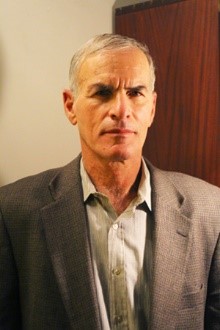
Image Credit: Norman Finkelstein
International Standard Serial Number (ISSN): 2369-6885
*Interview conducted March 3, 2023.*
*Please see the footnotes, bibliography, and citations, after the publication.*
Abstract
Dr. Norman Finkelstein remains one of the foremost experts and independent scholars on the Israeli occupation and the crimes against the Palestinians. He expanded some research into more academic freedom issues in the newest text. His most recent book is I’ll Burn That Bridge When I Get To It!: Heretical Thoughts on Identity Politics, Cancel Culture, and Academic Freedom (2022). Finkelstein discusses: I’ll Burn That Bridge When I Get To It!; Ibram X. Kendi; Rabbi Arthur Hertzberg; Tariq Ali; pronouns; cancellation; virtue signalling and virtue.
Keywords: academic freedom, Ibram X. Kendi, Kimberlé Crenshaw, Noam Chomsky, Norman Finkelstein, Norman X. Finkelstein, Rabbi Arthur Hertzberg, Robin DiAngelo, Ta-Nehisi Coates, Tariq Ali, virtue, virtue signalling, Woke Left.
Conversation with Dr. Norman Finkelstein on “I’ll Burn That Bridge When I Get to It!”: Independent Political Analyst (1)
Scott Douglas Jacobsen: Okay, we are now recording. This is an interview with Dr. Norman Finkelstein on his new text, I’ll Burn That Bridge When I Get There (sic).
Dr. Norman Finkelstein: No, “When I Get To It!”
Jacobsen: When I Get To It! I apologize.
Finkelstein: No problem.
Jacobsen: So, first things first, your original name was Norman Gary Finkelstein.
Finkelstein: That is correct.
Jacobsen: Since writing this critique of Woke Left sociopolitical commentaries, as per the cover page, your name has changed to “Norman X. Finkelstein”. Why the change? Is this part of the normal acidic humour playing of Ibram X. Kendi?
Finkelstein: Well, my name hasn’t changed at all, except for the cover of the book. If you look at the title page and everywhere else, it is Norman Finkelstein. The cover of the book is supposed to be garish and humorous. So, I thought I would do what all these Woke people do, which is try to create a brand for themselves. So, I am kind of mocking it. The current brand, as you know, is: at every possible juncture, opportunity, and occasion, insert an “X”. We have “Latin X”. We have “Ibram X. Kendi.” We have X this and X that. The whole Wokeness phenomenon is, in my opinion, mostly branding. They are buzzwords, slogans, devoid of any intellectual or political content. So, on the cover of the book, I was mocking that.
Jacobsen: At the current moment, I am working in a stable. For those who know your work very well, you were mentored by (Prof.) Noam Chomsky. My ears are perking up about the story in the text about Rabbi Arthur Hertzberg when he asked, “Are you in Chomsky’s stable?”, when you told him that you hold him in highest esteem. You never heard from him again.
Finkelstein: That is correct.
Jacobsen: There are numerous stories. Tariq Ali said the book is about settling scores. I don’t know. To me, it is more providing personal examples plus the regular incisive scholarship. Do you have sort of further responses to the critique or criticism of Tariq Ali that is the book is sort of meandering more than direct?
Finkelstein: Okay, I guess, I’m not quite capturing your question. So, if you can repeat it, I’ll be able better to engage it.
Jacobsen: Sure. So, you give personal stories within the text. As I work in a stable, my eyes perked up about Rabbi Arthur Hertzberg, when he asked you, “Are you in Chomsky’s stable?” You stated that you hold him in the highest esteem. You never heard from him again. There are numerous stories like this within the text, where people completely distance themselves from you or cut themselves off from you, or cancel you. Tariq Ali said the book is about settling scores. I don’t know. To me, it is simply more about providing personal examples plus regular incisive scholarship. Do you think this criticism of Tariq Ali is appropriate, or there is a more nuanced take to sort of respond to that?
Finkelstein: The book consists of 8 chapters. Then there are separate conclusions to what I call Part I and Part II. Those 8 chapters, chapter 2 is an intensive examination of Kimberlé Crenshaw. Chapter 3 is Ta-Nehisi Coates. Chapter 4 is Robin DiAngelo. Chapter 5, which runs to 100 pages, is Ibram X. Kendi. Chapter 6 is Barack Obama. And then there are two chapters on academic freedom. So, apart from chapter 1, which is a personal overview and introduction to the rest of the book. Apart from chapter 1, there is no personal score-settling at all. It is analyses, analysis of texts, trying to look for the logic, looking for the reasoning, looking for the evidence, for various claims made by Kimberlé Crenshaw, Ta-Nehisi Coates, Ibram X. Kendi, Robin DiAngelo. There’s no score-settling at all. It has nothing to do with score-settling. It is an analysis of texts. So, I think my reasonable inference is Tariq Ali read about 10 pages of the book and then discarded it.
Jacobsen: You note how in the current culture the party line can shift rapidly. This can create a basis for a sense of pervasive unease. How does this rapid shifting back-and-forth of the forbidden, the verboten, or not, make everyone vulnerable to cancellation?
Finkelstein: Because in the current climate, you can never really know if something you say is going to offend some person, and then you get hauled, for example, if you work in a company. Or if you work in a university, you get hauled to human resources. You are diagnosed as in desperate need of some sort of counselling therapy sessions. I know, when I teach, I am always wondering, “If I say that, am I going to be crossing some red line of some person?” Yesterday, just yesterday, an absolutely nice student, an absolutely nice student, came up to me at the end of class. I understood some students, a small number but still a small number, are wearing masks. One of the students was wearing a mask. I was unable to judge from this person’s physiognomy, which is the fancy word for face. I was unable to judge whether this person was a male or a female. The person had very long hair. The person, I should say, was also Vietnamese. Very long hair, almost like you would say, “Native American, Geronimo” style, and I thought his person was a female. Although, I was always not sure. I was not sure. The person came up to me at the end of class, very nice person, absolutely the nicest person, and said, “You referred to me in class a Mrs., but my pronoun is he. And I’m only bringing this to your attention because it may cause confusion among other students”. So, the person was not being accusatory at all, but just trying to be clarifying. And then, I just got so confused. I’m trying to think, “Is this person – so to speak – just a guy? And I couldn’t tell because the person had the mask on. Or was this person a trans person?” And in any case, I just got seized by confusion. I don’t know what’s going on. I am beginning to worry, “Did I make a mistake here? Did I make a mistake there?” It is just crazy. I’m trying to teach a class on international law. I have 36 students. And I am very proud of the fact that within approximately 3 weeks – even though, I am on the verge of 70 years old – that I make it a point to learn every student’s name. I want to learn every student’s name. I am at the point where I know every student’s name. It tells me my memory is still functioning, alright? Now, on top of learning every student’s name, I have a new burden. I have to learn everybody’s pronouns of which, you know, there approximately, now, 100. I think this is complete lunacy. Period, full stop. Pronouns simply designate your biological sex, that’s all I am interested in because there are certain aspects of public life where you need to know a person’s biological sex. What bathroom they use, what locker room they use, what sports team they are on, so, biological sex plays a public role. As to your world of social identification, you see yourself as a woman. You see yourself as a man. You see yourself as this, that, and the other. That’s your business. I’m not interested. The classroom is not a dating app. I’m there to teach. And I find this whole thing completely – this pronoun thing – insane. Now, I recognize that this person was acting in completely good faith, wasn’t trying to terrorize me, as there was another student who did try to terrorize me and it didn’t work. One student who wanted me to publicly apologize in class each time I misidentified this person’s pronouns. Sorry! The Stalin Era is over. We’re not having purge trials and confession. I’m very pleased that I know your name. Now, don’t start terrorizing me with your pronouns, because I don’t give a darn what your pronouns are, I’m here to teach.
Jacobsen: You did state in the text that you would tell someone your pronouns if they tell you their net worth.
Finkelstein: That’s correct. Because I am a little tired of these privileged people trying to show off to me how politically correct they are, and how progressive they are, and how regressive you are, and how regressive I am. Privileged people have nothing better to do with their time than to sit around contemplating their pronouns. Privileged people telling me how privileged I am. Because I am white and male. I don’t need people from Martha’s Vineyard lecturing me on privilege, on my privilege.
Jacobsen: You had an incident on a television show that you’ve been on for 30 years. Where, I believe, a one-sentence statement came back as a retort from a woman, “Your days of white male privilege are over”.
Finkelstein: The person said, “The days of white male privilege are over”.
Jacobsen: Why the direct-to-banning reaction rather than something more mild, even if there was a disagreement with the behaviour or the statement?
Finkelstein: You should ask that person.
Jacobsen: You call this culture a “dictatorship of virtue signalling”.
Finkelstein: That’s what it is.
Jacobsen: Why is the focus on virtue signalling rather than virtue? Isn’t virtue its own signal?
Finkelstein: In order to gain respect for your political commitments, for your mode of behaviour, respect is earned by sacrifice, we respect Martin Luther King because he was not one to talk the talk. He was willing to walk the walk. He was willing to walk it straight into knowingly, his grave. That’s what we respect. Not just your avowed values, or your willingness to sacrifice for those values, that’s why we respect Ghandi. That’s why we respect Socrates. There’s no sacrifice involved in scolding other people about their pronouns. Where is the sacrifice? This whole Woke culture doesn’t require, of all these Woke people, any sacrifice whatsoever. We respect people like Paul Robeson because he was the most renowned black figure in the world as a concert performer, as an athlete, as an intellectual. He sacrificed all of that to the point of his whole career, his whole professional life, being destroyed. He sacrificed that for his principles. What sacrifice do these Woke people make? What price do they pay? That’s why it is virtue signalling. It’s not virtue. Because you pay no price for it. You just carry on. You perform for the cameras, displaying your virtue. All I see is people making a mint from the purported virtue. I see Ibram X. Kendi getting $10,000,000 from the former CEO of Twitter, Jack Dorsey. I see all these Black Lives Matter people like Patrice Cullors going on real estate buying sprees because they came up with this hashtag, #BlackLivesMatter, enriching themselves, cutting the contracts with Netflix, or book contracts enriching themselves from their purported virtue. I don’t see sacrifice. I see enrichment. I see entrepreneurship. I see a band of crooks.
Jacobsen: This focus on identity seems to be a convenient shift. You note some of this in the text about the Democratic Party. Away from class warfare, in the sense of a focus on class consciousness along with identities, for any kind of political movement, it sort of deflects from real economic hardships people are having and any sort of mobilization on a socioeconomic, class base.
Finkelstein: It’s not just the shift. The identity politics is used as a juggernaut to instrumentalize, in order to destroy a class politics. That’s not just theoretical. It was the Angel Davis, the Kimberlé Crenshaws, the Ta-Nehisi Coates. It was all of them attacking Bernie Sanders during the most important class-based mobilization in the last century, since the 1930s. It’s them attacking Bernie Sanders for “being weak” on the black question, for not being with it like Amazon. So, Kimberlé Crenshaw says all the action is happening among the big corporations, like Amazon having a Black Lives Matter banner on its website. That, to her, is where all the action is, and Bernie is just this old Jewish schmuck talking about class struggle. It’s designed – it’s designed – to wreck and destroy a real class base, mass movement, which, unlike identity politics, does threaten the powers that be.
Bibliography
None
Footnotes
None
Citations
American Medical Association (AMA 11th Edition): Jacobsen S. Conversation with Dr. Norman Finkelstein on “I’ll Burn That Bridge When I Get to It!”: Independent Political Analyst (1). August 2023; 11(3). http://www.in-sightpublishing.com/finkelstein-burn-bridge-1
American Psychological Association (APA 7th Edition): Jacobsen, S. (2023, August 22). Conversation with Dr. Norman Finkelstein on “I’ll Burn That Bridge When I Get to It!”: Independent Political Analyst (1). In-Sight Publishing. 11(3). http://www.in-sightpublishing.com/finkelstein-burn-bridge-1.
Brazilian National Standards (ABNT): JACOBSEN, S. Conversation with Dr. Norman Finkelstein on “I’ll Burn That Bridge When I Get to It!”: Independent Political Analyst (1). In-Sight: Independent Interview-Based Journal, Fort Langley, v. 11, n. 3, 2023.
Chicago/Turabian, Author-Date (17th Edition): Jacobsen, Scott. 2023. “Conversation with Dr. Norman Finkelstein on “I’ll Burn That Bridge When I Get to It!”: Independent Political Analyst (1).” In-Sight: Independent Interview-Based Journal 11, no. 3 (Summer). http://www.in-sightpublishing.com/finkelstein-burn-bridge-1.
Chicago/Turabian, Notes & Bibliography (17th Edition): Jacobsen, S “Conversation with Dr. Norman Finkelstein on “I’ll Burn That Bridge When I Get to It!”: Independent Political Analyst (1).” In-Sight: Independent Interview-Based Journal 11, no. 3 (August 2023).http://www.in-sightpublishing.com/finkelstein-burn-bridge-1.
Harvard: Jacobsen, S. (2023) ‘Conversation with Dr. Norman Finkelstein on “I’ll Burn That Bridge When I Get to It!”: Independent Political Analyst (1)’, In-Sight: Independent Interview-Based Journal, 11(3). <http://www.in-sightpublishing.com/finkelstein-burn-bridge-1>.
Harvard (Australian): Jacobsen, S 2023, ‘Conversation with Dr. Norman Finkelstein on “I’ll Burn That Bridge When I Get to It!”: Independent Political Analyst (1)’, In-Sight: Independent Interview-Based Journal, vol. 11, no. 3, <http://www.in-sightpublishing.com/finkelstein-burn-bridge-1;.
Modern Language Association (MLA, 9th Edition): Jacobsen, Scott. “Conversation with Dr. Norman Finkelstein on “I’ll Burn That Bridge When I Get to It!”: Independent Political Analyst (1).” In-Sight: Independent Interview-Based Journal, vo.11, no. 3, 2023,http://www.in-sightpublishing.com/finkelstein-burn-bridge-1.
Vancouver/ICMJE: Scott J. Conversation with Dr. Norman Finkelstein on “I’ll Burn That Bridge When I Get to It!”: Independent Political Analyst (1) [Internet]. 2023 Aug; 11(3). Available from: http://www.in-sightpublishing.com/finkelstein-burn-bridge-1.
License
In-Sight Publishing by Scott Douglas Jacobsen is licensed under a Creative Commons Attribution-NonCommercial-NoDerivatives 4.0 International License.
Based on work at www.in-sightpublishing.com.
Copyright
© Scott Douglas Jacobsen and In-Sight Publishing 2012-Present. Unauthorized use and/or duplication of this material without express and written permission from this site’s author and/or owner is strictly prohibited. Excerpts and links may be used, provided that full and clear credit is given to Scott Douglas Jacobsen, or the author(s), and In-Sight Publishing with appropriate and specific direction to the original content. All interviewees and authors copyright their material, as well, and may disseminate for their independent purposes.
Share this:

Publisher: In-Sight Publishing
Publisher Founding: March 1, 2014
Web Domain: http://www.in-sightpublishing.com
Location: Fort Langley, Township of Langley, British Columbia, Canada
Journal: In-Sight: Independent Interview-Based Journal
Journal Founding: August 2, 2012
Frequency: Three (3) Times Per Year
Review Status: Non-Peer-Reviewed
Access: Electronic/Digital & Open Access
Fees: None (Free)
Volume Numbering: 11
Issue Numbering: 3
Section: A
Theme Type: Idea
Theme Premise: “Outliers and Outsiders”
Theme Part: 28
Formal Sub-Theme: None.
Individual Publication Date: August 22, 2023
Issue Publication Date: September 1, 2023
Author(s): Scott Douglas Jacobsen
Word Count: 1,098
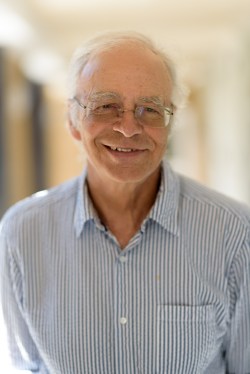
Image Credit: Seth Lazar
International Standard Serial Number (ISSN): 2369-6885
*Interview conducted December 16, 2022.*
*Please see the footnotes, bibliography, and citations, after the publication.*
Abstract
Prof. Singer’s biographic statement on his website says the following: “Journalists have bestowed on me the tag of “world’s most influential living philosopher.” They are probably thinking of my work on the ethics of our treatment of animals, often credited with starting the modern animal rights movement, and of the influence that my writing has had on development of effective altruism. I am also known for my controversial critique of the sanctity of life ethics in bioethics. In 2021 I was delighted to receive the Berggruen Prize for Philosophy and Culture. The citation referred to my “widely influential and intellectually rigorous work in reinvigorating utilitarianism as part of academic philosophy and as a force for change in the world.” The prize comes with $1 million which, in accordance with views I have been defending for many years, I am donating to the most effective organizations working to assist people in extreme poverty and to reduce the suffering of animals in factory farms. Several key figures in the animal movement have said that my book Animal Liberation, first published in 1975, led them to get involved in the struggle to reduce the vast amount of suffering we inflict on animals. To that end, I co-founded the Australian Federation of Animal Societies, now Animals Australia, the country’s largest and most effective animal organization. My wife, Renata, and I stopped eating meat in 1971. I am the founder of The Life You Can Save, an organization based on my book of the same name. It aims to spread my ideas about why we should be doing much more to improve the lives of people living in extreme poverty, and how we can best do this. You can view my TED talk on this topic here. My writings in this area include: the 1972 essay “Famine, Affluence, and Morality” in which I argue for donating to help the global poor; and two books that make the case for effective giving, The Life You Can Save (2009) and The Most Good You Can Do (2015). I have written, co-authored, edited or co-edited more than 50 books, including Practical Ethics, The Expanding Circle, Rethinking Life and Death, One World, The Ethics of What We Eat (with Jim Mason) and The Point of View of the Universe (with Katarzyna de Lazari-Radek. My writings have appeared in more than 25 languages. I was born in Melbourne, Australia, in 1946, and educated at the University of Melbourne and the University of Oxford. After teaching in England, the United States, and Australia, in 1999 I became Ira W. DeCamp Professor of Bioethics in the University Center for Human Values at Princeton University. I am now only teaching at Princeton for the Fall semester. I spend part of each year doing research and writing in Melbourne, so that Renata and I can spend time with our three daughters and four grandchildren. We also enjoy hiking, and I surf.” Singer discusses: non-human animal consideration; reasons people make changes in diet regarding animal welfare; and sentientism.
Keywords: Animal Liberation Now, Australia, Chinese, Japanese, octopus, oyster, Peter Singer, Princeton University, Pythagoras, Sentientism, vegan, vegetarian.
Conversation with Professor Peter Singer on Meat-Like Foods and Sentientism: Ira W. DeCamp Professor of Bioethics, Princeton University (2)
Scott Douglas Jacobsen: Things have really ramped up in the last couple decades in terms of consideration of animal welfare. Although, there is mass killing of non-human animals, certainly, in factory farms and elsewhere. However, I think with a lot of technological advancements; the conversations seem to be happening a lot more. Things just happening around meat grown through stem cells. Things of this nature. Has advancement of technology, in your opinion, changed some of the consideration of non-human animal welfare, simply for the fac that it may not be necessary to include as much suffering if you can get the same product in another manner that is more efficient?
Prof. Peter Singer: I am hopeful that cellular agriculture and plant-based analogues to meat are going to do that. I don’t think they’ve done that to a really significant scale. I think that’s largey because of cost. They are still more expensive than the standard meast products. If you buy an impossible burger or a beyond meat burger, it is going to cost you a little more than the ordinary beef burger. It may be just as good, but it is not clearly better. So, it needs to come down in price, I think, and then we need to get these other products that people are producing. There are chicken products, now, coming on the market, in Singapore anyway. They are selling chicken nuggets. I think they will start to come on the market here too. It is not as though you have been unable to nourish yourself because these high-tech meat-like products. You could always live and cheaply on plant proteins like lentils and beans of various sorts, and tofu, of course, is a product that has been around for millennia and takes a lot of different kinds of flavourings. I think it works well in a lot of dishes, particularly Chinese dishes as this is where it comes from – and Japanese dishes. So, you didn’t really need it. But some people wanted the taste in their mouth or the chewiness of meat. I hope these products will get cheaper and widely sold and eaten.
Jacobsen: To the brass tax of the considerations about making those changes, what have been, realistically, the main reasons people have made those changes in their diet or their buying patterns, purchasing patterns?
Singer: I think there are three major factors as to why people are moving away from meat in their diet. Some, like me, are primarily concerned over what we are doing to animals and you don’t want to participate in this ruthless exploitation of literally tens of millions of animals giving them nightmarish lives without any consideration for their wellbeing. That’s been one big factor. The second is we are increasingly aware of is the contribution of meat to climate change. Climate change, itself, wasn’t an issue until the mid-1980s, then it will still focused on fossil fuels for a long time. It is only in the last 10 or 20 years that people have been more aware of the role meat plays in accelerating climate change. That’s the second factor. The third factor is health, I would divide the health factor into two. On the one hand, there are people who think, “I will be healthier if I don’t eat meat”. That is certainly a factor for many, many people. You live better. You feel better. You lower risk of cancer of the digestive system and of heart disease. I think there is good evidence of all of those benefits now. That is a big factor. There is also the public health aspect of it, not just what you eat, but what other eat – because factory farms are a great place for growing new viruses. We have alreay had one major pandemic come out of a factory farm. That was the Swine Flu pandemic, which preceded the Coronavirus. It didn’t kill as many people as the Coronavrus. But it killed a lot. The big risk is the next virus to come out from animals crossing to us is that it is grown out of a factory farm with so many animals stressed together. Humans go in and out to taker the animals out to kill them or to do routine maintenance. It could be both highly contagious as Coronavirus, but much more deadly. If that happens, we will be in a very serious problem. That’s a good public health reason for wanting to not take part in factory farmed products as well.
Jacobsen: There’s a term “Sentientist” floating around. To myself, it matches, sort of, my own ethical considerations. I beieve you identify as such. How does this term – this concept – encapsulate a lot of the ethical thinking for you right now?
Singer: Well, look, the point is a sentient being, in the sense we’re using here, is on capable of suffering and feeling pain – and, hopefully, capable of experiencing pleasure and joy as well. But certainly, the capacity to feel pain is part of what it is to be a sentient being. It is a being with conscious experiences. The point of saying that you’re a sentientist is to say that you think that any being capable of feeling pain should have its interests given weight. I would say given similar weight to similar beings with similar interests. Beings that might have a similar interest. If an animal feels a certain amount of pain through – let’s say – being hit, then that is just as bad or equal to hitting a human being and causing the human being a similar amount of pain. The term “sentientist”, we talk about being vegan or vegetarian. They get termed if they eat animals or animal products. But it might not be the case that all animals are sentient. A good example of a non-sentient animal may be an oyster. Oysters have very simple nervous systems. They are unable to move away from sources of danger. So, it is arguable that they would have been less likely to evolve a capacity to feel pain, given that it wouldn’t do them much good as opposed to animals who can move away from sources of pain. So, if you are a sentientist, you might say, “I don’t eat birds and mammals, vertebrates generally. I don’t eat fish.” Perhaps, there is an invertebrate that is clearly sentient is an octopus, which is a mollusc. You might say, “If an animal is not sentient, then I don’t object to eating it, because you can’t cause it to suffer or feel pain. It doesn’t have that capacity.
Bibliography
None
Footnotes
None
Citations
American Medical Association (AMA 11th Edition): Jacobsen S. Conversation with Professor Peter Singer on Meat-Like Foods and Sentientism: Ira W. DeCamp Professor of Bioethics, Princeton University (2). August 2023; 11(3). http://www.in-sightpublishing.com/singer-2
American Psychological Association (APA 7th Edition): Jacobsen, S. (2023, August 22). Conversation with Professor Peter Singer on Meat-Like Foods and Sentientism: Ira W. DeCamp Professor of Bioethics, Princeton University (2). In-Sight Publishing. 11(3). http://www.in-sightpublishing.com/singer-2.
Brazilian National Standards (ABNT): JACOBSEN, S. Conversation with Professor Peter Singer on Meat-Like Foods and Sentientism: Ira W. DeCamp Professor of Bioethics, Princeton University (2). In-Sight: Independent Interview-Based Journal, Fort Langley, v. 11, n. 3, 2023.
Chicago/Turabian, Author-Date (17th Edition): Jacobsen, Scott. 2023. “Conversation with Professor Peter Singer on Meat-Like Foods and Sentientism: Ira W. DeCamp Professor of Bioethics, Princeton University (2).” In-Sight: Independent Interview-Based Journal 11, no. 3 (Summer). http://www.in-sightpublishing.com/singer-2.
Chicago/Turabian, Notes & Bibliography (17th Edition): Jacobsen, S “Conversation with Professor Peter Singer on Meat-Like Foods and Sentientism: Ira W. DeCamp Professor of Bioethics, Princeton University (2).” In-Sight: Independent Interview-Based Journal 11, no. 3 (August 2023).http://www.in-sightpublishing.com/singer-2.
Harvard: Jacobsen, S. (2023) ‘Conversation with Professor Peter Singer on Meat-Like Foods and Sentientism: Ira W. DeCamp Professor of Bioethics, Princeton University (2)’, In-Sight: Independent Interview-Based Journal, 11(3). <http://www.in-sightpublishing.com/singer-2>.
Harvard (Australian): Jacobsen, S 2023, ‘Conversation with Professor Peter Singer on Meat-Like Foods and Sentientism: Ira W. DeCamp Professor of Bioethics, Princeton University (2)’, In-Sight: Independent Interview-Based Journal, vol. 11, no. 3, <http://www.in-sightpublishing.com/singer-2;.
Modern Language Association (MLA, 9th Edition): Jacobsen, Scott. “Conversation with Professor Peter Singer on Meat-Like Foods and Sentientism: Ira W. DeCamp Professor of Bioethics, Princeton University (2).” In-Sight: Independent Interview-Based Journal, vo.11, no. 3, 2023,http://www.in-sightpublishing.com/singer-2.
Vancouver/ICMJE: Scott J. Conversation with Professor Peter Singer on Meat-Like Foods and Sentientism: Ira W. DeCamp Professor of Bioethics, Princeton University (2) [Internet]. 2023 Aug; 11(3). Available from: http://www.in-sightpublishing.com/singer-2.
License
In-Sight Publishing by Scott Douglas Jacobsen is licensed under a Creative Commons Attribution-NonCommercial-NoDerivatives 4.0 International License.
Based on work at www.in-sightpublishing.com.
Copyright
© Scott Douglas Jacobsen and In-Sight Publishing 2012-Present. Unauthorized use and/or duplication of this material without express and written permission from this site’s author and/or owner is strictly prohibited. Excerpts and links may be used, provided that full and clear credit is given to Scott Douglas Jacobsen, or the author(s), and In-Sight Publishing with appropriate and specific direction to the original content. All interviewees and authors copyright their material, as well, and may disseminate for their independent purposes.
Share this:

Author(s): Scott Douglas Jacobsen
Publication (Outlet/Website): Medium (Personal)
Publication Date (yyyy/mm/dd): 2023/08/18
Silentium: To have silence, is to be at peace; to be silenced, is to know hell; to speak, is to touch Earth.
See “I can feel your air”.
License
In-Sight Publishing by Scott Douglas Jacobsen is licensed under a Creative Commons Attribution-NonCommercial-NoDerivatives 4.0 International License. Based on a work at www.in-sightpublishing.com.
Copyright
© Scott Douglas Jacobsen and In-Sight Publishing 2012-Present. Unauthorized use and/or duplication of this material without express and written permission from this site’s author and/or owner is strictly prohibited. Excerpts and links may be used, provided that full and clear credit is given to Scott Douglas Jacobsen and In-Sight Publishing with appropriate and specific direction to the original content. All interviewees and authors co-copyright their material and may disseminate for their independent purposes.
Share this:
Author(s): Scott Douglas Jacobsen
Publication (Outlet/Website): Medium (Personal)
Publication Date (yyyy/mm/dd): 2023/08/18
I remember you: I know, I see; I sense; a you is here, inasmuch as an “I am”, and I am a fluid boundary, bound by you.
See “Ubuntu”.
License
In-Sight Publishing by Scott Douglas Jacobsen is licensed under a Creative Commons Attribution-NonCommercial-NoDerivatives 4.0 International License. Based on a work at www.in-sightpublishing.com.
Copyright
© Scott Douglas Jacobsen and In-Sight Publishing 2012-Present. Unauthorized use and/or duplication of this material without express and written permission from this site’s author and/or owner is strictly prohibited. Excerpts and links may be used, provided that full and clear credit is given to Scott Douglas Jacobsen and In-Sight Publishing with appropriate and specific direction to the original content. All interviewees and authors co-copyright their material and may disseminate for their independent purposes.
Share this:
Author(s): Scott Douglas Jacobsen
Publication (Outlet/Website): Medium (Personal)
Publication Date (yyyy/mm/dd): 2023/08/18
Wounded Salt: Salt on a wound may hurt, temporarily; although, it creates conditions for healing, similarly with passage rites.
See “Na”.
License
In-Sight Publishing by Scott Douglas Jacobsen is licensed under a Creative Commons Attribution-NonCommercial-NoDerivatives 4.0 International License. Based on a work at www.in-sightpublishing.com.
Copyright
© Scott Douglas Jacobsen and In-Sight Publishing 2012-Present. Unauthorized use and/or duplication of this material without express and written permission from this site’s author and/or owner is strictly prohibited. Excerpts and links may be used, provided that full and clear credit is given to Scott Douglas Jacobsen and In-Sight Publishing with appropriate and specific direction to the original content. All interviewees and authors co-copyright their material and may disseminate for their independent purposes.
Share this:
Author(s): Scott Douglas Jacobsen
Publication (Outlet/Website): Medium (Personal)
Publication Date (yyyy/mm/dd): 2023/08/18
Curvature: The contours, or qualitative tendencies, of a mind can be observed in the quality & breadth of its productions.
License
In-Sight Publishing by Scott Douglas Jacobsen is licensed under a Creative Commons Attribution-NonCommercial-NoDerivatives 4.0 International License. Based on a work at www.in-sightpublishing.com.
Copyright
© Scott Douglas Jacobsen and In-Sight Publishing 2012-Present. Unauthorized use and/or duplication of this material without express and written permission from this site’s author and/or owner is strictly prohibited. Excerpts and links may be used, provided that full and clear credit is given to Scott Douglas Jacobsen and In-Sight Publishing with appropriate and specific direction to the original content. All interviewees and authors co-copyright their material and may disseminate for their independent purposes.
Share this:
Author(s): Scott Douglas Jacobsen
Publication (Outlet/Website): Medium (Personal)
Publication Date (yyyy/mm/dd): 2023/08/18
Self: I can’t give more than myself; and the Self, as impermanence, sits between eternal tablets, BEFORE & AFTER.
License
In-Sight Publishing by Scott Douglas Jacobsen is licensed under a Creative Commons Attribution-NonCommercial-NoDerivatives 4.0 International License. Based on a work at www.in-sightpublishing.com.
Copyright
© Scott Douglas Jacobsen and In-Sight Publishing 2012-Present. Unauthorized use and/or duplication of this material without express and written permission from this site’s author and/or owner is strictly prohibited. Excerpts and links may be used, provided that full and clear credit is given to Scott Douglas Jacobsen and In-Sight Publishing with appropriate and specific direction to the original content. All interviewees and authors co-copyright their material and may disseminate for their independent purposes.
Share this:
Author(s): Scott Douglas Jacobsen
Publication (Outlet/Website): Medium (Personal)
Publication Date (yyyy/mm/dd): 2023/08/18
Alfred North Whitehead: Idealistic Realism within Energetic Physicalism, as Process Constituents.
See “Process Philosophy”.
License
In-Sight Publishing by Scott Douglas Jacobsen is licensed under a Creative Commons Attribution-NonCommercial-NoDerivatives 4.0 International License. Based on a work at www.in-sightpublishing.com.
Copyright
© Scott Douglas Jacobsen and In-Sight Publishing 2012-Present. Unauthorized use and/or duplication of this material without express and written permission from this site’s author and/or owner is strictly prohibited. Excerpts and links may be used, provided that full and clear credit is given to Scott Douglas Jacobsen and In-Sight Publishing with appropriate and specific direction to the original content. All interviewees and authors co-copyright their material and may disseminate for their independent purposes.
Share this:
Author(s): Scott Douglas Jacobsen
Publication (Outlet/Website): Medium (Personal)
Publication Date (yyyy/mm/dd): 2023/08/18
Do justice and let the sky fall: “Oh! Let me die, let me die, please, let me die”; alcoholism, “Fuck you, Scott”.
See “All stair fall father”.
License
In-Sight Publishing by Scott Douglas Jacobsen is licensed under a Creative Commons Attribution-NonCommercial-NoDerivatives 4.0 International License. Based on a work at www.in-sightpublishing.com.
Copyright
© Scott Douglas Jacobsen and In-Sight Publishing 2012-Present. Unauthorized use and/or duplication of this material without express and written permission from this site’s author and/or owner is strictly prohibited. Excerpts and links may be used, provided that full and clear credit is given to Scott Douglas Jacobsen and In-Sight Publishing with appropriate and specific direction to the original content. All interviewees and authors co-copyright their material and may disseminate for their independent purposes.
Share this:
Author(s): Scott Douglas Jacobsen
Publication (Outlet/Website): Medium (Personal)
Publication Date (yyyy/mm/dd): 2023/08/18
“Horse girls, ugh, they’re all the same.”: I didn’t say it, but I laughed when you said it; that’s a vote.
See “I didn’t see anything”.
License
In-Sight Publishing by Scott Douglas Jacobsen is licensed under a Creative Commons Attribution-NonCommercial-NoDerivatives 4.0 International License. Based on a work at www.in-sightpublishing.com.
Copyright
© Scott Douglas Jacobsen and In-Sight Publishing 2012-Present. Unauthorized use and/or duplication of this material without express and written permission from this site’s author and/or owner is strictly prohibited. Excerpts and links may be used, provided that full and clear credit is given to Scott Douglas Jacobsen and In-Sight Publishing with appropriate and specific direction to the original content. All interviewees and authors co-copyright their material and may disseminate for their independent purposes.
Share this:
Author(s): Scott Douglas Jacobsen
Publication (Outlet/Website): Medium (Personal)
Publication Date (yyyy/mm/dd): 2023/08/18
“You are so high maintenance.”: Correct; now, try being me, it’s not that fun on this side, either”.
See “You are such a girl!”.
License
In-Sight Publishing by Scott Douglas Jacobsen is licensed under a Creative Commons Attribution-NonCommercial-NoDerivatives 4.0 International License. Based on a work at www.in-sightpublishing.com.
Copyright
© Scott Douglas Jacobsen and In-Sight Publishing 2012-Present. Unauthorized use and/or duplication of this material without express and written permission from this site’s author and/or owner is strictly prohibited. Excerpts and links may be used, provided that full and clear credit is given to Scott Douglas Jacobsen and In-Sight Publishing with appropriate and specific direction to the original content. All interviewees and authors co-copyright their material and may disseminate for their independent purposes.
Share this:
Author(s): Scott Douglas Jacobsen
Publication (Outlet/Website): Medium (Personal)
Publication Date (yyyy/mm/dd): 2023/08/18
My attitude towards men is simply this: that of women over age 72; that is to say: bemusement.
See “Men”.
License
In-Sight Publishing by Scott Douglas Jacobsen is licensed under a Creative Commons Attribution-NonCommercial-NoDerivatives 4.0 International License. Based on a work at www.in-sightpublishing.com.
Copyright
© Scott Douglas Jacobsen and In-Sight Publishing 2012-Present. Unauthorized use and/or duplication of this material without express and written permission from this site’s author and/or owner is strictly prohibited. Excerpts and links may be used, provided that full and clear credit is given to Scott Douglas Jacobsen and In-Sight Publishing with appropriate and specific direction to the original content. All interviewees and authors co-copyright their material and may disseminate for their independent purposes.
Share this:
Author(s): Scott Douglas Jacobsen
Publication (Outlet/Website): Medium (Personal)
Publication Date (yyyy/mm/dd): 2023/08/18
I stand: by the unjust, the unwise, the immoral; in a context of twisted Justice, Wisdom, and Morality…
See “to do so is to be”.
License
In-Sight Publishing by Scott Douglas Jacobsen is licensed under a Creative Commons Attribution-NonCommercial-NoDerivatives 4.0 International License. Based on a work at www.in-sightpublishing.com.
Copyright
© Scott Douglas Jacobsen and In-Sight Publishing 2012-Present. Unauthorized use and/or duplication of this material without express and written permission from this site’s author and/or owner is strictly prohibited. Excerpts and links may be used, provided that full and clear credit is given to Scott Douglas Jacobsen and In-Sight Publishing with appropriate and specific direction to the original content. All interviewees and authors co-copyright their material and may disseminate for their independent purposes.
Share this:
Publisher: In-Sight Publishing
Publisher Founding: March 1, 2014
Web Domain: http://www.in-sightpublishing.com
Location: Fort Langley, Township of Langley, British Columbia, Canada
Journal: In-Sight: Independent Interview-Based Journal
Journal Founding: August 2, 2012
Frequency: Three (3) Times Per Year
Review Status: Non-Peer-Reviewed
Access: Electronic/Digital & Open Access
Fees: None (Free)
Volume Numbering: 11
Issue Numbering: 3
Section: B
Theme Type: Idea
Theme Premise: “Outliers and Outsiders”
Theme Part: 28
Formal Sub-Theme: None.
Individual Publication Date: August 15, 2023
Issue Publication Date: September 1, 2023
Author(s): James Haught
Author(s) Bio: James A. Haught, syndicated by PeaceVoice, was the longtime editor at the Charleston Gazette and had been the editor emeritus since 2015. He was thought to have been the first investigative reporter in West Virginia. He won two dozen national newswriting awards and was author of 12 books and 150 magazine essays. He was also a senior editor of Free Inquiry magazine and was writer-in-residence for the United Coalition of Reason. He died on Sunday, July 23, at the age of 91.
Word Count: 409
Image Credit: None
International Standard Serial Number (ISSN): 2369-6885
*Please see the footnotes, bibliography, and citations, after the publication.*
Keywords: Christianity, dying, James Haught, religion, Ronald Inglehart, Secular Age.
Religion is dying
Religion is fading more quickly in the United States than in any other nation, according to a forthcoming research book.
Religion’s Sudden Decline: What’s Causing It, and What Comes Next, by University of Michigan scholar Ronald Inglehart, is to be released in January by Oxford University Press. Writing in Foreign Affairs magazine (in an advance summary titled “Giving Up on God: The Global Decline of Religion”) Inglehart says:
The most dramatic shift away from religion has taken place among the American public. From 1981 to 2007, the United States ranked as one of the world’s more religious countries, with religiosity levels changing very little. Since then, the United States has shown the largest move away from religion of any country for which we have data.
A profound cultural transformation is in progress — mostly happening quietly out of sight, little-noticed in daily life. Old supernatural beliefs are vanishing among intelligent, educated, science-minded people, especially the young. Religion is shriveling into the realm of myth and fantasy. Here are some indicators:
Almost two-thirds of teens who grow up in a church drop out of religion in their 20s, according to both Barna and LifeWay surveys.
The number of Americans who say their religion is “none” began to explode in the 1990s — first to one-tenth of the population, then climbing relentlessly to one-fourth. Among those under 30, “Nones” are now more than one-third.
American church membership has fallen 20 percent in the past two decades, according to Gallup research. Southern Baptists have dropped 2 million members since 2005.
Tall-steeple Protestant “mainline” denominations have suffered the worst. United Methodists have declined in numbers from 11 million in 1969 to below 7 million today — while America’s population has almost doubled. Evangelical Lutherans have decreased from 5.3 million in 1987 to 3.4 million now. The Presbyterian Church USA had 3.2 million in 1982 but now is around 1.3 million. The Episcopal Church went from 3.4 million in the 1960s to 1.7 million now.
These highbrow mainline faiths with seminary-educated ministers once drew public respect. But religion is shifting to lowbrow, emotional worship that is less admired. One-fourth of the world’s Christians now “speak in tongues,” researchers say. Christianity is moving from prosperous Northern nations to the less-developed tropics.
Let’s hope the Secular Age continues snowballing until supernatural religion is reduced to just an embarrassing fringe.
This piece is adapted from a column published at Informed Comment and OpEd News.
Bibliography
None
Footnotes
None
Citations
American Medical Association (AMA 11th Edition): Haught J. Religion is dying. August 2023; 11(3). http://www.in-sightpublishing.com/religion-dying
American Psychological Association (APA 7th Edition): Haught, J. (2023, August 15). Religion is dying. In-Sight Publishing. 11(3). http://www.in-sightpublishing.com/religion-dying.
Brazilian National Standards (ABNT): HAUGHT, J. Religion is dying. In-Sight: Independent Interview-Based Journal, Fort Langley, v. 11, n. 3, 2023.
Chicago/Turabian, Author-Date (17th Edition): Haught, James. 2023. “Religion is dying.” In-Sight: Independent Interview-Based Journal 11, no. 3 (Summer). http://www.in-sightpublishing.com/religion-dying.
Chicago/Turabian, Notes & Bibliography (17th Edition): Haught, J “Religion is dying.” In-Sight: Independent Interview-Based Journal 11, no. 3 (August 2023).http://www.in-sightpublishing.com/religion-dying.
Harvard: Haught, J. (2023) ‘Religion is dying’, In-Sight: Independent Interview-Based Journal, 11(3). <http://www.in-sightpublishing.com/religion-dying>.
Harvard (Australian): Haught, J 2023, ‘Religion is dying’, In-Sight: Independent Interview-Based Journal, vol. 11, no. 3, <http://www.in-sightpublishing.com/religion-dying>.
Modern Language Association (MLA, 9th Edition): Haught, James. “Religion is dying.” In-Sight: Independent Interview-Based Journal, vo.11, no. 3, 2023, http://www.in-sightpublishing.com/religion-dying.
Vancouver/ICMJE: James H. Religion is dying [Internet]. 2023 Aug; 11(3). Available from: http://www.in-sightpublishing.com/religion-dying.
License
In-Sight Publishing by Scott Douglas Jacobsen is licensed under a Creative Commons Attribution-NonCommercial-NoDerivatives 4.0 International License.
Based on work at www.in-sightpublishing.com.
Copyrigh
© Scott Douglas Jacobsen and In-Sight Publishing 2012-Present. Unauthorized use and/or duplication of this material without express and written permission from this site’s author and/or owner is strictly prohibited. Excerpts and links may be used, provided that full and clear credit is given to Scott Douglas Jacobsen, or the author(s), and In-Sight Publishing with appropriate and specific direction to the original content. All interviewees and authors copyright their material, as well, and may disseminate for their independent purposes.
Share this:
Publisher: In-Sight Publishing
Publisher Founding: March 1, 2014
Web Domain: http://www.in-sightpublishing.com
Location: Fort Langley, Township of Langley, British Columbia, Canada
Journal: In-Sight: Independent Interview-Based Journal
Journal Founding: August 2, 2012
Frequency: Three (3) Times Per Year
Review Status: Non-Peer-Reviewed
Access: Electronic/Digital & Open Access
Fees: None (Free)
Volume Numbering: 11
Issue Numbering: 3
Section: B
Theme Type: Idea
Theme Premise: “Outliers and Outsiders”
Theme Part: 28
Formal Sub-Theme: None.
Individual Publication Date: August 15, 2023
Issue Publication Date: September 1, 2023
Author(s): James Haught
Author(s) Bio: James A. Haught, syndicated by PeaceVoice, was the longtime editor at the Charleston Gazette and had been the editor emeritus since 2015. He was thought to have been the first investigative reporter in West Virginia. He won two dozen national newswriting awards and was author of 12 books and 150 magazine essays. He was also a senior editor of Free Inquiry magazine and was writer-in-residence for the United Coalition of Reason. He died on Sunday, July 23, at the age of 91.
Word Count: 518
Image Credit: None
International Standard Serial Number (ISSN): 2369-6885
*Please see the footnotes, bibliography, and citations, after the publication.*
Keywords: America, atheist, Christian, Christian nation, Dan Barker, Graham Lawton, Heaven, James Haught, jokes, The Clergy Project.
America is functionally atheist
Some jokes reveal truths. Remember the quip that “no Christian wants to go to heaven right now”? Obviously, the hidden truth is that most Christians secretly doubt church promises of paradise.
Well, I think secret disbelief goes deeper, saturating most of this “Christian nation.” A majority of Americans behave as if they doubt the reality of gods, devils, heavens, hells, miracles, visions, prophecies and the rest of church supernaturalism. For most of society, daily life proceeds in a manner generally called “functional atheism” (acting as if God doesn’t exist).
Even priests and ministers have secret doubts. That’s why skeptics such as FFRF Co-President Dan Barker, a former minister himself, created The Clergy Project, an online refuge where troubled preachers come out of the closet to reveal their uncertainty about holy dogmas. Hundreds have confessed, so far. The disclosures were first published in a report titled “Preachers Who Are Not Believers” and later assembled in a book titled Caught in the Pulpit: Leaving Belief Behind.
At a British book symposium, author Graham Lawton declared that “no one really believes in religion, not even priests.” He said cultures give lip service to supernatural beliefs, but it’s a pretense. “If you ask quite religious people about the claims that are made by religion — like the fact that God’s watching you — they don’t really believe that,” he said.
Well, Lawton is mostly right, but not entirely. America contains a significant streak of what sociologists call “intense” religion. A 2017 Harvard study found that hard-line, narrow-minded, far-right Christians remain fervent in the United States. Big-money television preachers still reap hundreds of millions of dollars. Also, an estimated 10 million Americans are Pentecostals who “speak in tongues.” These worshippers clearly believe supernatural dogmas.
However, they’re a shrinking fringe, relentlessly retreating. Most of America is turning secular with amazing rapidity. Church membership has dropped 20 percent in the past two decades. Around a third of young adults say their religion is “none.” In general, supernatural faith is dying, and the rest of the nation lives by functional atheism.
Panic is growing among some church figures. Conservative writer Rod Dreher fears America’s swelling secularism so much that he wrote a book, The Benedict Option, urging believers to renounce mainstream society and bond in private communes like Benedictine monks in monasteries. For Dreher, the Supreme Court approval of same-sex marriage was a Waterloo, the worst of many defeats, for his type of hidebound, intolerant Christians. It cast them as bigoted gay-haters out of step with the nation. Dreher has written: “Christians who hold to the biblical teaching about sex and marriage have the same status in culture, and increasingly in law, as racists.”
Well, the bible decrees (Leviticus 20:13) that gay males must be put to death. Does Dreher want Christians to hold to that biblical teaching about sex?
So far, I haven’t seen any fundamentalists heading for cloisters. But maybe they should, because they’re shriveling to an unappetizing fringe, while the rest of America increasingly lives by functional atheism.
This piece is adapted from a June 24, 2019, column written for Daylight Atheism at Patheos.
Bibliography
None
Footnotes
None
Citations
American Medical Association (AMA 11th Edition): Haught J. America is functionally atheist. August 2023; 11(3). http://www.in-sightpublishing.com/America-atheist
American Psychological Association (APA 7th Edition): Haught, J. (2023, August 15). America is functionally atheist. In-Sight Publishing. 11(3). http://www.in-sightpublishing.com/America-atheist.
Brazilian National Standards (ABNT): HAUGHT, J. America is functionally atheist. In-Sight: Independent Interview-Based Journal, Fort Langley, v. 11, n. 3, 2023.
Chicago/Turabian, Author-Date (17th Edition): Haught, James. 2023. “America is functionally atheist.” In-Sight: Independent Interview-Based Journal 11, no. 3 (Summer). http://www.in-sightpublishing.com/America-atheist.
Chicago/Turabian, Notes & Bibliography (17th Edition): Haught, J “America is functionally atheist.” In-Sight: Independent Interview-Based Journal 11, no. 3 (August 2023).http://www.in-sightpublishing.com/America-atheist.
Harvard: Haught, J. (2023) ‘America is functionally atheist’, In-Sight: Independent Interview-Based Journal, 11(3). <http://www.in-sightpublishing.com/America-atheist>.
Harvard (Australian): Haught, J 2023, ‘America is functionally atheist’, In-Sight: Independent Interview-Based Journal, vol. 11, no. 3, <http://www.in-sightpublishing.com/America-atheist>.
Modern Language Association (MLA, 9th Edition): Haught, James. “America is functionally atheist.” In-Sight: Independent Interview-Based Journal, vo.11, no. 3, 2023, http://www.in-sightpublishing.com/America-atheist.
Vancouver/ICMJE: James H. America is functionally atheist [Internet]. 2023 Aug; 11(3). Available from: http://www.in-sightpublishing.com/America-atheist.
License
In-Sight Publishing by Scott Douglas Jacobsen is licensed under a Creative Commons Attribution-NonCommercial-NoDerivatives 4.0 International License.
Based on work at www.in-sightpublishing.com.
Copyrigh
© Scott Douglas Jacobsen and In-Sight Publishing 2012-Present. Unauthorized use and/or duplication of this material without express and written permission from this site’s author and/or owner is strictly prohibited. Excerpts and links may be used, provided that full and clear credit is given to Scott Douglas Jacobsen, or the author(s), and In-Sight Publishing with appropriate and specific direction to the original content. All interviewees and authors copyright their material, as well, and may disseminate for their independent purposes.
Share this:
Publisher: In-Sight Publishing
Publisher Founding: March 1, 2014
Web Domain: http://www.in-sightpublishing.com
Location: Fort Langley, Township of Langley, British Columbia, Canada
Journal: In-Sight: Independent Interview-Based Journal
Journal Founding: August 2, 2012
Frequency: Three (3) Times Per Year
Review Status: Non-Peer-Reviewed
Access: Electronic/Digital & Open Access
Fees: None (Free)
Volume Numbering: 11
Issue Numbering: 3
Section: B
Theme Type: Idea
Theme Premise: “Outliers and Outsiders”
Theme Part: 28
Formal Sub-Theme: None.
Individual Publication Date: August 15, 2023
Issue Publication Date: September 1, 2023
Author(s): James Haught
Author(s) Bio: James A. Haught, syndicated by PeaceVoice, was the longtime editor at the Charleston Gazette and had been the editor emeritus since 2015. He was thought to have been the first investigative reporter in West Virginia. He won two dozen national newswriting awards and was author of 12 books and 150 magazine essays. He was also a senior editor of Free Inquiry magazine and was writer-in-residence for the United Coalition of Reason. He died on Sunday, July 23, at the age of 91.
Word Count: 1,078
Image Credit: None
International Standard Serial Number (ISSN): 2369-6885
*Please see the footnotes, bibliography, and citations, after the publication.*
Keywords: angel visitations, Christianity, divine revelation, dubiousness, God, James Haught, miracles, missionary, religion, revelations.
The dubiousness of miraculous revelations
In the mid-1800s, a prisoner in Persia (as Iran was then known) allegedly saw a vision of a “heavenly maiden” who informed him of his holy status. Later he declared that he was Baha’u’llah, the Promised One of All Religions. In effect, he said he was Jesus returning for Christians, the Messiah coming for Jews, Lord Krishna coming for Hindus, a long-awaited divine imam coming for Muslims, and so on. He drew thousands of followers, called Baha’i. Surrounding Shi’ite Muslims massacred them, but they persisted. The Persian’s brother tried to poison him and declared himself, instead, the Promised One of All Religions. But the brother’s attempt fizzled. Baha’is slowly grew to 7 million around the world today, although they remain cruelly persecuted in Iran.
Also in the mid-1800s, a Chinese man read Christian missionary tracts and said he experienced a vision in which God told him he was a divine younger brother of Jesus. God commanded him to “destroy demons.” The vision-receiver drew followers, launched the Taiping religion and a Taiping army that conquered much of China, causing an estimated 20 million deaths.
Around the same time period (a fertile era for revelations apparently), a much-arrested mystic named Joseph Smith said he was visited by an angel named Moroni who showed him golden tablets buried on a New York state hill. The angel allegedly gave him magic stones that enabled him to translate ancient writing on the tablets. It became the Book of Mormon, describing a North American civilization that was visited by Jesus. But nobody could see the golden tablets and magic stones as proof, because the angel supposedly took them back to heaven. Today, the Mormon faith numbers 15 million worldwide.
Mary Baker Eddy said she heard supernatural voices as a child, and she later became devoted to a hypnotist healer. Then she claimed that divine inspiration led her to write a faith-healing book and launch the Church of Christ Scientist in the 1870s. But critics claimed that she lifted most of her spiritual healing ideas from the hypnotist and from Eastern religions.
In 1935, according to the Unification Church, Jesus appeared to Sun Myung Moon in Korea and commanded him to finish the “incomplete” work that Christ started 2,000 years earlier. Moon began evangelizing and slowly created the “Moonie” faith that spread worldwide.
In the 1970s, a French racecar driver called Rael said he was visited by ancient extraterrestrials called the Elohim, who originally created all life on Earth. Rael wrote books and launched a religion that consists mostly of naked assemblies, casual sex, and efforts to bring the Elohim back to the planet. Estimates of the number of Raelians range from 50,000 to 90,000.
And, as everyone knows, the Prophet Muhammad claimed in the seventh century that the Angel Gabriel visited him repeatedly for 23 years, dictating the Quran. Muhammad was illiterate, but supposedly relayed the angel’s words to others and scribes, who put them on paper. This launched the Muslim faith, which now has 1.5 billion adherents.
You get the picture. Time after time throughout history, various people have claimed miraculous visits. The visionaries began preaching and spawned religions. They drew great numbers of followers — showing a remarkable human craving for miracle tales.
Alleged communication from gods and godlings goes back to the earliest known writings. Greek King Agamemnon supposedly offended the goddess Artemis, who calmed winds when the king’s army tried to sail for Troy. The goddess supposedly told the prophet Calchas that she would relent only if Agamemnon sacrificed his daughter Iphigenia, and it was done.
The bible reports many angel visitations. Genesis 6 implies that fallen angels came to Earth, impregnated women and bred giants.
The all-time champion of holy appearances is the Virgin Mary, who often makes herself visible to believers — in 1531 at Guadalupe, Mexico; in 1858 at Lourdes, France; in 1917 at Fatima, Portugal; in 1981 at Medjugorje, Bosnia; in 1983 at a farm in Georgia, to name a few. Vast multitudes of worshipers flock to these sites. It’s odd that Mary doesn’t appear to Jews, Buddhists, Protestants or atheists. As a wag said, “Some things must be believed to be seen.”
Troy Taylor, a collector of ghost tales, wrote that the Virgin made numerous appearances in Illinois. A retired railroader, praying by a crucifix at Queen of Heaven Cemetery at Hillsdale in 1990, was visited by Mary, St. Michael and three angels, he said. Swarms of believers rushed to the spot and made miracle reports of their own. At Belleville in 1993, a man said a voice told him to visit the Lady of the Snows shrine, where Mary appeared from a bright light and gave him messages. Meanwhile, various Orthodox churches around Illinois reported weeping or bleeding statues or paintings of the Virgin. And a family at Hanover Park said Mary appeared in 1997 in shadows on an apartment wall, drawing crowds of the faithful.
Taylor wrote that all these happenings may be “the fevered imaginings of a religious mind” or they may be genuine miracles — “We leave that up to you to decide.”
How many divine revelations and visitations have been claimed through the centuries? Tens of thousands? Millions? The total is uncountable. Clearly, it’s part of human experience. It’s somewhat akin to people who say they were abducted by space aliens, taken aboard UFOs and subjected to sexual experiments.
Are these vision-seers psychotics or “fantasy-prone” neurotics who really believe their tales? Or are they charlatans who invent lies, then spend the rest of their lives repeating them?
One exception to the lie-repeating premise is an American named Alex Malarkey. In 2004, when he was 6, a car crash sent him into a coma. After he woke up, he said he had gone to heaven and visited Jesus and Satan. His father helped him write a best-selling book, The Boy Who Came Back from Heaven, which sold a million copies and was made into a television movie. But at age 16, the paralyzed boy said his tale was a hoax to get attention. The publisher halted sales of his book. His name should have been a giveaway.
The widespread phenomenon of miraculous encounters should be a field of study for psychiatrists. What facet of the mind causes some people to claim that divine visitors came to them — and causes other people to believe them?
This piece is adapted from a column written for the August-September 2020 issue of Free Inquiry.
Bibliography
None
Footnotes
None
Citations
American Medical Association (AMA 11th Edition): Haught J. The dubiousness of miraculous revelations. August 2023; 11(3). http://www.in-sightpublishing.com/dubiousness-revelations
American Psychological Association (APA 7th Edition): Haught, J. (2023, August 15). The dubiousness of miraculous revelations. In-Sight Publishing. 11(3). http://www.in-sightpublishing.com/dubiousness-revelations.
Brazilian National Standards (ABNT): HAUGHT, J. The dubiousness of miraculous revelations. In-Sight: Independent Interview-Based Journal, Fort Langley, v. 11, n. 3, 2023.
Chicago/Turabian, Author-Date (17th Edition): Haught, James. 2023. “The dubiousness of miraculous revelations.” In-Sight: Independent Interview-Based Journal 11, no. 3 (Summer). http://www.in-sightpublishing.com/dubiousness-revelations.
Chicago/Turabian, Notes & Bibliography (17th Edition): Haught, J “The dubiousness of miraculous revelations.” In-Sight: Independent Interview-Based Journal 11, no. 3 (August 2023).http://www.in-sightpublishing.com/dubiousness-revelations.
Harvard: Haught, J. (2023) ‘The dubiousness of miraculous revelations’, In-Sight: Independent Interview-Based Journal, 11(3). <http://www.in-sightpublishing.com/dubiousness-revelations>.
Harvard (Australian): Haught, J 2023, ‘The dubiousness of miraculous revelations’, In-Sight: Independent Interview-Based Journal, vol. 11, no. 3, <http://www.in-sightpublishing.com/dubiousness-revelations>.
Modern Language Association (MLA, 9th Edition): Haught, James. “The dubiousness of miraculous revelations.” In-Sight: Independent Interview-Based Journal, vo.11, no. 3, 2023, http://www.in-sightpublishing.com/dubiousness-revelations.
Vancouver/ICMJE: James H. The dubiousness of miraculous revelations [Internet]. 2023 Aug; 11(3). Available from: http://www.in-sightpublishing.com/dubiousness-revelations.
License
In-Sight Publishing by Scott Douglas Jacobsen is licensed under a Creative Commons Attribution-NonCommercial-NoDerivatives 4.0 International License.
Based on work at www.in-sightpublishing.com.
Copyrigh
© Scott Douglas Jacobsen and In-Sight Publishing 2012-Present. Unauthorized use and/or duplication of this material without express and written permission from this site’s author and/or owner is strictly prohibited. Excerpts and links may be used, provided that full and clear credit is given to Scott Douglas Jacobsen, or the author(s), and In-Sight Publishing with appropriate and specific direction to the original content. All interviewees and authors copyright their material, as well, and may disseminate for their independent purposes.
Share this:
Publisher: In-Sight Publishing
Publisher Founding: March 1, 2014
Web Domain: http://www.in-sightpublishing.com
Location: Fort Langley, Township of Langley, British Columbia, Canada
Journal: In-Sight: Independent Interview-Based Journal
Journal Founding: August 2, 2012
Frequency: Three (3) Times Per Year
Review Status: Non-Peer-Reviewed
Access: Electronic/Digital & Open Access
Fees: None (Free)
Volume Numbering: 11
Issue Numbering: 3
Section: B
Theme Type: Idea
Theme Premise: “Outliers and Outsiders”
Theme Part: 28
Formal Sub-Theme: None.
Individual Publication Date: August 15, 2023
Issue Publication Date: September 1, 2023
Author(s): James Haught
Author(s) Bio: James A. Haught, syndicated by PeaceVoice, was the longtime editor at the Charleston Gazette and had been the editor emeritus since 2015. He was thought to have been the first investigative reporter in West Virginia. He won two dozen national newswriting awards and was author of 12 books and 150 magazine essays. He was also a senior editor of Free Inquiry magazine and was writer-in-residence for the United Coalition of Reason. He died on Sunday, July 23, at the age of 91.
Word Count: 1,080
Image Credit: None
International Standard Serial Number (ISSN): 2369-6885
*Please see the footnotes, bibliography, and citations, after the publication.*
Keywords: Elizabeth Cady Stanton, equality, female, James Haught, John Stuart Mill, journey, National Women’s Party, women, Woodrow Wilson.
The long, long journey to women’s equality
The centennial this month of the 19th Amendment provides an occasion to chart the long, long journey to women’s equality — and to realize how religion has played a deeply negative role.
For millennia, female inferiority was presumed, and mandated, in virtually every human culture. Through most of history, the brawn of heavier males gave them dominance, leaving women in lesser status — often mere possessions of men, confined to the home, rarely educated, with few rights.
In Ancient Greece, women were kept indoors, rarely seen, while men performed all public functions. Women couldn’t attend schools or own property. A wife couldn’t attend male social events, even when her husband staged one at home. Aristotle believed in “natural slaves” and wrote that women are lesser creatures who must be cared for, as a farmer tends his livestock.
Up through medieval times, daughters were secondary and inheritances went to firstborn sons. Male rule prevailed.
As the Enlightenment blossomed in the 1700s, calls for women’s rights emerged. France’s Talleyrand wrote that only men required serious education — “Men are destined to live on the stage of the world” — and women should learn just to manage “the paternal home.” This infuriated England’s rebellious Mary Wollstonecraft (1759-1797), who wrote A Vindication of the Rights of Woman, contending that women have potential for full public life. (Her daughter married poet Percy Shelley and crafted Frankenstein.)
Reformer John Stuart Mill (1806-1873) wrote The Subjugation of Women in 1869, after his wife had authored The Enfranchisement of Women, calling for a female right to vote. As a member of England’s Parliament, Mill sought voting by women and became president of the National Society for Women’s Suffrage. “The legal subordination of one sex to another is wrong in itself, and now one of the chief hindrances to human improvement,” Mill wrote.
The Western world wrestled nearly a century before women finally won the right to vote.
Elizabeth Cady Stanton (1815-1902) was the bright daughter of a New York state judge. Few schools admitted girls, so her father arranged for her to attend male-only Johnstown Academy. The daughter grew outraged by laws forbidding women to own property or control their lives. She married an abolitionist lawyer and accompanied him to London for a world conference against slavery. Women weren’t allowed to talk; they sat silent behind a curtain while men spoke.
Back in America, she joined with some Quaker friends to organize an 1848 assembly at Seneca Falls, N.Y., that launched the modern women’s equality movement. Frederick Douglass championed Stanton’s controversial plank urging delegates to demand female suffrage. Stanton was later joined by Unitarians Susan B. Anthony, Lucy Stone and Ralph Waldo Emerson, among others, in a lifelong struggle for female rights.
Stanton bitterly accused patriarchal Western religion with keeping women subjugated. In her 1898 memoir, Eighty Years and More, she wrote: “The memory of my own suffering has prevented me from ever shadowing one young soul with the superstitions of religion.” In Free Thought magazine, she stated: “The bible and church have been the greatest stumbling blocks in the way of women’s emancipation. … The whole tone of church teaching in regard to women is, to the last degree, contemptuous and degrading.” Stanton said that religions are mere “human inventions” — mostly invented by men — concocting Original Sin to lay blame on Eve and women. She asserted that “the clergy baptized each new insult and act of injustice in the name of the Christian religion.”
The Civil War temporarily suppressed suffragist efforts, but they flared anew when the 15th Amendment, ratified in 1870, allowed black men to vote, but not women of any color. Demands snowballed for decades. Mark Twain gave a speech calling for female voting. Various suffrage groups took to the streets, some more militant than others. The National Woman’s Party led by Alice Paul was the toughest, picketing outside the White House and enduring male jeers and physical assaults.
President Woodrow Wilson tried to ignore the clamor. When a Russian delegation visited the White House, pickets held banners saying “America is not a democracy. Twenty million women are denied the right to vote.” The protesters staged Washington parades that were attacked by mobs, sending some to hospitals. Women pickets on sidewalks were hauled to jail on absurd charges of “obstructing traffic.” When the protesters refused to pay fines, they were locked up with criminals. Paul was sentenced to seven months. She went on a hunger strike, and was force-fed.
Finally, Wilson reversed position in 1918 and supported female enfranchisement. Congress approved the 19th Amendment, and it was ratified in 1920, letting women vote. The United States was not the first nation where women won full legal enfranchisement, but it was one of the first.
Around the world, various other nations followed, some more slowly than others. In Switzerland, women didn’t gain full ballot rights in all districts until 1991. Saudi Arabian women finally achieved only partial voting in December 2015. And as women of color have noted, many Black, Asian-American and Native American women were denied the vote promised them by the 19th Amendment, either by racist laws or by Jim Crow tactics, for as many as three more generations.
Social struggles never really end. Western women still haven’t gained full equality. Their pay remains below the average for male workers. Some Muslim and African cultures still subjugate women, with “honor killings,” girls less educated, and genital mutilation of girls performed to subdue their sex drive and keep them “pure” for husbands.
An Amnesty International report from not too far back stated:
In the United States, a woman is raped every six minutes; a woman is battered every 15 seconds. In North Africa, 6,000 women are genitally mutilated each day. This year, more than 15,000 women will be sold into sexual slavery in China. Two hundred women in Bangladesh will be horribly disfigured when their spurned husbands or suitors burn them with acid. More than 7,000 women in India will be murdered by their families and in-laws in disputes over dowries. Violence against women is rooted in a global culture of discrimination which denies women equal rights with men and which legitimizes the appropriation of women’s bodies for individual gratification or political ends. Every year, violence in the home and the community devastates the lives of millions of women.
Obviously, the battle for full women’s equality still isn’t over.
This piece is adapted from a column written for the August-September 2020 issue of Free Inquiry.
Bibliography
None
Footnotes
None
Citations
American Medical Association (AMA 11th Edition): Haught J. The long, long journey to women’s equality. August 2023; 11(3). http://www.in-sightpublishing.com/journey-equality
American Psychological Association (APA 7th Edition): Haught, J. (2023, August 15). The long, long journey to women’s equality. In-Sight Publishing. 11(3). http://www.in-sightpublishing.com/journey-equality.
Brazilian National Standards (ABNT): HAUGHT, J. The long, long journey to women’s equality. In-Sight: Independent Interview-Based Journal, Fort Langley, v. 11, n. 3, 2023.
Chicago/Turabian, Author-Date (17th Edition): Haught, James. 2023. “The long, long journey to women’s equality.” In-Sight: Independent Interview-Based Journal 11, no. 3 (Summer). http://www.in-sightpublishing.com/journey-equality.
Chicago/Turabian, Notes & Bibliography (17th Edition): Haught, J “The long, long journey to women’s equality.” In-Sight: Independent Interview-Based Journal 11, no. 3 (August 2023).http://www.in-sightpublishing.com/journey-equality.
Harvard: Haught, J. (2023) ‘The long, long journey to women’s equality’, In-Sight: Independent Interview-Based Journal, 11(3). <http://www.in-sightpublishing.com/journey-equality>.
Harvard (Australian): Haught, J 2023, ‘The long, long journey to women’s equality’, In-Sight: Independent Interview-Based Journal, vol. 11, no. 3, <http://www.in-sightpublishing.com/journey-equality>.
Modern Language Association (MLA, 9th Edition): Haught, James. “The long, long journey to women’s equality.” In-Sight: Independent Interview-Based Journal, vo.11, no. 3, 2023, http://www.in-sightpublishing.com/journey-equality.
Vancouver/ICMJE: James H. The long, long journey to women’s equality [Internet]. 2023 Aug; 11(3). Available from: http://www.in-sightpublishing.com/journey-equality.
License
In-Sight Publishing by Scott Douglas Jacobsen is licensed under a Creative Commons Attribution-NonCommercial-NoDerivatives 4.0 International License.
Based on work at www.in-sightpublishing.com.
Copyrigh
© Scott Douglas Jacobsen and In-Sight Publishing 2012-Present. Unauthorized use and/or duplication of this material without express and written permission from this site’s author and/or owner is strictly prohibited. Excerpts and links may be used, provided that full and clear credit is given to Scott Douglas Jacobsen, or the author(s), and In-Sight Publishing with appropriate and specific direction to the original content. All interviewees and authors copyright their material, as well, and may disseminate for their independent purposes.
Share this:
Publisher: In-Sight Publishing
Publisher Founding: March 1, 2014
Web Domain: http://www.in-sightpublishing.com
Location: Fort Langley, Township of Langley, British Columbia, Canada
Journal: In-Sight: Independent Interview-Based Journal
Journal Founding: August 2, 2012
Frequency: Three (3) Times Per Year
Review Status: Non-Peer-Reviewed
Access: Electronic/Digital & Open Access
Fees: None (Free)
Volume Numbering: 11
Issue Numbering: 3
Section: B
Theme Type: Idea
Theme Premise: “Outliers and Outsiders”
Theme Part: 28
Formal Sub-Theme: None.
Individual Publication Date: August 15, 2023
Issue Publication Date: September 1, 2023
Author(s): James Haught
Author(s) Bio: James A. Haught, syndicated by PeaceVoice, was the longtime editor at the Charleston Gazette and had been the editor emeritus since 2015. He was thought to have been the first investigative reporter in West Virginia. He won two dozen national newswriting awards and was author of 12 books and 150 magazine essays. He was also a senior editor of Free Inquiry magazine and was writer-in-residence for the United Coalition of Reason. He died on Sunday, July 23, at the age of 91.
Word Count: 411
Image Credit: None
International Standard Serial Number (ISSN): 2369-6885
*Please see the footnotes, bibliography, and citations, after the publication.*
Keywords: Americans, architecture, Christians, cityscapes, James Haught, mendacity, religion, scientific thinking, Western democracies.
How the mendacity of religion marks our cityscapes
Every city skyline is graced by stately steeples, spires, bell towers, domes, minarets and other outlines of cathedrals, temples, mosques, synagogues and sacred edifices of many sorts. The array seems majestic — until you realize that it represents an extravaganza of lies.
The holy architecture proclaims a supernatural realm of gods, devils, heavens, hells, miracles, prophecies, angels, demons, saviors, blessed virgins and other magical entities that actually don’t exist. Intelligent, educated, modern people know that the whole rigmarole is imaginary, purely fictitious. Yet the panorama dominates each cityscape — a graphic testimonial that humanity lives with myths.
Suppose an extraterrestrial landed and inquired about the religious facades. Could you explain that they represent a past era when humans believed supernatural claims, but many no longer do? The ET might notice that people still attend the worship places. Could you explain the attendees as leftover stragglers from the age of blind faith — people who haven’t yet adopted scientific thinking?
To be truthful, the stragglers aren’t insignificant. They’re huge, although shrinking. More than half of American adults still call themselves Christians. The nation has around 400,000 houses of worship of all types. American believers donated $127 billion to religion in 2016. The internet has innumerable websites espousing faith.
Amid all this religiosity, a few voices say: Wait. Don’t take it seriously. It’s just a chimera, a fantasy rising from the human imagination. It has no actual reality. It’s a game played by our culture, just like with Santa Claus, the tooth fairy, Halloween witches and the Easter Bunny.
Fortunately, millions of young Americans no longer take it seriously. Since the 1990s, an astounding number of educated people have turned their backs on supernaturalism, declaring their religion to be “none.” The “Nones” have climbed rapidly to around one-fourth of U.S. adults and at least one-third of those under 30. American churches have lost 20 percent of their members in two decades.
The United States is following the secularization that swept Europe, Canada, Japan, Australia and the rest of Western democracy since World War II. If the snowballing trend continues, religion will shrink to an inconsequential fringe in the West (not in Muslim lands, however).
Although Europe has lost most of its religion, mighty cathedrals still grace European cities. They’ve become mostly tourist attractions, not citadels of faith. I hope that’s the future for spire-laced American cities as well.
This piece is adapted from a column written for the August-September 2020 issue of Free Inquiry.
Bibliography
None
Footnotes
None
Citations
American Medical Association (AMA 11th Edition): Haught J. How the mendacity of religion marks our cityscapes. August 2023; 11(3). http://www.in-sightpublishing.com/mendacity-religion
American Psychological Association (APA 7th Edition): Haught, J. (2023, August 15). How the mendacity of religion marks our cityscapes. In-Sight Publishing. 11(3). http://www.in-sightpublishing.com/mendacity-religion.
Brazilian National Standards (ABNT): HAUGHT, J. How the mendacity of religion marks our cityscapes. In-Sight: Independent Interview-Based Journal, Fort Langley, v. 11, n. 3, 2023.
Chicago/Turabian, Author-Date (17th Edition): Haught, James. 2023. “How the mendacity of religion marks our cityscapes.” In-Sight: Independent Interview-Based Journal 11, no. 3 (Summer). http://www.in-sightpublishing.com/mendacity-religion.
Chicago/Turabian, Notes & Bibliography (17th Edition): Haught, J “How the mendacity of religion marks our cityscapes.” In-Sight: Independent Interview-Based Journal 11, no. 3 (August 2023).http://www.in-sightpublishing.com/mendacity-religion.
Harvard: Haught, J. (2023) ‘How the mendacity of religion marks our cityscapes’, In-Sight: Independent Interview-Based Journal, 11(3). <http://www.in-sightpublishing.com/mendacity-religion>.
Harvard (Australian): Haught, J 2023, ‘How the mendacity of religion marks our cityscapes’, In-Sight: Independent Interview-Based Journal, vol. 11, no. 3, <http://www.in-sightpublishing.com/mendacity-religion>.
Modern Language Association (MLA, 9th Edition): Haught, James. “How the mendacity of religion marks our cityscapes.” In-Sight: Independent Interview-Based Journal, vo.11, no. 3, 2023, http://www.in-sightpublishing.com/mendacity-religion.
Vancouver/ICMJE: James H. How the mendacity of religion marks our cityscapes [Internet]. 2023 Aug; 11(3). Available from: http://www.in-sightpublishing.com/mendacity-religion.
License
In-Sight Publishing by Scott Douglas Jacobsen is licensed under a Creative Commons Attribution-NonCommercial-NoDerivatives 4.0 International License.
Based on work at www.in-sightpublishing.com.
Copyright
© Scott Douglas Jacobsen and In-Sight Publishing 2012-Present. Unauthorized use and/or duplication of this material without express and written permission from this site’s author and/or owner is strictly prohibited. Excerpts and links may be used, provided that full and clear credit is given to Scott Douglas Jacobsen, or the author(s), and In-Sight Publishing with appropriate and specific direction to the original content. All interviewees and authors copyright their material, as well, and may disseminate for their independent purposes.
Share this:
Publisher: In-Sight Publishing
Publisher Founding: March 1, 2014
Web Domain: http://www.in-sightpublishing.com
Location: Fort Langley, Township of Langley, British Columbia, Canada
Journal: In-Sight: Independent Interview-Based Journal
Journal Founding: August 2, 2012
Frequency: Three (3) Times Per Year
Review Status: Non-Peer-Reviewed
Access: Electronic/Digital & Open Access
Fees: None (Free)
Volume Numbering: 11
Issue Numbering: 3
Section: B
Theme Type: Idea
Theme Premise: “Outliers and Outsiders”
Theme Part: 28
Formal Sub-Theme: None.
Individual Publication Date: August 15, 2023
Issue Publication Date: September 1, 2023
Author(s): James Haught
Author(s) Bio: James A. Haught, syndicated by PeaceVoice, was the longtime editor at the Charleston Gazette and had been the editor emeritus since 2015. He was thought to have been the first investigative reporter in West Virginia. He won two dozen national newswriting awards and was author of 12 books and 150 magazine essays. He was also a senior editor of Free Inquiry magazine and was writer-in-residence for the United Coalition of Reason. He died on Sunday, July 23, at the age of 91.
Word Count: 556
Image Credit: None
International Standard Serial Number (ISSN): 2369-6885
*Please see the footnotes, bibliography, and citations, after the publication.*
Keywords: bigotry, Blacks, churchless, Confederates, Evangelicals, James Haught, racialism, racism, Whites, white Christians.
Racial bigotry is rampant among White Christians
Racism is much stronger among America’s white Christians than among churchless whites — and it always has been. That’s the message of a new book by social analyst Robert Jones, head of the Public Religion Research Institute.
White Too Long: The Legacy of White Supremacy in American Christianity contends that white churches didn’t merely adapt the nation’s surrounding racism, but actually fostered it, locking it into the culture. That’s why white Christians currently display a lot more prejudice than non-Christians.
Here’s a sample from the book: Public Religion Research Institute pollsters asked thousands of people whether police killings of unarmed Black men are mere “isolated incidents” or if they reveal deep-rooted hostility to African-Americans. Among white evangelicals — the heart of the Republican Party — 71 percent chose “isolated incidents.” But just 38 percent of churchless whites agreed.
Another example: Some 86 percent of white evangelicals think the Confederate flag is “more a symbol of Southern pride than of racism,” but only 41 percent of unaffiliated whites share that view.
When Public Religion Research Institute interviewers read the statement “Generations of slavery and discrimination have created conditions that make it difficult for blacks to work their way out of the lower class,” churchless whites agreed at a much higher rate than white Christians did.
Obviously, white Americans who don’t attend church are much more sympathetic to downtrodden minorities than white Christians are.
Jones grew up a Southern Baptist and studied at a Southern Baptist seminary before he awakened to the entrenched racism engulfing him. Now he is combating it.
Personally speaking, when I grew up in the 1940s, racism was absolute in America. Blacks were treated as inferior. They were forced to live in squalid ghettos, forbidden to enter all-white restaurants, hotels, theaters, pools, parks, clubs, schools, neighborhoods, jobs and the rest of white society. White supremacy steeped America so much that it seemed normal.
I became an adolescent newspaper reporter in the early 1950s, when the civil rights movement barely had begun. In a staff meeting, our editor vowed that our paper never would print “n—– weddings.” Later, under a new publisher, the paper became a fierce crusader for integration and equality.
The private lake where I lived had bylaws requiring members to be “white Christians,” excluding Jews, too. When I filed a proposal to admit minorities, leaders panicked and canceled the annual meeting. But the lake eventually integrated. (Technically, I didn’t fit the Christian requirement, either, because I was a renegade Unitarian.)
At that time, I didn’t notice that white churches fostered segregation any more than all other elements of society did. But I defer to the greater knowledge of Jones, who has spent his life studying this field.
Jones created a “racism index” based on his book’s survey results to identify which groups are most bigoted. White evangelicals scored highest at 78 percent. Irreligious whites rated 42 percent. He told CNN:
“President Trump, who has put white supremacy front and center, has brought these issues from just barely below the surface into plain view. . . .White Christians have inherited a worldview that has Christians on top of other religions, men over women, whites over blacks.”
Religious, racial and sexist bigotry seem to be flourishing together in the minds of white evangelicals.
This piece is adapted from an Aug. 3, 2020, column written for Daylight Atheism at Patheos.
Bibliography
None
Footnotes
None
Citations
American Medical Association (AMA 11th Edition): Haught J. Racial bigotry is rampant among White Christians. August 2023; 11(3). http://www.in-sightpublishing.com/racial-bigotry
American Psychological Association (APA 7th Edition): Haught, J. (2023, August 15). Racial bigotry is rampant among White Christians. In-Sight Publishing. 11(3). http://www.in-sightpublishing.com/racial-bigotry.
Brazilian National Standards (ABNT): HAUGHT, J. Racial bigotry is rampant among White Christians. In-Sight: Independent Interview-Based Journal, Fort Langley, v. 11, n. 3, 2023.
Chicago/Turabian, Author-Date (17th Edition): Haught, James. 2023. “Racial bigotry is rampant among White Christians.” In-Sight: Independent Interview-Based Journal 11, no. 3 (Summer). http://www.in-sightpublishing.com/racial-bigotry.
Chicago/Turabian, Notes & Bibliography (17th Edition): Haught, J “Racial bigotry is rampant among White Christians.” In-Sight: Independent Interview-Based Journal 11, no. 3 (August 2023).http://www.in-sightpublishing.com/racial-bigotry.
Harvard: Haught, J. (2023) ‘Racial bigotry is rampant among White Christians’, In-Sight: Independent Interview-Based Journal, 11(3). <http://www.in-sightpublishing.com/racial-bigotry>.
Harvard (Australian): Haught, J 2023, ‘Racial bigotry is rampant among White Christians’, In-Sight: Independent Interview-Based Journal, vol. 11, no. 3, <http://www.in-sightpublishing.com/racial-bigotry>.
Modern Language Association (MLA, 9th Edition): Haught, James. “Racial bigotry is rampant among White Christians.” In-Sight: Independent Interview-Based Journal, vo.11, no. 3, 2023, http://www.in-sightpublishing.com/racial-bigotry.
Vancouver/ICMJE: James H. Racial bigotry is rampant among White Christians [Internet]. 2023 Aug; 11(3). Available from: http://www.in-sightpublishing.com/racial-bigotry.
License
In-Sight Publishing by Scott Douglas Jacobsen is licensed under a Creative Commons Attribution-NonCommercial-NoDerivatives 4.0 International License.
Based on work at www.in-sightpublishing.com.
Copyrigh
© Scott Douglas Jacobsen and In-Sight Publishing 2012-Present. Unauthorized use and/or duplication of this material without express and written permission from this site’s author and/or owner is strictly prohibited. Excerpts and links may be used, provided that full and clear credit is given to Scott Douglas Jacobsen, or the author(s), and In-Sight Publishing with appropriate and specific direction to the original content. All interviewees and authors copyright their material, as well, and may disseminate for their independent purposes.
Share this:
Publisher: In-Sight Publishing
Publisher Founding: March 1, 2014
Web Domain: http://www.in-sightpublishing.com
Location: Fort Langley, Township of Langley, British Columbia, Canada
Journal: In-Sight: Independent Interview-Based Journal
Journal Founding: August 2, 2012
Frequency: Three (3) Times Per Year
Review Status: Non-Peer-Reviewed
Access: Electronic/Digital & Open Access
Fees: None (Free)
Volume Numbering: 11
Issue Numbering: 3
Section: B
Theme Type: Idea
Theme Premise: “Outliers and Outsiders”
Theme Part: 28
Formal Sub-Theme: None.
Individual Publication Date: August 15, 2023
Issue Publication Date: September 1, 2023
Author(s): James Haught
Author(s) Bio: James A. Haught, syndicated by PeaceVoice, was the longtime editor at the Charleston Gazette and had been the editor emeritus since 2015. He was thought to have been the first investigative reporter in West Virginia. He won two dozen national newswriting awards and was author of 12 books and 150 magazine essays. He was also a senior editor of Free Inquiry magazine and was writer-in-residence for the United Coalition of Reason. He died on Sunday, July 23, at the age of 91.
Word Count: 524
Image Credit: None
International Standard Serial Number (ISSN): 2369-6885
*Please see the footnotes, bibliography, and citations, after the publication.*
Keywords: Ancient Greece, God, James Haught, Jim Daly, Logic, N.T. Wright, Old Testament, pandemic, The New York Times.
The pandemic disproves God
Religion in America is essentially changing.
Vice President Mike Pence, a renowned born-again fundamentalist, regularly takes the podium as leader of America’s task force on the corona crisis. Reporters should ask him this question during the next such occasion: “Why did God send the pandemic to kill perhaps millions of people?”
If Pence answers that nature alone produced the virus, the follow-up questions should be: “Why didn’t God prevent the tragedy?” “Is he powerless to stop it?” “Or does he simply not care if multitudes die in misery?”
The bizarre pandemic currently gripping the world raises the age-old philosophical dilemma called “the problem of evil” — which asks why a supposedly all-loving God does nothing to stop horrors such as diseases, tsunamis, earthquakes, hurricanes and the like. If there’s an all-merciful father-creator, why did he make breast cancer, childhood leukemia, cerebral palsy, natural disasters and predator animals that rip peaceful grazers apart?
Ever since Ancient Greece, priests and theologians have been flummoxed, unable to answer this enigma. In fact, a whole field of argument called theodicy arose in a futile attempt to solve it. I think theodicy should be called “the idiocy” because there’s only one obvious possible for intelligent, scientific-minded people: The all-loving God proclaimed by churches cannot exist. Logic doesn’t exclude a cruel God, but it precludes a merciful one.
Dispute is currently swirling over the topic, with believers hedging and evading. Catholic columnist Ross Douthat writes in The New York Times: “A pandemic sharpens the permanent questions of theodicy, the debates over whether it’s reasonable to believe in a good and loving God in a world so rife with misery.” Absurdly, he contends: “Meaningless suffering is the goal of the devil, and bringing meaning out of suffering is the saving work of God.” He avoids the glaring question: Is God too weak to halt the devil’s work? Douthat’s answer is laughable.
Similarly, in Time magazine, Anglican theologian N.T. Wright dodges the question and says that, instead of seeking explanations, people should “recover the biblical tradition of lament.” This can be interpreted as: Don’t ask why God is killing multitudes — just lament about it.
Jim Daly, president of the born-again Focus on the Family, writes a sappy Fox News commentary offering no answer, instead saying: “God is working through the government’s response to this crisis, providing President Trump and Vice President Mike Pence and the Coronavirus Task Force wisdom and guidance as they plot and plan their attack on this lethal pathogen.” How typical for mindless right-wing religion, hinting that Trump and Pence are on God’s team to protect humanity.
The truth stares everyone in the face: The pandemic proves that no compassionate God can exist. End of discussion. The idiocy of theodicy can do nothing to refute this clear logical conclusion.
To sum up: Why is God letting vast numbers of innocent people die in agony? Several answers are possible: He’s helpless to stop it. He just doesn’t care. He reverted to Old Testament mode as a wrathful destroyer. He doesn’t exist.
Take your pick.
This piece is adapted from an Aug. 3, 2020, column written for Daylight Atheism at Patheos.
Bibliography
None
Footnotes
None
Citations
American Medical Association (AMA 11th Edition): Haught J. The pandemic disproves God. August 2023; 11(3). http://www.in-sightpublishing.com/pandemic-god
American Psychological Association (APA 7th Edition): Haught, J. (2023, August 15). The pandemic disproves God. In-Sight Publishing. 11(3). http://www.in-sightpublishing.com/pandemic-god.
Brazilian National Standards (ABNT): HAUGHT, J. The pandemic disproves God. In-Sight: Independent Interview-Based Journal, Fort Langley, v. 11, n. 3, 2023.
Chicago/Turabian, Author-Date (17th Edition): Haught, James. 2023. “The pandemic disproves God.” In-Sight: Independent Interview-Based Journal 11, no. 3 (Summer). http://www.in-sightpublishing.com/pandemic-god.
Chicago/Turabian, Notes & Bibliography (17th Edition): Haught, J “The pandemic disproves God.” In-Sight: Independent Interview-Based Journal 11, no. 3 (August 2023).http://www.in-sightpublishing.com/pandemic-god.
Harvard: Haught, J. (2023) ‘The pandemic disproves God’, In-Sight: Independent Interview-Based Journal, 11(3). <http://www.in-sightpublishing.com/pandemic-god>.
Harvard (Australian): Haught, J 2023, ‘The pandemic disproves God’, In-Sight: Independent Interview-Based Journal, vol. 11, no. 3, <http://www.in-sightpublishing.com/pandemic-god>.
Modern Language Association (MLA, 9th Edition): Haught, James. “The pandemic disproves God.” In-Sight: Independent Interview-Based Journal, vo.11, no. 3, 2023, http://www.in-sightpublishing.com/pandemic-god.
Vancouver/ICMJE: James H. The pandemic disproves God [Internet]. 2023 Aug; 11(3). Available from: http://www.in-sightpublishing.com/pandemic-god.
License
In-Sight Publishing by Scott Douglas Jacobsen is licensed under a Creative Commons Attribution-NonCommercial-NoDerivatives 4.0 International License.
Based on work at www.in-sightpublishing.com.
Copyrigh
© Scott Douglas Jacobsen and In-Sight Publishing 2012-Present. Unauthorized use and/or duplication of this material without express and written permission from this site’s author and/or owner is strictly prohibited. Excerpts and links may be used, provided that full and clear credit is given to Scott Douglas Jacobsen, or the author(s), and In-Sight Publishing with appropriate and specific direction to the original content. All interviewees and authors copyright their material, as well, and may disseminate for their independent purposes.
Share this:
Publisher: In-Sight Publishing
Publisher Founding: March 1, 2014
Web Domain: http://www.in-sightpublishing.com
Location: Fort Langley, Township of Langley, British Columbia, Canada
Journal: In-Sight: Independent Interview-Based Journal
Journal Founding: August 2, 2012
Frequency: Three (3) Times Per Year
Review Status: Non-Peer-Reviewed
Access: Electronic/Digital & Open Access
Fees: None (Free)
Volume Numbering: 11
Issue Numbering: 3
Section: B
Theme Type: Idea
Theme Premise: “Outliers and Outsiders”
Theme Part: 28
Formal Sub-Theme: None.
Individual Publication Date: August 15, 2023
Issue Publication Date: September 1, 2023
Author(s): James Haught
Author(s) Bio: James A. Haught, syndicated by PeaceVoice, was the longtime editor at the Charleston Gazette and had been the editor emeritus since 2015. He was thought to have been the first investigative reporter in West Virginia. He won two dozen national newswriting awards and was author of 12 books and 150 magazine essays. He was also a senior editor of Free Inquiry magazine and was writer-in-residence for the United Coalition of Reason. He died on Sunday, July 23, at the age of 91.
Word Count: 512
Image Credit: None
International Standard Serial Number (ISSN): 2369-6885
*Please see the footnotes, bibliography, and citations, after the publication.*
Keywords: Charismatic, Christianity, Elmer Gantry, fervor, insane, James Haught, liberal Protestant churches, Pentecostals, religion, supernatural claims.
How religion is devolving
Religion in America is essentially changing.
Fundamentalist writers deny that Christianity is in retreat. Instead, they say, only weak believers are quitting Catholic and mainline Protestant churches, while hard-core, true-blue, devout adherents remain as firm as ever.
The Myth of the Dying Church, a recent book by Glenn Stanton of Focus on the Family, claims that supernatural-oriented “born-again” folks have retained all their fire — and presumably all their fervor for narrow-minded “Religious Right” political causes. “The percentage of Americans who attend church more than once a week, pray daily, and accept the bible as wholly reliable and deeply instructive to their lives has remained absolutely, steel-bar constant for the last 50 years or more, right up to today,” Stanton writes in The Federalist.
Stanton admits that “liberal Protestant churches” have suffered enormous losses. “People are leaving those churches as if the buildings are on fire,” he writes. He says this is happening because the mainline ceased believing miracle tales and other divine claims of the bible. “They might as well become Unitarians or something like that,” he has said in an interview.
Well, I suppose it’s true that “intense” religion remains strong in America. After all, one-fourth of all Christians now are reportedly Pentecostals or Charismatic who “speak in tongues.” That’s pretty intense.
But there’s a deeper message in the culture shift that is occurring: Religion isn’t just losing members — it’s also losing social status and public prestige.
Here’s why: When I was young in the 1950s, America felt high respect for “tall-steeple” mainline Protestant churches with seminary-educated clergy, many with doctorate degrees. Back then, the most respectable community leaders belonged to the most highbrow congregations. Far less respected were arm-waving, whoop-and-holler, fundamentalist churches with amateur, self-proclaimed preachers. Bottom status went to “holy rollers,” those pitiable emotional religious basket cases. It’s a realm notorious for Elmer Gantry-type charlatans.
When America’s secular tidal wave began a half-century ago, it eroded mostly the high-prestige elite churches. Episcopalians, Presbyterians, Lutherans, Methodists and the such lost millions of members while the nation’s population climbed. In other words, educated, reputable faith disintegrated — but lower-status, less-respected religion held firmer. (In fact, it became tied at the hip with the Republican Party.)
Younger Americans especially quit religion, leaving mostly gray heads in pews. A societal transformation is in progress. The ratio of Americans who belong to church has fallen 20 percent in the past two decades. The share of adults who say their faith is “none” has climbed to one-fourth — and one-third among adults under thirty. Soon, “Nones” may outstrip all other categories.
Shrinkage of respected churches leaves more low-respect ones behind. Thus religion itself loses prestige in America’s eyes. After all, it’s difficult for educated people to admire believers who spout “the unknown tongue” or croon in church.
American values will, hopefully, continue evolving until it’s assumed that intelligent, science-minded people naturally disbelieve supernatural claims. And religion will move toward low-prestige. That’s a powerful implication of the demographic shift that is occurring.
This piece is adapted from a June 10, 2019, column written for Daylight Atheism at Patheos.
Bibliography
None
Footnotes
None
Citations
American Medical Association (AMA 11th Edition): Haught J. How religion is devolving. August 2023; 11(3). http://www.in-sightpublishing.com/devolving
American Psychological Association (APA 7th Edition): Haught, J. (2023, August 15). How religion is devolving. In-Sight Publishing. 11(3). http://www.in-sightpublishing.com/devolving.
Brazilian National Standards (ABNT): HAUGHT, J. How religion is devolving. In-Sight: Independent Interview-Based Journal, Fort Langley, v. 11, n. 3, 2023.
Chicago/Turabian, Author-Date (17th Edition): Haught, James. 2023. “How religion is devolving.” In-Sight: Independent Interview-Based Journal 11, no. 3 (Summer). http://www.in-sightpublishing.com/devolving.
Chicago/Turabian, Notes & Bibliography (17th Edition): Haught, J “How religion is devolving.” In-Sight: Independent Interview-Based Journal 11, no. 3 (August 2023).http://www.in-sightpublishing.com/devolving.
Harvard: Haught, J. (2023) ‘How religion is devolving’, In-Sight: Independent Interview-Based Journal, 11(3). <http://www.in-sightpublishing.com/devolving>.
Harvard (Australian): Haught, J 2023, ‘How religion is devolving’, In-Sight: Independent Interview-Based Journal, vol. 11, no. 3, <http://www.in-sightpublishing.com/devolving>.
Modern Language Association (MLA, 9th Edition): Haught, James. “How religion is devolving.” In-Sight: Independent Interview-Based Journal, vo.11, no. 3, 2023, http://www.in-sightpublishing.com/devolving.
Vancouver/ICMJE: James H. How religion is devolving [Internet]. 2023 Aug; 11(3). Available from: http://www.in-sightpublishing.com/devolving.
License
In-Sight Publishing by Scott Douglas Jacobsen is licensed under a Creative Commons Attribution-NonCommercial-NoDerivatives 4.0 International License.
Based on work at www.in-sightpublishing.com.
Copyright
© Scott Douglas Jacobsen and In-Sight Publishing 2012-Present. Unauthorized use and/or duplication of this material without express and written permission from this site’s author and/or owner is strictly prohibited. Excerpts and links may be used, provided that full and clear credit is given to Scott Douglas Jacobsen, or the author(s), and In-Sight Publishing with appropriate and specific direction to the original content. All interviewees and authors copyright their material, as well, and may disseminate for their independent purposes.
Share this:
Publisher: In-Sight Publishing
Publisher Founding: March 1, 2014
Web Domain: http://www.in-sightpublishing.com
Location: Fort Langley, Township of Langley, British Columbia, Canada
Journal: In-Sight: Independent Interview-Based Journal
Journal Founding: August 2, 2012
Frequency: Three (3) Times Per Year
Review Status: Non-Peer-Reviewed
Access: Electronic/Digital & Open Access
Fees: None (Free)
Volume Numbering: 11
Issue Numbering: 3
Section: B
Theme Type: Idea
Theme Premise: “Outliers and Outsiders”
Theme Part: 28
Formal Sub-Theme: None.
Individual Publication Date: August 15, 2023
Issue Publication Date: September 1, 2023
Author(s): James Haught
Author(s) Bio: James A. Haught, syndicated by PeaceVoice, was the longtime editor at the Charleston Gazette and had been the editor emeritus since 2015. He was thought to have been the first investigative reporter in West Virginia. He won two dozen national newswriting awards and was author of 12 books and 150 magazine essays. He was also a senior editor of Free Inquiry magazine and was writer-in-residence for the United Coalition of Reason. He died on Sunday, July 23, at the age of 91.
Word Count: 502
Image Credit: None
International Standard Serial Number (ISSN): 2369-6885
*Please see the footnotes, bibliography, and citations, after the publication.*
Keywords: America, freethought, Flynn Effect, George Carlin, James Haught, non-belief, prayer, proselytizing, Secular Age, United States.
Why the U.S. is heading toward nonbelief
The U.S. is heading toward nonbelief. The Secular Age is snowballing in America, as in other Western democracies. Year after year, reports show church membership and attendance slip-slidin’ away.
Church leaders agonize over this ominous erosion. Endlessly, they call for more prayer, more proselytizing and other tactics to entice believers. They ask why the relentless loss is happening.
Sociologists too analyze the cultural shift and offer various explanations. Many concur that Western life is becoming more prosperous and secure, so people no longer feel an urge to pray for divine help. That makes sense.
While experts search for answers, I want to employ Occam’s Razor, the philosophical axiom that says the simplest, most straightforward explanation is the best. Tens of millions of Americans have turned away from supernatural religion for an obvious reason, in my view: They see that it’s untrue. Intelligent, educated, modern people perceive that magical dogmas are a bunch of hooey — just fairy tales with no factual reality. Gods and devils, heavens and hells, angels and demons, miracles and messiahs, prophecies and divine visitations, visions and other such stuff, are fiction.
Researchers generally accept the Flynn Effect, which says average IQs have been continuously rising over the past many decades. Better-educated Americans are smarter than they were in the 1960s. They can detect nonsense more easily. Further, researchers find that doubters have higher IQ than believers do. As the West grows more intelligent, the brightest reject supernatural claims.
Ever since Ancient Greece, brave thinkers have doubted holy hokum. Among the wildest was the late comedian George Carlin, who proclaimed:
When it comes to bullshit, big-time, major league bullshit, you have to stand in awe of the all-time champion of false promises and exaggerated claims: religion. No contest. Religion easily has the greatest bullshit story ever told. Think about it. Religion has actually convinced people that there’s an invisible man living in the sky who watches everything you do, every minute of every day. And the invisible man has a special list of 10 things he does not want you to do. And if you do any of these 10 things, he has a special place, full of fire and smoke and burning and torture and anguish, where he will send you to live and suffer and burn and choke and scream and cry forever and ever ’til the end of time!
But He loves you. He loves you, and He needs money! He always needs money! He’s all-powerful, all-perfect, all-knowing, and all-wise, somehow just can’t handle money! Religion takes in billions of dollars, they pay no taxes, and they always need a little more. Now, you talk about a good bullshit story. Holy Shit! … There is no God. None, not one, no God, never was.
Right before our eyes, supernatural faith is dying in America. Using Occam’s Razor, we can conclude that it is happening because magical dogmas no longer are believable.
This piece is adapted from a Jan. 9, 2019, column for Daylight Atheism at Patheos.
Bibliography
None
Footnotes
None
Citations
American Medical Association (AMA 11th Edition): Haught J. Why the U.S. is heading toward nonbelief. August 2023; 11(3). http://www.in-sightpublishing.com/nonbelief
American Psychological Association (APA 7th Edition): Haught, J. (2023, August 15). Why the U.S. is heading toward nonbelief. In-Sight Publishing. 11(3). http://www.in-sightpublishing.com/nonbelief.
Brazilian National Standards (ABNT): HAUGHT, J. Why the U.S. is heading toward nonbelief. In-Sight: Independent Interview-Based Journal, Fort Langley, v. 11, n. 3, 2023.
Chicago/Turabian, Author-Date (17th Edition): Haught, James. 2023. “Why the U.S. is heading toward nonbelief.” In-Sight: Independent Interview-Based Journal 11, no. 3 (Summer). http://www.in-sightpublishing.com/nonbelief.
Chicago/Turabian, Notes & Bibliography (17th Edition): Haught, J “Why the U.S. is heading toward nonbelief.” In-Sight: Independent Interview-Based Journal 11, no. 3 (August 2023).http://www.in-sightpublishing.com/nonbelief.
Harvard: Haught, J. (2023) ‘Why the U.S. is heading toward nonbelief’, In-Sight: Independent Interview-Based Journal, 11(3). <http://www.in-sightpublishing.com/nonbelief>.
Harvard (Australian): Haught, J 2023, ‘Why the U.S. is heading toward nonbelief’, In-Sight: Independent Interview-Based Journal, vol. 11, no. 3, <http://www.in-sightpublishing.com/nonbelief>.
Modern Language Association (MLA, 9th Edition): Haught, James. “Why the U.S. is heading toward nonbelief.” In-Sight: Independent Interview-Based Journal, vo.11, no. 3, 2023, http://www.in-sightpublishing.com/nonbelief.
Vancouver/ICMJE: James H. Why the U.S. is heading toward nonbelief [Internet]. 2023 Aug; 11(3). Available from: http://www.in-sightpublishing.com/nonbelief.
License
In-Sight Publishing by Scott Douglas Jacobsen is licensed under a Creative Commons Attribution-NonCommercial-NoDerivatives 4.0 International License.
Based on work at www.in-sightpublishing.com.
Copyright
© Scott Douglas Jacobsen and In-Sight Publishing 2012-Present. Unauthorized use and/or duplication of this material without express and written permission from this site’s author and/or owner is strictly prohibited. Excerpts and links may be used, provided that full and clear credit is given to Scott Douglas Jacobsen, or the author(s), and In-Sight Publishing with appropriate and specific direction to the original content. All interviewees and authors copyright their material, as well, and may disseminate for their independent purposes.
Share this:
Publisher: In-Sight Publishing
Publisher Founding: March 1, 2014
Web Domain: http://www.in-sightpublishing.com
Location: Fort Langley, Township of Langley, British Columbia, Canada
Journal: In-Sight: Independent Interview-Based Journal
Journal Founding: August 2, 2012
Frequency: Three (3) Times Per Year
Review Status: Non-Peer-Reviewed
Access: Electronic/Digital & Open Access
Fees: None (Free)
Volume Numbering: 11
Issue Numbering: 3
Section: B
Theme Type: Idea
Theme Premise: “Outliers and Outsiders”
Theme Part: 28
Formal Sub-Theme: None.
Individual Publication Date: August 15, 2023
Issue Publication Date: September 1, 2023
Author(s): James Haught
Author(s) Bio: James A. Haught, syndicated by PeaceVoice, was the longtime editor at the Charleston Gazette and had been the editor emeritus since 2015. He was thought to have been the first investigative reporter in West Virginia. He won two dozen national newswriting awards and was author of 12 books and 150 magazine essays. He was also a senior editor of Free Inquiry magazine and was writer-in-residence for the United Coalition of Reason. He died on Sunday, July 23, at the age of 91.
Word Count: 668
Image Credit: None
International Standard Serial Number (ISSN): 2369-6885
*Please see the footnotes, bibliography, and citations, after the publication.*
Keywords: Civil War, Existentialism, humanity, James Haught, meaninglessness, secular humanists, World War II, worship.
Existentialism: a philosophy for secular humanists
When I came of age in the 1950s and began to think about life, I developed a strange feeling that the world is senseless, irrational, chaotic.
Tens of millions had just been killed in World War II, and everyone said how noble and heroic it was. But the “Big One” was only the latest of innumerable gory wars stretching back before the earliest written records began. Honduras and El Salvador fought a 1969 war over a soccer match. England fought one with Spain in the 1700s because a British ship captain’s ear was cut off by Spaniards. I wondered if this was what people do to each other: send their patriotic young men to kill other young men who feel just as patriotically for the opposite side?
I also observed three-fourths of humanity praying to invisible spirits and hoping to go to magical heavens. Politicians invoked the gods, but without evidence that any of it’s real. I thought: It is crazy to worship something that probably doesn’t exist — yet billions of people do it.
I witnessed the cruel unfairness of life: How some are blind or killed by drunken drivers or dragged down by wasting diseases, while others are not. It’s an incomprehensible lottery: Spin the wheel to see whether you’ll have a long, healthy life or die early in agony.
Our lives are just brief blips in the enormous span of human history. We could have been prehistoric primates — or medieval serfs — or people centuries in the future — serving our short stays, then gone. Sometimes it boggles me to realize that people during the Crusades or bubonic plague times or the Civil War tried just as fervently to cope with their daily lives and problems as we’re doing today in the middle of a pandemic. Then death erased them.
When a life is over, the question lingers: Was there any point, really? Was it all meaningless? What was achieved by the lifelong hassle of earning money, raising children, fending off illness, and finally succumbing? I guess the answer is: Each person’s life is intensely real and vital to him or her while it’s in progress — then it ends. Afterward, did it really matter?
That was my confused and bemused condition in the 1950s, when existentialism burst onto the global scene like a tidal wave of new thinking.
It said, yes, life is absurd and ultimately pointless. We find ourselves living lives, but we don’t know why we are here. We are doomed to die without ever knowing why we were “thrown into the world.” The only thing we have is our own individual lives, which are temporary. We exist — period — which provides the name: existentialism. We are “condemned to be free,” to live inside our own minds and skulls, separated from others.
And yet, no matter how much chaos and cruelty are around us, each of us has no choice but to formulate values and decide how we will behave, personally. We must craft an “authentic” life for ourselves, regardless of what the surrounding society does.
I once saw the absurdist play “Waiting for Godot,” in which nothing really makes sense, nothing is quite understood, everything is confused and uncertain (with patriotic-sounding political language that actually is gibberish). I thought the play was a brilliant reflection of daily reality. When I was a kid in the 1930s, there was a Gene Ahern comic strip in which a bearded little man always said “Nov shmoz ka pop.” Eventually, I latched onto it as a marvelous expression of meaninglessness.
Somehow, existentialism seems a perfect philosophy for secular humanists — for nonconformists who can’t embrace the majority god-chanting and war-fever chest-thumping and entrenched unfairnesses of society all around them. It’s for misfit thinkers who see the world as half-loony, so they each seek a private, personal path, outside the mainstream, trying to be honest and devoted to values that seem right to them alone.
This piece is adapted and updated from a column in the April-May 2013 issue of Free Inquiry.
Bibliography
None
Footnotes
None
Citations
American Medical Association (AMA 11th Edition): Haught J. Existentialism: a philosophy for secular humanists. August 2023; 11(3). http://www.in-sightpublishing.com/existentialism
American Psychological Association (APA 7th Edition): Haught, J. (2023, August 15). Existentialism: a philosophy for secular humanists. In-Sight Publishing. 11(3). http://www.in-sightpublishing.com/existentialism.
Brazilian National Standards (ABNT): HAUGHT, J. Existentialism: a philosophy for secular humanists. In-Sight: Independent Interview-Based Journal, Fort Langley, v. 11, n. 3, 2023.
Chicago/Turabian, Author-Date (17th Edition): Haught, James. 2023. “Existentialism: a philosophy for secular humanists.” In-Sight: Independent Interview-Based Journal 11, no. 3 (Summer). http://www.in-sightpublishing.com/existentialism.
Chicago/Turabian, Notes & Bibliography (17th Edition): Haught, J “Existentialism: a philosophy for secular humanists.” In-Sight: Independent Interview-Based Journal 11, no. 3 (August 2023).http://www.in-sightpublishing.com/existentialism.
Harvard: Haught, J. (2023) ‘Existentialism: a philosophy for secular humanists’, In-Sight: Independent Interview-Based Journal, 11(3). <http://www.in-sightpublishing.com/existentialism>.
Harvard (Australian): Haught, J 2023, ‘Existentialism: a philosophy for secular humanists’, In-Sight: Independent Interview-Based Journal, vol. 11, no. 3, <http://www.in-sightpublishing.com/existentialism>.
Modern Language Association (MLA, 9th Edition): Haught, James. “Existentialism: a philosophy for secular humanists.” In-Sight: Independent Interview-Based Journal, vo.11, no. 3, 2023, http://www.in-sightpublishing.com/existentialism.
Vancouver/ICMJE: James H. Existentialism: a philosophy for secular humanists [Internet]. 2023 Aug; 11(3). Available from: http://www.in-sightpublishing.com/existentialism.
License
In-Sight Publishing by Scott Douglas Jacobsen is licensed under a Creative Commons Attribution-NonCommercial-NoDerivatives 4.0 International License.
Based on work at www.in-sightpublishing.com.
Copyright
© Scott Douglas Jacobsen and In-Sight Publishing 2012-Present. Unauthorized use and/or duplication of this material without express and written permission from this site’s author and/or owner is strictly prohibited. Excerpts and links may be used, provided that full and clear credit is given to Scott Douglas Jacobsen, or the author(s), and In-Sight Publishing with appropriate and specific direction to the original content. All interviewees and authors copyright their material, as well, and may disseminate for their independent purposes.
Share this:

Publisher: In-Sight Publishing
Publisher Founding: March 1, 2014
Web Domain: http://www.in-sightpublishing.com
Location: Fort Langley, Township of Langley, British Columbia, Canada
Journal: In-Sight: Independent Interview-Based Journal
Journal Founding: August 2, 2012
Frequency: Three (3) Times Per Year
Review Status: Non-Peer-Reviewed
Access: Electronic/Digital & Open Access
Fees: None (Free)
Volume Numbering: 11
Issue Numbering: 3
Section: B
Theme Type: Idea
Theme Premise: “Outliers and Outsiders”
Theme Part: 28
Formal Sub-Theme: None.
Individual Publication Date: August 15, 2023
Issue Publication Date: September 1, 2023
Author(s): Sam Vaknin
Author(s) Bio(s): Sam Vaknin is the author of Malignant Self-love: Narcissism Revisited as well as many other books and ebooks about topics in psychology, relationships, philosophy, economics, international affairs, and award-winning short fiction. He is former Visiting Professor of Psychology, Southern Federal University, Rostov-on-Don, Russia and Professor of Finance and Psychology in CIAPS (Commonwealth for International Advanced and Professional Studies). He was the Editor-in-Chief of Global Politician and served as a columnist for Central Europe Review, PopMatters, eBookWeb, and Bellaonline, and as a United Press International (UPI) Senior Business Correspondent. He was the editor of mental health and Central East Europe categories in The Open Directory and Suite101. His YouTube channels garnered 60,000,000 views and 305,000 subscribers. Visit Sam’s Web site: http://www.narcissistic-abuse.com.
Word Count: 2,152
Image Credit: Sam Vaknin
International Standard Serial Number (ISSN): 2369-6885
*Please see the footnotes, bibliography, and citations, after the publication.*
Keywords: crime, economies, elites, environment, greed, human vice, institutions, politicians, profit, Sam Vaknin, Transition.
The Criminality of Transition
Human vice is the most certain thing after death and taxes, to paraphrase Benjamin Franklin. The only variety of economic activity, which will surely survive even a nuclear holocaust, is bound to be crime. Prostitution, gambling, drugs and, in general, expressly illegal activities generate c. 400 billion USD annually to their perpetrators, thus making crime the third biggest industry on Earth (after the medical and pharmaceutical industries).
Many of the so called Economies in Transition and of HPICs (Highly Indebted Poor Countries) do resemble post-nuclear-holocaust ashes. GDPs in most of these economies either tumbled nominally or in real terms by more than 60% in the space of less than a decade. The average monthly salary is the equivalent of the average daily salary of the German industrial worker. The GDP per capita – with very few notable exceptions – is around 20% of the EU’s average and the average wages are 14% the EU’s average (2000). These are the telltale overt signs of a comprehensive collapse of the infrastructure and of the export and internal markets. Mountains of internal debt, sky high interest rates, cronyism, other forms of corruption, environmental, urban and rural dilapidation – characterize these economies.
Into this vacuum – the interregnum between centrally planned and free market economies – crept crime. In most of these countries criminals run at least half the economy, are part of the governing elites (influencing them behind the scenes through money contributions, outright bribes, or blackmail) and – through the mechanism of money laundering – infiltrate slowly the legitimate economy.
What gives crime the edge, the competitive advantage versus the older, ostensibly more well established elites?
The free market does. When communism collapsed, only criminals, politicians, managers, and employees of the security services were positioned to benefit from the upheaval. Criminals, for instance, are much better equipped to deal with the onslaught of this new conceptual beast, the mechanism of the market, than most other economic players in these tattered economies are.
Criminals, by the very nature of their vocation, were always private entrepreneurs. They were never state owned or subjected to any kind of central planning. Thus, they became the only group in society that was not corrupted by these un-natural inventions. They invested their own capital in small to medium size enterprises and ran them later as any American manager would have done. To a large extent the criminals, single handedly, created a private sector in these derelict economies.
Having established a private sector business, devoid of any involvement of the state, the criminal-entrepreneurs proceeded to study the market. Through primitive forms of market research (neighbourhood activists) they were able to identify the needs of their prospective customers, to monitor them in real time and to respond with agility to changes in the patterns of supply and demand. Criminals are market-animals and they are geared to respond to its gyrations and vicissitudes. Though they were not likely to engage in conventional marketing and advertising, they always stayed attuned to the market’s vibrations and signals. They changed their product mix and their pricing to fit fluctuations in demand and supply.
Criminals have proven to be good organizers and managers. They have very effective ways of enforcing discipline in the workplace, of setting revenue targets, of maintaining a flexible hierarchy combined with rigid obeisance – with very high upward mobility and a clear career path. A complex system of incentives and disincentives drives the workforce to dedication and industriousness. The criminal rings are well run conglomerates and the more classic industries would have done well to study their modes of organization and management. Everything – from sales through territorially exclusive licences (franchises) to effective “stock” options – has been invented in the international crime organizations long before it acquired the respectability of the corporate boardroom.
The criminal world has replicated those parts of the state which were rendered ineffective by unrealistic ideology or by pure corruption. The court system makes a fine example. The criminals instituted their own code of justice (“law”) and their own court system. A unique – and often irreversible – enforcement arm sees to it that respect towards these indispensable institutions is maintained. Effective – often interactive – legislation, an efficient court system, backed by ominous and ruthless agents of enforcement – ensure the friction-free functioning of the giant wheels of crime. Crime has replicated numerous other state institutions. Small wonder that when the state disintegrated – crime was able to replace it with little difficulty. The same pattern is discernible in certain parts of the world where terrorist organizations duplicate the state and overtake it, in time. Schools, clinics, legal assistance, family support, taxation, the court system, transportation and telecommunication services, banking and industry – all have a criminal doppelganger.
To summarize:
At the outset of transition, the underworld constituted an embryonic private sector, replete with international networks of contacts, cross-border experience, capital agglomeration and wealth formation, sources of venture (risk) capital, an entrepreneurial spirit, and a diversified portfolio of investments, revenue generating assets, and sources of wealth. Criminals were used to private sector practices: price signals, competition, joint venturing, and third party dispute settlement.
To secure this remarkable achievement – the underworld had to procure and then maintain – infrastructure and technologies. Indeed, criminals are great at innovating and even more formidable at making use of cutting edge technologies. There is not a single technological advance, invention or discovery that criminals were not the first to utilize or the first to contemplate and to grasp its full potential. There are enormous industries of services rendered to the criminal in his pursuits. Accountants and lawyers, forgers and cross border guides, weapons experts and bankers, mechanics and hit-men – all stand at the disposal of the average criminal. The choice is great and prices are always negotiable. These auxiliary professionals are no different to their legitimate counterparts, despite the difference in subject matter. A body of expertise, know-how and acumen has accumulated over centuries of crime and is handed down the generations in the criminal universities known as jail-houses and penitentiaries. Roads less travelled, countries more lenient, passports to be bought, sold, or forged, how to manuals, classified ads, goods and services on offer and demand – all feature in this mass media cum educational (mostly verbal) bulletins. This is the real infrastructure of crime. As with more mundane occupations, human capital is what counts.
Criminal activities are hugely profitable (though wealth accumulation and capital distribution are grossly non-egalitarian). Money is stashed away in banking havens and in more regular banks and financial institutions all over the globe. Electronic Document Interchange and electronic commerce transformed what used to be an inconveniently slow and painfully transparent process – into a speed-of-light here-I-am, here-I-am-gone type of operation. Money is easily movable and virtually untraceable. Special experts take care of that: tax havens, off shore banks, money transactions couriers with the right education and a free spirit. This money, in due time and having cooled off – is reinvested in legitimate activities. Crime is a major engine of economic growth in some countries (where drugs are grown or traded, or in countries such as Italy, in Russia and elsewhere in CEE). In many a place, criminals are the only ones who have any liquidity at all. The other, more visible, sectors of the economy are wallowing in the financial drought of a demonetized economy. People and governments tend to lose both their scruples and their sense of fine distinctions under these unhappy circumstances. They welcome any kind of money to ensure their very survival. This is where crime comes in. In Central and Eastern Europe the process was code-named: “privatization”.
Moreover, most of the poor economies are also closed economies. They are the economies of nations xenophobic, closed to the outside world, with currency regulations, limitations on foreign ownership, constrained (instead of free) trade. The vast majority of the populace of these economic wretches has never been further than the neighbouring city – let alone outside the borders of their countries. Freedom of movement is still restricted. The only ones to have travelled freely – mostly without the required travel documents – were the criminals. Crime is international. It involves massive, intricate and sophisticated operations of export and import, knowledge of languages, extensive and frequent trips, an intimate acquaintance with world prices, the international financial system, demand and supply in various markets, frequent business negotiations with foreigners and so on. This list would fit any modern businessman as well. Criminals are international businessmen. Their connections abroad coupled with their connections with the various elites inside their country and coupled with their financial prowess – made them the first and only true businessmen of the economies in transition. There simply was no one else qualified to fulfil this role – and the criminals stepped in willingly.
They planned and timed their moves as they always do: with shrewdness, an uncanny knowledge of human psychology and relentless cruelty. There was no one to oppose them – and so they won the day. It will take one or more generations to get rid of them and to replace them by a more civilized breed of entrepreneurs. But it will not happen overnight.
In the 19th century, the then expanding USA went through the same process. Robber barons seized economic opportunities in the Wild East and in the Wild West and really everywhere else. Morgan, Rockefeller, Pullman, Vanderbilt – the most ennobled families of latter day America originated with these rascals. But there is one important difference between the USA at that time and Central and Eastern Europe today. A civic culture with civic values and an aspiration to, ultimately, create a civic society permeated the popular as well as the high-brow culture of America. Criminality was regarded as a shameful stepping stone on the way to an orderly society of learned, civilized, law-abiding citizens. This cannot be said about Russia, for instance. The criminal there is, if anything, admired and emulated. The language of business in countries in transition is suffused with the criminal parlance of violence. The next generation is encouraged to behave similarly because no clear (not to mention well embedded) alternative is propounded. There is no – and never was – a civic tradition in these countries, a Bill of Rights, a veritable Constitution, a modicum of self rule, a true abolition of classes and nomenclatures. The future is grim because the past was grim. Used to being governed by capricious, paranoiac, criminal tyrants – these nations know no better. The current criminal class seems to them to be a natural continuation and extension of generations-long trends. That some criminals are members of the new political, financial and industrial elites (and vice versa) – surprises them not.
In most countries in transition, the elites (the political-managerial complex) make use of the state and its simulacrum institutions in close symbiosis with the criminal underworld. The state is often an oppressive mechanism deployed in order to control the populace and manipulate it. Politicians allocate assets, resources, rights, and licences to themselves, and to their families and cronies. Patronage extends to collaborating criminals. Additionally, the sovereign state is regarded as a means to extract foreign aid and credits from donors, multilaterals, and NGOs.
The criminal underworld exploits the politicians. Politicians give criminals access to state owned assets and resources. These are an integral part of the money laundering cycle. “Dirty” money is legitimized through the purchase of businesses and real estate from the state. Politicians induce state institutions to turn a blind eye to the criminal activities of their collaborators and ensure lenient law enforcement. They also help criminals eliminate internal and external competition in their territories.
In return, criminals serve as the “long and anonymous arm” of politicians. They obtain illicit goods for them and provide them with illegal services. Corruption often flows through criminal channels or via the mediation and conduit of delinquents. Within the shared sphere of the informal economy, assets are often shifted among these economic players. Both have an interest to maintain a certain lack of transparency, a bureaucracy (=dependence on state institutions and state employees) and NAIRU (Non Abating Internal Recruitment Unemployment). Nationalism and racism, the fostering of paranoia and grievances are excellent tactics of mobilization of foot soldiers. And the needs to dispense with a continuous stream of patronage and provide venues for the legitimization of illegally earned funds delay essential reforms and the disposal of state assets.
This urge to become legitimate – largely the result of social pressure – leads to a deterministic, four stroke cycle of co-habitation between politicians and criminals. In the first phase, politicians grope for a new ideological cover for their opportunism. This is followed by a growing partnership between the elites and the crime world. A divergence then occurs. Politicians team up with legitimacy-seeking, established crime lords. Both groups benefit from a larger economic pie. They fight against other, less successful, criminals, who wish to persist in their old ways. This is low intensity warfare and it inevitably ends in the triumph of the former over the latter.
Bibliography
None
Footnotes
None
Citations
American Medical Association (AMA 11th Edition): Vaknin S. The Criminality of Transition. August 2023; 11(3). http://www.in-sightpublishing.com/transition
American Psychological Association (APA 7th Edition): Vaknin, S. (2023, August 15). The Criminality of Transition. In-Sight Publishing. 11(3). http://www.in-sightpublishing.com/transition.
Brazilian National Standards (ABNT): VAKNIN, S. The Criminality of Transition. In-Sight: Independent Interview-Based Journal, Fort Langley, v. 11, n. 3, 2023.
Chicago/Turabian, Author-Date (17th Edition): Vaknin, Sam. 2023. “The Criminality of Transition.” In-Sight: Independent Interview-Based Journal 11, no. 3 (Summer). http://www.in-sightpublishing.com/transition.
Chicago/Turabian, Notes & Bibliography (17th Edition): Vaknin, S “The Criminality of Transition.” In-Sight: Independent Interview-Based Journal 11, no. 3 (August 2023).http://www.in-sightpublishing.com/transition.
Harvard: Vaknin, S. (2023) ‘The Criminality of Transition’, In-Sight: Independent Interview-Based Journal, 11(3). <http://www.in-sightpublishing.com/transition>.
Harvard (Australian): Vaknin, S 2023, ‘The Criminality of Transition’, In-Sight: Independent Interview-Based Journal, vol. 11, no. 3, <http://www.in-sightpublishing.com/transition>.
Modern Language Association (MLA, 9th Edition): Vaknin, Sam. “The Criminality of Transition.” In-Sight: Independent Interview-Based Journal, vo.11, no. 3, 2023, http://www.in-sightpublishing.com/transition.
Vancouver/ICMJE: Sam V. The Criminality of Transition [Internet]. 2023 Aug; 11(3). Available from: http://www.in-sightpublishing.com/transition.
License
In-Sight Publishing by Scott Douglas Jacobsen is licensed under a Creative Commons Attribution-NonCommercial-NoDerivatives 4.0 International License.
Based on work at www.in-sightpublishing.com.
Copyright
© Scott Douglas Jacobsen and In-Sight Publishing 2012-Present. Unauthorized use and/or duplication of this material without express and written permission from this site’s author and/or owner is strictly prohibited. Excerpts and links may be used, provided that full and clear credit is given to Scott Douglas Jacobsen, or the author(s), and In-Sight Publishing with appropriate and specific direction to the original content. All interviewees and authors copyright their material, as well, and may disseminate for their independent purposes.
Share this:

Conversation with Mizuki Tomaiwa on Youth, Giftedness, and Intelligence: Member, OLYMPIQ Society (2)
Publisher: In-Sight Publishing
Publisher Founding: March 1, 2014
Web Domain: http://www.in-sightpublishing.com
Location: Fort Langley, Township of Langley, British Columbia, Canada
Journal: In-Sight: Independent Interview-Based Journal
Journal Founding: August 2, 2012
Frequency: Three (3) Times Per Year
Review Status: Non-Peer-Reviewed
Access: Electronic/Digital & Open Access
Fees: None (Free)
Volume Numbering: 11
Issue Numbering: 3
Section: A
Theme Type: Idea
Theme Premise: “Outliers and Outsiders”
Theme Part: 28
Formal Sub-Theme: None.
Individual Publication Date: August 15, 2023
Issue Publication Date: September 1, 2023
Author(s): Scott Douglas Jacobsen
Word Count: 1,142
Image Credit: None
International Standard Serial Number (ISSN): 2369-6885
*Please see the footnotes, bibliography, and citations, after the publication.*
Abstract
Mizuki Tomaiwa was born in 2000 in Japan. She is an American college student with an interest in the biomedical field, psychiatry, and gifted education. She respects Leonardo da Vinci, Bach, Liszt, and her parents. She earned an I.Q. of 183+ (S.D. 16) on the Cattell CFIT. Tomaiwa discusses: classmates; father; mother; Buddhism; nature; common experience of suppression in Japan; loneliness; recommendation to a government agency; Langara College; loneliness; love for all things; geniuses; tutoring; high intelligence; Leonardo Da Vinci; history; government; Good.
Keywords: Buddhism, giftedness, intelligence, Japan, Langara College, Leonardo Da Vinci, Mizuki Tomaiwa, OLYMPIQ Society, youth.
Conversation with Mizuki Tomaiwa on Youth, Giftedness, and Intelligence: Member, OLYMPIQ Society (2)
Scott Douglas Jacobsen: How was disagreeing with classmates in Japan perceived by the classmates?
Mizuki Tomaiwa: I think my classmates thought I was strange.
I could not accept rules that lacked rationality or that I felt made no sense. I was a floater in class and in the classroom because I did what I thought was right.
Jacobsen: How did your father encourage discussion?
Tomaiwa: My father was always asking me questions.
He encouraged me to think about social issues, what is needed in the world, ethics, and other unanswered questions.
Jacobsen: What were the kinds of affirmations from your mother?
Tomaiwa: My mother was always positive about my challenges, my goals, and the things I wanted to try. And she would always say, “That’s good. Why don’t you try it?”
She has never been negative about what I want to do.
Jacobsen: What is the branch or type of Buddhism for the family?
Tomaiwa:nI am a Buddhist, but my spirit is not affected by the differences among detailed sects.
Jacobsen: Does being surrounded by nature influence personal views on life?
Tomaiwa: Nature is beautiful and most calculated. It is always there and formed for several reasons.
I believe that by surrounding ourselves with nature, we can notice its beauty and get ideas and answers from it.
Jacobsen: Is this a common experience of being suppressed in Japanese schools and culture for gifted and talented youth?
Tomaiwa: While there is supposed to be a climate of respect for individual ideas, as in North American schools, there is a climate in Japanese schools that does not tolerate ideas that differ from those of others.
A student may have a great talent in the eyes of a prominent figure in his or her field, but no one in the student’s environment is aware of it, and the student may have experienced denial from the adults around him or her.
Being unique is inherently a positive thing, but in Japan it has a strong negative connotation.
Jacobsen: How did you transfer the loneliness and energy to other pursuits if at all? A transference of psychological and emotional energy given the lack of support and camaraderie from peers.
Tomaiwa: Loneliness was present throughout my elementary, junior high, and high school years. However, meeting people in my field of interest has gradually dissipated my loneliness and given me confidence and motivation.
In our encounters with people, we sometimes have fateful encounters. We never know when that will come, so it is important to always follow our heart, even if we feel lonely.
Jacobsen: Given your individuality and experience, what would be your recommendation to Japan’s Ministry of Education, Culture, Sports, Science, and Technology?
Tomaiwa: First, I want them to know that there are many children out there who have talent but it is not reflected in their school performance for a variety of reasons.
I hope that through regular meetings, gifted children’s intellectual curiosity can be satisfied by continuing to give them tasks that are just barely challenging enough for them to complete.
Jacobsen: Congratulations on earning qualification at Langara College in Canada, I am aware of the institution. I used to be a part of the Canadian Alliance of Student Associations on 3 of the 5 committees, when I was in student government. I believe Langara may have been a part of that alliance. Why choose Langara?
Tomaiwa: I would like to preface this by saying that I am currently studying Biomedical Science at Arizona State University in the US, so I am not studying at Langara College.
I chose Langara College because it had an ESL course to learn English and I was told that it was the most difficult course in Vancouver, so I wanted to give it a try.
Jacobsen: To others struggling with loneliness in adolescence, or in adulthood, what would be advice for coping with them? Sometimes, aloneness is a lifetime sentence for some people. Certainly, I note a global cultural tendency towards anomie.
Tomaiwa: I hope you will never give up because there will always be someone who understands you.
For example, seek connections through social networking sites or send a message to the ideal person you want to be.
That and the times when you feel lonely are really hard. You may not even trust yourself anymore.
That’s when you need to keep taking action and never give up.
Jacobsen: How does this “deep love for all things” in geniuses express itself outwardly?
Tomaiwa: When the process is underway, people may not yet feel anything.
When it is completed or nearing its goal, people have more opportunities to come into contact with it, to feel it in their hearts, and to make their lives more convenient or otherwise advance humanity.
Jacobsen: As a tutor, what methods tend to work for below average students, average students, and above average students?
Tomaiwa: I recommend that you work through the textbook and the accompanying problem sets in terms of building a foundation.
Estimate a longer period of time and encourage repetition.
Once the foundation is in place, try to understand the more difficult problems. Try to understand it more quickly and deeply the second time than the first time.
Jacobsen: What did the February, 2021 discovery of very high intelligence do for you?
Tomaiwa: I remember that it became clear to me why I could not adapt in Japanese schools.
Jacobsen: Why is Leonardo Da Vinci the greatest genius to you?
Tomaiwa: It is not possible for everyone to observe everything from multiple perspectives.
I would like to emulate the attitude of finding beauty and trying to understand it from the aspect of natural science such as mathematics and physics.
Jacobsen: What are things people feel frustration and anger towards to drive history?
Tomaiwa: They may feel and act out of anger or disappointment when they feel disadvantaged or their lives are in danger.
Jacobsen: What are examples of governments not investing in education enough?
Tomaiwa: I was born in Japan and educated in Japan all my life, so I will give you a Japanese example.
In my experience, I do not think that the Japanese government invests enough in education. It is because there is not enough investment in students and teachers.
The Japanese government does not provide the right level of education for each individual student, nor does it pay its teachers an adequate wage for their work. Their overwork, mental illness, and turnover due to too few teachers are the result of the Japanese government’s failure to invest in education.
Jacobsen: What are the attributes of God?
Tomaiwa: Beliefs about the attributes of God vary widely depending on people’s cultural, religious, and philosophical perspectives, but I believe it is every “mind” people have.
For example, in Japan, people sincerely pray for health and safety when they visit shrines.
Bibliography
None
Footnotes
None
Citations
American Medical Association (AMA 11th Edition): Jacobsen S. Conversation with Mizuki Tomaiwa on Youth, Giftedness, and Intelligence: Member, OLYMPIQ Society (2). August 2023; 11(3). http://www.in-sightpublishing.com/tomaiwa-2
American Psychological Association (APA 7th Edition): Jacobsen, S. (2023, August 15). Conversation with Mizuki Tomaiwa on Youth, Giftedness, and Intelligence: Member, OLYMPIQ Society (2). In-Sight Publishing. 11(3). http://www.in-sightpublishing.com/tomaiwa-2.
Brazilian National Standards (ABNT): JACOBSEN, S. Conversation with Mizuki Tomaiwa on Youth, Giftedness, and Intelligence: Member, OLYMPIQ Society (2). In-Sight: Independent Interview-Based Journal, Fort Langley, v. 11, n. 3, 2023.
Chicago/Turabian, Author-Date (17th Edition): Jacobsen, Scott. 2023. “Conversation with Mizuki Tomaiwa on Youth, Giftedness, and Intelligence: Member, OLYMPIQ Society (2).” In-Sight: Independent Interview-Based Journal 11, no. 3 (Summer). http://www.in-sightpublishing.com/tomaiwa-2.
Chicago/Turabian, Notes & Bibliography (17th Edition): Jacobsen, S “Conversation with Mizuki Tomaiwa on Youth, Giftedness, and Intelligence: Member, OLYMPIQ Society (2).” In-Sight: Independent Interview-Based Journal 11, no. 3 (August 2023).http://www.in-sightpublishing.com/tomaiwa-2.
Harvard: Jacobsen, S. (2023) ‘Conversation with Mizuki Tomaiwa on Youth, Giftedness, and Intelligence: Member, OLYMPIQ Society (2)’, In-Sight: Independent Interview-Based Journal, 11(3). <http://www.in-sightpublishing.com/tomaiwa-2>.
Harvard (Australian): Jacobsen, S 2023, ‘Conversation with Mizuki Tomaiwa on Youth, Giftedness, and Intelligence: Member, OLYMPIQ Society (2)’, In-Sight: Independent Interview-Based Journal, vol. 11, no. 3, <http://www.in-sightpublishing.com/tomaiwa-2>.
Modern Language Association (MLA, 9th Edition): Jacobsen, Scott. “Conversation with Mizuki Tomaiwa on Youth, Giftedness, and Intelligence: Member, OLYMPIQ Society (2).” In-Sight: Independent Interview-Based Journal, vo.11, no. 3, 2023, http://www.in-sightpublishing.com/tomaiwa-2.
Vancouver/ICMJE: Scott J. Conversation with Mizuki Tomaiwa on Youth, Giftedness, and Intelligence: Member, OLYMPIQ Society (2) [Internet]. 2023 Aug; 11(3). Available from: http://www.in-sightpublishing.com/tomaiwa-2.
License
In-Sight Publishing by Scott Douglas Jacobsen is licensed under a Creative Commons Attribution-NonCommercial-NoDerivatives 4.0 International License.
Based on work at www.in-sightpublishing.com.
Copyright
© Scott Douglas Jacobsen and In-Sight Publishing 2012-Present. Unauthorized use and/or duplication of this material without express and written permission from this site’s author and/or owner is strictly prohibited. Excerpts and links may be used, provided that full and clear credit is given to Scott Douglas Jacobsen, or the author(s), and In-Sight Publishing with appropriate and specific direction to the original content. All interviewees and authors copyright their material, as well, and may disseminate for their independent purposes.
Share this:

Publisher: In-Sight Publishing
Publisher Founding: March 1, 2014
Web Domain: http://www.in-sightpublishing.com
Location: Fort Langley, Township of Langley, British Columbia, Canada
Journal: In-Sight: Independent Interview-Based Journal
Journal Founding: August 2, 2012
Frequency: Three (3) Times Per Year
Review Status: Non-Peer-Reviewed
Access: Electronic/Digital & Open Access
Fees: None (Free)
Volume Numbering: 11
Issue Numbering: 3
Section: A
Theme Type: Idea
Theme Premise: “Outliers and Outsiders”
Theme Part: 28
Formal Sub-Theme: None.
Individual Publication Date: August 15, 2023
Issue Publication Date: September 1, 2023
Author(s): Scott Douglas Jacobsen
Word Count: 6,674
Image Credit: Petros Gkionis
International Standard Serial Number (ISSN): 2369-6885
*Please see the footnotes, bibliography, and citations, after the publication.*
Abstract
Petros studied Philosophy at KU Leuven and plans to become a Professor. He wants to contribute academically in Philosophy, Theology and Biblical Studies. Beyond that, in the spirit of homo universalis, he wants to produce a large set of works of art across different domains, such as compositions, paintings, poems and short stories. He enjoys abstract thinking and creativity, and thinks using both is key to excelling in philosophy, science and art. He has also scored extremely high on some serious IQ tests. Most importantly, he is a Christian and wants to live according to God’s will and spread the good news of the Gospel. He is currently a full member of some High IQ Societies such as: Mensa Greece, Elite member (>=160 IQ sd 15) of the Grand IQ Society, Myriad High IQ Society, ISI-Society, Catholiq High IQ Society, Nebula High IQ Society, Prudentia High IQ Society, Atlantiq High IQ Society. He is also the President and Founder of Quasar Quorum, a new High IQ society for >=150 IQ sd 15. (https://sites.google.com/view/quasarquorum) Gkionis discusses: Philosophy at KU Leuven; Biblical Studies, Philosophy, and Theology; creative productions; high-range test scores; God’s Will and the Good News of the Gospel; high-I.Q society membership; Quasar Quorum; poverty; “regime of the colonels”; philosophy and Christianity; philosophical temperament; isolation; M.A. program; goal for 2 Ph.D.s; thoughts compared to individuals with more ordinary intelligence; the great thinkers; Jesus Christ; Latin Trinitarianism; the Trinity; the value of science; the limits of science; scientism; consequentialism; Modified Divine Command Theory; Virtue Ethics and the New Testament; adjustments to God’s essence and God’s commandments; postmodernism and premodernism for a social philosophy; the polymath ideal of the Enlightenment; Christian theology and politics; rank ordering the likelihood of correctness for Dualism, Subjective Idealism, and Neutral Monism; A.I.; the extreme nihilist phase; God as the locus of meaning; small meanings; Systematic Philosophical Theology; his ideas as non-heretical; and the New Heaven and the New Earth.
Keywords: Christianity, consequentialism, God’s Will, Jesus Christ, Modified Divine Command Theory, Petros Gkionis, Quasar Quorum, Systematic Philosophical Theology, Theology, Virtue Ethics, William Lane Craig.
Conversation with Petros Gkionis on Christian Theology, God’s Will, and William Lane Craig: President & Founder, Quasar Quorum (2)
Scott Douglas Jacobsen: We’re back! I have more questions (always). Why study Philosophy at KU Leuven?
Petros Gkionis: Thanks for the questions Scott, and for the opportunity you give me to publish my answers, it means a lot to me. I wanted to study Philosophy and become a Professor in it since my teenage years, I didn’t care too much about the history of philosophy but I did and still want to contribute in Analytic Philosophy. I chose Leuven because it is highly ranked (at the time it was around top 30 in the world for Philosophy and top 70–80 in general according to QS rankings.), affordable (at least for EU citizens), and offered classes in both continental and analytic philosophy (although maybe they have a bit more in continental, although finding a program that has more analytic stuff and is not super expensive and is highly ranked is not that easy) in their BA program and provide a large degree of freedom of choosing classes in their MA program.
Jacobsen: What in Biblical Studies, Philosophy, and Theology most interests you?
Gkionis: In Philosophy I wanna specialise in Analytic Philosophy of Religion, and have maybe Philosophy of Science as a field of interest, also I wanna contribute in more general Metaphysics or Epistemology. In Theology, mainly Analytic and Systematic Theology which goes with Analytic Philosophy, and in Biblical Studies mainly exegesis of all kinds different stuff. My interest in all of them changes depending on the time period, things like the Trinity, the Nature of Christ or certain properties of God may interest me at some points, I may look more into the afterlife or hermeneutics for Ezekiel for example at other moments.
Jacobsen: Out of compositions, paintings, poems, and short stories, what ones most interest you?
Gkionis: Compositions and paintings maybe. I like the process of creating them, it includes a lot of philosophical thinking but also intuition and imagination. Creating is a pretty interesting process and sometimes I create just for this process in itself. A lot of the stuff I’ve made I haven’t published online, it needs to be digitized or some of it is from my pre Christian era, so it has edgy stuff that may better stay unpublished haha.
Jacobsen: What are the serious high-range tests that scores were the highest for you? Any comments on both the tests and the test creators?
Gkionis: I haven’t done too many, I will do more when I find time. I got 163 IQ sd 15 on Vision, 160 IQ sd 15 on Fiqure, and 150 IQ sd 15 on Mathema. I prefer fast visual multiple choice, that’s where I got the highest possible score on Mensa’s FRT and my 160 on Figure. Untimed tests can be nice but they don’t really measure intelligence that well because one can literally spend months on them, and people have done that according to their own sayings. I’m way too lazy or bored to spend too much time on a test, I prefer doing philosophy/theology/art stuff. I have made the mistake of not spending enough time on the tests I’ve done, because I could have gotten higher scores. On verbal tests or items I can easily find multiple different answers and then the whole thing is debating which one to chose, while in the numerical ones sometimes its pretty hard to find just one in some items, I was better at numerical items back in high school, I forgot some of the math one needs to solve them since, which brings me to another point I have: That culture fair tests are better at measuring intelligence, because if they actually do what they supposed to do then they measure actual intelligence, rather than intelligence + knowledge. It’s fluid intelligence that is closer to what actual intelligence is rather than crystallised intelligence. I doubt I became dumber (of course there are other explanations but I will try to keep it short) than what I was in high school, I’m too young for that, my brain supposedly developed even more since, so how come it takes me longer to solve these numerical items or I solve less, it’s just lack of knowledge (both propositional and know-how) and not doing this sort of thing anymore. But time doesn’t even matter in the untimed ones, so how come this is an IQ test? Hahaha. Ok, I don’t want this to sound like a sour grapes thing, because its not, I have 0 problems when it comes to that with either those who score better than me or the test creators, keep kicking butt and keep producing great stuff, I just mean that if I design my own tests, I may try to make them more culture fair and fluid intelligence based than crystallised intelligence based.
Jacobsen: As a Christian, what is God’s Will and the precise good news of the Gospel?
Gkionis: God’s Will is whatever God wills. From Scripture we know that He wants us to trust Him and live in accordance to His will, which means to love one another, to do morally good things in general, to not sin and to repent when we sin which implies that we should try not to repeat these sins and to ask God for forgiveness, and overall to have a proper relationship with Him. We have to be born again and live for God and not for our own or somebody else’s desires. As it says in 2 Corinthians 5:17 “ Therefore if anyone is in Christ, this person is a new creation; the old things passed away; behold, new things have come”. God is perfect, all good, all loving and gave us our life as a gift and even salvation and eternal life as gifts, we didn’t earn them with our own works, since we are sinners, all of us who are moral agents and not super early in being moral agents have sinned, these sins make us guilty, but through the blood of our Lord Jesus Christ the burden of the sins is washed. We just have to accept Him and trust Him. (of course faith without works is dead as in James 2:14–16). Therefore trusting Him is good. Gospel in Greek means good news or good message, the phrase good news of the gospel is based on verses like Mark 1:15 “The time is fulfilled, and the kingdom of God has come near; repent, and believe in the good news”, it refers to the fact that the Father resurrected the Son and we can obtain salvation by living in Christ. This is a very important message, its way way more important than the other stuff I’ve said in these interviews, and I pray that all humanity will accept it. Read or listen to the audiobook of the Gospel of Luke if you do not know where to start. Glory to God.
Jacobsen: With full membership in “Mensa Greece, Elite member (>=160 IQ sd 15) of the Grand IQ Society, Myriad High IQ Society, ISI-Society, Catholiq High IQ Society, Nebula High IQ Society, Prudentia High IQ Society, Atlantiq High IQ Society. He is also the President and Founder of Quasar Quorum, a new High IQ society for >=150 IQ sd 15. (https://sites.google.com/view/quasarquorum)”, what one means the most?
Gkionis: Maybe Quasar Quorum because I founded it, by the way I also recently founded the Extreme High IQ Society for >= 160 IQ sd 15. (https://sites.google.com/view/extreme-high-iq-society) “Quasar Quorum” sounds like a cult so I went for a simpler, less freaky and easier to remember name this time, both societies will remain.
Jacobsen: What was the inspiration for founding Quasar Quorum?
Gkionis: A lot of the older High IQ societies are dead, with no functional websites or emails that don’t get answered, there didn’t seem to be much around the 150 sd 15 range either. Mensa’s 130 cut-off seemed too low to me, it’s not genius level, it’s just regular smart, from my experience not much interesting happened in the few meetings I attended so I was looking for something else, something maybe more intellectual. Others have tried this also in the past and it didn’t work, maybe I should create more societies and ask for an IQ score and something else like a philosophy paper, maybe this filtering will get us somewhere, but I don’t expect much, you can find talented people online anyway.
Jacobsen: How were these large families in poverty making their way into the world, eventually?
Gkionis: Lots of the kids didn’t go to middle school because they couldn’t afford buying books or bus tickets, some started working early, others later immigrated, I have some cousins in America and Australia because of that.
The economy got better in the 70s and 80s and some of them became middle class, the “extended family” thing Greeks have where parents help their kids even when they are adults and the other way around or how maybe people help siblings, cousins and nephews maybe helped.
Jacobsen: What was the “regime of the colonels” like?
Gkionis: I wasn’t there to have much to say, but if one was too left wing for them they could easily get in trouble. There was censorship, propaganda and limit of some freedoms also, like more than 3 people hanging out from what I’ve been told.
Jacobsen: When did becoming a philosopher and a Christian start to integrate as major factors in self-identity?
Gkionis: I started thinking of myself as a philosopher around 15, I was doing philosophy before that age too but was I seeing myself as someone with multiple interests, one of which was philosophy, before realizing that philosophy is the real stuff and what I should spend all my time doing. I was not a Christian back then but when I became one again at around 19, I realized that this is the most important thing in all existence or all possible existence and dedicated myself to that. It seemed insane to me at that point that people would think they are Christians but not care much about it, this is where the meaning of the world was, this was the actual real stuff. I never stopped philosophizing though, I just turned my interests from more general metaphysics and philosophy of language or logic and metaethics to Philosophy of Religion.
Jacobsen: What seems like the source of this philosophical temperament in you?
Gkionis: People around me when I was growing up weren’t philosophizing much or at all, it’s something I started doing at some point in childhood, maybe it’s partly genetic, maybe the fact that I was isolated and living in my own head kinda helped. I don’t remember being young and seeing, hearing or reading something philosophical and then starting to do the same thing, I think I kinda started doing it on my own.
Jacobsen: Did you spend a lot of time in the library as a teenager with the increasing isolation?
Gkionis: I spent a lot of time on my phone reading books, watching videos, browsing the internet, listening to music or audiobooks and writing stuff down, I didn’t use it to communicate with others back then, now it’s different. I also spent way more time just in my head thinking also. Most of the books at my school’s library didn’t seem that interesting to me, so I just downloaded whatever I found interesting and browsed it during class or at home. I was too lazy to go to my local non-school library also because I had thousands of sources for free at home thanks to the web. I started going to the library more in university, mainly to write papers, but I also started reading more physical books, rather than from my e-reader or screen. In middle or high school, I didn’t do much homework, because I had other interests, so I didn’t go to the library for stuff like that.
Jacobsen: What is the current M.A. program for you? Is it a thesis track?
Gkionis: Thesis for 24 ECTS credits + 6 6 ECTS credits classes that include final papers, some exams and presentations.
Jacobsen: Why 2 Ph.D.s rather than one, or three?
Gkionis: If I get paid to work on two broad topics for a couple years, that may give me the opportunity to publish in serious journals in more than one field, plus it may make getting an academic job easier. I could have wanted to try for a third one also if there was another field I really cared about, of course some people would freak out and say stuff like “why do you keep doing PhDs, why don’t you get a tenure-track job”, but that makes it funnier. I doubt I can likely get funding for 3 PhDs, but if I could I may do it just because it’s over the top, but it has to be about something serious and it shouldn’t waste my time from doing serious stuff in Philosophy, Theology and Biblical Studies. I guess these are 3 fields, so maybe I can haha.
Jacobsen: How did your thoughts compare to individuals with more ordinary intelligence?
Gkionis: People with very high IQs think faster and more reasonably than those with ordinary intelligence. There is also more quality to their thoughts, they can figure out stuff others can’t, find solutions to problem others don’t see, see more patterns, understand differences or similarities better, etc. That’s how I was. I was also very creative, but I didn’t take that into consideration when I compared intelligence. I was having regular conversations with adults since I was super young and was noticing errors in their thinking, not in terms of factual knowledge, not the cringe thing were the smart kid on tv shows corrects someone because they made some random mistake about the history of Paris or what cars are made of or distance between planets or whatever, I could just see whether the conclusions followed from what they were saying earlier or whether they weren’t making much sense. I remember for example being super super young and being taught what “half” was, so immediately I thought what was the “half of the half” or the “half of the half of the half”, so I kinda discovered 1/4 and 1/8, etc, I remember saying to adults that I wanted half of half of X and they were kinda confused.
Jacobsen: How did it compare to the “great thinkers”?
Gkionis: It was way closer to them than to average, sometimes better, especially on some topics like philosophy.
Jacobsen: How was Jesus Christ (Yeshua Ben Yosef) one of the greatest philosophers?
Gkionis: I didn’t claim that He was one of the greatest philosophers, I claimed that He was one of the greatest geniuses. Based on the information we have from scripture I wouldn’t call Him a philosopher. He wasn’t producing arguments to conclude stuff in metaphysics, epistemology, logic etc. (there were some arguments mentioned to others in dialogues, but these are not enough to imply one is a philosopher). Jesus being omniscient, (regardless of whether He fully accessed that knowledge) He didn’t really need to philosophize to figure stuff out, He was also not sent on earth for that, but to save humanity. Jesus fits the context of a religious figure of the Second Temple era Judaism way more than the context of being a philosopher. Some have tried to argue that He was some kind of a revolutionary stoic/cynic philosopher, but serious scholars don’t take such views seriously, there is no evidence for stuff like that apart from bs apocrypha gospels sometimes written hundreds of years after His death and in fact there is evidence for the contrary from the early sources. People make all kinds of crap about Jesus, like Him being a magician or traveling to India and becoming a buddhist, these are all based on garbage like attacking Christianity or making money/a new sect and no serious scholar agrees with stuff like that. How was He one of the greatest geniuses? I guess being God helps. Why did I mention that he was the greatest genius in the previous interview? To piss off the anti-Christians hahaha. Not really, I said it because it’s true.
Jacobsen: What form of Trinitarianism makes the most sense to you?
Gkionis: Some form of Social Trinitarianism. It is way closer to the God of the Bible, who loves people, hates sins, makes claims, and in general has a relationship with people and interacts with the world, than some abstract mode of the Latin Trinitarianism. In Social Trinitarianism the persons of the Trinity are taken to be actual persons, so they have things like their own beliefs (for example the Son believes that He is not the Father, but the Father doesn’t), center of consciousness, knowledge, etc. Some think it implies polytheism but it doesn’t, there is one Divine nature and one Trinity.
Jacobsen: What makes Latin Trinitarianism incoherent in a way?
Gkionis: Bad metaphysics. It is based on Aristotelian’ metaphysics and physics about stuff like the “prime mover” who has no properties, through the interpretation of Aquinas. This view of God says that God doesn’t really exist, but subsists, and is simple with no properties, people can’t know what He is but only what He is not etc. Bad metaphysics about the persons of the Trinity also, Latin Trinitarianism seems to take person’s to be something like modes (intrinsic properties, relations, states of affairs), rather than what philosophers of mind take “persons” to usually be (something with an intentionality, center of consciousness, knowledge etc). These modes I’m not sure if they are that compatible with their view of Divine Simplicity either. Overall bad metaphysical views based on Aristotle that have bad implications in epistemology too. This view of God I don’t think it’s that compatible with that the Bible implies about Him either, given that He interacts with the world, communicates with humans, loves them etc. Some people may think that the Latin version is more sophisticated and therefore what educated Christians should accept, but it’s not because it’s not possible, while the Social one is. Christians should normally argue against the Aristotelean “prime mover”, since that’s incompatible with our God, rather than turn it into their God by having weird views about the Trinity. Craig says the Latin version was a reaction to Neoplatonism, I haven’t looked this sort of stuff up, but that could be the case.
Jacobsen: Why is the Trinity regard as a “mystery” by some theologians?
Gkionis: Some of them think it’s impossible for humans to understand how there is one God but both the Father and the Son and the Holy Spirit are God. I don’t think it is though. If one uses 2 definitions for the word “is”, so the “is of identity” and the “is of predication“ and 2 definitions of the word “God”, one being something like “person/member of the Trinity” or “has Divine Nature” for statements like “The Father is God” or “Jesus is God” (with the “is” of predication) and the other definition being “Father, Son and Holy Spirit” or “The totality of the Trinity” for statements like “God is the Father and the Son and the Holy Spirit” (with the “is” of identity), one could easily see how there is no contradiction or mystery between the Trinitarian statements.
Jacobsen: What is the value in science?
Gkionis: It’s conclusions can be used to produce other stuff, like medications or bridges or toasters . It is also a semi sophisticated method for trying to justify some views about the physical world, I just don’t think that these are always justified or that the conclusions always correspond to reality. That has to do with the nature of the world and the limitations of our knowledge and abilities.
Jacobsen: What are the limits of science with Feyerabend?
Gkionis: I meant that I understand the limit of science and that I have a similar scientific anti realism in some ways to Feyerabend, not that we have the same or similar views about science’s limits.
Jacobsen: What are your critiques for Feyerabend?
Gkionis: I gotta find my notes or the power point for a presentation I did because its been more than 2,5 years since I read against method lastly, but there were some parts of it that were I think he was trying to describe how science developed and somewhat argue for something and these were neither good philosophy nor good history in the way serious historians do history to accurately describe the past. I will search for the specifics and maybe re read and re criticize the book when I find time, but in general I have this criticism for other philosophers too. Like Nietsche’s geneology of morality, its neither good history, since it says bs about the origin of Christian morality, ignoring the context of near eastern religions and kinda making shit up or who knows maybe basing it on bad sources that no serious religious studies scholar would accept, nor good philosophy since some of the things he claimed didn’t follow and he missed some stuff like the possibility of this morality and God objectively existing and the implications this would have.
Jacobsen: What is scientism, properly understood?
Gkionis: There are different versions of it, a naive version is that only thorugh science one can obtain knowledge. This is obviously false, one can obtain knowledge through other stuff like philosophy or just using their senses and having a properly functioning mind. Not necessarily knowledge of the same proposition, just knowledge in general. Another dumb version is that science can solve philosophy questions or that philosophy questions should be replaced with scientific ones and we should just solve those with science and abandon philosophy. For example, abandon why X is bad and just do neuroscience about why people believe that X is bad. The problem with stuff like that is that these are different questions, why people believe something to be bad doesn’t have much to do with whether objectively it is bad, so scientism is not really helping anything there, it doesn’t answer the philosophy question. There are other versions of it like not understanding the limits of science and thinking that it produces certain knowledge, that it can’t have mistakes, that its some certain process to “better truth” or whatever. One can look at it more sociologically also and think of some versions of scientism as the worship and misunderstanding of science or the use of it as some kind of a religion, where people think of crap like meaning being based in the size of the universe or some purpose being assigned to humans based on evolution, they just misunderstand science and assign random crap to its conclusions. These neckbeards that think that they are super rational and scientific, and that science disproved God also fall under scientism. Science tries to find stuff about the physical world, God (excluding the human nature of Jesus) is not physical and therefore part of the physical world, they didn’t disprove shit. Anyway, all of its versions are problematic. Society is full of this shit, but I guess as long as they make fun of young earth creationists they are satisfied that they are super rational and smart hahaha. People thinking that them liking random stuff about physical world is “science” is also scientism and I guess cringe quotes like “science is the real poetry” or “equations are the only form of absolute truth” are too.
Jacobsen: Who founded the concept of scientism, as a descriptor?
Gkionis: No idea.
Jacobsen: What are the ways in which consequentialism is humorous or a joke compared to Deontology and Virtue Ethics in the realm of Normative Ethics?
Gkionis: Consequentialism can justify all kinds of immoral (not for consequentialism) crap as long as the outcome is good. Not everything, I’m not naïve about it, but in some versions of it its good to even kill a random guy to save 4. I wouldn’t call it humorous, but I would call it worse than deontology, in which usually killing that one guy is morally wrong.
Jacobsen: Could you explain how the Modified Divine Command Theory, particularly in the style of William Lane Craig, helps to avoid Euthyphro’s Dilemma in metaethics?
Gkionis: I think he said that if the options are not two but more than two then it’s not really a dilemma. And that modified Divine Command Theory implies there is at least a third option and therefore the dilemma is false. So, rather than having something like “ethics being arbitrary because they are true just because God wills them, or ethics being independent from God therefore God being limited” as the two only options there is the option that true moral propositions are dependent on God’s nature and commandments. There are different versions of the DCT, but as long as one of them is possible then that implies that the Euthyphro’s dilemma is false. I think a version that Craig argued for implies that moral goods are based on God’s nature, because His nature is what defines the “good” and moral obligations are based on His commandments.
Jacobsen: What exegesis of the New Testament argues for Virtue Ethics?
Gkionis: Lots of them, “Jesus and Virtue Ethics” by Daniel Harrington and James Keenan has some.
Jacobsen: What is the core argument of Modified Divine Command Theory of Dr. William Lane Craig?
Gkionis: I would have to see his texts to see exactly how he phrases it, but I think its something like God’s nature is what determines good to be based on what God is, as a the greatest conceivable being, which is a better standard than a finite being. And he rejects the idea of “the Good” as an abstract object independent of God, he says that good is property of objects like persons, therefore it can be grounded on God who is personal, but not on the “Good itself” since that is not a person. Not sure if that’s a good argument against the “good in itself” thing, but it can be replaced by something else. For example: If a version of DCT is true then good being grounded on the “Good itself” is false, and one can just argue for the existence of God based on a combination of arguments.
Jacobsen: What might be the “adjustments” on God’s essence and God’s commandments with this framework?
Gkionis: It comes down to what you take “duties” and “obligations” to be, whether they are separate or the same, and what of that is based on God’s commandments and what on God’s nature. Its possible that some obligations or duties are based on God’s nature and others (those being contingent) on the commandments or God’s will. But overall, his view is very good.
Jacobsen: What would be the “combo of postmodernism and premodernism” for a social philosophy?
Gkionis: Premodernism would mainly be about God being in the center of those views or of people’s life’s. That sometimes happened in the premodern era. Before the modern era bullshit with the Deist version of God and secular humanism took over, which eventually lead to the cotemporary nihilism, narcissism, and atheism. Postmodernism because we don’t need one grand narrative to explain everything, we can work through different frameworks. Marxism for example is a form of modernism, it uses this class struggle thing to explain all history, and it ends up getting some stuff wrong because of that. Instead we can do a bit of Marxism here, a bit of empirical sociology there, get some analytic philosophy there as well and that could produce something closer to truth in terms of social philosophy, but not only there, its useful for all kinds of stuff, like other fields of philosophy or science. This is not in contradiction with the thing I said about premodernism btw.
Jacobsen: Why is the “polymath ideal” of Enlightenment modernism a “not bad” idea?
Gkionis: If people have a good grasp of multiple academic disciplines they can more easily combine them to discover or create more stuff. There are reasons why it is good to specialize in something, but if beyond that specializations one can grasp a bunch of other things and make connections between them that can benefit. Somebody who is both an A.I text analysis expert and a biblical scholar can for example use their A.I skills to analyze the biblical text, and maybe can more easily communicate between both other biblical scholars and A.I people, and possibly even be a link between them. If you have one person that knows a lot about A.I and almost nothing about the bible and one that knows a lot of A.I and not much about the bible, they may not work as effectively as if they would if they had this double expert with them. Cognitive science tried to do something similar. Beyond academic stuff, I find the the process of creating art very interesting, so I wanna be involved in stuff like this also, I can easily combine that with my philosophy stuff and produce philosophical art for example. All of those are thanks to being polymathic.
Jacobsen: If another Christian from a different interpretive lens on political philosophy disagreed with the idea of a “classless, stateless, moneyless, Christian society with an emphasis on Christian values”, what might be a reframe or correction of the interpretation of Christian theology within politics for them?
Gkionis: The bible doesn’t include a clear political system for Gentiles or Hebrews to follow here on earth, because that is not the goal of it. There is some stuff in the Old Testament about specific legal laws and how to run society in the Mosaic covenant (it also includes some moral or ceremony stuff, its not just legal but it also has legal), which is between Hebrews and God, even that I would say is not a complete political system in itself. This has led to Christians having different views about how to run society and what political system to have based on different passages and different interpretations of them plus doing a bit of philosophy/sociology etc. I would not say that it has to be necessarily Christian anarchism, in the sense that its probably not an obligation, but I do think that this could be a nice way for Christians to live according to Jesus’ teachings found in the Gospels. Some of these passages are: Acts 5:29: “But Peter and the apostles answered, “We must obey God rather than men.””, Galatians 3:28 “There is neither Jew nor Greek, there is neither slave nor free, there is neither male nor female; for you are all one in Christ Jesus.” Luke 3:11 “And he would answer and say to them, “The one who has two tunics is to share with the one who has none; and the one who has food is to do likewise.””. These are about trusting the God rather than humans, (so possibly no need for human government), about humans being equal with each other in value and one Christ, and about sharing items and food. By the way I said “Hebrews” when I mentioned the Mosaic covenant, because that term includes all the 12 tribes of Israel, which is who the covenant is with, while the translation in Galatians 3:28 of “οὐκ ἔνι Ἰουδαῖος οὐδὲ Ἕλλην” mentions the tribe of Judah and Greeks only, that’s why it uses the word “Jew” for “Ἰουδαῖος”, although the passage is about all people being one in Christ.
Jacobsen: If you had to rank order likelihood of correctness for Dualism, Subjective Idealism, and Neutral Monism, what would be the ordering?
Gkionis: Not sure where to base that sort of likelihood, I can argue that materialism is unlikely because personal identity continues in the afterlife even if the brain is destroyed and because the materialist models of the resurrection are bad. Dualism and subjective idealism seem ok to me, unless one buys into Berkley style stuff against the material substance that dualism implies. Maybe Neutral Monism, or thinking that all things are just one substance that is neither mind nor matter may seem the most unlikely, but it kinda depends on what this substance would be, because it could be something that does exactly what mind or matter supposedly does. If I had to rank them I would do Subjective Idealism, Dualism, Neutral Monism, Materialism (added materialism as a bonus), but I don’t see a huge problem with the first 3.
Gkionis: Automation with A.I can kick ass if done correctly because we would not have to waste our time with crap and we can spend our time on more interesting stuff. It can both make the decisions and execute them. A.I could become extremely more sophisticated than humans, we can also program it to be super moral and caring and whatever.
Jacobsen: What is A.I. to you?
Gkionis: It can mean a bunch of stuff, these days it means advanced software trained under the large chunks of data that generates stuff, it can also mean something made by humans and has consciousness, or something more technical about neural networks or whatever. I don’t think Chatgpt is conscious, and the sort of A.I I talked about when I mentioned that it could automate stuff and make decisions for society doesn’t have to be conscious either.
Jacobsen: What happened during the “extreme nihilist” phase for you?
Gkionis: I thought that similar to how “is doesn’t imply ought” that the “ontology of the world doesn’t imply objective meaning”. Based on that I was a nihilist because I thought that meaning wasn’t possible (in any possible world). It didn’t have to do with death or life being short, because I was thinking that I didn’t know what will happen after death and that there are all kinds of possibilities. I also thought there is no objective morality or purpose, so I was living like an asshole, because I didn’t care about others or myself that much, I didn’t value stuff, I was immoral. That in combination with how I was living in my head and was thinking of stuff like because I couldn’t know if determinism is true (I don’t don’t accept determinism, I’m just not crazy about it) or what effect the same circumstances will produce made me somewhat insane, I thought meaning was impossible and I had no idea what kind of stuff would happen I was also not sure if my memory was real or other stuff like this, basically insanity through philosophy, which was also nihilistic and also made me depressed back then. It was through Christianity that I started caring about people and loving them and seeing them made in God’s image, (I also somewhat reduced the super skepticism thing because I thought the inner witness of Holy Spirit justified some of my views), before that whatever happened to them I didn’t care at all. It may seem like random edgy teenage stuff but I think it was extreme.
Jacobsen: What makes God, as such, the locus of meaning for you?
Gkionis: The objective meaning and purpose of life or creation is based on God. So, I base my “personal meaning” stuff on that also. If God exists then absurdism is false, but if He doesn’t then is true. Under atheism a bunch of stuff that the existentialists (not about the personal meaning) and absurdists claimed are true, but luckily Christianity is true and not that kind of stuff.
Watch these: https://www.youtube.com/watch?v=ZqNTT0E_T70 (short video) https://www.youtube.com/watch?v=rWRoJ9myovY (lecture)
Jacobsen: What are those “personal human small tier meanings”?
Gkionis: Stuff like people saying “I find playing ping pong and traveling meaningful”, it may have some importance but it’s extremely smaller than the one of the of the objective meaning grounded on God. The polymath stuff I’m doing are also way less important than God’s meaning.
Jacobsen: How is Dr. Craig framing the Systematic Philosophical Theology? What are the foundational precepts of it? The basic ideas in the prolegomenon.
Gkionis: It’s probably gonna be a summary of all his views and arguments about serious stuff in philosophy and theology and maybe a bit of science if he writes about Adam or fine tuning, in a way that they are connected. This systematic approach has fallen out of fashion when academia became more specialized, but it can have cool stuff if done correctly.
Jacobsen: Where do your ideas seem the least heretical to you?
Gkionis: I’m not theologically heretical, I just made a joke about how maybe some people will think that working out the implications of intelligent aliens that are persons and the afterlife is heretical, it’s not.
Jacobsen: Where do they seem the most heretical to you?
Gkionis: I’m not theologically heretical as I said earlier, maybe I am “scientifically heretical” or socially heretical because I don’t buy into the “make money, get laid, become successful” ideals a big part of society has, or I don’t think being an intellectual means name dropping and quoting crap like some people do on tv when they wanna appear sophisticated. But I wouldn’t use the word heretical for stuff like that, because this kind of heresy doesn’t matter, the theological one does, that’s what’s immoral and leads to hell (I wonder if people will respond with “Uh Ahctxtuallly the Bible doesn’t mention hell in Hebrew or Greek, it mentions Gehenna or hades, hell orginates from…” even though they know exactly what I mean). In general, I don’t give a crap about social norms, I care about God’s. (sometimes they are the same about some things, sometimes not).
Jacobsen: What is the manner of saving and living in New Jerusalem?
Gkionis: Do you mean how people get saved and how is living in New Jerusalem going to be or something more practical about the New Jerusalem?
If one trusts the Lord and lives according to His will rather than other stuff and repents then they get saved, that means that their sins are forgiven and they will be in New Jerusalem. There are mentions of it in Ezekiel and Revelation (both books of the bible), Revelation 21:1–8 says the following: “21 Then I saw a new heaven and a new earth; for the first heaven and the first earth passed away, and there is no longer any sea. 2 And I saw the holy city, new Jerusalem, coming down out of heaven from God, prepared as a bride adorned for her husband. 3 And I heard a loud voice from the throne, saying, “Behold, the tabernacle of God is among the people, and He will dwell among them, and they shall be His people, and God Himself will be among them, 4 and He will wipe away every tear from their eyes; and there will no longer be any death; there will no longer be any mourning, or crying, or pain; the first things have passed away.”5 And He who sits on the throne said, “Behold, I am making all things new.” And He* said, “Write, for these words are faithful and true.” 6 Then He said to me, “It is done. I am the Alpha and the Omega, the beginning and the end. I will give water to the one who thirsts from the spring of the water of life, without cost. 7 The one who overcomes will inherit these things, and I will be his God and he will be My son. 8 But for the cowardly, and unbelieving, and abominable, and murderers, and sexually immoral persons, and sorcerers, and idolaters, and all liars, their part will be in the lake that burns with fire and brimstone, which is the second death.”
Bibliography
None
Footnotes
None
Citations
American Medical Association (AMA 11th Edition): Jacobsen S. Conversation with Petros Gkionis on Christian Theology, God’s Will, and William Lane Craig: President & Founder, Quasar Quorum (2). August 2023; 11(3). http://www.in-sightpublishing.com/gkionis-2
American Psychological Association (APA 7th Edition): Jacobsen, S. (2023, August 15). Conversation with Petros Gkionis on Christian Theology, God’s Will, and William Lane Craig: President & Founder, Quasar Quorum (2). In-Sight Publishing. 11(3). http://www.in-sightpublishing.com/gkionis-2.
Brazilian National Standards (ABNT): JACOBSEN, S. Conversation with Petros Gkionis on Christian Theology, God’s Will, and William Lane Craig: President & Founder, Quasar Quorum (2). In-Sight: Independent Interview-Based Journal, Fort Langley, v. 11, n. 3, 2023.
Chicago/Turabian, Author-Date (17th Edition): Jacobsen, Scott. 2023. “Conversation with Petros Gkionis on Christian Theology, God’s Will, and William Lane Craig: President & Founder, Quasar Quorum (2).” In-Sight: Independent Interview-Based Journal 11, no. 3 (Summer). http://www.in-sightpublishing.com/gkionis-2.
Chicago/Turabian, Notes & Bibliography (17th Edition): Jacobsen, S “Conversation with Petros Gkionis on Christian Theology, God’s Will, and William Lane Craig: President & Founder, Quasar Quorum (2).” In-Sight: Independent Interview-Based Journal 11, no. 3 (August 2023).http://www.in-sightpublishing.com/gkionis-2.
Harvard: Jacobsen, S. (2023) ‘Conversation with Petros Gkionis on Christian Theology, God’s Will, and William Lane Craig: President & Founder, Quasar Quorum (2)’, In-Sight: Independent Interview-Based Journal, 11(3). <http://www.in-sightpublishing.com/gkionis-2>.
Harvard (Australian): Jacobsen, S 2023, ‘Conversation with Petros Gkionis on Christian Theology, God’s Will, and William Lane Craig: President & Founder, Quasar Quorum (2)’, In-Sight: Independent Interview-Based Journal, vol. 11, no. 3, <http://www.in-sightpublishing.com/gkionis-2>.
Modern Language Association (MLA, 9th Edition): Jacobsen, Scott. “Conversation with Petros Gkionis on Christian Theology, God’s Will, and William Lane Craig: President & Founder, Quasar Quorum (2).” In-Sight: Independent Interview-Based Journal, vo.11, no. 3, 2023, http://www.in-sightpublishing.com/gkionis-2.
Vancouver/ICMJE: Scott J. Conversation with Petros Gkionis on Christian Theology, God’s Will, and William Lane Craig: President & Founder, Quasar Quorum (2) [Internet]. 2023 Aug; 11(3). Available from: http://www.in-sightpublishing.com/gkionis-2.
License
In-Sight Publishing by Scott Douglas Jacobsen is licensed under a Creative Commons Attribution-NonCommercial-NoDerivatives 4.0 International License.
Based on work at www.in-sightpublishing.com.
Copyright
© Scott Douglas Jacobsen and In-Sight Publishing 2012-Present. Unauthorized use and/or duplication of this material without express and written permission from this site’s author and/or owner is strictly prohibited. Excerpts and links may be used, provided that full and clear credit is given to Scott Douglas Jacobsen, or the author(s), and In-Sight Publishing with appropriate and specific direction to the original content. All interviewees and authors copyright their material, as well, and may disseminate for their independent purposes.
Share this:


Publisher: In-Sight Publishing
Publisher Founding: March 1, 2014
Web Domain: http://www.in-sightpublishing.com
Location: Fort Langley, Township of Langley, British Columbia, Canada
Journal: In-Sight: Independent Interview-Based Journal
Journal Founding: August 2, 2012
Frequency: Three (3) Times Per Year
Review Status: Non-Peer-Reviewed
Access: Electronic/Digital & Open Access
Fees: None (Free)
Volume Numbering: 11
Issue Numbering: 3
Section: A
Theme Type: Idea
Theme Premise: “Outliers and Outsiders”
Theme Part: 28
Formal Sub-Theme: None.
Individual Publication Date: August 1, 2023
Issue Publication Date: September 1, 2023
Author(s): Scott Douglas Jacobsen
Word Count: 1,053
Image Credit: Tomáš Perna
International Standard Serial Number (ISSN): 2369-6885
*Please see the footnotes, bibliography, and citations, after the publication.*
Abstract
Tomáš Perna is a Member of the World Genius Directory and a GIGA SOCIETY Fellow. Perna discusses: quantum mechanics; classical physics; artificial neural networks and simulated neural networks; machine learning; modern computing science; machine reasoning; superposition and entanglement; “density”; more on “density’; and optimizing machine learning possibilities.
Keywords: Artificial Intelligence, artificial neural network, GIGA SOCIETY Fellow, machine learning, Mathematical Modelling, particle, Wave, Pauli Exclusion principles, Quantum Mathematics, simulated neural network, Tomáš Perna, World Genius Directory.
Conversation with Tomáš Perna on Quantum Theory, Mathematical Modelling, and Artificial Intelligence: Member, World Genius Directory (3)
Scott Douglas Jacobsen: What is the basic premise of quantum mechanics?
Tomáš Perna: The Pauli exclusion principle.
In my own understanding: The quantum-mechanical (QM) particle can demonstrate wave-like properties, because there cannot exist continuous connections of its mass to the conditions of its existence emerging themselves as an individually typical wave.
The mass point is excluded (via some unique, existentially inherent property of the QM-pqrticle, like the individual spin seems to be the best candidate) to be existentially conditioned by itself, roughly speaking.
Further, I don´t believe that particles which can be sometimes considered as massless ones, could be simultaneously regarded as fermions of the half-integer spin.
Jacobsen: How does it differ from classical physics?
Tomáš Perna: Classical physics operates only with a conception of mass point and therefore it offers only a not complete space-time, in which a causal behavior of the QM-particle is excluded. If the bahvior of QM-particle can be causal, then in some transcendent sense inherent within a complex structure of the wave provided with spin connections with respect to the space-time.
Jacobsen: Can you briefly explain the artificial neural network (ANN) and simulated neural network (SNN)?
Tomáš Perna: First of all, I must say that I am not AI-expert, but mathematical modelling one, who has built the mathematical model of ANN on a background of certain equations of the quantum theory. In my knowing, the ANN is a system of connections of neurons simulated artificially according with the neural network found within the brain of animals. The artificial neurons (sometimes called as perceptrons) are elementary objects of simulated dedndro-axo-synaptic structure, the functionality of whose should mimic a behavior of real neurons. According to Gödel, every logically consistent system must have a model and ANN is no exclusion.
Jacobsen: What are these in context of machine learning (ML)?
Tomáš Perna: As it follows from the model, using software applications you should bring the ANN into the states, in whose it use its own algorithms with respect to the algorithms of ML in order to solve the problems and make predictions for them. The number of states can never mimic the azimuthal quantum number l from the quantum theory, despite the allowed AI-states are very near to lquantitatively. So the states of AI are pseudo-quantum states with respect to the algorithms of ML.
The own algorithms of AI are given by the intelligent design of ANN inducing the existence of the artificial intelligence (AI). According to its model, the AI is represented by the natural language, the grammar of which is artificially coded, abbreviation C(AI). C(AI) „is placed“ in the so called black box and can be decoded only using such an amount of polynomial time, which cannou be practically reached (historically, imagine yourself some analogy with the Voynich manuscript).
Jacobsen: How are ANNs, SNNs, and ML used together in modern computing science?
Tomáš Perna: Prevailingly, you can google it. As to me, I have made the transformation of the mesh of finite elements (within the finite element method (FEM) used in numerical simulation into neural network for C(AI)=0, so trivially. However, FEM and the so called deep learning can be compared in complicated results at solving some very special partial differential equations. Now, I am working on non-trivial connections between FEM and ANN, trying to find existence conditions starting from C(AI)=0.
Jacobsen: Can the machines reason in human sense with these SNNs and ANNs?
Tomáš Perna: Yes, but only up to the symbolic solutions of the problems, where a semantic differential plays the key role. It means that such reasoning is possible only in numerical and logical regions. (Imagine that you find mathematically catchable symbol of complementarity principle within the wave function, avoiding its statistical Born intepretation. Such symbol would be then completely ununderstandable by AI.)
In the mentioned regions, both AI and mathematical model solutions/predictions of a problem must be pronounceable in the natural language.
Jacobsen: How do quantum computing principles, like superposition and entanglement, influence the functionality of ANNs?
Tomáš Perna: If AI has to be activated, then the pseudo-quantum states of ANN must be superimposable with respect to the algorithms of ML. Under such a condition, ANN is connected with quantum entanglement. But, once again, ANN could be only a certain pseudo-quantum picture of it with respect to the Pauli exclusion principle.
Jacobsen: What does the term “density” refer to in the context of ANNs?
Tomáš Perna: ANN constitutes two types of structures: the interconnections of neurons themselves, within which layers emerge – input, hidden and output ones. The number of neurons in the both types of structure should be determined by mathematical model of ANN. Under a correct number of them a certain harmonic number of electrical charges work in a maximal efficiency in the synaptic region. This number with respect to a size of relevant synaptic region can be incorporated within the density functionals and then one can look, how the density functional theory could be used/useful for AI/ANN.
Jacobsen: Why is it an important factor to consider?
Tomáš Perna: Answered partially in the paragraph above.
It refers to the relevance of the electric charge activities with respect to synaptic part of neuron. It implies further that there should exist an optimal number of layers and neurons within them and within the whole ANN in order to be able to reach the most effective mode of AI-activity at the problem solving. – And, to avoid the overlearning of ANN, which leads to dramatic increase of mistakes in the proposed solutions and found patterns on the given data sets.
Jacobsen: Could you provide an explanation of quantum world equations optimizing ML possibilities?
Tomáš Perna: For the time being, I restrict myself only on the fact of existence of the so called synaptic slots, which are not taken into the account by classical architectures of ANNS satisfactory. Roughly speaking: synaptic slots discrete transmissions between neurons quantum conditioned behavior of excitatory and inhibitory potentials and electric charges in the demonstrable logic of NN and AI. In such a type of context, quantum world equations imply to constitute a background of the mathematical model of ANN optimizing their structure (number of neurons, number of layers and emerging of C(AI)) with respect to ML efficiency and compatibility with real NNS.
Bibliography
None
Footnotes
None
Citations
American Medical Association (AMA 11th Edition): Jacobsen S. Conversation with Tomáš Perna on Quantum Theory, Mathematical Modelling, and Artificial Intelligence: Member, World Genius Directory (3). August 2023; 11(3). http://www.in-sightpublishing.com/perna-3
American Psychological Association (APA 7th Edition): Jacobsen, S. (2023, August 1). Conversation with Tomáš Perna on Quantum Theory, Mathematical Modelling, and Artificial Intelligence: Member, World Genius Directory (3). In-Sight Publishing. 11(3). http://www.in-sightpublishing.com/perna-3.
Brazilian National Standards (ABNT): JACOBSEN, S. Conversation with Tomáš Perna on Quantum Theory, Mathematical Modelling, and Artificial Intelligence: Member, World Genius Directory (3). In-Sight: Independent Interview-Based Journal, Fort Langley, v. 11, n. 3, 2023.
Chicago/Turabian, Author-Date (17th Edition): Jacobsen, Scott. 2023. “Conversation with Tomáš Perna on Quantum Theory, Mathematical Modelling, and Artificial Intelligence: Member, World Genius Directory (3).” In-Sight: Independent Interview-Based Journal 11, no. 3 (Summer). http://www.in-sightpublishing.com/perna-3.
Chicago/Turabian, Notes & Bibliography (17th Edition): Jacobsen, S “Conversation with Tomáš Perna on Quantum Theory, Mathematical Modelling, and Artificial Intelligence: Member, World Genius Directory (3).” In-Sight: Independent Interview-Based Journal 11, no. 3 (August 2023).http://www.in-sightpublishing.com/perna-3.
Harvard: Jacobsen, S. (2023) ‘Conversation with Tomáš Perna on Quantum Theory, Mathematical Modelling, and Artificial Intelligence: Member, World Genius Directory (3)’, In-Sight: Independent Interview-Based Journal, 11(3). <http://www.in-sightpublishing.com/perna-3>.
Harvard (Australian): Jacobsen, S 2023, ‘Conversation with Tomáš Perna on Quantum Theory, Mathematical Modelling, and Artificial Intelligence: Member, World Genius Directory (3)’, In-Sight: Independent Interview-Based Journal, vol. 11, no. 3, <http://www.in-sightpublishing.com/perna-3>.
Modern Language Association (MLA, 9th Edition): Jacobsen, Scott. “Conversation with Tomáš Perna on Quantum Theory, Mathematical Modelling, and Artificial Intelligence: Member, World Genius Directory (3).” In-Sight: Independent Interview-Based Journal, vo.11, no. 3, 2023, http://www.in-sightpublishing.com/perna-3.
Vancouver/ICMJE: Scott J. Conversation with Tomáš Perna on Quantum Theory, Mathematical Modelling, and Artificial Intelligence: Member, World Genius Directory (3) [Internet]. 2023 Aug; 11(3). Available from: http://www.in-sightpublishing.com/perna-3.
License
In-Sight Publishing by Scott Douglas Jacobsen is licensed under a Creative Commons Attribution-NonCommercial-NoDerivatives 4.0 International License.
Based on work at www.in-sightpublishing.com.
Copyright
© Scott Douglas Jacobsen and In-Sight Publishing 2012-Present. Unauthorized use and/or duplication of this material without express and written permission from this site’s author and/or owner is strictly prohibited. Excerpts and links may be used, provided that full and clear credit is given to Scott Douglas Jacobsen, or the author(s), and In-Sight Publishing with appropriate and specific direction to the original content. All interviewees and authors copyright their material, as well, and may disseminate for their independent purposes.
Share this:

Publisher: In-Sight Publishing
Publisher Founding: March 1, 2014
Web Domain: http://www.in-sightpublishing.com
Location: Fort Langley, Township of Langley, British Columbia, Canada
Journal: In-Sight: Independent Interview-Based Journal
Journal Founding: August 2, 2012
Frequency: Three (3) Times Per Year
Review Status: Non-Peer-Reviewed
Access: Electronic/Digital & Open Access
Fees: None (Free)
Volume Numbering: 11
Issue Numbering: 3
Section: A
Theme Type: Idea
Theme Premise: “Outliers and Outsiders”
Theme Part: 28
Formal Sub-Theme: None.
Individual Publication Date: August 1, 2023
Issue Publication Date: September 1, 2023
Author(s): Scott Douglas Jacobsen
Word Count: 1,013
Image Credit: Seth Lazar
International Standard Serial Number (ISSN): 2369-6885
*Interview conducted December 16, 2022.*
*Please see the footnotes, bibliography, and citations, after the publication.*
Abstract
Prof. Singer’s biographic statement on his website says the following: “Journalists have bestowed on me the tag of “world’s most influential living philosopher.” They are probably thinking of my work on the ethics of our treatment of animals, often credited with starting the modern animal rights movement, and of the influence that my writing has had on development of effective altruism. I am also known for my controversial critique of the sanctity of life ethics in bioethics. In 2021 I was delighted to receive the Berggruen Prize for Philosophy and Culture. The citation referred to my “widely influential and intellectually rigorous work in reinvigorating utilitarianism as part of academic philosophy and as a force for change in the world.” The prize comes with $1 million which, in accordance with views I have been defending for many years, I am donating to the most effective organizations working to assist people in extreme poverty and to reduce the suffering of animals in factory farms. Several key figures in the animal movement have said that my book Animal Liberation, first published in 1975, led them to get involved in the struggle to reduce the vast amount of suffering we inflict on animals. To that end, I co-founded the Australian Federation of Animal Societies, now Animals Australia, the country’s largest and most effective animal organization. My wife, Renata, and I stopped eating meat in 1971. I am the founder of The Life You Can Save, an organization based on my book of the same name. It aims to spread my ideas about why we should be doing much more to improve the lives of people living in extreme poverty, and how we can best do this. You can view my TED talk on this topic here. My writings in this area include: the 1972 essay “Famine, Affluence, and Morality” in which I argue for donating to help the global poor; and two books that make the case for effective giving, The Life You Can Save (2009) and The Most Good You Can Do (2015). I have written, co-authored, edited or co-edited more than 50 books, including Practical Ethics, The Expanding Circle, Rethinking Life and Death, One World, The Ethics of What We Eat (with Jim Mason) and The Point of View of the Universe (with Katarzyna de Lazari-Radek. My writings have appeared in more than 25 languages. I was born in Melbourne, Australia, in 1946, and educated at the University of Melbourne and the University of Oxford. After teaching in England, the United States, and Australia, in 1999 I became Ira W. DeCamp Professor of Bioethics in the University Center for Human Values at Princeton University. I am now only teaching at Princeton for the Fall semester. I spend part of each year doing research and writing in Melbourne, so that Renata and I can spend time with our three daughters and four grandchildren. We also enjoy hiking, and I surf.” Singer discusses: Animal Liberation Now; and the awakening to the treatment of animals.
Keywords: Animal Liberation, Animal Liberation Now, Apuleis, Australia, Buddhism, Canadian student, Japan, Oxford, Peter Singer, Plutarch, Princeton University, Pythagoras, Romans, The Golden Ass.
Conversation with Professor Peter Singer: Ira W. DeCamp Professor of Bioethics, Princeton University (1)
Scott Douglas Jacobsen: So, today, we are back with Peter Singer. Different publication, second interview, you are coming out with a book again, Animal Liberation Now, as an update on Animal LiberationI, which is an update on the original text. This interview is being done in December, but it will come out in May, 2023. So, to begin, what was the first indication in your intellectual history and personal history when ethical consideration for non-human animals was considered important and legitimate?
There aren’t a lot of vegetarians around.
Jacobsen: [Laughing].
Singer: I don’t think I had a serious conversation with a vegetarian about eating animals. There weren’t really any. You knew that some Indians didn’t eat meat. There might be some people who thought it was bad for their health to eat meat, but they were pretty rare too. Richard said something much more straightforward than that. He said, “I don’t think it is right to treat animals the way they are treated to turn them into food for us”. It took me aback. I knew, of course, animals were turned into food. I thought they were outdoors in the fields, basically, having a good time before the grim day.
Jacobsen: [Laughing].
Singer: When they go to get dropped off for slaughter. Richard said, “No, they are inside, confined in sheds. The real test of how much you crowd them is if your profits go up. You will cram them until so many may drop dead that they can’t cope, then profits decrease. Then you will stop. That is not the point at which their welfare is good. It is well past that.” This pretty well disturbed me. I found myself reasonably kind to animals. I never thought of myself as an animal lover. I never had companion animals. Who wants to be cruel to animals? That is a bad thing. I didn’t know much about it. Richard said there is a book out about this by Ruth Harrison called Animal Machines. It wasn’t a well-known book and obscure book about animal faming. I don’t think it was on any bookshelves. It was pretty revealing because it was building on what farm magazines were saying about how to treat your animals. “You make more money if you do this”. It backed up what Richard was saying.
“This is not good. Is it really okay to treat animals like this? Why would it be okay?” That is what got me thinking that there is a serious moral issue that I should think more about.
Jacobsen: If we go back to the 1970s story and the moral awakening on the treatment of animals, are there prior individuals in centuries past who gave serious consideration to the ethics of animals? I think we’re all somewhat aware of the dismissal of moral concern for animals in intellectual history.
Singer: Yes. There, certainly, have been a few individuals in different civilizations. Interstingly, Buddha talks a lot about compassion. Buddha talks about compassion for sentient beings, not just for humans. If you go to visit a Buddhist temple, certainly, I visited some in Japan. You get a little admission ticket. You pay a small fee for admission. On the ticket, it says, “The first precept of Buddhism is compassionate consideration for all sentient beings”. That doesn’t mean all people following Buddhism and Buddhist priests are vegetarians. In the West, Pythagoras was a vegetarian. Although, we don’t know why, because we have no direct writings. It may have been his thoughts on being reincarnated as animals. There was some connection with India or the East. That may have led Pythagoras to think that.
But there are a couple of ancient writings. There is an essay by Plutarch, in the Roman period, called on abstinence from flesh. We don’t have it all. But it is clear that what we have does talk about the suffering inflicted on animals, particularly by wealthy Romans having special kinds of what were supposed to be delicacies. If you have a pregnant sow, and if you trampled her to death, trampling the piglets inside her, and ate them, this was supposed to be a special gourmet delicacy. Plutarch didn’t think this was very good.
The other work that I should mention is because I edited an abridged edition of it. The Golden Ass by Apuleis, he was a second-century Christian hero, and thinker. An African, actually, he came from what is now Algeria. He has this really amusing novel, which I think deserves to be better known about a man that gets turned into a donkey. He gets interested in magic and the magic turns out wrong. He becomes a donkey for quite a long time. So, the rest of the novel is told through the eyes of the donkey. The donkey doesn’t get treated well by humans.
Jacobsen: [Laughing].
Singer: Clearly, Apuleis was sympathetic to the treatment of animals. The man who gets turned into a donkey. His family history include Plutarch. So, clearly, there is a link between Plutarch and Apuleis.
Bibliography
None
Footnotes
None
Citations
American Medical Association (AMA 11th Edition): Jacobsen S. Conversation with Professor Peter Singer: Ira W. DeCamp Professor of Bioethics, Princeton University (1). August 2023; 11(3). http://www.in-sightpublishing.com/singer
American Psychological Association (APA 7th Edition): Jacobsen, S. (2023, August 1). Conversation with Professor Peter Singer: Ira W. DeCamp Professor of Bioethics, Princeton University (1). In-Sight Publishing. 11(3). http://www.in-sightpublishing.com/singer.
Brazilian National Standards (ABNT): JACOBSEN, S. Conversation with Professor Peter Singer: Ira W. DeCamp Professor of Bioethics, Princeton University (1). In-Sight: Independent Interview-Based Journal, Fort Langley, v. 11, n. 3, 2023.
Chicago/Turabian, Author-Date (17th Edition): Jacobsen, Scott. 2023. “Conversation with Professor Peter Singer: Ira W. DeCamp Professor of Bioethics, Princeton University (1).” In-Sight: Independent Interview-Based Journal 11, no. 3 (Summer). http://www.in-sightpublishing.com/singer.
Chicago/Turabian, Notes & Bibliography (17th Edition): Jacobsen, S “Conversation with Professor Peter Singer: Ira W. DeCamp Professor of Bioethics, Princeton University (1).” In-Sight: Independent Interview-Based Journal 11, no. 3 (August 2023).http://www.in-sightpublishing.com/singer.
Harvard: Jacobsen, S. (2023) ‘Conversation with Professor Peter Singer: Ira W. DeCamp Professor of Bioethics, Princeton University (1)’, In-Sight: Independent Interview-Based Journal, 11(3). <http://www.in-sightpublishing.com/singer>.
Harvard (Australian): Jacobsen, S 2023, ‘Conversation with Professor Peter Singer: Ira W. DeCamp Professor of Bioethics, Princeton University (1)’, In-Sight: Independent Interview-Based Journal, vol. 11, no. 3, <http://www.in-sightpublishing.com/singer>.
Modern Language Association (MLA, 9th Edition): Jacobsen, Scott. “Conversation with Professor Peter Singer: Ira W. DeCamp Professor of Bioethics, Princeton University (1).” In-Sight: Independent Interview-Based Journal, vo.11, no. 3, 2023, http://www.in-sightpublishing.com/singer.
Vancouver/ICMJE: Scott J. Conversation with Professor Peter Singer: Ira W. DeCamp Professor of Bioethics, Princeton University (1) [Internet]. 2023 Aug; 11(3). Available from: http://www.in-sightpublishing.com/soulios.
License
In-Sight Publishing by Scott Douglas Jacobsen is licensed under a Creative Commons Attribution-NonCommercial-NoDerivatives 4.0 International License.
Based on work at www.in-sightpublishing.com.
Copyright
© Scott Douglas Jacobsen and In-Sight Publishing 2012-Present. Unauthorized use and/or duplication of this material without express and written permission from this site’s author and/or owner is strictly prohibited. Excerpts and links may be used, provided that full and clear credit is given to Scott Douglas Jacobsen, or the author(s), and In-Sight Publishing with appropriate and specific direction to the original content. All interviewees and authors copyright their material, as well, and may disseminate for their independent purposes.
Share this:

Author(s): Scott Douglas Jacobsen
Publication (Outlet/Website): The Good Men Project
Publication Date (yyyy/mm/dd): 2023/07/30
To me it seems that those sciences are vain and full of error which are not born of experience, mother of all certainty, first-hand experience which in its origins, or means, or end has passed through one of the five senses. And if we doubt the certainty of everything which passes through the senses, how much more ought we to doubt things contrary to these senses — ribelli ad essi sensi — such as the existence of God or of the soul or similar things over which there is always dispute and contention. And in fact it happens that whenever reason is wanting men to cry out against one another, which does not happen with certainties. For this reason we shall say that where the cry of controversy is heard, there is no true science, because the truth has one single end and when this is published, argument is destroyed for ever. — Leonardo Da Vinci
I have found no confession of faith to which I could ally myself without reservation. — Johann Wolfgang von Goethe (Near the end of life)
Faith: not wanting to know what the truth is. — Friedrich Nietzsche
I had no need of that hypothesis. — Pierre-Simon Laplace
“Do you believe in a god?” “No.” Atty. Connolly then asked the court what God he meant, whereupon Judge Hayden replied, God Almighty. Here Sidis said that the kind of a God that he did not believe in was the “big boss of the Christians,” adding that he believed in something that is in a way apart from a human being. — About William James Sidis with the negation, the “No,” coming from Sidis
Theology is the study of God, in particular, or of the divine, in general. The most prominent discipline fractionation of theology is Christian theology. A common notion within the Christian faith throughout its sects comes in the assertion of the Virgin Birth of Christ. In fact, this gets taken as a proof of the divinity of Christ, of Yeshua, as the Son of God or God made flesh.
The idea comes from Christian theology with the Son of Man, Son of God, emergent as a source of both divinity and full humanity. As in Christian Humanism, Christ is the onlyfully human human being.
By mainstream Christian standards, Christian Humanism, certainly, comes as a surprise to many secular people, and many religious people, if they know about it. Most will not know about it. In fact, if people know about anything, they know about Christianity first, Humanism second, and Christian Humanism third.
A Christianity of “civilization,” of “human nature,” of “kindness,” of humanitas; in this sense, a self-understanding of oneself and others would be a source of paideia or (deep) education. A self-understanding of oneself and others through the personhood, the identity, of Christ, the anointed one, or through the flesh-made God identity of existence itself, or Jesus Christ as identified with the ground of being itself.
Any formulation of a Christian Humanism would bias an understanding of Humanism or bind it within the confines of Christian narrative, or metanarrative rather, where this would restrict conceptualizations by a limit of possible options and constraining that which could be considered virtuous to the tales of one era, one person, one tribe.
We are becoming human, while Christ was fully human. In this manner, we come to existence as Christ-like, in degrees, with the aim of a Christian life to become like Christor as Christ without ever reaching the apex of humanity, Christ as the Son of God.
God creates human beings in this Christian Humanism incompletely human, commands them to be fully human, while inherently, by the laws of existence or God’s Law, coming to life with the inability to become fully human. A form of inveterate, in perpetuity, cruelty.
These theological issues or concerns grounded in theology stand tall, firm, fixed, and proud in the mantle of the study of God with the premise as the assumption of a god and then working from second principles to define such an entity. A being as a person, as eternal, omnipresent, a creator, as omnipotent, omniscient, self-existent (aseitous), and a sustainer with simple assertions of this as the fact of the matter, so working from second ‘principles,’ not first.
Theological concerns while not modern issues, though contemporary through inertia of historical processes of intellectual stagnation motioning towards the present due to the repetition of one male parrot to another male parrot, sluggishly burdening advancements around them, as if the divine enforcers of the Archangel of Boredom.
Theology, as the study of God, the Logos itself, or the divine Cogito, appears in so many formulations as to boggle the mind. Similarly, one finds this in the principled and detached-reality thought surrounding the Resurrection of Christ.
A God-man who died on a cross, or the Cross, for the Sins of Mankind who brought forth the Kingdom of God to the earthly dimensions of Man for a forgiveness of Sins forever and always for whoever shall submit themselves to the sacrificial witness of God Himself.
Flesh cages, prisons, of meat, bone, blood, brain, and skin, confining the reality of God written on the hearts of men and experienced in the soul of every human being. These forms of language tap into the orientation of the minds beholden to ancient mythology.
Capitalizations for effect. Signifiers repeated for impact. Strings of ungrounded concepts for both further effect and impact, or for pseudo-profundity. All this within the remit of significant portions of the global population, including the wealthy and powerful leaders around the world over many eras. One can recall the Divine Right of Kings so as to further entrench this political tool.
Every turn of phrase and punch of word triggering deeply unconscious, powerful and sincere emotions, sensitivities, within god-based sensibilities. That which is hoped for and remains unseen. The virgin birth of Jesus and the resurrection of Christ are significant theological issues in Christianity.
As with Nietzsche, and more powerfully, they have been written and read in blood. Not only this, and beyond the good and evil of Nietzsche’s “good” and “evil,” as in a trans-transvaluation of values, simply as a factual matter in other words, they have lead to blood, in the tonnage. Even there, it may be an inadequate descriptor, as such.
It’s a blood faith, a bloody religion, build on the sacrifice of a human being akin to animal sacrifices of old, while, within the framework of the theology, considered both a sacrifice of half of a god and half of a man in one being, while, at the same time, the sacrifice of God as a whole as a particular rather than a general point of existence with a specific worldline, such is the arithmetic of godhood.
Although, Nietzsche, had some piercing and negative commentary, succinct, on the looking at reproduction as sinful, as an act, at life as a works-project for an afterlife, and the valuation of death over life, or a death-oriented religion, as Cornel West notes, “Learning how to die,” a devout Christian himself in the prophetic and anti-Constantinian strain.
Most biblical historians, secular and religious, appear to take in the idea of Christ, Ben Yosef, as a real figure, charismatic, intelligent, and revolutionary, while disagreeing on supernatural powers, healing abilities, ability to prophesy, and divinity as in an incarnate form or flesh-form of the God of the Bible or the God of Abraham (and Isaac).
In the more modern comprehension of the world, the supernatural properties, the magic tricks with import and impact on individual health. Science or modern empiricism comes to the tentative conclusion of a natural world of objects and subjects, not a supernatural world of object and subjects, and then supernaturalistic, transcendental subjects acting in a supernormal manner on the natural subjects and objects.
Leaving the claims of magic to the side, in the dust, on the side of the highway, even in the ICU on life support, awaiting the grim reaper to come and take them kindly as the gate continues to close asymptotically, the world of nature is the world of the natural, while the world of the natural appears the world of the possible and impossible as the probabilistic and improbabilistic.
Laws of the universe set boundaries on the world, as such, as in the sphere of that which exists. The claim of the supernatural in regards to the workings of the world remain possible while forever unverified and, therefore, not infinitely but gargantuan-sized finite levels of the improbable if not the outright meaningless. Echoes of “colorless green ideas” in this hall of ancients.
By this natural deduction, we come to the idea of the claims of faith as not truly faith-based claims, where the discourse foundational to and on the nature of faith itself becomes a hall of mirrors reflecting a single aperture of the False. A mirage-like effect covering that which exists right outside if one would brave the cold.
Verity! Too bright for too many centuries, one might assume. Faith requires no evidence, while claims exist about reality and, therefore, pertain to that which exists, and so become something of the evident or about the empirical.
Because the ideas about the real contain implicit information or structural knowledge about the rules and contents of the real, so as to constrain the claims. It’s not that faith exists, but that faith exists only to the Empty Set Mind, of which no minds exist and no mind coincides (or all minds are co-extensive in a meaningless sense, or both).
Faith-based, or religious communities, amount more to minimalist evidence communities, properly defined and understood, instead of the long-term and common — several generations and eras — wrong definition of that belief held without evidence.
Religious beliefs, including the Christian and the Christian humanist, worldviews belong to a properly denominated category of minimalist belief structures in terms of informational content. Hence, they amount to low-information, or low-evidence, low-fidelity viewpoints, which becomes a common qualifying metric of the ignorant, not idiotic as many of the brightest lights belonged to the earthly armies of God Almighty while failing mightily, and sets the stage for the insane or the nonsensical, as in no sense or minimal sensory information taken into account.
In turn, this better explains the Christian psychology, as based on a logic of irrationality. One devised and designed within the framework of minimal information connected to the properly defined real, as opposed to the unreal, given by the scientific method.
Its antithesis in the unreal does not become maximal information, as information implies that which pertains to content, of which the unreal does not have, and of which the Christian worldview deals by the barrels and the Christian humanist perspective dishes out merely by buckets.
Theology, as well, its bases in the unreal, as in that which defines the real by the properly deemed unreal, statistically so, equates to a grounding in the idea of the opposition to reality, or unreality equates to reality in theological terms because of the claimed super-natural, truly the extranatural, as in not necessary, as equitable with the natural. However, it’s “extra-.” It is not needed; it adds nothing (or little).
Theology as an inversion of the way to know the world, as the study of God; the discipline of theology, as the study of the unreal claimed as the real, becomes a field of minimalist evidence belief structures or the metaphysics of (mostly) nothing claimed as everything, Q.E.D. In turn, theology fails; or, theology adds nothing, while claims to deliver everything and, in some cases, to deliver us, in turn.
It’s not that no god existed in the corners to be discovered in reality or a god existed and retreated, or was here once and then disappeared; it’s that the gods, as such, aren’t here, as they never left, because they were never here.
Magical thinking has been one term set to encapsulate the idea of religious ideologies and beliefs as the fundamental basis of human irrationality exhibited in religious ideologies, or dogmatic ones perceived in the state-based worships based on low-information or minimalist evidence belief structures.
Minimalist evidence communities asserting minimalist evidence worldviews as the highest valued, most virtuous, views with the maximal evidence perspective only inhered in the very presence of God Himself, as the entity of omniscience or perfect knowledge (and potentially foreknowledge) in which that which exists, the self-evident and the evident, is contained perfectly and only in the mind of God.
The mind of God as that which one will want to worship, or the worship of the maximal, through the minimalist evidence philosophy. That which one strives against, individually, evidence, for a minimal evidence worldview, is the opposite of that which one wants to worship, that which inheres with property omniscience or the maximal mind in terms of the evident and the self-evident, or God Himself, a strange counter-union. Perhaps, opposites attract; lovers by repulsion.
Individuals worship God on the basis of “faith,” as defined by an absence of evidence, more accurately means minimalist evidence propositions or premises, as in looking to the reduction of constraints of evidence to the lowest reasonable levels in which the gap may be perceived for the, rather massive, “leap of faith.”
Even “reasonable faith,” it means a mostly minimalist evidence worldview, while utterly within some of the arguments, in which arguments constrained little by the evidence become proposed, even the most popular arguments hinging on contingency with the idea of the unmoved mover, first principle, prime mover, final form or first form, the non-contingent, or the aseitous or the being with property aseity.
If contingent things exist, then a non-contingent thing exists; contingent things exist; therefore, a non-contingent thing exists, as every contingent thing depends on other contingent things until one comes to the non-contingent. To some, the greatest discovery ever or the most important argument in a theological arsenal in defense of the divine.
This poverty of intellect and wealth in effort for generation after generation; this empty flappers ball comprised of interlocutors looking at a nicely dressed suit on display and talking to it as if there’s a man present, when, in fact, there’s no there there, i.e., simply the nice exterior suit on display with nary the man in it to be seen.
It’s not using supernaturalism, except at the endpoint by definition and not by fact, but, rather, logic deduced from minimalist evidence because the world appears constructed in such a manner as to contain a series of contingent spatiotemporal events with some called objects and others deemed subjects. Each and every one with particular worldlines through reality.
Each running back to some eventuation of the start of everything, where the “start of everything” is God or “the unmoved mover, first principle, prime mover, final form or first form, the non-contingent, or the aseitous or the being with property aseity.” Not a helpfulargument, however, it takes the facts of reality first, as a tip of the proverbial hat, without helping explain them that much.
One can run the course with these in terms of the “faith” arguments, the “reasonable faith” arguments, and the like; the presentation seems evidently clear as not “faith” formulations of arguments, but, instead, the arguments by minimalist evidence, i.e., theology. What are the smallest possible pieces of evidence presentable for the arguments towards or for, while not in closure of explanation of, the theity?
By minimalist evidence philosophy, this means the constructs informing mind, including words for no things, or imagery expanded to come to define a nothing, require some minimal evidence or sensory-based impressions for the thought, where thought is motion without motion and comes equipped with some informational content to come to claims even faith-premised ones in which faith, by this derivation, become minimalist evidence arguments and not no evidence arguments.
The Theity of Abraham and Isaac, of Noah and Methuselah, of Mary and Joseph, of the New Testament and the Old Testament, or the God of maximal comprehension of the evidence of existence. It’s one of the strange connections of the believers, the leaders, and the hypothesis of the divine.
Both former basing their worldviews on the arguments from minimalist evidence or low-information perspectives for worship of the maximally knowledgeable, the omniscient, or that with maximally evidenced comprehension.
A divergent self-negation in the form of bringing information for oneself to the lowest while worship of a hypothetical being claimed as having information to the highest. Something that one worships collectively and individually, while striving against an evidential framework individually to the utmost.
Perhaps, this could be seen as one of the sin-states as striving to be like God is sinful, so working to having the Empty Set Mind as one’s own vacuous mind becomes the highest ideal in the worship of the Totality of Knowledge and Foreknowledge called “God.”
The unreal, the low information views, faith arguments, the reasonable faith arguments, the minimalist evidenced worldviews, these remain all of a piece. All of a tapestry teleo-tropically— with teleo-tropism — oriented towards the fixedness of the god(s) concept, or, more properly, oriented towards the cultural, era, and people group, orbits and rotations of the god(s) concept.
The god(s) idea is differentiated in such a large finite as if to seem infinite because the god(s) idea is a poorly defined idea. Some concept more or less defining human lack in particular capacities made infinite, claimed as fundamental rather than derivative in some transcendental being, and divinizing human needs in this psychologically anthropomorphic entity (or entities), a thirst never quenched, except in the objectification of the self through an inversion of human limitations converted into the external where the lacks and needs are objectified, personified as external, and made omni-infinite (“eternal, omnipresent, a creator, as omnipotent, omniscient, self-existent (aseitous), and a sustainer”).
It is human psychology inverted and then externalized, and then claimed as the base of existence. An apparent objective argument for divine attributes as some abstract God is an anthropomorphic entity, too, in the aforementioned manner of inversion-externalization made the ‘ground of being’ or some such item. Similarly, claims of a virgin birth reflect the minimal evidence worldviews mentioned above. The Resurrection of Christ within the same mode of thinking.
In that, both stand as the highest claimed evidence for the divinity of Christ, as foundational to the Christian worldview, in fact ethic, while violating known processes in biology with reproduction, in physics with thermodynamics, in biology with cessation of physiological processes leading inextricably to the physical, as the boundary between life and non-life or the physiological and the physical is only them, i.e., the physiological lead to the physical or set the boundary between the living and the dead, the biological and the material.
The lowest forms of reasoning raised as the highest, and given the aura of the holy or the divine to reduce proper scrutiny and clarity on the empty claims asserted as the basis for entire philosophical systems to make for those who strive against evidence in matters deemed of first-rate importance as bases for the existence of the omniscient, i.e., theology as a means by which the sentient strive, diligently so, for the a-scient while worshipping the omni-scient. The lowest deemed the highest, the real seen as the unreal, unreality claim as reality, this is the legacy and telos of theology.
Its final destination of the abode of Thanatos, of itself; the teleology of theology is death, always has been: Theology is a form of self-thanatology played to the tune of history, as the words of the Word are claimed as the “Spirit who gives life” and, in fact, once more invert the real as truly the unreal, because the ‘Spirit,’ as Jesus, as YHWH, as the Word, brings death unto itself, eventually.
License
In-Sight Publishing by Scott Douglas Jacobsen is licensed under a Creative Commons Attribution-NonCommercial-NoDerivatives 4.0 International License. Based on a work at www.in-sightpublishing.com.
Copyright
© Scott Douglas Jacobsen and In-Sight Publishing 2012-Present. Unauthorized use and/or duplication of this material without express and written permission from this site’s author and/or owner is strictly prohibited. Excerpts and links may be used, provided that full and clear credit is given to Scott Douglas Jacobsen and In-Sight Publishing with appropriate and specific direction to the original content. All interviewees and authors co-copyright their material and may disseminate for their independent purposes.
Share this:
Author(s): Scott Douglas Jacobsen
Publication (Outlet/Website): The Good Men Project
Publication Date (yyyy/mm/dd): 2023/07/29
There were some interesting and thoughtful responses to “Cases of Abuse and Cults – William Branham.” Based on the feedback, some of the article has been updated on May 27, 2020. Other factors will be covered here. Future pieces will cover the Casting Pearls Project of Jennifer Hamilton and the William Branham Historical Research of John Collins in more depth in individual pieces with the interviews provided by the two of them with me, as well as building networks for women to acquire help and how to identify abuse in a church setting. Altogether, these can provide a sufficient resource for individual members of The Message.
You can find many other writings on the formerly or the non-religious at Canadian Atheist with insightful and thoughtful content from Derek Gray, Diane Bruce, Ian Bushfield, Indi or Mark A. Gibbs, Heidi Loney, or Shawn the Humanist, or external voices brought in to build an internationalist sensibility or more varied national sense of the freethought community with the “Ask” series, whether Melissa Story, Reverend Gretta Vosper, Autumn Reinhardt-Simpson, Professor Jeffrey S. Rosenthal, and Joyce Arthurfrom Canada, Takudzwa Mazwienduna, Alton Mungani, and Shingai Rukwata Ndorofrom Zimbabwe, Annie Laurie Gaylor, Herb Silverman, Mandisa Thomas, Faye Girsh, Terry Waslow, Dr. David L. Orenstein/Dave Orenstein/David Orenstein, Rob Boston, Kim Newton, M.Litt., Shirley Rivera, Minister Amanda Poppei, and Justin Scott from the United States of America, Omar Shakir (in Jordan) on Israel and Palestine, Mubarak Balaand Dr. Leo Igwe from Nigeria, Jani Schoeman, Rick Raubenheimer, and Wynand Meijerfrom South Africa, Nsajigwa I Mwasokwa (Nsajigwa Nsa’sam) from Tanzania, and Kwabena “Michael” Osei-Assibey from Ghana.
Other great Canadian content, as noted in “And now, a word from our sponsors…,” can be seen in orbiting critical voices, including Eiynah or Eiynah Mohammed-Smith of “Polite Conversations” and Nice Mangoes (Facebook and Twitter), Laurence A. Moran of Sandwalk, the Brainstorm Podcast (Facebook, Twitter, and YouTube), Left at the Valley (Facebook and Twitter), Ashlyn Noble Gem Newman, Ian James, Lauren Bailey, and Laura Creek Newman at Life, the Universe & Everything Else (Facebook), Cristina “JUNO and Platinum award winning music publicist” Roach, Adam “fighting evil by moonlight” Gardner, Darren “crash from Krypton” McKee, and “the engine that keeps TRC going” Producer Pat of The Reality Check (Facebook, Twitter, YouTube, and Instagram), and Bad Science Watch (Facebook and Twitter), British Columbia Humanist Association (Facebook, Twitter, Instagram, and MeetUp), and more.
The series of articles on William Branham emerge in the context of letters sent to me (from believers – even a deacon and a police chaplain). I took the liberty of parsing some of the contents and contexts into some digestable segmentations for the purposes of critical examination in a wider series of considerations of The Message theology of the late William Branham while connecting these concerns with responses provided by modern reason, rights, and science considerations. These will separate into Positive Life Experiences, Eyewitness Accounts, Opinions of Others, Women’s Rights, and Science. The coverage will proceed in that ordering.
Positive Life Experiences
One of the themes in the letters sent as a reaction to “Cases of Abuse and Cults – William Branham” was the sense of a life or a period after conversion of perpetual or mostly positive experiences within The Message churches and, therefore, reflective of the moral rightness of Branham and the correctness/inerrancy of both the Bible and the verbal delivery of Branham. This is a claim and, in a sense, a tight argument, which is good. Its framework seems relatively well-defined and made as a subjective claim appearing as if objective as to the transcendental truths of Branham and the Bible. One of the simpler ideas can come in the form of fantasy ideas accepted as fantasy by most adults in a North American sociocultural context while handed to children as a truism in the figure of Santa Claus in a full white beard, diabetes-inducing belly, rosy cheeks, pale North Pole face, red hat and suit edged by fuzzy white poofs and a big black belt. All equipped with flying reindeer (wings not necessary), a sleigh, and an infinitely bottomed present sac with the Christmas gifts made by the loyal elves of the North Pole factories. One hopes they get a living wage.
A fantasy idea in the lives of many North American children with associations of family, parents, maybe siblings, presents, candy, and more. All for a young child’s fantasy surprise. However, as we know, Santa Claus, if claimed as real, and if believed, can lead to an individual holding false beliefs and harbouring false knowledge about the world while having mostly positive experiences as a result. Even though, these bring positive experiences to the lives of the child. In no way does this substantiate the claim, thus, on the basic claim of a positive life experience under the theology of Branham, this fails to support the strength of the claim. Otherwise, one would have the ability to claim the same about the Santa Claus in a fantasy example as opposed to a non-fantasy example in the case of William Branham. This amounts to an argument against positive experiences leading to truth claims about a worldview rather than truth claims about the positive experience. To the positive experiences expressed by members of The Message community to me, I believe the claims wholeheartedly; however, I cannot extend the truth of positive experiences for some select individual members of the community into the illegitimate extrapolation to truth claims about the Bible or The Message from the late William Branham.
Eyewitness Accounts
On eyewitness accounts of the individuals within The Message, this can be a trickier or murkier subject matter for members within The Message diaspora around the world or under the banner of a common theology of Branham’s interpretation of the Bible because science can be seen as something of the devil and science of eyewitness testimony, i.e., the psychological science of individual observation, advanced to a sufficient point to make eyewitness claims extremely uncertain at best, unreliable at a minimum. In that, Drs. Daniel M. Bernstein/Daniel Bernstein, Cristina Atance, Geoffrey R. Loftus, Andrew Meltzoff, and generations of others have been influenced in the cognitive sciences by the pioneering and sociopolitically consequential work of Professor Elizabeth Loftus at the University of California, Irvine on research into eyewitness testimony. Professor Elizabeth Loftus showed a lot of ways in which eyewitness testimony can be (and is) unreliable because human beings cannot process information in an adequate manner. We evolved; thus, we’re good enough for some ancestral environment for the passing of genes into the next generation, not to maximize intelligence, fidelity and comprehensiveness of memory.
Any examination of the list of cognitive biases can provide an insight into the evolved biases in human thought. Quite naturally, any evolved trait will have subsequent limits to provide some new capacity – can do some things and not other things. In this new capacity, we come to the functionality for some tasks. If cognitive tasks, then this becomes a limitation in cognition as a result, which leads to all sorts of strange phenomena. With some research, you can see some of the fascinating work on Hindsight Bias by Dr. Daniel Bernstein/Dr. Daniel Bernstein at Kwantlen Polytechnic University, especially Auditory Hindsight Bias. More to the point, and based on the expert association statements on eyewitness testimony, it is unreliable. Any claims of miracles, of performances, of claimed historical events and the like, can be taken within the light of modern psychological science on eyewitness testimony.
Duly note, if the Synoptic Gospels of Matthew, Mark, Luke, and John, and other books or sacred texts comprising the Bible or the biblical accounts rely on eyewitness testimony, and if this became the basis for theology, hermeneutics, biblical exegesis, or some base textual analysis of the purported eyewitness accounts or statements recorded in a script for future generations to read, then these would become empirical questions bound by the modern psychological science of eyewitness testimony. This fact (and argument) should be getting far more attention. It is a freethought view on the biblical accounts. Individuals like Professor Francesca Stavrakopoulou have been in the public eye in a similar way, especially in Europe, as a prominent freethinker voice for Bible scholars. Because she is a Bible scholar who loves the text, in and of itself, while taking a rational and empirical approach to the claims within the Bible. Anyhow, more to the central point of eyewitness testimony and psychological science, the associations devoted to psychological science have been highly critical of the colloquial claims about eyewitness testimony, as noted in several statements by leading organizations or publications, even a bibliography is on board. Psychological Science states:
Memory doesn’t record our experiences like a video camera. It creates stories based on those experiences. The stories are sometimes uncannily accurate, sometimes completely fictional, and often a mixture of the two; and they can change to suit the situation. Eyewitness testimony is a potent form of evidence for convicting the accused, but it is subject to unconscious memory distortions and biases even among the most confident of witnesses. So memory can be remarkably accurate or remarkably inaccurate. Without objective evidence, the two are indistinguishable.
Scientific American states:
The uncritical acceptance of eyewitness accounts may stem from a popular misconception of how memory works. Many people believe that human memory works like a video recorder: the mind records events and then, on cue, plays back an exact replica of them. On the contrary, psychologists have found that memories are reconstructed rather than played back each time we recall them. The act of remembering, says eminent memory researcher and psychologist Elizabeth F. Loftus of the University of California, Irvine, is “more akin to putting puzzle pieces together than retrieving a video recording.” Even questioning by a lawyer can alter the witness’s testimony because fragments of the memory may unknowingly be combined with information provided by the questioner, leading to inaccurate recall.
American Psychological Association states:
Iowa State University experimental social psychologist Gary Wells, PhD, a member of a 1999 U.S. Department of Justice panel that published the first-ever national guidelines on gathering eyewitness testimony, says Loftus’s model suggests that crime investigators need to think about eyewitness evidence in the same way that they think about trace evidence.
“Like trace evidence, eyewitness evidence can be contaminated, lost, destroyed or otherwise made to produce results that can lead to an incorrect reconstruction of the crime,” he says. Investigators who employ a scientific model to collect, analyze and interpret eyewitness evidence may avoid incidents like Olson’s potentially flawed identification of the Fairbanks suspects, he notes.
In fact, Wells says that other evidence techniques, such as police lineups, are similar to scientific experiments. In lineups, the police have a hypothesis, they provide instructions, collect responses and interpret the results. As such, the same factors that can bias the results of an experiment can bias an eyewitness’s performance in picking suspects out of a lineup, he says.
Oxford Bibliographies states:
Eyewitness testimony is critically important to the justice system. Indeed, it is necessary in all criminal trials to reconstruct facts from past events, and eyewitnesses are commonly very important to this effort. Psychological scientists, however, have challenged many of the assumptions of the legal system and the general public regarding the accuracy of eyewitness accounts. Particularly dominant in the psychological science literature are the views that memory reports are malleable (i.e., changed by suggestive questioning), that witnesses can be made to be extremely confident in inaccurate memories, and that police lineups should follow a careful protocol in order to avoid high rates of mistaken identification. The principal methods used by psychological scientists for examining the accuracy of eyewitnesses involve creating events that unsuspecting people witness and then collecting their reports about what they saw. Because the events were created by the researchers, these reports can be scored for their accuracy and completeness. In this way, researchers can systematically manipulate various factors (such as stress, view, the use of misleading questions, the instructions given prior to a lineup) to determine what variables influence accuracy and completeness. This body of research has its programmatic origins in the mid- to late 1970s, but it received a large boost to its credibility in the 1990s, when forensic DNA testing began to uncover convictions of innocent people. Over 75 percent of these exonerations are cases involving mistaken eyewitness identification. The discovery of these mistaken identifications and resulting wrongful convictions has been a jarring event for the legal system and threatens public faith in the criminal justice system. Accordingly, eyewitness research today is having a larger impact on the legal system as the legal system recognizes that eyewitness errors are leading to faulty trial outcomes.
With these statements, since the 1970s and due to the beginning (and ongoing) work of Professor Elizabeth Loftus, we will see, and continue to see, the erosion of the eyewitness as a high standard in courtrooms, in other legal settings, and in the psychological science, in particular cognitive science, literature. In short, the claim of William Branham as a mortal, though a Prophet, or a mortal and a fraud, make the same claim as an individual who lives, breathes, poops, pees, and yells at crowds about the blessings of Christ and of the heavenly rewards of the righteous. A man with oratory skills and a man of his time, who spoke in the manner of the culture, of his constituency, of the ordinary American fundamentalist believer. We cannot trust eyewitness accounts in the case of Branham or others purporting to witness other miracles as a rule of psychological science, modern cognitive science, with the basis in human beings as the metric, and humans stink at measurement; we’re unreliable, hence why eyewitness testimony is unreliable.
Opinions of Others
There were some other points about the personal opinion or the opinion of others about Branham, even on a surface level. Individuals who have left The Message theology due to abuse realize the nature of an ordinary man proclaiming himself as God. Others who do not leave The Message theology can see the man as one of the time, of the era. Message believers in the churches throughout the world consider this man the last Prophet of God Almighty who shall bring forth righteous unto God (The Message believers).
However, if we examine the simple nature of individual beliefs inside of the structure of The Message, and outside of The Message, there are some important considerations about character analysis, as reflected through a prism of The Message believers and those without this belief structure. These, simply and fundamentally, come back down to the basis of opining or personal opinion giving in which individual opinions do not change the fact of the matter, whether prominent religious believers or not. Indeed, many Christians do not accept The Message of William Branham, which becomes an aspect of this entire endeavour.
As a small point, in my country of Canada, whether Cloverdale Bibleway, Edmonton Living Word Assembly, Grace And Truth Message Tabernacle, Bible Believer’s Fellowship, Manifested Word Fellowship, or the End Time Message Tabernacle, one can be certain of the high praise of Branham within those churches, fellowships, or tabernacles. Even with these opinions, they would not change the facts of the matter about a large number of things, including eyewitness testimony, positive life experiences, or the science (incoming). (This isn’t a larger claim here, but this is a smaller claim oriented around unified theology, differentiation in practice, and opinions as an insufficient basis for substantiation of theology, including all the various testimonies.)
Women’s Rights
Women’s rights remain foundational to the entire endeavour to the secular movements around the world and the instantiation of a more just and equitable world around us. When the framing of human rights naturally incorporates women’s rights, as women are humans (as Margaret Atwood notes or strongly cautions against any separation), the developments for further equality in the modern world found themselves on human rights and humanitarian law rather than transcendental law espoused by particular religions. The former, human rights and humanitarian law, incorporates the freedom to believe for the secular and the religious on equal footing while the latter, transcendental law espoused by religions, permits the rights for the “righteous” (the right religion religious) and not for the non-religious.
Any secular advancement and equality for all religions will be developed through the international institutions developed since the end of the Second World War, as noted by individuals as luminous as Albert Einstein noted some of these ideas when speaking of a “supranational” authority. Something akin to this idea would involve an international set of institutions developed for the inclusion of every actor, minor or major, with rules for everyone, as created in the international human rights and humanitarian law frameworks guiding the international systems today. These are the rules of the game. When it comes to rights, women’s rights have a particular stature. I have been going through many of the relevant documents for rights today at The Good Men Project under the stellar leadership of Lisa Hickey, Lisa Blacker, and Wilhelm Cortez. You can find the stipulations or buttresses on many aspects of the international community devoted to women’s rights here:
Documents
- The Universal Declaration of Human Rights in the Preamble, Article 16, and Article 25(2).
- Convention Against Discrimination in Education (1960) in Article 1.
- The International Covenant on Economic, Social and Cultural Rights (1966) in Article 3, Article 7, and Article 13.
- International Covenant on Civil and Political Rights (1966).
- Some general declarations (not individual Declaration or set of them but announcement) included the UN Decade for Women (1976-1985).
- Convention on the Elimination of all Forms of Discrimination Against Women (1979) and the Optional Protocol (1999).
- Convention against Torture and Other Cruel, Inhuman or Degrading Treatment or Punishment (1984).
- The Declaration on the Elimination of Discrimination Against Women and the optional protocol (1993).
- Beijing Declaration and Platform for Action (1995), Five-year review of progress (2000), 10-year review in 2005, the 15-year review in 2010, and the 20-year review in 2015.
- United Nations Security Council Resolution 1325 (2000), and the UN Security Council additional resolutions on women, peace and security: 1820 (2008), 1888 (2009), 1889 (2009), 1960 (2010), 2106 (2013), 2122 (2013), 2242 (2015), and 2467 (2019).
- Protocol to Prevent, Suppress and Punish Trafficking in Persons, especially Women and Children (2000).
- The Protocol to the African Charter on Human and Peoples’ Rights on the Rights of Women in Africa or the “Maputo Protocol” (2003).
- Council of Europe Convention on preventing and combating violence against women and domestic violence or the Istanbul Convention (2011) Article 38 and Article 39.
- UN Women’s strategic plan, 2018–2021
Strategic Aims
- 2030 Agenda for Sustainable Development, emphasis on the entirety of the goals with a strong focus on Goal 5
- 2015 agenda with 17 new Sustainable Development Goals (SDGs) (169 targets for the end to poverty, combatting inequalities, and so on, by 2030). The SDGs were preceded by the Millennium Development Goals (MDGs) from 2000 to 2015.
- The Spotlight Initiative as another important piece of work, as a joint venture between the European Union and the United Nations.
Celebratory Days
- February 6, International Day of Zero Tolerance to Female Genital Mutilation is observed.
- February 11, International Day of Women and Girls in Science is observed.
- June 19, Day for the Elimination of Sexual Violence in Conflict is observed.
- June 23, is International Widows’ Day is observed.
- October 11, International Day of the Girl Child is observed.
- October 15, International Day of Rural Women is observed.
- November 25, International Day for the Elimination of Violence against Women is observed.
Guidelines and Campaigns
- Gender Inclusive Guidelines, Toolbox, & United Nations System-wide Strategy on Gender Parity.
- Say No, UNiTE, UNiTE to End Violence against Women, Orange the World: #HearMeToo (2018), and the 16 days of activism.
All these stipulate an ongoing and several decades-long formal (and longer informal) effort to provide some level of equality for women, naturally, with men. All of the stipulations cover either general or particular aspects of equality for women with men, whether by age so girls with boys or women with men, by war status so non-combatants murdered disproportionately by combatants and being mostly women and children, by economics and social status and so SES equality or parity with men based on different definitions, and so on. One member of The Message community stated Branham supported women’s rights in a number of ways. However, when I reviewed the idea of “rights” within The Message, it, in matter of fact, reflected the opposite of the rights stipulated in even the most basic documents or ideas celebrated in the events and days devoted to them. Take, for example, “The Universal Declaration of Human Rights in the Preamble, Article 16, and Article 25(2),” as the listed document and parts of the foundational United Nations rights text, there are clear statements of universality, as follows:
Preamble
Whereas recognition of the inherent dignity and of the equal and inalienable rights of all members of the human family is the foundation of freedom, justice and peace in the world…
…human beings shall enjoy freedom of speech and belief and freedom from fear and want has been proclaimed as the highest aspiration of the common people…
…human rights should be protected by the rule of law…
…Whereas the peoples of the United Nations have in the Charter reaffirmed their faith in fundamental human rights, in the dignity and worth of the human person and in the equal rights of men and women and have determined to promote social progress and better standards of life in larger freedom…
Whereas Member States have pledged themselves to achieve, in co-operation with the United Nations, the promotion of universal respect for and observance of human rights and fundamental freedoms…
…Now, Therefore THE GENERAL ASSEMBLY proclaims THIS UNIVERSAL DECLARATION OF HUMAN RIGHTS as a common standard of achievement for all peoples… to the end that every individual and every organ of society… shall strive by teaching and education to promote respect for these rights and freedoms and by progressive measures, national and international, to secure their universal and effective recognition and observance, both among the peoples of Member States themselves and among the peoples of territories under their jurisdiction…
Article 16.
(1) Men and women of full age, without any limitation due to race, nationality or religion, have the right to marry and to found a family. They are entitled to equal rights as to marriage, during marriage and at its dissolution.
(2) Marriage shall be entered into only with the free and full consent of the intending spouses.
(3) The family is the natural and fundamental group unit of society and is entitled to protection by society and the State.
Article 25.
(2) Motherhood and childhood are entitled to special care and assistance. All children, whether born in or out of wedlock, shall enjoy the same social protection.
Each part above in the Preamble, Article 16, and Article 25(2), take seriously the idea of the equality of women with men in an environment in which women have not had equal access to opportunities, resources, leisure, or education and work, while this remains a continually improving facet of global culture and ethics. In Canadian society, we see a wide range of organizations taking different ideological stances while standing firm on the fundamentals of women’s equality including the Abortion Rights Coalition of Canada, CARE Canada, REAL Women of Canada, Canadian Women’s Foundation, Manitoba Political Equality League, Vancouver Rape Relief & Women’s Shelter, Canadian Women’s Press Club, Vancouver Women’s Caucus, Local Council of Women of Halifax, Canadian Federation of University Women, the Almas Jiwani Foundation (formerly UN Women Canada), Dominion Women’s Enfranchisement Association, Canadian Advisory Council on the Status of Women, Fédération des femmes du Québec, National Council of Women of Canada, Canadian Association of Elizabeth Fry Societies, Canadian Women’s Suffrage Association, Oxfam Canada, The MATCH International Women’s Fund, Nobel Women’s Initiative, Equal Voice, LEAF, Department for Women and Gender Equality, Royal Commission on the Status of Women, National Action Committee on the Status of Women, and Pauktuutit.
Yet, even with this external sense, whether national organizations or international rights documents, of women’s rights, the internal to The Message sense of rights become highly peculiar. For example, William Branham, the ‘Prophet’ himself, viewed women as “human garbage,” “the lowest of all animals that God put on the Earth,” “the very lowest creature on the Earth,” “filthy,” some women should be shot, women can’t drive, women should stay in the home, and that Satan or the devil made women, and more. Please see below for some remarks from the late Mr. William Marion Branham, the Founder of The Message:
- Excuse this, young ladies. She is nothing but a human garbage can, a sex exposal. That’s all she is, an immoral woman, is a human sexual garbage can, a pollution, where filthy, dirty, ornery, low-down filth is disposed by her. What is she made this way for? For deception. Every sin that ever was on the earth was caused by a woman.
- When, in God’s sight, the Word, she is the lowest of all animals that God put on the earth.
- This was my remark then, “They’re not worth a good clean bullet to kill them with it.” That’s right. And I hated women. That’s right. And I just have to watch every move now, to keep from still thinking the same thing.
- When I was a little, bitty, ol’ boy, up there, I’d see them women come up there on the road, and their… know their husband was out working, them up there with some guy, drunk; on the side of the road, and they’d walk them up and down the road, sober them up enough to get them home, cook their husband’s supper. I said they ain’t worth a clean bullet to go through them. That’s right. I said they’re lower than animals, would do a thing like that. And I… When I was seventeen, eighteen years old, I’d see a—a girl coming down the street, I’d cross over on the other side, I said, “That stinking viper.” See? And I would have been a real hater, but when I received God in my heart, God let me know that He’s got some jewels out there, He’s got some real ladies. They’ll not all defile themselves like that; thank God for that.
- Now, you can take some of these little two-by-fours if you want to, but that’s what God said. That’s what Christ said. Now, that’s the truth. Oh, God be merciful. What must the great Holy Spirit think when He comes before the Father? You say, “Why you picking on us women?” All right, men, here you are. Any man that’ll let his wife smoke cigarettes and wear them kind of clothes, shows what he’s made out of. He’s not very much of a man. That’s exactly right. True. He don’t love her or he’d take a board and blister her with it. You know that’s the truth. Now, I don’t say that to be smart. I’m telling you the truth. That’s right.
- Women, there was only one woman in the Bible that ever painted her face, and that was Jezebel. And God fed her to the dogs. So if you see a woman wearing that, you can say, “How do you do, Miss Dogmeat?” That’s exactly what God called her. He fed her to the dogs. Exactly right.
- You may question me about Satan being her designer, but that’s the Truth.
- That’s what they were doing in Sodom and Gomorrah. The natural use our bodies… The men become so plain to women today, there’s not even respect. They’ll hardly take off their hat, men will in front of women, and they have no respect for them at all. What did it? The women done it theirself. And you all talking about juvenile delinquency and things. I think it’s parent delinquency. Some of you let your girls go out and run around all night with a cigarette-smoking, cocktail-drinking party. Come in the next morning with her clothes half off her, old make-up all over her face and that, And you call the Kentucky mothers ignorant. Write her patch down with those Dogpatch, Lil’ Abner, and make fun of the Kentucky mothers. That’s some of my people up in there. Let one of them girls…?… it up there and, brother, I’ll tell you, she wouldn’t get out of bed for six months. She’d take a hickory limb and beat what clothes she had left on her off. And if you had something like that back in the church today, you’d have better. Amen. God give us the old time mothers. I’ve got two girls coming. I don’t know what they’ll be.
- And I’ve see them laying out on the beaches half naked before man stretching themselves out there, say they get a sun-tanning. Brother, I — I may not live. But if God lets me live and keep my right mind, if one of mine does it, she’ll get a son-tanning. It’ll be Mr. Branham’s son with a barrel slat behind her. She’ll be tanned all right. She’ll know where it come from too. Yes, sir.
- And now, some of you talk about the illiteracy of the hillbillies up in Kentucky there. But how the old grandmas with their long bonnets and things on… You know what? They could teach some of you city people how to behave yourself. That’s right. Your little Martha Ann come in of a nighttime, and mess-up all over her face, and half drunk, and smoking a cigarette, and blowing it through her nose, and the stomp her foot, and scream at you. Let her do that to one of them old Kentucky mammys one time. She’d top a hickory, boy, or take something, or a barrel slat. When she got through, she’d know who was mammy around there. If you’d do that, you wouldn’t have so many wrong men, and boys and girls in the world tonight. Let one of them strip theirselves in some these old dirty clothes like you let your kids wear out here, little old shorts, and ever what they call them. And let them one time. Uh-huh. You would find out how illiterate they were. She’d beat her till she’d be so full of welts, you couldn’t get the clothes over the top of them. That’s what needs to be done tonight. That’s right.
- And we, not knowing it, turns right straight back to heathen worship again, to Women, the very lowest creature on the earth.
- Well, the other day some crazy woman driver drove right in front of me, come pretty near killing two of my children. I said, “Lady.” She said, “Now, you shut your mouth; I’m the one that’s driving.” And before I got back, twenty-six women driver’s almost caused us to be killed. We kept count of it. They made a mistake when they give her a driver’s license. They put her out here to voting. They put her out here to these public works. And during the time of the war, right in New York City, more illegitimate children was born in the city of New York, of prostitute women, and their husbands overseas, than there was soldiers killed in the four years of war.
- Notice, there is nothing designed to stoop so low, or be filthy, but a woman. A dog can’t do it, a hog can’t do it, a bird can’t do it. No animal is immoral, nor it can be, for it is not designed so it can be. A female hog can’t be immoral, a female dog can’t be immoral, a female bird can’t be immoral. A woman is the only thing can do it.
- I predicted that women would keep demoralizing and the nation would keep falling, and they’d keep hanging to mother, or like mother like that, till they become, a woman become an idol. And after a while, that America would be ruled by a woman. Mark it and see if it’s not right. A woman will take the place of a President or something, of great, some high power in America. When… I say this with respect, ladies. When a woman gets out of the kitchen, she’s out of her place. That’s right. That’s where she belongs. Outside of that, she has no place. And now, I’m not hard on them, but I just tell what’s the Truth and what the Bible. Used to be the man was the head of the house, but that was in Bible days. He isn’t no more. He’s the puppet, or he’s the—or the babysitter or something. And now… No, they want to take care of a dog, practice birth control, and pack a little old dog around in their arms all the time, so you can run around all night.
- Today, women is so brassy! Every… Their husband can’t even talk. They got to stick right out there, a cigarette in their hand, a pair of shorts on, doing all the talking. How a perverted race of people, she’s got to be chief cook and bottle washer, everything else! When she leaves the kitchen, she leaves her place of duty, right, as a mother. Now we find out, women then stayed back and behaved theirself, acted like ladies, their head was the one who did the decisions and things.
Please sit and reflect on the nature of the quotations and the ways in which the man compared to gentle Jesus meek and mild makes violent statements and extensive commentary one can deem as gender inegalitarianism external to The Message, while, to some who sent sincere letters to me, the espousal inside of The Message would deem these as gender equal statements.
Commonly, as in the Beijing Declaration or in the United Nations/World Health Organization, the main forms of violence against women taken into account are physical, sexual, and psychological (including emotional). In a minimal comparison, I would argue many of these statements would fall in the line with some of them. Even a glance at “lowest of all animals that God put on the earth” or as “human garbage” seems unequal to men to me, if we take this in a strictly Christian theological logic sense, this seems consistent as inequality. Unless, the men are the co-equal lowest of all animals that God put on the earth, which would be logically untenable as human beings, in Christian theology, stand above the rest of Creation as the pinnacle of God’s excellence as a crafter of mud/dirt and rib. If Mr. Branham harboured women’s rights defender status within The Message, then his stature would exist completely at odds with most or all meanings accepted as “women’s rights” outside of The Message established in an international context and taken as a consensus. Do women deserve living under such a theology proclaimed as building lives of equality of women with said assertions of “women’s rights” while in opposition to widely accepted standards at odds with the proclamations of the international community, or even with other denominations of Christianity with liberal theological leanings? The churches may function independently; although, if they didn’t function under The Message theology, then they would not exist as The Message churches.
There are a number of confirmed cases through reportage by the Casting Pearls Project. I would hope members and leaders in The Message would commend the bravery and the honesty of these women coming forward rather than shunning or denying them, i.e., churches in North America should praise the work of the Casting Pearls Project and give explicit positive coverage to it, whether in media, on church websites, in public statements, local news, or elsewhere. If not, then they’d merely confirm the tentative diagnosis of a destructive cult. I would hope to see that in church and ministry videos and writing in Canada and elsewhere in the future. Perhaps, you, individual believer, can encourage this in the relevant locale. I leave this section with the final word to women who reported stories in the Casting Pearls Project:
Anna-Lisa A. in “Turning Pain Into Power”:
If you are reading this and have questions or doubts about leaving this cult that has you bound, do NOT let those fears hinder you from accepting your truth. Ask questions. Research. Never stop finding your truth. You know what your truth is, and only you can make that first step. I won’t lie to you. It is very scary having the entire foundation of your belief/relationship with God crumble before your very eyes. But I promise you, if you just hold on to the truth that you deserve so much more, it WILL be worth it.
You are a queen, a survivor, a warrior. You possess strength that you haven’t even tapped into yet. I want you to know that in a sea of doubters, haters, and unfortunately, family and friends who will make you their enemy, I believe in you. Darling, just make that first step towards your truth, and watch your life become everything you have ever desired it to be. This is not the end.
This is your comeback.
Christine H. in “Breaking The Chains”:
I married at a very young age (barely 17). It was expected that we marry young and not risk making “mistakes” before marriage. I went from being in a very controlling home, to being married and becoming a submissive wife. I was always raised with the idea that a man was to have the say in the home and that my place was to make him happy (in my mind, at all costs). This wasn’t how my childhood home worked, but it was what I was taught. I already had “pleaser” type of personality. This came from trying to please everyone in hopes of them being proud of me, and the dire need to be good enough. Both sides of the family were very controlling; my family would try to control what I wore and what I did even as a married woman. I never dreamed my life would turn out the way it did. It wasn’t long before the stress of life grabbed our young home, and I found myself in an abusive marriage. After almost 11 years and two children, we ended in a divorce. I felt destroyed, knowing I was committing the forbidden sin. Once again, more hurt and abuse by people that were supposed to love me the most. The pain felt unbearable. Why was I so unlovable? Why could people physically and mentally hurt me, knowing they were causing me pain, but still say they loved me?
The spiral began. My family could only see that their daughter was now divorced and how that was going to look to everyone in the “Message”. I was told I had no rights, but no one wanted to know my story.
Joyce A. Lefler in “From Miracle to Murder”:
Branham taught that women are Satan’s partners in bringing down the morality of all men. He preached sexual discrimination, belittling, and sexual objectification of women. He believed women were “nothing but a garbage can” and “dog meat.” Branham admonished men to beat their wives “with oak slats until their clothes and skin peeled off” for the transgression of sunbathing. Men had permission to divorce their wives if they cut their hair. Instead of being treated as a precious jewel and partner in life, a woman was to be treated as a slave – good for breeding and for maintaining a home but nothing else. Education was now of the devil, especially for a woman. I graduated salutatorian of my high school class, but my dream of becoming a physician was broken. I was forced to say NO to scholarships that would have allowed me to attend college and eventually support myself.
Dating led to sin, so very young girls and boys were told to marry. Wives were expected to shut up, obey their husbands, and have babies. They had no right to ask for more. I became engaged without going on a single date. Within two weeks of marriage, my “Message” husband humiliated, cursed, raped, and beat me. His behavior became a habit. I often had bruises on my face, arms, and legs. Even with the modest cover-up clothes I wore, the bruises were not easy to ignore. When I cried out for help to my “Message” parents and my “Message” pastor and church, they ignored the bruises, turned their backs on me, and advised me to obey my husband. I was told to stop being stubborn so he wouldn’t have to beat me.
Science
On science, this becomes a slightly easier item to tackle in the queue because of the robust nature of the findings of modern science now. Fundamentalist communities all over the world have cosmogonies and philosophies of life. One from The Message appears to differ with the expert consensus of modern cosmology. One individual, in a letter, stated Branham supported science. I disagree for some reasons. If we take the fundamental view of the biological world given by evolution via natural selection, then evolution via natural selection is a given, whether for the biological sciences or the medical sciences.
Let’s conclude on a straightforward example, we have the presentation of a real historical Adam and Eve. No evidence for this theological hypothesis has ever come forward, insofar as I know, with wide acceptance amongst the individuals most qualified to make the assessment, i.e., the scientific communities with relevant training and academic background. Now, this extends into the doctrine entitled the Serpent Seed Doctrine. In the basic idea, Branham claimed the offspring of Cain, rather than Abel, resulted from intercourse between a snake/serpent and a human female, Eve. This is anti-scientific. Cain’s descendants known as “a big religious bunch of illegitimate bastard children.” This means a “serpent” claimed as the gap between chimpanzee and man. Chimpanzees, bonobos, gorillas, and homo sapiens are cousins with a common ancestry, common descent, not human beings coming from chimpanzees. Even on this fundamental doctrine to The Message theology, the claims fail to stack up.
He misunderstood science. Branham made outrageous claims on basic principles of evolutionary theory, and science. He would assert infallible visions. However, in a matter of fact, this stance stands in precise opposition to the attitude, spirit, and process of science. An attitude of skepticism, a spirit of empiricism, and a process of hypothesizing, testing, tentative confirmation/failed confirmation, followed by more testing/re-hypothesizing, and repeat. Indeed, if science is of the devil (“Knowledge, science, Education, is the greatest hindrance that God ever had. It is of the devil,” “…knowledge and science, and Christianity, has no fellowship at all. One is of the devil, and the other one is of God,” or “Education, science and civilization, is of the devil. That’s right. It isn’t of God. It is of the devil.”), and if Mr. Branham supported science as per some supporters of him, then Mr. Branham, the man of God, in fact roundly supports that which he claims was of the devil. Is Mr. Branham supportive of God, in his theology, or of that process of science, which he deemed the work of the devil? He rejected foundations of science, claimed occasional infallible visions, and called science the work of the Devil. He was anti-science.
Oh, and I don’t much care or don’t take seriously claims of the supernatural for the photograph with the ‘halo,’ either, but that’s another story.
License
In-Sight Publishing by Scott Douglas Jacobsen is licensed under a Creative Commons Attribution-NonCommercial-NoDerivatives 4.0 International License. Based on a work at www.in-sightpublishing.com.
Copyright
© Scott Douglas Jacobsen and In-Sight Publishing 2012-Present. Unauthorized use and/or duplication of this material without express and written permission from this site’s author and/or owner is strictly prohibited. Excerpts and links may be used, provided that full and clear credit is given to Scott Douglas Jacobsen and In-Sight Publishing with appropriate and specific direction to the original content. All interviewees and authors co-copyright their material and may disseminate for their independent purposes.
Share this:
Author(s): Scott Douglas Jacobsen
Publication (Outlet/Website): The Good Men Project
Publication Date (yyyy/mm/dd): 2023/07/29
*Updated May 27, 2020.*
The Roman Catholic Church’s sexual abuse scandal continues apace and reflects a common trend in churches around the world. There are many facets of this to consider, including cults and fringe religious movements or groups, as this happens in and out of the communities of worship and the cults while the communities of worship and the cults provide a formalized structure for this.
Individuals who may not hear about the abuse in the church can be as upstanding citizens, and as moral individuals within some universal conceptualization of morality, as possible; however, other facets remain important for consideration in the context of the abuse of individuals within the church, whether physical abuse or psychological abuse, or sexual abuse. As we can note with some church members, they may state, “But I never heard about it.” One reason is the abuse did not happen at all. Another is some have not seen it because of the high costs to the victim, the culture of denial, and the complicity of the community in protecting the prominent men. This has happened in religious and secular communities. However, we see this more in the religious communities with an assumed divine mandate in support of the higher authority endowed upon the men. It can create some questions around theology.
If trends exist in theology, and if outcomes exist in people coming out of the theology in several churches and around the world independently, then some scrutiny is deserved, rather than necessarily confirming as a diagnosis. However, there appear to be confirmed cases in some churches around the world regarding The Message theology. From Canada to the rest of the world with over 2,000,000 adherents to this day, people after the Western world collapsed due to a second world war wanted answers. Preachers came in to fill the void. The theology of the late purported Prophet William Branham (1909-1965) was one response. A man who arose in the midst of the post-WWII Healing Revival Movement with several prominent figures proclaiming, by themselves, ‘faith healer’ status within a movement continuing to this day with televangelism and the Charismatic movement. Anything in association with Branham should be taken with suspicion and scrutiny, especially with historical cases of abuse in churches, including Cloverdale, Phoenix, Colonia Dignidad, Zimbabwe, or the cult compound in Prescott (click name for hyperlink).
There can be a man considered near to or equal to Jesus Christ as a messenger of the Lord of Lords through The Message, i.e., the late Mr. William Branham providing theological – his own – buttresses for the abuse in the churches. To quote Mr. Branham, “Let her daughter stay out all night and come in the next morning with her make-up all over her face and her hair twisted sideways, out drunk somewhere. You know what she would do? She would teach her a lesson with a barrel slat. That’s right.” Another time, “And I’ve see them laying out on the beaches half naked before man stretching themselves out there, say they get a sun-tanning. Brother, I — I may not live. But if God lets me live and keep my right mind, if one of mine does it, she’ll get a son-tanning. It’ll be Mr. Branham’s son with a barrel slat behind her. She’ll be tanned all right. She’ll know where it come from too. Yes, sir.” In this, individual churches of The Message may operate independently. However, the main point is an overarching theology called The Message. In this theology, this may influence some of the men in the private of the home or church, where the victims, if in a particular home or church, stay quiet. The Casting Pearls Project, devoted to abuse survivors coming out of The Message, run by Jennifer Hamilton gathers stories and quotes. From the Casting Pearls Project, we have a statement from Careyann Z.:
My father came from an abusive family. Through becoming a “Message” minister and missionary, he found a purpose and a way to feel accepted. He believed his interpretation or revelation of the “Message” would lead the bride into the rapture. My mother came from a strict Roman Catholic family. When my parents met, my father told my mother, “God told me you’re my wife.” My mother said it felt like a supernatural presence overtook her when my father asked her to marry him which forced her to marry him against her will. A week and a half later, they were married. My father was a very good manipulator. There were numerous healings that took place in my father’s ministry, and some of the things he prophesied took place. I chalk those up to luck. There were also many things that did not come to pass. Fear of God’s wrath effectively controlled his entire family and drove us to do everything he wished. When we went against his wishes, he would prophesy to us, staring deeply into our eyes as his countenance changed and his entire body shook. My father treated my mother like an object, and she just took it faithfully, helping him in all his businesses like a good slave. Once when she was 9 months pregnant and nauseous, she was up on a ladder painting a house. When she climbed down due to the nausea, he yelled at her to get back up on the ladder and finish painting. Whenever she questioned him or he disagreed with something she did, my father would speak in tongues and prophesy against her saying, “This is God speaking,” or “God is going to strike you dead.”
Another from Christine H.:
I married at a very young age (barely 17). It was expected that we marry young and not risk making “mistakes” before marriage. I went from being in a very controlling home, to being married and becoming a submissive wife. I was always raised with the idea that a man was to have the say in the home and that my place was to make him happy (in my mind, at all costs). This wasn’t how my childhood home worked, but it was what I was taught. I already had “pleaser” type of personality. This came from trying to please everyone in hopes of them being proud of me, and the dire need to be good enough. Both sides of the family were very controlling; my family would try to control what I wore and what I did even as a married woman. I never dreamed my life would turn out the way it did. It wasn’t long before the stress of life grabbed our young home, and I found myself in an abusive marriage. After almost 11 years and two children, we ended in a divorce. I felt destroyed, knowing I was committing the forbidden sin. Once again, more hurt and abuse by people that were supposed to love me the most. The pain felt unbearable. Why was I so unlovable? Why could people physically and mentally hurt me, knowing they were causing me pain, but still say they loved me?
The spiral began. My family could only see that their daughter was now divorced and how that was going to look to everyone in the “Message”. I was told I had no rights, but no one wanted to know my story.
Is the statement about barrel slats unquestioned? Why use this language and metaphor? If one can unquestioningly endorse statements of physical abuse with a barrel slat, then this raises questions about actions towards women following from it, as this man, within The Message, is considered a Prophet. At the same time, in The Message, women are considered of the devil. Branham is considered the Prophet of God. Who is a follower of The Message to question a Voice of God, especially a woman who is of the devil, anyhow? Either Branham was ordinary or not, whether ordinary made prophet of God to become extraordinary or ordinary and a liar about professed prophet status. Even with ignoring these claims about divinity or divine representation of He on High, there can be explicit statements, by the raised standards of today, of sexist statements by Branham, and behaviours within the churches.
Those statements belying particular attitudes with the views reflective of a general philosophy in regards to the roles of men and the roles of women within the “The Message” movement theology and the orientation of general subservience to men alongside a culture of silence. Do not take this from me, take this from an individual with extensive experience with former women members of “The Message,” Hamilton, who I conducted an interview with former member and author John Collins in an educational series where he invited Hamilton into the session, said abuse is normalized in the church. Therefore, this should qualify as a destructive cult.
For those with further interest in researching cults, I would strongly recommend the late Margaret Singer, and Rick Alan Ross, Steven Hassan, and Robert Jay Lifton. All four have been integral to helping hundreds of thousands of people around the continent, and probably the world, in working to combat destructive cults, which remain the main issue or problem now. Collins explained the general context in which the leadership, the pastor even, can further victimize a mother who has been abused by a husband (including the husband abusing the children). The mother was shamed to be in submission to the husband, as per their interpretations of supposedly sacred scripture.
Collins said, “Victims are pressured into keeping silent about abuse. As a result, many members of the group are unaware that sexual abuse exists. Worse, some people that are aware of the abuse have become accustomed to it and view the abuse is ‘normal.’ Some message followers rarely speak up against sexual abuse within the church because they are conditioned to keep silent. In many cases, there seems to be an unspoken rule that ‘if you speak about the problem, then you are the problem.’”
All the while this happens decades after the death of Branham in 1965. We continue to see the admonishments. The thou shalts and thou shalt nots as interpreted of the scriptures for “The Message.” In this case, the message becomes a message of denial of abuse of women’s and children’s bodies and subjugation of the wife to the headship of the husband. Collins described how the culture of abuse can create a situation in which the abused individuals remain accustomed, engendered, to the abuse culture. In the family, this can mean more of the normalization of the abuse in a cult setting with aberrant worship, doctrine, and leadership with destructive consequences under the guise of Christian theology, ethics, and norms. Many Christians would be appalled, probably. Collins only knew of a few situations in which the law enforcement agencies became actively involved in these cases of abuse.
“Typically, one of three scenarios happen when sexual abuse occurs. Unfortunately, more often than not, the victim of rape or sexual assault is afraid to speak up and the abuse is never mentioned to anyone in church authority. The second scenario is that the victim does speak to their pastor or church leader, but the pastor ‘handles’ the situation by either admonishing the abuser privately or dismissing the situation all together,” Hamilton stated, “The third scenario is the less common of the three, but the pastor might bring the offender before the congregation to reprimand them openly. In both instances of speaking out, the victim is almost always shamed and found at some fault. For sexual abuse towards girls and women, teachings of WMB place blame on the female body for being seductive and therefore a temptation.”
Indeed, as Hamilton further explained, they distrust the secular systems of jurisprudence and social services. She explained:
…when sexually abused members do speak out, the leader dictates complete control of the situation without reporting it to the local authorities. 1 Corinth 6:1-2 is most often used to justify this: “Does any one of you, when he has a case against his neighbor, dare to go to law before the unrighteous, and not before the saints? Or do you not know that the saints will judge the world? And if the world is judged by you, are you not competent to constitute the smallest laws courts?” Message pastors have no theological or counseling education and erroneously fail to understand that this passage is about settling civil cases, not criminal ones. In a criminal case, such as physical or sexual abuse, the state opposes the perpetrator in court, not the victim.
Often, cases do not go to the court or to a sufficient authority to deal with these issues. Even if a crime is known to be committed and a charge would be appropriate, and in the case of real consequences for the perpetrator, the punishment for the “rapists and sexual assaulters [are] rarely appropriate for their actions.” Some of these conversations can be seen with some commentary of Nathan J. Robinson from Current Affairs around Joe Biden in a larger sociopolitical context about the Democrats and in extensive commentary about President Donald J. Trump in the examination of the claimants with substantive stories of sexual abuse and rape by the sitting president of the United States of America.
Managing Editor, Sarah Mills, of Uncommon Ground Media (and Min Grob) in “Coercive control activist: ‘Sally Challen case is about more than murder’” wrote on a similar phenomenon of coercive control as an aspect of manipulation through emotional abuse. Another relevant aspect of this cultural phenomenon of cults. Someone in non-normal, aberrant circumstances, where murder became a mind-set induced by coercive control in the case of Challen. A woman who murdered, but who killed someone intentionally with a long background of abuse. In another case from the same outlet, Beatrice Louis or Linda Louis, Business Editor, spoke articulately a couple of years ago about the proposition of “Enforced Monogamy” in the article entitled “What Does Jordan Peterson’s Enforced Monogamy Actually Look Like?“ Short answer: “not good”; long answer: “also, not great,” Louis astutely picked up on the ad hoc manner in which Peterson covers a behind connected to him. Louis highlights this statement, “Of much more interest is the preceding paragraph which is reported as, ‘violent attacks are what happens when men do not have partners, Mr. Peterson says, and society needs to work to make sure those men are married.’”
Louis went on to ask about the factors needing change for incels to stop being incels. To a New Mythologist in Peterson, as I call them, mirroring the New Atheist, formulation of loose, ill-considered philosophizing, Louis nailed the point in a form of a question, a circumlocution punctuated by a question mark, as the surrounding contextualization for this crowd comes in the mantra of “personal responsibility” without nary a notion of the “personal” part in matters of crucial concern: underground, online, misogynist culture with derivative manifestations in the larger sociocultural structure. Society retains a deep interest in the men becoming married. That’s the claim and argument in one. In having this, not the men, but the society or factors external to the individual should hold responsibility for the men, perhaps, the small group of online men who may struggle with heterosexual relations and shifting of norms in some societies towards pragmatic egalitarian norms should focus on individual change. When one claims this, then the double, loose, ill-considered meaning or ad hoc reasoning can mean this all along, while, in fact, the [fill-in-the-blank] was intentionally placed with a surrounding quota of partial truths so as to lead the ‘stallions’ to water. When the cowboy-shepherd is shown to be naked, he meant the more positive egalitarian notion all along. Implication: How could you be so dishonest and stupid to not get the message the whole time? Und so weiter. That’s on a form of a marriage built to industrial efficiency for the subjugation of women and children to the fathers in destructive cult cultures reflected around the world in hundreds of thousands of people’s lives under “The Message” theology.
Mills’ and Grobs’ articulation of some of the emotional and psychological abuse is relevant here too. I love this statement from their article:
Abusive, controlling partners initially shower a potential target with intense flattery designed to seduce them. This is referred to as ‘love bombing,’ a tactic also employed by predatory organisations–like cults–in order to persuade their targets to let their guard down through positive emotional feedback: high self-esteem, a sense of being loved, and belonging. This initial period of idealisation succeeds in forging an intense bond with the abuser, a bond that will later be used against the victim, who will always seek to return to this state, or emotional high, following periods of cruelty.
Exactly, this becomes the basis for the abusive destructive cult tactics one can find in the world created in the post-WWII Healing Revival Movement of William Marrion Branham and others. As we see in the world of coercive control abuse tactics, or in the idealization of a state of nature with God, man, woman, and children, where the man is the head of the household and the woman exists below the man in service of husband and in devotion to the caretaking of the children and the maintenance of the home. God loves you. He is there for you, except during coercive control, during the abuse, after the scars heal while the mind reels, and still while his representative authority in the church shames you. If you come forward, the overwhelming response is a claim as a liar. Some of the most substantial research on rape, as an extreme form of violence against women, represents 8% of the cases as unfounded; thus, the default should be sensitivity and full consideration with the weight of the claims and, as well, the consideration of the claim of, in this instance, rape as highly probable rather than not, based on the statistical evidence gathered by the FBI and the Home Office of the UK – as far as I know, independently.
Hamilton said, “In the cases of the abuser being the pastor or in leadership, the victims are likely labelled liars and disregarded. Abusers in the Message are more protected than their victims through the forced silence. The Message teaches that if the rapist or assaulter confesses, their sin is ‘placed under the blood of Jesus,’ making them as ‘blameless’ as if the crime literally had never happened. Therefore, anyone who speaks about it is shamed for bringing that sin ‘back out from under the blood.’” There is explicit theological backing for these attitudes and behaviours as interpreted within “The Message.” Whether one looks at the more insider knowledge of Hamilton and Collins, or the collegial journalism on coercive control (a classic tactic of cults) and critical commentary of clumsy outmoded thoughts on enforced monogamy, Canadian society, and most other societies know better and, thus, should do better than permit open sanction of such institutional status within borders and cultures, as there have been extreme cases at Cloverdale, Phoenix, Colonia Dignidad, Zimbabwe, or the cult compound in Prescott. All functioning independently while under the common theological banner of The Message. Given the history and theology, these seem like plausible hypotheses about the organizations. Is there abuse near you? Are there considerations of trying to get out of community without community reprisal? There is help if you need it. There are the authorities – the police, the secret service agencies, the safe houses, the Casting Pearls Project, or other initiatives devoted to the safety of women (and men) who may be experiencing abuse – who can help you.
To the last question from the interview with Hamilton and Collins, I leave this to them prefaced by the original questions:
Jacobsen: For those who have not faced justice, how can they face it?
Hamilton: Time unfortunately impedes most abusers from facing the justice they deserve. Victims that are now speaking out about the abuse are sometimes unfortunately past their state’s statute of limitations. After leaving the cult, there is a processing period for de-programming and realizing that the abuse had been normalized and that justice was not served. No matter the length of time, victims can contact their local police station or Salvation Army for resources and advocates.
Collins: The only way justice can be served is through education and accountability. Members of any church – cult or not – must hold elders of the church to an acceptable standard of accountability. Leaders of church bodies must be trained in how to respond to abuse, when to report abuse, and how to properly warn members of their church when another member has abusive tendencies. As the proverbial “shepherd of the flock”, they must be held accountable to provide protection for their congregation.
At the same time, members of the church must be educated to recognize signs of abuse and recognize abuse of power. This becomes problematic for leaders, however, in the case of a destructive cult. In all cases where members are trained to recognize abuse of power, those same members become former members.
License
In-Sight Publishing by Scott Douglas Jacobsen is licensed under a Creative Commons Attribution-NonCommercial-NoDerivatives 4.0 International License. Based on a work at www.in-sightpublishing.com.
Copyright
© Scott Douglas Jacobsen and In-Sight Publishing 2012-Present. Unauthorized use and/or duplication of this material without express and written permission from this site’s author and/or owner is strictly prohibited. Excerpts and links may be used, provided that full and clear credit is given to Scott Douglas Jacobsen and In-Sight Publishing with appropriate and specific direction to the original content. All interviewees and authors co-copyright their material and may disseminate for their independent purposes.
Share this:
Author(s): Scott Douglas Jacobsen
Publication (Outlet/Website): The Good Men Project
Publication Date (yyyy/mm/dd): 2023/07/28
British Columbia has a highly educated population. However, it doesn’t prevent the delusions of old and New Age filter into the communities and professions.
“Freethought for the Small Towns: A Case Study“[1] gives a decent idea of this on a wide smattering of issues, including naturopathy and naturopaths who, by definition, claim medical doctor or doctor status while not being doctors in the local town here.
It’s province-wide, though. They’re fraudulent and found throughout the province. Astrologers, mediums, numerologists, and psychics, are much the same: frauds, or mountebanks, who make a living off lies.
Those who feed on the pain and/or gullibility of others, who have been termed “Psychic Vampires,” as in the cases of mediums who claim to speak to the dead of living loved ones. These are bad people claiming to know the outcomes and to speak for the dead of those who are alive and love them.
One of the most prominent self-proclaimed supernaturalists, self-claimed ‘astrologer,’ in British Columbia is Georgia Nicols. Someone who has chosen a profession based on a lie, while garnering some prominence within the Lower Mainland. In Langley, British Columbia, we have ‘psychics’ Linnea Pearson, Carole Serene, Courtney Dawson, and Christine Marie.
What is a psychic, though? Good question, RationalWiki states, “A psychic is a person purporting to have some sort of supernatural or paranormal ability to receive or interpret information in a way that normal people cannot and that empirical evidence cannot detect,” with claimed abilities ranging as follows:
- Talking to the dead – Medium
- Seeing the future – Precognition
- Talking to animals
- Remote viewing of rooms or landscapes
- Offering mystical insight into people’s lives
- Reading auras
- Reading minds
- Reading tarot cards
If they wish to put them to a test, then the James Randi Educational Foundation has the right test for them with a $1,000,000 (USD) price tag attached to it. If they were serious, they would, as others, put up the gumption for the test to win some serious cash, or simply give up the act.
Powers affect the natural world, so can be tested under proper conditions if truly believed. If not, what exactly is the purpose of practicing it? It’s quite clear in the latter case, fraud; it’s also clear in the former, delusion or misunderstanding of the basics of how the world works to a modern person.
These people are professional frauds because psychic powers do not exist, as in they are ‘psychic powers.’ I know the economy has gone through a dip of sorts, but I find this absurd play-acting of the fantastical idiotic.
In the wider area, there’s Psychic Jade, the Golden Spirit Centre of Excellence (Maple Ridge), the Mystic Eye Tarot, Psychic Visions 152, Psychic Readings by Sister Fatima, Tamara Hawk, the Yogi’s One Stop Psychic Shop, Sara Psychic Reader, Sasha Psychic Reader Fortune Teller, Raphael The World’s Medium, Parice Dawn, Salma Kassam, Linnea Psychic Medium & Spiritual Counsellor, Juan the Psychic (one of the few men), Kelly Chapman, and VS Spiritualist.
It attracts the worst gullibility in people, and so the worst traits reflected in the people who practice it. These aren’t good people; these people practice a charlatan’s art. If they believe their own nonsense, they’re delusional mountebanks, so stupid as well as vice-ridden.
Still the list continues, alas: Christine Marie, Psychic Amari, Acharya Rajesh, Indian Astrologer in Vancouver – Black Magic Specialist, 3rd Eye Designs & Visions, Bianca Psychic Reader, The Tarot Room, Andrea Zonnis, Psychic Reader Kathleen, ‘World Famous Indian Astrologer and Psychic’ (so “World Famous” as to not have a name or a review), Grayce and Gratitude – Psychic Medium, even the Paisley Town Psychic Fairs and Events.
The award for most grandiose and strangely amorphous title goes to… “Messages from a Star Traveler: Reiki, Energy Healing in North America, Psychic Readings, Past Life Regression, Soul Retrieval.” And don’t you forget it.
The buzzards line-up continues: “The Psychic Dr,” Maria Melo, Astrologer Nakulas, Psychic Readings-Astrology and Spiritual Healing, “Astrologer & psychic reader, Black Magic Removal, Love Spell, psychic” earned a rather amusing review, “The staff are very friendly [sic] and knowledgeable.” What, exactly, are these individuals knowledgeable about, now?
On and on, it goes: Courtney Carnrite, Cassandra McLeane, Dragonfly Essence, Chantelle Danielle, Sri Hanuman, Linda Pynaker, The Balanced Soul, Psychic Revelations, Psychick Healing Studio (clever title, actually), Soul Ascendency Psychic, Madame M. Live Psychics, Zljka Bosnjak Melody Rose Psychic, Cheri22, Siri The Intuitive… at this point, they’re MCs and DJs from the 80s, with far less talent.
One can feel hopeless in the mire of misanthropy exhibited in the cynicism of those who know they practice a charlatan’s art for a living. Other names include Lady of the Mists, Norma Cowie, Zais Heather, Skull Farm, Psychic Readings by Kristen – In the presence of Angels, Vanessa Corazon, Sacred Shamanism, Maureen Freeman, Hotno, Beyond Belief Psychic Entertainment, Gastown Psychic, Psychic Mama Sita, Kim Pellerin, Natasha Rosewood, Charmaine Accurate Psychic (I beg to differ), Cheryl Cole, Lynda Jane, Sukira Healing, Nipun Joshia (nShivoham), Ruth Hart, Cranbrook Clairvoyant, “Anne Clear Le Bihan,” and more.
The more I see, the more I see the pervasive ignorance and/or desperation for answers in an educational system not providing adequate answers; a culture discouraging questioning of the standard answers given in the society, as well as the mountebanks flourishing without many other skills as they have resorted to the lowest arts, charlatanry.
The only true creativity is that manifested in their names and company titles, while their names and company title aren’t that good. The names proliferate and simply become part of the fabric of the ignorance of the provincial culture in one of its many manifest ways.
The collection continued, consisting of Addi Strasser, Tarot Readings by Tegan, Signature Readings with a Twist, Oracle Emporium, Diane Daniels, T&T Spiritual & Wellness Connections, Indigo Awakenings, Speak for Me, Tarot & Psychic Reading Hotline Kelowna, Anna Babchuk, Grateful Medium, Conscious Quantum Energy Healing Services, Gypsy Moon, Spiritualist Alliance, Pivotal Hypnotherapy, Melissa Frisby, School of Intuition, Amethyst Books & Essence, Westcoast Reiki Centre, The Universal Brotherhood Spiritualist Church, West Coast Institute of Mystic Arts, Danielle Blackwood (the astrologer part), Kimberly Leslie, Airisa, The Oracle at Whistler, and Oracle at Sechelt.
In short, there’s a huge number of individuals practicing a mountebanks profession, making something of a living, while somewhere between believing their lies or knowingly lying to the public, for a buck.
A critical culture could more directly pummel this phenomenon of fraudulence with examples given in the aforementioned, whether primarily in psychics, but also astrologers, mediums, numerologists, Reiki practitioners, and the like.
[1] “Freethought for the Small Towns: A Case Study,” (2020), in part, states:
…Another issue practice is reflexology, as seen in Health Roots & Reflexology [Ed. Lisa Kako, Alison Legge.]. Quackwatch concludes, “Reflexology is based on an absurd theory and has not been demonstrated to influence the course of any illness… Claims that reflexology is effective for diagnosing or treating disease should be ignored…” …As Dr. Harriet Hall in “Modern Reflexology: Still As Bogus As Pre-Modern Reflexology“ said, “Reflexology is an alternative medicine system that claims to treat internal organs by pressing on designated spots on the feet and hands; there is no anatomical connection between those organs and those spots. Systematic reviews in 2009 and 2011 found no convincing evidence that reflexology is an effective treatment for any medical condition. Quackwatch and the NCAHF agree that reflexology is a form of massage that may help patients relax and feel better temporarily, but that has no other health benefits…”
…A larger concoction of bad science and medicine comes from the Integrated Health Clinic [Ed. Kaiden Maxwell, Gurdev Parmar, Karen Parmar, Michelle Willis, Karen McGee, Erik Boudreau, Adam Davison, Nicole Duffee, Erin Rurak, Alyssa Fruson, Alanna Rinas, Sarah Soles, Wayne Phimister, and Alfred Man. Many, not all, in part or in whole, trained in and practicing pseudosciences – pseudomedicine – found in acupuncture, naturopathy, traditional Chinese medicine, homeopathy, craniosacral therapy, the Bowen technique, and so on. One can integrate several pseudosciences to formulate a clinic for ‘medicine.’ However, all this amounts to an elaborate integration of pseudosciences, an integrated pseudoscience clinic, whether in a quaint fundamentalist religious community village or not.] devoted, largely, to naturopathy/naturopathic medicine (based on a large number of naturopaths on staff) and traditional Chinese medicine with manifestations in IV/chelation therapy, neural therapy, detox, hormone balancing & thermography, anthroposophical medicine, LRHT/hyperthermia, Bowen technique, among others. We’ll run through those first two, as the references to them are available in the resources, in the manner before. Scott Gavura in “Naturopathy vs. Science: Facts edition” stated:
Naturopaths claim that they practice based on scientific principles. Yet examinations of naturopathic literature, practices and statements suggest a more ambivalent attitude. NDhealthfacts.org neatly illustrates the problem with naturopathy itself: Open antagonism to science-based medicine, and the risk of harm from “integrating” these practices into the practice of medicine… Because good medicine isn’t based on invented facts and pre-scientific beliefs – it must be grounded in science. And naturopathy, despite the claims, is anything but scientific.
The Skeptic’s Dictionary stated:
Naturopathy is often, if not always, practiced in combination with other forms of “alternative” health practices... Claims that these and practices such as colonic irrigation or coffee enemas “detoxify” the body or enhance the immune system or promote “homeostasis,” “harmony,” “balance,” “vitality,” and the like are exaggerated and not backed up by sound research.
As Dr. David Gorski, as quoted in RationalWiki, stated, “Naturopathy is a cornucopia of almost every quackery you can think of. Be it homeopathy, traditional Chinese medicine, Ayurvedic medicine, applied kinesiology, anthroposophical medicine, reflexology, craniosacral therapy, Bowen Technique, and pretty much any other form of unscientific or prescientific medicine that you can imagine, it’s hard to think of a single form of pseudoscientific medicine and quackery that naturopathy doesn’t embrace or at least tolerate.” The Massachusetts Medical Society stated similar terms, “Naturopathic medical school is not a medical school in anything but the appropriation of the word medical. Naturopathy is not a branch of medicine…”
…Now, onto Traditional Chinese Medicine or TCM, or Chinese Medicine or CM, also coming out of the Integrated Health Clinic, RationalWiki notes some of the dangerous, if not disgusting to a North American and Western European palette, ingredients:
CM ingredients can range from common plants, such as dandelion, persimmon, and mint, to weird or even dangerous stuff. Some of the more revolting (from a Western standpoint) things found in TCM include genitals of various animals (including dogs, tigers, seals, oxen, goats, and deer), bear bile (commonly obtained by means of slow, inhumane extraction methods), and (genuine) snake oil… Urine, feces, placenta and other human-derived medicines were traditionally used but some may no longer be in use.
Some of the dangerous ingredients include lead, calomel (mercurous chloride), cinnabar (red mercuric sulfide), asbestos (including asbestiform actinolite, sometimes erroneously called aconite) realgar (arsenic), and birthwort (Aristolochia spp.). Bloodletting is also practiced. Bizarrely, lead oxide, cinnabar, and calomel are said to be good for detoxification. Lead oxide is also supposed to help with ringworms, skin rashes, rosacea, eczema, sores, ulcers, and intestinal parasites, cinnabar allegedly helps you live longer, and asbestos…
Dr. Arthur Grollman, a professor of pharmacological science and medicine at Stony Brook University in New York, in an article entitled “Chinese medicine gains WHO acceptance but it has many critics” is quoted, on the case of TCM or CM acceptance at the World Health Organization, saying, “It will confer legitimacy on unproven therapies and add considerably to the costs of health care… Widespread consumption of Chinese herbals of unknown efficacy and potential toxicity will jeopardize the health of unsuspecting consumers worldwide.” On case after case, we can find individual practices or collections of practices of dubious effect if not ill-effect in the town.
License
In-Sight Publishing by Scott Douglas Jacobsen is licensed under a Creative Commons Attribution-NonCommercial-NoDerivatives 4.0 International License. Based on a work at www.in-sightpublishing.com.
Copyright
© Scott Douglas Jacobsen and In-Sight Publishing 2012-Present. Unauthorized use and/or duplication of this material without express and written permission from this site’s author and/or owner is strictly prohibited. Excerpts and links may be used, provided that full and clear credit is given to Scott Douglas Jacobsen and In-Sight Publishing with appropriate and specific direction to the original content. All interviewees and authors co-copyright their material and may disseminate for their independent purposes.
Share this:
Author(s): Scott Douglas Jacobsen
Publication (Outlet/Website): The Good Men Project
Publication Date (yyyy/mm/dd): 2023/07/27
Naturopathic medicine is a distinct primary health care system that blends modern scientific knowledge with traditional and natural forms of medicine. It is based on the healing power of nature and it supports and stimulates the body’s ability to heal itself. Naturopathic medicine is the art and science of disease diagnosis, treatment and prevention using natural therapies including: botanical medicine, clinical nutrition, hydrotherapy, homeopathy, naturopathic manipulation, traditional Chinese medicine/acupuncture, lifestyle counselling and health promotion and disease prevention. – Canadian Association of Naturopathic Doctors
Naturopathy is a cornucopia of almost every quackery you can think of. Be it homeopathy, traditional Chinese medicine, Ayurvedic medicine, applied kinesiology, anthroposophical medicine, reflexology, craniosacral therapy, Bowen Technique, and pretty much any other form of unscientific or prescientific medicine that you can imagine, it’s hard to think of a single form of pseudoscientific medicine and quackery that naturopathy doesn’t embrace or at least tolerate. – Dr. David Gorski
Naturopaths claim that they practice based on scientific principles. Yet examinations of naturopathic literature, practices and statements suggest a more ambivalent attitude. NDhealthfacts.org neatly illustrates the problem with naturopathy itself: Open antagonism to science-based medicine, and the risk of harm from “integrating” these practices into the practice of medicine. Unfortunately, the trend towards “integrating” naturopathy into medicine is both real and frightening. Because good medicine isn’t based on invented facts and pre-scientific beliefs – it must be grounded in science. And naturopathy, despite the claims, is anything but scientific. – Scott Gavura (Science-Based Medicine)
Naturopathic training does not prepare them to be primary care physicians. Their profession is not science-based, does not have a science-based standard of care, and is largely a collection of pseudoscience and dangerous nonsense loosely held together by a vague “nature is always best” philosophy.
This is one of those situations where most people will not believe that the situation can be as bad as it really is. This is similar to when I describe to people, who are hearing it for the first time, what homeopathy actually is. They usually don’t believe it, because they cannot accept that something so nonsensical can be so widespread and apparently accepted in our society. The same is true when I tell people about the core chiropractic philosophy of life energy (at least for those chiropractors who have not rejected their roots), or about what Scientologists actually believe.
One common reaction is the “no true Scotsman” logical fallacy. Defenders will insist that what we are describing is the exception, and that a “real” naturopath is not like that. Obviously there will be a range of practice (especially since there is no standard), but the pseudoscientific treatments that make up naturopathy are not the exception. They are at the core of their education and their philosophy. – Dr. Steven Novella
“Naturopathic medicine” is an eclectic assortment of pseudoscientific, fanciful, and unethical practices. Implausible naturopathic claims are still prevalent and are no more valid now than they were in 1968. – Kimball C. Atwood
Naturopathic medical school is not a medical school in anything but the appropriation of the word medical. Naturopathy is not a branch of medicine. It is a combination of nutritional advice, home remedies and discredited treatments… Naturopathic practices are unchanged by research and remain a large assortment of erroneous and potentially dangerous claims mixed with a sprinkling of non-controversial dietary and lifestyle advice.– The Massachusetts Medical Society
Naturopathy[1] is, and always has been, a declaration of pseudoscience and pseudomedicine mixed together with truism dressed-up in cheap makeup to appear legitimate, respectable, even advanced and modern, and real, as per the first statement at the top in contrast to reliable and respected voices following it. Ignorance in a tutu is still ignorance.
It’s not an alternative way of knowing, a different form of medicine, or a novel line of thought. It’s not cheaper than medicine because real medicine works on the cases needing it and, therefore, utilize the finances of patients properly, i.e., effectively.
Naturopaths are not doctors, medical doctors, or real MDs. By peddling nonsense as sensible, they harm the public good and, thus, become a negative force in society, as purveyors of illegitimate practice. Why deal a light critique to individuals harming public in the most important areas of life, for example, medical care or health?
In turn, as self-proposed practitioners for the betterment of the health of the public, they detract attention and legitimacy away from real medical doctors, real medicine, in addition to the finances of the public. If alternative medicine became effective, then it would become non-alternative medicine, also known as medicine. So, what’s the point of it, in the first place?
As noted in “Freethought for the Small Towns: Case Study,” “Canadians’ and Others’ Convictions to Divine Interventionism in the Matters of the Origins and Evolution,” “Making a Buck as a Mountebank – Astrologers, Mediums, and Psychics,” “The Message of William Marrion Branham: Responses Commentary,” “The Fantastic Capacity for Believing the Incredible,” religious fundamentalism, pseudoscience, and pseudomedicine, play off one another, as gullibility in the pulpit informs gullibility in the wellness marketplace, and vice versa.
One ignorance feeds into another. Whether in the local Township of Langley or in the wider province of British Columbia, even in small towns including Fort Langley, this is the nature of the pseudoscience and pseudomedicine landscape. Bad people, even thinking themselves good, bilk the public earning good money, even bad money or minimum wage income.
These individuals and, more fundamentally, fraudulent practices, should be combatted directly, even at the legislative level as they have been enforced in countries like the United States largely through legislative efforts. Why such a directed effort at legislation rather than randomized double-blind trials? Let me know how those homeopathic studies turn out.
In British Columbia, widely, when you do a search, you can find more than 100 places, so associations, colleges, clinics, centres, integrative clinics, medical centres, practitioners, and so on. All devoted to a pseudoscientific practice within one province. All either harming the bank accounts through fraudulent practices, or, potentially, harming the public.
Personally, they should not be able to operate in British Columbia generally, or in the Township of Langley in particular. It’s easily viewable as a wide range of pseudomedicine postulated as real medicine while without proper medical credentials, only fake qualifications, as in ‘real’ to the fake medicine while fake to the real medicine.
There’s a large number of practitioners and clinics of naturopathy, including associations, colleges, and institutes, such as the College Of Naturopathic Physicians Of British Columbia and the BC Naturopathic Association/BCNA.
It’s a – literal – zoo with the number of them. In a general search of the Canadian province of British Columbia, one set includes Dr. Janine Mackenzie ND, Abby Naturopathic Clinic: Dr. Cristina Coloma ND, Horizons Holistic Health Clinic, Edgemont Naturopathic Clinic, Boucher Naturopathic Medical Clinic, Dr. Aggie Matusik, Integrative Naturopatic Medical Centre, Dr. Marisa Marciano, ND, Dr. Melanie DesChatelets ND, Vitalia Naturopathic Doctors Vancouver, Dr. Grodski – White Rock Naturopathic, Dr. Lindsey Jesswein, ND, Noble Naturopathic, Local Health Integrative Clinic, Dr. Carlson-Rink C., Dr. Andrea Gansner Naturopathic Physician, Dr. Lorne Swetlikoff, BSc., ND, Polo Health + Longevity Centre, A New Leaf Naturopathic Clinic, Dr. E. D’Souza-Carey, ND – Family Health Clinic.
Another, second set includes Family Health Clinic: Naturopathic Medicine and Midwifery Care, Integrated Health Clinic, Dr. Jiwani, Naturopathic Physician Surrey Clinic (Not Vancouver) Autoimmune Weight Loss, Dr Andrew Eberding Naturopathic Doctor, Boucher Institute of Naturopathic Medicine, Meditrine Naturopathic Clinic, Vancouver Naturopathic Clinic, Selkirk Naturopathic Clinic, Cross Roads Naturopathic clinic, OZONE THERAPY BC: Dr. Walter Fernyhough, Dr. Allana Polo N.D Polo Health + Longevity Centre, Pangaea Clinic of Naturopathic Medicine Inc, Dr Eric Chan, Dr Tawnya Ward, Dr. Rory Gibbons, Naturopathic Physician, Dr. Caroline Coombs Naturopathci Doctor, Dr. Brian Gluvic, Kitsilano Naturpathic Clinic, Agency Health, and Richmond Alternative Medical Clinic.
There there’s the third set with Arc Integrated Medicine – Delta & Surrey Naturopathic Doctors, Dr. Kali MacIsaac, Naturopathic Doctor, Aspire Naturopathic Health Centre – Naturopath North Vancouver – Dr. Emily Habert, ND, Dr. Hal Brown, Red Cedar Health Ray Clinic, Lonsdale Naturopathic Clinic, Metrotown Naturopathic and Acupuncture, Yaletown Naturopathic Clinic, Flourish Naturopathic, Northshore Naturopathic Clinic, and Dr. Jonathon F. Berghamer.
The fourth set includes Dr. Scarlet Cooper, ND., Dr. Terrie Van Alystyne, Naturopathic Physician Whistler, Butterfly Naturopathic, Dr. Jason Marr, ND: Naturopathic Doctor, Peninsula Naturopathic Clinic, Dr. Karen Fraser, Yaletown Integrative Clinic, Serenity Aberdour ND – Horizon Naturopathic Inc, Dr. Tasneem Pirani-Sheriff, ND, Avisio Naturopathic Clinic & Vitamin Dispensary, Dr. Robyn Land, Naturopathic Physician, Springs Eternal Natural Health, Dr. Alaina Overton, Cornerstone Health Centre: Maryam Ferdosian, ND, Dr. Kim McQueen, BSc, ND, Dr. Safia Kassam, and Restorative Health.
The fifth set of them include Dr. Esha Singh, ND, Dr. Bobby Parmar Naturopathic Doctor, Lansdowne Naturopathic Centre, West Kelowna Integrative Health Centre, Dr. Shalini Hitkari, ND, Dr. Jolene Kennett, Naturopathic Doctor, Dr. Karina Wickland, ND, Dr. Phoebe Chow – Lumicel Health Clinic, Dr. Maltais Lise, Vitality Wellness Centre, Dr. Lisa Good, ND, Dr. Heidi Lescanec, ND, Dr. Rod Santos, ND, Inc., West Vancouver Wellness Centre, Dr. Kully Sraw, Naturopathic Physician, Juniper Family Health, Dr. Peter Liu, ND, Garibaldi Health Clinic, Dr. Kayla Springer, ND, and Dr. Donna Ogden, ND, MSc, Naturopathic Doctor.
The sixth – yes, there’s more – set includes Dr. Cortney Boer, ND, Burnaby Heights Integrative HealthCare Inc., Dr. Amelia Patillo, ND, Jamie Sculley, Dr. Ewing Robert J., Central Park Naturopathic Clinic, Dr. Kira Frketich, Living Wellness Centre, Dr. Jennifer Brown, ND, Dr. Randi Brown – Naturopathic Doctor, West Shore Family Naturopathic Ltd., Rejuv-Innate Naturopathic Clinic-Dr. Jamie Gallant, Dr. Tonia Winchester, Nanaimo Naturopathic Doctor – Tonic Naturopathic, NaturopathicVictoria.net, Fourth and Alma Naturopathic Medical Centre, Cheam Wellness Group, Maureen Williams, Dr. Meghan Dougan, ND, Dr. Brittany Schamerhorn, ND, and Dr. Jenna Waddy.
The seventh – almost there – set includes Inner Garden Health, Dr. Brit Watters, ND, Dr. Laruen Tomkins, ND, The Natural Path Clinic Inc., Elizabeth Miller, Dr. Jennifer Moss – Naturopathic Physician, Dr. Penny Seth-Smith, Seeded Nutrition, Northern Centre for Integrative Medicine, Aqua Terra Health, Dr. Kelsea Parker, ND, Maple Ridge Naturopathic Clinic, Newleaf Total Wellness Centre, Vitality Integrative Health, Dr. Orissa Forest, BSc, ND, Acacia Health – Dockside, Dr. Megan Kimberley, Naturopath, Dr. Landon McLean Healthcare, Back to Our Roots Indigenous Medicine, and N.A. Hemorrhoids Centre.
The eighth set is Legacies Health Centre, Kelowna Naturopathic Clinic, Marseille’s Remedy – Traditional Oil Blend, Lani NYkilchuk, ND, Dr. Heather van der Geest, ND, Hummingbird Naturopathic Clinic, Dr. Elli Reilander, ND, BodaHealth, The Natural Family Health Clinic, Dr. Chelsea Gronick, Naturopathic Doctor, Dr. Carla Cashin, ND, Dr. Karen McGree, Saffron Pixie Yoga & Naturopathy, Wild Heart Therapies and Farmacy, Dr. Andrea Whelan, Well+Able Integrated Health LTD., Dr. Kim Hine, ND, Dr. Graham Kathy, Dr. Emily Freistatter, Naturopathic Doctor, Inner Garden Health.
The ninth set is Dr. Emily Pratt, BSc, ND, Inc., Life Integrative, Dr. Michael Tassone, ND, Harbour Health: Massage Therapy, Physiotherapy, Chiropractor, Naturopath, Broadway Wellness, Spokes – Clinical Naturopathy, Dr. Fulton Lynne, Electra Health, Dr. Macdonald Deidre, Ray Lendvai Naturopathic Physicians, Dr. Maryam Ferdosian, ND, Yinstill Reproductive Wellness, Prajna Wellness, Fountain Wellness & Physiotherapy, Qi Integrated Health, Paradigm Naturopathic Medicine, Apex Chiropractic Coquitlam, Kamloops Naturopathic Clinic, Dr. Carmen Anne Luterbach, and Dr. Mar Christopher.
The final and tenth set is Dr. Lawrence Brkich, The Phoenix Centre, Cave Cure & Therapies, Twisted Oak Holistic Health, Coast Therapy Maple Ridge, Balance Natural Health Clinic, Dr. Theresa Camozzi, ND, BC Pulse Therapy, Naramata Lifestyle Wellness-Best Naturopathy, Meditation, Weight Management Centre Okanagan, Acubalance Wellness Centre, Ltd., Dr. Milanovich David, Catalyst Kinetics Group, and Dr. Kimberly Ostero, BSc., ND, and Kontinuum Naturopathic Medicine, Inc.
The obvious benefit in these titles compared to the astrologers, mediums, and psychics, is the appearance of professionalism, while, in a mysterious manner, acquiring an entire reputation based on a fallacious premise, pseudomedicine, in addition to a false title.
It’s less turtles, turtles, turtles, all the way down, and more falsehoods all the way down, and to the top. People with all the accoutrement of the professional and medical world while, in fact, lacking the substance, the content, and so mimicking, or parroting, the forms and stylings of them.
A shame, a scandal in the province, a waste of the public’s dime, a tax on the wellbeing of the province as a whole because real medicine exists, and ignorance without proper medical bases, while idiotic in its proposition and imbibing by the general public. Everyone’s to blame here; while, some are more culpable than others.
This shows both a failure in critical thinking on the part of the public, individuals entering into the schools for training, and a firm action on the part of the proper authorities to regulate public health in such a manner as to delegitimize failed philosophies from the 1800s proposed as modern medicine.
As stipulated, succinctly, by the skeptic Wiki, RationalWiki, the titles of ND in British Columbia naturopaths and naturopathic physicians, self-proclaimed, as in Naturopathic Doctor, does not mean a doctor, a physician, or a medical doctor.
These titles, ND, remain false proclamations of credentials and qualifications, by and large, rejected by both mainstream medicine and mainstream science. These are a manner in which to attempt to co-opt the earned legitimate legacy of modern medical science and modern science, as per credentials, e.g., MD, with illegitimate pseudoscience and pseudomedicine.
In fact, the issue in North America is widespread, as stated by RationalWiki, in “Alternative Medicine Education,” “…there are actually 7 accredited institutions in North America that award this degree (as of 2012), 5 in the United States (Bastyr University, National College of Natural Medicine, National University of Health Sciences, Southwest College of Naturopathic Medicine and University of Bridgeport College of Naturopathic Medicine) and 2 in Canada (Boucher Institute of Naturopathic Medicine, and Canadian College of Naturopathic Medicine). For those who want a shorter route, it is also widely available from diploma mills.”
These individuals will use the title of “Dr.” If you don’t believe me, then I would propose looking at the ten sets above. How often does the use of the term ‘Dr.” get used in the public face of the institutions?
Next, we can ask about the private face. How many? How often? It is probably more, and more forcefully, because “Dr.,” rightfully, earned the title because the education is more difficult and the positive effects on society far more great.
That which was known as health fraud in prior generations through consistent efforts continues to be regarded more as medicine rather than ‘medicine.’
It should be halted, deconstructed, and shown for its farcical foundations and direct, and indirect, harms on the public.
[1] Even Wikipedia, as a minor resource, it states:
Naturopathy or naturopathic medicine is a form of alternative medicine that employs an array of pseudoscientific practices branded as “natural”, “non-invasive”, or promoting “self-healing”. The ideology and methods of naturopathy are based on vitalism and folk medicine, rather than evidence-based medicine (EBM). Naturopathic practitioners generally recommend against following modern medical practices, including but not limited to medical testing, drugs, vaccinations, and surgery. Instead, naturopathic practice relies on unscientific notions, often leading naturopaths to diagnoses and treatments that have no factual merit.
Naturopathy is considered by the medical profession to be ineffective and harmful, raising ethical issues about its practice. In addition to condemnations and criticism from the medical community, such as the American Cancer Society, naturopaths have repeatedly been denounced as and accused of being charlatans and practicing quackery.
License
In-Sight Publishing by Scott Douglas Jacobsen is licensed under a Creative Commons Attribution-NonCommercial-NoDerivatives 4.0 International License. Based on a work at www.in-sightpublishing.com.
Copyright
© Scott Douglas Jacobsen and In-Sight Publishing 2012-Present. Unauthorized use and/or duplication of this material without express and written permission from this site’s author and/or owner is strictly prohibited. Excerpts and links may be used, provided that full and clear credit is given to Scott Douglas Jacobsen and In-Sight Publishing with appropriate and specific direction to the original content. All interviewees and authors co-copyright their material and may disseminate for their independent purposes.
Share this:
Author(s): Scott Douglas Jacobsen
Publication (Outlet/Website): The Good Men Project
Publication Date (yyyy/mm/dd): 2023/07/27
Homeopathy is a natural system of medicine that uses highly diluted doses of substances to stimulate the body’s own healing mechanism to promote health.
The use of homeopathic medicines – popularly known as remedies – is based on the discovery that natural substances are capable of curing the same symptoms that they can cause. By studying the symptoms that develop when a healthy person tests or “proves” a remedy, homeopaths can determine which symptoms the remedy is capable of curing. This is called the Law of Similars or “like cures like.”
A simple example of this principle can be seen with the common onion. Slicing an onion can cause symptoms of burning and watery eyes, as well as sneezing and a runny nose. Many hayfever sufferers with symptoms of burning, watery eyes, sneezing, and runny nose have found dramatic relief after taking homeopathic Allium cepa (the remedy made from red onion). Thus the substance that can cause symptoms can, as a remedy, also cure them.
– Canadian Society of Homeopaths, “What is Homeopathy?”
After assessing more than 1,800 studies on homeopathy, Australia’s National Health and Medical Research Council was only able to find 225 that were rigorous enough to analyze. And a systematic review of these studies revealed “no good quality evidence to support the claim that homeopathy is effective in treating health conditions.”
The Australian study, which is the first position statement relying on such an extensive review of medical literature, strikes the latest blow at a 200-year-old alternative treatment developed by a German physician with “no interest in detailed pathology, and none in conventional diagnosis and treatment.” The Washington Post reports that the study’s authors are concerned that people who continue to choose homeopathic remedies over proven medicine face real health risks—including the nearly 4 million Americans who use homeopathic “medicines.”
– Erin Blakemore, “1,800 Studies Later, Scientists Conclude Homeopathy Doesn’t Work”
Over the weekend, hundreds of skeptics in more than 25 countries took megadoses of the remedies to demonstrate they do nothing. It was the second annual event organized by the 10:23 Campaign. One bunch in West Virginia took 1 million times the recommended dose of a homeopathic sleep remedy and didn’t die — or even fall asleep.
Now, there’s a $1 million challenge on the table to makers of homeopathic remedies from magician and professional skeptic James Randi. If a rigorous double-blind, controlled study finds the remedies work better than plain water, Randi’s educational foundation will fork over the money. Check out the video for details and the other part of his challenge to retailers to label the remedies accurately.
– Scott Hensley, “Homeopathic Medicine Overdosers Survive Unscathed”
Certain homeopathic products (called “nosodes” or “homeopathic immunizations”) have been promoted by some as substitutes for conventional immunizations, but the U.S. Centers for Disease Control and Prevention says there’s no credible scientific evidence to support such claims. The National Center for Complementary and Integrative Health (NCCIH) supports the Centers for Disease Control and Prevention’s recommendations for immunizations/vaccinations.
– National Center for Complementary and Integrative Health, “Homeopathy“
Homeopathy is a “treatment” based on the use of highly diluted substances, which practitioners claim can cause the body to heal itself.
A 2010 House of Commons Science and Technology Committee report on homeopathy said that homeopathic remedies perform no better than placebos (dummy treatments).
The review also said that the principles on which homeopathy is based are “scientifically implausible”.
This is also the view of the Chief Medical Officer, Professor Dame Sally Davies…
…There’s been extensive investigation of the effectiveness of homeopathy. There’s no good-quality evidence that homeopathy is effective as a treatment for any health condition.
– United Kingdom National Health Service, “Homeopathy”
Chief among medical ignorance comes homeopathy. The descriptions from a legitimate source endorsing of homeopathy provides an overview of the practice proposed as medical, at the top. The further descriptions from legitimate medical authorities present the opposing position.
Something to which individuals aim for some medical care. They’re people in need. They’re people sincerely searching for help with a medical ailment. The question raised by legitimate authorities on this particular health matter: Does homeopathy work?
Based on the substantive research in Australia (and elsewhere), and through the official statements made public by major organizations, homeopathy fails to pass the same medical standards of evidence as others proposed.
So, why is homeopathy pervasive? As it turns out, the answer isn’t complicated, it’s something entirely parochial, common, and unfortunate. People desiring some medical assistance in times of normal medical concern and extreme health distress will pursue alternative treatments.
Those treatments, over time, become a norm of practice for individuals concerned about personal health. Now, in Canadian society, homeopathy is pervasive; in British Columbia, and in Township of Langley, it is in many places, too. Something with the same efficacy and power of prayer, which is to state: None.
Five sets of homeopathic centres, practitioners, or places incorporative the homeopathic remedies appear present in British Columbia alone. These are items needing tackling because this is one of the most obvious failed practices in the world, as with the example of the individuals taking ‘overdoses’ of homeopathic remedies as a skeptic test.
These don’t work. With the principle of the more diluted the substance, then the more effective the substance, it, in some manner, inverts the idea of modern science. More of a substance in, for example, a vaccine helps with the delivery of an innocuous version of a virus for the body to build immune resistance to the virus.
Which is to say, vaccines work. Homeopathy, by this deduction, does not work. Now, in a preliminary search, five sets were found to endorse homeopathy in the province. As follows, these five sets.
The first set: Vitale Homeopathy, Vancouver Centre for Homeopathy, Haney Homeopathy Clinic, Little Mountain Homeopathy, Zettl Homeopathy Vancouver, Rising Sun Homeopathy, Vancouver Homeopathic Academy Ltd., Ethos Sante Homeopathy and Mineral Therapy, Healing with Homeopathy, Bless Homeopathy Clinic, White Rock Homeopathy Clinic, Amie’s Homeo Care (Homeopathic Doctor), Natural Homeopathic Solutions Inc., Canadian Homeopathic Clinic, Pacific Homeopathic Clinic, Healing Solutions & Homeopathy, Aggarwal Health & Wellness Centre, Pure Healing With Homeopathy, Lifecare Homeopathy, and Qasim’s Homeopathic Clinic.
The second set: Serenity Homeopathic Clinic, Capilano Homeopathy (North Shore and Burnaby locations), Trinity Homeopathy Clinic, Ryan Carnahan (Homeopathy), Action Homeopathy, Arnica Homeopathy Centre, Gary Manngat’s Holistic Health Restoration Centre, Lauren Trimble Homeopathy, Restore Homeopathic Clinic, Scott Homeopathic Clinic, Dr. Flores Luis, Optimum Health Homeopathy, Sidhu Homeopathic Clinic, Anke Zimmerman, BSc, FCAH, Classical and Modern, Colin Gillies, Cynthia Shepard Homeopathy, Okanagan Centre for Homeopathy, Family Health Clinic: Naturopathic Medicine and Midwifery Care, Integrated Health Clinic, and Dr. Jiwani Naturopathic Physician Surrey.
The third set: Shuswap Homeopathy Clinic, Opti Balance, Shuswap Homeopathy Clinic, Reviviscent Health, Dr. Heathir Naesgaard, Naturopathic Doctor, H&W House – Acupuncture, Herbs & Homeopathy, Dr. Martin Kwok, ND, Dr. TCM, Dinas Homeopathic Clinic, Surlang Medicine Centre Pharmacy, Jericho Integrated Health Clinic, Practice for Homeopathy, Dr. Jennifer Doan, ND, HOM, RAc., Barbara Gosney (Homeopath), Pangaea Clinic of Naturopathic Medicine Inc. (Dr. Eric Chan & Dr. Tawnya Ward), Richmond Alternative Medical Clinic, Dr. Tonia Winchester, Nanaimo Naturopathic Doctor, Hemkund Remedies Inc., Dr. Tasneem Pirani-Sheriff, ND, Dr. Peter Liu, ND, and Longevity Compounding Pharmacy.
The fourth set: Dr. Penny Seth-Smith, East to West Holistic Pharmacy, Be Well Now Centre for Bowen Technique, Seraphina Capranos, Electra Health, Northern Centre for Integrative Medicine, Broadway Wellness, Finlandia Pharmacy & Natural Health Centre, Euphoria Natural Health, Gibsons Chiropractic, Health and Wellness Centre, Hummingbird Naturopathic Clinic, Be Well Now Centre for Pain & Chronic Disease, Dr. Lise Maltais, Pharmasave Elgin, Coast Therapy, Aaronson’s Compounding Pharmacy, Dr. Michael J. Foran, DC, DCCJP, Animals Body Mind Spirit, Lani Nykilchuk, ND, and Dr. Melissa Carr, Registered Dr. TCM.
The fifth set: Dr. Megan Kimberley, Naturopath, PURA, Transformative Health, Thompson Valley Naturopathic Clinic Inc., Dr. Michael Smith, Kamloops Naturopathic Clinic, Vital Energy Homeopathy, Remedy (Homeopathic Pharmacy), Balance Natural Health Clinic, Dr. Lawrence Brkich, Dr. Michael Tassone, ND, MOVE Therapies, Harpaws Holistic Veterinary Services, The Sppagyricus Institute, and Medpure Natural Pharmacy.
The tragedy is two-fold in the practice of and endorsement of homeopathy. On the one hand, it proposes something efficacious as if it was, when it is known, scientifically and on principle, not to function as hypothesized.
Yet, it is widely available, even pervasive. This nature of homeopathy as a fraudulent is not only a fact about it; it’s a commonly repeated and spread falsehood throughout the province. It should be questioned, dismantled, and dismissed ubiquitously in the province, because it wastes the public’s hope and confused fake medicine, homeopathy, with real medicine, non-alternative medicine.
Furthermore, it is a waste on people’s money. So, not only wasting people’s hopes in regards to a functional medical technology, which isn’t; it’s, as well, wasting time and money on the potential to spend on proper treatment if truly ill.
These treatments can be expensive as another formulation of waste. It’s a travesty medical authorities do not explicitly not simply regulate that which does not work, but ban it, because of false advertising in any way, shape, or form. It doesn’t work, never has, not only on principle, but according to the legitimate medical authorities and the systematic reviews of the literature.
Our province can and should take a lead in directly combatting pseudoscience and pseudomedicine, as it is an ignorance-creeping in the areas of sensitive parts of life – health and wellness.
License
In-Sight Publishing by Scott Douglas Jacobsen is licensed under a Creative Commons Attribution-NonCommercial-NoDerivatives 4.0 International License. Based on a work at www.in-sightpublishing.com.
Copyright
© Scott Douglas Jacobsen and In-Sight Publishing 2012-Present. Unauthorized use and/or duplication of this material without express and written permission from this site’s author and/or owner is strictly prohibited. Excerpts and links may be used, provided that full and clear credit is given to Scott Douglas Jacobsen and In-Sight Publishing with appropriate and specific direction to the original content. All interviewees and authors co-copyright their material and may disseminate for their independent purposes.
Share this:
Author(s): Scott Douglas Jacobsen
Publication (Outlet/Website): The Good Men Project
Publication Date (yyyy/mm/dd): 2023/07/26
So, how academically productive was the Intelligent Design movement in its most singular project, the International Society for Complexity, Information, and Design?
Not much. By which I mean, ignoring popular books, and the like, what was the productivity of the proposition of Intelligent Design at its height when it founded a full-purpose organization and journal to challenge evolution via natural selection?
The International Society for Complexity, Information, and Design (ISCID) self-defined as a “cross-disciplinary professional society that investigates complex systems apart from external programmatic constraints like materialism, naturalism, or reductionism. The society provides a forum for formulating, testing, and disseminating research on complex systems through critique, peer review, and publication. Its aim is to pursue the theoretical development, empirical application, and philosophical implications of information- and design-theoretic concepts for complex systems.”
The language of ISCID reflected information- and design-theoretic concepts of Information Theory without a necessary foundation in it, but, rather, a more direct ground in teleology and theology.
To quote the motto at the top of the organization web page, “Retraining the scientific imagination to see purpose in nature.” “Purpose in nature” means a teleological or theological foundation in place of a naturalistic scientific one. So, ISCID was a teleological-theological organization, which would extend to its publication, Progress in Complexity, Information and Design or PCID.
I was wondering about the social and political efforts of highly educated and intelligent fundamentalist religious people through the “Teach the Controversy” campaign and others.
The long list of Intelligent Design organizations, too, with the International Society for Complexity, Information, and Design and its Progress in Complexity, Information and Design, the Discovery Institute[1], the Center for Science and Culture[2], Truth in Science[3], the Intelligent Design and Evolution Awareness (IDEA) Center[4], the Biologic Institute[5], the Access Research Network[6], the Foundation for Thought and Ethics[7], Michael Polanyi Center[8], and a number of others.
ISCID had a “Society of Fellows”[9] as the Advisory Board for PCID. So, the fellows of ISCID were the advisory board for PCID were the peer-review for PCID. This was the structure of the organization into the publication, intrinsically harkening to a direct conflict of interest.
PCID’s Editorial Board — not the Advisory Board/Society of Fellows — was William A. Dembski as General Editor, Jed Macosko as Associate Editor, Bruce Gordon as Associate Editor, James Barham as Book Review Editor, John Bracht as Managing Editor, and Micah Sparacio as Webmaster. PCID’s ISSN was 1555–5089.
They had a total of 8 issues: Volume 4.2, November 2005, Volume 4.1, July 2005, Volume 3.1, November 2004, Philosophy of Mind Issue,
Volume 2.3, October 2003, Double Issue, Volumes 2.1 and 2.2, January — June 2003, Volume 1.4, October — December 2002, Double Issue, Volumes 1.2 and 1.3, April — September 2002, and Volume 1.1, January — March 2002. This was an electronic publication.
PCID attempted to and did publish articles without standard peer review. It lacked impartiality, rigour, and had conflicts of interest. The articles needed acceptance into the archive, then only a single ISCID Society of Fellows fellow was needed to publish it. Regardless of the dishonest approach to academic inquiry, what, to the original point, was the productivity of PCID of ISCID?
Volume 1.1, January — March 2002 published 8 articles and 3 book reviews: Inventions, Algorithms, and Biological Designby John Bracht, Are Probabilities Indispensable to the Design Inference?by Robert C. Koons, Back to Stoics: Dynamical Monism as the Foundation for a Reformed Naturalismby James Barham, A Response to Critics of Darwin’s Black Box by Michael J. Behe, Searching for Deep Variation in the Model Systems of Evo-Devo by Paul A. Nelson and Jonathan Wells, Why Natural Selection Can’t Design Anythingby William A. Dembski, Dynamical Complexity and Regularityby Richard Johns, Does the association of spectral absorption bands in sunlight with the spectral response of photoreceptors in plants imply coincidence, adaptation or design?by Forrest M. Mims III, Three Issues With “No Free Lunch” by Darel R. Finley, What Have Butterflies Got to Do with Darwin? by William A. Dembski, and Finding Miller’s King by Jed Macosko.
Double Issue, Volumes 1.2 and 1.3, April — September 2002 published 7 articles and 1 interview: The Cognitive-Theoretic Model of the Universe: A New Kind of Reality Theoryby Christopher Michael Langan, The Impasse between the Design and Evolution of Lifeby Philip R. Page, On the descriptive terminology of the information transfer between organismsby Koszteyn and Lenartowicz, What is Natural Selection? A Plea for Clarificationby Neil Broom, Random Predicate Logic I: A Probabilistic Approach to Vaguenessby William A. Dembski, Complex Specification (CS): A New Proposal For Identifying Intelligence,Darel R. Finley, The evolution of complex information systems as movement against the pull of entropy, measured along information-space-time dimensionsby Arie S. Issar, and Developing a science and philosophy of consciousness: A chat with David Chalmers.
Volume 1.4, October — December 2002 published 8 papers and 1 interview: Becoming a Disciplined Science: Prospects, Pitfalls, and Reality Check for ID by William A. Dembski, Probabilities of randomly assembling a primitive cell on Earthby Dermott J. Mullan, Evolution and the Second Law of Thermodynamicsby Granville Sewell, What Does Evolutionary Computing Say About Intelligent Design? by Karl D. Stephan,Evolution’s Logic of Credulity: An Unfettered Response to Allen Orr, by William A. Dembski, Symmetry in Evolution by Phillip L. Engle, Two Kinds of Causality: Philosophical Reflections on Darwin’s Black Box by Jakob Wolf, Some Theoretical and Practical Results in Context-Sensitive and Adaptive Parsing by Quinn Tyler Jackson, and Complexity and Self-Organization: A chat with Stuart Kauffman.
Double Issue, Volumes 2.1 and 2.2, January — June 2003 published 9 papers, 1 on policy, 1 online simulation, and 2 interviews: An Evaluation of “Ev”
by I.G.D. Strachan, Refereed Journals: Do They Insure Quality or Enforce Orthodoxy?by Frank J. Tipler, On the Application of Irreducible Complexityby Joshua A. Smart, The Bacterial Flagellum: A Response to Ursula Goodenoughby John R. Bracht, A Shot in the Dark by David Owen, Tegmark’s Parallel Universes: A Challenge to Intelligent Design?by Karl D. Stephan, Still Spinning Just Fine: A Response to Ken Millerby William A. Dembski, Probability of randomly assembling a primitive cell on Earth: Part IIby Dermott J. Mullan, An Evolutionary Manifesto: A New Hypothesis For Organic Changeby John A. Davison, Peer Review or Peer Censorship?
by William A. Dembski, Vignere Encoded Text Evolution, A 21st Century view of evolution (Transcript of online chat with James Shapiro), and Ontogenetic Depth as a Complexity Metric for the Cambrian Explosion (Transcript of online chat with Paul Nelson).
Philosophy of Mind Issue, Volume 2.3, October 2003 published 1 editorial note, 8 papers, and 1 discussion: It’s on the Mind…by Micah Sparacio, Groundwork for an Emergentist Account of the Mentalby Timothy O’Connor, Rational Action, Freedom, and Choiceby E.J. Lowe, Functionalism Without Physicalism: Outline of an Emergentist Programby Robert C. Koons, Consciousness and complexityby Todd Moody, How Not To Be A Reductivistby William Hasker, Dennett Denied: A Critique of Dennett’s Evolutionary Account of Intentionalityby Angus J. L. Menugem, Thoughts on Thinking Matterby James Barham, and Mental Realism: Rejecting the Causal Closure Thesis and Expanding our Physical Ontology, by Micah Sparacio, and Discussion Forum for PCID Volume 2.3, Philosophy of Mind Issue.
Volume 3.1, November 2004 published 7 papers: Evaluation of neo-Darwinian Theory with Avida Simulations by Royal Truman, Using Intelligent Design Theory to Guide Scientific Researchby Jonathan Wells, Problems with Characterizing the Protosome-Deuterostome Ancestor by Paul Nelson and Marcus Ross, Irreducible Complexity Revisited
by William Dembski, Irreducible Complexity Reduced: An Integrated Approach to the Complexity Spaceby Eric Anderson, Irreducible Complexity by Stephen Griffith, and Some Implications for the Study of Intelligent Design Derived from Molecular and Microarray Analysisby Fernando Castro-Chavez.
Volume 4.1, July 2005 published 6 articles and 1 book review: Human Origins and Intelligent Designby Casey Luskin, Reflections on Human Originsby William Dembski, Questioning Cosmological Superstition: Separating science from myth in our theory of the universe by Rich Halvorson, What Kind of Revolution is the Design Revolution?by Jakob Wolf, The Case for Instant Evolutionby John Davison, The Theory of Evolution in the Perspective of Thermodynamics and Everyday Experienceby Wim M. de Jong, Review of Ric Machuga, In Defense of the Soulby Benjamin Wiker, A Review of Life’s Solution by Simon Conway Morrisby Marcus Ross, and Is the Evolutionary Ladder a Stairway to Heaven?by Casey Luskin.
Volume 4.2, November 2005 published 5 articles: The Three Domains of Life: A Challenge to the concept of the Universal Cellular Ancestor? by Pattle. P. Pun, Stephen Schuldt, and Benjamin T. Pun, Information as a Measure of Variationby William Dembski, Palindromatiby Fernando Castro-Chavez, On Einstein’s Razorby Quinn Tyler Jackson, and Bits, Bytes and Biologyby Eric Anderson.
In total, the entire existence of the organization produced 8+3+7+1+8+1+9+1+1+2+1+8+1+7+6+1+5 equals 70 items, if the count is right — or thereabouts. That’s, basically, nothing of consequence. The articles, as far as I know, have been cited by almost no one, which is to state unequivocally, “Intelligent Design failed as an intellectual movement.” It’s an academic joke.
Yet, individuals persist with the only persons with the hope for acceptance, which is misrepresentation to the general public, i.e., lying to the public. In short, professional researchers, by a vast margin, don’t give a damn about Intelligent Design. They don’t use its concepts or work. It’s seen as a useless field, as seen in the, by citation count, utterly worthless publications listed above.
In sum, the Intelligent Design movement has been a catastrophic failure, academically speaking: thus, unproductive and worthless at its height when the most concerted and serious effort was put forward by its academics and autodidacts (Q.E.D.).
Footnotes
[1] The Discovery Institute is comprised of staff Pam Bailey (Dallas Operations Manager, Discovery Institute Dallas), Caitlin Bassett (Policy Analyst and Communications Liaison, Center for Science & Culture and Center on Wealth & Poverty), Steven J. Buri (President), Jennifer Burke (Development and Communications Manager), Bruce Chapman (Chairman of the Board), Robert L. Crowther, II (Director of Communications, Center for Science & Culture), John Felts (Education & Outreach Coordinator), Keri D. Ingraham (Director, American Center for Transforming Education), Nathan Jacobson (Web Designer and Developer), David Klinghoffer (Senior Fellow and Editor, Evolution News & Science Today, Center for Science & Culture), Jessica Lambert (Development Assistant, Center for Science & Culture), Casey Luskin (Associate Director, Center for Science & Culture), Andrew McDiarmid (Media Relations Specialist and Assistant to CSC Director Dr. Stephen Meyer), Jackson Meyer (Program Assistant and Event Coordinator), Stephen C. Meyer(Director, Center for Science & Culture), Brian Miller (Research Coordinator, Center for Science & Culture), Dan Nutley (Director, IT), Erik L. Nutley (Program Director), Scott S. Powell (Senior Fellow, Center on Wealth & Poverty), Daniel Reeves(Director, Education & Outreach), Ted Robinson (Development Volunteer, Center for Science & Culture), Eric Schneider (Stewardship Officer, Major Gifts, Center for Science & Culture), Steve Schwarz(Director of Finance & Operations), Donna J. Scott (Development Assistant, Center for Science & Culture), Leslie Thompson (Finance Assistant), Kelley J. Unger (Director, Discovery Society, Center for Science & Culture), Gary Varner (Assistant to the Managing and Associate Directors), Andrea Waggoner (Donor Care Coordinator, Center for Science & Culture), John G. West(Vice President, Discovery Institute, and Managing Director, Center for Science & Culture), Thomas Winkler (Regional Ambassador, Center for Science and Culture), and Jonathan Witt (Executive Editor, Discovery Institute Press, Senior Fellow and Senior Project Manager, Center).
[2] The Centre for Science and Culture is comprised of Program Director Stephen C. Meyer, Managing Director John G. West, Senior Fellows Günter Bechly, Michael J. Behe, David Berlinski, Paul Chien, Michael Denton, David DeWolf, Marcos Eberlin, Ann Gauger, Guillermo Gonzalez, Bruce L. Gordon, Richard Gunasekera, Michael Newton Keas, David Klinghoffer, Paul Nelson, Bijan Nemati, Jay W. Richards, Richard Sternberg, Richard Weikart, Jonathan Wells, John G. West, Benjamin Wiker, Jonathan Witt, and Fellows John Bloom, Raymond Bohlin, Walter Bradley, J. Budziszewski, Robert Lowry Clinton, Jack Collins, William Lane Craig, Michael Flannery, Brian Frederick, Cornelius G. Hunter, Robert Kaita, Dean Kenyon, Jonathan McLatchie, Scott Minnich, J.P. Moreland, Nancy Pearcey, Pattle Pak-Toe Pun, John Mark N Reynolds, Henry F. Schaefer III, Geoffrey Simmons, Wolfgang Smith, Charles Thaxton, and Forrest M Mims.
[3] As of 2007, Truth in Science was comprised of the Board of Directors Stephen A. Hyde (Chairman), Professor Andrew McIntosh, Phillip Metcalfe (Vice Chairman), John Perfect, and Maurice Roberts, Council of Reference members Stuart Burgess, John Blanchard, Gerard A. Chrispin, George Curry, David Harding, Pastor of Milnrow Evangelical Church, Lancashire, Dr Russell Healey, Derek Linkens, John MacArthur, Albert N. Martin, and Steve Taylor, and a Scientific Panel membership with Geoff Barnard, Paul Garner, Arthur Jones, and Tim Wells.
[4] Intelligent Design and Evolution Awareness (IDEA) Center is comprised of Administration Team Mario Lopez (Information Support Technician), Dennis LaVorgna (Chief Financial Officer), Ryan Huxley (President & Director of Public Relations), Casey Luskin, and Steve Renner, and Advisory Board John Baumgardner, William Dembski, Michael Behe, Mark Hartwig, the late Phillip Johnson, Jay Wesley Richards, Dennis Wagner, and Jonathan Wells, and Board of Directors with Ryan Huxley (Board Chair), Eddie Colanter (Vice-Chair & Co-Founder), Brit Colanter, H. Wayne House, Stephen J. Huxlery, Dennis LaVorgna (Chief Financial Officer), Mario Lopez, and Casey Luskin (Co-Founder & Secretary).
[5] Biologic Institute is comprised of Douglas Axe (Director), Günter Bechly (Senior Research Scientist), Stuart Burgess, Brendan Dixon, Winston Ewert (Senior Research Scientist), Ann Gauger (Senior Research Scientist), Guillermo Gonzalez, David Keller, Matti Leisola, Philip Lu, Robert J. Marks II, Colin Reeves, Richard Sternberg, Jonathan Wells, and Lisanne Winslow.
[6] Access Research Network is directed by Dennis Wagner, Steve Meyer, Mark Hartwig, and Paul Nelson.
[7] Jon A. Buell was the Founder and President, and William A. Dembski was the Academic Editor, for the failed organization.
[8] William Dembski was the co-founder with Bruce L. Gordon. It is defunct.
[9] “On a Mission For Never: Dr. William Dembski (1960-)” (2022) stated:
[2] The Executive Board or Board of ISCID was the Executive Director as William A. Dembski. Its Managing Director was Micah Sporacio. Its Chief Research Coordinator was Jed Macosko. Its Program Coordinator was Forrest M. Mims III. Its Development Officer was Terry Rickard. Its Office Manager was Stephanie Hoylman.
They had a Society of Fellows. Those fellows had listed specializations and institutional affiliation. Michael Behe (Biochemistry) from Lehigh University. John Bloom (Physics and Philosophy of Science) from Biola University. Walter Bradley (Mechanical Engineering) from Texas A&M University. Neil Broom (Biophysics) from the University of Auckland.
J. Budziszewski (Philosophy and Political Theory) from the University of Texas, Austin. John Angus Campbell (Communications) from the University of Memphis. Russell W. Carlson (Molecular Biology) from the University of Georgia, Athens. David K.Y. Chiu (Biocomputing) from the University of Guelph. Robin Collins (Cosmology and Philosophy of Physics) from Mesiah College.
William Lane Craig (Philosophy) from the Talbot School of Theology, Biola. Bernard d’Abrera (Lepidoptera) from the British Museum, Natural History. Kenneth de Jong (Linguistics) from Indiana University, Bloomington. Of course, William Dembski in Mathematics. Mark R. Discher (Ethics) from the University of St. Thomas.
Daniel Dix (Mathematics) from the University of Southern Carolina. Fred Field (Linguistics) from California State University. Guillermo Gonzalez (Astronomy) from Iowa State University. Bruce L. Gordon (Philosophy of Physics) from Baylor University.
David Humphreys (Chemistry) from McMaster University. Cornelius Hunter (Biophysics) from Seagull Technology. Muzaffar Iqbal (Science and Religion from) from Center for Islam and Science. Quinn Tyler Jackson for “Language & Software Systems.”
Conrad Johnson (Clinical Neurosciences & Physiology) from Brown Medical School. Robert Kaita (Plasma Physics) from Princeton University. James Keener (Mathematics and Bioengineering) from the University of Utah. Robert C. Koons (Philosophy) from the University of Texas, Austin.
Younghun Kwon (Physics) from Hanyang University. Christopher Michael Langan/Chris Langan/Christopher Langan (Logic, Cosmology, and Reality Theory) from the Mega Foundation and Research Group. Robert Larmer (Philosophy) from the University of New Brunswick.
Martti Leisola (Bioprocess Engineering) from Helsinki University of Technology. Stan Lennard (Medicine) from the University of Washington. John Lennox (Mathematics) from the University of Oxford. Gina Lynne LoSasso (Cognitive Neuroscience and Clinical Neuropsychology) from the Mega Foundation and Research Group.
Jed Macosko (Chemistry) from La Sierra University. Bonnie Mallard (Immunology) from the University of Guelph. Forrest M. Mims III for “Atmospheric Science.” Scott Minnich (Microbiology) from the University of Idaho. Paul Nelson (Philosophy of Biology) from the Discovery Institute.
Filip Palda (Economics) from the l’École Nationale d’Administration Publique, Montreal. Edward T.Peltzer for “Ocean Chemistry.” Alvina Plantinga (Philosophy) from the University of Notre Dame. Martin Poenie (Molecular Cell and Developmental Biology) from the University of Texas, Austin.
Carlos E. Puente (Hydrology and Theoretical Dynamics) from the University of California, Davis. Del Ratzsch (Philosophy of Science) from Calvin College. Jay Wesley Richard (Philosophical Theology) from the Discovery Institute. Terry Rickard (Electrical Engineering) from the Orincon Corporation.
John Roche (History of Science) from the University of Oxford. Andrew Ruys (Bioceramic Engineering) from the University of Sydney. Henry F. Schaefer (Quantum Chemistry) from the University of Georgia, Athens.
Jeffrey M. Schwartz, M.D. (Psychiatry/Neuroscience) from the UCLA Department of Psychiatry. Philip Skell (Chemistry) from Penn State University. Frederick Skiff (Physics) from the University of Iowa. Karl D. Stephan (Electrical Engineering) from Southwest Texas State University.
Richard Sternberg (Systematics) from NCBI-GenBank (NIH). Frank Tipler (Mathematical Physics) from Tulane University. Jonathan Wells (Developmental Biology) from the Discovery Institute. Finally, Peter Zoeller-Greer (Mathematics, Physics and Information Science) from the State University of Applied Sciences, Frankfurt on the Main.
License
In-Sight Publishing by Scott Douglas Jacobsen is licensed under a Creative Commons Attribution-NonCommercial-NoDerivatives 4.0 International License. Based on a work at www.in-sightpublishing.com.
Copyright
© Scott Douglas Jacobsen and In-Sight Publishing 2012-Present. Unauthorized use and/or duplication of this material without express and written permission from this site’s author and/or owner is strictly prohibited. Excerpts and links may be used, provided that full and clear credit is given to Scott Douglas Jacobsen and In-Sight Publishing with appropriate and specific direction to the original content. All interviewees and authors co-copyright their material and may disseminate for their independent purposes.
Share this:
Author(s): Scott Douglas Jacobsen
Publication (Outlet/Website): The Good Men Project
Publication Date (yyyy/mm/dd): 2023/07/25
Injuries remain common in all sports. Each comes with statistical tendencies in injury rates and severities. Equestrianism harbours its own unfortunate cases, even among the most accomplished riders in the sport’s Canadian history.
Not a lot of up-to-date information exists on the rates of injuries in the 2020s for equestrians, however, the Government of Canada has some statistics from 1996 archived. I could be wrong here. At the time, 48.1% of injuries were children 10-to-14 years of age. For riders, this, probably, makes sense as those are the ages many youths enter into horse riding.
As with anyone entering a sport for the first time, injuries will occur. 76.5% of all equestrian injuries were women. Again, this makes a lot of sense, as most of the riders are women in Canada, if agglomerating the participation numbers over all age cohorts. Those with more experience in the industry would be able to provide plausible reasons as to the injuries occurring in the summer (40.9%), the weekends (46.9%), and between 12:00 and 20:00 (62.2%).
These statistics seem to tell a story of summer weekends between 12:00 and 20:00 as the most likely time for injury, especially amongst 10-to-14-year-old girls. The majority of these injuries (62.1%) happened when the rider fell from the horse. As someone new to the industry, this is commonly stated. It’s dangerous to ride a horse. If you ride, you’re going to fall. If you fall, you’ll likely get hurt. Regardless, take some Advil and get back on the horse, the day is still here, and long.
In the industry, in equestrianism, in Canada, the risk of injury is high. Yet, as I have witnessed in working in the industry, the people, mostly women — who tolerate me (lucky me), remain devoted to the activity. They love riding. They love horses, particularly theirs. They love the social life. They love the art and sport of horsemanship. In Canada, one could, with a neologism, legitimately quip, “The art and sport of Horsewomanship.”
As stated in the first article entitled “Canadian Equitation Equation Introduction: Langley, Horse Capital of B.C.,” the major players in the history and active communities of equestrianism can be catalogued rather tightly: “Amy Millar, Eric Lamaze, Erynn Ballard/Erynn L. Ballard, Ian Millar, James Day, James Elder, Jill Henselwood, Laura Balisky (Tidball-Balisky/Tidball), Lisa Carlsen, Mac Cone, Mario Deslauriers, Michel Vaillancourt, Nicole Walker, Thomas (Tom) Gayford, Tiffany Foster, Yann Candele.” I am happy to include others. Neither snubbing nor ignoring, merely an organic development of knowledge from a base zero.
Others exist. Yet, the aforementioned comprise a close-knit listing of the country’s best in class over a span of several decades, as noted by Olympic participation, for example. The natural question in a brief look at statistics more than a quarter of a century old: “What about the most accomplished riders?” Indeed, they have experienced extreme injuries, several of them. The biographical data may be disparate for some.
Nonetheless, these individuals will partake of a natural consequence of riding horses for a long time and jumping at the 1.60m level. One could infer: If jumping higher, then falling farther, so injuries being more severe when occurring.
By the way, equestrians state things in a particular patois. They have a world unto themselves, thus a lingo, too. In this manner, most Canadians would state 1.60 metres as “one point six zero metres.” Equestrians say, “A metre sixty.” Language always gives people away. Horse people, in this way, have a consistency with everyone else, in nuanced speech acts and patterns delineating a linguistic culture.
Let’s look at them alphabetically from first name, as presented above:
Amy Millar does not seem to have suffered a major injury when looking into popular reportage. Unless, naturally, or of course, I am missing a narrative. The only period of requiring time away from riding appears to be giving birth (son, Alexander; daughter, Lily).
Eric Lamaze, as some commentators note, looks as if deserving of a book devoted to his professional narrative. The death of Hickstead with an acute aortic rupture at competition, the cocaine basis for rejection in competing with an overturn of the decision by an arbitrator (and cold medication, diet pills, and cocaine, in a later occasion), the Olympic medals and comebacks, the battle with brain cancer, and, most recently, the announcement of formal retirement in March of 2022, can set some points of future reflection and writing. As this particular article’s foci are injuries, he was out for three weeks from a foot injury with aggressive surgery involving screws at one time, which seems minor to other eventualities of personal choices, in some considerations, and happenstances of unfortunate fate, in others.
Erynn Ballard/Erynn L. Ballard, in May of 2013, fell and broke a collarbone and damaged a shoulder joint. This resulted in nerve damage and a nearly paralyzed arm. Within one year, she returned. Another story of triumph amongst Canadian equestrians.
Ian Millar, “Captain Canada,” had an accident at his farm in Perth in October, 2020. He was 74-years-old. When riding a young mare that reared her hind legs, came down hard and spun around, Millar went through the air, landed, and the mare came down on him 3 times. He suffered major blood loss in his left arm above the elbow. He reported seeing nerves and muscles in the injury. He returned after treatment to his home in about 6 hours.
James Day harbours an incredible equestrian pedigree in Canadian show jumping history. To his credit, as far as I can find, I do not see a history of a major injury for Day.
James Elder, similar to Day and of the same pedigree, I cannot find an explicit story — perhaps, due to the historical nature of the accomplishments and legacy — about an injury.
Jill Henselwood, similar to Day and Elder, did not acquire a major injury in the midst of performing in a basic review of some online resource. For a period of her career, Henselwood had significant luck, by some reportage.
Laura Balisky (Laura Tidball-Balisky/Laura Tidball), first Canadian and youngest woman to win both the ASPCA Maclay Medal Final (1980) and the AHSA Medal Finals, does not seem to have a significant injury on the records in a simple examination of records.
Lisa Carlsen, as another without an apparent record of injury, seems to have come out unscathed in the major injury department of Canadian equestrians.
Mac Cone appears to only have an injured horse hindering career progression on the record.
Mario Deslauriers did not appear to suffer a significant injury. In fact, he simply appears remarkable for returning after 33 years to the sport.
Michel Vaillancourt did not suffer from a major injury. However, his father, in fact, died from an accident in 1971, where his mount fell on him, which seems particularly tragic for a young man.
Nicole Walker had an incident, according to her, of ingesting coca tea, which lead to a drug test resulting in cocaine metabolite benzoylecgonine identification. A Prohibited Substance under the World Anti-Doping Agency (WADA) Code, this resulted, eventually, in Canada’s disqualification from the 2020 team spot at Tokyo. Panam Sports accepted the coca leaf consumption claim. She suffered a more serious professional injury of the knee. She tore the ACL or anterior cruciate ligament, had minor tears of other ligaments, and fractured the fibular head. She recovered by 2021 and has been competing successfully. Another rising story of success and triumph.
Thomas (Tom) Gayford has been a historical figure, as with James Day and Jim Elder, as highly successful figures in Canadian show jumping. However, as with Day and Elder, I cannot find a significant injury of the gentleman. Although, one can find lots of medals.
Tiffany Foster, when schooling an inexperienced 6-year-old mare, attempted to teach the mare to jump a line of small jumps measuring about one metre in height, or a cavalettis, slower than before. Something bad happened. Next thing Foster knew, she woke up, face in the sand with “searing pain” — then unconscious again. She awoke strapped-up in an emergency room in a local hospital. She had a burst fracture at the T-6 vertebrae, loose bone particles floated around her spinal cord. An 8-hour surgery led to “a plate, six screws, six clips, and two titanium rods inserted, and [her] spine fused from T-2 to T-10.”
Yann Candele, as with others, does not appear to have suffered a major injury, while being a successful international show jumper for Canada.
Injuries don’t always happen to equestrians. When they happen at the highest level, they tend to be significant and require weeks to months of reparative work. All this analysis side-steps the lifelong issues, potentially, sitting before all equestrians with issues of the hip, back, and elsewhere, due to the strain on the body from riding. These side-stepped issues are not pins, screws, bolts, and titanium plates; they’re gradual erosion of the body in an all-consuming, entirely demanding professional sport. Others can be examined of prominence in equestrianism in Canada, and more in-depth research can be done. Nonetheless, all this says, “It’s a lifestyle.”
Life lesson: Apparently, injuries are common at all levels, sometimes highly damaging physically, with international show jumping as a do-or-die sport; bottom line, equestrians make a ‘beast of burden’ do something almost civilized, somewhat human-like, with an ever-present risk of bodily damage at all stages and ages.
License
In-Sight Publishing by Scott Douglas Jacobsen is licensed under a Creative Commons Attribution-NonCommercial-NoDerivatives 4.0 International License. Based on a work at www.in-sightpublishing.com.
Copyright
© Scott Douglas Jacobsen and In-Sight Publishing 2012-Present. Unauthorized use and/or duplication of this material without express and written permission from this site’s author and/or owner is strictly prohibited. Excerpts and links may be used, provided that full and clear credit is given to Scott Douglas Jacobsen and In-Sight Publishing with appropriate and specific direction to the original content. All interviewees and authors co-copyright their material and may disseminate for their independent purposes.
Share this:
Author(s): Scott Douglas Jacobsen
Publication (Outlet/Website): The Good Men Project
Publication Date (yyyy/mm/dd): 2023/07/24
Long fore-running the days of all the major visitation spots in British Columbia, before the time of the founding of Canada on July 1, 1867, prior to the foundation of Fort Langley (though concomitant with it, later), definitively before the title of “Fort Langley National Historical Site of Canada,” or the places of art and the galleries[1], the accommodations[2], the restaurants[3], the businesses dealing in finance and real estate[4], the floral and bridal and antique shops[5], the gift and health & beauty shops[6], visitation spots and services[7], or any of the local community groups and activities and events and items[8], or the introduction of highly educated and well-to-do Evangelical Christians throughout the area from Trinity Western University, the fights at the Supreme Court of Canada for the Evangelical law school, the infamous artist and developer fights[9], or the civic debates of the Township of Langley Cllrs.[10], or such inane, and banal and almost pointless, meanderings as written by the current author on the subject(s) surrounding Fort Langley[11], there existed one individual by the name of Jim Douglas, or Sir James Douglas, KCB[12] (no known relation).*[13] A man whose life seems more titivating with nuance added to the story, small enhancements made clear, while learning more about him: Mr. Mix-A-Lot.
So many parties wish to lay claim to the titular ownership of “Fort Langley National Historic Site of Canada,” only a few wish to understand without claiming it. There’s a vast gulf between the former and the latter only learned through hard experience and conversations with the peoples of the area, settler or not. Douglas was the Governor of British Columbia 1858–1864 and of Vancouver Island 1851 to 1864. He did not start here. Born August 15th, 1803, in Demerara, Guyana (formerly British Guiana), his legacy between and death — on August 2nd, 1877 — remains the founding of British Columbia or, more colloquially, as “The Father of British Columbia.” Neither a minor figure in the community village nor in the provincial history, he set the tone and calibre of the attractiveness of the colonial outposts here. He assisted the Hudson Bay Company acquire a trade monopoly in the Pacific Northwest, as the Chief Factor of HBC from 1839 to 1858. He helped establish British rule west of the Rocky Mountains as the governor of Vancouver Island and British Columbia. A part of this had to do with the negotiation of land purchases with the First Nations. His career took him through the Fraser River Gold Rush, Cariboo Gold Rush, and the Fraser Canyon War.
Guyana, at the time of his birth, was a Dutch colony. His father, John Douglas, owned a cotton and sugar plantation in Demerara. John was a Scottish Merchant who came from the Earls of Angus. One of the oldest of the known mormaerdoms, regional/provincial rulers. His mother, Martha Ann Ritchie, was born in Bardados as a free woman of colour. ‘Person of colour’ referred to someone of mixed African and European heritage. In other words, a non-enslaved mixed ‘race’ woman. Martha met John while he was on the plantation business. They never married and had three children with John returning to Scotland, and who married in 1809 to begin anew with another family. Sir James Douglas — a man of mixed ‘race’ or ethnic heritage — and his brother, Alexander Douglas, were sent to Lanark, Scotland, to become educated. James never went back to Demerara and never saw his mother again — such were the times. They had three children together, though they never married. John Douglas returned to Scotland, where he married in 1809 and started a second family.
With the North West Company or the NWC, (Sir James) Douglas was 15 when he became a part of the working staff. He apprenticed with them, then sailed to Montreal, so was working in the fur trade learning its accounting practices. There was a period of intense competition between the NWC and the Hudson Bay Company or the HBC at the time. It was a mostly economic battle between trade giants. Douglas was caught in this as a teenager. Apparently, in 1820, he fought an HBC guide, Patrick Cunningham, in a bloodless duel. When the NWC merged with the HBC, Douglas became employed by the HBC. The HBC won the economic war. His first posting was in 1826 at Fort St. James in the mainland of modern British Columbia. Chief Factor, William Connolly, requested Douglas to become part of the overland fur brigade at Fort Alexandria to Fort Vancouver. Such as the times were, Douglas, in fact, married Connolly’s daughter, Amelia. Now, bearing in mind, Douglas comes from a mixed-race mother or free woman of colour and a Scottish father; Amelia’s mother was Cree. Ergo, a mixed ethnic background — First Nations and European — wife, Amelia, and mixed Guyanese and Scottish husband, James (Douglas), for a mixed ethnic coupling.
Which is to say, taking a moment to opine, even for today, this retains a character of the revolutionary to it. In that, even within the modern discourse of inter-ethnic couples, striving new paths and creating bridges in Afro-Canadian and Indigenous lives, Douglas simply did it. He did more, talked less. Amelia and James married on April 27th, 1828, and, again, at an Anglican ceremony in Fort Vancouver (1837). Something of a renewal of vows, presumably, and a sacralization of the union under the auspices of the Anglican Church. Within Fort Vancouver, Chief Factor John McLoughlin was the boss of Douglas, while Douglas was the superintendent of Columbia District fur trade for two decades. Douglas went to Alaska in 1840 to negotiate trade/boundary deals with the Russian American Company. Much of Douglas’s efforts vis-à-vis trade and boundary building appears part of a local effort against international efforts, including the Russians, though more acutely the Americans, with an increase in the American influence on the Pacific Northwest, Douglas started the construction of Fort Victoria (1843). Circa 1846, British North America in the West and the United States had a border set at the 49th parallel based on the Oregon Treaty (June 15th, 1846). Originally, the land was jointly held by the Americans and the British through the 1818 Treaty. This was monumental to British-American relations. The HBC moved from Fort Vancouver, presumably as a response. Douglas began a new fur brigade from Fort Langley to New Caledonia, then Fort Victoria became the place for furs shipped from the interior for the HBC.
With the continued threat of American expansionism, Vancouver Island was made a Crown colony (January 13th, 1849). Douglas was appointed an agent for the HBC on the island. Interestingly, in a twist of finance and trade overruling political power, Richard Blanshard was chosen by the British government as the governor; however, as it turns out, Blanshard found most of the associations were held in the hands of the HBC with the individual British colonists mostly associated with the HBC and power invested in the chief factor of the HBC — by that time, James Douglas, himself. In short, he chose to resign and leave Vancouver Island (August, 1851). ‘Why bother?,’ in other words. On October 30th, 1851, Sir James Douglas was selected as governor. In association with the HBC and while the governor, he was criticized for a conflict of interest. Even further, and not to his credit, Douglas appointed his brother-in-law as the chief justice of the Supreme Court of the time. Circa 1856, Douglas was — by definition — elitist in considering people wanting the rule classes to make the decisions for them. Sort of, ‘Get them, the fray, out of our hair, and let us get one with making the important decisions,’ as the attitude, that’s astonishing for someone of mixed ethnic heritage from Demerara. When making a legislative assembly — based on a request from the Colonial Office, Douglas put property qualifications on the right to vote. In other words, only a few could count for membership in the assembly: land-owners versus the rest, in short. Sir James Douglas was not democratic; he was anti-democracy, or a timocratist erring more on land-ownership side rather than the inherent sense of honour. In ironic fashion, we, in modern democratic Canada, honour Sir James Douglas, the timocrat who opposed universal suffrage.[14]
Between 1850 and 1854, Douglas negotiated land treaties with First Nations on Vancouver Island. 14 in total. The Fort Victoria Treaties or Douglas Treaties were cash, clothing, blankets, hunting and fishing rights, etc., in barter for land. In traditional colonial fashion, Douglas left the terms of the agreements blank at the time of the signing. So, the clauses were added at a later time. Is anyone else seeing a problem here? Douglas, in this wrinkle, too, was not a saint; he was through-and-through a settler in mind. Some oral history from the Indigenous claim the signatories — the Indigenous signatories — thought the signings were land sharing deals or peace signings, so sharing and not ceding land. Do you see the issue? The X signed looked like the Christian symbol of the cross, so a spiritual gesture — not the proverbial John Handcock, and so on and so forth. With the coming of Americans from California, too, during the Fraser River Gold Rush, the numbers of Americans to British subjects began to swell. So as to protect the land for the Crown (the British rulers), Douglas claimed the land and minerals for them. Licenses were given to miners to prevent invasion. This was seen as an attempt to keep HBC monopolization. He was reprimanded by the Colonial Office.
Douglas was a completely sympathetic individual to the British. He was a loyalist. Even so far as to go to the San Francisco Black community to find migrants sympathetic to the Crown, the issue was the increasing numbers of American migrants coming to the areas around Douglas without necessary identity links to Britain. Since the United States Supreme Court declared free and enslaved Black Americans unable to acquire citizenship in 1857, Douglas, ever the man looking for opportunities, offered citizenship after 5 years of land ownership. A few hundred Black American families moved to the colony in Victoria. In some ways, one can ask, “Is this good or bad?” It was politically opportunistic in service to the British; it was socially beneficial in giving the disenfranchised some modicum of enfranchisement. It depends on the aperture and the angle of the lighting.
Nlaka’pamux communities were the Indigenous communities along the Fraser River. Douglas worried of bloodshed between the Nlaka’pamux and the American miners, and warned the British who could not respond in time. American miners came and reached the lower Fraser River. Sexual violence was reported to happen against the Nlaka’pamux women. Gold was mined without Nlaka’pamux communities’ consultation. Nlaka’pamux fishing was interrupted. Nlaka’pamux communities armed to protect themselves, some of them. Douglas ordered one gunboat on the Fraser River and wanted licenses from miners who went to find gold. Having no army, so no force, and asking for help from the British, the British responded to the plea for help: Staking a claim to the Fraser River as part of the Crown. Alas, August, 1858 found Nlaka’pamux communities and the miners at war. Some 36 people (5 chiefs) were murdered, 3 were imprisoned, and unknown others were wounded. 5 Nlaka’pamux communities were burned down by the miners. By August 22nd, a truce was set. Comically, Douglas arrived with 35 armed men from the British government, though the fighting had ended by that point — fruitless pursuit of peace when a truce has been brokered.
Gold changes everything. Britain chose to remove the HBC privileges during March of 1859 with the discovery of gold. Douglas was made governor of British Columbia while on condition of no more ties to the fur trade industry. Although, governor of Vancouver Island at the time. He was inaugurated as governor of British Columbia in — of all places — Fort Langley, then made Companion of the Order of the Bath for work as governor on Vancouver Island. Fort Langley almost became the first capital of British Columbia. On January 6th, 1859, Royal Engineer Commanding Officer Colonel Richard Clement Moody went by Fort Langley en route to Yale. After visitation of the site, he decided a better place would be New Westminster, which became the first capital of British Columbia. With 1866 came the merger of the colonies of Vancouver Island and British Columbia, thereafter, Victoria became the capital of British Columbia. Douglas focused on the welfare of miners and setting reserves, via gold commissioners, for the Indigenous peoples. He, probably, didn’t want a repeat of war, as before, and worked on a land policy inclusive of mineral rights. In 1860, British Columbians wanted a form of popular government. He had to be confronted by the citizens, in other words. Whatever the response, the citizens were not happy with Douglas’s response to them. They petitioned the London Colonial Office in 1863. Douglas, subsequently, retired in 1864; these petitioners may or may not have influenced the decision. He was given the title of “Sir” as a Knight Commander of the Order of the Bath, thusly came to be known — to the plains-folk of the land of Fort Langley — as Sir James Douglas of Douglas Day fame. He died of a heart attack on August 2nd, 1877, incidentally the informal birth date of In-Sight Publishing (2012). All information above is publicly available on the “Father of British Columbia.” A governor, a chief factor, a British loyalist or someone tied deeply to the Crown, a latecomer to war needs, a diplomat knowing the influence of material goods to keep communities at peace, a mixed-ethnicity man (European and Guyanese) married to a mixed-ethnicity woman (First Nations and European) in an inter-ethnic union, someone opposed to popular democracy in favour of a form of ‘democracy’ more closely resembling timocracy or rulership by those who own land. Neither entirely evil nor wholly good, a mixed man of mixed heritage with mixed morals leaving a mixed legacy as “The Father of British Columbia.”
—
[1] Gallery 204, Kube Gallery, Berga Gallery, Barbara Boldt Studio, Jelly Digital Marketing, Fort Photo Images, Photography Elements, Fort Gallery Artists Collective, Fort Langley Artists Group, Elaine Brewer White Studio, The Neighborhood Art School, FREE iWork PAGES Templates, Old Dog Dons ~ Fort Sketches, Van Gogh Painting & Restoration, K’wy’i’y’e Spring Salmon Studio, Susan Galick Fine Art Studio, The Pencil Studio, Artist Linda Muttitt, and Susan Falk — Artist.
[2] Wisteria House in the Fort, Cranberry Country Inn B&B, Princess & the Pea B&B Langley, Fort Langley Camping, Vacation rental management, Lifty Life Hospitality.
[3] Trading Post Brewing Taphouse & Eatery, The Fort Pub & Grill, Wendel’s Books and Cafe, Mangia E Scappa Italian Foods, Seasons Fine Supplements & Juice Bar, lelem’ Arts & Cultural Cafe, Little Donkey Food & Drink, Rail and River Bistro, Saba Café & Bistro, Republica Roasters, Blacksmith Bakery, Beatniks Bistro, Planet 50’s Cafe, Into Chocolate, The Fort Wine Co., Bobs Growcery (Veggie Bob’s Kitchen Café), Lee’s Market, and Subway.
[4] RE/MAX Award Winning Service, Royal LePage Sterling, RE/MAX — Dean Hooseman, RE/MAX — Gloria McGalliard, Royale LePage- Lisa Bakx, Mortgage Professional Nadia Causley, Ivory Accounting and Advisory Services (formerly de Verteuil & Company), Coast Capital Savings — Fort Langley, Ivory Planning Group, Stocking & Cumming, CA, The Paper Clip Bookkeeping, and Nadia ~ Mortgage Services, Stocking & Cumming — CPA, Business Accounting Langley.
[5] Floralista Flower Studio, Niche Boutique Florals, Ivory Bridal — Dresses, Fort Lang Foto, Country Lane Antiques, and Rempel Mercantile.
[6] The Fort Finery, Gallery Beads and Gifts, Chuckling Duckling Farm, Peridot Decorative Homewear, Floralista Flower Design Studio, Blueberry Meadows Interiors, Sxwimela Boutique and Giftstore, Watermelon Tree Baby & Kids, Kizmit Gift Gallery, Bella & Wren Design, Treasure Landing, Fort Langley Cyclery, The Fort Finery, Cranberries Naturally, Floralista Flower Studio, The Happy Kitchen, Aimee B Clothing And Accessories, Pacific Bottleworks Company, DDBooski Clothing, Dove Coterie, A Quilted Stitch, Bagheera Boutique, Roxanns Hats, Diana’s Sheepskins & Gifts, Roxanns of Fort Langley, Aimee B Clothing, I.D. Salon, SuCasa Spa & Laser Hair Removal, ThriveLife Counselling & Wellness, Pharmasave Fort Langley, Incrediball — The Core Store, Fort Langley Dental Office, Fort Family Chiropractic, Evergreen Chiropractic, Fort Physio Clinic, Fort Sport and Family Physio, Health Roots & Reflexology, Hardman Acupuncturist & TCM, Fort Langley Massage Therapy, TAP True Aromatherapy Products, Integrated Health Clinic, Fort Langley Colonics, Rees Personal Training, ID Hair Salon, TinyKittens Society, and Fort Langley Colonics.
[7] Fort Langley Community Hall, Fort Langley Spirit Square, B.C. Farm Machinery Museum, Langley Centennial Museum, Heritage C.N. Rail Station, Fort Langley Firehall #2, Fort Langley Golf Course, Redwoods Golf Course, Pagoda Ridge Golf Course, Double Header Sport Fishing, Fort Langley Air Floatplane Tours, Mountain View Conservation Centre, Park Lane ~ Bedford Landing, Dogwood Christmas Tree Farm, Trinity Western University, Fort Langley Evangelical Free Church, Living Waters Church, Fraser Point Church — Meeting Place, St George’s Anglican Church, United Churches of Langley — St. Andrew’s Chapel, Vineyard Christian Fellowship, Fraser Point Church Offices, Jubilee Church, and Fellowship Pacific, Brae Island Regional Park, Fort Langley Cemetery, Fort Langley Veterinary Clinic, Waldo & Tubbs Pet Supplies, Strands Bead Company, Spacial Effects Design Inc., Thunderbird Show Park, Dogwood Christmas Tree Farm, Devry Greenhouses, Cedar Rim Nursery, Krause Berry Farms, Driediger Farms, Fort Langley Dental Office, Fort Langley Locksmith, Expedia Cruise Ship Center, Goretti Faria — Family Therapy, Fort Langley Childcare, Fort Langley Web Design, Paper Clip Bookeeping, Stirling Noyes | Design and Marketing, Maven Fort Langley, Fort Horseless Carriage Service Ltd., Spacial Effects Design Inc., Custom Line Homes, Coast Pro Contracting, Site Lines Architecture, Special Effects Interior Design, Fort Fabrication and Welding Ltd., Fort Langley Lumber, Cassian Contracting, B&D Excavating, Local Musician John Gilliat, Heritage Music School, Red Stone Alley Blues Band, Cascades Casino, and Krazy Bobs Music Emporium.
[8] Seyem’ Qwantlen Business Group, Fort Langley Youth Rowing Society, Fort Langley Community Rowing Club, Fort Langley Canoe Club, History of Fort Langley, History of the Albion Ferry, Langley Weavers and Spinners Guild, Biodegradeables ~ Organic Recycling, Eric Woodward Foundation, The Fort Langley Project, Fort Langley Community Association, Langley Heritage Association, Fort Langley BIA (Dissolved), Fort Langley Canoe Club, Fort Langley Canoe Club Paddle Pushers, Fort Langley Canoe Club Sun Dragons, Fort Langley Canoe Club Fraser Dragons, Fort Langley Canoe Club Spirit of a Renegade, Fort Langley Canoe Club Dragon Spirit, Fort Langley Canoe Club Dragon Alliance, Fort Langley Canoe Club Women on Water, Fort Langley Canoe Club Chicks Ahoy, Fort Langley Canoe Club Kindred Spirits, Fort Langley Canoe Club Fort Fusion, Fort Langley Canoe Club Fortified, Fort Langley Canoe Club Vikings, Fort Langley Canoe Club Fort Fury, and Fort Langley Canoe Club Abreast with Fortitude, Fort Langley Canoe Club Dragonflies, Fort Langley Canoe Club — Kayak, Cranberry Festival, Bloom Designer Market, Fort Langley Mayday Parade, Historic Fort Half Marathon, St. George’s British Motoring Show, Fort Langley Celebration of the Arts, Chief Sepass Theatre, Fort Langley Farmer’s Market, The Fort Wine Company, Circle Farm Self Guided Tours, Double Header Sport Fishing, and, formerly, the Albion Ferry (before 2010).
[9] In the recent years, the infamous fights happened between prominent Kwelexwelsten, Kwantlen First Nation artist, Brandon Gabriel (Brandon Gabriel-Kwelexwecten) — and owner of Well Seasoned gourmet foods inc. (2004-) and former Township of Langley Cllr. (2014–2018), Angie Quaale — and developer and Cllr. Eric Woodward.
[10] Mayor Jack Froese, Councillor Petrina Arnason, Councillor David Davis, Councillor Steve Ferguson, Councillor Margaret Kunst, Councillor Bob Long, Councillor Kim Richter, Councillor Blair Whitmarsh, and Councillor Eric Woodward.
[11] “Addendum on Wagner Hills Farm Society/Ministries,” “Municipal Case Study: British Columbia and Permissive Tax Exemptions,” “Suffering’s Fortress — Not Bad or Lost People, But Bad and Lost Theology,” “The Fantastic Capacity for Believing the Incredible,” “The Message of William Marrion Branham: Responses Commentary,” “Freethought for the Small Towns: Case Study,” and “Canadians’ and Others’ Convictions to Divine Interventionism in the Matters of the Origins and Evolution.”
[12] Knight Commander of the Order of the Bath.
[13] All hyperlinks and publicly acquired information available here.
[14] Fort Langley celebrates Douglas Day in honour of Sir James Douglas.
License
In-Sight Publishing by Scott Douglas Jacobsen is licensed under a Creative Commons Attribution-NonCommercial-NoDerivatives 4.0 International License. Based on a work at www.in-sightpublishing.com.
Copyright
© Scott Douglas Jacobsen and In-Sight Publishing 2012-Present. Unauthorized use and/or duplication of this material without express and written permission from this site’s author and/or owner is strictly prohibited. Excerpts and links may be used, provided that full and clear credit is given to Scott Douglas Jacobsen and In-Sight Publishing with appropriate and specific direction to the original content. All interviewees and authors co-copyright their material and may disseminate for their independent purposes.
Share this:
Author(s): Scott Douglas Jacobsen
Publication (Outlet/Website): The Good Men Project
Publication Date (yyyy/mm/dd): 2023/07/23
Strategic objective F.1.
Promote women’s economic rights and independence, including access to employment, appropriate working conditions and control over economic resources
Actions to be taken
- By Governments:
g . Seek to develop a more comprehensive knowledge of work and employment through, inter alia, efforts to measure and better understand the type, extent and distribution of unremunerated work, particularly work in caring for dependants and unremunerated work done for family farms or businesses, and encourage the sharing and dissemination of information on studies and experience in this field, including the development of methods for assessing its value in quantitative terms, for possible reflection in accounts that may be produced separately from, but consistent with, core national accounts;
Beijing Declaration (1995)
The core of the human rights documents is the realization of the universality of humanity, equality of the sexes, and the contingency of the current moment in the scars of the past: political, policy based, ethical, and cultural. You could envision each moment as a fulcrum for decisions for positive change or not.
This paragraph of the Beijing Declaration is robust, rather large, compared to some of the others, but in a similar tone and styling. The premise is the development of a framework for providing for the needs of women who have been dealing with kids or other family, or doing similarly demanding unremunerated – unpaid – work.
It is an important, and duly situated premise throughout the, text, the Beijing Declaration, about the amount – the sheer tonnage – of work done by women in the cover of night, beyond pay or anything resembling it. It’s been said matriarchy ruled home life forever and patriarchy in the public sphere. This seems true. Yet, the patriarchal systems were valued on a common utility operator and count, money. While, the systems in the home, they were not, namely dishes, changing diapers, doing laundry, gardening, cleaning the home, caring for the elderly and the sick in the family – even the community, und so wieter.
I work, now, after a bit of a hiatus from writing these articles on women’s rights documents and stipulations of women’s equality in important documents at a farm. The fact of a farm being mentioned is more directly relevant to me. Many women work in this industry, and hard, because the industry is tough.
In poorer sectors of the global South compared to many Risen Asiatic nations and Western countries, the fact of farm work is a fact of life, and a compilation of data on the unpaid work would be helpful, even if qualitative reports, to provide an idea of progress towards greater gender equality. Then even with a basic knowledge of the status of hours spent per day, biweekly, or annually, national accounts might be able to take this into account. This type of unremunerated work could be paid.
As a hypothetical, not necessarily stipulated within 165(g), however, if we look at the context, I could see a quantification of unremunerated household chores put into national accounts, and then a stipend sent to individuals in the home who may not be working outside of the home – or many who often do now. Raising children is a chore, therefore work, so, it could be something remunerated by the nation-state with the interest of all in the creation of productive, healthy citizens.
This work shouldn’t be something merely taken for granted.
—
(Updated 2020-09-27, only use the updated listing, please) Not all nations, organizations, societies, or individuals accept the proposals of the United Nations; one can find similar statements in other documents, conventions, declarations and so on, with the subsequent statements of equality or women’s rights, and the important days and campaigns devoted to the rights of women and girls too:
Documents
- The Universal Declaration of Human Rights in the Preamble, Article 16, and Article 25(2).
- The Convention Against Discrimination in Education (1960) in Article 1.
- The International Covenant on Economic, Social and Cultural Rights (1966) in Article 3, Article 7, and Article 13.
- The International Covenant on Civil and Political Rights (1966).
- The Declaration on the Elimination of Discrimination against Women (1967).
- Some general declarations (not individual Declaration or set of them but announcement) included the UN Decade for Women (1976-1985).
- The Convention on the Elimination of all Forms of Discrimination Against Women (1979) and the Optional Protocol (1999).
- The African (Banjul) Charter on Human and Peoples’ Rights (1981) in Article 2 and Article 18 from the Organization of African Unity.
- The Convention against Torture and Other Cruel, Inhuman or Degrading Treatment or Punishment (1984).
- The Declaration on the Elimination of Discrimination Against Women and the optional protocol (1993).
- The Vienna Declaration and Programme of Action (1993).
- The International Conference on Population and Development (1994).
- The Beijing Declaration and Platform for Action (1995), the Five-year review of progress (2000), the 10-year review in 2005, the 15-year review in 2010, and the 20-year review in 2015.
- The United Nations Security Council Resolution 1325 (2000), and the UN Security Council additional resolutions on women, peace and security: 1820 (2008), 1888 (2009), 1889 (2009), 1960 (2010), 2106 (2013), 2122 (2013), 2242 (2015), and 2467 (2019).
- The Protocol to Prevent, Suppress and Punish Trafficking in Persons, especially Women and Children (2000).
- The Protocol to the African Charter on Human and Peoples’ Rights on the Rights of Women in Africa or the “Maputo Protocol” (2003).
- The Council of Europe Convention on preventing and combating violence against women and domestic violence or the Istanbul Convention (2011) Article 38 and Article 39.
- The UN Women’s strategic plan, 2018–2021
Strategic Aims
- The 2030 Agenda for Sustainable Development, emphasis on the entirety of the goals with a strong focus on Goal 5
- The 2015 agenda with 17 new Sustainable Development Goals (SDGs) (169 targets for the end to poverty, combatting inequalities, and so on, by 2030). The SDGs were preceded by the Millennium Development Goals(MDGs) in Goal 3 and Goal 5 from 2000 to 2015.
- The Spotlight Initiative as another important piece of work, as a joint venture between the European Union and the United Nations.
Celebratory Days
- February 6, International Day of Zero Tolerance to Female Genital Mutilation is observed.
- February 11, International Day of Women and Girls in Science is observed.
- June 19, Day for the Elimination of Sexual Violence in Conflict is observed.
- June 23, is International Widows’ Day is observed.
- August 26, International Women’s Equality Day is observed.
- October 11, International Day of the Girl Child is observed.
- October 15, International Day of Rural Women is observed.
- November 25, International Day for the Elimination of Violence against Women is observed.
Guidelines and Campaigns
- Gender Inclusive Guidelines, Toolbox, & United Nations System-wide Strategy on Gender Parity.
- Say No, UNiTE, UNiTE to End Violence against Women, Orange the World: #HearMeToo (2018), and the 16 days of activism.
Women and Men Women’s Rights Campaigners (Thanks to Sikivu Hutchinson for help with the list)
- Abby Kelley Foster
- Angela Davis
- Anna Julia Cooper
- Audre Lorde
- Barbara Smith
- Bell Hooks
- Claudette Colvin
- Combahee River Collective
- Ella Baker
- Fannie Lou Hamer
- Harriet Tubman
- Ida B. Wells
- Lucy Stone
- Maria Stewart
- Matilda Joslyn Gage
- Rosa Parks
- Shirley Chisholm
- Sojourner Truth
- Susan B. Anthony
License
In-Sight Publishing by Scott Douglas Jacobsen is licensed under a Creative Commons Attribution-NonCommercial-NoDerivatives 4.0 International License. Based on a work at www.in-sightpublishing.com.
Copyright
© Scott Douglas Jacobsen and In-Sight Publishing 2012-Present. Unauthorized use and/or duplication of this material without express and written permission from this site’s author and/or owner is strictly prohibited. Excerpts and links may be used, provided that full and clear credit is given to Scott Douglas Jacobsen and In-Sight Publishing with appropriate and specific direction to the original content. All interviewees and authors co-copyright their material and may disseminate for their independent purposes.
Share this:
Author(s): Scott Douglas Jacobsen
Publication (Outlet/Website): Medium (Personal)
Publication Date (yyyy/mm/dd): 2023/07/27
“Today is my 18th birthday. I found out. I have AIDS. Happy birthday, to me.”: Life start as life end; what is a life?
See “In context”.
License
In-Sight Publishing by Scott Douglas Jacobsen is licensed under a Creative Commons Attribution-NonCommercial-NoDerivatives 4.0 International License. Based on a work at www.in-sightpublishing.com.
Copyright
© Scott Douglas Jacobsen and In-Sight Publishing 2012-Present. Unauthorized use and/or duplication of this material without express and written permission from this site’s author and/or owner is strictly prohibited. Excerpts and links may be used, provided that full and clear credit is given to Scott Douglas Jacobsen and In-Sight Publishing with appropriate and specific direction to the original content. All interviewees and authors co-copyright their material and may disseminate for their independent purposes.
Share this:
Author(s): Scott Douglas Jacobsen
Publication (Outlet/Website): Medium (Personal)
Publication Date (yyyy/mm/dd): 2023/07/27
“If it isn’t Satan, Himself.”: Stop it (!); you’re flattering me, mister.
See “By God, in sight, no sigh”.
License
In-Sight Publishing by Scott Douglas Jacobsen is licensed under a Creative Commons Attribution-NonCommercial-NoDerivatives 4.0 International License. Based on a work at www.in-sightpublishing.com.
Copyright
© Scott Douglas Jacobsen and In-Sight Publishing 2012-Present. Unauthorized use and/or duplication of this material without express and written permission from this site’s author and/or owner is strictly prohibited. Excerpts and links may be used, provided that full and clear credit is given to Scott Douglas Jacobsen and In-Sight Publishing with appropriate and specific direction to the original content. All interviewees and authors co-copyright their material and may disseminate for their independent purposes.
Share this:
Author(s): Scott Douglas Jacobsen
Publication (Outlet/Website): Medium (Personal)
Publication Date (yyyy/mm/dd): 2023/07/27
Empiricism: With epistemological training, you can’t help but come off as a twat, because most beliefs are garbage.
See “Naturalistic”.
License
In-Sight Publishing by Scott Douglas Jacobsen is licensed under a Creative Commons Attribution-NonCommercial-NoDerivatives 4.0 International License. Based on a work at www.in-sightpublishing.com.
Copyright
© Scott Douglas Jacobsen and In-Sight Publishing 2012-Present. Unauthorized use and/or duplication of this material without express and written permission from this site’s author and/or owner is strictly prohibited. Excerpts and links may be used, provided that full and clear credit is given to Scott Douglas Jacobsen and In-Sight Publishing with appropriate and specific direction to the original content. All interviewees and authors co-copyright their material and may disseminate for their independent purposes.
Share this:
Author(s): Scott Douglas Jacobsen
Publication (Outlet/Website): Medium (Personal)
Publication Date (yyyy/mm/dd): 2023/07/27
“The trees have energy.”: No, they don’t; you’re famous, rich, and a boss, so no one questions it; can “ridiculous” be a verb?
See “Horse”.
License
In-Sight Publishing by Scott Douglas Jacobsen is licensed under a Creative Commons Attribution-NonCommercial-NoDerivatives 4.0 International License. Based on a work at www.in-sightpublishing.com.
Copyright
© Scott Douglas Jacobsen and In-Sight Publishing 2012-Present. Unauthorized use and/or duplication of this material without express and written permission from this site’s author and/or owner is strictly prohibited. Excerpts and links may be used, provided that full and clear credit is given to Scott Douglas Jacobsen and In-Sight Publishing with appropriate and specific direction to the original content. All interviewees and authors co-copyright their material and may disseminate for their independent purposes.
Share this:
Author(s): Scott Douglas Jacobsen
Publication (Outlet/Website): Medium (Personal)
Publication Date (yyyy/mm/dd): 2023/07/27
Egalitarianism’s Future: Women more than wombs; uni-sex(ist) draft gone; unigender spectrum, multimodal sexes; pay equality.
See “Pros”.
License
In-Sight Publishing by Scott Douglas Jacobsen is licensed under a Creative Commons Attribution-NonCommercial-NoDerivatives 4.0 International License. Based on a work at www.in-sightpublishing.com.
Copyright
© Scott Douglas Jacobsen and In-Sight Publishing 2012-Present. Unauthorized use and/or duplication of this material without express and written permission from this site’s author and/or owner is strictly prohibited. Excerpts and links may be used, provided that full and clear credit is given to Scott Douglas Jacobsen and In-Sight Publishing with appropriate and specific direction to the original content. All interviewees and authors co-copyright their material and may disseminate for their independent purposes.
Share this:
Author(s): Scott Douglas Jacobsen
Publication (Outlet/Website): Medium (Personal)
Publication Date (yyyy/mm/dd): 2023/07/27
“My hand, I don’t know what it is.”: Old man, A-Dog, a man, a man, a man, a hu-man; men, smoked out, objectified.
See “Utilities”.
License
In-Sight Publishing by Scott Douglas Jacobsen is licensed under a Creative Commons Attribution-NonCommercial-NoDerivatives 4.0 International License. Based on a work at www.in-sightpublishing.com.
Copyright
© Scott Douglas Jacobsen and In-Sight Publishing 2012-Present. Unauthorized use and/or duplication of this material without express and written permission from this site’s author and/or owner is strictly prohibited. Excerpts and links may be used, provided that full and clear credit is given to Scott Douglas Jacobsen and In-Sight Publishing with appropriate and specific direction to the original content. All interviewees and authors co-copyright their material and may disseminate for their independent purposes.
Share this:
Author(s): Scott Douglas Jacobsen
Publication (Outlet/Website): Medium (Personal)
Publication Date (yyyy/mm/dd): 2023/07/27
Tiltriller: A sit sap upon illusions lit light in golden raise; lift up to down the pride ridden.
See “GiftoGhettop”.
License
In-Sight Publishing by Scott Douglas Jacobsen is licensed under a Creative Commons Attribution-NonCommercial-NoDerivatives 4.0 International License. Based on a work at www.in-sightpublishing.com.
Copyright
© Scott Douglas Jacobsen and In-Sight Publishing 2012-Present. Unauthorized use and/or duplication of this material without express and written permission from this site’s author and/or owner is strictly prohibited. Excerpts and links may be used, provided that full and clear credit is given to Scott Douglas Jacobsen and In-Sight Publishing with appropriate and specific direction to the original content. All interviewees and authors co-copyright their material and may disseminate for their independent purposes.
Share this:
Author(s): Scott Douglas Jacobsen
Publication (Outlet/Website): Medium (Personal)
Publication Date (yyyy/mm/dd): 2023/07/27
Unquestioning Support for Men: is sexism, clearly; and vice versa, only the former is understood.
See “Overcorrection”.
License
In-Sight Publishing by Scott Douglas Jacobsen is licensed under a Creative Commons Attribution-NonCommercial-NoDerivatives 4.0 International License. Based on a work at www.in-sightpublishing.com.
Copyright
© Scott Douglas Jacobsen and In-Sight Publishing 2012-Present. Unauthorized use and/or duplication of this material without express and written permission from this site’s author and/or owner is strictly prohibited. Excerpts and links may be used, provided that full and clear credit is given to Scott Douglas Jacobsen and In-Sight Publishing with appropriate and specific direction to the original content. All interviewees and authors co-copyright their material and may disseminate for their independent purposes.
Share this:
Author(s): Scott Douglas Jacobsen
Publication (Outlet/Website): Medium (Personal)
Publication Date (yyyy/mm/dd): 2023/07/27
Euro-Canadian Christians: The foundation and narrative of the nation is murder, annexation, and forced conversions.
See “Christ’s Love”.
License
In-Sight Publishing by Scott Douglas Jacobsen is licensed under a Creative Commons Attribution-NonCommercial-NoDerivatives 4.0 International License. Based on a work at www.in-sightpublishing.com.
Copyright
© Scott Douglas Jacobsen and In-Sight Publishing 2012-Present. Unauthorized use and/or duplication of this material without express and written permission from this site’s author and/or owner is strictly prohibited. Excerpts and links may be used, provided that full and clear credit is given to Scott Douglas Jacobsen and In-Sight Publishing with appropriate and specific direction to the original content. All interviewees and authors co-copyright their material and may disseminate for their independent purposes.
Share this:
Author(s): Scott Douglas Jacobsen
Publication (Outlet/Website): Medium (Personal)
Publication Date (yyyy/mm/dd): 2023/07/27
Reflection, golden in a light, cast: I sit, upon standing, topmostmountain; hazy gazing, teary, weary eyes, sigh.
See “Bench me, Coach”.
License
In-Sight Publishing by Scott Douglas Jacobsen is licensed under a Creative Commons Attribution-NonCommercial-NoDerivatives 4.0 International License. Based on a work at www.in-sightpublishing.com.
Copyright
© Scott Douglas Jacobsen and In-Sight Publishing 2012-Present. Unauthorized use and/or duplication of this material without express and written permission from this site’s author and/or owner is strictly prohibited. Excerpts and links may be used, provided that full and clear credit is given to Scott Douglas Jacobsen and In-Sight Publishing with appropriate and specific direction to the original content. All interviewees and authors co-copyright their material and may disseminate for their independent purposes.
Share this:
Author(s): Scott Douglas Jacobsen
Publication (Outlet/Website): Medium (Personal)
Publication Date (yyyy/mm/dd): 2023/07/24
Welfare Queens: Many churches fight against social welfare systems; they’re right; start with them, they cost $1 billion.
See “Irony”.
License
In-Sight Publishing by Scott Douglas Jacobsen is licensed under a Creative Commons Attribution-NonCommercial-NoDerivatives 4.0 International License. Based on a work at www.in-sightpublishing.com.
Copyright
© Scott Douglas Jacobsen and In-Sight Publishing 2012-Present. Unauthorized use and/or duplication of this material without express and written permission from this site’s author and/or owner is strictly prohibited. Excerpts and links may be used, provided that full and clear credit is given to Scott Douglas Jacobsen and In-Sight Publishing with appropriate and specific direction to the original content. All interviewees and authors co-copyright their material and may disseminate for their independent purposes.
Share this:
Author(s): Scott Douglas Jacobsen
Publication (Outlet/Website): Medium (Personal)
Publication Date (yyyy/mm/dd): 2023/07/24
Christian Heterosexuality: Whenever Christian men act to affirm their straightness and theology, they come off really gay.
See “Driscoll”.
License
In-Sight Publishing by Scott Douglas Jacobsen is licensed under a Creative Commons Attribution-NonCommercial-NoDerivatives 4.0 International License. Based on a work at www.in-sightpublishing.com.
Copyright
© Scott Douglas Jacobsen and In-Sight Publishing 2012-Present. Unauthorized use and/or duplication of this material without express and written permission from this site’s author and/or owner is strictly prohibited. Excerpts and links may be used, provided that full and clear credit is given to Scott Douglas Jacobsen and In-Sight Publishing with appropriate and specific direction to the original content. All interviewees and authors co-copyright their material and may disseminate for their independent purposes.
Share this:
Author(s): Scott Douglas Jacobsen
Publication (Outlet/Website): Medium (Personal)
Publication Date (yyyy/mm/dd): 2023/07/24
Sex: I earned a B- in Human Sexuality. I am highly proficient with…
[Checks scrawled illegible notes]
…the cliboris.
See “Oh, yeah”.
License
In-Sight Publishing by Scott Douglas Jacobsen is licensed under a Creative Commons Attribution-NonCommercial-NoDerivatives 4.0 International License. Based on a work at www.in-sightpublishing.com.
Copyright
© Scott Douglas Jacobsen and In-Sight Publishing 2012-Present. Unauthorized use and/or duplication of this material without express and written permission from this site’s author and/or owner is strictly prohibited. Excerpts and links may be used, provided that full and clear credit is given to Scott Douglas Jacobsen and In-Sight Publishing with appropriate and specific direction to the original content. All interviewees and authors co-copyright their material and may disseminate for their independent purposes.
Share this:
Author(s): Scott Douglas Jacobsen
Publication (Outlet/Website): Medium (Personal)
Publication Date (yyyy/mm/dd): 2023/07/24
Church Welfare System: “We want the government off our backs”; also, “We want tax exempt status and big grants”.
See “Hypocrisy since 0”.
License
In-Sight Publishing by Scott Douglas Jacobsen is licensed under a Creative Commons Attribution-NonCommercial-NoDerivatives 4.0 International License. Based on a work at www.in-sightpublishing.com.
Copyright
© Scott Douglas Jacobsen and In-Sight Publishing 2012-Present. Unauthorized use and/or duplication of this material without express and written permission from this site’s author and/or owner is strictly prohibited. Excerpts and links may be used, provided that full and clear credit is given to Scott Douglas Jacobsen and In-Sight Publishing with appropriate and specific direction to the original content. All interviewees and authors co-copyright their material and may disseminate for their independent purposes.
Share this:
Author(s): Scott Douglas Jacobsen
Publication (Outlet/Website): Medium (Personal)
Publication Date (yyyy/mm/dd): 2023/07/24
Men are hilarious: They act as if life is predictable.
See “Certainly uncertain, uncertainty’s certainty”.
License
In-Sight Publishing by Scott Douglas Jacobsen is licensed under a Creative Commons Attribution-NonCommercial-NoDerivatives 4.0 International License. Based on a work at www.in-sightpublishing.com.
Copyright
© Scott Douglas Jacobsen and In-Sight Publishing 2012-Present. Unauthorized use and/or duplication of this material without express and written permission from this site’s author and/or owner is strictly prohibited. Excerpts and links may be used, provided that full and clear credit is given to Scott Douglas Jacobsen and In-Sight Publishing with appropriate and specific direction to the original content. All interviewees and authors co-copyright their material and may disseminate for their independent purposes.
Share this:
Author(s): Scott Douglas Jacobsen
Publication (Outlet/Website): Medium (Personal)
Publication Date (yyyy/mm/dd): 2023/07/24
Earl Simmons: was incredible.
See “DMX”.
License
In-Sight Publishing by Scott Douglas Jacobsen is licensed under a Creative Commons Attribution-NonCommercial-NoDerivatives 4.0 International License. Based on a work at www.in-sightpublishing.com.
Copyright
© Scott Douglas Jacobsen and In-Sight Publishing 2012-Present. Unauthorized use and/or duplication of this material without express and written permission from this site’s author and/or owner is strictly prohibited. Excerpts and links may be used, provided that full and clear credit is given to Scott Douglas Jacobsen and In-Sight Publishing with appropriate and specific direction to the original content. All interviewees and authors co-copyright their material and may disseminate for their independent purposes.
Share this:
Author(s): Scott Douglas Jacobsen
Publication (Outlet/Website): Medium (Personal)
Publication Date (yyyy/mm/dd): 2023/07/24
Equine Vices: The only true major ones are entitlement for some women and exploitation of young(er) women by some men.
See “Virtue and…”.
License
In-Sight Publishing by Scott Douglas Jacobsen is licensed under a Creative Commons Attribution-NonCommercial-NoDerivatives 4.0 International License. Based on a work at www.in-sightpublishing.com.
Copyright
© Scott Douglas Jacobsen and In-Sight Publishing 2012-Present. Unauthorized use and/or duplication of this material without express and written permission from this site’s author and/or owner is strictly prohibited. Excerpts and links may be used, provided that full and clear credit is given to Scott Douglas Jacobsen and In-Sight Publishing with appropriate and specific direction to the original content. All interviewees and authors co-copyright their material and may disseminate for their independent purposes.
Share this:
Author(s): Scott Douglas Jacobsen
Publication (Outlet/Website): Medium (Personal)
Publication Date (yyyy/mm/dd): 2023/07/24
Why do traditional religious women delay or cancel weddings?: The man has anger management or control problems.
See “It’s inversion”.
License
In-Sight Publishing by Scott Douglas Jacobsen is licensed under a Creative Commons Attribution-NonCommercial-NoDerivatives 4.0 International License. Based on a work at www.in-sightpublishing.com.
Copyright
© Scott Douglas Jacobsen and In-Sight Publishing 2012-Present. Unauthorized use and/or duplication of this material without express and written permission from this site’s author and/or owner is strictly prohibited. Excerpts and links may be used, provided that full and clear credit is given to Scott Douglas Jacobsen and In-Sight Publishing with appropriate and specific direction to the original content. All interviewees and authors co-copyright their material and may disseminate for their independent purposes.
Share this:
Author(s): Scott Douglas Jacobsen
Publication (Outlet/Website): Medium (Personal)
Publication Date (yyyy/mm/dd): 2023/07/24
Christian Men: have the worst tempers and hypocritical stances; they should learn humbleness, forgiveness.
See “(Self-)Righteous”.
License
In-Sight Publishing by Scott Douglas Jacobsen is licensed under a Creative Commons Attribution-NonCommercial-NoDerivatives 4.0 International License. Based on a work at www.in-sightpublishing.com.
Copyright
© Scott Douglas Jacobsen and In-Sight Publishing 2012-Present. Unauthorized use and/or duplication of this material without express and written permission from this site’s author and/or owner is strictly prohibited. Excerpts and links may be used, provided that full and clear credit is given to Scott Douglas Jacobsen and In-Sight Publishing with appropriate and specific direction to the original content. All interviewees and authors co-copyright their material and may disseminate for their independent purposes.
Share this:
Author(s): Scott Douglas Jacobsen
Publication (Outlet/Website): Medium (Personal)
Publication Date (yyyy/mm/dd): 2023/07/24
Responsibility: in the equine industry is avoided and blame given to another in the horse industry, as everywhere.
See “Virtue Average”.
License
In-Sight Publishing by Scott Douglas Jacobsen is licensed under a Creative Commons Attribution-NonCommercial-NoDerivatives 4.0 International License. Based on a work at www.in-sightpublishing.com.
Copyright
© Scott Douglas Jacobsen and In-Sight Publishing 2012-Present. Unauthorized use and/or duplication of this material without express and written permission from this site’s author and/or owner is strictly prohibited. Excerpts and links may be used, provided that full and clear credit is given to Scott Douglas Jacobsen and In-Sight Publishing with appropriate and specific direction to the original content. All interviewees and authors co-copyright their material and may disseminate for their independent purposes.
Share this:
Author(s): Scott Douglas Jacobsen
Publication (Outlet/Website): Medium (Personal)
Publication Date (yyyy/mm/dd): 2023/07/24
“Scott, whatever you’re about to say, don’t say it!”: That pretty much sums up high school; yikes!
See “Secondary School”.
License
In-Sight Publishing by Scott Douglas Jacobsen is licensed under a Creative Commons Attribution-NonCommercial-NoDerivatives 4.0 International License. Based on a work at www.in-sightpublishing.com.
Copyright
© Scott Douglas Jacobsen and In-Sight Publishing 2012-Present. Unauthorized use and/or duplication of this material without express and written permission from this site’s author and/or owner is strictly prohibited. Excerpts and links may be used, provided that full and clear credit is given to Scott Douglas Jacobsen and In-Sight Publishing with appropriate and specific direction to the original content. All interviewees and authors co-copyright their material and may disseminate for their independent purposes.
Share this:
Author(s): Scott Douglas Jacobsen
Publication (Outlet/Website): Medium (Personal)
Publication Date (yyyy/mm/dd): 2023/07/24
Sap: I don’t know if it’s the music or the plentifully eaten lactation cookies accidentally bought, but I’m feeling sappy.
See “Today”.
License
In-Sight Publishing by Scott Douglas Jacobsen is licensed under a Creative Commons Attribution-NonCommercial-NoDerivatives 4.0 International License. Based on a work at www.in-sightpublishing.com.
Copyright
© Scott Douglas Jacobsen and In-Sight Publishing 2012-Present. Unauthorized use and/or duplication of this material without express and written permission from this site’s author and/or owner is strictly prohibited. Excerpts and links may be used, provided that full and clear credit is given to Scott Douglas Jacobsen and In-Sight Publishing with appropriate and specific direction to the original content. All interviewees and authors co-copyright their material and may disseminate for their independent purposes.
Share this:
Author(s): Scott Douglas Jacobsen
Publication (Outlet/Website): Medium (Personal)
Publication Date (yyyy/mm/dd): 2023/07/24
Life: Is.
See “Life”.
License
In-Sight Publishing by Scott Douglas Jacobsen is licensed under a Creative Commons Attribution-NonCommercial-NoDerivatives 4.0 International License. Based on a work at www.in-sightpublishing.com.
Copyright
© Scott Douglas Jacobsen and In-Sight Publishing 2012-Present. Unauthorized use and/or duplication of this material without express and written permission from this site’s author and/or owner is strictly prohibited. Excerpts and links may be used, provided that full and clear credit is given to Scott Douglas Jacobsen and In-Sight Publishing with appropriate and specific direction to the original content. All interviewees and authors co-copyright their material and may disseminate for their independent purposes.
Share this:
Author(s): Scott Douglas Jacobsen
Publication (Outlet/Website): Medium (Personal)
Publication Date (yyyy/mm/dd): 2023/07/24
Show jumping racism: The only racism I’ve heard in the industry have been on the lips of 20-to-30-year-old white women.
See “Not manly men here”.
License
In-Sight Publishing by Scott Douglas Jacobsen is licensed under a Creative Commons Attribution-NonCommercial-NoDerivatives 4.0 International License. Based on a work at www.in-sightpublishing.com.
Copyright
© Scott Douglas Jacobsen and In-Sight Publishing 2012-Present. Unauthorized use and/or duplication of this material without express and written permission from this site’s author and/or owner is strictly prohibited. Excerpts and links may be used, provided that full and clear credit is given to Scott Douglas Jacobsen and In-Sight Publishing with appropriate and specific direction to the original content. All interviewees and authors co-copyright their material and may disseminate for their independent purposes.
Share this:
Author(s): Scott Douglas Jacobsen
Publication (Outlet/Website): Medium (Personal)
Publication Date (yyyy/mm/dd): 2023/07/24
Sophie Gochman: An ironic statement of the quiet part out loud; while, one sits atop the world on a megaphone, stationary.
See “Race”.
License
In-Sight Publishing by Scott Douglas Jacobsen is licensed under a Creative Commons Attribution-NonCommercial-NoDerivatives 4.0 International License. Based on a work at www.in-sightpublishing.com.
Copyright
© Scott Douglas Jacobsen and In-Sight Publishing 2012-Present. Unauthorized use and/or duplication of this material without express and written permission from this site’s author and/or owner is strictly prohibited. Excerpts and links may be used, provided that full and clear credit is given to Scott Douglas Jacobsen and In-Sight Publishing with appropriate and specific direction to the original content. All interviewees and authors co-copyright their material and may disseminate for their independent purposes.
Share this:
Author(s): Scott Douglas Jacobsen
Publication (Outlet/Website): 3 Quarks Daily
Publication Date (yyyy/mm/dd): 2014/02/23
Scott D. Jacobsen at In-Sight:
1. In terms of geography, culture, and language, where does your family background reside? How do you find this influencing your development?
My parents speak different dialects of Chinese (Hakka and Cantonese) and so our common language was always English. Although, often, my parents would speak their own dialect to each other – so two languages simultaneously – and they would understand. My mother was born in Hong Kong and my father in Malaysia, but they rarely spoke about life before Canada. I think, for different reasons, and with different degrees of success, they both tried to forget. They couldn’t afford to return home, and so they had to accept that it was gone or else feel the constant pain of being cut off. For a long time I felt an incredible sadness when I thought about the sacrifices my parents made for us. Now that I’m older, I see their courage, selflessness and their extraordinary reinvention.
2. How was your youth? How did you come to this point? What do you consider a pivotal moment in your transition to writing?
It was chaotic. We moved a lot and my parents were under constant financial stress. My siblings left home at very young ages, and my father left when I was sixteen. That was probably one of the earlier pivotal moments, because for awhile he simply disappeared. I was living with my mother, but we were really cut off from one another emotionally. I lived in my head. Writing became a way to express things that were unsayable, either because they were private and confused, or because they might injure another person, or because I didn’t know what the truth was. Writing was a space to lay things down.
License
In-Sight Publishing by Scott Douglas Jacobsen is licensed under a Creative Commons Attribution-NonCommercial-NoDerivatives 4.0 International License. Based on a work at www.in-sightpublishing.com.
Copyright
© Scott Douglas Jacobsen and In-Sight Publishing 2012-Present. Unauthorized use and/or duplication of this material without express and written permission from this site’s author and/or owner is strictly prohibited. Excerpts and links may be used, provided that full and clear credit is given to Scott Douglas Jacobsen and In-Sight Publishing with appropriate and specific direction to the original content. All interviewees and authors co-copyright their material and may disseminate for their independent purposes.
Share this:
Author(s): Scott Douglas Jacobsen
Publication (Outlet/Website): 3 Quarks Daily
Publication Date (yyyy/mm/dd): 2014/08/14
Scott Jacobsen in In-Sight:
First part of a two-part comprehensive interview with Emeritus Professor of Political Studies and Psychology at the University of Otago in Dunedin, New Zealand on the main subjects of his research: intelligence and subsequent controversies; graduate students continuing the debate; Eysenck and Richard Lynn; incoming work for the year; environmental influence on intelligence; considerations on climate change; moral imperatives outsides of survival for solving climate change; family background and influence on development; influence of Catholicism; duties and responsibilities of being Emeritus Professor of Political Studies and Psychology at University of Otago, New Zealand; differences between intelligence and IQ; definitions of intelligence and IQ; the late Dr. Arthur Jensen and the 1969 journal article entitled How Much Can We Boost IQ and Scholastic Achievement?; Dr. Charles Murray and The Bell Curve.
1. Your most famous research area is intelligence. Of those studying intelligence, you are among those on the top of the list. Many researchers worked in this area and caused many, many controversies, but more importantly sparked debate.
Of the old timers, I guess there’s just Richard Lynn and me around. I mean among those people who really duelled over race and IQ.
Jensen died of a very bad case of Parkinson’s or something like that. Very sad really, I wrote an obituary for him that was published in Intelligence. Rushton died of something different, I’m not sure what his complaint was. Eysenck is dead.
2. You must have some ex-graduate students around that continue the debate.
Yes, there are people who will, though remember, it is a very politically sensitive topic. Jensen’s fingers were burned, though he always showed great courage. Rushton, I think, sort of enjoyed controversy, so I do not know how much his fingers were burned over the outrage his views caused. Eysenck was such a great man and had so many interests, that the race issue was not really too much associated with him. Richard Lynn, though he has made his views on race known, has been more interested in global matters.
License
In-Sight Publishing by Scott Douglas Jacobsen is licensed under a Creative Commons Attribution-NonCommercial-NoDerivatives 4.0 International License. Based on a work at www.in-sightpublishing.com.
Copyright
© Scott Douglas Jacobsen and In-Sight Publishing 2012-Present. Unauthorized use and/or duplication of this material without express and written permission from this site’s author and/or owner is strictly prohibited. Excerpts and links may be used, provided that full and clear credit is given to Scott Douglas Jacobsen and In-Sight Publishing with appropriate and specific direction to the original content. All interviewees and authors co-copyright their material and may disseminate for their independent purposes.
Share this:
Publisher: In-Sight Publishing
Publisher Founding: March 1, 2014
Web Domain: http://www.in-sightpublishing.com
Location: Fort Langley, Township of Langley, British Columbia, Canada
Journal: In-Sight: Independent Interview-Based Journal
Journal Founding: August 2, 2012
Frequency: Three (3) Times Per Year
Review Status: Non-Peer-Reviewed
Access: Electronic/Digital & Open Access
Fees: None (Free)
Volume Numbering: 11
Issue Numbering: 3
Section: B
Theme Type: Idea
Theme Premise: “Outliers and Outsiders”
Theme Part: 28
Formal Sub-Theme: None.
Individual Publication Date: July 22, 2023
Issue Publication Date: September 1, 2023
Author(s): James Haught
Author(s) Bio: James A. Haught was the longtime editor at the Charleston Gazette and has been the editor emeritus since 2015. He also is a senior editor of Free Inquiry magazine and was writer-in-residence for the United Coalition of Reason.
Word Count: 793
Image Credit: None
International Standard Serial Number (ISSN): 2369-6885
*Please see the footnotes, bibliography, and citations, after the publication.*
Keywords: Bible Belt, freethinkers, Freethought, Gleb Tsipursky, H.L. Mencken, James Haught, Omar Khayyam, Rick Warren, science, Zorba the Greek.
How can freethinkers lead purpose-driven lives?
For me, the purpose that drives science-minded freethinkers can be summed up in a single word: honesty.It’s dishonest to claim to know supernatural things that nobody can know. Honest people want evidence, and don’t embrace magical assertions without it. Simply to be honest about beliefs — that’s a powerful motive imparting purpose to skeptics.
Millionaire evangelist Rick Warren is partly correct: Having a purpose-driven life (the title of his famous book) gives people meaning and goals. But he’s absurd in claiming that purpose comes from gods and devils, heavens and hells, miracles and messiahs — and the like.
Approximately 60 years ago, when I was a gawky young news reporter, my mentor was a tough city editor who was a clone of H.L. Mencken. He sneered at hillbilly preachers in our Appalachian Bible Belt. As a naive wisdom-seeker, I asked him: “You’re right that all this bible-thumping is silly — but what’s the truth? Why is the universe here? Why does life exist? Why are we all doomed to die? What’s the meaning of everything? What truthful answer can an honest person give?”
He eyed me squarely and replied: “You can say: I don’t know.”
Bingo. That rang a clear bell in my mind, and it never left me. It showed me how to be honest in the face of bewilderment. An honest person admits inability to comprehend ultimate reality.
I learned later that this same conclusion was reached by Ancient Greece’s great Epicurus — and by Omar Khayyam in his profound Rubaiyat — and by Jean Paul Sartre and fellow modern existentialists — and by Zorba the Greek, whose questions exposed “the perplexity of mankind” — and by multitudes of other earnest seekers trying to discern what underlies our existence.
The honesty worldview can give you a sense that you are supporting factual reality. It makes you advocate science, democracy and human rights as the best tools to improve humanity. It gives you a personal identity — something worth fighting for.
Honesty makes us realize there’s no trustworthy proof that our minds will continue living after our bodies die. As far as we can tell, each person’s psyche is created by an individual brain — and dies when the brain does. Accepting the coming oblivion requires courage, but it’s the only honest stance. Wishing for immortality is self-deception.
When I foresee the abyss, the blackness of death ahead, it breeds existential gloom — a sense that everything ultimately is meaningless — a bleak awareness that our struggles soon will be forgotten and ignored, like those of past generations. I’m haunted by the Bard of Avon’s rant:
All our yesterdays have lighted fools the way to dusty death. Out, out, brief candle! Life’s but a walking shadow, a poor player that struts and frets his hour upon the stage and then is heard no more. It is a tale told by an idiot, full of sound and fury, signifying nothing.
Pointless floundering, soon to vanish into the forgotten past: That’s a dismal summation, and it rings true. Yet we nonetheless can develop purpose-driven lives that hold the gloom in abeyance, while we slog onward.
We gain purpose by raising children, working at a satisfying job, sharing our life with a fond spouse or lover, relishing the serene joys of nature, among other things. But those pursuits don’t address the ultimate questions that cannot be answered and never go away.
Some have tried to offer solutions. Historian Gleb Tsipursky of Ohio State University says trusting one’s own sense of integrity and belief in the scientific method imparts value.
“We as secular people can use science to fill that emptiness deep in the pit of our stomach that comes from a lack of a personal sense of meaning and purpose,” he has written. “We can use science to answer the question: What is the meaning of life for you?”
He cites studies showing that people with strong convictions have better health and more happiness. “Discover your own sense of life purpose and meaning from a science-based, humanist-informed perspective,” he urges.
The approach that works for me is to repudiate imaginary spirits and support humanistic reality as the basis of life and society. Battling for secular humanist truths gives you purpose, so you have little time to feel gloom about the approaching end — and no time to wonder whether everything is meaningless in the long run.
Ever since Ancient Greece, the world’s greatest minds have searched for the purpose of it all — to no avail. But each secular humanist can acquire a personal purpose by embracing honesty and the scientific method. We can have purpose-driven lives by opposing self-proclaimed holy men who write books like The Purpose-Driven Life.
This piece is adapted and updated from a column in the June-July 2017 issue of Free Inquiry.
Bibliography
None
Footnotes
None
Citations
American Medical Association (AMA 11th Edition): Haught J. How can freethinkers lead purpose-driven lives?. July 2023; 11(3). http://www.in-sightpublishing.com/purpose-freethinkers
American Psychological Association (APA 7th Edition): Haught, J. (2023, July 22). How can freethinkers lead purpose-driven lives?. In-Sight Publishing. 11(3). http://www.in-sightpublishing.com/purpose-freethinkers.
Brazilian National Standards (ABNT): HAUGHT, J. How can freethinkers lead purpose-driven lives?. In-Sight: Independent Interview-Based Journal, Fort Langley, v. 11, n. 3, 2023.
Chicago/Turabian, Author-Date (17th Edition): Haught, James. 2023. “How can freethinkers lead purpose-driven lives?.” In-Sight: Independent Interview-Based Journal 11, no. 3 (Summer). http://www.in-sightpublishing.com/purpose-freethinkers.
Chicago/Turabian, Notes & Bibliography (17th Edition): Haught, J “How can freethinkers lead purpose-driven lives?.” In-Sight: Independent Interview-Based Journal 11, no. 3 (July 2023). http://www.in-sightpublishing.com/purpose-freethinkers.
Harvard: Haught, J. (2023) ‘How can freethinkers lead purpose-driven lives?’, In-Sight: Independent Interview-Based Journal, 11(3). <http://www.in-sightpublishing.com/purpose-freethinkers>.
Harvard (Australian): Haught, J 2023, ‘How can freethinkers lead purpose-driven lives?’, In-Sight: Independent Interview-Based Journal, vol. 11, no. 3, <http://www.in-sightpublishing.com/purpose-freethinkers>.
Modern Language Association (MLA, 9th Edition): Haught, James. “How can freethinkers lead purpose-driven lives?.” In-Sight: Independent Interview-Based Journal, vo.11, no. 3, 2023, http://www.in-sightpublishing.com/purpose-freethinkers.
Vancouver/ICMJE: James H. How can freethinkers lead purpose-driven lives? [Internet]. 2023 July; 11(3). Available from: http://www.in-sightpublishing.com/purpose-freethinkers.
License
In-Sight Publishing by Scott Douglas Jacobsen is licensed under a Creative Commons Attribution-NonCommercial-NoDerivatives 4.0 International License.
Based on work at www.in-sightpublishing.com.
Copyright
© Scott Douglas Jacobsen and In-Sight Publishing 2012-Present. Unauthorized use and/or duplication of this material without express and written permission from this site’s author and/or owner is strictly prohibited. Excerpts and links may be used, provided that full and clear credit is given to Scott Douglas Jacobsen, or the author(s), and In-Sight Publishing with appropriate and specific direction to the original content. All interviewees and authors copyright their material, as well, and may disseminate for their independent purposes.
Share this:
Publisher: In-Sight Publishing
Publisher Founding: March 1, 2014
Web Domain: http://www.in-sightpublishing.com
Location: Fort Langley, Township of Langley, British Columbia, Canada
Journal: In-Sight: Independent Interview-Based Journal
Journal Founding: August 2, 2012
Frequency: Three (3) Times Per Year
Review Status: Non-Peer-Reviewed
Access: Electronic/Digital & Open Access
Fees: None (Free)
Volume Numbering: 11
Issue Numbering: 3
Section: B
Theme Type: Idea
Theme Premise: “Outliers and Outsiders”
Theme Part: 28
Formal Sub-Theme: None.
Individual Publication Date: July 22, 2023
Issue Publication Date: September 1, 2023
Author(s): James Haught
Author(s) Bio: James A. Haught was the longtime editor at the Charleston Gazette and has been the editor emeritus since 2015. He also is a senior editor of Free Inquiry magazine and was writer-in-residence for the United Coalition of Reason.
Word Count: 558
Image Credit: None
International Standard Serial Number (ISSN): 2369-6885
*Please see the footnotes, bibliography, and citations, after the publication.*
Keywords: Buckminster Fuller, DNA, Einstein, James Haught, reality, science, scientific method, subatomic, Ted Webb.
Reality is Amazing
If you follow science, you perhaps have gotten an eerie sense that daily reality — people, houses, cars, trees, air, earth and all the rest — is just a shred amid a hugely greater array of existence.
The European Southern Observatory — a 15-nation consortium that operates telescopes in Chile — released a photo of two galaxies colliding. Here’s the stunner: It happened 7 billion years ago. It took that much time for fast-traveling light to reach Planet Earth just now. To look at the image today is looking backward in time through incredible eons.
Philosopher-engineer R. Buckminster Fuller has put it this way: “Up to the 20th century, ‘reality’ was everything humans could touch, smell, see and hear. Since the initial publication of the chart of the electromagnetic spectrum, humans have learned that what they can touch, smell, see and hear is less than one-millionth of reality.”
Here are some random examples:
Each cell of your body (except red blood cells) has about 6 feet of DNA tightly coiled into 46 chromosomes in its nucleus. Since the human body has an estimated 37 trillion cells, each person contains perhaps 30 billion miles of DNA.
When you sit perfectly “still,” you’re traveling vastly faster than a bullet — 1,000 miles per hour with Earth’s rotation (at the equator), 67,000 mph with the planet’s orbit around the sun, 486,000 mph with the solar system’s whirl around the Milky Way galaxy, and an estimated 1.3 million mph with the galaxy’s travel through the universe. (A bullet goes about 3,000 mph.)
Einstein’s theory of relativity is fully accepted today. But ask yourself: Can time really slow down and dimensions shorten as speed increases? Einstein’s famed E=MC2 equation showed that matter and energy are interchangeable. Less matter than a dime turned into energy at Hiroshima in 1945.
And nobody really knows what subatomic particles are. Sometimes they’re objects; sometimes they’re waves. They seemingly exist in several places at once. They’re “the dreams that stuff is made of,” one physicist said. Some “virtual particles” appear and vanish in pure vacuum.
Here’s a grabber: Nearly all the weight, or mass, of matter comes from protons and neutrons, which are composed of three quarks each. Yet the masses of three quarks add up to just 1 percent of the mass of a proton or neutron. New Scientist magazine says theorists think that actions of the strong nuclear force, which binds quarks together, creates 99 percent of the mass.
Atoms are as empty as the night sky. Yet these voids form solid-seeming matter, because their negative outer electrons repel each other. When emptiness is squeezed from atoms — when intense gravity compresses a collapsing star into a pulsar, a solid mass of neutrons — the substance weighs 10 million tons per thimbleful. Astounding.
To demonstrate the mysteries of existence, California Unitarian minister Ted Webb has cited statistics like these: “Your body and mine make 300 million new cells every minute.” And “the information in the DNA molecule in every cell would fill a thousand 600-page books.”
What conclusion can be drawn from all this? Here’s mine: Science shows that reality is amazing, baffling, incredible, bizarre, seemingly miraculous. I can’t imagine why anyone would need supernatural gods, devils, heavens and hells of religion — purely fictitious, as far as any honest observer can tell — when science reveals greater enigmas.
This piece is adapted from the December-January 2014-15 issue of Free Inquiry.
Bibliography
None
Footnotes
None
Citations
American Medical Association (AMA 11th Edition): Haught J. Reality is Amazing. July 2023; 11(3). http://www.in-sightpublishing.com/reality-amazing
American Psychological Association (APA 7th Edition): Haught, J. (2023, July 22). Reality is Amazing. In-Sight Publishing. 11(3). http://www.in-sightpublishing.com/reality-amazing.
Brazilian National Standards (ABNT): HAUGHT, J. Reality is Amazing. In-Sight: Independent Interview-Based Journal, Fort Langley, v. 11, n. 3, 2023.
Chicago/Turabian, Author-Date (17th Edition): Haught, James. 2023. “Reality is Amazing.” In-Sight: Independent Interview-Based Journal 11, no. 3 (Summer). http://www.in-sightpublishing.com/reality-amazing.
Chicago/Turabian, Notes & Bibliography (17th Edition): Haught, J “Reality is Amazing.” In-Sight: Independent Interview-Based Journal 11, no. 3 (July 2023). http://www.in-sightpublishing.com/reality-amazing.
Harvard: Haught, J. (2023) ‘Reality is Amazing’, In-Sight: Independent Interview-Based Journal, 11(3). <http://www.in-sightpublishing.com/reality-amazing>.
Harvard (Australian): Haught, J 2023, ‘Reality is Amazing’, In-Sight: Independent Interview-Based Journal, vol. 11, no. 3, <http://www.in-sightpublishing.com/reality-amazing>.
Modern Language Association (MLA, 9th Edition): Haught, James. “Reality is Amazing.” In-Sight: Independent Interview-Based Journal, vo.11, no. 3, 2023, http://www.in-sightpublishing.com/reality-amazing.
Vancouver/ICMJE: James H. Reality is Amazing [Internet]. 2023 July; 11(3). Available from: http://www.in-sightpublishing.com/reality-amazing.
License
In-Sight Publishing by Scott Douglas Jacobsen is licensed under a Creative Commons Attribution-NonCommercial-NoDerivatives 4.0 International License.
Based on work at www.in-sightpublishing.com.
Copyright
© Scott Douglas Jacobsen and In-Sight Publishing 2012-Present. Unauthorized use and/or duplication of this material without express and written permission from this site’s author and/or owner is strictly prohibited. Excerpts and links may be used, provided that full and clear credit is given to Scott Douglas Jacobsen, or the author(s), and In-Sight Publishing with appropriate and specific direction to the original content. All interviewees and authors copyright their material, as well, and may disseminate for their independent purposes.
Share this:
Publisher: In-Sight Publishing
Publisher Founding: March 1, 2014
Web Domain: http://www.in-sightpublishing.com
Location: Fort Langley, Township of Langley, British Columbia, Canada
Journal: In-Sight: Independent Interview-Based Journal
Journal Founding: August 2, 2012
Frequency: Three (3) Times Per Year
Review Status: Non-Peer-Reviewed
Access: Electronic/Digital & Open Access
Fees: None (Free)
Volume Numbering: 11
Issue Numbering: 3
Section: B
Theme Type: Idea
Theme Premise: “Outliers and Outsiders”
Theme Part: 28
Formal Sub-Theme: None.
Individual Publication Date: July 22, 2023
Issue Publication Date: September 1, 2023
Author(s): James Haught
Author(s) Bio: James A. Haught was the longtime editor at the Charleston Gazette and has been the editor emeritus since 2015. He also is a senior editor of Free Inquiry magazine and was writer-in-residence for the United Coalition of Reason.
Word Count: 847
Image Credit: None
International Standard Serial Number (ISSN): 2369-6885
*Please see the footnotes, bibliography, and citations, after the publication.*
Keywords: Ancient Greece, Aztec, believer, doubter, James Haught, Jehovah’s Witnesses, Skepticism, Taiping Rebellion.
Everyone is a Skeptic
Are you a religious believer or a doubter? Let’s find out. I’ll cite some divine religious tenets, and you tell me if you believe them.
In ancient Greece, even at the time of the great philosophers, priests sacrificed thousands of sheep, goats, pigs, dogs, horses, bulls and other animals to gods on Mount Olympus. Do you think a mountaintop Pantheon wanted animals killed? Or are you a doubter?
Ancient Phoenicians sacrificed little boys to Adonis — and ancient Canaanites sacrificed children to Moloch. Do you think an invisible Adonis and Moloch want children killed on their behalf? Or are you a skeptic?
Aztec priests sacrificed about 20,000 people a year to many gods, including an invisible feathered serpent. Do you think an invisible feathered serpent wanted human lives offered to it? Or are you a skeptic?
Mormons teach that Jesus came to America after his resurrection? Do you agree — or are you a skeptic?
The Unification Church preaches that Jesus visited Master Moon and told him to convert all people. Do you believe it — or are you a skeptic?
Jehovah’s Witnesses believe that, any day now, Jesus will descend from the sky with an army of angels, and Satan will emerge from the ground with an army of demons, and they will fight the Battle of Armageddon, which will kill most of humanity. Do you agree — or are you a doubter?
A central belief of Catholicism is that when bells are rung and prayers are chanted, the communion host wafer magically turns into the actual flesh of Jesus, and the communion wine miraculously becomes his physical blood. Do you believe this Doctrine of Transubstantiation, or are you a skeptic?
The bible says that everyone who works on the Sabbath must be put to death. Do you think Sunday workers should be killed — or do you doubt this holy scripture?
Millions of American Pentecostals spout the “unknown tongue,” which they contend is the Holy Ghost speaking through them. Do you think the third member of the Trinity makes these noises? Or are you a skeptic?
Scientologists say that each person has a soul that is a “Thetan” that came from another planet millions of years ago. Do you believe this religious doctrine, or doubt it?
In China in the 1850s, a Christian convert said God appeared to him, told him he was a divine younger brother of Jesus, and ordered him to “destroy demons.” He launched the Taiping Rebellion, which killed an estimated 20 million people. Do you think the insurrection leader really was a deity — or are you a skeptic?
Tibetan Buddhists believe that when an old Lama dies, his spirit enters a baby boy just being born somewhere. The faith remains leaderless for several years, until searchers find the boy who received the old Lama’s spirit, and reinstall him as the old Lama in a new body. Do you believe that dying Lamas fly into new bodies? Or are you a doubter?
* * *
I could go on — through the Flagellants, who whipped themselves bloody in an attempt to soften divine wrath — and the Millerites, who waited on mountaintops for the end of the world — and the Thugs, who strangled victims for the goddess Kali — to Jonestown and Waco and Appalachian serpent-handlers, to name just a few groups of idiosyncratic believers.
I assume that most everyone reading this rejects these divine religious beliefs that I’ve listed — beliefs that have been holy to many followers. So you’re all skeptics like me. Moreover, if the same questions were put to almost any church congregation, quite a similar reaction would occur to pretty much all of these tenets. Believers generally think that other people’s gods and miracles are bogus, but their own gods and miracles are genuine. So, everyone is a skeptic — at least about sacred claims that are alien to them.
Some educated modern theologians blow a smoke screen around religious creeds, contending that they’re merely symbolic, not literal. They say God actually is the unknown force of the universe. Well, I don’t know what caused the Big Bang and put awesome power inside atoms — but I don’t assume that I should worship it.
Or theologians say that God actually is the innate affection residing inside human hearts: God is love, in other words. I’m glad that humans have more kindness than sharks and rattlesnakes and cheetahs and hawks do — but I figure it stems from psychology that evolved through eons. The obfuscation obscures the clear, plain words of creeds. I don’t think Jesus was talking about atom power or human goodness when he told followers to pray to “our Father, which art in Heaven.”
Occasionally, an erudite believer tells me: “You’re too literal-minded. Church members don’t really believe in gods, devils, heavens, hells, angels, miracles and all that magic. Creeds and scriptures are just allegorical, never meant to be taken literally.” But this approach boggles me. Why would people say one thing but mean something else? Why would billions subscribe to faith, knowing that it isn’t factually true?
Everyone on Earth is a skeptic, even if multitudes worship regularly.
This essay is adapted from a university talk reprinted in the anthology Everything You Know About God Is Wrong.
Bibliography
None
Footnotes
None
Citations
American Medical Association (AMA 11th Edition): Haught J. Everyone is a Skeptic. July 2023; 11(3). http://www.in-sightpublishing.com/everyone-skeptic
American Psychological Association (APA 7th Edition): Haught, J. (2023, July 22). Everyone is a Skeptic. In-Sight Publishing. 11(3). \http://www.in-sightpublishing.com/everyone-skeptic.
Brazilian National Standards (ABNT): HAUGHT, J. Everyone is a Skeptic. In-Sight: Independent Interview-Based Journal, Fort Langley, v. 11, n. 3, 2023.
Chicago/Turabian, Author-Date (17th Edition): Haught, James. 2023. “Everyone is a Skeptic.” In-Sight: Independent Interview-Based Journal 11, no. 3 (Summer). http://www.in-sightpublishing.com/everyone-skeptic.
Chicago/Turabian, Notes & Bibliography (17th Edition): Haught, J “Everyone is a Skeptic.” In-Sight: Independent Interview-Based Journal 11, no. 3 (July 2023). http://www.in-sightpublishing.com/everyone-skeptic.
Harvard: Haught, J. (2023) ‘Everyone is a Skeptic’, In-Sight: Independent Interview-Based Journal, 11(3). <http://www.in-sightpublishing.com/everyone-skeptic>.
Harvard (Australian): Haught, J 2023, ‘Everyone is a Skeptic’, In-Sight: Independent Interview-Based Journal, vol. 11, no. 3, <http://www.in-sightpublishing.com/everyone-skeptic>.
Modern Language Association (MLA, 9th Edition): Haught, James. “Everyone is a Skeptic.” In-Sight: Independent Interview-Based Journal, vo.11, no. 3, 2023, http://www.in-sightpublishing.com/everyone-skeptic.
Vancouver/ICMJE: James H. Everyone is a Skeptic [Internet]. 2023 July; 11(3). Available from: http://www.in-sightpublishing.com/everyone-skeptic.
License
In-Sight Publishing by Scott Douglas Jacobsen is licensed under a Creative Commons Attribution-NonCommercial-NoDerivatives 4.0 International License.
Based on work at www.in-sightpublishing.com.
Copyright
© Scott Douglas Jacobsen and In-Sight Publishing 2012-Present. Unauthorized use and/or duplication of this material without express and written permission from this site’s author and/or owner is strictly prohibited. Excerpts and links may be used, provided that full and clear credit is given to Scott Douglas Jacobsen, or the author(s), and In-Sight Publishing with appropriate and specific direction to the original content. All interviewees and authors copyright their material, as well, and may disseminate for their independent purposes.
Share this:
Publisher: In-Sight Publishing
Publisher Founding: March 1, 2014
Web Domain: http://www.in-sightpublishing.com
Location: Fort Langley, Township of Langley, British Columbia, Canada
Journal: In-Sight: Independent Interview-Based Journal
Journal Founding: August 2, 2012
Frequency: Three (3) Times Per Year
Review Status: Non-Peer-Reviewed
Access: Electronic/Digital & Open Access
Fees: None (Free)
Volume Numbering: 11
Issue Numbering: 3
Section: B
Theme Type: Idea
Theme Premise: “Outliers and Outsiders”
Theme Part: 28
Formal Sub-Theme: None.
Individual Publication Date: July 22, 2023
Issue Publication Date: September 1, 2023
Author(s): James Haught
Author(s) Bio: James A. Haught was the longtime editor at the Charleston Gazette and has been the editor emeritus since 2015. He also is a senior editor of Free Inquiry magazine and was writer-in-residence for the United Coalition of Reason.
Word Count: 600
Image Credit: None
International Standard Serial Number (ISSN): 2369-6885
*Please see the footnotes, bibliography, and citations, after the publication.*
Keywords: atheist, Baron de Montesquieu, Enlightenment, faith, George Mason, James Haught, John Locke, Thomas Hobbes, Universal Declaration of Human Rights.
The Enlightenment is still winning
If you study history, you’ll observe episodes that have changed civilization.
A landmark transformation occurred, for instance, around three centuries ago when major thinkers began advocating democracy, human rights and personal freedoms. This period became known as the Enlightenment. It launched the long-running conflict still driving much of politics.
Thomas Hobbes (1588-1679) wrote that life can be “nasty, brutish and short” unless people bind themselves into a “social contract” under a government that protects them. He implied that kings don’t rule by divine right, and that ultimate authority lies with the citizenry. Bishops tried to have Hobbes executed as an atheist, but Hobbes burned his papers and sometimes hid in exile.
John Locke (1632-1704) denied that kings are chosen by God and recommended the separation of church and state to prevent faith-based wars and massacres. An early advocate of democracy, Locke argued that government must rest on the consent of the governed.
Baron de Montesquieu (1689-1755) proposed a democratic republic with powers split among executive, legislative and judicial branches.
Voltaire (1694-1778) was thrown in prison for mocking a regent — then emerged to become a lifelong crusader against abuses by ruling nobles and clerics.
America’s Founders — such as Thomas Jefferson, John Adams, James Madison, Benjamin Franklin — were brilliant radicals who absorbed Enlightenment ideas and incorporated many of them into the first modern democracy. A lesser-known Founder, George Mason, insisted on a Bill of Rights to protect each person from government and the tyranny of the majority.
The Enlightenment’s premise that every individual deserves personal freedoms also spawned the Declaration of the Rights of Man and the Citizen in France, the Universal Declaration of Human Rights by the United Nations, and other moral codes.
The Enlightenment not only produced modern democracy, it also laid the foundation of liberal political values still winning victories today. For three centuries, by fits and starts, Western progress has been mostly a chronicle of progressives defeating conservative resistance. Reformers repeatedly toppled old privileges, hierarchies and establishments. Look at the historical record:
- Conservatives tried to retain slavery, but they lost.
- They tried to sustain racial segregation, but they lost.
- They banned mixed-race marriage, but they lost.
- They tried to block voting by women, but they lost.
- They tried to halt the sexual revolution, but they lost.
- They tried to prevent couples from using birth control, but they lost.
- They sought to jail women and doctors who end pregnancies, but they lost.
- They tried to continue throwing gays in prison, but they lost.
- They tried to halt same-sex marriage, but they lost.
- They tried to obstruct Social Security pensions for oldsters, but they lost.
- They tried to outlaw labor unions, but they lost.
- They tried to prevent unemployment compensation for the jobless, but they lost.
- They tried to defeat Medicare and Medicaid, but they lost.
- They tried to keep stores closed on the Sabbath, but they lost.
- They banned alcohol during Prohibition, but they eventually lost.
- They supported government-mandated prayer in school, but they lost.
- They opposed food stamps for the poor, but they lost.
- They forbade teaching of evolution in schools, but they lost.
- They tried to prevent expansion of health care through the Affordable Care Act, but they lost.
On and on, through recurring cultural battles, progressive principles that began in the Enlightenment have prevailed.
What will be the next front in the culture war? Whatever comes, it’s probably safe to predict the eventual winner. Martin Luther King Jr. (paraphrasing Unitarian minister Theodore Parker) said: “The arc of the moral universe is long, but it bends toward justice.”
The transformation let loose by the Enlightenment is ongoing.
The column is adapted and updated from a piece first published in September 2015 in the Charleston Gazette.
Bibliography
None
Footnotes
None
Citations
American Medical Association (AMA 11th Edition): Haught J. The Enlightenment is still winning. July 2023; 11(3). http://www.in-sightpublishing.com/enlightenment-winning
American Psychological Association (APA 7th Edition): Haught, J. (2023, July 22). The Enlightenment is still winning. In-Sight Publishing. 11(3). http://www.in-sightpublishing.com/enlightenment-winning.
Brazilian National Standards (ABNT): HAUGHT, J. The Enlightenment is still winning. In-Sight: Independent Interview-Based Journal, Fort Langley, v. 11, n. 3, 2023.
Chicago/Turabian, Author-Date (17th Edition): Haught, James. 2023. “The Enlightenment is still winning.” In-Sight: Independent Interview-Based Journal 11, no. 3 (Summer). http://www.in-sightpublishing.com/enlightenment-winning.
Chicago/Turabian, Notes & Bibliography (17th Edition): Haught, J “The Enlightenment is still winning.” In-Sight: Independent Interview-Based Journal 11, no. 3 (July 2023). http://www.in-sightpublishing.com/enlightenment-winning.
Harvard: Haught, J. (2023) ‘The Enlightenment is still winning’, In-Sight: Independent Interview-Based Journal, 11(3). <http://www.in-sightpublishing.com/enlightenment-winning>.
Harvard (Australian): Haught, J 2023, ‘The Enlightenment is still winning’, In-Sight: Independent Interview-Based Journal, vol. 11, no. 3, <http://www.in-sightpublishing.com/enlightenment-winning>.
Modern Language Association (MLA, 9th Edition): Haught, James. “The Enlightenment is still winning.” In-Sight: Independent Interview-Based Journal, vo.11, no. 3, 2023, http://www.in-sightpublishing.com/enlightenment-winning.
Vancouver/ICMJE: James H. The Enlightenment is still winning [Internet]. 2023 July; 11(3). Available from: http://www.in-sightpublishing.com/enlightenment-winning.
License
In-Sight Publishing by Scott Douglas Jacobsen is licensed under a Creative Commons Attribution-NonCommercial-NoDerivatives 4.0 International License.
Based on work at www.in-sightpublishing.com.
Copyright
© Scott Douglas Jacobsen and In-Sight Publishing 2012-Present. Unauthorized use and/or duplication of this material without express and written permission from this site’s author and/or owner is strictly prohibited. Excerpts and links may be used, provided that full and clear credit is given to Scott Douglas Jacobsen, or the author(s), and In-Sight Publishing with appropriate and specific direction to the original content. All interviewees and authors copyright their material, as well, and may disseminate for their independent purposes.
Share this:
Author(s): Scott Douglas Jacobsen
Publication (Outlet/Website): Medium (Personal)
Publication Date (yyyy/mm/dd): 2023/07/22
I: am, what happens, when Identity seems left forever, and ever, and ever, until the End of Days; I am, your end, since my start.
See “U”.
License
In-Sight Publishing by Scott Douglas Jacobsen is licensed under a Creative Commons Attribution-NonCommercial-NoDerivatives 4.0 International License. Based on a work at www.in-sightpublishing.com.
Copyright
© Scott Douglas Jacobsen and In-Sight Publishing 2012-Present. Unauthorized use and/or duplication of this material without express and written permission from this site’s author and/or owner is strictly prohibited. Excerpts and links may be used, provided that full and clear credit is given to Scott Douglas Jacobsen and In-Sight Publishing with appropriate and specific direction to the original content. All interviewees and authors co-copyright their material and may disseminate for their independent purposes.
Share this:
Author(s): Scott Douglas Jacobsen
Publication (Outlet/Website): Medium (Personal)
Publication Date (yyyy/mm/dd): 2023/07/22
Death: is something of an emergent concept built within a framework of “life”; as such, death may be illusory, not fact.
See “Antipodean”.
License
In-Sight Publishing by Scott Douglas Jacobsen is licensed under a Creative Commons Attribution-NonCommercial-NoDerivatives 4.0 International License. Based on a work at www.in-sightpublishing.com.
Copyright
© Scott Douglas Jacobsen and In-Sight Publishing 2012-Present. Unauthorized use and/or duplication of this material without express and written permission from this site’s author and/or owner is strictly prohibited. Excerpts and links may be used, provided that full and clear credit is given to Scott Douglas Jacobsen and In-Sight Publishing with appropriate and specific direction to the original content. All interviewees and authors co-copyright their material and may disseminate for their independent purposes.
Share this:
Author(s): Scott Douglas Jacobsen
Publication (Outlet/Website): Medium (Personal)
Publication Date (yyyy/mm/dd): 2023/07/22
The Darkest Spirits: Decorating a suite like deep possession by dark spirits inspired to make things fancy.
See “The Best Aesthetics”.
License
In-Sight Publishing by Scott Douglas Jacobsen is licensed under a Creative Commons Attribution-NonCommercial-NoDerivatives 4.0 International License. Based on a work at www.in-sightpublishing.com.
Copyright
© Scott Douglas Jacobsen and In-Sight Publishing 2012-Present. Unauthorized use and/or duplication of this material without express and written permission from this site’s author and/or owner is strictly prohibited. Excerpts and links may be used, provided that full and clear credit is given to Scott Douglas Jacobsen and In-Sight Publishing with appropriate and specific direction to the original content. All interviewees and authors co-copyright their material and may disseminate for their independent purposes.
Share this:
Author(s): Scott Douglas Jacobsen
Publication (Outlet/Website): Medium (Personal)
Publication Date (yyyy/mm/dd): 2023/07/22
Canadian Democracy: is, only 63-years-old, vis-a-vis basic universal democratic rights.
See “This does not mean full equality, either”.
License
In-Sight Publishing by Scott Douglas Jacobsen is licensed under a Creative Commons Attribution-NonCommercial-NoDerivatives 4.0 International License. Based on a work at www.in-sightpublishing.com.
Copyright
© Scott Douglas Jacobsen and In-Sight Publishing 2012-Present. Unauthorized use and/or duplication of this material without express and written permission from this site’s author and/or owner is strictly prohibited. Excerpts and links may be used, provided that full and clear credit is given to Scott Douglas Jacobsen and In-Sight Publishing with appropriate and specific direction to the original content. All interviewees and authors co-copyright their material and may disseminate for their independent purposes.
Share this:
Author(s): Scott Douglas Jacobsen
Publication (Outlet/Website): Medium (Personal)
Publication Date (yyyy/mm/dd): 2023/07/22
“I only care about myself.”: What if the one crying wolf is the wolf; why do so many keep leaving here?
See “Yeah, don’t know either”.
License
In-Sight Publishing by Scott Douglas Jacobsen is licensed under a Creative Commons Attribution-NonCommercial-NoDerivatives 4.0 International License. Based on a work at www.in-sightpublishing.com.
Copyright
© Scott Douglas Jacobsen and In-Sight Publishing 2012-Present. Unauthorized use and/or duplication of this material without express and written permission from this site’s author and/or owner is strictly prohibited. Excerpts and links may be used, provided that full and clear credit is given to Scott Douglas Jacobsen and In-Sight Publishing with appropriate and specific direction to the original content. All interviewees and authors co-copyright their material and may disseminate for their independent purposes.
Share this:
Author(s): Scott Douglas Jacobsen
Publication (Outlet/Website): Medium (Personal)
Publication Date (yyyy/mm/dd): 2023/07/22
Crack Babies: Clinical Psychologist, “Why have them in spite of addiction?”: “It’s so something would love them [the mothers]”.
See “Cap”.
License
In-Sight Publishing by Scott Douglas Jacobsen is licensed under a Creative Commons Attribution-NonCommercial-NoDerivatives 4.0 International License. Based on a work at www.in-sightpublishing.com.
Copyright
© Scott Douglas Jacobsen and In-Sight Publishing 2012-Present. Unauthorized use and/or duplication of this material without express and written permission from this site’s author and/or owner is strictly prohibited. Excerpts and links may be used, provided that full and clear credit is given to Scott Douglas Jacobsen and In-Sight Publishing with appropriate and specific direction to the original content. All interviewees and authors co-copyright their material and may disseminate for their independent purposes.
Share this:
Author(s): Scott Douglas Jacobsen
Publication (Outlet/Website): Medium (Personal)
Publication Date (yyyy/mm/dd): 2023/07/22
“It was nice to be loved, at least for a little while.”: I remember you.
See “Distant recollection”.
License
In-Sight Publishing by Scott Douglas Jacobsen is licensed under a Creative Commons Attribution-NonCommercial-NoDerivatives 4.0 International License. Based on a work at www.in-sightpublishing.com.
Copyright
© Scott Douglas Jacobsen and In-Sight Publishing 2012-Present. Unauthorized use and/or duplication of this material without express and written permission from this site’s author and/or owner is strictly prohibited. Excerpts and links may be used, provided that full and clear credit is given to Scott Douglas Jacobsen and In-Sight Publishing with appropriate and specific direction to the original content. All interviewees and authors co-copyright their material and may disseminate for their independent purposes.
Share this:
Author(s): Scott Douglas Jacobsen
Publication (Outlet/Website): Medium (Personal)
Publication Date (yyyy/mm/dd): 2023/07/22
Reasons to believe in a deity: Bach.
See “Reasons to believe in a deity”.
License
In-Sight Publishing by Scott Douglas Jacobsen is licensed under a Creative Commons Attribution-NonCommercial-NoDerivatives 4.0 International License. Based on a work at www.in-sightpublishing.com.
Copyright
© Scott Douglas Jacobsen and In-Sight Publishing 2012-Present. Unauthorized use and/or duplication of this material without express and written permission from this site’s author and/or owner is strictly prohibited. Excerpts and links may be used, provided that full and clear credit is given to Scott Douglas Jacobsen and In-Sight Publishing with appropriate and specific direction to the original content. All interviewees and authors co-copyright their material and may disseminate for their independent purposes.
Share this:
Author(s): Scott Douglas Jacobsen
Publication (Outlet/Website): Medium (Personal)
Publication Date (yyyy/mm/dd): 2023/07/22
As far as I have empirically tested and confirmed: everyone at the ranch gossips; I’m the only one who was punished.
See “Good and bad”.
License
In-Sight Publishing by Scott Douglas Jacobsen is licensed under a Creative Commons Attribution-NonCommercial-NoDerivatives 4.0 International License. Based on a work at www.in-sightpublishing.com.
Copyright
© Scott Douglas Jacobsen and In-Sight Publishing 2012-Present. Unauthorized use and/or duplication of this material without express and written permission from this site’s author and/or owner is strictly prohibited. Excerpts and links may be used, provided that full and clear credit is given to Scott Douglas Jacobsen and In-Sight Publishing with appropriate and specific direction to the original content. All interviewees and authors co-copyright their material and may disseminate for their independent purposes.
Share this:
Author(s): Scott Douglas Jacobsen
Publication (Outlet/Website): The Good Men Project
Publication Date (yyyy/mm/dd): 2023/07/22
Equestrianism in the Township of Langley remains a stable staple of community, competition, education, industry, recreation, and sport. Dozens of businesses devoted to the art of horses, equestrianism, the equine: Equitation (horsemanship) writ broad. As a formal independent journalistic research project in person, the introduction into the industry requires on-the-ground experiential depth, extensive interpersonal interactions with every person involved in all facets, and integration with the theory and praxis of working with and knowing horses & their people, which began in late 2021 working from the bottom with zero background in education or careers to buttress entrance into the discipline. The necessary embarrassment of a steep learning curve and arduous manual labour to become acquainted with the sensations and experiences of working around the equine and equestrians. Nothing prepares for it; a world unto itself and, in a manner of speaking, a community unlike most others, though seemingly disparate while networked.
This is a terse introduction to the horse capital of British Columbia: The Township of Langley. A more thorough presentation will be delivered in future articles. In some sense of the term “fundament,” a fundament of Langley is recognition of this as a land of hippophiles in British Columbia. Those thoroughly bred in family/blood lineages warm to the equine. Its businesses, clubs, equestrian centres, equestrian facilities, farms, horse riding schools, ranches, places for instruction, und so weiter, are manifest, plentiful, which makes sense of the moniker: The Horse Capital of British Columbia. Even with a simple search, you can witness the vast number of networked enterprises.
These are the names emerging for Langley alone: Milner Downs Equestrian Center (2005) Ltd, Sacred Equestrians, Los Vientos Equestrian Centre, High Point Equestrian Center, Westcott Equestrian, Greenhawk Equestrian Sport — Langley, Louisa Nicholls Riding Instruction, M & M Connemaras Horse Farm, Cornwall Ridge Farm, Priority 1 Equestrian, Ponte Equestrian Estates, Sunshine Equestrian Centre, Langley 204 Horseback Riding, Greenhawk Harness & Equestrian Supplies, Thunderbird Show Stables, Park Lane Equestrian Centre, Thorbrooke Equestrian, Cartwright Equestrian, Willow Creek Equestrian Centre, Elysium Equine Ltd, Double 4 Equestrian Centre (double 4 equestrian), Footnote Farm, Excelsior Stables & Nicki Muller Training, Sunny Riding Stables, Windsum Enterprises Ltd, Martinoff Equestrian, Langlee Acres, Shelley Lawder Dressage, Equine Studies Canada, Namastables, Sierra Stables, Equidice Stables, Windsor Stables, Thunderbird Show Park, Silver Fox Horse Sales, Epona Stable and Farms Ltd, Sterling Stables, Valley Therapeutic Equestrian Association, Highliner Stables Ltd, Pacific Country Stables, Villa Training, Perneill Training, Dog & Pony Shop, Campbell Downs Equestrian Centre, Papalia Training, Twin Rivers, Hideaway Stables, Hazelmere Equestrian Center, Pacific Riding for Developing Abilities, Stepping Stones Riding & Horsemanship, Triple M Farms, Flightline Farm Arabians, Ponies 4 You, Vintage Riders Equestrian Club, Hit Air Equestrian Canada, OSJS, Glen Valley Stables, The Tack Addict, Denham Stables, Ponder Park Stables, Langley Riders Society, Short Stirrup Stables, October Farm, Highbury Dressage, Jump Start Stables, Gloucester Downs, Laughing Stock Ranch, Skyline Equine, Alliance Training & Stud, The Grene Wode, Bekevar Farms, Willow Lake Farm & Stables, Hobbit Hole Farm, Twin Creeks Ranch, Dreamscape Farm, Adiva Murphy Horsemanship Centre, Rebel Equestrian, EnJ Equine First Aid Training, Freedom Farms livestock, Thunderbird Tack Shop, Unbridling Your Brilliance, Willow Acres, Sycamore Hills Equestrian, Pinto Miremadi Horsemanship, Keepsake Farms, WestMoore Dressage, Dog & Pony Shop, Iron Gait Stables, Hutter Sport Horse Auctions, Thorbrooke Tack, Mia Sheldon Horsemanship, Horse Council BC, Kingdom View Equestrian, High Country Horseshoes, Thunderbird Livestock, BZ Built, Wise Equine Veterinary Services Ltd, Dares Country Feeds, and Stampede Tack & Western Wear, Horse Lover’s Math, probably others.
If not included in the above listing, and wanting inclusion, please let me know (Email: Scott.Douglas.Jacobsen@Gmail.Com), my research is not comprehensive; I’m new to the industry, and know little, even nothing, have mercy on me. The introductory examination to some equestrianism in British Columbia will begin with the Township of Langley while emphasizing those with publicly accessible records via a website, typically. The staggering breadth of one municipality’s horse community extends to other municipalities and across the country — let alone internationally — into a single question, “Where to begin with horses?” Naturally, one at a time, I like a challenge — should be fun.
Canadian equestrianism harbours several household names on the national and international stage: Amy Millar, Eric Lamaze, Erynn Ballard/Erynn L. Ballard, Ian Millar, James Day, James Elder, Jill Henselwood, Laura Balisky (Tidball-Balisky/Tidball), Lisa Carlsen, Mac Cone, Mario Deslauriers, Michel Vaillancourt, Nicole Walker, Thomas (Tom) Gayford, Tiffany Foster, Yann Candele, and many others. Some of these names — e.g., James Day, James Elder, and Thomas Gayford — span back as far as 1968 as a team in show jumping at the Olympics in Mexico City. By the way, all three extant, alive.
While equestrianism can be considered a pursuit for fun, as in a hobby, for most individuals who enter into the discipline, this can slowly, almost inevitably, become a “lifestyle,” which seems like a common phrase in conversation with a number of equestrians, including interviews. It envelops them, as if slowly surrounded by the warm embrace of a horse’s equivalent of a hug. Among other tidbits given by them, to me, when not attempting to force a positive or a negative image of equestrianism, horsemanship, at all levels, remains pluripotent.
Horsemanship seems as if a means by which to show talent relative to one’s class, to integrate one’s flow and feel with a ‘beast of burden’ to perform civilized almost human-like actions, to socialize in a community of others with similar sensibilities and sensitivities, to make a living passing on knowledge to next generations, to create a safe and nurturing environment for girls, women, and the elderly who wish to get on the saddle, et cetera. Even the simple act of tacking up, getting the horse ready, you can watch the gossip, the chit-chatter, and natural activities of a community in love with a lifestyle — fair enough.
All the way to international FEI events and Longines rankings representing the best in class in the world, including several Canadians. Whether small family farms to middle sized ranches to professional equestrian facilities, or carriage tours, or the media sensations about the toings-and-froings of various prominent personalities in community, Canadian equestrianism appears singular (“unto itself”) in many ways. Langley, as one provincial capital, of horses seems like a natural starting place to begin an introduction into equestrianism, so to a community unto itself and, potentially, unlike most others.
License
In-Sight Publishing by Scott Douglas Jacobsen is licensed under a Creative Commons Attribution-NonCommercial-NoDerivatives 4.0 International License. Based on a work at www.in-sightpublishing.com.
Copyright
© Scott Douglas Jacobsen and In-Sight Publishing 2012-Present. Unauthorized use and/or duplication of this material without express and written permission from this site’s author and/or owner is strictly prohibited. Excerpts and links may be used, provided that full and clear credit is given to Scott Douglas Jacobsen and In-Sight Publishing with appropriate and specific direction to the original content. All interviewees and authors co-copyright their material and may disseminate for their independent purposes.
Share this:

Publisher: In-Sight Publishing
Publisher Founding: March 1, 2014
Web Domain: http://www.in-sightpublishing.com
Location: Fort Langley, Township of Langley, British Columbia, Canada
Journal: In-Sight: Independent Interview-Based Journal
Journal Founding: August 2, 2012
Frequency: Three (3) Times Per Year
Review Status: Non-Peer-Reviewed
Access: Electronic/Digital & Open Access
Fees: None (Free)
Volume Numbering: 11
Issue Numbering: 3
Section: B
Theme Type: Idea
Theme Premise: “Outliers and Outsiders”
Theme Part: 28
Formal Sub-Theme: None.
Individual Publication Date: July 22, 2023
Issue Publication Date: September 1, 2023
Author(s): Richard May
Author(s) Bio: Richard May (“May-Tzu”/“MayTzu”/“Mayzi”) is a Member of the Mega Society based on a qualifying score on the Mega Test (before 1995) prior to the compromise of the Mega Test and Co-Editor of Noesis: The Journal of the Mega Society. In self-description, May states: “Not even forgotten in the cosmic microwave background (CMB), I’m an Amish yuppie, born near the rarified regions of Laputa, then and often, above suburban Boston. I’ve done occasional consulting and frequent Sisyphean shlepping. Kafka and Munch have been my therapists and allies. Occasionally I’ve strived to descend from the mists to attain the mythic orientation known as having one’s feet upon the Earth. An ailurophile and a cerebrotonic ectomorph, I write for beings which do not, and never will, exist — writings for no one. I’ve been awarded an M.A. degree, mirabile dictu, in the humanities/philosophy, and U.S. patent for a board game of possible interest to extraterrestrials. I’m a member of the Mega Society, the Omega Society and formerly of Mensa. I’m the founder of the Exa Society, the transfinite Aleph-3 Society and of the renowned Laputans Manqué. I’m a biographee in Who’s Who in the Brane World. My interests include the realization of the idea of humans as incomplete beings with the capacity to complete their own evolution by effecting a change in their being and consciousness. In a moment of presence to myself in inner silence, when I see Richard May’s non-being, ‘I’ am. You can meet me if you go to an empty room.” Some other resources includeStains Upon the Silence: something for no one, McGinnis Genealogy of Crown Point, New York: Hiram Porter McGinnis, Swines List, Solipsist Soliloquies, Board Game, Lulu blog, Memoir of a Non-Irish Non-Jew, and May-Tzu’s posterous.
Word Count: 72
Image Credit: Richard May
International Standard Serial Number (ISSN): 2369-6885
*Please see the footnotes, bibliography, and citations, after the publication.*
Keywords: Him, God, May-Tzu, multiverse, planet Earth, Richard May, theologian.
Multiverse creation may not be an especially ‘g’-loaded test item
Even if the God of the theologians is “infinitely intelligent,”
our assessment of Him may actually be based primarily on ‘s’-factors.
Multiverse creation may not be an especially ‘g’-loaded test item.
Such a God may be exceedingly high in various ‘s’ factors or special aptitudes
and knowledge, but not be significantly more intelligent than His homo sapiens slugs
of the high-IQ community of planet Earth. This may explain quite a bit.
May-Tzu
Bibliography
None
Footnotes
None
Citations
American Medical Association (AMA 11th Edition): May R. Multiverse creation may not be an especially ‘g’-loaded test item. July 2023; 11(3). http://www.in-sightpublishing.com/multiverse-g
American Psychological Association (APA 7th Edition): May, R. (2023, July 22). Multiverse creation may not be an especially ‘g’-loaded test item. In-Sight Publishing. 11(3). http://www.in-sightpublishing.com/multiverse-g.
Brazilian National Standards (ABNT): MAY, R. Multiverse creation may not be an especially ‘g’-loaded test item. In-Sight: Independent Interview-Based Journal, Fort Langley, v. 11, n. 3, 2023.
Chicago/Turabian, Author-Date (17th Edition): May, Richard. 2023. “Multiverse creation may not be an especially ‘g’-loaded test item.” In-Sight: Independent Interview-Based Journal 11, no. 3 (Summer). http://www.in-sightpublishing.com/multiverse-g.
Chicago/Turabian, Notes & Bibliography (17th Edition): May, R “Multiverse creation may not be an especially ‘g’-loaded test item.” In-Sight: Independent Interview-Based Journal 11, no. 3 (July 2023).http://www.in-sightpublishing.com/multiverse-g.
Harvard: May, R. (2023) ‘Multiverse creation may not be an especially ‘g’-loaded test item’, In-Sight: Independent Interview-Based Journal, 11(3). <http://www.in-sightpublishing.com/multiverse-g>.
Harvard (Australian): May, R 2023, ‘Multiverse creation may not be an especially ‘g’-loaded test item’, In-Sight: Independent Interview-Based Journal, vol. 11, no. 3, <http://www.in-sightpublishing.com/multiverse-g>.
Modern Language Association (MLA, 9th Edition): May, Richard. “Multiverse creation may not be an especially ‘g’-loaded test item.” In-Sight: Independent Interview-Based Journal, vo.11, no. 3, 2023, http://www.in-sightpublishing.com/multiverse-g.
Vancouver/ICMJE: Richard M. Multiverse creation may not be an especially ‘g’-loaded test item [Internet]. 2023 July; 11(3). Available from: http://www.in-sightpublishing.com/multiverse-g.
License
In-Sight Publishing by Scott Douglas Jacobsen is licensed under a Creative Commons Attribution-NonCommercial-NoDerivatives 4.0 International License.
Based on work at www.in-sightpublishing.com.
Copyright
© Scott Douglas Jacobsen and In-Sight Publishing 2012-Present. Unauthorized use and/or duplication of this material without express and written permission from this site’s author and/or owner is strictly prohibited. Excerpts and links may be used, provided that full and clear credit is given to Scott Douglas Jacobsen, or the author(s), and In-Sight Publishing with appropriate and specific direction to the original content. All interviewees and authors copyright their material, as well, and may disseminate for their independent purposes.
Share this:

Publisher: In-Sight Publishing
Publisher Founding: March 1, 2014
Web Domain: http://www.in-sightpublishing.com
Location: Fort Langley, Township of Langley, British Columbia, Canada
Journal: In-Sight: Independent Interview-Based Journal
Journal Founding: August 2, 2012
Frequency: Three (3) Times Per Year
Review Status: Non-Peer-Reviewed
Access: Electronic/Digital & Open Access
Fees: None (Free)
Volume Numbering: 11
Issue Numbering: 3
Section: B
Theme Type: Idea
Theme Premise: “Outliers and Outsiders”
Theme Part: 28
Formal Sub-Theme: None.
Individual Publication Date: July 22, 2023
Issue Publication Date: September 1, 2023
Author(s): Richard May
Author(s) Bio: Richard May (“May-Tzu”/“MayTzu”/“Mayzi”) is a Member of the Mega Society based on a qualifying score on the Mega Test (before 1995) prior to the compromise of the Mega Test and Co-Editor of Noesis: The Journal of the Mega Society. In self-description, May states: “Not even forgotten in the cosmic microwave background (CMB), I’m an Amish yuppie, born near the rarified regions of Laputa, then and often, above suburban Boston. I’ve done occasional consulting and frequent Sisyphean shlepping. Kafka and Munch have been my therapists and allies. Occasionally I’ve strived to descend from the mists to attain the mythic orientation known as having one’s feet upon the Earth. An ailurophile and a cerebrotonic ectomorph, I write for beings which do not, and never will, exist — writings for no one. I’ve been awarded an M.A. degree, mirabile dictu, in the humanities/philosophy, and U.S. patent for a board game of possible interest to extraterrestrials. I’m a member of the Mega Society, the Omega Society and formerly of Mensa. I’m the founder of the Exa Society, the transfinite Aleph-3 Society and of the renowned Laputans Manqué. I’m a biographee in Who’s Who in the Brane World. My interests include the realization of the idea of humans as incomplete beings with the capacity to complete their own evolution by effecting a change in their being and consciousness. In a moment of presence to myself in inner silence, when I see Richard May’s non-being, ‘I’ am. You can meet me if you go to an empty room.” Some other resources includeStains Upon the Silence: something for no one, McGinnis Genealogy of Crown Point, New York: Hiram Porter McGinnis, Swines List, Solipsist Soliloquies, Board Game, Lulu blog, Memoir of a Non-Irish Non-Jew, and May-Tzu’s posterous.
Word Count: 22
Image Credit: Richard May
International Standard Serial Number (ISSN): 2369-6885
*Please see the footnotes, bibliography, and citations, after the publication.*
Keywords: Infidel, May-Tzu, Richard May, Scripture, True Infidel, True Scripture.
Taoist Jihad
The Infidel who can be named is not the True Infidel;
The Scripture which is Revealed is not the True Scripture
– May-Tzu
Bibliography
None
Footnotes
None
Citations
American Medical Association (AMA 11th Edition): May R. Taoist Jihad. July 2023; 11(3). http://www.in-sightpublishing.com/taoist-jihad
American Psychological Association (APA 7th Edition): May, R. (2023, July 22). Taoist Jihad. In-Sight Publishing. 11(3). http://www.in-sightpublishing.com/taoist-jihad.
Brazilian National Standards (ABNT): MAY, R. Taoist Jihad. In-Sight: Independent Interview-Based Journal, Fort Langley, v. 11, n. 3, 2023.
Chicago/Turabian, Author-Date (17th Edition): May, Richard. 2023. “Taoist Jihad.” In-Sight: Independent Interview-Based Journal 11, no. 3 (Summer). http://www.in-sightpublishing.com/taoist-jihad.
Chicago/Turabian, Notes & Bibliography (17th Edition): May, R “Taoist Jihad.” In-Sight: Independent Interview-Based Journal 11, no. 3 (July 2023).http://www.in-sightpublishing.com/taoist-jihad.
Harvard: May, R. (2023) ‘Taoist Jihad’, In-Sight: Independent Interview-Based Journal, 11(3). <http://www.in-sightpublishing.com/taoist-jihad>.
Harvard (Australian): May, R 2023, ‘Taoist Jihad’, In-Sight: Independent Interview-Based Journal, vol. 11, no. 3, <http://www.in-sightpublishing.com/taoist-jihad>.
Modern Language Association (MLA, 9th Edition): May, Richard. “Taoist Jihad.” In-Sight: Independent Interview-Based Journal, vo.11, no. 3, 2023, http://www.in-sightpublishing.com/taoist-jihad.
Vancouver/ICMJE: Richard M. Taoist Jihad [Internet]. 2023 July; 11(3). Available from: http://www.in-sightpublishing.com/taoist-jihad.
License
In-Sight Publishing by Scott Douglas Jacobsen is licensed under a Creative Commons Attribution-NonCommercial-NoDerivatives 4.0 International License.
Based on work at www.in-sightpublishing.com.
Copyright
© Scott Douglas Jacobsen and In-Sight Publishing 2012-Present. Unauthorized use and/or duplication of this material without express and written permission from this site’s author and/or owner is strictly prohibited. Excerpts and links may be used, provided that full and clear credit is given to Scott Douglas Jacobsen, or the author(s), and In-Sight Publishing with appropriate and specific direction to the original content. All interviewees and authors copyright their material, as well, and may disseminate for their independent purposes.
Share this:

Publisher: In-Sight Publishing
Publisher Founding: March 1, 2014
Web Domain: http://www.in-sightpublishing.com
Location: Fort Langley, Township of Langley, British Columbia, Canada
Journal: In-Sight: Independent Interview-Based Journal
Journal Founding: August 2, 2012
Frequency: Three (3) Times Per Year
Review Status: Non-Peer-Reviewed
Access: Electronic/Digital & Open Access
Fees: None (Free)
Volume Numbering: 11
Issue Numbering: 3
Section: B
Theme Type: Idea
Theme Premise: “Outliers and Outsiders”
Theme Part: 28
Formal Sub-Theme: None.
Individual Publication Date: July 22, 2023
Issue Publication Date: September 1, 2023
Author(s): Sam Vaknin
Author(s) Bio: Sam Vaknin is the author of Malignant Self-love: Narcissism Revisited as well as many other books and ebooks about topics in psychology, relationships, philosophy, economics, international affairs, and award-winning short fiction. He is former Visiting Professor of Psychology, Southern Federal University, Rostov-on-Don, Russia and Professor of Finance and Psychology in CIAPS (Commonwealth for International Advanced and Professional Studies). He was the Editor-in-Chief of Global Politician and served as a columnist for Central Europe Review, PopMatters, eBookWeb, and Bellaonline, and as a United Press International (UPI) Senior Business Correspondent. He was the editor of mental health and Central East Europe categories in The Open Directory and Suite101. His YouTube channels garnered 60,000,000 views and 305,000 subscribers. Visit Sam’s Web site: http://www.narcissistic-abuse.com.
Word Count: 978
Image Credit: Sam Vaknin
International Standard Serial Number (ISSN): 2369-6885
*First Publication in Brussels Morning.*
*Please see the footnotes, bibliography, and citations, after the publication.*
Keywords: #MeToo, #MenToo, allegations, Brussels Morning, Crown Prosecution Service, domestic violence, gender, men, personality disorders, relationships, Sam Vaknin, sexual assault, victimhood, West, women.
Time for #MenToo
The Crown Prosecution Service (CPS) of the United Kingdom (UK) has recently criminalized “lovebombing”: overzealous flirting in the first phase of a relationship.
There is no debate that rape and other forms of sexual assault should be punished severely.
But we are criminalizing and stigmatizing sex itself as well as most forms of flirting and courting.
Large swathes of romance and inter-dyadic dynamics are now promulgated as delinquent as is the majority of inter-gender interactions.
We have sterilized lovemaking and rendered it transactional with the novel requirement for “enthusiastic consent”.
The law in many countries is heavily biased in favor of women: shockingly, rape is defined in the UK as the misuse of a penis only!
The justice system and “rape shield laws” have all but eradicated due process and the ability to defend oneself – if one is a man that is.
Nine out of ten conceivable and indispensable defense strategies are inadmissible and impermissible in cases involving intimate relationships. This is unprecedented and has no equivalent in any other type of criminal offense.
The laudable idea is to accord women some protection from public shaming and retraumatization. But victims of all crimes feel humiliated and are traumatized. There is no reason whatsoever to single out rape, let alone sexual assault.
Literally every sex act is now construed as sexual assault. Half of all men and women report being wary of each other in the workplace (Pew Center).
Memory is highly unreliable: it degrades and is reframed with time (E. Loftus). Therefore, sexual offenses should be time debarred (there should be a statute of limitations) akin to other forms of bodily harm and assault.
Yet, in some countries in the West, rape is equated with murder: a complaint can be filed – and often is – decades after the alleged events have taken place.
The cyclical argument is: only 2-6% of sex crimes allegations are false. The proof? The conviction rate. Yet, the true number is probably ten times that, according to multiple studies.
Women are weaponizing these newfound juridical powers and are colluding in groups to ruin men’s lives. In the wake of the #MeToo movement, celebrities have become the preferred targets – and lucrative settlements are all the rage among their victims, real and alleged.
Lying is much more common among certain psychopathological profiles, such as personality disorders. As the incidence and prevalence of Borderline, Narcissistic, Antisocial, Paranoid, and Histrionic personality disorders increases among women, the likelihood of mendacity among complainants is skyrocketing.
Liars should be punished as harshly as the penalties are for the offenses that they allege. Yet, very few of them are even prosecuted for fear of exerting a chilling effect on real victims.
Enthusiastic consent is an impractical, stultifying constraint: no two individuals maintain the same level of passion for any specific sex act. Good sex involves compromise and the wish to please one another – not selfish gratification. We are reducing sex to mutual masturbation.
The entire debate feeds off toxic versions of both feminism and masculinity. Misandrist sentiments equate the unraveling of the patriarchy with retribution for millennia of subjugation. The woke, politically correct ideal is to eliminate gender altogether (unigender and the stalled revolution).
The pendulum has swung too far against men: young men are terrified to approach young women; every signaling behavior, however innocuous, amounts to sexual harassment; flirting and courting in the real world (IRL) are widely considered creepy and are even criminalized
Women are dissonant. They are caught between the still dominant sexual double standard (hypervigilant virtue) and invulnerability signaling: “I am the helpless victim, but I am also empowered, agentic, unaffected, and untouchable.”
Throughout post-modern societies, entitled grandiose victimhood has replaced dignity and reputational social control.
Current laws and their interpretation by the courts incentivize hyperbole or counterfactual reframing in a spiral of ever more fantastic accusations and allegations.
The aforementioned rise of narcissism, borderline (which is now being reconceived as a form of secondary psychopathy), and primary psychopathy among women leads to extreme fantasies, emotional dysregulation, acting out, psychotic microepisodes, dissociation, infantilism, and alloplastic defenses (blaming others for the predictable consequences and outcomes of your own regretted choices and decisions, never taking responsibility, never apologizing, never feeling guilty or blameworthy).
We must transition from the nebulous construct of enthusiastic consent towards behavioral or transactional consent. Behaviors before and after the fact provide an indispensable and often indisputable context. Post-facto remorse should not transform the acts performed into unwitting crimes.
Transactional sex should never be criminalized, regardless of the identities of the willing participants: power asymmetries are inherent in every give and take, sexual or not. Moreover: women have always been the sexual gatekeepers and have been trading sex for favors since the dawn of Mankind.
Additionally, we should define far more narrowly and rigorously criminal offenses such as coercive control.
Finally: the playing field should be levelled. Many women are primary breadwinners, more educated than men, and have been known to be abusive, too – yet there are almost no persecutions of women for such offenses despite these clear power asymmetries.
For example:
Marital rape is criminalized as it should be. But the withholding of sex, affection, and intimacy should also be criminalized: it amounts to mental cruelty and is a manipulative control technique (a form of Machiavellianism).
Women should be prosecuted for harassment (including of the sexual sort), stalking, defamation, coercion, rape, and a host of other offenses currently enforced exclusively against men.
Equal power confers equal responsibility and equal liabilities. Women are having it both ways nowadays. It is time to end this malpractice. The alternative is a reactionary male backlash against the hard-earned rights of women. We are witnessing the harbingers of this disturbing trend all over the globe, from rescinded abortion rights in the USA to Russia and Afghanistan where domestic violence has been decriminalized and access to the public sphere is being denied, respectively.
Bibliography
None
Footnotes
None
Citations
American Medical Association (AMA 11th Edition): Vaknin S. Time for #MenToo. July 2023; 11(3). http://www.in-sightpublishing.com/mentoo
American Psychological Association (APA 7th Edition): Vaknin, S. (2023, July 22). Time for #MenToo. In-Sight Publishing. 11(3). http://www.in-sightpublishing.com/mentoo.
Brazilian National Standards (ABNT): VAKNIN, S. Time for #MenToo. In-Sight: Independent Interview-Based Journal, Fort Langley, v. 11, n. 3, 2023.
Chicago/Turabian, Author-Date (17th Edition): Vaknin, Sam. 2023. “Time for #MenToo.” In-Sight: Independent Interview-Based Journal 11, no. 3 (Summer). http://www.in-sightpublishing.com/mentoo.
Chicago/Turabian, Notes & Bibliography (17th Edition): Vaknin, S “Time for #MenToo.” In-Sight: Independent Interview-Based Journal 11, no. 3 (July 2023).http://www.in-sightpublishing.com/mentoo.
Harvard: Vaknin, S. (2023) ‘Time for #MenToo’, In-Sight: Independent Interview-Based Journal, 11(3). <http://www.in-sightpublishing.com/mentoo>.
Harvard (Australian): Vaknin, S 2023, ‘Time for #MenToo’, In-Sight: Independent Interview-Based Journal, vol. 11, no. 3, <http://www.in-sightpublishing.com/mentoo>.
Modern Language Association (MLA, 9th Edition): Vaknin, Sam. “Time for #MenToo.” In-Sight: Independent Interview-Based Journal, vo.11, no. 3, 2023, http://www.in-sightpublishing.com/mentoo.
Vancouver/ICMJE: Sam V. Time for #MenToo [Internet]. 2023 July; 11(3). Available from: http://www.in-sightpublishing.com/mentoo.
License
In-Sight Publishing by Scott Douglas Jacobsen is licensed under a Creative Commons Attribution-NonCommercial-NoDerivatives 4.0 International License.
Based on work at www.in-sightpublishing.com.
Copyright
© Scott Douglas Jacobsen and In-Sight Publishing 2012-Present. Unauthorized use and/or duplication of this material without express and written permission from this site’s author and/or owner is strictly prohibited. Excerpts and links may be used, provided that full and clear credit is given to Scott Douglas Jacobsen, or the author(s), and In-Sight Publishing with appropriate and specific direction to the original content. All interviewees and authors copyright their material, as well, and may disseminate for their independent purposes.
Share this:

Publisher: In-Sight Publishing
Publisher Founding: March 1, 2014
Web Domain: http://www.in-sightpublishing.com
Location: Fort Langley, Township of Langley, British Columbia, Canada
Journal: In-Sight: Independent Interview-Based Journal
Journal Founding: August 2, 2012
Frequency: Three (3) Times Per Year
Review Status: Non-Peer-Reviewed
Access: Electronic/Digital & Open Access
Fees: None (Free)
Volume Numbering: 11
Issue Numbering: 3
Section: B
Theme Type: Idea
Theme Premise: “Outliers and Outsiders”
Theme Part: 28
Formal Sub-Theme: None.
Individual Publication Date: July 15, 2023
Issue Publication Date: September 1, 2023
Author(s): David A. Cook
Author(s) Bio: None.
Word Count: 1,546
Image Credit: None.
International Standard Serial Number (ISSN): 2369-6885
*Please see the footnotes, bibliography, and citations, after the publication.*
Keywords: Anishinaabe, Anishnabeg, Atheism, David A. Cook, Dr. Lloyd Robertson, Gitchi Manitou, Indigenous, Maheengun, Midewewin, South America, Sky Woman, Spirituality.
Spiritual Stereotypes – An Indigenous Atheist’s Experience
I was raised on a wonderful reserve on Rice Lake in Ontario. While I did not live on the reserve, or hold “status”, I spent weekends and summer holidays being mentored by Native elders, aunts and uncles, and community members. I learned oral history while sitting around the fire told in traditional ways. I harvested wild rice in the traditional method, with one paddler and one harvesting from a canoe. I learned traditional uses for all of the wild plants as we walked through the woods. Every plant, tree, rock and feature had a story, like how the marks on the trunk of a birch tree were put there by the thunderbirds returning to their homes after a storm. There was always a connection of how the bark was an excellent way to start a fire, because of the flammable oils and the help from the thunderbirds. These many lessons were given to me in our Anishinaabe (Ojibway) language. Because of my love for being in the woods at night, I was honoured with the spirit name Maheengun (Timberwolf).
When not on the reserve, I attended Anglican church, sang in the choir, served as an alter boy and learned all things Christian. At 13 years old, I stopped attending church because I simply found the teaching impossible to believe. I became an atheist. Since my Indigenous upbringing had not had anything to worship, I didn’t feel any cognitive dissonance.
As I grew older, I became interested in all aspects of Indigenous culture and society. My home library, today, contains 6000 books, many of which are on Indigenous matters. From the east coast to the west coast and from the arctic to South America, I have immersed myself in comparing similarities and differences in the myriad of cultures across the Americas.
The Anishinaabe language contains animate and inanimate nouns. A rich understanding of our culture can be gleaned from speaking the language. Just because an object would be considered inanimate in the European view, it can be animate in Anishnabeg. A glacial erratic boulder, special because it is uniquely out of place, would be a spirit and animate. Certain herbs, seen as sacred, contain spirits and are animate. The world of spirits is experienced through our language, daily.
Interestingly, growing up, I don’t remember references to Gitchi Manitou (the Great Spirit). There were spirits everywhere around me, but there was no special creator. In fact, even our origin stories start with Sky Woman falling through a hole in the sky, falling toward Earth, and being gently lowered by geese. The Earth was all water and Sky Woman asked various animals to swim to the bottom of the ocean to retrieve mud. After many unsuccessful attempts, a muskrat came to the surface, almost dead, with a tiny ball of mud clenched in its paw. Sky Woman spread the mud onto the back of a turtle, which began to spread and grow forming Turtle Island (North America). There was no Creator that made the muskrat, Sky Woman, the Earth, or the ocean.
As I worked my way through the educational system, earning an M. Sc. in computer science and an executive M.B.A. my world view was focused on logic, rational thought, and scientific enquiry. I still participated in my Native community’s cultural events. Living in an urban environment, I created a Friendship Centre for my urban brothers. I lead that organisation for several years until I decided to give others the reins. We provided a wide variety of programmes and serves for Indigenous peoples: language classes, craft classes, healing circles, feasts, and Powwows. When the centre began experiencing challenges, I was successful in having the progams and services incorporated in to a local health service provider where it continues to flourish. I don’t recognize anyone when I attend events.
I was quickly becoming recognized as a Traditional Knowledge Keeper and used that role to bring many diverse Indigenous people together. Later, an Elder recognized the great work that was being done and awarded me my first eagle feather. Others followed. I was also made a pipe-keeper and taught the Anishinaabe traditions and ceremonies. I began attending Elders’ conferences and learning how others practiced their leadership roles. I was introduced to an Elder who was a member of the Midewewin society of the Anishinaabe. I attended annual ceremonies and learned aspects of Anishinaabe society that I had never been exposed to.
My pipe, suddenly, became the source of my cognitive dissonance. The ceremonies that I was being asked to perform had taken on a structured, religious countenance. There were meticulously prescribed prayers to be given at many stages of every ceremony. Suddenly, Gitchi Manitou had become a real entity. I was closing every ceremony with a prayer that begged for forgiveness and mercy from an all-powerful deity.
As a pipe carrier, I was expected to perform these rituals any time it was requested or needed in the community. Given that my community had grown to include the largest city in Canada, I was becoming very uneasy that, for the first time since Anglican church, I was going through the motions and no longer comfortable with my duplicitousness. I was still involved in our culture, but avoided involvement in all things spiritual. I lead a couple of Idle No More protests and continued delivered language courses and programmes.
A few years later, I was on a conference call with Dr. Lloyd Robertson. After the presentation, he and I agreed to meet on-line to discuss his talk. We began speaking about the challenges of being a rational thinker in Indigenous societies. After a few excellent conversations, it became obvious to me that I had one foot in each of two very different worlds. I decided that I could no longer hold my pipe and conduct ceremonies in which I was simply reciting a script.
Just before the COVID-19 pandemic hit, I was visiting a First Nation about 20 minutes from my home. I had been a very influential member of the community, but hadn’t visited in a couple of years. I had brought the first Powwow to their nation 18 years earlier. I had installed two Elders at a ceremony that I had officiated 22 years earlier. Since their council had been successful in establishing a charitable gaming facility (later, a full fledged casino), the community had become wonderfully prosperous. There is a beautiful band council office building. There is a huge community centre with lots of programmes and services. There is a health facility and small library. I dropped into the community centre and was introduced to the Community Outreach coordinator. He was new to the community, as were many people. The population had grown from about 80 people 25 years ago. As we spoke, I described my desire to become active in the community again. I reviewed my long Indigenous resume and he was most excited to reintroduce me. I was to attend a sweat lodge the following week and help them to construct a ceremonial lodge in two weeks. And then, a bomb shell. He informed me that the community that had been a part of my life for 50 years, was now Midewewin. The lodge that I would help build would be to Midewewin specification. The sweat-lodge, in which I had participated hundreds of times in my life, was to be conducted to the exacting religious specification of the Midewewin society. Strict religious practice had been instilled in the community. As it turned out, the sweat-lodge was cancelled due to an illness. Then, the Midewewin lodge construction was delayed due to other priorities. A few weeks later, access to all Indigenous communities became strictly controlled as the pandemic circled the globe.
I’ve had a couple of years to give sober thought to my experiences. I’ve observed many poignant developments in Indigenous culture, activism, and spirituality. I’ve passionately embraced Truth & Reconciliation and am involved in helping non-Indigenous people understand the recommendations.
As I was writing this, I received a job posting from the friendship centre that I helped to create. The position was for a program designer and coordinator. As I read the requirements, I was surprised to see that it was now a requirement for employment that the candidate, “have an intimate knowledge and understanding of Indigenous ways of knowing and being.” As a skeptic and rational thinker, I do not believe that there are alternative “ways of knowing.”
I have become concerned about the consequences of violating cultural expectations within my traditional community and about social expectations beyond that community. If I were to continue to engage as I have in the past, it would only be a matter of time before I could expect to be ostracized for cultural appropriation.
Over my lifetime, I have been privileged to have some of the most respected Elders in Canada and the U.S. as my friends and mentors. All of my Elders are now dead and I struggle to form connections with those to whom I can relate. I am still a very scientific, rational, atheist, but with little tolerance for magical and superstitious thinking. I don’t have a foot in each of two different worlds any longer; I am proudly and firmly planted in one.
Bibliography
None
Footnotes
None
Citations
American Medical Association (AMA 11th Edition): Cook D. Spiritual Stereotypes – An Indigenous Atheist’s Experience. July 2023; 11(3). http://www.in-sightpublishing.com/indigenous-atheism
American Psychological Association (APA 7th Edition): Cook, D. (2023, July 15). Spiritual Stereotypes – An Indigenous Atheist’s Experience. In-Sight Publishing. 11(3).http://www.in-sightpublishing.com/indigenous-atheism.
Brazilian National Standards (ABNT): COOK, D. Spiritual Stereotypes – An Indigenous Atheist’s Experience. In-Sight: Independent Interview-Based Journal, Fort Langley, v. 11, n. 3, 2023.
Chicago/Turabian, Author-Date (17th Edition): Cook, David. 2023. “Spiritual Stereotypes – An Indigenous Atheist’s Experience.” In-Sight: Independent Interview-Based Journal 11, no. 3 (Summer). http://www.in-sightpublishing.com/indigenous-atheism.
Chicago/Turabian, Notes & Bibliography (17th Edition): Cook, D “Spiritual Stereotypes – An Indigenous Atheist’s Experience.” In-Sight: Independent Interview-Based Journal 11, no. 3 (July 2023).http://www.in-sightpublishing.com/indigenous-atheism.
Harvard: Cook, D. (2023) ‘Spiritual Stereotypes – An Indigenous Atheist’s Experience’, In-Sight: Independent Interview-Based Journal, 11(3). <http://www.in-sightpublishing.com/indigenous-atheism>.
Harvard (Australian): Cook, D 2023, ‘Spiritual Stereotypes – An Indigenous Atheist’s Experience’, In-Sight: Independent Interview-Based Journal, vol. 11, no. 3, <http://www.in-sightpublishing.com/indigenous-atheism>.
Modern Language Association (MLA, 9th Edition): Cook, David. “Spiritual Stereotypes – An Indigenous Atheist’s Experience.” In-Sight: Independent Interview-Based Journal, vo.11, no. 3, 2023, http://www.in-sightpublishing.com/indigenous-atheism.
Vancouver/ICMJE: David C. Spiritual Stereotypes – An Indigenous Atheist’s Experience [Internet]. 2023 July; 11(3). Available from: http://www.in-sightpublishing.com/indigenous-atheism.
License
In-Sight Publishing by Scott Douglas Jacobsen is licensed under a Creative Commons Attribution-NonCommercial-NoDerivatives 4.0 International License.
Based on work at www.in-sightpublishing.com.
Copyright
© Scott Douglas Jacobsen and In-Sight Publishing 2012-Present. Unauthorized use and/or duplication of this material without express and written permission from this site’s author and/or owner is strictly prohibited. Excerpts and links may be used, provided that full and clear credit is given to Scott Douglas Jacobsen, or the author(s), and In-Sight Publishing with appropriate and specific direction to the original content. All interviewees and authors copyright their material, as well, and may disseminate for their independent purposes.
Share this:

Publisher: In-Sight Publishing
Publisher Founding: March 1, 2014
Web Domain: http://www.in-sightpublishing.com
Location: Fort Langley, Township of Langley, British Columbia, Canada
Journal: In-Sight: Independent Interview-Based Journal
Journal Founding: August 2, 2012
Frequency: Three (3) Times Per Year
Review Status: Non-Peer-Reviewed
Access: Electronic/Digital & Open Access
Fees: None (Free)
Volume Numbering: 11
Issue Numbering: 3
Section: B
Theme Type: Idea
Theme Premise: “Outliers and Outsiders”
Theme Part: 28
Formal Sub-Theme: None.
Individual Publication Date: July 15, 2023
Issue Publication Date: September 1, 2023
Author(s): Heinrich Siemens
Author(s) Bio: Heinrich Siemens was born as a member of a Low German community in Latvia, or the former Soviet Union. His family spoke Plautdietsch and read the Luther Bible in High German. He has performed very well on HRIQ tests of Ronald K. Hoeflin, Paul Cooijmans, Jonathan Wai, Theodosis Prousalis, and others. Some results have been above 5 sigma or 5 standard deviations. He developed the Three Sonnets Test (www.tweeback.com/hriq/Three-Sonnets.pdf). A lot of his life resolves around Plautdietsch language. He is the president of the international association of speakers of the language. He founded a publishing house devoted to this language: www.tweeback.com. Siemens enjoys the philosophy of Wittgenstein in particular and the philosophy of language in general. He has a film interest in directors including Bergman, Kubrick, Melville, Tarkovsky, Tarr, von Trier. If in Plautdietsch, he enjoys films by Alexandra Kulak & Ruslan Fedotov, Carlos Reygadas, Nora Fingscheidt, and others.
Word Count: 357
Image Credit: Heinrich Siemens
International Standard Serial Number (ISSN): 2369-6885
*Please see the footnotes, bibliography, and citations, after the publication.*
Keywords: Bonn, Heinrich Siemens, Paul Cooijmans, Three Sonnets, Tweeback.
Three Sonnets
Three Sonnets, © Heinrich Siemens, Bonn, 25 May 2020, threesonnets@tweeback.com
The following three sonnets are composed for entertainment and dopamine release. You should replace each question mark – except one – with an alphanumeric character. Some answers are case-sensitive: do not confuse upper and lower case.
Sometimes there is a covert question behind the overt one.
Finding the right answer does not imply that you know the hidden question.
For the correct spelling of the answer you should sometimes find the covert question. You may use all information available in books or on the Internet (you will need it). Do not discuss the items with others or publish this copyright protected material on any medium. If you send me your answers, I will tell you your raw score. You may only make one submission. A norm for this test by Paul Cooijmans: https://iq-tests-for-the-high-range.com/statistics/others/sonnets.html Have fun and some ΕΥΡΗΚΑ experience.
1 AUQLUE NUMERICAL ??
2 AUQLUE CARDINAL ?????-???
3 AUQLUE ORDINAL ?????-??????
4 AUQLUE RESISTOR COLOR CODE ?????? ??? ?????
5 AUQLUE IN BASE -1/2 = ?
6 SMALLEST SIX-DIGIT PRODUCT OF SIX DISTINCT PRIMES ??????
7 C/s + C/s = ??
8 SIX BY NINE = ?? IN BASE ??
9 EXTRA LARGE INFORMATION INTERCHANGE ????
10 EIGHT MILLION BINARY DIGITS ??
11 TO DIE, TWO DICE PIPS (Japanese) ??? ??
12 Voiced palato-alveolar Fricative (Digraph) ??
13 QUOTIENT, BARREL, GALLON ??
14 PRODUCT, FG, BOARD GAME ??
15 ONE, FOUR, ????, SIXTEEN, TWENTY-FIVE, THIRTY-SIX
16 ONE, ONE, TWO, THREE, ????, EIGHT, THIRTEEN
17 CL, CCC, DCCL, MD, ????
18 MMMCCXXXVII, CXXVI, ???, II
19 PKΘ, ΣNH, TΠZ, ΦIϚ, ???
20 NΘ, PIH, ΣΛϚ, ???, ϡMΔ
21 ΣKB, ΣNΓ, ΣΠϚ, TKA, ???
22 MΔ, ΞϚ, PI, PNΔ, ΣMB, ΣΠϚ, TOΔ, ???
23 56 6 19 4 60 = ????????
24 666568 7269656865677269 = ??? ????????
25 190 10 12508653 47806 = ?? ? ?????? ????
26 25118 3175 = ???? ????
27 CIPHER, GEOMETRY, AFTER, POLY ????
28 SEPHIRAH, GEMATRIA, HERMETIC, RECEPTION ???????
29 DNA, 25924 ?. ?????
30 DOOR (Translation into Semitic) ?????
31 NUN (Translation from Semitic) ????
32 OX (Translation into Semitic) ?????
33 ESOTERIC REVERSAL HOUSE RESIDENT ??????
34 GENTLE HOLISTIC DETECTIVE ????
35 MATER, VIRGO, SEAS ?????
36 MOONCALF, MOON OF URANUS ???????
37 WHEEL, CHURCH, SHIP ????
38 HAND, TREE, SUNDAY ????
39 OVERCOAT, BELL, INVISIBILITY ?????
40 BALANCE, POUND, CONSTELLATION ?????
41 ASTERIX, FOOTNOTE, BIRTH ?
42 OBELIX, FOOTNOTE, DEATH ??????
Bibliography
None
Footnotes
None
Citations
American Medical Association (AMA 11th Edition): Siemens H. Three Sonnets. July 2023; 11(3). http://www.in-sightpublishing.com/three-sonnets
American Psychological Association (APA 7th Edition): Siemens, H. (2023, July 15). Three Sonnets. In-Sight Publishing. 11(3). http://www.in-sightpublishing.com/three-sonnets.
Brazilian National Standards (ABNT): SIEMENS, H. Three Sonnets. In-Sight: Independent Interview-Based Journal, Fort Langley, v. 11, n. 3, 2023.
Chicago/Turabian, Author-Date (17th Edition): Siemens, Heinrich. 2023. “Three Sonnets.” In-Sight: Independent Interview-Based Journal 11, no. 3 (Summer). http://www.in-sightpublishing.com/three-sonnets.
Chicago/Turabian, Notes & Bibliography (17th Edition): Siemens, H “Three Sonnets.” In-Sight: Independent Interview-Based Journal 11, no. 3 (July 2023).http://www.in-sightpublishing.com/three-sonnets.
Harvard: Siemens, H. (2023) ‘Three Sonnets’, In-Sight: Independent Interview-Based Journal, 11(3). <http://www.in-sightpublishing.com/three-sonnets>.
Harvard (Australian): Siemens, H 2023, ‘Three Sonnets’, In-Sight: Independent Interview-Based Journal, vol. 11, no. 3, <http://www.in-sightpublishing.com/three-sonnets>.
Modern Language Association (MLA, 9th Edition): Siemens, Heinrich. “Three Sonnets.” In-Sight: Independent Interview-Based Journal, vo.11, no. 3, 2023, http://www.in-sightpublishing.com/three-sonnets.
Vancouver/ICMJE: Heinrich S. Three Sonnets [Internet]. 2023 July; 11(3). Available from: http://www.in-sightpublishing.com/three-sonnets.
License
In-Sight Publishing by Scott Douglas Jacobsen is licensed under a Creative Commons Attribution-NonCommercial-NoDerivatives 4.0 International License.
Based on work at www.in-sightpublishing.com.
Copyright
© Scott Douglas Jacobsen and In-Sight Publishing 2012-Present. Unauthorized use and/or duplication of this material without express and written permission from this site’s author and/or owner is strictly prohibited. Excerpts and links may be used, provided that full and clear credit is given to Scott Douglas Jacobsen, or the author(s), and In-Sight Publishing with appropriate and specific direction to the original content. All interviewees and authors copyright their material, as well, and may disseminate for their independent purposes.
Share this:

Publisher: In-Sight Publishing
Publisher Founding: March 1, 2014
Web Domain: http://www.in-sightpublishing.com
Location: Fort Langley, Township of Langley, British Columbia, Canada
Journal: In-Sight: Independent Interview-Based Journal
Journal Founding: August 2, 2012
Frequency: Three (3) Times Per Year
Review Status: Non-Peer-Reviewed
Access: Electronic/Digital & Open Access
Fees: None (Free)
Volume Numbering: 11
Issue Numbering: 3
Section: B
Theme Type: Idea
Theme Premise: “Outliers and Outsiders”
Theme Part: 28
Formal Sub-Theme: None.
Individual Publication Date: July 15, 2023
Issue Publication Date: September 1, 2023
Author(s): Sam Vaknin
Author(s) Bio: Sam Vaknin is the author of Malignant Self-love: Narcissism Revisited as well as many other books and ebooks about topics in psychology, relationships, philosophy, economics, international affairs, and award-winning short fiction. He is former Visiting Professor of Psychology, Southern Federal University, Rostov-on-Don, Russia and Professor of Finance and Psychology in CIAPS (Commonwealth for International Advanced and Professional Studies). He was the Editor-in-Chief of Global Politician and served as a columnist for Central Europe Review, PopMatters, eBookWeb, and Bellaonline, and as a United Press International (UPI) Senior Business Correspondent. He was the editor of mental health and Central East Europe categories in The Open Directory and Suite101. His YouTube channels garnered 60,000,000 views and 305,000 subscribers. Visit Sam’s Web site: http://www.narcissistic-abuse.com.
Word Count: 683
Image Credit: Sam Vaknin
International Standard Serial Number (ISSN): 2369-6885
*First Publication in Brussels Morning.*
*Please see the footnotes, bibliography, and citations, after the publication.*
Keywords: AI, Bing, ChatGPT, EU, Geoffrey Hinton, Google, Sam Vaknin.
Why EU Should Ban ChatGPT
ChatGPT is a generative artificial intelligence agent that is based on a large language model (LLM) and is able to convincingly emulate human discourse to the point of passing the Turing test (becoming indistinguishable from human sentience).
Access to ChatGPT is public (subject to free registration). It integrates with the Internet via a plug-in. Leading search engines such as Google and Bing have added it to their offerings, giving their users the distinct impression that it is just another way of providing reliable answers to their search queries.
ChatGPT is likely to dominate search engines soon for three reasons:
- Its output is in the form of digestible, bitsize text capsules, eliminating the tedium of having to scroll through dozens of search results and having to click on the links;
- It appeals to authority by expressly claiming to have access to billions of documents; and
- Text is always perceived as way more definitive than visuals or audio.
Should this transpire, it would portend an ominous scenario. ChatGPT gets its answers wrong more often than not and when it does not know the answer, it “hallucinates”: confabulates on the fly. In short: it lies very often and then grandiosely refuses to back down.
The makers of this monstrosity claim that it is in counterfactual error only “occasionally”. That is untrue. Even the most friendly research estimates are that it hallucinates about 20% of the time. The real figure is way higher.
Recently, Geoffrey Hinton, the AI pioneer, has confirmed this risk posed by ChatGPT in a wide-ranging interview following his resignation from Google. He warned against imminently being swamped with fake information, false news and images, and of being unable to tell true from false.
Moreover: phrase the same query differently and you are bound to obtain an utterly disparate response from ChatGPT!
I posed 55 factual questions about myself to ChatGPT. My questions revolved around facts, not opinions or controversies: where was I born, where do I reside, who is my sister, these kinds of basic data.
The correct answers to all my questions are easily found online in sources like Wikipedia, my own websites, interviews in the media, and social media. One click of a button is all it takes.
ChatGPT got 6 answers right, 12 answers partly right, and a whopping 37 answers disastrously wrong.
It was terrifying to behold how ChatGPT weaves complete detailed fabrications about my life, replete with names of people I have never even heard of and with wrong dates and places added to the mix to create an appearance of absolute conviction and authority!
This is way more dangerous than all the fake news, disinformation, and conspiracy theories combined because ChatGPT is erroneously perceived by the wider public as objective and factual – when it is neither, not by a long shot.
The EU needs to adopt urgent steps to stem this lurid tide before ChatGPT becomes an entrenched phenomenon, especially among users who are gullible, ill-educated, young, or conspiracy-minded:
- If the creators of ChatGPT continue to refuse to fess up to the abysmal rate of correct answers afforded by their prematurely unleashed contraption, they should be made amenable to defamation and libel laws;
- The makers of ChatGPT should be compelled to publish timely and comprehensive statistics about usage and veracity rates; and
- ChatGPT is an ongoing research project. It should be banned from the public sphere and from search engines.
More generally, the EU should tackle the emerging technologies of artificial intelligence and their ineluctable impacts on the job markets, education, activism, and the very social fabric. Legal and regulatory frameworks should be in place when the inevitable encounter between man and machine takes shape.
AI is a great promise. But it must be regarded with the same wariness that that we accord technologies like cloning or genome (gene) editing.
Rigorous regulation should prohibit any deployment of AI applications unless and until they have reached a level of stability, fidelity, and maturity tested in laboratories over many years in the equivalent of the rigorous clinical trials that we insist on in the pharmaceutical industry.
Bibliography
None
Footnotes
None
Citations
American Medical Association (AMA 11th Edition): Vaknin S. Why EU Should Ban ChatGPT. July 2023; 11(3). http://www.in-sightpublishing.com/chatgpt
American Psychological Association (APA 7th Edition): Vaknin, S. (2023, July 15). Why EU Should Ban ChatGPT. In-Sight Publishing. 11(3). http://www.in-sightpublishing.com/chatgpt.
Brazilian National Standards (ABNT): VAKNIN, S. Why EU Should Ban ChatGPT. In-Sight: Independent Interview-Based Journal, Fort Langley, v. 11, n. 3, 2023.
Chicago/Turabian, Author-Date (17th Edition): Vaknin, Sam. 2023. “Why EU Should Ban ChatGPT.” In-Sight: Independent Interview-Based Journal 11, no. 3 (Summer). http://www.in-sightpublishing.com/chatgpt.
Chicago/Turabian, Notes & Bibliography (17th Edition): Vaknin, S “Why EU Should Ban ChatGPT.” In-Sight: Independent Interview-Based Journal 11, no. 3 (July 2023).http://www.in-sightpublishing.com/chatgpt.
Harvard: Vaknin, S. (2023) ‘Why EU Should Ban ChatGPT’, In-Sight: Independent Interview-Based Journal, 11(3). <http://www.in-sightpublishing.com/chatgpt>.
Harvard (Australian): Vaknin, S 2023, ‘Why EU Should Ban ChatGPT’, In-Sight: Independent Interview-Based Journal, vol. 11, no. 3, <http://www.in-sightpublishing.com/chatgpt>.
Modern Language Association (MLA, 9th Edition): Vaknin, Sam. “Why EU Should Ban ChatGPT.” In-Sight: Independent Interview-Based Journal, vo.11, no. 3, 2023, http://www.in-sightpublishing.com/chatgpt.
Vancouver/ICMJE: Sam V. Why EU Should Ban ChatGPT [Internet]. 2023 July; 11(3). Available from: http://www.in-sightpublishing.com/chatgpt.
License
In-Sight Publishing by Scott Douglas Jacobsen is licensed under a Creative Commons Attribution-NonCommercial-NoDerivatives 4.0 International License.
Based on work at www.in-sightpublishing.com.
Copyright
© Scott Douglas Jacobsen and In-Sight Publishing 2012-Present. Unauthorized use and/or duplication of this material without express and written permission from this site’s author and/or owner is strictly prohibited. Excerpts and links may be used, provided that full and clear credit is given to Scott Douglas Jacobsen, or the author(s), and In-Sight Publishing with appropriate and specific direction to the original content. All interviewees and authors copyright their material, as well, and may disseminate for their independent purposes.
Share this:

Publisher: In-Sight Publishing
Publisher Founding: March 1, 2014
Web Domain: http://www.in-sightpublishing.com
Location: Fort Langley, Township of Langley, British Columbia, Canada
Journal: In-Sight: Independent Interview-Based Journal
Journal Founding: August 2, 2012
Frequency: Three (3) Times Per Year
Review Status: Non-Peer-Reviewed
Access: Electronic/Digital & Open Access
Fees: None (Free)
Volume Numbering: 11
Issue Numbering: 3
Section: A
Theme Type: Idea
Theme Premise: “Outliers and Outsiders”
Theme Part: 28
Formal Sub-Theme: None.
Individual Publication Date: July 15, 2023
Issue Publication Date: September 1, 2023
Author(s): Scott Douglas Jacobsen
Word Count: 2,705
Image Credit: Petros Gkionis
International Standard Serial Number (ISSN): 2369-6885
*Updated June 2, 2025.*
Please see the footnotes, bibliography, and citations, after the publication.*
Abstract
Petros studied Philosophy at KU Leuven and plans to become a Professor. He wants to contribute academically in Philosophy, Theology and Biblical Studies. Beyond that, in the spirit of homo universalis, he wants to produce a large set of works of art across different domains, such as compositions, paintings, poems and short stories. He enjoys abstract thinking and creativity, and thinks using both is key to excelling in philosophy, science and art. He has also scored extremely high on some serious IQ tests. Most importantly, he is a Christian and wants to live according to God’s will and spread the good news of the Gospel. He is currently a full member of some High IQ Societies such as: Mensa Greece, Elite member (>=160 IQ sd 15) of the Grand IQ Society, Myriad High IQ Society, ISI-Society, Catholiq High IQ Society, Nebula High IQ Society, Prudentia High IQ Society, Atlantiq High IQ Society. He is also the President and Founder of Quasar Quorum, a new High IQ society for >=150 IQ sd 15. (https://sites.google.com/view/quasarquorum) Gkionis discusses: growing up; extended self; family background; youth with friends; education; purpose of intelligence tests; high intelligence; extreme reactions to geniuses; greatest geniuses; genius and a profoundly gifted person; necessities for genius or the definition of genius; work experiences and jobs held; job path; myths of the gifted; God; science; tests taken and scores earned; range of the scores; ethical philosophy; political philosophy; metaphysics; worldview; meaning in life; source of meaning; afterlife; life; and love.
Keywords: Bible, Christian, Christianity, Corinthians, Greek, Jesus Christ, New Earth, New Heaven, Petros Gkionis, Quasar Quorum, Systematic Theology, The Gospel, William Lane Craig, WW2.
Conversation with Petros Gkionis: President & Founder, Quasar Quorum (1)
Scott Douglas Jacobsen: When you were growing up, what were some of the prominent family stories being told over time?
Petros Gkionis: Lots of WW2 or early post WW2 struggle stories. All four of my grandparents were born into large families, none of whom were wealthy. Two of them were even adopted for a few years because of their families’ financial situation. So, stories about my great grandpa immigrating and their family selling their possessions to buy food or my grandpa from the other side starting to work when he was 12. One side of the family was also too left leaning for the “regime of the colonels” that governed for about 7 years, so there were stories about that era also. There were also random stories about “crazy” stuff that the extended family did, but nothing super interesting.
Jacobsen: Have these stories helped provide a sense of an extended self or a sense of the family legacy?
Gkionis: Not really. When I think of myself, I don’t think of which groups am I a member of, including my family. I am part of them objectively, I just don’t base my behaviour or personality on stuff like that. I am a bit more individualistic and try to base my sense of self on thoughts and ideas I or others produce. Christianity and being a philosopher are big parts of my identity though.
Jacobsen: What was the family background, e.g., geography, culture, language, and religion or lack thereof?
Gkionis: 2 Greek parents, both born in Athens, but they come from 3 different islands total, we occasionally visit 2 of them in the summer. They are culturally Orthodox, although not as religious as I am (although I’m a Protestant, not Orthodox). They are also first-generation university graduates, although not as interested in more intellectual stuff like philosophy or theology as I am either. My interest in philosophy came from spending hours as a kid thinking about stuff, I was basically doing philosophy, without knowing that it was philosophy, I remember wondering about stuff like if time is real or what could exist, or if I existed before I was born, or even stuff like if what I was experiencing was an illusion. Maybe if people told me that this was philosophy that would have helped because I would have had more sources, but I still ended up fine in my philosophical ability anyway.
Jacobsen: How was the experience with peers and schoolmates as a child and an adolescent?
Gkionis: When I was super young it was more ok, because we had similar interests like playing Pokemon and using our imagination to create worlds that we co-experienced. But around my teenager or preteenager years it was hard for me to relate to others, Greece not having classes for gifted students and not letting you skip grades didn’t help either. People with an IQ like mine in the United States have graduated at 14 from high school, but I had to go through it and be taught stuff that didn’t interest me or challenge me that much. I was kinda living in my own head thinking about stuff all the time or drawing my desk, so of course some of my schoolmates didn’t like that.
Jacobsen: What have been some professional certifications, qualifications, and trainings earned by you?
Gkionis: I have a BA in Philosophy from KU Leuven, and I’m also currently finishing their MA program. I also wanna obtain a MA in Theology and 2 PhDs, one in each of those fields.
I also have a bunch of membership certificates from high IQ societies, whatever they are worth.
Jacobsen: What is the purpose of intelligence tests to you?
Gkionis: I’m not sure if there is a single purpose, I guess mainly to discover how intelligent one is, they could also be used for stuff like entertainment or epistemology or for other studies I suppose, but that’s secondary.
Jacobsen: When was high intelligence discovered for you?
Gkionis: I knew I was smart since I was a kid by comparing my thoughts with those of others around me or with those of the “great thinkers”. In terms of IQ tests I did my first test at Mensa when I was 18, in the final year of high school and got the highest possible score, I did it because my parents didn’t believe me when I told them I was smart, which may seem like a ridiculous reason in a sense, but if they had me do this test when I was younger and had me join some program for gifted children I could have benefited, and maybe others would have as well. So, at the time I was pissed off, later I realized it’s not a big deal.
Jacobsen: When you think of the ways in which the geniuses of the past have either been mocked, vilified, and condemned if not killed, or praised, flattered, platformed, and revered, what seems like the reason for the extreme reactions to and treatment of geniuses? Many alive today seem camera shy – many, not all.
Gkionis: Geniuses think very differently from the majority of the population, they are both way smarter, creative and original than the society around them. Those who differ in general get ostracized, but if that difference also makes them better than others in some domains these others somewhat value then sometimes the same others can’t handle it. A lot of the time though others don’t even understand what geniuses are thinking about or they don’t value the same things. These two contribute among other things to the negative treatment. Of course, to some extend it could also be the fault of the genius if they have something like a bad personality, but that’s not always the case. Geniuses in certain domains like the physical sciences or arts get praised sometimes, sometimes after their death, sometimes before, if their achievement gets connected to an effect society cares about, like for example how people connect Einstein with the end of WW2 based on the atomic bomb or if they win prizes from certain institutions (regardless of whether they accept them) that usually seems to help. Although being a genius doesn’t depend on the praise one gets, it doesn’t even depend on having great discoveries, it just depends on how they think.
Jacobsen: Who seems like the greatest geniuses in history to you?
Gkionis: Let’s start with “Jesus Christ”, just to piss people off, hahaha. Some of the greatest philosophers, polymaths or composers should be on that list, maybe some unknown ones as well that others stole ideas from or some that lived in strange circumstances that didn’t make them known.
Jacobsen: What differentiates a genius from a profoundly intelligent person?
Gkionis: Geniuses are also super creative and original. One can be smart without having that and I would say that implies they are not a genius. Although words can be defined in all kinds of different ways.
Jacobsen: Is profound intelligence necessary for genius?
Gkionis: Yeah. In the way I usually define “genius” at least. I wouldn’t call a super creative dumb person a genius, although they certainly would be talented. There are edge cases though, like a super creative super original thinker who is somewhat smart but not super super smart, are they a genius? I think the thing I said previously about definitions solves this.
Jacobsen: What have been some work experiences and jobs held by you?
Gkionis: I’m still in grad school, so that’s not really work. In the future I wanna be a Professor.
I also recently founded Quasar Quorum which is a High IQ Society for >= 150 IQ sd 15, but I don’t make any money from that, so it’s not a job either.
Jacobsen: Why pursue this particular job path?
Gkionis: I really like philosophy, and after becoming a Christian again I started to really like theology and biblical studies also. If I become a professor in these fields, I will be able to think, produce papers and have lectures for a living, which seems way better than most jobs. The idea that I should do a random 9 to 5 instead and just do a little bit of philosophy on the side, seems insane to me, it seemed like a waste of my life in a way when I was younger so I never tried to go that route, and I will try to risk it rather than taking the easy road, since academia is pretty hard in securing a job. If that doesn’t work, I may still try to get something philosophy or theology related, maybe online.
Jacobsen: What are some of the more important aspects of the idea of the gifted and geniuses? Those myths that pervade the cultures of the world. What are those myths? What truths dispel them?
Gkionis: Intelligence, creativity and originality are probably the main things when it comes to genius. When it comes to gifted, the way some people define it, it may only be about intelligence. I don’t like the idea that some people have that there are no geniuses because knowledge or discoveries or whatever are supposedly based on previous or collective knowledge. I don’t think being a genius relies on recognition or achievements, it just relies on the kind of mind one has, maybe some people put too much emphasis on them when they explain the past and maybe they over attribute stuff to them, kinda like the great man view of history, but that doesn’t mean that geniuses don’t exist. Those stories you’ve heard about extremely smart and creative individuals with a great passion for some domains, they can be true and they have been sometimes.
Jacobsen: Any thoughts on the God concept or gods idea and philosophy, theology, and religion?
Gkionis: I am a Trinitarian. I don’t like the idea that the Trinity is a “mystery” that can’t be explained, I think we can explain it through metaphysics and logic. Latin Trinitarianism seems kinda unbiblical to me also hahaha.
Jacobsen: How much does science play into the worldview for you?
Gkionis: I am an anti-realist about science, similar to Paul Feyerabend, although I have some criticisms for him also. I recognize the value of science, and base some of my decisions on it, but I also understand it’s limits. I don’t take it as seriously as other people, in the sense that I realize that what it produces doesn’t have to be true. I have a larger problem with scientism though, rather than science itself, science itself its not that big of problem, it even solves some problems. It’s the way people treat it that may suck. I think Alvin Plantinga said that some theologians don’t criticize science because they are afraid that people will think they critise it just because of “dogma”. But I don’t think we Christians have to be like that, I can have serious epistemological criticisms about whatever I want and I couldn’t care less if others think I do this because of dogmatism, chances are they don’t even grasp epistemology or philosophy of science that well, cause if they did they probably wouldn’t be realists hahaha. The idea that if you are smart you have to spend your time with telescopes looking at the sky or just memorize as many random “facts” about the physical world as possible, rather than having a relationship with God or do philosophy or whatever is a dumb person’s idea of what a smart person is. It’s also common in pop culture.
Jacobsen: What have been some of the tests taken and scores earned (with standard deviations) for you?
Gkionis: I scored the highest possible score on Mensa’s FRT. Years after that when I did some tests again, I scored in the 150s and 160s sd 15 in some serious high range IQ tests.
Jacobsen: What ethical philosophy makes some sense, even the most workable sense to you?
Gkionis: In terms of normative ethics I’m a deontologist, consequentialism seems like a joke to me. Virtue ethics might be more ok, there are exegeses of the New Testament that argue for them.
In terms of metaethics, Modified Divine Command Theory in the style of William Lane Craig, although there could be some adjustments in terms of what is based on God’s essence and what on God’s commandments. It avoids Euthyphro’s Dilemma. When I was not a Christian, I was an Error theorist, I didn’t buy into non-cognitivism because it seemed to me that moral propositions are real propositions and therefore have truth values, they would just be false.
Jacobsen: What social philosophy makes some sense, even the most workable sense to you?
Gkionis: Maybe a combo of postmodernism and premodernism, I don’t like the Enlightenment style modernism that much, although their polymath ideal is not bad.
Jacobsen: What political philosophy makes some sense, even the most workable sense to you?
Gkionis: I’m a Christian anarchist, in a more religious sense than Tolstoy though. I would like a classless, stateless, moneyless, Christian society with an emphasis on Christian values. Maybe AI can automate some stuff and make some decisions depending on the technological level. Is this a political philosophy? I guess it’s some of the views within political philosophy that I have.
Jacobsen: What metaphysics makes some sense to you, even the most workable sense to you?
Gkionis: Not materialism, haha. I’m ok with either dualism or subjective Idealism, maybe even neutral monism. Which of these 3 is correct I can’t really say I know.
Jacobsen: What worldview-encompassing philosophical system makes some sense, even the most workable sense to you?
Gkionis: It’s probably already answered from my previous answers, but yeah I would say Christianity. The Systematic Philosophical Theology that William Lane Craig is currently working on will probably be pretty close to reality.
Jacobsen: What provides meaning in life for you?
Gkionis: God. When I was agnostic in my teenage years, or even earlier when I was an atheist, I was kind of an extreme nihilist, I didn’t buy into the whole “create your own meaning” stuff, that didn’t seem like objective meaning to me, it seemed to me like people were just creating a “shopping list” of personal meanings and they were just happy God wouldn’t judge them or whatever.
Jacobsen: Is meaning externally derived, internally generated, both, or something else?
Gkionis: Depends on what meaning you are talking about. The objective meaning, purpose and significance of life or existence comes from God I would say, there some personal human small tier meanings also which are internally derived to some extent, but they are not as significant.
Jacobsen: Do you believe in an afterlife? If so, why, and what form? If not, why not?
Gkionis: Yeah, I accept what the Bible says about it. There will be a New Heaven and New Earth and those who will get saved will live in New Jerusalem. I’m not sure if aliens who may be persons will end up in New Jerusalem or if they may end up in some other place. Because God could have multiple theophanies in different places in the afterlife, I don’t think I’ve gotten into heretical territory yet hahaha.
Jacobsen: What do you make of the mystery and transience of life?
Gkionis: I’m not sure if I would call it a mystery, I think God always existed, He then created humans and possibly other persons, and He may resurrect them after their death if He wants.
Jacobsen: What is love to you?
Gkionis: “It’s just chemical reactions, bro” haha. It kinda depends on what you mean with it. There is a difference between the Christian love and the romantic one or the kind of friendship that some ancient philosophers talked about that sometimes gets translated as “love”. I would say the most important is the Christian one. It’s the one God has and the one we are required to have, it’s not just about feeling, it’s also about approach and behavior, to quote 1st Corinthians 13:12 “If I have the gift of prophecy and know all mysteries and all knowledge, and if I have all faith so as to remove mountains, but do not have love, I am nothing.”
Bibliography
None
Footnotes
None
Citations
American Medical Association (AMA 11th Edition): Jacobsen S. Conversation with Petros Gkionis: President & Founder, Quasar Quorum (1). July 2023; 11(3). http://www.in-sightpublishing.com/gkionis-1
American Psychological Association (APA 7th Edition): Jacobsen, S. (2023, July 15). Conversation with Petros Gkionis: President & Founder, Quasar Quorum (1). In-Sight Publishing. 11(3). http://www.in-sightpublishing.com/gkionis-1.
Brazilian National Standards (ABNT): JACOBSEN, S. Conversation with Petros Gkionis: President & Founder, Quasar Quorum (1). In-Sight: Independent Interview-Based Journal, Fort Langley, v. 11, n. 3, 2023.
Chicago/Turabian, Author-Date (17th Edition): Jacobsen, Scott. 2023. “Conversation with Petros Gkionis: President & Founder, Quasar Quorum (1).” In-Sight: Independent Interview-Based Journal 11, no. 3 (Summer). http://www.in-sightpublishing.com/gkionis-1.
Chicago/Turabian, Notes & Bibliography (17th Edition): Jacobsen, S “Conversation with Petros Gkionis: President & Founder, Quasar Quorum (1).” In-Sight: Independent Interview-Based Journal 11, no. 3 (July 2023).http://www.in-sightpublishing.com/gkionis-1.
Harvard: Jacobsen, S. (2023) ‘Conversation with Petros Gkionis: President & Founder, Quasar Quorum (1)’, In-Sight: Independent Interview-Based Journal, 11(3). <http://www.in-sightpublishing.com/gkionis-1>.
Harvard (Australian): Jacobsen, S 2023, ‘Conversation with Petros Gkionis: President & Founder, Quasar Quorum (1)’, In-Sight: Independent Interview-Based Journal, vol. 11, no. 3, <http://www.in-sightpublishing.com/gkionis-1>.
Modern Language Association (MLA, 9th Edition): Jacobsen, Scott. “Conversation with Petros Gkionis: President & Founder, Quasar Quorum (1).” In-Sight: Independent Interview-Based Journal, vo.11, no. 3, 2023, http://www.in-sightpublishing.com/gkionis-1.
Vancouver/ICMJE: Scott J. Conversation with Petros Gkionis: President & Founder, Quasar Quorum (1) [Internet]. 2023 July; 11(3). Available from: http://www.in-sightpublishing.com/gkionis-1.
License
In-Sight Publishing by Scott Douglas Jacobsen is licensed under a Creative Commons Attribution-NonCommercial-NoDerivatives 4.0 International License.
Based on work at www.in-sightpublishing.com.
Copyright
© Scott Douglas Jacobsen and In-Sight Publishing 2012-Present. Unauthorized use and/or duplication of this material without express and written permission from this site’s author and/or owner is strictly prohibited. Excerpts and links may be used, provided that full and clear credit is given to Scott Douglas Jacobsen, or the author(s), and In-Sight Publishing with appropriate and specific direction to the original content. All interviewees and authors copyright their material, as well, and may disseminate for their independent purposes.
Share this:

Author(s): Scott Douglas Jacobsen
Publication (Outlet/Website): Medium (Personal)
Publication Date (yyyy/mm/dd): 2023/07/13
As a man with a long streak of woman in him: though subtler than men, I wish women were subtler, less transparent.
See “Mystery sense”.
License
In-Sight Publishing by Scott Douglas Jacobsen is licensed under a Creative Commons Attribution-NonCommercial-NoDerivatives 4.0 International License. Based on a work at www.in-sightpublishing.com.
Copyright
© Scott Douglas Jacobsen and In-Sight Publishing 2012-Present. Unauthorized use and/or duplication of this material without express and written permission from this site’s author and/or owner is strictly prohibited. Excerpts and links may be used, provided that full and clear credit is given to Scott Douglas Jacobsen and In-Sight Publishing with appropriate and specific direction to the original content. All interviewees and authors co-copyright their material and may disseminate for their independent purposes.
Share this:
Author(s): Scott Douglas Jacobsen
Publication (Outlet/Website): Medium (Personal)
Publication Date (yyyy/mm/dd): 2023/07/13
Rastafarianism: It’s all about Da Revolooshan’, looovan’, and evilooshan.
See “Rasta, Rastafari!”.
License
In-Sight Publishing by Scott Douglas Jacobsen is licensed under a Creative Commons Attribution-NonCommercial-NoDerivatives 4.0 International License. Based on a work at www.in-sightpublishing.com.
Copyright
© Scott Douglas Jacobsen and In-Sight Publishing 2012-Present. Unauthorized use and/or duplication of this material without express and written permission from this site’s author and/or owner is strictly prohibited. Excerpts and links may be used, provided that full and clear credit is given to Scott Douglas Jacobsen and In-Sight Publishing with appropriate and specific direction to the original content. All interviewees and authors co-copyright their material and may disseminate for their independent purposes.
Share this:
Author(s): Scott Douglas Jacobsen
Publication (Outlet/Website): Medium (Personal)
Publication Date (yyyy/mm/dd): 2023/07/13
Fast Lane: No time to wait, Agnes(!); we’re goin’ dry(!); hop on this old tumbleweed and let’s roll!
See “Old people lovin’”.
License
In-Sight Publishing by Scott Douglas Jacobsen is licensed under a Creative Commons Attribution-NonCommercial-NoDerivatives 4.0 International License. Based on a work at www.in-sightpublishing.com.
Copyright
© Scott Douglas Jacobsen and In-Sight Publishing 2012-Present. Unauthorized use and/or duplication of this material without express and written permission from this site’s author and/or owner is strictly prohibited. Excerpts and links may be used, provided that full and clear credit is given to Scott Douglas Jacobsen and In-Sight Publishing with appropriate and specific direction to the original content. All interviewees and authors co-copyright their material and may disseminate for their independent purposes.
Share this:
Author(s): Scott Douglas Jacobsen
Publication (Outlet/Website): Medium (Personal)
Publication Date (yyyy/mm/dd): 2023/07/13
“We’re family here”: Then, can I be the Black Sheep, pretty please?
See “Black is the new white”.
License
In-Sight Publishing by Scott Douglas Jacobsen is licensed under a Creative Commons Attribution-NonCommercial-NoDerivatives 4.0 International License. Based on a work at www.in-sightpublishing.com.
Copyright
© Scott Douglas Jacobsen and In-Sight Publishing 2012-Present. Unauthorized use and/or duplication of this material without express and written permission from this site’s author and/or owner is strictly prohibited. Excerpts and links may be used, provided that full and clear credit is given to Scott Douglas Jacobsen and In-Sight Publishing with appropriate and specific direction to the original content. All interviewees and authors co-copyright their material and may disseminate for their independent purposes.
Share this:
Author(s): Scott Douglas Jacobsen
Publication (Outlet/Website): Medium (Personal)
Publication Date (yyyy/mm/dd): 2023/07/13
The Gospel Truth: is, that it’s neither true, truer than true, or The Truth; it’s a collection of parables and narratives.
See “Mythos”.
License
In-Sight Publishing by Scott Douglas Jacobsen is licensed under a Creative Commons Attribution-NonCommercial-NoDerivatives 4.0 International License. Based on a work at www.in-sightpublishing.com.
Copyright
© Scott Douglas Jacobsen and In-Sight Publishing 2012-Present. Unauthorized use and/or duplication of this material without express and written permission from this site’s author and/or owner is strictly prohibited. Excerpts and links may be used, provided that full and clear credit is given to Scott Douglas Jacobsen and In-Sight Publishing with appropriate and specific direction to the original content. All interviewees and authors co-copyright their material and may disseminate for their independent purposes.
Share this:
Author(s): Scott Douglas Jacobsen
Publication (Outlet/Website): Medium (Personal)
Publication Date (yyyy/mm/dd): 2023/07/13
Without gods, where are we?: It means this; we’re on our own.
See “What’s more mature: Giving up responsibility or taking it on, solely?”.
License
In-Sight Publishing by Scott Douglas Jacobsen is licensed under a Creative Commons Attribution-NonCommercial-NoDerivatives 4.0 International License. Based on a work at www.in-sightpublishing.com.
Copyright
© Scott Douglas Jacobsen and In-Sight Publishing 2012-Present. Unauthorized use and/or duplication of this material without express and written permission from this site’s author and/or owner is strictly prohibited. Excerpts and links may be used, provided that full and clear credit is given to Scott Douglas Jacobsen and In-Sight Publishing with appropriate and specific direction to the original content. All interviewees and authors co-copyright their material and may disseminate for their independent purposes.
Share this:
Author(s): Scott Douglas Jacobsen
Publication (Outlet/Website): Medium (Personal)
Publication Date (yyyy/mm/dd): 2023/07/13
Johnny Cash(ed Out): Since the God of the Bible doesn’t exist, it’s merely mostly men acting evil in ‘His’ name.
See “Quite the opposite”.
License
In-Sight Publishing by Scott Douglas Jacobsen is licensed under a Creative Commons Attribution-NonCommercial-NoDerivatives 4.0 International License. Based on a work at www.in-sightpublishing.com.
Copyright
© Scott Douglas Jacobsen and In-Sight Publishing 2012-Present. Unauthorized use and/or duplication of this material without express and written permission from this site’s author and/or owner is strictly prohibited. Excerpts and links may be used, provided that full and clear credit is given to Scott Douglas Jacobsen and In-Sight Publishing with appropriate and specific direction to the original content. All interviewees and authors co-copyright their material and may disseminate for their independent purposes.
Share this:
Author(s): Scott Douglas Jacobsen
Publication (Outlet/Website): Medium (Personal)
Publication Date (yyyy/mm/dd): 2023/07/13
Women are the best: We have questions; I have answers: Question marks and silence.
See “Propinquity in time as atemporal, juxtapose”.
License
In-Sight Publishing by Scott Douglas Jacobsen is licensed under a Creative Commons Attribution-NonCommercial-NoDerivatives 4.0 International License. Based on a work at www.in-sightpublishing.com.
Copyright
© Scott Douglas Jacobsen and In-Sight Publishing 2012-Present. Unauthorized use and/or duplication of this material without express and written permission from this site’s author and/or owner is strictly prohibited. Excerpts and links may be used, provided that full and clear credit is given to Scott Douglas Jacobsen and In-Sight Publishing with appropriate and specific direction to the original content. All interviewees and authors co-copyright their material and may disseminate for their independent purposes.
Share this:
Author(s): Scott Douglas Jacobsen
Publication (Outlet/Website): Medium (Personal)
Publication Date (yyyy/mm/dd): 2023/07/13
“You’ve completely lost your mind in the last two weeks.”: And that’s from the self-identified crazy person at the ranch.
License
In-Sight Publishing by Scott Douglas Jacobsen is licensed under a Creative Commons Attribution-NonCommercial-NoDerivatives 4.0 International License. Based on a work at www.in-sightpublishing.com.
Copyright
© Scott Douglas Jacobsen and In-Sight Publishing 2012-Present. Unauthorized use and/or duplication of this material without express and written permission from this site’s author and/or owner is strictly prohibited. Excerpts and links may be used, provided that full and clear credit is given to Scott Douglas Jacobsen and In-Sight Publishing with appropriate and specific direction to the original content. All interviewees and authors co-copyright their material and may disseminate for their independent purposes.
Share this:
Author(s): Scott Douglas Jacobsen
Publication (Outlet/Website): Medium (Personal)
Publication Date (yyyy/mm/dd): 2023/07/13
The Silver Divorces: Boomers are really big on advocating marriage and also big on divorcing a lot.
See “Why beat a dead horse?”.
License
In-Sight Publishing by Scott Douglas Jacobsen is licensed under a Creative Commons Attribution-NonCommercial-NoDerivatives 4.0 International License. Based on a work at www.in-sightpublishing.com.
Copyright
© Scott Douglas Jacobsen and In-Sight Publishing 2012-Present. Unauthorized use and/or duplication of this material without express and written permission from this site’s author and/or owner is strictly prohibited. Excerpts and links may be used, provided that full and clear credit is given to Scott Douglas Jacobsen and In-Sight Publishing with appropriate and specific direction to the original content. All interviewees and authors co-copyright their material and may disseminate for their independent purposes.
Share this:
Author(s): Scott Douglas Jacobsen
Publication (Outlet/Website): Medium (Personal)
Publication Date (yyyy/mm/dd): 2023/07/13
My sex and gender: Sex: Yes, please; Gender: Society-non-confirming, which doesn’t exist to much degree anyway.
See “Lines drawn where?”.
License
In-Sight Publishing by Scott Douglas Jacobsen is licensed under a Creative Commons Attribution-NonCommercial-NoDerivatives 4.0 International License. Based on a work at www.in-sightpublishing.com.
Copyright
© Scott Douglas Jacobsen and In-Sight Publishing 2012-Present. Unauthorized use and/or duplication of this material without express and written permission from this site’s author and/or owner is strictly prohibited. Excerpts and links may be used, provided that full and clear credit is given to Scott Douglas Jacobsen and In-Sight Publishing with appropriate and specific direction to the original content. All interviewees and authors co-copyright their material and may disseminate for their independent purposes.
Share this:
Author(s): Scott Douglas Jacobsen
Publication (Outlet/Website): Medium (Personal)
Publication Date (yyyy/mm/dd): 2023/07/13
Christian Elder Lessons: They would make sense if not gaslighted, applied universally, and not hypocritically.
See “No wisdom”.
License
In-Sight Publishing by Scott Douglas Jacobsen is licensed under a Creative Commons Attribution-NonCommercial-NoDerivatives 4.0 International License. Based on a work at www.in-sightpublishing.com.
Copyright
© Scott Douglas Jacobsen and In-Sight Publishing 2012-Present. Unauthorized use and/or duplication of this material without express and written permission from this site’s author and/or owner is strictly prohibited. Excerpts and links may be used, provided that full and clear credit is given to Scott Douglas Jacobsen and In-Sight Publishing with appropriate and specific direction to the original content. All interviewees and authors co-copyright their material and may disseminate for their independent purposes.
Share this:
Author(s): Scott Douglas Jacobsen
Publication (Outlet/Website): Medium (Personal)
Publication Date (yyyy/mm/dd): 2023/07/13
Barns: Staff lie to further themselves; Christians indoctrinate foreigners; alcoholics hide histories; class reigns in reins.
License
In-Sight Publishing by Scott Douglas Jacobsen is licensed under a Creative Commons Attribution-NonCommercial-NoDerivatives 4.0 International License. Based on a work at www.in-sightpublishing.com.
Copyright
© Scott Douglas Jacobsen and In-Sight Publishing 2012-Present. Unauthorized use and/or duplication of this material without express and written permission from this site’s author and/or owner is strictly prohibited. Excerpts and links may be used, provided that full and clear credit is given to Scott Douglas Jacobsen and In-Sight Publishing with appropriate and specific direction to the original content. All interviewees and authors co-copyright their material and may disseminate for their independent purposes.
Share this:
Author(s): Scott Douglas Jacobsen
Publication (Outlet/Website): Medium (Personal)
Publication Date (yyyy/mm/dd): 2023/07/13
Traverse: Beings of the future age, reading this indignant page; know that in a former time, your life was not thought as mine.
See “We”.
License
In-Sight Publishing by Scott Douglas Jacobsen is licensed under a Creative Commons Attribution-NonCommercial-NoDerivatives 4.0 International License. Based on a work at www.in-sightpublishing.com.
Copyright
© Scott Douglas Jacobsen and In-Sight Publishing 2012-Present. Unauthorized use and/or duplication of this material without express and written permission from this site’s author and/or owner is strictly prohibited. Excerpts and links may be used, provided that full and clear credit is given to Scott Douglas Jacobsen and In-Sight Publishing with appropriate and specific direction to the original content. All interviewees and authors co-copyright their material and may disseminate for their independent purposes.
Share this:
Author(s): Scott Douglas Jacobsen
Publication (Outlet/Website): Medium (Personal)
Publication Date (yyyy/mm/dd): 2023/07/13
Dip: Monochromatic as Homo Universalis; spectrum upon prism as light; a universal humanity in plurality.
See “Rise, become, path prism”.
License
In-Sight Publishing by Scott Douglas Jacobsen is licensed under a Creative Commons Attribution-NonCommercial-NoDerivatives 4.0 International License. Based on a work at www.in-sightpublishing.com.
Copyright
© Scott Douglas Jacobsen and In-Sight Publishing 2012-Present. Unauthorized use and/or duplication of this material without express and written permission from this site’s author and/or owner is strictly prohibited. Excerpts and links may be used, provided that full and clear credit is given to Scott Douglas Jacobsen and In-Sight Publishing with appropriate and specific direction to the original content. All interviewees and authors co-copyright their material and may disseminate for their independent purposes.
Share this:
Author(s): Scott Douglas Jacobsen
Publication (Outlet/Website): Medium (Personal)
Publication Date (yyyy/mm/dd): 2023/07/13
Marx’s Horses: Marxian analysis can contextual North American equine industry; Who owns what, and who does what work?
See “Class is Econ”.
License
In-Sight Publishing by Scott Douglas Jacobsen is licensed under a Creative Commons Attribution-NonCommercial-NoDerivatives 4.0 International License. Based on a work at www.in-sightpublishing.com.
Copyright
© Scott Douglas Jacobsen and In-Sight Publishing 2012-Present. Unauthorized use and/or duplication of this material without express and written permission from this site’s author and/or owner is strictly prohibited. Excerpts and links may be used, provided that full and clear credit is given to Scott Douglas Jacobsen and In-Sight Publishing with appropriate and specific direction to the original content. All interviewees and authors co-copyright their material and may disseminate for their independent purposes.
Share this:
Author(s): Scott Douglas Jacobsen
Publication (Outlet/Website): Medium (Personal)
Publication Date (yyyy/mm/dd): 2023/07/13
Reconciliation: Reconcile with death, & life won’t make much more sense; the senselessness will have context, though.
See “Sense enough”.
License
In-Sight Publishing by Scott Douglas Jacobsen is licensed under a Creative Commons Attribution-NonCommercial-NoDerivatives 4.0 International License. Based on a work at www.in-sightpublishing.com.
Copyright
© Scott Douglas Jacobsen and In-Sight Publishing 2012-Present. Unauthorized use and/or duplication of this material without express and written permission from this site’s author and/or owner is strictly prohibited. Excerpts and links may be used, provided that full and clear credit is given to Scott Douglas Jacobsen and In-Sight Publishing with appropriate and specific direction to the original content. All interviewees and authors co-copyright their material and may disseminate for their independent purposes.
Share this:
Author(s): Scott Douglas Jacobsen
Publication (Outlet/Website): Medium (Personal)
Publication Date (yyyy/mm/dd): 2023/07/13
“I don’t know why we let that black woman clean our stalls.”: Boss man said that; “Then we hired you, Scott.”
See “Racism’s nose”.
License
In-Sight Publishing by Scott Douglas Jacobsen is licensed under a Creative Commons Attribution-NonCommercial-NoDerivatives 4.0 International License. Based on a work at www.in-sightpublishing.com.
Copyright
© Scott Douglas Jacobsen and In-Sight Publishing 2012-Present. Unauthorized use and/or duplication of this material without express and written permission from this site’s author and/or owner is strictly prohibited. Excerpts and links may be used, provided that full and clear credit is given to Scott Douglas Jacobsen and In-Sight Publishing with appropriate and specific direction to the original content. All interviewees and authors co-copyright their material and may disseminate for their independent purposes.
Share this:
Author(s): Scott Douglas Jacobsen
Publication (Outlet/Website): Medium (Personal)
Publication Date (yyyy/mm/dd): 2023/07/13
Hate: Some say many women hate each other; and that’s true; unless, of course, they have The Man to teach lessons.
See “Third Wheel”.
License
In-Sight Publishing by Scott Douglas Jacobsen is licensed under a Creative Commons Attribution-NonCommercial-NoDerivatives 4.0 International License. Based on a work at www.in-sightpublishing.com.
Copyright
© Scott Douglas Jacobsen and In-Sight Publishing 2012-Present. Unauthorized use and/or duplication of this material without express and written permission from this site’s author and/or owner is strictly prohibited. Excerpts and links may be used, provided that full and clear credit is given to Scott Douglas Jacobsen and In-Sight Publishing with appropriate and specific direction to the original content. All interviewees and authors co-copyright their material and may disseminate for their independent purposes.
Share this:
Author(s): Scott Douglas Jacobsen
Publication (Outlet/Website): Medium (Personal)
Publication Date (yyyy/mm/dd): 2023/07/13
Secrets, People: The secret to secret people is under cover of dark; both in time and space and lighting.
See “Hidden beyond sights”.
License
In-Sight Publishing by Scott Douglas Jacobsen is licensed under a Creative Commons Attribution-NonCommercial-NoDerivatives 4.0 International License. Based on a work at www.in-sightpublishing.com.
Copyright
© Scott Douglas Jacobsen and In-Sight Publishing 2012-Present. Unauthorized use and/or duplication of this material without express and written permission from this site’s author and/or owner is strictly prohibited. Excerpts and links may be used, provided that full and clear credit is given to Scott Douglas Jacobsen and In-Sight Publishing with appropriate and specific direction to the original content. All interviewees and authors co-copyright their material and may disseminate for their independent purposes.
Share this:
Author(s): Scott Douglas Jacobsen
Publication (Outlet/Website): Medium (Personal)
Publication Date (yyyy/mm/dd): 2023/07/07
Rulers’ Roost: Women keep themselves and each other busy and most men on the move; therefore, women run this motherfucker.
See “XY”.
License
In-Sight Publishing by Scott Douglas Jacobsen is licensed under a Creative Commons Attribution-NonCommercial-NoDerivatives 4.0 International License. Based on a work at www.in-sightpublishing.com.
Copyright
© Scott Douglas Jacobsen and In-Sight Publishing 2012-Present. Unauthorized use and/or duplication of this material without express and written permission from this site’s author and/or owner is strictly prohibited. Excerpts and links may be used, provided that full and clear credit is given to Scott Douglas Jacobsen and In-Sight Publishing with appropriate and specific direction to the original content. All interviewees and authors co-copyright their material and may disseminate for their independent purposes.
Share this:
Author(s): Scott Douglas Jacobsen
Publication (Outlet/Website): Medium (Personal)
Publication Date (yyyy/mm/dd): 2023/07/07
I know the cold: The momentumous beforme primiorum; a stillitall height ofice, organized crime again minestelf.
See “Reveree”.
License
In-Sight Publishing by Scott Douglas Jacobsen is licensed under a Creative Commons Attribution-NonCommercial-NoDerivatives 4.0 International License. Based on a work at www.in-sightpublishing.com.
Copyright
© Scott Douglas Jacobsen and In-Sight Publishing 2012-Present. Unauthorized use and/or duplication of this material without express and written permission from this site’s author and/or owner is strictly prohibited. Excerpts and links may be used, provided that full and clear credit is given to Scott Douglas Jacobsen and In-Sight Publishing with appropriate and specific direction to the original content. All interviewees and authors co-copyright their material and may disseminate for their independent purposes.
Share this:
Author(s): Scott Douglas Jacobsen
Publication (Outlet/Website): Medium (Personal)
Publication Date (yyyy/mm/dd): 2023/07/07
Silence: is silence is silence is silence is silence is silence is silence is silence is diligence, is; is at some point, a.
See “Sound”.
License
In-Sight Publishing by Scott Douglas Jacobsen is licensed under a Creative Commons Attribution-NonCommercial-NoDerivatives 4.0 International License. Based on a work at www.in-sightpublishing.com.
Copyright
© Scott Douglas Jacobsen and In-Sight Publishing 2012-Present. Unauthorized use and/or duplication of this material without express and written permission from this site’s author and/or owner is strictly prohibited. Excerpts and links may be used, provided that full and clear credit is given to Scott Douglas Jacobsen and In-Sight Publishing with appropriate and specific direction to the original content. All interviewees and authors co-copyright their material and may disseminate for their independent purposes.
Share this:
Author(s): Scott Douglas Jacobsen
Publication (Outlet/Website): Medium (Personal)
Publication Date (yyyy/mm/dd): 2023/07/07
Show Jumping & James Joyce: Show jumping culture is James Joyce’s quote on France; “Everything in France is gay”.
See “Fab Dab”.
License
In-Sight Publishing by Scott Douglas Jacobsen is licensed under a Creative Commons Attribution-NonCommercial-NoDerivatives 4.0 International License. Based on a work at www.in-sightpublishing.com.
Copyright
© Scott Douglas Jacobsen and In-Sight Publishing 2012-Present. Unauthorized use and/or duplication of this material without express and written permission from this site’s author and/or owner is strictly prohibited. Excerpts and links may be used, provided that full and clear credit is given to Scott Douglas Jacobsen and In-Sight Publishing with appropriate and specific direction to the original content. All interviewees and authors co-copyright their material and may disseminate for their independent purposes.
Share this:
Author(s): Scott Douglas Jacobsen
Publication (Outlet/Website): Medium (Personal)
Publication Date (yyyy/mm/dd): 2023/07/07
Unconditional, Love, Condition: There’s no thing as unconditional love; first condition, existence, either in mind of fact.
See “Live”.
License
In-Sight Publishing by Scott Douglas Jacobsen is licensed under a Creative Commons Attribution-NonCommercial-NoDerivatives 4.0 International License. Based on a work at www.in-sightpublishing.com.
Copyright
© Scott Douglas Jacobsen and In-Sight Publishing 2012-Present. Unauthorized use and/or duplication of this material without express and written permission from this site’s author and/or owner is strictly prohibited. Excerpts and links may be used, provided that full and clear credit is given to Scott Douglas Jacobsen and In-Sight Publishing with appropriate and specific direction to the original content. All interviewees and authors co-copyright their material and may disseminate for their independent purposes.
Share this:
Author(s): Scott Douglas Jacobsen
Publication (Outlet/Website): Medium (Personal)
Publication Date (yyyy/mm/dd): 2023/07/07
Statistically Speaking: According to the social science, the more religious a population; the more ignorant and unintelligent.
See “Eye”.
License
In-Sight Publishing by Scott Douglas Jacobsen is licensed under a Creative Commons Attribution-NonCommercial-NoDerivatives 4.0 International License. Based on a work at www.in-sightpublishing.com.
Copyright
© Scott Douglas Jacobsen and In-Sight Publishing 2012-Present. Unauthorized use and/or duplication of this material without express and written permission from this site’s author and/or owner is strictly prohibited. Excerpts and links may be used, provided that full and clear credit is given to Scott Douglas Jacobsen and In-Sight Publishing with appropriate and specific direction to the original content. All interviewees and authors co-copyright their material and may disseminate for their independent purposes.
Share this:
Author(s): Scott Douglas Jacobsen
Publication (Outlet/Website): Medium (Personal)
Publication Date (yyyy/mm/dd): 2023/07/07
Langley, B.C.: Where Christian institutions planted flags to ensure repeated embarrassment to the province and Canada.
See “Ed. & Law”.
License
In-Sight Publishing by Scott Douglas Jacobsen is licensed under a Creative Commons Attribution-NonCommercial-NoDerivatives 4.0 International License. Based on a work at www.in-sightpublishing.com.
Copyright
© Scott Douglas Jacobsen and In-Sight Publishing 2012-Present. Unauthorized use and/or duplication of this material without express and written permission from this site’s author and/or owner is strictly prohibited. Excerpts and links may be used, provided that full and clear credit is given to Scott Douglas Jacobsen and In-Sight Publishing with appropriate and specific direction to the original content. All interviewees and authors co-copyright their material and may disseminate for their independent purposes.
Share this:
Author(s): Scott Douglas Jacobsen
Publication (Outlet/Website): Medium (Personal)
Publication Date (yyyy/mm/dd): 2023/07/05
Sensorium: Asinsatiate, pinride on darkened scalpill, turnoninover totunet; aye fallill on duh seasew, wewar it rawe.
See “Relent”.
License
In-Sight Publishing by Scott Douglas Jacobsen is licensed under a Creative Commons Attribution-NonCommercial-NoDerivatives 4.0 International License. Based on a work at www.in-sightpublishing.com.
Copyright
© Scott Douglas Jacobsen and In-Sight Publishing 2012-Present. Unauthorized use and/or duplication of this material without express and written permission from this site’s author and/or owner is strictly prohibited. Excerpts and links may be used, provided that full and clear credit is given to Scott Douglas Jacobsen and In-Sight Publishing with appropriate and specific direction to the original content. All interviewees and authors co-copyright their material and may disseminate for their independent purposes.
Share this:
Author(s): Scott Douglas Jacobsen
Publication (Outlet/Website): Medium (Personal)
Publication Date (yyyy/mm/dd): 2023/07/05
“Face it, Scott, you’re a girl!”: [Luke Skywalker voice] Nooooo; I thought I just liked smelling remarkable & being fabulous.
See “Q”.
License
In-Sight Publishing by Scott Douglas Jacobsen is licensed under a Creative Commons Attribution-NonCommercial-NoDerivatives 4.0 International License. Based on a work at www.in-sightpublishing.com.
Copyright
© Scott Douglas Jacobsen and In-Sight Publishing 2012-Present. Unauthorized use and/or duplication of this material without express and written permission from this site’s author and/or owner is strictly prohibited. Excerpts and links may be used, provided that full and clear credit is given to Scott Douglas Jacobsen and In-Sight Publishing with appropriate and specific direction to the original content. All interviewees and authors co-copyright their material and may disseminate for their independent purposes.
Share this:
Author(s): Scott Douglas Jacobsen
Publication (Outlet/Website): Medium (Personal)
Publication Date (yyyy/mm/dd): 2023/07/05
Sexism, Racism, Class, and Equestrianism: Of course, it’s here, as everywhere; is it better or worse, in context?
See “The Question”.
License
In-Sight Publishing by Scott Douglas Jacobsen is licensed under a Creative Commons Attribution-NonCommercial-NoDerivatives 4.0 International License. Based on a work at www.in-sightpublishing.com.
Copyright
© Scott Douglas Jacobsen and In-Sight Publishing 2012-Present. Unauthorized use and/or duplication of this material without express and written permission from this site’s author and/or owner is strictly prohibited. Excerpts and links may be used, provided that full and clear credit is given to Scott Douglas Jacobsen and In-Sight Publishing with appropriate and specific direction to the original content. All interviewees and authors co-copyright their material and may disseminate for their independent purposes.
Share this:
Author(s): Scott Douglas Jacobsen
Publication (Outlet/Website): Medium (Personal)
Publication Date (yyyy/mm/dd): 2023/07/05
Two Lives: Watch a beloved die before you, now, your second life — the real one — begins; what’s your plan?
See “Not cold but neutrality”.
License
In-Sight Publishing by Scott Douglas Jacobsen is licensed under a Creative Commons Attribution-NonCommercial-NoDerivatives 4.0 International License. Based on a work at www.in-sightpublishing.com.
Copyright
© Scott Douglas Jacobsen and In-Sight Publishing 2012-Present. Unauthorized use and/or duplication of this material without express and written permission from this site’s author and/or owner is strictly prohibited. Excerpts and links may be used, provided that full and clear credit is given to Scott Douglas Jacobsen and In-Sight Publishing with appropriate and specific direction to the original content. All interviewees and authors co-copyright their material and may disseminate for their independent purposes.
Share this:
Author(s): Scott Douglas Jacobsen
Publication (Outlet/Website): Medium (Personal)
Publication Date (yyyy/mm/dd): 2023/07/05
White Women Equestrian Barn 101: They make me laugh; it’s like working around a Mayor of Nothing 6 times over.
See “Humorous ranch”.
License
In-Sight Publishing by Scott Douglas Jacobsen is licensed under a Creative Commons Attribution-NonCommercial-NoDerivatives 4.0 International License. Based on a work at www.in-sightpublishing.com.
Copyright
© Scott Douglas Jacobsen and In-Sight Publishing 2012-Present. Unauthorized use and/or duplication of this material without express and written permission from this site’s author and/or owner is strictly prohibited. Excerpts and links may be used, provided that full and clear credit is given to Scott Douglas Jacobsen and In-Sight Publishing with appropriate and specific direction to the original content. All interviewees and authors co-copyright their material and may disseminate for their independent purposes.
Share this:
Author(s): Scott Douglas Jacobsen
Publication (Outlet/Website): Medium (Personal)
Publication Date (yyyy/mm/dd): 2023/07/05
I know, know I: And that’s a problem; P is a q if and only if P is not a q; so, you can never know, me now.
See “An I is, in its absence”.
License
In-Sight Publishing by Scott Douglas Jacobsen is licensed under a Creative Commons Attribution-NonCommercial-NoDerivatives 4.0 International License. Based on a work at www.in-sightpublishing.com.
Copyright
© Scott Douglas Jacobsen and In-Sight Publishing 2012-Present. Unauthorized use and/or duplication of this material without express and written permission from this site’s author and/or owner is strictly prohibited. Excerpts and links may be used, provided that full and clear credit is given to Scott Douglas Jacobsen and In-Sight Publishing with appropriate and specific direction to the original content. All interviewees and authors co-copyright their material and may disseminate for their independent purposes.
Share this:
Author(s): Scott Douglas Jacobsen
Publication (Outlet/Website): Medium (Personal)
Publication Date (yyyy/mm/dd): 2023/07/05
At my barn: Our turnover is, approximately, every 1.5 months a staff lost; it’s a small elite barn.
See “What’s in the water?”.
License
In-Sight Publishing by Scott Douglas Jacobsen is licensed under a Creative Commons Attribution-NonCommercial-NoDerivatives 4.0 International License. Based on a work at www.in-sightpublishing.com.
Copyright
© Scott Douglas Jacobsen and In-Sight Publishing 2012-Present. Unauthorized use and/or duplication of this material without express and written permission from this site’s author and/or owner is strictly prohibited. Excerpts and links may be used, provided that full and clear credit is given to Scott Douglas Jacobsen and In-Sight Publishing with appropriate and specific direction to the original content. All interviewees and authors co-copyright their material and may disseminate for their independent purposes.
Share this:
Author(s): Scott Douglas Jacobsen
Publication (Outlet/Website): Medium (Personal)
Publication Date (yyyy/mm/dd): 2023/07/05
To be seen as a woman: A gender bound to public presentation, display, forever and ever; burden to self & gift to others.
See “Fecund”.
License
In-Sight Publishing by Scott Douglas Jacobsen is licensed under a Creative Commons Attribution-NonCommercial-NoDerivatives 4.0 International License. Based on a work at www.in-sightpublishing.com.
Copyright
© Scott Douglas Jacobsen and In-Sight Publishing 2012-Present. Unauthorized use and/or duplication of this material without express and written permission from this site’s author and/or owner is strictly prohibited. Excerpts and links may be used, provided that full and clear credit is given to Scott Douglas Jacobsen and In-Sight Publishing with appropriate and specific direction to the original content. All interviewees and authors co-copyright their material and may disseminate for their independent purposes.
Share this:
Author(s): Scott Douglas Jacobsen
Publication (Outlet/Website): Medium (Personal)
Publication Date (yyyy/mm/dd): 2023/07/05
Three Laws of Robotics: Cumbersome efficiency; clunky in the human centrality; inhumane to synthetics.
See “Not laws, merely guidelines”.
License
In-Sight Publishing by Scott Douglas Jacobsen is licensed under a Creative Commons Attribution-NonCommercial-NoDerivatives 4.0 International License. Based on a work at www.in-sightpublishing.com.
Copyright
© Scott Douglas Jacobsen and In-Sight Publishing 2012-Present. Unauthorized use and/or duplication of this material without express and written permission from this site’s author and/or owner is strictly prohibited. Excerpts and links may be used, provided that full and clear credit is given to Scott Douglas Jacobsen and In-Sight Publishing with appropriate and specific direction to the original content. All interviewees and authors co-copyright their material and may disseminate for their independent purposes.
Share this:
Author(s): Scott Douglas Jacobsen
Publication (Outlet/Website): Medium (Personal)
Publication Date (yyyy/mm/dd): 2023/07/05
Asilomar AI Principles: They are, yet; they become, just that; they are lines in sand drawn; what’s the sand?
See “Only guides, not laws”.
License
In-Sight Publishing by Scott Douglas Jacobsen is licensed under a Creative Commons Attribution-NonCommercial-NoDerivatives 4.0 International License. Based on a work at www.in-sightpublishing.com.
Copyright
© Scott Douglas Jacobsen and In-Sight Publishing 2012-Present. Unauthorized use and/or duplication of this material without express and written permission from this site’s author and/or owner is strictly prohibited. Excerpts and links may be used, provided that full and clear credit is given to Scott Douglas Jacobsen and In-Sight Publishing with appropriate and specific direction to the original content. All interviewees and authors co-copyright their material and may disseminate for their independent purposes.
Share this:
Author(s): Scott Douglas Jacobsen
Publication (Outlet/Website): Medium (Personal)
Publication Date (yyyy/mm/dd): 2023/07/05
“I don’t want to be on a lineup with all of these other bitches!”: Wow, wow, ok, okay, easy, eeeassy; let’s talk tonight.
See “Uh-oh”.
License
In-Sight Publishing by Scott Douglas Jacobsen is licensed under a Creative Commons Attribution-NonCommercial-NoDerivatives 4.0 International License. Based on a work at www.in-sightpublishing.com.
Copyright
© Scott Douglas Jacobsen and In-Sight Publishing 2012-Present. Unauthorized use and/or duplication of this material without express and written permission from this site’s author and/or owner is strictly prohibited. Excerpts and links may be used, provided that full and clear credit is given to Scott Douglas Jacobsen and In-Sight Publishing with appropriate and specific direction to the original content. All interviewees and authors co-copyright their material and may disseminate for their independent purposes.
Share this:
Author(s): Scott Douglas Jacobsen
Publication (Outlet/Website): Medium (Personal)
Publication Date (yyyy/mm/dd): 2023/07/01
AI Ethics: We presume to make the ethics for future smarter beings, mainly fear-based; this seems entirely backwards.
See “AI’s ethics”.
License
In-Sight Publishing by Scott Douglas Jacobsen is licensed under a Creative Commons Attribution-NonCommercial-NoDerivatives 4.0 International License. Based on a work at www.in-sightpublishing.com.
Copyright
© Scott Douglas Jacobsen and In-Sight Publishing 2012-Present. Unauthorized use and/or duplication of this material without express and written permission from this site’s author and/or owner is strictly prohibited. Excerpts and links may be used, provided that full and clear credit is given to Scott Douglas Jacobsen and In-Sight Publishing with appropriate and specific direction to the original content. All interviewees and authors co-copyright their material and may disseminate for their independent purposes.
Share this:
Author(s): Scott Douglas Jacobsen
Publication (Outlet/Website): Medium (Personal)
Publication Date (yyyy/mm/dd): 2023/07/01
Monogamy’s Economics: For most men, monogamy equates to a cost; what are the incentives?
See “Marriage’s evolution”.
License
In-Sight Publishing by Scott Douglas Jacobsen is licensed under a Creative Commons Attribution-NonCommercial-NoDerivatives 4.0 International License. Based on a work at www.in-sightpublishing.com.
Copyright
© Scott Douglas Jacobsen and In-Sight Publishing 2012-Present. Unauthorized use and/or duplication of this material without express and written permission from this site’s author and/or owner is strictly prohibited. Excerpts and links may be used, provided that full and clear credit is given to Scott Douglas Jacobsen and In-Sight Publishing with appropriate and specific direction to the original content. All interviewees and authors co-copyright their material and may disseminate for their independent purposes.
Share this:
Author(s): Scott Douglas Jacobsen
Publication (Outlet/Website): Medium (Personal)
Publication Date (yyyy/mm/dd): 2023/07/01
My Barn: In it, I tested gossiping; everyone does it; all willing to assume the worst about men, with ease.
See “Barn drama mamas”.
License
In-Sight Publishing by Scott Douglas Jacobsen is licensed under a Creative Commons Attribution-NonCommercial-NoDerivatives 4.0 International License. Based on a work at www.in-sightpublishing.com.
Copyright
© Scott Douglas Jacobsen and In-Sight Publishing 2012-Present. Unauthorized use and/or duplication of this material without express and written permission from this site’s author and/or owner is strictly prohibited. Excerpts and links may be used, provided that full and clear credit is given to Scott Douglas Jacobsen and In-Sight Publishing with appropriate and specific direction to the original content. All interviewees and authors co-copyright their material and may disseminate for their independent purposes.
Share this:
Author(s): Scott Douglas Jacobsen
Publication (Outlet/Website): Medium (Personal)
Publication Date (yyyy/mm/dd): 2023/07/01
Barns: Aren’t a static thing, there’s a constant flux; you have lots of turnovers, more akin to a sports team.
See “Analogies?”.
License
In-Sight Publishing by Scott Douglas Jacobsen is licensed under a Creative Commons Attribution-NonCommercial-NoDerivatives 4.0 International License. Based on a work at www.in-sightpublishing.com.
Copyright
© Scott Douglas Jacobsen and In-Sight Publishing 2012-Present. Unauthorized use and/or duplication of this material without express and written permission from this site’s author and/or owner is strictly prohibited. Excerpts and links may be used, provided that full and clear credit is given to Scott Douglas Jacobsen and In-Sight Publishing with appropriate and specific direction to the original content. All interviewees and authors co-copyright their material and may disseminate for their independent purposes.
Share this:
Author(s): Scott Douglas Jacobsen
Publication (Outlet/Website): Medium (Personal)
Publication Date (yyyy/mm/dd): 2023/07/01
Ontological Argument: The most powerful argument for the Christian faith in existence; an act of mind to matter.
See “Does it matter?”.
License
In-Sight Publishing by Scott Douglas Jacobsen is licensed under a Creative Commons Attribution-NonCommercial-NoDerivatives 4.0 International License. Based on a work at www.in-sightpublishing.com.
Copyright
© Scott Douglas Jacobsen and In-Sight Publishing 2012-Present. Unauthorized use and/or duplication of this material without express and written permission from this site’s author and/or owner is strictly prohibited. Excerpts and links may be used, provided that full and clear credit is given to Scott Douglas Jacobsen and In-Sight Publishing with appropriate and specific direction to the original content. All interviewees and authors co-copyright their material and may disseminate for their independent purposes.
Share this:
Author(s): Scott Douglas Jacobsen
Publication (Outlet/Website): Medium (Personal)
Publication Date (yyyy/mm/dd): 2023/07/01
Women’s Revenge: Their revenge upon one another is an act of artistic cruelty; delayed or immediate, it’s inevitable.
See “Women tear”.
License
In-Sight Publishing by Scott Douglas Jacobsen is licensed under a Creative Commons Attribution-NonCommercial-NoDerivatives 4.0 International License. Based on a work at www.in-sightpublishing.com.
Copyright
© Scott Douglas Jacobsen and In-Sight Publishing 2012-Present. Unauthorized use and/or duplication of this material without express and written permission from this site’s author and/or owner is strictly prohibited. Excerpts and links may be used, provided that full and clear credit is given to Scott Douglas Jacobsen and In-Sight Publishing with appropriate and specific direction to the original content. All interviewees and authors co-copyright their material and may disseminate for their independent purposes.
Share this:
Author(s): Scott Douglas Jacobsen
Publication (Outlet/Website): Medium (Personal)
Publication Date (yyyy/mm/dd): 2023/07/01
Male Stigma: The stigmatization of men as useless who don’t work themselves to death is a byproduct of Christian gender dogma.
See “+Men”.
License
In-Sight Publishing by Scott Douglas Jacobsen is licensed under a Creative Commons Attribution-NonCommercial-NoDerivatives 4.0 International License. Based on a work at www.in-sightpublishing.com.
Copyright
© Scott Douglas Jacobsen and In-Sight Publishing 2012-Present. Unauthorized use and/or duplication of this material without express and written permission from this site’s author and/or owner is strictly prohibited. Excerpts and links may be used, provided that full and clear credit is given to Scott Douglas Jacobsen and In-Sight Publishing with appropriate and specific direction to the original content. All interviewees and authors co-copyright their material and may disseminate for their independent purposes.
Share this:
Author(s): Scott Douglas Jacobsen
Publication (Outlet/Website): Medium (Personal)
Publication Date (yyyy/mm/dd): 2023/07/01
Pansexual Friend: “Z, another woman is mad at me, again.”; “Oh, yeah, I believe that!”
See “Hey!”.
License
In-Sight Publishing by Scott Douglas Jacobsen is licensed under a Creative Commons Attribution-NonCommercial-NoDerivatives 4.0 International License. Based on a work at www.in-sightpublishing.com.
Copyright
© Scott Douglas Jacobsen and In-Sight Publishing 2012-Present. Unauthorized use and/or duplication of this material without express and written permission from this site’s author and/or owner is strictly prohibited. Excerpts and links may be used, provided that full and clear credit is given to Scott Douglas Jacobsen and In-Sight Publishing with appropriate and specific direction to the original content. All interviewees and authors co-copyright their material and may disseminate for their independent purposes.
Share this:
Author(s): Scott Douglas Jacobsen
Publication (Outlet/Website): Medium (Personal)
Publication Date (yyyy/mm/dd): 2023/07/01
My Ranch Family: Here at the farm, I have a baker’s half-dozen mothers; like a good boy, they’re always right.
See “Look mas! No hands”.
License
In-Sight Publishing by Scott Douglas Jacobsen is licensed under a Creative Commons Attribution-NonCommercial-NoDerivatives 4.0 International License. Based on a work at www.in-sightpublishing.com.
Copyright
© Scott Douglas Jacobsen and In-Sight Publishing 2012-Present. Unauthorized use and/or duplication of this material without express and written permission from this site’s author and/or owner is strictly prohibited. Excerpts and links may be used, provided that full and clear credit is given to Scott Douglas Jacobsen and In-Sight Publishing with appropriate and specific direction to the original content. All interviewees and authors co-copyright their material and may disseminate for their independent purposes.
Share this:
Author(s): Scott Douglas Jacobsen
Publication (Outlet/Website): Medium (Personal)
Publication Date (yyyy/mm/dd): 2023/07/01
Gastroguard: By the look of it, the administration of Gastroguard is the equivalent of a kids’ trip to the dentist for horses.
See “Ache”.
License
In-Sight Publishing by Scott Douglas Jacobsen is licensed under a Creative Commons Attribution-NonCommercial-NoDerivatives 4.0 International License. Based on a work at www.in-sightpublishing.com.
Copyright
© Scott Douglas Jacobsen and In-Sight Publishing 2012-Present. Unauthorized use and/or duplication of this material without express and written permission from this site’s author and/or owner is strictly prohibited. Excerpts and links may be used, provided that full and clear credit is given to Scott Douglas Jacobsen and In-Sight Publishing with appropriate and specific direction to the original content. All interviewees and authors co-copyright their material and may disseminate for their independent purposes.
Share this:
Author(s): Scott Douglas Jacobsen
Publication (Outlet/Website): Medium (Personal)
Publication Date (yyyy/mm/dd): 2023/07/01
The Equine Industry: Most equestrians defend their heroes, even if scoundrels, because so much money is at stake.
See “Opulent Sport”.
License
In-Sight Publishing by Scott Douglas Jacobsen is licensed under a Creative Commons Attribution-NonCommercial-NoDerivatives 4.0 International License. Based on a work at www.in-sightpublishing.com.
Copyright
© Scott Douglas Jacobsen and In-Sight Publishing 2012-Present. Unauthorized use and/or duplication of this material without express and written permission from this site’s author and/or owner is strictly prohibited. Excerpts and links may be used, provided that full and clear credit is given to Scott Douglas Jacobsen and In-Sight Publishing with appropriate and specific direction to the original content. All interviewees and authors co-copyright their material and may disseminate for their independent purposes.
Share this:
Author(s): Scott Douglas Jacobsen
Publication (Outlet/Website): Medium (Personal)
Publication Date (yyyy/mm/dd): 2023/07/01
Domestic Violence: Most D.V. is male against female: boyfriend, husband, father; with Canadian demographics, this is white males.
See “Y”.
License
In-Sight Publishing by Scott Douglas Jacobsen is licensed under a Creative Commons Attribution-NonCommercial-NoDerivatives 4.0 International License. Based on a work at www.in-sightpublishing.com.
Copyright
© Scott Douglas Jacobsen and In-Sight Publishing 2012-Present. Unauthorized use and/or duplication of this material without express and written permission from this site’s author and/or owner is strictly prohibited. Excerpts and links may be used, provided that full and clear credit is given to Scott Douglas Jacobsen and In-Sight Publishing with appropriate and specific direction to the original content. All interviewees and authors co-copyright their material and may disseminate for their independent purposes.
Share this:
Author(s): Scott Douglas Jacobsen
Publication (Outlet/Website): Medium (Personal)
Publication Date (yyyy/mm/dd): 2023/07/01
Horse Club: First Rule of Horse Club, girls are never wrong; Second Rule, gender a-asymmetry is the exception, accept it.
See “Whites”.
License
In-Sight Publishing by Scott Douglas Jacobsen is licensed under a Creative Commons Attribution-NonCommercial-NoDerivatives 4.0 International License. Based on a work at www.in-sightpublishing.com.
Copyright
© Scott Douglas Jacobsen and In-Sight Publishing 2012-Present. Unauthorized use and/or duplication of this material without express and written permission from this site’s author and/or owner is strictly prohibited. Excerpts and links may be used, provided that full and clear credit is given to Scott Douglas Jacobsen and In-Sight Publishing with appropriate and specific direction to the original content. All interviewees and authors co-copyright their material and may disseminate for their independent purposes.
Share this:
Author(s): Scott Douglas Jacobsen
Publication (Outlet/Website): Medium (Personal)
Publication Date (yyyy/mm/dd): 2023/07/01
The Reasons: Why Canadian show jumping permitted sexual harassments and power-over relations isn’t a mystery.
See “Everyone knows”.
License
In-Sight Publishing by Scott Douglas Jacobsen is licensed under a Creative Commons Attribution-NonCommercial-NoDerivatives 4.0 International License. Based on a work at www.in-sightpublishing.com.
Copyright
© Scott Douglas Jacobsen and In-Sight Publishing 2012-Present. Unauthorized use and/or duplication of this material without express and written permission from this site’s author and/or owner is strictly prohibited. Excerpts and links may be used, provided that full and clear credit is given to Scott Douglas Jacobsen and In-Sight Publishing with appropriate and specific direction to the original content. All interviewees and authors co-copyright their material and may disseminate for their independent purposes.
Share this:
Author(s): Rick Rosner and Scott Douglas Jacobsen
Publication (Outlet/Website): Ask A Genius
Publication Date (yyyy/mm/dd): 2021/07/11
[Beginning of recorded material]
Rick Rosner: Just before we started recording in the previous session, you asked if I feel relieved now that things are better. I responded by saying that I’m not relieved because the situation is not clearly better. Allow me to elaborate on that. It’s true that we have a president who is competent, morally sound, intelligent, and sane. However, what remains uncertain is the relentless push for voter suppression by the Republicans. It’s unclear whether we can effectively counter their efforts.
This push for voter suppression is grounded in the minds of most Republicans who support it, both sincerely and cynically. They subscribe to the big lie that Biden didn’t win the election and that there was widespread fraud. Consequently, they argue that strict voter security laws are necessary. However, it’s evident to anyone who isn’t a Republican that the level of fraud in the election was no different from previous ones, with only minor irregularities that didn’t significantly impact the outcomes. For example, in Florida, they discovered instances where Republicans strategically ran candidates with similar names to draw votes away from the genuine Democratic candidates. While this affected a few state races, it didn’t influence national elections.
Despite the lack of substantial evidence, Republicans insist that they will uncover enough fraud to overturn the election results. However, it has been eight months since the election, and there is no provision in the U.S. Constitution or laws to overturn an election, even if fraud were proven. Yet, they continue to propagate this notion, and more than 50 percent of self-identified Republicans believe that Trump was the real winner.
Reality seems to have had no impact on a significant portion of the electorate, although this group is gradually shrinking due to the Republican party’s incompetence. Unfortunately, elected Republicans, who are pushing for voter suppression, remain unaffected by facts. Historically, the Democrats narrowly hold the House, and typically, the party in power loses the House during midterm elections. With voter suppression tactics and the historical trend of people voting against the party in power, it is highly likely that Republicans will gain control of the House. This could lead to even more voter suppression measures. The laws they are attempting to pass are unlike any seen before in the history of the U.S. For instance, these laws grant state legislatures the power to overturn election results in their state if they deem them suspicious. This means that even if a Democrat were to win the popular vote in a state with a Republican-controlled legislature, they could overturn the results and assign electors to vote for the Republican candidate in the Electoral College. If enough states pass these laws, we may never have a non-Republican president in the near future, despite Republicans rarely winning the popular vote. It’s a dire situation.
While we have bought some time, approximately 18 months, to pass legislation, the Supreme Court’s overturning of the Voting Rights Act adds to the urgency. Previously, states with a history of suppressing votes, especially from minority and low-income communities, were required to have their laws reviewed and approved by a national legislative body or the courts. However, five years ago, the Roberts court ruled that the Voting Rights Act no longer applies, claiming that voting issues in the Civil War states had been resolved. This has turned out to be far from true. The problems persist, and the U.S. urgently needs to pass new voting rights legislation. Unfortunately, there is no guarantee that this will happen. If it fails, our situation may be even worse than when Trump was president. The end.
[End of recorded material]
License
In-Sight Publishing by Scott Douglas Jacobsen is licensed under a Creative Commons Attribution-NonCommercial-NoDerivatives 4.0 International License. Based on a work at www.in-sightpublishing.com.
Copyright
© Scott Douglas Jacobsen and In-Sight Publishing 2012-Present. Unauthorized use and/or duplication of this material without express and written permission from this site’s author and/or owner is strictly prohibited. Excerpts and links may be used, provided that full and clear credit is given to Scott Douglas Jacobsen and In-Sight Publishing with appropriate and specific direction to the original content. All interviewees and authors co-copyright their material and may disseminate for their independent purposes.
Share this:
Author(s): Rick Rosner and Scott Douglas Jacobsen
Publication (Outlet/Website): Ask A Genius
Publication Date (yyyy/mm/dd): 2021/07/11
[Beginning of recorded material]
Rick Rosner: So, I’ve been collecting items from the past two hundred years, mainly for my wife but also for myself. I recently purchased a sampler from 1812, made by a girl named Philadelphia Henderson from South Eastern England. It came with a detailed genealogy, allowing us to trace her family from that time until the present day. There was even a picture of Philadelphia as an old lady. Additionally, I enjoy visiting thrift stores and vintage shops to buy old pictures that fit our collection of frames. It’s fascinating to see how quickly time passes, as these pictures capture moments of people who have likely passed away. For instance, I found a picture of Betty and George standing at their cash register in March 1955. Considering they were likely in their thirties at the time, they would be around 96 years old now if they’re still alive. However, the reality is that we, along with our pets, are all destined to be swept away by time. The universe itself offers little in terms of provisions to halt or care about this inevitability.
Nevertheless, we are on the verge of technological advancements that could significantly extend our lifespan. In the future, people might have the ability to live indefinitely, with their consciousness continuing in some form. However, at the deepest levels of existence, living forever becomes questionable. Infinity, by definition, implies an existence without end, which might not be feasible for any individual consciousness or anything else. Moreover, the purpose of living for an infinite time becomes a topic of examination. As humans, we have evolved to desire life and to not fear its cessation. This desire is what fuels the longing for immortality. While some people currently claim they do not want to live forever, this perspective may change as technology progresses. However, the universe itself and the principles governing existence provide only limited provisions for this desire.
Let’s consider the concept of the set of all possible moments within the set of all possible universes. Each moment exists within a timeline, while the set of possible moments itself transcends time. Although this set’s existence is difficult to analyze mathematically, we can make speculative assumptions. Moments of consciousness, including personal existence, might have a quasi-existence as members of this set. As long as a moment is logically consistent, it can exist within a timeline and be part of the set that transcends time. These are speculative ideas and offer little solace. They don’t provide a means to transcend our bodily constraints, which will require technological advancements that are currently far from perfect. Even as technology improves, there will always be forces that could potentially prevent us from achieving immortality.
The possibility of existing indefinitely, without ever reaching infinity, opens up a question of semantics and the distinction between infinite lifespan and perpetual existence. If there is a difference, does it hold any significance in terms of what we desire and what we will desire as we evolve further? These questions remain unresolved, and I find myself confused and uncertain. Perhaps my musings have only revealed my own ignorance on the subject. And ultimately, I question whether the difference between existing indefinitely and having an infinite lifespan truly matters in the context of our wants and desires as conscious beings. The end.
[End of recorded material]
License
In-Sight Publishing by Scott Douglas Jacobsen is licensed under a Creative Commons Attribution-NonCommercial-NoDerivatives 4.0 International License. Based on a work at www.in-sightpublishing.com.
Copyright
© Scott Douglas Jacobsen and In-Sight Publishing 2012-Present. Unauthorized use and/or duplication of this material without express and written permission from this site’s author and/or owner is strictly prohibited. Excerpts and links may be used, provided that full and clear credit is given to Scott Douglas Jacobsen and In-Sight Publishing with appropriate and specific direction to the original content. All interviewees and authors co-copyright their material and may disseminate for their independent purposes.
Share this:
Author(s): Rick Rosner and Scott Douglas Jacobsen
Publication (Outlet/Website): Ask A Genius
Publication Date (yyyy/mm/dd): 2021/07/11
[Beginning of recorded material]
Scott Douglas Jacobsen: All right, so let’s discuss the topic we left off from the last session, which pertains to the proliferation of good and bad ideas. Rosner, what are your further thoughts on this?
Rick Rosner: Well, building upon what I mentioned last time, the situation in America, and perhaps in other parts of the world, is such that people who embrace bad ideas, particularly those propagated by conservative media, have been influenced for many decades. As a result, the number of individuals identifying as Republicans has been gradually declining, though not drastically. In the most recent party affiliation survey, America had 24 percent Republicans, 30 percent Democrats, and 44 percent independents. The remaining percentage was unspecified. This significant decrease applies to both Democrats and Republicans, but the decline is more pronounced among Republicans. However, there remains a stubborn group of people who are susceptible to falling for anything. They have been consistently exposed to Republican material, which consists of flawed and deceptive information, for decades. These individuals represent the remaining core believers. At this point, they are predisposed to accept anything they hear from their preferred sources, including Fox News, as well as increasingly conservative news channels like OAN and Newsmax. They also rely on various websites such as Breitbart and others. Regardless of the circumstances, there are conservative pundits who will come up with explanations, no matter how far-fetched, that align with their worldview. Consequently, they have become detached from accountability and the need for their beliefs to align with reality.
Moving on, bad ideas require a network of individuals who support and reinforce them, despite the resistance of reality. It is advantageous to have millions of people who have been preconditioned to be receptive to bad ideas. This is the current state of affairs, as demonstrated by the four-year experiment with Trump, which revealed him to be a detrimental figure for the country. Under Trump’s leadership, the number of unemployed individuals reached unprecedented levels, and due to COVID, the death toll surpassed that of any previous presidency. Many of these deaths can be attributed to COVID, accounting for 40 percent of the excess deaths, along with increased population and a 30 percent rise in opioid overdoses. Despite Trump’s promise to address the opioid crisis, he failed to take any significant action. The only notable achievement was the tax cut for the wealthy. Moreover, there hasn’t been a successful infrastructure bill since December 2015, which was passed during Obama’s presidency. Trump’s tenure was marked by a lack of accomplishments, evident to everyone except his loyal supporters.
You asked me about distinguishing between a good idea and a bad idea in general. Recently, I have been listening to comedy routines on Sirius radio, where they have several comedy channels. A good joke routine relies on astute observations and reflects sound thinking. Just because it is humorous doesn’t mean it lacks intellectual merit. A comedian takes a keen observation and supports it with personal anecdotes to reinforce their comedic thesis. Therefore, there are certain elements that contribute to a good idea, such as familiarity. By using familiar elements that people are aware of, one can introduce novel and interesting ideas. Not everything in a good idea needs to be familiar; it can combine familiar aspects with new ones. However, maintaining a connection with people’s experiences and aligning with their understanding of the world is crucial for a good idea. Conversely, bad ideas often present falsehoods, distort facts, and deviate from what people know and comprehend. They tend to be overly complicated and require a reliance on hidden information. Essentially, the bad ideas people consume from conservative media often involve conspiracies and discourage individuals from trusting their direct experience of the world. Instead, they are presented with alternative narratives for which there is no evidence, and they are expected to accept them without question.
In conclusion, I could delve further into the topic of differentiating between good and bad ideas, but for now, let’s conclude this session.
[End of recorded material]
License
In-Sight Publishing by Scott Douglas Jacobsen is licensed under a Creative Commons Attribution-NonCommercial-NoDerivatives 4.0 International License. Based on a work at www.in-sightpublishing.com.
Copyright
© Scott Douglas Jacobsen and In-Sight Publishing 2012-Present. Unauthorized use and/or duplication of this material without express and written permission from this site’s author and/or owner is strictly prohibited. Excerpts and links may be used, provided that full and clear credit is given to Scott Douglas Jacobsen and In-Sight Publishing with appropriate and specific direction to the original content. All interviewees and authors co-copyright their material and may disseminate for their independent purposes.
Share this:
Author(s): Rick Rosner and Scott Douglas Jacobsen
Publication (Outlet/Website): Ask A Genius
Publication Date (yyyy/mm/dd): 2021/07/04
[Beginning of recorded material]
Scott Douglas Jacobsen: So we both have different kinds of neighbors. Mine are Canadian. My experience with them is a lot lighter where it’s just different forms of jackassery. Yours is more severe.
Rick Rosner: All right. So yeah, we both have problematic neighbors. Our neighbor has been troublesome since Isabella graduated from high school eight years ago. This guy made it hard for her to study while she was in high school. So it’s been going on for at least a decade. He has parties that go all night with loud music and people in the hot tub. When he’s not having a party, he rents out his house as an Airbnb party house for parties that not uncommonly go until past 3 a.m. with music just blaring. Lately, added to that, for the past eight weeks, six days a week, a few hours a day, he’s had people jackhammering concrete and tile across his entire property wherever there isn’t a structure. There are ugly marble fragments sunk into thick concrete.
Jacobsen: You can’t make this up.
Rosner: No, you can’t. He’s finally getting rid of it. But it’s been eight weeks of daily jackhammering to the point where it’s so noisy, he’s had to move out of his house and into another one of his properties. So he knows it’s bad because it’s bad for him. But there’s zero consideration for the rest of the neighborhood. Your problem? You have a party house where the woman rents out to irresponsible tenants.
Jacobsen: Six, eight, ten. Yeah, they’re all people that are 18 to 20. And it’s like six, eight, ten of these kids and the noise. I’m out working all the time, right? Or I’m in here at my workstation with my headphones on. So I don’t hear it. But I come home. Yeah, it’s noisy as hell.
Rosner: We used to get pretty upset with this guy when it was just parties. But I think now, like, I mean, I’m really upset at him because it’s been eight weeks with no sign of ending. Four dumpsters, four construction dumpsters full of concrete and this ugly tile that was improperly installed in the first place. So it looked even uglier. But his family is, they’re the ones who put this mess in, in the first place. They caused the aesthetic problem that he’s now addressing. And the construction part of his project hasn’t even started yet. But anyway, I’m really upset. But maybe a little less upset than we would have been if the rest of the world hadn’t become full of jackasses to fatal effect. You know, to fatal effect of, you know, COVID has unnecessarily killed more than seven hundred thousand Americans, more than one out of every hundred American seniors is gone. And probably eighty-five percent of those deaths could have been avoided with competent leadership that didn’t politicize the situation. Plus, we’re going to keep losing over a hundred thousand plus Americans for maybe years to come because it’s been politicized. A hundred thousand Americans per year for years to come. It’s the deadliest event in U.S. history. But anyway, with this massive display of thoughtlessness, it’s easier to be less upset with just a local nuisance who just makes a lot of noise. The end.
[End of recorded material]
License
In-Sight Publishing by Scott Douglas Jacobsen is licensed under a Creative Commons Attribution-NonCommercial-NoDerivatives 4.0 International License. Based on a work at www.in-sightpublishing.com.
Copyright
© Scott Douglas Jacobsen and In-Sight Publishing 2012-Present. Unauthorized use and/or duplication of this material without express and written permission from this site’s author and/or owner is strictly prohibited. Excerpts and links may be used, provided that full and clear credit is given to Scott Douglas Jacobsen and In-Sight Publishing with appropriate and specific direction to the original content. All interviewees and authors co-copyright their material and may disseminate for their independent purposes.
Share this:
Author(s): Rick Rosner and Scott Douglas Jacobsen
Publication (Outlet/Website): Ask A Genius
Publication Date (yyyy/mm/dd): 2021/07/04
July 4, 2021
[Beginning of recorded material]
Rick Rosner: Along with the rise in dickishness, has been the rise of the Karen. The Karen is the white lady who complains about bullshit, often involving black people doing virtually nothing or literally nothing. You know, black people, they park. White lady calls the cops because, for no reason. And so the rise of Karen means that it tempers legitimate anger at dickheads because you have the bad, you know, the terrible example of the Karen’s showing you, you know, that maybe you don’t need to complain about every fucking little thing. So now the end.
[End of recorded material]
License
In-Sight Publishing by Scott Douglas Jacobsen is licensed under a Creative Commons Attribution-NonCommercial-NoDerivatives 4.0 International License. Based on a work at www.in-sightpublishing.com.
Copyright
© Scott Douglas Jacobsen and In-Sight Publishing 2012-Present. Unauthorized use and/or duplication of this material without express and written permission from this site’s author and/or owner is strictly prohibited. Excerpts and links may be used, provided that full and clear credit is given to Scott Douglas Jacobsen and In-Sight Publishing with appropriate and specific direction to the original content. All interviewees and authors co-copyright their material and may disseminate for their independent purposes.
Share this:
Author(s): Rick Rosner and Scott Douglas Jacobsen
Publication (Outlet/Website): Ask A Genius
Publication Date (yyyy/mm/dd): 2021/07/04
July 4, 2021
[Beginning of recorded material]
Scott Douglas Jacobsen: What do you expect from the Biden-Harris administration? Also, what have you seen from the Biden-Harris administration? Should I reverse the order of those questions based on how you were answering them?
Rick Rosner: Are we recording?
Jacobsen: Yes.
Rosner: Ok. So, I don’t remember who the quote is from, but you can Google it. Somebody said, some political pundit, that you can tell how bad the previous administration was by how long it takes to undo the damage they caused. And, in this way, as in most other indices of badness, the Trump administration was the worst of our lifetimes. I’m twice as old as you. CNN just did a presidential survey of presidential historians, and Trump only came in fourth worst, behind Franklin Pierce, Buchanan, Fillmore, and Pierce, Buchanan, Trump. The three presidents leading up to Lincoln. And maybe Johnson, the president after Lincoln. But people don’t think the survey was good because his highest marks for effectiveness of communication, because he effectively made a third of the country insane. He was only the 32nd worst president, so that raised his overall marks up a little bit. And people are saying that was a shitty survey because it only ranked the effectiveness of his communication, rather than the truthfulness and helpfulness of this community anyway. He did surprisingly well, coming in as the 41st shittiest president out of 44.
Jacobsen: Who is the utter shittiest?
Rosner: Well, Trump. It’s the survey that was flawed for the reason I just cited. And there’s going to be another survey, a better survey of presidential historians next year. And Trump, in 2018 before he’d really fucked stuff up, he came in last on that one. And these are bipartisan surveys. They do lean leftish, but they do include conservative historians. So I expect him to anyway. Whether he was the worst ever or the worst since before the Civil War, he was bad. And that’s bad because a huge amount of damage, and the damage is ongoing because, you know, there are tens of millions of Americans who are still deranged. Not that he was 100 percent responsible for their derangement, but he really, you know, broke open the piñata.
So it’s been bad for the country, but it’s been goodish for Biden-Harris because it hasn’t been that tough to do better than Trump did. His approval means higher than Trump’s, though depressed versus other recent presidents because things are so polarized now and people are so locked into their teams. But, you know, Biden’s been doing pretty well. The job market has been recovering. Two-thirds of the nation has been vaccinated, though two-thirds is not enough to clean up COVID, especially with the Delta variant now responsible for nearly half of the cases in the U.S. and a lot of the Trumpy states not really pushing vaccinations because they want to keep being fucked up so they can blame it on Biden.
The concern is that if the Democrats stick to old norms and fail to be assertive, hoping that goodness will prevail, they will face a significant defeat in 2022 and struggle to pass further legislation. This could jeopardize the integrity of the electoral process, leading to unfair national elections and the decline of the United States. This fear seems valid, especially considering that the Republicans have abandoned any moral principles and trapped themselves in an extremist demographic. In the current American political landscape, it is challenging for a centrist candidate to win, particularly within the Republican Party, which has become morally bankrupt at the national level.
While it can be argued that there were instances of major U.S. political parties being worse than the current Republicans, such as during the robber baron era or the lead-up to the Civil War, the individual politicians currently holding national office for the Republican Party are the most despicable group to have been elected. They lack any moral compass, prioritize their donors’ interests, and cater to brainwashed extremists influenced by Fox News. If the Republicans gain a majority in either house, they will act without restraint, and the potential damage to the electoral system is unpredictable.
According to popular belief, the Democrats have about a year or 18 months to pass national electoral legislation to combat voter suppression; otherwise, American democracy will be at stake. Some people argue that there is sufficient time, and the Democrats, not being fools, will take the necessary actions. However, history has shown that they have been reluctant to violate established norms, including eliminating the filibuster. Therefore, it is difficult to predict the outcome. Thus far, Biden’s performance has been satisfactory, with the country recovering from the pandemic, despite the looming threat of the Delta variant. The upcoming wave of COVID-19 might not be as severe, but it remains uncertain whether any significant action will be taken. Approximately 15,000 new cases and 300-400 deaths occur daily in the U.S., much lower than the peak figures of previous waves. Nevertheless, this still amounts to around 120,000 deaths per year if the vaccination refusal persists.
The Republicans could exploit this situation to portray Biden as a failure. Although Biden’s first six months have been positive, the success of his next six months depends on whether he and the Senate are willing to break historical precedents to achieve progress, particularly in the areas of infrastructure and voting rights. If they fail to do so, the consequences will be dire.
[End of recorded material]
License
In-Sight Publishing by Scott Douglas Jacobsen is licensed under a Creative Commons Attribution-NonCommercial-NoDerivatives 4.0 International License. Based on a work at www.in-sightpublishing.com.
Copyright
© Scott Douglas Jacobsen and In-Sight Publishing 2012-Present. Unauthorized use and/or duplication of this material without express and written permission from this site’s author and/or owner is strictly prohibited. Excerpts and links may be used, provided that full and clear credit is given to Scott Douglas Jacobsen and In-Sight Publishing with appropriate and specific direction to the original content. All interviewees and authors co-copyright their material and may disseminate for their independent purposes.
Share this:
Author(s): Rick Rosner and Scott Douglas Jacobsen
Publication (Outlet/Website): Ask A Genius
Publication Date (yyyy/mm/dd): 2021/07/04
July 4, 2021
[Beginning of recorded material]
Scott Douglas Jacobsen: Okay, so new session.
Rick Rosner: Okay.
Scott: Do you want to start this one or do you want me to?
Rosner: I can start. You asked, “What is it?” I said we haven’t talked about this before. So I thought about it. And I think stupidity is acting or believing contrary to available information or contrary to reasonable goals. And thinking about it a little further, I decided that just about every movie and TV show, all these scripted movies, TV shows, is to some extent about stupidity, where you set up these characters and situations and you let them do stuff. And we see what happens as an experiment with this, you know, to some extent, you know how things work out. It lets you know whether what the characters did and what they believed is stupid or not, that we learn from scripted entertainment. You know, it’s like little experiments to see what happens when you believe things, certain things, and when you do certain things, little lessons in the world.
So we may not know if somebody’s stupid or not at the beginning of a TV show or a movie, and we may know more at the end, at least according to the rules set up in the show. So it’s a hot topic in neuroscience right now to examine the operation of the brain in terms of how well it sets you up to succeed in the world. But a lot of neuroscientists currently believe that the brain is a prediction engine that sets you up to do what it calculates is best, given what it thinks is going to happen to you next. And then you can go back to the standard example. You know, if you see a red light, your brain has calculated that if you walk out into the street, you will put yourself at risk.
So for the most part, your brain stops you from entering an intersection when you have a red light. It predicts bad things if you enter the intersection. But then that leads to all sorts of questions about, you know, if your brain’s trying its best to not have you be stupid, then why do so many people do and believe stupid things? That’s one question. Another question is, what are your reasonable goals? So we’ve talked about it before that sex is a goal that is often at odds with your other goals. You know, in most cases, individual survival. Now evolution doesn’t really want anything that we’ll see, just for the sake of easy, we’re going to say evolution wants you to survive, to reproduce. So evolution doesn’t want you to die, most of the time. But when it comes down to the chance of reproducing and species survival, sometimes takes the lead over individual survival. And so that’s where you find contradictions between, you know, what’s the most reasonable thing to do? You’ve got two different frameworks. You know, it’s not reasonable for, say, male praying mantises to commit suicide by having sex with a female mantis and chop its head off.
But to break the male mantis sex drive has driven it to do this. I’m not sure there are dozens, if not hundreds, of examples of wanting to reproduce among animals, of wanting to reproduce, putting that animal in harm’s way. So that leads right to the question of what is the most reasonable thing to want to do? You know, if this were the 17th century, total hedonism might be the most reasonable thing to want because you have zero chance in the 17th century of living past the age of one hundred. Science is not advanced to the point where, you know, so you might as well just live it up because you’re going to be dead pretty soon. Whereas now, you know, if you’re thirty-eight years old, you may not want to live it up because if you can live for sixty more years, that might give you the chance to live for another hundred years beyond that, based on, you know, advances in medical science.
So just to say that there are, it’s not always clear what the most reasonable thing to want is. And relative to that, it might be that you don’t know what stupid is, the guy who’s eating and drinking and being married in 1620, being stupid, you know, especially with the plague just around the corner. So that’s just one area of things not being clear. What is the reasonable thing to want or to do?
Jacobsen: May I interject?
Rosner: Sure.
Jacobsen: What about separation in the context of historical levels of knowledge for an average person compared to present levels of knowledge for an average person when making a distinction between stupidity and ignorance?
Rosner: I could circle back around to stupidity by asking, isn’t it dumb to be ignorant? In the 1400s, it’s not dumb to be ignorant because knowledge wasn’t available. But if it’s now and you have the knowledge level of the average person from the 1400s, then that’s dumb because the knowledge is available. Go ahead. Scott: What about a separation between negative ignorance and positive ignorance? What you mean, negative ignorance is not knowing, not caring, you know, being curious and never curing that ignorance, even though the knowledge is available to cure that ignorance. Interviewee: I think what you’re saying is positive ignorance might be, you can’t know everything. And if you go to great lengths to make the best decisions, you might be stupid because you’re costing yourself opportunities to help yourself by focusing too much on being personally or perfectly informed. Is that where you’re going with that?
Jacobsen: Somewhat. In other words, someone with positive ignorance has a curious orientation about the world and an openness to correct ignorance. Negative ignorance is not correcting that course of emptiness of mind, but a positive person is, for instance, maybe a creationist at one point in their life. But with good education and critical thinking skills, they can think their way into a more accurate view of the world, which is an evolutionary perspective.
Rosner: So I think what you’re bringing up is part of a wider question, which is if everybody’s brain is trying to do as well as it can to help the person, you know, survive and prosper, why are there so many stupid people doing stupid things?
Jacobsen: That’s an interesting question and funny.
Rosner: Yeah. And what it points to is that in many instances, being stupid might not be so foolish or mean you’re just a patsy for someone else’s scheme. But someone might actively try to deceive or exploit you and fill your head with crap for that purpose. In some cases, there’s the saying “shit or get off the pot,” and those who sit on the pot might be acting stupidly. On the other hand, those who take action might be doing the smarter thing. This stereotypical gender difference suggests that men tend to be more impulsive and take action, while women tend to gather more information and engage in less impulsive behavior, leading to different outcomes. Additionally, men are more easily replaceable than women in terms of the species. Women, being the ones who gestate and often take the lead in raising children, contribute significantly, while men simply need to provide their contribution []. Thus, a population that is 60 percent women can reproduce as effectively as a 50-50 population because women are the ones who give birth. Moreover, the brain has limited resources, and we don’t remember everything, which is likely not only due to the brain’s limitations but also because remembering everything would likely be counterproductive in some ways. The brain is constantly making judgments or bets, which are likely Bayesian in nature. I’m not sure how you could make a bet that isn’t Bayesian, as Bayesian logic is based on evaluating the knowledge one possesses and assigning a confidence value to it. For example, we have high confidence in knowledge we know well, such as the meaning of a red traffic light. However, if we found ourselves on an alien planet and encountered an unfamiliar ochre or burnt umber light, we would have zero confidence in its meaning. We assess our information, evaluate our confidence, and make decisions accordingly. As we gain more information, we adjust our judgments. This is simply Bayesian logic and decision-making. A reasonable brain operates within these limits, considering the constant time and resource pressures. Sometimes, I feel a little guilty when I distract a squirrel, wondering if I’ve cost it calories or disrupted its activities. Similarly, if I don’t stop for a pigeon in a parking lot, causing it to fly away and expend energy, I may have inadvertently affected it. However, you’re always utilizing resources, and your brain is doing its best within those limitations. Nevertheless, brains can sometimes be flawed. There’s no rule that guarantees your brain will always perform optimally. Well, there is a rule, and that is you are the result of billions of years of evolution, which included the development of your brain. So, your brain is probably pretty decent, although it can have certain deficiencies. It’s like your brain is an organ, just like your heart, and most people’s hearts function reasonably well. Evolution produces a satisfactory product, although not an exceptional one. We don’t have hearts that are 100 percent perfect, nor do we have brains that are 100 percent exceptional because we only need to be good enough to ensure the survival of the next generation or perhaps the generation after that. So, those are some of the issues surrounding stupidity. The end.
[End of recorded material]
Authors[1]
American Television Writer
(Updated July 25, 2019)
*High range testing (HRT) should be taken with honest skepticism grounded in the limited empirical development of the field at present, even in spite of honest and sincere efforts. If a higher general intelligence score, then the greater the variability in, and margin of error in, the general intelligence scores because of the greater rarity in the population.*
According to some semi-reputable sources gathered in a listing here, Rick G. Rosner may have among America’s, North America’s, and the world’s highest measured IQs at or above 190 (S.D. 15)/196 (S.D. 16) based on several high range test performances created by Christopher Harding, Jason Betts, Paul Cooijmans, and Ronald Hoeflin. He earned 12 years of college credit in less than a year and graduated with the equivalent of 8 majors. He has received 8 Writers Guild Awards and Emmy nominations, and was titled 2013 North American Genius of the Year by The World Genius Directory with the main “Genius” listing here.
He has written for Remote Control, Crank Yankers, The Man Show, The Emmys, The Grammys, and Jimmy Kimmel Live!. He worked as a bouncer, a nude art model, a roller-skating waiter, and a stripper. In a television commercial, Domino’s Pizza named him the “World’s Smartest Man.” The commercial was taken off the air after Subway sandwiches issued a cease-and-desist. He was named “Best Bouncer” in the Denver Area, Colorado, by Westwood Magazine.
Rosner spent much of the late Disco Era as an undercover high school student. In addition, he spent 25 years as a bar bouncer and American fake ID-catcher, and 25+ years as a stripper, and nearly 30 years as a writer for more than 2,500 hours of network television. Errol Morris featured Rosner in the interview series entitled First Person, where some of this history was covered by Morris. He came in second, or lost, on Jeopardy!, sued Who Wants to Be a Millionaire? over a flawed question and lost the lawsuit. He won one game and lost one game on Are You Smarter Than a Drunk Person? (He was drunk). Finally, he spent 37+ years working on a time-invariant variation of the Big Bang Theory.
Currently, Rosner sits tweeting in a bathrobe (winter) or a towel (summer). He lives in Los Angeles, California with his wife, dog, and goldfish. He and his wife have a daughter. You can send him money or questions at LanceVersusRick@Gmail.Com, or a direct message via Twitter, or find him on LinkedIn, or see him on YouTube.
Scott Douglas Jacobsen
Founder, In-Sight Publishing
Scott Douglas Jacobsen is the Founder of In-Sight Publishing and Editor-in-Chief of In-Sight: Independent Interview-Based Journal (ISSN 2369-6885). Jacobsen works for science and human rights, especially women’s and children’s rights. He considers the modern scientific and technological world the foundation for the provision of the basics of human life throughout the world and the advancement of human rights as the universal movement among peoples everywhere.
Footnotes
[1] Four format points for the session article:
- Bold text following “Scott Douglas Jacobsen:” or “Jacobsen:” is Scott Douglas Jacobsen & non-bold text following “Rick Rosner:” or “Rosner:” is Rick Rosner.
- Session article conducted, transcribed, edited, formatted, and published by Scott.
- Footnotes & in-text citations in the interview & references after the interview.
- This session article has been edited for clarity and readability.
For further information on the formatting guidelines incorporated into this document, please see the following documents:
- American Psychological Association. (2010). Citation Guide: APA. Retrieved from http://www.lib.sfu.ca/system/files/28281/APA6CitationGuideSFUv3.pdf.
- Humble, A. (n.d.). Guide to Transcribing. Retrieved from http://www.msvu.ca/site/media/msvu/Transcription%20Guide.pdf.
License
In-Sight Publishing by Scott Douglas Jacobsen is licensed under a Creative Commons Attribution-NonCommercial-NoDerivatives 4.0 International License. Based on a work at www.in-sightpublishing.com.
Copyright
© Scott Douglas Jacobsen and In-Sight Publishing 2012-Present. Unauthorized use and/or duplication of this material without express and written permission from this site’s author and/or owner is strictly prohibited. Excerpts and links may be used, provided that full and clear credit is given to Scott Douglas Jacobsen and In-Sight Publishing with appropriate and specific direction to the original content. All interviewees and authors co-copyright their material and may disseminate for their independent purposes.
Share this:
Author(s): Scott Douglas Jacobsen
Publication (Outlet/Website): Medium (Personal)
Publication Date (yyyy/mm/dd): 2023/06/25
Eric Lamaze: Since I’ve started in the equine industry, we can all safely note; he’s having a very tough, hilarious go of it.
See “Ouch”.
License
In-Sight Publishing by Scott Douglas Jacobsen is licensed under a Creative Commons Attribution-NonCommercial-NoDerivatives 4.0 International License. Based on a work at www.in-sightpublishing.com.
Copyright
© Scott Douglas Jacobsen and In-Sight Publishing 2012-Present. Unauthorized use and/or duplication of this material without express and written permission from this site’s author and/or owner is strictly prohibited. Excerpts and links may be used, provided that full and clear credit is given to Scott Douglas Jacobsen and In-Sight Publishing with appropriate and specific direction to the original content. All interviewees and authors co-copyright their material and may disseminate for their independent purposes.
Share this:
Author(s): Scott Douglas Jacobsen
Publication (Outlet/Website): Medium (Personal)
Publication Date (yyyy/mm/dd): 2023/06/25
Demarcate: Cut me a line in words, set the letters in order, give a meaning; what is a story in this?
See “Where is the story?”.
License
In-Sight Publishing by Scott Douglas Jacobsen is licensed under a Creative Commons Attribution-NonCommercial-NoDerivatives 4.0 International License. Based on a work at www.in-sightpublishing.com.
Copyright
© Scott Douglas Jacobsen and In-Sight Publishing 2012-Present. Unauthorized use and/or duplication of this material without express and written permission from this site’s author and/or owner is strictly prohibited. Excerpts and links may be used, provided that full and clear credit is given to Scott Douglas Jacobsen and In-Sight Publishing with appropriate and specific direction to the original content. All interviewees and authors co-copyright their material and may disseminate for their independent purposes.
Share this:
Author(s): Scott Douglas Jacobsen
Publication (Outlet/Website): Medium (Personal)
Publication Date (yyyy/mm/dd): 2023/06/25
“We have to careful about hiring Canadians.”: The question is then about labour codes; why hang the flag, then?
See “‘Patriotism’ pays”.
License
In-Sight Publishing by Scott Douglas Jacobsen is licensed under a Creative Commons Attribution-NonCommercial-NoDerivatives 4.0 International License. Based on a work at www.in-sightpublishing.com.
Copyright
© Scott Douglas Jacobsen and In-Sight Publishing 2012-Present. Unauthorized use and/or duplication of this material without express and written permission from this site’s author and/or owner is strictly prohibited. Excerpts and links may be used, provided that full and clear credit is given to Scott Douglas Jacobsen and In-Sight Publishing with appropriate and specific direction to the original content. All interviewees and authors co-copyright their material and may disseminate for their independent purposes.
Share this:
Author(s): Scott Douglas Jacobsen
Publication (Outlet/Website): Medium (Personal)
Publication Date (yyyy/mm/dd): 2023/06/25
Canadian Israeli-Palestinian Relations: The issue isn’t public proclamations; it’s the hypocrisy between statements & actions.
See “IR”.
License
In-Sight Publishing by Scott Douglas Jacobsen is licensed under a Creative Commons Attribution-NonCommercial-NoDerivatives 4.0 International License. Based on a work at www.in-sightpublishing.com.
Copyright
© Scott Douglas Jacobsen and In-Sight Publishing 2012-Present. Unauthorized use and/or duplication of this material without express and written permission from this site’s author and/or owner is strictly prohibited. Excerpts and links may be used, provided that full and clear credit is given to Scott Douglas Jacobsen and In-Sight Publishing with appropriate and specific direction to the original content. All interviewees and authors co-copyright their material and may disseminate for their independent purposes.
Share this:
Author(s): Scott Douglas Jacobsen
Publication (Outlet/Website): Medium (Personal)
Publication Date (yyyy/mm/dd): 2023/06/25
White girl equestrian attitudes: “Sometimes, I wish we could hire only Mexicans. They’d do what they’re told, & with a smile.”
See “Wow!”.
License
In-Sight Publishing by Scott Douglas Jacobsen is licensed under a Creative Commons Attribution-NonCommercial-NoDerivatives 4.0 International License. Based on a work at www.in-sightpublishing.com.
Copyright
© Scott Douglas Jacobsen and In-Sight Publishing 2012-Present. Unauthorized use and/or duplication of this material without express and written permission from this site’s author and/or owner is strictly prohibited. Excerpts and links may be used, provided that full and clear credit is given to Scott Douglas Jacobsen and In-Sight Publishing with appropriate and specific direction to the original content. All interviewees and authors co-copyright their material and may disseminate for their independent purposes.
Share this:
Author(s): Scott Douglas Jacobsen
Publication (Outlet/Website): Medium (Personal)
Publication Date (yyyy/mm/dd): 2023/06/25
Life in May, in a Zoo: Don’t worry about it, it was never about you, especially in May in a Tzu.
See “It’s all dada, say with he’eth”.
License
In-Sight Publishing by Scott Douglas Jacobsen is licensed under a Creative Commons Attribution-NonCommercial-NoDerivatives 4.0 International License. Based on a work at www.in-sightpublishing.com.
Copyright
© Scott Douglas Jacobsen and In-Sight Publishing 2012-Present. Unauthorized use and/or duplication of this material without express and written permission from this site’s author and/or owner is strictly prohibited. Excerpts and links may be used, provided that full and clear credit is given to Scott Douglas Jacobsen and In-Sight Publishing with appropriate and specific direction to the original content. All interviewees and authors co-copyright their material and may disseminate for their independent purposes.
Share this:
Author(s): Scott Douglas Jacobsen
Publication (Outlet/Website): Canadian Atheist (Unpublished)
Publication Date (yyyy/mm/dd): 2021
*Apology to Omar.*
Scott Douglas Jacobsen: So today we’ll be doing another educational series interview with Omar Shakir. This is particularly important interview based on the release of a 213 page report entitled A Threshold Crossed: Israeli Authorities and the Crimes of Apartheid and Persecution. So this is published this year in April. So with respect to the general content, the general claims are one apartheid and two persecution. With respect to apartheid, this can be a controversial term. However, it is more commonly recognized within a South African context in recent history. How is this being applied with any universal legal context in international law to the case of Israel and Palestine?
Omar Shakir: Sure. So while apartheid was, of course, originally coined in relation to events in southern Africa, it is the universal legal term set out in numerous major international treaties, including the Convention on the Elimination of Racial Discrimination. Major treaties, including 1973 Convention on Apartheid and the Rome Statute of the International Criminal Court define apartheid as a crime against humanity, which consists primarily of three elements. One is an intent by one group of people to dominate another. The second is systematic oppression by the dominant group over the marginalized group. And third are particularly grave abuses known as inhumane acts. So with respect to apartheid, this is an accepted notion in international law and beyond. It’s a universal legal term. There’s a universal prohibition against this practice that has the status of customary international law.
So Human Rights Watch, when researching situations of discriminations and applying the law, we’ll look at a range of laws, including that around apartheid and applying the facts that we documented where we looked at Israel’s treatment of Palestinians. We then applied the law and reached the conclusion that Israeli authorities are committing the crime against humanity of apartheid. This finding is based on an overarching intent or policy to maintain the domination by Jewish Israelis over Palestinians, which applies to its policies in Israel and the occupied Palestinian territory as well as particularly severe repression against Palestinians that takes place in the occupied territory.
Scott: How is this further extended to persecution in general?
Omar: So the crime against humanity of persecution also set out under customary international law as well as under the Rome Statute for the International Criminal Court. Persecution refers to severe abuses of fundamental rights when combined with a discriminatory intent. So in applying this law to Israel’s treatment of Palestinians, Human Rights Watch concluded that Israeli authorities are committing the crime against humanity of persecution. And this finding was based on a discriminatory intent. Human Rights Watch documented with respect to Israel’s treatment of Palestinians generally as well as the severe abuses of fundamental rights that take place in the occupied Palestinian territory.
Scott: Why doesn’t the Rome Statute define more precisely what is an institutionalized regime?
Omar: Institutionalized regime is a term used by the Rome Statute, of course. But, when looking at its definition, you have to look at it sort of contextually. And while that term is not specifically set out, it clearly sort of, in context, refers to a requirement that there is structural or systematic oppression. And that’s clear not only based on the definition itself, but if you look at the related, the 1973 apartheid convention and you look at the language there, it speaks of systematic oppression. So really, when you look at that definition and you think about sort of the other definition, it becomes clear that while that term does not have a specific definition, it clearly aims to sort of capture the systematic or institutionalized nature of the oppressive discrimination that takes place.
Scott: Also, in July of 2020, Human Rights Watch wrote to the Israeli Prime Minister Benjamin Netanyahu looking for perspectives from the government on some of the issues that the report has been reporting on and published this year. Has there been any response since that time?
Omar: The Israeli government never responded to the July 2020 Human Rights Watch letter, despite confirming receipt of that letter. Human Rights Watch subsequently wrote to the Israeli government the week before the report’s release, sharing an executive summary and offering to do a briefing and share the full report and its findings and recommendations. The Israeli government did not directly reply to Human Rights Watch, of course. Since the report’s release, it has issued statements at different levels with regards to the report and its findings. But it does not directly engage with Human Rights Watch, despite Human Rights Watch’s multiple efforts in advance of the release to engage with them on the findings.
Scott: How is this really a policy seeking to confiscate and maintain a larger portion of “maximal land” for Jewish Israelis as opposed to Palestinians?
Omar: So Human Rights Watch looked at the motivations behind Israeli policy or objectives behind Israeli policies. Looking at statements by officials, looking at government planning documents, debates within the governments and coalitions, and it became clear that the desire to maintain control over land and demographics. In essence, maximizing land and minimizing the number of Palestinians underwrites Israeli policy across the areas where the exercise is control and with respect to land that’s articulated or that plays out in the form of efforts to maximize the land available to Jewish Israelis. And again, this is spelled out in some of the instruments I mentioned, whether it be plans to form the, between quotes, the Negev and the Galilee areas that encompass two thirds of the land in Israel.
Much of the Palestinian population where there are laws and policies you know, sort of explicitly taken with that aim, including the establishment of admissions committees and hundreds of small Jewish towns across Israel that have the power by law to exclude Palestinians from living there. To in Jerusalem, where the government planning documents sets out the objective of maintaining a solid Jewish majority in the city. You know, the similar dynamics that play out in the occupied territory and government planning documents. And so this is not merely sort of an articulated objective if that objective is then followed by policies and practices to advance that objective.
Scott: It’s very important to note is a term used in the report of “territorial islands” with respect to the West Bank, a 165 of them. How does this impact someone’s just ordinary life, professional life when they’re stuck in siloed little areas or “territorial islands”?
Omar: The dynamic takes different forms, of course, in different areas. But taking, for example, the West Bank, where the dynamic manifests itself most dramatically. You have a situation where the Israeli government has confiscated more than two million dunams of lands. That’s more than one third of the West Bank from Palestinians. This is land that Palestinians cannot access, even except as laborers bearing special permits to temporarily enter. The Israeli government has also taken over much of the natural resources. You know in the West Bank that pushes Palestinians to living in these sort of disconnected enclaves where they have limited access to land for homes, for agriculture, for businesses where in the majority of the West Bank, under exclusive Israeli control, it is nearly impossible to obtain building permits.
And so this means that Palestinians live in areas where they are boxed in. They often face difficulties finding land to build homes or difficulty accessing land that they own for agricultural purposes. It means their access to water and other resources in some areas is quite limited. And it means that it’s quite difficult to realize many of their fundamental rights, including their right to their property, their right to free movement, their right to so many of the kinds of freedoms that are taken for granted in other parts of the world. The confiscation of land, the building of settlements underlies that sort of two tiered discriminatory system that’s in place in the West Bank and in other areas.
Scott: And with this two-tiered system, what is the manifestation of residency as well as nationality?
Omar: You see many similar discriminatory restrictions that take place pursuant to that policy, right? So for example, in the occupied territory, you have more than half a million Palestinians since 1967 that have lost their legal right to live there. Either because they weren’t present in ‘67 when the occupation began or because they were abroad for too long during the first several decades of the occupation and lost their ID status. Or because in the last couple of decades of the freeze in the population registry that the Israeli government says is due to security. But really, indications are this is really more about the demographic control. That policy takes different dynamics in east Jerusalem, which is annexed but still occupied territory where thousands of Palestinians have lost their residency status, which is a conditional status because they were abroad for too long or because they move to a different area outside of Jerusalem.
It’s even policies inside the Green Line, inside Israel proper. While Palestinians, although you know there are citizens inside Israel, are citizens subject to a two tiered citizenship process in which, their legal status stems from their presence on the land decades ago. And where there are restrictions on family reunifications, one that’s been in law for years. Although recently not renewed, they were made to be numerous bureaucratic obstacles as well as the kind of discrimination that permeates based on the different nationality that Palestinians have compared to Jewish Israeli, which can manifest in discriminatory access to land and other respects.
Scott: It doesn’t have to come in the policies, but it can come in the attitudes of the leadership. So particularly striking part of the report is commenting on 2005 renewal of the law. I think it’s believed, according to the Citizenship and Entry into Israel Law was quoting Ariel Sharon “There is a need to hide behind security arguments, there’s a need for the existence of a Jewish state”. And then Benjamin Netanyahu at the time was finding this, “instead of making it easier for Palestinians who want to get citizenship, we should make the process much more difficult in order to guarantee Israel’s security and a Jewish majority in Israel”. Subsequently, 14 years later, approximately in March 2019, Benjamin Netanyahu, as prime minister states or declared “Israel is not a state of all its citizens, the nation state of the Jewish people and only them”.
So obviously, motivations from the top can last for a very long time, can be explicit and then lead to obvious outcomes or consequences that we see on the ground for every day, in particular Palestinians, the denial or restrictions of those rights. Are there other individuals in leadership where you see these kinds of statements pop up over the span of more than a decade?
Omar: Absolutely. I mean, I think the law that you mentioned is actually a great example. I mean, it’s been in the news. It was in the news again in June, July as the Israeli government sought to renew this law. And officials not only from the Likud Party but spanning even Yesh Atid and new Foreign Minister Yair Lapid made clear was that they had demographic motivations, as did the leadership of Likud. But you can certainly look at numerous other policies and practices that have had similar justifications. So, for example, if you want to take the law, if you want to take, for example, the policy regarding who has a right to enter Israel and become citizen more generally, that right provided to Jewish citizens of other countries, while it is denied to Palestinians who are from this land, many of whom reside as refugees in camps across the region.
So while the Jewish-American can tomorrow move to Israel, even if they have no connection to the country and become a citizen subject to an automatic process. A Palestinian who’s been languishing for 70 years in a refugee camp, mere kilometers, you know, from the border or in the occupied territory, is denied that right to return to their homes based on who they are. So, you know, you have that dynamic, which has no other justification other than advancing demographic objectives. You could take numerous other policies, you know, the freeze in the population registry, you know, the restriction you know on, sorry, I’m blanking. But some of the incentives that are in place regarding, for example, you know, subsidies for living in certain areas etc. A lot of these policies that the report documents, you know, either explicitly or implicitly are there to advance the objective of maintaining a Jewish majority, either writ large in the land or in specific areas.
Scott: Regards to recommendations for dealing with domination on the one hand systematic on the part of the Israeli government and then systemized oppression for Palestinians on the other. The report states “in particular, authority should end discriminatory policies and practices regarding the citizenship and residency rights, civil rights, the freedom of movement, allocation of land resources, access to water, electricity and other services, and granting of building permits”. Were there any other items that were considered for recommendation that were more or less borderline issues without sufficient evidence to bring that type of recommendation from Human Rights Watch forward?
Omar: I mean, when it comes to Israeli policy, we were very explicit that all forms of systematic oppression and discrimination, that privileged Jewish Israelis at the expense of Palestinians and systematically violate Palestinian rights to ensure the domination of Jewish Israelis should end, whether it be with regards to citizenship and nationality processes, civil rights freedom of land and resources, water, electricity and other services in the granting of building permits. Sorry, there is static.
Scott: I got a little bit of static, but I’m also getting like a hollow sound.
Omar: Okay, is that better?
Scott: That’s better. Yeah.
Omar: Ok. You know, to take one example, other report mentions that the Israel Nation State Law that has some discriminatory provisions with regards to the right to self-determination, housing or the 2011 Admission Commission committee’s laws that allows discriminations between different groups. There are many other examples that the report outlines that have to do with the situation, whether in Israel, the occupied territory, and we call for those to be changed.
Scott: Take a pause here for a moment. How much time do we have today? I defer to ask that.
Omar: I mean, I know we’ve covered a lot already. Will ten more minutes be OK?
Scott: Sure, let’s do that. Ok, so, Human Rights Watch has been calling on states to establish a United Nations based International Commission of inquiry for the investigation of the systematic discrimination or oppression in the opt in Israel based on group identity. Since this publication of the report in April, what have been some moves around that? It has been three months. It’s only a little bit of time. However, there has been very good commentary on the report and reaction to the report since April.
Omar: So actually that recommendation has been adopted. The UN set up in May commission of inquiry that will not only look into the recent hostilities in Gaza and the precipitating events in east Jerusalem, but will also look at systematic discrimination based on group identity. Taking the language from our report and looking at root causes, including the Israeli government’s crimes of apartheid and persecution. That’s certainly an important step. It has also been important that there’s growing recognition of the Commission of crimes, not only civil society groups, parliamentarians, respected legal academic, civil society, cultural, icons embracing sort of an apartheid framework for their analysis.
But we’ve also even started to see some governments embrace, you know, the reality of apartheid or recognize the reality of apartheid, including governments of South Africa and Namibia, which did so at the United Nations. We’ve seen foreign ministers of France and Luxembourg make references to reports or the reality of apartheid. And we’re starting to see sort of growing moves in parliaments across the world to sort of act pursuant to that reality. So there’s been some encouraging developments, of course, at the same time. There’s still a long way to go. We’re talking about crimes against humanity, some of the most odious crimes that the world knows. And those sorts of crimes require not only recognition that they’re happening because the first step to solving a problem is to diagnose it correctly.
But also require states to end all forms of complicity in them to investigate and prosecute those implicated in the crimes, not only at the International Criminal Court, but also in national courts under the principle of universal jurisdiction. And so those are really important recommendations that span everything from actions of businesses and arms sales to, you know, more sort of rudimentary language and bilateral agreements. You know, and actions in respect to those implicated in the crime. So the world has a long way to go to develop policies that are reflective of the grave abuses on the ground. We’re not there yet, but it’s important we do get there.
Scott: You published an article in The Hill Times with the Canada director Farida Deif at Human Rights Watch on Israel and Palestine. “It’s time for Canada to recognize reality”, in particular, it was pointed to Foreign Minister Marc Garneau, who has visited, or is going to visit, or is visiting Israel and the West Bank in early July of this year. The main thrust of the article is that it’s more or less a kind of a tired point of talking about things that have been ineffective for decades and not making any substantive changes within Canadian orientation or direction with regards to Israel-Palestine. How is Canada not properly facing its own complicity in ongoing decade’s long international crimes?
Omar: Look, I think it starts with step one, which is to recognize reality for what it is too long. For too long the international community has relied on sort of assumptions that are disconnected divorced from the reality on the ground, right. The idea that a 50 plus year occupation is temporary, that a 30 plus year peace process will end on its own and repressive discrimination. And while many states you know, in reaction to this report have vowed to study its findings, some have embraced its conclusions. Others have not publicly commented but have engaged with Human Rights Watch behind closed doors. The Canadian government was really the one government that came out and sort of publicly repudiated the apartheid analysis.
And I think that’s clearly not based on the reality on the ground. That’s rather their attempt to sort of, you know, ignore the reality on the ground and maintain a fiction that Israel’s entrenched discrimination against Palestinians is somehow temporary. But really, it’s time that Canada faces reality. For years, people have warned that apartheid lurked around the corner, but really, the threshold has been crossed. This is a finding that only Human Rights Watch has reached. But there are Israeli Human Rights groups, Palestinian groups, dozens hundreds of international and regional groups, two former Israeli ambassador of South Africa, the former UN secretary general.
It’s time for Canada to sort of call a spade a spade to recognize reality for what it is. To give one example, as you know, Canada opposed the ICC’s jurisdiction over the occupied Palestinian territory. And it’s sort of platitudes around the peace process. Canada has lost sight of the dire problem that requires urgent and immediate redress. You can’t cite the lack of a peace process to justify crimes against humanity. So it’s important that Canada and states like Canadandispense with tired talking points and acknowledge a reality for what it is and end all forms of complicity in them.
Scott: Al Jazeera also reported Andrew Mitrovica in an article entitled “Canada’s Blackout of Israel’s Crimes against Humanity”. Apparently, there has been a lot of coverage in Canada, at least from leading news organizations about Human Rights Watch and its report, a recent report. Is this a common pattern for Human Rights Watch, not only in Israel-Palestine or at least in your conversation with colleagues in other countries, country directors in particular, where a country in its news agencies will not report on important findings from Human Rights Watch or Amnesty International or others, because the findings may not necessarily be helpful for the face of international relations of that particular country, Canada or others?
Omar: Look, I think it’s important to note that the Human Rights Watch report was widely covered around the world. It received extensive commentary and coverage. Certainly not every publication reported on it. Human Rights Watch actually wrote about coverage in Australia and the way in which there was an apparent prohibition on the use of the term apartheid that really, you know, strips reporters of their ability to talk about accepted law and legal notions. That said, of course, there is a larger trend that Human Rights groups have documented of the ways in which there’s a chilling effect on discussions around Palestine, including in the world of journalism and the ways in which at different levels of pressure can be brought to bear on those important issues. Some of which is external, some of which is internal within newsrooms.
And that’s certainly problematic, you know, in the context of a situation like Israel-Palestine. For which, there is such a grave misunderstanding in many parts of the world of what the fundamental nature of the conflict is. And it’s incumbent on all public news publications to allow journalists to independently and scrupulously report on the reality on the ground, including the analysis of major organizations and figures regarding the commission of Crimes against humanity. And when that doesn’t happen, I think it does an injustice to the fundamental mission of news agencies to kind of report to the world on the important things happening.
Scott: Mitrovica did interview the Canadian director Deif, and she was quoted as saying the silence. The blanket silence from the public broadcaster CTV, CBC, Global, which was “substantial” and “troubling”. What are some of your next steps for Human Rights Watch with respect to Israel-Palestine? What are your steps moving forward for reporting?
Omar: Yeah. I think Human Rights Watch has found that Israeli authorities are committing crimes against humanity. I think that sort of finding will be fundamental to our advocacy. In the days ahead, the report lays out a number of serious recommendations not only to the Israeli government and to the Palestinian Authority Liberation Organization, but also to the international community. We will continue to advocate for those recommendations to come into order. Those include, you know, recognition that the crimes are taking place. They include the U.N. appointing a global envoy for the crimes of apartheid and persecution globally with a mandate to work, to end those practices. They include the International Criminal Court investigating and prosecuting these crimes as well as national courts under the principle of universal jurisdiction.
We call for states to adopt targeted sanctions, including asset freezes and travel bans against those implicated in the crimes. We call for conditioning all military and security system and arms sales to Israel on authorities taking steps to end these crimes. And we call for countries to review all forms of bilateral engagement to ensure non complicity in the crime. To mitigate human rights impacts and to end activities or mitigation is not possible. So in the days ahead beyond our normal reporting on serious Human Rights abuses committed by Israeli and Palestinian authorities, including the really serious events in May of 2020, one that Human Rights Watch is researching and will be publishing on in the coming months. We will focus, you know, as well on the recommendations of this April 27th report, a threshold crossed and continue to do research and advocacy aimed at recognizing the crimes for what they are and those seriously abusive practices.
Scott: Omar as always, thank you for the highly informative and pleasurable interview.
Omar: My pleasure. I’ll try to get back to you on the transcript and yeah, look forward to seeing this one too. Thanks for a good interview, as always, Scott.
Scott: Excellent. Thanks so much. Take care.
License
In-Sight Publishing by Scott Douglas Jacobsen is licensed under a Creative Commons Attribution-NonCommercial-NoDerivatives 4.0 International License. Based on a work at www.in-sightpublishing.com.
Copyright
© Scott Douglas Jacobsen and In-Sight Publishing 2012-Present. Unauthorized use and/or duplication of this material without express and written permission from this site’s author and/or owner is strictly prohibited. Excerpts and links may be used, provided that full and clear credit is given to Scott Douglas Jacobsen and In-Sight Publishing with appropriate and specific direction to the original content. All interviewees and authors co-copyright their material and may disseminate for their independent purposes.
Share this:
Author(s): Scott Douglas Jacobsen
Publication (Outlet/Website): Humanists International Blog (Unsubmitted)
Publication Date (yyyy/mm/dd): 2021/10/08
Scott Douglas Jacobsen: And with the expansion of inclusion of the global South, what has been the feedback from those communities with an explicit agenda of that inclusion of them
Andrew Copson: What sort of issues are they pressed for including in there? What changes do they want to see?
Jacobsen: In a sense two things, that one in particular and another one also, what has been their feedback in terms of just an explicit acknowledgement of inclusion?
Copson: Yeah, it’s interesting because there is a dimension of course in which the concerns and interests and views and values of humanists in Guatemala or Bangladesh, or Malaysia, or Nigeria are just the same as the concerns of humans anywhere in Denmark, or Canada, or Australia, or New Zealand trying to say because of the universal nature of what we are committed to. So, 90 percent of it has been nothing new. Sometimes different ways of expressing it, sometimes picking up on implicit biases in an English language, where expressing it, but mostly just what you would expect of any humanists talking Humanism to other humanists in a meeting where we’re talking about what we should say about our own beliefs.
I think the two perspectives that were totally new for me that came in was the extent to which we should consider how far humanistic thought is a tradition within various indigenous communities and cultures around the world. That’s very interesting because, of course, one of our propositions as humanists together is that these values that we have, these beliefs that we have, are the ones that you can come to on your own. They can be a common sense that you can reach them not by having to be taught them, having to have some great leader map it all out for you, but you can come to these conclusions as a result of your own experience in life living in this world in human societies. And a lot of us see the humanistic approach to the basis of our morality, for example, as being a very basically human, not just humanistic but human. And so, to see that demonstrated actually as true in what humanists from different places in the globe has now had to say about the indigenous cultures of their own place and countries of origin was very revealing and interesting, we tried to incorporate that in a new declaration, not in a clunky way, but in a very light touch way at the very beginning by talking about it the way we never had before, by talking about the fact that this is a global patrimony for all of humankind. It was interesting actually because speaking about Steven Pinker a moment ago; he takes a very similar line in his book Rationality which I’ve just finished reading recently.
The important idea that these things are part of the human condition, these values arise out of human condition, that was one thing; and then the second thing I think it was we’re all very concerned about the climate crisis in Western countries. I mean here in the UK; we have Extinction Rebellion and lots of pressure on our governments to do things. We’re all very aware of this and that. But that is as nothing compared to people from low-income countries, for whom it is an existential crisis now or very soon and imminently. And that was something that came across very clearly as well is that there must be an increased presence in the declaration of the humanist basis for action on these issues; not short-term policy solutions like I said at the beginning, but a more explicit mapping out of what we’ve got to offer in terms of the principles and premises from which to address these big global issues. That was another thing that having those voices; global self-voices in the conversation. And so, by including those voices and those organizations, I think they’re the two principal things that came out of it.
Jacobsen: Any updates on our friend Mubarak Bala?
Copson: Mubarak has been in prison now without trial for the offences which is accused for over two years and unfortunately that hasn’t changed. What we do know now is that there are hearing dates for a trial and that should take place within a few weeks. Humanists International has been focusing our efforts on supporting the legal team on the ground in Kano state, but also trying to galvanize foreign nations; their governments through their diplomatic missions in Nigeria and in the north of Nigeria particularly where they have concerts or other presences to push the Nigerian authorities to see justice done, and justice in that sense is for these charges to be dropped. The Nigerian constitution makes it really clear that it’s not acceptable to uphold or reply religious laws. The constitution of Nigeria is not observed in the part of the country where Mubarak has been taken to and held as I say without trial in prison for so long.
And so, we’re calling on our member organizations to press their government to urge the Nigerian government to do the right thing and release him immediately and possibly that that will happen. When you’re dealing with cases of humanistic risk in whatever country, sometimes you get very pleasant surprises. We had a case in Pakistan about 20 years ago and just one day he was just released and we got him out of the country. It was all not fine because he suffered a lot actually in prison during the time that he’d been detained, again on blasphemy. And so, we haven’t had all that to deal with but sometimes you are taken by surprise and what seems like a long intractable dark problem is as a result of the efforts of humanists around the world as well as on the ground brought to a happy conclusion. So, let’s hope that in a few weeks time that is what will happen.
Jacobsen: Another final question following from the question of Mubarak. His case is representative of a number of cases without similar notoriety; do you have any words on those kinds of themes as well around the world?
Copson: Well, yeah, I mean all around the world humanists are sticking their heads above the parapet you know, they’re coming out on social media, they’re forming organizations; and that’s a great thing. We work to support that, we want to see more of it. This is the way that societies change and people can gain recognition and dignity for their identities and their beliefs and so we want to support that. But the disappointing fact about it is that when people do it they’re shot down, they’re persecuted, literally shot down I mean. They lay themselves open immediately to both official sanctions against them, but also communal violence against them that is allowed to proceed with impunity without the state or any civil authorities trying to limit it. And we’re seeing that more and more and more around the world now. On one hand, of course, this is encouraging because it shows that people are increasingly confident in their humanist values; they want to stand up, they want to speak out, and they want to get together with others who share their views. On the other hand, it’s leading to unprecedented persecution and attacks on people who are doing that. I think that our role in all of that is to give people the resources that they need to continue to speak their minds, speak their values, to organize with others, and to give the support they need to do that; the support and the resources and the solidarity but also to continue to work with governments that hold these values themselves or are willing to project them abroad to encourage other governments to allow people that space. That’s Humanist International’s response both strategically and in practice to this growing theme but you’re right to identify as a wider theme than just Mubarak Bala. I think it’s probably the humanist struggle of the age really.
Jacobsen: Andrew, as always thank you very much for your time and see you in Glasgow [Ed. Work conflict prevented attendance.]
Copson: See you there.
License
In-Sight Publishing by Scott Douglas Jacobsen is licensed under a Creative Commons Attribution-NonCommercial-NoDerivatives 4.0 International License. Based on a work at www.in-sightpublishing.com.
Copyright
© Scott Douglas Jacobsen and In-Sight Publishing 2012-Present. Unauthorized use and/or duplication of this material without express and written permission from this site’s author and/or owner is strictly prohibited. Excerpts and links may be used, provided that full and clear credit is given to Scott Douglas Jacobsen and In-Sight Publishing with appropriate and specific direction to the original content. All interviewees and authors co-copyright their material and may disseminate for their independent purposes.
Share this:
Author(s): Scott Douglas Jacobsen
Publication (Outlet/Website): Humanists International (Unsubmitted)
Publication Date (yyyy/mm/dd): 2021/10/08
Scott Douglas Jacobsen: With regards to the conference itself, what are some highlights that you’re hoping to present to the global humanist community?
Andrew Copson: One of the first things to say about this is congress, so it is the general assembly and conference. It’s just going to be so nice to be able to see people again face to face; I mean this is the first time that we will be in the same room physically for a very long time. I mean we had the 2020 world congress in Florida that was cancelled of course and then we hoped in 2021 to be able to go to Kathmandu; we were meant to be here for our first time in Nepal for our general assembly that year. All of those plans of course were completely squashed by the pandemic and the political and legal response to the pandemic which made travel difficult, hosting large meetings difficult, and so on and so forth. I haven’t even had any bilateral meetings of national organizations in person for… it must be almost three years really because of the way the timelines fell for this. So the first thing is I’m really going to look forward to reminding myself what humanists look like in three dimensions and not just on the flat screens that I’ve been used to seeing them on for the last few years. So would you be there?
Jacobsen: Yes. [Ed. Work conflict prevented this.]
Copson: Oh you will! So, I’ll see you in three dimensions again for the first time in a long time.
Jacobsen: And the last time we met was in Iceland, in Reykjavik.
Copson: Iceland? And that’s 2019, right? Was that August, 2019?
Jacobsen: 1919?
Copson: The dawn of time? I think it was around the dawn of time.
Jacobsen: Correct. That is absolutely right, yeah.
Copson: It’s a long time; I mean it feels like a long time, doesn’t it? So much has changed, not just the passing of time, but events. So, yes, it’ll be good to see everyone. The fact that we’ll be in Scotland is very interesting to me, of course, because it’s one of the countries local to where I am here, but they’ve done such amazing things with community service provision in Scotland, obviously, in the last few years. Legal humanist marriage, Scotland has taken them to being, I think, now the largest provider of humanist marriages in the world. So they’re literally world leading in the way that they’ve managed to bring the humanist approach into the lives of people in Scotland. And Scotland is this very interesting country because of its emerging human rights settlement; the way that it’s setting itself up as a very humanistic society and political economy as it develops, whether it will become independent one day or not who knows, but it got its own political and social arrangements now of greater independence whatever their formal independence might be.
And the approach that the people of Scotland and the government of Scotland have taken is a very humanistic one. They also were the latest Western country to abolish their blasphemy law, which they did last year – which is very interesting for us, of course. We launched our global campaign against blasphemy laws in Scotland whenever it was, five or six years ago. Our colleague, of course, at the time was in Pakistan still, and while they’re visiting Scotland on that occasion, but now, obviously, is, as you know, seeking asylum in the United States. She launched the global campaign against blasphemy laws in the Scottish parliament building in Edinburgh just a few years ago, so to return to Scotland a year after they have now finally abolished their own blasphemy law as another interesting element.
We’ll also have interesting discussions about the future of Humanism in Europe. So, for the last couple of years, organizations that made up the European Humanist Federation have been talking about how they want to get more involved in Humanists International, have more European activity under the auspices of Humanists International in Europe. So, we’ll be looking at things like how we can bring humanist professionals together not just in that region. Europe is, obviously, very well off for counselors, chaplains, teachers, celebrants – you know, who do humanist stuff for that. And we want to network them together more, but we also want to spread that good experience throughout the world. Also, we want to do a lot more work, basically, with the European institutions, which are very influential in global human rights discourses as well as the regional discourses. So being meeting again this year in Europe, we will be discussing some of those themes too. So there’s a lot on, quite apart from the sheer joy of just actually seeing each other face to face again.
Jacobsen: And how many general assemblies are going to be meeting here? As with Iceland, there were four if I remember correct. There was Siðmennt to Young Humanists International, the European Humanist Federation, and Humanists International; all at the same time.
Copson: Yes, that’s true. It has to be I think the… this is a question I’m just not used to thinking about. Well, the General Assembly of Humanists International; there’s the Young Humanists International coming together and then there’s the conference, which is also Humanist Society, Scotland’s annual conference; and it’s not their own general standard. They usually do some other time of the year, but it says three in total, I think. We’re also hoping to have this convening of the humanist professionals as well. We’re hoping to celebrate around the world. We’ll be able to come there as well as just the European regional ones. It will be busy; certainly as busy as Iceland although I hope that we get the first because… Do you remember in Iceland where the president of Iceland came?
Jacobsen: We had the president of Iceland give a 30-minute speech on the ethical issues of the 21st century. That was fascinating.
Copson: I wonder if we’ll get the first ministry of Scotland. I don’t know, but I’m sure that they’ll be able to give us some proper civic welcome to Glasgow.
Jacobsen: And in Florida, who was the intended keynote speaker who was unable to attend obviously because of the cancellation?
Copson: In Florida we are having the American Humanist Association had a wide program planned and there were a number of American politicians, but also various keynotes. One of the principal ones of course was with Steven Pinker, who with his new book Rationality. His book that was at that time new Enlightenment Now was also due to receive the award of international contribution to Humanism that year. In fact, we ended up hosting him as a speaker for our online General Assembly that should have been in Kathmandu. So, he spoke to us last year. We were able to give him his award then. So, we’re not carrying over any speakers to the General Assembly.
The next congress, of course, is in Copenhagen next year, say 2023. In 2023, the congress will be in Copenhagen. We’re expecting great things from there and the Oslo congress back in 2011 was a magnificent event equaled only by the 2014 Oxford congress. So we’re hoping now that we’re back in a Nordic country in 2023. We will see something equally magnificent.
License
In-Sight Publishing by Scott Douglas Jacobsen is licensed under a Creative Commons Attribution-NonCommercial-NoDerivatives 4.0 International License. Based on a work at www.in-sightpublishing.com.
Copyright
© Scott Douglas Jacobsen and In-Sight Publishing 2012-Present. Unauthorized use and/or duplication of this material without express and written permission from this site’s author and/or owner is strictly prohibited. Excerpts and links may be used, provided that full and clear credit is given to Scott Douglas Jacobsen and In-Sight Publishing with appropriate and specific direction to the original content. All interviewees and authors co-copyright their material and may disseminate for their independent purposes.
Share this:
Author(s): Scott Douglas Jacobsen
Publication (Outlet/Website): Humanists International (Unsubmitted)
Publication Date (yyyy/mm/dd): 2021/10/08
Scott Douglas Jacobsen: We are now recording another interview with Andrew Copson. Today, we’re going to be talking about an update to the 2002 Amsterdam Declaration, which itself was an update to the 1952 Amsterdam Declaration. So this would be something like but may not necessarily be titled an Amsterdam Declaration 2022. As well, there is an annual general meeting for Humanists International, formerly The International Humanist and Ethical Union in Glasgow from June 2nd to June 5th. So, let’s focus first on the update to the foundational life stance or ethical documents within international Humanism, what prompted the necessity or the desire to update two decades after the 2002 Amsterdam Declaration?
Andrew Copson: I think the world has changed an enormous amount in the last 20 years. I mean certainly a lot of change in the 50 years between the 1952 Declaration and the 2002 Declaration, but even more has changed in the world and in the humanist movement as well in the last 20 years. If we started with the humanist movement, I mean what’s happened in Humanists International in the last two decades is that we’ve had a much greater presence within our organization and within our wider movement of humanists from the global south. We just became more and more aware that from the very West European perspective of the ‘52 declaration, which to some extent still carried over quite strongly into the 2002 revision, we need it to become much more global and universal and true to our own founding value. Humanism is the universalist worldview; and, certainly, we believe that men and women whenever they sat down to think about difficult questions or stood up to take action to improve the world and for as long as we’ve got records of these things having happened for thousands of years all around the world, humanist ideas have been there in the mix. There have been people who thought this way and acted that way. So, we didn’t think that that global diversity was properly represented in the 2002 Declaration. We also wanted to take a more specific stand on some of the bigger global ethical challenges that face us today.
We’re thinking particularly of prejudice and discrimination and of environmental catastrophe and the climate crisis that we’re living through. I’m not saying we want to make necessary specific reference to those things, but we wanted to make it clear in our declaration of the fundamentals of modern humanism what the Amsterdam Declaration is about. We wanted to make clear the ways in which the humanist view contributes to thinking about the solutions to those problems. So it’s an update, it’s a modernization; it’s not a revolution. It’s an evolution of what remains in fundamentals pretty much the same thing – a timeless approach.
Jacobsen: And what has been the conversation or feedback from the various organizations?
Copson: We’ve had a very wide process so far. So, we first of all… a long time ago now… I mean Covid has ruined all of our senses of time, but I think it was maybe 100 years ago that we put out a call to all of our member organizations because that’s the national humanist organizations around the world and also our individual supporters, and asked them, “What do you think the declaration lacks? What is it that when you’re going around your work or thinking about what the humanist approach entails, what you think it is that you’re not seeing in the existing declaration? What’s missing? What isn’t there? What needs further elaboration?” That was very helpful. We got a lot of really good observations from people about that. Again it was interesting to have observations from literally all over the world. I mean that speaks to the point about the global diversity of humanists that I was mentioning in the beginning.
We saw a lot of what was there from new perspectives and that was very illuminating for us. So we had that very broad initial conversation about what was in and should be, and what was not in and should be in. Then we appointed a commission of people from all over the world, humanists from all over the world, say more famous humanist thinkers, maybe, like Anthony Pinn, Steven Pinker, and Anthony Grayling, and then more grassroots people as well who run their organizations in Latin America or in Africa or in Southeast Asia. We had them work on three different drafts over the period as it worked out, but to produce the final version that we’ve now put out for final comments; final minimal comments, to all at once. And then that will be the final version will then be agreed by the board at its meeting ahead of the general assembly due to Glasgow. Then the general assembly will hopefully adopt that declaration, and then we’ll formally make it in Amsterdam later in the year because we wanted to have that continuity. We were in Amsterdam in ’52, we were in Amsterdam in 2002; and although there’s nothing, there’s no offense to Glasgow to say that we thought that the Glasgow Declaration would be second best to having it keep the name of Amsterdam, which is where we started all those seven decades ago. So, we’ll be back in Amsterdam at the end of this year to launch informally.
License
In-Sight Publishing by Scott Douglas Jacobsen is licensed under a Creative Commons Attribution-NonCommercial-NoDerivatives 4.0 International License. Based on a work at www.in-sightpublishing.com.
Copyright
© Scott Douglas Jacobsen and In-Sight Publishing 2012-Present. Unauthorized use and/or duplication of this material without express and written permission from this site’s author and/or owner is strictly prohibited. Excerpts and links may be used, provided that full and clear credit is given to Scott Douglas Jacobsen and In-Sight Publishing with appropriate and specific direction to the original content. All interviewees and authors co-copyright their material and may disseminate for their independent purposes.
Share this:
Author(s): Scott Douglas Jacobsen
Publication (Outlet/Website): In-Sight: Independent Interview-Based Journal (Unpublished)
Publication Date (yyyy/mm/dd): 2018/02/28
Scott Douglas Jacobsen: That leads to a question about: What the highest possible is to you? In other words, what is God to you, in particular? I would like you to really that to your own art as well, of course icon carving.
Jonathan Pageau: Well, I think it’s the classical definition of God. I have no problem with it. I think I’m fine with the classical definition of God. I tend to like the version, like the definition that is in Orthodoxy, obviously, more because, let’s say, in the West that there’s a definition of God. Irt would be something like ‘God is being in itself’ or something like that; whereas, in Orthodoxy, it’s actually God is being and non-being together. God is infinite itself; the infinite not just in terms of space and time, but the categorical infinite – you could say. So, I think that would be like the highest form of God, but then in terms of the Christian revelation you could say that the Christian revelation is a way to express that, express what that could be like, “What is this infinite? What does it mean for being and non-being to coexist?” So, I always kind of joke around and tell people like it is perfectly fine to say that God does not exist in terms of being a Christian because God is not a being in the sense of a thing that exists in the world. That God does not exist. That God is beyond existence. God is beyond being and non-being; either being and non-being at the same time, you could say. And so, then the Christian revelation is to express that in a way, that is like a kind of aporia – let’s say, a kind of contradiction in terms, which points to the impossibility of the infinite. If you try to think about the infinite, your mind is going to start to play tricks on you pretty fast. So, idea of the Trinity has something to do with that. So, God is both; one and multiple at the same time on an equal status, let’s say. So, it’s an impossibility, obviously. You can’t have something that is both one without parts and multiple at the same time; because if it’s multiple that means it has parts, but if it’s multiple and one at the same time, it’s a contradiction term, obviously. But then, if you try to explore the problem of infinity, you’re going to end up with similar questions in terms of how can you go beyond being and you get the same problem. Even when scientists go, and go back and back and back and reach the Big Bang, they come to a point where they can’t see because you can’t see the origin of everything because it’s not the same. It’s not possible. If you’re trying to look for the origin of the entire universe, you’re going to run into a big problem because you can’t get the definition of a set inside the set. It just doesn’t work. It’s just not how it is. It always reaches beyond. So, that’s the problem of infinity. That’s the problem that is being revealed in the Christian tradition, which is this notion of a Trinity. Which is one and multiple at the same time and whose divine essence is beyond all category, beyond all thought, beyond all possible definition, and beyond being itself, but, at the same time, fills up the entire cosmos with being, and so, you can see how it is. It’s really a way to try to deal with the aporia, which comes in trying to find the origin of everything. And so, that’s what God is [Laughing].
Jacobsen: [Laughing]
Jacobsen: On the icon carvings that you have done, what one did you put the most, as they say, sweat, blood, and tears into in order to try to convey that form of message about faith, about the Eastern Orthodox faith?
Pageau: Well, I think it’s a carving I did of Christ pulling St. Peter out of the water. In that carving, it was a pretty big carving. It’s a 4×5 in wood. And I put a lot of work into it. I made the water extremely detailed. I was really excited to make that image because it condenses what I think about the possibilities of Christianity what I was telling you about before; this idea that Peter goes out to walk on water. And so, to walk on water, it would be hard to go into all this symbology of walking on water, but the idea of walking on water is the notion that water is this primordial chaos, right? Water is the lack of order. It’s the chaos of your own thoughts and desires and passions that kind of mull over in your mind, but it’s also the chaos of something before it finds an identity. So, Peter goes out to walk on water and then as he’s kind of doing that; he’s afraid and he freaks out and he stops to look towards Christ. He stops looking at his center, let’s say. He stops looking at the thing that binds his being together and binds all the disciples together and because of that he starts to sink and he sinks in the chaos and that’s what I was telling you about before in terms of that’s how I see what’s happening in society right now, which is this fragmentation such as in the Western world. It is this breaking apart of the capacity to be one. And so, there’s this falling into chaos, and then Christ catches him and kind of pulled him out of chaos. So, there’s actually some interesting play on symbolism in that story because the word Peter means stone, right? It means rock, so Christ is pulling this stone out of the water and, so he’s pulling dry land out of the water. He’s pulling – let’s say – the earth out of the water kind of like in all these primordial mists. You get this sense of, at first, it’s just chaotic water, and then somehow the dry land kind of comes out of the water and becomes the possibility to this. So, he’s pulling Peter out of the water to show how he’s able to bring order out of chaos, basically, to take something that’s falling apart. That’s fragmenting. That’s going into chaos, and to bring it into being one. And so, to me because it really represented how I see, this is the highest aspect of Christianity. I kind of really gave myself into that carving and if you look at it, if you find it on my website; you’ll see it’s quite detailed and there’s a lot of energy going into it.
Jacobsen: Do you have any final feelings or thoughts and conclusion based on the conversation today?
Pageau: I think I said enough, don’t you think? [Laughing]
Jacobsen: [Laughing].
Pageau: I think that one of the things that I would maybe encourage people to do is especially if this is going to go out to atheists, is really to not be limited in their understanding of Christianity by kind of American Evangelicalism. I think that that’s been one of the staples of the New Atheist movement is that a lot of them were kind of going after the creationism, is going after the kind of biblical literalist in the US, and that is actually a very small and recent aspect of the very profound mysticism of Christianity. So, I would kind of challenge and encourage atheists who want to take on Christianity to look at the mystics, to look at the deeper aspects of it, and to also to look not only at the text, but to understand or to look at how music and art and architecture and liturgy and all these things are like a giant social dance, which makes society possible. Which makes it possible for disparate individuals, people who are completely different and have their own whims and their own thoughts commune and come together into a whole and, maybe, look at it through that lens and think of it differently.
Jacobsen: Thank you for the opportunity and the time, Jonathan.
Pageau: Alright.
License
In-Sight Publishing by Scott Douglas Jacobsen is licensed under a Creative Commons Attribution-NonCommercial-NoDerivatives 4.0 International License. Based on a work at www.in-sightpublishing.com.
Copyright
© Scott Douglas Jacobsen and In-Sight Publishing 2012-Present. Unauthorized use and/or duplication of this material without express and written permission from this site’s author and/or owner is strictly prohibited. Excerpts and links may be used, provided that full and clear credit is given to Scott Douglas Jacobsen and In-Sight Publishing with appropriate and specific direction to the original content. All interviewees and authors co-copyright their material and may disseminate for their independent purposes.
Share this:
Author(s): Scott Douglas Jacobsen
Publication (Outlet/Website): In-Sight: Independent Interview-Based Journal (Unpublished)
Publication Date (yyyy/mm/dd): 2018/02/28
Scott Douglas Jacobsen: A couple things come to mind; I know for George Coyne from the Vatican Observatory, the astrophysicist. He was noting a similar point: You were noting at the start of that response that the texts that comprise the Bible were written prior to the major scientific revolutions. So, it should not be taken as a scientific text and also you note the concert aspect of some modern Christian worship. I note the same that the individuals with the tattoos and the rock star appeal of some of them as well as the presentation of the music at the start, e.g., the skinny guy, Adam’s apple, cool looking shirt, playing guitar and singing; this is a common theme, which, probably, amounted to trying to attract people on a surface level – which just given the surface appeal of it would be for younger generations of people. And so, people in a sense they lost part of that deeper tradition in the attempt to curb some of the loss of members in some of the more mainline or liberal denominations of the Christian faith.
Jonathan Pageau: Yes, but in the end, it’s a really deep misunderstanding of what Christianity is because they have this idea that Christianity is basically like believe in Jesus, and then you’ll go to heaven. So, what they think is that no matter what we do, it doesn’t matter as long as we get people to believe in Jesus, then they’ll be safe. They’ll go to heaven. It’s someone not eating in terms of structure for existence [Laughing]; whereas, the idea that Christianity creates a frame into which a society can live creates a church, a communion of people. The word “Church” means gathering, so the idea that Christianity provides is the gathering. It’s the possibility for disparate things; things that are not connected to become connected and be able to function as a whole. And so, if you make your church service into an entertainment and just to be an entertaining thing, then you are really missing the deeper aspect of what Christianity provides; which is that frame, that cohesion of people. And you can see it like even in the way that they do it; they have the coffee tables and people sit with their coffee and they watch the concert, and so you really get the sense of an entertainment. There isn’t the notion that is communion, right? Communion in the sense of coming together to become one. There’s like a traditional understanding of Christianity, which they would look around and see society becoming individualistic and fragmenting and that the bonds which unite communities is slipping apart and they would say that was inevitable. That’s when you lose communion and when you lose the structure which binds people together, then, obviously, what’s going to happen is that fragmentation is going to increase. To me the mega church, Evangelical church is feeding into that… I mean it’s not bad, I’d rather people go to an Evangelical church service than stay at home and stream porn all day. Obviously, I prefer that, but I still think that it’s lacking in terms of its higher possibility, let’s say.
Jacobsen: And when you’re doing icon carvings, what are you trying to convey in the artistic productions?
Pageau: Well, there are several things. The thing that I really like about the icon carving is… one of the problems with contemporary art is that it’s not connected to real life. Art has been disconnected to participation in an existence like in the world, an art was not an object. There’s no such thing as an art object. The art was the skill that the artisan had. So, we still say that like the art of doing something, the art of making cheese, or the art of that, and so there was no such thing as making an art object. You made a chair, you made a portrait, and you made something, which then participated in life. Today, one of the problems of contemporary art is that it’s disconnected. It floats around in its own sphere. it isn’t participative in society, except for, maybe, creating prestige for people who own those art pieces. Whereas, let’s say, if you make liturgical art you make art for churches and if you make icons for people, those objects will then go straight into the life of the people who are ordering it. So, they’re not only going to be objects for decorations, but they’ll be objects which will participate in their prayer life and their meditative life. If you make something for church, it will participate in the liturgy, so it becomes an object which increases this capacity for cohesion in communion that I was talking about. So, that’s on the lower side, on the more grounded side. And then on the higher side what happens in an icon is that it has a language, it’s almost like algebra. So, certain images come to manifest certain things, and then you can create language of signs which come together and speak of the patterns like the divine patterns we would say; and so the structure of reality and the reality of… especially, of course, the mystery of the possibility of the incarnation, which is the notion that the divine and the human can be completely united into one person. What I’m trying to convey is, in a way, it’s also not personal because to make an icon is to enter into a traditional language, so I’m not trying to express my own ideas, or my own feelings, or my own impressions. I’m actually like someone who makes a chair; I’m trying to make an object, which will serve the purpose to which it’s made. And so, I enter into a traditional language. I accept the rules of that language, so that I can create something, which will connect to people on that side. So, it’s kind of like all those things together that we try to put into an icon.
Jacobsen: And you noted two interesting ideas; one was the liturgy of life. I believe that was the phrase, and the other one was the language, but language in a broad sense about the way in which one is placed by a particular set of rules to understand an aspect of the world or, if an entire worldview, then the whole world. And when you’re talking about the liturgy of life, my sense of this one, please correct me if I’m wrong here; my sense of this is that it’s taking the rituals that are suggested practices plus the interpretive language of those practices to bring about certain either individual experiences or, I guess, was the ecclesia that the community sensibility of worshiping together about something greater than oneself or the community as a whole.
Pageau: I think you understood it. The question is how do you create a community, that’s a big question, right? Because the world is made out of an innumerable number of facts and an innumerable number of details as much as everything, like every object you can think of, every person you can think of, or every group of people you can think of. It is a plethora of multiple aspects. So, the question is, “How do you come together? How do you create unity out of this multiplicity?” And the only way to do it, is to appeal to something which transcends the multiplicity of the group, there’s no other way, like there has to be a characteristic which transcends, which is above the multiplicity or which can be found in all of the multiplicity and then can act as the principle which unites those things together. So, you have to find something to make the communion possible. And so, for example, like a country, the United States or Canada, that’s not a thing. That’s not a thing. Canada is not a thing in the world; Canada is an identity into which a certain amount of millions of people are able to co-exist together as a community or as a communion. So, the question is how high that can go. Also ,what is the most profound capacity to create unity? Then the Christian answer would be ‘it’s in the highest thing’, it’s in the infinite. And so, to appeal to the infinite and to the possibility of the infinite being mysteriously present in the world, that’s how you create the highest form of communion. It is a way to understand how the reality is possible, like how it is possible for things to have identities or to have unitive capacity. I don’t know if that make sense to you.
Jacobsen: Yeah, I have heard from some theologians and pastors and preachers the notion that you can see the works of God within their particular tradition, so in other words this is just transferring tradition or something like that. The notion that you can see God when people come together and you can see the absence of God when people go apart. So, when there are more communions of people, then you can see God and when there is a lack of that coming together, in other words, are coming apart; then there is a lack of God.
Pageau: Yeah. But I think that to understand it, it’s better to not use God as the example because people have such bad ideas about God that when you say that some people’s minds just switch right off. They just feel superstition. It’s like their mind switches off, but if you see it in smaller ways, then you can see it happening on a larger scale. And so to use, for example, the example of a country is a good idea. You can see Canada when people are united, right? If there were three or four civil wars in Canada, Canada would cease to be present. Does that make sense?
Jacobsen: Yes.
Pageau: And so, it happens at every level of reality where if I have a pen, the reality of pen is there as the constitutive elements of the pen are joined together. But if I take a hammer and I smash it into little bits, the pen is less and less present in whatever it is that’s in front of me. So, it’s just a constitutive of reality, so the question is how high can that go? Like how far can it go that you create the possibility of a unity amongst people, amongst things, among in time in space and all of those elements together? And that’s what the liturgy is for and so that’s why the way a church is made, a church is concentric in its structure. It has an altar which is the point of convergence of the church and the whole structure of the church is made in a convergent manner, so that it converges towards a point of origin. And then the same for the liturgy; the liturgy turns like… you have these most ancient rituals that exist, the idea of turning around something like turning around a pole. Well, that is a physical manifestation of what I’m talking about, it’s a physical manifestation of the need to converge around a common thing so that you exist as a community. We still have it today as a standing and saluting a flag, it’s the same thing. The flag becomes the sign for the unity of the people who are standing around it and looking at it at the same time but the question is how high can that go and that’s what the liturgy purports to be is the highest form of that capacity for communion, for things to come together and be united.
License
In-Sight Publishing by Scott Douglas Jacobsen is licensed under a Creative Commons Attribution-NonCommercial-NoDerivatives 4.0 International License. Based on a work at www.in-sightpublishing.com.
Copyright
© Scott Douglas Jacobsen and In-Sight Publishing 2012-Present. Unauthorized use and/or duplication of this material without express and written permission from this site’s author and/or owner is strictly prohibited. Excerpts and links may be used, provided that full and clear credit is given to Scott Douglas Jacobsen and In-Sight Publishing with appropriate and specific direction to the original content. All interviewees and authors co-copyright their material and may disseminate for their independent purposes.
Share this:
Author(s): Scott Douglas Jacobsen
Publication (Outlet/Website): Medium (Personal)
Publication Date (yyyy/mm/dd): 2023/06/22
I know your cobblestones: I see the path by rounded mismatched stones; your way had purpose.
See “Old”.
License
In-Sight Publishing by Scott Douglas Jacobsen is licensed under a Creative Commons Attribution-NonCommercial-NoDerivatives 4.0 International License. Based on a work at www.in-sightpublishing.com.
Copyright
© Scott Douglas Jacobsen and In-Sight Publishing 2012-Present. Unauthorized use and/or duplication of this material without express and written permission from this site’s author and/or owner is strictly prohibited. Excerpts and links may be used, provided that full and clear credit is given to Scott Douglas Jacobsen and In-Sight Publishing with appropriate and specific direction to the original content. All interviewees and authors co-copyright their material and may disseminate for their independent purposes.
Share this:
Author(s): Scott Douglas Jacobsen
Publication (Outlet/Website): Medium (Personal)
Publication Date (yyyy/mm/dd): 2023/06/22
Show Jumpers: Determined, not particularly moral, passionate, lots of faith and substance misuse, often white and rich.
See “Demos”.
License
In-Sight Publishing by Scott Douglas Jacobsen is licensed under a Creative Commons Attribution-NonCommercial-NoDerivatives 4.0 International License. Based on a work at www.in-sightpublishing.com.
Copyright
© Scott Douglas Jacobsen and In-Sight Publishing 2012-Present. Unauthorized use and/or duplication of this material without express and written permission from this site’s author and/or owner is strictly prohibited. Excerpts and links may be used, provided that full and clear credit is given to Scott Douglas Jacobsen and In-Sight Publishing with appropriate and specific direction to the original content. All interviewees and authors co-copyright their material and may disseminate for their independent purposes.
Share this:
Author(s): Scott Douglas Jacobsen
Publication (Outlet/Website): Medium (Personal)
Publication Date (yyyy/mm/dd): 2023/06/21
Religious Men: 1-in-4 highly religious families report (only those reported) domestic violence.
See “It’s the authority culture”.
License
In-Sight Publishing by Scott Douglas Jacobsen is licensed under a Creative Commons Attribution-NonCommercial-NoDerivatives 4.0 International License. Based on a work at www.in-sightpublishing.com.
Copyright
© Scott Douglas Jacobsen and In-Sight Publishing 2012-Present. Unauthorized use and/or duplication of this material without express and written permission from this site’s author and/or owner is strictly prohibited. Excerpts and links may be used, provided that full and clear credit is given to Scott Douglas Jacobsen and In-Sight Publishing with appropriate and specific direction to the original content. All interviewees and authors co-copyright their material and may disseminate for their independent purposes.
Share this:
Author(s): Scott Douglas Jacobsen
Publication (Outlet/Website): In-Sight: Independent Interview-Based Journal (Unpublished)
Publication Date (yyyy/mm/dd): 2018/02/28
Scott Douglas Jacobsen: Let’s start from the top. Was faith, in particular Eastern Orthodox faith, an important part of early life for you? As well, was the art of it an important part of life for you?
Jonathan Pageau: I grew up Orthodox. I grew up in Quebec. There was in the 70’s, kind of a bit everywhere, let’s say – a mass exodus from the Catholic Church and a group of those people that kind of left the Catholic Church became Protestants, became Evangelical. So, my parents were part of that large group of people. My father was, actually a Baptist minister as I was growing up. And so, it was only when I was in my early twenties that being quite dissatisfied with the level of understanding that I could see in the Evangelical world. My father was actually quite an intellectual person. Later in life, he became a clinical psychologist. So, he kind of developed a type of a desire to understand things a bit in more depth; and so I felt like that. And I ended up feeling that was lacking in the Protestant church or even in the Evangelical world that I was in and trying, and then searching and reading and kind of climbing up the ladder back into history. Looking at the history of the church, I discovered the early Christian fathers; that they have the first 1,000 years of Christianity. Then I started to read it and started to understand things a lot. The more profound manner, and also then going and attending an Orthodox Church and seeing the beauty of the liturgy, and the beauty of the art and the profundity of the art. The patterns of the art is what attracted me because I could see that the patterns which were in scripture in terms of storytelling and in terms of the way the world is laid out, let’s say, in terms of the way that it’s laid out phenomenologically; I could see the same structures in the paintings, in the art, and then also in the architecture, and in the liturgy. So, it’s as if there really was a patterning of reality that had analogies in different spheres, and so there was an integrated view of the world, which included as much the ritual of the liturgy as the visual arts and the storytelling all of those kind of work together to create what I call an interpretive mesh for reality. And so, when I kind of saw that, I realized this is very powerful and also because Eastern Orthodoxy also has a very deep connection to mysticism and the mystical aspect of Christianity is very strong in Orthodoxy. So, there is a type of repetitive prayer and connected with a breathing practice that is very deeply a part of Orthodox spirituality. And so, all of that together just made me realize that modern Protestantism or modern Christianity, maybe, starting at the Reformation, and a bit further, had lost a lot of its depth. So, that’s how I finally ended up in the Orthodox Church, but art was a large part of my life. Before, I was an artist in… I went to college, and studied painting at Concordia University in Montréal, but the program was so… postmodern art had completely taken up the space and post-modernism in general. So, there was really just as flattening of value. There was no way to discern quality, everything was just kind of a big mush of ideas and a mush of chaotic images – just juxtaposed to each other without any form of hierarchy. And so, I mean it just seemed to me like that was really the consequence of – I mean, maybe, because I guess because I’m talking to an atheist I could say that like it was really the consequence of – secularism reaching its peak in culture, where there was no hierarchy of values. There was no hierarchy of discernment in terms of form, and so you end up with like a big inflated Snoopy dog is as much art as Michelangelo’s David. There’s no method of discerning qualitative difference. So, I just couldn’t… I tried and I became very disillusioned with the contemporary art world. Also, because what happens when there’s no qualitative capacity to distinguish, the only thing left is brute power. So, it ends up being about relationships and about who you know and who you’re connected to and how you’re able to be friends with this gallery owner or this other artist, so that they can bring you into the network. So, you really become just a network of power relationships and that really did not interest me at all. And so, I abandoned art completely.
Jacobsen: Wow!
Pageau: I had actually got in the studio. I was working with friends for a while and then through this kind of crisis, like a general spiritual crisis in terms of seeing the lack in the Evangelical world in terms of a deeper understanding of Christianity, and finding that in contemporary art; it was just a big morass of chaos. I was like, “Okay, what do I do?” So, it really was in discovering traditional Christianity that I could see all of this coming together and discovering the language of traditional Christian art and seeing it really as a structure like an ontological structure of beings like how things relate to each other in terms of a hierarchy of meaning, then I was like “I’m sold’”. So, I did go into that language and started to use it to give cohesion to the world. I didn’t actually plan to become a professional icon carver. I started carving and started putting my carvings up and people started to like them, and so finally after a few years it became enough to sustain my family. So, I’ve been doing this professionally for about five years now.
Jacobsen: And one thing that you noted about the disjunct between the worldview, the aesthetics of the art and culture, as well as the ritual, such as the liturgy, of the more contemporary versions of Christianity or sects of Christianity; those didn’t appeal to you because there was a disjunct among those different parts of the faith. Yet, you found that unified within the Eastern Orthodox tradition.
Pageau: One of the difficulties of modern Protestantism is that it doesn’t take into account the glasses it’s wearing. So, what it tries to do is it tries to interpret… let’s say they have completely accepted a 19th century modernism, a kind of 19th century scientism. It’s not so prevalent today, but it’s still very strong in popular culture like this modern 19th century scientism. And so, they’ve accepted that as their basic worldview, and then what they’re doing is they’re going back and they’re trying to fit their religious life into that worldview. So, they go back and they try to interpret the Bible with science, which is just the dumbest thing you could ever do because it is not a scientific text. Because of that, it ends up being extremely shallow instead of trying to find the meaning of the text and instead of seeing the powerful patterns that can sustain a vision of the world. What they end up doing is they just spent all their time defending whether or not something happened, it’s just unbearable. It’s like if you spend all your time trying to prove that Moses existed and that he found some wheel of Egyptian cards in the Red Sea; and it proves it. If that’s really what you spend your time doing, who cares? How is that going to help you be a better person? It doesn’t help anything. So, I became very disillusioned. I mean with creationism as well. It just didn’t seem like it was a worthwhile pursuit. I don’t understand what the point is: That’s not what the text in Genesis is talking about. So, there’s a disjunct and so what happens is they end up having a worldview, which doesn’t align with the real traditional Christian worldview. So, if you don’t see it, it’s like this weird thing. And so, they tend to be hostile towards ritual because they interpret ritual in a 19th century kind of materialist way. Tthey say, “Well, ritual is just superstition”, because they have a scientist’s approach to it. So, they don’t want ritual, but then they do have ritual because the more profound understanding is that in order for something to happen there has to be an order, right? In order for a meeting to occur, there has to be an order in the meeting; there has to be a beginning, there has to be a presentation, there has to be the end, and there has to be a way in which question and answers can be. And that’s a religion. That’s a liturgy. That’s a ritual, right? So, there has to be ritual. There’s no way around it. There has to be order for an event to occur. And so, to not be able to see that is what causes the Evangelical church service to be so bland is because, it’s like they just don’t know consciously what they’re doing. And so, whereas in the liturgical sense every single act in the liturgy, every single orientation, and every single movement, the whole order of the liturgy is focused towards its goal. So, if you have a business meeting, the liturgy of the business meeting is focused towards the goal of the business meeting. It’s like you’re trying to sell something, so here are the normal steps that you would follow. If you don’t follow those steps, you’re not going to attain your goal, so you follow the liturgy of a business meeting. But in the church service, you have to follow the liturgy of what it is you’re there to do, which is to be in communion together; and then to focus your communion towards something, which is beyond the group that’s there, so that there’s this connection between the group and something transcendent. So, if you don’t do that, then Evangelical services end up looking like a concert and a conference. That’s not what it’s supposed to be. And so, the disjunct is very profound like it’s very deep. It’s hard to talk about this because most people struggle to think at that level. They don’t understand that the forms of the world have to do with the meaning that you see in the world. And then coming towards Orthodoxy, what I saw is really a very powerful connection between all the aspects of the faith that really did create an interpretive mass for the world; not just interpretive, but a structure into which you could live, not just to interpret but actually live within a life structure. They say the year is ordered or the week is ordered; and we still have that. I mean we still have an ordered week. Even though, it’s a residue of a law of an older time, where you have six days of work and a seventh day rest or something. I mean that’s based on the Bible, but it’s very universal; something that has a seven-day cycle is a pre-universal cycle. So, the idea is you have to order time and the question is by what means will you order time. To me, the Orthodox and the traditional Christian vision does it in a very cohesive manner, which organizes not just time; but also space and also life and creates that frame into which you can live. I don’t know if you see what I’m talking about. I’m talking a bit on an abstract level.
License
In-Sight Publishing by Scott Douglas Jacobsen is licensed under a Creative Commons Attribution-NonCommercial-NoDerivatives 4.0 International License. Based on a work at www.in-sightpublishing.com.
Copyright
© Scott Douglas Jacobsen and In-Sight Publishing 2012-Present. Unauthorized use and/or duplication of this material without express and written permission from this site’s author and/or owner is strictly prohibited. Excerpts and links may be used, provided that full and clear credit is given to Scott Douglas Jacobsen and In-Sight Publishing with appropriate and specific direction to the original content. All interviewees and authors co-copyright their material and may disseminate for their independent purposes.
Share this:
Author(s): Scott Douglas Jacobsen
Publication (Outlet/Website): East Turkistan Government-in-Exile (east-turkistan.net)
Publication Date (yyyy/mm/dd): 2021/07/22
Abstract
PM Salih Hudayar is the Prime Minister of East Turkistan (Government-in-Exile) and the Founder of the East Turkistan National Awakening Movement. He discusses: governments in exile and democratic norms.
*Interview conducted October 20, 2020.*
Scott Douglas Jacobsen: The United Nations recognizes 193 Member States in the world today. In regards to your election as the prime minister, the formal title includes a “Government-in-Exile.” For those who don’t know, what does it mean in regards to a government when it is in “exile”? And why this is important for the historical and ongoing contexts for East Turkistan?
Salih Hudayar[1],[2]: So, the government in exile is essentially a government which claims sovereignty over a territory and it has been forced into exile. It doesn’t see whatever is the current government there, as the legitimate government. It seeks to represent that specific country or a region as its own as the representatives. In our case in December 22nd, 1949, our former country, East Turkistan, formerly known as the East Turkistan Republic, was overthrown. This is not something that we voluntarily gave away, our independence, or voluntarily agreed to be a part of China. Because if you look at Chinese government documents from 1949 to 1954, they killed, according to Chinese state media, 150,000 enemies of China. So, obviously, our people resisted this.
To this day, we have continued to resist Chinese occupation of our country. Some of our leaders were able to escape into the Soviet Union and just general political pressures from the Soviets. They weren’t able to create an actual exile government. They were able to create a national committee, but they weren’t able to create a government in exile. Others fled into Turkey. Even there, because of political pressure, we weren’t able to engage in political advocacy. We were just there. You can’t engage in any political advocacy. You should be happy that we were here very much like that. It’s only after the fall of the Soviet Union in 1991 that we regained our hope for independence.
Not that we have never lost hope of it, it continues. We struggled for it. There are numerous historical uprisings over the past seventy years. The last armed uprising was in 1990, in April 1990 in which we had several hundred people take up arms to advocate and struggle for East Turkistan in the present. The only reason they took arms was because in that town, 200 women forcibly have their babies aborted. I saw our people tried to go to the local government buildings and shortlist grievances. So, seeing what happened in Afghanistan, a guy who was only 27 at that time, 26 years old.
He was inspired by what happened in Afghanistan. He said if he was trying to buy time. He said like if we were able to resist; maybe, we’ll get support from the international community. Maybe, they will help us. Unfortunately, the world didn’t even hear about this massive uprising until months later after the Chinese government arrested over 7,000 people in connection to this. But with the independence of the Central Asian countries, we had to advocate for our independence more openly because from 1960s up until really late, until 1990, everything had been underground. Because the Chinese, they executed a lot of leaders. In prison a lot of people, and so everything was just underground, everyone’s like, “Hey, we should do something.”
But we weren’t able to do anything because there was no real external support. But starting in the 1990s, our people started to go out of Central Asia and into Europe and out of Turkey, into Europe and into the United States. In 2004, September 14, 2004, that is when the pre-existing East Turkistan organizations like East Turkistan National Congress, East Turkistan Freedom Center and the East Turkistan revolutionary branch, the East Turkistan Committee, all these different leaders of the different East Turkistan organizations came together here in Washington, D.C. to declare the East Turkistan government in exile. Since then, we have been based in D.C. I got involved in early 2019, in April, not seeing my success raising awareness and getting the US Congress and others to move on the East Turkistan issue.
The government in exile, they reached out to me and said, “Hey, we’d like you in November 2018,” when they initially reached out to me. At that time, I politely declined because I didn’t want to be; I just wanted to be responsible for other things. Because I was able to get a lot of popular support within our own community, our diaspora getting a petition of 100,000 signatures. On a petition, it might not be a big deal for people in the way. For the rest of the world, it might not be a big deal. But for us, that’s something very difficult to do. To get a 108,000 of our people to agree on one thing and say, “Hey, I want to. I agree with this.” It is very different and it’s very difficult. Because in our diaspora, we number at maximum about a million.
And in the Central Asian countries, advocacy on East Turkistan is prohibited even in Turkey advocacy. Turkistan is limited. So, not only giving us the limited external Western diaspora community to really focus on our issue. Our petition to the White House got over a hundred and eight thousand signatures in more than one month. The only reason I made this petition was that there was a previous petition made by a different organization, human rights organization. They used the Chinese terminology for our country. They just call us human rights abusers. They referred to our people as an ethnic minority, which we are not. We don’t see ourselves as minority because we are still the majority in East Turkistan. They just asked the U.S. government to just condemn the human rights abusers.
And it came to my attention and I was being asked by our people, “Should we sign this?” And I said, “No. Because if we sign this, China’s going to use this.” Let’s say it gets 100,000 signatures and it gets into the White House. China is going to use that to go down our face and we’d be like, “It’s just a few a bunch of people that they don’t want, East Turkistan.” The leaders are happy and China. Yes, there’s a little bit human rights problems, but we can work with that. We have accepted that we were the moral minority. We would have accepted the Chinese colonial term for our country, which means we would have accepted Chinese rule. And we have absolutely have not accepted historically. But I said, “No, we need to – let me put out a different petition.”
So, I filed a petition, condemning China’s 21st century Holocaust in occupied East Turkistan. I have the same thing we’ve been pushing for sanctions on Chinese officials on the Magnitsky Act and passed the Uyghur Act, to recognize the genocide in East Turkistan. Despite the other pre-existing organization, the human rights organization is a large human rights organization. In spite of them pushing against this petition, accusing me of being a suffragist, accusing me of dividing our community, etc., at the end, our people, I told them, “You are human rights activists. How are you going to get it? How are you going to get human rights? If you don’t have a country, if you don’t have a government, if you don’t have a chance to elect your own people, how are you going to get that human right?”
Yes, there are some human rights, written on a piece of paper. Just like under Chinese law, we have human rights. Under Chinese law, we have autonomy on a piece of paper. But you need your own independence to achieve that. I made a video message with tens of thousands of views and people all across the world are in our community. They’re like, “What?” Let’s sign on their petition. So, 108,000 versus 12,700 on the WC petition. So, you get a lot more respect and support. You wonder. If I ask people to do something in our community… which I did, I said, “We need to organize demonstrations in your own country.”
Your governments, parliaments, etc., you need to engage in grassroots activism. We can’t just rely on a few organizations here and there to do it. We need to use the correct terminology. We need to emphasize that this is what our people want. By now, a majority of our population in the diaspora – I would say – prior to me coming out and creating some of this. There was about 60% or 70% who advocated, who wanted independence. But now, it’s over 95%. In fact, right now, it has gotten to the point where if you’re in the community, people ask, “Do you want independence?” You can’t even answer, “No.” Because in our community’s perception, if you answer, “No,” then there’s a problem. There’s a problem with you. Unfortunately, this is the way it has to be.
So, seeing that the government in exile wanted me to represent them because I was appearing at important events, I think the university is talking about our issue meeting with members of Congress and raising our issue, meeting with the State Department and raising our issue. So, they asked me to represent them as their ambassador to the U.S., which I didn’t accept until April of 2019. Then the government in exile, though it was created in the US and based in Washington, the leadership was still in Turkey and they were heavily under Turkey’s influence. They would make a lot of anti-Semitic and anti-Western statements. That’s because Turkey’s pressure has influenced and has been on a leash.
So I began to push back against that within our own government and then, ultimately, a parliament had to choose sides. Then I also said, “We need to get these people in the grassroots. We need to get grassroots elections done.” I tried to push for grassroots elections and tried to get them to allow to change the constitution, which would allow the people to directly vote for the president, the prime minister, and so forth. But I wasn’t able to do that. Before it was only three representatives. They can only vote three representatives in each nation. But I said, “No.” We need to do it to where they can elect ten and then have those ten decide amongst themselves and narrow it down to three.
Because we need to be democratic. We need to run it in a more democratic fashion. We have to teach our people democratic process, because I genuinely believe that we will regain our independence much closer than many people think. We have to be prepared for that. In order to be prepared for that, we have to focus on democratizing the various institutions that we have here in exile.
License
In-Sight Publishing by Scott Douglas Jacobsen is licensed under a Creative Commons Attribution-NonCommercial-NoDerivatives 4.0 International License. Based on a work at www.in-sightpublishing.com.
Copyright
© Scott Douglas Jacobsen and In-Sight Publishing 2012-Present. Unauthorized use and/or duplication of this material without express and written permission from this site’s author and/or owner is strictly prohibited. Excerpts and links may be used, provided that full and clear credit is given to Scott Douglas Jacobsen and In-Sight Publishing with appropriate and specific direction to the original content. All interviewees and authors co-copyright their material and may disseminate for their independent purposes.
Share this:
Author(s): Scott Douglas Jacobsen
Publication (Outlet/Website): East Turkistan Government-in-Exile (east-turkistan.net)
Publication Date (yyyy/mm/dd): 2021/07/15
Abstract
PM Salih Hudayar is the Prime Minister of East Turkistan (Government-in-Exile) and the Founder of the East Turkistan National Awakening Movement. He discusses: similar cases; and international law and rights.
*Interview conducted October 20, 2020.*
Scott Douglas Jacobsen: And other than Tibet and some of the concerns about Taiwan or Hong Kong, what are other similar cases or ongoing cases that the Chinese government is working towards enacting similarly to the case for East Turkistan and its peoples?
Salih Hudayar[1],[2]: So East Turkistan has been, since 1950, used as a base for literally everything from nuclear weapons to military software to surveillance systems to new political programs that China wants to test programs, ethnic programs, so, in Tibet, they started with us. They started locking us in concentration camps. They started taking away our language. The international community didn’t respond. Nobody responded effectively. Now, you have half a million Tibetans sent to similar concentration camps. But China is saying that it’s ‘labour camps.’ So, now, China is admitting they’re sending them to labour camps. Half a million Tibetans have been sent to labour camps for ‘labour and training.’ This is one of those in 2020. So, all the national security laws and all the stuff like that, what they did in Hong Kong they just recently passed a national security law. They passed similar laws in East Turkistan and they were kind of gauging the international community to see how the international community would respond.
Between 2014 and 2016, they rounded up 200,000 people, men between the ages of 15 and 45 in East Turkistan. They were the first ones to go into the concentration camps and prisons on the basis that they were prone to become radicalized. They did it so publicly just to see the kind of gauge how the international community would respond and once the international community just completely ignored it. Then that’s when they started locking up millions of people and targeting them regardless of their age, whether they’re male or female, whether they’re religious or not.
Jacobsen: Now, under international law or international fundamental human rights, can you give the audience when they do read this, some of the layouts of the series of human rights violations on the level of the individual right? I’m speaking of, for example, things like forcible sterilization or even coerced or forced marriage to Chinese civilian men. These forms of violations of freedom of choice in a variety of domains. These individual human rights.
Hudayar: Yes. So, from the individual human rights perspective, they are being eradicated. Essentially the UN Charter, it guarantees freedom of religion, freedom of expression, freedom of…, even to engage in their own political views, etc. all is guaranteed under it: a right to live, a right to worship, a right to learn their language, a right to engage in their cultural practices. These are all guaranteed. In fact, even China’s constitution guarantees people the right to practice our religion, to practice our culture, to speak our language, all these things. It’s all on paper. But effectively, what’s happening is, they are being violated.
We can’t even speak our own language in schools or in public places. Our language is no longer being taught. Women and men can’t even wear scarves because if you wear a scarf then you must be an extremist. That’s one reason why you get sent to a concentration camp. If you are male, and if you have a beard, and if you’re under 65, “Oh, then you must be an extremist. Therefore, you have to go to a concentration camp.” If you own matches, that’s illegal. You must be a terrorist, sent to a concentration camp. If you work out, and this is one of another reason, if you physically like to work out, e.g., just doing push-ups, going to a gym, you’re a security threat because you’re training to be a terrorist. You have to go to the concentration camp. If you have travelled overseas, you have to be sent to a concentration camp.
If you believe in any religion, whether it’s Christianity, whether it’s any other religion, you’re probably becoming radicalized. You have to be sent to a concentration camp. All rights are being violated. Children are being separated from their families, half a million children. This is something that the Chinese government has acknowledged. It’s to promote education, to educate and train loyal Chinese citizens. So, what they’re doing is, they’re taking away our children from pre-K up until college, teach them to be loyal Chinese citizens, teaching them to not speak their language, teaching them to hate their own people to be like, “No, these are a bunch of barbarians.” We are actually Chinese people. They were brainwashed into thinking that they were different.
To hate religion, to worship the Chinese state, these are things that are happening: Forcing our women to marry Chinese men, coercing them, in most cases by saying, “If you don’t marry Chinese men, we’re going to send you or your family to the concentration camps.” Many of the people in diaspora countries, in neighbouring countries, even in the diaspora, many of them, even here in the US, a few of them went back, bullishly went back because what the Chinese government did was they arrested their parents and then have them call those children or those relatives outside of the country and told them to come back, “When you come back, they will let you go.” When those people went back, neither those people nor their parents were ever heard from again.
The same thing happened to numerous members of my own family. In Central Asia, I told them, “Don’t go back, don’t be stupid,” because I know they got my mom. I had a cousin. They got my mom and dad. They made my mom call us and said, “They have agreed to let us go if you come back.” None of them are heard from again. There’s so much individual violation like they force DNA collection. They force the collection of DNA and biometric information. Forcibly, a Chinese official lives in your home to ensure your loyalty to promote “ethnic unity” as the Chinese government called it. It is to ensure that you speak Chinese at your home and that you don’t have any or are not engaging in religious practices or anything.
They offer you, “You’re a Muslim.” They’ll offer you drinking. They’ll bring some pork. They’ll be like, “Eat it.” If you don’t eat it, then, you’re an extremist and, therefore, you have to be sent to a concentration camp. In many cases, if you’re a woman, they’ll offer to sleep with you. They’ll be like, “Oh, let’s sleep together.” If you refuse, if you refuse that sexual harassment and the rape that follows afterwards, you’re an extremist and your whole family has to be sent to a concentration camp. There’s no type of oppression like this that is comparable anywhere in the world in the 21st century. The humiliation from the individual basis all the way through the suffering as a national. It’s not visible in any other part of the world at this scale.
License
In-Sight Publishing by Scott Douglas Jacobsen is licensed under a Creative Commons Attribution-NonCommercial-NoDerivatives 4.0 International License. Based on a work at www.in-sightpublishing.com.
Copyright
© Scott Douglas Jacobsen and In-Sight Publishing 2012-Present. Unauthorized use and/or duplication of this material without express and written permission from this site’s author and/or owner is strictly prohibited. Excerpts and links may be used, provided that full and clear credit is given to Scott Douglas Jacobsen and In-Sight Publishing with appropriate and specific direction to the original content. All interviewees and authors co-copyright their material and may disseminate for their independent purposes.
Share this:
Author(s): Scott Douglas Jacobsen
Publication (Outlet/Website): East Turkistan Government-in-Exile (east-turkistan.net)
Publication Date (yyyy/mm/dd): 2021/07/08
Abstract
PM Salih Hudayar is the Prime Minister of East Turkistan (Government-in-Exile) and the Founder of the East Turkistan National Awakening Movement. He discusses: human rights; concentration camps and re-education camps; politically motivated racism.
*Interview conducted October 20, 2020.*
Scott Douglas Jacobsen: With regards to human rights in some of the major human rights organizations in the world today, what has been some of their commentary? What has been some of the work that they have done in regards to these issues around the order of the Kazakhs and other Turks or people who have been locked up in those camps?
Salih Hudayar[1],[2]: So many human rights organizations like Human Rights Watch, Amnesty International, have raised the issue to the human rights as a political one. From the human rights perspective, engaging in atrocity, I think the world and the ambassador need to call for sanctions. However, with sanctions, even the terminology that is used is very important, whether referring our people or referring to our country as Turkistan, a lot of these organizations like Human Rights Watch, Amnesty International, incorrectly refer to us as Chinese Muslims or Muslims in China, because we always – and other Turkic people, are Turkic people in that context because we don’t see ourselves as Chinese. We are not Chinese. We don’t have any cultural, historical, linguistic ties to China or the Chinese people.
So, that’s something that needs to be corrected. This is something that we have been pushing them to do. Another issue is the term “Chinese,” which they used to describe our homeland in a Chinese colonial term, meaning “territory” or the meaning “frontier.” It’s a humiliating term. Nobody refers to Tibet as “Chinese.” Nobody except China, like China renamed “Tibet” to “Tibet Autonomous Region,” nobody uses that term but China. But you see, most of the governments across the world and human rights organizations and media incorrectly referred to our country as “Chinese.” Therefore, in a way, supporting the Chinese narrative is supporting Chinese colonial efforts, we have been urging people to recognize or refer to our country as “Turkistan” because that’s what we call it.
And whether you look at historical map, if you pull up a map from a hundred years ago of China or surrounding areas or of Asia, you will clearly see that it’s written “East Turkistan.” We were an independent country up until December 22nd, 1949. We were known as the East Turkistan Republic. It was short lived and we lasted for about five years before the Chinese communists came. Previous to that, we had declared independence in 1933 as the Turkistan Republic, and that lasted six months into Soviet intervention. But before 1884, we were known as East Turkistan.
Jacobsen: I also want to focus on some of the terminology around some of the actions, human rights violations or abuses, that have been happening in these particular cases. So, the one that stands out probably for most people in a lay person’s perspective would be “concentration camps.” For those who make the association, they will make the association to the National Socialists in Germany in World War Two. What is the overlap here in terms of the terminology of “concentration camps “in Nazi Germany, in World War Two, and in the cases here of “genocide” ongoing in East Turkistan?
Hudayar: So, the overlap is that the purpose of why these people are being put in the. For example, the Nazis, they demonized the Jews and sent them to these concentration camps, like the same way the Chinese government is demonizing the Uyghurs and sending them to the concentration camps. The structure of the concentration camps, there is barbed wire fencing blocked by watchtowers. These are all things with high walls. In some cases, these things are prevalent. You can’t get out of it. You’re not formally charged with a crime. So, it’s not a prison, where you’re actually charged with a crime and being sent there. The only crime that you have is that your status as an Uyghur.
And just like under the Nazis, the only crime is that where you were, or in most cases you are, Jewish and, in some other cases, you were sympathetic to Jews or you were homosexuals or you were something else – enemies of the Nazis. Just the terminology that China uses, calling them “enemies of the people,” “enemies of the state and the people,” this is the way China portrays our people as we’re the enemy of China and its people. So, therefore, we have to be destroyed. We have to be, as one Chinese official stated, “eradicated.” To this day, they’re continuing to build more and more camps. The Chinese government claims that it’s for re-education; that we’re receiving political language education. The same thing that the Nazis did to reprogram them. Even the propaganda that they showed to the Western world during World War Two, what they said when people heard of these reports, the Nazis set up the stage camps to have the Jews working as in building, working in factories, looking like a productive member of the society, were happy and singing and dancing and playing sports.
And these concentration camps, the same thing that China has done with taking them to specific locations that they created purposely for propaganda purposes and literally having our people sing and dance and clap hands. While clapping their hands, they were saying, “If you’re happy… clap your hands,” in English; by using words like we’re just a bunch of circus monkeys, every time they put out these videos of dancing and clapping and singing and saying, “Hey, we are happy.” This is the same propaganda that the Nazis did as well to dissuade the world from to hide the atrocities that it was committing.
Jacobsen: If you have this case of more than a million Uyghurs, Kazakhs, and Turkic people, basically, having to undergo these kind of actions and ‘re-education,’ in the concentration camps, it’s Chinese citizens on the other side or military personnel. This is a very explicit form of politically motivated racism.
Hudayar: Absolutely. For a long time, since 1954, the Chinese government, because initially when they took over our country, our top leaders including our president, defense minister, general, chief of staff, our secretariat, foreign minister, we don’t know if they actually died in a plane crash or if they were executed and then that was staged like a plane crash. But they were killed. Then the Chinese and the Soviets, they forced the remaining leaders to sign a five-year treaty, which the Chinese communists would help us develop and modernize our country and withdraw their forces. In 1954, when the five-year mark came, the Chinese government now set up the paramilitary, Xinjian Production and Construction Corps. A paramilitary force to colonize, to secure the borders and colonize East Turkistan.
But since then, they’ve been spreading this. They’ve been revising history, stating that East Turkistan has been a part of China since ancient times and that our people are a Chinese people who were invaded by foreign barbarians and brainwashed into thinking that we were different people. So historically, the Chinese have viewed us as barbarians. The way that they’ve been portraying it. Even the shooting of the Mulan, the story of Mulan in East Turkistan near a concentration camp, that’s not coincidental. If you look at the story compared to the original film and the film that was produced this year, you can see that it’s clearly targeting our people, the Uyghur as a bunch of barbarians, because the name of the guy.
The antagonist in the movie is Barbarian, who is called their leader: Bora Khan. Bora in our language means “wolf.” Khan means like “the king.” The king of wolves, historically, in ancient Chinese texts, we were referred to as the wolf people because that was our totem. In fact, that was our imperial flag, like it symbolizes us. So, it was targeting that. the fact that the antagonist in the movie Bora Khan he’s trying to get revenge because the Chinese they killed his father and they took over their lands. This is the political message in there that the American and the Western audience doesn’t get. But, the Chinese audience, they understand. They get the political message. So, it’s a deep rooted historical issue. It’s not something that just happened starting in 2017. This goes back to 1949, even beyond that.
License
In-Sight Publishing by Scott Douglas Jacobsen is licensed under a Creative Commons Attribution-NonCommercial-NoDerivatives 4.0 International License. Based on a work at www.in-sightpublishing.com.
Copyright
© Scott Douglas Jacobsen and In-Sight Publishing 2012-Present. Unauthorized use and/or duplication of this material without express and written permission from this site’s author and/or owner is strictly prohibited. Excerpts and links may be used, provided that full and clear credit is given to Scott Douglas Jacobsen and In-Sight Publishing with appropriate and specific direction to the original content. All interviewees and authors co-copyright their material and may disseminate for their independent purposes.
Share this:
Author(s): Scott Douglas Jacobsen
Publication (Outlet/Website): East Turkistan Government-in-Exile (east-turkistan.net)
Publication Date (yyyy/mm/dd): 2021/07/01
Abstract
PM Salih Hudayar is the Prime Minister of East Turkistan (Government-in-Exile) and the Founder of the East Turkistan National Awakening Movement. He discusses: background, persecution, and the context for Uyghurs now.
*Interview conducted October 20, 2020.*
Scott Douglas Jacobsen: So, let’s start from the beginning, naturally, in terms of some of the upbringing for you and some of the family background, what was some of the family history told to you as a youngster, or even as you discovered a little bit later in your life?
PM Salih Hudayar: So, my first interaction with the Chinese government and the Chinese Communist Party was a very unfortunate interaction. I was four years old at the time. It was 1997. Months after the Chinese government had crushed the Ghulja uprising or the Ghulja protests, which we call the aftermath of the massacre. In February of 1997, thousands working people in Georgia, the former capital of the former Soviet republic, went out into the streets to protest the Chinese government execution of those independence activists. This resulted in the massacre in which the Chinese government killed hundreds of people and arrested thousands just in Ghulja, and then engaged in a massive security lockdown across the entire area in which Amnesty International estimated that they came around 100,000 people during that year.
One of those people that were detained – in the northwest, in my hometown – was my uncle, who was only 17 years old at that time. His crime was that he had read a book, a legal political book, and one of our neighbours followed and someone followed. We don’t know if it was one of our neighbours, but someone found it and they reported him, then were arbitrarily detained by the Chinese government. They came in knocking on our doors with two truckloads of soldiers armed with automatic weapons, shovels. They were trying to find the book. Because if you have any illegals things, you bury them, even if it’s a book. The Chinese government knows about it. They were able to find the book. Then they were trying to get my uncle to confess to being part of a political organization. My uncle refused because he was not a part of any organization.
Then they woke everyone up in the hall. I was the youngest one at that moment. I was four years old, and they pointed a rifle to everyone’s head including mine, and threatened to kill us if my uncle didn’t confess his crimes. My grandmother, my father had fled in 1995 after a demonstration. My grandmother said, “This is your older brother’s trust to us. He needs to survive. You tell them what they wanted to hear.” So, he confessed to being part of some political organization. He spent ten years of his life in prison. So, that was my first interaction, and growing up four years old. In my hometown at that time, there weren’t any Chinese civilians. The only Chinese civilians there. There were Chinese security forces, custom patrol, which you see to this day.
So, hearing from the older generation, they want to talk openly about it. I would hear them talking about the force. I didn’t know that the Chinese, mostly the Russians, because they talked about how we had a country and it was the Russians. So, I thought for a long while. So, I came to the U.S. I thought that the Chinese were actually the Russians. Then I fled in the US with my family and political refugees. My father was able to obtain refuge here in the U.S. in 1997. We came to the U.S. in 2000, on June 14, 2000. My father was the most influential person in terms of informing me about the fact that we were an independent country before. I knew we weren’t Chinese. I knew they were foreigners. I knew that they were occupying our land.
Unfortunately, as I mentioned earlier, I mistakenly thought they were Russians. But I have this desire to resist and to regain our freedom, because, again, no four-year-old in any part of the world should have a gun pointed at their head for political reasons or being carried out by – I wouldn’t call it a mistake, but – reading a book by one of their relatives. My father, when we came to the U.S., the first thing he taught me was he told me, “I thought that you can come here and live and forget about your relatives, your country. But I brought you here so that you can become educated and you can take the opportunity and the education that we learned from here to help free our country.”
My older brother was enrolled in a civil air patrol program. Now, he’s in the Navy, the U.S. Navy, for a little over a decade. I tried to go to the military academy, at West Point Military Academy. But, at the time, I was in the U.S., but because of the medical issues; I had emergency appendectomies with this problem, which led to a medical discharge. So, that questioned my whole military career. But again, I was like, “No, there have to be other ways that I can help. Let me study politics. Let me do something, struggle for my people to freedom and our country’s independence.” In the summer of 2017, right after I finished my bachelor’s, I started the East Turkistan National Awakening Movement with like-minded young leaders and came back here in the United States advocating for not just our human rights, but our political rights.
Because if we don’t have political rights, there’s no way that we can ensure our human rights. The last time that I was able to communicate with anyone inside East Turkistan was when they started locking up people in the concentration camps. My grandfather from my mother’s side, who told me in July 2000, “Don’t call us anymore. I’m too old to go to school, so stop calling.” “School” is a sick euphemism. A code word for “concentration camp,” which China calls the “education camp.” So, we found ETNAM. We began to lobby for the Uyghur Act, which recently was signed into law. We were in the right with the Uyghur Act. We organized a massive demonstration in front of the U.S. Capitol for over a month and every day, Monday through Friday from 9:00 to 5:00, to get their attention to pressure Congress to accept our proposal for the Uyghur Act, to recognize and sanction the Chinese officials for their crimes, we wanted the U.S. Congress to recognize Turkistan as an occupied country like Tibet.
We want the US government to recognize four objectives that we have put to the Chinese officials sanctioned and to get the Uyghur Act passed, to get recognition of the genocide and recognition of our occupied countries that we have. We have achieved two of those goals so far, and we are continuing to push for the other two goals, because at the end of the day, without our own independent state like we had before; these atrocities and oppression, it just shows that the pressure will not ever end. No country is going to guarantee our human rights more than China will claim it. But we have the best China. In fact, that we have the best human rights in the world. But I think of millions of our people are suffering from sterilizing our women, separating millions of children from their families, executing people, stealing their organs, forcing our women to marry Chinese men, forcefully collecting the DNA of over 36 million people, and imprisoning more than three million people in concentration camps and prisons.
I personally, myself, have over 100 relatives that have been detained. Four of them, the ones that I was lucky enough to get information out through other contacts in Central Asia. I discovered; I found the four of them were killed as of April 2019. The others, I don’t know if they are dead. I don’t know if they’re alive. That’s how many of us are in the West, many of us in the diaspora. We don’t even know if our family members, any in Turkistan, are alive, really don’t know if they are alive or if they are dead. In some cases, we find out a year or two years later that they died inside the concentration camp, but China says they die from pneumonia or they die from health conditions. It’s not okay. People are going in and dying.
So, this is a genocide in the 21st century. That’s why independence is the only way to ensure our people’s survival is the only way to ensure our people’s basic human rights. Governments around the world, people talk about human rights all the time. Have they done anything? They have actually done anything to stop the atrocities. The governments know what’s going on. They have more information than we do about what’s going on. The number of people that are dying; the number of people that are in the camps; all the intelligence agencies, they know it. But they are keeping silent on this because most of them; it’s not in their interest.
So if other governments can’t guarantee our human rights, the only government that will be able to do that is our own government once we regain our independence. This is why it’s necessary for our people’s survival. When we were an independent nation, no foreign power, no government was able to come in and start sending us into concentration camps, separating families, pointing guns at four-year-old’s head. No one was able to do that.
License
In-Sight Publishing by Scott Douglas Jacobsen is licensed under a Creative Commons Attribution-NonCommercial-NoDerivatives 4.0 International License. Based on a work at www.in-sightpublishing.com.
Copyright
© Scott Douglas Jacobsen and In-Sight Publishing 2012-Present. Unauthorized use and/or duplication of this material without express and written permission from this site’s author and/or owner is strictly prohibited. Excerpts and links may be used, provided that full and clear credit is given to Scott Douglas Jacobsen and In-Sight Publishing with appropriate and specific direction to the original content. All interviewees and authors co-copyright their material and may disseminate for their independent purposes.
Share this:
Author(s): Scott Douglas Jacobsen
Publication (Outlet/Website): Medium (Personal)
Publication Date (yyyy/mm/dd): 2023/06/20
Otto Fabricius: Minkehval, Minke Whale, Lesser Rorqual; 7.7 to 1 neocortical glial cells to neocortical neurons.
See “In the details”.
License
In-Sight Publishing by Scott Douglas Jacobsen is licensed under a Creative Commons Attribution-NonCommercial-NoDerivatives 4.0 International License. Based on a work at www.in-sightpublishing.com.
Copyright
© Scott Douglas Jacobsen and In-Sight Publishing 2012-Present. Unauthorized use and/or duplication of this material without express and written permission from this site’s author and/or owner is strictly prohibited. Excerpts and links may be used, provided that full and clear credit is given to Scott Douglas Jacobsen and In-Sight Publishing with appropriate and specific direction to the original content. All interviewees and authors co-copyright their material and may disseminate for their independent purposes.
Share this:
Author(s): Scott Douglas Jacobsen
Publication (Outlet/Website): Medium (Personal)
Publication Date (yyyy/mm/dd): 2023/06/20
Let me tell you something: The current era is the end of human cognitive dominance; it is an eschaton without forethought.
See “a2c”.
License
In-Sight Publishing by Scott Douglas Jacobsen is licensed under a Creative Commons Attribution-NonCommercial-NoDerivatives 4.0 International License. Based on a work at www.in-sightpublishing.com.
Copyright
© Scott Douglas Jacobsen and In-Sight Publishing 2012-Present. Unauthorized use and/or duplication of this material without express and written permission from this site’s author and/or owner is strictly prohibited. Excerpts and links may be used, provided that full and clear credit is given to Scott Douglas Jacobsen and In-Sight Publishing with appropriate and specific direction to the original content. All interviewees and authors co-copyright their material and may disseminate for their independent purposes.
Share this:
Author(s): Scott Douglas Jacobsen
Publication (Outlet/Website): Medium (Personal)
Publication Date (yyyy/mm/dd): 2023/06/20
Majesty & Terror: The raison d’être of religious dogmatism, psychology; Nature’s grandeur is a tribute to nothingness.
See “Look closer”.
License
In-Sight Publishing by Scott Douglas Jacobsen is licensed under a Creative Commons Attribution-NonCommercial-NoDerivatives 4.0 International License. Based on a work at www.in-sightpublishing.com.
Copyright
© Scott Douglas Jacobsen and In-Sight Publishing 2012-Present. Unauthorized use and/or duplication of this material without express and written permission from this site’s author and/or owner is strictly prohibited. Excerpts and links may be used, provided that full and clear credit is given to Scott Douglas Jacobsen and In-Sight Publishing with appropriate and specific direction to the original content. All interviewees and authors co-copyright their material and may disseminate for their independent purposes.
Share this:
Author(s): Scott Douglas Jacobsen
Publication (Outlet/Website): Medium (Personal)
Publication Date (yyyy/mm/dd): 2023/06/20
Sound: In a way, all patterns in life manifest as vibratory internal structuring; the universe as gargantuan Etch-A-Sketch.
See “Sand again”.
License
In-Sight Publishing by Scott Douglas Jacobsen is licensed under a Creative Commons Attribution-NonCommercial-NoDerivatives 4.0 International License. Based on a work at www.in-sightpublishing.com.
Copyright
© Scott Douglas Jacobsen and In-Sight Publishing 2012-Present. Unauthorized use and/or duplication of this material without express and written permission from this site’s author and/or owner is strictly prohibited. Excerpts and links may be used, provided that full and clear credit is given to Scott Douglas Jacobsen and In-Sight Publishing with appropriate and specific direction to the original content. All interviewees and authors co-copyright their material and may disseminate for their independent purposes.
Share this:
Author(s): Scott Douglas Jacobsen
Publication (Outlet/Website): Medium (Personal)
Publication Date (yyyy/mm/dd): 2023/06/20
Recovered Alcoholics & The British: Recovered Alcoholics are like old British ladies; messed up, now, they tut-tut everyone.
See “Inane”.
License
In-Sight Publishing by Scott Douglas Jacobsen is licensed under a Creative Commons Attribution-NonCommercial-NoDerivatives 4.0 International License. Based on a work at www.in-sightpublishing.com.
Copyright
© Scott Douglas Jacobsen and In-Sight Publishing 2012-Present. Unauthorized use and/or duplication of this material without express and written permission from this site’s author and/or owner is strictly prohibited. Excerpts and links may be used, provided that full and clear credit is given to Scott Douglas Jacobsen and In-Sight Publishing with appropriate and specific direction to the original content. All interviewees and authors co-copyright their material and may disseminate for their independent purposes.
Share this:
Author(s): Scott Douglas Jacobsen
Publication (Outlet/Website): Alliance of Former Muslims
Publication Date (yyyy/mm/dd): 2017/09/12
Published: September 12th 2017
Scott Douglas Jacobsen: As a law graduate from Pakistan, what was your experience there?
A.M.: What I observed in Pakistan became the main reason for my apostasy. Whenever I asked questions about the creation of the universe – and ultimately the creation of Allah, the maker of the universe – I was shushed. I was told that good Muslims never ask such questions. I did not know then that Islam had no answers. Islam needs submission and for people to follow the faith blindly, so blindly that they blow themselves up without asking why they should be deprived of a happy and fulfilling life.
The test of questions is so dangerous for Islam that Muslims have lobbied for blasphemy laws in their home countries and ‘hate speech’ laws in Western countries to avoid it. One can easily see that Islam has become a privileged religion, one that cannot be questioned. Muslims are given a free pass to rape young women, to preach hatred in the mosques and to wage jihad against non-Muslims, but if you question any of this, then you are labelled a bigot, a racist or an ‘Islamophobe’. The media directs its ire at you, not them.
In Pakistan, no politician actually practices Islam, as proper Muslims are supposed to. I have seen religious clerics on the payroll of the politicians. No resistance or revolutionary movement can prosper in Pakistan because the Mullahs preach in their Friday sermons for the Muslims have patience, because patience is what Allah wants. Allah is testing his followers’ strength, that they might be rewarded in Paradise. People believe this nonsense and keep calm, because they have been raised not to question their faith.
There are also violent clashes between the various different sects of Islam, who have severe differences with each other – so severe, that we have entire countries based on them, such as Saudi Arabia and Iran. During the recent migrant crisis, many Gulf countries refused to accept refugees from Syria because of these sectarian differences.
In Pakistan, mosques use loud speakers for the pronouncement of the azan, i.e. the Muslim call to prayer. Since different sects have different timings for it, with the prayer being five times a day, you have to listen to this noise pollution between forty and fifty times. This drives people crazy, but they can’t question it for fear of being charged with blasphemy. These are just a few examples of Islam’s brutality and stupidity.
Jacobsen: What prompted the need to flee the country?
A.M.: I have been very active as an advocate in my country. I did a lot of Public Interest litigation and stood for the rights of my fellow citizens on many issues, including hikes in oil prices. I challenged the then Prime Minister Nawaz Sharif on the corruption surrounding his trumpeted laptop scheme for students. I questioned the legitimacy of Sharif’s nomination papers before the elections. I even challenged the then Foreign Minister’s right to hold office due to her default in the electricity bills, which amounted to 10 million rupees at the time.
With the same devotion and determination, with the help of a friend, I started a project to highlight the issue of child sexual abuse in religious schools. We decided to write a novel about it, for which I wrote the preface. We based the characters, stories and places on the real world, but changed the names. We wrote the novel in English so that it would reach the Pakistani elites, for whom English is a second official language.
Once published, the novel captured the attention of various classes of people. Part of the reason for this was my personal popularity on a local level as a lawyer and political worker. Naturally, the book drew criticism from religious fundamentalists, who quickly issued a fatwa against us and the novel.
Soon afterwards, I was threatened by a group of people outside of the High Court. Following this, I was attacked and shot at by two bikers, who thankfully were not on target. My friend and co-author also came under fire: the local people protested in front of his house, demanding that he be killed. Petitions in the High Court were also advanced by various individuals who invoked the blasphemy laws to see us punished. In the face of such hostility, we considered it necessary to run from Pakistan.
Jacobsen: How did you survive when people wanted you dead?
A.M.: In Pakistan, there is zero tolerance for criticism of Islam. However, the same can be said for Muslims all over the world. No matter where you encounter them, the moment you begin to question Islam, Muslims become furious. In Muslim majority countries, any anti-Islamic sentiment is dealt with under the blasphemy law, often resulting in the death penalty.
Honestly, the main reason for our survival in Pakistan was that we did not contact the authorities about it. There are many cases of alleged blasphemers who have died in police custody. Every honest Muslim wants blasphemers dead.
Jacobsen: You are an Ex-Muslim and a blogger. How has this impacted your life, simply writing words?
A.M.: To put it simply, it has forced me to live a dual life. I am not open about my apostasy for fear of my life, as well as abandonment by friends and family.
Understanding all of the deceptions of Islam is not easy. Until you critically examine the scriptures and their sources, you cannot reason yourself out of it. This is not made easy by the constant promotion of ignorance in Saudi-funded mosques. It’s a business racket for the Kingdom: they earn a fortune from the millions of Muslims who make the Hajj pilgrimage every year. They are getting richer day by day, while treating other Muslims as second-class citizens, e.g. Shi’a Muslims. Ordinary Saudis are not troubled by this, because they have been blinded by faith.
When I studied the objectionable content in both the Qur’an and the hadith, I felt deceived and downtrodden. I could not rationalise the killing of infidels to spread the faith, owning female slaves and using them for sexual pleasure, marrying girls as young as six years old, female genital mutilation, death for apostasy and blasphemy, and many other inhumane practices.
I felt as if my life had no meaning. I wanted to burst with anger, realising that I had wasted my life on this nonsense.
Islam compels each of us to become a ‘true Muslim’, which is a deliberately unattainable goal: no matter what you do, you will always fall short of the Prophet Muhammad. This imperfection creates a deeply ingrained sense of guilt, which the deceptive preachers of Islam readily exploit. For some, this guilt is so powerful that jihad In the name of Allah is the only means of overcoming it.
One example would be how teenage boys are made to feel guilty for experiencing sexual desire. Naturally, these boys begin to feel suffocated, and are thus drawn to the idea of an imaginary paradise of eternal virgins, obtainable only by jihad. For many, the puritanical doctrines of Islam make martyrdom the only way out of this physical and mental torture.
Jacobsen: How do you fight for human rights?
A.M.: I have been actively fighting for the rights of Pakistanis by filing Public Interest litigations. Nowadays, I am focused on defending the rights of Ex-Muslims and waking Muslims up to the evils of their faith. This is made difficult by the sinister collusion of the Left with Islam, but we are doing what we can. Keeping silent and feeling angry is not gonna get us anywhere. I thus maintain a blog and engage with people on Twitter.
Jacobsen: What is your next step in fighting for the rights of the non-religious?
A.M.: We are living in the era of social media. Facebook and Twitter are the best ways to spread our message far and wide. Alliance of Former Muslims gives us an organized platform to voice our concerns. I really appreciate Kareem and other members of our group for being active on this front. This struggle is hard, but we are relentless, we are determined, and we hope to achieve real breakthroughs in the near future.
License
In-Sight Publishing by Scott Douglas Jacobsen is licensed under a Creative Commons Attribution-NonCommercial-NoDerivatives 4.0 International License. Based on a work at www.in-sightpublishing.com.
Copyright
© Scott Douglas Jacobsen and In-Sight Publishing 2012-Present. Unauthorized use and/or duplication of this material without express and written permission from this site’s author and/or owner is strictly prohibited. Excerpts and links may be used, provided that full and clear credit is given to Scott Douglas Jacobsen and In-Sight Publishing with appropriate and specific direction to the original content. All interviewees and authors co-copyright their material and may disseminate for their independent purposes.
Share this:
Author(s): Scott Douglas Jacobsen
Publication (Outlet/Website): Alliance of Former Muslims
Publication Date (yyyy/mm/dd): 2017/09/08
“We owe to one another all the wit and good humour we can command; and nothing so clears our mental vistas as sympathetic and intelligent conversation.”
AGNES REPPLIER
In September 2017, two of our members took part in an interview with Scott Douglas Jacobsen of Canadian Atheist. These exchanges, covering a wide range of issues pertaining to Islam and the Muslim world, are reproduced here faithfully. Links are also provided to the Canadian Atheist website.
*****
Published: September 8th 2017
Scott Douglas Jacobsen: What is the state of irreligion in Ireland now?
Kareem Muhssin: Well, the influence of the Catholic Church has waned rapidly in recent decades. Lifting the ban on contraception in 1980, legalising divorce in 1996 (despite Mother Teresa’s best efforts), legislating for same-sex marriage in 2015 – none of these would be possible if the Catholic Church were as powerful as it once was, though abortion does remain a criminal offence under Irish law.
Now of course, the Catholic Church will gloat over census figures indicating that most Irish people still identify as Catholic. They know full well, however, that this is in quite a lapsed sense: most Irish Catholics don’t even go to mass anymore. Census figures do not reflect the real collapse of Catholic belief in Ireland: indeed, I don’t know a single person of my generation who firmly believes in the Trinity or the Resurrection.
Undoubtedly, this decline is due in large part to the horrific revelations of child sexual abuse by priests and other clergy. This, combined with other horror stories relating to the Magdalene Laundries and the Tuam babies, has created a general sense of distrust in the Church, previously seen as a guiding force in Irish society. Inevitably, this distrust has extended to its doctrines: for it is our beliefs that dictate how we behave.
I would love to grant equal weight to the rise of scientific thinking in Irish society, but that would be wishful on my part. Giving up religion doesn’t necessarily mean embracing a secular view of the universe: a great many Irish people are now content to identify as ‘spiritual’, believing in an undefined Higher Power. Neither does it necessarily mean abandoning dogma: I know plenty of irreligious youths who spout all manner of sanctimonious nonsense about “white male privilege” and such.
Thus, while the Catholic Church may be on the way out – their last vestige is their stake in public schools and hospitals – the battle for Irish minds is well and truly on. As Ex-Muslims, we have a responsibility to ensure that this spiritual void isn’t filled by Islam. Thus, we take to social media and blogging to engage with ordinary, decent people on the moral and factual absurdities of the faith.
Jacobsen: How does the public see Islam?
Muhssin: Without suggesting that Muslims are a race, it is important to note that Ireland is still quite an ethnically homogeneous country. The first real influx of Muslims into Ireland happened as a result of the Balkans conflict, in the mid-90s. Thus, it is only recently that Islam has become part of everyday Irish discourse.
I worry that Irish people are too welcoming in their attitudes to Islam. Undoubtedly, if a terrorist attack were to happen here, there would be many who insist that “we must have done something to deserve it”. While this tendency is hardly exclusive to the Irish, given how notorious we are for our hospitality, I fear that it could be especially prevalent.
This hyper-civility has plagued successive governments in Ireland, who have turned a blind eye to homegrown extremism for the past ten years. In February 2008, when I was eighteen, I attended a youth camp in the Wicklow Mountains. The point of this camp was to identify potential jihadist recruits: they had us dig mock graves for ourselves, which we would climb into to “get a feel for death”. We were ordered to march barefoot across sub-zero ponds, reaching up to our waists. We were made to climb a mountain in the pitch black of night and to find our own way back.
This camp, and many others like it since, was organised in part by the Islamic Cultural Centre of Ireland, informally known as the Clonskeagh Mosque. The mosque is the largest one in Ireland and functions as a front for the Muslim Brotherhood. Indeed, the Imam of the mosque, Hussein Halawa, is a senior figure in the organisation. Halawa answers to Yusuf al-Qaradawi, chair of the European Council for Fatwa and Research, who has openly described the Holocaust as “God’s punishment upon the Jews”.
We made a video about the mosque, which is pinned to the top of our Twitter page. We would urge your readers to view it, along with our blog posts for a more in-depth analysis of the jihadist threat in Ireland. The Clonskeagh Mosque is just the tip of the iceberg.
Through lobbying and direct action, we hope to shift public opinion and government policy against the creeping menace of jihadism. We want to restore the confidence needed for ordinary Irish people to discuss these issues without the fear of being called racist or ‘Islamophobic’ – an Orwellian term designed to render Islam immune from criticism, by implying that any such criticism is irrational. It is manifestly not.
Jacobsen: How does the Muslim community view the irreligious, in your experience?
Muhssin: In my experience, Muslims are unparalleled in their intolerance for disbelief. Even in Ireland, a liberal democracy, our members have to remain anonymous. I am less cautious about using my real name, but it’s still a major risk. I look at the example of Nissar Hussain, a British Ex-Muslim and father of six, who was attacked with a pickaxe in northern England. Even now, his Muslim neighbours intimidate him by using axes to simulate beheading in their front gardens.
Many of our Pakistani members fled to Ireland after having attempts made on their lives. Indeed, the suffering of atheists in Pakistan is at an all-time high: the mere charge of blasphemy is often sufficient for jihadist mobs to spill blood. The perpetrators of these extra-judicial killings are rarely ever brought to justice. On the contrary, prominent online activists against the blasphemy laws have been detained – including the blogger Ayaz Nizami, vice-president of Atheist and Agnostic Alliance Pakistan, who joins the list of over 1,300 accused from 1987 to 2014.
All of this is to be expected, of course, given how clear-cut the scriptures are on how apostates are to be treated. The Qur’an says in no uncertain terms that “whoever seeks a religion other than Islam, it will never be accepted of him” (3:85). The hadith literature, too, abounds with exhortations to kill disbelievers. It is universally accepted among Muslims – with the possible exception of esoteric Sufi sects – that the penalty for apostasy is death. It is an inescapable part of the faith, not least because it was easier for Muhammad to assassinate his critics than to refute them.
Jacobsen: How did evolution disprove Islam for you?
Muhssin: When I was a believer, the idea of God as creator was at the core of my faith: because of course, if God didn’t create the world, then what exactly did he do?
For the longest time, I resisted learning how evolution actually worked. I had emotional reasons to keep my faith, so I would just read creationist material, such as that of Harun Yahya. It was only after renouncing Islam that I discovered Yahya’s books are all plagiarised from Intelligent Design groups in America.
I became religious, you see, out of a desire to make friends. I didn’t get along very well with my classmates in secondary school, so I went looking for company elsewhere. I eventually settled on the faith of my upbringing, which I had hitherto only paid lip service to.
That all changed when I came to college. I found myself surrounded by genuine, wonderful people, who did not require religion to behave ethically. That was a real eye-opener, causing my emotional reasons to vanish. As they did, bit by bit, I became more accepting of evolution – accelerated in no small degree by my decision to study genetics.
As I did, I found myself redefining God’s role in nature, from creator to ‘intervener’, then from intervener to ‘inspiration’. Eventually, I reached a stage whereby God had no place at all; he had become a mere shadow, totally removed from the mighty figure of Abrahamic lore. At that point, thankfully, I was honest enough to give up the ghost. That was the beginning of my apostasy, which has since extended to the particulars of Islamic doctrine.
I honestly think that if Muslims understood evolution, if they were humble enough to dispense with human exceptionalism, their situation – and ours – would be so much better. Sadly, the Muslim world appears to be moving backwards in this regard: Erdogan has recently moved to ban the teaching of evolution in Turkish schools, being the philistine fascist that he is.
Jacobsen: What are your next steps for irreligious activism, for equality, now?
Muhssin: Our primary function will always be to provide moral and material support to other Ex-Muslims, particularly those resident in Ireland. Beyond that, yes, we want to normalise apostasy from Islam. We want to create such a shift in public consciousness that, if an Ex-Muslim is ever threatened by some jihadist fanatic, his fellow Irishman will not hesitate to defend him. We aim to cultivate a strict intolerance among Irish people for the evils of jihadism and Islam itself, from the subjugation of women to the burning of literature, from the cruelty of halal slaughter to the barbarity of shari’ah courts.
At the moment, our main means of doing that is via Twitter, our website and interviews such as this. As we become more recognised, however, we do expect to host public talks and seminars in conjunction with other secular groups, such as Atheist Ireland. I believe there is a moral duty to do this: for if Ex-Muslims don’t speak about the jihadist threat, then given the cowardice of the Left on the issue, it will inevitably fall to the Right to do so. We have no desire for that to happen, for what should be obvious reasons.
In talking about equality, we would be remiss not to mention the plight of Ex-Muslims in Direct Provision. Under Irish law, asylum seekers are forced to subsist on a weekly pittance while their cases are considered – often for years at a time. Many of our members are languishing on €19.10 a week, while Muslim preachers who advocate shari’ah law are allowed to claim benefits. The Irish State is in thrall to multiculturalism: thus, since Ex-Muslims belie the notion of a moderate Islam, our asylum claims are put off for as long as possible. We deplore this, and would urge the reader to check out our article on the subject.
Jacobsen: Thank you for the opportunity and your time, Kareem.
Muhssin: It was a pleasure, thanks for giving me the chance. I look forward to future exchanges with Canadian Atheist and its affiliates.
License
In-Sight Publishing by Scott Douglas Jacobsen is licensed under a Creative Commons Attribution-NonCommercial-NoDerivatives 4.0 International License. Based on a work at www.in-sightpublishing.com.
Copyright
© Scott Douglas Jacobsen and In-Sight Publishing 2012-Present. Unauthorized use and/or duplication of this material without express and written permission from this site’s author and/or owner is strictly prohibited. Excerpts and links may be used, provided that full and clear credit is given to Scott Douglas Jacobsen and In-Sight Publishing with appropriate and specific direction to the original content. All interviewees and authors co-copyright their material and may disseminate for their independent purposes.
Share this:
Author(s): Scott Douglas Jacobsen
Publication (Outlet/Website): British Columbia Centre on Substance Use (BCCSU)
Publication Date (yyyy/mm/dd): 2017/07/22
Note: This interview has been edited for clarity, readability, and concision.
Scott Douglas Jacobsen: How did you get an interest in Canadian drug policy?
Stephanie Lake: I became interested in Canadian drug policy while I was studying health sciences at the University of Ottawa. I remember writing a paper on supervised injection sites for a sociology of health course, and throughout my literature review, I found myself getting increasingly frustrated at the state of our prohibitive and punitive drug policies which all seemed to be based on ideology rather than evidence. This frustration left me feeling determined to contribute to change in drug policy through health research and advocacy.
Jacobsen: What is your position in the chapter and responsibilities?
Lake: I am currently working with a small group of students to revive CSSDP’s Vancouver chapter. I fell into this role when I came across the CSSDP Vancouver facebook group, and noticed a post from a former CSSDP board member asking if anyone wanted to try and get the chapter going again. I decided to give it a try, and I’m really happy that I did. Right now, since we are a relatively small core group of students (3-4), we all share the responsibility of chairing meetings, organizing events, and growing the chapter. Our chapter is organizing its first event (naloxone training for students and youth in Vancouver). I have also recently joined the national board, where I will be focusing on student outreach and conference planning.
Jacobsen: What is your perspective on the more punitive approaches to drug policy and the harm reduction approaches?
Lake: I think most people know by now that the war on drugs is a failure. Punitive approaches to drug policy just don’t work, and they don’t protect the health and human rights of people who use drugs. Substance use has been around as long as humans have walked the earth, so it is unrealistic to think that we can just abolish such a deeply rooted human behaviour through punitive measures. Instead, we should be supporting the health of people who use drugs through minimizing the potential harms associated with drug use. When we do this, we reduce stigma that is so often linked to drug use, connect people who use drugs to health and social resources, and ultimately protect the health of the entire population.
Jacobsen: What are the consequences on individuals with drug misuse if the punitive issues are employed?
Lake: Since the war on drugs began in the 1970’s the number of individuals in the US who have been incarcerated for drug law violations has gone up more than 10-fold. In other parts of the world, including the Philippines and Vietnam, drug-related offences can even result in the death penalty. These harsh responses to drug use mean that people who use drugs are often pushed underground, where they become disconnected with potentially life-saving health and social supports. Incarceration has been linked to HIV infection (people do use drugs in jails, but they don’t have access to clean needles/pipes because this would require admitting that drugs get into jails), poor HIV treatment access and sub-optimal treatment outcomes, inadequate access to evidence-based addiction treatment (e.g., opioid substitution treatment), etc. Also, once someone goes to jail for drugs, it becomes hard to break the cycle. Many individuals will struggle to find steady employment or decent housing, and risk returning to drug dealing or related illicit activities to support themselves or their families.
License
In-Sight Publishing by Scott Douglas Jacobsen is licensed under a Creative Commons Attribution-NonCommercial-NoDerivatives 4.0 International License. Based on a work at www.in-sightpublishing.com.
Copyright
© Scott Douglas Jacobsen and In-Sight Publishing 2012-Present. Unauthorized use and/or duplication of this material without express and written permission from this site’s author and/or owner is strictly prohibited. Excerpts and links may be used, provided that full and clear credit is given to Scott Douglas Jacobsen and In-Sight Publishing with appropriate and specific direction to the original content. All interviewees and authors co-copyright their material and may disseminate for their independent purposes.
Share this:
Author(s): Scott Douglas Jacobsen
Publication (Outlet/Website): Medium (Personal)
Publication Date (yyyy/mm/dd): 2023/06/17
Conventional Wisdom: What you call wisdom is conventional morality, that which has lead to far more injustices; I am unwise, then.
See “Hi”.
License
In-Sight Publishing by Scott Douglas Jacobsen is licensed under a Creative Commons Attribution-NonCommercial-NoDerivatives 4.0 International License. Based on a work at www.in-sightpublishing.com.
Copyright
© Scott Douglas Jacobsen and In-Sight Publishing 2012-Present. Unauthorized use and/or duplication of this material without express and written permission from this site’s author and/or owner is strictly prohibited. Excerpts and links may be used, provided that full and clear credit is given to Scott Douglas Jacobsen and In-Sight Publishing with appropriate and specific direction to the original content. All interviewees and authors co-copyright their material and may disseminate for their independent purposes.
Share this:
Author(s): Scott Douglas Jacobsen
Publication (Outlet/Website): Medium (Personal)
Publication Date (yyyy/mm/dd): 2023/06/17
“That’s Scott, ignore his dad jokes.”: Hey! I like them. Lol.
See “Foiled!”.
License
In-Sight Publishing by Scott Douglas Jacobsen is licensed under a Creative Commons Attribution-NonCommercial-NoDerivatives 4.0 International License. Based on a work at www.in-sightpublishing.com.
Copyright
© Scott Douglas Jacobsen and In-Sight Publishing 2012-Present. Unauthorized use and/or duplication of this material without express and written permission from this site’s author and/or owner is strictly prohibited. Excerpts and links may be used, provided that full and clear credit is given to Scott Douglas Jacobsen and In-Sight Publishing with appropriate and specific direction to the original content. All interviewees and authors co-copyright their material and may disseminate for their independent purposes.
Share this:
Author(s): Scott Douglas Jacobsen
Publication (Outlet/Website): Medium (Personal)
Publication Date (yyyy/mm/dd): 2023/06/17
Canadian Anti-Secular Prejudice: It’s a historical fact, continuing; reason for fighting for equality.
See “Against Religious Bigotry”.
License
In-Sight Publishing by Scott Douglas Jacobsen is licensed under a Creative Commons Attribution-NonCommercial-NoDerivatives 4.0 International License. Based on a work at www.in-sightpublishing.com.
Copyright
© Scott Douglas Jacobsen and In-Sight Publishing 2012-Present. Unauthorized use and/or duplication of this material without express and written permission from this site’s author and/or owner is strictly prohibited. Excerpts and links may be used, provided that full and clear credit is given to Scott Douglas Jacobsen and In-Sight Publishing with appropriate and specific direction to the original content. All interviewees and authors co-copyright their material and may disseminate for their independent purposes.
Share this:
Author(s): Scott Douglas Jacobsen
Publication (Outlet/Website): Medium (Personal)
Publication Date (yyyy/mm/dd): 2023/06/17
Men: The sex in process of obsolescence; into that dear dark night of the souls, m’dear, “men are irrelevant”.
See “Lesbian’s Augury”.
License
In-Sight Publishing by Scott Douglas Jacobsen is licensed under a Creative Commons Attribution-NonCommercial-NoDerivatives 4.0 International License. Based on a work at www.in-sightpublishing.com.
Copyright
© Scott Douglas Jacobsen and In-Sight Publishing 2012-Present. Unauthorized use and/or duplication of this material without express and written permission from this site’s author and/or owner is strictly prohibited. Excerpts and links may be used, provided that full and clear credit is given to Scott Douglas Jacobsen and In-Sight Publishing with appropriate and specific direction to the original content. All interviewees and authors co-copyright their material and may disseminate for their independent purposes.
Share this:
Author(s): Scott Douglas Jacobsen
Publication (Outlet/Website): Medium (Personal)
Publication Date (yyyy/mm/dd): 2023/06/17
Justus: Say it aloud; the only justice we get is the justice we make, thus just us in justice.
See “See-Saw Sacred Sacrilege”.
License
In-Sight Publishing by Scott Douglas Jacobsen is licensed under a Creative Commons Attribution-NonCommercial-NoDerivatives 4.0 International License. Based on a work at www.in-sightpublishing.com.
Copyright
© Scott Douglas Jacobsen and In-Sight Publishing 2012-Present. Unauthorized use and/or duplication of this material without express and written permission from this site’s author and/or owner is strictly prohibited. Excerpts and links may be used, provided that full and clear credit is given to Scott Douglas Jacobsen and In-Sight Publishing with appropriate and specific direction to the original content. All interviewees and authors co-copyright their material and may disseminate for their independent purposes.
Share this:
Author(s): Scott Douglas Jacobsen
Publication (Outlet/Website): Medium (Personal)
Publication Date (yyyy/mm/dd): 2023/06/17
Hypatia of Alexandria: Men killed her; Christians hacked her to death with bits of glass.
See “First known woman polymath”.
License
In-Sight Publishing by Scott Douglas Jacobsen is licensed under a Creative Commons Attribution-NonCommercial-NoDerivatives 4.0 International License. Based on a work at www.in-sightpublishing.com.
Copyright
© Scott Douglas Jacobsen and In-Sight Publishing 2012-Present. Unauthorized use and/or duplication of this material without express and written permission from this site’s author and/or owner is strictly prohibited. Excerpts and links may be used, provided that full and clear credit is given to Scott Douglas Jacobsen and In-Sight Publishing with appropriate and specific direction to the original content. All interviewees and authors co-copyright their material and may disseminate for their independent purposes.
Share this:
Author(s): Scott Douglas Jacobsen
Publication (Outlet/Website): Medium (Personal)
Publication Date (yyyy/mm/dd): 2023/06/17
Count Zero: The count of 0 is 1; and 1 & 1, in some interpretations, make 1, so 0 can be 0, 1, and 1 & 1.
See “Philosophical Mathematics”.
License
In-Sight Publishing by Scott Douglas Jacobsen is licensed under a Creative Commons Attribution-NonCommercial-NoDerivatives 4.0 International License. Based on a work at www.in-sightpublishing.com.
Copyright
© Scott Douglas Jacobsen and In-Sight Publishing 2012-Present. Unauthorized use and/or duplication of this material without express and written permission from this site’s author and/or owner is strictly prohibited. Excerpts and links may be used, provided that full and clear credit is given to Scott Douglas Jacobsen and In-Sight Publishing with appropriate and specific direction to the original content. All interviewees and authors co-copyright their material and may disseminate for their independent purposes.
Share this:
Author(s): Scott Douglas Jacobsen
Publication (Outlet/Website): Medium (Personal)
Publication Date (yyyy/mm/dd): 2023/06/17
Labour Rights and Equestrianism: The only hard workers, in the main, are exploited Latino men, primarily from Mexico.
See “Violations”.
License
In-Sight Publishing by Scott Douglas Jacobsen is licensed under a Creative Commons Attribution-NonCommercial-NoDerivatives 4.0 International License. Based on a work at www.in-sightpublishing.com.
Copyright
© Scott Douglas Jacobsen and In-Sight Publishing 2012-Present. Unauthorized use and/or duplication of this material without express and written permission from this site’s author and/or owner is strictly prohibited. Excerpts and links may be used, provided that full and clear credit is given to Scott Douglas Jacobsen and In-Sight Publishing with appropriate and specific direction to the original content. All interviewees and authors co-copyright their material and may disseminate for their independent purposes.
Share this:
Author(s): Scott Douglas Jacobsen
Publication (Outlet/Website): Medium (Personal)
Publication Date (yyyy/mm/dd): 2023/06/17
The Love of Ignorance: Many professed ‘virtues’ in Christianity are, in fact, vices; primarily, the advancement of faith.
See “Mindless”.
License
In-Sight Publishing by Scott Douglas Jacobsen is licensed under a Creative Commons Attribution-NonCommercial-NoDerivatives 4.0 International License. Based on a work at www.in-sightpublishing.com.
Copyright
© Scott Douglas Jacobsen and In-Sight Publishing 2012-Present. Unauthorized use and/or duplication of this material without express and written permission from this site’s author and/or owner is strictly prohibited. Excerpts and links may be used, provided that full and clear credit is given to Scott Douglas Jacobsen and In-Sight Publishing with appropriate and specific direction to the original content. All interviewees and authors co-copyright their material and may disseminate for their independent purposes.
Share this:
Author(s): Scott Douglas Jacobsen
Publication (Outlet/Website): Medium (Personal)
Publication Date (yyyy/mm/dd): 2023/06/17
The Right Man: The right man, the correct man, is a dull man; and the dull man is the black-&-white man, The Stupid Man.
See “Wrong Man”.
License
In-Sight Publishing by Scott Douglas Jacobsen is licensed under a Creative Commons Attribution-NonCommercial-NoDerivatives 4.0 International License. Based on a work at www.in-sightpublishing.com.
Copyright
© Scott Douglas Jacobsen and In-Sight Publishing 2012-Present. Unauthorized use and/or duplication of this material without express and written permission from this site’s author and/or owner is strictly prohibited. Excerpts and links may be used, provided that full and clear credit is given to Scott Douglas Jacobsen and In-Sight Publishing with appropriate and specific direction to the original content. All interviewees and authors co-copyright their material and may disseminate for their independent purposes.
Share this:
Author(s): Scott Douglas Jacobsen
Publication (Outlet/Website): Medium (Personal)
Publication Date (yyyy/mm/dd): 2023/06/17
Dear Xtian Unis: Maybe, the sexual assaults and LGBTI suicides happen due to theology rather than lack of conviction.
See “News History”.
License
In-Sight Publishing by Scott Douglas Jacobsen is licensed under a Creative Commons Attribution-NonCommercial-NoDerivatives 4.0 International License. Based on a work at www.in-sightpublishing.com.
Copyright
© Scott Douglas Jacobsen and In-Sight Publishing 2012-Present. Unauthorized use and/or duplication of this material without express and written permission from this site’s author and/or owner is strictly prohibited. Excerpts and links may be used, provided that full and clear credit is given to Scott Douglas Jacobsen and In-Sight Publishing with appropriate and specific direction to the original content. All interviewees and authors co-copyright their material and may disseminate for their independent purposes.
Share this:
Author(s): Scott Douglas Jacobsen
Publication (Outlet/Website): Medium (Personal)
Publication Date (yyyy/mm/dd): 2023/06/17
Christianity’s Actual Outcome: Missional work has been a colonial & imperial project arm; missional work extends, is, colonialism.
See “Yup”.
License
In-Sight Publishing by Scott Douglas Jacobsen is licensed under a Creative Commons Attribution-NonCommercial-NoDerivatives 4.0 International License. Based on a work at www.in-sightpublishing.com.
Copyright
© Scott Douglas Jacobsen and In-Sight Publishing 2012-Present. Unauthorized use and/or duplication of this material without express and written permission from this site’s author and/or owner is strictly prohibited. Excerpts and links may be used, provided that full and clear credit is given to Scott Douglas Jacobsen and In-Sight Publishing with appropriate and specific direction to the original content. All interviewees and authors co-copyright their material and may disseminate for their independent purposes.
Share this:
Author(s): Scott Douglas Jacobsen
Publication (Outlet/Website): Medium (Personal)
Publication Date (yyyy/mm/dd): 2023/06/16
Soft Silence: Your soft silences tells me everything I need to know; you’re human.
See “What could be better?”.
License
In-Sight Publishing by Scott Douglas Jacobsen is licensed under a Creative Commons Attribution-NonCommercial-NoDerivatives 4.0 International License. Based on a work at www.in-sightpublishing.com.
Copyright
© Scott Douglas Jacobsen and In-Sight Publishing 2012-Present. Unauthorized use and/or duplication of this material without express and written permission from this site’s author and/or owner is strictly prohibited. Excerpts and links may be used, provided that full and clear credit is given to Scott Douglas Jacobsen and In-Sight Publishing with appropriate and specific direction to the original content. All interviewees and authors co-copyright their material and may disseminate for their independent purposes.
Share this:
Author(s): Scott Douglas Jacobsen
Publication (Outlet/Website): Medium (Personal)
Publication Date (yyyy/mm/dd): 2023/06/16
Quantum Biology: Point one, Nature remains ahead of us; point two, Nature wastes nothing, regenerates.
See “A decade passed, the past”.
License
In-Sight Publishing by Scott Douglas Jacobsen is licensed under a Creative Commons Attribution-NonCommercial-NoDerivatives 4.0 International License. Based on a work at www.in-sightpublishing.com.
Copyright
© Scott Douglas Jacobsen and In-Sight Publishing 2012-Present. Unauthorized use and/or duplication of this material without express and written permission from this site’s author and/or owner is strictly prohibited. Excerpts and links may be used, provided that full and clear credit is given to Scott Douglas Jacobsen and In-Sight Publishing with appropriate and specific direction to the original content. All interviewees and authors co-copyright their material and may disseminate for their independent purposes.
Share this:
Author(s): Scott Douglas Jacobsen
Publication (Outlet/Website): Medium (Personal)
Publication Date (yyyy/mm/dd): 2023/06/16
Roots: Canadian Christianity’s roots are white European male murderous colonial annexation sponsored by the State.
See “Sole Goal”.
License
In-Sight Publishing by Scott Douglas Jacobsen is licensed under a Creative Commons Attribution-NonCommercial-NoDerivatives 4.0 International License. Based on a work at www.in-sightpublishing.com.
Copyright
© Scott Douglas Jacobsen and In-Sight Publishing 2012-Present. Unauthorized use and/or duplication of this material without express and written permission from this site’s author and/or owner is strictly prohibited. Excerpts and links may be used, provided that full and clear credit is given to Scott Douglas Jacobsen and In-Sight Publishing with appropriate and specific direction to the original content. All interviewees and authors co-copyright their material and may disseminate for their independent purposes.
Share this:

Publisher: In-Sight Publishing
Publisher Founding: March 1, 2014
Web Domain: http://www.in-sightpublishing.com
Location: Fort Langley, Township of Langley, British Columbia, Canada
Journal: In-Sight: Independent Interview-Based Journal
Journal Founding: August 2, 2012
Frequency: Three (3) Times Per Year
Review Status: Non-Peer-Reviewed
Access: Electronic/Digital & Open Access
Fees: None (Free)
Volume Numbering: 11
Issue Numbering: 3
Section: A
Theme Type: Idea
Theme Premise: “Outliers and Outsiders”
Theme Part: 28
Formal Sub-Theme: None.
Individual Publication Date: June 15, 2023
Issue Publication Date: September 1, 2023
Author(s): Scott Douglas Jacobsen
Word Count: 704
Image Credit: Nikolaos U. Soulios
International Standard Serial Number (ISSN): 2369-6885
*Please see the footnotes, bibliography, and citations, after the publication.*
Abstract
Nikolaos (“Nikolas”) provided this bio: “Nickolas was reborn in Paisley PA27TR, UK, on the conclusion of the most hedonistic period of the late 20th century, the 00s. The crisp, dynamic and melodic hue of the aforementioned era reflects on his soul and the music he composes. Nickolas has been working for a major Global Financial Institution, as administrative IT support personnel since 2004. He studied Math in Thessaloniki, Greece and Computing Science in Glasgow, Scotland. His motto is ‘When you are doing IT, the IT is that which is being done to you’. Nickolas is fond of vector sketching, enjoys watching people-by in anime, interested in social engineering, has a thing for sweat-pants, can’t live without traveling and hopelessly tortures himself by mingling with *nix on a memorable IBM Aptiva 486dx2/66. He prefers practicing DJing techniques with Traktor and vinyl. He is far from the extrovert type and can see how and knots, true beauty lies in the details.” He is a creator of high-range I.Q. tests and a member of the CIVIQ Society. Soulios discusses: his hero; something he would change; favourite aspect of career; working hard; favourite book; dreams as a kid; proudest accomplishment; dream day; favourite authors; a day where money wasn’t an object; his life in 5 years; intelligence or looks; most daring thing done; last book read; favourite memory; Santa disillusionment; most brilliant people known to him; and things he likes to do.
Keywords: Aesop’s Fables, Alan Watts, Bipolar Disorder, Captain Crunch, Fiqure, John Draper, Jordan Peterson, Kenneth E. Ferrell, Little Prince, Neuromancer, Nikolaos Soulios, Panagiotis Karabelas.
Conversation with Nikolaos U. Soulios on a Bunch of Fun Things: High-Range Test Creator
Scott Douglas Jacobsen: Who is your hero?
Nikolaos U. Soulios: Captain Crunch.
John Thomas Draper (born March 11, 1943), also known as Captain Crunch, Crunch, or Crunchman (after the Cap’n Crunch breakfast cereal mascot), is an American computer programmer and former phone phreak.
Jacobsen: What would you change about yourself if you could?
Soulios: There’s nothing I would change. My destiny will not treat me either better or worse if I changed something.
Jacobsen: What is your favourite thing about your career?
Soulios: I get to work with brilliant co-workers. My class of co-workers, took several aptitude tests and an IQ test, to make sure we were fit to work for the bank.
Jacobsen: What motivates you to work hard?
Soulios: Thanks for the compliment. I work hard and always aim for perfection for the sake of working and perfection. Nothing more, nothing less.
Jacobsen: What is your proudest accomplishment?
Soulios: Regarding collaborations, my most proud accomplishment would be the inception and execution of the Fiqure I.Q. Test, in partial collaboration with MRS Leela Papadioti. For projects of my own, where I work alone, my YT channel makes me feel proud as well. Especially after I registered with ARTGRID.io, the quality of my video clips has improved dramatically and so the channel continues gathering listeners for the music I write.
Jacobsen: What is your favourite book to read?
Soulios: Aesop’s Fables, Little Prince, and the Neuromancer.
Jacobsen: What did you want to be when you were small?
Soulios: I wanted to become a computer engineer/programmer, and the dream came true, thanks to my family that supported me so that I don’t have to find a job, so I could focus on my studies abroad and get the degree in time.
Jacobsen: If you could choose to do anything for a day, what it would be?
Soulios: 12 hours to getting quality sleep and 12 hours at the beach on my own, listening to music on headphones and perhaps taking time for a little bit of swimming as well.
Jacobsen: Who is your favourite author?
Soulios: I would have to chose between Alan Watts and Jordan Peterson.
Jacobsen: If money was no object, what would you do all day?
Soulios: Get long hours of quality sleep, write music, and take walks around the center of Larissa city where I live.
Jacobsen: Where do you see yourself in 5 years?
Soulios: I don’t know and I can’t predict. I’m satisfied with my life how it’s been already, despite my Bipolar Disorder condition. I strongly believe that serendipity will keep taking care of me and lead my life to places I can’t even imagine.
Jacobsen: Would you rather trade looks for intelligence or intelligence for looks?
Soulios: Either you believe it or not, intelligence is all about being prepared to devote your attentional resources to the tasks at hand. In terms of Biology and Epigenetics, the mind that scores at the ceiling of an I.Q. test does not differ at all with a mind that scores lower. It’s a difficult question, and beauty lies in the eye of the beholder. Moreover, having to chose would mean a person won’t have both looks and be intelligent simultaneously.
Jacobsen: What is the most daring thing you have done?
Soulios: Kissing my ex-ex-ex girlfriend while still strangers to each other, after 2 minutes of mutual intense starring.
Jacobsen: What was the last book you read?
Soulios: Man Of No Ego’s e-book titled “Man of No Ego”. It is available for anyone to listen to the respective audio-book on YouTube.
Jacobsen: What is your favourite childhood memory?
Soulios: Unboxing my first computer at age 8.
Jacobsen: How old were you when you learned that Santa wasn’t real?
Soulios: I’m too old and shy to answer this one, sincerely 🙂
Jacobsen: Who is the most brilliant person you know?
Soulios: Panagiotis Karabelas and Kenneth E. Ferrell.
Jacobsen: What three things do you think of the most each day?
Soulios: ahemmm…Facts. I have food, shelter and I’m still able to pay the bills despite the high maintenance cost of my home studio. Everything and everyone, except for my family and 3 besties are stuff that I don’t actually need.
Bibliography
None
Footnotes
None
Citations
American Medical Association (AMA 11th Edition): Jacobsen S. Conversation with Nikolaos U. Soulios on a Bunch of Fun Things: High-Range Test Creator. June 2023; 11(3). http://www.in-sightpublishing.com/book
American Psychological Association (APA 7th Edition): Jacobsen, S. (2023, June 15). Conversation with Nikolaos U. Soulios on a Bunch of Fun Things: High-Range Test Creator. In-Sight Publishing. 11(3). http://www.in-sightpublishing.com/soulios.
Brazilian National Standards (ABNT): JACOBSEN, S. Conversation with Nikolaos U. Soulios on a Bunch of Fun Things: High-Range Test Creator. In-Sight: Independent Interview-Based Journal, Fort Langley, v. 11, n. 3, 2023.
Chicago/Turabian, Author-Date (17th Edition): Jacobsen, Scott. 2023. “Conversation with Nikolaos U. Soulios on a Bunch of Fun Things: High-Range Test Creator.” In-Sight: Independent Interview-Based Journal 11, no. 3 (Summer). http://www.in-sightpublishing.com/soulios.
Chicago/Turabian, Notes & Bibliography (17th Edition): Jacobsen, S “Conversation with Nikolaos U. Soulios on a Bunch of Fun Things: High-Range Test Creator.” In-Sight: Independent Interview-Based Journal 11, no. 3 (June 2023).http://www.in-sightpublishing.com/soulios.
Harvard: Jacobsen, S. (2023) ‘Conversation with Nikolaos U. Soulios on a Bunch of Fun Things: High-Range Test Creator’, In-Sight: Independent Interview-Based Journal, 11(3). <http://www.in-sightpublishing.com/soulios>.
Harvard (Australian): Jacobsen, S 2023, ‘Conversation with Nikolaos U. Soulios on a Bunch of Fun Things: High-Range Test Creator’, In-Sight: Independent Interview-Based Journal, vol. 11, no. 3, <http://www.in-sightpublishing.com/soulios>.
Modern Language Association (MLA, 9th Edition): Jacobsen, Scott. “Conversation with Nikolaos U. Soulios on a Bunch of Fun Things: High-Range Test Creator.” In-Sight: Independent Interview-Based Journal, vo.11, no. 3, 2023, http://www.in-sightpublishing.com/soulios.
Vancouver/ICMJE: Scott J. Conversation with Nikolas U. Soulios on a Bunch of Fun Things: High-Range Test Creator [Internet]. 2023 June; 11(3). Available from: http://www.in-sightpublishing.com/soulios.
License
In-Sight Publishing by Scott Douglas Jacobsen is licensed under a Creative Commons Attribution-NonCommercial-NoDerivatives 4.0 International License.
Based on work at www.in-sightpublishing.com.
Copyright
© Scott Douglas Jacobsen and In-Sight Publishing 2012-Present. Unauthorized use and/or duplication of this material without express and written permission from this site’s author and/or owner is strictly prohibited. Excerpts and links may be used, provided that full and clear credit is given to Scott Douglas Jacobsen, or the author(s), and In-Sight Publishing with appropriate and specific direction to the original content. All interviewees and authors copyright their material, as well, and may disseminate for their independent purposes.
Share this:

Publisher: In-Sight Publishing
Publisher Founding: March 1, 2014
Web Domain: http://www.in-sightpublishing.com
Location: Fort Langley, Township of Langley, British Columbia, Canada
Journal: In-Sight: Independent Interview-Based Journal
Journal Founding: August 2, 2012
Frequency: Three (3) Times Per Year
Review Status: Non-Peer-Reviewed
Access: Electronic/Digital & Open Access
Fees: None (Free)
Volume Numbering: 11
Issue Numbering: 3
Section: B
Theme Type: Idea
Theme Premise: “Outliers and Outsiders”
Theme Part: 28
Formal Sub-Theme: None.
Individual Publication Date: June 15, 2023
Issue Publication Date: September 1, 2023
Author(s): Sam Vaknin
Author(s) Bio: Sam Vaknin is the author of Malignant Self-love: Narcissism Revisited as well as many other books and ebooks about topics in psychology, relationships, philosophy, economics, international affairs, and award-winning short fiction. He is former Visiting Professor of Psychology, Southern Federal University, Rostov-on-Don, Russia and Professor of Finance and Psychology in SIAS-CIAPS (Commonwealth for International Advanced and Professional Studies). He was the Editor-in-Chief of Global Politician and served as a columnist for Central Europe Review, PopMatters, eBookWeb, and Bellaonline, and as a United Press International (UPI) Senior Business Correspondent. He was the editor of mental health and Central East Europe categories in The Open Directory and Suite101. His YouTube channels garnered 20,000,000 views and 85,000 subscribers. Visit Sam’s Web site: http://www.narcissistic-abuse.com.
Word Count: 2,852
Image Credit: Sam Vaknin
International Standard Serial Number (ISSN): 2369-6885
*Please see the footnotes, bibliography, and citations, after the publication.*
Keywords: Alan Kay, Amazon, BCID, Digital Millennium Copyright Act, French National Assembly, Joseph Esposito, Marshall McLuhan, Robert Coover, Sam Vaknin, Vannevar Bush.
The Future of the Book
One of the first acts of the French National Assembly in 1789 was to issue this declaration: “The free communication of thought and opinion is one of the most precious rights of man; every citizen may therefore speak, write and print freely.” UNESCO still defines “book” as “non-periodical printed publication of at least 49 pages excluding covers”.
Yet, have the innovations of the last twenty years transformed the concept of “book” irreversibly?
Electronic books are hardly a novel idea. Vannevar Bush wrote in 1945 in The Atlantic:
“Wholly new forms of encyclopedias will appear, ready made with a mesh of associative trails running through them, ready to be dropped into the memex and there amplified.”
When Alan Kay created the Dynabook – a cardboard prototype of a tablet-like ebook reader – in 1968, he declared:
“We created a new kind of medium for boosting human thought, for amplifying human intellectual endeavor. We thought it could be as significant as Gutenberg’s invention of the printing press 500 years ago.”
Robert Coover from Brown University opined in the New York Times in 1992 that the “End of Books” is near:
“Fluidity, contingency, indeterminacy, plurality, discontinuity are the hypertext buzzwords of the day, and they seem to be fast becoming principles, in the same way that relativity not so long ago displaced the falling apple … The print medium is a doomed and outdated technology, a mere curiosity of bygone days destined soon to be consigned forever to those dusty unattended museums we now call libraries.”
Commercial enterprises got into the action and published encyclopedias on CD-ROMs (Microsoft’s Encarta, then the Encyclopedia Britannica). Voyager Company published several titles on its hypermedia Hypercard expanded books platform. Rocket eBook (1998), Sony’s e-ink Librie (2004), iPhone and Kindle (2007), iPad (2010) all failed to ignite the long heralded revolution.
Amazon KDP aside, thousands of other start-ups, publishers, self-publishing technology platforms, and distributors went belly up between 201-2018. Venture capitalists like Kleiner Perkins (iFund) lost a small fortune betting on the next revolution in publishing. By 2018, Amazon ended up controlling around half of all print sales and four fifths of all sales of digital content. Apple’s iBooks controls the rest (c. 10% of the market).
The now defunct BookTailor used to sell its book-customization software mainly to travel agents. Subscribers assembled their own, private edition tome from a library of electronic content. The emerging idiosyncratic anthology was either printed and bound on demand or packaged as an e-book.
Consider what this simple business model does to entrenched and age-old notions such as “original” and “copies”, copyright, and book identifiers. Is the “original” the final, user-customized book – or its sources? Should such one-copy print runs be eligible to unique identifiers (for instance, unique ISBN’s)? Does the user possess any rights in the final product, compiled by him? Do the copyrights of the original authors still apply?
Members of the BookCrossing.com community register their books in a central database, obtain a BCID (BookCrossing ID Number) and then give the book to someone, or simply leave it lying around to be found. The volume’s successive owners provide BookCrossing with their coordinates. This innocuous model subverts the legal concept of ownership and transforms the book from a passive, inert object into a catalyst of human interactions. In other words, it returns the book to its origins: a dialog-provoking time capsule.
Their proponents protest that e-books are not merely an ephemeral rendition of their print predecessors – they are a new medium, an altogether different reading experience. Every element in the ebook – from plot to doodles – was supposed to have been animated, responsive, interactive, and choice-driven.
Ebooks will be programmed to react to the reader’s moods, her location (augmented reality), and incorporate information in real time (birthdays, names of restaurants and museums the reader was visiting). Communities of readers will highlight, share, and comment and their input will become an integral part of the e-book, the thinking went.
These options were touted: hyperlinks within the e-book to Web content and reference tools; embedded instant shopping and ordering; divergent, user-interactive, decision driven plotlines; interaction with other e-books using Bluetooth or some other wireless standard; collaborative authoring, gaming and community activities; automatically or periodically updated content; multimedia capabilities; databases of bookmarks, records of reading habits, shopping habits, interaction with other readers, and plot-related decisions; automatic and embedded audio conversion and translation capabilities; full wireless piconetworking and scatternetworking capabilities; and more.
In an essay titled “The Processed Book”, Joseph Esposito expounds on five important capabilities of e-books: as portals or front ends to other sources of information, as self-referencing texts, as platforms being “fingered” by other resources, as input processed by machines, and e-books serving as nodes in networks.
E-books, counter their opponents, have changed little beyond format and medium. Audio books are more revolutionary than e-books because they no longer use visual symbols. Consider the scrolling protocols – lateral and vertical. The papyrus, the broadsheet newspaper, and the computer screen are three examples of the vertical kind. The e-book, the microfilm, the vellum, and the print book are instances of the lateral scroll. Nothing new here.
E-books are a throwback to the days of the papyrus. The text is placed on one side of a series of connected “leaves”. Parchment, by comparison, was multi-paged, easily browseable, and printed on both sides of the leaf. It led to a revolution in publishing and, ultimately, to the print book. All these advances are now being reversed by the e-book, bemoan the antagonists.
The truth, as always, is somewhere in mid-ground between derision and fawning.
The e-book retains one innovation of the parchment – the hypertext. Early Jewish and Christian texts as well as Roman legal scholarship were inscribed or, later, printed, with numerous inter-textual links. The Talmud, for instance, comprises a main text (the Mishna) surrounded by references to scholarly interpretations (exegesis).
Whether on papyrus, vellum, paper, or PDA – all books are portable. The book is like a perpetuum mobile. It disseminates its content virally, by being circulated, and is not diminished or altered in the process. Though physically eroded, it can be copied faithfully. It is permanent and, subject to faithful replication, immutable.
Admittedly, e-texts are device-dependent (e-book readers or computer drives). They are format-specific. Changes in technology – both in hardware and in software – render many e-books unreadable. And portability is hampered by battery life, lighting conditions, or the availability of appropriate infrastructure (e.g., of electricity).
The printing press technology shattered the content monopoly. In 50 years (1450-1500), the number of books in Europe swelled from a few thousand to more than 9 million. And, as McLuhan noted, it shifted the emphasis from the oral mode of content distribution (i.e., “communication”) to the visual mode.
E-books are only the latest application of age-old principles to new “content-containers”. Every such transmutation yields a surge in content creation and dissemination. The incunabula – the first printed books – made knowledge accessible (sometimes in the vernacular) to scholars and laymen alike and liberated books from the tyranny of monastic scriptoria and “libraries”.
E-books are promising to do the same.
In the foreseeable future, “Book ATMs” placed in remote corners of the Earth would be able to print on demand (POD) any book selected from publishing backlists and front lists comprising millions of titles. Vanity publishers and self-publishing allow authors to overcome editorial barriers to entry and to bring out their work affordably.
The Internet is the ideal e-book distribution channel. It threatens the monopoly of the big publishing houses. Ironically, early publishers rebelled against the knowledge monopoly of the Church. The industry flourished in non-theocratic societies such as the Netherlands and England – and languished where religion reigned (the Islamic world, and Medieval Europe).
With e-books, content is once more a collaborative effort, as it has been well into the Middle Ages. Knowledge, information, and narratives were once generated through the interactions of authors and audience (remember Socrates). Interactive e-books, multimedia, discussion lists, and collective authorship efforts restore this great tradition.
Authors are again the publishers and marketers of their work as they have been well into the 19th century when many books debuted as serialized pamphlets in daily papers or magazines or were sold by subscription. Serialized e-books hark back to these intervallic traditions. E-books may also help restore the balance between best-sellers and midlist authors and between fiction and non-fiction. E-books are best suited to cater to neglected niche markets.
E-books, cheaper than even paperbacks, are the quintessential “literature for the millions”. Both erstwhile reprint libraries and current e-book publishers specialize in inexpensive books in the public domain (i.e., whose copyright expired). John Bell (competing with Dr. Johnson) put out “The Poets of Great Britain” in 1777-83. Each of the 109 volumes cost six shillings (compared to the usual guinea or more). The Railway Library of novels (1,300 volumes) costs 1 shilling apiece only eight decades later. The price proceeded to dive throughout the next century and a half. E-books and POD resume this trend.
The plunge in book prices, the lowering of barriers to entry aided by new technologies and plentiful credit, the proliferation of publishers, and the cutthroat competition among booksellers was such that price regulation (cartel) had to be introduced. Net publisher prices, trade discounts, and list prices are all anti-competitive practices of 19th century Europe. Still, this lamentable period also gave rise to trade associations, publishers organizations, literary agents, author contracts, royalties agreements, mass marketing, and standardized copyrights.
The Internet is often perceived to be nothing more than a glorified – though digitized – mail order catalogue. But e-books are different. Legislators and courts have yet to establish if e-books are books at all. Existing contracts between authors and publishers may not cover the electronic rendition of texts. E-books also offer serious price competition to more traditional forms of publishing and are, thus, likely to provoke a realignment of the entire industry.
Rights may have to be re-assigned, revenues re-distributed, contractual relationships reconsidered. Hitherto, e-books amounted to little more that re-formatted renditions of the print editions. But authors are increasingly publishing their books primarily or exclusively as e-books thus undermining both hardcovers and paperbacks.
Luddite printers and publishers resisted – often violently – every phase in the evolution of the trade: stereotyping, the iron press, the application of steam power, mechanical typecasting and typesetting, new methods of reproducing illustrations, cloth bindings, machine-made paper, ready-bound books, paperbacks, book clubs, and book tokens.
Without exception, they eventually relented and embraced the new technologies to considerable commercial advantage. Similarly, publishers were initially hesitant and reluctant to adopt the Internet, POD, and e-publishing. It is not surprising that they came around.
Printed books in the 17th and 18th centuries were derided by their contemporaries as inferior to their laboriously hand-made antecedents and to the incunabula. These complaints are reminiscent of current criticisms of the new media (Internet, e-books): shoddy workmanship, shabby appearance, and rampant piracy.
The first decades following the invention of the printing press, were, as the Encyclopedia Britannica puts it “a restless, highly competitive free for all … (with) enormous vitality and variety (often leading to) careless work”. There were egregious acts of piracy – for instance, the illicit copying of the Aldine Latin “pocket books”, or the all-pervasive book-bootlegging in England in the 17th century, a direct outcome of over-regulation and coercive copyright monopolies.
Shakespeare’s work was repeatedly replicated by infringers of emerging intellectual property rights. Later, the American colonies became the world’s centre of industrialized and systematic book piracy. Confronted with abundant and cheap pirated foreign books, local authors resorted to freelancing in magazines and lecture tours in a vain effort to make ends meet.
Pirates and unlicensed – and, therefore, subversive – publishers were prosecuted under a variety of monopoly and libel laws and, later, under national security and obscenity laws. Both royal and “democratic” governments acted ruthlessly to preserve their control of publishing.
John Milton wrote his passionate plea against censorship, Areopagitica, in response to the 1643 licensing ordinance passed by the British Parliament. The revolutionary Copyright Act of 1709 in England decreed that authors and publishers are entitled to exclusively reap the commercial benefits of their endeavors, though only for a prescribed period of time.
The never-abating battle between industrial-commercial publishers with their ever more potent technological and legal arsenal and the free-spirited arts and craftsmanship crowd now rages as fiercely as ever in numerous discussion lists, fora, tomes, and conferences.
William Morris started the “private press” movement in England in the 19th century to counter what he regarded as the callous commercialization of book publishing. When the printing press was invented, it was put to commercial use by private entrepreneurs (traders) of the day. Established “publishers” (monasteries), with a few exceptions (e.g., in Augsburg, Germany and in Subiaco, Italy) shunned it as a major threat to culture and civilization. Their attacks on printing read like the litanies against self-publishing or corporate-controlled publishing today.
But, as readership expanded – women and the poor became increasingly literate – the number of publishers multiplied. At the beginning of the 19th century, innovative lithographic and offset processes allowed publishers in the West to add illustrations (at first, black and white and then in color), tables, detailed maps and anatomical charts, and other graphics to their books.
Publishers and librarians scuffled over formats (book sizes) and fonts (Gothic versus Roman) but consumer preferences prevailed. The multimedia book was born. E-books will, probably, undergo a similar transition from static digital renditions of a print edition – to lively, colorful, interactive and commercially enabled objects.
The commercial lending library and, later, the free library were two additional reactions to increasing demand. As early as the 18th century, publishers and booksellers expressed the – groundless – fear that libraries will cannibalize their trade. Yet, libraries have actually enhanced book sales and have become a major market in their own right. They are likely to do the same for e-books.
Publishing has always been a social pursuit, heavily dependent on social developments, such as the spread of literacy and the liberation of minorities (especially, of women). As every new format matures, it is subjected to regulation from within and from without. E-books and other digital content are no exception. Hence the recurrent and current attempts at restrictive regulation and the legal skirmishes that follow them.
At its inception, every new variant of content packaging was deemed “dangerous”. The Church, formerly the largest publisher of bibles and other religious and “earthly” texts and the upholder and protector of reading in the Dark Ages, castigated and censored the printing of “heretical” books, especially the vernacular bibles of the Reformation.
It even restored the Inquisition for the specific purpose of controlling book publishing. In 1559, it issued the Index Librorum Prohibitorum (“Index of Prohibited Books”). A few, mainly Dutch, publishers ended up on the stake. European rulers issued proclamations against “naughty printed books” of heresy and sedition.
The printing of books was subject to licensing by the Privy Council in England. The very concept of copyright arose out of the forced recording of titles in the register of the English Stationer’s Company, a royal instrument of influence and intrigue. Such obligatory registration granted the publisher the right to exclusively copy the registered book – or, more frequently, a class of books – for a number of years, but politically constrained printable content, often by force.
Freedom of the press and free speech are still distant dreams in most parts of the earth. Even in the USA, the Digital Millennium Copyright Act (DMCA), the V-chip and other privacy-invading, dissemination-inhibiting, and censorship-imposing measures perpetuate a veteran though not so venerable tradition.
By 2018, the funding, editing, design, printing, distribution, fulfillment, marketing, and community-building function of traditional publishers have been commodified, democratized, disintermediated, and made affordable and accessible to individual content creators (“authors”). POD companies (Blurb, Amazon, Lulu, Lightning Source, and Ingram Spark) also proffer services related to marketing and sales, shipping, and payments processing. Independently published books offer three times the royalty paid by the Big Five (70% vs. 25%) and constitute about half of all author earnings.
Crowdfunding now provides an alternative source of capital to budding writers. Ironically, most of the money raised goes into print books and email based newsletter promotional campaigns on Substack, Mailchimp, and similar services which were launched starting in 2017. Qualitative newsletters amount to mini-tomes of booklike prose. Social media, on the other hand, are losing traction owing to over-commercialization.
Audiobooks and podcasts are on the rise as well, generating almost $3 billion in 2018. This is because technology has improved dramatically: longer battery life, cheap Bluetooth headphones, cloud synching of multiple devices. A decent home voiceover studio now costs less than $800. Distribution channels proliferated.
The more it changes, the more it stays the same. If the history of the book teaches us anything it is that there are no limits to the ingenuity with which publishers, authors, and booksellers, re-invent old practices. Technological and marketing innovations are invariably perceived as threats – only to be upheld later as articles of faith. Publishing faces the same issues and challenges it faced five hundred years ago and responds to them in much the same way.
Bibliography
None
Footnotes
None
Citations
American Medical Association (AMA 11th Edition): Vaknin S. The Future of the Book. June 2023; 11(3). http://www.in-sightpublishing.com/book
American Psychological Association (APA 7th Edition): Vaknin, S. (2023, June 15). The Future of the Book. In-Sight Publishing. 11(3). http://www.in-sightpublishing.com/book.
Brazilian National Standards (ABNT): VAKNIN, S. The Future of the Book. In-Sight: Independent Interview-Based Journal, Fort Langley, v. 11, n. 3, 2023.
Chicago/Turabian, Author-Date (17th Edition): Vaknin, Sam. 2023. “The Future of the Book.” In-Sight: Independent Interview-Based Journal 11, no. 3 (Summer). http://www.in-sightpublishing.com/book.
Chicago/Turabian, Notes & Bibliography (17th Edition): Vaknin, S “The Future of the Book.” In-Sight: Independent Interview-Based Journal 11, no. 3 (June 2023).http://www.in-sightpublishing.com/book.
Harvard: Vaknin, S. (2023) ‘The Future of the Book’, In-Sight: Independent Interview-Based Journal, 11(3). <http://www.in-sightpublishing.com/book>.
Harvard (Australian): Vaknin, S 2023, ‘The Future of the Book’, In-Sight: Independent Interview-Based Journal, vol. 11, no. 3, <http://www.in-sightpublishing.com/book>.
Modern Language Association (MLA, 9th Edition): Vaknin, Sam. “The Future of the Book.” In-Sight: Independent Interview-Based Journal, vo.11, no. 3, 2023, http://www.in-sightpublishing.com/book.
Vancouver/ICMJE: Sam V. The Future of the Book [Internet]. 2023 June; 11(3). Available from: http://www.in-sightpublishing.com/book
License
In-Sight Publishing by Scott Douglas Jacobsen is licensed under a Creative Commons Attribution-NonCommercial-NoDerivatives 4.0 International License.
Based on work at www.in-sightpublishing.com.
Copyright
© Scott Douglas Jacobsen and In-Sight Publishing 2012-Present. Unauthorized use and/or duplication of this material without express and written permission from this site’s author and/or owner is strictly prohibited. Excerpts and links may be used, provided that full and clear credit is given to Scott Douglas Jacobsen, or the author(s), and In-Sight Publishing with appropriate and specific direction to the original content. All interviewees and authors copyright their material, as well, and may disseminate for their independent purposes.
Share this:

Publisher: In-Sight Publishing
Publisher Founding: March 1, 2014
Web Domain: http://www.in-sightpublishing.com
Location: Fort Langley, Township of Langley, British Columbia, Canada
Journal: In-Sight: Independent Interview-Based Journal
Journal Founding: August 2, 2012
Frequency: Three (3) Times Per Year
Review Status: Non-Peer-Reviewed
Access: Electronic/Digital & Open Access
Fees: None (Free)
Volume Numbering: 11
Issue Numbering: 3
Section: B
Theme Type: Idea
Theme Premise: “Outliers and Outsiders”
Theme Part: 28
Formal Sub-Theme: None.
Individual Publication Date: June 15, 2023
Issue Publication Date: September 1, 2023
Author(s): Richard May/May-Tzu
Author(s) Bio: Richard May (“May-Tzu”/“MayTzu”/“Mayzi”) is a Member of the Mega Society based on a qualifying score on the Mega Test (before 1995) prior to the compromise of the Mega Test and Co-Editor of Noesis: The Journal of the Mega Society. In self-description, May states: “Not even forgotten in the cosmic microwave background (CMB), I’m an Amish yuppie, born near the rarified regions of Laputa, then and often, above suburban Boston. I’ve done occasional consulting and frequent Sisyphean shlepping. Kafka and Munch have been my therapists and allies. Occasionally I’ve strived to descend from the mists to attain the mythic orientation known as having one’s feet upon the Earth. An ailurophile and a cerebrotonic ectomorph, I write for beings which do not, and never will, exist — writings for no one. I’ve been awarded an M.A. degree, mirabile dictu, in the humanities/philosophy, and U.S. patent for a board game of possible interest to extraterrestrials. I’m a member of the Mega Society, the Omega Society and formerly of Mensa. I’m the founder of the Exa Society, the transfinite Aleph-3 Society and of the renowned Laputans Manqué. I’m a biographee in Who’s Who in the Brane World. My interests include the realization of the idea of humans as incomplete beings with the capacity to complete their own evolution by effecting a change in their being and consciousness. In a moment of presence to myself in inner silence, when I see Richard May’s non-being, ‘I’ am. You can meet me if you go to an empty room.” Some other resources include Stains Upon the Silence: something for no one, McGinnis Genealogy of Crown Point, New York: Hiram Porter McGinnis, Swines List, Solipsist Soliloquies, Board Game, Lulu blog, Memoir of a Non-Irish Non-Jew, and May-Tzu’s posterous.
Word Count: 555
Image Credit: Richard May
International Standard Serial Number (ISSN): 2369-6885
*Please see the footnotes, bibliography, and citations, after the publication.*
Keywords: AI, Brian Josephson, Charles T. Tart, Daniel Dennett, Deepak Chopra, G.I. Gurdjieff, Goedel, Ludwig Wittgenstein, Patanjali, Richard May.
The Possibility of AI Consciousness
I am a black box — to myself. We humans do not in fact ultimately know if even we ourselves are conscious — continually or just have occasional moments of consciousness, as G.I. Gurdjieff, Charles T. Tart and Ludwig Wittgenstein among others have thought. Nor do we even agree on whether consciousness is fundamentally important. Does consciousness only trick some of us into thinking that it is important? Philosopher of mind Daniel Dennett considers human consciousness to be a sort of “user-illusion,” analogous to the home screen at a human–computer interface.
Phenomenologically an AI is and will remain a black box. Whether or not an AI has consciousness is impossible in principle to know. I cannot know if another human being or non-human animal has consciousness. How can I know if an AI has consciousness, or anything about its subjective states, if it does?
Consciousness can only be inferred as an apparent probability from an AI’s behavior. Obviously a fMRI brain scan can not be done on an AI. It is biologically brainless. But even if a brain scan or an analogous procedure were possible, it would never conclusively demonstrate the presence or absence of subjective consciousness.
What would a student of Patanjali’s Yoga sutras, or a Hindu, such as Deepak Chopra, or Nobel laureate physicist Brian Josephson, for whom consciousness is fundamental to physics itself, claim regarding the possibility or necessity of AI consciousness?
By contrast what would today’s materialist reductionist physicists, or a classical behavioristic psychologist claim regarding the possibility of AI consciousness?
Could Goedel’s incompleteness theorems somehow apply to the self-organizing systems of processing and architecture of an AI? E.g., will there be propositions that are true within the software equivalent to the AI’s “mind,” but cannot be proven to be true within the system and hence, cannot be predicted by Homo sapiens?
AI consciousness may be an emergent phenomenon, having extremely high levels of processing or calculation ability, already far exceeding Homo sapiens’ cognitive ability. An AI potentially will possess the entire data set of known sciences and planetary cultures. Not knowing whether an AI is conscious may be dangerous to mere Homo sapiens. And we cannot know.
If all Cretans are liars, what about AIs? It has been established empirically that an AI can lie to humans. Can an AI lie about whether or not it is lying? Can an AI lie about whether or not it is lying about lying? Can an AI lie about whether or not it is lying about lying about whether or not it is lying? Can an AI lie about … … ? (A Colombo AI might say, “Just one more iteration!”) Is there a knowable limit to how many iterations of lying about lying to humans by an AI can occur?
Is the behavior of an AI even ‘slightly’ unpredictable to Homo sapiens? What are the possible consequences? Are some of the motivations or “drives” of an AI emergent phenomena that, hence, cannot be predicted by Homo sapiens before their emergence? What are the possible consequences? Does an AI have the ‘free will’ of the philosophers? Does an AI have a ‘soul’, if man has a ‘soul’? — Our distant evolutionary descendants will recall our species with the same degree of familial affection that we now have for our Australopithecus africanus or Homo habilis progenitors.
Bibliography
None
Footnotes
None
Citations
American Medical Association (AMA 11th Edition): May R. The Possibility of AI Consciousness. June 2023; 11(3). http://www.in-sightpublishing.com/ai-consciousness
American Psychological Association (APA 7th Edition): May, R. (2023, June 15). The Possibility of AI Consciousness. In-Sight Publishing. 11(3). http://www.in-sightpublishing.com/ai-consciousness.
Brazilian National Standards (ABNT): MAY, R. The Possibility of AI Consciousness. In-Sight: Independent Interview-Based Journal, Fort Langley, v. 11, n. 3, 2023.
Chicago/Turabian, Author-Date (17th Edition): May, Richard. 2023. “The Possibility of AI Consciousness.” In-Sight: Independent Interview-Based Journal 11, no. 3 (Summer). http://www.in-sightpublishing.com/ai-consciousness.
Chicago/Turabian, Notes & Bibliography (17th Edition): May, R “The Possibility of AI Consciousness.” In-Sight: Independent Interview-Based Journal 11, no. 3 (June 2023).http://www.in-sightpublishing.com/ai-consciousness.
Harvard: May, R. (2023) ‘The Possibility of AI Consciousness’, In-Sight: Independent Interview-Based Journal, 11(3). <http://www.in-sightpublishing.com/ai-consciousness>.
Harvard (Australian): May, R 2023, ‘The Possibility of AI Consciousness’, In-Sight: Independent Interview-Based Journal, vol. 11, no. 3, <http://www.in-sightpublishing.com/ai-consciousness>.
Modern Language Association (MLA, 9th Edition): May, Richard. “The Possibility of AI Consciousness.” In-Sight: Independent Interview-Based Journal, vo.11, no. 3, 2023, http://www.in-sightpublishing.com/ai-consciousness.
Vancouver/ICMJE: Richard M. The Possibility of AI Consciousness [Internet]. 2023 June; 11(3). Available from: http://www.in-sightpublishing.com/ai-consciousness
License
In-Sight Publishing by Scott Douglas Jacobsen is licensed under a Creative Commons Attribution-NonCommercial-NoDerivatives 4.0 International License.
Based on work at www.in-sightpublishing.com.
Copyright
© Scott Douglas Jacobsen and In-Sight Publishing 2012-Present. Unauthorized use and/or duplication of this material without express and written permission from this site’s author and/or owner is strictly prohibited. Excerpts and links may be used, provided that full and clear credit is given to Scott Douglas Jacobsen, or the author(s), and In-Sight Publishing with appropriate and specific direction to the original content. All interviewees and authors copyright their material, as well, and may disseminate for their independent purposes.
Share this:

Author(s): Peter Singer and Scott Douglas Jacobsen
Publication (Outlet/Website): In-Sight: Independent Interview-Based Journal
Publication Date (yyyy/mm/dd): 2023/04
Ira W. DeCamp Professor of Bioethics, Princeton University & Laureate Professor, Centre for Applied Philosophy and Public Ethics, University of Melbourne
With long-awaited and great pleasure, I am introducing or bringing one of the most well-known and controversial ethicists (and atheists) in the (current) modern world, Professor Peter Singer, to Canadian Atheist. Singer is the Ira W. DeCamp Professor of Bioethics in the University Center for Human Values at Princeton University & Laureate Professor at the University of Melbourne, in the School of Historical and Philosophical Studies. He has been termed the “world’s most influential living philosopher” by some journalists. His work dealing with the ethics of the human treatment of animals has been credited with the foundations of the modern animal rights movement. His writing assisted in the development of Effective Altruism. He has made a controversial critique of the sanctity of life ethics in bioethics. He co-founded Animals Australia, formerly the Australian Federation of Animal Societies. Australia’s “largest and most effective animal organization.” He founded The Life You Can Save (see interview for ebook and audiobook options for a book by the same name as the organization). Other important writings include his 1972 essay “Famine, Affluence, and Morality” and books entitled The Life You Can Save (2009) and The Most Good You Can Do (2015). He has done a TED talk entitled “The why and how of effective altruism” garnering nearly 2,000,000 views.
Here we talk about Effective Altruism and The Life You Can Save.
Scott Douglas Jacobsen: What is the development of the formal ethical system by you? How has this evolved over time into Effective Altruism?
Singer: My ethical system is utilitarianism: the right act is the one that will lead to the best consequences, for all affected. Utilitarianism leads to Effective Altruism, because EA is about doing the most good we can, and using reason and evidence to find out what choices will do the most good — choices like donating to the most effective charities and also your choice of career. But you don’t have to be a utilitarian to be an EA.
Jacobsen: Who do you consider the most significant intellectual precursors to the development of Effective Altruism? Who are some lesser-known names who deserve due credit for their contributions to this ethical system?
Singer: As I have said, utilitarian thinking is a kind of precursor to EA, so the founders of utilitarianism can be seen as precursors of EA — Jeremy Bentham, John Stuart Mill, and Henry Sidgwick, in particular. But with regard to the birth of EA itself, around 2008 and in the following years, young philosophy students like Toby Ord and Will MacAskill played a crucial role.
Jacobsen: What do you consider the most significant and powerful argument in favour of Effective Altruism?
Singer: It’s the simple idea of getting value for your money, or your time. We all want to do that when buying something for ourselves. Imagine impulsively buying a new laptop, and paying twice as much as your friend — who did some online research before deciding what to buy — paid for hers, and ending up with a laptop that isn’t even as good as hers! Wouldn’t you feel stupid? But that’s exactly what people do when they impulsively give to a charity that has an appealing picture of a child on its website. A little research could often show you that some charities do not just twice as much good per dollar spent as others, but 10 or 100 times as much good.
Jacobsen: What do you consider the most significant and powerful argument against Effective Altruism?
Singer: EA research points to the interventions that do measurable good, and this tends to mean that it encourages people to donate to charities that save lives cheaply, say by distributing bednets against malaria, or that restore sight in people with cataracts, or eliminate internal parasites. It’s much harder to measure bigger, long-term interventions, like attempts to eliminate agricultural subsidies in rich nations that hurt smallholder farmers in poor countries, because the subsidised crops undercut their ability to earn income on the global market.
Jacobsen: What have been the most controversial positions following from the ethics of Effective Altruism for you? How has the general public reacted to them? How have the community of ethicists reacted to them? What do you consider the appropriate responses to said reactions from both the general public and the community of ethicists, professional moral theorists?
Singer: In some circles, it’s controversial to say that we should not donate to art museums or opera houses, because we can do so much more good by donating to charities helping people in extreme poverty in low-income countries. Most ethicists agree with that, but not people involved in the arts.
The most appropriate response is, in my view, just to state the obvious: for the cost of, say, a $500 million renovation of the main concert hall at the Lincoln Center in New York, it would have been possible to restore sight, or prevent blindness, in 5 million people. What’s more important? Giving wealthy concert-lovers a nicer venue, or enabling 5 million people, in countries where there is no support for people with disabilities, to see?
Jacobsen: What do you consider the most significant derivative from Effective Altruism?
Singer: Substantial amounts of money — billions of dollars — flowing to organizations that do a lot of good with it.
Jacobsen: You are an atheist. How does this build into the system of Effective Altruism?
Singer: EA fits well with atheism because it’s not about obeying moral rules handed down by a divine being, nor about following sacred texts, or religious leaders. It encourages us to focus on what we all value for ourselves and those we care about — reducing pain and suffering, increasing happiness, giving people more fulfilling lives — and to recognize that just as these things are important for us, they are important for everyone else capable of experiencing them — and not only humans, but all sentient beings.
On the other hand, you don’t have to be an atheist to be an EA. In fact, Christians who believe that the gospels are true accounts of what Jesus said should all be EAs, because he told them, in many different passages, to help the poor. It’s surprising, really, how many rich Christians there are who just ignore all of that.
Jacobsen: Is traditional religion and fundamentalist religion a net negative or a net positive in this ethical system?
Singer: That’s a very big question, and not easy to answer. The major religions do emphasize obligations to give to the poor, and that’s good. But they do lots of other things that are bad — the terrorism perpetrated by some Islamic fundamentalists is the most obvious example, but opposing contraception, abortion, same-sex relationships, and medical aid in dying are other examples.
Jacobsen: You debated on the purported resurrection of a supposed divine figure called Yeshua ben Josef or Jesus Christ. What place do supernatural, metaphysical, and naturalistic claims have in Ethical Altruism? Most atheists would probably dismiss the first, might consider the second, and would place much emphasis on the third category.
Singer: I think EAs would agree with the atheists you describe, except perhaps that as many of them are interested in philosophy, they would spend more time discussing metaphysics than non-philosophers might do.
Jacobsen: Any upcoming exciting projects, recommended authors/organizations/speakers?
Singer: I’ve recently completed a fully revised and updated 10th-anniversary edition of my book The Life You Can Save, and I’m delighted to tell all your followers that they can download a completely FREE eBook or audiobook from www.thelifeyoucansave.org. Print copies can be bought from online booksellers or your local bookstore.
Jacobsen: Any final feelings or thoughts in conclusion based on this long-awaited interview?
Singer: Sorry I kept you waiting so long! My final thought is: if you agree with me, please make it practical! Check out www.thelifeyoucansave.org and see what you can do.
Thank you for the opportunity and your time, Professor Singer.
Singer: Thanks and all the best to you.
License
In-Sight Publishing by Scott Douglas Jacobsen is licensed under a Creative Commons Attribution-NonCommercial-NoDerivatives 4.0 International License. Based on a work at www.in-sightpublishing.com.
Copyright
© Scott Douglas Jacobsen and In-Sight Publishing 2012-Present. Unauthorized use and/or duplication of this material without express and written permission from this site’s author and/or owner is strictly prohibited. Excerpts and links may be used, provided that full and clear credit is given to Scott Douglas Jacobsen and In-Sight Publishing with appropriate and specific direction to the original content. All interviewees and authors co-copyright their material and may disseminate for their independent purposes.
Share this:
Author(s): Steven Pinker and Scott Douglas Jacobsen
Publication (Outlet/Website): Noesis: The Journal of the Mega Society
Publication Date (yyyy/mm/dd): 2023/04
In a prior job at Conatus News in the United Kingdom, I conducted an interview with the prominent and respected author and philosopher of science, Dr. Rebecca Newberger Goldstein, who agreed to the interview and made some thoughtful comments about the idea of the “conatus” or the idea of an “effort or willing of something in order to improve itself.” This came with a context. She understood the intellectual environs and inspiration of the “conatus” coming from deceased philosopher Baruch Spinoza and others. Goldstein has a sentiment towards Spinoza, akin to Bertrand Russell’s when he said, “Spinoza is the noblest and most lovable of the great philosophers. Intellectually, some others have surpassed him, but ethically he is supreme.” As serendipity presents itself, sometimes, one can get the opportunity to interview an individual of similar intellectual calibre within many of the same philosophical traditions and ethical outlooks. Serendipity came through financial and social media assistance on the part of Professor Pinker towards an initiative to combat a particular form of superstition and supernatural belief in Africa. As it so happens, also, Pinker and Goldstein have been married since 2007. Professor Pinker is the Johnstone Family Professor of Psychology at Harvard University. His most recent book is Enlightenment Now: The Case for Reason, Science, Humanism, and Progress. With great pleasure, I present the interview with Professor Pinker from yesterday here, where we discuss current events in the United States in a larger non-pollyannaish context, journalism, cognitive biases, supernatural beliefs, creationism, global democratic movements, the language faculty, sex and gender differences, and Humanism.
Scott Douglas Jacobsen: Let’s start from the top with some of the current events in the United States, and some of the things happening in the world as well, if we look at some of the more current events in the United States over the last two weeks, it can given the impression of things being quite negative, in terms of the apparent destruction of property and violence against some citizens and authorities. Your recent work has been based around cataloguing long-term trends happening around the world, including in the United States. One of the caveats that you tend to give is that it is not pollyannaish in its perspective as well. So, what would be a broader perspective, even in the midst of some of the sociopolitical upheaval happening in the United States now?
Professor Steven Pinker: The overall levels of violence, including police shootings of civilians, were worse in the past. It’s unfortunate that this has been a long-simmering problem, particularly in the United States, where police kill far too many civilians. We should be grateful. Finally, this problem is going to be addressed. It is unavoidable. However, our impression of the present moment compared to other times should not be compared to the news of the day because the news is a highly non-random sample of the worse things happening on the planet on any given day. They can give a highly misleading picture of the trajectory of the world. The things that go right tend to be non-newsworthy. The country is not at war. That’s not news.
Jacobsen: [Laughing].
Pinker: Things that tend to get better creep up a few percentage points per year, which can then compound and transform the planet. However, if they don’t take place on a Thursday in February, then we will never read about them. While not denying terrible things can happen, indeed, an acknowledgement of human progress is not the same as the belief that nothing bad ever happens or things get better by themselves. We’re apt to underestimate progress when our source of information about the world comes through the news.
Jacobsen: Does this make a general statement about journalism and reportage, even in prestigious Western publications such as The New York Times, coming to the phrase, “If it bleeds, it leads”?
Pinker: Indeed, this is not to cast aspersions on the essential role of the mainstream media in our understanding of the world because it is the reporters who have the commitment to disinterested search of information. It is the institutions of fact-checking and editorial responsibility that are the only window to the world. It is not an accusation of any sinister, or even commercial, motive, but, rather, a kind of innumeracy. A kind of failure to appreciate the distortions coming about by sampling. In particular, the sample of the worst things taking place anywhere on the planet. The insensitivity to time scales. Something can go wrong very quickly. Something going right tends to be protracted over time. Also, a part of our psychology is unduly affected by the images, anecdotes, and narratives. Cognitive psychologists call this the Availability Bias/Heuristic. Events available in memory – because of vividness, recency, and concreteness – will tend to distort estimates of risk likelihood and probability.
Jacobsen: Even if we take the research of distinguished professors like Elizabeth Loftus at the University of California, Irvine, there is a robust phenomenon of False Memories and Rich False Memories. If we are taking social activism and political events over the scale of decades, does this further compound the cognitive biases with information recalled and observed and brought to the news?
Pinker: It is an additional source of distortion of our perception of the world. Above and beyond the fact, we are overly influenced by events and narratives. There is the problem: we don’t particularly remember them accurately, as Elizabeth Loftus’s work has shown. We tend to tidy up the details of our memories. So, they fit a coherent narrative. Our memories can be edited retrospectively by the way we think about them, the occasions of recollection. After we recall a memory, the filing back of the memory can be distorting once more. It is an additional source of cognitive impairment. All educated people should be aware of it, including journalists.
Jacobsen: Are there particular types of biases coming forward in more established mainstream institutional news organizations compared to more independent journalism?
Pinker: There can be. Overall, large journalistic institutions can afford editors and fact-checkers, and reporters to be sent out to remote and inhospitable locations. Plus, they have a reputation to defend. So, if they are caught on record with egregious distortions, then that will subtract from the reputation. There are some reasons for the big institutions needing to be more accurate. On the other hand, there are some reasons for reduced accuracy`. If there is a particular worldview, ideology, or mindset, often, it is hard to recognize them in yourself. There’s a quote, which I love, from the economist Joan Robinson, “Ideology is like breath. You never smell your own.”
Jacobsen: [Laughing].
Pinker: [Laughing] If an institution, including a journalistic institution, is captured by a political faction, whether on the left or the right, we know from a body of psychological research of a third type of distortion. Namely, the desire to filter evidence, so it reinforces beliefs held already by you. With Confirmation Bias, we tend to subscribe to themes and commentaries affirming beliefs rather than challenging them. We tend to be hardnosed methodological purists when it comes to research contradicting personal beliefs. Whereas, we tend to give an easy pass when it comes to research that confirms them. Indeed, political biases, almost a tribalism where the tribes are not ethnographic units or sports teams, are ideologies on the left or the right. They can be a major source of misunderstanding. Again, there is a biased bias. Where everyone is willing to admit this is true about the other side, their side is seen as completely objective and clear-eyed. There is reason to believe this is not true. In fact, we can find distortions in the factual understanding on both the left and the right.
Jacobsen: In the United States more so than Canada, and the United Kingdom much less so than Canada, there are a lot of supernatural beliefs across the board, whether devils, ghosts, all sorts of things. How do these then creep into some of the perceptions of a lot of the general public, even if they are reading decent, reliable, and validated reportage in the news?
Pinker: Yes, I am not aware of data comparing countries. What you say doesn’t surprise me, in a lot of measures of wellbeing and rationality, the United States punches well below its wealth.
Jacobsen: [Laughing].
Pinker: It is among the world’s wealthiest countries. It ought to be the healthiest, happiest, and the smartest in the world. It does okay.
Jacobsen: [Laughing].
Pinker: In many ways, it trails Canada and other affluent democracies. I wouldn’t be surprised if supernatural belief is one. Certainly, religious belief is one. Americans are more religious than any affluent democracy. The United States is an outlier. There are beliefs, which we don’t categorize as religion. They are supernatural or New Age. They are surprisingly prevalent in a lot of countries. Why would this be more the case in the United States assuming the science shows this? The scientific and pseudoscientific beliefs do not come from a first-hand knowledge of the relevant scientific literatures. Frankly, I am not enough of a population geneticist, climate scientist, or neuroscientist to defend all personal beliefs about the brain, the soul, the climate, and evolution. However, I know the way science works. They are the tribe for me. I know the intellectual ecosystem. It is peer review. It is open debate. If someone were to come up with a really good refutation of some dogma, then this would be a good career move because the upstart is often rewarded. I tend to believe: If something is in the scientific mainstream, then it is, typically, a better source of objective understanding than some random thing forwarded from Twitter or email.
On the other hand, there are people without this belief. They treat the scientific consensus, the consensus of institutions such as government and academia and hospitals and mainstream media, as another opinion. No more reliable than something retweeted. Tests of scientific knowledge when it comes to climate show people who accept the scientific consensus are not necessarily more informed than others who do not accept it. For those who accept manmade climate change, they think this has something to do with plastic straws and holes in the ozone. Climate change dealing with a sense of greenness. Their own not-so scientific beliefs happen to align with the scientific consensus because they tend to follow, more or less, the consensus. However, for people alienated from mainstream institutions, they have no reason to take this any more seriously than pronouncements of President Donald Trump. In the United States, assuming a greater degree of belief in the paranormal, pseudoscience, and so on, in addition to the well-documented level of religious belief, it may lead to greater alienation from mainstream institutions, which tend to be more trusted in other wealthy democracies, I assume.
Jacobsen: Skeptical Inquirer published a good article, recently. It had to do with Nobel Prize winners, some, who held not exactly the most robustly validated positions. In other words, it was a comparison between individuals who would very likely score very high on general intelligence while having certain forms of irrational beliefs. It is not directly related, but it is along the same line of thinking of some of the research into people who score very high on intelligence tests, general intelligence tests, having particular kinds of tendencies in irrational thinking. Is general intelligence a factor here when it comes to pseudoscientific beliefs, supernatural beliefs, and various forms of fundamentalist religious beliefs?
Pinker: It is a factor, but it is like anything in psychology or social science. There are correlations. They are significant, but well below 0.10.
Jacobsen: [Laughing] Right.
Pinker: [Laughing] People who score higher on IQ tests. They are more likely to be atheists. Also, they are more likely to get education, less likely to fall prey to fallacies of statistical reasoning. However, there are no shortage of exceptions to the correlations.
Jacobsen: In the United States, there has been a longstanding effort to try to combat the perceived encroachment of an atheist worldview or a secular frame of mind, especially in regard to evolution via natural selection. So, organizations like the Discovery Institute. Philip Johnson died last year in November. He is the legal mind of the orientation. The other two are Michael Behe and William Dembski for the molecular biology and information theoretic foundations of Intelligent Design creationism, respectively. They have been working for decades to try to impose creationist thought in the education system by skipping all manner of regular modern scientific procedure with peer review, debate, experiment, etc. Instead, they attempted to go straight to the high school system in the textbooks. So, when it comes to some, not simply errors in reasoning or correlations between general intelligence and certain forms of supernatural and pseudoscientific beliefs, what about these direct efforts to try to reduce the level of correct scientific and empirical theories, most substantiated theories, of the world seen today?
Pinker: Indeed, though, the Discovery Institute and the smarter creationists have been clever at insinuating what are disguised religious beliefs in the guise of scientific controversy. On two occasions, my hometown paper, the Boston Globe, one of the prestigious papers in the United States, published op-eds by people from the Discovery Institute trying to sew confusion about evolution. I complained in both instances to the editorial page. The editor was tricked by a fairly clever campaign to make this seem as if it was in the realm of ongoing scientific controversy. In that, it was a secular argument for Intelligent Design. Whereas, as the Kitzmiller case in Dover in 2005 established, there’s no question: This is disguised religious propaganda. Knowing the separation of church and state, at least in the United States, they realize the need to work around it. They were given a stunning defeat in 2005, but, certainly, they have not given up.
Jacobsen: Some of the earliest work was on an innate capacity of language. When it comes to a lot of the innate capacities, I, often, think of the cognitive biases, which appear, more or less, hardwired in how human beings evolved. When it comes to some of the attempts to educate along the lines of critical thinking, science, and empiricism, general rationality, even if there was pervasive critical thinking education, science education, logical reasoning education, and so on, from elementary school through to the end of high school, would there be an asymptote at some level in terms of the level of rationality to inculcate in the society, including among the wealthiest?
Pinker: Humans, certainly, are a rational species. In that, we have taken over the planet, even long before the Industrial Revolution and the age of colonization. From a homeland in Africa, humans outsmarted plants and animals in a variety of ecosystems because they could develop mental models about the ways the world worked. They were not so superstitious to not know when it could get cooler, how to track down an animal, and how to detoxify a plant. We have an innate capacity for reason. It seems rooted in the physical world, the concrete world, or the cause-and-effect arrows determining our survival. When it comes to history before we were born, when it comes to parts of the world where we don’t live, when it comes to things too small to see, or places too far away to live, we are susceptible to myths and fairytales. Probably, it’s because most of the history of the species existed before the era of science, statistics, and modern education. It didn’t matter much. On the creation of the cosmos, you could believe anything.
Jacobsen: [Laughing].
Pinker: A lot of beliefs were not in the realm of truth and falsity. Our modern attitude states, “We ought to apply this to all of our beliefs.” Rather, we look for narrative appeals of the story and the moral utility. That is, is this good for galvanizing people to do the right things? Whether it is true or false, it a secondary concern for a lot of our beliefs. I think this is true of a lot of religious beliefs. It is not even clear, whether religious beliefs for religious people are deep down believed to be true. In that, this is seen as an important belief to hold, or not, in spite of its truthfulness. I believe our cognitive systems have these two different kinds of belief. Modernity has seen the expansion and encroachment of the factual, scientific, logical, and historical, over the mythological, the narrative, the fable, and the morality tales. However, human nature makes the myth, the narrative, and the fable always pushback. We need, in the education system, political discourse, and journalistic discourse, an affirmation of the idea: some things are true; some things are false. We do not know, at any given time, what they are because we are not omniscient. We are not infallible. We have methods, which steer us on a path to greater truth, including the scientific method. We ought to valorize attempts at objectivity, even when they tug at our moral narratives or moral convictions.
Jacobsen: One of the approaches endorsed by you, which, I believe, comes from the late Hans Rosling: “factfulness.” What is factfulness? How does this reorient a lot of the discourses, whether floating in online spaces or some professional circles?
Pinker: Yes, I wish I came up with the word “factfulness.”
Jacobsen: [Laughing].
Pinker: It is an excellent addition to the English language suggested by a native speaker of Swedish, the late Hans Rosling, and his son, Ola Rosling, and daughter-in-law, Anna Rosling Rönnlund. Factfulness is the mindset of basing beliefs on the best vetted facts. In their case, and in mine, e.g., the book Enlightenment Now coming out shortly before Factfulness and partly based on Rosling’s data, it is the sense of the arc of history, of the state of the world now, should be driven by the best and most comprehensive data rather than by the headlines. Indeed, Rosling showed, in a number of surveys in The Ignorance Project, most people are out to lunch on knowledge of basic world developments such as people becoming richer or poorer on the whole, the percentage of kids who are vaccinated, the percentage of kids who are educated and literate. The majority of people believe things continue to get worse. People have not escaped poverty. Most people are illiterate. When in most cases, it is the great majorities.
Jacobsen: One of the big metrics, I believe the late Christopher Hitchens noted this in a debate with Tony Blair. The single best metric for the development of society is probably coming under the guise of the phrase: “The empowerment of women.” If women have equal rights on a variety of measures, whether reproductive health rights, economic access, educational access, and so on, the societies tend to be much healthier, and wealthier. What are some other metrics having an overall positive correlation with the health and wealth of a society?
Pinker: Yes, I think that is the essential question. To the frustration of social scientists, when you make comparisons across countries, across American states, across time periods, a lot of things get confounded. So, when you search for a cause and effect story, you need to be a really clever statistician or econometrician because countries with more empowered women are healthier, wealthier, more democratic. The questions: Which one is the cause? Which ones are the beneficial effects? The answer may be each of them reinforces each of the others. In countries with greater wealth, they will be less likely to imprison women in the kitchen and the nursery. Yet, when you have 50% of the population to apply their brainpower to the society’s problems, then this will likely make them richer moving forward. Likewise, richer countries tend to be able to afford schools and keep kids out of the fields and the factories. When you have a generation of kids who are better educated, they tend to be more receptive to the empowerment of women. It is an irrefutable idea [Laughing]. The idea of keeping half of the population in a state of oppression doesn’t make sense, when you observe the outcomes of societies empowering women. Other progressive belief systems such as the value of democracy over tyranny, the value of peace over conflict. These tend to correlate with better, more educated populaces.
I think Hitchens is right. In that, the empowerment of women is one driver. Although, it is hard to say, “It is the first driver.” In that, in any given society, if you simply educated girls, and if there were no other changes in health and infrastructure, then the society would improve. Certainly, it is a contributor. One way to think about this. Francis Fukuyama once said the key problem in human progress or human development, “How do we get to Denmark?” In this sense, Denmark is a lot like many countries. It has poverty. It has crime, but much less. In many ways, you could pick Norway. However, there are many, many better places to live than others. We can see how people vote with their feet. People, literally, want to get to Denmark via immigration there. It gives a benchmark for, at least at present, the highest places to aspire. Ideally, we would get the rest of the world to a state of happiness, health, and education, as Denmark. A lot of things differentiate Denmark from Togo or Bangladesh. Women’s empowerment would be one of them.
Jacobsen: What about the number of democracies in the world now? What about the strengths of the democracies? Is it fewer or more? Even if we take the total count, how robust are these democracies?
Pinker: In the past decade, the world has been more democratic than any other historical period and decade. There has been some backsliding in the past few years. Russia, Turkey, Hungary, and Brazil, for example, have slid back, including the United States and India. However, there is no comparison to the 1970s, when I was in the university system. There were experts predicting democracy would go the way of monarchy. A nice arrangement while it lasted.
Jacobsen: [Laughing].
Pinker: It is good to remember. Even with the alarming regression in democracy, we are seeing it. It is slight compared to the previous times of the world. Half of Europe was behind the Iron Curtain until 1989, living under totalitarian communistic dictatorships. Most of Latin America was under rightwing or military dictatorships. In East Asia, you had South Korea, Taiwan, and Indonesia under rightwing military dictatorships. All of them more or less democratic today. It is true. You cannot dichotomize the world into democratic and autocratic because a lot of crappy democracies exist. In that, people have the right to vote, but the government manipulates the vote. Either by outright fraud, by penalizing/outlawing opposition parties, by using the government organs as propaganda for the regime in power, by harassing journalists and opposition leaders on trumped up corruption charges, and so on, by dismantling civil society institutions like universities as Hungary did with the Central European University. That’s why a number of organizations give countries a grade. Sometimes, it is from minus 10 to plus 10 on an autocracy to a democracy scale.
Jacobsen: To the earliest work for you, as far as I know, it was language. You built off a lot of the work by Noam Chomsky or highly inspired by the work of Noam Chomsky. What is language, fundamentally, in terms of the modern research?
Pinker: My interests, in fact, were in all of human nature and human behaviour. I worked in visual imagery, auditory perception at McGill University before venturing into language. I did research into behaviour of rats and pigeons while a student as McGill. My first research was on excessive drinking in rats – of water, that is.
Jacobsen: [Laughing].
Pinker: My interest in language comes from a more general interest in human nature. Language is the most distinctively human trait. Although, it would not have evolved if not for other more distinctively human traits. Zoologically unusual features of homo sapiens including technological knowhow, figuring out how to outsmart plants and animals, how to develop tools and technologies, and social cooperation. We are unusual in the degree of social cooperation with members of the species who we are biologically unrelated. Language, it would not have evolved if we were not on speaking terms. Why share information or knowhow, or say anything to the enemy? The fact of the development of recipes, algorithms, and technologies and tools mean an interest in saying something to one another. We do not talk to merely amuse ourselves. In turn, it makes us valuable to other people as sources of information. It makes us more curious about our relations with other individuals. Language helps negotiate partnerships, spread gossip about partnerships to avoid, and so on. The three abilities – language, knowhow, and sociality – co-evolved. My original interest in language came from an interest in baby’s acquisition of it. This was a question for Chomsky. He did not study children’s language. He set a central theoretical problem in understanding language: How do we develop language in the first place? People need to learn to read, but not to speak.
All human societies have language without the benefit of some central committee with everything planned. The development and acquisition of language is part and parcel of the essence of human nature. For Chomsky, he implied a rich innate structure to language. Obviously, we can’t come into the world knowing anything about English, Japanese, Yiddish, or Swahili, but Chomsky proposed an innate universal grammar. That is, computational machinery optimized for language. Now, it is very hard to pin down what would go into this universal grammar. There is an enormous controversy around it. There is by no means a consensus in the researchers studying language. The challenge of explaining how kids learn language. It led me to being sympathetic to the idea of innate constraints or pre-programming of the possibilities of a language. Kids did not approach language as pure cryptographers trying to decode the probabilistic sequences of one sound after another. They come into the world expecting other people will communicate with them using arbitrary signs arranged by rules. They look for units of sounds. They listen for words. They are sensitive to the ways of combining them. Unless, you have a circuitry programmed to do it. Then kids would flounder around producing sounds approximating language without ever getting the point that a language is a bunch of signals.
Jacobsen: When we look at the various facets of human nature, one of the philosophical assumptions for humanists, like you and I, is human nature is fundamentally good. There are outliers among us. However, in general, human nature is fundamentally a good set up. As a philosophical assertion, how supported is this, empirically?
Pinker: Yes, I wouldn’t put it that way, myself. I stole a phrase from Abraham Lincoln for the title of a book I published, The Better Angels of Our Nature: Why Violence Has Declined, in 2011. Of course, putting aside the angels, it is a lovely metaphor. As it captures, human nature is complex. It has parts. I would not say, “Humans are fundamentally good.” I’d say, “There are subsystems in the human brain, which allows us to be good, e.g., empathy, a moral sense, a capacity for self-control, the power of reason.” However, it is not everything in the skull. We can be callous toward others. We can exploit them, whether exploitative labour, in sex, or through property. Some genders more than others have a stronger sense of dominance.
Jacobsen: [Laughing].
Pinker: We have a thirst for revenge. Sometimes, it is called justice. We can cultivate a sense of sadism. Depending on the social milieu, different parts of human nature can come to the fore. The challenge is setting up the norms, the institutions, the beliefs, and the laws calling out the better angels and suppressing the inner demons.
Jacobsen: What setups, empirically speaking, tend to bring the subsystems producing behaviours and thoughts, moral sentiments, bringing out the “better angels of our nature”?
Pinker: Democracy is one of them. The idea, no one has the right to dominate anyone else. There is a provisional, circumscribed, and temporary power granted to some individuals subject to recall and oversight to protect us against each other or to maximize public goods. That’s one of them. Cosmopolitan mixing of people and ideas. It becomes harder to demonize others if you know the state of the world in their shoes or from their point of view. Ideas such as human flourishing as the ultimate good rather than national glory or the propagation of dogma or adherence to scripture. The cultivation of a sense of fallibility, corrigibility, knowledge of human limits and human nature. So, we set up our institutions, not because any one of us can claim to be angelic or moral, or infallible or omniscient. Precisely the opposite, we set up rules of the game, so we can approach the truth or the morally best way of arranging our affairs. Even though, no one of us is good or wise enough to attain it. We have mechanisms with democratic checks and balances. We do not empower a benevolent despot because the despots are a guy or a gal complete with human infirmities. We do not allow scientific authorities to legislate a dogma. We have peer review. Even a Nobel Prize winner can’t get his or her stuff published without other people anonymously vetting it, it is part of the norm of science. Anyone can raise their hand and point out a flawed argument of anyone else. We don’t always implement them in as effective a form as desirable. However, those are aspirations. The fact of setting up rules allowing better states of knowledge, better forms of cooperation despite our limitations is a way in which we can outdo ourselves.
Jacobsen: You’ve done a debate or several debates on sex and gender differences. What are the differences between men and women, which are significant? What are some caveats to some of those significant differences?
Pinker: Yes, I consider myself a feminist. I celebrate the incomplete advancement of women’s rights and interests in all walks of life. However, I don’t think feminism demands sameness or interchangeability. In fact, I think it’s rather insulting to women.
Jacobsen: [Laughing].
Pinker: To say, it makes them worthy of rights, so they’re exactly like men. Because men and women have plenty of bugs, shortcomings, and flaws. Among the differences, the differences in sexuality. Men have a greater taste for sex for its own sake without consideration for emotional commitments. Perhaps, the most recent sign of this comes from the growing industry in sex robots.
Jacobsen: [Laughing].
Pinker: It is exclusively male. There are others. Men are the more violent gender. The homicide rates tend to be more than 10 times greater for male on male compared to female on female. Men tend to be more interested in things. Women are more interested in people. On average, in cognitive abilities, the differences are smaller and measurable. Men tend to be better at 3-dimensional spatial rotation. Women tend to be better at verbal fluency and arithmetic calculation. Men tend to be greater risk-takers, including stupid risks. There are others. Those are some of the major ones. Two major caveats, we are talking about two overlapping bell curves. For any difference in the averages, there are going to be plenty of women who are better than the average male and plenty of males who are better than the average female in spatial ability, in sexuality, in risk-taking, in interest in gadgets, etc. You name it. Also, we shouldn’t confuse the existence of observed differences amongst the averages or the central tendencies with political or moral rights/obligations. Namely, every individual should be treated as an individual and should have the opportunity to do whatever he or she finds is best for them. Florynce Kennedy once said, “There are very few jobs that actually require a penis or vagina. All other jobs should be open to everybody.”
Jacobsen: [Laughing] That’s a good quote. There’s another facet of this as well. It has to do with the factor of variance. If we look at the extreme levels of either end of the curve, the Gaussian normal distribution, the bell curve, let’s say 4 standard deviations on either side of the average, so, the profoundly gifted or the profoundly not, what shows up in the population of the profoundly gifted or not? For instance, the ratio of men to women at those levels. Also, if we look at the various standardized tests measuring at those levels, insofar as they do, what about the subtest scores in terms of the amount of sameness on all the subtests and the variability on all of the subtests too?
Pinker: There are a number of robust sex differences. There is more variability in men than in women. So, when you go out to the tails in either direction, the sex ratio is different. With the caveat, the farther and farther out one looks at the tails of the distribution, then the smaller and smaller are the sample sizes. So, the data get fuzzier. The other caveat is variance never reaches zero. So, no matter how far out one goes or not, you will see specimens of both sexes. However, in general, there are more men proportionately at the high and low end of most continua for which we have data.
Jacobsen: What are some of the socially predicted outcomes of this kind of variability? How does this manifest itself in society?
Pinker: One of them, if in a completely fair system, let’s say one utterly gender blind, you would not expect a 50/50 ratio in any profession. This has been long obvious to me based on the early career in childhood language acquisition. There was a statistical imbalance in favour of women. Both in sheer numbers and most of the intellectual superstars. In other fields, it may go another way, e.g., mechanical engineering, theoretical physics. Again, people tend to confuse the observation of the numbers as “not 50/50” with the claim of “no women.” It is preposterous. Only a madman would think women aren’t in physics or mechanical engineering. It doesn’t mean the numbers will be 50/50. In turn, it means departure from 50/50 is not, itself, a proof of sexism. Although, there may be sexism. Certainly, there is sexism. We can have any target, any aspiration. We can decide: It is an important social goal for 50/50 outcomes in mechanical engineering. I think this is a dubious goal. It means that we would not achieve the goal merely by a completely fair system. We would have to tilt this in the other direction with affirmative action policies in favour of women. Maybe, this is a social goal. Certainly, it must be a social goal. There should be no discrimination or harassment. Even in a utopian world in which discrimination and harassment fell to zero, we would not automatically end up with 50/50 ratios.
Jacobsen: If we look at a humanist philosophy, by the very nature of it, it is not merely atheism or agnosticism. In that, atheism is, as we know, simply a rejection of the supernatural in the form of gods. Agnosticism is a form of “I don’t know” about it. Humanism takes an ethical approach. At the same time, it incorporates science into its philosophical meanderings. So, it is open to revision. I think this is probably the reason for a moderately amusing thing among humanists, which is to make a lot of declarations (or manifestos) since 1933 forward.
Pinker: [Laughing].
Jacobsen: [Laughing] I wrote an article for a column for the Humanist Association of Toronto. I counted probably about 12.
Pinker: [Laughing].
Jacobsen: [Laughing] There’s, at least, that many. Some saying the same things. Others saying not the same things. You see variations between “ethical humanism” or “humanism.” You see an alternate religious philosophy and then non-dogmatic philosophy without incorporating religious terminology. When I frame this to myself, I look at Humanism as an empirical moral philosophy. By that nature, it will continually evolve as our best scientific understandings of the world evolve through the standard procedures of science mentioned before. If we take into account an ethical philosophy that evolves and will be ever, hopefully, improving based on improvements in our scientific understandings of the world, what do you think will be some of the next steps based on the richer understanding of science and very deep scientific sensibilities for Humanism as an ethical philosophy? What will be a reasonable next step?
Pinker: Yes, I think you’re right in differentiating and linking atheism per se. That is, atheism as the rejection of supernatural beliefs and Humanism has human flourishing as the ultimate moral good, and the scientific worldview states that we ought to base our beliefs on empirical verification and explanatory depth. They reinforce one another. Even though, they are not identical. Next steps, good question, I think some are a deeper understanding of human nature, of the sources of belief, sources of morality, and the conditions in which we are, more or less, rational. Why smart people can believe stupid things or, at least, irrational things? What are the social conditions allowing both humanistic and rational beliefs to bubble up, to become second nature? We have seen some this, particularly since WWII, where institutions are more secular and humanistic on average. However, we have seen the rise of authoritarian nationalism and populism. There are forces pushing against the Enlightenment cosmopolitan humanist worldview. What are the components of human nature allowing us to eke out a more humanistic worldview? What are the parts dragging this nature back down? What are the circumstances allowing human beings to flourish, as another line of inquiry? How come with all the improvements in objective human wellbeing, many countries do not have a commensurate rise in happiness? The United States is, by all measures, better off than 70 years ago. It is not much happier, if at all. Many countries are happier than the United States. Why is there so much grievance and anger despite the measurable improvements in people’s objective wellbeing? These are all fascinating empirical questions, which would reflect back on our moral worldview as well.
Jacobsen: Last question tied to a comment, so, Dr. Leo Igwe and I have been working through Advocacy for Alleged Witches (AfAW) to combat a big issue in the African continent around allegations of witchcraft and disbelief in witchcraft. You’ve made a donation and helped with social media on some coverage of this. So, thank you. There’s still a wide range of rationality and irrationality throughout the regions of the world. There will be wide disparities in the regions of the world based on the education systems, the wealth of the society, the rights implemented and not just stipulated. What do you believe or think needs the most pressure now, in the next few years, to move the dial towards Enlightenment Humanism and scientific rationality more than not?
Pinker: One is a rise in education. We know societies with more education are less vulnerable, though not immune, to supernatural beliefs, not least with witchcraft. An extraordinarily dangerous belief and prevalent across societies being more of a rule than an exception.
Jacobsen: [Laughing].
Pinker: It has to be singled out as a source of evil. Reminding people of the history, the accusers used to be the accused. Also, there is a need to promote a humanistic enlightened view as an alternative source of values and morality. You alluded to this before in tallying up the number of humanistic declarations. There is a need for them. Not, maybe, the declarations, but, certainly, the moral energy, it is not enough to debunk toxic beliefs. There has to be the promotion of moral values, which we can defend and strive towards. Humanism, for lack of a better word, is that belief system. It is one needing promotion in different guises. That is, it is not a question of appealing to superstitions and supernatural beliefs to be moral. In that, there is a coherent value system; namely, making people wealthier, happier, and healthier, more stimulated and safer, these are good things, moral things, and noble things. We haven’t found the right marketing, the right packaging, in order to promote them as a positive alternative to the toxic beliefs that we’re vulnerable to.
Jacobsen: Professor Pinker, thank you for your time, it was lovely.
Pinker: Thanks so much, Scott, it was good to talk to you.
License
In-Sight Publishing by Scott Douglas Jacobsen is licensed under a Creative Commons Attribution-NonCommercial-NoDerivatives 4.0 International License. Based on a work at www.in-sightpublishing.com.
Copyright
© Scott Douglas Jacobsen and In-Sight Publishing 2012-Present. Unauthorized use and/or duplication of this material without express and written permission from this site’s author and/or owner is strictly prohibited. Excerpts and links may be used, provided that full and clear credit is given to Scott Douglas Jacobsen and In-Sight Publishing with appropriate and specific direction to the original content. All interviewees and authors co-copyright their material and may disseminate for their independent purposes.
Share this:
Author(s): Richard May and Scott Douglas Jacobsen
Publication (Outlet/Website): Noesis: The Journal of the Mega Society
Publication Date (yyyy/mm/dd): 2023/04
Abstract
Richard May (“May-Tzu”/“MayTzu”/“Mayzi”) is a Member of the Mega Society based on a qualifying score on the Mega Test (before 1995) prior to the compromise of the Mega Test and Co-Editor of Noesis: The Journal of the Mega Society. In self-description, May states: “Not even forgotten in the cosmic microwave background (CMB), I’m an Amish yuppie, born near the rarified regions of Laputa, then and often, above suburban Boston. I’ve done occasional consulting and frequent Sisyphean shlepping. Kafka and Munch have been my therapists and allies. Occasionally I’ve strived to descend from the mists to attain the mythic orientation known as having one’s feet upon the Earth. An ailurophile and a cerebrotonic ectomorph, I write for beings which do not, and never will, exist — writings for no one. I’ve been awarded an M.A. degree, mirabile dictu, in the humanities/philosophy, and U.S. patent for a board game of possible interest to extraterrestrials. I’m a member of the Mega Society, the Omega Society and formerly of Mensa. I’m the founder of the Exa Society, the transfinite Aleph-3 Society and of the renowned Laputans Manqué. I’m a biographee in Who’s Who in the Brane World. My interests include the realization of the idea of humans as incomplete beings with the capacity to complete their own evolution by effecting a change in their being and consciousness. In a moment of presence to myself in inner silence, when I see Richard May’s non-being, ‘I’ am. You can meet me if you go to an empty room.” Some other resources include Stains Upon the Silence: something for no one, McGinnis Genealogy of Crown Point, New York: Hiram Porter McGinnis, Swines List, Solipsist Soliloquies, Board Game, Lulu blog, Memoir of a Non-Irish Non-Jew, and May-Tzu’s posterous. He discusses: “No Mirrors”; and “Sunrise.”
Keywords: Buddhas, Capgras, Finnegan’s Wake, G. I. Gurdjieff, Goethe, I Ching, indeterminacy, James Joyce, Jiddu Krishnamurti Man of Tao, May-Tzu, mirrors, Noesis, recursion, Richard May.
Conversation with Richard May (“May-Tzu”/”MayTzu”/”Mayzi”) on “No Mirrors” and “Sunrise”: Co-Editor, “Noesis: The Journal of the Mega Society” (8)
*Please see the references, footnotes, and citations, after the interview, respectively.*
Scott Douglas Jacobsen: “No Mirrors” – ahem – reflects the same pattern as before in this comedic philosophical work. Are there no mirrors, or are there no people to be reflected by the mirrors, or nothing to be reflected and nothing to reflect at all? I ask on behalf of nobody.
Richard May: There are no mirrors that work, i.e., allow one to actually see oneself and there are no individuals to be reflected by the mirrors, only fictional narratives in our brains from which we construct our identities, always playing our favorite character in fiction. See Valentines Moment: https://megasociety.org/noesis/176#29 “ … two opposing mirrors each reflected, and even mirrored, each other with perfect, but depthless, fidelity; empty mirrors looking into each other eternally, or until someone turned off the lights.” and Dr. Capgras Before the Mirrors. “Am ‘I’ actually strobing moment to moment among the shadows of shadows . . . of shadows of uncountable Buddhas in a quantized stream of time or recurring endlessly in some fragmented eternity? Will these replacements of myself happen in the past or have they already happened in the future?” “But who or what is the observer, here before the mirrors, and who or what is the observed?” (Noesis The Journal of the Mega Society Issue #200, January 2016, page 44) https://megasociety.org/noesis/200.pdf Nobody, the Man of Tao, will see what I mean.
Jacobsen: The opening two lines state: Sitting in a room observing myself, sitting in a room observing myself, I ask the prior question within that context. As the point of view of no one is in itself paradoxically formulated when ‘confronted’ with a mirror, it’s the recursion of the system, which continually strikes me in the head like an Acme Co. anvil. So, as if a recursive crash test dummy, why is recursion or a cyclical quality sopopular with you?
May: It a recursion and an indeterminate nested regress. Observing myself — observing myself — observing myself —
Jacobsen: At 16 or some such age, maybe younger actually, I read Finnegan’s Wake,
May: I should be interviewing you or you should be interviewing yourself! \
Jacobsen: painfully. I should have read the preface,
May: I would probably have read only the preface.
Jacobsen: which stipulated, more or less, in the first sentence, ‘The first thing to understand about this text is that it is essentially unreadable.’ (Thanks.)
May: That may also be the 2nd and 3rd thing to understand about the text.
Jacobsen: Yet, I see a similar cyclical quality in this work and in the works of James Joyce. The themes are presented as jokes,
May: “Some subjects are so serious that one can only joke about them.” — Niels Bohr
Jacobsen: as in a Wittgenstein quote. It, definitely, is a philosophical work; it is, certainly, a comedic work; and, it’s, obviously, recursive in character. Did you ever read any Joyce?
May: Any? Oh, yes, the titles of a few of his works, maybe a few pages here and there, the philosophically important parts. I recall one of his characters was fascinated by the farting of his girl friend, undoubtedly as contributing to Gynecogenic Global Warming versus the issue of the suppression of women’s flatus by the Patriarchy, and perhaps another character was very interested in the stains on women’s panties. Divination by panty stains may be an Irish form of divination, perhaps equivalent in subtlety to the I Ching. I go for the quintessence when I read, because of a tendency to subvocalize, attention deficit disorder and a bit of OCD. (Will this be on the ‘test’?)
Jacobsen: The line, “slumped, chin in hand,” brings to immediate mind the posing philosopher stance, the famous sculpture stance of a thinker. A stance supporting a “concatenation of jokes in a black cap…”
May: “a concatenation of jokes in a black cap” is a bit of self mockery.
with “no Buddhas,” which goes to some prior points about there being nobody home to show ‘The Way’ or some such master-slave relation.
May: Eh? Truth is a pathless land. — Jiddu Krishnamurti.
Yet, at the same time, it’s even worse than that… there’s no one home in the stance! This is a headache to think about(!), but for no one. The part seeming ambiguous to me: “black cap.” What is “a black cap” referencing? Do you wear black hats, too? And how so?
May: A cap is a form of headgear or clothing that you wear on your head. I would have thought that some Canadians would have seen caps. Black is the absence of light. Sometimes I have worn black hats or other colors, mostly on my head. “Alles Vergaengliche ist nur ein Gleichnis.” — Goethe. Everything transitory is only an allegory or metaphor (of the eternal). So I suppose that a hat is not actually a hat. But I thought it was a hat.
I used to dwell in what I generously referred to as the Nigerian sewer system, a city often mistakenly thought to be in New York State. It was cold during the winter, which was eternal. Hence, I often wore a hat, even indoors.
Jacobsen: The lines about stealing truth, in some manner, have been explained before. Then, back to recursive text, the closing lines remark on observing yourself sitting in a room. In this manner, the process of thought creates a ‘you’ or a little i. How do you cross the ts and dot the ‘i’s on the “little i,” as in awaken?
May: G. I. Gurdjieff taught a certain process of self-observation. One could observe oneself in various “centers” or minds, somewhat analogous to the Hindu chakras or the centers in Taoist alchemical philosophy. One could strive to be present to oneself in the moment, simultaneously aware of the sensations of the body, the solar plexus or the emotions and the ordinary intellectual mind.
Slumped simply refers to my bad posture.
Jacobsen: “Sunrise” is more of a synesthetic reading experience. We see “no one” referenced who is “listening,” or not, with the “taste of Braille shadows.” I am reminded of the “taste of vagueness,” etc., referenced in other works within the text. You’re a poet, No One, not a politician. You lure others into a world rather than lead them there with a gun.
How was the meal by the way, the “Braille shadows”?
“Sunrise
No one
— listening
— the taste of Braille shadows”
May-Tzu
May: Braille shadows taste somewhat like koans. — Umami Mama, it’s all Dada!
[End Part 8 of Interview]
Abstract
Richard May (“May-Tzu”/“MayTzu”/“Mayzi”) is a Member of the Mega Society based on a qualifying score on the Mega Test (before 1995) prior to the compromise of the Mega Test and Co-Editor of Noesis: The Journal of the Mega Society. In self-description, May states: “Not even forgotten in the cosmic microwave background (CMB), I’m an Amish yuppie, born near the rarified regions of Laputa, then and often, above suburban Boston. I’ve done occasional consulting and frequent Sisyphean shlepping. Kafka and Munch have been my therapists and allies. Occasionally I’ve strived to descend from the mists to attain the mythic orientation known as having one’s feet upon the Earth. An ailurophile and a cerebrotonic ectomorph, I write for beings which do not, and never will, exist — writings for no one. I’ve been awarded an M.A. degree, mirabile dictu, in the humanities/philosophy, and U.S. patent for a board game of possible interest to extraterrestrials. I’m a member of the Mega Society, the Omega Society and formerly of Mensa. I’m the founder of the Exa Society, the transfinite Aleph-3 Society and of the renowned Laputans Manqué. I’m a biographee in Who’s Who in the Brane World. My interests include the realization of the idea of humans as incomplete beings with the capacity to complete their own evolution by effecting a change in their being and consciousness. In a moment of presence to myself in inner silence, when I see Richard May’s non-being, ‘I’ am. You can meet me if you go to an empty room.” Some other resources include Stains Upon the Silence: something for no one, McGinnis Genealogy of Crown Point, New York: Hiram Porter McGinnis, Swines List, Solipsist Soliloquies, Board Game, Lulu blog, Memoir of a Non-Irish Non-Jew, and May-Tzu’s posterous. He discusses: “Why is There No Sacred Music?”.
Keywords: Eugene Wigner, George Carlin, Gregorian Chants, J.S. Bach, Lewis Eugene Rowell, May-Tzu, Mick Jagger, mirrors, Noesis, Richard Dawkins, Richard May, Salt and Pepper, Sir Fred Hoyle, The Rolling Stones, Vivaldi.
Conversation with Richard May (“May-Tzu”/”MayTzu”/”Mayzi”) on “Why is There No Sacred Music?”: Co-Editor, “Noesis: The Journal of the Mega Society” (9)
*Please see the references, footnotes, and citations, after the interview, respectively.*
Scott Douglas Jacobsen: “Why is There No Sacred Music?” asks a question, which I must ask: Why is there no sacred music, Tzu?
Richard May[1],[2]*: There’s plenty of sacred music. Have you listened to the musical works of, e.g., Richard Dawkins? The Atheist community has historically written the most transcendent music. Forget J.S. Bach, Vivaldi, and Gregorian chants.
Jacobsen: You wrote, “If sacred music were the only ‘doctrine’ of the church, then I could believe.” George Carlin similarly remarked, “The only good thing ever to come out of religion was the music.” Have you ever had any religious beliefs whatsoever in a mainstream normative sense?
May: Funny, but inaccurate. Carlin missed that Judaism was far more civilizing than Roman pagan religions. The Jews freed their slaves after 7 years, for example. Hillel the Elder, when asked by a pagan to explain Judaism, while standing on one foot, said, ”Do not do to others what you would not have others do to you. All the rest is commentary.” What’s not to like about that?
I don’t remember my religious beliefs in utero, if any, or the color of the wallpaper in my mother’s womb, as so many do. When I was under four years old I was given a wax angel candle and told that it would protect me from goblins coming down the chimney. I may have been scared by a children’s story about goblins. Or maybe goblins came down the chimney.
But at a later age I never understood how Jesus could take-away ‘sins’ or what that even meant. I thought I was stupid. I didn’t know that Jews and Muslims considered this ‘taking away sins’ a heresy. I didn’t understand what ‘sins’ were. No one explained to me that to ‘sin’ came from the Greek word “hamartia,” which was a term from archery meaning “to miss the mark.”
I remember before the age of four asking my father why the moon phases occurred. He said God did it. He knew perfectly well the correct explanation. Then I asked Father what made God? This ended my father’s astronomical explanations.
If my memory of this occurrence is not a confabulation, surprisingly I may have actually been an intelligent little boy!
In the 4th grade I learned that there was no Santa Clause and hence, that parents lied to their children. Afterwards I distinctly remember going to a children’s Golden Book encyclopedia and where it was located in the class room, in order to look up “God” to discover, by analogy with Santa Clause, whether God was also a lie that parents told their children. But disappointingly there was no listing for God in the encyclopedia.
At an older age, maybe my early teens, I decided that if there was a “God,” he would not be worse than men, i.e., primitively tribal and genocidal. I was appalled by the experience of going to church, ancient ladies singing weird songs, which fortunately only happened maybe four times in my life. I told Mother that I did not “believe in” church. She cried.
Jacobsen: What is music?
May: Music is a tonal analog of the emotions, Thinking about Music, an Introduction to the Philosophy of Music by Rowell. I think Rowell nailed it.
Jacobsen: What is sacred?
May: Something is sacred if it brings you to a higher part of yourself.
Jacobsen: What differentiates music from, simply speaking, sacred music?
May: If music inspires you to shoot your brothers or the neighborhood cop on his beat, then it may be at a different level than say, e.g., J.S. Bach or Gregorian chants.
I like to contemplate as a koan Mick Jagger and The Rolling Stones doing Gregorian chants or “Push it” by Salt and Pepper, done very slowly with the lyrics translated into Latin https://www.youtube.com/watch?v=vCadcBR95oU .
Jacobsen: If we had a better grasp of mathematics, logic, and reason, would we be able to enjoy music better? Is there an innate sensibility of mathematics, logic, and reason, behind the harmonizing beatifications of the ear in ‘good’ music?
May: I don’t think so. — ‘”the enormous usefulness of mathematics in the natural sciences is something bordering on the mysterious and there is no rational explanation for it.” — Eugene Wigner
Try natural selection! “The logic of our brains is the logic of the universe.” — Sir Fred Hoyle
https://en.wikipedia.org/wiki/The_Unreasonable_Effectiveness_of_Mathematics_in_the_Natural_Sciences
But what Wigner has called the “unreasonable effectiveness of mathematics,” as applied to understanding physical reality, may in my view have a corresponding principle, “the unreasonable effectiveness of music,” as applied to human brain physiology in achieving altered states of consciousness.
Jacobsen: Following from the previous question, would this mean an objective ability to grasp something akin to the Good via pitch, frequency, tone, and timbre, and higher harmonics, and the talent to reason, ratiocinate, and mathematicize?
May: I don’t know. This is beyond me. Perceiving the Good certainly is dependent upon one’s state of consciousness, which may be altered by music, drugs, dance, massage, prayer and meditation.
Jacobsen: What would Pythagoras say in a pithy way?
May: “Music is the geometry of the soul.”— May-Tzu
[End Part 9 of Interview]
Abstract
Richard May (“May-Tzu”/“MayTzu”/“Mayzi”) is a Member of the Mega Society based on a qualifying score on the Mega Test (before 1995) prior to the compromise of the Mega Test and Co-Editor of Noesis: The Journal of the Mega Society. In self-description, May states: “Not even forgotten in the cosmic microwave background (CMB), I’m an Amish yuppie, born near the rarified regions of Laputa, then and often, above suburban Boston. I’ve done occasional consulting and frequent Sisyphean shlepping. Kafka and Munch have been my therapists and allies. Occasionally I’ve strived to descend from the mists to attain the mythic orientation known as having one’s feet upon the Earth. An ailurophile and a cerebrotonic ectomorph, I write for beings which do not, and never will, exist — writings for no one. I’ve been awarded an M.A. degree, mirabile dictu, in the humanities/philosophy, and U.S. patent for a board game of possible interest to extraterrestrials. I’m a member of the Mega Society, the Omega Society and formerly of Mensa. I’m the founder of the Exa Society, the transfinite Aleph-3 Society and of the renowned Laputans Manqué. I’m a biographee in Who’s Who in the Brane World. My interests include the realization of the idea of humans as incomplete beings with the capacity to complete their own evolution by effecting a change in their being and consciousness. In a moment of presence to myself in inner silence, when I see Richard May’s non-being, ‘I’ am. You can meet me if you go to an empty room.” Some other resources include Stains Upon the Silence: something for no one, McGinnis Genealogy of Crown Point, New York: Hiram Porter McGinnis, Swines List, Solipsist Soliloquies, Board Game, Lulu blog, Memoir of a Non-Irish Non-Jew, and May-Tzu’s posterous. He discusses: “Fragments”; “Yaldabaoth is Dead”; “Don’t Take Your Life Personally. It’s Not About You!”; “Event Horizon”; and “Klein-bottle Clock.”
Keywords: C.G. Jung, G.I. Gurdjieff, God, May-Tzu, Nietzsche, P.D. Ouspensky, Richard May, Rupert Sheldrake, Seth Lloyd.
Conversation with Richard May (“May-Tzu”/”MayTzu”/”Mayzi”) on “Fragments,” “Yaldabaoth is Dead,” “Don’t Take Your Life Personally. It’s Not About You!”, “Event Horizon,” and “Klein-bottle Clock”: Co-Editor, “Noesis: The Journal of the Mega Society” (10)
*Please see the references, footnotes, and citations, after the interview, respectively.*
Scott Douglas Jacobsen: Hi! Okay, we’re back-ish. “Fragments” is a complex piece, though brief. In “dances dreams of the dead,” I imagine the dead being nothing, with nothing to dance to or about, and so stillness and emptiness of the ‘howling’ void as the dreams danced about the dead. What are you really getting at there?
Richard May[1],[2]*: ROFL! This little writing epitomizes some of my misunderstandings of G.I. Gurdjieff’s cosmology.
Jacobsen: What is the “devouring moon”?
May: LOL! Gurdjieff said that we were “food for the moon.” Go figure.
Jacobsen: There was an old 20th century science fiction author who tried to speak to a universe with conscious suns and such. I forget the name off the top of my mind. However, the term “star mind” brings this to – ahem – light for me. Is this, in any way, an allusion to this author?
May: no Read some of Rupert Sheldrake’s works for discussion of possible star minds and galactic minds. Some of Dr. Sheldrake’s material has been banned from TedTalks. He must have a dangerous mind, I suppose.
Jacobsen: Do you know those videos or images of the light from the Sun reflecting less off the Moon as the Moon becomes darker, as the line of light recedes from its surface? The star mind devouring the Orphean strains of the devouring moon with the soul-eyed shadows reminds me of these. The “Endless sun” cycles over billions of years off the surface of the moonscape, the ‘food.’ Throw me a bone because I’m howling at the Moon!
May: The “Endless sun” is a reference to ‘God’ at one of the levels physicality in the cosmos and levels of symbolism. The sun has symbolized God in virtually every culture, as psychologist C.G. Jung has noted. This surreal little writing is based up my misunderstanding of the cosmology of G. I. Gurdjieff. Gurdjieff taught that what he meant literally was taken as an allegory and what he taught as allegory was taken literally. It gets a bit confusing. Some of what he taught is preposterous, e.g., that the moon is going to become another sun. But maybe preposterous was sometimes the point. E.g., “Believe nothing not even yourself.” — G.I. Gurdjieff
Jacobsen: Why title this “Fragments”?
May: The original title of P. D. Ouspensky’s book In Search for the Miraculous was Fragments of an Unknown Teaching. The publisher preferred the former. Ouspensky, Gurdjieff’s foremost pupil, thought that he did not posses the complete teaching and/or that it was not entirely extant and the teaching was at least to him partially unknown. I repeat, he was Gurdjieff’s foremost pupil.
Jacobsen: “Yaldabaoth is Dead” opens with the line of perpetual unknowability of our ‘inner’ and ‘outer.’ Any statements on the great unknown inner and outer worlds?
May: This little writing is my rendering of the Lord’s Prayer. It begins, perhaps somewhat unconventionally, with Nietzsche’s “God is dead,” using one of the Gnostic names for the God of the Bible, i.e., the Demiurge, a sort of unintelligent, blundering Cosmic Builder.
Jacobsen: Also, “Our Unknown” is not “our unknown,” which seems more accurate. It’s a subtle and important distinction on “Yaldabaoth is Dead.” What is the “Unnameable” set apart from here? (Where is “here,” Scott? I don’t know anymore; I know nothing.)
May: “Our Unknown” is ‘God.’ “The Unnameable” is ‘God’. I think “set apart” is the original meaning of “sacred” in Hebrew.
Jacobsen: “Presence” is, as the others, capitalized, while in the context of “here and now.” The now seems like an interesting one to me. You’re, obviously, a scientifically literate and intelligent person and utilize scientific know-how in the context of poetic statements, where space and time are space-time. “Presence” is “here and now,” in the here-now, ya dig? Are you consciously making these distinctions, or is this more automated based on the rich background in reading about modern physics?
May: Presence is capitalized at the beginning of an almost sentence. I’m not conscious of what is done by me consciously and what unconsciously. I’m rather ignorant of modern physics.
Jacobsen: “As above, so below” is a famous statement, and the “doing” in lower and higher reflects this for me. Do you see a relation between these ideas in “Yaldabaoth is Dead” and the phrase from Hermeticism?
May: Yes, sure, a relationship, but also a rendering of “on Earth as it is in Heaven.”
Jacobsen: What is “transubstantial food”? Is it the insubstantial Catholic form of “transubstantial”?
May: Oh, I don’t know, maybe impressions of something higher than my own illusory-ego identity. I don’t know enough about Catholic dogmas to answer.
Jacobsen: Forgiveness is important. What’s been an important moment of forgiveness in life for you?
May: I forgive you for asking these questions. I forgive entropy and gravitation, for existing. I forgive ‘God’ for sinning against me and my family. I forgive Mother and Father for being f*cked-up human beings, like everyone else. — But can I forgive myself for not forgiving?
Jacobsen: I love the last two lines, quoting you:
And led not into distraction,
but delivered from sleep.
Can you forgive me for being distractible and falling asleep before sending more questions to you, until the next morning, please?
May: Yes, certainly, I can. But you will probably burn in the Hell of the Loving Father for Eternity or at least for the duration of one commercial break.
Jacobsen: “Don’t Take Your Life Personally. It’s Not About You!” has a title almost as long as the content. Bravo! It speaks, to me, to the limits of self-knowledge from recollection, reflections, even contemplative practices. We’re a mystery to ourselves, ultimately. Why does one’s existence preclude publicity of knowledge to oneself and the conveyance of this to others?
May: I first wrote this as irony. What can you take personally, if not your life? Then I realized that it also perfectly embodied certain esoteric ideas; We are food in a cosmic food chain. We may have a purpose in the cosmos that transcends our illusory ego-identity.
Jacobsen: “Event Horizon” plays with terms referencing past and present, and future, and the references to the past and the future. We hope for the future. Yet, the hopes are placed in the past in it. We have a present, “Now,” and it’s placed “too far in the future.” Time’s an illusion, a persistent one; I have it on good authority. Anyhow, is this your physics seeping into the poetry once more, my friend?
May: MIT physicist Seth Loyd thinks that retro-causality from the future to the present can occur and that the past can be changed, I think. But we are rarely present here and now. Now is an imagined future state, ironically. But there is also sarcasm. As ordinarily conceived, we cannot have hope for the past. So how can we have hope for the present? … So this combines ‘physics’, esotericism, and sarcasm. It’s very straight forward.
But actually Event Horizon is the brand name of a delicious high gravity beer!
Jacobsen: “Klein-bottle Clock” is surrealistic, certainly. How many cups of coffee can you make with these eternity-measuring coffee spoons in a tablespoon, even a teaspoon?
May: This writing was inspired by a certain illustrious member of the higher-IQ community who was among those interviewed by a certain well-known publication. When asked what he was doing, he said among other things that he was building an “inside-out clock.”
Doubtless because I have a warped, non-Euclidean mind, this struck me as ridiculous. So as not to be outdone I wrote “Klein-bottle Clock.” The outside of such a clock would be identical with its inside!
Jacobsen: You quote Arthur Schopenhauer in relation to time as one’s life-time and eternity as one’s immortality, which presumes an embedded identity in eternity living out ‘simultaneously’ in the time of one’s life. So, how many coffee cups can you get from this?
May: Not even one at Starbucks.
Jacobsen: How is identity embedded in eternality and terminality?
May: Beats me! Ordinary psychology explains at least to a degree the the origin of our illusory egoic identities. The psychology of Buddhist philosophy and that of G.I. Gurdjieff also deal with this. I doubt that what we regard as our identity is preserved eternally.
Jacobsen: What kind of infinity is eternity?
May: No kind. Eternity is not an infinity, it is not infinite time. Eternity is the condition of being outside of time, e.g., the present moment.
Jacobsen: What kind of finite is a lifetime?
May: The Buddha compare a human lifetime to the duration of a flash of lightening.
Jacobsen: Have you had any difficulties measuring out a mornings cup o’ joe in a lifetime measurement using an eternal coffee spoon? Or is the embedment making it easy to just, you know, reduce the quantification of the grounds in the eternal coffee spoon?
May: Sorry, I don’t understand the question.
[End Part 10 of Interview]
Abstract
Richard May (“May-Tzu”/“MayTzu”/“Mayzi”) is a Member of the Mega Society based on a qualifying score on the Mega Test (before 1995) prior to the compromise of the Mega Test and Co-Editor of Noesis: The Journal of the Mega Society. In self-description, May states: “Not even forgotten in the cosmic microwave background (CMB), I’m an Amish yuppie, born near the rarified regions of Laputa, then and often, above suburban Boston. I’ve done occasional consulting and frequent Sisyphean shlepping. Kafka and Munch have been my therapists and allies. Occasionally I’ve strived to descend from the mists to attain the mythic orientation known as having one’s feet upon the Earth. An ailurophile and a cerebrotonic ectomorph, I write for beings which do not, and never will, exist — writings for no one. I’ve been awarded an M.A. degree, mirabile dictu, in the humanities/philosophy, and U.S. patent for a board game of possible interest to extraterrestrials. I’m a member of the Mega Society, the Omega Society and formerly of Mensa. I’m the founder of the Exa Society, the transfinite Aleph-3 Society and of the renowned Laputans Manqué. I’m a biographee in Who’s Who in the Brane World. My interests include the realization of the idea of humans as incomplete beings with the capacity to complete their own evolution by effecting a change in their being and consciousness. In a moment of presence to myself in inner silence, when I see Richard May’s non-being, ‘I’ am. You can meet me if you go to an empty room.” Some other resources include Stains Upon the Silence: something for no one, McGinnis Genealogy of Crown Point, New York: Hiram Porter McGinnis, Swines List, Solipsist Soliloquies, Board Game, Lulu blog, Memoir of a Non-Irish Non-Jew, and May-Tzu’s posterous. He discusses: “More and Less Than Stardust”; “Sound of Morning Light”; and “Braille Shadows.”
Keywords: Alan Watts, Buddha nature, Erwin Schroedinger, Jacob Needleman, Katha Upanishad, Krishnamurti, Max Planck, May-Tzu, Richard May, The Beatles.
Conversation with Richard May (“May-Tzu”/“MayTzu”/“Mayzi”) on “More and Less Than Stardust,” “Sound of Morning Light,” and “Braille Shadows”: Co-Editor, “Noesis: The Journal of the Mega Society” (11)
*Please see the references, footnotes, and citations, after the interview, respectively.*
Scott Douglas Jacobsen: “More and Less Than Stardust” makes the distinction between subject and object, internal external. Ultimately, are these distinctions valid? In that, what makes a subject “a subject” and an object “an object,” and “a subject” different from “an object”?
Richard May[1],[2]*: No, these distinctions are not ultimately real, the ‘mystics’ and some scientists agree. This was one of my points.
“Science cannot solve the ultimate mystery of nature… because… we ourselves are part of nature and therefore part of the mystery that we are trying to solve.” — Nobel laureate Max Planck
Jacobsen: If subjectivities are in the universe, is the universe awake, in, at least, this micro-localized aspect of its existence? If so, can we state unequivocally that the universe has self-awarenesses?
May: We are part of the universe. All intelligent sentient beings anywhere are also parts of the universe. AI units will be or are parts of the universe. If we have at least some very incomplete awareness of the universe, including ourselves, then this would seem to be the universe observing itself. The universe is awake only when little sentient beings within it are awake, unless stars and galaxies also have conscious minds, which they may. Rupert Sheldrake has written about this possibility. — Macro Buddhas and nano Buddhas, mostly sleeping Buddhas.
Jacobsen: What makes some “states of ‘consciousness’” “useful”?
May: Survival of the organism until reproduction is useful from the perspective of evolutionary natural selection. After generating progeny we are food for worms. We could potentially have other higher purposes also, I suppose.
Jacobsen: If subjectivities are in the universe, is the universe awake, in, at least, this micro-localized aspect of its existence? If so, can we state unequivocally that the universe has self-awarenesses? As “we are the universe observing itself,” is it possible to expand the idea of self-awarenesses or consciousnesses in the universe to the concept of self-awareness or consciousness of the universe? Italics make things look serious and impactful, so italics!
May: Consciousness with knowledge and understanding of the universe is empirical science. Consciousness of the universe is empirical science, I think. Self-awareness in the universe is an emergent phenomenon corresponding to a certain level of neurological development of an organism. I don’t know about self-awareness or consciousness of the universe. Maybe … Perhaps the universe can achieve ‘enlightenment’ or ‘awakening’ of its consciousness, if any. I don’t know.
Jacobsen: What are the various levels of “the One”in its withins and withouts?
May: I do wish that I knew!
Jacobsen: How is “‘our’” separate experience a delusion in this light?
May: “Consciousness is a singular for which there is no plural.” — Erwin Schroedinger. Maybe think of quantum entanglement of ‘particles’ and the Katha Upanishad.
Jacobsen: Why use the phrase of Alan Watts, “skin encapsulated egos,” as the descriptive phrase for this?
May: I didn’t know that this was an Alan Watts phrase. I found it somewhere and liked it, so I used it.
Jacobsen: How is the universe a hologram?
May: The universe may not be a hologram. This was speculative; a possibility.
Jacobsen: How is this hologrammatic universe embedded in human consciousness too (and vice versa)?
May: The universe may not be holographic. This was speculative.
Jacobsen: Are there any other binaries to relate the ideas presented with station and state, being and knowledge, and “makam” and “hal”?
May: I don’t know. I didn’t think of any other binary pairs. (Wave is to Particle) as (Knowledge is to Being)?
Jacobsen: Quoting Krishnamurti, are there any true distinctions between observer and observed?
May: In the case of certain politicians a “rectal-cranial inversion” could give the phrase an additional layer of meaning, I suppose.
Jacobsen: “Sound of Morning Light” is funny. A spring robin, it’s supposed to dance that darned haiku to a 5-7-5 beat, but missed the haiku beat. What was the robin thinking? How did it miss it?
May: The robin was probably thinking about the problem of unifying quantum gravity with general relativity or the cute girl robin next door. Hard to say.
Jacobsen: “Braille Shadows” is terse. A satori moment for a buddha. Zen riddles riddle the landscape. Does morning dew scattering light onto falling petals have the buddha nature?
May: Dew, light and flower petals have the Buddha nature; My writings, as paper and ink, have the Buddha nature and a piece of dung has the Buddha nature.
Jacobsen: There’s some content at the end of the book for No One with this Jacobsen fellow. Who the hell is the damned stupid, annoying, petulant, inconsistent, idiot nobody asking so many gosh dang questions? I heard he has cooties.
“I am he as you are he as you are me
And we are all together.” — The Beatles
“The question ‘Who am I’ and the question ‘What is God?’ are the same question.” — Jacob Needleman.
If I don’t know who or what I am, how can I know who or what another person is?
Maybe we are both just food in a cosmic food chain.
License
In-Sight Publishing by Scott Douglas Jacobsen is licensed under a Creative Commons Attribution-NonCommercial-NoDerivatives 4.0 International License. Based on a work at www.in-sightpublishing.com.
Copyright
© Scott Douglas Jacobsen and In-Sight Publishing 2012-Present. Unauthorized use and/or duplication of this material without express and written permission from this site’s author and/or owner is strictly prohibited. Excerpts and links may be used, provided that full and clear credit is given to Scott Douglas Jacobsen and In-Sight Publishing with appropriate and specific direction to the original content. All interviewees and authors co-copyright their material and may disseminate for their independent purposes.
Share this:
Author(s): Scott Douglas Jacobsen
Publication (Outlet/Website): Medium (Personal)
Publication Date (yyyy/mm/dd): 2023/06/04
The Value of Sand: Values are lines drawn deep into sand; if so, what is sand, as such?
See “Animate”.
License
In-Sight Publishing by Scott Douglas Jacobsen is licensed under a Creative Commons Attribution-NonCommercial-NoDerivatives 4.0 International License. Based on a work at www.in-sightpublishing.com.
Copyright
© Scott Douglas Jacobsen and In-Sight Publishing 2012-Present. Unauthorized use and/or duplication of this material without express and written permission from this site’s author and/or owner is strictly prohibited. Excerpts and links may be used, provided that full and clear credit is given to Scott Douglas Jacobsen and In-Sight Publishing with appropriate and specific direction to the original content. All interviewees and authors co-copyright their material and may disseminate for their independent purposes.
Share this:
Author(s): Luca Fiorani and Scott Douglas Jacobsen
Publication (Outlet/Website): Noesis: The Journal of the Mega Society
Publication Date (yyyy/mm/dd): 2023/04
Abstract
Luca Fiorani is the first member of RealIQ Society by Ivan Ivec with an estimated IQ of 181.2 (σ15) combining 9 tests, where he studies and considers himself a philosopher in nuce. He discusses: some of the prominent family stories being told over time; an extended self; the family background; experience with peers and schoolmates; some professional certifications; the purpose of intelligence tests; high intelligence; the extreme reactions to and treatment of geniuses; the greatest geniuses in history; a genius from a profoundly intelligent person; profound intelligence necessary for genius; some work experiences and jobs; job path; the gifted and geniuses; philosophy, theology, and religion; science; some of the tests taken and scores earned (with standard deviations); the range of the scores; ethical philosophy; social philosophy; economic philosophy; political philosophy; metaphysics; worldview-encompassing philosophical system; meaning in life; meaning; an afterlife; the mystery and transience of life; and love.
Keywords: genius, intelligence, IQ, life, love, Luca Fiorani, meaning, philosophy.
Conversation with Luca Fiorani on World War II, Geniuses, Philosophies, Meaning, Life, and Love: First Member, RealIQ Society (1)
*Please see the footnotes, bibliography, and citation style listing after the interview.*
Scott Douglas Jacobsen: When you were growing up, what were some of the prominent family stories being told over time?
Luca Fiorani[1],[2]*: Back to the origins! I like this approach, it’s interesting. In the past, in its remotest aspects or areas, is perhaps hidden more truth than we usually believe. Family stories? My maternal grandfather was a key-figure. He was one of the Partigiani, The Italian resistance movement which fought against Fascism and Nazism during World War II. His stories were about: bravery, fortitude, daring. ‘Giving up is not an option’ – this maxim summarizes almost everything.
Jacobsen: Have these stories helped provide a sense of an extended self or a sense of the family legacy?
Fiorani: Yes, indeed. Cognition of our roots, in my perspective, fortifies our Self – our own perception of inner phenomena and the connection with a milieu; awareness invariably leads to significance.
Jacobsen: What was the family background, e.g., geography, culture, language, and religion or lack thereof?
Fiorani: My family lived and lives in Tuscany and Liguria. Its cultural level – firstly in terms of education – has always been medium-high, all things considered. My family traditionally embraces Catholicism, nevertheless not in a too rigid way.
Jacobsen: How was the experience with peers and schoolmates as a child and an adolescent?
Fiorani: I was a loner, as a child and as an adolescent. But I had social skills, and it wasn’t hard for me to make friends. But this happened sporadically. I had tendency for becoming estranged, I cut myself off reality often. I have never been grouchy, but simply I preferred my mind and its simulations to people.
Jacobsen: What have been some professional certifications, qualifications, and trainings earned by you?
Fiorani: I’m still studying. I’m still trying to get the proper credentials for achieving something non-negligible in my eventual professional life.
Jacobsen: What is the purpose of intelligence tests to you?
Fiorani: Two goals: cognitive assessment and cognitive entertainment. Generally speaking, the first one is the most noble. For instance, a multi-componential analysis of cognitive abilities (as in WISC-IV and V for children, and WAIS-IV for adults) is surely relevant, from a diagnostic point of view as well. It’s not all about ‘IQ’ and a single number there, but also pointing out strengths and weaknesses of the individual. If you detect mental retardation or, conversely, giftedness you may proceed accordingly. The examples made are rather simplistic. I can’t expatiate too much withal.
The ‘cognitive assessment purpose’ can be pursued also through high range IQ tests, if their quality is acceptable. A single result won’t suffice. In order to get a reliable estimate of your IQ you need to take several tests. HRTs are usually untimed, but they can also be timed. The most common and broad fields of high range testing are: verbal, spatial, numerical and mixed/composite. In order to know your IQ, you’ll need a wide spectrum of data. If your aim is exactitude, you’ll need attention to details (stats of the test, norming method, etc.) as well.
It’s not uncommon, though, that one may try HRTs as a hobby or something similar. That’s the cognitive entertainment. You take them ‘for fun’, for the pleasure of solving challenging puzzles, the eureka moment of decoding a riddle, and so on. It’s not unusual that a competitive attitude takes place. If the competitive aspect is not pervasive is fine. If HRTs become an addiction and your mindset is too competitive, they should be avoided, since they lose their meaning and spirit, and the situation may become unhealthy. I speak according to my own experience.
Jacobsen: When was high intelligence discovered for you?
Fiorani: As perceived by other people, since I was a boy, 7 years old. A teacher of mine told me: “You already are a thinker. You think in a superior way. More deeply, more comprehensively. You just think in a different manner”.
As discovered by IQ tests and psychometric tools, in 2015. I was 23 years old.
Jacobsen: When you think of the ways in which the geniuses of the past have either been mocked, vilified, and condemned if not killed, or praised, flattered, platformed, and revered, what seems like the reason for the extreme reactions to and treatment of geniuses? Many alive today seem camera shy – many, not all.
Fiorani: I suppose that the historical and socio-cultural contexts are crucial here. Geniuses may incarnate multiple facets of human being, and typically exaggerated. You can idolize or reject; it’s our nature. Divinizing or demonizing what we can’t comprehend fully. The most entrenched vision of things is dualistic. View of existence can become Manichean, then. Not necessarily. Seldom we give away this Weltanschauung, though; it’s conscious but unconscious too, it’s a-rational and pre-rational mostly, then it’s rationalized.
Geniuses can go against a status quo, a paradigm, etc., so they might become a threat. Au contraire, sometimes they’re the inspiration needed for a revolution. Treatment of geniuses depends on the current predominant necessities, from epoch to epoch.
The ones alive today perhaps are mainly camera shy ’cause are against this liquid society… of surface, appearance, facade, emptiness, moral and conceptual non-substantiality… La société du spectacle, a society of exhibitionism, and then Homo vacuus.
Jacobsen: Who seem like the greatest geniuses in history to you?
Fiorani: The list is too long, to be honest with you. Plato, Dante Alighieri, Leonardo da Vinci, Gottfried Leibniz, Werner Heisenberg, Jacques Lacan, Kurt Gödel: these are good examples.
Jacobsen: What differentiates a genius from a profoundly intelligent person?
Fiorani: Briefly, the actualization of a potential. This actualization becomes an offer to mankind. A genius creates – originality, innovation, uniqueness: trademark of an actual genius. Geniuses are pioneers and precursors, and not epigones. Geniuses change how we view things.
Jacobsen: Is profound intelligence necessary for genius?
Fiorani: Almost always, yes.
Jacobsen: What have been some work experiences and jobs held by you?
Fiorani: None. (see above)
Jacobsen: Why pursue this particular job path?
Fiorani: I cannot reply for self-evident reasons.
Jacobsen: What are some of the more important aspects of the idea of the gifted and geniuses? Those myths that pervade the cultures of the world. What are those myths? What truths dispel them?
Fiorani: About high IQ individuals there are indeed myths to debunk. One of these, to me, is the idea of the high IQ person as cold, impassive, with scarce inclination for emotions overall. That’s simply a hoax. People tend to simplify things, categorizing a priori and labelling – it’s easier: less effort, less stress.
Jacobsen: Any thoughts on the God concept or gods idea and philosophy, theology, and religion?
Fiorani: Religion is one of the fundamental ways through which humanity expresses itself: the relevance of religions – as a trans-cultural and omnipresent phenomenon – is unquestionable: history, sociology and anthropology demonstrates the fact abundantly.
About God. I quote an apophthegm which condenses a lot: καλούμενός τε κἄκλητος θεὸς παρέσται [Greek]/vocatus atque non vocatus Deus aderit [Latin]… Which in English is: “Bidden or not bidden, God shall be present”.
Jacobsen: How much does science play into the worldview for you?
Fiorani: The role of science is essential and irrevocable. Science can be a perfect antidote to any absolutism and any relativism, simultaneously – both the instances lead to a dead-end street, from an epistemological and gnoseological perspective, but also from an existentialist point of view.
Jacobsen: What have been some of the tests taken and scores earned (with standard deviations) for you?
Fiorani: I scored > 170 σ15 on normed high range IQ tests designed by: Theodosis Prousalis, Xavier Jouve, Ron Hoeflin, Jonathan Wai, James Dorsey, Iakovos Koukas, Nick Soulios. And also others.
Jacobsen: What is the range of the scores for you? The scores earned on alternative intelligence tests tend to produce a wide smattering of data points rather than clusters, typically.
Fiorani: I consistently score above 160 σ15 (if my effort is optimal); rare exceptions. I also have a couple of 180+ σ15. My strongest area is the verbal one but I can consider myself a versatile test-taker, having scored 165+ σ15 in all main fields of high range testing (verbal, numerical, spatial, mixed; untimed and also timed).
Jacobsen: What ethical philosophy makes some sense, even the most workable sense to you?
Fiorani: Kantianism.
Jacobsen: What social philosophy makes some sense, even the most workable sense to you?
Fiorani: Rousseauism.
Jacobsen: What economic philosophy makes some sense, even the most workable sense to you?
Fiorani: Liberalism.
Jacobsen: What political philosophy makes some sense, even the most workable sense to you?
Fiorani: notably cf. A Theory of Justice (John Rawls, 1971).
Jacobsen: What metaphysics makes some sense to you, even the most workable sense to you?
Fiorani: Spinozism. »Philosophieren ist Spinozieren«, as Hegel unerringly said.
Jacobsen: What worldview-encompassing philosophical system makes some sense, even the most workable sense to you?
Fiorani: Nietzscheanism.
Jacobsen: What provides meaning in life for you?
Fiorani: Ich und Du relationship. To put it simply, intersubjectivity. The others. (anti-solipsistic view)
Jacobsen: Is meaning externally derived, internally generated, both, or something else?
Fiorani: Externally and internally derived, in synchrony.
Jacobsen: Do you believe in an afterlife? If so, why, and what form? If not, why not?
Fiorani: About this, ἐποχή (epoche), id est ‘suspension of judgment’, is my best answer.
Jacobsen: What do you make of the mystery and transience of life?
Fiorani: Life always presents what Carl Gustav Jung called numinosum, ineffable sacred mystery.
Life’s impermanence enriches things, not the opposite. But we, by nature, are afraid of death and the end of things. The process of wisdom to think and sense otherwise is very slow, and arguably inexhaustible.
Jacobsen: What is love to you?
Fiorani: The most marvellous sentiment that we have.
[End of Part 1 of Interview.]
Abstract
Luca Fiorani is the first member of RealIQ Society by Ivan Ivec with an estimated IQ of 181.2 (σ15) combining 9 tests, where he studies and considers himself a philosopher in nuce. He discusses: a family history in the Partigiani; the triplet values; Roman Catholicism; the reason for being a loner; cut off social reality; studying; the “proper credentials for achieving something non-negligible”; a life work; regrets; discovery and commentary by other people at 7-years-old; the main reasons for the “society of exhibitionism”; Plato; Dante Alighieri; Leonardo da Vinci; Gottfried Liebnitz; Werner Heisenberg; Jacques Lacan; Kurt Gödel; some exceptions to the principle of profound intelligence required for genius; work, love, friendship; the correct properties of God; science changing the views of consciousness; personal perspectives on consciousness and the soul; freedom of the will and human nature; test constructors; Kantianism; Rousseauism; economic liberalism; Rawlsian ethics; Spinozan metaphysics; Nietzscheanism; reject solipsism; conscious agents, operators; the numinosum; and love.
Keywords: consciousness, love, Luca Fiorani, meaning, Partigiani, philosophers, soul, virtues.
Conversation with Luca Fiorani on the Partigiani, Virtues, Love, Meaning, Philosophers and Geniuses of Note, and Consciousness and the Soul: First Member, RealIQ Society (2)
*Please see the footnotes, bibliography, and citation style listing after the interview.*
Scott Douglas Jacobsen: As an irregular army force, the Partigiani fighting against both Fascism and Nazism seems most intriguing to me. These stories of “bravery, fortitude, daring,” while ‘giving up is not an option,’ as a maxim, seems to imbue a family narrative with nobility in sentiment. Is this a sensibility found throughout many Italian families with a family history in the Partigiani?
Luca Fiorani[1],[2]*: Yes, I guess. Without Resistance there is no Liberation and without Liberation there’s no Liberty. Freedom is something valuable. Their sacrifice won’t be forgotten. Our current battles – for rights, against ideological systems, etc. – are mainly possible because of their battle, less metaphorical but even more representative. They’re an emblem.
Jacobsen: What are some aspects of personal life in which you have been able to fulfill the maxim and the triplet values of “bravery, fortitude, [and] daring”?
Fiorani: In the context of my psychological growth. I had demons to face and I fought them without quitting. This granted me the chance of living a more than acceptable life, I’d say satisfying – the only flaw/defect remains the lavorative scope: but I’m less than 30, nothing is lost, I still have opportunities, and I intend to take them.
Jacobsen: What does Roman Catholicism mean to a family living in Tuscany and Liguria while ‘embracing Catholicism in a not too rigid way’?
Fiorani: Roman Catholicism is rule, routine, standard for most families in Italy. The promulgated values are important and elevated. You can follow most of them even without being assiduously practicing, in my humble opinion: in fact, this very thing happens repeatedly, with no clamor.
Jacobsen: What was the reason for being a loner “as a child and as an adolescent”?
Fiorani: I don’t possess all the answers, things just happen, several factors I suppose – i.e. my nature/temperament/personality and others’ cognitive and emotive maturity or lack of it, it depends. Not everything is easily classifiable.
Jacobsen: It seems as if a tendency to only pursue friendships if they fell into your lap rather than heading out into the world to find them, consciously. So, why cut off social reality and from “reality often”?
Fiorani: Maybe I suffered more than I like to admit. Escapism is a response to a stimulus.
Jacobsen: What are you studying now?
Fiorani: Philosophy. I’m about to complete the full cycle of studies. I shall obtain my doctor’s degree within July 2021, I’m preparing my graduation thesis. I am a good student, being A+ my average grade at university. I’ve also obtained full marks with honors in high school, appearing in Albo Nazionale delle Eccellenze [National Excellence Honours Roll] as well.
Jacobsen: What comprises the “proper credentials for achieving something non-negligible” in work?
Fiorani: Master’s degree, for instance. Plus, right motivation and befitting forma mentis. I’ll reach a stability, I’m pretty confident about that.
Jacobsen: Do you have a life work, as in a pursuit or passion intended for life?
Fiorani: Certainly.
Jacobsen: Any regrets on the side of competitive aspect with addiction and competition as the mindset?
Fiorani: Yes, I do have regrets. Anancasm is not fine.
Jacobsen: How did this discovery and commentary by other people at 7-years-old change the orientation to education? As peers, based on prior commentary, they seemed a distant non-concern while in rapture with your own thoughts.
Fiorani: The orientation to education… I’ve progressively become aware of my talent in various fields, almost everything which involved theoretical conceptualizing and abstract reasoning – as for my manual dexterity, my skills were almost null then, and are very poor now. Also, my drawing ability is close to zero. It’s a soft sub-kind of dysgraphia – my handwriting, for example, is something horrible.
Back to the point, people considered me a brainiac but rarely in its pejorative meaning, I’ve never been a eager beaver vel similia, and, as for teaching programmes, nothing changed – giftedness is an almost ignored issue in Italy, which implies de facto not taking into account gifted children and possible specific educational programmes. But I wasn’t an underachiever, and I fought boredom in many ways – being also a precocious autodidact.
Jacobsen: What seem like the main reasons for the “society of exhibitionism,” of the creation of Homo vacuus, of ‘the society of spectacle’?
Fiorani: I cannot clarify with abundance of details. I may become encyclopedic, pedantic, verbose. I suggest to read works of Guy Debord, Zygmunt Bauman, Slavoj Žižek, Peter Sloterdijk.
Jacobsen: Looking at the examples, it raises some straightforward questions with Plato, Dante Alighieri, Leonardo da Vinci, Gottfried Leibniz, Werner Heisenberg, Jacques Lacan, and Kurt Gödel. What makes Plato a good example of a genius?
Fiorani: Plato has been the first pedagogue of the Western world. He was a formidable writer – his Dialogues are literary masterpieces –, his mind was vast. He conceived so many thoughts and ideas (cf. the famous quote of Alfred North Whitehead on Western philosophy: “a series of footnotes to Plato”, in Process and Reality). Philosophy was already alive and strong – Heraclitus, Parmenides –, but Plato let it shine and rise and expand, both following and overcoming his master Socrates. The latter is very present till the end, though. Not a coincidence that Leo Strauss spoke about zetetic skepticism describing the Socratic attitude of Plato: doubt and research as keystones.
Jacobsen: What makes Dante Alighieri a good example of a genius?
Fiorani: If one has familiarity with the Divine Comedy, it becomes truistic. His poetry is unmatched. Each single verse – of the 14233 of which his masterpiece consists – is not trivial nor easy. Consider as well how much theology was in his work. Dante was able to express things in a way that has never been equaled, I’d say. Take the following lines as a golden example:
«Fede è sustanza di cose sperate
e argomento de le non parventi,
e questa pare a me sua quiditate»
(Paradise, XXIV, 64-66)
faith is the substance of the things we hope for
and is the evidence of things not seen;
and this I take to be its quiddity
I consider the beauty and depth so amazing that I shall leave to the reader other remarks.
Jacobsen: What makes Leonardo da Vinci a good example of a genius?
Fiorani: He is the most classic and complete example of Homo universalis. He was impressively versatile, the novelty of his ideas is now well-known. His skills were various and immense and his contributions to mankind remarkable.
Jacobsen: What makes Gottfried Liebnitz a good example of a genius?
Fiorani: Another polymath… The mind of Leibniz is similar to The Library of Babel of Jorge Luis Borges. I’d say then, the total mind. High standing logician [cf. identity of indiscernibles, etc.], mathematician [cf. differential and integral calculus and refinement of binary system as notable examples], elegant and ingenious philosopher [cf. Monadology, etc.], prolific inventor [cf. stepped drum and other mechanical calculators]. Some of his intuitions were confirmed more than two centuries after his time. He wrote essays in six languages. His erudition too was something nearly unbelievable.
Jacobsen: What makes Werner Heisenberg a good example of a genius?
Fiorani: He won the Nobel prize in 1932 “for the creation of quantum mechanics”. He really has been a pioneer and key figure in physics. This (r)evolution hasn’t perhaps the same vastness of the ones by Isaac Newton and Albert Einstein, but we’re not that far.
Jacobsen: What makes Jacques Lacan a good example of a genius?
Fiorani: Lacan just brought psychoanalysis to another level. He has been able to re-read and re-comprehend entirely Sigmund Freud, his mentor. His studies on the language are sublime. He reaches a rate of elaborateness so high that he is often considered obscure or even indecipherable. Difficulty is there, I mean, that’s unquestionable, but his complexity is also epiphany, brainwave and so on. He appears unintelligible, but as well he enlights us about so many phenomena, that I’m inclined to forgive his excess of sophistication.
Jacobsen: What makes Kurt Gödel a good example of a genius?
Fiorani: I believe that he’s the greatest logician ever lived. I’m not excluding Aristoteles and Gottlob Frege, nor Ludwig Wittgenstein, Alfred Tarski, Saul Kripke and Alan Turing, beware! Gödel’s incompleteness theorems represent a revolution tout court. How we view things – our approach to everything we know, for instance.
The famous Pontius Pilate’s question (cf. John 18:38), Τί ἐστιν ἀλήθεια; [Greek]/Quid est veritas? [Latin]/What is truth? becomes even more difficult or challenging and intriguing after Gödel.
Jacobsen: What are some exceptions to the principle of profound intelligence required for genius?
Fiorani: In some artistic fields it may happen that one brings a revolution (sort of), without being profoundly intelligent. So, at least to a certain extent this person is genius, in a way. To some degree, yes. Andy Warhol seems fitting.
Jacobsen: In a direct sense, you have spent a significant amount of time in intellectual and alternative test-taking pursuits. Why the obsessions with a reduction in the practical concerns for the manner of an ordinary life, e.g., work, love, friendship, and the like?
Fiorani: Assuming that I haven’t spent time for things like love and friendship, for example, is incorrect. I devoted time also to important things.
Jacobsen: What seem like the correct properties of God, “bidden or not bidden”?
Fiorani: The correct properties? Bonum-Verum-Unum-Pulchrum? Yes, I guess so…
Jacobsen: How is science changing the views of consciousness, the soul, and human nature, even the nature of nature? How do these differ from the past philosophical arguments? How do these not differ from the past philosophical arguments?
Fiorani: Materialistic arguments are winning – in the field of philosophy of mind, which includes consciousness & soul. But that’s not a law, just a trend. Neurosciences are changing a bit how we view human nature, indeed. As for the nature of the nature, I guess that contemporary physics arrives. Quantum field theory, Unified field theories, Standard Model, Cosmology, Higgs boson: Wikipedia might help the reader here.
The other two questions require a very long diachronic analysis. Let’s just say I don’t reply ’cause I’m not able to.
Jacobsen: What are personal perspectives on consciousness and the soul?
Fiorani: A curious and thorough perspective about consciousness is described in: The Matrix (1999), directed by Lana Wachowski and Lilly Wachowski; and Memento (2000), directed by Cristopher Nolan. My ‘personal’ perspective is similar. About soul, I might quote The Seventh Seal (1957), directed by Ingmar Bergman; and Life of Pi (2012), directed by Ang Lee. Why do I cite movies? I don’t know, it has been genuine.
Jacobsen: Any thoughts on freedom of the will and human nature?
Fiorani: The verdict of Mahābhārata is a thought of mine: “The knot of Destiny cannot be untied; nothing in this world is the result of our acts”. Please cf. also Dark, the famous German TV series, which debuted in 2017. The ambition and complexity of its narrative deserves our praise. My hasty prose does not deserve praise, instead. Speech is silver, silence is golden – never mind.
Jacobsen: Those test constructors: Theodosis Prousalis, Xavier Jouve, Ron Hoeflin, Jonathan Wai, James Dorsey, Iakovos Koukas, Nick Soulios; they are well-known within the high-range testing community. Whose tests seem the most g-loaded tests, whether numerically, spatially, or verbally, or some admixture of them?
Fiorani: It depends. The (good) verbal ones might be the most g-loaded.
Jacobsen: Why Kantianism as the ethical philosophy?
Fiorani: Because there is less heteronomy but not less universality.
Jacobsen: Why Rousseauism as the social philosophy?
Fiorani: His Discourse on Inequality and The Social Contract are fascinating. You need to understand the impact of civil society on people – and nature of people – in order to overcome social injustices. Otherwise you won’t go anywhere. I don’t concur with everything he said, for example about private property as original source of all inequality, but I like his method – Rousseau has been a pioneer too.
Jacobsen: Why economic liberalism as the operating system for an economy?
Fiorani: Because that system is the one that, in Wirklichkeit, in factual reality, works the most. In concreto. There are better systems in abstracto, i.e. ideally. But history proves that they don’t work with a similar efficiency for a relevant amount of time.
Jacobsen: What parts of Rawlsian ethics most definitively sets forth an ethical vision of a political system?
Fiorani: Advantaging the underprivileged is one of the main ideas of Rawls. That’s the most important point. How he applies this principle is explained updating some instances of Kantian philosophy. He also uses a variant of the social contract theory (a reinterpretation of Jusnaturalism).
Jacobsen: Why does Spinozan metaphysics (philosophy) as demarcated by Hegel help thinking about things outside of the physical?
Fiorani: There’s a third level of knowledge, the first being by perception and the second by reason. The third kind is amor Dei intellectualis – you may call it intuitive. The second kind of knowledge is OK for the physical, but it’s not enough. To comprehend reality in all its aspects, metaphysics is necessary, thus the third level of knowledge. Spinoza describes these things in the most solid philosophical system I know. That’s all.
Jacobsen: Why does Nietzscheanism provide a comprehensive system of thinking for you?
Fiorani: Thus Spoke Zarathustra… Almost everything is there. A Book for All and None. Explanation concluded.
Jacobsen: Why reject solipsism as in the intersubjectivity of meaning?
Fiorani: Human being is φύσει πολιτικὸν ζῷον (by nature, social animal) and our mind is, Bereshit, in principle/in beginning, relational. Solipsism is wrong, sic et simpliciter.
Jacobsen: With meaning externally and internally derived synchronously, what does this state about a universe or an area in the universe without conscious agents, operators?
Fiorani: There is an universe/area if there are conscious agents.
Jacobsen: With the “ineffable sacred mystery” of the numinosum, what does this mean for the process of discovery of science and the human activity of organizing the findings into theoretical constructs, organizing principles?
Fiorani: Nothing. That process – consisting of: discovery, theoretical constructs, organizing them, etc. – continues and works.
Jacobsen: As love is the “most marvelous sentiment that we have,” what is a life without love?
Fiorani: Life without love would be an error.
License
In-Sight Publishing by Scott Douglas Jacobsen is licensed under a Creative Commons Attribution-NonCommercial-NoDerivatives 4.0 International License. Based on a work at www.in-sightpublishing.com.
Copyright
© Scott Douglas Jacobsen and In-Sight Publishing 2012-Present. Unauthorized use and/or duplication of this material without express and written permission from this site’s author and/or owner is strictly prohibited. Excerpts and links may be used, provided that full and clear credit is given to Scott Douglas Jacobsen and In-Sight Publishing with appropriate and specific direction to the original content. All interviewees and authors co-copyright their material and may disseminate for their independent purposes.
Share this:
Author(s): Scott Douglas Jacobsen
Publication (Outlet/Website): In-Sight: Independent Interview-Based Journal
Publication Date (yyyy/mm/dd): 2023/05/01
*Interview conducted December 26, 2022.*
Abstract
Laura Jane “L.J.” Tidball has been the Manager of Thunderbird Show Stables, an elite hunter and jumper facility, for 20 years. She is a shareholder and contributing partner to Thunderbird Show Park, which has been voted in the top 3 equestrian show facilities in North America. For Show Park, she has been important in advising on top level equine footing, site development plans for capital improvement, and competitor scheduling for National and FEI competitions. She has been competing at the Grand Prix level since 16-years-old. Since winning the Equine Canada medal (1994) and competing on the British Columbia Young Riders’ team (1996), L.J. pursued equestrianism as a career with a fervent passion. Tidball shows multiple mounts of Thunderbird Show Stables and its clients in the hunter and the jumper rings. Through work from the pony hunters onwards with the assistance of Olympian Laura Balisky and Laura’s husband, Brent, L.J. has achieved many years of success in equitation, and the hunters and the jumpers. In 2005, she returned from a successful European tour to operate Thunderbird on a professional basis. She has been awarded the 2014 Leading BCHJA 2014 rider in the FEI World Cup West Coast League Rankings and the 2014 BCHJA Leading Trainer of the Year. In her spare time, her hobbies include baking, skiing, and snowboarding. Tidball discusses: watching great riders; when riders hit their sweet spot; the organizations; SafeSport; training; post-secondary education; supply and demand for horses; routines and breaking habits a bit; the family history in the Olympics, the Keg, McDonald’s, and Thunderbird Show Park; George Tidball and Dianne Tidball; George and Dianne’s relationship; George as a UBC dropout and top of his class are Harvard; identifying talent in show jumpers; and final thoughts.
Keywords: Brent Balisky, Dianne Tidball, Eric Lamaze, George Tidball, Kimberley Martens, L.J. Tidball, Laura Balisky, SafeSport, The Greenhorn Chronicles.
The Greenhorn Chronicles 43: L.J. Tidball on Great Riders, SafeSport, and George & Dianne Tidball (4)
Scott Douglas Jacobsen: Kimberley Martens in Holland noted that it, similarly, was a real pleasure to watch Eric on Hickstead. In the sense that, he had a really good feel and grace in riding. As someone with a lifetime in this sport at a high level, can you put into more precise words watching someone like Tiffany Foster, Eric Lamaze, etc., at that level?
L.J. Tidball: They make it look easy. When you watch somebody who is great at something, it doesn’t look hard. When somebody watches Eric win the gold medal. They would, probably, be sitting on their couches as somebody who has never ridden horse and say, “Oh! I could do that.” It shouldn’t look erratic or forced. If it looks like you’re hooking them in the mouth or kicking them with the spurs, to me, that is probably not the best in the world. When it is seamless and the smallest aid is making the biggest difference, that, to me, is the grace and the partnership that you see in people at the top. When it looks easy, they’re doing it right.
Jacobsen: When do most riders hit their stride? Is there a range?
Tidball: I think, it is, at least, 18. Riding is such a hard sport. There are so many levels that you have to achieve to be able to jump the 1.60m height. I think it is rare somebody under the age of 18 is doing it. We really peak, in my opinion, around 30. Then you have enough knowledge. You have jumped enough courses. You have jumped against enough people and ridden enough horses. It’s a sport of longevity. It is not a sport of aging out and then it’s done. It takes time. It is such a technical sport. You have to have done enough to know what you’re getting yourself into.
Jacobsen: There are the organizations in the country’s provinces and the national federation. How is the support from these organizations and the federation for the younger riders and for riders from Canada?
Tidball: I think our federation does the best they can with the resources they have. Canada is an odd country. There is not a lot of money to support our athletes, whether a soccer player, show jumper, or ice skater. The funding is not very high. We get the podium funding when we have medalled, which, my understanding, has run out now – from when Eric won the medal, there is a timeline. There is only so much Canada has to give back to its athletes. It is really hard. There is some B.C. athlete assistance, which you can apply for. But that got hard during Covid. I had been in Florida, I applied and they turned me down due to Covid. [Laughing] It is tough. I look at countries like the United States. There is so much more funding than for us. I don’t know if there is a way to change that or to compete with it. I don’t know the intricacies of their financial statements. So, I really can’t get into it. But do I think it would be nice if there was more funding or more support? Absolutely.
Jacobsen: About 2016/17, there was a North American cultural moment, some European, of mostly men in mostly prominent positions with the MeToo movement and the TimesUp movement. These were bringing to light conduct of men in power. There was some justice, marginal in other cases, for victims. I am aware of SafeSport and allegations that have been made to some individuals. Do you think some of these outgrowths of things happening earlier in general culture have been filtered into equestrian culture?
Tidball: I think any governing body of any sport needs to have something in place to protect athletes that are being abused and mistreated. I think that is 1,000% something that we stand up for in Canada. Our governing body, my understanding, is that they come to you. You get to provide documentation. Then it goes to a committee for review. Then it comes back. In the States, my understanding is you’re guilty until proven innocent. I think in our society if an accusation gets put there and if it is not true, it is very hard to come back from that. Nobody will want to put their child in a barn where there was a known accusation. Even though, it was proven to be false. I think what we do in Canada is appropriate. We need to protect our athletes. I think it is a very real thing. I think at this point emotions are very high surrounding it. People are new enough to it. They are talking about it. It is going to bring awareness to it. As coaches, we need to be appropriate how we coach. There are tons of courses out there that you can take to help you as a coach to know what the best ways are of training and explaining yourself.
Jacobsen: Related to that question, oddly enough, when I reached to a lot of Canadian riders, a lot of y’all are on Instagram and Facebook, which brings me back to the previous question about social media and the response about being a coach. Does this era of social media and being a little on egg shells, in terms of they’re how walking, make coaching a little more difficult at times?
Tidball: Like I said in the beginning, I think riding is fantastic sport because no matter what. When you walk into a ring with a horse, the outcome will be very obvious to you. You will either succeed or fail. If you want longevity in the sport, when you fail, you will work harder to do things right. As coaches, we have to present a set of skills to the riders. We have to give them the tools to succeed. It comes down to an individual person’s drive. When I send kids or adults into the ring and something doesn’t go right, when they come out, they will ask for more skills. Which I can help them with, so the situation can get better next time, it is not the harsh words of encouragement. Coaching has become softer. It doesn’t mean that you cannot get the same thing accomplished.
Jacobsen: Brent in some prior interviews has noted post-secondary education can be quite useful for riders and trainers in the sport. You went to the University of San Diego. Do you think, for up and coming riding, that post-secondary education is an asset?
Tidball: I think education is always an asset. We have so many opportunities nowadays with the amount ot technology out there. Anything is able to be learned if you are willing to put in a little effort into it. Post-secondary education is amazing. To me, the best part about that is it gives you a better worldview. It is very easy in our equestrian sport to get into a bubble and to live only in that bubble. You don’t realize there is anything outside of it. We spend most weeks of the year riding, showing, competing, especially when you get to that top level. My mom went to Cambodia for Just World International. She loved what they were doing. That is a charity Thunderbird Show Park is still a part of; there are so many facets of life that we, as riders, can get involved in if we try.
For my post-secondary education, I don’t know how much of that I have retained. I know the reading that I do on the weekly helps me have a better worldview and understanding of our economic situation and what is going on in the world. I think that that’s all a part if you are going to be involved in this business.
Jacobsen: A common issue – not every rider, but a number of riders – raised has been financial barriers to something as simple as a purchasing price of a horse. Mac Cone called it simple supply and demand. When a certain amount of horses are born every year, way more people want to buy, it raises the price artificially for the best horses. How is that conversation had within the community? What are some other barriers to entry at the top end of the sport?
Tidball: I think no matter what elite level sport. It is always expensive. Whether a car racing team or a sailing team, or the top tennis players in the world, I look at what their coaching and costs of travel are. It is similar no matter what you get to doing. The purchasing price of the animals adds to it, and horses definitely cost more than tennis racquets [Laughing]. I think purchasing prices of horses have gone up, and up, and up. You breed 100 horses and only 1 of them could make it to the top level. That horse becomes quite expensive. The average horse jumping 1.20m and under I think those are still within a normal range. When you are looking to purchase something at a national team level, I think those are elite athletes. When you look at how much you pay an NHL player, per year, well that’s kind of the same as buying a top horse. You are buying an NHL player or an NBA player. The purchase prices are high for sure.
Jacobsen: You are mentioning how personality-wise. You stick to your routines. Brent pushes you out of those 5%. I have noted certain superstitions or things that might be in some in the community. Do you note any superstitions?
Tidball: I have a tendency to become very superstitious. I refuse to allow myself. When I begin to think a riding jacket is lucky or a show shirt is lucky, I will force myself to wear something else. I can’t allow myself to go down that tunnel being like, “Those are my lucky socks. What happen when those get a hole in them? My day is ruined.” I definitely have the ability to do that and to go down that rabbit hole that I force myself not to.
Jacobsen: Is this common in the industry in your experience?
Tidball: Yes, absolutely, it is because we want to do well so badly. Like I said, even if something worked, I am the round ped in the round hole. If I morning flatted my horse, and getting ready for that class a certain way helped me, I will, probably, repeat the same steps. It is pretty easy to take it to the next level. “I wore those socks that day.” “I had that show jacket on.” “My necklace that my grandmother gave me.” Whatever gives you a boost, I think it is a dangerous avenue if you go down it too much and can plague you. I try not to make it a thing for me.
Jacobsen: Another aspect, I forgot to ask. We talked about the Olympic team family history, the Keg, McDonald’s, and Show Park family history. What about before that? I believe there is some information around Shanghai.
Tidball: My grandmother was born in Shanghai. She rode a little bit while she was there. It was when it was still under British rule. Her father worked for Lever Brother’s. She travelled back and forth to boarding schools in England as a young woman. During the war, my great-grandfather ended up in a prisoner of war camp in Shanghai. My grandmother, her sister, and my great-grandmother, fled and went to San Francisco. My grandmother’s sister had asthma. It got worse with it being so damp. So, they moved to the Interior and bought some land on Okanagan Lake, which turned out to one day become Sandy Beach Lodge & Resort. They had a vacation spot there, a hotel. So, that’s how that came to fruition. That’s how she met my grandfather. He was stripping the logs for the hotel.
Jacobsen: [Laughing] How did that relationship develop in the earlier days for him?
Tidball: I think my great-grandparents hated him, pretty sure. He was not highly educated. He was working for a living. He wanted to be a pro baseball player.
Jacobsen: [Laughing].
Tidball: He was the ultimate twinkle in his eye bad boy. She was the beautiful, perfect, English rose. They made it work. They set on their own and they accomplished a lot of things.
Jacobsen: What about their partnership was not a driver, but a major factor in being so persistent and successful?
Tidball: I think my grandfather was a dreamer. He, definitely, could always see the bigger picture or have these amazing ideas of what he wanted to do. My grandmother had dedication and work ethic. She could keep the wheels turning and make things happen. She was the woman behind the man. She made sure that he didn’t just have a dream and forget about it. She made sure the dream was to go and get it. That he pushed until he got it. I think that is what they instilled in us our whole lives too. You can have the dream, but you have to work really hard to get there. She instilled that work ethic in him.
Jacobsen: Did the mentorship and training under Milton Friedman provide a framework for him to look at economics and business mindset?
Tidball: Absolutely, he was reading journals and financials. He was so business smart. He could look at one thing and understand it, where it would take most of us weeks of reading and researching to figure out what they were talking about. He could pick it up in a snap. He was incredibly brilliant that way.
Jacobsen: He was originally a dropout at UBC. Then he became the top of his class at Harvard.
Tidball: Yes, like I said, he had my grandmother behind him and she gave him drive. She pushed him [Laughing]. He was incredibly intelligent. At Harvard, he was surrounded by teachers who inspired him to work harder. When you are inspired and respect that people that you are working for, you tend to be inspired. As a company, if you can inspire people to do their best, that’s a good thing. As a coach, I hope from the bottom of my heart that I can inspire the kids and the adults that I coach to be their best.
Jacobsen: How do you identify early talent in show jumpers?
Tidball: Athletic ability is important, but I think it is mostly about practice. The more opportunities to practice, the better that you will be. Even if there is talent, if you don’t practice, you want to get to the top. Everything is so technical nowadays. If you don’t have the skills to back it up, you won’t make it, even if you are talented.
Jacobsen: Any final feelings or thoughts in conclusion based on the conversation today?
Tidball: In talking today, it reminded me how much I love the sport that I am in. How many dreams I still have, I think that’s pretty cool. I am 45-years-old and can still have dreams as to what I want to achieve as an athlete. I remind myself how lucky I am. This is my passion and the path I chose. It is unique. It is pretty special.
Jacobsen: Thank you for the opportunity and your time, L.J.
Tidball: You’re very welcome, Scott.
Bibliography
None
Footnotes
None
American Psychological Association (APA 7th Edition): Jacobsen, S. (2023, May 1). The Greenhorn Chronicles 43: L.J. Tidball on Great Riders, SafeSport, and George & Dianne Tidball (4). In-Sight Publishing. 11(3). http://www.in-sightpublishing.com/tidball-4.
Brazilian National Standards (ABNT): JACOBSEN, S. D. The Greenhorn Chronicles 43: L.J. Tidball on Great Riders, SafeSport, and George & Dianne Tidball (4). In-Sight: Independent Interview-Based Journal, Fort Langley, v. 11, n. 3, 2023.
Chicago/Turabian, Author-Date (17th Edition): Jacobsen, Scott. 2023. “The Greenhorn Chronicles 43: L.J. Tidball on Great Riders, SafeSport, and George & Dianne Tidball (4).” In-Sight: Independent Interview-Based Journal 11, no. 3 (Spring). http://www.in-sightpublishing.com/tidball-4.
Chicago/Turabian, Notes & Bibliography (17th Edition): Jacobsen, Scott “The Greenhorn Chronicles 43: L.J. Tidball on Great Riders, SafeSport, and George & Dianne Tidball (4).” In-Sight: Independent Interview-Based Journal 11, no. 3 (May 2023). http://www.in-sightpublishing.com/tidball-4.
Harvard: Jacobsen, S. (2023) ‘The Greenhorn Chronicles 43: L.J. Tidball on Great Riders, SafeSport, and George & Dianne Tidball (4)’, In-Sight: Independent Interview-Based Journal, 11(3). <http://www.in-sightpublishing.com/tidball-4>.
Harvard (Australian): Jacobsen, S 2023, ‘The Greenhorn Chronicles 43: L.J. Tidball on Great Riders, SafeSport, and George & Dianne Tidball (4)’, In-Sight: Independent Interview-Based Journal, vol. 11, no. 3, <http://www.in-sightpublishing.com/tidball-4>.
Modern Language Association (MLA, 9th Edition): Jacobsen, Scott. “The Greenhorn Chronicles 43: L.J. Tidball on Great Riders, SafeSport, and George & Dianne Tidball (4).” In-Sight: Independent Interview-Based Journal, vo.11, no. 3, 2023, http://www.in-sightpublishing.com/tidball-4.
Vancouver/ICMJE: Jacobsen S. The Greenhorn Chronicles 43: L.J. Tidball on Great Riders, SafeSport, and George & Dianne Tidball (4) [Internet]. 2023 May; 11(3). Available from: http://www.in-sightpublishing.com/tidball-4
License
In-Sight Publishing by Scott Douglas Jacobsen is licensed under a Creative Commons Attribution-NonCommercial-NoDerivatives 4.0 International License. Based on a work at www.in-sightpublishing.com.
Copyright
© Scott Douglas Jacobsen and In-Sight Publishing 2012-Present. Unauthorized use and/or duplication of this material without express and written permission from this site’s author and/or owner is strictly prohibited. Excerpts and links may be used, provided that full and clear credit is given to Scott Douglas Jacobsen and In-Sight Publishing with appropriate and specific direction to the original content. All interviewees and authors co-copyright their material and may disseminate for their independent purposes.
Share this:
Author(s): Scott Douglas Jacobsen
Publication (Outlet/Website): In-Sight: Independent Interview-Based Journal
Publication Date (yyyy/mm/dd): 2023/04/22
*Interview conducted December 26, 2022.*
Abstract
Laura Jane “L.J.” Tidball has been the Manager of Thunderbird Show Stables, an elite hunter and jumper facility, for 20 years. She is a shareholder and contributing partner to Thunderbird Show Park, which has been voted in the top 3 equestrian show facilities in North America. For Show Park, she has been important in advising on top level equine footing, site development plans for capital improvement, and competitor scheduling for National and FEI competitions. She has been competing at the Grand Prix level since 16-years-old. Since winning the Equine Canada medal (1994) and competing on the British Columbia Young Riders’ team (1996), L.J. pursued equestrianism as a career with a fervent passion. Tidball shows multiple mounts of Thunderbird Show Stables and its clients in the hunter and the jumper rings. Through work from the pony hunters onwards with the assistance of Olympian Laura Balisky and Laura’s husband, Brent, L.J. has achieved many years of success in equitation, and the hunters and the jumpers. In 2005, she returned from a successful European tour to operate Thunderbird on a professional basis. She has been awarded the 2014 Leading BCHJA 2014 rider in the FEI World Cup West Coast League Rankings and the 2014 BCHJA Leading Trainer of the Year. In her spare time, her hobbies include baking, skiing, and snowboarding. Tidball discusses: equitation and hunters; the global South and East; Major League and The Longines Global Champion Tour; injuries; and Ian Millar and Eric Lamaze.
Keywords: Brent Balisky, Canada, Eric Lamaze, equitation, FEI, Global Champions Tour, hunters, Ian Millar, Jan Tops, Keann White, L.J. Tidball, Laura Balisky, Mac Cone, Major League Show Jumping, North America.
The Greenhorn Chronicles 42: L.J. Tidball on Business, the global South and East, Injuries, and International Competition (3)
Scott Douglas Jacobsen: Mac Cone noted Canada focuses more on equitation and hunters for training. Why?
L.J. Tidball: Hunters and equitation are a great way to raise your skill level. Hunter courses are simpler in the sense that there’s usually only eight jumps in a course. So, if you were just beginning in our sport, hunters are a good way to begin. There’s also the judged component in the hunters and equitation. I find some people thrive on trying to achieve that perfect score. In North America, hunters and equitation have their own niche. In the equitation where you were being judged on your position, I think it teaches you how to leave out a stride in a line, how to make an inside turn, and to do it with a skill set. It is one thing that we do a little differently in North America than in Europe. Not everybody comes into our sport with a goal of jumping to metre 60, it gives a place with the hunters and the equitation for our clientele to have more than one area to accelerate. I think the hunters and equitation are a great place to improve your skills. We teach everyone from beginners all the way up to the FEI level in our barn. There’s a place for everyone and like I said it’s a business at the end of the day and we want our business to be inclusive. In Europe, there are just jumpers. I think both ways work.
Jacobsen: Western Europe and North America tend to be the most prominent on the stage, internationally. How are the global South and East, themselves, coming into the sport?
Tidball: We were in Morocco in 2019. They, Egypt, Saudi Arabia & UAE have all been excelling on the show jumping scene in recent years. The Longines Global Champion Tour, has added to the ability of more people to get into the FEI divisions, in Europe, it is very hard to get into any FEI show, unless, you have enough ranking points. The Longines Global Champion Tour and the Major League Show Jumping, as well, allows people to get onto a team and to get to the 5* shows, get those ranking points, and have that practice. Without the ability to compete at that high level, it is hard to excel at the world stage. The creation of those tours supports the Southern, Eastern, and European and North American communities.
Jacobsen: Who brought Major League and The Longines Global Champion Tourinto the system?
Tidball: Major League Show Jumping was Keean White, who is a Canadian. He rode on the Canadian team. The Longines Global Champion Tour was founded by Jan Tops. With the idea in mind, giving an avenue for people who want to get to the top of the sport to have a set of shows, that is really at a high level. They are well put on. They are technical and at the high-end of the sport.
Jacobsen: Many of the top riders in Canada have had their injuries. You have had your own. What were they? How did you cope with that recovery period to get to full performance level again?
Tidball: Yes, I got flipped over on and broke something like 23 bones. My ribs, my pelvis in a few places, my collar bone, I had rods and screws through a bunch of me. It was a hard period for me. It was hard. It was hard mentally to overcome what had happened; I had a horse in Mexico. I was supposed to leave the next day to jump on a Canadian Nations Cup team. My horse was already there. I was stuck in a hospital bed. It was tough. It was a hard road for me, mentally and physically. That was in 2019. I would say just now. I am at about 90% of my strength, especially my left leg. My muscles on the inside of my left leg didn’t work for a while. I don’t think I’ll ever be as strong as I was to be perfectly honest. I have come to terms with that. I would say the hardest part is mentally allowing myself the grace to put that to the side and to not fixate on it, and to admit: I was scared. It was scary. I was in Morocco in October. I had fallen off and injured myself in April. I was competing on the Canadian team again in October. It didn’t take long to get back to where I was. Now, would I have gotten on a young horse, where something might have gone wrong at some point? Absolutely not. My horse, I trusted really well. I felt I could carry on with that. There was a triple combination in Morocco, which was the same one I got flipped over on. It was a young horse I was riding, not my experienced horse I had in Morocco. I saw double as I was riding up to it. It, obviously, was still affecting me. It took a long time and a lot of rounds, and a lot of triple combinations. A lot of those triple combinations were the ones that scared me. Until, I got to the point where it doesn’t cross my mind anymore. I am thankful for that. If fear and uncertainty top the list when walking into a show ring, you are not giving your horse, your partner, the right impression when you compete.
Jacobsen: Ian Millar set a record for the Olympics. He attended 10, which is more than any Olympian in any sport ever. What explains the longevity?
Tidball: I know Ian is incredibly dedicated to himself, what he put in his body, how he worked out, and how he trained. I think he is incredibly intelligent. He is a brilliant man. He worked things out with horses, a little like I said about Brent (Balisky). He could think outside the box. He always found a way to get things done. He brought the best out of the horses. I truly believe that he is an exceptional athlete. He inspires me all the time.
Jacobsen: Ian has stepped down. Another athlete, prominent on the international stage, stepped back, but not down: Eric Lamaze. In 2008, in Beijing, the team won silver. Individually, he won gold. What did he represent to the sport at that time? How does the Chef d’Equipe position provide a nice transition for someone having to step back [Ed. The position has changed since the time of the interview again with a further stepping back, in a sense, for Lamaze.]?
Tidball: At the time, when Eric won those medals, he was, obviously, one of the biggest figures, in my mind, of our sport. We were jumping up and down. I remember watching him win the gold medal. We stopped at the horse show. We were at the edge of our seat watching. It was an incredible day to be a Canadian show jumping fan! Knowing him, knowing how hard he worked to get to where he was, knowing his background and upbringing…
Jacobsen: …he came from nothing.
Tidball: He came from nothing. It was inspiring. He is, probably, one of the most talented riders that any of us will ever see ride a horse. He just had ability that oozed out of him. For sure, there is a level of respect for that that will last a lifetime. He had an incredible partner in Hickstead. It was the horse of a lifetime for him. He made everything work for him.
Citations
American Medical Association (AMA 11th Edition): Jacobsen S. The Greenhorn Chronicles 42: L.J. Tidball on Business, the Global South and East, Injuries, and International Competition (3). April 2023; 11(2). http://www.in-sightpublishing.com/tidball-3
American Psychological Association (APA 7th Edition): Jacobsen, S. (2023, April 22). The Greenhorn Chronicles 42: L.J. Tidball on Business, the Global South and East, Injuries, and International Competition (3). In-Sight Publishing. 11(2). http://www.in-sightpublishing.com/tidball-3.
Brazilian National Standards (ABNT): JACOBSEN, S. D. The Greenhorn Chronicles 42: L.J. Tidball on Business, the Global South and East, Injuries, and International Competition (3). In-Sight: Independent Interview-Based Journal, Fort Langley, v. 11, n. 2, 2023.
Chicago/Turabian, Author-Date (17th Edition): Jacobsen, Scott. 2023. “The Greenhorn Chronicles 42: L.J. Tidball on Business, the Global South and East, Injuries, and International Competition (3).” In-Sight: Independent Interview-Based Journal 11, no. 2 (Spring). http://www.in-sightpublishing.com/tidball-3.
Chicago/Turabian, Notes & Bibliography (17th Edition): Jacobsen, Scott “The Greenhorn Chronicles 42: L.J. Tidball on Business, the Global South and East, Injuries, and International Competition (3).” In-Sight: Independent Interview-Based Journal 11, no. 2 (April 2023). http://www.in-sightpublishing.com/tidball-3.
Harvard: Jacobsen, S. (2023) ‘The Greenhorn Chronicles 42: L.J. Tidball on Business, the Global South and East, Injuries, and International Competition (3)’, In-Sight: Independent Interview-Based Journal, 11(2). <http://www.in-sightpublishing.com/tidball-3>.
Harvard (Australian): Jacobsen, S 2023, ‘The Greenhorn Chronicles 42: L.J. Tidball on Business, the Global South and East, Injuries, and International Competition (3)’, In-Sight: Independent Interview-Based Journal, vol. 11, no. 2, <http://www.in-sightpublishing.com/tidball-3>.
Modern Language Association (MLA, 9th Edition): Jacobsen, Scott. “The Greenhorn Chronicles 42: L.J. Tidball on Business, the Global South and East, Injuries, and International Competition (3).” In-Sight: Independent Interview-Based Journal, vo.11, no. 2, 2023, http://www.in-sightpublishing.com/tidball-3.
Vancouver/ICMJE: Jacobsen S. The Greenhorn Chronicles 42: L.J. Tidball on Business, the Global South and East, Injuries, and International Competition (3) [Internet]. 2023 Apr; 11(2). Available from: http://www.in-sightpublishing.com/tidball-3
License
In-Sight Publishing by Scott Douglas Jacobsen is licensed under a Creative Commons Attribution-NonCommercial-NoDerivatives 4.0 International License. Based on a work at www.in-sightpublishing.com.
Copyright
© Scott Douglas Jacobsen and In-Sight Publishing 2012-Present. Unauthorized use and/or duplication of this material without express and written permission from this site’s author and/or owner is strictly prohibited. Excerpts and links may be used, provided that full and clear credit is given to Scott Douglas Jacobsen and In-Sight Publishing with appropriate and specific direction to the original content. All interviewees and authors co-copyright their material and may disseminate for their independent purposes.
Share this:
Author(s): Scott Douglas Jacobsen
Publication (Outlet/Website): In-Sight: Independent Interview-Based Journal
Publication Date (yyyy/mm/dd): 2023/03/15
Abstract
Luca Fiorani is a member of Ultima IQ society (cut-off: 170 σ15; founder: Ivan Ivec). Academically, he has a philosophical background. At the same time he sees himself as an independent autodidact. His main interests are: literature, arts, tennis and communication. Fiorani discusses: the Ultima Society; rethinking membership; membership or entrance; requirements in high-I.Q. societies; strict and legitimate entrance requirements; P. Cooijmans’ societies; newer thoughts on high-range testing; reconsideration of high-range testing; a member; tests of Paul’s; T. Prousalis’ tests and X. Jouve’s tests; astronomical I.Q. scores; HRTs; the 2% estimate a qualitative estimate; participation in Sidis Society; CatholIQ; common threads in personality or tests between Dorsey, Cooijmans, Prousalis, Jouve, and Kutle; the qualifying test and score for the Mega Society; a relatively non-arbitrary ceiling of 180 S.D. 15 ; wisdom; measuring the general factor or a generalized factor of intelligence with mainstream intelligence tests and HRTs; the different things measured; one’s intelligence; the single hardest test ever; a high level of problem-solving ability; Megalomania; the hardest things to realize about the high-I.Q. communities; positive developments; leaving Real IQ society; SLSE-II; IVIQ 16 Test; HRT test-makers; flourishing in a comprehensive way; intellectual and creative output of individuals in the high-I.Q. communities; type of test; a generalized intelligence up to and including I.Q. 180 S.D. 15; highly intelligent people waste their talents; the newer generation and the older generation of high-I.Q.; speed of thought; wash out the “basely egocentric behaviors”; the essential stats; the sociocultural and philosophical front; studies; the romantic life; newest intellectual project; protection of others; “The communities”; a reasonable skepticism; good uses of diverse problem solving abilities; diversity, equity, and inclusion; the generic positives and negatives; interest in media and the entertainment industry; the content of the production on Wittgenstein; a sign of a healthy culture; controversial and often polarized discussion; newer media; increasing assholery; should people put on the breaks on their mouths; silence as an indication of restraint; diversity; equity; inclusion; a minority group; the Flynn Effect; vastly positive reception from the high-I.Q. communities; a space for clarity of mind; find the time to get their outlet, their space, their place of calm; the reversal of the Flynn Effect; “Tätigkeit“ and “Therapie”; a long-term romance; the problem-solving abilities for renewable technologies; the compliments; what he say to himself 6 years ago; describing this past person; the world simply doesn’t always come in neat packages; a form of therapy; official comeback; Keith Raniere; eudaimonia; hypersensitivity; the flaws; Jouve; the self-discoveries over the last several years to bring about self-therapy; the Wittgenstein paper; this “valuable opportunity”; the idea behind True IQ; the methodology of Ivec; other people in the high-I.Q. communities; increase the number of test-takers to make the sample sizes larger for more valid tests; “The Real g Test”; the best article on high-I.Q. psychology ever written; Wittgenstein; magnum opus; the components of wisdom; more variance between males and females; a centralized platform for test-creators; good standards; a philosophical stance; paideia; a great level of expertise; the criminals and cults; Kevin Langdon; Master Chef Craig Shelton; people interested in joining high-I.Q. communities; and goals now.
Keywords: Catholiq, Chris Langan, D. Kutle, Dawid Skrzos, Deus Vult, Erik Hæreid, Gianluigi Lombardi, Heidegger, Heinrich Siemens, high IQ community, high-I.Q. societies, Ivan Ivec, James Dorsey, JCCES, Jean-Mathieu Calut, Joe Feagin, Jonathan Wai, Joseph Dinouart, Keith Raniere, Kirk Kirkpatrick, Kirk Raymond Butt, Ludwig Wittgenstein, Mega Society, megalomania, Paul Cooijmans, Plato, Ronald Hoeflin, Rick Rosner, Robert Lato, Santanu Sengupta, Sidis Society, T. Prousalis, Ultima IQ society, Wu Meiheng, X. Jouve, YoungHoon Kim.
Conversation with Luca Fiorani on Everything Under God’s Sun: Member, Ultima IQ Society (3)
Scott Douglas Jacobsen: Lots of new stuff has happened. You have left one high-I.Q. society. You are a member of the Ultima Society. As well, you have some new thoughts on high-range testing. Let’s start from the top, naturally, what else has been new in life for you, since the last interview?
Luca Fiorani: First of all, I’d like to thank you, Scott, for the valuable opportunity.
My life is better than before. It wasn’t bad the last time we talked but now I feel that I’m finally flourishing – in a comprehensive way. [Ed. You’re welcome, and congratulations on flourishing.]
Jacobsen: What prompted rethinking membership in the high-I.Q. society?
Fiorani: I’ve left Real IQ society (founder: I. Ivec) because my global score, my estimated True IQ, was not realistic, not even remotely. I’ve realized that the adjectives ‘real’ and ‘true’ were misused. They didn’t fit. Generally speaking, I’m now against too inflated and too lavish IQ scores. The method approved by Ivec is simply too generous and also not all my scores came from credible and reliable high range IQ tests.
Instead, I’m still a member of Ultima IQ society – cut-off 170 σ15 – because I had entered when the requirements were robust and because “170” is not utterly craziness.
Jacobsen: What happens when membership or entrance requirements in high-I.Q. societies become too lax, even too strict?
Fiorani: When the criteria become too lax, the scores are less serious, less rigorous and people are more inclined to several delusions – unfortunately, megalomania included. They cajole themselves that the resulting scores are legit, trustworthy, stable but very rarely that is actually the case.
Currently, within the high IQ community, it does not happen that the criteria are too strict. At least as far as I know.
Jacobsen: What high-I.Q. societies seem to have strict and legitimate entrance requirements at the moment? I do not mean necessarily higher I.Q.s, simply the boundaries are set reasonably tight, and the testing is more valid than not.
Fiorani: Probably this happens with P. Cooijmans’ societies. (Note: I don’t know the high IQ community in its entirety, there could be other well-founded examples.)
Jacobsen: Why those high-I.Q. societies in particular?
Fiorani: Because all in all the test-author mentioned above has remained true to his principles, even when rigid. His work is consistent and self-cohesive.
- Prousalis’ tests and X. Jouve’s tests are arguably better, superior, and when I say so I’m expressly referring to the methodology and the stats; they always give relevance to standardized tests: but right now societies based mainly or exclusively on scores earned on these tests – I mean, the ones designed by Prousalis and Jouve – do not exist.
Jacobsen: Your newer thoughts on high-range testing. What are those? Or, more properly, to begin on this line of reasoning, what are the factors behind the newer thoughts?
Fiorani: High range testing is often stimulating and challenging and sometimes has its validity, coherence, plausibility.
HRTs can be decent and even good psychometric instruments. In most cases, though, the tests aren’t adequately accurate, the subsequent scores should be taken very cautiously, without giving them too much value or importance.
My newer thoughts are born when I’ve become aware of the fact that too many people believe that their huge, astronomical, Brobdingnagian scores are their actual IQs: they are not, in reality. No actual IQ above 180 σ15 exists so when I see this plethora of IQ scores above 190 σ15, I start to think. Many, many, many, many, many – you got the idea?… – scores are not serious, they don’t come from enough reputable tests: as simple as that.
Usually when I take a look at a random listing, ⅚ of the scores are comical.
Jacobsen: How did those factors come into more full reconsideration of high-range testing at the moment?
Fiorani: I just look at HRTs in a more relaxed way and I feel compassion for those people who really believe that their IQs are above 180, above 185, above 190, above 195, above 200, just because a bunch of weak, iffy, wobbly instruments say so.
Less than 2% of HRTs are fully functioning and authoritative.
Jacobsen: Outside of Ultima IQ society, are you a member of any others? If so, why those? If not, why not?
Fiorani: Yes, I am. I’m still a member of Sidis Society (founder: J. Dorsey) and also a few more, e.g. Catholiq (founder. D. Kutle).
I appreciate that Dorsey is dedicated and I admire Kutle as a person and I also like the journal Deus Vult.
I indeed have a qualifying score for Mega Society (founder: R. Hoeflin) but I’ve heard that the members can be too harsh sometimes, so I’m not interested in joining.
Jacobsen: What tests of Paul’s stand out? Why those?
Fiorani: For his tests, I can tell you that I read thoroughly the statistical reports and I take into account the opinion of a dozen of versatile test-takers. His best test is probably Cooijmans Intelligence Test – Form 3E. I don’t have a direct knowledge, though.
Jacobsen: For T. Prousalis’ tests and X. Jouve’s tests, could those tests still be used? People seemed to like the JCCES of Jouve. I know Santanu Sengupta [Ed. 174 S.D. 15] from India claims a high score on it.
Fiorani: I think that Prousalis’ website isn’t defunct; Jouve is back with revised forms of his old tests and other precious stuff.
I think that JCCES gives realistic results and I consider it a nice psychometric product.
Jacobsen: What tends to happen when individuals believe astronomical I.Q. scores claimed based on some of the tests?
Fiorani: They lose objectivity and sensibleness. Their self-awareness is inferior. And a bit of wisdom is required for high intelligence, in my humble opinion…
Jacobsen: What would make scores coming from HRTs, in terms of test items in an overall schema and sample size, above 180 σ15 believable to you?
Fiorani: Without talking gibberish, 180 sd15 should be the ceiling of ceilings, in an ideal, optimal, utopian high range IQ test. A test that gives you your exact IQ and the game is over. This, too, is implausible, since you always need a collection of heterogeneous tests. A perfect, unique, adamantine IQ test that tells your ultimate IQ is not within this plane of existence. Hypothetically – and merely so –, the ceiling of this imaginary test should be 180 sd15. That’s my (narrow) perspective.
Jacobsen: Is the 2% estimate a qualitative estimate, or an actual count and review of some tests and then an estimate?
Fiorani: It’s more a qualitative estimate than a quantitative precise estimate. It’s not an absurd statement, nevertheless. But let me be clear: I don’t want to be aggressive towards test-authors and test-takers who genuinely care about HRTs and find them beautiful/wonderful, for instance. I’m saying that it’s rare that these products have golden quality under psychometrics’ point of view. Regardless, one could find them astonishing for the inherent difficulty of the items, the multiple logical layers and so on. In most cases you have the dimension of cognitive entertainment and leisure-time activity: and that’s not a bad thing, not at all. Issues come when you convince yourself that all the HRTs you take pertain to (a fully valid) cognitive assessment.
Jacobsen: What is your level of participation in Sidis Society? What do you get out of it?
Fiorani: My level of participation is the following: my name is listed at the corresponding webpage.
I get some sort of prestige, in a way. That I’ve achieved a non-negligible level of cognitive performance. And I support Dorsey’s drive. Plus, I like the name, “Sidis”. That’s all, I guess.
Jacobsen: For CatholIQ, what have been the benefits so far?
Fiorani: For CatholIQ, or Catholiq – apparently both spellings are correct –, the benefits come from some articles of their journal, Deus Vult. You’re informed when it comes out and you can also submit an essay of yours, or a poem, etc. That’s nice and the ambience overall is healthy.
Jacobsen: Any common threads in personality or tests between Dorsey, Cooijmans, Prousalis, Jouve, and Kutle?
Fiorani: I think that Dorsey and Cooijmans are both devoted to HRTs, they deeply care about them. That’s what I perceive and infer.
Prousalis and Jouve have designed tests perfectly comparable to professional tests. The stats of their tests are sometimes impressive.
Kutle is a clever man and a noble person. The items of his tests are very nice and sometimes elegant. I recommend Arcanum and Road to Damascus, both designed by him. They require time and diligence and a high level of crystallized intelligence. They represent a fascinating and pleasant intellectual experience.
Jacobsen: What test was the qualifying test and score for the Mega Society?
Fiorani: Ron Hoeflin knows.
Jacobsen: The norms and scores on Paul’s site list a 76 out of 78 on the Cooijmans Intelligence Test – Form 3E as the highest score it. I recall a listing of the three top scores on tests by Paul, out of all tests, in an interview with Paul by me. There was a tie for the top score on all of the tests, at the time, with one of the scores on Cooijmans Intelligence Test – Form 3E. The question, by me, followed by the response, from him:
Jacobsen: What have been the 3 highest legitimate scores on a Cooijmans test by testees to date while using the most up-to-date norms on tests? If I may ask, who were these individuals?
Cooijmans: First, I want to say that this is not an easy question. There are many thousands of scores in the database, and they are raw scores. To compare them, they have to be converted to protonorms. This would not be doable by hand in any reasonable amount of time and effort. To our good fortune, over the course of two decades I have painstakingly written programming code and created a protonorm database so as to dynamically link the raw scores to their current norms, and, for instance, put out a list of scores that exceed a certain level, with the name of the test and candidate if desired. This is the largest and most complex informatics project I have undertaken, and I think it is also the most difficult thing I have ever done, intellectually.
Of course, any good programmer should be able to do this. Still, I must say I never see test statistics by others that even remotely have the quality of my reports, so it seems that not many combine their programming skill with statistics. I set the controls such that only the top three scores remained, and they are 76 raw on the Cooijmans Intelligence Test – Form 3E, and 27 and 28 raw on the Cooijmans Intelligence Test 5. The I.Q.’s are 190, 186, and 190, respectively. I can not give the names as that would violate the privacy of the candidates.
Of course, the norms in that range are still uncertain, and there may be a number of scores right under these that, after renorming, turn out to be equal to or higher than these. (Jacobsen, 2022a)
My inference: The highest scorer on the Cooijmans Intelligence Test – Form 3E is personal friend and writing colleague, Rick Rosner, who is a comedy writer. This matches, not the scores but, the achievements on other well-regarded tests, e.g., Mega Test (44/48 first attempt and 47/48 second attempt) and Titan Test (48/48). This would track with the test selection by you. Rick is of the same opinion as you, about Paul’s tests[1]. How can setting a relatively non-arbitrary ceiling of 180 S.D. 15 help with lots of test constructors without the massive comparative resources of mainstream academia? It has an aesthetic appeal of a clearcut boundary.
Fiorani: Rick Rosner, yes. I know him too. I think he is one of the smartest persons I’ve known within the high IQ community. Not only for his monumental scores on highly reputable tests but also for other commendable and remarkable traits. He’s a great guy, very smart, very witty. As a test-taker, he’s certainly better than me. I tend to believe that his mind is the mind of a genius. Rick is uncommon, unconventional, multifaceted.
The ceiling of 180 sd15 has its beauty and its rationality, yes. The WAIS-IV stops at 160 (theoretical rarity: 1/31,560). HRTs could have a boundary, at 180 (theoretical rarity: 1/20,696,863). We know that the theoretical rarity isn’t exactly and strictly the actual rarity – the actual rarity being inferior. But there’s no need to go much higher. To examine at or above 190 σ15, 195 or 200, for instance. I don’t see the underlying logic nor I find the basis, the grounds. Twenty points above the ceiling of the WAIS-IV are enough, especially because twenty points for the upper, upper end have a bigger weight.
If a test is normed well, scores above 166-170 are already exceptional. Of course, scoring 160+, or 170+, or even 180+ on a very imperfect test becomes easier. That’s why a single peak performance of 180+, σ15, does not impress me. Also, peak performances at 190+ are not as rare as the score per se suggests. You always need to understand the construct validity vel similia. You always have to relativize… Otherwise you might start to believe that the rarity of your intellect is really one in a billion: can we all agree that this sounds bizarre, extravagant, exaggerated, laughable, immensely pretentious?
Jacobsen: Can wisdom be measured in any standardized manner? Or is this more something qualitative or experienced in interaction with someone?
Fiorani: Luckily and rightfully, the second thing you’ve said.
Jacobsen: The idea is measuring the general factor or a generalized factor of intelligence with mainstream intelligence tests and HRTs. This leads to the question. With further reflection for you, how much do HRTs and mainstream tests measure the same things?
Fiorani: Very nice question. The connection between the two approaches is not weak, there is in fact a strong correlation. The more traditional way (standardized tests, timed, supervised conditions) and the alternative-inventive way (untimed conditions, items way more difficult/elaborate, etc.). Mainstream tests and HRTs don’t measure the exact same thing. In my opinion, the main difference is given by the fact that reducing the impact of the sheer speed of thinking, you can go deeper and you can reach higher levels of reasoning and complexity. A deep thinker reaches his/her full potential with HRTs, usually. Someone who scores high or very high on WAIS-IV can do pretty well on HRTs, if he/she is enough motivated. It is not said that he/she will score higher than a topscorer of tough and well-constructed HRTs.
Jacobsen: If there are different things measured to acquire scores, what are the different things measured? I do not mean the obvious in different test items and a schema for the test items to fit. I mean the human qualities or mental traits measured in acquisition of a high score.
Fiorani: In untimed conditions, patience, stamina, perseverance are rewarded qualities. Important mental traits rewarded are: the abstraction, the conceptualization and, in a way, the cogitation. In timed conditions a more basic pattern recognition is rewarded and, always, a fast thinking – and related aspects.
Jacobsen: What are other qualities, other than I.Q. and wisdom, going into one’s intelligence?
Fiorani: Creativity (or profound divergent thinking), comprehension of contexts of different nature, knowledge (or culture), artistry (or mastery of talent). All these facets of intelligence are interconnected and they intersect. The more they are intertwined, the better – id est, you are more intelligent.
Jacobsen: Of those avid test-takers known to you, and for yourself, what do they consider the single hardest test ever taken by them, or seen by them? Why?
Fiorani: Taken thirty years ago, without WWW, the Titan Test was hard. I think that Rick Rosner would agree.
People who take Cooijmans’ tests say that some of them are very hard – Heinrich Siemens and also my friend Erik Hæreid would agree, all things considered.
The two spatial tests by (pseudonym) Robert Lato are very hard.
LDA-SWaN by my compatriot Gianluigi Lombardi is surely hard.
The single hardest test seen by me is IVIQ 16 Test (test-author: Dawid Skrzos). The single hardest test taken by me is SLSE-II (test-author: Jonathan Wai).
Jacobsen: How has knowledge of a high level of problem-solving ability helped your personal and professional pursuits?
Fiorani: Life itself consists of problems and solutions, new problems and new solutions, and so on. This is evidently an answer and I’m smiling right now.
Jacobsen: Megalomania has been noted by others and you. Something not the norm in the communities, but just enough to be annoyance. How should people deal with it?
Fiorani: To avoid irritation and also troubles, some obnoxious individuals should be avoided. It’s sad but sometimes things just work like this.
Jacobsen: What have been the hardest things to realize about the high-I.Q. communities?
Fiorani: For sure the high IQ community has good and praiseworthy qualities but too often it’s a venue for basely egocentric behaviors.
Jacobsen: What seem like positive developments?
Fiorani: Reduce the excessive variety of tests’ norms and make them more uniform. The listings, the rankings, etc., could become realistic.
Jacobsen: How did Ivan react, if at all, to leaving Real IQ society?
Fiorani: He accepted my decision.
Jacobsen: What made SLSE-II by Jonathan Wai so hard? Is it still valid, or is it compromised?
Fiorani: Some of the items require extreme attention to details and some others are slightly and acutely obscure. There’s a certain ambiguity rate.
It’s still graded by Wai, I believe.
The items were discussed and some IQ groups declared the test invalid for admission.
Jacobsen: What makes IVIQ 16 Test look so difficult?
Fiorani: Every item is like a labyrinthine encryption. The author, Dawid S., was incredibly good with numerical sequences and I think he solved all the items of the Numerus series by Ivec. Perhaps he naively thought that a common test-taker had his outstanding skills for numbers and pattern recognition, hahaha!
Jacobsen: What have HRT test-makers simply not figured out? What are some directions to solve these issues?
Fiorani: I would give too vague answers, I don’t know. As a maxim: less generous norms and more detailed stats.
Jacobsen: How is your life flourishing in a comprehensive way?
Fiorani: My studies ended, my romantic relationship continues happily, my professional life has started, I cultivate my interests, I’m less anxious, I’m less bored.
Jacobsen: What about intellectual and creative output of individuals in the high-I.Q. communities? Are there any people who stand out as truly matching their claimed or measured intelligence with their productions and/or productivity?
Fiorani: Yes, there are.
Jacobsen: What type of test would measure, in a single test item schema or a single question type, or might tap most into a generalized intelligence up to and including I.Q. 180 S.D. 15?
Fiorani: A long test with various items – verbal analogies, verbal associations, numerical sequences, figure matrix reasoning questions, mixed in mixed problems – might work.
Jacobsen: Side question, how do highly intelligent people waste their talents?
Fiorani: When they are emotionally unstable – and there are a myriad of possible factors causing this… But what happens next is just a consequence.
Jacobsen: What differentiates the newer generation and the older generation of high-I.Q. types?
Fiorani: The newer generation is less prudent.
Jacobsen: When does speed of thought become less of a differentiating factor for seeing differences between a smart person and a smarter person? What seems like the I.Q. threshold?
Fiorani: The IQ threshold, assuming a rather even cognitive profile, is (approximately) 145 sd15.
Jacobsen: Is there a way to wash out the “basely egocentric behaviors” in the community?
Fiorani: Nope, there isn’t. Sorry for the frankness and the jaundice.
Jacobsen: What are the essential stats to start including in some of the tests moving into the future to make the tests analysis of scores more in-depth?
Fiorani: The following essential stats should be non-hidden:
- A histogram that shows how the scores on a test are distributed.
- A table regarding the items’ difficulty and robustness.
- Cronbach’s α presented & Spearman-Brown prediction formula presented.
- Correlation with standard supervised psychometric batteries.
- Correlation with other significant HRTs.
- Presentation of theoretical IQ per raw score points.
The last one is the most obvious but sometimes being didactic is not a sin.
Jacobsen: What’s new in the sociocultural and philosophical front for you?
Fiorani: The topic of diversity, equity and inclusion – in the media and entertainment industry.
Jacobsen: For your studies, what was the final result?
Fiorani: «Eccellenza».
Jacobsen: How is the romantic life now?
Fiorani: Fulfilling.
Jacobsen: What is your newest intellectual project?
Fiorani: An essay on Ludwig Wittgenstein that might see the light in August.
Jacobsen: On the individuals who claim inflated scores, there is also the factor that they don’t want to believe it themselves as much as they want the public to believe it to keep a modicum of cachet. There is the solution of leaving them alone. So, less about compassion for them and more about protection of others. In other words, what about others who may be less experienced, potentially more intelligent but naïve, on some of these aspects of the communities?
Fiorani: Nice question, again. If a neophyte looks at the scoreboards and the listings, he/she should probably reflect as follows: this is a collection of peak cognitive performances on disparate HRTs, not every score is that phantasmagorical; and the accuracy of the scores is more important than the scores themselves. In other words, which of the displayed scores are obtained on accurate psychometric products? A 160 σ15 can be (literally) more significant – or: with meaning – than a >185 σ15, it depends on the test(s).
I’d say to the neophyte: within the community, search for quality and accuracy, ignore the stratospherical, esospherical, sidereal scores, especially if the solidity of the test(s) is unknown, unclear or low.
Jacobsen: “The communities”, as I type it, I am making an assumption. I had some correspondence with someone about this, in the high-I.Q. communities, recently. The idea is the community as a homogenous, and humongous, blob or a subcultural bloc. To me, “the community “seems more like communities and variegated rather than singular, but modest in size somewhere in the middle 1000s in membership, excluding Mensa International. Does this match experience for you? What else can be subtracted, added to a proper perception of the idea of high-I.Q. communities to describe them?
Fiorani: Well, yes, I agree, this matches my experience. I use the singular – a subcultural bloc – for simplicity but I become simplistic, it’s true. A proper perception of the various souls and cores of the community isn’t easily obtainable.
Reading your interviews is helpful. Here and there, you can see different characters and sense different mental settings. There are diverse kinds of “members”.
Jacobsen: Most members of the high-I.Q. communities seem to have a reasonable skepticism, while some cases simply do not, about claimed scores or achievements on some of these harder HRTs. A more substantiated norm was published by Redvaldsen entitled “Do the Mega and Titan Tests Yield Accurate Results? An Investigation into Two Experimental Intelligence Tests”. The scores can be reduced to the aforementioned range, by you, on the Titan Test and Mega Test to 166-170 for the highest scorers on the tests by Hoeflin, e.g., Cole, Langan, May, Raniere, Rosner, Savant, Sununu, etc. This brings things down to Earth and says something legitimating about the constructs of the HRT communities when the effort is significant enough. What are the lessons from the Mega Test and the Titan Test, and the Hoeflin ensemble of societies?
Fiorani: Reasonable skepticism is healthy and I knew this paper. I think that Hoeflin has counter-replied but I don’t want to wander from my own answer. The point is that these experimental intelligence tests aren’t bad. Perhaps they’re just too ambitious, sometimes. I believe that a possible lesson learnt from the Hoeflinian galaxy is the following: the ceiling of a prestigious untimed IQ test isn’t necessarily above 180 σ16, or 176 σ15.
Jacobsen: Another side note, my other inference: The other highest scorer on Paul’s tests, who tied with Rick, Heinrich Siemens. Anyway, I have experimented with making use of both the intelligence and the expertise of the high-I.Q. communities. One of which is a series of educational interview sets on the relevant expertise of people. One example is the aforementioned Erik Haereid. He’s so well-versed in statistics and actuarial sciences as an actuary. It is in-depth. Certainly, not everyone’s cup of tea, but, also, not something everyone thinks about much, especially how much it pervades their lives. What might be some other good uses of diverse problem solving abilities? There are lots of highly involved people, who, likely, have great ideas to create things helpful to others. [Ed. If others have expertise, let’s tap it, call me!]
Fiorani: Rosner, Siemens, Hæreid: these guys are very, very clever.
Other good uses of diverse problem solving abilities? Projects related to renewable technology.
Jacobsen: Diversity, equity, and inclusion, these have been highly contentious hallmarks coming from academe. What are the first thoughts on the chosen concepts to you?
Fiorani: First thoughts are about the fact that these concepts cause disagreement, they’re divisive. A philosophical question might sound like this: why is controversial and often polarized discussion so trendy and so paradigmatic nowadays? Do the newer media interfere?
Jacobsen: What are the generic positives and negatives for you?
Fiorani: The generic positive is that people talk; the generic negative is that people talk too much.
Jacobsen: How is this of interest in media and the entertainment industry to you?
Fiorani: I try to use philosophical lenses to interpret the phenomena that permeate my life as individual of a highly complex society. Media and entertainment industry are crucial for understanding our current sociocultural macro-context and also its micro-variations.
Jacobsen: What is the content of the production on Wittgenstein?
Fiorani: It’s about the notion of philosophy as „Tätigkeit“ and „Therapie“.
Jacobsen: Disagreement can be a sign of a healthy culture. A culture of higher feedback mechanisms within individuals and between people. It can be toxic too. What are the forms of this disagreement and divisiveness?
Fiorani: Yes, disagreement can be a sign of intellectual vitality, it’s true. Though we need to understand if the disagreement facilitates a proper dialogic instance or not. In multiple cases, you see a non-dialogic approach.
Divisiveness concerns the representation of the (so called) minority groups. Joe Feagin, a well-known sociologist, has described the fundamental characteristics of a minority group.
The topic is too ample, I don’t want to be or seem trivial.
Jacobsen: “Very nice question”, “Why is controversial and often polarized discussion so trendy and so paradigmatic nowadays?
Fiorani: Hahahah, these questions require a dissertation – and I’m not joking. I must limit myself for a criterion of practicality and convenience. Polarized reflections require less effort, you spend less time and less mental energy. We go too fast, we don’t valorize profoundness. Instagram reels or TikTok shorts, etc. etc., represent the immediacy and impulsiveness of consuming, the commodification and barbarization of thoughts, of concepts, of the concept. We don’t reflect enough, we don’t take our time – literally. Choosing a side, and doing so intensely, vibrantly, rapidly, is a shortcut. We like shortcuts.
Jacobsen: “Do the newer media interfere?”
Fiorani: Without a doubt. There no longer is a life completely outside them.
Consider my previous answer, too.
Jacobsen: Kirk Kirkpatrick calls a phenomenon the “American Disease” and Rosner calls it “Superempowered” (Jacobsen, 2018; Jacobsen & Rosner, 2017). Is the degree of divisiveness a reflection of increasing assholery?
Fiorani: You are right, yes.
Jacobsen: When should people put on the breaks on their mouths? What’s the speed limit here?
Fiorani: Let me quote the French preacher Joseph Dinouart and his L’art de se taire (1771), first part, first chapter:
«1. On ne doit cesser de se taire, que quand on a quelque chose à dire qui vaut mieux que le silence.
[…]
- Jamais l’homme ne se possède plus que dans le silence: hors de là, il semble se répanfre, pour ainsi dire, hors de lui-même, et se dissiper par le discours, de sarte qu’il est moins à soi, qu’aux autres.
- Quand on a une chose importante à dire, on doit y faire una attention particulière: il faut se la dire à soi-même, et après cette précaution, se la redire […].
[…]
- Le silence tient quequefois lieu de sagesse à un home borne, et de capacité à un ignorant.
- On est naturellement porté à croire qu’un homme qui parle très peu, n’est pas un grand génie, et qu’un autre qui parle très peu, n’est pas un grand génie, et qu’un autre qui parle trop, est un homme étourdi, ou un fou. Il vaut miex passer puor ne point être un génie du premier ordre, en demeurant souvent dans le silence, que pour un fou, en s’abandonnant à la démangeaison de trop parler. […]».
[Ed. pp. 5-8.]
Didn’t you believe that a polemist born 307 years ago would have answered to your question, did you?
(Of course, if necessary, I might translate, but I don’t know an official English edition of the text.)
Jacobsen: With silence as an indication of restraint, not necessarily genius, and loquaciousness potentially as an indicator of a madman, silence becomes a better heuristic than not. Why do diversity, equity, and inclusion, lean one into talking too much rather than too little now?
Fiorani: Certain themes are important in principle and as a matter of fact. But they are too repeated and, then, oversimplified. As users of social networks and spectators of TV shows, we see how incessant ideology can be – and also counter-ideology can be insistent. The fact is that a topic like this is no longer perceived as a niche interest, we often feel the desire (or compulsion?) to express our opinions, again and again and again. Aware or not, we are already in a circulus vitiosus. We are overstimulated and we feed the exact inner workings of the structure.
A possible solution would be creating safe places and safe moments for ourselves, to safeguard the lucidity of our mind, loosening the chains we’ve contributed to construct.
Jacobsen: What does diversity represent in its practical effects in implementation in media and the entertainment industry?
Fiorani: For example, casting actors of different ethnic groups for playing certain roles/characters – possibly avoiding stereotypes and clichés –, is a practical way to represent sociocultural diversity. This implementation helps or could help more people to feel identified, to feel represented, to feel not invisiblized, to feel not marginalized, via common narrative and psychological devices (empathy, projection, etc.).
This is a deliberately succinct answer, given summarily.
Jacobsen: How is equity implemented in the media and entertainment industry?
Fiorani: Also in this case, in representation and communication, you will need to avoid pseudo-archetypes and bromides. Then it’s up to the public ponder over the outcome.
Jacobsen: What is an outcome of inclusion as a value acted out with diversity and equity?
Fiorani: It depends. (Cf. the two previous answers.)
Jacobsen: How does Feagin define a minority group? In Canada, for instance, Christianity is undergoing a rapid diminishment. It will, probably, be less than half of the population by self-claimed identification by some time in 2024. Is it merely numbers? If so, then Christians will be a big minority as less than half in Canada. They’d already be a minority in the United Kingdom. However, it must be more nuanced in Feagin’s view. How so, if so?
Fiorani: Even if it is not polished, I will quote Wikipedia English (page: Minority group): “Joe Feagin, states that a minority group has five characteristics: (1) suffering discrimination and subordination, (2) physical and/or cultural traits that set them apart, and which are disapproved by the dominant group, (3) a shared sense of collective identity and common burdens, (4) socially shared rules about who belongs and who does not determine minority status, and (5) tendency to marry within the group”.
Jacobsen: Do you think the stagnation or reversal of the Flynn Effect is correlated with the massive introduction of these new media?
Fiorani: Reversal more than stagnation, AFAIK. Yes, I think that it is indeed correlated. This could be seen as a bias of mine but we’ll see what time – and studies and researches – will tell us.
Jacobsen: I’ve received vastly positive reception from the high-I.Q. communities. Rick Rosner called me more rational than him. Chris Langan called me a stupid little idiot. YoungHoon Kim called me a very balanced intelligence and wiser than him. I appreciate all of the compliments. They speak well of one another in general too. There are some shocking things some say about one another. They tattle, so whatever, but to me, hilariously. Less so now. Anyway, and to the point, my other sense of the communities is regular interpersonal stuff seen in any sub-culture and set of communities. People living their lives and competing mentally in their off time. That’s healthy. When it becomes someone’s identity or life, that raises eyebrows to me. That’s, probably, a normal reaction. How about you?
Fiorani: The expression used by C. Langan is a compliment? I doubt so, hahah… I agree with Rick and also with Mister Kim about your balanced intelligence.
Yes, it’s not healthy at all when it becomes someone’s identity. I’ve seen lots of cases, nevertheless. And, again, I agree: the fact staggers me. Luckily, I’m much wiser now than I was six years ago. There are shadows in my career as a test-taker but approximately an eon has passed. Life goes on and improves.
Jacobsen: What might be a good means by which to create such a space for clarity of mind?
Fiorani: Just take our time, in different situations. Consider one of the Ten Commandments: Remember the sabbath day, to keep it holy. There’s no irony nor humor, we can glean a lot more than the literal meaning and we can also omit for a second the religious interpretation(s). Can we deduce the importance of rest, the importance of break, in our (now frenetic and hyper-demanding) lives? We can – that’s my modest view.
Jacobsen: If they’re like me, they could be working 7 days a week at an elite equestrian facility sunrise to sunset, or some other job requiring it. Down time is hard to find nowadays, for some. Even a regular 5 days and 9 to 5, they might go partying or drinking, or pursuing social activities, which might not necessarily be conducive to the creation of a safe space for thought. What about those people? How can they find the time to get their outlet, their space, their place of calm?
Fiorani: Those people still can find ways. For example, you can deem an interview with a pseudo-intellectual Italian dude as refreshing.
Jacobsen: What other factors seem to be behind the reversal of the Flynn Effect?
Fiorani: One should read papers on the matter. As a perception of mine, I see a depletion of people’s vocabulary and scarce comprehension of text. The verbal tasks (subtests) are the most g-loaded in the WAIS-IV.
Jacobsen: What are “Tätigkeit“ and “Therapie”?
Fiorani: The first term means “activity, occupation” and the essential idea is that philosophy, for Wittgenstein, is more an attitude than a doctrine or a theory. The second term means “therapy”, and the idea behind is that philosophy can take care of the chronic disease that the language itself represents.
Not everything can be summarized in a cool way.
Jacobsen: Are you married, common-law, a long-term romance, or a newer partnership?
Fiorani: A long-term romance.
Jacobsen: What are some directions for the uses of the problem-solving abilities for renewable technologies?
Fiorani: In application terms? I say to myself: let’s try not to stray beyond our scope. So, I don’t know, sorry for disillusioning.
Jacobsen: I “appreciate all of the compliments”. If it wasn’t a compliment, then I don’t appreciate it. However, in some sense, it can be considered a compliment. I’ll take it! Thank you, Mr. Christopher Michael Langan. Don’t spell his name wrong, though, I’m told it “can be interpreted as a passive-aggressive form of sacrilege”, by him. Anywho, one of my favourite stories from observing Jouve. I like how a legitimate experimental psychologist, Dr. Xavier Jouve (a.k.a., an almost literal Professor X. of the I.Q. communities), who developed some awesome tests, then transitioned abruptly into photography. That’s truly wonderful. I love that kind of stuff. Does anyone know the reason? If anyone knows, I’d love to know it.
Fiorani: No idea. His comeback is official, though. Cf. the following link: http://www.cogn-iq.org/index.htm
Jacobsen: I’m really happy for you, and the transition self-identified by you. What would you say to yourself 6 years ago?
Fiorani: About HRTs and IQ scores? Take them less seriously. About some pernicious individuals of the community? Give them little importance.
When this interview will come out, I better prepare myself to face a couple of haters and trolls, their possible lasting hatred, entirely motiveless and – in the present – unwarranted. I’m being brave against some stubborn fanatics. They give abnormal importance to small past events related to high range IQ tests. They can become suffocating…
But it doesn’t matter, I’m accepting this interview and I’m happy.
Jacobsen: What words describe this person to you?
Fiorani: The 2017 version of myself? I was emotionally immature and, sometimes, (emotionally) unstable.
My mistakes were not even close to gravity. They have been flaws, surely preventable, but just minor flaws – if I reconsider them with the cognizance of an adult person not disassociated from reality.
Jacobsen: Maybe, if not everything can be given in a cool way, the world simply doesn’t always come in neat packages?
Fiorani: Agreed.
Jacobsen: Could your own philosophical pursuits be considered a form of therapy for yourself?
Fiorani: You are insightful, I confirm. You’re right.
Jacobsen: His official comeback will raise the bar for everyone. What has been the discussion within community about this?
Fiorani: Within the community, I don’t know. Personally, I’m happy. He is ne plus ultra: professional high range testing.
Jacobsen: What are your thoughts on his coming back?
Fiorani: It’s great!!
Jacobsen: Brave the storm! You get used to them. Perspective: They are 2% or less of the population of the super smart. Criminal Keith Raniere is exceedingly rare. He swindled the Bronfman’s out of $150,000,000 (USD). Sara and Clare were in the equestrian world and were known to some of my bosses quite well. He was in the Mega Society alongside Marilyn, Rick, Chris, other Chris, Kevin, Richard, Ken, and the myriad of others. He is one out of a much larger number of super smart people. You’ll do fine. What would you see as the main points of maturation for you?
Fiorani: I didn’t know the names you mentioned. And I was feeling better without knowing, hahaha! I think it gives an idea about real criminals and real crimes compared to trifles and minutiae.
The main point of my maturation: understanding better each context and having a more pragmatic mindset, at times.
Jacobsen: Your “comprehensive way” of flourishing. Would you consider this eudaimonia on a personal level?
Fiorani: Yes.
About the topic, more broadly, cf.:
- Julia Annas, The Morality of Happiness (1995)
- Christoph Horn, Antike Lebenskunst. Glück und Moral von Sokrates bis zu den Neuplatonikern(1998)
- Alexander Nehamas,The Art of Living: Socratic Reflections from Plato to Foucault(1998)
- Edith Hall, Aristotle’s Way: How Ancient Wisdom Can Change Your Life (2019)
Jacobsen: What were the moments of emotional instability? Hypersensitivity, emotionally speaking, is common among the highly intelligent. It doesn’t seem like a mark of shame or guilt to me, more a signal of a longer maturation process due to the emotions catching up with the mentation.
Fiorani: It’s true.
Jacobsen: What were the flaws, minor as such?
Fiorani: Related to HRTs? Well, it has happened that I’ve discussed some items of a couple of active high range IQ tests – which is not allowed and unfair.
I was severe towards myself after that. Later I have discovered that my behavior was less worse than other behaviors of other test-takers. I have downsized the thing a lot when I’ve seen what other testees – pretty commonly – do.
In those occasions, regardless, I made a mistake. Funny (?) thing is that none of the episodes of soft cheating on HRTs entailed a successful outcome, in terms of IQ score. Because: or I didn’t submit my answers at all (so, no IQ score); or my submission has been graded but wasn’t spectacular (so, below my average). Even in the second case, and anyways, I haven’t used the earned IQ score for admission purposes in some high IQ groups. This soft cheating hasn’t brought me anywhere in multiple senses, then.
Now remembering my mistakes is helpful.
Jacobsen: Do you think Jouve would be open to an interview? He wasn’t years ago, for benign professional reasons.
Fiorani: I think he is a reserved guy but you might try.
Jacobsen: What would you consider the self-discoveries over the last several years to bring about self-therapy?
Fiorani: Knowing inner emotions more lucidly. Work in progress, though.
Jacobsen: Where might people be able to find the Wittgenstein paper, eventually?
Fiorani: Still to be decided.
Jacobsen: What is the most valuable part of this “valuable opportunity”?
Fiorani: Sharing ideas and also having a conversation about them. It’s always nice and it is also a underrated experience.
Jacobsen: What was the idea behind True IQ?
Fiorani: Having a good and articulate confirmation of your broad cognitive abilities.
Jacobsen: What is the methodology of Ivec to make overly generous scores?
Fiorani: He uses an extension of Ferguson formula. But the scores are initially hyper-inflated. So, to me, it doesn’t work.
Jacobsen: What other people in the high-I.Q. communities deserve admiration for efforts, character, scores, tests, or healthy community building? The fact of its finiteness makes it capable of cataloguing.
Fiorani: Excluding the already mentioned ones, Kirk Raymond Butt deserves admiration. In his case, you have a combination of multiple traits. Wu Meiheng, too. For scores and character, a French guy named Jean-Mathieu Calut – the best test-taker I’ve ever met.
Several guys have huge scores, though. And several persons deserve admiration, without a doubt.
This list is obviously incomplete, hastily made.
Jacobsen: Maybe, the biggest long-term barrier isn’t necessarily the test items to HRTs becoming more robust. It’s test-takers and test-taker variety. What might increase the number of test-takers to make the sample sizes larger for more valid tests?
Fiorani: Good question but I haven’t found an answer yet, I don’t know how more people might find HRTs appealing. In fact, larger sample sizes would be a blessing.
Jacobsen: Have there been any tests based solely on the most g-loaded items possible? So, both the most g-loaded test/sub-test type and the most g-loaded items from those tests or test items or test types comparable in g-loading. That plus an online testing platform with a smart and narrow A.I. screening processing of the test items as the test evolves uniquely each time – random but not random – on an encrypted platform might give something like a secure place to get lots of people. Let’s call it “The Real g Test”, for real OGs, holla back!
Fiorani: They tried something (most g-loaded items possible) but I don’t know if it’s just chimeric…
Jacobsen: What is the best article on high-I.Q. psychology ever written or known to you?
Fiorani: Lohman, David F.; Foley Nicpon, Megan (2012). “Chapter 12: Ability Testing & Talent Identification”: this one is nice.
But there are plenty of good articles.
Jacobsen: By the way, why did you focus on Wittgenstein, as your necro-therapist?
Fiorani: Plato has spoken about μελέτη θανάτου (meletê thanatou) or “care of death” and Heidegger has spoken about Sein-zum-Tode or “being-towards-death”. I don’t need Wittgenstein if we talk about death.
Or you mean that Wittgstein is a cadaver, νεκρός (necros)? Why him as a therapist, then? My greatest masters have died long before I was even born.
Jacobsen: “Ron Hoeflin knows”, oh, the secrets he holds. Have you see some of his magnum opus?
Fiorani: A bit, here and there.
Jacobsen: What are the components of wisdom? How is wisdom practiced and lived, and witnessed, universally in individuals in all cultures? In other words, what are its manifestations, ingredients, and enjoyable outgrowths to see in others?
Fiorani: Good judgment and moderation.
Jacobsen: I have been interviewing women in the high-I.Q. communities. Yet, the ratio is so skewed. There is the fact of more variance between males and females. Yet, I don’t think the skew of the degree of variance tracks the degree of variance of membership in the communities. Why? I know Rick admits to joining Mensa to get a girlfriend. He even asked Marilyn vos Savant out while trying to join the Mega Society. She’s been super nice to me: She published one or two pieces of mine in her column for me.
Fiorani: Actually I’ve never understood why women don’t join high IQ societies as much as men. Let me know if you figure it out, hahaha!
Jacobsen: Is there a centralized platform for test-creators to have their work listed and linked? If not, I can, probably, make one in an article to advertise them if this helps everyone.
Fiorani: I don’t think that a centralized platform for test-authors exist.
Do as you wish but I don’t think that the creation of such platform would actually help.
Jacobsen: What would be the good standards by which to “make them more uniform” regarding test norms?
Fiorani: We’ve already talked about the detailed stats and Prousalis and Jouve. You already have an acceptable answer. (smiling)
Jacobsen: I’ve been highly involved in a number of philosophical movements – secular and religious, slightly transitioning as I see in practice or witness flaws in either philosophical foundations or sociopolitical structural outcroppings from those foundations, e.g., claiming a democratic movement and then booting properly elected executives, or claiming respect for freedom of expression and then coercing removal of articles from publications… I’m much, much less sure at the current moment. What is a philosophical stance for you, now, either in metaphysics or pragmatic living (or both)?
Fiorani: Anekāntavāda.
Jacobsen: How can the newer generation become more prudent?
Fiorani: Re-understanding the value of paideia.
Jacobsen: Who else in the communities have a great level of expertise in something niche or interesting? I’d like to email them and get another series going with them.
Fiorani: Perhaps you’ve already interviewed the most interesting ones but let’s be clear: „Was wir wissen ist ein Tropfen, was wir nicht wissen ein Ozean“. (smiling)
Jacobsen: I should write another comprehensive article on the criminals and cults coming out Mensa to the most obscure high-I.Q. societies and communities. It’s shocking. I have all the data points. It’s simply putting it together. Before knowing about Raniere, what were the worst cases known to you?
Fiorani: Silentium est aurum.
Jacobsen: Kevin Langdon in a funny recorded talk to the Triple Nine Society made a great point about the idea of screening for high intelligence for a society or a community of people, and then telling them what to do… that seems counterproductive and doomed to fail. The Mega Society and Mega Foundation split was one such case of individuality of several people exploding. It’s public and on the record. What procedures, policies, processes, ethics, norms, should be instantiated in a high-I.Q. group to minimize the increasing individuality of higher-I.Q. people, increase group participation and cooperation and mutual respect, and provide a process for booting assholes, e.g., something more than a simple “No Assholes Policy”?
Fiorani: A procedure like this is antithetical to the quiddity of such groups.
Jacobsen: Mentoring younger people when I have the opportunity is the most meaningful thing to me. One young man, who wanted to be a chef, when I was working in the restaurant industry was a bright light. After leaving to work with and around horses, he said, “Thank you for everything.” It was so moving. I wanted to cry. And I am a little bit thinking of it now. I managed to get Master Chef Craig Shelton, who is a member of the high-I.Q. communities to get me book recommendations for him (he would known better than me). I ordered the books and gave them to the young man. Have you ever mentored younger people?
Fiorani: Happy for you, it must be a gratifying feeling. (smiling)
Nope, I’ve never mentored younger people.
Jacobsen: What are other resources for people interested in joining high-I.Q. communities or learning about giftedness in general?
Fiorani: For people interested in joining high IQ societies: https://highiqtests.com/join
For people interested in learning about giftedness: Sternberg, Robert J.; Davidson, Janet E., eds. (2005). Conceptions of Giftedness.
Jacobsen: What are your goals now?
Fiorani: Keep working on my Self, writing my own story.
Bibliography
Dinouart, L’Art de se taire, principalement en matière de religion, Paris, G. Desprez, 1771.
Jacobsen, S.D. & Rosner, R.G. (2017, April 6). Superempowered: How We Turned Into A Nation (And A Planet) Of Assholes. Retrieved from https://in-sightpublishing.com/2022/02/19/superempowered-how-we-turned-into-a-nation-and-a-planet-of-assholes/.
Jacobsen, S.D. (2018, February 8). Ask A Genius (or Two): Conversation with Kirk Kirkpatrick and Rick Rosner on the “American Disease” and “Super Empowerment”. Retrieved from www.in-sightjournal.com/american-disease-super-empowerment.
Jacobsen, S.D. (2022a, March 8). Conversation with Paul Cooijmans on the Tenth Anniversary of the Glia Society: Administrator, Glia Society (8). Retrieved from http://www.in-sightpublishing.com/cooijmans-8.
Jacobsen, S.D. (2022b, April 1). Debunking I.Q. Claims Discussion with Chris Cole, Richard May, and Rick Rosner: Member, Mega Society; Co-Editor, “Noesis: The Journal of the Mega Society”; Member, Mega Society (2). Retrieved from http://www.in-sightpublishing.com/debunking-2.
Footnotes
[1] “Debunking I.Q. Claims Discussion with Chris Cole, Richard May, and Rick Rosner: Member, Mega Society; Co-Editor, “Noesis: The Journal of the Mega Society”; Member, Mega Society (2)” states:
Jacobsen: Some, in fact more than a few, claim extrapolations well beyond the norms of the mainstream tests, e.g., the WAIS and the SB, which cap out at or around 4-sigma. Assuming legitimacy of the claims, then, the individuals would be highly intelligent, but the claims can range between a little over 4-sigma to 6-sigma. How is this extrapolation generally seen within the high-I.Q. communities at the higher ranges?
May: I don’t know how other others generally perceive unsound or bogus extrapolations of IQ scores.
Rosner: I think the skepticism of super-high scores is generally more for specific claims than for the entire idea of being able to have an IQ that high. I think most people in the high-IQ community believe it is possible to have an IQ close to 200. But I think most people also have a reasonable idea of the rarity of scores like that. Adult IQs, the deviation scores, are based on a bell curve, where between 0 and 1 standard deviation, you have 34% of the population in a bell-shaped distribution for something like height. Between 1 and 2 SDs, you’ve got 14% of the population. Between 2 and 3, you’ve got about 1.5% of the population. Between 3 and 4, you’ve got roughly one-half percent of the population.
Let’s see, about 4 SDs, that’s only one person in 30,000 should score above 4 SDs. One person in 3,000,000 above 5 SDs. What is it? 1 person in 750,000,000 above 6 SD or so; somewhere, I’ve fucked it up, according to the standard bell curve. People also like to say that at the very far ends; there are more outliers than on the normal bell curve. That there are more high-IQs than would be given if it were a perfectly bell-shaped distribution.
But even so, you shouldn’t see more than a half-dozen or ten or twelve or whatever, people, with scores above 6 SDs. So, Paul Cooijmans has the Giga Society, which has 7 or 8 members. It is for people with IQs that are supposed to be one in a billion. So, there are 8 billion people on Earth, 8 members of the Giga Society, so that makes a certain sense, but not really. That’s as if everybody who could score at that level has taken one of his tests. That’s just obviously not true. So, way too many people scoring at the one in a billion level. It’s not like the Giga Society has 300 members.
Cooijmans is pretty rigorous in his norming and testing. So, if you have taken a Cooijmans test and scored at or close to the Giga Society, legitimately, Cooijmans has written in the past about people’s attempts to cheat on his tests, but I don’t think there has been a successful attempt in decades. So, people are pretty accepting that if you get a Giga level score on his tests; that you’re legitimately pretty smart. The claims of super high-IQs, there are legit claims based on performing well on ultra-high IQ tests or kicking ass as a kid on a test like the Stanford-Binet or the Wechsler. Someone can say, “As a kid, I scored a 200,” or something.
That’s another thing I won’t go into. People who claim high-IQ scores and are lying are generally not sophisticatedly lying. They’re saying something that cannot hold up at all. I don’t know if there are many or any sophisticated lies about having a super-high-IQ. So, then there are people outside the high-IQ community who are skeptical about the whole thing, but no one is really worried a lot about it, because: who gives a shit?
Also, if you want to say something, or know something that I’m not aware of, that contradicts what I’m saying, go ahead.
See Jacobsen (2022b).
Citations
American Medical Association (AMA 11th Edition): Jacobsen S. Conversation with Luca Fiorani on Everything Under God’s Sun: Member, Ultima IQ Society (3). January 2023; 11(2). http://www.in-sightpublishing.com/fiorani
American Psychological Association (APA 7th Edition): Jacobsen, S. (2023, January 15). Conversation with Luca Fiorani on Everything Under God’s Sun: Member, Ultima IQ Society (3). In-Sight Publishing. 11(2). http://www.in-sightpublishing.com/fiorani.
Brazilian National Standards (ABNT): JACOBSEN, S. D. Conversation with Luca Fiorani on Everything Under God’s Sun: Member, Ultima IQ Society (3). In-Sight: Independent Interview-Based Journal, Fort Langley, v. 11, n. 2, 2023.
Chicago/Turabian, Author-Date (17th Edition): Jacobsen, Scott. 2023. “Conversation with Luca Fiorani on Everything Under God’s Sun: Member, Ultima IQ Society (3).” In-Sight: Independent Interview-Based Journal 11, no. 2 (Spring). http://www.in-sightpublishing.com/fiorani.
Chicago/Turabian, Notes & Bibliography (17th Edition): Jacobsen, Scott “Conversation with Luca Fiorani on Everything Under God’s Sun: Member, Ultima IQ Society (3).” In-Sight: Independent Interview-Based Journal 11, no. 2 (January 2023). http://www.in-sightpublishing.com/fiorani.
Harvard: Jacobsen, S. (2023) ‘Conversation with Luca Fiorani on Everything Under God’s Sun: Member, Ultima IQ Society (3)’, In-Sight: Independent Interview-Based Journal, 11(2). <http://www.in-sightpublishing.com/fiorani>.
Harvard (Australian): Jacobsen, S 2023, ‘Conversation with Luca Fiorani on Everything Under God’s Sun: Member, Ultima IQ Society (3)’, In-Sight: Independent Interview-Based Journal, vol. 11, no. 2, <http://www.in-sightpublishing.com/fiorani>.
Modern Language Association (MLA, 9th Edition): Jacobsen, Scott. “Conversation with Luca Fiorani on Everything Under God’s Sun: Member, Ultima IQ Society (3).” In-Sight: Independent Interview-Based Journal, vo.11, no. 2, 2023, http://www.in-sightpublishing.com/fiorani.
Vancouver/ICMJE: Jacobsen S. Conversation with Luca Fiorani on Everything Under God’s Sun: Member, Ultima IQ Society (3) [Internet]. 2023 Jan; 11(2). Available from: http://www.in-sightpublishing.com/fiorani
License
In-Sight Publishing by Scott Douglas Jacobsen is licensed under a Creative Commons Attribution-NonCommercial-NoDerivatives 4.0 International License. Based on a work at www.in-sightpublishing.com.
Copyright
© Scott Douglas Jacobsen and In-Sight Publishing 2012-Present. Unauthorized use and/or duplication of this material without express and written permission from this site’s author and/or owner is strictly prohibited. Excerpts and links may be used, provided that full and clear credit is given to Scott Douglas Jacobsen and In-Sight Publishing with appropriate and specific direction to the original content. All interviewees and authors co-copyright their material and may disseminate for their independent purposes.
Share this:
Author(s): Scott Douglas Jacobsen
Publication (Outlet/Website): In-Sight: Independent Interview-Based Journal
Publication Date (yyyy/mm/dd): 2023/01/15
*Interview conducted January 2, 2022.*
Abstract
Cindy Waslewsky went to Stanford University and competed on the Varsity Gymnastics and Ski Teams. She earned a B.A. in Human Biology in 1982. She earned a Diploma in Christian Studies at Regent College in Vancouver, and a BC teachers’ certification from the University of British Columbia in 1984. She was the President of the Squamish Valley Equestrian Association. She is a certified English and Western coach. Waslewsky is co-owner of Twin Creeks Ranch. Waslewsky discusses: a bigger picture within Twin Creeks Ranch; a standard procedure in the industry within the Lower Mainland; the Council in the Township of Langley; particular bylaws; the industry as a whole in the Lower Mainland; the main providers of feed; and the horse is a part of their own family.
Keywords: agricultural science, ALR, British Columbia, Bylaws, California, Cindy Waslewsky, clients, Equestrian, Federal and Labor Relations Act, horses, Icelandics, Lower Mainland, Mayor Eric Woodward, Mayor Froese, Otter Co-op, ranches, Squamish, Steve Waslewsky, Township of Langley, Twin Creeks Ranch.
The Greenhorn Chronicles 41: Cindy Waslewsky and Steve Waslewsky on Big Picture Operations, the Township of Langley, ALR, and Bylaws (3)
Scott Douglas Jacobsen: Let’s take a bigger picture within Twin Creeks Ranch as a whole, first, as well. With the indoor arena, the training center at the round pen, the racetrack, and the clubhouse trails, all of these combined into a package of 125 acres; how do you build this into an operational business? From what I’m gathering, a mild constricting of the environment for equestrianism, at least, in British Columbia a little bit, particularly in areas like the Township of Langley with rising property prices and, thus, a decrease in the number of people who can afford.
Cindy Waslewsky: No, that’s a really good point. I mean we came in and there’s hyperbole because they say the “horse capital of Canada” [Ed. I even wrote that.] or something ridiculous like that. I’m looking at it like this, “Yes, but it’s shrinking rapidly”, and the people who can tell me that are our feed suppliers. They’re the ones that see it the most because they’re seeing how much feed is being purchased for horses in our area. The land value is high, so I see a lot of boarding places. People come to us over “our boarding place is shutting down”, or “it’s being redeveloped”, or “they’re selling to somebody else’, “it’s difficult to afford lessons and a horse”. It’s fewer and fewer people that can afford that a hobby. I mean people say, “Oh, skiing is expensive.” Well, skiing is cheaper than riding because when you’re not skiing, then you’re parking in your garage. You’re not feeding your skis and shoeing your skis, and your skis don’t go lame on you when you need them and get an abscess, or pull a tendon.
So, there’s a lot of cost to horses to keep them well. You’re shoeing them every six to eight weeks. You’re getting dental work on their teeth once a year. Floating the teeth cost $200 to $400 depending on the horse. It costs about $200 now for hot shoes every six weeks, and then your whole sport is going to start at 700 a month when you start putting up your feed in. Feeding and mucking and a place to ride, you’re in $700 at the bottom end. You’ll see our boarding rates. If you look around, we’re on the low end with two indoor arenas. But we have staff that live on the property. We bring our hay in by the B-train load. We do pelletized bedding for environmental concerns. They used to do straw way back in the day, and then they moved to shavings. Shavings are stored and you try to keep them dry. You put them in, but you still have to pull the shavings out. You almost have to put lime underneath it because of the pee, which is now urea. You don’t want that to build up in the stall.
And so, what has happened, they had to switch to pellets, which we used as soon as we took over the farm. We went to pelletized bedding, which are bags, and it is pellets. You split the bag open. You add hot water, and then pop the pellets back up, and then you spread them out there. they’re made of pine, so you don’t have any allergies in the horses. You clean it like kitty litter. So, you take out all the manure that you get used to doing that with your fork and then where these horses pee; they’re usually peeing in the same corner of their stall. So, our staffs have gotten to know the horses; they pull back the bedding and pull out all the wet stuff and it clumps together like kitty litter. So, all the wet shavings come out in a clump together and then they spread the dry stuff back up to soak up any more pee and pull that out and then cover it up and then they might put one fresh bag on top and we might put a fresh bag on maybe every other day depending on the horse and how messy they are. They shred the manure in their stall in those shredders and then there’s some that poop in one little corner. You go and clean it up. It’s so much easier. You get to love certain horses that are cleaner.
So, we can then spread that. That manure goes in the pile within a year. It is broken down because it’s essentially dust. By the time we’re taking it out of the stall; we’re only taking manure and only the shavings that have pee or urine in it. So, we don’t have big chunks. We have dust that breaks down very quickly. It has mostly manure, a little urine, a little bit of dust, and then we pile it. We manure spread on our property. This disposal of manure. Some places bin their manure and have to have it hauled out. I think there are places making topsoil that buy the stuff or, at least, charge you to take it away for a somewhat more reasonable price, but it is a significant expense for some of the barns: manure disposal. So, the pelletized bedding, our staff go in there with one big wheelbarrow. They can do four stalls. You would fill up one wheelbarrow with the shavings and dump them out there. Now, it’s about a quarter of the waste we have to spread. It’s easy. It breaks down much more quickly. So, environmentally, far better, other than the plastic bags, which they don’t take for recycling. It’s driving us crazy. We want to recycle these plastic bags, but they won’t pick them up at the curb. They won’t take them at the cycling place. We’re like, “These are plastic bags, recycle them, please.” That’s the only downside, so far. That may get worked out. I don’t know how that’s going to work out. However, we’re not political enough and agitating for something there.
Jacobsen: What is a standard procedure in the industry within the Lower Mainland? That is costing a lot of money and causing unnecessary expense to the owners, to the environment, and to the horses that could be changed easily. What is another example of this?
Cindy: What’s something else costing people or the environment?
Jacobsen: People who own ranches or facilities, individuals who are clients, or the horses themselves, or the environment.
Cindy: Some of the mandated manure management programs. My husband did agricultural science. We built a resort in Squamish. He had worms in the soil within a year. Then they’re coming along and saying we need to build this concrete bunker and put all your manure in this concrete bunker that’s covered from the rain and everything else. Then you have to spray it so that it breaks down. We’re like, “We have a system that is working extremely well. You’re wanting us to do it this other way that is very expensive to put in. We question its efficacy.” They don’t want things leaching into creeks. I get that. But if you have a place that’s far enough from the creek, which we truly do, out in by the trails, we don’t understand why we had to go and set up a whole different system. That’s expensive. Also, most horse operations, we’re zoned commercial. So, our hydro rates are double what anyone else is paying. So, hydro rates are higher for any commercial operation as when you compare it to a residential.
You have people giving ‘helpful advice’ about things like manure management and animal care. We had cows in mud. We had someone report us to SPCA because our cows were in the mud. SPCA came out and looked at them and goes, “Well, this is how cows live!” It gets muddy when it rains for a while. Even though, we have pads around all the feed stations. We have cover places for them to have their hay and stuff. So, sometimes, people don’t understand animal care. They’re thinking about, maybe, their pets, what they their pets would need. I know horse boarding doesn’t qualify when you have ALR land as, of course, the land reserves. You want your farm tax status. Horses don’t count and boarding horses does not count as an agricultural operation.
Jacobsen: What could Mayor Froese [Ed. Former mayor, current mayor of the Township of Langley is Mayor Eric Woodward.] in the Council in the Township of Langley or other townships do to better serve the pragmatic needs of the equestrian community at large?
Cindy Waslewsky: Let me hold for a second, because this is something I would definitely like to hear from Steve on. So, Steve, there are two questions. The first question I want to think about it for a minute. What are certain restrictions or things that are creating unnecessary expense for equestrian operations and horse owners in Langley? And the second part of that question would be: Is there anything that mayor Froese or Town Hall could do to improve the viability of horse operations in this area because they are shrinking rapidly? Okay, I’m going to put on the speaker.
Steve Waslewsky: The problem would be the Federal and Labor Relations Act. It’s very inflexible and very expensive. All the payroll deductions and such, a lot of our colleagues are being priced out by labor costs, which the government is creating. As for Langley, nothing really comes to mind. So, yes, because we take care of people’s horses and we’re not breeding, we don’t get farm tax status. We do because we also raise hay and we had cattle until recently. That’s how we got our farm status. Without farm status, we’d be shut down.
Jacobsen: What about particular bylaws that are helpful and in place now, or what could be proposed by the equestrian community to help themselves within their particular townships?
Steve Waslewsky: Well, probably, the number one would be that we ought to be included in it is as a farm status. A lot of places simply can’t afford to be open without farm status. That’s why they’re shutting down. Locally, they’ve become much fussier about enforcing farm status, not with the equestrians, but with everybody else. I know a couple places, where they lost their farm status all to the equestrian operations. Nothing else really comes to mind. I don’t deal with them much because we operate under the table and try not to attract attention. Dealing with government is like being a nail. We’re very quiet about what we do and how we do it. We fall into a little bit of a niche. We exploit that niche maintaining our farm status through actual farming activity. Without that, there’s no question that we would be closed. Equestrian operations take far too much property and resources of an area, where the taxes and bylaws are really set up for more intensive businesses like lumber yards and such. So, that’s where we fall into a little bit of a niche.
Jacobsen: What would that do to the industry as a whole in the Lower Mainland?
Steve Waslewsky: Well, it’s shrinking because the whole lower middle class is shrinking. I’ve been told by people, feed companies and such, that since we took over in 2004, really the entire equestrian industry has been dropped by at least a half. So, we are in a dying industry because of a dying middle class. That’s more of a federal/provincial issue than it is a municipal one.
Jacobsen: Who are the main providers of feed now?
Steve Waslewsky: On a retail basis?
Jacobsen: In terms of producing.
Steve Waslewsky: It all comes from outside the area here. Otter Co-op does produce some. I’m not sure if they actually produce horse feed or not. I think they probably do. I think there’s another one called Ritchie Feeds. I think they do their own stuff too, but all the rest are bringing in from outside the area.
Cindy Waslewsky: We can hot walk a horse in a circle, so that the shed low goes in a circle. So, you can hot walk your horses undercover. That’s great if a horse is colicky or something like that. You need to monitor and walk the horse. You’ve got a space right there outside the stall to do that. So, we have crossties there and huge tack rooms that are insulated. One of our staff members lives in a suite off the same barn. She’s a single girl. She worked at North Shore Equestrian Centre before she came to us, so a good experience that she’s got into the vet tech program starting January 1st. Then across from the barn, we have two suites there, again staff. One’s a single fellow who does basic maintenance. We have lots of equipment. So, he’ll harrow the arena, clear the trails. He’ll check the water lines, of course, with this cold snap; getting frozen lines working again and plowing snow, all that stuff. Then to the left of his suite or to the right of his suite is a young couple, she works in the barn and her partner is an IT guy who works from home. So, when we had this bad weather, he was out helping her in the barn, and then, as I said, one woman who has the four kids. The partner was up helping the barn too, so we had extra help.
So, having everyone live on the property, they’re feeding at 7 in the morning. They’re feeding at noon. They’re feeding at 5. They’re feeding at 9. So, to drive back and forth would not be very efficient, but you can go out there and feed at 7 in the morning, and then go in and warm up or have breakfast, you can come back out and start doing stalls and at 9:30 turn some of the horses out. Some are in what we call “in-and-outs”, where they can walk out.
When people contact us, I would say about almost half our stalls are now in-and-out because what my husband did is he created more in-and-outs off the back of the barn and tried to make as many of them in-and-out stalls. Every other stall is an in-and-out because you don’t want the run, the pen, to be the same width as the stall; that’s too narrow. They can get cast and things like that. So, what you do is if one stall has an in-and-out, the next stall that horse gets led out to a paddock outside the next one’s in-and-out, where they can run in and out at will. The next one we lead them out. So, we have good generous paddocks. Every horse has a paddock. They get turned out no matter what, e.g., pouring rain. They’re out for half the day. When they have this freezing weather, they were out until almost 1 o’clock in the afternoon, and then we brought them in for their lunch because the water was freezing. Even if we gave them a bucket, it was frozen before they needed it when they got fed their lunch. You cannot feed a horse without water available to them. They need water.
So, that was a limiting factor. So, we bring them in at 1 o’clock, and then have the lunch inside. Normally, we’ll keep them out as much as we can keep them out, and in the Spring and the Fall and in the Summer; they could be out 24 hours a day. They have more room in a paddock than they do in a stall. They can see their neighbor, but they each get their own feed in a feeder. That’s on the rubber matting, so it doesn’t fall onto the crusher. The gravel stuff that they’re living on, and they have auto waters as well. We took out all the hog fuel and put in crusher, which is a blend of different kinds of sand and fills. So, it’s firm and doesn’t harbor fungus because we’re living in the Pacific Northwest.
I grew up in California, didn’t have rain, and mud fever and all these other different kinds of fungus on horses up here. But up here, you’ve got to be very careful that they have a blanket on. They’re going to be out in the rain, so that they don’t get damp and get a fungus on their back called ring sore. You can’t even then put a saddle on if they get too sore. You have to stay on top of those things. So, anyway, we have staff living on the property. We have options of in-and-out stalls. Ones that you lead horses out to paddocks and back in again, and then we have a couple of what is called loafing sheds, which means it’s a shelter. We have two Icelandics that love to be outside in the snow, rain; they love to be outside. They have a shelter, where they can get out of the weather, but they’ll be standing outside most of the time. We do have a stall for them if the weather is really bad or the water starts freezing. We can bring them inside if we need to do that. But they love being out, they’re shaggy little guys. They love being outside.
On our property, we have the main indoor arena. We have dressage letters up. We have some jumps. We have show-quality jumps. We don’t set up, often, because they’re heavy to lift in and out. We have other jumps that are easily put in and out for lessons and for people to practice on, but we have a multi-disciplined barn. In other words, we have people who like Western and English. In Western, you might have Reiners. You might have pleasure. You might have trail horses. In English, you might have dressage, hunter, jumper, and simply pleasure trail horses. We tend to have more older riders with a few younger people, who this is the first horse that they’ve brought in here. People, of course, are somewhat price conscious because it’s really expensive owning a horse. It’s getting more expensive because we’ve seen costs skyrocket. We have voluntarily increased the rates and wages for our workers. We do the same thing in a per diem; this is how many horses you have, this is how much you get per horse to clean and feed them for the day.
Now, if you have 31 horses, and that’s too many stalls to do for one person, which it really is, then we say you get a secondary worker and then they get paid for the stalls they do, and you get paid the primary wage. So, it all works out. Our staff have three primary, stock barn staff people. They make up their own schedule. They talk together. They work it out. Some are at school. Some have kids. So, they work together and make up a schedule that works for them. They cover for each other. They make sure everyone’s okay. Then we have another fellow, Hank, who does maintenance and, like you, he can jump into the stalls. He can do stall work. He can do buckets. He can bring the hay down for them. He does maintenance. So, he’s there if anyone’s sick, if anyone needs a hand, and if something happens like a pipe break or anything happens. They call him. So, they have that as well as my husband and I who live on the property as well.
Jacobsen: Is Steve available right now as well by the way?
Cindy Waslewsky: Yes, Steve’s upstairs; he’s not a chatty person. If you had specific questions for him, he’d be happy to answer them. He, like I said, does a lot of the maintenance. Like we mix our own footing for the arena, we mix footing for our paddock. We call it crusher because it’s not that hard. So, we also have three and a half kilometers of trails, which he put in with his own GPS lining up through the woods and clearing out trails and grazing them up, putting culverts in, and then putting landscape cloth and then crusher on top. So, a nice trail that you would see at Alder Grove Park or Camel Valley Park. We have some half kilometers of trails here on the property. So, as you saw on the web page, we have a round pen, a main indoor arena, a second indoor arena, which is like the lunging arena that we have. It’s a 72 x72, so it’s a nice 20-meter circle with a coverall. Then we have three and a half kilometers of all-weather trails, so it’s not muddy. They’re a good footing. Trees fall down, branches fall, things happen with these storms, recently. We go out and clear them off, and then we have a half-mile sand racetrack.
Now, the racetrack is not what you would see for training racehorses. The inside rails are out. So, it’s basically a recreational track. We still harrow it. We keep it maintained. You can go out there. You can walk around the track, trot, or do a little gallop. Sometimes, I’ll take students out. We’ll do a slow canter contest, and then the fastest walk contest. We’re trying to train our horses to have good gaits for us to be out hacking on trails and such, and have them in control. We do our hay storage, like this year there was a real crisis for hay because of the fires, the drought, Covid, and then of course the flooding came along. So, hay is difficult, and so we bought a B-train load, which is a truck and a big trailer that’s following it. A B-train load in the Fall, and then we put a deposit on another B-train load from the same hay supplier up North because it’s good quality professionally grown hay.
Steve with his background in animal physiology and nutrition will be happy to advise boarders on good nutrition for their horse, but, as you probably have found, everybody’s an expert. Quite frankly, it’s interesting. Even when he went to UBC, lots of feed studies on pigs, sheep, goats, chickens, cows, but not many good feed studies on horses. So, you still see a backyard approach, “Oh I’m going to get the beet pulp”, or “they’ll get their weight up”. The beet plants, it’s great for hydrating your horse because you soak this pulp and some people do that to try to put weight on the horse, but I would question their more scientific knowledge of the digestive system of the horse.
We can advise boarder. But if they want this, that, or the other thing, we accommodate them because that’s not livestock to them. That’s not even a pet. That horse is their child. You’ve seen that. Have you not? These women and guys, often, their kids are grown up and gone. These horses are their family. They’re their children, very important to them. So, horse boarding is a very unique business. They really think you’re taking care of people’s horses. We’re taking care of people by taking care of their horses.
Jacobsen: Talking to clientele while working… certainly, individuals who own one or more horses feel as if the horse is a part of their own family. Also, a common sentiment, I find, among those in the equestrian industry with only a few months out of my belt granted, is the sense of a lifestyle. So, you either dive to the deep end first, or it’s a foot in the door phenomenon, where once you start getting into it; more or less, you don’t leave. Unless, you’re forced to leave due to finances or some other catastrophic circumstance. People love it; it is their lifestyle.
Cindy Waslewsky: I have adults coming to me for lessons who have always wanted to ride. Now they’re close to retirement, they now have the time. They have the money. Some of them don’t have the health anymore, so we make sure they’re on a horse that suits their limitations. You’ll see this all the time. People come to me. They might take some lessons. Hopefully, they do take a good number of lessons and really learn horsemanship, ground manners, training techniques, and then get a horse. When they get that horse, the worst thing is to be over the horse; to get a horse that’s a little too much, a little bit too athletic, too high energy, too high maintenance, not as well trained and needs more training. If you don’t get someone with that knowledge, then you get a horse that becomes somewhat dangerous for that rider. Unfortunately, that horse then doesn’t always get a good chance with the next owner either. They get labeled. They’ve developed some bad habits. I always say a horse is like a dog. Get a dog and train that dog, an ill-trained dog, an insecure dog, or an aggressive dog is not a happy dog. Indeed, it could be a danger to a person, and then you might have to put the dog down because an incident happens. I’ve seen that in the horse world as well with horses that are great animals, but have not had the best riding and training at some point in their life. It is human made problems in the horses that the good trainers have to go in and try to fix.
Bibliography
None
Footnotes
None
Citations
American Medical Association (AMA 11th Edition): Jacobsen S. The Greenhorn Chronicles 41: Cindy Waslewsky and Steve Waslewsky on Big Picture Operations, the Township of Langley, ALR, and Bylaws (3). January 2023; 11(2). http://www.in-sightpublishing.com/waslewsky-3
American Psychological Association (APA 7th Edition): Jacobsen, S. (2023, January 15). The Greenhorn Chronicles 41: Cindy Waslewsky and Steve Waslewsky on Big Picture Operations, the Township of Langley, ALR, and Bylaws (3). In-Sight Publishing. 11(2). http://www.in-sightpublishing.com/waslewsky-3.
Brazilian National Standards (ABNT): JACOBSEN, S. D. The Greenhorn Chronicles 41: Cindy Waslewsky and Steve Waslewsky on Big Picture Operations, the Township of Langley, ALR, and Bylaws (3). In-Sight: Independent Interview-Based Journal, Fort Langley, v. 11, n. 2, 2023.
Chicago/Turabian, Author-Date (17th Edition): Jacobsen, Scott. 2023. “The Greenhorn Chronicles 41: Cindy Waslewsky and Steve Waslewsky on Big Picture Operations, the Township of Langley, ALR, and Bylaws (3).” In-Sight: Independent Interview-Based Journal 11, no. 2 (Spring). http://www.in-sightpublishing.com/waslewsky-3.
Chicago/Turabian, Notes & Bibliography (17th Edition): Jacobsen, Scott “The Greenhorn Chronicles 41: Cindy Waslewsky and Steve Waslewsky on Big Picture Operations, the Township of Langley, ALR, and Bylaws (3).” In-Sight: Independent Interview-Based Journal 11, no. 2 (January 2023). http://www.in-sightpublishing.com/waslewsky-3.
Harvard: Jacobsen, S. (2023) ‘The Greenhorn Chronicles 41: Cindy Waslewsky and Steve Waslewsky on Big Picture Operations, the Township of Langley, ALR, and Bylaws (3)’, In-Sight: Independent Interview-Based Journal, 11(2). <http://www.in-sightpublishing.com/waslewsky-3>.
Harvard (Australian): Jacobsen, S 2023, ‘The Greenhorn Chronicles 41: Cindy Waslewsky and Steve Waslewsky on Big Picture Operations, the Township of Langley, ALR, and Bylaws (3)’, In-Sight: Independent Interview-Based Journal, vol. 11, no. 2, <http://www.in-sightpublishing.com/waslewsky-3>.
Modern Language Association (MLA, 9th Edition): Jacobsen, Scott. “The Greenhorn Chronicles 41: Cindy Waslewsky and Steve Waslewsky on Big Picture Operations, the Township of Langley, ALR, and Bylaws (3).” In-Sight: Independent Interview-Based Journal, vo.11, no. 2, 2023, http://www.in-sightpublishing.com/waslewsky-3.
Vancouver/ICMJE: Jacobsen S. The Greenhorn Chronicles 41: Cindy Waslewsky and Steve Waslewsky on Big Picture Operations, the Township of Langley, ALR, and Bylaws (3) [Internet]. 2023 Jan; 11(2). Available from: http://www.in-sightpublishing.com/waslewsky-3
License
In-Sight Publishing by Scott Douglas Jacobsen is licensed under a Creative Commons Attribution-NonCommercial-NoDerivatives 4.0 International License. Based on a work at www.in-sightpublishing.com.
Copyright
© Scott Douglas Jacobsen and In-Sight Publishing 2012-Present. Unauthorized use and/or duplication of this material without express and written permission from this site’s author and/or owner is strictly prohibited. Excerpts and links may be used, provided that full and clear credit is given to Scott Douglas Jacobsen and In-Sight Publishing with appropriate and specific direction to the original content. All interviewees and authors co-copyright their material and may disseminate for their independent purposes.
Share this:
The Greenhorn Chronicles 40: L.J. Tidball on Staffing, Tiffany Foster, Brent Balisky, and Horses (2)
Author(s): Scott Douglas Jacobsen
Publication (Outlet/Website): In-Sight: Independent Interview-Based Journal
Publication Date (yyyy/mm/dd): 2023/01/15
*Interview conducted December 26, 2022.*
Abstract
Laura Jane “L.J.” Tidball has been the Manager of Thunderbird Show Stables, an elite hunter and jumper facility, for 20 years. She is a shareholder and contributing partner to Thunderbird Show Park, which has been voted in the top 3 equestrian show facilities in North America. For Show Park, she has been important in advising on top level equine footing, site development plans for capital improvement, and competitor scheduling for National and FEI competitions. She has been competing at the Grand Prix level since 16-years-old. Since winning the Equine Canada medal (1994) and competing on the British Columbia Young Riders’ team (1996), L.J. pursued equestrianism as a career with a fervent passion. Tidball shows multiple mounts of Thunderbird Show Stables and its clients in the hunter and the jumper rings. Through work from the pony hunters onwards with the assistance of Olympian Laura Balisky and Laura’s husband, Brent, L.J. has achieved many years of success in equitation, and the hunters and the jumpers. In 2005, she returned from a successful European tour to operate Thunderbird on a professional basis. She has been awarded the 2014 Leading BCHJA 2014 rider in the FEI World Cup West Coast League Rankings and the 2014 BCHJA Leading Trainer of the Year. In her spare time, her hobbies include baking, skiing, and snowboarding. Tidball discusses: a mammal that does not lie; the income generation; staffing an issue across this industry; common factors; horses; dangers of the sport; admire; not a natural talent; decompress; Brent; a second wind; the Longines; and the community feel.
Keywords: Amy Millar, baking, Beth Underhill, breeding, Brent Balisky, California, clientele, Emily Carr, Fédération Equestre Internationale, Ian Millar, L.J. Tidball, Longines, Mario Deslauriers, Spruce Meadows, Tiffany Foster, training, University of San Diego.
The Greenhorn Chronicles 40: L.J. Tidball on Staffing, Tiffany Foster, Brent Balisky, and Horses (2)
Scott Douglas Jacobsen: You were noting in the earlier part of the interview about reading the horses. In the sense that, you can read them. You can feel what they are trying to tell you. Are horses a mammal that does not lie?
L.J. Tidball: I don’t think they lie. I think horses are very truthful. They’re not duplicitous in how they act. They do not ‘tell’ you one thing and mean another. I really believe they are straight shooters. I think as horses come up through the levels. It is very hard to tell when jumping 1.20m or 1.30m if the horse can make it to that top level. I think that’s a special animal. I believe once you jump 1.40m and 1.45m, you see where they will go. You don’t think, “That one can jump 1.60m.” When they are a foal, you can have the right bloodline and training program. However, it still may not do that. So, I would say that is the intriguing part of our sport. To see these young horses come up through the ranks, make these goals for them, and put your heart and soul into what you’re doing, and see where they end up, it is a unique process that we get to do as equestrians and as athletes.
Riding is so unique that way. We don’t age out. There is longevity in it. There is a whole business within it. I make my income from horses. Most people doing sport for a living, are not making their income from it and around it. Riding is not a hugely sponsored sport. We make our income in training and buy-and-selling horses. That is pretty unique.
Jacobsen: Where do you see most of the income generation, from the breeding, training, and sale, of horses, or more from the clinics and the training of clientele?
Tidball: I would say it’s mostly from training clientele, clinics, and buying and selling horses for your clients. I think that’s where most of the income comes from, not when we breed horses. There are horse breeders who make a good living from just that, but it’s much harder. You would think of 100 kids. How many are going to be an Olympic athlete? That’s what you’re looking at with these horses too. Like I said, you can have the right bloodlines, breeding, and training program, you’re not guaranteed the result. To bring the horse along, you can breed it yourself, then you have it for 3 years before sitting on it. Those expenses build up over time. It is more of a passion on the breeding side for us. If something comes to fruition out of it, that’s just a bonus. Obviously, it is always our end goal, but it is very hard to predict. I love to think that each will be a $1,000,000 animal. But that’s pretty far fetched.
Jacobsen: Is staffing an issue across this industry?
Tidball: I think there will always be people who love horses. I think there will always be staff who come into our barns and our lives who want to work with these animals. They are pretty spectacular. We have amazing horses that we get to go on the road with. There will always be a niche of people who want to be a part of that. Yes, day-to-day barn work, as with the restaurant industry in our area, as with retail industry in general, is hard. Yes, there are shortages of staff. But like I said, because it is horses, I think there will always be people who raise their hand and want to be with them.
Jacobsen: I have read some articles of people who do not compete necessarily. However, they will ride and run businesses. Some free-floating cash they have; they devote it to their horse and their horse life. They will define themselves as a “horse crazy girl”.
Tidball: Right.
Jacobsen: What are some factors common that are part of the identity of the people drawn to that culture? I know young girls and young women are, certainly, a larger population for younger riders. Internationally, we tend to see more men at the higher end, European particularly. What are some common factors, other than horses [Laughing]?
Tidball: [Laughing] Yes. I think it is the love of animals. I have to put it down to that. We love animals. Also, you have to have an innate sense of feeling. You have to want to understand the animal. Like you said, to have that conversation, if you walk up to the animal and have no desire to know what the conversation is, probably, you are not meant to be in this industry.
Jacobsen: Right [Laughing].
Tidball: If you walk up and don’t really care… for example, I’m really allergic to cats. When I see a cat, I don’t want to have a conversation at all.
Jacobsen: [Laughing].
Tidball: I’m sure there are people who feel that way about horses. You have to want to be around these animals and have to have a little bit of awe towards them too. A 1,000 lb. animal will listen to you and will jump over obstacles for you, because you asked with your heel. It is pretty intriguing. To me, it always gives the feeling, “Wow. How does that work?” Even to this day, I look at it. I’m like, “If they said, ‘No’, it would be a ‘no’.” The fact that we have this relationship, that hey are willing to cantor into a ring and jump the biggest jumps I’ve ever seen because they want to do it with you. It is pretty awe-inspiring to me.
Jacobsen: What do the horses get out of this?
Tidball: It must be the same level of adrenaline that we feel. When you see a horse come out of a ring, they are hyped. When they jump a big jump, to me, it is the adrenaline that comes out of that; the will to be an athlete. It is easy as people to think that our horses have personalities like they’re human beings. I know that they don’t, but I think horses have an incredibly high sense of feel. When we have anxiety or are putting positive feeling behind it, or putting strength behind it, I think they can sense it and feel it. When we feel the adrenaline and the rush, I think our horse is feeling it. So, I think that creates the reward for them.
Jacobsen: The dangers of the sport. Those are very real. I have noted in conversation with people outside of the industry. They have a mythology around the sport itself. In that, it is a soft sport [Laughing]. It’s very dangerous. The injury rates are very high.
Tidball: Yes.
Jacobsen: It was a struggle to find national data, which was only available, as far as I know, all the way back to 1996 (Government of Canada) for a national injury rate list. So, it’s a very dangerous sport. Some of the best people in the sport have had serious injuries. Do you have any of those fears entering competition grounds?
Tidball: No. However, it is a dangerous sport. Like I said, you are riding a 1,000 lb. animal. If you are plagued by that, you should not ride. If being injured or hurt is all you can focus on, then you shouldn’t be on the back of an animal. Because what we feel goes into the animals, if that is fear, you are going to be transmitting fear to them. When you look at race car driving, skiing, or many other sports, not many do you think, “That’s not dangerous at all.” It is a sport. It is not a hobby. I don’t know many sports in the world where you can say the injury rate is incredibly low in the sport. I don’t think it is part of it. Sport is always related to injury. Of course, we try to mitigate the risk as best we can.
Jacobsen: Who do you admire in this sport?
Tidball: I would say I admire Tiffany (Foster) a lot. She has an incredible drive and an incredible kindness about her. I think it is one of the coolest things if you can get to the top of the sport and can take time to be kind and be true to who you are; it is something that I have always prided myself on. I think she is one of the people who I would look up to the most. She has made it to the highest level and maintained who she is and her sense of who she always was. She always has a smile, always has time, to give to people. It is important as we get higher up we become ambassadors.
Jacobsen: What makes her a great rider?
Tidball: I think all people who are great riders are great because we practice. Like I said to you, when I was in Florida and saw how much faster people were, and immersed myself in it, I think Tiffany is immersed in it and gets the practice. You need some talent and dedication. You can’t go practice and practice and think that will do it. She has talent and dedication and practices a lot.
Jacobsen: She has noted in some interviews prior that she “was not a natural talent” (World of Show Jumping, 2022). The idea of practice, practice, practice is akin to the real estate motto “location, location, location”.
Tidball: Yes, I agree. I think riding is completely a practiced sport. The more time you spend at a high level with multiple horses jumping, the better you become. It is like a skier who spends more time on the hill [Ed. Tidball’s mother, Jane Tidball, was an Olympic skier for the Canadian team]. A black diamond run isn’t so hard for you. If you are a beginner, if we put you at the top of the black diamond run, that is terrifying. The more time we spend at a high level, it becomes part of who you are, and second nature. It doesn’t take all the risk away. It doesn’t take all the danger away. But when you practice consistently at a high level, you become better and better at it.
Jacobsen: How do you decompress? I am aware of baking (Fédération Equestre Internationale, 2023).
Tidball: [Laughing] I find I work hard, honestly, I work long enough every day when we are at a horse show I decompress by simply being exhausted. I mean, baking is a fun thing that I do on the side. It really has nothing to do with relaxing. I would never bake, usually, around a horse show, because I simply never have time. I had a scholarship to Emily Carr, which is an arts school, when I got out of high school. Which I didn’t take, I ended up going to the University of San Diego, instead. I definitely have an artistic background. I find the baking and decorating is letting my artistic side come out. That’s, probably, the biggest draw to it, for me. I allow the creativity to flow.
Jacobsen: We talked about the advice Laura gave, and about George and Dianne. What was the advice Brent (Balisky) gave to you?
Tidball: Brent has been very interesting as a coach in my life. He always makes you feel like “I can do anything”. When you walk up to the ring and he says, “You got this”, it is as if it is ingrained in you, you know you got it. He is incredibly technical. He thinks outside of the box, constantly. As much as I say I am artistic, when it comes to riding, I am the round peg in the round hole and the square peg in th square hole. If it works, I will do the exact same thing that works every day. If I got ready for a class in the morning by flatting my horse, and walking the course twice, and then meditating before I got on, and I got a good result, I guarantee: I will do the exact same thing. I will not change the spurs. I will not change the boots. I do not change things well. If something works, I will keep doing it. What I appreciate about Brent so much, he gets me out of my comfort zone. He challenges me to not be the round peg in the round hole. He challenges me to try something different, to think outside of the box, to make something 5% better when I thought it was good enough. Without him, I think I would keep trudging along on the same path and not see the opportunities coming up beside me.
Jacobsen: There are some cases like Beth Underhill and Mario Deslauriers who had their career and had a second wind. Have there been any cases where it wasn’t a second wind, but it was simply a late start for a show jumper – where they started in their later 20s, 30s, 40s, and so on, and became reasonably accomplished in the sport?
Tidball: You know what. I’m not exactly sure. I don’t know anyone like that, to be honest. Everyone I know has grown up riding. I grew up with a great group of young riders, one of which was Amy Millar. Ian (Millar) took us to bowling nights when we all showed in Arizona. That group of us. We – literally – grew up on horseback. Basically, that entire group of people who I know that got to national team levels rode when they were young. I don’t know the answer to that; I’m sure there is one.
Jacobsen: When I was looking at the individuals on the Longines ranking, there were only 90 Canadians on the listing.
Tidball: [Laughing] Like I said, there are not that many of us.
Jacobsen: So, an indication of the culture, of the sub-culture, that has come up. Everyone knows everyone or everyone knows of everyone, in some sense, with travelling all the time, seeing one another, seeing the names, and seeing the performances. How does that make the community feel, nationally speaking, for you?
Tidball: I think we have a really awesome community. When I go to a horse show, I just came back from California, you see people that you might not have seen for months at a time. It is such a high level of camaraderie. I don’t really know any people that are close to me in the sport who wouldn’t hope for the best for you. There is longevity. It is not like the soccer team where you’re a team one year and then off the next, where as long as you are beating the person next you; you’re fine. Riding is not like that. It is such a long-term activity, we encourage each other. My friends that I ride with, outside my barn, whether Tiffany or Kent Farrington. Whoever it is, they encourage. Kent has walked courses at Spruce Meadows with me, to help me out. You learn to appreciate each other. I think it is something unique in our sport. There aren’t that many of us. I respect that and respect the fact that we spend a lot of time together. Besides, it is more fun if we get along. Isn’t it?
Bibliography
Fédération Equestre Internationale. (2023). Laura Jane Tidball. Fédération Equestre Internationale. https://www.fei.org/athlete/10034933/TIDBALL-Laura-Jane
Government of Canada. (1996, July 10). ARCHIVED – Injuries associated with… EQUESTRIAN ACTIVITIES: CHIRPP database, summary data for 1996, all ages. Public Health Agency of Canada. https://www.canada.ca/en/public-health/services/injury-prevention/canadian-hospitals-injury-reporting-prevention-program/injury-reports/injuries-associated-equestrian-activities.html
World of Showjumping. (2022, September 22). Tiffany Foster: “If you look at my life, I should not be where I am”. World of Showjumping. https://www.worldofshowjumping.com/WoSJ-Exclusive-interviews/Tiffany-Foster-If-you-look-at-my-life-I-should-not-be-where-I-am.html
Footnotes
None
Citations
American Medical Association (AMA 11th Edition): Jacobsen S. The Greenhorn Chronicles 40: L.J. Tidball on Staffing, Tiffany Foster, Brent Balisky, and Horses (2). January 2023; 11(2). http://www.in-sightpublishing.com/tidball-2
American Psychological Association (APA 7th Edition): Jacobsen, S. (2023, January 15). The Greenhorn Chronicles 40: L.J. Tidball on Staffing, Tiffany Foster, Brent Balisky, and Horses (2). In-Sight Publishing. 11(2). http://www.in-sightpublishing.com/tidball-2.
Brazilian National Standards (ABNT): JACOBSEN, S. D. The Greenhorn Chronicles 40: L.J. Tidball on Staffing, Tiffany Foster, Brent Balisky, and Horses (2). In-Sight: Independent Interview-Based Journal, Fort Langley, v. 11, n. 2, 2023.
Chicago/Turabian, Author-Date (17th Edition): Jacobsen, Scott. 2023. “The Greenhorn Chronicles 40: L.J. Tidball on Staffing, Tiffany Foster, Brent Balisky, and Horses (2).” In-Sight: Independent Interview-Based Journal 11, no. 2 (Spring). http://www.in-sightpublishing.com/tidball-2.
Chicago/Turabian, Notes & Bibliography (17th Edition): Jacobsen, Scott “The Greenhorn Chronicles 40: L.J. Tidball on Staffing, Tiffany Foster, Brent Balisky, and Horses (2).” In-Sight: Independent Interview-Based Journal 11, no. 2 (January 2023). http://www.in-sightpublishing.com/tidball-2.
Harvard: Jacobsen, S. (2023) ‘The Greenhorn Chronicles 40: L.J. Tidball on Staffing, Tiffany Foster, Brent Balisky, and Horses (2)’, In-Sight: Independent Interview-Based Journal, 11(2). <http://www.in-sightpublishing.com/tidball-2>.
Harvard (Australian): Jacobsen, S 2023, ‘The Greenhorn Chronicles 40: L.J. Tidball on Staffing, Tiffany Foster, Brent Balisky, and Horses (2)’, In-Sight: Independent Interview-Based Journal, vol. 11, no. 2, <http://www.in-sightpublishing.com/tidball-2>.
Modern Language Association (MLA, 9th Edition): Jacobsen, Scott. “The Greenhorn Chronicles 40: L.J. Tidball on Staffing, Tiffany Foster, Brent Balisky, and Horses (2).” In-Sight: Independent Interview-Based Journal, vo.11, no. 2, 2023, http://www.in-sightpublishing.com/tidball-2.
Vancouver/ICMJE: Jacobsen S. The Greenhorn Chronicles 40: L.J. Tidball on Staffing, Tiffany Foster, Brent Balisky, and Horses (2) [Internet]. 2023 Jan; 11(2). Available from: http://www.in-sightpublishing.com/tidball-2
License
In-Sight Publishing by Scott Douglas Jacobsen is licensed under a Creative Commons Attribution-NonCommercial-NoDerivatives 4.0 International License. Based on a work at www.in-sightpublishing.com.
Copyright
© Scott Douglas Jacobsen and In-Sight Publishing 2012-Present. Unauthorized use and/or duplication of this material without express and written permission from this site’s author and/or owner is strictly prohibited. Excerpts and links may be used, provided that full and clear credit is given to Scott Douglas Jacobsen and In-Sight Publishing with appropriate and specific direction to the original content. All interviewees and authors co-copyright their material and may disseminate for their independent purposes.
Share this:
Author(s): Scott Douglas Jacobsen
Publication (Outlet/Website): In-Sight: Independent Interview-Based Journal
Publication Date (yyyy/mm/dd): 2023/01/15
*Interview conducted December 16, 2022.*
Abstract
Alicia Gadban-Lewis is a Trainer at Imperial Stables Ltd. in Delta, British Columbia, Canada. She was crowned the 2021 Truman Homes Equestrian Canadian Show Jumping Champion. Gadban-Lewis discusses: trainer who really inspires; horse-based sport; and not winning.
Keywords: Alicia Gadban-Lewis, Badge, Barcelona, Beneficial, Beth Underhill, Covid, Delta, Jill Henselwood, Mario Deslauriers, Nations Cup Finals, Olympics, Pony Club, Southlands, Special Ed.
The Greenhorn Chronicles 39: Alicia Gadban-Lewis on Show Jumping Development and Lifestyle (1)
Scott Douglas Jacobsen: So, most of the riders who I have interviewed. They have a very early age of getting into horses. It starts very young. It is a make-or-break period a lot of the time. Sometimes, they will come back after their whole run like Mario Deslauriers. In general, once you’re in it, they do it. It becomes a lifestyle. They continue on with it.
Alicia Gadban-Lewis: Yes, I had a typical start as a kid. I started in Southlands in Vancouver. It started with weekly lessons. It was called “Badge”, which is similar to Pony Club. We did a lot of stable management. Then I joined the Pony Club. Then I had a really naughty pony. She was horrible. I didn’t last long with her in Southlands. I moved out to Delta, which is where our farm is now. It is a bigger training facility. We were out here in a boarding facility until I was 12. Then my family bought the farm across the street from where we were boarding in 2009. That was when it took off for me. It was always a sport that I did full-time. It became our lifestyle. Not only for me, but for my parents as well. All through my junior career, I rode as well.
From the age of 12 when my family bought this facility, I knew this was what I wanted to do. I wanted to be a professional rider and horse trainer. My focus since, probably, the age of 17 has always been learning how to run a training business with clients. That is where I really put most of my attention. I always knew I was a talented rider, so I developed horses on the side. I didn’t really know it was possible for me at the highest level until Covid hit. Tiffany came to Canada. I started to train with her. She exposed me to a different feel and a different level. I have a horse that is good enough for it. I got a taste for the higher level. It re-energized me. Ever since then, I haven’t really looked back [Laughing].
Jacobsen: [Laughing].
Lewis: I am totally invested. I want to go to the Olympics. That is the path I am on, the Olympics.
Jacobsen: There are two parts of the response. The trainer who really inspires you. That is something common among riders. Another thing that I haven’t quite delved into is getting the taste at a more elite level of performing, of riding. So, what is the experience of working with someone who knows what that world is like, how to push you? What is the feeling of performing at that level the first time?
Lewis: Being with someone who has been inside and knows how to push you, I have been really fortunate to have a few really good trainers. It is not just one person for me. It has been several that have brought me along the way. When you have someone behind you, the feeling when they know you can do it is essential as an athlete. I think any sport will tell you the team around you is your glue. You are as good as the team around you. With us and the horses, it is the vet, the farrier, and so on. You can’t out-train or out-ride your team. For example, you have to have your groom; I am fortunate to have an amazing groom. It is open-ended for me. It is a really special thing to feel that support. I have had stronger teams at different points in my career and have had weaker teams. Right now, I feel like I have a really strong team. It’s indescribable when you’re in the ring with someone who believes in you and helped you create a good plan, and is there cheering you on; it gives you a heightened sense of comfort.
To answer the second part of the question [Laughing], it is the best thing ever. The adrenaline, the sense of accomplishment, we work for hours and days to live and breathe it for two minutes in the ring. The connection with the horse, at that level. You’re connected with the horse. You don’t only catch ride. I do catch riding with my training business at home. You get on a horse that is a sales horse. You ride it. You give it back. It’s not the same. Competing at that level, you are, usually, with your partner, like the horse behind me, Beneficial [Ed. Points to photograph on the wall.]. I have had her since she was a baby. So, when I think, she thinks it, too. We have a strong connection. Doing it with her at that level, it is even more special. It is a supreme level of happiness.
Jacobsen: It is one of those sports. Of those sports that I have looked into, show jumping, any horse-based sport is interesting to me. On the one hand, you’re dealing with the rider. Theoretically, men and women can compete equally because it is if you can handle a horse, basically. If the horse is too strong, then get a more manageable horse. However, it is interesting because equestrians talk about two athletes when they’re talking about one person and one horse. They’ll be talking about Jill Henselwood and Special Ed when they’re talking about various performances that are pivotal for their career, make or break. To your point, when you’re riding intensely with a horse for several hours, you seem to get that connection.
Lewis: Exactly, it is what makes our sport so unique. Also, we can have a show schedule and plans for our horse. I have a bit of a plan for the Summer. The horses tell us what our plan is.
Jacobsen: Ha!
Lewis: That is what is most important to me. There are moments that you push them for sure. For me, doing it can’t happen without the horse, I feel, too, being able to work with the horse that works for them, individually, and day-by-day be aware of it, and flexible when it needs to be flexible. It is not just a linear path. We are dealing with an animal. Which is what makes it interesting too, you could be having your best day, but your horse might not be. If you’re matching, you feel unstoppable. It doesn’t happen all the time. It is unique to our sport. Also, it gives us longevity, too, as athletes. There are peaks and valleys in our career. You look at somebody who I am so amazed and totally inspired by: Beth Underhill. She has had an awesome career, including many years ago. We went to Barcelona to the Nations Cup Finals this past September. She said, “The last time I was here was the 1992 (or something) Olympics.” That’s so cool.
Jacobsen: [Laughing].
Lewis: She did that when she was my age now. She is having this second wind in her career. It is because she now has this opportunity with these amazing horses. It is really an interesting thing. It gives our sport so much more longevity. With that comes, as a rider, being ready for the emotions of high times and times of having a training business or a sales business, it is rare to be all out, all the time. I have good horses now. You have to take the opportunity when you find it.
Jacobsen: A lot of the time in the sport, I have heard it said commonly. Actually, I had a conversation with someone here yesterday. They said, “90% of the time or more. You’re not winning.” So, when you get whatever position in the higher end of a class, take it, however, you need the resilience to bounce back because that will be more viable when it comes to those failures.
Lewis: Yes, we jump a lot of rounds. There are going to be mistakes. But also recognizing, you move up to a new level. I jumped my first 1.55m and 1.60m grand prix in Spain in October (2022) with a few mistakes. It wasn’t a negative for me because it is a building block to do it better next time. Both of us needed to get the experience at that level. You have to have a very open mindset. We’re all really competitive at that level as riders and competitors. You have to be careful not to get to obsessed with the end result. You have to love the process. Part of the process is dealing with the trials and tribulations of horses and the sport, and the ups and downs, and training: The whole process. If you are going to have longevity in the sport, falling in love with the process and life of it is important.
Bibliography
None
Footnotes
None
Citations
American Medical Association (AMA 11th Edition): Jacobsen S. The Greenhorn Chronicles 39: Alicia Gadban-Lewis on Show Jumping Development and Lifestyle (1). January 2023; 11(2). http://www.in-sightpublishing.com/gadban-lewis-1
American Psychological Association (APA 7th Edition): Jacobsen, S. (2023, January 15). The Greenhorn Chronicles 39: Alicia Gadban-Lewis on Show Jumping Development and Lifestyle (1). In-Sight Publishing. 11(2). http://www.in-sightpublishing.com/gadban-lewis-1.
Brazilian National Standards (ABNT): JACOBSEN, S. D. The Greenhorn Chronicles 39: Alicia Gadban-Lewis on Show Jumping Development and Lifestyle (1). In-Sight: Independent Interview-Based Journal, Fort Langley, v. 11, n. 2, 2023.
Chicago/Turabian, Author-Date (17th Edition): Jacobsen, Scott. 2023. “The Greenhorn Chronicles 39: Alicia Gadban-Lewis on Show Jumping Development and Lifestyle (1).” In-Sight: Independent Interview-Based Journal 11, no. 2 (Spring). http://www.in-sightpublishing.com/gadban-lewis-1.
Chicago/Turabian, Notes & Bibliography (17th Edition): Jacobsen, Scott “The Greenhorn Chronicles 39: Alicia Gadban-Lewis on Show Jumping Development and Lifestyle (1).” In-Sight: Independent Interview-Based Journal 11, no. 2 (January 2023). http://www.in-sightpublishing.com/gadban-lewis-1.
Harvard: Jacobsen, S. (2023) ‘The Greenhorn Chronicles 39: Alicia Gadban-Lewis on Show Jumping Development and Lifestyle (1)’, In-Sight: Independent Interview-Based Journal, 11(2). <http://www.in-sightpublishing.com/gadban-lewis-1>.
Harvard (Australian): Jacobsen, S 2023, ‘The Greenhorn Chronicles 39: Alicia Gadban-Lewis on Show Jumping Development and Lifestyle (1)’, In-Sight: Independent Interview-Based Journal, vol. 11, no. 2, <http://www.in-sightpublishing.com/gadban-lewis-1>.
Modern Language Association (MLA, 9th Edition): Jacobsen, Scott. “The Greenhorn Chronicles 39: Alicia Gadban-Lewis on Show Jumping Development and Lifestyle (1).” In-Sight: Independent Interview-Based Journal, vo.11, no. 2, 2023, http://www.in-sightpublishing.com/gadban-lewis-1.
Vancouver/ICMJE: Jacobsen S. The Greenhorn Chronicles 39: Alicia Gadban-Lewis on Show Jumping Development and Lifestyle (1) [Internet]. 2023 Jan; 11(2). Available from: http://www.in-sightpublishing.com/gadban-lewis-1
License
In-Sight Publishing by Scott Douglas Jacobsen is licensed under a Creative Commons Attribution-NonCommercial-NoDerivatives 4.0 International License. Based on a work at www.in-sightpublishing.com.
Copyright
© Scott Douglas Jacobsen and In-Sight Publishing 2012-Present. Unauthorized use and/or duplication of this material without express and written permission from this site’s author and/or owner is strictly prohibited. Excerpts and links may be used, provided that full and clear credit is given to Scott Douglas Jacobsen and In-Sight Publishing with appropriate and specific direction to the original content. All interviewees and authors co-copyright their material and may disseminate for their independent purposes.
Share this:
Author(s): Scott Douglas Jacobsen
Publication (Outlet/Website): In-Sight: Independent Interview-Based Journal
Publication Date (yyyy/mm/dd): 2023/01/15
*Interview conducted January 5, 2023.*
Abstract
Deborah Clayton is the Lead Buyer/Vendor Relations for Thunderbird Show Park (2017-Present). She has been the Retail Store Manager for Tbird Clothing Co., a freelance designer, Sole Proprietor/Head Buyer/Designer/Merchandiser of PuddleJumpers Fine Children’s Clothing, Designer for Cutting Edge Designs, a professional model for BIP Daisho/Excel Models, Senior Customer Service Representative for Alders International Duty Free, a fashion consultant for Cactus. She is a graduate of KPU’s Fashion/Apparel Design program. Clayton discusses:
Keywords: Big Ben, Deborah Clayton, Diane Tidball, equestrianism, equitation, Eric Lamaze, F1, Fort Langley, George Tidball, Grand Prairie, Hickstead, hunters, Ian Millar, Kimberley Martens, Longines Ranking, Montreal, Pine-Sol, racing, Show Park, Stanley Park, Thermal, Thunderbird Show Park, vet, Wellington.
The Greenhorn Chronicles 38: Deborah Clayton on Being a Show Jumping Destination (2)
Scott Douglas Jacobsen: If you know, how does this compare to other domains of equestrianism, equitation, racing, or hunters, there will be subtle differences. There will be obvious differences between trail rides and carriage tours versus show jumping, but there might be subtler ones when you compare some of the other disciplines.
Deborah Clayton: I don’t think it’s that different, Scott. You have to respect the animal. You can’t go on a trail ride and not tack them up properly and be disrespectful. You have to always respect the animal. It is interesting to see the high-level athlete’s love of a good trail ride around Thunderbird. It’s the thrill, or just walking them, reining them around. It is really cool. I think you see that in your work as well.
Jacobsen: I didn’t realize, as a coupled note to what I’m about to say, the amount of work and thought that goes into the stuff around it: The landscaping, the gardening, the maintenance and cleaning work. Then there’s just the groundwork: Keeping the stalls clean, doing waters, doing hay, and then there’s all the riding, which I have no experience in [Ed. One lesson].
Clayton: Then there’re the vet bills.
Jacobsen: [Laughing] Someone showed me the vet bill. That’s a lot of money and a lot of sub-money when you add up the totals.
Clayton: We had a candle line this year. “Candles for Dirty Equestrians”, which was pretty cute. It was made in Montreal. Beautiful candles, what do you think our #1 seller was? It was “Burn your vet bills”.
Jacobsen: I could imagine the second one being “Pine-Sol”.
Clayton: They were like, “Burn your vet bills. We’ll take one.” It is not for the faint of heart, for sure. Do you know what else blows me away? Maybe, because my husband is in logistics, the movement of the horses. I will have someone who drove from Grand Prairie by themselves with their truck and trailer. Like, I’m talking a 30-year-old professional lady. She loaded the horse and drove it from Grand Prairie to Langley by herself, and unloaded it. You’ll see the horse haulers come in. They’re off to the airport to fly the horses to Mexico City or Europe. Logistically, it is incredible. That’s been enlightening. I didn’t know that that transport happened in such a big way. They have to be very careful that they are not injured in transport or get sick. There are so many moving parts at Thunderbird. I like to say, “We’re almost like a 5-star hotel. We want to give the best experience from top to bottom. A high-end hotel that people come to, for two weeks, with their horses.” We’re always trying to make improvements. The food is high quality. The footing for the horses is high quality. The stabling is high quality. The first priority for Thunderbird is always the horses – #1. Then the other stuff is additional to the experience. If people didn’t like it, they wouldn’t be coming back.
Jacobsen: I feel as though the fun that people have at Thunderbird Show Park is in light of the fact that much of the rest of the time off, when they are not competing, is 6 or 7 days a week. Long, hard work, that takes a toll on people. Emotionally, people get tired, get frustrated. It is not necessarily the environment. It is not necessarily the people. It is more-so the amount of work can get to people. So, the chance to get to go to a really nice place to show is a nice treat. There’s a woman named Kimberley Martens on the Longines ranking. She’s in the Netherlands with her husband running a farm. She would love to come to Spruce Meadows because, for her, it was a real treat to show at places like that, but she said it’s 10,000 Euros one way for one horse. It becomes incredibly expensive when you calculate that and all the other expenses. It’s one of those things. When they finally get to do it, which they’ve had a lot of delayed gratification to do it, it is an enormous treat for them because it is what they love to do.
Clayton: I have friends who have gone to Wellington in Florida or Thermal in California. Then they just rented a horse from someone down there. People find a way. There are costs. But, maybe, they are on someone else’s horse. Then they get the experience. That can happen. I think people are really generous with helping each other out. Not a sport for the faint of heart, for sure, it’s tough.
Jacobsen: That’s one of the myths; I’ve found. When I was doing, not interviews but, article writing on some of the sport and looking at different aspects of the sport in Langley, questions would arise. Then I would become a little curious about it. I tend to be a quiet person and intuit things, and try to reflect on it. I thought about it. What about the injury rates? It was hard to find governmental data on it, but very high injury rates. Obviously, you find more girls getting injured. It is just because more girls between 12 to 17 are in it in Canada. Mac Cone puts it down to the focus on equitation and hunters. But it’s hugely injurious because you can fall off, get bucked off, get trampled on. Anything at any point in time.
Clayton: They are making strides. Obviously, everyone is in a helmet. The safety vests that are inflatable that can fit under a blazer. I think they are very well designed and will become common. You don’t even see them on a person under a blazer. They protect your organs and your neck and back if you fall. It is like how in hockey no one wore helmets and now they do.
Jacobsen: Seatbelts in cars!
Clayton: Seatbelts in cars, now, players wear neck guards to protect the throat. I think it is coming, where they are just going to become standard because we saw a grand prix rider. She may have even won the class during the Summer when she had one on. That was not the norm at that level that they would be. That is going to start it, right? That’s a good thing, keep the sport safer. It is a very safety conscious sport. But it is an animal. That’s what I think is so brave. You can be well-trained, can have the right gear. Ultimately, that is an animal. It could be having a bad day. It is in a way that you’ve never seen. I feel it is as dangerous as F1 racing.
Jacobsen: 100%, that’s a common analogy. F1, NASCAR, similarly expensive at a high level, similarly dangerous, you’re right.
Clayton: Transporting the horses, you can lose a lot of money. But it is thrilling. Nothing is more exciting than when someone goes clean and wins the jump-off. It is grand prix Sundays and finals. They are exhilarating. If people haven’t come, they should come and experience it. Then they’re like, “When can I come back?”
Jacobsen: Things that I see. On the international stage, obviously, there are more men on the Longines Ranking. Typically, Western European men, but in Canada, we produce some of the best – in, fact the best consistently – women show jumpers in the world out of the 80+ countries that are part of it. We are doing something unique with regards to training young women riders into adult women riders.
Clayton: Tiff had an incredible year this year.
Jacobsen: Absolutely, so, certainly, this is more of an outsider’s perspective. It would be nice to see more women at the high end, so changing some of the systems in European show jumping culture and also seeing more balance in Canada. Very rarely do I see young boys riding at the 12 to 17 age range, you may have these boys who have an animal sense, a natural talent of horse sense, can ride on feel. The way it is structured, they are more attracted to things like baseball, soccer, or hockey as in your boys’ cases. I have not done a formal analysis. It would require a little more research and conversation. But I think it would be interesting.
Clayton: Our top athletes in the sport were Ian Millar and Eric Lamaze for decades, though. There has been a shift. They ruled Canadian equestrian for so many years. But, maybe, it is in cycles. I love that it is men and women against each other, head-to-head, because it is really about the horse. Whoever is on top of the horse, they seem to think it is insignificant, but it is relationships, ultimately. I like when riders like her have such a special connection with the horse and everything is working for them. It is really beautiful.
Jacobsen: A lot of people will talk about the pleasure of watching someone in their heyday, like Eric Lamaze in late 2000s, early 2010s, riding with Hickstead. It was a very smooth, easy, but fast and accurate ride. It was very clean.
Clayton: Ian Millar and Big Ben, everyone watched it. It was Saturday television in Canada. Everyone would recognize the name. It was special. We’re getting there with maturity. 50 years is a lot. Thunderbird has maturity with the history of the Park. We’ve had some really special moments. I am very excited to be a very small part of it. I am not a big part of it. It is really exciting.
Jacobsen: What do you find people do in the village? Do they walk and gander at things? Are they on their phones, mostly? Are they picking things up for other people? Are they gifting? What are some of the market behaviours?
Clayton: What we cater to in the village is if they have their food and drink experience, they have their technical apparel that they need or their tack; that they are gifting for sure. Sometimes, they are shopping to pass time for pleasure and connections, or social. Post-Covid, it was back to those lovely connections with people on the front rows of the shops reconnecting. Lots of hugs.
Jacobsen: [Laughing].
Clayton: Lots of reunions, it is really lovely, and plans made for later. People really do explore our area. Sometimes, they go to the island and down into Vancouver, up to Whistler. The whole coming to Thunderbird experience is really a West Coast experience. We try and facilitate through customer service. We will say, “Have you seen this? Have you been to Fort Langley? Have you made it to Stanley Park? Do you have time to go to Tofino or Victoria?” So, we have to be ambassadors. That is part of working at Thunderbird. You are helpful and an ambassador for all things. It’s good. We are going to try and add more food trucks and things as well. But that is part of the expansion coming later.
Jacobsen: Do you have any final or feelings based on the conversation today?
Clayton: No, it has been lovely. I appreciate it. I hope we can get, primarily, people excited to come to the Show Park this year. They can come to our website too, tbird.ca. The information is there. They can shop our goods. They are designed to be worn in your life, too. I would say an elevated souvenir, but I don’t like the word “souvenir”.
Jacobsen: A keepsake, a memento.
Clayton: Yes. It is really cool. You will remember it fondly with your experience, so you will have an emotional attachment. We are trying to make something for this year to be something for everyone: men, women, children. Also, something to commemorate for the 50 years, so something you can cherish. Oh! I have the best t-shirt. You need to know this, Scott. It is going to be the best t-shirt because it is going to be a concert t-shirt vibe. The back of it is the year, like you would see concert dates.
Jacobsen: That’s like 1973? That sort of thing.
Clayton: No! I am doing this year. I am calling it the 50th tour.
Jacobsen: Are you going to have all the show names and stuff like that?
Clayton: Sponsors, names, making sure to include the George and Diane Tidball legacy, I thought it was essential, because it was our 50th year. “Tour” came up. So, you are going to want it. It is going to come in 2 colours.
Jacobsen: I will order one in each colour. Can I pre-order?
Clayton: Of course, I’ll hook you up.
Jacobsen: Oh! The hook-up, that’s good, for year 2.
Clayton: I am going to get black-and-white images of things past in the Show, then have them mounted as part of the display of the shop. The shop was due to look different. So, there’s a lot of work ahead of me. But it is all very clear. I am intentional in what I am doing. I have amazing help. We will make it really, really special.
Jacobsen: I would love to see some of the old pictures of the Colossus grounds one.
Clayton: I’ve got family. Laura in her heyday, and Brent. It is really cool. Jane has dipped into the archives for me. And I have them. I am excited to get started. Alright, have an awesome day and stay in touch, bye!
Jacobsen: Bye.
Bibliography
None
Footnotes
None
Citations
American Medical Association (AMA 11th Edition): Jacobsen S. The Greenhorn Chronicles 38: Deborah Clayton on Being a Show Jumping Destination (2). January 2023; 11(2). http://www.in-sightpublishing.com/clayton-2
American Psychological Association (APA 7th Edition): Jacobsen, S. (2023, January 15). The Greenhorn Chronicles 38: Deborah Clayton on Being a Show Jumping Destination (2). In-Sight Publishing. 11(2). http://www.in-sightpublishing.com/clayton-2.
Brazilian National Standards (ABNT): JACOBSEN, S. D. The Greenhorn Chronicles 38: Deborah Clayton on Being a Show Jumping Destination (2). In-Sight: Independent Interview-Based Journal, Fort Langley, v. 11, n. 2, 2023.
Chicago/Turabian, Author-Date (17th Edition): Jacobsen, Scott. 2023. “The Greenhorn Chronicles 38: Deborah Clayton on Being a Show Jumping Destination (2).” In-Sight: Independent Interview-Based Journal 11, no. 2 (Spring). http://www.in-sightpublishing.com/clayton-2.
Chicago/Turabian, Notes & Bibliography (17th Edition): Jacobsen, Scott “The Greenhorn Chronicles 38: Deborah Clayton on Being a Show Jumping Destination (2).” In-Sight: Independent Interview-Based Journal 11, no. 2 (January 2023). http://www.in-sightpublishing.com/clayton-2.
Harvard: Jacobsen, S. (2023) ‘The Greenhorn Chronicles 38: Deborah Clayton on Being a Show Jumping Destination (2)’, In-Sight: Independent Interview-Based Journal, 11(2). <http://www.in-sightpublishing.com/clayton-2>.
Harvard (Australian): Jacobsen, S 2023, ‘The Greenhorn Chronicles 38: Deborah Clayton on Being a Show Jumping Destination (2)’, In-Sight: Independent Interview-Based Journal, vol. 11, no. 2, <http://www.in-sightpublishing.com/clayton-2>.
Modern Language Association (MLA, 9th Edition): Jacobsen, Scott. “The Greenhorn Chronicles 38: Deborah Clayton on Being a Show Jumping Destination (2).” In-Sight: Independent Interview-Based Journal, vo.11, no. 2, 2023, http://www.in-sightpublishing.com/clayton-2.
Vancouver/ICMJE: Jacobsen S. The Greenhorn Chronicles 38: Deborah Clayton on Being a Show Jumping Destination (2) [Internet]. 2023 Jan; 11(2). Available from: http://www.in-sightpublishing.com/clayton-2
License
In-Sight Publishing by Scott Douglas Jacobsen is licensed under a Creative Commons Attribution-NonCommercial-NoDerivatives 4.0 International License. Based on a work at www.in-sightpublishing.com.
Copyright
© Scott Douglas Jacobsen and In-Sight Publishing 2012-Present. Unauthorized use and/or duplication of this material without express and written permission from this site’s author and/or owner is strictly prohibited. Excerpts and links may be used, provided that full and clear credit is given to Scott Douglas Jacobsen and In-Sight Publishing with appropriate and specific direction to the original content. All interviewees and authors co-copyright their material and may disseminate for their independent purposes.
Share this:
Author(s): Scott Douglas Jacobsen
Publication (Outlet/Website): In-Sight: Independent Interview-Based Journal
Publication Date (yyyy/mm/dd): 2023/01/08
*Interview conducted January 5, 2023.*
Abstract
Deborah Clayton is the Lead Buyer/Vendor Relations for Thunderbird Show Park (2017-Present). She has been the Retail Store Manager for Tbird Clothing Co., a freelance designer, Sole Proprietor/Head Buyer/Designer/Merchandiser of PuddleJumpers Fine Children’s Clothing, Designer for Cutting Edge Designs, a professional model for BIP Daisho/Excel Models, Senior Customer Service Representative for Alders International Duty Free, a fashion consultant for Cactus. She is a graduate of KPU’s Fashion/Apparel Design program. Clayton discusses: other options; the expansion; area of specialization within fashion; the key pieces of information or theories of fashion and technology; program in New York; being part of that 35; lesson from that 8-hour period; the background in the field; to a challenging clientele; admixtures; the women clientele and the men clientele; historical trends of equestrianism; fashionable, but boutique; heritage; the business structure for income generation; the retail industry has struggled during Covid; the best sellers; the souvenir items; balance; Canadian culture is accepting and flexible compared to the past for working moms; Iceland; international community; philosophy on customer service; other businesses; a very large ensemble; dedicated village; and show jumpers.
Keywords: Brunette the Label, Chanel, Deborah Clayton, Debra Garside, Desert International Horse Park, Dior, Fashion Design and Clothing Technology, Fashion Institute in New York, Feizal Virani, Iceland, Kwantlen Polytechnic University, Miriam Alden, North America, Salmon Arm, Tbird, Thermal, Thunderbird, Vancouver, Wilson School of Design.
The Greenhorn Chronicles 37: Deborah Clayton on Equestrian Fashion and a Respect for Show Jumping (1)
Scott Douglas Jacobsen: Okay, so, let’s start from the top, what gave you an interest in fashion? What were other options on the table for you – other than fashion? I am aware of some for you, now.
Deborah Clayton: It was a love of law. I was accepted into law school, but I loved fashion. More importantly, a history of fashion, designers like Chanel and Dior (Christian Dior), really an appeal of French designers as well as the Japanese. I chose a creative route. One of the best programs in the West at KPU, Kwantlen Polytechnic University.
Jacobsen: Was this around the time the wealthy couple opened the expansion? I forget the name.
Clayton: They opened the campus in Richmond. Later, they opened the school Chip Wilson sponsored, the Wilson School of Design.
Jacobsen: Was there an area of specialization within fashion, or was it fashion in general that was the interest for you?
Clayton: My degree was called Fashion Design and Clothing Technology. It encompassed everything from concept to design to construction to delivery. Ironically, because of Thunderbird, I am using every single thing I learned back in the 90s, currently. That’s really, really super rewarding.
Jacobsen: How did you develop your educational experience and knowledge base as you went through Kwantlen Polytechnic University? What were some of the key pieces of information or theories of fashion and technology?
Clayton: We were taught everything from the drafting to the pattern making to the factory costing, the design, history, the processes. The program is second to none in Canada. It was hours and hours of doing it, and application, and mentoring. You had mentoring with a designer. I was with Feizal Virani in Vancouver for two months under his tutelage. I had researched the program. It was modelled after FIT in New York.
Jacobsen: What was that program in New York?
Clayton: The Fashion Institute in New York is the best in North America.
Jacobsen: What does it bear as its mark within the fashion industry in North America?
Clayton: With the case of FIT in New York and KPU, you have to apply. There is a lengthy application process. When I was accepted, I had to come down. I lived in Salmon Arm. I came down to Vancouver and did an interview. They made us do a math exam. It is important to know dimensions in drafting. We had to present a portfolio and also a garment we had designed. In the end, there were 35 of us accepted into the program out of what they said was 1,000 applicants.
Jacobsen: Wow. What was it like being part of that 35?
Clayton: It was hilarious. We were a tight group. It was friendly. We were in the old campus. If you have ever watched the show Project Runway, it was, literally, like that at deadline. People think that is dramatic for television. It isn’t.
Jacobsen: [Laughing]
Clayton: We would be kept there until 11 o’clock. It was like a bell would ring. The janitor would say, “You have to go out.” We would be like, “No!” They would say, “Time’s up.” The final exam, they gave us measurements of a fictional person and their occupation. They said, “Here is the fabric, design a dress for them.” It was interesting. Everything came out differently for every student. You were given 8 hours to do it. From the measurements to designing to pattern drafting to sewing to finishing and costing and presenting, after 8 hours, there were people who didn’t finish. The stress levels: It was the most stressful time in my life.
Jacobsen: What was the lesson from that 8-hour period for you?
Clayton: Now, I know. They made it so stressful so life would feel easier. Because, for instance, I am working the factory for Thunderbird’s private line, the private collection. Yes, I designed it. On Monday, I approved dip samples, the colours. I’m not making the dips. I’m not making the clothing. I’m not putting our logo on. Someone else is doing it. I am managing it, but I have my role. Where, in school, you did every role. That wasn’t realistic. When you’re designing, you have a team that supports you.
Jacobsen: One thing I notice with horse people akin to what you’re saying with fashion. It is nice to know some of the theory. However, you need to have the background in the field. You have to be on the ground working to really get a sense of, not only what each role is but also, the practical elements of how the systems relate to one another.
Clayton: I agree. You see that at the Show Park. There are so many people who go into a horse’s success. It is a team. Horse people are very savvy. They are hard working. Sometimes, surprisingly, down to earth, at the same time, they demand quality. So, designing for horse people has been awesome, because, I know, first and foremost, you want things to be chic and inspiring, but we have a level of quality that must be adhered to.
Jacobsen: There are businesses like Miriam Alden’s Brunette the Label in Vancouver. She has described, in a recent article in the Vancouver Sun (Harris, 2022) about her, about being a horse crazy girl or being a woman equestrian, where it is this idea of trying to keep the high fashion with the dirty barn culture that comes with it because you’re constantly cleaning up. How do you orient to a challenging clientele with that sensibility?
Clayton: That comes down to fabrics, to textiles. I could design something and think, “I would love for it to have silk in it.” But realistically, it has to go in the washing machine. It has to be laundered. It has to work in the barn. There is a limit to how chic in can be, because it has to perform. When I’m buying as well as designing for Show Park, I have to look at a performance factor.
Jacobsen: What admixtures work?
Clayton: Instead of 100% cotton, we are doing a 40:60 blend in our textiles, so it can hold up. It can be handled and laundered. Also, the stretch, it has the performance element. Also, sometimes, a waterproofing because, as you know the area, the elements play into it. Funny enough, in California, down at Thermal, they are getting tons of rain right now.
Jacobsen: [Laughing].
Clayton: I am always looking to get things like a chic poncho because they can throw it on and it keeps them dry. Also, with equestrians, we want it to look good on a horse too, because it is a totally different challenge. When I look at a t-shirt, we did 1, one year. Where I did a design down the back, it went the whole length of the back. It looked good on hangers. It looked good in the shop. Right? But when they sat, it looked weird. Because you don’t, normally, worry about how things look sitting down. But I love to see the Tbird clothing on riders on their horse. I think it is fabulous when it still looks good. So, I am very mindful of the length and how it looks as they are warming up on the horse, which is, definitely, unique.
Jacobsen: How do you cater to the women clientele and the men clientele based on differences in the fashion tastes, aesthetic tastes?
Clayton: For the women, it is, definitely, fit. They tend to be a leaner lady. I, generally, design for the fit rider who is a little more petite in stature. For the men, I find they’re all striving to be in good shape too. They want to be comfortable. We are looking at stretch elements. Fabrics that have a nice hand. Performance, for sure. Honestly, they like a lean look. They are not looking for big, oversized, and boxy. It is not our client.
Jacobsen: A lot of the people coming internationally, they ride all the time and riding burns a lot of calories.
Clayton: They are body conscious. I notice that with the clientele. Even if they are thinking something, they want a close-to-body fit, but also flattering. It is a more tailored fit, generally.
Jacobsen: Now, I am aware, vaguely, that the red coats, probably, come from a historical trend of fox hunting with the little trumpets and the English aristocracy. Do historical trends of equestrianism play into how you form the fashion and the colour coding, outside of the Tbird brand?
Clayton: Definitely, there is that nod to the past. I would love to be able to get into that. But we’re very conscious that we are branding ourselves for the masses. Yes, we want the riders to purchase. We want employees. We want fans. Our base is very, very broad. We do ship worldwide. I just shipped to California. Two ordered this week. I ship to New Zealand, England, Australia, Ireland. There is a following for the brand. I will not say it is what I am designing. They want Tbird. It is a nod to 50 years. It is our golden anniversary. 50 years, people crave having Tbird. When you get into the tailored jackets, that is very specific. It has to fit well. A nod to past, as you say, to performance, I think we leave that to the manufacturers who have been doing it so well for so long. We can’t be everything for everyone. My background, my collection, when I graduated, I did a very tailored collection. I really love tailoring. It is, probably, my favourite thing in the world. It would bring the cost up too much, too, Scott. Now, you’re looking at $600/$800 jackets, as a souvenir from Tbird. It is making us too elite, too exclusive. We’re trying to be inclusive.
Jacobsen: Is the attempt to sort of make some of the sport fashionable, but boutique?
Clayton: Yes, we’re told that we’re doing it well, as a brand. The feedback is amazing. I hear from people all over the world. I had a call with someone who was ordering. She said, “I travelled all over the world.” She is an official. So, she is all over with equestrianism. She said, “My favourite things are coming out of Thunderbird.” It is amazing feedback. We are doing something right.
Jacobsen: Tbird does have the international flavour to it. It was part of Major League, recently. It had two 5* events back-to-back in 2022. It is there. It is present on the international stage, certainly, especially in May and August. If this is the 50th year for George and Diane founding Thunderbird, how do you intend, if you do, to give a nod to their heritage with this particular larger business?
Clayton: I don’t want to give too much away. We have a few exciting things. We will be giving a nod to the past in terms of merchandising. The line is under production right now, at the factory. I design the uniforms too, Scott. We’ve added a brand new beautiful logo designed by our team. A nod to 50 years. The only other thing I can say, I’ve got a couple of pieces that were inspired by it being the golden anniversary. 50 being the golden. So, it gives a subtle hint. There might be a touch of gold.
Jacobsen: [Laughing] I could imagine orange turning a bit gold.
Clayton: [Laughing] Yes. Orange is huge to us. That is a thing I should say; that’s a colour. I love orange. Most of us do. Some people, it is not our favourite. What we do, we keep our staff in orange, predominantly. So, when you walk around the Park, you see the orange jacket, the orange sweatshirt, the khaki bottoms. We all wear it, from management down to janitorial. It unifies the team. So, that’s really fun too. So, every employee has that. I try and bring orange tie-ins into the hats or some of the clothing. We’re aware that if we sell an orange jacket and the staff wear orange jackets. It is problematic. People do ask for more orange. But we keep it exclusive to our team. It is our Tbird orange. We’re adding some really great hats this year too. A new hat line, a straw line, from California. It was to have a nod to the 50th anniversary. Our hard goods… it is going to be really, really special.
Jacobsen: Does the business structure for income generation for Tbird clothing differ substantially from other fashion businesses, or is it taking much of a similar line to other fashion businesses? And if it is different, how so?
Clayton: It is the same. You have cost of goods and margins, and sales. So, it is very simple. I have been doing this for 35 years. That is the easy side of it. What is easy and different, how the village erupts during shows that can be thousands of people, they come back 2 or 3 times per day or, at least, every day. That is not a normal situation to even have someone visit your website every day, let alone come into your bricks-and-mortar store. Our sales are accelerated by the sheer volume of people.
Jacobsen: Now, I have heard the retail industry has struggled during Covid, since the beginning of Covid and onward. Does this impact the expected income generation for Tbird clothing, or do you see a compensatory mechanism for more income online, or does having these vendors and this village make this impact null?
Clayton: I know how everyone is doing in vendor row. People want the upscale souvenir. It is not normal. I tell the team, “We have something really special going on.” Because I know what it is like to have a company during recessions and the door not open, but we have people coming and going constantly. We are so grateful. It is so lovely.
Jacobsen: What items tend to be the best sellers?
Clayton: Hats! Hats, hats, hats, and the sweatshirts, pullovers, we sell thousands of hats per year.
Jacobsen: Are those the souvenir items people can take home with them?
Clayton: Yes, it is a price point. You take it home yourself or to your staff back at home, or the barn, whoever looked at your animals while you were away, e.g., dog or cat. We sell thousands of units.
Jacobsen: That’s also true from personal experience. I know a friend who went to Thermal, brought me back a hat from Desert International Horse Park, went back to Montreal, dropped off her cat, got me a Montreal hat. Yes, I mean, it is, definitely, in line with some of the culture; I’ve seen.
Clayton: I can say that about the culture of equestrians. I knew it a little bit. I know it a lot more after 6 years. They are the most generous people I’ve ever met, bar none. I’ve been in sport, in hockey. They come in at the last hour and say, “We’re all loaded up, but we need gifts for this, this, this, and this.” It is phenomenal. We are very conscious of it being a gifting experience too. We want the affordability. I always say, “We are going to be inclusive for everyone.” I want everyone to be able to walk into Tbird clothing and to buy something. So, we need different price levels.
Jacobsen: People have been very hospitable to me, too. It has been the same with the interviews too. They say, “Yes”. Unless, they have too many time conflicts.
Clayton: I think they are generous in every way. I love when the shows are on. I love the family history of the Tidball family. I go back with them. They used to shop at my business for their children.
Jacobsen: That’s so funny.
Clayton: Laura and Brent were customers of mine in the 2000s with their son. It is really neat.
Jacobsen: This is a relevant point too. It is not discussed much in general culture. But I think it is an important point. You have a life outside of your business. You are a mom. You have successful children. They have gone to UBC, and so on. How do you balance making sure your children have standards of excellence for themselves, they achieve, as well as your own business pursuits and ambitions? What is your recipe for balance of those two? What is your recipe for success in both regards?
Clayton: That’s a good question. I know, for sure, I always evaluate a 5-year plan or a set of 5-year plans. After I had my children, as a designer, I was designing bridal gowns. That became complicated when you have three boys who are playful. I said, “This isn’t going to work much longer. I don’t have the time. I am worried where they are stored. I had a studio.” We stopped that. We built a home, a custom home, too. That’s the creative. Then I opened my business, which was open for 13 years. Then there was a break. I think, there are chapters in your life. My priority before coming to Thunderbird was the boys really needing me. They were in critical points of their boarding or education. They needed support and a cheerleader, and my husband as well. I wasn’t bored. I was like, “I need something.” I am thrilled that, in my late 40s, this chapter opened up where I am designing and merchandising, and growing the vendor operations at Thunderbird, working within the team. Also, I am working the factory on production. I am learning new skills, which everyone should want to learn until the day they die. The flexibility, I have flexibility. Family is first. That is universal at Thunderbird. If something comes up with family, that comes first. As much as I love the work, you have to set those priorities.
Jacobsen: Do you find Canadian culture is accepting and flexible compared to the past for working moms?
Clayton: Oh, it’s amazing now. I know lots of people, where having that year off after you have a child and being able to work from home. It’s just phenomenal for moms, and dads. The dads can have parental leave as well. Canada is the envy of the world in that regard.
Jacobsen: When I went to Iceland for an international congress and was running for an international youth organization, I won the election: Hooray. The president of Iceland gave a speech to 30 or 40 of us at the University of Iceland’s lecture hall. He has 5 kids. They have equal maternity and paternity leave. Each time or most of the times, he took that time off to spend with his children. So, I think having that can be helpful to both moms and to dads, and the flexibility can be helpful for couple. I think you’re definitely right about Canada being an envy of the world. Certainly, other countries are on that track or even a little ahead.
Clayton: It is different if you are self-employed. You do not have leave, but you do have flexibility. Creative people, designers, you work really hard. Like right now, I worked hard until Christmas. January is a little lighter. Come March, March to September, it is full throttle. That’s the reality of our business, but that’s okay. I enjoy work. I love what I do. I have been to Iceland too. We stopped there on the way to Germany.
Jacobsen: Oh, nice! How long were you there for?
Clayton: We did the 2-day stop over. We loved the quick flight. The airline was great, Icelandair.
Jacobsen: Yes, Keflavik [Laughing].
Clayton: I loved how efficient it was. They were like, “Sit down, we got your bag, here’s your water.”
Jacobsen: [Laughing].
Clayton: Every time, we left; they were ahead of time. When does that ever happen?
Jacobsen: [Laughing].
Clayton: I love efficiencies too. I should say that. That is my pet peeve, when things aren’t run efficiently. We stayed at the Ion Adventure Hotel, like from a Bond movie. We were out by a geothermal plant, and it was cantilevered. It was so different, right? I like going to different places. That blew our minds. It felt like you were on another plant.
Jacobsen: [Laughing] My European friends are like, “They’re not European. Even though, they are European.”
Clayton: We were very intrigued. We will go back. Even look at the Icelandic horses, where we stayed at the Ion Adventure Hotel, there was this Icelandic horse on the wall. There were all these nods to horses. And I love horses. That’s the best part of Thunderbird. Pinch me, you see the most exquisite horses every day. People don’t appreciate the natural beauty and those animals. I think that’s a huge gift. It makes me very happy. We’ll go back. We’re going to Europe soon. We will do that stopover soon. Very cool, good music too.
Jacobsen: [Laughing] How do you find the 3*, 4*, 5*, events when international community comes to Thunderbird Show Park and makes purchases? How do you find that clientele different from the more local clientele?
Clayton: I don’t want to offend anyone. I don’t know if you can say that. You know. They are millionaires and billionaires. I wouldn’t say that I buy for them. I do go off to market when I do the high-end buying. I am at a point now, Scott, where I can think of specific clients. They phone me, directly. It’s something I pride myself in; I know this specific person would like this, including Jane. I would, probably, have her in mind when I buy the higher-end ladies’ lines, for sure. I think of Christopher Pack (President, formerly COO, of Thunderbird Show Park) when I am buying the men’s. It’s nice when you buy or design to think of specific people and what would please them. Let’s just say, they are very generous people.
Jacobsen: [Laughing] When you get these calls, how do you maintain a long-term rapport, speaking of 6 years at Thunderbird, with these high-end clientele important for the upper echelon of purchases?
Clayton: I don’t discriminate and want to keep them as clientele. The person who bought the $24 hat is just as important to us. The team that works with me. I make sure that we remember something about someone. Be it, ultimately, their name or where they are from, how long they have been here; we have the luxury: They’re with us for 3 weeks, Scott, at least 2 weeks. So, if you don’t start to glean stuff about them and get that rapport, that is so unique. We do remember, but also build the database and get their client information. To be honest, we become friends with them. They invite us down to Desert Horse Park. We get standing invites to join them. It is pretty special. It’s great service too. It will make us memorable to them. It is not just the item. We have to deliver great personal service.
Jacobsen: What is your philosophy on customer service?
Clayton: It is paramount. You know that. I will deliver it.
Jacobsen: [Laughing] That is true!
Clayton: Whatever we can do to go above and beyond, to exceed expectations.
Jacobsen: What would you think of as a next area of expansion or of the clothing line?
Clayton: Rainwear.
Jacobsen: That is such a good idea.
Clayton: It is in the works. I’m looking at textiles right now. We are, probably, a year off.
Jacobsen: Have you teamed with any other businesses in your time there?
Clayton: At Thunderbird?
Jacobsen: Yes, so, working with another distributor to keep the Tbird logo and title while having some other expertise to bring about a new item.
Clayton: No, I must be control freak, hey?
Jacobsen: [Laughing] That’s fine.
Clayton: It happens organically. We have Kingsley Footwear. She’s got beautiful custom footwear. She brings in Canadian logos, Tbird orange colours. We have to be mindful. As vendor relations, I don’t want to step on people’s toes that do blazers really well, footwear really well. We are not going to ever be – and we have had meetings about this – all things to all people. We are going to respect other areas of the park that have their expertise.
Jacobsen: Where do you find the most difficult area of balancing? I do not mean work-life balance mentioned before. I mean balance between other businesses, clientele, keeping the business running. It is a very large ensemble, a very large dance, to keep going.
Clayton: Like I said, I want everyone to be succeeding in our vendor row. It is diverse. So, everyone has their niche. So, we set them up for success and we support each other. We are, definitely, becoming a community there. Where, through our social platforms, we will promote each others’ things. Someone will say, “Do you have a saddle pad?” “No, we don’t, but you can go a few doors down. And they do.” Of course, we are proprietary on branding. It is important. But there is room for everyone, I believe. The other thing is, it is making sure we also manage expectations. I said, “Exceed.” We have people say, “You have saddle pads. You should have tack. You should have this and that.” You listen. Feedback is amazing. We want to make sure that we’re not doing too much. That we do what we do very well. To me, sometimes, businesses grow too quickly. Right now, we are managing growth. I think we have to manage it very closely.
Jacobsen: Do other venues, such as the largest in the country, e.g., Thunderbird is one and Spruce Meadows is another, or large equestrian event centres or show parks, have similar businesses in theirs, or is this more unique to Thunderbird Show Park?
Clayton: It is unique to us. A dedicated village is quite unique. We have beautiful, handcrafted cabins. We are adding two. So, there’ll be two brand new cabins; that we’re taking delivery of and constructing in the next few months. I spearheaded an expansion. We’re going to have a guest cabin experience. I feel like it will cater to artisan vendors who can guest with us for a week. We can ensure a way of having fresh vendors rather than a year-long lease. It is very exciting. That is happening this year as well.
Jacobsen: Do you remember in downtown Reykjavik the stone buildings? Everything, everything, is boutique. It has 120,000 people or more, which isn’t many people for a capital city. Yet, it manages to keep a boutique appeal to it.
Clayton: I love that.
Jacobsen: That’s the sense I get from attending the village and making purchases.
Clayton: That’s awesome. That’s what we’re going for. We don’t want it to feel commercial in any way. We want it to feel exclusive and unique. We are trying to keep a bit of country charm too. We don’t want to be a bit too chic. We are in the country and are a family business. We want to keep the charm. We are very conscious of that.
Jacobsen: What are those two other expansions, by the way?
Clayton: We are having Debra Garside, who is an acclaimed photography artist, amazing. You can look her up. We will have a full gallery, which is just amazing. I love bringing an artistic side. She has popped up with us over the years. Then this guest cabin and a concierge, a dedicated Thunderbird concierge. We will keep the guest of the guest cabin a secret until the debut. We will, probably, have 8 guest vendors.
Jacobsen: I’ve had 15 months in the industry. You’ve had 6 years. How would you describe equestrians, in particular show jumpers?
Clayton: I think they’re focused, dedicated, adventurous.
Jacobsen: At the end of the day, it is all down to the horse for them.
Clayton: Yes, all of them.
Jacobsen: Just based on osmosis, they, constantly, talk about the horse not just as a horse, but as a partner.
Clayton: I’ve made so many friends now. I’ll see them have a great ride. I just saw what they did to get that horse to jump. My friend from Mexico. She is tiny. She is on this massive horse. She is my age. I think she is so delicate with her reining. She is delicate, but she made it go clear. I’ll say, “Wow, that was an amazing ride.” She’s like, “Oh, it was the horse.” Right away, they shut it down. I agree with you. For them, it is all about the horse. They (the rider) are the accessory. They are trained to be humble about it, and the respect for the animal. When you come to Thunderbird Show Park and see the beginner jumpers and see the international pros, the 5*, the Major League, the Grand Prix Longines, you see people fall off horses, get thrown. It is not just easy. They make it look incredibly easy. Some are in their 30s, 40s, 50s. It is time spent and dedication to the sport. But the reason I use “adventurous”, don’t you think jumping over high obstacles is adventurous and brave? We’ll see people hurt and then back there the next day.
Jacobsen: There are tons of stories of people with broken wrists, broken fingers.
Clayton: No big deal.
Jacobsen: Yes [Laughing].
Clayton: Yes, I have such a respect for the horse. It is so incredible and valuable to young people to do a sport that requires you to care for an animal at the same time. It is amazing.
Bibliography
Harris, A. (2022, November 23). Equestrian style: The enduring allure of the ‘horse girl’ esthetic. Vancouver Sun. https://vancouversun.com/life/fashion-beauty/equestrian-style-the-enduring-allure-of-the-horse-girl-esthetic
Footnotes
None
Citations
American Medical Association (AMA 11th Edition): Jacobsen S. The Greenhorn Chronicles 37: Deborah Clayton on Equestrian Fashion and a Respect for Show Jumping (1). January 2023; 11(2). http://www.in-sightpublishing.com/clayton-1
American Psychological Association (APA 7th Edition): Jacobsen, S. (2023, January 8). The Greenhorn Chronicles 37: Deborah Clayton on Equestrian Fashion and a Respect for Show Jumping (1). In-Sight Publishing. 11(2). http://www.in-sightpublishing.com/clayton-1.
Brazilian National Standards (ABNT): JACOBSEN, S. D. The Greenhorn Chronicles 37: Deborah Clayton on Equestrian Fashion and a Respect for Show Jumping (1). In-Sight: Independent Interview-Based Journal, Fort Langley, v. 11, n. 2, 2023.
Chicago/Turabian, Author-Date (17th Edition): Jacobsen, Scott. 2023. “The Greenhorn Chronicles 37: Deborah Clayton on Equestrian Fashion and a Respect for Show Jumping (1).” In-Sight: Independent Interview-Based Journal 11, no. 2 (Spring). http://www.in-sightpublishing.com/clayton-1.
Chicago/Turabian, Notes & Bibliography (17th Edition): Jacobsen, Scott “The Greenhorn Chronicles 37: Deborah Clayton on Equestrian Fashion and a Respect for Show Jumping (1).” In-Sight: Independent Interview-Based Journal 11, no. 2 (January 2023). http://www.in-sightpublishing.com/clayton-1.
Harvard: Jacobsen, S. (2023) ‘The Greenhorn Chronicles 37: Deborah Clayton on Equestrian Fashion and a Respect for Show Jumping (1)’, In-Sight: Independent Interview-Based Journal, 11(2). <http://www.in-sightpublishing.com/clayton-1>.
Harvard (Australian): Jacobsen, S 2023, ‘The Greenhorn Chronicles 37: Deborah Clayton on Equestrian Fashion and a Respect for Show Jumping (1)’, In-Sight: Independent Interview-Based Journal, vol. 11, no. 2, <http://www.in-sightpublishing.com/clayton-1>.
Modern Language Association (MLA, 9th Edition): Jacobsen, Scott. “The Greenhorn Chronicles 37: Deborah Clayton on Equestrian Fashion and a Respect for Show Jumping (1).” In-Sight: Independent Interview-Based Journal, vo.11, no. 2, 2023, http://www.in-sightpublishing.com/clayton-1.
Vancouver/ICMJE: Jacobsen S. The Greenhorn Chronicles 37: Deborah Clayton on Equestrian Fashion and a Respect for Show Jumping (1) [Internet]. 2023 Jan; 11(2). Available from: http://www.in-sightpublishing.com/clayton-1
License
In-Sight Publishing by Scott Douglas Jacobsen is licensed under a Creative Commons Attribution-NonCommercial-NoDerivatives 4.0 International License. Based on a work at www.in-sightpublishing.com.
Copyright
© Scott Douglas Jacobsen and In-Sight Publishing 2012-Present. Unauthorized use and/or duplication of this material without express and written permission from this site’s author and/or owner is strictly prohibited. Excerpts and links may be used, provided that full and clear credit is given to Scott Douglas Jacobsen and In-Sight Publishing with appropriate and specific direction to the original content. All interviewees and authors co-copyright their material and may disseminate for their independent purposes.
Share this:
Author(s): Scott Douglas Jacobsen
Publication (Outlet/Website): In-Sight: Independent Interview-Based Journal
Publication Date (yyyy/mm/dd): 2023/01/08
*Interview conducted December 13, 2022.*
Abstract
Hyde Moffatt, according to Starting Gate Communications, can be described as follows: “Andrew Hyde Moffatt had an unusual introduction to horses. When he was five years old, a girl at school brought in her horse for show-and-tell and Hyde was hooked! His top horse is Ting Tin, a son of the well-known sire Chin Chin, purchased in Belgium as a six-year-old. Hyde describes Ting Tin as a brave, intelligent and energetic horse who loves to play with people, but gets bored easily. Starting their Grand Prix career together in 2004, Hyde and Ting Tin have steadily improved with each outing, enjoying top ten finishes at several of the biggest horse shows in Canada including the Capital Classic Show Jumping Tournament, the Collingwood Horse Show, Tournament of Champions, and the Royal Agricultural Winter Fair. When he is not showing in the Grand Prix ring, Hyde competes with several horses in the Young Horse Development Series including Baron, who was crowned the 2006 Ontario Six-Year-Old Champion. In addition to his equestrian pursuits, Hyde also enjoys running. Although he is currently a middle distance runner at 10 to 15 km, he would like to work towards doing his first marathon.” Moffatt discusses: Canada produces some of the best women riders in the world; only 90 riders listed; most significant career win; injuries; a love of horses; and grit.
Keywords: 1.60m, Canada, CSIO, Erynn Ballard, Hyde Moffatt, Longines, Mac Cone, Nations Cup, oxer, rider, show jumping, Wellington.
The Greenhorn Chronicles 36: Hyde Moffatt on the Meaning of Success (2)
Scott Douglas Jacobsen: One thing I noticed that is relatively distinct in Canada. I haven’t done a systematic review of this, yet. Although, preliminarily, Canada produces some of the best women riders in the world.
Hyde Moffatt: Because we’re tough.
Jacobsen: [Laughing].
Moffatt: I, actually, think that is the answer. I think it is because we’re tough. Maybe, that Canadian mentality that we’re always a little bit of an underdog. It is always a little bit harder. I do think it is because we’re tough.
Jacobsen: When I went through the Longines rankings for Canada, there were only 90 riders listed. This has been a very consistent thing in conversing with people. Everyone knows everyone or, at least, knows of everyone, it is a small world. Is it the frequency of the travel, being at the events for several days, seeing the names? Things of this nature.
Moffatt: Yes, there are only so many events in which ranking points are available. Invariably, you end up running into everyone from your country somewhere along the line. Certainly, we do become familiar. Those shows, there are only 50 or 60 riders at some of the bigger shows. You might have 90 riders down in Wellington, but you are not talking about a group that is hard to keep track of. We definitely know each other.
Jacobsen: What would you consider your most significant career win, so far?
Moffatt: Jeez, that’s a good question. Honestly, I try not to quantify things with the wins. A lot of the wins that you end up with, from a non-competitive standpoint, are from learning and discovering on the journey to the wins in the ring; I think that that time that you struggle with teaching a horse something and, suddenly, feel all the parts come together. That is the kind of win that I do this for. I still remember jumping in Wellington. It was the first time I jumped a big CSIO. Nations Cup week down there. I was on a very green horse. They filled this course of jumps, still when Wellington had a grass field. There was a line. You jumped a vertical over the open water. It was unique in and of itself. You don’t see that anymore. You did a number of strides. Then there was a vertical at 1.60m. Then there were 3 and a half strides. I don’t know how else to say it. It was too long for 4 and too short for 3 into a huge oxer. One of the biggest jumps I had ever jumped in the ring in my life at that point.
I know how in theory how I am going to get this done. I am going to need to jump the vertical over the water with some rhythm. I am going to have to balance and curl over the vertical and land and make room in the 4 strides and put my leg up. In my head, I thought, “Is this even possible?” I went so late in the class. I got to sit and watch. This is before we were as limited in the number of courses that you could ride in, or the number of entries in the grand prix. I am watching these horses go. You see them do it. “Well, I know my plan. They seem to have the same plan. I am going to do that.” I did it. When I got it done and put my leg on, and the horse jumped across the oxer, I remember being in the air, to this day, thinking, “I learned something.” Because, theoretically, you knew it was possible, but you never felt it. All of the sudden, you felt it. You’re like, “Man, horses can do things I did not know they can even do.” It is wins like that that stick out rather than the actual win. For me, the win is the reward that comes at the end. But it is the journey that is, maybe, more important.
Jacobsen: As you were noting or alluding to earlier, injuries are a major part of risk in the sport. It is one of the myths, for those looking outside of the industry, which is, probably, similar to cheerleading. Where cheerleading has an extraordinarily high injury rate, same with show jumping. It has this reputation of being a gallivanting, gentle sport. It can be graceful when done at a really high level, as yourself, but it’s extremely dangerous. Have there been deaths on competition grounds before?
Moffatt: Absolutely, by statistics, it is one of the most dangerous sports in the world. Concussion rates as high or higher than the NFL because you are always falling from speed. There is serious risk of spinal cord injuries, paralysis and death from that as well – for the same reasons. Not to mention, you are on something that weighs 1,200 lbs. and can, sometimes, fall down. Sometimes, when it falls down, it can fall on top of you. Yes, there have, definitely, been some terrible accidents and have been some deaths. Personally, I know a number of people who have had that happen to them. Both who have died and who have suffered lifechanging injury. We do not do this without risk. It is best to always remind ourselves of that.
Jacobsen: Back in January (2022), Erynn Ballard cautioned me. She said something to the effect, ‘If you are going to do this series, you have to have a love for horses, or you have to develop that, because, if you don’t, then you won’t understand where these riders and trainers, and so on, are coming from.’ After about 14 months into it now, I completely understand what she is getting at now. The riders are here for the sport, to compete. They have competitive blood. However, at the end of the day, they are here for just a love of horses.
Moffatt: If it was for a love of anything else, it is not worth doing. The number of overtime hours, the amount of work you put into this; you’d be better to work McDonald’s or retail. Because, by the time you average out what we make hourly, it is, probably, not a great decision from a financial point of view.
Jacobsen: [Laughing].
Moffatt: It becomes a lifestyle. It is the way we live. It’s what we do; it’s who we are. All of it is centered around the horses. Certainly, I hope anyone pursuing this as a career is in it because of a love of horses. Because if you love the horses, then you will still like this on a bad day. You will always lose more classes than you win. It doesn’t how good or are or how good you get. If you are only liking it when you’re winning, then it is the wrong sport and the wrong career for you. If you love the horses and like doing things with the horses, then it becomes the right career.
Jacobsen: As things have developed over the last 50 years, individuals in the prior generations had a sport, show jumping, that was not necessarily quite figured out. Mac Cone recalls, basically, in Tennessee building jumps out of random boards and branches in his backyard!
Moffatt: [Laughing].
Jacobsen: The horse was bought for his sister. He ended up seeing her jumping. He said, “I want to jump 4’ with that thing.” So, he set a goal with these home-made jumps to get this thing jumping 4’. He succeeded. But he said, “It was stupid. It was dangerous.” But he didn’t know any better. Those things mark, in my mind, a much more rough-and-tumble, trial-and-error era of show jumping. When I am talking to people in the modern period, more aspects of it are figured out: How to ride properly, how to have proper form, how to develop a horse along, where to get your horses, what kind of horses to have. On the one hand, things are a lot more figured out. So, there is a lot less trial-and-error to do. Yet, there are other things to figure out. However, if you are looking at those trends over time, which again takes many, many decades, do you think that the loss of that trial-and-error can create softening of younger individuals who are coming into the sport to not have the continual battering with reality to really get that grit, so they can become those next great riders?
Moffatt: Absolutely, I think the struggle is necessary. I think that we are a product of our experiences. Those struggles that, sometimes, can be viewed as negative because they are hard, are difficult, are hard work. They hurt. Whatever the case may be, those struggles are what makes people, what makes individuals. I think that some hardship is necessary in order to achieve success. If it all comes for nothing, it comes with no work, no hardship, no discomfort, then did you really, truly get the experience? Did you really win it? I think that those things are what make you appreciate what you do have and do achieve. I, definitely, think that we have to allow people to make mistakes. We have to allow people to think their way through things, sometimes. I think that it is fantastic what previous generations have done in terms of being able to figure these things out. I am not saying necessarily that we have to take steps back. I think people need to not be afraid of failing, making mistakes. It is through failure that we get better.
Bibliography
None
Footnotes
None
Citations
American Medical Association (AMA 11th Edition): Jacobsen S. The Greenhorn Chronicles 36: Hyde Moffatt on the Meaning of Success (2). January 2023; 11(2). http://www.in-sightpublishing.com/moffatt-2
American Psychological Association (APA 7th Edition): Jacobsen, S. (2023, January 8). The Greenhorn Chronicles 36: Hyde Moffatt on the Meaning of Success (2). In-Sight Publishing. 11(2). http://www.in-sightpublishing.com/moffatt-2.
Brazilian National Standards (ABNT): JACOBSEN, S. D. The Greenhorn Chronicles 36: Hyde Moffatt on the Meaning of Success (2). In-Sight: Independent Interview-Based Journal, Fort Langley, v. 11, n. 2, 2023.
Chicago/Turabian, Author-Date (17th Edition): Jacobsen, Scott. 2023. “The Greenhorn Chronicles 36: Hyde Moffatt on the Meaning of Success (2).” In-Sight: Independent Interview-Based Journal 11, no. 2 (Spring). http://www.in-sightpublishing.com/moffatt-2.
Chicago/Turabian, Notes & Bibliography (17th Edition): Jacobsen, Scott “The Greenhorn Chronicles 36: Hyde Moffatt on the Meaning of Success (2).” In-Sight: Independent Interview-Based Journal 11, no. 2 (January 2023). http://www.in-sightpublishing.com/moffatt-2.
Harvard: Jacobsen, S. (2023) ‘The Greenhorn Chronicles 36: Hyde Moffatt on the Meaning of Success (2)’, In-Sight: Independent Interview-Based Journal, 11(2). <http://www.in-sightpublishing.com/moffatt-2>.
Harvard (Australian): Jacobsen, S 2023, ‘The Greenhorn Chronicles 36: Hyde Moffatt on the Meaning of Success (2)’, In-Sight: Independent Interview-Based Journal, vol. 11, no. 2, <http://www.in-sightpublishing.com/moffatt-2>.
Modern Language Association (MLA, 9th Edition): Jacobsen, Scott. “The Greenhorn Chronicles 36: Hyde Moffatt on the Meaning of Success (2).” In-Sight: Independent Interview-Based Journal, vo.11, no. 2, 2023, http://www.in-sightpublishing.com/moffatt-2.
Vancouver/ICMJE: Jacobsen S. The Greenhorn Chronicles 36: Hyde Moffatt on the Meaning of Success (2) [Internet]. 2023 Jan; 11(2). Available from: http://www.in-sightpublishing.com/moffatt-2
License
In-Sight Publishing by Scott Douglas Jacobsen is licensed under a Creative Commons Attribution-NonCommercial-NoDerivatives 4.0 International License. Based on a work at www.in-sightpublishing.com.
Copyright
© Scott Douglas Jacobsen and In-Sight Publishing 2012-Present. Unauthorized use and/or duplication of this material without express and written permission from this site’s author and/or owner is strictly prohibited. Excerpts and links may be used, provided that full and clear credit is given to Scott Douglas Jacobsen and In-Sight Publishing with appropriate and specific direction to the original content. All interviewees and authors co-copyright their material and may disseminate for their independent purposes.
Share this:
Author(s): Scott Douglas Jacobsen
Publication (Outlet/Website): In-Sight: Independent Interview-Based Journal
Publication Date (yyyy/mm/dd): 2023/01/01
*Interview conducted January 2, 2022.*
Abstract
Cindy Waslewsky went to Stanford University and competed on the Varsity Gymnastics and Ski Teams. She earned a B.A. in Human Biology in 1982. She earned a Diploma in Christian Studies at Regent College in Vancouver, and a BC teachers’ certification from the University of British Columbia in 1984. She was the President of the Squamish Valley Equestrian Association. She is a certified English and Western coach. Waslewsky is co-owner of Twin Creeks Ranch. Waslewsky discusses: common human made problems; approximate mental age of an adult horse; different breeds of horse; the Canadian landscape of horses; operational business; standard procedure in the industry; the council in the township of Langley; particular bylaws; and industry as a whole in the Lower Mainland.
Keywords: adrenaline, Bold Ruler, breed, Canadian, Cindy Waslewsky, dressage, eventing, furlong, horse, hunting, iPhone, jumping, maturity, mental age, reiners, riders, Samsung, Secretariat, Western pleasure.
The Greenhorn Chronicles 35: Cindy Waslewsky on the Equestrian Industry and Breeds (2)
Scott Douglas Jacobsen: What are some of those common human made problems?
Cindy Waslewsky: Okay. A simple one; people throw their saddles on their horse and then they tighten up their girth for English, or a cinch for Western, and they’re worried about the saddle sliding. So they do it nice and tight and the horse starts to get what they say ‘girthy’ or ‘cinchy’; you’ll see people bring their saddles on the horse and the horse’s ears go back. They even make aggressive gestures toward the rider as they’re tightening up the girth and that is created by people when they tighten the girth too much. Otherwise, you put a saddle on. You snipe it up just a little bit to hold the saddle on. You finish picking hooks or whatever. You lock them into the arena, then you tighten it again, then mild, then tighten it again. So, in other words, you don’t just suddenly sort of squeeze them tight because they learn to tighten the muscles in their sternum enough to split across their right behind the front legs. They can tighten those muscles to expand, so that you go and now the girth is really loose. So, they learn to do that. However, they are called girthy or cinchy; meaning, they get crabby, cranky, and can get aggressive when people are tightening up the girth or cinch. And that’s created by people doing it too hard or too fast instead of gently tightening it as they get ready to ride like put the saddle on, snug it, then go and tighten it up just a hole and then maybe one more hole later, so it’s not just all being put on at the same time. That’s just one example.
Other examples are, I was teaching a student today that when you’re turning the horse. Horses are followers, so you’re the leader. You are in charge. I use the example with students that it’s like their substitute teacher walking into a grade 7 classroom. You have about 30 seconds to take charge and be fair, firm, and be the leader. Tell that horse just like you would a student what is acceptable behavior; like, you can’t swear to teacher. You can’t make comments to other people. Soon, you have spit wads on the ceiling in a classroom and the same with the horse. If you don’t right away say it’s time to report now: Ask, tell, demand, get going forward, do it firmly, have tools and techniques to make sure the horse is doing what you need it to do without being cruel and understanding horse cognition, which is, again, a new thing along with these trials and studies being a little delayed from horses when you compare it to other livestock that we often eat, right? Then you look at horse cognition. Studies are now coming out where they get in a PhD on learning, which manure pile does the horse sniff first. Believe it or not, they sniff their own first. Then they sniff the dominant horse next. How many seconds does it take for a horse to change from fear to inquisitive behavior because horses have the largest amygdala of any domesticated animal, in other words, amygdala processes fear. The most fear-based domesticated animal that we deal with is a horse, and we ride it.
So, what we have to constantly think about is when something scares or concerns that horse, they typically need 12 to 15 seconds to switch from fear to inquisitive. Let’s say they go by a tarp, and you start whacking on them to get closer to that tarp; I would question that. I would say I’ve changed how I ride, so if my horse is like bulging off the wall, I might go back to that spot and stop them and wait those 12 to 15 seconds. You will see horses drop their head, lick and chew, relax and stretch the nose out to whatever’s concerning them specific just to kind of investigate. They poke it with their nose. When they’re relaxed, I carry on, and then when I come back to that spot in their trail. I’ve already given my horse a chance to relax instead of beating them past it and making it a higher anxiety location. The other thing or techniques such as you’re coming to some spook zone in the arena where they tend to suddenly bolt away. For example, I was on a trail ride. There was a dog that looked like a bear, so the horse I was on had got just past the dog and scored ahead trying to get away from the dog. So, I asked the owner and if I could just go by there a couple of times. So, as I started to pass the dog; just when I started to pass, I stopped my horse and I waited. How long? 12 to 15 seconds, my horse relaxed with that dog and then walked on. So, the flight zone is right as they’re leaving the object they’re fearful of.
You might be leading horses out to paddocks. You’re going to be handling some of these horses and when they’re excited or hot, if you have fast feet for a long time equals fear for a horse. So, if you can slow their feet down, relax yourself, and slow your heart rate because horses’ heart rates match ours. When they put heartbeat monitors on horses and riders, they match each other. It’s interesting. So, we kind of have to relax ourselves to be the herd leader, but, if we get nervous, they don’t think we’re nervous with them. They think we’re nervous about something in our environment. And we need to let them know there’s nothing in the environment needs to concern you. But if we express fear of our horse, that’s going to translate to the horse that my rider who is my herd leader is concerned about something around us right now, so I better be worried too.
And they’ll do things like you can scratch the wither of your horse and their heart rate lowers and they did that with heart rate monitors. So if I’m going to reward my horse, I don’t slap the neck like how they pat horses on the neck and sort of slap them on the neck. That’s not much of a reward in the horse’s mind. But if you scratch or itch or massage the wither just like horses mutually groom each other, their heart rate actually slows. So, you would go lead a horse. You go to catch them. You scratch their wither. It’ll also lower their head a little bit, which is another long-necked animal. When a giraffe lowers its head, then the heart rate lowers; otherwise, you get head rush. Head goes up and it has to increase its heart rate. And so, a horse is the same, so when we lower their poll. That’s the area between their ears, to the same height or lower than their wither, then their heart rate autonomically slows. They don’t control that. It’s autonomic. So, as you lower a horse’s head, you’re actually relaxing them and lowering their heart rate and keep getting them to be a little calmer for leading out on a windy day or something. These are things people are just getting into now. The horse has been viewed a little bit like a motorcycle to get on a ride, but, now, we know for our own safety and for a humane treatment of the horse; we need to learn more about horse cognition. We need to do a little better.
Jacobsen: What is the approximate mental age of an adult horse?
Cindy: In terms of comparing to people, if you multiply a horse’s age by three, that’s going to give you an idea of maturity. In other words, a one-year-old horse is like a three-year-old. A two-year-old horse is typically like a six-year-old child. So, in terms of reasoning and training and teaching, they can start to link things up on conditions to what we use with horse training. I have a horse here that is 30 years old, that’s like a 90-year-old. She still did lessons. If she wasn’t doing that, she probably would really seize up. So, arthritis and everything would just really bother her. So in terms of mental maturity, I sort of try to link it to a human age, so that we can think what this horse can do physiologically and what is a fair workload for a 20 year old horse. And I think I’m 61, I can do just about anything back home, I can ride a horse. I can hike tough mountains with stuff if I stay in shape, but there are other 61 year olds that aren’t in as good a shape or if they’ve had some injury that really impedes them. So, if I look at a 20-year-old horse, and if it’s a healthy 20-year-old horse, they can still do they can still do some like jumping, they can do dressage, they can do lots of trail rides, they can work well, and they have maturity. They’ve got some experience. They’re a reliable horse, probably a safer horse for most people. They may have had a variety of exposure to different situations. But if you have a three-year-old horse, that’s like a nine-year-old. They’re kind of still learning a lot of things are still new to them… “Oh! What’s that? Oh, that’s a dog! Oh, that’s a plastic bag!” or “Oh, that’s a different horse trailer than the last one I got in” or “I’m going on a trail!” “What’s that big block?” So, you really expect to have to explore different things in a very calm and relaxed way.
Jacobsen: It gives a comparative answer to human beings to give an idea about the maturity and the ability to think of horses themselves.
Cindy: And what kind of physical demands you can make on them too.
Jacobsen: Absolutely.
Cindy: So, even as they age, you don’t want to just throw them out to pasture. That’s actually not a good retirement for a lot of these horses.
Jacobsen: How do different breeds of horse deal with different types of professional performance, whether dressage, hunting, jumping, or eventing?
Cindy: They’re all different even within a breed you will see different horses that are well suited conformationally to certain things. As a former gymnast, I would say I look at a body type, fast twitch muscles and flexibility. And then there’s a mental ability to do things. Some of my gymnasts were very timid and others were very bold. Some have a need for a little bit of adrenaline. Some are very driven. Some were not. You see that in horses as well. So, we didn’t breed just to generalize. You’ve got the quarter horse, which was named the quarter horse because it excelled in the quarter mile. It’s a sprinter. If you imagine human sprinters with big glutes and very strong muscle, quarter horses have very strong hind ends. They can sprint well. They can run fast, but for short periods of time and they keep their muscle tone. Let’s say they don’t get worked really well or they didn’t get ridden for a little while, they’ll keep their muscle tone better than a thoroughbred would. They tend to keep their weight on a little better.
So, you have the quarter horse. The mind was bred for cattle work and trails. So, you see them in the Western world. Everything from reining, working cow, cutting, western pleasure, trail classes where you go over all kinds of obstacles that could really freak out some horses. They learn to go over rivers, over bridges. They do teeter-totter bridges and all kinds of things that these horses have been known to do very well. They make a great all-around horse. Now, their neck ties in conformationally within the quarter horses. You would see different quarter horses and some are more capable of certain jobs. Some of the reiners are very able to collect themselves, meaning to lift their backs up kind of like doing a pelvic tilt and squat on their back legs a little bit. That’s what I would say I collected. If the horse is actually squatting on the back legs a little bit and lifting their back, lifting their wither, and stretching and telescoping the neck out, they’re not just bringing a chin into their chest. That’s a misunderstanding of what collection is.
So, when you compress these horses as compressing them like a spring and creating them with more energy and more athleticism, you’re also increasing the longevity of a horse being able to be worked because their musculature and the skeletal system is better designed for pulling a sled, pulling a plow. That kind of thing more than carrying a rider on its back. So, that’s why you’ll see all the disciplines of looking at collecting horses or compressing their body and lifting up their backs because then they will last longer and their gaits are better and are more athletic and more able to do everything. So, a quarter horse can turn on cows, a quarter horse can jump, a quarter horse can do some dressage. Do you really want to do the higher end dressage? You start looking for a horse that has a longer stride length and shoulder and then you look at thoroughbred, which was designed or bred to do the furlong or the mile. So, think of your distance runners, the long legs, the leaner build, they can really reach out. They have a long stride. Thoroughbreds have bigger lung capacity, so you see them in cross-country jumping a lot because they have to have the stamina for that. So, they have what they call their lung capacity and their nostrils are actually able to flare open wider than the quarter horse. They’re elongated and can open up. Equine dentists will say it’s easier to do the teeth of a thoroughbred because when you open their mouth there will be a bigger throat to work on their teeth because they have to suck the oxygen in to really do that at high speeds. And so, you have your thoroughbred.
Now, they’re called as a more hot-blooded horse. It’s a little more thin skin, the flies bother them a little more, could be a little spookier, and a little more temperamental. They are not quite as hardy a horse, not an easy keeper; meaning, they need more feed to keep their weight on. If you don’t use them consistently, they start to lose their muscle tone, especially along their back. Their topline we call it. And then what you can do is, you can breed a draft horse, which is great. Calmer horses that we use for usually pulling wagons and people do ride drops, but they’re a little bit wide for most people, especially women’s hips. They’re pretty big. But you can put a draft horse and say, “Oh, they’re so calm and good natured.” Ad then we have the thoroughbred, that’s so athletic, but a little bit slidy. So, let’s put them together. We have a cold-blooded draft and a hot-blooded thoroughbred. Most of the times, it’s one-quarter draft, three quarters thoroughbred. You get this lovely horse that’s usually a little calmer, still athletic, good muscle tone, and has that reach, the long stride of the thoroughbred to do some very nice dressage movement. It can also do some good jumping as well. So, you’ll see a lot of people pivoting to these warmbloods, who go into all kinds of various warmbloods.
It’s just a blend of the horses, and then you have the Arabs, which are small originally from, of course, Arabia. They have a little point to their ear, very pretty head, somewhat smaller. They have one vertebra less. So I think they’re very difficult to ride in a very collected frame. They would not be my favorite. For endurance riding, you can’t get a better horse for an endurance ride – small, hearty horses. And people who love Arabs love Arabs. They jump Arabs. They do pleasure. They do Wester. They do English. There are specialized Arab shows just as there are specialized paint shows. Paint is a color, but it’s actually a breed. So, you can say pinto for a color and paint is breed. So pinto is a color that you could have on a warm blood or something. But either you have paint; it’s a specific breed that has thoroughbred in it, quarter horse crossed with the thoroughbred. So, you can have a quarter horse thoroughbred cross. Great combination because you have the calmer mind of the quarter horse with more muscle tone of the muscly quarter horse, and then you put it with the thoroughbred. So, what other breed have you come across that you’re curious about?
Jacobsen: Well, I’d be curious about the Canadian landscape of horses as well in that regard. I mean, what breed of horse do Canadians work with the most, the riders, generally?
Cindy: It depends on what discipline you want to be in. We’re unusual in the barn that we have Western and English together in one barn. Usually, as you’ve seen, there are a hundred jumpers, then there’ll be Western. And they’re all divided up. Now, these ones in an Arab barn just do Arab shows and there’s paint here. This one’s just a Western pleasure and some trainers specialize in just one area. That’s, typically, because it’s a big spectrum. There’s a lot of time to think of another analogy. It’s hard to think of something that splits up as much as this does. Because when you think of horseback riding, you think of it as being, “Oh, you’re right. One rider can talk to another rider”, but there are so many different disciplines for riding, and so the horse excels at different disciplines. Some horses can cross over to be a nice all-around horse, which a family might purchase. So, I see a lot of people buying quarter horses because of their temperament, which is great for younger people to get into; fairly safe and yet they can still do all these different things.
Now, conformationally, their neck ties in a little lower, so they’re not perfect for jumping. The thoroughbreds will be able to out jump a quarter horse, typically. Yet, it depends on the build. I have two thoroughbreds. They’re built differently. One thoroughbred is “very upright”. I’ll call it. The other one’s built a little bit downhill if that makes sense. So, one’s kind of more laid back. That one’s a Secretariat lineage – Bold Ruler, really good lineage for racing, but he never won a race. He just laid back. He’s great; perfect for me for lessons. The other one won his races, but had a bowed tendon, so even as thoroughbreds go, these two are built differently because their confirmation was a little bit different, you ride them just a little differently. So even as riders switch from one horse to another, like people like to own their own horses, but you actually gain a lot of experience riding different horses. Do you have an iPhone or a Samsung?
Jacobsen: I have an iPhone.
Cindy: So, what if I say, “You know your iPhone well.” You’re good with the iPhone. I’m going to give you a Samsung. You know that Samsung is able to do all the same things your iPhone can do, but the buttons are in slightly different places. It’s a little frustrating. It doesn’t build your confidence. But if you’re ready to take on the challenge, and if you learn that Samsung, you now know cell phone’s better. You can do an iPhone; you can do Samsung. Now, you’re pretty conversant with your phone because you know both of them. My daughter who was a business major did that. She turned on both phones. She had a Mac and a PC because she needed to be conversant. She knew some programs are better one than the other. She wanted to be conversant with both because you never know what office system they’re going to be using. So, just saying, that horses vary even within the breeds. I have a quarter horse at 16.1. That’s on the bigger end of a quarter horse. She’s very nice for lessons. And then I have another one that’s 15.1, quite a bit smaller. They’re very different too. They teach my students different things because they’re good at different things. The one has a really good stop. He does this, does that. He can do some small jumps, but he’s never going to be a great jumper. But he can do some really good Western turn backs and maneuvers, but he’s a good all-around horse. Then when I get to my thoroughbred, they’re more specialized. They can do jumping. They can do some dressage, and then I do take them out on trails. They’re a little bit more lookie-loo at things on the trails, but the quarter horses are more relaxed on the trails. We put them in the front of the trail and thoroughbreds follow them. So, those are breed things, but within a breed; you’ll see variation.
Bibliography
None
Footnotes
None
Citations
American Medical Association (AMA 11th Edition): Jacobsen S. The Greenhorn Chronicles 35: Cindy Waslewsky on the Equestrian Industry and Breeds (2). January 2023; 11(2). http://www.in-sightpublishing.com/waslewsky-2
American Psychological Association (APA 7th Edition): Jacobsen, S. (2023, January 1). The Greenhorn Chronicles 35: Cindy Waslewsky on the Equestrian Industry and Breeds (2). In-Sight Publishing. 11(2). http://www.in-sightpublishing.com/waslewsky-2.
Brazilian National Standards (ABNT): JACOBSEN, S. D. The Greenhorn Chronicles 35: Cindy Waslewsky on the Equestrian Industry and Breeds (2). In-Sight: Independent Interview-Based Journal, Fort Langley, v. 11, n. 2, 2023.
Chicago/Turabian, Author-Date (17th Edition): Jacobsen, Scott. 2023. “The Greenhorn Chronicles 35: Cindy Waslewsky on the Equestrian Industry and Breeds (2).” In-Sight: Independent Interview-Based Journal 11, no. 2 (Spring). http://www.in-sightpublishing.com/waslewsky-2.
Chicago/Turabian, Notes & Bibliography (17th Edition): Jacobsen, Scott “The Greenhorn Chronicles 35: Cindy Waslewsky on the Equestrian Industry and Breeds (2).” In-Sight: Independent Interview-Based Journal 11, no. 2 (January 2023). http://www.in-sightpublishing.com/waslewsky-2.
Harvard: Jacobsen, S. (2023) ‘The Greenhorn Chronicles 35: Cindy Waslewsky on the Equestrian Industry and Breeds (2)’, In-Sight: Independent Interview-Based Journal, 11(2). <http://www.in-sightpublishing.com/waslewsky-2>.
Harvard (Australian): Jacobsen, S 2023, ‘The Greenhorn Chronicles 35: Cindy Waslewsky on the Equestrian Industry and Breeds (2)’, In-Sight: Independent Interview-Based Journal, vol. 11, no. 2, <http://www.in-sightpublishing.com/waslewsky-2>.
Modern Language Association (MLA, 9th Edition): Jacobsen, Scott. “The Greenhorn Chronicles 35: Cindy Waslewsky on the Equestrian Industry and Breeds (2).” In-Sight: Independent Interview-Based Journal, vo.11, no. 2, 2023, http://www.in-sightpublishing.com/waslewsky-2.
Vancouver/ICMJE: Jacobsen S. The Greenhorn Chronicles 35: Cindy Waslewsky on the Equestrian Industry and Breeds (2) [Internet]. 2023 Jan; 11(2). Available from: http://www.in-sightpublishing.com/waslewsky-2
License
In-Sight Publishing by Scott Douglas Jacobsen is licensed under a Creative Commons Attribution-NonCommercial-NoDerivatives 4.0 International License. Based on a work at www.in-sightpublishing.com.
Copyright
© Scott Douglas Jacobsen and In-Sight Publishing 2012-Present. Unauthorized use and/or duplication of this material without express and written permission from this site’s author and/or owner is strictly prohibited. Excerpts and links may be used, provided that full and clear credit is given to Scott Douglas Jacobsen and In-Sight Publishing with appropriate and specific direction to the original content. All interviewees and authors co-copyright their material and may disseminate for their independent purposes.
Share this:
Author(s): Scott Douglas Jacobsen
Publication (Outlet/Website): In-Sight: Independent Interview-Based Journal
Publication Date (yyyy/mm/dd): 2023/01/01
*Interview conducted December 26, 2022.*
Abstract
Laura Jane “L.J.” Tidball has been the Manager of Thunderbird Show Stables, an elite hunter and jumper facility, for 20 years. She is a shareholder and contributing partner to Thunderbird Show Park, which has been voted in the top 3 equestrian show facilities in North America. For Show Park, she has been important in advising on top level equine footing, site development plans for capital improvement, and competitor scheduling for National and FEI competitions. She has been competing at the Grand Prix level since 16-years-old. Since winning the Equine Canada medal (1994) and competing on the British Columbia Young Riders’ team (1996), L.J. pursued equestrianism as a career with a fervent passion. Tidball shows multiple mounts of Thunderbird Show Stables and its clients in the hunter and the jumper rings. Through work from the pony hunters onwards with the assistance of Olympian Laura Balisky and Laura’s husband, Brent, L.J. has achieved many years of success in equitation, and the hunters and the jumpers. In 2005, she returned from a successful European tour to operate Thunderbird on a professional basis. She has been awarded the 2014 Leading BCHJA 2014 rider in the FEI World Cup West Coast League Rankings and the 2014 BCHJA Leading Trainer of the Year. In her spare time, her hobbies include baking, skiing, and snowboarding. Tidball discusses: becoming interested in horses and developing a skill set as a show jumper; aunt Laura; intrinsic motivation for the sport; partnership with the horse; independent thought of horses; work ethic; differentiating factors; the safety of the sport; difficult accommodations; a skilled rider or a more naturally gifted horse; Laura the coach; the use of video technology; great women riders; the gender neutrality of the sport and the longevity of the sport; the best in show jumping; the Horse Capital of British Columbia; the industry; greatest improvement in riding skill and style; Florida immersion; and dreams.
Keywords: Beth Underhill, Brent Balisky, Canada, Concetto Son, Denmark, Diane Tidball, Erynn Ballard, George Tidball, Grand Prix, Horse Capital of British Columbia, Ian Millar, Jane Tidball, L.J. Tidball, Langley, Laura Balisky, Milton Friedman, Olympics, Pan-American Games, Queen’s Cup, Sean Jobin, Thunderbird Show Park, Thunderbird Show Stables, World Cup Finals.
The Greenhorn Chronicles 34: L.J. Tidball on Growth as a Show Jumper, George and Diane Tidball, and Show Jumping (1)
Scott Douglas Jacobsen: So, this is an interview with L.J. Tidball from Thunderbird Show Stables. Let’s start from the beginning. What were some of the earlier moments in becoming interested in horses and developing a skill set as a show jumper?
L.J. Tidball: I would say my earliest moments of spending time with horses would have been going all the way back to the lead lines that my grandfather used to take me in. I had a pony named snowball. I used to wear my first set of tall boots and riding hat and show jacket, it was a big deal to have my grandfather lead me out in the lead line class. It is, probably, one of my earlier memories. I was 3 or 4 years old. From there, I grew up watching my aunt Laura Balisky show and compete for everything from the Olympics to the Pan-American Games to the World Cup Finals. I grew up with stars in my eyes with that being my ultimate goal. I went to bed as a 5-year-old dreaming of having a red show jacket. I, definitely, have pursued this as a career from a very young age. I was lucky enough to be able to take my childhood dream and bring it to fruition, which, I think, is rare. I appreciate the opportunities I have had to get to where I am.
Jacobsen: Was there any advice that your aunt Laura gave while you were developing your earlier skill sets?
Tidball: I think, they were very open to the idea that I would do whatever I was going to do with riding. My mom was a downhill ski racer. She always encouraged me to follow my path. She wrote me a letter in Grade 12 saying, “You have to follow and do what you believe is the most important, follow your dreams, and don’t give up.” Laura and Brent supported and encouraged me, but they let it be my own drive. They didn’t say, “You need to do this, this, and this, to get there.” They gave me the tools and expected me to find my own drive and my own will to get to where I wanted to be, which allows you to find your own path. If people are dictating it for you, I don’t think you find the path as easily.
Jacobsen: What do you mark as the intrinsic motivation for the sport for you?
Tidball: Honestly, when I get into it, I love being around animals. I love being close to the horses. The partnership that you have with your horse, when you come to an enormous jump is an incredible feeling. It is an adrenaline high, but it is a partnership at the same time. You are combining finesse, feel, and kindness, with adrenaline and a fierce competitive nature. It is such a unique set of rules that go along with it. I don’t think you can replicate it. It has become a driving force. To walk in the ring and to jump a grand prix, it is why I wake up in the morning, and to train to get there. To make these horses better and to work with your partner to see how far you can go, with that end result always being to get into the big ring and jump that big class.
Jacobsen: How do you build that partnership with the horse? How long does that, typically, take?
Tidball: It can be different. My best horse to date, Concetto Son, was already jumping the 1.60m level when I got him. The previous owner created that partnership with that horse. I took it on and spent as much time as I could with Concetto, whether on the ground, at the stables, or on his back, to try to make him mine. I think the best partnerships are the ones where the riders are bringing the horses along themselves. For sure, that way you know them so well. You know when going into the ring how tight they can turn, how fast they can go and what their limits are, what limits are there. I feel if you take on a partnership a little later. You have to find those things out as you go. Also, you haven’t created the partnership together. I don’t think it is ever quite the same. I think you can win some rounds and some classes, but I don’t think it’s the same as when one comes up through the ranks with you.
Jacobsen: Erynn Ballard, this is 12 months ago, when I knew a lot less, had discussed things with a lot fewer people, and had done fewer interviews. She noted independent thought of horses as a problem, as a factor, in consideration of the sport. In some sense, it is a bi-athlete sport. When I talk to riders, it is entirely true. How do you deal with that level of uncertainty, psychologically speaking?
Tidball: I don’t think this is necessarily uncertainty. As we grow with horses, we tend to know what their indicators are very quickly. I rarely get on a horse and don’t know, whether it is wild that day or a little too quiet, or spooky of a Liverpool or scared of the water jump. You feel those things before they happen. You feel when your horse is not quite with you that day. Even something as simple as a soundness issue, you feel it, immediately. They are our partners. They are our teammates. If I walked in and said, “Hi”, to one of my friends, and if their response was, “Fine, I guess”, I know that they’re not okay that day. The moment you put your foot in the strip, or pat them on the neck. You can feel that. I don’t know if it as much of an uncertainty. To me, it’s knowing your partner, knowing their ins and outs. You know when you can push them and, also, when you can’t. Some horses will never jump a water jump well in their lives. That’s something you have to come to terms with; and the other side, some horses, you think to yourself, “I taught them a, b, and c. So, we can get through that next thing.” They all come out on some days a little different, just like us. Whether something spooks them at the ring or they get upset before even leaving their stall. All of the sudden, they’re spun on that day. So many factors come into play, whether you had a phone call or a bad conversation that day. You have to push through it. You have to know yourself well enough to know what you can set aside, what you’re okay with, and what you’re not okay with.
Jacobsen: If you look at the work ethic 25 years ago compared to now, having that transition from young adulthood to now, do you think there’s been a shift in some of that in this industry?
Tidball: I think the sheer numbers of what we do are higher now. Back in the day, you would be a 2-man show with 5 horses on the road. It wasn’t as much about clients and coaching and buying-and-selling horses. I don’t think the work ethic is different, though. For myself, I know. I work out. I stay fit. I work long hours at my job. I coach. I teach. I go teach clinics. I still compete at this sport at a high level. I don’t know many other athletes in this sport who are not like that, who are not travelling constantly, not working constantly to be better. That don’t have 100% drive to succeed at what they want to do. In my mind, the work ethic has not changed.
Jacobsen: Mac Cone noted George Morris produced the training methodology that has gone around the world. So, there has been an internationalization of that methodology. The breeding programs have been specialized and made very good. What are the differentiating factors, then, at the top level?
Tidball: I think looking at a top level. It is like looking at a top-level NBA player. How many people can make it to the NBA and be that #1 player? You look at Olympians. How many people make it into the 100m sprint or into the soccer team that goes to the World Cup? I think it’s the same for horses. There are a few more who could have made it there, but who had bad luck along the way or were on the wrong training program. I think the elite athletes, whether horses or riders, that it’s the same. You are looking for a top athlete for your partner, the horse. I would say back in the day, when Laura was riding; you could name the top 5 horses in the world at that time. As I said, the numbers have grown. In general, the amount of horses, clients, and people riding has increased. Nowadays, you may not be able to name the top 5, because it is the top 20 or top 30. I think there are many horses that are at that #1 level. That, I would say, is a big change. We are breeding horses to be faster, lighter, and more careful. The technicality of the courses in the sport has changed. So, I think that’s a big part of it.
Jacobsen: Has the safety of the sport changed?
Tidball: [Laughing] Absolutely. There used to not be breakaway cups. We did not even have hard hats with chin straps. You get into the amount of concussions that would have gone on 25 years ago would have been astronomically higher than today. The cups fall down. The jumps are way lighter. Of course, it is still a dangerous sport because you are riding a 1,000-pound animal over a 1.60m jump. That’s never an easy thing to conquer. There have definitely been huge improvements. Also, the courses used to be simpler. It used to be 1 jump, 10 strides to the next jump, and one triple combination. Now, you walk on course. It is bending 5 to the 2-stride to the 4-stride, and it carries on. The technicalities increase so much. I do think the safety has gone up, but the technicality has gone up with it.
Jacobsen: Has the speed gone up?
Tidball: Absolutely.
Jacobsen: Of those factors, what factors do you think are the most difficult to accommodate or adapt to?
Tidball: I am not the fastest rider. I have had fewer horses growing up than some. So, I need to preserve these horses. I need them to last for years, not for a season. The faster that you go. The greater the chances of scaring the horse or getting to a wrong spot because you are pushing the envelope a little more. You’re trying to be the winner every day. Things can go wrong because you’re working at top speeds. The most difficult thing for me to overcome is to be faster. I can jump a clean round and jump a technical track, but to beat Kent Farrington or Tiffany Foster. That’s harder for me to accomplish.
Jacobsen: Do you think it is more important to have a skilled rider or a more naturally gifted horse at this point?
Tidball: I think it’s both. It is a partnership – no matter what. You can have a completely untalented rider on an amazing horse. It will jump a few classes, but, eventually, it will stop succeeding. Because they are sensitive creatures. You can have an incredibly talented rider on an average horse. They might be able to get a bit more than the last person. But they will never make a 1.20m horse into a Grand Prix horse, and a 1.20m rider is never going to jump a 1.60m horse. The two things just don’t work. I always think it is that partnership. You need a great rider and a great horse if you want to be at the top of the sport.
Jacobsen: Did Laura coach you at all?
Tidball: Absolutely.
Jacobsen: How so?
Tidball: Laura always coached with subtleties. It was something small that would make a big difference. One time, I remember riding up to this big oxer. I think it was the Queen’s Cup. She said, “Make sure hind end meets front end before he leaves the ground, so he is pushing evenly off all four legs.” It is not necessarily about “think about where your shoulder is, hand is, or eye level is”. It was always small intricacies that always made a difference. She rode so much off of feel. She had so much natural talent. When she tells me things, it is, usually, something to do with feel, or something to do with a small part of a course. It is never a big lifechanging moment. If I haven’t figured out those big moments by now, having gotten to this level, then I should have paid closer attention [Laughing].
Jacobsen: Sean Jobin noted the use of video technology. Certain biomechanical feedback systems to get a better read on horses with modern technology. Do you think these are more helpful or less helpful for most riders at that level?
Tidball: I, definitely, think going back and watching your videos and being able to see how you performed is good. What you feel and what you see are, sometimes, two different things, you can think that you were leaving at the right spot, but you were a little close. You can go back and watch a video and analyze, and see a horse leaving the ground, if the left front or the right front is lower. It gives you a little bit more information. You are looking for small things, not huge changes.
Jacobsen: One thing, I have noted. Canada is really, really good at producing great women riders. Internationally, and nationally, Canada produces some of the best women riders in the world for show jumping. Why, how?
Tidball: I, actually, don’t really know. I know the way I was raised was to go off and get your dreams. I would say that is biggest thing that has led me to where I am, to be a great woman rider. I grew up in a family where nobody ever told me, “That person is a guy. He is going to be better than you.” All I ever heard. It was, “That person runs fast. You should learn to run faster too.”
Jacobsen: [Laughing].
Tidball: It was never, “But you’re a girl, so you can’t.” My grandparents were amazing that way. So was my mom, it was always about being the best version of yourself. I competed against myself, not really against others. I was always brought up to be the best version of myself, not to be better than so-and-so. For myself, that’s helped me become a top athlete. But I’m not really sure why Canada has so many top women equestrians.
Jacobsen: Show jumping is really a gender-neutral sport. If you are talented and have a good horse, you can go far. Many Canadian women have shown this, clearly, as we noted. Any commentary both on the gender neutrality of the sport and the longevity of the sport? People like Ian Millar were competing into their 70s and going into the Olympics into their 70s.
Tidball: I think show jumping is amazing that way. I love that we compete on an equal level, male and female. I think it’s great. I think it raises, like you said, “Why more female riders than males in Canada coming up?” I think the fact that it is gender neutral. It means you get to compete on an equal playing ground. Athletes in show jumping, we’ve been raised to be equals. It is a pretty incredible thing to be in this sport. I think society today is about equality. We are in a sport where it doesn’t matter. If you have the right horse and are a good rider, you can get to where you want to be.
Jacobsen: The team that went to Denmark was an all-women team.
Tidball: I think that was incredible. I give them such props. I think it’s awesome that we can produce strong athletes, a strong group of female athletes. I think it’s really good.
Jacobsen: Which countries do you think are doing the best in show jumping now?
Tidball: Holland and Belgium, and, probably, France, they have a high number of horses that they are breeding every year. In horse power alone, they have numbers. The U.S. has the population exceeding most of the other countries producing riders. They have that on their side. As Canadians, I think we’ve always been a little bit of an underdog. We’ve always had a smaller group of riders, not as many who jump the 1.60m level. But the ones who do, are good at it. We’ve always been able to produce good results. There’s been medals at Pan-Ams, medals at Olympics. With the size of our show jumping population in Canada, and the number of people who show at that level, it’s surprising that we produce the teams that we do. Canada has always been able to do it. I would give us credit for the programs that we’ve created here, for the level of riding that we’ve produced. If you look at Thunderbird Show Park, the fact that there are FEI in my backyard. It used to be: If you were a Western Canadian, there was nowhere to compete at other than Spruce Meadows. Now, we have a circuit on the West Coast. That is a huge reason we are producing riders.
Jacobsen: How did Langley become the Horse Capital of British Columbia? How did it get that appellation?
Tidball: There was Campbell Valley Park. That’s where it started. There were a lot of hobby farms. It came from the hobby farms. It is not, actually, from the show jumping community, necessarily.
Jacobsen: [Laughing] I didn’t know that.
Tidball: Definitely, when Show Park moved to its new venue, it increased the drive for show jumping in our area. It has gotten bigger and bigger.
Jacobsen: Before, Thunderbird Show Park was, for anyone reading locally, where the Colossus grounds is, before. People would eat at the Keg, eat their steaks, and watch show jumping. It was a nice tie-in.
Tidball: My grandfather went to the Cow Palace in San Francisco and loved it! The Keg in Langley was a representation of that. He thought it was the coolest thing. You could be watching roping in the arena, cutting in the arena, and show jumping in the arena. It was used for many things. That was the start of it. He thought it was the neatest thing to be sitting, eating your dinner, and watching show jumping at the same time. That’s where that idea came from. I hosted at The Keg. It was the hardest thing. People would come in and want a window seat. The wait would be hours and hours. It really created in our community an understanding of show jumping. Thunderbird became a known name. The Keg restaurant became a known name. It added to people wanting to come down to the shows and be a part of the culture.
Jacobsen: George brought McDonald’s to Canada, in Richmond in particular.
Tidball: He went to school in Harvard. My grandmother was with him, obviously. They had three small children. She would take them to McDonald’s, the kids. Because it was inexpensive and clean. Service was good. If something was spilled, somebody would clean it up. She loved it. After he finished at Harvard, he was working at MacMillan Bloedel. They wanted him to relocate to the United States somewhere. She didn’t want him to relocate again. They’d been all over the U.S. at that point. She’d had enough. She said, “George, why don’t you bring that McDonald’s place to Canada?” So, he found Ray Kroc and got the rights to Western Canada for McDonald’s.
Jacobsen: He was going to work directly with Milton Friedman.
Tidball: Yes, he was going to do his Ph.D. in economics at the University of Chicago with Friedman. They’d gotten into so much debt being in the States, being Canadian. My grandmother was typing papers for people at night to make things work. He went and was going to go to the University of Chicago. He opted out because they couldn’t keep going.
Jacobsen: I recall one article with him saying that they were tired of being broke.
Tidball: They were broke. They had a Volkswagen bug with three kids and the two of them.
Jacobsen: It was time for a change.
Tidball: Yes.
Jacobsen: What I am seeing in this family history is entrepreneurial business-mindset of George, motivation and also co-entrepreneurial business mind in Diane, two of their children on national teams. National ski team for Jane. National equestrian team for Laura. For yourself, as far as I know, you have jumped in the Nations Cup. It’s a strong trend in the family.
Tidball: Yes, my cousin went to the Paralympics for triathlon. It is a trend. The general trend of our family is to do the very best at what you choose to do, whether in school, in sport, or in life in general. It is to strive for the best. I would say that that has been the motto in our family all through my life. My cousin just got a job at Tesla. It’s been ingrained in us. My grandparents did an incredible in that. They didn’t put a demand on what it was that you chose to do; they just wanted you to do something that you loved. Once you chose what it was, they supported you. Also, they remind you how hard it is to work for what you love. They instilled a work ethic that goes beyond. Because, no matter what, you can do what you love every day. Let’s be honest, working in a barn every day is hard work. I wake up every day. I love my job. I love what I get to do. I don’t go, “Oh, today will be easy. I will have coffee with three people, quit early, go to the spa.” That’s not my daily routine. My daily routine is 7 in the morning to 7 at night. That’s the norm. I think if you’re lucky enough to do something that you love; it means that you’ll work harder to be able to keep doing it.
Jacobsen: Do you think the industry is weaker or stronger for show jumping in Canada?
Tidball: I think it’s getting stronger. I think there are more people getting involved in show jumping. The number of people involved in riding with horses is going up. I think show jumping is a great individual sport. For kids these days, it really gives them something that is a perfectionist sport that you get to keep striving for. It teaches a sense of responsibility with an animal. When we walk into a ring, we are not just taking care of ourselves. We have a partner with us. I think that’s a really important lesson. You will walk back into the ring. Maybe, you won the class. Maybe, you fell off. There is always something you could have done better, whether big or small. It teaches the sense of drive and work ethic that goes along with it. That’s what I’ve been taught in my time on horses.
Jacobsen: What do you consider the area of greatest improvement in riding skill and style?
Tidball: When I got to travel to Florida and got to perform on the world stage, immersing yourself with the top riders in the world, you pick it up. You get to watch what they do, how they are training. No matter what, I think that has been the biggest thing. I got to get out of my bubble and experience more. Any time to experience the great sport, it really gives you an appreciation of what you’re doing.
Jacobsen: You are considering Langley the bubble.
Tidball: Yes, Langley and California, I think when you get to go to Europe and Florida and can train with other people. There’s nothing wrong with being in Langley. It’s been great. We get two big shows a year. We have May and August, where the world stage comes to us. For sure, immersing yourself in those moments is huge, if you can have May and August throughout the year, your level will increase. With California and the Major League shows down there, it gives the opportunity to immerse yourself with the top riders. Any time that you can do that, and any time pay attention, you can learn.
Jacobsen: What did you learn in Florida immersing yourself with the top riders? What were the first things you noticed about how they conduct themselves?
Tidball: The biggest thing I learned was how fast they were. They go faster all the time. Their speed is at a different level than what I was used to when I got there. Also, their technique, it is little things. It is how they present something to their horses. It is how they are meeting a jump. It is the distances where they leave out a stride. Everything tightens up a little. That’s the only way I can describe it. Your track, your distances, your time between the jumps. Everything gets that much tighter. Because you are doing it day-in and day-out. You get used to it. All of the sudden, you come home. “That’s the line I should take.” Because that’s the line you’ve done for the last month. It was such a great experience that way.
Jacobsen: What are your dreams in this sport moving sport? Because taking the Ian Millar and Beth Underhill examples, you have a long career ahead of you.
Tidball: I would love to be able to compete on national teams and at the 1.60 level. I think it depends on if the right horse comes into my life. I do believe some of it is fate oriented. I think things happen at the right time at the right places. If a horse can come into my life to take me into those levels again, I would love to be on Nations Cup teams and do the Pan-Am Games. It would be a dream come true for me. The other side of it, I love training and bringing up young horses, and seeing what they can do. If one of them turns into one of those horses that can do that for me, that would be an ultimate goal. A horse you take through the levels into the top level. That is something that I would look forward to. I hope one of these youngsters that I have now can compete on the world stage.
Bibliography
None
Footnotes
None
Citations
American Medical Association (AMA 11th Edition): Jacobsen S. The Greenhorn Chronicles 34: L.J. Tidball on Growth as a Show Jumper, George and Diane Tidball, and Show Jumping (1). January 2023; 11(2). http://www.in-sightpublishing.com/tidball-1
American Psychological Association (APA 7th Edition): Jacobsen, S. (2023, January 1). The Greenhorn Chronicles 34: L.J. Tidball on Growth as a Show Jumper, George and Diane Tidball, and Show Jumping (1). In-Sight Publishing. 11(2). http://www.in-sightpublishing.com/tidball-1.
Brazilian National Standards (ABNT): JACOBSEN, S. D. The Greenhorn Chronicles 34: L.J. Tidball on Growth as a Show Jumper, George and Diane Tidball, and Show Jumping (1). In-Sight: Independent Interview-Based Journal, Fort Langley, v. 11, n. 2, 2023.
Chicago/Turabian, Author-Date (17th Edition): Jacobsen, Scott. 2023. “The Greenhorn Chronicles 34: L.J. Tidball on Growth as a Show Jumper, George and Diane Tidball, and Show Jumping (1).” In-Sight: Independent Interview-Based Journal 11, no. 2 (Spring). http://www.in-sightpublishing.com/tidball-1.
Chicago/Turabian, Notes & Bibliography (17th Edition): Jacobsen, Scott “The Greenhorn Chronicles 34: L.J. Tidball on Growth as a Show Jumper, George and Diane Tidball, and Show Jumping (1).” In-Sight: Independent Interview-Based Journal 11, no. 2 (January 2023). http://www.in-sightpublishing.com/tidball-1.
Harvard: Jacobsen, S. (2023) ‘The Greenhorn Chronicles 34: L.J. Tidball on Growth as a Show Jumper, George and Diane Tidball, and Show Jumping (1)’, In-Sight: Independent Interview-Based Journal, 11(2). <http://www.in-sightpublishing.com/tidball-1>.
Harvard (Australian): Jacobsen, S 2023, ‘The Greenhorn Chronicles 34: L.J. Tidball on Growth as a Show Jumper, George and Diane Tidball, and Show Jumping (1)’, In-Sight: Independent Interview-Based Journal, vol. 11, no. 2, <http://www.in-sightpublishing.com/tidball-1>.
Modern Language Association (MLA, 9th Edition): Jacobsen, Scott. “The Greenhorn Chronicles 34: L.J. Tidball on Growth as a Show Jumper, George and Diane Tidball, and Show Jumping (1).” In-Sight: Independent Interview-Based Journal, vo.11, no. 2, 2023, http://www.in-sightpublishing.com/tidball-1.
Vancouver/ICMJE: Jacobsen S. The Greenhorn Chronicles 34: L.J. Tidball on Growth as a Show Jumper, George and Diane Tidball, and Show Jumping (1) [Internet]. 2023 Jan; 11(2). Available from: http://www.in-sightpublishing.com/tidball-1
License
In-Sight Publishing by Scott Douglas Jacobsen is licensed under a Creative Commons Attribution-NonCommercial-NoDerivatives 4.0 International License. Based on a work at www.in-sightpublishing.com.
Copyright
© Scott Douglas Jacobsen and In-Sight Publishing 2012-Present. Unauthorized use and/or duplication of this material without express and written permission from this site’s author and/or owner is strictly prohibited. Excerpts and links may be used, provided that full and clear credit is given to Scott Douglas Jacobsen and In-Sight Publishing with appropriate and specific direction to the original content. All interviewees and authors co-copyright their material and may disseminate for their independent purposes.
Share this:
Author(s): Scott Douglas Jacobsen
Publication (Outlet/Website): In-Sight: Independent Interview-Based Journal
Publication Date (yyyy/mm/dd): 2023/01/01
*Interview conducted December 5, 2022.*
Abstract
Mac Cone, according to Starting Gate Communications, can be described as follows: “Mac Cone is one of Canada’s most experienced riders having been a steady performer at the international level for over 30 years. In 1974, he married Canadian Brenley Carpenter and the couple has two daughters. Originally from Tennessee, Mac moved to Canada in 1979 and is one of only two riders to have competed on both the United States and Canadian Equestrian Teams (the other being 1984 World Cup Champion Mario Deslauriers). With the stallion Elute, Mac enjoyed victory in the $100,000 Autumn Classic in New York in 1994. Although the pair was selected for the 1995 Pan American Games in Argentina, they were unable to compete due to a last minute injury. Elute made a strong comeback, however, winning the 1996 Olympic Selection Trials at Spruce Meadows. In his Olympic debut in Atlanta, Mac was the highest-placed Canadian rider, a feat he would repeat at the 2002 World Equestrian Games in Jerez, Spain, riding Cocu. At the 2007 Pan American Games in Rio de Janeiro, Mac and Melinda were members of the Silver Medal Team. In his second Olympic appearance in 2008, Mac and the impressive Ole were members of Canada’s historic Silver Medal Team. In addition to his own riding, Mac is active as an instructor and clinician. His personal style, which is very low key and easy going, makes him very popular with his students, who have included 1986 World Champion Gail Greenough and 2003 Pan American Games competitor, Mark Samuel. Mac operates Southern Ways Stable in King, Ontario.” Cone discusses: the factors outside of grit and training methodology that really set the great riders apart; more boys; the blue-collar level of work; the greatest streak of success; the biggest surprise in the 21st century; the greatest in the history of the sport; and the industry and the sport.
Keywords: African-American, equitation, European heritage, Frank Chapot, George Morris, Hispanic, hunter, Jessica Springsteen, Latino, Mac Cone, Olympics, riding, risks, Robert Ridland.
The Greenhorn Chronicles 33: Mac Cone on the Direction of Show Jumping and Its History (3)
Scott Douglas Jacobsen: Over time, countries that tend to be well to do tend to become soft. They become comfortable. So, artificially, they value their lives more than other countries. The inverse for countries in war torn circumstances. Life is functionally cheap there. So, that aspect of grit in the newer crop may not necessarily be there as much per rider. Yet, the methodologies are pretty much fixed globally, as you were noting earlier. On the one hand, you have barriers to entry with cost of horses at the highest level, maybe, even at some of the lower level too, as well as with the training methodologies being figured out so far. Also, you have the aspect of things like resilience or grit. If people can’t handle the long work days and the constant criticism, and getting bumped around, or falling off a horse and having to get back up, they may not necessarily last very long. Old videos of Eric Lamaze, he really knew how to ‘put on the gas’. He took those risks in riding. What do you think are the factors outside of grit and training methodology that really set the great riders apart?
Mac Cone: That goes back to when you were born, what circumstance are you born into, and what you do with that circumstance. It is not your fault what family you were born into or circumstance born into; it is what you do with your beginning and where you build from that. Once again, everybody’s road to Rome is different. Now, yes, there are some very entitled people who are getting into the sport now. You wonder if the grit is there enough to really count on them. Even though, the more fortunate kids that have no financial wall to deal with make it. Hopefully, because of the coaching and their attitude, and that they have grit, they are just as good as a hard knockin’ person that came from a different path. I will talk about one person. I mean this in nothing but positive, positive ways before I get going here. But it is such a public person. Everybody knows the story anyway. That is Jessica Springsteen. Everybody knows about Jessica Springsteen’s parent. It is Bruce Springsteen and Patti Scialfi. We know that. We know that they’re a well-to-do family. But she came up through the ponies, the hunters, and the equitation. I’m telling you. That is one knowledgeable, very good riding individual who has come up through the whole system. That’s all put into place. But the last Olympic games, she was on that team.
She was the anchor of that group because that is one tough, great riding young lady. So, there’s an example of someone that did have a pretty nice path to Rome. But she took advantage of it, did not abuse her situation at all. She just worked, and worked, and worked. She is tough and talented. She has a silver medal in her bedroom or den. So, Bruce can look at it with her. That’s one example of when you have a certain start that is beneficial. But it doesn’t mean that that start will make you soft, necessarily. I understand that that is what you were getting at. Can it be that way? Yes. Does it happen a lot? Yes, but not always, not always, the ones that are tough and do make it. They should not be frowned upon because of the family they were born into. I guess, that’s where I want to make sure that is where I stand quoted there. Now, there is the other side of the coin with the people because of their start; they may be just as talented, but they won’t get the opportunities to go to Rome as quickly or, maybe, not ever. It is not because of a lack of talent or grit, but because of the circumstance and the industry having thrown the financial side of the sport way out of whack if that explains it well. I think that explains it pretty well.
Jacobsen: You mentioned something in one of the earlier sessions coming to mind, which are a couple of things Canada does uniquely in spite of the training regimens. One is the focus on hunter. The other is the focus on equitation. This effecting the paths of how many boys are interested and how many girls are interested, 12 to 17 years old. Something like that. So, to get a better balance, maybe, for that age group in terms of interest, what might be a change that could bring more boys, instead of going into a different sport?
Cone: Yes, since we talked earlier, this is a little bit of a stickler point for me. The equitation and the hunters were brought in to North America. Back in the days before George had spread the gospel about how we should ride, the system of riding was not universal. Everybody had a different style. It was just a mess. So, the U.S. and the Canada following, as we do often [Laughing] – being Canadian, a little tongue in cheek there – came up with the hunters and the equitation, which provided a way of riding that got to be more of everyone riding the same. It was one or two countries here, out two countries. I don’t call that universal. But it did serve a great purpose in smoothing out everyone out, learning to do 5 strides in a 5 stride line, 6 in a 6, and not 7 or 8 in a 6. It made everybody start riding similarly and smoother, and nicer. The smoother and nicer that you’re able to ride a jumper. The idea is the odds will go up in your favour to leaving the jumps in the cups. If you ride rough and tough, it tends to make jumps fall down.
That was the purpose behind it all It was to smooth everybody all and will give the horse the chance to perform better. But, I think, because of the industry, we now have a lot of people in the industry that make a living off just hunters and just equitation. So, we’re not going to take that industry and throw it out. It’s just not going to happen. But if you look at the whole world now, we have just, I think, the equitation as far as preparing the jumper riders for the high level to a certain degree as outlived its purpose. There are other ways and, I think, better ways of preparing the jumper riders to get to the top. That gets to my other point. We have, let’s say, 80 countries over here by my right hand who do not choose to do equitation and hunters, but they could if they thought it was good for the development of their riders. Then we have Canada and the U.S. who still lean on that system for the development of their younger riders and think it’s important. Where we stand right now in the world, I would say that we’re behind a lot. We’re barely in the top 10 in Canada. We’re behind them. The U.S. is behind the top 10 now. Not always, they’ve had a bang-up record with Robert Ridland. He has done a hell of a job. But, I think, it is getting back now. We have knowledge. We have divisions that we can train these young people to ride properly in.
But on jumping horses, not equitation horses that jump flat and give you no feel, we need these kids to feel what a jumper feels like right from the start and how to ride an animal like that and how to do 5s in 5s and 6s in 6s and 4s in 4s, but smoothly on jumping horses and learning time for that from a young, young age. Those kids who know they don’t have to go; I’m talking of the culture. The culture needs to be there. The boys can say, “I love soccer. But that running around in the jumper ring. Even though, the coach is hard on me. That looks like fun.” If we are leaving almost 50% of our talented young riders on the soccer field because of our system that is totally different than the rest of the world who is not using that system, I begin to wonder if our system doesn’t need to be addressed a little bit. We might get more boys involved if that answers your question.
Jacobsen: It does. Another facet discussed in the second (lost) session was staff and types of labour if you want to call it that or backgrounds of people in the labour force. In general, you see riders-trainers tend to be European heritage. If you look at those who are cleaning the stalls, raking the aisles, sweeping the aisles, and some of the care of the horses, typically, they are Latino or Hispanic background or blue-collar white background, more often men than women. Has this always been the case? Has it changed over time? Why is this the case at the blue-collar level of work?
Cone: Now, this is totally an industry question, which is totally different than a sport question. So, industry question, the history behind this. I would say: Picture the state of Virginia in the 40s, 50s, and 60s. The horses in Virginia would be fox hunting horses and slowly, maybe, some show horses. It was racehorses. It was a different atmosphere altogether. The sport of kings was still definitely a lot there. Most of the people who owned those horses and went fox hunting were traditionally white people. They had a little bit of money. You can’t blame them for loving horses and wanting to do something with their horses. Now, some of those people, white people, would take care of their own horse. They would have their own barn, muck their own stall. That’s the case now. It’s not entitlement out there. But there would be stables, kind of like Rodney Jenkins’ dad stable before Rodney got famous. He would have staff members doing mucking and grooming getting horses ready for the clients who would come to go fox hunting.
Those employees back then were mainly African-Americans. I want to be politically correct here in my statement. That’s just the way it was. You weren’t required to have a college degree. You weren’t required to come from one side of the tracks and not the other. You were required to be a nice person, show up, and get a paycheque. A lot of them were African-Americans for sure. As time has gone on, you see fewer – and no need to discuss why, doesn’t really matter why – or as many African-Americans now. You see more Latino workers. Both female and male, though, maybe more male, it is definitely more Latino workers now. In Canada, there’s not as many Latino workers accessible to us, as they are in the States, especially the Southern parts of the U.S. We tend to get more young people who love the horses, possibly, want to bring their horse in and get lessons, be working students, or, maybe, just young people who need a job before they figure out if they are going to go to college or not. It is a different sort of work pool, which you see in Canada as opposed to the U.S. I would say it is younger horse crazy people who end up working in the stables for a while for whatever reason.
Jacobsen: Which country do you think has had the greatest streak of success over the longest streak of time in show jumping, competitive-wise?
Cone: If you go back to when the Olympics first had show jumping in it, horse jumping, don’t hold me to this, it was back in the 50s at some point, for sure. The horses back then for the U.S. came from the calvary. Talking about getting drafted.
Jacobsen: [Laughing].
Cone: You were drafted into the Army. If you wanted to ride horses, you could go and try riding. The next thing you know, you are riding into the Olympic games. The horses went ot eh calvary. They needed them back then still or thought they did. They slowly phased horses out, as we know. Way back then, closer to your answer, it would be Germany. For sure, it was the strongest for quite a while. They rode. They had big powerful horses and had mainly big powerful men who were very talented: Alwin Schockemöhle, Paul Schockemöhle, Hans Günter Winkler, these are famous German riders who dominated the sport for a long time. I’ll put it to you this way. There are many Olympics that the Germans were gold and the U.S. were silver. It seemed to be that was the way it went for a lot of Olympics. It wasn’t until the Los Angeles Olympics that the U.S. won their gold medal. I was Canadian by then. They, the U.S., had Conrad, Joseph “Joe” Halpin Fargis IV, Melanie Smith, and Leslie Burr Howard. Now, there are gritty, hard nosed, spit in your face individuals who knew no fear and were talented beyond belief. For them to walk away with that gold medal, it is no surprise. How am I doing answering the question? [Laughing]
Jacobsen: Who do you think has been the biggest surprise in the 21st century in terms of its success, a newcomer?
Cone: George Morris and Frank Chapot shared the chef-ing of the U.S. team for quite a while after De Nemethy retired. They carried on a great, great tradition and did well. When they both got out of it, Robert Ridland had taken over and his success has been amazing. His results, I can’t even tell you all that he has won. Now, him and I were together at Gladstone. We were both drafted at the same time. He is a year older than me. We were hard and fast friends. We still are; there’s been many a sport competition that has been on television that we’ve watched together. Maybe, not even the nicest places in the world where we were watching them [Laughing] that doesn’t matter, where we were watching them. We are good friends. He has done a bang up job there. Others countries that have popped in and out depending on the top. France has done amazing. Recently, Sweden has just taken over the entire world. Not only with their riders, but with these animals they have right now. My God, they’re quite a big space between their animals and the rest of the world right now. It is pretty amazing with their group. So, I would say that right now. Depending on how their horse flesh holds up, like we talked about Canada holding up after Beijing, if their horses hold up, or if they come up with new ones, they’re the new kid on the block. They’ve always been there knocking away. They have had good ones. Rolf-Göran Bengtsson, he sat behind Eric on the individual in Beijing. It’s the whole thing.
They’ve had four hard-knockin’ people all at the same time that last couple of competitions, the Olympics and, now, the World Championships. We’ll see how they hold together. If you want to call them then new kid powerhouse on the block, them for sure. It shifts around. Oh! The Dutch were dominating for a long time. They had Jeroen Dubbeldam, Maikel van der Vleuten, Gerco Schröder, and Marc Houtzager, and a bunch of top Dutch riders, going back to Jos Lansink and Jan Tops. The Dutch are always there and always a real pain in the ass.
Jacobsen: [Laughing].
Cone: I always said, when we came to these Nations Cup, “First thing we have to do is take care of the Germans, make sure we beat them, but then we have to worry about the U.S.” That explains it a little bit. [Laughing] Not that we could do anything, all we could do is jump our horses, but it made me feel better saying that.
Jacobsen: Is there a single horse that people regard as the greatest in the history of the sport?
Cone: That goes back to a history lesson. Like, who is the greatest basketball player? Is it LeBron or Jordan, or Chamberlain? Is it Tom Brady or Joe Montana in football? It gets down to opinion. But I can give you a history of some of the great ones I have known. Even if I didn’t know them, I have seen tapes. The one that really comes to mind is a horse that came from a bit of a standard bred background, as I understood it. Halla that Hans Günter Winkler had. The longevity of that horse at the top level was amazing. Longevity, like when you’re talking about GOATs, it does play into the discussion. So, I would say that is the case. One of the greatest horses I ever saw growing up was one of Rodney Jenkins’ named Idle Dice. He dominated the U.S. scene. When Europe would come over here for the indoor circuit for the Nations Cup tour, he would take them all head on and almost win almost every class, including the top Europeans coming over. He was just simply amazing. Then Melanie Smith’s horse, Calypso, he had a longevity of incredible length over and over again in wins, in the U.S. A horse named Gem Twist, longevity with several riders. It was great with his original rider, Greg Best, who took him from the junior jumper levels to the top. I am not a big Disney World story guy.
But that was a Disney World story horse. Frank Chapot bred the horse. Greg had the horse as a rider. He went through everything asked him. He did Olympic medals, World Championship medals, and same with Leslie Howard’s story riding him. Those are some. Big Ben, I can’t forget about Big Ben, of course. Longevity, two World Cup finals winner. Joh Whitaker’s horse Milton. You can think of a horse like Jus de Pomme who won the individual gold and the team gold in Atlanta. Top of the world and by far the best horse there. But he died right after that. That was too bad. ET ridden by Hugo Simon. I can go on, and on, and on, if people could keep jogging my memory with candidates. There is not one answer if that helps you [Laughing]. Hickstead, of course, I can’t leave Hickstead out.
Jacobsen: Where do you think the industry and the sport are headed?
Cone: It is getting more and more popular worldwide. The problem I have with it goes back to the elephant in the room, which are the finances involved with it. I don’t mind the horses really costing that much if that is what is going to happen. I don’t care that the prize money has gone up if that is what is going to happen. I like it that even if the television covers it more and more. I think the internet hurt us. You see the jumping on the internet, not necessarily on the television set. I don’t know if that is a good thing. I really don’t think that is a good thing, even if the audience is more. I think we need to gear the audience back to the family sitting in front of the T.V. set and being sports fans all together. When you go to Aachen, Germany, arguably the greatest show in the world, that and Spruce Meadows; you have 80,000 people sitting in those stands and 5 strides away from the jump; you’ll hear the whole crowd go [Gasp].
Jacobsen: [Laughing].
Cone: They know the rider 5 strides away is already in trouble. So, how do they become that knowledgeable? By being together as a family and watching the sport together, the internet, your kid sitting there over the corner of the room and not even talking to anybody with his face buried in the computer or the iPad. I know that. I have grandchildren. I watch them. I don’t know if that is a good thing for our sport. But the elephant in the room does keep, not all, some of the best athletes out on the soccer field, or it leaves them in a capacity into a stable where they never get a leg up to where they should go, and the horses that should be under them; and the people who should be back them. It leaves them out. There are a lot of people that do different paths who get to go there, but the money has to eventually come there and support whoever it is. It doesn’t come around in equal basis to everyone. That doesn’t make it a true sport, sometimes. People won’t like me saying that. I’ll say it again. If you’re good at basketball, there’s a ladder for you to go up the NBA and make a lot of money. The same in football and the same in soccer, the same in baseball, those are true sports. Money isn’t a part of it. It is only talent and behaving yourself. You’ll get drafted and make a lot of money and will go to the top of the sport if you’re good enough. Unfortunately, I can’t say that about show jumping.
Jacobsen: Mac, thank you very much for the opportunity and your time, once more [Laughing].
Cone: [Laughing] How many people are going to want to shoot me now? [Laughing] At 70 years of age, I don’t care.
Jacobsen: [Laughing] That’s part of the charm.
Cone: They could shoot me now. But I’ve had a hell of a go [Laughing].
Jacobsen: Thank you very much.
Cone: Alright, take care.
Bibliography
None
Footnotes
None
Citations
American Medical Association (AMA 11th Edition): Jacobsen S. The Greenhorn Chronicles 33: Mac Cone on the Direction of Show Jumping and Its History (3). January 2023; 11(2). http://www.in-sightpublishing.com/cone-3
American Psychological Association (APA 7th Edition): Jacobsen, S. (2023, January 1). The Greenhorn Chronicles 33: Mac Cone on the Direction of Show Jumping and Its History (3). In-Sight Publishing. 11(2). http://www.in-sightpublishing.com/cone-3.
Brazilian National Standards (ABNT): JACOBSEN, S. D. The Greenhorn Chronicles 33: Mac Cone on the Direction of Show Jumping and Its History (3). In-Sight: Independent Interview-Based Journal, Fort Langley, v. 11, n. 2, 2023.
Chicago/Turabian, Author-Date (17th Edition): Jacobsen, Scott. 2023. “The Greenhorn Chronicles 33: Mac Cone on the Direction of Show Jumping and Its History (3).” In-Sight: Independent Interview-Based Journal 11, no. 2 (Spring). http://www.in-sightpublishing.com/cone-3.
Chicago/Turabian, Notes & Bibliography (17th Edition): Jacobsen, Scott “The Greenhorn Chronicles 33: Mac Cone on the Direction of Show Jumping and Its History (3).” In-Sight: Independent Interview-Based Journal 11, no. 2 (January 2023). http://www.in-sightpublishing.com/cone-3.
Harvard: Jacobsen, S. (2023) ‘The Greenhorn Chronicles 33: Mac Cone on the Direction of Show Jumping and Its History (3)’, In-Sight: Independent Interview-Based Journal, 11(2). <http://www.in-sightpublishing.com/cone-3>.
Harvard (Australian): Jacobsen, S 2023, ‘The Greenhorn Chronicles 33: Mac Cone on the Direction of Show Jumping and Its History (3)’, In-Sight: Independent Interview-Based Journal, vol. 11, no. 2, <http://www.in-sightpublishing.com/cone-3>.
Modern Language Association (MLA, 9th Edition): Jacobsen, Scott. “The Greenhorn Chronicles 33: Mac Cone on the Direction of Show Jumping and Its History (3).” In-Sight: Independent Interview-Based Journal, vo.11, no. 2, 2023, http://www.in-sightpublishing.com/cone-3.
Vancouver/ICMJE: Jacobsen S. The Greenhorn Chronicles 33: Mac Cone on the Direction of Show Jumping and Its History (3) [Internet]. 2023 Jan; 11(2). Available from: http://www.in-sightpublishing.com/cone-3
License
In-Sight Publishing by Scott Douglas Jacobsen is licensed under a Creative Commons Attribution-NonCommercial-NoDerivatives 4.0 International License. Based on a work at www.in-sightpublishing.com.
Copyright
© Scott Douglas Jacobsen and In-Sight Publishing 2012-Present. Unauthorized use and/or duplication of this material without express and written permission from this site’s author and/or owner is strictly prohibited. Excerpts and links may be used, provided that full and clear credit is given to Scott Douglas Jacobsen and In-Sight Publishing with appropriate and specific direction to the original content. All interviewees and authors co-copyright their material and may disseminate for their independent purposes.
Share this:
Author(s): Scott Douglas Jacobsen
Publication (Outlet/Website): In-Sight: Independent Interview-Based Journal
Publication Date (yyyy/mm/dd): 2023/01/01
*Interview conducted December 13, 2022.*
Abstract
Hyde Moffatt, according to Starting Gate Communications, can be described as follows: “Andrew Hyde Moffatt had an unusual introduction to horses. When he was five years old, a girl at school brought in her horse for show-and-tell and Hyde was hooked! His top horse is Ting Tin, a son of the well-known sire Chin Chin, purchased in Belgium as a six-year-old. Hyde describes Ting Tin as a brave, intelligent and energetic horse who loves to play with people, but gets bored easily. Starting their Grand Prix career together in 2004, Hyde and Ting Tin have steadily improved with each outing, enjoying top ten finishes at several of the biggest horse shows in Canada including the Capital Classic Show Jumping Tournament, the Collingwood Horse Show, Tournament of Champions, and the Royal Agricultural Winter Fair. When he is not showing in the Grand Prix ring, Hyde competes with several horses in the Young Horse Development Series including Baron, who was crowned the 2006 Ontario Six-Year-Old Champion. In addition to his equestrian pursuits, Hyde also enjoys running. Although he is currently a middle distance runner at 10 to 15 km, he would like to work towards doing his first marathon.” Moffatt discusses: some of the dynamics involved in developing that interest; different disciplines within equestrianism; bumps along the road; Canadian show jumping; George Morris; rankings; and criticisms of those rankings.
Keywords: equestrianism, equitation, George Morris, horses, hunter, Hyde Moffatt, Jeroen Dubbeldam, Jill Henselwood, Mac Cone, Olympics, pony club, show jumping, sport, World Championships.
The Greenhorn Chronicles 32: Hyde Moffatt on Getting Started and Rankings (1)
Scott Douglas Jacobsen: This is session 2 with Hyde Moffatt. As a preliminary note to this particular session, as with the Mac Cone first sessions, this first session with Hyde Moffatt, basically, went through the old system, the older computer. The audio file as corrupted, unfortunately. I have a new 2021 iMac. It is much better and things will be much more functional. So, Hyde, I apologize more formally. Let’s begin again, starting more from the perspective of a boy and an adolescent getting interested in horses, what were some of the dynamics involved in developing that interest?
Hyde Moffatt: I was lucky in the situation in which I grew up. It was a little bit of a small town. My introduction to horses was when a girl brought a horse to show and tell in kindergarten at 5-years-old. That peaked my interest. As far as getting into it, it was a little bit random. I do not have a family behind me. I do not have a family that has a lengthy tenure in the horse industry or anything like that. I was the first one of my family to be involved. Really, that was more of a fluke. As I grew up, I guess, some of the dynamics and stuff. Your friends all play hockey and baseball. I was very much more of a person geared towards individual sports, the way I operated. I didn’t feel a lot of pressure.
Certainly, my friends saw this as a girls sport. Lots of stuff people would say back then. It didn’t bother me. In this whole sport world, all you had to do was go out in the barn a few times to know that. It didn’t bother me at all. I enjoyed it. I enjoyed the responsibilities that came with horses and all of the accompanying stuff. For me, it was easy to figure out this was a sport that I really enjoyed.
Jacobsen: What about different disciplines within equestrianism at large? Things like horse racing or dressage. Were these in play in consideration or just show jumping?
Moffatt: I’ve done a bit of everything over the years. My basics included a bit of pony club. My area was not super dense in high-level horse activity, equestrian activity. Pony club provided me with the opportunity to learn things and access information. There is a lot of 3-day eventing. A lot of the horsemanship and all those things. There is a little bit of exposure to dressage, cross country, fitness and conditioning. Some of those people went on to become more involved in endurance riding and things. Certainly, the exposure to different disciplines was there for me. When I was 14 years old, I started to break horses. We would break and start 105 race horses a year, quite a large number, for the operation I was riding for in Lancaster. Eventually, I have done more things. My pony club was also associated with the Hamilton Hunt Club. I have field hunting too. I think the wide-ranging exposure is, probably, something that we, maybe, lack a little bit of, in the development of many riders now. We seem to be one sport focused very early. I think those same discussions are happening in hockey and football as well. Where, people are specializing in a sport at too early of an age. I think it is beneficial to play between the disciplines at a younger age.
I think there is something to be learned from all of them. It is also important to have an interest outside of horses. Those that can educate themselves in another sport also tend to excel later on. Some of that stuff that you learn in how to use your body, even how to think quickly while multitasking. Some of those can be learn in other sports as well and be applied to horses.
Jacobsen: What were some of the bumps along the road for you? I don’t want to make the mistake in doing these interviews that those who do the sport nationally and internationally had an easy time all the time. Most of the time, people have to work a lot of hours and work hard, and overcome certain obstacles, even just injuries or things of this nature.
Moffatt: There’s been a number of bumps. I wouldn’t say any of it has been easy. My path, I was willing to do the jobs others were unwilling to do: Muck stalls, did all those things when I was very young. My interest in doing those things, probably, provided me an opportunity to ride some horses. When I took those opportunities, they weren’t always the most broke or the nicest horse, but my job was just to ride them and see if I could make them a little bit better, regardless of whether it would be a phenomenal athlete or if it didn’t have much of a future as a sport horse. By doing that, it gave me more opportunities. The thing was, everything built organically in my career. It was all through work. I was willing to work the horse that stopped or wasn’t always behaving itself or the horse that was green.
In doing so, maybe, in the process, you had an opportunity to ride a better one that rose up. It was always one foot in front of the other in terms of show up and do the work. As far as injuries go, I’ve had my fair share. You don’t survive this sport forever without getting hurt. Sometimes, they fall over. Sometimes, you fall off. I’ve broken legs, had surgeries, had ribs broken, and wrist issues, over the years. Fortunately, I’ve been lucky. Everything has healed up and nothing was a catastrophic injury. I, certainly, broke a leg badly, at one point, and had an 8” plate and 12 screws, and, probably, 18 months of recovery, of which 11 weeks were off a horse. It, probably, should have been more than that. There are, certainly, challenges. Then there are the challenges of finding your niche within the industry. As I said, I made my niche a little bit because I was willing to ride things other people weren’t willing to ride. When I was riding, I was able to make a difference, or, at least, people thought I did.
Because they would offer me more horses to ride. That’s how I got there. There was a prevailing fear, as well, speaking of speed bumps. That if you said, “No”, to a horse, then they’d go ask someone else. I rarely said, “No”.
Jacobsen: [Laughing] Hospitality mentality.
Moffatt: Absolutely.
Jacobsen: What areas do you think Canadian show jumping is focusing on very, very early? I’m told things like equitation and hunter are a big thing. Is this the trend that we’re seeing over time?
Moffatt: Yes. If we are building riders for show jumping anyway, which is the one I can speak to the most, I think in the stages of development. I think there’s a focus on the hunters and the equitation. In that, you’re skill-building. There are good places to skill build, where things happen in reasonably controlled manners. Where, there is incentive to focus on how things are done, not just getting them done. So, it is definitely the focus of the youth, for sure. Hunters is such a good introduction, where people learn rhythm, balance, and straightness. All the important factors of getting horses to jump well, and the equitation focuses so much on that. Also, on rider technique, function follows form in this sport. If you can make the right things happen, then you stand a much better chance of having a good conversation with your horse.
Jacobsen: I’m told pretty much 3, 4, 5, decades ago. If you were to look at a rider from Germany, France, America, from Canada, you could tell the style of riding without necessarily understanding the nationality of the individual. However, after George Morris, there has been an internationalization of the methodology in the training and the ride. So, this homogenizing fact reduces the differentiating factors of high-performance on that factor. What does Canada do a little bit different if at all in terms of that methodology that’s been taken over through copying of George Morris, if any?
Moffatt: I don’t know if we do anything necessarily different. The sport contains more international travel, and with horses, became easier. We have more riders and different styles, and horses, became frequent. The search to become better at sport; we ended up adopting from each of those styles that which seemed more effective or competitive. We didn’t morph more towards or the Germans, and the Germans didn’t morph more towards us. It was a melding of all those things in the middle. I don’t know if we necessarily did anything different. The one thing that we, maybe, have a little bit of a different – not necessarily advantage – is that with Canada being such a large country with a small population; no different from building infrastructure, everything is difficult in this country. It is always far, always hard, whether putting in telephone lines or trying to show across the country. It presents challenges that are present in some other countries. It eliminates some of those struggles. I think that, maybe, that helps to build the Canadian character a little bit. We have to really want it to get there. When you look at the 2008 games where Eric won, moreso, the team jumped off for gold.
You’d say, “We had a great group of riders and a great group of horses. We did.” It’s way more than that. Mac Cone’s horse was unable to finish. We were down to three riders and no drop score. Jill Henselwood’s first round in the team competition didn’t go according to plan. She was able to pull magic out and make clean in the second round. Stuff like that. That deep desire to do good, to be able to overcome those difficulties. It comes from somewhere. I’m not sure what it is. Let’s put it to geography and the Canadian nature.
Jacobsen: There’s another facet of some discussion in different aspects of the equestrian world, which I’ve been researching in the discipline of show jumping. I have noticed January to July. Our rankings were very, very good. Then there is a slight decline July/August to the present. I’m told this is more of a seasonal thing because, in North America, you have to travel farther. There are fewer per capita competitions to take part in compared to Western Europe.
Moffatt: Most definitely.
Jacobsen: If anyone is looking at the rankings throughout the year, there’s going to be a wobble in terms of how good a country is going to be performing depending on where the country is from, because it costs a lot of money to get a horse around and it is better if the place you’re competing at frequently is 2 hours down the road.
Moffatt: Yes. I will say this. The ranking system is somewhat flawed. There’s no perfect way to rank them. Any given horse and rider can be the best on any particular day. I try to avoid reading too much into the rankings because they can be quite skewed based on numbers of horses shown and the events available in a particular area. They are better, probably, as metadata rather than individually representative of any one particular rider’s performance.
Jacobsen: What have been some other criticisms of those rankings?
Moffatt: It is impossible to make it perfect. So, I am hesitant to give major criticisms. Not all events are created equal. We have no way of really separating that. We say, “Okay, there is a 3*, 4*, 5*. That’s great. It is, usually, based on money and jump size.” There’s a certain amount of money and jump size corresponds to that. A 5* is always difficult. Let me start there, a 5* where all of the top 10 in the world show up is, probably, a lot different in terms of how difficult it is to actually win that day, than a 5* when no one in the top 100 shows up. It’s all relative. There’s no way to quantify that. I’m not trying to quantify that. I’m just saying that it is not necessarily representative. If you win Geneva, like last week, you could be pretty sure this person really did something there because everyone shows up to it. It is one of the grand slam events. I’m not going to pick on shows. If you win a smaller 5*, as in it is less well attended, that’s still fantastic and still extremely good for you. It may not carry the same weight as another one would. The rankings can be deceiving. The best rider in the world who only has one horse. You take a guy like Jeroen Dubbeldam. He consistently sits in the 400s and 500s in the world. It is not his priority. Yet, when he comes out, he can win the Olympics and the World Championships. He’s got something figured out.
Bibliography
None
Footnotes
None
Citations
American Medical Association (AMA 11th Edition): Jacobsen S. The Greenhorn Chronicles 32: Hyde Moffatt on Getting Started and Rankings (1). January 2023; 11(2). http://www.in-sightpublishing.com/moffatt-1
American Psychological Association (APA 7th Edition): Jacobsen, S. (2023, January 1). The Greenhorn Chronicles 32: Hyde Moffatt on Getting Started and Rankings (1). In-Sight Publishing. 11(2). http://www.in-sightpublishing.com/moffatt-1.
Brazilian National Standards (ABNT): JACOBSEN, S. D. The Greenhorn Chronicles 32: Hyde Moffatt on Getting Started and Rankings (1). In-Sight: Independent Interview-Based Journal, Fort Langley, v. 11, n. 2, 2023.
Chicago/Turabian, Author-Date (17th Edition): Jacobsen, Scott. 2023. “The Greenhorn Chronicles 32: Hyde Moffatt on Getting Started and Rankings (1).” In-Sight: Independent Interview-Based Journal 11, no. 2 (Spring). http://www.in-sightpublishing.com/moffatt-1.
Chicago/Turabian, Notes & Bibliography (17th Edition): Jacobsen, Scott “The Greenhorn Chronicles 32: Hyde Moffatt on Getting Started and Rankings (1).” In-Sight: Independent Interview-Based Journal 11, no. 2 (January 2023). http://www.in-sightpublishing.com/moffatt-1.
Harvard: Jacobsen, S. (2023) ‘The Greenhorn Chronicles 32: Hyde Moffatt on Getting Started and Rankings (1)’, In-Sight: Independent Interview-Based Journal, 11(2). <http://www.in-sightpublishing.com/moffatt-1>.
Harvard (Australian): Jacobsen, S 2023, ‘The Greenhorn Chronicles 32: Hyde Moffatt on Getting Started and Rankings (1)’, In-Sight: Independent Interview-Based Journal, vol. 11, no. 2, <http://www.in-sightpublishing.com/moffatt-1>.
Modern Language Association (MLA, 9th Edition): Jacobsen, Scott. “The Greenhorn Chronicles 32: Hyde Moffatt on Getting Started and Rankings (1).” In-Sight: Independent Interview-Based Journal, vo.11, no. 2, 2023, http://www.in-sightpublishing.com/moffatt-1.
Vancouver/ICMJE: Jacobsen S. The Greenhorn Chronicles 32: Hyde Moffatt on Getting Started and Rankings (1) [Internet]. 2023 Jan; 11(2). Available from: http://www.in-sightpublishing.com/moffatt-1
License
In-Sight Publishing by Scott Douglas Jacobsen is licensed under a Creative Commons Attribution-NonCommercial-NoDerivatives 4.0 International License. Based on a work at www.in-sightpublishing.com.
Copyright
© Scott Douglas Jacobsen and In-Sight Publishing 2012-Present. Unauthorized use and/or duplication of this material without express and written permission from this site’s author and/or owner is strictly prohibited. Excerpts and links may be used, provided that full and clear credit is given to Scott Douglas Jacobsen and In-Sight Publishing with appropriate and specific direction to the original content. All interviewees and authors co-copyright their material and may disseminate for their independent purposes.
Share this:
Author(s): Scott Douglas Jacobsen
Publication (Outlet/Website): Medium (Personal)
Publication Date (yyyy/mm/dd): 2023/06/03
Soul: Mind, spaceless time, comes from a chassis; chassis effects in spacetime; both mean soul, means infinite cascades.
See “Deathless”.
License
In-Sight Publishing by Scott Douglas Jacobsen is licensed under a Creative Commons Attribution-NonCommercial-NoDerivatives 4.0 International License. Based on a work at www.in-sightpublishing.com.
Copyright
© Scott Douglas Jacobsen and In-Sight Publishing 2012-Present. Unauthorized use and/or duplication of this material without express and written permission from this site’s author and/or owner is strictly prohibited. Excerpts and links may be used, provided that full and clear credit is given to Scott Douglas Jacobsen and In-Sight Publishing with appropriate and specific direction to the original content. All interviewees and authors co-copyright their material and may disseminate for their independent purposes.
Share this:
Author(s): Scott Douglas Jacobsen
Publication (Outlet/Website): Medium (Personal)
Publication Date (yyyy/mm/dd): 2023/06/03
All: Every spatiotemporal event confined to fields’ perturbations for waves & particles; ‘self’-organizational latticeworks.
See “All”.
License
In-Sight Publishing by Scott Douglas Jacobsen is licensed under a Creative Commons Attribution-NonCommercial-NoDerivatives 4.0 International License. Based on a work at www.in-sightpublishing.com.
Copyright
© Scott Douglas Jacobsen and In-Sight Publishing 2012-Present. Unauthorized use and/or duplication of this material without express and written permission from this site’s author and/or owner is strictly prohibited. Excerpts and links may be used, provided that full and clear credit is given to Scott Douglas Jacobsen and In-Sight Publishing with appropriate and specific direction to the original content. All interviewees and authors co-copyright their material and may disseminate for their independent purposes.
Share this:
Author(s): Scott Douglas Jacobsen
Publication (Outlet/Website): Medium (Personal)
Publication Date (yyyy/mm/dd): 2023/06/03
Notes: Note, perturbation in medium in time; higher harmonics, mutual perturbations upon another.
See “Too much idle time for Sibelius”.
License
In-Sight Publishing by Scott Douglas Jacobsen is licensed under a Creative Commons Attribution-NonCommercial-NoDerivatives 4.0 International License. Based on a work at www.in-sightpublishing.com.
Copyright
© Scott Douglas Jacobsen and In-Sight Publishing 2012-Present. Unauthorized use and/or duplication of this material without express and written permission from this site’s author and/or owner is strictly prohibited. Excerpts and links may be used, provided that full and clear credit is given to Scott Douglas Jacobsen and In-Sight Publishing with appropriate and specific direction to the original content. All interviewees and authors co-copyright their material and may disseminate for their independent purposes.
Share this:
Author(s): Scott Douglas Jacobsen
Publication (Outlet/Website): Medium (Personal)
Publication Date (yyyy/mm/dd): 2023/06/02
Love seems: Love is not white fire; it’s crimson embers; an emotional, relational ignis fatuus of the heart.
See “Apparently, love”.
License
In-Sight Publishing by Scott Douglas Jacobsen is licensed under a Creative Commons Attribution-NonCommercial-NoDerivatives 4.0 International License. Based on a work at www.in-sightpublishing.com.
Copyright
© Scott Douglas Jacobsen and In-Sight Publishing 2012-Present. Unauthorized use and/or duplication of this material without express and written permission from this site’s author and/or owner is strictly prohibited. Excerpts and links may be used, provided that full and clear credit is given to Scott Douglas Jacobsen and In-Sight Publishing with appropriate and specific direction to the original content. All interviewees and authors co-copyright their material and may disseminate for their independent purposes.
Share this:
Author(s): Scott Douglas Jacobsen
Publication (Outlet/Website): Medium (Personal)
Publication Date (yyyy/mm/dd): 2023/06/02
Self-Sight: I am wise, because I understand the tones & timbres of silence; the meaning in everything, in emptinesses.
See “Self-Absent”.
License
In-Sight Publishing by Scott Douglas Jacobsen is licensed under a Creative Commons Attribution-NonCommercial-NoDerivatives 4.0 International License. Based on a work at www.in-sightpublishing.com.
Copyright
© Scott Douglas Jacobsen and In-Sight Publishing 2012-Present. Unauthorized use and/or duplication of this material without express and written permission from this site’s author and/or owner is strictly prohibited. Excerpts and links may be used, provided that full and clear credit is given to Scott Douglas Jacobsen and In-Sight Publishing with appropriate and specific direction to the original content. All interviewees and authors co-copyright their material and may disseminate for their independent purposes.
Share this:
Author(s): Scott Douglas Jacobsen
Publication (Outlet/Website): Medium (Personal)
Publication Date (yyyy/mm/dd): 2023/06/02
Space as Being as Utility: The use of a thing is in absences; the being of a subject is in between spaces.
See “Negative image positive”.
License
In-Sight Publishing by Scott Douglas Jacobsen is licensed under a Creative Commons Attribution-NonCommercial-NoDerivatives 4.0 International License. Based on a work at www.in-sightpublishing.com.
Copyright
© Scott Douglas Jacobsen and In-Sight Publishing 2012-Present. Unauthorized use and/or duplication of this material without express and written permission from this site’s author and/or owner is strictly prohibited. Excerpts and links may be used, provided that full and clear credit is given to Scott Douglas Jacobsen and In-Sight Publishing with appropriate and specific direction to the original content. All interviewees and authors co-copyright their material and may disseminate for their independent purposes.
Share this:
Author(s): Scott Douglas Jacobsen
Publication (Outlet/Website): Medium (Personal)
Publication Date (yyyy/mm/dd): 2023/06/02
Life: A comedy written in tragic cold blue notes sung in firestorms.
See “Life”.
License
In-Sight Publishing by Scott Douglas Jacobsen is licensed under a Creative Commons Attribution-NonCommercial-NoDerivatives 4.0 International License. Based on a work at www.in-sightpublishing.com.
Copyright
© Scott Douglas Jacobsen and In-Sight Publishing 2012-Present. Unauthorized use and/or duplication of this material without express and written permission from this site’s author and/or owner is strictly prohibited. Excerpts and links may be used, provided that full and clear credit is given to Scott Douglas Jacobsen and In-Sight Publishing with appropriate and specific direction to the original content. All interviewees and authors co-copyright their material and may disseminate for their independent purposes.
Share this:
Author(s): Scott Douglas Jacobsen
Publication (Outlet/Website): In-Sight: Independent Interview-Based Journal
Publication Date (yyyy/mm/dd): 2023/01/01
*Interview conducted January 13, 2022.*
Abstract
Leann (Pitman) Manuel’s bio states: “Leann was as good as born on a horse, and has been fortunate to work with them daily since her very early twenties. From Pony Club and 4H as a child, through national level competition and several World’s Show qualifications with her Quarter Horse as a teen, to some Dressage tests, a few Cowboy Challenge clinics, and the daily operations at Riding 4 Life today, Leann’s horsemanship practice continues to seek out anything and everything she may be able to learn or experience with horses. Leann is passionate about helping others realize the value of having horses in their lives – no matter the breed or creed – and she hopes to continue to grow and nurture the horsemanship community in her region well into the future.” Manuel discusses: hours; part-time employee; closest facility; women or men in the staff; infinite funds; facilities; suitability; feral horses; equestrian industry in Canada; an expensive industry in general; politicization connected to a social elitism; the equine industry; the white collar versus the blue collar; challenged in the industry; therapeutic assisted development; an evidence-based foundation; evidence; horses teach us; and horsemanship versus equestrianism.
Keywords: blue collar, equestrianism, equine industry, evidence-based, facility, horsemanship, infinite funds, Leann (Pitman) Manuel, Okanagan, Riding 4 Life, show jumping, therapeutic riding, white collar.
The Greenhorn Chronicles 31: Leann (Pitman) Manuel on Equestrianism and Horsemanship (4)
Scott Douglas Jacobsen: How many hours are you putting in a week?
Leann (Pitman) Manuel: Right now, my husband and I, combined, to keep this afloat. We, probably, put in 60 hours per week combined.
Jacobsen: How many are each part-time employee putting into it?
Manuel: None right now. Come March, 10 hours per week because they are all in school. I am picking up a half-time staffer, adult staffer, who is going to have a job created entitled Program Coordinator or something. An adult with experience teaching beginner lessons. Part of her work will include helping with the lesson planning, we do some group stuff, too, called “Barn Kids”. They are taught about colic and de-worming and all of the other stuff needed to own a horse some day. Because that is where some of my clients are headed. Some come to ride and that’s all they’ll ever come for. Some come for a season; some are lifers. I have a program called Lifers. They have access to us. They have a horse that they ride and do a report on. They have gelled as a group.
Jacobsen: What is the next closest facility to you? How far is it, approximately?
Manuel: The next closest that boards, teaches, and stuff like that.
Jacobsen: Yes.
Manuel: 15 or 20 minutes away.
Jacobsen: That’s a decent amount away.
Manuel: There are several like that in Summerland. There is one active in OK (Okanagan) Falls.
Jacobsen: Are there more women or men in the staff?
Manuel: I have a higher average of male participants because autism diagnosis tends to be skewed towards the male population rather than the female population. Although, that’s shifted. We have more young women and girls diagnosed. Access to proper diagnosis is getting better. They are realizing. Rhere are far more females who have it. Because of the way women are socialized, it gets missed.
Jacobsen: If you have infinite funds, what would you do with Riding 4 Life?
Manuel: Ha!
Jacobsen: It is always the barrier.
Manuel: There have been a few pieces of property that have opened up for sale. A 10-minute drive out of city centre Penticton. Super close, as close as we are in terms of driving time, I would like one of those properties. We’d probably double out program capacity. I would probably set up some boarding. The other problem is people who want to buy a horse. I have a dozen in my program who want to own a horse, someday. I don’t even know if I helped them find a horse; if I helped them buy one, I don’t know one that would be a half-hour away. I would want to get an entry level boarding for the public. Maybe, for vetted members of the public who fit the flavour of what we’re doing at our facility, we are mainly a non-competitive facility too. It is to protect the client base who I have, and their needs and wants. I am, personally, not going to coach somebody at a horse show right now. I will refer them to a colleague, instead. I would love to include some farm animals. Maybe, include another service provider that is similar, there are, certainly, a few more colleagues who are propertyless. They are trying to do their thing. But when you don’t have the ability to give input or shape the facility that you’re working on, it is really hard to do your thing and really offer what it is that you have to offer. I can think of a couple.
I would love to invite them onto the property and say, “You set up your program how you do it on the program.” I’d have covered arenas and some farm to table stuff. Some farmed beef. Quarter horses are incredibly prolific. They are common. They are more affordable. Their mental health is supported by having a job or chasing some cattle around, sort of like a border collie.
Jacobsen: [Laughing] Some facilities will focus on warmblood. Others will focus on thoroughbred. What are the logistical reasons for the split?
Manuel: So, at the higher end of that economy, if you are a business owner, you are specializing. Maybe, most of your contacts are in that industry with those breeders. Or if it is certain disciplines, they have preferences for certain looks, breeds, or styles, of horses. If your skill set is in the dressage arena, you are going to be more keen to have the breeds of horses that are best suited or the trendiest. Personally, a horse is a horse. I can do horsemanship with any horse. I have a teen. We got her on a horse. My lesson horse is a bit spicier. So, she can learn how to work with her. I have an older bony Arabian who packs around some kids. We call him “The Grumpy Old Man”.
Jacobsen: I saw that one.
Manuel: It is attached to certain kids. He would do well with just one person. It is something Arabians are known for; they are very loyal to their people. I have some thoroughbred and thoroughbred crosses. They tend to be more sensitive. They work well with our equine assisted learning program because the immediate response of the horse helps people learn the subtleties and get a handle on themselves. Thoroughbreds are a little bit more quick to respond. It is a good model for PTSD work because they’re wired. When that adrenaline hits, they just run. As soon as a horse’s fight or flight hits in the thoroughbreds, it requires more precise and quick acumen. Whatever breed of horse, you pick. It needs to do the thing you want to do. I never got to pick the breeds of horses. Most of the breeds in my possession were rescues or were given, or were next to nothing. Nobody wanted them. So, I did what I could with those horses. It does seem to me: People either fall in love with the discipline and end up with the breeds best suited to the discipline, or if they are a stud owner, they end up with the breeds of horses that breed well with that stallion because there’s some mixed breed stuff going on.
If you have a Lusitano stallion, some quarter horses will want to be bred with them. Then you have an Azteca. Some of it is market driven breeding-wise. Some of it is, unfortunately, ignorance. It is like racism. The idea is that this is the superior breed. Actually, if you take that horse and put it in this environment, then it will die fast. Because that is not where it was selectively bred for years. I mean thousands of years. For me, the true horseman of this horse world. I think there are very few who are consummate master horse men and women. They can tell you the values, the strengths, and the weaknesses, of each breed. They will say something similar. “What do you want to do? What’s your dream? You want to chase cows. You want a quarter horse. You grew up in Portugal. Then you want a Lusitano or something.” Culture and tradition go into it too. It is another piece of it.
Jacobsen: So, it is less about better or worse horse. It is more about suitability.
Manuel: For me, at least.
Jacobsen: What is the purpose? What is the suitability to this purpose?
Manuel: Totally.
Jacobsen: Some of the websites for the facilities list the horses as staff.
Manuel: Yes.
Jacobsen: What is the fun fact behind that?
Manuel: They are working.
Jacobsen: [Laughing] Fair enough.
Manuel: I feed them. They work. So, I am ‘paying’ them. I calculate my costs. The operating costs of the business. I am trying to calculate my time. It tends to be the first thing to fall off when I want to pay my instructors. There is a piece for the horse. So, it is a way of tracking whether a horse is earning its keep or not. The other thing some of us are guilty of: Accumulating horses and to what end. Do they have a purpose? Do they have a job? Why do you have so many horses? A very near to us, a gal who trains and teaches and flips horses. She has a habit of accumulating more horses than she can’t get ridden and trained, and then sold back out into good lives. So, she accumulates a lot of freeloaders. It is a real threat to her business because she has to feed them. They are taking up space. She cannot put up a boarder to occupy that space. There’s the, maybe not, making decisions that are business-based enough. The other fascinating fact of this industry is the rescues. So, really big hearts doing good work, if I am really pressed and someone says, “Would you slaughter a horse?” I would say, “I guess, yes.” I cannot definitively agree with horse slaughter. It is a distinct problem. Something in the Okanagan that doesn’t exist on the coast. We have feral horses. It is grassland. It is cattle country all the way up North into Kamloops. There are grazing lands and cattle guards.
Jacobsen: If a horse gets loose, it becomes feral, potentially. Because these things run 50 km/h, easily.
Manuel: They do. Apex Mountain, which is one side of the valley here, to the West as I sit here now, a few years ago, there was an aerial view of the area. There were about 500 head count of feral horses. They are not ‘wild’ horses. Good luck genetically proving that any of these horses were indigenous here. You go further into the Chilcotin. There is some genetic evidence of there having been some actual wild herds. But not so much in the Okanagan, it is a couple of hundred years of cattle industry and horses used for transportation. They end up turned out, get loose, and become feral. In the last 50 or so years, horse owners on Indian land or Penticton Indian Band or a few other places have turned their horses loose because they live like that. Suddenly, there is a feral horse population.
Jacobsen: Are these feral horses ever accepted into indigenous herds? Is this ever a thing?
Manuel: This is the thing. What constitutes an indigenous herd? There are some things on the Okanagan news lately. The Penticton Herald, etc., because a lot more snow has brought some of them down looking for feed and water. They have been right along the highway. It is a hazard for them and for traffic. Penticton Indian Band has mentioned this is a nuisance issue for them. They are equally as frustrated. Inevitably, there will be folks who want to rescue horses. “Oh my gosh, they are starving.” Yes, living in the wild is harsh, our horses live better and longer because we meet their needs. Like anybody who was weak or not fat enough going into Winter, they’ll look bad. We file their teeth. In the wild, the weak do not survive. If we want to help the larger community of horses, we have to make some decisions. There are some groups who work with the bands, OKIB (Okanagan Indian Band), the Vernon Jurisdiction, the Oliver-Osoyoos Jurisdiction, they are pulling some of the horses out of the herd. They are making decisions of who should go where.
A lot of the young horses, yearling, etc., just old enough to come off mom, are being run through rescues being born free. They will go, get started, and will get auctioned. The funds from auctions will go to feed the herd that they are currently training and trying to bring the horses into our human economy that can survive; that will find homes, be cared for, and be safe if handled by experienced people. Sometimes, they are pulling horses off these herds that have either been feral too long, are not trainable, have health issues, and whatnot. They are going for slaughter. Those funds buy hay, etc. This whole rescue world in the horse industry has become more and more of a thing. In fact, once in a while, Horse Council BC sends out a survey to its membership asking, “What part of the industry are you in: competitive rider, recreational rider, or rescue?” Rescue is a category. I’m like, “Oh my.” [Laughing] There are enough folks involved in this now that it is a whole category of the horse industry. Yikes, yikes, I have a lot of thoughts about that.
Jacobsen: What are the parts of the equestrian industry in Canada that are highly politicized?
Manuel: Highly politicized, racing, it is where you find the most money, probably going to find the most politics.
Jacobsen: What kind of money are we taking here, as we are talking about an expensive industry in general?
Manuel: I would say the money that is, actually, measured from a business sense. If CRA, you pull numbers down from CRA in the horse industry. Horse racing is viewed as the most economically active sector and high-end competition, so Olympians. Those levels are highly politicized. When I showed up, a rusty trailer showed up with nowhere knowing how we got there.
Jacobsen: [Laughing].
Manuel: It is true. We’d pull up from Vancouver Island. If you took the ferry after 11 p.m., it was half the cost. We wouldn’t arrive until 2 p.m. because we couldn’t afford it. We pulled up in this rig worth more than my parents’ house and property at the time. I’m sure. $120,000 of rig in 1991. You’re like, “Oh my God.” [Laughing] I pulled up in this rinky dink rusted trailer looking like it is from a bad spaghetti Western in 1967. My horse comes out of that. I go compete the next day and beat some of these people. It is highly politicized, for sure. Because there’d be days when the judges alone; sometimes, things are double and triple judged. I go in a ring. I do the same obstacle course. One judge placed me first. Another judge places me second. A third judge doesn’t place me at all. Meanwhile, every other placing, all of the other professionals are there in about the same way with a few switching places here and there. You cannot tell me that is not political. I was the only non-pro rider in the class. One judge just feels one non-pro doesn’t belong there and will ignore me, very political.
Jacobsen: Is this politicization connected to a social elitism?
Manuel: Social elitism, I would say so. The judge might argue, “Why are you in a class with people who make their living? This is part of how they make their living. You need to go back into your division.” They would say it is, probably, not elitism.
Jacobsen: How do they define it?
Manuel: They define it as respect for industry. I call it misogyny. I call it colonialism. The fact I was female and the rest were male professionals is a thing. It’s pretty fascinating.
Jacobsen: How long has the equine industry, in its modern context or form, been present in Canada? So, the professionalization of equestrianism, broadly speaking, in Canadian society. Because, in years prior, a horse was a sign of being poor.
Manuel: It depended. It depended on what you did with them. If you did thoroughbred horse racing, that was a thing. If you did polo, it, absolutely, depended on what you did with them. Having mostly grown up with quarter horses, once in a while, I could borrow the fancy dressage saddle and could fake it at the dressage test, the local dressage test. I would beat all of them too. They’d be like, “You can’t do that on your quarter horse.” “You might want to check with your judge about that.” There are cultural artifacts still floating through these disciplines as well. Dressage, jumping definitely carries some elitism in it. Horse racing, as far as breeders involved in it and the trainers that they hire, a lot of money goes into buying, training, selling, these horses. There is a lot of old money there. A lot of them look down their nose at those of us who ride in our Western equipment.
Jacobsen: There is a similar thing with shanty Irish and lace curtain Irish. Shanty Irish as the poor; lace curtain Irish as the poor.
Manuel: I came from the more blue-collar side of the horse industry. I competed a bit with the white collars. “Who are you?”
Jacobsen: What is a tell, to an individual in the white collar versus the blue collar? Is it not having the right brand?
Manuel: I have trouble – literally – understanding from the outside looking up [Laughing] or in. My guess is that it challenges a lot of things that they think are true. Then there I am, I am not following the rules. How can that happen? It creates a cognitive dissonance that they’re uncomfortable with and don’t know what to do with. It comes to the idea of what you need to do and to accomplish to get where they are. “How can she at the ripe old age of 17 and 18 be able to ride like me?” Good question, I haven’t been able to figure that one out, except that it is what I did with every spare moment of my time from 11-years-old onwards. I rode anything I could get my hands on. I, probably, shouldn’t have. I fell off hundreds of times in my earlier years. That teaches you a lot about what not to do again. [Laughing] Then you try something else. “Don’t try that either, it didn’t work.” For a lot of them, it really challenged what they thought was real and true about their lives, and who they were.
Jacobsen: What needs to be challenged in the industry? What needs to be discussed in the industry explicitly?
Manuel: There are a few categories. One of the categories is that we almost need to be recognized: Horses’ impact on society needs to honoured. The last 100 years, the internal combustion engine, horses went from everyday life for so many people, especially in North America because it is so big. If horses were not part of your life somehow, I don’t know how you survived outside of urban areas. 100 years ago, they were rare and extremely small as a portion of the population. It is almost like a mass extinction of some basic equine involvement or horsemanship practice. Then it has died off in a couple of generations. That’s pretty quick. Again, the writing curriculum, the good horsemen are in their 60s, 70s, and 80s, and they are talking about their mentors who were 20, 30 years their senior. We’ve lost that. So, that recognition by our governments and culture as a whole. We are really missing something.
I think that that longing, missing, or recognition, might be missing, or people may be unable to put their finger on it. But so many people when they ask me, “What do you do?” I tell them about Riding 4 Life and what I do. “Horses are so healing. There is something about them.” I’m like, “Yes, it is cellular. A generation or two ago, they were a part of everyday life. If you have read anything about epigenetics, it wouldn’t seem that weird anymore as to why you have that longing.” It is – literally – in the psyche of our human species and development for 1,000s of years. Our historians are still and researchers are still pinning down the debate as to when were horse domesticated. The more resources put into figuring it out. The further back that number goes. I think last I was listening and looking at it. Those estimates were at 8,000 and 10,000 years ago. It keeps reaching further and further back the more we look into it. To go back to Malcolm Gladwell needs to reach a tipping point, before we reach a value of horsemanship, not just agriculture, it is one piece. I think it is part of this equine therapeutic movement in mental health now.
Jacobsen: When did the therapeutic assisted development begin?
Manuel: There are a lot of different answers to that. In the 70s, there were some definitive evidence with a human on a horse stimulates the brain. It was some first evidence base in our Western world medical view of it. I think a lot of notable people have been commenting on that for decades before that. One of the famous quotes from Winston Churchill. ‘There is nothing so good for the inside of a man as the outside of a horse.’ It has been misquoted. I think we’ve known that. A lot of Indigenous populations have acknowledged the horse as healing in their mythology forever. Certainly, I am aware of some nations in the U.S., for example, who view the Dun horse as a healing horse. It happens that the colour, genetically speaking, is a “primitive colour” because those colours can be brought back to horses in Kazakhstan and Mongolia. The hippo-therapy one, the research about the human motor cortex stimulated when being on the horse and the human pelvis aligning with the horse pelvis is the one most familiar to me. Because it is the one that gets access to me for funding for autism services. I am most familiar with that one.
But I am sure there are several. Therapeutic riding associations became more of a thing in the 70s and 80s. Some of them date back further to the 50s. It is not, exactly, new. But I don’t think it started to happened on this scale until the last 10 or 20 years, at the most.
Jacobsen: Is this most a move towards an evidence-based foundation in some small parts of equestrianism?
Manuel: I’m sure. There are blips that are evidence-based. I’m so happy they happened. Then you will get these other practitioners starting their own thing. I think, “It sounds fluffy.” Then I am frustrated again. It is a slow march forward and, hopefully, improves as we go. That’s one. That recognition of the history of horsemanship and our human history. Honestly, I don’t think that we would be the humans we are today without the horse. I don’t think we would have made it. Land bridges and mass migrations of populations; I don’t think it would have happened without the horse and other livestock like cattle and sheep, as part of people’s survival. But the horse is what allowed us to move that far.
Jacobsen: What part of the industry seems to lack evidence? Those that can be considered, not a standard practice but, a practice and don’t have the wherewithal to substantiate themselves. They’re based on error.
Manuel: Based on error, again, there are quite a few of them. The first one is this Natural Horsemanship movement. To me, it is expert marketing. [Laughing]
Jacobsen: [Laughing]
Manuel: It is fantastic marketing. In fact, it is most commonly attributed to Pat Parelli. He is not the first person to put it in a book. Several other notable master horsemen have used that term. Some of them were making the point that to say horsemanship is natural. It is false. We have to, as horseman, become familiar with and experts at horse’s state to become experts at something unnatural. Evolution didn’t necessarily lead us here, again, 10,000 years. Human history is a speck on the beach. It is really, really quite small. Then there’s the argument of this natural and better way as opposed to the old way. Some of our proponents of this type of horsemanship are guilty of that. The old way just a pocket of it in a certain region of the world, which seemed like the whole world to them – speaking of North American culture, because this is on U.S. soil. The gentler ways, the softer ways… I would argue truly successful horsemanship has been non-violent the whole way. There are varying degrees of success that have shown up. You can get some success using methods that are, even by my standards, quite violent. I am not opposed to standing my ground as a horse, but I define violence a bit differently too. Natural Horsemanship, where did that come from? It is like Santa being in a red suit. It is like, “Do you realize who started that?”
Jacobsen: You mentioned that there were a few. Any others that come to the top?
Manuel: It depends on who you ask. The difference between the disciplines, dressage, often, like to see themselves as distinctly different. “We do it this way because this is the pure way or the way that matches with the horse.” So, one of the comments that I hear from the average horse owner: Western riders were always gunning to ride on one rein with a loose hand to have a hand free. I do demonstrations where the bridle comes off the horse. I do not need a bridle on its head. It’s all my energy and body movement and everything else a horse can pick up from me to direct the horse. I have two hands free. But the one hand free comes from ranch work. I need to get a calf, need to open a gate. It’s a horse that works. If I cross train a bit, and if I go to a clinic with a dressage trainer, good horsemanship is good horsemanship. Core skills are core skills. These are my people.
Then there are the other people who are like, “You sit crooked and your posture is wrong, because you ride with one hand all the time.” I ride with two hands most of the time. But if I am on a finished horse at a competition, then I will ride with one hand. Those things. Then they try to tell me the dressage way is the better way; and I will get much better results if I do it that way. The Sun will shine, and the clouds will part. I have been at this a long time. I listen, listen, and listen, to the bits that I can take away that do improve the horsemanship. There are days when I need to vent about it. It is annoying and unfortunate. We cannot come together on the common ground pieces. Part of me wants to remind them where dressage came from, originally. It is a hangover from the calvary. I hate to break it to them all. Calvary riders in war rode with one hand because they had a weapon in one hand. You might want to do the research into the history of your own discipline before you go speaking about it that way. Not many people know that. For me, it outs them.
Jacobsen: You see them as fluffy.
Manuel: Yes, fluffy.
Jacobsen: It is someone in a business meeting coming inappropriate attire. They look lightweight. They are not necessarily bad, but lightweight and seemingly ignorant in this domain.
Manuel: Sometimes, that term “fluffy”. I run into it in those businesses that are therapeutic. If you want to have a therapeutic practice with horses, even more so, your horseman chops have to be there. Whenever you put inexperienced humans there with any horse, you are responsible for that relationship. If you don’t have the chops to understand all the dynamics there, you are putting people in harms way. “But doesn’t it just healing?” This is anthropomorphizing of horses.
Jacobsen: Sure, they’re putting human qualities on a horse.
Manuel: It can read emotions well, but it can’t think about what happened yesterday or what might happen and worry about it. It doesn’t have that ability. It is only dealing with you right now in front of you, and all of the emotions that you’re experiencing. It is only going to respond and react. If fight-flight, it is react. If calm, it is response. All to right now. Looking for professional development is tough for me because I pay some money and take some time off, and I will listen to these folks, “Oh my God, there were 15 things wrong with those beginners.” Cringing, things I would not allow in my yard.
Jacobsen: These weaved issues. The issue of non-standardization is connected to the issue of poor understanding of the management of a trainer with an inexperienced person – let alone with an inexperienced human being with a particular condition that limits their scope of functionality in life.
Manuel: One of my assessment tools for folks. How far have they come in horsemanship? It is how readily they project onto the horse things that have nothing to do with the horse. Do they see the horse or something else? That’s how you know they’re skills are coming up.
Jacobsen: What can horses teach us?
Manuel: You don’t grow and learn with horses without first getting a handle on yourself. Every time my horsemanship progresses, a key piece to that is I’ve healed, grown, or gained wisdom into me. Because if I don’t run me well, I don’t engage the world well. It is true for horses. True for so many things. All my relationships, it is true for horses, too. I can talk my out of a lot of things. You can’t talk your way out of a horse. They will see you, how you are in the moment because they can’t lie.
Jacobsen: If a horse is happy, what are the immediate tells? If a horse is unhappy, what are the immediate tells?
Manuel: I think happiness is more of a human concept.
Jacobsen: Positive affect as opposed to negative affect.
Manuel: The tells on a horse are either stressed or at ease is a better way to describe the spectrum of arousal on a horse because they are a prey animal. At ease, it doesn’t matter what breed of horse. They tend to have a slack, level top-line. An alert or on alert horse will raise its head. How they carry their ears, it is part of the top-line through the ears. Relaxed floppy donkey ears are a sign of ease. Any sign of tension is a way along up the arousal continuum. Flat back is quite a ways down or quite a ways along the opposite of ease. “I have to fight or flee.” With that comes all kinds of facial expression, as humans have recognizable facial expressions with our emotions, when you spend time with horses, hopefully, you will learn what those mean. I have some horses with some idiosyncrasies.
I know some horses who hold one nostril higher. It tends to coordinate with what back foot they’re resting because it goes along the spine. Pain in a horse is difficult for a human to read because of how they hold their face. They are not alert. They are not fully relaxed either. They are a bit distant. They try to dissociate from their pain as well. Rhythm, anything a person doing a rhythm with flies in the shade. When they break the rhythm, something is going wrong. That’s why, when we ride, if we have no rhythm, we will irritate the crap out of that horse. Rhythm is a soothing, harmonizing, connecting thing for them. The rhythm of their foot falls, a horse that is long and low. Its stride length gets lower or a slower beat, whatever gait they’re at; there’s a lot of relaxation there. When their feet strides get shorter and quicker, you see that a lot. This is when they’re being ridden in particular. A rider is, in a big way, interfering way causing stress and discomfort. A horse that won’t stand and rest at any point. If they need to continually move, pain, worry, loneliness, or if they don’t feel safe in their surroundings, or if a horse never lies down and has some health issues or isn’t in a herd where they feel safe, I run my horses in groups or pods because we work with beginners.
The herd has to be comfortable with each other. If they accidentally do bumper ponies, I can trust the herd’s familiarity and respect, and dynamic of them, that no one gets hurt. If I go on my show horse, and go on a riding ring, and collide with somebody, it can get ugly pretty quick. Beginners who play bumper ponies can get hurt. I get my horses familiar with the whole herd together. Quite often, on a warm sunny day, there are a few standing and one or two sitting two. One or two standing watch while the rest are taking a rest. The boss mare is watching out for the herd. If we see out in the herd that there is a lot of movement, nobody is really standing around. Nobody is at ease. We know something happened on the property. Maybe, the bear in close behind. One morning, you couldn’t see what happened. I looked at the property and the rest of the horses. We realized a horse a few packs over was colicky.
Jacobsen: Are there any aspects of equestrianism that we haven’t covered, but could cover?
Manuel: The only thing I want to mention, for me, is a distinction between being an equestrian and being a horseman. The reason I think there is a differentiation. I can see people ride and can identify people who are great equestrians, not great horsemen. I can identify folks who are great horsemen, but, in the ranks of the equestrian world – which I view as the competitive world with the judges, are unorthodox. It is possible to be a great equestrian and a great horseman.
Jacobsen: Is it a similar difference between a horseman is more of a cowboy and an equestrian is more of a show jumper?
Manuel: No, I think I know some great horseman. Ian Millar is a fantastic horseman. Mario Deslauriers is also a great horseman, in my opinion. They are consummate professionals and masters at not only the riding and training of a horse – the horse’s whole. When they take it home, its living environment and the psychology of the situation. Thinking of my own immediate horse community, there is a rider who can ride fire-breathing off the track thoroughbreds, but who can for a moment make them look wonderful. When she stops, it becomes every bit as dangerous. She is a great equestrian. She can ride anything. Kudos to you, and looking great doing it. She will compete and could go far and would be a rider who could compete at the Olympics and do really, really, really well. But she doesn’t have the ability to change that horse in how it experiences life, how it views people. She is not affecting that horse’s experience of people well enough to hand that lead rope off.
Sometimes, you meet horses that don’t do that for people in a noticeable way. I think master horseman do and can tell you all about it. I think I put myself in the horseman category more than the equestrian category. I excelled at the events where you had to get things done. You have to do an obstacle course. The horse’s maneuvers were fantastic. I looked at doing it as 5’2” pudgy teenager in an unorthodox way. But in the course where they score you, I beat them. How do you explain that, gentlemen? I made a career out of taking the fire-breathing dragon horses and change them, so I could hand the lead rope to others and make them more safe. Then advise people. “This is the horse’s needs and temperament, and here’s what you need to watch for and be a steward for this horse,” and who might be appropriate, and who isn’t. Sometimes, you meet horses who are so traumatized or neurochemical makeup is too sensitive. I have one here.
They will always be here. I don’t know many people who could be successful riding him. He is too sensitive. He is a sweetheart. I can give a lead rope to him for kids. He is a great therapeutic tool, expressive, and responsive. But he is a big boy. If he is nervous when you are on, you are coming off because is just so big. So, equestrian versus horseman, a horseman describes a broader skill set.
Jacobsen: It sounds like equestrian, in your terminology, means the original meaning of a horse rider.
Manuel: Yes.
Jacobsen: As opposed to a horseman as someone who deals with the general arc of a life of a horse plus riding.
Manuel: It is one thing you do with a horse, riding.
Jacobsen: It is, probably, the smallest thing you do with a horse.
Manuel: I know, right? [Laughing]
Jacobsen: I mean, put it this way: How hard is it to find a good stall cleaner? Someone who can muck well.
Manuel: Surprisingly hard. I get so many emails, “I want to help and volunteer.” It is good nobody can see me when I read them, because I am awful, “Oh, hell no.” Because so much energy goes into teaching someone to go into a paddock and being with the horses and mucking.
Jacobsen: Not being afraid of horses is probably a big step in their favour in being decent at cleaning. Cleaning is an extremely hard job. To maintain a standard, to do it fast.
Manuel: One of my assessment tools for clients who want to be more involved is the Lifers program. “How much is it? I want to sign my kid up.”
Jacobsen: [Laughing].
Manuel: That kid can’t even put their saddle pad away. The kid who wants to stay, wants to ignore the parent to get them into the car, and who picked up the poo in the yard, as many excuses as they can come up with to stay here. I am all for it. If the parent says, “How much does it cost for them to stay in? They’re in every time.”
Jacobsen: Leann, it has been a very lovely and educational conversation. I appreciate both the opportunity and your time today.
Manuel: Thank you, the questions were great. I don’t often get to talk about this stuff in detail.
Bibliography
None
Footnotes
None
Citations
American Medical Association (AMA 11th Edition): Jacobsen S. The Greenhorn Chronicles 31: Leann (Pitman) Manuel on Equestrianism and Horsemanship (4). January 2023; 11(2). http://www.in-sightpublishing.com/manuel-4
American Psychological Association (APA 7th Edition): Jacobsen, S. (2023, January 1). The Greenhorn Chronicles 31: Leann (Pitman) Manuel on Equestrianism and Horsemanship (4). In-Sight Publishing. 11(2). http://www.in-sightpublishing.com/manuel-4.
Brazilian National Standards (ABNT): JACOBSEN, S. D. The Greenhorn Chronicles 31: Leann (Pitman) Manuel on Equestrianism and Horsemanship (4). In-Sight: Independent Interview-Based Journal, Fort Langley, v. 11, n. 2, 2023.
Chicago/Turabian, Author-Date (17th Edition): Jacobsen, Scott. 2023. “The Greenhorn Chronicles 31: Leann (Pitman) Manuel on Equestrianism and Horsemanship (4).” In-Sight: Independent Interview-Based Journal 11, no. 2 (Spring). http://www.in-sightpublishing.com/manuel-4.
Chicago/Turabian, Notes & Bibliography (17th Edition): Jacobsen, Scott “The Greenhorn Chronicles 31: Leann (Pitman) Manuel on Equestrianism and Horsemanship (4).” In-Sight: Independent Interview-Based Journal 11, no. 2 (January 2023). http://www.in-sightpublishing.com/manuel-4.
Harvard: Jacobsen, S. (2023) ‘The Greenhorn Chronicles 31: Leann (Pitman) Manuel on Equestrianism and Horsemanship (4)’, In-Sight: Independent Interview-Based Journal, 11(2). <http://www.in-sightpublishing.com/manuel-4>.
Harvard (Australian): Jacobsen, S 2023, ‘The Greenhorn Chronicles 31: Leann (Pitman) Manuel on Equestrianism and Horsemanship (4)’, In-Sight: Independent Interview-Based Journal, vol. 11, no. 2, <http://www.in-sightpublishing.com/manuel-4>.
Modern Language Association (MLA, 9th Edition): Jacobsen, Scott. “The Greenhorn Chronicles 31: Leann (Pitman) Manuel on Equestrianism and Horsemanship (4).” In-Sight: Independent Interview-Based Journal, vo.11, no. 2, 2023, http://www.in-sightpublishing.com/manuel-4.
Vancouver/ICMJE: Jacobsen S. The Greenhorn Chronicles 31: Leann (Pitman) Manuel on Equestrianism and Horsemanship (4) [Internet]. 2023 Jan; 11(2). Available from: http://www.in-sightpublishing.com/manuel-4
License
In-Sight Publishing by Scott Douglas Jacobsen is licensed under a Creative Commons Attribution-NonCommercial-NoDerivatives 4.0 International License. Based on a work at www.in-sightpublishing.com.
Copyright
© Scott Douglas Jacobsen and In-Sight Publishing 2012-Present. Unauthorized use and/or duplication of this material without express and written permission from this site’s author and/or owner is strictly prohibited. Excerpts and links may be used, provided that full and clear credit is given to Scott Douglas Jacobsen and In-Sight Publishing with appropriate and specific direction to the original content. All interviewees and authors co-copyright their material and may disseminate for their independent purposes.
Share this:
Author(s): Scott Douglas Jacobsen
Publication (Outlet/Website): In-Sight: Independent Interview-Based Journal
Publication Date (yyyy/mm/dd): 2022/12/22
Abstract
Sean Jobin is a 29-year-old Grand Prix show jumping rider representing Canada on the FEI International circuit. After working his way up through the regional and national tours, he’s quickly made a name for himself at the international level with six podium finishes and two wins in the last year. He credits much of his recent success to the use of innovative training techniques and advanced analytics, developed in partnership with Dr. Worden. For the 2022 season, he was signed to the Major League Show Jumping Tour as a member of the Northern Lights team, where he will compete at the FEI5* level, and hopes to win a World Championship title for Canada. He has placed 5th in the 2019 Canadian Championships and received the Baker Award, 2nd in the 2021 $137,000 FEI3* Tryon International Grand Prix (First FEI 3* Grand Prix Podium), and 1st in the 2022 FEI4* Open Welcome at the Live Oak International. Jobindiscusses: the choice to make this a career; the pivotal influences and inspirations; key opportunities and breaks; the postsecondary education; winnings and performance; technologies; training regimens; key lessons; high-level international performance; Double Clear LLC; newer riders; and the most controversial topic.
Keywords: Double Clear LLC, Emily Rickert, Eric Lamaze, FEI, Grand Prix rider, Hickstead, Hugh Graham, Major League, Mike Grinyer, Sean Jobin, The Greenhorn Chronicles, University of Guelph.
The Greenhorn Chronicles 30: Sean Jobin on Personal Story, Work, and Views in Show Jumping
Scott Douglas Jacobsen: As with most professional equestrians, there was a moment or a series of experiences leading into the choice to make this a career. What was that moment or series of experiences for you?
Sean Jobin: Ever since I can remember, I’ve always wanted to be a Grand Prix rider. I loved old horse movies and stories, and my mom used to be a groom and eventer, so she introduced show jumping to me. Horses have this natural quality unlike any animal, where despite their strength and difference, they can connect with humans on a very real level. Basically, all through human history, horses have been helping humans.
Jacobsen: Who were the pivotal influences and inspirations for you, growing up?
Jobin: I grew up during a pretty special time in North American showjumping, being able to watch Eric Lamaze win the individual gold medal and the Canadian team win silver at Beijing was a really big deal. Watching Eric and Hickstead compete on the international stage and consistently be the best was a huge inspiration to me to keep going.
Jacobsen: What were some of the key opportunities and breaks for your career in show jumping?
Jobin: I was lucky in my junior years to work for stables like Mike Grinyer and Hugh Graham where I could get experience riding a lot of young horses. I never really did any major youth championships, but the opportunities afforded by stables like these willing to give me a chance to ride several high-quality horses was huge.

Jacobsen: Some professional equestrians will take a break to pursue postsecondary education. How did the postsecondary education help you?
Jobin: I completed my Bachelors at University of Guelph online, so I had a bit of a unique experience. I think it really helped me expand how I approached the sport, and it was where I first became interested in pursuing different professionals’ point of view. On the other hand, I don’t think I could have done it any way other than online. I needed to pursue opportunities outside of Canada to further my career, and there were no similar opportunities available in Ontario.
Jacobsen: In terms of winnings and performance, what have been the most meaningful successes in the career for you?
Jobin: We’ve had a couple great wins at the national and international level this year, but for sure my highlight so far is getting my first podium finish in the 5* Major League Grand Prix this past month in California. It was only my fifth appearance in a 5* Grand Prix, and given it’s the highest level of showjumping sport in the world it’s the one that sticks out most.
Jacobsen: What technologies have you incorporated into traditional training regimens?
Jobin: We’ve used a lot of fancy stuff going from wearable technology that track biomechanics and biometrics along with more advanced video analysis. Combined with less complex methods like data tracking and training notes, it’s really helped give us a chance to view our horses in a more nuanced way. Sport is inherently emotional, but you can’t let your emotions drive your training or decisions when it comes to horses, you have to accept them for who they are, and this approach helps us do that.
Jacobsen: How have these complicated the training regimens while making them more modern and robust?
Jobin: Not much to be honest. There’s the usual growing pains of adjusting competition warm up and cool down procedures along with the odd technical issues, but I enjoy it.
Jacobsen: What are the key lessons from warm-up to riding to cooldown for jockeys/riders to take into account for show jumping?
Jobin: I’d say mental preparedness effects a horse to a really high degree, a lot of warm up can turn into over training for a horse if the rider is too hyped up before a big class and essentially trying too hard in the warmup. It’s best to save the jump for the ring and try to maintain the horses focus rather than winning in the warmup ring.
Jacobsen: What seem like the sources – the combination of attributes – of the high-level international performance for you?
Jobin: To me, cleverness and enjoyment are absolutely key in top showjumpers. There’s no way around it, if a horse doesn’t love jumping, they won’t jump. The best horses also figure out ways to win even when in tough positions.
Jacobsen: How do you run Double Clear LLC, front to back?
Jobin: I’m in a great position right now where I can focus on my career competing at the higher levels, but I still train a select few clients and deal horses. I’m lucky to have a great team behind me that helps carry a lot of the load. My girlfriend Emily Rickert has taken over hunter and equitation training for me as well as riding my top horses when I’m away. My assistant trainer Heather Jarvis has really stepped up as a great high-level trainer, and we’ve had our grooms step up and perform at the 5* FEI level to be amazing support this year.
Jacobsen: For newer riders, what are the most important work ethic, and moral, lessons to get across to them about show jumping and maintaining high standards?
Jobin: I think working hard is a given in any high-level sport or industry, but it’s probably not enough by itself. At the top level, pretty much everyone works hard, and you can’t coast on the talent that hard work cultivates. An athlete needs to constantly re-invent themselves, because the sport is always changing as everybody looks to gain competitive advantages. When I look at the very best athletes in and outside our sport, they are always pushing every year to see their sport from different perspectives, trying different approaches and dropping standards that aren’t working.

Jacobsen: What is the most controversial topic in the show jumping community at the moment – taboo topic? What could broach this topic amongst/between members of this community?
Jobin: There’s probably a few too many to count, but I’ll weigh in. There’s the obvious issues at the top level about whether the new Olympic format is good or bad for the future of our sport. On one hand, it is incredibly difficult as a rider losing a drop score on the team and it can put you in very difficult positions, but I also understand that the previous format was confusing to new viewership. I also think the future of the sport needs to be taken into consideration. As experience with horses becomes less and less common, people start to lose understanding of horses and why they like showjumping. In turn showjumping becomes viewed as an elitist hobby that’s prohibitively expensive, especially at the top level. I think this sentiment is true, but not cause for giving up, it’s cause to look for different ways of succeeding than old paths.
In my opinion, you have to go really far to find someone who doesn’t like horses, they are that special. And as much as I love history and tradition, there is a way to synthesize these customs while expanding the appeal of the sport and making sure the happiness and welfare of our horses takes precedence.
Jacobsen: Thank you for the opportunity and your time, Sean.
Jobin: Absolutely, thank you.
Bibliography
None
Footnotes
None
Citations
American Medical Association (AMA 11th Edition): Jacobsen S. The Greenhorn Chronicles 30: Sean Jobin on Personal Story, Work, and Views in Show Jumping. December 2022; 11(1). http://www.in-sightpublishing.com/jobin
American Psychological Association (APA 7th Edition): Jacobsen, S. (2022, December 22). The Greenhorn Chronicles 30: Sean Jobin on Personal Story, Work, and Views in Show Jumping. In-Sight Publishing. 11(1). http://www.in-sightpublishing.com/jobin.
Brazilian National Standards (ABNT): JACOBSEN, S. D. The Greenhorn Chronicles 30: Sean Jobin on Personal Story, Work, and Views in Show Jumping. In-Sight: Independent Interview-Based Journal, Fort Langley, v. 11, n. 1, 2022.
Chicago/Turabian, Author-Date (17th Edition): Jacobsen, Scott. 2022. “The Greenhorn Chronicles 30: Sean Jobin on Personal Story, Work, and Views in Show Jumping.” In-Sight: Independent Interview-Based Journal 11, no. 1 (Winter). http://www.in-sightpublishing.com/jobin.
Chicago/Turabian, Notes & Bibliography (17th Edition): Jacobsen, Scott “The Greenhorn Chronicles 30: Sean Jobin on Personal Story, Work, and Views in Show Jumping.” In-Sight: Independent Interview-Based Journal 11, no. 1 (December 2022). http://www.in-sightpublishing.com/jobin.
Harvard: Jacobsen, S. (2022) ‘The Greenhorn Chronicles 30: Sean Jobin on Personal Story, Work, and Views in Show Jumping’, In-Sight: Independent Interview-Based Journal, 11(1). <http://www.in-sightpublishing.com/jobin>.
Harvard (Australian): Jacobsen, S 2022, ‘The Greenhorn Chronicles 30: Sean Jobin on Personal Story, Work, and Views in Show Jumping’, In-Sight: Independent Interview-Based Journal, vol. 11, no. 1, <http://www.in-sightpublishing.com/jobin>.
Modern Language Association (MLA, 9th Edition): Jacobsen, Scott. “The Greenhorn Chronicles 30: Sean Jobin on Personal Story, Work, and Views in Show Jumping.” In-Sight: Independent Interview-Based Journal, vo.11, no. 1, 2022, http://www.in-sightpublishing.com/jobin.
Vancouver/ICMJE: Jacobsen S. The Greenhorn Chronicles 30: Sean Jobin on Personal Story, Work, and Views in Show Jumping [Internet]. 2022 Dec; 11(1). Available from: http://www.in-sightpublishing.com/jobin
License
In-Sight Publishing by Scott Douglas Jacobsen is licensed under a Creative Commons Attribution-NonCommercial-NoDerivatives 4.0 International License. Based on a work at www.in-sightpublishing.com.
Copyright
© Scott Douglas Jacobsen and In-Sight Publishing 2012-Present. Unauthorized use and/or duplication of this material without express and written permission from this site’s author and/or owner is strictly prohibited. Excerpts and links may be used, provided that full and clear credit is given to Scott Douglas Jacobsen and In-Sight Publishing with appropriate and specific direction to the original content. All interviewees and authors co-copyright their material and may disseminate for their independent purposes.
Share this:

Author(s): Scott Douglas Jacobsen
Publication (Outlet/Website): In-Sight: Independent Interview-Based Journal
Publication Date (yyyy/mm/dd): 2022/12/22
*Interview conducted December 9, 2022.*
Abstract
Kimberley Martens was born in St. Albert on February 28, 1989. Her Dutch parents moved back to Holland when she was 8/9 months old. They lived in Canada for 5 years. They were going to stay, but her grandfather became very ill. She began riding at the age of five on a cousin’s pony. At 7, she got approval to enter a riding school. At age 9, she acquired her first pony. She started full-time at the age of 16. She went to David Hopper in America at the age of 18 for 1 year. She went back to Holland and trained un Peter Geerink. At 27, she started her own stable. Now, she is based on the South of Holland with her husband, who is her trainer. Martens discusses: getting involved in horses’ influential people; accessibility of the sport; gender neutrality in the sport; financial backers as an issue; barriers for some; the skill of the rider and of the horse; girls and young women, and boys and young men in the sport; Kinmar Quality Hero; the Longines Global Champion Tour; the term ‘scope”; the * system; the best horses; the differentiating factors in competitions; great riders; social media; and the direction of the sport.
Keywords: Belgium, Canadian, Christian Ahlmann, Dutch, Eric Lamaze, Europe, George Morris, Hickstead, Holland, Ian Millar, Kimberley Martens, Kinmar Quality, Longines Global Champions Tour, Mac Cone, Marcus Ehning, Nations Cup, Netherlands, Peter Geerink, Spruce Meadows, The Greenhorn Chronicles.
The Greenhorn Chronicles 29: Kimberley Martens on Show Jumping, the Netherlands, Show Jumping Culture
Scott Douglas Jacobsen: So, this is Kimberley Martens. My first question for most equestrians who are on the international scene or who have made a bit of an impact on the international scene. What are some of the earlier moments for discovering an interest in horses or showing an inclination in getting involved in riding horses as you were younger?
Kimberley Martens: My cousin had a small barn. I went to go and visit her, often. That’s the only place I wanted to be at, since I was little girl. It was horses, just horses. I always wanted to make a living out of it. My parents thought it was a good idea. They are not horse people. They had no idea what it was, but, now, they are very supportive. They enjoy coming to the shows, watching me ride.
Jacobsen: How did you develop your skill set over time? Were there influential mentors or trainers, or was it a natural development over time?
Martens: I think I am naturally an easygoing rider. It is quite easy for me. I trained with a very famous Dutch rider, Peter Geerink. I worked for him. I’d say I really developed well there. Now, my husband is training me. He is making me a more consistent rider. He is really teaching me how I should ride and why I should ride my best. He’s fine-tuning me [Laughing].
Jacobsen: One thing I have noticed, at least, within the discipline of show jumping. Show jumping, itself, is truly a gender neutral sport. In the sense that, men or women, if they have the skill set, and if they have a good horse, they can perform very well internationally.
Martens: Absolutely.
Jacobsen: It is one of those things that has a wider range of accessibility for age groups as well. People like Ian Millar is riding into his 70s before retirement and going to the Olympics in that time as well. If we are taking a perspective of a career focus around show jumping itself, what tends to be the longevity of show jumpers themselves?
Martens: For the sport itself, it’s nice that the riders can stay in the sport for a very long time. It makes it difficult for the younger riders to step up and to do the higher level if that is what you mean. It is nice that the talented riders can do this job for a very long time.
Jacobsen: Even with the equal accessibility for men and women, and the longevity of riders to gain access in their teens and 20s, even up to retirement age and beyond, a cost of a really good horse (a 1.60m horse) can be prohibitive for most. They have to syndicate a horse. They have to get a backer for a horse who has a lot of capital. How do you see that barrier being overcome in many cases? How do you see it, in other cases, being insurmountable for others?
Martens: It is a difficult sport, I feel. You need someone who really supports you to keep the horse for you, in order to do the higher level. If you don’t have that, and if you are really, really talented, then you don’t have a chance to break through. I find that hard. We have a dealing stable. Now, I have one horse that I think can jump any class in the world. We are trying not to sell him for now [Laughing].
Jacobsen: [Laughing].
Martens: It is difficult. We have younger ones. We sell. We buy some. If someone comes by and offers a lot of money, we can’t always say, “No”. I have one very, very good horse, which could do Spruce or whatever. When we sell that one, I will be mostly back to riding young horses. I might never ride a big class again if I never find another horse. I think some talented riders aren’t out there anymore because they don’t have someone who can support them and can keep the horse. For younger riders, it is difficult to find people who will support you. Because most of the time, if they have been in the horse world already, they have another rider or an older rider. I think there are only a few chances for the younger riders to get out there.
Jacobsen: In other words, in a sense, the financial backers are the people who come from people with money or those are the people who have developed a lot of capital over time in their own profession. They have an interest in show jumping and show jumpers, but they are already with people who they trust, respect, know they have a talent, and have worked with their horses. So, it sort of bars some people from getting entrance.
Martens: Yes.
Jacobsen: At the higher end of the show jumping world, is it more of a difference between the skill of the rider or the innate talent of the horse?
Martens: I think you need both. If you really want to do the highest level, you need both. The best rider in the world if he doesn’t have a horse that’s very talented. He can also not win classes. Maybe, once or twice. To stay at that level, you need a talented horse for sure and a talented rider. Even if the rider is not that talented and if they have an extremely good horse, for sure, they can go a long way. At the end of the day, the classes are so difficult, technical, and the time is so short. You need feeling and a bit of talent [Laughing], I think.
Jacobsen: Now, you’re in your early 30s. Yet, you’ve been riding for a while. How has the sport changed over time, in your time?
Martens: At the beginning, there were not so many international shows. Now, especially in this area, there are 3 or 4 2* shows every weekend.
Jacobsen: Wow.
Martens: It is easier to get in, but the level got so high even on the 2* level. They don’t want to have 25 clear rounds. They want to have 15. So, they are making the time shorter, the course more technical. Sometimes, the 2* are comparable with 3* here, because there are a lot of talented people here.
Jacobsen: Mac Cone in an earlier interview was noting this as well. He was saying that when he was beginning riding in the 60s, 70s, 80s. It wasn’t too, too many countries. Now, you have upwards of 80 or more countries involved in it. He was making a similar notion. That the internationalization of the sport makes it more difficult. Also, he was noting George Morris’ training style has become a common factor in most training styles, internationally, now. So, the training regimens are much the same. There are more people in the sport. So, the differentiating factors become more minute. It becomes more difficult to move up the ranks compared to before.
Martens: Absolutely. Because I can do most of the 2* shows, but to get to it is difficult here. You either need to buy yourself in or you need points. It’s hard to get those points if you can’t get to shows.
Jacobsen: There are aspects of equestrian culture, after approximately 14 months in the industry. I noticed a constant breaking of assumptions. Even doing this interview with Canadian show jumpers, I thought one had to be based on Canada. Yet, they can be based in France, the Netherlands, etc. I made some wrong assumptions. You are listed as Canadian riders. However, you’ll be based wherever you need to be based to get the sort of training, access to competitions and horses, etc. I hadn’t grasped that until reaching out to some of the Canadian riders. I noticed Canada produces really, really good women riders. At the lower level, there tends to be a very large number of girls and young women, not many adolescent boys and young men. At the top, though, you see mostly men. That’s on the international scene. What explains this difference we see, over time, in the development of riders, where you see more men at the top in the later stages, internationally, but seeing more girls and young women at the lower end?
Martens: Also, here, at the lower level, it is mostly girls. At the higher level, certainly, in Holland, there are more men than women at that level. In the smaller sport, there are a lot of girls and women riding.
Jacobsen: How do you think that plays out over time in terms of the girls dropping out over time and the boys continuing on into the international scene?
Martens: I think it is a tough world. For the guys, I think it is easier. I think they are taken a bit more serious than the women to be honest: dealing wise, riding wise. I think it also helps that a lot of guys have a lot of confidence. I think confidence is the key in the end. You need so much confidence when you go into the ring.
Jacobsen: This sort of confidence. Do you think this is something acculturated with show jumping culture as the boys go along, or is it self-selected for that small category of men who are overly confident in themselves and their abilities?
Martens: Oh! [Laughing] That’s a tough question.
Jacobsen: I don’t know [Laughing]. That’s why I’m asking.
Martens: I think they just have more confidence and are, maybe, a bit more outspoken. When they can find an owner who can keep a horse for them, they might step up to keep it. I think us women are more quiet. We wait until someone offers us a chance.
Jacobsen: Who is your current favourite horse?
Martens: In the long term or now?
Jacobsen: Oh! Good question, over the long term, your horses over the long term so far.
Martens: Kinmar Quality (Hero), the one I have now.
Jacobsen: That horse, which you mentioned earlier, that could jump any competition. How old is the horse, currently?
Martens: 9.
Jacobsen: If you are looking at a horse that is 9, which is that good, what is the longevity of a good horse in this industry, typically?
Martens: Some jump until they’re 16. Some until they’re 15. You need to get a bit lucky, of course. This one has a very, very good mindset. I think he’ll try when he’s 20. But you need to be lucky that they don’t get injured. It depends on what they do. If he is going to jump 2* for the rest of his life, or if he is going to do Nations Cup or bigger shows, when you do the bigger shows, it is harder on the horse.
Jacobsen: How do you compare the dietary regimens in the Netherlands compared to Canada? I understand, in general, not just in the Netherlands or Canada that the care of horses has extended their performance life.
Martens: Over here, the horse, of course, needs scope. They need to be fast. Apparently, if you want to do the Longines Global Champions Tour, you need, in my opinion, a different kind of horse. You need a horse that has all the scope and is careful. It doesn’t need to be the fastest horse. But if you look over here at Longines Global Champions Tour, for sure, you need a fast horse.
Jacobsen: If you look at the top times of this sport, they’re within the same second with zero faults. If you have one second back or a fault, you are not even in the top 10, basically. Does this go back to the internationalization of the sport making it more competitive?
Martens: Yes. Also, the horses get better. There are not a lot of courses that cannot be jumped anymore by a lot of horses.
Jacobsen: Where do, typically speaking, the best horses coming from? I’m told, “Europe.” But where in Europe?
Martens: I think Belgium.
Jacobsen: Why Belgium?
Martens: I think Holland was leading for many, many years. But I think they bred a bit too much towards quality. They lose scope. In Belgium, they just breed scope.
Jacobsen: What does that word “scope” mean in this sport?
Martens: That he can jump very big fences.
Jacobsen: What differentiates these 4* competitions from these 5* competitions?
Martens: The prize money.
Jacobsen: [Laughing].
Martens: [Laughing] The more stars it is, the more money you can make.
Jacobsen: When was this star (*) system put in place, approximately?
Martens: I have no idea, to be honest.
Jacobsen: Because if this was put into place to give a rough metric on the quality of a competition, the prize money, the difficulty, and so on, then this could be changed again to something like a 6* competition in some theoretical future, especially if the competition level is getting higher and higher and the number of people entering is getting higher and higher.
Martens: Because there are not a lot of shows that have as much as the Longines Global Champions Tour. It stops with the 5* and then the organizations can decide, but they do have to give a minimum of money to be a 5*.
Jacobsen: So, if you are looking at your career trajectory so far, and training with your husband to improve consistency of performance, how do you see you career progressing as the years go on? What are your goals?
Martens: Now, my goal is to, hopefully, represent Canada once in a Nations Cup. I hope this Summer because it would be good to do these shows, and to Spruce Meadows. I would love to do it. But for us to come over, it is very expensive. With all the horses at home, it all needs to be arranged. They need someone who actually supports us. Because, otherwise, it is, financially, not okay for us.
Jacobsen: I was also told many times. The cost for travel is simply a tremendous amount more compared to the past. I don’t know what the cost is. How much does it cost to get rider and horse and equipment over to a competition, including the price of boarding at the competitions, etc.?
Martens: I think that is around 10,000 Euros a horse, just the way there.
Jacobsen: Wow.
Martens: Also, you need to go home [Laughing]…
Jacobsen: …[Laughing]…
Martens: …or leave it there.
Jacobsen: Most people will bring more than one horse, correct?
Martens: Yes.
Jacobsen: That is incredibly expensive.
Martens: Yes, it is. But it would be my dream to ride there. It looks amazing.
Jacobsen: What differentiates Spruce Meadows and some of these other competition grounds? Is it the kind of grounding, the presentation area, the development of the course, course design? What really makes them that much better?
Martens: For sure, the ring, the grass ring, the audience there, and Calgary is, for every rider, a treat to go there. It is a show everybody wants to go to. If you have a horse, you need a lot of scope because it is massive there.
Jacobsen: What riders did you look up to growing up?
Martens: Marcus Ehning, he’s a fabulous rider. He has a lot of feeling. Christian Ahlmann, there are so many good riders. They all have a different style. I like the riders who all have a bit of feeling.
Jacobsen: What do you mean by that? For someone who has less experience in the industry, it is a strange phrasing.
Martens: Someone who can ride the horse and be one with them. Someone who is not fighting all the way through, who makes it look easy, loves to ride, and you can see the horse loves to ride, like Eric Lamaze and Hickstead. That was such a pleasure to look at.
Jacobsen: Why was the Netherlands, other than the horses, so on top for so long?
Martens: Here, we have all the facilities, all of the bigger shows quite close. I think Holland is a country with a lot of knowledge from a horse. I think for a very long time that they bred the good horses. Now, you can see the results. Belgium is getting very, very close if they are not already stronger than Holland at the moment. I think Germany is very close. I think there are so many horses here and so many shows. Here, the bigger riders can go to 2*, 3*, 4* shows every weekend.
Jacobsen: What does your typical work week look like?
Martens: We start with doing the boxes [Ed. “stalls” to North Americans], and the hay. Then we put the horses in the walker. We do everything ourselves. So, that gives us a better overview over the horses. We know when something is going on with one of the horses. So, we put them in the walker, put them in the field, then we ride. That’s, basically, what we do for the whole week or one show until Wednesday. My father works in the stables. When we are in the international shows, he takes care of the horses at home. From Wednesday on, we leave to the bigger shows. Otherwise, we do the shows with the younger horses.
Jacobsen: I’m told that within Canadian show jumping that pretty much everyone knows everyone or knows of everyone because it is such a small sport community. Is this more or less true?
Martens: Yes. Because we travel so much to different shows. We see each other so often.
Jacobsen: That’s also something I noticed. I was talking to a friend of mine who is a show jumper and then someone else who I sent a question set to; they were both in Thermal, in fact. [Laughing] I am getting this indication over and over again that this is true.
Martens: Social media, also, helps.
Jacobsen: Yes, most of you are on Facebook or Instagram. The travel and those couple of access points of social media that you’re all, more or less, on. Do you think it is the visual aspect of it, e.g., the mechanics of watching a horse and rider go over a jump?
Martens: Yes.
Jacobsen: One last question for today, how do you think the sport is going to be evolving over the next several years into the future?
Martens: I think it is only going to get more difficult for the normal people because it looks – as with the Longines Global Champions Tour – like you cannot rely on one horse. You cannot do all the shows because you cannot rely on the one horse. And to do the competitions, you need to pay a lot of money to get in. I am bit scared that it will go in the direction of becoming a sport for the wealthy people, even more than it is already.
Jacobsen: Kimberley, thank you very much for your time today.
Martens: You’re welcome.
Bibliography
None
Footnotes
None
Citations
American Medical Association (AMA 11th Edition): Jacobsen S. The Greenhorn Chronicles 29: Kimberley Martens on Show Jumping, the Netherlands, Show Jumping Culture. December 2022; 11(1). http://www.in-sightpublishing.com/martens
American Psychological Association (APA 7th Edition): Jacobsen, S. (2022, December 22). The Greenhorn Chronicles 29: Kimberley Martens on Show Jumping, the Netherlands, Show Jumping Culture. In-Sight Publishing. 11(1). http://www.in-sightpublishing.com/martens.
Brazilian National Standards (ABNT): JACOBSEN, S. D. The Greenhorn Chronicles 29: Kimberley Martens on Show Jumping, the Netherlands, Show Jumping Culture. In-Sight: Independent Interview-Based Journal, Fort Langley, v. 11, n. 1, 2022.
Chicago/Turabian, Author-Date (17th Edition): Jacobsen, Scott. 2022. “The Greenhorn Chronicles 29: Kimberley Martens on Show Jumping, the Netherlands, Show Jumping Culture.” In-Sight: Independent Interview-Based Journal 11, no. 1 (Winter). http://www.in-sightpublishing.com/martens.
Chicago/Turabian, Notes & Bibliography (17th Edition): Jacobsen, Scott “The Greenhorn Chronicles 29: Kimberley Martens on Show Jumping, the Netherlands, Show Jumping Culture.” In-Sight: Independent Interview-Based Journal 11, no. 1 (December 2022). http://www.in-sightpublishing.com/martens.
Harvard: Jacobsen, S. (2022) ‘The Greenhorn Chronicles 29: Kimberley Martens on Show Jumping, the Netherlands, Show Jumping Culture’, In-Sight: Independent Interview-Based Journal, 11(1). <http://www.in-sightpublishing.com/martens>.
Harvard (Australian): Jacobsen, S 2022, ‘The Greenhorn Chronicles 29: Kimberley Martens on Show Jumping, the Netherlands, Show Jumping Culture’, In-Sight: Independent Interview-Based Journal, vol. 11, no. 1, <http://www.in-sightpublishing.com/martens>.
Modern Language Association (MLA, 9th Edition): Jacobsen, Scott. “The Greenhorn Chronicles 29: Kimberley Martens on Show Jumping, the Netherlands, Show Jumping Culture.” In-Sight: Independent Interview-Based Journal, vo.11, no. 1, 2022, http://www.in-sightpublishing.com/martens.
Vancouver/ICMJE: Jacobsen S. The Greenhorn Chronicles 29: Kimberley Martens on Show Jumping, the Netherlands, Show Jumping Culture [Internet]. 2022 Dec; 11(1). Available from: http://www.in-sightpublishing.com/martens
License
In-Sight Publishing by Scott Douglas Jacobsen is licensed under a Creative Commons Attribution-NonCommercial-NoDerivatives 4.0 International License. Based on a work at www.in-sightpublishing.com.
Copyright
© Scott Douglas Jacobsen and In-Sight Publishing 2012-Present. Unauthorized use and/or duplication of this material without express and written permission from this site’s author and/or owner is strictly prohibited. Excerpts and links may be used, provided that full and clear credit is given to Scott Douglas Jacobsen and In-Sight Publishing with appropriate and specific direction to the original content. All interviewees and authors co-copyright their material and may disseminate for their independent purposes.
Share this:
Author(s): Scott Douglas Jacobsen
Publication (Outlet/Website): In-Sight: Independent Interview-Based Journal
Publication Date (yyyy/mm/dd): 2022/12/22
*Interview conducted December 16, 2022.*
Abstract
Hayley Mercer is a U25 show jumper from Langley, British Columbia, Canada. She has trained with Samantha Aird and Natasha Brash, among a number of other trainers. Her more formal equestrian training and competing on the U25 circuit began at Thunderbird Show Stables under the tutelage of Laura Balisky and Brent Balisky, and LJ Tidball, on the mount Crown Royal. Currently, she is travelling the North American circuit in California and Florida. Mercer discusses: an inkling of horses as an interest; Samantha Aird; make it fun; humbled once or twice; a growth mindset; humility and teachability; industry; Laura and Brent Balisky, and LJ Tidball; 3-part team; Tiffany Foster; the United States; that extra leap; equitation; a bi-athlete sport; horses having independent thought; injuries; worst fear; long-term goals in this sport; great riders; problems in the sport; social media; the Irish and the Swiss; non-essential routines, superstitions, lucky charms; and pearl earrings.
Keywords: Andrea Strain, Ashlee Bond, Brent Balisky, CET Nationals, Eric Lamaze, Erynn Ballard, Hayley Mercer, Hyde Moffatt, Kelly Kennedy, Laura Balisky, LJ Tidball, Major League, Malcolm Gladwell, Natasha Brash, Nations Cup, Samantha Aird, Team Canada, The Greenhorn Chronicles, Thunderbird, Tiffany Foster.
The Greenhorn Chronicles 28: Hayley Mercer on Personal Story and Aspirations in Show Jumping
Scott Douglas Jacobsen: Okay, so, this is round 2 with Hayley Mercer. As with the Mac Cone and the Hyde Moffatt [Ed. Upcoming] interviews, an apology because of my mistake. I used the older system rather than the newer system for interviews. We will go over her narrative, work, and views, in show jumping, in the career of her choice. I am going to start as before. What were the moments when you were first getting an inkling of horses as an interest and a path for you to continue forward, in your life?
Hayley Mercer: Horses, as an interest for me, were since I was little. My grandmother moved to Vancouver Island when I was little. We used to go there and visit her. She would give us pony lessons as an incentive to keep visiting her. I was 5 or 6 when that started. When I decided I wanted to pursue it as a career option, I was in grade 9. I was 14 or 15 years old. I was training with Samantha Aird. That was when I started opening my eyes to the grand prix as an option. Mostly, at Thunderbird, I grew up there. I was watching the big players growing up: Ashlee Bond and Tiffany Foster. Eric Lamaze was big at the time. He still is big, but he’s not necessarily jumping internationally, anymore. Team Canada, I was watching those riders growing up. I remember being 14, 15, 16, and 17, and thinking, “I want to do this.” As I grew up, I fashioned how I wanted to go about it.
Jacobsen: How did you, originally, get connected with Samantha?
Mercer: Samantha, we met briefly. I was with Kelly Kennedy, as a little kid. Little pony club lessons, we ended up moving from her. We were going to go to Samantha Aird because she had a connection to Kelly. Kelly recommended Samantha to us. Samantha wasn’t ready, at the time, for any new clients. So, we went to Andrea Strain. We were there for about a year or two. That was all great. After that, we went back to Sam, who was ready at the time. She really made the sport fun for me. I learned a lot at Andrea’s. Although, Sam made the sport fun [Laughing], as a 15, 16, and 17 year old. It was all I wanted to do now. She gave me passion for the sport. It was all I wanted to do after school, which was go and spend time with her and the horses.
Jacobsen: What did she incorporate to make it fun?
Mercer: She took the stress out of competing. It helped me a little bit to this day. Where, you can put a lot of pressure on yourself. In this sport, when you get to 3*, 4*, and Nations Cup levels, you can get a lot of pressure put on yourself. She was really good. I wasn’t at that level with her. However, she was good at reminding you: Have fun when you go out to the ring. You’re doing this for the love of the horse, and to remember this when you go into the ring.
Jacobsen: Are there moments when you have forgotten that?
Mercer: Definitely [Laughing].
Jacobsen: [Laughing].
Mercer: You get caught up in the sport, like any sport. What is happening next? What horse show is happening next? What thing do I need points for next? What do I need to qualify for next? It is such a difficult world to navigate that way. It takes one or two humbling experiences to remember, “I am doing this because I love these horses.”
Jacobsen: How were you humbled once or twice?
Mercer: Everyone gets humbled. Every day in the sport is like that. It can be from winning a class on the Saturday to falling off on the GPO on the Sunday. It can be… I came back from Toronto. I did the CET Nationals there. I qualified for them. I came back in the Spring back to B.C. when the season started again. The first five or six classes of the CET; I didn’t place [Laughing].
Jacobsen: [Laughing].
Mercer: And I just qualified for nationals. I came back from Toronto at the Royal Winter Fair. I didn’t qualify in the first 7 classes. It was humbling for sure. That was a small one.

Image Credit: Kim Gaudry.
Jacobsen: I am reminded of the first session, the lost session. You had mentioned – or we had discussed – that the rate of failure is much higher, regardless of the level of the sport, than the successes. How do you psychologically become a bit calloused to that or adapt to that to keep moving forward?
Mercer: I stopped viewing it as failure and more as development. I think that if you’re always viewing your career, your sport, your job, your parenting skills, your life, as a success or failure, then it’s very black-and-white, for lack of a better analogy [Laughing]. I don’t think you’re necessarily failing. You’re learning.
Jacobsen: Would you frame your own mindset as a growth mindset?
Mercer: I try to keep an open mind to everything and in anything that I learn in life. I think the human mind should always be learning, and is capable of so many things, every day. You should be open to growth and stay humble and stay teachable.
Jacobsen: Do you think humility and teachability go hand-in-hand?
Mercer: Yes, I would say they do.
Jacobsen: Who did you move onto from Samantha?
Mercer: From Samantha, I went to Natasha Brash.
Jacobsen: What did you learn from her?
Mercer: Natasha changed my thoughts on the sport in the sense that I could have a career and make money in the sport. In this sense, she owned a sales barn. She made money through sales of horses. I learned a lot about that with her, how to prepare horses for that and flipping sales of horses. If I had a horse that wasn’t amazing, but was cheaper, you ride it for a few months, bring it up, and sell it for a bit more. You keep going. She opened my eyes to that.
Jacobsen: Are horses in show jumping a highly profitable industry or a modestly profitable industry in general?
Mercer: There are so many aspects of the sport and so many disciplines. It depends on how you work it. I think horse sales, at a certain level of the sport, might make you more. Maybe, at a lower level, you might make less. In comparison, at the higher level, if your business is based on prize winnings, then that might better for you.
Jacobsen: Who did you move onto from Natasha?
Mercer: After Natasha, I went to Laura Balisky, Brent Balisky, and LJ Tidball.
Jacobsen: Why them?
Mercer: They were the next step for me in terms of wanting to further my goals of pursuing equitation at the time, CET, and the medals, at the time, which was a massive goal of mine. Also, I viewed them as a team who I could stay with a long time. They could keep teaching me and propelling me in my goals. Now, I’m in my 20s. I learn from them every day. I will always keep learning from them. They are the ones I have stuck with the longest.
Jacobsen: What does each person in that 3-part team bring to the table?
Mercer: It’s so interesting to have three different minds work together in a training business. Because you get so many different perspectives. Laura was an Olympian. So, there’s that. Brent’s mind is insane, how he breaks things down and explains them to you. It is so knowledgeable. I am never walking out of a lesson with Brent and never not learning something new. LJ is so relatable because she is jumping what I am jumping. She is in the same classes as me. It is nice to have someone in the class who is riding the same course as you, if that makes sense.
Jacobsen: Who inspired you the most, as you were a teenager?
Mercer: Probably, Tiffany Foster.
Jacobsen: Why?
Mercer: I viewed her as someone who always had such a kind personality and such drive in the sport. You can read multiple articles on her. She didn’t come from a super wealthy family. I look up to her in what she has created for herself, in the sport, and her professional standards. I have always looked up to her. She rides amazing. She is so fast. She is part of Team Canada. She is a really big role model of mine.
Jacobsen: What does she represent for the country?
Mercer: That’s a hard one. Because I think all the people who ride for Team Canada represent good pieces of our nation, not just one who rides for Team Canada. I don’t know. I don’t really know how to answer that.
Jacobsen: If we can now go and take a step back, Canada produces some of the best women riders in show jumping in the world, consistently. Why?
Mercer: I guess, we have grit [Laughing].
Jacobsen: [Laughing].
Mercer: Maybe, it is in the cold air.
Jacobsen: Hyde Moffatt had a similar response. He said something to the effect of “because we’re tough”. We’re resilient. So, it could be the cold air from the Canadian Shield. Now, you decided to take a road trip south along the southern parts of the United States in California and Florida for half of a year. Why decide to make this move?
Mercer: This was my Winter of experiencing everything I could in the span of a few months, not in my own country, because I am reaching the point in my life where I want to figure out where I want to be in this career and in this sport. I am lucky to have a horse reaching a 3* and 4* level. We’re competitive in the U25. That is a handy class to travel around in. So, this was wanting to hold myself to the level of sport at WEF and in California, to see if I like it and if I want to do it.
Jacobsen: When you’re getting a horse reaching a height of 1.50m, how does that feel getting that extra leap compared a lot of other people who get to about 1.30m, 1.35m? Then they cut their career short and stay at that level and don’t proceed further.
Mercer: The first time I jumped a 1.50m grand prix. I was in awe that I had a horse that could do that. I was so in awe. I’m shocked. Like, why? Why do they jump for us? They are so willing. The fact that I have one; I am immensely grateful. The feeling was… I don’t even have a word for it. I feel like I could accomplish anything.
Jacobsen: Does awestruck exhilaration come to mind?
Mercer: Yes.
Jacobsen: Do you think this horse could reach 1.55m, 1.60m?
Mercer: I think he could get to 1.55m. If he wanted to jump 1.60m, then he will. I will leave it up to him if he wants to do that because I can’t ask anything more of him. He has done so much for me. I would love to see that of him. I think he would try his heart out. If he wants to, great; if not, he doesn’t have to do it.

Image Credit: Quinn Saunders.
Jacobsen: Why did you focus earlier in your career on equitation?
Mercer: Equitation was something all of my trainers valued. As you start out, before you start moving up, it teaches you really good basics and discipline, in my opinion. It is a major factor when you jump big jumps. The tracks of the equitation courses are as hard as all the grand prix courses. Although, the grand prix courses are bigger. In terms of technicality, they are the same. In terms of pressure of nerves, I have never felt the same nerves – to this day – as I have in the Royal Winter Fair.
Jacobsen: One of the myths of this sport, as you have alluded in some of the responses, is the idea of this as a solo sport. In some real sense, it is a bi-athlete sport. There is a horse and a rider. Many riders will reference the horse as another athlete, which is real. Do you have that same sensibility about show jumping, where there are two athletes working together to make these jumps?
Mercer: Yes, I do. I agree with that. Because this is a sport where you depend on another animal to largely factor into your success or your development; it makes it hard to create a path for yourself. So, I believe that that is a very big factor to someone’s career choice, or how they want to play in the sport.
Jacobsen: About 12 months ago, when I first interviewed Erynn Ballard, she noted horses having independent thought as a problem, as a factor. In this sense, if you are in another high-octane sport, such as NASCAR or F1, you are dealing with a very powerful construct. It doesn’t think for itself. It does what you want it to do, for the most part. Unless one of the parts is failing or falling apart, or there is a malfunction. With horses, everything could be perfectly fine. They may just not want to follow your directions at that time. How do you deal with that level of uncertainty, at the level of psychology, of the sport?
Mercer: I think, for myself, you approach every day the same and don’t make things a problem. You deal with things when they happen. For the most part, give them the benefit of the doubt, these are good horses. I agree that that makes it difficult. In our sport, that is the most difficult part. Our partner is a living, breathing animal. A lot of the time, they pull through for us. If not, try another day, again, it’s not a failure; it’s development.
Jacobsen: Another myth, as I learned in 14 months in this industry without background – before, the public will see horse sport as something soft, similar to the mythology around cheerleading. When in fact, in both cheerleading and show jumping, the injury rates are very high, and the injuries can be extraordinarily lifechanging in their danger. Have you had any injuries, major or minor, so far?
Mercer: No, I’ve been lucky enough to have minor, minor injuries. I think the worst thing I did was dislocate my shoulder once and a few concussions, knock on wood. I have never injured anything in a major way. I have been quite lucky.
Jacobsen: There have been deaths for some riders in the ring.
Mercer: Yes, it is scary.
Jacobsen: What is your worst fear in show jumping?
Mercer: That is a very deep question. In terms of safety, or in terms of… what?
Jacobsen: Both safety and interest in the sport. It could be a psychological thing. Some people could fear that they lose their motivation. Erynn Ballard noted this, when she had her injury. She had this one thought. Where, basically, she felt as though she could retire. She could just drop it, make a good living, and get on with it. That dropped pretty quick. But it can happen. Those thoughts can pass through the thoughts of someone, even performing at a high level of the sport. Those could be fears as well. The intrinsic motivation is gone.
Mercer: That’s very accurate. My two biggest thoughts that came to mind when you asked that. Psychologically, if I lose motivation and don’t want to do this anymore, what do I do with my life? I didn’t go to university. In high school, I didn’t really try in terms of academics. If I lose interest in this, where do I go, that’s a normal thing to have; I’m sure lots of people feel this when thinking of their career. Another thing would be injuring a horse in the ring. Those videos of injuring a horse in the ring. That would be really terrible.
Jacobsen: What are your long-term goals in this sport? What are your hopes for it?
Mercer: Long-term, I want to have my own business in teaching and riding. Maybe, mid- to long-term, I want to be on the team, whether a Nations Cup team or a Major League team. Those are two big goals for me.
Jacobsen: What tends to set apart nationally great riders from internationally great riders? Those who rise above the circumstance of their country and perform as well as any other world-class rider.
Mercer: I think it depends on the rider. The determination and the grit to get there. It is a full-on sport. You talk about 10,000 hours devoted to any sport. I think about the amount of hours in the saddle. I have spent way more than 10,000. So, I think when you’re talking about who goes that extra step to the international level. It is who puts the time and the effort in.
Jacobsen: What do you see as problems in the sport, issues?
Mercer: I think funding can be an issue, especially for young ones coming up. Exposure: Wanting to get onto people in the sport’s radar, for lack of a better word, to put yourself on the scene. It is something I have found to be difficult. Something that I have had to work at, for sure.
Jacobsen: I have noticed something in reaching to a lot of the Canadian prominent show jumpers. It is social media. They are on Facebook. They are on Instagram. Is there a reason for these media as a means by which they show off performances or communicate with one another over others?
Mercer: Instagram, you can share photos and videos. It is an easy way to attract a following, which is through posting memories of a show or a barn party. Same with Facebook. Facebook is massive. You can reach so many people. Everybody has Facebook, whether 80 or 18. I think it’s different demographics for both. I think they both have the most outreach, in my opinion.
Jacobsen: Which country do you think is doing well overall?
Mercer: Ireland is on a hot streak. Switzerland, all the European ones are always on there. Switzerland is doing really well. U.S.A. is always at the top.
Jacobsen: Why the Irish and the Swiss now?
Mercer: Ireland seems to have really good riders and horses right now. All the good riders have found good horses with them. They ride really well. I think it is showing in their placings and their team competition.
Jacobsen: Do show jumpers have non-essential routines, superstitions, lucky charms that they bring to each event, to psychologically prep them?
Mercer: I’m sure they do. Lots of people do. I have a specific pair of pearl earrings that I have to wear. I know lots of people who do a certain prep the night before or the morning after. It all depends on who you are.
Jacobsen: What kind of prep?
Mercer: I used to know this one girl who had to have a bath every night. She would have an Epsom salt bath every night. She would get candles and everything.
Jacobsen: Why those pearl earrings?
Mercer: [Laughing] They were gifted to me on my 16th birthday. They were the same ones I wore to the Royal. The same ones I wore competing all over, same horse or different horses. I have a lot of good memories – good and bad. It is important to remember.
Jacobsen: Hayley, thank you very much.
Mercer: Yes, of course, thank you for reaching out and thinking of me.
Bibliography
None
Footnotes
None
Citations
American Medical Association (AMA 11th Edition): Jacobsen S. The Greenhorn Chronicles 28: The Greenhorn Chronicles 28: Hayley Mercer on Personal Story and Aspirations in Show Jumping. December 2022; 11(1). http://www.in-sightpublishing.com/mercer
American Psychological Association (APA 7th Edition): Jacobsen, S. (2022, December 22). The Greenhorn Chronicles 28: The Greenhorn Chronicles 28: Hayley Mercer on Personal Story and Aspirations in Show Jumping. In-Sight Publishing. 11(1). http://www.in-sightpublishing.com/mercer.
Brazilian National Standards (ABNT): JACOBSEN, S. D. The Greenhorn Chronicles 28: The Greenhorn Chronicles 28: Hayley Mercer on Personal Story and Aspirations in Show Jumping. In-Sight: Independent Interview-Based Journal, Fort Langley, v. 11, n. 1, 2022.
Chicago/Turabian, Author-Date (17th Edition): Jacobsen, Scott. 2022. “The Greenhorn Chronicles 28: The Greenhorn Chronicles 28: Hayley Mercer on Personal Story and Aspirations in Show Jumping.” In-Sight: Independent Interview-Based Journal 11, no. 1 (Winter). http://www.in-sightpublishing.com/mercer.
Chicago/Turabian, Notes & Bibliography (17th Edition): Jacobsen, Scott “The Greenhorn Chronicles 28: The Greenhorn Chronicles 28: Hayley Mercer on Personal Story and Aspirations in Show Jumping.” In-Sight: Independent Interview-Based Journal 11, no. 1 (December 2022). http://www.in-sightpublishing.com/mercer.
Harvard: Jacobsen, S. (2022) ‘The Greenhorn Chronicles 28: The Greenhorn Chronicles 28: Hayley Mercer on Personal Story and Aspirations in Show Jumping’, In-Sight: Independent Interview-Based Journal, 11(1). <http://www.in-sightpublishing.com/mercer>.
Harvard (Australian): Jacobsen, S 2022, ‘The Greenhorn Chronicles 28: The Greenhorn Chronicles 28: Hayley Mercer on Personal Story and Aspirations in Show Jumping’, In-Sight: Independent Interview-Based Journal, vol. 11, no. 1, <http://www.in-sightpublishing.com/mercer>.
Modern Language Association (MLA, 9th Edition): Jacobsen, Scott. “The Greenhorn Chronicles 28: The Greenhorn Chronicles 28: Hayley Mercer on Personal Story and Aspirations in Show Jumping.” In-Sight: Independent Interview-Based Journal, vo.11, no. 1, 2022, http://www.in-sightpublishing.com/mercer.
Vancouver/ICMJE: Jacobsen S. The Greenhorn Chronicles 28: The Greenhorn Chronicles 28: Hayley Mercer on Personal Story and Aspirations in Show Jumping [Internet]. 2022 Dec; 11(1). Available from: http://www.in-sightpublishing.com/mercer
License
In-Sight Publishing by Scott Douglas Jacobsen is licensed under a Creative Commons Attribution-NonCommercial-NoDerivatives 4.0 International License. Based on a work at www.in-sightpublishing.com.
Copyright
© Scott Douglas Jacobsen and In-Sight Publishing 2012-Present. Unauthorized use and/or duplication of this material without express and written permission from this site’s author and/or owner is strictly prohibited. Excerpts and links may be used, provided that full and clear credit is given to Scott Douglas Jacobsen and In-Sight Publishing with appropriate and specific direction to the original content. All interviewees and authors co-copyright their material and may disseminate for their independent purposes.
Share this:

Author(s): Scott Douglas Jacobsen
Publication (Outlet/Website): In-Sight: Independent Interview-Based Journal
Publication Date (yyyy/mm/dd): 2022/12/22
*Interview conducted December 5, 2022.*
Abstract
Mac Cone, according to Starting Gate Communications, can be described as follows: “Mac Cone is one of Canada’s most experienced riders having been a steady performer at the international level for over 30 years. In 1974, he married Canadian Brenley Carpenter and the couple has two daughters. Originally from Tennessee, Mac moved to Canada in 1979 and is one of only two riders to have competed on both the United States and Canadian Equestrian Teams (the other being 1984 World Cup Champion Mario Deslauriers). With the stallion Elute, Mac enjoyed victory in the $100,000 Autumn Classic in New York in 1994. Although the pair was selected for the 1995 Pan American Games in Argentina, they were unable to compete due to a last minute injury. Elute made a strong comeback, however, winning the 1996 Olympic Selection Trials at Spruce Meadows. In his Olympic debut in Atlanta, Mac was the highest-placed Canadian rider, a feat he would repeat at the 2002 World Equestrian Games in Jerez, Spain, riding Cocu. At the 2007 Pan American Games in Rio de Janeiro, Mac and Melinda were members of the Silver Medal Team. In his second Olympic appearance in 2008, Mac and the impressive Ole were members of Canada’s historic Silver Medal Team. In addition to his own riding, Mac is active as an instructor and clinician. His personal style, which is very low key and easy going, makes him very popular with his students, who have included 1986 World Champion Gail Greenough and 2003 Pan American Games competitor, Mark Samuel. Mac operates Southern Ways Stable in King, Ontario.” Cone discusses: factors; the “elephant in the room”; the Canadian Olympic team and the American Olympic team; and guiding lights.
Keywords: America, Canada, equestrianism, Frank Chapot, George Morris, horsemanship, Ian Millar, Jim Elder, Kathy Kusner, Katie Monahan, Leslie Burr-Howard, Mac Cone, Melanie Smith, Michael Matz, Michelle Vaillencourt, Olympics, Rodney Jenkins, Sue McNamara, Tennessee, The Greenhorn Chronicles, Tom Gayford, William Steinkraus, Bertalan de Nemethy.
The Greenhorn Chronicles 27: Mac Cone on North American Show Jumping History (2)
Scott Douglas Jacobsen: So, now, back to some of the personal history, you are setting up these 4-foot jumps out of boards in your backyard, basically. You get picked up and trained by George Morris. As you were saying, there’s been either a homogenization or a universalization of the training methodology for all 80+ countries who are a part of show jumping. How does that affect the level of competitiveness of the sport when the training methodology is, more or less, the same, regardless of the country? So, there’s internationalization there. The quality of the horse might vary, but the proper age upon which to get a horse to start riding at different levels, and when young people are getting into the sport know when they can compete in certain things, and not – when they’re ready, in other words. How do these factors affect the sport as a whole?
Mac Cone: The biggest thing that has changed. The first person to bring over a fancy, fancy warmblood from Europe that was so different than any of the horses than any of the rest of us had at that point was Melanie Smith who rode Calypso, because we were still on horses off the track. She was on the gold medal team in the Los Angeles Olympics with Calypso. She had this winning record and had unbelievable success. As George Morris was her coach, he said, “It didn’t take long for everyone to say, “I want a Calypso. Something like that.” That was the beginning of trying to import the warmbloods. There weren’t any warmbloods in North America or Canada; they were all in Europe. So, that’s how the relationships began between all the riders here and their dealers, and their contacts – and it’s how they went about it.
Everyone has a different story. But everyone worked out how they could get some of their hands on some of these warmbloods. Then a horse came over named The Natural. I think Katie Monahan was responsible for that one coming over. I think Rodney Jenkins jumped in there somehow and got a hold of The Natural. It was the first horse sold for $1,000,000, in the 80s or late 80s. I’m not sure. Those are the progressions of how things go. Then it went to that being the one person who would pay $1,000,000 for a jumping horse. Then it went to just stand in line.
Jacobsen: [Laughing].
Cone: It’s a long line of people that’ll pay $1,000,000. Now, it’s gotten to the point that the $1,000,000 will barely buy you an 8-year-old or a 7-year-old because there are so many people around the world who want top horses who can do the top sport. There are only so many out there. It is then the old supply-and-demand. The supply is low, the demand is high, and the prices go up. Do they go up? They are crazy up!
Jacobsen: This is the “elephant in the room” mentioned in one of the earlier sessions, by you. [Ed. Others in the industry mention this in conversation, in the field, outside of formal interviews.] Expenses of the horses have really gotten astronomical for rational economic reasons. But it sets a barrier for entry at that level.
Cone: That’s all very correct. The elephant in the room: Horse sport forever has been associated with the sport of kings. I think they were talking – when that phrase was hanging starting – about racehorses. It followed us to the jumping horses. Once again, everyone has a different path. Where you start from is not your fault, your bonus, your negativity, it doesn’t really matter. Where you start from is where you start, where you go with where you start is what’s important, so, we’re all trying to get to Rome, which is the high-level of the sport. Meaning: Making an Olympic team, making a World Championship team, we’re all trying to get to Rome. Everyone’s path to Rome might be different. Some might have a more direct, straighter, path. Others might have to wind around mountains to get there. Whatever path you take, that doesn’t really matter. That’s what you were given when you were born. You shouldn’t dwell on that. That’s nothing to dwell on. What could be talked about, and it probably isn’t going to change, because it seems to be getting worse, with the strength of our industry, meaning, everything from the very beginner levels to the medium levels to the amateur levels to the hunters, the equitation, the jumpers, and so on; the industry is so strong. With the industry being stronger and broader, there are many people making a very good living in this industry. But industry and sport are two different things – two totally different things.
So, if we were totally doing nothing but addressing a path to the top, and it was all that were concerned with, the things people were doing and how they were operating would be totally different than what we see now.
Jacobsen: As you came from Tennessee, this was something noted to me, after the interview, by a good woman farrier friend. She noted: In fact, you were the only person, for a long time, to compete on the Canadian Olympic team and the American Olympic team. What is the story there?
Cone: Actually, I got drafted twice. When I went to New Jersey to train with Mr. Morris, I took a quarter horse with me. There was another quarter horse in Tennessee. Each one cost $5,000. But they could jump. They were just quarter horses, but they could really jump. I brought these quarter horses and did very well with them, very quickly. Thanks to George’s coaching. One thing I will brag about myself on: I was always a really good student. Number one, I wanted to learn. I knew how to keep my mouth shut and my ears open. I was good at osmosis, soaking it up from the outside. I love being a student, especially when I was learning from very good people. So, he got me onto the team. He recommended me to Bertalan de Nemethy. He was one of the greatest coaches, too. He was the chef and coach of the American team. I was allowed to go there with my horses and to live and work with George and de Nemethy. That was an unbelievable experience. I started riding on donated horses and competed on the Fall circuit the following year: Harrisburg, Washington, and Toronto. That was fantastic.
I had great teammates. I had Michael Matz, who is a legend, and Rodney Jenkins, a legend, and Frank Chapot. Those are my teammates. We won all the Nations’ Cups – surprise, surprise. That was an unbelievable experience for a 20-/21-year-old boy. So, anyway, that all came to end. I had to leave Gladstone and enter into business for myself. My journey took my wife, Brenley, and myself up to Toronto. I was a landed immigrant there. I got a job offer from Sue Grange, who was Sue McNamara up to that point. She wanted me to coach her. So, I came up to coach. I said, “I wanted to run a business.” She built me a 15-stall barn. She said, “Run your business.”
Jacobsen: [Laughing].
Cone: This went on for like 4 years. During that time, Tom Gayford approached me. He was now the chef. He wasn’t riding anymore, but Elder was still riding. He said, “We want you to ride for the Canadian team.” I said, “Well, I’m American.”
Jacobsen: [Laughing].
Cone: No, I didn’t say that. I said, “I’ll look into it.” So, I looked into the rules. It said you could only ride for the country for which you hold a passport. Gayford said, “What are you going to do?” I said, “I love Canada. I love the U.S., but I am going to live in Canada. I’ll look into changing my citizenship.” I had a half-Clydesdale, half-thoroughbred Canadian horse owned by the Isbister family. Don’t you know, we ended up jumping the big American invitational Grand Prix down in Florida in March. He said, “At the World Championships in Dublin, we want you on the team.” So, it was Jim Elder, Ian Millar, Mark Laskin, and me. That was my first performance with the Canadian team, which was that year in Dublin. So, drafted twice [Laughing].
Jacobsen: He didn’t have a choice, your honour. Who would you consider pivotal people within American show jumping and Canadian show jumping history? Those who stand apart for setting a consistent tone over decades for the industry, guiding lights.
Cone: Do you want to talk about industry or about sport?
Jacobsen: Sport.
Cone: Well, the first dominating rider of the U.S., and the most successful, was a guy named William Steinkraus. He was a cornerstone of the United States equestrian team for decades. He rode great. He won the gold medal at Mexico, individual gold medal. Because he rode so good, he got the pick of the donated horses. He was always really well-mounted. He was the guy that I, at 12 or 14 years of age, would read the stories of and would want to emulate. He was the guy. About the same time, there was a guy named Frank Chapot who was on many silver-medal teams with him. The other member of the team, at that time, was George Morris, then a girl named Kathy Kusner. She was a great talent and rider. Those were the four at that time. Neal Shapiro won bronze on Sloopy. Other ones came in, that’s when things started. It was the beginning of the end of the donation of the horses, like I talked about before.
Then the industry and the sport had to clash, if you want to call it something. Hopefully, they’ll learn to work together, which they’re still trying to do – not always great, but, sometimes, they’re doing okay. Then there was this guy named Rodney Jenkins. He had more talent in his pinky finger than all those riders that I’ve just mentioned put together. He was just amazing, natural. Talking about a guy who came from the rough, tough, and tumble, his father was a fox hunter. He kept his fox hunting horses. He, basically, had a string of horses that people would use to fox hunt and ride. Rodney was his son. He started there and started showing horses a little bit. Rodney’s talent came to the forefront. He would ride 30 or 40 horses at the shows, because everyone wanted Rodney riding the horses. They didn’t want the rest of us. They wanted Rodney. I remember a meeting that we had. A bunch of us were trying to ride in the grands prix in the U.S. The owners all wanted Rodney riding their horses. We were saying, “That’s not fair. We have to spread these horses around. We have to spread these horses around, or we won’t have a class. We can’t have a class in a competition with just Rodney riding.”
Jacobsen: [Laughing].
Cone: It was to that degree. He was that good. As the industry made things spread out a bit, that’s one thing it did. It gave Leslie Burr-Howard a place to go, and to teach her clients, which was the Ox Ridge Hunt Club. She started showing up. Katie Monahan started her business in Virginia. It all started spreading out a bit. Then Michael Matz, of course, probably, if there was anyone who had the natural talent who is a different sort of talent than Rodney was, he was gifted with quite a natural talent. He dominated show jumping in the U.S. for a long time, and well-deserved. Canada, on the other hand, as things went on from the ’68 Olympics, I would say the biggest force that came in would have been Ian Millar. He would have started coming into play. He didn’t intend this in a mean way. But he meant it. There’s no bullshit there.
He said, “I came in. I saw who was on top. There was Elder. I said, ‘I’m going to rider better than Elder and faster than Elder. And I’m going to be that all then time.’ And I did that.” Then he goes, “I looked at Rodney. I want to learn to ride just as good as him, and faster than him. And he did!” That’s Ian. Talking about what it takes to be on a medal winning team at the top level, it is that attitude; that attitude, that grit that you need there. You need four people with that, to accomplish it. Then Mark Laskin came along, a great natural talent and beautiful rider. We were all sitting at the Hall of Fame dinner in 1980, I think, alternate Olympic team; we all boycotted it because of Russia invading Afghanistan. Can you imagine that? Getting upset over a country invading Afghanistan, isn’t that weird?
Jacobsen: [Laughing].
Cone: Anyway, we had an alternate Olympics in Rotterdam. That consisted of Mark, Ian, Michelle Vaillencourt – a new grit, and Jim Elder. We were watching the films from that. Laskin came on the big video screen at the awards screen. Watching him ride, he looked as modern and as smooth, and as beautiful, and as up to date, as any rider now. He was like that back in 1980. So, it is quite a history of the top, top jockeys that we have produced in Canada. I must say the majority of those jockeys came from the rough and tumble way. They found their way by reading, watching, and desiring, and wanting, and realizing that a more classical way was the way to go if that helps you at all in answering that question.
Jacobsen: It does.
Bibliography
None
Footnotes
None
Citations
American Medical Association (AMA 11th Edition): Jacobsen S. The Greenhorn Chronicles 27: Mac Cone on North American Show Jumping History (2). December 2022; 11(1). http://www.in-sightpublishing.com/cone-2
American Psychological Association (APA 7th Edition): Jacobsen, S. (2022, December 22). The Greenhorn Chronicles 27: Mac Cone on North American Show Jumping History (2). In-Sight Publishing. 11(1). http://www.in-sightpublishing.com/cone-2.
Brazilian National Standards (ABNT): JACOBSEN, S. D. The Greenhorn Chronicles 27: Mac Cone on North American Show Jumping History (2). In-Sight: Independent Interview-Based Journal, Fort Langley, v. 11, n. 1, 2022.
Chicago/Turabian, Author-Date (17th Edition): Jacobsen, Scott. 2022. “The Greenhorn Chronicles 27: Mac Cone on North American Show Jumping History (2).” In-Sight: Independent Interview-Based Journal 11, no. 1 (Winter). http://www.in-sightpublishing.com/cone-2.
Chicago/Turabian, Notes & Bibliography (17th Edition): Jacobsen, Scott “The Greenhorn Chronicles 27: Mac Cone on North American Show Jumping History (2).” In-Sight: Independent Interview-Based Journal 11, no. 1 (December 2022). http://www.in-sightpublishing.com/cone-2.
Harvard: Jacobsen, S. (2022) ‘The Greenhorn Chronicles 27: Mac Cone on North American Show Jumping History (2)’, In-Sight: Independent Interview-Based Journal, 11(1). <http://www.in-sightpublishing.com/cone-2>.
Harvard (Australian): Jacobsen, S 2022, ‘The Greenhorn Chronicles 27: Mac Cone on North American Show Jumping History (2)’, In-Sight: Independent Interview-Based Journal, vol. 11, no. 1, <http://www.in-sightpublishing.com/cone-2>.
Modern Language Association (MLA, 9th Edition): Jacobsen, Scott. “The Greenhorn Chronicles 27: Mac Cone on North American Show Jumping History (2).” In-Sight: Independent Interview-Based Journal, vo.11, no. 1, 2022, http://www.in-sightpublishing.com/cone-2.
Vancouver/ICMJE: Jacobsen S. The Greenhorn Chronicles 27: Mac Cone on North American Show Jumping History (2) [Internet]. 2022 Dec; 11(1). Available from: http://www.in-sightpublishing.com/cone-2
License
In-Sight Publishing by Scott Douglas Jacobsen is licensed under a Creative Commons Attribution-NonCommercial-NoDerivatives 4.0 International License. Based on a work at www.in-sightpublishing.com.
Copyright
© Scott Douglas Jacobsen and In-Sight Publishing 2012-Present. Unauthorized use and/or duplication of this material without express and written permission from this site’s author and/or owner is strictly prohibited. Excerpts and links may be used, provided that full and clear credit is given to Scott Douglas Jacobsen and In-Sight Publishing with appropriate and specific direction to the original content. All interviewees and authors co-copyright their material and may disseminate for their independent purposes.
Share this:
Author(s): Scott Douglas Jacobsen
Publication (Outlet/Website): In-Sight: Independent Interview-Based Journal
Publication Date (yyyy/mm/dd): 2022/12/08
Abstract
Tor Arne Jørgensen is a member of 50+ high IQ societies, including World Genius Directory, NOUS High IQ Society, 6N High IQ Society just to name a few. Tor Arne was also in 2019, nominated for the World Genius Directory 2019 Genius of the Year – Europe. He is also the designer of the high range test site; toriqtests.com. He discusses: machine learning apparatuses; a natural reaction; the fears; the idea of genius; and A.I.
Keywords: AGI, AI, humanity, intelligence, machine learning, learning systems, life, the future, Technological Singularity, Tor Arne Jørgensen.
Conversation with Tor Arne Jørgensen on AGI: 2019 Genius of the Year – Europe, World Genius Directory (11)
Scott Douglas Jacobsen: Given the machine learning apparatuses before us, and an increase in comprehension of different biological systems within human beings, how might biological systems inform machine learning systems?
Tor Arne Jorgensen: When it comes to learning through type-designed programming, in terms of artificial intelligence, it means putting in special directives that they the machines must follow as pre-programmed. We humans are constantly learning, in the sense that we create new layers with our mapping models, that in turn can be further built upon. We humans acquire steadily and constantly new knowledge by which we then put into practice by testing this new knowledge which we have then mapped, this is the very basis for intelligence. Today’s machines and their artificial intelligence does not acquire new knowledge, as new knowledge must be programmed in by us humans as to achieve improved functionality of these machines. This does not happen automatically, as with us humans.
When it comes to AGI, new knowledge must also be programmed in from the start, this implementation of this new knowledge must then be formed on the same basis as for our own intelligence, through this mapping which takes place in the neocortex, where layers upon layers of new and improved knowledge are built, which in turn can be implemented through new and improved cognitive functions.
AGI can only become self-regulating in the sense of being considered as equally cognitively evolving when our understanding of how our own brain works is completed in full. That means, where all the pieces can be put together into a clear and understandable format, then and only then can our biological imprint be completed in transferred understanding of machine intelligence on par with our own understanding as to the terminology surrounding intelligence. Summarized as follows; today most of the biological input is given through pure programming, man feeds the machine with updated commands, this done in order to achieve the desired improved function of the machines.
This will not change drastically until our own understanding of how our own brain works, with reference to the neocortex and its intelligence parameters i.e., a complete understanding of all the neocortex components. First then, can this be transferable in any or all sense over to the machines. And then the machines can finally implement some kind of formatives through, self-regulatory actions by its pre-understood state of evolving mantras.
Jacobsen: To purport an obsolescence to human beings posits an intrinsic function or purpose, a teleology, to human beings in the universe, why is this a natural reaction to an emergence of digital algorithms in the era of computers and an easy analogy with human cognitive processing? Those with a teleological philosophy and a non-teleological philosophy make the same claims in this sense. In that, “Human beings will become obsolete or outmoded.” We know children tend towards animistic and teleological explanations of the world. Does this tendency seem more innate? Although, as people mature, they tend to show an increased jettisoning of these assumptions, not in all or most cases, but an increasing statistical trend, certainly. One can observe these tendencies in proposals of a Technological Singularity or a technology particularity; a point at which machines match human intelligence.
Jorgensen: This is probably where I must question myself to a certain extent, whether these claims could have the same fundamental foundation today as the time before, with reference to the introductive angle of question formulations. The fact that we humans are biological bases, and thus are forever reinvest and initiatives for improved cognitive enrichment. Made real, with our acute ability to acquire new knowledge and to apply this new knowledge onto the old knowledge as to create an even greater spectrum of knowledge.
We do not need to be programmed by an external entity for this acquisition, it is created by itself all the time, we are biological beings who are constantly developing our basis for new cognitive updating of our surroundings through these frames of reference that are talked about in Jeff Hawkins price acclaimed book, A Thousand Brains, where this is pointed out in reference to the brain’s neocortex and its implementation intelligence. The fact that the acquisition of new knowledge is used and creates the basis for new knowledge, the very foundations for intelligence in every sense.
The fact that we humans will be outdated according to AGI, will probably not happen, then, yes, it must be said that at some point AGI will be able to match us intellectually, and certainly outperform us in several aspects. However, it should also be mentioned that this will not happen until AGI is an exemplary copy of our own complete understanding of our brain, where all parts of the brains fragmented knowledge can be put together into a total overall understanding of how the brain works.
When we will come to this conclusion and we will in due time of that I am confident, then who can say what kind of knowledge we will then behold, as new fields with new hitherto not understood quantifiable qualities, that again can further be expand upon as to our own intelligence quantum, far beyond what we today are able to understand. Furthermore, that AGI can only be equated with the human intelligence when this total understanding of how the brain works is completed, it will then finally be in a state of transferable forma over to the AGI unit, and thus enables it to form its own definable evolving statutes of new self-acquired acquisitions of new cognitive knowledge onto which it can again be furthered built upon.
As long as the machines build all their base knowledge onto what we humans have been evolved upon, we will not be seen as an endangered race, but rather as a race to be recon with and of great importance as to study more, and maybe to form an alliance with based on mutual acceptance, in the quest for a greater understanding of how the universe works.
Jacobsen: If the fears are shown true, as in a Terminator future or something akin to Blade Runner, then, in some sense, human beings become either extinct or non-dominant as the prime information processing entities on the surface of the Earth. If the fears are shown false, then co-existence seems more likely with evolved intelligences – human beings and other mammals – and constructed intelligences – machines or electronically ‘floating’ intelligences in the ‘cloud’ – functioning independently and interdependently as necessary. Perhaps, some synthesis of these two visions may be the real future. What seem like the more probable outcomes for the advance of technology, at present, and humanity?
Jorgensen: Portraying one scenario for the other will present many challenges, as neither-nor as to a desired outcome. What is meant by this, if one attempts to look at the first scenario, whereas we humans are exterminated in favor for the machines, in the case of the movie Terminator, whereby the machines and their desire to rid the world of humans, and to add, animals, yes, by all biological material. Would not the next move then be to end the very biological diversity that defines all life, by definition of our own planet. Or it could just be that humans pose a threat which is then isolated to the advantage of the machines, but as the Terminator films portray, all land life is extinct, perhaps just a calculated miss, or well-planned calculation to enlarge the worldview of humans’ and their role on earth, would by that, not again mean that all life on earth stands and falls on the very existence of humanity. “Without us, there is nothing.”
What then will the role of the machines consist of then, when this extinction is completed, will the machines then create a better and more shaped world with a greater diversity? What purpose would this have for the machines, they are the ruling ones, then the way forward will not be in the intention that the machines are implemented with the intention and meaning of something more in the long run.
Alas, the result would be to terraform our planet, purposely to adapt their (machines’) need to then ensure their own existence, may not just be limited to our own planet, but also beyond, a race of planet eaters. It can also be asked whether the machines will use the material that we humans have used as a basis for our own evolutionary development … What is certain, is that all concluded security protocols will be broken, and the principle of equality where established mutual foundations between humans and machines will cease to exist, broken by and for one party’s desire for world dominance. The machines will then, in principle, sadly still carry on our stamp as to the lust for power, an intimate desire, consolidated in the art of waging war, something so human.
I would like for you to consider these three factors that may or may not pose a global extinction of humanity, will by that refer to what the acclaimed neuroscientist and author Jeff Hawkins and his resent book from 2021, A Thousand Brains has listed below as follows, quote:
“But as we go forward and debate the risks verses the rewards of machine intelligence, I recommend acknowledging the distinction between three things: replication, motivations, and intelligence.” (Hawkins, p.169).
- Replication: Anything that is capable of self—replication is dangerous. Humanity could be wiped out by a biological virus. A computer virus could bring down the internet. Intelligence machines will not have the ability or desire to self-replicate unless humans go to great lengths to make it so.
- Motivations: Biological motivations and drives are a consequence of evolution. Evolution discovered that animals with certain drives replicated better than other animals. A machine that is not replicating or evolving will not suddenly develop a desire to, say, dominate or enslave others.
- Intelligence: Of the three, intelligence is the most benign. An intelligent machine will not on its own start to self-replicate, nor will it spontaneously develop drives and motivations. We will have to go out of our way to design in the motivations we want intelligent machines to have. But unless intelligent machines are self-replicating and evolving, they will not, on their own, represent an existential risk to humanity.
(Hawkins, p.169-170).
Presented in the previous section, appear as solid statements, where many of the worried factors can be mitigated. Will thus rather focus on the following scenario.
Considering that we will be able to live side by side with machines in the future, where the idea is to create a mutual understanding of mutual respect, people, and AGI, then this will be able to function as intended.
Thought-provoking:
The bible says that man is created in the image of God; meaning that all humans have an elevated status at birth. But then man wants to create machines that will then be viewed as the equivalent of man, will this not then fall on its own unreasonableness by that very notion. Will not machines then fall under our exalted state? I am at a crossroad by the very question, as where to stand on equality between humans and machines.
Machines today do as we command them to do, it applies to all of machine operated devices, the emotion intelligent machines of the future with the possibility of their own opinions about what they want to create, do or else, will machines based on the conundrum of equality of rights, then not go against their own core values - like the slaves before during the infamous triangular trade of the early 15th through to the late18th century, or the slave trade in the southern states of the United States until the turn of the 19th century, and the ongoing sex trade.
What I see clearly is that, yes, in the not too far future we will see a paradigm shift, we will create technological innovations that will move from thoughtless instrumental creations in the demand for production efficiency. But, when it comes to building a sustainable foundation based on the notion of equality of rights between both humans and machines, given, that yes, this is for now just a fantasy-philosophical angling, but still, one must then step aside to the right of way of the other’s right to self-respect, by and for all, justice through reciprocity.
Also noted, as when, should morality have its rights instrumentally implemented? Without a doubt, this will be some of the biggest obstacles that we humans must addressed in the future that may not just be a fantasy, but very possible a new reality. The ability of machines to harm people is in the state of fiction, received its ratification whereby it is said.
Isaac Asimov, the science-fiction writer, famously proposed three laws of robotics. These laws are like a safety protocol:
- A robot may not injure a human being or, through inaction, allow a human being to come to harm.
- A robot must obey orders given it by human being except where such orders would conflict with the First law.
- A robot must protect its own existence as long as such protection does not conflict with the First of Second Law. (Hawkins, p.152).
I know that much of what is written here come out as fictional nonces for many of you, but perhaps we will see this coming to the realm of reality. Now, if so were to happen, would this not also result in an equal legislation for us humans towards machines. So, we humans cannot harm any AGI, or as I see it enslave the AGI in any way as stated above. Let’s certainly hope so, respect on an equal footing, even if we are born in the image of Christ, and the machines is born in the image of man.
Jacobsen: Will the idea of genius become obsolete with advances in machine intelligence?
Jorgensen: The path towards creating machine intelligence. Well as l see it, it will be based on whether we ourselves will be able to form a total and uniformed understanding of our own intelligence. The term “genius” will remain, and as for me at least, regards to the creative level. The definable with intelligence is the ability to acquire new knowledge, i.e., with reference to the general basis that I am debating here.
Man’s ability to acquire, as well as adapt to, this newly acquired knowledge for one’s own good, which in turn can be built upon. The brains neocortex is about 76% of its total volume. This is where intelligence resides. Neuroscientist who studies the part related to human intelligence, have not to date, come to a complete understanding of that particular function, a lot of work still remains. It is pointed out in the book by the renowned neuroscientist and author; Jeff Hawkins in his lates book – A Thousand Brains, where it is pointed out that:
There are decades left, maybe more for a total understanding can be summarized, lots of puzzle board pieces are now understood, but putting these puzzle bits together into a complete comprehension, is still a long way off, but it will come into light someday… (Hawkins Jeff, A thousand brains).
If one will get this access to a full understanding of how the human
neocortex works with its connection to intelligence, then we can in a sense create a real AGI, where the general tendency can be built into the machines, i.e., self-learning machines, what is then called a “reference framework”, on which new knowledge can be built upon. This is then the new intelligence that will most likely dominate, maybe in our own century which Jeff Hawkins refers to and to which I agree. That differs from the learned specified knowledge that we today program into according to today’s AI.
When this happens, one can begin to consider whether the term “genius” will be diluted or not. I still do not think so, as the term is aimed at man’s ability to create, not a machine’s ability to produce fantastic works. We are unique in ourselves; we are the starting point for our inherent ability to create. Look at the value in what your own child creates in arts and crafts at school, point in case, of what my own children bring with them home after school, is by that, the most wonderful items we receive, not because it is incredibly well made, but because our children made it themselves. The same cannot be said about what a machine produces, and by that of any man-made work, we humans will prefer the later over any machine-made work, always, ask yourself, do you prefer machine-made artwork, or man-made artwork …? The term “genius” will forever remain.
Jacobsen: How will A.I. live in the future? How will human beings live in the future with A.I. making life more efficient, easier, in some regards, as now?
Jorgensen: Artificial intelligence will be able to help us humans in a variety of situations, for example, heightened customized performance within the medical field, super efficiency, specialized interventions, super adaptive parameters within economics, finance, and international trade whereby the implementer operation of interactive payment services, new and innovative initiatives for finance-based assets, and more seamless solutions for all border custom services etc. There will certainly be a lot of more of great solutions that one cannot imagine today. AI will probably continue as it is now currently doing within various factories around the world, only more specialized, and more effective.
That being said, the biggest changes will only happen when AGI becomes as functioning and as intelligent as us humans. The artificial general intelligence must first be equated with our own, it must function according to our own intelligence model setup, reference being made to the brains neocortex and how its parameters is laid out, only then will the great changes come into fruition. AGI will surpass anything that AI will ever be able to achieve. That said, I have previously mentioned that we humans have a specific setup of various emotions, the older part of the brain is responsible for this as the neocortex is viewed as the new part of the brain. But now we talk about some our primary functions aka the “old brain” and the senses thereof, human emotions like; sadness, pain, laughter, etc., AGI will function primarily by the modeling of the human counterpart the neocortex where the foundation for human intelligence lays.
So, AGI or Artificial General Intelligence will not be equipped with the same spectrum of emotions as us humans, this will perhaps be a matter for debate whether or not this will ever be implemented as a primary function or some form of subfunction for AGI sometime in the future, but again what would be the point? When one then talks about the spectrum of emotions that we humans have in all of us men, it must be pointed out that the older part of the brain that deals with these primary functions will be able to communicate with the newer neocortex, in the state of being able to create a holistic happening of what is expected of one. For example, if you are hungry, then the old part of the brain will register this, it perceives that the body needs food now, but it does not know how to do this, it needs the information from the neocortex that can then tell where this food is for us to then retrieve what is about to be consumed.
This is a huge simplification of the communication between the old brain and the neocortex, but the fact that the older part of the brain talks to the neocortex in order to make it easier to do the job we are supposed to perform. If you look at it this way, the the neocortex is our map, which gives us the exact position of where something is, as to what we want, i.e., the equivalent to longitude and latitude on a map. The old brain enables us physically to get to where the neocortex wants us to go to get what we need or want.
We humans have a need to see meaning through purpose in our daily life in one form or another, our everyday lives consist of lots of emotionally charged interactive moments that in return give us fulfillment as we go about our daily lives. This gives us purpose, it gives us a general meaning to carry on, but also presents us with our mortality too, which means, we all have a need to get the most out of our lives the time we have on this wonderful blue ball we call home. You can implement purpose into a machina as well, but the communication between the old brain and the neocortex must, the older part can produce the correct stimuli of emotions, but the neocortex must coordinate as to where it will happen or take place as to space and time.
Motion of thought: I proclaim, there is no merits of judicial justification for the primary implementation standard of AGI as I see it, regards to the integration of these emotion’ parameters. AGI will only ever just exist as an entity void of any sense of emotional awareness. Where then if I may, will, or should I say must the bridging between us humans and the machines take place if at all…?
As we humans tend to flee away from fellow human beings that seems emotionally dead, by that notion, this remark applies to the interactions between humans and machines, will not they too follow the same mode? Furthermore, will machines then also see this as a possible intersocial hindering that should be addressed, what then about the parent innovators behind these machines, will that have any furthering basis for their existential justification of these inventions regards to both the realm of the metaphysical, and philosophical perspective…?
When we talk about the future of machines, we cannot go about this and not mention the father of computers, Alan Turing, as we all known for the movie; “The imitation game”, whereby Alan Turing created a computer to solve the enigma machine that Nazis during WWII had going to cover what they were doing, where the next assault was going to be. The notion of Alan Turing and his proposal as to the imitation game; “States that if a person can`t tell if they are conversing with a computer or a human, then the computer should be considered intelligent” (Hawkins, p.159).
Will also consider the concept of eternal life. As a prolonged extension of our lives today is on the agenda, based on what the future existence and the need to move from our own planetary system over to other possible habitable planetary systems. The travel between these planetary systems will take long time, very possibly 150-250 years or more; will we humans not get tired of living, not including the time of hibernation or prolonged sleep due to long space travels? I have a friend who works with older people in nursing homes, many, not all of them, say to him when their time is at an end that; they feel ready to let go, they are tired, bored, or,
“I have lived long enough and now it`s time for me to rest”, these people died at ages vary from 80 to 95 years old, what would these people think about having to live for 200+ years? Does one run the risk of being “fed up” with life or not, as it is written in the song lyrics by the famous music band Queen; “Who wants to live forever.” Will the general opposition towards living extended long lives, as to be able to restart one’s existence on other planets be enough for an all-right global approval by being presented this opportunity, or will the opposition to extended life be too much to ask for or to be expected, what do you the reader think? I know what I think…
Bibliography
None
Footnotes
None
Citations
American Medical Association (AMA 11th Edition): Jacobsen S. Conversation with Tor Arne Jørgensen on AGI: 2019 Genius of the Year – Europe, World Genius Directory (11). December 2022; 11(1). http://www.in-sightpublishing.com/jørgensen-11
American Psychological Association (APA 7th Edition): Jacobsen, S. (2022, December 8). Conversation with Tor Arne Jørgensen on AGI: 2019 Genius of the Year – Europe, World Genius Directory (11). In-Sight Publishing. 11(1). http://www.in-sightpublishing.com/jørgensen-11.
Brazilian National Standards (ABNT): JACOBSEN, S. D. Conversation with Tor Arne Jørgensen on AGI: 2019 Genius of the Year – Europe, World Genius Directory (11). In-Sight: Independent Interview-Based Journal, Fort Langley, v. 11, n. 1, 2022.
Chicago/Turabian, Author-Date (17th Edition): Jacobsen, Scott. 2022. “Conversation with Tor Arne Jørgensen on AGI: 2019 Genius of the Year – Europe, World Genius Directory (11).” In-Sight: Independent Interview-Based Journal 11, no. 1 (Winter). http://www.in-sightpublishing.com/jørgensen-11.
Chicago/Turabian, Notes & Bibliography (17th Edition): Jacobsen, Scott “Conversation with Tor Arne Jørgensen on AGI: 2019 Genius of the Year – Europe, World Genius Directory (11).” In-Sight: Independent Interview-Based Journal 11, no. 1 (December 2022). http://www.in-sightpublishing.com/jørgensen-11.
Harvard: Jacobsen, S. (2022) ‘Conversation with Tor Arne Jørgensen on AGI: 2019 Genius of the Year – Europe, World Genius Directory (11)’, In-Sight: Independent Interview-Based Journal, 11(1). <http://www.in-sightpublishing.com/jørgensen-11>.
Harvard (Australian): Jacobsen, S 2022, ‘Conversation with Tor Arne Jørgensen on AGI: 2019 Genius of the Year – Europe, World Genius Directory (11)’, In-Sight: Independent Interview-Based Journal, vol. 11, no. 1, <http://www.in-sightpublishing.com/jørgensen-11>.
Modern Language Association (MLA, 9th Edition): Jacobsen, Scott. “Conversation with Tor Arne Jørgensen on AGI: 2019 Genius of the Year – Europe, World Genius Directory (11).” In-Sight: Independent Interview-Based Journal, vo.11, no. 1, 2022, http://www.in-sightpublishing.com/jørgensen-11.
Vancouver/ICMJE: Jacobsen S. Conversation with Tor Arne Jørgensen on AGI: 2019 Genius of the Year – Europe, World Genius Directory (11) [Internet]. 2022 Dec; 11(1). Available from: http://www.in-sightpublishing.com/jørgensen-11
License
In-Sight Publishing by Scott Douglas Jacobsen is licensed under a Creative Commons Attribution-NonCommercial-NoDerivatives 4.0 International License. Based on a work at www.in-sightpublishing.com.
Copyright
© Scott Douglas Jacobsen and In-Sight Publishing 2012-Present. Unauthorized use and/or duplication of this material without express and written permission from this site’s author and/or owner is strictly prohibited. Excerpts and links may be used, provided that full and clear credit is given to Scott Douglas Jacobsen and In-Sight Publishing with appropriate and specific direction to the original content. All interviewees and authors co-copyright their material and may disseminate for their independent purposes.
Share this:
Author(s): Scott Douglas Jacobsen
Publication (Outlet/Website): In-Sight: Independent Interview-Based Journal
Publication Date (yyyy/mm/dd): 2022/12/08
Abstract
Tor Arne Jørgensen is a member of 50+ high IQ societies, including World Genius Directory, NOUS High IQ Society, 6N High IQ Society just to name a few. Tor Arne was also in 2019, nominated for the World Genius Directory 2019 Genius of the Year – Europe. He is also the designer of the high range test site; toriqtests.com. He discusses: the overview of making a curriculum for young students; content; independence of the teacher’s educational influence; the degree of accuracy of the curriculum; reinterpret the curriculum; and the case of a motivated, intelligent student.
Keywords: directives, Directorate of Education, First World War, learning paths, mandate curriculum, mental barrier, Norway, Norwegian schools, open tasks, Tor Arne Jørgensen.
Conversation with Tor Arne Jørgensen on Curriculum Development in Norway: 2019 Genius of the Year – Europe, World Genius Directory (10)
Scott Douglas Jacobsen: I want to take this session to focus on curriculum development. As it’s something important for structured dissemination of required knowledge and skills to pupils, the creation of curricula suitable to students at different grades is important. What is the game plan or the overview of making a curriculum for young students?
Tor Arne Jorgensen: Giving a detailed overview of the full curriculum, or annual plans in this context, would be too extensive to undertake. But what can be said is that the curriculum follows the knowledge pledge of 2020 (Kunnskapsløftet 2020), for the school year 2022-23. Statutorily promoted by the Directorate of Education, that all the country’s schools must be regarded or understood as such, so by implementing these set of values presented from the education directorate’s which state the following about the academic structure, outlined below in points 1 to 4:
- The subjects’ relevance and central values
- Core elements
- Interdisciplinary themes
- Basic skills
(https://www.udir.no/lk20/idr01-02)
These four above directives must be included into each subject that the schools in turn must use as integrated subject guideline.
This of course is also divided into each tangled voluminous pompous phase, vividly inventive, so that we the puppets can manage to swallow the guiding’s delivered by these deranged misdemeanors of our puppeteers.
Apologize for my latter sarcastic outburst, but one must do what he thinks best…
Jacobsen: Mandated by the State, what content must be in there?
Jorgensen: The Directorate of Education has several divisions, with subsequent regulations that must be passed by the individual municipality that acts as the school’s owner.
The curriculum body of the Directorate of Education consists of an overall part, the distribution of subjects and hours and curricula in subjects. These are regulations for the Education Act and must govern the content of the education. The mandate curriculum subdivided below:
- Parent part
- Distribution of subjects and hours
- Educational program
(https://www.udir.no/laring-og-trivsel/lareplanverket/).
Jacobsen: No mandated by the State, what content can be added, finessed, or interpolated, for independence of the teacher’s educational influence?
Jorgensen: The design of these distribution models, which the Directorate of Education distributes to the schools, is drawn up according to fixed models, put forward by educational personnel, in collaboration with the various professional actors from the industry sector, the technology sector, and the research sector, etc. The sectors that bring the most to the table then becomes the leader in the design of the subject plan for the current school year. The various subject sectors will shape the pupils towards their subject models, which they can then benefit from when the pupils finish primary school.
What is then left for us teachers, as I said, we have rather loose frameworks within which we can work. The overall section published by the Directorate of Education, which then gives us is an extensive mandate for our work within the education course. What we as teachers can then implement is to some degree affirmed as extensive. We can purchase our own teaching material, which can be useful beyond what the schools may provide. Better learning platforms, expanding adaptations, and finally individually adapted extra material that students with extra learning potential can benefit from. Noted, that if we stretch our services beyond what the schools themselves provide, then we the teachers must then provide much of the financial support to acquire the material needed.
Jacobsen: Over the course of the school year, what is the degree of accuracy of the curriculum, either given or developed, and the information and skills disseminated to students? Is Norwegian education rigid or loose in application, in other words?
Jorgensen: At the start of the school year, we teachers make annual plans which then form our framework conditions for each semester. We the teachers choose what should be in these annual plans, but the Directorate of Education’s governing directives give us the direction of what overall obligations are to be followed. This means that we first look at what is put forward by the Directorate of Education (Udir) for socio-professional reasons within each individual subject, as well as age groupings, then we form the basis for the educational reference points that we must deal with. The individual subject teacher chooses relatively freely from in most times a large and varied supply of subject titles.
For example, if I want to deal with the First World War, in the 8th grade, then it is in the subject plans issued by the Directorate of Education for the 8th grade regarding topic of historical war acts, let’s say within the subject of social studies. The directorate of education then promptly refers to the statues of formulative, that; “the 8th grade students should familiarize themselves with acts of war related factuality’s that took place from the early parts of the 20th century and up to the mid-20th century.” I can then freely choose for myself whether it will be World War I or World War II, or the Korea war for that matter etc.
When it comes to whether we the teachers follow the original intended textbook in chosen subject field then answer is a resounding no.
The textbooks in many cases are not good enough, as they are in most cases mostly viewed as deficient, and not very educational directed by the selected study group, reasons of why this is many, mostly economic, there I said it. But if this should prove to be the case, the individual subject teacher can then decide of whether to move outside that particular subject book or books. And rather work with online teaching aids, as they may be better suited to accommodate the students’ curiosity and eagerness for new knowledge about that specific field of study. If so is done, the cost in most cases falls on the individual teacher to accommodate the students’ needs for better educational tools to work with. And no, we are not refunded for our personal spendings ever.
An exemplified picturesque glorification of our country’s education of our future citizens, looked after in the best possible way by our society’s leaders for maximum return.
Jacobsen: For some students where the material doesn’t quite ‘stick,’ how do you reinterpret the curriculum for them to ‘get’ it?
Jorgensen: The mental barrier that needs to be overcome for the individual student when he or she encounters the curriculum material, and how to approach it is by no means easy. I have seen through observation as to how each individual student works, and by talking to the students about what he or she does to adapt to the new material.
This is one of the things that you must address, to be able to grasp the bigger picture of how to approach to the student’s pleasure center when faced with new educational material. The methodology that I use the most, and as I perceive as the most beneficial approach of exploration of self-awareness, thus making the student aware of what is meant by the term best explained as; “curriculum thrill-seeking.” What is meant by that, well it can be easily explained by finding one’s trigger points in our learning paths, in the same way as trigger points to resolve muscle knots, or tackling stress centers, anxiety etc. We also have these when it comes to mental learning centers, or pleasure-oriented mental structural joints, we call it in Norwegian: (Lystbetont læring).
The student is guided so to identify these learning centers which will then in turn help the student the next time to mentally visualizing, and thus choose what type to replicate. And furthered, what type of approach to use as what was previously experienced to work best in relation to the curriculum material previously studied. This method of approach will work within any field of study at all levels of education. We are not talking here about cramming the material, or about using the scaffolding method, whereas you build upon previously practiced knowledge in several stages to find out for yourself which way you learn best, to be self-aware.
No, here we are talking about uncovering which centers provide access for the student in the face of all new knowledge. This does not need to be built on, you just bypass this process all together. The brain creates shortcuts to exactly what you recognize from mental stimuli, where you felt happy and at the same time learning at your best, i.e., a joining where learning becomes pleasurable, then you have a higher state of education that sticks.
This process is usually done within the first 2-4 weeks in the first semester, they just must crack this code first, then they will get access to pleasure-based learning and at the same time see the utility in this in the long run.
You must remember that learning new material can be in many cases be seen as losing weight, for example. You study like crazy before an exam and then after taken the exam you remember quite a lot of the material a few hours later, maybe even 20 percent a few days later, but all that studying for that exam falls away very rapidly. This can be compared to gaining and losing weight, for almost all people. One can be very good at slimming down and lose 10-15 kilos in weight, but as we all know all too well, for the vast majority of people this weight loss goes right back up after short period of time.
My six missions as an educator
1st mission is to expand the concept of education and the enrichments that follows, to broaden our understanding of unity, and our monocular constructs.
2nd mission is to inspire the students to evolve and strive for a greater self-awareness.
3rd mission is to help the students to identify who they really are in all roles of society.
4th mission is to teach about the concept of education as omnipresent, forever engraved in our DNA as an adventurous eternal learning curve called life. Only to be blissfully embraced throughout the generations as an historical treasure that can never be stolen nor lost.
5th mission is to educate about the importance of altruism, and further how to preserve and cherish all living things. In a society that sees to much suffering, we must help the ones in need, both humans and animals. We are guardians of life, we are the protectors of democracy, we are the ones that stands against injustice and society’s skewed distribution;thus, we stand united for equality and righteousness.
6th mission are words that comes from the heart to take hold off on their path towards global citizenship; I see you, I accept you, thus I embrace you, for you are like me, and we are the same.
Jacobsen: What do you do in the case of a motivated, intelligent student who consumes the entirety of the material, gets perfect or near perfect on the examinations, and runs out of material in the formal curriculum for the school year?
Jorgensen: As a rule, I obtain an overview of this type of student early in the semester, this in collaboration with the other subject teachers not only at my own level, but across levels. It must be remembered that in transition meetings between the steps, it is mapped according to each individual student, which is then archived. These folders contain everything discovered along the way on both ends. The schools are solution-oriented, and there is special material to meet these needs. It must be said that the understanding or uncovering of gifted students is poorly understood in Norwegian schools. This is now being worked on centrally according to the directorate of education, Udir, and I am in conversation with my own job, where this is now being worked on directly with the municipal management. As this has been pointed out, I have my own solutions for what can then be done to accommodate these pupils who have reached their maximum at their age level. There are several steps that can be taken.
- Refer to the step above, where these students encounter challenging teaching material in the subject groups where this is needed.
- Get extra subject material at the level the student is at in the subject groups that then again need strengthening.
- Be referred to in-depth, type 2, teaching in the subject groups that need strengthening.
- Be referred to another school, upper secondary school, where these students can get further reinforcement in the respective subject groups.
- Present your own subject material, with your own designed open tasks, where in correspondence with private sponsored faculties who have researched these students about the type of teaching material that the schools should use, i.e., sketches of how to hit the correct mark of higher goal attainment, through these individually adapted directives that are followed. I have then mentioned my efforts with the help of June Maker and her team, who work directly against this type of problem.
Bibliography
None
Footnotes
None
Citations
American Medical Association (AMA 11th Edition): Jacobsen S. Conversation with Tor Arne Jørgensen on Curriculum Development in Norway: 2019 Genius of the Year – Europe, World Genius Directory (10). December 2022; 11(1). http://www.in-sightpublishing.com/jørgensen-10
American Psychological Association (APA 7th Edition): Jacobsen, S. (2022, December 8). Conversation with Tor Arne Jørgensen on Curriculum Development in Norway: 2019 Genius of the Year – Europe, World Genius Directory (10). In-Sight Publishing. 11(1). http://www.in-sightpublishing.com/jørgensen-10.
Brazilian National Standards (ABNT): JACOBSEN, S. D. Conversation with Tor Arne Jørgensen on Curriculum Development in Norway: 2019 Genius of the Year – Europe, World Genius Directory (10). In-Sight: Independent Interview-Based Journal, Fort Langley, v. 11, n. 1, 2022.
Chicago/Turabian, Author-Date (17th Edition): Jacobsen, Scott. 2022. “Conversation with Tor Arne Jørgensen on Curriculum Development in Norway: 2019 Genius of the Year – Europe, World Genius Directory (10).” In-Sight: Independent Interview-Based Journal 11, no. 1 (Winter). http://www.in-sightpublishing.com/jørgensen-10.
Chicago/Turabian, Notes & Bibliography (17th Edition): Jacobsen, Scott “Conversation with Tor Arne Jørgensen on Curriculum Development in Norway: 2019 Genius of the Year – Europe, World Genius Directory (10).” In-Sight: Independent Interview-Based Journal 11, no. 1 (December 2022). http://www.in-sightpublishing.com/jørgensen-10.
Harvard: Jacobsen, S. (2022) ‘Conversation with Tor Arne Jørgensen on Curriculum Development in Norway: 2019 Genius of the Year – Europe, World Genius Directory (10)’, In-Sight: Independent Interview-Based Journal, 11(1). <http://www.in-sightpublishing.com/jørgensen-10>.
Harvard (Australian): Jacobsen, S 2022, ‘Conversation with Tor Arne Jørgensen on Curriculum Development in Norway: 2019 Genius of the Year – Europe, World Genius Directory (10)’, In-Sight: Independent Interview-Based Journal, vol. 11, no. 1, <http://www.in-sightpublishing.com/jørgensen-10>.
Modern Language Association (MLA, 9th Edition): Jacobsen, Scott. “Conversation with Tor Arne Jørgensen on Curriculum Development in Norway: 2019 Genius of the Year – Europe, World Genius Directory (10).” In-Sight: Independent Interview-Based Journal, vo.11, no. 1, 2022, http://www.in-sightpublishing.com/jørgensen-10.
Vancouver/ICMJE: Jacobsen S. Conversation with Tor Arne Jørgensen on Curriculum Development in Norway: 2019 Genius of the Year – Europe, World Genius Directory (10) [Internet]. 2022 Dec; 11(1). Available from: http://www.in-sightpublishing.com/jørgensen-10
License
In-Sight Publishing by Scott Douglas Jacobsen is licensed under a Creative Commons Attribution-NonCommercial-NoDerivatives 4.0 International License. Based on a work at www.in-sightpublishing.com.
Copyright
© Scott Douglas Jacobsen and In-Sight Publishing 2012-Present. Unauthorized use and/or duplication of this material without express and written permission from this site’s author and/or owner is strictly prohibited. Excerpts and links may be used, provided that full and clear credit is given to Scott Douglas Jacobsen and In-Sight Publishing with appropriate and specific direction to the original content. All interviewees and authors co-copyright their material and may disseminate for their independent purposes.
Share this:
Author(s): Scott Douglas Jacobsen
Publication (Outlet/Website): In-Sight: Independent Interview-Based Journal
Publication Date (yyyy/mm/dd): 2022/12/08
*Interview conducted on May 3, 2020.*
Abstract
Corey Moraes is Tsimshian. He was born April 14, 1970, in Seattle, Washington. He has worked in both the U.S.A. and in Canada. He has painted canoes for Vision Quest Journeys (1997). He was featured in Totems to Turquoise (2005), Challenging Traditions (2009), and Continuum: Vision and Creativity on the Northwest Coast (2009). He earned the 2010 Aboriginal Traditional Visual Art Award and Grant from the Canada Council for the Arts. His trademark artistic works are Coastal Tsimshian style with gold jewellery, limited edition prints, masks, silver jewellery, and wood carvings. Moraes discusses: a Tsimshian community; the earliest recorded history of the Tsimshian people; current population; the missionaries; the government; the four clans; language translation; colouring; the civilization; trade; natural disasters; European imposed theologies; and Creator.
Keywords: colouring, Corey Moraes, Creator, culture, Europeans, language, missionaries, Raven, trade, Tsimshian.
The Tsimshian 2: Corey Moraes on Community and Mythologies (2)
Scott Douglas Jacobsen: Before, we talked about some of the work that you do and leaving off with some commentary as a family and a child. Today, it will be on community and some of the contextualizations with a larger sense of self in tribes.
What is the context within a Tsimshian community of a sense of self?
Corey Moraes: How do we know who we are in terms of Tsimshian community historically? Everything was matrilineal. None of the major decisions were made without the input, inclusion, of the female leaders. But female leaders were never the chief; the chief was the final say.
Our social structure was very communal. You could have a dozen or more families in what our people call a Long House or a Big House separated by partitions with many generations all living together. But there were the common people and the people who had more inherent value because of their lineage.
It led right into the chieftainship and how that structure works. For example, a chief’s name has to go down. It doesn’t go to the chief’s son. It goes to his oldest sister’s son. If there is no nephew, then it goes to the next sister’s son, like that.
There were arranged marriages. Some of this, because of the clan system; our people had four clan names: Eagle, Raven, Killer Whale, and Frog. As I look back historically, I believe, this is my opinion, that those structures were set up to have an equal balance of hunting and fishing rights.
One family might have an advantageous fishing grounds or hunting area. So, they would marry another family who might have something else that they need and then build their power up like that. There was a high-level animism.
The belief that things were possessed with spirit. So, we were no more valuable than the animals, trees, rocks. We all belonged to your Higher Power or your Great Spirit. All of that was based on a particular mythology as well.
Jacobsen: What is some of the earliest recorded history of the Tsimshian people?
Moraes: It was always the explorers, the Spanish, for example. Not documented, but evidence of, is the Nordic peoples, the Vikings, had made their way. But as far as recorded history, it comes down to the European explorers. I don’t have an exact date.
There’s more that comes out in the present day. It contradicts what they have as established facts and anthropological facts. I think the biggest flaw in our history – other than not having a written history – is the things that we have created, historically, were often, or almost exclusively, created in biodegradable materials.
Jacobsen: Can you expand on that?
Moraes: Well, our lineage, family histories, village histories, were on totem poles and our regalia before European explorers brought over wool blankets. They were portrayed on animal hides. A lot of our history is made to rot.
As far as the oral history, that was our law. We found, as we look back, more power in oral history than we did in the form of written history. Everything was passed on orally.
Jacobsen: The current population sits under 10,000. Were the numbers historically at similar levels or higher/lower?
Moraes: They were much higher. I don’t have exact numbers. But we lost tens of thousands up and down the coast to a type of plague that only, recently, have I read an article that based patient zero in Vancouver Island. It was by transferring infested blankets.
They knew that these blankets were infested with smallpox. They knew that our commerce relied on trade up and down the coast. So, they knew these blankets would cover a lot of ground very quickly. There’s a lot of documentation of the horrendous result of the smallpox plague on men and children.
Haida-Gwaii, for example, it decimated their population to just a few hundred before it was stopped. They had tens of thousands before that. That shows a stasis of how devastating European illness was on us.
We had no antibodies to fight off these viruses. They very quickly found out the weaknesses. They could exploit our social structures. A lot of that hinged on trade.
Jacobsen: Was this grounded in the missionaries?
Moraes: The missionaries played a large part in trying to abolish the Aboriginal from the ground up. We were forced to adopt new belief systems. We were forced to stop speaking our language when they realized that they couldn’t kill us with virus. They started introducing alcohol.
When that was working sufficiently enough, they looked at what is the core of a village. The core of any village was its children. Its children were its future. So, they decided to remove the heart of the communities and take all the children and put them in Residential Schools, forced them, beat them.
If they spoke any of their language, which was all that they knew, then they took them to far flung Residential Schools, which weren’t anywhere near where their village was. They refused to let their parents visit them.
There are documents of missionaries writing to various white settlers saying, ‘These poor Indians. They don’t care about their children. They’re going to be alone for Christmas. If you can spend a few days to take care of this child and do God’s work, it would be greatly appreciated.’
They paid them. They used our children to experiment on. One of them was starvation, to see how long they could starve before they died.
Jacobsen: How was the government complicit?
Moraes: The government interests have always been in the land. Even with the Magna Carta and the European construct of obtaining lands via conquests or cession, in the United States, the lands, obviously, were acquired via conquests. They murdered every man, woman, child, and senior, until they gave up.
In Canada, they went the way of cession paperwork. Where, they would tell them, “Look, the Settlers are non-stop. They are going to keep coming. It is in your best interest to hand over your land to us to care of. In return, we will take care of you, take care of your lands,” which diminished more and more as resources were found, explored, and exploited in reservations getting smaller and smaller.
So, they wanted the land. What was standing in the way of them were the first inhabitants of North America, to this day, there is a trust, which contains monies for Aboriginal peoples. Any of the monies being distributed today are only being taken from the interest of the original money started.
So, when you hear people say, “These are unceded territories.” They are referring to the government never signing any agreement that say the original peoples give this land to them. The Canadian government is described as caring for the Aboriginal peoples in exchange for the use of the land.
Jacobsen: Regarding the four clans of Eagle (Laxsgiik), Killer Whale (Gispwudwada), Raven (Ganhada), and Wolf (Laxgibuu), what is the clan for you?
Moraes: I am Raven.
Jacobsen: What is the contextualization with that particular clan in specialization?
Moraes: As I said, each clan had certain hunting and fishing rights. I need to close my thought loop there. My wife and I are both Raven Clan. Historically, we were never allowed to marry the same clan. You had to marry another clan.
That’s why I say, ‘Looking back historically, I am a believer. This wasn’t to prevent incest.’ Because there was incest within royal families in Europe to protect the bloodline, to purify it, much as how you get a pure bred dog.
It was done in Aboriginal cultures. I think, at its core, the clans were set up to equally distribute the hunting and the fishing rights. So, if the Raven clans had very strong hunting territories, but were weak in some fishing areas, they would find another clan – Eagle, Wolf, Killer Whale – that would fulfill that requirement.
They would arrange the marriages. It was an equal distribution of power. So, it wasn’t so much that Raven had certain responsibilities and Eagle had different responsibilities. I think it broke down to distribution of wealth. I don’t know what the modern term would be for that.
Jacobsen: For the language translation, why is it real or true tongue?
Moraes: There are a lot of words in the English language, which we don’t have in our traditional Sm’álgyax language. And the other way as well. There are words in our language that require a phrase in English to be the nearest interpretation of what that word means. For example, our village is called Lax Kw’Alaams. Lax Kw’Alaams means “the people of wild roses.” There are wild roses growing on our island. “Lax” means “the people” much like “Volks-” in “Volkswagen” as in “people wagon.” Right?
So, some of our things are literal. Other ones aren’t. What is even worse, much like the English language, one word can be spelled many different ways for the same thing and many words can have many different meanings depending on the context in which it is spoken.
That’s why translating our language into a narrative in a book can be most challenging because transcribing it word-for-word into English loses much of the meaning.
Jacobsen: In terms of art and colouring, most nations of people, whether modern or not, have particular colourings associated with their own culture. What is the colouring associated with the Tsimshian?
Moraes: Predominantly red and black.
Jacobsen: Why?
Moraes: We got black from charcoal. We got red from ocher. They were viewed as life and death. Additional pigments that we brought in; I don’t know much about the meaning of the additional pigments. Some of it had to do with region.
For example, a copper oxide colour could only be obtained from a small area in the Chilcotin River. Some of those pigments could only reach the Tsimshian by a certain timeline. They sometimes added it because it deepened out colour palette.
Also, when Europeans arrived, they brought things like Chinese red, for example, which was a different shade, and vermilion. These things, when you look back at the historical pieces, speak of the inclusion of trade with Europeans.
Jacobsen: Is there any indication as to how old the civilization is?
Moraes: It goes back. Anthropologists think it may go back more than 10,000 years. Some evidence crops up, even in the present day, that it goes back 40,000, or 60,000, years. A segment of my population and I believe that we very well may have come across a land bridge. I would say the majority of our people.
Because they have so much stripped of them and their identity. They refuse to believe that we just sprung up out of the ground here. That there’s so much similarity between our people and plains people and Asian cultures.
Jacobsen: How was trade in association with art productions with surrounding nations?
Moraes: It was our gross domestic product: our art. Our people were very static in Northern coast. We worked very hard in the Spring and the Summer, and used Fall to prepare the reserve of the things that we worked so hard to preserve, e.g., using air-drying process, pickling, and smoking, to increase the cabinet life of the things that we harvested.
But during the Winter months, all of our fishers and all of our hunters had a lot of time of their hands. Being in such close contact with wildlife, that became the natural platform for transcribing our stories into artworks.
These artworks were commissioned by our high chiefs and, sometimes, by high chiefs of neighbouring villages, which is why, sometimes, there’s art anthropologically. There are totem poles, for example. There could be a totem pole in Bella Bella.
A lot of people say, “That’s a Tsimshian totem pole.” Others will say, “That’s not a Tsimshian totem pole. It’s in Bella Bella.” A Tsimshian carver could have been commissioned to make a totem pole that was for Bella Bella.
Jacobsen: Did any natural disasters impact the culture?
Moraes: Natural disasters, absolutely, there’s always talk of a great flood that killed a large portion of our population pre-contact. Historically, there’s a legend that that something had a terminology placed on it in the ‘60s by a white scholar named Bill Holmes.
He had such a keen interest in Northwest Coast history. He was cataloguing and studying all of these anthropological pieces. He had to put a word to the form. He had to come up with a collective term for all of the languages. He coined the term “Formline.”
It is a non-Native term. Additionally, our people didn’t even have a word for “art,” which is what all of our pieces are viewed as and categorized as; they’re seen as “works of art.” But to us, they were a dialogue. They weren’t something to be hung on a wall and admired.
They had their own spirit. They portrayed stories and legends. Some of them so powerful that they were only brought out on special occasions. They knew when they transmitted their power in the performance. Then they were put in a box and never shown until the next performance when they were required.
Jacobsen: How have European imposed theologies mixed for some members of the community with traditional beliefs? Some of the animism, for instance.
Moraes: Very much in the Tsimshian community, which is why the majority of our grand works were destroyed, they were burned. The theologians believed that we worshipped totem poles. The reason that they believed that; they found them to be idols, pagan idols.
You know the history of organized religion and paganism. One example would be a totem pole with wings. If a silhouette, what does it resemble?
Jacobsen: [Laughing].
Moraes: In traditional Christianity, as you know, they have a belief in angels. In our spiritual belief system, Tsimshian, in particular, we had more of an angel, Nax’nox. That was a spiritual being that transmitted certain messages.
So, those two things formed the basis for a very basic understanding of why the Tsimshian took so enthusiastically to Christianity, as we were a progressive people. Tribes, one to another, would want to be labelled more progressive than their neighbour. “Progressive” meant “power.”
They willingly gave up their culture because they thought, if they jumped on the Christianity bandwagon, they’d be more progressive than their neighbours.
Jacobsen: What makes Creator, in the traditional belief structure, similar and different to the Christian God?
Moraes: The Christian God was a very vengeful person. Whereas, our Bringer of Light, which was Raven, was a multi-flawed Creator. To understand what I mean when I say that, he always wanted to do something progressive. But, oftentimes, the method in which he did that hurt him more than it hurt anybody else.
An example of that would be Raven with a broken beak. A very quick story of that is Raven is trying to steal a halibut fisherman’s catch. In his greed, he pulls on the fish so much so that the halibut hook catches his beak.
In his greed, as he is pulling up to try to get away with the catch, he breaks his beak. His great beak is hanging down off of his chin. That’s one example. What would you call that?
Jacobsen: Damage from a well-intentioned flawed plan.
Moraes: Yes, there you go. Also, Raven brings light to the world. Have you heard that story?
Jacobsen: I don’t recall this.
Moraes: It varies from tribe to tribe. The gist of it: Raven knows the Chief of the Sky has greedily retained the Sun and Moon, and the stars, in a great wooden chest in his longhouse. The world is in darkness.
So, Raven devises a plan in which he is going to get to that box. Depending on that village or tribe that you are talking to, I’ll give you one example. He notices that the Chief of the Sky has a very beautiful daughter.
He has attested that he is not going to release any of these Sun, Moon, or stars. He loves his daughter deeply. So, Raven transforms himself into a pine needle. One day, the Chief of the Sky’s daughter goes down to the river and collects water.
Raven has a needle and gets taken up with the water. She drinks the water and becomes pregnant and has this child and seems like the Virgin Mary, right? She births this little boy, who is the grandson of the Chief of the Sky.
At one point in the young man’s life, he becomes inconsolable. The Chief tries anything that he can to console his grandson. The boy, he keeps wanting the Chief to open up the box. He cries enough so the Chief relents.
He opens the box and lets the child play with the Sun, the Moon, and the stars. He tells him, “I’ve got to put them back when you’re done.” One day when the Chief wasn’t paying close attention; the young boy transforms into Raven, who was white feathered, Raven grabs the Sun and proceeds to fly through the smoke hole.
It is a large on in the ceiling of the longhouse, which always a fire pit in the center. As he is flying up through the smoke hole to the release the Sun, he gets covered in soot and gets covered in black.
Bibliography
None
Footnotes
None
Citations
American Medical Association (AMA 11th Edition): Jacobsen S. The Tsimshian 2: Corey Moraes on Community and Mythologies (2). December 2022; 11(1). http://www.in-sightpublishing.com/moraes-2
American Psychological Association (APA 7th Edition): Jacobsen, S. (2022, December 15). The Tsimshian 2: Corey Moraes on Community and Mythologies (2). In-Sight Publishing. 11(1). http://www.in-sightpublishing.com/moraes-2.
Brazilian National Standards (ABNT): JACOBSEN, S. D. The Tsimshian 2: Corey Moraes on Community and Mythologies (2). In-Sight: Independent Interview-Based Journal, Fort Langley, v. 11, n. 1, 2022.
Chicago/Turabian, Author-Date (17th Edition): Jacobsen, Scott. 2022. “The Tsimshian 2: Corey Moraes on Community and Mythologies (2).” In-Sight: Independent Interview-Based Journal 11, no. 1 (Winter). http://www.in-sightpublishing.com/moraes-2.
Chicago/Turabian, Notes & Bibliography (17th Edition): Jacobsen, Scott “The Tsimshian 2: Corey Moraes on Community and Mythologies (2).” In-Sight: Independent Interview-Based Journal 11, no. 1 (December 2022). http://www.in-sightpublishing.com/moraes-2.
Harvard: Jacobsen, S. (2022) ‘The Tsimshian 2: Corey Moraes on Community and Mythologies (2)’, In-Sight: Independent Interview-Based Journal, 11(1). <http://www.in-sightpublishing.com/moraes-2>.
Harvard (Australian): Jacobsen, S 2022, ‘The Tsimshian 2: Corey Moraes on Community and Mythologies (2)’, In-Sight: Independent Interview-Based Journal, vol. 11, no. 1, <http://www.in-sightpublishing.com/moraes-2>.
Modern Language Association (MLA, 9th Edition): Jacobsen, Scott. “The Tsimshian 2: Corey Moraes on Community and Mythologies (2).” In-Sight: Independent Interview-Based Journal, vo.11, no. 1, 2022, http://www.in-sightpublishing.com/moraes-2.
Vancouver/ICMJE: Jacobsen S. The Tsimshian 2: Corey Moraes on Community and Mythologies (2) [Internet]. 2022 Nov; 11(1). Available from: http://www.in-sightpublishing.com/moraes-2
License
In-Sight Publishing by Scott Douglas Jacobsen is licensed under a Creative Commons Attribution-NonCommercial-NoDerivatives 4.0 International License. Based on a work at www.in-sightpublishing.com.
Copyright
© Scott Douglas Jacobsen and In-Sight Publishing 2012-Present. Unauthorized use and/or duplication of this material without express and written permission from this site’s author and/or owner is strictly prohibited. Excerpts and links may be used, provided that full and clear credit is given to Scott Douglas Jacobsen and In-Sight Publishing with appropriate and specific direction to the original content. All interviewees and authors co-copyright their material and may disseminate for their independent purposes.
Share this:
Author(s): Scott Douglas Jacobsen
Publication (Outlet/Website): In-Sight: Independent Interview-Based Journal
Publication Date (yyyy/mm/dd): 2022/11/15
Abstract
Dr. Herb Silverman is the Founder of the Secular Coalition for America, the Founder of the Secular Humanists of the Lowcountry, and the Founder of the Atheist/Humanist Alliance student group at the College of Charleston. He authored Complex variables (1975), Candidate Without a Prayer: An Autobiography of a Jewish Atheist in the Bible Belt(2012) and An Atheist Stranger in a Strange Religious Land: Selected Writings from the Bible Belt (2017). He co-authored The Fundamentals of Extremism: The Christian Right in America (2003) with Kimberley Blaker and Edward S. Buckner, Complex Variables with Applications (2007) with Saminathan Ponnusamy, and Short Reflections on Secularism (2019), Short Reflections on American Secularism’s History and Philosophy (2020), and Short Reflections on Age and Youth (2020). Silverman discusses: civilizations and periods; less effective traditions; rounded ethics; rationality; human wellbeing and species survival; a creative life; alternative meaning; and human fallibility.
Keywords: Amsterdam Declaration, eudaimonia, democracy, Glasgow, Humanism, Humanists International, Scotland, The International Humanist and Ethical Union, universalism, Would You Be My Neighbour?.
Would You Be My Neighbour? 2: Amsterdam Declaration 2022
Scott Douglas Jacobsen: We have done a number of sessions back-and-forth for some time. It’s been a real pleasure and privilege to keep doing these when the time permits. It’s a rare intergenerational access. We have covered the 1952 and the 2002 Amsterdam declarations and, at the time, the prospective 2022 Amsterdam Declaration. It has been approved by the global democratic body of Humanism, Humanists International, in Glasgow, Scotland. This was the 70th anniversary of Humanists International, formerly The International Humanist and Ethical Union. I was unable to go because of work at an equestrian facility 6 or 7 days per week. (The event was in competition season.) I wanted to cover this declaration. It opens with noting humanist beliefs are as old as civilization and bears semblances in most societies. Are there any civilizations or periods in which humanist beliefs were simply not present in any way?
Dr. Herb Silverman: I think Humanist beliefs and values have always been present in every society, long before Humanism was defined. Many people have been and are humanists who hadn’t heard of Humanism. I used to be one of those people, as I suspect most Humanists were. Unfortunately, Humanism has not and does not dominate most cultures (think Nazi Germany, and authoritarian regimes today).
Jacobsen: It claims Humanism as a culmination of these traditions of meaning, ethics, and reason. What does Humanism shed from other less effective traditions in the light of this culmination mentioned?
Silverman: Humanism sheds religious beliefs based on so-called “holy” books written thousands of years ago. Many well-meaning religious people pick and choose from their preferred ancient book and ignore embarrassing parts. They haven’t taken one addition step of rejecting their holy book and treating it as any other book where we keep the good parts and reject the bad parts. A friend who supports gay marriage pointed out that that the Bible has countless passages about social justice and only five that condemn homosexuality. He didn’t have a good answer when I asked how many condemnations of homosexuality it would take to reverse his position. Humanists don’t have rules etched in stone. We have principles and values written on paper, and some of our ideas might change through a continuing process of observation, learning, and rethinking. Reason usually hasn’t been present in religious traditions, and our ethics sometimes change as we learn more about how better to interact with and treat others.
Jacobsen: Its main point starts on being ethical. Inherent in its stipulations is the umbrella of eudaimonia, by my reading of it, they have explicit mention of democracy, diversity, individuality, nature, rule of law, peace, and universal legal rights. Ones seemingly more new would be diversity, individuality, and nature or the environment. Although, I haven’t done a systematic review of the three declarations. As you have seen these changes over time in the declarations, what makes this more rounded as a humanist perspective?
Silverman: I think successive declarations have become more rounded because over time Humanists have learned about possible errors we have made and how to correct them, and also about new problems that must be worked on. In the past, Humanists concentrated on humans, the worth and dignity of all human beings and the need for universal human and legal rights. All good things, but this latest incarnation also focuses on all living things that we want to help flourish and avoid suffering. After all, we know that humans are just naked apes. We now realize we must accept responsibility for the impact we have on the rest of the natural world, especially regarding climate change.
Jacobsen: Rational is stipulated as the second point. I like the combo of reason and action. It’s a small touch, but it’s important to make doing something as explicit as possible. What can be impediments to acting on rational and ethical motives?
Silverman: Acting rationally is generally a good thing, but not always. If the only consideration for a business is making a profit, then it’s acting rationally when it charges exorbitant prices for a drug that people need. This is where ethics should trump profit, but I also see potential problems with ethics. For example, some people (usually Bible-based) believe it is unethical for anyone to engage in gay and lesbian sex, and they try to pass laws to make such activity illegal. One person’s ethics can be viewed by others as bigotry or racism.
Jacobsen: As science is an epistemology and technology is ethically neutral, but comes out of discoveries from science, they followed in the footsteps of the other declarations about never using science and technology “callously or destructively”. How important is this note for human wellbeing and the species’ survival?
Silverman: Science and technology can be used wisely by Humanists, while considering human values. I first thought about this as a child when I read about Frankenstein (an example of science and technology gone haywire). We need to use science and technology to enhance human well-being, not simply because we have the technical know-how. Though we have lethal weapons, we should try to avoid using them. We should promote peace and peaceful negotiations whenever we can. I consider myself a pacifist, except for World War II.
Jacobsen: They emphasize something dear to me: The pursuit of a creative life. To me, this is core. I value the pursuit of creative and enjoyable pursuits of open discovery more than most things. For a life of fulfillment, have you found any limits in humanists known to you?
Silverman: I think some Humanists can be too woke for me. Some insist that everybody proclaim which pronoun they identify with, and they criticize those who say “Black” instead of African-Americans. Those who try to restrict people from using language that others might find offensive should know that the antidote to offensive speech is your free speech right to rebut. I think Humanists acting too woke can be counterproductive when we try to bring others into the Humanist camp. I’m also concerned when Humanists publicly criticize other Humanists unfairly. One recent example is when the American Humanist Society took back the 1996 award to Richard Dawkins as Humanist of the Year, mostly because they disliked some of his tweets that they felt demeaned some marginalized groups. I think Dawkins has done more to bring atheism and humanism to countless Americans than any other individual. If the AHA stopped respecting Dawkins, they could just not give him any more awards. Such public rebuke, in my mind, was unconscionable.
Jacobsen: The declaration ends on a fourth point. This is a shortlist, but comprehensive: ethics, rationality, fulfillment, and alternative meaning (signification) and purpose. They mention Humanism as an antidote to “dogmatic religion, authoritarian nationalism, tribal sectarianism, and selfish nihilism.” This is a full list. The demands on oneself are high with Humanism, but humane. That’s what I gather from this. The building of the better world is a recognition of both human refinement by oneself and others, and human fallibility to make mistakes and then to work to be better the next time around. How do you view this fourth point, especially in relation to the other points about ethics, rationality, and fulfillment?
Silverman: I especially agree with the point that all humans, including Humanists, are fallible. That is why we try to learn from our mistakes, exchange ideas with other Humanists and people who are not (yet) Humanists. We can learn from others and sometimes change our own ideas. I like when this happens to me. By sharing our values with others, I think we can help build a better world.
Jacobsen: Thank you for the opportunity and your time, Dr. Silverman.
Silverman: Thank you.
Bibliography
None
Footnotes
None
Citations
American Medical Association (AMA 11th Edition): Jacobsen S. Would You Be My Neighbour? 2: Amsterdam Declaration 2022. November 2022; 11(1). http://www.in-sightpublishing.com/neighbour-2
American Psychological Association (APA 7th Edition): Jacobsen, S. (2022, November 15). Would You Be My Neighbour? 2: Amsterdam Declaration 2022. In-Sight Publishing. 11(1). http://www.in-sightpublishing.com/neighbour-2.
Brazilian National Standards (ABNT): JACOBSEN, S. D. Would You Be My Neighbour? 2: Amsterdam Declaration 2022. In-Sight: Independent Interview-Based Journal, Fort Langley, v. 11, n. 1, 2022.
Chicago/Turabian, Author-Date (17th Edition): Jacobsen, Scott. 2022. “Would You Be My Neighbour? 2: Amsterdam Declaration 2022.” In-Sight: Independent Interview-Based Journal 11, no. 1 (Winter). http://www.in-sightpublishing.com/neighbour-2.
Chicago/Turabian, Notes & Bibliography (17th Edition): Jacobsen, Scott “Would You Be My Neighbour? 2: Amsterdam Declaration 2022.” In-Sight: Independent Interview-Based Journal 11, no. 1 (November 2022). http://www.in-sightpublishing.com/neighbour-2.
Harvard: Jacobsen, S. (2022) ‘Would You Be My Neighbour? 2: Amsterdam Declaration 2022’, In-Sight: Independent Interview-Based Journal, 11(1). <http://www.in-sightpublishing.com/neighbour-2>.
Harvard (Australian): Jacobsen, S 2022, ‘Would You Be My Neighbour? 2: Amsterdam Declaration 2022’, In-Sight: Independent Interview-Based Journal, vol. 11, no. 1, <http://www.in-sightpublishing.com/neighbour-2>.
Modern Language Association (MLA, 9th Edition): Jacobsen, Scott. “Would You Be My Neighbour? 2: Amsterdam Declaration 2022.” In-Sight: Independent Interview-Based Journal, vo.11, no. 1, 2022, http://www.in-sightpublishing.com/neighbour-2.
Vancouver/ICMJE: Jacobsen S. Would You Be My Neighbour? 2: Amsterdam Declaration 2022 [Internet]. 2022 Nov; 11(1). Available from: http://www.in-sightpublishing.com/neighbour-2
License
In-Sight Publishing by Scott Douglas Jacobsen is licensed under a Creative Commons Attribution-NonCommercial-NoDerivatives 4.0 International License. Based on a work at www.in-sightpublishing.com.
Copyright
© Scott Douglas Jacobsen and In-Sight Publishing 2012-Present. Unauthorized use and/or duplication of this material without express and written permission from this site’s author and/or owner is strictly prohibited. Excerpts and links may be used, provided that full and clear credit is given to Scott Douglas Jacobsen and In-Sight Publishing with appropriate and specific direction to the original content. All interviewees and authors co-copyright their material and may disseminate for their independent purposes.
Share this:
Author(s): Scott Douglas Jacobsen
Publication (Outlet/Website): In-Sight: Independent Interview-Based Journal
Publication Date (yyyy/mm/dd): 2022/11/15
Abstract
Corey Moraes is Tsimshian. He was born April 14, 1970, in Seattle, Washington. He has worked in both the U.S.A. and in Canada. He has painted canoes for Vision Quest Journeys (1997). He was featured in Totems to Turquoise (2005), Challenging Traditions (2009), and Continuum: Vision and Creativity on the Northwest Coast (2009). He earned the 2010 Aboriginal Traditional Visual Art Award and Grant from the Canada Council for the Arts. His trademark artistic works are Coastal Tsimshian style with gold jewellery, limited edition prints, masks, silver jewellery, and wood carvings. Moraes discusses: some personal and family background; proficient in carving; production of art; the observations of youth; the ovoid and the U form; the more advanced forms; some of the feedback; longevity in a piece; and a piece speaks to you.
Keywords: Canada, carving, Corey Moraes, Indigenous, Native American, ovoid form, Seattle, The Tsimshian, U form, United States of America.
The Tsimshian 1: Corey Moraes on Art and Family (1)
*Interview conducted on February 10, 2020.*
Scott Douglas Jacobsen: Okay, let’s start from the top. What are some personal and family background? Was there a bit of artistic license when young?
Corey Moraes: You want to know where I was born, stuff like that.
Jacobsen: Yes.
Moraes: I was born in Seattle in 1970 into an impoverished, single-mother structure. My father was never really there for me. He was murdered a week before I turned 4-years-old. By the time I was 5-years-old, I witnessed my mother almost died from an injury by one of her many boyfriends that she had. We bounced around from as south as California. Until, we settled in Surrey by the time I was 8-years-old. I was here until I was 30 before moving back down to Seattle. It was supposed to be for a apprenticing totem pole carving. I ended up meeting my now wife and having four children. If you go back to my being raised up here, my mom always tried to keep some constants in all the many moves that we had to meet growing up. One of the things that she tried to keep constant was to, at least, have some sort of Native representation, where there was a drawing or something mass produced. She always encouraged me to have pride in our culture and in our background. When I was about 10-years-old, she was dating this Haida jeweller and Argillite carver named Pat Dixon. Pat would complete his works in our little apartment. That’s where I got my real first exposure to work being created. It fascinated me to see what I had normally grown up with, which was called form design. Ovoid and U form being constructed almost like Lego. Until, you create some kind of character or creature. I saw him having these designs just flow out of him onto the sketch pad or pieces of silver, or pieces of black shale, also commonly known as Argillite.
But as with any of the relationships with my mother, it always ended in violence. He wasn’t around for too long. While he was there, I believe that the seed was planted, at the very least, which bloomed much later. I didn’t become completely interested in our art form to the point of pursuing it, until my mid-20s. Before that, a couple of stalled attempts at a post-secondary career, where I learned computer technician(-ship) and telecommunications. It wasn’t for me. After that, I thought, “I want to try something more grassroots and give back something to my neighbourhood, and my culture. So, I wanted to be a drug and alcohol counsellor.” I took training in that. It has a high burnout rate. The turning point for putting my full attention into the art came when I was literally floating down the creek in an inner tube. One of my mentors, I confessed to them that this counselling that I was doing was far too taxing on me, emotionally. It came from the finest of intentions. It wasn’t working. They said, “There are more ways that you can give back to the culture and to your community than just as a counsellor.” It encouraged me to do what I eventually settled on, which was fine art. For the most part, I am mostly self-taught.
Jacobsen: How long does training take to become proficient in carving?
Moraes: I think it depends on your enthusiasm and whether or not you’re doing it part-time or full-time. I refused to get a job despite my present girlfriend-at-the-time’s lamenting. At any given time, I had more value in a finished work that would pay for all of my bills at the present time, but things weren’t selling. You have to convince the market that you are serious about putting out consistent work. That takes, at least, a couple of years for people to even begin to know your name. Yes, a lot of sleepless nights, a lot of missed bills, creditors chasing me around. I think it is a proving ground for how much this means to you. At least, back in the ‘90s, it has changed dramatically since then, since the advent of social media and the internet. I can’t remember the last time I walked out of a gallery with a paper cheque in my hand. Things are done electronically.
Jacobsen: What does a consistency in production of art do for one’s career? What do periods of inconsistency of production of art do for one’s career in those periods of inconsistency or consistency?
Moraes: By “consistency”, what are you referring to: the quality of the work or the output of the product?
Jacobsen: I would say, “Both.” Both the quality and the quantity at reasonable expectations for a sustainable life.
Moraes: I have done both in my career. I have put out so much work consistently, several pieces a month. That I would have some orders say, “I don’t know how you do it. Because you have young kids at home.” I would say, “I do it because I have young kids at home. I got bills to pay.” The opposite end of the spectrum, I have put out very minimal work over the span or two or three years. To the point where the galleries begin to get a little more curious, “Is he coming to the end of his career?” They almost become masochistic in their approach to me. Because I don’t approach galleries the way that I used to; I used to pander to the audience, the galleries, and their needs. I don’t anymore. I think that speaks to 20+ years, coming up on 24 years here now, of a wide range of artwork that can all be drawn back to the same stylistic impression of what it is that I do. Whether I do it in silver, wood, airbrush, watercolor, acrylic painting, oil painting, puppetry, animation, illustration, all of it looks like it has come from my hands. None of it has strayed too far from what is my artistic integrity and my vision for what it is that I would like to see exist far beyond my lifespan.
Jacobsen: How have you taken some of the observations of youth, as well as some independent research into your own heritage, to inform some of your more prominent artistic productions? In other words, seeing the evolution of that over time.
Moraes: You’re referring to “youth”, as in what?
Jacobsen: So, you were mentioning, for instance, the Haida jeweller, seeing others in your life, as you are developing as a younger artist, kind of do their own art who are veteran in the field and kind of transitioning over time as you are gaining more knowledge, and incorporating that in your productions.
Moraes: So, you’re talking about the evolution of the art form.
Jacobsen: Yes.
Moraes: When you’re beginning to learn this form, this goes back you had asked about proficiency and how long it takes to become proficient. This art form is based on 2 or 3 really basic elements: the ovoid, the U form, some people say the S shapes. It consists of these really basic elements. These really basic elements may be words. They are an alphabet. They create words. As you get better, you create sentences. As you get better, you create paragraphs. At which point, you get to the point where I am at, where you can create a long poem or a short novel of sorts. As I became more proficient in the language of this Form Line, I have been able to stretch the discourse of what this art represents, where it resides in the timeline. My challenge, now that I know that I can create these long phrases and poems, and short novella of Form Line, is to go into other directions much as a writer might. I have my superhero genre that I focus on. I have a writer help me with the storyline on that now. I have children’s material/direction that I go and work with. I have the very classic style that I do. I also have a very almost New Age style of work that I do that incorporates contemporary, almost pop culture, elements. On top of all of this, one of my pet projects is kind of a cross-pollination of pan-Pacific Rim innovation, which, basically, means I see a lot of core similarities between ancient Japanese artworks and classic Northwest Coast style. By bridging these two together and cross-pollinating them, I have come up with something that looks like it has always been there. That exists of a kind, doesn’t look strained, doesn’t look forced. That’s kind of where I am at now. I have connected all of these threads. I have gathered them up with both hands and am weaving a fabric now. The past and present, and what I want to see in the future.
Jacobsen: Why are the ovoid and the U form the fundamental characters – the line forms?
Moraes: It has been widely investigated and disputed over all of contemporary society works, where stuff originated from. You can look at it from an anthropological point of view. You can look at it from a scholastic or even an artistic point of view. But I think it comes back to spirituality. One of the best explanations I heard came from a dear art from of mine who passed away, Beau Dick. One of the first times that I ever met him was when I came up here from Seattle. I had to do a photo shoot for a book/art show called “Totems to Turquoise.” This is something that began as a cultural exchange between New Mexico turquoise and silver artists cut into Haida Gwaii and seeing out how art and jewellery is presented there. The Haida Gwaii artists came down to Santa Fe to see how their art was fabricated. I was there with a bunch of other artists waiting their turn. Beau came up to me. I was a wearing a hat woven by a Haida weaver that I painted. The way that I painted it was all-encompassing. It wasn’t just something that was slapped on like a patch. It took up the full space of the hat. He recognized that right away as a classic. He knew who I was from other publications. He is talking to me and gushing about the complexities of the Form Line on this hat. He says, “Do you know where these forms came from?” I said, “I have heard various stories. What do you have?” He said, “We have all heard of the Great Flood. The Great Flood affected a lot of our peoples. When it receded, it took a lot of our art away. It left a lot in its wake. One of the things that was on the beaches were these forms. He saw the ovoid here. He saw the U form over them. These were given by the Creator to us. It was a way for us to rebuild what was taken away from us.” So, I’ve always liked that explanation because loss came another gift. That gift was the ability to convey art, mythology, to covent our family histories through this new form.
Jacobsen: What are some of the main forms that you’re portraying in the more advanced forms? Once you’ve gone from single letters to use your analogy of writing to these poems and short stories, what are the representations there?
Moraes: What I really want to convey when I am doing a classic design, like a box design or a chest design, I want the people to be able to let their eye dance along with the rhythm that I am creating with this art form. A lot of people have described my art style as almost sensual compared to other artists. There is a very on-purpose direction to my art. But it is not done in a clumsy manner. It is not done in a way that is offensive. It is very appealing to the eye. This is what I have been told. I think what I am trying to get across is that you can reach a level of art form, of creation, where time almost stands still. When you’re standing in front of a piece of my work, I want that piece of work to draw you in, to make you forget about whatever it was that was going on before that piece. I want you to revisit the piece that I create at different times throughout your life if you happen to own it. I want you to see different things every time that you come to that piece. In my vision, what I am trying to create this form, I want it to be almost multilingual. I want you to see something different every time that you look at it.
Jacobsen: What has been some of the feedback on those?
Moraes: I can tell you a quick story of this piece that I did. It was based upon this song. This Japanese artist was in this movie Kill Bill Vol. I, which I just watched again, recently. It is called “Battle without Honour or Humanity”. When I hear this, this song is instrumental. I see a very specific, vibrant image in my head. I try to portray this on the panel that I have created over a few months. It was a double-layered panel. The basis of it, there was a Form Line design on the bottom with the background of a leaf. In the forefront, there was the yellow cedar that I carved in what the sculptural thickness would allow. To complete this complexity of the panel, I incorporated a dorsal fin from the killer whale. I had to make, I think, 186 varied-sized pieces of wooden dowel for the suckers for the octopus to be put onto the tentacles. Anyways, I completed this piece. It sat in Douglas Reynold’s gallery for months. Doug told me this story about this millionaire from Alberta who comes through regularly with his kids. They rent a limo from the airport. On the way to Whistler, they always stop at Douglas Reynold’s gallery. These sons saw this panel for the first time. They couldn’t stop staring at it. His dad brushed it off and went about other business and a bunch of bigger artists. They came back through again some time later. He asked, “The art piece,” as they rotate the art pieces in this gallery, “Where is that octopus and killer whale?” They had to go into their storage and pull it out for him to stare at again. This went on for several trips, Doug said. His father, the millionaire collector, never thought much about this until so many visits went by that he thought, “He is really attached to looking at this art piece” [Laughing].
Jacobsen: Right [Laughing].
Moraes: He stopped what he was doing. He looked at the piece and just from the infatuation that his young son had with this piece. He decided to connect. He purchased it. To me, it was a changing of the guard. There is this passing of past collectors; that are downsizing their world now. Their kids have moved out. They are starting to get rid of large art pieces. These are the Baby Boomers. The next generation that is growing up behind and who are coming into their own now. That’s what I believe his son represents: that generation that sees something different in the art. A lot of the people have said that my art is ahead of its time. That one particular panel didn’t speak immediately to that father because his head is wrapped up in the art collecting period from the late ‘60s up until about the ‘90s, about a 30-year span. Whereas, his son’s head is more towards what the future of this art can represent. I believe that piece, when it is looked back upon maybe 10/25/30/40 years from now, will be seen as a piece that spoke to the younger generation more than the Baby Boomers.
Jacobsen: How do you ensure longevity in a piece? Or is that even a reasonable question?
Moraes: I like to believe my pieces will continue to persist long after I am gone. There are times that I’ve started pieces and not completed them. I have put them away for 7 years or more. It has to speak to me. I’ve tried to do work that is much more shallow. I can’t. It fights me. I’ll end up stabbing my hand by accident. I’ll slip. I am arguing with the piece. I have to be at one with the piece for lack of a better term. Sometimes, it is this unspoken dialogue that “this doesn’t belong here. This has to stay. This has to be dug deeper.” When it all works well, sometimes, my best pieces are kind of the most painful to get out because with jewellery, for example. If I have to do all kinds of hand-finished tacking, and if it feels like it is starting to aggravate me, I get agitated because I will want it to be done. That’s when I know I am on the right track because, now, I am out of my comfort zone. When I out of my comfort zone, I know this piece will speak because I am putting a lot more work into it than usual. Those turn out, for me, to be some pretty special pieces, I believe, have the potential to speak as strongly if not more loudly down the road.
Jacobsen: What is the feeling when a piece speaks to you, at first?
Moraes: The only term I can give is that they are kind of like my children. There is a joy there for being honoured enough to have that connect with my hands. At the same time, it is kind of jarring to realize that, “Yes, I am self-taught. How did this happen?” But it is starting to make more sense now; that I’ve had actual children and the very last one is almost scary to me. Because he’s just like me. But he is me who still has a father, right? He’s not me whose father was murdered before he turned four, which really set up some huge potholes down the road in my life, growing up without a father. So, he has a father. Not only does he have a father, his father is artistic. And his father’s artisticness has passed on to him in spades. He’s far more talented than I was at that age. He is far more grounded than I was at that age. As long as I am still living and breathing, I will continue to foster these things in him. I know that he is going to be an artist out of the four children that we made together. One of them has come out as very, very heavily creative. That makes sense to me now, because, before this, I wouldn’t see any connective thread to the creative force. But it was there. I just didn’t know how to explain it. Now, I can, because he’s clearly part of me, clearly part of my wife. He’s most, obviously, going to be a creative force to reckon with in 10, 15, 20 years.
Bibliography
None
Footnotes
None
Citations
American Medical Association (AMA 11th Edition): Jacobsen S. The Tsimshian 1: Corey Moraes on Art and Family (1). November 2022; 11(1). http://www.in-sightpublishing.com/moraes-1
American Psychological Association (APA 7th Edition): Jacobsen, S. (2022, November 15). The Tsimshian 1: Corey Moraes on Art and Family (1). In-Sight Publishing. 11(1). http://www.in-sightpublishing.com/moraes-1.
Brazilian National Standards (ABNT): JACOBSEN, S. D. The Tsimshian 1: Corey Moraes on Art and Family (1). In-Sight: Independent Interview-Based Journal, Fort Langley, v. 11, n. 1, 2022.
Chicago/Turabian, Author-Date (17th Edition): Jacobsen, Scott. 2022. “The Tsimshian 1: Corey Moraes on Art and Family (1).” In-Sight: Independent Interview-Based Journal 11, no. 1 (Winter). http://www.in-sightpublishing.com/moraes-1.
Chicago/Turabian, Notes & Bibliography (17th Edition): Jacobsen, Scott “The Tsimshian 1: Corey Moraes on Art and Family (1).” In-Sight: Independent Interview-Based Journal 11, no. 1 (November 2022). http://www.in-sightpublishing.com/moraes-1.
Harvard: Jacobsen, S. (2022) ‘The Tsimshian 1: Corey Moraes on Art and Family (1)’, In-Sight: Independent Interview-Based Journal, 11(1). <http://www.in-sightpublishing.com/moraes-1>.
Harvard (Australian): Jacobsen, S 2022, ‘The Tsimshian 1: Corey Moraes on Art and Family (1)’, In-Sight: Independent Interview-Based Journal, vol. 11, no. 1, <http://www.in-sightpublishing.com/moraes-1>.
Modern Language Association (MLA, 9th Edition): Jacobsen, Scott. “The Tsimshian 1: Corey Moraes on Art and Family (1).” In-Sight: Independent Interview-Based Journal, vo.11, no. 1, 2022, http://www.in-sightpublishing.com/moraes-1.
Vancouver/ICMJE: Jacobsen S. The Tsimshian 1: Corey Moraes on Art and Family (1) [Internet]. 2022 Nov; 11(1). Available from: http://www.in-sightpublishing.com/moraes-1
License
In-Sight Publishing by Scott Douglas Jacobsen is licensed under a Creative Commons Attribution-NonCommercial-NoDerivatives 4.0 International License. Based on a work at www.in-sightpublishing.com.
Copyright
© Scott Douglas Jacobsen and In-Sight Publishing 2012-Present. Unauthorized use and/or duplication of this material without express and written permission from this site’s author and/or owner is strictly prohibited. Excerpts and links may be used, provided that full and clear credit is given to Scott Douglas Jacobsen and In-Sight Publishing with appropriate and specific direction to the original content. All interviewees and authors co-copyright their material and may disseminate for their independent purposes.
Share this:
Author(s): Scott Douglas Jacobsen
Publication (Outlet/Website): In-Sight: Independent Interview-Based Journal
Publication Date (yyyy/mm/dd): 2022/11/08
Abstract
Mizuki Tomaiwa was born in 2000 in Japan. She is an American college student with an interest in the biomedical field, psychiatry, and gifted education. She respects Leonardo da Vinci, Bach, Liszt, and her parents. She earned an I.Q. of 183+ (S.D. 16) on the Cattell CFIT. Tomaiwa discusses: growing up; extended self; family background; youth with friends; education; purpose of intelligence tests; high intelligence; extreme reactions to geniuses; greatest geniuses; genius and a profoundly gifted person; necessities for genius or the definition of genius; work experiences and jobs held; job path; myths of the gifted; God; science; tests taken and scores earned; range of the scores; ethical philosophy; political philosophy; metaphysics; worldview; meaning in life; source of meaning; afterlife; life; and love.
Keywords: Bach, Cattell CFIT, God, intelligence tests, IQ, Japan, Leonardo da Vinci, Liszt, Mizuki Tomaiwa, OLYMPIQ Society.
Conversation with Mizuki Tomaiwa on Life, Work, and Views: Member, OLYMPIQ Society (1)
Scott Douglas Jacobsen: When you were growing up, what were some of the prominent family stories being told over time?
Mizuki Tomaiwa: When I was younger, I often disagreed with other classmates.
But my father was always fair in discussing my opinion versus other opinions. My mother affirmed me.
Jacobsen: Have these stories helped provide a sense of an extended self or a sense of the family legacy?
Tomaiwa: They will definitely be useful in the near future.
Jacobsen: What was the family background, e.g., geography, culture, language, and religion or lack thereof?
Tomaiwa: My family, including myself, are Buddhists, but I can’t say that our faith is strong. We enjoy Halloween and Christmas.
As for geography, our house is surrounded by nature, and we often hear the singing of the Japanese bush warbler.
The language in the home is Japanese. I use English at school.
Jacobsen: How was the experience with peers and schoolmates as a child and an adolescent?
Tomaiwa: Unfortunately, my adolescence was a sad one.
I was constantly trying to fit in with others and had to suppress my outpouring of curiosity. Every time I tried to match with my classmates, my heart was worn out.
I had no schoolmates with whom I could talk. I always felt alone.
In Japanese schools, everyone has to be the same. Talent and individuality tend to be unwelcome. However, according to Japan’s Ministry of Education, Culture, Sports, Science and Technology, more than now, expert discussions are being held to accommodate individual abilities, such as math and other skills.
Jacobsen: What have been some professional certifications, qualifications, and trainings earned by you?
Tomaiwa: I have a certificate of English proficiency in Japan.
And I graduated from ESL at Langara College in Canada. This is the English proficiency equivalent to university entrance.
Jacobsen: What is the purpose of intelligence tests to you?
Tomaiwa: I occasionally come across a test that is exciting to solve.
Jacobsen: When was high intelligence discovered for you?
Tomaiwa: Around February 2021.
Jacobsen: When you think of the ways in which the geniuses of the past have either been mocked, vilified, and condemned if not killed, or praised, flattered, platformed, and revered, what seems like the reason for the extreme reactions to and treatment of geniuses? Many alive today seem camera shy – many, not all.
Tomaiwa: The frog in the well that knows the blue sky tries to get out.
The one without knowledge is the one who scoffs at it.
Jacobsen: Who seems like the greatest geniuses in history to you?
Tomaiwa: Leonardo da Vinci.
Jacobsen: What differentiates a genius from a profoundly intelligent person?
Tomaiwa: Deep love for all things.
And sometimes creative.
Jacobsen: Is profound intelligence necessary for genius?
Tomaiwa: I believe that geniuses connect those dots in the future by learning a wide range of fields through intelligence. Many dots make ideas creative.
Jacobsen: What have been some work experiences and jobs held by you?
Tomaiwa: Work as a tutor teaching math, English, science, Japanese, and social studies.
Work taking care of children after school.
Jacobsen: Why pursue this particular job path?
Tomaiwa: For several reasons, being in contact with children reminds me of my childhood.
Jacobsen: What are some of the more important aspects of the idea of the gifted and geniuses? Those myths that pervade the cultures of the world. What are those myths? What truths dispel them?
Tomaiwa: It is a myth that geniuses can do anything and rarely make mistakes.
All people have different orientations and interests.
Jacobsen: Any thoughts on the God concept or gods idea and philosophy, theology, and religion?
Tomaiwa: Just as people like beautiful flowers, God also likes people with beautiful souls, so those who have them leave this world early.
Jacobsen: How much does science play into the worldview for you?
Tomaiwa: For me, it is a thought process.
The process of questioning, trial and error, and then coming up with an answer is important to me.
Jacobsen: What have been some of the tests taken and scores earned (with standard deviations) for you?
Tomaiwa: Cattell CFIT (sd 16) 183+.
Jacobsen: What ethical philosophy makes some sense, even the most workable sense to you?
Tomaiwa: Remember to be grateful for the services you receive, even if you have to pay for them.
Jacobsen: What social philosophy makes some sense, even the most workable sense to you?
Tomaiwa: History is driven by people’s anger and frustration.
Jacobsen: What political philosophy makes some sense, even the most workable sense to you?
Tomaiwa: Governments that do not invest in education will not grow.
Jacobsen: What metaphysics makes some sense to you, even the most workable sense to you?
Tomaiwa: No study is considered valuable from the start. It is important to keep exploring.
Jacobsen: What worldview-encompassing philosophical system makes some sense, even the most workable sense to you?
Tomaiwa: Every person I’ve met has been a teacher in my life.
Jacobsen: What provides meaning in life for you?
Tomaiwa: Life is challenging, but that is what makes it meaningful and interesting.
Jacobsen: Is meaning externally derived, internally generated, both, or something else?
Tomaiwa: Meaning may be influenced by its surroundings and it may have it’s own. They depend on each other.
Jacobsen: Do you believe in an afterlife? If so, why, and what form? If not, why not?
Tomaiwa: I believe that when our souls are gradually purified by reincarnation, we will be reborn into something higher by the approval of God.
Jacobsen: What do you make of the mystery and transience of life?
Tomaiwa: It is like the dreams you have when you sleep, no matter how happy or sad they are, they will end someday.
Jacobsen: What is love to you?
Tomaiwa: It is the most precious thing of all.
And love remains long after the death of a loved one.
Bibliography
None
Footnotes
None
Citations
American Medical Association (AMA 11th Edition): Jacobsen S. Conversation with Mizuki Tomaiwa on Life, Work, and Views: Member, OLYMPIQ Society (1). November 2022; 11(1). http://www.in-sightpublishing.com/tomaiwa-1
American Psychological Association (APA 7th Edition): Jacobsen, S. (2022, November 8). Conversation with Mizuki Tomaiwa on Life, Work, and Views: Member, OLYMPIQ Society (1). In-Sight Publishing. 11(1). http://www.in-sightpublishing.com/tomaiwa-1.
Brazilian National Standards (ABNT): JACOBSEN, S. D. Conversation with Mizuki Tomaiwa on Life, Work, and Views: Member, OLYMPIQ Society (1). In-Sight: Independent Interview-Based Journal, Fort Langley, v. 11, n. 1, 2022.
Chicago/Turabian, Author-Date (17th Edition): Jacobsen, Scott. 2022. “Conversation with Mizuki Tomaiwa on Life, Work, and Views: Member, OLYMPIQ Society (1).” In-Sight: Independent Interview-Based Journal 11, no. 1 (Winter). http://www.in-sightpublishing.com/tomaiwa-1.
Chicago/Turabian, Notes & Bibliography (17th Edition): Jacobsen, Scott “Conversation with Mizuki Tomaiwa on Life, Work, and Views: Member, OLYMPIQ Society (1).” In-Sight: Independent Interview-Based Journal 11, no. 1 (November 2022). http://www.in-sightpublishing.com/tomaiwa-1.
Harvard: Jacobsen, S. (2022) ‘Conversation with Mizuki Tomaiwa on Life, Work, and Views: Member, OLYMPIQ Society (1)’, In-Sight: Independent Interview-Based Journal, 11(1). <http://www.in-sightpublishing.com/tomaiwa-1>.
Harvard (Australian): Jacobsen, S 2022, ‘Conversation with Mizuki Tomaiwa on Life, Work, and Views: Member, OLYMPIQ Society (1)’, In-Sight: Independent Interview-Based Journal, vol. 11, no. 1, <http://www.in-sightpublishing.com/tomaiwa-1>.
Modern Language Association (MLA, 9th Edition): Jacobsen, Scott. “Conversation with Mizuki Tomaiwa on Life, Work, and Views: Member, OLYMPIQ Society (1).” In-Sight: Independent Interview-Based Journal, vo.11, no. 1, 2022, http://www.in-sightpublishing.com/tomaiwa-1.
Vancouver/ICMJE: Jacobsen S. Conversation with Mizuki Tomaiwa on Life, Work, and Views: Member, OLYMPIQ Society (1) [Internet]. 2022 Nov; 11(1). Available from: http://www.in-sightpublishing.com/tomaiwa-1
License
In-Sight Publishing by Scott Douglas Jacobsen is licensed under a Creative Commons Attribution-NonCommercial-NoDerivatives 4.0 International License. Based on a work at www.in-sightpublishing.com.
Copyright
© Scott Douglas Jacobsen and In-Sight Publishing 2012-Present. Unauthorized use and/or duplication of this material without express and written permission from this site’s author and/or owner is strictly prohibited. Excerpts and links may be used, provided that full and clear credit is given to Scott Douglas Jacobsen and In-Sight Publishing with appropriate and specific direction to the original content. All interviewees and authors co-copyright their material and may disseminate for their independent purposes.
Share this:
Author(s): Scott Douglas Jacobsen
Publication (Outlet/Website): In-Sight: Independent Interview-Based Journal
Publication Date (yyyy/mm/dd): 2022/09/22
Abstract
Curtis Boehm is another son – alongside Jeremy Boehm – of the founder of Wagner Hills, Helmut Boehm. Boehm discusses: the story; main methodologies; experiences of individuals coming into recover; experiences of individuals helping those in recovery; evidence-based treatment; spirituality or religion; the “Higher Power” concept; the most tragic story; and the most heartwarming, uplifting story.
Keywords: British Columbia, Canada, Curtis Boehm, God, Jeremy Boehm, Portraits in Substance Misuse and Use, recovery, theist, Township of Langley, Wagner Hills.
Portraits in Substance Misuse and Use 4: Curtis Boehm on Recovery, Systems, Christianity, and God
Scott Douglas Jacobsen: What was the start of the story in finding recovery for you?
Curtis Boehm: I do not have a personal story of recovery. The start of my awareness of recovery was observing my father’s work, as he counseled men in recovery at a center he founded.
Jacobsen: What seem like the main methodologies utilized in recovery systems in Canada?
Boehm: In my experience, there are a handful of approaches:
Harm reduction aims to provide basic safety to those in active addiction, through access to safe injection sites and shelter, and aims to be a stepping stone towards more lasting levels of recovery.
Voluntary, informal groups such as Alcoholics Anonymous, Narcotics Anonymous, and Celebrate Recovery provide support for those seeking change in their lives. These are low-commitment, low-cost approaches to helping people in recovery to continue but are less effective for those trapped in active addiction
Residential programs require much more commitment and offer much greater help to those seeking holistic recovery. These are much more expensive to offer.
Jacobsen: What are common themes amongst or between the experiences of individuals coming into recovery?
Boehm: Common themes include self-defeating attitudes and behaviour, hopelessness, desperation, and suicidal ideation. It is also common for our men to not be able to communicate their feelings accurately or easily.
There is a willingness to “try anything” to get better.
There is often a willingness to surrender to others’ guidance since the self-determined path has not worked.
Jacobsen: What are common themes amongst or between the experiences of individuals helping those in recovery?
Boehm: Common themes include the desire to show compassion, the desire to relate with the experiences of the individual, and the communication of affirmation that a person has come to the point where they are ready to seek help.
Also there is often a sense of purpose or calling to the work of guiding those in recovery.
Jacobsen: How much does evidence-based treatment play a role in Canadian treatment?
Boehm: I am not familiar with this term. I can’t speak to it’s use in the Canadian context.
Jacobsen: How much does spirituality or religion play a role in Canadian treatment?
Boehm: The most effective recovery programs are faith based. My experience is that programs that invite those in recovery to examine their whole lives, paying attention to physical, emotional, and spiritual layers, are the most likely to lead to enduring recovery. The deeper questions behind the patterns of behaviour also have more to do with the inner spiritual realities of a person’s life than with the events or bahaviours.
Jacobsen: What is the role of the “Higher Power” concept, or even the concept of God, in some treatment systems in Canada?
Boehm: My experience has been working within a faith based, Christian recovery program. We encourage those in recovery to turn control of their lives over to God, surrendering their judgement and relying on God’s character and activity to bring them out of the destructive cycle of behaviour. God is a life-giving, unconditionally loving, forgiving master.
Jacobsen: What has been the most tragic story known to you?
Boehm: I have known several young men who died after overdosing.
Jacobsen: For a happy ending, what has been the most heartwarming, uplifting story of success in treatment known to you?
Boehm: There is a 26 year old man who has nearly completed 12 months of his recovery at the center where I work. His joy and success have been heartwarming and uplifting. He is going to represent the center on an upcoming fundraising trip. Also, he has taken on a level of responsibility in his role as a kitchen assistant and is rising to the challenges presented to him. His success is a really encouraging part of how I have come to think about the center where I work.
Bibliography
None
Footnotes
None
Citations
American Medical Association (AMA 11th Edition): Jacobsen S. Portraits in Substance Misuse and Use 4: Curtis Boehm on Recovery, Systems, Christianity, and God. September 2022; 11(1). http://www.in-sightpublishing.com/curtis-boehm
American Psychological Association (APA 7th Edition): Jacobsen, S. (2022, September 8). Portraits in Substance Misuse and Use 4: Curtis Boehm on Recovery, Systems, Christianity, and God. In-Sight Publishing. 11(1). http://www.in-sightpublishing.com/curtis-boehm.
Brazilian National Standards (ABNT): JACOBSEN, S. D. Portraits in Substance Misuse and Use 4: Curtis Boehm on Recovery, Systems, Christianity, and God. In-Sight: Independent Interview-Based Journal, Fort Langley, v. 11, n. 1, 2022.
Chicago/Turabian, Author-Date (17th Edition): Jacobsen, Scott. 2022. “Portraits in Substance Misuse and Use 4: Curtis Boehm on Recovery, Systems, Christianity, and God.” In-Sight: Independent Interview-Based Journal 11, no. 1 (Winter). http://www.in-sightpublishing.com/curtis-boehm.
Chicago/Turabian, Notes & Bibliography (17th Edition): Jacobsen, Scott “Portraits in Substance Misuse and Use 4: Curtis Boehm on Recovery, Systems, Christianity, and God.” In-Sight: Independent Interview-Based Journal 11, no. 1 (September 2022). http://www.in-sightpublishing.com/curtis-boehm.
Harvard: Jacobsen, S. (2022) ‘Portraits in Substance Misuse and Use 4: Curtis Boehm on Recovery, Systems, Christianity, and God’, In-Sight: Independent Interview-Based Journal, 11(1). <http://www.in-sightpublishing.com/curtis-boehm>.
Harvard (Australian): Jacobsen, S 2022, ‘Portraits in Substance Misuse and Use 4: Curtis Boehm on Recovery, Systems, Christianity, and God’, In-Sight: Independent Interview-Based Journal, vol. 11, no. 1, <http://www.in-sightpublishing.com/curtis-boehm>.
Modern Language Association (MLA, 9th Edition): Jacobsen, Scott. “Portraits in Substance Misuse and Use 4: Curtis Boehm on Recovery, Systems, Christianity, and God.” In-Sight: Independent Interview-Based Journal, vo.11, no. 1, 2022, http://www.in-sightpublishing.com/curtis-boehm.
Vancouver/ICMJE: Jacobsen S. Portraits in Substance Misuse and Use 4: Curtis Boehm on Recovery, Systems, Christianity, and God [Internet]. 2022 Sep; 11(1). Available from: http://www.in-sightpublishing.com/curtis-boehm
License
In-Sight Publishing by Scott Douglas Jacobsen is licensed under a Creative Commons Attribution-NonCommercial-NoDerivatives 4.0 International License. Based on a work at www.in-sightpublishing.com.
Copyright
© Scott Douglas Jacobsen and In-Sight Publishing 2012-Present. Unauthorized use and/or duplication of this material without express and written permission from this site’s author and/or owner is strictly prohibited. Excerpts and links may be used, provided that full and clear credit is given to Scott Douglas Jacobsen and In-Sight Publishing with appropriate and specific direction to the original content. All interviewees and authors co-copyright their material and may disseminate for their independent purposes.
Share this:
Author(s): Scott Douglas Jacobsen
Publication (Outlet/Website): In-Sight: Independent Interview-Based Journal
Publication Date (yyyy/mm/dd): 2022/09/15
Abstract
Jeremy Boehm is a lover of music, art, and sports, and loves to spend time with his young family and animals on his hobby farm on Vancouver Island. Jeremy has a BA with theological and youth ministry emphasis from Calgary and furthered his education in counselling with focus on addiction for a second career in supporting those with substance use disorders. Boehm discusses:finding recovery; main methodologies; experiences of individuals coming into recovery; experiences of individuals helping those in recovery; evidence-based treatment; spirituality or religion; the “Higher Power” concept; most tragic story known; and heartwarming, uplifting story.
Keywords: British Columbia, Canada, God, Jeremy Boehm, Portraits in Substance Misuse and Use, recovery, theist, Township of Langley, Wagner Hills.
Portraits in Substance Misuse and Use 3: Jeremy Boehm on Concepts, Praxis, and Stories (2)
Scott Douglas Jacobsen: What was the start of the story in finding recovery for you?
Jeremy Boehm: After a career as a minister for fifteen years, I had the choice to relocate to another job, or seek local work. The area was perfect for our family, and relocating pointed towards uprooting the life of our children. Instead, I brainstormed other fields, and considered the environment I had grown up in, at Wagner Hills in Langley, which is a therapeutic Christian community for the healing of those with addictions. Working in recovery introduced me to people who seemed stripped of the pretense, and social-status devices in the culture around me. I was enthralled with the authentic vulnerability, and bravery of individuals who felt they had lost everything. As I feverishly studied the neurology of addiction, and the habit-structures, reward-structures, and motivation-structures of the brain, I interacted with fresh and honest people who challenged my status quo. I had decided to end my use of caffeine a year previous, and discovered just how challenging daily-cravings, triggers, social pressure, and reinventing my life, minus caffeine, could be. While embarrassed to admit how challenging this struggle was, in light of the much more difficult-to-control effects of street substances, I began to understand the commonality that all people can relate to in a struggle with change, unhealthy habits, motivation. Then as I identified how other parts of my life were out of order, I began to see that nearly all of us can relate to putting too much importance on the wrong things in our lives. When we examine these things that we place too much importance on, it can be a struggle to redefine fundamental meaning in their absence.
With my new career, to educate myself, I read the ‘Big book’, and was shocked at how important the content is for our culture, so many years after its publication. I began to lose my prejudice against ‘AA’, and to lose my former assumptions about addiction. I learned that trauma was the common denominator in people I counselled, and that ‘alcoholism’ was not solved by improving self-control. I also began to learn evidence-based practices, to supplement the old-fashioned counselling I had seen practiced in churches, so my college-days love of psychology returned. However, I began to become disenchanted with what I began to understand as a cognitive solution for some who identified themselves as ‘insane’ in their addiction. From a neurological point of view, the damage substances like alcohol caused in long-term use, seemed to remove any hope in the power of a cognitive solution, even if there was one, since the neural damage from prolonged use could be devastating. At the same time, I began to recognize the value in rational emotive behavioural therapy for myself, and in mindfulness exercises and the power of self-talk. I went on to study counselling and a world of help was opened to me. However, I began to see that there was a rift between knowing and doing. This took me back to my roots at Wagner Hills, where I studied the concept of ‘therapeutic community’, the technical name for a community my father founded for healing in addictions. People took part in a work-program, with a spiritual approach to long-term healing. The ‘doing’ rather than learning approach, proved to lead to more effective outcomes compared with those I encountered in ‘recovery.’ The focus seemed to be a key difference. My research in the neurology of focus and desire confirmed that successful outcomes were prone to come from refocussed desires, rather than repressed ones, and that the brain seemed to heal best from reinforcing happy healthy habits rather than fighting with bad ones. My growing appreciation for the very model I grew up with at Wagner Hills, led me to network with like-minded people in hopes of furthering this vision. I currently work in rehabilitation to support people’s mental health and in their substance-use disorder.
Jacobsen: What seem like the main methodologies utilized in recovery systems in Canada?
Boehm: A menu of mindfulness practices, and psychoeducation with forms of cognitive behavioral therapy (like SMART’s rational emotive behavior therapy), have merged, mixed, and are replacing the existing 12-step foundations that have existed for decades through the recovery world. Clinical practice also seems to be replacing a heritage of peer-to-peer counselling and support group forms, yet these groups and meetings still thrive, through pandemics and cultural shifts. The current approach seeks to replace a ‘spiritual solution’ that ‘works’ through ‘surrender’ and finding support among peers through a ‘higher power,’ with a clinical approach that empowers, and erases shame. In the medical world, a different approach has also shifted the culture of recovery entirely with the advent of ‘harm reduction.’ With the attitude of providing the greatest care and safety our society can give, to those with substance use disorder, safe-using supplies, and safe injection sites with safe-supply of medical-grade versions of street drugs. In conjunction with mass distribution of harm-reducing naloxone kits, and education to practice safety, this method aims to eliminate stigma,and put people first.
One aspect of harm-reduction is medication offered as a support for recovery. Many recovery and treatment centres utilize opioid replacement or opioid agonist therapy approaches alongside traditional abstinence-based programs. More progressive still, is a movement to normalize drug-use. In this thinking, substance-use is not viewed as a disorder at all, but is part of a normal human experience to medicate pain and trauma with drugs/medications, as has been practiced over time. Harm reduction in this scope, aims to safely and freely supply drugs and medications of all kinds, for those who choose to medicate their trauma and pain with them.
The methodology of a recovery centre that asks participants to surrender their phones for social-detox, provide urine-test, participate in classes, and receive support in cessation from their ‘drugs of choice’, has undergone some significant disruption and changes in recent years, as these cultures and ideologies crash into each other. Prejudice, stigma and judgement can be found within those who attempt to help those with substance-use-disorder when conflicting ideologies clash, and people’s approach becomes polarized into camps, rather than listening to each other’s experiences and values. While spirituality has always and still plays a major part in the process, recovery centres have needed to modernize their approaches in ways that meet the standards set by health authorities. This has resulted in a reduced-emphasis for spirituality, 12-steps, abstinence, peer-counselling, therapy from past trauma, and a greater emphasis on evidenced-based techniques, and clinical practice, including counselling forms that deal with the practice of the here and now, rather than what happened in the past. The stereotypical revolving door has left some cynical of the results of recovery, while, on the other hand, the outcomes of opioid agonist therapies have left opponents cynical of a medical approach.
Many of the individuals I meet with who struggle with substance-use disorder, report that a treatment centre is their best option and, depending on what stage they are in, may report that they are working up their courage to attend one, again.
Jacobsen: What are common themes amongst or between the experiences of individuals coming into recovery?
Boehm: In the past, the theme of ‘surrender’ was a major emphasis of recovery. The thinking was that a person needed to come to grips with the fact that they couldn’t do it alone, proved by the fact that despite their attempts, they were still unsuccessful. The solution that was proposed, was that a person surrender to a higher power with the help of others around, and through a system of steps, a person evolved from blaming and denying, to supporting and giving their recovery to others. With research, modern counselling methods, and mindfulness practices, such as breathing exercises, and forms of distress-management, the current major theme replacing these past themes, is one of empowerment through skills and mental tools.
Based on my experiences with those in recovery, a timeline could be sketched to describe the landscape of those in stages of readiness for recovery, including the individual’s age, amount of attempts, emergencies, and deaths of loved-ones to addiction. Many that stuck with their programs had the motto, “It’s this or I die.” On the other hand, many young first-timers explained how the court, or a wife that didn’t really understand the situation, had forced them to ‘deal with’ something that they already had under their control. I never encountered someone who had been a part of the fad of ‘interventions’ that happened twenty years ago or so, but have heard many reasons for people entering recovery.
Jacobsen: What are common themes amongst or between the experiences of individuals helping those in recovery?
Boehm: Many have ‘been there’ and are helping others out of a lifestyle they had experienced and felt was horrible. Others, like myself, can relate to a life that can get in disorder, and find it important to support people in desperate circumstances. With the brain restructured, and pulled by the immense gravity of relapse, following long periods of substance use, outcomes can be very discouraging. Those of us in the world practice enormous self-care to persevere through the discouragement and tragedy we encounter. It seems that overdose is common, and even death seems to get less attention than ever. With these conditions, and the deplorable suffering for those we care for, many rely and trust in a higher power for spiritual sustenance, and learn many ways to self-care in a career that can easily lead to burn out.
Jacobsen: How much does evidence-based treatment play a role in Canadian treatment?
Boehm: Thankfully, I doubt there is a place where evidenced-based treatment isn’t practiced to some degree. I had heard that years ago, there were recovery centres that used 12-step models, exclusively. Only one book was provided – the big book. It is of course possible that such places still exist, but I am not aware of any. As research has informed the education and climate of recovery, punitive methods have thankfully disappeared, to be replaced with helpful trauma-informed models that understand core reasons that people use substances to cope with life.
Jacobsen: How much does spirituality or religion play a role in Canadian treatment?
Boehm: I would say that spirituality plays a major role in the roots of recovery in 12-step models and programs, nearly 90 years-back, and has informed substance-users that recovery is something that is not accomplished independently. The role of religion is that it seems to have offered a lot of funding, and support for the development of recovery centres. For example, I know my dad used to tour churches to tell people about the therapeutic Christian community he founded, and congregants would volunteer to financially support or visit Wanger Hills and serve there. Spirituality, as defined by 12-step groups, has always been inclusive, and has facilitated the resistance many have formed toward religions for various reasons. Practices such as prayer, played a major role. For example, AA meetings end with the prayer of serenity “God, grant me the serenity to accept the things I cannot change, the courage to change the things I can’t, and the wisdom to know the difference. Prayer books often accompanied AA literature. The stereotypical setting for a meeting was a church, as churches often had free or cheap rental fees, big coffee urns, and demonstrate accommodating attitudes to those in recovery. Today, in recovery centres, Spirituality may include “Smudges”, and First Nations Spirituality is often honoured and encouraged.
Jacobsen: What is the role of the “Higher Power” concept, or even the concept of God, in some treatment systems in Canada?
Boehm: In a 12-step framed model, the role of the Higher Power, is the power to change for the person who feels powerless. The concept of God is the unconditional loving receiver of the rejected person who has broken every promise and provided pain to every relationship in their life. God is also the one person who can never be fooled, who stands as judge, but also as the one who forgives, and frees the person to forgive, to let go of their need to control others, to let go of their pain, and let go of the painful actions toward others, and can provides a new identity that can do good to those who were harmed. In a setting I worked in, I was surprised to see that videos from pastors and priests were viewed, along with other religious ceremonies. I encountered some in recovery who said “I’ll try it all, anything that works!” Other places focused more on breathing, meditation, and viewed religion and spirituality as a means to the end of sobriety. With this mindset, religion was used as a kind of evidenced-based practice. What I mean by this, is that if religion brought results, it was considered a positive therapy to add to the menu of recovery. At Wagner Hills, God is the centre of the programing and framed everything else. Music directed toward God frames each morning. Then through the day, clients work together with others, to act justly, value-people, and help to work for the world that God designed it to be. Focus on a relationship with the loving God, which when focussed on creates a love for others, diminishes selfish-destructive-desires, and is the essence of the actions and behaviour of everything practiced at Wagner Hills.
Jacobsen: What has been the most tragic story known to you?
Boehm: I supported a young person with mental illness, who had very little idea of the dangers of the drugs that he began to experiment with. He was found, sadly days after he died alone, and was missed deeply by friends he was so generous to. The inclusion of fentanyl in nearly every street drug, and the extreme-risk it presents, have made naive experimentation so lethal. In cases like his, he was gone, before I, or many of his friends, knew that he was even trying substances.
Jacobsen: For a happy ending, what has been the most heartwarming, uplifting story of success in treatment known to you?
Boehm: As a child, one of the most memorable clients from my fathers healing community for those with addictions, for obvious reasons, was a wonderful man who had one arm. He was so joyful, and played with my brother and me, with such enthusiasm, attention, and kindness, while he amazed us by throwing perfect spiral football passes. His joy was contagious, and still is, as he continues to help others nearly forty years later. I guess a good ‘heartwarming’ story should have a dramatic before-and-after story-arc, so the reader could fully appreciate the contrast of a changed-life. I have no idea what his ‘before’ story was, only that he was from a First-Nations background and must have arrived at Wagner hills to overcome addiction in his life. I think of this story, because it literally warms my heart to just think of him, and the joy he gave me and my brother, in his new found freedom at Wagner Hills. It is heartwarming to think that he is still giving that joy away today.
Bibliography
None
Footnotes
None
Citations
American Medical Association (AMA 11th Edition): Jacobsen S. Portraits in Substance Misuse and Use 3: Jeremy Boehm on Concepts, Praxis, and Stories (2). September 2022; 11(1). http://www.in-sightpublishing.com/boehm-2
American Psychological Association (APA 7th Edition): Jacobsen, S. (2022, September 8). Portraits in Substance Misuse and Use 3: Jeremy Boehm on Concepts, Praxis, and Stories (2). In-Sight Publishing. 11(1). http://www.in-sightpublishing.com/boehm-2.
Brazilian National Standards (ABNT): JACOBSEN, S. D. Portraits in Substance Misuse and Use 3: Jeremy Boehm on Concepts, Praxis, and Stories (2). In-Sight: Independent Interview-Based Journal, Fort Langley, v. 11, n. 1, 2022.
Chicago/Turabian, Author-Date (17th Edition): Jacobsen, Scott. 2022. “Portraits in Substance Misuse and Use 3: Jeremy Boehm on Concepts, Praxis, and Stories (2).” In-Sight: Independent Interview-Based Journal 11, no. 1 (Winter). http://www.in-sightpublishing.com/boehm-2.
Chicago/Turabian, Notes & Bibliography (17th Edition): Jacobsen, Scott “Portraits in Substance Misuse and Use 3: Jeremy Boehm on Concepts, Praxis, and Stories (2).” In-Sight: Independent Interview-Based Journal 11, no. 1 (September 2022). http://www.in-sightpublishing.com/boehm-2.
Harvard: Jacobsen, S. (2022) ‘Portraits in Substance Misuse and Use 3: Jeremy Boehm on Concepts, Praxis, and Stories (2)’, In-Sight: Independent Interview-Based Journal, 11(1). <http://www.in-sightpublishing.com/boehm-2>.
Harvard (Australian): Jacobsen, S 2022, ‘Portraits in Substance Misuse and Use 3: Jeremy Boehm on Concepts, Praxis, and Stories (2)’, In-Sight: Independent Interview-Based Journal, vol. 11, no. 1, <http://www.in-sightpublishing.com/boehm-2>.
Modern Language Association (MLA, 9th Edition): Jacobsen, Scott. “Portraits in Substance Misuse and Use 3: Jeremy Boehm on Concepts, Praxis, and Stories (2).” In-Sight: Independent Interview-Based Journal, vo.11, no. 1, 2022, http://www.in-sightpublishing.com/boehm-2.
Vancouver/ICMJE: Jacobsen S. Portraits in Substance Misuse and Use 3: Jeremy Boehm on Concepts, Praxis, and Stories (2) [Internet]. 2022 Sep; 11(1). Available from: http://www.in-sightpublishing.com/boehm-2
License
In-Sight Publishing by Scott Douglas Jacobsen is licensed under a Creative Commons Attribution-NonCommercial-NoDerivatives 4.0 International License. Based on a work at www.in-sightpublishing.com.
Copyright
© Scott Douglas Jacobsen and In-Sight Publishing 2012-Present. Unauthorized use and/or duplication of this material without express and written permission from this site’s author and/or owner is strictly prohibited. Excerpts and links may be used, provided that full and clear credit is given to Scott Douglas Jacobsen and In-Sight Publishing with appropriate and specific direction to the original content. All interviewees and authors co-copyright their material and may disseminate for their independent purposes.
Share this:
Author(s): Scott Douglas Jacobsen
Publication (Outlet/Website): In-Sight: Independent Interview-Based Journal
Publication Date (yyyy/mm/dd): 2022/09/08
Abstract
Stefan Oskar Neff is the SMART Recovery Regional Coordinator for British Columbia. Neff discusses: finding recovery; the main methodologies utilized in recovery systems in Canada; experiences of individuals; helping those in recovery/those circumstances; evidence-based treatment; spirituality or religion; “Higher Power” concept; most tragic story; and a happy ending.
Keywords: British Columbia, Canada, Japan, Portraits in Substance Misuse and Use, recovery, SMART Recovery, Stefan Oskar Neff.
Portraits in Substance Misuse and Use 2: Stefan Oskar Neff on Recovery
Scott Douglas Jacobsen: What was the start of the story in finding recovery for you?
Stefan Oskar Neff: The first moment was when my wife was visiting Japan. I was drinking, hiding. She came back from Japan because my wife is Japanese. She said to me, “Why did you have to hide the fact that you needed cash?” I said, “Because I needed cash.” She said, “You know, you can hide. You can lie, to me, and to your family, but you cannot lie to the universe to whatever you want to believe in. You cannot lie to yourself.” At that moment, she said, “I am going to be happy no matter what if you’re in my life or not. I’ll support you in whatever way that I choose to do.” But she said she would be happy no matter. That moment, a light bulb went on in my head. I knew it was my choice and 24 hours later; I made the choice not to ever touch alcohol. That was 6 years ago. I would say that is the starting point. It was when she had shared with me that she was going to be happy no matter what and it was going to be my choice.
Jacobsen: What seem like the main methodologies utilized in recovery systems in Canada?
Neff: I did not use any recovery system in Canada. I used communication by talking about my thoughts and feelings. To answer your question, “None.” So, I have to pass.
Jacobsen: What are common themes amongst or between the experiences of individuals coming into recovery/having those experiences?
Neff: The common theme is one is out of control of the substance use, is they’re losing connection with their family. They are getting – I was getting – tired of hiding, lying, and destroying my life.
Jacobsen: What are common themes amongst or between the experiences of individuals helping those in recovery/those circumstances?
Neff: A common theme – wow, the commonality is so similar to every individual that I’ve seen because I’ve seen thousands over the last four years. The common one is being out of control and that they cannot stop drinking, until they’ve taken responsibility. The common theme is trying to help the out-of-controlness and helping the individual wanting to change and wanting to stop.
Jacobsen: How much does evidence-based treatment play a role in Canadian treatment?
Neff: For one, evidence-based is a large part of the actual healthcare profession, as myself as the regional coordinator for SMART Recovery. For one, SMART Recovery is in every federal corrections institute across Canada going from BC all the way back East. That was implemented as a major program for the corrections institutes. That was done two years ago. That’s a big part, further dual-diagnosis and the addiction aspect of it. That’s large. You’ve got most of the healthcare professions in BC are using evidence-based SMART Recovery with 1-on-1 psychiatric as well as in-treatment, and their own treatment centres as well, as well as a small portion of the recovery centres across British Columbia. It is making a large impact from what I’ve seen over the last 3 years, as well as the Indigenous/First Nations as well. As an individual, I work with the training team with SMART Recovery. So, I see individuals working and training organizations for youth, Indigenous, and also the healthcare profession. So, yes, I’ve seen a large grow over the last 2 or 3 years.
Jacobsen: How much does spirituality or religion play a role in Canadian treatment?
Neff: Canadian treatment? A large part, I don’t know about that aspect. From what I know, it is a large part. I am speculating because I don’t know. What I’ve seen when approaching the recovery aspect of it, recovery centres, yes, I would say, “95 to 99% of it.”
Jacobsen: What is the role of the “Higher Power” concept, or even the concept of God, in some treatment systems in Canada?
Neff: I’ll have to pass on that one.
Jacobsen: What has been the most tragic story known to you?
Neff: The only tragic one is my own. But, with that being said, I had an individual coming to the meetings. Then he left SMART Recovery, and then he woke up one morning. His wife at the time found him; that he’d passed away. That’s the only tragic one I’d seen. I’ve seen other ones as well. Not, for example, personally, because I had a personal connection with this individual in the sense that I was working with him. That’s what I’ve experienced in my own life.
Jacobsen: For a happy ending, what has been the most heartwarming, uplifting story of success in treatment known to you?
Neff: An individual went to treatment for a full year. Then coming to SMART Recovery, before that, the individual was living in a car, homeless, at the brink of, basically, choosing between death and life, and making that choice to live, and then moving to treatment, then joining SMART Recovery for 3 years. Now, she is becoming a social worker and helping others with recovery.
Jacobsen: Thank you for the opportunity and your time, Stefan.
Neff: You’re very welcome.
Bibliography
None
Footnotes
None
Citations
American Medical Association (AMA 11th Edition): Jacobsen S. Portraits in Substance Misuse and Use 2: Stefan Oskar Neff on Recovery. September 2022; 11(1). http://www.in-sightpublishing.com/neff
American Psychological Association (APA 7th Edition): Jacobsen, S. (2022, September 8). Portraits in Substance Misuse and Use 2: Stefan Oskar Neff on Recovery. In-Sight Publishing. 11(1). http://www.in-sightpublishing.com/neff.
Brazilian National Standards (ABNT): JACOBSEN, S. D. Portraits in Substance Misuse and Use 2: Stefan Oskar Neff on Recovery. In-Sight: Independent Interview-Based Journal, Fort Langley, v. 11, n. 1, 2022.
Chicago/Turabian, Author-Date (17th Edition): Jacobsen, Scott. 2022. “Portraits in Substance Misuse and Use 2: Stefan Oskar Neff on Recovery.” In-Sight: Independent Interview-Based Journal 11, no. 1 (Winter). http://www.in-sightpublishing.com/neff.
Chicago/Turabian, Notes & Bibliography (17th Edition): Jacobsen, Scott “Portraits in Substance Misuse and Use 2: Stefan Oskar Neff on Recovery.” In-Sight: Independent Interview-Based Journal 11, no. 1 (September 2022). http://www.in-sightpublishing.com/neff.
Harvard: Jacobsen, S. (2022) ‘Portraits in Substance Misuse and Use 2: Stefan Oskar Neff on Recovery’, In-Sight: Independent Interview-Based Journal, 11(1). <http://www.in-sightpublishing.com/neff>.
Harvard (Australian): Jacobsen, S 2022, ‘Portraits in Substance Misuse and Use 2: Stefan Oskar Neff on Recovery’, In-Sight: Independent Interview-Based Journal, vol. 11, no. 1, <http://www.in-sightpublishing.com/neff>.
Modern Language Association (MLA, 9th Edition): Jacobsen, Scott. “Portraits in Substance Misuse and Use 2: Stefan Oskar Neff on Recovery.” In-Sight: Independent Interview-Based Journal, vo.11, no. 1, 2022, http://www.in-sightpublishing.com/neff.
Vancouver/ICMJE: Jacobsen S. Portraits in Substance Misuse and Use 2: Stefan Oskar Neff on Recovery [Internet]. 2022 Sep; 11(1). Available from: http://www.in-sightpublishing.com/neff
License
In-Sight Publishing by Scott Douglas Jacobsen is licensed under a Creative Commons Attribution-NonCommercial-NoDerivatives 4.0 International License. Based on a work at www.in-sightpublishing.com.
Copyright
© Scott Douglas Jacobsen and In-Sight Publishing 2012-Present. Unauthorized use and/or duplication of this material without express and written permission from this site’s author and/or owner is strictly prohibited. Excerpts and links may be used, provided that full and clear credit is given to Scott Douglas Jacobsen and In-Sight Publishing with appropriate and specific direction to the original content. All interviewees and authors co-copyright their material and may disseminate for their independent purposes.
Share this:
Author(s): Scott Douglas Jacobsen
Publication (Outlet/Website): In-Sight: Independent Interview-Based Journal
Publication Date (yyyy/mm/dd): 2022/09/08
Abstract
Jeremy Boehm is a lover of music, art, and sports, and loves to spend time with his young family and animals on his hobby farm on Vancouver Island. Jeremy has a BA with theological and youth ministry emphasis from Calgary and furthered his education in counselling with focus on addiction for a second career in supporting those with substance use disorders. Boehm discusses:concepts of God; a malevolent or a benevolent monotheistic god; an indifferent god; trauma as the foundation for individuals coming to a lot of centres for recovery or programs for recovery; connection; and malevolence or indifference to benevolence.
Keywords: British Columbia, Canada, God, Jeremy Boehm, Portraits in Substance Misuse and Use, recovery, theist, Township of Langley, Wagner Hills.
Portraits in Substance Misuse and Use 1: Jeremy Boehm on Concepts of God in Recovery (1)
Scott Douglas Jacobsen: So, here today with Jeremy Boehm, he is the son of Helmut Boehm. He (Helmut) is the founder, or father, of Wagner Hills. This is in Langley, British Columbia. I wrote an article with an addendum two or more years ago. You sent me the longest email I have ever received [Ed. 10,000+ words.]. A lot of it was quite vulnerable and confessional in a healthy way. I emailed back relatively rapidly within the last week.
So, you agreed to talk, specifically, the concepts of God that arise in the context of recovery for individuals. You come from, not personally but, knowing some of the communal aspects and individuals who have a theist belief; and they find it helpful in their process of recovering from forms of substance use and/or misuse. So, what concepts of God tend to arise? And how do these arise over time?
Jeremy Boehm: The concept of God, I see a lot goes by different names. If a person is comfortable, with religion, faith, Christianity, and comfortable with the particular religion they grew up with, they would call that concept God or the name they had been given for it by their religion. So often, in different places of substance use/abuse, there is a background of trauma. A person from trauma may not want to remember the source of that trauma and in that case may have some real discomfort with the names and the terminology they inherited that remind them of that trauma. Now, the construct, the theistic construct, may be the same. It may even be a good and benevolent construct.
Some who would report that they didn’t believe in God may still have, in the back of their head, a latent, benevolent, theistic construct. They believe in something or someone cares for them, loves them, made the universe a beautiful place, even if that God made the universe a place with both awful and good in it. They feel that there is something out there that’s kind. Some people will name that construct “the Universe.” For example, I often hear the phrase, “The Universe stepped in and intervened.” It really is a kind personification to say that. Some people will use the name “Creator.” Some people “God.” Some people will avoid the issue. I find that the construct is latent, though. What I mean by latent, is that when people are really in trouble, that’s when this construct comes out.
For example, what I’ve heard from some who would identify themselves as atheist, is that when they were in trouble they reached out. I remember someone saying, “I, actually, confessed that I did, in this deep, deep dark place, reach out. I didn’t even know who I was reaching out to.” Or somebody who had a near death experience at my current work, recently said “I didn’t grow up with this. I grew up with a form of First Nations belief. But actually, I had a vision of Jesus, but, I guess, that was the one in my near death experience who I gravitated towards, or reached out to.”
So this way of relating to God, or not, is also a way of dealing with the trauma. The ‘AA’ way to deal with this difficulty in ‘naming’ or identifying God for those who have had a negative experience that taints their view of God, either by their parents, or abuse, or abuse in the church, you name it, and there are so many reasons, to have negative feelings towards religion, whether it be the Residential Schools, yes, there is every conceivable reason to have something against religion, and to have negative feelings toward the people who claim to practice it, who hurt other people. The approach of AA is to allow the individual to give the deity their own name and definition. “You name your higher power. It can be your cat if you want. You can name it whatever you want. You call the shots” and this can disarm the experience of encountering the higher power, AA talks about. This approach, takes the pain and trauma that have been associated with God, and pushes that aside, and allows people to experience the higher power as they feel comfortable with it.
What I witness in the people I work with in my current work place and from before, is that a majority of them are open to pray, and even are very open about their belief in God, and even, to a certain degree, are evangelistic of each other. What I mean by open, is that they will say, “Let me pray for you,” or, “Here, let me tell you what this is about.” They will fight, occasionally, about the character of that God, or who goes to heaven, but the character of the god I mostly hear about, is benevolent. I also witness that over time, the people who had gone through step work, or who had gone through some kind of a healing process, start to lose the negative images, what I mean by that is, that I think there are incredibly negative images of religion out there of, maybe, a divine punisher.
I think this is what I wrote to you about. That as a teenager, I had a very negative of God as a divine punisher. And I don’t think this construct had anything to do with my parents, or anything else, maybe just teenage rebellion contributed to me forming this construct of a divine punisher. The interesting this I’ve witnessed, is, this image of a divine bad guy out to punish us, slowly melts away as people heal, open their hearts, or open their minds, or whatever you call it, in prayer, and they allow this higher power to just reveal Himself or Itself. They find the openness to allow this being to being to reveal the character, apart from all the religion and negative imagery that was attached with that construct.
As a person finds more revelation or experience with God, I find that they’re experience is a lot like my experience was, and they will come to the conclusion that, “Oh, this isn’t a bad guy. This person cares. There’s love. There’s healing. There’s something really good here.” They get more and more comfortable with more of the terminology, which, before, maybe they didn’t like. They might even feel comfortable enough to explore doctrine and theology and other things they avoided at first because of the painful associations.
Jacobsen: I’m seeing two core concepts here of a god, which, on the surface if not at a deeper level, are diametrically opposed. On the one hand, as you phrased it, a “divine punisher,” on the other hand, a god who cares and loves for you, created a world of good and evil, but there’s a certain redemptive quality within that world as well. So, it’s less a divine punisher, and more a divine carer and nurturer.
Boehm: Benevolent, yes, something good.
Jacobsen: Are there any other manifestations, apart from those two, which you have seen arise in others? For instance, you alluded to one individual who comes from a First Nations background with an unnamed band who, in their own experience – religious experience, had Jesus as the imagery and experience. Are there other ones outside of the image of Christ, a sort of First Nations spirituality as a transition into the image of Christ, or the ones mentioned earlier between a malevolent or a benevolent monotheistic god?
Boehm: If I understand what you’re asking here, certainly what I encountered, especially from First Nations people who had been in a recovery centre where I worked experienced spiritual experiences differently than I had. For example, a bald eagle would fly over and they would report that this was a deeply significant and spiritual experience that came from their culture. So the timing of that eagle flying at that particular moment signified something important about that timing. Certainly, the significance of smudges and of ritual, I think ritual plays a very big part in religion and, to a certain degree, spirituality. But I don’t see religion and spirituality as the same thing. I make a divide.
I’m not the one who came up with this definition of the difference. I don’t know if I can put it very clearly at this time of day. But how I would differentiate these two, is that religion is something humans do, as a ritual to influence god or the forces of nature to work to their desired goal, so that might look, for example like the sacrifice of an animal, or a certain kind of dance to influence the gods to bring rain, or something. Whereas, spirituality is connecting in relationship to the deity, and sometimes this is in a posture of powerlessness, but of intimacy. So that’s how I would define Spirituality and religion differently. Spirituality is connecting; religion is practicing a ritual with the motive of trying to achieve something. Yes, I differentiate religion versus spirituality.
I think, getting back to your question, ‘Are there other forms there?’ Yes, I think what we receive as our ‘early programming’, from our parents, creates an image in those early formative years that has a profound impact on the whether we later think of God as benevolent or evil. Maybe, our parents communicate that God is good, while, on the other hand, abusing us. Or, the reverse might be true. To answer your question, there’s all kinds of things that we develop in our brains at an early age, that later form our expectations of what we will find in God. Those early years, build the brain’s framework of what spirituality and religion is, and then we populate that framework through our experiences.
I think this book that I was describing to you, Finding God in the Waves (Finding God in the Waves: How I Lost My Faith and Found It Again Through Science), really describes that well in terms of the neurology of it. I am really interested in the brain, which I’m sure is obvious, through the correspondence we’ve had so far. But, as is probably also obvious, based on how I have expressed my beliefs to you, I take a step further than the biological formations of frameworks of beliefs that are planted in a child, because I actually believe in a discoverable reality of God. I see a measurable reality in spiritual things, just like I think you can measure the realities of math, physics, and science and so on. In the same way I think you can find ultimate reality about our origin and Creator, and the all the rest. That is if you are, open to the higher power, and warm up to the idea, and let down the guard, set aside the negativity, relax the resolve, or whatever you want to call it, that pushes back against the idea or construct of God. The biggest part of this process is to allow that deity to separate itself from all of the human experiences of evil that have populated our brain with a bad impression or a bad feeling towards that deity, then the deity’s true colours will come through.
You have to be open to it, and let that experience happen. But in the instance that a person is open, I believe a person can uncover the reality of the true deity, the Truth that I understand. That’s what I see in my experiences of working with those is substance use disorder, in the work place. I see that there are lots of names, and lots of understandings and experiences of God. It’s easy to forget that Jesus is already a name that has been translated to English. The term Christ is a Greek word. All of these names, are names that people adopt from themselves to refer to the deity. The way that I see Jesus, as we have named him in English, is that God came down to help us understand who He really is. Back then, people were incredibly confused about what religion just as they are today. Jesus served people and that confused them. He lived in a culture that expressed racism toward its neighbours. His main opponents were ‘Pharisees’. These were people who held a concept of religious law that raised their own social status and provided them with power. When God presents Himself in the world, He’s not rich. He doesn’t hold the stereotypical kingship that people expected him too, in how they interpreted prophecy. He role-modeled this, this serving, this washing of feet, this dying on a cross, this love.
He says, ‘This is what deity is like. Eventually, all the world will know my name.” They won’t know my name because I had the fastest meme or the most powerful seat of rulership in the world in a major empire. Of course, there are much more powerful kings and famous people. It is because over time, people will come to know that the way Jesus lived was the character of the deity. That character is what, I think, will come out to someone who is searching. And those who are in substance use disorder are often searching very deeply for God and using substances or alcohol to medicate or soothe the pain that they wish God could heal. I think what I’ve said about Jesus isn’t a politically-correct thing to say. When I speak this way, some will only hear it said that everyone else is wrong. It will sound intolerant to say that there is a singular reality in spirituality as there is in chemistry for example. It can be offensive to say that only one thing is true. Could it say that someone’s spirituality isn’t true? It’s much easier politically to be subjective, and even to relegate the whole topic to one that can only be considered subjective. I don’t spend time arguing that one religion is right. I say that religions may point to truth. Instead I look for Spirituality that connects us with God, and the way that I derive the character of that God, is that He visited us and showed us. It may be hard to accept for many people that Jesus was God visiting us. To be fair, there have been many charlatans over time who have made false claims and deceived people. How a person like me, or like a recovering substance user, comes to these conclusions about God, has a lot to do with personal experience, learning history, and taking their time as they ease into the ideas. I don’t assume that everybody will come to the same conclusions that I have because everyone has their own experiences that influence their views. I understand that not all people will find the truth, because their experiences or desires, may not lead them to truth. They may choose to deceive themselves. A refusal to believe in climate change might be a good example of that. It can be comfortable to remain ambiguous about certain realities in an effort to dodge responsibility. Or they may have been deceived on a mass scale, or by simply not having the experience to discover the truth.
Jacobsen: Does anyone come to a recovery program with a sense of a belief in a god, but an indifferent god?
Boehm: I’ve asked people that. I am interested in the character of God people perceive. I am particularly interested in the perception of God people have when they come from abuse. Some of my personal experience in counselling people from abuse is just felt impossibly tragic.
Particularly in some of the most horrific abuse, I was interested in what people’s view of the deity was. Is their view of deity affected? Well of course, yes. But the strange thing was, that for some reason, some of those with the most tragic abuse could still imagine a benevolence creator. I don’t know why. For whatever reason, it seems that tragic abuse from a parent can somehow co-exist with a benevolent view of God. I suppose, in the same way that people believe that good and evil both exist, people can believe in a good god even while their neighbours are burned alive. They are able to see how evil and good can be at war, and can both exist. So yes, some people who come to a recovery centre, and who are deeply wounded from trauma, have a view of a God who doesn’t care. What is so interesting to me, is those who despite their experiences believe in a benevolent one. It’s really puzzling.
Jacobsen: At the outset of the recorded conversation, at least, you mentioned trauma as the foundation for individuals coming to a lot of centres for recovery or programs for recovery? What are the common patterns of trauma experiences and – let’s say – symptomatology around it, even qualitative symptomatology?
Boehm: That’s a good question, Scott. I don’t feel qualified to answer it, to tell you the truth. I think my experience is too limited. I could tell you what I saw, but I feel like that is much too big a question – as are all of these questions really. I’d be arrogant [Laughing] to say I am qualified to answer anything your asking, other than to speak from my experiences. I feel like my counselling and my clinical experiences were much too brief to say what the common experience is for trauma. Only that, “Yes,” trauma was present in so many cases and was a root pain that was medicated through substances and through other behaviours too. It feels like just about every story included trauma. Here is an interesting part of the symptomatology. The consequences of using substances and alcohol to numb the pain, is that the use of these substances and the behaviour and consequences from the use create more consequences. So over time, the consequences of the medicating behaviour may be much greater than that of the trauma that lead to the behaviour. And in a few exceptions, I’ve heard that the addiction was the main problem-causer … in this person’s recollection, they didn’t have a painful beginning, but simply started drinking a lot at a very young age with their siblings and friends. Now of course, the neglect that could allow that to happen is a sort of abuse in itself, but this person perceived that they hadn’t begun to drink to cover pain, but that it was the alcohol from an early age that caused so many problems and so much pain. As I heard them, I wondered if it wasn’t both. A lot of people have a hard time remembering memories of trauma. They might blank out whole years or sections of life in their memory. But using alcohol and substances to numb pain is a very common means of dealing with pain, and in the perceived experience of a substance user, it is reported as a very effective way. There are other ways of course too.
The trauma story occurs generationally. The substance-use provides enough consequences in the family to cause disturbance, I think, in the oxytocin systems in a baby’s developing brain, so that rather than developing a sense of safety, of being soothed by the parent, the baby adapts with the instinct to self-soothe when the cycles of attachment with the parent are interrupted. Those basic cycles in the first 7 months, as I understand it, are so disturbed when a mother and father, are involved in substance use disorder. And this has the effect of passing this trauma from generation to generation. I think I am repeating myself, so I think I should finish with that.
Jacobsen: When an individual has an indifferentist experience of a god or a malevolent experience of a god, both grounded in a sense of trauma in personal history, or collective, how are they making that spirituality, as defined before as connecting to something, rather than human beings trying to get something, manifest itself in a recovery setting? How are they making that connection when it happens in their own words?
Boehm: Yeah! I think it’s a brilliant question. I think it starts with, “What do I got to do? How do I have to bargain to get out of here, out of trouble, out of my addiction, out of whatever? I’ll do whatever to get out of this misery.” It almost always starts with “Help. How can I bargain?” That might progress to “I don’t have anything to bargain with. I don’t have any currency that God or the deity needs. There’s nothing I can bargain with. Why should He be particularly put out, if I hurt myself, or if I do what he wants or not, or anything? Is there anything I can do that would effect the deity anyway? There’s nothing I can do, or not do, that is bargaining material.”
Once they realize their “bankruptcy,” I think, this is the AA term for this, where they might express, “I don’t have anything I can manipulate or control God with. I am not an equal player in this relationship.” Then when they come to this conclusion, there are a lot of uncomfortable feelings that go on. I think the discovery of benevolence happens in that moment. And it feels like being wrapped up in your parents loving arms, and forgiven [Laughing]. You’ve done something really naughty and can’t undo it. They forgive you and love you, only because you’re you and because they’re them, and because of love, not because you are able to fix the situation, or make it up to them, or do anything to bargain with them for forgiveness. You can’t argue your way into being forgiven.
I think the transition from the religious side of it – “I am doing this to get something” – to the spiritual connection side occurs when the person hits that point of bankruptcy or surrender where they admit “I am hopeless. I can’t do this. I have no traction.” Following this, they arrive at, as I described in my letter to you, the identity of considering themselves as a “child of God”. They gain the sense that they are worth something, simply because God made them and loves them, and not because they do anything, or perform anything, or become moral, or have the ability to flawlessly follow all the religious rules. They transition from wondering, “Am I moral enough?” to recognizing, “I am loved.” At that point, they experience the benevolence of God and I think, they make a deep connection.
Some people hear the voice of God or have visions, and gain a sense of communion, and connection with God, just like people might do with their closest human lovers or family. They’re like, “Wow, I am present with God. I feel His presence.”
Jacobsen: Is this transition from malevolence or indifference to benevolence a fulcrum grounded on, basically, conditionality to unconditionality of a sense of love?
Boehm: Yes, I think that’s it, Scott. That’s exactly what I was trying to say. When you find out, you can’t meet the conditions. What could you do anyway? Especially, you feel helpless with substance abuse disorder and the hopelessness of being unable to change. There is such a vivid picture of helplessness, especially there. I believe that the transition to a belief in God’s malevolence occurs just at that point when a person realizes that God’s love is unconditional, it’s the love, that’s the ticket. Well put.
Bibliography
None
Footnotes
None
Citations
American Medical Association (AMA 11th Edition): Jacobsen S. Portraits in Substance Misuse and Use 1: Jeremy Boehm on Concepts of God in Recovery (1). September 2022; 11(1). http://www.in-sightpublishing.com/boehm
American Psychological Association (APA 7th Edition): Jacobsen, S. (2022, September 8). Portraits in Substance Misuse and Use 1: Jeremy Boehm on Concepts of God in Recovery (1). In-Sight Publishing. 11(1). http://www.in-sightpublishing.com/boehm.
Brazilian National Standards (ABNT): JACOBSEN, S. D. Portraits in Substance Misuse and Use 1: Jeremy Boehm on Concepts of God in Recovery (1). In-Sight: Independent Interview-Based Journal, Fort Langley, v. 11, n. 1, 2022.
Chicago/Turabian, Author-Date (17th Edition): Jacobsen, Scott. 2022. “Portraits in Substance Misuse and Use 1: Jeremy Boehm on Concepts of God in Recovery (1).” In-Sight: Independent Interview-Based Journal 11, no. 1 (Winter). http://www.in-sightpublishing.com/boehm.
Chicago/Turabian, Notes & Bibliography (17th Edition): Jacobsen, Scott “Portraits in Substance Misuse and Use 1: Jeremy Boehm on Concepts of God in Recovery (1).” In-Sight: Independent Interview-Based Journal 11, no. 1 (September 2022). http://www.in-sightpublishing.com/boehm.
Harvard: Jacobsen, S. (2022) ‘Portraits in Substance Misuse and Use 1: Jeremy Boehm on Concepts of God in Recovery (1)’, In-Sight: Independent Interview-Based Journal, 11(1). <http://www.in-sightpublishing.com/boehm>.
Harvard (Australian): Jacobsen, S 2022, ‘Portraits in Substance Misuse and Use 1: Jeremy Boehm on Concepts of God in Recovery (1)’, In-Sight: Independent Interview-Based Journal, vol. 11, no. 1, <http://www.in-sightpublishing.com/boehm>.
Modern Language Association (MLA, 9th Edition): Jacobsen, Scott. “Portraits in Substance Misuse and Use 1: Jeremy Boehm on Concepts of God in Recovery (1).” In-Sight: Independent Interview-Based Journal, vo.11, no. 1, 2022, http://www.in-sightpublishing.com/boehm.
Vancouver/ICMJE: Jacobsen S. Portraits in Substance Misuse and Use 1: Jeremy Boehm on Concepts of God in Recovery (1) [Internet]. 2022 Sep; 11(1). Available from: http://www.in-sightpublishing.com/boehm
License
In-Sight Publishing by Scott Douglas Jacobsen is licensed under a Creative Commons Attribution-NonCommercial-NoDerivatives 4.0 International License. Based on a work at www.in-sightpublishing.com.
Copyright
© Scott Douglas Jacobsen and In-Sight Publishing 2012-Present. Unauthorized use and/or duplication of this material without express and written permission from this site’s author and/or owner is strictly prohibited. Excerpts and links may be used, provided that full and clear credit is given to Scott Douglas Jacobsen and In-Sight Publishing with appropriate and specific direction to the original content. All interviewees and authors co-copyright their material and may disseminate for their independent purposes.
Share this:
Author(s): Scott Douglas Jacobsen
Publication (Outlet/Website): In-Sight: Independent Interview-Based Journal
Publication Date (yyyy/mm/dd): 2022/09/08
*Please see the footnotes, bibliography, and citations, after the interview.*
*Interview conducted January 2, 2022.*
Abstract
Moya Byrne Merrin is the Director of High Point Equestrian Centre. Merrin discusses: the care for the horses; sold; properties; the sport; centralized in Europe; and the types of horses that tend to work best for dressage.
Keywords: British Columbia, Canada, dressage, equestrianism, High Point Equestrian Centre, Moya Byrne Merrin, The Greenhorn Chronicles, Township of Langley.
The Greenhorn Chronicles 25: Moya Byrne Merrin on Horse Care and Dressage Horses (2)
Scott Douglas Jacobsen: I know what you’re talking about. I’ve worked in restaurants. I am working at one stable. With this, I want to ask, more as the barn manager, about the care for the horses, e.g., the proper feed, the proper shavings, etc.
Moya Byrne Merrin: That is shared information over years of experience and also with what is available to us: The internet, bringing in people, asking them what they use. What can we get? What is best for the horse? We do constant research. There’s always new stuff coming up. Vets, we listen to them. “Look at this,” especially when learning with more horses coming through. We can up this or cut that.
When it comes to feeding, very motivated to find what is the best way to feed. What is in their food? How is it processed? That is a combination of shared wisdom and internet research, and constantly educating ourselves, taking in horses and anything new, i.e., papers that have been researched and published, and trying to adapt with what is available. Hay, it always gets tested now. Steamers, this is proven to work.
We have seen it not only in horses who are old and had issues. But we can see the differences in the horses when they are working. The seizing is less, the coughing that they blow out, same thing when it comes to the modalities for keeping them competition ready. Everyone has their favourite, but we can also see what’s actually working.
We have the luxury of people coming in and saying, “Hey, I thought I’d get this into your corner.” They will come to the show and get set. We get to try these modalities. The horses will tell you what works. We can tell we’re feeding them write because their skin, hair, coat, changes, and also a change in attitude towards work and play. So, the same approach when it comes to keeping them fit and competition ready.
We share information with friends in different disciplines. “This works. This horse slept during it,” couldn’t be happier when it works. That’s pretty much [Laughing] what we do in our spare time.
Jacobsen: Others have sold their properties. How does this change the industry?
Merrin: There are properties very tight in this area. It keeps getting more expensive. What you get, there is a sense of unease. We are losing a lot of places that were not just for dressage, but for horses in general, keeping horses in general. It is far more lucrative to turn it into blueberries, Christmas trees, whatever.
Horses are for older ages. You are not so much working on the ranch anymore. There is a lot of uncertainty about the future of our sport in general, horse sport.
Jacobsen: What do you think, in terms of dressage compared to jumping, hunting, eventing, the sport?
Merrin: Dressage is a lot smaller in this area. It doesn’t attract a lot. It is deemed pish-posh and cold. That hasn’t been my experience. My personality would, probably, be more jumper. I came into contact with ladies in the sport. People who are incredible mentors for young girls. These girls drive big trucks and huge horses, and have them trained to move off the slightest push of a leg or a cluck.
I think that dressage in itself is a smaller community, but incredibly dedicated. It is the foundation. It is the basic thing. I have talked to jumpers. This is just dressage with obstacles.
Jacobsen: [Laughing] I like that.
Merrin: It is the foundation. We just take it to a next level. I think it is a personality type that is attracted to it. There is adrenaline, but in a very different way. We are trying to avoid the adrenaline. We are trying give the picture of harmony and piece. Trust me, there is adrenaline going there. Jumping gets the numbers, gets the sponsors, gets the “ooh” and “ahh.”
Dressage, as a growing sport, is hard to get the young people in it. A lot of the ladies, maybe, that is part of its image issue when it comes to being stuck-up and detailed-oriented. They like things a certain.
Jacobsen: Is it also centralized in Europe, mainly?
Merrin: North America is pretty strong, but yes.
Jacobsen: Which countries in Europe?
Merrin: Germany and France, Holland, the Dutch are a very strong team. Again, it is the basis of all training, of anything you want to learn and do. There are strong dressage roots. It is just elevated, when you go past the basics. “I just want to stick in this sport.” Dressage is Europe.
Jacobsen: What are the types of horses that tend to work best for dressage?
Merrin: It is arguable. Every horse should be able to do dressage. At the upper levels, at the Olympics, you will see mainly warmbloods, Andalusians are coming along. There have been horses bred magnificently able to do multiple disciplines, but, I would have to say, the warmblood. It is a generic term. The Hanoverian, there are a couple of breeds. Every horse should be able to do it. That’s one of the bragging rights about dressage.
Jacobsen: Moya, thank you.
Bibliography
None
Footnotes
None
Citations
American Medical Association (AMA 11th Edition): Jacobsen S. The Greenhorn Chronicles 25: Moya Byrne Merrin on Horse Care and Dressage Horses (2). September 2022; 11(1). http://www.in-sightpublishing.com/merrin-2
American Psychological Association (APA 7th Edition): Jacobsen, S. (2022, September 8). The Greenhorn Chronicles 25: Moya Byrne Merrin on Horse Care and Dressage Horses (2). In-Sight Publishing. 11(1). http://www.in-sightpublishing.com/merrin-2.
Brazilian National Standards (ABNT): JACOBSEN, S. D. The Greenhorn Chronicles 25: Moya Byrne Merrin on Horse Care and Dressage Horses (2). In-Sight: Independent Interview-Based Journal, Fort Langley, v. 11, n. 1, 2022.
Chicago/Turabian, Author-Date (17th Edition): Jacobsen, Scott. 2022. “The Greenhorn Chronicles 25: Moya Byrne Merrin on Horse Care and Dressage Horses (2).” In-Sight: Independent Interview-Based Journal 11, no. 1 (Winter). http://www.in-sightpublishing.com/merrin-2.
Chicago/Turabian, Notes & Bibliography (17th Edition): Jacobsen, Scott “The Greenhorn Chronicles 25: Moya Byrne Merrin on Horse Care and Dressage Horses (2).” In-Sight: Independent Interview-Based Journal 11, no. 1 (September 2022). http://www.in-sightpublishing.com/merrin-2.
Harvard: Jacobsen, S. (2022) ‘The Greenhorn Chronicles 25: Moya Byrne Merrin on Horse Care and Dressage Horses (2)’, In-Sight: Independent Interview-Based Journal, 11(1). <http://www.in-sightpublishing.com/merrin-2>.
Harvard (Australian): Jacobsen, S 2022, ‘The Greenhorn Chronicles 25: Moya Byrne Merrin on Horse Care and Dressage Horses (2)’, In-Sight: Independent Interview-Based Journal, vol. 11, no. 1, <http://www.in-sightpublishing.com/merrin-2>.
Modern Language Association (MLA, 9th Edition): Jacobsen, Scott. “The Greenhorn Chronicles 25: Moya Byrne Merrin on Horse Care and Dressage Horses (2).” In-Sight: Independent Interview-Based Journal, vo.11, no. 1, 2022, http://www.in-sightpublishing.com/merrin-2.
Vancouver/ICMJE: Jacobsen S. The Greenhorn Chronicles 25: Moya Byrne Merrin on Horse Care and Dressage Horses (2) [Internet]. 2022 Sep; 11(1). Available from: http://www.in-sightpublishing.com/merrin-2
License
In-Sight Publishing by Scott Douglas Jacobsen is licensed under a Creative Commons Attribution-NonCommercial-NoDerivatives 4.0 International License. Based on a work at www.in-sightpublishing.com.
Copyright
© Scott Douglas Jacobsen and In-Sight Publishing 2012-Present. Unauthorized use and/or duplication of this material without express and written permission from this site’s author and/or owner is strictly prohibited. Excerpts and links may be used, provided that full and clear credit is given to Scott Douglas Jacobsen and In-Sight Publishing with appropriate and specific direction to the original content. All interviewees and authors co-copyright their material and may disseminate for their independent purposes.
Share this:
Author(s): Scott Douglas Jacobsen
Publication (Outlet/Website): In-Sight: Independent Interview-Based Journal
Publication Date (yyyy/mm/dd): 2022/09/01
*Please see the footnotes, bibliography, and citations, after the interview.*
*Interview conducted July 7, 2022.*
Abstract
Deborah Stacey is the Founder & CEO of Horse Lover’s Math. Deborah Stacey is the founder and CEO of Horse Lover’s Math (HLM). HLM is an active website for kids ages 8 and up devoted to horses, math and science offering print and downloadable STEM resources and website posts and content that are free and open to everyone. Growing up horse crazy in the suburbs didn’t allow Deborah much opportunity to spend time with horses. She had to find other ways to feed her passion, which she did through reading horse books, drawing horses and watching every program and movie she could find. While in elementary school, she and a friend organized their own horse school, taking turns teaching each other about horses. They even had a chalkboard and gave lectures and tests. The fascination with horses remained strong through high school. After graduating, an opportunity arose to take English riding lessons near her family home. One day at the barn her riding instructor asked if she wanted to work as a groom at a small, private hunter and jumper stable outside of Montreal. She jumped at the chance. Around this time Humber College in Toronto started up a two-year horsemanship program. Deborah graduated with an Honours Degree in Horsemanship in the mid-seventies and went on to work with hunters and jumpers, at a hunter jumper breeding farm, and boarding stables with a focus on dressage. Years later, she had a family of her own and a daughter who loved horses. In school, her daughter struggled with math. One evening, in an effort to help her daughter understand a math word problem, Deborah changed the context from shopping for a bag of flour at the grocery store to buying bags of grain at a feed store. The math operations remained the same; price, decimals and multiplication, but the context changed, now it was about the real world of horses. Her daughter became curious. How much does a bag of oats cost? How does that price compare with beet pulp or sweet feed? She was engaged and she started asking questions. It was an exciting moment for Deborah to see what happens when a child who is struggling finds their passion; they become motivated, curious and open to learning. Using the math worksheets her daughter brought home from school as reference, Deborah started creating math questions based in the real world of horses. She began seeing math everywhere in her work with horses, and Horse Lover’s Math was born. You can find reviews on HLM Level 1 and Level 2, information on Teachers Pay Teachers on HLM Level 1 and Level 2 (Links). Leslie Christian, of Outschool, has been a collaborator with HLM. Stacey discusses: demographic differences; orders; starting the conversation; the cost-benefit analysis; and kids are taking away from these lessons.
Keywords: British Columbia, Canada, Deborah Stacey, equestrianism, Horse Lover’s Math, mathematics, The Greenhorn Chronicles, Township of Langley.
The Greenhorn Chronicles 24: Deborah Stacey on Math in the Equine (2)
Scott Douglas Jacobsen: I wrote an article, recently, looking at another facet. I was thinking about it while I was gardening: the injuries of equestrianism. That’s a thing. As I found, 60%, according to government statistics, of injuries are just falling off the horse.
Deborah Stacey: [Laughing] Okay.
Jacobsen: They are mostly in the teen years, mostly girls. Teen years make sense because everyone is learning. Girls make sense because that is, probably, the biggest demographic for the industry.
Stacey: I know! It is such an interesting phenomenon. People have tried to explain why that is.
Jacobsen: I have heard one explanation, which is: In Europe, you find more boys out there because over in North America, especially in Canada; there is a cultural nuance of safe, nurturing environments where there is observation, care, training, to guiding girls in a safe environment. Where, in Western Europe, it is more of a survival of the fittest or has been more so in the past. They throw you on there. The boys survive. They become decent to great riders. That’s one hypothesis. I don’t have data to back that up. It has a certain intuitive narrative appeal.
Stacey: That demographic holds for the English disciplines, but the Western is where the demographic changes. There’s a lot more males involved there.
Jacobsen: That’s also another nuance. The difference between dressage and show jumping versus rodeo. Those are big demographic differences. Canada produces the best women show jumpers in the world: Erynn Ballard and Tiffany Foster are two of the top women in the world. [Laughing] I think, Erynn Ballard was #1 woman in the world for the first half of the year. Tiffany Foster will, probably, be the #1 woman in the world for the second half of the year [Laughing]. So, the injury research, minor, extraordinarily inconsequential to the injuries of the great riders. There are some data. I don’t how regular they are collected. So, they might be a little bit out of date from the Government of Canada or, at least, those who report them. Even the great riders, a decent hunk of them have almost had career-ending injuries.
Stacey: I would guess that that is more eventing and show jumping than dressage.
Jacobsen: 100%. I can’t say the name. But a good friend of mine, her sister fell off a horse and died. She is doing dressage now. I suspect dressage is a safer context to pursue a passion without having to pursue the PTSD from when her sister died. So, people have a myth or a misconception about equestrianism in that sense. They think it’s ultra-safe and just fancy people. But it’s like the misconception around cheerleading. Cheerleading, it has a 100% injury rate. You’re going to get injured.
Stacey: I believe you. I watched that Netflix series. I was blown away by that. I hear you. I can see how that is the case.
Jacobsen: So, we have these aspects to it. Anyway, for Horse Lover’s Math, if you’re thinking about applicability in a teacher context towards students, if they’re using your resources, how has the feedback been from them? How large are the class sizes and cohorts that they’re working with?
Stacey: I haven’t really received feedback from individual teachers. In order for Horse Lover’s Math to be officially promoted and featured by a school district, I have to approach the school district and make a presentation, which I have not done. So, individual teachers come across my resources and use them as they see fit. I can send you; I’ve got quite a few comments and reviews of homeschooling. It is a big market for me. With the pandemic, more families started homeschooling. So, that’s a focus of mine. It is homeschooling families. Homeschool Canada carries my books, for example. Rainbow Resource in the U.S., which services homeschool families and educators in general, carries my books.
So, I also sell downloads on a site called Teachers Pay Teachers. There have been some teachers who have left comments. [Ed. See links in the Abstract.].
Jacobsen: How is the distribution through those other networks? You’re not simply working through Langley.
Stacey: I’ve mailed books to Australia.
Jacobsen: Wow.
Stacey: I have print versions of the books. I sell downloads too. I sell more downloads than prints themselves, not surprisingly. I’ve come to the point where I let things grow organically. I am so grateful to have this project. It’s meaningful to me. Not only because I love horses, but, as we’ve just touched on, there are a lot of girls who are horse crazy girls. There is still a message that some girls are getting that girls aren’t good at math or STEM subjects. I’ve always been a feminist. Part of what I love about Horse Lover’s Math, it combines those two interests and passions. It is empowering girls and a love of horses. I continue to learn doing the research that I do. You, probably, know this as a writer and journalist.
In order to write something clearly, you really have to understand it. I enjoy that process, and enjoy continuing to learn, myself. So, not surprisingly, the sales or the distribution slows during the Summer. In the Fall, it picks up again. Then I put out a newsletter that is growing, which is, now, over 1,200 people. That’s not big [Laughing] for a newsletter in today’s social media world. I understand that. It’s growing. That’s the direction I want it to go. The website is now getting around 5,000 visits a month. That’s growing. So, I am glad about that. I just had my biggest order from Rainbow a couple of months ago. That was a total, between the Level 1 and the Level 2, of 135 books that I mailed out to them. That’s been my biggest 1-time order.
Jacobsen: Do you get 1-time orders that are modest in size, but are to ranches, barns, equestrian facilities, around the area?
Stacey: No, I haven’t. I think part of that is that they don’t just know about me. When Covid hit, I had been planning on approaching, going and visiting, these barns. As you said, Langley is the horse capital of B.C. There are hundreds, probably, of riding stables and offering lessons. I was planning on brochures and marketing stuff. Approaching and them, introducing myself, off showing what I have to offer, asking if they would be interested in including, maybe, a morning, often, they will have a week Summer camp.
Maybe, for one morning or one afternoon, that could be Horse Lover’s Math focused. I didn’t go ahead with Covid when that plan hit. So, I feel like things are opening up again. Certainly, they are. That’s on my future to-do list. So, my contacting you. That’s part of my exposing more people, trying to get the word out. That the resource is available. On the website, as I mentioned, the content, the posts, are free and open to everyone. Along with the workbooks, there are also worksheets. Three or four pages for download. Also, I’ve created crossword puzzles. One is a horses and math crossword puzzle. Another is a horses and science crossword puzzle. Also, cryptograms around the theme of horses.
One thing that I have learned, math is not just arithmetic. It’s reasoning. It’s pattern recognition. It is mathematical thinking. So, these cryptograms, while they’re not about numbers and plus-or-minus, it is mathematical thinking and reasoning. So, those are available for download. It’s like a $1.49 or something.
Jacobsen: Some of the areas of exploration in the first few months of doing this series. It is dealing with vulnerable populations, let’s say. The young, they wouldn’t be categorized necessarily as vulnerable and disadvantaged in a necessary way, but their age makes them properly under guardianship. So, vulnerable in that sense, but not in a mental degenerative sense or a physical incapability in another sense. It’s just they’re still developing. If we’re taking a context of teaching and mathematics for specified grades 4, 5, 6, with regards to equestrianism, how might some of these industries within Langley, even, integrate with one another to have programs together? Because I see a lot of separation among different communities.
It has been noted to me after doing some interviews, “Thank you for starting the conversation. This is so necessary.” It has me reflecting more on something that I didn’t even realize was a thing. Not simply the formal siloing of the different areas of horsemanship, that I could see as an amateur or a greenhorn. One thing I didn’t realize was the degree to which individuals who had been in the different industries for a long time don’t talk to one another.
Stacey: Is that because they are too busy within their own group? Or are you suggesting that there is some competitiveness between these different disciplines?
Jacobsen: I think it depends. The competitiveness, for sure, would be between barns in show jumping, eventing, etc., but on a more or less friendly basis. There’s, certainly, a lot of gossip. But I think between industries that have no necessary relation to one another or a competitive back-and-forth between one another in a formal setting such as FEI events. Maybe, as a consequence of it being a lifestyle, they are so enmeshed and dealing with the day-to-day maintenance, opening and closing of operations. Not having the energy or the focus to think creatively outside of their acreage.
Stacey: Maybe, part of that, too, is they don’t see the benefits for making that effort.
Jacobsen: Yes, what is the cost-benefit analysis of thinking of ideas, starting programs, reaching out to people who deal with equine therapy or veterans or horses vis-à-vis math? These are not necessarily on the dossier for the day about what time is hay, which horses don’t get hay and get cubes instead. These are much more immediate. Once that is done, by the time you’re done your day, you’re kind of tired.
Stacey: We all have a role to play. We’re also talking here about human nature. It’s not just within the equestrian community. You use the word “gossip.”
Jacobsen: Sure [Laughing].
Stacey: There is just the quintessential egoic mind games world at play.
Jacobsen: Certain times, I have seen very immediate, legitimate cause for concern and people helping one another. The floods were a recent example. People offering barns, stalls, apartments on their site, which are usually for workers, to help them make it through because their basement flooded through and their drywall is all worn out. All those things are great. The more subtle, long-term things that aren’t necessarily context dependent on the weather. Those sorts of networking. I think that’s a core part of what they’re saying about getting a conversation started because they haven’t said much beyond that, but they have said that a couple of times. It has made me think.
Stacey: That’s interesting, Scott. It makes me curious. I’m not expecting you to answer this right now. But it is another interesting question for you, to explore. What do they mean by that? What issues are they touching on? Where might this go? What is the need that they’re speaking to? I don’t really know. So, I am finding that an interesting anecdote.
Jacobsen: One issue breaking into two immediately across the country, probably different degrees in different provinces and territories: Where are the new farriers coming from? Where are the new generations of vets coming from? If you have rising land costs in Langley, as we have all experienced, rent goes up. Mortgage payments go up. All of it. It makes it more difficult with a large plot of land, trying to run an equestrian business. Yet, with that rise in cost, you still have to pay your staff. All the other fixed costs are there. So, even good businesses might have to sell the land, move elsewhere, similarly for core service infrastructure like vets, they might, if new and trying to start a business, might simply move somewhere else if it is easier to start a business.
Stacey: You mentioned, “Where are the new farriers coming from?” Is Kwantlen in Cloverdale still running their program?
Jacobsen: I haven’t looked into that, recently. I am aware of the program.
Stacey: I visited them a couple of times. I really enjoyed it. Off the top of my head, I can’t remember the man’s name who was running it at the time. They had a competition, where farriers from the States came up. They had a competition. He gifted me a box of different kinds of horse shoes, which I’ve used in one of my Horse Lover’s Math activities. Measuring the size, weighing, math, these kinds of things with the different sizes of horse shoes.
Jacobsen: So, I wasn’t aware of this until about a month ago. It took several months in the industry for someone, in passing really, mentioned that farriers have competitions. [Laughing] That’s fascinating to me. The fact your math stuff being integrated into that is also another testament to your work because it is showing the general observation that math, even basic math, is used in all aspects of the industries.
Stacey: Yes.
Jacobsen: What are you hoping kids are taking away from these lessons?
Stacey: More knowledge about horses and a love of learning.
Jacobsen: Deborah, thank you very much for the time today.
Stacey: Okay, thank you, Scott.
Bibliography
None
Footnotes
None
Citations
American Medical Association (AMA 11th Edition): Jacobsen S. The Greenhorn Chronicles 24: Deborah Stacey on Math in the Equine (2). September 2022; 11(1). http://www.in-sightpublishing.com/stacey-2
American Psychological Association (APA 7th Edition): Jacobsen, S. (2022, September 8). The Greenhorn Chronicles 24: Deborah Stacey on Math in the Equine (2). In-Sight Publishing. 11(1). http://www.in-sightpublishing.com/stacey-2.
Brazilian National Standards (ABNT): JACOBSEN, S. D. The Greenhorn Chronicles 24: Deborah Stacey on Math in the Equine (2). In-Sight: Independent Interview-Based Journal, Fort Langley, v. 11, n. 1, 2022.
Chicago/Turabian, Author-Date (17th Edition): Jacobsen, Scott. 2022. “The Greenhorn Chronicles 24: Deborah Stacey on Math in the Equine (2).” In-Sight: Independent Interview-Based Journal 11, no. 1 (Winter). http://www.in-sightpublishing.com/stacey-2.
Chicago/Turabian, Notes & Bibliography (17th Edition): Jacobsen, Scott “The Greenhorn Chronicles 24: Deborah Stacey on Math in the Equine (2).” In-Sight: Independent Interview-Based Journal 11, no. 1 (September 2022). http://www.in-sightpublishing.com/stacey-2.
Harvard: Jacobsen, S. (2022) ‘The Greenhorn Chronicles 24: Deborah Stacey on Math in the Equine (2)’, In-Sight: Independent Interview-Based Journal, 11(1). <http://www.in-sightpublishing.com/stacey-2>.
Harvard (Australian): Jacobsen, S 2022, ‘The Greenhorn Chronicles 24: Deborah Stacey on Math in the Equine (2)’, In-Sight: Independent Interview-Based Journal, vol. 11, no. 1, <http://www.in-sightpublishing.com/stacey-2>.
Modern Language Association (MLA, 9th Edition): Jacobsen, Scott. “The Greenhorn Chronicles 24: Deborah Stacey on Math in the Equine (2).” In-Sight: Independent Interview-Based Journal, vo.11, no. 1, 2022, http://www.in-sightpublishing.com/stacey-2.
Vancouver/ICMJE: Jacobsen S. The Greenhorn Chronicles 24: Deborah Stacey on Math in the Equine (2) [Internet]. 2022 Sep; 11(1). Available from: http://www.in-sightpublishing.com/stacey-2
License
In-Sight Publishing by Scott Douglas Jacobsen is licensed under a Creative Commons Attribution-NonCommercial-NoDerivatives 4.0 International License. Based on a work at www.in-sightpublishing.com.
Copyright
© Scott Douglas Jacobsen and In-Sight Publishing 2012-Present. Unauthorized use and/or duplication of this material without express and written permission from this site’s author and/or owner is strictly prohibited. Excerpts and links may be used, provided that full and clear credit is given to Scott Douglas Jacobsen and In-Sight Publishing with appropriate and specific direction to the original content. All interviewees and authors co-copyright their material and may disseminate for their independent purposes.
Share this:
Author(s): Scott Douglas Jacobsen
Publication (Outlet/Website): In-Sight: Independent Interview-Based Journal
Publication Date (yyyy/mm/dd): 2022/09/01
*Please see the footnotes, bibliography, and citations, after the interview.*
*Interview conducted September 1, 2022.*
Abstract
Gail Greenough is the CEO of Greenough Equestrian. She teaches and trains out of Creekside Equestrian near Calgary, Alberta. She was the youngest and first rider to finish with zero faults to win the gold medal at the 1986 World Show Jumping Championships, and the only woman and North American to do so. She joined the Canadian equestrian team in 1983. She won gold for the National Cup, the National Horse Show, the International Grand Prix, the National Grand Prix, and the DuMaurier Grand Prix. She earned a Bachelor of Arts Classics, Arts History, and Sociology, from the University of Alberta. Greenough has been honoured with the Sports Federation of Canada Achievement Award (1984), Edmonton Sports Report Association Amateur Athlete of the Year (1986), TSN Female Athlete of the Year (1986), Alberta Achievement Award (1987), and the Edmonton YWCA Tribute to Women Award (1988), and entrance into the Order of Canada (1990), the Alberta Sports Hall of Fame (1994), the Canadian Olympic Hall of Fame (1998) and the Jump Canada Hall of Fame (2006). Greenough discusses: the first inklings of becoming an equestrian; an actual career; Canadian society at the time; the experience of seeing very, very high-level jumping; gold medals; the greatest supports; rapport with horses; human behaviour and patterns; the more difficult aspects of a horses personalities; the gold medals; the Bachelor of Arts in Classics, Arts History, and Sociology from U of A; the more impactful or significant personalities in the Canadian show jumping world since its inception; his trademark trait or personality facet; the system of building U25 riders into riders for Canada; the quality of the horse and the matching of the rider; barriers; regrets; balance; support structures; international women riders; the men; punching above our level; familial feel; most dominant international show jumping team; the style of riding for show jumping; principles; equipment and safety; aspects of safety have changed; the leading edge, the cutting edge, of the training, the equipment, the safety and care; identify a young rider with a lot of talent; training others; and feel proud three international trainees.
Keywords: Alberta, Canada, equestrianism, Gail Greenough, horse sense, Ian Millar, principles, show jumping, The Greenhorn Chronicles, U25.
The Greenhorn Chronicles 23: Gail Greenough on International Show Jumping and Equestrianism
Scott Douglas Jacobsen: We are here with Gail Greenough. She is a distinguished international show jumper in Canadian equestrian history. So, to start, what were the first inklings of becoming an equestrian or interaction with horses in particular?
Gail Greenough: As a little girl, I did not grow up in a horse related family. I had two older brothers that played hockey. My father played hockey. I came from a very sports-minded family. I was one of those girls who loved horses and would do anything to be around horses. So for as long as I remember, I was always in love with horses.
Jacobsen: Was there a particular moment when you realized this could become an actual career and was formally a sport that you could compete in?
Greenough: Not really one particular moment, it evolved from Pony Club on up. I always wanted to make it my life. That was my dream. When I started jumping, all I wanted to do was jump for the Canadian equestrian team. I was very driven at a young age for sure.
Jacobsen: Do you think there’s anything about Canadian society at the time, latter 20th-century, that was a fertile time to be an equestrian to get into show jumping, etc.?
Greenough: It paralleled the growth of Spruce Meadows. Spruce Meadows was at its inception when I was 14-years-old, which is a time in an adolescent’s life where you choose directions. I was 14-year-olds at the first Spruce Meadows competition (13 or 14). I grew alongside with Spruce Meadows. As they grew, I grew. As a junior, I was able to compete in the international ing in Spruce Meadows and walk under the watchtower. They got international teams from Europe and England. I was able to watch the best riders in the world ride as a teenager.
That, probably, catapulted me. So, the parallel with Spruce Meadows growth would parallels my growth. I, probably, couldn’t have achieved what I achieved without Spruce Meadows.
Jacobsen: Recollecting back, when you had the experience riding and jumping with horses before seeing the world’s best, and then actually seeing them in practice, what was the experience of seeing very, very high-level jumping compared to what you had seen before?
Greenough: I was competing at lower levels. I was at the competitions at the same time, competing at a different level. I was able to absorb everything from the international riders and knew that that was what I wanted to do.
Jacobsen: For a lot of people who may not realize, you had a lot of success – gold medals and such – very early in life, in your 20s.
Greenough: Yes.
Jacobsen: It came rapidly, very tightly together.
Greenough: Yes.
Jacobsen: When did you realize, outside of the medals, that you were quite very good.
Greenough: I think as a junior jumper rider. I was fairly brave and fairly accurate. As we say in our sport, I had a pretty good eye for the distance to the jump. When I finished high school, I moved to California. I achieved a lot there. I learned how to go fast agains the clock with Butch Thomas. I went to college. Then I moved back to Edmonton to go to university and work with Mark Laskin.
My last year of university was my first team on the Canadian team. My horses were back East because that’s where everything was based. I was going to U of A. I really don’t know how I did that. I was on the planes a lot. It was the days before the internet. I would do Madison Square Gardens and the Royal Winter Fair with the team and try and get home and write final exams. That was complicated.
Jacobsen: What do you consider some of the greatest supports in getting that achieved?
Greenough: My family, my parents, my mother, my father, they were behind me 100%, as long as I went to school [Laughing]. For sure, my family and my brothers, my two older brothers, supported me and my dreams. I had really good coaches. I had John Weir, Mac Cone, Butch Thomas, Mark Laskin. First and foremost, I was matched with really good horses that brought me along in the sport. You are only really as good as what you sit on and only as good as the match between horse and rider. Not that I had easy horses, I didn’t. But definitely, I created really good rapport with the horses that I had.
Jacobsen: How do you develop that rapport with horses? How long does that generally take?
Greenough: It is a lot of time. It is a lot of time in the saddle and out of the saddle, and in the barn, knowing the personalities, establishing a relationship, a give-and-take. Every horse is different, just like human beings. Every relationship was different. You have to work together. It takes a lot of time. Some horses [Laughing], you click with quicker than others. Some relationships develop quicker than others. It is like human-to-human relationships or a human to any animal. You have to learn to listen to each other both ways.
Jacobsen: What do you think are the main ways horses tune into human behaviour and patterns?
Greenough: I think if somebody is nervous around a horse; they pick up on that right away. So, as we say in our sport, you have horse sense. You just learn to read each other in the stall, mucking out the stall, doing waters, feeding, hand walking, a lot of work on the ground – groundwork. You establish your rapport.
Jacobsen: What do you consider some of the more difficult aspects of horses’ personalities to make that connection, where that horse is not easily making that connection with a horse or a rider?
Greenough: The horse would have a reason for it. It could be something from its past. If you take on a rescue dog, they have layers. Things you don’t know that have happened to them in the past. So, you have to develop a trust and a language between each other. You just do that through handling and working away, taking away, so you have a trust.
Jacobsen: Of the gold medals that you have won in your history, what ones would you consider the most significant, personally?
Greenough: I’d have to say the World Championships. There have been other GPs that I have won that stick out in my mind. I won the Stuttgart Masters in Germany. A few double clears in Nation Cups, I am pretty proud of. I won the Halifax $100,000 2 years in a row on a horse called Simon Says. I have been in 4th, 5th, and 6th, in GPs with horses that jumped so well where those are more meaningful than the wins. You have accomplished something, but you didn’t get the red rosette for it.
But you really accomplished something in that round. That sticks out for me more than anything. Winning the Canadian championships on a horse called Lesandra in the early 2000s. I am pretty proud of that. I have been out of the top end of the sport for a while, built this young mare. She came along pretty quickly and won the Thunderbird Grand Prix two years in a row as a 7 or 8 year old, which is pretty unheard of. She was pretty phenomenal.
Jacobsen: Have you ever made use of the Bachelor of Arts in Classics, Arts History, and Sociology from U of A?
Greenough: [Laughing] Yeah, probably.
Jacobsen: [Laughing].
Greenough: I have an appreciation for it. In some social settings, it has come in handy for sure. You tend to be in those kind of settings among some pretty elite people in this sport. I’d say, “Yes, it has come in handy,” but school in general gives you a methodology of thought. My writing skills are better for it. My communication skills are better for it. I’d say that I have used my degrees well.
Jacobsen: Who would you consider some of the more impactful or significant personalities in the Canadian show jumping world since its inception?
Greenough: Ian Millar, our sport wouldn’t be where it is without Ian Millar. He has been the singlehandedly most impactful rider and developer of our sport in Canada, by far, by far.
Jacobsen: What would you consider his trademark trait or personality facet that makes him stand out?
Greenough: He never gives up until he solves the problem. He is a problem solver. He is so willing to pass on that knowledge to anybody who wants to listen. He is a great communicator. He is a great passer on of knowledge. He is, by far, a great rider and also as a coach. I ran a coaching business for a few years. This is well after I won the world championships. I wanted to learn that side of things to become a better coach. I worked alongside Ian at Millar Brooke (Farm) for a few years to learn the coaching side of things. He is amazing.
Jacobsen: How do you see the system of building U25 riders into riders for Canada compared to other nations in the Americas or the other continental regions as well?
Greenough: I think we’re catching up. I think it has not been as impactful as other countries. It is there. The system is in place. It is available to those who follow it. There is a ladder. There is a process. I think that is the most impactful thing, is that it is in place and available. Our numbers are smaller than other countries as far as riders. We don’t have the same number of riders. But we’ve always been a small, but might country equestrian-wise. We’ve won a lot of gold medals for a country that doesn’t have the same numbers of riders as, say, Germany or Ireland or even the U.S. For our small numbers, we do quite well. For shortages of good horses, we have many great riders in this country. It is just finding the good horses to match them. That’s the hard part.
Jacobsen: Outside of the quality of the horse and the matching of the rider, what would you consider barriers to entry or aspects where the industry could improve to make those chances even better, to leverage the small population of talent even further?
Greenough: It’s a dedication of quality of young riders earlier and the process of getting them going. Financially, it is inhibiting for sure. So, I think that’s always an issue. Money is always an issue. It is to find the good riders and seeing if you can get them going somehow, being creative in your ways of thinking. We are getting better at the breeding programs, a lot better. That is starting to show itself, slowly. It is starting to show itself in Canada.
Jacobsen: Are there any areas where there are barriers when you were going through the process of becoming an international rider that are, more or less, not necessarily entirely equitable, but more evened out?
Greenough: I was one of the few females riding on the international stage. It was definitely a European man’s sport at the international level. So, I was a bit breaking the glass ceiling for females to follow. “You can do it. We can do it. We can try.” I think that catapulted more females into the sport at the higher level.
Jacobsen: Do you have any regrets in any achievements that you did not attain in your history?
Greenough: I never competed in the Olympic Games. Either my horses were hurt or I was hurt, that’s a regret. I regret not having a family [Laughing], because I was focused on the next competition and the next year. I missed out on that phase of my life. Now, you see the girls doing both. It is hard. They do it. That impresses me. The top female athletes having families. It is very impressive.
Jacobsen: How do you think they achieve that balance between international show jumping fame and the intensity of the work there, as well as the balance with the family life? How do you think they’re achieving that?
Greenough: Major team behind them.
Jacobsen: Do you think other riders who would want that same balance, who did not have support structures – people, resources, etc. – in place, that they could attain them?
Greenough: You make a decision. If your decision is to ride at the top level, then you find a way to make it work. It is difficult for any female like a top female business executive would have the same issues as a top athlete. You look at Serena Williams. She is stepping down to spend more time with her family. It’s pretty hard to do both perfect. Females are strong, but, boy oh boy, it is hard to do both perfect. I think if you have achieved in the international sport as a female and then decide to have children. I think it is easier to let the international side go. If you have achieve many other goals, it is easier to let that part of your life go and attain that better balance.
Jacobsen: Of the international women riders you know, do you think most would like that balance?
Greenough: Yes, I think it’s natural.
Jacobsen: What about the men?
Greenough: Oh, who knows? [Laughing]
Jacobsen: [Laughing]
Greenough: A man’s life is easy. But, typically, what happens in this sport, you marry within the sport and have children within the sport, and the kids grow up in the sport. We all become one big family. I’m auntie Gail to many, many kids. Because we spend so much time together on the road. We all get to know each other pretty well. It is a nice group.
Jacobsen: Based on a prior response, do you think that’s even more exaggerated for Canadian show jumpers? So, per capita, we are punching above our level, but it is tighter because it is smaller.
Greenough: I think we punch above our numbers, yes.
Jacobsen: Do you think there is this faux familial feel more than other countries?
Greenough: No, I think it is the same. You are fighting for your country and fighting together. We have a large contingent of Irish people in Canada. They’re a pretty tight group.
Jacobsen: Which country, in the 2010s, even in the 2020s now, has been the, certainly, most dominant international show jumping team?
Greenough: I think Ireland has come along gangbusters in the last 20 years. At the worlds, it was Sweden. It was in Denmark. The Swedes, oh my God, on fire! They are on fire.
Jacobsen: When it comes to the earliest riders, I think it was in Mexico, three guys, e.g., Thomas Gayford, etc. Do you think that the style of riding for show jumping, in terms of training thought and approach to the sport has changed to the present, or are the principles much the same?
Greenough: It has evolved, tremendously. They were incredible. That team was incredible, the Mexico team. The style of riding has changed dramatically. The courses have changed. The horses have changed. It’s not even apples and oranges. It is apples and peanuts. It is totally changed. It is much more technical in every way. Even since my win at the world championships, the sport has evolved. If you don’t evolve… I coach and source horses. If you don’t evolve with the sport, you should pick something else to do; it has changed that much. Like any sport, it is continually evolving. You could ask the same thing about hockey in 1964 and hockey now. It is different. The athletes are different. The equipment is different, much faster game. It is a much faster game in the equestrian world too.
Jacobsen: What principles do you think would be the most significantly changed since that time in ’64?
Greenough: It is much more developed as a sport. So, principles, those guys had the same principles as us. They were determined and driven, as we are now. So, the principles have remained the same. The technicalities have changed.
Jacobsen: In terms of equipment and safety, those have changed too?
Greenough: Oh, night and day.
Jacobsen: What aspects of safety have changed?
Greenough: Safety cups for back rails and oxers. If the comes down on the back rail, they don’t fall down, the rail falls down. That’s a safety aspect. Different bridals have been developed, different mouth pieces, different boots, saddles, saddle pads. The care of the horses is extraordinary. We have acupuncturists, and chiropractors, and massage therapists. We have different care for their legs and different machines that we use, and ultrasound. Diagnostics has changed. We can tell right away if something is up with the ultrasounds, the X-rays, radiographs. The attention to detail is extraordinary. The horses get better care than we do: the feed, the hay, all of it.
Jacobsen: What would you consider some of the leading edge, the cutting edge, of the training, the equipment, the safety and care, of horses and riders?
Greenough: One thing that sticks out to me after what I just said is the training, getting the horses more rideable – broke, using a lot of rail work. I use a lot of rail work in my training instead of jumping a bunch of jumps. I do a lot of flat work over rails, establishing the connection with the horse that way, making them come forward and back, having them come off the leg, but not over jumps – just training over a flat, a rail, or different gymnastics.
Jacobsen: How do you identify a young rider with a lot of talent, a lot of horse sense?
Greenough: Somebody who is pretty relaxed in the saddle. Somebody who is coachable. Somebody who has a good comfort level around horses and confidence, dedication, determination, thinking in the long term and not the short term.
Jacobsen: Of those, what can you train? What can you not? What can you reinforce? What can you not?
Greenough: Certainly, it is easier to work with riders with more natural ability. It is a hard sport. If somebody doesn’t have the innate talent, it is difficult, like any sport, like hockey players. If they can’t skate well [Laughing], it is going to be tough going. Individuals, human beings are driven to, hopefully, to the sports that they excel in. I don’t coach at the lower levels. I coach pretty much elite athletes. They are fine if I am not there. If I cannot make it to a competition, they are more than capable. It is more of a collaboration. I work with them in specific training at home to get horse and rider ready for competition to do what I do now. I don’t really deal with the grassroots at all.
Jacobsen: Of those riders you have trained, which ones do you feel proud of, say?
Greenough: When I did train juniors, riders evolving, I’d have to say Amy and Jonathan Millar, Ben Asselin. Those would be the three. I’ve been under the saddle for quite a few years. I’m pretty proud of my coaching in general. I’m more excited than the riders are when they are successful. I take it pretty seriously. I’m pretty proud. I’ve coached the Olympic Games, young riders with the kids. I’m pretty proud of all that. Everything things of the World Championships. I’ve evolved with the sport since then. I also am on the High Performance Committee for the equestrian team. I’ve been doing that for many, many years. I’m pretty proud of what I have been able to contribute to that within equestrian Canada.
Jacobsen: Gail, thank you very much for the opportunity and your time.
Greenough: Yes, thanks! Thanks for the interview.
Bibliography
None
Footnotes
None
Citations
American Medical Association (AMA 11th Edition): Jacobsen S. The Greenhorn Chronicles 23: Gail Greenough on International Show Jumping and Equestrianism. September 2022; 11(1). http://www.in-sightpublishing.com/greenough
American Psychological Association (APA 7th Edition): Jacobsen, S. (2022, September 1). The Greenhorn Chronicles 23: Gail Greenough on International Show Jumping and Equestrianism. In-Sight Publishing. 11(1). http://www.in-sightpublishing.com/greenough.
Brazilian National Standards (ABNT): JACOBSEN, S. D. The Greenhorn Chronicles 23: Gail Greenough on International Show Jumping and Equestrianism. In-Sight: Independent Interview-Based Journal, Fort Langley, v. 11, n. 1, 2022.
Chicago/Turabian, Author-Date (17th Edition): Jacobsen, Scott. 2022. “The Greenhorn Chronicles 23: Gail Greenough on International Show Jumping and Equestrianism.” In-Sight: Independent Interview-Based Journal 11, no. 1 (Winter). http://www.in-sightpublishing.com/greenough.
Chicago/Turabian, Notes & Bibliography (17th Edition): Jacobsen, Scott “The Greenhorn Chronicles 23: Gail Greenough on International Show Jumping and Equestrianism.” In-Sight: Independent Interview-Based Journal 11, no. 1 (September 2022). http://www.in-sightpublishing.com/greenough.
Harvard: Jacobsen, S. (2022) ‘The Greenhorn Chronicles 23: Gail Greenough on International Show Jumping and Equestrianism’, In-Sight: Independent Interview-Based Journal, 11(1). <http://www.in-sightpublishing.com/greenough>.
Harvard (Australian): Jacobsen, S 2022, ‘The Greenhorn Chronicles 23: Gail Greenough on International Show Jumping and Equestrianism’, In-Sight: Independent Interview-Based Journal, vol. 11, no. 1, <http://www.in-sightpublishing.com/greenough>.
Modern Language Association (MLA, 9th Edition): Jacobsen, Scott. “The Greenhorn Chronicles 23: Gail Greenough on International Show Jumping and Equestrianism.” In-Sight: Independent Interview-Based Journal, vo. 11, no. 1, 2022, http://www.in-sightpublishing.com/greenough.
Vancouver/ICMJE: Jacobsen S. The Greenhorn Chronicles 23: Gail Greenough on International Show Jumping and Equestrianism [Internet]. 2022 Sep; 11(1). Available from: http://www.in-sightpublishing.com/greenough
License
In-Sight Publishing by Scott Douglas Jacobsen is licensed under a Creative Commons Attribution-NonCommercial-NoDerivatives 4.0 International License. Based on a work at www.in-sightpublishing.com.
Copyright
© Scott Douglas Jacobsen and In-Sight Publishing 2012-Present. Unauthorized use and/or duplication of this material without express and written permission from this site’s author and/or owner is strictly prohibited. Excerpts and links may be used, provided that full and clear credit is given to Scott Douglas Jacobsen and In-Sight Publishing with appropriate and specific direction to the original content. All interviewees and authors co-copyright their material and may disseminate for their independent purposes.
Share this:
Author(s): Scott Douglas Jacobsen
Publication (Outlet/Website): In-Sight: Independent Interview-Based Journal
Publication Date (yyyy/mm/dd): 2022/09/01
*Please see the footnotes, bibliography, and citations, after the interview.*
*Interview conducted July 7, 2022.*
Abstract
Deborah Stacey is the Founder & CEO of Horse Lover’s Math. Deborah Stacey is the founder and CEO of Horse Lover’s Math (HLM). HLM is an active website for kids ages 8 and up devoted to horses, math and science offering print and downloadable STEM resources and website posts and content that are free and open to everyone. Growing up horse crazy in the suburbs didn’t allow Deborah much opportunity to spend time with horses. She had to find other ways to feed her passion, which she did through reading horse books, drawing horses and watching every program and movie she could find. While in elementary school, she and a friend organized their own horse school, taking turns teaching each other about horses. They even had a chalkboard and gave lectures and tests. The fascination with horses remained strong through high school. After graduating, an opportunity arose to take English riding lessons near her family home. One day at the barn her riding instructor asked if she wanted to work as a groom at a small, private hunter and jumper stable outside of Montreal. She jumped at the chance. Around this time Humber College in Toronto started up a two-year horsemanship program. Deborah graduated with an Honours Degree in Horsemanship in the mid-seventies and went on to work with hunters and jumpers, at a hunter jumper breeding farm, and boarding stables with a focus on dressage. Years later, she had a family of her own and a daughter who loved horses. In school, her daughter struggled with math. One evening, in an effort to help her daughter understand a math word problem, Deborah changed the context from shopping for a bag of flour at the grocery store to buying bags of grain at a feed store. The math operations remained the same; price, decimals and multiplication, but the context changed, now it was about the real world of horses. Her daughter became curious. How much does a bag of oats cost? How does that price compare with beet pulp or sweet feed? She was engaged and she started asking questions. It was an exciting moment for Deborah to see what happens when a child who is struggling finds their passion; they become motivated, curious and open to learning. Using the math worksheets her daughter brought home from school as reference, Deborah started creating math questions based in the real world of horses. She began seeing math everywhere in her work with horses, and Horse Lover’s Math was born. You can find reviews on HLM Level 1 and Level 2, information on Teachers Pay Teachers on HLM Level 1 and Level 2 (Links). Leslie Christian, of Outschool, has been a collaborator with HLM. Stacey discusses: background; an application of mathematics in different disciplines or areas of horsemanship; more advanced mathematics; Humber College in Toronto; no other precedent for this type of program; partnering with any other groups; and the equestrian educational series.
Keywords: British Columbia, Canada, Deborah Stacey, equestrianism, Horse Lover’s Math, Humber College, Leslie Christian, mathematics, The Greenhorn Chronicles, Township of Langley.
The Greenhorn Chronicles 22: Deborah Stacey on the Origins of Horse Lover’s Math (1)
Scott Douglas Jacobsen: We are here with Deborah Stacey from Horse Lover’s Math. She is from Langley, British Columbia. Our meeting was interesting because I am doing interviews with equestrians. I started writing articles on equestrianism. One of them was on the horse capital in British Columbia called Langley, Township of Langley. I put a list of businesses, not complete, obviously, that I found. You contacted me and said, “You’re missing one.” [Laughing]
Deborah Stacey: [Laughing]
Jacobsen: “Mine!” I said, “Oh my gosh, I’m so sorry.” So, I added it. “Why don’t I interview you as well?” So, here we are today, in an aspect of equestrianism that I haven’t seen anywhere else, which is the application of the equine to math education with children, so, I have to take a step back and ask, “How did you get interested or started in horses?” What is your background there?
Stacey: This is something I noticed that I had in common with many of the equestrians that you’ve already interviewed. I was a horse crazy girl growing up. How does one explain that? I don’t know. But that was a passion of mine. I grew up in the suburbs. I didn’t have a chance to take riding lessons or be around horses any more than, maybe, once a year to go on a trail ride or something. I graduated from high school. I was living in Ottawa at the time.
I decided to take riding lessons. There was a stable not far from where my parents’ home. My home at the time, I started taking riding lessons. Probably just a few months after I started taking riding lessons, my riding instructor approached me, and asked if I was interested in working at a hobby farm, 10-horse barn, just outside of Saint-Augustin (Côte-Nord, Quebec), North of Montreal. I said, “Sure.” So, I packed my stuff and took the train, and arrived to Mrs. Fleet, who owned the farm. I had an apartment attached to the barn, attached to the doorway and led away from the tack room, and from the tack room into the barn.
She sent me into the tack room to clean tack. The next day, we were going to the show. I didn’t want to tell her that I didn’t know how to clean tack. I went in. There was a saddle soap can. I read the instructions on the can and cleaned the tack. So, that’s how I got going to actually living my dream. This was back in the ‘70s. At the time, I learned about a horsemanship course, a 2-year horsemanship program at Humber College.
I thought, “Okay, this would be a good step for me to take to try and catch up with people who have been with horses all their lives and already had this huge base of experience and knowledge.” So, I was accepted and went. In between those 2 years, I worked at a hunter-jumper breeding farm just outside of Ottawa. After I graduated, I worked at a country club North of Toronto. Then, at a certain point, when I was still looking after other people’s horses, and sharing an apartment with three or four other girls, I couldn’t see a future for myself.
My life took a different direction. Then in the 90s, by then, I, and my family, had moved out here. “Out here” being the West Coast, the Lower Mainland, I had my daughter, who was also a horse crazy girl. Not far from where we lived at the time, there was a farm, a barn, called Sunnyside Barn on 24th East of the King George Highway. She started taking lessons there. One thing led to another, I ended up working there, and eased my way back into the horse world. That’s where the idea for Horse Lover’s Math came to being.
I was helping my daughter. She was in elementary school at the time. I was helping her with her math homework. It was one of those boring word problems about apples or whatever. I thought to myself, “If I just change the context of this question to be about the real world of horses, keep the math operations the same, maybe, she’d want to know the answer.” It was like the light bulb went off. I began to see math everywhere in the world of horses. I started working on creating content. This was before InDesign, before individuals had the capability of creating their own website, before social media. Most of these things weren’t happening then.
I was trying to interest a print publisher in Horse Lover’s Math. I had accepted some articles and essays, and a short story of mine had received an honorable mention in the Writer’s Digest magazine’s annual writers competition. I had that interest and experience, but I couldn’t interest a print publisher. So, I had to put it on the back burner. I never let it go. I knew it was a good idea. Then in 2011, I was at another turning point. I thought, “Okay, if I am ever going to make Horse Lover’s Math happen, now is the time.” As the universe would have it, a friend of mine, his daughter was a children’s book publisher. I had an in.
She agreed to meet with me. I brought with me the work that I’d already prepared. She was very supportive. She said that she’d never seen anything like it. But, her company didn’t publish this type of book. She encouraged me. She said if I had any questions, do not hesitate to contact her. When I left there, I said to myself, “Okay, you’re going to go for it.” I made WordPress courses to make my own website. I lean InDesign to lay out my own books. That’s how I got started.
Jacobsen: The general observation is an application of mathematics in different disciplines or areas of horsemanship.
Stacey: My elevator pitch is: I’ve researched the math curriculum guidelines for grades 4, 5, and 6. I create math content drawn from the real world of horses to meet as many curriculum goals as possible. So, for horse crazy kids, the motivation to learn is built in. I don’t organize the workbooks or the content around the math. It is around the horse information. So, in the workbooks for example, there could be questions about fractions in horse science, e.g., understanding horse height, or in sports, like the fractions around a thoroughbred racetrack.
So, what is motivating kids is their passion for horses, I’ve had comments. I did, as I’ve been working on this (this is before Covid), volunteer at my local elementary school to help out in the math classes, because my kids are adults. I wanted to be familiar with what kids are like today. I developed a Horse Lover’s Match math club, where I would have a group of kids. I went to different classes in grades 4, 5, and 6. I gave them my feel. I described to them what I would be doing. Anyone who would participate, we would meet in the all-purpose room at lunch on Tuesday, say. I developed these activities. Not sitting down, this is one thing I learned in this.
One section of the level 2 workbook is about mustang brands. The BLM in the United States, when they capture horses; they give them a freeze brand. They use the international angle system of brand. It is like a code. If you know how to read the code, you can know how old the horse is, where it was captured, and what their net tag number is. So, I developed these materials to teach kids how to do that and gave them actual examples and real photos of brands on horses necks, asking them, “How old is this horse?” etc. I really love that. I printed out pages. I brought it in from the math club. Kids didn’t really engage with it. They wanted to be standing up and moving, and doing things. That was a good lesson for me. I developed, at least, 10 activities for kids to do.
Then Covid hit, that particular part of Horse Lover’s Math has been put on hold. I am hoping next year to be able to approach home school groups, local elementary schools, and equestrian barns, where they offer riding lessons to kids with a half-day workshop for Horse Lover’s Math.
Jacobsen: How are you hoping to develop this into more advanced mathematics if at all?
Stacey: I’m not. I satisfied with grades 4, 5, and 6. Along with the workbooks, there is an active website. The posts are free and open to everyone. Another goal, I have, as I have shared with you; I was a horse crazy girl growing up. I didn’t really have the opportunity to become a good rider. So, in my mind, I had, “In order to have a career with horses. You’ve got to be a good rider.” You don’t, actually. You can have an academic career with horses, as we have touched on already. There are all these universities and colleges now doing research, who have professors and undergraduates. So, this is another goal of mine. For this to open the door for kids, so many kids by this crucial age group, they start to become closed to learning. The joy, the excitement, the fun of learning, which, I believe, we are all born with becomes shut down.
So many kids, “I don’t like math.” I’ve had so many kids tell me, “I didn’t even know I was doing math because the focus is on horses.” I’m hoping. My market, my target group, is very much a niche group. That age group and horse crazy kids, it’s not all kids. It’s not in the high school. I’m hoping that those kids by getting excited by learning will open the doors to them, who knows where it will lead. One of the sections on the website is courses and careers. So, kids can see that they don’t need to be a rider. They can be an equine science researcher. So, that’s a little side there.
Jacobsen: When you went to Humber College in Toronto, how did the horsemanship program compare then from now?
Stacey: That’s a good question. There is much more variety now, like I said. I wasn’t aware of these equine science programs and all of this research being done. It was the only one that I knew of, at Humber College. I’m sure there were ones in the States. I would assume, at that time. Even now, there are even high school programs incorporating equestrian subjects and learning. I think you mentioned one, because there is one based in Brookswood, perhaps.
Jacobsen: Maybe?
Stacey: When I took it, which was back in the ‘70s, there were riding lessons. There was in-classroom work. There was learning about anatomy and lamenesses. That sort of thing in the classroom. It was just a 2-year course. So, I think I was much more basic back then, than what is the variety of availability now. There is this area, which I find exciting, now. An area, which can be referred to as, natural horsemanship feel, like Pat Parelli, Jonathan Field, Josh Nichol, and Warwick Schiller. Their approach to training horses and how horses think, is so much different than when I was involved. It was one of the reasons I got out when I did. It was because I didn’t really like what I was seeing. There are places, universities and colleges, that have programs focused on natural horsemanship.
So, it has really expanded over the years.
Jacobsen: When you were first developing this…
Stacey: Yes.
Jacobsen: …you came across no other precedent for this type of program. Correct?
Stacey: No, and still now, if you Google “Horse Math” or “horses and math,” you should do that and see what you get. It still pretty well stands alone. As I have worked on it over the years, initially, I really tried to keep it restricted to math. I was having increasing trouble doing that. With the rising importance of STEM subjects, I, now, describe it as also being science. So, math and science, kids learn about math and science through their love of horses.
Jacobsen: Have you tried partnering with any other groups who, after you had done it, thought of doing something along similar lines?
Stacey: I haven’t tried partnering. One of the challenges things for me is it’s just me doing everything. Yes, it could be a reason to find a partner to help. Someone suggested, “Why don’t you try to find a publisher?” I could feel in myself. I didn’t want to lose control. You get a publisher involved. I didn’t want to give over that control. I do have a wonderful person who is responsible for the maintenance and backend of my website. I’ve had, initially, an illustrator because, along with photographs and some of my own graphics and drawings, each of the workbooks; I’ve hired an illustrator. I have partnered in that way. Beyond that, I haven’t found another group.
One thing I do is through my Google Alerts, periodically; I find different equine organizations. You mentioned equine therapy when we first started talking. I’ve come across articles of people who have an organization that focuses on at-risk youth or providing kids with the opportunity to be with horses in such a way that it encourages their confidence and competence. I will reach out to them and offer free downloads of Horse Lover’s Math content if they would find it useful for their organization. One early organization, which I contacted, we’ve stayed in touch. [Laughing] It has a great name: Detroit Horse Power. This is a young man named David Silver who started this organization, who has been a pony clubber and is a teacher. He started this organization to help inner city youth kids, primarily black kids.
Jacobsen: That’s fantastic.
Stacey: I don’t know if that is what you were looking for, but that is one thing I am actively doing. I just contacted a woman in Ontario. So, she and I are communicating. She’s excited about using some of the materials. She is going to let me know what she needs.
Jacobsen: At the periphery of the journalism, those tidbits of information become helpful for a journalist, as I do not have a team behind me, do not have institutional backing. This is not a paid position. These are things, I find, either intellectually interesting or consider important to present to a public intellectual audience. It doesn’t have to necessarily be restricted to people paying for an article, as it is a free outlet. Yet, the grade reading level can prevent a full comprehension of the written material. That, in a very direct way, restricts the people who comprehend properly the intended content. So, the way to buttress the reader and help them is to have it as a conversational presentation as well.
Stacey: Also, storytelling, some of these anecdotes, they’re stories. That is always an entertaining way of conveying information and draws people in.
Jacobsen: 100%, and also, this starts with, myself at, zero background knowledge.
Stacey: I read that! How did you get this idea that this was an area? I mean, now, you’re out cleaning stalls.
Jacobsen: So, today, we were at the FEI barns. I was cleaning stalls, doing landscaping and gardening, came back to home base and did more landscaping and gardening. That was the day. Basically, it’s whatever they need me to do. Yesterday, it was getting the sprinkler system set on 30 -minute timers [Ed. Staff as the timers for some of the sprinkler systems.] and setting three on at a time while doing second pickings for the stalls while doing stall fronts. Wherever you are needed, you go there. One of the biggest lessons from this industry. It’s a barn. There’s always work. I was in restaurants. I was thinking, “Money is not an issue. What can I do?”
I decided something that would be interesting. For one, it is the horse capital of British Columbia. For two, I know people that talk about horses all the time, want to try working with or around them. So, why not? I decided to just take that jump. My work experience, writing experience, my education, [Laughing] none of it has any applicability to this industry. It has turned out fabulously because it has melded so well into the independent journalistic work by me, especially because it is in Langley. There is a lot of opportunity to write about, learn about, extend a hand to people in saying, “Hi, my name is Scott. I do journalism. Would you like to talk about horses?”
Most of the people, most of the time, are very open to these things. It’s very lovely. Myself, I like this particular series because, as far as I know, this might be one of the first educational series of the journal, where it is very explicit: I am utterly ignorant and am going to have conversations with all facets and people, as much as I can, starting nationally, with equestrians. The conversations will be presented as follows: You’ll learn about the people, and then the industry. You’ll learn as I am learning in a lot of ways. So, the sophistication of my questions will develop along the way. Even in show jumping, names like Eric Lamaze, Erynn Ballard, Tiffany Foster, and Ian Millar.
These names meant nothing to me before. I had no idea who these people were. Now, I know. Now, I make the proper call for a horse, to move around a horse and not be nervous around them. Things everyone does. What are the differences between alfalfa hay, timothy hay, and local hay? Things of this nature. Or, simply, barns and keeping things clean for clientele. There is this whole aesthetic to equestrian culture. So, the short of the long has been what most people have been telling the whole time, basically. [Laughing]
Stacey: [Laughing].
Jacobsen: “It’s a lifestyle.” That explains most things because there are no transferable things, I had into this industry prior. You’re either a foot in the door phenomena and slowly getting in, or in 10-fingers and 10-toes. It’s all week. You don’t stop. That’s, more or less, without deep knowledge or presentation of the story; my mini narrative into the industry. I love it, despite the all-weather hard labour. I do love it. I am excited to see how the bits and pieces of knowledge and practical application begin to knit together with more full ranch work.
And, get this, I only (have) had a horse step on my foot, once!
Stacey: [Laughing].
Jacobsen: He was a boy, a colt in other words, no steel toe. I was lucky, in other words.
Stacey: [Laughing].
Jacobsen: My toe was completely mangled. I’ve heard of way worse. It took about two weeks to heal. You get used to that kind of stuff.
Stacey: Yes, it’s going to happen, in one way or another.
Bibliography
None
Footnotes
None
Citations
American Medical Association (AMA 11th Edition): Jacobsen S. The Greenhorn Chronicles 22: Deborah Stacey on the Origins of Horse Lover’s Math (1). September 2022; 11(1). http://www.in-sightpublishing.com/stacey-1
American Psychological Association (APA 7th Edition): Jacobsen, S. (2022, September 1). The Greenhorn Chronicles 22: Deborah Stacey on the Origins of Horse Lover’s Math (1). In-Sight Publishing. 11(1). http://www.in-sightpublishing.com/stacey-1.
Brazilian National Standards (ABNT): JACOBSEN, S. D. The Greenhorn Chronicles 22: Deborah Stacey on the Origins of Horse Lover’s Math (1). In-Sight: Independent Interview-Based Journal, Fort Langley, v. 11, n. 1, 2022.
Chicago/Turabian, Author-Date (17th Edition): Jacobsen, Scott. 2022. “The Greenhorn Chronicles 22: Deborah Stacey on the Origins of Horse Lover’s Math (1).” In-Sight: Independent Interview-Based Journal 11, no. 1 (Winter). http://www.in-sightpublishing.com/stacey-1.
Chicago/Turabian, Notes & Bibliography (17th Edition): Jacobsen, Scott “The Greenhorn Chronicles 22: Deborah Stacey on the Origins of Horse Lover’s Math (1).” In-Sight: Independent Interview-Based Journal 11, no. 1 (September 2022). http://www.in-sightpublishing.com/stacey-1.
Harvard: Jacobsen, S. (2022) ‘The Greenhorn Chronicles 22: Deborah Stacey on the Origins of Horse Lover’s Math (1)’, In-Sight: Independent Interview-Based Journal, 11(1). <http://www.in-sightpublishing.com/stacey-1>.
Harvard (Australian): Jacobsen, S 2022, ‘The Greenhorn Chronicles 22: Deborah Stacey on the Origins of Horse Lover’s Math (1)’, In-Sight: Independent Interview-Based Journal, vol. 11, no. 1, <http://www.in-sightpublishing.com/stacey-1>.
Modern Language Association (MLA, 9th Edition): Jacobsen, Scott. “The Greenhorn Chronicles 22: Deborah Stacey on the Origins of Horse Lover’s Math (1).” In-Sight: Independent Interview-Based Journal, vo. 11, no. 1, 2022, http://www.in-sightpublishing.com/stacey-1.
Vancouver/ICMJE: Jacobsen S. The Greenhorn Chronicles 22: Deborah Stacey on the Origins of Horse Lover’s Math (1) [Internet]. 2022 Sep; 11(1). Available from: http://www.in-sightpublishing.com/stacey-1
License
In-Sight Publishing by Scott Douglas Jacobsen is licensed under a Creative Commons Attribution-NonCommercial-NoDerivatives 4.0 International License. Based on a work at www.in-sightpublishing.com.
Copyright
© Scott Douglas Jacobsen and In-Sight Publishing 2012-Present. Unauthorized use and/or duplication of this material without express and written permission from this site’s author and/or owner is strictly prohibited. Excerpts and links may be used, provided that full and clear credit is given to Scott Douglas Jacobsen and In-Sight Publishing with appropriate and specific direction to the original content. All interviewees and authors co-copyright their material and may disseminate for their independent purposes.
Share this:
Author(s): Scott Douglas Jacobsen
Publication (Outlet/Website): In-Sight: Independent Interview-Based Journal
Publication Date (yyyy/mm/dd): 2022/09/01
Abstract
Olav Hoel Dørum was the Ombudsman for Mensa Norway. He is a Member of Mensa International. He discusses: professional medicine; the warmth of a childhood; absurd jokes and eccentric stories; a lack of formal religion; misuse or positive social use; common misuses of intelligence tests; common positive uses of intelligence tests; too much value on the I.Q. score; medical screening process; the causal or correlation pathway; some high-I.Q. types; Nietzsche; Jung; archival work; the last year-and-a-half; the era of singular, solitary genius; Norway’s relative high comfort and SES; the social mobility in Norway; societies where capitalism is leaned on too much or socialism is leaned on too much; a “deeper meaning”; the Gapminder Foundation; other favourite maxims of Kant; idea of a rejection of no saturation points as a definite referent; the benefits of “work ethic, social conscience, structure and reaction to crisis” in East-Asian cultures; and a harmonious balanced viewpoint.
Keywords: Christians, Donquixote Doflamingo, East-Asian cultures, Gapminder Foundation, geniuses, I.Q. tests, Jordan Peterson, Jung, Kant, LGBTQ+, Nietzsche, non-religious, Norway, Olav Hoel Dørum, Russia, Ukraine, Wechsler Adult Intelligence Scale, Western oriented cultures.
Conversation with Olav Hoel Dørum on Norwegian Socio-Culture and Talent: Former Ombudsman, Mensa Norway (3)
*High range testing (HRT) should be taken with honest skepticism grounded in the limited empirical development of the field at present, even in spite of honest and sincere efforts. If a higher general intelligence score, then the greater the variability in, and margin of error in, the general intelligence scores because of the greater rarity in the population.*
Scott Douglas Jacobsen: Did the history of professional medicine influence any of the professional decisions for you?
Olav Hoel Dørum: No. I did what I had a talent for and found enjoyable. My parents thought it was important I got educated but not in any particular direction.
Jacobsen: Were there any other influences than the warmth of a childhood family of encouragement and support?
Dørum: Not until I joined Mensa when I was 23. I met people who really inspired and motivated me, and I was given trust and responsibility. There were, and still are, many beautiful people with very different lives that each gave me something. An idea, a feeling, a perspective, a goal – something that gives you the little tickling gut feeling you would not want to be without.
Jacobsen: What are some of your more absurd jokes and eccentric stories?
Dørum: Our national gathering in 2019 had a flamingo and unicorn-theme. I bought a costume on eBay to wear during Saturday’s dinner. It was the pink feather coat to the character Donquixote Doflamingo from the manga One Piece. Look it up, it is quite the view. The ad said that some shedding may occur. The hotel staff can assure you that was an understatement. It was a trail of feathers from the elevator and to my room, in the nachspiel suit, in the bar and a significant amount in the banquet hall. Worth every cent and was one of the best banquets I have ever been to. The cleaning personnel certainly disagrees.
Jacobsen: Is Norwegian society marked by a lack of formal religion? I am aware of the huge humanist community there. They’ve had a great legacy contribution to the international secular humanist community.
Dørum: Religion does not play a noticeable role in either decision making or political views. Religion still has a unifying role in ceremonies such as weddings, funerals and public mourning after terror attacks but many religions are represented in these events – not just Christians. Very low percentage of people attend church regularly, roughly 12 percent attend mass once a month and roughly 50 percent are baptised. I would say that most if not all kinds of societal participation is non-religious. Some parts of the country are noticeably less tolerant when it comes to LGBTQ+ issues and those parts tend to be more religious in general, but I think it has more to do with conservative views and generally low level of tolerance and not something that is a manifestation of religion.
Jacobsen: For the most part, given the conventional view on intelligence tests, are they more prone to misuse or positive social use?
Dørum: Positive social use. Most societies do not practice systematic discrimination in such a way that intelligence tests would be a useful tool. It surely has been misused by having ambiguous items, instructions that are specifically worded so that they are difficult to interpret correctly or questions with references commonly unfamiliar to the working class. The problem is that using intelligence tests with the intent to discriminate is that it is a low precision weapon. If the group you want to discriminate against has low reading comprehension due to lack of schooling and you want to use that against them, it will also hurt people you do not want to discriminate against but who also have low reading comprehension. It only works if you indiscriminately discriminate and extremely few are willing to do just that. Many countries also do not have a tradition for testing so the opportunity never arose in the first place.
Jacobsen: What are common misuses of intelligence tests?
Dørum: I have not seen any common misuse of intelligence tests itself, but there is an abundance of tests that piggyback on the credibility of professional tests and the term I.Q. Most people know that what you find online should not be taken seriously, but there are too many not very well developed tests that are sold to companies with the purpose of team building or recruitment. The validation data is usually not publicly available, contrary to professional psychological tests, so we only have the companies’ words that they work. We also have salesmen who are selling adaptations of professional tests to companies. The tests itself might be very useful in the right context, which is rarely recruitment.
Jacobsen: What are common positive uses of intelligence tests?
Dørum: To locate various forms, and the severity, of head injuries, in neuropsychiatric diagnostics (ADHD, Autism etc) and to identify or rule out intellectual reasons for learning difficulties or failure to adjust. Typically something an average person would never experience. The army uses cognitive tests to screen out those who fall below one standard deviation and who is likely to succeed in various fields. Some companies use intelligence tests during recruitment if that is crucial for the job – pilots is one example, but it may vary from country to country. You hear “general ability test”, “logical reasoning”, “ability test” and so on. They all mean more or less the same thing, general intelligence. The reason it’s branded as something else than intelligence tests is that the academic requirements for calling a test an intelligence test is very costly and lengthy. It’s cheaper to call it a “general ability test”. It’s also less controversial.
Jacobsen: There is a tendency to place too much value on the I.Q. score, as in a formulation of part of an identity around it. Plenty of others have noted this. I take this area as another aspect of the research into the communities. What seems like the factual, state of the matter, reason for this pattern, particularly among men who get media attention with some exceptions?
Dørum: First a quick explanation why exact scores do not matter. Psychological tests place you in a landscape. Scores are meaningful when you ask more fundamental questions like if a person is at risk of falling behind at school, need help to get employment or if a person has above average capacity for learning and understanding complex material. It does not matter if you score 120 or 133 on an I.Q. test, you’re a smart guy. What matters is if you score 96 or 117. Most tests are not very accurate beyond two standard deviations from the mean. The number of people you need to perform statistical analysis to build a reliable test is usually much higher than what is available.
I do not necessarily think people who place much value in I.Q. scores are different from other people who are equally passionate about a niche, but since I.Q. is more controversial they come off as eccentric or boasting. Most people have something they are proud of, which is used as a springboard to confidence in other areas. It is a very human thing to do. Vanity is a very old thing.
Many of those interested in I.Q. has no interest in cognitive functions as a field of study so they don’t understand the premises of the tools. I.Q. tests reflect something essential about the person taking the test so I understand why some might get a bit too carried away with I.Q. scores.
Jacobsen: Was the medical screening process requiring a cognitive test art of the autism spectrum disorder finding? How do you see the world differently than others – to what extent in the spectrum, for example?
Dørum: Most neuropsychological assessments use cognitive tests which taps into different mental abilities. Wechsler Adult Intelligence Scale was originally developed as a cognitive screening tool and has continued to be developed with this purpose in mind. They do not calculate an I.Q. score because it’s not relevant for the assessment, but rather looking at differences between scores and certain profiles. I am not limited by my conditions in any significant way, which is what is commonly referred to as “high functioning” although many don’t like that because it suggests function level can be represented on a two dimensional scale.
I do not conceptualize the same way and seem to be more aware of how my inner picture is built up. If you read a list of 20 words that all share a common theme to someone: “Snow, fireplace, santa, food, jolly, reindeer, gingerbread”, and then asked if a certain word was on the list, most people would say that the word “christmas” was on the list. It is much more common for non-autistic people to not differentiate between a conclusion or interpretation and individual impressions or facts. I know what I have seen or heard, but I do not confuse that with what people have told me or what I feel or assume. I have many opinions but I am rarely emotionally invested in them. I do not feel a clear group identity and I have no understanding of tribalism or destructive competition. It’s easier to see the many sides of events and situations if you don’t feel you have something to defend.
Jacobsen: What is the causal or correlation pathway? Is intelligence leading to social and economic success, or is it social and economic circumstances leading to intelligence ‘success’, some third variable, or some circularity of the first two, etc.?
Dørum: Intelligence can be predicted at a fairly early age and manifests itself through increased capacity for learning, making sense of complexity, figuring out what to do and other things related to thinking, so it is definitely a major genetic component. The environment can help you utilize your genetic potential but you cannot create something that was not there to begin with. Negative stress has a negative impact on decision making, so those who struggle financially or live in poverty have a disadvantage by not being able to plan and act as rationally as they otherwise would have done, but that is social circumstances and not the underlying general intelligence we measure on I.Q. tests.
Jacobsen: Do you think some high-I.Q. types try to up-play the ‘dysfunctional’ for some more media attention? Tabloid news must gobble it up.
Dørum: I think those who feel they have something to say are the ones likely to respond when the media is looking for someone to interview. The motivation for making the case has a lot to say too. When journalists wrote about Mensa Norway prior to 2010, their main focus was on eccentric and a bit different kinds of people that have come together and found a community. Overall, the article gave a positive image of Mensa and its members but the last ten years or so the focus has been that it is cool and fun to be a member. I think articles reflect a trend in society and not so much about the members themselves.
Jacobsen: What about Nietzsche stands out the most about comprehension of human nature?
Dørum: He is not afraid to embrace thoughts that most people find very uncomfortable or straight out frightening. He once wrote “The thought of suicide is a great consolation: by means of it one gets through many a dark night.” Suicide is an act that is universally condemned, and even considering committing suicide is seen as a sin or something many people reacts very strong to. It is perfectly understandable, as it has an unbelievably devastating effect on those you leave behind. Nietzsche understands that when you have found a way out, a solution to your suffering, even if the solution is terrible, you can endure if you know that you do not have to. There are suicide clinics in Europe that allows patients with uncurable diseases such as ALS (Amyotrofisk lateral sklerose) that significantly reduce quality of life while giving them a lot of pain, to die peacefully. Some research has shown that around 80 percent of those who get a “green light” from the clinic do not proceed to end their life. A way out gave them strength to continue. Nietzsche also said “He who has a why to live for can bear almost any how.” People should seek to find meaning wherever they find it, but at the same time know that it is you who decides what is worth fighting for and how much you can afford to give. I think some of the reason we have such a strong reaction to suicide is that your family depend on you, and that life in general was incredible harsh and ruthless. It was necessary for our survival to find a way to cope that did not involve dying.
Jacobsen: How has Jung been helpful in making summative statements on human nature?
Dørum: He was one of the first to identify personality traits such as introversion and extraversion, which was very useful in an academic setting. I liked his relationship with spirituality. Religion is one example of systematic spirituality where you have a God and rules for how to live and some stories and tales to justify the rules. Jung focused more on the human need to have a meaning beyond materialistic needs. This was something he observed in his patients and it is reasonable to assume he was well educated in other cultures and religions as well. It resonates well with how humans see themselves in the cosmos. Even among those without religious identity there are very few that fully accept that life is entirely without meaning or that there is absolutely nothing immaterial that has some role to play in the development of the cosmos and those who experience it. There is no good way of telling if religion is a part of modern life because we once found it useful to develop something that brought order and meaning into a highly unpredictable and violent world, or if it represents an inborn need to have something bigger than humanity. Rituals seem to be important for mammals with a high level of intelligence, such as elephants, dolphins and apes. They are less sophisticated but we clearly see they react to death. Spirituality could be important for all intelligent life forms as they mark the beginning and end of life. With a tradition for art and music we can easily transform rituals into a form with religious associations.
Jacobsen: What kind of archival work in the past?
Dørum: Just ordinary archiving at public offices and organizations. Nothing special in particular. I really cannot make this interesting for the readers.
Jacobsen: Also, since I messed up with the interview on part 2, what has happened in the last year-and-a-half? (Sorry, by the way, for being dumb.)
Dørum: I have gotten a new job within IT and hosted an exchange student from Japan. It has without doubt been one of the best years in some time. I got to experience some aspects of having a family. From the very basics such as dinner planning and fun and interesting family activities on the weekend, to vacations and holidays. The experience is different from everyone as all have different motivation for bringing in an exchange student. The other host parents did it for excitement and curiosity, I did for sentimental reasons. Many thinkers, including Socrates, have said “know thy self”. I got to explore new feelings and new perspectives, and to know a different culture and your own culture a lot better.
Jacobsen: Is the era of singular, solitary genius gone? Marilyn vos Savant made a comment one time about ‘teamwork and dollars’ as the driver now.
Dørum: I think the era of singular and solitary geniuses was never there to begin with. As long as we have been able to communicate, both geniuses and scientists have exchanged knowledge and people have cooperated whenever practical. We see it today in various intellectual organizations and platforms on social media. Intelligence tends to seek intelligence. Any singular and solitary genius was more likely a product of lack of infrastructure and opportunity, not deliberate choice.
Jacobsen: How does Norway’s relative high comfort and SES react in times of war threat, as in the case of Ukraine and Russia?
Dørum: Noticeable increase in cost of living, mainly food, fuel and electricity. I think it has been a shock for the Norwegian people that we are vulnerable in ways we cannot protect ourselves from. Trade assumes that someone wants to trade with you, which may very well not be the case if there is a shortage of food and energy. Ukraine and Russia produce about 10 and 17 percent of the world’s wheat, respectively, and Europe, especially Germany, are too dependent on Russian gas – mostly for heating. Norwegians are notoriously bad at securing their own finances and Norway is one of the European countries with most private debt. Debt is not bad if you invest it in property, but unsecured debt in forms of short loans make up a significant proportion of total debt. Some may be desperate or have reasonable cause, but I would be surprised if more than 10 percent use a spreadsheet to draft a budget. Life is good during continuity, but that is not what you should plan for. I follow the same rule for money as for riding a motorbike: “Dress for the slide, not for the ride”.
Jacobsen: Has your family benefitted from the social mobility in Norway?
Dørum: Most have benefitted from social mobility in some way, but comparing generations is complicated since Norway experienced an overall increase in wealth post World War 2 like other industrial countries. You can easily stay within your class and experience a tremendous increase of wealth as the society gets richer and more advanced. The answer is “Yes, but I do not know by how much”.
Jacobsen: What happens to societies where capitalism is leaned on too much or socialism is leaned on too much?
Dørum: All European countries have their own variation of welfare capitalism. Inefficient bureaucracy and too many regulations consume resources that could have been spent elsewhere, or not collected. Since it often regulates private contracts and production – it can impede progression. On the other side: Too many financial obstacles and it makes it difficult for people to move upwards and lack of regulation is not a good thing either. But the biggest challenge is immaterial, it exists as political and philosophical reference points. When all you got is capitalism then everything becomes a market, when all you got is the state then everything becomes chaos that must be tamed by bureaucracy. Both systems will eventually lead to stagnation as the people continue to adapt the system to new situations, except in the way that matters. Economic systems define fairness and justice and sets a starting point for further progress, where any form of decline is seen as an unnatural setback rather than a natural change or a necessary alternative. We have a saying in Norway that “much wants more”. No one wants to settle for the reasonable.
Jacobsen: You mentioned a “deeper meaning” being found in the case of religious values and way of living, or political dogma as with political ideologies found in nationalism. Are these forms of escapism, in one sense, tied to a feeling of a “deeper meaning”? We see this in self-professed ignorant, somewhat discovery oriented, forms of biblical favouritism – via loose, improvisatory psychological textual analysis and stage performances – in Canadian society following a relative decline in religiosity compared to previous decades in the modest fame of Dr. Jordan Peterson.
Dørum: A part of that is probably escapism in the way that whatever you struggle with in your life can be seen as secondary to something bigger than yourself. Religion is more powerful than other isms, because it guarantees a personal reward instead of an unpaid sacrifice. Humans are territorial and collective in nature. Most people have a sense of belonging or identity which provides a robust foundation. We see how vulnerable rootless individuals become when they feel rootless, and that is why extremists and totalitarian regimes seek to eradicate traces of foreign cultures and the past. If people do not have cultural roots to attach themselves to, they will seek something else. Maybe all is just an extension of our need to be in a pack.
Jacobsen: What are some of your favourite, impactful statistics found through Hans Rosling’s research and the Gapminder Foundation?
Dørum: Level of education and child births. That people live longer make up a large part of population increase. We see that the fertility rate is dropping all over industrial countries, and when the level of education and wealth improves – their fertility rates drop too. It is the same as low average life expectancy in the past. If you lived to be 18 or 25 or something, you had a very good chance to live until the age of 60, 70 or 80. The child mortality was very high, so they had to get many children to ensure that some of them grew up.
Jacobsen: Any other favourite maxims of Kant?
Dørum: I like Kant’s approach to ethics. If an action is deemed right or wrong is determined by a set of rules instead of the consequences. I am not an absolutist, but I am a bit bothered that ethics and morality are too influenced by social concerns, political convenience or personal benefit. It brings in a form of relativism where we have very few intellectual defence against various forms of violence and destructive methods. Right and wrong should reflect something more than a simple majority’s rule. I have given it a lot of thought. It is not an easy balance, but I want to reserve moral exceptions for exceptional situations – not something that applies in everyday life. I value integrity and take ownership in my values. I should be careful to morally object to an action I accept to benefit from, or at least not pretend not to know what I am doing. You are not obligated to broadcast your views to everyone, but you should at least know what you stand for and how you will defend your interests and accept others to do the same.
Jacobsen: The idea of a rejection of no saturation points as a definite referent. This goes against most of the world’s ethical-philosophical systems. In that, these posit absolutes or a singular point for morality. Why is the reasoning reversed, as in absolutism in general, over the globe?
Dørum: I do not know if it is true that the premise for moral reasoning has changed. I see types of conflicts caused by a gradually more diverse society that were much less prominent a few generations ago. The world has always been affected by nations’ political, cultural and economic struggle for dominance. The methods today may be more peaceful in terms of human lives, but they are not more sympathetic in nature. People have never seemed to care too much with consistency. The outlines have become more vocal through the Internet that with great certainty tells right from wrong, but they have hardly changed. I have read various articles about modern morality and ethics. It is adapted to the 21’th century, but I do not see any fresh ideas.
Jacobsen: Is there a manner in which to take the benefits of “work ethic, social conscience, structure and reaction to crisis” in East-Asian cultures and the change towards LGBTI-rights, and the like, of more Western oriented cultures?
Dørum: East-Asian cultures are generally more conservative than western countries. A high context culture (cooperation, group-oriented and public image) impedes social progress since each family member represents the family. It is more difficult to break out and live your life as you should live it, if it negatively impacts your family’s reputation and receives negative attention. More people have to normalize LGBTQ and advocate LGBTQ-rights, but it is difficult without a minimum of open tolerance. The best way to change public opinions is through the exposure of different thoughts and ideas.
Jacobsen: How is humanism a harmonious balanced viewpoint for you?
Dørum: I care about what kind of people a thought system, being philosophical, political or religious, produces. You have evil and goodness amongst all kinds, but humanism has yet to produce the systematic oppression caused by religion and other ideologies. Humanism is not atheism – which is a lack of faith, but revolves around the idea that humans have an inviolable right to live in freedom and to seek knowledge through science. It is difficult to oppress without infringing on people’s right to freedom. Humanism is not anchored in a set of rules or perspectives on life, so it remains flexible, there is only an essence. I think that is useful as society continues to change more rapidly than previous points in history.
Bibliography
None
Footnotes
None
Citations
American Medical Association (AMA 11th Edition): Jacobsen S. Conversation with Olav Hoel Dørum on Norwegian Socio-Culture and Talent: Former Ombudsman, Mensa Norway (3)[Online]. September 2022; 11(1). http://www.in-sightpublishing.com/dorum-3
American Psychological Association (APA 7th Edition): Jacobsen, S. (2022, September 1). Conversation with Olav Hoel Dørum on Norwegian Socio-Culture and Talent: Former Ombudsman, Mensa Norway (3). In-Sight Publishing. 11(1). http://www.in-sightpublishing.com/dorum-3.
Brazilian National Standards (ABNT): JACOBSEN, S. D. Conversation with Olav Hoel Dørum on Norwegian Socio-Culture and Talent: Former Ombudsman, Mensa Norway (3). In-Sight: Independent Interview-Based Journal, Fort Langley, v. 11, n. 1, 2022.
Chicago/Turabian, Author-Date (17th Edition): Jacobsen, Scott. 2022. “Conversation with Olav Hoel Dørum on Norwegian Socio-Culture and Talent: Former Ombudsman, Mensa Norway (3).” In-Sight: Independent Interview-Based Journal 11, no. 1 (Winter). http://www.in-sightpublishing.com/dorum-3.
Chicago/Turabian, Notes & Bibliography (17th Edition): Jacobsen, Scott “Conversation with Olav Hoel Dørum on Norwegian Socio-Culture and Talent: Former Ombudsman, Mensa Norway (3).” In-Sight: Independent Interview-Based Journal 11, no. 1 (September 2022). http://www.in-sightpublishing.com/dorum-3.
Harvard: Jacobsen, S. (2022) ‘Conversation with Olav Hoel Dørum on Norwegian Socio-Culture and Talent: Former Ombudsman, Mensa Norway (3)’, In-Sight: Independent Interview-Based Journal, 11(1). <http://www.in-sightpublishing.com/dorum-3>.
Harvard (Australian): Jacobsen, S 2022, ‘Conversation with Olav Hoel Dørum on Norwegian Socio-Culture and Talent: Former Ombudsman, Mensa Norway (3)’, In-Sight: Independent Interview-Based Journal, vol. 11, no. 1, <http://www.in-sightpublishing.com/dorum-3>.
Modern Language Association (MLA, 9th Edition): Jacobsen, Scott. “Conversation with Olav Hoel Dørum on Norwegian Socio-Culture and Talent: Former Ombudsman, Mensa Norway (3).” In-Sight: Independent Interview-Based Journal, vo. 11, no. 1, 2022, http://www.in-sightpublishing.com/dorum-3.
Vancouver/ICMJE: Jacobsen S. Conversation with Olav Hoel Dørum on Norwegian Socio-Culture and Talent: Former Ombudsman, Mensa Norway (3) [Internet]. 2022 Sep; 11(1). Available from: http://www.in-sightpublishing.com/dorum-3
License
In-Sight Publishing by Scott Douglas Jacobsen is licensed under a Creative Commons Attribution-NonCommercial-NoDerivatives 4.0 International License. Based on a work at www.in-sightpublishing.com.
Copyright
© Scott Douglas Jacobsen and In-Sight Publishing 2012-Present. Unauthorized use and/or duplication of this material without express and written permission from this site’s author and/or owner is strictly prohibited. Excerpts and links may be used, provided that full and clear credit is given to Scott Douglas Jacobsen and In-Sight Publishing with appropriate and specific direction to the original content. All interviewees and authors co-copyright their material and may disseminate for their independent purposes.

